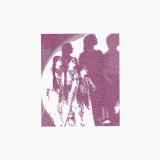
Swan Song
The vinyl LP at the heart of this éthiopiques 31 tracks 2 to 11 was one of the very last vinyl records ever released in Ethiopia. But above all it represents, we felt, the absolute masterpiece of the Ethiopian Groove – the Swan Song of Swinging Addis. The album leaves a clear idea for posterity of the level of sophistication and mastery that modern Ethiopian music had achieved, before being crushed under the Stalino-military heel of the Derg – as the bloody revolution that was unfolding came to be called.
Ethiopia1976.
The Revolution that broke out in February 1974 rolled on in a ruthless march. The whole of Ethiopian society was utterly stunned. The bouquets of flowers handed joyfully to the first tanks of the coup d'état were to wilt very rapidly. From September 1976 to February 1978, 18 months of Red Terror (the name given by the junta itself) spilled blood throughout the country. This fratricidal conflict took its heaviest toll among students and youth. The shift from feudalism to a cruel and primitive Stalinism left the country's citizens deeply traumatised, and snuffed out any pretence of activism, whatever the sector of society. This ice age was to last for seventeen long years.
ሙሉቀን፡መለሰ Mulukèn Mellèssè Muluqän Mälläsä
It was three tracks by Muluken that served as the opener for éthiopiques-1 more than 25 years ago. Seven more tracks appeared on éthiopiques-3 and 13, all accompanied by The Equators, which was soon to become the Dahlak Band.
The first track, Hédètch alu, also the very first piece that Muluken ever recorded, left audiences both unsettled and amazed. Reflecting the singer's extremely young age (he was just 17 at the time), this angelic voice mystified many, who thought they were in fact listening to a feminine voice. He was not yet 22 when he released his last vinyl record in 1976 with Kaifa Records (KF 39LP), one of the very last to be issued in Ethiopia, before the cassette tape became the dominant medium for music distribution – and before the new revolutionary regime put a stop to all independent musical life, via an unspeakable barrage of prohibitions and other persecutions.
Mulu qèn, literally, “A well filled day”. This tender maternal intention wasn't enough to ward off the cruelty of fate. His mother's premature death drove Muluken to leave his native Godjam, in northeast Ethiopia, to live with an uncle in Addis Ababa. Born Muluken Tamer, he took his uncle's last name – Mèllèssè.
The spelling Muluken appeared in his administrative records. Transcription of Amharic to the Latin alphabet, both in Ethiopia and for scholars, gives rise to controversies and quibbles that can never be neatly settled. French allows for a closer approximation of the original pronunciation, thanks to its battery of accent marks, confusing as they may be to anglophones.
Between rather accommodating administrative record-keepers and the various versions that pop up in interviews given by the artist, Muluken's year of birth oscillates between 1953 and 1955…
1954? One thing is certain: the artist's talent made itself known very early indeed, because he got his start in 1966-67, at the age of 13 or 14. Photos from the period attest to his extreme youth. It's a strange sort of initiation for a very young teenager to become a sensation in the heart of Addis's nightlife at the time, Woubé Bèrèha – the Wilds of Woubé. And what's more, in the club of the Queen of the Night, the Godjamé Assègèdètch Alamrèw herself, the very same that was portrayed by Sebhat Guèbrè-Egziabhér in his novel-memoir Les Nuits d’Addis Abeba2… The legendary female club owner who is remembered to this day by the capital's ageing boomers.
Muluken first tried his hand at the drums, before he grabbed the microphone. He emigrated briefly to the Zula Club, across the street from the old Addis Post Office, one of the ground-breaking bars of the burgeoning musical scene, before joining the Second Police Band in 1968, for around three years. He spent a few months with the short-lived Blue Nile Band founded by saxophonist Besrat Tammènè. As the musical scene grew increasingly successful, and pulled slowly but decisively away from its institutional ties, Muluken released his first 45rpm single in February 1972 (Amha Records AE 440). It was included in two LP Ethiopian Hit Parade compilation albums in September of the same year. All in all, Muluken released eight two-track 45s and the same number of original cassette tapes between February 1972 and 1984, the year that he departed for permanent exile in the USA. After converting to Pentecostalism in 1980, Muluken gradually abandoned all secular musical activity. In 1985, at the end of a concert in Philadelphia, he decided to quit concerts and recording for good. Mèlakè Gèbré, the historic bass player from the Walias band who was playing with him that night, recalls that everything appeared so irredeemably diabolical in Muluken's eyes, that it was to be the end of his contribution to Ethiopian Groove.
The end of the story, the beginning of a legend.
Dahlak Band, forgotten by History
Aside from his personal history and vocal talents, it must be remembered that Muluken Mèllèssè was one of the biggest names in the musical innovations that marked the end of the imperial period. These éthiopiques aim to convince those who are just discovering this hidden gem... As for Ethiopians themselves, they are to this day captivated by this singular and atypical figure in the Abyssinian pop landscape – even though he withdrew from public life some 40 years ago. Incorrigible devotees of poetic twists, of more or less hidden meanings, Ethiopians appreciate above all the care Muluken took in choosing his lyrics and the writers who penned them, such as Feqerte Haylou, Alemtsehay Wodajo and, here, Shewalul Mengistu (1944-1977). Love songs, written by women, a far cry from the conventional drivel that pleases sappy sentimentalists.
Muluken is equally acclaimed for his perfectionism when it came to music, the opposite of the overly casual approach that is all too common. He remained a faithful partner of musicians who came from a lineage that borrowed from several inventive and pioneering bands (Venus, Equators, Dahlak). Amongst them were certain artists who began their musical lives with Nersès Nalbandian at the Haile Sellassie Theatre and who come of age in around 1973 – at just the wrong time, you might say. Among them were the pillars Shimèlis Bèyènè (trumpet), Dawit Yifru (keyboards) and Tilayé Gèbrè (sax & flute). Most notably Tilayé Gèbrè, certainly one of the most important musicians, composers and arrangers of his generation, of the end of the imperial era, and of the early years of the Derg.
It was only in 1981 that a miraculous opportunity arose for Tilayé to escape the Stalinist paradise of the dictator Menguistou Haylè-Maryam. Once again it was Amha Eshèté (1946-2021) who provided a solution. The spirited and courageous producer, who had been in exile in Washington since 1975, succeeded, thanks to his incredible perseverence, in bringing the Walias Band to the USA. It was, in fact an extended Walias Band comprising ten musicians3, six of whom chose to slip away after a few concerts and the recording of an LP (The Best of Walias, WRS 100). Tilayé Gèbrè was one of these. He has been living in the USA ever since. There he joined the then-nascent Ethiopian diaspora, which lived largely unto itself, and was making only very modest headway in the American musical market. It seems unfair that Tilayé Gèbrè and the Dahlak Band were not able to benefit earlier from the public recognition that they do deserve.
A similar draining away of the top-rate talents would lead to the reorganization of the major groups of the “Derg Time”. The remaining artists spread themselves around between Ibex Band (renamed Roha Band), Ethio Star Band and a remodeled Walias Band. That spelled the end of the Dahlak Band.
With this record, produced by the essential Ali Abdella Kaifa a.k.a. Ali Tango, we can appreciate everything that the Derg not only destroyed, but also prevented from flourishing. This gem of Ethiopian-style afrobeat came out in 1976 (and, by way of a parenthesis, before the FESTAC 1977 in Lagos, which was attended by an impressive delegation of Ethiopian musicians — although Fela was already personna non grata in his own country). Despite everything that might distinguish this ethio-groove from Fela’s music – no colonial axe to grind, no question of political confrontation with the authorities, no claims to negritude or Africanism for the Ethiopian musicians, and less extrovertion! –, this LP fits beautifully into the saga of intense and electrified soul of the new “African” groove that Fela and Manu Dibango embodied so well from that point onwards.
In restoring this record to its place in the afrobeat epic, it can be seen that, if nothing else, the timeline bestows a legitimate pedigree and a historical primacy to works that had no international impact when they were originally released.
Warning! Masterpiece!
Suche:two seven
blickwinkel welcomes composer and multi-instrumentalist Francis Plagne to the label with a reissue of Asleep in a beached boat, an album that was initially released on his own Mould/Mouse Museum label in 2021 on cassette. The album was mostly given away to friends but now gets a wider release through a limited vinyl and digital edition.
Gentle melodies set an airy atmosphere and are intertwined with tensive dialogs between rhythms and textures coming from a wide array of acoustic and electronic instruments. Stylistically somewhere in between his Rural Objects (Black Truffle) and Udge (Horn of Plenty), on the eleven tracks on this album we hear Plagne in his most playful way to date.
Francis Plagne is a musician from Melbourne, Australia whose work swings between songwriting and a variety of other approaches, including group improvisation, instrumental abstraction, and domestic musique concrète. He performed live regularly since 2005 and has released recordings on labels such as Black Truffle, Horn of Plenty, Kye Records, Penultimate Press and his own Mould/Mouse Museum micro-label. In addition to performing his own work either solo or with a band, he has performed and recorded in improvised and other arrangements with Tetuzi Akiyama, Oren Ambarchi, Andrew Chalk, Crys Cole, James Rushford, and Joe Talia, among others.
The RIOT DJ-BACKPACK XL is a high-end, extremely rugged-built backpack designed for the heavy-travelling Pro-DJ. It comfortably holds any digital gear from Kontrol S4 to battle-mixers such as Rane Sixty-Two or Pioneer DJM-S9 along with a laptop and accessories. Constructed entirely from hardwearing PVC Tarpaulin, its outer shell and all zippers are fully waterproof which ensures your gear is protected even in the worst weather. The featured “Zip-Around-Expansion-System” means the main compartment’s capacity can be doubled, turning the RIOT DJ-Backpack into the ultimate versatile packing monster.
+ FITS
Laptop up to 17"
Ableton Push2
Akai MPK-25
Akai MPC Renaissance
Denon MC-4000
NI Kontrol S5
NI Kontrol S4 MK2
NI Kontrol S2 MK2
NI Kontrol S2 MK3
NI Kontrol D2
NI Kontrol Z2
NI Maschine+
NI Maschine
Numark Mixtrack Pro 2
Pioneer DDJ-SB2
Pioneer DDJ-SB3
Pioneer DDJ-400
Pioneer DDJ-RB
Pioneer DJM-S11
Pioneer DJM-S9
Pioneer DJM-S7
Pioneer DJM-900 SRT/NXT
Rane Seventy-Two
Rane Sixty-Two
Rane Sixty-Eigth
Reloop Elite
Roland DJ-202
Vestax VCI-400
Vestax VCI-380
12“ Vinyl
Accessories
+ BASICS
Crafted from hardwearing and 100% waterproof PVC Tarpaulin
Soft-fleece lining
PVC-coated (waterproof zippers)
Lockable zippers on main and laptop compartment
Rubber corner protectors and rubber feet
Main compartment includes several removable adjustment foams, a divider and a protection panel
The “Zip-Around-Expansion-System” doubles the main compartment’s capacity
Main compartment can be packed and unloaded in the “DJ-booth-friendly” stand-up position or in the fully opened and unfolded position to gain easy access
Separate and fully padded laptop-compartment up to 17”
Two large front pockets with internal mesh pouches provide perfect organization of small accessories
Padded back panel with airflow system, ergonomic backpack straps and chest straps
Top and side carrying handles
Detachable trolley sling
Hand luggage compatible
+ SPECS
+ Outer dimensions: 56 x 37 x 23 cm
+ Inner dimensions: 51 x 32 x 8 cm
+ Weight: 3,0 kg
- A1: (Part I)
- B1: Prelude (Part Ii)
- B2: Maiysha
- C1: Interlude
- C2: Theme From Jack Johnson
The capstone of Miles Davis’ electric period, Agharta reigns as a funk-rock fireball — a blazing comet streaked energy and elan, a fearless organism feasting on adventure and freedom, a seven-headed Godzilla stomping its way through Osaka, Japan. Recorded on February 1, 1975 at Osaka Festival Hall at the first of a two-show stand, the double album offers an endless abundance of surprises and shifts — as well as a road-proven ensemble whose chemistry and abilities equal that of any of Davis’ celebrated bands. If the true measure of jazz is the capacity to adapt to the moment and challenge perception, Agharta is consummate.
Sourced from the original master tapes, housed in a Stoughton gatefold jacket, and pressed at Fidelity Record Pressing in California, Mobile Fidelity’s numbered-edition 180g 33RPM 2LP set of this epic live release presents it in audiophile sound on a domestic pressing for the first time. Offering greater degrees of separation, detail, and richness than the compressed CD editions and more clarity, openness, and presence than older vinyl copies, this version of the 1975 release helps bring the concert stage to your home. Just make sure your turntable and speakers are up to the challenge of Davis and Co.’s explosive performances — and producing the decibels they demand.
Teeming with vibrant colors, tones, and pace, Mobile Fidelity’s reissue captures the hear-it-to-believe-it flow, sweep, and moodiness of the music. Though the group honors looseness and freedom with religious verve, the specificity and scale rendered by this remaster allows you to detect methods behind the alleged madness that are often otherwise harder to discern. This insight extends to the understated changes in volume, harmonics, and phrasings. In many ways, you can listen as Davis himself did that early February evening as he helped coordinate the overall direction and decided on whether to blow his wah-wah-wired trumpet or take a turn on the organ.
Tellingly, Agharta would likely never have been made if not for Davis’ ventures overseas and, specifically, to the Land of the Rising Sun. Having for years faced a backlash on his native soil for his choices to experiment and blow past all known borders, Davis was welcomed with open arms in Japan. The concert documented on Agharta — as well as the day’s later show, captured on the equally exciting Pangea — stemmed from a sold-out three-week tour that would ultimately mark Davis’ final public appearances for years, as he soon settled into semi-retirement and nursed the wounds connected to an unprecedented stretch of restless and relentless output.
For all the band-fueled merit of Agharta — and there’s plenty, given the cast of saxophonist Sonny Fortune, bassist Michael Henderson, drummer Al Foster, percussionist James Mtume, and guitarists Reggie Lucas and Pete Cosey seemingly blasts off to outer space and travels distant galaxies by the time this minimally edited record runs its course — Davis’ own playing often remains overlooked. As critics Richard Cook and Brian Morton observed, it is “often fantastically subtle, creating surges and ebbs in a harmonically static line, allowing him to build huge melismatic variations on a single note.” He attacks like a man on a mission, out to prove naysayers wrong and bent on trailblazing another new path forward. Convention and skeptics be damned.
Noisy and furious, dark and discordant, abstract and off-balance, radical and intense, abrasive and atmospheric, strangely beautiful and hypnotically eccentric: Agharta evades simple description, and refuses to be pinned down in any established category — rock, jazz, punk, ambient, prog, avante-garde, or otherwise. Shot through with trench-deep grooves, screaming riffs, scalding solos, and free-improv leads, its cosmic thrust comes on as the equivalent of an animated pointillist painting comprised of millions of textured dots, dashes, and dabs that hold your attention so raptly you want to revisit the ideas again and again.
Always steps ahead of everyone else, Davis knew what he was doing even when Agharta debuted in Japan before later hitting U.S. markets. Though “Maiysha” and “Theme from Jack Johnson” are identified in the track listing, the record contains a number of uncredited references to other Davis works, including a nod to “So What.” This decision to bypass labels only adds to the art of the reveal — the rare black magic in which Agharta expertly deals.
- 1: Lady Of Lavender
- 2: It's Taking So Long
- 3: Rock & Roll Star
- 4: Willie
- 5: Fly Off With The Wind
- 6: For Emile (Demo Version)
- 7: Seven Virgins
- 8: For Emile
- 9: Travel In A Circle
- 10: Blessed Be The People
- 11: Hang On To A Dream
Highlighted by Kathy's own exquisite compositions like 'Fly off with the Wind' and 'For Emile', it also includes her unique interpretations of songs by Jimmie Spheeris and Jackson Browne. This is the first official reissue - 180g vinyl in deluxe gatefold packaging.
Her superlative voice is supported by a team of heavyweight studio musicians, among them Jan Hammer, Warren Bernhardt, Tony Levin, Jerry Jemmott, Don Alias and Jeremy Steig. Remastered from the original analogue tapes, this edition includes two exceptional previously unreleased bonus tracks - 'For Emile' (demo version), and 'Hang On To A Dream'. Smith emerged from the same Orange County, Californian milieu as Tim Buckley and Jackson Browne. Championed by singer- songwriter- guitarist Richie Havens, Kathy recorded two hauntingly beautiful albums, 'Some Songs I've Saved' and 'Kathy Smith 2', for his Stormy Forest label, and then quietly disappeared from the scene. 'Kathy Smith 2', presented here, is the first authorised reissue of the LP
- A1: Besame Mucho
- A2: The Pea Seller
- A3: Malagueña
- A4: Taboo
- B1: Fallen Leaves
- B2: My Boyfriend
- B3: Come Back To Me, My Lover
- B4: Swanny
This is the origin of Chiemi Eri, who continues to enjoy immense popularity across generations and borders. Seven vinyl records focusing on jazz are
released simultaneously! Chiemi's punchy style explodes against the backdrop of two of Japan's biggest big bands!
This album is a collection of soulful standard numbers that marks the end of her single years.
2025 Repress in Yellow Green Vinyl
Bondage-Music is excited to announce the new vinyl EP from Markus Homm, titled “Twingo.” Following the momentum of his 2022 album “After Dark” on Bondage-Music, Homm delivers four tracks that epitomize his deep, grooving sound. “Great music should get you in the mood,” says Markus Homm. “That’s what I aim to do.” Homm blends influences from classic house with techno textures, continually evolving his sound across releases and DJ sets.
Twingo showcases Homm’s signature sonic palette, balancing uplifting grooves with a precise edge. The EP highlights his ability to fuse organic house vibes with driving techno energy, creating a cohesive journey for both dancers and listeners.
Two of the tracks on the EP are vinyl-only, reinforcing Bondage-Music’s commitment to offering exclusive material for vinyl enthusiasts.
As Moxy marks an incredible seven years as a trailblazing label, The label unveils Moxy Editions 9 — a four-track collection that captures the spirit of his DJ sets and the global energy of his dancefloor community. Already a highlight of the summer season, these records have been making serious waves across Ibiza and beyond.
At the heart of the release is “Gypsy Woman (Moxy Edit)” — a track that started as a spontaneous edit for Darius’s own sets and quickly took on a life of its own. With re-recorded vocals from Holly Jazz and official publishing clearance, the track has become a defining anthem of the year.
From DC-10 to clubs across Europe, the record has been met with full-room singalongs and explosive reactions. Early support from DJs including Prosper and Liam Palmer has further cemented it as one of the most in-demand edits on the circuit. Now officially released, “Gypsy Woman” arrives on vinyl, just in time for the label’s milestone birthday.
Next up comes a standout comes from Harry Collett “Check up”. A longtime Moxy fan and emerging talent, Collett’s production has already earned support from MK and a growing roster of influential selectors. “Harryette” has been a staple in Darius’s summer sets, marking Collett as one to watch.
Also featured are two more highlights from the summer — “Tengo La Musica (Crackazat Remix)” and “Never Let You Go”, both driven by irresistible samples and undeniable grooves. These cuts embody the energy and emotion of Darius’s signature club sound — upfront and built for the dancefloor.
The inimitable Richard Youngs returns to Black Truffle with this third full-length for the label, Hidden. Like CXXI and Modern Sorrow, Hidden unfolds across two side-long pieces at once eminently listenable and possessed of the ‘bloody-minded’ dedication to ‘having an idea and sticking with it’ that Youngs himself has identified as one of the key qualities of his work.
At the core of both pieces are rapid, randomised arpeggios generated with a Moog Grandmother, hypnotic patterns that wouldn’t be out of place on a Berlin School classic. Alongside these arpeggios, across the seventeen minutes of the first side-long piece Youngs builds an airy structure of shakers, synthetic handclaps and a brief, repeated sample, impossible to identify but sounding like a glitched foghorn. Over the top we hear his unmistakable voice, repeating single syllables—Ha, Ho—with a slow delay, something like a lonely one-man-band take on Anthony Moore’s Pieces from the Cloudland Ballroom or a more musical elaboration of the hypnotically overlapping delayed phonemes of Anton Bruhin’s Rotomotor. Like much of Youngs' work, the arrangement of sounds is sparse, each layer punctuated by spaces that allow others to shine through, in a way that seems to have more to do with dub or early hip-hop than high-brow models of musical reductionism.
On the flipside, the arpeggios return, now accompanied by ringing, filtered guitar chords and long flute tones. The use of a similar ground layer across the two pieces with strikingly different overdubs calls up Youngs' first solo record, the classic Advent, reminding us of how consistent ‘theme and variations’ is as an approach in his enormous body of work. Joined by handclaps and a chiming sound, the piece almost feels like it is about to achieve dance-floor lift-off at times, only for the percussion to disappear and leave the listener once again floating among the guitar and flute, now joined by occasional cut-off vocal snippets, like a radio turned quickly on and off. The suspension of these disparate elements over the steady foundation of the Moog arpeggios might remind some listeners of the free-form studio explorations of Moebius & Plank and Holger Czukay or even give a nod to Youngs’ formative encounter with Cabaret Voltaire.
Like some of Youngs’ much-loved work with Simon Wickham-Smith, Hidden approaches relatively familiar sounds and instruments from skewed angles, delighting in loose structures of interaction that border on gleeful incoherence while remaining outwardly beautiful. Coming up to almost four decades of persistent activity, like little else in contemporary music Youngs’ work beams with the simple joys of exploration and experiment.
- 1: Workaround One
- 2: Workaround Two
- 3: Workaround Three
- 4: Workaround Four
- 5: Workaround Five
- 6: Clouds Strum
- 7: Workaround Six
- 8: Workaround Seven
- 9: Workaround Eight
- 10: Workaround Nine
- 11: Square Fifths
- 12: Workaround Bass
- 13: Pause
- 14: Workaround Ten
‘Workaround’ is the lucidly playful and ambitious solo debut album by rhythm-obsessive musician and DJ, Beatrice Dillon for PAN. It combines her love of UK club music’s syncopated suss and Afro-Caribbean influences with a gamely experimental approach to modern composition and stylistic fusion, using inventive sampling and luminous mixing techniques adapted from modern pop to express fresh ideas about groove-driven music and perpetuate its form with timeless, future-proofed clarity. Recorded over 2017-19 between studios in London, Berlin and New York, ‘Workaround’ renders a hypnotic series of polymetric permutations at a fixed 150bpm tempo.
Mixing meticulous FM synthesis and harmonics with crisply edited acoustic samples from a wide range of guests including UK Bhangra pioneer Kuljit Bhamra (tabla); Pharoah Sanders Band’s Jonny Lam (pedal steel guitar); techno innovators Laurel Halo (synth/vocal) and Batu (samples); Senegalese Griot Kadialy Kouyaté (Kora), Hemlock’s Untold and new music specialist Lucy Railton (cello); amongst others, Dillon deftly absorbs their distinct instrumental colours and melody into 14 bright and spacious computerised frameworks that suggest immersive, nuanced options for dancers, DJs and domestic play. ‘Workaround’ evolves Dillon’s notions in a coolly unfolding manner that speaks directly to the album’s literary and visual inspirations, ranging from James P. Carse’s book ‘Finite And Infinite Games’ to the abstract drawings of Tomma Abts or Jorinde Voigt as well as painter Bridget Riley’s essays on grids and colour. Operating inside this rooted but mutable theoretical wireframe, Dillon’s ideas come to life as interrelated, efficient patterns in a self-sufficient system.
With a naturally fractal-not-fractional logic, Dillon’s rhythms unfold between unresolved 5/4 tresillo patterns, complex tabla strokes and spark-jumping tics in a fluid, tactile dance of dynamic contrasts between strong/light, sudden/restrained, and bound/free made in reference to the notational instructions of choreographer Rudolf Laban. Working in and around the beat and philosophy, the album’s freehand physics contract and expand between the lissom rolls of Bhamra’s tabla in the first, to a harmonious balance of hard drum angles and swooping FM synth cadence featuring additional synth and vocal from Laurel Halo in ‘Workaround Two’, while the extruded strings of Lucy Railton create a sublime tension at the album’s palatecleansing denouement, triggering a scintillating run of technoid pieces that riff on the kind of swung physics found in Artwork’s seminal ‘Basic G’, or Rian Treanor’s disruptive flux with a singularly tight yet loose motion and infectious joy. Crucially, the album sees Dillon focus on dub music’s pliable emptiness, rather than the moody dematerialisation of reverb and echo. The substance of her music is rematerialised in supple, concise emotional curves
and soberly freed to enact its ideas in balletic plies, rugged parries and sweeping, capoeira-like floor action. Applying deeply canny insight drawn from her years of practice as sound designer, musician and hugely knowledgable/intuitive DJ, ‘Workaround’ can be heard as Dillon’s ingenious solution or key to unlocking to perceptions of stiffness, darkness or grid-locked rigidity in electronic music. And as such it speaks to an ideal of rhythm-based and experimental music ranging from the hypnotic senegalese mbalax of Mark Ernestus’ Ndagga Rhythm Force, through SND and, more currently, the hard drum torque of DJ Plead; to adroitly exert the sensation of weightlessness and freedom in the dance and personal headspace.
15th Anniversary Edition. Black Vinyl. When Dinosaur Jr. reunited, more than 20 years after their formation and legendary dissolution, the worry was that these guys were just flogging the back catalog, taking the old show on the road as a marketing gimmick. But the 2007 release of Beyond gave a hearty Marshall-driven "F**K YOU!" answer to those inquiring ears. Restoring the sound established by the unassailable hat-trick gambit of their first three albums -- Dinosaur, You're Living All Over Me, and Bug -- Beyond continued the band's march into rock greatness by making old ears smile and new ears bleed afresh. And then came Farm, the 9th full length record by the original line-up: J Mascis, Lou Barlow, and Murph. If Beyond was Dinosaur Jr.'s return to form, Farm is proof that Dinosaur Jr. could (and still do, to this day!) deliver timeless, exhilarating rock music. Farm encompasses Dinosaur Jr.'s signature palette: soaring and distorted guitar, unshakable hooks, honey-rich melodies. At times wholly 70's guitar-epic, at times perfect for sitting by a babbling brook with Joni and Neil, these songs get into your head and stay there, bouncing happily around. The ear-catching "Plans" is nearly seven minutes of classic whipped-topping rock dessert, while "I Don't Wanna Go There" is a meat-and-potatoes main dish, mixing unapologetic lead guitar with straight-ahead delivery a la James Gang or Humble Pie. This expanded deluxe edition of Farm features four songs never pressed to vinyl and never given worldwide release:"Houses", "Whenever You're Ready" (The Zombies Cover), "Creepies" (Instrumental), and "Show". "Whenever You're Ready", a cover of classic pop-rockers The Zombies, is impossibly good for a hidden gem; Murph stomps in with a sledgehammer to the kit, J and Lou layer low-end and fuzz like two halves of one brain, and right when things feel biggest, airy and colossal, there's J with a lightning bolt of a guitar solo. Pure electricity and melody like only he can make. Recorded in J Mascis' Bisquiteen studio in Amherst, Massachusetts, Farm was produced by Mascis himself, and delivers the singular, unique energy of one of America's greatest living rock bands.
- A1: Today Feat. Swing-O (45Trio)
- B1: Incense Feat. 句潤
DA-Dee-MiX, the hip-hop band that's a fixture on the MC battle scene, offers a bold cover of "Today," the source material for a shining classic in the history
of sampling! The B-side features "INCENSE," a collaboration with rapper Jun Ku, which has garnered much buzz, released for the first time on 7-inch,
making this an incredibly powerful double-sided album!
DA-Dee-MiX, the instrumental hip-hop band that continues to support the MC battle and live music scenes, releases their long-awaited new 7-inch, their first
in seven years. This two-track 7-inch single blends hip-hop's roots with a hands-on spirit.
Side A features guest appearances from 45trio SWING-O, who delivers a bold cover of Tom Scott's "Today" the source material for a shining classic in the
history of hip-hop. DA-Dee-MiX's signature groove, which intertwines jazz, soul, and hip-hop, reconstructs the track, offering more than just a cover; it
offers a new interpretation for today's listeners. SWING-O's electric piano and the ensemble of live performances beautifully elevate the warmth and power
of the original.
Side-B features the long-awaited vinyl release of "INCENSE," a collaboration with Yokohama-based rapper Kujun!
Released in 2020, this track captivated many listeners with its melodic flow and unique musical sense, leading to endless calls for it to be released on vinyl.
DA-Dee-MiX's soft yet powerful track is complemented by Kujun's fragrant words, creating a track that truly lives up to the title: a track that permeates the ears!
This double-sided album is a must-listen for DA-Dee-MiX's "performative hip hop"!
- Garbage Dream House
- Bugland
- Bits
- Save The Lobsters
- My Crud Princess
- Bather In The Bloodcells
- I Hate That I Forget What You Look
- Jelly Meadow Bright (Feat. Fire-Toolz)
Since first arriving on the scene in 2009 with blistering inversions of shoegaze, Montreal's No Joy has always found formidable ways to reinvent itself. Now solely composed of musician Jasamine White-Gluz, No Joy has evolved over four studio albums and five EPs, defying expectation and genre, and cementing itself as something rare: a band without a category. Clearly sympatico at the time of collaborating, Fire-Toolz and No Joy (Jasamine White-Gluz) had both resituated to secluded woodsy milieus prior to the "Bugland seshies", as I now name the historic pairing. Together, they created an aural equivalent of a late 1980 I-d magazine front and back cover, with a non-problematic National Geographic hiding within. Fire-Toolz sums it up: "The collaboration really felt limitless. I didn't have to adhere to a certain vision in a way that made me feel like I couldn't be Fire-Toolz. I could easily relate to this album because Jasamine and I liked a lot of the same music, and I was able to be creative in ways that were freeing as if I was making my own album. " Both spent days driving through on empty rural highways listening to the mixes, and it reflects in the final product. With an open ear, many "influence eggs" can be detected by the listener. Garbage Dream House is Zooropian without any of U2's ego baggage. Seven-minute closing track Jelly Meadow Bright even manages to meld Stooges' Fun House out of control saxophone with the chill buoyancy of a high-end spa. Touching on respected, familiar genres and sounds while attempting to advance one's own isn't easy but Bugland manages to. What genre is it anyway? Is it even shoegaze when it could live happily on a shelf next to Boards of Canada and Autechre? The right answer is `yes'. What a lovely shelf `twould be as well. A marble shelf, with cyberpunk elements. Bugland`s a testament to White-Gluz's evolution and her ability to channel a wide variety of tastes into something cohesive that can descend into fine-tuned chaos, then out of that chaos with ease.
Ethernal is Daydream’s sublabel dedicated to the micro side of house music. After a two-year hiatus, the seventh volume welcomes back the great MJOG. This historical figure of the label delivers three groovy, minimalist tracks brimming with raw elegance. The release is topped off with a powerful, energetic remix from the brilliant Makcim & Levi, who make a remarkable appearance more than six years after their last release.
- A1: Part 1
- B1: Part 2
Free Jazz: A Collective Improvisation is a studio album by American jazz saxophonist Ornette Coleman, released in September 1961.
The album features what Coleman called a "double quartet," i.e., two self-contained jazz quartets: each with a reed instrument, trumpet, bass, and drums.
The two quartets are heard in separate channels, with Coleman's working quartet at the time in the left channel, and the second quartet, including
the former Coleman rhythm section of Charlie Haden and Ed Blackwell, on the right.
The two quartets play simultaneously. Free Jazz was the first album-length improvisation at thirty-seven minutes, unheard of at the time.
The original LP package incorporated Jackson Pollock's 1954 painting The White Light. The cover is a gatefold with a cutout window in the lower right corner allowing a glimpse of the painting;
opening the cover revealed the full artwork, along with liner notes by critic Martin Williams.
Free Jazz served as the blueprint for later large-ensemble free jazz recordings such as Ascension by John Coltrane and Machine Gun by Peter Brötzmann.
Free Jazz is available as a limited edition of 1000 individually numbered copies on white vinyl.
In the two years since Parallel Minds’ Juno-Award-winning 5th release Homesick by label co-founder Ciel, we have taken our time reassessing our next moves as the larger dance music scene experienced a paradigm shift. What does it mean to release music made by underground artists from lesser-known scenes like Toronto at a time when bookers and A&Rs are taking fewer risks than ever before? How do we truly celebrate the musical diversity of electronic music when the bottom line threatens to reduce any and all forms of risk-taking?
You just do it, of course.
In truth, few artists have come to represent the music scene in the Big Smoke more than Phèdre, and having seen the duo’s progression from indie weirdo-pop to live hardware act to breakbeat wunderkind in the last decade has been nothing short of amazing. It’s really artists like these that inspired us to start the label in 2018, and we are super elated to usher in PM006 with their long-awaited album, Liquid Constancy.
On its face, Liquid Constancy is a breakbeat record. There are housier joints, to more bassy Baltimore club bangers, to breakneck footwork and jungle steeped in sunshine. All of them share a distinctly syncopated, dubwise rhythm that grounds the album’s tracks. With some having been developed as early as seven years ago, these tracks had their genesis in Phèdre’s mostly improvised live hardware sets from some of Toronto’s most notorious warehouse raves. Primarily powered by two Korg Electribe ESX-1s and the semi-modular Moog Mother-32, the jams found new life in the studio when the duo began recording them as tracks, which demanded a mindfulness of their permanence that Daniel Lee and apè Aliermo at first found intimidating.
Over time, the pair developed a synergistic workflow that pulls from Daniel’s background in drums and apè’s keen ear for texture and movement. They sourced samples featuring voices of BIPOC and feminist icons, drew from their shared love of sci-fi and kung fu movies, and from their Filipino, Chinese, German, and Surinamese backgrounds. Samples were manipulated via techniques like lowering bit rates and adjusting speed to maximize usage due to the Electribe’s limited sample time, which was a subtle way of injecting their interests into their music without being too on the nose. Growing up in the melting pot of the GTA, going to raves as teens, bumping post-punk, industrial, electro, hip-hop and 90s R&B — these experiences all had an undeniable influence on Liquid Constancy. As kids of immigrant parents, equally informed by both their adopted and native cultures, Phèdre makes music informed by sampling and defined by cultural hybridity. In times like these, what is more feel-good than believing in music as a universal language that brings our different backgrounds together?
As trans-Atlantic alchemists pulling from a shared dialectic that somehow encompassed both postmodern deconstructionist tendencies and a delightfully subversive sense of poptimism, it’s easy to see how David Cunningham and Peter Gordon immediately hit it off upon initially meeting each other back in the late-1970s at the height of their youthful transgressions. Having initially worked together on the second Flying Lizards’ LP fourth wall, with its ingenious fusion of dismantled rhythms and rearranged melodies juxtaposed against the slyly sultry singing of Snatch’s Patti Palladin— with Gordon adding a few sprinkles of mischievous sax in the mix— it’s no wonder the collaboration would lead to further musical adventures.
Which leads us directly to the genesis of The Yellow Box. Embarking on a collaborative exercise in the structural repurposing of music as untethered puzzle pieces in need of rearrangement with no predetermined outcomes, the duo gave birth to a project that would see them move through both time and recording studios across Europe, taking nearly two years from 1981-1983 to complete. Enlisting the great Anton Fier on drums from The Feelies/Lounge Lizards nexus and John Greaves on bass from Henry Cow/Soft Heap lore to round out their dueling creative counterparts, the album would be something of a lost treasure until its eventual release on Cunningham’s Piano imprint in 1996.
Cinematic in scope, and filled with drifting drones, beautiful counter-melodies, eery minimalism, Kraftwerkian synthesizers, looped voices, skronky interludes, and other shifting undercurrents of sound, it was an album that utilized both a diverse array of expressive languages, as well as early sampling techniques and prepared instruments, well before most people were thinking in such expansive, integrated terms at the dawn of the 80’s. But such is life at the vanguard of new music. And one of the reasons that it likely sat on the shelf for so long before finally being released well over a decade later. Like a sparser, less groove-oriented version of My Life in the Bush of Ghosts, or a more radical take on the experimental work of Can’s Holger Czukay, The Yellow Box stands at the crossroads of time and technology, fusing multiple strands of musical thought and compositional techniques into a disjointed whole that somehow still comes off as a conceptually complete record.
Now, here it is again, over 40 years later, with perhaps even more historical resonance than it had before, remade and remodeled just waiting to be rediscovered again.
- A1: Never 'Ad Nothin' (3:12)
- A2: Teenage Warning (3:27)
- A3: Solidarity (5:12)
- A4: Two Million Voices (2:48)
- A5: Last Night Another Soldier (2:36)
- A6: I Understand, I Hope You Do (5:54)
- B1: Woman In Disguise (3:54)
- B2: Kids On The Street (3:45)
- B3: England (4:27)
- B4: The Murder Of Liddle Towers (5:53)
- B5: I'm An Upstart (4:16)
- B6: White Riot (2:11)
In the late 1970s and early 1980s, South Shields, England's politically motivated punk band, The Angelic Upstarts, saw considerable chart success. Jimmy Pursey of Sham 69 produced their debut album, Teenage Warning (1979), which peaked at No. 29 on the UK Albums Chart and featured singles like "I'm An Upstart" (No. 31) and Teenage Warning (No. 29).
Their third album, 2,000,000 Voices (1981), reached No. 32, while their second, We Gotta Get Out of This Place (1980), peaked at No. 54. Angelic Upstarts Live (1981), a live album, did well as well, peaking at number 27.
Two of the Angelic Upstarts' singles made it into the Top 40, and seven of their singles made it into the UK Top 75. Their early work was marked by sociopolitical critique and unadulterated intensity.
‘Live at The Basins Nightclub’ recorded in 1987 represents a unique summary of that undertaking as well as capturing a rare snapshot of the Upstarts during one of the less well-documented periods of their history. Incl. Sleeve notes from Dick Porter.
"It may surprise some that, after two decades of silent films, when Alam Ara broke the silence in 1931, it and every South Asian talkie that followed was what we in the West think of as a "musical." Music had been integral to the culture's staged drama going back to the Gupta Dynasty — sometime between the 4 th and 6 th Century CE. Since its inception, South Asian cinema drew heavily from Marathi, Parsi, and Bengali musical theatre and silent film screenings were often accompanied by live music to mimic a live staged experience.
When sound films arrived, actors with serious singing skills became the next wave of stars. Songs were performed live while shooting, with musicians hidden off-camera, to the side or sometimes even in trees. Playback singing — the practice of dubbing a real singer's voice over a lip-syncing actor — didn't become standard until the 1940s.
Thus, the biggest stars of the 1930s were also the greatest singers, with some, like Govindrao Tembe and Pankaj Mullick, excelling as both composers and vocalists. None, however, were more beloved than K.L. Saigal, whose emotional, untrained crooning captivated audiences across the subcontinent. Saigal's voice inspired a young Lata Mangeshkar, who vowed to become India's greatest filmi singer to win his heart. Sadly, Saigal grew increasingly addicted to alcohol, unable to perform without it, and passed away at age 42, seven months before the Partition. Lata never married.
This collection features some of the earliest songs from South Asian cinema, sourced from CDs and LPs found in Jackson Heights, Queens, Coney Island Avenue in Brooklyn, Lexington Avenue in Manhattan, and Oak Tree Road in Iselin, New Jersey — areas home to vibrant immigrant communities. South Asian immigration to New York and New Jersey surged after the 1965 Immigration and Nationality Act, which lifted non-European quotas. By the 1990s and 2000s, the region's Indian, Pakistani, and Bangladeshi media outlets flourished, especially in Jackson Heights, where such stores outnumbered the total number of regular record shops throughout the five boroughs.
The nascent period of sound film featured a limited palette of musical styles, predominantly Marathi Bhagveet, like the Ghazal, but with greater flexibility of subject matter and rhythm, and Rabindra Sangeet, the approximately 2,000 songs and poems composed by Bengali Nobel laureate Rabindranath Tagore. But there was some evolution as well, with the success of South Asian cinema's first woman composer, the classically trained Saraswati Devi, and the introduction of Western instruments including the piano and Hawaiian guitar.
While much of the music was dark and brooding, perhaps exemplified best by Devika Rani's interpretation of Saraswati Devi's "Udi Hawa Mein" from 1936's Achhut Kannya (Untouchable Maiden), there were moments of brightness, such as R.C. Boral's "Lachhmi Murat Daras Dikhaye" sung by Kanan Devi in Street Singer, an otherwise thoroughly depressing film from 1938 that cemented Devi's and co-star K.L. Saigal's superstardom.
This selection was chosen to emphasise a range of expressivity, instrumentation and style achieved even within the decade's relatively limited scope, setting the listener up for the relative explosion of possibility in the 1940s, to be covered in the next installment of this series."