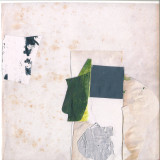
NEW 45 BY DEEP-FUNK PIONEER LUCKY BROWN RECORDED DURING THE MYSTERY ROAD SESSIONS!
"Funk is a living, breathing, creative and generative entity and The New Lucky Seven celebrate its life with a mysterious and authentic sonic snapshot from the iconic Mystery Road sessions: WOODHEAD!"
Woodhead is a steady medium groover built around an acute chanky guitar part that Joel Ricci aka Lucky Brown composed while living in the "Woodhood" district of Bellingham Washington, USA in the fallout shadow of an industrial area on the outskirts of town. The Woodhood was so named because the streets were all named after different kinds of trees; Cottonwood, Alderwood, Birchwood, etc. Though members of the band had been performing Woodhead since as early as 2004, it had never been officially committed to tape. So during the 2013-2014 span of living room "Magik Carpet" sessions at drummer, Oliver Klomp's house in West Seattle, the combo dubbed by Lucky as "The New Lucky Seven" casually hit the head a couple times before calling it a night as Lucky rolled tape.
Opening with the now world-famous guitar player, Jabrille "Jimmy James" Williams dropping deftly into his rhythmic part, Lucky chants in the background the words "don't stop" as the tension builds up into the moment the whole band comes in. With Bob Heinemann on bass, Marc Hager on Rhodes and Oliver Klomp on drums, the thick but honest groove is instantly palpable. Trombone player Mars Lindgren and Sax player Thomas Deakin, along with Lucky on Trumpet lay down the 'head' to the tune right off the bat with everyone in the band giving that hard hit on the 4 count of the last bar of the repeated figure. This 'hit' returns again to form the breakpoint between soloists Jimmy James, Marc Hager, and on side B, Thomas Deakin, and Lucky Brown on the flute. The horn section microphone was situated on the dining room table and Lucky just had to lean over to reach it with his instrument! Michael Iris of Bell Creek Studio transferred and mixed these two tunes from Lucky Brown's cassette machine.
This tune was left off of the Mystery Road compilation album but comprises one of the last tracks created during those sessions therefore the concept, vibe, style, and intention should resonate and be interchangeable with the rest of the 45s from that epic Box Set TR-9043 released by Tramp Records on May 4, 2015.
As you spin and interact with the Mystery Road recordings, you are invited to allow Woodhead to take its rightful place specifically alongside the other "The New Lucky Seven" recordings and generally as a part of the suite of crude and naive living-room "Magik Carpet" funk of the rest of the Mystery Road.
As illuminated before in Lucky's artist statement regarding the Mystery Road sessions, the music contained therein was always intended to put emotion, vibe, feeling, and spirit before technical, spatial, or even performance constraints and to serve as a gift of discovery to lovers and aficionados of the deep funk idiom and the rare 45rpm format. Funk is a living, breathing, creative and generative entity and The New Lucky Seven celebrate its life with a mysterious and authentic sonic snapshot from the iconic Mystery Road sessions: WOODHEAD!
Suche:two em
Berlin talent Joplyn is next up on Crosstown Rebels making her debut release on the label titled We Will Forgive Ourselves featuring remixes from prolific producer MK and label-head Damian Lazarus. Serving up two remixes in the form of MK’s Dub and Damian Lazarus’ Re-Shape, it acts as another milestone release for the near twenty-year-old imprint.
We Forgive Ourselves is the perfect musical metaphor for Joplyn’s inspiration. The track opens proceedings with elegant drum pads which are paired beautifully with quaint hi-hats. A gentle, healing vocal, followed by a deep heavy bassline creates a profound juxtaposition. Galactic-like sounds fizz in and out, fusing everything together to create a real sense of utopia that truly embodies Joplyn’s vision.
Brimming with a signature MK sound right from the offset, we’re treated to six-and-a-half minutes of perfectly executed contemporary deep house. Warming, subtle and inherently groove-led, soft kicks open into Joplyn’s haunting vocal offerings before rhythmic hats coalesce alongside, forming a modern dance anthem that is sure to light up many a club setting this summer.
Damian Lazarus’ Re-Shape comes next. Shimmering with an ethereal quality, the nine-minute piece undulates between moments of spiritual bliss to pummelling, acid-laden danceability. Whirring synths help create a galactic quality, as we travel between feelings of introspection, euphoria and everything in between.
Emerging Netherlands-based pairing Parallells will land on Damian Lazarus’ Crosstown Rebels imprint for the first time next month. Gifting us an emotive offering in Ashes of Snow (The Rebirth Of The Phoenix), it acts as a tribute to their favourite Portuguese beach club, Yamba, which was tragically destroyed by a fire last year.
The title track hits a wonderful sweet spot between electronic elements and organic instrumentals. It feels raw and authentic, blending saxophone segments, electric guitar tones and a jazzy-like backbone to form a cut that feels ripe for both sunrise or sunset. On The Banks of The River comes next, manifesting as a more toughened dance music number thanks to deep bass components whilst still retaining the boys’ natural sound. Rounding off proceedings is Clive Henry, who’s remix of Ashes of Snow flies the flag for contemporary minimal. Weighty kicks reside next to delicate hats before ethereal synths are brought in, creating a romanian-inspired piece that you can’t help but dance to.
Parallells are two Amsterdam-based brothers hailing from the south of France. Multi-instrumentalists, composers, producers and label owners (Klassified), their music cuts across electronica, electro-jazz and underground dance music. Their live, hybrid and DJ sets have graced some of the world’s most esteemed stages, including DGTL, Robot Heart, Mayan Warrior, The Gardens of Babylon, Wonderfruit and many more besides. Their music is also heavily influenced by world culture, a feat that led them to launch their video series concept A Day In. Through this, they immerse in diverse cultures around the world, capturing sounds from their day-to-day life and unfold the story through the medium of music. Clive Henry is a linchpin of house music as we know it today. Cutting his teeth as one half of the tribal house duo Peace Division, he has held a long-term residency at Circoloco, Ibiza and has racked up bookings at standout venues and festivals including Printworks and Houghton to name a few.
- A1: Season For Love (3:06)
- A2: The Twelfth Of Never (2:25)
- A3: Trying To Understand A Woman (2:27)
- A4: When A Boy Falls In Love (2:38)
- A5: The Shortest Distance (0:36)
- B1: Hurt So Bad (3:16)
- B2: Walking On My Love (3:02)
- B3: Wichita Lineman (3:21)
- B4: Let's Try It Over Again (2:09)
- B5: The Magic Of Love (2:47)
2022 re-press, 180g vinyl
A monumental force firmly rooted in the soul canon, Willie Hutch is most notable for recording two of the best Blaxploitation soundtracks, The Mack and Foxy Brown. Yet his legacy is much greater. Outside of Marvin Gaye, Stevie Wonder and Smokey Robinson, Hutch was arguably Motown's top male solo artist of the 70s. Prior to his association with Gordy et al, Hutch crafted his opening statements for RCA, two vital LPs that Be With Records is honoured to present today.
Often-overlooked, his second album Season For Love (1970) is a must for all deep soul fans and has been sought-after by collectors of different stripes for decades. Whereas his debut featured thundering, gritty numbers, Hutch treats us to a mellower soul here - sumptuous, warm and string-led. He compared his approach to that of Otis Redding and there are definite parallels, from the raspy, rough-hewn vocals that tend to roam between sweet and deeply impassioned to the horn-heavy, emphatic sonic backdrops.
With flawless originals presented alongside a few well-chosen classics (his stunning cover of "Wichita Lineman" arguably bests the original's splendour), it's easy to see why sample-based musicians have been falling over themselves to plunder from this album. Witness the sweeping strings that grace "The Magic Of Love" and the heartbreaking "Walking On My Love", the mellifluous guitar work on the contemplative instrumental "The Shortest Distance" and gorgeous single "When A Boy Falls In Love".
Whilst the arrangements and playing are subtly jaw-dropping throughout, Hutch's uncontrived voice has a certain warmth to match a Nat "King" Cole and a purity of tone that even recalls the great Sam Cooke. Indeed, a few numbers are almost in a jazz vocal territory reminiscent of artists Lou Rawls. That's not to say that others lack the righteous energy and undeniable groove of Willie's later sound.
Remarkably consistent throughout - a rare commodity for many 70s soul albums - the lack of one signature song likely hindered its progress. Regardless, it deserved to make more of an impact and now, paired with the majestic debut, Soul Portrait, these recordings shine a new light on the early work of a soul legend.
Original vinyl copies of this album are extremely rare - and correspondingly expensive - so we're thrilled to present the first ever vinyl reissue of a true lost classic. This release is officially licensed and has been remastered for vinyl by our esteemed engineer Simon Francis. It has been pressed on audiophile 180g vinyl for the first time and features the original, rarely seen artwork.
Dewa Alit, Bali’s master of contemporary Gamelan composition, returns to Black Truffle with Chasing the Phantom, presenting two recent works played by the composer’s Gamelan Salukat, a large ensemble that performs on instruments specially built to his designs, using a unique tuning system that combines notes from two traditional Balinese Gamelan scales. Alit explains that the ensemble’s name suggests “a place to fuse creative ideas to generate new, innovative works” and both compositions demonstrate the composer’s ability to wring stunning new possibilities from variations on the traditional Gamelan ensemble. While using familiar elements of Balinese Gamelan music, such as unison scalar melodies and stop-start dynamics, Alit’s music is overflowing with harmonic, rhythmic, and timbral inventions, the latter often facilitated by unorthodox playing techniques.
“Ngejuk Memedi”, an English translation of which gives the LP its title, results from Alit’s reflection on the complex relationship between tradition and modernity in Balinese culture, particularly in the way that belief in the phantoms or spirits known as ‘memedi’ are shared through social media using digital technologies. Embodying this uncanny co-existence, the opening passages of the piece are at once immediately recognisable in their use of the metallophones of the Gamelan ensemble and strikingly reminiscent of electronics in their timbre and movement. At points, what we hear seems to have been fragmented with digital tools, or even to originate in some incessantly glitching DX7. Short melodic figures loop irregularly, with the ensemble splintering into polyrhythmic shards before unexpectedly recombining for intricate unison passages. After several minutes of this manically tinkling metallic sound world, the metallophones are joined by drums for a meditative passage of lower dynamics, as the uniformly high pitch range explored in the opening sections gradually opens up to include resonant low gong hits. Recovering some of the manic energy of the opening, but now enhanced with the full range of percussion, the piece weaves through a series of tempo changes to a stunning passage of rapid-fire melodies and ringing chords that sweep across the metallophones, their unorthodox tuning creating complex clouds of wavering harmonies.
“Likad”, written during Covid-19 lockdowns, channels anxiety and uncertainty into musical form, resulting in a piece that, even by Alit’s standards, is stunning in its complexity and the virtuosity it demands of Gamelan Salukat. Its opening section is perhaps most remarkable for its mastery of texture, with rapid transitions between dry, muted strikes and metallic shimmers calling to mind the use of filters in electronic music. At points, the complex irregular repetitions of short melodic patterns, where the music seems to get stuck or be suddenly interrupted by a skip, recall the mad sampler works of Alvin Curran or the skittering surface of prime period Oval more than anything familiar from acoustic percussion music. Moving through a dizzying series of twists and turns, the piece ends with a majestic sequence of chords possessing an almost hieratic power. A major statement from a radical contemporary composer, one cannot help but agree with Alit when he sees Chasing the Phantom as an answer to the “question of the future of Gamelan music”.
Canadian born, Berlin based producer Aquarian debuts on Dekmantel Records’ UFO imprint with Mutations I & II, a series of two EPs following his debut album The Snake That Eats Itself and his collaborative records as AQXDM. The series marks his return to club focused solo material for the first time since 2017.
Originally written as inflection points for his typically boisterous and genre collapsing dj sets, Mutations deftly splices the foundational DNA of his earliest productions — electro, hardcore and broken beat techno – with new and vital influences.
Mutations I: Death, Taxes and Hanger finds Aquarian gleefully contorting mid-2000s dnb tearouts, wrong footed IDM and progressive trance euphoria into thrilling new shapes. Fast techno, hi-tek jazz, amphetamine-addled filter house and breakcore join the fray in Mutations II: Delicious Intent as he pushes intensity levels past breaking point. Whichever the touchstone, the results are clear: distinctly modern, highly-propulsive body music with an unapologetically emotive core.
In the Beginning (Vol. 2) continues the treasure trove of the early works of Declaime & Madlib, the longtime collaborators who helped usher in a new sound and style from the city of Oxnard, Calif. This collection is brimming with previously unheard tracks from this beyond-creative duo that blends hip-hop with funk, jazz, soul, and psychedelia to lay the groundwork for so many other emcees and producers.
For Declaime (a/k/a Dudley Perkins), this series serves as a way to honor his friends and the city that raised them. He shouts out names like The Almighty Metaphor (aka MED), Oh No the Disrupt, DJ Romes, Kazi, and more, who he says “created a lane for the city of Oxnard to get the recognition it deserves.” Some of them make an appearance in one form or another on this collection, too—Romes, for example, mastered the project—that compiles 10 previously lost tracks that were recorded from 1993 to ‘96.
In The Beginning (Vol. 2) is entirely produced by Madlib, who provided all the cuts as well. His instrumentals are on that raw and dusty vibe as they move freely through genres and sounds, like on standout cuts “Bandwagon,”WLIX,” and “Signs (feat. Wildchild).” Those are all highlights for Declaime, too, and they demonstrate his ability to blend his observations of the world with bravado and third-eye insights. Even as young kids just getting their feet wet in the studio, these two were firmly on their path.
Mr. K transports us to the golden era of the Loft with two disparate, but equally heavyweight classics from the Mancuso oeuvre mastered and cut loud, deep, and clear for club play.
First up is an edit of a track that embodies the spirit of early ’80s downtown New York City. Released in 1982, “Konk Party” was the band’s calling card and first hit, and represented their multicultural, no wave, hip-hop/disco hybrid perfectly, the opening sax riff itself a sly nod to Wild Sugar’s breakbeat classic “Bring It Here” that the Beastie Boys would later sample. A Loft staple — the video was even filmed there — “Konk Party” was also played widely across the influential clubs of the day, becoming an instant staple at Danceteria, Mudd Club, and other hot spots. The easy-going groove, heavy on the percussion and low-slung bass, complimented by bilingual lyrics from Angel Quiñones, has dated well, and sounds especially ready for action in this new edit from Mr. K, largely inspired by the original 12-inch’s choice Uptown Breakdown Mix. This is the first time “Konk Party” has been available on 7-inch.
The heavy percussion backing is perhaps the only similar element that links our A-side to its flip, but that only goes to show the breadth of styles that coexisted in the audio landscape of the Loft. “Hold On To Your Mind,” first released in 1970 by Northern Irish rock group Andwella, is a heavy, psychedelic tour de force that more than lives up to its cautionary, heady title. Mr. K has outdone himself with his new mix, a supercharged blend of extended percussion breaks — absent on previous 7-inch mixes — driving vocals, and fuzz guitar. For those who have never been able to track down the original single, an expensive proposition, and even for those who have, this new edit is certainly the definitive version.
Pye Corner Audio releases a new album, Let’s Emerge!, for Sonic Cathedral. It’s his first studio outing for the label following the acclaimed live recording Social Dissonance, which came out earlier this year, and it features Ride guitarist Andy Bell playing on five of its ten tracks. From the first glimpse of the artwork to the first note of the music it’s a marked deviation from Pye Corner Audio’s more traditional shadowy sounds. Whereas his last outing for Ghost Box (2021’s Entangled Routes) was inspired by the underground fungal pathways through which plants communicate, this one is very much above ground, bathed in sunlight and acid-bright psychedelia.
“This is a departure to sunnier climes, but a departure nonetheless,” says Pye Corner Audio, aka Martin Jenkins. “It’s something that I’d been thinking about for a while. I try to tailor my work slightly differently for the various labels that I work with, and this seems to fit nicely with Sonic Cathedral’s ethos.” Designer Marc Jones’ bold and ultra vivid artwork consciously references the likes of LFO, Spacemen 3 and the early output of Stereolab. “I think it mixes together many of my earliest influences,” explains Martin. “I’ve been a long-time fan of Spacemen 3 and Stereolab.
Their moments of repetition and drone have always seeped into what I’ve tried to create.
“I was living in a small apartment and I’d stripped down my studio set-up when I was recording this album. This enabled me to focus on a few key pieces of equipment and explore them fully.” The recordings were fleshed out by Andy Bell, who Martin first met at the Sonic Cathedral 15th birthday party at The Social in London back in 2019 – the same show that became the live album Social Dissonance.
“New alliances were formed and friendships made in that basement in Little Portland Street,” recalls Martin. “When I met Andy, we agreed that we needed to work together in some way. After I’d remixed a few tracks from his album The View From Halfway Down, he kindly repaid the favour.” The end results – mastered in New York by acclaimed engineer Heba Kadry – are incredible, from the first stirrings of opener ‘De-Hibernate’, via the glorious ‘Haze Loops’ and ‘Saturation Point’, the album slowly but surely awakens, blinking and feeling its way into the light. It all culminates in the epic closing track ‘Warmth Of The Sun’ which, with its vocal harmonies and acid breakdown, is seven and a half minutes of pure release.
“That one’s about life’s simple pleasures,” concludes Martin. “The Beach Boys, tremolo guitars, infinite drones, Spacemen 3. Let’s emerge from this darkened era and feel the ‘Warmth Of The Sun’. “The last few years have seen huge changes, both personally and in a wider perspective. The album title is a reaction to this, a collective (tentative) sigh of relief. Here’s to new beginnings and a sense of hope.”
Black vinyl[22,65 €]
2LP[36,56 €]
Turquoise and Black splatter vinyl[27,69 €]
Gold LP[25,63 €]
Black Vinyl[26,85 €]
Forest Green Vinyl[39,08 €]
Red / Blue Splatter Vinyl[29,37 €]
Black Vinyl[29,37 €]
Vinyl[35,92 €]
Clear Vinyl[28,53 €]
Clear Vinyl[30,21 €]
LP[30,21 €]
LP2[38,87 €]
Black Vinyl[29,37 €]
Creme White Vinyl[31,89 €]
Clear Green Vinyl[31,89 €]
Lavender Marble[30,63 €]
Yellow w/ red & black splatter[30,63 €]
Black VInyl[30,21 €]
Black Vinyl[33,19 €]
Tidewater Tri Color Vinyl[34,87 €]
High Focus Records are excited to share a new full length offering from prolific Brighton based producer Mr Slipz, this time with a fresh label signing, Australian rapper Nelson Dialect. A landmark release and signing for High Focus with Nelson being the first international signing on the label. UK listeners might have first heard Nelson collaborating with Verbz & Mr Slipz on the song ‘Hope’ from their acclaimed LP ‘Radio Waves’ released on High Focus in 2020. Nelson has a cult following in his own right in Australia, and previously released music on the legendary U.S label Fat Beats to great acclaim. Now teaming up with one of the most exciting and respected UK producers, Nelson & Mr Slipz deliver ‘Ever Since’. A statement piece by two artists with well over a decade spent on their craft which sounds as urgent and refreshing as if it were their first time releasing music. The album’s title is a reference to the endless quest for a timeless sound, reflecting the creative partnerships which spark from a seemingly forever existing thread of music. The two artists crossed paths whilst Nelson was on tour in Brighton, and a chance introduction to Slipz made this album a reality. As fate would have it, due to a cancellation of plans and changing of schedules during Nelson’s tour, the pair ended up in the studio for 8 days straight together which is when the bulk of the album was created. They each saw this as a cosmic alignment and thus played into the albums astrological artwork themes and overarching concept. Striving to capture the lightning in a bottle moment, what resulted musically on this album was an inspired surge of energy and intense creative output that is felt across the entire LP. Equal parts personal and lyrically dextrous, Nelson explores a multitude of concepts over the hard hitting drums and jazzy samples producer Mr Slipz is renowned for through his previous work with artists including Verbz, Kofi Stone, Vitamin G & Datkid among many more. The album features a slew of impressive guest verses including label mates Vitamin G & Verbz on the emphatic ‘Oxford Scholars’. Two legends Jehst & Confucius MC combine on ‘Smooth Ride’. Bronx pioneer & D.I.T.C legend A.G delivers a show stopping verse on ‘Trembling the Marrow’. There are hypnotic singing performances by Indira May on ‘First Date’ & ‘Open Book’ as well as Hiatus Kaiyote back up vocalist Jace XL on the soul stirring anthem “Figure Out What’s Right”. U.S rappers SickInTheHead & Cazeaux O.S.L.O round out the impressive guest list on the album with their inspired verses. Listeners caught their first glimpse of the duo with their debut single ‘Only Just Begun’. A whirlwind 3 verse tune showcasing the relentless wordplay and imagery Nelson is regarded for over a moody, hard hitting Slipz production. With a buzz already around what Nelson Dialect & Mr Slipz are brewing, the duo have just released their second single ‘Oxford Scholars’ featuring label mates Vitamin G & Verbz
“Total Terror” is the second of two self-released cassette tapes by EBM-industrial act Front Line Assembly. At this point, Bill Leeb was the band's only dedicated member, with some help from Rhys Fulber. Most of the original cassette was remixed and remastered to be commercially released on CD in 1993 as “Total Terror 1”. This edition added three previously-unreleased bonus tracks from other old sessions: "Freedom", "Distorted Vision" and "Cleanser”. The original recordings of these songs were done in 1986 using nothing more than a four track recording system. This would be quite primitive for today's standards and sound quality will not be so effective, however the ideas are all there letting us enjoy some of the first songs created by Front Line Assembly.
Deluxe re-release including all tracks from “Total Terror 1” plus the rare song “Eternal” and some bonus taken from old compilations. Limited pressing of 500 copies with double vinyl record, deluxe gatefold sleeve and new vintage artwork.
In the spring of 2020, Ben Cook _ a.k.a. Young Governor, Young Guv, or just Guv _ was holed up in the New Mexico high desert, his U.S. tour having been abruptly covid-cancelled during a southwest swing. He and his bandmates were living moment to moment in something called an Earthship, a solar-rigged adobe structure sustainably constructed with, among other things, recycled bottles and tires. And out there in the serene vastness, as a short ride-it-out stint turned into a nine-month sojourn, Ben was writing music, slowly, little by little, mostly at night while the others slept. By the New Year, almost in spite of himself, he had created a new album, two new albums actually, and through the ordeal he was forever changed. In a place he never expected to be, under circumstances no one could have predicted, and in the face of physical isolation, emotional desolation, and existential dread, Ben created GUV III & IV, a collection of songs dedicated and testifying to the eternal healing power of love _ how to find it in the world, in others, and most importantly, in himself. Written in the New Mexico wilderness and produced in Los Angeles, the double album will finally be available in it's entirety this summer via Run For Cover. Young Guv's talent as a songwriter has been with us for a long time. From forming iconic hardcore act No Warning in 1998 to joining Toronto legends Fucked Up, Ben Cook started writing songs as Guv in 2008 between a slew of other projects that were ambitiously working to define the genres they operated in. When he first started working with Run For Cover in 2019, the plan was to release a single record - but with too many songs to turn away, the project expanded into his first double album, GUV I & II. GUV III & IV finds the same ambition and expertise in hit-making, but this time the individual records hone into specific parts of Guv's sonic palette. GUV III is full of iconic hooks, power-pop guitar riffs and dancable-rock songs, while GUV IV takes notes from psych rock, electro pop and Laurel Canyon jangle to make something that as a whole, can only be defined as definitively GUV
• Sony Music Masterworks and Milan Records announce the vinyl release of “My Hero Academia: World Heroes' Mission” with music by composer and arranger YUKI HAYASHI. The film adaptions are based on the original Comic Series “My Hero Academia”, which sold over 50 million copies worldwide.
• Based on Kōhei Horikoshi’s most successful manga series, ‘My Hero Academia: World Heroes’ Mission’ is an action-adventure film directed by Kenji Nagasaki. When a sinister organization threatens to wipe out all superhuman powers, the fate of the world is on the line. But before they can succeed in putting their evil plans into action, the Pro-heroes around the world assemble to come up with a counter plan to stop the worst from happening.
• The soundtrack of the critically acclaimed, hugely popular film adaptation is now being released as a stunning double coloured vinyl with a double gatefold.
• My Hero Academia: World Heroes’ Mission is the third movie, following the success of My Hero Academia: Two Heroes and My Hero Academia: Heroes Rising (75M streams to date), and marking a major shift in the series' story - putting Deku in a precarious position of being painted as a villain.
• Besides the movie adaptations, the comic was adapted into an anime series. The 5th season of the series is currently on air. You can watch it on Funimation and Crunchyroll in the UK and you can find “My Hero Academia Season 1” on Netflix.
About the composer Yuki Hayashi:
• Yuki Hayashi was born in Kyoto, Japan in 1980. Being an active member in a men's rhythmic gymnastics team in his early years spawned his interest in BGM while selecting songs to complement performances. This led him to begin teaching himself music composition while at university, despite not having a background in music itself. After graduating, Yuki acquired the basics of track making under house techno DJ and sound-maker Hideo Kobayashi and started producing his first range of music accompaniments for dance sports. His experience as a rhythmic gymnast has enabled Yuki to intuitively incorporate an eclectic range of music and produce a unique sound, empowering scenes from TV drama, animation and film.
Come Play With Me continue their journey to support emerging artists
After featuring Sunflower Thieves in their 7” singles club, Come Play WIth Me are
working with them on the release of their debut EP. The band are an indie-folk duo
made up of lifelong friends Amy + Lily.Sunflower Thieves have had two tracks
featured on the BBC One series 'Syndicate'. Released on cream and black splatter
vinylBonus track, Birthday, is exclusive to vinyl
Rudolf Abramov is taking a step in a different direction from his last release on Höga Nord Rekords. This 7” contains the works of deep mining in an old hard drive during the introversion of the pandemic quarantine. These two gems have been going under a bit of tasteful polishing before reaching the point of release and the result is a punk meets Stoner rock experience propelled by hard sequencers and drum machines.
This record is as English/Irish as you find em: straight forward instrumentation and lyrical performance presented with a dirty and rough production. The beats are stripped with an edgy punch and the synthesisers are overdriven, giving them guitar like qualities.
The Paracetamol/Clonex 7” is a release of covid demons, and the sound of spitting out the bitter taste of isolation, or to use his own words: “On this 7" you will find absurd and desperate lyrics accompanied by heavy English and Irish accents, driven robotic drum machines, dirty synths, crunching bass, and as unpolished as your dad's old Angle grinder. All that served alongside your favourite cheese and onion crisps”
He might be vocalist in bands such as Brighton-based progressive act Diagonal and psychedelic outfit Baron, but when it comes to his solo work Alex Crispin has typically worked in more wordless fields. Last year the songwriter, vocalist and producer released a triptych of ambient albums, consisting of two older albums in 'Idle Worship' and 'Open Submission', as well as new meditative work in 'Resubmergency'. On his new self-titled album, however, Crispin re-emerges from the cavernous soundscapes to – for the first time – put his vocal and song writing stamp on a record under his own name. “I personally find it easier to create more guarded, moody music, but I was at a point where I wanted to embrace a more universal, intimate and open side to what I might say” Crispin says. “Over time I’d got over certain blocks or preoccupations and so wanted to create something accessible and open hearted, which became a big driver for this record.” Pointedly self-titled to reflect the newfound confidence in his song writing away from the collective of a band, the album’s nine tracks are a warm embrace amidst troubled times. Musically there’s nods to everything from tropicalia and Brazilian MPB, to 80’s dusk pop balladeers The Blue Nile and Paul Simon’s explorations into African music. Lyrically aware of the snowballing turbulence that surrounds us, Crispin in reaction tries to see hope and looks around at the relationships and connections in his life that provide him strength. He opens 'Invisible (To Us)' with the words “Before the world did end, there was just one moment when, everybody thought there might be time, to look around again, to laugh to cry to sing.” Elsewhere, 'Listen & Learn' strikes at the heart of other underlying themes of the record, of the rarity of people opening up, taking on new ideas and allowing change. It’s accompanied with a rich, maximal sound palette of flute and sax that play around each other as Crispin’s vocal chips in with gentle encouragement. “One of the main markers on the album that I was aware of from the start, was to let myself express joy and positivity in the music” he says. “I have come to greatly prize the power of accessibility and universality over artistic 'coolness or trend', much in the same way that so often for me, the greatest pieces of art humans make nowadays are things like Pixar movies, with their combination of undeniable human talent and craft, alongside genuinely moving and accessible themes.” Indeed, there is a cinematic feel to much of Crispin’s own music, something brought over from his ambient creations – although his self-titled album possesses a panorama all of its own. Something like 'When I Reach The Ocean' has a hazy, pastoral feel to it like something out of the Canterbury Folk scene; there’s space between the notes though, which in turn pushes the track out to a greater expanse than the comparatively soft-edged and modest sound palette used to create it. Similarly, the likes of 'Effert' revel in the space afforded to them - in the case of the aforementioned in particular, Crispin lets his voice take a back seat and creates an open wash of sound that he allows the guitar to probe and explore within. “In making any music I am definitely conscious of trying to put in only what is effective” Crispin says. “It is so easy to clutter tracks without realising it, just having the ability to add stuff can just become addictive as it’s so easy to do with recording setups now.” The album started coming together at the end of 2020, with Crispin getting most of the songs to a concrete state, before starting recording in May 2021 with Diagonal bandmates Luke Foster (drums) and Daniel Pomlett (Bass), who put down rhythm tracks. Jazz saxophonist Rob Milne then added parts which would become the glue that held the whole organic aesthetic of the album together. There’s no doubt that lockdown played a part in proceedings, with a kind of forced focus resulting in a need for joyful expression. However, Crispin and his partner also suffered a bereavement which led to her travelling for large periods of time. “It was a very intense and difficult time and I think some of the intensity of emotion of that situation coupled with being alone must have inevitably contributed to the work itself” he says. It's perhaps why when even in moments of sheer happiness, such as the 'Sabu’s' breezily euphoric opener, Crispin ponders: “No-one really cares beyond this moment, and even when it's here, it's never here”. It’s the first of several bittersweet moments on the record that give the album its weight. On this new LP, Crispin recognises that sadness doesn’t mean throwing out hope, and that even in moments of joy there’s still a path ahead of you to take.
- A4: Eclipse A (Beginnings)
- A5: Eclipse B (First Movement)
- B1: Eclipse C (Hustle Bustle)
- B2: Eclipse D (Funky Side Of Town)
- B3: Eclipse E (Midnight)
- B4: Eclipse F (First Movement Continued)
- B5: Eclipse G (Home)
- A1: Think Positive (Feat Steve Garcia, Edward Garcia & John Ortega - Live)
- A2: Jennifer (Feat Steve Garcia, Edward Garcia, Vincent Anderson & John Ortega - Live)
- A3: Try It All Again (Feat Vincent Anderson, John Ortega, Edward Garcia & Steve Garcia - Live)
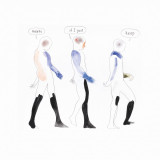
First ever repress of the sought after psychedelic tinged funk rock private press album 'Eclipse of the City' from 1980 New York. Originally recorded between 1975 and 1977 in Manhattan's garment district. Eclipse of the City lay dormant on a reel to reel player whilst frontman Carlos Fire Aguasvivas muddled through life working as a data entry clerk away from his fellow band members. It wasn't till he rediscovered the tapes that a sudden life affirming moment drove him to get the music pressed. Putting pen to paper Carlos created the artwork as a homage to his love of comic art and brought the band to life on the reverse with his spindly characters engrossed in the jam. Only 300 copies were pressed at the time leading to eye-watering prices for a copy. with a recent digital re-release from Indian Summer's Anthology Records, Sticky Buttons stepped up to repress the record with a limited run of 500, lovingly manufactured in the UK in all its vinyl glory.
Arriving in the Bronx from the civil unrest of Santo Domingo in the early 60's Aguasvivas was surrounded by the raucous sounds of rock, jazz and prog. Absorbing the humdrum atmosphere of life in New York, Eclipse of the City came from the minds of close friends Carlos Aguasvivas, Steve Garcia and Eddy Garcia. Meeting at Monroe High School the three of them quickly formed a strong bond over their shared interest in music. It wasn't long after that they began rehearsing in a basement under a neighbourhood cleaners and in the attic of Steve and Eddy's family home piecing together their extended sessions of tripped out cinematic psychedelia.
Recording got off to a rocky start as a car accident left the three band members in A&E after taking an early morning cab ride through Manhattan to watch the sunrise on their way into the studio (a theatrical artistic statement of intent conceived by Steve Garcia) - as Eddy mentioned "Eclipse was forged from a lot of pain". Their recording sessions were postponed but a few weeks later they were back and with the added energy of John Ortega on Bass and Vincent Anderson on electric piano and organ - with just a few microphones and a reel to reel recorder, Eclipse of the City was laid down as the stark bold homage to New York's downtown.
Influences ranged from the cinematic behemoth Jaws to the UK prog rock bands of Genesis, Yes and Emerson Lake & Palmer but only could Eclipse of the City take its unique form in the attics and basements of New York with the full band adding their Puerto Rican and Dominican slanted New York energy. Side one includes 3 fully formed tracks breaking out into eerie moments of calm before diving into well timed jolts of reprise as each element weaves over the top of one another whilst side two presents a 30 minute narrative work following the night adventures of a young group of friends exploring the vibrant nightlife of downtown New York. A rumbling half hour of wobbling guitar, tight drumming and synth organ licks jutting out from the glistening lights of the night before the sun rises down Manhattan's East-West axis as the lilt changes and the organ lulls the friends back home. A truly idiosyncratic take on the heady world of New York in the 70's and one that still resonates with our urban landscapes and love for the nights they bring today.
a 01: Think Positive (Live) feat. Steve Garcia, Edward Garcia & John Ortega
b 02: Jennifer (Live) feat. Steve Garcia, Edward Garcia, Vincent Anderson & John Ortega
c 03: Try It All Again (Live) [feat. Vincent Anderson, John Ortega, Edward Garcia & Steve Garcia]
[d] 04: Eclipse A (Beginnings) [Live] [feat. Vincent Anderson, John Ortega, Edward Garcia & Steve Garcia]
[e] 05: Eclipse B (First Movement) [Live] [feat. John Ortega, Steve Garcia & Edward Garcia]
[f] 06: Eclipse C (Hustle Bustle) [Live] [feat. Vincent Anderson, John Ortega, Steve Garcia & Edward Garcia]
[g] 07: Eclipse D (Funky Side of Town) [Live] [feat. Vincent Anderson, John Ortega, Steve Garcia & Edward Garcia]
[h] 08: Eclipse E (Midnight) [Live] [feat. John Ortega, Steve Garcia & Edward Garcia]
[i] 09: Eclipse F (First Movement Continued) [Live] [feat. Vincent Anderson, John Ortega, Steve Garcia & Edward Garcia]
[j] 10: Eclipse G (Home) [Live] [feat. Vincent Anderson, John Ortega, Steve Garcia & Edward Garcia]
- A1: A Tribe Called Quest - Description Of A Fool (Groove Armada's Acoustic Mix)
- A2: Barry White - Playing Your Game, Baby
- A3: Tony D - Piano Grand
- B1: Sidewinder - Stanway's Revenge
- B2: Bbg - Snappiness (Sweet Instrumental)
- B3: Ray Mang - Number One
- C1: Dayton - The Sound Of Music
- C2: Groove Armada - Your Song (Tim 'Love' Lee Mix)
- C3: Mica Paris - I Should've Known Better
- D1: Schmoov! - Destination
- D2: Chaser - Tall Stories (Pooley Lars From Mars Mix)
- D3: Tears For Fears - Pharaohs
Groove Armada’s iconic Back To Mine compilation from the Millennium gets a long-awaited re-issue 22 years after its original release. As Groove Armada celebrate 25 years of touring with their final ever world live tour, which includes nine huge dates across the UK, it’s a chance to relive Groove Armada’s eclectic and expert curation.
The album, which was one of the biggest ever selling editions of the Back To Mine Series, will be available on double heavyweight vinyl for the first timers well as a limited collectors edition in Pumpkin orange. This release marks the first of many reissues of iconic Back To Mine titles.
The Groove Armada special edition package features 12 tracks featured on the seminal album in one of the best loved compilation series’. Despite the length in time since its original release, the album remains timeless with an inspired selection ranging from A Tribe Called Quest, Barry White, Tears For Fears to the compilers themselves.
For nearly two decades, Groove Armada have been established as one of the planet's best loved and biggest selling dance acts. As comfortable on the big stages as they are in sweat soaked basements, the boys cross genres and styles with ease. This translates perfectly into their addition of Back To Mine which boldly, yet effortlessly traverses a multitude of sounds that you wouldn’t imagine could be the perfect match. Collectively, the album is colorfully funky, soulful, and incredibly smooth.
From their house to yours, listening pleasure is guaranteed.
· One of the biggest ever selling editions of the Back ToMine series repressed for the first time.
· Groove Armada will be embarking on their final live tour around some of the UK’s most iconic venues in 2022 & several festival appearances.
· Marketing campaign celebrating 25 years of the Back To Mine series and the start of back catalog reissues
· Available on heavyweight double vinyl only, Including collectors coloured orange vinyl edition.
· Features legends such as Barry White, A Tribe Called Quest, Tears For Fears and Groove Armada themselves.
When the whole world collapses around you, sometimes the only thing you can do is stomp it all loose. Erin Anne's second album, the gleaming, electrified Do Your Worst, charts that uninhibited romp through disaster. Written amid the rubble of personal grief and professional disappointment, later exacerbated by the devastation of a global pandemic, the record deepens Erin's venture into the blur between human and machine, adding a new roster of digital instruments to the mix. Drawing on dark, glossy '80s synthpop as well as the unabashed bombast of bands like The Killers, the L.A.-based songwriter deploys a cyborg persona to articulate a feeling of displacement from the world as a queer artist struggling to survive the machinations of late capitalism. With bright, interweaving synthesizers and ripples of Auto-Tuned vocals, Do Your Worst poses a dare to the world: Whatever you have in store, I'll take it standing.
Erin began writing her second album not long after adding a MIDI keyboard and vocal processing hardware to her home studio setup. While exploring her new gear, she found that she could work in the same vein as the artists and producers she loved the most. Do Your Worst takes inspiration from the music of Patrick Cowley, the disco and hi-NRG producer best known for working alongside Sylvester. Erin was taken by Cowley's use of vocoder on the 1982 album Mind Warp, where his distorted vocals create a queer, mutant subjectivity. That album rang out against the cataclysm of the AIDS epidemic; Erin found resonance in Cowley's music during the present-day pandemic. "I have found the most catharsis and the most safety in listening to the music of people in really, really horrific circumstances making something lasting and profoundly beautiful," she says.
Throughout Do Your Worst, which was mixed by Sarah Tudzin of Illuminati Hotties, songs like "Typhoid Mary" and "Florida" reckon with loss, despair, and abjection. "This Hungry Body" sears through pandemic-era touch starvation, while "Mirror Mirror" attends to the noxious but necessary funhouse of social media. On the playful, guitar-driven “Eve Polastri’s Last Two Brain Cells Have a Debate,” Erin uses the spy thriller TV show Killing Eve to explore queer codependency and masochism. Among these fraught subjects, Erin Anne finds opportunities for release. She stages internal conflict on a scale so massive that its details start to become clear; if they don't resolve, they at least become palpable.
"I’m very much a maximalist when it comes to production. I like vast landscapes. I like a stratosphere and a core -- I want the bass to be beneath the floor," Erin says. "This record is, in a lot of ways, a collection of some of the first moments that I was technologically able to achieve accurate renderings of how I hear my own emotional world."
Relentless techno powerhouses Octave One stride in 2022 with a brand new release that re-affirms their status across two essential tracks. 2021 was another busy year for the Burden Brothers, who re-introduced the world to their Never On Sunday alias. The project first started in the 90s as an outlet for deeper, more introspective sounds and was fittingly brought back last year to great acclaim. The Detroit duo’s Locus of Control series also hit volume number three and the iconic Octave One live show continued to light up clubs everywhere from Barcelona, Paris and Geneva to LA and New York. Despite that, they still had time to cook up more of their famously soulful techno in the studio, the first two tracks of which are presented here.Opener ‘The Blue Drift’ surges ahead on waves of rattling metallic synths. Well swung claps bring that irresistible sense of groove, while twisted melodies add raw dynamics. Add in the heavy underlying bass and you have a classic Octave One track that is both physical yet emotional. On the flip side is ‘It-Just-Is’ a powerful statement of intent. It’s a stripped back track where house and techno meet - there is a seductive slide to the drums and potency in the turbulent synths which bring the energy. The melody is melancholic and as the emotive pads ring out they lodge deep in your brain to make for another standout cut. This vital new release proves Octave One remains right at the forefront of underground music more than 30 years after they started out.
Two years after his Debut EP Bloodline OTN 01, Umo returns to OpenTheNext with another 5 #neodancefloor killer tracks.
The sound of Umo is the result of almost two decades of studying frequencies, vibrations, sequences of movements, plants and ascetic substances, seeking to recover the Music & Dance´s sacred and transcendental vision to ascend and sustain higher states of consciousness.
His new EP is a slow motion rework of the Raves in the 90s´ original sounds & vibrations. Traveling to a time when the dancefloors were true places of healing , authentic liturgies where people danced in community for days with eyes closed – before the internet, smartphones and globalization would corrupt everything.
#slowravers is a sonic journey that encourages conscious breathing and movement, and allows you to empty, dilute and connect in perfect resonance with the void that binds everything together.
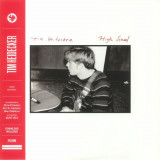
Produced by Heidecker, Drew Erickson, Eric D. Johnson and Mac DeMarco, High School sees Heidecker emerging as an increasingly playful and poignant story teller, infusing childhood tales with new gravity. In conjunction, he announces Tim Heidecker Live! Featuring Tim Heidecker and The Very Good Band, his first two-act tour of comedy and music. Since 2016, Tim Heidecker has chronicled the annals of adulthood on a series of supreme singer-songwriter albums. The crushing devastation of divorce and the existential malaise of middle-age, the minutiae of home ownership and the ritual of family vacation, child rearing and global warming: Heidecker has handled it all with humor and heart. But, there’s one pivotal lodestar of human development he has yet to mine that’s right, High School. First single “Buddy” is a composite of a few woebegone friends, which finds Heidecker reminiscing on the familiar tragedy of the adolescent stoner, manifesting the destiny of undiagnosed depression and parents who didn’t care much. The song itself is a jangly delight, but it’s hard not to mourn for “Buddy,” then re-count whatever blessings you may have. After initial and fruitful sessions with Jonathan Rado, Heidecker started recording tunes with DeMarco and Erickson, who had also worked on 2020’s collaboration with Weyes Blood, Fear of Death. At DeMarco’s studio, they added drum machines and synths and sidewinding solos to Heidecker’s big strummed chords. Johnson (Bonny Light Horseman, Fruit Bats) helped Heidecker finesse the tunes even more, making the music as rich as the feelings. Kurt Vile contributed to one song, as well. Through all those sessions, it slowly became clear: Heidecker was writing not only about the adventures and misadventures of life as a Pennsylvania teen in the early ’90s, but also how it felt to lose a juvenile sense of mystery and possibility as an adult. He was writing about high school and, really, the way it helped shape everything else. Back at Pennsylvania’s Allentown Central Catholic High School, Heidecker dreamed of making it with one of his many rock bands — Time and Other Things, Shaggy’s Beltbuckle, and (incredibly) The Pulsating Libidos. Two years shy of his graduating class’ 30th anniversary, Heidecker admits he had little of substance to say when he was 17, like all but the rarest of precocious minds. In college, though, he found the friends with whom he built his comedy career, largely apart from music and without much thought for his time back at Central Catholic. He was focused on his future. It is fitting, then, that as Heidecker has become such a delightful singer-songwriter and collaborator, he returns to the first scene of his time as a musician. Maybe he’s right — he didn’t have anything to say or sing about life back then. But across the earnest and amusing High School, he finds plenty to say about those weird and wonderful and ordinary times.
Repress
Identified Patient drops another calamitous record on Pinkman - 4 dungenous slowbeat cuts, brimming with energy, emotion and attitude. The EP kicks off with Geen Syndroom where jaded, murky melodies go in tandem with sexy bass lines and an obliterating broken drum beat. Thereafter, Nog Steeds High Van De Lak progressively evokes feelings of desolation and melancholia, while carrying an aggressive punch and irresistible groove. Do the flip to find two more ferocious productions in Ver Verwijderd Van Vermoeid and Haar Glans Altijd Strak. The former grips you firmly with bubbling acid and machine gun snares on the backdrop of violent kicks. The latter ends the voyage entrancingly with hypnotic synth lines, whiplash-snares and rattlesnake-hats.
Australian producer Kate Stein brings her mesmerising sounds to TAU with the Death Stocked EP, her debut with us. Currently based between New York City and Los Angeles, Kate merges a variety of styles to produce captivating cuts that embody the ethos of dance floor liberation and self-expression. A confident performer who has appeared at House of Yes, Mayan Warrior and Cityfox Experience at Brooklyn Mirage, among many other notorious spots, Kate is also carving out her own lane with her productions. On Death Stocked we get two original cuts, with a bumper selection of reworks...
Clear vinyl LP edition of 500 copies. Vacant Gardens is Glenn Donaldson (of The Reds, Pinks and Purples and a hundred others) and Jem Fanvu, collaborating on music and with the latter responsible for vocals and lyrics. The project began with the idea of combining heavy fuzz and slow-mo drum machine beats with Fanvu's gentle almost trad-folk style vocals. Almost all of Donaldson's otherworldly sounds are achieved through layers of guitar fuzz and copious delay, while Fanvu offers an ideal counterpoint, taking the listener on a celestial melancholy trip with her opaque poetry and melodies. So inspired were the duo by this blend of styles, they immediately recorded at least two albums of material, Under the Bloom and Obscene, released in quick succession in 2020 and 2021 in swiftly-disappearing micro editions on the secretive Tall Texan label. With those records close-to-impossible to find at an affordable price, Tough Love are now reissuing both LPs. From Reds Pinks and Purples' Glenn Donaldson, Vacant Gardens is an interstellar recording project that combines celestial, shimmering guitar on the verge of breaking like a massive, emotive wave and an ethereal vocal style from Jem Fanvu (visual artist, Minor Ghost Band also, plus collaborating with Tune-Yards, Cavity Fangs and many more) recalling Hope Sandoval or Liz Fraser that sails in its wake. Simply put, this is some of biggest, heart-tugging guitar music you'll hear in recent times. Sold out at once debut Under The Bloom, is followed now a continuation and development of the group's sound on Obscene: a frayed tapestry of Slowdiving, Flying Saucer Attack guitar noise wall married with an angelic vocal from Fanvu that glitters in counterpoint to the stringed distortion like Hope Sandoval or, in the way it shines bright in the fog, like Jonsi's surfing the surging waves of emotion in early Sigur Ros. Originally released in February on digital formats, Obscene gets a vinyl press and is sounding massive. Vacant Gardens' music suggests oceanic feelings, a hazy intergalactic consicousness that burbles beneath the surface of everything while also touching the visceral points in the human heart that makes groups like Galaxie 500, Yo La Tengo so timeless.
100 copies only
Apron Records has been instrumental in shaping the current landscape of contemporary electronic music coming out of the U.K. since 2014. After almost a decade of pushing their unique vision has made the Apron Records imprint one of the most in-demand labels in most independent record stores. Now more than 45 releases deep in their journey, Apron Records have teamed up with Patta Soundsystem to work on their first various artists release and to celebrate this monumental milestone, both camps have collaborated to create a clothing capsule to accompany this release. After working with the artist formerly known as Funkineven on ‘The Wave’ late last year, it was only right to showcase the diverse talents behind this movement.
Sharing a drawing board with Patta for the first time with Apron Records, together they have created a Trucker Cap and a Graphic T-Shirt that echo the racing theme of the whole project. Better Together is the slogan that runs throughout the entire collaboration, stressing how unity makes us stronger as individuals. Artwork for the record has been provided by Amsterdam based artist Jim Klok. His unique Acetone printing technique has now been immortalised on this LP, juxtaposing vintage cars with checkered racing flags to create a dynamic cover that would be right at home in a picture frame as well as a record bin.
System Olympia’s ‘Passi Mai’ is a beautiful 80’s inspired driving riddim layered with her own vocals that wouldn’t be out of place in an arcade or a sticky nightclub floor. Followed up by ‘Leven’ by Brassfoot, we get a wobbler from the NTS regular. Layed with Jamaican vocal samples and audacious arpeggiated bleeps, Leven is a soulful approach to techno tropes that have been bouncing around Brassfoot’s head. Shamos’ 737363 is a cryptic masterpiece. With dreamy pads as a backdrop for shuffling drum beats, euphoric sweeps and dynamically designed synthesis, this closes off the themes explored in the first half of the record.
Side B kicks off with J M S Khosah’s contribution to the record titled ‘Lessons’ which is a dancefloor filler, adorned with glamorous percussion, vocal samples and syncopated stabs ontop of a driving 4x4 kick pattern. Kicking things into 6th gear is a club-ready production from London's most soulful selector Shy One. Groovy basslines and a 2-step riddim make ‘Candy Floss’ an ode to the grimey and the glittery sides of London nightlife. This project champions one of the people that have been pivotal in the success of the label, Steven Julien whose track E46 is an emotional journey through his synth-laden East London studio. Bookending the project are two compositions from Compton’s-own AshTreJinkins. Showcasing his abilities to approach the project from both an ambient and a pure beat-making perspective in order to hold the whole project together.
Third pressing on transparent pink vinyl. At the 2018 edition of Roadburn Festival - a congregation of all things obscure, heavy and experimental in Tilburg, the Netherlands - two generations of Japanese Krautrock genius took to the stage for a live collaboration that was just as hypnotic as it was inevitable. The artists in question were Tokyo's Minami Deutsch and the legendary ex-Can frontman Damo Suzuki. With Minami Deutsch's heady metronomic jams providing the backdrop on which Suzuki was left free to deliver his distinct improvised vocals, the Live At Roadburn LP is challenging, raw and, at times, totally alien. Divided into three parts, from start to finish the LP is consumed by an unrelenting motorik rhythm section that never lets loose for a second. At the flick of a switch, intricate guitars veer from hypnotic and meditative to skewed psychedelic freak-outs drenched in fuzz. Where Minami Deutsch's playing is sharp and meticulous, Suzuki's stream-of-consciousness ramblings steer the music into whatever direction he sees fit. The result is equal parts disorientating, sporadic and totally all-consuming - the only thing keeping you grounded being that distorted and seemingly-endless 4/4 drive. Repetition. Minimalism. Improvisation. Transcendence. That was the ideology of seminal Krautrock pioneers Can, whose 1970-1973 work with Damo Suzuki at the helm unleashed something in music that would change it forever. Some 45 years since Can's final record with Suzuki - the inimitable Future Days - and the spirit of that era still lives on. Not least because ever since then Suzuki has embarked on an endless one-man tour, traveling around the world and taking to the stage backed by countless different bands. Crossing paths at Roadburn, Suzuki's ensuing performance with Tokyo via Berlin-based group Minami Deutsch is now available to relive on wax.
Famous present their first vinyl release, a double EP comprising their lauded 2021 EP The Valley on side A, and their equally acclaimed 2019 debut England on side B. The Valley is an intense, engrossing body of work from a band firmly stepping into their own space, foregoing the easy route, whilst interrogating themselves and everything around them. References to Soundcloud rap stand side-by-side with Greek Tragician Euripedes, along with the white noise of endless Simpson’s repeats colliding with daydreams of settling down and one day owning a gilet. It’s both complex and accessible, the sound of a silver-lining appearing from a dark cloud. England presents a distinctively hyperbolic, mythic re-imagination of urban life; using theatricality and the emotional authority of art to navigate the chaos of anxiety. The music is, nonetheless, thoughtful and surprising, as shown by the six self- contained yet interconnected tracks that make the whole. Opener ‘England 2’ is a rumbling call to arms that ushers in the haywire ‘Surf’s Up!’. The heart of the record is the two-punch of tainted-pop cut ‘Forever’ and the skittish paranoia of ‘Jack’s House’. All that remains is the expansive, circling ‘2004’ before the most tender moment ‘My Crumpet’ closes the show. Famous live shows are intense brash affairs. Alternating between the pathetic showmanship of Vegas-era Elvis and the controlled experimentations of post punk, the band has built a reputation as one of the best live acts on the London underground circuit. Playing shows with Black Midi, Sports Team, Jockstrap and supporting Black Country, New Road on their full UK tour, Famous has undeniably placed itself at the centre of that new generation of English bands. 2022 sees the band playing major festival dates and venues across Europe, alongside supporting Los Bitchos on tour in France, in April.
Felicia Atkinson’s music always puts the listener somewhere in particular. There are two categories of place that are important to »Image Langage«: the house and the landscape. Inside and outside, different ways of orienting a body towards the world. They are in dialogue, insofar as in the places Atkinson made this record—Leman Lake, during a residency at La Becque in Switzerland, and at her home on the wild coast of Normandy—the landscape is what is waiting for you when you leave the house, and vice-versa. Each threatens—or is it offers, kindly, even promises? —to dissolve the other. Recognizing the normalization of home studios these days, she revisited twentieth-century women artists who variously chose, and were chosen by, their homes as a place to work: the desert retreats of Agnes Martin and Georgia O’Keefe, the life and death of Sylvia Plath. Building a record is like building a house: a structure in which one can encounter oneself, each room a song with its own function in the project of everyday life.
At times listening to »Image Langage« is immediate, something like visiting a house by the sea, sharing the same ground, being invited to witness Atkinson’s acts of seeing, hearing, and reading in a sonic double of the places they occurred. In an aching moment of clarity in »The Lake is Speaking,« a pair of voices emerge out of the primordial murk of piano and organ, accompanying the listener to the edge of a reflective pool that makes a mirror of the cosmos. "I open my feet to fresh dirt, and the wet grass. I hold your hand. You hold his hand. In the distance without any distance. The comets, the stars." At other times, listening to »Image Langage« is more like being in a theatre, the composition a tangle of flickering forms and media that illuminate as best they can the darkness from which we experience it. On »Pieces of Sylvia,« a noirish orchestra drones and clatters beneath and around a montage of vocal images, stretching the listener across time, space, subjectivities. Atkinson says that "Image Langage" is like the fake title of a fake Godard film. There is indeed something cinematic about Atkinson’s work—not cinematic in the sense that it sounds like the score for someone else’s film, but cinematic in the sense that it produces its own images and langage and narratives, a kind of deliberate, dimensional world-building in sound.
»Image Langage« is built from instruments recorded as if field recordings, sound-images of instruments conjured from a keyboard, instruments Atkinson treats like characters, what she calls “a fantasy of an orchestra that doesn’t exist.” And then, speaking of Godard, there are the monologues, operating as both experimental-cinematic device and a literary style of narration. Voice can be a writerly anchor or a wisp of a textural presence. Atkinson’s capacious and slippery speech plunges into and out of the compositional depths, shifting shapes, channelling the voices of any number of beings, subjectivities, or elements of her surroundings—not unlike her midi keyboard, able to speak as a vast array of instruments.
»Image Langage« is an environmental record, in the vastest sense of the world. It is about getting lost in places imagined and real; it registers, too, the dizzying feeling of moving between such sites. It puts forth a concept of self that is hopelessly entangled with the rest of the world, born of both the ache of distance and the warmth of proximity.
For Félicia Atkinson, human voices inhabit an ecology alongside and within many other things that don’t speak, in the conventional sense: landscapes, images, books, memories, ideas. The French electro-acoustic composer and visual artist makes music that animates these other possible voices in conversation with her own, collaging field recording, MIDI instrumentation, and snippets of essayistic langage in both French and English. Her own voice, always shifting to make space, might whisper from the corner or assume another character’s tone. Atkinson uses composing as a way to process imaginative and creative life, frequently engaging with the work of visual artists, filmmakers, and novelists. Her layered compositions tell stories that alternately stretch and fold time and place, stories in which she is the narrator but not the protagonist.
Tape
Edições CN label founder Lieven Martens (Dolphins Into The Future) joins the Dauw label with his new album Short stories - pleasant and/or rather sad. On Short stories, Martens continues his quest for unique sound collages based on recorded original work, field recordings and samples. He offers 3 pieces depicting their own narrative. But what's the narrative? Martens leaves his listener with only music and a few linguistic traces as guidelines.
(1) Romantic collection
I. Under the 4pm sun (smoke and deep green) II. Two white-tailed tropicbirds III. Waves breaking on black lava rocks IV. The distant lights of fishing boats at night
(2) Sonorities
20 memories of maximum 20 seconds – and an intermezzo.
(3) Madrigal: a Conversation in the Dark
In front of the house across my parents’ house. There are two statues. They’re bought in the local garden shop, on a budget. In their driveway strewn with gravel, they slyly talk at night.
Lieven Martens (Lieven Martens Moana, formerly Dolphins Into The Future) is a composer and observer. He makes a conceptual form of music – programme music - that travels beyond the pure description. His works are like narrative stills; encounters with objects and thoughts.
As a recording artist, the main focus lies on the music album, and the live concert. But other forms come into play too, like an operetta, music for carillon, music for a commercial, a few movie soundtracks, installation music, et al.
Since he never submitted his work for an art prize, he didn’t won any. But a few years back he received a grant from the Flemish Department of Culture.
Next to his music he writes to make an extra euro. He also writes a few emails every week too. In general, you know.
Martens runs Edições CN, a private press that is praised for its catalogue of original works by a list of internationally acclaimed artists. He also hosts an irregular radio show on We Are Various radio in Antwerp (previous programs for Lyl Radio, and Radio Centraal).
After two UK #1 albums, 2 million album sales and an array of international acclaim, you might’ve thought you knew what to expect from Royal Blood. Those preconceptions were shattered when they released ‘Trouble’s Coming’ last summer. Hitting a melting pot of fiery rock riffs and danceable beats, they delivered something fresh, unexpected and yet entirely in tune with what they’d forged their reputation with.
The reaction was phenomenal, with highlights including 20 million streams, a premiere as Annie Mac’s Hottest Record and a run on Radio 1’s A-list and earned alternative radio support and media attention across the globe. In short, Royal Blood are primed to be bigger than ever before. That feat is set to be realised when they release their eagerly anticipated third album ‘Typhoons’ on April 30th via Warner Records.
When Mike Kerr and Ben Thatcher sat down to talk about making a new album, they knew what they wanted to achieve. It involved a conscious return to their roots, back when they had made music that was influenced by Daft Punk, Justice, and Philippe Zdar of Cassius. It also called for a similar back-to-basics approach to what had made their self-titled debut album so thrilling, visceral and original.
“We sort of stumbled on this sound, and it was immediately fun to play,” recalls Kerr. “That’s what sparked the creativity on the new album, the chasing of that feeling. It’s weird, though - if you think back to ‘Figure it Out’, it kind of contains the embryo of this album. We realised that we didn’t have to completely destroy what we’d created so far; we just had to shift it, change it. On paper, it’s a small reinvention. But when you hear it, it sounds so fresh.”
Those traits pulsate throughout the new single and title track. Kerr’s spiralling bass riff casts an hypnotic allure as it grows in intensity, while his vocals switch at will between a raw rock roar and a soulful falsetto. It’s underpinned by Thatcher’s thundering beats, his taut rhythms infused with groove-laden hi-hats.
After setting the tone with ‘Trouble’s Coming’, the album opens in breathless, take-no-prisoners style with the fierce metallic grooves of ‘Who Needs Friends’ hitting an early visceral peak. Royal Blood further reference their fresh array of influences by deploying vocodered vocals on ‘Million & One’ before dynamically switching between the biggest contrasts of their sound with ‘Limbo’. Already a fan favourite having been a regular during the duo’s 2019 shows, ‘Boilermaker’ lives up to its reputation and is more than matched by ‘Mad Visions’, which evokes a hyper-aggressive Prince. It ends with a final surprise in the shape of the stark piano ballad ‘All We Have Is Now’, a vulnerable and revealing reminder to live in the moment.
That song’s unguarded sentiments gives the album a redemptive finale. Whether directly or allusively, the album focuses on exploring the flipside of success that they’ve experienced. It comes from the realisation that success is much more complicated than it seems and that having the time to regain perspective is a precious commodity which becomes ever more elusive. The situation called for reflection and change, which Kerr addressed in Las Vegas. He downed an espresso martini and declared it to be his last drink, and soon discovered that his new-found sobriety would have a positive impact upon his creativity and life as a whole.
That new approach manifested itself in the duo’s decision to produce the majority of ‘Typhoons’ themselves. ‘Boilermaker’ was produced by Queens of the Stone Age frontman Josh Homme, the two bands having first connected when Royal Blood supported them on a huge North American tour. Meanwhile, the multiple Grammy Award winner Paul Epworth produced ‘Who Needs Friends’ and contributed additional production to ‘Trouble’s Coming’.
Rome’s own disco wizard L.U.C.A. aka Francesco De Bellis is back for his second LP Terra, hot on the heels of his Venus 12” EP earlier this year. In this far-reaching album, the Edizioni Mondo founder explores the deteriorating relationship between Man and Nature, and the dire consequences. The album is split into two themes - part one is Consacrazione (Consecration) and side two is Coscienza (Conscience) - as L.U.C.A. charts a trip through mankind’s psychic universe, and imagines worlds beyond our physical dimension.
The opening composition Cities is an uptempo number that slowly comes into focus, as dreamy drum machines emerge from the urban bustle, before settling into a soulful groove as keyboard, upright bass and guitar figures dance across bright percussion. As it builds up a head of steam, the piece gives way to an ambient, tribal breakdown, which is also echoed in the following song, Drum Talk. This second tune sets up in a fourth world dreamscape of drums, synths, and abstracted echo effects, and is peppered with word fragments from the bush of ghosts. By the time we’ve reached the third track, Congiunzione sounds like travelling at singularity speed, beaming in from a future where human consciousness and gaia can finally dance on a cosmic plain.
Part two of Terra details how revelation of the spirit can guide the mind, as Time Spirals rises out of a drum motif with a nod to classic ragas, as a disembodied voice asks questions on the nature of corporeality. The sound design is just as front and centre as the sitar and fretless bass, and the song gives way to a richly-layered soup that sounds like the vast space between atoms. It’s this shift from composition to ambience that is the dynamic core of Terra, giving L.U.C.A. plenty of space to showcase his next-level audio and arranging skills. Midway through part two, Giallo Assoluto begins with reverb tails and choral voices before expanding in brightness and texture until the audio field is practically levitating your hi-fi speakers, vibrating them with drones, twinkling keys and shards of digital noise. The closing composition Ritorno al Domani is a perfect balance of optimism and mystery. Tension and release collapse in on themselves as waves of ambient pads crescendo and then break over stretched-out sonic turbulence, before reversed synths bring the listener to a closing door, and the end of the journey.
It’s a mind-expanding musical exploration of other worlds and parallel universes which are surely all around us, and in many ways serve to remind us of the marvel that is our own planet.
When words trail off at the beginning of claire rousay’s »everything perfect is already here«, ornate instrumentation is waiting to fill a void left by the breakdown of language. Yet it becomes clear as we trace rousay’s collaged sonic pathway that breakdown, of meaning and also of melody, is also a place to rest. everything perfect… is made up of two extended compositions that cycle between familiarity and unknowing. There are seemingly infinite ways to feel in response to these pieces of music, which shift tone across their languid duration, earnest like a familiar song but unbound from the emotional didacticisms of lyrical voice and pop form.
rousay builds a fluid landscape around the acoustic contributions of Alex Cunningham (violin), Mari Maurice (electronics and violin), Marilu Donovan (harp), and Theodore Cale Schafer (piano), whose respective melodies weave gently in and out, sometimes steady, sometimes aching, sometimes receding altogether in deference to less overtly musical sounds. That is, percussive texture in the form of unvarnished samples and field recordings: the rattle and rustle and the stops and starts of life unfurling, voices sharing memories nearly out of reach, doors closing, wind against a microphone. Everything comes from somewhere in particular, possessing the veneer of the diaristic, but sound’s provenance is secondary here and so these details become tangled and fused. On this release I hear such details not as individual ornaments or stories but the collective architecture of the greater composition. It’s an architecture that is not quite formed and thus full of openings out to the world unfolding.
“The world unfolding,” that’s a kind way of saying change, movement, loss, transformation. Things rousay here indexes, not without shards of desire or pain, still somehow what I hear is coarse peace in the in-between. These two pieces sweep you away and then bring you to earth, but which is which, anyway? Where am I now? What is different outside of me? What is different inside of me? Um. I think. everything is perfect is already here, like the answers to these questions, is loose and beautiful in surprising ways.
The music guides a certain experience of the world around. In claire’s music there is this marriage—not just a pairing or juxtaposition but an interrelationship, an eventual confusion—of song/texture, narrative/abstraction, figure/ground. Everything comes from somewhere in particular but not just the voices, the field recordings, the what is being said or meant, what matters is the where you are now. There are so many ways of anchoring oneself in the present, some have to do with fantasy or storytelling and some with accepting what is.
These two compositions find peace between these modes. They sweep you away and then bring you to earth, but which is which, anyway? Their mode of feeling is inquisitive. Where am I now? What has changed outside of me? What has changed inside of me? The music, like the answers to these questions, is loose and beautiful in surprising ways.
White Vinyl
Remastered reissue of Het Zweet's 1987 self-titled LP + a bonus LP, consisting of previously unreleased material.
Marien Van Oers work under the name Het Zweet (“The Sweat” in English) originally came out in the 1980s (specifically 1983-1988), but listening to the new reissue of this self-titled album from 1987 can feel like one is listening to something that’s both much more current and also much, much older than that. Van Oers, who passed away in 2013, made music that tended to get classed as “industrial”, and tracks here like the steady, clanging churn of “From the Lowland” or “On Earth” show why, but he was as or more inspired by tribal music intended to produce trance-like effects via rhythm and (percussive and vocal) repetition. Using instruments made by himself out of anything from shopping carts to cardboard tubes, the music of Het Zweet locks into grooves that somehow feel more elemental and physical than many of his contemporaries. It never quite feels like Van Oers is emulating or echoing the music of any particular region or tradition so much as trying to synthesize all the ones he’s heard into some sort of ur-pulse, an overtone so powerful as to compel the “Massive Trance” the title of the last song on the record evokes.
While the 1987 Het Zweet has four track titles per side, and on listening you can discern some segues and places where it feels like new movements do shift into place, it’s fitting to have this record on vinyl where the listener is encouraged to experience each side as one uninterrupted piece. The bonus material included on this reissue expands Het Zweet from one LP to two, the second LP consisting entirely of previously unreleased material. This bonus LP is sequenced similarly, with three untitled tracks and two live excerpts presented as side-long experiences that belie their disparate origins with a unity of sound and purpose. Van Oers’ percussive nous and distantly yelled chants certainly sound capable of working up a sweat in both the performer and any movement- minded listeners, but maybe the most striking thing about Het Zweet is how vital it still sounds, despite its age and relative obscurity.
- A1: Maria Maria
- A2: Cozinha
- A3: Pilar (Do Pila) (Do Pila)
- A4: Trabalhos (Essa Voz) (Essa Voz)
- B1: Lilia
- B2: A Chamada
- B3: Era Rei E Sou Escravo
- B4: Os Escravos De Jo
- B5: Tema Dos Deuses
- C1: Santos Catholicos X Candomble
- C2: Pai Grande
- C3: Seducao
- D1: Francisco
- D2: Maria Solidaria
- D3: De Repente Maria Sumiu
- D4: Eu Sou Uma Preta Velha Aqui Sentada No Sol
- D5: Boca A Boca
- D6: Maria Maria
Repress incoming...
Far Out Recordings proudly presents Milton Nascimento's Maria Maria. Recorded in 1974 and unreleased until almost thirty years later, the album was written as the soundtrack to a ballet which dealt with the legacy of slavery in Brazil. Raw, atmospheric and emotionally charged, Maria Maria reveals one of Brazil's greatest ever songwriters at his creative peak. Featuring an all-star cast of fellow Brazilian legends including Nana Vasconcelos, Joao Donato, Paulinho Jobim, and members of Som Imaginario, Maria Maria holds what Milton considers to be the definitive versions of some of his classic songs, including 'Os Escravos De Jó' and 'Maria Maria'.
Originally released in 2003 as a double CD package, with Milton Nascimento's 1984 follow up ballet soundtrack Ultimo Trem, Maria Maria will be available on vinyl for the very first time from December 2019, with Ultimo Trem set for vinyl release early 2020.
Milton Nascimento possesses one of the most immediately recognizable voices in Brazilian music: high and sweet and as breathtakingly sublime as that of any soul singer. It was this voice that the legendary Brazilian singer Elis Regina fell in love with back in 1964, having heard Milton perform his song 'Canção do Sal (Sultry Song)' at a private party in Sao Paulo. Ellis went on to record the song in 1967 -giving Milton his first hit in Brazil and beginning a career that has spanned over 50 years.
Born in Rio on the 26th October 1942, Milton moved with his adoptive parents at the age of 18 months to Tres Pontas, a rural town in the state of Minas Gerais, 500 miles north of Rio. He began his musical career as a young teenager, singing in a crooner style he learnt from listening to Brazilian singers and US groups such as The Platters on the radio. Hungry for more opportunities to perform, Milton moved to Belo Horizonte, the capital of Minas Gerais, at the age of twenty. By the beginning of the 60s Milton had made a name for himself both as an accomplished singer and guitarist.
Milton became part of a local network of musicians, film makers, dancers, theatre directors and writers that included the journalist and song writer Fernando Brant as well as lyricist Marcio Borges and his younger brother Lo Borges. Together these four wrote and produced what would become Milton's milestone album, 'Clube da Esquina (Club on the Corner)'. The originality of 'Club da Esquina' shaped the local scene, and it reflects the essence of 'the Nascimento Sound'. Milton's religious upbringing as an Afro-Brazilian Catholic saw him exposed to church choral music from an early age. His love of this genre of music is apparent in both his celestial falsetto and vocal choral arrangements. This collection also displays his early fascination with evocative, non-verbal, scat-style singing, spare, harmonic guitar work and local folk music, jazz and rock.
In 1976, Milton and Fernando Brant teamed up with a new contemporary dance company called Grupo Corpo, whose Argentinian choreographer Oscar Araiz, would become a collaborator with the two musicians. Together, they conceived a show based on the composite life story of the daughter of a black slave called Maria. Nascimento wrote music to Brant's lyrics and "Maria Maria" was premiered in the main theatre of the Belo Horizonte Palacio das Artes that year. "Fernando wrote the lyrics for the ballet, but there were originally no lyrics for the theme song, "Maria Maria'". Milton and Fernando worked on the lyrics together, basing them on folk stories about black women of the countryside. Adds Milton "These memories are mostly things that we witnessed – Fernando and I – rather than what we experienced ourselves.
Milton's music is impressionistic, emotional and romantic. Relying on songs without lyrics as well as evocative vocalizing and choruses, Milton experimented heavily with Afro-Brazilian percussion and taped jungle sounds. His composing method for these recordings was highly unconventional: "I wrote the music for 'Maria Maria' in a tiny Rio apartment with friends and their kids running around and having fun! I love to be in noisy places, surrounded by people", he says.
The music on 'Maria Maria' was performed by an impressive group of young musicians who are today household names in Brazilian music, including Naná Vasconcelos (percussion and effects), Toninho Horta (guitars) and Paulo Moura (sax). Several vocalist including Naná Caymmi, Fafá de Belém, Beto Guedes, and Milton himself, had hits in years to come with reworkings of these songs.
Milton says his compositions follow his visions "like a movie", and he believes that reflects his long love affair with cinema. "I only began composing because of enjoying the movies so much," he says. "I wrote my first song "Peace for the Coming Love" after seeing 'Jules et Jim' (the cult 60s French film directed by François Truffaut), with my friend Marcio Borges. We went early in the morning and watched it four or five times in a row, then went to Márcio's home and wrote the song."
The songs also include solo spoken passages set to music, clearly influenced by this style of French art cinema. On the title track, Maria's story is narrated and translated to music through the use of African Percussion, drums and metal signifying the field slave tools of the day. 'Trabalhos (Works)' runs to work rhythms and whipcracks: no words, just pain. 'Lília' documents the beating of the slave woman. After 'A Chamada (The call)' and the triumphant 'Era Rei e Sou Escravo (I was a king now I am a slave' things begin to turn and Milton employs tropical jungle cries to symbolize freedom. 'Santos Catholicos x Candomble (Catholic Saints vs Candomble)' represents the battle between African and European religions through the music of both sides. Milton's heavenly falsetto pours into 'Francisco' and 'Pai Grande (Great Father)' and the outstanding 'Eu Sou Uma Preta Velha Aqui Sentada no Sol (I'm an old black lady, sitting under the sun)' conjures images of an old woman sitting deep in the forest, her memories painted in drums, piano and voices.
Clear Vinyl
sferic venture a new set of plasmic ambient entertainment systems by Jonas Wiese’s TIBSLC, mining that slender but heady sweetspot between the earliest Vladislav Delay productions for Chain Reaction, Japanese environmental x architectural recordings and the sort of gear you’d hear from Move D & Jonas Grossmann at the late 90’s Source Recordings heyday.
sferic pick up the mantle of late ‘90s-into-‘00s ambient with a new variant primed for the times. Following the themes of their ‘Decisive Tongue Shifts - Situation Based Compositions’ album of 2021, TIBSLC (The International Billionaire’s Secret Love Child) distills their sferic debut into a crystal clear, hypersensitive set of eight tracks that slip seamlessly into each other’s space, recalling the amorphous end of Jan Jelinek’s ambient shimmers.
Where TIBSLC’s first album sprawled over two discs, this one relates to the same recording sessions, but glimpsed via more succinct windows of opportunity. In effect they’re like Hitchcockian, voyeurist snapshots of other lives in the urban complex woven into a melting emulation of the city at dusk, replete with infrasonic bass from streets below, and streaked with the wistful dream energy and fizzy optimism of a certain city life. In fleeting rounds of ephemeral shrapnel and synth pad washes, the eight parts evoke a sense of mental discombobulation, lending itself to ruminating on the unbearable lightness of being.
The wiggy wanderings of Oog Bogo wind up on the same island of lost joys all at once, manufacturing a virtual jukebox of singles and side flips that won’t unplug, and just keeps reeling and raging on instead. A bright metallurgy of guitar pop, psych, post-punk and apocalypse disco embosses the sleek, multicoloured flash of ‘Plastic’.
Oog Bogo are a four-piece rock band from Los Angeles and their new album is ‘Plastic’, an electrifying set of songs and sounds that just don’t stop, working like a machine that makes joy and endless flips and repetitions, whether in front of the turntable or out in the real world.
In the past several years, Oog Bogo dropped two records that previewed this explosion in wildly divergent ways: 2019’s ‘Oogbogo’ EP, with wigged-out production, its contorted fun house mirror images pulling punk, psych and new wave in and out of focus in a chaotic procession of mutant tunes. 2021’s ‘EP2’ radiates a starkly different vibe, as chilled-out guitar-pop tunes conjure a flowing medley of plaintive echoes and atmospheres in a mellow mist of hiss.
Kevin Boog recorded these records in a largely hermetic state: at home on 4-track, playing all the parts, slowly drawing out the sounds. The songs for ‘Plastic’ were demoed this way too, as a starting point for a group interpretation - but when, for obvious reasons, logistics prevented everyone from getting in the same room to even rehearse, the planned recording session at Ty Segall’s Harmonizer Studios took on a different shape.
Starting off with only drummer Thomas Alvarez (Audacity) to accompany him, Kevin
realized that any obstacles to getting the record made were also opportunities, for
something else that was also right to happen. Rather than reach for the design of the
demos, he kept himself in the present moment, approaching every passage as fluidly
as possible, playing what he needed to play, staying open to what he needed to
know. It didn’t hurt that the laptop with all his songs crashed right after he walked into
the studio! There was no way possible but forward.
The direction was right on with the guys at Harmonizer - Ty Segall’s sense of
imagination made him the ideal production counterpart to walk together with Kevin
into this world, psyched to experiment and ready to get weird at any time. Ty and
engineer Matt Littlejohn met all requests and requirements in the form of sounds, with
gear and approaches that amazed and delighted, and an eternally ebullient spirit.
As this was Oog Bogo’s first time recording away from home, Kevin was a kid in a
candy store - where the store owner turns out to be a Wonka-esque philanthropist.
As band members Mike Kreibel (Dirty & His Fists) and Shelby Jacobson (Shannon
Lay) joined the session, there was a synchronicity and community with everyone
involved, finding an unexpected road to realizing the songs, with all the colours and
hues they added making everything pop that much harder.
Fluidity was key: ‘Plastic’’s tunes depict a polymorphic cast of characters. As in life,
they leap avidly from style to style; from pretty psych rock to new wave apocalypse
disco and harsh post punk bleakness, sometimes in a verse and a half. Corkscrewing
over and over like a riff-driven space-coaster, morphing in and out of each
successive moment with increasing momentum and gravity, ‘Plastic’ defines and
redefines Oog Bogo, with sweet tunes, barely-controlled intensity and sharp
production moves - a killer first album and an equally killer evolving state of mind.
The wiggy wanderings of Oog Bogo wind up on the same island of lost joys all at once, manufacturing a virtual jukebox of singles and side flips that won’t unplug, and just keeps reeling and raging on instead. A bright metallurgy of guitar pop, psych, post-punk and apocalypse disco embosses the sleek, multicoloured flash of ‘Plastic’.
Oog Bogo are a four-piece rock band from Los Angeles and their new album is ‘Plastic’, an electrifying set of songs and sounds that just don’t stop, working like a machine that makes joy and endless flips and repetitions, whether in front of the turntable or out in the real world.
In the past several years, Oog Bogo dropped two records that previewed this explosion in wildly divergent ways: 2019’s ‘Oogbogo’ EP, with wigged-out production, its contorted fun house mirror images pulling punk, psych and new wave in and out of focus in a chaotic procession of mutant tunes. 2021’s ‘EP2’ radiates a starkly different vibe, as chilled-out guitar-pop tunes conjure a flowing medley of plaintive echoes and atmospheres in a mellow mist of hiss.
Kevin Boog recorded these records in a largely hermetic state: at home on 4-track, playing all the parts, slowly drawing out the sounds. The songs for ‘Plastic’ were demoed this way too, as a starting point for a group interpretation - but when, for obvious reasons, logistics prevented everyone from getting in the same room to even rehearse, the planned recording session at Ty Segall’s Harmonizer Studios took on a different shape.
Starting off with only drummer Thomas Alvarez (Audacity) to accompany him, Kevin
realized that any obstacles to getting the record made were also opportunities, for
something else that was also right to happen. Rather than reach for the design of the
demos, he kept himself in the present moment, approaching every passage as fluidly
as possible, playing what he needed to play, staying open to what he needed to
know. It didn’t hurt that the laptop with all his songs crashed right after he walked into
the studio! There was no way possible but forward.
The direction was right on with the guys at Harmonizer - Ty Segall’s sense of
imagination made him the ideal production counterpart to walk together with Kevin
into this world, psyched to experiment and ready to get weird at any time. Ty and
engineer Matt Littlejohn met all requests and requirements in the form of sounds, with
gear and approaches that amazed and delighted, and an eternally ebullient spirit.
As this was Oog Bogo’s first time recording away from home, Kevin was a kid in a
candy store - where the store owner turns out to be a Wonka-esque philanthropist.
As band members Mike Kreibel (Dirty & His Fists) and Shelby Jacobson (Shannon
Lay) joined the session, there was a synchronicity and community with everyone
involved, finding an unexpected road to realizing the songs, with all the colours and
hues they added making everything pop that much harder.
Fluidity was key: ‘Plastic’’s tunes depict a polymorphic cast of characters. As in life,
they leap avidly from style to style; from pretty psych rock to new wave apocalypse
disco and harsh post punk bleakness, sometimes in a verse and a half. Corkscrewing
over and over like a riff-driven space-coaster, morphing in and out of each
successive moment with increasing momentum and gravity, ‘Plastic’ defines and
redefines Oog Bogo, with sweet tunes, barely-controlled intensity and sharp
production moves - a killer first album and an equally killer evolving state of mind.
20th Anniversary edition pressed on Californian Sunburst vinyl with
newly designed artwork and bonus 7” featuring ‘Brown Eyes’ and the
previously unreleased ‘The Earth From Above’.
‘California’ was released in 2002 to massive critical acclaim and reached
a much wider audience across Europe. Features the hit singles ‘This
Life’ and ‘Ordinary Day’.
The album features Glenn Garrett on bass, Neil Conti (David Bowie /
Prefab Sprout) on drums and Dickon Hinchcliffe (Tindersticks ) and Rick
Carter (The Sisters of Mercy) on keyboards.
‘California’ was mostly co-written with Italian composer Marco Sabiu,
who collaborated with and was mentored by the late, great Ennio
Morricone.
Perry Blake, Sligo-born singer / songwriter, is one of music’s great
untapped resources. After his first three singles - taken from his debut
album - received Single Of The Week on Jo Wiley BBC Radio 1, Blake
moved to France, where he was met with critical acclaim with his next
four albums, touring Europe with Carla Bruni and writing two songs for
Francoise Hardy’s Platinum-selling album ‘Tant de belles choses’,
appearing on various TV shows in France as her special guest.
You may very well wonder what to expect of an album with American
West Coast orientations from an Irishman who happens to be critically
acclaimed on the Continent but is largely ignored in Britain. Thankfully,
Blake lives up to his billing with apparent ease. His song writing is
evidently mature and melodic; he incorporates lush orchestral
arrangements with tender vocals; and combines pop-like hooks with a
deep sonic texture.
‘California’ is a thriving and absorbing collection of songs in which
orchestral arrangements strain with emotion, melodies thrive and bloom,
like The Verve at their peak, though far more fragile and balmy.
‘California’ is ether for the soul - a truly magnificent and touching
collection of frankly beautiful songs, which is up there with class of Bryan
Ferry, The Blue Nile and anyone else who can turn a night around.
Blake’s glimpses of people living a state of mind is one of those great
escapes it’s very hard to get away from. His gift here is to take a
subdued, grown-up collection of songs but make them sound like they
deserve daytime radio.
Radio - Radio 2 Jo Whiley session.
- A1: What Have I Done
- A2: We'll Never Find Another Love
- A3: Unprecedented
- A4: Sunday Morning Coming Down
- A5: Emperors Wore No Clothes
- A6: Sufferer
- A7: Heaven In Her Eyes
- A8: Do Yourself A Favour
- A9: Happy Includes Everyone
- A10: Stay Another Day
- A11: Lean On Me
- A12: Mellow
- A13: Caught You In A Lie
- A14: Lean On Me (Feat Bounty Killer)
"Astro's death came as such a shock, and I'm still reeling from it,” comments Ali. “This album is now more poignant and special than either of us could have imagined when we were recording it. Astro heartbreakingly passed just two weeks after we'd finished the final mixes, so this is a way of keeping his memory alive.”The follow-up to 2018’s A Real Labour Of Love – which debuted at No.2, the highest charting album by any incarnation of UB40 since 1993's Promises And Lies, and spent a month in the Top 10 – Unprecedented is fueled by the roots rocking spirit that powered UB40's original incarnation, and is an album to inject a little reggae sunshine into even the darkest days.Recorded in studios in London and Jamaica in between lockdowns, the album is a collection of songs that Ali and Astro have loved for many years by artists they admire such as Steve Wonder and Kris Kristofferson alongside self penned tracks that were inspired by the pandemic and the state of the UK at the moment.
MASTERED FROM THE ORIGINAL ANALOGUE MASTER TAPES AND PRESSED ON MOFI SUPERVINYL
· A Bold Celebration of Romantics, Escapists, and Dreamers: Electric Light Orchestra’s Eldorado Marries
Rock and Symphonic Elements, Includes the Aptly Titled Hit “Can’t Get It Out of My Head”
· Mastered from the Original Analog Master Tapes for Audiophile Quality: Mobile Fidelity 180g Vinyl LP and
· Melodic, Beatles-Inspired Tour de Force Features Full Orchestra and Choral Section: Arrangements and Lyrics
Transport the Listener to Faraway Horizons
Electric Light Orchestra leader Jeff Lynne did more than figuratively reach for the sky on Eldorado. Daring to be bold, and creating imaginative worlds that invite the listener to escape the mundane, the visionary composer-musician achieved a multidisciplinary fantasia and, in the process, a prog-rock landmark. Nearly 50 years later, the concept album's brilliance can be experienced like never before in cinematic fashion.
Mastered from the original analogue master tapes, pressed on MoFi SuperVinyl vinyl at RTI, and housed in a tip-on jacket, Mobile Fidelity's numbered-edition 180g LP of Eldorado allows the long-time audiophile staple to resonate with previously unheard dynamics, tones, and colours. Conjuring the feeling of journeying to different horizons, the record's songs teem with layer upon layer of details, which can now be heard as the producers intended.
Presenting the album with breath-taking clarity yet retaining the warmth, texture, and emotion that differentiate live music from reproduced sounds, this collectible reissue features reference-quality levels of in-the-moment presence, grand-scale sound-staging, and instrumental balance. Bursting with a veritable cornucopia of stimuli, MoFi's Eldorado LP also benefits from superb separation and immersive atmospherics that stem from the meticulous remastering process – as well as an ultra-low noise floor, industry-leading groove definition, and dead-quiet surfaces courtesy of the MoFi SuperVinyl properties.
An artistic breakthrough that established Electric Light Orchestra as a pioneering band (and confirmed Lynne as the leading practicing Beatles disciple), the 1974 effort remains notable for its involvement of a full orchestra and choral section, the range of which are captured with exquisite results on this LP. Eldorado distinguished itself from the band's first two works not only via Lynne's sharpened songwriting but due to the hiring of an orchestra that augmented the group's three string players. Co-arranged by Lynne and conductor Louis Clark, the symphonic movements bolster the contagious fare without ever drowning it. The accents also act as transports into the varied narrative universes.
Finished as a story before Lynne put notes down on paper, Eldorado ironically owes its inspiration to Lynne's father. In response to his dad's criticisms about the band, Lynne conceived a melodic tour de force that, like The Wizard of Oz, which informs the cover art, emphasizes the power of everyday dreams and everyman heroism. It's no coincidence that the sonic journey begins with an overture punctuated by the words of a cynic who condemns "the dreamer, the unwoken fool."
Beautiful yet fun, ambitious yet consistent, Eldorado proceeds to celebrate such romantics and escapists. A Technicolor escapade marked by lush melodies, fluid crescendos, and an intoxicating blend of energetic rock and sweeping orchestral elements, the album weds rich imagery and sweeping sounds in manners that make the two inseparable. In Lynne and company's hands, reality and fantasy collide, and dissolve any dividing lines. The proof is not just in the epic production, but in the timeless (and catchy) nature of songs such as the balladic "Boy Blue," power-pop packed "Illusions in G Major," and, of course, the aptly titled hit, "Can't Get It Out of My Head."
Decades later, Eldorado doubles as the equivalent of an out of body experience, an invitation to break away from monotony whether you're listening to your Mobile Fidelity reissue on a large system or an excellent pair of headphones.
MoFi SuperVinyl
Developed by NEOTECH and RTI, MoFi SuperVinyl is the most exacting-to-specification vinyl compound ever devised. Analog lovers have never seen (or heard) anything like it. Extraordinarily expensive and extremely painstaking to produce, the special proprietary compound addresses two specific areas of improvement: noise floor reduction and enhanced groove definition. The vinyl composition features a new carbonless dye (hold the disc up to the light and see) and produces the world's quietest surfaces. This high-definition formula also allows for the creation of cleaner grooves that are indistinguishable from the original lacquer. MoFi SuperVinyl provides the closest approximation of what the label's engineers hear in the mastering lab.
Soul icon Otis Redding made immeasurable contributions to the form. As a singer-
songwriter, producer, arranger and talent scout, Redding was responsible for some of the
music’s biggest and most lasting hits during the 1960s, though his death in an airplane crash
in 1967 brought his life and career to a tragically premature end. He was born Otis Redding
Junior in 1941 in the small town of Dawson, Georgia, the son of a sharecropper and preacher,
and moved to the city of Macon at the age of two, where he learned to sing at the Vineville
Baptist Church. After singing in the high school band, he performed weekly gospel songs on
radio station WIBB, winning local talent contests after being inspired by Little Richard and
Sam Cooke. Since his father became ill with tuberculosis, Redding began supporting the
family at the age of 15, working as a gas station attendant, a digger of water wells, and
occasionally by playing piano with pianist Gladys Williams at the Hillview Springs Social
Club. Then, in 1958, Redding had a repeat prize run at a talent contest held by broadcaster
Hamp Swain, bringing him first into a group called Pat T Cake and the Mighty Panthers, and
later into Little Richard’s band (during a time when Richard switched rock and roll for
gospel). Moving to Los Angeles in late 1960, debut single “She’s All Right” was issued on
the Trans World label (a subsidiary of Al Kavelin’s Lute Records), credited to The Shooters
featuring Otis; following the birth of their first child and his subsequent marriage to Zelma
Atwood, Redding recorded the popular “Shout Bamalam” for Macon’s Confederate Records
(who swiftly reissued it on the Orbit label since some radio stations objected to the original
label’s confederate flag logo, during a time of terrible racial segregation in the South).
Redding cut the movingly emotive “These Arms Of Mine” at Stax studios in Memphis in
1962, backed by Booker T and the MGs, which surfaced on the subsidiary Volt label in
October, reaching the charts some six months later (and eventually selling a reported 800,000
copies). Subsequent singles “What My Heart Needs” and “Pain In My Heart”/“Something Is
Worrying Me,” recorded in September 1963, formed the bulk of debut album, Pain In My
Heart, which was padded out by standard cover tunes of songs such as “I Need Your Lovin’,”
Ben E King’s “Stand By Me” and Little Richard’s “Lucille.” The album, which surfaced at
the start of 1964, reached the top 20 of the US R&B chart and also hit the Billboard Hot 100;
this edition has an alternate track listing that includes the Trans World debut single tracks
“She’s All Right” and “Getting’ Hip,” as well as “Mary Had A Little Lamb,” the B-side to
“That’s What My Heart Needs.” Carefully remastered, spinning at 45 rpm for enhanced qudio quality.
While Sass Jordan is celebrated as a multi-platinum selling premiere rock
singer, her 2020 album, Rebel Moon Blues, demonstrated that she sings
the blues with as much power and authenticity as she personified in the
rock world
Following up on the rave reviews garnered by Rebel Moon Blues, Sass continues
to mine her talent as a blues singer with 8 new tracks on Bitches Blues, on Stony
Plain Records.Reflecting on the impact the past two years has had on us all, Sass
has recorded songs that examine the visceral emotional territory of a pandemic,
and the multiple conflicts that the world is reeling from in the aftermath. "Still
Alive and Well' is Sass's triumphant take on a Rick Derringer song that leads off
the album. Her original song, "Still The World Goes Round" marks the mid-point
with a look at power structures, both within and without, while another new
creation" Change Is Coming" ends the collection with a trance- like chant that
offers an uplifting perspective.
As we have come to expect from Sass, the album features fierce guitar licks,
driving tempo's, the raw and soulful Sass Jordan rasp, and a glorious assortment
of rambling road dogs, known as the Champagne Hookers. This particular
collection of Hookers includes longtime associates and rebel rouser guitarists
Chris Caddell and Jimmy Reid, drummer Cass Pereira, keyboardist Jesse O'Brien
and the magnificent Mr. Steve Marriner on bass and harmonica.
Netherlands tour in June 2022.
Caamp formed when Taylor Meier and Evan Westfall met and bonded
over a shared love of music and a shared love of home, specifically the
inspiration they culled from the Midwest lives they grew up in
The two began writing and performing and quickly grew a rabid fan base. A selftitled 2016 debut album took flight, Evan and Taylor brought a third member and
longtime friend, Matt Vinson, to join on bass just before recording By and By. In
week one of the release of their full- length, By and By on Mom + Pop, Caamp
made multiple chart debuts. By and By entered the Billboard Top 200, was the #1
Heatseeker, #1 on the New Artist Alternative Albums, top 5 vinyl album sales for
the week and entered the Alternative and Emerging Artist charts. Caamp then
scored their first #1 at radio with their single 'Peach Fuzz,' made their late-night
television debut on Jimmy Kimmel Live!, and followed that up with a killer
performance on CBS This Morning Saturday. After a victorious 2019 festival
season playing Firefly, Shaky Knees, Forecastle, Outside Lands, Austin City Limits,
Great Escape and many more, Caamp kicked off a major US headlining tour in
September of 2019 and sold out show after show. In early 2020, Caamp
performed on the Late Show with Stephen Colbert. The performance was filmed
in Caamp's hometown of Columbus, OH during quarantine. The trio later released
their first live EP Live From Newport Music Hall. The five- track recording was
taken from one of their seminal hometown shows in Columbus, OH. The
recording contains live versions of songs off their most recent album, By and By.
Not long after the release of Live From Newport Music Hall, Caamp kept
themselves busy by releasing the singles and companion videos for 'Officer Of
Love' and 'Fall Fall Fall' via their label home, Mom + Pop. The band then
celebrated another victory in 2020 with their single 'By and By' resting snugly in
the Top 5 Most Spun on Sirius XM's Alt Nation. They kicked off 2021 with 'Officer
of Love' hitting #1 at AAA radio for 2 consecutive weeks. In 2022, the band will
release their highly-anticipated album 'Lavender Days' featuring 'Believe
- A1: Die Partei - Strahlsund
- A2: Rolf Trostel - Two Faces (Bureau B Edit)
- A3: Michael Bundt - Full Steam Ahead (Bureau B Edit)
- A4: Moebius - Etwas (Bureau B Edit)
- A5: Populäre Mechanik - Scharfer Schnitt No 1
- B1: Roedelius - Regenmacher (Bureau B Edit)
- B2: Tyndall - Großstadtgefühl
- B3: Conrad Schnitzler - Bis Die Blaue Blume Blüht (Bureau B
- B4: Phantom Band - Pulsar
- B5: Bernd Kistenmacher - Quitting Time (Bureau B Edit)
- C1: Heiko Maile - Nachtspaziergang (Tape 40)
- C2: Moebius & Plank - News
- C3: Faust - Vorsatz
- C4: Riechmann - Weltweit (Bureau B Edit)
- C5: Asmus Tietchens - Trümmerköpfe
- D1: Cluster - Avanti (Bureau B Edit)
- D2: Günter Schickert - Wanderer (Bureau B Edit)
- D3: You - Live Line (Bureau B Edit)
- D4: Harald Grosskopf - Emphasis
- D5: Eno Moebius Roedelius - Base & Apex
I feel honoured to finally present my first EP on de Lichting. All tracks except A1 were made during my COVID-19 quarantine between 8th-19th July 2021 on an EMU E64 and KORG MS2000. With the EP, I tried to cover most of the sounds that I regularly play during my DJ sets. Side A starts with two house cuts, ‘CAL01’ and ‘Emspacer’ inspired by some of my favourite house records, and ends with the electro title track ‘RDS THEME’. Side B, starts with the minimal-ish ‘Substance’, followed by two Ambient Techno/IDM cuts ‘Trapswet’ and ‘Cwejfx’. Personally, I feel that the tracklist reflects the process of being isolated, which on the one hand, enabled me to (finally) work on music without being distracted, and on the other hand, got me into a melancholic mood over time’.
“I’m closing a chapter in my life,” Barbie Bertisch says to me from a park bench in Greenpoint, “I spent the last four years working towards gaining confidence around my ideas and my creative perspective. This feels like a culmination of that process” The “this,” in question is Bertisch’s debut record Prelude, a collection of eleven songs that chronicle 5 years of Bertisch’s life. The legendary musician Anna Domino describes the record best: “Prelude is a record of layers and depths. The melting phases and soaring distances.”
Raised in Buenos Aires and Miami, Bertisch has called New York home for most of her adult life. When she started piecing together Prelude, she was in her Brooklyn kitchen. It was early quarantine. Stuck at home instead of DJing at clubs, she found the space to parse through the archives. What she previously considered unworthy of attention in the era of distractions, finally made sense as a whole once all the noise was turned down. Compiling a list of songs in various states of completion, Bertisch dreamed up an album, a chronicle in growth and healing frustrations of the past, an honest account of someone trying to find her own voice. That in and of itself was a journey. It took years for Bertisch to accept that she was an artist. “I felt like I was surrounded by men who ruled every space. I constantly felt like I had to ask permission to enter, always around bands but never the girl in the band” she says.
Prelude is an introspective record. It explores all of the valences of being and feeling. Some songs are chaotic and choppy. Others are soft and searching. There is rage and innocence, and moments of forced stillness, like capturing the aftermath of panic attacks, as in “After The Storm”. Bertisch also focuses on rhythm, bass guitar being her main instrument, and no stranger to the power of the beat. The record also draws on influences as varied as Kaitlyn Aurelia Smith, Cocteau Twins, Berlin School, and pioneering producer François Kevorkian. Both sonically and conceptually, Prelude is a portrait of who Bertisch is as a person.“Is This What You Wanted?” is fiery, a pointed provocation to domineering figures from her past. It’s full of strobing, strident synths, and heady lines of bass. It gives off the same vibe as a fire alarm, as a big room dance track that subverts your expectations of what it means to dance in a sea of bodies. “28,” the record’s opening track is more peaceful. It’s all languid keyboard arpeggios with the occasional flourish of a cascading synth effect.
Since most of the songs already existed in some form or another, Bertisch’s job on Prelude was to refine and reimagine music that had previously been private. She spent time rearranging, rewriting, adding elements newly available to her, such as the saxophone, and pushing the limits of the rough mixes to mold the universe she envisioned. Along the way, Bertisch grew more excited about her abilities as a musician. The resulting record is one that is inherently confident.
Prelude is also a homespun release. It’s coming out on Bertisch’s own label, Love Injection Records, which she runs with her partner Paul Raffaele. The two also DJ and make zines under the name, which started in 2015. Love Injection is a love letter to New York. Prelude is a word of encouragement to those struggling with self-actualization. The record was mixed by Justin Van Der Volgen and mastered by Walter Coelho. Love Injection Records holds the remix tradition in high regard, and they’ve enlisted reworks by some of Barbie’s favorite producers. It’s all a labor of love for Bertisch. Prelude is her: Barbie the musician.
©℗ Love Injection Records 2022
THE CULT 1990 DEBUT ALBUM OF INFLUENTIAL UK GRINDCORE FROM
PROPHECY OF DOOM - PRESENTED ON THE VINYL FORMAT WITH
COVER ARTWORK FROM THE ORIGINAL 1990 PRESSING.UK grind/death
veterans Prophecy Of Doom formed in Gloucestershire, 1988, with
bassist Martin Holt & vocalist Shrew Schroder uniting to embark upon a
journey to create something challenging & memorable to stand out in the
UK scene
After a few personnel changes whilst looking to establish a permanent recording
line-up after their 1988 demo & the 1989 EP, 'Calculated Mind Rape' (which had
brought the band to the attention of legendary DJ John Peel), the time had come
to create their debut full- length album. And so 'Acknowledge the Confusion
Master' came to be & was released in 1990 on the burgeoning Peaceville Records
& their then newly established sub- label, Deaf Records. A highly effective
concoction of blasting amid a titanic wall of raw grinding riffs & chaos propelled
Prophecy Of Doom to the forefront of the scene, also leading to two recording
sessions with John Peel & further enforcing Prophecy Of Doom's position on the
map of notable British grind acts.
As a further distinguishing factor, there was a great depth & consideration to the
themes of the album, perhaps in stark contrast to how the tracks were presented
sonically. Written by mainman/vocalist "Shrew", there with a strong philosophical
element to the lyrics, an exploration of awareness & intuition amid an era of
increasingly suppressed feelings & an urge to rise above mental restrictions.
This vinyl edition of 'Acknowledge the Confusion Master' contains cover artwork
from the 1990 release with printed inner sleeve containing lyrics & receives its
first vinyl pressing on Peaceville since that initial 1990 edition.
Leeds art-rock group Mush (Dan Hyndman vocals / guitar, Phil Porter drums,
Nick Grant bass, Myles Kirk guitar) are set to return with album ‘Down Tools’
via Memphis Industries. The new record marks the prolific band’s third album
in as many years, following hype-building early singles ‘Alternative Facts’
and ‘Gig Economy’, 2020’s debut album ‘3D Routine’ and 2021’s acclaimed
‘Lines Redacted’, which pushed their sound further and, as Uncut wrote, saw
them become “kindred spirits to Wand and King Gizzard & The Lizard
Wizard, two other bands prolifically honing their sound and approach,
steadily developing their voice.”
On ‘Down Tools’, this voice grows again into a more brilliantly singular
sound. It sees Mush getting loose, moving away from the defined moods and
textures of ‘Lines Redacted’ with a musical openness, straddling genres
while avoiding pastiche. Hyndman says of the lyrics on ‘Down Tools’ that
“there was a conscious decision to retreat further from an observational
approach” with vocals being ad-libbed lending the record a more abstract
feel. Hyndman continues: “this album is less dark than the previous one. The
Armageddon obsession has eased, or at least the symptoms have become
milder due to saturation. Musically there’s a lot more chill on the record -
there’s a few more mellow tracks out there and the most astute listener may
even be able to decipher some of the words, fingers crossed.”
While grief and work balance form themes on the record, Hyndman’s
approach is largely made up of abstract, disconnected streams of
consciousness and lines liberally taken from books, paintings, films and
beyond. On ‘Human Resources’, Hyndman dramatically retells a battle he
had with an HR department at a job in a David and Goliath style. The song
‘Group Of Death’, a phrase chillingly familiar to any football fan, is
emblematic of the turn towards softer, more considered sounds. Hyndman
says: “In my warped imagination it just sounds like a Paul McCartney song,
but it won’t to others. I initially had the idea of doing a World Cup song called
‘Group of Death’, but by the time it was written nothing beyond the title had
any relevance to football. Anyway, the next World Cup is in Qatar so fuck
that shit.”
‘Northern Safari’, meanwhile, is a song about the way the North of England
has been portrayed in the media and used as a mirror to reflect some of the
nastier elements of what’s going on in society, in particular vox pops around
Doncaster, portraying a particular narrative of the collapse of the red wall and
the disgruntled ex-miners.
‘Down Tools’ sees Mush idiosyncratically ping-pong from finger picked
looseners to noise-rock bangers to brilliantly entertaining effect, avoiding
post punk saturation with an easy style and wit.
The Entertains were a vocal group from Cleveland Ohio whose line up at different times varied between four to five members. Initially signed to Belkin Productions in Cleveland the group were persuaded by Nick Holiday to move to his Pittsburgh Steel Town Records Label. The group had already been working on two songs penned by C-Way Productions Richard Calloway who had strong links with Cleveland through his work with Jesse Fisher and Lester Johnson at Way Out Records. The two songs in question being “Love Will Turn It Around” and Why Couldn’t I Believe Them”, demo cuts of both songs where touted around to several major labels with 20th Century showing some serious interest, but the owner reputedly turned down 20th Century’s advances and instead chose to release the songs on his own Steel Town Label. Recorded at Jerree’s Studio in New Brighton P.A with the musical arrangements being provided by Don Groton, The Entertains 45 received limited local airplay reputedly due in part to Holiday’s refusal to provide a set of Dining Room furniture for an influential local radio promotion man. Greater radio play was eventually received with “Love Will Turn It Around” gaining air time on WANN, Annapolis Maryland’s largest Black radio station, courtesy of Disc-jockey Charles “Hoppy” Adams. For a time, a popular tune throughout Baltimore, Washington and Delaware without breaking out nationally. Wider appreciation of the Entertains 45 would come from foreign shores as copies of the 45 found their way in the UK. The effervescent dance side of the 45 “Love Will Turn It Around” was heavily championed by Legendary DJ Colin Curtis and became a firm favourite with the dancers within the Highland Room of the Blackpool Mecca and subsequent Northern Soul venues of the time. The Entertains line up on the Steel Town sessions where Donald Rice, Howard Rice (the cousin of Donald) Alfred Wilson and Andrew Wright the lead vocalist on all The Entertains songs. During 1978 Richard Calloway held a second recording session on The Entertains again at Jeree’s Studio’s which yielded a further two songs “I’ll Answer You With Love” and “Your Love I Give It Up” which due to lack of finance at the time of their conception remained in the can. These two songs have now been brought to life through Soul Junction’s licensing deal with C-Way Production’s in the format they originally intended for. The A-side of the release is the emotional charge stepper “I’ll Answer You With Love” with the opening monologue parts been performed by Howard Rice. While the B-side “Your Love I Give It Up” is a punchier up-tempo version of Richie Merrett’s earlier C-Way Records recording “I Gave It Up”, the flipside to “You’ll Always Have Yesterday Standing By” (C-way 103).
In later life Donald Rice would perform with Lonnie Turner Jr a former member of the Detroit groups The Mighty Lovers (Boo-Ga-Loo and Soulhawk) and Innervision (Private Stock and Ariola America) and his daughter Africa Turner in a vocal combo known as The Ambassadors Of Soul, sadly Donald has now passed. It is believed that the other members of The Entertains are still out there performing solo or as members of other different groups.
Since slipping out a decade ago, Fürsattl’s sole 12” on Claremont 56 has become an in-demand item, thanks to a mixture of its’ undeniable quality and the patronage of several high-profile, well-regarded DJs. Because of this, the label has responded to demand for a reissue of those two tracks and announced the release of a double-album of the krautrock-inspired trio’s works for the label.
Presented in a gatefold sleeve sporting Mark Warrington’s original 2012 artwork and limited to 400 copies, the 2022 album edition of Rheinlust not only tells the tale of the band’s now decade-long association with Claremont 56, but also features a previously unreleased track from the archives, ‘Für Paul’. Tucked away at the end of the LP, the track is amongst the most atmospheric in their catalogue – a slowly building number in which celestial synthesizer chords, ambient textures, echo-laden electric piano chords and lilting synth strings rise above a rubbery bassline and Jaki Liebezeit style drums.
It provides a superb conclusion to a genuinely evocative album of music you can get lost in, but it’s by no means the only highlight. Fittingly, the album’s first slab of wax boasts both tracks from Fürsattl’s hard-to-find debut 12”: title track ‘Rheinlust’, a driving but deep and hypnotic krautrock masterpiece full of elongated chords, restless bass, twinkling motifs and cascading electronic melodies, and the wonderfully epic ‘Links Der Pegnitz’. Clocking in at just under 15 minutes, this sublime excursion features band members trading glistening guitar and colourful synthesizer solos over a funky but laidback groove that sits somewhere between krautrock and cosmic funk.
The album’s second slab of wax showcases Fürsattl’s lesser-known tracks for Claremont 56, alongside the previously mentioned unreleased cut. These two workouts were originally featured on the label’s Claremont Editions compilations and further expand on their now trademark krautrock sound. There’s ‘Leerlauf’, a breathlessly up-tempo, weighty and immersive chunk of low-slung dancefloor creepiness that you’ll want to get lost in time and again, and the twangy and buzzing ‘Haru’, a birdsong-splattered affair that sounds like their tribute to krautrock originals Neu! and Harmonium. Like the rest of the album, these are seriously seductive outings that slowly build towards impactful, emotive conclusions.
"The past 5 years we have taken our music all over the world: Europe, Asia, Africa besides our homeland Denmark, and even though we cannot speak with many of the people we meet, our music is a universal language that transcends borders. The meetings we have had (and continue to have) all over inspire us to create new music. But of course we are the composers of the music, so this is our representation of those meetings.
Our 3rd album is called AFROTROPISM. Tropism is a biological phenomenon that indicates growth of a plant in response to the environment; so when you see a plant turning for the sunlight, this is tropism. In other words, this is not so much about the plant's roots but more about how it reacts when it touches the air, feels sunlight or rain - in other words the outside world. So AFROTROPISM refers to the fact that we are drawn towards the African traditions, but we are "growing" our own music.
On our first two albums we have recorded extensively with African musicians, and AFROTROPISM is centered around The KutiMangoes (TKM) as a band. We are developing our artistic direction by going more in depth with how we can mix our inspirations with our own musical heritage. Our musical mission is (and has always been) to mix cultures and create our own sound.
With our background in jazz music, TKM counts virtuoso instrumentalists with a heartfelt intent and sound innovators with our horns, effect pedals, synthesizers, drums and percussion from all over the world. AFROTROPISM is a further and deeper development of our trademark bold sound that experiments with synthesizers, soundscapes and a bit of electronic effects without losing it's focus on groove, melody, atmosphere and musicianship."
The KutiMangoes, July 2019
About each track:
STRETCH TOWARDS THE SUN
This track opens up with a synthesizer groove that is inspired by the polyrhythmic grooves played by the balafon (a predecessor of the piano) from West Africa. Our rolling sequence could not be played on the balafon because of the key changes, but the basic idea comes from that instrument. Quick and light, we wanted to write a song where you can feel the sun coming out and feel the energy it's rays give. The combination of the programmed groove, the horn-arrangement, the huge percussion section and the live instruments makes for a sound that we have not heard before, and it illustrates what this album is all about (and what the track's title refers to): that we stretch towards the things that give us energy – and that although our roots are in Denmark, when we encounter a musical tradition as rich as in West Africa, it changes us and our music.
A SNAKE IS JUST A STRING
The first time we saw Mali-bluesman extraordinaire Vieux Farka Touré on stage was just after we had played at a huge festival in Burkina Faso, and we almost literally caught on fire. Their groove was so strong and insistent that we were mesmerized, and it inspired us to come up with the opening guitar part of this song. Basically a bluesy tune with some unusual chord changes and a crazy synthesizer solo by Johannes Buhl Andresen reminiscent of that fuzzy guitar-sound we love so much in the Mali blues. The title is an homage to the Nigerian writer Chinua Acheba, who in his masterpiece novel "Things Fall Apart" tells that in the village during the night, to ward off the fear of darkness, people would call dangerous animals by a different name: don't be afraid, a snake is just a string.
KEEP YOU SAFE
It is a basic human necessity to have a place where you can feel safe. But there are far too many people in our world that fear for their safety, their livelihood, their children, their relatives – and this is surely not a feeling that helps us to flourish as humans. With this song we are saying that we all need to make it a priority to help our fellow humans to feel safe. And of course, if our song can offer a feeling of safety and comfort for a short time to those who listen, we are truly thankful.
MONEY IS THE CURSE
This track is directly inspired by Fela Kuti's ability to create music that is both physical and political. Dance music with a serious message about our times. For the solo part we wanted a more melancholy, pensive feel (than the full-on baritone-trombone melody) and also wanted to experiment with some choppy, stuttering effects to make the horns sound desperate. Money is the curse because it can become the objective of our life; money is the curse because it changes the relationships we have with our fellow humans. Money is the curse.
THORNS TO FRUIT
This melody is inspired by the scales and developments of a traditional Bambara folk-song. We love the way these melodies constantly evolve with small developments and changes. We felt like an accompaniment that is really dry, sparse and earthy would fit well and then made a contrasting solo part. As a group we are interested in how to develop our improvisations together and create sonic landscapes that evoke a distinctive atmosphere – so here, we have no soloist, but a collection of synthesizer parts, saxophone lines and guitar-sounds that together create a dreamy and lush ambience.
SAND TO SOIL
We started out with a short ngoni riff played by our good friend and master musician Aboubacar Konaté. We then sampled it, built soundscapes and our own both meditative and pumping groove around it. We created a melody with both melancholy and joy, with afterthought and impulse and then the brilliant Aske Drasbæk added an emotive and blistering saxophone solo. The title refers to the contrasts in our humanism. As part of our human nature, we have a dark side that drives us (and each other) towards destruction – making the fertile soil into barren sand. The title is an encouragement to emphasize the opposite movement in our nature: to create life and help it flourish. We keep ourselves human by insisting that we must never forget this side of our nature no matter how tough, tiresome or trying it might be. Let's keep our focus on the light, the warmth, the positive energy – that can turn the cold stone into fertile ground.
As the z-axis of our planet tilts away, and a gulf of dusty earth, air and searing fire is revealed before us, Minimal Violence holds a unflinching stare, unveiling upon us Phase Three in an act of pure psychic release. Consecutive of the destruction of Phase One and the restructuring of Phase Two it only seems appropriate that the third phase of the series finds the project reaching a state of transcendence and transition as it also aligns with the shift from a duo to the solo venture of Ash Luk following the departure of co-founder Lida P.
This third EP of the DESTROY ---> physical REALITY psychic <--- TRUST series launches straight into the 145 bpm stomper Flatline. It is a track founded by a family spirit, with lyrics co-written with Luk’s mother and their step-father Mad Johnny on vocals and guitar. It draws a hoarse chant of passion, ".. nothing matters .. I still love you .. resuscitation .. resurrection .." in answer to arching melodic euphoria. Cold (sex) follows down a scorched earth driveway into distorted whistles, detuned melodies and some of the best sequencer abuse out there.
We Suocate on the Violence of Light reveals perhaps the finest expedition so far in Minimal Violence’s particular vein of acid-singed euphoric trance. Its synths smeared and merged unholy, where the drums meddle with the tensions between drum and bass and nail to the ground four to the floor rhythm. Focus On That Form pummels hard within a deep noise volley, scratching hard to rid its environments of any longer lasting lustre.
As ever, the transformative sound of Minimal Violence emerges deep from fire. Denying any uncertain embers an escape route, Luk casts anew from a seemingly unending source of unique energy.
Otis Spann is widely recognised as one of the greatest blues pianists of all time. Although Spann made a name for himself in Chicago by the mid 1940s, it wasn't until 1960 that he got the opportunity to record an album of his own. Otis Spann Is The Blues is not only the first solo album ever recorded by Otis Spann, it is also the first album ever recorded for the fledgling New York City based Candid Records label. Stripped down to just the two musicians this magnificent set showcases Spann's voice and piano.
In their first outing since They Can't Be Saved, released on Skam in 2020, they enlist British rapper King Kashmere, who features on two tracks. Where James Ruskin has appeared
on Tresor Records for his seminal albums Point 2, Into Submission, The Dash and his recent Siklikal EP, the only appearance of Mark Broom on the label is a 2002 remix of
The Golden Apple by Eddie “Flashin” Fowlkes.
The duo unveiled this new work and collaboration with King Kashmere in a live show for a 30th Anniversary event for
Tresor Berlin televised on Arte, performing amidst a battery of lights and fogged-up refraction. It demonstrated their
rough-hewn fundamentals, roving melodies and investigative power, newly advanced by voice.
Death Switch is the first appearance by King Kashmere, savaging questions on segregation and suering, encoding
into our brains the much-repeated refrain - “You wanna know, why they wanna flip the death switch“. Spinning Globe
captures Kashmere in a gritty flow over a swaggering beat, bouncing and resonant. This unsanded voice lends an
enhanced texture and tension to the highly-processed sonic palette of Broom and Ruskin, accumulating with innate mettle.
Elsewhere, Appi dredges depths as widescreen beats lurk, digital artefacts pave the way to a hauntingly melancholic
coda. Lacovset features singer Ella Fleur who has worked with Mark Broom on his solo release Fünfzig. It enacts a
pointillist gated vocal alongside dolphin-like percussive communications. On LFIVE, the duo embalms their sonic textures with digital eects that flutter austerely with
syncopation in the crosswind of a beat that recalibrates at points.
An urgency slowly draws in on title track Slinky through fizzing electronics and fractured drums all corroded. Eem
locates a semblance of euphoria, with a tranceinducing release led by swirling arpeggios. Closer KZAP finds
the calmest moment on the record, with its wafting, nebulous synths and swamped hip hop beat.
Slinky finds an ever-evolving project, The Fear Ratio shapeshifting by bringing in the voice into their work and
continually pushing with their incredibly-eected rhythmic styles and peculiar, wandering synthesis.
Black vinyl[22,65 €]
2LP[36,56 €]
Turquoise and Black splatter vinyl[27,69 €]
Gold LP[25,63 €]
Forest Green Vinyl[39,08 €]
Red / Blue Splatter Vinyl[29,37 €]
Black Vinyl[29,37 €]
Vinyl[35,92 €]
Clear Vinyl[28,53 €]
Clear Vinyl[30,21 €]
LP[30,21 €]
LP2[38,87 €]
Black Vinyl[29,37 €]
Creme White Vinyl[31,89 €]
Clear Green Vinyl[31,89 €]
Lavender Marble[30,63 €]
Yellow w/ red & black splatter[30,63 €]
Black VInyl[30,21 €]
Cassette[15,08 €]
Black Vinyl[33,19 €]
Tidewater Tri Color Vinyl[34,87 €]
Available on vinyl for the first time since it's original CD-only release in 2007. Tenor saxophonist Fred Anderson and drummer Hamid Drake had the closest of relationships, as close as a father and son might have. Their communication was at a higher level musically and emotionally. The music on this album reflects not only their masterful musical skills, but a conversation in music that is exceptionally powerful and unique. For From the River to the Ocean, they assembled a band consisting of fellow Chicagoans to record the most relaxed, perfectly balanced album they made together. It may seem hyperbolic to call From the River to the Ocean Fred Anderson's greatest album, but the empathy and cohesiveness of the ensemble, coupled with the saxophonist's brilliant, searching improvisations, makes it a powerful contender. From the River to the Ocean is an especially varied outing, ranging from Anderson's classic set-closing blues "Strut Time" to the meditative, spiritual, modal track "For Brother Thompson," dedicated to the late trumpeter Malachi Thompson and featuring bassist Harrison Bankhead on brooding piano and Drake chanting in Arabic. The record's title track and the closer, "Sakti/Shiva," find bassist Josh Abrams laying down an astounding bed on guimbri, the threestringed Moroccan acoustic bass familiar to fans of Gnawa music. Another of the album's delights is guitarist Jeff Parker, well known Jazz guitarist as well as member of Tortoise. Here, Parker displays an immense sensitivity and melodic genius, sharing solo spotlight with Bankhead's cello on "From the River to the Ocean" and sculpting a stunning array of shapes on the group's swinging take on Anderson's "Planet E." Underneath it all is Hamid Drake, an intensely creative soul continuing to challenge himself. Drake's growth is not measured in how many different instruments he plays - indeed, he's scaled back his arsenal over the years - but in the depth and musicality of his feeling. On this record he is remarkably light and airy, playing with tremendous delicacy and clarity. Propulsion can be introduced without a pneumatic drill, and Drake instigates an avalanche of rolling forward momentum on the opening moments, inspiring the two basses and guitarist to move, to make something moving, and in turn to further inspire Fred Anderson to some of his most forceful and imaginative playing ever documented. If the individual is a small receptacle of expressivity, a mountain spring if you will, then it is in ideal settings like this one that the springs join forces, turning into streams, then bigger and bigger tributaries, finally swelling into rivers that open into the oceanic creative waterways. Thank goodness Anderson and Drake tapped into that wellspring, drawing directly from the source
Black vinyl[22,65 €]
2LP[36,56 €]
Turquoise and Black splatter vinyl[27,69 €]
Gold LP[25,63 €]
Black Vinyl[26,85 €]
Red / Blue Splatter Vinyl[29,37 €]
Black Vinyl[29,37 €]
Vinyl[35,92 €]
Clear Vinyl[28,53 €]
Clear Vinyl[30,21 €]
LP[30,21 €]
LP2[38,87 €]
Black Vinyl[29,37 €]
Creme White Vinyl[31,89 €]
Clear Green Vinyl[31,89 €]
Lavender Marble[30,63 €]
Yellow w/ red & black splatter[30,63 €]
Black VInyl[30,21 €]
Cassette[15,08 €]
Black Vinyl[33,19 €]
Tidewater Tri Color Vinyl[34,87 €]
Available on vinyl for the first time since it's original CD-only release in 2007. Tenor saxophonist Fred Anderson and drummer Hamid Drake had the closest of relationships, as close as a father and son might have. Their communication was at a higher level musically and emotionally. The music on this album reflects not only their masterful musical skills, but a conversation in music that is exceptionally powerful and unique. For From the River to the Ocean, they assembled a band consisting of fellow Chicagoans to record the most relaxed, perfectly balanced album they made together. It may seem hyperbolic to call From the River to the Ocean Fred Anderson's greatest album, but the empathy and cohesiveness of the ensemble, coupled with the saxophonist's brilliant, searching improvisations, makes it a powerful contender. From the River to the Ocean is an especially varied outing, ranging from Anderson's classic set-closing blues "Strut Time" to the meditative, spiritual, modal track "For Brother Thompson," dedicated to the late trumpeter Malachi Thompson and featuring bassist Harrison Bankhead on brooding piano and Drake chanting in Arabic. The record's title track and the closer, "Sakti/Shiva," find bassist Josh Abrams laying down an astounding bed on guimbri, the threestringed Moroccan acoustic bass familiar to fans of Gnawa music. Another of the album's delights is guitarist Jeff Parker, well known Jazz guitarist as well as member of Tortoise. Here, Parker displays an immense sensitivity and melodic genius, sharing solo spotlight with Bankhead's cello on "From the River to the Ocean" and sculpting a stunning array of shapes on the group's swinging take on Anderson's "Planet E." Underneath it all is Hamid Drake, an intensely creative soul continuing to challenge himself. Drake's growth is not measured in how many different instruments he plays - indeed, he's scaled back his arsenal over the years - but in the depth and musicality of his feeling. On this record he is remarkably light and airy, playing with tremendous delicacy and clarity. Propulsion can be introduced without a pneumatic drill, and Drake instigates an avalanche of rolling forward momentum on the opening moments, inspiring the two basses and guitarist to move, to make something moving, and in turn to further inspire Fred Anderson to some of his most forceful and imaginative playing ever documented. If the individual is a small receptacle of expressivity, a mountain spring if you will, then it is in ideal settings like this one that the springs join forces, turning into streams, then bigger and bigger tributaries, finally swelling into rivers that open into the oceanic creative waterways. Thank goodness Anderson and Drake tapped into that wellspring, drawing directly from the source
- 1: Arrival
- 1: 2Sonovabitch
- 1: 3Cistern / Old On Lens
- 1: 4Swab Dog Swab / Seagull / Winslow's Story
- 1: 5Curse Your Name / Dirty Weather
- 1: 6Murder / Mermaid / Heavy Labour
- 1: 7Stranded
- 1: 8The Sea King's Fury
- 1: 9Mermaid Lust / Stabbing The Charm
- 1: 0Why'd Ya Spill Your Beans?
- 1: Filthy Dog
- 1: 2The Light Belongs To Me
- 1: 3Into The Light
Mark Korven's original soundtrack for 'The Lighthouse,' starring Robert Pattinson and Willem Dafoe, marks his second collaboration with director Robert Eggers (The Witch).
"Robert Eggers and I were rather like the two wickies that went insane in The Lighthouse, musically speaking. We travelled to some very dark harmonic and textural places. We both enjoy not just breaking the rules, but blowing them to smithereens. The spirit of experimentation was always present."
-Composer Mark Korven
"Composer Mark Korven and I developed a shorthand working together on The Witch. This made collaborating on The Lighthouse an incredibly enjoyable process. But it was not without its many challenges. Originally, I wanted a score with no strings at all. The Witch soundtrack was so string-prominent that I wanted a full departure. I only wanted horns, pipes, conch shells, concertina - things that sounded like the sea - or the lighthouse station's ominous foghorn. It would be a minimalist aleatoric soundtrack with a nod to sea shanties and ancient Greek music. As Mark and I embraced the sound of big brass sections, it quickly became a maximalist aleatoric soundtrack.
Mr. K is back again with a double-sider that tackles the ups and downs of love and does it in fabulous style with two solid soul classics.
Yvonne Fair was a veteran of the soul music world when she finally got the chance to record her first full length album in 1975. She had recorded multiple singles under the guidance of James Brown (her “I Found You” was reworked by Brown into the chart-topper “I Got You (I Feel Good)”) and, after leaving the JB camp for the auspices of Motown, a clutch of 7-inches with Norman Whitfield. These were gathered together to form her first (and only) full-length, but before the album was completed a final song was added to fill things out. This last minute touch would turn out to be the crowning achievement of her career. “It Should’ve Been Me” didn’t seem to be a notable addition at first. The song was originally done by Kim Weston a decade earlier and then by Gladys Knight. But Fair’s version had something special. In addition to the novel addition of a percolating drum machine pulse, Fair imbued the lyrics with a heartfelt sincerity and gruff emotion that touched listeners in a way that other versions had missed. Released as a single in the UK in late ’75, the song rose to the top ten of the British charts by February of the following year, inspiring Motown to release it as a US single. The song never replicated its UK success in the States, but went on to have a long life as a staple of drag performances and gay club life. Gay club life being the heart of all great club life, it’s only natural that the impact of the song has continued to spread, from Adeva’s hit house version in 1991 to Miley Cyrus’s recent revival of the song. Danny Krivit pays tribute to this storied history with his own version, a simple yet effective edit that stays true to the original but gives DJs a little more room (and fans a little more time to sing along!) than the all-too-brief original.
Continuing on our theme of lovelorn loss and redemption, Mr. K turns his attention to the New Birth’s “Brand New Lover” for our B-side. While the original slowly moves from the tentative, immediate aftermath of breakup to the eventual positive path forward, Krivit’s edit jumps straight to the joyous resolution to find new love, riding a delicious call and response chorus punctuated by signature breakdowns from master producer Harvey Fuqua. Danny’s edit provides a natural uplifting opportunity that never stops building over the course of its extended five minutes. Until now, the track has only been available on the group’s debut 1970 full-length, and never on a 7-inch single.
As always, this release has been mastered to the highest standards and is certain to find a spot in the bags of discerning listeners and DJs alike.
An absolutely legendary album from Lebanon by Issam Hajali’s group Ferkat Al Ard, “Oghneya” stands out as one of the great musical gems of the Arab world. A groundbreaking release from 1978 that represents the meeting point of Arab, jazz, folk and Brazilian styles with the talent of Ziad Rahbani, who did the albums arrangements. Filled with a variety of sounds and genres, from Baroque Pop to Psych-Folk to flashes of Bossa Nova, Tropicalia and MPB, “Oghneya” is like if Arthur Verocai took a trip to Beirut in the 70’s to record an album.
In 2015 we heard Ferkat Al Ard’s music for the first time, a Lebanese trio compromised of Issam Hajali, Toufic Farroukh and Elia Saba. It was a stunningly unique release that blends traditional Arabic elements, jazz and Brazilian rhythms hand in hand with poetic-yet-politically engaged lyrics. The band was active in the left-wing movement of Lebanon of the time and they communicated their political ideas candidly through their songwriting.
In our mind the idea was to see whether Issam was interested in re-releasing “Oghneya.” He was not opposed to it, but also made it clear that it was not his priority for a first project. He suggested we start with his first album, before Ferkat Al Ard was formed, “Mouasalat Ila Jacad El Ard,” which was recorded in 1977 in Paris together with his friend Roger Fakhr (whose work we have been privileged to re-release in the meantime as well.) “Mouasalat Ila Jacad El Ard” is melancholic, stripped-down, guitar-based folk intertwined with jazz-fused breaks, and the unique sound of the santour glistens through. While the music is very accessible, some song structures are rather atypical, neglecting common patterns of verse, hook, verse, hook. The lyrics mostly trace back to the poetic work of Palestinian author Samih El Kasem, with one song also written by Issam, who composed the music for the whole album.
We re-released Issam’s “Mouasalat Ila Jacad El Ard” in 2019 to a great reception, with positive reviews all over the place and an ongoing appreciation for the album. This meant it was time for us to undertake an “Oghneya” re-release again!
If you compare “Mouasalat Ila Jacad El Ard” and “Oghneya,” one apparent distinction is the strong Brazilian influence in the music. Issam Hajali explained that you can already hear traces of this influence on his debut, but it’s “Oghneya” where this musical relationship really peaks. Lebanon and Brazil have had a strong connection for nearly a century due to the continuous flow of immigrants from one country to the other. Today, Brazil has the largest Lebanese diaspora in the world, the “Brasilibanês”. The migratory route was not a one-way street, however, and some Lebanese returned to their home country, taking recordings of the music they learned to love in Brazil with them. They were followed by Brazilian musicians who visited primarily Beirut during the 1960’s and the first half of the 1970’s, just like many other musicians from around the world. In these years between the independence and the beginning of the civil war, Beirut became even more of a cultural center and regional hub than it already was.
Bossa Nova, at that time, was one of the defining sounds of Brazilian popular music. Issam Hajali remembers hearing it at a bar in Beirut’s Hamra district in 1974, which hosted musicians from Brazil playing the occasional gig. When Issam had returned from Paris in 1976 he got to know Ziad Rahbani, son of Fairouz, who had a shared passion with Issam for a lot of things, among them Brazilian music. Issam showed him some of the tracks he was working on, and Ziad agreed to help with arranging. The music that evolved from this cooperation between Ferkat Al Ard and Ziad Rahbani’s arrangement is, to put it lightly, outstanding. Issam’s singing is embedded into the uniquely beautiful string arrangements backed by the band’s poignant, swinging groove. The lyrics of the songs on “Oghneya” are based on poems by Mahmoud Darwish, Samih Al Qasem and Tawfiq Ziad, three pillars of Palestinian poetry within the last century, and their influence on “Oghneya” was itself a strong political statement during the Lebanese war.
“Oghneya” was eventually released in 1978 by the band themselves on cassette tapes. Finding a blank tape that fit the playing time proved to be impossible during the war so they needed to open up the case of each cassette to physically cut down the tape and customize it to the playing time. The album was well received, though some cultural critics deemed it too “occidental” in its sound. While the cassette was circulating, Ziad Rahbani started a label called Zida, together with Khatchik Mardirian. They decided to help the band with a re-release on vinyl in 1979, a year after “Oghneya” was originally released on cassette.
Sadly, there are two tracks from the original release of “Oghneya” that did not make it onto the reissue. “Ghfyara Ghaza” was replaced by the song “Juma’a 6 Hziran.” while “Huloul” was taken off without a replacement. This happened as a precondition from the band for this reissue to happen. We would have loved to include all tracks, but the decision ranged between having either a reissue like the one we put out or no reissue at all. Thus, an easy choice for us.
As always both vinyl and CD come with an extensive booklet with an interview with Issam as well as unseen photos from the recording sessions.
Swedish disruptors SHXCXCHCXSH return to Avian.
Following on from 2018’s SHULULULU EP, the duo are back channeling their sound-design focused experimentalism into a brace of characteristically high energy recordings. Melding contemporary explorations in rhythm and texture with more traditional club tropes, Kongestion places recognizable leitmotif’s from the dance music continuum in the context of the pair’s inimitable production prowess
A1 Kong and follow up Onge offer two takes on a similar template that marry a stepping kick drum pattern with dense, ever-shifting granules of processed white noise. The mentasm sample, that will become a recognizable device across the EP’s course, provides it’s own twisted energy – front and center on the former, and sunk – but no less effective, on the latter. With Nges SHXCXCHCXSH draw on their beatless material for inspiration, inviting a more musical sensibility into the work. What begins life as a staccato, monotonal recording develops slowly and organically into an emotive patchwork piece – drawing on the mentasm, but this time twisting it further and introducing a bassline and shuffling hats. Relentless rhythm track Gest follows – a dense, thorny construction that segues neatly into Esti, another more caustic composition that places it’s focus on intricate, delay-driven sound design with ghostly lead tones that operate just below the surface. As the record approaches it’s close, the duo showcase their range with Stio – a pulsing, meditative ambient cut. Final track Tion wraps up the EP neatly, acting as a fulcrum for the themes explored so far. Bending the mentasms into a hook, the artists create a wall of undulating sound, broken by sporadic kick drum hits and propelled forward with percussive strikes that run through the track before dissolving into soft reverb tails.
‘4-Vesta’ is the brightest asteroid visible from Earth. Measuring around 500km in diameter, it’s one of the four largest objects in the asteroid belt between Jupiter and Mars. Fragments of Vesta have been found on Earth, as meteorites that were ejected into space after two collisions that left huge craters on its surface. These fragments show that Vesta was probably once a planet itself, made of the same material as the four terrestrial planets (Mercury, Venus, Earth and Mars).
It was an encounter with one of these fragments that inspired the name for Azu Tiwaline’s latest EP for I.O.T Records, ‘Vesta’, which features tracks that were written and recorded around the same time as ‘Magnetic Service’, her break-through EP for Livity Sound. Holding a piece of Vesta that had been found in the Saharan Desert - already a place of deep significance for her - she felt a sense of wonder, on a cosmic scale. In her hands, was an object so apparently familiar, of the same age and made of the same fundamental materials as the Earth on which she stood, yet from somewhere else entirely. A perfect name for the four tracks that make up ‘Vesta’. And also the perfect source material for the EP’s cover, an electron microscope image of a razor-thin slice of that same cosmic fragment that Azu held in her hand.
‘Vesta’ is familiar, yet distinct. It’s recognisably Azu Tiwaline from the very start, yet the unexpected always finds a way in. A booming, echoing kick opens ‘Low’, followed by the rattling, shivering sound of a tanbur hand-drum, courtesy of his regular collaborator, Franco-Iranian percussionist and producer Cinna Peyghamy. But then, tentatively at first, a jazzy synth line emerges, and disappears again, only to reappear later. An another colour to add to Azu Tiwaline’s already rich palette?
Azu Tiwaline’s music has always explored the dynamics between space and depth, and the contrasts between light and density. ‘Vesta’ often feels like a high-wire act, an exercise in finding space even as the air fills with drum patterns and synth lines. ‘Medium Time’ builds from a chorus of buzzing insects into a thick percussive track across eight minutes, without ever losing that initial wide-open sound of the dusk. ‘Into The Void’ pays homage to her well-worn collection of Rhythm & Sound and Basic Channel 12-inch singles, all swaying dub echoes and languid kick drums. Then mid-track, it pivots in intensity, each element suddenly expanded and magnified: a psychedelic shift. Those who’ve had the chance to see Azu Tiwaline perform in the past few years might get a few flashbacks - it’s been a key part of her live set.
But it’s the final track ‘Deep Theko’ that best fits the EP’s cosmic title. A shape-shifting ‘ambient’ track that never seems to settle, it drifts restlessly, sporadic percussion and synth washes injecting random bursts of activity. A sonic representation of planetary debris floating through space? Here, as with the airless void of space, emptiness enables a certain perspective. If the distances between the stars weren’t so enormous, we wouldn’t be able to gaze upon them in their entirety, after all.
Next up on Lonewolf is Bohm!
This fresh collab will see the Dutch producer bringing two EPs “Leaving Earth Part.1 and 2” on EYA Records sister label this year.
Intricate rhythms,bleeps and bass, emotive melodies and acid lines.
The artist opens a portal to new dimensions, it’s a powerful journey into timeless music and deep space. 5,4,3,2,1.. ignition and take off. The dream is alive.
The only album by Austrian trio Cultural Noise is a an electronic marvel. Band members were Gerhard Lisy, Walter Heinisch and Karl Kronfeld, and instruments used included an ARP Sequencer, an ARP 2600, a VCS 3, an EMS Digital Sequencer, a Mellotron M400, a Micro Moog, a Roland Studiosystem 700, a Roland Analogue Sequenzer and an electric guitar. With these weapons and a strong influence from the Berlin school Cultural Noise created a rich electronic tapestry which expanded through the two pieces of this record, one per side, being compared by reviewers to works by Zanov or Anna Själv Tredge. Mentions of Tangerine Dream are also present on reviews, although Cultural Noise have a pretty unique personality on their own and besides sharing the use of Mellotron, sequencers and analog synths we have a totally personal concept here which sets them aside from all TD impersonators of the era.
The album was originally released in 1980 on CBS and later repressed in 1981 which came in a B&W version of the sleeve that some sources list as a self release private pressing done by the band themselves - this has been denied by members of Cultural Noise.
500 copies only reissue, housed in its original full colour version artwork.
Original member of legendary NYC hip-hop group Heltah Skeltah emerges with a brand new banger, aptly titled "He's On Fire". Having defined the golden era New York Sound alongside Sean Price in Heltah Skeltah, Rockness Monsta (formerly known simply as Rock) serves up two dancefloor friendly but thought provoking odes to New York City street life.
- 1: How It Ends
- 2: Vaya
- 3: Paris Trout
- 4: Colima
- 5: There In The Loam
- 6: Polly
- 7: Emma
- 8: Cyclone Fence
- 9: No Joke
- 10: I Don't Captain
- 11: Gone Rider Spur
- 12: Polly 2 (Sparrow)
- 13: Old Unconscious
- 14: Benediction Mountain
- 15: Bond Wire Cur
- 16: Before What's Left Of Our Minds Go
- 17: Yea That I Walk
- 18: Wings Of A Dove
- 19: Lope
- 20: Next Trick
In a two-decade career, Raymond Byron Magic Raposa has recorded six albums as Castanets, another as Raymond Byron and the White Freighter, and has worked with musicians ranging from Annie Clark (St. Vincent), Matthew Houck (Phosphorescent), and Sufjan Stevens to Liz Janes, Jana Hunter, Nathan Hubbard (Trummerflora, Cosmologic), and John McCauley (Deer Tick). Over the course of that time, his music has been called part of the New Weird America movement, freak-folk, psychedelic folk, and indie folk. Bond Wire Cur is as surreal and desolate and haunting as anything he's done. Collaborators on the album are many (Cory Gray, Erik Clampitt, Pony Domer, Jason Stinson, Lauren K. Newman, Kimba Kuzas, Ron Burns, Paula Barry, Coty Dolores Miranda, Josh Cole), yet the sound of the record is stripped-down and stark. It is a crucial chapter in his career and in ESP-Disk's Drive to Revive Weird Rock.
Jessie Buckley and Bernard Butler have joined forces on For All Our Days That Tear The Heart, a collection of twelve mesmerising new songs. The meeting of an Academy Award-nominated actress and singer, and a Brit Award-winning producer and musician, feels like the tale of two distant stars coming together and forming their own constellation. For All Our Days That Tear The Heart is a remarkable work of windswept beauty and catharsis, and given that it seemed to come out of nowhere, it also feels like a gift. “More than anything, I wanted it to be joyous – properly joyous – because there is such joy in Jessie, there really is,” says Bernard. “In spite of the darkness and the intensity in these songs, I’m just flying when I listen back to them.”
"There's scarcely a more towering figure in modern jazz — save Miles and Coltrane — than Bill Evans. His relaxed and emotional style at the piano would prove influential to not only his peers but to generations of pianists who would follow him. It also doesn't hurt that he appeared on (and had great influence over the direction of) Kind Of Blue and that two of his trio’s LPs from the Village Vanguard in 1961 are both stone-cold classics.
Evans is joined here by bassist Chuck Israels and drummer Larry Bunker for this 1965 recording. The album includes the heart-wrenching ""Who Can I Turn To?"" alongside ""If You Could See Me Now"" and Johnny Carisi's ""Israel.""
Verve’s Acoustic Sounds Series features transfers from analog tapes and remastered 180-gram vinyl in deluxe gatefold packaging."
For more than twelve years, Morphology have been re-writing the rules of electronics. Michael Diekmann and Matti Turunen have melted electro, IDM and techno into their own unique sound. To celebrate their achievements, FireScope has sifted through the impressive discography of this Finnish pairing to bring long out of print tracks to a life.
Twelve 1 collects music released between 2009 and 2016, a dozen works that span labels like Abstract Forms, AC Records, Cultivated Electronics, diametric., Semantica, Stilleben and Vortex Traks. Opening with the cold love affair of “Manmade Woman,” this collection brings together frosted floor funk, cerebral armchair electronics and a quality of composition that only Morphology can provide. Embedded in the album are outposts of electro menace, tracks with that extra bit of bite such as “Dementia” and “Dalek Invasion. Deep and thought-provoking pieces abound, such as the otherworldly dreamscapes of “Magellan Probe” and “Moebius Strip” which were first heard on Arne Weinberg’s diametric. An understated balance permeates the record, broad concepts are interwoven with subtle shifts to bring a timeless quality to pieces like “Spacetime Interval”, “Europa” and “Plankton.” A perfect expression of over a decade of work.
Not only does this double LP gather rare tracks never before heard together, but also each piece has been lovingly remastered to breath new life into these wonderful works. Twelve 1 celebrates the music of Morphology in all its glory, two masters of modern electronic music who continue to re-define and re-design genres.
First full release by BSS (Luigi Vittorio Jansen) on Hivern following contributions to both 'Fragments' and 'Hivernation' projects. 'Bredius' showcases four tracks whose common thread is a detailed sound design of electrified percussion and a delicate and emotional approach to melodies. The EP will be available in two different versions: a standard one and a limited edition with the covers printed at l'Anacronica in Barcelona. Both artworks designed by Luigi himself.
- A1: Signe" (Eric Clapton) - 3:13
- A2: Before You Accuse Me" (Ellas Mcdaniel) - 3:36
- A3: Hey Hey" (Big Bill Broonzy) - 3:24
- A4: Tears In Heaven" (Clapton, Will Jennings) - 4:34
- B1: Lonely Stranger" (Clapton) - 5:28
- B2: Nobody Knows You When You're Down And Out" (Jimmy Cox)
- B3: Layla" (Clapton, Jim Gordon) - 4:46
- B4: Running On Faith" (Jerry Lynn Williams) - 6:35
- C1: Walkin' Blues" (Robert Johnson) - 3:37
- C2: Alberta" (Traditional) - 3:42
- C3: San Francisco Bay Blues" (Jesse Fuller) - 3:23
- D1: Malted Milk" (Robert Johnson) - 3:36
- D2: Old Love" (Clapton, Robert Cray) - 7:53
- D3: Rollin' & Tumblin'" (Muddy Waters) - 4:10
Strictly limited to 10,000 numbered copies, pressed on MoFi SuperVinyl at RTI, and mastered from the original master tapes, Mobile Fidelity's ultra-hi-fi UltraDisc One-Step 180g 45RPM 2LP collector's edition enhances the blockbuster work for today – and the ages to come. Surpassing the sonics of any prior version, it peels away any remaining limitations to provide a transparent, lively, ultra-nuanced presentation of a record that won six Grammy Awards – including prizes for Album of the Year, Best Male Rock Vocal Performance, and Best Rock Song. The expanse and depth of the soundstage, fullness of tones, natural snap and extension of the guitar strings, realistic rise and decay of individual notes, and roll of Clapton's vocals all attain demonstration-grade levels.
Housed in a deluxe box, the UD1S Unplugged pressing features special foil-stamped jackets and faithful-to-the-original graphics that illuminate the splendor of the recording and the reissue's premium quality. No expense has been spared. Aurally and visually, this UD1S reissue exists as a curatorial artifact meant to be preserved, touched, and examined. It is made for discerning listeners that prize sound quality and production, and who desire to fully immerse themselves in the art – and everything involved with the album, from the images to the finishes.
Truly, everything about Unplugged matters. Having sold more than 10 million copies in the U.S. and more than 26 million copies worldwide, the 1992 work resonates with listeners of all generations and speaks a universal language. Recorded for MTV before a very small audience on January 16, 1992, the 14-track set became the signpost for future acoustic-based endeavours that witnessed artists of all stripes re-examining their catalogues and, in many instances, as Clapton does here, placing familiar originals in fresh contexts and unveiling spirited versions of cover material. Needless to say, Clapton's session turned MTV's series into can't-miss programming for which the likes of Rod Stewart, Tony Bennett, Nirvana, Pearl Jam, and more would soon participate.
Kicking off his performance with a spirited instrumental to establish the mood, Clapton immediately wades into the style that originally caught his attention as a British teenager in the early 1960s: American blues. Backed by a superb band that includes guitarist Andy Fairweather Low, pianist Chuck Leavell, bassist Nathan East, and drummer Steve Ferrone, Slowhand delivers a rhythmic, toe-tapping rendition of Bo Diddley's "Before You Accuse Me" that announces he's come to reconnect with his muse. What follows over the course of nearly the next hour stirs the heart, shakes the soul, moves the mind, and invigorates the senses.
Of course, there's no talking about Unplugged without keying in on "Tears in Heaven," the striking ballad Clapton penned about the death of his four-year-old son. More emotional, direct, spare, and healing than the studio version released a year prior, it crackles with an intimacy, maturity, poignancy, honesty, sweetness, and integrity that inform the entire concert. Indeed, how Clapton frames other favorites here – transforming "Layla" into a relaxed, comfortable stroll and ruminating on the seasoned ripples flowing throughout "Old Love," for example – indicate both a creative rebirth and gleeful acceptance of the next phase of his career.
And that very direction (two of Clapton's next three albums would be all-blues projects) is what really makes Unplugged so indispensable. Equivalent in mastery if not in volume to the output that earned him his "God" nickname, interpretations of Jesse Fuller's "San Francisco Bay Blues" (complete with kazoo!), Big Bill Broonzy's "Hey Hey," Robert Johnson's "Walkin' Blues" and "Malted Milk," and Muddy Waters' "Rollin' & Tumblin'" showcase a learned professor in his element and all the wheels turning.
In every regard, Clapton's Unplugged session was appointment listening when it came out in August 1992. With the arrival of MoFi's UD1S pressing, that sensation is more urgent than before.
More About Mobile Fidelity UltraDisc One-Step and Why It Is Superior
Instead of utilizing the industry-standard three-step lacquer process, Mobile Fidelity Sound Lab's new UltraDisc One-Step (UD1S) uses only one step, bypassing two processes of generational loss. While three-step processing is designed for optimum yield and efficiency, UD1S is created for the ultimate in sound quality. Just as Mobile Fidelity pioneered the UHQR (Ultra High-Quality Record) with JVC in the 1980s, UD1S again represents another state-of-the-art advance in the record-manufacturing process. MFSL engineers begin with the original master tapes and meticulously cut a set of lacquers. These lacquers are used to create a very fragile, pristine UD1S stamper called a "convert." Delicate "converts" are then formed into the actual record stampers, producing a final product that literally and figuratively brings you closer to the music. By skipping the additional steps of pulling another positive and an additional negative, as done in the three-step process used in standard pressings, UD1S produces a final LP with the lowest noise floor possible today. The removal of the additional two steps of generational loss in the plating process reveals tremendous amounts of extra musical detail and dynamics, which are otherwise lost due to the standard copying process. The exclusive nature of these very limited pressings guarantees that every UD1S pressing serves as an immaculate replica of the lacquer sourced directly from the original master tape. Every conceivable aspect of vinyl production is optimized to produce the most perfect record album available today.
MoFi SuperVinyl
Developed by NEOTECH and RTI, MoFi SuperVinyl is the most exacting-to-specification vinyl compound ever devised. Analog lovers have never seen (or heard) anything like it. Extraordinarily expensive and extremely painstaking to produce, the special proprietary compound addresses two specific areas of improvement: noise floor reduction and enhanced groove definition. The vinyl composition features a new carbonless dye (hold the disc up to the light and see) and produces the world's quietest surfaces. This high-definition formula also allows for the creation of cleaner grooves that are indistinguishable from the original lacquer. MoFi SuperVinyl provides the closest approximation of what the label's engineers hear in the mastering lab.
SACD
Mastered from the original master tapes, Mobile Fidelity's numbered hybrid SACD enhances the blockbuster work for today – and the ages to come. Peeling away remaining sonic limitations to provide a transparent, lively, ultra-nuanced presentation of a record that won six Grammy Awards (including prizes for Album of the Year, Best Male Rock Vocal Performance, and Best Rock Song), it places Clapton and company in your room. The expanse and depth of the soundstage, fullness of tones, natural snap and extension of the guitar strings, realistic rise and decay of individual notes, and roll of Clapton's vocals all attain demonstration-grade levels. A perennial audiophile favourite, Unplugged now tosses its hat into the ring as a demonstration disc.
ANATHEMA'S NIGHT OF ETHEREAL DOOM METAL MAGIC FROM
KRAKOW, POLAND, 1996, WITH A SELECTION OF CLASSICS FROM THEIR FIRST TWO ALBUMS - PRESENTED ON VINYL FOR THE FIRST TIME'A
Vision Of A Dying Embrace' contains a night of spellbinding Doom Metal from Anathema's live show in Krakow, Poland, in 1996 Whilst still reasonably early in the career of the band & with rhythm guitarist Vincent Cavanagh taking on vocal duties only relatively recently for the sublime 'The Silent Enigma' opus, the set contained a whole selection of now-established classics from Anathema's first two studio albums & 'Pentecost III' EP, with epics like 'A Dying Wish', 'Sleepless', & 'Mine is Yours' captured in their purest & rawest form in the live setting. Anathema has spent most of their career making music that defies description. As part of the "Peaceville three", along with Paradise Lost & My Dying Bride, Anathema have carved a strong legacy since their inception at the turn of the 1990's, to become a widely revered & respected band within both the metal world & beyond, as their sound & compositions progressed from doom/ death metal into more rock & progressive territory with each subsequent release, becoming one of the UK's most cherished & critically acclaimed rock bands. This edition of 'A Vision Of A Dying Embrace' is presented on the vinyl format for the first time & includes printed inner sleeve.
- A1: Sleepwalkers
- A2: Money For All
- A3: Do You Know Me Now?
- A4: Angels
- B1: World Citizen - I Won't Be Disappointed
- B2: Five Lines
- B3: The Day The Earth Stole Heaven
- B4: Modern Interiors
- C1: Exit - Delete
- C2: Pure Genius
- C3: Wonderful World
- C4: Transit
- D1: World Citizen
- D2: The World Is Everything
- D3: Thermal
- D4: Sugarfuel
- D5: Trauma
REMASTERED
Grönland Records announce a revised, remastered reissue of “Sleepwalkers” by DAVID SYLVIAN. Available as a gatefold 2LP with exclusive art print and as a gatefold digipack CD, this new edition also features the previously unreleased track “Modern Interiors”.
in the 00s, DAVID SYLVIAN produced two of his strongest and most solitary statements, BLEMISH and MANAFON. but those records don’t tell the whole story. during that the same period, SYLVIAN created an alternate body of work: a series of collaborations and side projects with leading talents of pop and improv, electronic and contemporary classical music. the best of these recordings are gathered here on SLEEPWALKERS, meticulously sequenced and remixed: the fruits of one-off meetings and lifelong partnerships, they jump from bliss to intrigue, romance to sensuality, as arch experiments lead into the lushest pop.
the single ‘world citizen – i won’t be disappointed,’ written with RYUICHI SAKAMOTO, is a sublime example, with an impeccable melody and lyric warmed by SYLVIAN’S gorgeous tenor. SYLVIAN has worked with SAKAMOTO for close to three decades. by contrast, on ‘pure genius,’ a collaboration with CHRIS VRENNA aka tweaker, he sounds like he’s walked into a heist flick, singing the part of a delusional, dangerous bedroom genius. as sylvian explains, tracks like this ‘give me a chance to write in a way that’s completely non-personal, playful. it’s an exercise of some kind, working within the parameters of a given assignment.’
intrigue of a different kind drives ‘sugarfuel,’ with music by JEAN-PHILIPPE VERDIN, aka READYMADE FC. the lyrics offered ‘an opportunity to grapple with a more overt sexual theme than anything i’d previously attempted, as suggested by a vocal sample in the original track provided, a threateningly insistent ‘i’m on your side.’ so i took that as my point of entry and ran with it. i would love to write more on this subject should i find the right context. you’re always aware of walking a thin line exploring sexuality with language alone. the failings of the great and the good are strewn all around.’
NINE HORSES’ ‘wonderful world’ strolls in on a black tie bassline and the echoing coos of swedish chanteuse STINA NORDENSTAM, whose high chirps brush hands with SYLVIAN’S lead; there’s the blistering ‘money for all’ by FRIEDMAN and SYLVIAN, an oblique response to the fallout of 9/11 and the war on iraq. this is followed by the last known recording of SYLVIAN’S singing voice in over a decade, ‘do you know me now?’, a live studio recording later augmented by JAN BANG, EIVIND AARSET and ERIK HONORÉ. it’s certainly a title that’s become more relevant over time as SYLVIAN, in the latter stages of his career, repeatedly comes face to face with a new generation of admirers fixated on the life and times of the band formed by his younger self. SYLVIAN is one of only a handful of musicians to have successfully moved on from overt pop beginnings into a domain all his own but is consistently plagued by the misguided desires or expectations of some unfamiliar with his evolution to do a u-turn, pick up where he left off in the late 90s. although this compilation, as well as his writing for NINE HORSES, adequately shows SYLVIAN’S traditional love of melody is
intact, that it’s consistently remained part of his output, there’s no denying his focus has shifted, evolved.
the refusal to embrace complacency, the need to cover new ground ‘as older generations of popular musicians have a moral duty to explore despite, or because of, the greater possibility of failure’ will, i believe, lead to a reassessment of his later work that embraces a sightly more complex relationship with what we’re referring to as ‘melodic’, accompanied by an exploration of improvisation without dogma or beholden to any ‘givens’ for which he’s not infrequently been castigated. for SYLVIAN, there are no such boundaries. it’s obvious that different facets of his work co-exist without conflict but not necessarily for the majority of his audience. again, this places SYLVIAN in the odd, rare, unenviable(?) position of moving forwards leaving many in his devoted audience behind as, should he decide to return to music, it’s unlikely he’ll be aiming to placate an audience in love with work that preceded the 00s. in fact we’ve no idea where new work, should it surface, may lead.
SLEEPWALKERS also spotlights the innovators who contributed to MANAFON and BLEMISH. CHRISTIAN FENNESZ hangs a crackling, shimmering curtain behind the vocal on ‘transit,’ matching his signature mass of sui generis sounds to sylvian’s stately performance. and the title track began with an instrumental handed to SYLVIAN by MARTIN BRANDLMAYR of POLWECHSEL, soon after the first recording session for MANAFON. spite crackles in the gaps between the percussion, and onkyo artists TOSHIMARU NAKAMURA and SACHIKO M set the stage for the scathing lyrics in the chorus.
it cuts close to the bone and so do the two spoken word cuts, ‘angel’ and ‘thermal,’ produced by SAMADHISOUND recording artists JAN BANG and ERIK HONORÉ (and featuring ARVE HENRIKSEN on trumpet). SYLVIAN describes the latter work as a ‘love poem’ to his daughter. ‘‘thermal’ reflects on a period when our time in sonoma, ca was coming to an end. we’d stayed in temporary accommodation which had lulled us into a false sense of security. we had pear, apple, lemon, and figs trees growing in the yard. a small but exotic paradise. a cocoon. but the cracks were beginning to show in the relationship between ex-wife INGRID CHAVEZ and i which is where i think this underlying sense of anxiety, which runs throughout the poem, is derived from, coupled with the need to provide physical and spiritual stability to the children, the youngest of whom was just under two at the time. the poem is addressed to her. our world was dissipating, coming apart at the seams, but we were an island unto ourselves.’
‘five lines’ marked the start of a new partnership with acclaimed young composer DAI FUJIKURA, who at the time of recording was also working on remixes of MANAFON for what became DIED IN THE WOOL. the string quartet was performed by the celebrated ICE ENSEMBLE and written for SYLVIAN, who FUJIKURA cites as an early influence. says SYLVIAN, ‘the composition moves through numerous changes in time signature but as i had no knowledge of what these were i just relied on my gut instinct, and responded, as i always do, with what felt right to me, composing an entirely new melody in the process. some months later i was working in a studio in london and dai dropped by. i rather tentatively asked if he’d like to hear a rough mix of the song as it stood, painfully aware that my contribution might make no sense to him at all but, to my relief he loved the result.’
there’s one further new addition to this collection, the first official release of a track composed in response to the tsunami in fukushma, ‘modern interiors’, featuring SYLVIAN once again in collaboration with BANG and AARSET.
like 2000s EVERYTHING AND NOTHING, SLEEPWALKERS is a retrospective of a particular decade when SYLVIAN was free of major label interference and could follow his own instincts without having to explaining himself – but it’s also an eye-opening complement to his solo releases. as SYLVIAN explains, ‘some collaborations seem to be a one-off exchange but you can never be too certain of that fact. others have been long term. in this respect, RYUICHI comes to mind. there’s others with whom you hope to continue working as you feel you’ve barely scratched the surface. other times offers come out of the blue, welcome, inspired. regardless, it’s wonderfully explorative to have so many possibilities to juggle with. each collaboration seems timely. it’s as if there’s a rightness to the exchange at a given moment in time.’
in the meantime, we hope you enjoy the work presented here, personally selected, remixed and sequenced and entirely remastered. these are the orphans, abused, estranged, exotic, migrating from diverse corners of the globe, brought together under one roof which they're learning to share despite their differences.
‘as many of you will already be aware, despite relatively continuous work on solo albums, i’ve maintained strong ties with a number of musicians throughout my life in one context or another. on this new collection, let’s call it SLEEPWALKERS 2.0, a selection of collaborative work produced over the period encompassing blemish through to manafon, i’ve included compositions by nine horses as well as more fleeting flirtations and one-offs. neglected offspring. represented also is long term friend and writing partner, RYUICHI SAKAMOTO, as well as more recent but potentially equally productive partnerships such as CHRISTIAN FENNESZ, ARVE HENRIKSEN and contemporary classical composer DAI FUJIKURA.
i hope you enjoy the work presented here, personally selected, remixed and sequenced and entirely remastered. these are the orphans, abused, estranged, exotic, migrating from diverse corners of the globe, brought together under one roof which they're learning to share despite their differences.
we contain multitudes. we’re nothing if not contradictory.’
DAVID SYLVIAN, 2010
(consistency is contrary to nature, contrary to life: aldous huxley)
Fresno is the highly anticipated 6th studio album by Joyce Manor
Produced by Rob Schnapf, this 9 song album is an honest, hard-hitting, post-emo,
power pop masterpiece packed with the elevated writing and earnest delivery
Joyce Manor is loved for.Joyce Manor is a band from Torrance, CA consisting of
Barry Johnson (vocals/ guitar), Chase Knobbe (guitar), Matt Ebert (bass), Neil
Hennessy (new drummer, from The Lawrence Arms). Johnson and Knobbe
started the band in 2008 in the Disneyland parking lot, named after an apartment
complex that Johnson would walk past every day. Joyce Manor made their debut
as an acoustic two-piece. Quickly they learned that playing loud was much more
fun and invited friends to join the lineup. The band has released five studio
albums; Joyce Manor (2011), Of All Things I Will Soon Grow Tired (2012), Never
Hungover Again (2014), Cody (2016), and Million Dollars to Kill Me (2018).
Joyce Manor has toured extensively and their live show has been the driver
behind the band's success. They have made festival appearances at FYF Fest,
Coachella, Riot Fest and since the release of their last studio album in 2018, the
band has headlined NYC Central Park SummerStage, sold out two nights at the
Palladium in LA, and sold out two matinee show at LA's historic Union Station.
Fuchs is a band that never was. It vanished as quickly as it appeared in the picture, much like the animal that can be seen on this album and after whom it was named. In 2005, Kante singer and guitarist Peter Thiessen travelled to Weilheim to visit Markus and Micha Acher in their studio, where they were joined, among others, by Notwist-affiliated musicians like Cico Beck, Robert Klinger, Carl Oesterhelt and Stefan Schreiber. Spirits were high, but schedules were full: after a week of improvised sessions, everyone went their own way. The recordings gathered dust until Markus Acher found them again in 2021 while cleaning out his studio. After carefully re-evaluating the rough mixes, the musicians decided to finally release them. The resulting album comprises six tracks that musically draw on jazz, aesthetically lean on dub techniques and ideologically pick up on krautrock: there’s no solos to be heard on this record, just a few equally skilled and open-minded musicians listening to each other carefully, providing each other with space in which to unfold. »Fuchs« is a document of egos dissolving in a collective spirit.
Thiessen and the Acher brothers met in the 1990s and bonded not only over their shared background in hardcore music and the DIY ethos in which it was rooted, but also over their love for jazz. »If you look at those two things combined, you will eventually become convinced that you don’t have to be formally trained to make music that at least resembles jazz«, says Thiessen today. He invited Micha Acher to join his band Kante on flügelhorn in 2004 for a tour that saw the expanded group play unusual encores after the official concert was over. »Micha had taught us some dixie pieces, so night after night we would play a freestyle dixieland ska set in front of the remaining audience!« Naturally, the Acher brothers didn’t have to ask twice when they invited him for a visit in Weilheim to further explore their mutual interests in a studio setting. »I got on my way immediately and took two or three loose ideas, a tape echo and a guitar on whose headplate you could create fantastic sounds with me«, says Thiessen.
Between immersing themselves in books by the photographer Leonore Mau, cooking together and drinking the occasional fruit schnapps, the trio went into the studio. Says Thiessen, »Micha brought his flügelhorn and some wonderful ideas with him, Markus an Indian harmonium and a plan, Carl Oesterhelt came with a glockenspiel and a Chinese zither and a bunch of amazing jazz musicians joined in, too.« He considers the resulting recording sessions to be a kind of attempt at musically translating their conversations during those days. They discussed different approaches to jazz, whether sampling and musical miscitations can unlock ecstatic potentials and the possible parallels between syncretistic religions and pop music. »There’s traces of glossolalia, it's like a blurry séance«, adds Thiessen in regard to the sessions.
It is especially this spirit that managed to live on even though the recordings themselves were abandoned. »What we all liked most when listening back to the recordings is probably their marginal and fragmentary character, the empty spaces—the moments in which the virtuoso solo never comes, in which the centre remains empty.« The six pieces on »Fuchs« are chock-full of exactly these moments. When at one instant, the players seem to disperse and improvise freely, they always meet again on common ground a short time later, continuing on their way together. There are no conventions or even previous agreements that guide them, just a shared will to explore a vast range of curious sounds and unusual rhythms together as a truly unified constellation of very different musicians. Fuchs is a band that never was. Its ideas still reverberate vividly even 17 years later.
The music world is most fortunate that the past two decades have witnessed the rediscovery of mind-opening music that went under-recognized when originally released, and the wellspring of musical content produced by a generation of brilliant musicians. One such musician was the late great drummer Steve Reid, whose reissued eclectic recordings on his own Mustevic Sound label gave his career a second wind.
Though teased on a well-received compilation, one Mustevic release never saw reissue: New Life Trio’s Visions Of The Third Eye, a tremendous collaborative effort between Reid, guitarist Brandon Ross and bassist David Wertman.
Due to overwhelming demand, Early Future Records and Finders Keepers Records are proud to announce a second limited edition pressing of the classic and final Mustevic recording. The release also includes a 20-page written zine featuring an in-depth testimonial and interview with Brandon Ross, and an explorative essay by Finders Keepers’ Andy Votel, as well as a wealth of archival photos, scores and reviews.
Reid’s long and varied career began in his native New York City, where he was involved early on as a member of the Apollo Theater House Band and the R&B scene of the 1960s, including recordings with Martha Reeves and James Brown. In the late 1960s, Reid spent three years in West Africa absorbing musical traditions and experimenting with artists such as Fela Kuti, Guy Warren and Randy Weston. After a stint in prison for dodging the draft as a conscientious objector, the drummer came out swinging in the 1970s. He worked regularly as a session and Broadway musician even while immersing himself into the jazz world, from the straight-ahead styles of Freddie Hubbard and Horace Silver to the otherworldly sounds of Sun Ra and Charles Tyler.
The do-it-yourself ethos of the New York Loft Scene inspired Reid to create his own label, Mustevic Sound, on which he began releasing his own recordings and those of a couple of friends. One of these trusted friends was David Wertman, a young bassist from New York who released his own Kara Suite on Mustevic in 1976.
New Life Trio’s story began when Wertman moved from New York to the more sedate but creatively vibrant town of Northampton, Massachusetts. Here Wertman met Brandon Ross, a young guitarist from New Jersey who had relocated there with his brother to join a coterie of New York expats who had found a comfortable, collaborative environment amidst the liberal college towns in the area, including avant-garde legends Archie Shepp and Marion Brown. Wertman and Ross became friends and began to perform together regularly, both formally and informally.
A string trio of Wertman, Ross and violinist Terry Jenoure was set to record, but Jenoure dropped out just prior to the date. This led Wertman to call his friend Steve Reid to come join the two at the Tin Pan Hollow Studios in Vermont to record what would become Visions Of The Third Eye on December 6, 1978. Originally conceived as an all-acoustic date, the recording would morph slightly when Ross added electric guitar muscle on a number of pieces. Reid would then take the helm and release the recording in 1980, giving a very auspicious birth to what has now become a classic spiritual jazz recording.
Fast forward to 1995…..New Life Trio gets a belated second wind from Stuart Baker’s inclusion of the Ross-voiced “Empty Streets” on his Universal Sounds of America compilation. The brief, haunting lead track just hinted at what the full Visions Of The Third Eye album had to offer. Audience awareness resulted in the pursuit of out-of-print original LPs, thus the rarity of Visions Of The Third Eye led to it becoming a kind of “holy grail” record for collectors of jazz and creative music. The album’s cover image was even incorporated into the cover of Freedom, Rhythm & Sound (SJB, 2009), a wonderful coffee table book presenting album covers from those revolutionary decades in Black creative music. The recording’s legend was cemented.
New Life Trio’s legend continues to grow partly due to the brevity of its existence. The triumvirate of Reid, Ross and Wertman would never work together again. Each member would continue along his own path, finding success in numerous projects. Reid’s career was reinvigorated with the reissue of the bulk of his Mustevic Sound recordings in the early 2000s, which led him to a rewarding partnership with Four Tet’s Kieran Hebden until Reid’s untimely passing in 2010. Wertman balanced life between Florida and Massachusetts as a regular in the local jazz scene, recording numerous projects with his wife, Lynne Meryl, before passing away in 2013. The fantastically creative Ross has remained active in the New York creative music scene with a number of projects, most notably with Henry Threadgill, Cassandra Wilson and Harriet Tubman, a wildly eclectic co-led band with underpinnings of rock, dub and free jazz.
- A1: Roulette Dares (The Haunt Of)
- A2: Son Et Lumière (Unfinished Original Recordings Of De-Loused In The Comatorium)
- A3: Inertiatic Esp (Unfinished Original Recordings Of De-Loused In The Comatorium)
- A4: Drunkship Of Lanterns (Unfinished Original Recordings Of De-Loused In The Comatorium)
- A5: Eriatarka (Unfinished Original Recordings Of De-Loused In The Comatorium)
- B1: This Apparatus Must Be Unearthed (Unfinished Original Recordings Of De-Loused In The Comatorium)
- B2: Televators (Unfinished Original Recordings Of De-Loused In The Comatorium)
- B3: Take The Veil Cerpin Taxt (Unfinished Original Recordings Of De-Loused In The Comatorium)
Landscape Tantrums Lost for two decades, the recent rediscovery of Landscape Tantrums the first attempt at recording the music that would become The Mars Volta’s De-Loused In The Comatorium revealed an important and hitherto missing chapter in the group’s evolution. Selfrecorded by Omar (assisted by Jon DeBaun) at Burbank’s Mad Dog Studios within a head spinning four days, Landscape Tantrums captures De-Loused in somewhat embryonic form, though much of what would make The Mars Volta’s debut album such an electrifying, sublime experience was already in place: the fearless invention, the fusion of futurist rock elements and traditions from outside of the rock orthodoxy, the sense of virtuosity working in service of emotional effect. From a distance, The Mars Volta must have seemed as if they were on a high when they walked into the studio to record what they expected to be their debut album (“I didn’t think of it as demos or a dry run,” Omar says). The group had recently played the Coachella festival to rave reviews, a vindication of the quixotic risk Omar and Cedric had taken, quitting At The Drive In to lead such an uncompromising musical proposition.
Their debut EP, Tremulant, had similarly signalled their singular vision, and been rewarded with similarly positive feedback. But the truth was that The Mars Volta entered Mad Dog in tatters, scarcely believing anything other than failure lay within their reach. They’d recently lost their bassist, Eva Gardner, and parted ways with keyboard play Ikey Owens. Tensions were brewing with drummer Jon Theodore, too himself a replacement for founding drummer Blake Fleming Omar questioning Theodore’s commitment to the group. And sound manipulator Jeremy Michael Ward’s drug problem had gotten so far out of hand that he’d been sent to rehab, and wouldn’t return until two days into the Landscape Tantrums. The pressure upon Omar was intense, and it began to manifest in the form of physical and emotional breakdowns. His art was his life, but now he began to wonder if it was actually going to kill him. Under such heavy manners, miracles occurred at Mad Dog. Surely that’s the only way to describe the music contained on Landscape Tantrums, as Omar fashioned early versions of Inertiatic ESP, Drunkship Of Lanterns and Eriatarka that rivalled the Rick Rubin produced versions that ended up on De- Loused for intensity, precision and immediacy, as Cedric delivered a powerfully intimate reading of Televators, and as a bare bones version of the group sketched out the peaks of what would become their debut masterpiece in barely half a week, on a shoestring, and believing they wouldn’t last long enough to see it hit the shelves. Listening to Landscape Tantrums now, with the benefit of hindsight and the knowledge of what these songs will become, one notices Cedric has yet to fully find the voice that will lend The Mars Volta their devastating authority, that Eriatarka will evolve even further under Rick Rubin’s watch, and that the lyrics to De-Loused’s climactic chapter, Take The Veil Cerpin Taxt, have yet to be penned. But one also notices how lithe the group sound here, how hungry, and one appreciates the raw edge that Rubin would later polish to a venomous sharpness. More than mere historical curiosity, Landscape Tantrums is an essential text for the dedicated Mars Volta aficionado, and a breathtaking album in its own right.
[a] a1. Roulette Dares (The Haunt Of) [Unfinished Original Recordings Of De-Loused In The Comatorium]
Learning about what Deliluh has been through these past two years
brought the commands on a cassette player to mind: press rewind,
forward, play and eject The band, now a duo of Kyle Knapp and Julius Pedersen, relocated to Europe from their Toronto base with the ambition to plug into a continent that felt more cohesive in terms of a gig circuit and to map new spaces, both terrestrial and spiritual. This bold move came with several adjustments.
Fault Lines is also a European record in its making. It first took shape at a session in Copenhagen in January 2019 where the band, still a four piece, recorded the beds before heading out on tour. The plan was to take a post-tour break and track some ideas that could be worked on remotely until everyone got back together in the early summer. Then everything "kind of went sideways". Fault Lines stayed in an embryonic state for more than half a year, during which Deliluh reconfigured as a two piece. The lockdowns did, however, provide the time to rework material, or reposition ideas in line with the circumstances the pair found themselves in.
Julius Pedersen: "We did a lot of heavy lifting at home together in Berlin and Marseille, taking turns training back and forth, throwing shit at the wall and experimenting."
After all this upheaval, does Deliluh still dream of going to another place? Are places different and do they really have a bearing on the creative path? "There's always another place calling from beyond. Without it we would be stuck and hopeless
Rarely do two types of music meet on a level where they threaten to cancel each other out - let alone create something even more meaningful in their mutual vanishing. But the music created within the seminal Murder Ballads (Drift) by Martyn Bates (Eyeless in Gaza, & parallel solo career) and Mick Harris (Napalm Death, Lull, Painkiller, Scorn) creates just such a world. Murder Ballads (Drift) evolves Martyn Bates vocalisations / storytelling song-voices, by turns expressed as labyrinthine layers, calls and responses, muted and distant echoes, sung whispers and counter-melodies, ultimately resulting in a mesmeric conversation of musical inferences and correspondences. Murder Ballads (Drift) created the post-isolationist frame of reference, innovating and extemporising into a truly original dazzlingly unique form.
Mick Harris traffics in the isolationist ambience of Lull, while Martyn Bates is the emotive voice of literate cult-pop duo Eyeless in Gaza. The unlikely pair - one given to terminally frigid drone, the other to impassioned, bittersweet voicings - finds common ground in folk music's most macabre tradition, the murder ballad. These ghoulish parables are awash in blood and tears, the strands of love, hate, birth, death, sin, and salvation entwined within like the roots of an ancient tree. Mothers callously kill their children; suitors slay their maidens without remorse; and fate exacts its cruel price from all.
The archaic murder ballads that leak from Bates' vocal cords are intensely sad and carnal. They tend to leap off cliffs of hollow effects or drone darkly, offering neither a robust delivery nor an element of irony to take the edge off. The archetypal characters that live and die in them give life's full tragedy back to Harris' electronically numbed "post-isolationist" dreaming.
Drift (originally released in 1994) plays out an unbreakable and timeless cycle of bloody folklore (people) and hypnotic soundscapes (the god who watches). The effect is chilling yet engrossing. Where most ambient music has barely enough courage to ring the doorbell and run, Murder Ballads slips through the cracks of the unconscious and does its work with remarkable ease.
All the more reason to listen thoughtfully.
In 2021 - re-emerging nearly twenty years after its initial inception, and first time on vinyl - somewhat surprisingly, Murder Ballads (Drift) still remains/exists in an area overlooked by other artists, an area that truly still remains the sole province of M.J. Harris / Martyn Bates.
Vinyl now gone back to June. RIYL: Slowdive, DIIV, Electric Youth, The Cure, My Bloody Valentine. Solo project of Los Angeles based Matthew Doty (ex-Saxon Shore). For Matthew Doty, Deserta has always been about exploring a sonic universe that allows him to express a kaleidoscope of emotions, without having to say much at all. Through a patchwork of reverb-tinged textures – drone guitars, lingering synths and driving percussion – the Los Angeles-based singer/songwriter and multi-instrumentalist weaves together stories of care, frustration and catharsis that ultimately stretch to a gentle resolve. On new album Every Moment, Everything You Need, Doty chronicles the kind of year we all fear, full of uncertainty, tension and sustained pressure, and transforms it into a celebration of perseverance. It’s an essential reminder that we have the power to shape the stories we tell. The pandemic meant that Doty had to give up his studio and downsize a lot of his gear and instead, carve out a space in his two-bedroom apartment to craft the next chapter of Deserta. Sharing the space with his wife and son, Doty and his partner are also essential healthcare workers, which meant the couple would often have to tag-team childcare, along with 13-hour shifts in PPE and people constantly calling with questions about the ever changing guidelines and protocols. Once the blueprint for Every Moment, Everything You Need was set, Doty reached out to a number of collaborators to stitch together his vision for the sonic landscape. James McAlister (Sufjan Stevens, The National, Taylor Swift) came onboard to perform and record drums, while Caroline Lufkin (Mice Parade) wrote and performed vocals on the ethereal “Where Did You Go.” Elsewhere, the LP was mixed by Dave Fridmann (Tame Impala, Mogwai, Interpol), with Beach House and Slowdive producer Chris Coady engineering and co-producing, making this the first time Fridmann and Coady had worked together on a project. While the vocals are more prominent than Deserta’s previous albums, it’s their amalgamation with the instrumental aspects that secures Every Moment, Everything You Need as Deserta’s most confident and assured release to date. An affecting emotional candor teamed with persistent riffs and tenacious rhythms sees Doty unafraid to dive deeper; an unrestrained approach that ushers in a lustrous purging of agitation and anxiety. Showcasing those dark, exhaustive thoughts through crucial swells and looped, electronic soundscapes, it’s an LP that’s infinitely layered, with something new to discover with each and every enchanting listen.
Folksongs and Ballads by Tia Blake & Her Folk-Group, is more than just a “lost classic”. As clear and honest as can be, Folksongs and Ballads is a magnetic record, a refuge like only Nick Drake, Nico, and a few others have been able to create. A graceful, delicately minimalist approach to classic Appalachian and British folk songs.The perfect balance between melancholy and daydream. Originally released only in France in 1971, Ici Bientôt is very pleased to present the first-ever reissue on vinyl.
When she recorded her only album, Tia Blake was nineteen years old and had just arrived in Paris a year and a half beforehand. She spent most of her time at Disco’Thé, a record shop in the Latin Quarter, a free space, peaceful and inspiring, a hub for students as well as the local artistic community.
There, Tia would occasionally sing—when she managed to overcome her shyness. Two young guitarists who were passionate fans of folk music and regulars at the shop began to accompany her, forming “Her Folk Group.” One year later, they cut 11 tracks at Pierre Barouh’s Studios Saravah.
Folksongs and Ballads is composed of traditional tunes that have been covered many times, but they’re not the best-known folk standards. A collection of stories ranging from the Middle Ages to the 1960s, bringing together sublimely doleful ballads, lamentations for a lost lover, and an unexpected, brilliant version of the road anthem “Plastic Jesus.”
Tia Blake's haunting, unaffected voice captivates and comforts us, wrapping us in its cool embrace. Meanwhile, the tasteful, stripped-down, mellow acoustic arrangements provided by the guitarists, reminiscent of Bert Jansch and John Renbourn, occasionally supported by a kena flute, have created the space Tia Blake needed to reinvent these traditional songs.
Folksongs and Ballads is a timeless record, deep and unique, a longtime companion for repeated listening, in the vein of works by Sibylle Baier, Bridget St. John and Vashti Bunyan.
140g Black vinyl LP – Printed inner sleeve – Sealed plastic sleeve
In Trux We Pux is an editorial project organized by the Porto based label and collective Favela Discos. Focusing on the city’s thriving experimental and improvised music scene, it sets out to portrait in a series of four volumes some of the characteristic sounds and collaborative practices that have been in development in Porto during the last few years.
In Trux We Pux 02 contains the first of Favela Discos’ collective pieces to be published, and it was chosen to represent a long series of site-specic pieces developed by the collective since its formation. Most of the time these pieces remain lost in time or in the label’s archives.
Desilusão Óptica is an audiovisual piece developed for the festival Serralves em Festa 2017 and was recorded between the concert and rehearsals. The piece is influenced by the book Musicophilia by Oliver Sacks, and tries to explore the notion of auditory hallucination, in this case based on the idea of a phantom sound unconnected to its object.
Starting quietly with a single flute note, Desilusão Óptica slowly grows fuller but more uncomfortable as the pitch rises gradually in a hypnotic effect. The sound we hear is a mix of the sound produced live, its manipulation and repetition, thus the piece exists between the time when it happens, its immediate repetition and ghosts of past sounds.
The flute, delayed and sampled, embodies both the sounds it produces and memories of past sounds, creating a confusion between objecto and sound. The sound is produced by an object but is at the same time separated from it, like in Mulholland Drive when we watch a singer emotionally dedicated to a performance and whose voice keeps on singing even when her body collapses.
Like in Dub Music, the musicians are divided into two groups: those who play, in this case divided by winds, percussion and electric guitars, and the dub master / sound manipulators who launch samples of previous recordings and manipulate the sound that is produced live, through loopers and delay pedals.
Tresor Records is proud to announce 333 Mirrors from Torus, the artist alias of Joeri Woudstra. Coupled with its catalogue number
333, it indicates the large-scale conceptual thoughts behind the record, typical of Woudstra's practice. As an artist, he sets out to
frame re-interpretable references that trigger some subconscious recognition in listeners, with no set way to interpret them but leading to singular feelings and thought processes. The eect, a combination of static electronic sounds and looser field recordings, speaks to each listener differently.
333 Mirrors is, in part, the continuation of a project called These Cars Do Not Exist, made with videographer Mark Prendergast during the Covid-19 limbo. The live performed short film sold out selected popup cinemas in 2020 in a short sprint of shows. Two of the tracks on that project, Sound of the Drums and Chroniko, are re-imagined on 333 Mirrors, emanating as versions created in live performances. Set to be released as a single, Chroniko VIP will be accompanied by an enduring theme from that project, the three-winged bird, this time deceased. On 333 Mirrors, in exploring the ambient, stretched sonic universe of this project more, Woudstra moves from these three winged birds to the phoenix, finding a rebirth on the b-side with tracks that inhabit a similar sound as Deep Mid, Torus's inclusion on the recent Tresor 30 compilation. The sound of Torus places importance on the multi-faceted approach to sampling, pushing the idea behind the practice beyond usual boundaries. How to break the unwritten rules? Woudstra looks within by resampling previous Torus releases and reverse-engineering the sounds of the most revered pop and electronic musicians alive today, references that trigger recognition, melancholy and nostalgia in the listener.
3000 Mirrors features a staccato arpeggiating rigid pattern, the sonic eect of standing in front of a strobe until it becomes the anchor. Silence and interruption are used as a device to explore the physically uncomfortable, more the central compositional tool than the disrupted harmonic structures. Woudstra has never stepped foot in Tresor, so when writing this record, an enduring question spoke to him, what is Tresor when you have never been? How do you sample the essence of an unknown location? The closing track, Omnia, is the sound of anticipation, where the rave beckons. This imagined industrial space is calling for you.
40-plus years since its original release, the pop-punk-new wave inventions of Anthony
Moore’s ‘Flying Doesn’t Help’ are freshly remastered, blasting the sparkling, angular
sounds into today with perfect vitality.
After spending the early years of the 1970s making experimental music first as a solo
artist, then with Slapp Happy and Henry Cow, 1976’s ‘OUT’ sessions had reinvigorated
Anthony’s youthful love of the naive pop melodies of pop radio, the undeniable excitement
of songs. While ‘OUT’ ultimately went unreleased at the time, the iconoclasm clouding the
late ’70s air was addictive and transformative for Anthony. England seemed to be roiled
as violently as it had been in counter-cultural days a decade earlier; the UK pop charts
breathlessly reflected the changing spectrum with equal parts aging hippie and prog
delicacies alongside new ascendant sounds: rough-hewn pub and punk rock, plus dub
reggae and disco and ska and Stiff and Krautrock. This proved to be an ideal environment
for Anthony to make records by exploring, as he puts it, the “deep connection between
minimalism, repetition, working with tape and celluloid and forming the modules of a
three-minute pop song.”
Caught up in a no-holds-barred era, Anthony was more than happy to play the out-of-hishead madman, raving through outrageous exchanges with the press, while ‘Judy Get
Down’ received Single Of The Week honours from the NME (with review penned by Brian
Eno). Represented by Blackhill Enterprises, Anthony did production work throughout
1978-1979, on Kevin Ayers’ ‘Rainbow Takeaway’, Manfred Mann’s Earth Band’s ‘Angel
Station’ and the first This Heat album, meanwhile cutting his own songs on a dead time
deal at Workhouse Studio with engineer / producer Laurie Latham. Through the wee
hours of countless nights, the two pieced together ‘Flying Doesn’t Help’, with a little help
from friends (an inspired bunch, including Bob Shilling, Charles Hayward, Chris Slade,
Robert Vogel, Festus, Matt Irving, Sam Harley, Bernie Clark, Edwin Cross and Martine
Moore on the telephone).
Building upon the axis of pop and experimental impulses that distinguished ‘OUT’, and
informed further by the raw sensibilities exploding everywhere, ‘Flying Doesn’t Help’
blasts out of the speakers with its own unique blend of sophistication and aggression,
Anthony’s keyboard flashes between arpeggiations and outright stabs among the noise of
slicing guitars, funk basslines and the reverbed blare of the drumkit. Opening with
Anthony’s greatest hit, ‘Judy Get Down’, and containing a noise-laden remake of the
Slapp Happy/Henry Cow number, ‘War’, among other delightful sweet-and-salty
confections, ‘Flying Doesn’t Help’ never stops moving, fuelled with raw outrage and dark
satirical intent, churning with the energy of next-gen types like Tubeway Army and DEVO,
while shimmering with the elegance of the still-challenging old guard types, like Cale and
Bowie.
Clearly, ‘Flying Doesn’t Help’ was steeped in the time, and the original release reflected a
deep mistrust of the corporation mindset. Information was a dubious concept, and
connections to any recognizable organization were seen as untrustworthy, so facts like
musician credits were left out of the package, and even Anthony’s name was altered (he
was credited as A. More on the album and Tony More on a single release). The label
name QUANGO was conceptual as well, standing for ‘Quasi Autonomous NonGovernmental Organization’; each record was sealed with red tape that the listener was
required to cut through in order to get to the music. Rather than recreate the conditions of
the original release of ‘Flying Doesn’t Help’, this reissue instead embraces the changed
environment of the current time and place: instead of no credits, now they are complete,
with Anthony’s full name restored and even the artwork subtly ‘relocated’ to reflect a new
set of relationships. All of which brings the forward-looking sounds of ‘Flying Doesn’t Help’
into the more independent-minded 21st Century syntax where it belongs.
Limited Edition 180g Vinyl LP! All-Analogue Mastering by Kevin Gray!
Pressed at RTI!
This mid-period masterwork from jazz piano's most uncommon voice finds Monk and his quartet (Charlie Rouse on tenor, Ben Riley on drums and Larry Gales on bass) exploring every texture, tone and melodic turn of seven expansive tracks. This group was subtle, mature and confident, easily supporting Monk's more idiosyncratic side-tracks (check out the solo on "Locomotive" or the restless exposition on "Japanese Folk Song") while allowing listeners freedom to move through or contemplate all the sublime subtexts Monk conjures from the endless well of his inspiration.
This emphasis on laid back and mature presentation aided the recording as well. These master tapes sound amazing and getting them to disc was a pure pleasure. Subtle changes in atmosphere, tone and melody fill the space between the speakers, a wide soundstage and expansive dynamics the gift of music indelibly played. This is one sonic powerhouse for the ages.
Available for the first time on 180-gram 2-LP with the full performances of the original tracks and including two bonus tracks, this new Impex release gets you closer to Monk's genius than ever before. Kevin Gray and Robert Pincus used analogue master tapes and minimal processing to great effect, while original session and jacket images were culled to create the deluxe gatefold jacket. Add in the sound-of-silence pressings from RTI and you have a can't miss jazz disc ready to delight and inspire every time it spins on your turntable. Impex has pulled out all the stops on this mesmerizing Monk classic. All you have to do is get one and enjoy before they're all gone.
For his very first solo and vinyl EP, the Parisian DJ and producer NTBR offers three energetic, melodic and banging tracks, the whole embellished by a remix from Julian Muller. This EP is also a milestone for Raise Records, the production of its first vinyl, after five projects released in less than a year and a half. With Raise 001, the label launches a new series of solo EPs in order to showcase
Raise Agency artists.
Mastering duality, NTBRs productions balance between two sides, ravy and melodic, raw and subtle. Recognized and played by several artists and promoters in the biggest festivals, NTBR has already been able to perform in many of the leading venues of the European techno scene such as Griessmuehle, Fold, Rex Club and many others.
Rarely do two types of music meet on a level where they threaten to cancel each other out - let alone create something even more meaningful in their mutual vanishing. But the music created within the seminal Murder Ballads (Drift) by Martyn Bates (Eyeless in Gaza, & parallel solo career) and Mick Harris (Napalm Death, Lull, Painkiller, Scorn) creates just such a world. Murder Ballads (Drift) evolves Martyn Bates vocalisations / storytelling song-voices, by turns expressed as labyrinthine layers, calls and responses, muted and distant echoes, sung whispers and counter-melodies, ultimately resulting in a mesmeric conversation of musical inferences and correspondences. Murder Ballads (Drift) created the post-isolationist frame of reference, innovating and extemporising into a truly original dazzlingly unique form.
Mick Harris traffics in the isolationist ambience of Lull, while Martyn Bates is the emotive voice of literate cult-pop duo Eyeless in Gaza. The unlikely pair - one given to terminally frigid drone, the other to impassioned, bittersweet voicings - finds common ground in folk music's most macabre tradition, the murder ballad. These ghoulish parables are awash in blood and tears, the strands of love, hate, birth, death, sin, and salvation entwined within like the roots of an ancient tree. Mothers callously kill their children; suitors slay their maidens without remorse; and fate exacts its cruel price from all.
The archaic murder ballads that leak from Bates' vocal cords are intensely sad and carnal. They tend to leap off cliffs of hollow effects or drone darkly, offering neither a robust delivery nor an element of irony to take the edge off. The archetypal characters that live and die in them give life's full tragedy back to Harris' electronically numbed "post-isolationist" dreaming.
Passages (originally released in 1997) plays out an unbreakable and timeless cycle of bloody folklore (people) and hypnotic soundscapes (the god who watches). The effect is chilling yet engrossing. Where most ambient music has barely enough courage to ring the doorbell and run, Murder Ballads slips through the cracks of the unconscious and does its work with remarkable ease.
Joris Feiertag is a Dutch producer and drummer from the historic and culturally rich city of Utrecht. Having signed to Sonar Kollektiv in 2018, and released his debut long- playing record Time To Recover, and its subsequent remixes, two years later, he now brings us another side to his sound in the shape of the Dive mini LP. This new project sees the producer return to something like his musical roots, delving deeper into the use of synths and embracing more offbeat melodies.
The past couple of years have provided an ideal breeding ground for periods of reflection. Of rediscovery. And for the reignition of dwindling flames. Perhaps this is why the meeting of Tom Churchill and 2Sox is the perfect match at the perfect time. A collision of minds stoking a fire that has sizzled away into a 12” slab of choice cuts. Introspective and deep, yet not forgetting what a dancefloor wants.
Tom started making music in the mid-90s, inspired by the house and techno records he was buying as a teenager growing up in Cardiff. Co-founder of cult 90’s label, Headspace Recordings and sister label Emoticon; Tom and partner Raeph Powell were responsible for some faultless releases in the 00’s. More recently, Tom has been one half of The Nuclear Family; a production, label and events project launched with Laurence Hughes in 2013. Much of what Tom has put his hand to over the years has been hot in demand. Incredibly, this is his first physical, solo release under his real name since 2002. Despite the 20 year gap, Tom’s enthuse for all things deep and electronic has arguably never been stronger.
“These tracks have been heavily inspired by two things - reconnecting with my surroundings and rediscovering my record collection - both of which have been made possible by the events over the past couple of years.” Tom says.
“As well as spending more time outdoors around my home on the west coast of Scotland, I recorded a lot of DJ mixes and radio shows during the first lockdown, which meant I spent a lot of time digging through older records. This reignited some creative energy that had been lying dormant for a while.
Before 2020 I’d been sporadically using a rented studio space to make music, but in that Spring I put together a basic, compact setup so I could work at home. My influences are pretty clear with these tracks - I’ve drawn on the palette of classic deep house, 90s techno and electro throughout - but while there are some retro elements and familiar sounds, I’ve tried to put my own twist on things. Being surrounded by nature and working exclusively on headphones has made for a more intimate sound, and these tracks are the most personal I’ve ever done.”
A thin patch of fog has comfortably placed itself in the middle of the valley. Sleepy oaks and pines encircled the small valley, giving it a protection from an unwanted eye. 3 women danced freely in-between open flames. It seemed like the fog did not mind this and only embraced their bodies in a mutual dance. Every move, every sway and every step igniting the flames brighter and brighter. Nobody would ever know though, as the trees still stood guard.
~~~~~~~~~~~~~~~~~~~~~~~~~~~~~~~~~~~~~~~
Thrown is a producer from the North of Czech Republic, who already made his first appearance on Moving Pictures’ V/A compilation in 2020. This time we are happy to welcome him back with his own vinyl EP titled “Between Two Flames”. Liberec based producer delivers a three-tracker tale, complemented with a fourth track - a remix by label’s own duo Aerial. Nostalgic, melancholic, happy, hypnotic? This is for you to feel and decide.
Nectar’s Kamila Glowacki spent four months painstakingly painting the album cover for No Shadow on canvas. A pink mirror reects the image of lemons posed directly in front of it as well as the unseen, empty space beyond. Flip over the record and you’ll ‑nd the tracklist printed on the back of the canvas, revealing the physical record itself to be a facsimile of Glowacki’s painting. Inspired by Dutch still life paintings, Glowacki describes the process as a meticulous labor of love that required her to “wring out every possible drop” of herself into the band’s latest release. No Shadow is two works in one, then: an album and a painting created in separate but parallel artistic processes, two mirror images in constant conversation with one another. No Shadow follows up Nectar’s 2018 full-length debut Knocking at the Door with ten tracks co-produced by Glowacki and Champaign-based composer and producer Andrew M Rodriguez. Recorded over the course of a year, No Shadow finds Glowacki at her most self-assured as a songwriter and vocalist. No Shadow’s title references the dual concepts of certainty and enlightenment. Evoking Plato’s allegory of the cave, Glowacki describes turning to face the sun and rejecting the false illusion of reality created by the darkness of depression.
With their upcoming album "Where Are We Runnin" the German/English Alt Pop band "Mad Hatter's Daughter" have gone all in with a two pronged marketing strategy targeting the UK & GSA markets with their authentically rich and evocative songwriting. The UK team is rapidly growing to catch up with the German side with the latest addition of Grammy nominated engineer & producer Jeremy Murphy (Adele, Mumford & Sons, Emeli Sandé), the band are on an upward trajectory toward the international success they have set out for.
- A1: Vanilla - Backwards
- A2: C Y G N - Midnight Pleasure
- A3: Phoniks - Flora
- A4: Samuw, Mendeville & Lazlow - Fantasy Funk
- A5: Flughand - Nuts (Feat Steichi)
- A6: Burrito Eats - Solitary Manhattan At 4Pm
- B1: Emapea - Eastern Wind
- B2: Okvsho - Scho Guet
- B3: Handbook - Vermillion
- B4: Sleepdealer - All Blurry
- B5: Shuko - Mo Better Soul
- B6: Figub Brazlevic - 1922
- C1: Tesk - Moss
- C2: Oksami - Trippy
- C3: Sweatson Klank - Need To Be
- C4: Wun Two - Arapaziada
- C5: Konteks - Sunny Soul
- C6: Tom Doolie - You & Me
- D1: Ozelot - Old Tram
- D2: Dwyer - Artefakt
- D3: Hm Surf - Purple Theory (Feat Kristoffer Eikrem & Dokkemand)
- D4: Saib - Fallen Leaf
- D5: Chief - No One's Awake
- D6: Tohaj - Transfer
- D7: Inky & Summermind - Temperament (Feat Imagiro)
This year we have the chance to have onboard some of our favorite new talent from the scene with the like of Burrito Eats, Emapea, Oksami, Flughand and Wun Two. We also have the chance to have standard bearers like Okvsho, Saib, Handbook, Phonics, SamuW, Shuko and Vanilla.
We want to thank so much all the artists who took part in this project and that were as enthusiastic as we are in its realization. It’s been such a thrill since this venture started and this is just the beginning. Much love to all of you guys listening and supporting wherever you are.
PEACE.
Hip Dozer Fam.
Third album of this post-punk/avant-rock french project.
RIEN VIRGULE is before everything else musically, the meeting of four people, islands of desires, tentacles that embrace each other. Or “the meeting of a soldering iron and an iceberg, a pigeon asleep in a packet of chips, a smashed path in a debaptized city” (according to J. Burgun).
For 8 years, two albums and numerous concerts, they have been peddling a generous, graceful and cold, intensely vibrating music.
In a radical and deviant approach to Pop music, the classical structures of verse-chorus serve as a playground and experimentation, where rhythmic, melodic and noisy functions merge.
In June 2019, Jean-Marc Reilla passed away. His homemade instrumentarium and laughter continue to resonate for his loved ones, and his memory lives on in the music of RIEN VIRGULE that has become a trio.
»Darkness & Abstract Art« is the debut single by Berlin based producer and songwriter Venetian Green. And what a debut it is. Two pop-pearls from a parallel universe, in which grand pop gestures of past decades live in harmony with the more bleak and disturbing emotional rollercoasters of recent times. The songs embrace a deep sense of nostalgia, while remaining firmly and confidently rooted within a contemporary pop context.
»Darkness« may be the most uplifting pop song ever that deals with mental health issues and depression. A topic that many can surely associate with after a challenging period of lockdowns and lack of perspective. The opening moments seem like a flirty exchange between an early Vince Clarke and Jake Shears but with a more bouncy and ›present-day‹ sound aesthetic. The bridge, »Was I ever in control, did my feelings just go rogue. Is it you or is it me, you’ve stolen my identity«, brings some major glam moments front and center and finally culminates in a heartbreaking auto-tuned chorus, an ode to the »Darkness« in all of our hearts.
In »Abstract Art«, we are jumping effortlessly between different musical eras. From late Roxy Music elegance to the plasticy melancholy of early Robyn all the way to the slow-rolling pop anthems of Christine and the Queens. A classic pop song about intimacy, trust, boundary issues and physical connection. Easy to imagine the line »You watch me dance with someone else, cause only you have me in strings and belts« on a sweaty recently re-opened dancefloor celebrating the return to a ›new normal‹.
- A5: French Film
- A10: Chairs Missing
- B2: Ignorance No Plea
- B5: Stepping Off Too Quick
- A1: Oh No Not So
- A2: Culture Vultures
- A3: It's The Motive
- A4: Love Ain't Polite
- A6: Underwater Experiences
- A7: Stalemate
- A8: Options R
- A9: Indirect Enquiries V1
- B1: Being Sucked In Again
- B3: Once Is Enough
- B4: The Other Window
- B6: On Returning
- B7: Former Airline
- B8: Two People In A Room
The original Not About To Die was an illegal bootleg, released at some point in the early 80s, by the dubiously named Amnesia Records. The album was made up of selections from demos recorded by the group for their second and third albums: Chairs Missing and 154. These demos had been recorded for EMI, with cassette copies circulated amongst record company employees. However, they were never intended for release. A typically shoddy cash-in, the songs on Not About To Die were taken from a second or possibly third generation cassette, with the album housed in a grainy green and red photo-copied sleeve. Compared with the high standards of production and design Wire have always been known for, it was something of an insult to band and fans alike. Now, in a classic act of Wire perversity, the group have decided to redress the balance and reclaim one of the shadier moments of its history, by giving Not About To Die its first official release on the bands own pinkflag imprint.. All the tracks have been properly remastered, with the relevant recording details in place. As for the sleeve artwork, whilst it strongly references the original, it is decidedly more artful in its execution. Not About To Die emerges as a fascinating snapshot of Wire in transition with embryonic versions of classic songs such as ‘French Film (Blurred)’, ‘Used To’ and ‘Being Sucked In Again’, that the group would develop considerably for their epochal 1978 album Chairs Missing. Later demos such as ‘Once Is Enough’, ‘On Returning’ and ‘Two People In A Room’ would surface in radically altered form on 1979’s 154. Some songs, such as ‘The Other Window’, are virtually unrecognisable from their later iterations but the biggest prizes here may well be the tracks that were omitted from Wire's later studio albums... Highlights include ‘Motive’, which has an undeniable power. Robert Grey’s drumming is crisp and minimal, and Graham Lewis’s bass runs are particularly ear-catching. Despite its distinctly un-Wire title, ‘Love Ain't Polite’ is also something of a gem. Meanwhile, the track which gives the album its title Not About To Die (officially known as ‘Stepping Off Too Quick’) possesses what Colin Newman half jokingly calls “The best intro to any song ever”. The intro is so good in fact, that it takes up a third of the song’s entire time frame. These properly mastered tracks have never been available on vinyl before, and they provide an opportunity to hear Wire at a point in their development when they were bursting with fresh ideas and a will to communicate them. This is post-punk at its very finest.
a A1 Oh No Not So [save The Bullet]
[e] A5 French Film [blurred]
[j] A10 Chairs Missing [used To]
[l] B2 Ignorance No Plea [i Should Have Known Better]
[o] B5 Stepping Off Too Quick [not About To Die]
Jackie Mittoo, organ and piano maestro, was not only a founding member of the legendary Jamaican Ska group The Skatalites, but through the course of Jamaican music’s long history has produced a body of work under his own name and of that with his various group incarnations, The Soul Brothers, Soul Vendors and the Sound Dimension. His distinctive organ and piano sound and musical arrangements have all played a major part in Jamaica's musical history.
Jackie Mittoo (born 1948, Kingston, Jamaica) began playing musical instruments at a very early age. Taught piano by his grandmother he was performing live by the age of 10 and recording by the age of 15. Two Kingston bands that he played with the Rivals and the Sheiks brought him to the attention of Studio 1's founder Coxsone Dodd. Who at the time was putting a group of musicians together to be his studio band. Impressed by his skills on both the organ and the piano, Jackie was asked to join in what would become Jamaica's foremost band The Skatalites. The fellow band members were Lloyd Brevett (bass), Lloyd Knibbs (drums), Don Drummond (trombone), Tommy McCook, Roland Alphonso and Lester Sterling (Sax), Johnny Moore (trumpet), Jah Jerry(guitar) and Mr Mittoo (piano). This line up ruled the Jamaican scene between 1964 - 1965 as well as inventing the Ska sound, they also performed the backing duties for the other top labels of the time including Duke Reid's Treasure Isle and Justin Yap's Top Deck label.
1965 saw The Skatalites disband, and Jackie Mittoo move on to his next musical project The Soul Brothers. Formed with fellow Skatalite Roland Alphonso,this band would back all the hits coming out of Studio 1 for the next three years with Jackie Mittoo working as band leader and musical arranger. Around this time Jackie also had his own single released, a Ska underground classic called 'Got My Bugaloo'. Rare, as it also features Jackie in the unusual role for him, as lead singer!!!!. 1966 saw the Ska sound evolve into Rocksteady, again with Jackie's band at the helm, and his first hit single the Rocksteady cut 'Ram Jam'. The success of which would lead to a solo career and album releases under his own name such as 'Now', 'Macka Fat', 'Evening Time', 'In London' and 'Keep on Dancing', to name but a few. In 1967 the hits at Studio 1 were still flowing when The Soul Brothers morphed into The Soul Venders and began backing such luminaries as Ken Boothe, Alton Ellis, Delroy Wilson, The Heptones, The Cables, The Wailers and many other of the label’s solo artists.
By 1968 Jamaican music was ready for another change and Rocksteady rolled into a slower groove soon to be called Reggae. Jackie Mittoo would be at the forefront with his latest band The Sound Dimension. A line-up that included Leroy Sibbles (bass),Roland Alphonso and Cedric Brooks (saxophone),Eric Frater and Ernest Ranglin (guitar) and Bunny Williams (drums). Being the house band at Studio 1 they backed all the leading names of the time, John Holt, Horace Andy and Alton Ellis, all of Studio 1's output carried his sound. Jackie Mittoo emigrated in the late 60's to Canada but travelled to Jamaica and London to record with many of the big new names, who were trying to redress Studio 1's supremacy and needed his magic touch. Such producers as Bunny Lee used Jackie Mittoo on many of his sessions,Sugar Minott among others were always glad of his services.
For this release we have put together a selection of some of his finest recordings done with legendary reggae producer Bunny Lee. 1970’s cuts that feature Jackie’s numerous talents, showing his ability to embellish tracks with a feel few could better. Musical arranger, band leader and all around studio ace.
We hope you enjoy this great set with Jackie Mittoo in fine style and his organ super powered indeed…
- A1: Opening: The Matrix Resurrections
- A2: Two & The Same
- A3: Meeting Trinity
- A4: It's In My Mind
- A5: I Fly Or I Fall
- B1: Set & Setting
- B2: Into The Train
- B3: Exit The Pod
- B4: The Dojo
- B5: Enter Io
- B6: Inside Io
- C1: Escape
- C2: Broadcast Depth
- C3: Exiles
- C4: Factory Fight
- C5: Bullet Time
- C6: Recruiting
- D1: Infiltration
- D2: I Like Tests
- D3: I Can't Be Her
- D4: Simulatte Brawl
- D5: Swarm
- D6: Sky Scrape
- D7: My Dream Ended Here
Tom Tykwer discussed the composers’ work on The Matrix Resurrections. “There’s a powerful and distinct musical legacy here. In my opinion, The Matrix Trilogy is one of the great scores of all time. And what’s particularly fantastic about it is that it was also, to my knowledge, one of the first film scores that so implemented electronic music and connected it with progressive late-modern orchestral music. It started a movement, which we are paying tribute to with this music. And yet, this film is playful and emotional with complex development, open in every direction. Johnny and I felt our challenge for the music was to pay tribute to The Matrix lineage and also support this cinematic endeavor of expanding that legacy to explore new directions. That needs to be represented in the music and that is what we are trying to investigate musically.”
Johnny Klimek elaborated, “We spent several months working on material for The Matrix Resurrections, building the main themes, crafting alternative arrangements and electronic variants. We had a lot of fun mixing electronics with classical orchestra. The technology has come so far since I started scoring film.”
The Matrix Resurrections - Original Motion Picture Soundtrack Includes all 24 tracks composed for the film by Johnny Klimek and Tom Tykwer, mastered for vinyl and pressed on 2x 180 Gram Black vinyl, with original artwork by Mondo's creative director Mo Shafeek
After composing for cinema, theater, multi-platinum French rap singles and French Chanson albums, Gabriel Legeleux, aka Superpoze, continues his journey with electronic and instrumental music.
He expands his intimate and singular work with a third dense and extensive album, where strings, flutes and choirs join his trusty synthesizers, pianos and percussions.
" Nova Cardinale is an album conceived as a world rather than a story. A place made of sounds in which one can find a path, get lost or stay still and observe the surroundings. An album in which the tracks live on a grand scale, ranging from intimacy to emphasis. An album with perspective and vanishing points. It was an intimate and sensitive writing work, and also a real technical work of sound and production. Listening to the album, these two aspects seem to me indissociable today." Superpoze
Following a 15-year hiatus from publishing, Neapolitan techno's founding imprint - Conform Records - made an emphatic resurgence in 2020 to resume its intrinsic role in the progression of electronic music, ensuring that the genres' virtuous roots and formative values remained instilled within its future. Having re-released its entire back-catalogue in digital format from its original DAT distribution in the 90s, label head Gaetano Parisio now shifts his focus to the modern audience, with contemporary records that serve to marry these two golden eras of dance music.
Showcasing his immense theoretical knowledge and authenticity, earned through decades of experience in the industry, Parisio's latest project - his 6 part "Fragments 2930" EP - honours the meditative euphoria of Conform's early releases. Militant and driving in their effect, each cut presents its own melodious theme; running parallel to the strong percussive undercurrent of high impact techno that can be heard across the extended player. "Fragments 2930" was initially conceived as a single sound block and later fragmented into these 6 single units. As represented in its title, "Fragments 2930" also includes the catalogue numbers 29 and 30, with the double vinyl characteristic of a 2-release miniseries.
Available to purchase on vinyl from May 27th and across digital platforms on June 10th, Gaetano's latest release is further proof that the label's discography now only grows to hold more future classics.
- 1: The Family Madrigal
- 2: What Else Can I Do?
- 3: Dos Oruguitas
- 4: Waiting On A Miracle
- 5: Surface Pressure
- 6: All Of You
- 7: We Don’t Talk About Bruno
- 8: Colombia, Mi Encanto
- 9: Two Oruguitas
Green Vinyl[26,43 €]
Der Soundtrack zum Disney Kino Highlight in 2021 mit brandneuen Songs von von Emmy®-, GRAMMY®- und Tony Award®-Gewinner Lin-Manuel Miranda (”Hamilton”, ”Vaiana”) wird die Zuhörer in die musikalische Welt Kolumbiens entführen. Auf dem deutschen Soundtrack steuert der internationale Superstar Alvaro
Soler den gefühlvollen Song ”Oruguitas” bei.
”Encanto” von den Walt Disney Animation Studios erzählt die Geschichte der Madrigals, einer außergewöhnlichen Familie, die versteckt in den Bergen Kolumbiens lebt, in einem magischen Haus, in einer lebendigen Stadt, an einem wundersamen, verzauberten Ort, einem so genannten ”Encanto”. Durch die Magie des
Encanto wurde jedes Kind der Familie mit einer einzigartigen Gabe gesegnet, von Superkräften bis hin zur Fähigkeit zu heilen - jedes Kind, bis auf Mirabel. Doch als sie entdeckt, dass die den Encanto umgebende Magie in Gefahr ist, stellt Mirabel fest, dass sie, die einzige gewöhnliche Madrigal, die letzte Hoffnung ihrer
außergewöhnlichen Familie sein könnte.
- A1: Between The Lines
- A2: Like Today
- A3: Tears For The Sheep
- A4: Guns & Cigarettes
- A5: Don't Ever Fucking Question That
- A6: It Goes
- A7: If I Was Santa Claus
- A8: Aspiring Sociopath
- B1: Free Or Dead
- B2: Party For The Fight To Write
- B3: Mama Had A Baby And His Head Popped Off
- B4: They're All Gonna Laugh @ You
- B5: Lost And Found
- B6: The Woman With The Tattooed Hands
- B7: Nothing But Sunshine
Following the release of their debut album, Overcast!, Atmosphere was already making waves in the underground Hip-Hop scene, attracting attention for their unique combination of content, styles and sounds. Although the group was suddenly smaller due to the departure of one member, Spawn, the buzz continued to grow, as did the creative output of remaining members Slug and Ant. Over the next 3 years, the duo recorded and released a flurry of unofficial Atmosphere CD's, tapes, songs and side projects, along with pressing and distributing a string of vinyl EP's, titled "Ford One", "Ford Two", and "The Lucy EP". These vinyl EP's were ultimately consolidated onto one CD as well, for the purpose of selling on tour and distributing to retail, becoming what most considered to be Atmosphere's official sophomore album, Lucy Ford: The Atmosphere EP's, more commonly referred to as simply Lucy Ford. Lucy Ford was packed with the kind of nimble wordplay found on Atmosphere's debut, but it was paired with more self-reflective and introspective rhymes than their previous album. Tracks like "The Woman With the Tattooed Hands" and "Nothing But Sunshine" showed Slug was equally as talented at poignant storytelling as he was at conveying a deeper message for the greater good of humanity, while songs like "Don't Ever Fucking Question That" and "Like Today" stripped away at the character facade, allowing listeners to know the rapper on a more intimate level. The album wasn't entirely devoid of ego though. Slug reminds listeners of his competitive roots on "Guns & Cigarettes" over a truly inspired bluesy beat by Ant, who handled the lion's share of the album's production. And while Ant knows how to bring the emotional essence out of a beat, from the idyllic to the incensed, there were a few notable contributions from outside producers as well, including the dub-inspired "Free or Dead" by Jel, and the darkly optimistic "Nothing But Sunshine" by Moodswing9, among others. Now, in celebration of its 20th anniversary, the entire Lucy Ford album is finally available on 2xLP vinyl, for the first time in history! At last, fans and collectors everywhere can finally own this integral part of Atmosphere's legacy on vinyl, complete with the original artwork and a redesigned layout.
Black Truffle is pleased to announce World in World, the latest solo offering from prolific Berlin-based guitarist-composer Julia Reidy. Where the recent trilogy of LP releases – brace, brace (Slip, 2019), In Real Life (Black Truffle, 2019), and Vanish (Editions Mego, 2020) – focussed on increasingly lush electronic settings for Reidy’s propulsive fingerpicking and auto-tuned vocals, arranged into wide-ranging side-long epics, World in World finds Reidy refocusing on the core elements of their approach while simultaneously pushing into challenging new areas. Comprising nine pieces ranging between two and seven minutes in length, the album’s opening title track promptly introduces the distinctive palette of just-intoned electric guitars, subtle electronic processing, and voice that is rigorously explored throughout. Where much of Reidy’s guitar work on previous recordings explored rapidly pulsed cycling figures, here notes often hang in the air in a more spacious, lyrical fashion. The elasticity of rhythm and non-linear repetition of pitches initially suggests improvisation until the listener becomes aware of the precise arrangements of spatialised lines. At times, World in World suggests classic bedroom electric guitar works of the 1990s such as Loren Connors’ Airs or Roy Montgomery’s Scenes from the South Island; like those works, Reidy’s possesses a wonderfully live ambience, with frequent pedal clicks adding to the music’s powerful sense of intimacy. In Reidy’s case, however, the yearning, melancholic mood of Connors or Montgomery is tempered by the unorthodox guitar tuning, which at points produces a unique and uncomfortable effect somewhere between the hyper-precision of Harry Partch or Lou Harrison and Jandek’s slack-stringed descent into the void. While World in World plots out its terrain with a bold single-mindedness that allows some pieces to appear almost as variations on a common theme, subtle changes in emphasis distinguish each track. Tactile percussive interjections skitter across the tremolo tones of ‘Paradise in Unrecognisable Colours’, while ‘Ajar’ ramps up the role played by the electronics, with glitching pitch-shifted and back-masked textures threaded through the guitars and thickly harmonised vocal layers. Ranging from autotuned melodic lines to buried murmurs, Reidy’s voice is a frequent presence throughout these nine pieces, at times creating the impression that a more conventional series of songs lurks underneath the chiming microtonal guitars. On the stunning ‘Poised’, whispers and distant, ghostly wails surround the layers of guitars, at times suggesting the foggiest outer reaches of Liz Harris’ Grouper. Both rigorously experimental and emotive, World in World is undoubtedly Julia Reidy’s finest work yet.
Iconic female fronted metal band from The Netherlands. Formed in the late 90s by the later Epica founder Mark Jansen. The band split up shortly after their eponymous self-titled album “After Forever” in 2008. Keyboard player Joost Van Den Broek became a famous producer for Epica, Blind Guardian and many more, while singer Floor Jansen joined Nightwish and recently also the German TV show Sing Meinen Song (Sing My Song). Fans never forgot After Forever and even if their last album came out in the pre-streaming days, it gained over 15 million streams.
The re-issue of their swansong “After Forever” (2007) is remastered by Joost Van Den Broeck and includes liner notes by all bandmembers, as well as the two rare Japanese bonus tracks: the beautiful piano ballad "Lonely" and "Sweet Enclosure" which keeps their high standard of progressive symphonic metal with an oriental flavor and catchy melodies.
Camille Bertault and David Helbock are two of the most jawdroppingly talented members of the cohort of European jazz
musicians currently in their mid-Thirties. Their journeys in improvised
music are always adventurous, playful and exciting.
She is the rising star of French vocal jazz. He, Austrian-born, is one
of the most fascinating pianists on the scene. Their personalities
appear to be polar opposites, yet Bertault’s livewire humour and
Helbock’s calm self-assuredness only appear different on the surface.
When it comes to the musical choices they make, they are
emphatically on the same page. Each is astonishingly versatile, with
an innate sense of dramaturgy. This voice / piano duo reaches
unbelievable levels of inventiveness here on ‘Playground’.
“We both love Egberto Gismonti and Hermeto Pascoal, Björk and
Monk,” Helbock explains. “We also wanted a classical piece.” The
duo found the initial repertoire to explore and to spread their musical
wings with relative ease. Bertault’s vocal artistry is hers and hers
alone. Her voice is a magnificent instrument to carry a melody,
whether at breakneck speed and with devastating precision or at
pindrop volume. Helbock’s creativity, as he exploits all the sound
possibilities of the grand piano, is completely ‘sui generis’ as well. He
dampens the piano strings, he plays directly on them, he uses the
piano case as a percussion instrument, he makes use of electronics.
And ‘Playground’ is the first time he has worked with loops.
His accompaniment therefore has an almost orchestral scale and
depth, a jewel case for this scintillating and very special voice. The
pair have written seven new numbers for the album: we hear the
whimsical blues of ‘Lonely Supamen’, the mysterious ‘Fabelwesen’,
the chanson-esque ‘Aide-moi’ and the ethereal-melancholic ‘Bizarre’.
‘Playground’ is a kaleidoscope of sounds and emotions which
invigorates, excites - and will always surprise. The craft and
technique may be breath taking, but neither musician ever forgets the
essential: “It’s not about showing strength or virtuosity, but about
expressing the truth of the moment,” says Camille Bertault. And that
is what she and David Helbock have delivered with each and every
track.
Lucille Mathis was a two-release mystery on the Abet label back in 1968.
‘I’m Not Your Regular Woman’ is a girl power anthem that was way ahead of its time.
The flipside of ‘Am I Asking Too Much’, the track is a stormer powered by roll-heavy drums and some great brass stings and goes for around £300 these days.
Cut with one of three singles by Holly St James (real name Lorraine Di Bonaventura) that also arrived in 1968.
‘That’s Not love’ is an enormous echoey Spectoresque wall-of sound that broods with incisive string chops and Holly’s groovy mid ‘60s vocal, a soul eruption that simmers with emotion.
A £40 price tag for the original.
Both sides remastered for dancefloor penetration.
"His music filled me with the urge to connect with the world," Kaitlyn Aurelia Smith says of Emile Mosseri. She first heard his work while watching the 2019 film The Last Black Man In San Francisco; just minutes in, she paused it to look up who did the score and wrote to him immediately. "I love Emile's ability to create melodies that feel magically scenic and familiar like they are reminding you of the innocence of loving life." Those talents saw recognition in 2020 with an Oscar nomination for Mosseri's original score to the film Minari. He was already a fan of Smith's and became increasingly intrigued by her impressionistic process as they started to talk. "The music feels so spiritual and alive and made from the earth," Mosseri says. "I think of her as the great conductor, summoning musical poetry from her orchestra of machines." I Could Be Your Dog / I Could Be Your Moon, their two-part collaborative album, introduces an uncanny fusion of their sonics. Constructed using synthesizer, piano, electronics, and voice, this soft-focus dream world is lush, evocative, and fleeting. It finds two composers tuning their respective styles inward as an ode to mutual inspiration, a celebration of the human spirit and its will to surrender to the currents of life. As a full album set, I Could Be Your Dog / I Could Be Your Moon moves fluidly from track to track, panning through textural vignettes. Two roughly 17-minute halves, the set evokes the bittersweet sense of something too bright or rare to last, a short-lived glimpse into a golden hour. There is a dreamy, elemental intention to this music, which Smith and Mosseri say came naturally, as they both embraced intuitive interplay throughout their creative back-and-forth. The stylistic threads of each composer are recognizable yet become more ambiguous as the album progresses, sewn into a singular vision.
Der Soundtrack zum Disney Kino Highlight in 2021 mit brandneuen Songs von von Emmy®-, GRAMMY®- und Tony Award®-Gewinner Lin-Manuel Miranda (”Hamilton”, ”Vaiana”) wird die Zuhörer in die musikalische Welt Kolumbiens entführen. Auf dem deutschen Soundtrack steuert der internationale Superstar Alvaro
Soler den gefühlvollen Song ”Oruguitas” bei.
”Encanto” von den Walt Disney Animation Studios erzählt die Geschichte der Madrigals, einer außergewöhnlichen Familie, die versteckt in den Bergen Kolumbiens lebt, in einem magischen Haus, in einer lebendigen Stadt, an einem wundersamen, verzauberten Ort, einem so genannten ”Encanto”. Durch die Magie des
Encanto wurde jedes Kind der Familie mit einer einzigartigen Gabe gesegnet, von Superkräften bis hin zur Fähigkeit zu heilen - jedes Kind, bis auf Mirabel. Doch als sie entdeckt, dass die den Encanto umgebende Magie in Gefahr ist, stellt Mirabel fest, dass sie, die einzige gewöhnliche Madrigal, die letzte Hoffnung ihrer
außergewöhnlichen Familie sein könnte.
It's been a while since Local Talk presented a 12" with two artists doing one side each but it's time again.
Italian powerhouse Nico Lahs glides smoothly between labels like Delusions Of Grandeur, Adeen and Rawax, working with house royalty Chez Damier and keeps delivering top quality music.
His contribution to this split 12" is the track 'Everything Is Good', one of those moments when everything (!) works just perfectly.
A straight forward track that embraces loops and repetition with hints of HNNY's golden days.
On the flip Local Talk's very own Tooli moves through a series of moods and grooves with the 'That Cowbell Track', a cut which eases you deeper and deeper into the dance, with clever rhythmic programming.
A dub that focuses on the cowbell is also added for your pleasure, because you can't have enough cowbell, can you ?
It started, as it so often does, with two old friends hanging out.
John Shima and C P Smith were joking around one evening in their home city of Sheffield. At some point, Smith challenged Shima that, if the latter could produce a record using nothing more than a small modular synth setup, then Smith would release it on his Central Processing Unit label. As heads will know, while Shima has drops on imprints like FireScope and Subwax Excursions to his name, he had never previously released anything via CPU. Shima accepted, and thus we now have his CPU debut, the four-track EP CPU Modular 1.
The specific setup that Shima worked with for these tracks was Smith's Doepfer A-100P6 Suitcase, a small but mighty combination of modules and programmers. It's no surprise that Shima was able to familiarise himself with the equipment in double-quick time - after all, Shima was an early adopter of the Eurorack modular format back in the day. What emerged from the CPU Modular 1 sessions was a quartet of devastatingly effective DJ tools, mid-set rollers which will get the dance moving something crazy.
Opener '003' kicks the EP off as it means to go on. There's something at once stiff-necked and buoyant about the rhythms here, all thwacking Roland tones and snares which crack like someone whipping a length of sheet metal. While the beat barrels unyieldingly onwards, the programming in the tuned modulars is more exploratory and even trippy, full of delay-laced bleeps and flighty rhythmic motifs. It comes together for a cracking mix in the vein of artists like Jerome Hill and London Modular Alliance. Second A-side cut '010' is no different, the street-beat groove and grumbling low-ends underpinning all manner of modular wizardry.
CPU Modular 1 is really timeless stuff, a set of percussion-heavy, future-focussed beats which recalls Smith's own CPU drop 'DJ Tools Vol.1 - 808 Tracks'. '011' kicks of CPU Modular 1's second-half with a dose of Drexciyan dystopia, playing an atonal loop off of an insistent bass wiggle and neurotic hi-hats. Even when Shima tightens or slackens the modulars here, '011' remains unyielding, a dose of pure 'Wip3out' energy that you could happily groove to all day long. The EP closes out with '005', a gnarled, gurgling production which still retains the dancefloor punch of the rest of the record.
For his Central Processing Unit debut, John Shima was tasked to produce four tracks using a single small modular setup. Unsurprisingly given the pedigree of this seasoned machine-funk pro, Shima aced the assignment.
With their duo debut, Dean Spunt and John Wiese invite you to experience
the frenzy of percussive space and discreet sound found inside ‘The Echoing
Shell’.
This is the first official collaboration between the two veteran music-makers,
though their connection goes back to 1999. As John recalls, “Dean was in a
high school arts program at CalArts. A friend and I were recording the first
Sissy Spacek demo in the design studios there, and taking a tape to my car
over and over again to check the mix. Dean was walking through the parking
lot with a Locust shirt on, we said hello, and he immediately got into a car
with two strangers to ‘listen to a tape’.”
The tape-listening ended well, apparently. Dean and John became friends
and fellow travellers in LA circles and beyond: in 2005, John did a remix for
Dean’s first band, Wives; in 2007, Dean played percussion with Sissy
Spacek’s 13-Tet Los Angeles; John toured with No Age several times and
collaborated live with them in 2010.
Under the Sissy Spacek name as well as his own, John’s recordings for his
own Helicopter label and many others kicked things off for him around the
end of the century; since then, he’s been constantly engaged in solos and
collaborations on record, performances, and installations around the world.
In addition to Dean’s ever-growing discography with No Age, he curates his
own label, Post Present Medium. In 2018, Radical Documents released
Dean’s solo debut ‘EE Head’, which explored concrète and experimental
techniques in a four-part, album length piece.
‘The Echoing Shell’ is born of Dean and John’s shared understanding, using
John’s process common to Sissy Spacek: elaborate sound-collage works
using source material originating from punk, hardcore and improvised music.
A series of impositions, tape manipulation and edits recompose the material,
cracking open the crust of the source, freeing its implied guts to steam forth
in gushes of extreme noise. On ‘The Echoing Shell’, this is as often noise as
it is extreme intimacy, seeming at times to be sourced from within Dean’s
drumkit, at other times appearing to emanate from the capsules of
microphones and the circuits of the signal path itself.
One may read these collaged sounds as abstraction, but there is a unique
language conveyed in their assembly, forming something like word-shapes
and meaning. And intention: the two side-long pieces, comprised of many
short sections, form a linear whole, creating alternately ripping and
discriminating music - and meaning - in the process.
‘The Echoing Shell’ is a fantastic conception in contemporary musique
concrète, combining incendiary post-rock power, dry humour and astonishing
depth of field. Whether projecting the sound through headphones, ear buds,
bookshelf speakers or your own personal amp stack, crank up ‘The Echoing
Shell’.
An explosive collision of garage punk and weirdo art rock from Sacramento's most exciting export since Mayyors. Clean Living Under Difficult Circumstances is a strange, haunting thrill ride driven by angular guitars, an unhinged drum attack and the dynamic, sometimes violent vocal delivery of Whittney K. Featuring long time members of the Sacramento punk scene, Drug Apts have released two E.P.s on Tyler Pope's (LCD Soundsystem, !!!) Berlin based label, Interference Pattern Records, the first produced by Death Grips' Zach Hill and Andy Morin, the second by Dub Genius and Slits producer Denis Bovell. "The band name is a reference to drug apartments, those Mid-Century Modern complexes scattered throughout Sacramento, with rows of palm trees out front and mock English names like Dorchester Court or the Royal Arms. Common features include: concrete stairs, prison-style walkways with dudes looking in your window every five minutes, moms beating their kids next door and cop car lights reflecting off the pool. An ex used to say, “I hate living in these fucking drug apartments,” and friends would say, “It’s three blocks that way, past the drug apartments.” We all spent time staying up and crashing in them, or we tried to sleep through the noise emanating from their windows. I hear they’re better these days, but who knows? So the name is rooted in places and times."
The latest from Burnski's Vivid label is a three way split, six track affair with Oldboy, Xander and Longeez each dispatching a pair of tunes in the label's trademark roughneck breakbeat style. - Oldboy kicks off proceedings with the speedy junglisms of 'Blackbird' before the chunkier, funkier and a little more traditionally paced breaks heft of 'Walrus Party'. Xander's 'If I Tell EM' and 'Get To The Point' both plays off two step rhythmic twists and menacing bass against dreamy synths and more breakbeaty flourishes, before Longeez closes proceedings with the slightly sparser 'Evermore' - super sharp hi hats and echoing rasta dialogue - and the appropriately spinback-peppered 'Wheel Up'.
Iconic singer Mavis Staples is an alchemist of American music, and during her 70+ year career one of her most beloved musical mo?ments was her riveting performance in Martin Scorsese's film' The Last Waltz,' performing "The Weight" with The Band, a moment that forged a life-long friendship between her and Levon Helm. Staples came to Woodstock, NY to perform as part of Helm's re?nowned Midnight Ramble series, and the ensuing concert-available now for the first time on the rousing new ANTI- Records release Carry Me Home-would mark a personal high watermark for both artists. Captured live in the summer of 2011, Carry Me Home showcases two of the past century's most iconic voices coming together in love and joy, tracing their shared roots and celebrating the enduring power of faith and music. The setlist was righteous that night, mixing vintage gospel and soul with timeless folk and blues, and the performances were loose and playful, fueled by an ecstatic atmosphere that was equal parts family reunion and tent revival. Read between the lines, though, and there's an even more poignant story at play here. Nei?ther Staples nor Helm knew that this would be their last performance together-the collection marks one of Helm's final recordings before his death-and listening back now, a little more than a decade later, tunes like "This May Be The Last Time" and "Farther Along" take on new, bittersweet meaning. The result is an album that's at once a time capsule and a memorial, a blissful homecoming and a fond farewell, a once-in-a-lifetime concert-and friendship-preserved for the ages. Staples and the night's soulful crew of backup singers handle the vast majority of the vocal work here, but it's perhaps album closer "The Weight," which features Helm chiming in with lead vocals for the first time, that stands as the concert's most emotional moment. "It never crossed my mind that it might be the last time we'd see each other," says Staples. "He was so full of life and so happy that week. He was the same old Levon I'd always known, just a beautiful spirit inside and out." "My dad built The Midnight Rambles to restore his spirit, his voice, and his livelihood," says Helm's daughter, Amy, who sang backup vocals with her father and Staples at their performance. "He'd risen back up from all that had laid him down, and to have Mavis come sing and sanctify that stage was the ultimate triumph for him."
Clear Vinyl
Bartosz Kruczynski - the sometimes-ambient producer also known by his more club-ready moniker, Earth Trax - returns to the Shall Not Fade catalogue with his third full-length album. The Sensual World LP draws from both the moody, industrial soundscape of the cold wave-inspired LP1; and the warmer, more ethereal undertones of its successor. Whilst lending stylistic aspects from both, his latest release maintains their mercuriality and textural complexity whilst at the same time resembling something distinctly new. This 13-tracker sees the Warsaw producer continue to prove himself as one of the most versatile and consistent producers in the game.
Composed and produced during the 2020 pandemic, The Sensual World contemplates eco/environmental aesthetics and recontextualizes the genres that Kruczynski took as a springboard for the inception of his musical career. The aptly-named "Dream Pop" and "Fireflies" use arpeggiated melodies, vocal chops and luscious pads to capture the transportive allure by which early Earth Trax releases have been recognised; whilst later in the record, "Pearl" and "Splash" pair these tropes with those of industrial techno to create two pulsating dancefloor heaters. Elsewhere, the focus is on sound design and rhythmic complexity, with sharp, crystalline acid melodies ("Metal") and "Dreams Made Flesh's" broken drill beats and epic synths. Whilst other tracks see Kruczynski tap into the "bittersweet dance floor moments" for which he has become renowned over the course of his illustrious career ("Nowhere"), The Sensual World also offers its listeners sonic respite with some stripped-back, down-tempo slow burners "Nowhere" and "Everlong".
A protean producer who nonetheless has succeeded in helming a truly inimitable and idiosyncratic sound, The Sensual World LP sees Kruczynski cater for everyone - from the emotional ravers to the more hard-faced warehouse dwellers.
- D5: The Fulham Connection
- A1: Know Your Rights
- A2: Car Jamming
- A3: Should I Stay Or Should I Go
- A4: Rock The Casbah
- A5: Red Angel Dragnet
- A6: Straight To Hell
- B1: Overpowered By Funk
- B2: Atom Tan
- B3: Sean Flynn
- B4: Ghetto Defendant
- B5: I Noculated City
- B6: Death Is A Star
- C1: Outside Bonds
- C2: Radio Clash
- C3: Futura 2000
- D1: First Night Back In London
- D2: Radio One - Mikey Dread
- D3: He Who Dares Or Is Tired*
- D4: Long Time Jerk
- E1: Midnight To Stevens
- E2: Sean Flynn
- E3: Idle In Kangaroo Court
- E4: Know Your Rights*
Green Vinyl[26,85 €]
Originally released in May 1982, ‘Combat Rock’ is the final album from The Clash line up of Joe Strummer, Mick Jones, Paul Simonon and Topper Headon. Featuring two of the band’s most well-known songs, ‘Should I Stay Or Should I Go’ and ‘Rock The Casbah’. Now rereleased as a 180gm 3LP special edition, with an additional 12 tracks compiled by The Clash.
Having returned to London following their pivotal 17 show residency at New York’s Bond’s Casino in 1981, the band rehearsed and recorded at The People’s Hall in the squatting Republic of Frestonia near Latimer Road in London and from there they embarked on a tour of the East and South East Asia, during which the album sleeve image was captured by Pennie Smith in Thailand.
The tracks on ‘The People’s Hall’ chart the period from what was their last single Radio Clash right up to the release of Combat Rock, including unheard, rare and early versions of tracks.
Also includes rare Pennie Smith images + history of Frestonia essay by Tom Vague.
t d5 The Fulham Connection aka The Beautiful People Are Ugly Too
[t] d5 The Fulham Connection [aka The Beautiful People Are Ugly Too]
Gap/ Void is the first collaborative full-length album by Automatisme (the Canadian musician and conceptual artist William Jourdain) and Swiss field recordist, ambient musician, visual artist and writer/academic Stefan Paulus. Jourdain and Paulus first met through shared projects with Mille Plateaux/Force Inc, each contributing to the Ultrablack Of Music anthology and Paulus going on to make several videos for Automatisme tracks issued by the two labels. In early 2021, Paulus approached Jourdain with a proposal based on his field recordings made during numerous mountain expeditions in the Swiss Alps, the Caucasus, and north of the Arctic Circle _ documenting stormy weather, high alpine winds, avalanches, and sounds emanating from glaciers and from the insides of crevices and caves. Paulus created ambient noisescapes from these recordings by splicing and folding them into hundreds of layers of sound: an analog to the geological strata of their geographic sources. The resulting audio mixes, compounding a multiplicity of spatio-temporal excursions, were then further encased in drones using the natural tone series (the traditional zäuerli or wordless yodels of northeastern Switzerland), the monotonic standing drone of Lamonte Young's Dream Syndicate, and the mass chords of early 1970s Kosmische Musik as points of reference. Paulus sent these extended ambient/noise pieces to Jourdain as source material for the latter's bespoke Automatisme techniques, where variable tempo and glitch systems forge more overt minimal techno/IDM works. Gap/Void leads with five rhythmic tracks (cut to 33rpm LP) that feature Automatisme's trademark interstitial digital synthesis and elastic/erratic signal processing, in combination with his own crate-digging `expeditions' through obscure 1970s-80s disco 12-inches, deconstructing their scores and structures to bring these microsamples and sensibilities back to bear on Paulus' deterritorialized sedimental source material…
- A1: Bonjour (Feat Julie Normal & Bob Junior)
- A2: Lungo Il Fiume E Sull'acqua
- A3: Desire (Feat Egeeno)
- A4: Gli Inglesi E Gli Americani (Feat Emanuela Villagrossi)
- A5: Turn To See Me (Feat Chiara Castello)
- A6: I Am Here
- B1: Energy & Love
- B2: Empty Window/Empty Space
- B3: What's Your Path, Man (Feat Jonathan Clancy & Maurizio Marsico)
- B4: Water & Sea
- B5: Pronuncia Di Levante
- B6: Notturno Cileno (Feat Gianpiero Kesten)
"Turn To See Me" is yet another step forward for The Dining Rooms, an artistic duo that never lacked creativity. This ninth album of theirs is a further confirmation: an intense record, inevitably influenced by the events of the last two years and therefore imbued with dark and melancholy sounds, but at the same time positive and aimed at a hopefully better future. Once again, there are numerous collaborations and blends of various musical genres (hip-hop, folk, jazz, electronic, trip hop) that do not, however, betray the 'cinematic' trademark of the Milanese outfit.
UK superstar M Huncho announces the release of his long awaited debut album, dropping May 20th, which will be entitled ‘Chasing Euphoria’ . The album will consist of 22 tracks embodying Huncho’s versatile Trapwave sound.. M Huncho is the slick masked artist who has helped engineer a lucid, ultra-smooth lane for a new strand of high-end UK music that matches melodic lyricism with trap bite. British artist Reuben Dangoor designed the iconic artwork which see’s Huncho floating in his own hands against a euphoric backdrop. Having just come off a sold out tour across the UK, his fanbase is constantly growing and his upcoming ‘Huncho’s Wolrd’ festival taking place in Barcelona in May sets precedent for M Huncho’s worldwide takeover. His last solo project ‘Huncholini The 1st’ was released in 2020 and peaked at #5 in the official charts. Now, two years on, he is in the best place of his life musically and his debut album is a clear reflection of that. Huncho is back, he’s better and he is not slowing down.
Athens’ CHAIN CULT return with their first full length following a great Demo and 7” from last year. Recorded at Ignite Music by George Christoforidis during May and July of 2019, Shallow Grave shows the progression of a band who have played non-stop for two years, covering pretty much all of Europe. CHAIN CULT’s post punk is anthemic, militant and idealistic, putting music to a very dark and bleak time and place. You can hear echoes of early THE CURE, THE SOUND, Second Empire Justice era BLITZ or WIPERS in their music but also the passion and conviction of locals METRO DECAY, STRESS or ANTI… Very much a perfect reflection of what springs to mind thinking about the current Athens scene. Shallow Grave comes housed in a reverse board sleeve including a printed inner sleeve with lyrics, all designed by CHAIN CULT’s collaborator Aris Panagopoulos of A.D.
Uun returns to his imprint Ego Death for its 6th release, and its first full length album.
“For nearly two years our cities, which were once teeming with life, have become liminal spaces. Even Detroit, a place physically shaped by human departure, feels increasingly empty.
I can’t help being reminded of all the other liminal spaces that frame my early memories - the dusty hallways at school, an empty pool drained during a long winter, the doctor’s office waiting rooms that always smelled like anxiety. There’s a nauseating sense of the past echoing into the present, of the nostalgia and dread of childhood re-entering into the vacuum of our current lives.
This is a difficult feeling to turn into a “techno album”, as it has few obvious connotations. In my approach to the piece, I knew I couldn’t rely on melody, because the emotions it provokes are often too obvious to accurately capture this concept. The experience of liminality is intangible; there’s a sense of vague familiarity that is slightly out of reach. Instead, I incorporated field recordings and mangled sounds from the real world. It’s an album that relies on a sense of physical space, but a space you can’t quite put a name to. A space that feels familiar, but you’re not sure why.
The project is made whole by the evocative artwork of Ryote, who brings the themes together in a unique visual style. The beautifully printed vinyl sleeve represents the three aspects of liminality; physical, mental, and digital, and ties them together with the music contained within.”
- A1: Ruth - Polaroid/Roman/Photo (Instrumental First Mix Edit)
- A2: Richard Wahnfried - Time Actor
- A3: Mecanica Popular - La Edad Del Bronce
- A4: Graham Gouldman - Bionic Boar
- B1: Ose - 29 H 08 Mm (Cdm Edit)
- B2: Schaltkreis Wassermann - Lux
- B3: Logic System - Unit
- B4: Explorer - No 8
- B5: Peter Godwin - Emotional Disguise (Instrumental)
The cosmic journey continues! Finally the fourth volume of the Cosmic Disco Machine series is out. As always pressed in limited number of copies , this volume is served in marbled white vinyl.The musical selection includes classic songs like "Time Actor" by Richard Wanhfried, as long as more underground and exclusive tracks such as "La Edad Del Broce" by Mecanica Popular, "Polaroid / Roman / Photo" By Ruth just to mention two from the rich traclkist.
The selection of these tunes is, as always, treated in any detail, artistic and musical, all tracks being gently mastered keeping the original and characteristic mood of each song. Just get it and you will discover the rest by listening to this new unmissable volume.Have a good listening and stay tuned for the next chapter of our cosmic journey.
The British composer, musician and audio engineer Daphne Oram was a pioneering figure in the use of electronic music. Coming to prominence through her work with the BBC Radiophonic Workshop, which she co-founded, Oram was one of the first British composers to feature electronic instruments in her work and has been rightly hailed as helping musique concrete to become accepted in Britain. Born in 1925 and raised in rural Wiltshire, close to Stonehenge and the ancient stone circle at Avebury, Oram eschewed a place at the prestigious Royal College of Music to take a junior engineering role at the BBC in 1942, she was often tasked with creating sound effects, leading to cut-up experiments with tape recorders and the development of synthetic sound; her composition Still Point, involving two orchestras, two turntables and five microphones, was deemed too radical by the BBC, though she was promoted to studio manager in 1950, leading to the gradual introduction of electronic music and musique concrete techniques on BBC soundtracks. In 1957, she composed the music for the play Amphitryon 38, using a sine wave oscillator and homemade filters, and this and other subsequent works led to the establishment of the BBC Radiophonic Workshop the following year, but Oram soon tired of the conservative constraints of the BBC, leading to her resignation in 1959 to pursue her own vision at the Oramics Studios for Electronic Composition, located in Tower Folly, a former hop kiln located at Fairseat, near the village of Wrotham in rural Kent. Oramics was a radical sound composition technique that sought to transform images to music, enacted by drawing onto 35mm film, which would then be read by photo-electric cells; in addition to its use in Radiophonic Workshop material, Oramics was also employed for sound installations, theatre productions and feature films, such as The Innocents, though financial pressures forced Oram to seek a range of commercial engagements in addition to creating her own artistic works. The Listen Move And Dance series of BBC programmes were devised as a radical new technique to help British schoolchildren learn how to dance; on the LP releases, Vera Gray arranged short adaptations of classical pieces by Bartok, Stravinsky, Shostakovich and others, designed for “stamping, punching, kicking and jumping” movements, as well as “running lightly, dancing on toes” and “shaking all about,” which contrasted sharply with Oram’s electronic abstractions, which seemed to have been beamed in from outer space.
Much in demand album from 1986.
Not much is known about the mysterious pop sensation Vumani or his short musical career. Originally from KwaZulu Natal he made his way to Johannesburg in the mid 80’s to follow his dream of becoming a recording artist. He was able to make that dream come true when talent scouts from Decibel Music came across the charismatic youngster. At the time Decibel was still a small fish trying to make waves and the label believed in Vumani they had found the star they were looking for. Being a label with mostly groups signed to the catalog they needed a Front Man to push into the growing demand for Solo Artists that were dominating the airwaves and catching the hearts of youngsters.
Up to this point Decibel had one major hit record. In 1986 they released a single by an artist named David Thanzwane. The music was a direct rip off of the first hit Single by Shangaan Disco pioneer Paul Ndlovu. Copying the music of both sides of the original single the “covers” offered different lyrics and hooks also sung in xiTsonga. This was enough to trick the masses and the single led to record sales for the small label. The unintentional outcome of the single was that from then on the producers and label had one sound they wanted to pump out in hopes of recreating that magic. This desire to create another Shangaan Disco hit would be the backbone of the Vumani sound and what makes his music so special and collectable after all these years.
That same year Vumani would release two Singles, Black Mampatile and Guy Fawkes. Musically these playful and fun singles would have great appeal to youngsters as they sung of daily life in the Townships. Black Mampatile being a game of Hide and Seek, Banana Kari referring to the trucks that would go around the Township exchanging chips and snacks for glass bottles and of course every child’s favourite reason the dress up on November 5th, Guy Fawkes Day. Both singles were received well and a few more tracks were later recorded to create the full album Isiqedakoma. Although he would sing in Zulu the music was unmistakable for Shangaan Disco. The synth heavy bass lines and happy melodies along with relatable fun lyrics were a perfect blend for an album that would make people dance if they were out at a Tavern or Shabeen on a weekend or just enjoying at home with family and friends.
Vumani quickly became the Label’s top priority with managers making sure he always had the freshest clothing styles to go along with his persona, and he never missed any performances or opportunities to impress a crowd. His popularity grew in the Township’s but with that came the unfortunate and all too common problems with fame. He started getting mixed with wrong crowds. He would record another album for Miracle Music, the Decibel sub label that had emerged to focus on the more underground sounds of the post synth pop era. Musically things were going well for Vumani but it would be his life off the stage that would catch up with him. Always known for his commitment to his music and fans one day he uncharacteristically failed to show up and was never heard from again. His body would later be found in a burnt car on the outskirts of Soweto. What led to his tragic death was never known but with the company he kept it is not hard to imagine what one of the many situations that led to that horrific ending could be. His funeral was attended by the entire Township it seemed as people packed the service and flowed out onto the streets, a testament to his popularity and the love the people had for one of their own.
Dena Miller grew up on a diet of folk before spending 6 years writing and exploring projects through Philly's punk scene, Oberlin's conservatory experimentalist and NY's DIY history before arriving at her debut album 'Woodpecker' . Think Waxahatchee, Told Slant & Moldy Peaches...
Black vinyl with inner sleeve lyrics & download.
Deer Scout’s debut full length Woodpecker is a record about memory and the subconscious. And like an unforgettable dream that keeps you puzzling over its riddles for days, it’s as packed with direct symbols as it is with ruminative haze. “I approach songwriting as a process of boxing things up, or putting away a time capsule,” explains front person Dena Miller, who wrote the album over a period of six years. It’s a culminating collection of the project’s many sounds and influences to date, from Philly’s punk cooperatives to Oberlin’s conservatory experimentalism to New York’s DIY history. At the center is Miller’s assured guitar fingerpicking and boldly clear voice, firmly grounded even as it gently probes uncertain emotional and musical terrain.
Raised by two folk musicians in Yonkers, Miller began recording songs as Deer Scout her freshman year of college in Philadelphia. There, she wrote Woodpecker’s earliest song “Synesthesia” about a train ride home from a basement show: “Night in the city / Big house on the corner / Her voice has the timbre of summers ago,” recalls Miller resonantly. After Miller’s transfer to Oberlin College, Deer Scout began touring DIY venues around the country and sharing stages with favorite artists including Waxahatchee and Told Slant. The twinned intimacy and intricacy of those two influences is reflected in the carefully adventurous arrangements on Woodpecker, which features, among other contributors, bass from close collaborator Ko Takasugi-Czernowin, cello from Zuzia Weyman, drums from Madel Rafter, and guitar from Miller’s father Mark—who also wrote the song “Peace with the Damage” and originally released it with his band Spuyten Duyvil in 2011.
Many of the songs on Woodpecker were written during periods of grief or change. “I used to sing myself to sleep as a baby and I think music still plays the same role in my life—it’s a way of self-soothing or seeking comfort,” explains Miller. “But there’s also part of it that comes from wanting to connect with people." Recorded and mixed primarily by Heather Jones at So Big Auditory in Philly with overdubs by Miller at home, Woodpecker is an exercise in portraying the incommunicable. “Cup”—about a relational psychology test called “a walk in the woods” that turns encounters with symbols into meaning—uses watery arpeggios, wintry strings, and roving bass to create a liminal sonic space, optimistic but tense. “Cowboy,” with airy layers of acoustic guitar riffs and Miller’s charmingly double tracked voice, takes its little fish, big pond inspiration from the character Joe Buck in Midnight Cowboy. And “Afterthought,” with its unexpectedly bright resolutions, is about God, love, and the complexity of empathy; “Heaven isn’t watching us,” sings Miller candidly over pedal steel.
Though Woodpecker is a record about uncertainty and the unknown, it’s also about compassion and connection—as Miller was able to find over the course of writing and recording this next chapter for Deer Scout and first release for Carpark, which she’s excited to at last share with the world.
- 1: Ordinary
- 2: I'm For Love
- 3: Lucky Guy
- 4: Empty City
- 5: Thrown Away
- 6: Never Goodbye
- 7: The Cube
- 8: Start Again
- 9: Mystery Trip
- 10: The Heart
- 11: Those Pretty Wrongs - Tonight, Tonight, Tonight
- 12: Ain't Nobody But Me
- 13: Time To Fly
- 14: The Carasoul
- 15: Hurricane Of Love
- 16: You & Me
- 17: Life Below Zero
- 18: A Day In The Park
- 19: Undertow
- 20: It's About Love
- 21: Those Pretty Wrongs - It's About Love
Those Pretty Wrongs are Jody Stephens and Luther Russell, two old
friends and veterans of the music scene in different ways - Jody was the
drummer for the legendary band Big Star and now helps run equally
legendary Ardent Studios in Memphis & Luther Russell was the leader of
seminal roots-rock band The Freewheelers and is now an acclaimed solo
artist and producer
Those Pretty Wrongs (2016) & Zed For Zulu (2019) were both released to great
critical success and the duo toured much of the US and EU delighting crowds
with Those Pretty Wrongs music. There's an undeniable influence of Stephens'
former band in the breezy melodies, the strong, simple and straightforward
arrangements, beautifully built around the duo's harmonies. Billed as "Double the
PRETTINESS for the price of one" and inspired by the good ol' truck-stop LP twofers (along with the desire to update the vinyl pressing with premium cutting, and
packaging.) Curation Records has teamed up with Those Pretty Wrongs to not
only put their two LPs back in print but to also remind the world of the power of
"pretty music".
- 1: Intruh (Feat. Nui Moon)
- 2: 7Th Day (Feat. Kevin Mark Trail)
- 3: Loan-Sum (Feat. Mike Thesis And Thamson.p)
- 4: Beaut-I-Full World (Feat. Zima And Kalala)
- 5: Existential Lessons (Feat. Tiana Khasi)
- 6: Stars (Feat. Whosane And Pataphysics)
- 7: Full Moon (Feat. Ruru 432)
- 8: Sazon (Feat. Izy)
- 9: S.f Holiday (Feat. Izy)
- 10: Black Bond
- 11: Mercy
- 12: Us (Feat. Krown, Pookie, Nelson Dialect, 1/6, Mike Thesis, Tumi The Be, Clandestino, Jaal And Rara Zulu)
- 13: Hold On (To The Fallen Ones)
- 14: Fresh Gold Bloom-Age
- 15: This 2 (4 Moses)
- 16: Curtis On The Hiss
- 17: The Price Of Forgiveness (Feat. Dj Spell And Pataphysics)
Australian hip-hop/neo soul duo SO.Crates are a boom-bap prayer sent live and direct from the heart of two of the culture’s most committed students. The group features Melbourne based beatmaker and DJ Skomes alongside California-via-Adelaide MC & poet Cazeaux O.S.L.O, not to mention the MUSE, a forever changing third party who completes the creative trinity of the Crates. With a legacy built on releasing a steady flow of cold-crush records and delivering uplifting live performances to the party people, SO.Crates prove that hip-hop’s golden era is not a lost date in time, but a foundational state of mind. Functioning as a considered preview of what to expect from the album to follow, the hypnotic first release 'Stars' is an auditory exploration of what happens when two opposing charges collide; the joyful and the melancholy. Here, layers of instrumentation, samples and vocals sit atop a foundation of grounding beats — the track's roots from which piano samples, live trumpet and vocal embellishments spring. "When Skomes gets in his stride, it's always a bit of a happy/sad feeling. It can go either way, like a mood ring", says Cazeaux O.S.L.O. "I guess you could say we make mood ring beats, and 'Stars' is no exception".
- A1: If Tommy Duncan's Voice Was Booze
- A2: In Texas With The Band (Feat Ray Benson)
- A3: If I Treated You Like You Treat Me (Feat Emily Gimble)
- A4: Same Dream
- A5: Tell Him I'm Dead (Feat Katie Shore)
- A6: Obsessed With The West
- B1: Comin' In Hot
- B2: I Was Just Thinking Of You
- B3: I Don't Want Someone Who Don't Want Me
- B4: Riding Off Onto Sunset Boulevard
- B5: You're Doing It Wrong
- B6: Cottonwood Fuzz
'I've been obsessed with western swing since I was a kid, and it's always
been an influence, but my records in the past have ranged from bluegrass
to hard country to folk, So I've never fully explored it' - So says genrebusting Fargo-born, Austin- incubated, Nashville resident Brennen Leigh,
whose new collaboration with the kings of modern-day western swing,
Asleep at the Wheel, Obsessed With The West, is a showcase not just for
the Bob Wills fans, but for anyone who's ever curled up with Loretta Lynn,
Hank Sr, Cindy Walker, Billie Holiday, or Willie Nelson
On twelve all original songs, Leigh's supple winking voice and multi- instrument
fluency, her interplay with Ray Benson, and the undeniable chops of the Wheel
serve up a treat on Leigh's seventh album. With cameos from Emily Gimble and
Katie Shore, and all the players getting their moments in the sun, Leigh - a twotime winner of the Texas Music Awards Best Female Vocalist award -
demonstrates on the terrific jump 40's rhythm and blues, 'Comin' in Hot' and the
lonesome cowboy musing of 'Riding Off Onto Sunset Boulevard' why Rodney
Crowell and Lee Ann Womack have recorded her songs. Obsessed With The West
is a celebration of music for music's sake in 2022, not just an exercise in looking
back on times gone by.
Ltd to 100 copies
Presented in a double vinyl gatefold edition with two beautiful paintings by Tenerife painter Sema Castro.
For fans of Sun Ra, Alice Coltrane and every single mystic brother and sister carrying the free spiritual jazz torch! Dive DEEP!
Spectacular mystical jazz infused psychedelics from Canary Islands’ cult band GAF.
Using a series of different add-ons to their (already obscure) band acronym GAF (Grifa Ambient Factory) such as Love Supreme Arkestra or GAF & La Estrela de la Muerte amongst a few, the Tenerife based band illustrate clearly what mutation or influence they’re feeding through (their mind) by the judicious use of these referential add-ons. Rotating around the vision of local lynchpin, Mladen Kurajica aka Bonni, Keroxen label head, festival organizer, producer and musician with numerous projects including helming the GAF outfit. The Love Supreme Arkestra variation here being the more Coltrane leaning (Alice rather than John) and Sun Ra- esque influenced thematic of the 6 piece band. Over a series of 7 huge sounding themes, we can hear twirling saxophones, trumpets, marimbas, modulars and rhythmic sections intertwining like flying spiral snakes over a burning sea of lava.
Recorded live and freely over a completely improvised jam session on a sunny afternoon in the mountainous region of La Esperanza in Tenerife, the band lets rip free of any previous albums particular sound choosing instead to purge into a world of musical liberation by embracing the aforementioned pioneers of the genre whilst unconsciously absorbing in their surroundings - as an additional inspiration for musical freedom.
The result really shines through its 74 mins of mind blowing adventurous music. A journey to the peaks of the Teide Volcano and down the green valleys, into the blue and black volcanic coasts of liberation!
After releasing two EPs from rising talent MOY, Batrachian’s journey through mystical synths, breakbeat and electro rhythms, and ear-worm melodies continues in the capable hands of Bristol-based Jack Wiles. On Wiles’ debut EP, ’Too Real Eyez’ is a slow-burning spiral of acidic frequencies and tough breaks with a killer vocal snippet, while ‘Bientam’ is a rolling junglist piece driven by chopped drums, meandering bass and an intricate bell melody: the perfect mix of rhythmic heft and IDM intrigue. ‘Slowrush’ matches offbeat electro drums with a bittersweet synth part, and finally, Wiles remixes MOY’s ‘Echolab’ (recently released on the EMOTEC label) into an early Warp-style acidic masterpiece.
- A1: Pieces Froides Ii Danses De Travers (Two Lanes Rework)
- A2: Gymnopedie No 3 (Henrik Schwarz Rework)
- A3: Gnossienne No 1 (Nostalgia Remix)
- B1: Enfantillages Pittoresques Ii Berceuse (Christian Loffler Rework)
- B2: Avant-Dernieres Pensees I Idylle (Snorri Hallgrimsson Rework)
- B3: Gymnopedie No 3 (Pantha Du Prince Rework)
- C1: Gnossienne No 1 (Grandbrothers Rework)
- C2: Sonneries De La Rose+Croix I Air De L'ordre (Moritz Fassbender Rework)
- C3: Gymnopedie No 1 (Dominik Eulberg Rework)
- D1: Gnossienne No 5 (French 79 Rework)
- D2: Gnossienne No 1 (Kid Francescoli Rework)
- D3: Sonneries De La Rose+Croix I Air De L'ordre (5Pm Remix)
Fragments repräsentiert eine Einladung an elektronische Künstler, traditionelle und moderne Musik zu kombinieren. Regelmäßig wird Fragments von einem neuen Komponisten inspiriert werden. Hieraus entsteht eine Serie von Alben, welche eine Bandbreite elektronischer Künstler dazu einlädt, einen ganz neuen Blickwinkel auf die Werke eines renommierten Komponisten zu werfen.
Fragments ist ein Projekt, das zwischen Welten schwingt. Zwischen klassischer und elektronischer Musik - zwischen alt und neu.
Beginnen wird die Serie mit Erik Satie: dem französischen Pionier der ‚Minimal Music‘, ein spitzfindiger Künstler, beliebt im Pariser Nachtleben seiner Zeit, ein Ambient Komponist avant la lettre, wiederentdeckt von einer Generation 100 Jahre nach seiner Lebzeit.
Beim Suchen und Finden der kollaborierenden Künstler, wurde das Projekt Fragments mit einstimmigem
Enthusiasmus empfangen. Das Resultat ist eine Kollektion großartiger Remixe & Reworks, welche monatlich zwischen August 2021 und Mai 2022 erscheinen.
Ex RSD LP on transparent red vinyl, gatefold sleeve with lyric inner sleeve and DL card. Final copies now reduced to £7.99. The tracks on this album have never been officially released before now. The eight songs on this album were recorded in 1978 on a 2-track stereo Revox A77 tape recorder. The recordings are unashamedly analogue, using one microphone and guitars plugged directly into the tape recorder. Bouncing down tracks irreversibly as they went on, forced to make creative decisions that could not be undone. Some hard choices had to be made with the mix, but with no record company meant no record company agenda. TV Smith & Richard Strange could write and record whatever they wanted – and did! It has been an enormous pleasure to rediscover these recordings, the result of a friendship of two artists emerging from broken bands and each about to embark on a lifelong adventure in words and music. TV SMITH - I wasn’t having a lot of fun in 1978 when Richard asked me to collaborate on a song he was writing called “Summer Fun.” I was in the final stages of songwriting for the second Adverts album “Cast Of Thousands,” a project that already seemed doomed to failure given an unenthusiastic record company, a band in the throes of falling apart, and a dwindling audience - but my creative juices were in full flow and I was ready for something different. I already knew Richard, of course, from the Doctors Of Madness, who I’d followed in the years before punk when I was still living in Devon and they were one of the few bands to come and play in the area. I considered them a warped poetic glam band with gothic leanings, and was slightly surprised when the song I’d been invited to work on turned out to be a kind of California surf pastiche. But I was game to get involved, and after we’d finished it and ventured forward with regular writing and recording sessions over the following weeks it soon became clear that “Summer Fun” was just a gateway drug, and the songs that were emerging from our combined forces were going to quickly become much deeper and much darker // RICHARD STRANGE - Watching the remnants of a musical dream being swept away by the juggernaut of corporate punk rock in 1976, I felt a combination of jealousy and resentment towards many of the key players who had been responsible for our demise. The Sex Pistols had supported my band Doctors of Madness early in their career and nicked not only our future but £12.00 from a pair of trousers in our dressing room in Middlesbrough Town Hall! The Jam, who supported us over four shows at London’s fabled Marquee Club, were how I imagined The Who would be if they’d joined the Young Conservatives. Warsaw, our go-to support band in Manchester, had just changed their name to Joy Division, and Johnny and the Self-Abusers, our Scottish flag wavers, had become Simple Minds. All were being feted by the all-powerful music press, while we were being buried. But there was one punk band for whom I never had anything but the greatest affection…The Adverts.
Like a book club - only with albums.A simple, but beautiful concept
MJ McArthy (Zoey Van Goey) asked a small group of his pals to gather at The Laurieston – that mystical voodoo Glasgow boozer…that adored bar that defies all reason and logic – and they would talk about a record, track by track, and see what happens.They didn't know each other. There were theatre people:, Playwrite Douglas Maxwell, Isobel McArthur (actress and writer, the genius behind smash hit Pride and Prejudice Sort Of) and Cathy Forde (acclaimed YA novelist and playwright) and Rhona NicDhughaill who works for Gaelic arts company Theatre Gu Leor, as well as being an old band buddy of MJ's from their student days. Peter Geoghegan, award- winning firebrand political journalist and writer of the wonderful Democracy For Sale was there. And lastly - and slightly freaking them out on that very first night - were two actual Delgados: Emma Pollock and Paul
Savage.
And then…MJ had songs. MJ always has songs. And he started to wonder if this particular group of humans could, as well as talk about an album, make an album? For the musicians I don't suppose that was a particularly weird notion, but for the rest of the band it was quite a leap. However, MJ was adamant…let Album
Club become ALBUM CLUB. The Band!
Back in 2017, Moderat announced that they’d be taking an extended break following a final concert in front of 17.000 people in their hometown of Berlin. And now they return. MORE D4TA, the group’s fourth album, arrives more than six years after its predecessor (2016’s III). Created largely during a time when touring (and most traveling) was off the table, MORE D4TA is an album that wrestles with feelings of isolation and information overload—issues that have become particularly pronounced over the past two years. The ten songs on MORE D4TA are rooted in collaboration, but long before any of its tracks were laid down, Moderat spent months hanging out and getting musically reacquainted, indulging in extended bouts of experimentation and slowly fleshing out ideas as they dove into modular composition, field recordings and other sonic oddities.
But no matter how far the band ventures into music’s outer realms, they always wind up back in their own unique soundworld, a place where emotive pop and fluttering electronic soundscapes walk hand in hand. Many of its lyrics are rooted in Ring’s frequent trips to Berlin’s Gemäldegalerie museum (often with his infant daughter in tow), where he’d seek refuge in the great paintings of the past while worrying about the future.
What they make isn’t necessarily dance music, but it is something that shines brightest in the dark of night, the group’s rich melodies and Ring’s ethereal vocals emitting a warm, almost bioluminescent glow. After spending the better part of two decades making music together, they’ve carved out a sound and aesthetic that are all their own, and MORE D4TA showcases a group that’s creatively recharged and fully dedicated to its craft.
Deluxe Edition / LP+Poster
Back in 2017, Moderat announced that they’d be taking an extended break following a final concert in front of 17.000 people in their hometown of Berlin. And now they return. MORE D4TA, the group’s fourth album, arrives more than six years after its predecessor (2016’s III). Created largely during a time when touring (and most traveling) was off the table, MORE D4TA is an album that wrestles with feelings of isolation and information overload—issues that have become particularly pronounced over the past two years. The ten songs on MORE D4TA are rooted in collaboration, but long before any of its tracks were laid down, Moderat spent months hanging out and getting musically reacquainted, indulging in extended bouts of experimentation and slowly fleshing out ideas as they dove into modular composition, field recordings and other sonic oddities.
But no matter how far the band ventures into music’s outer realms, they always wind up back in their own unique soundworld, a place where emotive pop and fluttering electronic soundscapes walk hand in hand. Many of its lyrics are rooted in Ring’s frequent trips to Berlin’s Gemäldegalerie museum (often with his infant daughter in tow), where he’d seek refuge in the great paintings of the past while worrying about the future.
What they make isn’t necessarily dance music, but it is something that shines brightest in the dark of night, the group’s rich melodies and Ring’s ethereal vocals emitting a warm, almost bioluminescent glow. After spending the better part of two decades making music together, they’ve carved out a sound and aesthetic that are all their own, and MORE D4TA showcases a group that’s creatively recharged and fully dedicated to its craft.
LNDFK (aka Linda Feki) presents her ground-breaking debut album, "Kuni" on Brooklyn-based Bastard Jazz Recordings. Undeniably on the rise after her 2019 breakout performance at Primavera Sound, LNDFK has already caught the attention of Pitchfork, Rolling Stone, Clash Magazine, Noisey, and Brooklyn Vegan (among many others) while being championed by the likes of Gilles Peterson, Tom Ravenscroft, and Jamz Supernova & landing spots on tastemaker playlists like Spotify's "Pollen" and "Fresh Finds."
"Kuni" is a spellbinding exploration of dichotomies: Love & Death (Eros & Thanatos), Flower & Fire, Delicacy & Violence, Poetry & Realism, Purification & Destruction. These opposites are reified in the 10-track LPs multifarious and multifaceted sounds, elegantly meandering through a variety of styles and genres, spearheaded by Linda and features the production wizardry of Darrio Bassolino who co-wrote the album.
"Kuni" opens with "Hana-bi," an ambient instrumental piece that sets the tone for the album. Inspired by the Takeshi Kitano 1997 film of the same name – particularly Joe Hisaishi's stunning soundtrack, as well as Kitano's paintings which appear in the film. "Hana-bi" expresses the dialoguing opposites of flowers and fire, the first of many dichotomous representations throughout the album. "Takeshi" acts as an extension and to "Hana-bi," albeit one of opposing sound, with its driving, highly syncopated drums (which reappear throughout "Kuni") – à la Karriem Riggins, Questlove, or Yussef Dayes – frenetic bass line, and jazz chords. Linda's sultry voice is interspersed, initially jumping around in scat fashion, being triggered as if a sample, before her lyrics come in; her vocals are used like an additional instrument, adding to the song's rich texture. "Kuni" truly hits its stride with the next song, "Smoke – a moon or a button" (its title lifted from the 1959 book by Ruth Krauss and Remy Charlip), which is structured like a jazz standard yet flows into neo-soul territory sonically with those prodigious drums a highlight once again.
LNDFK touches on experimental hip hop in two songs on the record (both of which were released as singles in 2021): "Don't Know I'm Dead or Not (feat. Chester Watson)" – track #4 – and "How Do We Know We're Alive (feat. Pink Siifu)" – track #9. Although they embrace a more hip hop-leaning sound, these songs by no means shy away from the exploratory theme, and feature two of the alt-rap scenes rising stars with Chester Watson and Pink Siifu who offer provocatively impressing verses, combining dense word play with unconventional flows. While these tracks may first appear to be outliers on the album, they are undeniably in tune with "Kuni's" message and sonic palette, acting as testaments to LNDFK's willingness to explore and experiment.
Meanwhile, "Ku" – the third and last single before the album release – furthers the pre-established future soul sound while meandering through nu jazz and left-field electronic. Inspired by the graphic novel and film, "Sin City," and its female assassin protagonist Miho, "Ku" is a musical interpretation of Miho's story, incorporating both her beauty – the first half of the song – and murderous tendencies – the second half – to create a stunning juxtaposition, culminating in an ambient finale that suggests the character's vulnerability and inner peace. The song gracefully bridges the gap between Hiatus Kaiyote-esque songwriting, Dilla's rhythmic syncopation, and Thundercat's instrumental prowess (LNDFK has shared a stage Brainfeeder labelmate Kamasi Washington).
Mixed in throughout "Kuni" are a series of instrumental pieces that function as something akin to an interlude. The aforementioned intro, "Hana-bi," and the album closer "se mi stacco da te, mi strappo tutto:" act as bookends, while "Om" indicates the half-way mark, and "Ktm" sees Jason Lindner add his sound the album. These tracks are the ambient foundation of "Kuni," representing the thematic duality of the work. Clocking in at only 24 minutes, "Kuni" packs an astonishingly diverse array of sounds, styles, and themes, all while showcasing virtuosic musicianship and instrumental prowess.
Appearing on "Hana-bi" and "Ktm," renowned international artists Asa-Chang and Jason Lindner add an additional perspective to "Kuni": Asa-Chang on "Hana-bi," and Jason Lindner on "Ktm." Asa-Chang - famously of the Japanese avant-garde group Asa-Chang & Junray - provides vocals and percussion to an alternate version of the instrumental opener, while the acclaimed keyboardist Jason Lindner offers his synth expertise on "Ktm." These features highlight the spirit of collaboration found in LNDFK's music, always willing to try out new ways of working.
LNDFK is a singer and songwriter, born of two cultures – an Italian mother and Arab father. She grew up in Naples, away from her father, the Sahara, her homeland and traditions, which has helped nourish the desire to rediscover – through art – an engagement to her roots. Her music melts with jazz, neo-soul and hip-hop influences, filtered through her experiences and sensibility.
Her first EP, "Lust Blue," was composed with the artistic production of Dario Bass and released by Feelin' Music; after that she released several singles that saw international radio support (BBC, NTS, Wordwide FM) and gained a massive audience on digital platforms. Together with her band, she toured around Europe, performing alongside such notable artists as Kamasi Washington and Mndsgn, among others. Most recently she toured Italy, and performed at Primavera Sound Festival 2019 in Barcelona.
"Kuni," is due out on NYC label Bastard Jazz Recordings in February, 2022, while the vinyl LP will follow shortly after.
Having embraced the wide wired world of modular synthesis, Prince of Queens aka Felipe Quiroz has already proved fit and formidable in dialing in the necessary sonic component of his current stargazing outfit Combo Chimbita. His first two solo records on NYCT have only added to an already wide-ranging electronic fluency, yet have also brought a flare and understanding of dance music foundation that in combination is rarely matched.
For his next release, Prince of Queens teams up with the voice of El Julius, his Colombian countryman and New York neighbor. As a seasoned member of Names You Can Trust alumni, Bulla En El Barrio, El Julius helps to bridge the classic with the contemporary. "Rompe Cadenas" is a traditional arrangement with poignant lyrics, but it's still funneled through the unpredictability of POQ's machinery. It's a modern day reinterpretation of sound system cumbia at its heart, and just a further example of the breadth of POQ's production possibilities. Much of that potential is realized on the second track of this double-sided release, "Acidosa." Like his earlier releases, POQ's quintessential future leanings are on display here with all of his remarkable synthesis. It's worth the trip alone. Just imagine a wild and hypnotic meeting of cumbia and pitched-down acid and off we go.
Brazilian talent Classmatic is next up on Hot Creations with the two-track Toma Dale. Having already set dancefloors alight at the hands of label heads Jamie Jones and Lee Foss, the eagerly anticipated release drops this April.
Toma Dale achieves exactly what Classmatic set out to do. The track opens proceedings with enticing congas that instantly transport you to Latin America. Punchy drum pads pounce in and combine with the percussion to create a highly energetic base, as finely cut Spanish vocals are embedded to fuse everything together. Bape pays homage to the Hot Creations sound. Warm, soft, bouncy kick drums lead the track, joined by subtle acid sounds that tantalise the ears. The breakdown is perfectly placed with the addition of mesmerising vocals that fade in and out before the punchy, bass-heavy drums are hauled back in.
Classmatic has built up a lot of traction over recent years, catching the eyes and ears of major heavyweights in the field, releasing under such labels as Solid Grooves and Hottrax and in 2021 he remixed Cloonees’ major hit, When The Sun Goes Down. Receiving support from artists such as Seth Troxler, Michael Bibi, Pete Tong and Loco Dice to name a few, it comes as no surprise when we say there is a bright future ahead for the talented artist.
Ferocious JP / US free jazz bomb. A rare meeting between the NYC free jazz scene and the Japanese free music scene. Old-style Gatefold LP, with rare photographs & liner notes by Alan Cummings.
Following hot on the heels of the first, mid-sixties generation of Japanese free jazz players like Kaoru Abe, Masayuki Takayanagi, Yōsuke Yamashita, Motoharu Yoshizawa, etc., an exciting second wave of younger players began to emerge in the seventies. Two of its leading members were the saxophonist Kazutoki Umezu and multi-instrumentalist Yoriyuki Harada. Both were post-war babies and immigrants to the city, Umezu from Sendai in the north and Harada from Shimane in the west. They first met as students in the clarinet department at the Kunitachi College of Music, a well-known conservatory in western Tokyo. Harada was already securing sideman gigs on bass with professional jazz groups and was active in student politics, making good use of his connections to set up jazz concerts on campus. It was around this time that the two began to play together in an improvised duo, with Umezu on clarinet and bass clarinet and Harada on piano. They also experimented with graphic scores and prepared piano.
These experiments eventually led to the creation of a trio, with a high-school student called Tetsuya Morimura on drums, that they decided to name Seikatsu Kōjyō Iinkai (Lifestyle Improvement Committee) in joking reference to the Marxist discourse of the student radicals of the time. Around 1973, Umezu and Harada decided to call it a day and go their separate ways. Umezu began playing with the Toshinori Kondo Unit and Harada with the Tadashi Yoshida Quintet. In 1974 Harada formed his own trio and began to play at jazz coffeehouses across Japan.
Then, in September 1974 Umezu travelled alone to New York, where he set about building connections with the loft jazz scene in the city. It was a fortuitous moment to arrive in New York. Rents were cheap in the Lower East Side, possibilities for squatting existed, so many musicians and artists had moved to the area. Umezu soon became known on the scene as Kappo and he started to make connections with some of the young musicians like David Murray, Arthur Blythe, and Oliver Lake. He recalls making the rounds of the lofts every evening, checking out the performances, and getting the chance to sit in with many groups including Juma Sultan’s Aboriginal Music Society and trumpeter Ted Daniel’s orchestra.
Things were going so well that Umezu wrote to Harada and invited him to come to New York. He accepted and arrived in the city in July 1975. Harada and Umezu took the opportunity to resume their artistic collaboration. Their first concert together in over two years took place on July 20th at another loft, Sunrise Studios at 122 2nd Avenue. Umezu remembers Sunrise as an unusually sunny loft with the rarest of things, a grand piano. He invited along Ahmed Abdullah, a trumpeter he had got to know while playing with Ted Daniel. Abdullah led his own group and was a long-term Sun Ra sideman. William Parker, one of the key figures in the loft jazz scene of the period, was on bass. Abdullah also brought along Rashid Sinan on drums. Sinan drummed in Abdullah’s units throughout the seventies, but he had also played on Frank Lowe’s immortal Black Beings album and collaborated with Arthur Doyle, playing on Doyle’s Alabama Feeling album. By all accounts the evening was a huge success, with speed and dynamism of Harada’s piano playing gaining him lots of support.
Since they had managed to save some money from their day jobs, Umezu and Harada decided to set up a recording session with the same line-up on August 11 at Studio We, where there was a well-equipped studio on the third floor. Umezu recalls the session as follows, Of course, we recorded our performances in one take, with zero retakes as far as I remember. On all the tracks we recorded, we moved as one unit, sharp and fast. That was the nature of Lifestyle Improvement Committee, New York Branch.
Umezu and Harada would later become known for the elements of parody and entertainment that they brought to their music, a freewheeling blend of pastiche, humour and on-stage performativity that paralleled the approaches of the Art Ensemble, Sun Ra, and Holland’s ICP. But here, on their first recordings, the humour element is not yet present. Instead, there is a febrile sense of joy in creation and connection. On the Umezu-penned “Kim”, for example, Harada opens the piece with a speedy exploration of the full-range of the keyboard, hitting hard on the bass keys to create a rhythmic bed out of which patterns begin to emerge. Umezu enters at a much slower pace, longer held notes that at first float weightlessly over the urgency of the piano before they begin in splinter and accelerate. When Parker and Sinan kick in, it’s a rollicking tempo with Parker plucking deep and hard and the left-handed Sinan skittering hard across the topside of his kit. Abdullah kicks in a glorious solo twelve minutes in, bright and breathy at once. The piece slows and grows more spacious towards the end, giving Parker a chance to showcase some arco work that shades beautifully into the air against Abdullah’s trumpet.
- A1: 日が昇る / Higa Noboru / The Sun Rises (2022 Remaster) 04 39
- A2: ひこうき / Hikoki / Airplane (2022 Remaster) 08 12
- A3: 空気の底 / Kuki No Soko / The Bottom Of The Air (2022 Remaster) 04 29
- A4: パパイヤ / Papaya (2022 Remaster) 04 42
- A5: さっぽろんどん / Sappolondon (2022 Remaster) 03 57
- A6: ニュー・シーズンズ・デッド / New Seasons Dead (2022 Remaster) 05 15
- B1: ポー・フローデン / På Floden / On The River (2022 Remaster) 03 27
- B2: 砂漠 / Sabaku / Desert (2022 Remaster) 06 00
- B3: 誕生日の予感 / Tanjobi No Yokan / Expectation Of Birth (2022 Remaster) 04 10
- B4: 濁る空気わるくない / Nigor / Cloudy Air Is Not So Bad (2022 Remaster) 02 11
- B5: Come Maddalena (2022 Remaster) 05 17
- B6: ルーティー・ルーティー / Lutie Lutie (2022 Remaster) 04 17
Just over a decade ago, Japanese indie-pop duo Tenniscoats recorded »Papa's Ear« (2012) and »Tan-Tan Therapy« (2007), two albums made with musical and production help from Swedish post-rock/folk trio Tape. Originally released on Häpna, they are beautiful documents of the exploratory music made by a close-knit collective of musicians, fully at ease with each other, playing songs written by Tenniscoats and arranging them in gentle and generous ways. Released during a particularly productive time for Tenniscoats – during the late ‘00s and early ‘10s, they would also collaborate with Jad Fair, The Pastels, Secai and Pastacas – they have, however, never been available on vinyl. In collaboration with Alien Transistor, Morr Music is now reissuing these albums both digitally and on double vinyl, with extra tracks.
This reissue mini-series starts with »Papa’s Ear«. The second album from this expanded line-up of Tenniscoats, you can hear the musicians are immediately comfortable in each other’s presence, and they’ve almost intuitively understood what they can offer to one another. Saya and Ueno of Tenniscoats bring their magical, gentle folk-pop sensibility, and their winning way with straightforward, yet lush melodies. Johan Berthling, along with fellow Tape member Tomas Hallonsten, plus guests Fredrik Ljungkvist, Lars Skoglund, Andreas Söderstrom and Andreas Werlin, all generous and creative presences in the Swedish jazz underground, shades in the songs with endlessly inventive arrangements, highlighting the warmth and curiosity at the core of the Tenniscoats’ aesthetic – sometimes taking the songs in unexpected directions, other times pillowing the melodies with the softest of brushstrokes and the kindest of tones.
»Papa’s Ear« includes some of Tenniscoats’ most memorable songs. »Papaya« is a lustrous dreamland of a song, with the Swedish musicians singing ‘pa-pa-ya’ as an enchanted tattoo, while Saya’s piano and melodica clank and huff out, further expanding the song’s horizon. It’s followed by the spindly and mysterious »Sappolondon«, where drums and double-bass shuffle and pulse under weeping accordion and bittersweet clarinet. Saya’s voice sighs into the frame while the musicians breathe lungfuls of sweet drones and flick glittering countermelodies across the song’s surface. It reminds a little of the wild kindness of Movietone, or the regal charm of Carla Bley’s compositions.
Elsewhere, you can hear Tape and their friends embracing the freedom offered by the songs of Tenniscoats: see, for example, the glistening electronics in »På floden«, like a keyboard conducting a music box on a distant planet; or the descending phrase for winds on »Sabaku«, dovetailing beautifully into a creek of moon-lit texturology. The double-LP ends with two extra tracks, drawn from the 2008 Tenniscoats/Tape split single, also released by Häpna., »Lutie Lutie« is a sweet delight, driven by a clacking drum machine, the Tenniscoats duo joined by Hallonsten on glockenspiel and synthesizer, and special guest, Japanese indie-pop legend Kazumi Nikaido, as choir. »Come Maddalena« rounds off the set, a brooding cover of an Ennio Morricone tune, the music by Tape, the vocals by Tenniscoats and Nikaido. Open-hearted and full of puckish spirit, »Papa’s Ear« is an album of great tenderness and warm friendship.
HIGHLIGHTS: 1984 Brazilian electro funk/early rap by Sao Paulo crew Electric Boogies, recorded under the influence of New York's B-Boy culture and local artists like Black Juniors, Villa Box_ First time vinyl reissue. DETAILS: Following the success of the early Brazilian rap artists Black Juniors, Villa Box, Buffalo Girls_ Electric Boogies emerged out of Sao Paulo, Brazil, as a crew devoted to breakdancing under the influence of New York's B-Boy culture. They would record "Break Mandrake" in 1984, originally released on RGE Records. This single has two fabulous electro-funk tracks, side A is vocal and on the flipside we find the instrumental version with some extra keys that give it a more jazzy touch. DJ Irai Campos would provide the scratches while the arrangements and keyboards were credited to Eduardo Assad, who also worked with Black Juniors, Sasha and others.
Fresh off the back of a debut album with sidekick Charlotte Adigéry Belgium-Chinese musician Bolis Pupul explores themes of heritage and identity on his new solo two-track 12-inch ‘Neon Buddha’ - out 6th May via Soulwax’s DEEWEE.
Mixing widescreen electronica – think early Mr Fingers-like techno and Yellow Magic Orchestra’s exuberant man-machine minimalism – with the warm-hearted and wonky naivete of Belgian New Beat Bolis’ singular sonics are at once playful emotive unrelenting and tender.
The title track is inspired by a dream Bolis had of a pagoda in Hong Kong featuring a contemplative Buddha made of neon lights. The music is similarly bright and exciting – an insistent acid squiggle giving the track the requisite Weatherall-friendly A Love from Outer Space chug.
Housed in a UV Gloss sleeve with a printed inner.
Famed free jazz concert registration of an early New Direction for the Art performance. Recorded in 1971. Old-style Gatefold LP, with rare photographs & extensive liner notes by Alan Cummings.
The performance by Takayanagi Masayuki New Direction for the Art at the Gen’yasai festival on August 14, 1971 was an intense, bruising collision between the radical, anti-establishment politics of the period in Japan and the febrile avant-garde music that had begun to emerge a few years before. The ferocious performance that you can hear here was received with outright hostility by the audience, who responded first with catcalls and later with showers of debris that were hurled at the performers. Takayanagi though described the group’s performance to jazz magazine Swing Journal as a success, “an authentic and realistic depiction of the situation”.
In 1962, Takayanagi, bassist Kanai Hideto and painter Kageyama Isamu went on to form an AACM-style musicians’ collective called the New Century Music Research Institute. Every Friday, members gathered at Gin-Paris, a chanson bar in the fashionable Ginza district of Tokyo, to push the outer limits of jazz creativity.
But the pivotal moment for his music was the creation a new trio version of his New Directions group in August 1969, with the free bassist Yoshizawa Motoharu and a young drummer Toyozumi (Sabu) Yoshisaburō. Experiments eventually led to the creation of two basic frameworks for improvisation that Takayagi referred to as Mass Projection and Gradually Projection.
“La Grima” (tears), the piece that was played at the Gen’yasai festival, is a mass projection and listening to it, you can get a clear sense of what Takayanagi was aiming at. Mass projection involves a dense, speedy and chaotic colouring in of space that destroys the listener’s perception of time, and thus of musical development.
The ferocity of the performance of “La Grima” at the Gen’yasai Festival in Sanrizuka on August 14, 1971 was consciously grounded by Takayanagi in a particular historical moment, ripe with conflict and violence. A month after the festival, on September 16, three policemen would die during struggles at the site. This was the context that the three-day Gen’yasai Festival existed within. The line-up reflected the radical politics of the movement, with leading free jazz musicians like Takayanagi, Abe Kaoru, and Takagi Mototeru appearing alongside radical ur-punkers Zuno Keisatsu, heavy electric blues bands like Blues Creation, and Haino Keiji’s scream-jazz unit Lost Aaraaff.
New Direction for the Arts trio topped the bill on the opening day, playing an aggressive, uncompromising “mass projection” set of polyphonic improvisation. Alongside drummer Hiroshi Yamazaki and saxophonist Kenji Mori, Takayanagi soloed hard and continuously for forty minutes. This was performance as precisely calibrated metaphor: three musicians responding to the demands of the moment with instinctive force and fury, untethered by rules, leaderless yet not rudderless (the direction part of the group’s name was no accident). The piece was entitled La Grima – tears - and the fusion between the palpable anger of the performance and hopeless sadness of its title were also perfectly apt for the situation. This was a fight that the state was always going to win. Yet, by all accounts, the band’s set went down like a fart at a funeral. The band were showered with catcalls and debris throughout, and by chants of “go home” when the music finally came to an end.
However, looking back at the event in the year-end issue of Japan’s leading jazz magazine, Swing Journal, Takayanagi was surprisingly upbeat: New Directions brought a solid political consciousness to our performance and succeeded in an authentic and realistic depiction of the situation. But journalism revealed its superficiality in its inability to penetrate the core of the music. I don’t know much about anyone else, but we at least left behind a competent record.
It’s a fascinating statement in many ways. Perhaps on one-hand it can be read as stubborn, solipsistic and self-justifying, yet in conjunction with his statement in 1971 there are points that guide us towards an understanding of just what Takayanagi intended with his performance at the festival. As Kitazato Yoshiyuki has argued, it becomes an almost religious act, directed at the earth deities of the land. A union of anger, sorrow and malevolence that can be placed nowhere effective, all it can do is find expression and channeling. The forcible land seizures at Narita, the eviction of farmers from land that had been in families for generations, the destruction of communities: none of this can be prevented, not least by an artistic action. All that can be done is an attempt to mark the land itself, to soak it with the combined force of emotions and the volume of the performances, to bury something there that cannot be drowned out, even by the coming roar of jet engines.
First time reissue of the holy grail of Colombian garage music, originally released in 1967. Includes two wonderful covers of the Californian band Count Five: 'Psychotic Reaction' and 'They're Gonna Get You', as well as the stellar original 'Cosmos 901'. DESCRIPTION In the mid-sixties, when the temperature of modern youth music was at its highest, Colombian label Codiscos placed its bet on some of the emerging figures of Colombian pop and two exciting wild bands: Los Flippers and Los Streaks. After the fleeting brilliance of the so-called "new wave", the 4-song EPs released by the label -mainly for promotional use- lay forgotten on the shelves of radio stations or stored in the musty trunks of the fans who managed to buy the few copies that were distributed by the record label. Today it's incredibly difficult to find any of these EPs released by Codiscos between 1965 and 1967 in mint condition, with the original sleeve. Los Streaks didn't just come out of nowhere, it was the brainchild of the radio DJ, manager and promoter Édgar Restrepo Caro. Towards the end of 1966, while working as the manager of Los Flippers, Caro became fascinated with the idea of creating a group made up of some of the most talented musicians on the Bogota rock circuit. On January 20, 1967, Los Streaks made their debut at the discotheque El Diábolo as a warm-up act. The following weeks were crazy: they appeared on national television, starred at matinee sessions at two major venues in Bogota, and headlined at the concert organized by the music magazine Juventud a Go 67. During this short period, they established a powerful stage presence, combining exquisite musicianship and a sharp sense of humor. Their repertoire was also bold, encompassing Giuseppe Verdi, The Beatles, Pérez Prado, The Ventures or Mitch Ryder and The Detroit Wheels. The band's solid sound was perfectly aligned to Codiscos' interests. After some enthusiastic promotion by their manager, Humberto Moreno met them, and they signed a contract to release two LPs. In mid-1967 they traveled to Medellín and recorded eleven tracks that would shape the first of these albums. One of these songs was kept back for "El disco de oro a Go-Go" (LDZ-20331), while the rest were included in "OPERAción A Go-Go" (LDZ-20343), released on August 12 of the same year. It included four songs that the label had released on an EP, which decades later has become the holy grail of Colombian garage music. The stunning "Reacción sicótica" EP includes the stellar 'Cosmos 901' composed by Manuel Jiménez, the sparkling 'Escápate mi amor' (a cover of the classic 'Get Away' by Georgie Fame that they most probably heard in the version recorded by the Spanish band Los Angeles) and two wonderful covers of the Californian garage band Count Five: 'Psychotic Reaction' and 'They're Gonna Get You': 'Reacción sicótica' and 'Soy así_ y qué?'. Four hits that shook things up memorably.
After a series of self-released vinyl singles, PM Warson emerged in 2021 with the album "True Story", combing elements of vintage R'n'B and Soul with an authenticity and energy that appealed fans and critics alike. Breakout single "(Don't) Hold Me Down" had surfaced initially among soul collectors, before finding a wider audience, first on a Fred Perry editorial, and then on mainstream European radio. Having tipped the album on his Funk & Soul Show, the BBC's Craig Charles also included the single on his popular "Trunk of Funk" compilation series. Not one to wait around, despite the various challenges of the pandemic, Warson returns, just over a year on, with his second offering: "Dig Deep Repeat".
While his debut record waited in line at the pressing plant, he began trying out ideas at a makeshift studio in an industrial storage space in Stoke Newington. As lockdown was lifted enough to bring in his rhythm section, a new set of tunes started to emerge. Despite a growing thirst following his first release, there was little opportunity to play live, with social and travel restrictions remaining in place on-and-off throughout the year. It became clear that his best way through was to make another LP. He expanded the operation, bringing in players, working to an 8-track recorder to forge a new record. Subsequent sessions at Gizzard Recording also produced a direct-to-tape session for Blues Kitchen.
On "Dig Deep Repeat" he further explores his vocabulary, with elements of 60s rock and soul, shades of New Wave, and some cosmic colors beneath the moody blues. It's a direct and focused LP, presenting an artist on the move, two albums deep, with time to make up for.
Mr Emotinium goes rogue on a new breaks-heavy bop for Acid Waxa, riding a wave of mid tempo squelchers and industrial strength gurner-churners, pressed on vinyl for the very thirst time!
The tough breakbeats, slippery machine funk and fizzier end of the acid spectrum have always been a predominant driving force throughout most of Roy’s impressive output to date but on his new Fenix Break slab for Acid Waxa, Nottingham’s finest lays the mid-tempo gurner-churners on thick with a trowel and goes in deep on a wild, cement mixer bop.
Employing the use of an old Akai sampler avec floppy discs and the mega rare Cwejman S2 & Synton Fenix 19 synths alongside his usual acidic apparatus - Roy delivers six heavily-processed 303 sizzlers, recorded straight to tape for added rawness and pressed on to vinyl for the very thirst time, following a sold out, limited edition cassette version of Fenix Break, released in 2019.
- A1: Three King Fishers
- A2: Love Is Blue
- A3: Theme From Valley Of The Dolls
- A4: Bacchanal
- A5: Sunshine Superman
- B1: Some Velvet Morning
- B2: The Look Of Love
- B3: Divided City
- B4: Theme From Valley Of The Dolls (Single Version)
- B5: Sunshine Superman (Single Version)
- B6: The Look Of Love (Single Version)
- B7: Bacchanal (Single Version)
The long-awaited reissue of this rare Eastern and psychedelic Jazz LP by the famous Hungarian guitarist, originally
released in 1968. For the first time and as extended Edition with four bonus tracks: radio version from 1968/69 7”
singles 7”. Deluxe 6-sided Digipak CD with 20 page booklet and Gatefold Vinyl comes with long, exclusively written
inner notes by the famous researcher and biographer Douglas Payne.
“The performances on this LP have a restrained, introspective quality. Szabo’s work is lyrical, rather economical, and
somewhat angular, and his tone is warm and glowing.” – Harvey Pekar, DownBeat
“Gabor Szabo is at the musical zenith of his career. This album could rank as his best to date.” - Billboard
“But for sheer lyrical beauty, few players are in Szabo’s class. His startling use of dissonance is a delight, too, and
time and again he will alter a final phrase just slightly, totally reorienting a familiar tune.” – Alan Heineman, DownBeat
“This is definitely one of my ‘go to’ Gabor albums.” Mike Stax, Ugly Things
"Gabor Szabo’s Bacchanal documents one of the earliest and finest examples of what was then known as “jazz rock.”
Years before this new jazz style evolved – or devolved, according to some – into “fusion,” jazz rock was mostly
fashioned by younger jazz players whose ears were open to the emerging sounds coming out of rock and roll,
especially those of the Beatles and, later, Jimi Hendrix. " - Douglas Payne
After recording four albums for Impulse in 1967, the distinctive guitarist Gabor Szabo cut three strongest records for
the Skye label in 1968-1969: "1969", "Dreams" and "Bacchanal" all of them became a legendary classic. This time
EBALUNGA!!! are rediscovers "Bacchanal". Szabo's regular group of the era is heard on record for the last time:
guitarist Jimmy Stewart, bassist Louis Kabok, drummer Jim Keltner and percussionist Hal Gordon. With the exception
of two Szabo originals, the material is comprised of current pop tunes including two songs by Donovan, "Love Is Blue,"
"The Look of Love" and "Theme from the Valley of the Dolls."
Gabor Szabo was one of the most original guitarists to emerge in the 1960s, mixing his Hungarian folk music heritage
with a deep love of jazz and creating a distinctive, largely self-taught sound.
Born in Budapest, on March 8, 1936, Szabo was inspired by a Roy Rogers cowboy movie to begin playing guitar when
he was 14 and often played in dinner clubs and covert jam sessions while still living in his hometown. He escaped
from his country at age 20 on the eve of the Communist uprising and eventually made his way to America, settling
with his family in California.
He attended Berklee College (1958-1960) and in 1961 joined Chico Hamilton's innovative quintet featuring Charles
Lloyd. Urged by Hamilton, Szabo crafted a most distinctive sound; as agile on intricate, nearly-free runs as he was
able to sound inspired during melodic passages. Szabo left the Hamilton group in 1965 to leave his mark on the popjazz of the Gary McFarland quintet and the energy music of Charles Lloyd's fiery and underrated quartet featuring Ron
Carter and Tony Williams.Szabo initiated a solo career in 1966, recording the exceptional album, Spellbinder, which yielded many inspired
moments and "Gypsy Queen," the song Santana turned into a huge hit in 1970. Szabo formed an innovative quintet
(1967-1969) featuring the brilliant, classically trained guitarist Jimmy Stewart and recorded many notable albums
during the late '60s. The emergence of rock music (especially George Harrison, Eric Clapton, and Jimi Hendrix) found
Szabo experimenting with feedback and more commercially oriented forms of jazz.
During the '70s, Szabo regularly performed along the West Coast, hypnotizing audiences with his enchanting,
spellbinding style. From 1970, he locked into a commercial groove, even though records like Mizrab occasionally
revealed his seamless jazz, pop, Gypsy, Indian, and Asian fusions. Szabo had revisited his homeland several times
during the '70s, finding opportunities to perform brilliantly with native talents. He was hospitalized during his final visit
and died in 1982, just short of his 46th birthday.
Let’s Eat Grandma, the duo composed of songwriters,
multi-instrumentalists and vocalists Rosa Walton and
Jenny Hollingworth, release their third full-length
album, ‘Two Ribbons’.
Co-produced by David Wrench and Let’s Eat
Grandma, the album includes previously released
singles ‘Happy New Year’, a celebratory song about
friendship, plus the stunning, melancholic title track
‘Two Ribbons’, glistening pop song ‘Hall Of Mirrors’
and ‘Levitation’, a glimmering and expansive track
driven by soaring synths.
The band have also announced details of a UK tour,
their first in over three years, including a homecoming
headline appearance at the Sunrise Arena at Latitude
Festival, with further international shows to come.
Deluxe 140g vinyl LP in 300gsm gatefold sleeve with
matt UV varnish and embossed foiling area, with
150gsm matt UV varnished inner sleeve and digital
download card, also with matt UV varnish.
Deluxe LP includes exclusive 7” in spined sleeve disco
bag and 180gsm matt machine varnish inner sleeve.
Tourdates - April 30 & May 1 Stag and Dagger Festival
Glasgow, July 24 Latitude Festival Southwold, October 6
Clwb Ifor Bach Cardiff, 7 Yes (Pink Room) Manchester, 8
Belgrave Music Hall Leeds, 13 Cluny Newcastle, 14
Metronome Nottingham, 15 Space 54 Birmingham, 16
Mash Cambridge, 18 Thekla Bristol, 19 Koko London, 21
Patterns Brighton, 22 Epic Norwich.
On their third album »Constant Connection«, West Australian-based Erasers create hypnotic compositions of synth, guitar and voice, evoking the vast expanse of their native landscape and the shrouded emotions behind the senses. Comprising of vocalist, synth player Rebecca Orchard and Rupert Thomas on guitar and synths, Erasers have developed their earthly kosmische music into an open language based on drone, variation in repetition and minimal song structures. Based in Perth, regarded one of the most isolated cities in the world, Orchard and Thomas’s music has brewed in the city’s vibrant DIY/Outsider community and evolved into a meditation on landscape, power, the shadow-world of human emotions and stream of consciousness. »Constant Connection«, with its waves of sound and chant-like vocals evokes a trance that suggests an infinity just beyond the senses.
At the heart of each Erasers composition is the interplay between the instrumentation, played with stoic restraint and recorded directly with minimal effects and the transcendental states induced in the listener. It’s a magic that is performed in plain sight and all the more powerful for it. The recognisable vibrato of Fender Rhodes keyboards and simple drum machine loops, the subtle strands of analog synth melodies that snake in and out of the ear, above all the towering encantations of Rebecca Orchard’s undeniably Australian-accented hymns; all of this is presented with minimal ostentation and yet it instantly engenders a dream state, hints at an infinity beyond the material.
Shades of John Cale’s 70s work with Nico, early 70s German synthesists Kluster and even fellow Australians Fabulous Diamonds can be seen as stylistic touchstones for Constant Connection. Where Nico hinted at the macabre and gothic, Rebecca Orchard’s similarly gliding vocal is more zoned in to a kind of oceanic openness, with words becoming chants and spells that suggested themselves to the singer during recording sessions. It’s this hidden hand of improvisatory, automatic writing that lends a sense of expanse to the music. On opener I Understand, while the lyrics might hint at discontent the emotional spectrum it opens up is far more rich and complex, as layered as the waves of droning chords that are the bedrock of each Erasers track. The title track talks of flow, continuum and balance, the protagonist in the song seemingly weightless, gently pulled through a walking reality that borders on dream. In Erasers’ world, it seems, the borders between reality and dream, consciousness and sub-consciousness are blurred and eroded.
On Constant Connection, Erasers’ music might be deeply evocative of landscape but it’s never clear which one. The vast, open terrain that surrounds Perth is dusty, burned by the sun into desert and Constant Connection feels like the product of the heat and relative isolation, the altered states these elements can create. But it’s these altered states of mind that appear to be the real landscape described by Erasers. It’s a landscape that’s hazy, in-and-out of focus, with emotional undertows pushing and pulling you into a weightlessness. On album closer Easy To See the band dispense with percussion all together, field recordings of the water at the edge of their native city ushering in two duetting synths. Orchard’s vocal undulates with the flow, viewing both the geographical and psychological landscape from the perspective of a consciousness not bound by bodies and from a timescale measured in millennia. The album ends as it begins, with field recordings of the real world that the music seeps out from, temporarily, before regressing back into the other realm it feels like it belongs to.
Between these two recorded hints of reality, Erasers manifest a deeply sensual dreamscape that constantly feels like it’s dissolving at its seams. A desert psychedelia emanating from a real world that might not be that real in the first place.
Often when music is constructed with synths and other electronically generated sound makers, their level of exactitude and control is such that the vocalist will either wittingly or otherwise seek to emulate the relative artifice of the soundscape. This is often done to great effect, think Kraftwerk. But what if there was a unit whose music was synth-generated but the vocals were coming from a hot-blooded, singing-for-the-cheap-seats approach? If done well, it’s a case of two great tastes that taste great together, which brings me to System Exclusive.
Their multi genre / time period collision is like a car accident where all parties walk away not only unscathed but sure they had a great time, like two different recording sessions sharing the same space and making it work. Vocalist Ari Blaisdell (previously of Lower Self, The Beat Offs) co-exists excellently amidst the driving beats and synth waves and her guitar further helps to jailbreak the tunes from the often sterile entrapments that synths provide. Matt Jones (previously of Male Gaze, Blasted Canyons, and continuing Castle Face behind-the-scenesman)’s smart use of live drums bring great juxtaposition against the machines. Ari’s irony-free sincere delivery is the perfect closer on this very cool record, recorded ably by Enrique Tena Padilla (Osees, Wand, Beach House) in their backyard studio mid-pandemic and adorned with original artwork by Miles Wintner (L.A. Takedown, Mr. Elevator, Devon Williams). If you don’t get this slab of goodness, well, that act of non-compliance will confirm you as the pain-in-the-ass that many have described you to be in great detail during Zoom chats. How dare they! Prove them wrong! Reduce their snark to mere pseudo-intellectual piffle! Your lifeline arrives in March. Grab it. — Henry Rollins
Without the West German-born Väth, techno would look, sound and feel very different. Since falling in love with electronic music and DJing in 1981, his dedication to the art has never faltered. He plays every party as if it were his last. His broad smile has connected with millions of people around the world. His colourful and curious character has imbued techno with a personality it was often lacking. His selections remain hugely unpredictable, despite the fact that he has been playing around the world for more than 40 years. To remain not only relevant but innovative after so long is a testament to Sven's ability to connect through music on a deeper level.
Technically, of course, he is a DJ who can play for thirty hours and not miss a beat. His track selections seem almost divine, and his aura is certainly otherworldly. But more than that, he is a ringleader who is able to mix the artful side of techno with the playful side of partying. Most famously he has done this for more than 20 years at his iconic Cocoon parties in Ibiza. They single-handedly introduced techno to the White Isle and have been its beating heart ever since. Under his charge, strict style guidelines and exaggerated pigeonholing no longer apply. Instead, he has perfected the art of playing far and wide while always remaining true to his own musical identity.
In the studio, Sven has always been just as unique. He has worked under several aliases but always brought a fresh perspective. Whether securing chart hits as part of OFF in the eighties, serving up brutalist techno and trance-tinged sounds in the nineties or crafting major label albums in the 2000s, his music has remained utterly forward-looking. That legacy continues with Catharsis as Sven teams up with highly respected producer Gregor Tresher for his latest long-form offering. Tresher has long been part of the Cocoon family and is a revered artist in his own right, when the two got together in the studio it was clear they had an instant connection and there would only be one person fit to co-author this LP.
It is a record inspired by Sven's interest in the physical and spiritual processes that take place when we dance. "They are realms into which we immerse ourselves to experience our own mysticism and ecstasy," he muses. "Dancing is a conversation between body and soul and it spiritually connects us with each other." Because of the pandemic, that is of course a feeling that we all missed out on for so long. "No dancing, no paradise!" says Sven. "My imagination for this record was fueled by the many cultural experiences and encounters I have had in my life. They gave me the strength to find a way, the way to myself." And that way to himself is through music, through purifying dancing rituals and the exchange of spiritual energies that are generated in the club.
The thirteen-track album explores all facets of Sven's sound. It opens with the stomping drums but sleek synths of 'What I Used To Play' and unfolds through deep and dirty rhythms like 'The Worm', subtly euphoric highs on 'The Inner Voice' and the bubbly tribalism of the title track. There is the impassioned call-to-arms that is 'Feiern', peak-time melodic workout 'Mystic Voices' and soothing electronic lullabies like 'Being In Love'. The second half of the album takes in many more twists and turns such as the exotic strings and driving drums of 'Butoh', the paranoid techno minimalism of 'NYX' and expansive synthscapes of ambient gem 'The Cranes Of Gangtey Valley' before things play out though rugged beats and emotive chords on 'We Are', which is named after the idea that we are what we think. "With our thoughts, we make the world.? says Sven.
Then comes the moody reflection of 'Silvi's Dream', which was written in French for Sven's girlfriend. Last but not least we have the immersive dream that is 'Panta Rhei', which completes a trio of electronica tunes on the album. Ambient music has been an integral part on almost every album Sven has written because it can bring a certain emotional deepness, a quality that Sven always has been looking for.
'Catharsis' is an adventurous album that captures the good times, the sad times and, most importantly, the times of hope.
Prolific London producer Lxury returns to the Lost Palms catalogue, this time with his second-ever solo long play - a honey-dipped journey through the rainbow colours of house music and its adjacent styles.
Living up to his name, no room is spared in Lxury's careful curation of full-bodied soundscapes which make for a truly immersive listening experience. Emotion-laden melodies and glistening pads grant permission for shameless self indulgence, whilst flickers of cooler, harsher tones add dynamism and depth. At times, this sounds like anthemic melodies, reverberating claps and sunshine-doused pads ("Motion" and "YT Storm"); at others, like mournful female vocals which are chopped and looped beneath a shuffling drum pattern ("Get Down On"). Elsewhere, highly-processed flutes and video-game-esque samples transport you to a neon speedway ("Ninja H2R Flyby") before industrial-sounding textures and down-tempo rhythms ease things to a blissful close ("Ride"). No matter where it is that Vivid Night Experience takes you, playfulness and warmth are guaranteed: two descriptors which have become synonyms with the Lxury's musical output.
Vivid Night Experience LP drops 29th April via Lost Palms
Companion is proud to announce 'Chances', the debut album from Naarm based trio, Acopia due for release on 7th March, 2022. Acopia is the collaborative project of Kate Durman (Purient), Lachlan McGeehan (Liluzu) and Morgan Wright; an intimate excursion of ultra-emotive dream pop.
Written over the course of two years, 'Chances' serves as a shared confession of all three members' personal journeys. It captures the melancholy and mourning of breakups, the thrill of finding new love, and the experience of learning to love yourself just as others do. Delivered in a moment of new beginnings, the album offers both blissful hope and sonic escapism. It is a familiar plaintive and joyous journey - a heady swirl of emotion drawing us in, bleary-eyed and pensive.
- First vinyl reissue, available on LP for the first time in 20 years - Completely remastered audio and restored artwork - Side D lunar vinyl etching art // After leaving London in 1999 for the sleepy seaside retiree town of Weston-super-Mare, Coil co-founders John Balance and Peter "Sleazy" Christopherson set up shop in a palatial eight-bedroom estate to pursue the outer reaches of the group's heightening cabalistic chemistry. Among the staggering string of late-era masterpieces they produced is lunar opus Musick To Play In The Dark, widely hailed as an artistic zenith upon its release. The sessions that birthed it were in fact so fruitful that a second LP took shape during the creation of the first one. Aided by the recent addition of Welsh multi-instrumentalist engineer Thighpaulsandra, Coil mined further into the recesses of surrealist eldritch electronica Balance termed "moon music" - post-industrial spellcasting at the axis of narcotic and nocturnal energies. Musick To Play In The Dark² spans a full witching hour of bad acid sound design, synthesizer voyaging, opiated balladry, Luciferian glitch, and subliminal hymnals, alternately ominous, oracular, and absurd. Scottish gothic icon Rose McDowall guests on vocals for two tracks but otherwise the album is a hermetic affair, tapping into the group's limitless insular synergy. Opener "Something" is stark and incantational, a spoken word experiment for windswept voids. "Tiny Golden Books" unspools an aerial whirlpool of cosmic synth, both whispery and widescreen. "Ether" is an exercise in funeral procession piano and intoxicated wordplay ("It's either ether or the other"), while "Where Are You?" and "Batwings - A Liminal Hymn" lurk like liturgical murmurings heard on one's death bed, framed in granular FX and flickering candlelight. As a whole the collection skews more muted and remote than its predecessor, as if having grown accustomed to the nether regions of these darkening seances. But music box hallucination "Paranoid Inlay" captures the group's oblique comedic side, always glimmering beneath: over a warped, wobbly beat Balance intones an opaque narrative of serenity, Saint Peter, and suicidal vegetables, accompanied by spiraling harpsichord and stuttering squelches of electronics. "It seems concussion suits you," he repeats twice, like a macabre pickup line, before dictating a dear diary entry about risks and failures, finally concluding with as close to a self-portrait as Coil ever came: "On a clear day I can see forever / that the underworld is my oyster."
January 20, 2020 saw the surprise release of David Lynch's short What Did Jack Do? on Netflix. If you watched the grainy, police procedural over the last few days, you most likely found yourself saying aloud `who is Jack Cruz and how can I get more of his music?' Sacred Bones is announcing the release of the short's featured original song "True Love's Flame" by the primate star crooner of yesteryear; Jack Cruz. Not much is known about Cruz's career prior to his involvement with Lynch, but fortunately, we have not just one song, but two: 'Dancin' in the World of Love' is the B-side to the short's single_uncovered recently and an excellent example of Cruz's emotional prowess and magical, gold-dipped vocal cords. Both songs were written by Lynch and Dean Hurley with artwork carefully crafted by Lynch himself.
- First vinyl reissue, available on LP for the first time in 20 years - Completely remastered audio and restored artwork - Side D lunar vinyl etching art // After leaving London in 1999 for the sleepy seaside retiree town of Weston-super-Mare, Coil co-founders John Balance and Peter "Sleazy" Christopherson set up shop in a palatial eight-bedroom estate to pursue the outer reaches of the group's heightening cabalistic chemistry. Among the staggering string of late-era masterpieces they produced is lunar opus Musick To Play In The Dark, widely hailed as an artistic zenith upon its release. The sessions that birthed it were in fact so fruitful that a second LP took shape during the creation of the first one. Aided by the recent addition of Welsh multi-instrumentalist engineer Thighpaulsandra, Coil mined further into the recesses of surrealist eldritch electronica Balance termed "moon music" - post-industrial spellcasting at the axis of narcotic and nocturnal energies. Musick To Play In The Dark² spans a full witching hour of bad acid sound design, synthesizer voyaging, opiated balladry, Luciferian glitch, and subliminal hymnals, alternately ominous, oracular, and absurd. Scottish gothic icon Rose McDowall guests on vocals for two tracks but otherwise the album is a hermetic affair, tapping into the group's limitless insular synergy. Opener "Something" is stark and incantational, a spoken word experiment for windswept voids. "Tiny Golden Books" unspools an aerial whirlpool of cosmic synth, both whispery and widescreen. "Ether" is an exercise in funeral procession piano and intoxicated wordplay ("It's either ether or the other"), while "Where Are You?" and "Batwings - A Liminal Hymn" lurk like liturgical murmurings heard on one's death bed, framed in granular FX and flickering candlelight. As a whole the collection skews more muted and remote than its predecessor, as if having grown accustomed to the nether regions of these darkening seances. But music box hallucination "Paranoid Inlay" captures the group's oblique comedic side, always glimmering beneath: over a warped, wobbly beat Balance intones an opaque narrative of serenity, Saint Peter, and suicidal vegetables, accompanied by spiraling harpsichord and stuttering squelches of electronics. "It seems concussion suits you," he repeats twice, like a macabre pickup line, before dictating a dear diary entry about risks and failures, finally concluding with as close to a self-portrait as Coil ever came: "On a clear day I can see forever / that the underworld is my oyster."
Neutrals return with a stunning new 4 track EP on Static Shock, after an album on Emotional Response in 2019 and two 7”s on Slumberland and Domestic Departure in 2020. Each song on this EP is a golden nugget of DIY Indie pop with clean and jagged guitar work, tunes at every corner and a joyous naivety. Go straight to Gary Borthwick Says - a song about a full time bullshitter with lyrics akin to I, Ludicrous’ Preposterous Tales with music which has the charm of prime The Television Personalties and The Times. New Town Dream is another gem and if it had come out in 1979 as an obscure DIY / Post Punk 7", the kids would be paying £200 for it. Honestly, it’s love at first listen and pure infatuation after repeated plays. This EP will not leave you turntable. The 7" is limited to 550 copies on blue vinyl and housed in wraparound sleeve.
Honey for Petzi sind zurück! Heute feiern wir, (etwas) mehr als ein Jahrzehnt nach dem letzten Album (General Thoughts and Tastes, 2011), eine neue Veröffentlichung des Trios aus der Westschweiz
'Observations + Descriptions' durch Two Gentlemen! Auf dem neuen Album finden sich zwölf Tracks voller offener, agiler und sich entwickelnder Emotionen - wie mit einem scharfen und subtilen Messer geschnitten.
Das Trio, bestehend aus Sami Benhadj Djilali (Gitarre und Gesang), Philippe Oberson (Bass und Gesang) und Christian Pahud (Schlagzeug und Gesang), entstand Ende des 20. Jahrhunderts in Lausanne. Als damals die Post-Rock-Szene aufblühte krönten Honey For Petzi diesen Prozess mit ihren packenden Rhytmen, schwachen Beats, Fallen und Synkopen. Diese Ästhetik hat im Laufe der Jahre über die herausragenden Alben der Band - insbesondere Heal All Monsters (produziert von Steve Albini) und Nicholson (2003), beide auf Two Gentlemen - mehrere Mutationen erfahren.
Ende 2021 veröffentlichten Honey for Petzi mit 'Écoute' ein neues Stück: Die ungeraden Taktarten, die das bisherige Schaffen des Trios kennzeichneten, sind zwar vorhanden, werden aber durch eine einen befreienden Impuls ergänzt, den man so noch nicht gehört hatte. Grammatikalisch gesehen könnte 'Écoute' in zwei Kategorien eingeordnet werden: als Substantiv (die Handlung des Zuhörens), aber vielleicht auch als Imperativ. Dies impliziert: alles ist möglich.
Und in der Tat: Dieser Track ist sowohl ein Vorspann als auch eine Einladung, das gesamte Album 'Observations + Descriptions' zu entdecken, das heute veröffentlicht wird. Die Band erklärt gemeinsam die Entstehung des Al bums wie folgt: 'Es war Ende 2018, als wir auf die Idee kamen, wieder zusammen zu spielen. Nach ein paar gemeinsamen Tagen wurde 'Observations + Descriptions' 2019 und 2020 geschrieben. Anfang 2021 reichten wir die neuen Songs bei unserem Label ein, welches begeistert und interessiert war, das Album zu veröffentlichen.'
Verständlich! Diese Platte enthält ein ganzes Arsenal an Waffen. Treibende Steigerungen: Apnée (welcher Ende 2021 auch als Single veröffentlicht wurde), Island oder Géométrie zeichnen sich durch eine polyrhythmische Raserei aus, die den Weg für verrückte Tänze ebnet. Echorec geht sogar noch einen Schritt weiter: ein wuchtiger Bass, eine vielschichtige Gitarre: ein reines Meisterwerk an Energie und Seltsamkeit - wie Kawasaki und sein parodistischer und trockener Humor, inspiriert
von dem Paar Bardot/Gainsbourg.
Lasst es uns noch einmal von der Band selbst hören: 'Wir haben da weitergemacht, wo wir mit 'General Thoughts and Tastes' aufgehört haben. Es war ein Album, das bereits mehr ‘Pop’-Formate enthielt, als wir zuvor gemacht hatten.' Die ätherische Subtilität anderer Tracks auf 'Observations + Descriptions' (wie Infini oder Dog even) mit ihren herzzerreissenden Akkorden zeugt von einer Wende, die zudem mit einer grösseren Risikobereitschaft einhergeht: 'Neu an diesem Album ist
die (signifikante) Präsenz von Titeln, die auf Französisch gesungen werden. Dies ist ein fruchtbarer Schritt, der uns direkt in die Poesie von Benhadj Djilali, Oberson und Pahud führt: etwas, das gleichzeitig eine Form der Detailgenauigkeit, des halbautomatischen Schreibens und der Melancholie, manchmal sogar der elegischen Ekstase ist.'
'Observations + Descriptions', und das ist seine tour de force, schafft es, diese Wege, von denen man annehmen könnte, dass sie parallel verlaufen oder sich gar kreuzen, zu einer mehr als kohärenten Einheit zu verbinden. Vielleicht ist es ganz einfach eine Definition von Identität: die Aufrechterhaltung eines starken Herzens unter der Vielfalt seiner Bewegungen.


![Mick Harris / Martyn Bates - Murder Ballads [Drift] 2x12"](https://www.deejay.de/images/l/3/1/978331.jpg)


![Mick Harris / Martyn Bates: - Murder Ballads [Passages]](https://www.deejay.de/images/l/0/0/999100.jpg)