Essential listening for fans of Fallujah, Insomnium, Lorna Shore and Alcestis- Traversing the realms of a genre that has been rehashed and redesigned many times, The Dark Alamorte' confronts black metal's conventional soundscape by weaving in their own brand of ambience and death metal. An ethereal avalanche that will consume you as the ghostly melodies carry the listener into a wave of dissonant bliss. Accompanied with unrelenting drums and devastating vocals, The Dark Alamorte' will leave you in what feels like a haunting memory.
quête:u convention
- A1: Plays Albert Ayler 1 10 01
- A2: Plays Albert Ayler 2 09 45
- B1: Plays John Cassavetes 1 09 58
- B2: Plays John Cassavetes 2 09 57
- C1: Plays Hubert Fichte 1 10 01
- C2: Plays Hubert Fichte 2 09 59
- C3: Plays Cornelius Cardew 1 04 01
- D1: Plays Cornelius Cardew 2 04 03
- D2: Plays Robert Johnson 1 04 04
- D3: Plays Robert Johnson 2 04 00
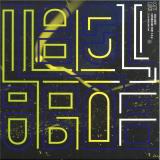
Ekkehard Ehlers' seminal plays series was originally released on three 12inches (Staubgold) and two 7inches (Bottrop-Boy) in very limited runs. The entire series was previously only available as a CD compilation or digitally. Keplar finally presents it on double vinyl for the first time, featuring a new cover artwork.
Domestic ethnology: Ekkehard Ehlers plays.
‘Play’ is a word in English with many meanings attached. Each one sends you down a different cognitive pathway. When I think of ‘playing’, in the sense of a game, I think of an activity involving more than one person. When Ekkehard Ehlers plays, he is very much on his own. Or, at least, alone but at the same time keeping intimate company with the artistic innovators named in his titles. Robert Johnson. John Cassavetes. Albert Ayler. Cornelius Cardew. Hubert Fichte. Is he playing with them, against them, about them, for them, to them? This can never be known.
It is certainly a mistake to try to hear the ‘work’ of these originals in the sounds played by Ekkehard. They’re not cover versions. They’re hardly tributes in the conventional sense. Cassavetes and Fichte are not even musicians, although music played an important part in both their careers. Sure, there are little nods and flashes of recognition – tiny guitar licks among the minimal beats of ‘Robert Johnson 2’; rich bowed instruments in ‘Albert Ayler’, recalling the violin, cello and double bass arrangements on Ayler’s 1967 Live in Greenwich Village LP; the elongated organ lines of ‘Cornelius Cardew 1’ gesturing towards passages in Paragraph 1 of the British composer’s 1971 Marxist monolith, The Great Learning. Ekkehard is not so much playing these figures as allowing himself to be played by them.
Playing as an activity also suggests freedom. Maybe the only thing all five named persons have in common is that they were all quiet radicals. In music, literature and cinema, they all stepped, without self-promotion or fanfare, into unmapped territories. Once there they found it necessary to invent new languages in order to survive. Necessity was the mother of their inventiveness. They were also uncomfortable avant gardists. Lonely types, fighting their corners out on the margins, with little reward, often misunderstood, ridiculed or ignored.
All died unfairly young. Fichte a victim of HIV/AIDS, Cassavetes of cirrhosis of the liver. (‘Cassavetes 2’ sounds like a tender farewell played across the 59 year old alcoholic director’s death bed.) The deaths of Johnson, Ayler and Cardew have never been satisfactorily explained, and remain shrouded in myths and conspiracy theories. The pioneering expeditions of all five began in that spirit of playful freedom, but inexorably drew them towards the heart of darkness.
So these ‘plays’ are micro-dramas, sonic soliloquies, monolog-ins to the private accounts of various geniuses in Ekkehard’s ‘follow’ list. Hacked sensibilities. Artistic manifestos boiled down and distilled, skinned and dried in the digital smokehouse. (Ekkehard Ehlers Flays.) Each of these plays was originally floated out into the world alone on its own disc. The collected works play well as a team – a tranquil, introspective experience where each artist has his own identifiably unique sound character. As an album, Plays is a ‘Plattenragout’ – a ‘record stew’ – which was the title of Hubert Fichte’s LP review column in the leftist culture magazine konkret in the 1960s. The novelist’s work investigating the cultures of South America and the Caribbean islands has been called ‘domestic ethnology’. The writer himself referred to his ‘ethnopoesie’. Ekkehard Ehlers’s intuitive electronic portraits are a form of domestic ethnology in themselves. Invoking another of Ekkehard’s musical aliases, they are portraits of cultural ‘autopoiesies’ – creators whose works were strong enough to have their own self-regenerating life force. (by Rob Young)
All tracks written and produced by Ekkehard Ehlers.
Featuring Stephan Mathieu, Joseph Suchy, Anka Hirsch.
Tracks A1 to C2 originally released on three 12inches via Staubgold.
Tracks D1 to D4 originally released on two 7inches via Bottrop-Boy.
Plays originally released as CD compilation in 2002 by Staubgold.
Mastered by Rashad Becker.
Cut to vinyl by Lupo, Berlin, 2022.
Redesigned by Sandra Kastl, 2022.
Photos by Ludger Blanke
I[38,53 €]
Black Vinyl[24,50 €]
Black & Orange Pinwheel Vinyl[24,50 €]
Pink/White Swirl Vinyl[26,01 €]
II[27,69 €]
Following their recent addition to the Prosthetic Records roster, multinational cybergrind quartet THOTCRIME are set to release their sophomore full length, titled D1G1T4L_DR1FT. With members hailing from Champaign-Urbana, IL, Philadelphia, PA and Nottingham, UK THOTCRIME’s prolific output to date has seen the band generate a buzz in online music communities and garner praise from Bandcamp Daily in the publication’s profile on the burgeoning cybergrind movement at large. D1G1T14L_DR1FT, the follow up to 2020s ønyøurcømputer, sees THOTCRIME continue to gleefully abandon genre convention in favour of boundless individuality and invention. Prosthetic debut LP from cybergrind curators/digital girls on your computer, THOTCRIME. D1G1T4L_DR1FT features collaborations with Pupil Slicer, Callous Daoboys, Dreamwell & Diana Gruber.
I[38,53 €]
Black Vinyl[24,50 €]
Black & Orange Pinwheel Vinyl[24,50 €]
Yellow vinyl[26,01 €]
II[27,69 €]
Following their recent addition to the Prosthetic Records roster, multinational cybergrind quartet THOTCRIME are set to release their sophomore full length, titled D1G1T4L_DR1FT. With members hailing from Champaign-Urbana, IL, Philadelphia, PA and Nottingham, UK THOTCRIME’s prolific output to date has seen the band generate a buzz in online music communities and garner praise from Bandcamp Daily in the publication’s profile on the burgeoning cybergrind movement at large. D1G1T14L_DR1FT, the follow up to 2020s ønyøurcømputer, sees THOTCRIME continue to gleefully abandon genre convention in favour of boundless individuality and invention. Prosthetic debut LP from cybergrind curators/digital girls on your computer, THOTCRIME. D1G1T4L_DR1FT features collaborations with Pupil Slicer, Callous Daoboys, Dreamwell & Diana Gruber.
- A1: Rock This Mother
- A2: Talk To Me Girl
- A3: You Can Find Me
- A4: Check This Out
- A5: Jesus Going To Clean House
- A6: Hope You Understood
- A7: Is It What You Want
- A8: Love Is Everlasting
- A9: This Is Hip-Hop Art
- A10: Opposite Of Love
- A11: Do You Know What I Mean
- B1: Saving All My Love For You
- B2: Look Out Here I Come
- B3: Girl You Always Talking
- B4: Have A Great Day
- B5: Take My Hand
- B6: I Need Your Love
- B7: Your Town
- B8: Talk Around Town
- B9: Booty Head/Take A Little Walk
- B10: I Love My Mama
- B11: I Never Found Anyone Like You
Vinyl LP[23,49 €]
As the sun sets on a quaint East Nashville house, a young man bares a piece of his soul. Facing the camera, sporting a silky suit jacket/shirt/slacks/fingerless gloves ensemble that announces "singer" before he's even opened his mouth, Lee Tracy Johnson settles onto his stage, the front yard. He sways to the dirge-like drum machine pulse of a synth-soaked slow jam, extends his arms as if gaining his balance, and croons in affecting, fragile earnest, "I need your love… oh baby…"
Dogs in the yard next door begin barking. A mysterious cardboard robot figure, beamed in from galaxies unknown and affixed to a tree, is less vocal. Lee doesn't acknowledge either's presence. He's busy feeling it, arms and hands gesticulating. His voice rises in falsetto over the now-quiet dogs, over the ambient noise from the street that seeps into the handheld camcorder's microphone, over the recording of his own voice played back from a boombox off-camera. After six minutes the single, continuous shot ends. In this intimate creative universe there are no re-takes. There are many more music videos to shoot, and as Lee later puts it, "The first time you do it is actually the best. Because you can never get that again. You expressing yourself from within."
"I Need Your Love" dates from a lost heyday. From some time in the '80s or early '90s, when Lee Tracy (as he was known in performance) and his music partner/producer/manager Isaac Manning committed hours upon hours of their sonic and visual ideas to tape. Embracing drum machines and synthesizers – electronics that made their personal futurism palpable – they recorded exclusively at home, live in a room into a simple cassette deck. Soul, funk, electro and new wave informed their songs, yet Lee and Isaac eschewed the confinement of conventional categories and genres, preferring to let experimentation guide them.
"Anytime somebody put out a new record they had the same instruments or the same sound," explains Isaac. "So I basically wanted to find something that's really gonna stand out away from all of the rest of 'em." Their ethos meant that every idea they came up with was at least worth trying: echoed out half-rapped exhortations over frantic techno-style beats, gospel synth soul, modal electro-funk, oddball pop reinterpretations, emo AOR balladry, nods to Prince and the Fat Boys, or arrangements that might collapse mid-song into a mess of arcade game-ish blips before rallying to reach the finish line. All of it conjoined by consistent tape hiss, and most vitally, Lee's chameleonic voice, which managed to wildly shape shift and still evoke something sincere – whether toggling between falsetto and tenor exalting Jesus's return, or punctuating a melismatic romantic adlib with a succinct, "We all know how it feels to be alone."
"People think we went to a studio," says Isaac derisively. "We never went to no studio. We didn't have the money to go to no studio! We did this stuff at home. I shot videos in my front yard with whatever we could to get things together." Sometimes Isaac would just put on an instrumental record, be it "Planet Rock" or "Don't Cry For Me Argentina" (from Evita), press "record," and let Lee improvise over it, yielding peculiar love songs, would-be patriotic anthems, or Elvis Presley or Marilyn Monroe tributes. Technical limitations and a lack of professional polish never dissuaded them. They believed they were onto something.
"That struggle," Isaac says, "made that sound sound good to me."
In the parlance of modern music criticism Lee and Isaac's dizzying DIY efforts would inevitably be described as "outsider." But "outsider" carries the burden of untold additional layers of meaning if you're Black and from the South, creating on a budget, and trying to get someone, anyone within the country music capital of the world to take your vision seriously. "What category should we put it in?" Isaac asks rhetorically. "I don't know. All I know is feeling. I ain't gonna name it nothing. It's music. If it grabs your soul and touch your heart that's what it basically is supposed to do."
=
Born in 1963, the baby boy of nine siblings, Lee Tracy spent his earliest years living amidst the shotgun houses on Nashville's south side. "We was poor, man!" he says, recalling the outhouse his family used for a bathroom and the blocks of ice they kept in the kitchen to chill perishables. "But I actually don't think I really realized I was in poverty until I got grown and started thinking about it." Lee's mom worked at the Holiday Inn; his dad did whatever he had to do, from selling fruit from a horse drawn cart to bootlegging. "We didn't have much," Lee continues, "but my mother and my father got us the things we needed, the clothes on our back." By the end of the decade with the city's urban renewal programs razing entire neighborhoods to accommodate construction of the Interstate, the family moved to Edgehill Projects. Lee remembers music and art as a constant source of inspiration for he and his brothers and sisters – especially after seeing the Jackson 5 perform on Ed Sullivan. "As a small child I just knew that was what I wanted to do."
His older brother Don began musically mentoring him, introducing Lee to a variety of instruments and sounds. "He would never play one particular type of music, like R&B," says Lee. "I was surrounded by jazz, hard rock and roll, easy listening, gospel, reggae, country music; I mean I was a sponge absorbing all of that." Lee taught himself to play drums by beating on cardboard boxes, gaining a rep around the way for his timekeeping, and his singing voice. Emulating his favorites, Earth Wind & Fire and Cameo, he formed groups with other kids with era-evocative band names like Concept and TNT Connection, and emerged as the leader of disciplined rehearsals. "I made them practice," says Lee. "We practiced and practiced and practiced. Because I wanted that perfection." By high school the most accomplished of these bands would take top prize in a prominent local talent show. It was a big moment for Lee, and he felt ready to take things to the next level. But his band-mates had other ideas.
"I don't know what happened," he says, still miffed at the memory. "It must have blew they mind after we won and people started showing notice, because it's like everybody quit! I was like, where the hell did everybody go?" Lee had always made a point of interrogating prospective musicians about their intentions before joining his groups: were they really serious or just looking for a way to pick up girls? Now he understood even more the importance of finding a collaborator just as committed to the music as he was.
=
Isaac Manning had spent much of his life immersed in music and the arts – singing in the church choir with his family on Nashville's north side, writing, painting, dancing, and working various gigs within the entertainment industry. After serving in the armed forces, in the early '70s he ran The Teenage Place, a music and performance venue that catered to the local youth. But he was forced out of town when word of one of his recreational routines created a stir beyond the safe haven of his bohemian circles.
"I was growing marijuana," Isaac explains. "It wasn't no business, I was smoking it myself… I would put marijuana in scrambled eggs, cornbread and stuff." His weed use originated as a form of self-medication to combat severe tooth pain. But when he began sharing it with some of the other young people he hung out with, some of who just so happened to be the kids of Nashville politicians, the cops came calling. "When I got busted," he remembers, "they were talking about how they were gonna get rid of me because they didn't want me saying nothing about they children because of the politics and stuff. So I got my family, took two raggedy cars, and left Nashville and went to Vegas."
Out in the desert, Isaac happened to meet Chubby Checker of "The Twist" fame while the singer was gigging at The Flamingo. Impressed by Isaac's zeal, Checker invited him to go on the road with him as his tour manager/roadie/valet. The experience gave Isaac a window into a part of the entertainment world he'd never encountered – a glimpse of what a true pop act's audience looked like. "Chubby Checker, none of his shows were played for Black folks," he remembers. "All his gigs were done at high-class white people areas." Returning home after a few years with Chubby, Isaac was properly motivated to make it in Music City. He began writing songs and scouting around Nashville for local talent anywhere he could find it with an expressed goal: "Find someone who can deliver your songs the way you want 'em delivered and make people feel what you want them to feel."
One day while walking through Edgehill Projects Isaac heard someone playing the drums in a way that made him stop and take notice. "The music was so tight, just the drums made me feel like, oh I'm-a find this person," he recalls. "So I circled through the projects until I found who it was.
"That's how I met him – Lee Tracy. When I found him and he started singing and stuff, I said, ohhh, this is somebody different."
=
Theirs was a true complementary partnership: young Lee possessed the raw talent, the older Isaac the belief. "He's really the only one besides my brother and my family that really seen the potential in me," says Lee. "He made me see that I could do it."
Isaac long being a night owl, his house also made for a fertile collaborative environment – a space where there always seemed to be a new piece of his visual art on display: paintings, illustrations, and dolls and figures (including an enigmatic cardboard robot). Lee and Issac would hang out together and talk, listen to music, conjure ideas, and smoke the herb Isaac had resumed growing in his yard. "It got to where I could trust him, he could trust me," Isaac says of their bond. They also worked together for hours on drawings, spreading larges rolls of paper on the walls and sketching faces with abstract patterns and imagery: alien-like beings, tri-horned horse heads, inverted Janus-like characters where one visage blurred into the other.
Soon it became apparent that they didn't need other collaborators; self-sufficiency was the natural way forward. At Isaac's behest Lee, already fed up with dealing with band musicians, began playing around with a poly-sonic Yamaha keyboard at the local music store. "It had everything on it – trumpet, bass, drums, organ," remembers Lee. "And that's when I started recording my own stuff."
The technology afforded Lee the flexibility and independence he craved, setting him on a path other bedroom musicians and producers around the world were simultaneously following through the '80s into the early '90s. Saving up money from day jobs, he eventually supplemented the Yamaha Isaac had gotten him with Roland and Casio drum machines and a Moog. Lee was living in an apartment in Hillside at that point caring for his dad, who'd been partially paralyzed since early in life. In the evenings up in his second floor room, the music put him in a zone where he could tune out everything and lose himself in his ideas.
"Oh I loved it," he recalls. "I would really experiment with the instruments and use a lot of different sound effects. I was looking for something nobody else had. I wanted something totally different. And once I found the sound I was looking for, I would just smoke me a good joint and just let it go, hit the record button." More potent a creative stimulant than even Isaac's weed was the holistic flow and spontaneity of recording. Between sessions at Isaac's place and Lee's apartment, their volume of output quickly ballooned.
"We was always recording," says Lee. "That's why we have so much music. Even when I went to Isaac's and we start creating, I get home, my mind is racing, I gotta start creating, creating, creating. I remember there were times when I took a 90-minute tape from front to back and just filled it up."
"We never practiced," says Isaac. "See, that was just so odd about the whole thing. I could relate to him, and tell him about the songs I had ideas for and everything and stuff. And then he would bring it back or whatever, and we'd get together and put it down." Once the taskmaster hell bent on rehearsing, Lee had flipped a full 180. Perfection was no longer an aspiration, but the enemy of inspiration.
"I seen where practicing and practicing got me," says Lee. "A lot of musicians you get to playing and they gotta stop, they have to analyze the music. But while you analyzing you losing a lot of the greatness of what you creating. Stop analyzing what you play, just play! And it'll all take shape."
=
"I hope you understood the beginning of the record because this was invented from a dream I had today… (You tell me, I'll tell you, we'll figure it out together)" – Lee Tracy and Isaac Manning, "Hope You Understand"
Lee lets loose a maniacal cackle when he acknowledges that the material that he and Isaac recorded was by anyone's estimation pretty out there. It's the same laugh that commences "Hope You Understand" – a chaotic transmission that encapsulates the duality at the heart of their music: a stated desire to reach people and a compulsion to go as leftfield as they saw fit.
"We just did it," says Lee. "We cut the music on and cut loose. I don't sit around and write. I do it by listening, get a feeling, play the music, and the lyrics and stuff just come out of me."
The approach proved adaptable to interpreting other artists' material. While recording a cover of Whitney Houston's pop ballad "Saving All My Love For You," Lee played Whitney's version in his headphones as he laid down his own vocals – partially following the lyrics, partially using them as a departure point. The end result is barely recognizable compared with the original, Lee and Isaac having switched up the time signature and reinvented the melody along the way towards morphing a slick mainstream radio standard into something that sounds solely their own.
"I really used that song to get me started," says Lee. "Then I said, well I need something else, something is missing. Something just came over me. That's when I came up with 'Is It What You Want.'"
The song would become the centerpiece of Lee and Isaac's repertoire. Pushed along by a percolating metronomic Rhythm King style beat somewhere between a military march and a samba, "Is It What You Want" finds Lee pleading the sincerity of his commitment to a potential love interest embellished by vocal tics and hiccups subtlely reminiscent of his childhood hero MJ. Absent chord changes, only synth riffs gliding in and out like apparitions, the song achieves a lingering lo-fi power that leaves you feeling like it's still playing, somewhere, even after the fade out.
"I don't know, it's like a real spiritual song," Lee reflects. "But it's not just spiritual. To me the more I listen to it it's like about everything that you do in your everyday life, period. Is it what you want? Do you want a car or you don't want a car? Do you want Jesus or do you want the Devil? It's basically asking you the question. Can't nobody answer the question but you yourself."
In 1989 Lee won a lawsuit stemming from injuries sustained from a fight he'd gotten into. He took part of the settlement money and with Isaac pressed up "Saving All My Love For You" b/w "Is It What You Want" as a 45 single. Isaac christened the label One Chance Records. "Because that's all we wanted," he says with a laugh, "one chance."
Isaac sent the record out to radio stations and major labels, hoping for it to make enough noise to get picked up nationally. But the response he and Lee were hoping for never materialized. According to Isaac the closest the single got to getting played on the radio is when a disk jock from a local station made a highly unusual announcement on air: "The dude said on the radio, 107.5 – 'We are not gonna play 'Is It What You Want.' We cracked up! Wow, that's deep.
"It was a whole racist thing that was going on," he reflects. "So we just looked over and kept on going. That was it. That was about the way it goes… If you were Black and you were living in Nashville and stuff, that's the way you got treated." Isaac already knew as much from all the times he'd brought he and Lee's tapes (even their cache of country music tunes) over to Music Row to try to drum up interest to no avail.
"Isaac, he really worked his ass off," says Lee. "He probably been to every record place down on Music Row." Nashville's famed recording and music business corridor wasn't but a few blocks from where Lee grew up. Close enough, he remembers, for him to ride his bike along its back alleys and stumble upon the occasional random treasure, like a discarded box of harmonicas. Getting in through the front door, however, still felt a world away.
"I just don't think at the time our music fell into a category for them," he concedes. "It was before its time."
=
Lee stopped making music some time in the latter part of the '90s, around the time his mom passed away and life became increasingly tough to manage. "When my mother died I had a nervous breakdown," he says, "So I shut down for a long time. I was in such a sadness frame of mind. That's why nobody seen me. I had just disappeared off the map." He fell out of touch with Isaac, and in an indication of just how bad things had gotten for him, lost track of all the recordings they'd made together. Music became a distant memory.
Fortunately, Isaac kept the faith. In a self-published collection of his poetry – paeans to some of his favorite entertainment and public figures entitled Friends and Dick Clark – he'd written that he believed "music has a life of its own." But his prescience and presence of mind were truly manifested in the fact that he kept an archive of he and Lee's work. As perfectly imperfect as "Is It What You Want" now sounds in a post-Personal Space world, Lee and Isaac's lone official release was in fact just a taste. The bulk of the Is It What You Want album is culled from the pair's essentially unheard home recordings – complete songs, half-realized experiments, Isaac's blue monologues and pronouncements et al – compiled, mixed and programmed in the loose and impulsive creative spirit of their regular get-togethers from decades ago. The rest of us, it seems, may have finally caught up to them.
On the prospect of at long last reaching a wider audience, Isaac says simply, "I been trying for a long time, it feels good." Ever the survivor, he adds, "The only way I know how to make it to the top is to keep climbing. If one leg break on the ladder, hey, you gotta fix it and keep on going… That's where I be at. I'll kill death to make it out there."
For Lee it all feels akin to a personal resurrection: "It's like I was in a tomb and the tomb was opened and I'm back… Man, it feels so great. I feel like I'm gonna jump out of my skin." Success at this stage of his life, he realizes, probably means something different than what it did back when he was singing and dancing in Isaac's front yard. "What I really mean by 'making it,'" he explains isn't just the music being heard but, "the story being told."
Occasionally Lee will pull up "Is It What You Want" on YouTube on his phone, put on his headphones, and listen. He remembers the first time he heard his recorded voice. How surreal it was, how he thought to himself, "Is that really me?" What would he say to that younger version of himself now?
"I would probably tell myself, hang in there, don't give up. Keep striving for the goal. And everything will work out."
Despite what's printed on the record label, sometimes you do get more than one chance.
Ever since jazz took its bop and free turn, each generation solved this eternal equation: how do you reconcile serious music and simple pleasure? On each of these occasions opinion was divided between orthodoxy and hedonism.
Trained in the theoretical rigours of classical music and jazz, experts on their instruments, and brought up on hip-hop culture, techno and house club scenes, Matthieu Llodra and Arthur Donnot - composers of KUMA – go against the conventional rules because they like to challenge their musical boundaries.
"Honey & Groat" is just like a bear (KUMA in Japanese, emblem of the band): behind the sweetness and apparent placidity, plenty of power. The resulting urban groove is reminiscent of 70's soul jazz with a contemporary sound: where instrumental talent meets pop simplicity.
Following the compass of an entrancing debut, Flore Laurentienne's Volume II presents another palette of rich orchestral sound, where changing forces of water inspire metaphorical markers that navigate passages of life and loss. Mathieu David Gagnon resumes his voyage into environment and emotion with Volume II, drawing inspiration from the rivers and rugged wilderness of the composer's native Quebec. In his return as Flore Laurentienne - the namesake of an inventory documenting St. Lawrence Valley flora - Gagnon assembles vivid melodic motifs and delicate modulation with a vast string ensemble to emulate the tides of human experience. Listeners of Volume I will recognise Gagnon's signature approach towards reworking and reframing an emblematic melody or concept across a series of works in Volume II, a process he likens to that of a painter creating multiple sketches of the same view. Continued from the first album, the enigmatic "Fleuve" series is conjured to evoke the multiple personalities of the great St. Lawrence River, and the "Navigation" works ("III" and "IV") wade through dappled progressions and expansive streams of string, the latter of which harbors the gentle meanderings of improvised clarinet. In the world of Flore Laurentienne, complexity emerges from simplicity as the composer roams familiar environments in constant flux. Gagnon extracts beauty through repetition and constraint, utilizing the writing style of counterpoint for which one of his greatest musical inspirations, Johann Sebastian Bach, is renowned. The lilting waves of "Canon" possess the eponymous formation of melodic 'leader and follower' motif, and magnify the softness of the album's eighteen string musicians into a force of full euphoric resonance. In Volume II, Gagnon continues his expansion of classical composition archetypes to meet a new realm of sonic romanticism. Thematic conventions of wandering the pastoral sublime become altered into glimmering refractions, relaying the emotional and kinetic power of natural energies. Volume II forms an estuary where streams of auditory microcosm reach a horizon of dynamic contrast, and reflect the parallel tenors of nature and humankind.
Unlearn is the long awaited fourth album of DJ and producer 2econd Class Citizen. It marks the artist's return back to the newly relaunched label Equinox Records. Their previous collaborations achieved high acclaim for their genre bending fusion of hip hop, electronica and folk music.
The new album is an exploration of an artist journeying beyond their conventional confines. It is a musical adventure peppered with vintage samples concerning the perception of reality and our struggles with conforming to a broken society.
Unlearn is the most musically accomplished work of 2econd Class Citizen to date. As one would expect the drum programming, scratching and production is on point. Several tracks feature soothingly melodic and energetic passages of jazz saxophone from Leroy Horns and electric guitar riffs provided by long term collaborator Paul Drury.
2econd Class Citizen, real name Aaron Thomason, resides in Brighton, UK. He is also a painter and visual artist fascinated with abstraction and the chaos of mixing colours. His musical approach on the new LP draws many parallels to this creative process. An original painting from the artist forms the albums striking cover.
Equinox Records is run by DJ Scientist in Germany. The Unlearn project marks the 51st release and provides the perfect launch vehicle for the dormant label to rise again. The vinyl release of Unlearn as well as the single Be Together signify the first stops in a release plan which will please fans of the label.
FEEDBACK:
"Woah! It's sounds rad! Really heavy and cinematic!"
Kid Koala
"A dark and deep dive into a world of dense and diced samples and moody muted melodies. Would sit well next to Shadow's freakier forays into fractured funk. Or Format's last psychy LP, for sure."
DJ Moneyshot of The Allergies
"I love it. The new treatments with the additional instruments sound great, especially the horns. Glad to see that Equinox is back in action. Dope cover art."
Dday One
"It sounds like 2econd Class Citizen has been at a mountaintop retreat studying and meditating and came back with some superpowers."
Buddy Peace
In August she is releasing her solo debut "Changes Like the Weather in the
Mountain", consisting of her songs wrapped in electric guitar, wurlitzer, fiddles
and some high- pitched choir voices. Selma's music reveals an admiration for
Norwegian and English folk music, as well as containing an airy energy from
somewhere unknown – moving from an open space like big mountain into the
hidden rooms in one's heart.Selma is already known in the folk-scene in Norway
as a member of bands such as Norwegian Grammy nominated Masava and
Norwegian Grammy winner Morgonrode. She has toured and worked with artists
like Frokedal & Familien, Kristian Kristensen, Siv Jakobsen and the Switch. Her
musical work has been acknowledged by many, lastly featured as the theme song
in the Viaplay series Furia.
Growing up in the suburban university town of As, Selma French was exposed to
folk music from an early age, playing violin and Hardanger fiddle all her life, as
well as making songs on guitar. The list of musical inspirations is long, from
Linda Perhacs, Nick Drake, Fairport Convention and Judee Sill, to Frokedal,
Susanne Sundfor, Sandy Denn and The Roches.
Artists:
Selma French: vocals, acoustic guitar
Anja Lauvdal: synths, wurlitzer
Christian Winther: el-guitar
Andreas Winther: drums
Consisting of a single massive song in 12 individual parts, plus pulse
quickening overture and truly grand finale, La Luna is an unprecedented
artistic achievement by one of contemporary music's most ambitious and
consistently surprising practitioners
Daniel Romano sets his visionary poetry to exuberant tune - It is epic,
immaculately and extravagantly arranged, and truly cinematic (a full length film of
La Luna starring fellow You've Changed Records recording artist Julie Doiron in
the lead role will debut in the fall of 2022.)
La Luna is a hymnal or scroll for modern seekers, brought to life by the
impeccably skilled Outfit, with swagger and joy, including star turns on lead
vocals by Julianna Riolino, and newest member Carson McHone (Merge Records)
in addition to Daniel's own powerful vocals. Transcendently melodic, undeniably
classic and shockingly contemporary, La Luna synthesizes teachings from the
sacred texts of rock and roll and psychedelic-folk (Beatles, Fairport Convention,
even the Stones, Queen….) into a new testament for a new time.
La Luna arrives in a beautiful double- tip- on gatefold jacket, featuring original
artwork by Daniel Romano and the full verse and measure of the lyrics.
Oren Ambarchi is a composer and multi-instrumentalist who has long been interested in transcending conventional instrumental approaches. His work focuses mainly on exploring the guitar, "taking the instrument into a zone of alien abstraction where it is no longer readily identifiable as such. Instead, it is a laboratory for extended sonic investigations". The album is titled Shebang and is said to be an extension of past "rhythmic long-form workouts" found on Ambarchi"s 2014 album Quixotism and 2016"s Hubris. Like those albums, Shebang features contributions from a number of guest artists, including Konrad Sprenger, Jim O"Rourke, Julia Reidy and Chris Abrahams. It follows Ambarchi"s collaborative album with Johan Berthling and Andreas Werliin, Ghosted, which was released by Drag City in April and was recently one of tQ"s favourite albums of the year.
***The legendary Lebanese trio of trumpeteer Mazen Kerbaj (Karkhana, Johnny Kafta), guitarrist Sharif Sehnaoui (Calamita, Karkhana, Johnny Kafta ) and bassist Raed Yassin (Praed, Praed Orchestra) celebrates their 20th anniversary with The Binding Third on Unrock. They still create acoustic improvised drones that range from insistent, chiming resonances with emergency alarm bells to low, thrumming hums but with growing intensity. Avoiding conventional technique, A Trio manages to create sounds like motorized devices to generate rattling, metallic vibrations, building a mechanistic backdrop out of which the instruments’ true voices occasionally arise. This recording, taken at Sound Disobidience in Llubljana in 2019 reaches an exceptional electro-acoustic depth with strange sounds boiling down to a dark, heavy spiritual essence. Call it Acoustic-Industrial-Free-Jazz or call it unrock. The Binding Third is „A“Trio’s first full length album since their 2014 release „Live In Nickelsdorf“. In between they released a collaboration with Sun City Girl Alan Bishop and another with UK-electro-acoustic pioneers AMM. Recently A-Trio joined forces with agyptian composer Maurice Louca on his solo-album The Luck Hour, released on Sub Rosa. TRACKLIST: Side A : The Binding Third (part 1) Side B : The Binding Third (part 2)
- A1: Rock This Mother
- A2: Talk To Me Girl
- A3: You Can Find Me
- A4: Check This Out
- A5: Jesus Going To Clean House
- A6: Hope You Understood
- A7: Is It What You Want
- A8: Love Is Everlasting
- A9: This Is Hip-Hop Art
- A10: Opposite Of Love
- A11: Do You Know What I Mean
- B1: Saving All My Love For You
- B2: Look Out Here I Come
- B3: Girl You Always Talking
- B4: Have A Great Day
- B5: Take My Hand
- B6: I Need Your Love
- B7: Your Town
- B8: Talk Around Town
- B9: Booty Head/Take A Little Walk
- B10: I Love My Mama
- B11: I Never Found Anyone Like You
Cassette[11,72 €]
As the sun sets on a quaint East Nashville house, a young man bares a piece of his soul. Facing the camera, sporting a silky suit jacket/shirt/slacks/fingerless gloves ensemble that announces "singer" before he's even opened his mouth, Lee Tracy Johnson settles onto his stage, the front yard. He sways to the dirge-like drum machine pulse of a synth-soaked slow jam, extends his arms as if gaining his balance, and croons in affecting, fragile earnest, "I need your love… oh baby…"
Dogs in the yard next door begin barking. A mysterious cardboard robot figure, beamed in from galaxies unknown and affixed to a tree, is less vocal. Lee doesn't acknowledge either's presence. He's busy feeling it, arms and hands gesticulating. His voice rises in falsetto over the now-quiet dogs, over the ambient noise from the street that seeps into the handheld camcorder's microphone, over the recording of his own voice played back from a boombox off-camera. After six minutes the single, continuous shot ends. In this intimate creative universe there are no re-takes. There are many more music videos to shoot, and as Lee later puts it, "The first time you do it is actually the best. Because you can never get that again. You expressing yourself from within."
"I Need Your Love" dates from a lost heyday. From some time in the '80s or early '90s, when Lee Tracy (as he was known in performance) and his music partner/producer/manager Isaac Manning committed hours upon hours of their sonic and visual ideas to tape. Embracing drum machines and synthesizers – electronics that made their personal futurism palpable – they recorded exclusively at home, live in a room into a simple cassette deck. Soul, funk, electro and new wave informed their songs, yet Lee and Isaac eschewed the confinement of conventional categories and genres, preferring to let experimentation guide them.
"Anytime somebody put out a new record they had the same instruments or the same sound," explains Isaac. "So I basically wanted to find something that's really gonna stand out away from all of the rest of 'em." Their ethos meant that every idea they came up with was at least worth trying: echoed out half-rapped exhortations over frantic techno-style beats, gospel synth soul, modal electro-funk, oddball pop reinterpretations, emo AOR balladry, nods to Prince and the Fat Boys, or arrangements that might collapse mid-song into a mess of arcade game-ish blips before rallying to reach the finish line. All of it conjoined by consistent tape hiss, and most vitally, Lee's chameleonic voice, which managed to wildly shape shift and still evoke something sincere – whether toggling between falsetto and tenor exalting Jesus's return, or punctuating a melismatic romantic adlib with a succinct, "We all know how it feels to be alone."
"People think we went to a studio," says Isaac derisively. "We never went to no studio. We didn't have the money to go to no studio! We did this stuff at home. I shot videos in my front yard with whatever we could to get things together." Sometimes Isaac would just put on an instrumental record, be it "Planet Rock" or "Don't Cry For Me Argentina" (from Evita), press "record," and let Lee improvise over it, yielding peculiar love songs, would-be patriotic anthems, or Elvis Presley or Marilyn Monroe tributes. Technical limitations and a lack of professional polish never dissuaded them. They believed they were onto something.
"That struggle," Isaac says, "made that sound sound good to me."
In the parlance of modern music criticism Lee and Isaac's dizzying DIY efforts would inevitably be described as "outsider." But "outsider" carries the burden of untold additional layers of meaning if you're Black and from the South, creating on a budget, and trying to get someone, anyone within the country music capital of the world to take your vision seriously. "What category should we put it in?" Isaac asks rhetorically. "I don't know. All I know is feeling. I ain't gonna name it nothing. It's music. If it grabs your soul and touch your heart that's what it basically is supposed to do."
=
Born in 1963, the baby boy of nine siblings, Lee Tracy spent his earliest years living amidst the shotgun houses on Nashville's south side. "We was poor, man!" he says, recalling the outhouse his family used for a bathroom and the blocks of ice they kept in the kitchen to chill perishables. "But I actually don't think I really realized I was in poverty until I got grown and started thinking about it." Lee's mom worked at the Holiday Inn; his dad did whatever he had to do, from selling fruit from a horse drawn cart to bootlegging. "We didn't have much," Lee continues, "but my mother and my father got us the things we needed, the clothes on our back." By the end of the decade with the city's urban renewal programs razing entire neighborhoods to accommodate construction of the Interstate, the family moved to Edgehill Projects. Lee remembers music and art as a constant source of inspiration for he and his brothers and sisters – especially after seeing the Jackson 5 perform on Ed Sullivan. "As a small child I just knew that was what I wanted to do."
His older brother Don began musically mentoring him, introducing Lee to a variety of instruments and sounds. "He would never play one particular type of music, like R&B," says Lee. "I was surrounded by jazz, hard rock and roll, easy listening, gospel, reggae, country music; I mean I was a sponge absorbing all of that." Lee taught himself to play drums by beating on cardboard boxes, gaining a rep around the way for his timekeeping, and his singing voice. Emulating his favorites, Earth Wind & Fire and Cameo, he formed groups with other kids with era-evocative band names like Concept and TNT Connection, and emerged as the leader of disciplined rehearsals. "I made them practice," says Lee. "We practiced and practiced and practiced. Because I wanted that perfection." By high school the most accomplished of these bands would take top prize in a prominent local talent show. It was a big moment for Lee, and he felt ready to take things to the next level. But his band-mates had other ideas.
"I don't know what happened," he says, still miffed at the memory. "It must have blew they mind after we won and people started showing notice, because it's like everybody quit! I was like, where the hell did everybody go?" Lee had always made a point of interrogating prospective musicians about their intentions before joining his groups: were they really serious or just looking for a way to pick up girls? Now he understood even more the importance of finding a collaborator just as committed to the music as he was.
=
Isaac Manning had spent much of his life immersed in music and the arts – singing in the church choir with his family on Nashville's north side, writing, painting, dancing, and working various gigs within the entertainment industry. After serving in the armed forces, in the early '70s he ran The Teenage Place, a music and performance venue that catered to the local youth. But he was forced out of town when word of one of his recreational routines created a stir beyond the safe haven of his bohemian circles.
"I was growing marijuana," Isaac explains. "It wasn't no business, I was smoking it myself… I would put marijuana in scrambled eggs, cornbread and stuff." His weed use originated as a form of self-medication to combat severe tooth pain. But when he began sharing it with some of the other young people he hung out with, some of who just so happened to be the kids of Nashville politicians, the cops came calling. "When I got busted," he remembers, "they were talking about how they were gonna get rid of me because they didn't want me saying nothing about they children because of the politics and stuff. So I got my family, took two raggedy cars, and left Nashville and went to Vegas."
Out in the desert, Isaac happened to meet Chubby Checker of "The Twist" fame while the singer was gigging at The Flamingo. Impressed by Isaac's zeal, Checker invited him to go on the road with him as his tour manager/roadie/valet. The experience gave Isaac a window into a part of the entertainment world he'd never encountered – a glimpse of what a true pop act's audience looked like. "Chubby Checker, none of his shows were played for Black folks," he remembers. "All his gigs were done at high-class white people areas." Returning home after a few years with Chubby, Isaac was properly motivated to make it in Music City. He began writing songs and scouting around Nashville for local talent anywhere he could find it with an expressed goal: "Find someone who can deliver your songs the way you want 'em delivered and make people feel what you want them to feel."
One day while walking through Edgehill Projects Isaac heard someone playing the drums in a way that made him stop and take notice. "The music was so tight, just the drums made me feel like, oh I'm-a find this person," he recalls. "So I circled through the projects until I found who it was.
"That's how I met him – Lee Tracy. When I found him and he started singing and stuff, I said, ohhh, this is somebody different."
=
Theirs was a true complementary partnership: young Lee possessed the raw talent, the older Isaac the belief. "He's really the only one besides my brother and my family that really seen the potential in me," says Lee. "He made me see that I could do it."
Isaac long being a night owl, his house also made for a fertile collaborative environment – a space where there always seemed to be a new piece of his visual art on display: paintings, illustrations, and dolls and figures (including an enigmatic cardboard robot). Lee and Issac would hang out together and talk, listen to music, conjure ideas, and smoke the herb Isaac had resumed growing in his yard. "It got to where I could trust him, he could trust me," Isaac says of their bond. They also worked together for hours on drawings, spreading larges rolls of paper on the walls and sketching faces with abstract patterns and imagery: alien-like beings, tri-horned horse heads, inverted Janus-like characters where one visage blurred into the other.
Soon it became apparent that they didn't need other collaborators; self-sufficiency was the natural way forward. At Isaac's behest Lee, already fed up with dealing with band musicians, began playing around with a poly-sonic Yamaha keyboard at the local music store. "It had everything on it – trumpet, bass, drums, organ," remembers Lee. "And that's when I started recording my own stuff."
The technology afforded Lee the flexibility and independence he craved, setting him on a path other bedroom musicians and producers around the world were simultaneously following through the '80s into the early '90s. Saving up money from day jobs, he eventually supplemented the Yamaha Isaac had gotten him with Roland and Casio drum machines and a Moog. Lee was living in an apartment in Hillside at that point caring for his dad, who'd been partially paralyzed since early in life. In the evenings up in his second floor room, the music put him in a zone where he could tune out everything and lose himself in his ideas.
"Oh I loved it," he recalls. "I would really experiment with the instruments and use a lot of different sound effects. I was looking for something nobody else had. I wanted something totally different. And once I found the sound I was looking for, I would just smoke me a good joint and just let it go, hit the record button." More potent a creative stimulant than even Isaac's weed was the holistic flow and spontaneity of recording. Between sessions at Isaac's place and Lee's apartment, their volume of output quickly ballooned.
"We was always recording," says Lee. "That's why we have so much music. Even when I went to Isaac's and we start creating, I get home, my mind is racing, I gotta start creating, creating, creating. I remember there were times when I took a 90-minute tape from front to back and just filled it up."
"We never practiced," says Isaac. "See, that was just so odd about the whole thing. I could relate to him, and tell him about the songs I had ideas for and everything and stuff. And then he would bring it back or whatever, and we'd get together and put it down." Once the taskmaster hell bent on rehearsing, Lee had flipped a full 180. Perfection was no longer an aspiration, but the enemy of inspiration.
"I seen where practicing and practicing got me," says Lee. "A lot of musicians you get to playing and they gotta stop, they have to analyze the music. But while you analyzing you losing a lot of the greatness of what you creating. Stop analyzing what you play, just play! And it'll all take shape."
=
"I hope you understood the beginning of the record because this was invented from a dream I had today… (You tell me, I'll tell you, we'll figure it out together)" – Lee Tracy and Isaac Manning, "Hope You Understand"
Lee lets loose a maniacal cackle when he acknowledges that the material that he and Isaac recorded was by anyone's estimation pretty out there. It's the same laugh that commences "Hope You Understand" – a chaotic transmission that encapsulates the duality at the heart of their music: a stated desire to reach people and a compulsion to go as leftfield as they saw fit.
"We just did it," says Lee. "We cut the music on and cut loose. I don't sit around and write. I do it by listening, get a feeling, play the music, and the lyrics and stuff just come out of me."
The approach proved adaptable to interpreting other artists' material. While recording a cover of Whitney Houston's pop ballad "Saving All My Love For You," Lee played Whitney's version in his headphones as he laid down his own vocals – partially following the lyrics, partially using them as a departure point. The end result is barely recognizable compared with the original, Lee and Isaac having switched up the time signature and reinvented the melody along the way towards morphing a slick mainstream radio standard into something that sounds solely their own.
"I really used that song to get me started," says Lee. "Then I said, well I need something else, something is missing. Something just came over me. That's when I came up with 'Is It What You Want.'"
The song would become the centerpiece of Lee and Isaac's repertoire. Pushed along by a percolating metronomic Rhythm King style beat somewhere between a military march and a samba, "Is It What You Want" finds Lee pleading the sincerity of his commitment to a potential love interest embellished by vocal tics and hiccups subtlely reminiscent of his childhood hero MJ. Absent chord changes, only synth riffs gliding in and out like apparitions, the song achieves a lingering lo-fi power that leaves you feeling like it's still playing, somewhere, even after the fade out.
"I don't know, it's like a real spiritual song," Lee reflects. "But it's not just spiritual. To me the more I listen to it it's like about everything that you do in your everyday life, period. Is it what you want? Do you want a car or you don't want a car? Do you want Jesus or do you want the Devil? It's basically asking you the question. Can't nobody answer the question but you yourself."
In 1989 Lee won a lawsuit stemming from injuries sustained from a fight he'd gotten into. He took part of the settlement money and with Isaac pressed up "Saving All My Love For You" b/w "Is It What You Want" as a 45 single. Isaac christened the label One Chance Records. "Because that's all we wanted," he says with a laugh, "one chance."
Isaac sent the record out to radio stations and major labels, hoping for it to make enough noise to get picked up nationally. But the response he and Lee were hoping for never materialized. According to Isaac the closest the single got to getting played on the radio is when a disk jock from a local station made a highly unusual announcement on air: "The dude said on the radio, 107.5 – 'We are not gonna play 'Is It What You Want.' We cracked up! Wow, that's deep.
"It was a whole racist thing that was going on," he reflects. "So we just looked over and kept on going. That was it. That was about the way it goes… If you were Black and you were living in Nashville and stuff, that's the way you got treated." Isaac already knew as much from all the times he'd brought he and Lee's tapes (even their cache of country music tunes) over to Music Row to try to drum up interest to no avail.
"Isaac, he really worked his ass off," says Lee. "He probably been to every record place down on Music Row." Nashville's famed recording and music business corridor wasn't but a few blocks from where Lee grew up. Close enough, he remembers, for him to ride his bike along its back alleys and stumble upon the occasional random treasure, like a discarded box of harmonicas. Getting in through the front door, however, still felt a world away.
"I just don't think at the time our music fell into a category for them," he concedes. "It was before its time."
=
Lee stopped making music some time in the latter part of the '90s, around the time his mom passed away and life became increasingly tough to manage. "When my mother died I had a nervous breakdown," he says, "So I shut down for a long time. I was in such a sadness frame of mind. That's why nobody seen me. I had just disappeared off the map." He fell out of touch with Isaac, and in an indication of just how bad things had gotten for him, lost track of all the recordings they'd made together. Music became a distant memory.
Fortunately, Isaac kept the faith. In a self-published collection of his poetry – paeans to some of his favorite entertainment and public figures entitled Friends and Dick Clark – he'd written that he believed "music has a life of its own." But his prescience and presence of mind were truly manifested in the fact that he kept an archive of he and Lee's work. As perfectly imperfect as "Is It What You Want" now sounds in a post-Personal Space world, Lee and Isaac's lone official release was in fact just a taste. The bulk of the Is It What You Want album is culled from the pair's essentially unheard home recordings – complete songs, half-realized experiments, Isaac's blue monologues and pronouncements et al – compiled, mixed and programmed in the loose and impulsive creative spirit of their regular get-togethers from decades ago. The rest of us, it seems, may have finally caught up to them.
On the prospect of at long last reaching a wider audience, Isaac says simply, "I been trying for a long time, it feels good." Ever the survivor, he adds, "The only way I know how to make it to the top is to keep climbing. If one leg break on the ladder, hey, you gotta fix it and keep on going… That's where I be at. I'll kill death to make it out there."
For Lee it all feels akin to a personal resurrection: "It's like I was in a tomb and the tomb was opened and I'm back… Man, it feels so great. I feel like I'm gonna jump out of my skin." Success at this stage of his life, he realizes, probably means something different than what it did back when he was singing and dancing in Isaac's front yard. "What I really mean by 'making it,'" he explains isn't just the music being heard but, "the story being told."
Occasionally Lee will pull up "Is It What You Want" on YouTube on his phone, put on his headphones, and listen. He remembers the first time he heard his recorded voice. How surreal it was, how he thought to himself, "Is that really me?" What would he say to that younger version of himself now?
"I would probably tell myself, hang in there, don't give up. Keep striving for the goal. And everything will work out."
Despite what's printed on the record label, sometimes you do get more than one chance.
Known for her time as vocalist in Fairport Convention and respected
globally , Sandy Denny left a beguiling, ever-evolving body of work - Kate
Bush was to namecheck her in song, and Denny's influence can be heard
in generations of singer-songwriters
After leaving Fairport Convention in late 1969, Sandy Denny formed Fotheringay
with husband Trevor Lucas. After one UK Top 20 LP in summer 1970, the band
split while recording a follow up, leaving Denny free to make her first solo album.
A beguiling mixture of covers and originals, The North Star Grass Man And The
Ravens is one of THE essential British folk-rock albums. From the dreamlike Late
November to the plaintive Next Time Around to her reading of the traditional
standard Blackwaterside, the album is a near perfect capture of the talent on the
scene at that juncture: including Richard Thompson's unmistakable guitar playing,
John Wood's production and Harry Robinson's string arrangements. Released in
September 1971, its reputation has understandably grown exponentially over the
years. Out of print on LP for a number of years, this re-issue faithfully replicates
the original 1971 Island Records UK release with gatefold sleeve and is pressed
onto high quality 180g vinyl
Glenn Fallows and Mark Treffel released their first album, ‘The Globeflower Master Vol. 1’, on Mr Bongo in September 2021. With its lush, warm and timeless productions paying homage to classic 60s and 70s soundtrack composers, it was very well received and struck a chord with the scene’s connoisseurs. Louder Than War emphatically stated, "It’s impossible not to like The Globeflower Masters Vol. 1.”, with Gigwise echoing that praise “slickly compelling retro vibes”.
The Globeflower Master Vol. 2 is the slightly edgier and more grown-up sequel to Mark and Glenn's 2021 debut album. For this excursion, the Brighton-based duo wanted to lean a little further into their European film soundtrack influences, with particular inspiration mined from the works of Stefano Torossi, David Shire, and Roger Webb. This expansion of their sound builds upon the rich tapestry of cinematic funk à la David Axelrod, Serge Gainsbourg and Morricone that fashioned Vol. 1. Here the arrangements, melodies, and harmonies have been refined; only what is needed is left. Pulled into its vortex for the ride. This record doesn’t pull any punches.
The recordings are drenched in visual imagery; they stimulate the senses and invite the imagination to roam. Ethereal, hazy memories of lost summers are triggered; the beauty of listening to music when driving along a deserted road in the Italian countryside lined with cypress trees heading towards the sun, and beyond. As the musical journey progresses, we even take a voyage to another planet. Whether these memories are real or constructed recollections of scenes from film and television, the tracks evoke a feeling of nostalgia and comfort. Like all the best music, 'The Globeflower Masters Vol. 2' takes us out of ourselves even if it's only temporarily.
To consolidate the shape of the sound, drummers Timmy Rickard and Ollie Boorman (who also featured on Vol. 1) and John Maiden (Tricky collaborator) sprinkled their magic and forged their stamps onto the recordings. Collaborating with other talented musicians contributed to the picture Mark and Glenn wanted to paint. The ‘Globeflower Master Vol. 2’ is a fitting tribute to the music they love and care deeply about and a glorious addition to their musical world.
Known for her time as vocalist in Fairport Convention and respected
globally , Sandy Denny left a beguiling, ever-evolving body of work - Kate
Bush was to namecheck her in song, and Denny's influence can be heard
in generations of singer-songwriters
From its David Bailey cover photo inwards, 1972's Sandy is arguably the definitive
Sandy Denny album. Recorded at John Wood's Sound Techniques studio, and
produced by Trevor Lucas, it adds some special guests into its mix – 'Sneaky'
Pete Kleinow from The Flying Burrito Brothers enhances It'll Take A Long Time
with his unmistakable pedal steel playing, and New Orleans legend Allan
Toussaint adds a brass arrangement to For Nobody To Hear. But it is Denny's
album. Often, it is impossible not be stopped in your tracks by that beautiful, long
gone yet so-full-of-life voice, especially on two of her career-bests – The Lady and
Listen, Listen. Out of print on LP for a number of years, this re- issue faithfully
replicates the original 1972 Island Records UK release with gatefold sleeve and is
pressed onto high quality 180g vinyl.
It comes as no surprise to discover we are massive fans of Marcos Valle here at Mr Bongo, but this forgotten and obscure gem from the Brazilian maestro has proven to remain elusive to us until very recently.
'Girassol' is a lost Brazilian-boogie stunner from 1983. It was originally released as an ultra-rare promo only 7”. Composed by Marcos Valle, Paulo Sérgio Valle and Ribeiro José Francisco, this all-too-short nugget (under 2 minutes) was recorded and pressed on the Valle, Ribeiro & Associados Ltda. imprint for Rede CB De Supermercados. It was a promotional item to be distributed to customers of a supermarket chain as a gift. Due to not having any conventional distribution channels this resulted in the 7" becoming a slippery customer to find.
It’s a smooth AOR / Brazilian boogie joint with an uplifting chorus. The vibe is reminiscent of the much loved ‘Estrelar' era of Marcos Valle’s glorious recording career, and certainly one for fans of the Lincoln Olivetti, Robson Jorge production sound.
Pablo Bozzi is a Berlin-based French producer also known under the alias of Lapse of Reason and as ½ of projects like Soft Crash, Infravision and Imperial Black Unit. Bozzi, who has been long recognized for his ability to omit electronic music conventions with remarkable ease, returns to BITE with his second solo EP on the imprint. BITE020 serves as a further exploration of his signature Italo Body Music style. In the best traditions of so-called Bozzi Music, the EP is a stylistic hybrid rich with nostalgic synth lines, electro and new beat influences, while this time leaning even more into the hard-hitting EBM territory. All while staying true Bozzi’s playful and euphoric spirit, which resonates with so many dancefloor enthusiasts. Artwork by Silent Editions and Simone Ling Design by Eloise Leigh Mastered by Gianmaria Dell’Aera
DJ Black Low burst on the international scene last year with Uwami, a collection of his early, downright avantgarde amapiano work. The young producer and DJ makes electronic music that sounds like nothing else: glitchy and fierce while smooth and soulful, all under the rubric of South Africa's most-exported dance music movement to date. Now comes Uwami II, which features the rest of the tracks from the acclaimed debut plus a new song "Gijima." The Pretoria, South Africa-based artist has more work in the pipeline as we present these inimitable songs for the first time on vinyl. The song "Gijima" is a previously unreleased track Black Low chose to include in this collection as cremates more work at a furious pace. "This is essential listening from a 20 year-old star." - Resident Advisor Best Tracks of 2021 "Uwami keeps an adventurous spirit at its core and pushes far beyond genre conventions in the process." - The Vinyl Factory "A producer with a fully realized voice." - Bandcamp Best Albums of Winter 2021 "The hard hitting beats of the electronic percussions make the songs seem like they're out of this planet." - AfroPop Worldwide
Released on the Amsterdam based label Q1E2 Recordings, the “Move On” EP is Papi Gaba’s modern take on old school- and Lofi House. Papi Gaba's music takes a surgical and alternative turn from conventional House and pushes the genre into a new direction. The EP is the result of Papi Gaba's first experiments with tape recorders
and cassette tapes, and characterised by warm, melodic, melancholic, and crunchy sounds. Papi Gaba’s tracks are suited for the club, while at the same time perfect for any old dusty living room sound system.
Idiology was originally released in 2001 and is now finally back on vinyl. This re-issue is pressed on white color vinyl and presented in a die cut jacket with artworked inner sleeve and free download card. From their beginnings in 1992, Cologne native Jan St. Werner and Dusseldorfer Andi Toma have consistently challenged electronic music"s paradigm in often surprising and always intriguing ways. Idiology is the duo"s seventh album and is no exception to this rule, as Mouse on Mars surround themselves with strings, woodwinds, brass and the band"s own heavily modified fleet of machines in the St. Martin"s Tonstudio. Fans should once again brace themselves for the inevitable shock of the new as Germany"s most irreverent audio renegades have created the perfect soundtrack for a highly sinister dance party. Kicking off with "Actionist Respoke", the album"s first single, Mouse on Mars officially declare their independence from glitchtronica"s shoegazing legions. Longtime collaborator Dodo Nkishi lends a uniquely warped vocal sensibility to the track which already features Mouse on Mars"s darkest grooves to date. The rest of the album continues to thicken the group"s sonic stew. Tracks such as "Presence" and "Catching Butterflies With Hands" have their populist intentions undermined by Werner and Toma"s meddling hands, while the duo reprise their flirtation with the orchestral as heard on the opening tracks from 2000"s Niun Niggung. At the other end of the spectrum, "Introduce" is a truly evil slice of twisted lympho-zoid hip-hop. Idiology takes no prisoners in its dual-pronged assault on the conventions of modern music. Only with the loungy closing number, "Fantastic Analysis" (a term Werner and Toma invented to describe their working process), do Mouse on Mars let the arrangements breathe a long sigh of relief, the calm after the storm. To enable these stylistic achievements Mouse on Mars enlist the help of partners in crime such as: Nkishi, the multi-talented Harald "Sack" Ziegler, house icon Matthew Herbert on piano, violinist Matty Arouse, in addition to fellow programming wizards Adam "Vert" Butler and F.X. Randomiz. The latter two toured with Mouse on Mars in 2000 as they successfully triumphed over audiences around the globe.
Eric Dolphy's final studio album is hailed as one of the finest examples of mid-'60s post bop. Its reputation is purely one of backwards significance. Dolphy, having recorded the album in February 1964, was in Europe less than six weeks later and his all-too-brief life ended less than two months after that. Though likely he never held a copy in his hands or heard any critical opinion of it, it marked his last flurry of original compositions and is considered his apex. It is fascinating to consider whether he would had moved past or away from the album in 1965, had he lived.
Though Dolphy should not be considered an avant-garde musician by the term's most common definitions, most interpretations of Out To Lunch have been done by players working squarely in that area. So it is with this album, the most ambitious in its recreation of the five-tune disc (with one original added to the final "Straight Up and Down, extending the piece to almost thirty minutes). All five compositions from the original quintet LP are revisited in the same order, the record sleeve even duplicates the old album jacket, down to the typeface and black-and-blue color scheme, although a photo taken by Daidō Moriyama inside Tokyo's massive (and massively busy) Shinjuku railway station replaces the Dolphy's album's enigmatic "Will Be Back" sign, whose clock hands indicated no conventional time of expected return.
Otomo Yoshihide first came to international prominence in the 1990s as the leader of the experimental rock group Ground Zero, and has since worked in a variety of contexts, ranging from free improvisation to noise, jazz, avant-garde and contemporary classical. The always surprising and sometimes confounding turntablist, sound artist, onkyo improviser and now avant jazzer heading up a 15-piece aggregation of Japanese and European experimentalists. Who better to grapple with Dolphy's legacy -- so idiosyncratic in its day and yet so influential to creative improvisers who followed -- than a musician with his own singular take on how sounds can be organized in the jazz realm over 40 years later and half a world away? In other words don't expect the conventional from Otomo any more than you would from Dolphy himself. That's not to say that recognizable themes ("Hat and Beard," "Out to Lunch," "Straight Up and Down") don't appear, or that individual players -- including Alfred Harth on bass clarinet bursting into the mix and leaping across the instrument's tonal range in a way that recalls the master himself -- don't carry forward echoes from the past in the spirit of a sincere and heartfelt homage.
However, a good deal of the time all bets are off; in addition to the usual brass, reeds, bass, and drums (and of course a bit of vibraphone, here played by Takara Kumiko in far less prominent role than that of Bobby Hutcherson) are such sonic paraphernalia as sine waves, contact mike, no-input mixing board, and, of course, "computer." (Otomo himself plays skronky electric guitar.) From composition to composition and even during episodes within compositions, the band takes radically different approaches. There are blasts of free jazz energy not too far removed from the Peter Brötzmann Tentet, an impression reinforced by the presence of spluttering wildman Mats Gustafsson on baritone sax. Not surprisingly and often in contrast with the Dolphy original, the music is dense and filled to overflowing with sounds -- sometimes due to fundamental reworkings in structure rather than just the larger size of the ensemble. The middle section of "Something Sweet, Something Tender" somewhat belies the original's title with elongated howls and cries from the horns over slo-mo bass, drums, and electronic noise poised somewhere between dirge and drone, and the sudden explosion of punk-ish rock energy in the following "Gazzelloni" is a startling contrast.
At times, the feeling is that of listening to the original Out To Lunch while a séance is going on to contact Dolphy's ghost, with supernatural sounds swirling around the stereo. The effect is disconcerting, as is the post-apocalyptic cloud hanging over the arrangements, but it makes the effort more than an unnecessary tribute album. Instead, Dolphy is transported into the 21st Century and allowed to romp through modern developments in music. An inspiring concept and an album that will stretch the boundaries of anyone who comes into contact with it.
Over the past decade, the mysterious, London-based artist Moiré has perfected a syrupy, addictive brand of dance music via labels like Actress's Werk Discs and illustrious imprints like Ghostly and Rush Hour. For most of this period, Moiré seemed pramarily concerned in creating alternative universe club tracks. The beats were hypnotic, if wonky. The pads were deep before they were refracted through an oblique filter. In a discography bearing a surfeit of leftfield high points, Circuits, Moiré's latest album for the Berlin-based Avenue 66 (Lowtec, John Frusciante, Joey Anderson) is a massive creative leap that fully breaks with the strictures of a "conventional" dance music.
While there are still nods to the low-slung, slow house style Moiré's perfected in the past ("Circuit 1"), as well as the looming shadow of hardcore ("Circuit 8), Moiré's style now billows into a liminal, cinematic zone that recalls the canonical SAW albums, BOC or even Seefeel's enduring, genre-free experiments. Rhythms come and go at all tempos, from Hauntological four-on-the-floor to flickering downtempo and ambient house approximations. But the emphasis lies with the melodies. From the queasy orchestral style of "Circuits 1" to the glacial, "end credits"-style synths that close out the album, these motifs bear an uncanny familiarity, as though they always existed. You recognize them, not from a previous listen, but rather, some half-remembered dream, or, perhaps, a previous lifetime.
After Dinner’s Paradise of Replica is a concise nugget of tomfoolery that occupies a whimsical no man’s land between art pop, Japanese folk music and full-assed Art Zoydian avant proggery. Gentle, arcane and covertly sweeping, it typifies that friendly strain of experimentalism that Eastern music seems so predisposed towards and which curious minds find such great delight in.
Assembled by the enigmatic chanteuse and composer known simply as Haco, After Dinner was less a band and more of a loose art collective that utilized a plurality of different musical disciplines stapled together through free improvisation sessions. And some of this does come through on Paradise of Replica—the record is a scrapbook of bells, strings and koto humming under Haco’s ethereal vocals, and the effect, while perfectly tuneful, does come off more as a musical project than a conventional album.
But Paradise of Replica is far from an impenetrable scholastic endeavor—in fact, there’s something of an Elephant 6-like quality in its ability to warp conventions while still coming off more or less like pop music. Counter to the ramshackle hostility of much improvised music, After Dinner’s choices are melodious and feel deliberately sequenced. Even crescendos don’t tend to rise above a murmur, and there are even apparent hooks on tracks like “A Walnut” and “Ironclad Mermaid.”
Ultimately, there’s not much to be said about Paradise of Replica that can elucidate more than actually hearing it will be able to. Proggy, playful and lush, it’s a brief glimpse into something in the vicinity of genius, and just outside the realm of commercial music. It’s a quietly bold project that shows a softer side of the avant-garde, and makes a perfect companion to Stereolab and Magma at once.
Emerald Green Vinyl[29,83 €]
Option Explore, Dylan Moon’s second full-length album, is a glassy-eyed survey of pop’s playing field both past and present, and a collection of clever, colorful songs filtered through frequencies, timbres, and dreams discovered and discarded while its maker shifts from one sub-genre to the next.
Option Explore signals a significant departure from Moon’s debut 2019 album Only the Blue s, which at its heart is a folk record from the forlorn fringes of psychedelia: a little mysterious, but ultimately lucid in its internal logic and generous with standalone, but sing- along, songs. Dylan’s 2020 EP Oh No Oh No Oh No suggested both a shift in his writing and listening habits, culminating with the 2021 compilation Moon’s Toons Vol. 1. On Option Explore, Moon willfully spins multitudes. With a careful study of synthpop, a penchant for warped yet unwavering guitar grooves, and an effortless songwriting ability, he leans into unlikely convergences, and arrives at something deeply futuristic in its disregard for genre sanctity.
A guiding principle for Option Explore was the “explore/exploit trade-off” concept, a behavioral mechanism of foraging (“the choice between exploiting a familiar option for a known reward and exploring unfamiliar options for unknown rewards”) which has been employed within computational neuroscience and psychiatry. Moon uses exploratory foraging as a manifesto for song construction: music without end, without limit. Many of these songs avoid conclusive compositional conventions, and sound more like turning a radio dial than pressing preset play. Tracks begin at what feels like a midpoint and fade out with little warning, adding to the sensation of sonic melt.
Black Vinyl[29,83 €]
Option Explore, Dylan Moon’s second full-length album, is a glassy-eyed survey of pop’s playing field both past and present, and a collection of clever, colorful songs filtered through frequencies, timbres, and dreams discovered and discarded while its maker shifts from one sub-genre to the next.
Option Explore signals a significant departure from Moon’s debut 2019 album Only the Blue s, which at its heart is a folk record from the forlorn fringes of psychedelia: a little mysterious, but ultimately lucid in its internal logic and generous with standalone, but sing- along, songs. Dylan’s 2020 EP Oh No Oh No Oh No suggested both a shift in his writing and listening habits, culminating with the 2021 compilation Moon’s Toons Vol. 1. On Option Explore, Moon willfully spins multitudes. With a careful study of synthpop, a penchant for warped yet unwavering guitar grooves, and an effortless songwriting ability, he leans into unlikely convergences, and arrives at something deeply futuristic in its disregard for genre sanctity.
A guiding principle for Option Explore was the “explore/exploit trade-off” concept, a behavioral mechanism of foraging (“the choice between exploiting a familiar option for a known reward and exploring unfamiliar options for unknown rewards”) which has been employed within computational neuroscience and psychiatry. Moon uses exploratory foraging as a manifesto for song construction: music without end, without limit. Many of these songs avoid conclusive compositional conventions, and sound more like turning a radio dial than pressing preset play. Tracks begin at what feels like a midpoint and fade out with little warning, adding to the sensation of sonic melt.
- 1: Haizea - Egunaren Hastapena
- 2: Izukaitz - Xori Bele
- 3: William S. Fischer - Pello Joxepe
- 4: Magdalena - Lanera Sartzen
- 5: Enbor - Agurra Ii
- 6: Itoiz - Ezekielen Ikasgaia
- 7: Koska - Ogia Eska
- 8: Itziar - Ameskoi
- 9: Errobi - Andere
- 10: Lisker - Amets Jazarriak
- 11: Amaia Zubiria Eta Pascal Gaigne - Itxasoan Laino Dago
- 12: Gontzal Mendibil - Hasperen Itun
- 13: Urria - Arrano Beltza Eta Amaia
1972-1985 KATEBEGIAK - Prog-Rock, Psych-Folk & Jazz-Rock Music from the BASQUE COUNTRY. The album KATEBEGIAK, now published by ELKAR, contains 13 tunes on double LP gatefold edition from Haizea, Izukaitz, William S. Fischer, Magdalena, Enbor, Itoiz, Koska, Itziar, Errobi, Lisker, Amaia Zubiria & Pascal Gaigne, Gontzal Mendibil & Taldea and Urria, and the CD-Book edition adds an extra bonus track by the great unknown artist Juan Arkotxa. Complied by Mikel Unzurrunzaga Schmitz aka DJ Makala. Music produced in the 70's in the Basque Country got trapped between two earth shattering artistic currents; Ez Dok Amairu in the 60s and Basque Radical Rock in the 80's, and unfortunately, most of the lovely discs and tunes created at that magical time have been pushed to a remote (and sometimes even despised) corner of our collective memory. 60's and 80's music currents are almost opposite, and both work as magnetic poles with a very strong power of attraction, and maybe also as a burden for any of the later artistic currents. 60's generation of artists searched within their rich and ancient cultural roots to acknowledge and update them, in proud, hopeful and unforgettable folk songs. The 80's one on the other hand, worked in a flammable environment in constant social and political conflict and found in punk the perfect way to express their anger and weariness for so many unfulfilled promises and the lack of opportunities into short, noisy, direct and corrosive songs, technically sparse but full of energy and expressive power. Most of the "classic" names engraved in our memory come from one or the other like Benito Lertxundi, Mikel Laboa, Lourdes Iriondo and Xabier Lete or Kortatu, Hertzainak, Zarama, Las vulpes, Eskorbuto or Cicatriz. 70's generation and their music work somehow as the "missing link" ("katebegia" in Basque) between the two. They loved folky tunes and don't forget their ancient roots, but they also look outside for inspiration and experimentation. Just as the 80's boys and girls found punk the 70's guys found a completely different sonic and aesthetic landscape in the works of Grateful Dead, Fairport Convention, King Crimson, Soft Machine, Gong_ and worked closely with keen souls in other neighboring regions such as Maquina!, Pau Riba or Sisa in Catalonia or Smash and Triana in Andalusia. This resulted in more abstract and poetic lyrical content, much longer psych-folk-prog-jazz tunes, full of complex instrumental passages and mesmerizing structures of sheer ambition and masterful execution in many cases. But, most important of all, they found a voice of their own, rich, unique, and fascinating, and that's what makes them so valuable to us. Not only to us, but also to lots of vinyl collectors and crate-diggers around the world, who have in many cases paid fortunes for some of the original editions of LPs that are the source of tunes in this compilation. Mikel Unzurrunzaga Schmitz aka DJ Makala, DJ and producer of worldwide scope and wisdom, noticed this fact first and decided to pay homage to these wonderful tunes through this masterful and dedicated selection for your pleasure and as an open invitation to dig deeper into your adventures in the dark and hidden side of Basque popular music.
Millions Now Living Will Never Die is the second full-length offering from Tortoise. The majority of the material was first conceived during an idyllic 10-day retreat in Northern Vermont, where the group were able to explore their ideas in a setting that fostered introspection and inspiration: the results are clearly evident in the washes of Klangfärben (tone color) and rhythm that permeate the album. The sounds and ideas contained therein can be viewed as a logical extension of those found their first (eponymous) LP on Thrill Jockey where the group outlined an agenda exploring texture, space, and mood. MNLWND, however, offers not only an expansion of those ideas but also the introduction of several new elements into the musical equation. New instrumental textures (marimbas and other mallet percussion on "Djed" (pronounced "jed"); conventional electric guitar on "Glass Museum"; analog synthesis/sequencing and found sound on "Dear Grandma and Grandpa") and structural ideas (the extended formal procedures of "Djed"; the non-narrative song "Along the Banks of Rivers") represent clear developments and redefinition's of the group's sound.
**Hardcore, FWD dance music from two leading sound artists. Edition of 500, Mastered and cut by Matt Colton** Mark Fell and Gábor Lázár ratchet the game with their razor-sharp debut collaboration, 'The Neurobiology of Moral Decision Making'. As promised in the wake of Gábor's acclaimed vinyl debut, 'EP16', the duo have colluded on a full set of ten tracks, ranging from short synapse bursts thru to an uncannily emotive 12 minute masterpiece on the closing side. As the 10th release on The Death of Rave, it demonstrates the distance travelled since the early '90s paradigm shift of original rave culture, effecting a radical recalibration of meter and tone conventions in electronic/dance music, and by turns, acutely probing our perception of time and space. Essentially it's incredibly "funky", if "funk" is taken to mean syncopation or a play on tension-and-resolution. By utilising the grid-morphing potential of Max/MSP software, they unlock mutant ballistic patterns cleanly weaving between and recoding the tendons and ligament of techno, garage, footwork and hardcore with muscle memory-reprogramming impact. Kicks, claps and visceral chromatic stabs land at irregular, blind-spot junctures, acutely rewiring our sense of rhythmic anticipation and offering a thrilling new freedom of expression and dancefloor discipline in the process. It's a masterful step forward from Yorkshireman, Mark Fell's Sensate Focus output and SND classics, and, likewise, a logical leap from Budapest-based Max whizz, Gábor Lázár. If you're into Mumdance, Errorsmith, Lorenzo Senni, Autechre, Actress or SND; we'd say it's as essential as they come.
The LP ‘All Welcome on Planet Ree-Vo’ due for release on 29th July could only really have been made in one city steeped as it is in Bristol’s decades of less conventional hip hop and bass music. Tweaked and fine tuned during the summer of 2020 the record punches with a mix of red eyed paranoia to a playful future funk.
The album was all recorded, produced and mixed by Andy at Christchurch Studios, Bristol (home of Mezzanine era Massive Attack) with all vocals written and performed by T. Relly.
During 2021 the first two singles from the LP were released. The first was the juggernaut that is ‘Groove With It’. T. Relly growling out polemic against the relentless cacophony spun by Andy Spaceland, The brutality of the bass and horns is temporarily smoothed with Relly’s soulful, swaggering placation of ‘Turn your speakers on/ Till ya speakers blown baby/ If you’re feeling strong baby/ We can keep it going baby’.
This was followed in April by the 12” release of Combat featuring a thumping remix by Surgeon (Tresor Records) and an extended electro remix by Ree-Vo themselves.
2022 began with the limited red 7” release of remixes by NØISE and Batbirds with stunning original artwork by Shepard Fairey who came to the project via mutual friend Joe Cassidy (Butterfly Child). The release was announced on OBEY’s website
‘Spacebox’ which will be the last single to be released in time with the album is their hookiest, a party throwing chorus spinning tipsy visitors around the intergalactic control booth of mission control.
“Lift off, blast off, shirt off, dance off! Naked in the dancehall SPACE BOX!” is the beamed mantra, Relly transmitting to all occupants of the galaxy.
“We wanted to make a hedonistic and colourful dancehall track, a bold response to the suppressive circumstances of the last two years”.
About Ree-Vo:
T. Relly is pure Bristol hip-hop royalty – known in the community variously for his links to all of the city’s major club nights, his passion and support for the most disadvantaged (through his work with the youth and prison leavers), through to compering stages at St Paul’s Carnival and his seminal 2018 LP with DJ Rogue ‘Let Them Know’. He collaborates with many crews including Innalife and Killer Crab Men.
Andy Spaceland (AKA Andy Jenks) got involved in Bristol bass music as soon as he moved to the city with Static Sound System and a collaborative 12” with Rudy Tambala (AR Kane) as Sugarboat Vs Sufi, before his band Alpha were signed to Massive Attack’s label Melankolic, whilst he also became one of their tour DJ’s. His CV of collaborations range from Smith and Mighty to Madonna. He has released music on Dj Die’s label, Gutterfunk as White Bully and he is also currently releasing music with US producer Butch Vig in the band 5 Billion in Diamonds, whilst working on new tracks with Mark Stewart (The Pop Group) including remixes by Adrian Sherwood. His signature sound can also be heard on this remix for Elizabeth Fraser -
The LP ‘All Welcome on Planet Ree-Vo’ due for release on 29th July could only really have been made in one city steeped as it is in Bristol’s decades of less conventional hip hop and bass music. Tweaked and fine tuned during the summer of 2020 the record punches with a mix of red eyed paranoia to a playful future funk.
The album was all recorded, produced and mixed by Andy at Christchurch Studios, Bristol (home of Mezzanine era Massive Attack) with all vocals written and performed by T. Relly.
During 2021 the first two singles from the LP were released. The first was the juggernaut that is ‘Groove With It’. T. Relly growling out polemic against the relentless cacophony spun by Andy Spaceland, The brutality of the bass and horns is temporarily smoothed with Relly’s soulful, swaggering placation of ‘Turn your speakers on/ Till ya speakers blown baby/ If you’re feeling strong baby/ We can keep it going baby’.
This was followed in April by the 12” release of Combat featuring a thumping remix by Surgeon (Tresor Records) and an extended electro remix by Ree-Vo themselves.
2022 began with the limited red 7” release of remixes by NØISE and Batbirds with stunning original artwork by Shepard Fairey who came to the project via mutual friend Joe Cassidy (Butterfly Child). The release was announced on OBEY’s website
‘Spacebox’ which will be the last single to be released in time with the album is their hookiest, a party throwing chorus spinning tipsy visitors around the intergalactic control booth of mission control.
“Lift off, blast off, shirt off, dance off! Naked in the dancehall SPACE BOX!” is the beamed mantra, Relly transmitting to all occupants of the galaxy.
“We wanted to make a hedonistic and colourful dancehall track, a bold response to the suppressive circumstances of the last two years”.
About Ree-Vo:
T. Relly is pure Bristol hip-hop royalty – known in the community variously for his links to all of the city’s major club nights, his passion and support for the most disadvantaged (through his work with the youth and prison leavers), through to compering stages at St Paul’s Carnival and his seminal 2018 LP with DJ Rogue ‘Let Them Know’. He collaborates with many crews including Innalife and Killer Crab Men.
Andy Spaceland (AKA Andy Jenks) got involved in Bristol bass music as soon as he moved to the city with Static Sound System and a collaborative 12” with Rudy Tambala (AR Kane) as Sugarboat Vs Sufi, before his band Alpha were signed to Massive Attack’s label Melankolic, whilst he also became one of their tour DJ’s. His CV of collaborations range from Smith and Mighty to Madonna. He has released music on Dj Die’s label, Gutterfunk as White Bully and he is also currently releasing music with US producer Butch Vig in the band 5 Billion in Diamonds, whilst working on new tracks with Mark Stewart (The Pop Group) including remixes by Adrian Sherwood. His signature sound can also be heard on this remix for Elizabeth Fraser -
Todh Teri is back to make us groove with the tenth and final volume of the Deep In India series. A total double whammy of a record – this one happens to be a limited edition double vinyl that includes the best of the Todh Teri’s tracks from the previous volumes. As this alluring series comes to an end, get ready to shake a leg to some dark & dubby tunes one last time.
It all begins with Sampadan 34, a tune that makes you want to close your eyes and get lost in a musical trance with its intricate elements of this melody. This is followed by Sampadan 35, an iconic tune that takes you down memory lane, bringing back sweet memories of the yesteryears.
Using a historic sample from the 90s Indian cinescape, Todh Teri has added his touch to create Sampadan 36 - a track that you’re sure to get hooked onto. For the grand finale, wehave Sampadan 37, which brings in some old-school percussive beats into play that will
make your soul come alive.
For listeners who missed out, this final EP of the series also includes a second vinyl which has the best-selected tracks from Vol.1 - Vol.4. Deep In India has been Todh Teri’s heartfelt tribute to the golden age of Indian cinema that has given listeners a fresh perspective on its conventional music. Overall, this record has something for each listener with a magnificently illustrated album cover by Costanza Chandra in association with Masala Movement.
TODH TERI
I would like to thank everyone involved in this project from the bottom of my heart for their
constant support and encouragement. With this release we come to an end to this series
Something's happening in country music. Newer artists and younger audiences are embracing instrumentation, vocal stylings and song structures long thought drowned in the ocean of slick, snap-track productions. Not easily dismissed as merely regional or a novelty throwback, the trend could be on its way to full-blown movement. If so, Kimberly Kelly's Show Dog Nashville debut album may prove to be the clarion call. Either way ... she's not asking. I'll Tell You What's Gonna Happen is more than her (abbreviated) album title, more than a reference to her connection with a Country Music Hall of Famer, and much more than a historical footnote. Rather, it's a statement of musical confidence earned the only way that happens: talent, work ethic, experience, vulnerability, and courage. For Kelly, it's all of a piece. "I like to think of it as a sub-genre of country music called 'country music,'" she says with a wink. A native of Lorena, Texas, Kelly has multiple connections to the Nashville industry. She has also been unafraid to defy convention. "This is not my first rodeo," she says of her label debut. "I worked really hard in Texas before I came to Nashville. I wrote songs, put out records, did a radio tour, and played every weekend while earning a Master's degree. They say don't have a 'plan B,' but I watched my mom struggle to get that next level of pay. My mom earned her bachelor's degree when she was 60, so school was important to me to know I could take care of myself.
Felicia Atkinson’s music always puts the listener somewhere in particular. There are two categories of place that are important to »Image Langage«: the house and the landscape. Inside and outside, different ways of orienting a body towards the world. They are in dialogue, insofar as in the places Atkinson made this record—Leman Lake, during a residency at La Becque in Switzerland, and at her home on the wild coast of Normandy—the landscape is what is waiting for you when you leave the house, and vice-versa. Each threatens—or is it offers, kindly, even promises? —to dissolve the other. Recognizing the normalization of home studios these days, she revisited twentieth-century women artists who variously chose, and were chosen by, their homes as a place to work: the desert retreats of Agnes Martin and Georgia O’Keefe, the life and death of Sylvia Plath. Building a record is like building a house: a structure in which one can encounter oneself, each room a song with its own function in the project of everyday life.
At times listening to »Image Langage« is immediate, something like visiting a house by the sea, sharing the same ground, being invited to witness Atkinson’s acts of seeing, hearing, and reading in a sonic double of the places they occurred. In an aching moment of clarity in »The Lake is Speaking,« a pair of voices emerge out of the primordial murk of piano and organ, accompanying the listener to the edge of a reflective pool that makes a mirror of the cosmos. "I open my feet to fresh dirt, and the wet grass. I hold your hand. You hold his hand. In the distance without any distance. The comets, the stars." At other times, listening to »Image Langage« is more like being in a theatre, the composition a tangle of flickering forms and media that illuminate as best they can the darkness from which we experience it. On »Pieces of Sylvia,« a noirish orchestra drones and clatters beneath and around a montage of vocal images, stretching the listener across time, space, subjectivities. Atkinson says that "Image Langage" is like the fake title of a fake Godard film. There is indeed something cinematic about Atkinson’s work—not cinematic in the sense that it sounds like the score for someone else’s film, but cinematic in the sense that it produces its own images and langage and narratives, a kind of deliberate, dimensional world-building in sound.
»Image Langage« is built from instruments recorded as if field recordings, sound-images of instruments conjured from a keyboard, instruments Atkinson treats like characters, what she calls “a fantasy of an orchestra that doesn’t exist.” And then, speaking of Godard, there are the monologues, operating as both experimental-cinematic device and a literary style of narration. Voice can be a writerly anchor or a wisp of a textural presence. Atkinson’s capacious and slippery speech plunges into and out of the compositional depths, shifting shapes, channelling the voices of any number of beings, subjectivities, or elements of her surroundings—not unlike her midi keyboard, able to speak as a vast array of instruments.
»Image Langage« is an environmental record, in the vastest sense of the world. It is about getting lost in places imagined and real; it registers, too, the dizzying feeling of moving between such sites. It puts forth a concept of self that is hopelessly entangled with the rest of the world, born of both the ache of distance and the warmth of proximity.
For Félicia Atkinson, human voices inhabit an ecology alongside and within many other things that don’t speak, in the conventional sense: landscapes, images, books, memories, ideas. The French electro-acoustic composer and visual artist makes music that animates these other possible voices in conversation with her own, collaging field recording, MIDI instrumentation, and snippets of essayistic langage in both French and English. Her own voice, always shifting to make space, might whisper from the corner or assume another character’s tone. Atkinson uses composing as a way to process imaginative and creative life, frequently engaging with the work of visual artists, filmmakers, and novelists. Her layered compositions tell stories that alternately stretch and fold time and place, stories in which she is the narrator but not the protagonist.
Tape
Charlemagne Palestine (born Charles Martin ni 1947 in Brooklyn, New York) wrote intense, ritualistic music in the 1970s, intended by the composer to rub against audiences' expectations of what is beautiful and meaningful in music. A composer-performer, he always performed his own works as soloist. His earliest works were compositions for carillon and electronic drones, and he is best known for his intensely performed piano works. He also performs as a vocalist. Palestine's performance style is ritualistic; he generally surrounds himself (and his piano) with stuffed animals, smokes large numbers of kretek (Indonesian clove cigarettes) and drinks cognac.
Oren Ambarchi (born 1969 in Australia) is a composer and multi-instrumentalist with longstanding interests in transcending conventional instrumental approaches. His work focuses mainly on the exploration of the guitar, "re-routing the instrument into a zone of alien abstraction where it's no longer easily identifiable as itself. Instead, it's a laboratory for extended sonic investigation". (The Wire, UK).
Oren Ambarchi's works are hesitant and tense extended songforms located in the cracks between several schools: modern electronics and processing; laminal improvisation and minimalism; hushed, pensive songwriting; the deceptive simplicity and temporal suspensions of composers such as Morton Feldman and Alvin Lucier; and the physicality of rock music, slowed down and stripped back to its bare bones, abstracted and replaced with pure signal.
From the late 90's his experiments in guitar abstraction and extended technique have led to a more personal and unique sound-world incorporating a broader palette of instruments and sensibilities. On releases such as Grapes From The Estate and In The Pendulum's Embrace Ambarchi has employed glass harmonica, strings, bells, piano, drums and percussion, creating fragile textures as light as air which tenuously coexist with the deep, wall-shaking bass tones derived from his guitar.
Ambarchi works with simple constructs and parameters; exploring one idea over an extended duration and patiently teasing every nuance and implication from each texture; the phenomena of sum and difference tones; carefully tended arrangements that unravel gently; unprepossessing melodies that slowly work their way through various permutations; resulting in an otherworldly, cumulative impact of patiently unfolding compositions.
Ambarchi has performed and recorded with a diverse array of artists such as Fennesz, Otomo Yoshihide, Pimmon, Keiji Haino, John Zorn, Rizili, Voice Crack, Jim O'Rourke, Keith Rowe, Phill Niblock, Dave Grohl, Gunter Muller, Evan Parker, z'ev, Toshimaru Nakamura, Peter Rehberg, Merzbow, Kassel Jaeger, Anthony Pateras, Crys Cole, Giuseppe Ielasi, Judith Hamann, Sunn 0))), James Rushford, Stephen O'Malley and many more.
For 10 years together with Robbie Avenaim, Ambarchi was the co-organiser of the What Is Music? festival, Australia's premier annual showcase of local and international experimental music. Ambarchi now curates the Maximum Arousal series at The Toff In Town in Melbourne and has recently co-produced an Australian television series on experimental music called Subsonics. Ambarchi co-curated the sound program for the 2008 Yokohama Triennale. Ambarchi has released numerous recordings for international labels such as Touch, Southern Lord, Table Of The Elements and Tzadik.
Belgian drummer Eric Thielemans is one of the most idiosyncratic figures in Belgian music, someone who not only demonstrates that special musicians always seek out (and find) their own place, but above all that they always remain students of the art of questioning and listening. No musician better illustrates the difference between playing music and playing with music than percussionist Eric Thielemans. He gets to the heart of the matter with an at times extremely minimalist approach, but on the other hand he frequently relies on a range of objects beyond the regular drum kit: a drum placed on its side, a bicycle wheel with a bow, hands and the body.
Tape
Charlemagne Palestine (born Charles Martin ni 1947 in Brooklyn, New York) wrote intense, ritualistic music in the 1970s, intended by the composer to rub against audiences' expectations of what is beautiful and meaningful in music. A composer-performer, he always performed his own works as soloist. His earliest works were compositions for carillon and electronic drones, and he is best known for his intensely performed piano works. He also performs as a vocalist. Palestine's performance style is ritualistic; he generally surrounds himself (and his piano) with stuffed animals, smokes large numbers of kretek (Indonesian clove cigarettes) and drinks cognac.
Oren Ambarchi (born 1969 in Australia) is a composer and multi-instrumentalist with longstanding interests in transcending conventional instrumental approaches. His work focuses mainly on the exploration of the guitar, "re-routing the instrument into a zone of alien abstraction where it's no longer easily identifiable as itself. Instead, it's a laboratory for extended sonic investigation". (The Wire, UK).
Oren Ambarchi's works are hesitant and tense extended songforms located in the cracks between several schools: modern electronics and processing; laminal improvisation and minimalism; hushed, pensive songwriting; the deceptive simplicity and temporal suspensions of composers such as Morton Feldman and Alvin Lucier; and the physicality of rock music, slowed down and stripped back to its bare bones, abstracted and replaced with pure signal.
From the late 90's his experiments in guitar abstraction and extended technique have led to a more personal and unique sound-world incorporating a broader palette of instruments and sensibilities. On releases such as Grapes From The Estate and In The Pendulum's Embrace Ambarchi has employed glass harmonica, strings, bells, piano, drums and percussion, creating fragile textures as light as air which tenuously coexist with the deep, wall-shaking bass tones derived from his guitar.
Ambarchi works with simple constructs and parameters; exploring one idea over an extended duration and patiently teasing every nuance and implication from each texture; the phenomena of sum and difference tones; carefully tended arrangements that unravel gently; unprepossessing melodies that slowly work their way through various permutations; resulting in an otherworldly, cumulative impact of patiently unfolding compositions.
Ambarchi has performed and recorded with a diverse array of artists such as Fennesz, Otomo Yoshihide, Pimmon, Keiji Haino, John Zorn, Rizili, Voice Crack, Jim O'Rourke, Keith Rowe, Phill Niblock, Dave Grohl, Gunter Muller, Evan Parker, z'ev, Toshimaru Nakamura, Peter Rehberg, Merzbow, Kassel Jaeger, Anthony Pateras, Crys Cole, Giuseppe Ielasi, Judith Hamann, Sunn 0))), James Rushford, Stephen O'Malley and many more.
For 10 years together with Robbie Avenaim, Ambarchi was the co-organiser of the What Is Music? festival, Australia's premier annual showcase of local and international experimental music. Ambarchi now curates the Maximum Arousal series at The Toff In Town in Melbourne and has recently co-produced an Australian television series on experimental music called Subsonics. Ambarchi co-curated the sound program for the 2008 Yokohama Triennale. Ambarchi has released numerous recordings for international labels such as Touch, Southern Lord, Table Of The Elements and Tzadik.
Belgian drummer Eric Thielemans is one of the most idiosyncratic figures in Belgian music, someone who not only demonstrates that special musicians always seek out (and find) their own place, but above all that they always remain students of the art of questioning and listening. No musician better illustrates the difference between playing music and playing with music than percussionist Eric Thielemans. He gets to the heart of the matter with an at times extremely minimalist approach, but on the other hand he frequently relies on a range of objects beyond the regular drum kit: a drum placed on its side, a bicycle wheel with a bow, hands and the body.
A multicultural explosion of West African, French and Brighton sounds
Stranded Horse is a touring machine centered around composer, songwriter and
instrument maker Yann Tambour.Whilst he had developed his own kora playing
and teamed up with local player Boubacar Cissokho (cousin and protege of
erstwhile Tambour collaborator Ballake Sissoko) In terms of repertoire, there is
nothing to stop him from covering Joy Division, the Smiths or even Jackson C.
Frank and the moving "My Name is Carnival".Behind Yann Tambour and his band
Stranded Horse lies a faith in chance encounters, a belief that renewal is born out
of chaos. They strive to skirt conventions and labels and wed together
unexpected genres, rules and habits in an album of erratic wanderings, dance and
trance, at a time when more and more get walled off by reluctance and suspicion.
But a strange spell, it seems, was cast on our stranded horse since he chose to
hit the dancefloor for the first time the very year nobody could. Yann Tambour
was first known as Encre at the turn of the millennium. He was then whispering
and stacking orchestral samples into a kind of spoken word electronica with an
acoustic tinge. But in 2005, he decided to return to his early love for arpeggios
and dusted off his classical guitar, all the while growing a fascination for the kora,
an instrument symbolic of West-Africa.
But Stranded Horse doesn't forget to draw on the indie heritage that is still very
much present, as evidenced by "In A Sharper Fairway", which may remind the
most passionate folk fans of the folk- mindedness of Jackson C Franck. As for
the choice of English or French, it is a natural one, whether it is a question of
immersing oneself into the contemplative and poignant "Sparks Turn To Stone" or
entering the frenzied dance of the irresistible "Rumba du trépas", the richness of
the lyrics is reinforced by a voice stripped of all artifice, making each composition
sincere and authentic. The same is true when, with Youssou N'Dour's permission,
Stranded Horse adapts Star Band de Dakar's heady and vast "Thiely" from Wolof
to French.
A multicultural explosion of West African, French and Brighton sounds
Stranded Horse is a touring machine centered around composer, songwriter and
instrument maker Yann Tambour.Whilst he had developed his own kora playing
and teamed up with local player Boubacar Cissokho (cousin and protege of
erstwhile Tambour collaborator Ballake Sissoko) In terms of repertoire, there is
nothing to stop him from covering Joy Division, the Smiths or even Jackson C.
Frank and the moving "My Name is Carnival".Behind Yann Tambour and his band
Stranded Horse lies a faith in chance encounters, a belief that renewal is born out
of chaos. They strive to skirt conventions and labels and wed together
unexpected genres, rules and habits in an album of erratic wanderings, dance and
trance, at a time when more and more get walled off by reluctance and suspicion.
But a strange spell, it seems, was cast on our stranded horse since he chose to
hit the dancefloor for the first time the very year nobody could. Yann Tambour
was first known as Encre at the turn of the millennium. He was then whispering
and stacking orchestral samples into a kind of spoken word electronica with an
acoustic tinge. But in 2005, he decided to return to his early love for arpeggios
and dusted off his classical guitar, all the while growing a fascination for the kora,
an instrument symbolic of West-Africa.
But Stranded Horse doesn't forget to draw on the indie heritage that is still very
much present, as evidenced by "In A Sharper Fairway", which may remind the
most passionate folk fans of the folk- mindedness of Jackson C Franck. As for
the choice of English or French, it is a natural one, whether it is a question of
immersing oneself into the contemplative and poignant "Sparks Turn To Stone" or
entering the frenzied dance of the irresistible "Rumba du trépas", the richness of
the lyrics is reinforced by a voice stripped of all artifice, making each composition
sincere and authentic. The same is true when, with Youssou N'Dour's permission,
Stranded Horse adapts Star Band de Dakar's heady and vast "Thiely" from Wolof
to French.
Having kicked off in Galway and then quickly on to Brisbane, we travel across the pond to Durham, to pick the brains of one dance music’s freshest minds and most exciting talents, Tommy 2000, for the all-encompassing GTOWN 003 - ‘2K Musik’.
5 tracks that will travel the length and breadth of your brain; from the epic opener and lead single, ‘Whales’, to the algebraic break sequences of ‘T-2000’, Tommy’s follow up to his debut EP on DJ Haus’ Dance Trax is about as mature a sound you could expect from any artist, let alone an 18 year old just dipping his toes in the water.
‘Whales’ leads the way as an almost orchestral breakbeat builder-style track that reaches its peak gradually and really takes us for a ride as we step into the world of 2K Musik. Following on from that, is the most classically-conventional track of the lot, ‘Baff’. The four to the floor backbone lulls the listener to be sucked into what is an entirely unique club track they’ve never even come close to hearing before. That is then spun on its head entirely when Tommy’s almost bookmark sound comes into play on the title track, ‘2K Musik’. Hammering us with breaks and unapologetic bass, this marriage of old school sounds with entirely dynamic arrangement and all around ingenuity tells us exactly what 2K Musik is all about.
We swap over to the B side then, without much of a break for air, and kick off with the ever-nautically themed ‘Tuna’. At this point, it’s more than evident that Tommy 2000 is entirely worthy of his placement as an artist that’s here to stay, as if he’s pulled us underwater to listen to what the sea creatures have to say to us. Totally transforming even more modern sounding breakbeat drum patterns and bending them to his will, GTOWN003 is almost like a portal into the mind of a music genius, not just an EP you sit down and listen to; this is an immersive exhibition into the world of Tommy 2000. The final stop on the line is ‘T-2000’. You want to stop and get off, but you can’t. Everytime you think you’ve got this track figured out, you haven’t. Snares coming crashing down and attacking the breaks just as you’ve began to comprehend the synthlines and pads that eb and flow off of each other as this crescendo takes us home and back to reality, as the needle lifts on what is only the beginning for one of dance music’s brightest stars on one of its realest labels.
GTOWN003 - 2K MusiK by Tommy 2000 lands on G TOWN RECORDS on June 24th. Are you Ready?
The “Tumult Hands” duet is made by Jacek Sienkiewicz and Jerzy Przezdziecki - the producers
whose composition has - to a large extent- defined the Polish techno music. Sienkiewicz - as
early as Recognition - started his adventure with music in the late 1990s. Subsequent records,
already under his own name, were released, among others, at Cocoon Records, Trapez, Klang
Elektronik and WMFRec. Przezdziecki started publishing a little later. Over the last two
decades, he has been presenting various types of electronic music, among others, as Praecox,
Epi Centrum and Jurek Przezdziecki.
“Tumult Hands” has two EPs on its account – “Tumult Hands EP” (2014) and “Tropic
Factory” (2016). Both were published by Recognition. So a full record was a matter of time.
The album titled: “TH” (Recognition, 2022) has been prepared for many years. The repertoire
was created mainly out of improvisation. As artists themselves say, “it is the result of
discovering and accepting a chance event.” For both producers, close contact with
instruments was important during their composition; the type of interaction between the maker
and an electronic device. Individual works have been maturing for a long time. Paradoxically -
the lapse of time did not cause them to be ageing but vice versa - allowed them to mature and
gain natural weight.
“TH” brings very diverse music. In part, it is the repayment of the debt that Sienkiewicz and
Przezdziecki incurred towards the most creative techno period, that is, the 90s of the 20th
century. The lovers of experimental dance music from before the quarter of the century will
easily capture in the duet’s themes the art of Cristian Vogel, producers known from the tin
series of Chain Reaction record company or early recordings of Richie Hawtin (Plastikman,
F.U.S.E.). This is a very similar, non-standard approach to sound structure and an original
approach to rhythmic structures. Minimalist melodies, accompanying e.g. the opening of the
“enter TH” or “pow” set, contribute to the composition an element of some sublimity and
metaphysical anxiety. Obviously, it is still the dance music but the duet - to some extent by
abandoning the club functionality (understood in the techno convention) - has given its music
a definitely sophisticated, artistic elegance.
Publishing cooperation between such important makers, as well as high quality of recordings,
leads us to see “TH” as something more than just another techno record. It is an event and an
electronic adventure that all lovers looking for dance music will appreciate.
»Tableau« is Rolf Hansen's second full-length album under his given name and acts as a sequel to his solo debut »Elektrisk Guitar«, released in 2019 through Karaoke Kalk. On the 14 new pieces, the Copenhagen-based composer and musician further explores the sonic possibilities of the electric guitar by opting for a radically different approach and putting great limitations on himself as a performer. »Tableau« is an experimental record in the truest sense of the word, eschewing conventional modes of playing the instrument and instead turning the guitar into a sound source for compositions that are at once abstract and concrete.
Already on his last album, Hansen had found a different approach to playing and composing, but this time went even further and created a set-up in which the electric guitar becomes a different instrument altogether. This is also expressed in its title: a tableau is, broadly understood, an image-forming momentary bodily pause in a dramaturgical or narrative process. In the context of the album, tableau is the form and sound that emerge when the musician’s usual approach to playing and the compositional practice is halted and transformed. To achieve this, the guitar is placed on a table with microphones installed around it and tuned in a static microtonal modality thanks to wooden replacement frets that have been inserted under the strings. This alters how the sounds are being generated with the instrument, which is now played from above, occasionally strummed or stroked with a tool.
The opener »Begyndelse« already sets the tone by punctuating dense layers of sound with a one-note melody that provides a rough rhythmic structure and harmonic anchor for the track that still seems to mutate wildly the further it progresses. Even in moments in which Hansen opts for a more directly accessible approach like on the following »Over Grænsen« or »Tid«, the pieces’ emotional qualities are greatly amplified by their sonic idiosyncrasies. This is best exemplified by the first track on the second side of the LP, »Højre hånd«. Using high microphone gain to magnify the high-frequency acoustic sounds of the electric guitar, Hansen captured a rich near-symphonic changing spectrum of overtones. This is typical for the attention to detail put into the overall record whose approach maximises the music’s affective impact by focusing on minute nuances.
»Tableau« is full of moments marked by almost unnoticeable shifts and changes, offering a wealth of sounds that are as evocative as they come unexpectedly. Despite their aesthetic differences, the kinship between its predecessor »Elektrisk Guitar« and these 14 compositions is undeniable. Both are based on self-imposed constraints, a radical form of reduction that made it possible for Hansen to broaden his sonic palette and compositional approach. Though mostly short, concise, and abstract-sounding, the pieces on »Tableau« speak a clear, varied and simple language.
- A1: Jim-Stick Revelation - Night Of The Witchdoctor
- A2: Buddy Emmer - That Summer Nite
- A3: Febop – Twilight
- A4: Clarence Grant Orchestra - There Is A God
- A5: Bob Payne - Side By Side
- B1: Forest - Crazy Days
- B2: Coal Kitchen - Bumpin In The Kitchen
- B3: Hot Stuff - Hustle Bustle
- B4: Love Machine - Tell Me
- B5: Tell Tale - Another In The Closet
Busy is Good is an assemblage of rare-groove and jazz-funk cuts pulled from 45s of the 70s and 80s. A project that celebrates pure creative expression, these under-appreciated tracks reflect the individual efforts of artists both of their time and ahead of it; local legends who challenged convention and produced work steeped in ambition.
From the seductively smooth “Twilight,” by New York’s own Febop, to the blistering key breaks and infectious funk of Bob Payne’s “Side By Side”, this anthology highlights the fusions and crossovers that occurred in jazz, rock, funk and soul at the time. Buddy Emmer’s jazz-kissed breezer “That Summer Nite” and Forest’s synth-pumped AOR cut “Crazy Days” further traverse the many styles that bloomed in the 70s and 80s.
"Don’t be afraid, old son, it’s only me,
though not as I’ve appeared before,
on the battlements of your signature,
or margin of a book you can’t throw out"
~ Michael Donaghy
Whytwo is a young, enigmatic artist from Scotland, UK. A talented multi-instrumentalist and performer with an extraordinarily broad range.
First coming to Blu Mar Ten's attention after entering their 2017 remix competition, Whytwo created a wildly different take on their track 'Titans', bending it into a skittering, menacing groove while somehow maintaining a playful edge.
Fast-forward a little and we've now arrived at Whytwo's debut LP, 'Ghost', an exhilarating and elasticated take on Drum & Bass that exists in the hinterland between elation, melancholy and longing.
Mirroring Whytwo's music, the album's title, 'Ghost', is richly layered word, meaning, in different places and at different times; a memory of something or someone; to disappear without communication; to move quietly and quickly; to secretly do work for another; and, of course, a being caught between worlds.
From the old English, 'Gast', meaning 'breath' or 'spirit', the word eventually transformed into 'Ghost' coming to describe "a slight suggestion, mere shadow or semblance". All of these definitions relate, in some way, to the album now before us.
In conversations with Whytwo, he describes how his Jazz musician Grandfather was the person responsible for first giving him music-making software, and whose clarinet features on some of the album tracks. At the same time that 'Ghost' was being created, Whytwo was looking after a young child and some of the drums on 'Ghost' are recordings of the child hitting things. Whytwo describes the feeling of existing between these two extreme states, young & old, naive & experienced, primitive & advanced, and taking the role of a medium 'caught between worlds' whose task was to stitch together this generational fabric.
The result is nothing less than spectacular. Despite having its roots in Drum & Bass, the rules and conventions of the style are ruthlessly disobeyed resulting in glittering cascades of melody, harmony and rhythm that somehow burst with both sadness and joy, hope & loss, memory and anticipation. The music swoops and dips, briefly casting shadows before blasting them away with sunlight, evoking memories both personal and collective. This is 'Lost Soul Music' that manages to speak to all of us.
Despite being deceptively listenable, Whytwo insists this is not relaxing background music. Listeners should fully engage with the music beyond its attractive surface and absorb it at the same deep human level where it was created. 'Ghost's production levels are astoundingly high but focussing on those would be a mistake. They only serve to carry the spiritual content of the music across to the audience and unlock the valves of feeling. The beauty here is not the machine, but the ghost in the machine.
Fuchs is a band that never was. It vanished as quickly as it appeared in the picture, much like the animal that can be seen on this album and after whom it was named. In 2005, Kante singer and guitarist Peter Thiessen travelled to Weilheim to visit Markus and Micha Acher in their studio, where they were joined, among others, by Notwist-affiliated musicians like Cico Beck, Robert Klinger, Carl Oesterhelt and Stefan Schreiber. Spirits were high, but schedules were full: after a week of improvised sessions, everyone went their own way. The recordings gathered dust until Markus Acher found them again in 2021 while cleaning out his studio. After carefully re-evaluating the rough mixes, the musicians decided to finally release them. The resulting album comprises six tracks that musically draw on jazz, aesthetically lean on dub techniques and ideologically pick up on krautrock: there’s no solos to be heard on this record, just a few equally skilled and open-minded musicians listening to each other carefully, providing each other with space in which to unfold. »Fuchs« is a document of egos dissolving in a collective spirit.
Thiessen and the Acher brothers met in the 1990s and bonded not only over their shared background in hardcore music and the DIY ethos in which it was rooted, but also over their love for jazz. »If you look at those two things combined, you will eventually become convinced that you don’t have to be formally trained to make music that at least resembles jazz«, says Thiessen today. He invited Micha Acher to join his band Kante on flügelhorn in 2004 for a tour that saw the expanded group play unusual encores after the official concert was over. »Micha had taught us some dixie pieces, so night after night we would play a freestyle dixieland ska set in front of the remaining audience!« Naturally, the Acher brothers didn’t have to ask twice when they invited him for a visit in Weilheim to further explore their mutual interests in a studio setting. »I got on my way immediately and took two or three loose ideas, a tape echo and a guitar on whose headplate you could create fantastic sounds with me«, says Thiessen.
Between immersing themselves in books by the photographer Leonore Mau, cooking together and drinking the occasional fruit schnapps, the trio went into the studio. Says Thiessen, »Micha brought his flügelhorn and some wonderful ideas with him, Markus an Indian harmonium and a plan, Carl Oesterhelt came with a glockenspiel and a Chinese zither and a bunch of amazing jazz musicians joined in, too.« He considers the resulting recording sessions to be a kind of attempt at musically translating their conversations during those days. They discussed different approaches to jazz, whether sampling and musical miscitations can unlock ecstatic potentials and the possible parallels between syncretistic religions and pop music. »There’s traces of glossolalia, it's like a blurry séance«, adds Thiessen in regard to the sessions.
It is especially this spirit that managed to live on even though the recordings themselves were abandoned. »What we all liked most when listening back to the recordings is probably their marginal and fragmentary character, the empty spaces—the moments in which the virtuoso solo never comes, in which the centre remains empty.« The six pieces on »Fuchs« are chock-full of exactly these moments. When at one instant, the players seem to disperse and improvise freely, they always meet again on common ground a short time later, continuing on their way together. There are no conventions or even previous agreements that guide them, just a shared will to explore a vast range of curious sounds and unusual rhythms together as a truly unified constellation of very different musicians. Fuchs is a band that never was. Its ideas still reverberate vividly even 17 years later.
Mastered by Bernie Grundman from the Original Analog Master Tapes & Pressed at Gotta Groove!
Numbered Deluxe Laminated Gatefold Jackets!
Only 2500 Numbered Limited Edition Copies Worldwide!
John Coltrane returns to his roots using the Blues to explore the boundaries of Jazz! Features McCoy Tyner, Steve Davis and Elvin Jones! Recorded in 1960 during the My Favorite Things sessions, Coltrane Plays The Blues features "Blues To Bechet," "Blues To Elvin" and "Blues To You" in addition to three other tracks.
"Coltrane's sessions for Atlantic in late October 1960 were prolific, yielding the material for My Favorite Things, Coltrane Plays the Blues, and Coltrane's Sound. My Favorite Things was destined to be the most remembered and influential of these, and while Coltrane Plays the Blues is not as renowned or daring in material, it is still a powerful session. As for the phrase "plays the blues" in the title, that's not an indicator that the tunes are conventional blues (they aren't). It's more indicative of a bluesy sensibility, whether he is playing muscular saxophone or, on "Blues to Bechet" and "Mr. Syms," the more unusual sounding (at the time) soprano sax. Elvin Jones, who hadn't been in Coltrane's band long, really busts out on the quicker numbers, such as "Blues to You" and "Mr. Day." - Richie Unterberger
"The Coltrane Quartet, three-fourths complete at the time of this recording, had begun its historic rise and had also turned the corner in Coltrane's music, transitioning from the expressive verticality of Giant Steps to the more elongated, long-limbed lyricism that would define his role in the avant-garde. It can come as no surprise that to do so, he engaged the material he'd known longest and best - the blues." - Neil Tesser, author of The Playboy Guide To Jazz
Since his debut with the "Darling Darling Darling"track, immediately spotted by the media as well as by electronic music lovers, Louis Warynski has continued to evolve a world that belongs to him alone, over the last ten years and eight albums.Like Lewis Caroll's universe, Chapelier Fou's music is multiple, simple and complex, serious and light, classic and modern. Louis Warynski's work is woven on a classical basis, but it is constantly disrupted by subtle electronic arrangements and rhythms, thus taking the tracks outside of all convention.We find in Chapelier Fou the facetiousness of French composers such as Erik Satie, François de Roubaix or Robert Cohen Solal, not hesitating to blend pop and concrete music, but also this formidable capacity to make serious what is not serious, and vice versa of course. His music, very much at home on screen as well as on stage, has everything that makes up the trait of genius composers: accessible in appearance and adaptable in all forms. This is how Chapelier Fou has performed on stage as a soloist, juggling between violin, guitar, keyboards and pedals, in trio, quartet and even in orchestral formation with the Orchestre National of Metz. Often described as "electronic chamber music", it was expected that one day Chapelier Fou would offer us a version of his music without a single electronic or electrified part. It is now done with this Ensemb7e who performed on the stage of L'Arsenal de Metz, broadcasted by Arte Concert. Chapelier Fou Ensemb7e has received direct support from a wide audience, but also from venues programmers where the septet has been performing since June 2021. Ensemb7e stands for a mainly wooden septet: violin, viola, cello, piano, clarinet and drums accompany the multi-instrumentalist composer. It's hard to resist such musical enthusiasm! The magic happens immediately because the re-reading of these little jewels in pop format gives a touching and fulfilling dimension to Chapelier Fou's work: even more dreamy versions, sometimes more mischievous, but the richness of the classical instruments and the obvious pleasure of the musicians in interpreting them give a new life to all these titles that have filled us with wonder. It therefore seemed obvious to us after listening to his Ensemb7e concerts that there was more than a concert to be recorded, but a real album to offer. A studio album, but with the energy and vitality of a live one, produced with the care and generosity of Thomas Poli (who has collaborated with Dominique A, Yann Tiersen and many others).
Pan Daijing's exhibition-performance Tissues premiered in the Tanks at the Tate Modern in autumn 2019. A five-act immersion in performance, sound, movement, space, and most of all emotion in its most distilled and conflicted states, Tissues engaged with the conventions of opera and tragedy to present a searing representation of the embattled human psyche in space and time. While the ambitious multi-sensory artwork made use of the range of Daijing's artistic capabilities, music, particularly the voice, was at its formal and emotional core. The vinyl and digital release of Tissues on PAN serves as a record of that work, in the form of an hour-long audio excerpt: an invaluable archival document from Daijing's expansive live practice. Tissues is both a solitary work and a formal study in relation. Composed, directed, designed, written, and performed by Daijing (alongside a cast of twelve dancers and opera singers), the work_its libretto written in a mixture of old and modern Chinese_lingers inside a single human perspective. Daijing conjures states that are by turns delicate and severe, the tension between opposing modes animating the work as it unfolds. And yet, for all its interiority, Tissues foregrounds an intimate relationship with its audience through details like its engulfing visual landscape and its rattling, confrontational narrative arcs. Daijing uses the opera form as a prism through which to question the boundaries of music itself: perhaps, she proposes, music is much more than simply what is heard. It is in the relationship between voice and electronics that this limit is most clearly breached. Across the four acts gathered in this documentation, a counter-tenor, a soprano, a mezzo-soprano, and the artist herself voice a mixture of stunning laments and cries over an instrumental landscape, built out from industrial texture. Meant to be heard in a single listen, rather than track by track, the work unfolds through tender hollows and agitated peaks. At its crescendo, the operatic vocals melt away and the synthesizers themselves seem to howl with grief. Daijing uncovers an essential, sometimes painful, music in all that surrounds us, inviting something like catharsis but also a greater understanding of the thing she and her cast conjure and draw close. A tissue, after all, is both a disposable object one uses to wipe away a tear, and the building block of our fleshy human forms. Daijing reaches and excavates the roiling core of what it is to be alive and full of feeling. Music from Tissues, an opera of five acts at Tate Modern, London on Oct 2nd, 4th and 5th, 2019 Composed, written, produced and directed by Pan Daijing. Performed by Anna Davidson, soprano ; Marie Gailey, mezzo soprano, Steve Katona, countertenor and Pan Daijing, additional vocals. The recording is mixed by James Ginzburg , Jan Urbiks and Pan Daijing, mastered by Rashad Becker. *2xLP comes in a gatefold cover, and includes an obi strip and a booklet containing images from the performance & liner notes, as well as a postcard granting access to exclusive video documentation*
Official reissue for this long lost 1966 LP, the very first to be endorsed by the Trevor Lucas estate. Pressed on orange vinyl for RSD 2022. Ultra-rare 1966 solo album by singer/songwriter Trevor Lucas of Fairport Convention, Fotheringay, and Election. This Australian born folk legend recorded his own songs and a handful of covers – mostly solo acoustic, occasionally accompanied by bass, concertina, and fiddle. This is the first ever authorized reissue (by his estate), a long lost gem from a seminal songwriter.
Black Truffle is pleased to announce World in World, the latest solo offering from prolific Berlin-based guitarist-composer Julia Reidy. Where the recent trilogy of LP releases – brace, brace (Slip, 2019), In Real Life (Black Truffle, 2019), and Vanish (Editions Mego, 2020) – focussed on increasingly lush electronic settings for Reidy’s propulsive fingerpicking and auto-tuned vocals, arranged into wide-ranging side-long epics, World in World finds Reidy refocusing on the core elements of their approach while simultaneously pushing into challenging new areas. Comprising nine pieces ranging between two and seven minutes in length, the album’s opening title track promptly introduces the distinctive palette of just-intoned electric guitars, subtle electronic processing, and voice that is rigorously explored throughout. Where much of Reidy’s guitar work on previous recordings explored rapidly pulsed cycling figures, here notes often hang in the air in a more spacious, lyrical fashion. The elasticity of rhythm and non-linear repetition of pitches initially suggests improvisation until the listener becomes aware of the precise arrangements of spatialised lines. At times, World in World suggests classic bedroom electric guitar works of the 1990s such as Loren Connors’ Airs or Roy Montgomery’s Scenes from the South Island; like those works, Reidy’s possesses a wonderfully live ambience, with frequent pedal clicks adding to the music’s powerful sense of intimacy. In Reidy’s case, however, the yearning, melancholic mood of Connors or Montgomery is tempered by the unorthodox guitar tuning, which at points produces a unique and uncomfortable effect somewhere between the hyper-precision of Harry Partch or Lou Harrison and Jandek’s slack-stringed descent into the void. While World in World plots out its terrain with a bold single-mindedness that allows some pieces to appear almost as variations on a common theme, subtle changes in emphasis distinguish each track. Tactile percussive interjections skitter across the tremolo tones of ‘Paradise in Unrecognisable Colours’, while ‘Ajar’ ramps up the role played by the electronics, with glitching pitch-shifted and back-masked textures threaded through the guitars and thickly harmonised vocal layers. Ranging from autotuned melodic lines to buried murmurs, Reidy’s voice is a frequent presence throughout these nine pieces, at times creating the impression that a more conventional series of songs lurks underneath the chiming microtonal guitars. On the stunning ‘Poised’, whispers and distant, ghostly wails surround the layers of guitars, at times suggesting the foggiest outer reaches of Liz Harris’ Grouper. Both rigorously experimental and emotive, World in World is undoubtedly Julia Reidy’s finest work yet.
- 1: White Over
- 2: Time To Drink
- 3: Rites Of Spring
- 4: Interlude
- 5: I Think, I Think
- 6: Litres Into Metres/Susurrus
- 7: Ghost Story (Flexidisc - Bonus)
Repress[24,16 €]
This is the second Haress album, a five piece from Shropshire. They channel the sounds of Fairport Convention, Lungfish, Papa M, Earth, Robert Wyatt, John Fahey, and Talk Talk. Taking influence and making it their own. The first vinyl press comes with a bonus flexi disc telling the story of the week the band spent recording the album, the weirdness, the positively supernatural happenings. On this album the core duo of Elizabeth Still and David Hand are joined by David Smyth (Mind Mountain, Kling Klang) on drums, Chris Summerlin (Hey Colossus, Kogumaza) on guitar, Thomas House (Sweet Williams, Charlottefield) on vocals and Nathan Bell (Lungfish, Human Bell) on trumpet. In early 2020 the group travelled to a disused water mill in North Wales for a week to record with engineer Phil Booth (JT Soar) and his mobile studio. The stories of what occurred are told on the flexi disc that accompanies the LP but the group’s plans for a relaxing break in the country were scuppered by events that were either highly unusual, or positively supernatural (depending on your own beliefs in such things). Well-made plans were abandoned and the recording was forced to develop according to the location it was being made in. Chance and accident were welcomed as a collaborator rather than a saboteur and the group exited the sessions extremely freaked-out but with the makings of an album. Ghosts is an incredible piece of work and posits Haress on their own when it comes to developing new approaches to traditional musical forms. The music contains many moments of immediate joy - the relative pop of House’s vocals on White Over, the wild horns of I Think I Think, the rush of warmth as Time To Drink morphs into focus. But it also stretches the sound Haress have carefully developed almost to breaking point with sections of music that feel like somebody - something - else is steering the ship. The 2 final songs – Litres Into Metres and Sussurus – are joined together by a collage of site-specific sound. It was decided to add the output from a detuned long wave radio to this section on the final night of recording. Static hissed from the device but as soon as the record light illuminated, a rich male baritone voice sang loud and clear from the radio, taking a solo right where it was needed and then disappearing into space forever like the Ghosts of the title.
French finest synth-pop band Bon Voyage Organisation release his second opus after a feature on Cocktail d'Amore 10 Years compilation.
"La Course" is a cinematic, synthesized and library-esque journey that could be a mixed-up between Italian early 80's productions and french 00's disco.
"This record marks the beginning of a new attitude towards recording," says Bon Voyage Organisation's Adrien Durand. "Switching from a busy studio that I shared to having my own very quiet cabin in the North West of Paris has inspired me to adopt a more meditative approach."
Whilst it's fair to say Durand has been constantly on the move for some time - be it touring or producing records for the likes of Amadou & Mariam, Papooz and Bagarre - there's a sense of new momentum, as well as stillness, that hangs over this record. One that's fully instrumental and as he describes being more free.
The band's trademark glistening production, disco flair, shimmering electronics and incandescent melodies still remain but a more intuitive and striped back approach was favoured this time around. Some of this attitude stemming from an evening opening for Kamasi Washington. "Because of the constraints of being an opening act we played as an instrumental quintet instead of our usual 9-piece band," says Durand. "We rehearsed the day before, our set opened with John Coltrane's 'Naïma' followed by a hard-bop ish version of Kraftwerk's 'Trans Europe Express'. It felt so good to perform that repertoire in that configuration that I had the vision of bringing this aspect of the band in the studio."
There was also a removed sense of pressure with this record - no major label expectation of a radio friendly record, combined with a deconstructed approach to songwriting. "Since 2014 I've been working mostly on projects involving a lot of conventional songwriting," Durand says. "I was keen on producing a record based on performance and atmospheres more than repertoire." He also sought inspiration from a perhaps unlikely source: The Arctic Monkeys. "I was really encouraged by them going out of their comfort zone on their last album - it really caught my attention in a Bowie / Berlin period way."
The result of the album is one that oozes the natural momentum of experimentation, texture, mood and intuition while managing to retain a sonic coherence. In a none-obvious and zeitgeist clichéd way, there is perhaps a more jazz-leaning approach to the record that weaves between soft subtle moments to the more atonal and experimental, all underpinned by sweeping, engulfing soundscapes and the usual touch of non-Western musical flourishes. This vibe came from a distinct lack of editing, says Durand. "In the studio we had everyone sitting in the same room - sometimes up to 6 players - and I never edited the playing. I just went on to record some additional synth and percussion, insert the soundscapes, and mix the record."
This less is more approach, avoiding indulgence and superfluousness, is something Durand can't help but feel is an artistic response to the pace of modern life. "There is a frenetic approach to everything," he says. "People want to binge on everything, expect ultra fast changes on any political cause etc. The response is a big comeback of things like the practice of meditation, yoga and ambient music." There are times when this record falls into the territory of meditative ambience, as on the immersive plunge one takes swimming through the beautiful 'Un Am Ricain En Danger'. It's an album to bathe in and to be carried along by, it's gripping by being so rather than fighting for your attention
Ultimately the record is one that feels it's been allowed room to breath, a sonic sphere in which musicians have been allowed to roam as freely and thoughtfully as the listener. "This record is about welcoming the music and being able to let each musician express themselves during the recording process," says Durand. "This is a valuable trade that takes time."
The remastered, repackaged set Music From Grizzly Man contains all of the out of print material Thompson recorded for the acclaimed documentary. Richard Thompson's score for “Grizzly Man” Werner Herzog's 2005 documentary film of real life and death in the Alaskan wilderness is one of the best-kept secrets in the British guitarist's epic canon: an instrumental masterpiece disguised as a movie soundtrack. Recorded over two days as Thompson played live in the studio to Herzog's footage – mostly alone, at times in chamber settings with cello, piano and percussion – these tenderly detailed melodies and quietly visceral improvisations are cinema in their own right, rendered with pictorial instinct and the dazzling technique forged in Thompson's lifelong passage through traditional folk, psychedelia, North African modes and intensely personal songwriting. Here is Thompson at his natural best – finger-picking dance; snake-curl twang and singing-wire harmonics – in a solo clarity that runs from jig-like joy to deep-note meditation, the "Main Title" blues march with its echoes of Fairport Convention's "Sloth" to the long night of "Treadwell No More," a harrowing darkness in slicing treble and tremolo shiver. Produced by guitarist Henry Kaiser, Grizzly Man is a record of powerful solitude as bold and majestic as the land in Herzog's film; as intimate as prayer and essential Richard Thompson.
Tinnitus Tonight is the latest & sneakiest full-measure serving from LARS FINBERG, world-class bon vivant and prolific Panic Rock artiste. Why so sneaky? Here’s the dirt: Finberg developed a nerve rash leading up his 2017 tootle, the TY SEGALL-assisted Moonlight Over Bakersfield. Rather than blindly leap from the comfy zone, he tip-toed in secret to a friendly but far-flung (cough*Sacramento*cough) studio to capture a reserve of slanted tunes with a proven-effective team of buds. Those comrades – the glorious LAUREN MARIE MIKUS on keys, frequent collaborator & forever-gent KAANAN TUPPER on drums and, at the controls and elsewhere, the indestructible CHRIS WOODHOUSE – all fostered a supportive framework that first allowed Finberg to “think” beyond THE INTELLIGENCE, gearing him up for a life in the spotlight (or moonlight, as it were). So yes indeed: what appears to be an adventurous follow-up also doubles as a prequel. Keep accurate score or you’re dusted. The core of Tinnitus Tonight centers on an assemblage of Finberg’s most golden riffs – trash-coustic but driftwood-smooth, naughty and infinite, all of ‘em bangers and/or buggers. Tunes sprout and move matador-like until an inevitable goring. The past-it grunt that kicks off “Burger Queen” prompts a mimed chef’s kiss. “My Prison” and “The Doors” are quintessential, truly distilled Finberg moments, compounding his trademark acerbic, out-for-blood wit with these absurdly cool, whip-crack guitars. The massively impressive “Public Admirer” is unequivocally the loudest, most damaged blurt from this doggie in at least a decade. In total, Tinnitus Tonight is a wonderful and welcome reminder that our guy is a very real rouser and a vital, unique purveyor of artful aggression, playful and powerful. Finberg beams really fuckin’ brightly under his own name, perhaps more so than with any group orchestration he happens to be braising with. Do these higher personal stakes call for a dastardlier delivery? Maybe this permeating 2020 End Times feeling prohibits the normal corralling of the subconscious mind? Whatever the answers are, you will find them here.
"The gift Lars Finberg has to disfigure rock riffs into minor chord marvels should serve as a glowing example for those who feel the need to pick up a guitar and make some noise to share with the world. Using the conventional tools of rock and roll flavored with a mix of garage punk, post punk, synth punk and mutant surf, Mr. Finberg, with seemingly effortless cool, has crafted or contributed to countless albums with bands like The Intelligence, Puberty, Rubber Blanket, A Frames and more, all with a magnetic pull and genius lyrics that stand out from the indie rock heap and reveal an exceptionally creative mind that’s actually done its homework." - Noise For Zeros
Turbo Recordings presents its grandest achievement yet, a reimagining of Plastikman's 1998 magnum opus "Consumed", Transformed as a new collaborative composition between original artist Richie Hawtin and musical genius Chilly Gonzales. This is an album three decades in the making, brought into the world by Executive Producer Tiga. A masterpiece of restraint, depth, and music as architectural vision, "Consumed" was profoundly influential, defining the soon-to-emerge minimal movement. Shortly after its 20th anniversary, Chilly Gonzales was inspired to compose accompanying piano pieces (counterparts) for each of the tracks and shared them with Tiga, who became the conduit between both artists and led the project to fruition on his label. Hawtin mixed the new combined work, allowing each artist their own space within the project,more of a sonic conversation between them than a conventional collaboration. Consumed in Key will be available as a deluxe triple vinyl LP. The artwork is a reinterpretation of the original album's, flipped to black and white and with the cutout size transposed to the dimensions of a piano key, the die-cut in the white outersleeve revealing a shiny black foil stamp on the black innersleeves.
- A1: Remo Seeland - Baldachin (With Laya Ensemble)
- A2: A Frei - Peri-Acoustic Feedbacks
- A3: Maria W Horn - Oinones Death (Part 1)
- A4: Amosphere - Withinside
- B1: Fujiiiiiiiiita - Kumo
- B2: Lawrence English - Outside The City Of God (Augustine Wept)
- B3: Samuel Savenberg - The Endless Present
- B4: Siavash Amini - Spuming Silver
- C1: Magda Drozd - Suspended Stream
- C2: Akira Sileas - Excerpt From Piano Study
- C3: Laurin Huber - Puolipilvista (Partly Cloudy)
- C4: Norman Westberg - For Alice
- D1: Miki Yui - Alternatio
- D2: Reinier Van Houdt - Dream Tract
- D3: Valentina Magaletti - The Narrower Frame
- D4: Martina Lussi - Losing Ground
White vinyl, gatefold cover, silver stamped, spotgloss-printed On Epiphanies, the first-ever "concept-compilation" to be released by Hallow Ground, artists such as Maria W Horn, FUJI||||||||||TA, Lawrence English, Siavash Amini and Norman Westberg, who all have previously released music on the Swiss label, were commissioned to pursue a non-rational creative process in approaching the phenomenon of epiphany through sound. In very different ways, all of the compositions on the compilation draw on the unique emotional powers of certain acoustic instruments, obfuscating the borders between physicality and abstraction. The results, whether long-form, short vignettes, profane and concrete sounds or spiritual and abstract pieces, perfectly encapsulate what Hallow Ground as a label has stood for since its inception in the year 2013: challenging not only conventional notions of what music is supposed to sound like but also the listeners' perception through the power of sound. On Epiphanies, Hallow Ground also welcomes artists including Magda Drozd, Akira Sileas and Valentina Magaletti to make their first ever contributions to the label. For those who greet this compilation with open ears and minds, these 81 minutes will deliver on its title.
- A1: Two Girls (One Bar)
- A2: Babylonian Warehouses
- A3: Blue Velvet
- A4: Caroleen
- A5: Flames Over Nebraska
- B1: Love Song
- B2: Stolen Cadillac
- B3: Mona
- B4: Synth Farm
- B5: Texas Overture
- C1: Thanks
- C2: Free White
- C3: Feuksly Ma'am, The Hearing
- C4: Mandy
- C5: Musicians Are Scum
- C6: Another One
- D1: And Then Nothing Happened
- D2: Road Trip Of Bipasha Ahmed
- D3: Lampshade Man
- D4 41: 4 Seconds
- D5: The Carpenter Sun
- E1: Golden Surf Ii
- E2: Drag The River
- E3: Irene
- E4: Road To Utah
- E5: Throb Array
- F1: Visions Of The Moon
- F2: Dr Faustus
- F3: Bus Station
- F4: Carnival
- F5: Moonstruck
- G1: Ubu Overture
- G2: Song Of The Grocery Police
- G3: Banquet Of The Butchers
- G4: Tear Your Eyes Out
- G5: March Of Greed
- G6: Big Sombrero
- G7: Bring Me The Head
- G8: Alienating The Audience
- H1: Road To Reason
- H2: Slowly I Turn
- H3: Watching The Pigeons
- H4: The Story So Far
- H5: Snowy Livonia, Pt 1
- H6: Elsinore & Beyond
ltd edition box set, 4xlp + poster & dl card. rewriting the history of music, pere ubu continue to confound convention and shift personnel. the next box set in fire records’ reissue series, ‘nuke the whales’ houses 4 lps originally released between 2006 and 2014 – ‘why i luv women’, ‘carnival of souls’, ‘lady of shanghai’ and ‘long live pere ubu!’. ‘nuke the whales,’ is a nod of respect to a couple in cleveland who would daub such messages over the big news stations’ advertising boards. “very few bands display such dedication to constant self-reinvention as pere ubu” the quietus // all four albums have been remixed and remastered by original pere ubu member david thomas. ‘why i luv women’, originally released on glitterhouse in 2006, gains its first vinyl release. "spews 11 tunes of arcane lyrics and dense music” shrieked the cleveland gazaette. it’s joined by ‘long live pere ubu’ a soundtrack to a musical adaptation of the play. “skronking, squalling rhythms and melodic snippets undulating round a pulsating soundscape." record collector // and ‘lady from shanghai’, their fire debut for fire in 2013. originally released on the 35th anniversary of the group's debut, ‘the modern dance’, a latter day re-evaluation of the unprompted dance genre. and its follow up ‘carnival of souls’, a haunting “underscore’ to a tale of alienation, it “combines metallic percussion, spare guitars and david thomas' muttered vocals into something rustic and rickety, yet threatening at a moment's notice.”
Turbo Recordings presents its grandest achievement yet, a reimagining of Plastikman's 1998 magnum opus "Consumed", Transformed as a new collaborative composition between original artist Richie Hawtin and musical genius Chilly Gonzales. This is an album three decades in the making, brought into the world by Executive Producer Tiga. A masterpiece of restraint, depth, and music as architectural vision, "Consumed" was profoundly influential, defining the soon-to-emerge minimal movement. Shortly after its 20th anniversary, Chilly Gonzales was inspired to compose accompanying piano pieces (counterparts) for each of the tracks and shared them with Tiga, who became the conduit between both artists and led the project to fruition on his label. Hawtin mixed the new combined work, allowing each artist their own space within the project,more of a sonic conversation between them than a conventional collaboration. Consumed in Key will be available as a deluxe triple vinyl LP. The artwork is a reinterpretation of the original album's, flipped to black and white and with the cutout size transposed to the dimensions of a piano key, the die-cut in the white outersleeve revealing a shiny black foil stamp on the black innersleeves.
- A1: Time Will Show The Wiser
- A2: Throwaway Street Puzzle
- A3: Mr Lacey
- A4: The Ballad Of Easy Rider
- A5: Poor Will & The Jolly Hangman
- B1: Sweet Little Rock 'N' Roller
- B2: A Heart Needs A Home
- B3: The Dark End Of The Street
- B4: It'll Be Me
- C1: Flee As A Bird
- C2: Night Comes In
- D1: The Pitfall/The Excursion
- D2: Calvary Cross
Richard Thompson’s 1976 album of (at the time) career spanning retrospective unreleased recordings - ‘(Guitar, Vocal) A Collection Of Unreleased and Rare Material 1967-1976’ - is to be reissued on double 180g vinyl on March 25th through UMC. ‘(Guitar, Vocal) A Collection Of Unreleased and Rare Material 1967-1976’ was originally released in 1976 after Richard and his wife Linda announced their retirement from the music business. As the album's title suggests, this is a collection of unreleased recordings made over an eight year period which spans Richard’s early years recording with the Fairport Convention as well as the time he spent performing and recording as a duo with wife Linda. Thankfully, this did not transpire to be Richard’s final piece of recorded work, but did become an essential record to fans of Richard’s work giving an alternate perspective on his early career. Following an almost two year hiatus, Richard and Linda returned and released ‘First Light (Richard and Linda Thompson album)’ in 1978 and Richard has remained a prolific songwriter and one of the most respected British folk artists of all time releasing, to date, 22 studio albums and 14 live albums.
Andy Bey was one of the most sought-after vocalists in the era of jazz fusion. Between 1968 and 1973 he was first choice as a studio singer for Max Roach, Duke Pearson, Horace Silver, Gary Bartz and Stanley Clarke, to mention but a few. His warm and engaging baritone voice easily crossed the bridge from conventional blues and gospel to a pugnacious, politicising style of soul – Andy Bey was 'spiritual' in every sense of the word. "Experience And Judgment", his debut album under his own name, was recorded in New York in 1973 and quickly became a cult album. Bey delivers twelve songs in single length, which are full of relaxed, funky grooves, soulful and electrifying, and quite lacking in gimmickry – in many of them a blues number is lurking in the background as a basic idea. His most important colleagues are Wilbur Bascomb, who lets his electric slap bass really thump out, and Bill Fischer who joins in on an electric piano, synthesizer and various other keyboards and really sets off a little fusion firework display. The most powerful numbers come from Andy Bey himself, such as "Experience", "Judgment", "Celestial Blues", "Tune Up" and "Being Uptight" – often powering forwards with a vengeance. Bill Fischer – at that time Artistic Director at Atlantic Records – added a few soul ballads to balance out the LP. This album inspired numerous jazz singers, including Gregory Porter. Jamie Cullum says: »What I love about Andy Bey is that he creates an atmosphere. As soon as he opens his mouth, you’re transported to another place.«
“Whether it is traditional or contemporary, we need to be authentic,” says Gözen Atila who performs as Anadol. “I don't claim that I am authentic, but this is what I want to achieve.”
A sense of authentic exploration, introspection and celebration coats every inch of Anadol’s latest album. After 2019’s Uzun Havalar, the Turkish artist returns with an album that continues to explore a variety of deeply embedded musical traditions while also hurtling into new terrain.
The music and influences - as well as the history, culture and geography behind them - that make up Atila as an artist all coalesce to create something entirely new. The result is something that is simultaneously exploring history and tradition, while harnessing innovative modern sounds and techniques. “If there is any tradition I am somehow connected to, or influenced by, then it’s multi- genres,” she says. “Such as Turkish Pop and Arabesk music from this country where I grew up. There is a connection to Folk and also French pop or Flamenco, Middle Eastern melodies and orchestration, Greek adaptations, Kenny G. solos, American guitars.”
This can be heard on Felicita, not in as much as you can link up the influences directly but in the way it glides across genres, eschewing convention and predictability along the way, to result in a kaleidoscopic experience. For the album, Atila found a talented roster of Jazz musicians in Istanbul who she recorded on top of her synth productions and field recordings. Soon enough saxophone, drums and strings began to stack up against preset drum loops from vintage organs. It’s a record where woozy psychedelic excursions bleed into dreamy synth lines, immersive ambience and the occasionally disconcerting yet incredibly tactile use of field recordings.
If it’s an album that feels like it travels through a variety of feelings, then it’s because the concept is loosely rooted in such a journey. Felicita translates as “happiness” and this album is something that explores the complexities of such an emotion. “I did not name the album like this because I just wanted to call it happiness,” Atila says. “A song like ‘Felicita Lale’ is a sad and confused song about a female character who can't get out of bed. It’s a funny rumination, in her thoughts, saying to get up and lie down repeatedly. At some point the lyrics say: "hep agla, felicita", meaning: "Cry all the time, Felicita". Like she is talking to happiness itself and telling it to cry. So it is not about happiness, it is more about the concept of happiness which can be very sad.”
Scott Walker, PJ Harvey, Coil, Matmos, Autechre & Pan Daijing. 180g LP with inner, 12”x24”poster + DL card. The Debut Full-Length By Montréal Producer Kee Avil, The Project Led By Avant/Improv Guitarist Vicky Mettler, Also Known As A Member Of Sam Shalabi’s Land Of Kush And As Co-Founder Of Concrete Sound Montréal. Advance Single “See, My Shadow” Premiered By Mary Ann Hobbs On BBC6 And Picked Up By Music & Riots, Backseat Mafia, Aural Aggravation, Etc In Dec 2021. Kee Avil, a project led by Montréal producer and guitarist Vicky Mettler: a singular expression of fractured dream logic concretized in chiselled postpunk guitar, sinuous low-end electronics, a panoply of organic and digital samples creating alternately twitchy and propulsive rhythm, and the anxious intimacy of her finely wrought lyricism and vocals. Bound by an outstanding production sensibility throughout, Crease unfolds one oblique earworm hook after another, with compositional innovation anchored to an inscrutable and compelling voice across 10 songs of tremendous and imaginative sonic detail. Kee Avil brings a contemporary electroacoustic sensibility to bear on traditions and conventions of pop, postpunk, electronic and sound-art songwriting, where touchstones range from Scott Walker and Coil to Fiona Apple, (early) PJ Harvey and (later) Juana Molina to Eartheater, Pan Daijing and Smerz; or Grouper produced by Autechre. Her unconventional alloys also conjure the guitar-inflected deconstructions of Gastr del Sol and the crystalline micro-worlds of Bjork, Matmos and Rashad Becker. Crease is one of those debut records that excites a wide range of peerless references precisely because it's so compelling in its own idiosyncratic authority, originality and execution. Each song on Crease is its own sculpture, meticulously assembled to resemble disassembly: “each of these worlds was built without consideration for the other; it felt impossible to me, once I would enter the atmosphere of a song, to try to start another until that idea was finished.” The album nonetheless unfolds in impressive holistic integration through a palette of textures and techniques deployed in recurring but continually refracted ways. Alongside her superb austere guitar work stitched into electro-industrial, dark-ambient and minimal-techno soundworlds, it’s her voice and lyrics confidential, hermetic, implacable that provide the galvanizing, always captivating through-line. Her more compositional, exacting, (de)constructed musical identity was first unveiled with the self-titled Kee Avil EP (Black Bough Records) and further honed by pre-pandemic tours sharing stages with Pere Ubu, Marc Ribot and Bill Orcut among others. Woodshedding since then, Crease presents a quantum leap in Kee Avil's exploration of studio-based experimentation, arrangement and production, signaling the arrival of a brilliantly genre-melding, refined and assiduous new voice in avant-garde songcraft.
Athlete Whippet return to Toy Tonics with an EP showcasing emotionally layered dance tracks and their refusal to stick to genre conventions. The duo are synonymous with sublime cuts that are just as suited to late nights and early mornings on the dancefloor, as they are to home-listening, this perfectly exhibited on the "Noguiera" EP.
The four-tracker is named after a remote place in the mountains around Rio de Janeiro where it was made on a creatively fruitful getaway in 2021. It's sentimental, joyful, bouncy, and futuristic, and showcases the duo’s musicality combining bass guitar and piano, with hardware synths, loops and fragmented vocal samples.
Robin explains - "Spending time in Brazil in recent years was a blessing. The nature, culture and musical heritage over there is beautiful. Mostly in solitude, as I ended up spending most of my time in a remote place in the mountains around Rio, music became the only real emotional outlet for a while. So in a way this is a record of dance music created as far away as we’ve ever been from the dance floor!"
Both from a live performance background, Robin and Avi met studying at Goldsmiths London and found their way to the dance floor via playing in bands, Robin a guitarist, Avi classically trained in trumpet and later on picking up the keys. Absorbing the community of South London, they eventually set up artist collective and record label Squareglass - a proudly established home for new artists coming out of the area. They’ve remixed for the likes of Rhythm Section, collaborated with Olugbenga, and their releases have come with reworks from Ross from Friends, Cameo Blush, Baltra and Seb Wildblood. In 2021, their hybrid sound found a new home with tastemaker German label Toy Tonics who released their "Vesta" EP in May, followed by a run of European tour dates including Funkhaus Berlin, Phonox London and Amsterdam Dance Event.
Much to our delight, the newest Dom Trojga offering comes from Olivia. The Unsound Festival resi-dent and We Are Radar crew co-founder is undoubtedly one of Poland's most beloved DJs, with deep crates and a singular musical vision spanning electro, techno, industrial, EBM, Italo, and wave music. She had been active on the underground circuit, both locally and internationally, for over a decade before she moved to distill her style into her own recordings. After well-received releases on K-Hole Trax and Pinkman Records comes New Life EP, dedicated to her newborn daughter. As un-compromising as ever, and refusing to adhere to the norms of more conventional dance music, the material is teeming with - well - life, and displays a subtle, non-linear playfulness often lost on techno and EBM music these days. Whether it is the constantly building title track, raging "Laser", housed-up "Hidden Gem" or the mutant-disco of "Magic Walk", the record's squelching 303s, wild drum pro-gramming and unhinged synths take you where you need to be! The cover was designed by the 3D artist and photographer Ma?gorzata Pawi?ska. Dom Trojga - live anew!
Sam KDC presents the first Auxiliary 12" EP of 2022, entitled Shedding Skin, a varied four-track odyssey that goes far and beyond the conventions of techno and 170 bass music. The EP opens up with the ominous underworld tones of Silver Serpent. Menacing snarls of metallic synthesis set against the backdrop of frenetic hi-hats and slow pulsing heavyweight bass make this a surefire way to inject something unique into any DJ set.
False Idols then takes things a step further with its relentless percussive torrent, set against a sea of uneasy undertones that wash in and out of proceedings. Prophecy Unfurling introduces breakbeats to devastating effect, as the journey continues underground. Dystopian pulses of synths interacting with the breaks play off each other in a distinct fashion that has become a trademark of Sam's after 2019's Omen Rising LP on Horo.
Finally, Sam brings it all to a head with the uptempo frenzy of Bloodstone. It's been a while since Sam has toyed with this tempo, but Bloodstone shows just why he's revered as one of the true innovators of 170. An almost playful bouncing ring-modulated bass tone sets the scene for Sam's now trademark ominous dark palette to paint a truly captivating picture for the listener. Shedding Skin shows an artist at the top of his craft truly doing his own thing.
In many ways, this trio recording is a milestone in the career of this young
Californian
Duke unveils more of his early experiments with the ARP synthesizer, as well as a
new creativity on such more conventional keyboards, as the Wurlitzer, Fender
Rhodes, and the clavinet. As a result, Faces in Reflection is characterized by a
wide variety of tonal hues. The journey moves from the explosive The Opening on
to the tender- tinged Capricorn, which Duke had snatched from the Cannonball
Adderley repertoire. Adderley had been the second major player he had worked
with during that early period; Frank Zappa was the first. Two impressionistic solo
intermezzi segue into the funky fusion escapade Psychosomatic Dung, with
superb interplay between drummer Ndugu and bassist John Heard. The title
piece's secretive synth lines are the moments of calm before Duke's passionate
love affair with Brazil on the B side. The most surprising excursion on this side is
the vibrant and rhythmically intricate adaptation of Milton Nascimentos' Maria
Três Filhos, counterbalanced by the synth laboratory of North Beach. Duke
himself cherished the recordings; he stated that, "This was the first LP that really
said what I wanted to say."
How can one explain the lasting popularity of the bass clarinet in musical circles from Vienna to Brussels? Perhaps because its frequency range articulates an alternative to conventions of popular music, where "bass" is reserved primarily for rhythmic impulses and the very foundation of the music. Viennese bass clarinetist Susanna Gartmayer's playing can by no means be reduced to just this, rather, it scutinizes the entire sound universe: she can do rhythm and drone, not to mention melody and noise, often all at once. Who would be a more fitting collaborator than Stefan Schneider, with his minimalist rhythms and subtle cosmic exploration?
Together, Schneider and Gartmayer form the project So Sner, which owes its existence to a concert in 2015 at the Approximation Festival in Düsseldorf. Gartmayer's bass clarinet polyphonies so impressed Schneider that he quickly suggested a collaboration. That same year, they began recording the album "Reime" in Kraftwerk's former Kling Klang studio, which in 2015 became workspace and concert venue simply called Elektro Müller. The second part was recorded in the summer of 2020 in Düsseldorf-Kaiserswerth at Stammhaus church, whose interior wood paneling facilitated organic acoustics.
Susanna Gartmayer has been active as a musician and composer in various realms between experimental rock music, improvisation and multimedia sound performance since the early 2000s, releasing the album "Smaller Sad" with Christof Kurzmann and "Black Burst Sound Generator" with Brigitta Bödenauer in 2020. In addition to his solo project Mapstation, Düsseldorf-based musician and producer Stefan Schneider has been pursuing new avenues of experimental music in the here and now for over 20 years, in numerous collaborations with Sofia Jernberg, Krautrock pioneer Hans-Joachim Roedelius, or visual artist Katharina Grosse among others.
So Sner's sound is equally oriented towards experiment and tradition, whose roots can be traced back to the UK of the early 80s: an era in which soul and synth, jazz and industrial, avant-garde and polyrhythm were blended with the help of intellectualism and punk attitude in such a way that manifold sketches of possible music emerged which are only being colorized today. Like So Sner - from the very first stomp to the very last drop.
Olaf Karnik, Cologne, October 2021
Stroboscopic Artefacts is proud to present the debut album of Malaysian born Bangkok based artist Wanton Witch.
Born in an isolated community of Borneo Island in 1993 Wanton Witch is a DJ and producer with a hyper-sensitive connection and approach to sound through performance. Coming of age in the relative isolation of island life, it wasn’t until relocating to Bangkok that she was able to access the different communities of musical genres that she would later travel between. With an early taste for trap and hip hop, she began working in the deconstructed club and techno scene where she found her musical voice, beginning her DJ career in 2018. Wanton is also a cofounder and original member of Queer underground creative collective ‘Non Non Non’ that has become a Bangkok nightlife staple.
Being an “outsider” musician and producer with no formal training, it was the fortuitous crossing of paths online that has sparked the creative collaboration between Wanton and label owner and creative director Lucy. Last year Stroboscopic Artefacts celebrated ten years established between experimental and dance floor spectres and this is the first record the label is releasing after one year break, marking the launch of a new chapter for the imprint. It is with releases like the eponymous debut album from Wanton Witch and the support given to emerging artists like her that the imprint continues to forge pathways within the industry.
Featuring 11 tracks, these recordings are the first body of work from the Bangkok producer, and include many different snapshots of electronic music genres from IDM and experimental to hardcore and rave, using caustic electronics to deconstruct traditional track conventions. This collection of cuts read more as a complete soundscape, like listening to a live set. The phrenetic jump from genre to genre, the mixing of diverse sound textures and landscapes reflect Wanton Witch’s own experience navigating a hostile world as a Queer trans woman in Malaysia. The intense energy with which each track is cut together reminds the listener of the nostalgia of mixtapes and a time in life when identity is being constructed.
Wanton Witch has created an album which feels like a reflection of the aggregation that already exists within musical internet sub-cultures and communities. A place where many diverse and contrasting sound palettes, textures, and structures can fit together to create a new different, Queer way of seeing the world.
Following up on Wanton’s LP, label head Lucy will also present an actual full length album named ‘Lucy Plays Wanton Witch’ featuring re-interpretations of the original material in a whole new body of work. This upcoming follow up release will not represent a mere remix edition, but a recreation from scratch and the rebirth of “one into another” so to say. Expect the quintessential Lucy treatment.
Pink Vinyl
Drifting on oceans of thunderous stillness, carried away by endless currents, whipped up by waves of darkness devouring you until you see the light. The first album from Platoo, a collaboration between Michelle Samba and Phil Mills, has an unrelenting cadence that grabs you and refuses to let go. A distinctive combination of calming soundscapes and highly-charged energy fitting any occasion, from dancing like lost souls in the empty halls of ancient barracks to ecstatically tripping on a distant desert planet.
To Phil and Michelle creating Platoo was about being given a sense of freedom and exploration, at once shaking off habits and rediscovering forgotten values. Phil's love of the mesh of ''real'' sounds and electronics, and quest to establish a balance where both would feed off each other saw him abandon convention and standard structures, deviate from the beaten path and let things come to life. Michelle's quest to create, to inspire and be inspired, to draw her conclusions from serendipitous events allowed her to break things open and be at ease with letting herself go to create the breathing space needed for this new sound.
What makes their symbiosis fruitful is a common yearning for the unknown, a search for what works without exactly fathoming why it works. The result is something that indeed meets those needs, a strange and beautiful musical exploration.
Described by his peers as a keystone in ambient-electro, Datassette is a bastion of the underground and one of alternative electronic music’s most exceptional and enigmatic talents.
His extensive and diverse discography spans two decades and includes a plethora of albums, EPs and remixes for independent record labels, including: Ai Records, Apollo/ R&S, Wall Of Sound, CPU and Shipwrec. His work and creative output also extends to the design of music libraries for TV and radio; producing sound effects for 8-bit video games; working as a graphic designer and co-running the Misc label.
Datassette has never been shy of creating complex, addictive and emotive music and this magical music formula is replicated on Sentinel, his new EP for Lapsus Records.
As is emblematic in his long-standing career, Datassette demonstrates a healthy non- conformist approach to conventional labels and pigeonholing. By using a combination of powerful vintage hardware and latest generation digital techniques, the British producer continually manages to redefine his sound. This new four track EP sees him fuse dub, electro, braindance, ambient, experimental electronica and even abstract hip hop.
First released by Britain’s then foremost folk label, Transatlantic Records in 1970, Storyteller’s first album is a forgotten gem of Psychedelic Folk Prog Rock. Warm and silky production courtesy of Andrew Bown and Peter Frampton, fabulous dual vocals and a wistful arrangement of top-drawer UK Folk Prog, make Storyteller a diamond worth digging into. Around 1969, after being a part of the band The Other Two on Decca Records, working with people like Chuck Berry, Duane Eddy and Jerry Lee Lewis, and touring with Chuck Berry and The Animals, Caroline Attard joined a new band that was being formed; Storyteller. A quintet who followed their own inclination, ignoring current fashions and just doing what seemed to come naturally, Storyteller is a crate-digger’s delight. Up there with Fairport Convention, Jefferson Airplane and Steeleye Span, Storyteller were steeped in folklore tales such as on ‘Ballad Of The Three Laps’, bringing the true spirit of folk alive in their own unique way. With songs written primarily by Roger Moon, and Terry Durham as muse of inspiration with his paintings and wonderful Yorkshire stories, Storyteller’s debut has the authentic and honest vibe of the real McCoy. No longer confined to being coveted by collectors and those in the know, this lush remastered reissue via Svart Records comes on gatefold vinyl with updated liner notes and interview. If you treasure Folk, Prog and Psychedelic Rock, make sure this is a tale you don’t miss out on!
- A1: Josef Strauss: Phönix-Marsch, Op. 105
- A2: Johann Strauss Jr.: Phönix-Schwingen, Walzer, Op. 125
- A3: Josef Strauss: Die Sirene, Polka Mazur, Op. 248
- A4: Hellmesberger Jr.: Kleiner Anzeiger, Galopp, Op. 40
- A5: Johann Strauss Jr.: Morgenblätter, Walzer, Op. 279
- A6: Eduard Strauss: Kleine Chronik, Polka Schnell, Op. 128
- B1: Johann Strauss Jr.: Die Fledermaus: Overtüre08:42
- B2: Johann Strauss Jr.: Champagner-Polka, Op. 211
- B3: Ziehrer: Nachtschwärmer, Walzer, Op. 466
- B4: Johann Strauss Jr.: Persischer Marsch, Op. 289
- B5: Johann Strauss Jr.: Tausend Und Eine Nacht, Walzer, Op. 346
- B6: Eduard Strauss: Gruß An Prag, Polka Française, Op. 144
- C1: Hellmesberger Jr.: Heinzelmännchen
- C2: Josef Strauss: Nymphen-Polka, Op. 50
- C3: Josef Strauss: Sphärenklänge, Walzer, Op. 235
- C4: Johann Strauss Jr.: Auf Der Jagd, Polka Schnell, Op. 373
- C5: Neujahrsgruß / New Year's Address / Allocution Du Nouvel An
- C6: Johann Strauss Jr.: An Der Schönen Blauen Donau, Walzer, Op. 314
- C7: Johann Struass Sr.: Radetzky-Marsch, Op. 228
In 2022, the Vienna Philharmonic's New Year's Concert could once again take place in front of an audience. However, 2G-plus rules and an FFP2 mask requirement applied throughout the Gesellschaft der Musikfreunde building in Vienna. Standing room was not offered this year and the number of seats in the Golden Hall was limited to 1,000.
Daniel Barenboim performed with the Vienna Philharmonic as a young pianist as early as 1965, and he has also conducted them since 1989. He already took the podium at the tradition-steeped New Year's Concert in 2009 and 2014. Barenboim's engagements as head of the Berlin State Opera Unter den Linden and the Staatskapelle Berlin, as founder and director of the West-Eastern Divan Orchestra, and as a pianist show him to be a true musical citizen of the world. As such, he is also an exceptionally good fit for Vienna's world-class orchestra and the message of the New Year's Concert: hope, friendship and peace for the whole world.
At the start of the new year, the Vienna Philharmonic once again presented a cheerful, upbeat and contemplative program of symphonic waltzes, polkas and marches by the Strauss dynasty and its contemporaries. The 2022 program showed a clear reference to the fantastic and fairytale-like. In addition to the phoenix, a siren and an indeterminate number of brownies and nymphs, there was also Johann Strauss' waltz "One Thousand and One Nights".
Six pieces had their premiere at a New Year's concert in 2022. The "Phoenix March", the Polka mazur "The Siren" and the Polka française "Nymph Polka" were performed by Josef Strauss. Eduard Strauss was represented with the quick polka "Kleine Chronik", Carl Michael Ziehrer with the waltz "Nachtschwärmer" and Joseph Hellmesberger with the character piece "Heinzelmännchen" among the repertoire novelties.
There is the 50th anniversary of the UNESCO World Heritage Convention to celebrate in 2022, which Austria also joined 30 years ago. In the intermission film of the concert, the twelve Austrian World Heritage sites showed themselves from their best side. Schönbrunn Palace in Vienna, on the World Heritage List since 1996, was also the setting for the ballet interlude with ten dancers from the Vienna State Ballet to the waltz "One Thousand and One Nights." The second performance was created at the Spanish Riding School, which has been designated as a UNESCO Intangible World Heritage Site since 2015. Eight magnificent Lipizzaner stallions and their riders demonstrated the high school of classical horsemanship to Josef Strauss's "Nymph Polka".
The phoenix, a very special bird from ancient Greek mythology, burns at the end of its life cycle, only to rise again from its ashes. The Vienna Philharmonic Orchestra paid tribute to it twice. The concert began with the "Phoenix March", followed by the waltz "Phoenix Swing". Such a concert opening - with a march and a waltz - should be a sign. It is to be hoped that a rebirth and renewal in the new year can really take place.
- 1: Anders P. Jensen – Gamut (Uddrag)
- 2: Ib101 – Real (Demo)
- 3: The Bleeder Group – Here Come The Dead
- 4: Small White Man – The World To You
- 5: Eric Copeland – Fool
- 6: Homies– Live Tomorrow Edit
- 7: Bona Fide – Slouching Towards Bethlehem
- 8: Smerz – Før Og Etter
- 9: Yangze – Keep Me Cold
- 10: August Rosenbaum – Selfish (Selma Harp)
- 11: Bishbusch – Svl Lvn
- 12: Liss – My Lovin
- 13: Søren Kjærgaard – Hiatus 7
- 14: Baby In Vain – Unlikely
- 15: Puyain Sanati – The Rest Is Silence
- 16: Astrid Sonne – Tiden Der Gik
- 17: Joanne Robertson – Doubt
- 18: Ydegirl – Yde In Me
- 19: Søren Kjærgaard – Hiatus 3
- 20: Varnrable – There Are So Many Things Without Any Meaning
- 21: Gullo Gullo – Love Boat
- 22: First Hate – Vampire Boy ¯\_(ツ)_/¯
- 23: Søren Kjærgaard – Hiatus 8
- 24: Iceage – Lord Knows Best
- 25: Collider – When Will It End
- 26: Dane Ts Hawk – Tribute To Cockpit Music
- 27: Søren Kjærgaard – Hiatus 6
- 28: Kh Marie – Hvor Mange
- 29: Thulebasen – Detroit
- 30: Excepter – Abelene
Copenhagen based label Escho release “Escho 15 år: Burgers for my new life” - an extensive compilation of exclusive material for their 15th anniversary (2005-2020). The compilation gathers music by all the currently active artists of Escho - both Danish and international - 27 artists in total. Contributing artists for the compilation are (in alphabetical order): Anders P Jensen, August Rosenbaum, Astrid Sonne, Baby In Vain, BishBusch, The Bleeder Group, Bona Fide, Collider, Dane TS Hawk, Eric Copeland, Excepter, First Hate, Gullo Gullo, Homies, iB101, Iceage, Joanne Robertson, Kh Marie, Liss, Puyain Sanati, Small White Man, Smerz, Søren Kjærgaard, Thulebasen, Varnrable, Yangze and Ydegirl. About Escho and the compilation: The Escho sound was born 15 years ago in small apartments around Enghave Plads, a slightly run-down square at the west end of Vesterbro, Copenhagen, past the kebab shops and the porno shops and the drunks. A few years earlier, as teenagers, several members of the Escho crew had made extremely strange, crisp metal in a very popular band. Escho was a promoter and booking agent as much as it was a label in the early days. They put on small shows to foster and hype the local scene and they brought important performers from all over the world to Copenhagen for the first time. Black Dice, Gang Gang Dance, White Magic, Excepter, Hype Williams, Boredoms, Charles Hayward, they rippled through Copenhagen after they came. Eric Copeland stayed for months. Lorenzo Senni, now well known as a vanguard dance producer, brought his high-school hardcore band to Copenhagen. Escho found and asked these artists to play. And Escho played their humble part in giving sound back to the world. Iceage, Posh Isolation and the Mayhem scene went global. Escho is a lot about being in Denmark, what that sounds like, and projecting it for anyone to hear. Across its releases, Escho’s aesthetic has allowed for the amateurish and the obsessive, the soft and the hard. Escho is about the power of shared experimental experience. Escho has been going for such a long time that the kids who started it are now twice as old as they were when they came up with the name, the idea, the desire to start something. Much younger people, generations younger, work at the label. The world has transformed since then. Escho was born in a period of time where alternative and underground music existed on a private, separate plane to mass culture, and it now finds itself in a time where mass culture and the underground are porous. Tribalism and niche knowledge has been blended by the internet, erasing the border between mainstream and underground modes. Alternative thinking takes many forms now, and new artists continue to expand and interpret the sound of Escho, carrying with them the same curiosity that lit the first Escho sparks 15 years ago. As a whole, this compilation — it is important to note — is jagged in form and tone. It is not even close to a conventional scene compilation, where the sound of a clan flows together. This record doesn’t flow like that. And this, fittingly, makes this anniversary album a ‘classic’ Escho release, because conventions about form and presentation are thrown out the window and new conventions proposed. It is a reminder that Escho quietly remains an ongoing art project as much as anything else. More than its form and tone, however, this compilation is jagged because it is a document of today. It is not final, or conclusive in any way, because the contours of contemporary music are boundless. It’s jagged because Escho has been to a million shows, and put on a million shows, and still loves going to shows. It is a picture of pluralism, discovery and openness. It makes a case for having ears, and making art, and propagating this so that successive generations of young people do it too. This is exactly as it was in the beginning
[v] 22 First Hate – Vampire Boy ¯\_(ツ)_/¯ [2020 Demo]
With his first release as EBM outfit Voltage Control on Antler Subway in 1989, Utrecht-based Arno Peeters can easily be considered one of the Dutch Dance pioneers.
Influenced by hip hop, electro and acid house, and his uncontrollable urge to experiment, he moved on to produce techno. Disappointed by the genre s conventions, he rather suddenly stopped with dance music altogether around 1995, letting a wealth of DATs with unreleased material collect dust in his studio.
To our great pleasure, U-TRAX was allowed to pick some nuggets from these archives, resulting in this Titanic EP and an album later this year.
Arno started experimenting with sound at very young age, resulting in his first cassette releases with experimental soundscapes in 1983. In 1986 he joined the notable Centre for Electronic Music (CEM), where he was able to take his experiments to a new level in a professional studio-environment.
In his techno episode , he recorded several 12 -es and CDs as Sp@sms and The Implant, and as part of Random XS, Urban Electro, African Nightflight and The AWAX Foundation, with most of his records being released on the famous DJAX label.
After turning his back on techno, he applied himself to more experimental music again. In 1996, he created AeroSon, a 40-minute sound collage that won him the first prize in the category Composers Under 30 at a high-brow international contest for electro-acoustic music. This piece was later released on the prestigious Mille Plateaux label.
Since then, his focus has shifted away from releasing music, towards working more project-based: on remixes, compilations and interactive (installations, video, sound design), building himself a successful career as radio maker, teacher and engineer, contributing to several award-winning documentaries and podcasts.
This EP is a nice cross section of Arno s dance productions, serving you some acid, techno and electro.
Titanic V1 was originally created to be a Random XS track, the techno band he formed in 1991 with Sander Friedeman. It was performed during their live set at one of the G.U.R.U. parties, organized by U-TRAX label boss DJ White Delight and label artist P.A. Presents.
This acid track was remixed into a techno monster when Friedeman replaced the 303 with a 101 and added a ton of delay on the bass drums, resulting in the woofer destroying Titanic (Underwater Dub).
The flipside sees a rare post-1995 recording by Arno: CEM Traxx 1. As the title suggests, this melancholic electro gem was created using the intricate machinery of the CEM Studio. Originally created as one half of a two-part composition for some project in 2003, it was never released before.
The EP closes with a typical Arno brainchild, the tongue-in-cheek acid banger XD5 Acid Master, from 1994. Tracks like this happen if you leave Arno unattended with a rather un-hip machine like the Kawai XD-5: he turns it inside out and uses it for things it was never intended for. Buckle up!
All tracks have been produced by Arno Peeters and mastered by Ruud Lekx. Label art by Botterman Ontwerp.
white & blue marbled vinyl
With his first release as EBM outfit Voltage Control on Antler Subway in 1989, Utrecht-based Arno Peeters can easily be considered one of the Dutch Dance pioneers.
Influenced by hip hop, electro and acid house, and his uncontrollable urge to experiment, he moved on to produce techno. Disappointed by the genre s conventions, he rather suddenly stopped with dance music altogether around 1995, letting a wealth of DATs with unreleased material collect dust in his studio.
To our great pleasure, U-TRAX was allowed to pick some nuggets from these archives, resulting in this Titanic EP and an album later this year.
Arno started experimenting with sound at very young age, resulting in his first cassette releases with experimental soundscapes in 1983. In 1986 he joined the notable Centre for Electronic Music (CEM), where he was able to take his experiments to a new level in a professional studio-environment.
In his techno episode , he recorded several 12 -es and CDs as Sp@sms and The Implant, and as part of Random XS, Urban Electro, African Nightflight and The AWAX Foundation, with most of his records being released on the famous DJAX label.
After turning his back on techno, he applied himself to more experimental music again. In 1996, he created AeroSon, a 40-minute sound collage that won him the first prize in the category Composers Under 30 at a high-brow international contest for electro-acoustic music. This piece was later released on the prestigious Mille Plateaux label.
Since then, his focus has shifted away from releasing music, towards working more project-based: on remixes, compilations and interactive (installations, video, sound design), building himself a successful career as radio maker, teacher and engineer, contributing to several award-winning documentaries and podcasts.
This EP is a nice cross section of Arno s dance productions, serving you some acid, techno and electro.
Titanic V1 was originally created to be a Random XS track, the techno band he formed in 1991 with Sander Friedeman. It was performed during their live set at one of the G.U.R.U. parties, organized by U-TRAX label boss DJ White Delight and label artist P.A. Presents.
This acid track was remixed into a techno monster when Friedeman replaced the 303 with a 101 and added a ton of delay on the bass drums, resulting in the woofer destroying Titanic (Underwater Dub).
The flipside sees a rare post-1995 recording by Arno: CEM Traxx 1. As the title suggests, this melancholic electro gem was created using the intricate machinery of the CEM Studio. Originally created as one half of a two-part composition for some project in 2003, it was never released before.
The EP closes with a typical Arno brainchild, the tongue-in-cheek acid banger XD5 Acid Master, from 1994. Tracks like this happen if you leave Arno unattended with a rather un-hip machine like the Kawai XD-5: he turns it inside out and uses it for things it was never intended for. Buckle up!
All tracks have been produced by Arno Peeters and mastered by Ruud Lekx. Label art by Botterman Ontwerp.
Alex Van Pelt writes songs for ghosts and broken hearts.
French multi-instrumentalist Alex started making music fifteen years ago when he was still a teenager, in bands such as Coming Soon, Mont Analogue, or as a guitarist for Sierra Manhattan, Norma, François Virot and Adam Green. But today he grows up and shows what he’s made of as a solo artist.
After his debut album Tum Tum (2019), in which he stated the basis of a rich and sensitive musical vocabulary made of DIY synth and post-romantic songs, he cultivates and confirms his originality with his new opus, Global Crush (out in November 2021). Words reverberates with sounds, and structures assumes ever shifting shapes : passed Global Crush’s melodic immediacy, one soon perceives a will to disrupt the conventional ground rules of pop music.
Like in a Kitano or Wong Kar Wai movie scene, Alex’s songs mix melancholy and humor. He has put together the intimate patchwork of Global Crush in a landscape painter fashion, and the result somehow works as a map to the artist's interests and influences (to name a few : the Everly Brothers’ breakup songs, Supertramp’s melodies, Daniel Clowes comics and video games ost such as Final Fantasy and the Sims).
- A1: Slowly Sinking In (2021 Remaster) 06 48
- A2: Awake On The Fifth Floor (2021 Remaster) 07 12
- A3: In Spite Of Everything (2021 Remaster) 08 35
- B1: Your New God (2021 Remaster) 07 08
- B2: Daydream Belief (2021 Remaster) 06 35
- B3: That Empty Feeling (2021 Remaster) 03 16
- C1: And I Got Left Behind (2021 Remaster) 07 55
- C2: Nothing, Still Nothing (2021 Remaster) 09 28
- D1: Dry Retch (2021 Remaster) 10 45
- D2: Always A Part (2021 Remaster) 08 11
For its 20th anniversary, Keplar presents an absolute milestone in the history of IDM and ambient music for the first time in its definite form: »Together Is the New Alone« by Donnacha Costello was originally released on Mille Plateaux in 2001 as the second LP under the Irish producer’s given name and firmly established him as one of the leading artists in the field of forward-thinking electronic music after he had primarily made a name for himself with house and techno releases under the Jayrod moniker. This vinyl reissue with an entirely new artwork comprises all ten tracks originally only included on the CD version in their edited and final form in which they were last presented on the digital re-release under the name »Together,« remastered by Stephan Mathieu and self-published by Costello, in 2015.
Truly prescient artists rarely opt for introspective sounds, however that was the case when Costello set out to produce »Together Is the New Alone« during nightly session in his hometown Dublin between April and July in 2001, and it also explains the album’s enduring appeal and unwavering radiance twenty years on. While many of his contemporaries dedicated themselves to explore the musical zeitgeist and notions of the future in conceptual terms, Costello made them emotionally tangible, allowing his audience to feel their underlying ambiguity rather than just reflect on it. »Together Is the New Alone« is an album that wordlessly speaks of the paradoxical sense of social alienation and isolation expressed by its title and thus seems even more topical today than it did at the time of its release.
Working with elements from techno culture, glitch aesthetics, intricate IDM rhythms and lush ambient textures, Costello never once throughout the album adheres to tried and tested formulas and conventions, but holistically moulds complex compositions out of distinct and discrete parts. The result is a record that is at once easily accessible and deeply affecting, but also infinitely rich and stunningly sophisticated in musical terms. A personal record expressing a universal sentiment—a truly timeless statement that will reverberate for decades to come.
(Kristoffer Cornils)
Trio of Nils Økland, Sigbjørn Apeland and Øyvind Skarbø - apart from the unusual instrumentation of violin or Hardanger fiddle, harmonium and drums, is the empathy displayed by the group as a whole; the hyper-sensitivity with which each individual member appears to respond to the contributions of the others in the pursuit of a collective goal, however obscure or unknowable that goal might be. Such extreme alertness to subtle changes of mood and nuance, and to the evolving sound-world of each, totally improvised, performance is rare in music of any type. 1982 have made it their signature. And because 1982 have so singularly created their own identity and sound, they can do anything they like. Normal conventions of style and genre, format and duration cease to matter: it is all 1982 music, anchored in the strong personalities of the three players and their respect for the primacy of the group as an entity in itself. Thus they can record as a trio - as on the group’s first two albums, ‘1982’ (from 2009) and ‘Pintura’ (their Hubro debut, from 2011) - or with guests, as in the acclaimed '1982 + BJ Cole' (from 2012), and the collaboration with composer Stian Omenås and a quintet of wind players for ‘1982: A/B’ (from 2014). There was also the unique ‘message in a bottle’ intervention of ‘The Bottlemail Project’, begun in 2011, whereby 15 copies of a new recording were ‘distributed’ via USB sticks enclosed in bottles and released into the open sea from Bergen and various worldwide locations. The new album, ‘1982: Chromola’, as well as marking the group's tenth anniversary, represents a return to the essential identity of the trio playing alone, without guests. Recorded at Sandviken church in Bergen on the day following an evening concert, the album uses material from both occasions, engineered once again by Davide Bertolini, who worked on the band’s four previous recordings. As an album it is remarkable for many things, but perhaps most notably for the role of Sigbjorn Apeland, who plays pipe organ on all but one of the seven tracks rather than harmonium, which features only in the closing, seventh, piece.
Far View’ is a compilation of tracks from Joel Vandroogenbroeck’s series of library
music releases for the Coloursound label, a uniquely trippy catalogue of music
vignettes long overdue for their day in the library music sun, remastered from the
original analogue reels.
The late Joel Vandroogenbroeck was among the rare breed of musicians who defy
all categorization, using music conventions to explore the far reaches of human and
cosmic consciousness. After passing through the jazz and rock worlds from the
1950s through the ‘70s, Joel found new outlets for his expansive vision in the ‘80s
with the Swiss library music label Coloursound. ‘Far View’ draws tracks from these
releases, which form a unique entry in the genre of library music. For the uninitiated,
this is just one way to begin a brilliant musical trip through Vandroogenbroeck’s
undersung career.
A musical prodigy from youth, Joel arrived at Brussels’ classical Music Conservatory
in the early ‘50s, but his studies were curtailed by the revelation of jazz. Soon, Joel
was touring in groups around Europe and beyond with luminaries like Eje Thelin,
Stan Getz, Bob Brookmeyer and Zoot Sims. As time passed, his musical
consciousness continued to expand: time spent in Africa sparked a deep exploration
of the music of the Middle East. The new rock sounds from England, like The Beatles
and Jimi Hendrix, were mind-blowing. And from Germany came the krautrockers,
with something completely else again.
Vibing on the eclectic energies of the day, Vandroogenbroeck formed Brainticket,
whose approach to composition fused jazz, rock and a mélange of global musical
traditions, combining a Western rhythm section and analogue synthesizers with an
astonishing array of acoustic instruments; ethnic flutes, sitar, harp, kalimba and all
manner of percussion. Steeped in diverse approaches of playing and listening,
Brainticket drew from prog rock and psych, traditional sounds and minimalist music,
all of which passed through their hands like the tributaries that formed the basis of
what would soon be known as New Age music.
In the late 1970s, Vandroogenbroeck began composing for sound libraries, with
recordings to be used as underlay music in films, radio and television. Gunter
Greffenius’ Coloursound Library was formed in 1979 with an inclusive vision of
music, including experimental, progressive rock, and some of the earliest examples
of ambient music - styles not well represented in other libraries. Coloursound gave
Joel the freedom to create music in any style or genre, and over the next decadeplus, he embarked on a musical journey that is unmatched anywhere in the world of
library music. Working under the pseudonyms VDB, his output on Coloursound is
some of his most sublime and otherworldly - ranging from dark electronics to
imagined music of the ancient past to ethereal ambient sounds of the future, which
makes sense, as Joel’s records were always ahead and in and out of their time.
Joel VandroogenbroeckJ passed away in in December 2019, while work was being
done assembling this collection. Curated by David Hollander, whose ‘Unusual
Sounds’ album and book of the same name delightfully explore the library music
world, ‘Far View’ draws from ten of Joel’s Coloursound albums with lovely cohesion.
Featuring brilliantly remastered sound, liner notes from David Hollander, album art
designed by Robert Beatty and reproductions of the Coloursound album jackets, ‘Far
View’ is an entry point to Joel Vandroogenbroek’s mind-bending body of work - sonic
soma to expand your consciousness and vibrate with the cosmos.
"Free Jazz " - Ornette Coleman (as); Eric Dolphy (b-cl); Don Cherry, Freddie Hubbard (tp); Charlie Haden, Scott LaFaro (b); Billy Higgins, Ed Blackwell (dr)
The term 'free jazz' was already inexistence – but it had a quite different meaning, namely jazz without paying for an entrance ticket. The album "Free Jazz", however, was intended to lend its name to a quite different style of jazz. 'Free' playing – now this meant that no one was bound to conventions, you could let your imagination run loose. Free jazz gave one the chance to find new rules for every new composition. And it was to be the greatest boost to innovation in the world of jazz. Ornette Coleman’s album from December 1960 stands at the beginning of the free jazz era like a massive portal. Coleman thought big: he brought two quartets into the studio at the same time, both with two wind instruments and no piano, and let them play together for 36 minutes without a break – a collective improvisation. There aren’t any precise themes, although short, fanfare-like motifs do exist in which the winds come together. A continuousdense rhythmic beat underlies the music almost throughout – and the pulse is felt rather than heard. One musician after the other comes into the foreground to improvise, almost like at a jam session. First Coleman, then Dolphy, then the two trumpeters. The other winds, however, never remain silent, then make comments and support one another continually – the energy level is immense the whole time (it was cold in the studio ...). Only when it is the turn of the bass and drum players do the winds remain silent for about eleven minutes. This album is not only a historic caesura, but a truly great experience over andover again.
This Speakers Corner LP was remastered using pure analogue components only, from the master tapes through to the cutting head. More information under pure-analogue
All royalties and mechanical rights have been paid.
Recording: December 1961 in A&RStudios, New York City, by Tom Dowd
Production: Nesuhi Ertegun
Recorded in Havana’s famed Egrem Studios, the group displays a cohesion forged by an intense performing and touring cycle. The musical conversation that began in the Areito studios three years earlier blossomed into an easy, intimate dialogue between good friends - allowing full, fearless musical expression and risk-taking outside of their comfort zones.
Building upon Perez Prado’s dissonant, near avant-garde vision of the mambo, and highlighting the Lucumí subtext of Cuban rhythms and styles, the band continues to explore, develop and expand the island’s rich rhythmic palette and repertoire - pushing the conventions of what is considered “mambo” - and drawing deeply from folkloric and religious traditions seldom heard in popular music. 16 Rayos is here to shine its musical rays on us, warm our hearts, and irresistibly move our bodies.
When Orquesta Akokán burst onto the global music scene a mere three years ago, their no-holds-barred 21st century take on the venerable Cuban mambo lit up stages around the world with a fierce and unremitting joy. Singer José "Pepito" Gómez, Chulo Records producer and multi instrumentalist Jacob Plasse, and arranger Michael Eckroth joined forces with a carefully curated selection of Havana’s most extraordinary musicians as Orquesta Akokán, polishing Cuban mambo’s golden sound to a luminous, contemporary sheen. Along the way Orquesta Akokán imbued these legendary Cuban grooves with a renewed vitality and powerful sense of akokán ---the Yoruba word used by Cubans to mean “from the heart” or “soul.”
On the Cuban side of the equation the Orquesta boasts some of the island’s greatest instrumentalists culled from members of near-mythical groups such as Los Van Van, NG La Banda, and Irakere (notably César Lopez, Orquesta Akokan’s point man in Havana). The ensemble for 16 Rayos shines a light on Cuba’s musical families and multigenerational legacy with the participation of two fabled Vizcainos on percussion - Roberto "Tato" Vizcaino Jr. and his father Roberto Vizcaino Guillot, a member of Chucho Valdes’ seminal 90’s quartet. Another family duo added their masterful legacy to the recording, with trumpeter Reinaldo “Molote” Melián bringing in his son, Reinaldo Melián Zamora, to play trumpet on several tunes alongside lead trumpet Harold Madrigal Frías. The winds and brass are rounded out with a rich saxophone section made up of young lion Jamil Shery and Germán Velazco (musical director for Pablo Milanés)on tenor, with Evaristo Denis on baritone and César López on alto, along with Yoandy Argudin and Heikel Fabián Trimiño on trombone. Coros were sung by Eddie Venegas and Luis Soto. Significantly, Orquesta Akokán added strings to the ensemble for the first time, with the participation of violinists Amelia Febles Díaz, Jenny Peña and Anabel Estévez Acosta, whose virtuosity stems from the classical training for which Cuban musicians are so renowned. The power and grace of Pedro "Tata" Francisco Almeida Barriel’s vocals lead the way on “4 de Octubre” and “Llegue con mi Rumba,” evincing why he is considered one of the Cuban rumba’s premier exponents. Another highly recognized singer, legendary guarachera Xiomara Valdés - who’s shared the stage with legends such as Beny Moré and Omara Portuondo and received the Ministry of Culture’s Distinción por la Cultura Nacional de Cuba as a significant contributor to Cuba’s musical legacy - is the featured guest on the title track.
4 Reworked & Reimagined tracks from Motherhood and a cover of Deftone’s “Teenager”. Clear w/ Blue Glitter Colored Cassette Shell, with full pull-out J-Card artwork. Recommended If You Like : Bjork’s Live Box, The Deftones Cate Le Bon. Montreal’s No Joy—since 2009, a noisy four-piece shoegaze band, from 2015 onward, the sonic experiments of founding member and principal vocalist Jasamine White-Gluz has rejected convention, opting to find cohesion in vast, bold, indiscernible structures. In the beginning, the group excavated melodious riffs from squalling guitars, now, White-Gluz approaches songwriting with abstract meticulousness, no longer tethered to her six-string instrument. In 2018, it was the modular electronica of No Joy / Sonic Boom, an EP collaboration with Spaceman 3’s Pete Kember. In 2020, her first full-length as a soloist and No Joy’s first album in five years, Motherhood, her guitar returned for a genre-agnostic, maximalist treatise on aging. Fertility, family, death, birth, her voice heard loud in the mix, White-Gluz became a commanding force among the many-splendored sounds of trip-hop, trance, nu-metal, dance rock, and, of course, shoegaze, delivered through banjo, vibraphone, scrap metal, slap bass, even kitchen appliances. Who knew chaos could have such lucidity? Now, White-Gluz’s ever-expansive evolution has brought forth Can My Daughter See Me From Heaven, an EP reanimation of five songs from Motherhood, transformed by new orchestral instrumentalists: an opera singer, a cellist, a harpist, French horn musician. These songs, recorded entirely remotely, are not a correction. They are a spring rebirth—an opportunity to grow those tracks, similar to the transformation they would’ve undergone live, on stage. “Songs take on a new life when I’m on tour. These songs didn’t get that chance. I still had more to say with them,” White-Gluz explains. “I probably never would’ve been like ‘let’s get a bunch of classically trained players together,’ if it wasn’t for covid-19 canceling tours. This EP was an opportunity to do something that wasn’t obvious. It’s a bedroom recording, but it doesn’t sound like we recorded this in our bedrooms. I wanted to do something that sounded bigger than Motherhood did, and Motherhood was recorded before covid.” Where many musicians used last year’s disaster to look inward, releasing solitary, insular albums, No Joy did the opposite: “It was more, ‘Let’s try everything!’ Give me something to look at!”
Black Truffle is thrilled to announce ViewFinder / Hide & Seek, a new release from acclaimed American experimental composer David Behrman, presenting recordings made in collaboration with Jon Gibson and Werner Durand between 1989 and 2020. Last heard from on Black Truffle as part of the collaborative art song/live electronics madness of She’s More Wild, these recordings find Behrman continuing the pioneering work in interactive electronics that have established him as one of the major living experimental composers.
Side A presents excerpts from two live realisations of Unforeseen Events (1989), the fourth in a series of pieces focussing on the interactions between instrumental performers and responsive software. Like the classic earlier works in the series, On the Other Ocean (1977), Interspecies Smalltalk (1984) and Leapday Night (1986), Unforeseen Events is an “unfinished composition” in which a computer system listens for and responds to specific pitch cues from an instrumentalist. Performed by the composer on electronics and Werner Durand on soprano saxophone in Berlin in 1989, the first realisation immediately ushers the listener into an environment of long soprano notes, lush, sustained synth harmonies, randomised percussive interjections and distantly burbling arpeggiated patterns.
The 1999 realisation recorded in New York with Jon Gibson on soprano shows how much room for the instrumentalist to affect the course of the music exists in Behrman’s interactive pieces, in which, as he notes, ‘performers have options rather than instructions’. Beginning in a roughly similar area to the version with Durand, this later recording eventually becomes substantially more active, as polyrhythmically layered arpeggios and percussive patterns respond to fast chromatic lines and dynamic phrases from the saxophone, moving Gibson in turn to respond with cycling figures and moments of extended technique that touch on the soprano languages pioneered by players like Steve Lacy and Evan Parker. Yet even at its most active, the lack of conventional forward movement in the music allows it to retain what Behrman’s friend Jacques Bekaert called its ‘fragile tranquillity’, as episodes of activity appear only as momentary disruptions of an underlying calm.
On the B side, we are treated to a new collaborative work from Behrman and Werner Durand, building on the 2002 installation work ViewFinder, in which a camera detecting physical motion triggered changes to electronic sound. The piece presented here is a long-distance studio construction, recorded by Behrman in the Hudson Valley and Durand in Berlin, offering up an expansive duet between Behrman’s lush, gliding synth tones and the alien, untempered tones of Durand’s invented and adapted wind instruments. Presented in a stunning gatefold sleeve with art from Terri Hanlon, archival photographs and new liner notes from Behrman and Durand,ViewFinder / Hide & Seek is an essential release showcasing the continuing vitality of a legendary figure in experimental music.
- A1: Intro
- A2: Real Name, No Gimmicks
- A3: City Of Grind
- A4: Goerlitzer (Interlude)
- A5: Goerlitzer (Skit)
- B1: Infiltrate
- B2: What's Yours
- B3: Boogie Angst
- C1: The Substance Break (Skit)
- C2: Dangerous Ego
- C3: Introspective (Interlude)
- C4: Disappearing
- C5: Club Situation (Skit)
- D1: Street Dreams (Feat Florian Rietze)
- D2: Let's Hide
- D3: Nice Place, Bad Intentions
- D4: Outro
“Einsteigen Bitte!”
After more than six years of collaboration between label and artist, Feines Tier and Luca Musto bring to you the highly anticipated first full length LP “Nice Place, Bad Intentions”.
Musto’s first LP “Nice Place Bad Intentions” departs from the conventional 4/4 time signature. Instead, the album’s structure and the tracks themselves are reminiscent of a 1990s/2000s Hip Hop long play release. This becomes evident in the fact that the LP not only features 17 tracks, including skits and interludes, but also that they make up the framework of a conceptual album. Here, listeners will be encouraged to follow the track list and listen to “Nice Place, Bad Intentions” in one go.
“Nice Place, Bad Intentions” was produced over a period of 1,5 years. Besides the majority being original samples and vocals from Luca Musto, the LP also features a number of studio musicians, including bass players, trumpeters and guitarists. Cologne-based guitarist Simon Bahr can be found on several tracks, including the three singles “Infiltrate”, “Boogie Angst” and “Real Name, No Gimmicks”. Moreover, the skits and interludes are spoken by professional voice actors from the US and Canada.
The Berlin-themed album follows the characters Mick and Richie, who are all about partying and come to the city for one weekend in hopes to have the time of their lives. When the characters’ expectations meet reality, their naiveté (or bad intentions) lead them to getting screwed, robbed and even arrested. These stories about their journey through Germany’s capital are found in the interludes and skits. Listeners can follow them passing infamous places and metro stations in the city based on sampled BVG announcements, which gives the album a radio play vibe.
Sound-wise, Luca Musto’s unique sounds include scratched hooks that meet original lyrics and melodies, resulting in distinctive genre-bending tunes. As Mick and Richie stumble through some of Berlin’s most in-famous places, their expectations repeatedly clash with the reality of the capital’s nightlife. Similarly the liste-ners’ expectations are twisted and turned. Yet, the soundtrack underlining the characters’ journey never disappoints and brings its listeners on a rhythmic trip of old and new sounds. From rapping on downtempo as in “City of Grind” to merging the classic structure of electronic music with funky guitar licks and unconventional chord transitions as in “Infiltrate”, the LP feels at once like a daring experiment and like the beginning of a developing new genre.
Ross Sinclair is a drummer, guitarist and founding member of The Soup
Dragons. In the early 1990s Sinclair left the group to complete his studies at
the Glasgow School Of Art.
Ross Sinclair is best known for his Real Life project, initiated in 1994 when he
had the words ‘Real Life’ tattooed across his back. Since then Real Life has become a 23-year performance project, taking form in a wide range of exhibitions, public art and publication contexts. Over the two decades of the Real Life
project, Sinclair’s work has employed various mediums including performance,
painting and music, often at the same time.
Through installation and audience participation Real Life has sought to challenge the conventional exhibition practice and connect with the public. These
projects have been exhibited worldwide. Throughout the course of the project,
a consistent thread of Sinclair’s work has sought to address the nature of the
individual, collective and national identities of Scotland.
During August 2015, Sinclair exhibited his work in 20 Years of Real Life at Edinburgh’s Collective Gallery which celebrated 20 years of his Real Life project.
Sinclair worked with teenagers to create 5 bands and produce an LP titled Free
Instruments for Teenagers. Real Life is Dead/Long Live Real Life The most recent incarnation of the Real Life project came as part of a two-week residency
Ross Sinclair undertook at the Shanghai Himalayas Museum in China, ahead of
his solo exhibition titled Real Life is Dead/Long Live Real Life.
This exhibition served to herald a new phase of Sinclair’s on-going Real Life project. For the exhibition Sinclair added the text ‘Is Dead’ to the ‘Real Life’ tattoo.
The residency focused on the consistent themes of participation, performance
and collaboration, coupled with Sinclair’s use of music in his art throughout his
career. Sinclair worked with students at the GSOA over a period of two years to
develop and record two songs (Real Life is Dead and Long Live Real Life) which
lay at the core of the exhibition. The songs were recorded in both English and
Chinese.
In Shanghai, Sinclair worked with local musicians, artists and singers to create the Chinese-Scottish Real Life Orchestra - a musical dialogue between the
Chinese audience and Sinclair’s Real Life Project. The group came together in
a collective voice, in English and Chinese, to share experiences through music.
The orchestra presented a live performance at the opening reception of the
Phase Three exhibition of CURRENT: Contemporary Art from Scotland, which
provided the soundtrack to Sinclair’s installation consisting of multiple editions
of banners and videos representing the 23-years of the Real Life project. Participants were also invited to respond to the themes of Real Life is Dead/Long
Live Real Life with words and pictures which were displayed on banners and
placards.
Speiz Bois is a trio of three seasoned Hungarian musicians active in countless other projects (think of the already cult Jazzbois outfit) playing a unique fusion of hip-hop, spaced out psychedelic grooves and melancholic 80's guitar sounds.
'SpeizBanger' on side A is one of those timeless songs that are hard to be described, but we are pretty sure this is what an imaginary demo by random members of BadBadNotGood and Khruangbin, recorded in a smokey Budapest home studio would sound like.
'BreakBottle' on the flip starts off as a more conventional live groove until the ethereal synths and guitar harmonies come in, from then it sounds like the fictional demo described above.
The single is limited to 300 copies
Bristol experimental jazz collective Ishmael Ensemble reveal their expansive new album Visions of Light. The follow-up to their critically acclaimed 2019 debut A State of Flow, praised by the likes of The Guardian, Mojo, The Wire and tastemakers across BBC 6Music, this sophomore record sees the group reimagine what an ‘ensemble’ can do; expanding into a shifting collective, where human relationships between artists underpin far-ranging, stunningly ambitious and emotionally heavyweight compositions.
Helmed by producer and saxophonist Pete Cunningham, Ishmael Ensemble’s richly inventive 2019 debut A State Of Flow marked them out as an explosive new force in UK jazz, imbuing lush cinematic compositions with left-field dub and electronic sensibilities
redolent of Bristol’s vital musical landscape. NamedThe Guardian’s ‘Contemporary Album Of The Month’ and Mojo’s ‘Jazz Album of The Month’, it saw the group perform Maida Valesessions for both Gilles Peterson and Tom Ravenscroft, as well as feature on compilations for Brownswood Recordings and Soul Jazz Records. Cunningham’s rise as an in-demand producer led to remixes for the likes of techno royalty Carl Craig,as well as legendary jazz label Blue Note Records alongside a plethora of the UK’s finest musical talent on Blue Note Re:Imagined.
Ishmael Ensemble has since become a platform for Cunningham to subvert the conventional notions of producer/artist relationships, unsettling genre tags, and transcending the familiar landscape of UK jazz itself. Across the album’s 10 tracks, Cunningham practices a holistic approach with a long list of collaborators. Together, they explore vast new sonic terrain with an honesty, intimacy and emotional heft impossible for a conventional band.
Visions Of Light tells the story of Ishmael Ensemble’s development across its two sides. The first draws from the energy Cunningham and his bandmates discovered whilst extensively touring A State Of Flow.
Recorded live in Atlanta in early 2020 in the final hours before the stages
of the aching world fell dark, Fully Plugged In celebrates the sweat filled
nights, the communal noise, the profound physical presence at the
heart of rock and roll.
Daniel Romano and The Outfit embody the classic swagger of classic Rolling
Stones, the epic, electric, eternal folk of prime Fairport Convention, the primal
freedoms released by the original punks, the intimate, personal emotions celebrated by classic country, boldly reinventing Romano’s rich songbook.
Julianna Riolino, who’s voice blends so perfectly with Romano’s own, steps
powerfully into the spotlight at key moments, ripping open the song in ‘Rhythmic Blood’ and ripping open your heart in the country weeper ‘The One That
Got Away (Came Back Today)’.
Hear, here - wild sounds, genius song-writing, ebullient drumming, exuberant musicality, and disparate influences are powerfully, uniquely synthesized.
Shockingly united. Fully Plugged In.
In the most literal sense, globally renowned whistler Molly Lewis makes her gorgeous
and curious compositions out of thin air.
New entrees into the Exotica canon; sprawling, would-be Spaghetti Western scores;
and a dash of Old Hollywood glamour - the whistle-led songs on her debut EP ‘The
Forgotten Edge’ are as complex, delicate and indelible as anything performed with
viola or piano.
“Whistling is like a human theremin,” said Lewis, an Australian native who’s spent the
last several years in LA and whose performances there and around the world are
changing any preconceived notions of whistling by the room-full.
That’s not to say Lewis is all serious and snooty about the craft. Quite the contrary.
Her sense of humour is witty, self-deprecating and zany. She’s as likely to reference
the slapstick Leslie Nielsen film series ‘Naked Gun’ for music video concepts as she
is a classic piece of noir cinema.
Look no further than the equatorial and breezy opening cut ‘Oceanic Feeling’, a
lovely walk across the flotsam-sprinkled sands in the rum-pumping vein of Les
Baxter. Meanwhile, the title track - and really, the entire collection here - is a loving,
albeit rather haunting, salute to one of Lewis’s heroes, the Italian composer and
musician Alessandro Alessandroni, whose whistle and guitar you hear on the title
theme of Ennio Morricone’s ‘A Fistful of Dollars’. Lewis and her ensemble create
classic cinema for your mind.
Her own love for the artform began when, around the age of twelve she was given
the CD ‘Steve ‘The Whistler’ Herbst Whistles Broadway’. Something contained in it
clicked. “It wasn’t that I was immediately obsessed, but I knew it was something I
could do well,” Lewis said.
The daughter of a musician mother and a documentary filmmaker father who often
focused his films on niche communities and topics, Lewis recalls watching a
television documentary with her parents about The International Whistlers
Convention in Louisburg, North Carolina. “My dad said, ‘If you ever make it into the
competition, I’ll take you there’,” Lewis said. Turns out, there was no bar to entry, just
a small fee. And so, several years later, she and her father travelled to the
convention. New to the form, Lewis didn’t take home one of the bigger prizes but they
were awarded the prize for Whistler Who Traveled The Greatest Distance. “We really
just used the trip to drive around the United States,” she said.
After studying film in Australia, Lewis moved to Los Angeles to be close to the film
industry. There, her circle of artist friends grew naturally and with providence - her
unique talent drawing more and more recognition. And over the last few years,
Lewis’s Café Molly events at LA spots like Zebulon, Non Plus Ultra and The Natural
History Museum have become fabled, elegant happenings with appearances from
guests like John C. Reilly, Karen O and Mac DeMarco.
Recorded with a crack team of friends and musicians during 2020’s quarantine, ‘The
Forgotten Edge’ is rife with incredible performances from Thomas Brenneck (Sharon
Jones & The Dap-Kings / Budos Band), Joe Harrison (Charles Bradley, Lee Fields),
Eric Hagstrom (Brainstory), Abe Rounds (Meshell Ndegeocello, Andrew Bird, Blake
Mills), Leon Michels (El Michels Affair), Gabriel Rowland and Dave Guy.
Francesco Cavaliere and Tomoko Sauvage embody a tactile audio visual display, radiating the color green into sounds and painting meditative music. By transforming collected objects into invented instruments and scenography, each motif becomes a dedication to a specific situation, an anecdote or a symbol, sometimes real and other times absurd, that the artists have encountered through their travels and conversations: the Chinese myth about a man wearing a green hat, naming convention of Japanese traffic lights, or even the imaginary chants of frolicking twin dolphins. This inspired the duo’s personal research on experimenting with raw and synthesized idiophones, stage landscape design, spontaneous field recording and organized improvisation.
For their installation and performance, Cavaliere and Sauvage assemble a green cabinet of curiosities - instrumentarium combining water, glass, clay, bamboo xylophones, metallophones and synthesizers. Tomoko describes in an interview: “When you are actually surrounded by green musical instruments, it has a calming effect as if you were looking at a forest or mountain.” Surrounding themselves with amulets and fluorescent fluids, the duo transcend into a musical imagination that connects scores, choreography and sculpture. Motions like crisscrossing the stage, feeling the presence of a perfectly plump leaf as it strikes a glass bowl, minerals slipping through fingers, all resonate to the soothing sounds of splashing water. There’s an intuitive yet methodical nature to this conceptual approach to composition reminiscent of the fluxus art movement. The pair’s initial motif was to play Henning Christiansen’s Green Music, whose score turned to be nonexistent. By then, their green dream was already flourishing in their mind, retracing the path of so-called environmental music from Walter Tilgner, Knud Viktor, to the likes of Kankyo-Ongaku and Hiroshi Yoshimura.
Since there is a strong visual element to their work, witnessing this captivating site specific performance may be imperative in understanding the range and influence of the color green and the impact on the sounds they create together. On ‘Viridescens’, the first release by Cavaliere and Sauvage, we are invited to experience these recordings in a more musical context. Acting like an intermediary, the duo transport us to their special planet, enlivened by animal voices, wind, and aquatic creatures dancing across a luminous aurora.
A deep dive into the one of most collectable jazz catalogues in the world, a selection of some of the rarest and most sought-after recordings from the 60s and 70s, a time when British jazz began to find its own identity. Drawn from the iconic labels of Decca, Deram, Argo, EMI Columbia/Lansdowne Series, Fontana, Mercury, & Philips. Kenny Wheeler was born Canada in 1930 and, with encouragement from his father - himself a trombone player - began playing trumpet at age 12. After studying at Toronto’s Royal Conservatory, he arrived in London in 1952, his playing enveloped in the sounds of Miles Davis, Booker Little, and Fats Navarro. In 1959, Wheeler joined the Johnny Dankworth Orchestra and stayed there until 1963, although he returned frequently for shows and other projects in the years that followed. He quickly become a distinguished soloist in the Orchestra and appeared on Dankworth’s key sixties albums. Wheeler met and played with the rising artists of London’s free jazz scene. Players such as Trevor Watts, Derek Bailey, and Evan Parker, musicians who would challenge the conventions of the day, eschewing formal composition and structure to embark on group improvisation. For a musician thoroughly schooled in all the conventions of charts and dance bands as Wheeler was, this was a radical departure. Wheeler’s contributions proved his ample flexibility and showed he was capable of inhabiting both the free environment and the more formal and controlled settings of a big band and orchestra. This was shown most clearly on his debut album, Windmill Tilter, recorded for Fontana with the John Dankworth Orchestra. The album features a young John McLaughlin on guitar along with bassist Dave Holland and a roster of talented and well respected musicians playing on one of the greatest modern jazz big band and orchestral albums.
In 2012, ten years after its inception, Stand High Patrol released their first album: Midnight Walkers, which featured a multifaceted take on contemporary dub – a versatile sound with heavy bass, named dubadub. Following the success of their first LP, plus several EPs and singles released on Stand High Records, Pupajim, Rootystep and Mac Gyver now return with their second self-produced album, with sleeve art by Kazy.
Recorded in a home studio between June 2013 and July 2014, A matter of scale has brought the emergence of new influences. The three dubadub musketeerz intensify the genre crossovers and strengthen the foundations of their creative process. Theirs is an open approach, free from conventions.
Supported by the rich range of Pupajim’s vocals, the sounds travel incessantly between eras. The dubadub experience takes on new dimensions; jazzy rhythms and melodies stand alongside digital reggae, hip-hop beats, bass music and progressive dubs.
A matter of scale shows how Stand High Patrol design and compose their own music. The album reflects the undeniable penchant of the crew for experimentation and their obvious desire to break down barriers.
Erased Tapes debut. Wait, what? How? Anyone who has seen
the trail blazing sonic pioneer live will know Nils likes to
deadpan a joke. Graz is in fact the first studio album he
recorded for the label back in 2009, that somehow remained a
secret… until now.
Nils Frahm has quietly changed the musical landscape,
reincarnating the centuries old figure of a pianist-composer for a
new generation of music fans. As Nils’ word-of-mouth popularity
grew and grew, so did the pop-culture profile of his instrument. He
founded Piano Day with a team of like-minded friends in 2015 to
help that process, some years releasing an album of piano
recordings to celebrate one of humankind’s greatest inventions.
Graz is one such record; an unheard snapshot of a young Nils
recorded at Mumuth, the University of Music and Performing Arts
Graz, in 2009 as part of the thesis Conversations for Piano and
Room produced by Thomas Geiger, which received an award in
the Classical Surround Recording category at the 127th AES
Convention in New York.
Whilst at the time it was decided to keep the grand piano
recordings from the Graz sessions locked away and instead focus
on his close mic’ed, dampened piano explorations which would
become his acclaimed studio album Felt in 2011, two of the pieces
— most notably Hammers — lived on as part of his live set, and
were expanded on and re-recorded as part of his breakthrough
2013 record Spaces (a collage of field recordings from concerts
which broke the Fourth Wall and included audience coughs). Over
his mercurial career, Nils has pushed and pulled at the boundaries
and parameters of his prolific work like that. He’s physically
changed his piano (the softened prepared strings of Felt) played
with a modified body (Screws recorded with 9 fingers and a broken
thumb) played with scale (Solo recorded on the 3.7 metre high
Klavins M370) and with the different layers of formats (last year’s
Tripping with Nils Frahm nested his studio setup inside a live
performance, concert film and live album). Now with Graz he has
found the final frontier for play: time itself and his own discography.
Graz is a moment of time at the very beginning of Nils’ quiet
revolution. The essential genius is already evident; the harmonic
language of classical, and the immediacy of jazz. Nils seems to
pull down each idea moment by moment, gently, to not scare away
the muse. He describes: “sometimes when you hear a piano, you
might think it’s a conversation between a woman and a man. At
the same time, it can hint at shapes of the universe and describe
how a black hole looks. You can make sounds that have no relation
to anything we can measure.”
GRAZ, das Debüt Album von Nils Frahm. Was, wie bitte? Wer den Klaviervisionär und -virtuosen schon einmal im Konzert erlebt hat, wird bereits wissen, dass Nils auch gelegentlich den einen oder anderen Scherz macht, ohne dabei eine Miene zu verziehen. Die Pointe kommt dieses Mal etwas verzögert: Graz ist tatsächlich das erste Studioalbum, das er schon 2009 für das Londoner Label aufgenommen hat. Nur ist dies irgendwie unter Verschluss geblieben - bis jetzt. Nils Frahm hat in aller Ruhe die gesamte Musikwelt auf den Kopf gestellt; er hat die jahrhundertealte Figur des Pianisten-Komponisten neu definiert, sie ins Jetzt überführt - für eine vollkommen neue Generation. Während seine Musik über Mundpropaganda immer mehr Menschen erreichte und in ihren Bann zog, kehrte auch sein Instrument zurück in den Fokus der Popkultur. Eine Entwicklung, die ihn und einige Gleichgesinnte im Jahr 2015 dazu inspirierte, den jährlichen Piano Day ins Leben zu rufen. Einen neuen Feiertag im Kalender, der eine der größten Erfindungen der Menschheitsgeschichte zelebriert. Mit Aufnahmen, die den Menschen und dieses Instrument in den Mittelpunkt rücken. Graz ist so eine Aufnahme. Eine bislang unveröffentlichte Momentaufnahme eines jungen Nils Frahm, mitgeschnitten im Jahr 2009 im Mumuth, dem Haus für Musik und Musiktheater der Kunstuniversität Graz, als Teil der Abschlussarbeit Conversations for Piano and Room, produziert von Thomas Geiger, der dafür im selben Jahr den 1. Preis in der Kategorie Classical Surround Recording der 127. AES Convention in New York in Empfang nehmen durfte. Zwar wurde damals beschlossen, jene Graz-Sessions am Konzertflügel beiseite zu legen, um sich stattdessen auf die gedämpften, ganz intim klingenden Klavierexperimente zu konzentrieren, die dann 2011 auf seinem gefeierten Studioalbum Felt zu hören waren. Jedoch sollten zwei der Kompositionen - und das gilt ganz besonders für Hammers - in seinen Livekonzerten weiterleben und sich erweitern; neu aufgenommen für Spaces, jenes Album, das ihm 2013 endgültig den Durchbruch bescherte. Graz dokumentiert den Moment, der ganz am Anfang jener wortlosen Revolution steht, die Nils in den Jahren danach auslösen sollte. Sein Genie, die Essenz seiner Handschrift ist schon hier zu erkennen: der harmonische Ausdruck der Klassik, die Unmittelbarkeit des Jazz. Es wirkt so, als würde Nils jede Idee für sich aufgreifen, ganz behutsam, nur auf den Moment konzentriert, um auch ja nicht die Muse wieder zu vertreiben.
- Generation Genocide
- Let It Slide
- Good Enough
- Something So Clear
- Thorn
- Into The Drink
- Broken Hands
- Who You Drivin’ Now?
- Move Out
- Shoot The Moon
- Fuzzgun ‘91
- Pokin’ Around
- Don’t Fade Iv
- Check-Out Time
- March To Fuzz
- Ounce Of Deception
- Paperback Life (Alternate Version)
- Fuzzbuster
- Bushpusher Man
- Flowers For Industry
- Thorn (1St Attempt)
- Overblown
- March From Fuzz
- You’re Gone
- Something So Clear (24-Track Demo)
- Bushpusher Man (24-Track Demo)
- Pokin’ Around (24-Track Demo)
- Check-Out Time (24-Track Demo)
- Generation Genocide (24-Track Demo)
The classic 1991 album remastered and expanded with rare and previously
unreleased tracks. Extensive liner notes by band biographer Keith Cameron.
A landmark of the grunge era.
By going back to basics with ‘Every Good Boy Deserves Fudge’, Mudhoney
flipped conventional wisdom. Not for the first time - or the last - they would be
vindicated. A month after release in July 1991, the album entered the UK
album chart at Number 34 (five weeks later, Nirvana’s ‘Nevermind’ entered
at 36) and went on to sell 75,000 copies worldwide. A more meaningful
measure of success, however, lay in its revitalisation of the band, casting a
touchstone for the future. The record is a major chapter in Mudhoney’s
ongoing story, the moral of which has to be: when in doubt, fudge it.
The album began at Music Source Studio, a large space equipped with a 24-
track mixing board - downright futuristic, compared to the 8-track setup that
birthed the band’s catalytic 1988 debut, ‘Touch Me I’m Sick’. The Music
Source session quickly turned into a false start when the results, in guitarist
Steve Turner’s words, “sounded a little too fancy, too clean.” Lesson learned,
the band went primitive and got to work at Conrad Uno’s 8-track setup at Egg
Studio. Named after the cartons pasted on the walls in an optimistic attempt
at sound-proofing, Egg boasted a 1960s vintage 8-track Spectra Sonics
recording console, originally built for Stax in Memphis.
So it was that, in the spring of 1991, Mudhoney made ‘Every Good Boy
Deserves Fudge’. The resulting album is a whirlwind of the band’s influences
at the time: the fierce ‘60s garage rock of their Pacific Northwest
predecessors The Sonics and The Lollipop Shoppe, the gnashing posthardcore of Drunks With Guns, the heavy guitar moods of Neil Young, the
lysergic workouts of Spacemen 3 and Hawkwind, the gloomy existentialism
of Zounds and the satirical ferocity of ‘80s hardcore punk. The quartet’s
special alchemy meant these fond homages never slid into pastiche.
Ultimately, ‘Every Good Boy Deserves Fudge’ epitomised the best of
Mudhoney: here was a band reconnecting with its purest instincts and, in the
process, reinventing itself.
This 30th Anniversary edition, remastered by Bob Weston at Chicago
Mastering Service, stands as testimony to the creative surge that drove them
in this period. The album sessions yielded a clutch of material that would
subsequently appear on B-sides, compilations, and split-singles. This edition
includes all those tracks and a slew of previously unreleased songs,
including the entire five-track Music Source session.
Ronnie Lane & The Band Slim Chance’s klassisches Album ”Anymore For Anymore” aus dem Jahr 1974
wird nun zum ersten Mal seit mehr als 30 Jahren auf Vinyl herausgebracht.
Das Album war Ronnies erstes Soloalbum nach seinem Ausstieg bei den Faces und wurde auf seiner Farm
in Wales aufgenommen, wobei Ronnies Musik einen eher pastoralen Ton annahm und Elemente der Folkund Country-Musik enthielt.
In der Band Slim Chance wirkten das schottische Duo Benny Gallagher und Graham Lyle, Bassist Steve
Bingham (The Foundations, Colin Blunstone) und Schlagzeuger Bruce Rowland (Joe Cocker, Fairport
Convention) mit.
Bewundert und geliebt von Eric Clapton, Steve Winwood, Pete Townsend, Liam und Noel Gallagher, Jimmy
Page, Paul Weller, The Pogues, Ronnie Wood und Charlie Watts, OCS und Rumer, werden Ronnies Songs
bis heute regelmäßig von neuen und etablierten Künstlern gleichermaßen gecovert.
”Anymore For Anymore” wurde in den Abbey Road Studios neu gemastert, auf 180gm Vinyl gepresst
und ist in einer Hülle mit dem unverwechselbaren Original-Artwork untergebracht. Eine neue Innenhülle
enthält seltene Fotos und die Texte von Ronnies Original-Songs, und das Paket enthält eine Reproduktion
des originalen Album-Promo-Posters. Außerdem liegt ein Sound of Vinyl Download-Code bei.
Das Album kommt als 1LP.
COS might not be the first genre defying progressive music group you’ve heard who share both wordless onomatopoeic vocals and a snappy three letter title (complete with philosophical leanings and alchemic penchants) but on listening to this first ever custom Cos compendium you might have just discovered a new favourite!
Perhaps it’s no coincidence that COS share close spiritual, stylistic or social connections to the aforementioned bands, as one of the few long-withstanding single-syllable ensembles to remain utterly idiosyncratic and incomparable within their hyper-focussed and impenetrable creative bubble. But as a 1970s group that effortlessly MIX head-nod prog, synth-driven jazz, cinematic sound-designs, dislocated disco, arkestral operatics and high-brow conceptual anti-pop grooves, it’s easier to remember the name COS than thumb the vast amount of genre-dividers in your local record shop which COS COULD occupy. With the crème de la crème of Belgian jazz/prog/psych/funk within their ranks, their combined idea-to-ability ratio litters the Cos-ography with concepts that aficionados, future fans, collaborators and critics still haven’t began to unravel.
With their earliest roots in the compact jazz group Brussels Art Quintet the group spent their sapling years creating art-school prog under the name Classroom, this flourishing collective, cultivated by multi-instrumentalist mainstay Daniel Schell, would soon shed its leaves, dropping band-members and typographics reducing its moniker to simply COS (a multi-purpose, globally recognised word, with links to Alchemy and philosophy, with a hard phonetic delivery to suit the groups heavier rhythmic approach). In it’s new skin COS also shed all forms of orthodox language to find its true exclusive voice. Fronted, in the conventional sense, by the daughter of author and part-time jazz player Jean De Trazegnies, the bands wordless singer changed her name to Pascale SON, to accentuate the French word for “sound”. Drawing comparisons with sound poets like Polish jazz legend Urszula Dudziak or Hungarian Katalin Ladik, but retaining the crystalline femininity (and funk) of Flora Purim, while effectively sharing an imaginary lyric book of non-words with Damo Suzuki, Magma or a future Liz Fraser... To use the word “unique” would, by COS academic standards, be lazy journalism.
fter a hiatus of over eight years Fuzzy Lights are making a welcome return. Burials is the follow-up to the critically acclaimed album Rule of Twelfths, and the fourth album from the Cambridge-based post-folk collective.
Their sound has been stripped back to its component parts, deconstructed and rebuilt under less obvious influences. There’s a bedrock of folk-rock - predecessors like Trees and Fairport Convention - but this is then built upon through multiple layers, from the stillness of Talk Talk to the orchestral chaos of Godspeed You! Black Emperor. With Burials Fuzzy Lights have cultivated these sounds and influences into something new and fresh that distances the album from the rest of the folk-rock crowd.
The most striking element of these songs is how intimate they are. Lyricist Rachel Watkins has revealed a lot about herself in these seven songs, which have been written from a very personal perspective. Raw experiences have been distilled into each piece, her translucent vocals often betraying the content of the songs themselves. The album is bookended with the most personal of these. Opener ‘The Maidens Call’ reveals her loss from suffering a miscarriage, whilst album closer, ‘The Gathering Storm’ frames the rallying cry of women’s rights around how individuals must work together now, and in future generations, to destroy prejudice. There is also engagement with humanity’s immediate surroundings and the environment. ‘Under The Waves’ deals with devastation of coral reefs, ocean resources and our natural world, and ‘The Graveyard Song’ imagines the perception of time from the juxtaposed views of a yew tree and a young woman.
As scenarios, paths, and outcomes shift around us, Burials’ amalgam of glowering, intense instrumentation, timeless, weightless melody, and exactingly revealing lyricism carves a very particular path through the world. This is music that tears us away from the everyday not just as a form of escapism, but as a means of self-reflection on hardship and the strategies we develop to overcome it. It is the band’s rawest yet most accomplished statement to date.
Tape
It might be easy to assume that the distinctly focused compositional voice unveiled on Rose Bolton's The Lost Clock is the product of its creator's rigorous, almost hermetic dedication to her own particular aesthetic universe. A quick survey of Bolton's artistic career, however, reveals that her carefully sculpted approach to abstract electronica has been forged through a longstanding engagement with a wide range of intertwining creative activities.
This album—coming out on Important Records' cassette imprint, Cassauna—demonstrates both the Toronto-based composer's unique mastery of colour and her gift for breathing a tactile, organic quality into synthetic landscapes. Bolton's distinctive sensibility is akin to that of a painter—every hue has been carefully mixed so as to imbue its accompanying gesture with its own life and personality. This tangible dimensionality her electronic work assumes, however, can be traced back to the work Bolton has been doing since the 1990's. She has produced a large and varied catalogue of work that includes pieces for solo performers, chamber ensembles, orchestra, electronics, voice, and to accompany installations and films. A number of her works reside in several of these zones simultaneously, such as Song of Extinction, an ambitious collaboration between herself, filmmaker Marc de Guerre, poet Don McKay, and multiple live ensembles, that was mounted in an abandoned power station for Toronto's Luminato Festival.
This quasi-instrumental vitality isn't the only feature of The Lost Clock that reflects Bolton's diverse artistic practice. It can also be heard within the structural realm. Each of the collection's four tracks trace a patient unfolding and favour a certain roundness of timbre, even as finer details begin to fidget along the perimeter of the music. As with her writing for the concert hall, Bolton doesn't shy away from the evocative here, yet she doesn't pursue this poignancy through conventional, direct or quasi-narrative means. Her compositions lead the listener gradually through their impressionistic sonic scenery, but neither the path they take nor their ultimate destination are at all predictable. The ostensible gentleness each piece exudes dissolves as dissonances slowly insinuate themselves, obscure textures writhe just out of earshot, percussive lattice work materializes, or as the overall blend begins to exert a heavier weight. Her lucid-dream vision of form functions in tandem with her acute micro-level attentiveness to engender a vivid and elusive soundworld that resists classification.
Over more than two decades Rose Bolton has been garnering acclaim and enthusiasm from audiences and major collaborators alike. Last year, her brooding string quartet The Coming Of Sobs was nominated for Classical Composition of the Year at the JUNO Awards, following earlier accolades such as SOCAN Awards for Young Composers, and the Canadian Music Centre's Norman Burgess Fund. Her music has been commissioned by the likes of the CBC, stalwart experimental music festival the Sound Symposium, as well as key interpreters and ensembles such as percussionist David Schotzko, accordionist Joseph Petric the Esprit Orchestra, Continuum, Arraymusic, the Kitchener-Waterloo Symphony, and guitar quartet Instruments of Happiness (led by Tim Brady). Together with Marc de Guerre, she produced an 8-speaker sound and video installation for Toronto's Nuit Blanche Festival. She's also been featured by the likes of revered pianist Eve Egoyan, The Vancouver Symphony, L'ensemble contemporain de Montréal, The Music Gallery, and AKOUSMA, while appearing in concert alongside the likes of Jerusalem in My Heart (Constellation Records), Tanya Tagaq, and Francis Dhomont. Bolton is also a respected film composer, notably contributing music to the highly regarded documentary Anthropocene: The Human Epoch (co-directed by Jennifer Baichwal, Nicholas de Pencier and Edward Burtynsky).
As a performer, she variously employs electronics, violin, and viola. Parallel to her engagement with exploratory approaches, she's invested in the fiddle traditions of the British Isles, and various Canadian regions. She teaches this repertoire at the Royal Conservatory of Music. Bolton has also performed with Rhys Chatham, Owen Pallett, opened for Charlemagne Palestine, and appears on recordings by the likes of Chatham and Aidan Baker. In 1999 she joined the Canadian Electronic Ensemble, whose fifty-years together make them the world's longest-running live-electronic music group. In February 2020, the CEE held a residency and provided guest lectures at Carnegie Mellon University's music department. Bolton has also led workshops at the Banff Centre, also founded the SOCAN/ Moog Audio-sponsored program EQ: Women in Electronic Music, which worked to foster community and mentorship among (trans/cis) women and non-binary individuals.
Color Vinyl
Musica Elettronica Viva, or MEV for short, was formed in 1966 in Rome by Allan Bryant, Alvin Curran, Jon Phetteplace, Carol Plantamura, Frederic Rzweski, Richard Teitelbaum and Ivan Vandor. From the very beginning the group was based on musical freedom and the shunning of convention. Using contact microphones to record and manipulate sound wherever it could be found – from box springs to vibrators – and improvisationally combining those recordings with tenor sax, homemade synths and the very first Moog to trek cross the Atlantic, MEV made some of the most imaginative and abrasive sounds of the time.
Recorded in live performance at the Academy of Arts (Akademie der Künste) in Berlin on October 5, 1967, Spacecraft is made up of a single piece of the same name – a slow building, jarring and disquieting work that reveals the entire MEV ethos in its lone half hour. As group member Alvin Curran put it “The music could go anywhere, gliding into self-regenerating unity or lurching into irrevocable chaos - both were valuable goals. In the general euphoria of the times, MEV thought it had re-invented music; in any case it had certainly rediscovered it.” Our Swimmer is pleased to present this first ever vinyl issue of MEV’s Spacecraft, an early piece from the most free-spirited group of the 20th century avant-garde.
Repress
Punctual like a Swiss watch, Driftmachine presents a new album that once again astounds and delights. We know their trademark: solid mechanical percussions, forceful bass and melodies systematically built around circular patterns. "Spume & Recollection" is the sixth Umor Rex album by the Berlin duo, and what better way to celebrate the label's 15th anniversary than with a new record from the masters of labyrinthine cables and patches. Regarding "Nocturnes" (UR 2014), their debut album, we described their sound as precise and symmetrical, identical concrete blocks mounted and articulated in a random order. Their already obsessive style continued to evolve with their third record, "Colliding Contours" (UR 2016), now pushing further into abstract dub, ultra-tense grooves, and even more kinetic loops, moving further away from conventional musical structures. Between these two albums they released the remarkable "Eis Heauton" (UR 2015), a kind of hypnotic experiment informed by shadowy atmospheres, chance, and an intuitive dialogue with their musical machines, a unique situation in which they acted as bemused observers in hunt for epiphanies, resulting in an exquisite amalgamation of lucid dream-logic and mechanical precision. A one-of-a-kind soundtrack for minute and wordless scenes unfolding in pitch-black back alleys and hidden, alchemical basements. A similar map was explored with "Shunter" (UR 2018), a superb secret meeting between avant-garde phantasmagoria and concrete experimentation. "Radiations" (UR 2017) offered B-sides and bonus tracks, in addition to collaborations with Shackleton and The Sight Below, a kind of preamble that united Driftmachine’s different expressions and leanings.
When Andreas Gerth and Florian Zimmer come up with new material, one listens with high expectation. Looking back on their discography, one could safely anticipate a high quality album densely layered with their familiar leitmotifs. And yet, "Spume & Recollection" takes us by surprise and finds a new way to transfix. Fresh methods and ideas are introduced to their dynamics and formula. Yes, of course, you can still expect a healthy dose of kosmische, which is one of the dominant features in Driftmachine’s DNA; but this is now entwined with novel materials, semi-material patterns of alien code stretching over exhilaratingly tense and detailed grooves, clouds of gas shifting on top of deep dub architecture and blocking out the sun for prismatic effect. Even more of a surprise is the immediate, streamlined nature of these tracks, making "Spume & Recollection" their most accessible record and, perhaps, the most addictive (and this without sacrificing the essential mystery and strangeness at the core of Driftmachine’s sound).
We have previously described their work as post-industrial-dub; right now, we might just call it hypno-music for man and machine to dance and dream together. "Spume & Recollection" takes this concept as far as it can go without breaking, and finds some strange new feelings, and weirdly danceable grooves, to shed some light on this dark and dazzling ride.
All songs written & produced by Andreas Gerth & Florian Zimmer in Berlin Mastered by John Tejada Artwork & Photos by Daniel Castrejón
- A1: When We Pray
- A2: Let You Down
- A3: Messenger
- A4: August
- A5: Your Chosen Misery
- A6: Obey
- A7: The Day The Rats Went To War
- A8: Lucretia My Reflection
- B1: Obey (Unplugged & Live Version)
- 2: Brother
- B3: Patterns
- B4: Brother (Unplugged & Live Version)
- B5: This Old Man
- B6: Let You Down (Unplugged & Live Version)
- B7: Equilibrium
- B8: A Very Good Year (Unplugged & Live Version)
- B9: Everything Is Fading
In 2018 one of metal’s most defining and revolutionary vocalists, WARREL DANE, celebrated his highly anticipated inaugural solo effort, “Praises To The War Machine”, which saw him further honing his craft to perfection. Dane, who first shattered the boundaries of conventionality with the legendary Sanctuary and Nevermore, proved that he is one of metal’s most diverse frontmen with this solo effort as he unleashes a barrage of introspective and personal lyrics that are heartfelt and extremely powerful. All of this emotion backed with his soaring angelic and dynamic vocals provides all of the necessary elements for a savagely captivating, melodic assault that quickly hooks you in. Before beginning this new venture Dane went out and surrounded himself with some of the best musicians that he could find. This search ultimately resulted in landing the renowned Peter Wichers (ex-Soilwork) on guitars and bass, Dirk Verbeuren (Soilwork) on drums and Matt Wicklund (ex-Himsa) on guitars. The effort was also recorded and mixed by Wichers (coproducer Soilwork) and features guest musicians Jeff Loomis (Nevermore) and James Murphy (Obituary, Testament, etc.). Additionally this 2021 extended version reissues contains four live tracks from the album on side C featuring singer/songwriter Jonny Smokes which also will be available on all digital platforms. “Praises To The War Machine” is an absolute must for all Nevermore fans. Prepare yourself for the sheer beauty and elegance that awaits.
A long awaited new start for the Italian-born, Berlin based DJ & producer Bertrand. is set to be marked on 7th of June along with a 12′ vinyl only release on Future Déjà Vu. ”Bohr Model” summons new horizons in Bertrand.’s sound with an abundance of heady uppers & forward pushing dance anthems. The techno-electro mini-album is his first EP since 2019 and boldly highlights an advancement of Bertrand.’s production style and refined musical visions. The diverse take on captivating club tracks demolish the conventional means of dance music creating an audible narrative right at the intersection of edge-cutting sound and classical dancefloor weaponry.
The second solo album on Jazzland (and fourth in total) by Tortusa, a NorwegianAmerican electronic musician and producer from Stavanger, Norway. The album has
taken three years to create, and features
contributions from some of Norway’s finest musicians, including three of his idols:
Arve Henriksen, Eivind Aarset and Erland Dahlen.
‘Bre’ is composed of ambient experimental music heavily inspired by nature, and takes
the listener on an emotional journey. Tortusa paints with sounds, and the music inspires
inner visualisation of the story he tells through his weaving and blending of abstract sonic
material.
The sampling of acoustic instruments forms the foundation of the album. Tortusa takes
essentially familiar instrumental sounds, and warps, mangles, distorts and modulates
them, defamiliarising them, repositioning them both in the context of themselves and
other sounds, creating a new sonic vocabulary that is neither exclusively organic nor synthetic, but is an aesthetically balanced combination of both.
This process is the source of the album’s originality and distinction from more conventional approaches to sampling and synthesis. Tortusa composes his music with an array
of hardware and software samplers, that are then fed into various effects or effects chains
for further manipulations. His draws inspiration from producers like Biosphere, Flying Lotus, Teebs, and Nils Frahm. Field recordings are an important part of the production and
lend additional dimensions to the music and extend the textures and moods.
- A1: Stranger To One
- A2: Yearn (Feat Oli Hannaford & Tessa Rose Jackson)
- A3: Solidity
- A4: Follow (Feat Tessa Rose Jackson)
- B1: Memoirs
- B2: It's Alright (Feat James Alexander Bright)
- B3: Riptide (Feat Tessa Rose Jackson)
- B4: Remote Island
- C1: Yucca
- C2: Pretend
- C3: Saccharine 374
- C4: Trepidation (Feat Msafiri Zawose)
- D1: Bilbao
- D2: Stronger (Feat Gosto)
- D3: Panorama
- D4: Where Are We Now (Feat Pete Josef)
Now it's finally here: The debut album ëTime To Recoverû by Feiertag. The Multi-faceted artist & producer has established himself as a leading name within the electronic music sphere since making his debut in 2015. He defies convention in ways many cannot, from his immersive productions on Last Night On Earth, Boogie Angst, Majestic Casual and Kitsuné. After two successful EPs and even more singles, Feiertag took his time for this debut album. This can be heard on each of the sixteen tracks: Extraordinary attention to detail, sophisticated arrangements and a sound aesthetic that couldn't sound more modern are probably the first impressions you take away from ëTime To Recoverû. On second or third listen through, however, you realize that almost every one of these songs has hit potential somehow.
With a fundamental emphasis on the encouragement of genre hybridization, Evar Records, the Los Angeles-based imprint co-founded by Trickfinger (John Frusciante) and Aura T-09 (Marcia Pinna), continues its momentum with an expansive 9-track collection from Netherlands-based luminary, Limewax.
After making a strong first impression with its 2020 debut offerings, Evar Records has recruited Limewax to carry forward its mission of blurring boundaries and challenging conventions in electronic music. The Ukranian hard drum and bass hero happily obliged, referring to signing with Evar as a breaking point which allowed him, finally, to take full stock of his background in classical and electronic music simultaneously. Although Maxim Anokhin is widely known for his hard-edged breakbeats, releasing on labels such as Tech Itch Recordings, Position Chrome, Freak Recordings, and PRSPCT, the full scope of his artistry shines through on Untitled.
The opening cut, "Porcelaineworm," is a futuristic electro cut recalling IDM classics like AFX's "XMD5A." Of course, the virtuosic drum programming and hectic D&B sound which Limewax has built his reputation upon is here in spades on tracks like "Stay Lackey. Cuts like "Ushio" and "Whay1" are fascinating studies in contrasts—the former balances bludgeoning techno of the Ansome and Perc variety with a resolve that recalls Fennesz's pastoral glitch abstractions. "Whay1," meanwhile, is sub-rattling drum and bass nuanced by cinematic string themes. "Getupa" is an experimental beat track that truly bangs, its layers of texture and field recordings placing Limewax in the company of bleeding-edge acts like SVBKVLT's breakout star Hyph11E. The very next track, "19NB," is a subtle update to the original minimal technical template established by Detroit icons Robert Hood & Jeff Mills.
While most of the album hurtles forward at hard techno and D&B tempos, "Maleisae" is a sensual 70 BPM track mixing ghostly R&B and acid. That spectacular cut heralds Untitled's intricate denouement. The brief "Wernmqbram" effortlessly reconciles a baroque minor-key piano theme with the renegade snares of classic jungle. "Hasan" is a true "closing credits" master stroke, half-time acid giving way to gorgeous IDM-meets-Blade Runner synth leads.
Far from a genre-jumping hodgepodge, Untitled is a remarkably coherent full-length by a virtuosic artist free to explore the entirety of their creative influences. The Tilburg-based artist cites the poets Marina Tsvetaeva and David Whyte as influential on Untitled and also listened to works by 1771-1862 works by organ builders when crafting the album. The end result reveals Limewax as a masterful, diverse artist, capable of any style he pursues. It's a clear indicator of the boundless promise of Evar's core principle—a staunch refusal to put artists in boxes.
In 1970 Barney Wilen assembled a team of filmmakers, technicians and musicians to travel to Africa for the purpose of recordi ng the music of the native pygmy tribes. Upon returning to Paris two years later, he created Moshi, a dark, eccentric effort fusing avantjazz sensibilities with African rhythms, ambient sound effects and melodies rootedin American blues traditions. Cut withFrench and African players including guitarist Pierre Chaze, pianist Michel Graillier and percussionist Didier Leon , this is music with few precedents or followers, spanning from extraterrestrial dissonance to earthbound, streetlegal funk. Wilen pays little heed to conventional structure, assembling tracks like "Afrika Freak Out" and "Zombizar" from spare parts of inde terminate origins. (Jason Ankeny, AMG)
Revelatory reissue of Barney Wilen’s ambitious jazz-fusion journey, Moshi (1972), presenting the legendary French jazzman and Miles Davis-sideman’s wildly ambitious effort fusing recordings of Pygmy tribes with African rhythms and stellar avantjazz leanings, sounding little like anything before or since its release. (boomkat)
Super rare and long out of print, the ground-breaking 1972 album from saxophonist Barney Wilen receives a reissue treatment of the highest order. Complete with a 20-page booklet and a never before seen DVD chronicling Wilen’s trip to Africa, this one is sure to be a delight for fans old and new. The deepest spiritual jazz grooves meet field recordings from the Upper Volta and b eyond, whilst psych rock influences collide with hypnotic and shamanistic percussion work. Truly one of the most out -there jazz records we’ve stocked for a long time! (bleep)
Originally issued by the seminal imprint Saravah in 1972, and among the most uncategorizable and sought after artefacts of the French avant-garde, Barney Wilen’s Moshi is nothing short of a masterpiece - long holding a coveted spot in the hearts of adventurous listeners and record collectors alike. A wild unkept cultural collage. A series of sonic experiments. A spiritual, psychedelic pilgrimage into the unknown - darting from one continent to the next, each of its tangents building toward a more optimist world view through ordered sound. Its scope remains as difficult to understand today as it was when it was released. Now brought back into the light by Souffle Continu, this is a moment to be celebrated far and wide. (Soundohm)
Deluxe reissue with additional artwork & remastered audio. 20-page booklet including rare pictures, sheet music & original liner notes. Bonus DVD with exclusive artwork of Caroline de Bendern’s movie « à l’intention de Mlle Issoufou à Bilma » documenting this incredible african journey.
In 1970 Barney Wilen assembled a team of filmmakers, technicians and musicians to travel to Africa for the purpose of recordi ng the music of the native pygmy tribes. Upon returning to Paris two years later, he created Moshi, a dark, eccentric effort fusing avantjazz sensibilities with African rhythms, ambient sound effects and melodies rootedin American blues traditions. Cut withFrench and African players including guitarist Pierre Chaze, pianist Michel Graillier and percussionist Didier Leon , this is music with few precedents or followers, spanning from extraterrestrial dissonance to earthbound, streetlegal funk. Wilen pays little heed to conventional structure, assembling tracks like "Afrika Freak Out" and "Zombizar" from spare parts of inde terminate origins. (Jason Ankeny, AMG)
Revelatory reissue of Barney Wilen’s ambitious jazz-fusion journey, Moshi (1972), presenting the legendary French jazzman and Miles Davis-sideman’s wildly ambitious effort fusing recordings of Pygmy tribes with African rhythms and stellar avantjazz leanings, sounding little like anything before or since its release. (boomkat)
Super rare and long out of print, the ground-breaking 1972 album from saxophonist Barney Wilen receives a reissue treatment of the highest order. Complete with a 20-page booklet and a never before seen DVD chronicling Wilen’s trip to Africa, this one is sure to be a delight for fans old and new. The deepest spiritual jazz grooves meet field recordings from the Upper Volta and b eyond, whilst psych rock influences collide with hypnotic and shamanistic percussion work. Truly one of the most out -there jazz records we’ve stocked for a long time! (bleep)
Originally issued by the seminal imprint Saravah in 1972, and among the most uncategorizable and sought after artefacts of the French avant-garde, Barney Wilen’s Moshi is nothing short of a masterpiece - long holding a coveted spot in the hearts of adventurous listeners and record collectors alike. A wild unkept cultural collage. A series of sonic experiments. A spiritual, psychedelic pilgrimage into the unknown - darting from one continent to the next, each of its tangents building toward a more optimist world view through ordered sound. Its scope remains as difficult to understand today as it was when it was released. Now brought back into the light by Souffle Continu, this is a moment to be celebrated far and wide. (Soundohm)
Deluxe reissue with additional artwork & remastered audio. 20-page booklet including rare pictures, sheet music & original liner notes. Bonus DVD with exclusive artwork of Caroline de Bendern’s movie « à l’intention de Mlle Issoufou à Bilma » documenting this incredible african journey.
Nick Lapien and Robin Koek's latest collaborative album, Days Bygone, helps launch Delsin's Interstellar Series as they continue to explore beyond the dancefloor trappings of conventional techno to create a body of work steeped in mystery. Although not totally devoid of percussion, Artefakt shift their focus away from dominant drums and lean on the keys and pads to map out the landscape each track traverses. Sometimes furtive and suggestive, elsewhere pearlescent and diffused across great expanses, it's these striking, sublime formations which define the atmosphere Lapien and Koek have created - a textured, dynamic exercise in techno as internalized listening music.
Glasgow post-punk six-piece Kaputt aren’t strangers to directing their explosive energy and maximalist vibrancy in the name of allegory and critique. Their 2019 debut album on Upset the Rhythm ‘Carnage Hall’ confidently deconstructed themes of surveillance, paranoia, and cultural identity through a sonic lens of high-tempo, bright, danceable pop hooks and technical, polyphonic rhythms which border on the bombast of Zeuhl.
New EP ‘Movement Now/Another War Talk’ continues the synthesis of animation and discontent with an ethos that exemplifies post-punk’s most original and guiding purpose: casting aside the rigid, signifying fashions of modern performative genre tropes and instead combining a vast fluidity of influence, tone and style to create something as unique and personal as it is counter-cultural. The result is a release that responds to the apathy of our current situation with a positive thesis, breathing life into the lived-in, bursting through every vessel, leaving nothing unturned.
‘Movement Now’ enters with the distinct high-low drive of guitar whines and racing low toms, emblematic of the presence one feels when pushing past bodies in a heaving DIY venue, but it is not afraid to play with expectations. When the song thematically opens out, disrupts convention and progressively rebuilds upon itself, the track, a comment on the ever-lagging pace that jaded, old values take to transform, transitions from a goth aesthetic to the optimism characteristic of any indie heavyweight.
‘Another War Talk’ shines in production and composition as arguably one of the best examples of distilling the band’s manic live energy into a studio recording. The divergent vocal duality of Cal D. and Chrissy B. accompanied by competing percussionists and dynamic saxophone lines encapsulates the performative strengths that has allowed the band to become a constant highlight in Glasgow’s ever exciting DIY scene. It is, in essence, the naturalness by which six passionate voices can combine into one vision so seamlessly, which one who has not experienced the band live should take away from the track for now in anticipation of the future.
Blod is the solo project of Gustaf Dicksson (Enhet För
Fri Musik, Oroskällan), a prolific and crucial figure in the
Swedish Underground scene radiating out of Gothenburg
and centered around a number of independent labels and
including bands such as Enhet För Fri Musik, Monokultur,
Oroskällan, Loopsel, and Neutral. Blod has released
various home-recorded cassettes and a handful of albums
since 2014, all mercurial in nature, exploring various facets
of Dicksson’s preoccupations. The melodies borrow from
tradition and possess a lonesome quality inspired by
Swedish melancholy, close relations, and white trash
culture. Combined with intentionally banal artwork, the
experience can be beguiling and sometimes bleak but at the
same time warm and humorous.
Missväxt is Dicksson’s greatest work yet, exploring the
myth of ancient Swedish being and misery but with a sound
that is uniquely ecstatic. Inspired by medieval folk music,
it’s reminiscent of Fairport Convention’s marriage of traditional
folk music and psychedelic rock.
Missväxt features guest appearances by Elin Engström
(Loopsel, Monokultur) on drums, Astrid Øster Mortensen
on vocals and flute, Joakim Karlsson (Facit) on production
and synth, and Magnus Jäverling on flute.
Cuernavaca / Stateville / Frankincense And Myrrh / Apsara / Ancestral / Spin / Zincali
Approaching his eighty-fifth birthday, sharp and lean, Phil Cohran lives a couple of blocks from the lake on the north side of Chicago. His modest apartment is filled with a palpable richness. His cornet and trumpets, zithers, French horn, harp and frankiphones (an electric kalimba of his own invention); his beloved telescope; African art; a mural of the Chinese monastery where Muslim monks bestowed on him the name Kelan ('holy scripture'); hand-printed posters from the culture wars of 1960s Chicago; all reflect a life dedicated not just to music, but also to science and astronomy, to history and activism. In its range of subject matter the track-list of Kelan Philip Cohran & The Hypnotic Brass Ensemble embodies this invigorating and all-embracing curiosity: a Mexican hill-town filled with perfume and flowers... an Illinois state prison where Cohran taught inmates in the 1960s... heavenly dancers in the temples of Cambodia... a tribute to a sixteenth-century Venetian musicologist. Welcome to the musical world of Kelan Philip Cohran.
Cohran was born in Mississippi and grew up in St Louis. In the immediate post-war years St Louis was a jazz heartland, home of stalwarts like Clark Terry and Oliver Nelson (both of whom he played with), not to mention a genius called Miles Davis. In 1950 Cohran moved to another heartland, Kansas City, where he played trumpet in one of the hardest swinging swing-groups, led by Jay McShann (who famously had given Charlie Parker his first job). With McShann he spent 'the best year of my life', touring as far as Mexico and playing proto-rock'n'roll in Texas with the likes of Big Mama Thornton on vocals. Back in St Louis Cohran led his own group, the Rajas Of Swing, whose show involved wearing red jackets, grey slacks, blue suede shoes and turbans.
Then in the mid-50s he moved to Chicago. He had a small group with a friend, the legendary tenor saxophonist John Gilmore, whose regular gig was to play at Sarah Vaughan's weekly 'birthday' parties, an excuse for the Sassy One to splash the cash and have some fun. ('What, Sarah Vaughan would sing with you and John Gilmore' 'No way, Sarah didn't sing, she was too busy partying.') And in 1959, through Gilmore, he was invited to join Sun Ra's Arkestra, at a crucial period in the evolution of that extraordinary group. Effortlessly wrapping traditions as divergent as boogie-woogie and electronica in an Afro-centric, intergalactic mythology of his own making, Sun Ra casts a huge shadow across conventional narratives of jazz history. 'With Sunny', Cohran simply says, 'I found my own voice'.
You can hear the emergence of this voice on the LP Angels And Demons At Play, recorded in 1960 - Sun Ra's masterpiece from the period. On the track Music From The World Tomorrow, against the urgent whipped and chopped percussion of the Arkestra, it is Cohran's zither, initially bowed and then plucked and strummed, which is the track's magic ingredient. More profoundly it was Sun Ra's example - his defiant self-confidence and sense of purpose - that set Cohran on his own (to quote another Ra composition) 'pathway to unknown worlds'. Indeed this spirit of self-belief led Cohran to turn down the invitation to accompany the Arkestra when Sun Ra moved east in 1961.
Staying in Chicago, Cohran founded the Affro-Arts Theater and performed with the Artistic Heritage Ensemble, recording the group for his own Zulu Records imprint. (Co-members went on to become Earth Wind & Fire; Cohran taught the group's leader Maurice White the mysteries of the frankiphone). The AACM, a musicians' collective of immense influence and importance, had its first meeting in Cohran's front room. With Oscar Brown Jr and Gene Page he wrote and performed in a show celebrating the nineteenth-century Afro-American poet Paul Lawrence Dunbar. He taught music tirelessly in schools and prisons. His studies into music theory and history led him to the discovery of a key book in his life, Gioseffo Zarlino's treatise on harmony, published in Venice in1558. Astronomy is another passion and another area of expertise. One of the gems of the Cohran discography is African Skies, with its lovely harp playing, commissioned by the Chicago Planetarium in 1993.
In Chicago he also raised a large family. Many of his children have gone on to become professional musicians; eight of them are the Hypnotic Brass Ensemble. For each of them, their first teacher was their father, who famously insisted on giving them music lessons not just for several hours after school, but for several hours before school as well. Their father's music was all around them as children; they all vividly remember lying in bed at night not being able to sleep because their father was rehearsing with the Jazz Workshop downstairs.
For the Hypnotic Brass Ensemble, the voyage to where they are now - whether tearing up festivals from Glastonbury to Melbourne, or touring with Gorillaz, or recording their first album on Honest Jon's - has involved a necessary stepping away from their father's shadow. Phil Cohran is the first to recognise this, happily allowing their sound - heavy on the funk, with the urgency of hip hop never far away - to blossom.
But likewise this album is for all of them a natural step. Recorded in Chicago in June 2011, the idea was beautifully simple - 'my music and their band' as Phil puts it, 'we don't have to rattle on more than that'. Only to point out perhaps that here - in the majestic surge of Zincali, for instance, or in the sheer verve and bounce of Cuernevaca - is music not just filled with the warmth of home. This is music that plumbs the depths and rings with joy.
'Cuernevaca is a town in the mountains south of Mexico City. I was there in 1950 when I was on the road with Jay McShann's band. It's a place close to paradise, a city filled with the fragrance of flowers. I always wanted to go back... In 1974 I taught workshops at the prison in Stateville, the Big House where Al Capone spent time. There's a huge wall around the prison, and once I took Hypnotic there - ha - to see what the future holds for them... Makeda, the Queen of Sheba, sent a caravan of gifts to King Solomon - a caravan that took more than a day to pass one point - and the main gifts were Frankincense And Myrrh... I wrote Apsara in 1967, when Jackie Kennedy was in the news with her visit to the temple of Angkor Wat in Cambodia. Apsara were celestial beings, dancers who brought forth the civilization of ancient Cambodia, by dancing in the holy nectar called Amrita... Ancestral is a meditation drone written for my Friday-night residence at the Ethiopian Diamond Restaurant in Chicago's Rogers Park... Spin is the latest of these compositions. Everything in the cosmos spins, from the smallest objects we can see in a microscope to the largest galaxies. Spin is the motion of all things whether it looks like it or not... Zincali is a name Spanish gypsies call themselves. 'Zin', East Africa; 'cali', the people. One of the offshoots in my research into Moorish Spain has led me to Gioseffo Zarlino, the sixteenth-century master of music at St Mark's in Venice. It's said that Bach lost his sight reading Zarlino's treatise on counterpoint. His greatest composition is his setting of the Song of Songs - 'Nigra Sum', 'I am black'. This is my tribute to Zarlino and to the zincali.'
Bristol hip hop duo release their debut 12” ahead of an album in July featuring a thumping electro remix by SURGEON (Dynamic Tension/ Tresor Records) and an extended remix by Ree-Vo themselves.
The lp ‘All Welcome on Planet Ree-Vo’ due for release in July could only really have been made in one city steeped as it is in Bristol’s decades of less conventional hip hop and bass music. Tweaked and fine tuned during the summer of 2020 the record punches with a mix of red eyed paranoia to a playful future funk.
T. Relly is pure Bristol hip hop royalty – known in the community variously for his links to all of the city’s major club nights, his passion and support for the most disadvantaged (through his work with the youth and prison leavers), through to compering stages at St Paul’s Carnival and his seminal 2018 lp with DJ Rogue ‘Let Them Know’
Andy Spaceland (AKA Andy Jenks) got involved in Bristol bass music as soon as he moved to the city with Static Sound System and a collaborative 12” with Rudy Tambala (AR Kane ) as Sugarboat Vs Sufi, before his band Alpha were signed to Massive Attack ’s label Melankolic, whilst he also became one of their tour DJ’s. His CV of collaborations range from Smith and Mighty to Madonna, and he is currently releasing music with US producer Butch Vig in the band 5 Billion in Diamonds , and working on new tracks with Mark Stewart (The Pop Group). His signature can be heard on this remix for Elizabeth Fraser
Toronto’s infamous psychedelic multimedia collective, Intersystems, make a surprise return with a new full-length LP, #IV. Coming via Waveshaper Media, #IV is Intersystems’ first new material since 1968! Intersystems’ pioneering avant/electronic music sounded positively alien in the 1960s, and more than 50 years later, this latest body of work sounds just as otherworldly.
When they arrived on the scene in the late 1960s, Intersystems stood out from their peers. Comprised of architect Dik Zander, light sculptor Michael Hayden, poet Blake Parker, and musician John Mills-Cockell (of Syrinx, Kensington Market and more), the group mounted groundbreaking pan-sensory events and released a trilogy of defiantly disorienting records.
Where more conventional purveyors of sonic psychedelia were content with fuzztone guitar and orientalist tropes, Intersystems managed to approximate the full psychedelic experience in all its euphoric wonder and terror. Initially wrangling homespun gadgetry, feverishly spliced-together tapes, and mutant beat poetry, Intersystems were also among the very first to deploy a Moog Synthesizer; their Moog modular system was the first to be imported into Canada. Intersystems’ three vinyl LP recordings, meanwhile, justifiably became coveted collector's items given their scarce quantity and singular unsettling vision.
The reissue of Intersystems’ full discography in 2015 prompted acclaim from a number of major outlets. Among them, PopMatters hailed the set as "one of those great lost recordings (three of 'em actually) that comes from the lysergic era..." Mills-Cockell’s work in Syrinx has also been reissued to great acclaim in recent years.
Fifty-plus years after their 1968 album Free Psychedelic Poster Inside, Hayden and Mills-Cockell decided to revive the long-dormant project with a series of sessions at Hamilton's storied Grant Avenue Studio. The resultant music remains remarkably congruent with the project's original vision while clearly emerging from the present moment. With original poet/lyricist Blake Parker now deceased, Hayden and Mills-Cockell made the counterintuitive (yet strangely apt) decision to render Parker's words electronically. As the computer-synthesized voice alternates between an eerily life-like delivery and slurred cybernetic faltering, it brings a new dystopian tint to the group's anxious surrealism. Taking cues from its predecessor, Free Psychedelic Poster Inside, a modular Moog Synthesizer system is the primary instrument, yet here it offers a dynamic blend of different sonorities: barbed wire basslines, Subotnickesque chirping, gestural plumes of colour and percussive filigree.
While the group cut their teeth in the 1960s, make no mistake these new Intersystems recordings aren't a “comeback" or an attempt to rehash the "good old days". What one hears instead is the sound of Mills-Cockell and Hayden re-energizing the project, bringing with them the myriad experience they’ve accumulated in the intervening 50 years. These aural concoctions—no less perplexing than their 1960s predecessors—build upon the Intersystems foundation but very decidedly reside in the present moment, reminding listeners of just how forward-looking this group was in the first place.
- Rumble, Young Man, Rumble! - Terence Blanchard
- Sam Cooke Comes To Stage / Copacabana Introduction - One Night In Miami Band
- Tammy - Leslie Odom Jr
- Howl For Me Daddy - Terence Blanchard, Keb’ Mo’ And Tarriona ‘Tank’ Ball
- Do Us All Proud - Terence Blanchard
- I Believe To My Soul - One Night In Miami Band
- Salah Time - Terence Blanchard
- I'm King Of The World! - Terence Blanchard
- Put Me Down Easy - Hampton House - Leslie Odom Jr
- Put Me Down Easy - L.c. Cooke
- Greazee - Billy Preston
- Ain't Yo Stuff Safe Here - Terence Blanchard
- Malcolm Looks Out The Window - Terence Blanchard
- You Send Me - Leslie Odom Jr
- (I Love You) For Sentimental Reasons - Leslie Odom Jr
- Brother, What Is Going On? - Terence Blanchard
- I Wanna Damn Party - Terence Blanchard
- Lonely Teardrops - Jeremy Pope
- Chain Gang - Leslie Odom Jr
- Good Times - Leslie Odom Jr
- A Change Is Gonna Come - Leslie Odom Jr
- Speak Now - Leslie Odom Jr
One Night in Miami is a 2020 American drama film directed by Regina King (in her feature directorial debut), from a screenplay by Kemp Powers, based on his stage play of the same name.
It had its world premiere at the Venice Film Festival on September 7, 2020 and was the first film directed by an African-American woman to be selected in the festival’s history. It received overwhelmingly positive reviews, with critics praising King’s direction, the performances and the writing.
It is scheduled to be released in a limited release on December 25, 2020, followed by digital streaming on Prime Video on January 15, 2021
On one incredible night in 1964, four icons of sports, music, and pop culture gather to celebrate one of the biggest upsets in boxing history. When underdog Cassius Clay, soon to be called Muhammed Ali, (Eli Goree), defeats heavy weight champion Sonny Liston at the Miami Convention Hall, Clay memorialized the event with three of his friends: Malcolm X (Kingsley Ben-Adir), Sam Cooke (Leslie Odom Jr.) and Jim Brown (Aldis Hodge).
Based on the award winning play of the same name, One Night In Miami is a fictional account of the actual night that these formidable figures spent together in the hotel. It looks at the struggles these men faced and the vital role they each played in the civil rights movement and cultural upheaval of the 1960s.
More than 40 years later, their conversations on racial injustice, religion, and personal responsibility still resonate.
- Crimson Sin (1985 Demo)
- My Bone (Live At Full Moon Saloon)
- Veil Of Death (1985 Demo)
- You Do Not Scare Me (1985 Demo)
- Division (1986 Live At Full Moon Saloon)
- Right To The Point (1986 Live At Full Moon Saloon)
- She's Fun (1985 Rehearsal, The Sleepers Cover)
- Slow Death (1985 Rehearsal)
- Vampires (1986 Rehearsal)
- Which Guy (1985 Rehearsal)
- My Bone_Veil Of Death (1985 Live At Club Vis A Vis)
Altar De Fey originated in San Francisco in the early 1980’s as part of the emerging musical form that would come to be
known as Deathrock. Out of the Zeitgeist flash of 70’s Punk Rock the new sound took the darkest elements of the counter
culture into ever deeper, gloomier and more mature territory.
Performing at legendary San Francisco venues Mabuhay Gardens, Graffiti, The Nightbreak and the rest billed with
Christian Death, 45 Grave, and all the fellow architects of West Coast Post Punk.
The original incarnation passed through a rotating cast of characters centered strongly by the vision and experimental
guitar of founding member Kent Cates. Eschewing the conventional chord progression/solo form entirely Cates’s guitar spins
strands of melody and rhythm, tone and texture in a style that to this day is all his own. The mood was perfected with the
innovative tribal drumming of Aleph Kali and Butch Mason’s haunted confrontational vocals.
Though the band had a strong base of support, no original recordings were ever released and the young members
carried on into new musical endeavors. By 1988 ADF disbanded.
Years upon years passed yet the name was never completely forgotten. As Goth Punk culture persisted, grew and
developed over time the band began to take on a kind of legendary hue among fans in the know; The lost mysterious
phenomenon of Altar De Fey. -There was a kind of poetry to it. Finally in 2011, when asked if they would play a reunion for a
festival in San Francisco Kent and Aleph surprised everyone by answering yes.
Reforming originally as a 2 piece with a drum machine Kent on guitar and Aleph on vocals to an enthusiastic reception,
the duo enjoyed it so much they decided to continue the momentum and quickly added Skot Brown on bass, Aleph switched
over to live drums, and Jake Hout was added on vocals. The new line up debuted in April of 2012 and has continued
regularly performing songs from the original 80’s catalogue and steadily adding new material ever since.
A new generation of underground Deathrock music is growing across the world, in closer, more direct communication
than ever before, and interest in the band has quickly escalated.
This unique compilation brings you 11 original ADF songs recorded between 1984-1986 (demos, rehearsal records, live
records). If you are into classic Christian Death, 45 Grave, Kommunity FK, Burning Image etc. grab this gem now before it’s
too late!
The latest from Mr. K and Most Excellent Unlimited pairs lowdown and stomping disco from an unlikely source with a funked-out floorfiller from some very familiar voices.
Minnie Riperton’s 1977 single “Stick Together” was an outlier in her catalog of smooth modern soul, an intentional nod in the direction of the prevailing disco sound. Co-written with Stevie Wonder, “Stick Together” in its original single release was divided into two parts, the first a fairly conventional uptempo cut with all the catchy qualities you’d expect from Stevie and the husband and wife team of Richard Rudolph and Minnie. It was the second half of the song that caught the ears of DJs who played for funkier dancefloors, however. Freddie Perren, a former member of Motown’s legendary Corporation collective of songwriters and producers, and a man then red-hot off his success with Tavares’ “Heaven Must Be Missing An Angel” and the Sylvers’ “Boogie Fever,” was on production duties, and the song clearly benefits from his disco-friendly touch. In Mr. K’s epic edit we are treated to a lengthy exploration of the second part of “Stick Together,” featuring keyboardist Sonny Burke (veteran of Marvin Gaye’s band and fresh from playing on Candi Staton’s disco smash “Young Hearts Run Free”) working out an irresistible Jingo-esque piano part, Riperton’s sensual ad-libs, and, as if that wasn’t enough, a cameo appearance by Pam Grier on finger snaps! Krivit’s 8-minute-plus edit passes way too quickly to get enough of the hypnotic groove — rewinds are called for!
Our flip side, “Body Language,” originated as an album cut on the Jackson Five’s last album of original material for Motown, Moving Violation, recorded before Jermaine left to go solo and the remaining brothers joined Epic Records in a new incarnation as the Jacksons. For such an obvious heater it’s puzzling why the label never released it as a single; but regardless of that apparent misstep, “Body Language” has long been a sure shot in many DJs’ bags. With his new edit, Mr. K presents the track in its ultimate form, loud, remastered, stretched out and rippling with energy over a full six minutes. With an iconic bass line that just doesn’t quit, and Michael and the boys in fine form, it’s impossible to imagine a situation where this wouldn’t set the room on fire.
Anohni has shared an emotive cover of Gloria Gaynor's 1978 classic 'I WIll Survive'. The track was a staple of her early live shows and opens with a graceful string arrangement by Maxim Moston, paired with piano performed by Anohni. Prior to the track being widely available on streaming platforms, Anohni shared a video incorporating live footage alongside messages dedicated to groups and causes that Anohni has long been an activist and advocate for. During the clip, Anohni dedicates the song to "the sacred gay people"; "all endangered Black trans lives"; "those in the US who die from medical neglect"; "the coral reefs of the world, now rotting"; "all those awaiting execution in US death chambers"; "Black lives tortured and stolen by American cops" and more. The messages reflect Anohni's longer values and work as an artist, trans activist, environmentalist and advocate for social justice. Alongside the release is a statement from Anohni, on the track being the subject of a licensing offer she turned down due to the platform in question hosting misleading pro-Trump ads. Further on the track, Anohni explains: "It was the first song I ever sang in nightclubs in NYC when I was 20 years old. I sang it hundreds of times. In those days I sang it thinking of Marsha P. Johnson and the underground queer community struggling to survive in the face of AIDS. Now it seems to me like an anthem for the future of life on earth." 'I Will Survive' follows a brace of releases from Anohni this year: most recently 'R.N.C 2020', a track inspired by the Republican National Convention which took place in August and the dread Anohni felt while watching it. Prior to that, Anohni released a 7" consisting of two covers, one of Bob Dylan's 'It's All Over Now, Baby Blue' with a b-side of Nina Simone's 'Be My Husband'.
- A1: Wouldn't It Be Nice
- A2: You Still Believe In Me
- A3: That's Not Me
- A4: Don't Talk (Put Your Head On My Shoulder)
- A5: I'm Waiting For The Day
- A6: Let's Go Away For Awhile
- A7: Sloop John B
- B1: God Only Knows
- B2: I Know There's An Answer
- B3: Here Today
- B4: I Just Wasn't Made For These Times
- B5: Pet Sounds
- B6: Caroline No
The ultimate pressings of the Beach Boys discography from Analogue Productions!
Original mono mix produced by Brian Wilson
One of 10 titles featuring 33 1/3 mono and stereo remastered editions: Surfin' USA, Surfer Girl, Little Deuce Coupe, Shut Down Vol. 2, All Summer Long, Today!, Summer Days (And Summer Nights!!), Beach Boys Party!, Pet Sounds and Smiley Smile
Mastered by Kevin Gray at Cohearent Audio, most from the original master tapes or best sources available
Lacquer plating by Gary Salstrom and 180-gram vinyl pressing by Quality Record Pressings!
"It was Pet Sounds that blew me out of the water…I love the album so much. I've just bought my kids each a copy of it for their education in life. I figure no one is educated musically 'til they've heard that album." – Paul McCartney
"All of us, Ginger (Baker), Jack (Bruce), and I consider Pet Sounds to be one of the greatest pop LPs to ever be released. It encompasses everything that's ever knocked me out and rolled it all into one." – Eric Clapton
"For those in search of an original mono in pursuit of sonic quality, search no more. This Analogue Productions pressing is now the definitive pressing and the one we chose to feature at our Classic Album Sundays events to honour the 50th anniversary of Pet Sounds, an album that helped change the course of pop music." — Colleen ‘Cosmo' Murphy, Classic Album Sundays
"Overall though, this new reissue is the best sounding of all. The bottom end has more weight and solidity and the instrumental separation and front to back layering is nothing short of astonishing compared to the pleasing mush offered up by other editions. ... Pet Sounds belongs in every serious rock record collection and if you're going to have but one version this one from Analogue Productions is the one to have." — Music = 11/11; Sound = 11/11 - Michael Fremer, AnalogPlanet Read the whole review here.
"What I can say is that Kevin Gray has been able to extract every last bit of information from whatever tape is in the box, and present it in a way that is pleasing and natural to the ear. ... in my opinion, the Analogue Productions pressings are now THE definitive issue of each Beach Boys album, and will be my reference copies until if and when something better comes along — which may be never." — Lee Dempsey, Endless Summer Quarterly, Summer 2015 Edition
To meet the standards of Analogue Productions, our Beach Boys album reissues had a mission to achieve: Present the band's music the way that Brian Wilson — famed co-founder, songwriter and arranger — intended. Mono mixes created under Wilson’s supervision were how the surf rockin’ California crew rose to fame! And we’ve got ‘em!
For the early part of the Beach Boys' career, all of their singles were mixed and mastered and released only in the mono format — they didn't release a single in stereo until 1968. In those days, hits were made on AM radio in mono. And the mono of those times worked well for Wilson, who suffers from partial deafness. In fact, for their first 13 albums, Wilson originally turned in all the final mixed Beach Boy albums to Capitol Records only in mono. The mono mixes were where Wilson paid intense attention, and the dedication paid off!
We’ve taken 10 of the most classic, best-sounding Beach Boy titles ever and restored them to their mono glory!
But there’s no disputing that the close harmonies and one-of-a-kind rhythms of hits like “Surfer Girl,” “In My Room,” “Little Deuce Coupe” and more lend themselves naturally to stereo. So we’ve got your 2-channel needs covered with prime stereo mix versions as well.
Mastered by Kevin Gray, most from the original master tapes, and plated and pressed by Quality Record Pressings, the finest LP pressing facility in the world, these are awesome recordings to experience. And the look of each album befits its sonic superiority! Presented in "old school" Stoughton tip-on jackets, these time honoured favourites shine brighter than the originals!
Pet Sounds is famous for its use of multiple layers of unorthodox instrumentation as well as other cutting edge audio techniques for its time. It's considered the best Beach Boys album, and one of the best of the 1960s. The group here reached a whole new level in terms of both composition and production, layering tracks upon tracks of vocals and instruments to create a richly symphonic sound.
Conventional keyboards and guitars were combined with exotic touches of orchestrated strings, bicycle bells, buzzing organs, harpsichords, flutes, Theremin, Hawaiian-sounding string instruments, Coca-Cola cans, barking dogs, and more. It wouldn't have been a classic without great songs, and this has some of the group's most stunning melodies, as well as lyrical themes which evoke both the intensity of newly born love affairs and the disappointment of failed romance (add in some general statements about loss of innocence and modern-day confusion as well). The spiritual quality of the material is enhanced by some of the most gorgeous upper-register male vocals (especially by Brian and Carl Wilson) ever heard on a rock record. "Wouldn't It Be Nice," "God Only Knows," "Caroline No," and "Sloop John B" (the last of which wasn't originally intended to go on the album) are the well-known hits, but equally worthy are such cuts as "You Still Believe in Me," "Don't Talk," "I Know There's an Answer," and "I Just Wasn't Made for These Times." It's often said that this is more of a Brian Wilson album than a Beach Boys recording (session musicians played most of the parts), but it should be noted that the harmonies are pure Beach Boys (and some of their best).
VH-1 named Pet Sounds as the No. 3 album in the Top 100 Albums in Rock 'n' Roll History, as judged in a poll of musicians, executives and journalists. It's been ranked No. 1 in several music magazines' lists of the greatest albums of all time, including NME, The Times and Mojo Magazine. It was ranked No. 2 in Rolling Stone's 500 Greatest Albums of All Time list.
A deluxe vinyl reissue of Demigod's 2002 album Shadow Mechanics. This version comes with a gatefold sleeve and is limited to 500 hand-numbered copies on violet splatter vinyl. Demigod’s criminally underrated second album of cult Finnish Death Metal from 2002 released on vinyl for the first time! Melodic, brooding and doom-laden death metal, punctuated with full-fledged scorchers such as the fierce and blasting "Gates of Lamentation", makes Shadow Mechanics an unpredictable treat, way ahead of its time. This seven-Finn act's potent, driving obscure death metal dispenses pure surges of metal-laced adrenaline thanks to the gruesome vocals and a monstrous Finnvox production. Layering the album with more solemn and atmospheric cuts, Shadow Mechanics shows Demigod pushing at the boundaries of their sound and the conventions of the scene at the time. Pressed in a limited quantity of 500 hand-numbered copies on violet splatter vinyl, with a gatefold sleeve and old-school classic Demigod logo replacing the typeface of the original CD issue, this highly collectible new Svart Records pressing is a treasure for any self-respecting Finnish Death Metal connoisseur to complete their collection.
Digging deep through old and new, Basso captures arcane woodland fusion, serene electronic suites and wide eyed Balearic bliss on this first Growing Bin compilation.
This collection celebrates those precious records which land in your life on their own terms. Even the most advanced digger will admit that chance is the secret ingredient in any successful haul. Sure, it helps if you know where to look, but if you arrive a day early at that secluded second hand shop, or an hour late at the convention, you might miss out on a rare sight of sound. But there are still ways to skew the odds in your favour. Even in the most crowded urban environment, a solitary tree soon becomes a nest, and Basso's fostered an abundant garden in his Hamburg hometown. A decade on and the Growing Bin is a safe haven for those exquisite sounds crowded out of the mainstream, the rare birds with the most striking song.
'Coffee' comes right after cocoa in the bin's headquarter, though start your morning with One Tongue and be prepared for a different kind of day. A witch's brew spiced with a hint of Durian and the early bird, this 1990 composition could be the blueprint for the Teutonic trance dancers beloved by the Salon set. A more meditative magic flows through the A2, a smooth blend of fusion guitar, softly syncopated drums and counterpoint keys from one time art-rockers Inandout. This Growing Bin favourite from their '93-95' LP sounds right at home beside the majestic melodies and spheric bass of Matthias Raue's 'Brücke am schwarzen Fluss 2'. Taken from the soundtrack to a TV drama filmed in Mali, this digital homage to African rhythm shimmies in step with New Age dancers from Mkwaju Ensemble and Louis Crelier. The A-side ends with the unbridled optimism of Kosmische maverick Hardy Kukuk. The synthesist hit the studio with friends Karsten Raecke and Andreas Schneider in 86, coalescing crystalline electronics and gentle guitar into tender chord progressions suited for sun bathing beside the Sea of Tranquility.
The second side slinks into motion with the deep beauty and sincere spoken word of Frank Suchland's 'Schnee', a subtle body in a cocoon of reverb which takes Sade's 'I Never Thought I'd See The Day' to another level of placidness. Melancholic Germans Die Fische met in Cairo for the first time, and 'Conversation Of Everyday Lovers' could be the theme for that great city. Underpinned by primal percussion and a restrained groove, the track twists and turns between a trio of ineffable motifs, eternal combinations to the catacombs of Abusir. From there we go sublime, soaring skywards with a ten minute triumph from Hugh Mane. Balancing concentric sequences and space age synth riffs atop an irresistible breakbeat and bubbling bassline, the British producer finds a sensuous sweet-spot between fellow Growing Bin affiliates Krakatau and Singu.
Lucky are we who hear the Bin's sounds.
Patrick Ryder
Katy Kirby is a Texas-based songwriter and indie rock practitioner with an affinity for unspoken rules, misunderstanding and boredom. She was born, raised and homeschooled by two ex-cheerleaders in small-town Texas and started singing in church, amidst the pasteurised-pop choruses of evangelical worship. Like many bible belt late-millennials, Katy grew up on a strict diet of this dependably uncool genre and accordingly, Cool Dry Place finds her dismantling it. "I can hear myself fighting that deeply internalized impulse to make things that are super pleasant or approachable," she says. Though Katy hasn't fully overcome the itch to please, it's to a listener's benefit. Instead of eradicating the pop sensibilities of her past, she warps them, lacing sugary hooks with sneaky rage, twisting affectionate tones into matter-of-fact reproach, and planting seemingly serene melodies with sonic jabs. The fun is in the clash. The nine tracks that make up Cool Dry Place are miscellaneous in subject (motherhood, late capitalism, disintegrating relationships) but unified by the angle from which they're told: from a person re-learning to process life with intense attention. Each song is a catalogue of fragments, the number of segments in an orange or the cut of an obsessively-worn shirt, distilled into meditations on the bizarre and microscopic exchanges that make up modern life - a relationship splintering, an uncomfortable pause, an understanding finally found. These emotional dioramas are moderated by the angular storytelling that unites Gillian Welch and Phoebe Bridgers, a favour for the conventions of short fiction over confession.
DJ GIRL’s latest EP on Planet Euphorique “Slsk Trax” shows us how it’s done with four head-turning techno-transanthems, bass bins bursting at the seams with fast & furious innovative aural onslaught. The Chicago based producer offering no zoom, main room, (more than) four to the floor visceral punishment of the highest pleasures.
Immediate assault in the form of A1; “And the Crowd Howls” unstoppable rapid, rhythmic voltage racing through your veins, pulsating like the most dramatic, dark dancefloors should. Sliced with electro injections interrupting the hypnotizing drumwork, snapping you in and out of altered states, invoking vivid imagery of flickering smoke and sweat. Following the intoxicating opener, “The Runaround'' beams up to otherworldly tech-territory, a deliciously syncopated bass line rumbling below disciplined running snares, DJ GIRL eradicating expectations, her addictive percussive spontaneity and mutation of conventional structure nothing short of exhilarating.
A 7 minute “Tunnel Vision” initiation on the B side starts with swirled panned percussion, a gritty foundation paving the way for scorched screeches and additional demented drums demanding your undivided attention. Rising and dropping, a fluidity and expertise in tension with subtlety amongst the filth. Closing up shop and slamming the door is the B2 “Untitled”, a fierce electro encore. Minimalistic instrumentation turns into an encompassing sphere of sonic evolution through processing and modulation. Metallic delays flair and decay over squelched tones and boot stomping kicks and claps.
PE014 comes dripping in saturation, DJ GIRL’s Detroit roots are infused into the indisputable groove seeping through the record, elevated by her subliminal, sapphic style, a personal touch that unleashes the freakiest of dancers.
LP Ltd edition YELLOW vinyl (300 copies), DL card + BONUS Fire Records Compilation CD. New album from kosmiche folk-rock quartet Modern Studies on LTD edition Yellow vinyl. A glorious compendium of haunted disco hallelujahs, mercurial krautrock chorales, cosmic pop adagios and euphoric, resilient, anthems. 'The Weight of the Sun' sees principal songwriters Emily Scott and Rob St John further their warm, esoteric field studies with Pete Harvey and Joe Smillie, as previously reconnoitred on 'Swell To Great' (2016) and 'Welcome Strangers' (2018). "The exact point where Fairport Convention meet Jim O'Rourke at a remote Scottish railway station."
- A1: Too Little Too Late
- A2: Never Do Anything
- A3: Pinch Me
- A4: Go Home
- A5: Falling For The First Time
- B1: Conventioneers
- B2: Sell Sell Sell
- B3: The Humour Of The Situation
- B4: Baby Seat
- C1: Off The Hook
- C2: Helicopters
- C3: Tonight Is The Night I Fell Asleep At The Wheel
- C4: Hidden Sun
- D1: Powder Blue
- D2: Inline Bowline
- D3: Born Human
- D4: Falling For The First Time (Demo)
- D5: Green Christmas (Alternate Version)
Over the course of their remarkable career, Barenaked Ladies have sold over 15 million albums, written multiple top 20 hits (including radio staples “One Week,” “Pinch Me,” “If I Had $1,000,000”), garnered 2 GRAMMY® nominations, won 8 JUNO Awards, had Ben & Jerry’s name an ice cream after them (“If I Had 1,000,000 Flavours”), participated in the first-ever “space-to-earth musical collaboration” with astronaut Chris Hadfield, and garnered an international fan base whose members number in the millions. In 2018, the band were inducted into the Canadian Music Hall of Fame and Toronto Mayor John Tory declared October 1st “Barenaked Ladies Day.”
For the 20th anniversary of their 6th Reprise studio album, Maroon, Run Out Groove is finally issuing the album on vinyl for the first time as a 2LP set with bonus tracks. The album is limited to 3000 copies and features a previously unreleased demo version of “Falling For The First Time.”
The band are currently in the studio working on their 16th album. BNL will return to the US in Summer 2021 with their ‘Last Summer on Earth Tour’ featuring Gin Blossoms and Toad the Wet Sprocket. They will also tour the UK in Autumn 2021.
For Rhye’s Michael Milosh, the home is the center of creativity and community. It transcends conventional understandings of walls, stairs and hardwood floors. A culmination of a wayfarer’s journey, the home is a balm for a restless spirit — a place to simply be.
For much of his life, the Canadian singer, songwriter and multi-instrumentalist has wandered, decamping in Toronto, Montreal, Thailand, the Netherlands, Germany and Los Angeles at varying times. Since the meteoric rise of Rhye’s 2013 debut Woman, he’s mostly lived on the road—playing between 50 and one hundred shows a year. But over the last couple of years something changed. On the heels of some major life changes, including a new relationship, Milosh yearned for a more permanent space. “It's this idea of creating a safe place that's not just conducive to creativity, but one that’s truly an anchor point from which to make art and be creative,” he says.
That longing was fulfilled in August of 2019 when Milosh and his partner Genevieve happened upon the perfect place in Topanga. It had been on and off the market for two years as the owner sought the perfect buyer, one who would carry on its creative tradition. “She did this ceremony somewhere on the property where she was trying to call in the right people, and apparently we came the next day,” Milosh explained. “The right kind of home presented itself to us, and we presented ourselves to it. It was like a union between us and the home.”
Written throughout 2019 and early 2020, recorded at Milosh’s home studio, United Recording Studios and Revival at The Complex, and mixed by Alan Moulder (Nine Inch Nails, Interpol, My Bloody Valentine, U2, The Killers), Home is familiar in its synthesis of propulsive beats, orchestral flourishes, piano ruminations and sultry, gender-nonconforming vocals, but never have they sounded more cohesive or alive.
“I'm always trying to always accomplish musical goals that are connected to the way I listened to and interact with music as a child,” Milosh says. The sentiment also underscores a broader, less obvious, but no less important theme echoed through his new record: No matter where life takes us, we can always go home.
Hardfloor sévère, gros gras kick. Doodax tape fort avec ses deux tracks puissantes qui font de la face A de ce disque un vrai petit bijoux qui cache un acidcore lointain, comme une teuf perdue dans les champs là bas, et on entend très très fort le bruit de nos pas qui nous y guident....
Avec la face B on sombre dans une mental acide ciselée à la perfection. pas un poil ne dépasse mais ça reste libre dans la compos, avec des structures naturelles, conventionnelles en apparence car toujours au rendez-vous, mais en vrai, ça reste assez peu formaté.
un très bon disque de passionné, bien pressé chez Vinyle de paris.
Classe.
Tape / Cassette
Spite Cathedral is an S+M regular but the music found on his releases speaks for an artist that is constantly challenging his own creative boundaries. With equal ease Spite Cathedral delves in micro sounds, multilayered noisescapes or more conventional yet daring musical form and structure. ‘The Human Touchʼ is not an exception of this creative modus operandi and certainly takes things further. Dan Mortazaviʼs teams up with his long term partner Karsten Svendsen on his latest album as Spite Cathedral which is a 13-track sonic shapeshifter that will take you all the way from the clinical minimalist sub-tech realms of opener ‘Wake Up Darling Iʼm Spitting Bloodʼ to the industrial- influenced and raw vocal-driven ‘In Godʼs Cornerʼ, the microscopic sound bits and muted angst of “Without a Soundʼ, to the freeform drifting ambiance of ‘Spellcasterʼ. While these pieces might be a guideline of sorts between them there definitely lies more. While it is indeed impressive that Spite Cathedral can speak to us through a plethora of electronic sub-genres itʼs more fascinating how all his different ways are not only not clashing but are always somehow working together in a hypnotizing unison.
Early summer 2019, João Lobo started recording his compositions at les Ateliers Claus in Brussels, with guitarist Norberto Lobo, bassist Soet Kempeneer and recording engineer Christophe Albertijn. The recording sessions were planned over the course of one week, however the job was mostly done in just a few takes. With the addition of some overdubs, the whole process was finalised in a spontaneous wave. It is too simplistic to define Joao Lobo’s compositions with one term, and the association of the album “Simorgh” with this ingenious partnership’s new creations, is inevitable.
While the mix of genres and styles may be easy to distinguish, the focus centres on the result of the mixing: a highly grooving and an occasionally paused and introspective music that seems out of time and out of space. It is difficult to grasp or define a specific period in time or a geographic origin in this fusion of references, as what you listen to is a bold creation of original and surprising elements. Drummers – such as João Lobo – employ a multi-layered concept in their music, weaving the different tracks into a linear wash of sound. He plays the song with the drum set while the other members fly in and out of the compositions, always gathering around their phoenix in order to attain enlightenment.
What João Lobo and many of his contemporaries are up to, can be explained through simple terms as a future exploration of the emotionally expressive possibilities of sound. It breaks away from the conventional order providing space for the discovery of a new order. Simultaneously it allows a more profound and broader expression of what the current reality of music is and represents. It was instantly clear for me that we had to share his music with our audience and create this medium for happiness.
This release is the trio’s debut record, which is the impetus for their personal development in the realisation that features João as a mentor in the creation process. The featured compositions highlight the musicians’ unique physical aspect to control their instruments and their hidden techniques that underlying these tracks. The result is an ongoing aural interplay. It was love at first sound.
This album is a co-release between Les Albums Claus and Shhpuma.
- A1: Mega Corp - Jon Sewi
- A2: Gladdics - Black Soyls
- A3: It's Tea Time - Renegades Of Jazz
- A4: Jagged - Serafin Plum
- A5: Opera - The Maenads
- A6: Sheikah - Double Screen
- A7: Put It On Ice - Stubby Dials
- B1: The Cards - Lucinate
- B2: Waving At A Melting Square Tooth Of A Specific Rabbit (Short Version) - Woodpecking Mantis
- B3: Lucempight - Wrenasmir
- B4: Poets And Rockets - Jay Solomon
- B5: Midnight Sun - The Motion Orchestra
- B6: What - Teis Ortved
- B7: The Last Recording From Earth - Funki Porcini
This compilation sees the coming together of independent music makers from across the globe to meet in one place and gather as a single entity. That simmering hub of warmth and affection is known as Motor Jazz - a place for artists to congregate and share their devotion for songs that are infused with rhythms created by anodic wires, buttons and other digital paraphernalia. That's electronic music to you and me, and in this case electronic music with swing, a sense of freedom and improvisation that some might call 'Jazz'.
The album opens with the ominous drone of the Mega Corp., sounding like one of the parties responsible for 2020's almost post-apocalyptic feel. It's perhaps an unlikely opener for a what's a positive and optimistic collection courtesy of young musicians from across the globe, but we all need to be reminded of who's in charge sometimes, and Dutch producer Jon Sewi does just that!
The mood soon lightens though, with the soulful strings and enticing keys of Gladdics by the mysterious Black Soyls, before well established German musical artisan Renegades of Jazz brings the family in for It's Tea Time with ticking clocks, warm tea pots and slices of cake, whilst being serenaded by a very vintage sounding horn section.
Serafin Plum almost steer us into drum & bass territory with their off-the-wall percussive nugget Jagged, whilst keeping a calming hand on the shoulder (as all good parents should) with soothing keys, before it's playtime once again.
There's nothing conventional about the Motor Jazz family though, and after tea time and play time, it's time to rave! In Greek mythology, The Maenads were female followers of Dionysus; their name literally translating as "the raving ones". Often they were portrayed as being inspired by the god into a state of ecstasy through a combination of dancing and intoxication, during which time they would dress in fawn skins and carry a thyrsus - a long stick wrapped in ivy or vine leaves and tipped with a pine cone. With a sound ranging between Jazz, Techno, Rave and Breaks their track, Opera, delivers a psyche and Jazz influenced piece with colliding styles, busy drums and rich melodies.
Heading over to Dublin, Ireland, and multi-talented producer, musician and DJ, Donal Sharpson (aka Double Screen) makes his presence known with grandiose brass preempting a four-to-the-floor wood block frenzy in the shape of Sheikah, complete with enthusiastic whoops and a persuasive bassline. Meanwhile, somewhere below the Irish Sea, aquatic artiste Stubby Dials delivers the bass worrying Put It On Ice the only way he knows how - living in a submarine, he emerges from time to time to leave his master tapes on the beach with a note saying "Release this!" before submerging, never been seen again.
Back in the Netherlands, Bram van der Hoeven, otherwise known as Lucinate, is an electronic Jazz producer par excellence. His effortless balance of organic musical roots like Fusion, Bossa Nova and Soul, into the world of modern beat orientated sounds is something to behold, and with The Cards he offsets life-affirming keys with rolling drums reminiscent of some of the seminal liquid Drum & Bass he grew up with.
As the global Motor Jazz family expands, we head to Canada, where the wonderfully monikered Woodpecking Mantis brings a little acid to the party with his squelchy, stuttering and brilliantly entitled Waving At A Melting Square Tooth Of A Specific Rabbit……. We're guessing they like acid a lot in Canada.
We're going down under to Newcastle, Australia next, where things take a more serene turn. Wrenasmir, known to his parents as Craig Smith, used to be a baroque pipe organist before he discovered samplers and synthesizers. Now he makes imaginary soundtracks at his studio for the twilight beachside city that lives in his head - full of vinyl and pixels and bittersweet memories. The gorgeous Lucempight is exactly that.
Keeping things low key and tranquil, Poets And Rockets, the latest offering from Jay Solomon is a horn driven slice of futuristic dub that makes way for The Motion Orchestra's majestic Midnight Sun, complete with Alexander Bednasch on double-bass, Mark Matthes on violins, Andy Sells on drums and David Hanke on electronics and production. Though influenced heavily by neo-classical and jazz sensibilities they occupy a musical space that sits in neither sphere, with a compositional style that deftly fuses the orchestral and electronic worlds. The full Motion Orchestra album, All One, will be released later this year on Bathurst.
Sixteen year old, self taught producer and multi-instrumentalist Teis Ortved is something of a prodigy. The Copenhagen based wunderkind has so far self-released two EPs, and if What, his offering here, is anything to go by, he's going to be making big waves across the eclectic music spectrum for years to come.
If Teis is the new kid on the block then what better way to round off this compilation that with its patriarchal figure. Funki Porcini has over a quarter of a century of recordings in his back catalogue, and has spent fifteen of those years dedicated to the independent UK behemoth that is Ninja Tune records. The Last Recording From Earth is exclusive to this album and is in many ways the perfect closing song. Perhaps more concept art than traditional piece of music, the idea behind it is that an alien archeologist has found this recording tens of thousands of years after humans have disappeared into the sand…. You never know, it might just happen, and hopefully Them To Us will take on a whole new meaning.
We are back on wax again with a very special release. It means a great pleasure for us to have one of the pivotal figures of the Madrid underground techno scene on board, Herr Unkle Fon.
Some years ago, Madrid clubscene was formed by conventional clubs in conventional locations with conventional opening and closing times and usually, conventional programming. Manuel Cano then founded Utopía Secret Society and things changed forever for the city’s underground nightlife.
Now as you may have noticed there is no club scene at all, neither conventional nor illegal, sign of the times.
Musically speaking, Manuel started as a guitarist and soon evolved into studio engineer, label owner, club promoter, record shop owner (Ater Cosmo), social agitator… and adventurous character that reflects in his productions all his knowledge of the dancefloor.
Jisatsu is a slow paced broken beat surrounded with smooth textures, soon joined by a repetitive synth line that adds the hypnotic component.
Genroku Ako follows with a cosmic approach, continuous percussive and synthetic lines run together on a fast BPM exercise obsessive, linear and mental.
On the flip side, 47 Ronin uses dreamy stabs over a relentless groove mixing liquidity with tension.
Closing the release Shuppatsu is an almost beatless exercise, just with 909 rimshots, toms and snares spiced with ethereal components
A timeless futuristic release that can wait on your record bag until things go in better directions.
Metal is a collaborative endeavor between Bristol and London artists Jamie Paton and Mike Bourne of Cage & Aviary and Teeth Of The Sea, respectively. A shared love for modular synthesis brought the two together in 2018 for a series of improvised live performances and the tracks featured on this EP were born from rehearsals for those sessions. What draws ESP to this music is its paradigmatic nature. The tracks are exercises in improvisation yet there is a level of control in which the performance slowly comes alive. Jam sessions allow for artistic gratification, a freedom of form often at the expense of the listener, but when artists set forth exacting parameters, there grows an opportunity for alternate forms of fulfillment on both sides of the experience. As is typical among stylistic prototypes, a reduction of tools frees the artist to narrow their focus and explore more singular modes of performance.
Jamie and Mike chose texture as a concept, namely Metal, and following the aforementioned methods, minimized their instrumentation toward the aesthetic representation of that element. Operating in a void without the convenience and advantages of the infinite tools we’re now accustomed to, they exhausted a short list of granular details, honing their concept to a fine point. Throughout these three iterations on the theme, we hear timbres that depict metal literally, but moreover we gain a view into the duo’s visceral attachment to its materiality, abstractions of its surfaces, and an overall transgression from conventional constructs of beauty. The idea is simple, designed with discipline to romanticize both the crudeness and elegance in one of Earth’s most industrious and enigmatic elements. Metal.
As so many great schemes do, it started with a conversation in a pub. After several sporadic releases on Diffrent Music, including his renowned 2013 debut "Tongues", label boss Dexta wanted more music from Fearful. One thing led to another, and suddenly an album was in the works.
The result is "Interference"; a body of work that is reflective not only of the personal idiosyncrasies and aspirations of its London-based producer, but of an artist who has truly been set free of expectations.
Harnessing his own inbuilt need to defy convention, and looking to influences such as classical game soundtracks, experimental mastermind Amon Tobin, and the brooding tones of Akkord and Lorn, Fearful has crafted an album that's unpredictable yet cohesive, and definitive of his aim as an artist.
From the menacing ambient opener "Rocinante", through the glitchy techno of "The Traveler", skewed drum & bass of "Pulse 0" and "Through The Mist", to the roaring drone and pounding metal-inspired drumwork of closer "Gold To Dust", it's an album that demands full attention and repeat listening.
Nowhere is this free-roaming but pull-no-punches attitude summed up better than the title track. Building through eerie, twisted atmospherics - samples of electromagnetic interference, which can be found throughout the album - it clatters into a domineering breakbeat, before collapsing into a guttural, tribalist techno roller.
Where much of dance music draws on repetition, the concept of "Interference" is simple: progression. Whether that be changing motifs within tracks, switching genres within the album, or developing upon Fearful's own artistic strengths, it's an idea never more at home than on Diffrent Music, and we are very proud to present it.
The music has gotten thick, guys give me tunes and they’re full of chords” declared Miles Davis interviewed on The Jazz Review in 1958, and added: “I can’t play them...I think a movement in jazz is beginning away from the conventional string of chords, and a return to emphasis on melodic rather than harmonic variation. There will be fewer chords but infinite possibilities as to what to do withthem.”
Miles proved his assertion to be true on Kind of Blue (Columbia, 1959), an album that remains one of the most iconic and influential jazz albums of all time.
• LIMITED EDITION CLASSIC LP
• HIGH-DEFINITION PREMIUM VINYL PRESSING
• 180 GRAM VINYL-AUDIOPHILE PRESSING
• INCLUDES 1 BONUS TRACK
THE BEST-SELLING JAZZ ALBUM EVER AND THE MOST IMPORTANT MODERN JAZZ LP!
- A1: Niels Landgren & Jan Lundgren - Blekinge
- A2: Gregoire Maret & Romain Collin & Bill Frisell - Wichita Lineman
- A3: Wolfgang Haffner - Tango Magnifique (Feat Ulf Wakenius & Christopher Dell)
- A4: Michael Wollny & Emile Parisien - White Blues
- B1: Paolo Fresu & Lars Danielsson - Darduso
- B2: Kadri Voorand & Mihkel Malgand - Ageing Child
- B3: Andreas Schaerer - Embraced By The Earth (Feat Vincent Peirani)
- B4: Joachim Kuhn & Mateusz Smoczynski - Epilog Der Hoffung
‘Hörtest-Edition IV - Visions of Jazz’ is a listening experience to be cherished. It offers a specially curated programme which can be compared across different media and in various formats. Enjoy an audiophile adventure in perfect sound quality: the 180gram LP, cut at half speed, has been subject to the most exacting demands during the pressing process, rendering the quality of a turntable audible. Compare the special features of vinyl with the strengths of a conventional audio CD, or alternatively feast your ears on the sound quality attainable in the hi-res world of 24-bit. For this listening experience, ACT has curated a selection from its current releases by renowned artists, all recorded and produced to the highest standards and with an uncompromising focus on sound quality. Test… compare… but above all, enjoy the music. Under the motto ‘Visions of Jazz’, ‘Hörtest-Edition IV’ presents a multi-faceted kaleidoscope of current jazz. This ‘Hörtest-Edition’ includes gatefold 180g LP, CD and 24Bit high resolution digital download files. Curated and compiled by Marco Ostrowski.
This is the first ever vinyl release of the now defunct Parisian formation None, whom have left very few traces of their recordings apart from a furtive tape appearance; keeping true to their name by favoring the intensity of their live performances to conventional sound fixations. Although only one single recording remained following the band’s dissolution back in 2019, the oddly titled Khneï Khneï Thnacapata Thnacapata is a compelling demonstration in self-restraint as well as one of the very few relics left to cherish of the short lived group. Arranged as a forty minute long movement, the posthumous album swallows us through free improvisation, jazz and post-punk in a composed mayhem that echoes their equally intense live conduct where steadfast drums and far out cassette manipulation meet head-on with troubled saxophone blows, lonesome crippled guitar action and unintelligible vocals in which to lose one’s mind.
Four tracks of jacking outsider electro have escaped Lok44's petri dish and make up '44problems', the artist's fourth EP for TRUST. Known for his inventive style ever since his sought-after 2003 debut 'Ghetto Of The Mind', Lok44 continues to defy conventions - from infectiously twitching opener 'Spandex', across acid-tinged electric funk bangers 'Volta' and 'Dexta', to the contemplative bass manoeuvres of 'She's In'.
- A1: Berserk In A Hayfield - After Dusk
- A2: The Lord - Controversial
- A3: Silicon Valley - Electro Switch
- A4: Neutron Scientists - Cabaret Futurama
- A5: Lives Of Angels - Artificial Ignorance
- B1: Modern Art - Golden Corridor
- B2: The Lord - Gonna Dream My Life Away
- B3: Echophase - Controlled Experiment
- B4: Disintegrators - Radioactive
- B5: Mystery Plane - Burning Desire
- B6: Modern Art - Dimension 2
Here is the highly anticipated sixth volume of the well received electronic compilation series from the relaunched 1980's color tapes label. As with the other volumes you can find great examples of cold wave, minimal wave and synth electronics and pro to EDM made by obscure British bands in the 1980's such as: Berserk In A Hayfield, Lives of Angels, Silicon Valley, Modern Art, Disintegrators, Echophase, The Lord and Mystery Plane
"Up there with V-O-D selections, the Color Tapes series so far has provided invaluable insight to hidden or much lesser-known currents of the ‘80s cassette subculture which gave birth to myriad artists, styles and industry conventions whose influence can still be felt over 30 years later. " - Boomkat
“Electronic work that’s way different from mainstream pop of the period - often forgedout of the same instrumentation as the hits - but in a stripped down way - with lots of dark and moody corners!” Dusty Groove
“Evil Synths and evil beats” - Norman Records
“Gary Ramon’s re-born Color Tapes imprint is every bit as essential as it’s Minimal Wave and electro-focused predecessors” - Juno
Limited edition of 500 copies comes with poster insert
Vinyl reissue of the now classic 1971 album. Produced by Transamericas in collaboration
with the band from original master tapes, in a fully analog process at recording studios in María Pinto
(Chile), London and Haarlem (Holland).
Los Jaivas (“El Volantín”) is the first LP by Chilean rock band Los Jaivas, one of South America's biggest names in the fusion of folk roots and psychedelia during the 1970s. Los Jaivas were born in the city of Viña del Mar, with their five members determined to guide their initial sound through improvisation and experimentation, «trusting that in time a language would emerge that would give us our identity», in their own words.
This debut album (popularly known as El Volantín - The Kite -, because of its cover illustration) combined the free-flow of extended electrical pieces with more conventional three-minute songs filled with references to Chile's popular culture and the musicians’ own upbringing. Theirs was a solitary path, not just for the band but also for the beginnings of Chilean rock. Los Jaivas blazed a trail that was rich in musical references, with ideas inspired by Jimi Hendrix, the Congolese Missa Luba, Argentinian folk (Atahualpa Yupanqui, Ariel Ramírez), South American avant-garde composers (Ginastera, Villa-Lobos, Violeta Parra), the experimentation of pianist Henry Cowell, Caribbean rhythms and Miles Davis’ trumpet re-inventions.
Re-release of the record originally released on 2016-02-05!
Remastered and cut by Rashad Becker at D&M Berlin and presented in an exact replica sleeve of the original 1966 release by Stephen O'Malley.
sales information: Black Truffle is honoured to present the first vinyl reissue of the classic debut album from AMM, AMMMusic. Coinciding with the 50th anniversary of its recording in 1966, this reissue makes one of the cornerstones of the experimental music tradition available again in its original form, replete with Keith Rowe's beautiful pop art cover and the terse aphorisms by the group that served as its original liner notes. A testament to the interaction between the experimental avant-garde and the countercultural underground, the album was originally released on Elektra, recorded by Jac Holzman (the label's founder, responsible for signing The Doors, Love, and The Stooges) and produced by DNA, a group that included Pink Floyd's first manager Peter Jenner. (Pink Floyd paid tribute to AMM's influence on their improvisational sensibility with the track 'Flaming' on their debut album, named after the piece that occupies AMMMusic's first side, 'Later During a Flaming Riviera Sunset').
Formed in 1965 by three players from the emerging British jazz avant-garde - Keith Rowe and Lou Gare had played with the great progressive big band leader Mike Westbrook and Eddie Prévost played in a post-bop group with Gare - AMM quickly evolved from a free jazz group into something decidedly more difficult to categorise. By the time these recordings were made, two more members had joined the group: another Westbrook associate, Lawrence Sheaf, and the radical composer Cornelius Cardew. Then at work on his masterpiece of graphic notation Treatise, Cardew brought with him extensive experience of the post-serialist and Cageian currents in contemporary composition. Using a combination of conventional instruments and unconventional methods of sound production (most famously Keith Rowe's prepared tabletop guitar, but also prepared piano and transistor radio), the group performed improvised pieces often running for over two hours and ranging from extended periods of silence to terrifying cacophonies.
Evan Parker famously described the improvisational logic of AMM's music as 'laminal', in contrast to the 'atomistic' approach more common among the generation of British improvisers (Bailey, Rutherford, Stevens and co.) to which he himself belonged. AMM improvised in layers: layers of sound subtly rising and falling or abruptly starting and stopping without being propelled by the implied pulse of free jazz improvisation. Rather than a pulse, AMM's music began with the sound of the room in which it was played, the Cageian anarchy of silence. By embracing the non-synchronous simultaneity of layered sound, AMM was able to create a musical container into which nearly anything could be incorporated at any moment: on AMMMusic, long tones sit next to abrasive thuds, the howl of uncontrolled feedback accompanies Cardew's purposeful piano chords, radios beam in snatches of orchestral music (and, on the LP's second side, an extended fragment of 'Mockingbird').
AMM's clearest break with jazz-based improvisation concerned the idea of individuality. Where improvised music has tended to foster the development of idiosyncratic stylists who move freely from one group to another, AMM, initially through an engagement with eastern philosophy and mysticism and later though a politicized communitarianism, sought to develop a collective sonic identity in which individual contributions could barely be discerned. In the performances captured on AMMMusic
the use of numerous auxiliary instruments and devices, including radios played by three members of the group, contribute to the sensation that the music is composed as a single monolithic object with multiple facets, rather than as an interaction between five distinct voices.
- Francis Plagne
Re-Release
Black Truffle is honoured to present the premier recordings of two recent works by legendary American experimental composer Alvin Lucier. A friend and contemporary of pioneers like Robert Ashley, David Behrman, Gordon Mumma, and Christian Wolff, Lucier has been crafting elegant explorations of the behavior of sound in physical space since the 1960s. Lucier is perhaps best known for I Am Sitting in a Room (1970), in which he repeatedly re-recorded his own speaking voice being played back into a room until the room's resonant frequencies entirely obscure the spoken text. Beginning in the early 1970s, he has written a remarkable catalogue of instrumental works that focus on phenomena produced by the interference between closely tuned pitches, such as audible beating, often using pure electronic tones produced by oscillators in combination with single instruments.
Demonstrating the restless creative drive of an artist now in his 80s, the two recent works presented here both feature the electric guitar, an instrument Lucier has just recently begun to explore. In Criss-Cross, Lucier's first composition for electric guitars, two guitarists using e-bows sweep slowly up and down a single semitone, beginning at opposite ends of the pitch range. The piece is a model of simplicity, exemplifying Lucier's desire not to 'compose' in the conventional sense, but rather to eliminate everything that 'distracts from the acoustical unfolding of the idea'. In this immaculately controlled performance of Criss-Cross by Oren Ambarchi and Stephen O'Malley, (for whom the piece was written in 2013), a seemingly simple idea creates a rich array of sonic effects - not simply beating patterns, which gradually slow down as the two tones reach unison and accelerate as they move further apart, but also the remarkable phenomenon of sound waves spinning in elliptical patterns through space between the two guitar amps.
In the comparatively lush Hanover, Lucier draws inspiration from the beautiful photograph that provides the LP with its cover, an image of the Dartmouth Jazz Band taken in 1918 featuring Lucier's father on violin. Using the instrumentation present in the photograph, Lucier creates an unearthly sound world of sliding tones from violin, alto and tenor saxophones, piano, vibraphone (bowed) and three electric guitars (which take the place of the banjos present in the photograph). Waves of slow glissandi create thick, complex beating patterns, gently punctuated by repeated single notes from the piano. The result is a piece that, like much of Lucier's instrumental music, is simultaneously both unperturbably calm and constantly in motion.
Stunning LP design by Stephen O'Malley including an inner sleeve with a portrait of Alvin Lucier by Kris Serafin.
Criss-Cross' recorded at Studios Ina GRM, Paris by Francois Bonnet and mixed by Alvin Lucier. Hanover' recorded in Zurich and mixed by Alvin Lucier.
Mastered and cut by Rashad Becker at D&M Belin.
Criss-Cross' recorded at Studios Ina GRM, Paris by Francois Bonnet and mixed by Alvin Lucier. Hanover' recorded in Zurich and mixed by Alvin Lucier.
Mastered and cut by Rashad Becker at D&M Berlin.
Theresa Stroetges has and always will be a traveler. Under the name Golden Diskó Ship or as a member of bands like Soft Grid or the improv collective Epiphany Now!, the Berlin-based multi-instrumentalist has continuously been moving through the fringes of experimental music, but also extensively explored the possibilities of tried and tested formulas - whether folk, rock, techno or pop. With her fourth solo album, her first for the Karaoke Kalk label, the Golden Diskó Ship is yet again venturing into unknown territory. »Araceae« is inspired by environmental changes and the eerie feelings that arise when faced with natural beauty - when everything seems perfect on the surface but something feels off underneath it all. As a whole, it is notably more focused on electronic grooves that provide the foundation for Stroetges’s poetic long-form storytelling.
Partially conceived during a residency in India, »Araceae« is the first Golden Diskó Ship record to feature two guest musicians. For »Wildly Floral, Slightly Damp,« Stroetges collaborated with percussionist Dripta Samajder who with his Sri Khol contributes complex rhythms to a driving beat that wouldn’t be out of place in the record bags of daring DJs. Sophia Trollmann takes over saxophone duties for »Ortolan,« a riveting coming-together of intricate, IDM-flavoured techno and jazz-inspired improvisation. Both are integral standout tracks on an album that clearly follows a holistic plan. Already the opener »Clouds of Neon Limelight« dips into anthemic synth pop territory, but unfolds into a great saga full of ominous undertones and Stroetges’s trademark: layered vocals that at once evoke feelings of uncanniness and intimacy.
It’s a juxtaposition that runs throughout »Araceae,« thus enforcing the album’s overall themes of sensual experience and alienation. »Game of Biryani« for example lends some of its musical structures from pop music, calling into question traditional songwriting conventions which here reappear as irritating echo effects rather than recycled old tropes. With the lush »Limping over the Prairies« and the adventurous »Glow-in-the-Dark Gloves,« Stroetges further challenges her audience by applying noise and a heavy dose of autotune respectively to disorientating effect.
The couple makes for an impressive finale of an album that scrutinises our ideas of what is natural - whether in music or the world around us. »Araceae« was inspired by the travels of its creator, but also sets out to ascertain what lies beyond everything that eyes or ears can perceive.
Lascelle 'Lascelles' Gordon - the driving force behind Vibration Black Finger – astonishes us yet again with a magnificent second album. Once more his inspiration is drawn from the obscure spiritual jazz collectives of the 1970s where he employs a vast array of like-minded collaborators to create a listening experience infused with an ever-present undercurrent of personal expression and cultural empowerment that's as enriched with ideas as it is progressive in its form.
Having earned his chops as founding member of the Brand New Heavies, Campag Velocet and Heliocentric World, Lascelle's latest album Can You See What I'm Trying to Say bursts with energy and vivid contrasts, flowing effortlessly between beat-laden grooves, oscillating improvisations, soulful recitations, audio verité and moody atmospherics. The album drops like a post-hip-hop reimagining of foundational genres, with a prayer to the future.
''Can You See What I'm Trying to Say' is a quote from Marion Brown, the great alto saxophonist' explains Gordon. 'The album was put together over the last three years, not in the conventional way of going into the recording studio with musicians, but starting from ideas I had on various formats (cassettes, mini disc, DATs & reel to reel). I also used field recordings. I did a lot of home recording with long time musical friends Ben Cowen & Diana Gutkind, some of them going back 20 years. The voices of my nieces (heard on Law of the Universe) were recorded 25 years ago. 'Only in a Dream' and 'Empty Streets' are the only songs that were recorded live in the studio.'
'I was blown away by the New Life Trio 'Empty Streets' (from 1978) and was fascinated by the vocals' continues Lascelles. 'I always thought it would be great to cover this tune'. Such is the power of this song, it's used to open the album, with vocalist Ebony Rose turning in a thoroughly haunting vocal performance. While not a concept album as such, Lascelles has nonetheless conceived and presented Can You See What I'm Trying to Say to be heard as a complete listening experience, with each track blending into the next, resulting in a seamless expression of music.
Following 'Empty Streets', some instrumental interludes segue into a dimensional drift of beats, space synths, horns and electronics; there's a vocal reprise of 'Acting For Liberation', sung with gusto by Maggie Nichols, and then there's the album's momentous finale, 'Only In A Dream', which takes off as an ominous drone before a delicious bassline from the late Ken Kambayashi transforms it into an intense, soaring epic which finally descends onto another world.
In a career spanning several decades, Lascelle Gordon remains an omnivorous musical force, whether as DJ, collaborator or radio broadcaster. As amply demonstrated on Can You See What I'm Trying to Say, he refuses to rest on his laurels and continues to impress with music that is as rich, vital and contemporary as anything he's done before, covering an incredible amount of musical ground in the process.
The eight damaging new movements on XIBALBA’s Años En Infierno culminate into the band’s most brutalizing material to date, with more death metal energy than ever fueling the album, with their trademarks breakdown savagery fully on display in every track.
The LP was produced by Arthur Rizk (Cro-Mags Power Trip, Inquisition) and completed with artwork by longtime collaborator Dan Seagrave (Dismember, Entombed, Suffocation).
For the past thirteen years, Xibalba has been dedicated to carving a sound which combines unadulterated aggression booming out of the vocals, an ultra-heavy low-end frequency, colossal death metal riffs, brutal hardcore breakdowns, and a trademark groove now synonymous with the group.
Showing no mercy and keeping their cultural message intact with their fourth full-length, Años En Infierno takes these conventions and finds a new way of expression that the band defines as, “more harsh, brutal, and creative in a metaphorical sense.''
This Spring, Life And Death hits a half century of releases with a suitably standout album from leftfield innovator Autarkic. Terms and Conditions is a 10 track window into the Tel Aviv artist's rich, wildly-infused electronica.
Critical acclaim has followed Nadav Spiegel's every move since he debuted in 2015. He is impossibly hard to pin down, and brings real songwriting ability to club tracks that colour far outside the usual lines. Weird dub, psychedelic rock, all forms of wave, sideways pop, swampy techno, Middle Eastern subtleties and plenty experimental in-between sounds all inform his work. It defies convention in ways many cannot, and has come on labels like Disco Halal and Turbo, as well as Life And Death with the Heavy Dreamer EP in 2018.
2016 and 2017 brought his first two albums, Can You Pass The Knife? and I Love You, So Go Away, both on Disco Halal. Both were full of intensely emotional wave, synth and lo-fi sounds that fizzed with innovation. Says the artist of its follow up, "Terms and Conditions was created to celebrate the moment in time that is now. The moment we became peasants in a new digital-feudal world, happily giving away our privacy for the privilege of owning a smart phone."
Terms and Conditions is a unique melting pot, a reimagining of familiar sounds in unfamiliar ways, and is another standalone record from Autarkic.
The 7' versions of Keep the Fire Burning and Funky Sensation by Gwen McCrae, two tracks synonymous with the soul, boogie, rare groove and modern disco scenes, are finally being reissued on Expansion Records. Keep the Fire Burning has been one of the most sought after records of the past decade, seamlessly bridging the gap between rare-groove and underground dance-music. What's more, recent price-hikes on online vinyl-distribution websites denote the way in which the market for this record has grown exponentially, a testament to its new-found popularity among the worldwide dance-music diaspora. Funky Sensation, moreover, possesses a timeless and universal groove, a song which has cemented itself as a darling of the boogie-scene, while gaining traction from the likes of Dam Funk and Nu Guinea. Furthermore, Funky Sensation is a traditionally popular record amongst the UK Soul scene, after seeing airtime on London Pirate-Radio stations during the 1980's. Keep the Fire Burning has since been sampled by Star Slimlinger, Marcus Gauntlett and the Hustlers Convention among others and has seen heavy rotation within the underground circuit, owing to its popularity among certain U.S and European DJ's such as Ron Trent, Marcellus Pittmann, and Sam Shepherd. Funky sensation is well-affiliated within the Hip-Hop scene, after providing the musical framework for songs produced by Africa Bambaata, Ghostface Killah and L.L Cool J to name a few. Original copies of this 7' single have exchanged hands for over £100.
Following 2019’s New Atlantis LP under his experimental techno alias Efdemin, Phillip Sollmann’s Monophonie is a project dedicated to uniting different strands of utopian music. His approach: combining and recontextualizing rare historical instruments of sonic research of Hermann von Helmholtz (19th century) with the self-designed, microtonal instruments of Harry Partch and metal sound sculptures of Harry Bertoia.
The result is a psychedelic investigation into just intonation – alternative tuning systems that create unique sets of harmonics not found in conventional scales. Monophonie recasts these sounds into new rhythmic environments where epic kosmische, polyrhythms, acoustic techno and microtonal glow are interwoven into a rare music.
Over nine tracks, the album explores multiple forms of minimalism, from unwavering repetition to paired-down chords and sparse sonic environments. But it also seeks to expand the sound spectrum of Partch’s custom built organs and melodic percussion instruments as well as Bertoia’s sonambient singing metal rods into a atmospheric otherworldliness.
Monophonie was first composed in 2016 and premiered at Berlin’s Volksbühne theatre in 2017, before it went on to the renowned Ruhrtriennale and Kampnagel in Hamburg. It was performed by one of Germany’s premier neue musik collectives Ensemble Musikfabrik together with Sollmann himself on von Helmholtz’s original double siren, with set design by Michael Kleine and wardrobe by Peter Kisur of Honeysuckle Company.
New York City's Macula Dog is a duo known for their singular style of clattering electronic synth music that takes influences like Devo and The Residents to their (un)natural conclusion. Macula Dog return with the Breezy EP containing four new cuts to tease the rhythmically inclined. Breezy is Macula Dog's second release on Wharf Cat Records, following 2016's Why Do You Look Like Your Dog? LP. Breezy was tracked completely live with the help of analog wizard, Paul D Millar (Ariel Pink's Band) at his Bug Sound East studio, and marks the first Macula Dog release recorded with an outside engineer. With Millar they achieve new levels of fidelity including a slapping low-end, perfectly suited to the 12" 45PRPM format and sure to knock over fans who have been waiting for these new songs, a few of which that have entered their recent live sets. Breezy tunes for Breezy times. With tales of industry, aging, apocalypse and insanity, we see the band's first attempts at pop songs and "conventional" song structures only hinted at on past gemstones like "Lawnmower" and "Purchase Power Station." Just when the racketing barrage of echoes cannonading from across the canyon's walls have begun to die down, we hear the sound of an engine reving.
- A1: I See The Rain ( Marmalade )
- A2: And Your Bird Can Sing ( The Beatles )
- A3: It’s All Over Now, Baby Blue ( Bob Dylan )
- A4: Who Knows Where The Time Goes? ( Fairport Convention )
- A5: Cinnamon Girl ( Neil Young And Crazy Horse )
- B1: Alone Again Or ( Love )
- B2: The Warmth Of The Sun ( The Beach Boys )
- B3: Different Drum ( Stone Poneys Featuring Linda Ronstadt )
- B4: The Kids Are Alright ( The Who )
- C1: Sunday Morning ( The Velvet Underground )
- C2: Everybody Knows This Is Nowhere ( Neil Young And Crazy Horse )
- C3: Care Of Cell 44 ( The Zombies )
- C4: Monday, Monday ( The Mamas & The Papas )
- D1: She May Call You Up Tonight ( The Left Banke )
- D2: Run To Me ( Bee Gees )
- D3: Village Green Preservation Society ( The Kinks )
- D4: I Can See For Miles ( The Who )
The first collaborative album between alternative rock artist Matthew Sweet and Bangles singer/guitarist Susanna Hoffs. First released in 2006, Under The Covers Vol. 1 finds the duo celebrating their mutual love of song writing from the ‘60s across 17 cover versions from the era. Highlights include a fan-favourite version of ‘Different Drum’, ‘Cinnamon Girl’ and ‘Sunday Morning’. Pressed on two heavyweight 180g silver vinyl.
Following the labels theme of reaching beyond the conventional record label by combining music experimentation, short narratives, true stories, and illustrations – Jujuka 002 pushes into new territory with the Split EP “Raw Reflex” featuring founder Julia Govor on the A side followed by the first recordings of EMIT. Julia reaches into her imagination to find Soviet Union enthusiasm met with an American punk drive to add to her signature vibrant arrangement. Behind the EMIT alias is the intricate and vivid musician / producer – Kamran Sadeghi. EMIT read backwards is ‘time’ – the continuum of experience in which events pass from the future through the present to the past. The project is guided by the literal and musical use of time. A culmination of styles unravel within each track, encouraging listeners to discover their own path through the rhythmic and tonal patterns. The music belongs to every-body and no-body.
"Filterealism" starts from the territories where Gamayun haven't stepped before, from the music that only seems to be simple, but in fact it turns out to be very compound. Their recordings are not escapist in any sense of its meanings anymore; the whole album consists of divisions, explorations and adoptions through the personal and collective experience of music-making. The technical side of this sound acts likewise: you can hear a large amount of routine items (furniture, utensils and deformed recordings of the nature) among "conventional" electronic gadgets and live instruments.
"Filterealism" sounds just like some Soviet electronic music pioneer, which had shifted his focal grip from the modulations and synthesizers to all the simple things of surrounding and completed the piece with profounder shot of weirdness and commonplace wondering. And it literally works like a wonder.
Container is the project of American noise veteran Ren Schofield, originally from Providence, Rhode Island, and now based in London. Container first appeared at the turn of the decade with a slew of freakish tapes for various small labels. In wake of thesereleases, Editions Mego offshoot Spectrum Spools –run by old friend John Elliott of the band Emeralds –took the punt to release his debut LP, a collection of mutated Techno tracks simply titled ‘LP’.
The record gained attention quickly in the Electronicmusic scene largely thanks to Schofield’s unique production style that separates him from forms of conventional dance music. Whilst the music of Container sits perfectly fine within the genre and is functional enough to blow apart the walls of any club, years on the US noise circuit have given Schofield’s brand of techno a rawness and direct intensity that stands out in the club and crosses over into other sub-sections of the underground.
His modest set up of Roland MC-909, a four-track porta studio and anarray of pedals allowed him to hone his scuzzy and bewildering beat music over the years, leading to three more well received, and literally titled, LP’s. Over this time period Container also released some EPs on Morphine, Liberation Technologies and Diagonal, did a variety of remixes for acts likeFour Tet, The Body, Panda Bear and Fucked Up plus maintained a healthy touring schedule that reached over every continent.
His exhilarating live show has hit pretty much every major electronic music festival andclub in Europe, as well as tours and gigs with a diverse range of acts such as Wolf Eyes, Zola Jesus, Daughters, Pharmakon and Ryley Walker.Almost a decade since his debut, Container arrives on ALTER with his first non-”LP” titled album called ‘Scramblers’. The title taken from both a Baltimore street drug and a Rhode Island Diner he used to eat at with his father.
Schofield elaborates: “The juxtaposition between these two Scramblers is a great one. I wanted to pay homage to a nice name that lends itself to both depraved and wholesome contexts and do my part to carry on the tradition.” The eight tracks have their origins in live performance and a more high-octane delivery is noticeable when compared with previous Container albums.
‘Mottle’ sits in a mysterious zone between the productions of EVOL and early Ruff Sqwad. Fierce electro cuts like ‘Trench’ and ‘Nozzle’ work alongside the nauseous slink of ‘Duster’, which in typical Container fashion morphs into a frenzy in no time.
A frenzy which may be linkedcosmically to the fact that ‘Scramblers’ was recorded, mixed and mastered in one day, reinforcing further his unorthodox and fun approach to club music.
'Destiny71z' returns with his second EP for Eglo Records, a further dark and jazzy exploration through an array of analog hardware, focusing on the Buchla music easel and a stacked modular set up. Raw and unpredictable the EP fizzes and pops across 4 tracks, drawing on the influences of House, Techno, 2-Step and Electro, synthesizing it into something much harder to pigeonhole.
The project is the alter-ego of multi instrumentalist, painter and producer Mathew Kirkis, who recently supported Floating Points on his solo UK/EU live tour. These four dance floor meditations express
a talent well beyond the conventions of traditional club music, it's as much music for the mind as it is for the body.
From the stuttering acid fried 2-Step Techno of 'Technique ZSL' and the shimmering space like odyssey of 'Suckmyskin' to the swirling House steppers 'Dimdraft' and 'OmegaTX', the EP surprises at every turn. Essential listening for fans of Legowelt, Floating Points, Pepe Bradock et al.
"I'm always looking for ways to be surprised," says composer and multi instrumentalist Jeff Parker as he explains the process, and the thinking, behind his new album Suite for Max Brown, released via a new partnership between International Anthem and Nonesuch Records.
"If I sit down at the piano or with my guitar, with staff paper and a pencil, I'm eventually going to fall into writing patterns, into things I already know. So, when I make music, that's what I'm trying to get away from-the things that I know." Despite its musical departures, in presentation Suite for Max Brown is an informal companion piece to The New Breed, Parker's debut release on International Anthem, which was honored as one of the "Best Albums of 2016" by New York Times, Observer, and Los Angeles Times.
"I made The New Breed based off these old sample-based compositions and mixed them with improvising," Parker says. "That's in a nutshell how I make a lot of my music; it's a combination of sampling, editing, retriggering audio, and recording it, moving it around and trying to make it into something cohesive... With Max Brown, it's evolved." Though Parker collaborates with a coterie of musicians under the group name The New Breed, theirs is by no means a conventional "band" relationship.
Parker is very much a solo artist on Suite for Max Brown. His accompanists are often working alone with Parker, reacting to what Parker has provided them, and then Parker uses those individual parts to layer and assemble into his final tracks. The process may be relatively solitary and cerebral, but the results feel like in-the-moment jams-warm-hearted, human, alive. Suite for Max Brown brims with personality, boasting the rhythmic flow of hip hop and the soulful swing of jazz.
'All We Are' & 'Alex Kapranos' Both Have History With Speedy Wunderground. Label Boss 'Dan Carey' Produced Awa's Shimmering Self-titled Debut Album & Also Franz Ferdinand's Third Long-player Tonight: Franz Ferdinand. For The Latter Carey Also Created A Dub Remix Version Of The Entire Album Called Blood, Tapping Into His Love Of Dub And Earlier Work With Artists Like Lee Scratch Perry And Mad Professor.
In True Speedy Style This New Collaboration Came About Completely Off The Cuff. Kapranos Came To The Speedy Wunderground Stage At London's Label Mates Festival At Moth Club In Late Jan To See An Artist He Had Been Working With Play. All We Are Were Also On The Bill, And After Chatting With The Band And Dan They Invited Alex To Come To The Speedy Session They Had Planned With The Band Two Days Later At Dan's Studio In Streatham.
Once In A Room Together The Music Came Fast. The Remainder Of The Day Was Spent Forming Lyrical Ideas. All Present Including Carey Contributed, Jotting Down Ideas, Excerpts Of The Days Phrases And Conversations And Putting Them Together In True William Burroughs Cut-ups Style. 'It Was A Way To Detach From Conventional Song Subject-matter' Says Kapranos. All We Are Agreed, 'The Writing Process Was A Lot Of Fun And For Us A Completely Fresh Way Of Looking At It.'
... The Resulting Track 'Heart Attack' Is A Skittering Disco-post-punk Jam. Equal Parts Of All Their Day Jobs Form Something Fresh, With Echoes Of Talking Heads And Alex's Unmistakable Vocal Delivery Over The Top. 'The Speedy Tracks Are Always Such A Good Vibe And The Studio Is Such A Special Place' Say All We Are. Kapranos Adds, 'as I Think Is Typical For The Label, Nothing Existed In The Morning When We Got Together, And Then Suddenly Everything Was Completed And Recorded By The Time We Went For A Pizza In The Evening.'
- Get Out Of The K-hole. Get On To The Beach.
“Osondi owendi. What is cherished by some is despised by others. One man’s meat is another man’s poison. Different strokes for different folks. To each their own. Osondi owendi.
It’s a conventional aphorism in the Igbo language but if you utter the word “osondi owendi” in Nigeria today, the first thing that comes to anybody’s mind is the cucumber-cool highlife music maestro Chief Stephen Osita Osadebe and his legendary album that takes its name from the adage. Released in 1984, Osondi Owendi was instantly received as Osadebe’s magnum opus, the crowning event of an exalted career stretching back to the early years of highlife’s emergence as Nigeria’s predominant popular music.
Stephen Osadebe first appeared on the music scene in 1958 as a spry, twenty-two year-old vocalist in the Empire Rhythm Skies Orchestra, directed by bandleader Steven Amechi. With his dapper suits, urbane Nat King Cole-influenced vocal stylings and jaunty, uptempo, calypso-scented dance tunes, he personified the frisky spirit and anxious aspirations of a young, educated generation that had come of age in the wake of the Second World War, in a Nigeria that was rapidly shaking off British colonization and marching towards an independent future. 1959 would be the year that he truly made his mark in the business with his debut solo single “Lagos Life Na So So Enjoyment.” A giddy exhortation of the music, sex, fun and freedom availed by life in the big city, the song became a sensation and an anthem, and Stephen Osadebe became the leader of his own popular dance band, the Nigerian Sound Makers.
Osadebe would ride this wave of acclaim through most of the nineteen sixties, but a change in direction would be called for at the dawn of the seventies. As Nigeria emerged from a devastating civil war, so did a new generation of youth inspired by rock and funk, confrontational sounds reflective of a more violent, less idealistic era. All of the sudden, the idioms of the post-WWII dance orchestras that nurtured Osadebe’s cohort seemed quaint, the stuff of nostalgia. Osadebe needed to evolve to respond to the new tumultuous, turned-up times.
His response? He cooled it down.
Abetted by a new crop of fire-blooded young players, Osadebe slowed his music to a mellow, meditative tempo, brought forward the lumbering, Afro Cuban-accented bass and percussion, from the rockers he borrowed searing lead lines on the electric guitar. Over this musical bedrock, doesn’t so much as sing as he dreamily muses, coos, sighs aphorisms, words of wisdom and inspiration. “When one listens to my music, all I say appears meaningful,” Osadebe explained his lyrical approach, “at times they are in the form of proverbs which provoke much thought afterwards.” The result is a blend that is both rollicking and soothingly languid. Osadebe christened the style Oyolima—a tranquil, otherworldly state of total relaxation and pleasure. Osondi Owendi represents oyolima at its finest, and possibly Nigerian highlife in epitome.
Osondi owendi. What is cherished by some is despised by others. In some way, the album’s title constitutes a paradox. Because Osondi Owendi is a record that it’s almost impossible to imagine being despised by anybody."
The vitality you hear on Antique Blacks is a testament to the unique energy of the community around The Foxhole Cafe in Philadelphia, as Ra honed his unique brand of Afro-Futurism through the late 60';s and 70's. Cosmic theatre, spiritual chants, and experimental electronics make this record an essential document that was ahead of its time. Ancient to future! BIG TIP !
The 1970s saw change in Sun Ra's recorded output, and as far as we can tell, the content of his live performances. By the middle of the decade, Sun Ra's music no longer seemed comprehensible as part of the jazz New Thing – quirkier, more idiosyncratic elements were more to the fore.
At this time, 1974, every Sun Ra record still surprised, and seemed radically different from everything else he had released up to then. The musical universe proposed by free jazz had never circumscribed Sun Ra. He had been part of the movement, but was able to use the possibilities it suggested without being limited by its conventions.
The Antique Blacks illustrates this well. Recorded as a radio broadcast in Philadelphia, according to Dale Williams, it has a well defined but oddball structure. Sun Ra was a master architect, very concerned to use the unfolding of an album, a broadcast or a live performance to create a satisfying structure.
Song No 1 starts on an upbeat note, it's a lively, tonal introduction, featuring John Gilmre on tenor saxophone, Sun Ra on roksichord, Dale Williams, then aged 15, on guitar, and Akh Tal Ebah on trumpet.
Sun Ra's poetry is featured on There Is Change In The Air, a track which has on occasion been used for the album title: in its original incarnation as a Saturn LP, there was no dedicated sleeve artwork, and this record appeared under many names. Ra's poetry is allusive, elusive and paradoxical, and this was its first major appearance on a record. During instrumental passages, Dale Williams' guitar is heard, along with the saxophones of Marshall Allen and Danny Davis.
The Antique Blacks is a similar setting for a Sun Ra poem, which encompasses "spiritual men", and Lucifer as a dark angel. The Arkestra is heard in conducted improvisational ensembles, in between the sections of the poem.
This Song Is Dedicated To Nature's God has Arkestral vocals, with John Gilmore's voice in th foreground. Williams' guitar is once again prominent in the instrumental passages.
Sun Ra's poetic declamations provide the structire for The Ridiculous I and The Cosmos Me, which also has a fine unaccompanied tenor solo by John Gilmore, keyboard improvisations by Sun Ra, and closes with bass clarient from Eloe Omoe.
Sun Ra's keyboards are heard with minimal Arkestra support on Would I For All That Were – a fine synthesiser improvisation, with electric piano left hand accompaniment.
Tension is resolved by Space Is The Place, which rounds the album out in an upbeat mood, with Akh Tal Ebah, James Jacson and Sun Ra prominent among the vocalists. The closing section includes the chant Sun Ra And His Band From Outer Space, often used at the close of live performances. This isn't strictly live, though: in one line the vocal is played backwards on tape!
Radically shapeshifting and surrealist, as spinning sonic prisms taunting the ears, 'Cercle Vicieux' and 'Cercle Vertueux' channel Fluxus artistry, straying past jazz-licked drones, avalanching low end and blood red scatting. Scenes both condescending and anxious -- this release is carried by its interwoven conflicts, where strange attractors reveal knots at each listen. The fifth Plafond is a special joint project tying the synchronicity of two contemporary minds. Both Zoe Mc Pherson and Rupert Clervaux are known to actively transgress art forms, reconstituting production methods through respective audiovisual and literary pursuits. The listener is relocated in their musical interzone, bordered by avant-garde experimentalism on one side, and bass-heavy club mutations on the other. This ambiguation lays out a gateway, one through which modern producers can re-adopt the revolutionary energy of those who unraveled conventions on music and sound in the first place -- a 'Cercle Vertueux', indeed. Comes in a hand printed sleeve with multiple tints grey and silver, including an Obi-strip, by the BAKK Interzone Alcazar.