If the Outside Agency's new release on Genosha 175 was to be summarized with a few keywords, they would most likely be 'twisted' and 'evil'. On an ever ongoing crusade to bring high-quality tracks to a tainted genre, another word to describe this release could be 'uncompromising'. 'The Legacy of Cain' refers to the story of the first murderer, which symbolizes the first act of evil. For the Outside Agency, it is a return to their roots with a track that combines a very dark atmosphere with relentless breakbeats and kickdrums. The vicious, freakish nature of 'I Saw My Grave' is conveyed through distorted, dissonant pads and eerie sounding children's voices. There is an underlying sense of dread in this music that will remind you that evil is not just a set of jump scares, which might startle you momentarily but otherwise will not affect you. It does not just reveal itself when you quickly glance in the mirror, noticing something 'off' behind you. It is everywhere, both around us and inside us... all the time.
Search:u key
At first, it's difficult to pinpoint exactly what makes Our Girl so special, or why the Brighton-formed, London-based trio's music stands out within a busy crowd of fellow guitar-wielding-types. But if an explanation didn't jump out when they first emerged with a debut EP of mighty fuzz-soaked songs in November 2016, it surfaces with 'Stranger Today', a debut album of personal, emotional juggernauts that could have only been made by these three people: Guitarist / vocalist Soph Nathan, bassist Josh Tyler and drummer Lauren Wilson.
Since forming in Nathan and Tyler's Brighton home four years ago - Wilson joining as a late recruit when she was wowed by a demo of their self-titled debut track, and 'Stranger Today''s opener - Our Girl's members have only had pockets of time to work together. A day booked in a local studio here, a soundcheck there, full-time jobs and other projects meant the three rarely had a concentrated, collective patch. This changed in September 2017, when they stayed in Eve Studios in Stockport for a week, recording with Bill Ryder-Jones. Their week in Stockport became a crucial catalyst for what would follow. Ryder-Jones is a guitar virtuoso himself ('He did stuff neither me or Soph had ever seen anyone do before,' Tyler remarks), and he became an unofficial fourth member of the group.
'Stranger Today' is a special debut for several reasons: First, because it's the sound of a band beginning to grasp their own value and place in the world. Secondly, because you can hear the trio's hunger to finally get in the same room and put to tape years' worth of scrapbooks, half-finished ideas, and a slowly-forming feel for how their first album would actually sound. 'What band isn't itching to make their debut But it's quite frightening, knowing you're about to do it,' Wilson remembers.
The real clincher, however, is Our Girl's dynamic, and how it plays out across 'Stranger Today'. Best friends in person, the trio share the same close kinship and chemistry on record. On one side is Nathan's visceral lyricism, which has a habit of detailing and chipping away at precise moments; the first heart-flutter of a new crush; the moment a long-term friendship begins to ebb away. Around her, Tyler and Wilson's rhythm section carefully mirrors each feeling Nathan conveys. When she sings pointedly about love ('I Really Like It'), she's backed by a major-key afterglow. When the subject turns on its head ('Josephine'), out steps a wall of taut, earth-shaking noise. They each 'serve the song,' in Wilson's words, moving in sync but with their own personal slant. Not least on the closer 'Boring', where all restraint is thrown aside and the trio let out one final, violent thrash. They inhabit a space bigger than the first loves, sleepless nights and growing pains that define this record.
Nathan remembers being in Brighton four years ago, shortly after Our Girl formed, and realising, 'I was finally in the band I wanted to be in.' Almost half a decade later, and this eureka moment is sewn up on 'Stranger Today'. It's the sound of three friends totally at ease in their own space, discontent with being anywhere else; a vibrant document of what it's like to be young, invigorated and amongst people who feel the same.
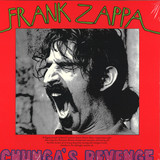
Over the last several years, the Zappa Family Trust and UMC have lovingly been restoring Frank Zappa's iconic catalog together by reissuing his classic albums on CD and pressing long-out-of-print records back on vinyl. Next up in the ongoing vinyl initiative, coming on the heels of the reissue of his enigmatic Burnt Weeny Sandwich, is Zappa's 1970 stylistically diverse and subversive album, Chunga's Revenge, which will receive a 180-gram audiophile repressing on black vinyl on July 20. Supervised by the ZFT, the record, which has been unavailable on vinyl for more than three decades, will be press pressed at Pallas In Germany and feature reproductions of the original artwork. Chunga's Revenge, although released under Frank Zappa's own name, introduced a new Mothers lineup that included former Turtles members Howard Kaylan and Mark Volman, aka Flo and Eddie, as well as keyboardist George Duke, drummer Aynsley Dunbar and multi-instrumentalist Ian Underwood. The album is one of Zappa's most eclectic efforts, encompassing the improvisational title track, the raucous guitar jam "Transylvania Boogie," the bluesy "Road Ladies" and the jazzy "Twenty Small Cigars," along with more conventional rock numbers like "Tell Me You Love Me," "Would You Go All the Way" and "Sharleena."
Fresh from touring with Hugh Masekela ( The Boy's Doin' It'), Gboyega Adelaja goes into the lab to drop heavy keyboard science on his Moog and Fender Rhodes. Its Joe Sample meets the Afro Funk of BLO. With names like Jake Sollo on guitars, Mike Odumusu (BLO, Osibisa) on bass guitar and Gasper Lawal on percussion. This is a top quality, Afro-Funk, all-stars affair that shines from the inspired interventions, masterly arrangements to the sublime production.
.
Additional Notes:
I was already following Hugh Masekela when I met him, he was an outstanding musician and I knew of his collaboration with
Hedzoleh, that band brought him nearer to many of us, because he was playing authentic African melodies with the Hedzoleh
sound which was mostly percussion oriented. Yes I knew about Hugh's music before I met him. Infact when we started playing
together, he insisted that I stay with him in our three bedroom apartment, other members of the band had their own apartments,
but Hugh and myself shared the same 3 bedroom apartment'.
We were touring, under Casablanca owned by Neil Boggart, we toured as professional musicians, flying to our gigs. There was
a time when we were touring with George Clinton and Parliament Funkadelic we had two luxury buses deployed for our use.
We made many friends where ever we went to play, we met many big and popular musicians who came to watch our shows, the
Spinners came to see us in Detroit, we met Wayne Shorter of Weather Report, Freddie Hubbard, we played a gig with Herbie
Hancock at the Carnegie Hall New York City, we toured almost all the 50 States of the US.'
The music on this EP was conceived in China, between 1989 and 1993. The original tracks were mixed to DAT in real time, in a small neighbour-proof studio inside my apartment in Macau, a 19th floor with a view to the hurricanes. There's a small, unexpected or improbable story behind each track, some little magic fused with the local atmosphere, certainly guaranteeing their lasting authenticity 25 years later.
TAIPEI DISCO
Late 80s Guangzhou was an exotic city where the traditional past coexisted in harmony with the present and even already with the future.
I'd rather spend my weekends in Guangzhou than diving into Hong Kong consumerism - as most ex-pats in Macau did. I took a cab at the border and travelled 150 Km through chaotic roads with family and friends until reaching the hot, humid, mega South China metropolis.
We ate on street joints in the evenings, went on to a karaoke bar and ended up at Taipei Disco, the only proper club in town. All the others were inside hotels and played generic music or they were seedy, sleazy, smoky cabarets.
Taipei Disco used to be a cinema and played cantonese pop music and anglo-saxon pop/rock (that was new). The spacious dance floor was generously lighted, the atmosphere was airy and modern. Boys and girls were in the habit of dancing in pairs, one in front of the other, observing a respectful yet sensual distance. When the girl took a few steps back, the boy went along and vice versa. With legs and feet (more than the upper bodies) synchronized with the music, they never exceeded in extroversion. Cool.
I always carried a MicroComposer and a portable DAT recorder in my travels through China and weekends in Canton. Any spontaneous musical idea was imediately recorded and memorized. The MicroComposer allowed multitrack recording, which was very handy on the road. Based on the emphatic choreography of Taipei Disco's dancers, i started to compose a rhythm track while sitting at a table, with headphones, listening to Cantopop in the background. As if by magic - not a rare occasion in music - everything began fitting together. Odd as it may seem, the track ended up sounding more germanic (Kraftwerkian) than Cantonese pop.
The story ends in a circle: the cantonese DJ at Taipei Disco, whom i used to ask to play certain records, wanted to play my music at the disco when it was basically only just a rhythm track and little else. From a cupboard under his set up he took out a battered keyboard (unrecognizable brand) and invited me to play over the track with the available sounds on the keyboard. The circle was complete, with Cantonese clubbers happily dancing forwards and backwards, as if it were another Cantopop hit.
I didn't get payed but the house offered us free ice cream cups in which little Portuguese flags were sticked.
The track would be finished later, in studio, with vocoder strings ensemble and synth solos.
TAIPEI DISCO (LIVE)
The live version of 'Taipei Disco' was recorded during a live set at the China Pop venue, in Macau, 1993. China Pop was a rock club built in the ample space of an old fishing warehouse, located in the labyrinthic Inner Harbour area. It was decorated with large Mao Zedong and Cultural Revolution posters and memorabilia and had a unique atmosphere, fusing Pop Art with film noir. We began our performance at 1AM, pretty early for Macau's nightlife standards. We were lucky. An audience showed up. And in Macau there were always several friends among the audience, which tranformed a musical performance into a relaxed party.
The atmosphere was particularly surreal on that night. The front row was dominated by French Crazy Horse dancers, a sort of Oriental Moulin Rouge. The girls had finished their last performance of the evening at the Crazy Horse and were still energized from their show. During our performance, right in front of us and perfectly synched, we could hear the famous irreverent screams of can-can dancers. You always had to expect the unexpected in Macau.
RED MAMBO (IMPROMPTU)
I was familiar with the Portuguese-speaking African countries well before having lived in China. I found myself returning several times to one in particular, always attracted by its magic and very distinct, identitary culture and music: Cape Verde.
During the early years of DWART a lot of the inspiration for drum machine rhythms (Roland's TR series) came from African music, especially from new musical trends that gained full autonomy with Cape Verde's independence from Portugal, as was the case with funaná.
I had the privilege of having known and befriended some of the greatest Capeverdian composers, musicians and singers during the 70s and 80s, such as Bana, Luís Morais, Cesária Évora, Paulino Vieira, Chico Serra, Tito Paris, and historical bands such as Bulimundo (ambassadors of funaná) and Os Tubarões (great innovators of morna, coladera and funaná, with the sonic impact of an afro-beat big band).
When Luís Filipe de Barros began playing Os Tubarões for the first time on Portuguese radio, that was the turning point for African music in Portugal. The 'Tabanca' album was so widely heard and talked about that it quickly got a Portuguese release through one of the big labels of the time.
The mystic of this band from the Santiago Island would reach the East. Os Tubarões played to a packed room in Macau in 1992, and after the bombastic gig we arranged a dinner and party at my place.
We ate and drank generously and the moment came for a jam session at the small studio on the 19th floor. Because Os Tubarões didn't all fit in the studio, we recorded an impromptu with only three of the musicians: Tótó Silva (electric guitar), Mário Russo Bettencourt (bass) and Zeca Couto (piano). And there we were improvising without barriers, suddenly detached from cultural roots, labels and constraints, a truly unique moment. The track is now being released exactly as it was recorded, imbued with the real communion between the musicians. And it could only be titled 'Red Mambo'. I wish to dedicate it to the memory of Ildo Lobo and Jaime do Rosário, founders of Os Tubarões, sadly and too soon departed from the land of music.
* Bristol dubstep mainstay Gemmy, a key figure in pioneering the city's electronic music identity alongside fellow 'purple trinity' producers Joker and Guido, is set to release his latest EP 'Unruly' on his World Of Wonders imprint.
* Since his acclaimed 2008 debut with 'Bk 2 The Future' on Peverelist's Punch Drunk imprint, Gemmy has released on respected labels including Pinch's Tectonic, Mike Paradinas's Planet Mu, Soul Jazz and Earwax before forming his own imprint in 2011. The new three-track EP follows on from his 'Bamboozled' EP for World Of Wonders last year and shows off Gemmy's keen talent for crafting purple wave influenced dubstep.
* 'Unruly' offers three tracks that serve as measured excursions in melody and restraint. 'Na Tek Bak Chat' is an intensely rhythmic and darkly spacious production, whilst the searing 'Sonicboom' bristles with funky, grime-inflected rhythm. The propulsive 'Stop Dat!' is a vividly expansive and minimal exploration of bass music.
* 'Unruly' brings another solid release from one of dubstep's most influential producers. World Of Wonders will release 'Unruly' on July 27th.
Confused Machines' are excited to release an E.P by the composer and producer Ishai Adar (aka Oosh). Adar started his musical journey in the mid 80's as the keyboard player of the legendary Israeli post-punk band 'Nosei Hamigbaat', together with his high school friend Ohad Fishof.After his withdrawal from the band, he released 'Her': An innovative, experimental, electronic dance album, rare in the Israeli music scene of the late 90's. In this album, he fused 80's synth-pop influences ('Depeche Mode', etc.) with a cutting edge techno sound, which still sounds up to date. This album influenced the local underground electronic music scene of the late 90's.Following the album 'Her', Adar became a prominent composer and created soundtracks for motion pictures such as: 'Year Zero' (2004), Oscar-nominated 'Beaufort' (2007), 'A Film Unfinished' (2010), 'Bethlehem' (2013) and 'Mr. Gaga' (2015).In his current project '12', Adar revisits the synth-pop sounds which shaped his musical taste. He infuses profoundness and character to musical genres such as new-wave, Italo-disco, Euro-pop and contemporary dance music forming - multi-layered, euphoric and romantic melodies. A killer acid-techno remix of the track 12 by the legendary Rude 66 is included in the E.P.
Woven Entity are Patrick Dawes, Lascelle Lascelles and Paul May, three percussionists and drummers with a huge range of playing experience between them, from dance music to jazz, rock and folk to free improvisation and all points inbetween.
Their credits have included Groove Armada, Brand New Heavies, Campag Velocet, The Herbaliser, Petra Jean Phillipson, Richie Havens, Duke Garwood, Beth Orton to name a few.
Woven Entity is an improvisational group, inspired by a diverse range of influences from 70s free jazz to Krautrock to post punk to dub, Afrobeat and Tropicalia. They make a lush, joyful noise that tickles the brain and mobilises the body at the same time. Loose clothing is advised when listening.
Joining the core trio on a regular and irregular basis are keyboardist Ben Cowen, trumpeter Andy Knight, bassist Peter Marsh, saxophonists Alan Wilkinson, es, Lascelle Lascelles and Paul May, three percussionists and drummers with a huge range of playing experience between them, from dance music to jazz, rock and folk to free improvisation and all points inbetween.
Their credits have included Groove Armada, Brand New Heavies, Campag Velocet, The Herbaliser, Petra Jean Phillipson, Richie Havens, Duke Garwood, Beth Orton to name a few.
Woven Entity are Patrick Dawes, Lascelle Lascelles and Paul May, three percussionists and drummers with a huge range of playing experience between them, from dance music to jazz, rock and folk to free improvisation and all points inbetween.
Their credits have included Groove Armada, Brand New Heavies, Campag Velocet, The Herbaliser, Petra Jean Phillipson, Richie HavensWoven Entity are Patrick Dawes, Lascelle Lascelles and Paul May, three percussionists and drummers with a huge range of playing experience between them, from dance music to jazz, rock and folk to free improvisation and all points inbetween.
Their credits have included Groove Armada, Brand New Heavies, Campag Velocet, The Herbaliser, Petra Jean Phillipson, Richie Havens, Duke Garwood, Beth Orton to name a few.
Woven Entity is an improvisational group, inspired by a diverse range of influences from 70s free jazz to Krautrock to post punk to dub, Afrobeat and Tropicalia. They make a lush, joyful noise that tickles the brain and mobilises the body at the same time. Loose clothing is advised when listening.
Joining the core trio on a regular and irregular basis are keyboardist Ben Cowen, trumpeter Andy Knight, bassist Peter Marsh, saxophonists Alan Wilkinson, , Duke Garwood, Beth Orton to name a few.
Woven Entity is an improvisational group, inspired by a diverse range of influences from 70s free jazz to Krautrock to post punk to dub, Afrobeat and Tropicalia. They make a lush, joyful noise that tickles the brain and mobilises the body at the same time. Loose clothing is advised when listening.
Joining the core trio on a regular and irregular basis are keyboardist Ben Cowen, trumpeter Andy Knight, bassist Peter Marsh, saxophonists Alan Wilkinson,
Woven Entity is an improvisational group, inspired by a diverse range of influences from 70s free jazz to Krautrock to post punk to dub, Afrobeat and Tropicalia. They make a lush, joyful noise that tickles the brain and mobilises the body at the same time. Loose clothing is advised when listening.
Joining the core trio on a regular and irregular basis are keyboardist Ben Cowen, trumpeter Andy Knight, bassist Peter Marsh, saxophonists Alan Wilkinson,
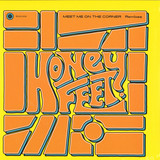
Meet Me On The Corner is taken from the band's sophomore album, Orange Whip, which itself was BBC 6Music's Album of The Day on its release. It follows previous singles Whatever You Do and Sinner, which garnered support from Craig Charles, Tom Ravenscroft and Huey Morgan. The song showcases Honeyfeet at their funkiest and chunkiest. A pounding beat beefed up by bass, guitar and brass propels forward while Rioghnach Connolly sings lyrics that could be straight out of the playground, but suggest something deeper, possibly mystical even, in its demands for a dalliance on the street.
Remixes on this more foot friendly single come courtesy of homegrown legends of funky house music, Crazy P who come through with both a vocal and dub version. Honeyfeet's latest opus is turned into a straight up soulful disco monster by the boys from Nottingham, with Rioghnach's rasping vocals playfully meandering over Hot Toddy and Ron Basejam's crisp beats and trademark live bass. Elsewhere, much hyped Russian production don, I Gemin, delivers his take - still aimed at the dance floor of course, but a slightly deeper house affair based around jazzy keys and chopped up vocals that take the song into more sonorous territories.
As a bonus, the 12" package also features the acclaimed remix of previous single, Sinner, courtesy of erstwhile Polish Innocent Sorceror, Envee - his shuffling, moody take only previously being available on vinyl via a super limited (and now impossible to find) 7-inch release late last year. For the last couple of years Honeyfeet (whose name comes from a line in the Blues Brothers film) have been a conduit for the ideas and expressions of an exotic mixture of Manchester based musicians. This genre-defying band incorporate styles including jazz, folk and hip hop into their music.
The band are fronted by Rioghnach Connolly - also known for her work with Real World artists Afro Celt Sound System and The Breath - "A remarkable singer and flutist who...can ease from Irish traditional influences to soul" (The Guardian). The line-up is completed by Rik Warren (vocals/harmonica), Gus Fairbairn (tenor sax), Biff Roxby (trombone/vocals), Ellis Davies (guitar), Lorien Edwards (bass guitar), John Ellis (keyboards) and David Schlechtriemen (drums).
Since their self-released debut album, 2013's It's a Good Job I Love You, keyboardist John Ellis jumped on board as full-time member, bringing his unique musical presence. This enabled the development of a more texturally adventurous style, as witnessed with the dual atonal solo between himself and guitarist Ellis Davies on Sinner. Similarly, for their current LP, Orange Whip, engineer, bassist and spiritual guide Lorien Edwards makes his Honeyfeet recording debut, so completing the 'kitchen' of this very special band.
- The album, Orange Whip, is out now.
Two Words is the debut release from the duo of Canadian sound artist crys cole and Australian songwriter Francis Plagne. Building on a series of experimental live performances in which the pair toyed with possible common languages for their seemingly unrelated approaches to music, the LP's two sides present a single piece that brings together abstract texture and slow-motion song in a sonic space where genre cedes to the logic of dreams.
The piece begins with a long, nearly static sequence built primarily from rubbed surfaces, using movement in the stereo field and changing mic placements to create a unified but unstable sonic environment that mimics wind, water, and breath, opening an impossible space between nature and artifice. This artificial outdoors ultimately makes room for Plagne's electric organ, which sounds a series of melancholic chords to accompany a wandering Wyatt-esque keyboard line as cole's intimate contact mic textures sizzle and pop in the foreground.
From here the piece makes a surprise detour into song, as the majority of the second side finds Plagne intoning a series of obtuse two word phrases (from a text by Berlin-based poet Marty Hiatt) to an austere organ accompaniment. Working closely with engineer and producer Joe Talia, cole and Plagne extend the studio-as-an-instrument tradition of Teo Macero and This Heat, introducing subtle yet unexpected production shifts that lead the listener from the initial austerity of the organ and voice to an oneiric space of asynchronised vocal doubles, creaking textures, and distant whistling, ultimately arriving at something like an imagined meeting of Organum and Arthur Russell.
Packaged in a suitably mysterious sleeve featuring a lush work by Australian painter Anne Wallace on the front and text by Hiatt on the back, Two Words is both comforting and strange, a disorienting blend of seemingly discrepant elements.
The Caribbean House Is A New Billy Bogus Project. It's The Perfect Meld Of Creepy Atmospheres, Sunset Grooves, Analog Sensibilities And Incessant Rhythms. Bogus Leads This Collective Formed By Federico Bologna (ohmega Tribe, Technogod) And Cristiano Santini (disciplinatha, Dish-is-nein,). This Triumvirate Of 90's Underground Italian Masterminds Come From The World Of Electronica, Noise Rock And Psychedelia. Here They All Combine To Rise Again Rise And Unite To Create Something Entirely New.
And So To The Music. Their Debut Lp Opens Up With The Dark And Haunting "night Drive". Recent Single "gong Bong" Is Next. It Is One Part Slo-mo Disco, One Part Psychedelic Moondance And One Part Sci-fi Horror Movie. If The First Two Thirds Of The Track Is A Caterpillar Then The Last Third Is A Butterfly As Uplifting Riffs And Swirls Of Layered Keys Bring Things To A Crescendo. "lonely Man" Is A Quirky Detuned Monster Tour-de-force Which Leads Nicely Into "love By Proxy". Layered Keys And Intertwined Arpeggios Mingle To Create The Closest Thing To A Love Song Possible From This Trio.
Flip The Vinyl Over For A Hippy Drive With "jesus Freaks" And Its Groovy Guitar Licks And White Noise Synth Blasts. "nature Nature" Is All About The Pulsing Bass Guitar And Sample Like Guitar Stabs Before Heading Completely Off-piste For A Synth-bass Ending. "africa Addio" Presents Us With Meandering Synth Lines Before Layering On A Waft Of Sound Effects And Spooky Keys. Movie Territory. We Close Off The Lp With The "streets Like Noodles". New Wave Nyc Chic Meets Underground Italy Psych.
New album from Anthony Ferraro aka Astronauts, etc, who for most of his music career, served as Toro y Moi's keyboardist, with this album 'Living In Symbol' being his debut solo record.
Sonically, the album weaves its influences into an alien drapery. 'The Border' introduces Latin psychedelia to a groove à la David Axelrod, setting the stage for a vocal performance that manages to be equal parts Lee Hazlewood and HAL 9000. On 'The Room', a Borgesian story gets dressed up in an eerily graceful string arrangement reminiscent of Les Baxter. And 'Who I Talk To' nods to George Harrison in a soft rocking arrangement that supports Ferraro's ghostly croon.
Living In Symbol Is An Ode To Ambiguity, The Future, And Saying 'so Long' To The Known. A Member Of The Last Generation To Experience Life Before Total Interconnectedness, Anthony Ferraro (digitally Known As Tony Peppers) Aims To Be A Bridge Between Two Very Different Realities.
The Spirit Of Change Is Especially Pronounced In California's Bay Area, Where Technologies Dawn And Disruption Is The Noblest Goal. Critics And Advocates Of All Stripes Write Columns And Fill Talk Radio Hours With Their Analyses Of The Times. Ferraro Is A Funny Case: A Sometimes Luddite With A Romantic Streak, He Would Probably Be A Doomsayer If It Weren't For His Being Situated In The Middle Of It All. As It Happens, He Ended Up Writing A Generative Music Algorithm That Sold On Auction At The Smithsonian For $5,000.
His Take On Tomorrow Is Nonjudgmental, Meditative, Imaginative. It Keeps Away From Unqualified Hope Or Outright Alarmism, Choosing Instead To Embrace The Indeterminacy As Food For Dreaming.
Ferraro's Friendship With Chaz Bear, Who Co-produced The Album, Began Modestly Enough: Bear Walked Into The Coffee Shop Where Ferraro Worked While Attending Uc Berkeley. The Two Became Friends, And When Ferraro Graduated The Following Summer, He Signed On As Touring Keyboardist For Toro Y Moi. Musical Bonds Were Forged Over The Next Few Years, And The Pair Began Collaborating On What Would Become Living In Symbol.
Living In Symbol Is A Series Of Rooms, A Choose-your-own-tomorrow Story. Step In And Peer Through Its Open Doors.
Earthboogie's debut album, Human Call, rightly earned praise on its release earlier in the year, with listeners responding positively to its sticky and humid dancefoor fusions of African and South American rhythms, chunky dub disco, retro-futurist house,
spacey analogue electronics and sun-kissed Balearica. Hot on the heels of that release, Leng Records has sourced new remixes of two album highlights - 'High Minded Man' and 'Silken Moon' - from Running Back label boss Gerd Janson and synthesizer-wielding Balearic boogie stalwart Pete Herbert.
It's Janson who steps up frst, offering up two total overhauls of 'High Minded Man' that re-cast the undulating, Afro-fred original as a dreamy, drum machine-driven chunks of vintage deep house goodness. Where Earthboogie's album version bobbed
and weaved around horns and live bass, Janson's Deep House Mix places the duo's original chanted vocals above a bouncy, polyrhythmic rhythm track, Larry Heard style chords, Kwaito-esque electronic bleeps and a smooth, soul-stroking bassline. Janson's
Deep House Dub, which strips out the vocal for a more sparse and ethereal listening experience, is also included on the EP.
The EP's other remix comes from sometime Reverso 68 member Pete Herbert, who gets his mitts on previous single 'Silken Moon'. While he retains some key elements from Earthboogie's original - specifcally the vocals, Afro guitars and house stabs - he
naturally adds a little of his own rubbery electronic disco favour via spacey synthesizer fourishes and a massive electronic bassline that brilliantly tracks the rising and falling
movement of the main melody. It has the feel of a terrace anthem in the making.
A long time ago, in a Norway far far away in time, keyboardist Bugge Wesseltoft introduced his New Conception of Jazz to the world. We're talking about the late 90s, when Bugge's cosmopolitan blend of jazz, hiphop and techno beats was pretty much the coolest music coming out of Norway at that moment. That was a golden time for Norwegian music, in fact, when the rest of the world began to sit up and take notice that something was stirring up north, and realised the music was more than just glacial tones hurtled from icy mountaintops and frozen lakes. This was the sound of urban Scandinavia.
A few years later came the electronic dance genre 'space disco'. Along with Todd Terje, Bjørn Torske and Lindstrøm, Prins Thomas was at the epicentre of this next big wave to surge out of Norway. Now, the two generations have come together in this exclusive collaboration between Bugge and Prins Thomas on the Smalltown Supersound label. Jazz and electronics combine for that energising vitamin D shot of Nordic sunshine.
The Rainbow Studio in Oslo is a familiar name to anyone who follows the ECM label - many of its classic 1970s jazz albums were recorded there under the eye of resident producer Jan Erik Kongshaug. Bugge and Thomas booked a couple of sessions at the legendary space with Kongshaug at the controls, and improvised some tunes in the style and spirit of some of their favourite ECM moments, like the fresh, open sounds of Codona, Egberto Gismonti, Oregon and Kenny Wheeler. Bugge had previously done a remix of Thomas's 'Bobletekno' in 2015 but this is the first time they have worked together as active musicians. The results - also partly taped at Thomas's home studio - fuse programmed rhythms, live synths and percussion, all captured in a sumptuously spacious acoustic.
For an even more authentic touch they called up one of their all time local heroes and one of Norway's most famous jazz drummers, Jon Christensen, who's been the go-to guy for Jan Garbarek, Terje Rypdal, Keith Jarrett and many more. At 75 years he's still pretty spry behind the kit, as you'll hear on several tracks here.
Make no mistake, though, this is not retro pastiche but contemporary music, coasting on gently insistent programmed grooves and bubbling basslines. The whole thing feels not so much like a consciously hip fusion of DJ and jazz musician, more like two great musicians totally enjoying themselves. Which is exactly what it is.
Key facts:
Bugge Wesseltoft is one of Norway's leading jazz figures. He set up Jazzland Recordings in 1996. His solo Christmas LP It's Snowing On My Piano remains Norway's best selling jazz album!
Prins Thomas's real name is Thomas Hermansen. His label, Full Pupp, means 'full breast'. He's released several albums under his own name, as well as collaborations with Bjørn Torske and Lindström. Check out his amazing Paradise Goulash mixtapes.
Taking a turn to some of its roots, Emotional Rescue offers a reissue of Ramjac Corporation's UK house/breaks anthem Cameroon Massif!. First released on the increasingly cult-status Irdial Discs in 1990, this was very much the sound of the big bang explosion of Acid House morphing and splintering, as subsequent multi-genres developed, formed, imploded and reformed in new ways that still subsists today.
Within the melting pot of anything goes, chemically-enhanced optimism that spread across the UK during that return to the summers of love from 1987 onwards, the nascent sounds coming from Chicago and Detroit were mixed with a hybrid of 80s British influences, taking in European synth pop, US electro, new beat, hip hop and reggae. Out of this appeared a new sound, mixing that love of techno and house with dub bass and break beats into a proto-jungle swirl.
Like many growing up through the ever-evolving 60, 70s & 80s British music scene, Paul Chivers' early years of learning piano and guitar, moved from Beatles era pop to take in punk, jazz and anything an eager musical mind could explore. Developing a long-term interest and study of Cuban and Afro-drumming, his acquisition of an Atari and sampler soon moved to programming of both drum machines and TB303 and with that, Ramjac Corporation was born.
Playing live at some of the earliest raves in 1988, as often through luck and "right time, right place", including the infamous Back To The Future and Energy parties, Ramjac went from playing from 50 to 10,000 ravers in a matter of months, as the nation was gripped, depending on your cultural standing, by either a mixture of drug apocalypse paranoia or ecstatic celebration.
It was a meeting with Akin Fernandez, founder of Irdial Discs, that led some of the first studio experiments and creation of Cameroon Massif!. Utlising Akin's in-house studio and production skills, alongside Chivers' jazz influenced outlook of improvisation over arrangement, the track took shape, mixing the live programmed percussion, heavy doses of phase, delay and reverb and Sun Ra inspired keys that resulted in a number of mixes of Massif!.
Collected here are the original 12" "Massive" and "Massing" mixes, plus a special live version taken from the "Live At The Brain" reunion gig of 2009. The sought after 1990 versions and original Live mix are taken a step further with this 13 mins + mix, in essence a resampling and remixing reversion with didgeridoo and live on mic MCing, that gives a real glimpse of those early live sets. With more Ramjac Corporation material upcoming and a live reel-to-reel show appearing soon, the return of Cameroon Massif! is now.
Next up on Francis Harris' exceptional imprint Scissor & Thread comes a collaboration with American Producer, DJ Aakmael. Aakmael has built a reputation for some of the deepest, rawest house music sounds coming out of the States, releasing well-received tracks on the likes of Freerange Records, Release Sustain, Kolour Dogmatik and NDATL. Returning to Scissor & Thread, Aakmael and label boss Harris cook up an intoxicating vibe across this 5 track EP. Each shares a track and work together on the fifth, while also remixing each other's solo cuts. First up Aakmael's Deep Muzik- a quintessential nod to its self-proclaimed mission statement. Skittering drums, a shuffling groove, deep keys, and chords make up this essential opener. Frank's (aka Francis Harris) All That Light Mix shows another side, finding pockets of space and developing the fizzing percussion to produce an equally affecting piece of dancefloor bliss. Sharing production duties from the outset on Mercy of Means, the guys slip into an easy mid-tempo groove with plenty of depth - the rhythm rolls along and offers the perfect basis for some sublime melodic touches. Frank's Part Song also hones in on the subtle deep grooves. Bumping, slightly filtered and saturated drums provide the main body, with beautiful washes and keys finding their way through, Aakmael's remix beefs up the groove somewhat, making the snares snap harder and kick hit a little stronger, but the essence of the tracks melodic atmosphere remains perfectly in place.
With new track 'Warschauerstrasse', Claudio Ricci has created an expansive seven minute workout of twisted synths and deep house drums. The first remix comes from long time techno heavyweight Timo Maas and the prolific and inventive Basti Grub. Their singular remix speeds up the original and layers in fluttering toms and percussive sounds as well as broad, groaning synths and the distant sound of a bustling city at rush hour. Sudam label boss and Ibiza based artist Kintar flips the track into something spacious and haunting. Eerie keys and sweeping synths keep you on edge as the rubbery techno groove rolls on into the night. Bulgarian based Metodi Hristov loves to experiment and has a distinctive techno style that gains support from the likes of Richie Hawtin, Carl Cox and Adam Beyer. In his hands the track becomes a peak time tech banger.
* "Of all the dubplates in my bag from this last few years, the ones I've selected most often have Walton's name scribbled on the sleeve. 'Black Lotus' is a unique creative statement; I'm very proud to release it on Tectonic and to support Walton, who I believe is a true talent." Pinch
* On July 6th Tectonic recordings presents the game-changing second album by 26 year old Mancunian Sam Walton, better known as simply Walton.
* 'Black Lotus' follows his inclusion on Tectonic's landmark 100th release - Riko Dan's 'Hard Food' EP, plus the 'Praying Mantis'/ 'Koto Riddim' 12' (also on Tectonic) and the 'Taiko' EP on Kaizen - the latter two of which hinted at the album's sound, but didn't fully prepare us for the brilliance to come.
* Abstract electronics, grime, dubstep and new styles that don't even have a name yet coalesce perfectly on this classic in the making. It finds Walton at peak power, reaching just as far (if not more so) than anything on the Pan, Different Circles, Boxed or Tectonic catalogues for pure futurism and new-terrain-traversing brilliance.
* Spacious and modern sounding, with just the right amount of grit, on 'Black Lotus' Walton has taken things the next level - setting an impressive new high bar. This is the best music to take inspiration from far eastern culture since Photek's seminal 'Ni - Ten - Ichi - Ryu' and 'The Water Margin'.
* Cinematic may be a term bandied about too often, but on this record it unquestionably applies, with the whole thing playing out like an epic movie, full of highs, lows, action, reflection and changing scenes.
* The album kicks off with 'Black Lotus', which makes it quickly evident that this isn't just another generic longplayer; a weightless/sino style intro segues into a mystical kalimba line, which is then is enveloped by huge waves of synthesized, pitched-down brass.
* 'Point Blank' offers locked, harsh mechanical funk, full of aggravated excitement, before sleek, spacious grime and disguised pop garage achieve twisted anthem status, on the hugely satisfying 'Koto Riddim'.
* 'No Mercy''s Yakuza crime riff is perfect for Riko Dan's threatening menace, especially at the point his voice gets distorted into a guttral and unsettling, demon-like wretch.
* 'Mad Zapper' is abstract, comprised of simple yet challenging beats, tones and stutters, whilst 'Angry Drummer''s taiko/kumi-daiko style percussion has a rousing, heavy thump.
* 'Pan' sounds equally enthralling whether soundtracking a dark movie scene of impending danger, or carying enratptured ravers on a danceflor journey, especially one suited to the synapse-prodding drama of a high production, lazer-heavy festival set.
* Choppy drums and bouncy bass tones are laced with the georgeos melody of 'Ehru', and 'Vectors' is sleek 'n' deep breakbeat-garage-meets-IDM.
* Although already known for elements of musicality, Walton raises his game even higher with the beautiful closing track 'White Lotus', which has a wow factor akin to hearing Aphex's Twin's 'Jynweythek Ylow' for the first time.
* 'The title came from the idea that I wanted it to be sweet and melodic in areas, but dark and grimey at the same time', recalls Walton. 'I never really listened to much Japanese and Chinese music before working on this, and that element originally came from listening to a lot of Sino grime stuff. It wasn't until I was deep into the process of making the album that I started listening to loads of traditional stuff on YouTube for melodic ideas, which changed how it turned out. The whole dubstep techno crossover thing was also a big influence.'
* 'I'm really happy to have Riko Dan & Wen on there', he adds. 'I've done a few remixes of Riko tunes which have had a great response, so it's been wicked to get some original material done together. The track with Wen was first started a while back, so I'm glad it was finally finished and will see a release.'
* Walton has been steadily gaining serious clout through releases since 2011 on Hyperdub, Keysound, Tectonic and Kaizen, with supporters including Mumdance, Logos, Slimzee, Laurel Halo, Wen, Hodge, Mary Anne Hobbs, Giles Peterson, Paleman, Teki Latex, Commodo, Loefah and Kode9. Key club, festival and radio shows include FWD at Plastic People, Fabric, Outlook, NTS, Rinse and BBC 1xtra.
'syncho Sound System & Power' Features The Music Of Nigeria Fuji Machine,
Which Includes Some Of The Country's Finest 'fuji' Master Drummers And Singers, And Is Newly Recorded By Soul Jazz Records In Lagos, Nigeria. Fuji Is The Heavily Percussive And Improvisational Style Of Nigerian Popular Music, At Once Modern And Yet Deeply Rooted In The Traditional Islamic Yoruba Culture Of Nigeria.
Here On This Album Nigeria Fuji Machine's Striking And Powerful Lead Vocalist Taofik Yemi Fagbenro Soars Above A Wild And Energetic Backdrop Of Polyrhythms Played On Traditional Talking Drums, Trap Drums, Electronic And Street Percussion To Create A Powerful Wall Of Intense Sound. Fuji Is A Hi-energy Street Music, Heavily Percussive Which Evolved Out Of The Islamic Celebration Of Ramadan, Which Became A Major Event In Mid-20th Century Lagos. Groups Of Young Men Walked Through Muslim Neighbourhoods At Night Singing Improvised 'wéré' Music To The Accompaniment Of Pots, Pans, Drums, Bells
And Anything Else Available, Waking Believers For The Early Morning Prayer. By The Early 1970s This Music Had Crossed-over Into Popular Nigerian Culture Where It Came To Be Known As Fuji, First Made Popular By The Artist Alhaji Sikiru Ayinde Barrister, As The Music Began To Be Performed Commonly At Parties And Social Events. In The 1970s And 1980s Three Nigerian Artists - King Sunny Adé, Chief Ebonezer Obey And Fela Kuti - All Secured International Major Record Deals Bringing Popularity To The Nigerian Musical Styles Of Juju (adé And Obey) And Afro-beat (fela Kuti's Unique Mixture Of Highlife, Funk And Jazz) Abroad, But In The Process Ignoring Much Of Nigeria's Rich Musical Landscape. Fuji Is, Alongside Highlife, Juju, Afro-beat, Sakara, Afro-reggae, Waka, Igbo Rap, Apala And Numerous Others - One Of These Central Styles Of Nigerian Music. The Singer Barrister Described The Music As Follows: 'fuji Music Is A Combination Of Music Consisting Of Sakara, Apala, Juju, Aro, Afro, Gudugudu, And Possibly Highlife.' Juju Performer King Sunny Adé Described The Difference Between The Two
Styles Of Fuji And Juju Somewhat Competitively Thus: 'fuji Music Is More Or Less Like My Music Without Guitars. It's Like I'm Singing In A Major Key And They Are Singing In A Minor. The Music Itself Is The Music Of Juju Music.' Today Fuji Remains A Powerful Popular Music With Deep And Powerful Islamic Roots
Which Continues To Modernise And Attract New Generations Of Young Nigerians And Nigeria Fuji Machine's 'syncho Sound System & Power' Is A Powerful And Intense Musical Experience. This Album Is Released As A Limited-edition Heavyweight Vinyl Edition (+free Download Code), Deluxe Cd And Digital Format.