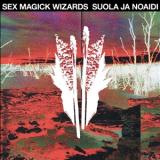
Sex Magick Wizards is a Norwegian-Sámi quartet blending psychedelic rock, free improvisation and joik into hypnotic, ritualistic soundscapes. For years they have stormed Europe's underground and experimental music scenes, earning acclaim for intense and unpredictable live performances. The double album Suola ja Noaidi (The Thief and the Shaman) draws on themes of colonisation, weaponised religion and Sámi resilience. Working from this cultural material, Sex Magick Wizards have created a double album combining traditional joik elements with their signature experimental rock sound and freeform avant-garde improvisation. By combining fragments of Northern Sámi from the original poem with new lyrics in both English and Northern Sámi and focusing more heavily on vocals, the band creates a highly distinctive sonic language rarely heard within experimental rock. The album also contains a new interpretation of an old traditional joik from guitarist/singer/joiker Viktor Bomstad's childhood home, Ivgorássa.
The late Matt Watts was an American songwriter/storyteller and performer from Montana residing in Antwerp and Brussels, Belgium. He ws the son of a catholic priest and mother with Cherokee roots in the Carolinas.
He first began using the electric organ to write songs and also recording them on cassettes when he was 11 years old. When he was 13 his mother bought him an electric guitar from a pawn shop in South Carolina. Using a karaoke machine as an amplifier, he began writing and performing and recorded his first album at age 15 in a small studio in Great Falls, Montana.In addition to writing and performing his own music, he began performing and touring with various local Punk & Noise bands.
In 2007 when he was 19, he moved to Antwerp, Belgium. Since his arrival he has worked and performed with Zita Swoon Group, become a member of Rudy Trouvé's I H8 Camera, translated Simon Allemeersch and Rudy Trouvé’s critically acclaimed piece SCREEN into English, formed The Calicos (now Humo’s Rock Rally winners under Quinten Vermaelen) as a one time backing band, worked with many artists and songwriters (including Emillina Torini & The Colorist, The Love Substitutes, ..) and toured and released various widely acclaimed solo albums and a duo album with Nicolas Rombouts on Starman Records.
Highlights for sure were “How Different It Was When You Were There” (2017 - **** De Standaard), produced by Nicolas Rombouts (ex-Dez Mona) and featured guest performances by Nathalie Delcroix and Bjorn Eriksson (Eriksson Delcroix) and Stef Kamil Carlens. Its excellent successor “Queens” (produced by Stef Kamil Carlens and Nicolas Rombouts) featured a.o. the late Sandy Dillon and Jim White.
Sadly Matt Watts passed away too soon in June 2024. “Restless Kind” is the final album readied shortly before his death in a production by Bai Kamara Jr. Another astonishing collection of intimate Americana songs with lyrics as fascinating miniature novels.
Mutant präsentiert in Zusammenarbeit mit Back Lot Music und Focus Features voller Stolz die großartige Filmmusik des Oscar®-Preisträgers Volker Bertelmann zum Kinofilm „Pressure“.
»Green Live« versteht sich nicht als Nebenprodukt, sondern als Essenz dessen, was Seraina ausmacht: Echte Performance, musikalische Dynamik und das Gefühl, dass jeder Abend anders sein kann. Wer sie live erlebt, merkt schnell: Hier geht es nicht um Perfektion um jeden Preis. Es geht um Intensität. Um diese seltenen Momente, die sich nicht planen lassen – wenn ein Song plötzlich eine neue Richtung nimmt, wenn das Publikum jede Zeile mitsingt, oder der Saal für einen Augenblick komplett still wird.
When Drop Nineteens disbanded in the mid-'90s, singer Greg Ackell decided he would never make music again. He wouldn't noodle around on a guitar in his basement. He wouldn't get a group of friends together just to jam. He was done with music entirely. Following the release of the shoegaze masterpiece Delaware in 1992, and the intricate experimentations on National Coma in 1993, the group disbanded. They shared stages with Radiohead, Hole, Blur, PJ Harvey and Smashing Pumpkins. They went from being teenagers in Boston to mid-twenty-somethings with a few MTV videos, a couple BBC sessions and numerous festival appearances under their belt. So when Drop Nineteens ceased to be, Ackell felt content. He had the rest of his life in front of him to figure out what he wanted to do. Music was a closed chapter.That was until 2021, when a friend from the band's early days got Greg on the phone to suggest making some music together, just to see how it felt. Instead of shutting it down like he had been doing over the years, he decided to entertain the prospect. For the first time in nearly 30 years, he picked up a guitar with intent. He immediately called up Steve Zimmerman, the band's bassist and fellow guitarist, and the two got writing. It felt effortless for Ackell, like he never stopped writing music. "We were off to the races," he says, "But also the question came up: what does a Drop Nineteens song sound like today?" Enter Hard Light, the band's stunning third record. It's the band's proverbial follow up to Delaware, a modern Drop Nineteens record that is completely singular in its sound and vision. The first task making Hard Light was, of course, getting the rest of the band back together. Drop Nineteens is an inherently collaborative project. Ackell writes the lyrics, and he works with band members Steve Zimmerman, Paula Kelley, Motohiro Yasue, and Peter Koeplin to create the sonic world. The record came together over the course of a year, recording at a patchwork of studios all around the country: Boston, Brooklyn, San Francisco, Los Angeles. When Kelley and Ackell first heard their vocals recorded together on the opus album closer "T", the chemistry was undeniable. Making music together felt natural, fluid, exciting.Hard Light is a romantic record in the literary sense. Beauty from longing; longing from beauty. You put the album on and want to be clad in a velvet dress sprawled across a fainting couch. You want to be holding someone's hand while you sit back in the tall grass. The guitars are expansive and expressive as ever. Ackell and Kelley's vocals are cool, crystalline, and luminous. "Gal" comes on like a dream. The vocals pour in when you least expect them, once in the middle, where Ackell delivers one of the strangest (and best) lyrics on the record, "And there were snakes/with cats at the wheel." Hard Light's first single, "Scapa Flow" is triumphant and an excellent example of what a modern day Drop Nineteens song sounds like. The guitars glide cloud-like, floor toms shuffle and rumble in the background, searching. Ackell and Kelley's vocals are as toned as they are bound. Hard Light is every bit the ride that Delaware was, diverse in its sounds, with surprises at every turn. Drop Nineteens have brought clarity and cool in 2023 to the genre they helped create. A portrait of a band 30 years later, as talented and dedicated to their craft as ever. To put it more bluntly, they're at the top of their game.
Recorded in 1997, upon The Shadow Ring’s return from their final US tour, Lighthouse captures the group at their most stripped-down and visionary. Graham Lambkin’s fractured texts conjure Folkestone’s haunted coastline—Vikings, the Morgawr, a fading Britain, the pull of the sea—under the sway of Alternative TV’s Vibing Up the Senile Man (Part One), the mechanical vernaculars of Robert Ashley and Mark Perry, and the deflated humor of Dad’s Army and It Ain’t Half Hot Mum. Originally issued in 1999 on Scott Foust’s Swill Radio, this lost masterpiece—a stark, lo-fi world of home recording and concrète capture—is once again available on vinyl. For fans of Alan Titchmarsh, David Croft, Harry Pussy, and Idea Fire Company.
Ohio’s 156/Silence return with From a Distance, their crushing new full-length and first release for Pure Noise Records, arriving September 4. Produced by Josh Schroeder (King 810, Lorna Shore, The Plot In You), the album expands on the breakout success of People Watching with a darker, more cinematic approach that balances punishing heaviness, eerie atmosphere, and emotional depth. Featuring guest appearances from Mike Hranica (The Devil Wears Prada) and Alex Reade (Make Them Suffer), From a Distance pulls influence from horror, prestige television, and retro game soundtracks while moving seamlessly between hard rock, experimental textures, and the band’s chaotic mathcore roots. Atmospheric, unpredictable, and unbound by genre, From a Distance pushes 156/Silence further into their own lane while cementing them as one of heavy music’s most fearless rising acts.
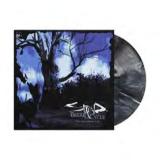
Zur Feier des 25-jährigen Jubiläums von Stainds Klassiker-Album *Break The Cycle* veröffentlicht die
Band *Break The Cycle 25th Anniversary* – eine Live-Aufnahme, bei der die Band das legendäre Album in
voller Länge spielt. Die Performance umfasst jeden Song des Albums, einschließlich der klassischen Singles
„It’s Been A While“, „Outside“ und „Fade“.
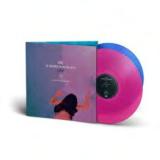
Ludovico Einaudi kehrt mit „The Summer Portraits Live“ zurück.
Live aufgenommen in London in der Royal Albert Hall im Jahr 2025, enthält diese neue Sammlung sowohl
Lieblingsstücke aus „The Summer Portraits“ als auch beliebte Klassiker wie „I Giorni“, „Nuvole Bianche“
und „Experience“.
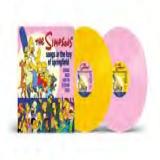
Feiere die Musik der Simpsons mit ”Songs in the Key of Springfield” – jetzt als exklusive Deluxe-VinylEdition auf 2 LPs erhältlich. Diese Sammlung mit Fan-Lieblingen, seltenen Songs und klassischen Momenten aus der gesamten Serie ist ein absolutes Muss für Sammler.
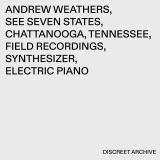
Poem by Alea Coble (February 2026) - Written for Andrew Weathers, Chattonooga Recording Project
Listen to my story and everything will come out true. - Bessie Smith
35° 02' 44.27" N -85° 18' 34.85" W:
Howl. Hammer strikes firing pin. Its echo ricochets over river bend. The woodpecker’s syncopated pop-pop-pop clink and thwap in time with cops practicing prayer at the firing range.
Quick. Sketch a few constellations onto a postcard: empty shotgun shells, these pre-forgotten fossils snaking rusted railroad spikes, like snagged rosary, fallen poplar petals draped over cerulean glass ashtray scattered along glittering fractures, ignored like a treaty. Train tracks reverberate necrophilic boomerang-hunger for mountain air without that coal dust. Eat. Eat. Everything is real estate. Even the air is for sale. Buy it cheap while I.C.E. carves through the valley along the Trail of Tears in unmarked SUVs, traffic stops.
Howl. Callback to estranged entanglements oscillating over holler and highway. Meet on the porch. Haint-blue ceiling. Some ghosts can’t get through anyway. They got tied up on the Walnut Street Bridge by a mob of white spit. Howl. The South should scare you.
But the woodpecker is still nesting, hungry, typing uncannied punctuation marks into black oak: a deed. Home? Takes a side-eyed knowing to call by name. The moon sickles in a sweating glass of iced tea.
Speculation cycle: symmetry as ancient as sour-dank betrayal of the tongue, bitter bones binding blood and lead, alchemical forgetting like I found a hairbrush in the yard while planting wild irises, like someone is charging $10 for an old glass Coke bottle, like semicolons itching restless under new sod from no-one-knows-where. Howl. Sing back. History is soil-in-stereo.
How will this line end? Like riverbank? Like atlatl arching hope smash-through a stained glass window? Words fall out of the sky, and 30 American flags snap at attention on the bridge. Howl. A shift in the wind gallops through the streets tossing her head back, laughing.
Tennessee River, who once kissed Pangea, how she softens at the knuckle-suck of it all, that secret-sweet stowed in the feathers of sandhill cranes lifting up on warm summer breeze: slow-shooting stars bending toward unbothered brevitas.
Howl. The red wolf knows her truest kin is always her shadow’s shadow.
For the past decade, Personal Trainer has served as the ever-evolving creative outlet for frontman and songwriter Willem Smit, growing from Amsterdam's underground scene into an internationally successful touring band An electrifying force in modern indie rock, Personal Trainer blend sharp wit, chaotic energy, and irresistible hooks. Their upcoming third album Human Assholes balances playful absurdity with a quiet undercurrent of doubt, Smit has been ever reluctant as the quote unquote frontman of a band.
Love as Art, Love under the Patriarchy, Love as a political and radical act - in short 'The Fatal Flaw' examines Love from a deeper and philosophical perspective. Even the songs that aren't about Love, also are. They are about the absence of love, and what happens in those spaces, so they are songs about the necessity of love, and the consequences of its absences.
“The first three are innocent in a way, because we didn’t have an audience when we were making them,” Oberst says. “But from Lifted on, I was definitely aware of an audience. Lifted was well-received right away, and then everything happened with Wide Awake and Digital Ash.” Those two albums came out simultaneously. And their lead singles – “Take It Easy (Love Nothing),” from the austere, remote Digital Ash, and “Lua,” from the warm, folky Wide Awake – debuted in the top two slots on the Billboard Hot 100. “First Day of My Life,” also from Wide Awake, would later be voted the Number One love song of all time by NPR Music’s reader’s poll. Bright Eyes had officially broken through. It was a heady, exciting time, but also fraught and tense, both because of the band’s careening new fame, and because of the state of the world. When Bright Eyes made their Tonight Show debut in 2006, they chose to perform none of their shiny new hits, instead delivering a searing, harrowing rendition of their caustic anti-Bush anthem, “When The President Talks To God.” These days, Oberst is still amusing himself by messing with the extremes Bright Eyes baked into this era’s releases, extremes that reflected the polar, with-us-or-against-us, fractious feel of the times. The reworked Digital Ash tracks, originally so clean and elegant, are, on the companion EP, full of “harmonica and mandolins – folky vibes,” Oberst says. While the analogue sweetness of the Wide Awake songs have been put through a detached nihilism filter.
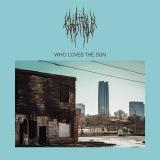
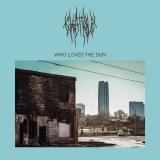
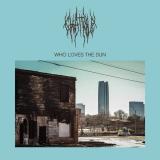
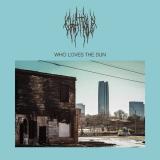
In a world increasingly shaped by disposable content, Chat Pile answer with something defiantly real and organic, a mentality that permeates Who Loves The Sun, their third full-length record. Since the band’s formation just over six years ago, the Oklahoma City-based quartet Chat Pile has grown from a scrappy passion project into one of the defining heavy acts to emerge from the 2020s underground. Ray B. (vocals), L. Manhole (guitar), Stin (bass), and Cap’n Ron (drums) create a crushing, crass, and cathartic take on noise rock that captures a raw, undeniably human essence in an age marked by technological overreach and the cold state of society. Nothing about Who Loves The Sun feels synthetic.
Whereas their debut album God’s Country depicted a particularly American flavor of dread, and the follow up Cool World showed a cruel planet defined by global systemic violence, Who Loves The Sun peels the skin back on how collective indifference defines this new century. Spanning imagery of coastlines devouring cities, dead-end jobs, and submission to data-driven inauthenticity, the album dissects the apathy-bloated state of 21st-century existence as a slow-motion apocalypse. As with much of Chat Pile’s work, Oklahoma City itself looms over the album like a character, its sprawling isolation, economic contradictions, and underlying sense of decay embedded in the fabric of the record. The perfect allegory for the thematic essence of Who Loves The Sun is the photo embossed on the record’s cover, where Devon Tower, a glassy, largely vacant monolith, looms high above the Oklahoma City skyline while a burnt-out home or storefront envelops the foreground. The album remains lyrically and sonically confrontational, but Chat Pile approached the songwriting with hooks in mind, drawing on melodic tones of pre-2000s indie rock, alt-rock, and new wave. From the blood-soaked vocal passages of “Christabel ’26” to the eerie trip-hop pulse of “Same Rules,” Who Loves The Sun is deeply human despite its allusions to a dying, divided .
This is a concept record that reflects on events that have had a calculable effect on a generation:
‘’By 83 and 84, it felt that nuclear war was going to happen. Not could happen but was going to.’’
Stephen Brotherstone
"What would you do in the event of a Nuclear war?"
I remember having discussions about what we would do when we heard the four minute warning siren. We would raid the sweet shop. I was 8 or 9 years old. The absurdity of this vivid memory encapsulates the concept of the record. It would take at least four minutes to get to the shop!
The record starts with an early memory of circling a church on a Raleigh Budgie (the smaller lesser known iconic Chopper bicycle) in 1981 and ends with staring up at a clear sky on Oldham Lows in 1990.
The record identifies and plays with the effects of an underlying fear of oblivion on a generation of children, but also society as a whole: The pieces take in media and government propaganda. Machinery (nuclear submarines) and buildings (nuclear bunkers) but also everyday activities of the civilian population, activities such as shopping, clubbing and staring at the sky. Thematically, the record is made up of personal memories mixed with historical events.
Instruments are mainly from 1980s. DX7 and 808 feature predominantly. The pieces feature numerous melodic motifs that develop and intertwine underlying ideas of espionage and layers of secret messaging. It also mirrors the ways in which governments and civilians interact. Decisions being made in the name of defence whilst people go about their daily lives. I am exploring the everyday experiences of the masses whilst major political decisions are taking place. For example, shopping on a Saturday afternoon versus heated Cold War tensions in 1983.
Although taking place conceptually in the years 1979-1991, this record mirrors current events. History repeating. It also mirrors the helplessness or maybe some oblivious everyday normality state that we adopt as a community whilst major political decisions are being made.
The idea that life goes on oblivious to larger scale politics, or on the other hand, the idea that we are all very aware but in a state of unreal normality. Adam Curtis goes into great detail about such things in his film 'Hyper Normalisation'.
Im hiesigen Indie-Punk-Kontext gab es in den letzten Jahren kaum einen Weg, der nicht an KOCHKRAFT DURCH KMA aus Duisburg-Marxloh vorbeigeführt hätte. Ob bei zahlreichen eigenen Shows oder noch mehr Festivalauftritten, oder auf Touren zusammen mit so unterschiedlichen Bands wie Team Scheisse, Kettcar, Das Lumpenpack, FJORT oder Adam Angst - Die Kochkraft war immer da und ist eine von den Bands die am Ende jede Person im Raum mitnimmt.
Ecology Division is a new compilation from Bastard Jazz that brings together a network of producers and musicians working across jazz, soul, electronic, and beat-driven styles. Featuring artists from Brooklyn, Chicago, Montreal, London, Lisbon, Melbourne, and Ludhiana, the release highlights a core group of collaborators and peers connected to the label’s extended orbit. The project is presented with cohesive visual direction inspired by vintage field guides and naturalist illustration, with each track paired to a distinct animal. This framing positions Ecology Division as a curated snapshot of an active, evolving creative community rather than a traditional compilation.
The release features contributions from Simon Mavin (of Hiatus Kaiyote), Sholto & David Bardon, Danny Scott Lane, Rachel Kitchlew & DOUGH, Lapgan, Korovo, Birocratic, Kartik, Nick Marks, and Pimenta Caseira. Collectively, these artists have released music on respected independent labels including Ninja Tune, Brainfeeder, Mr. Bongo, Melting Pot Music, WRWTFWW Records, and Moon Glyph, among others—underscoring the compilation’s reach across established global scenes.
Across two song cycles separated by nearly four decades – Richard Wagner’s »Fünf Gedichte für eine Frauenstimme« (the »Wesendonck Lieder«) and Johannes Brahms’ late »Vier ernste Gesänge« (»Four Serious Songs«) – Wagner’s songs, written under the spell of his relationship with Mathilde Wesendonck and already pointing towards »Tristan und Isolde«, and Brahms’ final composition, which gives the album its name and was shaped by grief, illness, and meditations on biblical texts, circle the same existential questions.
Desire and mortality, ecstasy and resignation appear less as opposites than as mirrored states. The voices of Wesendonck’s poetry seem to answer the solemn reflections of Ecclesiastes and Corinthians, revealing an unexpected dialogue across time.
Without seeking historical authenticity or revisionist spectacle, »Serious Songs« listens for what still resonates beneath these works: the suspended moment where love, loss, and transcendence become indistinguishable. The harp assumes the role of the piano as the foundation, pulse, and emotional compass. The vocal line, liberated from classical convention, inhabits a contemporary expressive space without severing its bond to the original scores. It is Romantic music viewed through the acoustics of the present. The project emerged from a moment of professional disillusionment familiar to many classically trained musicians. This led to a confrontation with some of classical music’s traditional flaws that became an invitation to reimagine it.
Sissi Rada approaches the spinal properties of the Romantic Lieder, fragile enough to transform and resilient enough to survive. Intimate, lucid, and quietly radical.
Inhibitions are to be checked at the door with the arrival of Farsa on Step Ball Chain. The inconspicuous (for now) Beirut based producer steps up for number 19 with an EP of intentional, timeless club music; deeply intimate, dynamic and understatedly sexy. Promiscuous Dubz is laced with an infectious bounce; that pure unadulterated groove which starts ground up and doesn’t stop til it hits you in the face and leaves you gathering your jaw. The 4 track record (+ exclusive bonus digital) features a bratty breakneck remix from label head(less) Roza T herself, rounding off a chic&freaky collection of introspective, stylish tracks for headphones or heads down in equal measures.
All tracks written, produced & mixed by Farsa in Beirut, Lebanon.
Mastered by Anne Taegert at Dubplates & Mastering.
Distributed by One Eye Witness.
Artwork by Dylan Batelic.
out of Stock
Last delivered 17 days ago available to reorder, subject to availability
When We Froze is Ignez's entry into the Primal Instinct catalogue. A world held between ice and water. A kiss preserved beneath the frost, where winter finds its quiet shape. Yet somewhere below, the water keeps its own flow. It's a record about what happens beneath a frozen surface, about the quiet flow that never actually stops, even when everything above it looks still.
out of Stock
Last delivered 12 days ago available to reorder, subject to availability
Ghetto House music is one of Chicago’s most unapologetic cultural exports. Born from the city’s underground party scenes in the late ’80s and ’90s, it carried a different kind of energy than traditional house music. While Chicago house was known globally for soulful grooves and club elegance, Ghetto House came from the basements, the neighborhood parties, the dance circles, and the DJs who pushed the tempo and the attitude. The sound was simple but powerful—heavy drums, bold chants, and rhythms designed to move bodies instantly. It wasn’t about perfection; it was about impact. The music reflected the creativity and resilience of young people across Chicago who turned turntables, drum machines, and neighborhood culture into a movement. With “Ghetto House Music 3,” DJ Slugo continues that legacy, reminding listeners that this sound isn’t just history—it’s still alive, evolving, and moving the culture forward. credits released April 24, 2026 license all rights reserved
out of Stock
Last delivered 45 days ago available to reorder, subject to availability
Spanish producer Notzing joins Alpenglühen with Vermiström, a four-track EP exploring the deeper edges of experimental dance music.
Over the past few years, Notzing has established himself as one of the most compelling voices in Spain's underground techno scene. His sound is stripped back yet immersive, built from hypnotic drones, stretched loops, and subtle rhythmic developments that gradually pull the listener into a trance-like state.
With Vermiström, each of the four tracks unfolds organically, evolving with patience and precision. Intricate, unconventional rhythms intertwine with long-form sequences and richly processed textures, creating a constantly shifting sonic landscape.
What truly defines this EP, however, is its profound sense of depth and its unmistakable dub aesthetic. Every element occupies its own carefully crafted space: textured atmospheres, meticulously sculpted percussion, and syncopated sequences that seem to exist at two different tempos simultaneously. Creative use of delays and spatial effects subtly references the language of Jamaican dub, while an exceptional level of sound design and mixing gives the record remarkable clarity and dynamic range.
Rather than revealing everything at once, Vermiström unfolds gradually. Each listen brings new details to the surface, as subtle shifts in texture, rhythm and space slowly reshape the music from within.
out of Stock
Last delivered 45 days ago available to reorder, subject to availability
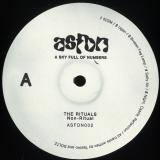
After making waves in the underground with their first release, psychedelic techno explorations from Winkles, A Sky Full Of Numbers head to the shoreline with a five tracker of misty electronica from Japan’s The Rituals, the new collaboration between Tasoko and DOLTZ. Across acclaimed releases on Explore, Bitta, and Delsin, the duo have separately explored deep techno, ambient, acid house and IDM, showcasing innovative sound design and spacious, understated grooves. For AFSON, the duo apply their unique point of view at a lower tempo, pulling away from the peak time to deliver a shadowy journey through dewy electronics.
Opening transmission 503M feels like tuning into a damaged frequency somewhere beyond the cloud line. Misty lead synths slither through blown circuitry while buzzing sequences and short-circuiting percussion crackle against purring bass pressure below.
There’s an eerie electricity in the atmosphere, as if the track’s been exposed to too much heat and left glowing softly in the dark. From the opening bars, The Rituals instantly establish their ability to make techno feel both mechanical and hallucinatory.
Ugan sees the duo descend deeper into the haze. Reverb-drenched synth motifs hover like distant lights through thick fog while a propulsive dub bassline locks into loose electro-funk rhythms beneath. There are echoes of hauntological electronics and early IDM experiments here, but The Rituals avoid nostalgia entirely, steering the track instead towards something crepuscular and alive.
Stepping out of the shadows, Broken Frog Lamp pushes forward on a rolling rhythmic framework as melodies slowly force their way through layers of sea mist and static interference. Atmospheric without losing momentum, the track balances submerged emotional weight with hypnotic forward motion.
The mood softens but never dissipates on Salty Air, a damp and dewy excursion into dubbed-out psychedelia. Rainfall ambience, skittering stone percussion and swelling pads fold around sliding sub bass and filtered stabs, while jazzy cymbals and syncopated hats gently pull the track forward, as the condensation clings to the hardware.
Closing cut “Night, Castle, Reflection” drifts into darker territories, where redlining drums and pulsing low-end pressure throb beneath thick layers of saturated texture. Woozy synth work smears against tightly controlled rhythms, creating an immersive and slightly uneasy atmosphere that closes the EP at its most introspective point.
Taken as a whole, the EP transports you into the midnight hour, when the comforting embrace of stillness can easily nudge you towards hallucination, dissolving the boundaries between dream state and dancefloor hypnosis.
out of Stock
Last delivered 45 days ago available to reorder, subject to availability
Ondrǣdan is the second aesthetic proposal by Sediments’ owners Pajaro Dune. This work is the result of a deep artistic experimentation and a thorough compositional refinement. Some of these materials have been distlilling in the studio for almost a decade of sound engineering and constant debate to make the experience much more profound.
From old English language, ondrǣdan it is a direct reference to our most primordial fears. Both an emotional yearning and a postapocalyptic kubriesque tale, the five works of this record capture five shades of rhythm and mood, where ambient, dub and downtempo meet in immersive narrative experiences. All them crowned with the luxurious sculptural artwork by Blanco Anyò who forces us look beyond the visceral to intuit the transcendent.
Pajaro Dune is the product that combines the creative minds of Jaime Romero aka Estrato Aurora and David Ortolà aka Syoqh aka d_o_ppelgaenger. More than half a life producing together from València, their multifaceted approach crystallizes in renowned works for Alpenglühen, Grabaciones Perpendiculares, The Monkey Bar, Eleve Music and now their own label.
|| We
become more from what is left,
deliver else than just the now,
build sound stories for the then. ||
out of Stock
Last delivered 45 days ago available to reorder, subject to availability
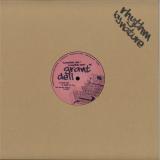
Rhythm by Nature is back with Somefink Old, Somefink New, a three-tracker from seasoned producer Grant Dell that bridges past and present: sketches first laid down in the mid-2000s rediscovered and reworked alongside a brand-new cut, forming a dialogue between memory and renewal.
The EP opens with Feel Me?, a deep tech construction driven by a heavy low-end, its groove unfolding patiently while flashes of disco glimmer through the framework. On Light of Day, Dell shifts into full deep house territory — spacey pads and floating strings suspended across open structures until acidic stabs break through, twisting the track into brighter, playful directions. Closing with Death Disco in Dub, Dell channels the hallmarks of his Tribalation project: dub-infused atmospherics, light percussion and echo-drenched fragments circling around a hypnotic core, equally suited to open or dissolve a night.
With Somefink Old, Somefink New, Rhythm by Nature traces the arc of an artist deeply embedded in the underground, reuniting past forms with present gestures in a release that reaffirms the label’s consistency in quality and commitment to timeless club music.
out of Stock
Last delivered 10 days ago available to reorder, subject to availability
"The electroclash genre sure has been having a bit of a renaissance moment. During its first coming an odd 25 years ago the French act Sweetlight was a favorite over here. Originally active between 2002 and 2010, they quickly positioned themselves within a refined strand of the global underground scene: inspired by 90s acid house club culture, they rose to prominence by releasing a sparse selection of original tracks and a multitude of remixes that were both dancefloor-effective and immediately recognizable. After the EPs stopped coming, the project seemed to have faded. But their tracks never left our bag: they combined minimalism with ambiguous elegance and retained a distinct, timeless quality, easily transcending the turn-of-the-century style they were most closely associated with. We are delighted, in what we consider nothing less than a full-circle moment, to release "Selected Recordings: 2004 - 2006" and shed light on an underrated yet, in our eyes, absolutely essential project. ALT022 is an anthology release featuring four extensive, remastered cuts. Abusator, arguably the act's hallmark track and a crossover hit, kicks off the EP. It is joined by Mecaniques Remontees, which opened the milestone Suck My Deck mix by Ivan Smagghe, and Too Shy, both initially part of the same EP back in 2004. Noir Comme Le Beat, an unreleased curiosity from the same era, closes the record. You will find dark, endless, ever-modulating arpeggiator basses, Detroit-via-Paris chord progressions, and spartan drums. The work is, in the artists' own words, low-profile, detail-oriented, and built for late hours. It's an ideal compilation or - depending on the case - introduction, especially now that new work is rumored to be finally on its way."
out of Stock
Last delivered 45 days ago available to reorder, subject to availability
Noch bevor Brian Eno dies tat, schuf Mort Garson zurückhaltende Musik. Garson, der an der Juilliard School ausgebildet wurde und in der Nachkriegszeit als Session-Musiker tätig war, komponierte Lounge-Hits, schrieb die Musik zur Mondlandung von 1969 und schuf opulente Arrangements für Doris Day sowie die sehnsuchtsvollen ,Countrypolitan"-Streicherbegleitungen für Glen Campbells ,By the Time I Get to Phoenix". Mitte der 1970er Jahre fegte eine Naturgewalt über die kontinentalen Vereinigten Staaten hinweg, die alle Schichten unabhängig von Rasse und Klasse durchdrang und sich in unseren Köpfen, unseren Häusern und unserer Kultur festsetzte. Es war weder ,Der Exorzist", noch ,Goodbye Yellow Brick Road" oder gar Schlaghosen, sondern ein Buch mit dem Titel ,Das geheime Leben der Pflanzen". Das Werk des Okkultisten/ ehemaligen OSS-Agenten Peter Tompkins und des ehemaligen CIA-Agenten und begeisterten Wünschelrutengängers Christopher Bird schoss an die Spitze der Bestsellerlisten und breitete sich wie Kudzu über das Land aus, bis es zu einem Phänomen wurde. Scheinbar über Nacht blühte das Geschäft mit Zimmerpflanzen in voller Pracht auf, und photosynthetische Eukaryoten aller Gattungen hingen an den Wänden, thronten über Bücherregalen und sonnten sich auf sonnigen Fensterbänken. Die wissenschaftlichen Ansätze hinter ,Secret Life" waren fadenscheinig: Pflanzen können unsere Gebete hören, sie sind Lügendetektoren, sie sind telepathisch, in der Lage, Naturkatastrophen vorherzusagen und Signale aus entfernten Galaxien zu empfangen. Doch das hielt Millionen Menschen nicht davon ab, ihre neuen Pflanzen zu kaufen und zu pflegen. Die vielleicht verrückteste Behauptung des Buches war, dass Pflanzen auch Musik mögen. Und ganz gleich, ob Sie eine Schlangenpflanze, einen Spargelfarn, eine Friedenslilie oder was auch immer bei ,Mother Earth" auf der Melrose Avenue in Los Angeles erwarben (oder eine Simmons- Matratze bei Sears kauften) - Sie nahmen auch ,Plantasia" mit nach Hause, ein Album, das speziell für sie aufgenommen wurde. Mit dem Untertitel ,Warm Earth Music für Pflanzen _ und die Menschen , die sie lieben" war es voller idyllischer, charmanter, kiff-freundlicher und entschieden unwissenschaftlicher Melodien, die auf einem neumodischen Gerät namens Moog eingespielt wurden. Das Album erlangte Jahrzehnte nach seiner Veröffentlichung eine enorme Kult-Anhängerschaft. Die Neuauflage von Sacred Bones aus dem Jahr 2019 trug dazu bei, ,Plantasia" einem breiteren weltweiten Publikum bekannt zu machen, und bescherte Garsons ungewöhnlichem Meisterwerk ein bemerkenswertes zweites Leben. Was einst ein seltsames Relikt der Pflanzenbegeisterung der 1970er Jahre war, ist zu einem geliebten Evergreen geworden, der von einer neuen Generation von Hörern wiederentdeckt und neu geschätzt wird und weit über seinen ursprünglichen Moment hinaus gedeiht, wobei er sich von einer obskuren Kuriosität zu einem geliebten Kultklassiker und einem Meilenstein des Streaming-Zeitalters entwickelt hat. Nun, 50 Jahre nach seiner ursprünglichen Veröffentlichung, markiert ,Plantasia" von Mother Earth einen bedeutenden Jubiläumszeitpunkt. Ein halbes Jahrhundert später hallt es weiterhin nach - eine bleibende Erinnerung an Mort Garsons Fähigkeit, das Synthetische seltsam lebendig und das Skurrile auf merkwürdige Weise tiefgründig wirken zu lassen.
out of Stock
Last delivered 24 days ago available to reorder, subject to availability
Nein, neu im Geschäft ist El Michels Affair nicht. El Michels hat hart gearbeitet, in unzähligen mitternächtlichen Studiosessions und auf einer Welttournee für den Wu-Tang Clan. Und eins ist klar: Die Band ist dabei auf eine gute Art gealtert. Nachdem es 2005 wie aus dem Nichts mit dem Instrumentalalbum "Sounding Out The City" aufschlug, hat sich das Studio-konzentrierte Kollektiv, angeführt vom Multiinstrumentalisten und Komponisten Leon Michels, Fans auf allen Kontinenten erspielt. Die Gruppe ist für ihre schwelgerischen Soul-Instrumentals bekannt, aber auch für ihre Wu-Tang-Covers, wie die explosive Reaktion auf ihre zwei Alben "Enter The 37th Chamber" (2009) und "Return To The 37th Chamber" (2019 beweist. Das alles ist aber längst Geschichte, denn das rundeste und reifste Album der Band mit dem passenden Titel "Adult Themes" beweist, welche neuen instrumentalen Höhen sie erklommen hat. Das Album, das Michels als "Soundtrack für einen imaginären Film" beschreibt, ist eine Sammlung von opulenten, abgründigen, komplexen und oft sehr funkigen Stücken, die die Ohren zum Schwingen und die Köpfe zum Nicken bringen.
out of Stock
Last delivered 47 days ago available to reorder, subject to availability
Mit "Folklore" vertiefen 16 Horsepower ihre unverwechselbare, düster-spirituelle Interpretation amerikanischer und osteuropäischer Traditionals. Das Album verbindet eigene Kompositionen mit radikal neu gedeuteten Klassikern, die die Band in rituelle, minimalistische und zugleich kraftvoll aufgeladene Klanglandschaften überführt. Instrumente wie Banjo, Cello, Hurdy-Gurdy und Bandoneon schaffen ein archaisches Fundament, das den intensiven, eindringlichen Gesang von David Eugene Edwards trägt. "Folklore" zählt zu den atmosphärisch dichtesten und charakteristischsten Werken der Band - dunkel, entrückt und hypnotisch. Ein Album, das die Grenzen zwischen Tradition, Mythos und moderner Alternativkultur auf eindrucksvolle Weise auflöst.
out of Stock
Last delivered 47 days ago available to reorder, subject to availability
Golden Ape Records unleashes another foray from the outer reaches of bass, Luke’s Anger’s - One Machine to Rule Them All EP with a Radioactive Man remix! Available in super limited edition of 100.
His mastery of this one Analogue machine has brought forth a new EP of singular intent, to give the horns, tweeters and woofers of club sound systems a proper workout! Electro rules again - bass to crush bones, drums to jerk your body and synths to rewire your brain. The overall effect is an intense, exhilarating and liberating experience that breathes fresh life into a storied music genre.
He is ably assisted by Keith Tenniswood aka Radioactive Man on remix duties of the track No Undo. He brings to fore his sweet and nasty sides to create a growling bass ridden beast that begins with a blissful promise and then puts the boot into your pleasure zones.
Handle with caution!
out of Stock
Last delivered 47 days ago available to reorder, subject to availability
»Ampersand Curve« initiates a brilliant new phase of work by North Manchester’s most elusive artist, best known as Michael J. Blood. His string of ruffkut club bangers, as well as jams with Rat Heart & Samizdat over the past seven years, have made his records a true cult property, and now find him signed to one of the UK’s most foundational techno imprints – more of which later this year.
But under the Sees aegis, he swims in very different waters, following his instincts to use the studio-as-instrument to produce his most impressive, deep-minded work, made from – and for – the heart. Where MJB was all about off-the-cuff club jams cooked for immediacy, his new stylistic switch reveals myriad worlds of influence swirling under the hood, where interrelated spheres of spiritual jazz, dub, ambient, and concrète more clearly light up his rich inner world.
As the story goes, MJB was burgled a few years back and lost most of his studio just as the project was hitting its stride. It prompted a personal review of his practice, re-learning new kit, allowing him to bend the rules. Adopting a sort of first-thought, best-thought approach to composition, the new methodology fuelled a renewed imagination in flux, or what he identifies as Sees: a personalised way of conveying complex emotions. That undoing of musical and mental conditioning opens the walls of his music to vast new horizons. Opener »Ithaca« fathoms sonorous midnight jazz with 10 mins of a plangent, searching sax solo in HD widescreen, like some alternate version to the Blade Runner Love Theme, while a resonant vocoder soliloquy, »Unseem«, reaches into space harmonised between Alvin Lucier and Ron Trent, and »Sheer« chases the devil out of labyrinthine dub dimensions.
The floating dream architecture of »Caprices« caps the LP’s underlying narrative and painterly qualities with a romantic conclusion of blushing pads and shivered, metallic echoes of the subtropical that suggest a coming-to-terms with worries, refreshed and good to go again.
out of Stock
Last delivered 4 days ago available to reorder, subject to availability
Dawuna’s latest mixtape is a muted hypnagogic R&B tour de force, pieced together while recovering from a traumatic head injury.
For »African Family Laptop Musick«, I was healing from a traumatic head injury that gave me a later amnesia diagnosis, so I don’t remember more than a couple small flashes of memory from the recording/construction of this project. I know I wanted to make a low-fidelity concept piece about my family life at the time, compositionally simple, but necessarily abstracted. This is the last lil offering from a very personal side of myself before I give y’all something big. Enjoy. – Dawuna
out of Stock
Last delivered 47 days ago available to reorder, subject to availability
Fresh off of their 2020 offering Adult Themes, El Michels Affair is back with a new full-length release. Titled Yeti Season, this newest album has everything we've come to expect from EMA's patented cinematic style of instrumental soul music. Where Adult Themes inspired a soundtrack to an imaginary film, Yeti Season brings us to a different place in time_with new inspirations. Taken with Turkish-styled funk and an almost Mumbai-esque take on soul, El Michels Affair offers us a different kind of drama and imagination with Yeti Season. If you've been following along, this shouldn't be viewed as too far a departure for El Michels Affair. The first single off of Yeti Season showed their hand back in 2018. A double-sided banger, that release brought the musical textures to the fore that dominate this record. The first song, titled "Unathi," is fully realized with the beautifully haunting-yet-hopeful vocals of Piya Malik, formally of 79.5_another Big Crown artist. Singing in Hindi, Piya's ethereal voice is telling us to work and strive together toward progress. Even if you don't understand her language, you can still hear the urgency of purpose, creating a lasting vibe that sits on top of it all. Leon Michels explains that Piya had a vital influence on this record: "When Piya started singing in Hindi, she had a different voice, a different tone. I knew we had to do something together." And so Piya appears on three other songs on Yeti Season: "Zaharila," "Murkit Gem," and "Dhuaan." Each providing particular signatures to the album. "Zaharila" is a building and changing love song punctuated by blaring trumpets, driving drums, and Piya's pleading lyrics. While the more upbeat "Murkit Gem" opens with a fuzzed out, Wu-Tang-esque baseline that buoys Piya's stylings. The psychedelic guitar and Piya's changing tones and textures singing about an all-consuming love are what pushed "Dhuaan" on to the second single from Yeti Season. There is also a vocal appearance from Shannon Wise of The Shacks, yet another Big Crown artist. Her song called "Sha Na Na," lies more in the familiar EMA vein: melodic, hypnotic, soulfully visual. But between Shannon's airy singing, the jumpy baseline, moody vibes, the active drum lines, it sounds like a pensive walk home after a strangely dramatic night. So what is Yeti Season? It could be more of a feeling than an actual place or time of year. It's a heavy album_as evidenced by the signature musicianship and dramatic vocal expressions. But it's also a hopeful record, with phrasings, textures, and chord changes that hint at something better_or fuller_coming our way. You hear it in songs like "Ala Vida," with its stabby, pulsing chords laying a bedrock for EMA's bright, atmospheric horn lines. Or even in "Fazed Out," which leaves you with a feeling of determination, a striving for resolution even though the driving, march-like song structure should accompany some conquering army. This persistence has to come from the fact that Leon Michels and company finished this record during the lockdown. It was a tough and troublesome time. But look at what has come of it: Yeti Season_a record of high and heavy drama, but also one of hope and promise. It may take a year like 2020 behind us to find hope in a winter big footed creature like a Yeti, but that's where we are.
out of Stock
Last delivered 47 days ago available to reorder, subject to availability
No Drama, the imprint founded and curated by Roy Rosenfeld, continues to expand its artistic vision with a sixth release valuing originality over convention. The label has steadily established a platform for forward-thinking electronic music, inviting artists to challenge familiar structures while remaining grounded in musical substance.
The latest release features two tracks by internationally recognized producer Yuvée, known for seamlessly blending live instrumentation with deep house, melodic elements, and organic percussion. While Yuvée appears solo on one track, the other is a collaboration with Omer Inbar, who performs under the name Oi.
The opening track, Lava Core, presents the sound that has earned Yuvée international recognition. Tribal influences unfold through carefully crafted percussion, while evolving textures occupy every part of the stereo field. Every section advances the narrative, allowing the arrangement to grow naturally while maintaining dancefloor impact from beginning to end.
The second piece, Blue, brings Yuvée together with Oi, an internationally acclaimed DJ, producer, and sound engineer whose work bridges psychedelic vibes and groove-driven electronic music. The collaboration introduces greater club energy. Tonal and atonal elements interact with shifting harmonies and evolving instrumental phrasing, creating constant movement without losing coherence.
Rather than relying on formulas, the duo demonstrates the value of artistic perspective in an era increasingly shaped by technological automation. The result is music that balances intellect with feeling, offering a listening experience that remains equally compelling on a festival sound system, in a club, or through focused listening at home.
With its sixth release, No Drama reinforces its commitment to artists who expand the language of contemporary electronic music through craftsmanship, authenticity, and creative ambition.
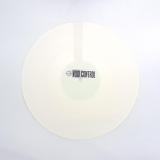
For this second EP, Void Control continues to explore the relationship between rhythm, space, and low-frequency energy. Each track is built around movement and atmosphere, combining organic percussion, spacious dub textures, and weighty sub frequencies.
Drawing influence from reggae sound system culture, tribal rhythms, dub techno, and contemporary bass music, the release exists at the intersection of multiple underground traditions. Rather than treating these influences as separate genres, Void Control allows them to interact naturally, creating a cross-pollination of sounds that feels both familiar and forward-thinking.
150 White coloured vinyl, hand stamped and stickered with inlay.
out of Stock
Last delivered 47 days ago available to reorder, subject to availability