pdqb, the producer whose name sounds like a coded message, has surpassed the need for introduction. It emerged from nowhere, becoming omnipresent almost instantly, leaving every electronic music producer eager - if not obsessed - to work with it. Its original tracks are raw and elegant with warm synth lines, pulsing rhythms, and melodies that feel like echoes from forgotten futures. They always carry a strange magnetic pull.
Presented here are eight stunning remixes of its already-released tracks. Each one its own universe, each one remarkable in its own way, each one crafted by an expert in their field. The eight pieces twist, stretch, break apart, and rebuild the originals. They mutate into technoid creatures, melodies dissolve into vapor, and rhythms reorganize themselves into something alien and alive, yet each still holds a faint spark of pdqb's DNA, buried beneath layers of transformation.
Listeners will understand: this isn't just a remix album. It is an evolution - eight reinterpretations of the same musical core, each pushing pdqb's world into a new dimension.
On October 2 1958, after over 60 years of colonial rule, Guineans voted overwhelmingly for their independence, and Guinea was declared a Republic with Sékou Touré as President. Guinea was the first of West Africa’s Francophone colonies to gain independence. To free Guinea from its colonial legacy, president Touré sought to restore dignity to his nation and give cause for Guineans to take pride in their culture, history and newfound freedom. To achieve this, he instructed his government to implement new cultural policies that were intended to revitalise and celebrate indigenous culture. The focus of these new policies was on music.
In 1961, President Touré launched authenticité, the name of his new cultural policy for Guinea. One of its first acts was to assemble the best Guinean musicians into a new state-sponsored orchestras that were tasked with presenting traditional Guinean music in a new and modern style. All musicians in Guinea’s orchestras were officially designated as members of the public service. During the years of Sékou Touré’s presidency (1958 – 1984), the government’s cultural policy of authenticité was applied strictly to the creative arts. Guinea’s sole political party, the Parti Démocratique de Guinée exercised complete authority over artistic production. The scale of the Guinean government’s commitment and efforts to invigorate its indigenous musical cultures was unmatched in Africa, and it presented a clear contrast to the minimal endeavours undertaken by Guinea’s former colonial rulers.
From 1967 to 1983, Guinea’s government presented selections of songs from the Voix de la Révolution catalogue on its own recording label, Syliphone. These recordings were described as ‘the fruit of the revolution’. Syliphone was revolutionary in many aspects: it was the first recording label to feature traditional African musical instruments such as the kora and balafon within an orchestre setting; it was the first to present the traditional songs of the griots within an orchestre setting; and it was the first government-sponsored recording label of post-colonial Africa. Syliphone represented authenticité in action, and over 750 songs were released by the recording label on 12-inch and 7-inch vinyl discs. All are highly sought after by collectors worldwide.
This is the second of a two-volume release which presents a selection of the best songs from Guinea's Syliphone recording label. This volume focuses on recordings from the 1970s, when Guinea’s authenticité policy had transformed the nation's music through a network of over 30 orchestras, each representing their local region, and each presenting Guinean musical traditions alongside the influences of Cuban music, jazz and funk.
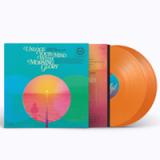
Crate digger and music enthusiast James Endeacott compiles ‘Unlock Your Mind With Morning Glory’ for Two-Piers Records – A glorious heady mix of the weird and wonderful eclectic music from his radio show ‘Morning Glory’
“One weekday afternoon towards the end of 2017 I sat in The Lyric pub on Great Windmill Street, Soho with my dear friend Raf. I’d just finished another of my weekly Soho Radio shows and was starting to think about the next one. Raf had been on as a guest playing some of his favourite tunes of the day. We had a few drinks, told a few stories and started to plot and scheme. It was always a dream of mine to have a daily radio show. Radio had always informed and excited me from my early teens listening to John Peel under the blanket when I should’ve been either sleeping or revising right up to the present-day musical excursions of NTS, WFMU and numerous internet based stations.
We decided to speak to Adrian and Dan who ran Soho Radio to see if they’d be up for us doing a daily morning show. To our surprise they were into the idea and within 5 minutes Adrain came up with the name Morning Glory. We all liked it. We were all excited. It was all systems go. In December 2017 Raf and myself started a daily 2 hour show. We did the show together, got guests in and the musical policy was whatever we felt like that day. After several months Raf found the mornings too much. Off he went into the distance occasionally coming back with a smile, and a bag of new music. I carried on alone and then suddenly in March 2020 the world stopped, and we went into lockdown.
We set up in my house in Catford, Southeast London and carried on. The show became 3 hours a day and I started to invite friends, record labels, record shops, bands etc.. to supply me with hour long mixes that I played every day. The show took off during this time. My musical tastes expanded as I spent all day long searching for new sounds from around the globe. People started to send me more and more music. I became obsessed with the show. The audience started to take to social media and ask for certain tracks or artists to be played. I got listeners to make me mixes to play on the show and I did several phone interviews with musicians while playing some of their favourite tunes.
I was grateful that Soho Radio left me to my own devices. They never told me what to do or what to play – they trusted ma and I trusted my instincts.
The music on this compilation is not a ‘best of’ it’s just how I felt when I compiled it at the start of 2025. Apart from a couple of tracks they are all things I’ve come across since the show started in December 2017. If I did a list of tracks now I’m sure it would be completely different. Surely that’s the point. We never stick in one place. We are always moving and searching. Always trying to unlock our minds. Put it on. Take your time and let it take you somewhere” James Endeacott 2025
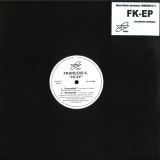
Francois Kevorkian is a name that should need no introduction. With over 40 years in the game FK has occupied numerous roles in his long and storied career - drummer, DJ, A&R man, remixer and producer - his skills know no boundaries. Having DJ-ed during the nascent days of club culture in NYC alongside Walter Gibbons, Larry Levan and more, Kevorkian has been there from day one. Years spent in the seminal clubs of the day sharpened his ears and his prowess behind the mixing desk saw him become the A&R man at the legendary Prelude records in the early 80's, this in turn led to him working with everyone from The Eurythmics, Depeche Mode, Erasure, D-Train, Yazoo, The Smiths, Kraftwerk and many many more. A true NYC original and legend, Kevorkian is still active today and the respect he commands amongst his peers has never waned, his adventurous extended DJ sets, seminal mixes and remixes and his open ears and open mind have ensured that he will go down in history as a musical pioneer.
Rewind to 1995. Kevorkian's 'Wave Music' imprint has come into existence with a handful of releases. No-one could imagine that his self-produced 'FK EP' - the next release on the label - would be a stone cold classic. Easily one of the most consistent, exciting and solid EP's to come out of NYC during this golden era of dance music. Across 4 tracks we are taken on a sound journey through a world that is undoubtedly informed by FK's time as an engineer, DJ and most importantly, a music lover.
EP opener 'Hypnodelic' brings us into this world, a deep, driving cut that fuses the dubbed out vocals of Freddie Turner against FK's keyboards and immaculate drum programming, oozing cosmic electronic soul, this track was destined to be a future classic. 'Mindspeak' also boasts some tough drums and with a respectful nod to Chicago is an incredibly mixed and arranged peak-time cut that will drive your dancefloor into deep space again and again. 'Edge Of Time' welcomes us to the flipside of the EP, wild Latin percussions, tablas and old school horn stabs drive this monstrous cut, not to mention cavernous dub FX and that huge bassline that just doesn't let up. Essential. 'Moov' rounds things out on a more subdued, stripped back vibe. Reversed percussions and spaced-out synth chords lace this beautifully understated and warm track, one that builds into a crescendo of melodies and hypnotic rhythms and the perfect way to close what has been a truly special musical journey.
This essential reissue of the 'FK EP' has been fully licensed, sanctioned and remastered in conjunction with FK from the original master sources by Optimum Mastering, Bristol UK, repressed onto high quality vinyl and packaged as the 1995 release was. A truly classic record indeed, available again for 2018. Welcome back Wave Music!
Cindytalk has remained a majestic proposition over the decades, one marked by a continued process of disintegration and regeneration. Change has been a constant for Cindytalk, as has been the presence of the Scottish musician Cinder, who has fronted the project since the early '80s. The first Cindytalk albums embraced a dark theatricality of post-punk dissonance and abject rock deconstruction that coupled industrial dirges with Cinder's beatific vocals, these same vocals that were once plied to the earliest This Mortal Coil and Cocteau Twins recordings,forever binding Cinder to the 4AD lore. But even on those albums, Camouflage Heart and In This World, Cinder was pushing the band to embrace the studio as a tool for further abstraction of sodden drones, cobwebbed dark elegance, and decayed textures.
By the early aughts, Cinder had reimagined Cindytalk through the granular processes of digitalia with a handful of equally celebrated works of glitch-born expressionism for Editions Mego. Cinder explains that "those elements were growing roots under our sound and had started to organically change the shape of what we were doing. The fucked-up rock music was in retreat and the electro-acoustic abstractions were becoming apparent. Fast forward to the early part of the 21st Century and my first laptop. It seemed natural where I needed to begin that part of my new sonic journey. To further explore those and new territories. Sunset and Forever is intrinsically connected to what came before."
Sunset and Forever is a labyrinthine opus, one that returns to the themes of the sacred and profane that have rippled through all of Cindytalk's recordings, albeit in various guises. The opening track "Embers of Last Leaves" is a haunted piece of undulated, cyclical tones that entwine into a sorrowful chorale with Cinder's own voice. Thumps of electronic drum kicks and bass drops dot the apocalyptic menace of "Tower of the Sun" but serve not as a rhythmic grid, but as painterly noises that further disrupt and disturb the machined dissonance. A cinematic radioluminescence blooms from the tempered electronics within "For Those Eyes, Shadows Of Flowers." The finale "I See Her in Everywhere" bookends the opening number with a seemingly human chorus build from electronic tones cast in cathedral reverence. Sounds throughout may appear adjacent to those of Fennesz, Holly Herndon, or even Lovesliescrushing from time to time, but Sunset and Forever remains purely Cindytalk.
Cover designed by Chris Bigg, known for his iconic design work for 4AD. Mastered by James Plotkin.
Accepting the darkness can be a liberating experience. Realising, and struggling with just who we are and what world we live in requires it. By further complicating the fractured sense of beauty found on his droning 2022 release, ‘I dreamt we found a way’, Bristol-based composer, Rob Winstone creates a language that encapsulates the lifelong reach for our own personal heavens, along with the darkness and fear on which those foundations are built.
Winstone’s instrumental palette continues to reach out far from behind his keyboards, however the sound of ‘sifting through heaven’ is stripped back and pared down, putting melody front and centre. 'postcards and loose tea', a love song written for Winstone’s partner during a period coming to terms with health difficulties had previously self-released with heavy spectral and granular manipulation from the artist. Here Winstone re-presents the original: “the stripped back recording I made in my old damp and cold studio that was in a building that has since been demolished”. It reflects the composer’s own journey, doing away with veils and histrionics, and embracing emotional bliss wherever it can be found, warts and all. Even the rumbling dark ambience of ’hospital corridor’ - where distant chimings, groans, and droplets synthesized from field recordings made nervously in a hospital waiting for test results coalesce - harbours a sacred-seeming beauty and aseptic warmth within its very bleak sense of dread.
There’s no better way to describe Winstone’s method than ‘sifting through heaven’. The hymnal organ chords, sketched out acoustic guitar phrases, scattering drum thuds, and meditative field recordings may flit between tenebrous to incandescent, but his focus is always on the embrace of love; “a view of life that embraces positive growth, yet doesn't deny immense suffering,” as he puts it. The album is bookended by two of Winstone’s most outright peaceful moments, summarising his core message: 'in spite of it all...' '...love finds a way'.
The new album by the collective that for
over 25 years has been among the most
representative names of the Italian dance
and electronic scene worldwide.
“BLOOOM”, this is the title of the new release,
will be available in all traditional stores and
on digital platforms starting January 16.
Set against the soundscapes that have become
the Planet Funk trademark, the lyrics by Dan
Black attempt to give voice to a fragile and
contradictory condition of our time: an
intensified sensitivity that, instead of
turning into openness and connection, often
becomes emotional overload. A generation
constantly overwhelmed by excessive stimuli,
relentless information, anxieties, and fears,
called upon to find its way in a world thaoffers neither pauses nor silence. In this paradox, sensitivity is no longer just a natural gift, but
a daily effort: staying open and receptive without being overwhelmed, trying to preserve a human and
vulnerable gaze in order, despite everything, to fully appreciate life and the present moment.
The single’s artwork—like that of the album—curated by Nationhood, visually conveys this tension: the
distant sirens of a city that amplifies feelings of disorientation and loneliness even when we are
surrounded by thousands of people.
“BLOOOM”, preceded by the single “FEEL EVERYTHING”, arrives at the end of an intense, creative year
full of music, which saw Alex Neri (DJ, keyboards, synthesizers), Marco Baroni (keyboards, piano,
programming), Dan Black (vocals and guitar), and Alex Uhlmann (vocals and guitar) engaged between
studio work, collaborations, and live performances in Italy and abroad. A journey that today
transforms into new energy, into an even more open vision oriented toward the future.
Exactly one year ago, PLANET FUNK released “Nights in White Satin”, a single that reached the top
positions of the radio charts and launched a season rich in concerts and DJ sets in Italy and around
the world. The subsequent “I Get a Rush”, the collaboration with Alfa and Manu Chao on the remix of
their hit “A me mi piace”, and the track “È Naturale” together with Francesca Michielin, confirmed
Planet Funk’s ability to renew themselves and engage with different musical worlds while always
remaining true to their own identity.
Throughout this journey, music has inevitably intertwined with life. The memory of Sergio Della Monica
and Domenico “Gigi” Canu, pillars and founding souls of the PLANET FUNK project, is a living part of
this new chapter. Their vision, creative spirit, and way of understanding music continue to be a
constant guide, a deep root from which new ideas and new directions can grow.
“BLOOOM” is also this: a personal and artistic blossoming that, starting from the legacy left by
Sergio and Gigi, transforms into a living process of growth, metamorphosis, and discovery. An album
that does not look back with nostalgia, but forward with awareness, momentum, and a desire for
renewal.
Founded in 1999, for over 25 years PLANET FUNK have represented one of the most important, solid, and
influential realities in the international electronic music scene. Born from the meeting of Souled
Out! (Domenico “GG” Canu and Sergio Della Monica) and Kamasutra (Marco Baroni and Alex Neri), and
following their debut with “Non Zero Sumness” in 2002 (a gold record and a turning point for the
band), PLANET FUNK have managed to reinvent themselves over time while maintaining a unique sonic
identity. This has led them to collaborate with internationally renowned artists, deliver iconic
performances around the world, create soundtracks and international advertising campaigns, and
continue to demonstrate constant creative vitality
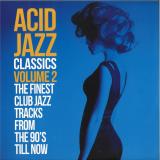
After the excellent response to the first volume, Acid Jazz Classics returns with the second volume.
The Acid Jazz sound born in the 1990s, which harked back to the Soul Funk of the 1970s, found in IRMA one of the labels most dedicated to
this world, and still releases music that can be categorized under this name.
From songs from the 1990s with artists like Jestofunk, Bossa Nostra, Black & Brown, Gazzara, Italian Secret Service, LTJ Xperience, Sarah
Jane Morris, to the present day with artists like The Smoke Orchestra, Yuts and Culture, Fusion Funk Foundation, Micky More & Andy Tee,
Belladonna, and many others.
19 tracks on a double vinyl, some of them never before released on vinyl, all rigorously perfect for both the club and listening.
In fact, some tracks are little club gems:
"Say It Again" by Jestofunk in its very first version from 1993;
Belladonna - Black Jazz, one of her most requested songs ever released on vinyl;
Key Tronics Ensemble - You For Me, the Montuno Salsa version performed for years by Little Louie Vega at many of his gigs;
the Micky More & Andy Tee remix of Sarah Jane Morris's Hold On To Love!
With centuries of history, traditional instruments carry physical vibrations shaped by human breath and touch.
In contrast, electronic music generates vibrations through inorganic principles such as electrical signals and circuits. When the subtle tremors of traditional instruments resonate with the intricate tones of electronic sounds in an improvised dialogue, performers from distinct realms expand each other’s languages, creating a new sensory experience.
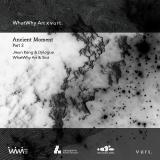
The project album Ancient Moment marks the first collaboration between the Korean contemporary music ensemble WhatWhy Art and the Seoul underground electronic music collective vurt.. It is a record of a free journey where two different worlds collide and merge, breaking cultural boundaries and dismantling aesthetic hierarchies.In Part 2 of the album, you will hear boundless performances by haegeum player Jieun Kang with electronic musician Djilogue, and Whatwhy Art with electronic musician Siot.
The recording was done in an improvised one-take format at STUDIO Y in Seoul, and Giuseppe Tillieci mastering enhanced the sonic quality.
Credit
Jieun Kang / Haegeum
Hong Yoo / Daegeum
Hwayoung Lee / Gayageum
Woongsik Kim / Korean Traditional Percussion
Djilogue / Electronics
Siot / Electronics
Produced by Hong Yoo, Yoojun
Executive Produced by Jieun Kang
Designed by Yoojun
Motion Graphic Video Created by Nahsol
Live Sound Recorded by Jeong Morgan at STUDIO Y
Mastered by Giuseppe Tillieci at Enisslab
Supported by Arts Council Korea (ARKO)
Distributed by Space Cadets
Released by WhatWhy Art & vurt.
Under a sky of short days and long nights, Notta Records from Finland unveils Dog Sleep, a deeply immersive EP by Cyclic/Random. Known for crafting slow-burning, atmospheric excursions at the intersection of dub techno and deep, dubbed-out house, Cyclic/Random extends the labels mission of a warm, hypnotic winter soundtrack.
Across the EP, soft-focus chords drift like snow over steady, smoked-out grooves, basslines pulse with understated weight, and echoes curl around the edges of the stereo field. These are tracks built for long, nocturnal sessions, the moments when the outside world is frozen and the dancefloor feels like a shelter. Dog Sleep is intimate yet expansive, perfectly tailored for winter: crackling dub house, deep dub techno and distant ambient textures that invite you to slow down, sink in and dream with your eyes open.
The sunshine of Andalucía has come to the Bordello. The musical magpie that is Daniel Monaco arrives with just a hint of a Spanish accent and a daring record under his arm. Known for finding the intersections of boogie, disco, italo and house, Monaco is going that bit further with Manuel Rodriguez for the Flamenca EP. Melting the percussive drive of his machines with the spirit of Southern Spain, the four tracks on offer are a journey into a sound and style that is inspiringly original. Ruffled hi-hats and smooth basslines are the foundation for the title piece. The soul of the Sierra Nevada and the warmth of Granada pour forth through Rodriguez’s unparalleled performance. The claps of Chicago are reimagined as an interplay of melody and rhythm awakens; the traditions of Flamenco married with a modern groove. Talent and technique are coupled with pure passion in the intense instrumentation of “Fantasia” before the flip shifts with “Sìnteme.” The culture of Italy and Spain combine, taut string plucks peppered in handclaps before the Only Bee’s vocals descend. Ardent, the lyrics tell of our shared humanity through the dialect of Ischitella from the southern tip of Italy. The homes of our musicians are the inspiration for the finale. Blending the decadent splendour of Napoli with the old-world romance of Granada, Rodriguez’s guitar is the focus of “Granapoli.” Bitter-sweet, blissful and sorrowful, a lone beat wandering through the winding melody that twins these great cities. From Italy and Andalucía to Amsterdam, a 12” like few others.
Throughout 2025, Tresor Records will reactivate Detroit house and techno originator Blake Baxter's vast Tresor catalogue digitally in chronological order, starting with 1992’s Dream Sequence, closely followed by his 1995 album, Endless Reflection. To inaugurate and celebrate this retrospective of one the genre’s true founders, an artist whose connections to Tresor go back to the very beginning, the label announces a special 12” release, Dream Sequence X, featuring remastered tracks from the early days and highlighting the harder side of his output.
Initially inspired by post-punk and funk, Baxter started making music as early as 1985. By 1991 he had already released several seminal records on classic labels like Underground Resistance, KMS, and Incognito, as well as providing multiple tracks to the groundbreaking UK compilation Techno! The New Dance Sound of Detroit, which was many European listeners’ introduction to the genre, solidifying the term techno, and launching the international careers of many of the contributors.
1992 saw Baxter make the first trip to play Tresor, on the first UR Europe tour ever, thereby pioneering the now legendary Berlin-Detroit Connection. This visit led to a long and fruitful partnership with the club’s new-fledged label beginning with Mills', Banks' & Hood’s X-101 and Baxter’s Dream Sequence, from which the first four tracks on the new 12” come.
Whilst he would become more renowned for his signature seductive vocals and a smoother music style closer to house music, these early tracks are heavier, classic 90s techno, revealing the influence of industrial, post-punk and pop of the time. Indeed the collection is something of a time capsule: jacking 909 drums, intense, ravey synth stabs, samples from classic soul breakbeat and the Speak & Spell voice synthesizer; classic sounds and styles of the era all make appearances on the record. All tracks have been remastered by Manmade Mastering breathing a new vitality and sharpness for the modern dancefloor.
In a world where longevity is difficult and superlatives are too easily deployed, it is still difficult to overstate the long-lasting influence that Blake Baxter has had on modern music. His visionary output can be heard across modern electronic and pop to this day and with this series of remasters, there has never been a better time for the world to hear it at source.
The Select series makes a return for a superb 11th edition. Selecting some of the best music from the world’s most exciting electronic producers, with over 30 tracks featuring across 2 DJ mixes. Includes music and remixes from Kölsch, Danny Howells, Anthony Pappa, Hernan Cattaneo, Nick Warren, Hunter/Game, Noir, Christian Smith and more
Die Select-Reihe kehrt mit einer großartigen 11. Ausgabe zurück. Mit einer Auswahl der besten Musik der weltweit spannendsten Elektronik-Produzenten, mit über 30 Tracks auf 2 DJ-Mixes. Enthält Musik und Remixe von Kölsch, Danny Howells, Anthony Pappa, Hernan Cattaneo, Nick Warren, Hunter/Game, Noir, Christian Smith und vielen anderen.
Large Music is proud to announce the highly anticipated reissue of the iconic collaboration between Roy Davis Jr. and Jay Juniel: Transitions. Originally released in 1997, this seminal piece of Chicago house music has been remastered and is set to return to the world with the same raw energy and grit that made it a classic in the late '90s.
Coming on the heels of Roy Davis Jr.’s legendary hit Gabriel, Transitions captures the raw, emotional intensity of Chicago's underground house scene. Blending soulful melodies with thumping basslines, the EP brought forth an undeniable sound that resonated with house music fans globally. A testament to Davis’s versatile talent, Transitions also introduced Jay Juniel, who contributed his own dynamic flair to the project, creating a distinctive fusion of deep, experimental rhythms, intelligent spoken words and a vibrant club-ready pulse.
The reissue of Transitions offers fans both the original tracks and newly remastered audio to further elevate the listening experience. The gritty, hard-hitting vibe that defined the late '90s Chicago house movement is unmistakably present, from its throbbing basslines and kick drum to the smooth, haunting melodies. This release not only pays tribute to the timeless influence of Chicago House but also serves as a reflection of the ever-evolving nature of the genre itself.
Rising star Arjuna Oakes and renowned composer John Psathas return for a new collaborative project ‘Sierra’ after their underground hit ‘Future Lullaby’. Fusing Greek folk instrumentation with modern Jazz and recorded live in Athens’ iconic Sierra Studios, this EP brings together electrifying musicians from New Zealand and Greece to experiment and express themselves through the lens of Oakes and Psathas’ compositions.
The ‘Sierra’ EP is a unique capture, a snapshot in time for all those involved in its creation. For Arjuna and Sam, the EP marked their departure from New Zealand to live in London to pursue their respective music careers. For everyone else involved the EP offered a chance to create something different from their usual work, and express themselves in a different musical landscape. The excitement and creative freedom is an essential ingredient in what makes this EP work, and you can hear it all bubbling to the surface throughout the record.
This is the eleventh instalment of the vinyl only PIV Limited series, where we focus on the deeper side of house music so we don’t lose touch with the lovely world of the underground
‘Let’s take a trip’ – with major names on the psytrance scene Avalon and GMS releasing on KNTXT for the first time, combining forces for a full-on attack, 4-track EP ‘The Underground’, out December 11th. Their joint mission? ‘Combining two worlds where psytrance meets techno, a fusion which will take you on a mind-expanding journey! Welcome to The Underground…you have arrived!
London DJ/Producer Avalon was recently awarded the number 1 top-selling psytrance artist on Beatport with over 30+ psytrance chart #1s and 5 top-selling LPs to his name, and performs at the likes of Tomorrowland, Boom, EDC Las Vegas, Glastonbury, Exit, Burning Man, Ultra, ASOT, Ministry Of Sound,... GMS (Growling Mad Scientists) was founded by Dutch Ibiza-based DJ/Producer Riktam with the sadly late Bansi, to establish pioneering psytrance label Spun Records and to have director Tony Scott no less, using GMS tracks on three of his films. A prolific producer with over 300K album copies sold, GMS holds the most psytrance records released overall.
‘I'm beyond honoured to release this stunning four tracker from psytrance legends Avalon and GMS. With this release, friendships were formed and worlds truly started colliding. I have massive respect for both these artists and their long standing impact on electronic music. This release feels like a bridge between generations and genres. It carries an energy that deserves to be heard, experienced, and felt on dancefloors around the world.’ Charlotte de Witte
Title track ‘The Underground’: hyperspeed trance beats support a wild variety of acid-dripping pulsations, spacey arps, otherworldly swoops, mind-teasing stabs, it’s like a lightshow in sound. That transports its listeners into another dimension. On ‘Horizen’, psytrance thrives, while ethereal vocals call, with intricate sound design painting a mythical soundscape. On ‘Machines’, it’s driven by hypnotic acid lines, pulsating Kick & Bass with sprinkles of techno infused percussion! Its choral notes and alien-like spoken lyrics, both gripping and disorientating as builds & breaks come thick and fast. ‘Rave to the Grave’: constant pulsing high synth and vocals with twanging acid together with frantic percussion create a sustained, agonizing build, build, build – until ‘On the 7th day, the Lord said ‘Let the beat drop!’’ Phew!
‘We are very excited about our debut release on KNTXT ‘The Underground’ and can’t wait to share this 4 track EP with you all. We hope you enjoy it as much as we did creating it. This fusion of techno/psytrance is brought together by all of our mutual love for acid & driving hypnotic dance music! Enjoy… Play it loud! Welcome to The Underground… You have arrived!’- Avalon & GMS
A mind-bending EP, with racing beats that give the ‘trance’ in psytrance a huge adrenalin shot. This is high energy reaching new altitudes; hold on to your brain cells, they’re going for a ride!
“The group has no niche, it doesn’t fit in anywhere,” explains Necessaries drummer Jesse Chamberlain in a 1980 Melody Maker interview. “We just state the facts about life in America, like The Clash did about England, but we’re not so heavy about it.” The Necessaries rose from the ashes of Harry Toledo & The Rockets, a little-known New York art-rock band playing gigs at Max’s Kansas City during glam’s metamorphosis into punk. —From the liner notes by Michael IQ Jones The Necessaries came together in 1978 and in the too-brief lifespan of the band counted among their members, Ed Tomney (Rage To Live, Luka Bloom), Jesse Chamberlain (Red Crayola), Ernie Brooks (Modern Lovers), Arthur Russell (The Flying Hearts), Randy Gun (Love Of Life Orchestra). First championed by John Cale on the strength of Tomney’s songs, Cale produced their first single for Spy Records (under the I.R.S. umbrella) which was released in 1979. With the forward momentum brought about by the single, the band set about tracking demos intended for Warner Bros., but The Necessaries ultimately would sign to Seymour Stein’s Sire Records. These rough demo basic tracks lacked overdubs, mixes and any finishing touches that would have made them viable for commercial release, but due to tour commitments, the band had to put the sessions on hold to hit the road. While on tour, the band was shocked to discover that Sire had issued the unfinished tracks as their debut album Big Sky (issued in 1981). The band had Big Sky withdrawn and replaced with Event Horizon (issued in 1982) which included half the original tracks from Big Sky and continued to record throughout 1982 aiming for a follow-up. It was not to be and their final studio sessions remained unissued until now. Completely Necessary (Anthology 1978–1982) is the first authorized collection of recordings by The Necessaries and includes 37 tracks, 28 of which are previously unissued. Completely Necessary represents the most accurate musical history of the band laid out across three albums. Disc one is the band-approved first album Event Horizon, followed by Pilots Facing North, a disc collecting studio recordings spanning 1978–1981 and disc three finally sees the release of their final sessions, Songs From The Blue Colony. Album notes by Michael IQ Jones trace the history of the band for this compilation produced by The Necessaries’ Ed Tomney and Cheryl Pawelski (Omnivore Recordings). The audio has been restored and mastered by Michael Graves at Osiris Studio, and both the 3-LP and 2-CD sets feature previously unseen photos across the package. Finally, an essential missing piece of the late ’70s/early ’80s New York scene that was just slightly ahead of the college alt-rock soon to come, is finally available to rediscover—this time it’s authorized and absolutely necessary. BUY! HERE’S WHY! • The first authorized and comprehensive anthology by The Necessaries. • Mid-’70s/early ’80s New York rock/punk/art scene band included members: Ed Tomney, Ernier Brooks, Arthur Russell, Jesse Chamberlain, and Randy Gun. • 37 tracks, 28 previously unissued. • Liner notes by Michael IQ Jones, plus unseen photos.
One of the highlights of the King Crimson 50th anniversary CD/Blu-ray editions to date has been King Crimson producer David Singleton’s series of Elemental Mixes as he utilises the full spectrum of available studio sessions for each album to produce very different takes on the familiar songs and pieces.
This is especially true of Lizard where the ambition of the material, the much-expanded line-up of musicians - the background of many of them in the jazz rather than the rock world - and the number of takes recorded, resulted in a large amount of material to be considered for this album.
There was enough material for David to be able to mix and produce alternate takes for every piece from the original album.
As well as giving great insight into the recordings, the nature of Elemental Mixes allows for different takes from individual musicians to be included – sometimes alongside one another - in a way that would never be considered in the formulation of the original album.
David comments that “When I was working on the Elemental mixes, I jokingly described them as ‘Lizard for those who don’t like Lizard’. They were a complete revelation. Lizard is the one album which, in its initial incarnation, never quite convinced me. And yet these Elemental mixes, with their opportunity to look ‘under the hood’ of the album, revealed something fresh, wonderful and astonishing. So, if you are a King Crimson fan, who like me, has never quite taken Lizard to your heart, then these are essential listening. And hopefully equally fascinating to those who already love the album”.
Presented as a single 200gram LP and including the complete album in Elemental Mixes form, running in the same sequence as the original album, this release showcases Lizard in a very different manner to how it’s previously been heard.
Lizard’s reputation has grown, deservedly so, in recent years as old and new audiences alike rediscovered the album, initially when it was first remixed for new Stereo and 5.1 Surround Sound editions in 2009 by Steven Wilson and then as much of it was performed live for the first time in concerts by the most recent King Crimson line-up between 2016 and 2018.
Celebrate three decades of dance music history with 30 Years of Klubbhopping – the ultimate Best Of collection from the legendary Dutch DJ/producer team, Klubbheads. Known for their unstoppable beats and countless club anthems, Klubbheads have shaped the sound of global dancefloors with releases under many aliases, including Drunkenmunky, Da Klubb Kings, Itty-Bitty-Boozy-Woozy, DJ Disco and others. This anniversary release unites their most iconic tracks for the very first time, capturing the creativity, energy, and party spirit that defined generations.
From the club to eternity, 30 Years of Klubbhopping is more than a compilation—it’s a celebration of the sound that made the world move.
30 Years of Klubbhopping is available as a limited edition of 1000 individually numbered copies on crystal clear vinyl and includes an insert with track-by-track liner-notes written by the Klubbheads.
Massiande has become one of the most captivating talents South America has produced for authentic House music.
An artist of multicultural roots, he was born in 1988 in Santiago, Chile, has lived most of his life to the side of US American people, has Dutch family heritage and his name derives from a Sierra Leone dialect. All of these global influences have had a great effect in the way he perceives and lives music.
Growing up as a profound and dedicated fan of Soul, Jazz and Disco; discovering House, a genre that connected these genres' roots with electronic experimentation, was a life turning point.
DJing since 2007, he is known for performing emotive and dynamic sets, with a moving soulful drive that resembles much of the spirit of New York, Chicago and Detroit pioneers.
After starting to focus on music production, 2013 brought his debut record "Heart Rushed Love" through German label Housewax, a record of classic vibes that received praise for its charm and character on underground scenes worldwide and, most notably, from House music artists in Chicago, including his personal hero, House maestro Larry Heard. Such a start would be a sign of great things to come.
Inspired by the same Chicago spirit, in 2015 the release of "Stand", through the prestigious MOS Recordings, represented a step further in his career as a producer, finding its place on the crates of DJs as diverse as Patrice Scott, Voiski, Apparat or Honey Soundsystem.
These days, Massiande brings a deeper and mature House sound which is reaching a wider audience, with his conceptual "Freedom" EP through UK's Phonica Records and the landmark "Yesterday, Today, Forever" EP on Jimpster's Freerange, while also revealing a consistent variety of skills on a fully dancefloor-oriented EP for Hercules & Love Affair's Mr. Intl imprint.
With a growing discography whose flair endures the test of time, Massiande's path thrives with a true passion for House that's appealing to both casual listeners and the most loyal purists of the genre around the world.
A heavyweight library record delivered straight from the Gods; truly, we are all blessed: Dubmaster Dennis Bovell presents cLOUD mUsIc. A miraculous set of loose limbed, slinky funk-forward dub on the A-Side with totally blunted, spaced out trippiness on the grooving versions gracing the flipside.
A pioneer of dub and progenitor of lovers rock, genius producer-arranger Dennis 'Blackbeard' Bovell's prolific and eclectic career encompasses a huge range of music: from dub poetry to lovers rock, afro-beat to post-punk, disco to pop and beyond.
His production work encompasses such diverse figures as Ryuichi Sakamoto, The Slits, Fela Kuti, Linton Kwesi Johnson, The Pop Group, Janet Kay, Saada Bonaire, Orange Juice, Golden Teacher, I Roy, Maximum Joy, Steel Pulse and more.
cLOUD mUsIc features 8 new, deep, never-heard heaters, initially created for upstart UK library label FOLD. Dennis had written some music under the influence of Cloud-watching and presented it to FOLD with a view to them presenting it as Library Music to be utilised by anyone interested in having music for incidentals, films, TV and advertising etc.
cLOUD mUsIc represents Dennis expressing himself freely and inviting others to join and express themselves. As Dennis explains: "Library music is what makes the difference between creating for specific reasons and creating for your own individual enjoyment. cLOUD mUsIc was created whenever I felt the urge to create music that I wanted to, with no pressure. It was recorded at various times and in various studios around the world with various musicians’ assistance. Much sonic indulgence with many different recording devices."
Daybreakers return with another one for the deep heads, welcoming Chicago legend Vick Lavender to the fold for Essential Traxx Vol. 1. A musician, producer and DJ with over three decades in the game, Vick’s music lives in that space where house, jazz, and soul connect.
Back in the 90s, Vick came up alongside Glenn Underground and Boo Williams as part of the influential Strictly Jaz Unit, helping shape a sound that still echoes through dancefloors today. In the years since, he’s built his own world through Sophisticado — music rooted in live musicianship, deep feeling, and that unmistakable Chicago soul. It’s real house music.
On the A side, 1.4.4.5 (Where It Started) lays down that signature Chicago pulse — rolling percussion, Rhodes chords, and basslines that unfold like a live jam. Deep, patient, the real Vick Lavender sound.
Flip it for Tiano Nuevo featuring Spike Rebel, a lush meeting of house, Latin, and jazz sensibilities. Guitars, percussion, and keys come together, the kind of tune that keeps a dark room or a sunrise session dancing.
Essential Traxx Vol. 1 captures what Daybreakers is all about. Deeper than deep house.
Buy or cry
Real Lies’ new album ‘WE WILL ANNIHILATE OUR ENEMIES’ will arrive on April 16th 2025 via Tonal. The album is about taking the hand of someone you love intensely and running headlong into the chaos and noise and grinding forces that dominate modern life. It follows gilded 2024 collaborations with Mall Grab, Kettama and Drain Gang’s YEAR0001 label. Lyricist Kevin Lee Kharas and producer Patrick King created the record in their studio, hidden away under a railway bridge somewhere in London’s Zone 3. Three pictures stared down at them from the walls throughout, including an image of a young Sasha Shulgin in the relief print style of Che Guevara t-shirts sold at Camden Market, and a photo of an orbiter fairground ride in flight, taken sometime in the early 2000s. Kharas’ lyrical inspiration comes when he steps away from the tsunami of data flooding his consciousness and paces London’s rain-soaked streets late at night. “I wanted the songs on WWAOE to confront modern reality head-on, unflinching,” he explains. “I didn’t want to whine about a lost past. I didn’t want nostalgia. I wanted to learn to love the modern world, with all its horrors and futility.” After a teenhood spent playing in hardcore bands, the duo found ecstasy at a squat party for the first time, and moved to London. Since then, they’ve made music about finding romance and fun when the moon is up, becoming a cult act in the process.
Don Cherry, armed with a voracious musical appetite and boundless imagination, first made a name for himself - though not always fully understood - alongside Ornette Coleman, playing trumpet or cornet. In Los Angeles and then New York, he stood at the heart of a revolutionary approach to improvisation based on melody rather than harmony, later baptized "Free Jazz," the final structural development of American jazz. Over time, he became a champion of improbable fusions - gradually integrating into his style a whole array of "exotic" instruments, and more importantly, the cultures from which they originated. Among them: India, Brazil, Africa, Indonesia, and even China. The time had come for the emergence of "world music": in hindsight, a patchwork rich in imagination and seduction, but once the novelty wore off, often lacking in substance.
In Don Cherry's case, however, the commitment ran deep - tied to his personal engagement with a global vision of art and the human condition. Ustad Ahmed Latif Khan, from the Delhi gharana (a musical lineage), was part of a new generation of accompanists - percussionists, sarangi players, flutists, etc. - who had extended both the technical and conceptual possibilities of their predecessors to gain recognition as soloists and soon to venture onto the international scene. Among them, Latif stood out for his taste for irregular, highly syncopated rhythmic patterns - rich in variety and originality. Don and Latif had never met before the recording session, but the two quickly recognised one another as kindred spirits - calm, focused... and full of laughter. Don clearly knew what he wanted to create, and nothing seemed to pose a challenge for Latif, who grasped the American's intentions immediately, warmed up his fingers at astonishing speed, and with his perfect pitch, naturally took on the role of tuning Don's diverse instrument collection to match whatever was found in the studio - from concert piano and Hammond B3 organ to chromatic orchestral timpani.
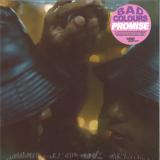
PROMISE is the latest album from Brooklyn-based producer Ibe Soliman, aka Bad Colours. Known for his blend of house, proto-techno, rap, and soul, Bad Colours delivers a dynamic, emotionally resonant record. Driven by hypnotic rhythms and personal storytelling, PROMISE explores themes of vulnerability, desire, and transformation. It's a versatile album designed for both dancefloors and introspective listening.
PROMISE is the fourth LP from Bad Colours on Bastard Jazz, following 2024's collaborative album with Cor.ece, Been Here Before. Soliman's career spans over a decade—DJing alongside artists like James Murphy, Mark Ronson, and Q-Tip, and producing for Kendrick Lamar, Faith Evans, Keyshia Cole, and Rick Ross. His work has received support from KCRW, KEXP (including multiple Midnight in a Perfect World mixes), and CBC Radio 3, and has charted on both the NACC Top Electronic and Top 200 charts. Bad Colours has been featured in press outlets like NYLON, Nonderland, Resident Advisor, Electronic Groove, and Fusicology. His music has appeared in Netflix's Escape from Spiderhead, Hulu's Woke, Disney's Chang Can Dunk, Showtime's American Gigolo, Valorant's Rising Stars, and more.
The third release on Midnight Fashion Chill gracefully continues the label’s elegant, soul-soothing direction, this time through the warm voice of Jaidene Veda. The original Across The World stands as a true gem: a silky, gently flowing composition where soft, understated drums and delicate piano lines create an intimate, contemplative atmosphere. The From P60 rework tightens things up a little, adding a touch more groove while preserving the track’s airiness and emotional subtlety.
The next on is Kai Alcé’s remix. The Atlanta based producer injects the track with his signature classic-house energy: deeper basslines, dancefloor-ready rhythms, and an overall sophistication that makes the remix both driving and refined. This is the version guaranteed to move the crowd — vibrant, stylish, and tailormade for late-night club moments. The three faces of Across The World show just how far a well-crafted vocal track can be stretched. Midnight Fashion Chill’s latest release manages to be both relaxing and dance-inducing — exactly the kind of balance that makes this series worth following.
Motor city royalty Floorplan, aka Detroit techno pioneer and creator of minimal techno Robert Hood and his DJ/producer daughter Lyric Hood, announce their forthcoming inclusion in the deeply respected ‘fabric presents’ mix series with the release of their new single ‘You’re A Shining Star’, out now. The full mix drops on digital/vinyl/CD via fabric records on 28th November.
Robert has been a long-standing fabric favourite since the institution's earliest years, clocking up over 20 sets in Room 2, including a live session on New Year's Eve, 2012. In 2008, he'd turn in Fabric 39 which is among the most revered contributions to the fabric mix canon. Now, with the forthcoming ‘fabric presents Floorplan’ mix, the story comes full circle - marking both the duo’s debut on the iconic mix series and a monumental moment for the family project.
About Floorplan: Emerging from a musically rich Detroit upbringing steeped in Motown and vinyl culture, Robert Hood became an early member of the seminal ’90s collective Underground Resistance, helping to spearhead the rise of techno. Going solo, Hood created minimal techno with his Minimal Nation LP. Groundbreaking productions, acclaimed performances, and his own M-plant label followed, until in ’96 he formed Floorplan - an alter ego to expand beyond minimal techno into gospel, soul and house-infused techno. Immersed in music from an early age, Lyric eventually caught the same electronic spark that’s driven her father for decades. In 2014, after the release of Hood’s debut Floorplan album Paradise, the project evolved as the then-16-year-old Lyric joined him to perform as Floorplan, including a supreme closing set at Dekmantel’s Boiler Room stage. Two years later, Lyric officially became a full member of Floorplan, cementing their father–daughter collaboration, and they’d release their co-produced album Victorious on M-Plant that same year.
We are thrilled to welcome back Aldo Cadiz to Beatwax Records with his brand-new EP “Amandorada.”
Years after his highly acclaimed debut album on Beatwax, Aldo returns with a stunning follow-up that once again showcases his unique sound signature — a perfect blend of hypnotic grooves, deep rhythmic precision, and timeless underground energy.
“Amandorada” captures the essence of Cadiz’s refined production style: warm textures, intricate percussion, and that unmistakable Latin-influenced pulse that has made him a favorite among DJs and music lovers worldwide.
This EP marks not only a reunion between Aldo Cadiz and Beatwax Records but also a new chapter in our shared musical journey. We couldn’t be happier to have him back on the label, delivering another powerful statement of cutting-edge electronic music.
Don`t sleep on this. Already making waves and getting hammered by all the big players in the scene.
The Éthiopiques series returns! Essential archive recordings from an extremely fruitful period in Ethiopian music.
Before “Swinging Addis” took over the world, there was Moussié Nerses Nalbandian — the Armenian-born composer who shaped modern Ethiopian music. Mentor, arranger, and pioneer, he laid the foundations of Ethio-jazz.
This Éthiopiques volume revives his forgotten legacy, recorded live by Either/ Orchestra First issue ever with new exclusive photos and in depth liner 8-page insert.
“Ethiopian jazzmen are the best musicians that we have seen so far in Africa.
They really are promising handlers of jazz instruments.”
Wilbur De Paris
(1959, after a concert in Addis Ababa)
አዲስ፡ዘመን። *Addis zèmèn* **A new era.**
The time is the mid-1950s and early 1960s, just before "Swinging Addis" bloomed – or rather boomed – onto the scene. Brass instruments are still dominant, but the advent of the electric guitar, and the very first electronic organs, are just around the corner. Rock’n'Roll, R’n’B, Soul and the Twist have not yet barged their way in. Addis Ababa is steeped in the big band atmosphere of the post-war era, with Glenn Miller's *In the* *Mood* as its world-wide theme song, neck and neck with the Latin craze that was in vogue at the same period. Life has become enjoyable once again, with the return of peace after the terrible Italian Fascist invasion of Ethiopia (1935-1941). The redeployment of modern music is part and parcel of the postwar reconstruction. *Addis zèmèn* – a new era – is the watchword of the postwar period, just as it was all across war-torn Europe.
The generation who were the young parents of baby boomers** were the first to enjoy this musical renaissance, before the baby boomers themselves took over and forever super-charged the soundtrack of the final days of imperial reign. Music is Ethiopia's most popular art form, and very often serves as the best barometer for the upsurge of energy that is critical for reconstruction. Whether it be jazz in Saint-Germain-des-Prés or the *zazous* who revolutionised both jazz and French *chanson* after the *Libération*, be it Madrid's post-Franco Movida, or Dada, the Surrealists and *les années folles* that followed World War I, the periods just after mourning and hardship always give rise to brighter and more tuneful tomorrows. Addis Ababa, as the country's capital, and the epicentre of change, was no exception to this vital rule.
**Two generations of Nalbandian musicians**
Nersès Nalbandian belonged to a family of Armenian exiles, who had moved to Ethiopia in the mid-1920s. The uncle Kevork arrived along with the fabled "*Arba Lidjotch*", the** "*40 Kids*", young Armenian orphans and musicians that the Ras Tafari had recruited when he visited Jerusalem in 1924, intending to turn their brass band into the official imperial band. If Kevork Nalbandian was the one who first opened the way of modernism, pushing innovation so far as to invent musical theatre, it was his nephew Nersès who would go on to become, from the 1940s and until his death in 1977, a pivotal figure of modern Ethiopian music and of the heights it. Going all the way back to the 1950s. Nothing less. And it is Nersès who is largely to thank for the brassy colours that so greatly contributed to the international renown of Ethiopian groove. While the younger generations today venture timidly into the genealogy of their country's modern music, often losing their way amidst a distinctly xenophobic historiographical complacency, many survivors of the imperial period are still around to bear witness and pay tribute to the essential role that "Moussié Nersès" played in the rise of Abyssinia's musical modernity.
Given the year of his birth (15 March 1915), no one knows for sure if Nersès Nalbandian was born in Aintab, today Gaziantep (Turkiye/former Ottoman Empire) or on the other side of the border in Alep, Syria... What is certain is that his family, like the entire Armenian community, was amongst the victims of the genocide perpetrated by the Turks. Alep, the place of safety – today in ruins.
Before Nersès then, there was uncle Kevork (1887-1963). For a quarter of a century, he was a whirlwind of activity in music teaching and theatrical innovation. *Guèbrè Mariam le Gondaré* (የጎንደሬ ገብረ ማርያም አጥቶ ማግኘት, 1926 EC=1934) is his most famous creation. This play included "ten Ethiopian songs" — a totally innovative approach. According to his autobiographical notes, preserved by the Nalbandian family, Kevork indicates that he composed some 50 such pieces over the course of his career. This shows just how much he understood, very early on, the critical importance of song as Ethiopia's crowning artistic form. Indeed, for Ethiopian listeners, the most important thing is the lyrics, with all their multifarious mischief, far more than a strong melody, sophisticated arrangements or even an exceptional voice. (This is also why Ethiopians by and large, and beginning with the artists and producers themselves, believed for a long time — and wrongly — that their music could not possibly be exported, and could never win over audiences abroad, who did not speak the country's languages).
Last but not least, one of Kevork's major contributions remains composing Ethiopia's first national anthem – with lyrics by Yoftahé Negussié.
Nersès Nalbandian moved to Ethiopia at the end of the 1930s, at the behest of his ground-breaking uncle. Proficient in many instruments (pretty much everything but the drums), conductor, choir director, composer, arranger, adapter, creator, piano tuner, purveyor of rented pianos,... he was above all an energetic and influential teacher. From 1946 onwards, thanks to Kevork's connexion, Nersès was appointed musical director of the Addis Ababa Municipality Band. In just a few years, Nersès transformed it into the first truly modern ensemble, thanks to the quality of his teaching, his choice of repertoire, and the sophistication of his arrangements. It was this group that would go on to become the orchestra of the Haile Selassie Theatre shortly after its inauguration in 1955, which was a major celebration of the Emperor's jubilee, marking the 25th anniversary of his on-again-off-again reign.
At some point or other in his long career, Nersès Nalbandian had a hand in the creation of just about every institutional band (Municipality Band, Police Orchestra, Imperial Bodyguard Band, Army Band, Yared Music School…), but it was with the Haile Selassie Theatre – today the National Theatre – that his abilities were most on display, up until his death in 1977. To this must be added the development of choral singing in Ethiopia, hitherto unknown, and a sort of secret garden dedicated to the memory of Armenian sacred music, and brought together in two thick, unpublished volumes. Shortly before his death (November 13, 1977), he was appointed to lead the impressive Ethiopian delegation at Festac in Lagos, Nigeria (January-February 1977).
His status as a stateless foreigner regularly excluded him from the most senior positions, in spite of the respect he commanded (and commands to this day) from the musicians of his era. Naturally gifted and largely self-taught, Nerses was tirelessly curious about new musical developments, drawing inspiration from the very first imported records, and especially from listening intensely to the musical programmes broadcast over short-wave radio – BBC *First*. A prolific composer and arranger, he was constantly mindful of formalising and integrating Ethiopian parameters (specific “musical modes”, pentatonic scale, and the dominance of ternary rhythms) into his “modernisation” of the musical culture, rather than trying to over-westernise it. It even seems very probable that *Moussié* Nerses made a decisive contribution to the development of tighter music-teaching methods, in order to revitalise musical education during this period of prodigious cultural ferment. Flying in the face of all the historiographical and musicological evidence, it is taken as sacrosanct dogma that the four musical modes or chords officially recognised today, the *qǝñǝt* or *qiñit* (ቅኝት), are every bit as millennial as Ethiopia itself. It would appear however that some streamlining of these chords actually took place in around 1960. It was only from this time onward that music teaching was structured around these four fundamental musical modes and chords: *Ambassel*, *Bati*, *Tezeta* and *Antchi Hoyé*. A historical and musical “details” that is, apparently, difficult to swallow, especially if that should honour a *foreigner*. Modern Ethiopian music has Nersès to thank for many of its standards and, to this day, it is not unusual for the National Radio to broadcast thunderous oldies that bear unmistakable traces of his outrageously groovy touch.
“I've always dreamed of making an album where I could bring together artists I deeply admire, curating voices, energies, and sensibilities that have inspired me,” says Brussels-born producer and multidisciplinary artist ShunGu of his new record, Faith in the Unknown. “It took time, and it grew into something very human, rooted in trust, patience, and creative risk. These songs are conversations, not just between me and the artists, but between worlds, eras, and ways of feeling.”
That spirit of dialogue and discovery is what defines Faith in the Unknown. Emerging from years of steady, meticulous work in the underground, the album is both a bold statement of identity and an invitation into Shungu’s world. Across 14 tracks, each a self-contained vignette, ShunGu guides the listener through shifting moods and perspectives- moments of intimacy, defiance, reflection and release, coalescing into a much larger story.
His distinct touch threads through the surefire cast of collaborators - Pink Siifu, Liv.e, Fly Anakin, Chester Watson, Fatima, Maxo, Navy Blue, Dreamcastmoe, Ruqqiyah, Zekeultra and Goya Gumbani — each track unfolding as a new dimension in the same universe.
ShunGu has long been a boundary-pusher, known for weaving jazz-inflected samples, skilfully constructed textures, and MPC-driven grooves into production that feels timeless yet untethered. With Faith in the Unknown he pushes further still: a project as much about collective energy as it is about personal vision. It’s a leap into uncertainty, carried by trust in the process and the people involved.
From the lo-fi beat tapes that first won him a cult following, to collaborations that span the globe, Shungu has forged a body of work rooted in exploration and community. Faith in the Unknown crystallises those qualities into his most ambitious statement yet; a record that doesn’t just blur boundaries between genres, but asks what happens when vulnerability and experimentation are treated as shared ground.
The result is a record that trades in subtlety. Each artistic contribution adds its own shade to the larger mosaic, pulling the listener deeper into an expanding narrative. If Faith in the Unknown has a message, it’s that art can thrive in uncertainty - that in the spaces where trust, risk, and vulnerability intersect, something entirely new can emerge.
“I've always dreamed of making an album where I could bring together artists I deeply admire, curating voices, energies, and sensibilities that have inspired me,” says Brussels-born producer and multidisciplinary artist ShunGu of his new record, Faith in the Unknown. “It took time, and it grew into something very human, rooted in trust, patience, and creative risk. These songs are conversations, not just between me and the artists, but between worlds, eras, and ways of feeling.”
That spirit of dialogue and discovery is what defines Faith in the Unknown. Emerging from years of steady, meticulous work in the underground, the album is both a bold statement of identity and an invitation into Shungu’s world. Across 14 tracks, each a self-contained vignette, ShunGu guides the listener through shifting moods and perspectives- moments of intimacy, defiance, reflection and release, coalescing into a much larger story.
His distinct touch threads through the surefire cast of collaborators - Pink Siifu, Liv.e, Fly Anakin, Chester Watson, Fatima, Maxo, Navy Blue, Dreamcastmoe, Ruqqiyah, Zekeultra and Goya Gumbani — each track unfolding as a new dimension in the same universe.
ShunGu has long been a boundary-pusher, known for weaving jazz-inflected samples, skilfully constructed textures, and MPC-driven grooves into production that feels timeless yet untethered. With Faith in the Unknown he pushes further still: a project as much about collective energy as it is about personal vision. It’s a leap into uncertainty, carried by trust in the process and the people involved.
From the lo-fi beat tapes that first won him a cult following, to collaborations that span the globe, Shungu has forged a body of work rooted in exploration and community. Faith in the Unknown crystallises those qualities into his most ambitious statement yet; a record that doesn’t just blur boundaries between genres, but asks what happens when vulnerability and experimentation are treated as shared ground.
The result is a record that trades in subtlety. Each artistic contribution adds its own shade to the larger mosaic, pulling the listener deeper into an expanding narrative. If Faith in the Unknown has a message, it’s that art can thrive in uncertainty - that in the spaces where trust, risk, and vulnerability intersect, something entirely new can emerge.
Flanked by a team of collaborators - including Nick León, more eaze, Ultrafog and Kissen - Ben Bondy captures the Kwia-pop zeitgeist on 'XO Salt Lif3', sluicing down dappled emo and downtempo grooves with log drum thwacks, tempered field recordings and sandblasted shoegaze guitars.
Forget what you think you know about Ben Bondy; like Naemi's fuzzy 'Breathless Shorn', ‘XO Salt Lif3’ is a decisive shift away from the ambient world and towards contemporary underground pop. Last year's amapiano-tinted loosie 'Bend' serves as the album's opener and is the best taster, its slick DSP squelches, granulated drones and sub rumbles immediately swapped out for breezy acoustic guitar riffs, tuned log drum hits and Bondy's own Autotuned vocals. When Bondy turns down the temperature a little, letting the orchestral synth arrangements slip into fuller view on 'Halfmoon', a collaboration with Nick León and Aussie producer Lovefear, it's tempered by low slung emo riffs and mumbled sweet nothings.
By the time we hit 'Dreamseed', Bondy's in full swing, offsetting slow breaks and multi-tracked vocal harmonies with full-spectrum shoegaze power chords that cut into the mix like a chainsaw, with crunchy amp crackle foreshadowing the Bark Psychosis-like drop. Bondy hits a cruise when More Eaze helps out on 'There Is A Place'. Maurice's unmistakable pedal steel draws us in, used by Bondy to add an Americana accent to his euphoric fusion of amapiano and indie pop. It's music that'll make perfect sense if you've caught one of Bondy's notorious DJ sets, where you might hear anything from American Football and Jessica Pratt next to Gwen Stefani, Skinny Puppy or Sneaker Pimps. It’s this chaotic, open-hearted approach - which also plays a part in the Shineteac material - that makes 'XO Salt Lif3' so effortlessly enjoyable.
The legacy of wipE′out′′ has transcended time and cemented itself as a true transgenerational phenomenon. Launched in 1995, it didn’t just revolutionise the gaming industry, it created a bridge between the gaming ecosystem and the raver community. Its futuristic aesthetics and forward-thinking sound left a mark not only on mainstream audiences but also on the most demanding corners of the underground.
Decades later, the game’s impact is still alive. The release in 2023 of The Zero Gravity Soundtrack on Lapsus Records proved once again that wipE′out′′’s accompanying audio will go down in history as much more than just an anti-gravity racing game soundtrack.
This is why we decided to go deeper into the slipstream and build the second volume you’re now holding in your hands. Drawn from the original archives of Tim Wright, aka CoLD SToRAGE, this new collection surfaces unreleased cuts, pieces that couldn’t fit on the first edition, and a suite of self-authored ambient reworks that translate pure velocity into wide-screen atmospherics engineered for the long straights, the drone of airbrakes, the blue hour between checkpoints. It also reconnects the circuit, gathering selections and variants tied to later chapters of the saga — wipE′out′′ HD and wipE′out′′ Pure — plus alternative mixes that, until now, only existed in the Sega Saturn dimension of the franchise.
Finally, the material takes a leap into the future in the hands of four remixers especially chosen for this release: Tim Reaper, SHERELLE, Mantra, and NikNak, who collectively forge links between CoLD SToRAGE’s pioneering musical vision, the sound world of the game, and the contemporary breakbeats and drum & bass vanguard.
Expect the DNA you remember — accelerated breaks, trance-vector synths, jungle influences, sub-bass rumbling neatly beneath the craft’s hull, and at times even echoes of classic hardstyle — now revealed with new angles and air. The previously unheard material carries the same aerodynamic design sense that made these tracks feel faster than the track map itself, while the ambient versions open the field of view with melodies hovering at the lip of overdrive. Without a doubt, here you’ll find a strong sense of nostalgia. But this isn’t just nostalgia; it’s also proof that this sound world continues to evolve when you ease off the throttle.
For the faithful — crate-digging ravers, speed-run obsessives, and design nerds — this is an essential expansion pack: compiling rarities, restoring context, and reframing the emotional core of wipE′out′′ for late nights and early mornings alike. Bridging memory and momentum, club and console, rush and afterglow. Strap in.
Detailed tracklist, with annotations by Tim Wright aka CoLD SToRAGE
· Scratch Pad 1: “This track was composed using incomplete tracks that were developed around the time of the first wipE′out′′. It’s so long because it was used for a marathon-length Psygnosis promotional video.”
· Messij Received: “Messij was a firm favourite with wipE′out′′ fans, so it made sense that there’d be more where that came from — this was one of those re-workings.”
· God’s Gift: “I was always very fond of Erasure’s track Love to Hate You with the canned crowd FX sounds. God’s Gift was a tongue-in-cheek reference to how some musicians think they are just that. This was way before I even played live as CoLD SToRAGE.”
· Tentative: “I wasn’t sure about introducing some wacky beats and distorted sounds into one of the tracks, because it was kinda heading away from the other tracks, hence Tentative — but it turned out OK.”
· Canada 2048: “When wipE′out′′ 2048 was launched I decided to re-make Canada as a kind of tribute, but in a slightly new-tech, laid-back way, using Propellerhead Reason and all software synths.”
· Wiped Out: “Based on a few riffs from a MIDI file unused at the time of the original wipE′out′′ game compositions, this featured on my debut album MELT.”
· Body in Motion (Body Plus Mix): “A more trippy interpretation of Body in Motion that featured on non PlayStation versions of the game e.g. Sega Saturn.”
· Onyx (“Dark Side of the Moon”): “Onyx was my sole contribution to wipE′out′′ Pure on the Sony PSP handheld gaming console. This version was something I developed in a darker style, that eventually erupts into a crescendo.”
· Messij Received (WSTWGBE Mix): “Like I say, Messij was a hit with most wipE′out′′ fans, so when I was asked to compose more music for non-PlayStation versions, I adapted this tune into a parallel-universe version for PC and Sega Saturn. By the way, WSTWGBE refers to Who Said This Was Going To Be Easy?”
· Canada (Drunken Ausländer Mix): “In early 2018 I released a fresh album called Ch'illout′′, a re-working of many of my wipE′out′′ tracks in an ambient, Sunday-morning vibe style — it was a few years’ work, here and there.”
· Tentative (Woffenfum Mix): “Another chilled re-working of one of my wipE′out′′ tracks, the mix named with a nod to a good friend of mine, Carl Woffenden — someone who I've worked with for many years in the games industry.”
· Messij (Bobbing Boat Mix): “A nice cheesy computer blip-blop start belies its deep and upbeat chilled-out melodic finale.”
· Body in Motion (Timeless Techno Mix): “Another classic track given the chilled-out vibe mix, as featured originally on my Ch'illout′′ album. This one’s a really trippy, deep-space take on the original.”
· DOH-T (AM / FM Mix): “The idea with this chilled-out mix was to imagine all the melodic parts of this varied track being broadcast on terrestrial radio, so each theme drifts in and out through the radio static.”
· ’95 Future Echoes: “Originally developed as a companion album for wipE′out′′ HD, this track actually has its roots in a tiny loop of a song that never progressed to anything special back in the mid-’90s when I was composing for the original game.”
· Turbine: “Also from my wipE′out′′ HD album, it leans heavily into the upbeat, uplifting tunes from the original game, but also steals a bit of vibe and energy from The Prodigy, with those distorted flute sounds.”
· Pencil Neck: “This excerpt from my wipE′out′′ HD album features lots of sounds centre-stage and forward from Propellerhead Reason’s Subtractor virtual synth. I learned to love this more than my JD-800!”
· Messij 2005 (New Science Mix): “Yet another take on the track that still raises a smile, this time through a mix of samples from the original and Propellerhead Reason — the ‘new science’ when compared to an Amiga 1200 running Bars and Pipes.”
‘Açid Blüüs Räägs Vol.2’ is the latest evolution of the sound of last year’s Volume 1. The debut album was described by Joe Banks for Shindig! Magazine as; “Shivering slabs of drone blues transcendentalism…a burning junkyard of sheet metal blues… Hot stuff.” Volume 2 builds on the skronk blues guitar, sax and electronic drones of it’s predecessor, to explore cosmic free jazz, concrete exotica and dub, channelling influences of Moondog, Terry Riley, 75 Dollar Bill and Wolf Eyes. Playing like the imagined film soundtracks to a dystopian, re-wilded, post eco crash world in the style of Tarkovsky's ‘Stalker’ and ’Solaris’, Jodorowsky's surreal desert western ‘El Topo’, or the early novels of JG Ballard. This new collection sees the addition of minimal analogue drum machine loops as well as live instrumental contributions from the new players of the ever evolving Invocation band, plus some superstar guest contributors.
Featuring five brand new tracks, including the forthcoming single; ‘Cosmic Fanfare’, has already picked up BBC 6 Music support from Gideon Coe. The new album was mixed by Alex McGowan (aka Captain Future) of Space Eko Studios and features Invocation band regulars Rick Jensen of Apocalypse Jazz Unit, Skronk and Oneirologist on sax and bass clarinet, Will Emms aka Tiki Eerie on melodica, horns and claviola, plus special guest appearances from Duke Garwood on clarinet and Mikey 'Moondog' Chestnut of Snapped Ankles on bass synth. “….Acid fried kosmiche blues meets drone raag transcendentalism”. Jonny Halifax is a primitivist free blues outsider, sonic shaman of the acid fuzzed lap steel guitar, demented blower of the howling harmonica of doom. His new band project now combines avant swamp blues heaviosity with kosmic free jazz experimentalism in a fluid collective of godless raag brut improvisations - sonic visions of an hallucinatory apocalyptic near future. Inspired by Henry Flynt’s avant bluegrass experiments fusing country blues with eastern acoustic musical stylings, Spacemen 3’s contemporary sitar music, and the monolithic drone doom immersion of Sunn 0))), THE JONNY HALIFAX INVOCATION build hypnotic instrumental soundscapes using lap steel and homemade slide guitars, harmonica and alto sax. Underpinned by layers of acoustic and electronic drone instruments and fed through an arsenal of pedalboard electronics that would make Kevin Shields weep, the blues are transmogrified, unhinged, reduced and re-imagined as intoxicating, trance-inducing, feedback-drenched noise paintings. THE JONNY HALIFAX INVOCATION follows Jonny’s junkshop skronk blues one man band Honkeyfinger, and the Julian Cope endorsed gospel fuzz psychedelia of Jonny Halifax & The Howling Truth, whilst not forgetting his ambient drone metal side project; Deathenteredinerror. His musical CV also includes studio contributions to tracks by Andrew Weatherall’s Two Lone Swordsmen, UK metal behemoths Orange Goblin, Heck and Melting Hand.
FUNKTHEPOPULATION is the debut record by Yablochko Zelenoe, released in July this year on the California-based label Dionysian Mysteries.
The visual aspect of the release was brought to life by AI-artist and designer Alyona Pustobaeva. Old-school breakbeat and big beat rooted in the British sound of the '90s. The release is soaked in disdain for the surrounding world, serving ideologically as an ode to independence and carefree rebellion - a truly mischievous, streetwise sound.
Our journeys into uncharted lands of the Reducerverse continue.
Essential must-buy shit for all disciples of: The Rootsman x Muslimgauze, Love's Secret Domain era Coil, Chris & Cosey, Meat Beat Manifesto, early Reinforced Recs, Shut Up & Dance, He Dark Age, Zombies Under Stress, SPK.
If you've just joined us: Reducer ARE the greatest lost dub punks. Rumoured to have almost signed to On-U Sound but told Sherwood to stuff it when he wanted his hands on the desk. Fame never found them, cos they didn't want it anyway. Living in the obscure memories of the select squatters and weirdos lucky enough to have had their minds blown, their first recordings were scraped off the linings of the cosmic dustbin recently through a series of self-released 12"s, cassettes, USBs and strangest of all a 3D performance screened at the Cube (in association with pals Bokeh Versions).
In short: Reducer's the most thrilling fairytale resurrection these pages have been privy to, joining 23 Skidoo, Killing Joke, PiL, Slits, Terminal Cheescake etc on the Mount Olympus of the Punky Reggae Party.
This latest slice of karmic justice comes from The Human Aerial aka Reducer's guitarist and prime mover Hooly. And ohhhh what a justice it is. Drawing on 40 years of private solo recordings across 7 tracks from Abu Ama style dabke jaguar steppas punishment to thumping bass-led electro, peak Depth Charge dubby big beat to careening breakbeat hardcore, trashcan gamelan spirituals and Jamie Vex'd style maximalist beats blissouts,
Tying together this jaw-dropping range of styles and fashions is a relentless sampladelic bombardment. The Human Aerial's habitual pilfering of TV and radio for into lovingly spliced tape loops and samples showcases humanity at its best and absolute worst. Tele-evangelists rub shoulders with long dead chieftans: "there is no death, only change of worlds" "We're MAD AS HELL AND WERE NOT GONNA TAKE IT ANYMORE" "THe land is sacred, a cathedral of the spirit". These wisdoms and grave sins slip into us subliminal through the dance, the needle drops like a waking dream.
While the Reducer archives may be running low, we assure you the Human Aerial coffers are full. And long may our minds be blown by this ongoing renaissance.
With centuries of history, traditional instruments carry physical vibrations shaped by human breath and touch. In contrast, electronic music generates vibrations through inorganic principles such as electrical signals and circuits. When the subtle tremors of traditional instruments resonate with the intricate tones of electronic sounds in an improvised dialogue, performers from distinct realms expand each other’s languages, creating a new sensory experience. The project album Ancient Moment marks the first collaboration between the Korean contemporary music ensemble WhatWhy Art and the Seoul underground electronic music collective vurt.. It is a record of a free journey where two different worlds collide and merge,
In Part 1 of the album, you will hear boundless performances by daegeum player Hong Yoo with electronic musician Unjin, and gayageum player Hwayoung Lee with ambient duo Hosoo. The recording was done in an improvised one-take format at STUDIO Y in Seoul, and Giuseppe Tillieci mastering enhanced the sonic quality.
British-Brazilian jungle artist Janaway announces his brand new EP International Luv via Up Ya Archives Records.
‘50/50 Vision’ is the defining statement of Janaway’s upcoming EP, a single that captures the project’s full essence in one. Blending pulsing jungle rhythms with the rich textures of Brazilian vocals, together, with his UK-centric underground lens, he creates this rolling, dancefloor-ready track that bridges continents and culture.
The title, a play on “20/20 vision,” reflects Janaway’s experience as a dual-heritage artist who views each of his cultures from a balanced perspective. This sense of duality runs throughout his work, expressed through a distinctive fusion of sounds, stories, and collaborations that mirror his own world. The accompanying visuals deepen this connection, featuring Janaway alongside his collaborators and friends, not only adding a personal and authentic layer but providing a snapshot of the community that shapes his music.
‘50/50 Vision’ is a collaboration with two incredible artists that represent each side of his heritage. MC Tchelinho’s (Rio’s Heavy Baile collective), dynamic flow injects raw Brazilian energy and is enhanced by Arinola’s signature mix of UK funk and Ragga vocals which layer in an infectious groove. Together, they create a dynamic intersection of contrasting sound that feels both global and grounded - full of rhythm, movement and connection.
Growing up between cultures, Janaway has always gravitated toward sounds without borders. Now based in Bristol, he’s part of the new wave pushing jungle forward while keeping its essence alive. His signature blend of heavyweight basslines and sharp breakbeats has earned support from Nia Archives, Tim Reaper, Sherelle and Fracture. His acclaimed high-octane DJ sets packed with unreleased tracks, move effortlessly through jungle, footwork, and jungle funk, keeping crowds locked in and dancefloors moving. After a European tour and standout appearances at Boomtown, Glastonbury, and Outlook Festival, Janaway is fast becoming one of the most exciting names shaping the next gen of jungle.