
Mysterious new label. No names, no art just let the music do the talking
collecting
Order now. Collecting orders for repress.
Last In: 5 years ago
10,04 €
Mysterious new label. No names, no art just let the music do the talking
Order now. Collecting orders for repress.

BeatsElectroExperimentalAbstract
Alésia Cosmos was a collective of musicians led by Bruno de Chénerilles formed in the early 1980s in Strasbourg, France. The group consisted of Pascal Holtzer (guitar, synthesizer, tapes, drum machine, vocals), Pierre Clavreux (vocals, gong), Marie-Berthe Servier (vocals), Bruno (guitar, tapes, synthesizer, drum machine, vocals) and Tunisian percussionist Lotfi Ben Ayed (darbukas, bendir). In 1981 Bruno composed and wrote some sci-fi radio plays for French state radio channel France Culture. Under the influences of William Burroughs, John Cage, Pierre Henry and others, he developed tape music studio work. By 1982 he appeared for the first time under the name Alésia Cosmos Furi Show. It was a solo performance on guitar, voice, analog synth and tapes. This experimental show lead to a music project based on Bruno and Pascal's compositions to be performed and recorded with other musicians in the beginning of 1983.
Exclusivo! was the group's debut album recorded and self-released in 1983 on Planetarium. Pascal and Bruno would compose tunes in their personal home studios. Then they would bring the tapes, electronics, guitar lines and lyrics to experiment and rehearse with the other members of the group. Improvisations and adaptations brought more ideas and the album was recorded in a few days. The result was a musical mixing of electronic music, field recordings, North African and Asian percussion, electric guitars and voices, compositions and free improvisations. All four musicians take turns singing onomatopoeic phrases and backing vocals, even sometimes in an unknown language, a sort of mixed bag between Breton and Japanese. All songs have been remastered cut by George Horn at Fantasy Studios in Berkeley. Each LP is housed in a replica of the 1983 cover and includes a 6-page insert with photos, lyrics, reviews and liner notes by Bruno de Chénerilles.
Ready to ship

Ready to ship

HouseDeepMinimalVinyl OnlyTechno
LTD Color repress !
Curtea Veche returns with this 3 track vinyl only release! 'Ganduri Spirituale' 3 huge techno Groovers from an exclusive unknown artist... Huge support coming from the likes of Archie Hamilton, Nu Zau, Georgia Girl and more!
Order now. Collecting orders for repress.
Ready to ship
Ready to ship

Ready to ship

Over the last decade and a half, Rotation Sound System’s annual gathering in the Staffordshire countryside has become one of underground dance music culture’s true success stories – an intimate gathering of like-minded friends and partygoers, powered by a custom-built six-way sound system, with music provided by a carefully curated line-up of dusty-fingered diggers, selectors and hand-picked live performers.
At the heart of the collective’s unique and much-loved approach lies a dedication to finding and sharing lesser-known gems and audio obscurities – fantastic records whose charm and quality has long been overlooked.
Last year, the core members of the crew – founders Dean Meredith and Ben Shenton (renowned for their productions as Mind Fair), and Wrekin’ Havoc trio Rob J, Stuart Robinson and Rich Hall – offered a snapshot of their unique musical approach via debut compilation Everything You Are About To Hear Is True, Volume 1, in the process introducing a global audience to some of the countless unknown mid-tempo classics nestled in their collections.
Fresh from another sold out edition of their acclaimed micro-festival, they’re back with volume two, another must-have collection of slept-on classics, loved-up shufflers and wide-eyed Balearic beats, all of which have played a part in Rotation’s story over the last 13 years.
Appearing on gatefold double vinyl with extensive liner notes telling the stories behind the tracks, Everything You’re About To Hear Is True, Volume 2 is full to bursting with music that sounds mind-blowing on the crew’s high-end sound system.
For proof, check the analogue-rich intergalactic shuffle of Paul Atreides’ 2015 jam ‘Arrakis Walk’, the relaxed boogie-soul of Rocky Winters’ Chaz Jankel produced ‘Vicious Circle’, the easy-listening-jazz-rock bliss of Vincent Maclin’s ‘Should’ve Took a Chance’, the 80s soul squelch of ‘Ecstasy (Centurion Mix)’ by Endgames and the immersive British dub drift of Sigma’s ‘Remember (Dub Style)’.
Everywhere you look, you’ll find eye-opening and ear-pleasing delights. There’s Pinky’s lightly acid-flecked, breakbeat-fuelled, acid house-era street soul classic ‘I Wanna Be The One (Instrumental Groove)’, the 1992 new age downtempo seduction of Linda Myers (‘Shine On Me’), the Clavinet-and-synth sporting jazz-rock/space-rock fusion of Wolfhound (1984 gem ‘Another Moon Song’), the Gallic colour of Buzy’s ‘Keep Cool (Version Maxi)’ and the guitar solo-laden electrofunk explorations of mid-80s UK act Lifesighs (‘Get Serious’, here presented in its extended instrumental form).
expected to be published on 18 Oct
The latest transmission from Shadow Pressings comes courtesy of an unknown artist, with identities, backstories and social media profiles left at the door without a calling card. Five cuts of shadowy, hardware-focussed house music - no lengthy bios, no distractions, just some killer club grooves to move to.
Pre-order now

Introducing the first unknown - untitled release to Kudos, a concept record label where the releases are previewed anonymously, with the artist info found in the record sleeve. quality of the music comes first.
Last delivered 19 months ago
available to reorder, subject to availability

The track titles on Post Dub Cities – the new album by Adriano Zanni, photographer, sound artist, and field recordist – evoke the aftermath, that moment when a place continues to exist and live on, but no longer serves anyone. The human element has vanished, whether it happened overnight or through a slow abandonment that lasted for years. The perspective shifts: buildings, homes and palaces reveal a dimension of reality all their own, in which even the ruins give shape to this landscape that endures, transforming into pure presence.
This, after all, is our fate. The fate of us human beings, of our civilisation, of every civilisation: to pass away, to be forgotten, to erect monuments whose significance no one will remember once we are gone.
The opening track Crisopoli transforms the sonic dimension of a city into an echo chamber: a dark, urban dub built from delays and resonances, holding the imprint of what is no longer there — like a bassline that keeps vibrating even after its source has gone silent. What we see is not the presence, but its reverb.
Available from September 11, second excerpt Warosha gives us a minimalist, enveloping, solemn beat, like the symbols on a map that no one can read anymore. Warosha was the district of luxury hotels overlooking the sea in the city of Famagusta. After the island of Cyprus was invaded by the Turkish army, the entire area, emptied of its inhabitants, who had fled south, was fenced off and surrounded by barbed wire. No one has been allowed to enter it since 1974. Now, on these unspoilt beaches, sea turtles have found the perfect place to breed.
Fordlândia, on the other hand, is the symbol of Henry Ford’s failed dream of conquest. An industrial settlement built deep within the Amazon rainforest, several hours’ boat journey from the nearest towns, to gain access to natural rubber for the tyres of his mass-produced cars in Michigan. An extremely costly project, it quickly became a ruinous pipe dream: a town that has been uninhabited for almost a century and has since been reclaimed by nature.
For a long time now, Adriano Zanni has been exploring, through music and photography, the landscape that unfolds before our eyes, as attentive yet silent observers. As if we were absent, a civilisation that has long since vanished: human presence has dissolved, preparing to fade into oblivion. The precise depiction of places through field recordings, and the black-and-white imagery, give rise to apparitions, hallucinations, and memories. The less present we are, the more we seek meaning. We resist abandonment and the indifference of time.
In the ten tracks (plus three bonus tracks) of Post Dub Cities the echoes and reverberations of dub grant us access to an unknown future, as yet untold – in which we are nothing more than a vague memory. The deep sound guides us through a landscape that is familiar yet unknown, unrecognisable. The cold, distant, industrial rhythm resonates within us as if we were the last, all too aware, inhabitant of a now-deserted village.
Every place – be it an abandoned mining settlement on an island in Svalbard, or a ghost town in Pennsylvania evacuated following an underground fire that has been burning for sixty years at a depth of one hundred metres – leaves questions unanswered, shrouds itself in mystery, and makes us wonder, ceaselessly: what happened here?
In the end, we realise that we don’t really care that much about knowing the details of the disappearance. We can guess them, we’ve seen it happen a thousand times before. Just like in the photos accompanying the album, portraits of ghostly, deserted cities: Belgrade, like Venice, Dublin, Sarajevo, Lisbon, Kraków, Sofia, Naples, Hanoi, Lampedusa, Tehran. Unexpectedly, pleasantly emptied of people, and of their obsessions, struggles, illusions.
Then, suddenly, the crowd returns. Busy, feverish, hardworking. The record ends, the spell is broken. We feel a sense of longing for a future that has not yet come to pass, for a place we were only able to observe because we were not there.
Pre-order now

Mit "Autosmile", ihrem Debüt für das Label 4AD, schärft das US-Duo @ (At) sein unverwechselbares Profil zwischen psychedelischem Folk, Indie-Rock und experimentellem Pop. Die Songwriter:innen Victoria Rose und Stone Filipczak entwickelten ihre Musik zunächst über Jahre hinweg aus der Distanz. Auf dem Nachfolger ihres vielbeachteten Debüts Mind Palace Music bündeln sie diese Arbeitsweise zu einer ebenso verspielten wie ausgereiften Klangsprache. Die elf Songs von Autosmile verbinden klassische Songstrukturen mit komplexen Arrangements, ungewöhnlichen Harmonien und einer ausgeprägten DIY-Ästhetik. Obwohl Stone während der Albumarbeiten nach Philadelphia zog und beide erstmals in derselben Stadt lebten, blieb der kreative Prozess bewusst unkonventionell. Unterstützt von befreundeten Musiker:innen, die Cello, Violine und Schlagzeug beisteuerten, entstand ein überraschend üppiger Sound, der dennoch seinen intimen Charakter bewahrt. Inhaltlich bewegt sich das Album zwischen Verlust, Selbstreflexion und Hoffnung. Der Opener "Bird" verbindet düstere Folk-Klänge mit eingängigen Pop-Momenten, während der knapp siebenminütige Titeltrack "Autosmile" eine Trennungserfahrung in eine poetische Reise voller mystischer Bilder und existenzieller Fragen verwandelt. Songs wie "I Know You Are (But What Am I Thinking)" feiern die Schönheit von Veränderung und Vergänglichkeit, während "Punish My Mind" das Spannungsfeld zwischen Selbstbestrafung und Selbstfürsorge auslotet. Trotz der oft dunklen Grundstimmung bleibt Autosmile von einer spielerischen Experimentierfreude geprägt. Prog-Einflüsse treffen auf Indie-Sensibilität, Melodie auf Komplexität. Victoria Rose und Stone Filipczak verzichten bewusst auf eindeutige Botschaften und schaffen stattdessen offene Deutungsräume, in denen sich persönliche Krisen und neue Möglichkeiten begegnen. Das Ergebnis ist ein Album, das Schönheit und Schmerz gleichermaßen umarmt und selbst in seinen melancholischsten Momenten einen leisen Optimismus bewahrt.
Pre-order now

Hip-HopFunkSoulPopJazzWorld Music
A raw, groove-driven selection of previously overlooked 1990s recordings by legendary Turkish jazz impresario Okay Temiz, compiled here for the first time.
As the story goes, throughout the 1990s, Okay Temiz roamed the nights of İstanbul in search of rhythm — moving through its far corners, from the seedy underbelly to gypsy neighborhoods, from the outskirts of the city to smoke-filled taverns where cigarette haze turns into a living cloud atlas — capturing a largely unknown and maverick period of his work.
Compiled by long-time producers Haluk Damar and Erinç Güzel, the album brings together Turkish folk textures, İstanbul tavern sound, spiritual jazz, raw street groove, and flashes of Turkish psychedelia — with moments shaped by Temiz’s own distinctive vocals. The result is a deep, percussive, and highly playable set.
Positioned between global jazz, rare groove, and dancefloor material, İstanbul Groove is a strong crossover release with appeal across both listening and DJ set contexts.
Pre-order now

Swivel inaugura su nuevo sello Swivel Traxx produciendo cinco tracks originales recién salidos del horno.
Swivel Traxx steps up with ‘Out of Circle EP’, a 5-track trip delivered by label head Swivel. Blending raw 90s vibes with modern hypnotic soundscapes, the EP shifts gears from tense ambient to direct, Birmingham-influenced techno and high-energy cosmic madness. Built for both deep head-trips and pure dancefloor mayhem:
A1. Out of Circle (Prelude): A beatless atmospheric opener setting a mystical vibe for the whole record. A hypnotic, bell-like arpeggio glides over a warm Moog bassline and thick tension, teasing the concept behind the EP.
A2. Out of Circle: The title track drops straight into club territory while keeping things dark and mysterious. Massive cavernous pads, a driving rhythmic base, and a relentless sequenced synth loop pay homage once again to classic Birmingham techno.
A3. The Black Knights: A dark, dystopian trip. Driven by a hypnotic groove and sharp triplet hi-hats, this one brings a combat-ready energy made for peak-time dancefloor moments.
B1. Starlight: The fastest joint on the record (140 BPM). Equal parts melodic and club-focused, it locks TR-909 drums, Moog bass, and lush pads together for an astral trip into the unknown.
B2. Roundtable: A heavy, mental, and dark closer. Packed with raw analog-filtered synths, broken beats, and a relentless interplay of open and closed hi-hats, it delivers pure energy for the floor.
expected to be published on 16 Oct

Georg Danzer war eine Lichtgestalt der Austropop Szene. Wie kein anderer hat er mit seinen Songs und Texten ins Schwarze der österreichischen Seele getroffen. Die Anekdoten auf "13 schmutzige Lieder" sind schlüpfrig, verwegen und oftmals herrlich unkorrekt. Danzers lässiger Dialekt macht den Reiz aus, er gibt den schmutzigen Liedern den Charme, der sie so unverwechselbar macht. Am 7. Oktober hätte Georg Danzer seinen 80. Geburtstag gefeiert. Zu diesem Anlass veröffentlicht Sony Music eine Neuauflage seiner "13 schmutzigen Lieder" auf "schmutziger Vinyl" - als Spezialpressung auf Black Dust Vinyl mit Orange & Schwarz. GEORG DANZER - "13 schmutzige Lieder" - ab 2.10.26 auf schmutziger Vinyl erhältlich! Tracklist: New Orleans Alptraum Stomp | Murphy's Law | Sado-Maso | Swinging Prostata | Rosarode Gummihandschuach | Gnädige Frau in Malaga | Eigentlich bin ich ein Schwein | Der imaginäre Vibrator-Walzer vom 22. Juli 1998 | Karibik in Unterhosen | Olle Weiber san G'frassta | A alte Drecksau | Strandbrunzer-Tango | Ballade vom versteckten Tschurifetzen | Ruaf die Zeitansage an | Leck Mich | Ich denk an Sex | Suche nette Partnerin zum Bumsen ... | Kreuzritter | Tanz Erotisch
Last delivered 6 days ago
available to reorder, subject to availability

2026 REPRESS!
Jon Spencer teams up with Kendall Wind and Macky Spider Bowman - the rhythm section from Woodstock NY punk rock wunderkind The Bobby Lees - to chew bubblegum and kick ass.
Two years after “Spencer Gets It Lit” (Marc Riley’s BBC6 Music Album of the Year, “hugely entertaining”**** MOJO, “a sonic witchdoctor who’ll blow your mind” UNCUT****) there is still more work to be done saving rock'n'roll music.
“Sick of Being Sick!” will be released on limited clear 45rpm Super-Stereo cut vinyl.
Jon Spencer has been innovative force in the independent music scene since the mid-80s. An acclaimed live performer, he has toured all the continents except Antarctica and has amassed a dizzying discography as the leader of Pussy Galore, The Jon Spencer Blues Explosion, Heavy Trash, and Jon Spencer & the HITmakers, as well as with Boss Hog, The Honeymoon Killers, The Gibson Brothers, and Taxi Girls.
His collaborations include (but are not limited to) working with Steve Albini, Add N To X, Nicole Atkins, Beastie Boys, Beck, Bomb The Bass, R.L. Burnside, James Chance, Coldcut, Chuck D, Dan The Automator, Jim Dickinson, DJ Shadow, Einsturzende Neubauten, Guitar Wolf, GZA, David Holmes, Japanese Popstars, Dr. John, Calvin Johnson, Steve Jordan, Khan, Moby, Money Mark, The Muffs, The North Mississippi All Stars, Princess Superstar, Puffy AmiYumi, The Sadies, Nancy Sinatra, Solex, Solomon Burke, Speedball Baby, Rufus Thomas, UNKLE, Unloved, Andre Williams, and Bernie Worrell.
His production credits include: Cheater Slicks, Demolition Doll Rods, Experimental Tropic Blues Band, Perrosky, Mike Edison, Jesper Munk, Sunshine & The Rain, The Bobby Lees, and Samantha Fish & Jesse Dayton.
expected to be published on 16 Oct
Die langjährigen Freunde Bibio und Dorian Concept tun sich nach diversen Kollaborationen für das gemeinsame Instrumentalalbum "Answers" zusammen. Ein Großteil der Musik entstand aus der Ferne; Ideen wurden zwischen Wales und Österreich hin- und hergeschickt, was die Vorliebe beider Künstler für einen eher zurückgezogenen, prozessorientierten Schaffensprozess widerspiegelt. Der britische Produzent Bibio, bekannt für die Verbindung von Folk, Ambient und Lo-Fi-Tape-Texturen, steuert eine greifbare, von der Gitarre geprägte Wärme bei, während der Wiener Dorian Concept, Autodidakt am Keyboard und Improvisationskünstler am Synthesizer, seinen fließend-experimentellen Ansatz elektronischer Komposition einbringt. Auch an der visuellen Gestaltung arbeitete das Duo eng zusammen; Videos und Artwork entstanden gemeinsam, inspiriert von der geteilten Liebe zu Vintage-Kameras und visuellem Spiel. Das Ergebnis ist ein texturreiches Instrumentalalbum, das sich weniger wie eine erste Zusammenarbeit anfühlt, sondern vielmehr wie eine Fortsetzung: Zwei eigenständige Stimmen treffen in einer gemeinsamen Sprache aufeinander, die über Jahre gegenseitiger Inspiration und stillen Experimentierens gereift ist. Beide Formate enthalten ein Concertina-Booklet, gefaltet in Ziehharmonika-Form.
Last delivered 4 days ago
available to reorder, subject to availability
2026 Repress
The voraciously prolific Brit producer Four Tet returns to his untypeable-but-highly-listenable windings alias for this surprise new album on his own Text label. Remaining as a vinyl-only LP for now, and currently limited to 2000 copies, it was announced just a week or so ahead of the release. No track titles or details and a bucket load of vibes and strange ideas. Opening softly with gentle eastern instrumentation, he gradually pulls us deeper and deeper into his unique universe with every bendy frequency and strange accent. By the time we're three tracks in, we're bopping away to big bodied dubstep/garage mutations laced with chimes and all kinds of textures that only Keiran Hebden would choose to use. The B-side bares a similar varied, opened-hearted soul as we move from bumping club grooves to slo-mo ethereal shuffles that wouldn't sound out of place in a cathedral. Textbook Text. Grab this if you can, it won't hang around
Last delivered 3 days ago
available to reorder, subject to availability

Pre-order now

Last delivered 5 days ago
available to reorder, subject to availability

Meet Matas Petrikas, a music producer, DJ, and book author with a passion for electronic music. Born in Lithuania during the time when it was still a part of the Soviet Union, Matas began experimenting with electronic sounds during his teenage years using self-built instruments and recording equipment. In 1991, Matas took a trip to Berlin that would change his life forever. There, he encountered the early years of techno culture, which led him to co-found EXEM, one of the first house and techno bands in the former Soviet space. With EXEM, Matas was one of the pioneers of electronic dance music in Lithuania, and by the end of the decade, they had charted numerous hits. They performed live shows ranging from intimate clubs to massive arenas, sewing the seeds of the local electronic music scene. Since then he relocated to Berlin and has forged a musical solo career focused on live-sets, experimentation, and authoring the book 'The Joy of Electronic Music'. The Unknown is Matas’ first release on his newly formed imprint Dangė Records, focused on supporting electronic music from Lithuania and the Baltics. The 6 track EP forges his love for texture heavy hypnotic techno with industrial and warehouse leaning low end and percussion. Although mainly an EP rooted in driving a groove, the use of earworm worthy basslines, rave breaky drums, and squelchy lead synths is where Matas’ long career foray into many genres of electronic music shines through. Dangė Records releases electronic music from Lithuania and the Baltics—sounds that emerge from underwater, carried by artists who inherited the weight of transformation.
Pre-order now

Last delivered 23 days ago
available to reorder, subject to availability
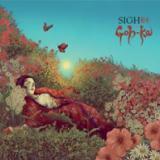
THE EPIC NEW STUDIO ALBUM FROM THE LONG-STANDING JAPANESE METAL PIONEERS, INCLUDING GUEST APPEARANCE FROM OPETH'S MIKAEL AKERFELDT - PRESENTED ON DIGIPACK CD & VINYL LPJapanese metal pioneers Sigh formed in 1989/1990 Their genre- classic Black Metal debut 'Scorn Defeat' arrived in 1993, & with a subsequent journey through the strange & the psychedelic, incorporating a whole eclectic mix of genre styles & ideas throughout their career, Sigh has remained a vital creative force in the avantgarde field whilst maintaining their old school roots, as witnessed on the 2022 album (& first for Peaceville Records), 'Shiki'. This was followed by the remaking of their 'Hangman's Hymn' album as part of the band's 35th anniversary celebrations, in the shape of 'I Saw The World's End: Hangman's Hymn MMXXV' (2025).
expected to be published on 09 Oct

Last delivered 7 months ago
available to reorder, subject to availability
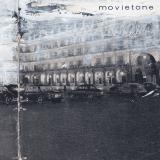
World Of Echo are proud to announce the long-awaited reissue of the self-titled debut album by Bristol’s Movietone. Originally released in 1995 by Planet Records and reissued on CD in 2003 by The Pastels’ Geographic Music imprint, this is the first time Movietone has been reissued on vinyl. An expanded double-LP edition, it includes the extra tracks from the 2003 CD (their first two singles, and an unreleased demo of “Chance Is Her Opera”), and adds three more unearthed gems: demos of “Alkaline Eye” and “She Smiled Mandarine Like”, and an early take of “Late July”, recorded in a garden by Dave Pearce (Flying Saucer Attack) in 1993.
Taken together, this is the definitive collection of music from the first phase of one of Bristol’s most remarkable groups. Movietone was the cumulation of a series of events, explorations, and discoveries, starting at secondary school – the group’s core membership of Kate Wright, Rachel Brook, Matt Elliott and Matt Jones met at Cotham School in Bristol. As for many other groups, their early years were all about experimenting, and finding ways to ‘make do’, a DIY sensibility that would inform Movietone through their decade-long lifespan. From formative rehearsals in a shed in the garden of Brook’s family home, to recording early material to four-track in Redland Library, and on into the Whitehouse and Mr Grin’s studio sessions for their debut album, Movietone’s music fell together in a creatively unpredictable, yet conceptually rigorous manner.
By the time they released Movietone, they’d found a home with Bristol’s Planet, run by author Richard King and James Webster, who had both released their first two singles, “She Smiled Mandarine Like” and “Mono Valley”. There was other music happening around them in Bristol, too, from the Jones brothers’ avant-rock outfit Crescent (who were Movietone’s closest conspirators), through Elliott’s jungle/electronica project Third Eye Foundation, and Brook and Elliott’s membership of Flying Saucer Attack. A closely knit community, Movietone are the centre of this nestling architecture of groups. The vision in the music, mostly, belongs to Wright, but Movietone ran in democratic creative consort. Listening back to Movietone, you can hear this democracy in action through the wildness of the music, which is balanced by the poetics of Wright’s lyrics and melodies.
Full of half-captured memories and entangled abstractions, there’s an elliptical, ruminative quality to much of the writing here that shows the deep influence of the Beat Generation writers, along with a twilight environment captured in the songs that’s pure third-album Velvets, Galaxie 500, early Tindersticks, Codeine. Unpredictable interventions – the crashing glass in “Mono Valley”, the sudden explosions of “Orange Zero” point towards the noise blowouts of My Bloody Valentine, the unpredictability of Sonic Youth; Wright’s understated vocal cadence suggest a deep, embodied understanding of John Cage’s Indeterminacy.
Movietone would go on to make 3 fantastic albums for Domino: Night & Day (1997), The Blossom Filled Streets (2000) and The Sand & The Stars (2003) and their Peel Sessions were released earlier this year on Textile. Still held in high regard by artists like Steven R. Smith, and The Pastels, whose Stephen McRobbie once described them as “one of the great unknown English groups,” it’s an absolute thrill to listen to Movietone anew – still inspired, still seductive, still magic, still mysterious.
expected to be published on 09 Oct
No more hiding behind the unknown alias — Wilba steps out as the Tool Trader behind the Party Tool series for 3.0!
Stripped back and built for the floor. Tough, rolling grooves, acid-tinged leads and those trademark tripped-out vocals, all wrapped around a set of chunky, no-nonsense tools. The chunkiest instalment in the Party series yet — rinse it.
Last delivered 11 days ago
available to reorder, subject to availability
Confronting 2026, hope can seem in short supply, as the most divisive and toxic voices worldwide are amplified amidst an ever-rising temperature of conflict and alienation, yet hope is abundant in ‘Losey’, the latest release on Rocket Recordings from the mercurial duo Gnoomes. Just as this couple have taken a bold step into the unknown by leaving Russia and moving to Slovenia, so their music has thrown off all shackles to flourish in a defiant show of vibrant and revivifying colour. “The life of an immigrant is a strange thing.” says the bands Sasha Piankov “But luckily, that glow music brings us has never faded, even though the emotional landscape has definitely shifted.” Yet whilst the music that Sasha and his creative and life partner Masha Piankova came up with is testimony to a liberating triumph against oppression and adversity, it also goes beyond. What has emerged is a kaleidoscopic collision of styles which sends the ‘skygazing’ realm of their previous work spinning into electronic orbit. Whilst the opener ‘Foreign Agent’ explicitly tackles the pressures of the Russian state, it also throws a Stereolab-style motorik meditation through an in-the-red psychedelic prism. Elsewhere we can behold Bulgakov and Chris and Cosey as bedfellows amidst the mesmeric, 303-fried EBM of ‘Satan’s Ball’. “Rave as therapy. Pop as resistance. Love as endurance. ADHD as a production technique.” These are the primary ingredients of Losey, by the reckoning of the band themselves. This is an album that exists purely on its own distinct frequency, driven by defiance and positivity. Losey is a soundtrack to set fire to the old order, the better to dance in the glow.
Last delivered 12 days ago
available to reorder, subject to availability

Lost Soul Super Rarity “Here I Am Baby” by Lady Jane reissued by Athens of the North
Rare 1980 Detroit funk-soul LP finally surfaces after 45 years, revealing a powerful story of survival and artistic resilience
Edinburgh based label Athens of the North is pleased to announce the reissue of Here I Am Baby, the only studio album by soul and funk vocalist Lady Jane (Jane Brice), originally recorded at Studio A, in Dearborn Heights and privately released in 1980.
Lady Jane recorded these sessions during a turbulent period in Detroit in the late 1970s, working with respected engineer Eric Morgeson and a studio band on material largely written by her then-husband. The album remained virtually unknown for decades, with copies destroyed in a flood and masters held by her ex-husband. A chance discovery by Friends of Sound Records founder David Haffner in 2022 set the reissue in motion. Remarkably, before his death, Jane’s ex-husband returned the original master tapes to her—yielding not only the complete multitracks for Here I Am Baby, but an entire album’s worth of unreleased material, also coming soon on AOTN.
Here I Am Baby showcases Jane’s extraordinary voice across a compelling blend of soul, funk, and disco, from the opening ballad through heavy funk excursions like “Never Lived In The Ghetto” and “Space Flight.” The album’s final track, “She’s A Star” - the only song Janewrote herself - carries profound personal significance. Recorded without her husband’s knowledge, the song directly addresses her survival of childhood sexual abuse and stands as a moving testament to resilience and self-belief.
Now an ordained minister, Jane Brice has spent decades away from the spotlight. But her voice—at once forceful, delicate, and vulnerable—deserves to be heard. Newly mastered from the recovered tapes, Here I Am Baby and the forthcoming Miss Disco present not merely a rare funk-soul artifact, but a powerful document of a woman’s courage in reclaiming her own story.
Last delivered 12 days ago
available to reorder, subject to availability

PopElectronicaIndieHouseBeatsBass
Belgian artist Jennifur announces MAZDA, an album inspired by long car rides, emotional transitions, and the strange beauty of existing between places, people, and versions of yourself.
Musically, MAZDA moves fluidly between genres and emotional textures, blending electronic love songs, indie rock structures, UK bass influences, cinematic electronica, and flashes of classical composition.
The project began when Jennifur's brother sent him a playlist called MAZDA, filled with songs their father used to play in the car. What started as a nostalgia gesture quickly became the emotional blueprint for the album.
While writing MAZDA, Jennifur realized he was unknowingly creating the soundtrack to a fictional romcom film that existed only in his imagination. Rather than avoiding clichés like love, heartbreak, growing older, or transition, he chose to embrace them wholeheartedly.
"In a car, you exist in a kind of in-between space," Jennifur explains. "You've left something behind, but you haven't arrived yet. That feeling became the entire record."
The album opener, From A to B, sets the emotional framework for the entire project. Its extended introduction mirrors the exact moment you pull out of your street and realisethat something new has begun.
Highlights include "I Need You To Hold On", written for Jennifur's brother as a message of encouragement. The song "I Once Had a Dream Where I Could Fly" originated from a conversation with his father about recurring dreams of flying. Meanwhile, "From The Sideline" confronts a quieter existential fear, becoming a coming-of-age anthem for anyone who suddenly realizes they have become more of a spectator than an active participant in their own life.
Tracks like "In The Sun" bring a softer, almost cinematic intimacy to the album. Written around the image of spending one final Sunday at the seaside with someone who is seriously ill, the song captures the beauty and fragility of fleeting moments. The closing track "The Dialogue Before We Left" serves as the emotional final scene of the album.
"For me, it's the moment after a long drive when you turn off the engine but stay seated for a minute," Jennifur explains. "You realise something happened. You listened to my story, and we travelled from A to B together."
expected to be published on 02 Oct

Es handelt sich um einen Vermerk, den der Dark-Ambient-/Industrial-Titan Lustmord beinahe in die Liner Notes seiner neuen Zusammenarbeit mit der Schlagzeuglegende Dave Lombardo aufgenommen hätte. Bei ihrer ersten Zusammenarbeit loten sie die Tiefen des ursprünglichen Industrial und Dark Ambient aus und schaffen dabei etwas, das über die reine Musik hinausgeht. Dave Lombardo bedarf keiner Vorstellung. Sein Ruf als innovativer Schlagzeuger und musikalischer Vorreiter ist unübertroffen. Ob es nun seine jahrzehntelange Tätigkeit bei den Thrash-Metal-Giganten Slayer, seine vier Alben umfassende Zusammenarbeit mit den einflussreichen Experimentalisten Fantômas oder seine Arbeit mit dem renommierten Komponisten und Saxophonisten John Zorn war - Lombardos Leidenschaft für den Klang und seine spirituelle Verbindung dazu überschreiten alle Grenzen Lustmord ist der walisische Musiker, der weithin als Begründer der Dark-Ambient-Musik gilt. Er war zunächst in den frühen 80er Jahren als Mitglied von SPK mit der Industrial-Szene verbunden, bevor er seinen charakteristischen Sound mit Veröffentlichungen wie ,Paradise Disowned" aus dem Jahr 1986 etablierte. Über sein Solowerk hinaus hat Lustmord eine umfangreiche Karriere als Kooperationspartner und Film- sowie Spielekomponist aufgebaut, wobei er mit Bands wie den Melvins, Tool, Nurse With Wound und Wes Borland zusammengearbeitet hat; zudem hat er zu über vierzig Kinofilmen beigetragen, darunter ,First Reformed", ,The Crow" und ,Underworld".
expected to be published on 02 Oct
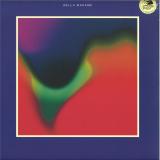
Roughly two years after the release of their initial statement of intent, debut single “Toutpartout PT2” with its hypnotic ripples, Andi Haberl and Florian Zimmer aka Bella Wakame have successfully channeled the magic of a 2024 live recording (captured at Berlin’s Donau115 & Silent Green) into their first proper studio offering. You can hear inspirations ranging from Bitchin Bajas, Jeremiah Chiu to Groupshow (Jelinek, Leichtmann, Pekler), the hypnotic, intricate battle between form and freedom (the fun of momentary formlessness) continues to unfold over the course of 10 new tracks, featuring album guest Indra Dunis (Peaking Lights). Their first single "Shades of Nambei" was very much inspired by the wonderful band Spirit Fest and their song "Nambei".
You can either shorten the reins, or you can loosen them – and give things more slack. With Bella Wakame, it’s definitely the latter. Constantly challenging each other, they’re tapping a whole new energy. Tons of different energies.
Based on the impulsive, propulsive interplay between drums/sensory percussion (Andi Haberl) and modular synthesizer (Florian Zimmer), the frenzied, free-form results take listeners into completely new dimensions – sonic worlds that don’t really sound anything like their other musical outlets (The Notwist, SUN, Saroos, Driftmachine etc.).
Whereas most bands tend to notoriously overthink names/monikers, these guys obviously only care about the ecstatic push-and-pull that occurs once their instruments meet and overlap: it’s wildly explosive textures with a booming heart. Moving restlessly between motorik club, electro-acoustic jazz experiments, ambient excursions, and fast-paced instrumental anthems that seem to explode at the seams, one can immediately tell how much they enjoy the newfound freedom, the turbulent encounters born on the spur of the moment.
It’s all about a quick-paced exchange of friendly blows, a chasing of tails into ever-new musical terrains. Relying on just enough form for that wildness to blossom within, their just-in-time dashes continually unfold, refold, return, grow bigger – and leave you startled.
Last delivered 17 days ago
available to reorder, subject to availability

Pressure is the medium of wind players. Wind instruments all sound thanks to pressure differentials, whether that’s the rush of wind over a lip plate or a steady, buzzing exhalation through pursed lips. Ka Baird and Chris Ryan Williams (HxH) are wind players well- schooled in the power of using pressure and movement to amplify the mystery of an invisible force animating a metal tube. They augment their instruments, flute and trumpet respectively, with electronics, sometimes obscuring the acoustic sound source, sometimes making it hyperreal. Flutters of lip and tongue slither over the listener’s ear, and sustained tones become a dense fog, pushing on other kinds of visceral, emotional pressure points.
On Enthalpy, Baird and Williams’ first album as a duo, the energy they conjure feels barely contained, the pressure built up to a breaking point before spilling out in multiple directions at various speeds. They borrow the title from thermodynamics, referring to the total energy of a system based on its pressure and volume. The music flies out in bursts; it seeps and oozes, flows with intention. It is an incredibly rhythmic work without any hint of meter, full of sounds that punctuate with the thud of a dart hitting a bullseye. Williams’ capability to conjure swirling atmospherics, as well as his remarkable ability to pull fragments of melody from the haze, fit puzzle-like into Baird’s exclamations and the eruption of electronics that often dovetail them. The duo draws on tones from nearly the entire range of human hearing, from nimble but bulbous throbs of sub-bass to pinprick flickers of ultra-high end.
The sessions that produced Enthalpy were completely improvised, showcasing a degree of mind-meld that belies each participant’s thrill at approaching the unknown. This isn’t a casual conversation, but an omnidirectional tangle that ties and reties itself into new knots as the album progresses. Williams and Baird have both become ubiquitous presences throughout the New York City experimental music communities, collaborating with innumerable others and learning how their unique approaches work in tandem with similarly expansive thinkers and players. Even in the album’s most spacious moments, there’s a tension between the feeling of being unmoored and yet completely locked in, like the abyss is just one more river to cross. They ford it together before moving on to the next idea in lock step.
For the listener, Enthalpy is often felt in the body as much as it reverberates within the ears. We’re tossed from side to side, made to shoulder the impact of detonating electronics, absorbing these sounds with the feet, gut, and crown. Baird reaches into the back of their throat for guttural growls, and we can almost feel the scratch. As we tread the border of the synthesthetic, it's a reminder of the physical nature of sound, that the space between our ears and the speakers is its own enthalpic system of energy conduction. Move with it, let it move you, and see how it feels.
expected to be published on 25 Sep
floatist
Welcome to Somewhere Else Entirely – a cinematic road trip to the sea, picking up traces of Indie Folk, Dream Pop and Neo-Soul along the way.
Floatist's debut explores finding connection in uncertain times through playful yet driving grooves, cinematic strings and hazy analogue soundscapes - embracing the unknown with curiosity, courage and joy.
Somewhere Else Entirely brings together twelve tracks that drift between worlds. Gentle, intimate voices tell stories and merge into immersive choirs, floating on airy grooves. The music invites the listener to sink in, get comfortable, roll down the imaginary window and lean their head into the warm rush of air, while sun-drenched maritime landscapes pass by and the salty breeze announces the approaching sea.
For fans of: Helena Deland, Nick Hakim, Puma Blue, Feist, Konradsen, Clairo, Alice Phoebe Lou, Lianne La Havas, Lutalo, Klangstof, Sam Evian, Hannah Cohen, Rosie Lowe
expected to be published on 25 Sep
Modi Bardo, an alumnus of Moonshine Recordings, is another who on the surface appears to be at the nascent era of their sound experiments, but in truth is a longtime explorer of outer realms of Dub.
There is much to mention here which can be uncovered with the correct keywords, but one of the early bright points would be Spacelings and Bassheads, the Detroit-based Psych duo Modi Bardo was half of, who although seemingly limited in the realms of recorded output (with only a compilation appearance each via the Electro visionaries Interdimensional Transmissions and Booty bass / Techno orientated Intuit-Solar) where in fact not-so-limited in the era in the way of public performance, even performing at the renowned Packard Plant renegades in the 90's with UR on occasion.
Forward to now, and Modi Bardo has created something that reaches for unknown territory in Dub. With an establishing A side that is deep and primordial in tone, a' la Challenger Deep and Babe Roots releases, this proves to be merely a fantastic tone setter for the B side, which seems to find a zone where Dub Techno, Half Time, and Autonomic DnB have not quite gleaned yet. Truly a record unlike any other, while somehow being an invaluable tool for DJ's exploring the links between the aforementioned sounds and even Dancehall and Jungle in the mix.
A must for all those chasing the evolution of dub reflective arts, and the adventurous DJ in general.
expected to be published on 25 Sep

Ancient spirits come alive as SKÁLD extend an invitation into times long gone but not forgotten. Ørlǫg, coming September 25, 2026, is their first album via Napalm Records, and it is our destiny. As the Norns weave our future, this album is a fascinating passageway into our pristine origins and the consequences of our choices. Ten new songs as stepping stones, Ørlǫg is an offering to listen, to dwell, to reflect—and to find something within yourself previously unknown. SKÁLD don’t just play music, they awaken ancient ways.
expected to be published on 25 Sep

“Speed is power is structure is reason is human is terror is speed…”
LOL SeWitt
Inspired by Sol LeWitt’s drawing “Six Thousand Two Hundred And Fifty-Five Lines“ (1970), Sonic Belligeranza 12’s sound is generated by a code that translates the lines and the spaces between the lines of the original drawing into 6255 speedcore kicks at 33 RPM (disc 1) and 45 RPM (disc 2). Also contains the ‘holy structuralist’ and ‘sphexish threshold’ versions with Six Thousand Two Hundred And Fifty-Five hertz drones accompanying the ultra-kinetic machine-gun bursts on both discs.
THE VIEWER BECOMES THE LISTENER!
Think generative speedcore, think I.D.M. (Informational Dance Music), think aural extravaganza. Think of a number: Six Thousand Two Hundred and Fifty-Five.
Last delivered 23 days ago
available to reorder, subject to availability

Some recordings herald the future in ways that are impossible to see in real time. Teodros Makonnen With His Organ (ቴዎድሮስ መኮንን ከኦርጋኑ ጋር), by the artist Teodros Makonnen, also known as Teddy Mak, is one of those. Today, electronic sounds, synthesizers, and digital production are taken for granted in Ethiopian music, but in the early 1980s, they were novelties that polarized opinion. Even to this day, the story of Teodros Makonnen’s legacy has never been properly told. He played a decisive role in defining the sound of the digital era of Ethiopian music that emerged in the 1980s and beyond, both as a keyboard player and as a producer, songwriter, performer, and sound designer.
Ethiopian music was at a crossroads in the early 1980s. Much like music in the rest of the world, technology and automation heralded either a quantum leap in musical development or the annihilation of musicianship, depending on who you’d ask. The changes were incremental nonetheless, but with the benefit of hindsight one can clearly see that the changes meant different things in different contexts. Drum machines and electric organs came to replace many hotel bands because, all of a sudden, one musician could control drums, melody, and accompaniment. Teodros was one of the first musicians in Ethiopia to explore the possibilities this opened up.
Teodros’ father, Captain Makonnen Beri, was a chief pilot at Ethiopian Airlines and a music enthusiast at that. This would prove important to his development, as Makonnen brought back a piano from Germany, which would lead to the first steps in Teodros’ long musical career. Captain Makonnen’s work as Head of Flight Operations and as a pilot exposed him to the wider world that was far from commonplace for most Ethiopians. In a house where music captivated the whole family, the piano gave Teodros’ talent an outlet. Not only was a piano at home rare in Ethiopian households, his father also brought an Indian teacher to their home to teach Teodros and his brother, Captain Samuel Makonnen, music theory (solfeggio or ear training) and piano. Teodros and his youngest brother, the late great Dereje, a member of both the legendary Ibex Band and the Ethiopian reggae group Dallol, took up music from that point onward, with Teodros beginning to develop his proficiency at the age of eight. His father encouraged him to practice tirelessly at home, and Teodros later received musical schooling at the German School in Addis Ababa.
His obvious talent led to studies and formal education at the Yared School of Music, followed by continued studies in American jazz at Northern Virginia Community College in Virginia. Teodros cut his teeth professionally in his mid-teens, not only as a keyboardist, but also as an arranger for the Wabi Shebelle and Dahlak bands in the 1970s. He mastered electronic sequencing early, rising to prominence through the midnight recording sessions held during the military curfew. The pressures imposed by the curfew required precise and disciplined recordings, and Teodros delivered just that. This, in turn, led to collaborations with iconic artists such as Mulatu Astatke, Aster Aweke, Menelik Wossenachew, Tilahun Gessesse, Mahmoud Ahmed, and Alemayehu Eshete.
In those days, he sat in as a keyboardist with the Dahlak Band when Dawit Yifru took a hiatus to study in Russia, and also with the Ethiostar Band. He secured a residency at the Wabi Shebelle Hotel with the Shebele Band, together with Zelalem Tadese (drums), later succeeded by Elias Bekele, Mulugeta Hailu (bass), Teferi ‘Bibisha’ Mengesha (guitar), Kumelachew G/Selassie (trumpet), and Teshome Deneke (saxophone). A friendly competition developed between the bands associated with the Ras Hotel (the Ibex Band), Ghion Hotel (the Dahlak Band), and Wabi Shebelle Hotel (the Shebele Band). The music scene at Wabi Shebelle saw teenagers commanding the spotlight in an industry otherwise dominated by musicians of an older generation.
At the Wabi Shebelle Hotel, Teodros met a diplomat from Saudi Arabia and later visited him at his home in Addis Ababa, a meeting that had unexpected musical consequences. The man owned a Yamaha double-deck keyboard. That evening, they recorded Teodros Makonnen With His Organ (ቴዎድሮስ መኮንን ከኦርጋኑ ጋር) in one take. This recording, a cornerstone in the early digital sound of Ethiopian music, came about almost by chance, simply because Teodros got the opportunity. Traditional Ethiopian songs were cast in a wholly electronic style.
Once freed from backing duties, Teodros’ keyboards could explore dreamlike soundscapes that took Ethiopian music in new directions. Even though the cassette contained well-known Ethiopian songs, they were given highly original arrangements, performed on an electric organ with drum machine backing and rhythm patterns that left the listener with suggestive, lingering sounds. “Libesh Kabashen” (also known as “Anchi Bale Game”) and “Odu Gol Golesa” wrap you in the very stuff that dreams are made of.
Originally released on cassette only, this recording exudes a mystique that surpasses even some of the most obscure Ethiopian recordings of the day. It remained more or less unknown outside of Ethiopia until now. Some of the tracks, like “Addis Fikir,” are permeated with an almost naive buoyancy, free-floating sounds that lost contact with the ground the moment they were conceived. Others, like “Meche New Hageren Yemayew” and “Lelitu Alnega Alegn,” carry a moodier, quirkier timbre, with pulsating rhythms in the background. Yet even the darker pieces contain an unmistakable wave, something essentially Ethiopian. If most recordings of Teodros’s contemporaries at the time were teeming with atmosphere, his songs seem instead at home in the stratosphere, almost ethereal. Some of the music here could be filed under “lullabies,” were it not for the recurring, almost brooding feeling that engulfs the listener on the aforementioned tracks. You could easily be forgiven for drifting into a blissful haze as the music washes over you.
Up to the advent of electronic music production, Ethiopia was totally dominated by big bands on the one hand, and small groups on the other. The former were tied to large institutions such as the military, the latter emerged from the entertainment industry, in hotel bars and nightclubs. These groups were commercially driven, and bands ultimately had to foster a mercenary approach to employment, albeit not to the passion for music. In the light of this, Teodros’ musical legacy can be seen in two ways. On the one hand, he is a key player in Ethiopian music from the 1970s onwards, leaving an indelible mark through hundreds of compositions and arrangements, including soundtracks for numerous documentary films and advertisements for different companies. On the other hand, the way he and others employed electronics brought Ethiopian music onto a fork in the road.
The replacement of traditional instruments with electronic equipment was seen as impending doom by some. Others, like Teodros, saw new avenues for performance, production, and creativity. Just as later producers like Abegasu Shiota of Admas, Teodros was a trailblazer who opened paths that it took Ethiopian music as a whole more than a decade to rush into. The hotel scene had already been pushed toward electronic music by financial necessity and cost-cutting. Today’s revived global interest in Ethiopian music from the seventies and eighties, alongside a broader resurgence, has changed the reasons for using digital means of music production. They have become tools for musical dreaming. This is where the dreaming began.
Last delivered 13 days ago
available to reorder, subject to availability
PopWorld MusicElectronicaHouse
MĀRARA, meaning flying fish, is a musical project born in the heart of a still largely unknown Polynesian island. While Tahiti commands attention and the spotlight, Mārara remains in the shadows, ignored by tourist circuits and dominant cultural narratives. This album aims to put Mārara on the map and give voice to an island that deserves to exist in all its richness.
Through this work, we offer an immersion into our traditions, customs, legends, and myths. These stories, deeply rooted in Polynesian culture, are transformed by the environment: for example, the legends of an atoll differ from those of a mountainous island, shaped by the climate, the terrain, and the elements. MĀRARA captures this diversity and reveals its unique character.
This album is not just a musical creation: it is an act of cultural transmission and visibility. Music becomes a vehicle for identity, a voice for an unknown territory, and a bridge between past and present.
"With MĀRARA, we make our island sing so that its voice resonates beyond its horizon."
expected to be published on 18 Sep

Debut full length of old school DEATH METAL on a timeless warpath strewn with familiar and unknown terrors beyond.
Timelessly in the vein of Bolt Thrower, Nihilist, Entombed and Dismember where death takes bearing on the facade of life.
The ancient stench of war follows HEDONIST on their campaign of destruction!!
This four-piece old school death metal band hails from Victoria, BC, and brings forth a ferocious exhibition of power amidst morbid undercurrents of disaster.
expected to be published on 18 Sep
