Trentemøller's new untitled album explodes with the force of a supernova before dissolving into swooning vocals. Across 10 songs, maximalist guitar-noise blowouts collide with some of the most bruising shoegaze you'll hear this year. "The noisy got noisier, the dreamy got dreamier," says Trentemøller. "I was ruthless this time."
Opener "Swerve", recorded with Vienna-based singer Sakura, crashes into searing walls of sound - a stark contrast to 2024's haunting Dreamweaver. The album's radically intuitive energy persists on the anthemic "Visceral" and the industrial fuzz of "Your Love Walks Alone", featuring Sune Rose Wagner of the Raveonettes. "Coyote" deconstructs synths into feedback and brutal guitars, while "To Mist" and "Halved" (featuring Midwife) offer nocturnal respite - nugaze ambience reduced to fractals of fragile beauty. For the first time in Trentemøller's history, vocals appear on every track - contributors include Sakura, German-British singer Anika, Midwife, Tan Cologne, Sune Rose Wagner, Jonas Bjerre of Mew, and Danish singer-songwriter Emma Acs, among others. "I knew early on exactly who I wanted. We never met in the studio; everything was exchanged remotely. I'm pretty shy, and it gave the vocalists the privacy to really open up," he explains. Songwriter, multi-instrumentalist, producer, and mixer - Trentemøller did it all himself. "I don't follow trends or think in algorithms." The reward: playing the album live, start to finish, for the very first time on the upcoming live tour.
Trentemøller's new untitled album explodes with the force of a supernova before dissolving into swooning vocals. Across 10 songs, maximalist guitar-noise blowouts collide with some of the most bruising shoegaze you'll hear this year. "The noisy got noisier, the dreamy got dreamier," says Trentemøller. "I was ruthless this time."
Opener "Swerve", recorded with Vienna-based singer Sakura, crashes into searing walls of sound - a stark contrast to 2024's haunting Dreamweaver. The album's radically intuitive energy persists on the anthemic "Visceral" and the industrial fuzz of "Your Love Walks Alone", featuring Sune Rose Wagner of the Raveonettes. "Coyote" deconstructs synths into feedback and brutal guitars, while "To Mist" and "Halved" (featuring Midwife) offer nocturnal respite - nugaze ambience reduced to fractals of fragile beauty. For the first time in Trentemøller's history, vocals appear on every track - contributors include Sakura, German-British singer Anika, Midwife, Tan Cologne, Sune Rose Wagner, Jonas Bjerre of Mew, and Danish singer-songwriter Emma Acs, among others. "I knew early on exactly who I wanted. We never met in the studio; everything was exchanged remotely. I'm pretty shy, and it gave the vocalists the privacy to really open up," he explains. Songwriter, multi-instrumentalist, producer, and mixer - Trentemøller did it all himself. "I don't follow trends or think in algorithms." The reward: playing the album live, start to finish, for the very first time on the upcoming live tour.
Boulderhead arrives on Haŵs with ‘Sunshine’ — four cuts that blur the line between club functionality and sonic experimentation. Twisting delays, playful FX work and endlessly shifting textures give the record a voice that's unmistakably his, pushing familiar forms into stranger territory without ever losing sight of the dancefloor.
The title track ‘Sunshine’ opens proceedings with a heads-down trip anchored by a cheeky, tongue-in-cheek vocal hook, swung grooves, and hypnotic momentum. Jorg Kuning steps up on remix duties, gently reshaping the original at every turn. His hardware-led approach keeps the groove in constant motion, each subtle shift revealing another layer without ever breaking the spell. Flip the record and ‘Moonshine’ strips things back into classic Boulderhead territory, while ‘Practice’ closes the EP on a deeper note, pairing lush synth work with beautifully detailed percussion for one final slow burn.
Never too serious, always full of character. The kind of record that keeps giving something new back with every listen.
Land of Talk is still here. That wasn’t always a guarantee. Over the multi-faceted twenty year history of their project, Lizzie Powell has drifted from and back to music, always interrogating their role as an artist. In the time since 2023’s Performances, they found themselves utterly worn down by the vicissitudes of the music industry and wracked with worry around their aging parents. Yet the music didn’t stop: Powell heard songs in traffic and in birds chirping, in their downstairs neighbor’s daily prayers and in the babble of children on the street. Melodies slowly cohered over time. “Life can become so unbearable, and music is where I go to metabolize it,” they explain. “I know the music was the only thing that was going to help me.” Soon Powell reemerged with the sixth Land of Talk album, LASTS.
LASTS is full of double meanings — both resilience and finality, acting as a noun and a verb. Though LASTS is haunted by crises including climate collapse, political upheaval, and genocide, the mangitude of global turmoil led Powell towards smaller, humane depictions of suffering and grief. As both their parents became ill, Powell reflected on the last time a person might walk, might talk to a loved one. Yet watching their parents near the other side of life’s arc also made Powell consider all they had survived across their own decades on this earth, their new songs channeling both gratitude and rage. LASTS became a phrase, honoring Land of Talk’s circuitous route and all Powell’s reckoned with through the years. “I think of this record as a love letter to life,” they say.
The end result is an album both lean and winding, allowing Powell’s words and melodies to take centerstage, uncrowded in visceral, shot-no-chaser arrangements. LASTS jumps right in with “Broken Tongue,” a wiry track built on thrumming electric guitar and ghostly synths as Powell rails against the lack of justice for victims of abuse. The trio’s interplay is readily evident in “Saffron” and “4:44,” two earworm songs that also allow themselves to unspool into extended instrumental codas. Early in the record, there are seething tracks like “Dogs” — “Just your basic instinct / Even dogs know better,” Powell growls in the chorus, before the song quiets into a plaintive plea of “Leave us alone now” — and later there are more vulnerable, wandering moments. In “Projections” and “Cedars,” Powell ventures deep into their head, inviting their co-conspirators and listeners alike to follow the songs wherever they meander.
POD & Edward Richards return for the third and final of their series of hand stamped vinyl with a very unique outing. In contrast to the slower tempo of the the Polar Phase and Temporal Loop Trascendance EP’s, the pair up the ante with a blend of bass music meets dub techno. With the addition of drummer Miles Henry, the sound transcends basic genre descriptions into a liminal space between live music and the repetitive machine form of electronic music. Miles contributes both acoustic kit and electronic drums to the title cut and Nautilus, and in his own words he seeks to capture the impossibility of playing like a machine. On the flip side Quadratic Illumination progressively builds, with layers of hardware synths atop a foundation of deep sub-bass, broken beat drums, and hints of electro. And to cap of proceedings there is an incredible remix by Evigt Mörker that embodies a sense of serene bliss, and is a near perfect end to not only this record, but to the series as a whole.
Jotel’s new EP on Warning calls upon long-time family and scene staples for a masterclass in stripped-back, high-impact dancefloor mesmerism. Shifting between rough-edged modular electronics and deep, organic aesthetics, the EP transforms the finest raw machine funk and 2000s-era progressive into mind-bending club anthems.
Opening the A side ‘Udo Suppi’ sets the tone with a rolling, space-infused groove. Driven by a buzzing, high-voltage bassline and fluid synth work it’s nodding to that golden crossover era where progressive house, early trance, and dark, driving techno collided. Followed by non other than the legend S.O.N.S, for many years a regular fixture behind the Warning decks, takes the track into his own sonic vortex, re-imagining the original with his signature deep-psy precision and intricate percussive drive.
On the flip, ‘Absolvere’ pushes deeper into trippy territory. A long-form, evolving journey built on rolling stabs, fluid arrangements, and an electric undercurrent. A track designed for special hours, late-night car rides, and fog-filled rooms. Closing out proceedings, Düsseldorf’s Trancesetter of Westphalia return to the label to rework ‘Absolvere’, injecting their trademark tribal energy and acid-laced, peak-time madness into the fold.
More than just a genre exercise, whether you call it Retro Goa for the club, Dark Progressive, or simply pristine, full-flavored dance music. WAR1211 is a celebration of long-standing friendships, raw hardware exploration, and strictly unlimited dancefloor fuel.
San Francisco’s 21 st century take on disco has long tended towards the cosmic and
psychedelic, a reflection of the Bay Area’s long association with trippy, mind-altering music.
Over the years, Leng Records has periodically dived into these fertile waters, delivering
inspired slabs of cosmic-minded and dub-flecked excellence from 40 Thieves and, more
recently, Marshall Watson and Cole Odin.
It’s to Watson, a long-serving producer and sound designer whose work has previously
appeared on labels including Sprechen, Shades of Sound, Seven Villas, Italians Do It Better, Highpoint Lowlife and NuNorthern Soul, that Leng has turned this time around. It marks his first solo appearance on the imprint and lands two years on from his inspired Odin collaboration, Voyager. ‘Little Monster’ is Watson at his most potent, club-focused best. Built around rock-solid
disco drums and a deliciously dubby, low-slung bassline, the track slowly builds via waves of intergalactic electronics, spaced-out and echoing vocal samples, audible nods to cosmic rock and bursts of starry synth melodies. Thickening and increasing in effects-laden intoxication as it progresses, ‘Little Monster’ not only lives up to its name but also cements Watson’s growing reputation as one of 21st century cosmic disco’s most distinctive talents.
Fittingly, the accompanying remix comes from Leng regulars and fellow San Francisco
residents 40 Thieves. Delivering a genuinely epic, near nine-minute excursion, the veteran
collective drag Watson’s inspired original mix further towards Daniele Baldelli style dub
disco-meets-Afro-cosmic territory. Expect bolder, funkier bass, echoing synth motifs, eyes-
closed electric guitar solos, echoing synth snippets and wild, sustained organ chords. It’s
cosmic disco in dub… and the perfect accompaniment to Watson’s future cosmic disco
classic.
UFOs are nothing if not predictable and so it proves as this particular one is back in our orbit after more than two years away. The cult label signs up Mexico's DJ Natas to pilot a new mission to the edges of our solar system and hard-hitting cosmic industrial space tech is his vehicle of choice. 'The Titan Of Terror' is a busy sound laced up with wiry synths and acid prickles and it hits hard. 'F The Pain' rides stomping metallic drums and has eerie pads shimmering in the background while 'Stay Deep' is more sparse and dark with textured acid and spoken word musings, making it a more mental trip then 'Abracadabra' closes with a hint of psychedelic magic.
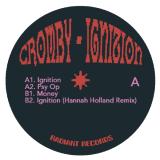
After a brief hiatus and creative refresh, Radiant Records returns with a bang, courtesy of Belfast house aficionado Cromby. A producer who needs little introduction, Cromby delivers the label’s ninth release, showcasing exactly what he does best: colourful, groove-heavy house music built for the dancefloor.
Ignition kicks things off with winks and nods to post-Y2K UK breaks and electro house. The title track’s boshy bassline and driving drums provide the backbone for an irresistibly stomping peak-time cut with summer written all over it.
Pumping the tempo up, A2 Psy Op is a rapturous floor-filler that draws from dance music’s most playful corners without ever sounding pastiche or revisionist. Undulating basslines, infectious vocals and flirtatious synth hooks combine to create something that feels both nostalgic and strikingly fresh.
Taking things in a slightly toolier direction, B1 Money is classic Cromby. A nifty little dinger packed with razor-sharp percussion, “house” vocals, tightly wound subs, timeless stabs and an impeccable arrangement, it’s a hot tip for DJs and dancers alike.
On remix duties, Adonis resident and legendary legend Hannah Holland zeroes in on Ignition’s electro parts and dials the mood up to 11. The result is a Detroit-leaning electro banger that highlights her versatility as a producer and rounds off a highly playable return to the fore from Radiant Records.
Ezra Feinberg's third album Soft Power sees the composer-guitarist enlist an impressive array of fellow musicians including Mary Lattimore, David Moore (Bing & Ruth), Jefre Cantu-Ledesma, Robbie Lee and share the life affirming lead single 'Future Sand'.
Defined by its abundance of melodies, repeating figures and ecstatic improvisations, Soft Power exudes an enlightened and transformative spirit to empower the listener. Feinberg, a practising psychoanalyst and former founding member of the San Francisco psychedelic collective Citay (Dead Oceans / Important Records) resides in the artistic enclave of upstate New York's Hudson River valley. Initial recordings emerged in the late summer of 2020, before added synthesis with collaborator John Thayer (Arp, Sunwatchers) during early 2021. Soft Power follows previous albums 'Recumbent Speech' (2020) and 'Pentimento and Others' (2018).
Feinberg artfully transcends the listener to an enriched place, his compositions distinguished by the deep humanity that lies at their core, plugging the listener into a state of wide eyed being, open and alive. Soft Power then is Ezra's own mantra but also one of power giving - a colourful catharsis translated into music.
Feinberg's music always speaks to the listener, but Soft Power, in whispering, speaks loudest.
"Much like everyday life, I wanted to convey these very plain, simple, tranquil, nearly quotidian aspects, but each piece contains this arc in which that form expands, is broken out of, so what starts out like a painting of flowers in a seaside motel turns into a riot of color and sound, or you feel slipped into a dream that feels like it could go on forever"
Aubrey has established Solid Groove has one of the more reliable outlets in the underground and now steps up with his own offering of fresh tracks recorded this year. 'Last Transmission' is a deep techno cut with a shimmering synth line and a subtle sense of hope folded into the futuristic outlook. 'Japanese Drift' is a brilliantly original sound built on a quickly stepping groove with soft electronics and synths infused into the mix. 'The Final Act' ramps up the energy a little more but still stays warm and soft around the edges before 'Diablos Debos' broods with a darker energy, but again stays contained and heady. A tasteful EP.
American Joe Babylon has been steering his Roundabout Sounds label through calming deep house waters for a decade or so. He has recently focussed on assembling this ongoing All Hands series (the name may be a nod to the analogue gear the tunes are made on? Sound-wise, it checks out) and volume three features another fine quartet. First up is DJ Honesty with a fine label debut in the form of the synth-laced swirler 'Walking Down Gratiot,' then label friend Mr. Hazeltinee aka John Tejada layers comic pads into an upright house rhythm on 'Zanzmatic'. San Francisco and more specifically Bay Area man Federsen offers super lo-fi and reserved deep house cuddle 'Sequential' while Babylon himself drops the slow burn shuffle of 'Play It By Ear'.
A DJ, producer and significant figure in contemporary electronic music, Marcel Dettmann steps forward to contribute to Running Back’s ongoing Mastermix series. Whereas previous editions of Mastermix have taken an ear to the sound of lapsed, legendary clubs such as Wild Pitch and Front, Dettmann’s curation deftly captures the man himself in ongoing perpetual motion, raiding the vault for his own precision-tooled edits, long-employed on dancefloors to devastating effect. Alongside a continuous mix, this release arrives as a 3LP gatefold, and as a limited edition cassette.
Closely associated with Berlin’s techno landscape, Dettmann was born and raised in the former GDR, then later immersed in the bleary-eyed counter cultural landscape of post-unification Berlin. Initially oriented by post-punk, industrial and new-wave music, Dettmann has been DJing since 1993, always expanding and perfecting his repertoire. He later began working behind the counter at the city’s tastemaking rave boutique Hard Wax, and a decade after he first dropped a needle, became (and remains) resident at notable local nightspot Berghain/Panorama Bar, where his instincts have helped sculpt the signature sound of both main dancefloors.
Of course, you’re probably not asking, “Who is Marcel Dettmann?” More importantly, you might want to know; just what treats has he gifted us here? The trip begins with a simple pitch-shift skywards, transforming Identified Patient’s creeping ‘The Female Medical College of Pennsylvania’ into a peak-time freakout, before an alternate take on Toctronic’s ‘Bis uns das Licht vertreibt’ emerges from the vaults for the first time. Dating from 1995, and one of Dettmann’s all-time favourites, Cristian Vogel’s ‘Untitled’ clambers back into the box with respectable cuts, while John Bender’s ‘Victims of A Victimless Crime’ kicks off the flip sporting a new arrangement, transporting us back to the foundations of a confident, stripped-back sound.
A few subtle edits to Clark’s perilously funky ‘Dirty Pixie’ takes us to Dettmann’s remix of Junior Boys. Produced in 2010, it transposes the Canadian duo’s sophisticated pop with our curator in his minimal prime, and has since become an irresistible prize for high-minded diggers. The same can be said for Experimental Products’ explosive proto-electro anthem ‘Who Is Kip Jones?’, empowered from pricey Discogs purgatory with just the slightest of tweaks. It’s deservedly sandwiched between the guiding influences of Chicago and Detroit in the form of Mutant Beat Dance’s raw ‘The Human Factor’ and a shimmering new version of previous solo production ‘Water’, featuring close friend and Ostgut Ton ally, Ryan Elliot.
The second half of the Mastermix seamlessly connects the mechanical past and digital present of EBM and industrial in the dance, with Dettmann’s instincts as a guiding hand. Severed Heads’ iconic ‘We Have Come To Bless This House’ emerges with mere nips and tucks, while Nitzer Ebb’s ‘Shame’ is significantly reimagined as a highwire act of rhythm and tension, setting up a sensual second take on a 2017 remix of ‘Limbo’ from Swiss synth heroes, Yello.
Core musical memories are shaken and stirred with a context-shifting take on Frank Duval’s emotional classic ‘Ogon’, while Ian North’s ‘Sex Lust You’ and Ford Proco’s notable Coil collaboration ‘Expansion Naranja’ effectively throb with only minor adjustments, respectfully imagined as “shadow versions”. Meanwhile, a simple breakbeat lifts Albert Kuningas’s ‘Astraalprojektio’ in the direction of wide-eyed dancefloors, while a fresh take on K-Alexi Shelby’s ‘Season of The Real’ inexplicably emerges somehow even funkier than before.
The conclusion of the compilation leads back to Das Tier from the prolific experimentalist Conrad Schnitzler, whose swirling synths and hypnotic vocals are duly tightened by Dettmann, but only as he puts it, “in conversation with the original.” Concluding three discs and thirty years of commitment to the dancefloor, this Mastermix not only offers us the opportunity to eavesdrop on this endless exchange, but to gain some sought-after material for our own record collections.
Macedonia's own Stojche is Fuse's next guest for the club's freshly made imprint. The long standing DJ and producer has been known to keep Detroit's playfully hybrid style as the focus of his work and 'Metaphor' is the case in point. His four tracks bounce through a nostalgic balance of techno, house, and more with a modern crisp. A refreshing take on club music, Stojche keeps techno's sometimes nonchalant attitude at arms length with a charismatic record that hits its mark with every measure.
The record's first track 'Counterpunch' features heavily lined percussion but still brews up a storm far and wide with resonant dub stabs and open hi hats. The drum machine boasts a full spectrum, rolling through a light show of melodic flashes, perfect for a room compressing soundsystem. The maximalist, vintage detail that Stojche brings to his compositions blurs the lines between classic genres in a time of hasty hybridization, which gives it a sort of authenticity that can't be taken for granted. 'Chordal Tribe', on the other hand, raises the general euphoria of the EP. Luring in the listener with bright pads and full-on drums, Stochje's work is reliable main slot material that adds color to any mix while providing a persuasive low end. Shimmering hi hats give it an ethereal quality making it an appropriate interlude for almost any context. Moving on to the B side, the producer sharpens up his rhythm and emphasizes the hardgroove influence in 'Signal Drive'. Softening the pace of his drums with free use of melodic chord stabs, Stojche opens up his dance floor for a crowd bonding record once again, complete with filter transitions and pummeling toms. As the final contribution, his title track 'Metaphor' begins with a more obscure opening to conclude his EP for Fuse. Leaning more to a techno cut, the record remains flamboyant as ever with open hats and rides shuffling through his arrangement. A muted main synth becomes apparent to focus the energy of the track while allowing for liveset-like drum flickering to take shape beneath, claiming the immortality of old club records with the technical precision of a seasoned modern producer.
The wait is over, Return To The 37th Chamber is El Michels Affair's highly anticipated follow up to 2009's underground cult classic Enter the 37th Chamber. Churning out classic records since then for the likes of Lee Fields, The Arcs, The Shacks, and tons more, it is clear that EMA's signature sound is stronger & sharper than ever. This time, in addition to re-interpreting the Wu compositions for a live band, EMA pays homage to the production and sonic fog that makes a RZA beat so recognizable. Producer and bandleader Leon Michels recorded the album completely analog, sometimes hitting 6 generations of tape before it was ready for mixing, giving the Return to The 37th Chamber it's own hazy sound. Adding to the unique fidelity, the record is laced with psychedelic flourishes, John Carpenter' synths, heavy metal guitars, triumpha0nt horns, and traditional Chinese instruments that make up for the lack of the Wu's superlative vocals. From start to finish it's a dark trip that walks the line between RZA's timeless hip-hop aesthetic and the cinematic soul EMA has become known for. El Michels Affair tackles some classics like 4th Chamber and Wu Tang Aint Nuthin to Fuck Wit, as well as some deeper cuts like Ol Dirty Bastard's Snakes, Raekwon's Verbal Intercourse, and Shaolin Brew, Wu-Tang's contribution to the St. Ide's Hip Hop endorsement campaign from 1994. This time El Michels brings some of the Big Crown family along for the ride. Lee Fields handles vocal duties on Snakes and is joined by Shannon Wise of The Shacks for their version of Tearz, which pays as much homage to the Wendy Rene sample as it does to the Wu-Tang Clan. Lady Wray makes an appearance on the cover of Method Man's hit, All I Need, lending her vocal prowess to what gave the Wu one of their biggest hits of all time. Interspersed throughout the record are some original interludes that are like the rug that ties the room together,' giving Return To The 37th Chamber a cinematic narrative that makes it a proper El Michels Affair record and not just a collection of covers. From the music to the presentation, this album is a perfect example of what can only be achieved through diversity. The end result is as much a kaleidoscope of influences and multiculturalism as the city it was recorded in. El Michels Affair is once again, sounding out the city' that raised them, pulling elements of art and culture from across the country and around the globe to create an album truly unique in it's own right.
From the co-writer of the iconic Hardcore Uproar, Suddi Raval arrives on Hello World Records with his debut EP — a five-track electronic journey that moves effortlessly between disco, electro, experimental electronics and analogue-fuelled psychedelia.
At the heart of the release is “Laser Beams and Mirror Balls”, the EP's titular track, reimagined by superstar DJ and producer Justin Robertson, who takes the neon-charged original and pushes it into new disco dimensions with his unmistakable production touch.
The journey begins with Robertson's remix before moving into the original French-vocalled version of “Laser Beams and Mirror Balls” — a hypnotic, pulsating slice of electronic disco that sets the tone for what follows.
On the flip side, “Oni Strangler” takes a darker, more hypnotic and exotic turn, drawing the listener deeper into Raval's richly textured electronic world. “Robot Computer” follows with a growling bass machine of electronic stabs, warped drones and relentless low-end energy.
Closing the EP is “Zub Sierra”, a spaced-out voyage through a dubbed-out otherworld before descending into deep, resonating electro synths — the kind of beautifully unpredictable analogue textures that only an analogue Odyssey can deliver.
Across all five tracks, Raval combines electro-flavoured rhythms with a kaleidoscope of electronic textures, forging pulsing basslines, hypnotic melodies and richly layered soundscapes. It's an EP that feels both rooted in the electronic music traditions that have influenced him and entirely of its own time.
Five tracks. One electronic journey. From laser beams and mirror balls to analogue odysseys and robot computers.
Chris Liebing's collaboration with Daniel Miller, Pascal 'Stubbleman' Gabriel and Terence Fixmer, aka The Alte Stuben Modular Ensemble, 'Entangled Circuits', has been remixed by Hayden Payne, better known as Phase Fatale. Originally released on Chris Liebing's 'Evolver' LP earlier this year, the remix will be released via CLR 20th November 2026. The original track is a collaboration between Liebing and The Alte Stuben Modular Ensemble made up of Mute founder Daniel Miller, Pascal 'Stubbleman' Gabriel and Terence Fixmer. New York-born, Berlin-based Phase Fatale has held residencies at Berghain, Brooklyn's Merge and Tbilisi's KHIDI, and has built a catalogue across Ostgut Ton, Dekmantel, Jealous God and his own BITE imprint, carrying a lineage that runs from New York's cold-wave underground through to the sharper industrial edges of Berlin's club circuit.
Phase Fatale rebuilds 'Entangled Circuits' around a hypnotic bassline, pitching the original's synth stabs up a notch.
Weighted kick drums, relentless repetition, and industrial texture anchor the rework in techno mastery, delivering a peak-time weapon without loosening its grip on the source material.
The original version of 'Entangled Circuits' appears on 'Evolver', Liebing's first solo techno LP, released 27th March 2026 on CLR. 'Entangled Circuits' was composed on a skiing trip to Oberlech, Austria with The Alte Stuben Modular Ensemble, Mute founder Daniel Miller, Pascal 'Stubbleman' Gabriel and Terence Fixmer, blending dark, modular synth textures with driving rhythmic sequencing. Marking a distillation of over three decades at Techno's core, the album pairs introspective depth with immediate, floor-driven impact, bringing together contributions from the likes of Luke Slater, Charlotte de Witte, Speedy J and The Advent, while ultimately remaining rooted in Liebing's singular vision.
Balaise was the original title of Vers le Nord’s debut album. In French slang, balaise means something in between badass and flamboyant. The word keeps popping up throughout the record, like a teenager’s graffiti scrawled on a bus shelter after a few drinks. Balaise robots. Balaise ghosts lurking in the shadows. Balaise is the barfly who fantasies about becoming a street vigilante. In many ways, Matthieu Pellerin's new solo project is entirely contained within that word: a gigantic piece one man against the world cobbled together, a monument shaped by hand using layers of synthesizers sounding like cathedral organs cast in concrete.
Stitching this type of freak together took time. Five years, or what sounds like forever in an age obsessed with career trajectories and content strategies. But for Matthieu Pellerin, it was never about career plans or taking the easy road. Or he would have dug up the rotting corpse of Oi Boys, his now-defunct band, whose brief existence and explosive popularity once united sullen skinheads, gothic street punks, and old school punks alike. Or he would have fully embraced the Metz scene, now that the Great International Triple Alliance of the East (Noir Boy George, The Dreams, The Feeling Of Love...) and rising solo acts like Tune Zitoune, Josy Bazar, Fantôme Josepha, and Tony Gerrano have somehow transformed this sprawling open-air heroin camp into an unlikely capital of cool. But Vers le Nord doesn't point East, and it is as a lone rider that Matthieu Pellerin can fully reveal his songwriting scope.
With Le Seul Élément, his first solo project, the Lorraine native had already shown a rare gift for crafting worlds. Picture vast sonic masses stretching like industrial zones, noise-filled fog pierced by pale neon lights and landscapes caught somewhere between the gnarliest dive bar and a doomsday bunker. And slipping through the soul-crushing slowness and fractured blackened atmospheres, one could perceive a throwback to his years plotting in black metal-tinged Loth and Bishop.
Vers le Nord populates those landscapes that once were rough sketches. Damaged characters reign supreme, with a plethora of exquisite mutts brought to life, rather than outcasts committed to the cause. Where Nuits Blanches —his new supergroup featuring members of Rixe, Lion's Law, Headbussa and La Femme— pulls no punches with raw confessions, Pellerin switches gear for tales of robot apocalypses, vagrants and fam-seeking school shooters, delivered with William Sheller-esque rhymes and striking images. Yet even within fiction, he manages to create something deeply intimate, almost defining, showing very little effort: he is a natural. All in all, à l’aise (at ease). Songs resonate deeply with the listener, perhaps because of Pellerin’s odd way or always addressing someone without ever really naming them, a floating, obsessive and inescapable “you” calling us out.
Despite all of the darkness, Vers le Nord stirs deep emotions. There is something of Type O Negative or Anna von Hausswolff in its constant collision of the ludicrous and the epic gothic, its bleak romanticism that never tells a sordid tale. While the vocals remain rooted in a distinctly French punk lineage—think No Class, La Souris Déglinguée and OG Bérurier Noir—the reactor core is hidden somewhere else. Oneohtrix Point Never feels like a closer relative with his ultra-emotional music made of cold synths and disembodied anthems, swallowing and regurgitating forty years of icy, contemplative new wave across ten songs. It comes as no surprise that Lila Ehjä and Aimable, two rising specialists in lowering the temperature below seasonal norms, appear on “Enterrez-moi bordel” (“Bury Me, for fuck's sake”), a grandiose, spectral and magnificently arrogant finale. And in the end, Vers le Nord starts where the original idea was hiding all along: somewhere amid the ruins, definitely balaise and yet somehow, completely à l'aise.
Andreas Tilliander released »Ljud« in 2001 as the first full-length album under his real name. The year before, the Swedish producer’s »Cliphop« album under his Mokira moniker had established him in the world of adventurous electronic music and the clicks’n’cuts scene. »Ljud« was just as minimalistic, warm, and playful as its predecessor while also notably inspired by house music. It is a timeless record based on happy accidents, playful loops, and lively spontaneity. For its 25th anniversary, Keplar presents a vinyl reissue with adjusted artwork by graphic designer Marc Hohmann and updated mastering by the artist himself.
Tilliander laid the foundation for his two first albums when he got rid of most of his music gear in 1998 after meeting Joel Brindefalk, who was already releasing music on the legendary Börft label. Brindefalk was using a computer as his main instrument and introduced Tilliander to the audio editing suite Sonic Foundry Sound Forge. »What he did with that software is what made me sell most of the hardware except my Nord Modular and a Korg MS-20.« The former synthesizer played an integral role while Tilliander made the tracks for »Ljud,« working primarily in the modular studio environment Jeskola Buzz.
»Ljud« came together in an intuitive process. »It’s still how I work 25 years later: I first make loops, create bits and pieces, and build up my own sound library as a foundation,« Tilliander explains. The Nord Modular and Buzz, which allowed him to swap samples and produce new sounds out of pre-existing ones, provided him with material for loops that formed the basis of the ten tracks. »I would start with a few elements, add more into the mix, then take them out again—arranging the pieces in real time while recording.« The casualness and vivacity of this improvisational approach becomes tangible throughout »Ljud.«
»Ljud« was released on Achim Szepanski’s Mille Plateaux, which had published the seminal »Clicks+Cuts« compilation in 2000. »I was part of that scene and I liked the digital aesthetic of the label,« says Tilliander »Coming from a very analogue setup, working with computer music and this kind of minimalism was very inspiring.« When preparing »Ljud« for the Keplar reissue, he ran the music through an analogue outboard and noticed he was still happy with the way it sounded. »It brought back fond memories. I hope the same is true for people who heard it back then, and that everyone who discovers it now will enjoy it, too!«
Naughty Boys, originally released in 1983, was Yellow Magic Orchestra’s seventh and final album to top the Japanese Oricon Pop charts.
A remix album, Naughty Boys Instrumental was released in July 1983. It contained nearly the entire Naughty Boys album as instrumental tracks in an entirely different running order, as well as the b-side to "Kimi Ni Mune Kyun", "Chaos Panic"; and the full instrumental version of "You've Got to Help Yourself", of which the vocal track was included on Service.
Naughty Boys Instrumental featured additional synthesizers imitating the vocal lines, as well as new embellishments and mixes. Several tracks featured sonically updated percussion tracks, while "Ongaku" featured an acoustic piano soloing over the piece.
This release combines both the original and instrumental albums. Naughty Boys & Instrumental is available on black vinyl and includes a 4-page booklet.
New 3-sided double vinyl edition with bonus tracks. The first album contains the original album, while the second features a collection of bonus tracks originally included on the first bonus cd edition.
This album represents the musical mutation that occurred after the post-punk hangover gave way to more frigid emotional shores, in-line with the synth-wave moment that was sweeping Europe and the white cliffs of Albion. This scene flourished in Italy between 1981-1985, and the musicians that came out of it are still revered today (particularly in the US). Robotic rhythms and intuitions that, besides sharing common ground with the electronic movements that had come before, also knew how to fill up the dancefloor! Featuring four previously unreleased tracks by Der Blaue Reiter, along with tracks by Modo, Actor’s Studio and La Maison, as well as the still fresh sounding contributions by true pioneers of the genre Neon and Naif Orchestra.
In 2001, Shin’ichi Ogawa of Sugar Plant was working for the SAL Disc record label and came up with the idea of doing an E2-E4 tribute album with his friends. This album would come off the back of a Neil Young tribute album which might have seemed odd but these two artists, Neil Young and Ashra (Manuel Göttsching), would be played regularly as equals at after-parties that Shini’ichi would throw at his house. Longtime friend and collaborator, Taro Yoda, noted that the eclecticism of these after-parties were influenced by the variety of parties they were attending at the time, from the legendary Japanese open-air rave party Life Force to Cream at Amnesia in Ibiza. Taro was obsessed with European trance and left-field downtempo while the two members of Sugar Plant were into ’70s soul—especially Marvin Gaye and William DeVaughn and at the same time, they were listening to Phish and the Grateful Dead too. All three of them were of course inspired by the DJ’ing and selections of Larry Levan.
A- Side – Sugar Plant – “Just Be There” – Production began in my home studio. Since I was frequently attending a house party called “Life Force” (with DJ Nick the Record as the resident DJ) at the time, I thought deep house would be the perfect style for a Sugar Plant cover.
I looped a two-chord electric piano track and applied filters using plugins and outboard gear to create a “sound I could listen to forever.” I recorded the bass on guitar and converted it to an analog synth (Doepfer MS-404).
From there, I layered synths improvisationally, listening to the track over and over again to make fine adjustments. I think I worked on it for days, mostly late at night.
I recorded the guitar at the very end of the track. After playing it a few times ad lib without any set plan, I suddenly had the idea to add vocals during the bridge, so I set up a mic in my hallway and recorded them.
I think this track is packed with the emotions I felt when listening to “E2-E4” back then, as well as the vibe I experienced at that party. – Shin’ichi Ogawa
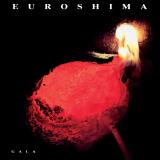
Cult Argentinian darkwave act Euroshima’s Gala sees a vinyl reissue courtesy of Dark Entries. Euroshima was formed in 1986 by Fabián Iribarne, José Wyszogrod, Ricardo Parrabere, and vocalist Wanda. Originally released in 1987 on Polygram, Gala was a success throughout South America. But to the band’s dismay, they received minimal support from the record label, which meant the album would linger in obscurity outside of the region. A CD issue via Twilight Records surfaced in 2020, but this is the album’s first reissue on vinyl.
Gala’s legendary status among cognoscenti is warranted. The album’s nine tracks display all the hallmarks of the best darkwave: spiky guitars, analog synth basslines, and wailing vocals. But Euroshima make their mark on the genre with impeccable songcraft and a honed sense of the uncanny. While the band themselves rejected the label of “gothic”, it’s hard to resist busting out the black eyeliner when listening to gems like the uptempo “Como Los Otro” or the churning album-closer “Mejor Callarlo”. Highly recommended for fans of Xmal Deutschland, Lebanon Hanover, pummeling TR-707’s, and doom-laden synths.
This reissue is co-presented with Twilight Records, responsible for the 2020 CD reissue of Gala. It has been remastered by George Horn at Fantasy Studios. Also included is a double sided insert with lyrics and photos, as well as a postcard featuring a photo of the band.
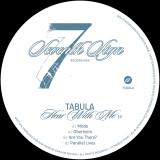
Scottish producer and label owner Graham Wilson signals a new phase for Seventh Sign Recordings with a four-track EP that blends Detroit techno roots with bright European electronic colours. Across the release, Wilson moves between pulsing four-on-the-floor rhythms, analogue basslines, crisp drum-machine percussion and shimmering synth work. "Mode" opens with an energetic, uplifting drive with steady kicks, pulsing bass and bright synth leads shaped with clean, modern production and side-chained pads. "Oberheim' follows with warm analogue textures, arpeggiated lines and optimistic pads, carrying a classic synth-wave feel while keeping a tight, Detroit-leaning groove. "Are You There" pushes into tense, atmospheric territory: rising pads, crisp hi-hats and a pumping bassline build momentum, giving the track a spacious, late-night techno edge. Closing cut "Parallel Lives" shifts into retro-futurist mode, neon-lit and melodic, evoking 80s energy and nocturnal late night drives. All in, a strong, forward-looking EP that connects machine-soul heritage with modern electronic clarity, ushering a fresh chapter for Seventh Sign.
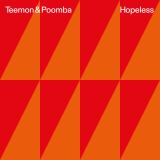
Teemon and Poomba go looking for light in the darkness on their new EP “Hopeless.” The Madrid duo have a knack for dragging nostalgic sounds into the present, and this release is no exception. With equal parts Hi-NRG euphoria and dark disco dread, the four tracks feel like a glitchy transmission beamed in from another decade, or perhaps another galaxy…
The title track, “Hopeless,” sends us hurtling down a wormhole. Powered by a cavernous bass, we are propelled through kick drums, warp effects and sparkly synths, while a distant voice calls at us through the darkness.
Iranian producer Amirali takes “Hopeless” somewhere a little lighter with his remix, easing the intensity down before letting it slowly climb again. His version foregrounds the track’s earworm synth line and builds on it, layering and expanding on the vocal line until it sounds celestial. Amirali’s skills as a classically trained pianist feel reflective here in his compositional approach.
If “Hopeless” is the wormhole down, then “Moon Connections” is what’s waiting on the other side. The track leans heavily into sharp, percussive sounds that form a grounding contrast to the high synths that glitter above. With a spoken word line that sounds like it’s being transmitted through a space-age radio and enough deep warp effects to get lost in, this B side sends us to the stars.
Closing things out, the Eagles & Butterflies remix of Moon Connections brings us down to earth. Chill, deep-house adjacent and with a hint of Daft Punk in its DNA, it wraps a heavily filtered guitar line around a softened groove built for the comedown – the sound of the sun coming up on the last people left on the floor.
The legendary Charlemagne Palestine returns to Black Truffle with KKKAAARRREEENNNIIINNNAAA, capturing a 2025 performance in London alongside two close collaborators of recent years, multi-instrumentalist Daniel O’Sullivan and guitarist Oren Ambarchi. While perhaps still best known for the ecstatic piano clouds of his ‘strumming music’ performances, Palestine’s life-long search for what he calls the ‘golden sound’ has taken in an enormous variety of methods of sound production. Now stretching back an incredible six decades, his exploration of continuous sound forms has led him to mega-instruments from the carillon bells of the Saint Thomas Episcopal Church to the synthesizer armada of the Moog Sound Lab, with stops along the way at many of Europe’s grandest church organs. Just as important, though, has been Palestine’s practice as a singer, beginning with his childhood experience of sacred Jewish music and growing through his studies of Indian and Javanese musical traditions in the 1970s.
KKKAAARRREEENNNIIINNNAAA reimagines a key work showcasing Palestine’s voice, the haunting ‘magic song’ Karenina for falsetto singing and harmonium, recorded in Paris in March 1997 to honour the spirit of Palestine’s recently departed black labrador. In this trio version, which Palestine describes as the ‘karaoke’ version, O’Sullivan controls three cassette machines playing the original recording, their slow drift out of phase creating complex patterns of delays and ricochets as the recorded voice chants the syllables of Karenina’s name and other trance words. Beginning with a held organ tone that gradually expands to fill out the frequency spectrum, the piece soon grows into a dense psychedelic mass, as Palestine’s electric organs and the echoing pre-recorded voices are joined by Ambarchi’s swirling Leslie guitar tones and O’Sullivan’s viola, synthesizer and additional vocals. Atop it all sits Palestine’s live voice, in an extraordinary performance of keening, shamanic intensity, sometimes delivered in melodic unison with his keyboard playing.
Though clearly a work of Palestine’s design that sits squarely within his oeuvre, Ambarchi and O’Sullivan are far from simple accompanists on KKKAAARRREEENNNIIINNNAAA. As the elements of the teeming, emotionally charged stew writhe and twist, different elements come momentarily to the surface, O’Sullivan’s spaced-out viola taking the lead in moments that recall Kosugi’s Catch Wave, Ambarchi’s gliding chords and signature stuttering tones enriching the details of many of the quieter episodes. Throughout all its transformations, the music is buoyed up by a sacred aura, as Palestine intones his hypnotic prayer for the soul of his departed pet. Arriving emblazoned with a striking labrador painting by O’Sullivan on the cover, KKKAAARRREEENNNIIINNNAAA is an essential slice of modern ritual music.
Well where do you go from the killer release of sde 78 Kinky Foxx "Is It Still Good To You" which sold out quicker than we could have imagined. I guess you should expect that with a group that has a cult status like Kinky Foxx.
Trawling through the guys demo sessions of the late 1970's and early1980's we always had a soft spot for "Lovely Night" but felt the audio and vocals were not quite on point for an official release. But not letting any obstacles get in our soulful way we took the demo and made it ten times better. New vocals were added by Vincent Lilly jr and with the watchful production skills of legendary Curtis Styles we are so pleased with the outcome. Its a modern day dancer but keeping in line with the 1980's boogie funk from the Kinky Foxx crew!!. Flip the 45 over and you get "Call You Up" again which has been touched up like a classic car with a respray. Keeping all the elements of 1980's synth boogie soul and taking it into 2026.
Limited Edition 180g Vinyl ( 500 Only Worldwide No Repress ) Download Token Inside & Hype Sticker - More Rare & Brilliant Lost Tracks.
Another compilation of French Post-Disco sounds curated & presented by collector & compiler John K of CTR.
12 more rare deep cuts, unearthed & re-appraised hard to find original 7” 45 - quarante-cinq versions made for radio & club.
In 2025 Volume I of "Histoire" gained much love & praise, lighting up some very discerning dancefloors across the planet & well beyond La France. Featured on BBC 6 Music & on radio across Europe.
Aura Safari are taking it back to the source with new album Spaced Out Disco on Hell Yeah. The eight-track record is inspired by the iconic sound, feel and studio techniques of the original 1970s disco and was played entirely live with real instruments.
Aura Safari are Andrea Moretti, Lorenzo Lavoratori, Daniele Melloni and Nicholas Iammatteo, and they have been releasing EPs, LPs and remixes on this label since 2020. They have long been entrenched in the local scene of Perugia and are live specialists with a unique chemistry that allows them to translate funk, jazz, soul, disco and house into their own timeless and universal musical language.
Integral to the album is the live performance aspect. All the band members hooked up in the studio and played together, often laying down tunes in one take and then adding some post-production for a modern edge. Disco, dub, jazz-funk and instrumental grooves define the sounds while the creative use of classic delay, echo, spacey FX and dubbed out arrangements lead the record the same Jamaican character that inspired original dub-disco pioneers like Arthur Russell, the Compass Point Studio and labels like Prelude and West End.
'Starlove' opens with low-slung grooves and squelchy bass that twist you inside out before 'Spaced Out' shimmers with astral melodies and synths that rise like a rocket disappearing into the night sky. Funky claps and flashes of Dexter Wansel-inspired soul complete the picture, while 'Santa Barbara' eases the pace with a brain-bending dub workout full of weighty low-end and warm, sun-kissed chords. 'Cosmic Affair' lives up to its name, gliding through the galaxy on uplifting guitars and slinky drums, all wrapped in irresistible retro-futurist magic and lit by the moon.
'Disco Mirage' turns inward with simmering bass, dusty open hi-hats and hazy synth trails drifting through effervescent jazz keys that rise like champagne bubbles. 'Magik Space Dust' stretches towards the stars with soaring leads and knotted bass locked into an effortless groove.
Spaced Out Disco does exactly what it promises and plots a richly imagined journey that never stops looking towards the stars while keeping its feet firmly on the dancefloor.
The Jazzcodes and Michele Chiavarini kick off this fine survey of contemporary deep house with 'Wolf Dust (Saison Rework)' which draws on jazz-inflected motifs and feeds them into a steady groove with layered keys sitting over a controlled kick pattern. 'Friday' from DJ Romain works in a more direct frame driven by looping piano stabs and clipped drums with diva vocals injecting heat. 'In The Moment' has an air of cool jazz to it with deft horns and spoken word that muse on the great genre while Saison's 'This Is A House Record' sure is that: classic drums and knotted little synths bring a warming vibe for grown-up floors.
FatCat was recorded in a single session-live, with all four musicians together in the same place. What you hear on the record isn't a polished production, but a one-of-a-kind recording of four people playing at the same time in the same room.
This is not a nostalgic gesture. It's a stance. As music is increasingly understood as the output of a prompt, the question of what actually makes music becomes urgent again. Not flawless, efficient production, but the imperfect moment and its context. Not the result, but the process in which four people listen to each other, react to each other, misjudge, and find one another. This fallibility - the hesitation before an entrance, the slight pull in the timing, the glance between musicians that signals a turn - is not a weakness but the substance itself. It cannot be synthesized, because it isn't a data point but a lived relationship: between the instruments, between the people, between their shared history and what emerges new in this one take. The album is thus also a statement on the question of where, in the age of generative music, authorship and art can still be located: not in the result alone, but in the shared risk taken in creating it.
"The question was always: how do I bring my work as a producer and beatmaker onto the stage? How can something that usually happens alone behind closed studio doors become a live experience?" With the album FatCat, Sepalot pursues this question to its logical conclusion: what began as a live performance now becomes the recording itself - the studio becomes a stage for a day, and the stage becomes the definitive version of the album.
The love for electronic music remains, the raw pressure of hip hop is still palpable - and yet everything on FatCat sounds like a fresh start, captured in the very breath in which it was played.
On stage as in the studio, the four characters fit together like a puzzle. Sepalot's signature as producer and mastermind is unmistakable. On drums, Fabian Füss, longtime partner behind the kit and the voice that makes Sepalot's radio hit "Rainbows" so unforgettable. On bass, Robin Jermer. On trumpet, Matthias Lindermayr, multiple award-winning jazz virtuoso with his own albums on Enja Records. And then there's Sepalot himself, who turns it all into more than just the sum of its parts.
The eclectic beats, the pulsing bass, Sepalot's passion for atmospheric sound design - all of it remains, now joined by an element of jazz and captured in its most immediate, unpolished form. The album shows what four people in one room are capable of: a sound born of shared experience, and precisely for that reason, unique.
Truths and secrets often reveal themselves at night, under the freedom of shadowy darkness, away from prying eyes. In creating Given to the Night, sisters Valentine and Clementine Nixon have crafted a world that drifts through the in-between: between dream and reality, between day and night and the undefined, and ultimately a world that embraces the discomfort of being untethered. A process that follows simplicity and intuition rather than pre-determined narratives. “We recorded songs as they appeared, which sometimes felt like catching light. Before we realised it we had a record”, the duo explain.
While making the record Valentine and Clementine gently pushed away from the world- deleted social media, retreated into the trees of their native New Zealand - and only invited a couple of people in during the recording process. From that space, the album came together in an eerily easeful way.
There is a dream-like drift and sonic timelessness to the the record, as reflected in its nocturnal title, which can be read in two ways:
“Being taken by, or being inclined towards nighttime, preferring its blurry cloak of shadows to the harsh light of day; or giving oneself up to night, in sacrifice, letting go of fear and melting into the darkness.”
Written during a time of personal transition there was “a sense of finding the light in the shadow” they add. Guitar lines float, synth lines entwine, tapes hiss and vocals stream creating a kaleidoscopic montage of transient memories and emotions. A spectrum of feelings arise - isolation and joy, insomnia and manic highs, confusion and fleeting clarity, grief and healings. In the record, these feelings all merge and fade into one another in a nonlinear manner, as life tends to do; creating something deeply human that simultaneously gestures towards the transcendental.
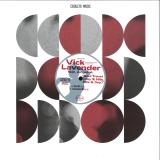
Regular contributor Vick Lavender returns to Cataleya Music for a Soulful vocal mission with Angel-A. They have previously worked together on songs like Rain for Lavender's Sophisticado Recordings and G.I.R.L. for Phuture Sole Recordings. Here we have Soul Travel (Day & Nite, Nite & Day). This song is in the same vein and features positive vocals from Angel-A over a stylish key driven groove. The vocal is backed by an Instrumental Mix where the key driven melody and complex percussion rhythms take center stage, assisted by star gazing synths. This is another rich composition from Vick Lavender with uplifting lyrics from Angel-A.
Amsterdam-based Moody Mehran captures the atmosphere of a soft Mediterranean sunset perfectly. Just in time for late summer, the Dutch-Iranian artist debuts on SEVEN with four trance-infused, uplifting cuts, alongside a remix by Maruwa. The EP channels a distinct Balearic-leaning, '90s trance sensibility. Melodic, sun-drenched and emotionally direct. Built for open-air floors and festival moments, these tracks are driven by shimmering synth sequences, rolling basslines, crisp percussion and psychedelic sound design. It’s a sound reminiscent of trance’s golden era reduced to its essence: simple, euphoric, and highly effective.
Some things in life are meant to be consumed whole: a perfectly paced movie, an oyster at Whitstable Bay, a novella on a sunny afternoon. Into this pantheon of singular experiences comes Runners, the second album from London instrumental rock quartet Dog Unit. The follow-up to At Home, the band’s cult favourite 2024 debut album, Runners moves seamlessly across its 42-minute runtime. It finds the quartet – comprising Sam Walton, Henry Scowcroft, James Weaver and Lucy Jamieson – crafting tracks that undulate, churn and yearn in service of a greater purpose as they plough fertile fields of sonic storytelling. Made over the first four months of 2026 at the band’s studio in Limehouse, East London, Runners finds the core group, alongside producer and long-time collaborator Mark Estall, operating with greater ambition and scope than ever before. This time they commissioned a string quartet specifically for this project, and reappointed noted experimental bass clarinetist Heather Roche, as well as taking in a cavalcade of instruments at their studio, including vintage synths, drum machines, pianos, and harmonium. The band’s music is often compared to cinema, and if At Homewas a charming micro-budget indie flick bursting with potential, Runners is a widescreen realisation that stands up to repeat viewings.
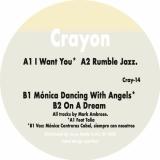
Mark Ambrose has been a serious house head since the 1980s and has always brought his own flavours to the original Chicago and Detroit sound. He heads up the Crayon label, which is where much of his music comes from, including this latest deep dive into groove. 'I Want You' (feat Talia) kicks off with a meandering lead synth that comforts over a warm bed of drums as a sultry vocal whisper brings some intimacy. 'Rumble Jazz' then rocks back and forth a little more with swaggering attitude and hints of darkness and 'Monica Dancing With Angels' is a smooth cruiser with a far-sighted melodic edge. 'On A Dream' brings a sultry jazz flourish with some sombre trumpets lingering above classic deep house drums and bass that take you way back.
raum…musik welcomes Jaffa Surfa back for its 121st release with ‘Tribal Diesel EP’, a four-tracker moving through progressive techno, industrial-tinged minimal, house and broken beat. Rather than treating these as fixed genres, Surfa reshapes them into something uncanny and unmistakably tribal, while keeping the groove firmly at the centre.
That approach is clearest on the A-side. “Diggers Diesel” has a ritual pull and, as the EP’s title suggests, finds Jaffa Surfa at his most tribal. Processed drums and splintered voices gradually lock into a hook while murky synths shift beneath them. “Lidl Sin” takes a leaner, slightly industrial but definitely understated route. Its reduced arrangement leaves enough room for each detail to register, with drums, synth stabs and sequenced lines appearing to exist in a state of constant mutation. On the b-side, “NGLZ” is the EP’s most direct house cut, driven by heavy low end, syncopated rhythms and flashes of phased samples. Breakbeat accents and old-school vocal fragments nod towards US house, though the track’s restless movement keeps it from settling into anything conventional. “Upstarz Galeri” closes on a wider screen, carrying traces of krautrock and decades-old sci-fi and cyberpunk soundtracks without ever feeling nostalgic. Airy and expansive, it pairs breakbeats and growling basslines with densely layered samples, giving its machine funk an unexpectedly emotional charge.
'Tribal Diesel EP' never overstates the contrast between its parts. Jaffa Surfa holds everything together through texture, rhythm and an almost cybernetic atmosphere. It is clearly built for the club, but carries enough personality and ambiguity to reward closer listening.
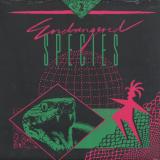
In their countless years of deep digging, Dark Entries has uncovered many curiosities, oddball Italo and synth-wave creatures too rare to live, too funky to die. Dark Entries’s conservationist efforts began with 2020’s Endangered Species Vol 1. Six years later, we are finally treated Endangered Species Vol 2, an even more ambitious effort which features eleven specimens previously deemed extinct, now safely preserved on vinyl. Things kick off with an extended mix of Palazzo di Danza’s “Play That Song For Me,” a lavishly produced German-Italo number propelled by a slinky bassline. Russian Olga Vosconyan’s “Cars” delivers what might be the moodiest song ever produced for a car commercial.
Fuzz Dance maestro Alexander Robotnick appears with a previously unreleased male vocal demo version of “I Wanna Believe,” a legendary track that would later appear under the name Gina & the Flexix. Canadian industrial royalty Dwayne R. Goettel (Psyche) and cEvin Key (Skinny Puppy) team up on the horror-sampling hit-heavy blaster “Bastards.” Belgian EBM progenitors à;GRUMH... report for duty with a slab of machine funk on “The Army.” UK DIY stalwarts Khmer Rouge bring Krautrock-inflected minimalism with “Take Me (Across the Floor Tonight) In Dub.” Endangered Species Vol 2 comes housed in a sleeve designed by Eloise Shir-Juen Leigh, and includes a 16 page booklet featuring liner notes, lyrics, and photographs of each featured project. Please assist Dark Entries in their efforts to preserve the rarest of beasts (and beats).
It's been 32 years since Hyper Go Go's 'High' crashed into life, combining the best of Italo House and rave into an exuberant, floor destroying piano anthem.
Fast forward to 2024 and HOOJ reissue this 92 classic with the Original & Cloud 9 Mixes on the A side with 2 newer remixes on the B side.
Remixes come from Fast rising Scottish duo Testpress, who strip things back a bit, working the original riffs around a thumping kick and hooky new synth line & Kyle Starkey, the youngster takes no prisoners, tearing into the OG with slamming 135bpm drums, big drops, the odd snare roll, and lots of drama, for an energy driven update.
The next WOLF Music EP is here, and once again it comes courtesy of a new addition to the label roster. New York-based DJ and producer DJ Alone Again is a natural fit for what we do at WOLF, delivering a sound that hits that sweet spot where deep meets soulful, with the raw, understated energy of the authentic New York underground running through every track.
With a growing catalogue of original productions and edits, DJ Alone Again has released music through labels including YORE Records, House Salad Music, Dobro, Fantin Zoo Records, and Dealt With Records. His musical roots extend beyond house, too. Earlier work with the band Vain Pursuit, alongside a wealth of SoundCloud mixes and underground edits, reveals an artist with a deep appreciation for melody, songwriting and the emotional side of dance music.
Opening the EP is ‘Freedom of House’, a sublime take on the classic NYC-meets-Chicago deep house sound. Warm, soulful and hypnotic chords sit at the heart of the track, surrounded by intricate, skippy percussion and a deep, driving bassline. Carefully placed female vocal snippets drift in and out of the groove, while a spoken-word ode to the freedom and self-expression that house music offers provides the track with its emotional centre. It’s a celebration of movement, individuality and that unspoken connection forged on the dancefloor.
On the A2, ‘State of Flux’ keeps those warm, evocative chords front and centre, building an infectious groove around an instantly memorable melody courtesy of the vibes. Subtle synth strings add depth and atmosphere, bringing a touch of late-night melancholy to the arrangement, while the rhythm rolls steadily underneath. Everything is expertly layered without ever feeling crowded, giving the chords, melody and percussion room to breathe whilst pulling the listener deeper into the track.
‘Horizontal Patterns’ takes the winning formula of ‘State of Flux’, adding a beautifully understated vocal hook that sums this track up perfectly: deep in the groove.
Closing out the EP is ‘In Your Orbit’, a serene, dream house number with a deeply hypnotic edge. Ethereal flute lines drift through the arrangement, weaving around vocal phrases that seem to lift the consciousness somewhere beyond the dancefloor. There’s a sense of weightlessness and escape in the arrangement, but the dance floor pulse courtesy of the warm chord stabs never lets you float too far away. Dreamy yet deeply rooted, it’s a meeting point between introspection and movement; music to lose yourself in.
If this EP had landed on Guidance 30 years ago, it would probably be changing hands for a small fortune on Discogs by now.