Buscar:violin


The record is largely sung in Scots language, one of Scotland’s three official languages along with Gaelic and English. “Scots gives me a way of expressing myself which is connected directly with the landscapes I love. It brings the songs alive and it is a fascinating language. The name of the record is in Scots - Forefowk means the people who came before, or ancestors. When we say ‘mind me,’ we can mean a few things- remind, remember, watch over or care for me. The record explores how tradition needs to be constantly reconnected with, built upon, looked after, and shared.”
Quinie sings with a style inspired by Scottish Traveller singers. “I began singing unaccompanied Scots Song in 2015 after hearing Scots Traveller singer Sheila Stewart on the radio. Initially I felt like I shouldn't sing these songs because I'm not a Traveller, and I saw people around me doing that in a way that made me uncomfortable. But on the other hand this music made sense to me and I felt driven to learn. Over the years I have met Traveller friends who taught me that settled people sharing these songs could contribute to raising awareness. Scottish Travellers are marginalised and discriminated against in modern Scotland, despite being custodians of so many of our important traditions. So I started to perform them and tell this story. From there I built on my repertoire and started writing my own songs”.
To develop this record, Quinie travelled across Argyll with her horse. They went on a pilgrimage of sorts through the ancient landscapes of the West of Scotland to explore the interconnected relationships between people, ancestors, animals, and place. The album’s vinyl release is accompanied by a book and film, documenting this unusual research process.
Forefowk, Mind Me was recorded in August 2024 at The Big Shed in Highland Perthshire with support from Creative Scotland. Quinie is accompanied by an ensemble of musicians: Ailbhe Nic Oireachtaigh (viola), Oliver Pitt (duduk, bouzouki, percussion), Harry Górski-Brown (small pipes, violin), and Stevie Jones (double bass, recording, and mixing). Each of these artists brings their own distinctive voice, bridging contemporary experimental practice with worlds of traditional and early music.
debe ser publicado en 18.09.2026
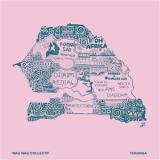
- 1: REDIAL
- 1: 200 ANS (VERSION)
- 1: 3OH, AFRICA!
- 1: 4FONKAL SAY WADIOUR
- 1: 5LA PAIX DU SENEGAL (THILLO BA VOCAL VERSION)
- 1: 6TERANGA
- 1: 7HOMMAGE A OUSMANE BAH
- 1: 8DJIRIM
- 1: 9FONKAL SAY WADIOUR / FAMILJ
- 1: 0NDEYA SINGS DIADIDAM
- 1: PROTECTION
- 1: 2TERANGA STAR
,Teranga", das letzte Album der Wau Wau Collectif-Trilogie - dieser verträumten, kulturübergreifenden Zusammenarbeit -, zeigt, wie die Band endlich zu einer Einheit zusammenwächst. Der Name leitet sich vom Wolof-Wort ,Teranga" ab, das für Herzlichkeit, Gastfreundschaft gegenüber anderen und - ganz allgemein - für ein gemeinsames Zusammentreffen steht - ein passender Titel für das Album, das selbst Ausdruck einer solchen Begegnung ist. Das Projekt begann 2018 im Dorf Toubab Dialaw, wo die beiden Musiker Arouna Kane und Karl-Jonas Winquist die Idee erstmals hatten. In den folgenden Jahren entwickelte sich das Projekt weiter: Die beiden Produzenten tauschten über WhatsApp Dateien aus und bezogen ihr Netzwerk aus Freunden und Kollegen in das ein, was später zum Wau Wau Collectif werden sollte - was schließlich in ihren ersten Alben ,Yaral Sa Doom" (2021) und ,Mariage" (2022) gipfelte. Ihr neuestes Album, ,Teranga", ist der dritte und letzte Teil dieser Trilogie, der während der ersten Live-Tour der Band fertiggestellt und abgemischt wurde - eine fünfwöchige, weitreichende Reise quer durch Europa mit ,drei Schweden, drei Senegalesinnen und einem französischen Fahrer, ein herrliches Sprachengewirr", wie Karl-Jonas erklärt. Das Herzstück von Wau Wau Collectif ist ein starkes musikalisches Fundament, das nicht nur auf dem breiten kulturellen Spektrum beruht, aus dem sich das Kollektiv inspirieren lässt, sondern auch auf den äußerst talentierten Musikern - komponiert und eingespielt von sage und schreibe 26 verschiedenen Songwritern und Musikern, die eine beeindruckende Bandbreite an Instrumenten spielen, darunter Balfon, Ngoni, Calabasse, Violine, Cello, Saxophon und Omnicord. Der daraus resultierende Sound lässt sich nur schwer einordnen, hat aber klanglich zweifellos seinen Platz in Teranga gefunden. Mal verträumt und meditativ, aber durchdrungen von einer organischen Seele - ein völlig einzigartiger Sound, der zugleich anachronistisch und zukunftsweisend ist. ,Oh, Africa" könnte auf einer klassischen Neuauflage zu Hause sein, mit einem fast türkisch anmutenden Gitarrenriff, während ,100 ans" (ihre erste Live-Studioaufnahme) an Amadou et Mariam aus den frühen 2000er Jahren erinnert. Mit Wurzeln in der Avantgarde (Karl-Jonas hat Barney Wilens ,Moshi" als Inspiration genannt), während Wau Wau sich von diesen Experimenten inspirieren lässt, auch wenn sie in ihrem Bekenntnis zum Gemeinschaftsgeist davon abweichen - ein Projekt, das durch Handys, WhatsApp und im Internet kursierende MP3s ermöglicht wird -, was leicht ironisch wirkt, wenn man bedenkt, wie akustisch, bodenständig und menschlich es sich anfühlt. Während wir das Kapitel der Trilogie abschließen, betont Karl-Jonas, dass dies vielleicht erst der Anfang ist: ,In gewisser Weise haben wir gerade erst angefangen", sagt er. Für das nächste Jahr zeichnen sich Pläne ab, die ganze Band zusammenzubringen, und es stehen weitere Tourneen bevor - mehr Hoffnung, mehr Menschlichkeit und mehr Zusammenhalt.
debe ser publicado en 18.09.2026
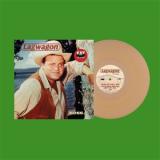
Pressed to "beer" color vinyl, features remastered audio & original packaging. The first band on Fat Wreck Chords, Lagwagon pioneered the modern pop-punk movement. Hoss (1995) is a foundational pillar of 90s skate punk that helped define the signature "Fat Wreck Chords" sound_fast, melodic, and technically proficient. Frontman Joey Cape introduced introspective, melancholic songwriting to the genre on iconic anthems like "Violins," proving aggressive punk could carry emotional weight. Furthermore, Derrick Plourde's innovative, lightning-fast drumming raised the technical bar for the entire scene, heavily influencing generations of punk drummers worldwide.
debe ser publicado en 18.09.2026
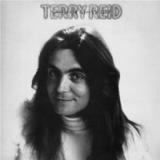
- Faith To Arise
- Seed Of Memory
- Brave Awakening
- To Be Treated Rite
- Ooh Baby (Make Me Feel So Young)
- The Way You Walk
- The Frame
- Fooling You
Released in 1976 on ABC Records, Seed Of Memory is Terry Reid's fourth studio album and marks a significant shift in his musical direction - This 180g vinyl re-issue faithfully replicates the original UK pressing including 4- page lyric insert Produced by Graham Nash, the album was recorded in California after Reid had relocated from Britain, and reflects the influence of the West Coast singer-songwriter scene while retaining elements of rock, blues, folk and soul. All eight songs were written by Reid, whose expressive vocals and guitar work remain central throughout. The recordings are enhanced by contributions from respected musicians including David Lindley on guitar and violin, Ben Keith and Al Perkins on pedal steel, and Graham Nash on harmony vocals. Lyrically, the album explores themes of reflection, spirituality, personal growth and social awareness, with songs such as "Brave Awakening" drawing on Reid's family connections to the mining industry. The relaxed arrangements contrast with the heavier sound of some of his earlier recordings, creating a more atmospheric and melodic style.
debe ser publicado en 18.09.2026
- 01: Movement 1 (feat. Man Power)
- 02: Movement 2 (feat. Man Power)
- 03: Movement 3 (feat. Man Power)
- 04: Movement 4 (feat. Man Power)
- 05: Movement 5 (feat. Man Power)
- 06: Movement 6 (feat. Man Power)
- 07: Movement 7 (feat. Man Power)
- 08: Movement 8 (feat. Man Power)
Geoff Kirkwood (Man Power)
I’dgained some notoriety as a music producer and DJ but I hit a horrible case of writers block around 2018.
The problem I was finding was that I was trying to shoe horn every smart arsed clever dick musical reference I had into the music I was making, but the function of dance music is to make people dance, not to show people who broad your musical references are, so I was making pretty shitty music that landed in the middle and didn’t achieve either aim.
To tackle this I ended up committing to just trying to make the most expressive and wanky experimental stuff I could. I was immersed in club culture at the time so the whole enterprise started as a joke, hence the name “Bed Wetter”. However when I fully submitted to just naked exploration the really unexpected thing that happened was that I found myself unavoidably having to deal with a lot of my own bullshit. That bullshit turned into the “Billy Mill is Dead” album, which was essentially the sound of me excavating my own life and looking at how I felt about where I was from, where I was headed, my family, my history, my region and all of the things i have conflicting feelings about.
It was partially catharsis and also a bit of deprogramming around being able to call myself an artist after being raised to believe that wasn’t an option for me.
I self released Billy Mill is Dead in the months before the pandemic and it found it’s fair share of love in the places I hoped would connect with it, and just the right amount of being ignored by people who I’m pleased didn’t feel it. This all lead to me being emboldened enough to apply for an artist in residence position at a big regional opera house months later in the middle of lockdown.
My feeling was that if my DJ career was potentially over for the remainder of my lifetime then there was no harm in exploring this alternative method of expression to see where it could take me.
I submitted a ridiculously ambitious plan for what I would like to do as a project, and to my absolute shock I was selected for the position.
I was 40 years old and from a scarcity background so I had a potentially unique response to that kind of validation for the first time and what followed next was a process of me just coming back with bigger and more ridiculous ideas just to find out at whatstage they’d tell me to stop.
The thing is, nobody did. I got as far as suggesting writing a full symphony to be performed by an orchestra before my own nerve gave out and I decided that was probably as far as I should push things.
The problem with people giving you permission to do things is that you then need to go out and figure out how to do those things.
The biggest issue for me, beyond raising the money to pay for everything, was how does a person actually write a symphony?
I was introduced to Fiona Brice, a multi instrumentalist and orchestral arranger. She’s also a recording artist who releases on Bella Union. On top of that she’s a violinist who used to be part of the band Placebo and who used to appear regularly playing for other bands on things like Top of the Pops.
Not only was Fiona uniquely placed to not look down on the strange provenance of someone from an Acid House background wanting to write a symphony, but more to the point we really hit it off from day one.
Fiona coached me in the essentials of writing for an Orchestra, and then I went off and wrote the 8 movements.
I’d love to say I laboured for years over this bit, but it took about 2 weeks in total. I’d also love to say what I wrote was a complete symphony, but the version of this which is solely me feels like looking at something without your glasses on. The shape,feel and borders were all there, but the definition was absent. Fiona taught me the broad language of a symphony, but without her it would have lacked all intonation, nuance and detail. Where I had shaped ideas with a hammer, she brought out my meaning with precision using a scalpel.
I think the prodigiously quick turnaround for the music is as much proof of how conceptually and musically aligned Fiona and I are. I know we’re both incredibly proud of what we’ve created.
It took nearly 2 more years to stage the debut performance in what was potentially the most traumatic period of my life which saw me embroiled in an international crisis with my own family and the death of my father, all with the backdrop of COVID.
The work itself is inspired by the working class experience, but it’s also a comment on how we get to decide what we are and how we’re defined, and we get to choose what we do to prove these things.
The original recording was contractually impossible to ever share again, so we re-recorded it in a working men’s club with jobbing (albeit world class) players. In many ways it’s a record that feels like it shouldn’t exist, which is why we’re all so happy that it does.
debe ser publicado en 18.09.2026
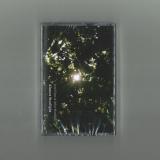
Almost Starlight is the extraordinary new album by Jem Finer (hurdy-gurdy) and John Matthias (violin). Produced by Jay Auborn and recorded in a Medieval Church, deep in the Devon countryside, in the Summer of 2025, the music is suffused with light, heat and the natural acoustics of the space.
The album defies categorisation; forced to pigeon hole it the nearest approximation would be ‘modern-classical’ but this ignores its myriad influences and explorations which encompass inspiration from Arvo Pärt through Terry Riley to Can via Delius, Alice Coltrane and a subtle reimagining of electronic music played purely with acoustic instruments, bending and shaping their possibilities in surprising and unexpected directions.
Jay Auborn plays cello on a number of the compositions and his production opens up and expands the music through a skilled and imaginative use of space, paying homage to the atmosphere of the church; ‘the sound evolved… chasing the imagined acoustics of that church in my mind; a place for worshipping light with sound.’
Almost Starlight will be released on the 4th September by Touch, available as CD, vinyl, cassette and on streaming platforms.
BIOS OF THE ARTISTS
Jem Finer
Since studying computer science in the 1970s, Jem Finer has worked in various fields, including photography, film, experimental and popular music, sound recording, sculpture and installation.
Much of his work relates to systems, extended processes and extremes of scale and includes Longplayer, a musical composition repeating once every 1000 years, and the Gurdy and Hurdy stones, ancient rocks set upright in fields in East Sussex and Gloucestershire with Jimmy Cauty. Their work together includes a band, The Standing Stones, whose most recent release is Twa Sisters, featuring Iona Zajac and Daragh Lynch.
He was a founder member of The Pogues, with whom he has played, written and recorded since 1981.
Recent music revolves around a fascination with the hurdy-gurdy and includes hrdy-grdy, a cassette released by Benedict Drew’s Thanet Tape Centre. His latest collaboration, with John Matthias, Almost Starlight, will be released by Touch in September 2026.
John Matthias
Since studying Theoretical Physics in the late 1980s and 1990s, John has created music and sound in many forms, including for installation, popular music, music for film, for dance and orchestra.
Much of John’s work plays with the physics of complex systems but he is also greatly influenced by stories and song. John has collaborated with Matthew Herbert, Stanley Donwood, Jay Auborn, Radiohead, Thom Yorke, Nick Ryan and many others to create music with a variety of textures and sonorities. He is particularly interested in simplicity and form and how context informs the way music sounds.
His latest collaboration, with Jem Finer, Almost Starlight, will be released by Touch in September 2026.
Haga su pedido ahora y le encargaremos el artículo en nuestro proveedor.
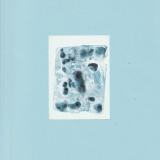
Fohn conjures a dreamlike landscape of introspective beauty, loneliness and transience from analogue tape and field recordings on new album, Porcelain.
A late summer evening in southern France. The dry mistral wind billows the washing that hangs outside the windows on narrow streets, bringing with it the first whispers of autumn. In the distance children are playing in the square, their shouts caught in the dust whipped up by their feet. A bell tolls, the light dies, and a rich, compelling solitude descends.
Violinist and multi-instrumentalist Fohn, aka Tom Connolly, describes the act of making music as “building fictional environments that become places of solace,” and a process of translation and projection that bridges his internal and external worlds.
While musicians like John Also Bennett, Oren Ambarchi and Connolly’s own group Quade drift behind his sound, Porcelain draws its temperamental inspiration from films like Call Me My Your Name and Andrei Tarkovsky’s The Mirror, as well as the sculptures of Anthony Gormley, whose solitary figures stand isolated in expanses of water along the UK coastline.
How does Connolly describe the atmosphere he wants the music to evoke? “It's the feeling of the inevitability of something having to pass,” he answers. “It's compelling because it's fundamentally unattainable. You're searching and grasping for something that you can never fully hold.”
A moving, intimate and deeply personal album, Porcelain shimmers in the illusive light of melancholy. For Connolly it provided the release of catharsis, but it’s a feeling that will mean something different to everyone who listens.
El artículo no se ha publicado. Tú puedes reservar ahora el artículo y después de ser pagado se te será enviado.
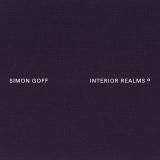
British composer Simon Goff interprets space, both within ourselves and the objects that surround us with Interior Realms - vol.1; a wondrous, contemplative work of electronic chamber music.
The idea first came from the philosophical idea underpinning the book Interior Realms, published by Theatrum Mundi in 2021. In it, a collection of essays reflects upon architecture’s influence on the human spirit. It challenges us to think not only about music as space, but also about how architecture can shape our ideas of composition. It also asks us to think about how space can make us experience music internally differently.
Interior Realms, the album, inhabits this idea and creates a dreamlike, atmospheric arch between its outer and inner parts. Joyous, immense and light-filled compositions sits side by side with the almost pure silence and introspect of its inner core. Goff wanted to create parallel compositional voices, performing them in various locations, each offering its own sonic character, unique spatial sounds, and reverb. Together with his long-time collaborator, Lynn Wright, the album was recorded in the Großer Wasserspeicher, Berlin's oldest water tower, and at the Grunewaldkirche, a location known amongst others from being the birthplace of many great works by artists such as Nils Frahm, Dustin O´Halloran and more. Cellist Anne Müller appears alongside Goff’s violin and viola on several pieces as they improvised and interacted with each other in the resonance of the space.
In addition to his own endeavors, Simon composes primarily for film and has collaborated with Hildur Guðnadóttir, Jóhann Jóhannsson and Peter Broderick among others. His collaborators has left an inspiring mark on him, all while standing firmly on his own feet with grand intention and results as heard on this absolutely brilliant atmospheric work.
debe ser publicado en 11.09.2026
- A1: The Sounders
- A2: Victor Noir
- A3: Look The Other Way
- A4: Dum Evol
- A5: My Favourite Fear
- B1: Difficult Ifficult
- B2: STFD
- B3: Those Velvet Eyes
- B4: Tonight We Fight
- B5: Voyage Into Darkness
Cosmic Pink Vinyl[23,74 €]
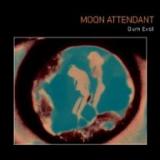
Brighton’s Moon Attendant team up with Go! Team's leader and drummer Ian Parton for new LP ‘Dum Evol’. Following their debut ‘One Last Summer’ with this incendiary, heart-pounding, drum-led masterwork full of untutored surf-guitar, Scarlet Rivera style fiddle, psychedelic orchestration and sharp-playful lyrics, all within just over 30 thrilling minutes.Since their debut, Paul Blewett and Nick Holton had been knee-deep in experimental music and needed something or someone to smash the shit out of the new songs. Instead of making heavier music, the result left lofty but wobbly structures teetering on fractured Giacometti-like frames, exposed, more arresting. Paring back the Musical palette from previous wash of synths and reverb to surf guitars, Moog, and violin, leaving Blewett's vocal (often compared to Colin Bunstone) leaning into an unvarnished, direct sound like Jimmy Campbell. Thematically, Dum Evol turns inward. Where their debut asked questions, this record sits with the answers, exploring love, conflict, and growth as experiences that must be lived first hand - “It’s such dumb evolution, you still have to learn the hard way”. Their lyrics get under the skin and under The Establishment in a wistful worm like way. Nudging at the truths. Smiling but always ready to bare some fangs.The fantastic instinctive violinist, Roger Proctor, joined as fourth member, bringing raw fragile beauty to ‘Look The Other Way’ & ‘Difficult Ifficult’, blending swooping string lines with the monster-surfing-Sonic Youth racket elsewhere. They explain - “We kept to a first take policy generally as it keeps everything just fresh and daisy like.” Dum Evol’s restraint allows the band’s more experimental instincts to land with greater weight. Musically, the record occupies a space somewhere between the slacker-rock nonchalance of Pavement and the gypsy swagger of Dylan - 'Desire' through a lens that is consciously, almost defiantly, English. It’s a sound that channels the 60's pastoral folk tradition alongside the sharp-edge of The Auteurs, an honest version of England, one to be proud of, existing in stark contrast to the hollow jingoistic nationalism of flag-shaggers climbing lamp posts. Jagged, lived-in, and entirely vital, Dum Evol is a record that feels fully realised, yet remains dangerously built to unravel in a hair's breadth.“Psychelelic grungy synth-pop - Moon Attendant marry analogue electronics to a lovely burbling pop sound, like Felt exploring the recesses of krautrock. Trippy, ramshackle and a cult in waiting.” Shindig!
debe ser publicado en 11.09.2026

Brighton’s Moon Attendant team up with Go! Team's leader and drummer Ian Parton for new LP ‘Dum Evol’. Following their debut ‘One Last Summer’ with this incendiary, heart-pounding, drum-led masterwork full of untutored surf-guitar, Scarlet Rivera style fiddle, psychedelic orchestration and sharp-playful lyrics, all within just over 30 thrilling minutes.Since their debut, Paul Blewett and Nick Holton had been knee-deep in experimental music and needed something or someone to smash the shit out of the new songs. Instead of making heavier music, the result left lofty but wobbly structures teetering on fractured Giacometti-like frames, exposed, more arresting. Paring back the Musical palette from previous wash of synths and reverb to surf guitars, Moog, and violin, leaving Blewett's vocal (often compared to Colin Bunstone) leaning into an unvarnished, direct sound like Jimmy Campbell. Thematically, Dum Evol turns inward. Where their debut asked questions, this record sits with the answers, exploring love, conflict, and growth as experiences that must be lived first hand - “It’s such dumb evolution, you still have to learn the hard way”. Their lyrics get under the skin and under The Establishment in a wistful worm like way. Nudging at the truths. Smiling but always ready to bare some fangs.The fantastic instinctive violinist, Roger Proctor, joined as fourth member, bringing raw fragile beauty to ‘Look The Other Way’ & ‘Difficult Ifficult’, blending swooping string lines with the monster-surfing-Sonic Youth racket elsewhere. They explain - “We kept to a first take policy generally as it keeps everything just fresh and daisy like.” Dum Evol’s restraint allows the band’s more experimental instincts to land with greater weight. Musically, the record occupies a space somewhere between the slacker-rock nonchalance of Pavement and the gypsy swagger of Dylan - 'Desire' through a lens that is consciously, almost defiantly, English. It’s a sound that channels the 60's pastoral folk tradition alongside the sharp-edge of The Auteurs, an honest version of England, one to be proud of, existing in stark contrast to the hollow jingoistic nationalism of flag-shaggers climbing lamp posts. Jagged, lived-in, and entirely vital, Dum Evol is a record that feels fully realised, yet remains dangerously built to unravel in a hair's breadth.“Psychelelic grungy synth-pop - Moon Attendant marry analogue electronics to a lovely burbling pop sound, like Felt exploring the recesses of krautrock. Trippy, ramshackle and a cult in waiting.” Shindig!
debe ser publicado en 11.09.2026
Haga su pedido ahora y le encargaremos el artículo en nuestro proveedor.

Después de llover” is about musical conversations between two people who have only recently met; they come from very different places, do not speak the same languages, and perhaps have little in common other than the resonance of their instruments. This encounter leads them to explore an imaginary world where they share sounds to build a place where they can go and play with the moisture of the plants growing in the water, listen to the pudus playing with the herons, rest on the floripondios, and perhaps stay there waiting for the rain to return.
These pieces were recorded on summer day in 2025 at Indrė’s house with kanklės, txompe, and violin.
El artículo no se ha publicado. Tú puedes reservar ahora el artículo y después de ser pagado se te será enviado.
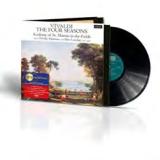
Academy of St Martin in the Fields, Alan Loveday, Sir Neville Marriner
Vivaldi: The Four Seasons (Decca Pure Analogue)
Diese Aufnahme von Vivaldis „Vier Jahreszeiten“ aus dem Jahr 1969 mit der Academy of St Martin in
the Fields und Sir Neville Marriner – dem am häufigsten aufgenommenen Orchester-Dirigent-Duo der
Geschichte – ist nach wie vor so frisch und voller neuer Ideen wie bei ihrer Erstveröffentlichung.
Alan Lovedays wunderbar stilvolle Violinsoli und Simon Prestons einfallsreiche Continuo-Bearbeitung auf
Cembalo und Orgel machen diese Aufnahme zu einer der musikalisch befriedigendsten „Jahreszeiten“-
Einspielungen. Transparent, lebendig, tänzerisch.
Die Serie wurde von Rainer Maillard gemastert und von Sidney C. Meyer in den renommierten EmilBerliner-Studios unter Verwendung ihrer 100 % rein analogen Techniken (AAA) geschnitten. Es werden
ausschließlich analoge Quellen aus den originalen Stereo- und Quadrophonie-Masterbändern verwendet,
darunter auch kürzlich entdeckte analoge Master von frühen Digitalaufnahmen.
Diese in Deutschland bei der Schallplattenfabrik Pallas auf 180 g Virgin-Vinyl gepressten Deluxe-GatefoldVeröffentlichungen in limitierter Auflage enthalten: das Original-Artwork und Liner Notes; Archivfotos und
Faksimiles der Original-Aufnahmeblätter. Jede einzelne Veröffentlichung enthält individuelle Anmerkungen
von Dominic Fyfe, in denen die Geschichte der Aufnahme, der technische Hintergrund und der MasteringProzess detailliert beschrieben werden.
debe ser publicado en 04.09.2026

Felt Sense Recs presents X’d In Stone by Rita Revell. Focused attention given to the junction of Flinders and Elizabeth street.
Industrial, Ambient Electronics.
Made in the Native Grassland Circle while manifesting The Spin of the Melbourne Star.
150 Copies Worldwide.
All Songs Written & Recorded by Rita Revell
’50 Tuned Depressions’ Featuring Pete Gower on violin
Design By Bradley Pinkerton
Mastered by Dubplate & Mastering DE
debe ser publicado en 31.08.2026

- A1: Reverie for work
- A2: My day at the casino
- A3: Memory patient (Motor Cycle Angel)
- A4: White Castle sad
- A5: Nightingale Version (Sailor's Moon)
- B1: Jerryboy
- B2: The eagle is no omen
- B3: Health techniques
- B4: Atoll
- B5: Stage Diva
- B6: Come 2
For any other artist, an album like Asher White’s Love Aggregates might come out of a conscious push to treat no idea as off-limits, to make something bold and new. Jubilant art-funk about cocaine addiction—absolutely. Swooning orchestral pop about Jerry Garcia—why not? Rippling electronic noise, jazzy brushed drums, an elderly motorcyclist with dementia, a profoundly emotional bass solo—put them all in one song. There are threadbare folk tunes, glammed-up power-pop bangers, “Sir Duke” horn charts, Morton Feldman string arrangements, layers of guitar feedback like violins made of liquid chrome. Yes, for another artist, Love Aggregates might be the most adventurous album in their catalog. For Asher White, it’s what passes for settling down.
White is 25 years old and has been making records—writing, recording, producing, and playing almost everything herself—for over a decade. She’d released two dozen of them on Bandcamp before catching the indie-rock industry’s attention with 2024’s Home Constellation Study and last year’s 8 Tips for Full Catastrophe Living. The latter album’s dizzy eclecticism and formidable craft landed her on Rolling Stone’s Future 25 list with the likes of xaviersobased and Oklou, along with a slew of other accolades. That came as something of a surprise to White, who didn’t craft the chaotic 8 Tips with a breakthrough in mind. Love Aggregates feels like a chance, for one of the most thrilling musical talents of her generation, at a more deliberate introduction.
She wrote and recorded her new album while her previous one was gathering
momentum, tinkering in the DIY recording studio where she always works, acutely conscious now that people would be listening to whatever she came up with. At around the same time, her years-long romantic relationship ended in a flurry of betrayal and addiction, her first experience of devastating heartbreak. Even so, Love Aggregates is not a bitter album about wallowing or seething, but instead making use of those impulses as raw materials in work that transcends the specificity of its origins, fashioning them into something surprising and new.
debe ser publicado en 28.08.2026
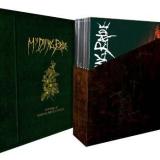
- Disc 1 – The Grief Of Age Side A1. Symphonaire Infernus Et Spera Empyrium (1990 demo) (08:53)
- A2: Vast Choirs (1990 demo) (07:35)
- A3: The Grief Of Age (1990 demo) (04:08)
- A4: Catching Feathers (1990 demo) (03:42)
- Side B1. God Is Alone (1991 7" version) (04:57)
- B2: De Sade Soliloquy (1991 7" version) (04:39)
- B3: Unreleased Bitterness (07:44)
- B4: The Sexuality Of Bereavement (08:04)
- Disc 2 – Symphonaire Infernus Et Spera Empyrium Side A1. Symphonaire Infernus Et Spera Empyrium (11:36)
- Side B1. God Is Alone (04:48)
- B2: De Sade Soliloquay (03:41)
- Disc 3 - As The Flower Withers (Half-Speed) Side A1. Silent Dance (02:14)
- A2: Sear Me (09:06)
- A3: The Forever People (04:09)
- A4: The Bitterness And The Bereavement (07:37)
- Side B1. Vast Choirs (08:16)
- B2: The Return Of The Beautiful (12:50)
- B3: Erotic Literature (05:14)
- Disc 4 - The Thrash Of Naked Limbs EP Side A1. The Thrash Of Naked Limbs (06:10)
- Side B1. Le Cerf Malade (06:28)
- B2: Gather Me Up Forever (05:17)
- Disc 5 - Turn Loose The Swans (Half-Speed) Side A1. Sear Me MCMXCIII (07:25)
- A2: Your River (09:18)
- A3: The Songless Bird (06:57)
- A4: The Snow In My Hand (07:05)
- Side B1. The Crown Of Sympathy (12:13)
- B2: Turn Loose The Swans (10:06)
- B3: Black God (04:50)
- Disc 6 - I Am The Bloody Earth EP Side A1. I Am The Bloody Earth (06:35)
- A2: Transcending (Into The Exquisite) (08:39)
- Side B1. The Crown Of Sympathy (remix) (11:09)
- Disc 7 - The Angel & The Dark River (Half-Speed) Side A1. The Cry Of Mankind (12:13)
- A2: From Darkest Skies (07:47)
- A3: A Sea To Suffer In (06:11)
- Side B1. Black Voyage (09:47)
- B2: Two Winters Only (09:01)
- B3: Your Shameful Heaven (06:59)
- Disc 8 - Like Gods Of The Sun (Half-Speed) Side A1. Like Gods Of The Sun (05:40)
- A2: The Dark Caress (05:59)
- A3: Grace Unhearing (07:19)
- A4: A Kiss To Remember (07:32)
- Side B1. All Swept Away (04:17)
- B2: For You (06:37)
- B3: It Will Come (04:28)
- B4: Here In The Throat (06:21)
- B5: For My Fallen Angel (05:55)
After a career spanning over thirty five years, from UK underground upstarts and outliers, to major success on the international stage - including tours with UK icons Iron Maiden and genre legends Dio - My Dying Bride have themselves become a firmly established pillar of metal history with a refined and influential brand of Death/Doom metal. With enduring popularity across subsequent decades, My Dying Bride remains a productive and captivating vessel for tragedy and despair, with their studio output spanning fourteen full-length albums to date.
As part of the “Peaceville Three”, along with fellow countrymen Paradise Lost and Anathema, My Dying Bride truly became a primary force in highlighting Britain as an epicentre of this Doom revolution of the time, creating a highly distinguishable sound assisted by the inclusion of violin & a more poetic approach to the delivery of morbid and salacious topics, lending an additional air of eccentricity and eloquence to the darkness.
Anthology of Sombre Reflections is an expansive and comprehensive collection of the early and much-celebrated works of the Doom Gods, from the formative deathly rawness of the revered Towards the Sinister demo, ‘God is Alone’ 7” tracks and subsequent debut album, As the Flower Withers, through to the gothic-tinged funereal seductive delights of 1996’s highlight, Like Gods of the Sun.
With the addition of all-time genre classic opuses Turn Loose the Swans, and The Angel and the Dark River also representing My Dying Bride’s much-loved early to 90’s period, the band’s three cult EPs are also featured in this deluxe eight-vinyl boxset, with each record presented on 180gm heavyweight black vinyl. The four studio albums themselves have also been treated to new half-speed masters courtesy of Air Studios.
Accompanying the audio is a 48-page book featuring photographs and artwork, plus new interviews with Andrew Craighan and Aaron Stainthorpe exploring some of the influences and thought-processes behind the creation of such cherished works of the 90s, as well as reflections of their output over this period.
Anthology of Sombre Reflections also contains 2 large posters depicting the Turn Loose the Swans CD artwork image, plus the original poster included in As the Flower Withers. A selection of photo prints of the band from this era are also included.
debe ser publicado en 28.08.2026
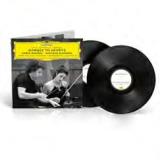
Jascha Heifetz gilt als einer der prägendsten Geiger des 20. Jahrhunderts. Für María Dueñas (»Dueñas war
schlichtweg fesselnd« - New York Times) ist er seit ihrer Kindheit eine konstante künstlerische Inspiration
und Bezugsperson. Mit ihrem neuen Album ’Homage to Heifetz’ folgt sie diesen Spuren und stellt Werke
in den Mittelpunkt, die eng mit dem Vermächtnis von Heifetz verbunden sind. Aufgenommen mit Gustavo
Dudamel, der für Dueñas eine weitere Inspirationsquelle nicht nur »als fantastischer Musiker, sondern
auch als wunderbarer Mensch« darstellt, und dem Simón Bolívar Symphony Orchestra in den berühmten
Abbey Road Studios in London, finden sich unter anderem Korngolds Violinkonzert und Lalos Symphonie
espagnole auf dem neuem Album. Ergänzt wird das Programm durch Miniaturen von Debussy und Ponce,
die bewusst an die Tradition Heifetz’ anknüpfen. So entsteht ein Album, das Heifetz’ Vermächtnis würdigt
und zugleich die eigene künstlerische Stimme von María Dueñas hervorhebt.
debe ser publicado en 28.08.2026
- 1: Judas must die
- 2: Phantom rider
- 3: Demon in your mind
- 4: Heavy cross to bear
- 5: The bottomless pit
- 6: Full metal jacket
- 7: The presidio 2
- 8: Barker ranch
- 9: Napalm nights
- 10: Space scam
- 11: Behind the curtain
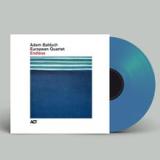
Die Transparent Blue Vinyl-Edition der auf Act Music erschienenen "Endless" LP von Adam Bałdych European Quartet ist erschienen.
Das Album dokumentiert ein kammermusikalisch geprägtes Quartett, das Adam Bałdych mit drei ausgewiesenen Persönlichkeiten der europäischen Improvisationsszene versammelt: Daniele di Bonaventura am Bandoneon, Jacob Karlzon am Klavier und Michel Benita am Kontrabass. Diese Besetzung öffnet einen weiten Klangraum, in dem Streichergesten auf die dunkleren, erzählerischen Farben des Bandoneons und das harmonische Feingefühl des Klaviers treffen. Konzertankündigungen und Pressetexte nennen die beteiligten Musiker und stellen die gemeinsame Arbeit als zentrales Element des Projekts heraus.
Musikalisch führt "Endless" die Ausdrucksformen zusammen, die Baldych über Jahre geprägt haben: die Verschmelzung von jazzimprovisatorischer Freiheit mit Elementen der europäischen klassischen Tradition und Anklängen an Renaissance-Polyphonie. Die Arrangements setzen auf dichte, dialogische Interaktion und erlauben solistischen Entfaltungsraum bei gleichzeitigem Fokus auf feine dynamische Nuancen. Typisch für Baldych ist die Kombination aus virtuoser Artikulation und lyrischem Tonfluss, wodurch der Violinklang zur treibenden Stimme einer kammermusikalischen Erzählung wird.
debe ser publicado en 28.08.2026
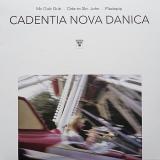
John Tchicai (1936 – 2012) was one of the most important free improvising saxophonists of the 20th Century: an artist of rare vision and aptitude whose lines soared and stood out even in the most hallowed company, and whose body of work as a leader / composer is among the most singular and distinct within the entire canon of that music. But Tchicai’s importance doesn’t end there. Born in Copenhagen, Denmark, to a Danish mother and a Congolese father, his life and career represent a crucial bridge between the European and American traditions of free jazz. Initially trained on violin as a child, Tchicai shifted his focus to the clarinet and alto saxophone during his mid-teens, and began touring Europe as a professional musician by his early 20s, which landed him at a socialist youth festival in Helsinki, Finland, where he met the trumpeter Bill Dixon and saxophonist Archie Shepp. Impressed by what they heard, Dixon and Shepp encouraged the young saxophonist to move to New York, and in so doing changed the history of jazz forever.
Tchicai’s arrival in New York marks the rare occurrence of a European player joining the intimate circle that was first wave of American free jazz. Following his landing in the city in November of 1962, in addition to regularly sitting in with Don Cherry’s group, Tchicai began playing with Bill Dixon's band alongside Archie Shepp and Roswell Rudd, forming the nucleus of the foundation of the New York Contemporary Five - one of the most important groups of the era - which counted Tchicai, Shepp, Cherry, Don Moore, and J. C. Moses as its members. From the ashes of this group, Tchicai would go on to found the legendary ensemble, New York Art Quartet, with Roswell Rudd, Milford Graves, and Lewis Worrell, as well as working within Albert Ayler's band, recording “New York Eye and Ear Control”, Shepp’s band, recording “Four for Trane”, the ensemble that recorded John Coltrane's “Ascension”, and the Jazz Composer's “Orchestra”.
By the time he decided to return to Denmark in 1966, had Tchicai chosen to record little else, his legacy within the history of music would have been ensured. Incredibly ambitious, his arrival home marked the beginning of an incredible period of activity which saw him radically expanding his creative explorations, which by the end of the decade would include becoming a founding member of Amsterdam's Instant Composers Pool and helping to record John Lennon and Yoko Ono's “Unfinished Music No.2: Life with the Lions”. This, however, was proceeded the formation of a new orchestra, Cadentia Nova Danica, led by Tchicai, dedicated to radical cross-disciplinary exploration. Remaining together between 1966 and 1971, the group and its shifting membership regularly fell into collaboration with artists and composers, notably Musica Elettronica Viva, who existed beyond the realms of jazz, as well as participating within multi-media events that incorporated the visual realms.
Cadentia Nova Danica’s only two LPs - “Cadentia Nova Danica” (Polydor, 1968), and “Afrodisiaca” (MPS, 1969) - are effectively Tchicai recorded efforts as a leader, and are legendary. There’s little mystery, once heard, why the later landed on Thurston Moore’s iconic “Top Ten from the Free Jazz Underground”, published by Grand Royal in 1996. Sadly, despite playing extensively during their five year run, with exception of a CD documenting a performance at Jazzhus Montmartre, in 1966, until now there has been no other publicly available recordings that allow us to capture a glimpse of this astounding band at work. Alga Marghen / Formalibera’s vinyl pressing of a never before released body of recordings, made in Copenhagen between 1969 and 1970, changes that in the most exciting of ways.
Comprising three pieces - “Mc Gub Gub, (I–VIII)”; “Ode to Skt. John”; and “Pladepip” - the material on this stunning LP comes from two specific events. The first, which encompasses the first side, “Mc Gub Gub, (I–VIII)” was recorded by Cadentia Nova Danica - in this instance, Tchicai, Sune Weimar, Theo Rahbek, Christian Kyhl, Niels Holt, Jørgen Thorup, Michael Schou, Morgens Bollerup, Allan Gregersen, Ole Matthiessen, Pierre Dørge, Willy Jaegert, Anthony Barnett, and Jon Finsen - on May 29th, 1969, at the ABC-Theatre in Copenhagen. Penned by Tchicai, the piece is a sprawling, evolutionary composition at the outer reaches of free jazz, rooted in large blocks of colliding tonality and rhythm - a sound only accessible to larger ensembles - that push territories explored by Charles Mingus to previously unimagined heights, threaded by moments of hard blown fire. Writhing like a stormy sea - skronking and devilish - “Mc Gub Gub, (I–VIII)” is a work of profound complexity that singlehandedly illuminates not only Tchicai’s singular vision as a composer, but also the power and uniqueness of Cadentia Nova Danica during the band’s most vital period.
The two pieces - “Ode to Skt. John” and “Pladepip” - taking up the flip side, were recorded on February 21st, 1970, at the Danish Broadcasting Corporation’s Radio House, and are the outcome of Cadentia Nova Danica’s extended residency there between 1969 and 1970. In many ways, these two recordings offer some of the best insights into the broad collaborative approaches that defined the band, in this case encountering them working with Danish experimental composer, Svend Erik Werner, who was among the earliest in his country to embrace stylistic pluralism and the use historical forms within a modern context. “Ode to Skt. John” - based on aspects of Gregorian music - was penned by Werner, incorporating heady improvisation by the members of Cadentia Nova Danica, this time made up by Tchicai, Sune Weimar, Hugh Steinmetz, Theo Rahbek, Christian Kyhl, Michael Schou, Morgens Bollerup, Ole Kühl, Torben Enghoff, Mauritz Tchikai, Kjeld Ipsen, Willy Jaegert, Ole Matthiessen, Ole Thilo, Pierre Dørge, Steffen Andersen, Jon Finse, and Clause Bøje. The piece is a fascinating binary of the composed and improvised, utilising the band’s large scale to introduce a remarkable sound within its slow progressions and furious, driving free moments, in this incredible meeting of worlds.
The album’s final piece, “Pladepip”, is arguably its most historically significant: an entirely singular piece, unlike anything in Tchicai’s recorded canon as his foray into musique concréte. Drawing upon two recordings of full-band improvisations by Cadentia Nova Danica, for its creation Tchicai also gouged the surfaces of 78rpm records in his collection to skip and create repeated phrases and patterns, creating a stunning sound collage of hard angles and abrupt phrase, that creates a striking counterpoint to the band’s flowing improvisations that bookend those passages. The result is an engrossing listen and easily one of the most unique and culturally important gestures in the entire history of musique concréte.
Truly incredible, Alga Marghen / Formalibera’s vinyl pressing of this never before released body of recordings, made by John Tchicai’s Cadentia Nova Danica, in Copenhagen between 1969 and 1970, offers an unprecedented window into one of the most important groups working in Europe during that period, significantly expanding their rare and slim discography to date. Accompanied by extensive exploratory liner notes by veteran jazz writer, Ed Hazell, this is easily one of the most historically important archival releases of the year and is impossible to recommend enough. Absolutely essential on every count.
debe ser publicado en 28.08.2026

- FIXER
- AGAIN MY LOVE
- SARAH WAITING IN THE CAR
- IMPROVISATION
- YOU ARE COMING HOME TONIGHT
- SECRETS OF THE UNIVERSE
- CLOTHES IN A HOTEL SINK
- LOUISE
- THE WAY THAT IT FEELS
Über die neun Songs des Albums hinweg erschafft Elanor Moss mit feinsinnigem Psych Folk ein eindringliches Wechselspiel aus Freude und Schmerz. Ihre düster-verträumten Momentaufnahmen bieten dabei weniger Katharsis als vielmehr ein Verständnis für die Komplexität des Wegs dorthin - Heilung nicht als Zustand, sondern als Prozess. Der Weg hin zu ihrem Debütalbum "The Knife, The Needle" war für Elanor Mos selbst eine komplexe Reise. Zeitweise fühlte sie sich von ihrer eigenen Musik entfremdet und suchte nach einem neuen Sound, anstatt den Raum zu besetzen, den sie sich bereits geschaffen hatte. "Nichts fühlte sich richtig an", erinnert sie sich, "also nahm ich den Druck heraus und versuchte, meine Beziehung zum Songwriting und zur Musik neu zu kalibrieren." Die drei Jahre, in denen die Songs für "The Knife, The Needle" entstanden, führten sie letztendlich zurück zu ihren Wurzeln und ihrer Liebe zu, wie sie es ausdrückt, "der Musik, die mich wirklich etwas fühlen ließ; der Musik, die ich schreiben wollte." "Das waren Folk- und zeitgenössische Folk-Songwriter", fährt sie fort. "Ich habe viel Zeit damit verbracht, Gitarre zu spielen", fährt sie fort. "Ich habe mir ein Vierspur Tape Gerät geliehen und darauf Demos aufgenommen. Ich habe mich intensiv mit Kurzgeschichten beschäftigt. Die schlichte, direkte Wahrhaftigkeit von Autor*innen wie Raymond Carver hat mich sehr angesprochen und inspiriert, während ich darauf wartete, dass meine Lust am Schreiben zurückkehrt. Ich habe außerdem wieder eine Therapie begonnen, in der ich anfing zu verstehen, woher ich komme, wie sich meine Familiengeschichte in meinem Handeln widerspiegelt und wie ich liebe und Liebe annehme. Aus der Langsamkeit und Stille dieser Rhythmen sind diese Songs entstanden." ,Sarah Waiting in the Car" gibt den Ton an, mit Moss' zartem, nachdenklichem Gitarrenspiel und den Pinselstrichen von Matthew Herds Ensemble - Marcus Hamblett (Horn), Jool Owen (Horn), Andrew Stuart-Buttle (Violine), Reid Jenkins (Violine), Linus Fenton (Kontrabass) und Herd (Saxophon) - die ihre Texte mit herzzerreißender Ernsthaftigkeit untermalen, während sich die Erzählung, die aus Moss herausfließt, von einem Treffen in der Bar zu den Nachwirkungen einer missbräuchlichen Beziehung wandelt, wobei Sanftheit in Gewalt umschlägt. In ,Fixer" ringt Moss mit der Tatsache, dass Liebe jemanden ebenso verletzen kann, wie sie ihn heilen kann. Ihr Album ,The Knife, The Needle" beschäftigt sich damit, wie Beziehungen durch die Liebe verändert, verkompliziert und erschüttert werden. Es ist ein erschütterndes Werk, zugleich geduldig und verletzlich, opulent umgesetzt und tief empfunden. Beide Objekte, die im Albumtitel genannt werden, können Blut vergießen, doch durch ihre Stimme und Gitarre erhellt, ist das, was aus den Wunden fließt, die sie hier teilt, nichts Geringeres als Poesie.
debe ser publicado en 21.08.2026

• Jazz-Fusion auf höchstem Niveau: Electric-Violin- Pionier Jean-Luc Ponty zeigt seine kreative Höchstform und verbindet klassische Eleganz mit futuristischer Klangsprache
• Erstmalig auf Vinyl erhältlich, gemastert von Grammy-nominiertem Sound Engineer Christoph Stickel
»In Concert« von Jean Luc Ponty ist ein Meilenstein des Jazz-Fusion. Die Live-Aufnahme aus dem Jahr 1999 fängt die explosive Energie des Ensembles rund um Ponty ein. Mit seiner elektrischen Violine überschreitet er Grenzen zwischen Jazz, Rock und elektronischer Klangkunst auf eine einzigartige Weise und zeigt sich in kreativer Höchstform.
debe ser publicado en 21.08.2026

Der mitreißende Auftritt von AJR in der legendären Hollywood Bowl in Los Angeles am 4. Oktober 2025
wurde auf dem allerersten Live-Album der Band verewigt! Die Tracklist umfasst 21 Titel, darunter alle
großen Hits der Band – von „Bang!“ über „Burn The House Down“, „Weak“ und „Way Less Sad“ bis hin
zu „World’s Smallest Violin“ und vielen mehr.
debe ser publicado en 14.08.2026

- 1: IT'S ONLY PASTURES
- 1: 2BITS AND PIECES
- 1: 3O' TO BE IN THIS LAND
- 1: 4SHOULDER SEASONS
- 1: 5LIKE AN ASPEN LEAF
- 1: 6THE PAIN
- 1: 7IS EVERYONE HAPPY?
- 1: 8IT'S NOT OVER YET
- 1: 9OH YOU LUCKY ONES
Zum erstenmal seit 2007 wieder da, überhaupt zum ersten Mal auf Vinyl! Auf ihrem dritem Album *Cherlokalate* ,verwandelt Jane Weaver Songs in zerbrechliche und funkelnde Wiegenlieder" (The Guardian). Inspiriert von Folk-Kultfiguren wie Karen Dalton und Linda Perhacs, bilden diese zehn Lieder eine einzigartige Reflexion über persönliche Höhen und Tiefen - voller Glück und Schmerz, Leidenschaft und Wehmut. Eine intime Reise voller ätherischer Folk-Anmut, veredelt durch eine großartige Produktion, sehnsuchtsvolle Pedal-Steel-Klänge, Violinen und - stellenweise - eine eigenwillige, transformierte Variante von Rock im Stil von Velvet Underground. "Imagine Julie Driscoll locked in a studio with American Spring and Broadcast." Uncut
debe ser publicado en 07.08.2026
- A1: Storyteller
- A2: Let You Down
- A3: Let Me Love
- A4: Help You Out
- A5: Here
- A6: Friendship
- B1: Sunflowers
- B2: You Will Be Mine
- B3: Stranger
- B4: Wide Open
- B5: I'll Be Gone (Bonus Track)
To mark its 10th Anniversary,
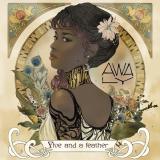
discover Awa Ly's Album "Five And A Feather" (Including one previously unreleased track) On Vinyl For The First Time !
One night, Awa had a dream.
The atmosphere was enchanted, almost mystical, enveloped in a setting that summoned the moon, the Earth, and the elements. An ancestral blend of Native American and African cultures, a shamanic being was there, speaking in an unknown language, narrating stories both real and imagined. She received these tales from others, made them her own, absorbed them, shared their joy, and soothed their harbored pain or sadness.
Upon waking, the shamanic narrator had vanished, but her presence was still palpable; Awa made her the storyteller of this new album: Five and a Feather.
Five, like all things counted by fives: the senses, the oceans, the lines of a musical staff, the fingers on a hand. And feather, the magical element that connects them-the very one Awa used to write and compose the ten tracks of this new album where, under the brush of SainaSix, she becomes the first Black woman immortalized in Mucha's Art Nouveau aesthetic.
Ballaké Sissoko's kora, Paco Sery's senza, Greg Cohen's double bass, Faada Freddy's vocals, the steel guitar, or the erhu (Chinese violin) are all elements that illuminate the shamanic storyteller's tales.
Produced alongside the duo Jean Lamoot and Pascal Danae (winners of the 2015 Victoires de la Musique in the World Music category with their band Rivière Noire), Five and a Feather faithfully captures the warm atmosphere of live-recorded sessions where instruments answer and interlock with one another, creating the perfect showcase for the album's principal instrument: Awa's voice.
Words that she delicately places or lets fall onto the notes like tears of joy or sadness, flowing from that source called love.
An album written, composed, and recorded like fine lace, starry with details that only reveal themselves to those who know how to seek them out.
debe ser publicado en 31.07.2026

Ancient Infinity Orchestra return with their third album, It’s Always About Liberation, a new record that deepens the vision of their acclaimed recent work while moving into darker, more searching emotional territory.
Conceived as a partner to It’s Always About Love, this new body of work shares its predecessor’s generosity and spiritual openness, but carries a different charge. Where the previous album focused on healing and warmth, It’s Always About Liberation is largely animated by struggle, perseverance and the desire for transformation while still offering a path to betterment. It is music made in full awareness of a fractured world, yet unwilling to surrender to it.
Like It’s Always About Love the album title draws inspiration from words spoken by Moor Mother during their 2024 We Out Here festival performance that deeply affected bandleader Ozzy Moysey: “It’s always about love / It’s always about liberation.” Those twin ideas became a framework for the two albums Ancient Infinity Orchestra were creating. If one album explored love as repair, this one explores liberation as movement, continually striving toward freedom, clarity and deeper connection.
The 16-member ensemble is led by double bassist and composer Ozzy, with a distinctive line-up that explains their sound better than any artificial genre divisions: two double basses, harp, saxophones, clarinets, violin, viola, cello, oboe, flutes, mandolin, congas, piano, drum kit, with bells, shakers and other percussion instruments scattered on the floor of live sets and recording sessions, ready for members to use whenever the spirit takes them.
This orchestration, and the overlap between membership and friendship, gives Ancient Infinity Orchestra a sound that is at once expansive and intimate, earthy, and cosmic, constantly shifting yet grounded in shared intention. The attention to intention and the inviting sonic world connects the music to artists ranging from Alabaster dePlume to Gondwana label boss Matthew Halsall.
Gradually, the Orchestra became a grounding force in the emerging jazz scene in Leeds, bringing together individuals from different musical backgrounds co-founding the Café Oto-inspired Limpet Club or co-hosting the monthly Sonic Plunge (‘a platform for adventurous experimentation’) and co-founding the Leeds Improvisers Orchestra. Additionally, the ensemble acted as a bridge between musicians in Brighton and Leeds, after Ozzy spent a stint back on the south coast between 2020 and 2022.
Their debut, River of Light, was a vibrant celebration of togetherness recorded in three days and released on Gondwana in 2023. A Maida Vale session for Jamie Cullum’s BBC Radio 2 show brought them to a broader audience, as did bookings at North Sea Jazz Festival and Gretchen, Berlin. Since then, Ancient Infinity Orchestra has become a by-word for music that could be framed as ‘spiritual jazz’. Whilst Ozzy avoids the phrase when describing his music, he’s crystal clear that his heroes are associated with those words – citing Art Ensemble of Chicago, Pharoah Saunders, Coltrane (Alice and John), and Don Cherry as major influences.
Across trance-like meditations, rising grooves, moments of grief and collective uplift, It’s Always About Liberation speaks to the battle within the mind as much as the inequalities of the wider world. It acknowledges the darkness but lets connection and creativity have the last word Ancient Infinity Orchestra is a gathering of voices, traditions, and energies converging into something timeless. Their music is a journey inward and outward, always reaching toward the universal.
Haga su pedido ahora y le encargaremos el artículo en nuestro proveedor.
- A1: I Can't Get Enough Of Your Love - Malik & Alton Mash Up(Late Night Mix)
- A2: Change Remix - FT Jerald Daemyon(Violin MashUp)
- A3: Good People, Lovely People (Malik's 313 Mix)
- B1: It's Not The Way It Should Be (But It Is What It Is)Edit
- B2: Time (The Lick 7)
- B3: Asian Funk (Malik's House Remix)
- B4: Hot (The Horn)-Dwayne Jensen Remix FT Howard Wazeerud-Din II edit
Vol 2[18,45 €]
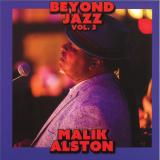
Truth Manifest Records is honored and delighted to release Beyond Jazz Volume 3, the third volume in this superb, innovative four-part series! This exceptional vinyl release on Truth Manifest Records is from executive producer Malik Alston, with distribution from Mother Tongue.
Dive into the delightful beauty of Beyond Jazz Volume 3, in a sonic world of love, intuition, discovery and adventure. Let it take you to a place where you can’t get enough in a universe of electrified transformation and elevation, on a galactic ride to the space where good people, lovely people live forever.
This vibrant collection has special new remixes and edits based on Malik’s current radio show, Beyond Jazz, on motionfm.
Travel to the edge of your senses, further than your dreams can take you….Beyond Jazz.
Haga su pedido ahora y le encargaremos el artículo en nuestro proveedor.
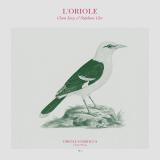
L'Oriole is the meeting point between violinist and composer Clara Lévy and sound artist Stéphane Clor. Combining violin, violoncello piccolo and a unique orchestra of resonators and transducers, the duo explores birdsong, resonance and the transformative power of sound. Acoustic instruments are projected into cymbals, drum skins, aluminium cans and other resonant objects, creating rich layers of colour, texture and spatial depth. Inspired by the work of Olivier Messiaen and his fascination with birds, L'Oriole unfolds as a journey through imagined birdsongs, suspended sonic landscapes and raw bursts of acoustic energy.
debe ser publicado en 24.07.2026

A groovy vibrant jazz / soul / funk soundtrack for an imaginary hard-boiled movie from the 70s!
The varied selection of instruments (organ, flute, moog, bongos, cello, violin, drums, bass, acoustic and electric guitars etc.) blend flawlessly into each other and make this album an intense and inspired trip... in fact it may turn into a movie in front of your very eyes! Featuring the legendary Edda Dell'Orso on vocals and her husband Giacomo on string arrangements!!!
Haga su pedido ahora y le encargaremos el artículo en nuestro proveedor.

- 1: ANYTHING COULD BE
- 2: SEE SAW
- 3: CAT AT MY DOOR
- 4: I NEVER
- 5: LIKE YOU'VE KNOWN IT
- 6: HISTORY
- 7: AS THE WEATHER
- 8: WAY UP
- 9: EVERYTHING IS
- 10: WORDS UNKEPT
- 11: THE DAY WILL BE NEW
Der Singer-Songwriter Max Subar aus Chicago legte den Grundstein für ,Anything Could Be", sein Debütalbum, in einem Haus am Ufer eines zugefrorenen Sees in Wisconsin. Subar kehrte zu der klanglichen und geistigen Landschaft zurück, die er während der ersten zehntägigen Session geschaffen hatte, und blieb ganz im Moment, indem er nur dann arbeitete, wenn er sich wirklich voll und ganz darauf einlassen konnte. Die meisten der zusätzlichen Sessions, die dem Album Textur und Farbe verleihen, wurden in Subars Heimstudio aufgenommen, in demselben Haus, in dem Case Oats, die von Casey Gomez-Walker geleitete Band, in der Subar Gitarre spielt, ihr 2025er Debüt ,Last Missouri Exit" aufnahmen. Sein Bruder, Sam Subar, spielte Schlagzeug. Weitere Instrumentierung kommt von den Case Oats Bandkollegen Spencer Tweedy (Schlagzeug bei ,I Never" und ,Way Up"), Jason Ashworth (Kontrabass) und Scott Daniel (Violine) sowie den häufigen Mitarbeitern Chet Zenor (E-Gitarre), Kelly Hannemann (Klavier) und Sarah Weddle (Vibraphon, Orgel und E-Piano). Die Arrangements, die dabei entstanden, sind großzügig und erhellend und verleihen den Grundzügen der Live-Gitarren- und Gesangsaufnahmen von ,Anything Could Be" Substanz, ohne dabei ihre Spontaneität zu opfern. Im Ergebnis ein fesselndes, offenherziges Debüt, das mit dem Hörer wächst und Zeit und aufmerksames Zuhören belohnt. Seine 11 Songs sind durchdrungen von dem, was die Dichterin Adrienne Rich ,eine wilde Geduld" nannte, einer radikalen Stille, die selbst eine Reise hin zu Bewusstsein, Frieden und Selbstwahrnehmung ist. Es macht keine Versprechungen darüber, was als Nächstes kommt. Dennoch lässt es die Hörer in atemloser Vorfreude darauf zurück, was das sein mag.
debe ser publicado en 17.07.2026
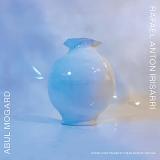
In spring 2025, Abul Mogard and Rafael Anton Irisarri created the source material for their second album, Where Light Pauses in the Silence of the Sun, during a three-day residency at Morphine Raum in Berlin. Functioning as both recording studio and performance venue, the space has no stage, with the audience gathered around the performers. Working within an open framework, the duo reshaped the music each evening while recording the performances live to multitrack. Rotary speakers, modular synthesizers and bowed guitar formed the core of their sonic language, captured through a 1970s mixing console and microphones placed around the room.
Back in Mogard’s studio in Rome, the material was further crafted as motifs were stretched, fragments isolated, and tempos dissolved. Irisarri recorded additional guitar textures and treatments in New York, while passages recorded by Martina Bertoni and Andrea Burelli in Berlin reinforced the harmonic centres and brought breath, refinement and a new sensibility to their compositions. The process continued as Mogard’s layering and subtraction reassembled everyone’s parts into the final arrangement.
The album opens with “In the Eastern Wild,” building from a sparse outline into a monumental formation of low-frequency weight, its internal motion shaped by the rotating Leslie speaker. “Over the Domes” widens into a broader acoustic field, where sustained modular tones meet waves of softly plucked guitar. The music then turns inward with “A Blue Descent,” centred on Bertoni’s cello, whose growling timbre introduces a melancholic depth.
At the album’s centre, “In a Quiet Radiance” unfolds around a slow guitar ostinato, its luminous stillness opening into a more expansive and reflective state. Across its ten-minute span, Burelli’s violin lines and Bertoni’s lower cello phrases gradually surface, weaving through the harmonic field. Mogard brings Burelli’s processed voice to the fore, its emotive, operatic presence becoming one of the record’s pivotal moments. “Of Blessed Ages” suspends the sonic flow, shifting between parallel major and minor chords as lingering, slowly decaying melodies shape the music’s internal drift. The closing “Among Shadows” settles into a darker resonance as layered textures recede.
Mogard and Irisarri’s shared language balances restraint and maximalism. UK magazine Crack describes the music as “a tidal wave held in suspension,” while Dutch newspaper de Volkskrant writes, “What a colossal sound, and how this music strikes at the emotions.” Reflecting on the residency sessions, Irisarri recalls: “At moments I genuinely couldn’t tell if a sound was coming from me or from Abul. It stopped feeling like two people making decisions and began to feel like we were inside a system moving on its own."
Marja de Sanctis’ cover artwork revisits the vessel sculpture from the duo’s first album, Impossibly Distant, Impossibly Close. There it appeared as raw, unfired clay. Here it has been fired in the kiln and finished with a glaze. Light gathers on its polished surface and spills into the surrounding space. As she explains, “I wanted to convey the idea of continuity within the duo, and the vessel became a kind of container for that idea. However, their music felt different this time, and with the collaboration of Martina and Andrea, I felt it should have a sleeker, softer, more glamorous look, very distant from the first raw appearance.” The transformation of the vessel from raw clay to fired form suggests a passage from immediacy toward permanence, mirroring the music’s gradual expansion.
Haga su pedido ahora y le encargaremos el artículo en nuestro proveedor.
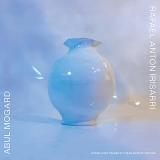
In spring 2025, Abul Mogard and Rafael Anton Irisarri created the source material for their second album, Where Light Pauses in the Silence of the Sun, during a three-day residency at Morphine Raum in Berlin. Functioning as both recording studio and performance venue, the space has no stage, with the audience gathered around the performers. Working within an open framework, the duo reshaped the music each evening while recording the performances live to multitrack. Rotary speakers, modular synthesizers and bowed guitar formed the core of their sonic language, captured through a 1970s mixing console and microphones placed around the room.
Back in Mogard’s studio in Rome, the material was further crafted as motifs were stretched, fragments isolated, and tempos dissolved. Irisarri recorded additional guitar textures and treatments in New York, while passages recorded by Martina Bertoni and Andrea Burelli in Berlin reinforced the harmonic centres and brought breath, refinement and a new sensibility to their compositions. The process continued as Mogard’s layering and subtraction reassembled everyone’s parts into the final arrangement.
The album opens with “In the Eastern Wild,” building from a sparse outline into a monumental formation of low-frequency weight, its internal motion shaped by the rotating Leslie speaker. “Over the Domes” widens into a broader acoustic field, where sustained modular tones meet waves of softly plucked guitar. The music then turns inward with “A Blue Descent,” centred on Bertoni’s cello, whose growling timbre introduces a melancholic depth.
At the album’s centre, “In a Quiet Radiance” unfolds around a slow guitar ostinato, its luminous stillness opening into a more expansive and reflective state. Across its ten-minute span, Burelli’s violin lines and Bertoni’s lower cello phrases gradually surface, weaving through the harmonic field. Mogard brings Burelli’s processed voice to the fore, its emotive, operatic presence becoming one of the record’s pivotal moments. “Of Blessed Ages” suspends the sonic flow, shifting between parallel major and minor chords as lingering, slowly decaying melodies shape the music’s internal drift. The closing “Among Shadows” settles into a darker resonance as layered textures recede.
Mogard and Irisarri’s shared language balances restraint and maximalism. UK magazine Crack describes the music as “a tidal wave held in suspension,” while Dutch newspaper de Volkskrant writes, “What a colossal sound, and how this music strikes at the emotions.” Reflecting on the residency sessions, Irisarri recalls: “At moments I genuinely couldn’t tell if a sound was coming from me or from Abul. It stopped feeling like two people making decisions and began to feel like we were inside a system moving on its own."
Marja de Sanctis’ cover artwork revisits the vessel sculpture from the duo’s first album, Impossibly Distant, Impossibly Close. There it appeared as raw, unfired clay. Here it has been fired in the kiln and finished with a glaze. Light gathers on its polished surface and spills into the surrounding space. As she explains, “I wanted to convey the idea of continuity within the duo, and the vessel became a kind of container for that idea. However, their music felt different this time, and with the collaboration of Martina and Andrea, I felt it should have a sleeker, softer, more glamorous look, very distant from the first raw appearance.” The transformation of the vessel from raw clay to fired form suggests a passage from immediacy toward permanence, mirroring the music’s gradual expansion.
Haga su pedido ahora y le encargaremos el artículo en nuestro proveedor.
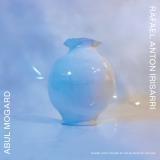
In spring 2025, Abul Mogard and Rafael Anton Irisarri created the source material for their second album, Where Light Pauses in the Silence of the Sun, during a three-day residency at Morphine Raum in Berlin. Functioning as both recording studio and performance venue, the space has no stage, with the audience gathered around the performers. Working within an open framework, the duo reshaped the music each evening while recording the performances live to multitrack. Rotary speakers, modular synthesizers and bowed guitar formed the core of their sonic language, captured through a 1970s mixing console and microphones placed around the room.
Back in Mogard’s studio in Rome, the material was further crafted as motifs were stretched, fragments isolated, and tempos dissolved. Irisarri recorded additional guitar textures and treatments in New York, while passages recorded by Martina Bertoni and Andrea Burelli in Berlin reinforced the harmonic centres and brought breath, refinement and a new sensibility to their compositions. The process continued as Mogard’s layering and subtraction reassembled everyone’s parts into the final arrangement.
The album opens with “In the Eastern Wild,” building from a sparse outline into a monumental formation of low-frequency weight, its internal motion shaped by the rotating Leslie speaker. “Over the Domes” widens into a broader acoustic field, where sustained modular tones meet waves of softly plucked guitar. The music then turns inward with “A Blue Descent,” centred on Bertoni’s cello, whose growling timbre introduces a melancholic depth.
At the album’s centre, “In a Quiet Radiance” unfolds around a slow guitar ostinato, its luminous stillness opening into a more expansive and reflective state. Across its ten-minute span, Burelli’s violin lines and Bertoni’s lower cello phrases gradually surface, weaving through the harmonic field. Mogard brings Burelli’s processed voice to the fore, its emotive, operatic presence becoming one of the record’s pivotal moments. “Of Blessed Ages” suspends the sonic flow, shifting between parallel major and minor chords as lingering, slowly decaying melodies shape the music’s internal drift. The closing “Among Shadows” settles into a darker resonance as layered textures recede.
Mogard and Irisarri’s shared language balances restraint and maximalism. UK magazine Crack describes the music as “a tidal wave held in suspension,” while Dutch newspaper de Volkskrant writes, “What a colossal sound, and how this music strikes at the emotions.” Reflecting on the residency sessions, Irisarri recalls: “At moments I genuinely couldn’t tell if a sound was coming from me or from Abul. It stopped feeling like two people making decisions and began to feel like we were inside a system moving on its own."
Marja de Sanctis’ cover artwork revisits the vessel sculpture from the duo’s first album, Impossibly Distant, Impossibly Close. There it appeared as raw, unfired clay. Here it has been fired in the kiln and finished with a glaze. Light gathers on its polished surface and spills into the surrounding space. As she explains, “I wanted to convey the idea of continuity within the duo, and the vessel became a kind of container for that idea. However, their music felt different this time, and with the collaboration of Martina and Andrea, I felt it should have a sleeker, softer, more glamorous look, very distant from the first raw appearance.” The transformation of the vessel from raw clay to fired form suggests a passage from immediacy toward permanence, mirroring the music’s gradual expansion.
Haga su pedido ahora y le encargaremos el artículo en nuestro proveedor.

- A1: Les Masques - Il faut tenir (1969)
- A2: Isabelle Aubret - Casa Forte (1971)
- A3: Christianne Legrand - HLM et Ciné Roman (1972)
- A4: Jean Constantin - Pas tant d'chichi ponpon (1972)
- A5: Billy Nencioli & Baden Powell - Si rien ne va (1969)
- B1-: Marpessa Dawn - Le petit Cuica (1963)
- B2: Jean-Pierre Sabar - Vai Vai (1974)
- B3: Sophia Loren - De jour en jour (1963)
- B4: Isabelle - Jusqu’à la tombée du jour (1969)
- B5: Sylvia Fels - Corto Maltesse (1974)
- C1: Frank gérard - Comme une samba (1972)
- C2: Ann Sorel - La poupée des Favellas (1971)
- C3: Charles Level - Un enfant café au lait (1971)
- C4: Andrea Parisy - Les mains qui font du bien (1970)
- C5: Audrey Arno - Quand Jean-Paul rentrera (1969)
- C6: Aldo Frank - T’as vu ce printemps (1970)
- D1: Christianne Legrand - Cent mille poissons dans ton filet (1972)
- D2: Clarinha - Lemenja (1970)
- D3: Hit Parade des Enfants - Aquarela (1976)
- D4: Jean-Pierre Lang - Tendresse (1965)
- D5: Magalie Noël - Une énorme Samba (1970)
- D6: Françoise Legrand - La Lune
Ever since the late 1950s bossa-nova revolution, Brazil’s influence on French music has been undeniable. Pierre Barouh, Georges Moustaki and a vast array of lesser known artists, all made the Musica Popular Brasileira (MPB) an axis of promotion at the service of a cool and metaphysical, modern and mixed Brazilian lifestyle. Some were seduced by the poetic languors of the bossa, some were looking for fun, and others just loved the American hybridization of jazz-bossa, jazz-samba.
What is bossa nova? One of its creators, Joao Gilberto said: "Its style, cadence, everything is samba. At the very start, we didn't call it bossa nova, we sang a little samba made up of a single note - Samba de uma nota so .... The discussion around the origins of bossa nova is therefore useless”. It is nevertheless useful to remember that these magnificent Brazilian songs, which the guitarist describes as samba, were shifted and balanced around improbable chords. "I like things that lean, the in-betweens that limp with grace," said Pierre Barrouh, quoting Jean Cocteau.
With emotion, arrangements for violin and supple guitar licks, bossa nova rapidly changed. A transformation that can be heard in the Tchic, tchic, French Bossa Nova 1963-1974 compilation, the result of a cultural reappropriation, which traveled through the United States and supplemented itself in France.
A musical revolution that has remained significant, bossa nova was born in Rio. From 1956 to 1961, Brazil lived through its golden years. In five years, the country had invented its modernist style. Elected president in 1956, Juscelino Kubitschek de Oliveira, an elegant man with a broad forehead, brandished a promising slogan: "Fifty years of progress in five years". He quickly got to work. Not worried about increasing debt, he launched the project for a new federal capital, Brasilia, designed by the communist architect Oscar Niemeyer. Volkswagen opened state-of-the-art factories and created the “fusquinha”, the Beetle. In Rio, the Vespa made its first appearance. The Arpoador Surf Club crew run into the “girl” from Ipanema, Helô Pinheiro - the tanned garota ("chick"), between a flower and mermaid, who at 17 walked by the Veloso bar, where the fiery author and composer, Tom Jobim and Vinicius de Moraes, were getting drunk on whiskey. From then on, bossa symbolized cool.
In 1958, Joao Gilberto recorded Chega de Saudade, which the directors of Philips denied, calling it "music for fagots". The marketing director, who believed in it, secretly pressed 3000 78-inch vinyls and distributed them at schools around Rio, creating a tidal wave.
American jazzmen then took over. In particular, trumpeter Dizzy Gillespie and guitarist Charlie Byrd. In November 1962, the Brazilian Ministry of Foreign Affairs funded a "Bossa-Nova" concert at Carnegie Hall in New York, inviting the genre’s pioneers. Unprepared, the show soon turned to disaster. But the troupe was invited to the White House by Jackie Kennedy. The first lady loved "the new beat" and in particular Maria Ninguem, a song by Carlos Lyra, later covered by Brigitte Bardot.
In Brazil, the 1964 military coup quickly ended this euphoria. The destructive atmosphere that ensued pushed many Brazilian musicians to leave, if not to exile. Thus, Tom Jobim, Sergio Mendes and Joao Gilberto arrived to the United States. In New York, Joao Gilberto met saxophonist Stan Getz. At the time, he was married to the Bahianese Astrud Weinert Gilberto, who had a German father. She had never sung before, but she knew how to speak English. Getz therefore asked her to replace her husband on The Girl From Ipanema. The Getz/Gilberto record with Tom Jobim on piano, was released in March 1964. Phil Ramone, the "pope of pop" was in charge of sound.
Bossa nova arrived in Paris through the classic “guitar-voice” channel (Pierre Barouh, Baden Powell, Moustaki…) But France loved jazz and Paris had already welcomed its American contributors. All these good people were to pass through Saint-Germain-des-Prés. The cabaret l'Escale became the Mecca of Latin American sound where one could find Pierre Barrouh and his friends, such as the Camara Trio, samba-jazz aces, whose only record was published by the Saravah label. With a band strangely called Les Masques (a band that included Nicole Croisille and Pierre Vassiliu, among others), the Camara Trio recorded an interesting Brazilian Sound, including the track Il faut tenir which is present on this tasty compilation of rarities.
Other enlightened musicians can also be found on the compilation, such as Jean-Pierre Sabar (songwriter for Hardy, Auffray, Leforestier ...) and the French pop rock organist Balthazar. In 1975, Sabar recorded Aurinkoinen Musiikkimatka on a Finnish label, which featured the crazy Vai, Vai, included on this record. We are now following the footsteps of Brazilian electronic musicians such as Sergio Mendes, Eumir Deodato or Marcos Valle who created funk and disco sounds on their keyboards and synthesizers. A style that influenced Véronique Sanson when she wrote Jusqu’à la Tombée de la nuit in 1969 for Isabelle de Funès, the niece of Louis and a great friend of Michel Berger - Sanson did end up singing this track on her 1992 Sans Regret record.
The pinnacle of exoticism and travel, Sylvia Fels’ Corto Maltese includes bongos, sea mist and ocean sounds. The title was taken from Jacky Chalard’s concept album written in 1974, Je suis vivant, mais j’ai peur (I am alive, but I am scared), based on Gilbert Deflez’s science fiction novel.
However, bossa nova extended the scope of popularity. "In the 1970s, I was a fan of Sergio Mendes, Getz / Gilberto. I fell in love with this music that I knew because I had been an orchestral singer, " explained Isabelle Aubret, who in 1971 delivered a composite record of covers by the very funky Jorge Ben, Orfeu Negro, Tom Jobim, Vinicius de Morais and Jean Ferrat. "I recorded this album for Meys Records in Paris, far from Brazil, with wonderful musicians, François Raubert, Roland Vincent, Alain Goraguer...". The latter wrote the arrangements for Casa Forte, a very percussive title borrowed from Edu Lobo, one of the initiators of the bossa who spent time in California. "Jazz and bossa came together and produced very rhythmic music. I love singing, it allows me to dream, to have fun, to feel a high on stage, and these songs brought me joy, made me swing, my singing felt like a dance.”
The world tours of French singers and their desire for the tropics, often brought them to Rio with its hills, forests, caipirinhas and tanned bodies. There are surprises though, like this Iemenja (Iemenja is the goddess of the sea in the Afro-Brazilian candomblé religion). Not unlike the composer and musician Jean-Pierre Lang, based in Sao Paulo, Claire Chevalier taught Brazil to Brazil. In 1970, the singer and painter published a 45-inch vinyl, Mon mari et mes amants (My husband and my lovers), under the improbable pseudonym of Clarinha (little Claire). She was then living in Rio, with her husband, Joël Leibovitz, who founded a band called Azimuth, and who owned a record label specialized in "sambas enredos" songs for samba school parades.
For its B side, she asked Pierre Perret to come up with lyrics for a song composed by Carlos Imperial: "Oh goddess of the sea, o goddess Iemenja, I bring a white rose to adorn your long hair ..." . "Perret came to see us, and we had fun, remembers Joël Leibovitz. We wrote Lemenja for fun, we recorded it at the Havaí studio, behind the Central do Brasil the central station. Erlon Chaves, the arranger who worked with Elis Regina, joined us" adding his share of Afro-Brazilian percussions and funky brass to the mix.
There is a common misunderstanding in Franco-Brazilian history: that bossa, admittedly hedonistic, is perceived as funny, even though the poets who wrote the texts are often philosophizing on the human condition. Its French interpreters pull it towards a carnival inspired universe, far removed from its fundamental essence. Thus, Jean Constantin covered the famous Samba da minha terra, an ode to the art of samba written by the classic Bahian composer Dorival Caymmi, renaming it with the enticing title of Pas tant de tchi tchi pompon: "On your pier there is no tchi tchi / when you arch your back, you know everything is alright ”(lyrics by Gérard Calvi). This expedited bossa aims for the absurd, but retains a certain elegance.
Indeed, Jean Constantin was not an idiot, the rather large man had a huge mustache and liked fantasy, (Les pantoufles à papa, Le pacha, inspired by cha-cha-cha-cha, salsa and jazz) but he was also the lyricist of Mon manège à moi interpreted by Edith Piaf, the composer of Mon Truc en plume by Zizi Jeanmaire and the soundtrack of François Truffaut’s 400 Blows. Le Poulpe, published in 1970, from which this bossa is extract, was arranged by Jean-Claude Vannier, an accomplice of Serge Gainsbourg’s Melody Nelson. In short: "There is enough of samba / By looking at the parasol / Because my poor cabeza / Is going to die in the sun".
Even the American actress Marpessa Down, who was at the heart of the bossa nova revolution with her role as Euridyce in Marcel Camus’ film Orfeu Negro, winner of the 1959 Cannes Palme d'or, fed the clichée with Je voudrais parler au petit cuica - "Tell me how you manage to always make people want to dance / It's true, I must admit that I cannot resist your magic" - in consequence, once can hear the cuica, a little drum inherited from the Bantu.
But bossa nova had many angles. Societal, of course, pushing actresses who were symbols of women's liberation like Brigitte Bardot, Jeanne Moreau, or Sophia Loren to engage in the exercise of accelerated bossa. In February of 1963, Sophia Loren made a record in French in Rome, Je ne t'aime plus, featuring the song De jour en jour, a bossa written by two Italians, Armando Trovajoli and Tino Fornai, which was released a little later by Barclay. Bossa accompanied the 1960s, a decade of moral liberation. Ann Sorel, who interpreted La Poupée des favellas, caused a sensation with L’amour à plusieurs, a provocative song written by Frédéric Bottom and Jean-Claude Vannier. As for the actress Andrea Parisy, she displayed her bourgeois cheekiness in Marcel Carné's Les Tricheurs before interpreting Les mains qui font du bien. And Magalie Noël, the friend of Boris Vian, who sung Johnny fais-moi mal, was hired to sing Une énorme Samba, composed by Alain Goraguer (arranger to Gainsbourg, Bobby Lapointe and Jean Ferrat) with lyrics by Frédéric Botton.
But in the end, of what wood is bossa nova made of? The answer is given by Christianne Legrand, daughter of Raymond the conductor, and sister to Michel the composer: "With me, with jà" - jà means "immediately" in Portuguese. In 1972, the singer, an expert in vocal jazz and a member of the Double Six, published Le Brésil de Christianne Legrand. Two songs included on the Tchic Tchic compilation that demonstrate how bossa, jazz, funk, rock, etc. work like a swiss army knife: the music is used to denounce broken systems, or miracles, HLM et ciné roman, Cent mille poissons dans ton filet, two songs from the O Cafona soundtrack, a successful telenovela broadcast, at the time in black and white, on TV Globo. The first was adapted in French by the fighter and friend of the Legrand tribe, Agnès Varda. The second is content with a play on words, jostling them into a summer fun.
Véronique Mortaigne
Haga su pedido ahora y le encargaremos el artículo en nuestro proveedor.

Originally self-released in 2023, Stella Kola, the debut album from Beverly Ketch (Jow Jow, Weeping Bong Band) and Robert Thomas (Sunburned Hand of the Man, Dalthom), now returns in a renewed edition—bringing wider attention to a record that already felt like a quietly essential artifact from the moment it first appeared.
Given the pair’s respective roots—and the presence of collaborators drawn from across the Northeast experimental underground—one might expect “a brutal blast of acid swirl.” Instead, what emerges is something far more unexpected. The album is “steeped, not in noise and dissonance, but in the fragrant, captivating folk of Linda Perhacs, Judee Sill, Karen Dalton, and Bridget St John.”
From the opening moments, especially on “Rosa,” the record reveals its core sensibility: “a ballad that digs deep into the psychedelic-folk tradition until it takes root in a freshly sporous permaculture.” What follows is a set of songs that feel both carefully assembled and organically grown—delicate structures held together by a wide circle of contributing musicians, including Wednesday Knudsen (flute), P.G. Six (harp, guitars, keys), Gary War (synth), Jen Gellineau (viola, violin), Willie Lane, L. Gray, and others.
Rather than functioning as studio additions, these collaborators form a genuine collective presence. “The family affair feeds into the album’s charms,” and the feeling is unmistakably communal. Like many of the ‘60s folk records it echoes, Stella Kola carries “the feeling of community and camaraderie” at its core, shaping a warmth that runs through the entire release.
The album’s emotional palette leans toward a quiet, persistent melancholy: “the best records from that era also carried with them an inherent sadness and Stella Kola’s songs wash over the listener with a beautiful woe.” Its sound edges into the terrain of Fairport Convention and Pentangle, with references to “Beggar’s, Kings, Dark Damsels, and Tarot,” yet never settles into revivalism. Instead, Ketch and Thomas extend the tradition outward, refracting it through their own distinctly American, underground language.
As one early description of the album notes, “the masterful restraint of ‘Rosa’ and the rest of Stella Kola’s shimmering debut evokes Anne Briggs, C.O.B., Pentangle and similar ancestors that knew the best way to honor traditions was to widen the heritage even further.”
Even among a prolific and unpredictable network of underground musicians, Stella Kola stands apart. “It’s early in the year, but it’s hard to see an album, especially a debut, capturing the heart as hard as this one.” With its return in reissue form, the album reasserts itself not just as a hidden gem, but as an essential document of contemporary folk experimentation—an intimate, collective work that continues to unfold with time.
debe ser publicado en 30.06.2026
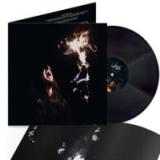
In those early conversations, when I laid out the future I sought to create, and recall sharing the concept of a stripped, atmospheric interpretation, supported by the haunting resonance of strings-- cello or violin. At the time, the notion was met with skepticism, perhaps even dismissal. Yet it was an idea I knew would one day take form. It had to. UADA has always drawn from a wide spectrum of influences--many of which extend far beyond the traditional boundaries of black metal. With Interwoven, we sought to peel back the layers and reveal the vastness of these realms; to immerse the listener in both the foreign and the familiar, in textures that challenge and comfort in equal measure.
debe ser publicado en 26.06.2026

- 01: Away
- 02: Falling Backwards
- 03: Better Days (feat. Liz Ikamba)
- 04: Bottled Up
- 05: Open Road
- 06: Preside
- 07: Inside
- 08: Shadow Overhead
- 09: Blindside
- 10: Around Again
- 11: You Can Only Know
‘Falling Backwards’ is the debut album from Him & Earl via Wah Wah 45s, serving up a mystic brew of desert blues, English folk, Americana and stirring southern soul, with tentacles stretching out into psychedelia and prog, across 11 hot and hazy tracks.
Singer-songwriter Olly Him and DJ, producer and composer Wyndham Earl both have deeply-dug roots in the south coast of England, with the former making his name as a solo artist before exploring his soulful folk/prog sound with a number of live acts, and the latter collaborating on albums and sharing stages with Bonobo, Khruangbin, Alice Russell and TM Juke, having remixes released by Tru Thoughts and Mr Bongo Records and releasing his solo projects on his Time Spun imprint.
The pair first met in 2015 when Wyndham produced some songs for now defunct hypnotic Afro-folk outfit Creatures Of The Deep, of which Olly was a founder member. They instantly clicked, but after the group broke up it was a few years before serendipity brought them back together; a chance encounter at a gig saw them begin hatching plans to make a full album under the name Him & Earl with Olly writing the songs and Wyndham arranging and producing the project.
After so long floating in the creative ether, the connective power of these songs has been strikingly immediate. The debut Him & Earl live show in early 2026, before any tracks had even come out, blew Olly and Wyndham’s expectations out of the water as their five-piece band found themselves toe-to-toe with a sellout crowd – a sweaty room full of happy music fans, on an otherwise bleak January night, throwing shapes to live percussion showdowns, losing themselves in psychedelic guitar and bass wig-outs, and singing along to choruses they’d never heard a note of before.
Since then, the first two singles “Bottled Up” and “Away” have had high profile airplay from the likes of BBC 6 Music’s Huw Stephens and Cerys Matthews, and Radio X’s John Kennedy, adding to widespread tastemaker and specialist support around the world, as excitement builds for the album.The LP’s introspective and philosophical lyrics are brought to life by a sonorous yet strangely uplifting sound palette that morphs by stealth into a darkly propulsive, psychedelic and bluesy trip.
Opening song “Away” taps straight into a key theme of the record – journeying, in both a physical and mental sense, and the quest to move on and embrace the unknown – and its sunny guitars, trumpet and violin barely even hint at the tumultuous sonic adventure that’s set to unfold. A stronger indication comes in the title track,“Falling Backwards”, as its elegant web of staccato finger-picked hook, fluid piano melodies and strings unfurls into a six-minute exploration of what Olly describes as “going through every day normality while feeling close to chaos and like things could fall apart at any moment… when there is a myriad of different things holding everything together and if one thing goes wrong everything can fall apart around it.”
“Better Days” swiftly restores a sense of upbeat calm, with lively Kora and Afrobeat-inspired guitar licks, atmospheric trumpet and a harmony-clad mantra of hope on the horizon; the folky “Bottled Up” continues that blissful notion with undulating finger-picked guitar, earthy clarinet counter-melodies and celestial murmurations of delicately plucked strings. The magnetic pull toward more mysterious horizons comes via the dusty twang of Wild West-esque guitars on “Open Road”, a nomadic journey of self-discovery through spacious sonic plains embellished with eerie flickers of flute and clarinet. This leftward turn gathers pace in the trancelike
psych-prog depths of “Preside”, an instrumental cut at the album’s pivotal halfway point. Hypnotic, guttural desert blues-infused riffs on “Inside” channel the feeling of a psychedelic or spiritual trip where, in Olly’s words, “something clicks and you understand things on a different level – it makes you see inside yourself and see things in a different way.” “Shadow overhead” brings a lighter touch to a darker subject – the feeling of paranoia and being locked away from the world – drawn from Olly’s own experience and also his years of working in and around mental health.
Exuberant horns lend hope to loosely looping suspense on “Blindside” (about being caught out by the unexpected, and searching for something to see or hear to pick you up again) and then mesh with urgent strings, low-slung guitars and subterranean bass on “Around Again”, which explores the modern fight to stay afloat amid the endless churn of information and distractions. Still plumbing the bassy, bluesy depths of this journey into the psyche, “You Can Only Know” is a dreamlike revelation about finding someone or something that helps to make sense of the world. Luminescent synths duck and weave, while a rock-solid bass riff is tracked by a soul-soothing four-part “hey hey” harmony, reassuring as a glowing lamp in the window at the end of a life-changing trip.
debe ser publicado en 26.06.2026

- 1: Like Blood on Snow
- 2: Full Moon, Empty Belly
- 3: Don't Put Yourself Beyond The Reach Of Love
- 4: You Better Take Everything
- 5: Pure Deep Water
- 6: Only Drinking In My Dreams
- 7: If I Had Known It Was The Last Time
- 8: The Left Hand Don't Need To Know
- 9: Don't We Deserve Some Kind Of Love?
- 10: Tiny Blessings
Michael J. Sheehy has been making records for almost three decades, initially as founder and mouthpiece of mid-"90s cult band Dream City Film Club, then as a solo artist and frontman of rootsy garage rock act Miraculous Mule. He has toured with the likes of Kristin Hersh, Tindersticks, John Cale and Peter Murphy, while his songs have been utilised in films such as "Intimacy" and the TV show "Deadwood". Following a six-year hiatus, Sheehy has just "Don"t We Deserve Some Kind of Love?", his seventh solo album but first for Dimple Discs. "Don"t We Deserve Some Kind Of Love?" features contributions from Fiona Brice (violin), Sandy Mill (backing vocals), Ian Burns (drums) and Patrick McCarthy (guitar). It was recorded at home over a five-year period while Sheehy was a stay-at-home father and working evenings at a bar in Camden, north London.
debe ser publicado en 19.06.2026

Belgian violinist and composer Elisabeth Klinck announces the debut album of her ensemble, Klinck Trio, on VIERNULVIER Records. My Hair is Everywhere will be released on November 7, 2025 on vinyl LP and through all digital platforms.
Rooted in improvisation and guided by openness, the Klinck Trio — Adia Vanheerentals (saxophone, voice), Maya Dhondt (piano, voice), and Elisabeth Klinck (violin, voice) —crafts music where sound and silence are equally vital.
Their debut album is an exploration of fragility, unfolding like a delicate conversation in which each note is chosen with intention and every pause carries presence.
Recorded in the summer of 2024 at Studio Ledeberg, My Hair Is Everywhere captures a moment in time: three musicians meeting in sound, each bringing their own timbre, language and natural state of being into dialogue. Klinck offers seeds of material —metaphors, sketches, sonic ideas — that the ensemble shapes into fully formed pieces. The result is an album that stands complete, yet carries within it the openness to unfold further in live performance, where new layers and resonances can emerge.
In the spirit of American composer and pianist Meredith Monk, the trio embraces lightness andvulnerability, crafting soundscapes that feel both childlike in their intimacy and expansive in their emotional reach. My Hair is Everywhere balances melancholy, tenderness, and harmonic interplay with silence, breath, and resonance—the subtle negative space where music continues beyond the notes themselves. By recording in close proximity, every detail emerges: the strike of piano pedals, the clicking of saxophone keys, the intake of breath, and the faint displacement of air. Textures of dragging violin, whispered fragments, and soft humming become almost tangible, drawing the listener fully into this intimate, enveloping present
moment.
Above all, this compelling debut is an invitation to listen differently: to enter a transformative space where three distinct musical voices find each other in fragility.
The artwork, created by French artist Annabelle Guetatra, reflects the album’s sense of lightness through color and playful collage work.
Haga su pedido ahora y le encargaremos el artículo en nuestro proveedor.

»A Distracted God« collects three works by Beatriz Ferreyra, each offering a glimpse into her immersive approach to sound. Spanning tape- and computer-based composition, the collection ranges from the IMEB-commissioned »Souffle d’un petit Dieu distrait (Breath of a Distracted Little God)« to »Tierra Quebrada (Broken Land)«, a work for violin and electroacoustic music. Cut at 45 RPM and mastered by Lawrence English, »A Distracted God« serves as a concise survey of Ferreyra's singular electroacoustic practice.
debe ser publicado en 12.06.2026
