Obscure World is a re-issue label focused on 90's electronic music.
Cosmic Galaxy was founded in Rome by djs and producers Massimo Berardi & Luca Cucchetti pioneers of Roman Techno & House underground scene, originally released on Virtual World in the year 1994.
Walkin' on the moon is reworked by DJ GLC newcomer producer and dj of the roman techno & house scene.
out of Stock
Last delivered 6 years ago available to reorder, subject to availability
The Fall is the fourth studio album by British virtual band Gorillaz. The album was officially announced on 20 December 2010 as a holiday gift to fans. The Fall was first released on 25 December 2010 to stream for free on the Gorillaz website, only available as a download for paying members of the band's Sub-Division club, a premium access campaign the band ran throughout 2010. The album features fewer guest artists than previous Gorillaz albums; collaborators include Mick Jones and Paul Simonon of The Clash and Bobby Womack.
out of Stock
Last delivered 7 years ago available to reorder, subject to availability
The 2 songs are remixed by south London-based artist Klein (Hyperdub), and Tokyo-based
experimental hiphop musician Killer Bong (Black Smoker Records)
Mastered by Bunsho Nishikawa, who is known for his works with goat and Tenniscoats,
among others.
The ominous clockwork nursery song “Kazega Fuitara Sayonara” (Goodbye When The
Wind Blows) was originally written by Koichi Yamanoha and released under the name of
Grimm Grimm via Kevin Shields (My Bloody Valentine) and Charlotte Marionneau (Le
Volume Courbe)’s Pickpocket Records / Honest Jons in 2014.
London-based Tokyo-born singer-songwriter experimentalist Koichi Yamanoha has been
operating under the guise of Grimm Grimm since 2013. The project is an outlet for his
fragile, haunted, otherworldly forays into baroque folk, futurist lyricism and electroacoustic
oddities. His debut album, “Hazy Eyes Maybe”, was released by ATP Recordings in 2015. A
track “Last Word Is Mine” from the album was used over the end credits for the Aaron
Brookner / Jim Jarmusch directed documentary film “Uncle Howard” (2016), featuring
William Burroughs. His sophomore album, “Cliffhanger” was released in June 2018.
And currently the 3rd album has been mixed and co-produced by Marta Salogni.
The virtual 3D music video for Klein remix has been directed and edited by London based
film maker Kenichi Iwasa. He filmed the footage in Tottenham using Super 8, 3rd
generation iPhone and 4K Camera, and created the zero zone virtual world with glitchy SFX
work by William Cunningham. Iwasa is also known for his legendary Krautrock Karaoke
night as well as being a sought after collaborator throughout Europe.
out of Stock
Last delivered 3 years ago available to reorder, subject to availability
Balmagie Jam Rock consists of 16 unreleased dub mixes from the dub master King Tubby. All the original songs were written and produced by Roy Cousins from the Royals. Featuring a virtual who's who of reggae from the classic era -- Sly & Robbie, Lloyd Parkes, Pablo Black, Lloyd Charmers, Ansel Collins, Earl Lindo, Tony Chin, Geoffery Chung, Ernest Rangin, Earl 'Chinna' Smith,Bobby Ellis, Tommy McCook and many more. With the voices of Prince Farl, I Roy, The Royals, and Baba Dread. Recorded between 1966 and 1979 at Dynamic, Channel One and Randy's studios, mixed and voiced at King Tubbv's.
out of Stock
Last delivered 7 years ago available to reorder, subject to availability
Remastered 6 song mini LP originally produced in the
mid-80s *very in-demand with funk record collectors and
DJs worldwide. Featuring 6 upbeat synth-driven, boogie
funk dance tracks *first officially licensed vinyl reissue*
Colours of the Rainbow contains the best 6 tracks from two rare South African LPs by recording artist Bibi
the Kid Msomi: 4 tracks from the 1985 album Searching, and 2 tracks from the 1986 LP What Kind of Love
is This?
South African funk music from the 80s has recently gained recognition as some of the best funk
productions in the world; yet so many titles remain virtually unknown outside of South Africa, especially
due to the scarcity of the original pressings (due in part to the destruction of any music perceived as
subversive by South African government censors at the time).
The level of musicianship on these recordings is simply world-class. Even Paul Simon was trying to work
with Bibi Msomi while recording his Graceland album in South Africa (read more about it in this exclusive
interview).
Combining American and South African funk influences, these 6 upbeat dance tracks feature popular
synths and drum machines of the day. The subversive lyrics and infectious grooves on these recordings
address the political turmoil during the peak Apartheid years in a way that was just subtle enough to slip
under the radar of stringent government music censors. Deep messages of freedom and universal
brotherhood are backed by some of South Africa's greatest musical talent, including:
Mac Mathunjwa (Street Kids, Neville Nash), Sello Mphatsoane (Bayete), The Hot Soul Singers, Cisco the
Champ Mokoena, Blackie Sibisi (Step Ahead, Brenda & The Big Dudes), Alistair Coakley (Hotline, Stimela),
Ladysmith Black Mambazo, Jantshi Mayo (Sipho Mabuse), Peter Mokoena (Pure Magic), Solly Ledwaba
(Juluka), Joey Mabe (Mahlathini and the Mahotella Queens), Deborah Fraser (Brenda Fassie), Zamo
Mbutho, Banzi Kubheka (Banjo, CJB), Cyril Mnculwane (CJB), and Stimela vocalists: Marilyn Nokwe, Tu
Nokwe, Hlengiwe Maphumulo, Beaulah Hashe.
Meticulously re-mastered with love for maximum impact on the dancefloor; we hope you enjoy the
songs contained on this spiritual boogie masterpiece.
out of Stock
Last delivered 9 months ago available to reorder, subject to availability
Seven Swiss artists & collectives sharing the same passion for music came together for a unique collaboration. The result is a sequence that evolves through rhythm and each contributor‘s colour of sound. Artists involved: Melodiesinfonie, Jack Pattern, Lexx, Look Like, Alma Negra, Manuel Fischer, Les Points.
If you draw a map of electronic music today, you will come to realise that Switzerland still represents a blind spot for many people. Even if you see from the inside the many talented artists romping about in such a small space, you have to admit that interest from the outside is virtually non-existent. Therefore there is only one way: Teamwork! The MEGAMIX is a statement for it.
out of Stock
Last delivered 7 years ago available to reorder, subject to availability
At the end of last year we quite enjoyed the little spat when Simon Cowell's chosen one, Joe... Something or other had his Christmas number one spot whipped away from under his nose by Rage Against The Machine. Still whilst we enjoyed the sight of the X Factor being given a bloody nose as much as anyone else, there was also an undercurrent of the ridiculous prejudice that ROCK = GOOD & MEANINGFULL whilst POP = CRAP & DISPOSABLE to the whole thing that we found less agreeable.
Here at Hot Pockets we have no truck with such orthodoxy, no, what we need is suite simply better pop music, made with all the passion and spirit of your finest indie troubadour but filtered through the prism of a 3 minute teenage symphony. Listen back to the likes of Roxy Music or Pet Shop Boys and you have music that is as equally up to the task of inspiring as it is of soundtracking a quick fumble on the dancefloor, that is the beauty of great pop music.
Thankfully for those of us that do like smart, clever pop that doesn't come hurtling off a production line but instead is crafted with much love and precision :Kinema: have arrived with their debut release a classic double A-side of pop perfection, Recreation/My Girls.
First up we have Recreation, a slow burning slice of South coast electro-soul inspired by an insatiable thirst for fun and those who would pass judgement on our basic human need for intoxication and ecstatic night time rituals. All in all a bonafide late night disco classic. Flip the virtual release over and you'll find the band's stunning cover version of Animal Collective's My Girls, a live favourite the track has already been the subject of a blogging frenzy when a demo leaked back in December. Finally available the whole world can now enjoy this smooth, autotuned refix of the indie classic.
Any historians keen on the subject of "French youth in the 1980s" are holding a treasure in their hands. As a true archaeologist of this decade dedicated to disposable culture, digger-in-chief Vidal Benjamin with his newest compilation, 'Pop Sympathie', offers them a unique journey in the heart of the cyclone of emotions that struck all teenagers during the first seven years of François Mitterrand's mandate. Fifteen musical nuggets, exhumed from the dungeons of history, each and every one of them teaching us about what really obsessed the youngsters at that exact moment, i.e. what happens when the city lights come on at dusk, when irrepressible urges that stir them to get lost even more appear until the end of the night.
The artists gathered here did not have the honour of breaking into the local charts, but they all individually reached for the sky. Each song of 'Pop Sympathie' tells more or less the same story: that of a girl who throws herself into the night like one immerses one's self into the void, who rushes into a one-night adventure to become a star. And too bad if in the early morning she finds herself back at square one. In all these miniature odysseys there is neon lights, lasers, smoke machines, broken glass on checkered tiles, strangers on leather benches, celebrities in the bathrooms, stolen kisses, alcohol, drugs and cigarettes, Polaroids, venetian blinds and radioactive tubes.
If the first opus of Vidal Benjamin, 'Disco Sympathie', focused on the funky mood of songs that could have been played at Le Palace, then 'Pop Sympathie' develops itself as the imaginary soundtrack of another nightclub, Les Bains-Douches, the capital’s epicenter of nocturnal drifts. So what do we listen to, blasé, at Bains-Douches? Mainly synthesizers. The child of punk and post punk, French New Wave celebrates the matrimony of machines and lolitas under the auspices of a retro trend that revisits the atomic age. Trying to surf on that wave and hit the charts, a bunch of producers (Stéphane Berlow, Laurent Stopnicki, Bernard "Black Devil" Fèvre, Johny Rech, Jean-Yves Joanny ...) will spot their talents amongst friends, in a travel agency or at the local bar. These virtual stars are called Cecilia, Laurent, Sonia, Janou, Fabienne, Anne, Arielle or Ronan, not even 20 years old, and often leaving just an overexposed photo and their first name on a single as the only memories of their swift passage in this particular musical story. It took all the love and sweet madness of Vidal Benjamin to bring them back in the light of day.
Clovis Goux
out of Stock
Last delivered 7 years ago available to reorder, subject to availability
Celebrating its 25th anniversary, Far Out Recordings proudly presents two albums of previously unheard Azymuth demo recordings from 1973-75
Since their debut album release in 1975, Azymuth have risen to rank alongside the world’s greatest jazz, funk and fusion artists. As young men in Rio de Janeiro, they stood out for both their exceptional talent as musicians, and their wild rock ‘n’ roll antics in the predominantly middle-class worlds of bossa nova and jazz. Their signature ‘Samba Doido’ (crazy samba) sound ruptured the tried and tested musical structures of the day, resulting in what can only be described as an electric, psychedelic, samba jazz-funk hybrid.
Before they became Azymuth, José Roberto Bertrami (keyboards), Ivan ‘Mamão’ Conti (drums), Alex Malheiros (bass) and Ariovaldo Contesini (percussion) played backing band to just about every major artist in Brazil. Bertrami was also contracted as an arranger and songwriter at some the biggest labels of the era: Polydor, Philips, Som Livre, and EMI being just a few. Azymuth’s name can be found on record sleeves by the likes of Jorge Ben, Elis Regina, Marcos Valle, Ana Mazzotti and countless others. But at the dawn of the seventies, fascinated by developments in improvisational music - from jazz in the US, to progressive rock in the UK and of course samba, bossa and tropicália on home turf - the energetic young group were inspired and ready to move forward. Any spare moment in which they weren’t in sessions and writing music for other artists, they would be carving out their own sound.
These previously unheard recordings took place between 1973-75 at Bertrami’s home studio in the Laranjeiras district of Rio de Janeiro. At the time of recording, there was nothing in Brazil, less the world that sounded anything like them, so perhaps it’s unsurprising that when Bertrami presented his demos to the record companies he had been working for, he was turned away, and told in effect that the music was ‘wrong’.
One of the demos ‘Manhã’ would be picked up by Som Livre and Azymuth released their seminal debut album in 1975. Throughout the late seventies and eighties, the group released a series of now classic albums for Milestone Records, before taking an indefinite hiatus to pursue their individual careers.
When English producers Joe Davis and Roc Hunter arrived in Brazil in 1994 to record the first Azymuth album in over a decade, Bertrami dug out the demos which had sat virtually untouched for over twenty years. Joe recalls how he was “blown away by the freedom and intensity of the music, as well as the genius of the ideas musically.” Beginning a long and fruitful relationship, ‘Prefacio’ would be the first track Azymuth recorded for Far Out Recordings and was released on the Carnival album (1996).
Along with ‘Manhã’ and ‘Prefacio’, only a handful of these demos were ever professionally recorded and released, making this the first opportunity to hear many of these early Azymuth compositions in their raw, original form.
On every track the frenetic energy in the studio is palpable, giving the recordings a beautifully personal feel and a sense of the phenomenally creative vision Bertrami, Malheiros and Conti were realising at the time. Fifty years on, Azymuth’s earliest recorded music retains an ineffable, futuristic quality, standing amongst their most captivating and moving work.
Credits:
Keyboards: José Roberto Bertrami (Mini Moog Series One, Arp Omni, Arp 2600, Arp Solina Strings, Fender Rhodes 88, Hammond B3 with box speaker, Clavinet with Wah Wah)
Drums: Ivan ‘Mamão’ Conti
Bass: Alex Malheiros
Percussion: Ariovaldo Contesini
Produced by Azymuth and Jose Roberto Bertrami
Recorded at José Roberto Bertrami’s home studio in Laranjeiras, Rio De Janeiro, Brazil between 1973–1975.
Issue and project co-ordinator: Joe Davis
Tape transfers by Roc Hunter (thanks to Simon Hitner)
Mastered by Daniel Maunick at the Sugar Shack, Lanark, Scotland
Mastered by Frank at Carvery Cuts
All tracks published by Far Out Music Publishing/Westbury Music LTD
out of Stock
Last delivered 10 months ago available to reorder, subject to availability
Celebrating its 25th anniversary, Far Out Recordings proudly presents two albums of previously unheard Azymuth demo recordings from 1973-75
Since their debut album release in 1975, Azymuth have risen to rank alongside the world’s greatest jazz, funk and fusion artists. As young men in Rio de Janeiro, they stood out for both their exceptional talent as musicians, and their wild rock ‘n’ roll antics in the predominantly middle-class worlds of bossa nova and jazz. Their signature ‘Samba Doido’ (crazy samba) sound ruptured the tried and tested musical structures of the day, resulting in what can only be described as an electric, psychedelic, samba jazz-funk hybrid.
Before they became Azymuth, José Roberto Bertrami (keyboards), Ivan ‘Mamão’ Conti (drums), Alex Malheiros (bass) and Ariovaldo Contesini (percussion) played backing band to just about every major artist in Brazil. Bertrami was also contracted as an arranger and songwriter at some the biggest labels of the era: Polydor, Philips, Som Livre, and EMI being just a few. Azymuth’s name can be found on record sleeves by the likes of Jorge Ben, Elis Regina, Marcos Valle, Ana Mazzotti and countless others. But at the dawn of the seventies, fascinated by developments in improvisational music - from jazz in the US, to progressive rock in the UK and of course samba, bossa and tropicália on home turf - the energetic young group were inspired and ready to move forward. Any spare moment in which they weren’t in sessions and writing music for other artists, they would be carving out their own sound.
These previously unheard recordings took place between 1973-75 at Bertrami’s home studio in the Laranjeiras district of Rio de Janeiro. At the time of recording, there was nothing in Brazil, less the world that sounded anything like them, so perhaps it’s unsurprising that when Bertrami presented his demos to the record companies he had been working for, he was turned away, and told in effect that the music was ‘wrong’.
One of the demos ‘Manhã’ would be picked up by Som Livre and Azymuth released their seminal debut album in 1975. Throughout the late seventies and eighties, the group released a series of now classic albums for Milestone Records, before taking an indefinite hiatus to pursue their individual careers.
When English producers Joe Davis and Roc Hunter arrived in Brazil in 1994 to record the first Azymuth album in over a decade, Bertrami dug out the demos which had sat virtually untouched for over twenty years. Joe recalls how he was “blown away by the freedom and intensity of the music, as well as the genius of the ideas musically.” Beginning a long and fruitful relationship, ‘Prefacio’ would be the first track Azymuth recorded for Far Out Recordings and was released on the Carnival album (1996).
Along with ‘Manhã’ and ‘Prefacio’, only a handful of these demos were ever professionally recorded and released, making this the first opportunity to hear many of these early Azymuth compositions in their raw, original form.
On every track the frenetic energy in the studio is palpable, giving the recordings a beautifully personal feel and a sense of the phenomenally creative vision Bertrami, Malheiros and Conti were realising at the time. Fifty years on, Azymuth’s earliest recorded music retains an ineffable, futuristic quality, standing amongst their most captivating and moving work.
Credits:
Keyboards: José Roberto Bertrami (Mini Moog Series One, Arp Omni, Arp 2600, Arp Solina Strings, Fender Rhodes 88, Hammond B3 with box speaker, Clavinet with Wah Wah)
Drums: Ivan ‘Mamão’ Conti
Bass: Alex Malheiros
Percussion: Ariovaldo Contesini
Produced by Azymuth and Jose Roberto Bertrami
Recorded at José Roberto Bertrami’s home studio in Laranjeiras, Rio De Janeiro, Brazil between 1973–1975.
Issue and project co-ordinator: Joe Davis
Tape transfers by Roc Hunter (thanks to Simon Hitner)
Mastered by Daniel Maunick at the Sugar Shack, Lanark, Scotland
Mastered by Frank at Carvery Cuts
All tracks published by Far Out Music Publishing/Westbury Music LTD
out of Stock
Last delivered 10 months ago available to reorder, subject to availability
Imagination and reality, science and humanity: SPIME.IM weave their audiovisual tales from the ethereal textures that shape our worlds. Their album "Exaland" synthesizes reality by combining human expression with technological potentialities in an infinitely changeable virtual world. The seven tracks are defined by razor-like sounds, crystal textures and digital overload, captured in those weightless seconds on a parabolic flight. Just as SPIME.IM's live performances, this album is a temporarily linear journey through a narrative space shaped by psychedelic landscapes, synthetic colors, mutating objects and transient life-forms.
SPIME.IM was born as a word pun between the concept theorized by Bruce Sterling - the spime for the note, an object that can be traced through space and time for the duration of its existence - and the contraction of English "I am". If the Being is therefore the object of the intertwining between the real and the virtual, then it becomes possible to create new imaginaries that turn into immersive environments and narrative spaces in which artificial and natural, science and humanity, imagination and reality interpenetrate, giving life to new boundaries to be explored, to experience the own consciousness and what, while invisible to our eyes, surrounds and influences us.
Affirming digital reality, the Turin-based media art collective SPIME.IM explores the boundaries and possibilities of identity and perception in a world where virtual doppelgängers take on an all-encompassing position. SPIME.IM use technology, 3D art and electronic music to weave immersive audio-video experiences.
out of Stock
Last delivered 7 years ago available to reorder, subject to availability
Drawing the lines between the galaxies of hip-hop, funk, soul, jazz, global dance music, tribal poly-rhythms, IDM and the beat scene of his hometown L.A, Lotus creates a universe that is uniquely his own. Calling on an all-star cast from the cosmos, Anderson .Paak, George Clinton, Little Dragon, Tierra Whack, Denzel Curry, David Lynch, Shabazz Palaces, Thundercat, Toro y Moi and Solange; Lotus takes these artists on an astral plane to explore his world of fire.
out of Stock
Last delivered 5 years ago available to reorder, subject to availability
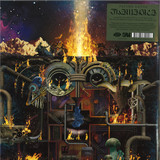
Sein letztes Werk "You're Dead" (2014) bescherte ihm eine Grammy-Nominierung, sein Brainfeeder-Label ist zu einem der innovativsten Klanglabors der Welt avanciert, er co-produzierte Kendrick Lamars mit fünf Grammies ausgezeichnetes Meisterwerk "To Pimp A Butterfly" (2015). Nun veröffentlicht Flying Lotus sein neues Album für Warp: "Flamagra" greift alle kreativen Quantensprünge und innovativen Elemente aus 12 Jahren FlyLo-Karriere auf und denkt sie weiter, größer, epischer und universeller: Hip-Hop, Funk, Soul, Jazz, Electro, IDM, die Ansätze der befreundeten Beatmaker aus L.A., Tribal-Elemente, Polyrhythmen. Aber selbst diese Liste reicht nicht aus, um "Flamagra" auch nur ansatzweise zu verorten, weil es immer wieder ausbricht aus diesem Koordinatensystem. Die Gästeliste liest sich wie ein Traum: Anderson .Paak, George Clinton, Little Dragon, Solange, Tierra Whack, Denzel Curry, Ishmael Butler (Shabazz Palaces), Toro Y Moi, sein musikalischer Stammesbruder Thundercat, ja selbst David Lynch ist zu hören. Der legendäre Regisseur steuert ein paar schaurige Worte bei, eine düstere Erzählpassage, mit der er uns eindringlich warnt: "Fire is coming". "Flamagra" ist die Essenz des letzten Jahrhunderts im Bereich der afroamerikanischen Musik, vollkommen neu und weitergedacht, kollektiv gefiltert und feingeschliffen. Auch wenn Flying Lotus ein Nachkomme seiner ehrwürdigen Großtante Alice Coltrane ist, die mit John verheiratet war (wobei auch Miles und Madlib, Dilla und DOOM als seine Vorfahren gelten dürfen), hat er inzwischen seinen eigenen Kult geschaffen: Eine Gefolgschaft, die alles Geniale aus der Vergangenheit absorbiert und in Bereiche überführt, die sich die genannten Vorfahren nicht mal im Traum hätten ausmalen können. Flying Lotus ist zurück. Fire is coming.
Matthew Puffett, also known as Future Beat Alliance, launches a series of EPs on his new ‘Reward System’ imprint. The new label will explore and dive deep into the mind of Matthew Puffett’s eclectic and unpredictable musical archives. Showcasing everything from lost and found DAT tapes from the FBA vault to brand new productions. Releasing his music on labels such as Delsin, Tresor, Eevo Lute and Rush Hour before now, here you will hear his recognizable style with warm synths, uplifting bass heavy grooves and dusty break beat rhythms once more. The six track ‘Reward System.1′ EP features all of this and more and is another exciting chapter in the Future Beat Alliance catalogue.
out of Stock
Last delivered 7 years ago available to reorder, subject to availability
Creating a composition means making decisions. During times in which you virtually have all sounds that have ever been recorded at your availability, composers must choose between infinite possibilities. The duo Ellicist does not perceive this contemporary ocean of possibilities as too much choice, they are swimming in it. Ellicist are weaving thick textures from the most diverse tones and rhythms. Their tracks are placing synthetic buzzing, the croaking of frogs, low frequency billowing and humming, flutes, the droning of flies, and the whole spectrum of the digital creation of sound next to one another. This intensity of sensations is not supposed to overstrain the listener, it invites them to follow a process. This music does not have a strict structure; instead, it is breathing openness at every moment. Ellicist are incessantly oscillating between abstraction and elements of pop music. Melodies are being hinted at, and sounds are being piled up, at times tirelessly. Fragments of etheric choirs or field recordings are unfolding their associative power. The melodious Ink is a track full of touching intimacy and is in constant motion until it eventually pauses to create a silent ocean of sound. Passage People is permeated by a groove of throbbing synths. The tapestries of sound of Ponds & Graves, on the other hand, are creating the foundation for expressive percussions. Ihnen Steg is almost a dub track. During the opener Hennepin and its follower Lilei sounds of palpable corporeity are being combined with ones that are hardly tangible. Point Defects has a incredible spatiality. At one point you might believe that you are able to precisely localize the sounds in an imaginary system of coordinates. And then the whole systemization crumbles. It is an astonishing production: you can almost taste the sounds. Biographical Notes: Ellicist are Thomas Chousos & Florian Zimmer. Chousos studied composition in Greece before moving to Berlin, where he is working as a producer and sound engineer under the moniker Tadklimp. Florian Zimmer has been playing with several groups. Besides Ellicist he is a member of Saroos and Driftmachine.
serenitatem, the fifteenth installment of FRKWYS, RVNG Intl.'s collaboration series pairing intergenerational artists in creative conversation, joins Visible Cloaks with Yoshio Ojima and Satsuki Shibano, two trailblazers of the Japanese avantgarde music and visual arts scenes of the 1980s and 90s.
Yoshio Ojima began his career as a composer of environmental and ambient music, with a particular interest, and optimism, in the possibilities of generative software. His compositional pursuit of human synthesis with computerized forms was realized in its fullest potential alongside Satsuki Shibano, a pianist renowned for her interpretations of Erik Satie and Claude Debussy. Together, they were among a handful of influential Japanese artists whose innovations still resonate, if not more vibrantly than ever, well beyond the tightly-knit scene's original core. In the early 90s, Ojima was among the programmers of the influential satellite radio experiment St. Giga, a constantly-evolving sonic landscape that combined field recordings and sound collage with occasional readings of Japanese poetry. Satsuki was a regular reader for the station. This musical terrarium bloomed out of sight in a small Tokyo studio, a greenhouse of sound with no set start or finish time that audiences could tune into, absorb, and immerse.
The perpetual flow state of St. Giga — recordings of which Ojima shared with Visible Cloaks — would be highly influential to serenitatem's constitution. As Visible Cloaks, the Portland, Oregon duo of Spencer Doran and Ryan Carlile have developed their own set of creative strategies that form an aesthetic fuse point between human intention, aleatoric composition, and improvisation.
These are notions most recently reflected in 2017's Reassemblage and Lex, a respective album and EP in which the duo combined generative software and virtual representations of global instruments into lacy, interlocking patterns. Long time admirers of Ojima's work on albums like 1988's Une Collection Des Chainons, Doran and Carlile discovered after an online introduction that they shared with Yoshio and Satsuki an abiding interest in pre-classical composers, the Lovely Music, Ltd. label, and the British avant-garde, as well as a mutual respect for one another's techniques and processes.
The four musicians met in Tokyo, Japan at Sounduno Studios in December 2017, at the tail end of Visible Cloaks' first Japanese tour, to commence work on serenitatem. Leading up to the studio sessions, Doran and Carlile sent Ojima processed sound sketches recorded while on a European tour, which Yoshio would add to and return. Visible Cloaks would then fold Yoshio's edits back into the original compositions, which Doran and Carlile brought to the exploratory recording session. During that week together in Tokyo, the quartet made use of a number of creative strategies — 'echoing sound together,' as Yoshio puts it. Among the strategies, MIDI randomization gave the quartet melodic lines and what Doran calls 'randomized clouds,' or 'tightly grouped notes that become smeared tonal clusters functioning more like chords in themselves.' Carlile would also feed Ojima and Satsuki's text into Wotja, a generative music software which produced a MIDI language around which the quartet expanded their compositions.
'The aim,' Doran says of serenitatem, 'was to make a work that was not specifically ambient (or environmental), but something more multi-hued, weaving these deconstructive concepts into an album that has a deeper architecture underpinning it.' Accordingly, serenitatem is a marvelously sharp record, its sutures between human and machine virtually impossible to find but suggested everywhere you turn. The collaboration among Ojima, Satsuki, and Visible Cloaks is both musically and conceptually inseparable from the technology that made it possible. Throughout the album, Shibano's playing resonates like Satie's, her rhythms cascading like drops from leaves an hour after the rain. Overtones are stretched and warped like modeling clay, then spun around and shown off from multiple angles.
A single soaring note might seem to be suddenly plunged underwater, its richness of sound made shallow and its sharp edges blunted. Pittering chimes and rapidly warping vocal samples hang in the luxuriously glossy space, water trickles from ear-toear, familiar melodies rise from nothing and dissolve before they can be traced. With the depth of its emotional charge, serenitatem burns away the easy cynicism of the day, presenting itself as the kind of delocalized work of art the internet promised us decades ago — a synthesis of artistic visions, technological sophistication, futurist ambition, and, occasionally, ancient polyphony. Listening to it can feel a bit like tuning in to a 21st Century version of St. Giga: It's a place where the future still grows.
Visible Cloaks, Yoshio Ojima, and Satsuki Shibano's serenitatem, FRKWYS Vol. 15, will be available across LP, CD, and digital formats on April 5, 2019. The quartet will perform select live shows throughout 2019.
out of Stock
Last delivered 7 years ago available to reorder, subject to availability
R&S Records present the first key transmission from the Lost Souls Of Saturn's multidisciplinary conceptual project. The title track of the LSOS debut EP is revealed immediately, with the full 'Holes In The Holoverse' EP to follow on the 1st March.
Primarily LSOS are Seth Troxler and Phil Moffa, with opaque additional participants congregating to combine music, imagery, storytelling and communion into an inextricably linked whole, all wrapped-up in a philosophy of their own making.
Check the launch visual for 'Holes In The Holoverse' here:
The EP follows their performance debut as part of the 'GaiaMotherTree' installation with artist Ernesto Neto at Zurich Main Train Station, and a second show at Houghton Festival. Following these site-specific ambient renditions, the full LSOS live experience will be unveiled at the Village Undergound in London on the 18th April 2019, with further live performances to follow (including Field Day) and to be announced.
The classic-R&S-style groover 'Holes In The Holoverse' propels ever starwards, whilst the acid techno of 'World of the Wars' evokes a probe motoring through the cosmos. Further solar system surfing comes from world-renowned, Turner prize winning artist and photographer Wolfgang Tillmans. For his first ever remix, Tillmans tweaks the frequencies, adds extra percussion and his own 'va va voom' vocals.
Attempting something creatively that's above-and-beyond, LSOS explore new ways to open doors of perception and challenge the presumed reality, whilst capturing the spirit of Alejandro Jodorowsky, HG Wells, Sun Ra and the KLF within their music, live experiences and forthcoming films.
These spiritual, psychoactive aural vibrations resonate for a long distance, all the way back to something deeper and more enchanting than the prosaicism of modern life:
'We're searching for signs from another dimension and channelling a higher consciousness. We want to explore the concepts of reality vs simulation/hologram, ancient knowledge and ritualistic experiences. We're inspired by art, film, literature, astrology, mysticism, cults, rituals, paganism, synchronicity, conspiracy, altered reality, virtual states, spiritualism, chaos, cosmology and science. Both sci-fi and real science especially interest us - from Philip K. Dick books, to NASA articles, to the hexagonal storm at Saturn's North Pole.'
Lost Souls Of Saturn are preparing their debut album for release in June 2019.
The record you are holding in your hands is a previously unheard masterpiece of Israeli multimedia artist Ami Shavit. As a professor of both philosophy and art and established kinetic artist in the 1970s Shavit was fascinated with new and interactive technologies. While mostly focusing on visual art and mixed-media installations, a trip to New York in 1972 introduced him to synthesizers and triggered his curiosity to do some explorations into the world of music or "sound" as he preferred to call it.
Ami's research was focused on the concept of meditative music that would help people to relax and create a cosy mood associated to the alpha brain waves and biofeedback. Before starting his artistic career, like all Israeli citizens, he had to serve in the army to his personal regret. Shavit had an operational position, which meant a high probability to get involved in a so called 'hot situation'. When in 1973 the Yom Kippur war broke out, Ami was enlisted again and got the unfortunate opportunity to encounter, in Hanoch Levin's words 'the dead'. Being an operation officer he was in charge of evacuating Israeli wounded officers from battlefields to hospitals. Some 6000 injured men passed through us during that war, he recalled one year later in a newspaper interview.
'I witnessed some sights that I can hardly forget. On the one hand I felt that as an artist I had to express the war events, on the other hand I felt that this is an almost impossible mission. Only Goya and Picasso, in his Guernica, addressed this topic successfully.'
Yom Kippur is the final and seminal of Shavit's sound experiments ever recorded and now finally available to the world. We believe that this is an extraordinary strong piece in which the hectic moods and terrific experiences of war are deeply transmitted to the listener. May all soldiers, who are often forced to go through traumatic experiences beyond their own will, find ways to artistically digest and process the unwanted memories.
Ami Shavit was born in 1934 in Tel Aviv-Jaffa. Known as visual artist, his work involves in creating virtual environments with optic and kinetic art, including structures worked by electricity, moving tubular configurations illuminated by colored lights. He published In Alpha Mood in 1977 on Amis records, his own record company, at 500 copies, republished by Finders Keepers Records in 2015 and Neural Oscillations And Alpha Rhythms in 2018. Yom Kippur is his ultime recordings.
Liška, the Czechoslovakian word for fox. Beguiling in its beauty, cunning in it's charm. Said to be one of the most intelligent animals on the planet its global family consists of thirty-seven varieties; all of them recognised, respected and feared for their persuasive, creative, resourceful and elusive nature. The Liška we will talk about today is no exception to these hereditary rules and within the grooves of this record Finders Keepers present an 'elusive' musical artefact that best exemplifies every facet of this composer's animal namesake.
Had he not been born in the small Bohemian town of Smecno in the early 1920s the story of The Fantastic Mr. Liška might have well taken a different course. Alternatively, fettered by the hampers of communism, this lifelong resident of Czechoslovakia would never quite find his seat at the same table as the likes of John Barry, Ennio Morricone, Michael Nyman and Stanley Myers, nor drop enough phonographic breadcrumbs to track his legacy. But having waited patiently behind the borders of the wider landscapes of international cinema, Liška's musical brood, spanning multiple stylistic decades and generations, has now started to walk proudly amongst his would-be, latter-day compeers. In an era where music lovers have almost become immune to adjectives like 'lost', 'rare' and 'unreleased' in a climate where previously lesser-known off-kilter master composers such as Vannier, Kirchin and Axelrod have become widely revered, it is perhaps the perfect time for discerning listeners to advance above the feeding trough and seek out this truly pioneering and revolutionary Eastern European composer. Rivalled only by the likes of Krzysztof Komeda and Andrzej Korzynski in Poland, alongside Alexandr Gradsky in Russia, and often splitting workloads with fellow Czech composers like Luboš Fišer, Zdenek Liska's filmography of over almost 300 fully formed movie scores virtually eclipses the achievements of these socialist era luminaries. Respected unanimously in both Czech and Slovakian by studio bosses, producers, directors and actors alike Liška is widely known for his ability to take the existing energy in a reel of film and literally change the polarity to suit his own interpretation while maintaining the full support from his 'client' who would in-turn end up working under this composer's creative direction. Not only was Liška a genius of emotive orchestral and coral composition, his grasp on small group arrangements and intimate, minimal scores set him above the competition. By utilising primitive sample techniques by 'looping' a films existing ambient noise, or rearranging found sounds and dialog into subtle melodic arrangements, Liška would independently develop his own techniques which had simultaneously become known in Paris as musique concre`te. It is a direct extension of these experiments that saw Liška also draw parallels with Walter Branchi (Ennio Morricone's main electronic sidekick) in Italy as well as Daphne Oram in the UK, making Liška a relatively untravelled pioneer of early electronic composition and sound design due to his unlikely global environment. Imprisoned, preserved or reserved; time has been kind to Liška's music.
Black Truffle is excited to announce the release of the first-ever vinyl reissue of Ruedi Häusermann's Galerie Randolph, a masterpiece of solo multi-tracking originally released on CD by Unit Records in 1995. Born in 1948 and residing in the medieval Swiss town of Lenzburg, and virtually unknown outside of the German-speaking world, Häusermann is a multi-instrumentalist and enormously prolific composer who works primarily in the medium of absurdist music-theatre. A virtuoso wind player and free improviser who also composes for traditional classical instrumentation, his work is characterised by subtly surreal humour and the unlikely combination of extended technique and simple, at times almost child-like, melodic ideas. Named after his rehearsal room in Lenzburg, Galerie Randolph uses an enormous array of instruments to craft a work of singular compositional vision. Each of the twelve pieces begins from the same two elements: a woozy, sliding scatter of tones played on a home-made contraption stretching two guitar strings between the top of Häusermann's alto saxophone and an amplified cup, and a series of uneasy block chords sounded on accordion and reeds. On each piece these two elements (whose pitch gradually raises throughout the record) are complemented by entirely different material, all of it played by Häusermann. Ranging from layered flutes to one-finger piano melodies to unintelligible vocals to musique concrete interjections to free jazz saxophone explosions, these additional layers combine with the endlessly returning idée fixe of the foundational elements to create a truly dream-like listening experience, a gently deranged realm in which we lose all sense of linear time. Calling up the most unlikely combinations of possible predecessors - Erik Satie, Gerry Mulligan, and Helmut Lachenmann perhaps -Galerie Randolph ultimately defies comparison. Almost unknown except to a select group of cognoscenti such as Jim O'Rourke, yet destined to become a cult classic, Galerie Randolph is an instance of that most rare thing: music the likes of which you have never heard before.
Presented in a deluxe gatefold sleeve with gorgeous archival images by the composer. Design by Stephen O'Malley. Mastered and cut by Rashad Becker at D&M, Berlin
Key selling points: - Black Truffle is excited to announce the release of the first-ever vinyl reissue of Ruedi Häusermann's Galerie Randolph, a masterpiece of solo multi-tracking originally released in 1995, the album utilises an enormous array of instruments to craft a work of singular compositional vision.
- Calling up the most unlikely combinations of possible predecessors - Erik Satie, Gerry Mulligan, and Helmut Lachenmann perhaps -Galerie Randolph ultimately defies comparison.
- Each of the twelve pieces begins from the same two elements: a woozy, sliding scatter of tones and a series of uneasy block chords sounded on accordion and reeds. On each piece these two elements are complemented by entirely different material, ranging from layered flutes to one-finger piano melodies to unintelligible vocals to musique concrete interjections to free jazz saxophone explosions, these additional layers combine with the endlessly returning idée fixe of the foundational elements to create a truly dream-like listening experience, a gently deranged realm in which we lose all sense of linear time.
- Almost unknown except to a select group of cognoscenti such as Jim O'Rourke, yet destined to become a cult classic, Galerie Randolph is an instance of that most rare thing: music the likes of which you have never heard before.
- Galerie Randolph is presented in a deluxe gatefold sleeve with gorgeous archival images by the composer with design by Stephen O'Malley. Mastered and cut by Rashad Becker at D&M, Berlin
After two solo releases on Lovefinger's ESP Insitute, and two more 12" as Greenvision (his collaborative project with Trent) Juan Ramos graces Berlin's Cocktail d'Amore Music with a new outstanding EP.A'Incorporeality' and 'Liquid Sky Drone' are both vibrant, hallucinating, trance inducing tracks. Full-on sonic layering and unexpected drum patterns compose these two bangers. Multidimensional is the right term to describe Ramos' music. His futuristic approach, yet full of references from the past, is gaining a strong reputation within the contemporary electronic scene.AMelbourne-Berlin based Kris Baha is on remix duties. 'Liquid Sky Drone' becomes an industrial ballad - cinematic and romantic, at the same time bouncing and synthetic.AArtwork by Boldtron, virtual reality artist based in Barcelona.
Odd Beholder, the project of Zurich-based musician Daniela Weinmann, releases the full-length debut album "All Reality Is Virtual" this fall.
"All Reality Is Virtual" is an intelligent, tenderly flowing and weird pop album, colourful, assertive. It deals with the strange temptations of our time: from tinder to AI, from offline loneliness to obsessive self-marketing. "I noticed that the main temptation of a digitalized life is the idea that everything can be measured, recorded and therefore known." says Weinmann. "But I yearn for surprise, for wonder. The unknown, the uncontrollable is appealing to me."
Odd Beholder have released two highly acclaimed EPs already, "Lighting" and "Atlas". Followed by the "Remixes" EP. Those remixes have been contributed by friends made along the way and artists Odd Beholder became fans of: The/Das, Fejká, Hundreds, Alessandro Giannelli, Kalipo, Thomas Atzmann. After having played tours in China, Germany, Switzerland and Italy, Daniela Weinmann teamed up with swiss musician and producer Martin Schenker to finish producing Odd Beholder's debut album. "All Reality Is Virtual" will be out Oct. 19th, 2018 on Sinnbus and Mouthwatering Records.
'Breathe The Machine' is the first installment of Dojostudio and presents a musical world rich in harmonics, low frequency and melodic impact, yet with enough space in between to allow that perfect breathing room essential for powerful dance cuts. 'Breathe The Machine' portrays a world that initially feels robotic, yet instills an organic fluidity known only to come from humanoid beings, breathing life into a system littered with code and coldness. Billy Dalessandro presents 3 original cuts, plus a rendition of the title track by Mike Shannon.
Both for 'Breathe The Machine' and 'Tractor Beam' the Waldorf Microwave XT 2 and the Jomox 888 were the primary sound sources. For 'Breathe The Machine' the 888 was processed through a Jomox T-Resonator, which added harmonic distortion, and also spread the stereo spectrum out a bit offering the drums a more washed-out feel. The XT was layered track by track by performing patterns live into an editor until the desired ideas were properly recorded. Mike Shannon was brought on board to offer a contrasting expression of 'Breathe The Machine' and when asked how the process went he stated:
"I took the source sounds, edited them and processed them to work with a groove I had written for this remix. I mainly used the pad, lead synth and synth effects from the original. The rest of the gold I engineered."
On 'Tractor Beam', subtle use shows that ample space in between ideas make things seem larger than life. By allowing a more minimal approach in the production process the sounds can easily co-exist, allowing for that 'big room' sound without overwhelming the overall experience.
The digital exclusive 'Deliverance' was created using NI's Maschine for the drums, and FM8 and Reaktor were the sources of the synths. Drum patterns were created in Maschine and then recorded in realtime back into the DAW as it played, with real-time tweaking of the hi-hat to create the desired impact, especially at the break. The synth and pad patterns were recorded as MIDI into the editor, and then automation of the synths' VCF rounded out the expression needed to complete the emotional process.
All in all, DOJ001 is mostly an all-hardware showdown, with 'Deliverance' being the only 'virtual' attempt. Life is in nature, not in machines, yet the culmination of the two worlds can be beautiful, if only properly tamed and understood. Lest we beware! Stay tuned... and thanks for listening!
A girl stands at an arcade machine, her eyes fixed on the glowing screen with her back turned on the world. She seems to be alone, somehow lost and yet at one with herself. The cover art (by Carmen Alt-Chaplin) for Peter Zirbs' debut album as a solo artist conveys escapism - being totally immersed in another reality, in the virtual world. His equally futuristic and retro-futuristic aesthetic is permeated with melancholy. What if we really don't exist
Peter Zirbs himself also knows how to escape: how to hunker down in the studio, hide from the outside and lose himself in the music. He emphasizes that such an escape is healing, leading to the world of the romantic. The Viennese musician and producer has always felt most comfortable straddling genres, whether techno and rock in previous band projects, or now as a solo artist combining post-minimalist dramatic synth/piano ("Firmament") with modern wave pop ("Are You Reality") and poignant ballad-kitsch ("Dreamescape"). Here there are subtle changes in emphasis gracing otherwise repetitive harmonies; there a true appreciation of pop. Ten songs - five with lyrics, five without - some threatening, some heartbreaking, all stirring. They project a world - sometimes concrete, sometimes abstract - in which can be found beauty and disquiet, love and fear, failure and perseverance. A world one is happy to get lost in while the cinema in one's head tells its own stories. (by Manuel Fronhofer)
As part of the Viennese rave and techno scene of the 1990s, multi-instrumentalist and electronic producer Peter Zirbs has released music under several pseudonyms, produced and remixed various artists, and scored a range of experimental films. He has broken down genre boundaries over the years with the variety of his output. The circle closes now. In 2018 Peter Zirbs finally steps into the spotlight as a solo artist.
"What If We Do not Exist" by Peter Zirbs is released on 19th October 2018 by Fabrique Records. Guest vocalists include Monika Heidemann (Heidemann, The Phenomenal Handclap Band, The Juan MacLean / DFA Records), Tom Walkden (Wolventrix) and Gerard McNeice.
Odd Beholder, Das Projekt Der In Zürich Lebenden Musikerin Daniela Weinmann, Veröffentlicht Das Debüt-album "all Reality Is Virtual".
"all Reality Is Virtual" Ist Ein Intelligentes, Fließendes Und Sonderbares Pop-album, Bunt Und Bestimmt. Es Setzt Sich Mit Den Seltsamen Versuchungen Unserer Zeit Auseinander: Von Ki Bis Tinder, Von Der Offline-einsamkeit Bis Zum Obsessiven Selbstmarketing. "mir Ist Aufgefallen, Dass Die Versuchung Eines Digitalisierten Lebens Vor Allem Darin Besteht, Dass Alles Gemessen, Aufgezeichnet Werden Kann Und Damit Bekannt Ist", Sagt Weinmann. "aber Ich Sehne Mich Nach Überraschung, Nach Verwunderung Und Zufall. Mir Gefällt Das Unbekannte, Das Unkontrollierbare."
Odd Beholder Haben Mit "lighting" Und "atlas" Bereits Zwei Tolle Eps Veröffentlicht. Darüber Hinaus Erschien Im Frühjahr 2018 Mit "remixes" Eine Fein Säuberlich Zusammengestellte Ep Mit Ausgewählten Bearbeitungen Von Freund_innen, Die Odd Beholder Unterwegs Gefunden Haben Oder Von Denen Sie Fans Geworden Sind: The/das, Fejká, Hundreds, Alessandro Giannelli, Kalipo, Thomas Atzmann. Nach Touren In China, Italien, Deutschland Und Der Schweiz, Hat Daniela Weinmann In Zusammenarbeit Mit Dem Schweizer Musiker Und Produzenten Martin Schenker Das Debütalbum Aufgenommen. "all Reality Is Virtual" Von Odd Beholder Erscheint Am Im Oktober 2018 Als Lp, Cd Und Digital Auf Sinnbus Und Mouthwatering Records.
Shielding's Innerlig is viscous, densely detailed, trippy music.
Dripping with texture, these are supple tunes that generously expand to fill whatever space they're in, loops stretching towards the lilac virtual horizon. Constantly mutating rhythms, heavily atmospheric grooves. RIYL Harmonious Thelonious, Jan Jelinek, Theo Parrish.
The second release of Atmophile Electronics is a 4 track EP of the label co-founder Naty Seres in collaboration with Bensen, and established techno producer Matrixxman on remixing duty.
All tracks are the result of casual jam sessions in Naty´s homestudio over the last year. Bensen, with his profund musical knowledge, gives the drum and groove structure, while Naty explores sound design and atmosphere with her modular-system in a playful, yet distinct way.
out of Stock
Last delivered 2 years ago available to reorder, subject to availability
The ep comes in 300 copies packed in hand burnt sleeves on the front and a silkscreen print on the back
Eocity is the result of a study on technological failure and the imagination of a non-existent urban landscape.
This project features the use of a Yamaha ex5r, one of the rst synths to ever implement VL synthesis.
The "Yamaha Virtual Acoustic" Synthesis tone generation was born to try to accurately emulate the complex vibrations and other acoustic phenomena of real instruments and their sounds within space, but the dubious results of this technology gave birth to something more.
Its nal output sound happens to be cold and synthetic while being also organic and warm at the same time, welcoming the listeners into a feeling of an arti cial world that is neither digital nor analog.
In this world man is not around anymore and the binary language survived him, communicating with the rest of the natural environment, in respect of its laws and dynamics, becoming one indistinct entity.
Eocity is a place that exists in between the imaginary and the real one, gently oating as a digital tactile experience.
Max Loderbauer, who has so far made consistently engaging contributions to the Arjunamusic family, is back to lend his unique interpretive skills to the master recordings for the Brightbird album by João Paulo Esteves da Silva, Mário Franco and Samuel Rohrer. Loderbauer has set himself up for a chal- lenge, since the original album's completely improvised flow of small-ensemble, conversational jazz feels complete enough without outside intervention. However, Loderbauer's role as electronics operator in the similarly attuned Ambiq trio has already shown that, through his mastery of tone color, he has a talent for teasing out the additional hidden details within an apparently 'complete' sonic environment. It's a task he mana- ges to accomplish without ever overriding or contradicting the cohesive message provided by his collaborators.
Adding to the challenge here, Loderbauer chooses to re- mix using only sounds from the original recordings. By doing so, it might seem he is willfully denying himself the chance to use his own signature tools and turn Brightbird's source materi- al into stunningly new electro-acoustic hybrid blooms. Yet Loderbauer succeeds here by becoming something more like a translator than an augmenter - he finds a way to make mea- ningful syntactical changes to the trio's rich and versatile vo- cabulary, and once again unveils a verdant world of hidden details in the process.
The A-side 'Trusting Heart/Cosmos' has an anxious tone introduced by a set of Doppler-effected piano notes that seem to melt in the sun, and is soon complemented by a va- riegated, chattering rhythm line. Here Loderbauer builds up a tactile tension between rhythmic certainty and sharp-angled, de-tuned, and occasionally scrambled instrumentation, framing a disorienting (yet engaging) virtual space where ob- jects' bright hues rapidly change as they contract and expand along multiple dimensions. For the b-side 'Noontide', Lo- derbauer switches to a more focused and streamlined idiom with an uncanny ease, riding along steady waves of sequencer patterning and silvery, resonant shiverings. Reverberating, ho- lographic piano again provides the tonal center here, and the notes ring with a forward-thinking optimism not far removed from classics of the 'Krautrock' era.
Current supporters of all the artists involved will find this to be an invigorating synopsis of their work to date, while newcomers will be treated to a soundworld where skillful fu- sion (the act itself, rather than the music genre with the same name) is constantly on display.
Independently released album of 80s influenced / new era Boogie, Disco and Jazz fusion performed and recorded by Skymark. Great songwriting and drum programming skills are on display throughout while he deftly works an array of synths (ARP, Prophet, Moog, Roland and Korgs). Big Tip!
To those familiar with the output of Cologne-based imprint Firm from back in the early '00s, the name of Geiger, alias Nass, shall undoubtedly ring a bell. Herald of an hedonistic melange of funk- soaked electro pop and guitar-riddled synth music, sitting somewhere close to acts like Ween and Junior Boys, Alexander Geiger is about to break a eight-year hiatus with the drop of his debut album under the newly-founded moniker of Fahrland. A release that both encompasses a healthy dose of the discoid tropes from the Firm era but also aspires to split with a segment of it, geared towards exploring further undisclosed fringes of his shape-shifting sound universe, 'Mixtape Vol.1' is the fruit of a decisive move from the sleepless Berlin to the peaceful countryside landscapes of Fahrland - a lushly forested area near Potsdam which you'll have understood played an essential role in Geiger's longed-for return. Versatile and inclusive, the album sweeps a polyamorous gamut of styles and tempos like an answer to the virtual prisons that inhibit us on a daily basis, straying away from normative standards and classic full-length calibration as a result. Instead weaving a singular narrative course, clear from all type of shackles and chains, Geiger navigates on sight, reflecting on notions as wide and universal as freedom, friendship and love across a multiversal patchwork of sounds and feels. From the languid sexy vibe of 'Beggin', 'Plastic People' and 'Yesterday' - all three featuring the sensual whispers of multi-talented vocalist and artist MZ Sunday Luv, through the heavily vocodized, chip- implemented groove of I AM ROBOT - reminiscent of Telex and Space Art, balearic jazz & rap shine of 'Sky So High', smokey lounge ambience of 'L AND H' onto broader ambient-friendly spans such as 'Suspension', 'Windshield Gently Wipers' and the smooth, sun-basking closer 'Get Down', each track holds a fragile cocooned world at its heart.
Bei denjenigen, die mit dem Output vom Kölner Label Firm aus den frühen Nullerjahren vertraut sind, sollte der Name Geiger alias Nass zweifellos die Glocken klingeln lassen. Als der Herold einer hedonistischen Melange aus Funk durchdrungenem Elektro-Pop und Gitarren durchzogener Synthie-Musik irgendwo zwischen Ween und den Junior Boys, bricht Alexander Geiger seine achtjährige Schaffenspause mit der Veröffentlichung seines Debüt-Albums unter neuen Pseudonym: Fahrland.
Ein Release, das sowohl die diskoiden Tropen der Firm-Ära affirmiert, als auch danach strebt ein bestimmtes Segment davon zu spalten. Aufgenommen um ungeahnte Interferenzen seines gestaltverändernden Sounduniversums zu entdecken, ist 'Mixtape Vol.1' das Resultat eines bewussten Umzugs aus dem schlaflosen Berlin in die friedliche Landschaft von Fahrland - einem üppigen Waldgebiet in der Nähe von Potsdam, das eine entscheidende Rolle in Geigers ersehnter Rückkehr zur Musik gespielt hat.
Vielfältig und offen erforscht das Album polyamorös eine Skala von Stilen und Tempi als Antwort auf die virtuellen Ketten, die uns tagtäglich hemmen. Bewusst vergessen werden dabei normative Standards und klassische Langspieler-Kategorien. Geiger webt stattdessen ein einzigartiges Narrativ, frei von jeglichen Fesseln und Ketten und führt uns auf seinem multiversalen Flickenteppich aus Sounds und Gefühle mit Sichtkontakt an so allgemeingültige und universelle Begriffe wie Freiheit, Freundschaft und Liebe.
Vom nochalanten Vibe von 'Beggin', 'Plastic People' und'Yesterday' (alle drei mit der sinnlich wispernden und vielseitigen Sängerin MZ Sunday Luv), bis zu dem durch den Vocoder gejagten und computergenerierten Groove von I AM ROBOT; Reminiszenzen an Telex und Space Art, balearischen Jazz und Rap erklingen in 'Sky So High', rauchiges Loungeambiente auf 'L AND H' bis zu völliger Ambient-Anschlussfähigkeit in 'Suspension', 'Windshield Gently Wipers' und dem sanften, Sonne anbetenden Schlusslied 'Get Down' - jeder Track hält eine Welt für sich in seinem Herzen.
To those familiar with the output of Cologne-based imprint Firm from back in the early '00s, the name of Geiger, alias Nass, shall undoubtedly ring a bell. Herald of an hedonistic melange of funk- soaked electro pop and guitar-riddled synth music, sitting somewhere close to acts like Ween and Junior Boys, Alexander Geiger is about to break a eight-year hiatus with the drop of his debut album under the newly-founded moniker of Fahrland. A release that both encompasses a healthy dose of the discoid tropes from the Firm era but also aspires to split with a segment of it, geared towards exploring further undisclosed fringes of his shape-shifting sound universe, 'Mixtape Vol.1' is the fruit of a decisive move from the sleepless Berlin to the peaceful countryside landscapes of Fahrland - a lushly forested area near Potsdam which you'll have understood played an essential role in Geiger's longed-for return. Versatile and inclusive, the album sweeps a polyamorous gamut of styles and tempos like an answer to the virtual prisons that inhibit us on a daily basis, straying away from normative standards and classic full-length calibration as a result. Instead weaving a singular narrative course, clear from all type of shackles and chains, Geiger navigates on sight, reflecting on notions as wide and universal as freedom, friendship and love across a multiversal patchwork of sounds and feels. From the languid sexy vibe of 'Beggin', 'Plastic People' and 'Yesterday' - all three featuring the sensual whispers of multi-talented vocalist and artist MZ Sunday Luv, through the heavily vocodized, chip- implemented groove of I AM ROBOT - reminiscent of Telex and Space Art, balearic jazz & rap shine of 'Sky So High', smokey lounge ambience of 'L AND H' onto broader ambient-friendly spans such as 'Suspension', 'Windshield Gently Wipers' and the smooth, sun-basking closer 'Get Down', each track holds a fragile cocooned world at its heart.
Bei denjenigen, die mit dem Output vom Kölner Label Firm aus den frühen Nullerjahren vertraut sind, sollte der Name Geiger alias Nass zweifellos die Glocken klingeln lassen. Als der Herold einer hedonistischen Melange aus Funk durchdrungenem Elektro-Pop und Gitarren durchzogener Synthie-Musik irgendwo zwischen Ween und den Junior Boys, bricht Alexander Geiger seine achtjährige Schaffenspause mit der Veröffentlichung seines Debüt-Albums unter neuen Pseudonym: Fahrland.
Ein Release, das sowohl die diskoiden Tropen der Firm-Ära affirmiert, als auch danach strebt ein bestimmtes Segment davon zu spalten. Aufgenommen um ungeahnte Interferenzen seines gestaltverändernden Sounduniversums zu entdecken, ist 'Mixtape Vol.1' das Resultat eines bewussten Umzugs aus dem schlaflosen Berlin in die friedliche Landschaft von Fahrland - einem üppigen Waldgebiet in der Nähe von Potsdam, das eine entscheidende Rolle in Geigers ersehnter Rückkehr zur Musik gespielt hat.
Vielfältig und offen erforscht das Album polyamorös eine Skala von Stilen und Tempi als Antwort auf die virtuellen Ketten, die uns tagtäglich hemmen. Bewusst vergessen werden dabei normative Standards und klassische Langspieler-Kategorien. Geiger webt stattdessen ein einzigartiges Narrativ, frei von jeglichen Fesseln und Ketten und führt uns auf seinem multiversalen Flickenteppich aus Sounds und Gefühle mit Sichtkontakt an so allgemeingültige und universelle Begriffe wie Freiheit, Freundschaft und Liebe.
Vom nochalanten Vibe von 'Beggin', 'Plastic People' und'Yesterday' (alle drei mit der sinnlich wispernden und vielseitigen Sängerin MZ Sunday Luv), bis zu dem durch den Vocoder gejagten und computergenerierten Groove von I AM ROBOT; Reminiszenzen an Telex und Space Art, balearischen Jazz und Rap erklingen in 'Sky So High', rauchiges Loungeambiente auf 'L AND H' bis zu völliger Ambient-Anschlussfähigkeit in 'Suspension', 'Windshield Gently Wipers' und dem sanften, Sonne anbetenden Schlusslied 'Get Down' - jeder Track hält eine Welt für sich in seinem Herzen.
Art pop meets Mongolian throat singing, Blade Runner meets Walter Carlos (Clockwork Orange), Tom Dissevelt and Kid Baltan (Bowie's favourite band) meet Tame Impala.
The fifth album from Marsmobil has been hailed by many as their best yet. With closer ties to Minx' (2006) than the last two albums, Fairytales Of The Supersurvivor' returns to Marsmobil's signature strength of wondrously brilliant songs ( And The Fishes In The Ocean', Shadows Of The Inner Light') that blend off-the-wall cinemascope sounds with dazzling beats and punchy, powerful hooks to create uniquely distinctive art pop anthems.
As always with Marsmobil, Roberto Di Gioia writes, plays, sings and programs everything himself. Here, as on Minx', he's brought in support from a fabulous singer - the very wonderful Amber Lin, who contributes vocals on four songs. All the cover illustrations are also by Di Gioia.
Multi-instrumentalist Roberto Di Gioia needs little introduction. The curious can explore his biography, discography and extensive lists of projects and collaborations as musician and songwriter (see below) for an impression of the hugely diverse achievements of this multi-talent and brilliant musician.
As a topical heads-up, Roberto Di Gioia is also the founder of the German jazz supergroup Web Web and released the album Oracle' in September 2017. The second Web Web album will follow in early 2018, hard on the heels of the fifth Marsmobil release. Di Gioia also wrote and produced Teufelswerk' for DJ Hell and contributed virtually all the songs on Hell's latest album, Zukunftsmusik'.
IMA (Intense Molecular Activity) is the duo of Don Hunerberg (synthesizers) and Andy Blinx (drums and percussion). Based in New York City and active between 1979 and 1982. Don, a studio Sound / music engineer and musician, Andy an electronic clothing designer, drummer and sound reinforcement engineer at downtown clubs like Max's Kansas City, Mudd Club and CBGB. In between doing sessions at Radio City Music Hall Studios for groups such as Ramones, Richard Hell, Sonic Youth, Liquid Liquid, John Zorn, Glenn Branca and many others, IMA took advantage of off hours to create their own music. As far as influences go, Don's background was in electronic music and Andy's in prog rock. To produce the songs, Don used his own method of creating patterns from 2-track tape loops and then edited them together on to a 24-track recorder adding more tracks of overdubs, In a very similar way that sequencers are used today. By 1980 the duo honed their own unique sound and version of Post Punk and No-Wave with the tools of the trade of the early 80s. Situated above the proscenium of the Radio City Music Hall stage, the studio was outfitted with a variety of orchestral instruments (timpani, bells, xylophone, etc). They self-released a 4-song EP titled 'IMA' on an 8' flexi-disc which was distributed by Ed Bahlman of 99 Records. The music bridges the wild psychedelic-rock of the 60s, the synth-punk of the late-70s and the elaborate constructions of progressive-rock. There are nods to the freak-outs of Chrome and the super neurosis of Suicide, but IMA takes a more clinical approach which also takes notice of Hawkwind and Pink Floyd's interstellar overdrive. We've added 4 bonus tracks recorded during the same studio sessions and included them here for the first time on vinyl. DJ Hell lifted elements of IMA's song "Blurb" virtually intact and uncredited for his electroclash club hit "Keep On Waiting" 20 years later. All songs have been remastered by George Horn at Fantasy Studios in Berkeley. The record is housed in an exact replica of the original jacket featuring a spray painted IMA tag a top a red dashed 'Do Not Enter' sign. Each copy includes a double-sided postcard with notes. This Album Is dedicated to the memory of Andy (Blinx) George.
Visible Cloaks' Lex proposes a utopian dream language and its accompanying sound, a limitless, delicate space developed by fluid musical techniques and subconscious voices. The six pieces comprising Lex simulate a more peaceful future, their mysteries telling a new tale in an unknown but imaginable melodic language. Visible Cloaks are the Portland-based musicians Spencer Doran and Ryan Carlile. Utilizing software-based composition rooted in randomization, MIDI-translation and chance operations, the duo has established an improbable humanist mode of music from esoteric processes. Following their self-titled debut album, Visible Cloaks offered Reassemblage, an album simultaneously honoring the post-Yellow Magic Orchestra school of avant musical adventure and diverging from it. Veering from the paths cleared by Japanese and Italian electronic pop and ambient artists of the mid-80s / early-90s, Reassemblage established Visible Cloaks' own camp in a forest of deep sound canopied by trees grown from synthetic seeds.The sound represented on Lex is webbed with sculptural arrangements and interpolated by the sounds of alien speech. These strange and serene utterances were created by Doran feeding a chain of multiple dialects and accents through a language translation software to create an auditory poetry of an evolved place and time.
Lex features both the final version of this process and earlier, simplified experiments with it ( Keys'). The idea - building on 'fourth world' or 'global village' type concepts - was to create a projected language that was a fusion of many,' Doran explains. The result was a very disorienting form of non-language that amplifies the lapses in meaning that occur with the inaccuracy of auto-translation software.'
Permutate Lex, a companion short film to Lex made by Visible Cloaks in collaboration with artist Brenna Murphy (who also created the artwork for Reassemblage and several virtualist videos for the album), is an integral counterpart, both visualizing an aesthetic alive with human form and guiding the sonic experience of the first five pieces: Wheel,' Frame,' Transient,' Keys,' and title track Lex.' World,' the longest piece presented on Lex, is redrawn from a generative composition originally produced for an installation Doran made with Murphy.
The original work incorporates LFOs and randomized MIDI-information, and was intended to variate indefinitely. In this 'fixed' version, World' provides a more conclusive view into the impossible musical environments Visible Cloaks make real. Longer than any track on
Reassemblage, World' expresses the deepening, patient intimations suggested by Lex.
Doran says the Lex attempts to communicate the essence of a world distant enough that it can't be captured or comprehended from the present, appearing only surreal and inscrutable.' The statement reveals a broader musical philosophy fueling this new moment, an awakened voice woven through complex melodic shapes and phrases establishes communication between listeners and the unknown, here presented by Visible Cloaks as sounds coloring the very edge of the envisionable.
Matt Flanagan has been making music as DeFeKT, ESS and Tinfoil for the past few years, so who better to put out the debut release on First Cut We decided early on that there was no point in repeating his admittedly fine back catalogue, so Matt went off one evening and did a 30-minute live jam on his machines. There was no real plan, but between us, we picked the three best bits, which you now own. Then we had to come up with a name. Initially, we toyed with the idea of calling it 'FeKT' but then decided that only a local audience would appreciate the joke and that it wouldn't travel well. Octal Step then emerged as the clear favourite. We sealed the deal to release 'Toner Head' over a cup of takeaway coffee on a bench in the Stephen's Green Cente in Dublin. And why is Gunter Walraff on the other side of this sheet Well, he seems like a cool guy. Plus he's German and has a moustache - what's there not to like about that
From Philadelphia beatmaker Knxwledge has been bubbling beneath the surface in the virtual world. Making his name via Myspace, global mixes spinning around the world and with a Mary Anne Hobbs mix & plays from Benji B already under his belt hes ready to step up to the plate in 2010 with his first solo release. 15 tracks here of varying rhythmic structures, lengths and speeds which go way further than mere beats and snippets. Sloppy, on beat and off its all thrown in the beat blender. Tip!
Southern Italian sociologist, DJ and electronic music producer Simone Gatto is about to release his second album, 'Heaven Inside Your Frequencies', in November 2017.
Gatto's second album represents a complete excursus of his personal and professional paths, into which he combines music, words, studies, researches and experiments. Along with the album, split in two parts and to be released on both his labels Out-ER and Pregnant Void, the artist is also releasing his first essay, named as the album; the latter offers a theoretical and practical analysis on the use of sounds and frequencies in diverse areas of interest, dedicating space to music therapy and primordial techniques as well as their application in the current digital and virtual era.
Both the album and the essay result from Gatto's personal experiences as well as his ten-year's artistic career: the love of his motherland and his parents, the first approach to clubs, the studies about the potentiality of frequencies, the electroacoustic experimentation and last but not least, the aesthetic sonorous research.
The the first part of the album showcases Gatto's experimental inclination for electronic and electroacoustic music; as such, the upcoming on his label Pregnant Void, has been created to enhance the sounds of the environment and personal panoramas by agglomerating artists, projects and publications. The second part definitely focusses on Gatto's dance personality and club vision, even so, it stays strongly connected to its first part as complementary for the artist's objective.
Ranging in between his favourite club niches, and collaborating with producers with whom he has shared embryonic projects, DJ booths or vinyl releases, Gatto prepares the audience for a complete journey into his idea of club music and grooves, featuring wide aesthetics and emotional resonance. It goes from the gentle tidiness of ambient and deep techno - 'No Te Olvides De Acordarte', 'Today Will Be Tomorrow ft. Kaelan', 'When I Was With You' and 'Limbo' to the intrinsic vitality of break beat, dub and funk tracks 'Caronte' and 'Holographic Drama' continuing with the dynamism of a typical Detroit techno brand of sound reinterpreted in a modern context, like in 'Forbidden Area' and 'Amazonia ft. Aubrey', and finishing with the joyful wildness of distorted sounds, in 'Jamming On The Couch ft. The Analogue Cops, OL047' in collaboration with long-time friends OL047 and The Analogue Cops; the last track, 'Il Canto Dell'Anima', is a partial excursion into the electroacoustic sound, articulated by ethereal soundscapes and piano arpeggios. The whole work is enriched by samples, field recordings and filtered vocals, sound elements which have been deeply explored in the first part of the album, confirming Gatto's aesthetical aptitude as for the club's universe as for the aesthetic sonorous research dimension.
'Heaven Inside Your Frequencies', recorded and produced between his motherland and other significant spaces and cities - the Ionian coast and natural parks of Lecce, his second home Berlin, the Whitney Museum in New York City and other significant places - 'Heaven Inside Your Frequencies' combines Gatto's theoretical background with personal and artistic maturity, achieved in the last decade. Simone Gatto's life, culture and emotions translate into a sonorous and written project, among sounds, frequencies and attempts to achieve empathetic communication with people. Specifically, the second part of the album in meant to increase the sensibility about potential interaction between performer and audience as for club contexts. The album listening and the essay reading are therefore complementary and equally functional to the achievement of the artist's goal: the empathetic communication through sounds.
4 pumped up jams for djs to take control - don't hold back, just let go and feel the n·r·gee. Early support by Eduardo De La Calle, Jennifer Cardini, Andrew Claristidge, Gilb'r, Daniel Kyo, Photonz, Angel Molina... Points of interests - Only for the headstrong tripping on strictly undeground massive hits. - For fans of techno, warehouse, (old school) breaks and bleeps. - Pure reel-2-real analog recording and extra loud mastering by F.Stader at MMM. - Features 6 eternal loops and bonus samples for extended dj pleasure. - 121th release from renowned Swiss Mental Groove Records est. 1989 (Dj Rush, Eduardo De La Calle, Sun Araw, Miss Kittin, Luciano, Brodinski, Donato Dozzy,...), also home of Musique Pour La Danse (Olivier Abbeloos, Frankie Bones, Orlando Voorn, Nate Krafft, Dirk De Saever, Todd Sines...) and We Release Whatever The Fuck We Want (Midori Takada, Michel Legrand, Kenji Kawai, John Carpenter...).