Our 20th celebration year continues with a very special comeback! It’s exactly ten years now since the last Ben La Desh release on our label, his sublime “Stellar Talk EP” hit big waves and together with the “Midnight Rendez-Vous EP” from 2012 he cemented himself in the lo-fi deep space house scene as an artist to look out for, no one produced deep house like he did back then. After a longer break from releasing music he is back and we think stronger as ever, with analogue gear and well curated sampling and live field recording we present you his “Fine Rise EP”.
The opener “Heel Goed” is an amazing track with that distinctive 909 beat and DX bass driven “La Desh” flavour and a truly wonderful vocal sample from a 90s TV commercial, hilariously funny and brilliant at the same time! We can’t wait to see the faces of people, especially on the Dutch dancefloors, when they try to figure out and discover what the ladies are talking about! Second A side track is the super funky “Lift Adrift” that flanges itself to outer space, etherical with chopped break beats and various percussive and rhythmic Pearl Syncussion layers running through effect pedals, Lift Adrift!
On the other side we start out with the deep title track “Fine Rise”. Here Ben treats us again to his trademark spaced out effects driven sound and on top a killer bass line and synth lead melody, reminiscent of the golden age of (good) trance music. Followed by the break beat gem that is “Asanti”, cautiously cut up breaks and layered machine drums with bubbly Syncussion sounds, rain drops falling down on different surfaces recorded in a garden in the French Drôme and processed African Kalimba. Did we already say Etherical? It is!
Closing out this great new record is the ambient piece “Expanding Signal”, an analogue tune that consists of field recordings and deep dubby chords, a building Juno pulse, swooshes and again a profound DX bassline, think of “Sun Electric” or “The Orb”.
Enjoy this one and play it loud on the dance floors or silently in your bedroom, it works everywhere as far as we are concerned!
All tracks mastered by Salz Mastering in Cologne. Photography & Art by Break 3000.
out of Stock
Last delivered 23 months ago available to reorder, subject to availability
“Dissociative Being” is the 2nd single from the Ohio based metalcore band Like Moths To Flames - taken from their new album The Cycles Of Trying To Cope – out May 10th. This release follows their 2020 album ‘No Eternity In Gold’ which received praise from Wall Of Sound “LMTF deliver their signature sound, but still manage to dial it up a few notches. I genuinely think that metalcore fans will be debating their number one metalcore album of the year” and The Music “Like Moths To Flames have positioned themselves back on the path of success and memorability, crafting a release that laughs in the faces of their many lacking core peers. There might be “no eternity in gold,” but there just might be an eternity in this kind of tightly-wound, well-rounded modern metalcore.” When speaking about the meaning of track “Dissociative Being” singer Chris Roetter states, “Blood leaves a stain that's often hard to remove. Much like the scars that people leave when they're destructive with their life. This song is about someone who's destroyed everything they had left. Being so parasitic with their life that it bleeds into the lives of others - - - - - - - - - - - - - - - - - - - - - - “Kintsugi” is the latest single from the Ohio based metalcore band Like Moths To Flames and will be used to launch their new album The Cycles Of Trying To Cope – out May 10th. This release follows their 2020 album ‘No Eternity In Gold’ which received praise from Wall Of Sound “LMTF deliver their signature sound, but still manage to dial it up a few notches. I genuinely think that metalcore fans will be debating their number one metalcore album of the year” and The Music “Like Moths To Flames have positioned themselves back on the path of success and memorability, crafting a release that laughs in the faces of their many lacking core peers. There might be “no eternity in gold,” but there just might be an eternity in this kind of tightly-wound, well-rounded modern metalcore.” When speaking about the meaning of track “Kintsugi” singer Chris Roetter states, “When things go wrong, I think we are left to pick up the pieces and forced to choose which piece to leave with. If it's not possible to leave with everything the way it was before it broke, how do you know what piece to hold onto? “.
Nick Llobet (they/them) was ready to throw in the towel. Llobet, who grew up in South Florida, learned to play guitar at a very young age, dabbling in everything from classical, blues, classic rock, and flamenco. They'd spent much of their early 20s searching for their voice as an artist and as an individual, as well as for a musical community Llobet would eventually move to Brooklyn, but after three years of looking for a hopeful artistic breakthrough, they spent much of their time in seclusion, consumed by social anxiety and imposter syndrome-and they were considering abandoning songwriting completely. One day, while commuting through Penn Station en route to their partner's family home in Virginia (that would also lead to the crucial purchase of a secondhand Tascam cassette recorder), they noticed Patti Smith sitting alone, waiting for a train. The typically shy Llobet decided to approach the icon, who was, in turn, delighted to see that Llobet was carrying a guitar. At the end of their interaction, Smith offered some parting wisdom: "She wished me luck and said, 'Practice hard, Nick.'" Llobet took her advice to heart, and this chance encounter kicked off a personal and artistic rebirth. They started performing as youbet, a play on their last name, and began "changing their vision for what a song could be." youbet's debut, Compare & Despair, a delightful gem of a record that showcases Llobet's propensity for freewheeling whimsy and emotional intensity. In May 2019, inspired by a song-a-week writing group that produced Compare & Despair, Llobet started a second club in which contributors would upload that week's song to a private Bandcamp. Invigorated by this small musical collaboration, the feedback, and the accountability, Llobet wrote 18 songs throughout the duration of the club, twelve of which became Way To Be. After this songwriting marathon, Llobet spent 2020 focusing on instrumental guitar work and political engagement. By the summer of 2021, they were ready to revisit the Way To Be tracks. Over the next year-and-a-half, Llobet worked on the record relentlessly, refining the lyrics, recording, and arrangements from their apartment. Llobet self-produced Way To Be and describes the process as an enormous, labor-intensive undertaking that felt akin to "making a whole film." Along the way, Llobet was joined by collaborators, including Julian Fader (Ava Luna), Adam Brisbin (Buck Meek), and Daniel Siles. Across Way To Be's 12 delightfully off-kilter tunes, Llobet uses wordplay and tongue-in-cheek humor to obliquely explore dysfunctional relationships, regret, self-confidence or the lack thereof, queerness, and self-discovery. Fuzzy at the edges and filled with playful, kinetic arrangements, Way To Be is a bridge into the entrancing world of youbet. You won't want to leave.
Nick Llobet (they/them) was ready to throw in the towel. Llobet, who grew up in South Florida, learned to play guitar at a very young age, dabbling in everything from classical, blues, classic rock, and flamenco. They’d spent much of their early 20s searching for their voice as an artist and as an individual, as well as for a musical community. Llobet would eventually move to Brooklyn, but after three years of looking for a hopeful artistic breakthrough, they spent much of their time in seclusion, consumed by social anxiety and imposter syndrome—and they were considering abandoning songwriting completely. One day, while commuting through Penn Station en route to their partner’s family home in Virginia (that would also lead to the crucial purchase of a secondhand Tascam cassette recorder), they noticed Patti Smith sitting alone, waiting for a train. The typically shy Llobet decided to approach the icon, who was, in turn, delighted to see that Llobet was carrying a guitar. At the end of their interaction, Smith offered some parting wisdom: “She wished me luck and said, ‘Practice hard, Nick.’” Llobet took her advice to heart, and this chance encounter kicked off a personal and artistic rebirth. They started performing as youbet, a play on their last name, and began “changing their vision for what a song could be.” youbet’s debut, Compare & Despair, a delightful gem of a record that showcases Llobet’s propensity for freewheeling whimsy and emotional intensity. In May 2019, inspired by a song-a-week writing group that produced Compare & Despair, Llobet started a second club in which contributors would upload that week’s song to a private Bandcamp. Invigorated by this small musical collaboration, the feedback, and the accountability, Llobet wrote 18 songs throughout the duration of the club, twelve of which became Way To Be. After this songwriting marathon, Llobet spent 2020 focusing on instrumental guitar work and political engagement. By the summer of 2021, they were ready to revisit the Way To Be tracks. Over the next year-and-a-half, Llobet worked on the record relentlessly, refining the lyrics, recording, and arrangements from their apartment. Llobet self-produced Way To Be and describes the process as an enormous, labor-intensive undertaking that felt akin to “making a whole film.” Along the way, Llobet was joined by collaborators, including Julian Fader (Ava Luna), Adam Brisbin (Buck Meek), and Daniel Siles. Across Way To Be’s 12 delightfully off-kilter tunes, Llobet uses wordplay and tongue-in-cheek humor to obliquely explore dysfunctional relationships, regret, self-confidence or the lack thereof, queerness, and self-discovery. Fuzzy at the edges and filled with playful, kinetic arrangements, Way To Be is a bridge into the entrancing world of youbet. You won’t want to leave.
UNLEASH THE ARCHERS, Kanadas aufregendste Modern Power Metal Band, führen ihren Erfolg mit dem neuen, sechsten Studioalbum fort: Phantoma. Thematisch zeigt sich das neue Werk erstmals inspiriert von künstlicher Intelligenz und präsentiert eine zukunftsorientierten High-Science-Fiction Geschichte, deren Konzept Sängerin Brittney Slayes bereits während der Corona-Pandemie entworfen hatten.
Mit ihrem Album Abyss (2020) gewann das Quartett einen JUNO Award für das Metal/Hard Music Album des Jahres, debütierte auf Platz 1 der US Current Hard Music und Top New Artist Charts und brillierte in der Fachpresse. Bandcamp bezeichnete die Band als "Pflichtlektüre", Loudwire krönte die Kanadier zum "Gamechanger des Genres" und zeichnete Abyss als eines der besten Rock- und Metal-Alben des Jahres aus. Jetzt liefern UNLEASH THE ARCHERS mit Phantoma einen Einblick in die Wunder der Zukunftsmusik!
This live album is a recording of the last live performance by Drumwolf (Toru)'s with the band. The concert was held at W.W.W.X. in Shibuya on March 11th, 2023 and includes 13 of the songs that they played at this gig.
It is the last memorial live performance for Toru, the bedrock of Guitarwolf for many years and will be permanently etched on vinyl. This is a must record that fans need to get hold of, as it is the live recording of the band's latest performance featuring many of their classic songs.
Guitar Wolf have been expanding their horizons of their activities in recent years, including an appearance at the Shimane Jet festival, and they hope you can appreciate the pure joy of their universal rock 'n' roll vibes on vinyl that might be too hot for the whole world to handle!
And as a bonus item, you can stream the full live performance of this monumental concert of Guitarwolf in its entirety as well! It was directed by Tetsuro Takeuchi who has previously worked on Guitarwolf's music videos for many years.
This video of their live performance was edited full of tension and speed and it truly displays how much Guitarwolf deserves the title of Japan's number one rock 'n' roll band. This fact can also be relived by seeing this video included in this deluxe edition.
Guitarwolf
Members:
Seiji (Guitarwolf): Lead Vocals, Guitar
GOTZ (Basswolf): Bass, Vocals
Shingo (Drumwolf): Drum Note: Joined the band in 2022
Real-life rock 'n'roll super heroes that rock fans all over Japan continue to admire.
While creating numerous legendary myths in the 1990s, being unique beyond comparison, they continue to consistently blare out their spontaneity to the present day,
The band's unusually extreme and bombastic sound amplifies the embryonic impulses of rock 'n' roll, while Seiji's lyrics mix words that evoke the 'universe' and the 'Showa era' with his own unique sense of humor. In their relentless pursuit of a style that has remained unchanged since the band's formation, the music that the three members who don their entire bodies in black leather play, emits power that transcends time and space. While doing so, they continue to gain enthusiastic fans from all over the world.
Formed in 1987, the original members, Seiji and Billy (bass, vocals) and Toru who joined the band later, started their musical activities together and released their debut album "Wolf Rock" in 1993 from the Memphis-based Goner Records. Later, they signed to Matador Records, one of the leading indie labels in the USA. They also made their major label debut in 1997 with the album, "Wolf Planet" on Ki/oon Records/ Sony Music in Japan.
They have released 12 albums to date. The band has also continued to tour energetically around the world, not only in Japan but also in the US, EU countries, Australia and South America. Billy suddenly passed away in 2005. After having two mighty support casts, U.G. and Hikaru, GOTZ (Gotz) joined the band in 2018 as the new bass wolf. Also, Toru who had been with the band as drum wolf for many years left in 2022 and the band is now more energetically active with their new drum wolf, Shingo.
Killer unreleased 1973 post-bop, avant jazz album from Argentina, with highly political texts.
The missing link in Argentina's jazz history finally sees the light.
Coraje Buenos Aires was recorded in 1973, conceived as a follow-up to the historic Bronca Buenos Aires (1971). More explicitly than its predecessor, the texts in Coraje denounced the atrocities of the military junta that ruled the country, and the album was inevitably censored before being released. The tapes, thought to have been burnt and forever lost, were recently discovered in the archive of the late Jorge López Ruiz, allowing us to finally listen to Coraje fifty years after being recorded.
Mastered from the original tapes by Pablo López Ruiz.
Includes foldout sheet with bilingual notes by author José Tcherkaski and an English translation of the album's song texts.
For the first time in vinyl format the work of the Bolivian avant-garde composer, Cergio Prudencio, together with the Orquesta Experimental de Instrumentos Nativos (OEIN). The OEIN is the result of the incorporation of Aymara musical traditions into the realm of contemporary music to produce a new sonic world. The work of Bolivian composer Cergio Prudencio (La Paz, 1955) is indissolubly linked to the project of the Orquesta Experimental de Instrumentos Nativos Experimental Orchestra of Native Instruments (OEIN), which he co-founded in 1980 and of which he is the emeritus director. It constitutes one of the most challenging adventures in the music that has emerged in Bolivia and Latin America. The OEIN is the result of the incorporation of Aymara musical traditions into the realm of contemporary music to produce a new sonic world. In the composer's words, it is about "...finding in the indigenous conception of music, elements of change and transformation, to establish a historical continuity." This incorporation is not only based on using native instruments but also involves integrating their socio-historical context and philosophies from the Andean indigenous world. In addition to forming ensembles with highland native instruments (sikus, tarkas, mohoceños, pinkillos, wankaras, seeds, drums, etc.), the foundation is laid on the three structural principles that govern Aymara music: "arca-ira," which means alternation of sounds between two musicians; "tropa," which involves the formation of large ensembles of instrumentalists and sound amplification; and "wakiña," meaning community strength. According to Prudencio, the acoustic and expressive identity of Andean-highland sounds originates from these principles, as does that of the OEIN. The release of Cergio Prudencio - Antología 1: Obras para la Orquesta Experimental de Instrumentos Nativos Cergio Prudencio - Anthology 1: Works for the Experimental Orchestra of Native Instruments allows us to delve into this wealth of thought and sounds, into the work of a fundamental and radical artist, for whom decolonization is also an opening to experimentation and the new. These compositions project a historical memory into the present, constructing new horizons.
Originally released on tape by SicSic in 2014, Aprilnacht commemorates a decade of music from Brannten Schnüre and marked the spring in a tetralogy of albums about the four seasons when it came out. Back then the Würzburg-based project consisted solely of Christian Schoppik, who later welcomed Katie Rich to take over the vocals. He used to perform as Agnes Beil, but dropped the name when, while making this album realized his music was becoming "much gentler and more fragile". Aprilnacht already captured the particular musical ideas that Schoppik would thoroughly keep exploring, delving deeper and deeper into the use and manipulation of samplers from sources so diverging as to wander between the five continents to post-war German family television and cult cinema. Heir of the ritualistic intensity of Coil, of the intricate sampler assemblies of Ghédalia Tazartès', and of the dusty, dismal old ballads from around the world, Brannten Schnüre manages to make these paths cross in a territory that is as inherent as it is uncanny; sieged by the past and intimate as a hearth. An organic approach to folk, ambient, and sound collage, where ethereal yet thoroughly textured pieces coalesce in enthralling, delicate, and innermost musical rituals.
The album cover paintings reveal the temper: dreary old towns where shadows come to dim the slow passage of crepuscular colors, a soft area of reanimation where wind and light come close and foresee the night of spring. Aprilnacht was inspired by the stories of German philosopher and writer Friedrich Alfred Schmid Noerr, whose work exhaustively examines the conflict between paganism and Christianity, safeguarding myth in a way that Schoppik describes as boldly modern, humorous and unpredictable in its variations of the Germanic folklore motifs. "I wanted to do the same with the music," he states, and the music here could as well be suitable for a night when household deities welcome wandering will-o'-the-wisps, water nymphs, and gyrovagues to discuss Perchta's leadership of The Wild Hunt, but this album is not a folk tale, it's not an elegy to worlds already gone, hidden in years; it's an intersection of routes that open mysteriously before our ears like a congregation of vapors. Aprilnacht is a gathering of voices; "There are too many children, and none of them keeps quiet," reads the last verse of «Requiem für eine Ringelnatter.»
Sensuality drips over the music to celebrate both the voluptuousness and tragic quality of nature; "It's raining on me, urine from your flowers," Schoppik sings in «Urin deiner Blüten» and later on, faced with a snake's erotic features, as if he wanted to be embraced by it: "Your quick, sharp tongue and your warm venom; that's what the pond is missing." Orality is where this profusion of contents thrives. When the voices get closer and condense, the words reveal the saliva employed to pronounce them; we feel the mouth and the tongue, but when breath envelops them in sorrow and softens their edges, they sound distant, diffused in the atmosphere, letting go of the body that held them. These two vocal facets oscillate permanently and interact naturally with the fertile assembly of samplers and instruments that develop throughout the album, which condense and disperse impersonating each other, interweaving to search for a specific syntax. Tangled whisperings of enigmatic phrases, timid voices that stick out to check the scene but hide away quickly, shivering trance chants and monastic ambiances, distant screams and clamors in between chaos and warfare swirl until bursting into subtle songs where even Mother Mary comes forth softly. Soothed by foggy atmospheres and crackling punctuations, these voices shape a vulnerable crowd, an occasion of fragility. Along this swarm of songs thrown into thin air, accordions sound like heavy-breathing lungs; clarinets sigh like curtains shaking; violin solos wander around like bees; Gjallarhorns cries distend like fleeing cattle; glockenspiels evoke remote music boxes and inherited toys; backward emanations emerge like slender waves retreating. On the banks of stretching loops and ember textures is where the songs slowly nest, collecting the words to find their tone.
A poem by Jorge Teillier says, "To talk with the dead you have to choose words that they recognize as easily as their hands recognized the fur of their dogs in the dark. To talk with the dead you have to know how to wait: they are fearful like the first steps of a child. But if we are patient one day they will answer us with a flame that suddenly revives in the fireplace." This may be Brannten Schnüre's main purpose: To find the voice to speak to those of whom we were a vision. Not in mourning, but acknowledging the obscure and volatile nature of spring's regenerative force, searching for the treasure of balance, as evidenced in the lyrics of «Requiem für ein Schwalbennest,» "Its nest was destroyed so many times before it was finished, and despite that, the shallow builds as if it is infatuated." The same idea is here in the words of Schmid Noerr, who made poetry an act of resistance to the horror of Nazism; "Since having seen the ability of a brilliant spirit to die, with a calm mouth that everyone saw, health is true again and we affirm it, even if rivers of blood flow." And as we call for the dusk's kindness, waiting to return home and eat with our kin by the stove, our ears become used to the games of the night. We feel like we're rowing on wetlands, while the "moon musick" keeps us vigilant against the slightest movement of water or sweet moan because eeriness here is imperative for survival. Do not succumb to the insipid howl of death, for nothing may last but mutability. You see, the rock has moved a little during the night; the rest is just wind fleeing from the void.
out of Stock
Last delivered 2 years ago available to reorder, subject to availability
Following the singles "Zanzare" and "Barocco", Chiaré is the self-titled debut album from songwriter and multi-instrumentalist Chiaré, aka Chiara Ianniciello, the latest recipient of the Bianca D'Aponte Award for emerging Italian singer-songwriters.
The album, which will be out on April 19th, contains eight atmospheric and intimate tracks where Chiara's warm and gentle voice weaves snapshots from her feelings and her personal story over retro-flavoured, jazz-infused arrangements that are reminiscent of some of Italy's finest singer-songwriters (Lucio Battisti and Pino Daniele in particular).
"It all started about three years ago," says Chiara. "Ernesto Massimino Voza and I started from a sound that somehow wasn't really me, and after a long process of trial and error, we finally found what seemed to be right for me. Peppe Maiellano, who arranged all the music, brought it full circle. The album has a common thread: love. Almost all of the songs are about strategic love, the fear of freely loving someone and the frustration at not being able to get out of an on-and-off relationship that made me suffer, but that I've tried to narrate with some irony. If my writing were an artistic movement, it would be naturalism. I drew a lot of inspiration from Pino Daniele, Eduardo De Crescenzo, and Lucio Battisti, while trying to develop my own personal, authentic style."
Chiara holds a diploma in jazz singing and is now completing her studies in classical double bass. In her debut album she uses both standard Italian and the Neapolitan dialect, mixing jazz, soul and R'n'B. Modernity and tradition come together, creating a delicate yet irresistible sound.
out of Stock
Last delivered 16 months ago available to reorder, subject to availability
Drab Majesty's third album, Modern Mirror, is a journey of self-reflection, nostalgia, love, beauty, and heartbreak told across eight addictive and emotional synth pop anthems - a seemingly classic tale delivered unblinkingly through the frame of the modern world. Elements of classic tragedy weigh heavily in the reflection of Modern Mirror in songs like "The Other Side", possessing a fundamental sound that is energetic, luminous and hopeful. Fusing the sonic aesthetics of predecessors like New Order and The Cure within the cautious instruction of Greek mythology and modern science fiction, Drab Majesty has birthed a hybrid of dreamy malaise, captured for a future moment. The first single, "Ellipsis", romantically plays up the distorted concept of courting through modern technology in a world that has yet to adapt, while on "Long Division", Deb's resounding guitar cascades around the chorus shared with No Joy frontwoman Jasamine White-Gluz, wistfully warning us against our vanity and self-obsession. Even when hope for everlasting love peeks through in "Oxytocin", a sparkling and stoic track sung by Mona D., we are firmly reminded our fleeting existence. Produced by Josh Eustis (Telefon Tel Aviv) with appearances by Jasamine White-Gluz (No Joy) and Justin Meldal-Johnson (NIN, Beck, M83, Air).
out of Stock
Last delivered 2 years ago available to reorder, subject to availability
The Baby Seals debut album, "Chaos," is a sonic exploration that blends heavy guitars, a pop edge, and a punk rock garage spirit with a heavy attack. The band, comprised of Amy "Amos" Devine on drums and backing vocals, Kate Shore on bass and backing vocals, and Kerry Devine on guitar and lead vocals, delivers a raw and energetic collection that captures the essence of their live performances. Recorded in March 2023 in Thaxted, just outside of Essex, "Chaos" embodies the DIY ethos that has defined The Baby Seals' approach to music. Working with engineer Joe in a secluded outhouse surrounded by fields, the band laid down the tracks live over a day, capturing the unfiltered essence of their sound. Joe's extensive collection of homemade pedals added a unique touch to the recording, while Benny T's mixing expertise brought the album to its final form. The decision to minimise post-production sets "Chaos" apart from previous recordings, reflecting the band's commitment to authenticity and a desire to showcase their growth and maturity. On Chaos Kerry says: “Chaos is the next phase in life for us lasses in the band - babies and mid-life responsibilities. The album definitely is about how we feel and experience the world around us in our 30s and 40s. Someone who heard the album recently said it's like the The Baby Seals have grown up and I liked that because that's what I feel likes happened to me in the last two years… The album definitely has Themes: inclusivity, gender inequality, the mental load, the motherload, power, body positivity, challenging taboos, liberation. The importance of what to take seriously and what not to take seriously. Title track, Chaos is one of the songs on the album which I'd written after a series of events including watching an interview with the late writer Benjamin Zephaniah who said the only way to liberation for all was to tear big governments down and to believe in your community. The cover photo by Jeff Pitcher sums us up and hopefully gives you a feeling of what the album sounds like. Album design was created by Igor Prato Luna, he just seemed to understand what we are about. He referenced loads of wonderful album cover, poster and flyer artwork from the 60s - 90s, and even some fabulous sci-fi artwork from the 1920s and those incredible 1950s sci-fi pulp book covers. Nothing was referenced too heavily, though, and Igor definitely made it his own
It seems like ages since we last had Roberto Rodriguez on the label with his excellent Be Somebody back in 2008, so we're plenty happy to welcome him back for a long overdue follow up. Roberto clearly hasn't just been sitting on his arse the last 4 years however, having established the Serenades label which released his own LP Dawn last year, as well as putting out the killer Thinking Of You release on Fina plus numerous remixes for rock solid labels such as Let's Play House, On The Prowl, Moodmusic and 2020 Vision. Those familiar with Roberto's productions and credentials will know he has a fine ear for disco and 90's house born out of years collecting records and DJing in the best clubs in his native Helsinki.
Kicking off with Dance Like Nobody's Watching, we see Roberto tread confidently into pure, unadulterated retro house territory with NJ organ stabs, swinging 909 drum groove and choice vocal hits.
Oxymoron keeps things a little deeper with tracky filtering chords and driving drums resulting in a garage-influenced feel with bucket loads of raw attitude.
Finally we have The Black Madonna on board for a remix of the title track. The Chicago producer impressed us recently with her brilliant disco-infused tracks on Stripped & Chewed and Home Taping labels and thought her the perfect choice to contribute to the release. Here she delivers a lesson in stripped back Chicago warehouse vibes keeping everything to a bare minimum for maximum club bump. Kick, claps and piano stabs form the basic groove as she confidently develops the arrangement slowly and surely.
Kee Avil's music is both adventurous and intimate, intellectually challenging and emotionally resonant. The Montréal guitarist and producer's 2022 debut LP Crease garnered plaudits from outlets like The Wire, The Quietus, Mojo and Foxy Digitalis, picking up a Canadian Juno Award nomination and Bandcamp Album Of The Day and Albums Of The Year along the way. Its intricate construction, unnerving atmospheres, and knife-edge take on avant-pop prompted comparisons to early PJ Harvey, This Heat, and Gazelle Twin. A remix EP with work by claire rousay, Ami Dang, Cecile Believe, and Pelada brought collaborative perspectives to four Crease tracks, offering new pathways within those songs. With Spine, Kee Avil strips back her heavily textured compositions, opening up a much rawer sound. She calls it folk—and while traditionalists might scoff, this is urgent music that reflects the precarity of modern life, as well as the jarring mixture of electronic and real-world interactions that have become the fabric of our day-to-day experiences. There's a hypnotic post-punk somnambulance to it all, using the repetition and fracturing of melodic phrases interwoven with delicate electronics to create curious and persistent hooks. While not a concept album, themes of time's passage, remembrance, and decay crop up across multiple tracks. Each track intentionally only has four elements—guitar, electronics, and two other instruments, with Kee's voice and guitar pushed to the front. Within this minimalist framework, the juxtaposition of beauty and discomfort that is key to the Kee Avil sound stands out in skin-prickling relief. "We're shaped by many versions of ourselves," says Avil. "I was looking back at these versions of myself and what could have been, what didn't end up being and what did end up being, and going back like that through time. Seeing the future, the past." Spine was written in Kee Avil's home studio after a lapse in writing while touring Crease and working on other projects. She is a well-known and respected member of the Montréal experimental scene, and formerly ran Concrete Sound Studio with Zach Scholes, who continues to work with her as a producer on Spine. Compared to the three years that went into making her debut, Spine emerged in a matter of months—a process that may also be a factor in its intensity and sharpness: "This record was much harder, like it was really discovering everything from scratch." In her desire to not simply replicate or extend the sound of Crease, she felt she had to rip up the rule book, write in a different way, and pare back songs against her usual instincts. Sometimes, when we work against our ingrained habits, we get to the core of who we really are. Spine is an exercise in that process. Without over-intellectualizing or being didactic, it hits immediately and emotionally, especially if you are a person who has spent much time in the process of self-examination. Kee's voice hisses, whispers, and chants; her guitar bends and rings; electronics skitter and crackle; violin creaks like a door in the wind. There is something so evocative about the atmospheres she creates that it's easy to overlay one's own feelings onto her work, but to do that wholly would be to overlook one of the most important things about Spine: Kee Avil's clear and thoughtful vision. This isn't just the next step forward in her artistic trajectory; it's a stunner of a record that stands on its own, a bracing and thrilling listen that has much to reveal about the contradictions inherent in being human. — jj skolnik.
Funeral For Justice is the new album by Mdou Moctar. Recorded at the close of two years spent touring the globe following the release of 2019 breakout Afrique Victime, it captures the Nigerien quartet in ferocious form. The music is louder, faster, and more wild. The guitar solos are feedback-scorched and the lyrics are passionately political. Nothing is held back or toned down. The songs on Funeral For Justice speak unflinchingly to the plight of Niger and of the Tuareg people. "This album is really different for me," explains Moctar, the band"s singer, namesake, and indisputably iconic guitarist "Now the problems of terrorist violence are more serious in Africa. When the US and Europe came here, they said they"re going to help us, but what we see is really different. They never help us to find a solution."
Funeral For Justice is the new album by Mdou Moctar. Recorded at the close of two years spent touring the globe following the release of 2019 breakout Afrique Victime, it captures the Nigerien quartet in ferocious form. The music is louder, faster, and more wild. The guitar solos are feedback-scorched and the lyrics are passionately political. Nothing is held back or toned down. The songs on Funeral For Justice speak unflinchingly to the plight of Niger and of the Tuareg people. "This album is really different for me," explains Moctar, the band"s singer, namesake, and indisputably iconic guitarist "Now the problems of terrorist violence are more serious in Africa. When the US and Europe came here, they said they"re going to help us, but what we see is really different. They never help us to find a solution."
For as long as they've been a band, teen suicide's catalog has been as alluring as it has been elusive. Now the first time, two of the band's most sought after early EPs, dc snuff film and waste yrself, will be available together across all formats via Run For Cover Records this winter. These 18 tracks have been remastered to provide the best sound quality possible while still retaining the noisy, lo-fi sound that is an integral part of the teen suicide's essence. This collection will feature brand new artwork, including never-before seen photos & a lyric sheet for both EPs in one volume.
‘Står op med solen’ (Rising with the sun) is the second album by Amalie Dahl’s Dafnie. With this album, the band continues the exploration of their collective sound. We hear influences from both old school free jazz, and contemporary Scandinavian jazz like Fire! Orchestra and Christian Wallumrød Ensemble, as well as clear connection to the Trondheim milieu, where the group was founded in 2020.
The energetic and expressive band explores their more subtle side with this record. ‘Står op med solen’ is an album longing for humans to be one with nature. The music comments on the world’s ultra-capitalistic power structures of today. The band navigates like one organism through parts of organic free jazz, strict structures and composed cells.
They start out where their first record ended, in the familiar free jazz sound with riffs and melodies, and take us safely on their onward journey. Amalie Dahl’s Dafnie brings together five well-known names from the Norwegian jazz scene, also known from other projects like Kongle Trio, Bliss Quintet, I like to sleep, Veslemøy Narvesen, Galumphing Duo, Treen and Trondheim Jazz Orchestra, among others.
The band has already been touring in Scandinavia, Poland and Germany during the past 3 years, and is well known for their playful and close chemistry. Their first record ‘Dafnie’ (Sonic Transmissions Records, 2022) received excellent reviews in The Wire, The Quietus among others. To celebrate the new album Amalie Dahl’s Dafnie will do 11 concerts in Europe between April 22nd and May 5th.
Limted version on 2LP transparent violet vinyl in gatefold sleeve, 300 copies! ‘Lefto presents Jazz Cats' is back with volume 3 and still doing what it does best: putting you in the front row of what the thriving Belgian jazz scene currently has to offer and revealing a melting pot of the musical talent.
'Lefto presents Jazz Cats' is back with volume 3 and still doing what it does best: putting you in the front row of what the thriving Belgian jazz scene currently has to offer and revealing a melting pot of the musical talent coming out one of the smallest countries in Europe. Never change a winning team they say, so we're happy to have Belgian DJ and eclectic connoisseur Lefto on board again.
Although you expect thecompilation to be talking jazz, volume 3 explores a broader array of styles, genres, and sounds than ever before, arriving at a point where the 'young cats' of today don't bother no more. It may focus on the Belgian scene, but let's face it, seeing the influences, this one could be compiled from all over the world. From the empowering and bittersweet voices of Oriana Ikomo and Adja, over the more acoustic-electronic productions of Moodprint, Ciao Kennedy, Kassius and echofarmer. It's even expanding the Jazz Cats universe to dub and bass-heavy tracks with Kin Gajo and Le Ministère, Ethio-jazz from Azmari, while sending you back to earth with bodies' swirling sax and drums. That saxophone still rings in your ears when you end up in the orbit of the march-like drums of Bodem, Orson Claeys' piano testing your ability to follow him, slamming the breaks to go smooth cruisin' with HONEY (Morricone meets Khruangbin, anyone?), to crashing in a raging tempo on that last track of Bruno x Soet x Moene. And there you are, back with us.
2018's 'Lefto presents Jazz Cats' included tracks from some of Belgium's biggest hitters, including Black Flower, STUFF. De Beren Gieren and Glass Museum who have all gone on to receive global acclaim. The album was given the accolade of 'Album of the Week' on Worldwide FM and also received further radio support from Jazz FM in addition to numerous glowing reviews. The 2022 follow-up 'Jazz Cats volume 2' paved the way for a new generation inspired by its peers, entering another era of very talented individuals and collectives. Maybe even more so than 4 years before. It uncovered a beautiful balance of more established but also obscure musicians and artists. Opening up to electronics and dance, enter bands like ECHT!, Stellar Legions and TUKAN. Thrilling innovative soundscape grooves and jazz fusion with Bandler Ching and L?p?GangGang, not to forget about the weaving musical odyssey that is M.CHUZI. In addition, there's the balanced unease of One Frame Movement, the laidback 'acoustic electronica' of Boombox Experiments, the classic funky jazz stylings of Cargo Mas and cinematic The Brums, all of these have set volume 2 on the map as an essential release for any jazzhead with a passion for new sounds.
Tastemaker, selector, curator, DJ and producer, these words often get mentioned when Lefto's name pops up in discussions. And rightly so. If you've ever had the pleasure to listen to one of his incredible Boiler Room sets or one of his many radio shows, you'll know why. Famed for his gloriously eclectic taste on the decks, he switches effortlessly between hip hop, funk, breaks, neck-snapping beats, future bass, South-American influences, bruk riddims, some wild African rhythms and of course, jazz.
Growing up as a child, his father would have the sounds of jazz flowing through the speakers. Which led him to bars around town to hear the latest jazz ensembles. Falling in love with the genre, he would later refine his knack for record digging and fine ear for music working at Belgium's legendary Music Mania record store in his hometown Brussels. Which makes that Lefto is consistently a couple steps ahead. He doesn't wait for the next thing to land in his lap, but actively seeking it out.
Lefto on Jazz Cats volume 3:
"Another release in less than two years! I am very impressed by the amount of creative "jazz" talent we've managed to compile over the last couple of years. Thanks to the internet, young musicians find inspiration from around the globe and incorporate diverse influences into their work. Given the history and heritage of jazz in this country, it has managed to create a healthy jazz scene supported by festivals, venues, press, and labels. Therefore, I am very proud to present to you the thirdinstallment of Jazz Cats. This compilation is dedicated to the young and hardworking musicians who are the present and the future of Belgium's jazz scene."
Pattern Select aka Milton Jackson and Show-B have gone well and truly back to the raw on this, their first collaborative work together and debut EP for Delusions Of Grandeur. Both producers have been busy on some top quality projects just recently with Milton Jackson remixing Recloose for Planet E and Show B producing for Robert Owens on Compost. The pair met at a party in Munich, promptly fell in love, and soon enough Pattern Select was born.
Kicking off Tale Of The Tape sees the pair go deep n dark on this low-slung groove where demonic laughter rides the driving hats and insesant crashes until the filtering arpeggiated synth line joins the fun. Tale Of The Dub gives us a stripped back, dub-infused version which goes a little lighter on the craziness of the first version but without losing any of the deep, hypnotic funk.
Cottam is a producer who will need little introduction seeing as he's been getting hyped from all corners of the electronic scene following a series of untitled vinyl only EP's on his own Cottam label. Brilliant releases on Story and Use Of Weapons followed, and now we're very happy to have him bring his own unique take on house music here on this remix of Tale Of The Tape.
Finally, another original entitled Matrix drops the bpm's further for a lazy, hazy, hiphop inspired jam with deep atmospherics and simple rolling groove.
'One Deep River' is Mark's sixth consecutive studio album to be recorded at his British Grove Studios and his first since 2018's 'Down The Road Wherever.' When Covid restrictions eased, Mark reconvened at BG with longtime band members and collaborators such as Guy Fletcher, Danny Cummings, Richard Bennett, Glenn Worf, Jim Cox and others, with the addition of first-time contributor Greg Leisz on pedal and lap steel and acoustic guitar.
Says Mark of the new album, which he co-produced with longtime confidant Fletcher: "It was back to the old-fashioned idea of a band making a record together in the room, which maybe in the more youth-oriented side of the industry has become quite rare, because everyone uses loads of technology. We do too, but what we do is we combine the old and the new. If it works, I use it.
"With these songs, you can see them coming together very quickly, with a band like this. You're in a game where you're making the thing and it's happening whether you like it or not. You could push the pace, but I try and give myself a little bit more breathing room. The fatal thing a lot of the time would be to want to rush everything. Something creative always happens by not panicking."
Of the track 'Ahead Of The Game,' Mark adds: "That all goes back to bands playing live. In some way, I was thinking about Nashville, because when I first went out there, it must have been in the early '80s and all the bands in the bars downtown were playing the hits. And that's fine. What I was trying to say is that's an achievement to actually get to a place where you've got employment, and you've got yourself a gig. I mean, statistically, what are the odds of making it? If you stopped to think about that, you'd hardly take a step further, would you?"
Speed Dealer Moms, the combustible live electronics duo comprising John Frusciante (Red Hot Chili Peppers) and Aaron Funk (Venetian Snares) is over a decade into their idiosyncratic run. On "Birth Control Pill," the duo's third release, the parameters of the chaotic and elegant project come into focus.
If there are virtuosos patching modular synthesizers and slicing up breakbeats, then they were in the room when these two tracks were recorded. The epic title cut is perhaps the most "functional" track the duo has ever recorded. This is ruffneck dnb business, but it's also the Speed Dealer Moms, so there is the requisite descent into chaos. The track's precise melodies are unceremoniously dunked into Funk's signature, ripping breakcore, the drums picking up speed until the crash test dummies hit the wall—a thrilling, extratone breakdown.
More madness lurks on the B-side, "Benakis," which seemingly nods to the visionary Greek composer. With its unconventional time signature and intricate melodies, this song cycles through breakcore and hard techno before eventually giving the listener a reprieve with a dreamy, beatless outro.
Speed Dealer Moms drive their own, crooked road built on friendship and a telepathic musical connection—the collaboration and encouragement of Funk ushered Frusciante into the dense world of hardcore machine funk. The results of these sessions don't sound quite like anything else, they are electronic records made in fearless pursuit of the new. Funk and Frusciante follow ideas to an illogical endpoint, and this hurtling approach has now resulted in the best and most concise Speed Dealer Moms record yet.
out of Stock
Last delivered 2 years ago available to reorder, subject to availability
Ladi6 is a singer with soul. A singer with a hip-hop background and masses of pop-appeal. A singer who first gained attention through her features with the legendary New Zealand export-band Fat Freddy's Drop, but who has also performed alongside such diverse artists as Gil Scott-Heron, Mayer Hawthorne and Mos Def. In short: A singer whose eyes have seen much and whose style is not governed by rules. As if that wasn't enough, her enormous charisma enables her to win her audience over within minutes with full support of her band of Parks and Julien Dyne (BBE).
The 30-year old has always endeavored to use music to tear down barriers and dissolve purported genre-boundaries. With her previous album, "Time Is Not Much" (BBE) which was produced by Parks and Mu (Fat Freddy's Drop), Ladi6 has already taken a perfect shot at her goal, which, combined with the interplay between the many diverse elements of the music, has a highly impressive effect. "The Liberation Of…" has already top the New Zealand independent charts for consecutive weeks and her single "Like Water" is the #1 independent New Zealand song on radio.
out of Stock
Last delivered 2 years ago available to reorder, subject to availability
If the Chateau Marmont could sing. This would be it. Loren Kramar's voice vibrates with the shameless hum of a room after a celebrity exits Ecstatic aspiration. Doubt. Proximity. Desire. The album "Glovemaker" is about the skins we craft to be seen by the world, and Loren reminds us that we are all in drag. All exposed. No matter what gloves we slip on. "I'm a slut for all my dreams", Loren Kramar sings with Patti Smith brashness, "I'm a whore for them, I've got more of them". Loren's lyrics move like tinsel, shimmering bravely, then just as quickly, curling, fragile under the spotlight. Loren has always been obsessed with fame. Not with famous people, but with the electricity that perverts attention - the crushing desire to be truly seen. And all of Loren, and this obsession, is in this album. He grew up in the Valley, forced to hide his Barbies from his father, so the closet was a gorgeous Spanish ranch house on a gilded cul-de-sac crawling with celebrities. Naturally this gay boy wanted to be a child star so his mother secretly shuttled him to tap and jazz and figure skating lessons. "I've got hands and feet to put in the concrete", Loren croons, in "Hollywood Blvd", a song which clangs with brawny bravado. But "Gay Angels" reminds us that Loren's infatuation with stardom is inextricably linked with his queerness and his own desire to live outside of fear. To be famous is to be out. To be known. To be himself. "Glovemaker has become a kind of code for art making itself. A glove as a covering or mask that follows the contours of the life beneath it. As a song and a symbol, this is an album about studying and tracing a life - and then sharing what's there," Loren says. And his desire to share truth feels urgent. To listen to Loren is to understand there is no choice; the songs must tear through the air right now. This very second. "I see myself tearing and splitting and becoming a trampoline", he belts in "No Man," breaking our hearts right alongside his. Part poet, part theatrical diva, Loren loops together the tragedy of breathing on this planet, because like Eartha Kitt or Cat Stevens, Loren is at his core - an incredible story teller. This whole album is a shrine, a mantle atop a blazing fire of life, spread with the memorabilia of Loren; all of the pain and lust dazzling on unabashed view. This is a songwriter's album. Loren's lyrics are all his, and you feel it with every bright, Maraschino-cherry-like word that falls from his lips. "Like a lover, You scream and I shatter, I hit like a hammer" Loren sings. And we get to feel what Loren feels We live in his brain, riding his genre bending emotions, on a wave of modern pop. And the songs lift, they are anthems of belief, "Hollywood Blvd", "I'm a Slut", "Euphemism", "Gay Angels", are all odes to triumphing over the corroding powers of fear and doubt. And on this ride, Loren's voice is the guard rail, ever eager to stretch and transform, belting, talk-singing, multiplying, keeping us safe. "Glovemaker" slaps and soars. The album is an ecstatic overture to love and loneliness, to dreams and promises, to everything Los Angeles dangles. Buckle up. Loren knows how to craft space, how to move us through darkened bars, strobing arenas, beige carpeted bungalows and yellow lit highways. "How do you like LA?" Loren asks. I hope you love it.
If the Chateau Marmont could sing. This would be it. Loren Kramar's voice vibrates with the shameless hum of a room after a celebrity exits Ecstatic aspiration. Doubt. Proximity. Desire. The album "Glovemaker" is about the skins we craft to be seen by the world, and Loren reminds us that we are all in drag. All exposed. No matter what gloves we slip on. "I'm a slut for all my dreams", Loren Kramar sings with Patti Smith brashness, "I'm a whore for them, I've got more of them". Loren's lyrics move like tinsel, shimmering bravely, then just as quickly, curling, fragile under the spotlight. Loren has always been obsessed with fame. Not with famous people, but with the electricity that perverts attention - the crushing desire to be truly seen. And all of Loren, and this obsession, is in this album. He grew up in the Valley, forced to hide his Barbies from his father, so the closet was a gorgeous Spanish ranch house on a gilded cul-de-sac crawling with celebrities. Naturally this gay boy wanted to be a child star so his mother secretly shuttled him to tap and jazz and figure skating lessons. "I've got hands and feet to put in the concrete", Loren croons, in "Hollywood Blvd", a song which clangs with brawny bravado. But "Gay Angels" reminds us that Loren's infatuation with stardom is inextricably linked with his queerness and his own desire to live outside of fear. To be famous is to be out. To be known. To be himself. "Glovemaker has become a kind of code for art making itself. A glove as a covering or mask that follows the contours of the life beneath it. As a song and a symbol, this is an album about studying and tracing a life - and then sharing what's there," Loren says. And his desire to share truth feels urgent. To listen to Loren is to understand there is no choice; the songs must tear through the air right now. This very second. "I see myself tearing and splitting and becoming a trampoline", he belts in "No Man," breaking our hearts right alongside his. Part poet, part theatrical diva, Loren loops together the tragedy of breathing on this planet, because like Eartha Kitt or Cat Stevens, Loren is at his core - an incredible story teller. This whole album is a shrine, a mantle atop a blazing fire of life, spread with the memorabilia of Loren; all of the pain and lust dazzling on unabashed view. This is a songwriter's album. Loren's lyrics are all his, and you feel it with every bright, Maraschino-cherry-like word that falls from his lips. "Like a lover, You scream and I shatter, I hit like a hammer" Loren sings. And we get to feel what Loren feels We live in his brain, riding his genre bending emotions, on a wave of modern pop. And the songs lift, they are anthems of belief, "Hollywood Blvd", "I'm a Slut", "Euphemism", "Gay Angels", are all odes to triumphing over the corroding powers of fear and doubt. And on this ride, Loren's voice is the guard rail, ever eager to stretch and transform, belting, talk-singing, multiplying, keeping us safe. "Glovemaker" slaps and soars. The album is an ecstatic overture to love and loneliness, to dreams and promises, to everything Los Angeles dangles. Buckle up. Loren knows how to craft space, how to move us through darkened bars, strobing arenas, beige carpeted bungalows and yellow lit highways. "How do you like LA?" Loren asks. I hope you love it.
We Release JAZZ is very happy to announce an exciting new body of work by Joseph Deenmamode aka Mo Kolours. The singular musical spirit’s new 21-track album Original Flow is available as a double LP housed in a heavy 350gsm sleeve with original artwork by Mo Kolours himself and the classic WRJ obi strip, as well as in digipack CD and digital formats.
A catalog of critically acclaimed records, including his self-titled debut (2014), ‘Texture Like Like Sun’ (2015), 2018 album ‘Inner Symbols’ and three companion EPs, established Deenmamode as a prodigious musician and vocalist. Pitchfork extolled his “hypnotic, tribal-infused dance grooves”, DJ Mag appreciated the “colourful celebration of soundsystem culture”, and Resident Advisor advocated that “no one sounds quite like Mo Kolours”. Musical analogies were drawn by The Guardian as “The best album Curtis Mayfield never made with A Tribe Called Quest and Lee Perry” and Mojo as “like Marvin Gaye produced by J Dilla”.
Five years ago, Deenmamode moved to the Japanese countryside. Far away from familiarity, he contemplated his place and further questioned his identity. “I had none of my ‘own’ people around. I had time to really find what makes me tick musically. Japan has helped me go back to those subconscious leanings, really go deep, and reflect the aspects that make up my story”.
The tracks on ‘Original Flow’ have been constructed from sessions, improvisations and soundbites captured around the world during this time; collecting contributions from musicians including Deenamode’s brothers Reginald Omas Mamode and Jeen Bassa plus Andrew Ashong, Charles Bullen, Dwaye Kilvington, Eddie Hick, Stefan Asanovic, Myele Manzanza, Ross Hughes, and Tom Dreissler. Deenamode says “I’m proud of this album’s creative process. Coming from a tradition of scouring through hours of records, I wanted to create my own samples, to find that perfect loop that no other producer could put their hands on. I decided to invite a group of friends and acquaintances, who also happen to be incredible musicians, to a studio in Crystal Palace to improvise based on some loose ideas I had. We spent all day, and recorded everything”.
‘Original Flow’ is an album of UK street-soul nouveau, future indigenous jazz fusion, Rasta Segga, Nyahbinghi jazz, Malagasy Hebrew hip hop. While retaining a spirit of exploration and improvisation, it sees Deenmamode grow and flex beyond beat tape brevity, expanding composition and stretching his musical muscle to play live with other musicians. Themes of empowerment, overcoming adversity, and mental liberation coexist with notes from ancient history, futurism, and science, as well as musings on family and togetherness.
‘Magik Momentum’ springs from a discussion that features at the start of the song, an inspiring mentor answering a question from Deenmamode about improvisation and what role it plays in life when planning and manifesting the future. ‘Rockets to Mars’ questions the lack of care for the billions of people with nothing, while governments plan to explore space. “This sparked a comparison in my mind to a Sonny Okuson song that I would reference when performing. Okuson’s song talked of the lack of resources in many communities in the world, while governments go to the moon”.
He says the music behind ‘The News These Days’ is “possibly my favourite on the album”. Looped like he would a late sixty jazz-fusion sample, there was nothing added and the track was complete within a matter of minutes. “It was the first and best moment from the entire Crystal Palace session”, he adds. The album’s contrasting title track with minimal instrumentation played solo by Deenamode. While frustratingly searching for gems in past recordings, he thought in a burst of ego, “I don’t need no-one else to make a dope beat!” picked up his ravanne, (the traditional frame drum of his fathers home-land of Mauritius), pressed record, and started to play. He says, “In my thoughts were the rhythms of the Nubians in Upper-Egypt and Sudan, the swing of the huge drums played by Mauritanian women, of-course the Sega beat of Mauritius, and the ever inspiring beat of James Yancey”.
Driven by UK broken beat, Cuban congas, Nigerian and Mauritian inflections, ‘Love Vibration’ follows the concept that all emotions carry a vibratory frequency and pays homage to the frequency of creation and the power of love. The two part ‘Tatamaka’ tells of the history of Deenmamode’s ancestors, the maroons of Mauritius. “We are people who managed to run from our oppressors and find refuge in a corner of the island called ‘Le Morne’ where they could not reach us. One bloody day they came in numbers to re-capture, to revenge. Many of us chose to jump to our deaths, rather than be taken back into subjugation. The poem by Creole Richard Sedley Assonne says; “there were hundreds of them, but my people, the maroons chose the kiss of death over the chains of slavery”. Tatamaka was the name of a famed maroon leader who was murdered for claiming his, and our people’s freedom. The song is the imagined journey of escape and freedom by an ancestor of the maroons of Le Morne”.
Born in the west midlands and raised on the traditional sega music of his father’s Indian Ocean homeland of Mauritius alongside records by the likes of Jimi Hendrix, Santana and Michael Jackson; his influences expanded with late 90s jungle and drum and bass nights in Bristol, experiments at art college in Camberwell, and the rich culture of Peckham, “at the time we called it the Afro Quarters of London” says Deenmamode, adding hip hop, dub, soul and soundsystem styles to his individual sound.
He explains, “I love drum music, from hand-drums to 808s. I love music from the ancient past, heritage music, indigenous music, traditional music passed down from the beginning of time. Music from the body, hand claps, grunts and foot stomps. Music with audible depth, busy, bustling, highly charged. Music from the soul, the music from beyond. I love music from the islands and the mountains. The music of the streets, hustle music, alleyway beats. Club music”.
He describes the creative process as thinking in images. “The visual world and the world of sound seem to intermingle in my thought process. When I play the drum with my eyes closed, a world of imagery dances and moves with beat. Improvised drumming feels like I am listening to what I want to hear, rather than trying to play what I want to hear. Following the rhythm and finding new pathways to walk within the patterns is what I experience. In this way I often feel I am just a listener, instead of the player”.
Original Flow is pressed on biovinyl, a sustainable alternative to traditional vinyl. Biovinyl replaces petroleum in S-PVC by recycling used cooking oil or industrial waste gases, resulting in 100% CO2 savings in bio-based S-PVC production. Furthermore, it is 100% recyclable and reusable, embracing the circular economy ideology.
out of Stock
Last delivered 2 years ago available to reorder, subject to availability
Mutant präsentiert den OST zur US-Horrorkomödie LISA FRANKENSTEIN (2024). Zelda Williams' Filmdebüt kitschig und bissig und zelebriert auf gewagte Weise eine Vintage-Attitüde, unterlegt mit einer einzigartigen Playlist aus Post-Punk-/Alternative-Highlights (Pixies, Galaxie 500), modernen Coverversionen von Klassikern ("I Can See Cleary Now", "Can't Fight That Feeling") und einem unglaublichen Score von Isabella Summers (Florence & The Machine), die mit inspirierten Synths, Streichern und Keyboards sowohl das Monströse als auch das Wunderbare feiert. Rotes Vinyl mit exklusiven Linernotes von Drehbuchautor und Oscar-Gewinner Diablo Cody.
That's what Tony Allen told me, whether on stage, in the recording studio or when we were working together on the album "The Source"(Blue Note 2017) in my studio. Obviously, if he repeated it at will, it's because it's so difficult, to express the essential, not to scatter, over-play, over-arrange. So natural for him, so constraining for others! For years he pushed us, the members of his group to develop our projects. I had something in mind, necessarily with him, unfortunately his unexpected demise decided otherwise.
It took a moment to accept his departure, to accept being a voice, to find a new path. The desire to continue the work started together, that of mixing styles, sounds to appropriate them and create new, authentic. The desire also to meet new people, another energy.
After composing music for this project, I asked my friend Ben Rubin, musician and producer to help me record it. I found in NYC what I was looking for, a sense of urgency, that of doing, generous and committed musicians. I knew Jason Lindner, a musician that I have been following for a long time and he was the first person I thought of for pianos and synthesizers. He has this ability to find new and powerful sounds, with a direct and unadorned playing. For the drums, I didn't especially thought about a musician whose playing could come close or far to Tony's. Ben suggested Josh Dion to me, I've been following him since his "Paris Monster" project, I love his ability to make his drums sound like a new instrument by playing the bass synth with his right hand, that forces him to keep it simple! He also plays 2 tracks in drum/synth mode on the album.
I'm also happy that he agreed to sing a song on this album.
So we recorded at the Figure8 recording studio in Brooklyn, Eli Crews providing the sound recording, we decided with Ben to create a powerful and assumed sound from the take. Many biases on the tones, whether on the drums and the keyboards. Back in my studio in Paris, I continued to search, to dig while recording additional saxophones, percussions and keyboards.
I met Tchad Blake during a week-long mixing seminar. His work on the album on is radical.
Keep it simple?
Difficult but I try to remain so on all the phases of evolution of this project, from writing to production, in the improvisation parts. Where I feel it the most is in the immediate joy of playing with Jason and Josh, of tweaking a few sounds in my studio to create the unexpected, surprise in the structures, authenticity. Simple as the desire to go towards something essential, to seek oneself, to find oneself, to doubt but also to invent oneself.
out of Stock
Last delivered 2 years ago available to reorder, subject to availability
The third studio album from Rebecca Downes with 12 new, original blues-influenced, rock tracks all written by Steve Birkett and Rebecca. Album mixed by Bill Drescher and Chris Childs. With exciting new material that continues the evolution of the music towards rock, More Sinner Than Saint is worth the wait. At the outset, Downes consulted with producer Chris Kimsey, who has previously worked with The Rolling Stones, to select and refine the 12 tracks and to achieve what she and co-writer Steve Birkett see as the perfect expression of their current writing. With five of the fabulous tracks having been mixed by Californian based Bill Drescher, whose previous accolades include working with Rick Springfield and The Bangles, Downes showcases her trademark powerful vocals throughout. With the remainder of the tracks being mixed by Thunder’s Chris Childs, the pedigree of this album is faultless. With her superb studio band that includes Dan Clark, Lloyd Daker and Magnum’s Rick Benton, there was no shortage of artists queuing to join her on the odd track or two. The multi award winning Alan Nimmo (King King) plays guitar on If I Go To Sleep and Magnum’s Tony Clarkin delivers a fabulous guitar solo on Breathe Out. With her signature voice, style and song writing, it was little wonder that last year she was voted Female Vocalist of the Year at the FORM UKBlues Awards. The release of this jubilant new album once again gives her the chance to showcase her formidable powerhouse and gutsy vocals in tracks that have greater range and depth than anything she’s done before. Rebecca said: “We were honoured and humbled to receive Chris Kimsey’s guidance. He gave us confidence about the direction of our writing changing to a rockier sound and advice on the way the material should be recorded. Meeting Bill Drescher in LA was fantastic – such a lovely, down-to-earth guy – and his mixing took the five tracks to the next level. Chris Childs has since done an excellent job on the rest in matching Bill’s mixing style. We are very proud of this album – and the way the music has evolved towards rock. More than ever before we believe it captures the best of our song writing.”
2x7"
Not so long ago Marlena Shaw was a forgotten figure. The talented vocalist had made several LPs for respected labels such as Cadet and Blue Note, and she'd performed regularly throughout the '60s and '70s. But she hardly had what you might call diva status. Falling into the unfortunate category that slips uneasily between soul and jazz, she was accepted - but not especially admired - by aficionados of either genre. Then came the '90s, and an open-minded enthusiasm for soul and jazz - and more importantly - everything in between - soon changed that. Marlena Shaw became an icon, and the diva status soon blossomed amongst her new-found soul-jazz fans.
Respect is a word that means much to any singer. The artist who stands up in the bright lights before an audience that has handed over their hard-earned cash has only their physical presence and naked voice to rely on. There is no hiding when you're on stage, you're the focus of attention and everybody is gawping at you. The singer yearns to communicate and entertain, and in return not only asks for appreciation and acceptance, but respect. To this end Marlena Shaw has endured decades of singing in the shadows, and she has only recently finally found her niche.
On Disc One we have 'California Soul', probably the most enduring and well-known of her many songs, but just a few seconds listening will tell you that it is much more than that. It's already a classic amongst those who have already seen the light and have danced and swayed to its timeless swing. Upon hearing it all lovers of soul, jazz – or any other kind of good music - will feel an aural glow as warm as the Californian sun. The song 'Liberation Conversation' on the flip was only ever available on her highly revered 1969 LP 'The Spice of Life'. This is where the 'Blues ain't nothing but a good woman gone bad' launches into an irresistible, relentless uptempo funk groove.
Disc Two showcases 'Wade in the Water', an ancient song rumoured to have been developed and popularised by slaves in the American south. The message is to pass on the notion that by fleeing in a bid for freedom through streams and rivers, the scent that bloodhounds use to follow their victims will be obscured. Marlena's version has long been a favourite dancefloor filler since its 45-only release back in 1966.
'Woman of the Ghetto' is one of her best-known songs and ends the set on the other side. The opening number from 'The Spice of Life', it's since been recognised for the classic it is, and as such has been afforded anthemic status. We release the original 45 version here, as used to promote the LP back in the day.
This special 2x7" product from Jazzman is dedicated to the memory of Marlena Shaw, b. 22 September 1939, d. 19 January 2024.
out of Stock
Last delivered 4 months ago available to reorder, subject to availability
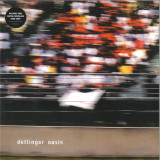
Dettinger’s Intershop and Oasis have long been held, by many fans of ambient and electronic music, to be some of the finest albums in their field. Produced by the mysterious Olaf Dettinger, about whom not much is publicly known, they were some of the earliest full-lengths released by the then-nascent Kompakt, and in many ways, they both articulated and defined the sound that would come to be known as Pop Ambient, while also existing, somehow, to the leftfield of any clearly recognisable genre.
Beautiful, sui generis works, it is a rare pleasure to see them being reissued on vinyl for a new generation of listeners to embrace. Originally released on CD only in 1999, Intershop was Kompakt’s first artist full-length. The music here simmers and broods, with opulent banks of tone marking out territory for rhythms that seem to be built from the clacking detritus of technology – hisses, thunks, knocks. Bass is deployed carefully, each drop a dubbed-out depth charge; drones spin and spiral, warping and weaving between the beats.
Oasis, released in 2000, refined the palette that Dettinger had explored on its predecessor. A blurred crusade of ambient texturology, its unassuming patterns, and subtle, incremental dynamics, admit to real beauty, and a kind of abstract sensuality that you don’t often experience with music that is, perhaps, similarly tooled, but not as poetic. Through seemingly simple gestures – whether lushly expansive repetitions, hyper-acute tremolo tones, or ear-tickling rhythms – it builds complex emotional resonance. It’s no surprise to discover Oasis is held in high esteem by artists like Panda Bear of Animal Collective, who once said of Dettinger, “For us, he was the dude.”
There is, of course, other music to know Dettinger by, too – his three excellent EPs for Kompakt, Blond (1998), Puma and Totentanz (1999), the latter of which, Michael Mayer once argued, “invented dubstep.” There is also a small, yet graceful run of compilation contributions, many of which can be found on Kompakt’s Total and Pop Ambient series. All this music has plenty to recommend it, sharing a clarity of purpose, and a rare, human warmth and depth. But Intershop and Oasis are the releases that distil Dettinger’s singular vision, and allow him, should he wish, to claim his place as a modern master of ambient and electronic music.
Dettingers Intershop und Oasis werden von vielen Fans von Ambient und elektronischer Musik seit langem als einige der besten Alben in diesem Bereich angesehen. Produziert von dem mysteriösen Olaf Dettinger, über den nicht viel bekannt ist, gehörten sie zu den ersten Alben, die von der damals aufstrebenden Plattenfirma Kompakt veröffentlicht wurden. In vielerlei Hinsicht formulierten und definierten sie den Sound, der später als Pop-Ambient bekannt werden sollte, während sie gleichzeitig irgendwie links von jedem klar erkennbaren Genre existierten.
Es ist eine seltene Freude zu sehen, dass diese wunderschönen Werke auf Vinyl wiederveröffentlicht werden, um sie einer neuen Generation von Hörern zugänglich zu machen. Ursprünglich wurde Intershop 1999 nur auf CD veröffentlicht und war Kompakts erstes komplettes Künstleralbum. Die Musik hier brodelt und brütet, mit opulenten Klangbänken, die das Territorium für Rhythmen abstecken, die aus dem klappernden Gerümpel der Technik gebaut zu sein scheinen – Zischen, Klopfen, Schaben. Der Bass wird sorgfältig eingesetzt, jeder Drop ist eine synchronisierte Tiefenladung; Drones drehen und winden sich spiralförmig und verflechten sich zwischen den Beats.
Oasis, das im Jahr 2000 erschien, verfeinerte die Palette, die Dettinger auf seinem Vorgänger erkundet hatte. Ein verschwommener Kreuzzug der Ambient-Texturologie, dessen unaufdringliche Muster und subtile, schrittweise Dynamik echte Schönheit und eine Art abstrakter Sinnlichkeit zulassen, die man nicht oft bei Musik erlebt, die vielleicht ähnlich ausgestattet, aber nicht so poetisch ist. Durch scheinbar einfache Gesten – seien es üppig ausladende Wiederholungen, hyperakute Tremolotöne oder ohrenbetäubende Rhythmen – baut sie eine komplexe emotionale Resonanz auf. Es ist keine Überraschung, dass Oasis von Künstlern wie Panda Bear von Animal Collective hoch geschätzt wird, der einmal über Dettinger sagte: “Für uns war er DER Typ”.
Es gibt natürlich auch noch andere Musik, die Dettinger bekannt macht – seine drei ausgezeichneten EPs für Kompakt, Blond (1998), Puma und Totentanz (1999), von denen letztere, wie Michael Mayer einmal kühn behauptete, “den Dubstep erfand”. Es gibt auch eine kleine, aber feine Reihe von Compilation-Beiträgen, von denen viele auf Kompakts Total- und Pop-Ambient-Serien zu finden sind. All diese Musik ist sehr empfehlenswert und zeichnet sich durch eine klare Zielsetzung und eine seltene, menschliche Wärme und Tiefe aus. Aber Intershop und Oasis sind die Veröffentlichungen, die Dettingers einzigartige Vision destillieren und es ihm ermöglichen, seinen Platz als moderner Meister der Ambient- und elektronischen Musik zu behaupten, sollte er dies wünschen.
out of Stock
Last delivered 19 months ago available to reorder, subject to availability
Dettinger’s Intershop and Oasis have long been held, by many fans of ambient and electronic music, to be some of the finest albums in their field. Produced by the mysterious Olaf Dettinger, about whom not much is publicly known, they were some of the earliest full-lengths released by the then-nascent Kompakt, and in many ways, they both articulated and defined the sound that would come to be known as Pop Ambient, while also existing, somehow, to the leftfield of any clearly recognisable genre.
Beautiful, sui generis works, it is a rare pleasure to see them being reissued on vinyl for a new generation of listeners to embrace. Originally released on CD only in 1999, Intershop was Kompakt’s first artist full-length. The music here simmers and broods, with opulent banks of tone marking out territory for rhythms that seem to be built from the clacking detritus of technology – hisses, thunks, knocks. Bass is deployed carefully, each drop a dubbed-out depth charge; drones spin and spiral, warping and weaving between the beats.
Oasis, released in 2000, refined the palette that Dettinger had explored on its predecessor. A blurred crusade of ambient texturology, its unassuming patterns, and subtle, incremental dynamics, admit to real beauty, and a kind of abstract sensuality that you don’t often experience with music that is, perhaps, similarly tooled, but not as poetic. Through seemingly simple gestures – whether lushly expansive repetitions, hyper-acute tremolo tones, or ear-tickling rhythms – it builds complex emotional resonance. It’s no surprise to discover Oasis is held in high esteem by artists like Panda Bear of Animal Collective, who once said of Dettinger, “For us, he was the dude.”
There is, of course, other music to know Dettinger by, too – his three excellent EPs for Kompakt, Blond (1998), Puma and Totentanz (1999), the latter of which, Michael Mayer once argued, “invented dubstep.” There is also a small, yet graceful run of compilation contributions, many of which can be found on Kompakt’s Total and Pop Ambient series. All this music has plenty to recommend it, sharing a clarity of purpose, and a rare, human warmth and depth. But Intershop and Oasis are the releases that distil Dettinger’s singular vision, and allow him, should he wish, to claim his place as a modern master of ambient and electronic music.
Dettingers Intershop und Oasis werden von vielen Fans von Ambient und elektronischer Musik seit langem als einige der besten Alben in diesem Bereich angesehen. Produziert von dem mysteriösen Olaf Dettinger, über den nicht viel bekannt ist, gehörten sie zu den ersten Alben, die von der damals aufstrebenden Plattenfirma Kompakt veröffentlicht wurden. In vielerlei Hinsicht formulierten und definierten sie den Sound, der später als Pop-Ambient bekannt werden sollte, während sie gleichzeitig irgendwie links von jedem klar erkennbaren Genre existierten.
Es ist eine seltene Freude zu sehen, dass diese wunderschönen Werke auf Vinyl wiederveröffentlicht werden, um sie einer neuen Generation von Hörern zugänglich zu machen. Ursprünglich wurde Intershop 1999 nur auf CD veröffentlicht und war Kompakts erstes komplettes Künstleralbum. Die Musik hier brodelt und brütet, mit opulenten Klangbänken, die das Territorium für Rhythmen abstecken, die aus dem klappernden Gerümpel der Technik gebaut zu sein scheinen – Zischen, Klopfen, Schaben. Der Bass wird sorgfältig eingesetzt, jeder Drop ist eine synchronisierte Tiefenladung; Drones drehen und winden sich spiralförmig und verflechten sich zwischen den Beats.
Oasis, das im Jahr 2000 erschien, verfeinerte die Palette, die Dettinger auf seinem Vorgänger erkundet hatte. Ein verschwommener Kreuzzug der Ambient-Texturologie, dessen unaufdringliche Muster und subtile, schrittweise Dynamik echte Schönheit und eine Art abstrakter Sinnlichkeit zulassen, die man nicht oft bei Musik erlebt, die vielleicht ähnlich ausgestattet, aber nicht so poetisch ist. Durch scheinbar einfache Gesten – seien es üppig ausladende Wiederholungen, hyperakute Tremolotöne oder ohrenbetäubende Rhythmen – baut sie eine komplexe emotionale Resonanz auf. Es ist keine Überraschung, dass Oasis von Künstlern wie Panda Bear von Animal Collective hoch geschätzt wird, der einmal über Dettinger sagte: “Für uns war er DER Typ”.
Es gibt natürlich auch noch andere Musik, die Dettinger bekannt macht – seine drei ausgezeichneten EPs für Kompakt, Blond (1998), Puma und Totentanz (1999), von denen letztere, wie Michael Mayer einmal kühn behauptete, “den Dubstep erfand”. Es gibt auch eine kleine, aber feine Reihe von Compilation-Beiträgen, von denen viele auf Kompakts Total- und Pop-Ambient-Serien zu finden sind. All diese Musik ist sehr empfehlenswert und zeichnet sich durch eine klare Zielsetzung und eine seltene, menschliche Wärme und Tiefe aus. Aber Intershop und Oasis sind die Veröffentlichungen, die Dettingers einzigartige Vision destillieren und es ihm ermöglichen, seinen Platz als moderner Meister der Ambient- und elektronischen Musik zu behaupten, sollte er dies wünschen.
out of Stock
Last delivered 2 years ago available to reorder, subject to availability
This release follows Chantal's earlier musical odysseys, including Let Your Hands be My Guide (2013), The Sparkle In Our Flaws (2015), Bounce Back (2017), Puwawau (2019) and Saturday Moon (2021). Each album, a testament to her artistic evolution, has resonated with audiences worldwide.
Silently Held comes to life with the collaborative brilliance of accomplished musicians. Bill Frisell with his beautiful understanding of Chantal’s flow of melody, Eric Thielemans who brings his percussive mastery to the mix. Jozef Dumoulin playing the piano with immense calmth. Thomas Morgan's who seems to be picking magic out of the skies with his bass and Shahzad Ismaily's golden touch as a multi-instrumentalist contribute to the album's rich texture. Colin Stetson, renowned for his avant-garde saxophone work but also his work for Bon Iver, lends his unique voice, creating moments of emotive intensity.
And Joachim Badenhorst, Niels Van Heertum and Kurt Van Herck finishing the album with their beautiful brass. Guided by the skilled production of Philip Weinrobe (known from his work for Dirty Projectors and Adrienne Lenker) the album's sonic landscape is carefully crafted. Most of the songs recorded in one take. One breath to keep close to the realness and rawness Chantal was looking for. Meanwhile, the experienced touch of mixing engineer Phill Brown (Talk Talk, Mark Hollis,..) who has been very present on Chantal’s journey for years.
In the quiet embrace of the music, Chantal unveils a raw and authentic portrayal of vulnerability, where every flaw and feeling is held close. The album becomes a sanctuary, inviting listeners to join in this silent communion with the intricacies of the human experience. Through each note and lyric, Chantal Acda crafts a space where imperfections are not only acknowledged but celebrated, creating a profound and intimate connection between the artist and the audience. "Silently Held" stands as a testament to the beauty found in the closeness of our flaws and feelings, inviting us to embrace them with grace and authenticity.
Silently Held by Chantal Acda & The Atlantic Drifters, released 3 May 2024, includes the following tracks: "Above ", "The Friends Parade ", "Taking Part ", "The Barn " and more.
Music is a form of world building. I love to develop sonic characters and set them into fictional ecosystems with unique textures, acoustics and atmospheres. Each song forms a different landscape, through which a vocal character guides us and tries to tell us its stories." — Ludwig Berger
Ludwig Berger's 'fictional' debut album "Garden Ediacara" unfolds as a musical eco-fiction, guiding listeners through a speculative ecosystem with synthesized vocals. Infused with storytelling techniques from sci-fi and fantasy, the album intertwines melodic songwriting with electroacoustic sound design. Inspired by hydrofeminism and eco-fiction novels, such as "A Door Into Ocean" by Joan Slonczewski, the album delves into the geological period of Ediacara around 600 million years ago — an era so remote it resonates as a glimpse into a possible future. The Ediacaran period was characterised by a peaceful and thriving ecosystem inhabited by soft-bodied creatures without eyes and bones, which were completely wiped out through the appearance of a new species. "Garden of Ediacara" alludes to this period, celebrating both the pleasures of biodiversity as well as mourning its inevitable loss. The narrative unfolds as an exploration of growth and interconnection in the shadow of a coming extinction. The track titles, written by Daisy Lafarge, reveal themselves as a cohesive poem and contribute to the album's narrative.
Informed by his practice of field recording that focusses on intimate encounters with plants, animals and geological phenomena, as well as his studies in electroacoustic composition, Berger expands his palette for his debut in 'fictional' music. The album prominently features a post-human, non-binary death metal voice synthesizer, physical modeling instruments, and microscopic field recordings of plants, insects, as well as aquatic and geological life. With impressionistic strokes, Ludwig Berger crafts vibrant worlds using glassy timbres and more-than-human voices, guiding listeners through emotionally ambiguous terrain, seamlessly oscillating between moments of intimacy and irritation, melancholy and playfulness.
Ludwig Berger is a landscape sound artist, educator and musician. In his compositions, installations and performances, he enables intimate and playful sonic encounters with plants, animals, buildings and geological entities. He is founder and curator of the label Vertical Music, which releases field recordings and experimental music. Berger holds degrees in electroacoustic composition, as well as musicology, art history and literature. As a sound researcher and teacher at the Institute for Landscape Architecture at ETH Zurich from 2015-2022, he studied the sonic dimension of Japanese gardens, alpine glaciers and urban landscapes, which among other things led to the release of the acclaimed album trilogy 'Melting Landscapes', 'Dammed Landscapes' and 'Buried Landscapes'.
Originally pressed in 2022, as a vinyl-only release, an edition of 100 fluorescent green 12” and sold exclusively at venues in the USA as part of Luke Vibert & Posthuman’s I Love Acid tour, never made available anywhere else. This second edition repress is in randomly assigned cobalt blue, solid orange vinyl, or split red/black with multiple differently coloured labels.
On the A side - Luke Vibert is “Still In Love” with acid lines & breakbeats here as a sequel to his classic anthem. “Android Webber” strips it back to pure 303, 808, and JX3P analogue action. On the flip, Posthuman opens with the fierce ravey electro of “Grad” before seeing on the 12” with some signature acid slo-mo chug in “Forever Circles”
out of Stock
Last delivered 2 years ago available to reorder, subject to availability
The second in our Mr Bongo series opening the vault on classic recordings from the fabled Groove Merchant Records catalogue. This time the spotlight turns to the Hammond B3 organ maestro Lonnie Smith, as we proudly present a reissue of his cosmic jazz-funk journey, ‘Afro-Desia’.
Originally released in 1975, this much-loved album was produced by Groove Merchant label owner Sonny Lester and features the mysterious 'Compliments Of A Friend' on guitar. Considering Smith was part of George Benson’s quartet in the ‘60s, that not so discreet veil appears to have been lifted on who this ‘friend’ might be. However, presumably due to contractual reasons, Benson had to remain covert for this recording. The lineup doesn’t stop there though, with the likes of legendary bassist Ron Carter and Grammy award winning saxophonist Joe Lavano joining the outfit.
An album of two parts, the first side sees Lonnie Smith in a spaced-out, cosmic jazz funk setting. The opener 'Afrodesia' is a funk flexing, steamy groover. Greg Hopkins and Lavano trading off on trumpet and sax respectively, as that bassline walks its way over fluttering jazz percussion and off-kilter electronics. 'Spirits Free' is an epic 15-minute free-wheeling jazz-funk workout. A mind melting trip that rises and falls, in parts spacey and serene, with Smith’s organ playing complimented by stretched out horns. Before long it opens out into unconstrained fluid sections that do its title proud. Pure ‘70s jazz-funk at its most stellar.
Side B takes a more classic soul-jazz flavour, with touches of Latin spice. 'Straight To The Point' kicks off with a carnival zing, full-frontal horn and organ lines providing a fiery party punch. It’s a swinging jazz cut that used to receive spins by DJs at Russ Dewbury's Jazz Room's sessions in Brighton in the ‘90s.
Finally, 'Favors' and 'The Awakening' close out the release. Two sure shot, quintessential Lonnie Smith firing Hammond grooves. Each conjuring up images of packed out, smokey jazz bar jams, every player letting loose with masterful improv sections to whip the crowd up into a frenzy.
A truly wonderful album, and an archetypal release showcasing the height of jazz musician excellence from this era.
out of Stock
Last delivered 22 months ago available to reorder, subject to availability
You Only Live 2wice is the third studio album from Freddie Gibbs. Following a tumultuous time in Gibbs’ personal life, the album focuses on Freddie overcoming his obstacles and rising from the ashes anew, as reflected in the album art depicting the resurrection of Jesus. At 8 tracks, the album has no features, instead using the space to let Gibbs bear his soul. The album includes the chilling violin-laced single, “Crushed Glass,” as well as standout hits, “20 Karat Jesus,” &”Amnesia.” Executive produced by Ben “Lambo” Lambert & Gibbs himself, the album sees production from BADBADNOTGOOD, Kaytranada, Speakerbomb, Dupri, Jay Nari, Teddy Walton, Blair Norf & more. Back in print for the first time since its initial release and pressed on Opaque Red vinyl.
out of Stock
Last delivered 2 years ago available to reorder, subject to availability
We are delighted to bring you the first in the Ivan The Tolerable Archive Reissue Series, Autodidact!
Originally released on a 10” lathe cut by Ack Ack Ack Records in February 2018, this has now been remastered and repackaged, and will now be available on ltd edition khaki vinyl, with only 250 copies pressed. Here’s a bit about the record in Oli Heffernan’s aka Ivan The Tolerable own words-
“I recorded the bulk of this record over a weekend in January 2018, in the midst of a very minor breakdown that was to last for pretty much the entire year. I was living in a big house all on my own, smoking too much and not really seeing any people. Happy days indeed.
It was tracked in the back room of 97 Hambledon Road, Middlesbrough using two questionable microphones, a broken HH 100 amp, my friends drums and a Tascam DP08 (that wasn’t to see the year out, RIP 2009-2018) When I was done, Robbie came round and recorded a ton of violin drones through my amp and i remember feeling like I’d gone into a trance a few times, then Ben recorded his parts at home and sent them over. Mixed and mastered the same night - I released it myself a month later as a lathe cut 10”and then promptly moved on. I listened to the album for the first time in years to write this sleeve note and I think it is possibly the closest I’ve ever got to capturing the sound I hear in my head - I love how grubby and cavernous it sounds, claustrophobic and swirling - the track Autodidact I have recorded 4 more times since this version and I’ve never got that sound back. I’II keep trying.’’
“Oli Heffernan, June 2023’’
out of Stock
Last delivered 2 years ago available to reorder, subject to availability
The Morning Papers Have Given Us the Vapours was made with the black watch bandmates and producers/engineers Rob Campanella (Brian Jonestown Massacre, The Tyde, The Warlocks) and Andy Creighton (The World Record, Parson Red Heads). Ben Eshbach, formerly of The Sugarplastic, arranged the strings. Kesha Rose guests on lead vocals on the second single, Oh Do Shut Up. And the great Lindsay Murray once again lends her beautiful backing vox to a number of tracks.
the black watch songwriter/frontman John Andrew Fredrick wrote the ten songs on this, his Los Angeles-based band's latest album, entirely unselfconsciously, with no set goal in mind other than to revel in the joy of songwriting, and, eventually, the luxury of recording his music with his more-than-accomplished band. The Morning Papers Have Given Us the Vapours, produced separately and together by Rob Campanella and Andy Creighton evinces the black watch's often stunning ability to, as Andy Gill once observed in The Independent, "find chaos in the calm, melody in the miasma."
Fredrick, who has also published four comedic novels and a book on the early films of Wes Anderson, jovially describes himself as "a recovering Anglophile--one who'll never, one hopes, fully recover." From his home studio in the Angeleno Heights district of L.A., he waxes eloquent about how being branded, as it were, as a too-ardent lover of British music, film, and literature has left him as bemused as has the tag "prolific" that is often affixed to reviews of his work.
"I just don't think it's all that interesting to note that we've made so many records. Looked at one way, it's a sort of deflection from talking about the timbre if not the quality of the individual songs. Though I know it can be intimidating for fans who've just discovered us--a sort of 'My goodness, where do I start with this band that has put out LPs since 1988?' I get it. I do. I picture someone standing at our slot at a bin at a record store becoming overwhelmed at the prospect of picking the 'wrong' title. And then walking away and not picking up anything from us!" Fredrick laughs. "What can you do indeed?"
He started his career as a songwriter as a result of an American Football injury that left him bedridden in the home he grew up in in Santa Barbara, California. The year The Beatles immortal double-album came out at Christmastime he broke his leg so badly that he had to be home-schooled for an entire year. His parents, ex-teachers themselves, refused to let him watch telly for more than an hour a day. He propped a Silvertone acoustic on top of the massive cast that screamed all the way up to his thigh from his toes, and began to write little melodies and lyrics that, doubtless, did not in the least mask his love for the Fabs, The White Album in especial.
And he read and read and read--histories of the American Revolution and Civil War, mostly, and as many Dickens novels as his mum and dad could bring him. "That year," Fredrick observes, "surely made me who I am today. Proof that intensely unfortunate-seeming events can prove most fortunate. As a sport-mad kid, it made me absolutely mental that I was exiled from the activities I loved most and the school teams I played on. What a blessing undisguised that injury was! Not that I'd like to experience anything like it ever again, mind you."
Fredrick can even recall a few of the melodies he wrote as boy ("Utterly trite, of course, completely jejune"); and in a way, The Morning Papers Have Given Us the Vapours showcases a kind of get-back-to-where-you-once-belonged sensibility. "I didn't intend, this time, to make an album per se. I write both songs and fiction in order to find out what happens, to find out what I might want to say," he notes. "Rob often asks me what a particular song is about; and I often reply that I either don't know, or would prefer that others say. Same thing goes for when people ask me where they should start with our discography. I never know what to say. Our LP from 2011, Led Zeppelin Five (remastered in 2021 for its tenth anniversary), has been our best seller, I think--but that may be because some stoned Zepheads thought their gods had perhaps put out a record they'd missed!"
Despite being deadly serious about music-making, TBW's been known to either whimsically or perversely title their albums. Examples: Jiggery-Pokery (an allusion to John Lennon assessing George Martin's productions), After the Gold Room (a pun on the Neil Young classic plus a local eastside L.A. watering hole), Sugarplum Fairy, Sugarplum Fairy (echoing Lennon's famous count-off to A Day in the Life), Fromthing Somethat (a garbled spoonerism/lyric while doing a vocal), Brilliant Failures (the 2020 release that, along with Fromthing Somethat, was named Album of the Year by venerable indie rock magazine The Big Takeover), and the aforementioned LZ5.
For the new LP, the band recruited longtime friends and allies Ben Eshbach (the Emmy-Award-winning frontman of The Sugarplastic) and Lindsay Murray (Gretchens Wheel) to compose and arrange strings and sing heaps of lovely backing vocals, respectively.
And the result? A collection of songs that Fredrick, in his quite-but-not-quite self-deprecatory way, might call another set of brilliant failures. "Every song, every LP we do, is a failure of sorts--no matter how powerful or beautiful or pleasing-to-us it turns out," John concludes. "I have often said that my aim is to write songs as good as anything on The Beatles... and I will never achieve my goal. And thus I'll have to keep at it, keep trying. And chin-chin to that!"
And now your attention's been brought to a band (or you've heard of them or heard a track or two down the years) that has been pegged by The L.A. Weekly as "a national treasure" as well as "the most criminally-neglected indie pop group imaginable."
So here's to the prospect of that ostensible neglect becoming as much of a thing of the past as John Andrew Fredrick's year-long stint in bed.
For our 50th release on Delusions Of Grandeur we're pleased to bring you seven exclusive tracks from a mighty-fine collection of both existing DOG artists and veritable newcomers alike.
Kicking off Part One we have Rush Hour regular Nebraska who manages to successfully combine elements of wait for it... trance and broken beat into an altogether more exciting and amazing way than that actually sounds on paper. Organic, sampled drums with plenty of grit and dirt lay down a groove whilst spacey synth arps and an almighty break (in a subtle way) make this something of an epic which all of us here have fallen for in a big way.
Quintessentials and Kolour LTD favourite Ugly Drums steps up next digging deep in his seemingly bottomless collection of brilliant of disco and soul to mine some killer samples and conjuring up a masterclass in deepest ravehouse in the process.
Rounding off Part One DOG mainstays and bona fide Retreaters Session Victim do what they do best on Came To Be Alive, turning in a completely blissed-out, dusty soul jam tailor-made as much for cozy nights in front of a log fire as for antipodean BBQ's under a hazy sun.
out of Stock
Last delivered 9 months ago available to reorder, subject to availability