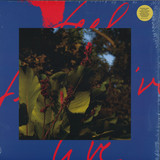
Erol Alkan welcomes Joshua James to Phantasy for his debut release 'Coarse' featuring The Bunker NY producer Justin Cudmore on remix duties.
A fixture of London's dedicated queer club scene, James maintains a trio of distinct residencies, including XOYO, the notorious 'Savage' parties, as well as fortnightly on Rinse FM. On this unapologetic and upfront track, the DJ-turned-producer instantaneously captures the raw energy and sexuality that underpin his life by night, backed by a remix from a key figure in the US underground, Justin Cudmore.
Designed with sweatboxes and serious sound-systems in mind, 'Coarse' wastes no time in establishing its rude intent; hammering jack-bass, orgasmic cut-up vocals and larger-than-life synthlines flirt expertly from the off, before the track descends into outright sleaze in the spirit the of gnarlier edge of acid-house. Only a series of breathless gasps indicate you've safely reached the other side... A personal weapon for James each week behind the decks, as well as for Phantasy founder, Erol Alkan, 'Coarse' is a powerful dancefloor paean with only one (well, maybe two) things on its mind.
Having turned heads with his own uncompromising acidic perspectives on labels such as The Bunker NY, Phonica White and Honey Soundsystem, New York-based DJ and producer Justin Cudmore unfurls 'Coarse' in a trippier, deeper direction, nonetheless still bumping in a style that subtly recalls the peak-time sound of classic 90s NYC clubs like The Tunnel.
It's that time again. The skies are calling and its time to board our trusty jet for the 5th outing of Africa Seven's premiere class compilation Africa Airways. For volume 5 its time to brace yourselves for 10 slices of Afro boogie goodness.
We up the boogie time groove with The Black Bells Group (the first band of lead singer Sidney 'Patrick Duteil' who went on to become the godfather of French hip-hop and a well know TV presenter. Here the groove is swinging... the perfect opener. Next up is German-based Cameroonian musician and cousin of Manu Dibango, Charly Kingson with this bass-synth boogie stomper. Big brass and jazzy trumpets add layers of sparkle too.
Next its time for some highlife inspired boogie from Ghanian Gyedu Blay Amboley. Highlife fused with reggae, disco, boogie and jazz just as the lyrics say.
Next we pair up with Africa Seven friend Eko once more under his Dikalo guise. The Cameroonian master musician is on fine form with his heavy brass and deep percussion with a driving afro boogie groove. To round off Side A its off to Cameroon again to groove with Jean 'Mekongo President'. Think Bernard 'Chic' Edwards on the bass with some African style and you can see it's the bottom end groove and afrobeat drums that power this gem along.
We open the second side slowly and purposefully with the highly sought after 'French Girl' from Fotso. Drippy bass synth grooves and a wondrous percussion and drum shuffle pair with piano riffs to make this a unique sounding track. Our friend Tala AM is next with the foot-stomping 'Sugar Lump'. JK Mandengue is next with most definitely the catchiest chorus you will hear today. Nigerian Jide Obe gets synth and clavinet rich with his doe to sensible dating advice 'Too Young'. We close off the album with a track from label good friend Jo Bisso under his Mulamba guise. Sounding like a long lost TV theme from a late night TV show circa 1977. Let's get down and boogie with the brand new dance in town folks... the Dashiki.
Until Volume Six takes flight it is time to unbuckle those seat belts folks.
Liška, the Czechoslovakian word for fox. Beguiling in its beauty, cunning in it's charm. Said to be one of the most intelligent animals on the planet its global family consists of thirty-seven varieties; all of them recognised, respected and feared for their persuasive, creative, resourceful and elusive nature. The Liška we will talk about today is no exception to these hereditary rules and within the grooves of this record Finders Keepers present an 'elusive' musical artefact that best exemplifies every facet of this composer's animal namesake.
Had he not been born in the small Bohemian town of Smecno in the early 1920s the story of The Fantastic Mr. Liška might have well taken a different course. Alternatively, fettered by the hampers of communism, this lifelong resident of Czechoslovakia would never quite find his seat at the same table as the likes of John Barry, Ennio Morricone, Michael Nyman and Stanley Myers, nor drop enough phonographic breadcrumbs to track his legacy. But having waited patiently behind the borders of the wider landscapes of international cinema, Liška's musical brood, spanning multiple stylistic decades and generations, has now started to walk proudly amongst his would-be, latter-day compeers. In an era where music lovers have almost become immune to adjectives like 'lost', 'rare' and 'unreleased' in a climate where previously lesser-known off-kilter master composers such as Vannier, Kirchin and Axelrod have become widely revered, it is perhaps the perfect time for discerning listeners to advance above the feeding trough and seek out this truly pioneering and revolutionary Eastern European composer. Rivalled only by the likes of Krzysztof Komeda and Andrzej Korzynski in Poland, alongside Alexandr Gradsky in Russia, and often splitting workloads with fellow Czech composers like Luboš Fišer, Zdenek Liska's filmography of over almost 300 fully formed movie scores virtually eclipses the achievements of these socialist era luminaries. Respected unanimously in both Czech and Slovakian by studio bosses, producers, directors and actors alike Liška is widely known for his ability to take the existing energy in a reel of film and literally change the polarity to suit his own interpretation while maintaining the full support from his 'client' who would in-turn end up working under this composer's creative direction. Not only was Liška a genius of emotive orchestral and coral composition, his grasp on small group arrangements and intimate, minimal scores set him above the competition. By utilising primitive sample techniques by 'looping' a films existing ambient noise, or rearranging found sounds and dialog into subtle melodic arrangements, Liška would independently develop his own techniques which had simultaneously become known in Paris as musique concre`te. It is a direct extension of these experiments that saw Liška also draw parallels with Walter Branchi (Ennio Morricone's main electronic sidekick) in Italy as well as Daphne Oram in the UK, making Liška a relatively untravelled pioneer of early electronic composition and sound design due to his unlikely global environment. Imprisoned, preserved or reserved; time has been kind to Liška's music.
Soundway Records present a special summer tribute double a-side 12" with two tracks from African musicians that both passed away within a couple of months of each other at the end of 2013 / start of 2014. Both tracks are perfect smooth summer tropical DJ fodder for the dancefloor.
On the first side South African singer Shaluza Max's massive Mashkandi / house anthem from 2002 gets a first release on vinyl. This track was a huge hit in South Africa and around the world on its release. With a soaring Zulu vocal and big sound it's a fitting reminder of a very talented musician who worked as a very well respected producer, composer and arranger who died tragically young at the age of 47 in January of 2014.
On the flip we drop a fairly unknown track from the mid 1980s from one of the biggest names in African music, Tabu Ley Rochereau. With a kind of almost balearic proto-house congolese pop cut with drum machines, and trademark sweet congo horn section, Hafi Deo is a beautiful track that fell into obscurity by perhaps being too smooth for the world music crowd in the mid 80s. Tabu Ley passed away in November 2013 in his late 70s with over 250 albums and 3000 songs to his name. A true pioneer of the congolese soukous sound, he was also one of the most influential African musicians of his generation.
out of Stock
Last delivered 4 years ago available to reorder, subject to availability
As a first listen it was 2 am, 46° in a village Portugal, in a Convent, after a good night out. That moment stroke me from being magic, the energy was perfect, we were laughing and relaxing amongst friends. That listen was pushing the magic further because of the surprises it has all along the journey. A first groaning A simple rhythm Soft realms Noisy Round sounds Type machine sounds, of a sampled hi hat that never reveals, cut cut cut cut. Just because it's fun to not reveal it. And put that fist cut part of the upcoming timber that is not 'yet' one. It's like if the drum pack was used the wrong way, which is a great way. Flipping. (=to flip something) Belp has this ability to bring the most horrible samples in front, and turn over your mind to enjoy what first sounds like 'horrible'. Facade. 'Crocodile' is flipping it over. Rhythmically vibrating, ears are wide open, full attention. I'm into the non-repetition. Track 'Crocodile's call reminds me of the call in 'Klabb' by Deena Abdelwahed as well as within its playful change of tempo, of notes. Who cares The album is like a randomly composed pack. It is not random. It's flipping something, and I like that disturbance, it's what I want to hear. It is alive, through composition, arrangements, falsely randomised, non-arranged, it is a trick; it is the drunk clown playing 'endless preparations for a ceremony' and 'catch'. Not bothering about anything reveals a deep understanding of music and of arts, a crafted album in details. It is years of listening, it is years of challenging ones ears, and putting it all together in this piece.
White Shadows In The South Seas is the title of a book written in 1919 by Frederick O'Brien as part of a trilogy he wrote based on his experiences living in the Pacific islands in the early part of the 20th century. His book was taken as the starting point for a film to be directed, initially, by Robert Flaherty (famous at the time for his groundbreaking documentary / fiction film Nanook Of The North) with W.S.Van Dyke as his support. The film, ultimately, apart from the title, had little to do with O'Brien's book and Flaherty left the film after a few months leaving Van Dyke to finish it.
I purchased O'Brien's book, along with many others, from Basement Books, a secondhand bookstore in Melbourne/Australia. Part of my 'Islomania' and on going fascination with all things Pacific. When I discovered there was a 1929 silent film based on the book I sought it out and started to present it as part of my 'Live Music/Silent films' repertoire. Tabu by Frederick Murnau, which coincidently also had Flaherty as co-director originally, was the first film I ever wrote / improvised a score for and presented as a live film/music performance. My repertoire extends to over 23 films now.
My eclectic and diverse musical and artistic interests extend into 'Hawaiian', 'Exotica', 'Ambient' and 'Electronic' Music. I have produced several volumes of so called 'Electronic, Ambient, Exotica' on CD and Vinyl, including Kiribati, Globe Notes, Rayon Hula ( on Vinyl, CD and digital format ) and most recently, New Globe Note on Vinyl and White Shadows In The South Seas on CD.
White Shadows In The South Seas features some of the music presented in my live screenings of the 1929 silent film.
The film is the story of Dr. Matthew Lloyd, an alcoholic doctor who is disgusted by the exploitation by white people of the natives on a Polynesian island. The natives dive for pearls, however, numerous accidents occur and one diver dies. In anger, Dr. Lloyd punches Sebastian, the employer. As revenge and to prevent further interruption of his activities, he tricks Dr. Lloyd onto a ship with a diseased crew (thinking they are ill) and his men rough him up and send the ship off into a storm. Dr. Lloyd survives and is washed ashore on an island where none of the natives have ever seen a white man before. Lloyd is rescued and ultimately falls in love with the chief's daughter, who is Taboo, hence Lloyd is prevented from pursuing his love for her. An incident occurs and a young boy is thought to have drowned but Lloyd is able to revive him, earning him points and permission with the chief's daughter. Lloyd begins to realise that the local islanders have no sense of the value of the black pearls which grow in abundance around their island and he starts to dive for them and collect them. One morning the white man Sebastian unexpectedly turns up on a scooner and starts to offer the islanders trade for their pearls. Llloyd tries to interrupt the encounter and is shot and dies. His wife and the islanders morn for his dead body and, symbolically, the passing of a way of life.
Mike Cooper plays - Electric and acoustic lap steel guitars / electronics / Zoom Sampletrack / Kaos Pad / Casio SK1 / Korg Drum Machine / Self Made Instruments.
It also features field recordings made on Pulau Ubin by Mike Cooper during a month as Artist In Residence for The Artist Village / Singapore.
I would like to acknowledge and thank Lawrence English (Room40 Records) for his assistance and encouragement with the original recordings and the CD version of White Shadows In The South Seas.
All music written and played by Mike Cooper PRS/MCPS - except Po Mahina (trad. Arr. Cooper) and Hilo Hanakahi (trad. Arr. Cooper)
Recorded and Mixed at the Steelworks in Rome 2012/2013.
A White Shadow In The South Seas
In February 2014 'A White Shadow In The South Seas' was the title of an audio-visual installation I made at the Teatro In Scatola in Rome, Italy, presented as part of a series of sound installations titled 'Visitazioni' produced by Proposte Sonore.
The essay below, as well as our collection of Hawaiian shirts, Exotica and Hawaiian vinyl records, was an inspiration for this installation.
'..the transformation and reconstitution of the souvenir commodity as an indigenous ethnic art form and a scarce relic of Hawai'i's romanticized past...' from - Clothing and Textile Reasearch Journal - From Kitsch to Chic by Marcia A. Morgado.
And....
Michael Thompson's Rubbish Theory (1979)
' ...a critical aspect of Western culture is the pre-disposition to see objects in terms of two overt categories: the transient and the durable. Objects identified as transient have finite life spans and lose value over time, whereas those identified as durable have infinite lives and over time increae in value....category assignments are arbitrary, but once assigned a category membership determines relative value. Fashion apparel-by defenition-is assigned to the transient category; paintings commonly are designated durables....how is it that transient objects.. ( e.g. Hawaiian shirts and vinyl records ) ..sometimes become durables.
Objects assigned to the rubbish category are largely invisible, have no value and, ideally, no life span. Fashion for example, no longer worn and relegated to the back of the wardrobe has fallen into the covert rubbish category. But rubbish can be rescued and transformed. Thompson says ' What I believe happens is a transient object gradually declining in value and in expected life span may slide across into rubbish. Here it exists in a timeless and valueless limbo where it has a chance to be re-discovered and be successfully transformed to a durable. Such transferes are radical: objects gradually slide from transcience to rubbish, but the transformation from rubbish to durable involves an all-or-nothing leap across two boundaries, that separating the worthless from the valuable and that between the covert and the overt. Things drift into obscurity but they leap into prominence.
The delightful consequence of this hypothesis is that in order to study the social control of value we must study rubbish.
The rubbish-to-durable transformation is accompanied by the development of highly specialized knowledge derived from the discovery of subtle variations and complex details that went unnoticed in the objects transient stage. The discoveries initiate renewed interest in the object and its market value begins to climb. As prices soar beyond the reach of ordinary people, the object becomes available only in high priced collectors' markets. Furthermore, as market values rise, the aesthetic value of the object undergoes a reassessment as well, and it becomes increasingly apparent that the objects intrinsic beauty has been overlooked. Ultimately the object is re -assigned as a durable and becomes recognized as a timeless classic.
Exotica, Ambience and Pacificism - A dialogue with Mike Cooper & Professor Philip Hayward Deputy Pro Vice Chancellor of Research Southern Cross University, Lismore, Australia.
Belgium DJ / Producer ED1999 kicks off the debut release for his newly minted 'Porpax' imprint with 'Melodius Hubbub, a 4-track EP of hypnotic dark Techno saturated with modular wizardry. The release confidently displays ED1999's production power as well as the serious direction the label is aimed at taking. The music featured clearly inspired by the energy found in Tbillisi, Berlin, Detroit and anywhere else heavy duty underground music is celebrated.
'Path Of Hope' is a punchy mover heavy on the reverb, with washes of metallic gray atmospherics floating in and out of the steady analogue drum patterns. The track grows in energy throughout with additional claps, hi hats and melodies generating an absolutely effective tension building weapon.
Title track 'Melodius Hubbub' is pure hypnotic Techno at its absolute finest. Black as midnight elements drive the energy to dark territories. ED1999's perfectly positioned sonic peaks and valleys of thick musical textures ensure the dancefloor never loses a moment getting lost in the incredibly positioned hypnosis of sound.
'Winding Course' is centered around a gurgling synth ride which gives the track an uneasy and twisted vibe throughout. Additional melodic effects join the main synth, adding a romantic sense of danger and dancefloor movement. Akin to ED1999's brilliant ability to keep his music restrained and effective for serious club-goers.
'Sleazy Nook' is the darkest of the dark tracks found on the release, with shudder inducing effects and ice cold soundscapes residing alongside the winding rhythms. A truly intense breakdown midway through the track generates a clever sense of sinking, with only the kick drum returning to keep people safe from going under.
Study the past if you would define the future. The label keeps going beyond thinkable boundaries with another release that will define an Era, at least for us.. most likely there are records that will sign a defining moment because of the music itself, some for the emotions that a record will evoke when is played, this is a record that collects all of those emotions in one place. We are glad to present you (KRTM), an artist that is well respected and known in his world and surely he doesn't need any introduction, but this is his first time with us, and we are more than proud to show you our love for his music and his devotion.
Wonder Why is the highlight from Llorca's greatly overlooked The Garden album on Membran Records. With its Curtis Mayfield inspired vocals, Live Strings and 70's guitars, It has all the ingredients of a classic song. Who better to ask as a remixer than Hot Toddy from Crazy P. He raised the tempo and energy and really made it his own. On the b-side, 2 edits of the original track from Fred Everything, using only the original stems, working the effects and sonics as well as extending the track both in original and instrumental forms.
Black Rain returns with Computer Soul: the final part of a sequence of Blackest Ever Black releases that began with 2011's Now I'm Just A Number: Soundtracks 1994-95, and a first glimpse of the project's richly imagined future. For this outing Stuart Argabright (Ike Yard, Dominatrix, Death Comet Crew) is joined by BR founder member Shinichi Shimokawa as well as more recent recruit Soren Roi and Zanias (vocalist on 2015's Dark Pool) - making for the most most group-oriented iteration of Black Rain since its earliest days. Sonically too, there is a sense of evolution but also of coming full circle: the cyberpunk techno of Argabright's celebrated William Gibson soundtracks (compiled on Now I'm Just A Number) and extrapolations of Dark Pool's neuromantic yearning cut with glimpses of the thrash and industrial rock energies that animated Black Rain's incendiary live shows - and sought-after tapes for Kombinat and TPOS - in the early 90s. More than ever, Black Rain is propelled by a powerful science fiction impulse, whether responding to the themes and characters of Gibson's Sprawl or the Blade Runner universe (particularly K.W. Jeter's spin-off/continuation novels which extended its mythology, and timeline, further). It's not news that many of these works' most powerful predictions and prophesies have come to pass - the replicants are already living among us - so Computer Soul projects further into several possible unforeseen futures, its events 'set' in the second half of the current century, fifty or so years after those of Dark Pool. The hyperpopulated metropolises of Dark Pool are no more; the apartments are empty, haunted by ghosts of AC current, devices and machines running lonely without their owners...a melancholy internet of things. Where has everyone got to Gone but perhaps not gone. Oblivion beckons - always does - but on the other side of that, something else... another time, another place, a river....and a new way of living.
The story of Seattle's rise to global rock supremacy in the late 80s and early 90s begins with Green River. Made up of Jeff Ament (bass), Mark Arm (guitar/vocals), Bruce Fairweather (guitar), Stone Gossard (guitar) and Alex Shumway (drums), the
quintet put out three 12's and a 7' single during its brief existence.
Green River's influence on Seattle's music scene spread far and wide thanks to the members' dispersion into bands including Pearl Jam, Mudhoney and Love Battery, as well as the punk glam sludge rock songs they left behind. 'By '83, '84, there was
definitely a movement that was happening within hardcore, like Black Flag slowing down for My War,' says Arm. 'The Replacements and Butthole Surfers were rearing
their heads, and they're very different bands, but they're not hardcore - the Replacements are pretty much straight-up rock, and Butthole Surfers were God knows what. Sonic Youth's Bad Moon Rising was around, and a lot of really
interesting post-hardcore things were happening.'
Green River, formed in 1984, were part of that evolution, with a sound that straddled a lot of different genres - blues, punk, bloozy straight-ahead rock. The mini-LP 'Dry As A Bone' - which came out in 1987 - and the band's lone full-length
'Rehab Doll' - which came out in 1988 - were released as a single CD with a few bonus cuts, including their sneering cover of David Bowie's 'Queen Bitch' and their marauding version of Dead Boys' 'Ain't Nothin' to Do', in 1990 - but they've been
unavailable on vinyl for years.
Now, these slices of Seattle music history are not only back in print, they're accompanied by items from the vaults that had been forgotten about for decades.
'Dry As A Bone' was recorded at Jack Endino's Reciprocal Recording in 1986 and it shows the band in furious form, with Arm's yowl battling Fairweather and Gossard's
ferocious guitar playing on 'This Town' and 'Unwind' opening as a slow bluesy grind then jump-starting itself into a hyperactive chase. The deluxe edition includes Green
River's cuts from the crucial Seattle-scene compilation 'Deep Six', as well as long-lost songs that were recorded to the now-archaic format Betamax.
'Rehab Doll', recorded largely at Seattle's Steve Lawson Studios., bridges the gap between the taut, punky energy of 'Dry As A Bone' and the bigger drums and thicker
riffs that were coming to dominate rock in the late 80s. This new edition of 'Rehab Doll' includes a version of 'Swallow My Pride' recorded to 8-track at Endino's Reciprocal Recording, which features a more accurate depiction of how the band
sounded when they played live. 'When I listen to these mixes, I think, 'This is how we actually sounded - this is the kind of energy we had,'' says Shumway.
Green River's place in American music history is without question but these recordings paint a more complete picture of the band - and of rock in the mid to late 80s, when punk's faster-and-louder ideals had begun shape-shifting into other ideas.
CDs in digipack with 12-page booklet. 2LP formats in gatefold jacket with custom dust sleeve and digital download code.
Ken Oath slip on their moon shoes for a joint venture with Freda & Jackson, pressing up four cuts that will have you slipping the surly bonds of earth and dancing in the skies. Loaded with basslines heavier than a neutron star and well-chopped breaks, produced with a dubwise ear for space, this is some of the duo's finest material yet 'Kendama' is the heaviest cut here, a deep psychedelic outing that's swathed in an foggy haze. Abstracted digi-flutes and koto plucks are paired with a skull-boring bassline and exacting breakbeat dissection, adding some levity to the leaden heaviness of the track's bass-weight. 'Cubone' slows but retains the hallucinatory haze that coils around all these trackers. Thudding bass anchors the floating drones and glitches, while percussion snakes through the track, building, like smoke slowly filling a room. The steady build is transportive, to the point where you hear the final echo tail trailing out into silence, and wonder how that all time dissipated Flipping over the record, 'Platform 22' is where you'll find the two of them at their loosest. Submerged vibraphone melodies and swirling voices play over a bassline that sounds like its descending the stairs, boisterous and half-drunk, to culminate in an orgiastic percussion frenzy at the end. Spacious and dubwise, 'Noggin' is a tellingly heady closer. Samples are set adrift across the track as they are dubbed-out and dissolved into smears of sound. There's a buoyancy to the whole piece, a pleasant weightlessness that keeps you floating after the final notes fade out. One time for ya mind.
birthportal presents its first release featuring tracks from Don Stan.
Swinging drums and wild synths row profuse at Don Stan's. With a bit to look back on and something to hang on to, we arrive at the magic of asking. Luck of any sort may eventually present itself as a heated dance floor, a synchronous connection, or a well-deserved mental disparity. And thus, from sacred cash to elevated divination, there appear many a cut of tech, 'tro, and tracks in between.
DGTL Records hits close to home with their latest release 'Dancing Glass Figures' by De Sluwe Vos. The dj/producer has been affiliated with DGTL since the beginning, as he played at numerous of their festivals from day one. So it was only a matter of time for De Sluwe Vos to release his music on DGTL's label. With Dancing Glass Figures he delivers a strong 4-tracker that is truly hard to resist. De Sluwe Vos has been making waves lately, not only with his steady sets but also with his own label Patron Records, which has seen a string of well-supported releases since its launch. Never Know, the first track of the EP, takes no prisoners, as this straight-up banger with the hard-hitting synth line keeps you captivated throughout the entire track. The repetitive vocoder vocals give the track a spacey touch, especially during the break. De Sluwe Vos teamed-up with fellow Amsterdammer Sjamsoedin, who's known for his exceptional synth knowledge and hard-hitting live-sets. Together they produced a strong lead track that you will definitely get to hear a lot on the dance floor.
Fast rolling drums and a dreamy warm synth lure you into the title track Dancing Glass Figures. But don't get too comfortable, halfway into the track you will get a sturdy surprise, which only makes the track more interesting, while taking you back to where it all started at the end of it all.
Moving on to the B-side. Sophisticated Topless Raver is mesmerizing, with an intriguing and hypnotizing melody that comes and goes throughout the track. Bringing in some hard claps and an eerie laughing vocal, this track for sure is one for the later hours.
Bambounou has the honour to close-off the EP with a remix of Sophisticated Topless Raver. The French dj/producer, who's been on everybody's radar this past year, slowed down the original version and added a sleazy bassline, synth stabs and extra percussion, while keeping the melody and the vocal. Making the track just as enticing as De Sluwe Vos' version.
out of Stock
Last delivered 5 years ago available to reorder, subject to availability
Jac Berrocal, David Fenech and Vincent Epplay return with Ice Exposure, their second album for Blackest Ever Black. A sequel and companion piece of sorts to 2015's Antigravity, its title couldn't be more apt: sonically it is both colder, and more exposed - in the sense of rawer, more volatile, more vulnerable - than its predecessor, capturing the combustible energy and barely suppressed violence of the trio's celebrated live performances with aspects of noir jazz, musique concrète, no wave art-rock, sound poetry and spectral electronics all interpenetrating in unpredictable and exhilarating ways. While there are moments of great sensitivity and even a cautious romanticism, the prevailing mood is one of anxiety, paranoia, and mounting psychodrama: close your eyes and Ice Exposure feels like a dissociative Hörspiel broadcasting from the seedy backstreets of your own troubled mind. Before he picks up an instrument or opens his mouth, Berrocal's unique and compelling presence can be felt: a combination of studied, glacial cool and anarchic, in-the-moment intensity that has served him well over a long and storied career. It was honed during his time as a theatre and film actor, and in the 70s Paris improv scene, it powered his influential Catalogue group in the 1970s, numerous seminal, sui generis solo sides, and far-sighted collaborations with the likes of Nurse With Wound, Lol Coxhill, Pascal Comelade and James Chance which have seen him come to be valorised by two generations of avant-garde agitators and eccentrics. Now in his eighth decade, it comes with an added gravitas, perhaps, but no less energy or vitality. On Ice Exposure, his lyrical, instantly recognisable trumpet playing is a key feature - see especially the ghostly, dubwise take on Ornette's 'Lonely Woman', the dissolute exotica of 'Salta Girls', and the sublime echo-chamber soliloquy 'Opportunity'. But more often it's his voice that commands centre-stage, whether casually discharging surreal poetic monologues or moaning in animal despair - a vocal tour de force that transcends language and culminates in the Dionysian frenzy of 'Why', Berrocal's half-spoken, half-howled exclamations jostling with David Fenech's slashes of dissonant guitar, over Badalamenti-ish, panther-stalk drums. Fenech's origins are in the mail-art scene of the early '90s, when he led the Peu Importe collective in Grenoble, and since then, in addition to his own recordings he has worked as a software developer at IRCAM and played with Jad Fair, Rhys Chatham and many others. Together with Vincent Epplay he is responsible for Ice Exposure's inspired arrangements and vivid, vertiginous sound design. Epplay is a visual artist and composer with particular interest in aleatory composition, concrete, and the reappropriation of vintage sound and film material. He and Fenech fashion a remarkable mise-en-scene for Berrocal to inhabit, one that embraces cutting-edge electronics while also paying homage to the best traditions of outlaw jazz and libidinous rock'n'roll ('Soundcheck' invokes the brutish spirit of Berrocal's hero Vince 'Rock N Roll Station' Taylor). On 'Blanche de Blanc', Berrocal's voice is framed by a groaning, ghoulish orchestra of industrial drones, while 'Equivoque' evokes the most humid and hostile Fourth World landscapes and 'Panic In Surabaya' lives up to its name, a hectic, pulse-quickening concrète collage that leaves you gasping for air. This is a searching and singular trio operating at the absolute peak of their powers, with an interplay that transcends studio and stage and occurs at an almost telepathic level. Ice Exposure is a triumph of that group mind, an underworld dérive as life-affirming as it is unnerving and psychologically precarious.
This collection brings together rarities from well-known artists like Abstract Truth, Suck, Otis Waygood, Freedom's Children, John & Philipa Cooper, McCully Workshop and Hawk, as well as lesser known acts like Buzzard, The Fireflies, The Idiots, Tidal Wave, and The Invaders. Although the South African rock movement of the late sixties and early seventies was not a major commercial success, its participants heralded an exciting new age in South African rock and started a movement aimed at changing the musical tastes of fans in a spectacular way. Stadium concerts became the vehicle for feeding the youth with heavier rock sounds, and behind studio glass were producers like Clive Calder, Billy Forrest, Graham Beggs and Selwyn Miller who acted as change agents to transform conventional pop into heavier 4 to 5 minute songs. The movement's struggle for recognition through airplay remained unanswered and only the true fans of rock knew about their existence. Licensed by the Fresh Music label in South Africa and available on vinyl for the first time, complete with insert and liner notes.
You might know Peter Matson as the founder, frontman, and guitarist of NYC-based breakout band Underground System, who recently released a debut album of otherworldly global-dance anthems (on Soul Clap's self titled imprint) and have been touring their live show at venues around the US. Matson's roots, while nestled in worldly live sounds, also firmly grip deeper dance music styles, though they manage to still pack a refreshingly eclectic energy.
His debut EP 'Short Trips' for Brooklyn's Bastard Jazz connects the dots between his time moving bodies in the club as a DJ, as well as in his group as a guitarist and producer, though this record is better suited for a woozy club floor. "Roma Norte" kicks off the wax with its soulful cocktail of latin-house styles and hypnotic basslines that would elevate the opening hours of any club night. Deep house legend and Freerange Records boss Jimpster provides an ethereal, creative remix that delves into afro-house territory. "3AM to Sete" is a warm and bubbly deep house tune that sounds like something you might hear late-night in a South London nightclub—it's all warm bass vibrations and subtle synth explorations. Matson's seasoned instrumental skills shine on "126," another breezy synth jam with just enough punch to make you move, eyes closed, of course. 'Short Trips' sounds like the work of someone not interested in where one scene ends and the other begins, but instead, where they connect.
Tropical Disco plucks out a spellbinding salvo of heaters for Tropical Disco Volume. 7, dished out on suitably heavy wax.
Moodeena's 'The Horns' boldly kicks off the record, effortlessly weaving together elements of funk, soul and afro, influenced by a myriad of far-reaching regions. The earworm of a bassline subtly leads the piece, morphing, dipping and then reassembling as the brass resurfaces, creating a tender, palpable sound palette. On the flip 'What Da Funk's playful track title doesn't reflect its cultivated build, and no doubt lethal functionality on a dancefloor.
Titillating strings are the driving force for Tropical Disco newcomer Sammy Deuce's input, bringing a burning, high-energy ode to golden-era disco with 'Smack My Strings Up'. Hot on the heels of a series of well received releases on labels such as Glasgow Underground, Club Session and Big Love, Sammy deuce offers up a rare guest track on the label that pairs perfectly with a recipe Sartorial and Moodena have refined so successfully.
Sartorial closes the EP with 'Little Love', a carefully plotted symphony and formidable sign off for the release. Hustling a creamy bass and slowly swooning vocal, this audio aphrodisiac will have dancers headed straight to the bedroom...
Tropical Disco's back-catalogue of quality nu-disco obscurities is building thick and fast, and the latest package is a diamond in a gleaming gold mine.
Support across Mi Soul & House FM.
out of Stock
Last delivered 3 days ago available to reorder, subject to availability
Led By Nigel Ayers And Caroline K, The Band Was One Of The First To Use Tape Cutting, Avant-garde Art, And Underground Video Works To Create A Stage Experience That Was Being Cultivated By Like-minded Artists Like Throbbing Gristle, Spk And Cabaret Voltaire.
Originally Self Released In 1988 On Earthly Delights, Spiritflesh' Is A Masterpiece And A Major Reference For The Early Drone/dark Ambient Minds.
By The Time The Album Came Out, Nocturnal Emissions Had Already Produced Several Albums Of Electronic Music Which Varied From Noisy To Funky. Displaying His Usual Perversity, Nigel Chose To Ditch Electronic Dance Music Immediately Before The Acid House Revolution And Produce A Series Of Utterly Compelling Atmospheric Albums Which Are Often Referred To These Days As Being 'ambient Industrial'.
"spiritflesh" Was The First Offering By The New Shape Of Nocturnal Emissions. The Record 'came Out Of A Long, Hard Thinking, A Personal Examination Of My Own Motives For Working Within Music.' Nigel Ayers Played Church Harmonium, Chime And Music Box On The Record, And Used Samples Of Chimpanzees, Cattle, And African And European Wild Birds. While Generally Ambient, The Music Is Not Like Brian Eno's Work; It Is Atmospheric, But Impossible To Relegate To The Background.
'there's Always A Dangerous Intrusion Of The Real World Into Our Music,' Ayers Said. 'we're Looking Into The Relationship Between People And The Environment, The Kind Of Feedback Which Happens Between People And Locations. Underneath It All, This Planet Has Got Its Own Message.'
First ever experimental Tuareg guitar soundtrack. Original soundtrack recording to the film Zerzura, the first ever Saharan acid Western, telling the story of a nomad's search for a magic city of gold. Evoking the desert journey with free form guitar improvisations, the soundtrack is a meditation on the mysteries of the Sahara. Composed by writer and actor Ahmoudou Madassane, the instrumental score takes the familiar Tuareg guitar tradition into new directions, transforming desert blues into ambient soundscapes. Recorded in studio while watching footage from the film, the score was recorded in live and spontaneous takes. Heavily based around the electric guitar, Madassane also plays a handful of other in-studio instrumentation (prepared piano, Moog, Timpani) and is joined by a number of collaborators, including guitarist Marisa Anderson. A prolific and backing artist in a number of groups (Mdou Moctar, Les Filles de Illighadad), Madassane is well versed in Tuareg guitar folk and draws inspiration from this tradition before veering off into uncharted territory. Pieces fluctuate in timing and break free from standard rhythm, moving from melancholic serenity to blurry psychedelic fury. An experimental foray for Tuareg guitar, Zerzura is the first of its kind.
Following the success of 'Stellar Tunes', Italian maestro A Credible Eye Witness and his partner in crime Ghost Ride have returned into the studios to bring you this very special phenomenon. Top notch 'Random Research' introduces four tracks of pure electro madness, starting off with well named 'Synthesis', a fusion of both producers creative talent into one of a kind track that celebrates their immoderate taste for mind blowing electro modulations! Pounding 'Magnetic Force' offers a powerful electro monster based upon hammering beats and hypnotic vocals. A pure Dj tool, perfect to drop in the middle of set exactly when you want to lead your crowd into harder areas. Textured 'Metis' on the flipside continues where 'Magnetic Force' stopped to offer more psychedelic and urban melodies. Combined to a groovy bass line, the track appears to be a real winner while 'Leda' slows down the rhythm for more relaxing and no-nonsense electro tinted with acidic loops. The 'Random Research' EP sees two uncompromised artists explore uncharted territories, unusual dancefloor paths to take the listener to a higher level of electro. A must have 12'' ahead of its time, even better than 'Stellar Tunes'. Are you prepared enough for that
Santo Sangre is a project by San Francisco-based artist, producer and DJ Gonzo Manuel. On its first release, Quetzal, perhaps a reference to the central-American bird with bright, ornate plumage Gonzo taps into a Latin-accented, tribal feel that is ably carried on rolling, syncopated percussion with an organic essence, a birdsong-like chant, sporadic and light bursts of actual song and haunting string chords that cut across the sound spectrum, adding dark energy and urgency to the track. This one will sit nicely out on its own, bringing a hybrid organic/robotic essence to the dance or would work equally well rinsed around in the mix, with all its elements appearing and disappearing at just the right time as a transition ascends and peaks.
Oakland producer Indy Nyles remix builds on the tribal theme by enhancing the syncopated aspect of the percussion. He augments this further with a pretty and drifting melody line composed of glassy keyboard sounds. The sense of drama this creates is boosted further by a breathy and repetitive voice sample. This concoction drives along nicely until around the 5 minute mark when Nyles drops a menacing, snaking thread of 303 bass, stabs of icey strings and echo and delay effects that amplify the shadowy, seductive allure of his remix. Its a new sounding track but the acid line and syncopation bring to mind some of the psychedelic, breakbeat classics of San Franciscos halcyon, rave era.
Rounding things up is the Slope 114 Remix. Here Dmitri Ponce and partner
Elise Gargalikis take the track on a house journey that is, like Indys mix, brand new sounding but possessed by the spirits of the classics. Elises vocal flourishes bring to the mind the Latin house, tribalist dynamism of Louie Vega and Indias River Ocean numbers while Dmitri nudges the bassline from chunk and funk to acid and massive without sacrifcing the subtlety of the maneuver. The subtle aspect being that a techno, a tech-house and a straight up house heads will be able to bounce this one to the box without leaving her generic comfort zone: the true mark of a classic.
This release is a strong start for this new artist, look out for more fire from this Bay Area talent
All things come from and return to the same source - such is the theory of Monism; an ancient philosophy, but also accounting for the music of Jeroen Search. Dictated by an ethos of exclusively recording live takes and the only ever editing happening while a tune is being created, each finished track is imbued with that unique magic of the moment. Such too is the nature of Monism, Search's first LP in over two decades of electronic explorations and personal as well as artistic growth. As with any of his music that has been released so far, the tracks on here hold a timeless quality, existing within their own frame of reference than - that is their immediate experience. Across a carefully arranged course, the album naturally unravels its many ideas, ranging from moments of pensive ambient pieces to thick washes of dub echo and layers of modulated synths, all while providing an endless array of hypnotizing bare-bone grooves in the process. A true Figure mainstay, Jeroen Search upholds his artistic relevancy without any reinventing or switching up the formula - rather by simply keeping true to his accomplished craft.
out of Stock
Last delivered 5 years ago available to reorder, subject to availability
Damian Schwartz' "Existence Itself" is a compilation of well composed melodies that evolve, while gliding over the backbone of dance floor rhythms. Whilst containing five tracks, this record feels and breathes like a full length. "Public Domain" shows Schwarz' knowledge of jazz composition.
The opening track contains chord progressions that are unusual in popular music, but should soothe a more trained audience. Nevertheless, "Public Domain" is a positive composition that should appeal to selectors worldwide.
"Heavy Weather" is dripping with modulated chords, thoroughly selected bits of FX, and otherworldly arps. Deep rhythmic drum patterns guide the track into alterations of mood and a warm bath of intelligent melodies.
"Tyner" is a funked-out piece of work that sounds like a perfect PULP records. It's this track where Schwarz shows that he is up there with the giants of modern day funk sounds. Large synth basses growl through the palette, and an oozing lead synth serves as the recognizable element.
For the B2, a beatless version of Tyner is added to this package. This should be a welcome and fun element for selectors to play around with.
"Former DJ, Now Selector" is a breathing, positive track that's the perfect ending to a versatile work like "Existence Itself".
It's been 5 years since North Lake delivered the 'Moonwalker' 12' on Phonica's main label and it's telling that to this day it's one of the most requested for a repress. That's not to say he's been idle in the years since then, his releases for Life & Death, Permanent Vacation and Ellum Audio have cemented his reputation as a trusted producer in the world of leftfield Techno.
North Lake is Michigan-based Isaac Delongchamp and his 'Hearing Voices' EP features four tracks that illustrate his influences, stretching from classic Detroit Techno to Deep House and even New Age and Ambient. In fact, these four tracks could work as a story, from the opening title track, 'Hearing Voices' through two peak-time housers into the after-hours vibe of the final track.
'Hearing Voices' is the standout here based on a beautiful looping keyboard melody which subtly grows, progressing and ascending to a deceptive moment of silence before returning to its original melody. Next up 'Vibing To Your Vibe' is a perfect combination of organic and electronic elements with little synth details and an 80s Electro vibe adding to the 4/4 groove.
On the flip, the simple but devastatingly effective Omar S-esque 'Magic Ride', the EP's peak energy moment and the logical follow-up to his first Phonica release with Dixon-favourite 'Marlborol Noir'. Finally, the record comes to an end with 'Teenage Heartbreak', a mellow, classy House production that works just as well on the dancefloor as well as home listening.
Limited Edition: 500 x 2 LP Gatefold Pressing. Bentley Rhythm Ace formed in Birmingham in 1996 when ex Pop Will Eat Itself bassist Richard March and DJ Michael Stokes discovered a shared love of obscure, oddball and eccentric tunes. Utilising lo-fi cut and paste sampling techniques combined with analogue synths and some wild turntable action their debut EP was picked up by Fatboy Slim's Brighton based Skint Records and released to widespread acclaim. The BRA live show added Fuzz Townshend on drums and James Atkin (ex EMF vocalist) on keyboards and the latter years of the 90s saw BRA firmly established as festival favourites with appearances at Glastonbury, Reading, V, T in the Park, Montreux Jazz and Fuji Rock amongst many others. Their irreverent approach mixed with big beats, thundering bass, wild synths and esoteric samples proved to be a hit with fans and critics alike. 1998 saw Bentley Rhythm Ace crowned 'Best Dance Act' in that year's NME awards. Their eponymous debut album was given a worldwide release after the Bentleys signed to Parlophone records and the band toured extensively in the UK, Europe, Japan, Australia and USA. As well as releasing a highly regarded DJ mix album on Ministry of Sound, and releasing a second album for Parlophone (featuring vocals from Black Grape/Ruthless Rap Assassins frontman Kermit), BRA also produced well received remixes for the Beastie Boys and Supergrass as well as soundtracking several TV shows and adverts. This "21st Birthday - Bonus Tracks Edition" of the album has been compiled by Richard March of the band and includes the original 11 track album along with 2 bonus tracks remastered and repressed to vinyl for the first time in almost two decades! Presented in a deluxe gatefold sleeve, complete with original artwork and comprehensive sleeve notes for all thirteen tracks written for this release by Richard March. Bentley Rhythm Ace (21st Birthday - Bonus Tracks Edition)
Sleep-deprived, breakbeat-driven vignettes of unclear authorship, from somewhere west of Lake Lagoda, near the Russia-Finland border.Sekundenschlaf has significant points of correspondence with contemporary European electronic music, as well as the golden age of (early) jungle and ambient techno. But its response to tradition, and to the zeitgeist, is idiosyncratic to say the least - with an atmosphere and psychogeography rooted in the tranquility and majesty of Western Russian nature, and the anxiety and distress of the country's post-Soviet working class. Pastoral calm meets dissonance and unease. The music has a loose, improvised feel, but its arrangements are intricate, its melodies iridescent: cascading arpeggios that stir a sense of optimism and renewal, sighing string-pads that evoke the deepest melancholy. Rhythms simultaneously hyped-up and burned-out, collapsing in on themselves as they race to destinations unknown. All bound together with field recordings of eavesdropped conversations, blurred into abstraction, a droning subliminal menace.Trust me, you'll be fine
* 13 tracks featuring the likes of DRS, Serum, Riya, Cleveland Watikiss, Lorna King, L-Side, MC Fats, T.R.A.C and Sofi Mari.and many more.
* Colourful, effervescent, and energetic, the Brazilian drum & bass scene has given us some of the most distinctive production voices in the game. Including São Paulo's Level 2 and DJ Chap or, as they're known collectively, Alibi.
* 'In each of the songs, we expressed our feelings and each song carries a unique message. The album itself talks about life. We all go through times where we fall and get hurt. Then we get up and we recycle. In every single situation: we learn.' - Alibi
* Alibi signed exclusively to V Recordings at the end of 2015, and this LP shares the characteristics held dearly by both the duo and the label. Weaving together threads from the duo's shared funk, soul, reggae, and hip-hop influences with the drum 'n' bass tutelage of shared heroes like S.P.Y., Calibre, D-Bridge and the late Marcus Intalex, this is set to be the most complete statement of their musical vision so far.
* Each track from the album stands as an example of their impeccable production, starting with 'Debris' which is filled with cinematic textures and a sub-low reese typical to their sound. The album plays home to a handful of other lighter atmospheric pieces, including 'Recycle', 'Destiny', and 3 other tracks with Riya, Cleveland Watkiss and Lorna King, all gracing the booth with their vocals. The duo can effortlessly skip between sub-genres, shown by the tracks on the LP that would be more suited in a dark club at 5am, such as 'Smash Through The City' with Serum, L-Side & T.R.A.C., as well as the floor shaking 'Scuffed' - there's a style to cater to everybody.
* With V Recordings celebrating their 25th anniversary, there really is no better time for Alibi to cement themselves as one of the crown jewels of the label and the scene as a whole.
out of Stock
Last delivered 7 years ago available to reorder, subject to availability
In summer 2015 Andreas Oskar Hirsch finished constructing the Carbophone, an electroacoustic invention pushing the concept of the African Kalimba or Mbira. Vertically set up carbon rods, metal bars as well as a rubber band gamut make up this plucking instrument which opens up a whole variety of sound possibilities and features rather particular overtones.
Initially, Early Carbophonics was produced upon invitation by Radiophrenia, a Glasgow based temporary art radio station run by Mark Vernon and Barry Burns, and the pieces were broadcasted for the first time in late summer 2016. Here, Early Carbophonics are compiled on vinyl, and in contrast to the digitally distributed tracks, the pieces are mixed into each other on the record. Sketches from the rehearsal room are combined with more refined pieces through editing processes, sampling and effects resulting in electronic music with a warm analogue lo-fi feel of its own. Straightly rhythm driven tracks are followed by ambient oddities like the promenade of an octopus or a probably senile shipwrecked robot that emerges from a castle moat and starts speaking to you with a haunting voice. Occasionally, the Carbophone is accompanied by some other instruments like a Morse key, a Moroccan flute or the Electric Palm Leaf.
out of Stock
Last delivered 7 years ago available to reorder, subject to availability
Eglo Records are proud to present the second official solo album by the forward facing producer and vocalist Steve Spacek. The album, entitled 'Natural Sci-Fi' originally began production in 2005, shortly after the release of the now classic 'Spaceshift' album (which included the J-Dilla collaboration 'Dollar'), but was never completed. Over the last few years Steve has added a some tweaks and changes - including a new song and guests vocalists Oddisee and Natalie Slade - eventually finalising the project and readying it for its release in 2018. The album continues the post Spaceshift vibration of Steve's signature production style and effortless vocal delivery. Swinging spaciuosly from past to present, packed with soul, sounding as fresh and relevant today as it did when it began back in 2005.
Since the albums inception Steve has released projects with Mark Pritchard as one half of Africa Hitech on Warp, an instrumental LP as Black Pocket for his brother D-Bridge's Exit Records and a concept LP as Beat Spacek for Ninja Tune. Following a string of EP releases for Eglo over the last two years we are thrilled to finally be able to bring to you a full length release from one of the UK's most unique and talented artists.
One thing The Vryll Society aren't short of is admirers, Lauded at just about every turn by press and public alike, the release of their debut LP for Deltasonic Records is hotly anticipated thanks to the promise this band have shown through their live sets and recent single releases.
Discovered and nurtured by the late and much missed Deltasonic founder Alan Wills, they fitted the type for him perfectly. He instantly saw in them similar attributes he'd previously found in the early days of The Coral and The Zutons. The confident swagger, the solid union formed by their band-of-brothers gang mentality, their willingness to stand outside the conventional and often stifling jangly Liverpool scene, and the work ethic. Always the work ethic.
Wills instilled in The Vryll Society something which has become over the ensuing years a key element of what they are, what they've become, and of the music they produce. He gave them belief. A belief that hard work and determination will bring them to the place they wanted to reach.
'Alan taught us that all you need to conquer the world is a rehearsal room, your instruments, a good work ethic and a positive attitude and you'll get there. He kind of taught us the rules and the attributes that you need to have to be successful so we've just continued on that path' says frontman Mike Ellis.
Ellis has stated that it was that attitude and that work ethic which got them through the subsequent tragic loss of their friend and manager in 2014, driving them forward through those times, propelling them to harder work, and bonding them even closer together as a unit.
That unit have spent the intervening time creating and honing their own brand new-psych sound, and building up a fanbase with their superlative live shows. Drawing from an eclectic palette of influence from deep funk to Krautrock, electronica and prog, they've created a heady, intoxicating, pin sharp, and tightly wound mellifluous groove, washed over with cyclical motifs, acres of effects laden guitar hooks, and shimmering, textural technicolour soundscapes. It is at once blissful, dizzying and madly infectious. It's that eclecticism, that kaleidoscopic swirl of influences which brings together hip hop flavours, with the prog stylings of names such as Aphrodite's Child and The Verve - pre Urban Hymns - when the drugs were still working. The dynamic leaps and folds through all these influences is where you find The Vryll Society's own brand perfect pop. Its all there in the loops, in the hooks, the drive and the vibe of this unique band. But this isn't frippery, these aren't throwaway cheap thrills for our disposable times. No, this is heavier. This is music too feed your head.
Live too, The Vryll Society are a formidable force. That gang mentality binds them together over the ideas formed by spending long hours together in the rehearsal every day. Hotwiring these ideas into the heads of the crowd through extended psych jams and deep solid grooves gives a different show every time, and with each and every set, the offer gets better. Recent travels have seen them take SXSW 2017 by storm as guests of BBC Introducing as well as major festivals such as Glastonbury and Leeds/Reading.
The songs that fill the delicious grooves of Course Of The Satellite weren't so much written as devised or developed, brought together organically over months in the band's underground lair, or over weeks in Liverpool's Parr Street Studios. Working closely with producers, Wills' right hand man and Deltasonic brother-in-arms Joe Fearon and Tom Longworth, the album took shape organically, biding its time and finding its way. The result is a work of impressive confidence and stature. It's a record that believes in itself, and for all the right reasons. This is an effortlessly cool album, the sort of record that makes friends easily. The world is ready, willing and more than able to take The Vryll Society even deeper to their heart. The path Alan Wills showed them awaits. It's a path that leads to greatness.
a1 | Course Of The Satellite
a2 | A Perfect Rhythm
a3 | Andrei Rublev
a4 | Glows And Spheres
a5 | Tears We Cry
a6 | When The Air Is Hot
b1 | The Light At The Edge Of The World
b2 | Shadow Of A Wave
b3 | Soft Glue
b4 | Inner Life
b5 | Give In To Me
On her deeply moving debut album At Weddings, Sarah Beth Tomberlin writes with the clarity and wisdom of an artist well beyond her years. Immeasurable space circulates within the album's ten songs, which set Tomberlin's searching voice against lush backdrops of piano and guitar. Like Julien Baker and Sufjan Stevens, she has a knack for transforming the personal into parable. Like Grouper, she has a feel for the transcendent within the ordinary.
Born in Jacksonville, Florida, and now based in Louisville, Kentucky, Tomberlin wrote most of At Weddings while living with her family in southern Illinois during her late teens and early twenties. At 16, she finished her homeschooling curriculum and went to college at a private Christian school she describes, only half-jokingly, as a "cult." By 17, she had dropped out of school, returned home, and begun to face a period of difficult transition in her life. The daughter of a Baptist pastor, Tomberlin found herself questioning not only her faith, but her identity, her purpose, and her place in the world.
"I was working, going to school, and experiencing heavy isolation," Tomberlin says of the time when she first began writing the songs on At Weddings. "It felt monotonous, like endless nothingness. It was a means to get through to the next step of life." In songwriting, Tomberlin found relief and lucidity she had trouble articulating otherwise. When she was 19, she wrote "Tornado" on her parents' piano, and began to develop confidence in her music. A year later, she had written enough songs to fill an album.
Throughout At Weddings, Tomberlin's lyrics yearn for stability and belonging, a near-universal desire among young people learning to define themselves on their own terms for the first time. "I am a tornado with big green eyes and a heartbeat," she sings on "Tornado," her voice stretching to the top of her range. Rich, idiosyncratic imagery — a fly killed with a self-help book, brown paper bags slashed violently open, clouds that weep over a lost love — sidle up to profound realizations about learning to be alive in this world. "To be a woman is to be in pain," Tomberlin notes on "I'm Not Scared." On "A Video Game," she muses, "I wish I was a hero with something beautiful to say."
Tomberlin cites the hymns she grew up singing in church as her greatest musical influence, and while At Weddings in many ways documents the unlearning of her childhood faith, it's easy to hear the reverential quality of sacred music in her songs. "A lot of hymns talk about really crazy stuff — being saved from the depths and the mire, judgment. When you actually realize what you're singing, it becomes really overwhelming," Tomberlin says. "I grew up singing in church. I was still helping to lead worship when I started coming to terms with the realization that I didn't know if I believed. I felt nauseous and shaky reading these words I was singing and feeling their intensity. If I did believe this, how could I sing these words without being scared out of my mind That's what's influenced how I write."
At Weddings is laden with reverence for music itself, for the power it has to heal others and help people navigate their lives. It is a record about learning to love oneself and others without reservation, from a place of deep sincerity — a lifelong challenge whose tribulations Tomberlin articulates beautifully. "My number one goal with my music is for honesty and transparency that helps other people find ways to exist," she says. With At Weddings, this remarkable young songwriter offers up comfort and wonder in equal measure.
a1 | Any Other Way
a2 | Untitled 1
a3 | Tornado
a4 | You Are Here
a5 | A Video Game
b1 | I'm Not Scared
b2 | Seventeen
b3 | Self Help
b4 | Untitled 2
b5 | February
For this third release on Dais, Drew McDowall reaches into concept, ritual, and immersion, in an exercise of unravelling the DNA of hallucination. The Third Helix is McDowall's product of deconstructive exploration, twisting the fibers of being into new structure, shape, pattern, and pulse, without reconstituting its inscribed template.
The result is a true third act,in McDowall's career, that has seen him peregrinate from the late-70s art-punk of the trio Poems to his work with Psychic TV and Coil throughout the 80s and 90s, into his current home of New York City, where he has composed with CSD, Compound Eye, as well his solo work. That triangulation is central to The Third Helix, as it begins with his dive into the existence of a sensory toolkit unique to McDowall before twisting faculties and reconfiguring consciousness by honoring inherent power, cognizant of memory yet agnostic of context.
With the tenet that journey is rarely linear, but rather an omnipresent oscillation of matter, sound is stripped to salient and primal, propelled by McDowall's boring into the core of memory and impulse, suturing together the silent awareness of excogitating experience.
Featuring eight new tracks of McDowall's dark, experimental electronics, including the opener "Rhizome", The Third Helix is a churning descent into emotion, provoking thought and reflection while carving out haunting space only to fill it with baffling and wondrous structures of layered sound. McDowall solidifies himself as an architect who transforms otherworldly materials into something fascinating and challenging in the process.
Unnerving, trancelike anthems for nervous meditation and anxious relaxation, fans of Coil will immediately connect and immerse, while the complex compositions welcome listen for drone and ambient enthusiasts.
Packaged within a thick sturdy matte sleeve jacket featuring artwork/design by artist J.S. Aurelius (Ascetic House/Marshstepper).
For this third release on Dais, Drew McDowall reaches into concept, ritual, and immersion, in an exercise of unravelling the DNA of hallucination. The Third Helix is McDowall's product of deconstructive exploration, twisting the fibers of being into new structure, shape, pattern, and pulse, without reconstituting its inscribed template.
The result is a true third act,in McDowall's career, that has seen him peregrinate from the late-70s art-punk of the trio Poems to his work with Psychic TV and Coil throughout the 80s and 90s, into his current home of New York City, where he has composed with CSD, Compound Eye, as well his solo work. That triangulation is central to The Third Helix, as it begins with his dive into the existence of a sensory toolkit unique to McDowall before twisting faculties and reconfiguring consciousness by honoring inherent power, cognizant of memory yet agnostic of context.
With the tenet that journey is rarely linear, but rather an omnipresent oscillation of matter, sound is stripped to salient and primal, propelled by McDowall's boring into the core of memory and impulse, suturing together the silent awareness of excogitating experience.
Featuring eight new tracks of McDowall's dark, experimental electronics, including the opener "Rhizome", The Third Helix is a churning descent into emotion, provoking thought and reflection while carving out haunting space only to fill it with baffling and wondrous structures of layered sound. McDowall solidifies himself as an architect who transforms otherworldly materials into something fascinating and challenging in the process.
Unnerving, trancelike anthems for nervous meditation and anxious relaxation, fans of Coil will immediately connect and immerse, while the complex compositions welcome listen for drone and ambient enthusiasts.
Since its original release in 1958 this classic Christmas album from Elvis Presley has sold more than 15 million copies! His third full length album, Elvis' Christmas Album, was recorded in Hollywood, and includes the Lieber and Stoller classic "Santa Claus Is Back in Town" as well as several gospel songs and Christmas standards. Perfect gift for this holiday season.
The first release on ALIM Music is presented by BBE insider Mr Thing and features an extended edit of the J Dillaclassic 'Rico Suave Bossa Nova', with 'Come Get It' on the flip side; both taken from Dilla's stunning solo debut album 'Welcome 2 Detroit'.
ALIM Music releases will be issued on strictly limited, highly collectible, dinked and hand stamped 7' vinyl, available only at The BBE Store in Hackney or via the BBE Music website.
About Alim Music:
Celebrating its 22nd year of barely breaking even, respected underground label BBE announces the birth of ALIM Music, a daughter label releasing 7' vinyl in strictly limited numbers. Digging deep in the BBE archive as well as issuing exclusive edits and original material, Alim Music offers up a series of choice cuts on that most magical of formats, the vinyl 45.
The name Hugo Mari might not ring a bell just yet, but we've got a feeling this is about to change real soon. He's released a handful of EP's under his former alias Books on Omena and XVI including his own edit series on the latter label (check out his killer track 'in the groove or his jazzy deep house collaboration with Zodiac called 'Feel it in my Bones'). Considering he's also remixed well known artists like afrobeat legend Dele Sosimi and grime master Trim, you might share our view of this amazingly talented and versatile producer. His 'Change ur ways' EP for Heist is soulful, jazzy, deep and energetic with three varied originals and a classic soulful house remix by man of the moment, NDATL label head Kai Alcé.
'Get Loose' features the silky-smooth vocals of Zodiac, some lovely solo work on the Rhodes and a 'free jazz' vibe on the horns. There's a constant funk bassline looping throughout the track to keep the energy going while the loose arrangement as well as the drum programming give the track that care-free feeling of a never-ending live jam. With that, 'Get Loose' is a great club track that crosses the boundaries between funk, jazz and house.
The title track still has that jazzy feeling but moves towards a quirkier territory with some 'Frits Wentink' style harmonization, detuned piano's and loosely chopped samples. There's a definite gospel feel to the track, thanks to the choice in vocal chops, which is complemented perfectly by a filtered disco bassline. The percussion layer and rhythmic elements are full of energy without ever crossing the line where of subtlety that makes this track so catchy.
On the flip, there's 'Feel ur senses', the most straightforward deep house track of the release, that gets its mood from an ongoing tremolo on the Rhodes pads. Space bleeps, bells, a hidden arp and 'reverbed-out' hits give the track an almost balaeric sound that will certainly put a smile on your face.
The B side is complemented with a vocal and instrumental remix of 'Get Loose' by Kai Alcé, who has been throwing out one killer tune after the other, remixing Volcov's Isoul8 project (one of our favorites of the year), as well as kicking out releases on his own NDATL label. Kai goes for a full-on soulful house vibe, giving his own chord progression center stage along with a set of rimshots. He chooses to leave the horns out, and instead work the vocal, Rhodes, and cowbells from the original to great effect, adding a little solo work of his own on a bell-like piano where he freestyles happily throughout the track and copies the vocal for added harmonies.
The instrumental version is perfect for those moments where you're done with all the vocals and just want a tight soulful groove.
We couldn't be happier with this release so play it loud and get loose!
In The Dust Of Idols is an album exploring mortality, existentialism & the dread one can feel in the face of an apparently meaningless world. The journey you embark on when trying to create meaning where there is perhaps none. These initial senses of dread can be brought about by the insignificance you feel in the face of greatness, where others have seemingly found meaning and purpose in the face of your own wavering path. Other then these can be expressed in grandness and can become historically significant human feats, the fact that they have stood the test of time can become in itself overwhelming when reflecting on your own journey. Whilst these moments in time may hold no specific meaning to you - despite their impressive nature - you are driven into senseless awe. In the Dust of Idols ties in this sense of wonderment coupled with the overarching dread you feel as you contemplate your own existence, where you fit into the significance of society and as Ruth Tallman quotes ' the search for answers in an answerless world'. 'I wanted to create something dense & heavy. When you listen through, it makes you feel like it has the weight of time stitched into it' explains Ives. As well as expanding the range of instrumentation used on this,his second album, Ives also enlisted the talents of Cellist Charlote de Burgh-Holder and experimentalist Joe Summers on the tracks 'The Unread Library' and 'Twisted Necks' which further adds to the dynamic depth and range on this record Clarity was not my main objective, like an old piece of furniture covered in dust, you can tell what it is but the details are obscured,
The body never lies. Every dance is a graph of the heart. Nothing is more revealing than movement.
These are the words of Martha Graham, one of the greatest American dancers and choreographers of the 20th century. Massimiliano Pagliara might as well have them tattooed on his chest, close to his heart, being an accomplished dancer, too. He has studied contemporary dance in Milan and Berlin, and went on to dedicate his life to transforming experience into movement, be it musical, physical, or spiritual. Massimilano's message is clear: Don't stand still. Don't keep looking back. Know where you are coming from, but don't remain petrified by the past. Take a chance at Endless Change, instead. Move on! Just like Massimilano did.
Stemming from Lecce province, an area at the south-eastern-most tip of Italy, Massimilano has been based in Berlin for several years where he's been one of the main forces behind recombining the city's hardboiled techno scene with an often overlooked sensibility for the soft and the tender. Call it underground disco passion. Massimilano's last and sophomore album, With One Another, released in 2014, was about celebrating the joy of human encounters and in parts seemed like a big get-together with like-minded artists and friends (among them nd_baumecker, Lee Douglas, and Credit 00). The record quickly hit the number one spot in Groove magazine's album chart - and its creator hit the road.
Besides his busy DJ schedule and far from the usual club circuit routines, Massimilano dedicated himself to intense travelling and exploring the world anew. 'I felt like I have lived more than ever,' he states. 'Getting to discover all these beautiful places around the world and meeting so many lovely interesting people, has inspired me in many different ways. I feel enriched.'
The result of these experiences is Feel Live, Massimiliano's third full-length endeavour. It was recorded in several intimate, sometimes improvised studio settings between Los Angeles, Portland, and Massimiliano's homebase in Berlin as well as at airports and on intercontinental flights high up in the sky. Featuring vocals by Private Agenda, Peaking Lights, Kim Anh and instrumental contributions by Fort Romeau, Tim K, and Jules Etienne, Feel Live is Massimilano's most playful and imaginative work to date. It's as emotional as sensual, as vibrant as the first ray of light after a thunderstorm has cleared the air.
Is it awkward or odd to call this record jazzy Presumptuous to pinpoint its spacial, almost orchestral qualities Unfair on the ruling Cosmic powers to highlight its aspirations of founding a new land of Balearic Harmonia and getting down at a huge fertility rite with electro enthusiasts and house lovers Not one bit. Feel Live is pure grandeur and elegance. It feels like an eternal movement.
Martha Graham has dedicated her whole life to dancing. 'It's permitting life to use you in a very intense way,' she said. 'Sometimes it is not pleasant. Sometimes it is fearful. But nevertheless it is inevitable.' Massimilano couldn't agree more. His advice when facing the inevitable: 'Live what you are feeling, feel what you are experiencing, good or bad, it is an experience.'
Strut present the frst ever international reissue of in-demand '80s zouk LP 'Las Palé'
by Feeling Kréyol, out of Guadeloupe.
Producer Darius Denon explains: 'This was 1988 and bands like Zouk Machine and Kassav
were huge. I had met producer Frankie Brumier when I was performing at festivals and
parties and he wanted to record a girl group so we began scouting venues, mainly around
the Grande-Terre district in the island's capital, Pointe-à-Pitre. I ran auditions and picked out
the best three voices - Fabienne, Leïla and Yolande. One was singing in a choir and none of
them had met each other previously.'
Recording at a studio in Le Gosier, Denon trained them to sing the songs and spent around
6 weeks recording the album: 'I gave them a couple of compositions that I had planned for
my own solo album. I remember that we all got on really well; the sessions were fun.'
The title track 'Las Palé' was the lead track pushed as a single and achieved modest
success domestically. The band did a few promotional performances in the island's
discotheques but, in the end, the album stalled. 'Studios were expensive and there was
no cheap technology as we have now. So, the producer ended up cutting corners with the
production - the mix was not completely fnished and the voices were not synchronised
right to some of the tracks.'
For Denon, he continued his career to the present day, successfully moving to Paris and
breaking through with the hit 'Je t'emmene' in 1998. Meanwhile, although 'Las Palé' turned
out to be Feeling Kréyol's only recording, the interest in the album has grown in recent years
with the title track's lo-f charm fnding its way into sets by Invisible City and onto Red Light
Radio and more. This frst full reissue is remastered by The Carvery and features full original
artwork along with a new interview with Darius Denon.
KEY POINTS:
- First ever reissue of sought after original zouk LP from 1988
- Sleeve notes by modern day zouk star and album producer Darius Denon
- Remastered by The Carvery
- Tracks already cult classics through plays by Invisible City, Motor City Drum
Ensemble and more
FOR FANS OF:
Sofrito, Digital Zandoli, Kassav, William Onyeabor, Soundway, Invisible City, Motor
City Drum Ensemble, Disques Debs, zouk, Haitian compas, Gilles Peterson, Darius
Denon, Les Vikings