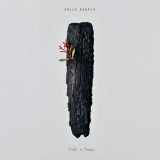
Chelsea Wolfe has always been a conduit for a powerful energy, and while she has demonstrated a capacity to channel that somber beauty into a variety of forms, her gift as a songwriter is never more apparent than when she strips her songs down to a few key components. As a result, her solemn majesty and ominous elegance are more potent than ever on Birth of Violence.
There is a core element to Chelsea Wolfe’s music—a kind of urgent spin on America’s desolation blues—that’s existed throughout the entirety of her career. At the center, there has always been Wolfe’s woeful longing and beguiling gravity, though the framework for compositions has continuously evolved based on whatever resources were available. Her austere beginnings were gradually bolstered by electronics and filled out with full-band arrangements. The music became increasingly dense and more centered around live performances. Her latest album, Birth of Violence, is a return to the reclusive nature of her earlier recordings
“I’ve been in a state of constant motion for the past eight years or so; touring, moving, playing new stages, exploring new places and meeting new people—an incredible time of learning and growing as a musician and performer,” Wolfe says of the era leading up to Birth of Violence. “But after awhile, I was beginning to lose a part of myself. I needed to take some time away from the road to get my head straight, to learn to take better care of myself, and to write and record as much as I can while I have ‘Mercury in my hands,’ as a wise friend put it.“ Birth of Violence is the result of this step out of the limelight. The songs stem from humble beginnings—little more than Wolfe’s voice and her Taylor acoustic guitar. Her longtime musical collaborator Ben Chisholm recorded the songs on a makeshift studio and helped fill them out with his modern production treatments and the occasional auxiliary flourish from ongoing contributors Jess Gowrie (drums) and Ezra Buchla (viola).
The album opens with “The Mother Road,” a harrowing ode to Route 66 that immediately addresses Wolfe’s metaphoric white line fever. It explains the nature of the record—the impact of countless miles and perpetual exhaustion—and the desire to find the road back home, back to one’s roots. Songs like “Deranged for Rock & Roll” and “Highway” offers parallel examinations on the trials and tribulations of her journeys while the ghostly “When Anger Turns to Honey” serves as a rebuttal to self-appointed judges.
While the record touches upon tradition, it also exists in the present, addressing modern tragedies such as school shootings in the minor-key lullaby “Little Grave” and the poisoning of the planet on the dark wind-swept ballad “Erde.” But the record is at its most poignant when Wolfe withdraws into her own world of enigmatic and elusive autobiography. Much like Alan Ginsberg’s hallucinatory long-form poem Howl, the tracks “Dirt Universe” and “Birth of Violence” weave together specific references from her past into an esoteric overview of the state of mankind. Though the lyrical minutiae remain secret, the overall power of the language and delivery is bound to haunt the listener with both its grace and tension.
“These songs came to me in a whirlwind and I knew I needed to record them soon, and also really needed a break from the road,” Wolfe says. “I’ve spent the past few years looking for the feeling of home; looking for places that felt like home. The result of that humble approach yields Wolfe’s most devastating work to date.
European Headline tour confirming now for 2020. UK/EU Publicity handled by Lauren Barley at Rarely Unable. Immense support from Press, including coverage with NPR, Pitchfork, FADER, Vice, Revolver, Decibel, Under The Radar.
Red Creek's debut release, The Raging River, is a seamless continuation of the writing process and the creative mindset that has guided Cult of Luna for the last couple of years. "The Raging River" feels more like a bridge. A midpoint that needs to be crossed so we can finish what we started with "A Dawn To Fear". It's a seamless continuation of the writing process and the creative mindset that has guided us for the last couple of years. It's been an interesting as well as an introspective way of working, having our instinct leading the way and then having to figure out where it takes us. But not only has it been a linear journey, some aspects of it is clearly circular. We have been a fan of Mark Lanegan for many years. So in 2005 when we wrote the song "And With Her Came The Birds" we had his voice in mind and the working title was "The Lanegan Song". But we were not many years over 20 and our lack of self-confidence prevented us from even daring to ask. It took fifteen years for us to get the guts to ask him. Hearing his voice on "Inside Of A Dream" is nothing more than feeling that we're inside of a dream. Johannes Persson
"It's time. Africa, it's time. It's time that Africa changes. It's time our leaders change. Everything that happens in Africa is extraordinary. We have everything: water, earth, sun, fields of oil, gas. We have all this in Africa, but Africa is still poor. It's time we change our way of thinking. It's time for Africans to take their destiny into their own hands. If not, others will take it." This is the message instrumental guitarist Tidiane Thiam hopes to convey with his new solo album, Africa Yontii, a Pulaar title that translates to "Africa Time." To a casual listener, Thiam's bold statement starkly contrasts with his melodic playing. But a closer listen to Thiam's expressive playing reveals a thoughtful voice that stands out from the crop of contemporary guitarists. "What I should be singing (with words) I'm instead saying with my guitar," he says. Hailing from the sleepy fishing Senegalese fishing town of Podor, home of the great Baaba Maal, Thiam taught himself guitar by playing along to late-night radio broadcasts of Manding music. He soon developed his style, often reworking Pulaar folk themes into his compositions. On Africa Yontii, Thiam's third album for Sahel Sounds, he teamed up with hip-hop beat maker Ndiaye Moctar from studio M.N. Records to provide accompaniment, integrating unexpected elements such as field recordings and electronic sounds. In the liner notes for Africa Yontii, Thiam voices his concerns about the lack of opportunities for Africa's youth and the lonely road that can come with leaving behind loved ones in the hope of a better life. He also sprinkles in a philosophical query about the eroding state of the world alongside two more hopeful, traditional offerings in the form of wedding and river songs. Despite the sometimes heavy subject matter, Thiam's love for his homeland and heritage shines through. Tidiane Thiam's Africa Yontii reclaims the maligned "world music" genre within a sonic space that has long been dominated by others telling the story. As the title suggests - It's time!
As one of America’s most influential guitarists, Duane Eddy’s famed twangy, reverb-drenched guitar shines on a wide variety of pop-rock hits, standards, and more!
Backed by two drummers, four more guitars, organ, piano, bass, saxes, and that's just the beginning, Duane goes unafraid at the kind of tunes that normally are "one person songs" Like "Ballad of the Green Berets" which becomes a twang-bang march under Duane's banner. Like "Monday, Monday" which was "The Mamas and Papas" and now has the wild newness of Duane Eddy.
After rising to fame in the late ‘50s with “Rebel Rouser,” Eddy’s influence on radio inspired musicians like George Harrison and Bruce Springsteen. Rockabilly and country music were both major factors in Eddy’s trademark sound; heavy, catchy guitar riffs over a ska-type beat. His hits included “Peter Gunn,” “Because They’re Young,” and “Twistin’ ‘n’ Twangin’.”
As music morphed into melodic sunshine pop, Eddy adapted his sound to fit chart hits of the ‘60s in his own twangy style."
"The Biggest Twang Of Them All" includes the following tracks: "Monday, Monday", "Night Train", "Day Dream", "Younger Girl" and more.
As one of America’s most influential guitarists, Duane Eddy’s famed twangy, reverb-drenched guitar shines on a wide variety of pop-rock hits, standards, and more!
Backed by two drummers, four more guitars, organ, piano, bass, saxes, and that's just the beginning, Duane goes unafraid at the kind of tunes that normally are "one person songs" Like "Ballad of the Green Berets" which becomes a twang-bang march under Duane's banner. Like "Monday, Monday" which was "The Mamas and Papas" and now has the wild newness of Duane Eddy.
After rising to fame in the late ‘50s with “Rebel Rouser,” Eddy’s influence on radio inspired musicians like George Harrison and Bruce Springsteen. Rockabilly and country music were both major factors in Eddy’s trademark sound; heavy, catchy guitar riffs over a ska-type beat. His hits included “Peter Gunn,” “Because They’re Young,” and “Twistin’ ‘n’ Twangin’.”
As music morphed into melodic sunshine pop, Eddy adapted his sound to fit chart hits of the ‘60s in his own twangy style."
"The Biggest Twang Of Them All" includes the following tracks: "Monday, Monday", "Night Train", "Day Dream", "Younger Girl" and more.
It’s 1 year since JFB’s incredible ‘Jammy Fader Breaks’ sold out almost instantly! To celebrate we give you a super limited (200 copies Worldwide) Silver vinyl repress with alternative colourway sleeve! JFB needs no introduction, an absolute MONSTER on the turntables and 3 times DMC World Champion, he has nothing left to prove on the battle scene or club circuit. However Woodwurk are very proud to bring you a first from this legend in the game, JFB’s first ever battle break record - JAMMY FADER BREAKS
Side A contains a huge library of JFB’s personal scratch sample collection including original and hilarious vocals from beatbox innovator Beardyman. There are 9 skip-proof vocal phrases perfect for scratch jams, practice and battle sets plus a large selection skip-proof beats and drum phrases ideal for beat-juggle and drumming practice. The side ends with a never ending locked groove electro beat for scratch sessions. Side B contains another 2 huge sections of scratch samples from the JFB volts plus a selection of beats and sounds from some of JFB’s
World conquering routines, allowing you to try them out for yourself or create something new. This side again finishes with an electro beat lock groove to jam over. Buy 2 copies for twice the fun, this record is a must for beat jugglers and scratchers alike! Much like the man himself, Jammy Fader Breaks is a beast with something for everyone!
Artwork comes courtesy of Woodwurk Records head honcho DJ Woody, bringing to life some of the suggestions made by JFB fans as to what the letters of his name really stand for.
• Produced by 3x World DMC Champion turntablist JFB.
• Skip-proof scratch phrases, drumming phrases, 133.33bpm juggle beats, full sentences, instrumentals, routines and lock grooves.
• Unique battle samples from JFB’s own collection, including vocals by Beardyman.
• Perfect for battle routines, freestyle scratching and juggle practice.
• Artwork by DJ Woody
Audionaut sound adventurer Neil Stringfellow (aka Audio Obscura) makes a welcome return to Subexotic with his many-splendoured mixed media project Acid Field Recordings In Dub. Following years of avid field recording, Neil explains how it came about through a series of epiphanies: "It sort of started after I did a field recording introduction weekend workshop with the legend that is Chris Watson (the BBC wildlife team and ex-Cabaret Voltaire), just in terms of it being very inspirational and meeting like minded people. I've been sound recording for about 12 years now and have a good archive of sounds, and simply enjoy just listening and capturing the world. Since then over the years I've learned to really listen to the everyday soundscapes and as such I no longer walk down the street listening to a personal stereo anymore, the world can often be more exciting than music. A few memories of listening stick out which really helped form this album. I was walking up a hill in Norwich and a street cleaner was coming down pushing his cart, the broom attached to the cart but one end was bouncing up and down in the exact way a snare drum in a Dub reggae record might sound with the dub echo effect.. for a few seconds it was amazing and I stopped and stood still and just savoured the moment but of course did not have a microphone with me. Another time recording the dawn chorus in Lowestoft the chirping birds sounded intense coming from different trees and walking between the trees seemed to make the classic 303 acid squelch sound. part of this is in the middle section of the Babyloniacid track. Another time I was recording in a forest after a storm sitting under thick trees trying to keep the mics dry and the wind blowing the tops of the trees was like a swooshing synth line. I always liked the moments when the soundscapes felt like music and over time had a desire to marry music and field sounds together. Things really came together though when in summer 2022 I had a minor operation and was resting in bed after the operation, high on painkillers feeling quite spaced out. It was in the middle of a heat wave and the nurses had opened the ward windows, it was evening and I could see pink clouds but the sunset was out of view. I'd been listening to the Eno / Harmonia album and after that ended, I put on some Burial. I just lay there watching the clouds and the title Acid Field Recordings In Dub just came into my head... I could hear how the concept should be: made with field recordings, manipulating them and creating ambient soundscapes... dubby beats fractured in places and snatches of the acid 303. This is more or less what I wrote down that day and a few weeks later I started to create it... the process came easy and at first, I thought I'd need to spend some time making new extra field recordings but, to be honest, I has such an archive I pulled most of the sounds from that." Music, electronics & field recording by Neil Stringfellow. Design & mastering by Dan Seville. Test siren on 'Through Nuclear Skies' recorded by Marc Weidenbaum. Melodica on 'Hollowlands' played by Simon McCorry
Much has been said about Nami Shimada's JPop Bubblegum Deep House anthem. Produced by Soichi Terada in 1989, Larry Levan used to bang it in he Paradise Garage, ressurected by Creme in 2004, over a decade before the hype. What more credentials do you need? Here's all the versions that matter, including a beautiful and haunting Legowelt remix that's rated amongst his best work (by experts that is).
out of Stock
Last delivered 13 months ago available to reorder, subject to availability
Alternative indie pop artist Rachel Chinouriri announces her long-awaited debut album What A Devastating Turn Of Events, out Friday 3rd May 2024 via Parlophone. What A Devastating Turn Of Events is a culmination of the experiences, challenges and joys of Chinouriri’s life so far, explored through the prism of musical stylings honed through years of experimentation and creation.
Ever-eclectic and brutally honest, the album traverses life’s light and shade, the writing and sharing a healing process for Rachel, and she hopes, her listeners. The album is now available to pre-order and pre-save. In addition to the digital release, the physical formats include the Standard LP & CD, exclusive red vinyl for HMV and select indie stores.
There is also a Deluxe LP and 7 inch (including 2 bonus tracks), cassette and CD + Zine that are all available exclusively via Rachel’s official store. Rachel will play her biggest sold out headline show to date at London’s KOKO on 6th March 2024. In celebration of the announcement of her debut album, Rachel also announced two US headline dates in New York and LA in March, plus a run of intimate in-store shows across the UK in February.
Alternative indie pop artist Rachel Chinouriri announces her long-awaited debut album What A Devastating Turn Of Events, out Friday 3rd May 2024 via Parlophone. What A Devastating Turn Of Events is a culmination of the experiences, challenges and joys of Chinouriri’s life so far, explored through the prism of musical stylings honed through years of experimentation and creation.
Ever-eclectic and brutally honest, the album traverses life’s light and shade, the writing and sharing a healing process for Rachel, and she hopes, her listeners. The album is now available to pre-order and pre-save. In addition to the digital release, the physical formats include the Standard LP & CD, exclusive red vinyl for HMV and select indie stores.
There is also a Deluxe LP and 7 inch (including 2 bonus tracks), cassette and CD + Zine that are all available exclusively via Rachel’s official store. Rachel will play her biggest sold out headline show to date at London’s KOKO on 6th March 2024. In celebration of the announcement of her debut album, Rachel also announced two US headline dates in New York and LA in March, plus a run of intimate in-store shows across the UK in February.
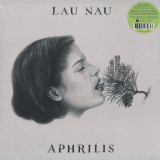
The title of the Lau Nau's 10th album, Aphrilis, derives from the Latin word aperire, meaning "to open." A fitting verb for the month of the year it is closely associated with — April. And while the images of plants and blossoms coming back to colorful life after a long, cold winter feels appropriate when listening to the rich and lustrous bloom of music on Aphrilis, another definition of open feels even more apt. For under the abundance lies the memory of times of austerity, the friction of hard choices, the acceptance that nothing is fixed and the future is unknown. This literal and metaphorical exploration of complexity and contradiction makes Aphrilis a multi-dimensional antidote for our troubled times, one that emphasizes the quiet and communal over noise and spectacle. Laura Naukkarinen, the Finnish artist behind this project, has long kept her mind and spirit open to whatever sounds and creative ideas felt appropriate for the moment. For the past six years that has meant primarily working with modular synthesis — learning how to build modules and releasing acclaimed work centered on its sounds like 5x4 (2023) or Puutarhassa (2022). Running parallel to this work, however, has been a continued exploration of acoustic instruments and group performances with her trio Lau Nau ja Seitsemäs Taivas. Aphrilis arrives then like fresh growth in a creative season cycle. A companion to her brilliant 2017 release Poseidon, the album, says Naukkarinen, "felt like a needed moment to embrace songs with lyrics again." And through the creation of this work, she remained open not only to her own creative muse, but also the input of her chosen collaborators. Each player on Aphrilis — Matti Bye on celesta and synths, Pekko Käppi on jouhikko, Hermanni Yli-Tepsa on violin and contrabass, Topias Tiheäsalo on electric guitar, Samuli Kosminen (Múm) on various instruments — was given free reign to arrange their own parts to accompany Naukkarinen's compositions. Kosminen’s lush fingerprint can also be heard in the mixing and production of the album, as with Poseidon six years ago. The moniker of this project may be taken from Naukkarinen’s own name, but Lau Nau feels more like a band than ever before. The delicacy and softness of the music is reflected in Naukkarinen’s lyrics. Each song is rife with imagery and creatures from the natural world. The spiders in the forest. The animals that keep a young woman company in her refuge in the woods. Wet grass. The feeling of the music is almost tactile, as if listening to the album will leave a bit of dew or sap on your fingers. The theme of this material, says Naukkarinen, runs even deeper. “The songs tell about cracks and changes of direction in different histories: personal, societal, planetary,” she says. “About moments when a yes can become a no and vice versa. The album wants to propose that at the moment of a crisis there is a possibility to influence the histories by our choices.” That may feel like a lot for such a fragile sounding collection of songs to bear. But Aphrilis is an album of surprising strength and resilience
out of Stock
Last delivered 2 years ago available to reorder, subject to availability
Das exquisite neue Album entfaltet O'Briens typisches melodisches Gespür, seine Gabe für gleichzeitig lebendige und subtile Arrangements und Texte, die seine Hoffnungen, Ängste und Träume in fesselnde Poesie kleiden. “That Golden Time” ist nach dem fünften Albumtrack benannt, das gleichzeitig die Leadsingle des Albums ist. "Ich wollte, dass sich die Wärme des Albums in seinem Titel widerspiegelt", erklärt O'Brien. "Der Song berührt auch ein Thema, das immer wieder auftaucht: Romantik versus Realismus. Wie kann man ehrgeizige Vorstellungen von sich selbst und der Welt um sich herum haben, während man gleichzeitig mit der harten, kalten Realität konfrontiert wird? Diese Reibung hat mich interessiert."
out of Stock
Last delivered 2 years ago available to reorder, subject to availability
Das exquisite neue Album entfaltet O'Briens typisches melodisches Gespür, seine Gabe für gleichzeitig lebendige und subtile Arrangements und Texte, die seine Hoffnungen, Ängste und Träume in fesselnde Poesie kleiden. “That Golden Time” ist nach dem fünften Albumtrack benannt, das gleichzeitig die Leadsingle des Albums ist. "Ich wollte, dass sich die Wärme des Albums in seinem Titel widerspiegelt", erklärt O'Brien. "Der Song berührt auch ein Thema, das immer wieder auftaucht: Romantik versus Realismus. Wie kann man ehrgeizige Vorstellungen von sich selbst und der Welt um sich herum haben, während man gleichzeitig mit der harten, kalten Realität konfrontiert wird? Diese Reibung hat mich interessiert."
out of Stock
Last delivered 2 years ago available to reorder, subject to availability
Live albums are often a ‘hit or miss’ affair but ‘Live Oblivion’ 1 & 2 buck that trend, Recorded across 2 nights in 1974 at the Hollywood venue The Whisky A Go Go. The group were finishing off a huge US tour that had roared down the east coast then across the Midwest and by the time they hit LA, as Brian recalls “we were all absolutely performing at our height. So I decided that I really needed to record the band live at that point”. Utilising the Wally Heider Mobile Truck, the scene was set for one of the greatest jazz-fusion live recordings to be made. The show opens with a hyper fast version of Beginning Again due to drummer Steve Ferrone being almost an hour late and running high on adrenaline, Brian remembers thinking “I don’t even know if I can play it that fast!” Fortunately, he and the Oblivion Express including stellar vocalist Alex Ligertwood rise to the challenge and the result is akin to some frenetic jazzy drum & bass but also pushes the group onto another level altogether for the rest of the show. Across both volumes there are no fillers and the highlights are many - Bumpin’ On Sunset, Freedom Jazz Dance, and Inner City Blues are all stunning, but especially the epic version of Maiden Voyage which Mos Def sampled on his 1997 'If You Can Huh! You Can Hear', and both DJ Mitsu in 2004 and 2017 Crimeapple both dipped into Live Oblivion to sample that fire for their own projects.
Sam Cooke’s SAR Records Story 1959-1965 gathers significant recordings of SAR Records – the label Sam Cooke co-founded, produced the majority of records for and was instrumental in operating. Groundbreaking artists such as The Soul Stirrers, Johnnie Taylor, Billy Preston, and Bobby Womack’s group The Valentinos are all featured, in addition to Sam himself. “The whole SAR Records Story is infused with Sam Cooke’s rapturous sense of how sacred gospel and sexual soul flow together, unbroken,” stated Milo Miles on NPR’s Fresh Air upon the set’s initial release almost three decades ago. In an era where black-owned labels were a rarity, Los Angeles based SAR Records was founded at almost exactly the same time as Motown, its Detroit counterpart. SAR was established in 1959 by Sam Cooke, music publisher J.W. Alexander, and S. Roy Crain, Cooke’s road manager and founder of gospel group The Soul Stirrers. The acronymous name standing for Sam Alex Roy, SAR sought to keep gospel music alive while simultaneously crossing over to pop audiences in the secular world. LPs 1 and 2 of the set focus on the former, while LPs 3 and 4 encompass the latter. From choosing talent, to writing a great number of songs, to producing, SAR was entirely the fulfillment of Cooke’s vision on a musical/creative level. The superstar singer, who had already crossed over from the gospel world himself, tirelessly coached the vocalists during SAR recording sessions, emphasizing diction. His methods are heard throughout the collection, as he is heard speaking to artists between takes. “And by Sam being there with you and just giving you that special attention, you wanted to give it to him like it was supposed to be. I think that’s what made SAR, SAR. Because he was selling himself through different artists.” – Bobby Womack. VERY LIMITED 1-2 COPIES ONLY PER SHOP
The opening line of Emily Dickinson’s short poem ‘‘Hope’ is the thing with feathers’ inspired the central image of Emily Barker’s new single ‘Feathered Thing’, written while she navigated cumulative grief.
When Barker was first introduced to producer Luke Potashnick (Gabrielle Aplin, Jack Savoretti, Katie Melua) in May 2022, she brought with her a full album’s worth of songs. But after visiting Potashnick’s storied studio, The Wool Hall and hearing his ambitious production ideas, she was inspired to write one more song.
“I also needed to process some heavy news” she comments. Barker and her husband Lukas Drinkwater had been trying to start a family. Following a couple of failed IVF cycles (and other “starts that we’d lost”), they investigated adoption and had decided to relocate to Australia to be closer to Barker’s family.
“It felt like we couldn’t work out what we wanted, but we finally reached a point where we both felt at peace with not having kids,” Barker recalls. “It had been an incredibly intense time, coinciding with a house move and the pandemic.”
And then Barker found she was pregnant. “We’d done all these things to try to make it happen, and then it happened naturally (and against all biological odds). Having previously navigated losses throughout our pregnancy journey, we now had to get our heads around what having this new person in our lives might look like - emotionally and practically.”
Soon after work began on the album, Barker had a miscarriage.
“Songwriting has always been a way of processing throughout my life.” Barker reveals how the new song came quickly as she sat at her piano at home. She shared an early version with Potashnick and remembers him politely asking, “Do you mind telling me what this is about?”
“I think I’d left it too abstract, initially,” she reflects. “It was difficult to open up about the miscarriage, but Luke was very supportive and encouraged me to dig a little deeper without necessarily being specific. I revisited the lyrics, and the result is much stronger.”
“I went to the burnt-out woods/ A tourist with some damaged goods/ Remembered how the trees withstood fires before…”
“The opening line is a metaphor for knowing that I’ll get through this,” Barker clarifies. “It’s about recovery and hope, allowing yourself both the space to grieve and permission to move on”. But Barker’s optimism is never misplaced – she knows the imprint of imagined futures and lost children are carried in hearts and minds forever:
“It’s so hard to let go, wanted to know wanted to know you …”
“I think that it's important to share and normalise these stories, which are all too common, yet not openly spoken about. People hide their pain and don’t want to burden friends and family. I think behind all this anguish, there’s a deep, often untold story.”
Now that Barker is settled back in Western Australia, she’s embracing being an auntie. “I’ve got three younger siblings over here who I’m close to, and they all have kids,” she enthuses. “I look after my brother's kids, aged two and five, one morning a week.”
Recorded - along with the entirety of the new album - at The Wool Hall, ‘Feathered Thing’ begins gently, with oscillating piano and distant drums, until the arrangement gradually transforms into an instrumental dervish of vibrant strings, bass drones and cymbal crashes. Throughout, Barker’s vocals float tantalisingly like a slipstreaming feather.
Watch the video, filmed at The Wool Hall here. The Wool Hall is a studio in Beckington, Somerset, set up by Tears for Fears in the 1980s and used by artists including The Smiths, Pretenders, Joni Mitchell and many more.
Emily Barker is an award-winning singer-songwriter, best known as the writer and performer of the theme to the hugely successful BBC crime drama ‘Wallander’ starring Kenneth Branagh.
Her last album, 2020's ‘A Dark Murmuration of Words’, was produced by Greg Freeman and recorded at StudiOwz, a converted chapel in the Welsh countryside. Lyrically probing, by turns both dark and optimistic, Barker searches for meaning through the deafening clamour of fake news and algorithmically filtered conversation, delivering a timely exploration of the grand themes of our age. It garnered widespread acclaim, with Uncut calling it “…a kind of Australian equivalent of PJ Harvey’s Let England Shake”.
Barker has released music and toured as a solo artist as well as with various bands and collaborations, most notably her long association with Frank Turner, and has written for TV and film, including composing the soundtrack for Jake Gavin’s lauded debut feature ‘Hector’ starring Peter Mullan and Keith Allen.
‘Fragile as Humans’ is scheduled for release on May 3rd 2024 through Everyone Sang/Kartel Music Group. The album will also feature earlier singles: the vast, cinematic ‘Wild to be Sharing This Moment’ and the meditative, crestfallen ‘Loneliness’.
The Cat's Miaow return to World Of Echo with Skipping Stones: The Cassette Years '92-'93, their second compilation for the imprint, and the fourth in a loosely defined series of reissues associated with the group (also including The Shapiros' Gone By Fall: The Collected Works of The Shapiros and Hydroplane's Selected Songs 1997-2003). It's a smart selection of songs by one of Australia's finest independent pop music groups, whose initial run, across the nineties, was as mysterious as it was bewitching. A generous double album featuring thirty-five songs drawn from The Cat's Miaow's history, Skipping Stones lets listeners in on a bunch more secrets. The four cassettes that Skipping Stones draws from - Little Baby Sour Puss, Pet Sounds (both 1992), From My Window, and How Did Everything Get So Fucked Up (both 1993) - were released or assisted by Toytown, a Melbourne cassette label of rare taste, savvy and intelligence. Diving into that two-year period, Skipping Stones is full of surprises, rich with unexpected and inspired detours, while reminding everyone just how clear and distinct The Cat's Miaow's music was from the very start. Looking in from the outside, they always felt like a group that knew just what they were doing, but intuitive as they are, they weren't forcing anything: these songs always sound exactly what they need to be, rough edges, playful moments and all. The Cat's Miaow may have been bedroom dreamers, but their songs were richly informed, with the sweetest of girl-pop moves sashaying into walls of tremolo-d and distorted guitar, jangling six strings tangling with melodic bass that's pure Peter Hook/Naomi Yang, while the gentle trickle of a drum machine or the earthy twitch of brushes on drum skins provided the spine for Kerrie's and Bart's lovely, unforced singing. This double LP on World Of Echo feels like the very core of the thing - some of the most heartbreakingly beautiful, effortlessly lush and deeply moving pop music you're likely to hear. RIYL: Hydroplane, The Cannanes, Magnetic Fields, Belle and Sebastian, Jesus and Mary Chain
Das elektronische Musik-Trio Keys N Krates legt mit IN:TENSION sein drittes Studioalbum vor, ein prägnantes Werk, auf dem die Band aus Toronto ihre lebenslangen Einflüsse und ihre vielseitigen
produktionsfähigkeiten zu einem leidenschaftlichen Projekt voller Talente verschmilzt. IN:TENSION enthält Tracks mit R&B-Superstar Ciara, der Sängerin Lion Babe sowie den aufstrebenden Sängern Taite Imogen, Dana Williams und dem verstorbenen, großartigen Sänger Aaron Carl.
Seit ihrer Gründung vor über einem Jahrzehnt haben Keys N Krates ihren eigenen Weg in der Musik gefunden, indem sie die Bereiche Hip-Hop,
Elektronik und mehr miteinander verschmolzen haben. Die Gruppe - bestehend aus dem Schlagzeuger Adam Tune, dem Keyboarder David Matisse
und dem Turntablist Greg Dawson - hat sich durch ihre Instrumentierung auf der Bühne und ihre energiegeladenen Sets einen ehrwürdigen Ruf als
einer der führenden Live-Elektronik-Acts unserer Zeit erarbeitet.
Cate Brooks is back with her seventh release for Clay Pipe Music. Never one to stand still, ‘Easel Studies’ finds her pushing the boundaries of sound synthesis and experimentation on the Buchla Music Easel while still sounding beautifully beguiling and hypnotically melodic.
"On this day in 2015, at exactly Midday, I took delivery of a wildly exotic musical instrument. To call it a synthesizer would be a misrepresentation; it’s really more of a tactile, living, breathing entity than anything else. It had originally supposed to have been delivered on the day before, but had somehow been mislaid in the labyrinths of the Royal Mail sorting office at Elephant and Castle.
I sat patiently and quietly all morning, waiting for its imminent arrival. I had already read through the ‘manual’, which is more of a concept / design for living, written by synthesis legend Allen Strange.
With Noon approaching, I became a little anxious- my local postie, Barrie, was usually here by about 10:30am and there was no sign of him.
At 11:58, Barrie walked past, completely ignoring my house. Obviously concerned, I stood at the door and waited for him to walk back toward his van. As he came back, he smiled and I called out, quizzically “Barrie?”. His reply was “Yes I have!” and walked back to his van, collecting a large box and bringing it to my door. I remember the weather was muggy and my neighbour was attending to her rose bushes, as the cheery and helpful postie deftly navigated around her busy secateurs.
I took the box inside, opened the top and just looked at the inner box for a while. I took a photo of it, which I still have. It felt like quite a momentous occasion, because I felt that this instrument would take me to different sonic spaces than I was used to. It wasn’t my first experience with Don Buchla’s instruments by any means, as I’d learned to use his 200e system. But this was quite a different beast.
My cat Brillo came to inspect the box and I set the Music Easel up on the floor and plugged it in. The result of that very first experiment became “Pendula”.
In the following days and weeks of that summer, I created many more experiments on the Easel, quite often with Brillo either sat on me as I played, or trying to climb up on the instrument itself, attempting to move the faders and switches himself.
By the end of August, I had amassed some thirty-something pieces, which I put aside for future reference. I had learned a lot about this instrument, its idiosyncrasies, subtleties and ways of working.
Sadly, Brillo died in September of 2015. I like to think that his last summer with me was a comforting experience, curling up and listening to the sonic experiments taking place, as he regularly did for the sixteen years he was with me. The first track on the album, “Con Brillo” is my little tribute to him.
Fast forward to 2021 and I rediscovered all of these experiments. Some were almost unlistenable, but some had a beguiling charm about them- perhaps the sound of someone not really knowing what they’re getting into. They needed mixing and balancing, so I set to work. I also wrote a new piece, with exactly the same recording chain, in the same way, in the same room. This became the suitably titled final track “Hindsight”.
The Music Easel has remained a constant source of sonic worlds for me to explore. It because the main instrument on the album Agri Montana, for example and has cropped up on many other records I’ve made since.
I would especially like to thank David at Postmodular for selling the Music Easel to me, after phoning him and disturbing his Sunday afternoon outing to Hyde Park (sorry about that David). I always promised I would send him a copy of something I had produced on it, so hopefully he will enjoy Easel Studies."
As I finish writing this, I notice that it is, once more, exactly Midday.
I hope you enjoy Easel Studies too.
Cate Brooks (21st of May, 2023).
out of Stock
Last delivered 2 years ago available to reorder, subject to availability
The infamous and legendary "Jah Life in Dub" LP, finally released. Originally slated for release in late '80/early '81, this was to be Jah Life's first dub LP, featuring all exclusive mixes to now-classic Barrington Levy tunes. For one reason or another, the LP was never released. To confuse matters, a couple years later, some of the unused jackets were given to Germain to house an untitled dub LP of his productions. Naturally, we needed to rectify this situation. So here it is, finally released 34 years later! Featuring ten killer dubs to Barrington Levy tunes, ALL MIXED BY SCIENTIST AT KING TUBBY'S. Six out of the ten tracks are previously unreleased mixes, including a dub to the song "Jah Life" which has never been available anywhere before. As an added bonus, the first pressing of this LP will come housed in the original jackets from 1980, which features killer artwork by Oneil Nanco.
Some of us love PIC vinyl but some don't. NWW do loves PIC vinyl, but please take note - that picture “vinyl” is no audiophile format, it’s a collectible format. Especially for music like NWW with its wide stereo spread, swirling high frequencies, and deep droning basses. The more stereo and bass, the wider and deeper the grooves have to be, to provide all information to the needle. But picture discs have only a very thin plastic foil over the pictures, it’s no vinyl, just plastic, similar to pet bottles. On picture “vinyl” can not be pressed so deep and wide grooves, that it would sound as well as a real vinyl. That’s the same for ALL picture LPs, not only NWW.
General conclusion:
Of course, our picture LP editions are enjoyable to listen to! But to get the best sound quality, you should choose the 2CD version, those sound best. For your collection just buy whatever you think looks best.
Includes digital pre-order of Thunder Perfect Mind. You get 6 tracks now (streaming via the free Bandcamp app and also available as a high-quality download in MP3, FLAC and more), plus the complete album the moment it’s released.
We Release JAZZ is very happy to announce an exciting new body of work by Joseph Deenmamode aka Mo Kolours. The singular musical spirit’s new 21-track album Original Flow is available as a double LP housed in a heavy 350gsm sleeve with original artwork by Mo Kolours himself and the classic WRJ obi strip, as well as in digipack CD and digital formats.
A catalog of critically acclaimed records, including his self-titled debut (2014), ‘Texture Like Like Sun’ (2015), 2018 album ‘Inner Symbols’ and three companion EPs, established Deenmamode as a prodigious musician and vocalist. Pitchfork extolled his “hypnotic, tribal-infused dance grooves”, DJ Mag appreciated the “colourful celebration of soundsystem culture”, and Resident Advisor advocated that “no one sounds quite like Mo Kolours”. Musical analogies were drawn by The Guardian as “The best album Curtis Mayfield never made with A Tribe Called Quest and Lee Perry” and Mojo as “like Marvin Gaye produced by J Dilla”.
Five years ago, Deenmamode moved to the Japanese countryside. Far away from familiarity, he contemplated his place and further questioned his identity. “I had none of my ‘own’ people around. I had time to really find what makes me tick musically. Japan has helped me go back to those subconscious leanings, really go deep, and reflect the aspects that make up my story”.
The tracks on ‘Original Flow’ have been constructed from sessions, improvisations and soundbites captured around the world during this time; collecting contributions from musicians including Deenamode’s brothers Reginald Omas Mamode and Jeen Bassa plus Andrew Ashong, Charles Bullen, Dwaye Kilvington, Eddie Hick, Stefan Asanovic, Myele Manzanza, Ross Hughes, and Tom Dreissler. Deenamode says “I’m proud of this album’s creative process. Coming from a tradition of scouring through hours of records, I wanted to create my own samples, to find that perfect loop that no other producer could put their hands on. I decided to invite a group of friends and acquaintances, who also happen to be incredible musicians, to a studio in Crystal Palace to improvise based on some loose ideas I had. We spent all day, and recorded everything”.
‘Original Flow’ is an album of UK street-soul nouveau, future indigenous jazz fusion, Rasta Segga, Nyahbinghi jazz, Malagasy Hebrew hip hop. While retaining a spirit of exploration and improvisation, it sees Deenmamode grow and flex beyond beat tape brevity, expanding composition and stretching his musical muscle to play live with other musicians. Themes of empowerment, overcoming adversity, and mental liberation coexist with notes from ancient history, futurism, and science, as well as musings on family and togetherness.
‘Magik Momentum’ springs from a discussion that features at the start of the song, an inspiring mentor answering a question from Deenmamode about improvisation and what role it plays in life when planning and manifesting the future. ‘Rockets to Mars’ questions the lack of care for the billions of people with nothing, while governments plan to explore space. “This sparked a comparison in my mind to a Sonny Okuson song that I would reference when performing. Okuson’s song talked of the lack of resources in many communities in the world, while governments go to the moon”.
He says the music behind ‘The News These Days’ is “possibly my favourite on the album”. Looped like he would a late sixty jazz-fusion sample, there was nothing added and the track was complete within a matter of minutes. “It was the first and best moment from the entire Crystal Palace session”, he adds. The album’s contrasting title track with minimal instrumentation played solo by Deenamode. While frustratingly searching for gems in past recordings, he thought in a burst of ego, “I don’t need no-one else to make a dope beat!” picked up his ravanne, (the traditional frame drum of his fathers home-land of Mauritius), pressed record, and started to play. He says, “In my thoughts were the rhythms of the Nubians in Upper-Egypt and Sudan, the swing of the huge drums played by Mauritanian women, of-course the Sega beat of Mauritius, and the ever inspiring beat of James Yancey”.
Driven by UK broken beat, Cuban congas, Nigerian and Mauritian inflections, ‘Love Vibration’ follows the concept that all emotions carry a vibratory frequency and pays homage to the frequency of creation and the power of love. The two part ‘Tatamaka’ tells of the history of Deenmamode’s ancestors, the maroons of Mauritius. “We are people who managed to run from our oppressors and find refuge in a corner of the island called ‘Le Morne’ where they could not reach us. One bloody day they came in numbers to re-capture, to revenge. Many of us chose to jump to our deaths, rather than be taken back into subjugation. The poem by Creole Richard Sedley Assonne says; “there were hundreds of them, but my people, the maroons chose the kiss of death over the chains of slavery”. Tatamaka was the name of a famed maroon leader who was murdered for claiming his, and our people’s freedom. The song is the imagined journey of escape and freedom by an ancestor of the maroons of Le Morne”.
Born in the west midlands and raised on the traditional sega music of his father’s Indian Ocean homeland of Mauritius alongside records by the likes of Jimi Hendrix, Santana and Michael Jackson; his influences expanded with late 90s jungle and drum and bass nights in Bristol, experiments at art college in Camberwell, and the rich culture of Peckham, “at the time we called it the Afro Quarters of London” says Deenmamode, adding hip hop, dub, soul and soundsystem styles to his individual sound.
He explains, “I love drum music, from hand-drums to 808s. I love music from the ancient past, heritage music, indigenous music, traditional music passed down from the beginning of time. Music from the body, hand claps, grunts and foot stomps. Music with audible depth, busy, bustling, highly charged. Music from the soul, the music from beyond. I love music from the islands and the mountains. The music of the streets, hustle music, alleyway beats. Club music”.
He describes the creative process as thinking in images. “The visual world and the world of sound seem to intermingle in my thought process. When I play the drum with my eyes closed, a world of imagery dances and moves with beat. Improvised drumming feels like I am listening to what I want to hear, rather than trying to play what I want to hear. Following the rhythm and finding new pathways to walk within the patterns is what I experience. In this way I often feel I am just a listener, instead of the player”.
Original Flow is pressed on biovinyl, a sustainable alternative to traditional vinyl. Biovinyl replaces petroleum in S-PVC by recycling used cooking oil or industrial waste gases, resulting in 100% CO2 savings in bio-based S-PVC production. Furthermore, it is 100% recyclable and reusable, embracing the circular economy ideology.
out of Stock
Last delivered 2 years ago available to reorder, subject to availability
"This album is about influence, inspiration, perception & reality. Every song was written in an outside environment, so that I could observe the subjects that would become my subject matter. All too often in Hip Hop, reality is limited to that of the artists own, actual experiences. People Hear What They See is my attempt to liberate the MC from those constraints & allow reality to be penned other than my own. Listening to congressmen & lawyers converse on the steps of the supreme court inspired 'American Greed', Watching a couple argue over the phone in a bar inspired 'Maybes'. By having a visual representation of my subject matter, my hopes are that the listener will see them through the worlds & melodies of my songs."
Noir Brésil is the debut album from Franco-Brazilian artist, composer and producer Yndi. Formerly known as Dream Koala, she decided to retire the moniker back in 2017 and began writing what ultimately became Noir Brésil, a modern pop album where afro-Brazilian percussion meets French and Portuguese poetry to create an immersive soundscape. As Dream Koala, Yndi released EPs Odyssey (2013,) Earth. Home. Destroyed. (2014,) and Exodus (2015,) as well as popular single "We Can't Be Friends", gaining her international success and garnering multi-millions of streams across platforms. In 2020, there were so many images of black people suffering on social media. After that traumatizing year, Yndi needed images showing that being black wasn't only about suffering, she wanted healing images. It's exactly what the Afro-Brazilian culture has been doing for centuries, it conveys a strength that keeps us alive in a dehumanizing society. The title track "Noir Brésil" is a poem for her ancestors. Yndi wrote "Amazona" on an atabaque (Afro-Brazilian percussion) rhythm inspired by the myth of the Amazons, warrior women, and Douanier Rousseau's painting La Guerre. The violence of the lyrics contrasts with the melancholic harmonies. The song pays tribute to the anger and strength required by women to live in the contemporary world. The song "Novo Mundo" and its animated video directed by Nina-Lou Giachettia are a reflection of Brazil, through luminous and colorful landscapes. Here the evocation of the divine, the beauty and the violence of nature reflects perfectly the essence of Yndi'sdebut album.
Stuck in the depths of a dark alley, blocked by yet another breeze, hitting a stone wall, road sign ahead: Dead End.
Impasse. "Cul-de-sac".
Hip‐hop. The original, some would say, official music of the late 20th Century Bronx.
Some say it has endured it's fair share of distractions, detractors and defectors. Some say it has murdered itself, having been abandoned by its so‐called best men, those who have gone off in other directions, or who have, simply, just beat‐retired. Yet, there are plenty of Soldier Monks still out there, prepared to sweat it out in the Temple of Machinery and Mics.
Low Cut honored this cause four years ago, with his MPC crafted minimalist version of NY Minute and he's back to ring the bells and unsheathe the samples!
The starting point of Dead End's production remains the 90's boom-bap, but the will to carry it even further brings it to its destination. By decorating it with rich samples flushed out after digging through vinyls pressed several decades ago, it is guided by a compass pointing deposits to the East. With sound quality inherited from a fastidious composition and mix works, using inspiration rather than just being a copycat, Dead End celebrates it without setting it up as a museum piece.
Picturing the beatmaker stuck in the depths of a dark alley, ended with a brick wall, is easy. But far from isolated in his Parisian basement, Low Cut has rung phones in New York, Baltimore and Detroit, rounding up the faithful. He magnetized the hidden but sharp forces, and gained attendance of legends. The casting of Dead End : Ruste Juxx & Nutso, Dirt Platoon, Guilty Simpson, Torae, Rasheed Chappell and the stainless Masta Ace, among other beat crushers. Also starring DJ Duke, Nix'on, Topic and Ordoeuvre with their DMC titles crates, for a deep beatfight on bars scarified of scratches.
Heavy atmosphere, martial beats and street soul, Dead End is also the final episode of the projects initiated by Low Cut, based on the model of a producer inviting various MCs.
He will then replace his turntable needles, refresh his sample banks, and settle the BPMs of his productions on more abstract frequencies.
After putting down the saxophone, the instrument he has become synonymous with, Shabaka returns with his first full length album under his own name. Expanding off the meditative 2022 EP Afrikan Culture, his new album Perceive its beauty, Acknowledge its Grace is a deeply moving suite of primarily instrumental music. The listening experience is reflective and contemplative, with passages flowering from one musical concept to the next, encouraging deep attention that rewards the listener with throughlines and motifs throughout the record. Shabaka is found playing the flute on this album, and has enlisted key artists such as Andre 3000, Lianne La Havas, Moses Sumney, Floating Points, and more to help build this all-encompassing aural landscape.
out of Stock
Last delivered 16 months ago available to reorder, subject to availability
Billy Reeves returns with new album Steve, released by Last Night From Glasgow in April 2024 - This new album follows his solo debut Nostalgia of the Future released in early 2023.
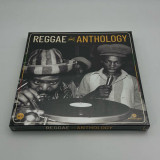
Take a trip to Jamaïca with this selection of the finest tunes played by the masters of Reggae. A nice 5 LP vinyl boxsett with Bob Marley, Lee " Scratch " Perry, Max Romeo, Black Uhuru....
out of Stock
Last delivered 53 days ago available to reorder, subject to availability
This Album is a collection of what I call Punk Art Poetry.
Poetry put together like a lyric to tell a certain story or explain a thought on some punk related matter. Some of these stories did actually turn themselves into a song which I released on my Punk Art imprint.
Most of these poems were influenced or inspired a piece of art I was working on.
Hope you like them or can relate to these stories.
What we gonna do right here is go back, way back, back into time…and one of the most sampled refrains in dance music history. A 7 inch double header of two of the biggest records from the Jimmy Castor Bunch, the 1 million plus selling ‘Troglodyte’, flipped with ‘It’s Just Begun’. This funk masterpiece lit up the Bronx in the ‘70’s and was the spark from where Hip Hop caught fire. Get in early and go in hard. Funk, Soul, Hip Hop and dance fans all need this beaut. Original RCA labels and sleeve, all remastered for 2024.
out of Stock
Last delivered 2 years ago available to reorder, subject to availability
The last 3 critically acclaimed PiL albums on cassette for the first time… This is PiL first released in 2012, and the first PiL album in 20 years, followed by 2015's What The World Needs Now.... Completed by last years End of World. The cassettes were the last project that legendary PiL manager John Rambo Stevens worked on before his sad passing in December 2023. Released on the band's own PiL Official Limited label
Reissue of early Japanese house outing by Junichi Soma, Shuji Wada and Katsuya Sayo. Comes with insert with liner notes.
All musical movements require a spark to set them alight; in the case of Japanese house music, that spark was provided by the forward-thinking resident DJs of The Bank in Roppongi, Tokyo. In 1989, to celebrate the ground-breaking club’s first birthday, the venue released a 12” EP featuring first-time productions from three of its DJs, Junichi Soma, Shuji Wada and Strong Katsuya AKS Katsuya Sayo.
Widely considered to be one of the first ever EP of house music produced in Japan, 1st Unit was never officially released. Instead, 500 of the 1000 copies pressed were given away at The Bank’s first birthday party, with the rest initially being sold not in local record stores, but rather the venue’s own in-house shop. Three decades on, the 12” is finally set to get its first worldwide release via Rush Hour’s Store JPN Series.
The record has its roots in The Bank’s willingness to give its ever-changing roster of DJs a free hand to play what they liked – at the time a rarity in Tokyo nightclubs, whose musical offerings usually revolved around strictly defined playlists. At The Bank in 1989, it was not only common to hear European body music and the kind of post-disco New York productions associated with Larry Levan’s sets at the Paradise Garage, but also acid house – something not offered at the time by other clubs in the city.
This cutting-edge blend of sounds, combined with the venue’s unique decor (it was modeled on the inside of a London bank, complete with a cashier’s window to take entrance fees), made The Bank a go-to spot for young party-goers, celebrities and forward-thinking Japanese musicians (Ryuichi Sakamoto was reportedly a weekly visitor).
When it came to celebrating the club’s birthday by cutting a unique record, it made sense for The Bank’s owners to turn to three of their most exciting resident DJs, who were assisted by Heigo Tani and Jun Ebi. The collective name, 1st Unit, was chosen to reflect the fact that all three resident DJs were debutants with no previous studio experience.
As this reissue proves, the music remains timeless, magical, and authentic to the sound of American house productions of the period – albeit with occasional twists,. Katsuya Sano’s EP opener, ‘I Need Love’, sounds like a twist on Larry Heard productions of the period – all jacking TR-909 drums, undulating analogue bass, dreamy JUNO synthesizer chords and evocative vocal samples.
The influence of Chicago acid house is also evident on Junichi Souma’s ‘Ubnormal Life’, whose unusual title contains what he says was an intentional misspelling. Driven forwards by restless drum machine handclaps, sweet chords and rising and falling melodic motifs, the track is an energetic and uplifting treat.
Perhaps the most influential of the three tracks at the time – within Japan at least – was Shuji Wada’s similarly misspelled ‘Endless Load’. Deeper and more melodic with a more expansive arrangement, the track’s combination of marimba-style lead lines, tribal drum patterns, dreamy chords and jazz-funk influenced bass offered a loose blueprint for the more successful and better-known Japanese deep house tracks that followed.
out of Stock
Last delivered 14 months ago available to reorder, subject to availability
The incendiary proto hard rock and ambitious epic journeys this album delivers are all the more uncanny and devastating when you realize Gary Del Vecchio was a mere 16 years old when the title track Buzzin was unleashed! Even more astonishing is how far he travelled over the next five years, documented in this brilliant selection of nine tracks from the classic daze of early 1970s underground rock. Ohio was a hotbed for hard rock at the time with bands like the James Gang, Glass Harp, Poobah, Left End, Damnation Of Adam Blessing… what you get here matches the style any of those bands laid down. Gary's music grabs you immediately and grows over time. Grabber and Grower… best of both worlds style! It makes sense that Gary later owned a recording studio, right out of the gate he was laser focussed on all the aspects involved in making music that stands the test of time. The guitar action is incredible, shards of sound flying free yet hitting the bullseye continuously, vocals confident with none of the macho posturing that ages poorly in much early hard rock. These tracks are all vividly recorded and meticulously mixed in a way that balances fiery performance and intelligent structure to maximum effect. The bass and drumming here are phenomenally inventive and propulsive, the several players involved across the album nail it in their support of Gary's vision. This is rock music born in the 'anything is possible' life affirming energy of the late '60s right on time with where the most enduring artists of the early '70s took it. Had he scored the major label deal he pursued with labels like Mercury or London at the time I am confident we'd be hearing his music on classic rock radio today! The music on this album is both uncompromising and accessible. In particular, the two long tracks Wasted King and Starman have all the moves needed to grab fans of Pink Floyd, Led Zeppelin and the likes by the throat and brain in the extended progressive epic department! RidingEasy Records sets a high bar when it comes to unleashing the best vintage hard rock you never heard… take my tip people, the ride this one takes you on is definitely an 11 on a scale of 1 to 10… Gary Del Vecchio really knows how to do it!
The final album in Pastor T.L. Barrett's 1970s four-part suite of gospel funk LPs, Do Not Pass Me By finds the fiery preacher getting spaced out on God's love. Accompanied by his Youth For Christ Choir, the eight-song record is buoyed by the sevenminute opus "Father Stretch My Hands," later sampled by Kanye West on 2016's The Life of Pablo.
"What makes ""Flox in Dub"" so special are the captivating sounds. The album is a perfect fusion of reggae, dub and electronic music, creating an atmospheric and hypnotic trance.
Deep bass and subtle sound effects transport the listener on a captivating musical journey. The melodies are both catchy and soothing, offering a unique listening experience.
Each song is carefully produced, showcasing Flox's talents as a composer and producer."
High Roller Records, 2nd pressing, black vinyl, ltd 475, revised 425gsm heavy cardboard cover with 9 (!) mm spine, 20 page A4 booklet, 2 x double sided poster, 3 x A5 photo card in a sepcial envelope, 4 track black vinyl 10" with p/s and insert, Original transfer by Marcus Mossmann (R.I.P.) at PHONOGRAPHIC ARTIFACTS in March 2021. Audio cleaning, restoration and mastering by Patrick W. Engel at TEMPLE OF DISHARMONY in April 2021. Cutting by SST Germany on Neumann machines for optimal quality on all levels... The ultimate audiophile edition of this eternal NWOBHM classic!
Nia Archives is the star at the forefront of the latest era of jungle. Since her emergence in 2020, her collagist soundscapes have helped bring the sound to a new generation of clubgoers (though fair warning: don’t call her a “revivalist” – she’s the first to point out that the scene never went away). So when it comes to talk of the 24-year-old producer, DJ, singer and songwriter’s much-anticipated debut album, the odds are you’re thinking of a full-length record of weightless jungle tracks with basslines so intense they’ll leave your ears ringing.
But the reality of the Bradford-born, Leeds-raised artist’s first ever album – while very much replete with that exquisite jungle sound she does so well – is also doing something a little different. On the thrilling and freeing Silence Is Loud, Nia Archives is looking to make music for beyond the rave. As she explains: “I think music can be experienced in different ways, and there’s different kinds of music for different scenarios. Say you’re at a festival listening to music with thousands of other people, that can feel really uniting. But then you might listen to an album on your own in the bus, or in a taxi; and this project is definitely more a record to sit and listen to than a collection of club tracks.” Nia is intent that Silence Is Loud is taken in as a full body of work of something “more song-focussed, putting interesting sounds on jungle.” It means that this is a record which finds gloomy Britpop, warm Motown, soaring indie, a love for Kings of Leon’s Aha Shake Heartbreak, skittering IDM, Madchester, classic rock, old skool hardcore and more, woven and fused into her ragga and junglist tapestry, all layered with feeling, imbued with her songwriterly lyricism about loneliness, relationships, family, navigating her 20s, and the intense potential power of silence.
The vast sonic palette on Silence Is Loud comes down to Nia’s broad array of influences through her life. With her Jamaican heritage, Nia remembers hearing jungle as a child via her nana, as well as at Bradford Carnival, where she was drawn to the soundsystem culture, dancing carefree on the floats in the parade. The first album she ever bought was Rihanna’s debut, Music of the Sun, and she also went to Pentecostal church back then, and was obsessed with gospel. Aged 16, she moved to Manchester, where she didn’t really know anybody: and so, her solution to meeting people was going out. “Partying was a huge part of my life,” she says, “They used to do little freestyle cyphers at the house parties and I would join in – that’s kind of how I got into singing.” She had found music boring at school, but in meeting all these new people she became interested in making her own music as a hobby. “I was making boom-bap kind of stuff which I didn’t really like in the end,” she laughs, “My lyrics are quite deep, so on a hip-hop beat it all sounds really depressing. I wanted people to dance to my music.” And so she began experimenting with faster tempos alongside that melancholy songwriting, teaching herself how to make beats on Logic: “It’s all been a lot of trial and error, really.”
Nia went to study music in London, and was also interested in visual art, making collages and VHS: “Before the music, I was trying to make a visual archive of my life and the people around me,” she explains, “And then my music was like my diary, and a sonic archive, as well.” Hence, she paired the word “archives” with her middle name, Nia. To this day, in her spare time she’s working on pulling together a documentary on the global nature of the jungle scene.
Back on those first two EPs, Headz Gone West (2021) and Forbidden Feelingz (2022), she honed that junglist sound, painting it with new flecks of colour and vibrance. It was only after she started releasing work that she realised pursuing music could be a viable life path for her. The decision has been paying off ever since. Nia Archives placed third in the prestigious BBC Sound Poll for 2023, alongside garnering a nomination for the Brit Awards’ Rising Star prize, plus wins at the DJ Mag, NME, the MOBOs and Artist and Manager Awards. She has also toured the world – be it North America, Europe or Asia – and even opened a show in London as part of a little something called Beyoncé’s Renaissance World Tour. She’s renowned as a party-starter in her own right, too, with takeovers at Glastonbury, Warehouse Project and her own Bad Gyalz day event. She’s done official remixes for the likes of Jorja Smith, had a huge summer hit with her Yeah Yeah Yeahs rework ‘Off Wiv Ya Headz’, and worked with brands like Corteiz, Nike, Flannels, Burberry, FIFA and Apple. In just three years, it’s fair to say that Nia Archives has become a need-to-know name in dance music.
But Nia is not interested in being one fixed thing. Building on the terrain from her third EP, Sunrise Bang Ur Head Against Tha Wall, the universe of Silence Is Loud is not totally unfamiliar territory; but it’s still emblematic of a bolder scope than we’ve heard from the artist before. Working with Ethan P. Flynn (the songwriter and producer known for his work with FKA twigs and David Byrne), the resulting record is an impressive feat of deftly-sculpted textures; sometimes big and euphoric, like the wobbly, lusty bass of ‘Forbidden Feelingz’, or elsewhere notably gentle and quiet – see: the gorgeous, surprisingly drumless ‘Silence Is Loud (Reprise)’, a heartfelt number that sits somewhere in the school of Adele. “I really sharpened my songwriting skill on this project,” Nia says, “I was really intentional about what I was writing about, and I really loved co-producing with Ethan. His process is so different to anyone I’ve worked with before, and he’s got a kind of DIY set-up like me.” Flynn’s flat overlooks the Barbican, adding that unquantifiable futurist urban quality that the area holds to the music. The pair enjoyed the collaborative process so much that the album was done within three and a half months.
Perhaps this is why Silence Is Loud maintains an exuberant immediacy while still being sleek and spacious, interspersed with flourishes of metallic beats, lush melody and topped with her sugary but powerful vocal, floating over it all. There is an intimacy to the record, perhaps in part due to Nia writing most of her lyrics while sitting in bed in her flat in Bow (once a bedroom producer, always a bedroom producer). You can hear it on the refrain for lead single ‘Crowded Roomz’, which finds rippling guitar lines cutting taut through the beats as Nia refrains: “I feel so lonely crowded rooms.” The song is an examination of life on tour, constantly surrounded by people, but not necessarily those she can be herself around; more than that, the track is exemplary in the category of sad bangers.
Silence Is Loud often finds itself in that push and pull between melancholy and euphoria. There’s a celebration of her unconditional love for her younger brother (the title track), a rumination of an evening with an Irish boy she met by Temple Bar (‘Cards On The Table), or a letter to herself on the light and airy ‘Unfinished Business’, even coming to terms with a lover having a past they haven’t quite processed yet (“nobody comes with a clean slate”). The latter was recorded the week after a music festival, and accordingly captures Nia’s vocal in its not quite healed, husky state.
Nia’s work is always a snapshot of where she’s at when she’s making it. This might not be the debut album you were expecting, but that’s what makes Silence Is Loud so special. Nia Archives has learned the rules of her sound, and is unafraid to break them, pushing jungle and herself into new, unchartered territories that, in turn, go some way to map the history of the greats of British dance music. More than that, it plants her firmly in that lineage.
out of Stock
Last delivered 16 months ago available to reorder, subject to availability
Empires rise and fall every day in the human heart, and riding these cycles--stories with no beginning or end, only transformation--churns us through the reckless, ridiculous, rueful, redemptive. A founding member of Lake Street Dive and writer of some of their most enduring songs, Iowa-born and Brooklyn-based Bridget Kearney is known for writing smart, unexpected lyrics and melodies built for a heart-baring dance or an introspective drive. Kearney writes music as if filtered through a camera lens. Her stories, steeped in nostalgia and joy, construct a bittersweet framework around the memories that make us human, and shape who we are. As the absurdity of life abounds, Kearney can hold these fragile snapshots and rolling reruns with evident notes of levity, and compassion for a past self. On her new album Comeback Kid, produced by Dan Molad (Lucius, Buck Meek), there are reminders to cherish the moments that make up the collage of what we see in the mirror, but to also plant our feet firmly in the present, for those are the times that will come to form the future. The tracks hop through time, from the relentless, obsessive romanticization of the past, to unrestrained lust for a different future, all inherit the spirit of resilience needed for any move forward, whether it's to dive back in, walk away, or wrestle with the memory itself. In moments, our Comeback Kid wishes to encase a night in amber to revive it at will, like the old man in Jurassic Park, but ultimately is hip to the bittersweet truth that it will never be the same when you return. Kearney began making Comeback Kid back in 2021, in between her work with Lake Street Dive, and a new position as a songwriting teacher at Princeton University. During the process of Comeback Kid, Kearney took inspiration from her Princeton students, as well as her peers when she embarked on a song-a-day workshop. As she found herself surrounded by the thoughts and processes of others, she was able to pinpoint what it is about songwriting that she truly cherishes: namely, the textures and flourishes that come to form the mood of each creation. Comeback Kid is soaked in vintage synths, Kearney's soughing vocals and delicate-yet-driving percussion that ushers in a bright and serene tenor. "If you're driving, baby I wanna go," she soothes on opener "If You're Driving," welcoming us to the LP with windows down, eyes closed, air rushing through our fingers. It's a celebration of staying in the moment, of saying "yes," even though you know it won't last forever. With references to real psychological games, like Rorschach tests and the phenomenon of Ironic Process Theory, they help build the theme of the mind bending nature of obsession, memory, and perspective. Just like the acrobatic brain games we play in relationships, Kearney plays with language and references, with multiple meanings of "comebacks and coming back," and nods that run the gamut from Samuel Barber's mid-20th century masterpiece Adagio for Strings to Jerry Seinfeld's late-20th century masterpiece Seinfeld. The single "Security Camera" captures the carefree liminal space of reminiscence, as Kearney collects those significant, special moments of a past love. There is no animosity or even sorrow here but rather a warm, propulsive rush of gratitude and awe. "You have these really wonderful, blissful times in your life that are fleeting," she explains. "It's an attempt to keep loving the moments in your past, to carry them with you." These moments are carried with care throughout Comeback Kid, but with an eye on the farcicality of simply existing. Kearney is both sincere and silly, somber yet spirited, expertly gathering the iridescent spectrum of what it means to be alive.
REISSUED ON GLACIAL BLUE VINYL! Papercuts' You Can Have What You Want is the third phase in Jason Quever's ongoing pop investigations. The relatively earthbound happy/sad pop of Mockingbird and Can't Go Back has been launched into the vault of the skies. Here, Quever delves further into epic dream-pop using mostly vintage organs, pulsing bass, and Kraut-via-Ringo-inspired drum rhythms. Intact from those earlier efforts is Quever's sense of arrangement and drama, as well as his soaring vocals, draped in reverb gauze. The words reveal a fascination with mortality and things cosmic, while sonically the voice acts as another instrument. This obsessively all-analog effort (no computer processing here whatsoever!) cuts across several eras of dreamy sound: '80s/'90s Creation and 4AD Records, The Zombies, '60s French pop, even Can's Future Days--and then there's the inevitable connection to former tourmates Beach House and Grizzly Bear. Indeed, Beach House's Alex Scally helped with some of the arrangements, though You Can Have What You Want is its own strain of addictive pop. For many, it will be the blissful/melancholy jam of the spring and summer. Quever was raised on a commune in Humboldt County, orphaned, and moved up and down the West Coast before calling San Francisco home and starting Papercuts, initially as a four-track recording project. When not performing with his own band, he can often be found recording others in his studio and filling in when needed as a multi-instrumentalist in friends' groups. "It takes a few seconds of Papercuts' second album, Can't Go Back, to think that maybe you've stumbled upon something special, a delicate mood piece made to slice through the din and chaos of modern life." --Pitckfork (8.3 rating