Britney Spears gets the reggae treatment. Brand new cut of her massive hit 'Toxic' recorded at The Arch, Tottenham by the Horus All Stars.
Vocal from Aphrodite Delacruz. She is an ex top line / vocal writer who lived and worked in the USA, involved closely on projects with many of the biggest artists of the 2000s (Beyonce, Kylie Minogue, Rihanna etc). At the end of the decade she extricated herself to Freetown Christiania, changing her name to Aphrodite Delacruz.
Now with very little involvement in the music industry she agreed to do this recording as it felt right paying homage to her Jamaican heritage and her history with commercial music.
out of Stock
Last delivered 3 years ago available to reorder, subject to availability
The Tribute Series focuses on honouring artists who have passed by reimagining the source mate-rial for some of their most beloved tunes. The first issue is dedicated to the pioneers of the Daisy Age and foundations of the Native Tongues Movement. RIP Dave.
out of Stock
Last delivered 2 years ago available to reorder, subject to availability
Gatefold single vinyl LP with an 8 page 12" size bookelt in the other side of the gatefold.
We're thrilled to announce the return of Tobor Experiment, the visionary musical project led by the enigmatic Giorgio Sancristoforo, to the Bearfunk fold. After a twelve-year hiatus, Tobor Experiment emerges from the shadows with their second LP, "Available Forms". Picture the ethereal ambiance of a dimly lit jazz club colliding with the futuristic vibrations of a 1970s sci-fi TV show, and you'll begin to grasp the sonic experience that awaits. Giorgio draws on a whole host of musical inspirations, from the name checked Tim Gane & Letitia Sadier to the moog pioneers Claude Denjean & Jean Jaques Perrey. With the moogsploration of contemporary jazz Tobor Experiment invites listeners on an extraordinary musical odyssey where jazz meets electronica meets nu-disco.
Prepare to be captivated from the very first note of the infectious opener, "Lowpass Risotto" as Tobor Experiment masterfully combines familiar elements with their unique artistic vision. Resonating with undertones reminiscent of the timeless classic "Take Five" the track immediately grabs your attention. While the familiar drum shuffle sets a comforting foundation, Tobor Experiment takes an unexpected twist by infusing the composition with squelchy Moog lines and captivating hollow body guitar solos. The result is a harmonious blend of nostalgia and innovation that transports you to an entirely new sonic realm.
Continuing the journey, the mesmerizing 6/8 rhythm of "Up!" pays homage to the iconic sounds of Stereolab while showcasing Tobor Experiment's innovative spirit. As enchanting synth pads weave through the air, you find yourself immersed in a dream-like state, carried away by the hypnotic shifting patterns of the bass and drums.
With "Astounding Stories" Tobor Experiment returns to the energetic vibes of the album opener, inviting you to surrender to a sonic tapestry rich with musical exchanges. In traditional jazz style we receive solo's from all parties. Each instrument adding its unique voice to the narrative, creating a dynamic and engaging musical conversation.
As the album progresses, "Moonscape Dust" emerges, drawing inspiration from the atmospheric brilliance of "Low." This track serves as a portal to an otherworldly sonic landscape where time and space lose their hold. Here, organic drums step aside, making way for a low-fi drum pattern that lays the foundation for ethereal synth pads. The composition invites you to explore the depths of your imagination, transcending earthly boundaries and allowing you to float in an immersive soundscape.
The album's closing track, "Monsters" has an air of "Air" about it... the ethereal synths beckon you to surrender to the weightlessness of space, just allow yourself to be carried away by the infectious rhythms, intricate melodies, and atmospheric textures that shape this extraordinary musical journey.
Each track on "Available Forms" showcases Tobor Experiment's exceptional ability to transcend musical boundaries, creating a genre-bending album that defies all expectations. From start to finish, the soundscape presented is a testament to Tobor's relentless pursuit of musical innovation. Each composition is a fusion of diverse elements, seamlessly blending organic instruments and electronic textures in a way that challenges traditional genre classifications.
The AI-generated artwork serves as a portal to an alternate dimension. Paying homage to the retro-futuristic aesthetic of 1970s science fiction TV shows, it captures the essence of the album's fusion between organic and electronic realms.
out of Stock
Last delivered 2 years ago available to reorder, subject to availability
Octave One return with Never On Sunday Vol.2, an EP with new remixes from Orbital and Giorgia Angiuli next to three standout recent tracks.
The Detroit duo’s Never On Sunday alias was born in the nineties with a view to making a mix of downtempo, deeper and more thoughtful electronic sounds. After just two EPs, it lay dormant until last year when the new EP The Bearer on their own 430 West label brought it back to life to a great reception. Then came the Octave One Presents Never On Sunday album this year that collected together a wealth of originals and remixes which are now coming on 12".
First up is legendary brotherly duo Orbital - a UK antecedent to the Burden brothers who have been crafting pioneering electronic sounds for decades. Their remix of ‘Price We Pay’ feat. Karina Mia is deep house excellence. It has a bouncy groove, elastic bassline and simmering vocals that send shivers down the spine and the sci-fi synths twinkle up top. Italian multi-instrumentalist Giorgia Angiuli has long been innovating in the techno world, drawing on her classical background to craft standout sounds for the likes of Kevin Saunderson’s KMS label. Her remix is six uplifting minutes of synth arpeggios, soulful techno drums and epic breakdowns that will captivate any dance floor.
The b-side features three cuts from the Never On Sunday (Deluxe) album and opens up with 'Lifelike', a slow, pulsing dub with mysterious melodies and sinewy synths reflecting light like stars in a night sky. A textured bassline arrives to bring a real sense of tension to the melodic beauty. 'Soon After' is another cosmic cut that rides on hammering bass beneath lush synths capes and rays of hope that pierce the darkness. The blissful 'Mona' closes down with heavenly and expansive pads that shimmer and shine as rich bell sounds and choral pads bring a warm sense of atmosphere.
Never On Sunday Vol.2 is another package of deeply emotional electronic sounds.
out of Stock
Last delivered 45 days ago available to reorder, subject to availability
Stephen Steinbrink discovered a short YouTube video of a street magician who approaches a highschooler walking home in Barstow, California. “Here, let me show you my idea,” he says, as he places a quarter on the kid’s hand. The magician performs some relaxed flourishes, and the coin vanishes. In silence, the kid stares at his hand at the nothing where there once, indisputably, was something, until his wonder finds a single word: “Cool.” The title of Disappearing Coin, the new album from Oakland songwriter Stephen Steinbrink, comes from this short clip. “When I look at it now,” he says, “I relate to the kid, who’s obviously uneasy in his body, and going through the experience of being a teenager in the early 2000s growing up in a bleak desert town like I did. I also relate to the coin, an inanimate disc of possibility. And I relate to the magician, an absurd facilitator of sending what is tactile and concrete into the wispy conceptual realm.” “I’ve watched it probably a hundred times,” he says. “It cracked me up but also blew my mind open the feeling of wonder I experienced watching this video became a guide as I navigated new ways of staying in the realm of what’s both real and magical.” Following the 2018 release of Utopia Teased, Steinbrink completed an apprenticeship in the nearly-lost art of Stained Glass, becoming a glazier at a studio that over three years, fully restored the enormous 90-year-old windows in San Francisco’s Grace Cathedral. He committed to his Buddhist study, beginning lay monastic training before the process was thwarted by the pandemic. He dove deeper into music production for other artists, engineering two albums by Boy Scouts released on Anti- Records in 2018 and 2021. Steinbrink delighted in the way these pursuits pulled at the thread of ego’s tapestry and decentralized him from his craft, allowing him to embody a new role as a creative caretaker engaging in practices that felt communal and restorative. “As I slowly began writing for myself again, I tried to imbue my new songs with this sense of playfulness and wonder I felt while exploring these other interests.” He says. Feeling unlocked from the pressures of perfection that he often felt in his earlier work, creating Disappearing Coin felt buoyant and healing. “The album feels like an integration of all of my past musical selves zeroing in on the present,” Steinbrink explains, “I felt free to explore new ways of writing, through different perspectives, experimenting with fictional songwriting, visual archetypal language, and total collaboration.” This “total collaboration” was a joyous new venture after years of solo performing and recording. The album can be seen as a 42 minute session of show and tell, the manifestation of Steinbrink repeating the mantra of “Here, let me show you my idea” to himself over and over. Disappearing Coin is at once a welcome return for the veteran Steinbrink and the debut of a totally new artist, one who has found a new path to himself with new goals of openness, curiosity, and self-acceptance. “Recalls the magic pop purity of Arthur Russell...its minimalism manages to feel enlightened and transformative.” PITCHFORK // “Melodic and self-assured. Steinbrink delivers his knotted lyricism with a smooth lilt.
Amanaz were serious, and they made a serious stab at an album. They titled their album Africa, according to original band member Keith Kabwe, “because of how it was shared and how its inhabitants were butchered and enslaved, its resources stolen… all the atrocities slave drivers committed. “ Thus, their “Kale,” a blues sung in Nyanja, that traced the continent’s arc from slavery to Zambia’s independence closes the album. Kabwe and rhythm guitarist John Kanyepa have a winsome softness to their vocals, which sit politely aside the feral growl of drummer Watson Baldwin Lungu, bassist Jerry Mausala and bandleader/lead guitarist Isaac Mpofu. Africa’s vibe ranges from anxious (“Amanaz”) to escapist (“Easy Street”) to straight-up pissed-off. On the “History of Man,” his voice whiskeyburned, his distorted guitar buzzing like swarming hornets, Mpofu indicts his species.
There’s a darkness to Africa not found on any other Zamrock records, and a melancholy drifts throughout, specifically on Mpofu’s more restrained “Khala My Friend,” which stands as an effective, bleak situation for the Zambian everyman, the average citizen of a struggling, new nation, who might have had relatives in conflict-torn countries on the horizon, who might have been struggling to find his next meal, who might have seen a bleaker future than his president promised. Then there’s the clear Velvet Underground-influence on the nostalgic “Sunday Morning,” which, as Kabwe
recalls, was the first song written for the album, back in 1968, when Velvet Undergound and Nico was a new release - and the underground funk of “Making The Scene.” The album also tackles traditional Zambian music and early-‘60s rock – punctuated, of course by Kanyepa’s wah-wah and Mpofu’s fuzz guitars. But every time Amanaz get too deep, too violent, they come back with an accessible song and woo their listener back to the groove. “Green Apple” is a civil song, featuring Kanyepa’s sighing guitar. It is a perfectly arranged album, from the dichotomy of Mpofu’s and Kanyepa’s lead and rhythm guitars, to the vocal harmonies, to the rhythm section’s sense of space and time, which allows Africa’s funk to build. Inexplicably, Africa was given two separate mixes and two separate presses: one version is dry, with the vocals and drums mixed loud, the other slathered in reverb, with the vocals and drums disappearing into the mix, and with the guitar solos mixed much louder. We’ve presented them both here as they each have their appeal: it’s up to the listener to pick the one he or she prefers. This is a highpoint of the Zamrock scene and we hope that this can be seen as its definitive reissue.
Attarazat Addahabia & Faradjallah's album came to us as quite a mystery. Our friends from Radio Martiko got access to the studio archive of the Boussiphone label and a reel labeled “Faradjallah” was among the items they had found there. After listening to the selection of reels they borrowed, Radio Martiko felt it was not a fit for their label and helped us licensing it from Mr. Boussiphone instead. We knew nothing about the band. We just had the reel with the music but very little information. What we knew was that the music was incredible and very unique. Gnawa sounds were combined with funky electronic guitars, very dense layers of percussions and female backing vocals more reminiscent of musical styles further south than Morocco. We started asking around whether anyone knew the band with no immediate success until we asked Tony Day, a musician from Morocco who helped us during our search for Fadoul’s family. His sharp memory came through once again, remembering all the names of the Attarazat Addahabia band members and even how to contact the bands singer and leader Abdelakabir Faradjallah. After visiting him at his home in Casablanca with our Moroccan colleague Sabrina multiple times, he shared his personal story. His father arrived in Casablanca from Aqqa at the age of six and his mother came from Essaouira. Abdelakabir was born in the neighbourhood of Benjdia in 1942. Abdelakabir Faradjallah studied fine arts in Casablanca, graduating in 1962. He also played soccer in the second team of "Jeunesse Societe One". His brother-in-law Ibrahim Sadr worked for one of the biggest football teams of the time in Morocco called "Moroco Sportive Union", which allowed him to travel to France occasionally. While Ibrahim was never part of the band he brought along a few instruments from trips.
Yet the majority of the instruments they could not afford to buy were build by Faradjallah and Abderrazak, Faradjallah's brother who passed away early. For instance they had built a Spanish guitar and a drum made of wood barrel and sheepskin by themselves.During the 1950s Faradjallah was booked as a singer for surprise parties with friends. He started to write his first songs including "L’gnawi" in 1967 and wanted to make people discover Gnawa culture, or maybe rather his take on the culture to be more exact. Faradjallah recalls his first interaction with the genre in the streets of the Dern neighbourhood, where he used to go to elementary school. Gnawa is one of the essential musical genres of Morocco. It combines ritual poetry with traditional dances and music linked with a spiritual foundation. Musically a lot of influences originated from West Africa as well as Sudan. Gnawa is usually played by a selection of specific instruments such as the qaraqab (large iron castanets centrally associated with the music), the hajhouj (a three string lute), guembri loudaâ (a three stringed bass instrument) and the tbel (large drums). People would put shells on their clothes and instruments and use incense at their parties. "Sidi darbo lalla - lala derbo khadem..." came from Gnawa verses Faradjallah used to sing when he was 14. The lyrics tackle a global (im)balance of power and the question of social status in this course. The band Attarazat Addahabia was formed in 1968. The original line-up included 14 members, all from the same family. They played their first small concerts here and there starting in 1969. Later in 1973 they performed bigger shows for instance at the Municipal Theatre followed by the "Al Massira Show" at Velodrome Stadium in downtown Casablanca. Their first album "Al Hadaoui" (the one you are listening to) was recorded at Boussiphone studios in 1972 and was never released before. Nobody seems to remember the exact reason why Boussiphone ended up deciding not to put the album out. The album's title track also served as the basis for Fadoul's "Maktoub Lah", who frequented the same circles as the band for some time.
Their shows sometimes could go as long as 12 hours, starting at 5pm in the afternoon, with an occasional break here and there. In the 1980s the band took a brief break. Faradjallah recalled the reason for that break like this: "Zaki, the bands drummer, had fallen in love with a young girl from Mohammedia. Soon after, he fell very ill. The group members were convinced that the girl had given him ‘s'hor’ (a kind of local Moroccan version of "black magic"). For four years, the whole group stopped playing. It was unthinkable to find another drummer to replace Zaki, even temporarily." So they waited four years for Zaki to "get back on his feet" before going back on stage. Apart from very few gigs here and there Faradjallah stopped playing music in the mid 1990s. Some members from the younger generations formed a new band and still play frequently to this day. Faradjallah runs a television repair shop coupled offerings beverages and snacks in the Belevedere /Ains Sbaa district of Casablanca. While Faradjallah was primarily a musician, he would work for the local cinema and paint their posters for new movies by hand and he designed all artworks and cover posters of the band.
And this eventually led to him participating actively in our first exhibition dealing with Habibi Funk’s work in Dubai 2018. He helped us by creating calligraphic complementations on large photo prints for that show.
J Hus is back with his highly anticipated third album ‘Beautiful And Brutal Yard’, preceded by the raucous street track ‘It’s Crazy’ which charted Top 15 and ‘Who Told You’ (featuring Drake) which debuted at #2 with the 3rd highest UK week 1 singles sales of the year and Hus’ highest single chart to date.
‘B.A.B.Y.’ is the follow-up to his chart-topping album ‘Big Conspiracy’ which earned him the Best Male Award at the Brits and his Top 10 platinum debut ‘Common Sense’ which won an NME award and was nominated for the Mercury Music Prize and Best Album at the Brits.
Fans have come to expect a range of influences and musical styles from Hus’ albums and they will not be disappointed. Across ‘B.A.B.Y’ Hus incorporates elements of afrobeats, drill, R&B and bashment, all delivered in his inimitable lyrical style. The album includes features from Drake, Burna Boy, Jorja Smith, Popcaan and Naira Marley as well as from UK up and comers CB, Villz and Boss Belly.
Having not played his own live shows since 2017 J Hus is announcing a UK Arena tour on Thursday 29th June.
Deena Abdelwahed's first album is shifting the epicenter of contemporary electronic music south: 'Khonnar' will be released on November 16, 2018 by InFiné. Pronounced 'Ronnar' (an essential detail so as to avoid facile misinterpretation by French-speakers) it is a term that makes the most of Tunisia's cultural and linguistic spectrum. It evokes the dark, shameful and disturbing side of things, the one we usually seek to hide, but which Deena instead sticks our noses in with her debut. It is a testament to Deena's coming into her own as a world citizen, and as an artist. A self-construction made of frustrations and constraints, borne of retrograde mindsets, which are not the prerogative of either the East or the West, and which she tirelessly strives to expose and break. Throughout the 45 minutes of 'Khonnar", Deena breaks down the codes of bass, techno and experimental music, and writes the manifesto for a generation that does not seek to please or to conform, taking back control of its identity - with all the attendant losses and chaos. A new creative world order is taking shape, a new tilting point between north and south, the response of a connected and liberated youth who takes the control of the new decolonization. About Deena Abdelwahed A Tunisian producer and DJ, Deena Abdelwahed arrived in France at the age of 26 after earning her stripes on the Tunis scene and as part of the Arabstazy collective.
Das französische Label Infiné ist dafür bekannt, elektronische Musik jenseits ausgetretener Pfade zu veröffentlichen - hier wird Techno und House neu definiert. So passt es ganz gut, dass die aufstrebende tunesische DJ und Underground-Produzentin Deena Abdelwahed bei dem Lyoner Imprint eine Veröffentlichungsplattform gefunden hat. Abdelwahed performte in den letzten Jahren zwischen Boiler Room und Berghain in allen namhaften Clubs und hinterließ bei der globalen Dance-Gemeinde mehr als staunende Münder. Nach der im Frühjahr 2017 veröffentlichten EP "Klabb" präsentiert die Tunesierin mit "Khonnar" jetzt ihr sehnlichst erwartetes Debütalbum.
Was beide Tonträger vereint: sie verbinden nordafrikanische Klangelemente mit elektronischen Sounds, haben jedoch mit Weltmusik nichts am Hut.
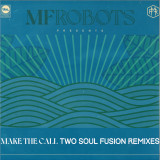
‘Make The Call’ comes with an extended version and remixes from the legendary Two Soul Fusion duo of Louie Vega and Josh Milan. These remixes bring something new and special to the track with each creating a subtly different mood for the dance floor, for the radio and for the house party.
MF Robots is a songwriting, production and performing duo created by former Brand New Heavies founder Jan Kincaid and BNH vocalist and multi-instrumentalist Dawn Joseph. The pair left the Heavies in 2014 to record their own compositions and have been wowing audiences and record buyers with their effortless blending of Soul, RnB, Funk, Disco and Jazz ever since.
Louie Vega is one half of the House music dons Masters at Work and Josh Milan is a Grammy nominated vocalist, musician and composer who also collaborate in Vega’s collective ‘Elements of Life’. With both at the forefront of production, composition and remixing for more than three decades, the House, Boogie and Instrumental versions they have produced for ‘Make the Call’ are off the scale here.
out of Stock
Last delivered 3 years ago available to reorder, subject to availability
The life-affirming energy at the heart of Sven Väth‘s recent album Catharsis is revisited, reanimated, and remixed by some of the most exciting names around, closing the circle on a superlative burst of
recent work that has not only given us the epic original LP, but also the extraordinary compilation What I Used To Play.
Roman Flügel, Benjamin Damage, Robert Hood, Planetary Assault Systems, Mano Le Tough… do we need to go on? This hand-picked list of luminaries have answered the call and certainly don’t disappoint, each fusing their signature sound with Sven‘s DNA to create a wild, uncompromising companion piece to the original album.
True to form, the running order is very much rooted on the dance floor, Silvi‘s Dream, revisited by Damiano von Erckert, explodes like a Balearic sunrise. Dreamy strings with a touch of Detroit create a lovely atmosphere while the beautiful piano sound goes right into your heart and appears as if you could feel the warm sun on your skin. Roman Flügel’s acidic rework of What I Used To Play is a homage to the 80s and the early sound of electronic music which creates nostalgic feelings and offers a greatly produced retro soundscape à la Kraftwerk. Staying close to the original, but with the perfect amount of spin, it’s a symbiotic interplay of synthetic bass pads, and a tiny bell melody. Robag Wruhme’s cranking minimal funk takes us down The Worm-hole. A concise interference sound builds
up sustained tension, tangled but structured, deep and yet driving. Robag took over the deep and dirty rhythms of the original perfectly and delivers a versatile piece. This opening salvo oozes quality and
sets things up perfectly for the electrified celebration of hi-octane technology come.
Jonathan Kaspar‘s growling interpretation of We Are provides a melancholic atmosphere with fascinating percussion parts. Zaps shoot through the air like small laser pistols while we let ourselves
be carried away by the bass, the frisky vocal stutter effect is the icing on the cake. Speeding things up, the euphoric trance that engulfs Krystal Klear’s epic version of Feiern. Expansive strings increase up
to ecstasy and guide us to a love-filled unity. This remix is sure to be an excellent peak-time smasher for the open-air season. On to a wild ride of pure techno with Benjamin Damage, who delivers a dry and uncompromising Berlin Techno version of Mystic Voices. Harder pace but the string synthesizer harmony brings light to an otherwise gloomy environment. Next up is Luke Slater’s PAS Deep Heet Mix to add a retro nineties vibe to proceedings on Nyx. Entering a rough space with gigantic clap impacts, we are blessed with straightforward Techno. Shimmering and spooling, this groove hits the
mark. Then, as if it was ever in doubt, Sven‘s lofty place in the techno firmament is underlined by a peak-time contribution by non-less than Detroit legend Robert Hood. Unmistakable, you must recognize the signature Robert Hood drive on Butoh. Chord stabs fulfill the Detroit feeling with offtaking string elements and high-energy vocal transformations. It’s a warm embrace that triggers emotions. Planetary Assault Systems then blasts things ever deeper into the cosmos on a second outing of Nyx. Reduced and to the point but of course, true to form, with powerful tribal percussion parts and intensive cutting hi-hats.
From there on in, the collection gradually re-enters the atmosphere, burning with a phosphorescent, melancholy glow. Harald Björk extrapolates Being In Love into a hypnotic groove for the early hours. A playful and atmospheric electronica interpretation to soothe our souls due to disharmonious synth pads and a dreamy deformation of the original melody. Mano Le Tough harnesses the ethno-rhythms
and brooding energy of Catharsis into a low-slung, tribal stomper. Anomalous organ parts ring out and link up with a trance-like sequence, summer feelings arouse as you feel like you can almost smell Ibizan air. The collection comes full circle with a second equally seductive interpretation of Silvi‘s Dream by Florian Hollerith. Stripped-down and hypnotic, the homage to Sven's girlfriend Silvi is extended as a reverence to Sven himself. Sven's profound vocal clearly infuse time and space and leave a forever-lasting memory of love.
By accident or design, it somehow leaves us with the reassuring sense that, although this specific part of the journey may be drawing to a close, the mission of the man behind it all most definitely isn't.
written & produced by: Sven Väth & Gregor Tresher
out of Stock
Last delivered 3 months ago available to reorder, subject to availability
A vinyl-only label out of NYC, Brooklyn Sway is back with their fourth release, this time varying slightly from their usual Various Artists format and enlisting two artists to fill out each side of the vinyl. The A-side features Montreal transplant, frequent collaborator, and minimal jazz master Ohm Hourani, who puts forth a tripped out, extended jam using classic Kim Cooper vocals and hypnotic beats. The B-side enlists live band N/UM for two improvised tracks, The Way and Any Time. N/UM is a 3-piece electronic band that uses classic analog instruments, vocals, modular synths, and guitar to create fully improvised live performances. In typical BK Sway fashion, interludes book end both sides of the record to tie the package together.
out of Stock
Last delivered 12 months ago available to reorder, subject to availability
Sophisticated, suave, and masterfully composed, this 45 is a sonic love letter to late 60s and early 70s soul, nodding to the giants of the genre and bowing to its unsung heroes. With inspiration from artists like The Moments, Baby Huey, The Delfonics, and especially the late Curtis Mayfield, this 7" is drenched in the era-defining tone that can only come from its origins on analog tape. From the first notes of the first track "Beck & Call", the songs shimmer and glow from one moment to the next like a summer's drive with the windows down, with a steady cruise anthem like "Daydreaming" floating by like a cool breeze. Friends since childhood, The Sextones are Mark Sexton (guitar, vocals), Alexander Korostinsky (bass), Daniel Weiss (drums), and Christopher Sexton (piano). Having known each other for so long, their musical chemistry is effortless and forms the foundation of the band's longevity and creative workflow. Despite their bond, each member has been able to channel their creativity into other acclaimed groups_Alexander and Mark with their cinematic-soul project Whatitdo Archive Group, whose acclaimed debut LP The Black Stone Affair was released on Record Kicks in 2021, and Daniel with the soul/jazz group Delvon Lamarr Organ Trio (Colemine Records). Flexing their creative muscle individually has only strengthened The Sextones' collective songwriting ability and heralds their formidable return to the spotlight. With their recent signing to Record Kicks, the self-made heroes of soul begin a new chapter in their sonic journey, ready to scale new heights and plumb deep emotional depths in service of the genre they love.
Earthly Measures' second vinyl release of the year sees them team up with the talented & mystical producer & multi-instrumentalist Sidirum - bringing you Balearic & Downtempo flavours from Argentina - sounds that haven’t always been associated with his style. An EP that fills you with euphoria & nostalgia, trying to find those sounds that can take you to another time just by listening to them - as he puts it, "rhythms from the past".
For Sidirum this release is about the beauty of chance. Samples that he has found from near & far over many years of producing finally find a home. 'Donde' in particular is a special track, he says "it is the track where I found my voice again. I have not used it in a song for almost 10 years." 'Ex-Plane' is heavily influenced by his love for Reggae, which runs throughout the whole track. 'Total Interior' is a perfect dance-floor ready track - with the help of multi-instrumentalist Pedro Alvide, the track builds a musical progression that dives into perfect sunset vibes with uplifting energy - ready for a peak time festival set.
After a number of other releases, 'Iris' is an EP where Sidirum feels that he has finally found himself again musically. In a way it's a summary of the places he’s been in the past, intertwined with his ideas in the present, making for a truly unique & pleasant listening experience.
Nick The Record - This is ruddy bloody gorgeous!!!!!!!!!!!!!!! Only problem is choosing a favourite tune
Dom Servini - Gorgeous White Island moments on here! Beautiful.
GK Machine - Nice reggae vibes on Ex-Plane...Total Interior and Donde up my street too
Bill Brewster - V nice esp. total interior
Paul Cottam - In my head now
Jaye Ward - wow!! what a release! super deep very left of the field. deep AF brilliant thing indeed
Oscar Arroyo - Nice one.
Thomas Jackson - I like Donde!
out of Stock
Last delivered 21 months ago available to reorder, subject to availability
Margaret Glaspy’s third album Echo The Diamond emerged from a deliberate stripping-away of artifice to reveal life for all its harsh truths and ineffable beauty. Informed by profound loss, the album finds the New York-based musician sorting through that pain to piece together indelible fragments of wisdom. Produced by Glaspy with her partner, guitarist/composer Julian Lage, it expands on the frenetic vitality of her widely acclaimed debut Emotions and Math. On the new album, Glaspy recorded with bassist Chris Morrissey (Andrew Bird, Lucius, Ben Kweller) and drummer/percussionist David King of The Bad Plus.
For Fans Of... El Michels Affair, Adrian Younge, Roy Ayers, Karriem Riggins, The Roots, Khruangbin. Producer "Grimez" has been making music for 20 years deep. Grimez has ghost produced tracks for 50 cent, Hi-Tek, Kool Keith, Stick man (DEAD PREZ), Killah Priest, Sadat X, MOOD & Talib Kweli, and Mighty Diamonds to name a few. Gritty & raw analog instrumentals Deep, Hard Hitting Soul-Jazz Meets Dub Instrumental Analog Grooves For Your Psyche. In few words, Doctor Bionic can be described as Instrumental b-movie psych-hop. But that doesn't tell the whole story. Doctor Bionic is the brainchild of Cincinnati's Jason Grimes, formerly the producer of the hip-hop group MOOD (with emcees Main Flow & Donte). Having grown up in the Scribble Jam scene here in Cincy, and running in circles that included artists like Hi-Tek & Talib Kweli, Grimes' music has continued to evolve from sample-based loops, to live instrumentation with deep layering; provided by a revolving door of local musicians. The common thread in most Doctor Bionic tracks are the neck snapping drum breaks, but the tempo adjustments and varying instrumentation lends itself to a collection of non-genre specific songs - held together in unity by the flawless drums, often provided by Josiah Wolf (of indie-rock band Why?). The result of these recording sessions are a masterclass in musical juxtaposition. Spacious yet clustered. Futuristic nostalgia. Ideal for long car rides or setting the vibe during a laid back gathering of friends. Also Available From Doctor Bionic: Animal Totem LP, The Invisible Hand LP
Audiences who were lucky enough to have seen the film during its special theatrical sneak preview have already discovered that this highly anticipated sequel is nothing short of epic - and much of that is due to the gorgeous, sweeping score by Nathan Johnson. Johnson keeps intact the delicate balance that made KNIVES OUT such a clever score, never undermining the danger that is around every corner, but also brings an intoxicating romanticism to every gorgeous landscape. It’s playful, and sinister all at once.
“I’m thrilled to announce the release of my score for Glass Onion on vinyl, but more specifically, I’m over the moon to be able to join forces again with the wonderful folks at Mondo,” says Johnson. “Everything they do is one-of-a-kind, but with this release they’ve gone above and beyond. We’ve mastered this version specifically for vinyl so that it retains all the orchestral dynamics I’ve written into the score, and I can’t wait for people to get their hands on the artwork and peel back all of the beautiful layers. I know we live in a world of digital ephemera, but I’ll say it again and again: thank God for Mondo.”
Pink Siifu’s latest release, GUMBO!, is another sprawling Afrocentric vision from one of the boldest voices in contemporary rap. Following up on 2020’s NEGRO, the album’s songs are as rich and varied as its titular stew. Siifu’s boundless style makes for an unpredictable but rewarding ride across the album’s 18 tracks, as he explores the diverse sounds of his influences and breaks new ground with a unique class of co-stars.
Siifu, born Livingston Matthews and raised between Alabama and Cincinnati, has already notched a conspicuous list of collaborations in his burgeoning career, from legendary producer the Alchemist to Australian electronic group the Avalanches. Siifu also embodies various inspirations through a range of alter-egos, often producing under the moniker “iiye,” or as half of the duo B. Cool-Aid with Ahwlee, both of which appear on GUMBO!.
The variety of guest features and production on GUMBO! only elevates Siifu’s ability to push the boundaries of genre and song structure. “Voicemails Uptown” (produced by Soulection’s Monte Booker) is the second of two back-to-back posse cuts, sporting five plus vocalists each. “Lng hair dnt care,” the album’s first single, was produced by Ted Kamal, who first garnered attention for his outside-the-box edits of contemporary rap staples. And while several of the album’s tracks are well within his bag, the jazzy, drumless loop on “Fk U Mean/Hold Me Dwn” could’ve been a cut off of his collab album with Virginia rapper Fly Anakin, FlySiifu’s.
Though rife with standout tracks, GUMBO! is greater than the sum of its parts. Siifu’s ambitious range and impressive pool of features create an otherworldly listening experience. Overall, it reflects an intense desire for self-expression and creative growth, one which he shares with many of his influences. Like Outkast, Sun Ra, Baraka, or Bad Brains, his unique soundscapes re-imagine a genre without restrictions, breaking new ground in search of artistic and personal freedom.
Steam Down have released an incredible new single ‘EMPOWER’, which is available now on Decca. It’s the first taste of the hugely influential London collective’s debut EP, ‘Five Fruit’, which will see a release on September 24th. After years of building a truly engaged community - and taking London’s melting-pot to the world’s stage - ‘EMPOWER’ marks a thrilling new musical chapter for Steam Down. Uplifting, urgent and emotive, the track affirms the power of the listener, the strength of collective hopefulness, and the textures of London’s inner-city subculture. Featuring the fast-paced verses of Tinyman and Afronaut Zu (alongside Theon Cross, who has played with Kano and Sons of Kemet), here is a sound that bridges grime with jazz, and turns it all into something unmistakably Steam Down.
PAURA explores the horror repertoire from the precious CAM Sugar archives taking us on a hypnotic journey into the labyrinths of fear, through the different variations that Italian horror took on from the esoteric and supernatural to the slasher films of the early 1970s; to reinterpretations of Romantic literature and gothic fiction to the splatter films of the ‘80s; and from witchcraft to metropolitan horror. This is not a real “best of” but an eclectic menu full of mysterious voices, childlike lullabies, sweet melodies, obsessive music boxes, obstinate harpsichords, crazy distortions and threatening synthesizers, conceived as a succession of sequences, as if a film edit. The new collection includes some of the most creative music ever written and strives to do justice not only to some of the best known composers in this genre, but also to many great unsung composers: From celebrated composers like Ennio Morricone, Riz Ortolani & Stelvio Cipriani to long-forgotten personalities who fed the industrial backbone of Italian cinema such as Daniele Patucchi, Marcelo Giombini & Berto Pisano. The collection includes 6 previously unreleased tracks plus 3 tracks released on vinyl for the first time and 5 tracks available commercially for the first time (originally released only as a limited promo item).
Elysian Park is a slice of unaffected paradise found in downtown Los Angeles. Home to countless birds and (what feels like) infinite layers of greenery, the park plays the role of muse for tstewart’s 21 track album, Elysian. With each track named after his favourite nooks of the Elysian, tstewart likens his crescendos to the grand, never-ending steps found just before the park. As the new project from tstewart (aka MachineDrum), the artist whose credits include Azealia Banks and A$AP FERG, he has signed to Mercury KX with a diverse, piano-led sound that juxtaposes his previous glitchy, pop-fused work.
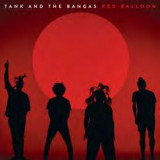
Gerade erst Grammy-nominiert als “Best New Artist” haben Tank And The Bangas ihr drittes Studioalbum aufgenommen. Zu dem vor R&B-, Hip-Hop-, Jazz-, Funk- und Soul-Grooves aus allen Nähten platzenden
Album luden sie diesmal Gäste wie Questlove, Lalah Hathaway, Big Freedia, Jacob Collier, Trombone Shorty, Jamison Ross und Wayne Brady ein.
Die in New Orleans ansässige Band mit der energiegeladenen Frontfrau Tarriona “Tank” Ball wurde 2017 durch den NPR Tiny Desk Contest auf YouTube berühmt (sensationelle 12,5 Millionen Aufrufe). „Red Balloon“ entstand jetzt in Folge der pandemiebedingten Unterbrechung des anstrengenden Tour-Pensums der Band. Die Pause gab den Musikern Raum zum Atmen und die Chance für ein kreatives Kräftesammeln. Das Werk zeigt die Band auf einem neuen künstlerischen Level, produziert wurde es von der Band selbst
und aufgenommen in New Orleans und Los Angeles.
"To kick off the yearlong celebration and provide the perfect summer soundtrack, Capitol Records and UMe will release a newly remastered and expanded edition of The Beach Boys career-spanning greatest hits collection, Sounds Of Summer: The Very Best Of The Beach Boys, on June 17. Originally released in 2003, the album soared to no. 16 in the US and stayed on the chart for 104 weeks. Now certified 4x platinum for sales of nearly four and a half million albums, the collection has been updated in both number of songs and audio quality, expanding the original 30-track best of with 50 more of the band’s most beloved songs for a total of 80 tracks that span their earliest hits to deeper fan-favorite cuts and from their 1962 debut album, Surfin’ Safari through to 1989’s Still Cruisin’.
Assembled by Mark Linett and Alan Boyd, the team behind 2013's GRAMMY® Award-winning SMiLE Sessions and last year’s acclaimed boxed set, Feel Flows – The Sunflower and Surf's Up Sessions 1969-1971, Sounds Of Summer features nearly every US Top 40 hit of The Beach Boys’ incredible career, including “California Girls,” “I Get Around,” “Surfer Girl,” “Surfin’ U.S.A.,” “Fun, Fun, Fun,” “God Only Knows,” “Good Vibrations,” “Be True To Your School,” “Wouldn’t It Be Nice,” “Kokomo,” “Barbara Ann,” “Help Me, Rhonda,” “In My Room,” and many others. Fifty additional tracks showcase a broad mix of songs from across their wide-ranging catalog with some of the many highlights including “All Summer Long,” “Disney Girls,” “Forever,” “Feel Flows,” “Friends,” “Roll Plymouth Rock,” “Sail on Sailor,” “Surf’s Up,” and “Wind Chimes.”
The collection boasts 24 new mixes including two first-time stereo mixes, plus 22 new-and-improved stereo mixes, which in some cases feature the latest in digital stereo extraction technology, allowing for the team to separate the original mono backing tracks for the first time.
The expanded edition of Sounds Of Summer will be available in a variety of formats, including a 3CD softpack, and as a Super Deluxe Edition 6LP vinyl boxed set on 180-gram black vinyl in two options – a standard set or a numbered, limited edition version featuring a rainbow foil slipcase and four collectible lithographs. Both versions will feature color printed sleeves that replicate the original “Capitol Catalog” sleeves that highlight the entire Beach Boys discography, and all formats will include a booklet with new liner notes and updated photos. The original 30-track version will also be available in its newly remastered and upgraded form on single CD or double gatefold LP on standard weight vinyl or as a higher-end limited edition numbered version pressed on 180-gram vinyl with a tip-on jacket and a lithograph. "
Factory Benelux presents a limited (500 copies only) coloured vinyl edition of Nature + Degree, the sixth studio album from post-punk trailblazers Section 25, originally released in 2009.
Self-produced in 2009, Nature + Degree was the first SXXV project to feature new members Stephen Stringer and Stuart Hill. Founder members Larry and Vin Cassidy are also joined on several tracks by Beth Cassidy, whose vocal style recalls that of her late mother Jenny on From the Hip and Love & Hate.
Stand-out tracks include Garageland, Singularity, Remembrance and Saddled With Something, the latter burnished by a string quartet.
"All Factory groups now have a cult following and Section 25 have done more than many to deserve it. The electronic pop-rock sound is no longer novel, but on their second album of new material since 2007 the group turn in an album that's straightforward, sincere and musically ebullient" (The Wire)
"The natural follow-up to Part-Primitiv, yet still recalling the Factory legacy" (Brainwashed)
out of Stock
Last delivered 3 years ago available to reorder, subject to availability
Paper Route Frank is the first posthumous studio album from legendary Memphis, TN figurehead, rapper and mogul, Young Dolph. Gone from us way too soon, the album serves as a testament to the larger than life person and leader that Dolph was, illustrated in tracks such as “Hall of Fame,” “Get Away,” & “Love For The Streets.”
At 13 tracks, the album features appearances from PRE labelmates Key Glock, Big Moochie Grape & Snupe Bandz, and taps heavyweight guests in 2 Chainz & longtime collaborator Gucci Mane, who in many ways helped provide the blueprint for Dolph’s own illustrious career. A truly independent foundation in the rap game and unquestionably one of one individual, we may never see another artist like Young Dolph. Long Live Dolph Forever.
out of Stock
Last delivered 3 years ago available to reorder, subject to availability
Phoenix Breaks is a physical record label based in the UK specialising in modern breakbeat hardcore, jungle and drum n' bass. The label began in 2021 and the first release was released in December of the first year in the form of a vinyl ep entitled 'The Rising'.
The EP sports 4 tracks of varying styles ranging from breakbeat hardcore to jungle and also drum n' bass. Staying true to the sounds of the 90's, each track has been carefully produced to fully capture that sound and has received raving reviews so far. Strictly limited edition and housed in a sturdy stickered cover, this is a must buy for anyone who has any kind of interest in the oldskool 90's rave sounds.across 4 huge dancefloor tracks.
out of Stock
Last delivered 3 years ago available to reorder, subject to availability
Ceremonie hail from France and have an '80s-inspired sound that hits differently. Their songwriting reaches new levels and draws on well-chosen, well-designed sounds with a wonderful sense of melancholy and just the right balance of drama and subtlety.
After an indie-pop leaning cassette a few years ago they now land on Enfant Terrible with a contemporary take on retro new wave and synth-pop. Three of the tunes are originals, one is a cover of French 1980s new wave band Message and there is a whole new album in the works, apparently. Great stuff.
out of Stock
Last delivered 3 years ago available to reorder, subject to availability
Angel Attack delivers his debut album Divine Practicalities on his label, House of Reptile. The Boston and London-based artist blends several sound palettes, sharing his most poignant body of work to date. The album includes two remixes by Univac and Blind Delon, respectively.
The title track acts as a prelude to the album. A broken-beat,
experimental number, it dips into cinematic soundscapes and warbling percussion, which Angel Attack describes as an “introduction to summarise the emotions we are about to experience on the album.” Tightening Tension follows suit. It’s a mutation of broken techno with electro flavours over a malicious Moog bassline, featuring the vocals of French producer IV Horsemen, whose lyrics conjure a smokey, bonechilling atmosphere between skittery drums. Angel Attack dives into a metal-edged mood on Ankles, stitching distorted riffs between broken beats.
The energy is visceral. Come To Me is straight-up Japanese Horror-inspired electro, combining eerie textures with thudding kickdrums and a gnarly scream — a freaky trip at just over five minutes. Franco-Spanish author, singer, DJ and musician Pedro Peñas Robles, aka HIV+, features on Oblivion War. A sludgy, slow-burning soundscape ensues with a deluge of downtempo, hip-hop and EBM textures, complemented by HIV+’s gravelly voice. Whipping up the pace, Wrists blurs the lines between sci-fi, electro and goth. A stinging melody snakes between staccato claps and ghostly pads — lethal energy of the highest order.
Forgotten is the postlude-type track of the album, and this is where Angel Attack’s interdisciplinary approach comes to life. It’s the most piercing tune of the release, complete with a guitar melody, stripped-back drums and pagan throat chants provided by Angel Attack. An introspective offering, staying with the listener long after the record stops spinning.
out of Stock
Last delivered 3 years ago available to reorder, subject to availability
Black Truffle is pleased to welcome free jazz legend Joe McPhee back to the fold with Oblique Strategies, a wild trio recorded in Antwerp in 2018 in the company of Mette Rasmussen’s fire-breathing alto saxophone and Dennis Tyfus’s post-Fluxus antics on tape, voice, and percussion. Rasmussen and Tyfus have previously recorded together as Bazuinschal, and some similar strategies are on display here: mysterious metallic scrapes, extended tones in which voice and sax become indistinguishable, comic explosions of varispeed tape. With McPhee on board, however, proceedings are more sumptuous, with the two horns moving fluidly from expeditions into the extremes of their instruments’ registers to pointillistic note-splatter and Ayler-esque folk melodies; we even get to bask in some of the slow-motion free blues that McPhee has now been playing for half a century. McPhee is heard primarily on tenor, Rasmussen mainly on alto, but with Rasmussen doubling on sundry objects, and the whole trio contributing vocals, certainty about who is doing what becomes nigh impossible.
The recording and production add to this hazy unclarity. Where much contemporary improvised music aims at dryly clinical hi-fi, the lively reverberant space of Oblique Strategies calls to mind the less-than-pristine sonics of classic free jazz artefacts like John Tchicai’s Afrodisiaca or McPhee’s own Underground Railroad. A further dimension of oblique unpredictability is added by subtle changes in the sense of space: at times merely a reverb tail glimpsed between phrases, at other points the whole mix seems to be momentarily swallowed up in slap-back, blurring the lines between acoustic instruments and the decayed fidelity of Tyfus’ tape playback. Spread across four pieces ranging from four to nineteen minutes in length, Oblique Strategies moves with anarchic swagger from explosions of clattering cymbals and bellowing horns to near-silent episodes of mysterious rumble and clunk. ‘Death or Dinner?’ opens the record with a lovely duet of climbing melodic patterns shared between the two saxophones, played with a buzzing oboe-like tone. A long, wavering note sung by Tyfus cues the first of countless changes of direction, eventually leading to a crescendo of watery splutters and duelling saxes. At points Tyfus’ keening resemble the signature moves of his friend and collaborator, Ghédelia Tazartès; at others, his tape-sped huffs and puffs possess a rawness reminiscent of Henri Chopin or Gil Wolman. The dialogue between wailing saxophones and vocal cries, punctuated by percussive thuds and crashes, can at times feel less like a musical performance and more like the calls of some mysterious forest creatures, possessing a primordial energy that might remind some listeners of the outdoor antics of Brötzmann and Bennink’s Schwarzwaldfahrt.
Oblique Strategies can also be delicate at times, as on the beautiful third piece, ‘Destilled Edible’, dominated by a slow, microtonal melody played with a breathy tone resembling a shakuhachi. The closing side-long ‘Light My Fire’ ranges across classic improv call and response, skittering trumpet blurts, inept cymbal clatter, mock-operatic vocals, and crude tape manoeuvres. Momentarily pausing at the ten-minute mark for an interlude of ghostly room sound and crackling texture, its closing moments unfurl a glorious dual saxophone finale, the almost epic tone subtly undermined by Tyfus quietly tapping out swing rhythms. Arriving in a striking sleeve adorned with Tyfus’ drawings, Oblique Strategies is an invigoratingly free-spirited blast of improvisation.
Downloads
out of Stock
Last delivered 3 years ago available to reorder, subject to availability
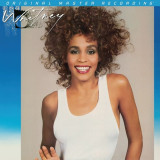
Whitney did more than turn Whitney Houston into a pioneering sensation known around the world by her first name. Originally released in June 1987, the singer's blockbuster sophomore record became the first album by a female artist to debut at No. 1 on the Billboard 200 chart — a position it claimed for a total of 11 weeks en route to selling more than 10 million copies in the U.S. The Diamond platinum effort also contains four No. 1 Hot 100 hits that, when combined with the three chart toppers from her 1985 debut, gave her seven consecutive No. 1 singles — an accomplishment that no other artist has accomplished. Commercially and creatively, Whitney stands on hallowed ground — especially now that the record plays with a sound that puts into perspective just how extraordinary, engaging, and vital Houston's music remains.
Mastered from the original master tapes and pressed on MoFi SuperVinyl at RTI, Mobile Fidelity's 180g 33RPM SuperVinyl LP of Whitney invites listeners to experience the Rock & Roll Hall of Fame inductee's pivotal album in audiophile quality for the very first time. Free of the dynamic limitations and tonal flatness prevalent on prior vinyl and CD pressings, it lets the music breathe and reveals the copious detail, nuance, and texture within the immaculately produced songs. MoFi's SuperVinyl profile offers further advantages in the forms of a nearly inaudible noise floor, dead-quiet surfaces, and superb groove definition.
In addition to featuring extreme clarity and immediacy, this numbered-edition reissue does wonders for the attribute that inspired more than 20 million people around the globe to add Whitney to their record collections: that inimitable voice. Houston's trademark mezzo-soprano — an acrobatic instrument equally capable of taking off on fantastic flights and unwinding for hushed meditations — benefits from the fantastic airiness and transparency afforded by this meticulously restored edition. Whitney has never sounded or looked better. The crossover landmark deserves nothing less.
Issued just two years after Houston's breakthrough debut, Whitney immediately signalled the genre-defying singer's intent to continue to push ahead and expand her palette. Shot by photographer Richard Avedon, the album cover depicts an iconic image of Houston — captured with a gleaming smile, bright eyes, teased-out afro, toned arms, and a right hand that appears to wave a friendly hello — whose active, athletic profile stands in contrast to the extremely formal sit-down shot of her that graces her '85 record. The change is telling: Whitney overflows with unfettered joy, rhythmic vibes, and deep-seated emotions that forever endeared her to the hearts and minds of countless listeners — and which set the standard for the wave after wave of divas that followed in her footsteps.
It's no coincidence that the first track on Whitney is the declarative "I Wanna Dance with Somebody (Who Loves Me)." Like Michael Jackson's "Billie Jean" and Madonna's "Material Girl," the feel-good smash is one of the quintessential '80s gems — a lithe, melodic, celebratory release of pent-up energy and loneliness that glides across club floors, shouts to the rooftops, and shrugs off any concerns about vulnerability or embarrassment. Houston's swooping voice moves in sync with the sleek beats and dipping-and-diving synths. She practically takes her fellow musicians by their hand and leads them in a blissful dance that nobody would dare sidestep. Focusing on Houston's singing — a task made challenging only because of the impossible-to-ignore hooks and grooves — showcases the virtuosic facets of not only her register but her control, discipline, smoothness, and warmth.
That she replicates those feats for the entirety of the nearly 53-minute-long album makes Whitney that much more special. Houston reaches back and channels her childhood gospel training on the R&B-flared "So Emotional"; effortlessly slips into Quiet Storm mode on the duet with her mother, gospel great Cissy Houston, on "I Know Him So Well"; flirts with smooth jazz and collaborates with tenor saxophonist Kenny G on the lush "Just the Lonely Talking Again"; conjures dreamscapes and shadow-boxes with supple funk on a romantic cover of the Isley Brothers' "For the Love of You"; and, for the majestic power ballad "Didn't We Almost Have It All," displays the sky-scraping reach of her vocals amid a grand arrangement made even bigger by Houston's sweeping performance and triumphant finish.
Houston's once-in-a-generation talents weren't lost on the adoring public, radio deejays, or industry experts. In addition to harbouring four No. 1 hits and receiving nominations for four Grammy Awards, Whitney generated another Top 10 success in the guise of the Afro-Cuban-leaning "Love Will Save the Day." The album also netted Houston four American Music Awards; two Billboard Music Awards; back-to-back People's Choice Awards; a Soul Train Award; and various other accolades. It all makes the crux of the Washington Post's July '87 review of the album appear prophetic: "Her voice sounds stronger still and the songs are varied but so consistent she could garner 10 Top 10s out of a field of 11."
That claim still holds true. A brilliant fusion of pop, R&B, smooth jazz, and soul, Whitney is a showstopper – and one of the key reasons Houston is the most-awarded female artist of all time.
Suff Daddy (578k monthly listeners on Spotify), is one of the legendary beatmakers who shaped a whole era of bedroom producers. His unique approach and musical understanding sets him apart from all the other fish in the pond. He has released countless genre-defining albums and EP’s over the past 15 years building a loyal fanbase. Suff Daddy's songs have previously been featured in many editorial playlists including Spotify's "Jazz Vibes" (2.1M Likes), "BUTTER" (770k Likes), "Sweet Soul Chillout" (1.2M Likes) and many more.
Introducing "Hair Of The Dog," Suff Daddys musical journey that blends instrumental hip-hop, electronic, and dance genres. This captivating album, produced with his own Suff Style invites listeners to unwind From start to finish. Once again a Suff Daddy album thrives on the pure brilliance of his on way to create music. The album's cover art, masterfully crafted by the renowned painter Mitch (@itsallinsideus, 165k Followers), adds an intriguing visual dimension to the experience. Both artists have known each other for a long time and are currently preparing their audiovisual release- event for August 18th in Berlin. Bringing their art together as a unique experience for their audience.
The phrase "Hair of the dog that bit you" commonly denotes consuming alcohol as a remedy for a hangover, aiming to alleviate its effects. Suff Daddy plans to introduce his own hangover solution, which will be plant-based and devoid of alcohol. Through all of his career he frequently played with alcohol references and now its the perfect timing to release his own hangover cure. Additionally, this endeavor will serve as a social media catalyst for the entire project.
out of Stock
Last delivered 3 years ago available to reorder, subject to availability
Death Is Not The End sub-label 333 hit again with a reissue of a rarely encountered piece of prime UK digi, courtesy of Franklyn Bernard aka Frankie B - mixed at Fashion's A Class Studio in Clapham, and released on the Ital Stuff label in early 1986.
Frankie B began his recording career with producer Bert Douglas, first releasing on his Reggae City label in 1984 with the No More Tears 7" under his birth name Franklyn Bernard. In 1985 he then linked up with Ital Stuff - a production team consisting of three brothers who also helmed the Sweet & Bitter Band. Operating a small eight track studio in the basement of their house in Balham, Ital Stuff had recently been responsible for putting together and laying down the backing track to Dixie Peach's classic Pure Worries, released on the Jah Tubbys label in 1985. Upon playing Pure Worries to Frankie he was immediately inspired to lay down his own vocal on the track, which too features Dixie Peach contributing vocal harmonies - it was recorded late 1985 and mixed down along with a ferocious dub side at South London's A Class Studio, eventually seeing release in early 1986.
out of Stock
Last delivered 2 years ago available to reorder, subject to availability
This summer, Merge will reissue A Giant Dog's first two full- lengths_2012's Fight and 2013's Bone _worldwide on limited- edition colored vinyl, reintroducing the world to the quintet Spoon's Britt Daniel calls "the greatest American rock and roll /punk band since I don't know when." Recording for the first time with a proper producer (Mike McCarthy) in a proper environment (a studio lol), A Giant Dog Bone, on pink vinyl for the reissue, still manages to kool-aid man its way through the speakers with the immediacy of the band's live shows, a hit parade for the party people. Sabrina Ellis and Andrew Cashen add another baker's dozen tunes to the band's repertoire just a year following their debut, with songs like "All I Wanted," "Dammit Pomegranate," and "Another World" cementing them as a conspicuous songwriting duo.
Two Saviors is Buck Meek's second album, following 2018's self-titled LP also released on Keeled Scales and currently on its third pressing. The Big Thief lead guitarist worked with producer and engineer Andrew Sarlo on this album (who's produced all four of Big Thief albums, as well as coproducing Bon Iver's i,i ). Andrew agreed to record it only if it was made under his conditions-- that they make the album in New Orleans during the hottest part of the year, spend no more than seven days tracking live, on an 8-track tape machine, with only dynamic microphones and no headphones, and not allowing the players to hear back any of the takes until the final day. The band, featuring Adam Brisbin (guitar, vocals), Mat Davidson (bass, pedal steel, fiddle, vocals), Austin Vaughn (drums), and Buck's brother Dylan Meek (piano, organ, vocals), set up in a Victorian house one block from the Mississippi River, and worked within these limitations, encouraging every recording to be imbued with the living, intuitive, and human energy of a first take.
Bob Dylan was at several crossroads in the mid-1970s. Artistically, he was largely written off as being past his prime. Emotionally, he was suffering through a painful divorce from his then-wife Sara Lowndes. Creatively, he appeared at a stalemate, his previous decade's unprecedented run of transformational brilliance finished. Then came Blood on the Tracks.
A start-to-finish cycle that documents a lover's pursuit of, entanglement with, and loss of a woman, the bracingly intimate 1975 effort remains one of the most encompassing break-up albums ever made and ranks as the most personal statement of the Bard's career. To hear it is to experience the agony, frustration, trauma, highs, lows, confusion, sadness, and, ultimately, requisite redemption associated with intimate relationships gone astray. Dylan maintains it's a work of fiction, but it's evident close-vested autobiographical premise is what helps make it universal: It's the icon singing through tears, going out of his mind, battling hallowing emptiness, firing shots across the bow, and accepting culpability. It is, in short, a consummate expression of love's darker sides and the consequences of what happens when dreams unravel.
As part of its Bob Dylan catalogue restoration series, Mobile Fidelity is thoroughly humbled to have the privilege of mastering the iconic LP from the original master tapes and pressing it on dead-quiet LP at RTI. The end result is the very finest, most transparent analogue edition of Blood on the Tracks ever produced – and the first-ever proper analog reissue. Fantastically presenting both the solo acoustic and band-supported songs with the utmost clarity, dynamics, presence, immediacy, spaciousness, imaging, and balance, this version shines a high-powered light on the fluid vocal phrasing, timbral shifts, functional rhythms, and inward-looking strumming that contribute to every song here serving as a wound-exposing confessional.
For all the melancholic pain, unresolved questions, shattered memories, wasted times, unrequited dialogues, and weary regret within, Blood on the Tracks remains as daring as it is reflective. Rather than follow for a monotone caustic vibe, Dylan's songs burrow into the subconscious for the manners in which they are even-keeled, mellow, and occasionally, even peaceful. Dignity, honour, poignancy, and fairness – all traits uncommon in any situation in which partners dissolve histories, change hearts, and attribute blame – instil the record with equilibrium on par with the consistency of the flowing melodies.
Throughout, tunes come on and proceed as if they could continue forever, Dylan spinning poetic verses and conversations amidst finely tied knots of acoustic notes, chords, and fills, the deceivingly simple architecture conjuring the intertwined refractions of a bezeled jewel, various angles, colours, and textures conjoining into a gorgeously inseparable whole. Backed by Tony Brown's flexible albeit subtle bass, Buddy Cage's country-streaked pedal-steel guitar, and Paul Griffin's soul-baring organ – an instrument used to shadow, tuck-point, and illuminate here as effectively as any time in rock history – Dylan pours soulful emotion, open his veins, and bleeds.
Ranked 16 on Rolling Stone's list of the 500 Greatest Albums of All Time, and replete with existential thought, piercing directness, raw singing, and majestic arrangements,
Given the sonic and artistic merit of this album, we anticipate huge demand.
How sad, if timely: this stunning reissue of the 1994 live album arrived in the very week that trumpeter Masekela passed away. One of the most successful ambassadors ever for African music, his fusing of the continent's rhythms and instruments with contemporary jazz and rock proved irresistible. Nearly every one of you has heard him, thanks to guess spots with The Byrds and Paul Simon. His breakthough hit from 1968 — the infectious "Grazing In The Grass" — is here, along with another 11 tracks recorded at Blues Alley, the U.S. club that gave us Eva Cassidy. Notably, despite its early-1990s origins, this is all-analogue." — Sound Quality = 90% - Ken Kessler, HiFi News, May 2018
"...Hope is one of those intensely visceral, large as life, and immediately present recordings that will make pretty much any system sound at least very good, and will cause better ones to raise goose bumps." - Wayne Garcia, The Absolute Sound, August 2008
"...The high quality original mix plus Analogue Productions' superb mastering has resulted in a terrific, very transparent sonic with great impact." - John Henry, Audiophile Audition
What more can be captured from the masterpiece that the late trumpet great Hugh Masekela left devoted fans, the effervescent Hope. Now cut at 45 RPM and spread over four 200-gram premium LPs, you're about to discover the answer to that question. The eight sides of vinyl reduce distortion and high frequency loss as the wider-spaced grooves let your stereo cartridge track more accurately. And this set is plated and pressed at Quality Record Pressings, Acoustic Sounds' own industry-lauded LP manufacturer. Virtually silent surfaces coupled with sharp delineation of musical detail are QRP pressing hallmarks.
Two Stoughton Printing old-style tip-on gatefold jackets house the four LPs, which are contained in a custom-designed slipcase reproducing the original artwork.
A longtime audiophile demonstration disc. Hope will show off your system's dynamic range as well as any record ever released. Hugh Masekela, the outstanding South African trumpeter, assembled a seven-piece group and recorded this great set live at Washington, D.C.'s Blues Alley. The songs stretch over a period of nearly five decades and serve as an informal guided tour of Masekela's life. The songs are honest and bare, and as for the sound — WOW!
Unlike a prior 45 RPM version that included seven songs, this 45 RPM reissue contains the full program as originally recorded with all 12 tracks included! Plus, as an added bonus, we've included a special insert — featuring an exclusive interview with Grammy/Emmy Award-winning engineer David Hewitt, who recorded Hope originally.
"Hugh's record is right up near the top for a lot of reasons," Hewitt says.
Hewitt and his team were afforded the time they needed, and they pulled out all the stops to pull off what's now recognized as an all-time great recording. They used better-quality microphones, they were mic-ing the room for ambient sound, and Masekela was performing for a sophisticated and appreciative audience.
"We used stuff from our stash of mics as opposed to what you'd find typically at a jazz club. We actually had control via the record label and producers, so we could take our time. We had the ability to mic the room for abient sound. ... you've got people that actually know and appreciate the music and respond accordingly. What you've got there is all the right stuff at the right time and the right people, and then something magical happens."
Listen to that magic unfold — put on this Analogue Productions 45 RPM 4LP reissue of Hope, and be transported.
Men at Work already had an album in the Top Ten when the Australian ensemble released Cargo, which continued the momentum gained by its record-setting debut. As ambitious and even more diversified than its initial salvo, the 1983 effort firmly established the band as new-wave pioneers – a group whose goofy playfulness, sharp hooks, brass accents, and memorable choruses helped define the decade's landscape. Any doubts about Men at Work's quirky sensibility were promptly answered by the iconic cover art gracing this multi-platinum set.
Mastered on our world-renowned mastering system and pressed at RTI, this LP not only brings the artwork back into full-scale glory but also takes the enjoyably melodic pop-rock to new sonic heights courtesy of improved imaging, separation, and balance. Previously obscured details jump to the surface, and leader Colin Hay's unique voice takes on life-like dimensions that hover between the speakers.
While remaining true to the approach that garnered them a Grammy Award for Best New Artist, Men at Work expands the creative palette on Cargo by giving guitars a more prominent role and increasing the rhythmic textures. With the sweeping ballad "Overkill" and politically savvy cynicism of "It's a Mistake," the band furthered their radio domination and extended their run of Top 10 singles. A third hit, "Dr. Heckyll and Mr. Jive," cracked the Top 30. Well-tailored melodies and whimsical imagination definitely had a place in the public's consciousness, and no group understood this more.
As the final album captured by the original lineup, Cargo remains an indelible piece of the 1980s audio terrain and a reminder of the era's endless fun. Bolstered by lively saxophone solos, self-effacing humor, and instantly catchy refrains, the album is as good as excuse as any to turn on the stereo, sit down, forget your worries, and dance to leisurely pursuits so perfectly captured by this beloved group.
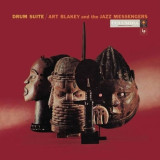
One of the inventors of the modern bebop style of drumming, Blakey is known as a powerful musician and a vital groover; his brand of bluesy, funky hard bop was and continues to be profoundly influential on mainstream jazz.
For more than 30 years his band, Art Blakey & The Jazz Messengers included many young musicians who went on to become prominent names in jazz. Recorded in 1956, Art Blakey's Drum Suite is a wonderful hybrid of African, Latin, and hard bop rhythms that prefigures the concept of Afro-beat by at least a decade. The sheer energy, not to mention its very special and fresh-sounding intimacy, make it especially astounding.
Even more amazing is that the three parts of the suite -- Blakey's "The Sacrifice," Ray Bryant's "Cubano Chant," and Oscar Pettiford's "Oscalypso" -- were recorded straight through live, and were only intended to be a pre-take run-through. As is obvious here, Blakey and company nailed the whole thing right out of the box.
Groundbreaking for its time, and still sounding vital, powerful, and visionary, the Drum Suite album is somewhat of a lost masterpiece that deserves a fresh audience.
"Art Blakey's first release for Columbia Records is essentially two records. Side one is a percussion ensemble playing what would, ten years later, be called Afro-Cuban drumming. Side two is the mid-fifties version of the Jazz Messengers featuring Jackie McLean on saxophone. Side one features Blakey, Jo Jones and Charles Wright on drums, Candido and Sabu on bongos, and Oscar Pettiford and bass and cello. The group plays three compositions, one by Blakey, one by Pettiford and one by Ray Bryant, fusing African, Cuban, and calypso percussion into a well-integrated suite.
"The group recorded a run through and it was so perfectly executed that they used the practice run for the release, unedited except to add some Swahili chants by the percussionists during a few passages. One cannot help but think of Olantunji's Drums of Passion, another Afro drumming landmark, here. Blakey's drum suite was recorded at Columbia's 30th Street studios in New York in 1957 and is in mono. The almost stereoscopic image is truly remarkable. Mastered by Kevin Gray and pressed at RTI, Drum Suite is a valuable record of one of the most important figures in jazz history. Recording: 9/10. Music 9/10." - Dennis Davis, Hifi+
"...The three-part suite was laid down in one take with no arrangements, and begins with a few tympani thwacks followed by an African chant. Soon the ensemble kicks in and the group takes off an a sweaty Afro-Cuban-bop journey that will leave you breathless, as the thing crackles with terrific energy. Side Two is more conventional hard bop, but given this group's mastery of if not invention of the style, these tracks are extremely satisfying. Kevin Gray's remastering is detailed and immediate, with plenty of bit and air, if not the widest dynamic range. For anyone interested in percussion of this genre, this is not to be missed." - Wayne Garcia, The Absolute Sound
No shortage of colorful characters emerged from Cameroon’s bikutsi scene in the 1980’s and early 90’s. Gibraltar Drakus is one of the most enduring and enigmatic of the artists who helped transform bikutsi into a beautifully endless fabric of triplet rhythms that eventually reached ears around the world.
Following the advent of Cameroon Radio Television in 1987, bikutsi began to supplant makossa and soukous for domination of the local airwaves and the attention of cosmopolitan, thrill-seeking residents of Cameroon’s capital Yaoundé and beyond. Biktusi perfectly fused Beti traditional music and increasingly electronic, highly rhythmic guitarbased bikutsi. Mimicking the sound of village-based xylophone music by rigging a mute to electric guitar strings, bikutsi artists provided a relentlessly energetic dance format for those with a taste for music steeped in their hometown sensibility (countering the popular makossa that many felt sounded less indigenous).
By the early 1990’s, Les Tetes Brûlées were indisputably the most famous and influential artists in bikutsi, due in part to the innovations of their incendiary guitarist Théodore Zanzibar Epeme. Following their first European tour in 1987, the band blew up internationally but Zanzibar tragically, and mysteriously, passed away, which nearly brought an end to the band completely. In hindsight, the consensus among most Cameroonians is Zanzibar’s contributions to biktusi were transformational and immeasurable.
“Zanzibar is the one who taught me how to compose a song, and I learned a lot from Zanzibar musically. We spent whole nights working on methods and other approaches to compose beautiful songs. I owe half of everything I have today to Zanzibar!”
Swept up in all this was Gibraltar Drakus, who was the youngest member of Les Têtes Brûlées and was also the protégé of his biggest supporter, Zanzibar. So it was fitting that he dedicate his 1989 debut to their groundbreaking late guitarist who had meant so much to him. Drakus literally exploded from his first album Hommage A Zanzibar (1989), which sold over 100,000 copies despite rampant piracy. For the recording, Drakus made sure he engaged prolific producer Mystic Jim to record and mix the album. The innovation musically rests both within the guitar interplay and the discipline in the orchestration, which result in a mind-bending clockwork of cross-rhythmic harmony.