For Phonica's landmark 25th main label release we present the latest 12' from Will Saul.
Will is known to many as the man behind Aus Music and prior to that Simple Records as well as an excellent recent mix for the highly respected DJ-Kicks series. If that wasn't enough to keep him busy he has produced a sizable back-catalogue for his own labels and the likes of Kompakt, Buzzin' Fly and Systematic.
Will's relationship with Phonica goes back a long time, as a core member of staff he worked in the shop in its early days and needless to say, we've been following his career since day one, so it feels right that he returns to Phonica, though this time as an artist on our main label.
A prolific producer, he's explored everything from Micro-House and Minimal Techno to Deep House and Acid. For the 'Lakeside EP', Will unleashes three peak-time House tracks, starting off with the anthemic 'For Joanie' and its heartfelt vocal loops, onto the uplifting and euphoric 'Drama' before rounding the record off with the late 80s electro-pop vibes of 'Never Enough'.
Milan based collective Just This continue their mission into the darkest territories of electronic music with the Evolution EP from Hill Of Vision featuring an Alex.Do remix, due February 22nd.
Title track is a bleak, disorienting journey through muffled acoustics and gloomy surroundings narrated by an eerie vocal. For his remix, Alex.Do reinterprets the tension of the original into a floating dance floor weapon.
'Signs' is a stripped back swirl of strange melodic inflections and cyclical effects, whilst 'Land Of Vision' dissects the framework of atypical techno into an immersive doomsday soundtrack.
Evolution EP delves deeper into the blackened acoustic world of Just This, repurposing references from gothic tales and electronic music culture into a singularly murky aesthetic.
Two sizzling South African boogie tracks from Kabasa's Tata Sibeko. A killer producer, arranger and bass wizard, Tata channels the gloomy current affairs landscape of 1985 into a glimmering Afro-synth nugget. As South African pop embraced 1980s synth sounds, Maxi Singles on 12-inch vinyl became a new canvas of expression with wider grooves for fat beats and extended mixes that suited dancefloors.
.
The supergroups of the 1970s fragmented into solo recording artists with the likes of Harari's Sipho 'Hotstix' Mabuse releasing his seminal 'Burnout' single in 1984. Former Kabasa frontman Tata Sibeko dropped 'It's A Mess' in 1985, addressing the world's Cold War climate with an appeal to 'learn to love each other' and 'save ourselves from catastrophe.' The B-side 'Afro Breakdance' marked the evolution of Tata's Afro-global sensibilities from 'Afro Funkin'' that had appeared five years earlier on Kabasa's self-titled debut in 1980. Tata Sibeko (RIP) passed away in 2017 after approving the restoration and reissue of this single. This release is dedicated to his kindness, charm and creative zeal.
Tradition and experimentation are two familiar
territories that C'mon Tigre, a duo who find
their identity by working with musicians from
all over the world, can balance between very
well. As they did for their debut album (2014),
they have put together a multicolored collective
for their second record 'Racines', out on
February 15, 2019 for BDC/K7.
The title is a French word that means "roots",
referring to the musical roots in which C'mon
Tigre's feet, head and heart are immersed, and
from which their contaminated tracks sprout to
create unusual and original sound environments. In their new album the sounds of the
Mediterranean - the sea of their land -
intersect, intertwine and overlap with a
kaleidoscope of other sounds and a new
approach based - they explain - "on the type of
work we had done when we rearranged the first
album for live shows, by emphasizing the
synthetic part of our tracks". This time around
they did it from the very beginning: "The
composition of the pieces immediately included
the use of machines and synthesizers as a
basis for acoustic instruments. The goal was to
reprocess the terrain of Mediterranean
influences that was undoubtedly our starting
point".
Imagine a work in progress where bass and
guitars interact with woodwind, synths, percussions, vibraphones, dipping the listener into a
sensual and hypnotic musical journey. Sailing
from the Mediterranean basin and being guided
by the fascination for Africa and the Middle
East, C'mon Tigre give rise to a personal
language, made up of mixtures with jazz,
afrojazz, the rhythmics of hip hop, funk, 70s
disco. All without ever confining their songs to
one style, but pushing the exploration as much
as possible, into a dimension that every journey
worthy of this name should encompass. "With
the musicians we work with the exchange and
experimentation continue till the end, the
songs can take different directions at any time'.
The result is a mixed, cosmopolitan record,
which escapes from any label for the affirmation of a free attitude. The attitude that led
C'mon Tigre to seek a connection with dancefloor culture, even if considered only as an
evocation to revisit in an absolutely personal
way
Liška, the Czechoslovakian word for fox. Beguiling in its beauty, cunning in it's charm. Said to be one of the most intelligent animals on the planet its global family consists of thirty-seven varieties; all of them recognised, respected and feared for their persuasive, creative, resourceful and elusive nature. The Liška we will talk about today is no exception to these hereditary rules and within the grooves of this record Finders Keepers present an 'elusive' musical artefact that best exemplifies every facet of this composer's animal namesake.
Had he not been born in the small Bohemian town of Smecno in the early 1920s the story of The Fantastic Mr. Liška might have well taken a different course. Alternatively, fettered by the hampers of communism, this lifelong resident of Czechoslovakia would never quite find his seat at the same table as the likes of John Barry, Ennio Morricone, Michael Nyman and Stanley Myers, nor drop enough phonographic breadcrumbs to track his legacy. But having waited patiently behind the borders of the wider landscapes of international cinema, Liška's musical brood, spanning multiple stylistic decades and generations, has now started to walk proudly amongst his would-be, latter-day compeers. In an era where music lovers have almost become immune to adjectives like 'lost', 'rare' and 'unreleased' in a climate where previously lesser-known off-kilter master composers such as Vannier, Kirchin and Axelrod have become widely revered, it is perhaps the perfect time for discerning listeners to advance above the feeding trough and seek out this truly pioneering and revolutionary Eastern European composer. Rivalled only by the likes of Krzysztof Komeda and Andrzej Korzynski in Poland, alongside Alexandr Gradsky in Russia, and often splitting workloads with fellow Czech composers like Luboš Fišer, Zdenek Liska's filmography of over almost 300 fully formed movie scores virtually eclipses the achievements of these socialist era luminaries. Respected unanimously in both Czech and Slovakian by studio bosses, producers, directors and actors alike Liška is widely known for his ability to take the existing energy in a reel of film and literally change the polarity to suit his own interpretation while maintaining the full support from his 'client' who would in-turn end up working under this composer's creative direction. Not only was Liška a genius of emotive orchestral and coral composition, his grasp on small group arrangements and intimate, minimal scores set him above the competition. By utilising primitive sample techniques by 'looping' a films existing ambient noise, or rearranging found sounds and dialog into subtle melodic arrangements, Liška would independently develop his own techniques which had simultaneously become known in Paris as musique concre`te. It is a direct extension of these experiments that saw Liška also draw parallels with Walter Branchi (Ennio Morricone's main electronic sidekick) in Italy as well as Daphne Oram in the UK, making Liška a relatively untravelled pioneer of early electronic composition and sound design due to his unlikely global environment. Imprisoned, preserved or reserved; time has been kind to Liška's music.
Midday Moon is a survey of ambient and experimental music that emerged from Australia and New Zealand between 1980 and 1995. These recordings are sourced from a rich variety of micro-labels, private pressings, theatre soundtracks and artists' personal archives. Curated by Melbourne based DJ and archivalist, Sanpo Disco (a.k.a Rowan Mason), the collection delves deep into the world of outsider music that emerged in Australia and New Zealand in the latter half of the twentieth century, as synthesisers and early workstations began to enter the consumer marketplace. The record is an odyssey in itself, a journey that takes listeners into the unsung world of Australian new age composers. There are stories abound within this volume, from the mysterious disappearance of Helen-Ripley Marshall after the release of her 1988 album 'Green Chaos', to the journey of American-born, Perth based blues/rock guitarist John Heussenstamm, who unexpectedly turned his finger to 'ambient' music in the late 80's; and again from Melbourne based Ros Bandt, who made a series of recordings exploring the resonance of a hollow concrete cylinder 5 stories beneath busy Collins Street in Melbourne's CBD. Compiled by Sanpo Disco / Mastered by Mikey Young . '(Ambient music is) a surrounding influence that induces calm and a space to think... it can accommodate many levels of listening attention without enforcing one in particular.' - Brian Eno / 'A richer and more diverse ambient genre began to form. Music that crafts a unique cultural geography of landscapes and atmospheres: real and imagined, natural and man-made. Some artists turned their attention to the singular acoustic ecologies of overlooked spaces around the country. Others fostered interests in non-Western music cultures and instruments. The common thread is their use of new technologies to conjure interior and exterior regions, through acoustic and synthesised sounds.' - Sanpo Disco
It gives me the greatest honour to finally be able to announce the release of this amazing triple vinyl masterpiece by log(m) and Laraaji on Invisible, Inc.
It's been over a decade since Laraaji first joined forces with log(m) in their Canadian studio in early 2007. In those ten years the trio recorded many hours of music. Over time these recordings, beginning essentially as live jams, were polished, dissected, processed, re-arranged and then finely and painstakingly distilled down to the 105 minutes of music that now form this album, which finally reached completion just earlier this year. The wait has been more than worth it.
The Onrush Of Eternity is a melding of minds like no other. Ever the pioneer of experimental ambience, Laraaji's signature hammered dulcimer, zither, mbira, auto harp, sruthi drone box and of course his exceedingly positive vibes are here combined with log(m)'s unique vision of gronky hi-tech psychedelic space dub. The resultant voyage into deeply meditative ambience and trance-inducing dub is as unexpected an outcome as it is a bona fide "Eureka" moment. It sounds neither like log(m) OR Laraaji....but of course like both. It is one of those rare collaborations that is, without a doubt, even greater than the sum of its already great parts.
Log(m) started making waves in the early '90s as Legion Of Green Men with their visually striking 12"s, complete with eternal opuscules (locked grooves) and mathematically inspired titles, all lovingly issued on their own Post Contemporary imprint. These deservedly got the attention of Richie Hawtin who promptly asked the duo for an album on his own classic Plus 8 Records. 20+ years later and the music (much like their name) has morphed into something more sophisticated: even more complex, atmospheric and deeper than ever.
Laraaji's reputation of course precedes him: he first came to wider attention when Brian Eno released his "Day Of Radiance" as part 3 of his Ambient Series in 1980. Since then, Laraaji has released over 40 albums, yet his stellar path seems still to be on the ascendant - a recent landmark being the 2017 "Sun" series of albums for the wonderful All Saints' Records.
This unique triple LP in tri-fold sleeve is limited to 200 copies on coloured vinyl and 300 copies on black vinyl featuring ten of log(m)'s signature eternal opuscules and cryptic engravings on all three discs.
The compilation album The Best of the Guess Who is the ultimate collection of the best songs The Guess Who recorded in the '60s and early '70s. The multi-talented Canadian band created a masterpiece by recording their single hit "American Woman". The 11 track album shows a versatile band, starting with the keyboard hook and guitar accent of "These Eyes". Other Guess Who classics included on this album are "Laughing", "Share the Land" and "No Time".
The Guess Who is one of Canadian's most successful band's, originated in 1965. Fifty years later they're still performing live, with founding member drummer Gary Peterson sitting behind his kit.
The Best of the Guess Who includes an insert and exclusive poster.
Black Truffle is excited to announce the release of the first-ever vinyl reissue of Ruedi Häusermann's Galerie Randolph, a masterpiece of solo multi-tracking originally released on CD by Unit Records in 1995. Born in 1948 and residing in the medieval Swiss town of Lenzburg, and virtually unknown outside of the German-speaking world, Häusermann is a multi-instrumentalist and enormously prolific composer who works primarily in the medium of absurdist music-theatre. A virtuoso wind player and free improviser who also composes for traditional classical instrumentation, his work is characterised by subtly surreal humour and the unlikely combination of extended technique and simple, at times almost child-like, melodic ideas. Named after his rehearsal room in Lenzburg, Galerie Randolph uses an enormous array of instruments to craft a work of singular compositional vision. Each of the twelve pieces begins from the same two elements: a woozy, sliding scatter of tones played on a home-made contraption stretching two guitar strings between the top of Häusermann's alto saxophone and an amplified cup, and a series of uneasy block chords sounded on accordion and reeds. On each piece these two elements (whose pitch gradually raises throughout the record) are complemented by entirely different material, all of it played by Häusermann. Ranging from layered flutes to one-finger piano melodies to unintelligible vocals to musique concrete interjections to free jazz saxophone explosions, these additional layers combine with the endlessly returning idée fixe of the foundational elements to create a truly dream-like listening experience, a gently deranged realm in which we lose all sense of linear time. Calling up the most unlikely combinations of possible predecessors - Erik Satie, Gerry Mulligan, and Helmut Lachenmann perhaps -Galerie Randolph ultimately defies comparison. Almost unknown except to a select group of cognoscenti such as Jim O'Rourke, yet destined to become a cult classic, Galerie Randolph is an instance of that most rare thing: music the likes of which you have never heard before.
Presented in a deluxe gatefold sleeve with gorgeous archival images by the composer. Design by Stephen O'Malley. Mastered and cut by Rashad Becker at D&M, Berlin
Key selling points: - Black Truffle is excited to announce the release of the first-ever vinyl reissue of Ruedi Häusermann's Galerie Randolph, a masterpiece of solo multi-tracking originally released in 1995, the album utilises an enormous array of instruments to craft a work of singular compositional vision.
- Calling up the most unlikely combinations of possible predecessors - Erik Satie, Gerry Mulligan, and Helmut Lachenmann perhaps -Galerie Randolph ultimately defies comparison.
- Each of the twelve pieces begins from the same two elements: a woozy, sliding scatter of tones and a series of uneasy block chords sounded on accordion and reeds. On each piece these two elements are complemented by entirely different material, ranging from layered flutes to one-finger piano melodies to unintelligible vocals to musique concrete interjections to free jazz saxophone explosions, these additional layers combine with the endlessly returning idée fixe of the foundational elements to create a truly dream-like listening experience, a gently deranged realm in which we lose all sense of linear time.
- Almost unknown except to a select group of cognoscenti such as Jim O'Rourke, yet destined to become a cult classic, Galerie Randolph is an instance of that most rare thing: music the likes of which you have never heard before.
- Galerie Randolph is presented in a deluxe gatefold sleeve with gorgeous archival images by the composer with design by Stephen O'Malley. Mastered and cut by Rashad Becker at D&M, Berlin
Our Favourite Bothy Botherers Mac-talla Nan Creag (comprised Of Hoch Ma Toch, Other Lands And Lord Of The Isles) Return To Firecracker Recordings, Channeling Ancient Rites, The Mysteries Of The Scottish Landscape And Its Elements Through Technologies Both Old And New For Your Listening Pleasure.
This Time Round The Archaeological Work Of Forestry Commission Scotland At Dun Deardail In Glen Nevis, And The Links Between That Site And The Ancient Celtic Myth 'the Sorrow Of Derdriu' Provided Fertile Ground For New Exploration And Response. Accompanying The Music Once Again Will Be A Lush Booklet Containing Some Of The Stunning Imagery That Results From The Work Fcs Have Done There, All Packaged And Silk-screened With The Usual Finesse We've Come To Expect From Firecracker Recordings And Their Chief Visionary House Of Traps, In Conjunction With 12th Isle's Al White.
Captured In Part In A High Vaulted Medieval Church, Then In Home Studios, Bouncing Ideas Back And Forth Over The Internet, Mtnc Have Once Again Drawn On Field Recordings, Traditional Instrumentation, Analogue Electronics And The Simple Power Of The Human Voice To Create A Shimmering And Expansive Song Cycle.
Whereas The First Album Was Borne Out Of An Intense Period Of Field Trips And Whisky Fuelled Jam Sessions In Brochs And Had A Loose Approach Overall, The Second Is Perhaps More Focussed In Its Themes Relating To The Ancient Tale - Love, War, Beauty And Tragedy All Intertwined - And They Arguably Go Deeper This Time, Conjuring Up Something Of The Fourth World Feel, By Way Of The Firth Of Forth.
With Additional Contributions From Professor John Kenny - Whose Primal Zummoesque Playing On A Range Of Horns Including A Giant Conch Shell And A Replica Of The Ancient Deskford Carynx Underpins Several Tracks On The Album - And Eva Sutherland (daughter Of Other Lands) Who Provides A Reading From The Myth At The Very Beginning, This Is An Album That Not Only Carries The Heaviness Of History But Also Looks To The Light Of The Future.'
Pi Gao Movement presents their first and long awaited release of the HAdES (Humanoid Advanced Engineering Society ) Network concept on vinyl. Originally released as a digital download, Descendants of Starfish Prime introduces Majestic 12 as a genre - blending mavericks of electronic music. Much like the name implies, Descendants takes a still landscape and captures it in time as it is violently uprooted, stripped to it's base elements and becomes something foreign, something unimaginable, something beautiful. This four song release takes the listener through a journey offering little consolation and no apologies; using varying tempos, patterns, structures, and vocals as operators on a clean canvass. What is the HAdES Network Series The HAdES or Humanoid Advanced Engineering Society Network series will be a collection of works from various artists presenting obscure and diverse facets of electronic music. Man creating machines to replace the human being. Who is Majestic 12 Majestic 12 is not a who, but a what. There are no names attached to this conceptual group. It is a cluster of concepts that have been carefully selected through experimentation. Strains have been extracted, combined, and developed
This collection brings together rarities from well-known artists like Abstract Truth, Suck, Otis Waygood, Freedom's Children, John & Philipa Cooper, McCully Workshop and Hawk, as well as lesser known acts like Buzzard, The Fireflies, The Idiots, Tidal Wave, and The Invaders. Although the South African rock movement of the late sixties and early seventies was not a major commercial success, its participants heralded an exciting new age in South African rock and started a movement aimed at changing the musical tastes of fans in a spectacular way. Stadium concerts became the vehicle for feeding the youth with heavier rock sounds, and behind studio glass were producers like Clive Calder, Billy Forrest, Graham Beggs and Selwyn Miller who acted as change agents to transform conventional pop into heavier 4 to 5 minute songs. The movement's struggle for recognition through airplay remained unanswered and only the true fans of rock knew about their existence. Licensed by the Fresh Music label in South Africa and available on vinyl for the first time, complete with insert and liner notes.
Jac Berrocal, David Fenech and Vincent Epplay return with Ice Exposure, their second album for Blackest Ever Black. A sequel and companion piece of sorts to 2015's Antigravity, its title couldn't be more apt: sonically it is both colder, and more exposed - in the sense of rawer, more volatile, more vulnerable - than its predecessor, capturing the combustible energy and barely suppressed violence of the trio's celebrated live performances with aspects of noir jazz, musique concrète, no wave art-rock, sound poetry and spectral electronics all interpenetrating in unpredictable and exhilarating ways. While there are moments of great sensitivity and even a cautious romanticism, the prevailing mood is one of anxiety, paranoia, and mounting psychodrama: close your eyes and Ice Exposure feels like a dissociative Hörspiel broadcasting from the seedy backstreets of your own troubled mind. Before he picks up an instrument or opens his mouth, Berrocal's unique and compelling presence can be felt: a combination of studied, glacial cool and anarchic, in-the-moment intensity that has served him well over a long and storied career. It was honed during his time as a theatre and film actor, and in the 70s Paris improv scene, it powered his influential Catalogue group in the 1970s, numerous seminal, sui generis solo sides, and far-sighted collaborations with the likes of Nurse With Wound, Lol Coxhill, Pascal Comelade and James Chance which have seen him come to be valorised by two generations of avant-garde agitators and eccentrics. Now in his eighth decade, it comes with an added gravitas, perhaps, but no less energy or vitality. On Ice Exposure, his lyrical, instantly recognisable trumpet playing is a key feature - see especially the ghostly, dubwise take on Ornette's 'Lonely Woman', the dissolute exotica of 'Salta Girls', and the sublime echo-chamber soliloquy 'Opportunity'. But more often it's his voice that commands centre-stage, whether casually discharging surreal poetic monologues or moaning in animal despair - a vocal tour de force that transcends language and culminates in the Dionysian frenzy of 'Why', Berrocal's half-spoken, half-howled exclamations jostling with David Fenech's slashes of dissonant guitar, over Badalamenti-ish, panther-stalk drums. Fenech's origins are in the mail-art scene of the early '90s, when he led the Peu Importe collective in Grenoble, and since then, in addition to his own recordings he has worked as a software developer at IRCAM and played with Jad Fair, Rhys Chatham and many others. Together with Vincent Epplay he is responsible for Ice Exposure's inspired arrangements and vivid, vertiginous sound design. Epplay is a visual artist and composer with particular interest in aleatory composition, concrete, and the reappropriation of vintage sound and film material. He and Fenech fashion a remarkable mise-en-scene for Berrocal to inhabit, one that embraces cutting-edge electronics while also paying homage to the best traditions of outlaw jazz and libidinous rock'n'roll ('Soundcheck' invokes the brutish spirit of Berrocal's hero Vince 'Rock N Roll Station' Taylor). On 'Blanche de Blanc', Berrocal's voice is framed by a groaning, ghoulish orchestra of industrial drones, while 'Equivoque' evokes the most humid and hostile Fourth World landscapes and 'Panic In Surabaya' lives up to its name, a hectic, pulse-quickening concrète collage that leaves you gasping for air. This is a searching and singular trio operating at the absolute peak of their powers, with an interplay that transcends studio and stage and occurs at an almost telepathic level. Ice Exposure is a triumph of that group mind, an underworld dérive as life-affirming as it is unnerving and psychologically precarious.
Limited Lenticular 10y Anniversary Edition w/ heavyweight vinyl, printed inner sleeve + digital companion album of unreleased demoes and outtakes from the album
Late of the Pier announce a special 10th anniversary edition of their cult debut album Fantasy Black Channel, produced by Erol Alkan and released in 2008 to great acclaim. Fittingly, the reissue - released on a limited lenticular sleeve, pressed on to heavyweight vinyl and accompanied by a digital companion album of unreleased demoes and outtakes from the album recording sessions. It's set for release through Alkan's Phantasy Sound label, landing in stores on January 18th, 2019.
LOTP (Sam Eastgate, Andrew Faley, Ross Dawson and Sam Potter) were a band of inter-dimensional musicians who landed in the late noughts, whose wild journey took them from the quiet North West Leicestershire countryside to the stages of Coachella, Tokyo and beyond, touring with the likes of Soulwax and Justice. Their music was a mutant take on pop that described the chaos of being a teenager by looking forwards and backwards over and over again until the present moment started to make sense. Following the release of Fantasy Black Channel they put out singles 'Blueberry' and 'Best In The Class' in 2010, picking up fans from Mike Skinner to Dave Grohl along the way. Talking in a 2014 interview, Grohl exclaimed, 'They blew my fucking mind. They're called Late of the Pier. They made one record and disappeared. They use crazy computers and then they rock and it sounds like dubstep for one minute, then it's a crazy prog thing, and it's like, 'Wow'.'
Brainwaltzera returns to FILM. The shrouded producer continues to demonstrate a breadth of skill as both a musician and engineer, with another collection of deep and textured recordings for the FILM label, intended as an Epi-Log' to the artist's debut album Poly-Ana. Continuing the exploration of crystalline IDM, proto-Electro, Ambient and other curious strains of left-field music, Brainwaltzera looks out across a colourful and varied sonic landscape, drawing on a wealth of classic influences all the while maintaining that unique and instantly recognisable finish. Low slung 4/4 opener Triangulate Dither (fairytall Version) hinges on fathoms deep synth work, moving about a playful hook that operates in stark contrast to the track's heavy, tape distorted finish. Laif Of Smit touches on new territory - a nod to contemporary Beats production, complete with pitch shifted vocal and heady, warping bassline - before beatless recording (take 2) brings the listener back into a more familiar space: a beautiful ambient segue reminiscent of the producer's earlier productions on the label. Countdempops showcases Brainwaltzera's simple yet effective drum work - a perfectly executed, emotive cut centred around a dusty break. Bad Endgar focuses more on the high frequencies - a crisp, clean Electro production, featuring those signature sliding synths now a characteristic of the producer's music. Uptempo closer Dropp on Gminor rounds off the EP with a kind of Folk meets Footwork piece that lifts the record's final notes into a tentatively more euphoric state. Heavy on atmosphere, rich in inherent musicality and beautifully executed - the Brainwaltzera journey continues with another solid offering on the FILM label.
Bremen finds two luminaries of the Swedish punk underground, Jonas Tiljander (Brainbombs) and Lanchy Orre (Totalitär, Brainbombs, Teenage Graves, etc), coming together to explore the dark side of kraut and progressive rock, early electronic and drone music, whilst also invoking the fathomlessly bleak interior landscapes conjured by Nico/Cale on The Marble Index and Desertshore.
'Following a trio of sprawling, planet-gargling double-LPs, 2013's self-titled LP on Skrammel, and Second Launch (2015) and Eclipsed (2017) on Blackest Ever Black, Bremen - J. Tiljander and Lanchy, previously best known for their contributions to Brainbombs' long rapsheet of genius-and- brutality, but latterly exponents of a rarefied cosmic melancholy - return with Enter Silence, their most concise, and powerful, album to date. Once again the Uppsala multi-instrumentalists combine elements of trogged-out psychedelic rock with a deadly serious Arctic minimalism and weeping modal improvisations that owe more to the outer limits of jazz and burnt-out free music from Japan. It's connoisseur's space music, grown-up and grievously honed; outwardly inclined towards the epic but studded with details that reward attention and introspection. There's always been a strong undercurrent of sadness animating Bremen's work, and that existential burden is present and correct on Enter Silence, culminating in the all-out cosmic anguish of 'Palladium'. Even 'The Middle Section', whose ragged chords are nothing if not the sound of optimism and defiance, sounds like it's navigating some kind of unsayable trauma. But this band has always allowed plenty of room for bonehead slash-and-burn as well: see here especially the Stoogeian/39 Clocks-ish rock'n'roll of 'Aimless Cruising' and the pulpy quasi-cinematic tension of 'Sinister', or the brilliant 'Too Cold For Your Eyes', a blast of voidal motorik that sounds like a cranked-up Clean. It's a cold, cold world out there'
Colombian musician, Mario Galeano, the force behind the band Frente Cumbiero, and English producer Will Holland a.k.a. Quantic, joined forces in 2012 to create the celebrated Ondatropica project.
Recorded at Discos Fuentes in Medellin, Ondatropica exists to explore and expand the tropical sound of Colombia in its rawest form and to marry it with contemporary influences from around the world. The concept brings together an iconic group of top Colombian musicians representing both the classic and more modern styles of la musica Colombiana. Artists such as Fruko, Anibal Velasquez, Michi Sarmiento, Alfredito Linares, Pedro Ramaya Beltran, Markitos Mikolta and Wilson Viveros joined a group of younger Colombian musicians, members of both Mario's band Frente Cumbeiro and Quantic's Combo Barbaro, to (re)generate the excitement that positioned Colombian music as one of the most influential in South America.
Ondatropica's eponymously titled double album fuses traditional Colombian styles such as cumbia, gaita, champeta with boogaloo, ska, beat-box, MCs, ska, dub, funk and creates a progressive collection of 26 tracks that re-interpret the tropical musical heritage of Colombia with new approaches in composition, arrangement and production.
Debut album from the multi-instrumentalist Solomon Citron
300 copies pressed
For fans of Adrian Younge, Tommy Guerro, soundtracks, library music, funk
Solomon Citron's debut, a non-existing cinematic movie soundtrack called; "Kampu-China".
On the 4th January,KingUnderground Records are releasing "Kampu-China" on a 6 track vinyl EP, streaming and download.
Solomon Citron was born in Rostov-on-Don in the south of Russia. He's a professional musician and talented multi-instrumentalist.
Paying homage to his childhood memories of 70s action movies, he decided to create a soundtrack for "Kampu-China" - a fabricated, fictional movie. Behind the closed door of his home studio in Russia, Solomon composed the soundtrack in just two weeks, using only his imagination and the make-believe storyline as his inspiration.
The film is set on an imaginary world, where the mythical country Kampu-China lies. Shootout scenes, kung-fu fighting, crime pursuits, betrayal and revenge make this movie a classical action movie of the 1970s.
The soundtrack was composed using 3 instruments; guitar, bass and drums which has captured the sound and atmosphere of that era of movies.
Solomon grew up listening to hard-core metal and punk rock, as he got older he delved into all sorts of indie music and these days is a big fan of "old school" hip hop which all helped influence "Kampu-China".
After the impressive album from the label owner MTD, Methodical comes backs with a huge split vinyl between Forward Strategy Group and Rommek. Artists who do not need any presentation thanks to their work on label such as Mord or Blueprint
Universal Beings is jazz drummer / producer Makaya McCraven's new album - his most ambitous, elegant and refned work yet.
Recorded at 2 intmate live sessions and 2 pop-up 'studio' sessions across the 'new' jazz hotbed cites of New York, Chicago, London, and Los Angeles, Makaya collaborated with an all-star cast of improvisers (15 musicians in total,
including Shabaka Hutchings, Nubya Garcia, Je Parker, Miguel AtwoodFerguson,Tomeka Reid, Brandee Younger and Carlos Nino) to create source material for the signature style of 'organic beat music' producton he debuted on the groundbreaking 2015 release In The Moment.
The result is this epic, 2xLP/CD set that represents another breakthrough in Makaya's career as a recording artst, as well as a defnitve new work of the excitng global groundswell of next-generaton, Black musicians re-vivifying and
re-artculatng 'jazz' in 2018.
A new, heavier direction for Howlround, a project better known for more ambient work. Described as 'Tapeloop Techno', thick knotty tangles of dense, pulsating bass are an echo of Robin's early days making bad dance music, while the abrasive snarls of feedback swirling around these tracks point to his more recent embrace of indeterminacy and chance composition. Previous vinyl releases on Psyché Tropes, The Wormhole, A Year in the Country and Front & Follow as well as his own label The Fog Signals have shown a deep understanding of the possibilities of tape manipulation. On The Debatable Lands Howlround eschews the usual field recordings in favour of exploring the interior world of the machines themselves.
Sam McQueen's 2004 EP Sephoria is next up to get the Delsin remaster, recut and reissue treatment. The Chicago native has released music as Indio with the likes of John Beltran and also appeared on the Indigo Area label. Across six cuts here -two of which have new titles- the little known producer mixes up. There is serene ambient landscaping on the 'Inception' and the beatless 'Graduated Frequencies', which resonates with exquisitely melancholic synths, then 'Simple Pleasure' is a celestial world of wiry synths and warm solar winds and 14 days has pillow drum programming and soft focus chords that sooth the soul. 'Yemia' is another symphony of chattery drum hits, meaningful chords and real astral techno beauty and 'Outer Drive' closes down the epic space voyage with delicate melodies and melancholic synths that encourage you to lay back and gaze into a starry night sky.
Jan Bertil Svensson: co-founder of the legendary Börft Records, member of arch techno-primitivists Frak, the man responsible for Villa Abo and all-round underground don active in the field of machine music since 1987!
Whilst Jan's output will always conjure comparisons to Techno with a capital T, he has (and continues to) plough a singular and peculiar path in the realm of electronic music. For the Glasgow-based Full Dose, he presents his first ever solo 12' under the name of J.B.S: a four tracker of sluggish, minimal funk that bears the hallmarks of his most classic work as Villa Abo, and adds dashes of the brutal grit that his Studio SS project is infamous for. If there's any sort of recurring theme in Svensson's work, it's playfulness and humour, a particular Scandinavian form of sonic banter that cuts right through the po-faced, black-clad heteronomy of much of today's electronic landscape. The music on this record, with it's odd blend of stripped-back synth pop and brutish dungeon funk evokes exactly that: a body of work that doesn't even seem capable of taking itself too seriously, yet evades anything resembling a recognisable piss take. After all, nobody said that humour and credibility in music had to be mutually exclusive, and J.B.S is a master at weaving the two together at will.
In a world where dance music is often subjected to ludicrous conceptual analysis, sometimes the combined effect of hot circuitry, sincerity, vivaciousness and an anomalous attitude are the only thing for it. But then again, this is not just dance music either...
Lost Futures is a new label that explores experimental and often radical approaches to dance music from the past. In a musical landscape that increasingly claims to seek and reward new forms and ideas, Lost Futures delves into the recent past to revisit forward-thinking, optimistic projects that, owing to the social, musical or outright political climate, perhaps struggled to find an audience. Allowing only time to re-contextualise these leftfield, sometimes misunderstood and ultimately human bodies of work, Lost Futures taps into the inherent idealism of rave.
LF001 trips back until the early nineties to revisit the alternative scene emerging from the Dutch city of Utrecht. Here, three young men - DJ Zero One (Sander Friedeman), TJ Tape TV (Arno Peeters) and DJ White Delight (Richard van der Giessen) - joined forces to form 'The Awax Foundation'. Inspired by the transcendent and revolutionary electronic music arriving on their shores imported from Chicago and Detroit, combining their knowledge, gear and ever-expanding vinyl collection allowed additional freedom in paying sincere tribute to these intoxicating sounds, while also developing their tastes in a more personal, eclectic direction.
The musical flavours of Awax initially leaned toward acid house and the roots of techno. However, with three different mindsets in the mix, their tastes were rarely fixed. One thing each shared in common was a devotion to collecting rare sounds, specifically more adventurous and international samples than those emanating from the increasingly-hard, masculine dance music emerging from the Netherlands during the period. Inspired by the cross-over global sound of bands like Suns of Arqa, or 'World Music', as it was perhaps patronisingly termed at the time, the trio became interested in the idea of making techno with 'ethnic instruments'.
Of course, this being 1992, none of The Awax Foundation had access to such instruments, instead, they had a vast, collective library of samples from all over the world. There were no collaborations and no clear plan. Instead, they set to work using a Yamaha TX16W sampler, the legendary Atari 1040ST computer, a cheap mixing desk and a couple of low-end synths and FX machines. When Richard mentioned the project to his friend, Akin Fernandez, the London DJ and owner of cult label Irdial Discs, Fernandez was intrigued enough to invite the trio to record a one-hour show for his 'Monster Music Radio' series on London's then-burgeoning Kiss FM.
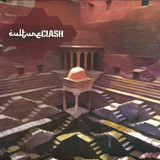
Forced to come up with a name, 'CultureClash' seemed like the obvious choice, even if the members of Awax were only creatively sparring among themselves. Along with the term 'ethno-techno', slightly dubious to a hopefully more conscious Western audience in 2017, these were the only guiding principles to the quietly ambitious project that soon combined cutting-edge machine rhythms with samples sourced from everywhere from Bolivia to Togo, and inspired by everything from Ravi Shankar's epic soundtrack to the Oscar-winning movie Ghandi, to the technical limits of their own setup requiring a dazzling degree of cut-and-paste work. Some tracks even emerged out of academic studies within the ethnomusicology department at The University of Amsterdam.
The show aired on October 2nd, 1992, recorded in one blistering take and without any rehearsals, traversing a huge variety of tempos and styles. If the performance wasn't seamless, it was undeniably thrilling, fresh and ambitious. As such, several labels, including Fernandez's aforementioned Irdial Discs expressed an interesting in commercially releasing CultureClash, while another imprint proposed a series of twelve-inches and an album. But the sheer complexity of the project meant that it never saw the light of day, while the trio embarked on different journeys ahead, both creative and personal.
Twenty five years later, and the original CultureClash lineup and founding members of The Awax Foundation provide the sound of the first release from Lost Futures. An otherworldly, ambitious and optimistic compilation, accompanied by extensive sleeve notes from the trio, CultureClash is a timeless ode to experimentation in dance music's ever-overlapping culture.
Der Hip Hop Klassiker Von 1998 Ist Zurück.
2018 Zum 20. Jubiläum Erscheint Das Album Komplett Überarbeitet, Neu Abgemischt Und Remastert Auf Dem Hauseigenen Label 58beats In Neuem Gewand.
Anstatt Nur Das Alte Master Für Ein Einfaches Reissue Zu Verwenden, Haben Sich Die Jungs Von Main Concept Dazu Entschlossen Zum 20ten Jubiläum Des Langspielers Die Files Der Platte Neu Aufzumachen Und Das Album In Ein Zeitgemäßes Licht Zu Setzten.
Glam Aka Glammerlicious, Produzent Von Main Concept, Hat Allen Beats Einen Neuen Anstrich Verliehen, Alle Alten Maschinen Mit Den Original Files Beladen Und Das Album Komplett Überarbeitet Und Neu Abgemischt.
Die Tracks Wurden Editiert, Komplettiert, Erweitert, Teilweise Leicht Verändert, Oder Auch Gekürzt, Ohne Dabei Den Charakter Der Platte Zu Verändern.
Ein Reissue, Dass Diesem Klassiker Angemessen Ist.
Der Sender Puls (bayrischer Rundfunk) Hat Das Album Zum 20 Jährigen Jubiläum Mit In Die Br Ruhmeshalle Aufgenommen.
Flo Kreier (puls) Schreibt Über Main Concept - genesis Exodus :
- Freshe Skillz, Groovige Beats Und Die Heilige Realness: Main Concepts Zweites Album Ist Ende Der Neunziger In Diesen Punkten Nicht Zu Überbieten. Vielleicht Beginnen Deshalb Viele Andere Rap-crews, Gezielt Die Charts Zu Stürmen. -
- Mitte Der Neunziger Ist Hiphop In Deutschland Eine Puristische Angelegenheit. Bekannte Crews Tuckern In Mini-bussen Durchs Land Und Spielen In Kleinen Clubs. Niemand Trägt Goldketten Oder Ohrringe. Stattdessen Sind Baggypants Und Baseballcaps Angesagt. Und Die Meisten Raps Drehen Sich Um Ein Thema: Die Realness. Damit Ist Gemeint, Hiphop Ernst Zu Nehmen Und Nicht Nur Kohle Zu Scheffeln. Außerdem Geht's Darum, Diesen Echten Hiphop Zu Zelebrieren. In Dieser Zeit Bringen Die Münchner Main Concept Ihr Zweites Album "genesis, Exodus, Main Concept" Raus, Das Vielleicht Realste Deutsche Hiphop-album Überhaupt.
- rapper David Pe Ist Der Unterhaltsamste Mc, Den Der Deutsche Hiphop Bis Dahin Gehört Hat. Er Ist Wortgewandt, Witzig Und Schafft Es Auf Charmante Art, Auch Wissenschaft Und Philosophie In Seine Texte Zu Verbasteln. Dabei Klingt Er Aber Nicht Oberlehrermäßig. Eher Als Würde In Seinem End-zwanziger-körper Der Geist Eines 70-jährigen Stecken. Wie Ein Till Eulenspiegel Des Rap Schafft Er Es, Mystik Und Komik Zu Verbinden. Der Gipfel: Er Zelebriert Immer Wieder Eine Mystische Zahl, Die 58. Mit Viel Fantasie Spinnt Er Absurde Geschichten Um Diese Geheimzahl - Die Am Ende Nur Die Nummer Seiner Buslinie Ist.
- groovige Beats Statt Poppige Hooks
Glammerlicious, Der Musikalische Chef Der Truppe, Schafft Einen Seltenen Spagat: Einerseits Grooven Main Concepts Tracks Wie Hölle - Zu Jedem Beat Beginnt Man Sofort Mit Dem Kopf Zu Nicken. Dazu Kommen Fette Samples, Die Eine Perfekte Stimmung Aufbauen, Aber Nie Poppig Werden: Abwechslungsreich, Verspielt Und Irgendwie Augenzwinkernd.
"genesis, Exodus, Main Concept" Spielt Nicht Umsonst Auf Die Bibel An. Vielleicht, Weil Sich Die Jungs Vom Münchner Goetheplatz Damit Über Die Hiphop-dogmatiker Amüsieren, Die Sich Selbst Zu Ernst Nehmen. Vielleicht Aber Auch, Weil Die Platte, Wie Eine Offenbarung, Alles Auf Den Punkt Bringt, Was Der Deutsche Hiphop Dieser Zeit So Heilig Ist: Die Realness. -
Neville Watson returns to DBA with The Midnight Orchard, his first full-length in five years. Watson is a key figure on the electronic music scene at large and has made regular appearances on Don't Be Afraid, as well as on celebrated imprints such as Crème Organization, Clone and Rush Hour, where he released some of his best-known work alongside Kink.
In a crowded landscape of factory-line jack trax and synthesis for the sake-of-it, it's little surprise that Watson's physical, arresting takes on house and techno have been such a staple in the record bags of the world's leading DJs for the past twenty years. Throughout The Midnight Orchard, Watson seamlessly bridges his futurist leanings gleaned from a lifelong commitment to electronic music with the anarchic spirit of his acid-house heritage.
The record still finds catharsis in the relentless pulse that has defined Watson's life since his early residencies where he peddled ecstatic escapism to towns on the commuter belts of London, notably via his involvement in seminal Reading party Checkpoint Charlie. However, there's a more somber, arguably introspective and perhaps even somewhat wistful tone at play throughout. This might surprise those who've invested their feet and hearts in tracks with titles like Night Of The Inflatable Muscleheads and Everything I Know About House (I Learned on Facebook).
In a move away from his previous musical leanings, The Midnight Orchard embraces a distinctly more UK sound, unapologetically chronicling the paranoia that can be found skirting the euphoria of rave. And while Watson has avoided the eyebrow-arching pitfalls of the self-serious DJ full-length, it must be noted that the rhythms here are more skittering, the atmosphere less jubilant and the signature lo-fi hiss, fully popularised and bastardised since Watson's last album, has taken on a more fore-boding tone.
Meanwhile, the atmosphere elsewhere harks to a more idealistic world, particularly on the cascading and subdued Eine Kleine Emusik, and the euphoric We Own The Night. Twin Tub and Reet Dux provide dubby, sensual moments of escapism. There's uncompromising, hard-nosed rhythms on Dee Sides, and cosmic electro throughout 4am in the Trees. The album then concludes in a bold fashion with Displays of Brotherly Love and the resolutely hopeful atmosphere of Phosphorescent.
Reflecting decades of immersion in club culture and taking inspiration from wider-found sounds, The Midnight Orchard is loaded with thrilling parallels and a sense of genuine unpredictability. Tracks like Come On In and Anarcho Midnight are layered with unease, utilising pitch dark arpeggios and skittish, growling electronics to devastating effect.
Having dedicated the last eighteen months of his life to the studio, Watson has rec-orded what is undeniably the most unexpected music of his career. Amid the dark-ness, The Midnight Orchard has borne fruit.
For the last 20 years London-based author and party organiser Tim Lawrence has dedicated himself to excavating the history of New York City party culture and bringing some of the most powerful aspects of that culture to London's dance scene, from where it has ricocheted around the world. Having conducted the first set of major interviews with David Mancuso, Lawrence started to put on Loft-style Lucky Cloud Sound System parties with David and friends in London in June 2003. In early 2004 he published Love Saves the Day: A History of American Dance Music Culture, 1970-79, which tracked the influence of the Loft on the wider New York DJ, dance and disco scene. In 2009 his biography of the iconic musician Arthur Russell became the first book to map the wider downtown music scene. These beautifully written and politically insightful histories have educated, inspired and celebrated the previously overlooked foundations of contemporary dance music.
Lawrence's most recent publication, Life & Death On The New York Dancefloor, 1980 - 1983, published in late 2016, shines a light on 'one of the most dynamic and creative periods in the history of New York City'. Falling between the more regularly celebrated sounds of disco, house and techno, the period produced a uniquely hybrid series of sounds that never acquired a settled name. This led them to be largely ignored by historians and even DJs, yet the power of the period's music and the scenes it birthed, Lawrence argues, remains undeniable. Met with a rapturous response, Life and Death On The New York Dance Floor saw Lawrence on the road for most of the next year as he spread the word about the characters, the records, the clubs and the bands that shaped the post-Disco, post-Punk, and burgeoning Hip Hop landscapes of New York City during the early 1980s—a period when freedom still ruled.
This, the first of a 2-part sonic tribute to the 1980 - 1983 era as well as a musical companion piece to Life & Death On The New York Dance Floor sees recognised musicians (David Byrne of Talking Heads) nestle up alongside the belatedly recognised (Arthur Russell's Dinosaur L and Loose Joints, and Suicide's Alan Vega) and the downright obscure (Gray, 2 Teens Kill 4 and Tuxedomoon). An indication of what's to follow, Dinosaur L's original album version of 'Go Bang' has been dramatically overshadowed by the definitive François Kevorkian remix yet received regular play by David Mancuso and remains an enthralling experimental Arthur Russell jam.
Lovingly curated across 2 slabs of vinyl, the album introduces listeners to a stunning array of sounds, styles, vibes and feelings that encapsulate this most fertile and forward-thinking era, when music, fashion, sound system innovations, leaps in music technology, a DIY attitude and a freedom from corporate politics combined with extraordinary expressivity. All music contained within this album has been hand-picked and programmed by Tim Lawrence. It represents a selective yet rich introduction to one of the most extraordinary periods in New York City's epic musical history.
This is the first release on Reappearing Records, a label led by Tim Lawrence and distributed worldwide by Above Board distribution. Licensing courtesy of Tracksuit Music. Mastering by Optimum Mastering, Bristol UK. Artwork & design courtesy of Atelier Superplus. 2018.
out of Stock
Last delivered 3 years ago available to reorder, subject to availability
The demons of night are out again: Seoul's one-stop shop creative collective Byul.org returns this fall with its third international album, entitled Nobody's Gold, out via Alien Transistor (worldwide) and the group's own Club Bidanbaem imprint (South Korea). Comprising 14 new songs, it's a dizzying, haunting affair that channels the group's manifold influences and references points (from post-punk to Stockhausen and back via club culture) and yet sounds intriguingly coherent.
Moving in and out of the shadows, Nobody's Gold breaks forth as pure sonic landscape - a universe of its own, folding and unfolding into both more experimental patterns, yet also with occasional hooks and dark catchy structures, gracious build-ups flickering among the hazy roar and thunder. After the screak and squeal of 'Lamb with a Wolf Mask,' the foreboding sounds of 'The Museum of The Two of Us' segue into a synthesized party tune about a missing friend being chased by police ('Nari Yuko Yin'), one of several vocal tracks with a sinister edge. Taking things up another notch, 'Friendly Enemies' is probably the closest this group will ever get to creating a stadium-ready anthem. On the other end of the spectrum, 'The Place Where Designers Go To Die' is a magnificent void with an immense and irresistible undertow...
Never too jolly (not even while 'Day Drinking at a Seaside Town' or during takeoff via epic pop tune 'Bats We Are'), Nobody's Gold compiles soundscapes with a very tangible, corporeal presence - iridescent sonic sculptures placed in unlikely settings (e.g. outer space, see: 'Dirty Dirtiness'), born at the fringes where night blends into day and vice versa.
Inspired by everyday life, half-remembered drug/club experiences, Pascal Quignard's disturbing La haine de la musique, Stockhausen and Bill Evans, the new LP sees the collective remain true to its DIY foundations while repeatedly questioning our listening habits and 'the exaggerated love for the concept of love,' as they put it.
Founded around the dawn of the millennium as a group of poetry-loving friends who'd occasionally meet for drinks, Byul.org has long become an extremely prolific and versatile collective within Seoul's scene: Main song-writer TaeSang Cho and his mates Yu Hur, Jowall, YunYi Yi, SuhnJoo YI, HyunJung Suh, and SoYoon Hwang went from publishing to recording, from releasing tunes to design, art direction and more. Although their list of clients includes Atelier Herme`s and the Venice Biennale (they did the Korean Pavilion twice), the group still remains a drinking circle of close friends at its core: Pals who simply like to create and carouse and dream and live and perform and play tunes together.
French duo Ligovskoi are to release Esam, their second artist album and first on Field Records. It features eight expertly crafted tracks that take the listener on a spacey and hypnotic journey towards inner bliss. Formed by Nikolai Azonov and Valerio Selig in 2010, Ligovskoi once again draw on a sound palette that includes samples, synths, vocals, feedback, guitar and field recordings that merge in a painterly and romantic form of music. It recalls vast landscapes, abstract patterns and poetic movement. The title 'Esam' refers to a small, isolated mountain located on the moon, and the album is a journey to a similarly otherworldly landscape absent of human life. It features free improvisations, repetitive patterns and experimental materials that convey a wide range of emotions and styles from weightless shiny atmospheres to dark, heavy and swarming textures, leading the listener to deep contemplation. 'We spend a lot of time exchanging thoughts and feelings about the experiences we had while creating and listening, like old friends looking at clouds and discussing the shapes they see. By publishing our music, we hope that listeners will recognise their own feelings and that they will understand or feel something in common with us.' From sombre musical landscapes made from lingering drones to more uplifting, light emitting tracks, this is a slow burning but high impact album. Tracks like 'Behaim' suspend you in comforting sound, the title track prompts inward reflection and the likes of 'Cortage' is the sound of being listen to the heavens. Esam is a transportive, thoughtful album that takes you deep into a unique musical world.
The body never lies. Every dance is a graph of the heart. Nothing is more revealing than movement.
These are the words of Martha Graham, one of the greatest American dancers and choreographers of the 20th century. Massimiliano Pagliara might as well have them tattooed on his chest, close to his heart, being an accomplished dancer, too. He has studied contemporary dance in Milan and Berlin, and went on to dedicate his life to transforming experience into movement, be it musical, physical, or spiritual. Massimilano's message is clear: Don't stand still. Don't keep looking back. Know where you are coming from, but don't remain petrified by the past. Take a chance at Endless Change, instead. Move on! Just like Massimilano did.
Stemming from Lecce province, an area at the south-eastern-most tip of Italy, Massimilano has been based in Berlin for several years where he's been one of the main forces behind recombining the city's hardboiled techno scene with an often overlooked sensibility for the soft and the tender. Call it underground disco passion. Massimilano's last and sophomore album, With One Another, released in 2014, was about celebrating the joy of human encounters and in parts seemed like a big get-together with like-minded artists and friends (among them nd_baumecker, Lee Douglas, and Credit 00). The record quickly hit the number one spot in Groove magazine's album chart - and its creator hit the road.
Besides his busy DJ schedule and far from the usual club circuit routines, Massimilano dedicated himself to intense travelling and exploring the world anew. 'I felt like I have lived more than ever,' he states. 'Getting to discover all these beautiful places around the world and meeting so many lovely interesting people, has inspired me in many different ways. I feel enriched.'
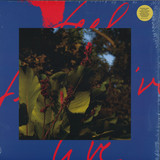
The result of these experiences is Feel Live, Massimiliano's third full-length endeavour. It was recorded in several intimate, sometimes improvised studio settings between Los Angeles, Portland, and Massimiliano's homebase in Berlin as well as at airports and on intercontinental flights high up in the sky. Featuring vocals by Private Agenda, Peaking Lights, Kim Anh and instrumental contributions by Fort Romeau, Tim K, and Jules Etienne, Feel Live is Massimilano's most playful and imaginative work to date. It's as emotional as sensual, as vibrant as the first ray of light after a thunderstorm has cleared the air.
Is it awkward or odd to call this record jazzy Presumptuous to pinpoint its spacial, almost orchestral qualities Unfair on the ruling Cosmic powers to highlight its aspirations of founding a new land of Balearic Harmonia and getting down at a huge fertility rite with electro enthusiasts and house lovers Not one bit. Feel Live is pure grandeur and elegance. It feels like an eternal movement.
Martha Graham has dedicated her whole life to dancing. 'It's permitting life to use you in a very intense way,' she said. 'Sometimes it is not pleasant. Sometimes it is fearful. But nevertheless it is inevitable.' Massimilano couldn't agree more. His advice when facing the inevitable: 'Live what you are feeling, feel what you are experiencing, good or bad, it is an experience.'
For our fifth vinyl episode, the word is given to Keikari. The French producer lands on Binary Cells with "Teoria", an EP composed of 3 original gems full of deepness and energy shaped for dancefloors and sweaty warehouses. Teoria also features a remix from Argentina based producer Alderaan. Strong vibes all the way !
out of Stock
Last delivered 4 years ago available to reorder, subject to availability
A lost ambient cosmic gem from Liquid Liquid founding member Dennis Young is getting a long-overdue vinyl reissue! Young, the percussionist and marimba player in the seminal New York art-wave group, recorded a series of cassette-only releases in the '80s after Liquid Liquid disbanded. A couple of these were picked up at the time for Korean release, which is where Daehan Electronics, a South Korea-based label dedicated to tracing the history of electronic music in the land of the morning calm, comes in.
Quest was one of these albums, part of a biorithmically-aligned New Age serie, each album meant to be heard on specific days of the week. DE has worked with Young to remaster the the album for this new release, bringing out the full warmth of the analog synthesizers used to create it. It is the first in a series of projected collaborations with Young, which will delve deeply into both the scarce cassette issues and other, unreleased material newly discovered on tapes. Liner notes outline the history of the record and include Young's own look back at the making of Quest.
LP,180g, 2018 REISSUE - REMASTERED FROM ORIGINAL TAPES, CAREFULLY REPRODUCED ORIGINAL ART
Released in 1976, Distinctive Themes / Race To Achievement is legendary arranger Nick Ingman exploring the two distinct ideas of 'impressive themes varying in style from 'Basie to Elgar'' and 'a study in the pressure and rewards of achievement'.Distinctive Themes is a veritable indulgence of variously-tempoed, full orchestra, big band workouts, from relaxed swing to more propulsive themes. The progressively building 'Expanding Markets' is a true highlight, with its rolling pianos, contemplative electric guitar solos and moody horns over skipping beats.
The dramatic 'Against The Odds' is another stand-out.
Race To Achievement is all rugged funk with stabbing chords and strutting horns and it's probably our favourite side. Of course we have to acknowledge the fantastic 'Tense Preparation', sampled by Prince Paul and Dan The Automator for Handsome Boy Modeling School's seminal 'Magnetizing' with Del Tha Funky
Homosapien. But the whole side's range from tense underscores to fast and punchy chase themes makes this is a gem of the KPM catalogue.
As with all ten re-issues, the audio for Distinctive Themes / Race To Achievement comes from the original analogue tapes and has been remastered for vinyl by Be With regular Simon Francis. We've taken the same care with the sleeves, handing the reproduction duties over to Richard Robinson, the current
custodian of KPM's brand identity.
Bastard Jazz is proud to present the next installment of our long running Tempo Dreams compilation series. As with previous volumes of the compilation, we've tapped an established artist that we're big fans of to shine a light on their personal favorite producers, and compile an album up of all unreleased music from emerging & underrated young talent. And with Volume 5, we're happy to welcome in the Los Angeles based but globetrotting selection of Free The Robots.
Rooted in Santa Ana, CA, Chris Alfaro aka Free the Robots has spent over a decade taking his craft to audiences around the globe. Known as one of the pioneering artists to come out of LA's infamous beat movement, the energy and technical skill behind his live performances have landed him among the greats, sharing stages with Dj Shadow, Prefuse 73, Flying Lotus, to Afrika Bambaataa. Crafting stories to tell with his ever-evolving solo project Free the Robots, he has always had the ability to jump in and out of other worlds inspiring a unique signature sound that hints at jazz, psych, electronic, and hip hop, while remaining un-genre-fiable.
Staying almost permanently on the road, Chris has come across an array of artists and scenes around the world. Different tours and temporary living situations have landed him in the middle of both the DIY underground and more mainstream clubs and stages. Some artists he's connected with have either kept it proudly local or breached international borders. Underrated, unknown, or already on the brink; these are just a few of the people that have crossed paths with Free The Robots. He's chosen these songs as a representation of some of the vibes that inspire his music: Jazz, Psychedelia, Dirtwave, Beats, and a little bit of Future Funk make up Volume 5 of his Tempo Dreams series.
As with all previous volumes, the compiler has produced a track exclusively for the album, which Chris delivers in the bass heavy, South East Asian vibes of "Nasi Goreng" (also available on a limited edition 7" with another unreleased FTR track). Other producers included on the album include Mophono, Never Ending Echo, Kuromoji, RSI-MSK, The Breathing Effect, Cazal Organism, Lefto, Chubby Boss, Caliph8, TITLE, Nois IV, The Heavy Twelves, Mu. and Markey Funk.
CODY BLACK was born and raised in Cincinnati in the shadow of King Records where he cut this landmark Northern Soul 45 'I'm Slowly Molding' in 1968. However, it didn't impact on the UK soul scene until the mid-Eighties when, at last, it finally hit at the ground-breaking 'Top Of The World' club in Stafford. Still a mainstay of the All-Nighter scene to this day and commanding prices in the region of $1,000. Black recorded a string of 45s for as many labels including the highly prized 'It's Our Time To Fall In Love' on 'GIG' and the sublime 'Mr Blue' on 'D-Town'.
CHARLES SPURLING was a fellow Cincinnati music hustler working as an A&R man at King Records when he cut this pounding Northern Soul dancer in 1967. AWESOME!
Beyond the Pub is a collection of tracks for the after hours. From drunken treks to the filthy kebab shop to outer body experiences in the icy wonderlands, Cosmic Pint Glass tells the stories that happened after leaving the Social House.
In Vol 1. Mark du Mosch adds tension, FRAK takes you on that boozy journey to the Kebab Shop, Julian G reflects on the beauty of a frozen wonderland and Lie of the Land takes you on a introspective acid journey. Trip!
Skin Town's unexpected return with their new album 'Country' finds the duo upping the already high bar set on their striking dark pop gem debut 'The Room' with a dauntless artistic statement that trades clever posturing for vulnerability. Yielding their prowess with more restraint, Skin Town's 'Country' hits harder and cuts deeper - doubling down on their narcotic cocktail of strong R&B hooks, spacious bewitching productions, and marked sense of melody that puts vocalist Grace Hall and multi-instrumentalist Nick Turco in a class of their own.
Many saw that potential on their debut with support from Dazed, Interview, The FADER, KCRW, as well as artists like Tinashe shouting out Skin Town. Lamenting on the duo's unmistakable chemistry, Pitchfork says, "Turco's synthscapes are huge and scene-stealing, while Hall's husky voice strikes a glorious medium between Abel Tesfaye and Sade." Their latest is even more potent, a particular strain of sad dance music that feels timeless and raw.
'Country' refines Skin Town's minimal framework of tethering hip-hop/R&B rhythms to Hall's smoky, precise phrasing exploring richer atmospheres and darker concerns. Written and recorded over 3 years, the album touches upon depression, loss, hedonism, poverty, rebellion, sex work, empowerment, and love's contradictions. The album's completion was sidetracked many times with Hall suffering a string of life-threatening mysterious immune system ailments, as a result there is a lot of pain and joy in this record, made with literal blood and tears.
The opener "Bad" signals at this departure from their upbeat predecessor stripping away the beats, relying on the interplay between Turco's ringing chords, the enveloping synthwork and Hall's melancholic, rhythmic intonations. "Mute" brings back the drums, couched in a slinking hip-hop beat and a creeping synth lead. Throughout the record, Turco's productions glean from an eclectic, disparate mix: melodic Amiga tracker music, Metro Boomin', New Age, The-Dream while Hall seems ever more comfortable exploring syncopation and half-rap/half-sung excursions. This is inventive, uncanny pop music where Enya, Offset, Zola Jesus, and Future inhabit the same space.
Skin Town's unerwartete Rückkehr mit ihrem neuen Album "Country' hebt die sowieso schon recht hohe Messlatte ihres markanten Dark-Pop-Juwelen-Debüts "The Room' noch ein wenig höher. Skin Town's - Country" schlägt härter zu und schneidet tiefer - und verdoppelt ihren narkotischen Cocktail aus starken R&B-Hooks, einer großzügigen, betörenden Produktion und einem ausgeprägten Sinn für Melodie. Das ist erfinderische, unheimliche Popmusik, bei der Enya, Offset, Zola Jesus und Future im selben Raum leben.
Viele sahen dieses Potenzial bei ihrem Debüt und so gab es reichlich support von Dazed, Interview, The FADER, KCRW sowie Künstlern wie Tinashe. Pitchfork hob die unverwechselbare Chemie des Duos vor und sagte: "Turcos Synth-Landschaften sind riesig und szenenraubend, während Halls heisere Stimme eine Klasse für sich ist, angesiedelt zwischen Abel Tesfaye und Sade.'
Country' verfeinert den minimalen Rahmen von Skin Town, Hip-Hop/R&B-Rhythmen mit Hall's rauchigen, präzisen Vocals, die weitere Atmosphären und dunklere Anliegen erforschen. Das Album behandelt verschiedenste Felder von Depressionen, Verlust, Hedonismus, Armut, Rebellion, Sexarbeit, Empowerment bis zu den Widersprüchen der Liebe. Die Fertigstellung des Albums wurde mehrmals aufgeschoben, wobei Hall eine Reihe von lebensbedrohlichen, mysteriösen Immunsystem-Krankheiten erlitt, was dazu führte, dass viel Schmerz und Freude auf dieser Platte zu finden sind, die sprichwörtlich mit Blut und Tränen gemacht wurde.
Freedom To Spend's first catalog wide deep dive into an artist's career focuses on four albums from Rimarimba, beginning with 1983's Below The Horizon, followed by 1984's On Dry Land, 1985's In The Woods, and finally, the once-imagined, now-realized assembly of 1988's Light Metabolism Number Prague.
Somewhere out there around the turn of the 1980s, to the left of the post-punk crew, to the right of the minimalists, and surfacing with a friendlier face than the dour industrialists of the time - there existed, seemingly unbidden, an entire, networked, tape-trading community; a community that crossed continents and oceans, that relied on the postal service to do its bidding; a community full of humble visionaries and lost, misunderstood, or just plain ignored home steeped genius.
Exploring that thicket of weirdness in the UK wild, you'd likely stumble across labels like Cordelia, Hamster, and Unlikely; compilations like the should-be-legendary Obscure Independent Classics series, or the Real Time cassettes; and inexplicable one-offs like The Deep Freeze Mice, Jody & The Creams, R. Stevie Moore, Leven Signs, Jung Analysts, and Rimarimba.
Rimarimba was the project of Robert Cox, based in Felixstowe, on the seaside in Suffolk, UK. Rimarimba was not Cox's first entry into the world of recorded music, but was the first time he explored, most perceptively, the parameters of a particular musical mode: one where minimalism is removed from its 'high-art' mantle, Cox inveigling its practices in amongst the doit-yourself creativity of a burgeoning and beguiling underground, letting the music breathe - and most importantly, letting it play, gifting it with imagination.
The first in the Rimarimba series, 1983's Below The Horizon, feature Cox in exploratory mode, figuring out exactly how to make his music. There's a pleasure in hearing how he feels out the parameters of his aesthetic, here - there's a boxy minimalism, slightly clunky and charming with it, that reflects the home-spun, improvisatory tenor of the compositions. It's ambitious music, though, wanting to do the most and the best it can with its limited resources. Cox himself admits to not being 'pre-wired' to making this music, but that only makes it more compelling: 'Were I to be properly musical, it wouldn't actually work as well in some ways; it'd be just another album of contemporary clattery music.'
On October 5, Freedom To Spend will offer Below the Horizon in a one-time edition of 750 copies, followed On Dry Land and In The Woods on January 8, 2019 and February 22, respectively. Each album features artwork reinterpreted from its original edition by Will Work For Good, and accompanying abstracts by Jon Dale.
Life is simple. Sometimes you have some big idea, then you produce good music staff and this process needs no cooperation at all. It happens especially if your name is Jacek Sienkiewicz. Then You just make your very own EP with you original mixes only. Thi s is it, so simple.
What can you expect this time
You know, as usual on IDO label, carefully crafted, superior sound quality and music that every techno junkie can't miss.
How can we describe the music Is it this time a deep space journey or just long travel to land of ice and rocks Well. Maybe we'll leave all synesthetic experiences to you...
Some things, however, can be predicted. If you're familiar with Jacek's creations, listening the tracks from this EP will make on you at lest two impressions. First of all, you'll be charmed because you'll find the music here for which you love Jacek so much. Then another tracks and the second impression that will make you say out loud "Wow this is really Jacek's music". So, boys ang girls, isn't it a double win situation And for the end of this story we have a short advice related to experiencing this EP. Just play whole EP once and then... do it again.