
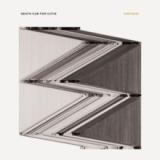
- 1: Elephant Talk
- 2: Frame By Frame
- 3: Matte Kudasai
- 4: Indiscipline
- 5: Thela Hun Ginjeet
- 6: The Sheltering Sky
- 7: Discipline

Sermon On The Rocks is Josh Ritter's eight studio album, released in 2015. Singles from the album include "Getting Ready To Get Down" and "Homecoming." According to Ritter, the album is "messianic oracular honky-tonk." Produced by Trina Shoemaker and Josh, the 12-song album was recorded over two weeks at New Orleans’ The Parlor Recording Studio and features Matt Barrick from The Walkmen on drums, Zachariah Hickman on bass, Josh Kaufman on guitars, and Sam Kassirer on keyboards. Josh Ritter is the definition of an experienced songwriter. After graduating from Oberlin College in 1999 Ritter devoted his life to a songwriting career, releasing albums independently and garnering word-of-mouth popularity. He eventually caught the attention of Irish- songwriter Glen Hansard (writer of the song 'Falling Slowly' from the movie Once) and was invited to be the tour opener for his band The Frames. This then resulted in Josh gaining international success, with his third record 'Hello Starling', becoming a charting hit in Ireland. His songs have been featured on the TV show Parenthood, and in movies like The Other Woman and Typeface. Josh Ritter has so far released 7 studio albums, is an author, husband, father, and is considered one of the best living songwriters by Paste Magazine.

Following the release of the 7-inch "La Tua Amica Più Cara / Corteggiamento Lento" last September, Marengo is thrilled to announce Lumiero's debut LP, Il Primo Grande Disco Di Lumiero. Distributed by Four Flies Records, the album will be available starting Friday 5 December.
Featuring a timeless voice and a sophisticated touch, Lumiero sends poetic postcards from Milan and its Barona district that expertly blend auteur pop, chanson, and 60s exotica. Born in '97, Lumiero is the city's new chansonnier. Drawing inspiration from both the core and fringes of Milanese life, he offers a romantic, nuanced, yet playfully irreverent look at contemporary Italy and its profound longing for new horizons.
Marquis's compositions and arrangements provide the perfect backdrop for Lumiero's captivating melodies, acting as both canvas and frame. Meanwhile, the lyrics explore passionate romances, fleeting summer escapades, and a nation striving to reconnect with its core identity.
Moving between exotic waltzes and theatrical atmospheres, Lumiero's full-length debut is imbued with lightheartedness, underpinned by elegant songwriting and vocals that combine irony and melancholy. Living fully in the present but rooted in tradition, the album's tracks are little musical gems that bridge eras and generations, infusing the classic style of Italian songs with a modern, elegant, and cinematic quality.
And so, as time comes full circle, we find ourselves at a new beginning.
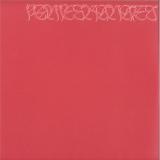
It's been 10 years since Pomegranates - Nicolás Jaar's unofficial/alternative soundtrack to Sergei Parajanov's 1969 film The Color of Pomegranates - was first released, and to highlight this occasion we are reissuing the album on vinyl, with the first edition (a collaboration with the label Mana) having long been out of print.
Longer and slower-releasing than his other albums, Pomegranates often parallels the cinematic epic on which it’s based, with ideas pursued over long timelines and across dark landscapes, assembling elements and moods from the aesthetic and folkloric landscapes of Armenia. Jaar’s identity is perceived within this, folding in his heritage as Palestinian and Chilean as he attempts to build a musical architecture outwards that frames as much of the mess and sprawl of life as possible; using a language that investigates the movement and fluctuation of his own artistic career and character similarly to the film’s tracing of the coming of age of the young poet, Sayat-Nova.
At times, Pomegranates feels profoundly intimate, as though looking through the archive of a friend’s music and discovering the accent and common currency that lives within each of these tracks. Much of Jaar’s most elegant and touching melodic work is nestled here, its power residing in its simplicity and willingness to speak to the heart and not the mind of the listener.
In the text document included in the first freely distributed version of the album in 2015, Jaar writes that the album was conceived during a moment of change, and that the pomegranate became an icon that heralded that passage of time. The physical publication of Pomegranates closes one door whilst opening another, keeping promises and marking a significant point in the career of an artist who restlessly reinvents himself, with a document that illustrates a common language of lyricism, freedom, and emotional resonance linking his many paths and projects

‘Workaround’ is the lucidly playful and ambitious solo debut album by rhythm-obsessive musician and DJ, Beatrice Dillon for PAN. It combines her love of UK club music’s syncopated suss and Afro-Caribbean influences with a gamely experimental approach to modern composition and stylistic fusion, using inventive sampling and luminous mixing techniques adapted from modern pop to express fresh ideas about groove-driven music and perpetuate its form with timeless, future-proofed clarity. Recorded over 2017-19 between studios in London, Berlin and New York, ‘Workaround’ renders a hypnotic series of polymetric permutations at a fixed 150bpm tempo.
Mixing meticulous FM synthesis and harmonics with crisply edited acoustic samples from a wide range of guests including UK Bhangra pioneer Kuljit Bhamra (tabla); Pharoah Sanders Band’s Jonny Lam (pedal steel guitar); techno innovators Laurel Halo (synth/vocal) and Batu (samples); Senegalese Griot Kadialy Kouyaté (Kora), Hemlock’s Untold and new music specialist Lucy Railton (cello); amongst others, Dillon deftly absorbs their distinct instrumental colours and melody into 14 bright and spacious computerised frameworks that suggest immersive, nuanced options for dancers, DJs and domestic play. ‘Workaround’ evolves Dillon’s notions in a coolly unfolding manner that speaks directly to the album’s literary and visual inspirations, ranging from James P. Carse’s book ‘Finite And Infinite Games’ to the abstract drawings of Tomma Abts or Jorinde Voigt as well as painter Bridget Riley’s essays on grids and colour. Operating inside this rooted but mutable theoretical wireframe, Dillon’s ideas come to life as interrelated, efficient patterns in a self-sufficient system.
With a naturally fractal-not-fractional logic, Dillon’s rhythms unfold between unresolved 5/4 tresillo patterns, complex tabla strokes and spark-jumping tics in a fluid, tactile dance of dynamic contrasts between strong/light, sudden/restrained, and bound/free made in reference to the notational instructions of choreographer Rudolf Laban. Working in and around the beat and philosophy, the album’s freehand physics contract and expand between the lissom rolls of Bhamra’s tabla in the first, to a harmonious balance of hard drum angles and swooping FM synth cadence featuring additional synth and vocal from Laurel Halo in ‘Workaround Two’, while the extruded strings of Lucy Railton create a sublime tension at the album’s palatecleansing denouement, triggering a scintillating run of technoid pieces that riff on the kind of swung physics found in Artwork’s seminal ‘Basic G’, or Rian Treanor’s disruptive flux with a singularly tight yet loose motion and infectious joy. Crucially, the album sees Dillon focus on dub music’s pliable emptiness, rather than the moody dematerialisation of reverb and echo. The substance of her music is rematerialised in supple, concise emotional curves
and soberly freed to enact its ideas in balletic plies, rugged parries and sweeping, capoeira-like floor action. Applying deeply canny insight drawn from her years of practice as sound designer, musician and hugely knowledgable/intuitive DJ, ‘Workaround’ can be heard as Dillon’s ingenious solution or key to unlocking to perceptions of stiffness, darkness or grid-locked rigidity in electronic music. And as such it speaks to an ideal of rhythm-based and experimental music ranging from the hypnotic senegalese mbalax of Mark Ernestus’ Ndagga Rhythm Force, through SND and, more currently, the hard drum torque of DJ Plead; to adroitly exert the sensation of weightlessness and freedom in the dance and personal headspace.

Fides Records continues its 10-year anniversary with the second chapter X2 following the monumental 10Y OF FIDES: Mixed by Z.I.P.P.O. True to the label’s decade-long pursuit of underground sound and vision, this new instalment deepens the narrative with six striking contributions that embody the raw, hypnotic, and modular essence of the Fides universe.
The A-side opens with Setaoc Mass’s “Quanta” a stripped down, mental techno piece driven by tension and precision. Seddig follows with “Seismic” an intense, driving composition marked by rugged modular energy and deep rhythmic focus, while Casual Treatment’s “Hoover” injects elasticity and bounce through detailed sound design rooted in French minimalism.
Flipping to Side B, Holden Federico’s “Tactics” timeless track based on a 909 framework and a melodic core that balances power and elegance. Augusto Taito’s “No Eye Contact” unfolds as an immersive, restrained groove while Asymptote’s “Encounters” closes the record with cinematic precision, a contemplative yet physical finale true to the Fides aesthetic.

We’re happy to announce the “Planetary Shift” EP by our friend O-Wells with an additional remix by Bangkok’s finest Sarayu from More Rice. An EP that combines friendship and a long overdue Ozelot-cosmos release. After we heard “Planetary Shift” a while ago for the first time, we kept insisting on releasing it- Now we’re happily presenting it to you in the form of a 4 track EP.
The record orbits around O-Wells’ signature style: dub-inflected drums, slithering synth lines, and percussive patterns that never sit still. There’s a sleek futurism to these tracks, but they feel worn-in, like spacecraft that have already charted the edges of known space. Across the EP, O-Wells embraces tension and release—rolling low-end pressure that swells, only to dissolve into weightless melodic fragments.
The result is music that feels in constant flux, forever shifting through sonic terrain without losing its pulse. Anchoring the EP is a remix from Sarayu, a key voice from Southeast Asia’s flourishing electronic music scene. Known for threading traditional rhythmic sensibilities into contemporary club frameworks, Sarayu flips O-Wells’ abstract groove into something tactile and urgent. His version turns the track inside out—primal percussion and humid atmospheres pushing the original’s spacious minimalism toward a more grounded, earthy palette. It’s a vital rework that expands the release’s global reach, bridging Frankfurt and Bangkok through the shared language of rhythm and friendship – Overall, the reason why we do what we do.

Nora is back! This is a brand-new 2025 EM Records re-pressing of Nora Guthrie's ultra-rare "Emily's Illness", a lost gem of songcraft originally released in 1967, in the same 7-inch vinyl format (b/w "Home Before Dark") as the original. Featuring the radiant vocals of the then-17-year-old daughter of Woody Guthrie, "Emily's Illness" was written by Eric Eisner (The Strangers) and impeccably arranged by Artie Schroeck. A romantic amalgam of psychedelia, pop, and acid-folk, informed by the harmonic and rhythmic subtleties of João Gilberto and jazz. Both songs here are wistfully melodic gems, framed by lovely orchestration.

Sugaring a Strawberry, the sophomore record from Julia, Julia, is a study in coming undone—on purpose. Recorded at COMA, Julia Kugel's home studio, and mixed through a custom Flickenger clone, the album drifts in and out of clarity like memory itself. It's emotionally retrospective, creatively unvarnished, and deeply human. You can hear it in the hiss, the warmth, in the vocals so raw they're like an open window. These songs weren't engineered for perfection. They were built to breathe. Her long-time collaborator and husband, Scott Montoya, mixes it all so loosely that you can hear the air between tracks— a space that makes the music feel inhabited rather than recorded.
"Bound" opens the album like a secret passed between sisters, solemn and unspeakably close. It begins with the softest of touches: hushed guitar, a near- whispered delivery that carries the intimacy of someone singing only for one other person. It's a love song, but not romantic, more ancestral in the way long bonds can be. All glow and undercurrent, "I Know," is like hearing someone hum through a wound. The track arrives as if it had been waiting, coiled and complete, to be sung. Its pulse is slow but insistent, anchored on a hypnotic loop and a vocal that's half-incantation, half-confession. One of the most outward-facing songs on the record, "Feeling Lucky," opens like a cigarette flicked in the dark– smoky and a little bit slick. Built on a skeletal beat and a nearly detached vocal, it leans into a sarcastic swagger that barely masks the ache beneath. The delivery is droll and glazed, the instrumentation is sparse and a little woozy, leaving space for her voice to sway—a shrug of a song, stylish in its sadness. "A Love That Hurts" drifts in on soft, fingerpicked guitar and a dry, close-mic vocal that feels both haunted and immediate. The mix is stripped down and analog-warm, letting tape hum and silence frame the emotion. Julia sings like she's remembering something she doesn't want to, each line a slight unraveling. Like the rest of the album, "A Love That Hurts" doesn't push toward resolution. It sits in the ache, sifts through it, makes it beautiful.
Sugaring a Strawberry doesn't seek catharsis so much as stumbles into it. There's a quiet volatility to these songs like they might fall apart if you press too hard. It moves in shadow and softness, asking questions it doesn't answer. It doesn’t end with closure. It ends with truth.

Psychic 9-5 Club marks the beginning of a new chapter for HTRK. It's an album that looks back on a time of sadness and struggle, and within that struggle they find hope and humour and love. It's Jonnine Standish and Nigel Yang's first album recorded entirely as a duo— former band member Sean Stewart died halfway through the recording of their last LP, 2011's Work (Work, Work).
Though the record is instantly recognisable as HTRK—Standish's vocal delivery remains central to the band's sound, while the productions are typically lean and dubby—they've found ample room for exploration within this framework. Gone are the reverb-soaked guitar explorations of 2009's Marry Me Tonight and the fuzzy growls that ran through Work (Work Work). They've been replaced with something tender, velvety and polished. This is HTRK, but the flesh has been stripped from their sound, throwing the focus on naked arrangements and minimalist sound design.
The album was recorded at Blazer Sound Studios in New Mexico with Excepter's Nathan Corbin, who had previously directed the video clip for Work (Work Work) cut "Bendin." Inviting a third party into their world was no easy decision, but in Corbin they found a kindred spirit. The LP was then refined and reworked in Australia at the turn of 2013, before the finishing touches were applied in New York during the summer.
Of all the themes that run through Psychic 9-5 Club, love is the most central. The word is laced throughout the album in lyrics and titles— love as a distraction, loving yourself, loving others. Standish's lyrics explore the complexities of sexuality and the body's reaction to personal loss, though there's room for wry humour—a constant through much of the best experimental Australian music of the past few decades.
Standish explores her vocal range fully—her husky spoken-word drawl remains, but we also hear her laugh and sing. Equally, Yang's exploratory production techniques—particularly his well-documented love of dub—are given room to shine. They dip headlong into some of the things that make humans tick—love, loss and desire—with the kind of integrity that has marked the band out from day one. Psychic 9-5 Club is truly an album for the body and for the soul.

»Chronotopia« is the second album by composer-performer Elisabeth Klinck. After collaborating closely with artist Oscar Claus to blend her violin playing with electronic soundscapes and field recordings on her 2023 debut Picture a Frame (Hallow Ground), Belgian electroacoustic artist Elisabeth Klinck now turns inward. On Chronotopia, she takes a more song-oriented approach, embracing her voice as a vital counterpart to her violin, intertwining their sounds like threads in a dynamic, multicolored fabric. The record marks an essential turning point in her artistic evolution and opens up a rich internal world. It is a tapestry of sound, emotion, and curiosity spun from—both literally and figuratively—her growing voice.Klinck, who works as a composer and performer in theater, wrote the pieces between tours and recorded the album in the same place as its predecessor, the Spanish Pyrenees. Though the outside world isn’t as explicitly reflected in the recordings as it was the case on »Picture a Frame,« her sophomore album responds to the outside world by capturing both the expansive serenity of the mountains and the frenetic pulse of life on the road. Eschewing her previous, more atmospheric and abstract approach, Klinck creates a landscape that is built on the song and filled with intimacy. Her music feels at once vulnerable and deeply human, balancing the rawness of improvisation with the careful precision of melody-led composition.Klinck describes »Chronotopia« as a playful exploration of time—its fluidity, its constraints, and its influence on how we navigate the world. These notions reverberate through her melodies and lyrics, which dance between moments of shimmering clarity and messy, beautiful chaos. These contrasts are further accentuated by the cunning interplay of voice and violin, which itself reflects the artist’s fascination with duality and transformation. Recorded in both organic and controlled environments, »Chronotopia« blurs the lines between intuition and design. The »time space« into which Klinck invites her audience is a place where sound becomes touch, time bends like light, and every moment carries the thrill of discovery

»Lilac« is the first Donna Regina album since 2019’s »Transient.« The world has changed considerably since then, which has also left its mark on the Berlin indie pop duo. The songs released as part of the 2021 single »Welt in einer Stadt« (»World in a City«) for Karaoke Kalk had already dealt with the pandemic-induced standstill and its effects on urban space, and also the rest of the album shows that Günther and Regina Janssen have been influenced by recent social and political developments. »In ›Lilac,‹ I imagine good ol’ Earth as a big ol’ bear shaking us off because it can’t stand us anymore,« says Regina Janssen. It has become a serious album, Günther affirms, but he is also adamant that it is not a sad one. Musically, Donna Regina have remained true to the spirit of their early work, recently re-released by Karaoke Kalk: their arrangements are as minimalist as they are emotionally rich.
»The music is always there,« says Regina Janssen about the creation of the tracks on »Lilac.« As always, the two record their music »track by track and without computers,« as Günther notes. Samples play a smaller role this time than on earlier albums, with analogue instruments such as a monophonic synthesiser and, above all, guitars coming to the fore again. This frames lyrics that are being delivered by Regina in German, English, or in both languages. They delve even further into the intricacies of urban life. »Cities are underrated! What a civilisational achievement it is to have so many people living under one sky,« says Regina. »They constantly put you in touch with the unfamiliar. Sometimes they’ll be overwhelming, and they are always alive.« This ambivalence shapes the tone of the album that ponders on the state of the world today.
Starting with the ominous sounds of »Whole World In My Town,« through the dreamscapes of »Autumn In Paris,« to the elegiac conclusion of »No More Roses,« Regina and Günther Janssen move through different timbres and styles with a few select means. Their preference for minimalist electronics becomes evident at times, while elsewhere the pieces open up to balladic arrangements in which the guitar plays a leading role. This turns »Lilac« into a city by itself, the songs forming its soundscape: every neighbourhood looks different, every street has its own character.

His fourth album, City Music works as a counterpart to Morby’s acclaimed 2016 release Singing Saw, an autobiographical set that reflected the solitude and landscape in which it was recorded. Saw was imagined as “an old bookshelf with a young Bob and Joni staring back at me, blank and timeless. They live here, in this left side of my brain, smoking cigarettes and playing acoustic guitars while lying on an unmade bed.” And now follows City Music, the yang to its yin, the heads to its tails. It is a collection crafted using the other side of its creator’s brain, the jumping off point perhaps best once again encapsulated by an image. “Here, Lou Reed and Patti Smith stare out at the listener,” explains Morby. “Stretched out on a living room floor they are somewhere in mid-70s Manhattan, also smoking cigarettes.” It finds Morby exploring similar themes of solitude, but this time framed by a window of an uptown apartment that looks down upon an international urban landscape “exposed like a giant bleeding wound.”

»La Traversée« (»The Crossing«) is Matthias Puech’s second album for Hallow Ground and follows up on 2023’s »Mt. Hadamard National Park.« Profoundly inspired by re-reading »The Odyssey,« the French composer, instrument designer, and scholar used a Eurorack modular synthesizer to create four pieces that are by far the most intuitive and emotionally charged in his ever-expanding catalogue. Puech’s masterful command of sound comes to the forefront with even more urgency on this record. A wandering meditation on the human condition, »La Traversée« is an album that is constantly in motion—complex electronic music at its most gripping and evocative.
The foundation for »La Traversée« was laid when Puech prepared a live set for a tour organised in collaboration with Hallow Ground in support of »Mt. Hadamard National Park.« Before writing the first three pieces—»Ennosigaios,« »Polyphármakos,« »Nekuia«—the 18½-minute-long »Ithâké« was composed in near-total isolation in the South of France at the end of 2023. Puech performed the material live several times before taking a step black from it for a while. He revisited the pieces when preparingthem for a release. »I was struck by how the technical process and the intention behind the music had completely vanished from my memory,« he says.
What remained intact, however, was Puech’s association of the material with one of the most influential texts of Western literature. Reading a graphic novel adaptation of »The Odyssey« with his two four-year-olds, he noticed the effect that it had on them and himself. »Its themes of longing, fear of and attraction to the unknown, unresolved quests, and the struggle for control felt topical,« he says. »I was completely taken. Every story ever told seemed contained in this ancient tale; every story I have ever tried to tell as a composer seemed inscribed in this framework.« This also extended to formal motifs such as the repetition of incidents, narrative developments, or dramatic effects that also mark »La Traversée.«
Puech says that he perceived Homer’s writing as musical, »like an old Delta blues or a Renaissance counterpoint,« which inspired his writing process. »With a couple of knobs on my Eurorack system, I could control the unfolding of a story,« he notes. »This made me pass through different emotional statesand led to moments in which everything made sudden sense—when you as an artist get a glimpse atsomething essential, can touch upon something universal.« This shines through »La Traversée,« a wildly imaginative album that is deeply personal while also telling a story far more wide-reaching than that of its creator.

“In a concert, I show something with a beginning, a middle and an end. But, there is no end. Of course, there is no end. Because I am the music, and I am still here.” - Sophie Agnel
‘Learning’ - Sophie Agnel’s first solo LP, feels like the dark, physical inversion of her excellent ‘Song’ which came out on Relative Pitch earlier this year. Sinking her unique sound into vinyl for the first time, the LP arrives as Agnel recovers from a brain tumour - a shocking discovery that will require Agnel to start again with the piano. It’s a terrifying prospect, but Agnel has been here before, having reorientated herself almost entirely away from her early classical training over the last 4 decades of her work.
‘When I was young I had very good ears, oriole absolute. Then later I began to make strange sounds with my piano, to do different kinds of music. I was more interested in the sounds than the melody, for example. I remember once I sat down in a shop to try to read the scores of Schubert and there was a light emitting a very strong bzzzzzzz. And I couldn't listen to my oriole internal - I couldn't read the score. I was entirely subjugated by the sound of the light. And I understood that something had changed. Ten years before I could read and not hear the light. Now I understood that my ears were completely different. I was more open to the sounds of life.”
Born in Paris in the 60’s and playing her parents piano as soon as she could stand up, Agnel quickly grew tired of the classical world. What frustrated her was the strange disconnect between the frame of the piano and its keyboard - a weird boundary that seemed to form some hushed code of etiquette. “The first thing I put inside the piano was a plastic goblet. I’d seen a few pianists do it: Fred Van Hove, for example, put rubber balls inside his. But what didn’t appeal to me was that there seemed to be no link between the pianos outside and inside.”If you see Agnel play now, the body of her piano is littered with fish tins, ping pong balls, wooden blocks - not that you’d recognize their sounds. Having absorbed the language of the European avant-garde, Agnel is known for pulling the piano’s interior outside of itself by tipping her handbag into it. But these ‘strange sounds’ don’t just come from Cage - they also share the poetic force of Cecil Taylor and ‘Learning’ demonstrates that Agnel’s work on the piano's keyboard is just as important as what she’s littered on its strings. The record lets loose her ability to unleash a formidable sound mass and then rope it back to one single, clarifying note. With one hand, Agnel plays 88 tuned drums and on the other an enormous guitar - with the LP rotating through oncoming trains, and blues harmonica and feedback. It’s single minded stuff, borne out of a dedication to a wholly personal language of gesture, accumulation and deft reduction. “Maybe when I’m 80 I will not need anything,” Agnel says in a recent film made at her home. “I will do the same but with one note, and one finger. Maybe it's enough.”
‘Learning’ arrives in a reverse board sleeve designed by Jereon Wille. Recorded live at Cafe OTO by Billy Steiger on 6th June 2023 and 4th June 2024. Mixed by James Dunn and Benjamin Pagier. Side B edited by Benjamin Pagier. Mastered and cut by Loop-O. Front photograph by Aimé Agnel. Typography and layout by Jeroen Wille.

One Instrument welcomes Morning Seance, composer and sound artist, originally from Italy and based in Vienna. On this debut LP, Morning Seance traces a drifting narrative composed of unstable harmonies, fluid structures, and ghostlike forms. The album unfolds like a dream told in fragments, oscillating between fluctuating pulses and decaying transmissions, from nocturnal stillness to acoustic mirages. The first half of the record moves through zones of suspended tension and evanescent contours, where tracks like “Be faster than your own depression” and “The tenderness of our own autobiography” sketch fragile architectures of affect. The second half enters a more spectral terrain — “Breakfast in a night club,” “A visit to the Brion-Vega tomb” — not places, but agglomerates of sonic sensation, detached from any personal frame.
With each piece, the music dissolves and reconstitutes itself, resisting finality or form, and doing so with an indestructible joy that hums beneath the wreckage. This is degenerate ambient music: anti-geometric and subject to emotional weather — not a refuge, but a slow collapse of structure and purity, where atmosphere gives way to excess and disobedience.
The album is crafted entirely from a single source: the Roland Alpha Juno-1. Despite this constraint, it achieves a vast sound spectrum, transforming one synthesizer’s voice into a layered landscape of textures and moods.
The electronic music of Morning Seance is built on constant variation and intricate, looping patterns with no clear beginning or end. This variation is not simply applied to an audio element, but enacted as a compositional logic — avoiding mechanical combinations and obvious rhythms. The result is a mutable mass of audio matter and tonal debris, guiding the listener through richly divergent environments.

Blue Vinyl[24,58 €]
The brilliantly named duo - formed by Adam Morrow and Jamie Sego - might be based in "the hit recording capital of the world", Muscle Shoals, Alabama, but somehow, they have made a concept album about the ancient religious outpost off the coast of northeast England. It's a stunning record that mixes fuzzy guitars with folk horror and fantastic melodies - for fans of Ride, Slowdive, Galaxie 500, Talk Talk, Yo La Tengo and The Clientele. Despite its lyrical inspiration lying thousands of miles away, it comes imbued with the soulfulness of their surroundings - not least because it was recorded in the old Muscle Shoals Sound studio by the Tennessee River, now Portside Sound, which is run by Jamie. "The story of Lindisfarne gave us a framework for what were otherwise very abstract ideas and emotions," explains Adam. "It became a way to make sense of our own moment in history. We really want our lives and societies to always get better, and to be left alone to make that happen. But we are stuck in these cycles of progress and regression, and I think most people are really driven to make sense of it and assign meaning. Lately, we've lived through a global pandemic, a devaluation of truth and reality, and a resurgence of far-right politics into the mainstream. Not really what I expected out of life in 2025." He is keen to point out that, despite the seriousness of its inspirations, the duo had a lot of fun making the album and really want it to be "a living and breathing thing". "We want people to be able to engage with it regardless of whether they care about it as a concept record," he says. "For me, it's just another reason to expand the pedalboard," concludes Jamie. "We hope you enjoy it. Peace, love and reverb from Alabama." Coloured Vinyl LP, and Bonustrack CD available, this version is `Lindisfarne Sky' Blue & White Vinyl and adds a postcard.

Finding Ways is a new project from Sebastian Rochford (Polar Bear).
Sebastian Rochford is a singular force in British music, an extraordinary drummer, composer, and producer. His work with theiconic group Polar Bear helped redefine the boundaries of jazz and earned multiple Mercury Prize nominations. With a careerspanning collaborations with Patti Smith, Damon Albarn, Brian Eno, Adele and Grace Jones, and his 2023 ECM duo album A ShortDiary with Kit Downes, an album written for his father described as a “ quiet masterpiece” , Rochford has carved out a uniquespace in contemporary music.Finding Ways, his new major project, marks a bold new chapter for Seb Rochford. The first album focuses on the guitar, featuringamong others, the dynamic lineup of Tara Cunningham, David Preston, Adrian Utley (Portishead), and Simon Tong(The Verve,Gorillaz), exploring various combinations and layering up to three guitars at once. The result is a striking blend of jaggedexperimental grooves and raw emotional depth, with an unaffected, pedal-less sound that evokes a timeless, exploratory edge.Rochford’s music, as ever, defies categorisation—a sound that feels alive, fractured, and profoundly human, and all mixed by thesingular talent and master of sound, Tchad Blake.The title Finding Ways refers to a frame of mind he chose to adopt after multiple significant life events happening in a smallamount of time. "It’s about finding ways to keep ourselves moving forward and buoyant, transforming life’s challenges intosomething meaningful, also in a practical, everyday type of way.In Finding Ways, it’s direct, energetic music that refuses to be boxed in, a reflection of Seb Rochford's trailblazing spirit. For fansof his previous work and newcomers alike, this album is a testament to his ongoing quest to find emotional truth in sound.
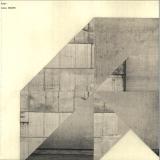
In an intricate lattice of ever-evolving electro exploration, Samuel Van Dijk is back on Delsin with a new EP. Under his VC-118A alias, the Helsinki based producer presents a richly textured, cinematic strain of machine funk that reaches beyond dancefloor functionality to test the expressive potential locked within electro's crisp rhythmic framework. There's a melancholic mood hovering over Avian as Van Dijk allows a subtle edge of distortion to creep into his flickering drum programming. The end result is a pensive sound that touches on the moodiness of orchestral composition, unfurling patiently across extended run times without losing focus. With his characteristic attention to detail and broad dynamic range, Van Dijk continues to offer up a sophisticated, emotionally-charged strain of electro like no other.
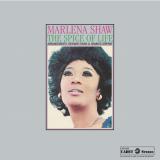
The Spice of Life, released in November 1969, stands as Marlena Shaw's second--and final--studio album for Cadet Records, produced and arranged by the renowned Richard Evans and Charles Stepney. From the opening, Shaw's voice--both playful and powerful--cuts through the lush yet tight-knit arrangements, weaving together a vibrant tapestry of soul, proto-funk, jazz, gospel, and blues. The album features two defining classics: her deeply resonant original of 'Woman of the Ghetto' and a signature take on Ashford & Simpson's 'California Soul', both staples in sampling culture (you'll probably find that you're more familiar with Shaw's material than you thought.) Evans and Stepney's arrangements are far from mere support--they're panoramic and inventive. You'll hear kalimba flourishes, psych-tinged guitar accents, and bongo-fueled organ textures that elevate each track, keeping the atmosphere rich but never overwhelming. Moments like the Bacharach-styled 'Looking Through the Eyes of Love' or the dramatic flair of 'Stormy Monday' showcase their widescreen sensibility and Shaw's versatility. Beneath its musical elegance, "The Spice of Life" carries a weighty current of social commentary. Tracks such as 'Woman of the Ghetto' and the succinct, fierce 'Liberation Conversation' bring political and feminist themes into a soulful, expressive framework--adding unexpected depth to the sophisticated sonic palette. This album offers an immersive journey through soul-jazz mastery, one that rewarded listeners with sampling gold for decades to come. Reissue on 180g vinyl.

Auf seiner dritten Studio-LP präsentiert Werkha einen einzigartigen Blend aus jazziger, Breakbeat-angehauchter Elektronik und analoger Ästhetik. Mit Ríoghnach Connolly und Daudi Matsiko sind zwei renommierte Künstler mit Wurzeln in der Folkmusik dabei, die Werkhas enge Verbindung zur Natur unterstreichen. Werkha (aka Tom Leah) ist ein Multiinstrumentalist aus Manchester mit Releases auf First Word und Tru Thoughts. Seine bisherigen Kollabos umfassen Quantic, A Certain Ratio, Marcos Valle, Eska, Chunky, Andrew Ashong, Keisha Thompson und Bryony Jarman-Pinto. Er tourte zusammen mit Bonobo, Chet Faker, Mr Scruff, Crazy P, GoGo Penguin, Todd Terje, Lefto und MCDE. Zu seinen Supportern gehören Gilles Peterson, Nemone, Don Letts, Jamz Supernova, Mo Ayoub), Julie Adenuga, Scratcha DVA, Tom Ravenscroft und Afrodeutsche

Mister Water Wet returns to Soda Gong with "Things Gone and Things Here Still," an album that radically expands the project’s purview while preserving the homespun warmth and oblique tactility that have long defined Iggy Romeu’s work. Where earlier records tilted toward the dusty swing of sample-based beatcraft or spectral minimalist jazz, here Romeu opens the frame to a more ensemble-minded approach, inviting a stellar cast of supporting musicians, including SG alumni Memotone and K. Freund, into the fold.
The result is an album that feels both broader and more intimate, with live instrumentation such as piano, strings, and reeds woven into MWW’s signature lattice of hand percussion, production sleights, and slippery time signatures. Acoustic and electronic textures bend toward each other like plants angling for the same light: bowed strings blur into vaporous pads, brushed drums scatter under riffing guitars, a horn phrase lingers in the same space as a cracked cassette loop.
A tension between decay and presence - the “things gone” and the “things here still” - runs throughout the record. At times, the music evokes a chamber session refracted through waterlogged tape; at others, it recalls the afterimage of a hip-hop instrumental slowed into an oneiric haze. In the world of MWW, memory functions less as nostalgia and more as a living fabric - mutable and resonant. "Things Gone and Things Here Still" finds Iggy Romeu at his most expansive, offering up a generous record of open spaces and porous boundaries.

Black Vinyl[45,25 €]
Effortlessly picking up from their excellent demonstration cassette, it sees the band refining their sound even further. An audio amalgamation combining the profoundness of early Ulver, with the gloom of old Katatonia and exalted boldness of Fields of the Nephilim, thus adding unique elements of nostalgia and atmosphere to their own melodic interplay of guitars and excellent musical framework.
The album contains strong signs of a band that knew at a young age how to draw their canvas. Very Scandinavian in nature, and influenced by the American landscape of the Pacific Northwest, it firmly put Agalloch on the map and raised eyebrows about what a band from North America would be capable of. As a person that grew up checking out records based on their cover-artwork alone, this album is particularly notable for such an experience, considering the wooden cover with a gold emblazoned logo engraved. This is music that glorifies the night sky, envisions campfire magic, heralds nature over humans, arcane arts & poetry, and worships the beauty of a crackling fireplace. It could be the soundtrack for a lone wanderer striving through a wintry storm, only to end up knocking on a faded
wooden door to find shelter in a desolate cabin. In many ways the sound of forlorn times.
If you are looking to fill your heart with woodsmoke and the fire of
the mountain's spirit, look no further.
"Pale Folklore was a watershed moment in American heavy music, when a few young musicians with a shared love of underground death metal - and broad personal tastes beyond - turned their already virtuosic talents toward a fresh hybrid of metal and neofolk through a gothic lens." - Daniel Lake / author of USBM: A Revolution of Identity in American Black Metal

Talulah’s Tape is the debut offering from magnetic Midwest-jangle collective Good Flying Birds. Across a patchwork mixtape of stripped-down home recordings that span the independent-guitar spectrum, the band delivers colorful, intricate pop songs perched between the immediacy of DIY punk and the intimate sweetness of twee. Breakbeats, memes, and noise glue everything together, making the album feel as chronically online as it is timeless.
Originally released on cassette in January 2025 by Midwest-punk legend Martin Meyers’s Rotten Apple label, the tape sold more than 300 copies in under a month and quickly became an out-of-print and coveted item. Meyers called it “certified catnip for popheads.” Now, with a refined track list and a fresh master from Greg Obis, Talulah’s Tape returns on LP and CD via Carpark and Smoking Room in October 2025.
While production and approach vary, a through-line of sensitive self-contemplation rests on bright, scrappy guitars and hyperactive melodic bass. Opener “Down on Me” rides a buoyant bass line while jangling guitars frame reflections on overcoming trauma: “I see you in the mirror every time I cry / I hear your voice every time I try.” Next, the guitars trade twinkling counter-melodies on “I Care for You,” pairing sugary, lovestruck lyrics with effervescent strums: “You catch me when I fall / You build me up so tall.”
The rosy grin occasionally twists into a wicked smirk. “Dynamic” warns, “You used to paint the face, but now you’re just the clown,” while “Glass” asks, “Is it lonely at the top when everyone follows the trend, and you hold the pen?” Both tracks brim with sparkling guitar interplay. By the closing, nearly five-minute “Last Straw,” Good Flying Birds stand far beyond conventional indie-pop or 4-track punk, unveiling a roller-coaster of unpredictable changes, vocal harmonies, and instrumental cross-talk.
Altogether, Talulah’s Tape is a pastel-yellow, candy-coated shell filled with thoughtful juxtapositions and melodic experiments. Standing on the same ground as idiosyncratic songwriters like Connie Converse and Daniel Johnston, Good Flying Birds find sweetness in sadness, tear stains on a colorful flower-print couch. Simultaneously, it’s packed with the scratchy guitars and vibrant rhythms of Scottish guitar groups like The Pastels, Orange Juice, and Josef K. It’s a tremendous opening statement from a band just getting started.

Smoke Vinyl[45,25 €]
Effortlessly picking up from their excellent demonstration cassette, it sees the band refining their sound even further. An audio amalgamation combining the profoundness of early Ulver, with the gloom of old Katatonia and exalted boldness of Fields of the Nephilim, thus adding unique elements of nostalgia and atmosphere to their own melodic interplay of guitars and excellent musical framework.
The album contains strong signs of a band that knew at a young age how to draw their canvas. Very Scandinavian in nature, and influenced by the American landscape of the Pacific Northwest, it firmly put Agalloch on the map and raised eyebrows about what a band from North America would be capable of. As a person that grew up checking out records based on their cover-artwork alone, this album is particularly notable for such an experience, considering the wooden cover with a gold emblazoned logo engraved. This is music that glorifies the night sky, envisions campfire magic, heralds nature over humans, arcane arts & poetry, and worships the beauty of a crackling fireplace. It could be the soundtrack for a lone wanderer striving through a wintry storm, only to end up knocking on a faded
wooden door to find shelter in a desolate cabin. In many ways the sound of forlorn times.
If you are looking to fill your heart with woodsmoke and the fire of
the mountain's spirit, look no further.
"Pale Folklore was a watershed moment in American heavy music, when a few young musicians with a shared love of underground death metal - and broad personal tastes beyond - turned their already virtuosic talents toward a fresh hybrid of metal and neofolk through a gothic lens." - Daniel Lake / author of USBM: A Revolution of Identity in American Black Metal

Talulah’s Tape is the debut offering from magnetic Midwest-jangle collective Good Flying Birds. Across a patchwork mixtape of stripped-down home recordings that span the independent-guitar spectrum, the band delivers colorful, intricate pop songs perched between the immediacy of DIY punk and the intimate sweetness of twee. Breakbeats, memes, and noise glue everything together, making the album feel as chronically online as it is timeless.
Originally released on cassette in January 2025 by Midwest-punk legend Martin Meyers’s Rotten Apple label, the tape sold more than 300 copies in under a month and quickly became an out-of-print and coveted item. Meyers called it “certified catnip for popheads.” Now, with a refined track list and a fresh master from Greg Obis, Talulah’s Tape returns on LP and CD via Carpark and Smoking Room in October 2025.
While production and approach vary, a through-line of sensitive self-contemplation rests on bright, scrappy guitars and hyperactive melodic bass. Opener “Down on Me” rides a buoyant bass line while jangling guitars frame reflections on overcoming trauma: “I see you in the mirror every time I cry / I hear your voice every time I try.” Next, the guitars trade twinkling counter-melodies on “I Care for You,” pairing sugary, lovestruck lyrics with effervescent strums: “You catch me when I fall / You build me up so tall.”
The rosy grin occasionally twists into a wicked smirk. “Dynamic” warns, “You used to paint the face, but now you’re just the clown,” while “Glass” asks, “Is it lonely at the top when everyone follows the trend, and you hold the pen?” Both tracks brim with sparkling guitar interplay. By the closing, nearly five-minute “Last Straw,” Good Flying Birds stand far beyond conventional indie-pop or 4-track punk, unveiling a roller-coaster of unpredictable changes, vocal harmonies, and instrumental cross-talk.
Altogether, Talulah’s Tape is a pastel-yellow, candy-coated shell filled with thoughtful juxtapositions and melodic experiments. Standing on the same ground as idiosyncratic songwriters like Connie Converse and Daniel Johnston, Good Flying Birds find sweetness in sadness, tear stains on a colorful flower-print couch. Simultaneously, it’s packed with the scratchy guitars and vibrant rhythms of Scottish guitar groups like The Pastels, Orange Juice, and Josef K. It’s a tremendous opening statement from a band just getting started.

Das selbstbetitelte Album von Ava Luna markiert eine fundierte und introspektive Entwicklung für das Quartett aus Brooklyn. Die Band, die nun aus Carlos Hernandez, Julian Fader, Ethan Bassford und Felicia Douglass besteht, kehrt nach einer längeren Pause mit einem reduzierten Sound zurück, der sich auf Schlagzeug, Bass und zwei Gesangsstimmen konzentriert. Dieser Back-to-Basics-Ansatz, eine Abkehr vom ,kosmischen" Gefühl ihres Vorgängeralbums ,Moon 2", hat seine Wurzeln in gemeinsamen Erfahrungen in NYC und den Rhythmen des Alltags. Themen wie Erschöpfung, Gemeinschaft und fragile Freude tauchen in Songs wie ,Lasting Impression" über die Arbeitsmüdigkeit und ,Math Money Job", einem spielerischen Gesang über Wiedersehen und Verkörperung, auf. Julians Schlagzeug und Ethans Bass Themen wie Erschöpfung, Gemeinschaft und prekäre Freude tauchen in Tracks wie ,Lasting Impression" über Arbeitsmüdigkeit und ,Math Money Job", einem verspielten Gesang über Wiedersehen und Verkörperung, auf. Julians Schlagzeug und Ethans Bass treiben das Album an, das teilweise vom rohen Sampling-Stil von Soul Coughing inspiriert ist, der in Tracks wie ,Frame of Us" zu hören ist. Gesanglich bewegen sich Carlos und Felicia wie eine Einheit - sie verschmelzen, harmonieren und fragmentieren mit Absicht, besonders in ,Archive". Obwohl im Kern minimalistisch, ist der Sound des Albums üppig und strukturiert, angereichert durch Congas von Reggae-Legende Larry McDonald, Klavier, Samples und Gitarren-Noise. Songs wie ,Social Diving" und ,My Walk" spiegeln persönliche und urbane Geschichten wider, während ,Your Man" und ,Fancy" von Widerstandsfähigkeit und Würde erzählen. Das Ergebnis ist Ava Luna in ihrer ehrlichsten und raffiniertesten Form - ein Porträt von NYC und einer Band, die sich noch immer weiterentwickelt und nichts von ihrer Dringlichkeit eingebüßt hat.
The Pitch is a quartet made up of Boris Baltschun, Koen Nutters, Michael Thieke and Morten Joh. Founded in Berlin in 2009, they play a hypnotic form of structured improvisation full of acoustic exploration and electronic intervention. On Neutral Star, The Pitch are joined by Australian guitarist/composer extraordinaire Julia Reidy for a record of star gazing electro-acoustic jazz.
Reidy's playing and compositional technique between Takoma-style fingerpicking and Glenn Branca'esque microtonality, perfectly complements the loose improvisational framework The Pitch is providing. Endless ≠ Limitless, a recent piece by Reidy and Joh, is transformed from a washed-out/obscured tape delay composition into a colorful, meandering ensemble piece with a swarming character - blooming with intrigue for the patient ear. The B-side strikes a more gentle tone: the 24-minute Neutral Star begins with a siren-like overtone whose drone-like flowing slowly morphs into a deterritorial modality with jazzy undertone. Accompanied by constant eruptions of vibraphone, clarinet, electronics and double bass punctuation – while permanently questioned by Reidy's drippingly pearly steel guitar work. Slowly evolving into new territories through the expansive instrumentation and keen listening between the players.
The fact that Neutral Star was recorded in one take (by Rabih Beaini in his Morphine Raum studio/venue) in front of a live audience and without overdubs is hard to believe, even for the trained ear. The recording appears to be too multilayered for a single snapshot, with its compositional structures constantly shifting and moving against themselves, counterintuitively and anti-cyclically. Reidy´s playing has been described as "unstable harmonic territory, and the collaboration with The Pitch interprets this concept brilliantly - adding further non-places to the territory. And the listener, however, is never left alone in the process of tectonic shifts - at least as long as their listening is attentive and contemplative at once.
Furthering the passionate exploration of cinema that has guided her two previous LPs - 2017’s ‘Fassbinder Wunderkammer’ and 2020’s ‘I Should Have Been a Gardener’ - the Milanese guitarist/composer, Alessandra Novaga, returns to Die Schachtel with ‘The Artistic Image Is Always a Miracle’, two sides off shimmering, tense compositions – culminating as one of her most creatively ambitious and conceptually rich outings to date – freely inspired by the life and work of the Russian director Andrej Tarkovsky and the music of Johann Sebastian Bach.
Classically trained at the Musik Akademie in Basel, Switzerland, over the last decade Alessandra Novaga has emerged as one of the leading figures within northern Italy’s thriving new, experimental, and improvised music scene, rendering striking solo efforts, in addition to collaborations with Loren Connors, Stefano Pilia, Elliott Sharp, Nicola Ratti, Paula Matthusen, Sandro Mussida, Kid Millions, Travis Just, Francesco Gagliardi, and others. Remarkably ambitious and forward thinking, her approach to the guitar embarks upon a relentless deconstruction and rethinking of her instrument’s unique properties through distinct applications of structure, resonance, space, and tone, creating in a deeply personal and emotive music, seeking narrative and meaning within the abstractions of sound.
In 2017, with the LP, ‘Fassbinder Wunderkammer’, issued by Setola Di Maiale, Novaga embarked upon the exploration of her love of film. Having begun with Rainer Werner Fassbinder, this was followed in 2020 by Die Schachtel’s release of ‘I Should Have Been a Gardener’, a deeply intimate mediation on the life and work of Derek Jarman. Rather than focusing on a fixed point of inspiration or a single film to work from, these pieces achieve a form of abstract portraiture, distilling elements drawn from these filmmaker’s life and work into ambient networks of texture and tonality. ‘The Artistic Image Is Always a Miracle”’ freely inspired by the Russian director Andrej Tarkovsky and the music of Johann Sebastian Bach, finds Novaga radically expanding her sonic palette within this approach.
The seeds of ‘The Artistic Image Is Always a Miracle’ can be traced to a conversation that Novaga had with Alan Licht (contained in the highly regarded Common Tones: Selected interviews with artists and musicians 1995–2020, Blank Forms, 2021), relating to the connections between music and cinema, which led her to consider Andrej Tarkovsky’s use of Bach's music within a symbiotic framework: how the music illuminates the imagism of the films, and the film illuminates new dimensions of the music. Slowly developing over the subsequent years, the resulting album comprises six individual works, some of which draw directly upon pieces of Bach’s music that Tarkovsky used in his films – specifically 'Erbarme dich, Mein Gott', 'Das alte Jahr vergangen ist', and 'Ich ruf zu dir, Herr Jesu Christ' - while others draw upon the sensibilities and moods evoked in the imagination by the director’s films.
As a point of departure and illumination into the process and spirit that underscored the creation of the album, Novaga points toward a passage in Tarkovsky’s "Sculpting in Time”:
“Art is born and takes hold wherever there is a timeless and insatiable longing for the spiritual, for the ideal: that longing which draws people to art. Modern art has taken a wrong turn in abandoning the search for the meaning of existence in order to affirm the value of the individual for its own sake. What purports to be art begins to look like an eccentric occupation for suspect characters who maintain that any personalized action is of intrinsic value simply as a display of self-will. But in artistic creation the personality does not assert itself, it serves another, higher and communal idea.”
‘The Artistic Image Is Always a Miracle’ can be understood as a realisation of the collectivism of which Tarkovsky speaks, in the service of something far beyond the expression of self. Encountering Novaga moving into fairly uncharted waters, three of the album’s pieces incorporate the human voice we encounter the voices of others: that of the poet Arsenij Tarkovsky, the director’s father; a singer from Bach’s ‘Erbarme dich, Mein Gott’, capturing a broadcast in an underground parking lot, and Novaga’s own, rendering the melody from Bach’s “Ich ruf zu dir, Herr Jesu Christ”. Roughly alternating between solo excursions on guitar and bristling electroacoustic pieces, over the course of the album’s two sides Novaga weaves one of her most abstract and ambitious bodies of recordings to date, shifting between the complex tonal mediations generated by the six strings of her instrument, and phycological densities activated by the expanded pallet of sonority made possible by the tactics and approaches of musique concrète.
An immersive, deeply engaging meeting of beauty and melancholy within a labyrinth of voices and ideas, ‘The Artistic Image Is Always a Miracle’ transfigures the life and work of Andrej Tarkovski – one of the greatest auteurs in the history of cinema – into a singular, experimental statement of collective truth. Belonging to recent, ambitious stream of contemporary new music releases on Die Schachtel that’s already included Novaga’s ‘I Should Have Been a Gardener’, Stefano Pilia’s ‘Spiralis Aurea’, Jim O'Rourke & Giovanni Di Domenico’ ‘Immanent In Nervous Activity’, Claudio Rocchetti’s ‘Labirinto Verticale’, and Damāvand’s ‘As Long As You Come To My Garden’, among others, ‘The Artistic Image Is Always a Miracle’ is available on as a limited edition of 300 dark turquoise vinyl LPs released on June 21, 2024. The LP, designed by Bruno Stucchi / dinamomilano, comes with an 8-pages insert illuminated by Alessandra’s text as well as the lovely and intense photographs of Matilde Piazzi.

“Warning! Night Time Listening Advised!”
In early spring 2023, with the end of COVID-19 in China, MK helped produce this album for Rubey. Focusing on the piano atmosphere and framework of the Night Piano Project, MK added some flowing sounds and textures to Rubey’s original tracks using a guitar, delay effects, and a synthesizer. At the same time, Ding Mao, another member of the band Hualun, contributed on two tracks. Of course, all production processes were completed at night; capturing the quiet atmosphere of traditional Eastern natural landscapes and transforming them with indoor amorous feelings. These melodies and notes wander and travel through different times and spaces, and ultimately converge in different rooms.
“In Different Rooms” is the second solo album by Rubey, a keyboardist from the band Hualun. It is also Rubey’s second album release since producing the soundtrack for the movie “Virgin Blue” in 2022. It includes 8 works created between 2020 and 2023. Rubey and MK are located in Beijing and Shenzhen respectively. Just like many of Hualun’s works, the original idea for “In Different Rooms” came from Rubey’s daily piano improvisation practice. Named the “Night Piano Project”, Rubey would spend his nights playing his YAMAHA electric piano.

Mutant, in partnership with Netflix, are proud to present the premiere physical media release of Alan Silvestri's epic score to the Netflix original film The Electric State. One of the most important and prolific composers of our lifetime, Alan Silvestri (The Back To The Future Trilogy, Forrest Gump, Predator, Who Framed Roger Rabbit and so many more) rejoins the blockbuster fimmaking duo Joe and Anthony Russo (Avengers: Endgame, Captain America: The Winter Soldier), to score their latest sci-fi epic based on the graphic novel by legendary artist Simon Stålenhag.

“This album is us appreciating how amazing this thing we have is. The realization of how lucky we are that we get to be part of something like this for 25 years, and to have built a community that cares for each other in the way it does. It’s not about any of us individually. When we all work together to make something happen, something bigger happens.” - Jono, Paavo and Tony – Above & Beyond.
If much of the mindset and mantra behind Above & Beyond over the last quarter of a century has been born from the idea of connection, then their fifth artist album ‘Bigger Than All Of Us’ is best summed up in one word: reconnection. It’s been seven years since Jono Grant, Paavo Siljamäki and Tony McGuinness released their fourth electronic album, Common Ground. A #3 on the Billboard charts – an achievement that speaks to the British band’s huge, arena-to-amphitheatre scale profile in America, a level of success replicated in pretty much every other corner of the world.
The time since has seen a series of projects come to life both collectively and individually: 2019’s ambient, yoga-and-meditation-friendly album Flow State, streamed over 400 million times worldwide; a series of club ready instrumentals under the Tranquility Base moniker; radio records ‘See The End’, ‘Over Now’ and ‘Crazy Love’. In the meantime, the band embarked on personal projects outside of the Above & Beyond framework. Grant collaborated with long time friend Daren Tate on 2022’s self-titled synthwave JODA album. In 2023 Siljamäki, reprised his P.O.S. alias, releasing dance floor focussed album Deeper Tales. Last year, McGuinness dug in his own crates for Salt, an album based on a studio-freshened selection of emotional singer-songwriter compositions originally written as the ’90s rave and Britpop fever-dreams faded. A worldwide touring schedule, their weekly Group Therapy radio show, and overseeing a family of iconic dance labels, Anjunabeats, Anjunadeep and, most recently, Anjunachill – it’s never quiet in the world of Above & Beyond.

Cassette[14,71 €]
The successor to 2022"s Bajascillators glides easily into frame, but once there, Inland See is deceptively immediate. It"s so dialed in, you hardly even feel how present the music (and you the listener) is. Time wharping"s always been a resident magic for Bitchin Bajas, as is flow, which is translucent like water here. That"s the Inland See vibe, unique unto itself. In turn, each of the four songs here are entirely within themselves, all together forming an essential whole. The coincision"ll cause yer breath to shorten, like an exciting and non-fatal kind of exercise! New freedoms, yet more molecular structure in each one. With every successive Bitchin Bajas release, we see that the real key for them is a sense of discovery, that tingle that comes when you feel something breakíing through. The sky opening up. The stuff that fills this Inland See holds you up powerfully, as if you"re floating, saltwater or helium-wise - effervescent, effortless, elemental.

The successor to 2022"s Bajascillators glides easily into frame, but once there, Inland See is deceptively immediate. It"s so dialed in, you hardly even feel how present the music (and you the listener) is. Time wharping"s always been a resident magic for Bitchin Bajas, as is flow, which is translucent like water here. That"s the Inland See vibe, unique unto itself. In turn, each of the four songs here are entirely within themselves, all together forming an essential whole. The coincision"ll cause yer breath to shorten, like an exciting and non-fatal kind of exercise! New freedoms, yet more molecular structure in each one. With every successive Bitchin Bajas release, we see that the real key for them is a sense of discovery, that tingle that comes when you feel something breakíing through. The sky opening up. The stuff that fills this Inland See holds you up powerfully, as if you"re floating, saltwater or helium-wise - effervescent, effortless, elemental.

Silver Vinyl[21,64 €]
Jennifer Touch release her next LP 'Aging at Airports' on Fabrika Records. The idea for the record title came before the music even existed as Touch was spending an increasing amount of time in airports while touring. In her own words: "It felt like I waste a large part of my life waiting for the next show to come, to entertain and perform my music and build timeless moments with others. This waiting, the slowly ticking time at the gate, was in complete contrast to what I want to do as an artist: to be in flux, to create things that will last forever. The airport, as a busy hub, was like a symbol of this ambivalence. And a reminder: every second, whether waiting or on the move, I have to accept that I am fading, that my creative power, my face, and my body are fading. As a (performing) artist, everything feels like a strange contrast. While you want to stay true to yourself and speak authentically from the soul, you are also expected to appear forever young, and powerful. Artists are often wanted to distract people, but creating this art forces me to confront my own transience. I feel the struggle to fit into this powerful artificial framework that the world has set and the desire to break free from it."

On the cover of 8 Tips for Full Catastrophe Living, the new album by Asher White, The Statue of Liberty is in pieces but not destroyed - in progress, being built, not yet complete. Her torch is on the ground, her head somewhere out of frame. Before she was a symbol, she was metal, and living, sweating people riveted her together. The spirit of de/construction characterizes 8 Tips, White's 16th LP overall and first since signing to Joyful Noise. Like White's previous albums, 8 Tips for Full Catastrophe Living darts boldly among varied musical styles. Doom metal splits open into bossa nova; psychedelic rock and power pop flip into industrial techno. Each song emerges from its composite parts in the studio: White doesn't draft or demo before recording, but builds out her pieces sculpturally, sound by sound. "It's forever collage, forever assemblage," she says of her music. "To me, it has more to do with J Dilla, L.A. beat, and musique concrète than pop songwriting." The record's quick turns and vivid contrasts reflect White's cultural voraciousness. A writer, painter, and sculptor as well as a musician, she gathers materials constantly, always digging for new ideas in every possible form. The films of Claire Denis, the novels of Clarice Lispector, and the memoirs of Eve Babitz all funnel into White's reflection of 21st century disaster capitalism. 8 Tips is also White's first album to have been mixed outside her Providence studio; after recording it herself, she brought tracks to Seth Manchester (Lightning Bolt, Battles, The Body) who gave the album its brawny, unruly charge. "I was interested in making something that serves dually as a self-help book and a chronicle of self-destruction," says White. Overlaying autobiography onto character vignettes, 8 Tips for Full Catastrophe Living wrenches open the idea of apocalypse - an abrupt disaster rained down on uncomplicated innocents - and peers inside at its bursting, devastated particulars. Apocalypse is slow and uneven. Nations falter as do individual people, clinging fast to their old, dilapidated self-preservation strategies. What saved you in the past might destroy you in the future. Flip it around, shake yourself loose, ruin the person you've known yourself to be, and you might get the chance to become something else. "There have been so many end times, many other apocalypses." White says. "People were writing self-help tips, and people were partying." We have survived catastrophe before. Out of the ruins, people made work - art, books, culture. "I was interested in making something that sounds like a self-help book, but it's actually about self-destruction," says White. "In full catastrophe living, you just have to do a bunch of whippets. This album is mostly about doing whippets. I'm not even kidding."

Star Feminine Band, hardest working women in Beninese show business, are releasing their third album on Born Bad, who went all out for their first. Some get malaria at the sight of that sticky world label : rest assured, the world is all they deserve after nine years of hard work. These eight young women, from a village that even Beninese can't quite place, started out in hard mode.
They had to convince themselves that it was worth a shot, but also their family, their village and an entire continent.
André Balaguemon, composer, manager and lyricist, does a lot, while remaining in the background. He put the group together, included his three daughters, houses everyone with his wife Edwige who also manages dances and costumes. He gave them a musical training, and created the framework for them to continue school while rehearsing hard. From local heroes to UNICEF ambassadors, the group has made it. The very existence of this new album is a testament to the perseverance of Grâce, Anne, Urrice, Bénie, Angélique, Sandrine, Julienne and Ashley. The personnel of this family affair has changed a bit : two new women have joined the group, which conquered bigger stages (Glastonbury in the summer, the X-mas BBC special).
This new album brings simple joys : watching them grow from Benin's first girl band to a band in its own right. And never forgetting why they took to the stage in the first place. Star Feminine Band makes straightforward music, taking no detours to express what's missing in the country. When Grâce advocates for kids getting a chance to get to school it's because there's nothing else more important to say that day. Teachers, don’t leave the kids alone, after all.
As they said on their first album, « music is our job », let them be that : musicians having a lot of fun on this album. It wanders through the vast territory of the countless West African styles. They even make a quick foray into reggae to talk about marriage (with a little rap thrown in), and interweave their voices in multiple languages (Waama, Ditamari, Bariba, Fon, Yoruba). And boy do they have hits. To each is own, but “L'enfant c'est un don de Dieu » (Child is god’s gift) is a mighty steamroller, methodically smoothing out the ground for dancing together to its final chorus, singing « debout-les-en-fants / get up, kids ! » along.
Smoother than the first two albums, supported by fine arrangements, ambitious keyboard parts and more complex vocal harmonies without losing any of their spontaneity, this third opus quietly adds to Benin's musical heritage. As they make clear in « Jusqu'au bout du monde », clever little number that we can already hear swelling up on stage: « oui, c’est Star Feminine Band qui a gagné - o / Star Feminine Band won».

Acclaimed Belgian duo Poor Isa - comprising banjoists Ruben Machtelinckx and Frederik Leroux - returns with their third album, marking a significant evolution in their musical journey. Departing from their established duo format, this release introduces collaborations with two luminaries of the improvisational music scene: British saxophonist Evan Parker and Norwegian percussionist Ingar Zach. Known for their minimalist aesthetic, characterized by prepared banjos, Poor Isa continues to explore these textures while blending traditional and experimental approaches.
Evan Parker, a pivotal figure in European free improvisation, brings his distinctive soprano and tenor saxophone sound to the collaboration. Renowned for pioneering extended techniques, Parker's dynamic and energetic improvisations introduce a compelling contrast to Poor Isa's introspective sound world.
Ingar Zach contributes his innovative percussion work, using the Gran Cassa and vibrating speakers to create resonant textures. His approach adds depth and color, enhancing the album's exploratory nature.
Poor Isa provides a flexible framework, allowing Parker and Zach to imprint their unique voices while maintaining the duo's core identity.

With Generation Of The Void, NAILED TO OBSCURITY have crafted their most mature and expansive album to date. Set for release on September 5th, 2025, the album reflects the turmoil of the post-pandemic era, the shadows of war in Europe, and the relentless changes affecting all of humanity. Beyond its political and social commentary, the album also dives deep into personal struggles, confronting themes of dark emotions, depression, and fear. Every note, every lyric carries the weight of uncertainty and disillusionment, while no one knows what one will find within the void or beyond. After the success of 2019’s ‘Black Frost’, Germany’s doom/death metal veterans return with their new album ‘Generation of the Void’. First single ‘Overcast’ drips with a brutal, melancholic, apocalyptic intensity which the band have perfected over their 25 years together. After sharing the stage with legends Dark Tranquillity, Amorphis, Jinjer, Arch Enemy and At the Gates, Nailed To Obscurity will embark on their first EU headline tour at the end of this year.

The latest by Andrew Clinco's acid punk alias VR SEX takes its title from an architectural phrase but more importantly refers to the warped, wicked underworld the songs both chronicle and condemn. Donning the moniker Noel Skum - an acerbic anagram of Elon Musk - Clinco vents his scorn for and fascination with the seedy, surreal margins of low-life Los Angeles, doomed to dead ends of vanity, lust, and technology. Although initially launched as an outlet for "heavier sounds" beyond Clinco's duties in new wave fantasists Drab Majesty, the project has ripened into a compelling exercise in world building, weaving themes of gritty city neofuturist sleaze within a framework of driving, distorted guitars and cathode-blasted synths. Echoes of Chrome, Wire, Minimal Man, and Sisters Of Mercy ripple through the collection but ultimately Rough Dimension charts its own twisted vision of "our unforgiving reality." Written and demoed across two weeks alone in a Marseille flat using his prized 1980's Gibson "Invader" and a laptop, Clinco then took the tracks to Strange Weather studios in Brooklyn to record with Ben Greenberg (Uniform, The Men) who helmed 2019's debut, Human Traffic Jam. The results are notably ripping, refined, and riveting. Riffs in alternate tunings chug and churn over mid-tempo drums punctuated by spikes of sci-fi electronics while the vocals swagger and spit venom ("where we walk is also where we shit / but if we bark at our reflections are we hypocrites? / impulses bleed right into our seed / where hate culminates the apple rotted on the tree"). It's a bristling mix of the melodic and the macabre, absurdist observations of fast living and desperate measures, the clock of youth ticking towards midnight as dreams unravel in Babylon. VR SEX's specialty is making these cautionary tales of psychic decay and tainted love a thrill rather than a drag. There's a sunglasses at night glamor to Clinco's choruses and solos, a wit to his black leather judgements ("what is the answer / to cancerous people / walking in my line of sight?"). The music's milieu tends towards parasites and predators but its mood skews refreshingly accelerated and amused, cruising the strip with a cigarette, watching goths and limousines crawl in gridlock beneath digital billboards. The Rough Dimension may be a cesspool, but it's home.

Los Angeles trio Faetooth sophomore album Labyrinthine is a deeply felt exploration of emotional weight: grief, memory, uncertainty, and the quiet work of growing around your own wounds. Following the band's 2022 debut Remnants of the Vessel, which introduced the band’s signature blend of heaviness and mysticism, Labyrinthine pushes further inward. True to its name, the album winds through a maze of feeling and form, where meaning is never handed over easily. It’s rooted in self-discovery through disorientation, the idea that understanding comes not from escape, but from getting lost. Ari May (guitars and vocals), Jenna Garcia (bass and vocals), and Rah Kanan (drums) manage to stay grounded in the immediate in parallel with fantasy themes of the band's namesake. Labyrinthine holds space for this contradiction; tenderness and intensity, restraint and release. The band's self-branded “fairy doom” sound fits between shoegaze, doom, and grunge. It isn’t just texture; it’s a framework for navigating the unsaid. Like the myth that inspired its title, Labyrinthine doesn’t end in victory, but in confrontation—not with escape, but with the Minotaur. Only here, the Minotaur isn’t a monster. It’s something quiet and more familiar: unresolved feelings, old memories, and sadness that refuse to stay buried. The album winds like a maze, sometimes heavy, sometimes hushed, always intentional. Faetooth isn’t chasing catharsis. They’re creating space to reflect, to feel, and maybe to get a little lost along the way.
Artist quote: "White Noise" emerged from a diary entry, and is a relentless and intense reflection on inner turmoil. We’re often drawn to the familiar, even when we don’t realize we’re reaching out for it. It is an emotional upheaval, carrying harsh truths that weigh heavily on the heart. Guitarist, Ari May mentions, “Performing the song always takes me back to a specific place, even if just for a moment.”
“Riffs and melodies brimming with loneliness and longing… this band’s incantations affect my mood the whole day after listening.” — The Sleeping Shaman
“Bringing otherworldly hazy doom goodness… dreamy clean vocals, echoing harsh vocals, entrancing riffs, meditative shoegaze melodies.” — Nine Circles
“Slow, lumbering behemoths of great weight… couched in a melancholy atmosphere and explosions of crushing heaviness.” - Where Strides The Behemoth

Los Angeles trio Faetooth sophomore album Labyrinthine is a deeply felt exploration of emotional weight: grief, memory, uncertainty, and the quiet work of growing around your own wounds. Following the band's 2022 debut Remnants of the Vessel, which introduced the band’s signature blend of heaviness and mysticism, Labyrinthine pushes further inward. True to its name, the album winds through a maze of feeling and form, where meaning is never handed over easily. It’s rooted in self-discovery through disorientation, the idea that understanding comes not from escape, but from getting lost. Ari May (guitars and vocals), Jenna Garcia (bass and vocals), and Rah Kanan (drums) manage to stay grounded in the immediate in parallel with fantasy themes of the band's namesake. Labyrinthine holds space for this contradiction; tenderness and intensity, restraint and release. The band's self-branded “fairy doom” sound fits between shoegaze, doom, and grunge. It isn’t just texture; it’s a framework for navigating the unsaid. Like the myth that inspired its title, Labyrinthine doesn’t end in victory, but in confrontation—not with escape, but with the Minotaur. Only here, the Minotaur isn’t a monster. It’s something quiet and more familiar: unresolved feelings, old memories, and sadness that refuse to stay buried. The album winds like a maze, sometimes heavy, sometimes hushed, always intentional. Faetooth isn’t chasing catharsis. They’re creating space to reflect, to feel, and maybe to get a little lost along the way.
Artist quote: "White Noise" emerged from a diary entry, and is a relentless and intense reflection on inner turmoil. We’re often drawn to the familiar, even when we don’t realize we’re reaching out for it. It is an emotional upheaval, carrying harsh truths that weigh heavily on the heart. Guitarist, Ari May mentions, “Performing the song always takes me back to a specific place, even if just for a moment.”
“Riffs and melodies brimming with loneliness and longing… this band’s incantations affect my mood the whole day after listening.” — The Sleeping Shaman
“Bringing otherworldly hazy doom goodness… dreamy clean vocals, echoing harsh vocals, entrancing riffs, meditative shoegaze melodies.” — Nine Circles
“Slow, lumbering behemoths of great weight… couched in a melancholy atmosphere and explosions of crushing heaviness.” - Where Strides The Behemoth

Los Angeles trio Faetooth sophomore album Labyrinthine is a deeply felt exploration of emotional weight: grief, memory, uncertainty, and the quiet work of growing around your own wounds. Following the band's 2022 debut Remnants of the Vessel, which introduced the band’s signature blend of heaviness and mysticism, Labyrinthine pushes further inward. True to its name, the album winds through a maze of feeling and form, where meaning is never handed over easily. It’s rooted in self-discovery through disorientation, the idea that understanding comes not from escape, but from getting lost. Ari May (guitars and vocals), Jenna Garcia (bass and vocals), and Rah Kanan (drums) manage to stay grounded in the immediate in parallel with fantasy themes of the band's namesake. Labyrinthine holds space for this contradiction; tenderness and intensity, restraint and release. The band's self-branded “fairy doom” sound fits between shoegaze, doom, and grunge. It isn’t just texture; it’s a framework for navigating the unsaid. Like the myth that inspired its title, Labyrinthine doesn’t end in victory, but in confrontation—not with escape, but with the Minotaur. Only here, the Minotaur isn’t a monster. It’s something quiet and more familiar: unresolved feelings, old memories, and sadness that refuse to stay buried. The album winds like a maze, sometimes heavy, sometimes hushed, always intentional. Faetooth isn’t chasing catharsis. They’re creating space to reflect, to feel, and maybe to get a little lost along the way.
Artist quote: "White Noise" emerged from a diary entry, and is a relentless and intense reflection on inner turmoil. We’re often drawn to the familiar, even when we don’t realize we’re reaching out for it. It is an emotional upheaval, carrying harsh truths that weigh heavily on the heart. Guitarist, Ari May mentions, “Performing the song always takes me back to a specific place, even if just for a moment.”
“Riffs and melodies brimming with loneliness and longing… this band’s incantations affect my mood the whole day after listening.” — The Sleeping Shaman
“Bringing otherworldly hazy doom goodness… dreamy clean vocals, echoing harsh vocals, entrancing riffs, meditative shoegaze melodies.” — Nine Circles
“Slow, lumbering behemoths of great weight… couched in a melancholy atmosphere and explosions of crushing heaviness.” - Where Strides The Behemoth

Ken Jacobs, an essential figure of avant-garde cinema, developed the »Nervous Magic Lantern« in the 1960s — a self-made apparatus containing a spinning shutter, a light source, and lenses set in a wooden frame. Hand-painted circular slides, gently moved by hand, produce flickering imagery: geometric patterns, Rorschach-like inkblots, and three-dimensional forms that seem to float beyond the screen. These hallucinatory visions challenge perception and suggest what Jacobs once called »a whole new play of appearances«.
Unlike Jacobs’ politically charged works, the »Nervous Magic Lantern« is patently abstract, examining how the brain regulates perception. For these performances, Jacobs requested »sounds of daily life« — environmental recordings that anchor the phantasmagoria in reality. Field tapes of Chinatown streets, conversations, and other uncategorisable sounds became the material for Aki Onda’s sonic compositions, adding narrative resonance to the abstract visuals and creating an almost documentary dimension.
This album documents a performance of »Nervous Magic Lantern« at Spiral Hall, organised by Sound Live Tokyo on November 3, 2015. Jacobs’ selection and sequencing of slides offered improvisatory space, mirrored by Onda’s flexible arrangement of cassette recordings. The result is a work where life and art dissolve into one another — a soundtrack for life in the depth of illusion.
Music by Aki Onda Cassette field recordings by Ken Jacobs


New Digital Fidelity steps up with his ‘For The People’ EP on Four Framed Music this september, delivering four standout original cuts that showcase his deep, groove-driven signature sound.
Paolo Aniello aka New Digital Fidelity is a London-based producer and DJ originally from Bari, Italy. Deeply rooted in deep and Detroit house, he made his vinyl debut in 2011 as Peter JD and later co-founded a Detroit techno label with Nico Lahs. Since launching NDF in 2017, he’s released on Snuff Trax, Moods & Grooves, and more, collaborating with artists like Chez Damier, Fred P, and Byron the Aquarius. His music has been featured on HÖR, Balamii, Rinse FM, and NTS. In 2023, he founded Scopic Records, home to his latest EPs and remixes for legends like Hanna.
With For The People, New Digital Fidelity delivers a timeless EP packed with soulful house grooves and club-driven energy. The A-side opens with Believe It, an uplifting house track full of character, driven by a snappy groove and a powerful vocal sample that pulls you straight into the vibe. A soulful statement that sets the tone from the get-go. Next up is In Love With You, a deep and sultry roller where a sensual vocal meets delicate melodic layers. This one breathes emotion and late-night intimacy, perfect for the more introspective moments in a set.
On the B-side, the EP shifts clearly into more club-focused territory. Move Your Body is a straight-up floorfiller with crisp percussion, a hypnotic bassline, and a stripped-back vocal hook that sticks with you. Finally, Step Up closes the record with punch and attitude, a raw groove laced with jackin’ energy, making it the perfect tool for peak-time or late-night sessions.

“Great Doubt” is the third full length LP by Danish composer Astrid Sonne. Throughout her acclaimed discography, Astrid Sonne has been carefully crafting different moods through electronic and acoustic instrumental endeavours. On “Great Doubt” this skill is refined, now with the distinct addition of the composer's own vocal in front. The tone of each track is unmistakably Sonne’s, structured around contrasts through an impeccable sense of timing. Lyrics on the album are sparse, merely highlighting different scenes or emotional states of being, leaving the music to fill in the blanks. Yet they also form a pattern of ambiguity, consolidated through the album title, searching for answers through looking at how and what you are asking, questions for the world, questions of love. The viola, a trusted companion since Astrid Sonne’s youth, appears effortlessly throughout the album, fully integrated into the sonic universe; through a pizzicato driven arrangement in the poignant track “Almost” or along with booms and claps in mutated cinematic stabs during “Give my all”, paraphrasing Mariah Carey's 1997 ballad. Yet the string section also gives way to explorations of woodwinds, counterbalancing the bowed movements with digital brass and airy flutes. Finally, beats and detuned piano are fresh additions to the soundscape, cementing how Sonne’s practice is always evolving into new territories. In fall 2022, Astrid Sonne relocated from Copenhagen with its peers of artists such as ML Buch, Erika de Casier and Smerz, to live in London, where musicians of the South-East London scene like Coby Sey, Lolina, Still House Plants and Mica Levi provide a new inspirational framework. “Great Doubt” bears witness to both of those geographical locations, yet finds itself in its own unique space, in many ways due to the presence of Sonne's voice throughout. A voice that has always been present in her work, but never fully explored as a solo instrument before now. Astrid Sonne elaborates on the wish to work more in depth with the voice: “I come from a tradition of choir singing where I’ve used my voice as a way of creating unity with other voices. I’ve disciplined my voice in a certain way and this album is an exploration of me trying to find my own voice as an instrument, as a communicator, as a new way of being honest.” Questions take up a central role throughout the album. The doubt is both a blessing and a curse, always lying in-between, acting as both what holds back and drives forward. A metamorphosis not going anywhere. The great doubt takes place in a space of courage, chances, love, loss, gifts and surprises. Genre: Electronic / Experimental

HABITAT introduces THARAT with "Children," an evocative meditation bridging innocence and melancholy. Created during a night of alpine inspiration following exchanges with Mind Against's Freddie, the track weaves spectral children's vocals through a hypnotic, cinematic synth framework. THARAT demonstrates remarkable production maturity, crafting a composition that feels simultaneously nostalgic and forward-looking. "Children" signals the arrival of an artist with exceptional emotional intelligence, offering a promising glimpse into HABITAT's expanding roster of boundary-pushing electronic talent.

Following up 2017's album "Udu" this is slow and powerful – with its set narration, but generous space and time, a room for imagination can cautiously be kept. A-side is direct, with generous intro's and endings, dense but with a light sonic specter, and a balance between the atonal & harmonious. B-side has darker undertones, being less framed it's more earthy and cosmic at the same time. Non rhythmic but all contrasting elements are here inseparable in sound and arrangement, from beginning till end, like a sonic tide.

Originally conceived as a compilation of outtakes and live recordings from The Shadow Ring's 1995 stateside tour, Wax-Work Echoes takes its name from the first line of "Put the Music in Its Coffin," the title track of the group's breakthrough release. Lambkin abandons the bitsand- bobs approach, advancing the Shadow Ring concept with entirely original material that builds on the unit's self-mythologizing lyrics, celebrates the clicking of horse hooves, ponders on the sociability of rats and mice, and warns of the dangers of poultry. The first Shadow Ring album to officially include Tim Goss in the main lineup, Wax- Work Echoes reveals the group in its final and lasting form, awash in the outer bounds of atmospheric exploration, with Lambkin's familiar wry and morbid lyricism and the stripped-down angularity of amateurishly detuned guitars fully intact. While Klaus Canterbury and Tony Clark seem all but forgotten, and the shrugged off S. Fritz is listed on the liner notes as performing only "when required," Lambkin did solicit contributions from outside the inner circle. A bit of "Mambo Twist," lifted from a tape of unreleased Vitamin B12 material sent to Lambkin by Alasdair Willis, found its way into "V.E.R.M.I.N.," while an extended epistle contribution from Richard Youngs (and, technically, Brian Lavelle) would be employed in the second half of "Catching Sight/Of Passing Things." Released on CD in 1996 for Bruce Russell's newly minted Corpus Hermeticum, Wax-Work Echoes was recorded concurrently with intense rehearsal periods, in anticipation of the forthcoming "Rose Watson Tour," and was supported by a celebratory fanzine media blitz. The album seemingly absorbs the frenetic excess of the band's transatlantic travels; Wax-Work Echoes channels the trio's wilder instincts into an unresolved catharsis, not yet free of frustration or restlessness. Out of print for almost three decades and available here for the first time ever on long-playing disc, Wax-Work Echoes is a classic from the outer eddies of The Shadow Ring's sound, a must-have for any aficionado's collection: "A window slides, glass slips from frame / And canvas carcass breathes again." Throughout their legendary, decade-long run, the Shadow Ring were an enigmatic force on the international musical sub-underground. Before their disbandment in 2002, this shambolic rock outfit, formed by a group of rowdy teenagers in southeast England, left behind a mighty run of eight LPs, a handful of 7"s, and a spate of raucous live shows and cryptic zine appearances on both sides of the Atlantic, all which have bolstered their enduring word-of-mouth mystique. Beginning in 2023 with the first-ever vinyl pressing of the self-released pre-Shadow Ring tape The Cat & Bells Club (1992), Blank Forms Editions has been conducting a systematic retrospective of the storied group. Wax-Work Echoes and Hold Onto I.D. are the latest releases in a multiyear reissue effort that includes several LPs, a comprehensive CD box set, and a nearly five-hundred-page book.

This new "Experimental Chapter" by DJ Narciso comes as no surprise, really. Autonomous in the motorization of his music, pushing for progress within the framework of an undeniable (inescapable?) heritage. Twisting and bending sound every step of the way, Narciso definitely keeps in touch with the dancefloor, offering the always much needed transcendence through distinctive, non-linear melodies and patterns. The artist pursues a direct link with bodies in motion but seldom in the expected, institutionalized way club culture is being largely promoted.
This is challenging dance music, proud statements of difference. Narciso's previous record was named "Diferenciado". Now we get "Dificuldades", a track that simultaneously carries the weight of being somewhat odd and the difficulties of life. Check how the piano is venting, freestyle, communicating a feeling, and then lets itself get stuck in a loop, but that's exactly when the groove really starts flowing. And then another layer. It's like direct speech.
A common assertion of pride is found in the origin of the artists. The ghetto as a place where any transformation projects more power precisely because of... inherent difficulties. As others (including himself) did in more or less obvious ways, Narciso clearly states "I come from the ghetto" ( "Não Sabes" ). Twice the value. At least. Almost every segment of music in this album ends up sounding heavily emotional, reaffirming what may be - perversely - a well-known characteristic of Portuguese music: melancholy.
"Não Quero" begins side B as a march maybe more significant than a thousand words, such is the ominous tone of its texture. Next track is another lunar tarraxo, pulling down the shades. Then, "Dor de Barriga" lets things loose again, steering clearly off road, shouting this way and that until a peaceful resolution comes. In "Livra-me Desta", vocal snippets blend into synth snippets, disembodied voices abandon all traces of humanity and finally mutate into different entities that, towards the end, again sound vaguely human but now we find ourselves doubting. Closer "Bob" is a rather classic percussion track with plenty of echo, reverb and an unconscious nod to dodecaphonic music. Unlikely? No, the structural ADN of this music is made up of elements western and eastern, southern and northern. To say all-over-the-place is usually not flattering but in this case the expression translates as wonder, surprise, The Unexpected, and reveals Narciso perfectly at ease inside the nucleus of creation.

3XL boss and scene hyper-connector Special Guest DJ (aka uon, shy, Caveman LSD) lands on their own label with a debut album of hazed ambient noise and aquatic club anarchitextures, with a patented, heady style bent into new shapes.
For nigh on a decade, Berlin-based American producer, label boss, promoter and DJ Shy has operated at the centre of a scene that's still not fully defined. Their mythical DJ sets, where you're likely to hear precision-tweaked dubstep, dreampop, decelerated rap and dubwise ambient blended into vapour; gives some sense of the vibes at play, and a comb thru their spiderweb of a catalog - as Caveman LSD or uon, as part of Ghostride the Drift, Hoodie, crimeboys, virtualdemonlaxative and Cypher, or as the figurehead of 3XL, Experiences Ltd, xpq? and bblisss labels - further blurs that gist.
They've been caught in the crossfire of Big Ambient, sure, but there's always been something scrappier, sexier and more present going on under the hood. Shy and his network of associates - Huerco, Ulla, Perila, Ben Bondy, Naemi/Exael, Ponteac Streator and Arad Acid, among others - have asserted the interrelatedness of their discrete approaches. So-called "ambient" music doesn't exist in a vacuum, it un-focuses elements that undergird so many more corporeal sounds, and for Shy, their music reflects the druggy, DIY, genre-agnostic ethos of a trans-Atlantic neo-punk underground that exists in some liminal zone between the club, the bedsit and the basement.
Concerned with themes of “anger, sensuality, and dreaming”, the 40 minute roil of ‘Our Fantasy Complex’ frames Special Guest DJ at their most unapologetically oblique and illusive, expanding and contracting between whorls of shoegazing dynamics and extended portions of quasi-speed D&B x dub tech smeared on the mind’s-eye, with a vivid sense of bruised lushness that’s perfused all shy’s work thus far.
Joined by kindred collaborators Ben Bondy, Arad Acid and mu tate, and suspended in agitated bliss by Rashad Becker’s lucid mastering, the results feel out some of 2025’s most considered and distinctive within an amorphous zone that’s become a world unto itself. Ambient music’s fluffier signifiers are swapped out for a sort of sublime tension that, like the sound’s original ‘90s explosion, can be heard to reflect states of altered consciousness - both individual and collective.
Shy's layered, undulating productions are more like the chewed remnants of a thousand mixtapes cooked into a stream-of-consciousness hex. Save for the glistening, zoomed-out parting piece ‘Dream’, it all mostly avoids pretty melodies in favour of a spatio-textural sensuality that wraps us up, sometimes uncomfortably intimately, in shy’s thoughts. That oneiric closer is one of three gritty palate cleansers that swirl around its peaks, where elements of Reese-bass are suspended, writhing below looming atmospheric pressure in ‘How Long Can I Burn?’, emerging charred and flecked with rattled percussion on ‘Yoro (pt I & II)’, as though K-holing thru a blazing summer’s day.
In step with Perila’s notably darker turn of events on her ‘Omnis Festinatio Ex parts Diaboli Est’, album, or the unexpected ferocity of recent Space Afrika live shows, it’s not hard to hear a darkside gravitational pull on this one, where ambient music is no longer just a balm for troubled souls, but also suggestive of humanity’s most frightful odours.

REPRESSED !!
Exhumed '77 OST frond 'Riddles Of The Sphinx'...magick Mike Ratledge unfurls coils of ARP, Moog &VCS-AKS via Denys 'Lucifer' Irving's hacked Z-80 sequencer...these post-Soft Machine plumes spiralin stasis to the frame pans and lockdown Maddox's
& Mulvey's dialogue like SE17 dunes...the concentric riddle of the missing original master tapes...film reel audio prised from the BFI vaults & transferred straight to zeros & ones by hieroglyphic
happenstance...this acrobatic dredge has revealed more than enough mercury to further protract the riddles within..."You've got my number if you need anything"...IBM 'The film's ground-breaking electronic score, by The Soft Machine's Mike Ratledge, was composed on synthesisers which were developed in collaboration
with Denys Irving (the man behind the mysterious and controversial 1970s band Lucifer).'Film extract (Official BFI Trailer: http://youtu.be/UlBaUd5Y58M)
Please note: The digital will be available to
download from Monday 28th of October. The
vinyl will start shipping from Friday 8th of
November....

“I cross the void beyond the mind. The empty space that circles time... Eternal wisdom is my guide. I am the Doctor!” Demon Records celebrates Jon Pertwee’s flamboyant portrayal of the famous Time Lord, 55 years after he made his screen debut on 3 January 1970. Available on Blue and 4 x Blue and Green Vinyl, with a beautifully illustrated cover, this set presents Jon Pertwee narrating two classic Doctor Who Target Books, an array of bonus Jon Pertwee audio appearances, and his own 1972 pop single, Who Is The Doctor? Doctor Who and the Curse of Peladon is Brian Hayles’ abridged TV novelisation set on a medieval-style world, and Doctor Who and the Planet of the Daleks is Terrance Dicks’s abridged adaptation of the Terry Nation adventure set on the jungle-like Spiridon. Bonus features are also included on each disc spanning the 1970s to the 1990s, including BBC radio interviews, a Goodwood Races sketch with Elisabeth Sladen, comedy featuring Mel Giedroyc, and tributes paid by family members and Doctor Who producers. This also includes a frameable photographic print of the Third Doctor. Accompanied by the BBC Radiophonic Workshop’s familiar Doctor Who theme, the Jon Pertwee Collection celebrates one of the most stylish, iconic and beloved Doctors of all

A deeply personal journey of an aspiring artist (Solene) navigating the harsh realities of Hollywood. An album that explores the emotional toll of being a hopeless romantic in a city full of predators and narcissists. A raw look at survival — and the trauma that follows. A narrative arc that takes the listener from LA to Las Vegas, only to find the same demons follow: addiction, vices, self-destruction, and the allure of illusion but ultimately setting on a journey of healing: picking oneself up, learning from pain, and choosing hope again and again. A love letter to Jazz, honoring Solene’s roots, with Hip Hop providing the fire and framework, produced by J. Rawls, to create something new: a genre-bending sound that’s soulful, futuristic, and fearless. Midnight Angel is not just an album — it’s a testimony of recovery, and of rebellion.

White & Black Smash Vinyl. Drab Majesty's third album, Modern Mirror, is a journey of self-reflection, nostalgia, love, beauty, and heartbreak told across eight addictive and emotional synth pop anthems - a seemingly classic tale delivered unblinkingly through the frame of the modern world. Elements of classic tragedy weigh heavily in the reflection of Modern Mirror in songs like "The Other Side", possessing a fundamental sound that is energetic, luminous and hopeful. Fusing the sonic aesthetics of predecessors like New Order and The Cure within the cautious instruction of Greek mythology and modern science fiction, Drab Majesty has birthed a hybrid of dreamy malaise, captured for a future moment. The first single, "Ellipsis", romantically plays up the distorted concept of courting through modern technology in a world that has yet to adapt, while on "Long Division", Deb's resounding guitar cascades around the chorus shared with No Joy frontwoman Jasamine White-Gluz, wistfully warning us against our vanity and self-obsession. Even when hope for everlasting love peeks through in "Oxytocin", a sparkling and stoic track sung by Mona D., we are firmly reminded our fleeting existence. Produced by Josh Eustis (Telefon Tel Aviv) with appearances by Jasamine White-Gluz (No Joy) and Justin Meldal-Johnson (NIN, Beck, M83, Air).

An F-bomb saturated hip-hop call & response club cut...from Sun Ra?!
While the most renown track in this omniversal opus is the atomic expletive-filled repartee “Nuclear War,” there is so much more to this dark mysterious journey through the mind of Sun Ra. The sprawling, suite-like 20-minute title track sustains a lyrical edge in spite of an open framework and textures, which encourage sonorities to surface and emerge from the band as if there was no human intention behind them. In opposition to “Nuclear War,” Ra's organ playing here was built less on bombast and sonic terror than it is on whispers, stutters, shivers, and swells. Fireside Chat offers a wide stylistic array, as was the artist’s intent, reflecting his eclectic, seemingly irreconcilable approach to compositional extremes. With Sun Ra you get everything... except predictability. Pressed on lime green vinyl!

Electrodynamique is back with five tracks that fuse past and future into a single, electric pulse. Born in his early years and rediscovered with care, these songs are raw, vivid time machines — bursting with wonder, heart, and unrelenting rhythm.
Rooted in the sounds of early 2000s electro, synth-pop, and breakbeats, this release is a sonic flood of glistening synths, aching melodies, and driving drums. Each track carries its own weight — a story, a feeling, a frame of life caught in sound.
When Alanis Morissette took direct aim at an ex who wronged her on the eviscerating “You Oughta Know” in 1995, everything about the Top 10 song communicated it wasn’t the usual narrative about love gone south. Or the typical wounded singer wallowing in self pity. Morissette, and both the lead single from and her entire American major-label debut — the profoundly personal Jagged Little Pill — represented a sea change. They kickstarted a movement, one whose impact continues to echo throughout the mainstream nearly three decades later.
Ranked the 69th Greatest Album of All Time by Rolling Stone, included on the Rock and Roll Hall of Fame’s list of 200 Definitive Albums, and featured in several books about essential albums, Jagged Little Pill remains more than a blockbuster that has sold more than 17 million copies in the U.S. and 33 million units worldwide. It’s a statement, an attitude, a soundtrack for anyone seeking inspiration, an outlet, or permission to be themselves.
Sourced from the original master tapes, pressed at Fidelity Record Pressing on MoFi SuperVinyl, and strictly limited to 4,000 numbered copies, Mobile Fidelity’s UltraDisc One-Step 180g 45RPM 2LP box set of Jagged Little Pill presents the landmark effort in audiophile-grade sound for the first time. A key part of the record’s appeal and accessibility — Glen Ballard’s smooth production, touches that help Morissette’s exposed-nerve fare seem more accessible and melodic — comes through on this special 30th anniversary edition with an openness, presence, and dynamic explosiveness that make the vocalist’s songs that much more real and visceral.
The singer’s distinctive mezzo-soprano deliveries — the octave-rippling highs, dark-hued lows, dramatic crescendos, belted choruses, wispy reflections, occasional yodels — resonate with full-range ardor and depth. As crucial as anything on the record, Morissette’s confessional words take center stage like never before. Ditto the instrumentation and atmospherics that form the magnetic backgrounds of the songs. Key in on the contributions from Red Hot Chili Peppers Dave Navarro and Flea on “You Oughta Know” to Tom Petty & the Heartbreakers' co-founder Benmont Tench’s organ playing on six tracks.
The deluxe packaging of Mobile Fidelity’s Jagged Little Pill UD1S set underscores the work’s distinguished status. Housed in a slipcase, the LPs come in special foil-stamped jackets with faithful-to-the-original graphics that illuminate the splendor of the recording. Benefitting from an ultra-low noise floor, superior groove definition, and dead-quiet surfaces, this UD1S reissue is for listeners who prize sound quality and desire to engage themselves in everything involved with the album, including the now-iconic cover art that juxtaposes two portraits of the then-21-year-old singer-songwriter and features typewriter font.
That script — which suggests a raw, blood-on-the-floor document created without modern aids like spell check or language correction — hints at the heightened level of unvarnished intimacy, honesty, and catharsis Morissette offers throughout Jagged Little Pill. Named after a phrase uttered on the astute “You Learn,” the album explores the frank emotions, inherent contradictions, and wishful desires people feel everyday but are often too afraid to express. Morissette displays no such fear or shyness.
Akin to a woman reading from a diary, Morissette leaves nothing to the imagination as she skewers hypocrisy during the poignant “Forgiven,” seeks recompense on the vengeful “You Oughta Know,” and spills her guts on the soul-purging “All I Really Want.” For all the anger and bile ascribed to the singer and record, Jagged Little Pill is incredibly healthy and upbeat. Morissette uses the catchy pop-rock frameworks and moody ambience to suss out situations, to learn, to give hope. There’s the clever yearning of “Hand in My Pocket”; wry contrarianism of “Ironic”; kind-heartedness of “Hand over Feet”; the live-and-let-live spirit of “You Learn” – all positive and amiable.
Throughout Jagged Little Pill, the ever-approachable Morissette connects with listeners who recognize themselves in her — and has an intelligent conversation with anyone who wants to participate. It seemed almost everyone did. In addition to the mammoth sales that make the effort the 17th-best-selling album in American history, Jagged Little Pill collected four Grammy Awards, two American Music Awards, three Billboard Music Awards, and eight Juno Awards. In 2018, the record became the basis for a musical that netted 15 Tony nominations on Broadway.
Ironic? Anything but. Jagged Little Pill transcends generations, gender, and trends. As Morissette sings on the opening “All I Really Want,”, the album represents “deliverance” — “a place to find common ground.”

LDF (Lello Di Franco) makes a powerful return to Skylax, this time teaming up with Detroit's own Javonntte. Following his stellar release with Gari Romalis, LDF delivers a release that is pure gold for fans of the original Detroit sound. If you appreciate the styles of Moodymann, Theo Parrish, or Omar S, this record is bound to resonate deeply. The EP opens with "Disco One (All Night Long)," a groove-heavy track that embodies the essence of classic Detroit house. It pulses with soulful basslines and infectious rhythms, setting a hypnotic tone that's perfect for late-night sessions. "Saved" ventures into Chicago acid territory, a tribute to the raw, driving energy of classic acid house. With its punchy 303 basslines and tight, snappy percussion, it channels the best of Chicago's underground with a fresh, modern edge. "After Midnight" offers a smooth, after-hours vibe, balancing deep, jazzy chords with a pulsating rhythm that keeps the energy simmering. It's a track that brings warmth and intimacy, ideal for closing sets or introspective moments. "Martha" is a lush, emotionally rich track that embodies LDF's Italian roots while staying grounded in Detroit's heritage. With warm melodies and a rolling bassline, it delivers a balance between soulful warmth and a classic dancefloor feel. "Love Anthem" is a heartfelt groove, merging lush pads and laid-back percussion with a sense of nostalgic euphoria. It's a track that brings people together, a true love letter to house music. "People From Mars" pays homage to Omar S, with its stripped-down, gritty approach. The track has a rough, analog feel, capturing the raw energy and spirit of Detroit's underground. Finally, "The Dirty Digital Show" closes the EP on an intense note, with a driving rhythm and futuristic soundscapes. As an Italian DJ and producer from Naples, LDF brings his decades of experience—starting from his early inspirations in house and techno in 1993—into this record. Also, as co-owner of Frole Records and co-founder of Basic Frame Distribution, his knowledge of the scene is profound, and it's reflected in each meticulously crafted track. This release is a testament to the timelessness and diversity of house music.
Artwork done by legendary french cult designer H5 (Daft Punk, Air, Etienne de Crecy …)

First Word Records are proud to present the debut single from Above The Clouds (aka kidkanevil & Magic Manfred) with their instrumental take on an MF DOOM classic, 'Arrow Root'
One of the original First Word roster, UK Producer/DJ and all-round laptop music geek kidkanevil has developed a distinctive and progressive sound over the years, gleefully exploring the beats and bleeps of the electronic music universe to international recognition. Leeds born, sound system bred and raised on a (un)healthy diet of video games and anime, his solo work inhabits the curious space between bass frequencies and otaku culture. But as a devoted teenage backpack rap nerd, somewhere in the back of kid's mind was a lingering desire to reconnect with his first love, hip hop.
Not long after moving to Berlin he joined a studio space in graffiti plastered Kreuzberg, where he met multi instrumentalist wizard Magic Manfred; a disciple of all things boogie, disco, funk and soul. Born and raised in Berlin, and currently a touring musician for many an act, Manfred's musical map joins the dots from piano lessons at four, to starting a band with his teenage friends, leading him to his true calling - the bass - via the club vibrations of his hometown, which introduced him to the world of DJing and production, and a stint studying in the explosive London jazz scene to finalise his Jedi training.
Bonding over their mutual love of '90s hip hop, a friendship and musical kinship developed, coupled with a desire to honour past eras but push things forward, Above The Clouds was born; named after their joint favourite DJ Premier beat, with a touch of irony regarding their basement based studio of a windowless variety.
kidkanevil explains "We did a number of covers to sort of get warmed up and in the pocket, of which 'Arrow Root' was one. I actually interviewed DOOM once, mask and all, and I always regretted I forgot to ask him about the original sample. It's been one of my favourite DOOM beats forever and it came up in conversation one day, then manifested pretty quickly into a session. It came together with relative ease and quickness, which is usually a good sign. Manfred worked out the chords and I remade the drums in about the same time frame. Mario is an exceptional saxophone player based in Berlin, so a few text messages later she came by the studio and nailed the entire thing on her first take. And that was that, our humble tribute to the supervillain!"
This one is backed up on the flip side with 'Tram Delay Beat'; a low slung neck-snapper teasing more of what's to come.
This is the first single from the duo, with a long player now in the works…
Above the crowds, above the clouds, where the sounds are original, infinite skills create miracles…

All Men Unto Me is a project led by Rylan Gleave, composer and vocalist (most notably in Ashenspire and various Paraorchestra projects). Today, All Men Unto Me announces their second album Requiem, an album which re-imagines an ancient mourning in a real, contemporary setting. Taking the broad emotional arcs of the Missa pro Defunctis, these structures pave way for new songs, ruminating on patriarchal power systems and the conditions of transmasculinity within these, through the haze of Queer reverence and forgiveness. In Rylan's words, the Missa pro Defunctis "translates to ‘Mass for the dead’, and refers to the Catholic text taken from the Roman Missal. When set to music, it is called a ‘Requiem’. Requiem masses are usually performed at funerals. I’ve sung in a few Requiems — Mozart, Fauré, Duruflé — when I’ve been in choirs, and felt those dramatic arcs of the structure in my own voice. Writing a Requiem felt like processing my own complex feelings about the Church, patriarchal power within it (and more broadly), and the death of a part of me in a framework that allowed for mourning. The contours of sorrow, light, forgiveness, and reverence made space for these songs to speak to my own identity as a survivor, and use that structure in a way that let me direct an ancient narrative myself." Marrying traditional Anglican soundworlds of electro-pneumatic church organ and stacked choral vocals with heavier sounds, closer to experimental/noise rock and doom metal, Requiem sits at times near Swans, Kayo Dot, Lingua Ignota, Greet Death, and Scott Walker.
[e] SEQUENTIA [video]

The strength of Fan Club Orchestra's (FCO) trajectory lies in their nebulous, collaborative, and experimental nature, always with Laurent Baudoux at the centre. With its roots in the DIY impulses of the Brussels art and music scene of the late nineties, Baudoux rallied together a revolving cast of players with an unconventional ensemble of instruments to explore melancholic psychedelia that touched on drone and minimalism as readily as it carved minor pop hits from cracked electronics. Performances were often highly improvisational, aided by the barely controlled chaos that guest collaborators—such as American artist Mike Kelley—would inject into an appearance.
FCO self-released two albums in the early 2000s before finding a home with Sonig, where they released several more records up until their last with the label in 2013. This was a fitting frame as Sonig, like FCO, channelled the fervour and formalism of the experimental music history of the Rhineland, which includes Kraftwerk, krautrock, and key early electronic music studios.
Following an eleven year hiatus, Laurent Baudoux reassembled the group in 2024 and presented a new album with the esteemed Glaswegian label 12th Isle late in that same year. Building on the strength of the new iteration, and with the aim of reappraising some of the rich yet oblique history of the group through this new lens, FCO have remastered and reissued their 2013 album, 'An Insane Portrait'.
The recordings were originally commissioned in 2009 for Fabrizio Terranova's film 'Josée Andrei, An Insane Portrait' about the truly remarkable figure Josée Andrei. Shot in San Francisco, the film is an intimate portrait of Andre. Blind from birth, she is a witch, painter, photographer, tarot reader, and psychology and modern literature graduate.
'An Insane Portrait' captures a stripped-back FCO, with Baudoux working solely with original FCO member Ann Appermans. The configuration of Baudoux's electronics and Appermans' bass guitar yield a tender and preciously melodic suite of instrumentals.
Originally released on vinyl by Sonig in 2013, the remaster will again be presented by the label in a limited cassette edition and in digital formats, each featuring a bonus track that was not included in its original release.

The strength of Fan Club Orchestra's (FCO) trajectory lies in their nebulous, collaborative, and experimental nature, always with Laurent Baudoux at the centre. With its roots in the DIY impulses of the Brussels art and music scene of the late nineties, Baudoux rallied together a revolving cast of players with an unconventional ensemble of instruments to explore melancholic psychedelia that touched on drone and minimalism as readily as it carved minor pop hits from cracked electronics. Performances were often highly improvisational, aided by the barely controlled chaos that guest collaborators—such as American artist Mike Kelley—would inject into an appearance.
FCO self-released two albums in the early 2000s before finding a home with Sonig, where they released several more records up until their last with the label in 2013. This was a fitting frame as Sonig, like FCO, channelled the fervour and formalism of the experimental music history of the Rhineland, which includes Kraftwerk, krautrock, and key early electronic music studios.
Following an eleven year hiatus, Laurent Baudoux reassembled the group in 2024 and presented a new album with the esteemed Glaswegian label 12th Isle late in that same year. Building on the strength of the new iteration, and with the aim of reappraising some of the rich yet oblique history of the group through this new lens, FCO have remastered and reissued their 2013 album, 'An Insane Portrait'.
The recordings were originally commissioned in 2009 for Fabrizio Terranova's film 'Josée Andrei, An Insane Portrait' about the truly remarkable figure Josée Andrei. Shot in San Francisco, the film is an intimate portrait of Andre. Blind from birth, she is a witch, painter, photographer, tarot reader, and psychology and modern literature graduate.
'An Insane Portrait' captures a stripped-back FCO, with Baudoux working solely with original FCO member Ann Appermans. The configuration of Baudoux's electronics and Appermans' bass guitar yield a tender and preciously melodic suite of instrumentals.
Originally released on vinyl by Sonig in 2013, the remaster will again be presented by the label in a limited cassette edition and in digital formats, each featuring a bonus track that was not included in its original release.

By now an essential part of the Mindgames story, Kloke follows up his LP with Tim Reaper on Hyperdub with 4 tracks of Jungle vitality. As always with Andy's productions, there are fragments of memories that you can't quite identify embedded in the tunes framework, but the Kloke magic is using these familiar elements to build new tunes that enhance and embody this era of sound perfectly albeit with a distinctly recognisable identity. Of course this is the raison d'être of the Jungle revivalist producer set, but very few have mastered it like Kloke.
Slightly more floor-centric than his last Mindgames set, Mindgame 8 has a rugged vibe with punchy b lines and jagged breaks, doubling down on it's embedded authenticity.

Senselessness 1/2 is the very first solo issue of the Swiss electronic composer Robin Félix, on his own label De l’Aube (Of Dawn), the occasion for him to prove that field recordings can be (or should be?) an integral part of the global matter, when so often they are just something hovering in the background because it’s “nice” or reminds the artist of a place he loves.
Throughout the length of these four tracks, they are litterally central; moreover, they are electronically transformed, manipulated, skewed and twisted in order to form some sort of framework, a backbone on to which sounds and genres intertwine. On Cluster, violins and cellos (recorded in the gardens of the Venice Biennale) are soon transmuted into the abrasions of the electroacoustic realm, until the pulse of a relentless bass introduces a pure and pristine electronic music that knows and uses the roots of dub, drum’n’bass and the meticulousness of Jan Jelinek’s Glitch aesthetics. A tad “housy”, Chi comes as a second pulse where a modified didgeridoo and African percussions (recorded in a Swiss forest) lead the listener to a sort of tribal mode, as suited to dancers than to those who prefer inner journeys; here, the spatial dub of King Tubby moves from background to foreground.
The more abstract Boiler verges on the IDM and the heady, elegant and spartan Detroit techno – headphones reveal its numerous minute and delicate details. Based on the recording of insects, of which one can hear the actual rubbing of elytras, the closing Swarm ends the record with and intricate blend of ambient, which in some way winks to the Aphex Twin and The Future Sound Of London. Overall Senselessness 1/2 is a mesmerising and concise update of the famous Deutsche elektronische musik of old, that gathered on its way the other genres that made Robin Félix tick. Since field recordings have hardly been that meaningful, one wonders where Senselessness 2/2 will lead us to

Matching vivid world-building with a full house of kinetic rhythms, Polygonia delivers her latest album to Dekmantel as an invitation to experience 12 different dream scenarios.
As Polygonia, Munich-based Lindsey Wang has established herself as a constantly inventive, omnipresent operator within the modern electronic landscape, exploring varying shades of ambient and deep techno while increasingly spreading into downtempo and leftfield electronica with a playful yet mysterious spirit.
Dream Horizons is an instructive title — Wang approached her new album as a collection of different dream scenarios, with all the creative freedom the concept implies. From oceanic calm to artful propulsion, she was free to shift gears from track to track while relishing the strange and beautiful atmospheres her inspiration pointed towards. A multi-instrumentalist as well as a producer, Wang recorded her own voice, saxophone, flute, violin and percussion to inject organic, human vibrancy into the surreal spaces she was shaping out, capturing the uncanny sensation of alien and familiar that hangs over the places we visit when we sleep.
There are pointedly direct techno workouts on the album, from deft beatdown 'Soul Reflections' to shimmering ear worm 'Set Me Free', and 'Twisted Colours' relishes shifting blocks of flute around a sprightly, footwork-tickled framework. Elsewhere, there's space for softer expressions on pearlescent opus 'Crystal Valley' while elastic rhythms and tactile textures slither around at a lower tempo on 'Flakes Flying Upwards'. In between, Wang plays with fractured beat patterns and sharply sculpted sonic matter with a staggering level of detail and intention. 'Gate To Amygdala' is the perfect example of the bold scope of her expression — the midpoint track thrives on nervous tension and a dislocated sense of momentum without anything like a conventional techno trope. 'Mindfunk' equally pushes and pulls at sensory perception with an off-kilter, awkwardly looped synth phrase that relishes the opportunity to skew dance music conventions within the flexible rules of the dream world.
For all the smart production and knowingly experimental approaches that form the basis of the album's sound, it's also a record charged with the full range of emotions you might expect to experience on a break away from consciousness. Whether it's the melancholic impressions that smudge into incidental pauses on 'Metaphysical Scribbles' or the mantra-like breath and sax combination of 'Essential Breath' that closes the record, Polygonia's heart bursts out of the album's vibrant form as brilliantly as her exacting, studio-synced mind.


Michael Nau's solo career began with songs crafted and composed in private moments, later to be shared with musical compatriots and reimagined with auxiliary input on records like Michael Nau & The Mighty Thread, Mowing, The Load EP, and Some Twist. These early drafts were stashed away in the vault as Nau strode forward, but after a taxing spring of touring in support of his latest album Less Ready to Go, and recording and self-releasing the stripped-down informal release So On So On, Nau found himself hunkering down at home and rediscovering old gems in his archives. The search yielded a new digital collection of Nau's initial forays into solo work, bundled together as Demo Versions, 2014 to 2017. In their initial incarnations, these songs were less about the end result and more about the discovery. "They're the seed," Nau says of the material. "These recordings are essentially the writing of the songs_ written and recorded at the same time. There's something exciting about them for that reason. It feels magical any time the start of a song arrives, let alone gets `finished.'" These early drafts don't just serve to shed light on the creative process or expose the malleability of Nau's songwriting approach; they often frame the material in an entirely new context. Demo Versions' opening track "The Glass" is a bare-bones affair of acoustic guitar, bass, and vocals_a breezy Sunday morning song that sounds markedly different than the layered lounge-rock approach that later appeared on Mowing. "Light That Ever," with its wall-of-sound production, serves as a climax to Some Twist, but in its infant stage on this collection, it's a beautiful, intimate folk song. Ultimately, all ten songs off Demo Versions, 2014 to 2017 reveal a new side to these fan favorites, with Nau's lush arrangements and unorthodox accompaniments largely absent, and the simple beauty and grace at the heart of the material at front and center.

What's Not To Love? is an album of music from John C. Reilly's vaudeville-inspired show where he embodies a character called Mister Romantic. Mister Romantic marks the Academyr, GRAMMYr, and TONYr award nominee's most personal project to date. The show, which was created to foster empathy and love for one another, has been described by Vanity Fair as "fiercely funny," while Theaterly hailed it as one of the best performances of 2024 following a one-night show in New York City. John is backed by a band of multi-time GRAMMYr-winners performing songs from the Great American Songbook as his character sets out on a mission to get someone (anyone!) to fall in love with him.
The road is a wrinkled timeline. Uncanny flatness conceals unfolding textures, transparent layers and open tabs. The truck cuts the landscape, tracing the road with a line of mad logic that composites time, space, thought. On “Le Camion de Marguerite Duras,” French duo Jean-Marie Mercimek have returned with a road movie for the blind. Composed and recorded by Marion Molle and Ronan Riou over six years across France and Belgium, this unlikely distillation of microtonal MIDI composition, French B.O., and post-punk chansons brazenly expands the duos’ penchant for lowkey narrative spectacle.
Across “Le Camion,” sounds form a theatrical screen. Our ears are the curtains drawn wide and listening with a look that pans across the shot. No title cards, they cut straight to action. The truck is a camera, zooming and framing the tracks as scenes. Songwriting and sound design blur in a tangle of delicate economy. The balance of mutant music-boxes and dewy miniatures recalls otherworldly hits from Gareth Williams’ Flaming Tunes, Residents, and catchier corners of the Lovely Music catalog. Strange, sure, but this flick is never quite a cartoon. Molle and Riou’s vocals dilate into a cast of very human characters. Voices sing borrowed texts like untrained actors (playing themselves, in fact) stepping into the frame once before disappearing forever. And when they’re gone, you miss them. But here in the truck, it all comes back again under the cyclic spell of repose in perpetual motion. Turn up the radio and appuyez sur le champignon. - Turner Williams Jr.

Listening to CD3, I'm reminded of how the Vincent Over The Sink record '22 Coloured Bull Terriers' made me feel all those years ago. There's a free ranging quality to it.
It feels calmly capable of doing whatever it wants. It feels mysterious and self-generating, almost aloof to the humans who made it. I adored that record; it cascaded into so many epiphanies.
I don't want to implicate Cooper and David's music in any fleeting desire towards currency, but listening to this CD3 record over the last few weeks has felt weirdly, thematically correct. There's an echo-ey kind of referentiality to it. Not to particular styles of music, but to the recently elapsed histories those styles of music evoke. It's something that Th Blisks kind of gestures towards, but which this project seems to own entirely.
It's a kind of melted reconfiguration of popular (occasionally popular-on-the-fringes) styles. These familiar sounds are reconfigured and muddied. Hindsight frames the sources in an almost primordial light, to the extent that they feel like folk art.
Glyphted and Franzbranntwein sound like pop songs stripped to their bones and distorted, as if the styles they vaguely recall are as old as time. It's a stunningly weird effect. Songs like The Duchess and Farmhand exacerbate this impression. The record comes to feel yearningly ahistorical. But in a way that feels pertinent?
It might just be where my head is at, but the implacable nature of the record feels important to me, somehow. It's something far, far north of post-modern but... ancient too. - Shaun Prescott

On its tenth anniversary outing, Sofia Records doesn’t just mark a milestone - it distills its essence in a four track EP. The compilation reunites the original, 25 year strong, pBPM crew and the fresh talent of Impe´rieux.
KiNK delivers a dancefloor juggernaut “Let The Bass Kink” - raw, kinetic and unmistakably his.
KEi counters with “Killing God Theme“ - a deep, hypnotic slow-burner, rich in emotion that evolves with patient intensity. Then we have the debut of Tegav - a new alias from the pBPM forming member Kalin Baychev with “Stomper“ - an edgy melody on top of a percussive backroom swagger. Impe´rieux, ever the outlier, continues his quest for dance music’s future with “Jarka”, a leftfield yet playful groove that breaks convention while rattling the floor.
With a smiling family snapshot, framed in smoke, strobe light and sweat, Sofia shows how to throw the needle where it matters - squarely pointed to the future.

The vinyl is a collaboration between two indie labels KXNTRAST and U JAZZ ME.
The record was pressed on 180g vinyl with printed innersleeve.
HER NAME WAS YUMI is the title of hoshii's second studio album, created by saxophonist Kuba Więcek in late 2022. On this album, the musicians deliberately free themselves from the burden of European music genres, exploring sounds that carry a spark of hope and a free spirit. In the musical layer, they focus on deep synthesizer basslines, intensification of electronic sounds and an extensive layer of samples, redefining their approach to composition.
The album title refers to YUMI (夢美 - from Japanese "beautiful dream") - a friend of hoshii who brings him to Earth when he feels tired of life on the distant planet Versus. However, even among earthly sounds, loneliness becomes inevitable. At the right moment, YUMI, overcome with longing, decides to fly and find her friend.
HER NAME WAS YUMI is a musical journey full of experiment, freedom and a new sonic identity. The album shows hoshii in a new version - even more conscious, bold and not limited by genre frames.
Kuba Więcek - alto saxophone, electronics
Grzegorz Tarwid - synthesizers
Max Mucha - bass guitar, synthesizers
Miłosz Berdzik - drums, glockenspiel

With over 2 decades of formal exploration and exhilarating abstraction Get On is, somewhat surprisingly, only the fourth solo Pita full length. Peter Rehberg has always been vouched for pushing the very limits of the technology du jour, be it software or in recent years a complex modular set. Rehberg’s motives are one of unbridled exploration often resulting in extreme and exhilarating audio works.
Having spearheaded the contemporary electronic sound with his uncompromising explorations of noise, rhythm and extreme computer music, he has also worked with numerous experimental musicians in collaboration. Rehberg stands in the wake of a sonic revolution, once fringe, which transformed over time into the sound of a generation of experimental geeks and club freaks worldwide.
Get On follows on from the 2016 release Get In. As with other titles in his ‘Get’ series we have an unwieldy blend of noise, abstraction, gnarled rhythm and blurred melody. Both analogue and digital tools are deployed as a means of expressing something outside of everyday electronics. ‘AMFM’ launches proceedings with some delightfully disorientating ricocheting electronics setting off a subversive sonic spectrum. ‘Frozen Jumper’ presents some ugly skittering electronics which rotate into exquisitely mangled forms before launching into an unsettling euphoria. The last piece ‘Motivation’ is a towering sensitive work, simultaneously haunted and emotionally moving. Get On marks another monumental work in the ongoing evolution from one of the ground zero pioneers of contemporary radical electronic music. As uncompromising as ever this is Pita in his prime. Emotion rung from the most twisted of frames.

Corrosiv, the sophomore album from Orchestroll, reveals the duo at their most mature and vulnerable. Originally conceived as a reflection on hybridity and bastardization, the album deploys New Age and ambient compositional tropes as a launchpad, exposing their trite sanctity to the realities of corrosion. Having come of age in the 1970s and 1980s, the New Age movement perdures today as a domain of contradictions; its promise of transcendence riddled with the very commercialized dogma from which its adherents claim to flee. Healing modalities such as reiki, crystal therapy, and sound baths are simultaneously pathways to solace and sites of exploitation; their sonic counterparts—ethereal synth pads, shimmering textures, celestial drones—claim to facilitate meditation and enlightenment while devolving into empty signifiers of vitality. With Corrosiv, Orchestroll displays neither reverence nor disdain toward New Age: they exhume it instead, revealing the saccharine effervescence and commodified murk undergirding its aesthetics. The result is intoxicating—disquieting.
Born from a two-week residency at EMS Studios and expanded through a performance at MUTEK Montreal’s 25th anniversary, Corrosiv has since outgrown its original conceptual nucleus, taking on a broader scope. Its inquiry into New Age ideology’s voided rhetoric and aesthetic mysticism now informs a broader interrogation of cultural mediocrity, anti-authoritarianism, gatekeeping, music industry toxicity, and the crumbling edifice of late capitalism and techno-feudalism—all the mechanisms by which meaning is stripped from ceremony, and once-potent forms of knowledge are subsumed into the machinery of economic extraction, severed from their original essence, and transformed into hollow simulacra. Corrosiv distills these themes through a loose narrative: a soul, fixated on wellness as dictated by cosmetic economism, becomes ensnared in an endless afterlife, unable to transcend and shed its dilapidated consciousness.
Framed as an act of audio dissolution, the album thus engages in an alchemical process, whereby complex waveshaping, morphing synthesis, and distortion enact a ritual of fragmentation. There is also friction: between the rigid, mechanical imposition of systematized order and the untamed, chaotic force of organic metamorphosis. Here corrosion and confinement are not solely conceptual motifs; they are enacted in real time, sculpting the album’s terrain. Scraping, tarnishing, degradation—the languid wear of form and substance—become instruments in their own right: buffing as abrasion, entrapment as transformation, corrosion as a means of reconfiguration. The ‘protagonist,’ if there must be one, is the listener, caught within the throes of structural determinism and the potential for emancipation, unable to pass into something greater as the specters of collapsed futures accumulate in the margins.
Corrosiv extends its reach through collaborations with familiar voices: Heith (PAN), VISIO (Haunter), Femminielli (Drowned by Locals), Habib Bardi (Interzone), and Jiyoung Wi (Enmossed, Psychic Liberation, Doyenne) each leave their imprint on its sprawling landscape. At 1h16m, it is a procession, dense with earworms that burrow into the listener’s unconscious.
Misshapen, broken-down metals leach copper into blood, acid reflux burning through the core. Psyche disaggregates into cosmic turmoil, drifting between planes—tongue on rustline, gullet laced with solvent hymns, molars unlatching, bitcrushed to marrowspill. A spasm of brine, ferrous scripture, venomtext blooming in leaden rivulets, cartilage smoldering in phosphor decomposition, synapses drowning in a quicksilver choir. Crest of bile, churning ore, breath clotting into arsenic mist, vein-thread cinched, a corrosive gospel, limb by limb, oxidized to silence.
Ultimately, as the music exhales its final breath, its residue refuses to dissipate—and stillness alone remains. There are no conclusions here—no resolution, no collapse—only the slow drift outward of a vessel unmoored, lost in the sea of symbolic souring. Corrosiv sings the song of a world barren of prophecy, littered with aesthetic detritus. Whether this magic has been transfigured or simply worn away is unclear: the last breath dissipates, but the oxidation does not stop. The silence, too, will decay.
Conceptualized, composed, performed, recorded, mixed, engineered and produced by Jesse Osborne-Lanthier, and Asaël Richard-Robitaille in 2023 and 2024 at Elektron Musik Studion (EMS) - Stockholm, Sweden and Landsc8pe Studio - Montréal, QC, Canada.
Artwork by Jesse Osborne-Lanthier.
Mastered by Stephan Mathieu @ Schwebung Mastering.

Mia Zapata was the greatest rock singer of her time. She may have likely been the greatest blues singer in punk rock history, the woman who married the 78 and the '78. Tragedy did not make this true. Mia Zapata made this true, and the ferocious, spring-loaded shrapnel frame that was built around her by Andy Kessler (guitar: metronomic and furious), Matt Dresdner (bass: fluid, punching, beat-addicted and melodic), and Steve Moriarty (drums: martial and explosive) - who, with Mia, combined to form The Gits - made it true. The Gits were formed at Antioch College in Yellow Springs, Ohio in mid-1986, grabbing and swapping pieces of art, thrash, noise, punk rock, classic rock, and all the sorts of magical silly and bookish jingle bells that an old-school liberal arts education handed you; for the next few years they worked on turning it all into something tough, sensitive, both brutal and kind. Andy, Matt, Mia, and Steve moved to Seattle in middish 1989, landing in a house on Capitol Hill where they (and fellow travelers) wood-shedded and rehearsed for the next few years. The Gits put out three EPs in 1990 and '91 before signing with C/Z Records and releasing their first full-length album, Frenching the Bully. Seattle quickly claimed the quartet as their own and embraced the Gits blend of ferocious fangs and soft heart, the slug/slap of the guitars, and the gorgeous, soft underbelly of the poetic emotions. These qualities not only fit in with the doe-eyed/sharp-clawed grunge ethos but earned the Gits the respect of their peers, including Nirvana, who tapped them to open a major local show in 1990. Then other stuff happened, and their frantic, confessional barbed-heart snowball began rolling up hill very, very fast; the Gits "quickly" (hah! After half a decade learning to implode and explode hearts and stomping their boots on manifold beer-softened, Marlboro-weeded wood stages!) inspired rapture, awe, and the levitation that happened when peak emotion meets peak grindage in front of amps spitting out something that sounded like the mad marriage of Bolan swagger and Dischord tension_ all fronted by a genuinely incomparable woman who held her heart in her mouth and shared it, in all its celebration and fear, without hesitation. The Gits were an angry, inflamed slinky fully in tune with and tuned by the Bessie Patti Smith of her time, truly the only singer who could summon Joplin, Poly Styrene, Sam Cooke, Iggy Pop and Ian MacKaye all in the same goddamn song. In 1993, less than four weeks after accepting an offer from Atlantic Records, Mia died. I leave it at that, because this is not about death; it's about an extraordinary life. I do not say, "You should have been there," I say, "We are lucky so many of us were, and I am so glad we have this extraordinary evidence of the power and gifts of Mia and the Gits that you now can hold in your hands." And I note that Frenching the Bully, this extraordinary testament to the soul, shock, fury and feeling of the Gits, has been long out of print on vinyl and CD, and this new edition - remastered by legendary Seattle engineer Jack Endino - joyfully rectifies that. -Tim Sommer

Cassette[14,08 €]
The promise of a Florry show, a now familiar caravan that has been honed over ambitiously trekked zig zags across America and Europe since the release of Dear Life Records debut The Holey Bible, is the redemptive promise and prodigal joy of rock and roll guitar music. Bred in the crackling warmth of the Philadelphia DIY scene, and forged with the alloys of community action, queer liberation and bedroom poetry, bandleader Francie Medosch and her absolute unit of collaborators have put in the work of sharpening their homespun tools to take up the mantle of the great lip-puckering rock and roll tradition pioneered by the likes of The Band and the Rolling Stones, but with proudly displayed Aimee Mann and Yo La Tengo bumper stickers on the rusty frame of the truck. At any second, the wheels could come off but they are steering just fine. For 'Sounds Like' Florry's sophomore effort as a fully realized band, Medosch and co. decamped to Drop of Sun studios in the nest of the Blue Ridge Mountains to record with Asheville wunderkind Colin Miller, a critical voice behind the records of MJ Lenderman, Wednesday and Merce Lemon and a powerful songwriter in his own right. Three powerhouse days in late 2023 solidified writing work done by the band earlier that summer in the now defunct Haw Creek compound under Miller's guiding suggestion. The result is a portrait of a ripping band cresting towards the height of their powers, uniquely equipped to capture a wildly loving, barn-burning camcorder clip of a turbulent trip with your best friends, without dipping into nostalgia bait. Lyrically, Medosch's utterances are both careful and excessive, the product of sifting through the rubble of classic good-time media, and finding what works for both her and her community to reach the heights of abandon. "The Jackass theme song was actually a really big influence on the new album" The expansive personnel and continent spanning footprint of Florry casts a wide net for this community. Florry the band rolls deep in the heard of North American DIY, featuring Jon Cox (Sadurn, Son of Barb) on pedal steel, John Murray on electric guitar, Collin Dennen on bass, Will Henriksen on fiddle, Katya Malison (Doll Spirit Vessel) on Vox, and Joey Sullivan (Bark Culture) on drums. Medosch's recent move to Burlington Vermont entrenches the Philly born project firmly within the ranks of fellow alt-country upstarts Lily Seabird and Greg Freeman, and gives them a vantage just outside of Pennsylvania at the thresholds of New England and the Midwest. There is a new life breathed into this music that confirms Florry as equally rooted in place work, and at home on the vast roads of America. For listeners who fell in love with Florry's infectious charm on sweeping tours with the likes of Kurt Vile, Real Estate, MJ Lenderman, Greg Freeman and Fust, 'Sounds Like', provides a refreshing memento of the band that surely left them smiling. If the support behind 'The Holey Bible' provided validation for the insistent vision of these young artists, 'Sounds Like' finds them reveling in and honing their vocabulary. Praise from outlets like Pitchfork, Stereogum, Paste, and Brooklyn Vegan touched on the potential of their wild idiosyncrasies, and accurately predicted that their next steps would see them continuing to write their own story, like a 10 car pileup that you can't take your eyes off if you tried. Florry proves that they can let the car spin just out of control whenever they want, and you are welcome to ride shotgun while Medosch does donuts in the WaWa parking lot. The ceiling, it turns out, is truly the roof.

The promise of a Florry show, a now familiar caravan that has been honed over ambitiously trekked zig zags across America and Europe since the release of Dear Life Records debut The Holey Bible, is the redemptive promise and prodigal joy of rock and roll guitar music. Bred in the crackling warmth of the Philadelphia DIY scene, and forged with the alloys of community action, queer liberation and bedroom poetry, bandleader Francie Medosch and her absolute unit of collaborators have put in the work of sharpening their homespun tools to take up the mantle of the great lip-puckering rock and roll tradition pioneered by the likes of The Band and the Rolling Stones, but with proudly displayed Aimee Mann and Yo La Tengo bumper stickers on the rusty frame of the truck. At any second, the wheels could come off but they are steering just fine. For 'Sounds Like' Florry's sophomore effort as a fully realized band, Medosch and co. decamped to Drop of Sun studios in the nest of the Blue Ridge Mountains to record with Asheville wunderkind Colin Miller, a critical voice behind the records of MJ Lenderman, Wednesday and Merce Lemon and a powerful songwriter in his own right. Three powerhouse days in late 2023 solidified writing work done by the band earlier that summer in the now defunct Haw Creek compound under Miller's guiding suggestion. The result is a portrait of a ripping band cresting towards the height of their powers, uniquely equipped to capture a wildly loving, barn-burning camcorder clip of a turbulent trip with your best friends, without dipping into nostalgia bait. Lyrically, Medosch's utterances are both careful and excessive, the product of sifting through the rubble of classic good-time media, and finding what works for both her and her community to reach the heights of abandon. "The Jackass theme song was actually a really big influence on the new album" The expansive personnel and continent spanning footprint of Florry casts a wide net for this community. Florry the band rolls deep in the heard of North American DIY, featuring Jon Cox (Sadurn, Son of Barb) on pedal steel, John Murray on electric guitar, Collin Dennen on bass, Will Henriksen on fiddle, Katya Malison (Doll Spirit Vessel) on Vox, and Joey Sullivan (Bark Culture) on drums. Medosch's recent move to Burlington Vermont entrenches the Philly born project firmly within the ranks of fellow alt-country upstarts Lily Seabird and Greg Freeman, and gives them a vantage just outside of Pennsylvania at the thresholds of New England and the Midwest. There is a new life breathed into this music that confirms Florry as equally rooted in place work, and at home on the vast roads of America. For listeners who fell in love with Florry's infectious charm on sweeping tours with the likes of Kurt Vile, Real Estate, MJ Lenderman, Greg Freeman and Fust, 'Sounds Like', provides a refreshing memento of the band that surely left them smiling. If the support behind 'The Holey Bible' provided validation for the insistent vision of these young artists, 'Sounds Like' finds them reveling in and honing their vocabulary. Praise from outlets like Pitchfork, Stereogum, Paste, and Brooklyn Vegan touched on the potential of their wild idiosyncrasies, and accurately predicted that their next steps would see them continuing to write their own story, like a 10 car pileup that you can't take your eyes off if you tried. Florry proves that they can let the car spin just out of control whenever they want, and you are welcome to ride shotgun while Medosch does donuts in the WaWa parking lot. The ceiling, it turns out, is truly the roof.

Multi-instrumentalist and composer J.H. Burch gives new intensity to a neglected ethnographic and folklore reality: the rural Amazigh poets of the Ait Bouguemez valley of Morocco. His vision of cultural exchange led him to the vocal repertoire of the all-female Troupe Asnimer, whom for decades have been amongst the most important custodians of the various Amazigh oral art forms in the region. The Asnimer women recite in chorus songs written by numerous anonymous authors, some dating back centuries, making their tradition and a fluid and constantly evolving collective oeuvre. Each of the tribal forms has its own time and place, some like Tamawayt are poems of travel and lamentation, Timnadin of daily labour, others are sung as Sufi rites. From the Asia and the Pacific, J.H. Burch succeeds here through his knowledge of different sound traditions and a varied use of instrumentation (baglama, santur, tanpura, kamanche, organ, deyurey, electronics, percussion), and in becoming a conduit for Asnimer, frames the collaboration without distorting its ancestral and rural physiognomy. On the contrary, the songs of the Amazigh tribes of the Haut-Atlas are colored through afro-asiatic spiritual arrangements of meditative sensitivity. Limited to 200 copies.

Over and through the hot cement of North East L.A., an almost-dry riverbed winds like a snake through the city. Coyotes lap at its trickling stream by moonlight, as pedestrians rush past it by day without a second glance, their thoughts tangled up in the distractions of life in a sprawling metropolis. Here, amongst the many avenues and gentle hills, we find Coffin Prick (alias: Ryan Weinstein).
Loose Enchantment, this latest Coffin Prick record, is music conceived of in a different frame of mind for humans living in a world nearly-disenchanted with itself. The album consists of eleven new pieces of music recorded by Coffin Prick himself at his home in Los Angeles, a great city of quicksand-like commitments and those who love them enough to uphold the ends of their collective bargains. A record as much about the confusion of modern life as it is endeavored to expose the lusts in the very loins of creation. Sounds enchanting enough for you? Let’s look a little more closely…
On the heels of 2023’s Laughing (Sophomore Lounge), Coffin Prick got busy. And fast. Playing shows into the year with a newly minted live band, while simultaneously working day and night in his home studio laying the ground for what would become Loose Enchantment. Whereas he was essentially a recording know-nothing at the inception of his last LP, he’d learned a thing or two about better capturing his ideas by this point, taking the sidesteps and victories born of the experience Laughing provided and turning the bright lights on them. As many of Los Angeles’s drivers choose to do, it was time to take some surface roads. Odes to self-delusion, the mysteries of creation, cleanliness, and the secrets in other people’s lives.
A little Loose Enchantment for everyone, basically.

With Harmonia, Trikk takes us on a rich, multi-faceted trip of club music. Spread across five singles, the project explores a wide spectrum of styles, tempos, and textures—all while staying rooted in the heart of the dance floor.
Sagrado marks the peak of the project, with Trikk once again on quality control. It hits the heart and essence of the project—club music to the core. The track begins with a tight framework of kick drum, claps, and a bubbling bassline, a welcoming foundation for the elements that follow. Gradually, it opens up into a wide musical sunrise, as Trikk demonstrates his sure instinct once more—balancing warmth with his distinctive style.
The project took off with Rigor, a peak-time statement that paired massive, tactile sound design with surprising moments of piano serenity—setting the stage for both bold and nuanced. Luxo followed, weaving together industrial grit and organic warmth, further expanding Trikk’s musical language. With Fortuna, the project stepped into the glow of summer, as Trikk joined forces with Kenyan vocalist Sofiya Nzau. The latest single Raiva unites two worlds, blending Trikk’s rhythmic, new-wave-infused sound with MEUTE's commanding brass power.
Harmonia is a carefully woven narrative of rhythm, design, and identity—an artistic statement built to move.

With Harmonia, Trikk takes us on a rich, multi-faceted trip of club music. Spread across five singles, the project explores a wide spectrum of styles, tempos, and textures—all while staying rooted in the heart of the dance floor.
Sagrado marks the peak of the project, with Trikk once again on quality control. It hits the heart and essence of the project—club music to the core. The track begins with a tight framework of kick drum, claps, and a bubbling bassline, a welcoming foundation for the elements that follow. Gradually, it opens up into a wide musical sunrise, as Trikk demonstrates his sure instinct once more—balancing warmth with his distinctive style.
The project took off with Rigor, a peak-time statement that paired massive, tactile sound design with surprising moments of piano serenity—setting the stage for both bold and nuanced. Luxo followed, weaving together industrial grit and organic warmth, further expanding Trikk’s musical language. With Fortuna, the project stepped into the glow of summer, as Trikk joined forces with Kenyan vocalist Sofiya Nzau. The latest single Raiva unites two worlds, blending Trikk’s rhythmic, new-wave-infused sound with MEUTE's commanding brass power.
Harmonia is a carefully woven narrative of rhythm, design, and identity—an artistic statement built to move.

"1980 was a huge year in pop music with every genre competing for hits. We have already included many tracks on the records of the 1980 Yearbook, the 80-84 Final Chapter, and their extras so far in our appreciation of the year…
Those tracks were generally the bigger hits of the year, with their chart achievement a factor in their inclusion – however – that’s not the whole singles story of the year, and our celebration of 1980 wouldn’t be complete without shining a light on some of the years’ singles that have been compiled much less frequently over the years.
Welcome to THE VAULT for 1980… Some of the tracks included were Top 40 hits, some missed the chart completely. Some were representative of massive selling albums, and some were big hits in the U.S. and not in the U.K… but all are part of the wonderful pop story of 1980. "

Drawing a line under his Pulse series, Pev brings a fifth and final dose of positivity to the dance with a distinctly techno-oriented focus and space for the odd curveball.
Strident opener 'Pulse XVII" bookends a lean, subtly stepped mid-section workout with pearlescent synth strings and chord stabs patched in for maximum Motor City uplift. 'Pulse XVIII' operates within a taut house framework, stirring up a forthright jack track with the sparsest of ingredients drawn from the palette of bassweight 4/4 that has run throughout the Pulse series. The tempo noticeably nudges up on 'Pulse XIX' — a nagging dub techno variation where the genre's usual blown-out dreaminess is replaced with snappy urgency. That leaves it to 'Pulse XX' to close the series out with a sharp left turn towards light-footed leftfield steppers gear with alien hooks — an approach that harks back to earlier Pev output, but given a fresh lick with the bright-eyed production that has informed his latest phase of studio exploration.
Livity Sound is a label set up by Peverelist in 2011 as a vehicle for a raw and exploratory strain of UK techno, rooted in the heritage of UK dance music and sound system culture. It has since become one of the UK's foremost protagonists for cutting edge underground electronic music.

For RSD 2025 the influential band will be releasing a new double LP edition of their Nine Sevens box set of 7" records first released in 2018. Combining the run of early singles with more obscure later period tracks underlines the strength in depth that Wire had. This is pop art as art/pop and an exploration of the blank canvas of pop culture and how far that canvas can be stretched going from three minute constructs to ambient washes. The 7" single was always the ultimate artefact and statement with the A side being the band momentarily paused in time and distilled and freeze-framed into the forever with less than three minutes of electric sound. These "sevens" released from 1977 to the end of that decade, signpost the band's remarkable development from their brilliantly monochromatic early phase to the textured complexity of the almost psychedelic unzipping of their sound and vision. In some ways the compilation of Nine Sevens onto a double album makes for quite a weird documentation of the band in this period. The first disc, to some extent, follows the script of a singles / greatest hits collection but the second one goes wildly off-piste and ends up somewhere quite far from where the collection started. A conventional Greatest Hits collection, besides being conceptually a bit naff would, if strictly based on charting singles, consist of only one song! A Best Of is subjective and somewhat pointless in the age of the Spotify playlist that anyone can make. The only thing really that these tracks have in common (besides being by Wire) is that they were released or destined to be released on 7" by Wire in the period 1977-1980. - Nine Sevens is both title & elevator pitch!' Wire always understood the language of pop and also the artfulness of playing with it, deconstructing it and reassembling it into new and thrilling shapes. Decades later, these adventures into sound are like slices of delicious, perfect pop/noise and hits from a parallel universe. Track list:Side A1 Mannequin 2 Feeling Called Love 3 12XU 4 I Am the Fly5 Ex-Lion Tamer 6 Dot Dash *7 Options R * Side B 8 Outdoor Miner (single version) * 9 Practice Makes Perfect 10 A Question Of Degree * 11 Former Airline *12 Map Ref. 41ºN 93ºW Side C 1 Go Ahead * 2 Our Swimmer * 3 Midnight Bahnhof Café * 4 Second Length (Our Swimmer) **5 Catapult 30 ** Side D (154 EP) 6 Song 1 * 7 Get Down 1 + 2 * 8 Let's Panic Later *9 Small Electric Piece * * previously unreleased on vinyl album ** recorded in 1980 but not released until 2014

It's 2022. The world lockdown is finally over. Imagine a picturesque lake in Tuscany. Now imagine a floating state of the art studio on that lake with two maverick rock icons creating a wild, alchemical concept album: Hugo Race, frontman of Australian post-punk legends The Wreckery and guitarist for the Bad Seeds and leader of True Spirit and Fatalists, and Gianni 'Marok' Maroccolo, producer of Italian alternative music and film soundtracks since the 1980s Florence darkwave scene with Litfiba, CSI & CCCP. Together, they fuse an existential narrative made up of individual stories in the style of Boccaccio's Decameron with psychedelic soundscapes framed by experimental electronica, rock instrumentation and decades of experience as cutting edge musicians and studio producers to bring you an album that defies categorization - The Vigil… "We all knew the situation was inauspicious, the planets lined up overhead like a firing squad and this empty silence roaming around our town, cut off from the other mountain towns by an electrical blackout. Without power, there was no way of knowing what was happening anywhere else. Left alone with our thoughts until help came from outside, a group of us gathered around a blazing fire in the abandoned city hall, feeding it with documents and broken furniture. Scientific progress had long told us we were parcels of dumb atoms and that consciousness and the soul were merely human projections. Now science had failed itself..."

Izil Recordings, founded by Moroccan electronic music pioneer Amine K, is a platform dedicated to showcasing the depth and diversity of Morocco's underground scene. Named after the Berber word for "pure," the label stays true to its name embodying unfiltered artistic expression, blending rich cultural heritage with contemporary electronic innovation. Izil's debut release sets the tone for this vision, featuring a collaboration between Amine K and WAHM, alongside remixes from Rodriguez Jr. and Denis Horvat.
"Kill the Anger" introduces the label with a deep, pulsating energy, merging hypnotic rhythms with raw intensity to create a bold statement for Izil's sonic identity. Rodriguez Jr. elevates the track with a melodic, atmospheric touch, adding layers of emotive synths that transform it into an expansive and immersive experience. On the B-side, "Sundance" unfolds as a warm, flowing journey of organic textures and deep, rhythmic movement, capturing the essence of Moroccan influences within a contemporary electronic framework. Denis Horvat then reshapes it into a darker, driving rework, injecting moody synths and crisp percussion to craft a club-ready, high-energy take.
This release marks Izil Recordings' first venture, laying the groundwork for more forward-thinking, African centric music to come.
A1. WAHM X Amine K - Kill the Anger
"Kill the Anger" marks the launch of Izil Recordings, Amine K's new platform for Moroccan electronic music. A collaboration with WAHM, the track delivers deep, pulsating energy with an emotive intensity, setting the foundation for the label's sonic identity. It merges North African influences with forward-thinking underground sounds, offering a raw yet refined record.
A2. WAHM X Amine K - Kill the Anger Rodriguez Jr. Remix
Rodriguez Jr. takes on the "Kill the Anger" remix with his signature melodic approach, enriching the original with layered synths and atmospheric textures. His remix takes a more expansive, emotionally charged direction, transforming the track into a fluid, immersive soundscape. This fresh interpretation highlights Izil Recordings' commitment to artistic evolution and depth in electronic music.
B1. Amine K X WAHM - Sundance (Izil Recordings)
"Sundance" serves as the B-side, offering a deep, flowing rhythm infused with organic textures. The track's warm, evolving groove reflects Izil Recordings' vision-blending Moroccan heritage with contemporary electronic exploration. With its dynamic movement and rich tonal layers, "Sundance" delivers a hypnotic and transportive listening experience.
B2. Amine K X WAHM - Sundance Denis Horvat Remix
Denis Horvat reworks "Sundance" into a darker, more driving rendition, intensifying its momentum with crisp percussion and moody synth layers. His remix injects a brooding, high-energy edge, reshaping the track into a club-driven powerhouse. This take further showcases Izil Recordings' fusion of global electronic innovation with deep-rooted cultural influences.
Originals Written and produced by Amine K & WAHM
Vocals by Hicham Belahmer
Guitar by Walid De La Morsaliere
Additional Production and Mixing by Julian Ganzer at Studio Kreuzberg Berlin
Remixes written and produced by Rodriguez Junior & Denis Horvat
PIcture by Sandra Levigne
Artwork by Mose

12" EP. Azmari is thrilled to announce the release of their fourth opus, 5-track EP 'In Oculis'. The EP is a reflection of the band's collective desire to reinvent themselves. With a more minimalistic approach, the four musicians have created an eclectic, intense, and vibrant body of work, recorded during various residencies in Belgium and abroad. The result is a fusion of genres that range from powerful grooves to cinematic jazz, from floating melodies to entrancing soundscapes.
For this new project, Azmari teamed up with a long-time collaborator, Guillaume Souffrice (alias Mosso Mosso), who had already been Azmari's guitarist in the band's early days. Souffrice's expertise as a music therapist and multi-instrumentalist, combined with his passion for cross-cultural rhythms and melodies, adds a new depth and dimension to the band's sound.
Souffrice's extensive travels have taken him from Iranian Kurdistan, where he studied the daf (a large frame drum used in Sufi ceremonies), to northern India, where he immersed himself in the modal subtleties of the shehnai (Indian oboe). His love for psychedelic guitar tones and the classic wha-wha pedal remains at the heart of his musical approach, creating a fusion of tradition and experimentation.
The EP opens with 'Night Plants Can Run,' a track that starts with a rhythmic loop on the Berimbau, a Brazilian percussion instrument traditionally used in Capoeira. The song offers a steady, groovy journey between Rio de Janeiro and Sarajevo, with a guitar theme doubled by the saxophone, all underpinned by a deep 4/4 groove. The middle part of the track introduces a lot of percussion (an Azmari signature move) that gives a sense of urgency and chase, inspired by the band's experience playing the track in the studio, imagining a pursuit through the depths of the Amazon.
Next, 'Disassembling the Matrix' takes listeners on a 9/4 march that feels both elusive and powerful. Born from a jam session where an arpeggiator loop wouldn't stop, the band decided to continue with it, highlighting the beauty of a spontaneous creation once again. 'Lizzard's Dream' is a guitar-driven trip that gradually intensifies in energy. The song surprises with a sudden groovy break - a moment that was initially the core of the track - before returning to its soft and introspective theme, closing out the A-side of the vinyl.
The fourth track, 'Eyelights,' was born from the shores of Vevey Lake in Switzerland. It reflects the result of a long period of mental observation and rhythmic exploration. Three different time signatures were used to create the song's intro, which comes together as they go along. The melody loops with a peaceful and nostalgic vibe, creating a dreamlike atmosphere. Under the direction of Frederik Segers, who produced the EP, 'Eyelights' takes on a cinematic feel, with classical upright piano sounds that are a first for Azmari.
The EP closes with "17th Tiger Print," which takes us to the banks of the Ganges. Souffrice's shehnai leads the track into a hypnotic, hallucinatory dimension, where the interplay between his instrument and the baritone saxophone creates a textured, mystical atmosphere. This track encapsulates the essence of Azmari, a sound that bridges cultures and emotions in a minimalist yet highly effective way.
'In Oculis' marks another milestone in Azmari's musical evolution, blending the band's signature style with new influences and experimentation. Whether you're a longtime fan or new to their sound, this EP promisesto take you on another ride around the world.

Ziúr lines up with The Tapeworm for an exclusive cassette-only release featuring Kenichi Iwasa, exploring the electroacoustic realms.
Invited to perform solo at Tarek Atoui's performance series at Kunsthaus Bregenz in October 2024, Ziúr decided to write a new piece for the occasion. This composition, 'Turn Liquid Into Dust', was then performed within the framework of Tarek Atoui's 'Waters' Witness' exhibition as an 8-channel spacial audio piece, transmitting sounds through the installation's structure – metal bars, stones, compost piles… Composed in London in autumn 2024, its principal source of sonic material is recordings of Atoui's instruments which Ziúr had recorded in his studio in Paris during the summer of 2024. In addition, she invited the Japanese woodwind player and virtuoso Kenichi Iwasa to join on all pieces, his contribution providing a binding element, tying the pieces together.
Opener 'A Cold Drip' consists solely of Iwasa's spectral squalls. The tense noir drone of 'Long Call' features a string instrument built by Atoui. For the airy yet dense title track, Ziúr recorded an organ named The Reed Box, with Iwasa floating atop its smoggy soundbed. Closer 'Chips 'n' Crumbles' echos and reverberates with the rattles of household items Ziúr found around her home.
Driven by a relentless appetite for boundless experimentation, Ziúr has been subverting expectations since she was a teenager, corkscrewing through hardcore, metal and punk before veering towards electronic music's turbulent fringes. She produces just like she DJs, gathering a wide variety of ingredients and figuring out the most intriguing, unexpected ways to simmer them into a coherent narrative that helps listeners synchronize the conflicting messages that surround them. Genre isn't a fixed point for Ziúr, but a colour in a vast palette that stretches across history and borders, helping illustrate music that's powerfully subversive. Her The Tapeworm edition follows acclaimed recordings for Planet Mu, PAN, Objects Limited and Hakuna Kulala.
Kenichi Iwasa is a London-based improviser and multidisciplinary artist from Japan, also known for his legendary Krautrock Karaoke night as well as collaborations with visual artists and musicians such as Beatrice Dillon, Maxwell Sterling and Linder Sterling. He currently performs with Naima Karlsson under the name Exotic Sin.

To celebrate the 5-year anniversary of 1 AM Study Session, we’re offering a fresh take on the tracks that started it all. This compilation features piano reimaginings of the original songs, preserving their nostalgic late-night essence while transforming them into soothing melodies for daytime reflection. A timeless blend of past and present, perfect for any occasion. ✨

"The album was created in this back and forth of snapshots - we made most of the decisions impulsively without much questioning. That takes a lot of trust." — Violeta García & Hora Lunga
"I'll Wait For You In The Car Park", the first full length collaboration between Argentinian cellist, improviser and composer Violeta García and Swiss musician and composer Hora Lunga, is a work of extremes. Drawing from the realities of life on two continents, and embodying moods ranging from stoic desire to violent bursts, the album enciphers so-called ordinary moments from everyday life into an alluring collection of musical scenes. Seemingly inconspicuous moments are condensed into a tale of synchronicity: colliding time zones and seasons, metropolitan rhythms raining down onto a glacier's ice field, exploring places through street view, the serendipity of loitering at a kiosk. As such, "I'll Wait For You In The Car Park" brings documentary film essays to mind that carefully observe the private and everyday occurrences.
Violeta García and Hora Lunga crossed paths by chance in 2023 and began discussing and sharing music shortly afterwards. What started as a loose exchange of ideas, sending back and forth sketches and demos between South America and Europe, grew into several studio sessions in 2024. Being sucked into a "quite extraordinary flow", the two musicians recorded, arranged and intervened on a level playing field, using the studio as a playground to record musical layers and interweave them with field recordings and audio notes gathered over the course of a year. Speaking a kindred musical language, they quickly realized how their ideas clung to each other like two familiar souls, complementing, intertwining and merging. From gauzy and eerie textures, musical miniatures floating through time, howling and screaming strings, to tumbling and thundering basses – the sound of the ordinary shapes a body that vibrates, writhes and breathes.
Violeta García is a cellist, improviser and composer from Buenos Aires, Argentina. Based in Spain, she tours a lot with her band Blanco Teta. She is a performer in many art forms, including free improvisation, contemporary and trans-media experimental repertoire in violoncello and electronics and collaborations with dancers, film makers and visual artists. After years of studying classical and popular music on violoncello and, later, contemporary composition and improvisation, Violeta has developed her own musical voice needed to emerge beyond outside specific genres.
Throughout Swiss composer and musician Hora Lunga's work, the focus lies is on exploring boundaries, both musically and in terms of performance and content. Above all, genre designations lose all meaning, as the music always takes place within a dramaturgically conceived overall framework. In recent years, his projects have ranged from pop music productions to experimental works and sound performances, as well astheatre and film productions. His ensemble WIRREN consists of up to fifteen performers.

Emerging from the suburbs of North London in the early 1990s, Hulusi was an experimental electronic music collective formed by four friends of multi-ethnic origin: Cypriot, Caribbean, Indian and English heritage. Cultivating their musical practice within very specific parameters of time and space, Hulusi instills the essence and spirit of the acid house movement (and its aftermath) that had taken much of England by storm from 1988 onwards. The ‘Dream’ EP was the collective's first release of their self-funded and limited output, offering up a categorically elusive record that could soundtrack the most esoteric and life affirming club moments, whilst simultaneously satisfying the ears and obscure desires of those found dwelling in the heavily occupied ‘chill out’ rooms and nocturnal after parties. As the emerging UK rave scene aligned with newfound accessibility of music production, the late 80s and early 90s became a fertile ground for experimental electronic music, spawning a generation of bedroom and basement producers interacting with and creating music for often the very first time. Like many, Hulusi was a musical project that connected the dots between DIY spirit, technological advancements and the burgeoning cultural phenomenon of acid house. The project operated outside of the then perceived, traditional band conventions, instead developing their sound and exchanging ideas through the format of demo tapes and floppy disks, nurturing their work through individual bedroom studios and feedback sessions. Considered a crucial and possibly defining element of the record, is Hulusi’s unconscious exploration of the groups hybrid cultural identity. Rooted in a shared desire for self-invention, the Dream EPreflects Hulusi's response to a world of rapid musical and technological change. Each track on the record draws inspiration from both Western and Eastern musical frameworks, symbolized through the record’s structure. The ‘Western Side’, featuring "Dream," echoes the ambient techno and acid house influences of early rave culture and bands like 808 State and Orbital. In contrast, the ‘Eastern Side’ of the record is highly decorated with samples, yet stripped back, through its purposeful use of organic sounds, reflecting the group's fascination with blending Western modernism with imagined Eastern themes. Despite operating in near obscurity, Hulusi - The Dream EP acts as an audible catalyst to transport the listener to a different time and place, offering a lucid snapshot into the musical and cultural explorations of the past whilst simultaneously remaining a timeless piece of music.

Samurai Music returns to the evocative sound world of Ancestral Voices for an album that splits the difference between cinematic sound design and deadly restraint at 170 BPM. Nemeton continues Liam Blackburn's exploration of ancient Celtic mysticism through snaking rhythms and snarling sound design, conjuring a high-definition sonic image of sacred groves and the druids practicing amongst them.
Blackburn's Ancestral Voices project tracks back to 2015, when he debuted on Samurai Horo with the Night Of Visions album. In stark contrast to his celebrated 140 work as Indigo, this project leaned on the inspiration of pagan spirituality to charge his vivid, advanced production style with a rich and mysterious atmosphere. While he's channelled this approach into a variety of tempos and styles, on his 2016 EP Old Earth Voodoo on Samurai Music he applied the concept to a drum & bass framework, which he returns to on Nemeton with rigorous focus.
Far from a straightforward collection of breakbeat tracks, Blackburn uses negative space and pointillist production to carve out an immersive, tense sound world around the 170 grid. He takes a widescreen approach to percussion, running from pin-prick synthesised one-shots to tumbling, organic drums you'd more readily associate with a Hans Zimmer score. Scene-building is the foremost mission across Nemeton, casting otherworldly forces in sweeps of low-end friction and dramatic melodic blooms amidst tangible real-world field recordings of flora and fauna.
Casting the mind back some 2000 years is an exercise in imagination as much as research, and Blackburn ably summons dark fantasy as he delves ever deeper into Welsh mythology with a studious zeal and avid fascination. It's that drive that makes Nemeton burst forth and take shape so powerfully, bristling with kinetic energy and a barely-concealed, strangely seductive menace that leaves a lasting impression long after the last snatch of bass has bared its teeth.

The signal mutates. Following the first installment, Parallax Effect PT.2 finds Versalife shifting gears, distilling his unmistakable rhythmic instincts into something even more elastic and unpredictable. Smeared low-end and restless sequences coil around a framework of percussive movement, flickering between restraint and momentum. There's an underlying tension--one moment held in suspense, the next unfolding into fluid motion. The machine logic remains intact, but with an organic pulse running through it, shaping each track in real time. A fitting counterweight to PT.1, this second chapter bends the perspective once more, closing the series with a sense of motion still lingering in the air.

"Chicago-based composer, improviser, multi-media artist and underground legend, Rob Mazurek, joins forces with modular-synth maestro and light magician, Alberto Novello for a blacklight invocation that hurls us out into new and uncharted sound-dimensions.
Born of a chance encounter, Alberto Novello and Rob Mazurek's improvised collaboration, Sun Eaters, was recorded in a single afternoon at Dobialab, an experimental artist run space in Northern Italy. Alberto provided a loose rythmic and timbral bedrock over which Rob Mazurek sketched and weaved delicate harmonies with trumpets, adding atmosphere with bells and sampler.
Sun Eaters is a dizzying and disorientating space ritual, a totally out excercise in telepathic collaboration and psychedelic sound."
Modular Synth by Alberto Novello.
Trumpets, sampler, bells by Rob Mazurek.
Produced by Alberto Novello.
Recorded at Dobialab, Italy on 6th February 2024 by Michele Pegan.
Mixed by Alberto Novello at Ni Dieu Ni Maitre Studios Italy & Air Residency Austria.
Mastered by Hrvoje Nikšić, Croatia.
Artwork by Giulia Spanghero.
Dedicated to the memory of Filippo Novello.
Tornamented Walls is the first result of a collaboration that began in 2022. The album is a freeze-frame of emergence: personal preparations prior and minor aside, the album was live and improvised. Rosa Anschütz sings, speaks, plays harmonium, and utilizes a looper as an instrument in itself. Her symbolic prose is at the heart of the music, emotionally direct yet haunted by a translucent potential of meaning. In lockstep with the voice, Tennota dissolve the dense rhythmic complexity of their recent work into a creeping mantra, the material interrogated until the patina of the sound is the music itself.
Tornamented Walls floats on top of a wave of slow-motion techno influences, a deepened ambient and experimental perspective, and a feel of subtle and subdued lyricism not strictly limited to its vocal parts. It is a record of darkly ambient and abstracted techno pop, listening music to be played loud. More disenchanted than dark, it is confrontational through its fearless incorporation of a widely varying set of different states of mind.
Tennota are Tom Wheatley & Grundik Kasyansky. Since 2019, they have been reimagining the relationship between physical and digital worlds through music, using gut strings, sine waves, tree sap, and feedback, and flexing them over contemporary technologies into an elemental suspension. Not futuristic, but rather an alternative present.
Rosa Anschütz is an artist and musician whose sound-based practice is framed by sculpture, installation, and scenography. Her meditative and sometimes haunting compositions combine the dark ambiance of post-punk and cold wave with ethereal polyphony, synth-driven melodies, and spoken word.
Теnnota & Rosa Anschütz will be touring in April, stopping over in Eupen on April 18th for a concert night at the Galerie vorn und oben. Further on the bill that night will be Tristwch Y Fenywod.

Finally after all those years, Dutch producer Peter Aarsman presents the re-issue of his iconic peak-time tracks called Entangled. Originally released on Deviate in 1995, this 13 minute techno trip caused mayhem on dancefloors across the world. Peter's love for early Detroit techno in can be heard in the beautiful Res*lute. Warm strings, deep basslines and a repetitive synth theme provide for a stunning track which was used by Carl Craig in his selection for the influential DJ Kicks series. Res*lute also comes in a rawer house remix by Frame Of Mind label head Gerd.

Originally released on CD only – those were the days – “Triola im Fünftonraum“ counts as one of the most iconic albums of the early Kompakt era. Experience this timeless masterpiece of lush electronica lovingly restored and remastered for the first time on vinyl – 21 years after its inception.
We found this review from back in the days that perfectly sums up what “Triola im Fünftonraum” is all about:
The press material for “Triola im Fünftonraum” made allusions to home listening, when the album is mostly about movement… in a car …preferably a fast one … on a muggy spring day.
This might catch followers of producer Jörg Burger off guard. Up until this point, the producer’s Triola tracks – limited to three consecutive appearances on Kompakt’s yearly Pop Ambient series and a spot on “Leichtes Hören Teil 1” – were free-floating ambient washouts (albeit wondrous free-floating ambient washouts) with no pulse. The album, on the other hand, is beat-driven. Though still resolutely ambient – more an update of Burger’s lushest Bionaut tracks, only fully engaging instead of mildly diverting.
The soft, synthetic hand drums and tranquil vapors of “Leuchtturm” from Pop Ambient 2003, remain untouched and begin the album. Two other tracks that might sound familiar receive dynamic overhauls, now supported with quick dance rhythms and additional layers of synth gauze; the whispy flute trills and lightly flickering keys of “AG Penthouse”, for instance, are melted into a churning rhythm and some singing keyboard vamps that resemble a relaxed take on Tangerine Dream’s suspenseful soundtrack work for “Thief” (minus the crazy guitars).
What really makes the whole thing glow is the manner in which the tracks are attached, flowing in and out of another, rising and cresting and receding, with supreme poise – even if its title provides no indication, the album is as much a travelogue as Carl Craig’s “Landcruising”, Morgan Geist’s “Driving Memoirs” and Model 500’s “Deep Space”.
These are some of Burger’s most inventive productions, a remarkable feat since he’s been doing this so long. Catch yourself in the right frame of mind and you’ll wonder if everything he has released has been one extended ramp-up to this. In this age, it’s also refreshing to have a purely ambient techno album with absolutely no connection to “Boards of Canada”.
In other words, it’s a landmark for both its label and its genre.
Andy Kellman
Copyright 2025 TiVo Corporation
Ursprünglich nur auf CD veröffentlicht – das waren noch Zeiten – zählt „Triola im Fünftonraum“ zu den ikonischsten Alben der frühen Kompakt-Ära. Dieses zeitlose Meisterwerk schwelgerischer Electronica erscheint nun 21 Jahre nach seiner Entstehung erstmals liebevoll restauriert und remastered auf Vinyl.
Wir haben diese zeitgenössische Rezension gefunden, die perfekt zusammenfasst, worum es bei „Triola im Fünftonraum“ geht:
Das Pressematerial für „Triola im Fünftonraum“ spielt auf das Zuhören zu Hause an, obwohl es in dem Album hauptsächlich um Bewegung geht … in einem Auto … vorzugsweise einem schnellen … an einem schwülen Frühlingstag.
Das könnte die Fans des Produzenten Jörg Burger überraschen. Bis zu diesem Zeitpunkt waren die Triola-Tracks des Produzenten – beschränkt auf drei aufeinanderfolgende Auftritte in der jährlichen Pop-Ambient-Reihe von Kompakt und einen Platz auf „Leichtes Hören Teil 1“ – frei schwebende Ambient-Auswaschungen (wenn auch wundersame frei schwebende Ambient-Auswaschungen) ohne Puls. Das Album hingegen ist beatgetrieben, obwohl es immer noch entschieden Ambient ist – eher eine Aktualisierung von Burgers üppigsten Bionaut-Tracks, nur dass es voll und ganz fesselt, statt nur leicht abzulenken.
Die sanften, synthetischen Handtrommeln und die ruhigen Dämpfe von „Leuchtturm“ aus Pop Ambient 2003 bleiben unangetastet und bilden den Auftakt des Albums. Zwei weitere Stücke, die einem bekannt vorkommen könnten, erhalten eine dynamische Überarbeitung, die nun von schnellen Tanzrhythmen und zusätzlichen Schichten von Synthesizer-Gaze unterstützt wird; die flüsternden Flötentöne und leicht flackernden Tasten von „AG Penthouse“ zum Beispiel verschmelzen zu einem aufgewühlten Rhythmus und einigen singenden Keyboard-Vamps, die an eine entspannte Version des spannenden Soundtracks von Tangerine Dream erinnern, der für „Thief“ (ohne die verrückten Gitarren) verwendet wird.
Was das Ganze wirklich zum Leuchten bringt, ist die Art und Weise, wie die Tracks miteinander verbunden sind, wie sie ineinander fließen, ansteigen und ihren Höhepunkt erreichen und wieder abklingen, und das mit höchster Gelassenheit – auch wenn der Titel nichts darauf hindeutet, ist das Album ebenso ein Reisebericht wie Carl Craigs „Landcruising“, Morgan Geists „Driving Memoirs“ und Model 500s „Deep Space“.
Dies sind einige von Burgers einfallsreichsten Produktionen, eine bemerkenswerte Leistung, wenn man bedenkt, wie lange er schon dabei ist. Wenn man sich in die richtige Stimmung versetzt, fragt man sich, ob alles, was er bisher veröffentlicht hat, eine einzige Vorbereitung auf dieses Album war. In der heutigen Zeit ist es auch erfrischend, ein reines Ambient-Techno-Album zu hören, das absolut nichts mit „Boards of Canada“ zu tun hat.
Mit anderen Worten: Es ist ein Meilenstein für das Label und das Genre.
Andy Kellman
Copyright 2025 TiVo Corporation

All Portrait, No Chorus is the new album from indie rap pioneer doseone and NYC producer Steel Tipped Dove. Together, these two artists have crafted an uncompromising masterpiece. Knowing the caliber of MC he is paired with, dove skillfully paints with every color on the palette, and doseone skates effortlessly on every track, whether skating languid figure 8s or landing lyrical triple axels. Somehow the veteran sounds sharper than ever and the songs are lean and hungry, cut to the quick. It is no accident that this project is released under the Backwoodz Studioz imprint; the road that leads to this collaboration starts with, of all things, a ShrapKnel demo. Here is how dose explains it: "I have been inspired by Backwoodz for a while, in many ways, but the most potent being all these distinct pens. September 2023, I had heard a nearly done version of ShrapKnel's latest record, and something snapped in me. Hearing that perfectly hungry, inspired rapping turned my power back on. For me, being inspired warrants telling those who are inspiring you, so once I heard Decay I reached out and sent Fatboi Sharif and Dove some kind words about that record. The rest is history." At the end of December 2023 Dove sent dose the first beat pack. Somewhere around the second week of January 2024 dose already had five songs written and recorded. By the middle of March, a rough album framework was essentially done, and they brought on Minneapolis producer Andrew Broder to freak the turntables across the whole project. Then, as a final piece, dose and dove added select collaborations from some of their favorite rappers. By the end of April it was done. "I'm not really a features guy, but to align with and connect with those who inspire me, I called in some beautiful humans I had never worked with but always meant to: Open Mike Eagle, M.Sayyid, billy woods, Fatboi Sharif, and Myka 9 connect eras, artists, and styles of unconventional rap I hold incredibly dear," doseone explains. Listening to All Portrait, No Chorus you can hear the battery in doseone's back as he pythons his way through each instrumental. For his part, Steel Tipped Dove_a prolific producer over the last two years_delivers some of the most diverse work of his career. The result is a dynamic, propulsive listen that casts its crackling energy in every direction except backwards.

Audio alchemist Damian Lazarus continues to redefine the boundaries of electronic music with his fifth studio album, ‘Magickal’.
Renowned for his unparalleled ability to craft transformative sonic journeys, Damian Lazarus is a master of rhythm, melody, and vibration—a true pioneer among his generation’s visionary artists. Damian’s broad depth of experience encompasses a variety of disciplines: tastemaker, selector, label owner, A&R and a Grammy-nominated artist in his own right - each informed by his unique ear for sound. He is chief wizard of the hugely influential and culture-defining Crosstown Rebels label, a globally renowned DJ with a penchant for exotic outdoor locations and a highly regarded recording artist with four albums and a plethora of solo cuts, collaborations and remixes in his sprawling discography.
With his fifth album, ‘Magickal’, Damian steps into his next evolutionary phase, combining his newly found sobriety with a more mature outlook while still pushing boundaries and creating unforgettable moments. At the root of it all is the magical power of togetherness and human connection that only music can facilitate. Driven by this core ethos, Damian continues on his mission to share his heartfelt music, taking the dance floor into unexplored realms of experience, facilitating moments of transcendence, bliss and pure, unadulterated magic.
Damian Lazarus, the avant-garde architect of spiritually nourishing sounds, is joined by a stellar lineup of collaborators on his latest excursion. It’s imaginative and mystical, rhythmically captivating and daring in its own way, as is typical of Damian’s approach. Taking consideration of his past, the album references his previous work to create a tapestry of compositions that tap into the energy of key moments from his discography. Drawing on his existing catalogue creates cohesive through lines and thematically serves as a continuation of previous stories. November’s single, ‘Sunrise Generation’, for instance, works as a companion to ‘Vermillion’, which was recorded by Damian with his band The Ancient Moons and vocalist Moses Sumney back in 2015. ‘Sunrise Generation’, featuring the beautiful vocals of Fink, was Damian’s first major release since his Grammy-nominated 2021 collaboration ‘Don’t Be Afraid’ with Diplo and Jungle, and continues to take inspiration from global gatherings at solstice and those moments of collective awe at sunrise.
Indeed, the album’s themes of mental elevation and psychedelic sonic journeys are evident throughout. Damian channels this energy through tracks like the soulful ‘So Low’, featuring the incredible Zoe Kypri, and the luminous ‘Searchin’, with Jem Cooke, whose collaboration with Damian dates back to ‘Flourish’ (2020) and lead single ‘Into The Sun’. Uplifting is the operative word here, as Damian aims straight for our hearts and inner selves, stripping away the layers to take us on a trip inwards, and out into the ether all at once. There’s a clear nod to Damian’s appreciation of amapiano when he teams up with Ghanaian interdisciplinary healer Jojo Abot on ‘Warrior Dance’. Old friend and inspirer Mathew Jonson brings his virtuoso touch to ‘Are You Dreaming?’, while TEED and A-Trak form an awesome alliance for ‘Falling Down’ with its heartrending vocals. ‘Alive’ features the Bloom Twins, and also additional production from acclaimed producer Mark Ralph, who incidentally worked on Damian’s debut album ‘Smoke The Monster Out’ in 2009 and forms another throughline to the past. ‘Alive’ blends pop sensibilities and song structure with Damian’s inimitable sound - and could become one of Damian’s biggest moments to date. ‘La Hija De Juan Simon’ delves into the Latin energy synonymous with vibrancy and self-expression as Damian teams up with acclaimed Spanish flamenco-influenced duo Mëstiza. On a solo tip, he rolls out with the eight-minute-plus soulful funk flex ‘Why Don’t U’.
In a suitably aligned instance of serendipity, the arrival of ‘Magickal’ comes at a pivotal period in Damian’s life, just as it has been with previous album concepts. Albums made and released during big shifts in his life speak to the correlation between growth, personal evolution, creativity, catharsis and sharing that process musically. The last album ‘Flourish’, for instance, was recorded and released in the space of a few months during the first summer of the global pandemic. As a result, there’s a kind of vulnerability in the music, a subtle story that’s being told with emotional touchpoints that will be relevant to anyone listening. The universal human experience and spectrum of emotions are things almost everyone can relate to. With the enhanced clarity of his sobriety, Damian’s compositions embody the uplifting nature of simply being alive, connected and unified in our love for music and one another.
Day Zero, Damian’s iconic annual festival, is intrinsically linked to ‘Magickal’. It’s the setting for his imagination when producing the music, it’s the launchpad for each year’s kaleidoscopic adventures around the world, and this year’s edition will be the backdrop to the release of ‘Magickal’. As the pinnacle of Damian’s annual experiences, Day Zero marks a vital milestone for his artistry, an extension of his inner realm, carefully curated and created for his global family of lovers and dancers to revel in the awe-inspiring beauty of Mother Nature. Central to the ethos of Day Zero is its sustainability practices and deep consideration for the locality within which it is held. Connections with local elders embolden its depth, cultivating a strongly aligned purpose with the ritual, customs and energy of the land and its people.
‘Magickal’ will be released in the same week as Day Zero, tying the two projects together in a neat dovetail. 12 years since it started, Day Zero continues to play a significant role in the music Damian makes, curates and plays. For him, it’s the epitome of his vision: a stunning natural setting, the very best party people from around the world, an unparalleled lineup of friends and family, high production values, eco-centric policies and music from another dimension. With these interdimensional transmissions, Damian channels his inner alchemist, which, in turn, permeates into the vibrational framework of ‘Magickal’.
Never one to adhere to convention, Damian has opted for a disruptive album release. ‘Magickal’ is to be kept under wraps and then announced and released on Crosstown Rebels on 8th January 2025, bypassing the modern trend of prolonged single drops and ‘tombstone’ album releases. ‘Magickal’ is the embodiment of Damian and his intentional, against-the-grain approach and reinforces the album as a complete artistic statement, offering listeners the full cohesive experience from the very beginning. This is a return to the album as the pinnacle moment and not the afterthought. Singles, edits and remixes will follow the ‘Magickal album’ release, and, of course, there will be a world tour to promote the album (including Glastonbury and Coachella) and a chance to present the album in exciting, innovative and unique ways.
Forever dreaming, a sincere student of magic, new and old, social sorcerer, lover of nature and master of musical wizardry, Damian Lazarus is a potent force. With ‘Magickal’, he reaffirms his place as one of electronic music’s most influential figures, taking listeners on a profound journey into sound, spirit, and connection.
Entering its 26th year of activity, the morphing, Los Angeles based experimental outfit, Sissy Spacek, joins Shelter Press with Entrance, among the project's most captivating outings to date. Encountering the duo of John Wiese and Charlie Mumma joined in various configurations by an incredible cast of collaborators - Tim Barnes, Marco Fusinato, Aaron Hemphill, Brad Laner, Katsura Mouri, Ralf Wehowsky, and C Spencer Yeh - collectively transformed into a series a deeply intimate and delicate gestures of musique concrète, Entrance radically repositions the possibilities presented by group improvisation outside of time and place. Founded at the end of the last millennium, the Los Angeles based project, Sissy Spacek, initially emerged from the knotted, fiery context 1990s American noise and grindcore, producing sheets of visceral sonority that quickly set the scene on its head. Going through numerous evolutions, before eventually settling as a duo of John Wiese and Charlie Mumma - joined by a rotating and often recurring cast collaborators - over the last 25 years the band has continuously entered states of evolution that have defied the expectations of its own context, seeding the sonic extremes noise with subtle and sophisticated approaches to free improvisation and musique concrète. Fiercely positioning its efforts within the outer reaches of contemporary experimental music, while resisting the constraints of a singular sound or proximity, Wiese regards Sissy Spacek as being primarily centred around the practice of musique concrète and the pursuit of extremes. From its earliest releases - collage treatments of material gathered from the band's full throttle practice sessions - the project's conceptual framework has continuously evolved within a deeply engaged process of experimentation, not only reworking tactical approaches, but also definitions and perception regarding the location and action of their work. In recent years, this has led to an increasingly varied and diverse output. Percolating within, is a thread marked by a striking sense of delicacy and intimacy, driving forward while doubling as an unexpected challenge, in real time, to perceptions connected to the band's past. Entrance is the most recent of these. Embarking upon the four compositions that comprise the finalized four sides of Entrance, Wiese and Mumma enlisted longstanding collaborators, Tim Barnes, Marco Fusinato, Aaron Hemphill, Brad Laner, Katsura Mouri, and C Spencer Yeh, as well as new initiate, Ralf Wehowsky (of the seminal German electronic noise collective P16.D4), requesting a contribution of sounds from each, determined by a general set guidelines that dictated certain qualities the given sonorities, while allowing for the expression of each player's distinct creative voice. The sets of resulting recordings were then chopped, harvested, manipulated, and reassembled as the four tape compositions that make up the album - Web Of Unfolding Appearance, Figure Of Reflected Light, Trancher And The Inheritors, True Dimension (From The Opaque - Spike) - each blurring the lines of authorship and clear creative proximity in remarkable ways. Where historical gestures of musique concrète tend to draw upon non-instrumental sound sources - regarding its sonorous material as raw elements, unburdened by inherent meaning or association, to be transformed and imbued with musicality - Sissy Spacek turns this position on its head. Entrance comprises works of musique concrète that not only draw upon instrumental sound sources, with all their possible meanings or associations, but also individual characters and personalities of their players, crediting each resulting piece to its respective configuration of contributors. As such, Entrance is an effort of sound collage defined by a rare sense of intimacy and humanity: four pieces that often take on the resemblance of group improvisation, but have, in fact, been assembled outside of time and place. Bent under the ever-present hand of Wiese's tape treatments and manipulation, each of the album's four compositions unfurl startling states of sonic abstraction and percolating texture, marked by a striking sense of hard-shifting structure, that culminate as tense, driven manifestations of ambient music: scrapes, squeals, rattles feedback, rolling drums, bouncing tones, whispers, bent electronics, electric artefacts, and seemingly everything else under the sun, configured into immersive, sublime mediations in sound from the most improbable events.

Every so often an album of such deceptive genius, of such aesthetic clarity, comes across our desk and transfixes us. Thought Leadership's III Of Pentacles is one such work of art. It's an instant classic and glides into the pantheon of timeless guitar-soul totems. Originally out on cassette only, we present the first ever vinyl issue. It's a hideously limited pressing of 300 for the world, so don't sleep on this.
Thought Leadership has already garnered big support from such tastemakers as Ruf Dug, Jason Boardman, Nathan Gregory Wilkins, J Walk, Evan Woodward, Justin Robertson and Heavenly's Jeff Barrett. The first time we heard III Of Pentacles, we nearly wept at the thought that something so beautiful, so bursting with real hope, could even exist in this brutal world. To quote the Quietus, "imagine if Stockport was situated somewhere along the Pacific Coast Highway rather than the M60, and you’ll have some idea of the coordinates to the post-industrial, sunburnt dream space opened up here."
So, who is Thought Leadership? What do we know about them? They reside in Stockport and are obsessed with ethereal guitar records. That’s about it. That and these X ideas shared with you, the listener.
Captured on a multitrack recorder in a terraced house in Stockport, this is as DIY as it gets. Glaringly obvious is a love for classic Factory and early 4AD. Perhaps it is the proximity to the River Mersey where the ideas arrived, and there being but three miles between where this and the Durutti Column’s classic “LC” was recorded, as the two operate across a familiar aural plain. Be it geographic or otherwise, limited by a true economy of means, namely guitar, pedals and drum machine, the fruit borne from these humble tools has been indelibly shaped by the perma-gloom that hangs low over the Manchester and Stockport environs.
Ushered in on 808 kicks, “I” opens the record as a beautiful Sketch for Stockport; a chiming maj7 chord dripping in chorus and delay sets us on our way. The Vini Reilly comparisons are unavoidable. “II” is all John McGeoch, with its trippy goth-psyche arpeggiated pattern cascading across the stereo image. Do those drums swing? But goths don’t swing?! They do here. We’re treated to a bit of crunch on the lead guitar part and some really lush reverb. We even step forth into shoegaze territory, albeit briefly, for the middle eight. “III”, a firm Be With favourite, continues the dreamy psyche leanings of the previous track, with an even bigger melody this time. We’re hearing The Teardrop Explodes on quaaludes here. A proto-dream pop cut soaked in melancholy. But watch out! The coda finds Johnny Marr has gotten into the ‘ludes and gatecrashed the final bars with some incredibly ignorant B minor pentatonic noodling.
“IV” ditches the drum machine for the first in a suite of three beatless electric guitar duets. The first of these semi-improvised rubato ideas is a striking departure from the earlier playful pieces, coming over emo and moody. Greyscale sulking for Stratocaster. Sign us up. “V” contains some really lyrical phrasing; a gorgeous conversation between two guitars. Real Stopfordian Primitive; meditative, crude, rain-soaked. We cycle through the same feels, then end on an alluring chord that breaks the pattern. Sometimes thoughts are like this. “VI” creeps in all plaintive, then a huge reverberating descending guitar line comes tumbling in like something off those classic Dif Juz 12”s. There’s some Maurice Deebank in there too, for sure, and the coda nods to early Meat Puppets.
“VII” rounds out the A Side, and succinctly presents a summary of all ideas explored thus far on our journey. The drum machine is back, this time with some wispy delay, before both guitars enter together playing interlocking lines. As we start, we end, with the delayed 808 guiding us out.
Opening Side B, “VIII” sees us embark on the other side of our journey as we slow down and space out. The drum machine is here, but the guitars are different now. Think Sensations Fix or Göttsching at his most peeled out. Drones, ambient drifts of broken chords and distorted lead lines all swirl round the mix. Side B is one for headphones for sure. “IX” is almost too exquisite for words. A New Age Mixolydian voyage through the cosmos. If you’re unmoved by the end you’ve probably got no pulse. We were left blunted ineffable by this one, such is the smudged elegance radiating from this idea. All hail the Thought Leader.
“X” is a full circle moment, and a fitting end. If you’ve not already elsewhere across the platter, you will be getting heavy Robin Guthrie vibes from this piece. Like the rest of Side B, this improvised jam sticks within a framework of related chords but the celestial energies channelled might invite us to wander “outside”, especially when the Tubescreamer is engaged.
RIYL Durutti Coulmn, Cocteau Twins, Dif Juz, Sensations Fix, Spike and adjacent guitar musicks – but, ultimately, this is just its own thing; such is the strength of ideas presented. "It’s good music to chill out to." (??)
Be With is honoured to present the first ever vinyl release of III Of Pentacles, carefully remastered by Be With's engineer Simon Francisco to ensure it sounds better than ever after its initial tape release. Cicely Balston's expert skills have made sure nothing is lost in the cut whilst the records have been pressed to the highest possible standard at Record Industry, in Holland. The original tape cover artwork, so crucial to Thought Leadership's striking visual aesthetic, has been rejigged for vinyl issue here at Be With. Its stark presentation befits the music contained within. They inform us that they shuffled their tarot deck to ask what the album should be called and the card you see on the cover popped out. The III Of Pentacles tarot card represents teamwork, shared vision and the ability to achieve goals through collaboration. We like to think Thought Leadership and Be With have nailed this one.
Cassette[14,71 €]
Second volume of tributes from Kutmah.
A beat tape for the brotha from anotha planet, the most high Ras G & the Afrikan Space Program
All beats by Kutmah / Cover Photos By Kevin Ramos

Please welcome Roseen to the a.r.t.less label family! His debut on the Mojuba sublabel brings four uncompromising, club-ready belters in the finest Detroit Techno manner-relentlessly kicking, timelessly grooving, and delivering minimalistic sci-fi techno escapism of the highest order! Some of you might be familiar with his music from releases as Ausgang on Key Vinyl and Frameworks together with Decka.
For vinyl enthusiasts, we have included an endless loop and a locked groove. On the so-called X-side, you will find a very rare parallel cutting technique, first introduced and realized by the legendary Ron Murphy of NSC, Detroit fame! To honor Ron's legacy and craftsmanship, we teamed up with Mike Grinser from Manmade Mastering to reintroduce this one-of-a-kind cutting method to a new generation of vinyl lovers. Discover and enjoy!

This is a recorded document performed by Mark Holub, Johanna Pärli and Sofía Salvo.
As a trio, they had not met until sound-checking for their gig at Berlin’s Cashmere Radio on September 1, 2023 — a fact that may be concealed by their immediate understanding as a musical entity but is obvious by their artistic freedom and curiosity towards each hoc encounters, flexible and steadfast in its performance, and that culminated in an experience that shook the floor of the radio station’s headquarters.
The day after, Sofía, Johanna and Mark gathered in Adam Asnan’s studio and deepened their quest for a communal language. They ignored any musical fetters or conventions, enjoyed the possibilities of a wider time frame without a live audience — and exceeded all hopes of what three personalities can achieve when they are given the space and time to experiment, detached from any restrictions.
Mark Holub is a drummer of outstanding versatility and responsiveness, full of ideas and quick on his feet. Through his playing as well as his experience as a band-leader and composer he is able to steer this coequal group towards thundering crescendo, but sits equally comfortable in the centre of complex and fine rhythm probing in response to impulses thrown in by his companions.
Johanna Pärli makes use of her double bass’s entire body, extracting an armada of multi- layered sounds with an immensely high sonic spectrum that is also reflected in the diversity of her musical projects. She is both patient and wildly adventurous in her performance, and in this trio her contribution wanders from considerate bow work to brisk fingerpicking, gnarly string strikes and pedal use to startling effects.
Sofía Salvo unleashes the full unbounded potential of her voice by taking advantage of her baritone saxophone’s broad range of possibilities. She is one of Berlin’s most singular musicians and her widely proven capabilities cover gentle additions to support and underline pulsive interplay just as masterfully as rapid licks and roaring bursts of noise, spurring the collective to unpredictable intensity.
If music of this particular kind often gives the impression of a constant search, this international trio certainly managed to find common ground and capture a special moment in time for listeners to (re-)discover. Contrary to what frequent misconception sometimes suggests, it’s also tremendous fun.
NERR — Filling Open Spaces was instantly composed and performed live in studio by Mark Holub on drums, Johanna Pärli on double bass and Sofía Salvo on baritone saxophone, recorded in Berlin on September 2, 2023 and mixed by Adam Asnan. Mastered and cut by Rashad Becker, vinyl pressed at Pallas. Artwork and design by Stefan Lingg, produced by Christoph Berg and Stefan Lingg.
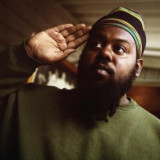
Second volume of tributes from Kutmah.
A beat tape for the brotha from anotha planet, the most high Ras G & the Afrikan Space Program
All beats by Kutmah / Cover Photos By Kevin Ramos

Fourth Page: Meaning of a Nest is the highly anticipated fourth studio album, and second with Edition Records, by renowned South Korean/ Amsterdam based drummer and visionary composer Sun-Mi Hong solidifying Hong’s position as one of the most inventive and creative drummers and musicians of her generation. Meaning of a Nest, embodies the album’s exploration of home and community, reflecting Hong’s decade-long journey from South Korea to Amsterdam and her efforts to build new networks and establish roots in a vibrant new environment.
Musically, Fourth Page: Meaning of a Nest offers an inventive and spacious soundscape, seamlessly blending meticulously crafted compositions with elements of improvisation. This fusion ensures each track resonates with authenticity and emotional depth. Hong’s unique approach grants her band members creative freedom within her structured frameworks, resulting in adynamic and genuine listening experience. Fourth Page: Meaning of a Nest stands as a testament to Sun-Mi Hong’s artistic evolution and unwavering commitment to artistic integrity, positioning her as a formidable presence in the European music scene and beyond.

Felix's impassioned F minor quartet was the fiercely personal response to his
sister's death in 1847, only a few months before his own
The Takacs Quartet frames it with equally committed accounts of a much earlier
work, and Fanny's own important contribution to the genre.
Now available on LP for the first time

Ltd Classic Black Vinyl with bonus 7inch, DL card. Monde UFO, LA-based duo of Ray Monde and Kris Chau, are a monochromatic sunset for the senses. A sonic journey through psychedelia, space rock and jazz. A cosmic space where Spacemen 3 meets Vanishing Twin, by way of Sun Ra. 7171 perfectly embodies the framework of lo and hi-fi sounds which have helped define the band. Included in this expanded package is Four Songs, Monde UFO's radical interpretation of Fugazi's music, housed for the first time on LTD 7" with new artwork. In a downtown Los Angeles warehouse, on 7th Street, Ray Monde began writing songs on an old Yamaha church organ for a project that eventually became Monde UFO. Utilizing the organ as a bass, alongside keyboards and a drum machine, he began making demos on a four-track cassette recorder. Heavily influenced by the musician Sandy Bull, sonically landing in a similar no-man's land of Worldly Jazz and Psych Folk. Monde experimented with the themes mostly of meditation and UFO lore. In time Ray moved in with the artist Kris Chau. With little crossover in musical tastes, they exclusively started listening to jazz, ambient and new age music in the house. Increased interest in sound baths and experimental music led to seeing music in a different light. Envisioning something that would sound like Don Cherry making a record with Yo La Tengo. '7171' is an amalgam of influences, interpretations and otherworldly sounds channeled through genre bending experimentation. This expanded edition of '7171' includes the sought after 'Four Songs' EP, a reimagining Fugazi's early classics, songs that take on a life of their own, lost amongst the haze and sugar sweet psych. Ray Monde explains, "Long Division was one of my favorite tracks off 'Steady Diet of Nothing' the first Fugazi record I ever owned; more than ever, it also feels truly poignant in the times we live in.Version 2 is our interpretation of Version from 'Red Medicine', my favorite Fugazi Record." "A slice of low-key bedroom pop-psychedelia in the vein of Syd Barrett." Aquarium Drunkard "Monde UFO wander through a humid mist of exotic samba shuffles, shamanic whispers, and reverberating laser beam synthesizers." New Commute

Sopa Boba is a Belgian-Dutch electronic, modern classical project. The idea behind the form is a so-called Oratorio from the present age which unfolds a dramatc tale within a sociopolitcal framework. The compositons incorporate a neo-classical style string quartet, harsh modular sytnhs and spoken word vocals. It features Pavel Tchikov (Ogives) and G.W. Sok (The Ex, Oiseaux-Tempête).
That Moment is an adaptation of the eponymous text by Moldavian writer Nicola Esinencu. The starting point of That Moment takes place in a real fact, which happened in present-time Moldavia, where a father cut his son's finger with an axe, as a punishment for stealing a bit ofmoney from the father's wallet. From there the author combines the tale and its reality with a caustic irony, interrogating an unbridled capitalist society, where everything and everyone is for sale. The total playing-tme is 55 minutes, somewhere in between a hybrid electronic - modern classical oratorio and a concept album, with seven tracks that serve as seven chapters of an ironic and satiric story about the downward spiral of the capitalist society.

"The title is a description of what I do - making music in the home studio on a keyboard (real and virtual), reflecting some kind of dream world. Initially I had read in a book the phrase Homemade Pipe Dreams which I changed to Homemade Ivory Dreams - referencing ivory that often describes a piano keyboard."
First released digital only, June 2, 2017
From a review in Classical Ear August 2017:
It carries itself with all the vivid – and here often hallucinogenic – intensity typical of Doyle’s work. Structure and detail, rhythmic propulsion, tonal variation and textural intricacy all reveal his equally characteristic meticulousness. There’s a palpable emotional energy to, a discernible intellectual interrogation of, pieces that are acutely personal, adroitly framed and superbly realised. It’s as if Debussy had collaborated with dance-music duo Orbital.

Mannequin Records is thrilled to announce the upcoming release of Chromium Industries, a double LP (MNQ 162) capturing the innovative spirit of two pioneers of electronic music: Andrew Lagowski and Paul (Howie D) Howard. This long-anticipated album marks a return to the seminal sounds of the Chromium Industries label, which emerged as a crucial platform for boundary-pushing techno and electronic music in the early 1990s.
Andrew Lagowski, a name synonymous with exploration in electronic music, has been at the forefront of sound innovation since the early 1980s. Known for his work under various aliases, including Lagowski, Legion, and S.E.T.I., his early output in experimental and industrial sounds paved the way for his later techno-focused ventures. Albums like Knowledge (S.E.T.I.) and Nadir (Lagowski) highlighted his pioneering approach to unconventional sound sources and production techniques. In the 1990s, his work with Chromium Industries brought him into the techno spotlight, with a series of influential 12” singles that helped shape the electronic music landscape. With over 60 albums and 10+ singles to his name, Lagowski’s versatility and dedication have garnered him a loyal following and lasting influence across genres.
Paul Howard, aka Howie D, brought his DIY ethos from the punk scene of the 1970s into electronic music. As a founding member of The Frames and co-founder of the Brain Boosters and Spacematic labels, Howard has consistently pushed boundaries. His early forays into hip-hop saw him release the genre-pioneering jazz-rap track Miller Light as Fission. The transition from punk and hip-hop to electronic music was a natural one, culminating in his creation of Chromium Industries after a fateful night hearing Lagowski’s Vermilion at a London party. The label brought some of the most unique techno releases to the scene, with tracks like Blue Anomaly causing near-riots on the dancefloor. Since then, Howard’s work has evolved to include multiple aliases, including The Legend That Is, Phase Collective, and Skulpture.
Chromium Industries 2xLP will be available for purchase from January 2025 through Mannequin Records and select distributors.
This is an essential release for collectors, DJs, and anyone who reveres the legacy of 1990s techno and early rave.

Meet Leng’s latest signings, Liminal – a Danish duo comprised of guitarist, multi-instrumentalist and producer David Rosenkilde, and DJ, producer and sound engineer Morten Troest.
The pair first met when Rosenkilde was booked to perform as a session musician at Troest studio. They clicked immediately so with Troest’s studio skills and inherent knowledge of what works on dancefloors paired with Rosenkilde’s abilities as a musician they decided to produce their own music together working to one simple rule: try out every idea, however outlandish!
Since then Rosenkilde and Troest have been recording their debut album that’s set for release on Leng later in 2025. First, though, we get a taste of their talents via ‘Keep Coming Back To Me’, an impressive debut single that blends electric and electronic instrumentation while keeping its focus fixed on the dancefloor.
Ushered in by shakers, rubbery bass and flanged guitar licks, ‘Keep Coming Back To Me’ giddily blurs the boundaries between colourful nu-disco, low-slung dub disco and the sun-splashed beauty of the more club-friendly end of the Balaeric spectrum. It boasts a hazy, multi-tracked and lightly glassy-eyed lead vocal, as well as a nagging TB-303 acid line that works its way to the fore as the track progresses, adding extra layers of excitement and energy as it unfolds.
Remixer Ray Mang (AKA long-time friend of the label Raj Gupta) takes the latter element as his inspiration on a stunning, nine-minute plus remix that brilliantly re-frames the track as a blend of tactile 21st century nu-disco colour, hypnotic proto-house and analogue-rich, acid-fired Chicago jack. Re-playing the bassline in an early Chicago house style and reaching for lo-fi and spacey synth sounds, the veteran British producer frequently strips the track back to the groove before re-introducing the vocal and the dreamiest of chords.
Liminal also display their sonic diversity on bonus cut ‘The Moon Is Changing’, a wonderfully atmospheric and star-lit affair in which spacey ambient chords, twinkling electric piano keys and intergalactic electronics slowly usher in a mid-tempo Norse nu-disco groove. The pair build slowly, adding vocals and layered guitar licks. The results are hard to pigeonhole but thoroughly impressive, offering a tantalising glimpse of what’s to come on their must-check debut album.

Two records came out in 1988 that forever changed the perception of "experimental" or "serious" music produced in Portugal. These were "Plux Quba" by Nuno Canavarro and "Música de Baixa Fidelidade" by Tózé (António) Ferreira. Both were released by the same label - Ama Romanta -, an influential independent imprint closely linked to avantgarde pop band Pop Dell'Arte. Because those records appeared in what could be perceived as an "alternative pop" framework, they rescued this difficult music from Academia. It helps that Canavarro played in a successful new wave pop band (Street Kids) during the period 1980-83. By association, being a friend since 1976, António was in close contact with many of the musicians and bands that were part of the equally celebrated and detested Portuguese Rock Boom (roughly 79-82).
He was not a musician then but through his friendship with Canavarro, who had the means to acquire electronic equipment, António became involved with that equipment and shared Canavarro's passion for experimentation and curiosity for knowledge. They tried to get hold of as many technical magazines as possible and learn while testing ideas. In 1983, Street Kids were about to break up, young lives drafted into the Army and maybe, in Canavarro's case, a whole new passion for challenging music similar to his bandmate Nuno Rebelo, by then in the process of discovering a wide range of "other" music mainly through Jorge Lima Barreto. Barreto, who had started Telectu with Vítor Rua, possessed a huge book and record collection and, like Rua before them, Canavarro, Rebelo and Ferreira became fascinated by the pool of knowledge they now had access to by frequenting Barreto's house in Lisbon. He was roughly a decade older, had published several books and other writings throughout the 1970s, cultivated an anarchic stance and a penchant for cultural indoctrination. Rebelo was the first to be introduced via his contact with Rua (who had invited him to play in his other band GNR).
Overwhelmed, he felt the need to share his enthusiasm with friends and eventually took a few to the house in true pilgrimage fashion. To see the Light. Among the few he led there was even João Peste, founder of Ama Romanta. Canavarro and Ferreira preceded him.
Ferreira recalls an exciting learning process added to his experiments with Canavarro's array of synths such as the Korg Ms 20, Korg polysix, ARP Axxe, Roland SH-01, the Ensoniq Mirage sampler... He read in a magazine article about someone who had studied at the Institute of Sonology (then in Utrecht, Netherlands) and went there during a vacation trip in the Summer of 1983. He became excited by the prospect of studying at the Institute but money was a problem. Canavarro, on the other hand, was admitted there in the following year. Back in Portugal, Ferreira eventually abandoned his Chemical Engineering studies in Lisbon's Technical Institute in favour of a more focused music practice. He collaborated with Telectu during 1984 and 85 as a sort of technical engineer, implementing some recording solutions and background tapes and went to work at a thermoelectric power plant in Sines, hoping to make enough money to fund his musical studies. He did and proceeded with the paperwork for admission at the Institute of Sonology, now based in The Hague. António studied there in 1986-87 and the present album includes two compositions developed at the Institute: "More Adult Music" and "This Is Music, As It Was Expected", both featuring the voice of Rodney Waschka II. Among other activities and talents, Rodney is an expert in computer music and to António his voice sounded similar to Robert Ashley's, whose work he admired.
What happened at the Institute was a systematization of António's self-taught practice. Computer software, Musique Concrète, noise and silence, organisation of abstract ideas and sounds. The original notes on the back sleeve of the LP give some indication of process and thinking, but a more detailed account was given by António in the liner notes of the CD reissue in 2002, which are also included in this 2025 LP reissue.
The music sounds deep and detailed, despite the fact of António calling it low-fi ("Baixa Fidelidade"). It flows like an improvised performance where several musicians might be responding to each other, respectful of their mutual space. Drama occurs, as a natural emotional connection is sought by the listener. Piano, bells, drone, processed voices, even the clear narrative of Rodney Waschka II, contribute to create a sort of alternative perceptual reality. The sounds are almost tangible, more a part of the physical world than ethereal manifestations and thus it would not be correct to invoke "ambient music" as a selling point. But although "physical" and distinct, this music is still alien, more so in Portugal's 1988 environment. In March, helped by Canavarro, António set up a home studio and there he recorded the remaining material for this album: "Algumas Pessoas Olharam O Sul E Viram Deserto", "Um Som, Seguido De Uma Cena Negra E Malva" and "O Verão Nasceu Da Paixão De 1921".
"Música de Baixa Fidelidade" stands not only as a proof of great resilience but as one of those magnificent works of art coming from someone who balanced technical inclination and emotional sensibility. Because of that, Tózé Ferreira is able to decode the phantom world of sound for anyone who cares to experience the sensation of inhabiting a version of the Future. First ever vinyl reissue, reproduction of the original artwork with an additional insert. Made in collaboration with the artist and the support of Paulo Menezes (Plancton Music), who provided valuable assistance. Remastered by Taylor Deupree.

Sound the alarm, we’re back! PAGER15 is our first VA since 2020, and it’s a special one— dropping soon with four tracks, four unique voices, and enough groove to shake your neighbor’s picture frames off the wall!
First up, our homeboy Phil Evans, aka "the coach” aka daddy cool, with Chocolate Funk. Imagine warm pads, crispy drums, and a bassline so addictive it should come with a warning. Add his signature offbeat stabs and a swing smoother than the creamy drizzle on kimchi fries, and you’ve got a groove that lingers long after the needle lifts.
Fresh blood incoming! Wavelength Infinity marks the Pager debut of the Parisians Aline Umber & Maxime dB, and they’re making waves. Deep, undulating basslines meet shimmering pads in a hypnotic blend of rhythm and texture. It’s a groove-roller that pulls you in faster than a free drink at the bar.
Flip it over, and California Sunshine Boy Rocky delivers debut number two with Aquatic Maneuvers. Flowing pads and bubbling percussion weave together a lush, evolving soundscape. Organic and intricate, it shifts like underwater currents, with each layer wrapping around you like the warm embrace of an after-hours vibe you never want to end!
And then there’s the Gude-Launebär himself—Markus Sommer, aka Frau Hommer, answering the eternal question: Does it Funk? Spoiler: absolutely. Rolling basslines, sharp percussion, and cheeky melodic twists come together. This is Hommer energy at its peak!
You know the drill: Either you grab it while it’s hot, or you’ll be left watching it spin on someone else’s deck. PAGER15 is calling—don’t let it go to voicemail!

SPECKLED DRAGON EGG COLOR VINYL[23,49 €]
Cassette[14,08 €]
PURPLE TREE FOG VINYL[23,95 €]
Being Dead knows how to make an entrance - within the first several seconds of EELS, the duo's new record, the bright, hard-strummed guitar line on "Godzilla Rises" conjures cinematic immediacy, a creature emerging from the depths of the ocean in campy, freaky stop motion, fittingly so. Being Dead's records are mosaics, technicolor incantations, each song its own self-contained little universe. And while the dreamlike EELS probes further into the depths of the duo Being Dead's psyche, it is, most importantly, in the year of our lord 2024, a 16-track record that is genuinely unpredictable from one track to the next: a joyous and unexpected trip helmed by two true-blue freak bitch besties holed up in a lil' house in the heart of Austin, Texas. They decamped to Los Angeles for two weeks to record with GRAMMY-winning producer John Congleton, writing songs for the record until days before they left. The radical shift in process was welcome - a good balance and a challenge, Congleton helping them find new ways to work and helping peel back the layers on the core of their songwriting. Being Dead has grown from a duo to a trio live, including bassist Ricky Motto (who is immortalized finally on record here, particularly in the giggles on "Rock n' Roll Hurts") The resulting EELS is a darker record, tapped more into the devilishness within, but it's also a more raucous, rougher ride sonically. There's heartbreak, excitement, enchantment, dancing - we move through it all at a high-octane pace. Falcon Bitch and Smoofy never want to do the same thing twice on any song, and they don't. From the pummeling garage rock distortion of "Firefighters" to "Dragons II," which appears in its demo form taped on a hand recorder, it's unexpected but intuitive, and, most importantly, singularly Being Dead. Like its animal namesake suggests, the songs on EELS are malleable, the record like slithering through murky waters or strange half dreams, mysterious and beautiful in how it moves, reflective in a wavering sheen. Dipping into each song feels like uncovering a new cavern, plunging into depths unknown but fully open to what will be revealed. On the album artwork, an illustration by the artist Julia Soboleva, there are some weird disparate spectral creatures, a stark glimmer against a cloudy darkness. It's a fitting encapsulation of Being Dead, exuding a welcoming, playful energy even if something foreboding lurks just beyond the pale - more out of frame that's left to uncover, no path unexplored, strange and beautiful in the light.

Purple Tree Fog Vinyl. Being Dead knows how to make an entrance - within the first several seconds of EELS, the duo's new record, the bright, hard-strummed guitar line on "Godzilla Rises" conjures cinematic immediacy, a creature emerging from the depths of the ocean in campy, freaky stop motion, fittingly so. Being Dead's records are mosaics, technicolor incantations, each song its own self-contained little universe. And while the dreamlike EELS probes further into the depths of the duo Being Dead's psyche, it is, most importantly, in the year of our lord 2024, a 16-track record that is genuinely unpredictable from one track to the next: a joyous and unexpected trip helmed by two true-blue freak bitch besties holed up in a lil' house in the heart of Austin, Texas. They decamped to Los Angeles for two weeks to record with GRAMMY-winning producer John Congleton, writing songs for the record until days before they left. The radical shift in process was welcome - a good balance and a challenge, Congleton helping them find new ways to work and helping peel back the layers on the core of their songwriting. Being Dead has grown from a duo to a trio live, including bassist Ricky Motto (who is immortalized finally on record here, particularly in the giggles on "Rock n' Roll Hurts") The resulting EELS is a darker record, tapped more into the devilishness within, but it's also a more raucous, rougher ride sonically. There's heartbreak, excitement, enchantment, dancing - we move through it all at a high-octane pace. Falcon Bitch and Smoofy never want to do the same thing twice on any song, and they don't. From the pummeling garage rock distortion of "Firefighters" to "Dragons II," which appears in its demo form taped on a hand recorder, it's unexpected but intuitive, and, most importantly, singularly Being Dead. Like its animal namesake suggests, the songs on EELS are malleable, the record like slithering through murky waters or strange half dreams, mysterious and beautiful in how it moves, reflective in a wavering sheen. Dipping into each song feels like uncovering a new cavern, plunging into depths unknown but fully open to what will be revealed. On the album artwork, an illustration by the artist Julia Soboleva, there are some weird disparate spectral creatures, a stark glimmer against a cloudy darkness. It's a fitting encapsulation of Being Dead, exuding a welcoming, playful energy even if something foreboding lurks just beyond the pale - more out of frame that's left to uncover, no path unexplored, strange and beautiful in the light.

DOVS are the duo of Vienna’s Johannes Auvinen, aka Tin Man, and Mexico City’s Gabo Barranco, aka AAAA. Psychic Geography is their second album together, but it differs considerably from both their respective solo work and their 2019 debut LP together, Silent Cities: Where that album’s hardware-based acid kept its gaze focused squarely on the dancefloor, Psychic Geography is a strictly ambient affair.
The album has its roots in a trio of beatless tracks that peppered Silent Cities; this time, the duo decided to try making an entire album with no drums. “It opened up the chance to make a different, more narrative style of music with more complex structures,” Auvinen says. Ambiguity and uncertainty are key watchwords for their music, which moves with eerie, liquid grace. Untethered from 4/4 kicks, their music drifts and morphs; familiar acid sequences give way to surprising shifts in tone and mood. And with no drums to distract the ear, the seeming simplicity of their silvery synth lines opens up to reveal remarkable depth and dynamism.
Barranco and Auvinen recorded the album together in the studio utilizing machines like the Roland TB-303, Juno G, Prophet 5, Elektron Octatrack MKII, Make Noise DPO and René, Mutable Clouds, Roland SH-101, Behringer TD3, and Sherman Filterbank. Listen on good speakers or headphones, and you can tell: Their gear yields a tonal richness that recalls the ambient and cosmic music of decades earlier. You can practically feel the heat from their circuits warming the air.
The meaning behind the name DOVS is as ambiguous as the duo’s music. (Dig, if you will, the picture of Picasso’s dove of peace—or, perhaps, the outline of a bird pressed into a small white pill.) But Psychic Geography needs little explanation. DOVS’ album is a collection of mental maps of imaginary places. Set your coordinates for the mirage on the horizon and prepare to dissolve.

Vol 2[47,02 €]

Franco Rosso’s epic cinematic opus of reggae social commentary, Babylon, landed in November of 1980. Moving through the film’s opening frames of grey dreary London, two spars – Blue and Ronnie – run with unrestrained anticipation to link with their Ital Lion Sound System brethren. Simultaneously the rest of the crew does what sound crews have done from time: Load them boxes up in the van and trod with vigor to the dance.
But that bassline…The soundtrack notes that carry the celluloid movements of the film’s opening scenes…That bassline…Upside down…Jazzy…Dubby…A bassline like no other reggae bassline the Ital Counselor has ever heard. The hook that got me deep into UK roots music from the band that is my number one inspiration.
If there is bassline that represents the core imperative of Ital Counselor Records, it would have to be Aswad’s Hey Jah Children. It seemed therefore only fitting to bring its absolutely resplendent glory to a new generation. Lovers of sounds and blues, it is time for the dread ital lion sound to once again rise to meet the day. So it is with the deepest of gratitude and respect to the legacy of Aswad (RIP Drummie Zeb) and Franco Rosso, that we present a deeper than deep next cut…Christened here…the Ital Lion Serenade.
In line with all IC releases, we have enlisted top tier session musicians and studio men. Long time IC collaborator, Inyaki BDF, is at the center of the action as the musical maestro. Hopping on the BDF sonic lorry are Aratz Diez on Trombone and James Zugasti on the dub mixes. This crew bring the original composition up-to-date with a heady dubwise weight. Syndrums ricochet while Inyaki’s bassline rumbles teetering as it does somewhere between a modern dubstep warble and its core roots-wise influence in Tony Gad’s original playing.
Diez’s trombone playing comes across like an x-ray of the Aswad Horn Section and keeps intact the jazzy abstraction of the original. In turn, Inyaki goes full 70s synth on the psychedelic dubwise of the B-side’s Operation Swamp 81. UK history buffs better you know the reference in that title and its thematic echoing significance from the UK depicted in Rosso’s film and carried on in remembrance on this here hotter than hot 12”.
A warning: the Zugasti dub cuts are devasting to speaker boxes.

The influence of the UK’s Steel City on electronic music is well documented and undisputed and continues to push the envelope with key figures such as Winston Hazel (Forgemasters, The Step), DJ Parrot/Crooked Man, Richard Benson (RAC, SWAG, Altern 8), Chris Duckenfield (RAC, Popular Peoples Front, SWAG, All Ears Distribution), a thriving underground club scene and the likes of Synaptic Voyager reinforcing the city’s rich musical legacy.
Matt White and Paul Baines have been making off-kilter, emotive, late night electronic jams since meeting in the early 90’s and while life took them on different paths for a while, they have recently blown the thick layer of dust from their synths and drum machines and got busy in the studio to create some amazing new music which draws influence from that classic UK techno sound which played such an important part in the development of dance music culture around the world. With recent releases on Frame Of Mind, Acquit and Telomere Plastic the duo are clearly on a roll, wearing the heritage of their city on their sleeve and delivering what can only be described as heartfelt, authentic machine music made with love and soul.
From the opening beats of lead track Dawn Till Dusk we are drawn in to another place which feels comfortably familiar yet organic, fluid and loose in a way that tugs on the heartstrings. A million miles from cookie-cutter tech house, this is two guys in a bedroom studio, digging deep on hardware machines to create a sound to get completely lost in. Lonely Promontory takes things deeper still with immersive pads, taught electro beats and blissed-out melodic lines which give just hint of optimism and recall those beloved sounds of B12, Redcell and Likemind.
Flipping over we have Stellar Engine which goes a littler heavier on the beats and bass whilst still retaining a floating quality, once again highlighting the hardware jam workflow that Synaptic Voyager utilise in their studio. Once Exposed takes us back to those heady days of the early 90’s when techno, house and ambient electronics combined to create a heady blend of deep atmospherics and driving beats which could work on both dance floors and car stereos alike. Rounding off the EP we have Cognitive Network which goes for a straighter four on the floor techno groove and a killer bassline to lose yourself in. These recordings were delivered to the label in unedited long form (some tracks totalling 15 minutes or more in length!) which Jimpster lovingly edited into the versions which you hear on this release.

From the off, Sharon Van Etten & The Attachment Theory is sonically different from Van Etten's previous work. Writing and recording in total collaboration with her band for the first time, Van Etten finds the freedom that comes by letting go. The result of that liberation is an exhilarating new dimension of sound and songwriting. The themes are timeless, classic Sharon - life and living, love and being loved - but the sounds are new, wholly realized and sharp as glass. Reflecting on this new artistic frame of mind, Van Etten muses, "Sometimes it's exciting, sometimes it's scary, sometimes you feel stuck. It's like every day feels a little different - just being at peace with whatever you're feeling and whoever you are and how you relate to people in that moment. If I can just keep a sense of openness while knowing that my feelings change every day, that is all I can do right now. That and try to be the best person I can be while letting other people be who they are and not taking it personally and just being. I'm not there, but I'm trying to be there every day." Sharon Van Etten & The Attachment Theory is a quantum leap in that direction. - Lol Tolhurst

Awareness Edition: Amber Galaxy Vinyl. From the off, Sharon Van Etten & The Attachment Theory is sonically different from Van Etten's previous work. Writing and recording in total collaboration with her band for the first time, Van Etten finds the freedom that comes by letting go. The result of that liberation is an exhilarating new dimension of sound and songwriting. The themes are timeless, classic Sharon - life and living, love and being loved - but the sounds are new, wholly realized and sharp as glass. Reflecting on this new artistic frame of mind, Van Etten muses, "Sometimes it's exciting, sometimes it's scary, sometimes you feel stuck. It's like every day feels a little different - just being at peace with whatever you're feeling and whoever you are and how you relate to people in that moment. If I can just keep a sense of openness while knowing that my feelings change every day, that is all I can do right now. That and try to be the best person I can be while letting other people be who they are and not taking it personally and just being. I'm not there, but I'm trying to be there every day." Sharon Van Etten & The Attachment Theory is a quantum leap in that direction. - Lol Tolhurst

Awareness Edition: Amber Galaxy Vinyl + Laptop Sticker. From the off, Sharon Van Etten & The Attachment Theory is sonically different from Van Etten's previous work. Writing and recording in total collaboration with her band for the first time, Van Etten finds the freedom that comes by letting go. The result of that liberation is an exhilarating new dimension of sound and songwriting. The themes are timeless, classic Sharon - life and living, love and being loved - but the sounds are new, wholly realized and sharp as glass. Reflecting on this new artistic frame of mind, Van Etten muses, "Sometimes it's exciting, sometimes it's scary, sometimes you feel stuck. It's like every day feels a little different - just being at peace with whatever you're feeling and whoever you are and how you relate to people in that moment. If I can just keep a sense of openness while knowing that my feelings change every day, that is all I can do right now. That and try to be the best person I can be while letting other people be who they are and not taking it personally and just being. I'm not there, but I'm trying to be there every day." Sharon Van Etten & The Attachment Theory is a quantum leap in that direction. - Lol Tolhurst
From the off, Sharon Van Etten & The Attachment Theory is sonically different from Van Etten’s previous work. Writing and recording in total collaboration with her band for the first time, Van Etten finds the freedom that comes by letting go. The result of that liberation is an exhilarating new dimension of sound and songwriting. The themes are timeless, classic Sharon – life and living, love and being loved – but the sounds are new, wholly realized and sharp as glass. Reflecting on this new artistic frame of mind, Van Etten muses, “Sometimes it's exciting, sometimes it's scary, sometimes you feel stuck. It's like every day feels a little different – just being at peace with whatever you're feeling and whoever you are and how you relate to people in that moment. If I can just keep a sense of openness while knowing that my feelings change every day, that is all I can do right now. That and try to be the best person I can be while letting other people be who they are and not taking it personally and just being. I'm not there, but I'm trying to be there every day.” Sharon Van Etten & The Attachment Theory is a quantum leap in that direction.- Lol Tolhurst ● Sharon Van Etten returns with a new, self-titled moniker and expansive new sound ● Recorded at The Church Studios in London; produced by Marta Sologni (Bjork, Bon Iver, Animal Collective, Mica Levi, Black Midi + more) ● Extensive press + radio history includes a Sunday Times Culture profile, BBC News interview, Uncut AOTM and extensive 6 Music support. ● Extensive worldwide touring planned throughout 2025. SVE has previously played BBC Proms & Brixton Academy in London.● First vinyl pressing on limited edition “Amber Galaxy” vinyl
From the off, Sharon Van Etten & The Attachment Theory is sonically different from Van Etten’s previous work. Writing and recording in total collaboration with her band for the first time, Van Etten finds the freedom that comes by letting go. The result of that liberation is an exhilarating new dimension of sound and songwriting. The themes are timeless, classic Sharon – life and living, love and being loved – but the sounds are new, wholly realized and sharp as glass. Reflecting on this new artistic frame of mind, Van Etten muses, “Sometimes it's exciting, sometimes it's scary, sometimes you feel stuck. It's like every day feels a little different – just being at peace with whatever you're feeling and whoever you are and how you relate to people in that moment. If I can just keep a sense of openness while knowing that my feelings change every day, that is all I can do right now. That and try to be the best person I can be while letting other people be who they are and not taking it personally and just being. I'm not there, but I'm trying to be there every day.” Sharon Van Etten & The Attachment Theory is a quantum leap in that direction.- Lol Tolhurst ● Sharon Van Etten returns with a new, self-titled moniker and expansive new sound ● Recorded at The Church Studios in London; produced by Marta Sologni (Bjork, Bon Iver, Animal Collective, Mica Levi, Black Midi + more) ● Extensive press + radio history includes a Sunday Times Culture profile, BBC News interview, Uncut AOTM and extensive 6 Music support. ● Extensive worldwide touring planned throughout 2025. SVE has previously played BBC Proms & Brixton Academy in London.● First vinyl pressing on limited edition “Amber Galaxy” vinyl
From the off, Sharon Van Etten & The Attachment Theory is sonically different from Van Etten’s previous work. Writing and recording in total collaboration with her band for the first time, Van Etten finds the freedom that comes by letting go. The result of that liberation is an exhilarating new dimension of sound and songwriting. The themes are timeless, classic Sharon – life and living, love and being loved – but the sounds are new, wholly realized and sharp as glass. Reflecting on this new artistic frame of mind, Van Etten muses, “Sometimes it's exciting, sometimes it's scary, sometimes you feel stuck. It's like every day feels a little different – just being at peace with whatever you're feeling and whoever you are and how you relate to people in that moment. If I can just keep a sense of openness while knowing that my feelings change every day, that is all I can do right now. That and try to be the best person I can be while letting other people be who they are and not taking it personally and just being. I'm not there, but I'm trying to be there every day.” Sharon Van Etten & The Attachment Theory is a quantum leap in that direction.- Lol Tolhurst ● Sharon Van Etten returns with a new, self-titled moniker and expansive new sound ● Recorded at The Church Studios in London; produced by Marta Sologni (Bjork, Bon Iver, Animal Collective, Mica Levi, Black Midi + more) ● Extensive press + radio history includes a Sunday Times Culture profile, BBC News interview, Uncut AOTM and extensive 6 Music support. ● Extensive worldwide touring planned throughout 2025. SVE has previously played BBC Proms & Brixton Academy in London.● First vinyl pressing on limited edition “Amber Galaxy” vinyl

A cybernetic rush of non-conformist techno from Italian maverick Piezo.
Milan-based Piezo is usually found at the helm of his Ansia label, exploring a versatile spectrum of experimental club music grounded in soundsystem presence and non-linear structures. On Ecstatic Nostalgia he edges his sound into a more driving, techno-spirited framework which lends itself to the energy of the UFO series beautifully. From tightly wound, artfully fractured 150 rumble and elegant sci-fi breakbeat on to needlepoint electronica and subtly trance-brushed atmospherics, Piezo's broad palette fuels an ear-snagging EP which balances visceral impact with a deft touch.
Anyone familiar with Dekmantel's flagship festival will know the UFO stages showcase spikier strains of modernist body music, and the label series serves to push these sounds forwards in the hands of consistently visionary producers. After a what could be seen as a brief pause in the UFO series - it's with a fresh wave of releases.

1/4" / 15 IPS / Dolby A Analogue Copy to DSD 256 to analogue console to lathe
Carlos Santana and Company Return to a Dynamic Blend of R&B, Latin, Funk, and Rock: Amigos Aims for the Hips, Spreads Joy, and Includes “Europa (Earth’s Cry Heaven’s Smile)” Amigos has been beloved for decades by both long-time and recent Santana admirers, with multiple generations of fans drawn in by the record’s contagious blend of R&B, Latin, rock, and funk elements. As well as its immense accessibility. Coming off a series of albums that heavily leaned into jazz fusion, the band returns to the more dynamic and concise approaches of its earlier works without losing the sense of adventurousness, craftsmanship, and virtuosity that turned it into a juggernaut embraced by both the mainstream and experimentally minded communities.
Mastered at Mobile Fidelity’s in-house studio in California, pressed at Fidelity Record Pressing, and strictly limited to 3,000 numbered copies, Mobile Fidelity’s 180g 33RPM LP of Amigos presents the 1976 album in audiophile sound for the first time on a domestic release. Part of the reissue label’s Santana series, this collectible version features quiet surfaces and black backgrounds that help reveal the intricate details, distinguished tones, and cohesive interplay that cause Santana’s music to take flight.
The enhanced aural perspectives extend not only to Carlos Santana’s intoxicating fills and solos, but to the rich tapestry of the rhythmic, melodic, and vocal elements that help Amigos feel as fresh today as it did several decades ago. This LP shines a beaming light on the surrounding musicians that simultaneously feed off and inspire their bandleader. The solidity and depth of the bass lines; the wash of the organ; the scope and carry of the vocals; the grip and weight of the low-end frequencies; and, possibly the most enticing traits, the textures of the acoustic guitars, numerous percussive devices, and then-modern synthesizers: all come across with tremendous presence and energy.
Entirely appropriate for a set that kicks from the start, with the opening “Dance Sister Dance (Baila Mi Hermana)” true to the song title’s combination directive-invitation meaning. Tropical, soulful, upbeat, and liberating, it beckons hips to shake and delicious libations to pour. Clinking cowbells, spirited background vocals, hand-tapped congas, and Carlos Santana’s six-string magma pour forth with abundance. The song sets the mood and expectations for a record that contains not an ounce of filler, and which inspires and spreads joy at practically every turn.
On the gold-certified Amigos, the ensemble never seems to run short of zest or happiness. Key in on the Latin bite and searing guitar architecture of “Take Me With You,” an instrumental that shifts tempo at its midpoint and sparkles with a samba-like outro that aims to put everyone in earshot on the dance floor. Surrender to the slow-burn of “Tell Me You Are Tired,” sent up with Greg Walker’s sympathetic vocals and spun around with whirling funk accents. Marvel at the Spanish guitar introduction, Mexican folk foundation, group vocals, and extroverted grooves of the forward-propulsive “Gitano,” with lead singing by conga/bongo expert Armando Peraza.
Having reached the Top 10 in the United States and spawned the hit “Let It Shine,” Amigos marked the final stint for bassist David Brown, the last of the group’s famed Woodstock lineup to depart. His contributions feel especially spirited throughout the album, compass readings that the group uses to chart their course. Just listen to how his passages pop on “Let Me” and frame the can’t-get-it-out-of-your-head “what you need is what you want” refrain. And while Carlos Santana remains the centerpiece of the brilliant and meditative “Europa (Earth’s Cry Heaven’s Smile),” Brown serves as a trustworthy anchor and friendly advocate.

Big'n was, is and always shall be a legacy noise rock band from Chicago (est. 1990) comprised of vocalist William Akins, guitarist Todd Johnson, bassist Fred Popolo, and drummer Brian Wnukowski. After releasing a stellar debut album (1994), followed by their sophomore and signature effort Discipline Through Sound on Skingraft Records (1996) and a split single with Shellac, the band became inactive for some years. In 2018,Big'n recorded and releaseda new EP, Knife of Sin,via Computer Students. In 2022, they released DTS 25, an expansion of their pioneering second album. Both were recorded by the late, great Steve Albini. Big'n is back once again with a ruthless new album, End Comes Too Soon - their first in 28 years - released via Computer Student. It"sall still here as presentand disciplined as ever - BrianE's powerful, reliably precise drumming with melodic phrasing that shapes the songs, Fred's metallic superstructure of a bass that builds the defined framework of the music, Todd's clangorous guitar that has more harmonic content than a lot of his noisier peers, and William Akins' yarling vocals, the most recognizably human thing about the band, that convey layers of tension and intent, all the emotional content of a hellbound therapy session. Tragically, on May 7, 2024, Steve Albini suddenly passed away of a heart attack. Naturally, Big'n were shocked and devastated. End Comes Too Soons' title comes from a lyric, and is unrelated to Albini; still, the album became a roundabout love letter to the man, his studio, and his legacy. Like its predecessors, the album is structured by snippets of musical interludes or Transmissions - and there are six here, under the common code "XMSN."

Linking music and literature, building a bridge between the written and the sung – only the greats have managed to do this in the past. Leonard Cohen, Scott Walker, and Patti Smith were just some of the shining stars that Anna B Savage orientated herself towards as a teenager. Born on the anniversary of Bach’s death, the young musician spent her birthday every year in the Green Room of the Royal Albert Hall watching her parents perform compositions by the grand master. That shaped her. Today, thanks to albums such as her debut, “A Common Turn” (2021), and the incredibly sensual art-pop opus “in|FLUX” (2023), the singer-songwriter is one of the truly exceptional talents on the British independent scene. In her music, otherworldly vocals nestle up against chamber orchestral compositions, delicate arrangements rise up and blow away, and the musician’s highly eclectic sound grows song by song into an experience that lingers for days and weeks. Potentially life-changing.
A sense of rootedness is at the heart of Anna B Savage’s third record You and i are Earth, a record that is as much about healing as it is an unbowed sense of curiosity, and, more simply, “a love letter to a man and to Ireland.” Following on from her critically acclaimed records A Common Turn and in|FLUX, You and i are Earth manages to convey a sense of intimacy, while also being open-ended. Gentleness is as radiant a touchstone on the record as earthiness, something that Savage attributes to the place she finds herself at present, both geographically and emotionally. And quite literally the record bears witness to a particular piece of earth - Ireland, and Savage’s relationship to it as her new home. That process is brilliantly rendered on Agnes, a complicated piece of work featuring Anna Mieke that turns on tropes of duality and transformation. It mirrors an unsettling experience that Savage had through meditation, which ultimately ended in an immersive, beautiful feeling, “I felt like I was part of the earth, completely connected to the mycelium network, I felt like I was where I was meant to be.” In many ways, that experience framed the album’s artwork, a photograph taken in some woodlands in Co. Sligo, with Savage looking up at the trees, their fractals reflected in her eyes, mirroring something she had felt in her meditation, bringing us back full circle, and to that sense that we are essentially in unison, or at least striving to be, that “you and I are earth”.

Linking music and literature, building a bridge between the written and the sung – only the greats have managed to do this in the past. Leonard Cohen, Scott Walker, and Patti Smith were just some of the shining stars that Anna B Savage orientated herself towards as a teenager. Born on the anniversary of Bach’s death, the young musician spent her birthday every year in the Green Room of the Royal Albert Hall watching her parents perform compositions by the grand master. That shaped her. Today, thanks to albums such as her debut, “A Common Turn” (2021), and the incredibly sensual art-pop opus “in|FLUX” (2023), the singer-songwriter is one of the truly exceptional talents on the British independent scene. In her music, otherworldly vocals nestle up against chamber orchestral compositions, delicate arrangements rise up and blow away, and the musician’s highly eclectic sound grows song by song into an experience that lingers for days and weeks. Potentially life-changing.
A sense of rootedness is at the heart of Anna B Savage’s third record You and i are Earth, a record that is as much about healing as it is an unbowed sense of curiosity, and, more simply, “a love letter to a man and to Ireland.” Following on from her critically acclaimed records A Common Turn and in|FLUX, You and i are Earth manages to convey a sense of intimacy, while also being open-ended. Gentleness is as radiant a touchstone on the record as earthiness, something that Savage attributes to the place she finds herself at present, both geographically and emotionally. And quite literally the record bears witness to a particular piece of earth - Ireland, and Savage’s relationship to it as her new home. That process is brilliantly rendered on Agnes, a complicated piece of work featuring Anna Mieke that turns on tropes of duality and transformation. It mirrors an unsettling experience that Savage had through meditation, which ultimately ended in an immersive, beautiful feeling, “I felt like I was part of the earth, completely connected to the mycelium network, I felt like I was where I was meant to be.” In many ways, that experience framed the album’s artwork, a photograph taken in some woodlands in Co. Sligo, with Savage looking up at the trees, their fractals reflected in her eyes, mirroring something she had felt in her meditation, bringing us back full circle, and to that sense that we are essentially in unison, or at least striving to be, that “you and I are earth”.

David Allred is a prolific composer and producer based in Portland, Oregon. His new album The Beautiful World captures an enriched, realised understanding of why he composes in the first place. Dedicated to the expression of existential themes such as death, grief, longing and loss, the album’s core theme centres around the suicide of a young girl Lauren, who was a family friend to Allred. For as long as he could remember, Allred always created music out of a kind of dissociative state which he finds alluringly easy to lapse into. A repetition of a motif is usually where he begins composing. But unlike his previous works, The Beautiful World firmly has one foot in reality and is deeply intertwined with Allred’s relationships, past and present. Through his correspondence with Erased Tapes label head and the album’s producer, Robert Raths, over the past year, he came to realise that everyone has a Lauren in a way – someone they’d lost. Through writing to Raths, Allred was able to draw out this thread from the work and position it more clearly as the central concept to this work. The music doesn’t reflect the chaos of trauma, instead it has a therapeutic quality. It was through this dialogue that Allred was able to create what may be his most cohesive body of work to date. The 11 track album unfolds around Oh Lauren, providing the core of the album’s sentiment – how grief returns to us throughout life over and over. Embedded more than halfway through the album, Allred allows listeners to cohabit a meditative space through ambient textures, drones and ballads echoing the vocal sincerity of Arthur Russell, Daniel Johnston and the hypnotic storytelling of Robert Ashley. To truly reckon with The Beautiful World’s emotional position, listeners must understand the importance of the figure of Lauren, and the significance she has had throughout Allred’s life. Lauren’s suicide as a child provided the catalyst for Allred’s lifelong grief. But it was death anxiety and grief itself which provided Allred a link to a universal relationship that people have with each other and the world they live in. Impermanence and loss are the driving force behind all of our connections. The trance-like nature of the album perhaps comes from David Allred’s time sense – particularly when it comes to memory and trauma. Time becomes non-linear rather than a straight line – where one can repeat or return to the same themes but older and in a different frame of mind. Grief continues to manifest itself in life and despite personal growth, there will always be moments where the same feeling will manifest itself again. The album encourages listeners to sit with the concept of grief, and Allred is hopeful they can find comfort and learn to process it in a healing way. The Beautiful World is therefore heavily influenced by Allred’s work in therapy, particularly his relationship to writing music. In the past, Allred would be composing music as a means to dissociate from his life, but the album sees him engaging and connecting more authentically than ever with others and himself. Despite his prolific previous works being made in the company of others, Allred needed to step back from the scenes that he’s worked in to discover what he really wanted to create. Allred concludes: “In the power of love, curiosity, humour, and reconciliation, we give you The Beautiful World.”

A new album by four-piece band District Five from Zurich is always a good moment to reassess one’s own expectations. After Burnt Sugar 2022 and Pause 2023, Come Closer is the third album by Vojko Huter, Paul Amereller, Tapiwa Svosve and Xaver Rüegg, which mixes a wide range of references without ever being bothered by the commitment to one genre only. Imagine the band as something like a catalyst, through which its members constantly process what they are influenced by. And these influences are in constant motion: derived from the old-fashioned and amicable interest of collaboratively making music, the band comes together in their weekly ritual, dedicated to this synthesis of interests. At one point, this unrestricted game was called jazz, but even a generous concept can become too narrow. Which is why the genre remains an important influence, but not the only point of reference. Rather, its qualities are the root system from which everything else grows.
Case in point for this expansion of possibilities is the first track on Come Closer, which, and here comes a genre attribution after all, moves the album into the vicinity of dream pop. “Another One” centers the voice, evoking old and new memories alike. Accompanied by an adequately slowed-down guitar riff and rhythm, the musical framework remains stable before collapsing in a nervous, shimmering manner. Ready to be assembled anew. On the following seven tracks, District Five takes on this task, referencing post-punk motifs as well as progressive, meandering song structures. Condensed and expansive at the same time, driven by a desire for collective play.
This trusting cooperation between District Five’s members is ultimately the constant of Come Closer. Although the four musicians seem determined to find a different way to organize themselves as a band on almost every song, this conversational approach holds the album together on an intuitive level. And in the end, the only question that remains is: is it the members that influence the band, or is it the other way around?


Embarking on the next Vargmal chapter with 'Bacchanalia', the new EP from Italian-born, Londonbased producer Andrea Bonalumi, better known as Big Hands. Across three original tracks and a remix by British producer Al Wootton, 'Bacchanalia' moves through hypnotic grooves exuding primal energy and forward momentum, blurring the lines between percussive techno intensity and
subterranean bass vibrations.
Opening with 'Bacchanalia I', Big Hands lays down the foundation with a rhythmic drive where each beat shifts and evolves within a dense, organic framework, capturing the raw energy of live modular electronics. The journey continues as 'Bacchanalia II' shifts focus toward heavier, low-end vibrations, where intricate layers of bass and rhythm interplay in tension-filled dialogue that builds
intensifying energy.
'Bacchanalia III' offers a moment of reflection, pulling back the energy to reveal a more sparse and atmospheric landscape. It's a fitting progression that offers a glimpse into Big Hands' more introspective side, balancing the EP's momentum. Al Wootton's closing remix of 'Bacchanalia I' amplifies the raw percussive energy while adding his signature touch of spaced-out echoes androlling rhythms bringing the release full circle.

Mit ihrem Debütalbum "Songs From A Thousand Frames Of Mind" schafft es die in Virginia geborene und in Los Angeles lebende Songwriterin Kate Bollinger ihr Handwerk neu zu definieren und gleichzeitig zu verfeinern. Bollinger und ihre Band - zu der Jacob Grissom, Adam Brisbin, Matthew E. White (Sharon Van Etten, Hiss Golden Messenger, Mountain Goats) und Sam Evian (Cass McCombs, Blonde Redhead, Big Thief) gehören - bevorzugen das Eklektische, Melodische und Majestätische, wobei sie, inspiriert von Pop-, Rock- und Folk-Songs der 1960er Jahre, intime Lyrik mit klassischer Instrumentierung unterstützen. Es ist eine Sammlung von 11 Popsongs, ausgefeilt und doch rau mit einem unterschwelligen Punk-Geist, die das Leben, Beziehungen und das Erwachsenwerden thematisieren. Die Veröffentlichung folgt auf eine Reihe von Singles seit ihrer 2022 auf Ghostly International erschienenen EP "Look At It In The Light", auf Beiträge zu Projekten von Freunden (Drugdealer, Paul Cherry) und auf Tourneen mit Faye Webster, Liz Phair, Devendra Banhart und anderen.

Alkisah Versi Hitam is a radical deconstruction and reimagination of Indonesian duo Senyawa's most recent album Alkisah by Hamburg's Marc Richter aka Black To Comm. The original album was released to critical acclaim in February of this year as a decentralized release on a multitude of labels from all corners of the world, Germany’s Dekorder being one of them. Richter is now completely reinventing the original album from scratch by doing an almost Teo Macero-level production job here, cutting up the originals and (re)constructing new material from scratch.
Arcane chants and vocal cut-ups, fierce freeform percussion, grimy No Wave collage, monochrome drones exploding into multicolour streams, unearthly psychedelic Noise and sheer sonic mayhem, warped discordant rhythms between moments of calming beauty - it's never easy to digest but the outcome is both ecstatic and transcendental - never sounding anything less than a fully formed singular album.
A special cassette version of the album will be released by Jordanian label Drowned By Locals.
BLACK TO COMM is the moniker of Hamburg composer/musician Marc Richter who is creating intricate multi-layered collage based works for labels like Thrill Jockey, Type and Dekorder. His 2019 album "Seven Horses For Seven Kings" revealed an increasingly angry, transcendental and fearless approach, attaining new levels of urgency through noise, volume, rhythm, repetition, atonality and beauty.
Jogjakarta’s SENYAWA embody the aural elements of traditional Indonesian music whilst exploring the framework of experimental music practice, pushing the boundaries of both traditions. Their music strikes a perfect balance between their avant-garde influences and cultural heritage to create truly contemporary Indonesian new music. Their sound is comprised of Rully Shabara’s deft extended vocal techniques punctuating the frenetic sounds of instrument builder, Wukir Suryadi’s modern-primitive instrumentation. Inventions like his handcrafted ‘Bamboo Spear’; a thick stem of bamboo strung up with percussive strips of the animal skin along side steel strings. Amplified it fuses elements of traditional Indonesian instrumentation with garage guitar distortion. Sonically dynamic, the instrument can be rhythmically percussive on one side whilst being melodically bowed and plucked on the other.
They have collaborated and performed with many notable musicians such as Stephen O'Malley of Sunn o))), Otomo Yoshide, KK Null, Keiji Haino, Rabih Beiani, Trevor Dunn, Greg Fox, Arrington De Dionysus, Melt Banana, Damo Suzuki and Oren Ambarchi.
On his third album as Etelin, Alex Cobb explores the intricacies of separation and belonging using field recordings and electronics, reconfiguring the dividing line between what is artificial and natural in the process. Maintaining a sense of playful reverence and lurking melancholy in its glitchy pastoralism, Patio User Manual hums with a meticulous and singular energy. From the loops and static pulses of "The Chemistry of Cobalt" to the tension and release of "Electrical Sailing," the listener is pulled into a sound world at once ambivalent and radiant, reaching its denouement in the lovely melody that closes the final track, "Picnic at Gas Station Park". Although the album might bring to mind the nuanced and imaginative ambient music published by labels such as Mille Plateaux, Sonig, and Silent Records in the 1990s, it is, in the end, a world of its own and very much of today. The patio as a stage for alienated life, pyrrhic in its isolation, deceptive in its promise of distinction. Orientation as disorientation, often unseen inside the frame but felt in the bones. What is out there, anyway, other than the thing we fear the most?
"Another day of weird weather and screens. What type of perfume did Philip Johnson wear when he designed Glass House? Is it actually possible to flee to the country when you’ve internalized a lifetime of intellectualized urban living? When you buy a DIY patio kit, you get instructions for how best to embed concrete or brick or flagstone into the natural world. The patio will make you enjoy your environment more. It will become yours. You can stand on it and think “this is Mine.” The structuralists talked about the importance of fixed camera position, but didn’t properly interrogate it because to do so would be impossible. It’s hard to believe that it really wasn’t long ago that computer music seemed exciting, novel, even radical. We’re now thoroughly estranged from eating what’s in season. Walking around the woods in southern Ohio in spring, I thought about the curious imperative of the patio, how my kids get excited about picking oyster mushrooms, the dynamics of switched capacitor filters, and how adequacy is tethered to doubt." - AC, May 2024
Glory Fades is a song book written using a common collaborative musical language developed by Yair Elazar Glotman and Mats Erlandsson, building intimate musical spaces, primarily focused on acoustic instrumentation with electronic counterparts contributing light and shade. Throughout the eight songs on the record, each piece unfolds according to its own logic while simultaneously reflecting the overarching tonality of the song book as a whole. The music focuses on the topography outlined by a melodic and harmonic modal framework and the exploration of the negative space found in the decay and in between the notes. There is a tension in this music caused by a reduced and stark emotional expression on the surface and the complex structures hidden underneath, where the harmonic material shimmers and shifts, and tempo and time signature modulates imperceptibly. The instrumentation forms a non-traditional chamber ensemble consisting of plucked and bowed acoustic guitars, zithers, bells, double bass, violin and percussion with additional treatments through manipulated tape and reamplification techniques. Mats Erlandsson is part of the vibrantly re-emerging field of drone music in Stockholm, Sweden, and is associated with practices characterized by the extensive use of sustained sound. Utilizing synthesized and recorded analog and digital sound, contaminated field-recordings and extensive tape processing his music slowly unfolds sets of precisely tuned harmonic material while textural properties of the imaginary rooms where the music takes form shifts, shimmers and moves from sparse and open to dense and claustrophobic. In addition to his own artistic practice, Erlandsson holds a position as studio technician at the world-renowned Elektronmusikstudion (EMS) in Stockholm and has frequently presented electroacoustic music and new music from Sweden in concert. Yair Elazar Glotman is a composer and a musician based in Berlin. Glotman trained in classical music as an orchestral contrabass player and in electroacoustic composition. His work for film as well as his independent musical releases are informed by both classical and electroacoustic traditions, and employs a range of improvisation, extended contrabass techniques, and a special interest in textural and spatial compositions and in combining analog and digital processing. His compositions for film began through his close work with the influential, late composer Jóhann Jóhannsson, writing additional music for Mandy (2018) and co-composing Last and First Men (2020). He also collaborated on two oscar-winning soundtracks (Joker and All Quiet on the Western Front). Glotman also regularly releases and performs his own music, which has been released on notable labels including Deutsche Grammophon, Bedroom Community and Subtext Recordings. As a duo Glotman and Erlandsson have been collaborating since 2015 and have previously released music on the labels Miasmah Recordings and 130701. This record is the third installment in a series of collaborative records and live presentations by Yair Elazar Glotman and Mats Erlandsson and will be their first published by XKatedral.

Black Truffle is thrilled to begin 2025 with a rare solo release from Konrad Sprenger, alias of elusive Berlin composer-producer-instrument builder Jörg Hiller. A prolific collaborator, Sprenger has worked extensively with icons of American minimalism such as Ellen Fullman (with whom her recorded the gloriously eccentric song album Ort) and Arnold Dreyblatt (as a core member of the Orchestra of Excited Strings since 2009), as well as releasing their music on his impeccably curated label, Choose. As an instrument builder and installation artist, he has overseen the creation of a computer-controlled multi-channel electric guitar and, with Phillip Sollmann, a modular pipe organ system designed to be reconfigured from space to space.
In much of Hiller’s work, a scientific approach to acoustic phenomena co-exists with a pop sensibility and a sly sense of humour. Nowhere is this unique combination more in evidence than in his slim body of solo work, beginning with the startling diversity of instrumentation and compositional approaches heard on the short pieces of Miniaturen (2006) and Versprochen (2009), followed by the more single-minded exploration of the computer-controlled electric guitar on Stack Music (2017). Set brings together these various strands of Sprenger’s work into a wildly infectious, playful epic, performed by the composer and the mysterious Ensemble Risonanze Moderne. On the LP’s second side, we are also treated to a guest appearance from longtime collaborator Oren Ambarchi, on whose recent solo releases Simian Angel and Shebang Sprenger has made key production contributions. Ambarchi’s signature stuttering, swirling harmonics weave through a sparkling assemblage of electric guitars, acoustic instruments, percussion and electronics—though, given the deft use that much of Sprenger’s recent production work makes of midi-controlled sampled instrumentation, it’s anyone’s guess where the acoustic ends and the digital begins here.
As soon as the needle drops on the first side, we are inside a musical world that Set will inhabit for its 33 minutes: sparkling guitar harmonics and palm-muted notes, tuned percussion, crisp electronic drum hits, flashes of horns, and untraceable bursts of synthetic sound are arranged into a skittering polyrhythmic framework calling up the detail-rich percussive constructions of contemporary techno filtered through the pointillism of the post-serialist European avant-garde. Behind this shifting mist of particulate sound, winds and strings sound out held chords, reminiscent of Arthur Russell’s Tower of Meaning in their epic yet seemingly aimless drift. The relationship between elements is mysterious, appearing both carefully considered and almost random. Though never straying too far from where it begins, as the piece moves along, it spotlights increasingly bizarre instrument choices (shakuhachi and steel drums, anyone?) as well as momentary liftoffs into motorik propulsion. Set is a fascinating, mercurial thing: at once propulsive and fragmented, essentially static in form yet ever-changing in detail, unabashedly egghead in its construction yet sure to get the feet tapping.

An introspective dive into an ethereal atmosphere, "Glimpses of anEternal Bloom" is the debut album of Turkish producer, composer and pianist Berk Icli. The album is an attempt to frame certain moments of "being" no matter the emotional state concerned, whether euphoric, sentimental or dark and contemplative. At times, this is done through orchestrations of strings, brass and woodwinds. Other times with solo piano, field recordings, electronics and the use of samples.
PRO flightcase for one Omnitronic TRM-202 Rotary mixer MK3
Interior and cover (not removable) upholstered with foam
Removable lid
High-quality workmanship with multiplex birch wood, dark brown laminated
Aluminum profile frames with rounded edges
Three-leg steel ball corners
2 high-quality butterfly locks
1 case handles
Made in Europe
Maximum load: 25 kg
Color: Dark brown, laminated
Width: 24 cm
Height: 18 cm
Depth: 38 cm
Weight: 3.20 kg

I Will Find You” takes listeners on a journey through Mathame’s greatest inspiration, Franchino, who’s love for electronic music inspired not only the brothers, but the entire nation. As this track reveals itself, the duo’s devotion to creating meaningful music that is deeply rooted in their own influences reverberates throughout as they translate its gripping sonic identity through their own, distinct lens.
Throughout their career, Mathame (brothers Matteo and Amedeo Giovanelli), have been elevating fans to new heights through their sophisticated compositions that infuse cinematic soundscapes with ethereal energies and raw, real emotions that command movement. While Franchino’s version of this track was originally introduced in 1993 and influenced some legends of the italian progressive techno pioneer scene such as Ricky Le Roi and Mauro Picotto, the Mathame record is actually a rework of Clannad’s theme song from the soundtrack of the 1992 film “The Last of Mohicans”, which the duo first incorporated into performances during their 2019 Cercle set in Mexico City.
“I Will Find You” has since become an anthemic and defining element of Mathame's performances, inclusive of the duo’s 2023/2024 world tour, and has already garnered critical acclaim. The release of “I Will Find You” carries a special endorsement from its original composers, Clannad. The Grammy and BAFTA award-winning band has expressed their delight in seeing their music embraced and reinterpreted by not only new generations, but new genres, as the duo breathe new life into the track's legacy.
From the solitude of volcanic Mount Etna to stages around the world, Italian DJ and producer duo Mathame connect audiences around the globe through transportive music that transcends genres, generations and dimensions. More than another DJ duo, Mathame are sonic alchemists whose productions unfold as poignant odysseys that blur the lines between reverie and reality. Defying convention through their sound, the brothers masterfully immerse listeners into the futuristic realms they conjure, pulsating with sensorial magic and ethereal energies that linger in the air akin to candles in a great cathedral. Their first LP, “MEMO” was a technically driven masterpiece, paving the way for colossal collaborations with global talents like Tiësto and John Summit and amassing over 6 Million streams on Spotify and support from the likes of industry authorities such as Forbes’ 15 Best Albums List of 2023.
The arrival of their solo record “I Will Find You” signals a return to their shared artistic vision and will be released in tandem with the announcement of the duo’s Ibiza Residency concept - NEO - at the beloved electronic temple, Amnesia. Born from an inspirational journey in Tokyo, Japan this past year, Mathame will introduce their most groundbreaking concept to date that masterfully blends the worlds of technology, artificial intelligence and their profound performances with a sense of mysticism that dances between what is seen and what is heard. The cinematic experience - complete with a setup, development and climax - will take place at Amnesia under the HORIZON framework from June 7 to July 5, and from September 13 to 27, with each chapter boasting an eclectic lineup of performances from the likes of The Blaze (DJ Set), Mind Against, NTO and more.

Back in 2018, Argentinian producer Fernando Pulichino released ‘Search of Indigo’ on Leng, a shuffling slab of colourful, Balearic-adjacent dub disco featuring his own distinctive lead vocals and backing vocals from Luca Gasparini. Six years on, the track returns renewed and refreshed thanks to a string of new floor-friendly reworks by LTJ Xperience and Pulichino himself. Fernando kicks off the EP with his ‘AM Mix’, an inspired re-invention that re-frames the song as a hard-wired, acid-fired chugger – all restless, razor-sharp TB-303 lines, low-slung bass guitar and sparkling piano riffs. On the digital version of the EP Pulichino has also offered up his ‘PM Mix’, a deliciously Balearic disco dub rich in colourful synth sounds, elastic bass, flanged guitars and sun-bright piano licks. It's LTJ Xperience’s trio of remixes that lie at the heart of the EP though. The Italian producer, real name Luca Trevisi, initially made his name as a downtempo and nu-jazz producer before perfecting a trademark style of chugging, slow-motion hedonism that draws influence from both deep house and nu-disco. His main Remix foregrounds many of these trademark elements, in the process delivering a bongo-rich chugger laden with delayheavy bass guitar sounds, head-nodding drums, heady guitar loops and echoing vocal snippets. On the Dirty Mix, Trevisi reaches for tight, short TB-303 ‘acid’ loops, a more sparse and heavy rhythm track offering a more heads-down, dubbed-out affair that should delight those who love late night and early morning hypnotism with flashes of wide-eyed sonic bliss. Then, to round things off, Trevisi delivers a heady, atmospheric and spaced-out Dub full of jazz guitar licks, bubbling electronics, vocal snippets and effects-laden bass. It’s a winning combination.

The Equatoguinean Norberto de Nöah established in Madrid in the early 80s, where he became a firebrand of African culture in the vibrant Movida. In 1988 he self-released his first solo album, a blend of homeland sounds —modern and traditional— with new synth and drum machine touches. The vanished album finally gets its well-deserved reissue.
Edition of 500 albums on vinyl (Bandcamp download code included) - Original artwork with new 14 pages insert and poster
In the mid-1980s, the European media, music industry and public became increasingly interested in African music. This was a period of international success for King Sunny Adé, Salif Keita, Youssou N’Dour, Ray Lema, Touré Kunda, etc. Spain, with its own particular conditions, wasn’t oblivious to the phenomenon and the Equatoguinean Norberto de Nöah may be its best exponent.
Norberto moved in the early eighties from his hometown in the island Fernando Po (now known as Bioko) to its former colonial capital, Madrid. While studying dramatic arts, he created and led the band Nohkis, made up of African and Spanish musicians. In 1985 they released the maxi-single “Mujer española” / “África, ¿dónde está tu gloria?”, and the song “El loco”, was released on a compilation LP called Esto es increíble, both on the label Lollipop. According to the journalist Patricia Godes, they were first artists to record an African music record in Spain. It received positive reviews and a great impact on the most independent side of Madrid’s La Movida movement. Very soon afterwards, Nohkis’ band split up.
Afterwards, Norberto would concentrate on his solo career, and Norberto de Nöah and The Böhöbé Spirits Müsic was released in 1988, definitely a solo album. Norberto created his own label, Kilimandjaro Productions, and composed, arranged and produced all the songs of the LP. Moreover, he sang and played all the instruments: a vast selection of organic instruments, a Yamaha RX-5 drum machine and a Roland D-50 synthesizer.
In the album he exposed his deepest roots, updating the lexicon of traditional Bubi music, the musician’s ethnic group, a compendium of ceremonial melodies that ancient troubadours composed for the court. Doing so he showed new possibilities to one of the oldest ethnic groups in the world. Besides all this, he was also inspired by American music such as funk, R&B, Latin American music and also by a wide range of African and Caribbean rhythms.
Mixing the traditional and the avant-garde in a spontaneous and natural way, the music contained in the record’s grooves flows freely and takes you to places full of magic and mystery, while still transmitting new and exciting sensations. Even more, according to the Equatoguinean musician and writer Baron Ya Búk-Lu based in Madrid, the album’s sound was “the perfect combination of all characteristics that defined the Equatoguinean Afropop music made in Madrid during the 1980s”, a story that still needs to be told in all its depth and intensity!
Following the release of two LPs and several singles, the activity of Norberto de Nöah and Kilimandjaro Productions (and the subsequent Bananas Podridas) ceased. Nevertheless, Norberto’s links to music continued, as a promoter and DJ in Madrid’s nightlife.
Norberto de Nöah contributed greatly to changing Spain’s musical landscape, breaking barriers and mental frameworks. He was the first to make contemporary and popular Guinean music known to the Spanish public.
The repercussions in the African market of a Spanish (and Bube) speaking African musical project, where English and French dominate, was very difficult. In addition, the passage of time and changes in phonographic formats have diluted the memory of Norberto's legacy. Now it’s time to reverse the situation and break all the outdated frontiers!
Norberto de Nöah and The Böhöbé Spirits Müsic, as every important music piece, was at the same time part of a universal phenomenon of recognition of African music and a very personal project, based on the artist’s nostalgic and heartfelt need to show and homage his ethnic group, the Bubis. In this process he also refreshed his hometown music legacy, giving it a new air and opening the door to lots of other great Equatoguinean artists coming afterwards, as well as being an inspiration for many musicians in Spain.


In the fall of 2022, celebrated UK chill-out institution Seahawks landed in Los Angeles for the first time in their 15-year history, with plans to record a sweeping new age downtempo "exploration of visionary California."
Instead, they immediately fell ill with flu (Fowler collapsed next to a taco truck; 911 was called), and were bedridden for the better part of a week. Upon recovering, they resituated at the synthesizer sanctuary of Brian Foote (Peak Oil, Kranky, Leech), channeling their post-sickness psychedelia into one of the band's lushest and most elevated creations to date: Time Enough For Love. Inspired by the "groove and mood" of Harry Nilsson demos, as well as its wider 70's wavelength - Rhodes, Wurlitzer, wood paneling - Seahawks transposed their classic post-rave ambient exotica onto a warm and woozy Golden State palette. Buoyed by the liquid touch of English maestro Kenny Dickenson on keys, the results rank high among the duo's smoothest and most multi-sensory voyages. "Sail Across The Moon" delivers on its title, a simmering, phaser-smeared cruise through the beauty of the night. "Messengers" echoes the cosmic lounge of Air's Moon Safari, shuffling, weightless, and ethereal, while "Falling Deep" reaches for the stars, pure cascading bliss, the ecstatic moment writ large.
The album skews steadily more astral as it progresses, drifting towards jazzy, galactic outer reaches. "Like A Grain Of Sand" opens with a spoken sample by the celebrated late American poet Rachel Sherwood ("The children watch, breathless / with the birds / They feel an emanation / from this shuddering place"), before taking flight on a Balearic trip through island house, PM Dawn gold dust, upright bass meditation, and kaleidoscopic light. A remix of the title track by Chicago trio Purelink closes the record in a suitably subdued and skittery state of mind. Time Enough For Love radiates color, complexity, and positivity, infused by the "life enhancing" nature of the band's time in Los Angeles - sunsets, sound systems, and sativa, framed by coastlines and cloudbanks, the city's mystic sprawl glittering beneath purple dusk.

Indian born, UK artist Michael Diamond, co-founder of Vasuki Sound label and club night, announces new EP Placid Wakefulness, featuring single ‘Reverse Entropy’. available on all platforms 5th December via Vasuki Sound.
A uniquely multifaceted talent, Michael Diamond’s unforgettable ‘jazzed electronic’ sound is informed by a spectrum of influences, not least by intersection of the scientific and practical worlds of electronic music. From the music scholarship he won to read Medicine at Oxford where he quickly discovered new ways in which the two worlds can co-exist, his days were spent immersed in academic studies of music perception and cognition, while his nights were spent alongside the likes of Ben UFO, Batu & Ross From Friends, playing at one of UK’s most long-established nights ‘Simple’. A chance encounter there also led him to connect with musical collaborator Alex Wilson – the BBC Young Jazz Musician of the Year semi-finalist and then musical director of Oxford’s Jazz Orchestra – who appears frequently across Diamond’s compositions and on Placid Wakefulness.
No stranger to a concept piece, Diamond’s previous project, the highly personal and critically acclaimed exploration of culture and identity, Third Culture (album of the month/year acknowledgments from Stamp The Wax, Juno and Phonica Records, also earning him a DJ Mag ‘One To Watch’, a Youth Music Awards ‘Rising Star’ nomination and a Gilles Peterson’s ‘Future Bubbler’ accolade) explored the experience of being a ‘third culture kid’ born in Kerala, India and growing up in the UK with a sense of fractured identity.
On Placid Wakefulness, Diamond honours his academic research working alongside world-renowned musicologist Professor Eric Clarke. Specifically how music may affect our sleepfulness and wakefulness, how instinctively we are soothed by some sounds and energised by others - ‘what it is about dance music that makes people go hard all night long?’ and ‘what is it about ambient music that makes people feel the opposite way - to lull them into this sense of calmness or rest?’, mindful of the unconscious ways his findings were already manifesting in his work as an artist. And while his research provides a framework for some of the ideas within the piece, Placid Wakefulness can be viewed as more of an unintentional byproduct, or case-in-point of his findings, rather than a piece consciously constructed in their image.
Across Placid Wakefulness’s four tracks we find the artist unpacking a range of sonic ideas on this theme, from ambient calm to club-adjacent rhythms. The EP opens with hypnotic lullaby of ‘A Way of Listening’ complete with transcendent flutes provided by Alex Wilson, cello by George Lloyd-Own and a mellow groove. On the more energised ‘Reverse Entropy’, rhythmic ambiguity moves to rhythmic disambiguation with a four-to-the-floor beat as the track progresses, releasing tension and inviting an urge to dance as a jazz sax moment transmutes into glorious techno percussiveness.
On ‘Turning and Turning’ the bpm shifts down a gear, a sonic dreamstate where tough textural rhythms create a kind of liminal state tension. Closing out the EP we return to a sense of restfulness with the EP’s title track, where a gorgeous picked guitar loop interplays with vibrating ambient pads and a slow and steady beat. The Placid Wakefulness EP is a captivating testament to Diamond’s singular artistic talent and the fascinating interplay of neuroscience and how we experience and enjoy music.
Fabio Lione has become a household name in the Metal scene over the last 25 years.
When ATHENA XIX first appeared, they released 3 critically accliamed and beloved albums before Lione had to focus his talent completely on Rhapsody and Angra. Now ATHENA XIX are back with "Everflow Part 1: Frames Of Humanity" and beckon you to follow them on a travel through the human subconcious. The album includes high ranking guests like ex-Kamelot and current Conception vocalist Roy Khan.

For Greg Mendez, reflection doesnüft mean a static image in a mirror, or even a face he recognizes. Itüfs more a kaleidoscopic mirage, where paths taken shapeshift with the prospect of paths untread, and the subconscious merges with the intentional. On his self-titled new album, the Philadelphia-based songwriter and multi-instrumentalist investigates the shaky camera of memory, striving to carve out a collage that points to a truth. But there isnüft a regimented actuality here; instead, Mendez highlights the merit in many truths, and many lives, and how even the hardest truths can still contain some humor. While this is technically Mendezüfs third full-length album, his back catalog boasts an extensive range of EPs and live recordings. Heüfs a prolific and thoughtful songwriter, understanding the joy in impulse, and shying away from the clinical sheen of overproduction. 2017üfs ügüP/ _(c)_ /üPüh and 2020üfs Cherry Hell garnered acclaim for their quiet, lo-fi urgency, exploring themes of addiction and heartbreak with an intentional, authentic haze, and itüfs this approach that has solidified Mendez as a staple in the DIY community for years. Greg Mendez was written in fragments, some stretching across more than a decade, with Mendez reworking old ideas and arrangements, and others blossoming much more recently. The weight of time..and perhaps the anxiety in running out of it..clouds the album, as Mendez prods at some painful experiences from his childhood and early adulthood. The common thread connecting the characters is their evident imperfections, and the various degrees of damage they cause, both knowingly and unknowingly. But where do we draw the line between a good person and a bad person? For Mendez, itüfs never been that easy. Greg Mendez is an intimate dialogue between the chapters weüfve experienced, and how they can inform the reality we perceive. Itüfs a reminder that we are constantly shifting, ever-changing selves and that if we ruminate too long, we may find ourselves stuck in the seriousness of it all. Here, Mendez allows us to take the time to notice what happens outside of the framework we may have built for ourselves, and the beauty that can occur when we finally do.

"Deep In The Blue" ist das siebte Studioalbum der US-Emo-Band Tiny Moving Parts aus Benson, Minnesota, bekannt für ihren eigenwilligen Stilmix aus Emo, Math, Alternative und Power-Pop. Gegründet 2008, standen TMP bislang bei Triple Crown Records und Hopeless Records unter Vertrag und veröffentlichen ihr neues Werk nun in Eigenregie via Many Hats. Direkt im Anschluss startet ihre US-Tour und für 2025 stehen Gigs u.a. in Europa an.

Gelb/Orange/Olive/Weißes Spot-Splatter-Vinyl. Limitiert auf 500 Exemplare. Gatefold. Wenn das Gefühl für Raum und Zeit verschwindet... Psychedelische Sounds fusionieren zu einem endlosen Klangteppich, wirklich zuordnen lässt sich hier nichts mehr. Muss ja auch nicht, lieber den Kopf ausschalten. Nur selten erscheinen Platten wie "ada" (Release: 06.12.2024), die scheinbar endlose Möglichkeiten zum Wegträumen bieten - weil so viel Geschichte in ihnen steckt: "Das neue Album ist so etwas wie die Essenz aus über 30 Jahren Electric Orange", erklärt Dirk Jan Müller, der das langlebige Projekt schon 1992 in Aachen gestartet und später zu einer großartigen Band ausgebaut hat. Electric Orange sind eindeutig im Krautrock der Siebzigerjahre verwurzelt (und nutzen teilweise auch das Equipment dieser Ära), so erinnern viele Tracks an die altbekannten Legenden des Genres: Can, Tangerine Dream, Amon Düül - eine Mischung aus all dem, was die Bandmitglieder lieben. In dieser Welt ist jeder Groove noch besser, wenn man ihn minutenlang durchzieht. Die Musik von Electric Orange entwickelt sich durchgehend weiter, sphärische Klänge kommen dazu und gehen wieder... oder werden von experimentellen Wah-Wah-Gitarren abgelöst. Weltall-Soundeffekte? Film-Samples? Yes! Electric Orange legen eine weitläufige Welt offen und führen den/die Hörer*in dann hindurch; ihre Musik ist treibend und verträumt zugleich.

Declassified Records is back with its 6th release - 2 more tracks crafted by the label owner himself SP:MC. Staying true to the original ideology of his imprint, SP:MC once again aims to fuse & contort his influences from the Drum & Bass & Dubstep scenes into the 2-step / UKG framework. The A side ‘XL Bully’ is definitely the more up front & hard hitting of the two tracks - drawing inspiration from the palette of Digital & Spirit, Total Science & Rufige Kru’s previous works. The flipside ‘Core Memories’ is a deeper cut leaning towards a more Detroit feel - you can undoubtably hear a nod to the late great Marcus Intalex & ST Files here. Declassified continues the forge its own path forwards, already becoming recognised as a ‘buy on sight’ label for UK bass music fans.

Roberto Cacciapaglia is an Italian composer and pianist who started out in the fertile Milan avant-garde scene of the 1970s, which included Franco Battiato, Giusto Pio, Lino Capra Vaccina, Francesco Messina, among others. After studying at the conservatory, he worked at RAI's Studio of Musical Phonology – an electronic music laboratory similar to NDR/WDR in Germany, GRM/IRCAM in France or BBC Radiophonic Workshop.
Originally released in 1979, Sei Note In Logica (Six Notes In Logic) is Cacciapaglia's second album. While his debut, Sonanze, offers a series of ambient mini-soundtracks, Sei Note presents a singular, sinuous piece. The composition is based on a finite set of musical notes, yet this limitation is the point of departure for a grand tour of possible combinations and enthralling timbres (marimbas, strings, reeds and human voice).
Like Steve Reich's Music For 18 Musicians, the joyous experiment of Sei Note is grounded in constant variation. Often doubled by multiple instruments, non-repeating patterns are exquisitely layered, while electro-acoustic signals transform and further refract through visceral effects. Within this conceptual framework, Cacciapaglia does not so much juxtapose rigid dichotomies – acoustic vs. electronic, melodic vs. dissonant, simple vs. complex – as fuse them into an expansive whole.
What started as an inspired study in Minimalism becomes a bold feat of 20th century music. Sei Note In Logica is deeply sincere and, at the same time, quite playful. With one foot firmly planted in the past and the other steeped in technology, Cacciapaglia's influence can be heard in the work of Jim O'Rourke, Fennesz and Ben Vida.

Iranian multi-instrumentalist Kamyar Arsani (Faraway Ghost) and Indian-born drummer/electronic music producer Ravish Momin (Sunken Cages) create their own brand of digital folk music that draws on Sufi mysticism, traditional Persian Music, street rhythms from Mumbai and contemporary electronic music at once. Momin accompanies Arsani's vocals and daf (frame-drum) with a masterful blend of electronic and acoustic percussion, including live-looping via his unique drum-loop performance system.

The Tokyo Blues is an album that reflects Horace Silver's deep musicality, cultural curiosity, and love for the blues
Its combination of relaxed grooves, melodic beauty, and hints of Eastern influence make it a unique and memorable work within Silver's extensive catalog. It's a perfect example of how jazz can both explore new territories and remain grounded in its own traditions, showcasing Silver's versatility as both a pianist and a composer. Released in 1962 it is considered a gem within Horace Silver's prolific career and offers an intriguing combination of Horace Silver's unique jazz language with the subtle influence of his experiences in Japan, producing a warm, thoughtful, and musically rich album. Horace Silver's The Tokyo Blues is the result of his quintet's tour of Japan in 1961, which left a strong impression on him. While on tour, Silver was struck by the culture, atmosphere, and aesthetics of Japan, which he sought to translate into the musical language he was deeply rooted in hard bop. The album, however, doesn't feature overt Japanese musical scales or instrumentation, but rather evokes a mood and a sense of place. Silver's approach was more about integrating his impressions of Japan, its serenity, beauty, and mood of reflection, into the compositions. He did this within the framework of the jazz tradition, creating music that remains unmistakably his own. His quintet was already known for its catchy themes, complex rhythms, and inventive solos, and The Tokyo Blues adds a layer of atmospheric and emotional depth to that established style. In the early 1960s, Horace Silver was at the height of his creative powers. His work was instrumental in shaping the hard bop movement, a style that emphasized blues, gospel, and soul influences over the more intricate, intellectual sounds of bebop. The Tokyo Blues stands as an example of Silver's ability to evolve his sound while staying true to the groove-based essence of hard bop.
