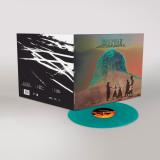
Vinylneuauflage von Mobys "Ambient" Album von 1993, seine erste Exkursion in die Ambient-Musik, die seitdem zu einem seiner Markenzeichen wurde. Mit Ausnahme einer limitierten Clear-Vinyl-Ausgabe 2022 gab es dieses Album nur als CD, nie flächendeckend auf Vinyl. Moby hat die Techno/Electronic-Szene massgeblich beeinflusst, später den Popmarkt erobert und Acts wie David Bowie, Public Enemy, Ozzy Osbourne, die Beastie Boys und Daft Punk produziert und geremixt.
out of Stock
Last delivered 7 months ago available to reorder, subject to availability
Twelve Il Bosco edits of new wave bangers tried and tested down in the Manctalo Disko at The White Hotel and beyond...
No digital will be sold. Again as we said plenty of times before the reason we don't sell the digital tracks is out of respect for the original artists. We make no money on pressing vinyl.
It's expensive. time consuming and nobody fukin buys it anymore.
We do it because we love this shit and the chance to share our discoveries with ya'll.
We hope our compilations serve as an advert for the original artists.
You fall in love with a track, find out who it is and then go and discover more about them.
Shouts here to Hysteric (Mothball Records) for track 3 and Kelvin Andrews & Balearic Mike (Down To The Sea And Back) for putting me onto Car Crash Set leading me to discover track 1.
out of Stock
Last delivered 7 months ago available to reorder, subject to availability
From the Guts of Essaira claims space in body and time. It follows the path announced with the single ‘Dramla / Xirxe’, expanding its tensions and guiding them towards a more layered, conscious expressive form. It is an album to be listened to without respite, allowing the sonic material to dilate.
The tracks move across a punkstrial terrain rich in synths held in constant tension; sharp guitars and industrial rhythms alternate drive with suspension. The vocals, multiple and layered, do not seek centrality but co‑presence: they enter, disappear, pursue one another, dig deep and steer the listening through zones of friction and release.
The album is released during a period of widespread instability and reflects that mood. The ten pieces construct a compact journey, with darkness and urgency alternating with more rarefied, introspective moments. Nothing is accidental: every segment is functional, every tension is permitted to resonate until the end. From the Guts of Essaira is a physical, visceral record; it works by accumulation and subtraction, strengthened by the fracture between control and abandonment. It breathes, listens, spreads.
If there is a year zero for the introduction of reggae music to Japan, you’d be forgiven for thinking it was 1979 when Bob Marley and the Wailers toured the country, trailed by an entourage of journalists, photographers and fans ready to spread the message of the music into all corners of Japanese society.
But the story of Japanese reggae is not a linear one, and the music that is collected on Tokyo Riddim 1976-1985 captures the moment J-reggae entered the broader public consciousness, merging commercial city pop style with an infectious backbeat, that has drawn comparisons with the emergence of Lovers Rock in the UK.
Rather than look directly to Jamaica, many producers and artists in Japan were inspired instead by the more approachable sounds of The Police and UB40, their reggae fix arriving pre-filtered through the lens of new wave pop from the UK. Playful and groovy, these album deep cuts have been overlooked for too long.
Among them are Miki Hirayama, the idol singer who borrowed the bassline from Bob Marley’s Natural Mystic on ‘Denshi Lenzi’, Chu Kosaka, who headed to Hawaii to cut the Jimmy Cliff-inspired ‘Music’ and Marlene, the Philippine songstress whose cover of Roberta Flack’s ‘Hittin’ Me Wear It Hurts’ owed much to her producer’s obsession with Sly & Robbie’s Compass Point sound.
Then there was Izumi “Mimi” Kobayashi, who enlisted the Babylon Warriors to perform on a dubbed-out version of her own track ‘Lazy Love’, the city pop-meets-new wave reggae sound of Miharu Koshi’s ‘Coffee Break’, Junko Yagami’s anti-apartheid deep cut ‘Johannesburg’ and Lily, whose ‘Tenkini Naare’ was produced by Ryuichi Sakamoto and closes out the compilation with a flourish.
While these stories may not always conform to neat narratives, they do provide a more accurate reflection of the indirect ways in which styles infiltrate one another and, in their naivety, have the potential to create something beautifully strange and entirely new. Previously only available in Japan, the tracks on this compilation are a testament to that curious alchemy.
Tokyo Riddim 1976-1985 is released on vinyl and as a full album download (no streaming), featuring original artwork by Japanese Fukuoka-based artist Noncheleee, whose cover pays homage to the iconic dancehall album art of Wilfred Limonious.
Released on 1st September, Tokyo Riddim 1976-1985 is part of Time Capsule's Nippon Series, a loose series of compilations exploring different musical scenes from Japan between the 1960s and 2010s.
out of Stock
Last delivered 8 months ago available to reorder, subject to availability
RAWAX presents Dope Dog (Orlando Voorn) - Keep House Unda'Ground formerly released on legenday Touché in 1996!
We have the honor to re-release this great release 30 years later on vinyl early 2026 with re-mastered tracks!
out of Stock
Last delivered 8 months ago available to reorder, subject to availability
We are super excited to have the legend that is DJ Seduction on Vinyl Fanatiks. We have managed to secure his Obscure Records releases for repress, so make sure you check for the other release if you are buying this one.
This listing is for DJ Seduction - Feel So Good / Solid Bass.
Do I need to say much about Seduction really... part of the scene since the start and still banging out the tunes. You all know how influential he was to the direction of the music we love.
out of Stock
Last delivered 5 months ago available to reorder, subject to availability
From the heart of Tamanrasset in South Algeria, Imarhan transcend Tuareg tradition, weaving hypnotic synths into desert blues. The result is a timeless work—deeply respectful of their roots, yet alive with a stirring sense of modernity.
ESSAM is the band’s fourth album, recorded with the same core lineup, but marks a significant shift in their sound and approach. Musically, it marks a departure from the rocky, bluesy, psychedelic Tuareg guitar-driven sound influenced by Tinariwen’s heritage — moving toward something more open, modern, and exploratory.
For the first time, their long-time sound engineer Maxime Kosinetz stepped in as producer. He travelled to Tamanrasset with Emile Papandreou (of the French duo UTO), a multi-instrumentalist who introduced electronic elements by sampling live instruments and reprocessing them in real time with a modular synthesizer — subtly reshaping the band's sonic identity.
The album was recorded mostly live, in one big room at Aboogi Studio — the band’s own rehearsal and recording space in Tamanrasset. The studio, a converted concert hall, has become a kind of cultural hub for the local youth. Friends dropped by during the sessions to contribute handclaps, vocals, and just be part of the energy. It’s a space where people gather, hang out, play dominoes, smoke chicha — a rare communal spot in a city that doesn’t offer many for young people, somewhat like a youth and community center.
This context — the creative shift, the live recording process, the atmosphere around Aboogi — might be interesting threads to explore in the conversation.
Story Of The Year haben seit ihrem Debütalbum »Page Avenue« – einem der ersten Alben dieser Art, das sich 2003 eine Million Mal verkaufte – die Post-Hardcore-Szene maßgeblich geprägt, und das Quartett aus St. Louis ist im Laufe der Jahre nur noch beeindruckender geworden. Fans haben die Band auf Tour mit Linkin Park, My Chemical Romance und Deftones gesehen, sowie bei ihren Auftritten auf der Warped Tour und beim Festival When We Were Young und vielen anderen.
RENO, the debut album from Red Leather, is a scorched-earth confession wrapped in the swagger of classic rock and the soul of Americana. Written in the aftermath of addiction, heartbreak, and self-reckoning, it’s an unflinching look at what it means to burn your life down and start over. Across its 14 tracks, Red Leather howls through desert nights and neon cityscapes, blending grit and grace in equal measure. Songs like “Deathwish,” “Burn in Hell,” and “The Only Time It Rains in Hollywood” are raw, cinematic, and deeply human—each one a snapshot of pain, defiance, and redemption. Equal parts road trip and resurrection, RENO cements Red Leather as one of the most compelling new voices in modern rock. 1xLP, Single Pocket Jacket, Pressed on Translucent Red Vinyl
The beautiful new world that master bassist Isao Suzuki built with the support of a diverse group of musicians finally returns to life after nearly 50 years!
With his deep musical insight and collaboration among some of Japan’s finest jazz artists, Isao Suzuki created a work of timeless beauty that now resonates
once again in the modern era.
Gegründet 1992 in London von Sänger und Songwriter David Christian, gehören Comet Gain seit über drei Jahrzehnten zu den prägenden Namen des internationalen Indie-Underground. Inspiriert von Creation Records, den Television Personalities und Mod-Ikonen wie Dexys, The Style Council und Vic Godard, zieht die Band ihre Linie von The Velvet Underground, The Byrds bis zu den 13th Floor Elevators. Acht Alben auf Labels wie Wiiija, Kill Rock Stars, What"s Your Rupture und Fortuna POP! dokumentieren ihren unverwechselbaren Stil: eine Mischung aus französischer Nouvelle Vague und englischem "Kitchen Sink"-Herz, Riot Grrrl und Acid Punk, C86, Post-Punk und Northern Soul. "City Fallen Leaves", ursprünglich 2005 erschienen, gilt als Schlüsselwerk der Band und wird nun weltweit von Tapete Records neu aufgelegt. Boy/Girl-Vocals, kratzige Gitarren, Lo-Fi-Charme, Garagebeat und bittersüße Melodien machen dieses Album zu einem zeitlosen Statement für Enthusiasmus und Schmerz, Liebe und Wut. Einfach auflegen, laut drehen und wieder lebendig fühlen.
APORIAMOR noun 1. The death of love’s contradiction.
| “Embody APORIAMOR”
Etymology
aporia-: an irresolvable internal contradiction or logical disjunction in a text, argument, or theory. from Greek aporos ‘impassable’, from a- ‘without’ + poros ‘passage’
-amor: love. Sentimiento intenso del ser humano que, partiendo de su propia insuficiencia, necesita y busca el encuentro y unión con otro ser. Del latín amor.
-mor: latin for death.
APORIAMOR explores the affective ontological and organic processes of love and lust in the turmoil of an urban existence, through the female lens. It expresses the process of strengthening through heartbreak in its various forms.
With her debut EP The Art of the Concrete, elsas knew that by giving that name to a record which was ironically expansive and experimental, she would be calling for a distilled and clearer path further down the line. This is what she’s been incorporating into the sonic world of this new EP, APORIAMOR, signifying the birth of a more matured and distilled version of herself as an artist.
With APORIAMOR (“the death of love’s contradiction”) elsas conveys a personal process of healing in the romantic space. Through different experiences of heartbreak, elsas builds a language - a coping mechanism attached to its subsequent artistic expression – that isn’t founded on hardness or a closing-off, but instead, on a playful but profound reckoning, and learning of self-worth.
APORIAMOR embraces the complexities of being a lover-girl: of moving through life with an open heart. It celebrates the clarity, sweet hindsight, and detachment that come from processing emotion. APORIAMOR is both an affirmation and a release.
elsas makes canonical blends with a forward boundary-bending vision. Her sound in this record is naturally referential of both her Mediterranean heritage and UK alternative music — intrinsic parts of her lived experience. She has had the opportunity to collaborate with artists she deeply admires, each exchange enriching her creative world.
The experience of working hand-in-hand with Sampha for the last 3 years and ongoingly has been a core of her evolution as an artist. She has also collaborated in many forms with artists like Florence + the Machine, Little Simz, Jordan Rakei, Jockstrap, Obongjayar, Black Country New Road, Genevieve Artadi (KNOWER) and Duval Timothy. Additionally, her ongoing work with the Idrîsî Ensemble, of which she is a core member, continues to inform her artistic depth.
The making of this largely self-produced record unfolded over four years — “it’s a well-kneaded dough,” she says. These songs evolved through exposure to multiple environments: from early writing sessions in her childhood home in the Spanish countryside, to stages across the U.S. while on tour supporting Sampha.
Experimentation and modulation are an intrinsic part of elsas’ method, conceiving songs as organisms that respond to their surroundings. Collaborators on this collection of songs include Shrink, Will Lister, Gabriel Gifford, Ethan P. Flynn and more. The record was mixed by David Wrench (a long-time supporter of elsas’) and Nathan Boddy, and mastered by Matt Colton.
With APORIAMOR, elsas creates a visual world from the fabulation of the past, as an act of playful historical revisionism in which she embeds herself as both subject and storyteller. The songs function like an archive of her experiences across various years, each one unearthed and presented as some sort of archaeological artifact. Through this body of work, elsas begins to conceptualize herself as a legacy artist: one who honors the archive of her own becoming while emerging as a distinct and resonant voice in today’s musical landscape.
After decades deep in the game, few names carry the same weight as D.I.T.C. veteran O.C. and East New York’s own PF Cuttin, the DJ and producer behind countless underground classics. Long respected for their consistency and craftsmanship, the two finally joined forces for Opium — a nine-track masterclass that channels the essence of true-school hip-hop.
Originally released to remind heads of what the real sound of the streets was, Opium plays like a time capsule from the era of block parties, 40s, and cipher sessions on the corner — where bars mattered and the beats hit hard. PF Cuttin’s rugged, sample-driven production perfectly complements O.C.’s sharp lyricism and timeless flow, delivering a record that bridges nostalgia with enduring relevance.
Reissued in 2025 with the same iconic artwork by Scarful, this edition celebrates a collaboration that captures the raw soul of New York hip-hop — pure, uncut, and eternal.
Crystal Tides’ long-awaited debut album Toothpaste is the sound of a band truly coming into their own. Written and recorded completely independently, the record embodies the spirit of resilience, creativity, and raw honesty that has carried the Portsmouth outfit through their journey so far. “We wanted the focus of this album to showcase our independence as a band. We felt it important, given our journey thus far, that it come from us in as raw form as possible.” The seeds of Toothpaste were planted back in 2022 with rough voice notes on lead singer Billy’s phone, evolving into a collection of songs that capture both the band’s infectious energy and their most personal reflections to date. From collaborative writing sessions in the practice room to late-night home demos, every track carries the DNA of Crystal Tides’ unity and determination. Working with long-time collaborator and producer David Evans, the result is a bold, heartfelt body of work that celebrates their independence while delivering polished, stadium-ready anthems. The album takes its name from one of its most intimate tracks. Toothpaste was born out of Billy’s battle with Ulcerative Colitis, which led to life-changing surgery. A passing joke about naming the album after the song became a moment of clarity. It's unusual, striking title felt like the only choice, a symbol of the band’s authenticity and ability to find meaning even in the unexpected.
Stoop Kid is the jangly indie rock project of Diest-born Jens Rubens. After Camp Careful (2021) and Mount Cope (2023), Stoop Kid returns with his third full-length album Office Overdue, a ten-song collection that captures the quiet fatigue, flickering humor, and
fragile hope of keeping it together in a world that won't slow down.
'Office Overdue' is a collection of songs Jens made at home in his modest home studio. For this album, he wanted to let go of pressure and expectations more than ever, and only work on music when he genuinely felt like it.No fancy studio, no producer, just walking upstairs and messing around. The result doesn't always sound perfectly polished: the drums are sometimes clumsily programmed and more than a few wrong notes made it onto the record. The guitars were allowed to hit a bit harder this time, with the '90s slacker vibes coming through more prominently. The result is a record that feels raw and honest, and above all, was made purely out of enthusiasm.
Office Overdue explores the attempt to keep functioning in everyday life while the world around us feels on the verge of collapse. The songs move between mental exhaustion and self-reflection, carried by a dry, sometimes bitter humour that helps lighten the weight. The album focuses on repetition and routine, and on the tension between wanting to care for others and being trapped inside one's own head. Themes of anxiety, guilt and dissociation recur throughout, but are always accompanied by small moments of connection, gentle resistance and acceptance. Office Overdue embraces the mess, the doubt and the false notes, without drawing grand conclusions. Not everything is resolved, but the persistence remains.
"The Grotesque Within" is what we proudly call our first true self-produced album. Recorded in the winter of 2025 between Outside Inside Studio in Treviso and our own home studio, it marks a raw and uncompromising chapter in our sound. The record weaves a dense narrative inspired by the unsettling atmosphere found in the works of Thomas Ligotti - where reality constantly threatens to unravel, and horror seeps into the everyday. Much like Ligotti's existential tales, The Grotesque Within doesn't simply portray darkness - it observes how the absurd and the horrific have become indistinguishable from our modern reality. Each track is a confrontation - with the bizarre, the dissonant, and the disturbingly familiar.This is not just an album. It's a descent into the uncanny that already surrounds us.
Neon Green Vinyl. Limited to 350 copies. "The Grotesque Within" is what we proudly call our first true self-produced album. Recorded in the winter of 2025 between Outside Inside Studio in Treviso and our own home studio, it marks a raw and uncompromising chapter in our sound. The record weaves a dense narrative inspired by the unsettling atmosphere found in the works of Thomas Ligotti - where reality constantly threatens to unravel, and horror seeps into the everyday. Much like Ligotti's existential tales, The Grotesque Within doesn't simply portray darkness - it observes how the absurd and the horrific have become indistinguishable from our modern reality. Each track is a confrontation - with the bizarre, the dissonant, and the disturbingly familiar.This is not just an album. It's a descent into the uncanny that already surrounds us.
KIK is the new project of two core strategists of sonic enigma HHY & The Macumbas: Jonathan Uliel Saldanha & João Pais Filipe. Ditching acoustic instruments in favour of drum synthetics & tightly controlled sound design, the duo's debut album NIGHTSHIFT focuses on off-kilter club tracks that thwart 4-on-the-floor flavours whilst maintaining trance-inducing extended cycles. If the devil is in the details, this is all about the spectromophology of the details.
Beginning with moving morse code blips in an odd time signature We Can't Dance announces the characteristic unlife of the album's pulse. Once the kick enters, syncopations progressively accumulate into a weave of interacting rhythmic lines. Smoke Machine's groove is reminiscent of the riddims Saldanha explores in his HHY & The Kampala Unit, adding scintillating pads and snippets of blitzed out laughter.
The album's third track, Proff, hearkens back to the initial pulse, displaced and pitched down in register. Here's a more meditative temperament on display, where the regular geometries of the club have been moved into higher-order structures. Segments rise & fall into earshot. Deepening the meditative mood, Back Room explores a short melodic leitmotif anchoring the track's wander- lust.
The rhythmic assault continues in Tactical Gear, bringing further experiments into polyrhythmic contours exacerbated by preci- sion movements of echo & delay. Limping can be heard as a what-if sonic fiction taking Autechre-inspired abstractions through Durbanoid Gqom terrains. The album closes with its longest track, Night Shift, that segments into shifting sound worlds.
Drawing from industrial grit, cybernetic percussion and the eerie fluorescence of after-hours energy, NIGHTSHIFT exists in the liminal space between body music and abstraction——a soundtrack for phantom warehouses and malfunctioning machines. This isn’t just music; it’s an immersive sonic environment, a journey into the heart of deconstructed dancefloors.
For fans of Rian Treanor, Proc Fiskal, Jlin and Lorenzo Senni.
Most recently, HHY has been collaborating with Nyege Nyege through projects such as Kampala Unit and Arsenal Mikebe, performing live with the ensemble alongside Valentina Magaletti, and producing records for artists like Fulu Miziki, as well as collaborations with Phelimucasi, Rey Sapiens, Kingdom Choir and others. He also released Camouflage Vector: Edits From Live Actions 2017–2019 on the label, a live album featuring two tracks with Adrian Sherwood.
Previous collaborations include Tunnel Vision with Badawi (released on Tzadik), the HHY & The Macumbas album Beheaded Totem on House of Mythology, and Fujako (Wordsound, with MC Sensational), along with double-bill shows with acts such as Clipping and Death Grips.
Conjuring a faithful following, quite rare in these days of ADHD, by sheer force of their celebratory and fiery live shows, Montijo's most celebrated outfit reflects these past couple years of camaraderie and life on the road on their debut album, after a self-released EP and a 4 way split on Zegema Beach Records. Sublimating all the inherent potential of post-hardcore at its most sweeping into a forceful and focused delivery, 'Acetate' captures all their urgency through 13 memorable and sharpened tracks. Recorded patiently and mastered by the gifted know how of Jack Shirley - Deafheaven, Joyce Manor or Gouge Away -, the songs on 'Acetate' open sprawling vistas upon the band's recognizable sound between chaos and order, cutting back on everything that might be redundant or overly technical. Alex Domingos' vocals reach new means of expressiveness through harrowing screams and hints of melody, João Pires' sinewy guitar pulling out riffs and skewed lines that echo for posterity and the rhythmic section of Simão Simões - bass - and João Portalegre - drums - driving all this turmoil with kinetic precision and flexibility. Never before did Hetta sound as relentless, chill and melodic, tracking down life at its own pulse.
Somewhere between jazz, progressive rock and cinematic soundscapes, Kabasse unfolds a world of intricate arrangements, bold sonic textures and heartfelt improvisation. The brainchild of Munich-based musician Sigmund Perner (also member of Carpet), this sextet blends composed structure with free exploration, layering lush harmonies, unexpected rhythms and a rich palette of wind, mallet and keyboard instruments. What began as decades of musical ideas-gathered quietly, never written down-found its shape through a group of close-knit musicians from Munich and Augsburg, including Perner's own son on drums. Together, they recorded in a live studio session, embracing risk and spontaneity. The result: a deeply personal debut album that feels both mature and raw, contemplative and gripping. Rather than demanding attention, the pieces invite it: About Sitting on Fences captures the art of waiting-for ideas to grow, evolve and resonate. Just like the name Kabasse, inspired by the calabash: a vessel, a resonator, a home for sound.
Das zweite wunderschöne Album vom Duo Jessika Kenney - einer Sängerin, die für ihren eindringlichen Klang und ihre tiefgründige Interpretation persischer Gesangstraditionen bekannt ist - und Eyvind Kang - einem Bratschisten, für den Musik und Lernen eine spirituelle Disziplin sind. ,Ein Werk von zarter Schönheit, so makellos wie die Oberfläche eines Sees im Morgengrauen eines Sommertages." - The Quietus Die Kompositionen auf diesem Album handeln davon, aus dem Einfachen das Doppelte zu ziehen, wie Reflexionen aus einem Spiegel, und dessen Umkehrung, die verborgene Einheit. Zuhörer/Leser, Übersetzung/Komposition, Erinnerung/Vorstellungskraft - sie spiegeln sich gegenseitig wider und eröffnen einen Strom, der in einer plötzlichen Schwingung fließt. Hier sind wir einem geologischen Bild gefolgt; im Ausdruck des Antlitzes der Erde (aus dem Persischen ,rokh-e khåk") offenbart sich ein neues Spektrum von Dualitäten. In den klassischen persischen Traditionen findet sich dies in der dynamischen Vielfalt wieder, die durch den Begriff ,radif" veranschaulicht wird, der sowohl in der Poesie als auch in der Musik verwendet wird, sowohl als Poeme als auch als Matheme. Wir laden den Zuhörer als Leser ein, durch die Erstellung unserer ,Lesekarten" im Einleger an der Schaffung von Bedeutung teilzunehmen, einschließlich Übersetzungsprozessen, die nach entsprechenden musikalischen Atmosphären suchen, zum Beispiel: Das zentraljavanische Wangsalan ist eine Art Rätsel (zwei Zeilen mit jeweils 12 Silben, unterteilt in 4 und 8), das von der Sängerin im Gamelan gesungen wird und oft Bilder von Naturphänomenen neben Beschreibungen menschlicher Eigenschaften verwendet, um Atmosphären von uraltem Wissen, Humor, gesteigerten Empfindungen und Philosophie mit vielen versteckten Wortspielen und Anspielungen heraufzubeschwören.
Jackie Mittoo, organ and piano maestro, was also one of the founding members of Jamaica's top session band The Skatalites. Musical arranger for Studio One he provided the backbone to so many of Jamaica's finest tunes. The invention of Ska music and the sounds that rode through the Rocksteady and Reggae period all carry his stamp. Whether it be in his various incarnations, the aforementioned Skatalites, The Soul Brothers, Soul Vendors and the Sound Dimension or under his own name, his distinctive organ and piano sound and musical arrangements have all played a major part in Jamaica's musical history.
Jackie Mittoo (born 1948, Kingston, Jamaica) began playing musical instruments at a very early age. Taught piano by his grandmother he was performing live by the age of 10 and recording by the age of 15. Two Kingston bands that he played with the Rivals and the Sheiks brought him to the attention of Studio One's founder Coxsone Dodd. Who at the time was putting a group of musicians together to be his studio band. Impressed by his skills on both the organ and the piano, Jackie was asked to join in what would become Jamaica's foremost band The Skatalites. The fellow band members were Lloyd Brevett (bass), Lloyd Knibbs (drums), Don Drummond (trombone), Tommy McCook, Roland Alphonso and Lester Sterling (Sax), Johnny Moore (trumpet), Jah Jerry (guitar) and Mr Mittoo (piano). This line up ruled the Jamaican scene between 1964 - 1965 as well as inventing the Ska sound, they also performed the backing duties for the other top labels of the time including Duke Reid's Treasure Isle and Justin Yap's Top Deck label.
1965 saw The Skatalites disband and Jackie Mittoo move on to his next musical project The Soul Brothers. Formed with fellow Skatalite Roland Alphonso, this band would back all the hits coming out of Studio One for the next three years with Jackie Mittoo working as band leader and musical arranger. Around this time Jackie also had his own single released, a Ska underground classic called 'Got My Bugaloo'. Rare, as it also features Jackie in the unusual role for him, as lead singer!!!!.
1966 saw the Ska sound evolve into Rocksteady, again with Jackie's band at the helm, and his first hit single the Rocksteady cut 'Ram Jam'. The success of which would lead to a solo career and album releases under his own name such as 'Now', 'Macka Fat', 'Evening Time', 'In London' and 'Keep on Dancing', to name but a few. In1967 the hits at Studio One were still flowing when The Soul Brothers morphed into The Soul Venders and began backing such luminaries as Ken Boothe, Alton Ellis, Delroy Wilson, The Heptones, The Cables, The Wailers and many other of the labels solo artists.
By 1968 Jamaican music was ready for another change and Rocksteady rolled into a slower groove soon to be called Reggae. Jackie Mittoo would be at the forefront with his latest band The Sound Dimension. A line up that included Leroy Sibbles (bass), Roland Alphonso and Cedric Brooks (saxophone), Eric Frater and Ernest Ranglin (guitar) and Bunny Williams (drums). Being the house band at Studio One they backed all the leading names of the time, John Holt, Horace Andy and Alton Ellis, all of Studio One's output carried his sound.
Jackie Mittoo emigrated in the late 60's to Canada, but travelled to Jamaica and London to record with many of the big new names, who were trying to redress Studio One's supremacy and needed his magic touch. Such Producers as Bunny Lee used Jackie Mittoo on many of his sessions, Sugar Minott among others were always glad of his services.
We have captured some fine 1970's cuts that feature Jackies numerous talents, showing his ability to embellish tracks with a feel that few could better, Musical arranger, band leader all round studio ace. We hope you enjoy the set and I'm sure you'll agree with us Jackie Mittoo does indeed Ride On.........
Mal-One’s first release for 2026 and his first PUNK50 release to celebrate 50 Years of Punk 1976-2026 (where did that go !! ). This 6 track 12” / mini album see’s him working the concept of the Punk Rock Disco. He has dance enhanced the tracks to suit this style. The lead track is ‘Welcome To The Punk Rock Disco’ explaining the concept and to accompany this he has reworked 5 previous tracks that he thought could work within the disco format.
The collage on the cover shows John Travolta and Olivia Newton John getting down with all the punk boys and girls at the Punk Rock Disco.. where all the best Punks Go…
Hope you enjoy the Punk Party.
“The blueprint was simple: Hot Chocolate rhythms, George Murray bass lines, classical music instruments with pop sensibilities. We, the architects, however, were complicated.” Paul Simpson, 2025 Needle Mythology, the label founded by music writer, author and broadcaster Pete Paphides, is thrilled to announce the release of the much-mythologised ‘lost’ album by CARE – the group made up of IAN BROUDIE and PAUL SIMPSON Prior to forming Care, Ian and Paul had been very active in the Liverpool post-punk scene. Ian played alongside Holly Johnson, Jayne Casey, Budgie and Bill Drummond in Big In Japan, before joining the Original Mirrors. He also produced several early records by Echo and the Bunnymen, most notably the albums Crocodiles and Porcupine. Paul had played with school friend and future Bunnyman Will Sergeant in Industrial Domestic and the founding line-up of The Teardrop Explodes, before going on to form The Wild Swans. CARE were brought together late in 1982 by mutual friend Will Sergeant, when Paul was looking for someone to play a guitar part for a new song he had written. Ian obliged and asked him to return the favour by singing on one of his songs Tall Ships. When Bunnymen manager Bill Drummond heard the result, now retitled My Boyish Days (Drink To Me), he secured the pair a deal with Arista on the back of it. Care would go on to release three acclaimed singles over the course of a twelve-month period between 1983 and 1984 – My Boyish Days (Drink To Me), Flaming Sword and Whatever Possessed You – before Simpson, still struggling to come to terms with the break-up of his previous band decided not to continue. Although top 40 success eluded Care in the UK, the group quickly found an adoring fanbase in the Philippines, where all three singles became huge hits. Love Crowns and Crucifies marks the first vinyl release of the previously unheard songs gathered together on 1997’s Diamonds and Emeralds CD. Working closely with Paul Simpson and with the approval of Ian Broudie, Needle Mythology has been given access to the original quarter-inch tapes which housed everything that Broudie and Simpson recorded together.
“The blueprint was simple: Hot Chocolate rhythms, George Murray bass lines, classical music instruments with pop sensibilities. We, the architects, however, were complicated.” Paul Simpson, 2025 Needle Mythology, the label founded by music writer, author and broadcaster Pete Paphides, is thrilled to announce the release of the much-mythologised ‘lost’ album by CARE – the group made up of IAN BROUDIE and PAUL SIMPSON Prior to forming Care, Ian and Paul had been very active in the Liverpool post-punk scene. Ian played alongside Holly Johnson, Jayne Casey, Budgie and Bill Drummond in Big In Japan, before joining the Original Mirrors. He also produced several early records by Echo and the Bunnymen, most notably the albums Crocodiles and Porcupine. Paul had played with school friend and future Bunnyman Will Sergeant in Industrial Domestic and the founding line-up of The Teardrop Explodes, before going on to form The Wild Swans. CARE were brought together late in 1982 by mutual friend Will Sergeant, when Paul was looking for someone to play a guitar part for a new song he had written. Ian obliged and asked him to return the favour by singing on one of his songs Tall Ships. When Bunnymen manager Bill Drummond heard the result, now retitled My Boyish Days (Drink To Me), he secured the pair a deal with Arista on the back of it. Care would go on to release three acclaimed singles over the course of a twelve-month period between 1983 and 1984 – My Boyish Days (Drink To Me), Flaming Sword and Whatever Possessed You – before Simpson, still struggling to come to terms with the break-up of his previous band decided not to continue. Although top 40 success eluded Care in the UK, the group quickly found an adoring fanbase in the Philippines, where all three singles became huge hits. Love Crowns and Crucifies marks the first vinyl release of the previously unheard songs gathered together on 1997’s Diamonds and Emeralds CD. Working closely with Paul Simpson and with the approval of Ian Broudie, Needle Mythology has been given access to the original quarter-inch tapes which housed everything that Broudie and Simpson recorded together.
With their upcoming sixth studio album, “What A Time To Be Alive” , The Lone Bellow embarks on a bold new chapter while honoring the deep bonds that have defined their journey. Written collaboratively for the first time with their full touring band—founding members Zach Williams, Brian Elmquist, and Kanene Pipkin joined by drummer Julian Dorio and multi-instrumentalist Tyler Geertsma—the album channels the raw, ecstatic energy of the band’s live show into a dynamic collection of songs that pulse with warmth, honesty, and human connection. Recorded live in Muscle Shoals, AL, after a writing retreat in a converted Kentucky firehouse, the album is both a celebration and a reckoning: of friendship, loss, love, and resilience. From the gritty, Stones-tinged opener “After The Rain” to the soul-stirring closer “What A Time To Be Alive,” the record captures the joy and vulnerability that have long defined The Lone Bellow’s sound—lush harmonies, heartfelt lyrics, and genre-blurring arrangements steeped in folk, rock, and gospel. The album’s creation was marked by setbacks, including the theft of early recordings, but the outpouring of support from their fanbase reaffirmed what the band has always known: their music is a shared experience. That spirit echoes throughout the album, whether in anthems like “Common Folk” and “I’m Here For You,” or in intimate reflections like “You Were Leaving” and “Night Goes Black.” Since their acclaimed 2013 debut, The Lone Bellow has appeared on The Tonight Show, Austin City Limits, and The Late Show, topped Americana charts, and headlined storied venues from Carnegie Hall to the Ryman Auditorium. But with their next album, they reaffirm their commitment not just to making music, but to building community—on stage, in song, and around the table.
Explosive Ukrainian metalcore force SPACE OF VARIATIONS returns with Poisoned Art, out on February 13, 2026 via Napalm Records. Blending furious brutality with heartfelt emotion, the four-piece band sheds their skin and continues to push the boundaries of modern metal, their new record showing a new facet of their ever-evolving sound—a new era. Twice crowned Ukraine’s best metal band, and former tour partners of genre giants Jinjer, SPACE OF VARIATIONS are raising the bar for metalcore with the twelve new tracks of Poisoned Art. Mercilessly honest, the opening track “TRIBE” sees the band battle existential fears in both English and their native Ukrainian. Driving in the urgency are diverse stylings, ranging from djent in “HALO” to fitting sirens in “MAYDAY”, showing that SPACE OF VARIATIONS doesn’t shy away from adding a certain edge to their catchy choruses. “PARALLEL REALITIES” cleverly combines soft melodies with brutality, staging captivating desperation and neck-snapping breakdowns as parallel realities. Explosive outburst “DOPPELGÄNGER” powerfully blends groovy distorted guitars and unrelenting intensity, contrasted by haunting melodic passages and subtle electronic textures, making this song especially hard-hitting. The mix of pummeling ferocity with emotional depth continues throughout “GODLIKE” and “GHOST TOWN”, before “COLDHEAVEN” stands out from Poisoned Art through its exploration of hip hop elements and cold industrial grain. “BACK TO DIRT” continues the djent vibe, while “SNAKE SKIN” delves into electronic territory.
Portland, Oregon dark rock trio HOAXED return with their stunning new album Death Knocks. Three years in the making, the group—featuring vocalist/guitarist Kat Keo, drummer Kim Coffel, and new bassist/vocalist April Dimmick—have honed their stygian craft to perfection. "We've added another element to the writing and collaboration process," says the band. "April comes from a classic heavy metal background, and her influence is in these songs. We've also had experiences on tour that have helped shape these songs. You can hear influence from the bands we toured with and learned from. We played together for three years as we wrote this album, and we learned a lot about our styles, and our sound evolved naturally together on stage. So, when we sat down to write this album, it didn't feel like a departure or a change." Anchored by the witchy spell of opener "Where the Seas Fall Silent," the rock-hardened groove of "Kill Switch," and the dimly lit power pop of "The Family," HOAXED upped the tempo, sawed the edges (Dimmick's raspy menace intimidates), and strengthened their ties to the golden gods of heavy metal. Indeed, cyclical riffs, dynamic rhythms, and bottom-heavy bass propel Death Knocks through its filmic, hard-nosed gloom, but Keo's sorcerous vocal hooks seal the deal. Often smartly paired with Dimmick's angels' n' demons, her performance effuses fragility and potency across the album's alluring expanse. HOAXED recorded Death Knocks at Falcon Recording Studios with producer/engineer Gabe Johnston (Unto Others, Vintersea) and enlisted Arthur Rizk (Power Trip, Kreator, and more,) for mixing and mastering. In total, the group spent eight days in February and March tracking Death Knocks. While most bands spend months ironing their metallic mettle, Hoaxed's expeditious time at Falcon engendered a polished, big-sounding force befitting their larger-than-life songs. Short: Portland, Oregon dark rock trio HOAXED return with their stunning new album Death Knocks. Three years in the making, the group—featuring vocalist/guitarist Kat Keo, drummer Kim Coffel, and new bassist/vocalist April Dimmick—have honed their stygian craft to perfection. FFO: Ghost, Tribulation, Bloody Hammers, Khemmis, Unto Others, GGGOLDDD, Katatonia. Pallbearer
ONĒK’s self-titled album is a bold statement of identity, blending cultural heritage, personal struggle, and self-discovery while showcasing his versatility as an artist. Rooted in seven languages carrying universal themes, ONEK by Anik Khan is a bridge between past and future, tradition and innovation. It reflects ONĒK’s deep connection to his roots while pushing boundaries musically, weaving together influences from around the world into a singular, powerful voice. 12 SONGS. 12 STORIES. 7 LANGUAGES. The album will be released in two phases, beginning with Pack 1, which lays the foundation for ONĒK’s journey, followed by the full album release, expanding into themes of personal evolution, confidence, and legacy.
Wigwam's previously unreleased rare live recording from 1976 out in February via Svart Records In the summer of 1976, Wigwam performed not only in Finland but also in Sweden, Denmark, the Netherlands, and Germany. However, the pace slowed down afterward. The early autumn tours planned for European countries were cancelled, and even the replacement shows in Finland had to be postponed due to bassist Måns “Måsse” Groundstroem's sick leave. In October 1976 an opening appeared in the schedule for a studio session, during which Jim Pembroke’s third solo album, Corporal Cauliflower’s Mental Function, was recorded. After that, Wigwam played five gigs in Denmark at the end of November, followed by an equal number in Sweden. No exact information has survived about the concert setlists, but the band was in a stable phase, and certain songs had become staples in their live repertoire. Albums from Wigwam's deep-pop era, which began in autumn 1974, as well as Pembroke’s first solo records had already been released, and rehearsals were underway for what would become the Dark Album, released in 1977. It can be said that this concert, recorded for Danish Radio, is a strong representation of the band’s era at the time. The recording took place in northern Denmark, in a district called Lundtofte in Lyngby. Before this, Wigwam had performed in Køge and Århus, and after Lundtofte, gigs in Ballerup and Copenhagen awaited. Lundtofte was home to the Danish Technical University (DTU), where a student venue called “Studenterhuset” (Building 101) hosted a one- to two-day music events known as Polyjoint during the 1970’s. The events typically featured Danish bands, but also visiting acts like Wigwam. Most importantly, Danish Radio was sometimes present at these events. Wigwam had performed a studio concert for Danish Radio the previous year, but this particular recording is considered the more energetic of the two. Details have faded with time — for example, the identity of the second act at the concert is unknown. In any case, both guitarist Pekka “Rekku” Rechardt and keyboardist Pedro Hietanen remember the band being in high spirits, in top form, and highly motivated.
Wigwam's previously unreleased rare live recording from 1976 out in February via Svart Records In the summer of 1976, Wigwam performed not only in Finland but also in Sweden, Denmark, the Netherlands, and Germany. However, the pace slowed down afterward. The early autumn tours planned for European countries were cancelled, and even the replacement shows in Finland had to be postponed due to bassist Måns “Måsse” Groundstroem's sick leave. In October 1976 an opening appeared in the schedule for a studio session, during which Jim Pembroke’s third solo album, Corporal Cauliflower’s Mental Function, was recorded. After that, Wigwam played five gigs in Denmark at the end of November, followed by an equal number in Sweden. No exact information has survived about the concert setlists, but the band was in a stable phase, and certain songs had become staples in their live repertoire. Albums from Wigwam's deep-pop era, which began in autumn 1974, as well as Pembroke’s first solo records had already been released, and rehearsals were underway for what would become the Dark Album, released in 1977. It can be said that this concert, recorded for Danish Radio, is a strong representation of the band’s era at the time. The recording took place in northern Denmark, in a district called Lundtofte in Lyngby. Before this, Wigwam had performed in Køge and Århus, and after Lundtofte, gigs in Ballerup and Copenhagen awaited. Lundtofte was home to the Danish Technical University (DTU), where a student venue called “Studenterhuset” (Building 101) hosted a one- to two-day music events known as Polyjoint during the 1970’s. The events typically featured Danish bands, but also visiting acts like Wigwam. Most importantly, Danish Radio was sometimes present at these events. Wigwam had performed a studio concert for Danish Radio the previous year, but this particular recording is considered the more energetic of the two. Details have faded with time — for example, the identity of the second act at the concert is unknown. In any case, both guitarist Pekka “Rekku” Rechardt and keyboardist Pedro Hietanen remember the band being in high spirits, in top form, and highly motivated.
Als Alter Ego der Punkrock-Helden The Bronx verkörpert Mariachi El Bronx weiterhin denselben Ethos, der ihre Gründung inspirierte – kreative Grenzen zu erweitern und gleichzeitig die reiche hispanische Musik und Kultur zu würdigen, die sie in Los Angeles seit jeher umgibt.
Die Themen des Albums sind geprägt von widersprüchlichen Emotionen wie tiefem Verlust und überwältigender Liebe.
Mit drei gefeierten Alben hat die achtköpfige Band bereits mit den Foo Fighters und den Killers die Bühne geteilt, ist überall aufgetreten, von Letterman bis NPRs Tiny Desk, und hat Festivals von Coachella bis Glastonbury zum Kochen gebracht. Sie haben auch Titelsongs für Weeds („Little Boxes“) und Aqua Teen Hunger Force („Aqua Something You Know Whatever“) aufgenommen.
Trotz fast zwei Jahrzehnten Erfolg betrachten sich Mariachi El Bronx immer noch als lebenslange Schüler dieser Kunstform. Diese Ehrfurcht überträgt sich auch auf ihre ikonischen Charro-Anzüge, die oft fast genauso viel Aufmerksamkeit auf sich ziehen wie die Musik selbst.
Das 1958 bei Verve erschienene Album dokumentiert das seltene Zusammentreffen zweier gegensätzlicher
Jazzgrößen: des entspannten Tenorsaxofonisten Stan Getz und des fulminant swingenden Trios von Oscar
Peterson. Höhepunkt ist ein zehnminütiges Medley aus fünf bekannten balladesken Jazzstandards.
In einer Zeit, wo alles immer mehr Digital und von KI dominiert wird, setzt Angelo Kelly auf Authentizität
und zwar auf allen Ebenen
Die Songs auf dem neuen Album „ALIVE“ wurden komplett von ihm geschrieben, arrangiert und produziert. Wer sich die Texte der Lieder anschaut wird schnell merken, dass sich einiges in seinem Leben
verändert hat. Er öffnet sich in seinen Songs mehr, als er es jemals in einem Interview tun würde.
Die Art, wie dieses Album produziert wurde, könnte auch nicht authentischer sein!
AK: „Mir war es wichtig das Album komplett analog auf einer Bandmaschine aufzunehmen ganz ohne
Computer. Meine Band und ich waren dabei alle im gleichen Aufnahmeraum und haben meine neuen
Songs gemeinsam in „One Takes” aufgenommen. Nichts wurde korrigiert und es gab auch keine Overdubs
/ Zusatzaufnahmen! So sind die Aufnahmen sicherlich nicht perfekt, und im Radio werden sie höchstwahrscheinlich nicht laufen, aber das ist die einzige Art Musik zu machen, die mich heute noch reizt und
interessiert.“
Das Album wurde dann auch komplett analog auf Band gemischt.
Und für alle, die sich dieses Werk auf Vinyl holen: Das Mastering wurde im letzten Schritt von Chris
Bellman analog vollendet.
In einer Zeit, wo alles immer mehr Digital und von KI dominiert wird, setzt Angelo Kelly auf Authentizität
und zwar auf allen Ebenen
Die Songs auf dem neuen Album „ALIVE“ wurden komplett von ihm geschrieben, arrangiert und produziert. Wer sich die Texte der Lieder anschaut wird schnell merken, dass sich einiges in seinem Leben
verändert hat. Er öffnet sich in seinen Songs mehr, als er es jemals in einem Interview tun würde.
Die Art, wie dieses Album produziert wurde, könnte auch nicht authentischer sein!
AK: „Mir war es wichtig das Album komplett analog auf einer Bandmaschine aufzunehmen ganz ohne
Computer. Meine Band und ich waren dabei alle im gleichen Aufnahmeraum und haben meine neuen
Songs gemeinsam in „One Takes” aufgenommen. Nichts wurde korrigiert und es gab auch keine Overdubs
/ Zusatzaufnahmen! So sind die Aufnahmen sicherlich nicht perfekt, und im Radio werden sie höchstwahrscheinlich nicht laufen, aber das ist die einzige Art Musik zu machen, die mich heute noch reizt und
interessiert.“
Das Album wurde dann auch komplett analog auf Band gemischt.
Und für alle, die sich dieses Werk auf Vinyl holen: Das Mastering wurde im letzten Schritt von Chris
Bellman analog vollendet.
The limited edition blush-and-blue 10th anniversary edition of Troye's debut album 'Blue Neighbourhood' with brand-new, reimagined art from original illustrator Hsiao-Ron Cheng. Celebrating a decade since its release, 'Blue Neighbourhood - Ten Years On' includes two tracks much loved and requested by fans “Strawberries & Cigarettes” and “Swimming Pools”.
The late pedal-steel guitarist Susan Alcorn leaves a final surprise hinting at new directions left underexplored on her collaboration with Nomad War Machine, the improvising metal duo of drummer Julius Masri and guitarist James Reichard. Their death-metal-influenced pummel adds new fire to her molten flow across a suite of improvised tracks that show off the vast range and simpatico of the trio. Julius Masri and James Reichard of Nomad War Machine: “An unexpected opportunity arose out of a catching-up conversation where Susan had revealed a recent fascination with death metal, confessing, ‘I’m 70 years old—I think about death!’ She had learned a couple of Arch Enemy songs on her pedal steel, particularly compelled by their frontwoman’s intensity and vigor as a performer. Voicing an appreciation for the hook-oriented sound of Swedish death metal made sense for a melodic thinker whose roots as veteran pedal steel player reached into the Texan Western swing circuit in the ’60s and ’70s. For her, ever the explorer, metal was a new, appealing point of departure into fresh musical territory. When she expressed an interest in playing with Nomad War Machine, it felt like there was a whole world of shared or complementary interests to explore.” Though known for her fluency in jazz, country, and free improvisation, Alcorn had also studied Arabic, the oud, and maqam, with all holding a deep curiosity for her. Pre-’70s country & western music had also been a lifelong presence for both members Nomad War Machine. Masri, a Lebanese free-jazz and metal drummer, and devoted fan of Texas swing legends like Speedy West, Jimmy Bryant, Leon Rhodes, and Joe Maphis, was also steeped in Arabic music traditions. James Reichard, before coming to “freely” improvised metal, xenharmonic music, and non-Western tuning systems, had grown up being subjected to countless singalongs to numerous pre-’70s country records, entranced by the pedal steel.