London producer Yosh continues his hot streak of putting out a twelve inch a month with typically breaksy, UK focused EP on Distant Horizons that further earmarks the emerging artist as one of the producers to watch in 2021.
Following releases on Time Is Now and an announcement on Desert Sound Colony’s Holding Hands sub-label, Yosh serves up four steppers that navigate us from the doors of the club to front left of the speaker. ‘Don’t Say’ is a fast cut of subby breakbeat-garage; the producer’s knack for emotionally stimulating vocal samples and peak-time basslines moving into the frame.
‘All That Acid’ gives squirming acid lines and stripped-back percussion, mutating the breaksy, UK energy into something more electro focused, and in doing so provides what could be the score for an old racing video game, before ‘Choose One’ takes us back into familiar Yosh territory with a cut of dreamy garage, with the odd dubby wobble for good measure.
We finish on a personal note with ‘Home’, a cut that epitomises that good feeling that can only come with returning to a place of comfort; relaxed atmospherics and 2-step rhythms providing the perfect warm up number.
Buscar:yosh
Yosh debuts on Hot Haus Recs with a 4 track EP brimming with "UKG-Tinged-Break-Beat-Seduction". With a CV boasting releases on Dr Banana, Shall Not Fade, Lobster Theremin & Holding Hands - Yosh has a well crafted ‘knack' for absorbing the current vibe of the UK dance floor for both headz and feetz."
Coming hot on the heels of his debut on Distant Horizons, London breaks-master Yosh joins the core label family with a killer 4-tracker on Lobster Theremin.
As one of the most recognisable names from the emerging UKG re-rise (it never went away, y’know), Yosh has developed a reputation for dutty 2-steppers and screw-face breakbeats designed to delight and devastate the rave.
‘My Fire’ is a jungle-influenced cut of broken breaks - malfunctioning, soulful and electric - the perfect accompaniment as day turns to night, the atmosphere loosening as it does. A sun-setting stepper brimming with v i b e s.
‘Hold On’ sees Yosh venture towards his traditional garage territory - low-swung percussion, wubby stabs and ambient dreamscape aesthetics spraying contemplative thought patterns into the air as we sway from side-to-side, before ‘I Feel’ reignites the junglist inspiration with its rumbling bassline, bouncing breaks and underground energy.
We reach our climax with the most ‘heads down’ cut on the record; ‘Outa Sight’ maintains that light and dark sensibility that has become such a staple of Yosh’s productions, simultaneously taking us from moments of sweaty intenseness to moments of blissed-out ecstasy.
Yosh returns with his fourth Time Is Now release. Following the success of UKG-focused 5-tracker, "The Warning" released at the end of last year, Modulate EP sees the London producer put his inimitable spin on breaks, translating into 4 tracks firmly rooted in the genre's antecedents yet offering something distinctly new.
"New Dawn" is a prime example of Yosh's priceless ability to create something which is at once hard-hitting and soulful with clattering breaks and luscious vocals which float blissfully above them. Next up, "Modulate" adds a thumping 4/4 beat into the equation, creating an assertive march with plenty of swing before "Snap Back" brings the ruffage with a sharp two-step rhythm and fierce bass womps. Finally, it's up to "Track 1" to close proceedings. A real heater, a syncopated triplet rhythm lends it its driving propulsion - almost resembling the club sounds native to northeastern regions of the US such as Jersey and Baltimore. Thudding assertively beneath the stylistic tropes of UKG, this makes for a truly unique sound and solidifies Yosh's status as a highly innovative and forward-facing producer.
The 18th offering from Instinct features four different acts, each with their own take on moving the dancefloor. Pinder P has a funky house/UK garage flavour to it but laced with wonderfully deep bass heavy and shaky enough to dislodge fillings. Papa Nugs' 'Super Beagle' delves even further into the raw aesthetics of early hardcore and especially the reggae-tinted futurism of Shut Up & Dance, Ragga Twins and Hype. DJ Crisps has arguably the least retro sound, relying on very steady and sturdy, more US garage-slanted beat foundations, before the EP is rounded off with the bubbling, skippy 'Only You' from Yosh, re-connected with a subtle reggae flavour to its UKG swagger.
Shall Not Fade is cultivating a tight family of producers for the Time Is Now imprint, showcasing some of the freshest garage and breaks - London based DJ Yosh is well-established within that family now, returning for his second EP of 2021.
Like the last,expect killer cuts of breakbeat madness, built for the darkest clubs and the wildest nights. Tactics EP opens with the rough and ready "Strike Back", harsh percussion and screeching rave stabs that make the heart race and sets the tone for the record. Returning to a more classic sound on "Just Like That", Yosh smatters syncopated samples with UKG elements to create a throbbing dance track.
"Drifted" catches the listener off-guard - chilled out pads that give way suddenly to layers of breaks that make for a dark and dirty jungle breakdown, pushing at breakneck speed into "Hypnotise Me", a rolling tool inflected with garage-esque melodies. EP closer "Gen 1" feels like the wind-down of a rave, stuttering breaks and echoed vocals slowing to a sweaty, satisfied end.
Vivid does a fine line in breakbeat, techno and bass and has killer cuts from Borai and Tomashi in its discography. Now they look to Yosh who has two EPs ready for the label. This one kicks off with the rinsing old school jungle breaks of 'Bless', which is all dark energy and jerking rhythms. 'We Come In Pieces' is just as kinked with devastating drum programming, and 'Too Dread' gets a little more euphoric with its warm pads strewn over the top of the knotted bass and busy drums. Closer 'All Out' is another bit of pure dance floor bliss.
- 1: Dead Smile (5:0)
- 2: Morning Song (4:15)
- 3: The Ocean In-Between (2:51)
- 4: I Love You (1:1)
- 5: I Don’t Want To Know (3:46)
- 6: Warning (4:04)
- 7: Spiral (1:50)
- 8: Love Is Gone (3:27)
- 9: Hear This (3:22)
- 10: Wait (2:38)
- 11: Tonight We Ride (2:44)
- 12: Through Your Eyes (7:13)
Originally released on CD in Japan in 2003, as a love letter & thank you to his Japanese fans. Recorded at home, produced, engineered & mixed by Matthew Sweet (bass, guirars & vocals) with the classic ‘Girlfriend’ era lineup of Ric Menck (drums), Greg Leisz (guitars) and the genius electric lead guitar of Television’s Richard Lloyd. The sleeve art is by renowned artist Yoshimoto Nara. In the liner notes, Sweet describes the album's title as an attempt at reverse English: "If I did it correctly, the title should seem a little strange or wrong, but still meaningful! The true definition is supposed to be a 'love you' life, one devoted to loving someone or something, even life itself!"
“an excellent modern guitar pop album, filled with great hooks and harmonies and irresistible ringing six-strings”
Allmusic
“Kimi crackles with Girlfriend‘s energy, as Lloyd and Sweet’s guitars provide antagonistic foils as they did more than a decade before on cuts like “Tonight We Ride.”
Rolling Stone
- A1: Tokyo...singin' In The City
- A2: Warera Hoshi No Ko
- A3: Sail On Fire
- A4: Straight From Your Heart
- A5: Jumping Take Off
- B1: Santiago Bay Rendez-Vous
- B2: Funk'n'roll Train
- B3: Cry Baby Cry
- B4: Noon
- B5: Can I Sing...for You
"CAN I SING?" (originally released October 5, 1983): 180g clear blue vinyl Remastered and cut by Alex Wharton (Abbey Road Studios, London)
Takanaka’s 10th original studio album, showcasing his signature “singing guitar.”
With guest appearances by Takao Kisugi (vocals), Yuji Toriyama (rhythm guitar), Yoshihiro Naruse (Casiopea; bass), and Daiji Okai (Yonin Bayashi; drums).
Blending techno-based sequencing with Takanaka’s warm, expressive guitar sound, the album radiates energy and melodic joy.
SY3 (pronounced ‘sigh’) is a new project from LA-based Chinese-American artists Kelly Guan, Alex Ho, and Phil Cho. The trio started working on music together in 2023 after connecting over a shared love of Hong Kong New Wave cinema, Cantonese pop songs, r&b, and melody-driven dance music. Singer Kelly Guan aka Jia Pet has been independently releasing ‘bubbly’ pop music since 2022, and recently toured with the genre-bending indie artist Sasami. Multi-instrumentalists Ho (keyboards, saxophone) and Cho (guitar, bass) have collaborated frequently over the past decade, most notably on Ho’s 2021 debut album 'Move Through It' for Music From Memory.
Lead single ‘Tell Me,’ the track that initially caught the ears of MFM's Jamie Tiller and Tako, nods to the hazy downtempo explored by Chinese pop stars like Faye Wong and Zhou Xun in the ‘00s, while also recalling Japanese producer Yoshinori Sunahara’s iconic album 'Lovebeat'. Beyond musical influences, SY3’s neon-drenched pop songs draw from a cinematic language, particularly y2k-era films like Made in Hong Kong and Suzhou River, which speak to a generation of disillusioned youth in an increasingly fast-paced world. Guan’s lyrics depict characters caught in bittersweet love affairs (‘dial tone, when I’m alone, you promised we’ll be in touch') forever looking towards an escape from their current realities (‘I know the walls are high, these graceless hands are slipping’). Title track ‘梦游 Sleepwalker’ features a Cantonese spoken-word story about a sleepwalking young girl who sits alone on a balcony wondering where she might have gone the night before. The drifting ambient production loosely references a traditional Chinese folk melody, and closes out the EP with a delicate, layered saxophone solo from Ho.
Balancing intimacy with a wider emotional and visual language, SY3’s debut unfolds as a series of nocturnal pop vignettes shaped by memory, cinema, and place. Released digitally and on vinyl through Music From Memory on March 25th. Sleeve art and design by Michael Willis.
WRWTFWW Records is very happy to announce the release of Interwoven, the deeply moving collaborative album from Ken-ichiro Isoda and aus (Yasuhiko Fukuzono) — now available on limited edition transparent sea green colored vinyl LP housed in a heavyweight sleeve with selective-varnish 3D print, as well as in digipack CD and digital formats.
Recorded between Hachijo Island and Tokyo, Interwoven distills two visionary voices of Japanese ambient and electronic music into a single breath of feather-light and quietly luminous meditative sound.
Isoda is a revered figure of New-age and environmental music whose work on Oscilation Circuit – Série Réflexion 1 (originally released on famed label Sound Process) has long attained mythic status. He composes, notably with harp and wind instruments, produces contemporary music and video game scores, and crafts his very own brand of ambient music from the volcanic island of Hachijo-jima. Tokyo-based electronic composer and synth master aus is known for tender, melody-driven soundscapes. From the two artists comes a dialogue suspended between land and sea, bridging the generation gap and the physical distance between them.
What began as a series of sketches — impressions of water, islands, and shifting light — gradually evolved into an exchange without explanation, a correspondence of sound that dissolved boundaries. In that anonymity, both artists discovered an uncommon freedom: a place where each could move lightly and intuitively, without expectation. The music drifts with a gentle, intuitive grace: lingering piano, soft cinematic synths, and field recordings that unfold like whispered recollections, while flute and saxophone lines pass through like occasional breezes — a human presence felt as warmth more than form.
Interwoven is music for those who cherish stillness and the delicate beauty of the everyday. It’s music for admirers of Satoshi Ashikawa, Midori Takada, Satsuki Shibano, Hiroshi Yoshimura, Takashi Kokubo, Brian Eno, and all who seek a quiet refuge in sound.
DJ Support: Nic Fanciulli, Joe T Vannelli, Danny Tenaglia, Richie Hawtin, Nick Curly, Shiba San, Adam Beyer, Marco Bailey, Boris, Jamie Jones, Markus Schulz, Tom Novy, John Digweed, James Zabiela, Tiesto, Claude VonStroke, Roger Sanchez, Blond:ish, Adriatique, Paul van Dyk, Joris Voorn, Deer Jade, Vintage Culture & Paco Osuna
Few labels can claim true legendary status in dance music - where trends fade as quickly as they emerge and icons are made and broken overnight. Yoshitoshi stands as one of those rare exceptions.
The label makes its return with a statement of intent: a definitive new remix package of Alcatraz’s era-defining “Giv Me Luv”, a dancefloor classic that hasn’t seen fresh interpretations in over a decade. While the original has remained a staple for those who know, it’s now primed for a new generation of club enthusiasts.
“Giv Me Luv” represents everything Yoshitoshi has been standing for: raw energy, unforgettable hooks, and that indefinable magic that makes a track timeless. Bringing it back with new remixes after all these years demanded artists who could match its legacy.
Enter Sébastien Léger, the French maestro whose thirty-year journey has seen him perform everywhere from Coachella to the Great Pyramids of Giza. His interpretation delivers the sophisticated, hypnotic drive that has made him one of electronic music’s most respected tastemakers and the founder of the acclaimed Lost Miracle imprint.
Alongside him, progressive titan Jerome Isma-Ae, whose unique fusion of trance, techno and house has dominated Beatport charts and earned him breakthrough recognition from Armin van Buuren, unleashes his signature sharp, breathtaking power on the classic.
The vinyl also includes the original mix on the B-side, completing a package that marks Yoshitoshi’s triumphant return to form.
With »News from Planet Zombie«, The Notwist return to view after years of exploration and experiment with an album rich in both melancholy and positivity, sketched across a suite of thrilling, fiercely committed pop songs. It’s an album reflecting a chaotic world, but responding with warmth and generosity, to achieve creative and spiritual consolidation. Recorded in their home base of Munich, it reconnects with the security of the local to explore the troubles of the global: a guiding impulse writ large across this album’s eleven songs. It’s also the first studio album since 1995’s »12« that the entire band recorded together in the studio in its expanded live formation.
A new album by The Notwist is always a curious endeavour; their musical language is as consistent and resilient as the contexts for creativity are unpredictable and ever shifting. For »News from Planet Zombie«, the core trio of Markus and Micha Acher and Cico Beck embraced the plural possibilities of writing together, bringing songs to the collective and then arranging, rehearsing and recording that material live, in the studio.
The result is an album that’s energised, fully in ›the now‹, with spectacular moments where you can hear the magic bubbling up in the dynamic between the Achers, Beck, and fellow members Theresa Loibl, Max Punktezahl, Karl Ivar Refseth, and Andi Haberl. If »Teeth« begins »News from Planet Zombie« quietly and reflectively, by »X-Ray« everyone’s supercharged, blasting out future anthems with the collective energy cranked up high. The chiming keys of »Propeller« skim the instrumental’s surface like stones across burbling water; »The Turning« clangs its way into one of the album’s most heartwarming melodies.
»News from Planet Zombie« was recorded over one week at Import Export, a non-profit space for arts and music. You can tell, too; there are some pleasingly rough edges here, as though The Notwist’s striving for hazy perfection means they’re also confident enough to let the songs breathe and mutate between our ears. That openness to chance also takes in guest turns from friends both local and international, reflective of a cosmopolitan Munich: Enid Valu joins in on vocals, while Haruka Yoshizawa guests on taishōgoto and harmonium, Tianping Christoph Xiao on clarinet, and Mathias Götz on trombone.
The Notwist aren’t best known for cover versions, but »News from Planet Zombie« features two: a gorgeous version of Neil Young’s »Red Sun« (from 2000’s »Silver & Gold«), which the group originally developed for a theatre play directed by Jette Steckel, and a take on Athens, Georgia folk-pop gang Lovers’ »How the Story Ends«. They slot into the album’s narrative perfectly, nestling in like old friends, revealing The Notwist as poetic interpreters. Played well, the cover version is both acknowledgement of fellow travellers and act of generosity, and The Notwist nail both aspects here.
And that narrative, the way the album plays out? »News from Planet Zombie« acknowledges the distress of our current geopolitical impasse, while reminding us there are collective ways forward. Fed through the figure of the zombie, Markus Acher explores our anxieties: »In the title and some lyrics I reference B- and horror-movies, which is a reference to the crazy world at the moment, which seems to be like a really bad and unrealistic B-movie.« But there’s a reminder here not to lose the thread entirely, that these things, too, will pass.
»The river here in Munich I often go to has been there forever and will be there long after us,« Acher reflects, pinpointing an important source of succour for him, »always the same but always changing. Very calming, but also always reminding me that like this river time only flows into one direction and you can’t go back. Every moment is very precious.«
Artwork by Marie Vermont
The Notwist:
Markus Acher: vocals, guitar
Micha Acher: bass, sousaphone, euphonium, trumpet
Cico Beck: electronics, keyboards, guitar, recorder, percussion
Theresa Loibl: bassclarinet, clarinet, piano, harmonium, organ
Max Punktezahl: guitar
Karl Ivar Refseth: marimbaphone, vibraphone, glockenspiel, congas, percussion
Andi Haberl: drums, dulcimer
+
Enid Valu: vocals on 1, 2, 3, 4, 5, 7, 9, 10, 11
Haruka Yoshizawa: taishōgoto on 6, harmonium on 9, 10, 11
Tianping Christoph Xiao: clarinet on 4, 10, 11
Mathias Götz: trombone on 4, 10, 11
the first-ever reissue on studio mule of the debut album by japanese jazz legend and bassist yoshio ikeda.
having performed with such illustrious figures as sadao watanabe, masabumi kikuchi, and terumasa hino, ikeda’s first album as a leader features pianist and vocalist ichiko hashimoto—also known for her involvement with yellow magic orchestra—berlin-based jazz pianist aki takase, and leading japanese drummer motohiko hino.
avant-garde yet imbued with a distinctly japanese sense of melancholy, this is a work that resonates profoundly with the present moment.
the gem “whispering weeds,” highlighted by thrilling piano and hashimoto’s evocative scat vocals, was also included on a compilation by bbe.
remastered from the original master tapes by kuniyuki, the album has been revived with a richer, more lustrous sound in this definitive reissue.
- A1: Watashi No Kareshi Ha 200 Sai
- A2: Rainbow Sealine
- A3: F. W. Y
- A4: Youi Ha Iikana
- A5: Night In L. A
- B1: High Times
- B2: Itoshino Mary
- B3: Super Market
- B4: Paradise
- B5: For Jun
Hiroshi Sato’s landmark solo debut album, recorded at Electra Studios in California with the support of local musicians including Amos Garrett and Joe Carrello.
The album features a self-cover of “Rainbow Sealine”, originally written for Minako Yoshida, as well as “F.W.Y.”, later covered by Chu Kosaka.
Original Release: LQ-7008 (May 25, 1976)
BLACK VINYL[25,84 €]
Following the reissue of The Pocket of Fever, Ambient Sans presents the second chapter in Masahiro Sugaya’s visionary work for the avant-garde performing arts company Pappa TARAHUMARA.
Founded by Hiroshi Koike in 1982, Pappa TARAHUMARA blended dance, theater, music, and visual art into abstract, immersive stage worlds. Sugaya’s compositions became the sonic counterpart to this radical aesthetic—minimal yet deeply evocative, combining electronics, ambient textures, and delicate melodic gestures into a sound language both intimate and expansive.
Music From Alejo marks his first original stage score for the company: a work where repetition and silence intertwine with shimmering synthesizers and dreamlike motifs, conjuring atmospheres that feel suspended between reality and reverie. More structured than The Pocket of Fever yet equally poetic, the album reveals Sugaya’s gift for translating movement into sound, balancing modern composition with subtle echoes of Japanese tradition.
Reissued for the first time on vinyl, Music From Alejo includes a printed insert featuring an exclusive interview with the artist, alongside photographs from our visit to his home in Japan. Essential listening for anyone drawn to the ambient minimalism of Hiroshi Yoshimura, Midori Takada, or Brian Eno—reimagined here through the lens of Tokyo’s experimental scene of the 1980s.
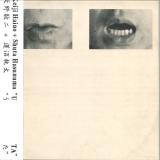
Haino sings. Hasunuma plays. It’s a minimal framework, but what emerges is a boundary-blurring sonic exploration. Across the album, Haino’s voice threads through Hasunuma’s layered soundscapes built from analog synths, electric guitar, piano, field recordings, and more. Haino entered the studio with only lyrics in hand, improvising melodies in response to Hasunuma’s evolving arrangements. The result is a work of deep trust, intuition, and sonic tension.
Keiji Haino and Shuta Hasunuma’’s creative connection began in 2017 with an impromptu performance in Shibuya—Hasunuma on a Buchla modular synthesizer, Haino responding with the Japanese national anthem, “Kimigayo.” That moment sparked their unlikely collaboration.
In 2018 Haino appeared at the Hasunuma-organized event “MUSIC TODAY IN KYOTO” at Rohm Theater, alongside Nobukazu Takemura, Manami Kakudo, Elena Tutatchikova, Kukangendai among others. In September 2021 during the pandemic, the two performed "U TA" for the first time at in Shibuya. They began planning the album soon afterwards.
For the recording of U TA, Haino entered the studio with only the lyrics in hand, with no knowledge of what sounds Hasunuma would produce. Responding to Hasunuma’s music in real time, Haino composed the melodies and layered in his voice on the spot. With additional sessions at Hasunuma’s private studio and Haino’s preferred studio, the album was completed.
All melody and vocals by Keiji Haino
All instrument, written, played, arranged, mixed and produced by Shuta Hasunuma
Recorded by zak at st-robo studio, Shuta Hasunuma at Studio i.M.O and windandwindows
Mastered by Rashad Becker at clunk
Production Management: Eishin Yoshida, Kento Ono (windandwindows)
For Temporal Drift: Yosuke Kitazawa, Patrick McCarthy
Art Direction: Aiko Koike
Special Thanks to Toshihiko Kasai, Ryoichi Kiyomiya, zAk, Yumiko Ohno
license
RED VINYL VERSION[29,37 €]
Following the reissue of The Pocket of Fever, Ambient Sans presents the second chapter in Masahiro Sugaya’s visionary work for the avant-garde performing arts company Pappa TARAHUMARA.
Founded by Hiroshi Koike in 1982, Pappa TARAHUMARA blended dance, theater, music, and visual art into abstract, immersive stage worlds. Sugaya’s compositions became the sonic counterpart to this radical aesthetic—minimal yet deeply evocative, combining electronics, ambient textures, and delicate melodic gestures into a sound language both intimate and expansive.
Music From Alejo marks his first original stage score for the company: a work where repetition and silence intertwine with shimmering synthesizers and dreamlike motifs, conjuring atmospheres that feel suspended between reality and reverie. More structured than The Pocket of Fever yet equally poetic, the album reveals Sugaya’s gift for translating movement into sound, balancing modern composition with subtle echoes of Japanese tradition.
Reissued for the first time on vinyl, Music From Alejo includes a printed insert featuring an exclusive interview with the artist, alongside photographs from our visit to his home in Japan. Essential listening for anyone drawn to the ambient minimalism of Hiroshi Yoshimura, Midori Takada, or Brian Eno—reimagined here through the lens of Tokyo’s experimental scene of the 1980s.
a1. Straight Line Floating In The Sky
a2. Oldfashioned
b1. An Afternoon When Fish Appeared
b2. Mistral
b3. Alejo's Theme
- 1: Apsis
- 2: Skylight
- 3: Disque (Ft. Motion Graphics)
- 4: Balloon
- 5: Slippage
- 6: Zinna
- 7: Telescoping (Lockgroove Version)
- 8: Shapes (Ft. Yoshio Ojima And Satsuki Shibano)
- 9: Thinking (Ft. Félicia Atkinson, Yoshio Ojima And Satsuki Shibano)
- 10: Swirl
- 11: Steel
- 12: Intarsia (Ft. Ioana Elaru)
- 13: System (Ft. Componium Ensemble)
SILVER VINYL[23,49 €]
,Paradessence", das dritte Album von Visible Cloaks, ist ein Werk der Entstehung und Illusion. Die vierzehn Songs des Albums verschieben, heben und schimmern vor einem schwach leuchtenden Hintergrund der Nacht, einem höhlenartigen Raum, der durch spärliche hyperreale Darstellungen der natürlichen Welt geformt wird. Die Arrangements sind gleichzeitig grandios und zerbrechlich, sowohl eine Umkehrung als auch eine Kulmination dessen, was zuvor kam, und so abenteuerlich wie alles, was sie bisher produziert haben. Seit ihrer Umwandlung von Cloaks zu Visible Cloaks im Jahr 2014 haben Spencer Doran und Ryan Carlile eine komplexe Matrix gegensätzlicher Konzepte entworfen: organisch und künstlich, zufällig und bewusst, authentisch und repliziert. Der Albumtitel, der aus dem satirischen Portmanteau des Autors Alex Shakar aus ,paradox" und ,essence" stammt, spiegelt diese Spannungen direkt wider: Die Paradessence von Konsumgütern ist der ,schismatische Kern", der ihre Attraktivität ausmacht (in Shakars Beispiel ist Kaffee begehrt, weil er gleichzeitig entspannend und anregend wirkt). Der Balanceakt von Paradessence verleiht diesen Spannungen eine größere Dringlichkeit, da das Leben im 21. Jahrhundert durch eben diese Spannungen neu geordnet wird. Stille ist ein wichtiger Charakter in Paradessence, der nicht nur in der Gestaltung des Klangs zu spüren ist, sondern auch in dem Druck, den er auf alles und alles, was entsteht, ausübt. Die Gruppe ließ sich vom Konzept des ,positiven Raums" des Architekturtheoretikers Christopher Alexander beeinflussen, einer Idee, dass der Form der Leere um ein Objekt herum die gleiche Aufmerksamkeit geschenkt werden kann wie der Konstruktion des Objekts selbst. Wir hören, wie Klänge ihre eigene Stille in sich tragen, zwischen Existenz und Nicht-Existenz oszillieren und wie Mikroorganismen Lebenszyklen durchlaufen. Die Instrumente, die Paradessence untermauern, haben etwas Kollektives an sich. Sie bewegen sich wie eine Herde, so wie wenn der Wind über ein Feld voller Blätter weht und die Luft in der Abwesenheit von Bewegung sichtbar wird; mehrere Arten leben in derselben Melodie zusammen, treten hervor, ziehen sich zurück und verwandeln sich im Laufe von mehreren Minuten. ,Anstatt Stücke zu schaffen, die horizontal als Umgebungen funktionieren", sagt Doran, ,wollten wir sie als lebendes Material konzipieren, das sich im Raum verändert und ständig im Fluss ist." Die Songformen entfernen sich von der Atmosphäre und tendieren zur reinen Abstraktion. Utopismus schwebt am Rande; eine Beziehung zu imaginären Zukünften, die weder naiv, zynisch noch nostalgisch ist. Die Welt, die Visible Cloaks im Laufe der Zeit aufgebaut haben, wird oft von Mitwirkenden physisch umgesetzt, von denen eine vertraute Besetzung für Paradessence zurückkehrt. Motion Graphics (Joe Williams) ist auf ,synthetic woodwinds" zu hören und hat das Album mitgemischt, wobei er ihm mit seinem charakteristischen Glanz Kontur verliehen hat. Die miteinander verbundenen Stücke ,Shapes" und ,Thinking" wurden zusammen mit den Innovatoren der Umweltmusik Yoshio Ojima und Satsuki Shibano entwickelt, die auch mit dem Duo an der generationsübergreifenden FRKWYS-Kollaboration serenitatem gearbeitet haben. Das letztere Stück enthält einen von Ojima verfassten gesprochenen Text, der von Shibano auf Japanisch und von der Komponistin und langjährigen Freundin Félicia Atkinson auf Französisch gelesen wird. Das Componium Ensemble, Dorans Projekt für ,unbestimmte Kammermusik" mit selbstspielenden Software-Instrumenten, bildet die Grundlage für ,System" in einem Moment von Pessoa-scher Heteronymie. Auf dem Album ist auch Ioana Selaru zu hören, eine rumänische Komponistin und Violinistin, die ,Intarsia" mit ihrer Stimme und ihrem Streicherspiel bereichert. Doran beschreibt ihre Zusammenarbeit als ,eine Übung in illusorischer Präsenz", die sie gemeinsam aus ,der Idee entwickelt haben, ihr reales Instrumentenspiel virtuellen Instrumenten gegenüberzustellen, um die Grenzen zwischen synthetischen Streichinstrumenten und denen, die in der Realität existieren, zu verwischen". Selarus energiegeladene Darbietung in ,Intarsia" ist ein deutlicher Beweis für den dramatischen Kern von Paradessence: ein dringliches skulpturales Unterfangen, ein Instrument und eine menschliche Stimme, moduliert von einem Meer synthetischen Wachstums. Doran beschreibt, wie für ihn ,dieses Verschieben zwischen dem Realen und dem Virtuellen etwas ganz anderes einfängt, etwas Seltsames und Unbeschreibliches, das ein fester Bestandteil des Lebens in der digitalen Moderne ist, sowohl online als auch im realen Leben". Es ist elektronische Musik, die nicht nur durch ihre wechselnden Formen eine abstrakte Darstellung unserer aktuellen Traumrealität heraufbeschwört, sondern auch imaginäre Räume schafft, die emotional nuanciert sind und zu Momenten der Anmut führen.
- 1: Apsis
- 2: Skylight
- 3: Disque (Ft. Motion Graphics)
- 4: Balloon
- 5: Slippage
- 6: Zinna
- 7: Telescoping (Lockgroove Version)
- 8: Shapes (Ft. Yoshio Ojima And Satsuki Shibano)
- 9: Thinking (Ft. Félicia Atkinson, Yoshio Ojima And Satsuki Shibano)
- 10: Swirl
- 11: Steel
- 12: Intarsia (Ft. Ioana Elaru)
- 13: System (Ft. Componium Ensemble)
Black Vinyl[22,27 €]
,Paradessence", das dritte Album von Visible Cloaks, ist ein Werk der Entstehung und Illusion. Die vierzehn Songs des Albums verschieben, heben und schimmern vor einem schwach leuchtenden Hintergrund der Nacht, einem höhlenartigen Raum, der durch spärliche hyperreale Darstellungen der natürlichen Welt geformt wird. Die Arrangements sind gleichzeitig grandios und zerbrechlich, sowohl eine Umkehrung als auch eine Kulmination dessen, was zuvor kam, und so abenteuerlich wie alles, was sie bisher produziert haben. Seit ihrer Umwandlung von Cloaks zu Visible Cloaks im Jahr 2014 haben Spencer Doran und Ryan Carlile eine komplexe Matrix gegensätzlicher Konzepte entworfen: organisch und künstlich, zufällig und bewusst, authentisch und repliziert. Der Albumtitel, der aus dem satirischen Portmanteau des Autors Alex Shakar aus ,paradox" und ,essence" stammt, spiegelt diese Spannungen direkt wider: Die Paradessence von Konsumgütern ist der ,schismatische Kern", der ihre Attraktivität ausmacht (in Shakars Beispiel ist Kaffee begehrt, weil er gleichzeitig entspannend und anregend wirkt). Der Balanceakt von Paradessence verleiht diesen Spannungen eine größere Dringlichkeit, da das Leben im 21. Jahrhundert durch eben diese Spannungen neu geordnet wird. Stille ist ein wichtiger Charakter in Paradessence, der nicht nur in der Gestaltung des Klangs zu spüren ist, sondern auch in dem Druck, den er auf alles und alles, was entsteht, ausübt. Die Gruppe ließ sich vom Konzept des ,positiven Raums" des Architekturtheoretikers Christopher Alexander beeinflussen, einer Idee, dass der Form der Leere um ein Objekt herum die gleiche Aufmerksamkeit geschenkt werden kann wie der Konstruktion des Objekts selbst. Wir hören, wie Klänge ihre eigene Stille in sich tragen, zwischen Existenz und Nicht-Existenz oszillieren und wie Mikroorganismen Lebenszyklen durchlaufen. Die Instrumente, die Paradessence untermauern, haben etwas Kollektives an sich. Sie bewegen sich wie eine Herde, so wie wenn der Wind über ein Feld voller Blätter weht und die Luft in der Abwesenheit von Bewegung sichtbar wird; mehrere Arten leben in derselben Melodie zusammen, treten hervor, ziehen sich zurück und verwandeln sich im Laufe von mehreren Minuten. ,Anstatt Stücke zu schaffen, die horizontal als Umgebungen funktionieren", sagt Doran, ,wollten wir sie als lebendes Material konzipieren, das sich im Raum verändert und ständig im Fluss ist." Die Songformen entfernen sich von der Atmosphäre und tendieren zur reinen Abstraktion. Utopismus schwebt am Rande; eine Beziehung zu imaginären Zukünften, die weder naiv, zynisch noch nostalgisch ist. Die Welt, die Visible Cloaks im Laufe der Zeit aufgebaut haben, wird oft von Mitwirkenden physisch umgesetzt, von denen eine vertraute Besetzung für Paradessence zurückkehrt. Motion Graphics (Joe Williams) ist auf ,synthetic woodwinds" zu hören und hat das Album mitgemischt, wobei er ihm mit seinem charakteristischen Glanz Kontur verliehen hat. Die miteinander verbundenen Stücke ,Shapes" und ,Thinking" wurden zusammen mit den Innovatoren der Umweltmusik Yoshio Ojima und Satsuki Shibano entwickelt, die auch mit dem Duo an der generationsübergreifenden FRKWYS-Kollaboration serenitatem gearbeitet haben. Das letztere Stück enthält einen von Ojima verfassten gesprochenen Text, der von Shibano auf Japanisch und von der Komponistin und langjährigen Freundin Félicia Atkinson auf Französisch gelesen wird. Das Componium Ensemble, Dorans Projekt für ,unbestimmte Kammermusik" mit selbstspielenden Software-Instrumenten, bildet die Grundlage für ,System" in einem Moment von Pessoa-scher Heteronymie. Auf dem Album ist auch Ioana Selaru zu hören, eine rumänische Komponistin und Violinistin, die ,Intarsia" mit ihrer Stimme und ihrem Streicherspiel bereichert. Doran beschreibt ihre Zusammenarbeit als ,eine Übung in illusorischer Präsenz", die sie gemeinsam aus ,der Idee entwickelt haben, ihr reales Instrumentenspiel virtuellen Instrumenten gegenüberzustellen, um die Grenzen zwischen synthetischen Streichinstrumenten und denen, die in der Realität existieren, zu verwischen". Selarus energiegeladene Darbietung in ,Intarsia" ist ein deutlicher Beweis für den dramatischen Kern von Paradessence: ein dringliches skulpturales Unterfangen, ein Instrument und eine menschliche Stimme, moduliert von einem Meer synthetischen Wachstums. Doran beschreibt, wie für ihn ,dieses Verschieben zwischen dem Realen und dem Virtuellen etwas ganz anderes einfängt, etwas Seltsames und Unbeschreibliches, das ein fester Bestandteil des Lebens in der digitalen Moderne ist, sowohl online als auch im realen Leben". Es ist elektronische Musik, die nicht nur durch ihre wechselnden Formen eine abstrakte Darstellung unserer aktuellen Traumrealität heraufbeschwört, sondern auch imaginäre Räume schafft, die emotional nuanciert sind und zu Momenten der Anmut führen.
File in Ambient / Electronic / Mood Hut sections
Listen if You Like = Jon Hassell, Hiroshi Yoshimura, Terry Riley, Rhythm & Sound, Laurie Spiegel, Ariel Kalma, Laraaji, Steve Roach, Kerry Leimer, Suzanne Ciani, Yu Su, Hotspring, La Monte Young, Erik Satie, Music From Memory, Brian Eno, O Yuki Conjugate, Harold Budd, Robert Guthrie, Leif, Gigi Mason, Gaussian Curve, Patricia Wolf, Muslim Gauze, Manuel Göttsching,
f B1. Simulacra f. Alex Ho
- A1: Seki Taneko - Akemi&Apos;S Poems
- A2: Kusunoki Shigeo - Longing For The Shadow
- A3: Yayoi Tanaka - Sad Gull
- A4: Akasaka Koume - Please Forgive Me
- A5: Ichimaru - If You Go Down The Tenryū
- A6: Mitsuko Nemoto - Cosmos Elegy
- A7: Ichirō Fujiyama - Tokyo Daughter
- A8: Chiyako Sato - Skyscraper
- A9: Yayoi Tanaka - The Dream Is Short Lived
- B1: Ichirō Fujiyama &Amp; Masao Koga - Is Sake Tears Or Sighs?
- B2: Otomaru - Yoneyama Sanri
- B3: Hamako Watanabe - I Don&Apos;T Forget
- B4: Akasaka Koume - Asama Smoke
- B5: Yoshio Tabata - Farewell Ship
- B6: Ichirō Fujiyama - Farewell Youth
- B7: Kouta Katsutaro - Stand Up Tomorrow
DEATH043[10,04 €]
Emerging during the early stages of the recording industry in Japan, the ryūkōka style adopted western classical, blues & jazz elements into traditional and classical Japanese music.
This collection of 1920s & 30s ryūkōka recordings follows on from the Kouta Katsutaro tape we put out a couple of years back, and further captures the hauntingly unique sound of a cultural merging that was starting to reflect itself via popular song, ahead of the widespread influence of western pop music during post-war US occupation.
"Death Is Not The End are on a mission to expand the musical archive, with compilations of everything from Jamaican doo wop to pirate radio idents and adverts weaving new threads into the history of music. Longing For The Shadow: Ryūkōka Recordings, 1921-1939 goes back to the beginnings of the recording industry in Japan, and a style merging traditional Japanese forms with western pop and classical. Swooning orchestrations and prominent vocals capture some of the melodrama and bombast found in US and European music of the time, but beds of plucked and strummed instruments give an ordered elegance, tying it firmly to Hogaku tradition. Not much has been written about Ryūkōka, and a 2017 book by Hiromu Nagahara gives some clue as to why, arguing that although popular with the public, it was dismissed by critics both for its adoption of western sounds and its dwelling on Japanese traditional styles. Close to a century later, those are some of the qualities that make this compilation so fascinating." - The Quietus
YOSHIO OTOMO QUARTET WITH TSUYOSHI YAMAMOTO
MOON RAY (1977) LP
- A1: Eclypso
- A2: Relaxin' At Camarillo
- B1: Come Sunday
- B2: He's A Real Gone Guy
- C1: Stella By Starlight
- D1: Juju
- D2: Harlem Blues
This is joy beyond expectation the arrival of a new Ryo Fukui recording. Captured on June 26, 2004, this live session documents the ninth anniversary concert of Slowboat, the jazz club Fukui founded and considered his musical home. The trio features Ryo Fukui on piano, Benisuke Sakai on bass, and Yoshihito Eto on drums. Fukui was 56 years old at the time, and his playing is powerful and expansive, yet still marked by delicacy and razor sharp precision. In terms of energy, stamina, and technique, he was entering a true period of artistic maturity. He delivers the music of his beloved Phineas Newborn Jr. and Tommy Flanagan with depth and elegance, and approaches the works of Wayne Shorter—an early-life influence—with thrilling intensity. The performance captures Fukui at a moment of profound fulfillment, offering a truly compelling glimpse into his late career brilliance.
kuniyuki takahashi – new single on studio mule studio mule is proud to announce the latest release from one of japan’s most respected producers and musicians, kuniyuki takahashi. this new single was created with the atmosphere of our listening bar studio mule in mind, and showcases kuniyuki’s unmatched ability to bridge dance music with sophisticated musical expression. the a-side, “open window,” is a modern classical piece inspired by the light and breeze flowing into his sapporo studio—an uplifting, deeply moving composition. on the b-side, “tobira” offers a dreamlike journey of ethnic new-age jazz, evoking the sensation of stepping into a new world. kuniyuki is a rare artist who has continued to push boundaries across genres, and this release is no exception—a future classic in the making. the artwork has been designed by yoshirotten, a leading figure in tokyo’s contemporary art scene. with this release, studio mule delivers an inspired response to the timeless legacy of ecm, while continuing to explore new musical horizons.
- A1: Lava Feat. Ua (Fpm's Dub Not Dub) 5 34 Remixed By Fpm(Tomoyuki Tanaka)
- A2: Outer Space Feat. Dj Krush -Chris Coco Remix (Inner Space Extended Dj Dub)- 2 31 Remixed By Chris Coco
- A3: Galactic Beats -Love Injection Remix (Love Injection Radio Edit)- 3 29 Remixed By Love Injection
- A4: Mirror Feat. Josué Thomas -Steven Stanley Remix (Dub Vocal) 2 33 Remixed By Steven Stanley
- A5: The Battle Feat. Emilie Chick -Yoshinori Sunahara Remix(Ysst Instrumental Mix)- 5 04 Remixed By Yoshinori Sunahara Edit By Yasushi Ide & Watusi
- A6: The Battle Feat. Emilie Chick -Shuya Okino & Root Soul Remix- 4 59 Remixed And Edit By Shuya Okino & Root Soul
- B1: Cosmic Time 7 52 Remixed By Ken Ishii, Alex Attias Edits By Ken Ishii
- B2: Sumimasen Suite Feat. Emily Capell, Rebel Dread-Dj Nature Executive Suite Remix- 4 15 Remixed By Dj Nature Edit By Yasushi Ide & Watusi
- B3: A Place In The Sun -Kaoru Inoue Remix Edit Version- 5 07 Remixed And Edit By Kaoru Inoue
- B4: New Beginning-Kiko Navarro Remix(Kiko Navarro Afroterraneo Remix- 4 24 Remixed By Kiko Navarro Edit By Yasushi Ide & Watusi
An’archives is proud to present Hanabi, a compilation of material from legendary Japanese folk singer, actor and writer, Kazuki Tomokawa. Hanabi draws from Tomokawa’s three most recent albums, Vengeance Bourbon (2014), Gleaming Crayon (2016) and Going To Buy Squid (2024), all released in Japan only on the Modest Launch imprint. Pulling together highlights from these three extraordinary albums, Hanabi collects ten songs of shattering intensity, with Tomokawa performing at an ecstatic peak, a mere six decades into his musical career.
Tomokawa’s life story is one of change, risk and dedication. He appeared on the Japanese folk music circuit in the early 1970s, performing at such significant events as the legendary 1971 Folk Music Jamboree. Over the second half of the decade, he released five stunning albums that cemented his reputation as an expansive, lyrical singer-songwriter and performer whose music jack-knifed between pensive melancholy and righteous fury. His recorded output slowed in the 1980s as he became immersed in theatre, acting and painting, but his connection with the sainted Japanese label P.S.F. led to a prodigious burst of albums across the 1990s and 2000s.
Some of those albums had Tomokawa playing alongside free jazz musicians, such as his long-standing collaborator Toshiaki Ishizuka (Brain Police, Vajra, Cinorama), and late double-bass improviser Motoharu Yoshizawa. Some of that spirit can be found amidst the songs on Hanabi, leavened by a more romantic sensibility on a song like “Night Play”, where Tomokawa’s impassioned vocals and guitar swim and bob amongst a drifting string arrangement. The ferocity of “To The Dead Man” is reinforced by a guest appearance, on saxophone, by upcoming free jazz player Harutaka Mochizuki; the two spar with each other while Hiromichi Sakamoto’s cello and electronics swarm under the surface.
For those who’ve missed the three albums that Tomokawa has released across the past fifteen years – understandably so, given the relative impossibility of finding them outside of Japan – Hanabi is a welcome re-introduction to one of Japan’s most significant, poetic and quixotic folk singers and songwriters. As Michel Henritzi notes in his typically perceptive liner notes, capturing the oneiric and unique spirit of Tomokawa’s song, he is nothing less than “a poet who cries out, opening the darkness and shadows with his song, throwing handfuls of ashes from lives that have fled into the wind, to us, his fellow human beings.”
"I want to hear more of Ryo Fukui's performances." The dream of listeners around the world has now become a reality. A spectacular live performance full of the charm of the mature Fukui who has been with .This is what an unexpected joy is all about. The appearance of Ryo Fukui's "new work". Recorded on June 26, 2004. This is a live recording of a live performance commemorating the 9th anniversary of , the jazz live house that Fukui presided over and used as the base of his activities.
The members of the trio were Fukui, Kosuke Sakai (bass), and Yoshito Eto (drums). Fukui was 56 years old at the time. His performance was powerful and large-scale, yet delicate and sharp. In terms of the balance of energy, stamina, and technique, he was just approaching his prime. He spins heavy yet elegant renditions of his beloved Phineas Newborn Jr. and Tommy Flanagan, and thrillingly plays Wayne Shorter, who he was a huge fan of in his youth. It is a spectacular performance that reflects the fulfillment of Fukui's time. , which opened in June 1995, is celebrating its 30th anniversary this year.
Text by Yusuke Ogawa (UNIVERSOUNDS / DEEP JAZZ REALITY)
Kristoffer Eikrem Releases “Beneath the Sky and Moments Between” – A Journey into Ambient
Soundscapes
Mutual Intentions proudly presents Beneath the Sky and Moments Between, a 12-track ambient exploration by
Kristoffer Eikrem. Known as one of Norway’s leading jazz trumpeters and a skilled instrumental hip-hop producer,
Eikrem now debuts as a solo artist in the ambient genre, blending his musical heritage with serene, textural
soundscapes shaped by FM synthesis.
For fans of 80s-inspired ambient works like Hiroshi Yoshimura’s Music for Nine Postcards, or artists such as Gigi
Masin, Brian Eno, and Aphex Twin, this album offers an introspective experience. It captures fleeting moments
and expansive skies with minimalist elegance, balancing warm, organic tones and spacious sound design.
Having collaborated with artists like Ivan Ave and Fredfades—whose earlier ambient project with Eikrem hinted at
his potential in this space—Beneath the Sky and Moments Between stands as one of Eikrem’s most complete
artistic visions to date
- A1: Korogi ‘73 - Fushigi Song
- A2: Yas-Kaz - Hei (Theme Of Shikioni)
- A3: Yoichiro Yoshikawa - Tassili N'ajjer
- A4: Norihiro Tsuru - Farsighted Person
- B1: Geinoh Yamashirogumi - Theme Of Kaneda
- B2: Yoichiro Yoshikawa - Fiesta Del Fuego
- B3: Columbia Orchestra - Heart Beats / Theme For Andrew Glesgow
- B4: Kan Ogasawara - Gishin Anki
LP vinyl only release + 4 page liner notes (comes with hype sticker)
The percussive new age soundtracks of '80s and early '90s Japanese TV, anime and manga built alternative worlds and pushed boundaries in the process.
When Japanese composer Yas-Kaz left Tokyo for Bali in the mid 1970s he had little idea of how influential his trip would become. In studying the storied art of gamelan, the jazz and avant-garde percussionist opened a door to a world of sound and rhythm left behind by the West. The music he and his contemporaries made would become known as new age. It also happened to soundtrack the golden era of anime.
Awash with money and with the prerogative to entertain the burgeoning middle classes, anime in the 1980s experienced a creative and commercial boom. Not constricted by generic expectations, production houses such as the now renowned Studio Ghibli were able to experiment liberally with both form and content. And with it came the space for composers to be similarly adventurous.
TV, Anime & Manga New Age Soundtracks 1984-1993 charts this moment across eight tracks spanning classics of the genre and previously unknown rarities. The collection brings together music that found kinship in electronic and acoustic instrumentation, often combining spiritual or environmental themes with percussive, varied and highly refined syncopations of non-Western musical traditions.
Among them is ‘Kaneda’ by Geinoh Yamashirogumi, the shape-shifting group of self-styled musicians, anthropologists and computer scientists that masterminded the soundtrack to game-changing dystopian anime Akira - and with whom the sound, tuning and breakneck speed of Balinese gamelan has become indelibly entwined.
Reflecting the desires of the era to reach beyond Japan’s borders, many of the soundtracks featured were commissioned for narratives set in distant lands or alternative worlds. There’s violinist and composer Norihiro Tsuru’s ‘Farsighted Person’, written for The Heroic Legend of Arslān, set in ancient Persia; Yas-Kaz’s own ‘Hei (Theme of Shikioni)’, for period sci-fi manga & anime series Peacock King - Spirit Warrior; and two tracks - Tassili N’Ajjer and Fiesta Del Fuego - from Yoichiro Yoshikawa’s soundtrack to NHK’s proto-Planet Earth series The Miracle Planet.
Such was the variety and quality of the music produced, if there is a guiding principle to the tracks collected here it is a sense of escapism and adventure that came with the confluence of modern electronic instruments and a fascination with percussive traditions.
Elsewhere, pioneering children’s TV composer Chumei Watanabe’s ‘Fushigi Song’ (performed by a vocal group Korogi ‘72) offers a trippy and infectious groove with sonic similarities to Don Cherry’s ‘Brown Rice’; little-known jazz-funk library group Columbia Orchestra showcase the best of Tokyo’s session musicians on ‘Hearts Beats - Theme for Andrew Glasgow’; before lawyer-turned-composer Kan Ogasawara closes out the compilation with a dramatic flourish on ‘Gishin Anki’.
Following on from Time Capsule’s acclaimed deep-dive into the world of manga & anime synth-pop in 2022, this vinyl only collection is set to broaden and diversify an understanding of how soundtracks shaped the sound of new age music in Japan for a generation.
Curators: Kay Suzuki, Rintaro Sekizuka (Vinyl Delivery Service)
Artwork: Tu-yang
Eddie Amador returns with House Music Dos (Doin’ It House Style) a follow up to the classic late 90's anthem 'House Music'.
Eddie exploded onto the scene in 1998 by penning the infamous lyrics...'not everyone understands house music, it's a spiritual thing, a body thing, a soul thing.’ He set them to a hypnotic pulsating beat and the seminal dance classic 'HOUSE MUSIC' was born. 'House Music' went on to become a global hit and secured Eddie an album deal with Deep Dish's Yoshitoshi label. However, it was his next single 'RISE' which proved that Eddie was no one hit wonder.
Now he's back with a dbl header taking the House Music theme onto another level with 'House Music Dos (Doin’ It House Style)' & 'Househeads in Full Effect'.
- Also available on black vinyl - First ever official reissue - Produced in full cooperation with Hiroshi Yoshimura's estate - Liner notes by contemporary music writer and professor Junichi Konuma - Remastered from original sources by John Baldwin - First time on vinyl, cassette, and streaming - 2xLP vinyl housed in gatefold jacket - Discs cut at 45 rpm for optimal sound quality // Following their 2024 reissue of Hiroshi Yoshimura's classic album, Surround, Temporal Drift proudly presents the first-ever reissue of FLORA, Yoshimura's underappreciated ambient classic. FLORA was originally recorded and completed in 1987, and remained unreleased until 2006, nearly three years after Yoshimura's passing in 2003. The album is chronologically and stylistically a follow-up to his acclaimed 1986 works GREEN and SURROUND, wherein Yoshimura continues to play with the ambience of sound and the sound of ambience, underscoring his mastery in the field of environmental music. Yoshimura's other recorded works include Music For Nine Post Cards (1982), originally produced to be played back inside a museum space, and Pier & Loft (1983), commissioned as accompaniment to a contemporary fashion show.
DJ Support: Sharam, Hot Since 82, Cid Inc, Groove Armada, Shadow Child, Technasia
In 2015, two remixers on their respective thrones in techno and house were contacted to rework the classic.
Matador and Shiba San both delivered compelling renditions that capture the original's darkness, paired with their unique styles of delivery.
Matador's remix extends the dark subversiveness of the original, incorporating sweeping, reverb-drenched textures and ominous synth patterns. The looming mix is a sure-tobe room filler at this year's ADE.
The second remix is exactly what you'd expect from Shiba San a distinctly G-house groove built around gigantic bass and a distinct sexiness that will resonate with crowds regardless of their appreciation for house music.
A bold reimagining of Scottish folk in a hypermodern soundworld, In a River Shadow blends prehistoric instruments, abstract electronics, and environmental recordings into a unique sonic landscape. The result is a futuristic, technoid sound that feels both organic and otherworldly, like a biomechanical artefact unearthed from a distant future.
In a constellation of influences including Yoshio Ojima, sunytty, and the hyperrealist work of Noah Creshevsky, "Birdhouse" is a dream of voices—human, non-human, and AI-generated—unfolding tranquillity into hallucinatory spectres. On "Star of the Sea," Poole confronts a complicated relationship with prayer by reworking the Catholic hymn "Hail Queen of Heaven, the Ocean Star," reformulating the prayer and stretching vocals to their limits, transforming the piece into a drum-driven, visceral interpretation.
Across this five-track EP, Poole combines personal exploration with collaborative influences, including a partnership with Considerate Digital, and collaborations with vocalist Celine Brooks and artist Gabo.
Music : Poole, additional vocals by Celine Brooks on Weila Waila, and Gabo on Selkie of Sule Skerry.
LP + insert with extended liner notes and download code including extra bonus track 'Movements of The Mind'.For his second album on the Belgian leftfield imprint Cortizona, Devin Brahja Waldman gathered a group of insanely gifted and talented musicians to start a new and highly moving musical chapter titled 'Nebulizer'.
From the first moment the pulsating tone of Devin's synth blends with the whispering voices of Earth, Wind and Choir and the menacing bells Naima Karlsson set in motion this record you just know and feel immediately 'Nebulizer' will be a soul-searching journey, soaking you deep into an unknown and very personal musical world.
Devin Brahja Waldman is a New York saxophonist, drummer, synthesizer player and composer who leads the group BRAHJA. He has performed with Patti Smith, William Parker, Nadah El Shazly, Malcolm Mooney, Thurston Moore, Godspeed! You Black Emperor, Charles Hayward, Luke Stewart and Yoshiko Chuma. Waldman is also a member of NYC's Heroes Are Gang Leaders (led by poet Thomas Sayers Ellis and saxophonist James Brandon Lewis), of Sam Shalabi's Land of Kush, and of the Norwegian hardcore group MoE.
In 2022 BRAHJA released the critically acclaimed album 'Watermelancholia' on the Belgian leftfield imprint Cortizona. For his second album on the same Cortizona label, Devin Brahja Waldman gathered a group of insanely gifted and talented musicians to start a new and highly moving musical chapter titled 'Nebulizer'.
Together with Adam Kinner, Georgia Wartel Collins, Earth, Wind and Choir, Luke Stewart, Kenichi Iwasa, Naima Karlsson, Alexis Mercelo, Janice Lowe, Watson and Damon Hankoff, Devin forms a slow-burning fireball unity.
A devotional séance channelling unknown powers proving music is a healing force of the universe.
Rejoicing the Holy Jazz Spirit.
Ready to nebulize the world and bring light out from the darkness. Head cleaning the world in 4 musical parts: Geological Drum, Nebulizer, Bushido and Movements of The Mind. Nebulizer is an elevating meditation on our estrangement of nature.
Interstellar sonic stardust from a mindblowing collective that will leave you flabbergasted.
Be prepared and hear it to believe it.
For fans of: Art Ensemble of Chicago, Archie Shepp, Pharoah Sanders, John & Alice Coltrane, Kamasi Washington, Shabaka Hutchings, SAULT, Ill Considered, Jamie Branche, Angel Bat Dawid, Mackaya Craven, Matana Roberts, Sun Ra and other good music.
Written, Produced, and Mixed by: Antoine Eole (aka In da Woods) Vocals on Tracks A5, B1, B2 by: Alex Catrine Le Thomas de Selve Track B1 contains a sample of: “And Birds Are Still” by Takashi Yoshimatsu Mastered by: Stephan Mathieu at Schwebung Mastering Original Artwork by: Barbara Orsingher Layout by: Riccardo Piovesan Limited Edition of 100 copies transparent In da Woods is the sonic project of Paris and Berlin-based composer and sound designer Antoine Eole, formerly of the electro-rock band Bad Pilot. Known for his work across TV series, documentaries, theater productions, and major ad campaigns (MTV, Disney, Hermès), Antoine blends cinematic soundscapes with the raw edge of experi- mental and future garage music. With Nuit Blanche, Antoine explores atmospheric and bassdriven compositions, featuring the ethereal vocals of Alex Catrine Le
Thomas de Selve