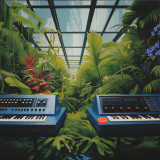
The first 'Flipsight Palette' features catchy grooves, powerful prime-time basslines, and evocative melodies, each contributing to a dynamic listening experience that will resonate with house heads and casual listeners alike. The beauty of this VA lies in its duality: whether you're lost in the excitement of a late-night dance session or enjoying a laid-back evening with close ones, this vinyl is designed to bridge the gap between the dancefloor and the living room with ease. 'Bluegrass Breeze' is a first celebration of the shared passion within the Flipsight crew. The collaboration among the artists resulted in a harmonious blend of sounds that encapsulates the spirit of unity and creativity.
out of Stock
Last delivered 10 months ago available to reorder, subject to availability
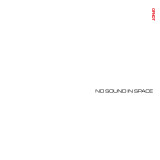
Blake Lee has always been fascinated by the unknown, and space, in its isolating, mysterious vastness, embodies this theme immaculately. The open void, captured so memorably by Stanley Kubrick in '2001: A Space Odyssey', is Blake's far-reaching canvas on 'No Sound In Space', a cinematic meditation on the cosmos that's painted in nuanced, emotionally sincere colors. The Los Angeles-based composer has been contemplating his full-length debut since 2021, using his guitar as a sonic paintbrush rather than find himself snared in its traditional aesthetic constraints. Transforming its characteristics with effects and subtle processes, he layers sustained tones and intimate improvisations, creating richly visual polychromatic utopias teeming with unknown life.
Since 2011, Blake has been most known for being the guitarist and a music director for Lana Del Rey, notching up three songwriting credits on her acclaimed ‘Ultraviolence’ full length. He sees his solo work is a form of escapism, a place where he can experiment and find comfort and catharsis outside of expectations and formal structure. The album was written instinctively, and Blake made sure he didn't force anything, letting go and getting out of his own way, listening intently as sounds and textures materialized organically. "I didn't want to ruin it by being a perfectionist," he laughs. And his collaboration with Kenyan sound artist KMRU, who runs the OFNOT label and contributes to two of the tracks on the album, occurred similarly organically.
Blake was moved to reach out to KMRU when he caught a performance of 'Natur' at Los Angeles' Zebulon in 2022, leading to a prolonged back-and-forth. They didn't meet in person until earlier this year, by which time they'd become firm friends, continuously sharing music and conversation. KMRU had lent a valuable ear to Blake, who sent early playlists of 'NSIS' that, over the months, slowly evolved into the finished album. It's the first release on OFNOT that's not by KMRU himself; the label emerged last year with the release of KMRU's own 'Dissolution Grip', and Blake's debut immediately expands its sonic universe. Alongside the playlists, Blake also provided KMRU with the tracks' raw stems, which KMRU began to edit and expand in his Berlin studio. 'Miura' and 'Waiting' are the result of this process, two sublime abstractions that augment Blake's dreamlike, euphoric tones with KMRU's pebbly distortions and booming low-end rumbles. And this same playful sense of freeness seeps into Blake's other compositions.
On the misty 'In A Cloud', he surrounds cascading string tones with soft-focus pads that swell until they're like crashing waves, and on the two 'Echoplexx' pieces, he uses delay and reverb to smudge his sounds until they're viscous residue, the harmonies obscured by whooshes of white noise and distant chimes. The mood is quieted somewhat on 'Moving Air', as Blake's swirling tones form half-heard lullabies, coalescing into a dense, melancholy crescendo, and he fills out the sound with reverberant airport recordings on 'Pan Am', letting pitchy My Bloody Valentine-esque drones warble beneath the transitory chatter. Each track melts into the next, forming a billowing, cryptic narrative that leaves more questions than answers. Blake is constantly searching, and fills his unoccupied space with warmth, perception and sensitivity.
VSION 02 is the soundtrack to when the club's heartbeat matches yours; the first sip of water while cavernous drums engulf you. Kasra V's latest offering appeals to the glory days of the tribal side of 90s electronic music: sacred rhythms that echo influences from NYC clubs of past times and the freaky side of abstract dance music, while still retaining a unique flavor from his creative V-sion. Drawing a direct line from the shadowy corners of late 90s club culture to the avant garde, Kasra's world building is on full display, calling to mind both the full-bodied spirit of Victor Calderone's primal grooves and the voodoo beats of Exquisite Corpse. His most dancefloor oriented work to date, Kasra infused the energy of spontaneous jams into refined and layered sonic alchemy, utilizing vintage gear and pedals to evoke spiritually timeless flavors. The record is artistically represented by a Pierrot-esque visual, a perfect symbol for the playful psychedelia that is still entrenched in a hedonistic flair. There's more time in our ritual dance, take another sip.
out of Stock
Last delivered 22 months ago available to reorder, subject to availability
BigʼN was, is and always shall be a legacy noise rock band from Chicago (est. 1990) comprised of vocalist William Akins, guitarist Todd Johnson, bassist Fred Popolo, and drummer Brian Wnukowski. After releasing a stellar debut album (1994), followed by their sophomore and signature effort Discipline Through Sound on Skingraft Records (1996) and a split single with Shellac, the band became inactive for some years. In 2018, BigʼN recorded and released a new EP, Knife of Sin, via Computer Students™. In 2022, they released DTS 25, an expansion of their pioneering second album. Both were recorded by the late, great Steve Albini. BigʼN is back once again with a ruthless new album, End Comes Too Soon — their first in 28 years — released via Computer Student. It's all still here as present and disciplined as ever — Brianʼs powerful, reliably precise drumming with melodic phrasing that shapes the songs, Fredʼs metallic superstructure of a bass that builds the defined framework of the music, Toddʼs clangorous guitar that has more harmonic content than a lot of his noisier peers, and William Akinsʼ yarling vocals, the most recognizably human thing about the band, that convey layers of tension and intent, all the emotional content of a hellbound therapy session. Tragically, on May 7, 2024, Steve Albini suddenly passed away of a heart attack. Naturally, BigʼN were shocked and devastated. End Comes Too Soonʼs title comes from a lyric, and is unrelated to Albini; still, the album became a roundabout love letter to the man, his studio, and his legacy. Like its predecessors, the album is structured by snippets of musical interludes or Transmissions — and there are six here, under the common code "XMSN."
BigʼN was, is and always shall be a legacy noise rock band from Chicago (est. 1990) comprised of vocalist William Akins, guitarist Todd Johnson, bassist Fred Popolo, and drummer Brian Wnukowski. After releasing a stellar debut album (1994), followed by their sophomore and signature effort Discipline Through Sound on Skingraft Records (1996) and a split single with Shellac, the band became inactive for some years. In 2018, BigʼN recorded and released a new EP, Knife of Sin, via Computer Students™. In 2022, they released DTS 25, an expansion of their pioneering second album. Both were recorded by the late, great Steve Albini. BigʼN is back once again with a ruthless new album, End Comes Too Soon — their first in 28 years — released via Computer Student. It's all still here as present and disciplined as ever — Brianʼs powerful, reliably precise drumming with melodic phrasing that shapes the songs, Fredʼs metallic superstructure of a bass that builds the defined framework of the music, Toddʼs clangorous guitar that has more harmonic content than a lot of his noisier peers, and William Akinsʼ yarling vocals, the most recognizably human thing about the band, that convey layers of tension and intent, all the emotional content of a hellbound therapy session. Tragically, on May 7, 2024, Steve Albini suddenly passed away of a heart attack. Naturally, BigʼN were shocked and devastated. End Comes Too Soonʼs title comes from a lyric, and is unrelated to Albini; still, the album became a roundabout love letter to the man, his studio, and his legacy. Like its predecessors, the album is structured by snippets of musical interludes or Transmissions — and there are six here, under the common code "XMSN."
Black Vinyl. A trio of Kansas City soul sweepers, from the sprawling midwest burg's storied Cavern, Damon, and Forte concerns. Bump and the Soul Stompers' 1970 sweet soul double sider "I Can Remember" was a tail pipe-dragging, low rider classic in the making, had it ever been released. A few years later Jerald "Bump" Scott took his new group to Cavern's subterranean confines to cut the group harmony masterpiece "Living In The Past," but remained unissued prior to Numero's discovery of the Cavern tapes. As disco was cresting at the top of the next decade, Sharon Revoal tracked her James Brown meets James Bond stepper "Reaching For Our Star"_ the last 45 released on Marva Whitney's peerless Forte label.
Coke Bottle Clear Vinyl. A trio of Kansas City soul sweepers, from the sprawling midwest burg's storied Cavern, Damon, and Forte concerns. Bump and the Soul Stompers' 1970 sweet soul double sider "I Can Remember" was a tail pipe-dragging, low rider classic in the making, had it ever been released. A few years later Jerald "Bump" Scott took his new group to Cavern's subterranean confines to cut the group harmony masterpiece "Living In The Past," but remained unissued prior to Numero's discovery of the Cavern tapes. As disco was cresting at the top of the next decade, Sharon Revoal tracked her James Brown meets James Bond stepper "Reaching For Our Star"_ the last 45 released on Marva Whitney's peerless Forte label.
Free Help is Minnesota trio Heart to Gold's celebration of the titular idea, conceived while broken down on the side of a road in Georgia. Recorded at Will Yip's Studio 4 and releasing on Memory Music, it's an expertly arranged, arena-sized rendering of the group's scrappy, bold guitar rock, a heartening mix of melodic punk, cavernous post-hardcore, and '90s alt-rock. It's the sound and feeling of a band growing into adulthood and maturity_singer Grant Whiteoak's writing is subtle and figurative, a result of deepening introspection spurred by years of touring.Free Help represents a push beyond Heart to Gold's long-time community, and a broadening of the boundaries of the project. The rich, spacious single "Can't Feel Me," released in February, evidenced this new sound and space, and record opener "Surrounded" leaves no room for doubt: This is Heart to Gold operating on a new level. It's a sleek, pit-ready thrasher, tearing at the seams with energy and intention, loaded with melody. There are classic, pedal-to-the-metal bangers, like "Get It Back" and "Blow Up the Spot," alongside the down-tempo drift of "Pandora," and the multi-movement epic "Belonging." Here it is, from Heart to Gold to you: Free Help.
Lily Seabird is a perceptive songwriter who can channel moments when everything feels raw and overwhelming into something healing and galvanizing. With Alas, the Burlington, VT-based artist's sophomore album, she confronts grief with palpable clarity on tracks that careen from delicate folk to blistering indie rock. While it's her second LP, it serves as a proper introduction to an undeniable and idiosyncratic voice. "Alas, sounds way more like me," she says. "This is the album I wanted to make in the first place." Though Seabird is now known as a solo artist and collaborator in Burlington's vibrant music community as the bassist for Greg Freeman and other acts, her journey started in Pennsylvania when she picked up the saxophone as a kid. At 14, she learned guitar and started performing as Lily Seabird. After a brief stint in New York City playing in bands, she moved to Vermont, which has been her home since 2018. "When I came to Vermont, I was playing solo a lot but then I started a band with Greg Freeman," she says. "Since 2018, it's been me and Greg and a bunch of different casts of characters have been in the band since then it's an ever-evolving thing. It's just us playing my songs."The songs on Alas, came from a particularly unmoored period for Seabird. "I wrote this album in 2021 and 2022 on the road, trying to figure out who I am," she says. "A lot of them also deal with the time when my close friend passed away. The title Alas, meant a lot to her." Even if the songs don't always directly tackle this specific loss, there's a sense of mourning in how relationships change and dissolve. Take "Grace," a reflection on female friendship, which features the lines, "I hope she's happy now she should be 25 / She taught me something that I thought I'd always hide." Elsewhere, the knotty and unpredictable "Dirge" finds her singing, "I don't know if I believe in god / I don't know if I know how to go on." Seabird and Benny Yurco produced Alas, which was recorded at Burlington's Little Jamaica Studios with Freeman and drummer Zack James (Benny Yurco). It's a quietly expansive album full of subdued, organic textures and moods. Songs like "Cavity" are lush and inviting with silky guitar and Seabird's expressive saxophone playing. The 10 songs on Alas, stretch out and leave space for introspection and deep listening with some tracks taking nearly seven minutes to mesmerizingly unfold. It's a remarkably assured and vital statement from one of the most promising new songwriters alongside peers Merce Lemon, Squirrel Flower, and Allegra Krieger."The album is about loss, coming of age, and sadness but there are also all these moments where happiness takes over," says Seabird. "It can be two things at once: life isn't just pain and sadness, there's also joy. They can all exist at the same time. Alas, is an expression of grief but it's also for letting go."
Remember Bones Brigade Video Show, Future Primitive, Animal Chin featuring the skating of Tony Hawk, Steve Caballero, Tommy Guerrero, Mike McGill, and more? How many times did you and your friends watch these videos? Over and over and over. Did you know there was also original music by various artists playing while you watched these videos? This is the first ever vinyl pressing, double black and red vinyl gatefold jacket with mp3 download card and 2-sided fold out poster. You will instantly be transported back to this visual feast of skating, or if these videos are new to you, you will fall in love with the music from these classic skate videos.
This release will come in 10 alternative sleeves limited to 100 copies of each so the bedroom design of the front cover has been painstakingly adapted for devotee’s of; 1. Sex Pistols 2. The Clash 3. The Jam 4. Buzzcocks 5. The Damned 6. The Stranglers 7. Siouxsie & the Banshees 8. Generation X 9. Ramones and 10. Blondie… and that design comes with a signed and stamped print of that design inside…
Mal-One’s new five track 12’’ offering has broached the tender subject of the bedroom wall and what as a teenager we would cover it with, as we revelled in our teenage glory. During what we now fondly remember as the Punk Rock period, this would have been the promo posters, gig tickets, flyers, badges, t- shirts anything we could find to extend our allegiance to the Punk Rock cause. Track one of this extended play covers this dilemma in fine style:
Side One
1. Punk Rock Pictures on my Wall …from floor to ceiling and ten feet tall !!!
2. JJ’s Alright relates a true story of Mal-One’s run in with the Euroman Cometh himself and finding out first hand that
even if his band The Stranglers were to become Punk’s social outcasts that in fact JJ was Alright and so in fact was
Hugh….
Side Two
1. The Buzz-Cocks Are Coming tells the Buzzcocks connection to this movement and their entry point into the affray.
2. Damned Disciple tells what is required to become a Damned devotee. Which includes amongst other requirements
and as stated on one of their early badges ‘skipping off school to see them play’
3. The Satellite Kid tells the engaging story of Mr Paul Weller coming to London seeing the Sex Pistols for the first time
at the Lyceum Ballroom on The Strand. In doing so he found some likeminded souls and more importantly people the
same age that he could relate to and forge an identity with.
Hopefully to hang on your bedroom wall… it’s never too late Punk….
On this new LP Harry Bertoia shows why he may have been the first industrial musician. Bertoia often referred to his sound sculptures as a "collaboration with industry" and on this LP Bertoia is intentionally creating heavy, rhythmic music he described as "mechanized," "mechanical" and "factory like."
Recorded in 1971, percussion and repetition emulate the pounding rhythms of machinery on this unique pair of conceptual Bertoia compositions. Bertoia utilizes innovative performance techniques to create new sounds unheard in his ouevre. Even in the busy factory of Bertoia's mind, distant stillness rises up as Bertoia exhibits the massive amount of control he possesses over his many looming sculptures.
"Mechanization" is just one of the many sonic directions Bertoia took while composing and recording between the late 1950's and his death in 1978. He documented all of his ideas and directions in notes accompanying the hundreds of tapes discovered in his barn.
Bertoia's recordings are as much a celebration of sustained tones, intervallic relationships, healing vibrations, deep listening and shimmering harmonics as Indian Classical music, singing bowls, The Well Tuned Piano or Benjamin Franklin's glass armonica. Through these rich harmonics and pulsing pure tone, Bertoia was able to more clearly articulate his inner spirit than he could with sculpture alone – a point he made himself many times in interviews.
Harry Bertoia first came into artistic prominence in the late 1930s and his sculptural, ergonomic chairs, produced by Knoll Furniture beginning in 1952, were soon modernist furniture classics. Inspired by the resonant sounds emanating from metals as he worked them and encouraged by his brother Oreste, whose passion was music, Harry restored a fieldstone "Pennsylvania Dutch" barn as the home for this experiment in sounding sculptures which he had begun in the 1950s. Bertoia was an obsessive composer and relentless experimenter, often working late into the night and accumulating hundreds of tapes of his best performances; Oreste, too, would explore and record the sculptures' sounds during his annual visits to his brother's home in rural Pennsylvania.
Learning by experimentation was common for Bertoia and he mastered the art of tape recording, turning the Sonambient barn into a sound studio with four overhead microphones hanging from the rafters in a square formation. He would experiment with overdubbing by performing along to previous recordings, sometimes backwards, constantly improving his methods while also honing his performance skills. Bertoia was a careful editor of his own work and only chosen recordings remained, each with a date and carefully considered observations written on a note included with each tape. Through these pieces of paper a greater logic can be uncovered, a careful approach to composition, ideas, feelings and forms. The story of Sonambient barn collection will slowly be told through the release of recordings from the archive as well as installations and performances built from Bertoia's own recordings, lectures and a book.
Okokon returns to Other People with his sophomore album, 'Offering', delving deeper into the lush and cinematic soundscapes he first explored on his debut album, 'Turkson Side'. While primarily working in visual arts, Africanus Okokon, who records under his surname, bridges his artistic practices in 'Offering', using his masterful collage techniques to create his most personal work yet. Defying easy
categorization, the album melds influences from dream pop, avant-garde folk, psychedelia, trip hop, and dub, with traces of field recordings seamlessly blended throughout to form a cohesive whole.
'Offering' sees Okokon confronting and negotiating a sudden and unexplained death that occurred in his childhood and the complex emotions left in its aftermath, acting as his main inspiration when
making the album. This ambiguity is something that permeates throughout, with Okokon wanting to explore the ambivalence and sometimes uneasiness of contradicting emotions appearing
simultaneously, alluded to in the album title. This is also reflected in how the album tracks each inhabit different narrators with varying perspectives on the same events. The result being a hauntingly
beautiful album, with recurring themes of death, growth, sacrifice and spirituality ever present.
out of Stock
Last delivered 23 months ago available to reorder, subject to availability
Music from Skalpel's iconic debut for Ninja Tune, reinterpreted by top Polish producers!
Poland's ambassadors of jazz-inspired electronics invited outstanding local producers of downtempo, dance music, hip-hop, and jazz to remix this album. The result is "Recut," the best remix album in the history of Polish phonography. A record every bit as worthy as the historic original. It’s an extraordinary tale of the past and present of Polish electronic music.
This year marks the 20th anniversary of the release of Skalpel’s debut album, which was released by the famous British label Ninja Tune in 2004. The Polish duo, Marcin Cichy and Igor Pudło, gained international acclaim by venturing into the then lesser-known territory of Eastern European jazz, updating it with electronic tools.
Pitchfork praised the album enthusiastically: „On these tracks, Skalpel smudge the line between organic and electronic effortlessly, like a landscape artist working with charcoal, creating deep nuances of light and shadow that give the work its overall depth. (…)Its rhythmic dexterity and melodic sweep are hard to deny” -
The prestigious The Wire added: "Jazz, breaks, scat shuffles and funky riffs? of the highest standard. This release deserves to see them revered far beyond Poland"
Today, looking back over two decades, this album can be confidently considered a milestone in Polish electronica and a timeless classic of downtempo, nu-jazz, and trip-hop. Thanks to this record, the band also gained worldwide recognition, and their subsequent consistently high-quality albums like "Highlight" and "Origins" continue to attract significant interest.
Skalpel’s debut with Ninja Tune undoubtedly changed the face of Polish music, redefined the perception of the Polish jazz canon, and paved the way for younger creators. "Many of them, on 'Recut,' pay tribute to the enduring legacy of Marcin Cichy and Igor Pudło.
Artists like Magiera, Emade, 1988, Kixnare, Steez, Latarnik, Envee, Pejzaż, Etnobotanika, and others are now recognized names and respected figures in the Polish music scene. Though each of the artists invited by the Wrocław duo has developed their own original style, they find common roots in the duo’s music, on the border between jazz groove, hip-hop ease, downtempo moodiness, or ambient.
The excellent interpretations showcase the incredible potential revealed by Skalpel’s debut material, which continues to inspire new discoveries. This is a record that does not age, still captivates, and continues to inspire and provoke new interpretations.
Let’s RECUT this!!
Recorded by Michael Perez-Cisneros Mixed and Mastered by Dave Darlington Recorded live at the Village Vanguard March 30 - April 2 2022
All compositions by Gilad Hekselman except: Equinox by John Coltrane Everything Happens to Me by Matt Dennis
Cover by Cover photo by Josh Goleman Produced by Gilad Hekselman
All rights of the manufacturer and owner of the recorded material reserved. Unauthorized public performance, file sharing, broadcasting, copying, giving away or resale of this LP is strictly prohibited.
Somethin" In The Water is the culmination of kitti"s musical journey to date and reflects her reputation as one of Scotland"s most exciting jazz performers, with her accolades including Best Vocalist at the Scottish Jazz Awards in 2022 and 2020, and Best Breakthrough at Scottish Music Awards 2020.
The exact relationship between Henry (T-Bone Burnett) and Howard Coward (Elvis Costello) remains ambiguous. They often referred to themselves as “One and a Half Brothers,” which might hint at their height difference or imply they were not actually siblings but were involved in an elaborate ruse. Their musical partnership, known as The Coward Brothers, was initiated by Smiley “Doc” Snipson, who discovered Henry Coward in 1956 and signed him for a UK tour. The brothers' hit single, “My Baby Just Squeals (You Heel),” was followed by less successful records and a controversial Cold War-themed song. To preserve their fading fame, Snipson orchestrated their supposed death in a plane crash, but they were actually in hiding on a Caribbean island, secretly recording music and sending it back to Snipson. When their funds ran out, they returned to Miami and made sensational claims about writing famous songs, leading to a brief stint as songwriters for Bill Bogguss. They later resumed recording, but their partnership eventually fractured, leading to years of estrangement. Their music, from early rock and roll hits to later, more introspective songs, is compiled in the album, The Coward Brothers. After years of silence, their story was explored in a radio program, revealing the complexity of their relationship and their enduring bond. Despite their tumultuous history, their music remains a testament to their unyielding spirit. The Coward Brothers are Elvis Costello and T-Bone Burnett. The Audible Original radio play, The True Story Of The Coward Brothers, is directed by Christopher Guest, and stars Howard Coward, Henry Coward, Harry Shearer, Edward Hibbert, Rhea Seehorn, Stephen Root, and Kathreen Khavari.
Ramkot is a wrecking ball from Ghent, Belgium, playing powerful yet danceable rock music. After two EP’s and building a reputation as one of the most exciting live bands around, the spring of 2023 sees the release of debut album In Between Borderlines, a razor-sharp 25-minute uppercut aiming for both head and hips. They tour extensively, playing a hefty 100 shows in just one year: from steamy venues and sun-drenched festival stages (Pinkpop, Down The Rabbit Hole) to even opening for Metallica in Amsterdam. For their sophomore album, instead of producing it themselves again, Ramkot enlist producer Alain Johannes (QOTSA, Eagles of Death Metal, Them Crooked Vultures), who invites them to the Joshua Tree desert. For three weeks, Ramkot reside in the legendary Rancho De La Luna studio, famous for QOTSA frontman Josh Homme’s The Desert Sessions. ‘We pulled out all the stops, not pushing our foot down on the accelerator all the time, which allows the music to breathe more. There’ll be a couple of softer songs the fans will not be expecting from us.’ But rest assured, every single note still sounds very much like Ramkot. The band will only play a handful of shows this year, including 2000 Trees (UK), Sziget (H), Pukkelpop and Lowlands.
"When you wish upon a star… that turns out to be Saturn.
Previously unheard Ra culled from the archives and compiled based on their association to that children's film corporation with the cartoon rodent.
Jazz aficionados and Disney nerds alike will marvel at how seamlessly Sun Ra and his Arkestra put their own unique twist on both well-known and overlooked Disney songs. Pink Elephants on Parade takes nine songs from Disney’s storied catalog and recontextualizes them as beautiful, fun, and sometimes terrifying pieces of Afrofuturist jazz. The collection also shows further proof of how Ra was always willing to transcend conventions of jazz. Listen to the full album and you will likely never look at the Disney music catalog the same way ever again.
Originally known for accompanying Dumbo and Timothy’s colorful alcohol-induced hallucinations, this song is given a whole new life by Ra and the Arkestra in more ways than one. It also feels faithful to the original at the same time, with the cacophony of horns, drums, percussion, and cowbell resembling that of a marching band. However, the demented grandeur of the song is turned up to eleven with zany vocal lines (hence the high-pitched “What’ll I do” inflections) and other performances that somehow sound more evil and gruff here than they did on Oliver Wallace and Ned Washington’s version. Though the Sportsmen’s vocals from that particular arrangement had a certain creepiness to it, the Arkestra takes a previously innocent sounding song and makes Pink Elephants On Parade sound even more terrifying."
Ludwig Hart, who over two albums has established himself as our foremost innovator of classic American road rock aesthetics, has throughout 2024 released songs with a sound that is even bigger than on the artist's breakthrough album, 2021's "Paloma". The song "Less I Try" has been in constant radio rotation in Sweden, Germany and the UK, and Hart has had time to appear on national TV, embark on a major tour with two successful gigs at The Great Escape in Brighton and spend a summer playing the biggest Swedish festival stages. On his third album "Stay Young" - released on September 27 via Argle Bargle Studios - Hart showcases an increasing freedom to genre and style. From reflective, stripped-down tracks like "Ghost of You" and the title track, we're taken through the reverb-drenched garage boogie of "Run Run" to the big chorus wind-in-the-hair rock of single favorites like "Less I Try" and "Journey." On previous albums, Hart has been praised for his lyrics - personal stories about people around him growing up and their life situations. On ”Stay Young” - on the contrary - he turns inward and faces his own fears and demons. "It's been scary but necessary. The album is about my fears of getting older, fears of ending up like my dad. It's about how much I've tried to suppress things I've been through, and how they've probably shaped me into who I am. I live with ghosts that never seem to want to let go, I have my own devil on my shoulder that constantly makes itself known. I am periodically terrified of ending up in total fucking darkness. This record has helped me try to understand why."
Blvck Spvde and the Cosmos are “the evolution of what you think jazz is.” The ten-plus piece band is ever-evolving. Rooted to the many branches of black music, the group’s essence and mission is spiritual: to be an open channel for music of the universe to flow through…to invite voices of ancestors back into the room, and to play their part in creating many pieces of heaven on earth.
Garrett T. Capps & NASA Country are dissolving the boundaries that keep some folks safe and complacent and angry and pointing their fingers at each other. Ya know, the standard divides: the underground vs. the overground, jeans vs. slacks, boots vs. birkenstocks, left vs. right, tacos vs. burritos. This vision is apparent on their new album titled Everyone is Everyone. It builds off the American roots and country traditions, while incorporating psychedelia, punk and even Krautrock.
"Horizoning is the sole album by Stefan Gnys. It recorded in 1969, and twelve copies were produced on acetate. Two worn copies remain, from which We Are Busy Bodies painstakingly remastered the album. There is static and crackle, but there are also a beautiful folk album waiting for an audience to finally hear it and learn the story.
From performing to an audience comprised of Joni Mitchell, Leonard Cohen, and Tom Rush at an early edition of the Mariposa Folk Festival to seeing regional airplay for a 7"" single version of the song Evangeline and album title track Horizoning, there were moments where Stefan's music began to bubble into the mainstream.
55 years after its recording, Horizoning will finally see its release and hopefully a new audience and generation of listeners. The album comes with a 24-page large format insert telling the story of comprehensive back story that is Horizoning and the life of Stefan Gnys."
"7"" single for the djs of the initial digital 45 of Peixeira Amolada e Quebra Queixo b/w Mariposa Tigre.
Peixeira Amolada e Quebra Queixo It represents two popular stereotypes common in the third world: the sharp cutting knife and the quebra-queixo, the coconut candy brought from Angola by enslaved blacks. But, playfully, it is also the expression of direct speech and a sharp blow, also as a duo of anti-heroes in search of justice, equality and fraternity. This song also features an element never used before in the band: the guitar. One of the most popular instruments in the world, it provides the basis for the song, which goes through a groove full of counter-melodies that bring that feeling of a cut (hence the name of the song), in non-obvious conventions, and a surprising ending in another time signature. As well as the musical reference for the name, this track represents the struggle that many Brazilians go through every day to have a decent life. You have to have a ""sharpened knife"" to open the way.
Quebra Queixo Represents the playful and magical beings of the forest. How can a moth be a tiger? This song carries a lot of the sound Nomade has built up over the course of their career. Strong funk influences, ethno groove, with unconventional brass themes and a very jazzy accent. Halfway through the song, another of the band's very strong references comes to the fore: reggae, more precisely ragga, which makes the song even more danceable. Finally, a convention from the whole band brings the song to a grand end, making you want to listen to it again."
I want nothing more than to be a loner,” Emily Kempf sings early on Flower of Devotion, the new album by Chicago trio Dehd. It’s a startling admission coming from a songwriter who, just a year ago on Dehd’s critically acclaimed Water, wrote eloquently about the joys and pains — more than anything, the necessity — of love, compassion, and companionship. But then, “admission” isn’t really the right word here, given the stridency of Kempf’s tone. “Loner” is a declaration.
The record ups the ante on Dehd’s sound & filters in just enough polish to bring out the shining and melancholy undertones in Jason Balla and Emily Kempf’s songwriting, even as it captures them at their most strident. Balla’s guitar lines at times flirt with ticklish cosmic country, while at others they reflect the dark marble sounds of Broadcast. Kempf, meanwhile, establishes herself as a singer of incredible expressive range, pinching into a high lonesome wail, letting loose a chirping “ooh!,” pushing her voice below its breaking point and letting it swing down there. When she and Balla bounce descending counter-melodies off one another over McGrady’s one-two thumps, or skitter off over a programmed drum pad, they sound like The B-52s shaking off heartache.
This album is about influence, inspiration, perception & reality. Every song was written in an outside environment, so that I could observe the subjects that would become my subject matter. All too often in Hip Hop, reality is limited to that of the artists own, actual experiences. People Hear What They See is my attempt to liberate the MC from those constraints & allow reality to be penned other than my own. Listening to congressmen & lawyers converse on the steps of the supreme court inspired 'American Greed', Watching a couple argue over the phone in a bar inspired 'Maybes'. By having a visual representation of my subject matter, my hopes are that the listener will see them through the words & melodies of my songs.
Rose Main Reading Room, the fourth full length by Peel Dream Magazine, is a lush, inviting headphones record; the kind of album made to accompany city bus rides and rainy-day solo trips to accidental destinations. The band, whose name nods to the BBC Radio 1 legend John Peel — arbiter of all things underground, quality, and (it must be said) "cool" — has since its inception been a genre-hopping experiment, jumping from motorik krautrock to shoegaze and space age pop, and their newest work is a perfect starting point for the uninitiated, beckoning toward a newfound romance and nostalgia with their catchiest collection of songs to date. Across its fifteen songs, Rose Main Reading Room ultimately proposes a world of marvels and compelling complexity: “Oblast” cheekily prods at mutually assured destruction; “Ocean Life” explores the infiniteness within ourselves; while “R.I.P. (Running in Place)” unpacks an all too familiar stagnation. It’s all part of, and crucial to, Rose Main Reading Room’s transportive power, ever reaching for the wonder and magic of the world we live in.
The Prisoners were a regular live act in London’s psychedelic and mod revival scene of the early 1980s. They recorded some fantastic material blending garage-punk, soulful vocals, and electrifying Hammond organ, but never quite made it. They called it a day in 1986, and most band members went on with new musical projects, including The Prime Movers and The James Taylor Quartet. The love of the Prisoners’ music has grown ever since though, and the original four members have done several re-unions over the years on stage and released a long-awaited comeback album this year. Their lasting influence can be detected on subsequent generations of musicians, including many of the Madchester bands of the early 90s, notably the Charlatans and the Inspiral Carpets, and serves as a blueprint for Britpop and beyond. Now we release The Prisoner’s best songs on the LP Hurricane with great packaging, liner notes and rare photos.
"Perhaps best known for his long association with the legendary Muddy Waters, Otis Spann is largely recognized as one of the greatest blues pianists of all time, if not the greatest.
Although Spann made a name for himself in Chicago by the mid 1940s, it wasn’t until 1960 that he got the opportunity to record an album of his own. The sessions Spann did with Candid Records co-founder Nat Hentoff that year resulted in the legendary album Otis Spann Is The Blues. (Incidentally, this was also the first album ever recorded for the fledgling New York City based label.)
The tracks on Walking The Blues were recorded during those same sessions in August of 1960 in New York City.
Left on the cutting room floor, they would not be officially released until 1972, two years after Spann’s untimely death.
Robert Lockwood Jr., also from Muddy Water’s group, accompanies Spann on guitar here as he does on the Is The Blues album. But Walking The Blues also features Spann’s close friend, veteran singer and composer James Oden, better known to blues fans as St. Louis Jimmy.
Stripped down to just the these musicians, this magnificently performed and produced set showcases Spann’s voice as well as piano. Spann stretches out with his pulsing two-handed rhythmic attack, and brings the barrelhouse piano style of his youth in line with the modern Chicago style he embodied."
How wild did things get in 1967? So wild that a label (Audio Fidelity) not particularly known for its hipness put out a record with an insert to send away for “psychedelic ornaments” so you, too, could throw an acid party! And the back cover offered “instructions” referencing everybody from Emmett Grogan of the Diggers to Albert Hofmann, the discoverer of LSD. But perhaps the most amazing thing about this album was that, despite its almost comical (though well- informed) attempt to cash in on the psychedelic craze, How to Blow Your Mind and Have a Freak-Out Party wound up being a charming and even entrancing psych-pop gem of a record, albeit one with its requisite share of Eastern-influenced mumbo-jumbo. For its first-ever American vinyl reissue, we’re pressing up just 500 copies in “orange sunshine” vinyl, complete with the insert (you can try sending it in, but don’t get your hopes up). Groovy, man!
Recorded at the same Feb. 12, 1964 New York concert that yielded the more balladic album My Funny Valentine, Four & More
showcases the Miles Davis quintet at their blistering best. The great trumpeter and bandleader (1926-1991), and his stellar group, which was less than a year old at the time of this recording, mostly essayed tempos that ranged from Indianapolis 500 to Bonneville Salt Flats.
Offering a well-balanced, albeit reconfigured, repertoire featuring the familiar hard-bop strains of “Four” and “Walkin’,” newer, original free bop compositions like “Joshua” and “Seven Steps To Heaven,” and the standard “There Is No Greater Love,” which the ensemble
performed relatively infrequently and is the only tune herein not taken at a supersonic pace, the quintet electrified a sold out Philharmonic Hall.
Spurred on consistently by the mercurial rhythm section of pianist Herbie Hancock (23 years old at the time), bassist Ron Carter (then 26), and especially by the cross rhythms of 18-year old genius drummer Tony Williams, Davis’ work, particularly in the upper register, was seldom more commanding. As for his front line partner, tenor saxophonist George Coleman, Davis would write in his autobiography that he “played better that night than I ever heard him play.”
Four & More is available on black vinyl and comes in a sleeve finished with linen laminate.
AERIAL SUPER HIGHWAY, the third project released on Futurepast by Kato De Vidts builds on the emotional depth of her previous release, Human Becomings, De Vidts in collaboration with J. Noon crafted together on this one an immersive soundscape that beckons the audience to ascend into a celestial, hypnotic state.
From the tranquil whispers of the first track Aerial Super Highway, enveloping you in gentle melodic layers, to the driving energy of the closing Dragon Dance, where pulsating beats echo the rhythm of fire, this EP showcases De Vidts & J. Noon ability to weave intricate sound narratives. Her evocative sound design guides listeners through emotional landscapes rich with vulnerability and resilience.
As you navigate this sonic highway, expect moments of introspection and exhilaration within a beautifully chaotic interplay of hope and uncertainty. AERIAL SUPER HIGHWAY transcends the typical EP experience, inviting you to rise above the ordinary and embrace the extraordinary and uncanny aspects of existence. Join Kato De Vidts & J. Noon on this entrancing journey, where each note invites you to take off and plunge into the depths of your own consciousness. Prepare to be transported to a realm where the air hums with the magic of sound, enchanting all your perceptions.
out of Stock
Last delivered 22 months ago available to reorder, subject to availability
Souls Of Mischief, the Oakland, CA quartet and members of the mighty Hieroglyphics Crew, are proud to announce the first-ever vinyl release of their fifth album "Montezuma's Revenge." Notably, the album’s striking cover featured a fifth member of the group: the legendarily innovative producer Prince Paul, who executive produced the LP, handling most of the beats and overseeing the musical direction of the album from start to finish.
Emcees A-Plus, Opio, Phesto, and Tajai take turns showing off the multisyllabic flows, witty similes, and smooth lyrics that have made the crew a household name in rap for over 30 years. Souls' trademark juxtaposition of complex, multi-syllabic lyricism against laid-back Cali flow remained as strong as it was in 1993 on “Montezuma’s Revenge,” and Paul’s magic touch on production took the Souls’ sound to a new level.
While the aforementioned and unmistakable SOM sound remains very much intact, Paul's vision and risk-taking come through on the finished product. Tajai was comfortable from the start in working with the visionary producer: ”Paul is a perfectionist and so are we so we took time with the beats and subject matter. This album to me is a great insight into who we are as people and how important it is to progress stylistically, yet it retains a classic, timeless feel."
In an era where flexing original styles was mandatory to gain respect, few Hip Hop groups were more respected than Organized Konfusion. The Queens-based duo of Pharoahe Monch and Prince Po shined brightest on their 1994 sophomore LP “Stress: The Extinction Agenda,” which is receiving a reissue to mark its 30th Anniversary. Backed by dark, bass-heavy, and jazzy production, “Stress” showcased Pharoahe and Po’s dynamic and ever-shifting rhyme styles and electric chemistry from start to finish, creating an album that is an undisputed classic among hardcore Hip Hop fans.
Ben Kaczor and Niculin Barandun reveal their debut album on Dial Records, dedicated to the healing properties of sound. »Pointed Frequencies« contains six mesmerizing compositions. The collaboration between Niculin Barandun and Ben Kaczor started in 2022 with a carte blanche for an audiovisual show at Digital Art Festival Zurich. While working on the performance, a common understanding of sound aesthetics emerged and the foundation for the duo’s project was laid. At that time Ben Kaczor studied sound therapy. Niculin Barandun was intrigued by the concept, and it became subject of the album's creation.
The intention behind »Pointed Frequencies« is to explore the therapeutic potential of binaural beats and solfeggio frequencies, providing listeners with a healing experience. These elements are subtly integrated into the recordings, becoming a freeform blend of experimental and ambient music. A contemporary approach suspends the esoteric background common in this field. Instead, the focus is on crafting a unique sound that is appealing to those seeking a more accessible form of musical recreation. With the dynamics of free improvisation, Ben Kaczor and Niculin Barandun create virtuosly interwoven sound structures. Ambient timbres evoke the presence of the room and create an experience of wordless thinking. An immersive journey invites the listener to sense of intimacy and movement. Calmness and contemplation, beauty and melancholy meet unconventional and stochastic scenes of dramatic character.
out of Stock
Last delivered 20 months ago available to reorder, subject to availability
Die schwedische Musikerin Thea Gustafsson, die unter dem Künstlernamen Becky and the Birds bekannt ist, veröffentlicht am 15. November ihr selbst produziertes Debütalbum "Only Music Makes Me Cry Now" via 4AD. Zur Feier der Albumankündigung, präsentiert Becky and the Birds ihre neue Single "I made my baby cry". Der Song, ein emotional aufgeladenes Stück über Herzschmerz und Trennung, wird von einem Visualizer untermalt, den Gustafsson selbst kreiert hat. Die Visualisierung wurde von Gustafsson kreiert und stellt ihre Kreativität und eindrucksvolles Können im Studio unter Beweis. Über den Song sagt sie: "Ich habe den Song nach einer Trennung geschrieben. Für mich sind Trennungen das Schlimmste; mitzubekommen wie die andere Person innerlich stirbt und zu wissen, dass man es selbst ausgelöst hat." Mit "Only Music Makes Me Cry Now" kehrt Gustafsson zu ihren Wurzeln zurück und greift die experimentelle Herangehensweise wieder auf, die sie an den Tag legte, als sie mit dem Produzieren begann. Sie nutzte für ihr Debüt die Fähigkeiten, die sie seither erlernt hat, um neue Klanglandschaften zu erschaffen und Grenzen zu testen. Ihr unverwechselbarer innovativer Stil und ihre Emotionalität kommen in ihrem neuen Album zur Geltung.
Founded in the stillness of 2020 when a group of tight tight-knit up and coming musicians were robbed of their livelihood and greatest joy - live performance - the group came together in a graffiti smudged artist s space in an old industrial facility in Copenhagen s outskirts and created a space for themselves to improvise in a funky, groove based setting. A followup to their 2023 debut Moko Jumbie which explored the rich culture of West African music popularised by Mulatu Asastke and Fela Kuti, as the name suggests, Soul Piece leans further into the tropes, grooves and idioms of Western 60" s Soul and Funk. Recorded live over two days at the Royal Danish Academy of Music, the albums raw, warm production captures the energy, intimacy and excitement of a live performance, transporting the listener right in the centre of a pulsating dancefloor. Each song is rooted in groove and exemplary band musicianship, and made up of every stylistic feature one might crave from the genre: crunchy rhodes tones, percussive clavinets, thick organ textures, grooving tambourines, searing guitar solos, deep pocket drum grooves, infectious basslines, punchy horn backings and James Brown Brown-esque stabs. Self described as the young lions " of the Danish jazz scene, each member of the six piece is an active contributor to the country s diverse musical output; Norregaard, Langebæk & Besiakov can be heard performing regularly in the Fela Kuti saluting Black Money Orchestra and Bæst, Eskildsen with the Addis Ababa Band, and Thofte & Toftemark each leading their own projects in contemporary hard hard-hop to name but a few of their many ventures.
Led by Sommer, the release signifies the first chapter of the drummers much much-anticipated Nordic trilogy on April Records, aiming to capture and document Nordic improvisation and composition across three carefully curated ensembles. Bassist Arild Andersens storied career stretches back to the 1970"s as one of ECM s first recording artists, collaborating with household names of the genre including Jan Garbarek, Don Cherry, Bill Frisell, John Taylor, Sonny Rollins, Chick Corea, and the list goes on. Welcoming the opportunity to work with and nurture younger artists, the ensemble was born when Daniel Sommer selected Andersen for a project during his studies at the Danish National Academy of Music. Later, impressed by Luft s performances in Ireland and Norway, Andersen suggested expanding the pair into a trio. A transcendent musical voyage, As Time Passes " blurs the lines of conventional trio roles, and celebrates the evolution of jazz as a fluid, versatile form of expression. By providing each musician the freedom of becoming a key contributor in the melodic discourse, the trio channels the spirit of jazz veterans such as the Bill Evans Trio and free free-jazz ensemble Air, while echoing the sounds and innovations of pan pan-European contemporary jazz. Mixing pensive rubato ambience with energetic grooves, instrumental dexterity, a modern ECM ECM-esque sound and folk undertones, the record s compositional clarity combined with the spontaneity of a live performance flows across and between genres, borders and generations alike. Luft s intricately over- dubbed layers of acoustic guitars, vast reverbs, and contrapuntal melodies expand the sound of the three piece into an immersive world of textures. Rendered in the stark beauty of Andersen"s bass lines, the nuanced strokes of Sommer"s drums, and capped with the lush, expansive timbres of Luft"s guitar, "As Time Passes" is a testament to the enduring and ever ever-evolving wonder of Jazz.