DJ Support – Luke Una, Justin Stauss, Heidi Lawden, Jon Dasilva, Horse Meat Disco, Fingerman, Colleen Murphy, Dicky Trisco, Greg Wilson, Ian Ossia
One of Talking Heads best-loved tracks, but not a club play until now. Brilliantly reimagined for the dancefloor by Loveface, and right on topic given its original title, ‘Life During Wartime’. This is a surefire proven party favourite following pre-release plays, coupled with ‘Tarot’, an early-‘80s Italo gem, which was brought back into circulation 22 years on, via an Idjut Boys re-edit, and now, another 22 years down the line, Misui’s wonderfully fluid take on this mesmeric track brings it back into focus.
out of Stock
Last delivered 53 days ago available to reorder, subject to availability
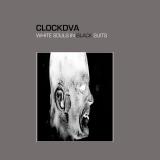
Erstmals seit über 35 Jahren ist Clock DVAs "White Souls in Black Suits" - ursprünglich 1980 als limitierte Kassette auf Throbbing Gristles Industrial Records veröffentlicht - (in einer neu gemasterten Version) auf grauem Doppel-Vinyl und CD erhältlich, neu aufgelegt über The Grey Area of Mute und erweitert um vier Bonustracks aus derselben Zeit.
Unter der Leitung des visionären Adi Newton bleibt Clock DVA eine der geheimnisvollsten und wandlungsfähigsten Bands aus Sheffield. Ihr Repertoire umfasst Mutant Funk, Noir Jazz und Coldwave-Elektronik. "White Souls in Black Suits" bietet zusammen mit den zusätzlichen Tracks einen Einblick in die frühe Morphologie ihres Sounds. Das Album umfasst eine Besetzung mit Newton (Gesang, Synthesizer, Klarinette, gestrichene E-Gitarre und Tape-Bearbeitung), Gründungsmitglied Steven James Turner (Bass-Bearbeitung), David J. Hammond (Gitarren-Bearbeitung), Charlie Collins (Saxophon, Flöte und Percussion), Roger Quail (Percussion) und Simon M. Elliott-Kemp (Synthesizer).
Das Album wurde im Western Works Studio von Cabaret Voltaire aufgenommen, ist locker strukturiert, weitgehend improvisiert und stark von der frühen Industrial- und Goth-Szene Sheffields beeinflusst. Es beschwört eine Welt der Überwachung, Besessenheit und psychologischen Zersetzung herauf - ein Debüt, das den Ton für die sich ständig weiterentwickelnde Vision von Clock DVA angab und ein essentielles Dokument der ursprünglichen Industrial-Ära ist.
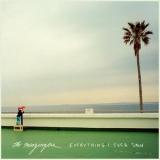
Everything I Ever Saw finds THE MENZINGERS entering a new era in what"s already been a storied career. The Philadelphia punk legends" eighth album chronicles moments of significant change-the personal, the political, and the universal-while returning to the core creative principles that first put them on the map with listeners the world over. Twenty years in, the Menzingers have discovered that the wisdom gained with time"s passing is even stronger than the emotional armor they once wore in their youth, and Everything I Ever Saw captures the quartet embracing the here and now while strengthening the bonds that have held them together. THE MENZINGERS have always created as a four-headed unit, with all members (vocalist/ guitarist Greg Barnett, vocalist/guitarist Tom May, bassist Eric Keen, drummer Joe Godino) throwing in their respective talents as part of the craft-but for Everything I Ever Saw, the group worked in creative symbiosis more than ever before. "The way we made this record feels the most like how the band was in the very beginning: Me and Tom coming to the band with the most basic element of a song, and the four of us shaping that," Barnett says. Instrumental in building that excitement was locally centered and nationally renowned production legend Will Yip, who threw in with the Menzingers on 2017"s After the Party and their sonically expansive 2019 record Hello Exile. This time around, Yip once again became an unofficial Menzinger while the band crafted these 11 songs in their South Philly space. "Working with Will was like a homecoming," May beams while talking about Yip"s contributions. "We"ve grown up together over these years, and we"re still incredibly close friends. He"s the best at gassing you up and making sure everybody"s on the right page, but he"s also so good at pointing out stuff that might not fit the vision without being a fucking prick. He"s the hardest working person that we"ve come across in the music industry, and he"s incredibly inspiring."
Everything I Ever Saw finds THE MENZINGERS entering a new era in what"s already been a storied career. The Philadelphia punk legends" eighth album chronicles moments of significant change-the personal, the political, and the universal-while returning to the core creative principles that first put them on the map with listeners the world over. Twenty years in, the Menzingers have discovered that the wisdom gained with time"s passing is even stronger than the emotional armor they once wore in their youth, and Everything I Ever Saw captures the quartet embracing the here and now while strengthening the bonds that have held them together. THE MENZINGERS have always created as a four-headed unit, with all members (vocalist/ guitarist Greg Barnett, vocalist/guitarist Tom May, bassist Eric Keen, drummer Joe Godino) throwing in their respective talents as part of the craft-but for Everything I Ever Saw, the group worked in creative symbiosis more than ever before. "The way we made this record feels the most like how the band was in the very beginning: Me and Tom coming to the band with the most basic element of a song, and the four of us shaping that," Barnett says. Instrumental in building that excitement was locally centered and nationally renowned production legend Will Yip, who threw in with the Menzingers on 2017"s After the Party and their sonically expansive 2019 record Hello Exile. This time around, Yip once again became an unofficial Menzinger while the band crafted these 11 songs in their South Philly space. "Working with Will was like a homecoming," May beams while talking about Yip"s contributions. "We"ve grown up together over these years, and we"re still incredibly close friends. He"s the best at gassing you up and making sure everybody"s on the right page, but he"s also so good at pointing out stuff that might not fit the vision without being a fucking prick. He"s the hardest working person that we"ve come across in the music industry, and he"s incredibly inspiring."
Following the first two singles by Freiwillige Selbstkontrolle (later F.S.K) from 1980 and 1981, as well as their debut LP “Stürmer” and the 1982 EP “Magic Moments”, A-Musik is now releasing “Ça c’est le Blues,” another of their early works, all of which were released on Alfred Hilsberg’s legendary ZickZack label and have long since become rarities. “Ça c’est le Blues” was originally released in 1984 and marks nothing less than a milestone in F.S.K.’s already impressive discography. While numerous bands from the West German underground of the early 1980s, following the “Summer of Pop” of 1982 and the associated breakthrough of the “Neue Deutsche Welle,” either moved toward the mainstream or began singing in English, Justin Hoffmann, Thomas Meinecke, Michaela Melián, and Wilfried Petzi took a different path.
The songs became more elaborate, the production – influenced by bands like Gang of Four and Dexys Midnight Runners – more opulent, and the instrumentation now included wind instruments for the first time, which have since become an integral part of F.S.K.’s sound. At the same time, the Munich-based band’s music-historically motivated focus was directed more toward the US than was typical of the bands in the West German scene of that era. To their signature blend of post-punk and experimental music, as already evident on “Stürmer,” they now incorporated funk (on the opener “Faire Le Chicken”) and jazz (on the heartbreaking cover version of “My Funny Valentine”). From then on, this “transatlantic feedback” was an essential component of F.S.K.’s musical practice. The discursive twists and turns, the incorporation of references, and the insistence on German lyrics would influence bands in the coming decades, not just those of the “Hamburg School.” At the same time, the album features legendary hits by Freiwillige Selbstkontrolle – such as “Move Ahead” and “Fragen der Philosophie (Völkerball)”– which are still played at every concert to this day.
With the reissue of “Ça c’est le Blues,” one of the most impressive releases in 20th-century German avant-pop history is finally available again. The reissue includes a comprehensive booklet featuring an in-depth interview about the album with all band members, as well as numerous previously unpublished photos.
Jon Schaffer's Sons of Liberty - Thought Crimes (Volumes 1 & 2) is a bold new mix that fuses the raw essence of the "Brush-fires of the Mind" LP (2009) and the "Spirit of the Times" EP (2011), breathing fresh life into a message that has proven eerily prophetic in an era of escalating world challenges. " Thought Crimes (Volumes 1 & 2) " is out now on all streaming platforms, inviting listeners everywhere, old or new, to discover its urgency. For collectors, a special physical rollout will arrive via The Circle Music on July 4, 2026 , marking the 250th anniversary of the signing of the Declaration of Independence. At its core, Sons of Liberty's music exposed the machinations of a fraudulent financial system and the insidious creep of authoritarianism, serving as a stark warning to humanity. Today, with those shadows cast longer than ever, this music stands as a timeless testament to truth, unfiltered and unapologetic.
What sets Sons of Liberty - Thought Crimes (Volumes 1 & 2) apart is its transcendence of partisan divides. This is not an echo chamber of political agendas; it's a universal wake- up call, championing freedom as the bedrock of peace and prosperity for every person on the planet. In a world fractured by division, Schaffer's lyrics rally for pro-freedom/pro-humanity ideals: anti-authoritarian, non-partisan, and rooted in the unyielding principles of liberty. It's a reminder that true empowerment comes from questioning and resisting systems that promote aggression and erode our shared dignity, fostering unity through principles of liberty, individual sovereignty, and collective resilience. Elevating the original material to new heights, this release features thunderous, newly recorded drums by longtime friend Mark Prator , whose precision and groove has powered classics from Iced Earth ( The Dark Saga , Something Wicked This Way Comes ), Demons & Wizards (Self- Titled Debut), and Jon Schaffer's Purgatory (EP 2018).
Paired with a cutting- edge modern mix by Jim Morris , the result is a sonic powerhouse that has matured like a fine wine - delivering an intensity and honesty that's all too rare in today's pop culture landscape. In an age where ideas can be silenced, this stands as the most censored and cancelled heavy metal music in history. It begs the question: Why? Are thought crimes an inevitable reality in a world that fears unbridled truth? Dive in, reflect, and educate yourself-- because freedom isn't a spectator sport; it is difficult, it requires action, and it's the only path to a better world for all of us
Futurismo are thrilled to present Give Thanks, the long out of press 1984 hardcore classic by Articles Of Faith. Produced by Bob Mould, and newly remastered directly from the original tapes, this powerhouse of a record is now coming on both LP and CD after being unavailable for decades. Originally released in 1984, the debut LP Give Thanks by Chicago hardcore legends Articles Of Faith, is proof a hardcore record can be both political and poetic. Fuelled by rage, introspection and a musical progression that could be seen as a blueprint for what would later become known as post-hardcore, this album ticks every box you want from a record of the era: intense, emotive, scathing, unpredictable, all topped off by the masterful production of Bob Mould (Hüsker Dü/Sugar). Give Thanks is perhaps overlooked in many top ten’s of the genre, but leaving the bands debut LP off that list would be a mistake. A demonstration in raw emotion and political angst, Give Thanks harnesses a sound that could have only happened during the Reagan era. Hardcore was of course a musical explosion built upon aggression and discontent, yet Give Thanks forcefully fuses this concept of raw power with a multitude of musical influences at a time when some of their contemporaries perhaps seemed to tread water. Whilst the principles and sonics harnessed on AOF’s debut album may have had more in common with the sounds coming out of Washington D.C., this record has an authentic Chicago savvy running through it, effortlessly projecting a street level tone whilst simultaneously aiming to show the possibilities of what a hardcore record could be. In retrospect, AOF’s debut was a hardcore album ahead of it’s time, perhaps the reason it’s fervent themes and artistry still feel so fresh and relevant. Whether that’s due to Vic Bondi’s gravelly tones geared to critique the societal regime at play, or the considered guitar work aimed to both blast and texturize, or the intense drums rhythms inspired by jazz and dub, there is a depth to the final album that feels like a band testing their parameters, one listen to ‘Every Man For Himself’ and you know you are listening to something special. Familiarity and originality rarely crossover, but in this case they coexist to leave us with a forward thinking punk record that is more interested in shouting it’s emotions from the street, than it is screaming into a vacuum.
A true American hardcore record, and a must for fans of Minor Threat, Dead Kennedy’s, Bad Brains and Fugazi.
Gloss laminated digipak CD & Limited edition pink & white colour vinyl.
Almost 400 multi-track tape reels, totalling 150 hours of music, were recorded during the Waterboys' famous Fisherman's Blues sessions of 1986-88. Among these were 80 tapes with no song titles, just rough notes like "jam" or "unknown." In 2024 band leader Mike Scott went through most of these, listening to them for the first time since they were recorded, and discovering in the process dozens of tracks the band had forgotten about; lost recordings, some improvised on the spot, others painstakingly worked on, that in many cases equal the quality of those on the original classic 1988 album.
Scott has compiled these into a triple CD and vinyl collection titled THE LOST FISHERMAN'S BLUES RECORDINGS. This fascinating release will gain much attention and will come with a book containing 15,000 words of Scott's own sleeve notes plus lyrics and unseen photos.
The second Jai Alai album takes its name from a track on Winners (1979) by New York band Kleeer, who evolved from Pipeline via The Universal Robot Band before becoming a major force on the soul and boogie scene; their full-length “Open Your Mind” is simply sublime.
Two originally unreleased tracks will delight completists of Aretha Franklin and Dionne Warwick. Aretha co-produced “The Boy From Bombay” with Quincy Jones — perhaps a little too quirky at the time — while Warwick’s Ashford & Simpson-produced “Someone Else Gets The Price” has all the hallmarks of a missed hit.
Philadelphia’s Pieces Of A Dream, discovered by Grover Washington Jr., were fêted across Europe throughout the 80s. Their Elektra album Imagine This (1983) yielded the wonderfully moody “It’s Time For Love”. Further mining of the Elektra vaults yields a highly collectable Phat Phili Mix of Teddy’s “Believe In Love”, alongside a jewel from Leon Ware’s Rockin’ You Eternally (1981). I was lucky to know this genius, still underappreciated as a master of sensuous soul; “Got To Be Loved” ranks among his finest.
There’s not enough space here to fully cover Gerald Levert’s “What About Me”, but my liner notes to the Jai Alai release JAR14 “Top Of My Head” detail just how talented he was — and this is further proof.
The two least-known artists make a strong impression. Andy Bey’s “I Know This Love Can’t Be Wrong” recalls Jon Lucien at his best, while Phajja — a promising Warner Bros. signing in 1997 — disappeared after just two albums; their Cutfather & Joe production here is as polished as The Emotions.
By the time Etta James recorded “Evening Of Love”, she was four decades into her career, delivering this beautiful ballad with total assurance. Truly epic Southern soul.
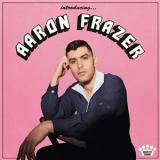
Für sein treffend betiteltes Solo-Debütalbum "Introducing..." hat Aaron Frazer mit Dan Auerbach von The Black Keys zusammengearbeitet. Soft spoken und mit dem Aussehen eines leicht unzufriedenen Matinee-Idols aus den 1950er Jahren gesegnet, besitzt Frazer eine einzigartige Stimme, die sowohl zeitgemäß als auch zeitlos klingt. Der in Baltimore aufgewachsene, zurzeit in Brooklyn lebende Songwriter wurde als Schlagzeuger und Co-Vokalist von Durand Jones & The Indications bekannt. Jetzt tritt er mit "Introducing..." als Solist hinter dem Drumkit hervor und demonstriert nicht nur seine beeindruckenden stimmlichen Qualitäten, sondern auch sein Können als hochklassiger Songschreiber. Schon die erste Single "Bad News" sorgte für Aufsehen ("a gorgeous piece of vintage R&B" - CLASH), die sich anschließende Lead-Single "Over You" ist inspiriert von elektrisierenden Northern Soul 45s der 60er Jahre. Nur zwei Belege der erfolgreichen Zusammenarbeit zwischen Frazer und Auerbach. Die zwölf Songs auf "Introducing..." verbinden gekonnt den Soul der 70er Jahre mit Dan Auerbachs besonderer Sensibilität für Vintage-Sounds im neuen Gewand. "Introducing..." enthält klassische Message-Songs im Stil von Künstlern wie Gil Scott-Heron sowie motivierende Liebeslieder, die von Disco-, Gospel- und Doo-Wop-Einflüssen durchzogen sind. Das gesamte Album wurde innerhalb nur einer Woche in Auerbachs berühmten Nashville-Studio nach einer schnellen und produktiven Songwriting-Session aufgenommen. Auerbach holte auch den legendären Songwriter und Falsettspezialisten L. Russell Brown (schrieb früher Hits für Frankie Valli von The Four Seasons) an Bord, der den wunderschönen Opener "You Don't Wanna Be My Baby" auf dem Album mitkopmponierte. Für "Introducing..." rekrutierte Frazer eine beeindruckende Schar alteingesessener Session-Musiker aus Nashville. Darunter Mitglieder der legendären Memphis Boys (die in Dusty Springfields "Son of A Preacher Man" und Aretha Franklins "You Make Me Feel Like A Natural Woman" mitspielten), den Perkussionisten Sam Bacco sowie diverse Musiker aus dem Daptone/Big Crown Records-Umfeld.
Off the back of an epic 3 part triple album “Sidequests”, Session Victim kept the collaborators in tow with “The Disconnect” EP, featuring the talents of Kenneth Scott, Rossano Snel, and Quarion across 5 tracks. It’s the Empire Strikes Back of Rhythm Section EPs – following up from widely acclaimed and best seller “Basic Instinct”. Balancing funk elements of breakbeats, bass guitar, rhodes and mellow synths with finessed modern production, the duo have assembled another masterclass in precise yet characterful house music.
The record begins with “Hey, Activate!”, oozing funk, ambient pads, a groove bassline and optimal arpeggiated synth noodling sets the tone for the whole EP. “Dream Theory” is quite it’s namesake, with a distant sax solo, tremolo sine motifs and a sumptuous lick combining piano and the Session Victim trademark bass guitar.
B-side opener “Flotsam” comes through with smooth breaks and incidental style sampling harking back to the vibes of Herbert, with slow filtered chord groove referencing the vibes of early French Touch masterminds Cassius.
Progressing into more relaxed territory, still ideal for dancefloor moments: “Open Minds” is indebted to old soul jams with bongos, muted guitars and rhodes followed by “Loom”, using similar elements with a vibe akin to early Bonobo.
This EP is testament to Session Victim’s mastery of housemusic, being their 40th EP and standing firm in a crowded scene. Their consistent application of production precision is carried by an emotional heart of gold that you can hear in every record they make. Not to be missed.
out of Stock
Last delivered 48 days ago available to reorder, subject to availability
SML is a Los Angeles based quintet featuring Anna Butterss, Jeremiah Chiu, Josh Johnson, Booker Stardrum, and Gregory Uhlmann. Spontaneous Music Live contains two side-length pieces of unedited improvisation, recorded live at Los Angeles venue Zebulon during SML"s December 2025 three-night residency, just weeks after the release of the band"s second album HOW YOU BEEN. It was recorded and mixed live to stereo tape by Bryce Gonzales (the same engineer/wizard known for his gorgeous live captures/mixes of Jeff Parker"s ETA IVtet). Between HOW YOU BEEN and their 2024 debut SMALL MEDIUM LARGE (both of which were heavily edited, shaped and post-produced) the band has developed a reputation for records that are heavily fused, polished, and punchy. The medium is on full post-modern display on those LPs, and the band"s post-production knife can be responsible for much of the perspective - the tastiest morsels collected, arranged, and rearranged just so. But the source material from both those albums were live recordings. Longform, unwieldy, ebbing and flowing. On top of that, every performance the band has ever done has been fully improvised in that spirit. So in the sphere of live performance the band"s esteem has grown down a different path - one of linear, hypnotic, expansion. It"s a perceived split persona shared by some of SML"s most inspiring conceptual bedfellows: compare the extended madness of Can"s Live in Paris 1973 to the relative tight form of Future Days from the same year; the speed-funk chaos of Miles Davis" Dark Magus to the heavily deconstructed On The Corner or Big Fun. Spontaneous Music Live removes the curatorial perspective and pulls the curtain back on that search-pluck-reconstruct editing process. What we"re left with is the psychedelic realism of the band in situ, in their home town, collectively improvising, fully in-the-moment, mining for that moment of discovery. We hear, in macro, each nugget of sound which could be the basis for a future SML album track, spattered amongst the collective chaos-and-control like stars in the night sky.
out of Stock
Last delivered 42 days ago available to reorder, subject to availability
Grammy Award winner Louie Vega has the unique ability to spotlight and highlight the most essential elements of classic dance tracks and remix and recreate them to create something just as powerful for today’s audiences. Currently in the midst of putting the finishing touches on his forthcoming album, Expansions In The NYC, Louie took some extra time to gather together the original members of the seminal New York – based disco funk band Unlimited Touch and collaborate with them at Log Cabin Studio in Manhattan and his own Daddy’s Workshop Studio in New Jersey to produce the 2020 edition of “I Hear Music In The Streets.”
Unlimited Touch consists of Audrey Wheeler (lead singer), Phil Hamilton, Tony Cintron, Sandy Anderson (RIP), Stephanie James and Lenny Underwood. “I Hear Music In The Streets” was originally released on legendary imprint Prelude Records in 1981.
Growing up in the Bronx, from an early age Louie had an affinity and love for all the various musical genres that were bubbling up in New York during that era defining creative period. It is that passion that has stayed with him during a career that has brought him Grammy’s, several worldwide hit records, and a status as one of the world’s most sought after DJs. It was especially fulfilling for Louie to work with the original members of Unlimited Touch, He quickly realized that their talents were still as strong as ever as they performed musical and vocal elements from the original song, and that they had the vision to see how the song could be re-energized by having Louie add his unique production elements to this seminal tune.
Louie is in the midst of an especially prolific and productive period. In 2016 he released the Grammy nominated Louie Vega Starring….XXVIII full length album; 2018 saw the release of the widely acclaimed and chart topping NYC Disco 2 X CD and 4 X vinyl album on Nervous Records. Known universally as “The Maestro” due to the standards of excellence he maintains in his productions, DJ Performances and live appearances with his Elements of Life Band, Louie Vega is now ready to unleash another gem to add to one of the music industry’s most remarkable body of work.
out of Stock
Last delivered 25 days ago available to reorder, subject to availability
Ekkel guides Earth Dog to The Destination, a four-pronged psychedelic clinic in the finest Nordic electronic tradition.
Co-founder of Norway’s Ute collective, celebrated Oslo-based producer and DJ Ekkel revels in prog naturalis. Previous releases as Alvar and Shadowmages, his duo with S.O.N.S., perfected this tripped-out sound with a heavy emphasis on melody. Following last year’s celebrated appearance at an Earth Dog rave in Brooklyn, he returns to grace the crew’s fourteenth release with The Destination.
Opener Questions About Mindcontrol awakens the discordant synapses, an entanglement of melodies and rhythm with a certain progressive attitude. Home Or In A Dream (Miami Morning Mix) properly ascends with trance-like wonder and ecstatic lucidity, before So Quiet returns to dusk with a tek-no throb and acidic bite. Destination G concludes with a nocturnal shimmer, an unrelenting groove caught in its own hypnosis ‘til the finale.
out of Stock
Last delivered 80 days ago available to reorder, subject to availability
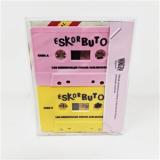
First time double-cassette reissue of 1987's double LP opera rock by Spain's legendary punk band Eskorbuto. "Los demenciales chicos acelerados" is a political satirical work against any kind of dictatorial regime. "Los demenciales chicos acelerados" is Eskorbuto's fourth studio album, originally released by Discos Suicidas in 1987. It was their most ambitious project, a double LP rock opera in the vein of "Quadrophenia" by their beloved The Who. It tells the story of an unscrupulous young man who wishes to achieve power at all costs, stepping over everyone and everything in order to do whatever he wants politically. In the end, he falls due to his ego and is betrayed by those around him. Hence lines such as "crowds are a nuisance", "I'll come unscathed out of the attacks planned by my image consultant" or "shouting in front of the scum". In 1988 band members Iosu and Juanma narrated the album's concept and story on a Radio Euskadi show, the Basque Country's public broadcaster. This satirical political plot also explains the controversial sleeve art, Eskorbuto were equalling the unprincipled politician of their rock opera with the Nazis and Franco's dictatorship. It's a conceptual record that attacks any kind of dictatorial political regime. The original sleeve caused some trouble, to say the least, with its combination of Nazi photos and the Spanish flag on the back accompanied by the words "Of national interest". lthough "Los demenciales..." came out on Discos Suicidas, in typical Eskorbuto fashion the band stole a copy of the master and sold it to the Twins label, which also released it a few months later with new cover art.The album contains new versions of a few previous tracks such as 'Ratas rabiosas' and 'Enterrado vivo' plus the studio version of 'Más allá del cementerio'. For the recording the band enrolled keyboardist Aitor Amezaga, who would also collaborate on their next album.
King Tubby and Producer Bunny ‘Striker’ Lee are intertwined in the birth of Dub Music. After discovering a mistake that made a ‘serious joke’ (more of which later...) they went on to release the first pressings of this new musical genre namely ‘Dub Music’. Tubby’s vast knowledge of electronics and Bunny’s vast catalogue of rhythms would lay the foundations of what today is taken as a standard... the Remix / Version cuts to an existing vocal tune.
Osbourne ‘King Tubby’ Ruddock was born in Kingston, Jamaica on 28th January 1941 and grew up in the High Holborn Street area of downtown Kingston. He studied electronics at Kingston’s National Technical College and also on two correspondence courses from the U.S.A... When he had qualified Tubby began repairing radios and other electrical appliances in a shack in the back yard of his mother’s home. His work in the early days included winding transformers and building amplifiers for Kingston’s Sound Systems. Tubby built his first Sound System in 1957 playing jazz and Rhythm & Blues at local weddings and birthday parties. His reputation as a man who knew and understood both electronics and music grew steadily and as the sixties drew to a close. Tubby purchased his own basic two track equipment. He installed this alongside his dub cutting machine, a homemade mixing console and his impressive collection of Jazz albums in the back bedroom of his home at 18 Dromilly Avenue which he christened his music room.
Tubby and Striker were at Treasure Isle Studio’s one day while Ruddy from Spanish Town was working with the engineer Byron Smith....
“Tubby and myself was talking when Ruddy was cutting some dub but Smithy (engineer) made a mistake through we were talking and forgot to put in the voice. It was two track recording in those days. Ruddy said ‘No Man! Make it stay! and so they cut the rhythm. When I went over to Ruddy’s that Saturday night a dance was in progress and when they played the vocal to the tune... then he said we’re going to play ‘Part Two’. They never called it ‘Version’..and then he played the rhythm track. The song was a catchy song and everybody started to sing along and the deejay started to toast so everything went down well. On Monday morning I went up and I said ‘Tubbs the mistake we made was a serious joke. It mash up Spanish Town! The people went wild. So you have to start to do that now ‘cause when the man put on the ‘Part Two’ everyone start singing this song. It played about twenty times. I said you try Tubbs!’...Well the next Saturday night now when Tubby strung up down the farm U Roy said he’s going to play ‘Part Two’ but Tubby did it different now. He started with the voice then dropped it out and let the rhythm run and then he brought in the voice in the middle and from there Tubby started to get really popular.’’
Bunny ‘Striker’ Lee
Dynamic Sounds upgraded to sixteen track recording in 1972 and Tubby purchased, again with the help of a deal brokered by Bunny Lee. The old four track equipment and the MCI console from their Studio B. The four tracks now gave him far wider scope to work with and he began to create a new musical form where the bass and drum parts were brought up while the faders allowed Tubby to ease the vocal and rhythm in and out of the mix. It was only a matter of time before Tubby’s dub plate experiments began to make it on to vinyl and the first ever long-playing King Tubby releases would feature a collection of his mixes to a selection of Strikers rhythms. So please sit back and enjoy this historic set of sounds, mixed by King Tubby and Mr Prince Phillip Smart and another set of scorcher Bunny Lee rhythms.
LP1 New album
LP2 Available on vinyl for the first time
LP3/4 Debut album on green vinyl
LP5 Second album on red vinyl
When I recorded the first 2 Trickfinger records, I had recently discovered that you could make electronic music in a room with a bunch of synced machines going at the same time, record it on a
CD burner and have a finished track. I've heard this process described as “overdubbing into the air”. It was as exciting to me as my first 4 track was when I was 14. I wasn't trying to be good, or
original. I was just excited that music could be made that way; it felt like I was a whole group of musicians playing together… or like I was jamming with ghosts of myself. This has actually been a
very common way of making electronic music since the 80s, particularly in the main pioneering genres like Chicago Acid and Detroit Techno, but anyways I didn't figure it out until 2006. In 2007,
I started doing it myself, which resulted in what was eventually released as Trickfinger, and Trickfinger II. I was just home from tour and was still in the middle of recording The Empyrean.
A couple of years later I started making music by overdubbing onto a computer, but using the same machines. I tried to make music that didn't sound like anything else. I saw a way of combining
Progressive Rock and Synth Pop which nobody had done. And I was combining my songwriting and guitar playing with these old machines in a way which I was sure was unique. I had reached a point
where it was more important to do something original than to do something good, whatever “good” means.
Some of this music did not get a proper release, and is compiled here as the vinyl record High Low. I don't think I have ever tried so hard at making music as I did during that period. This in contrast to
those two Trickfinger records, where I wasn't trying at all. There’s something to be said for both mental states. When you're in one, the other seems impossible. I was really pushing myself on High
Low. Looking back, it was as if I had an audience inside myself, driving me to go beyond my abilities, while at the same time I had a total disregard for any concept of an actual audience. It
was one of those periods in life where things come together in a certain way that feels natural at the time, but seems foreign in retrospect. It felt like I was going to die if I didn't do something musically
different.
The fourth record in this box is me breaking in a new mixing console, making live-to-stereo music. The record is called Rotation, and it is all new music. These tracks are more in the “not trying”
category, since we're on that subject. I had just come home from tour, and was just really glad to be in the studio with my machines. Acid Test thought it would be nice to do a box set commemorating the 10th anniversary of the release of Trickfinger, and so we put together this box set, with homemade cover art.
John Frusciante 2026
out of Stock
Last delivered 87 days ago available to reorder, subject to availability
French quartet Mourir are preparing to release their second full-length studio album, Nous, le venin, this summer via Pelagic Records. Their forward-thinking take on black metal and uncompromising approach to their work marks them out as ones to watch when they present this new material live at festivals across Europe including Hellfest, Rock In Bourlon and Resurrection festival in the months to come. With a demo, an album and an experimental EP to their name, the four-piece retreated to the studio at the end of 2025 to write the music for Nous, le venin. Recorded in January 2026 with Amaury Sauvé (Birds in row, Igorrr, Pneu) at The Apiary Studio in Laval, France, the six tracks are the very embodiment of Mourir's approach to black metal. Although they draw inspiration from many artists in the old-school black metal world, they opted to lean into a more modern sound - one that would allow the depth of their sonic choices to shine. Blending elements of sludge and post-metal to the rawness of their black metal sound, and combining this with a mix that gives space to both the low frequencies and the high-octane viscerality, Mourir have created something both distinctive and captivating. Thematically, the band turns their detached gaze towards an ever-more untethered modern society, one that is inhospitable to those seeking meaning in the cruelty and absurdity of a seemingly senseless world. Yet within these tracks exists slivers of light, of hope and of luminosity - a belief that something better is possible is woven throughout the melodic passages and most celestial, ecstatic elements of their sound. The evocative cover art by Thomas Davezac captures the feeling of disconnection that permeates the album. Mourir have recorded an album that cements their place among underground greats who deftly eschew the nostalgic trappings of black metal convention and breathe new life into the genre. Nous, le venin is imbued with raw emotion that is perfectly complemented by stylistic choices that echo the sentiment of being freed from the chains of the past. FFO Ultha, Fluisteraars, Envy and Neurosis
French quartet Mourir are preparing to release their second full-length studio album, Nous, le venin, this summer via Pelagic Records. Their forward-thinking take on black metal and uncompromising approach to their work marks them out as ones to watch when they present this new material live at festivals across Europe including Hellfest, Rock In Bourlon and Resurrection festival in the months to come. With a demo, an album and an experimental EP to their name, the four-piece retreated to the studio at the end of 2025 to write the music for Nous, le venin. Recorded in January 2026 with Amaury Sauvé (Birds in row, Igorrr, Pneu) at The Apiary Studio in Laval, France, the six tracks are the very embodiment of Mourir's approach to black metal. Although they draw inspiration from many artists in the old-school black metal world, they opted to lean into a more modern sound - one that would allow the depth of their sonic choices to shine. Blending elements of sludge and post-metal to the rawness of their black metal sound, and combining this with a mix that gives space to both the low frequencies and the high-octane viscerality, Mourir have created something both distinctive and captivating. Thematically, the band turns their detached gaze towards an ever-more untethered modern society, one that is inhospitable to those seeking meaning in the cruelty and absurdity of a seemingly senseless world. Yet within these tracks exists slivers of light, of hope and of luminosity - a belief that something better is possible is woven throughout the melodic passages and most celestial, ecstatic elements of their sound. The evocative cover art by Thomas Davezac captures the feeling of disconnection that permeates the album. Mourir have recorded an album that cements their place among underground greats who deftly eschew the nostalgic trappings of black metal convention and breathe new life into the genre. Nous, le venin is imbued with raw emotion that is perfectly complemented by stylistic choices that echo the sentiment of being freed from the chains of the past. FFO Ultha, Fluisteraars, Envy and Neurosis
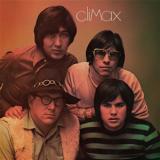
Second EP (1970) by the legendary Bolivian band Climax, recorded during their hard rock period, before evolving their sound toward progressive rock a few years later with the release of their well-known album "Gusano Mecánico". Includes a new funky version of 'Born to Be Wild' by Steppenwolf, as well as three original compositions by the band. On October 7, 1974, the now-historic "Gusano mecánico" was released - the only full-length album by the legendary Bolivian rock band Climax. Founded in 1968 from the remnants of the disbanded Los Black Byrds and the unrealized project The Turtles, Climax was formed by guitarist José "Pepe" Eguino and bassist Javier Saldías, who developed a strong bond with drummer Alvaro Córdova, cemented by their shared passion for rock. Together, they embarked on a journey of self-discovery, spending several months in the United States during a crucial period straddling the end of the Summer of Love and the lead-up to Woodstock. This period, perhaps the most significant of the 1960s Bolivian countercultural movement, saw an explosion of artistic expression driven by dissatisfaction with the society that the youth had inherited from their parents. Within this context, the influence of iconic bands such as The Jimi Hendrix Experience, Cream, Blue Cheer, and Emerson, Lake & Palmer played a pivotal role in their decision to return to Bolivia and form the country's first 'power trio'. Their early EPs paid tribute to their musical heroes. Their second EP "Born to Be Wild II" was released in 1970, it featured a new funky version of the Steppenwolf original. It also introduced the band's first original compositions and their new influences: 'Ritmo de la Vida,' an instrumental chord-driven melody with Latin jazz overtones where we begin to hear the influence of Santana; 'El Abrigo Café de Piel de Gallina,' a standard blues number that recalls 'All Your Love' by Otis Rush; and 'The Seeker,' with a Latin vibe and lyrics that include the first reference to drug use in Bolivian music. First time vinyl reissue.
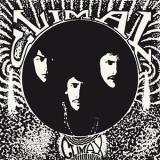
Debut EP (1969) by the legendary Bolivian band Climax, recorded during their hard rock period, before evolving their sound toward progressive rock a few years later with the release of their well-known album "Gusano mecánico". Includes versions of 'Born to Be Wild' by Steppenwolf, 'Fire' by The Jimi Hendrix Experience, and 'Sunshine of Your Love' and 'Tales of Brave Ulysses' by Cream. On October 7, 1974, the now-historic "Gusano mecánico" was released - the only full-length album by the legendary Bolivian rock band Climax. Founded in 1968 from the remnants of the disbanded Los Black Byrds and the unrealized project The Turtles, Climax was formed by guitarist José "Pepe" Eguino and bassist Javier Saldías, who developed a strong bond with drummer Alvaro Córdova, cemented by their shared passion for rock. Together, they embarked on a journey of self-discovery, spending several months in the United States during a crucial period straddling the end of the Summer of Love and the lead-up to Woodstock. This period, perhaps the most significant of the 1960s Bolivian countercultural movement, saw an explosion of artistic expression driven by dissatisfaction with the society that the youth had inherited from their parents. Within this context, the influence of iconic bands such as The Jimi Hendrix Experience, Cream, Blue Cheer, and Emerson, Lake & Palmer played a pivotal role in their decision to return to Bolivia and form the country's first 'power trio'. Their early EPs paid tribute to their musical heroes. The first of these is titled "Born to Be Wild" (1969), including versions of 'Born to Be Wild' by Steppenwolf, 'Fire' by The Jimi Hendrix Experience, and 'Sunshine of Your Love' and 'Tales of Brave Ulysses' by Cream. Recording covers was completely normal at the time and was also their way of learning the musical language. It's worth noting that the term "cover" did not carry the meaning it has today; back then, the main goal was to spread the music and bring it to a wider audience. First time vinyl reissue.
A catalyst for all sorts of noise-making endeavors, Bob Bellerue embraces chaos as a positive force. As a musician, he harnesses the violent timbres and textures from feedback clashing against piano wires, amplifiers, metal, zithers, electronics etc. He's also been central in harnessing community through his long standing Ende Tymes festival in New York, providing an intersectional platform for all voices to utter their noise. To a polite society, things such as chaos, noise, and anarchy threaten the normative structures that can assert control and maintain power over others. Bellerue qualifies his practice as a form of sonic animism, in which engages with that which is unheard in materials, equipment, and their relationships, developing a process of amplified discovery. The unhinged, the unquantifiable, and the unknowable are all possible outcomes in Bellerue's expansive works.
Chaos Is A Law is a macrotonal album, whose expressive de-centralization originates from rasping noise, intense textural accretions, brutalist drone, and inharmonic ambience. For all of the sustained harmonics and dissonant frequencies, the album is in constant motion, with Bellerue pushing dynamics that build, rupture, collapse and reform with an almost organic morphology. At times, it boils with a feral intensity. At others, its muscularity collapses into peculiar almost half-melodic figures, mutated within all the distortion. One could look to the free noise practitioners from New Zealand (e.g. A Handful Of Dust, Birchville Cat Motel, Surface of the Earth) or to the alchemical dronescaping of Stephen O'Malley and Organum. Yet, Bellerue's work maintains a bespoke tactility that is uniquely his.
In Bellerue's words, "The universe is a feedback loop. Creating and destroying. Growing and decaying. Loving and dying. Expanding and contracting. The big bang is the end result of everything merging together in the biggest black hole ever and then erupting into being over and over again. Praise chaos!"
These days – on the new, ninth Fink album – Greenall is operating within a lineage of authentic, quietly revolutionary artists from England’s verdant southwestern toe. Artists like Michael Chapman. In 1970, the elusive acoustic guitar wizard released an album called Fully Qualified Survivor. The cult-classic served as a lodestar for Greenall – along with bandmates Tim Thornton and Guy Whittaker – as he began jigsawing together The City Is Coming to Erase it All, the follow-up to 2024’s Beauty In Your Wake. He even considered covering a song from it, but in the process, inadvertently stumbled into what became the album’s opener. ‘Wishing For Blue Sky’ circles a universal teenage ache: waiting for life to start. “No point dying of patience” goes the first lyric as crunching footsteps cue a resonant, open-tuned acoustic swaying into view. By 18, Greenall was fed up with waiting, so he left suburban Bristol and saw the world, sending postcards from the edge, waiting tables, squirreling away tips for the next flight. Thornton had similar experiences when the guitarist/drummer busked across Eur
This is nowstalgia more than nostalgia, though; there’s a parallel between these 18-year-olds and Fink’s autumn-aged family men. “You’re expected to be boring and settling down at this age,” Thornton says. “But we’ve still got this tremendous wanderlust. We want to go and discover, and also achieve things. It’s a nice life – home and family – but fuck, I can’t wait to get back out there.” City is a product of this hunger for discovery, and idolatry of the album as a form – like we had in 1974. City’s cover mirrors its interior, the first song is the greeting, the instrumental closer the conclusion. It’s a story. It’s a record for people who, like its creators, are curious. People who happily face a little cold for music, who light a crackling fire back home, who sit with these songs until they’re ready to chase after their own blue sky
out of Stock
Last delivered 3 months ago available to reorder, subject to availability
T. VINCENT: LIVE IN LONDON! (Total Pleasure/Virgin Music Group) offers up the opportunity to relive or experience for the first time that enthralling evening, a historic occasion that found Annie Clark, Buckley and the orchestra reimagining 19 classics, staples and rarely played deep cuts spanning the St. Vincent catalog from 2007’s solo debut Marry Me up to 2024’s multiple-GRAMMY-winning All Born Screaming.
Album Background
A complete live recording of St. Vincent's triumphant BBC Prom performance at The Royal Albert Hall with The Jules Buckley Orchestra. Featuring reimagined works from across her entire career, this is a chance for fans to experience an evening that Rolling Stone UK called "A glorious re-imagination," what The Times Of London classified as "Here's how to do a classical crossover," and about which Far Out Magazine UK said "There are certain gigs that are always destined to be great -- like St. Vincent, at the Royal Albert Hall, with an orchestra."
Ataraxia - Sylfaera the FairThe trilogy that began with "Pomegranate (The Chant of the Elementals)" and continued with "Centaurea" has reached the moment of its grand completion with a third chapter, one that seals the story in a truly triumphant way It is an honour for us to collaborate with Ataraxia . An even greater one that their thirtieth album bears our emblem. What they have conjured this time is for you to discover on your own. It is a rare thing to encounter a circle of artists so devoted to their craft, who do not merely make a living from music, but live for music itself, for Art in its purest form.
The Reflex has been back remixing on his multitracks again and if you have been out anywhere decent in recent times you might already have heard this one as it has been a favourite of those DJs in his inner circle. Finally, the unrelated rework of a legendary disco diva arrives on wax and dazzles from front to back. 'Lolita' has it all - the deft hi hats sliding above funky bass, a rhythm driven by busy piano chords and lung-busting vocal full of burning soul. 'Camels' rides funky, chunky drums and has more expressive tones this time in unison with an off-balance chord sequence and fluttering sax. Lovely stuff.
out of Stock
Last delivered 3 months ago available to reorder, subject to availability
Ikadub have been shaping their sound for a decade, oscillating between digital pulse and analog sounds. Character and rhythm that the duo offers to several singers according to style and mood, for a discography rich in beautiful encounters.
Tell The Truth is an example, if not the best, of a collaboration that rings true, hits hard and sounds killer! Prince Jamo delivers impeccable vocals to lyrics that resonate as current events prove him right, served by a riddim that makes you nod your head from the first bars. I want to say BIM!
out of Stock
Last delivered 3 months ago available to reorder, subject to availability
Whatever The Reflex is on at the moment, we want some - he's rolling out the jams left, right and centre across several different styles. For this drop, he has revisited his own revision: ten years after first dropping this and without countless plays from legends like Kerri Chandler, he retouches a disco-house fusion classic that rides big vocal hooks and smooth, breezy grooves. On the B-side he takes aim at another soulful gem and go-to DJ favourite with real invention. 'Nobody' has persuasive drum breaks and slithering synths that shimmer like heat waves and allow the acing, singalong vocal room to work its magic up top.
out of Stock
Last delivered 3 months ago available to reorder, subject to availability
The second full-length album from Simon Herody - French born, Berlin based multi-instrumentalist and composer. Featuring the visual universe of Paul Waak.
Water from Mars retraces the imaginary odyssey of a near-future conquest of space - a sonic journey conceived as a soundtrack for the imagination. Blending acoustic and electronic instruments, Herody navigates between sci-fi jazz, left-field ambient dub, space lounge, and 4th world music, crafting a world where melancholy and forward-thinking curiosity coexist in weightless suspension.
Indulgent, textured, and uncompromising - for fans of glitchy synthesizer textures, cinematic atmospheres, and music that refuses easy categorization.
“Jack Bags – Laser Eyes EP” is the third release by the Milan-based artist on La Sabbia.
Four tracks shaped by meticulous sound design through vintage analog synths, drum machines, and outboard FX, evolving into a solid blend of electro, house, and disco influences. LASABBIA012
out of Stock
Last delivered 77 days ago available to reorder, subject to availability
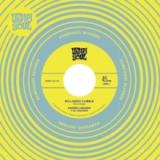
Andrés Landero embodies like no other the spirit that made it possible to bring cumbia to the world. The two cumbias included on this 45 have been taken from his rare and never-reissued 1979 LP on Discos Fuentes. They became popular rebajadas (slowed down cumbias) in the Mexican sonidero scene and have not been previously available on 45. First-ever reissue. Andrés Landero legacy represents a creative pinnacle of tropical music and has influenced countless artists. In 1965, he joined the line-up of artists on Discos Fuentes' payroll. After some years releasing music on different labels, Landero returned to Discos Fuentes in 1979 with the album "Bailando cumbia". The two cumbias included on this 45 have been taken from this rare and never-reissued LP. They became popular rebajadas (slowed down cumbias) in the Mexican sonidero scene and have not been previously available on 45.
out of Stock
Last delivered 3 months ago available to reorder, subject to availability
Ever since the late 1950s bossa-nova revolution, Brazil’s influence on French music has been undeniable. Pierre Barouh, Georges Moustaki and a vast array of lesser known artists, all made the Musica Popular Brasileira (MPB) an axis of promotion at the service of a cool and metaphysical, modern and mixed Brazilian lifestyle. Some were seduced by the poetic languors of the bossa, some were looking for fun, and others just loved the American hybridization of jazz-bossa, jazz-samba.
What is bossa nova? One of its creators, Joao Gilberto said: "Its style, cadence, everything is samba. At the very start, we didn't call it bossa nova, we sang a little samba made up of a single note - Samba de uma nota so .... The discussion around the origins of bossa nova is therefore useless”. It is nevertheless useful to remember that these magnificent Brazilian songs, which the guitarist describes as samba, were shifted and balanced around improbable chords. "I like things that lean, the in-betweens that limp with grace," said Pierre Barrouh, quoting Jean Cocteau.
With emotion, arrangements for violin and supple guitar licks, bossa nova rapidly changed. A transformation that can be heard in the Tchic, tchic, French Bossa Nova 1963-1974 compilation, the result of a cultural reappropriation, which traveled through the United States and supplemented itself in France.
A musical revolution that has remained significant, bossa nova was born in Rio. From 1956 to 1961, Brazil lived through its golden years. In five years, the country had invented its modernist style. Elected president in 1956, Juscelino Kubitschek de Oliveira, an elegant man with a broad forehead, brandished a promising slogan: "Fifty years of progress in five years". He quickly got to work. Not worried about increasing debt, he launched the project for a new federal capital, Brasilia, designed by the communist architect Oscar Niemeyer. Volkswagen opened state-of-the-art factories and created the “fusquinha”, the Beetle. In Rio, the Vespa made its first appearance. The Arpoador Surf Club crew run into the “girl” from Ipanema, Helô Pinheiro - the tanned garota ("chick"), between a flower and mermaid, who at 17 walked by the Veloso bar, where the fiery author and composer, Tom Jobim and Vinicius de Moraes, were getting drunk on whiskey. From then on, bossa symbolized cool.
In 1958, Joao Gilberto recorded Chega de Saudade, which the directors of Philips denied, calling it "music for fagots". The marketing director, who believed in it, secretly pressed 3000 78-inch vinyls and distributed them at schools around Rio, creating a tidal wave.
American jazzmen then took over. In particular, trumpeter Dizzy Gillespie and guitarist Charlie Byrd. In November 1962, the Brazilian Ministry of Foreign Affairs funded a "Bossa-Nova" concert at Carnegie Hall in New York, inviting the genre’s pioneers. Unprepared, the show soon turned to disaster. But the troupe was invited to the White House by Jackie Kennedy. The first lady loved "the new beat" and in particular Maria Ninguem, a song by Carlos Lyra, later covered by Brigitte Bardot.
In Brazil, the 1964 military coup quickly ended this euphoria. The destructive atmosphere that ensued pushed many Brazilian musicians to leave, if not to exile. Thus, Tom Jobim, Sergio Mendes and Joao Gilberto arrived to the United States. In New York, Joao Gilberto met saxophonist Stan Getz. At the time, he was married to the Bahianese Astrud Weinert Gilberto, who had a German father. She had never sung before, but she knew how to speak English. Getz therefore asked her to replace her husband on The Girl From Ipanema. The Getz/Gilberto record with Tom Jobim on piano, was released in March 1964. Phil Ramone, the "pope of pop" was in charge of sound.
Bossa nova arrived in Paris through the classic “guitar-voice” channel (Pierre Barouh, Baden Powell, Moustaki…) But France loved jazz and Paris had already welcomed its American contributors. All these good people were to pass through Saint-Germain-des-Prés. The cabaret l'Escale became the Mecca of Latin American sound where one could find Pierre Barrouh and his friends, such as the Camara Trio, samba-jazz aces, whose only record was published by the Saravah label. With a band strangely called Les Masques (a band that included Nicole Croisille and Pierre Vassiliu, among others), the Camara Trio recorded an interesting Brazilian Sound, including the track Il faut tenir which is present on this tasty compilation of rarities.
Other enlightened musicians can also be found on the compilation, such as Jean-Pierre Sabar (songwriter for Hardy, Auffray, Leforestier ...) and the French pop rock organist Balthazar. In 1975, Sabar recorded Aurinkoinen Musiikkimatka on a Finnish label, which featured the crazy Vai, Vai, included on this record. We are now following the footsteps of Brazilian electronic musicians such as Sergio Mendes, Eumir Deodato or Marcos Valle who created funk and disco sounds on their keyboards and synthesizers. A style that influenced Véronique Sanson when she wrote Jusqu’à la Tombée de la nuit in 1969 for Isabelle de Funès, the niece of Louis and a great friend of Michel Berger - Sanson did end up singing this track on her 1992 Sans Regret record.
The pinnacle of exoticism and travel, Sylvia Fels’ Corto Maltese includes bongos, sea mist and ocean sounds. The title was taken from Jacky Chalard’s concept album written in 1974, Je suis vivant, mais j’ai peur (I am alive, but I am scared), based on Gilbert Deflez’s science fiction novel.
However, bossa nova extended the scope of popularity. "In the 1970s, I was a fan of Sergio Mendes, Getz / Gilberto. I fell in love with this music that I knew because I had been an orchestral singer, " explained Isabelle Aubret, who in 1971 delivered a composite record of covers by the very funky Jorge Ben, Orfeu Negro, Tom Jobim, Vinicius de Morais and Jean Ferrat. "I recorded this album for Meys Records in Paris, far from Brazil, with wonderful musicians, François Raubert, Roland Vincent, Alain Goraguer...". The latter wrote the arrangements for Casa Forte, a very percussive title borrowed from Edu Lobo, one of the initiators of the bossa who spent time in California. "Jazz and bossa came together and produced very rhythmic music. I love singing, it allows me to dream, to have fun, to feel a high on stage, and these songs brought me joy, made me swing, my singing felt like a dance.”
The world tours of French singers and their desire for the tropics, often brought them to Rio with its hills, forests, caipirinhas and tanned bodies. There are surprises though, like this Iemenja (Iemenja is the goddess of the sea in the Afro-Brazilian candomblé religion). Not unlike the composer and musician Jean-Pierre Lang, based in Sao Paulo, Claire Chevalier taught Brazil to Brazil. In 1970, the singer and painter published a 45-inch vinyl, Mon mari et mes amants (My husband and my lovers), under the improbable pseudonym of Clarinha (little Claire). She was then living in Rio, with her husband, Joël Leibovitz, who founded a band called Azimuth, and who owned a record label specialized in "sambas enredos" songs for samba school parades.
For its B side, she asked Pierre Perret to come up with lyrics for a song composed by Carlos Imperial: "Oh goddess of the sea, o goddess Iemenja, I bring a white rose to adorn your long hair ..." . "Perret came to see us, and we had fun, remembers Joël Leibovitz. We wrote Lemenja for fun, we recorded it at the Havaí studio, behind the Central do Brasil the central station. Erlon Chaves, the arranger who worked with Elis Regina, joined us" adding his share of Afro-Brazilian percussions and funky brass to the mix.
There is a common misunderstanding in Franco-Brazilian history: that bossa, admittedly hedonistic, is perceived as funny, even though the poets who wrote the texts are often philosophizing on the human condition. Its French interpreters pull it towards a carnival inspired universe, far removed from its fundamental essence. Thus, Jean Constantin covered the famous Samba da minha terra, an ode to the art of samba written by the classic Bahian composer Dorival Caymmi, renaming it with the enticing title of Pas tant de tchi tchi pompon: "On your pier there is no tchi tchi / when you arch your back, you know everything is alright ”(lyrics by Gérard Calvi). This expedited bossa aims for the absurd, but retains a certain elegance.
Indeed, Jean Constantin was not an idiot, the rather large man had a huge mustache and liked fantasy, (Les pantoufles à papa, Le pacha, inspired by cha-cha-cha-cha, salsa and jazz) but he was also the lyricist of Mon manège à moi interpreted by Edith Piaf, the composer of Mon Truc en plume by Zizi Jeanmaire and the soundtrack of François Truffaut’s 400 Blows. Le Poulpe, published in 1970, from which this bossa is extract, was arranged by Jean-Claude Vannier, an accomplice of Serge Gainsbourg’s Melody Nelson. In short: "There is enough of samba / By looking at the parasol / Because my poor cabeza / Is going to die in the sun".
Even the American actress Marpessa Down, who was at the heart of the bossa nova revolution with her role as Euridyce in Marcel Camus’ film Orfeu Negro, winner of the 1959 Cannes Palme d'or, fed the clichée with Je voudrais parler au petit cuica - "Tell me how you manage to always make people want to dance / It's true, I must admit that I cannot resist your magic" - in consequence, once can hear the cuica, a little drum inherited from the Bantu.
But bossa nova had many angles. Societal, of course, pushing actresses who were symbols of women's liberation like Brigitte Bardot, Jeanne Moreau, or Sophia Loren to engage in the exercise of accelerated bossa. In February of 1963, Sophia Loren made a record in French in Rome, Je ne t'aime plus, featuring the song De jour en jour, a bossa written by two Italians, Armando Trovajoli and Tino Fornai, which was released a little later by Barclay. Bossa accompanied the 1960s, a decade of moral liberation. Ann Sorel, who interpreted La Poupée des favellas, caused a sensation with L’amour à plusieurs, a provocative song written by Frédéric Bottom and Jean-Claude Vannier. As for the actress Andrea Parisy, she displayed her bourgeois cheekiness in Marcel Carné's Les Tricheurs before interpreting Les mains qui font du bien. And Magalie Noël, the friend of Boris Vian, who sung Johnny fais-moi mal, was hired to sing Une énorme Samba, composed by Alain Goraguer (arranger to Gainsbourg, Bobby Lapointe and Jean Ferrat) with lyrics by Frédéric Botton.
But in the end, of what wood is bossa nova made of? The answer is given by Christianne Legrand, daughter of Raymond the conductor, and sister to Michel the composer: "With me, with jà" - jà means "immediately" in Portuguese. In 1972, the singer, an expert in vocal jazz and a member of the Double Six, published Le Brésil de Christianne Legrand. Two songs included on the Tchic Tchic compilation that demonstrate how bossa, jazz, funk, rock, etc. work like a swiss army knife: the music is used to denounce broken systems, or miracles, HLM et ciné roman, Cent mille poissons dans ton filet, two songs from the O Cafona soundtrack, a successful telenovela broadcast, at the time in black and white, on TV Globo. The first was adapted in French by the fighter and friend of the Legrand tribe, Agnès Varda. The second is content with a play on words, jostling them into a summer fun.
Véronique Mortaigne
out of Stock
Last delivered 3 months ago available to reorder, subject to availability
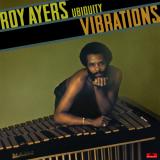
Step into the golden era of soul-jazz with the long-awaited vinyl reissue of “Vibrations” by Roy Ayers Ubiquity — a record that captures the unmistakable warmth, groove, and sophistication that defined Roy Ayers’ sound at its peak.
Originally released in 1976, “Vibrations” stands as a cornerstone in Ayers’ catalog, marking a moment where his signature blend of jazz, funk, and soul reached a refined, deeply cohesive form. Building on the foundations laid in earlier works, this album presents a tighter, more focused musical vision without sacrificing the lush textures and emotional depth that made his music resonate worldwide.
Roy Ayers was a pioneering vibraphonist, composer, and producer whose influence stretches far beyond jazz into R&B, neo-soul, and hip-hop. Often referred to as the “Godfather of Neo Soul,” Ayers crafted a sound that feels both timeless and forward-thinking, pairing silky vocals with hypnotic grooves and rich instrumental arrangements. His work throughout the 1970s helped shape the sonic DNA of modern Black music, and “Vibrations” is one of its purest expressions.
The album flows effortlessly between moods: from the jazz-inflected elegance of ‘Searching’ to the irresistible funk pulse of ‘The Memory,’ the dancefloor-ready ‘One Sweet Love to Remember,’ and the laid-back, atmospheric title track ‘Vibrations.’ Each track showcases a masterful balance between musicianship and groove, brought to life by a stellar ensemble of collaborators who elevate every moment.
Beyond its original impact, “Vibrations” has taken on a second life through hip-hop. Its grooves, breaks, and melodies have been extensively sampled by generations of producers and artists, becoming a foundational source for crate diggers and beatmakers alike. Tracks from the album have been reinterpreted and flipped by influential names such as A Tribe Called Quest, J Dilla, Dr. Dre, and Common, cementing its legacy as a vital bridge between 1970s soul-jazz and contemporary hip-hop culture.
After almost two decades out of print, we are pleased to present this much-needed vinyl reissue of an essential album in Roy Ayers’ career. Whether you’re discovering it for the first time or returning to a beloved classic, this album remains an essential piece of musical history. Pressed on 180g vinyl.
out of Stock
Last delivered 3 months ago available to reorder, subject to availability
Bogdan Ra is based in the musical hotbed of Lisbon and his excellent What Is A DJ? EP takes its inspiration from the late 80s acid house and Italo, displaying a real mix of vintage charm and contemporary relevance that will strike all the right notes on the dancefloor. From the snappy title cut to the electro rhythms of 'Arroios' via the funky disco rhythms of 'Tonic Glue' and feel good factor of closer 'That's All', this is quality production that will more than stand the test of time
out of Stock
Last delivered 34 days ago available to reorder, subject to availability
The perfect challenge for Saved My Life aka Siggatunez (Gooey) and Constantin Sankathi (The Healing Company). As a studio team, the two have spent the last decade transforming Italo disco, Brazilian samba, and French chanson into highly distinctive edits and remixes that stay etched in your memory.
For Crystal Grooves 803, the pair have refreshed Sharon Stoned's heartbreak anthem "Down" into an almost unbelievable track, a hybrid of garage and trance, anchored by Senpolya’s vocals, which capture the mood of the original with intense yet subtle precision: "Your favourite shirt I'll wear it everywhere." "Beauty & Thug" showcases another core strength of Saved My Life: reduce to the max. An R&B bootleg from the early 2000s is stripped of its slightly-too-mainstream choruses and rebuilt with string overdubs and studio craft into an hypnotic late-night jam. Soulful vocals always hit hardest when you least expect them: "So burgundy, the window to his soul." True to the spirit of SML's own imprint Downtown Romeo Records, the record comes complete with a sticker and an 8-page booklet including all lyrics. This release is dedicated to all people believing that music is more than just music: substance and meaning.
out of Stock
Last delivered 75 days ago available to reorder, subject to availability
Blending world-class musicianship with undeniable dancefloor energy, this release marks a bold evolution in Sean Khan’s sound — stepping beyond his signature jazz roots into a rich fusion of house, disco, and jazz-funk.
The A-side delivers a powerful, vocal-led jazzy house anthem, with Omar’s unmistakable voice floating over lush live keys and deep bass grooves. Driven by refined production and crafted for maximum impact, Stéphane and Alex Attias bring a sophisticated yet infectious energy designed to ignite dancefloors. Flip it over, and the B-side turns up the heat — a killer disco-house remix by Alex Attias, powered by tight programming from Stéphane Attias and vibrant keys from Sohan Wilson. Already catching attention from DJs, this track is built for late-night moments and peak-time reactions. The EP also features “As The Tree Grows” — a soulful, live-inspired journey through jazz-funk and disco textures. Warm, groovy, and deeply musical, it channels the spirit of legends while staying fresh and modern — perfect for both listening and dancing. Three moods. One release.cCrafted for the dancefloor. Designed for the soul.
out of Stock
Last delivered 3 months ago available to reorder, subject to availability
Legendary singer Sandra St Victor needs no introduction as the lead voice of Family Stand and having worked with the likes of Lalah Hathaway, Chaka Khan, Prince, Roy Ayers and many more.
The US artist has a new album entitled ‘Eleven’ soon to drop on Mother Tongue and this is the double A-sider debut single.
First Sandra teams up with wonderkid EDB on ‘Life’ where she shows all her incredible vocal range over an infectious soulful groove. Exclusive to this release is a special extended version by Patrick Gibin.
On the flipside ‘Moonchild’, which is an stellar cover version of Captain Sky’s deep disco classic, sees the singer in full force with a priceless contribution from Kaidi Tatham on production, keys and even vocals.
All pressed on a limited loud twelve inch!
out of Stock
Last delivered 82 days ago available to reorder, subject to availability