* 15 brand new and exclusive cuts from some of their favourite producers, alongside another 13 tracks that have been the soundtrack to your clubbing experience their nights. If you have been to any of their nights in the last few months then you may well have heard these being road tested.
* Highlights include the Spectrasoul remix of LSB's 'Rollings Sideways' and the sublime Vanguard Project rework of BCee's 'Lost & Found'.
* Support from High Contrast, LTJ Bukem, Fabio, London Elektricity, Rockwell, Etherwood, Technimatic and a whole load more...
Concrete Noir, the project of composer, sound designer, and educator Piero Fragola, returns with Blades of Grass, a new EP released on Italian label Deset, following the acclaimed Romance Ruins.
The record develops Concrete Noir’s atmospheric and cinematic approach to electronic music, combining dense textures, sustained rhythmic tension, and immersive sound design. Side A features “Density,” “Pure,” and “Sleepless Eyes,” while Side B presents two reinterpretations: Legowelt’s electro-driven remix of “Rain On Me,” which emphasizes its synthetic and nocturnal qualities, and Caruan’s dance-floor reworking of “Sleepless Eyes,” preserving its atmospheric character.
Conceptually, Blades of Grass shifts from the themes of transformation and decay explored on Romance Ruins toward resilience—the ability to bend under pressure without losing identity or coherence. The EP reflects Fragola’s broader artistic language, shaped by more than two decades of experience in electronic music, audiovisual arts, sound research, and modular synthesis, including his work as a designer for Tiptop Audio and previous releases on international labels.
Phara returns with a second project under his In Glass alias. In 'Scratching the Surface', we're light years away from the heavier, more instructive dance records that have become synonymous with Phara's style. In this EP, the Belgian artist reaffirms his celestial, delicate sound in four tracks that delve further deeper into the emotional soundscape proposed in the first EP.
'Sally' begins the project with the most dance floor oriented of the four tracks, proposing an intoxicating blend of styles that bloom throughout its six minutes. Soft pads and bright keys twinkle along a cradling rhythm as In Glass delivers a truly musical piece that sifts through memories. Percussion is then taken out of the equation as 'All Things (424 Version)' comes and lands softly on the center stage. Lush, ambient waves come lapping at the shore of 'Scratching the Surface', describing nothing but space and serenity - a breath from everything. The dreamy tone of 'All Things' oscillates along reassuringly into the B side, keeping the tempo low and the sound design organic. Here, we step into In Glass's world of dub techno and adjacent sounds that defined his first record last year. 'Plateau' rises slowly from the wax with a round low end and suspended chords that hover high above. Opening stabs over a harmonic bassline make a head massage of a track that sways along. The raw emotion behind In Glass's music is inviting, flashing by as ethereal synths open and close to install a personal, meditative experience of electronic music. The percussion remains discrete, allowing the harmonic information to wash over the listener into the last track of the EP. He concludes with 'My Idle Hands', pressing further into the dub techno sound that echoes through a cathedral of memories. Blurry shapes pass by over a more determined rhythm section, confirming the intimate nature of In Glass's music. The music wanders along, its head in the clouds but with a full heart, telling stories of being lost and finding home.
Following the international praise for their 2024 debut album Where Did You Go?, Sandman Project return with Hearts Forever, the first album entirely composed, arranged and produced by guitarist, composer and bandleader Tal Sandman. Rooted in psychedelic groove, Middle Eastern musicality, funk, jazz and desert rock, it is a record driven above all by a wider spiritual belief in music as a force for connection.
If Where Did You Go? introduced Sandman Project as a borderless, brass-heavy outfit with a cinematic sound, Hearts Forever takes that vision somewhere more intimate and self-assured. Written following Tal's move from Jaffa to Leipzig, the album reflects a period of personal and creative transformation. Arriving in Germany without knowing whether she would find the right collaborators, she gradually assembled a new band through recommendations from fellow musicians, discovering a group capable of bringing her musical vision to life. For Tal, the music is not about drawing neat lines between styles or traditions. It is about taking inspiration from wherever it appears and reshaping it into something honest and alive. "If music touches my heart, it inspires me", she says. "So much music already exists, but what we are doing is creating something new out of inspiration. You take the ingredients and make a new thing".
This is the quiet force behind Hearts Forever. Almost entirely instrumental, the album deliberately leaves space for listeners to find their own stories within it. Without lyrics, the music is never confined to one language, nationality or identity.
Following support for Where Did You Go? from All About Jazz, DJ Magazine, Bayern Radio, Greedy For Best, Pipelines Magazine, Ban Ban Ton Ton and Laurent Garnier, Hearts Forever finds Sandman Project entering a new chapter: more confident, broader in vision and more deeply rooted in Tal Sandman's own creative voice. Rich, restless and full of feeling, Hearts Forever is music for uncertain times; a record about holding on to innocence, choosing compassion and believing, however quietly, that connection is still possible.
Chicago producer and composer Will Miller’s Resavoir has established a strong following at the intersection of jazz, electronic music, and beat-driven production, with more than 9,000 vinyl records sold and 82M+ streams across the project’s first three albums. Resavoir’s 2019 self-titled debut received an 8.2 from Pitchfork alongside broad international critical acclaim, with ongoing support from Gilles Peterson, Lefto, Anthony Valadez, Somewhere Soul, Andrew Jervis and Lovie, plus airplay on BBC 6 Music, KEXP and NPR. Recent recognition includes placements on NPR, KMHD and New Commute’s Best Albums/Songs of 2025, while Resavoir has toured extensively in the UK and Europe and opened for Khruangbin, BADBADNOTGOOD and Kassa Overall.
Above The Clouds finds Resavoir moving further into electronic territory, combining jazz improvisation with dreamy synthesizers, booming drums, smeared samples and electronic instrumentation. Recorded through loose studio sessions with longtime collaborators Lane Beckstrom and Jeremy Cunningham, with contributions from Kenneth Leftridge Jr. and Gregory Uhlmann, the album incorporates wind synthesizers, samplers, guitars, electronic drums and woodwinds into a fluid, groove-oriented sound. The album follows Resavoir’s growing presence across editorial and playlist platforms including Apple Music, Spotify, TIDAL and Delicieuse Musique, with US and EU/UK touring planned for Fall 2026.
Building up from his multiple appearances on the label, one of our closest producers, Luca Durán, makes his full studio album debut on TraTra. This work is meant to showcase the vast world of influences the diasporic experience comes with: his rhythm-driven tracks coexist in high contrast, but fluidly, with the experimental and textures of his european school of sound. The title itself works amongst these two edges of Luca's aesthetic existence, the softness from the flight of a Mariposa with the harsh hit of a death blow.
Killing Mariposas is filled with seemingly clashing techniques, field recordings, acoustic instruments, and analogue synthesis, which converge with modern and forward-thinking production tools to build heavily layered music. Constructing an emotional narration from the contemplative to the euphoric. A sort of contextual shapeshifter, with hints of cumbia, grasps of reggaetón and dembow, but always submerged deeply in a windy and fragmented memory.
This whole project gets rounded up by the packed lineup of collaborators, both vocal features and production partners. Astute minds from distinct internet niches: Kelman Durán, Gavsborg, Iceboy Violet, Debit, Rosa Pistola, BEBE YANA, Kamohelo & Kacha.
One true reflection of Luca's production abilities and sonic poetry.
Nine-time GRAMMY® winner Anderson .Paak and GRAMMY®-nominated rapper Cordae have been operating on the same wavelength for years. What started as pure chemical reaction on 2019’s “RNP” slowly turned into one of hip-hop’s most natural, low-ego partnerships, fueled by back-and-forth gems like “Two Tens” and “Summer Drop” and a series of dynamic TV performances that felt more like two best friends hanging out than a polished routine. On their debut collaborative album, Heavy Is The Crown, that organic bond gets the full-length treatment it’s always deserved.
At its core, the project is a tightrope walk between serious real-life stakes and uncompromising fun. The title isn't just bravado—it speaks directly to the shared weight both artists carry as the primary providers and anchors for their families. But instead of letting that pressure crush the vibe, .Paak and Cordae lean into each other. Meeting as total equals, .Paak’s elastic, soul-drenched musicality anchors Cordae’s razor-sharp lyricism, allowing both to unpack the heavy reality of success and family responsibility without ever losing their spark.
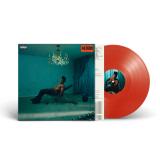
That balance is what makes the album tick. To drive the point home, the album art pays homage to the cult comedy Step Brothers—a nod to the silly, irreverent friendship that birthed the music in the first place. Heavy Is The Crown doesn't feel like a forced corporate crossover or a calculated career move. It’s a record about brotherhood, family, and what happens when two masters of their craft step into the studio simply because nobody makes them laugh, rap, or create quite like the other.
Healing Patterns is the debut full-length release on Appendix.files from Clima, following 2025's Transient State EP. Written between 2025 and 2026 during a period of chronic illness, the seven-track LP translates physical restriction into deep, spacious electronic compositions. Using palatial pads, slow-decaying echoes, and bodily low-end, Clima reminisces over residual club ambience and shared listening experiences with friends.
The record moves from the gradual, dub-heavy pressure of "Weight" through ASMR-like vocal glitter and tight rhythmic clusters, before dissolving into the quiet introspection of the title track's theme. Healing Patterns is a patient study in focus, repetition, and the spaces left behind.
Artist Info: Clima is an experimental electronic music project exploring spatial sound, texture, rhythm and the emotional residue of club culture. Their work moves between ambient environments, dub-weighted rhythm and abstract electronic composition, with a focus on deep listening and subtle shifts in perception.
In the realm of past-life regression hypnotherapy, there is a concept known as “Life Between Lives,” wherein a sacred exchange of energy occurs between two souls in the spirt world, helping a spirit fully understand and forgive a being who hurt them in a past life. This exchange – called “passing the cup of sorrows” – became the unexpected inspiration for William Basinski’s first new album in six years.
While sinking deeper into the daily abyss of our collective negativity bias, William Basinski stumbled upon a video describing the spiritual hypnotherapy exercise known as “passing the cup of sorrows.” Fixed on the glow of a screen that projected mounting anxiety and cynicism at a seemingly interminable pace, Basinski found the testimonials of this fascinating therapeutic practice to be profoundly moving. He sat at his piano, translating the transformation of those traumatic memories of past lives into cathartic tears of the present day.
Channeling the quiet curiosity and asymmetrical patterns of pioneering 20th Century composer, Morton Feldman, Passing the Cup of Sorrows is a single 40-minute piece that employs a solitary piano and subtle electronics to truly haunting effect. It recalls fragments of traumatic memories and projects them as fractals in a slow-moving soft focus that’s as eerie as it is enlightened.
Jen Cardini & Shonky revive their 20 year old anthem August In Paris with remixes from Kasra V, Jennifer Loveless and Jump Source.
Originally released on Mobilee Records in 2006, Jen Cardini and Shonky’s record ‘August In Paris’ remains a defining statement from the minimal era. Ahead of its time upon release, the record distilled the genre to its essentials, bleeps, hypnotic grooves and impactful vocals, unfolding with the kind of restraint that continues to resonate two decades on.
To mark its 20th anniversary, ‘August In Paris’ returns with three distinctive reinterpretations from Kasra V, Jennifer Loveless and Jump Source plus a re-release of the original coming out on Jen Cardini’s formidable label Correspondant. As well as this Jen Cardini and Shonky will be playing an All Night Long set at Paris nightlife institution Rex Club on 29th August. Look out for merch on the night too.
Speaking about the project Jen Cardini discussed: “It is crazy to think this was two decades ago and that Shonky and I are still touring and sharing our love for music. For the anniversary, we decided to bring this special track to light again’.’
Each remix approaches the source material from a different perspective while preserving the essence of the original.
UK DJ and producer Kasra V leans further into the track’s skeletal framework, blending his signature sultry sonics into this hypnotic chunky groove to produce something entirely new but familiar.
Jennifer Loveless, an unearthed gem when it comes to production, strips things back even further, delivering a rough and tough uncompromising club version primed for sweaty dark dancefloors, it perfectly encapsulates the original without overshadowing it.
Closing the EP, Montreal duo Jump Source, Priori and Patrick Holland, take the record into more left of centre territory. Their version stretches the original into a warped, slow-burning electro excursion, perfectly suited to the blurred edges of the after-hours.
Max Cooper delivers the latest instalment in the acclaimed fabric presents series, marking a landmark release as the first tracks to be presented in Spatial Audio. Fusing his signature blend of emotive electronica, immersive sound design and club-focused energy, the project captures Max’s ability to bridge the gap between cutting-edge technology and deeply human storytelling. Featuring exclusive material alongside carefully curated selections, the mix places him alongside previous fabric presents contributors including Daniel Avery, Overmono, Helena Hauff and Mount Kimbie, while pushing the series into new sonic territory.
Leading the accompanying EP is Flecks, a collaboration with LSB that pairs fast drum & bass breaks with Max Cooper’s unmistakable immersive production. Referencing the iconic Hurt You So break, the track fuses old-school jungle influences with a modern, spatial mix, hypnotic synth lines and subtle vocal fragments draw the listener deeper into its expansive soundscape. Also featured is Bredren’s Hash (Max Cooper Remix), a tension-filled drum & bass track built around distorting basslines and constantly evolving movement.
The EP's focus track, AO, sees Max Cooper reunite with Rival Consoles for a more introspective moment. Swapping high-tempo breaks for a slower electronica and house framework, the track unfolds through beautifully detailed percussion, organic rhythmic textures and sweeping synth melodies, culminating in a soaring central passage that showcases the pair's shared gift for emotionally resonant electronic composition.
Released via fabric Records, fabric presents: Max Cooper represents another evolution of the long-running series, a release that is equally at home on immersive listening systems and the dancefloor.
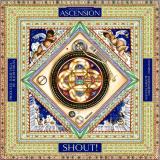
There's a moment during every great dance floor experience when the music takes over and everyone becomes part of something bigger. "SHOUT!", the latest release from 2SoulFusion Presents Ascension, captures that feeling in its purest form. Featuring the powerhouse voices and ad-libs of Dames Brown and Dawn Tallman, along with an all-star ensemble of master vocalists including Josh Milan, Rahsaan Patterson, Lisa Fischer, Cindy Mizelle, Audrey Wheeler, Ramona Dunlap, and Lea Lorien, this joyful anthem is an invitation to let go, lift your spirit, and celebrate through music.
Produced, written, arranged, and mixed by 2SoulFusion—Louie Vega and Josh Milan—"SHOUT!" draws inspiration from the communal spirit of gospel while embracing the energy and freedom of house music. Driven by simple yet powerful affirmations—"Shout," "Sing," "Move," "Love," "Get Up On Your Feet," "Listen Up," and "Let This Music Take You Higher"—the song transforms into an experience where every voice becomes part of the celebration. It's a journey of anthemic hooks, soaring harmonies, infectious grooves, and unforgettable melodies designed to ignite dance floors, uplift hearts, and remind us that music has the power to unite people through rhythm, joy, and love.
The inspiration for "SHOUT!" was born from a creative exchange between Louie Vega and Charaf Tajer, founder and creative director of the internationally acclaimed fashion house Casablanca. Introduced by longtime friend Joseph Capriati, Charaf shared a bold vision—to bring together the worlds of fashion, gospel, and house music for one unforgettable Casablanca runway presentation in Paris.
Louie Vega recalls: “Charaf was introduced to me by my friend Joseph Capriati, who said Charaf was looking to meet me about an idea he had. His vision was to marry fashion, gospel, and house music within Casablanca's collection. At first, he wanted me to DJ and play gospel house music. I said, 'Instead of playing existing music, why don't I create an original song with a gospel house flavor?' I immediately got together with my 2SoulFusion partner Josh Milan, and together we came up with 'SHOUT!'”
That vision came to life during Casablanca's spectacular Paris presentation inside a breathtaking cathedral, where Louie Vega premiered the original twelve-minute and nine-second composition live. As the music echoed through the cathedral, Dames Brown joined the London House Gospel Choir in a soul-stirring performance while the models walked the aisle on Casablanca's carpet made of their signature green color and a dashing vibrating giant mirror echoing the runway visually. Renowned DJs Luciano and Chloé Caillet were among those who walked the runway, while friends of Charaf Tajer and special guests—including Jaden Thompson, Folamour, Dimitri From Paris, Kapela, and many others—were in attendance, making it an unforgettable gathering where music, spirituality, fashion, and culture merged into one extraordinary experience.
Inspired by that magical evening in Paris, Louie Vega and Josh Milan returned to the studio to expand the original composition into the powerful recording heard today. Built around rich live musicianship, Josh Milan's keyboards, organ, piano and synth bass provide the foundation alongside Axel Tosca's expressive grand piano recorded live, Sherrod Barnes' soulful guitar, and Gene Perez's unmistakable bass groove. Together they create an infectious, organic driving sound that allows the vocals to soar while delivering the unmistakable musical depth and musicianship that define 2SoulFusion.
Leading the celebration are Dames Brown and Dawn Tallman, whose commanding performances are elevated by an extraordinary choir of world-class vocalists. Dames Brown's spirited sermon and ad-libs, and Dawn Tallman’s powerful ad-lib vamping out together with the soaring harmonies of Lisa Fischer, Cindy Mizelle, Audrey Wheeler, Rahsaan Patterson, Ramona Dunlap, Lea Lorien, and Josh Milan, recreate the feeling of a joyful gospel congregation—not confined to four walls, but alive on dance floors around the world. Every chorus encourages listeners to get up, listen up, feel it, sing, move, love, and become part of the experience. Recorded between Honeycomb Studios in Pennsylvania, The Hub Ibiza and Manhattan Center Studios, New York City, and mixed at The Hub Ibiza, "SHOUT!" reflects the continuing vision of the Ascension project, where spirituality, musicianship, community, fashion, and dance music become one.
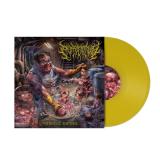
Brutal, uncompromising Slam from Greece. Years of obsession, ignorance, and absolute contempt spent keeping slam locked in its lowest, most primitive caveman state. Through collapse, and complete disregard for ourselves, we persevere. The "Embryectomy" project clawed its way from a deranged slam duo into a fully armed three-body beatdown slam monstrosity through uncompromised fury alone. No trends. No mercy. No concern for acceptance. Anyone who stood in the wreckage with us knows what it took to get here. We are now signing with Unique Leader Records. What you will endure in our next release is not meant to inspire or connect. It was composed in a chaotic state of antipathy, and absolute emotional absence. This is the most brutal material we have ever created—not for everyone, not for growth, but for those who understand that misanthropy is the only constant. We thank Unique Leader Records, who pushed us beyond what we thought possible: brutality to its limit while stripping away anything human. No benevolence. No empathy. No relief. Only violence, executed with intent.
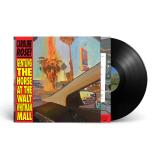
Fishtailing across a trimmed sod lawn, the parking lot of a box-store strip mall, a fast food drive-thru––it’s a hyperreal Americana fantasy that calls Caroline Rose (she/they) home on 'Gentling the Horse at the Walt Whitman Mall'. The release doubles as the debut of SUCK records, the LA based artist’s own imprint—a fitting next form for an enigmatic musician whose work resists settling into one shape.
'Gentling the Horse at the Walt Whitman Mall' stretches the ordinary into the uncanny. The record pairs sharply observed, memoiristic songwriting with expansive guitar textures that render the everyday with violent clarity and mythic scale. Beneath its melodic sweep and signature hooks runs a current of violence and American dream leakage.
It’s Ennio Morricone with an AR15: surf guitars, spaghetti westerns, and suburban dread colliding until they become their own sharp vernacular. Reality is unstable, so we’ll keep telling stories—and for Rose, the sinister slickness of the everyday grows a new head.
Working with producer John Congleton, Rose built the record through humor, layering, and instinct rather than polish. Songs like “Conversations with Shiv,” “Goddamn Train,” and “Everything in its Right Place” were recorded in studio for the first time, with sessions that prized first impulses over perfection. The result is panoramic but never precious—songs that feel meticulously constructed while always threatening to mutate.
Over the last six years, Rose’s music has evolved alongside their work organizing around stronger labor protections and collective bargaining rights for musicians and crews. Creative and political practice have increasingly become the same project as Rose’s career has taken on its hyper-independent form. Those concerns echo throughout 'Gentling the Horse'. Its landscapes are populated by inherited systems that feel absurd yet inescapable, where humor becomes a survival tactic and satire reveals the quiet violence embedded in everyday Am
Fishtailing across a trimmed sod lawn, the parking lot of a box-store strip mall, a fast food drive-thru––it’s a hyperreal Americana fantasy that calls Caroline Rose (she/they) home on 'Gentling the Horse at the Walt Whitman Mall'. The release doubles as the debut of SUCK records, the LA based artist’s own imprint—a fitting next form for an enigmatic musician whose work resists settling into one shape.
'Gentling the Horse at the Walt Whitman Mall' stretches the ordinary into the uncanny. The record pairs sharply observed, memoiristic songwriting with expansive guitar textures that render the everyday with violent clarity and mythic scale. Beneath its melodic sweep and signature hooks runs a current of violence and American dream leakage.
It’s Ennio Morricone with an AR15: surf guitars, spaghetti westerns, and suburban dread colliding until they become their own sharp vernacular. Reality is unstable, so we’ll keep telling stories—and for Rose, the sinister slickness of the everyday grows a new head.
Working with producer John Congleton, Rose built the record through humor, layering, and instinct rather than polish. Songs like “Conversations with Shiv,” “Goddamn Train,” and “Everything in its Right Place” were recorded in studio for the first time, with sessions that prized first impulses over perfection. The result is panoramic but never precious—songs that feel meticulously constructed while always threatening to mutate.
Over the last six years, Rose’s music has evolved alongside their work organizing around stronger labor protections and collective bargaining rights for musicians and crews. Creative and political practice have increasingly become the same project as Rose’s career has taken on its hyper-independent form. Those concerns echo throughout 'Gentling the Horse'. Its landscapes are populated by inherited systems that feel absurd yet inescapable, where humor becomes a survival tactic and satire reveals the quiet violence embedded in everyday
Earlier this year, Blue Hour released his debut album Selva, a record steeped in the imagery of lost and forgotten worlds. Now, rather than let that world stand still, Blue Hour opens it up, inviting a handpicked crew of fresh talent to step inside and make it their own.
The result is a remix companion that reimagines Selva through fresh eyes and ears. Each remix artist brings their own sonic fingerprint to the source material, some peeling back the original's dense atmospherics to expose skeletal rhythms underneath, others pushing further into the album's dreamlike haze. What emerges isn't a simple tribute, but a genuine dialogue: new talents in conversation with an album that was already asking questions about memory, erosion, and what gets left behind when a world disappears.
It's a fitting extension of Selva's original premise: if the debut album conjured ruins and jungles swallowed by time, this remix project treats those same soundscapes as living, mutable spaces, ready to be excavated, reinterpreted, and given new life by a new generation of voices.
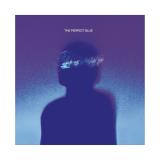
LA-based producer Real Bad Man and multi-JUNO Award winning Toronto-based artist TOBi release their collaborative album The Perfect Blue via the producer’s own Real Bad Man Records. The album collects a diverse array of sounds,highlighted by the album’s two advance singles “When I’m Home, ” which Stereogum described as “a moody,graceful soul song with a serious groove, ” and the funk-laden “Over The Moon, ” released last week.
TOBi and Real Bad Man’s work together on The Perfect Blue encapsulates the producer’s mission for 2025, a year in which he released intricate collaborative albums with a wide swath of artists. His work with TOBi was seamless and began quickly after the two first met, finding kinship in their ability to push past their comfort zones in genre and familiar sounds. The result is eclectic and boundless, jumping from straightforward and unflinchingly personal rap moments, to the flared funk of “Over the Moon” and understated contemporary soul flourishes that prove the Toronto emcee can confidently make each of these sounds his own.
The Perfect Blue marks Real Bad Man’s fifth full-length collaborative album of the year, bookending a prolific 2025 that began with his collaborative album with ZelooperZ, Dear Psilocybin. Over a celebrated catalog spanning years, Real Bad Man, also known as Adam Jay Weissman, has cemented himself as a force in underground hip-hop, but his impact extends beyond work with contemporaries like Boldy James, Pink Siifu, Blue and more. Each of Weissman’s five collaborative albums this year showcases a different side of his craft, appeasing fans familiar with his gritty hip-hop production on his third album with Boldy James Conversational Pieces. He also surprised listeners with a bold turn in sonic direction, well outside of his traditional production palette, with his reunion with former Pollyn bandmate Genevieve Artadi on Everything Is Under Control.
Nigerian-born, Toronto-raised artist TOBi has carved out a distinct lane for himself with a celebrated discography of releases that explore themes of vulnerability, self-reflection and contemporary masculinity with a pointed nuance. His 2023 album PANIC swept the rap categories (Best Rap Album, Best Rap Single for “Someone I Knew”) at the 2024 JUNO Awards and his catalog has been praised by the likes of Billboard, Rolling Stone, i-D and more. Expanding on his ELEMENTS project series with the second volume released earlier this year to high praise, The Perfect Blue cements TOBi’s bonafides as an adept collaborator.
Blume presents two pieces composed in 1970 by the American pianist and composer David Tudor (1926-1996), one of electronic music's most important pioneers, for the Pepsi-Cola Pavilion, a unique artist-designed and programmed space for Expo '70 in Osaka, Japan, created by Experiments in Art and Technology (E.A.T.). Pepsibird and Anima Pepsi deploy electronic technology as a means to experience sound in ways that are anything but matter of fact, rendering liberated environments within and through which one might democratically express and commune. Viewed through the lens of what was, is, and might have been, they offer the tools for time travel: an unmediated encounter with radical, optimistic ideas that gave way to the complex cultural landscape of our time.
Initially trained on organ and then piano, Tudor emerged as a leading figure within New York's musical vanguard after his groundbreaking 1950 performance of Stefan Wolpe's Battle Piece and the American premiere of Pierre Boulez's Second Sonata. Within less than a year he had joined the Merce Cunningham Dance Company as its accompanist, a role he kept until his death, and began one of his most lasting creative relationships with John Cage, who would state that his entire output between 1951 and the end of the 1960s was written with Tudor in mind. Christian Wolff, Earle Brown, Morton Feldman, Sylvano Bussotti, Mauricio Kagel, and Karlheinz Stockhausen all wrote works for him during the 1950s and '60s. Through indeterminacy and chance-based methods, Tudor was noted for radically intervening with the works he played, often making them entirely his own, and it was this same singularity of vision that led him to gradually abandon the piano in favor of electronic process, through which he began working as a composer in his own right.
His engagement with electronics dates to the early 1950s and Cage's Project for Music for Magnetic Tape. By the following decade the pair had moved to live electronics, with Tudor rendering works like Cartridge Music and Variations II through contact microphones and complex systems of feedback and amplification. Before modular synthesizers existed, he designed and built his own electronics, often with engineers from Bell Laboratories, producing dozens of unique instruments and processing tools that helped lay the groundwork for the technological needs embraced by most electronic musicians ever since. A clear marker of his emergence as a composer came in 1966 with 9 Evenings: Theatre and Engineering, where he premiered Bandoneon! (a combine), turning the cavernous performance space into a feedback instrument and a total environment. The event led directly to the founding of E.A.T. the following year by the engineers Billy Klüver and Fred Waldhauer, alongside Robert Rauschenberg and Robert Whitman.
Among the most ambitious of E.A.T.'s projects was the Pepsi-Cola Pavilion, for which Tudor composed four pieces between March and April 1970: Pepsibird, Anima Pepsi, Pepscillator, and Microphone. Together with Forrest "Frosty" Myers, Robert Whitman, the sculptor and filmmaker Robert Breer, and the architect John Pearce, he was tasked with the design and function of the building: a 120-foot diameter steel and polyvinyl dome, shrouded in mist and fog and lit in the evenings by a square of intense blue-white xenon light. Tudor worked with Gordon Mumma and Fred Waldhauer on a unique sound system capable of processing and variable distribution through 37 speakers, controlled both by automated means and by the performer, and with Lowell Cross on a sound-activated laser deflection system inside the pavilion's mirrored performance hall.
Both pieces are an advanced form of musique concrète: libraries of tape recordings, live mixed and processed through the pavilion's sound console and distributed through 8 channels of stationary and rotating patterns designated by Tudor's instructions (small circle, great circle, large rhomboid, spiral, small triangles, small ovals). Pepsibird is focused upon a physical interiority, its source tapes being recordings of the brain wave activity of humans and animals: cat's eye, nerve firing, bats, EKG, alpha waves, a modified nightjar. Recorded in situ in 1970 and mixed down to stereo, it retains a striking sense of the space and ambience that Tudor achieved in performance. For more than eighteen minutes he merges subtle textures and pulses, at times resembling birdsong, within a blanket of vast, resonant ambience of subaquatic density, foreshadowing the relationship to the natural world of later works like Rainforest IV (1973).
Anima Pepsi is centered on the exterior: field recordings that Tudor made of animal and insect sounds (mosquitoes in a jar, a fly on flypaper, a wasp chewing, a beetle walking) and a mix of human and animal sounds that he called the "funny tape". Where Pepsibird deploys interior sounds in ways that allude to the natural world, Anima Pepsi pushes the sounds of nature and humanity toward the otherworldly through the clear presence of electronic sounds and processing, moulding detailed, pointillistic patterns of abstract sonority into gauzy blankets of ambience and space.
The collaboration did not last: less than a month after the opening, Pepsi withdrew its support, fired E.A.T., and disregarded Tudor's tapes, which according to accounts had to be smuggled out by staff, playing its own soundtrack in the pavilion for the rest of the Expo. Heard today, Pepsibird and Anima Pepsi anticipate many territories of later electroacoustic practice, from field recording to live processing, while the terms on which they were made, radically unpredictable, indeterminate, and experimental to the core, reconfigure what we've come to expect from electronic process, making one wonder if the past was ahead. Issued by Blume in a highly limited vinyl edition of 300 copies on red vinyl, with a 20-page LP-size booklet containing You Nakai's essay and newly commissioned liner notes by Bradford Bailey.
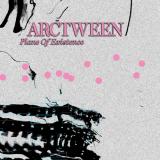
For some time I had hoped to release a full body of work from Tito. Ever since I heard him at Mr. Bean’s Music Club, and revisited records that started appearing around 2018, it felt clear that there was a
particular sensitivity behind the music — curious, rhythmic, spacious, unpredictable. Mostly in the sense that his references and musical background naturally pull from many places at once. When the idea of releasing Plane Of Existence on vinyl started becoming real, it immediately made sense for O Sótão Records.
Based in Porto, Tito Romão first built his path as a drummer, later expanding into composition andproduction through different instruments and collaborations. While drumsare his main instrument, he also studied cello and taught piano for a short period. Later he developed his Arctween project, DJing, and gradually shaping his own language under a new moniker. From Forbidden Cuts in 2018 to Dance Of The Spheres via Discotexas in 2020, his catalogue has slowly traced a path between groove-based experimentation and more immersive sound design.
The years that followed brought even more movement. Together with Gazpa, a longtime friend fromskateboarding days, he released Gaztween’s I through Jazzego Records in 2020, later followed by II in
2025. Around the same period he was also producing Ping Pong,eventually released in 2024 through
Jorge Caiado’s Mad Luv Records. For a couple of years he has held a Saturday residency at the iconic
Mr. Bean’s, still playing regularly with the house band and moving freely between instruments.A lot of that openness leaks into Plane Of Existence. Tito started producing the album during 2024, often late after work, without looking for a clear destination. By 2025 the concept slowly revealed itself. Therecord became an ode to Karlheinz Stockhausen, Manuel Göttsching, and to the modern ambient scene, while carrying traces of jazz, hip-hop and dub throughout its structure.
Nearly 15 years have passed since the original version of this LP was released (the first iteration as a 4X12" LMTD set back in 2012), and it has truly aged like fine wine! This release features five timeless cuts from the mind and soul of cv313 and a truly mesmerizing otherwordly dub of the illusive radius project, mixed and recorded near the heart of Detroit! (with nearly all of the tracks making their debut on wax) This entire project has been beautifully remastered by dub innovator and pioneer, Stefan Betke POLE @ scape mastering in Berlin, DE. You can just drop the needle and close your eyes for a near 20 minutes of fathomless sonic depth, massaging your brain and mind, a deep dive into an immersive analogue world. A new addition to this newly minted vinyl iteration of the "Altering Illusions" series now includes cv313's blistering analogue assault on the darkest radius bit in the interpolation tapes series. Expect sub-harmonic deep space exploration in some seriously out-there electronic quadrants, some of the deepest techno reductions ever captured to tape!
Thoughts:
"Altering Illusions Chapter One cv313 is every bit as strong and essential as the debut cv313 album it supplements and acts as a nexus between cv313 material old and new.It is quite unlike anything cv313 has released before or since, a beautiful hybrid of cv313 textures, dense, whirring drones from Alva Noto’s Xerrox series of ambient albums and Thomas Koner’s panoramic soundscapes." -IGLOO MAGAZINE
a A1. cv313 “isis” original mix 10:47
c B1. radius “interpolation tapes” cv313 rewire 20:06
e C2. cv313 “irradiate dub” 5:58
reduced 20:24
a A1. cv313 “isis” original mix 10:47
c B1. radius “interpolation tapes” cv313 rewire 20:06
The fifteenth release of Barro comes with an exclusive: behind the Transylvanian mask of Orlok 101 lies Nöle himself, the boss of the label.
Remember that he used this vampiric AKA to kick off Barro—his The End Of The Beginning being the first release, published in late 2018. That same year, his techno-industrial sound—packed with references from the famous work of Bram Stoker and nightmare atmospheres—helped launch another label: Soil, the Valencia-based imprint, with a project that included a suitably fitting remix of The Horrorist. The following year, he released an EP with five original tracks, titled Runaway, while also “spreading blood” on Antikhrist Visions Vol I alongside his Industrias Mekanikas comrades.
His dark influence has been felt across Barro’s catalogue, whether through his own tracks or remixes—sinking his teeth into artists like The Hacker (under his real name, Amato) or Nebula Circuit. In 2025, Orlok made his debut on Aspecto Humano with a powerful EP, equally gritty and dark. In Barro, we’ve recently had Nöle—the most techno side of Imanol Pagola—with the EPs Electro Bloody Music and Demencial Chico Aceleradom, two great showcases of his ability to keep us dancing nonstop, following the popular Mendekua, released by Xtraperlo.
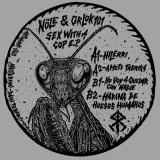
For Barro 15, the two sides of the producer and DJ come together on this EP, titled Sex With a Cop—four tracks released on vinyl and digitally, plus an alternate version of the final composition as a bonus track.
Nöle's knowledge of the dancefloor and Orlok 101's ability to create atmospheres that will give you goosebumps come together on this EP to create an explosive mix.
Sex With a Cop starts with Hilerri, a techno EBM track where Orlok provides repetitive, screeching sounds and a ghostly melody, while Nöle adds incisive synths and a catchy, addictive vocal sample that warns you of the danger of the material you’re listening to. Orlok then takes over with his industrial and metallic sonorities on the next track, Amets Fabrika, although Nöle’s influence still comes through with his powerful bass and addictive synth lines. A stifled scream and a production packed with a thousand details create an unsettling atmosphere that will surprise you on the dancefloor.
The flip side begins with No Voy A Quedar Con Nadie, a track closer to Nöle’s technooid world. Even with its unsettling opening, it doesn’t take long to turn into a danceable bomb, with that dark touch typical of the Navarro producer.
Surprisingly, he saves the best for last: Harina de Huesos Humanos is one of the most interesting tracks created by Imanol Pagoda, and we can hear it in two versions, one as a bonus track. Thanks to complex production full of details and sounds that come and go, a punchy, hard as granite kick drum, and a carefully crafted industrial atmosphere, it all ends up being the perfect union between the two sonic worlds. A spectacular finale for the label’s fifteenth release.
New York Native Jeremias Santiago returns to Body N'Deep with tracks taken from the forthcoming album 'World Through My Eyes'. The album sampler contains tracks moving across deep house, disco and soulful house, demonstating Jeremias's production talents and is a perfect introduction to the forthcoming album we're really excited about here at BND.
Crossing their distinctive techno practices in the spirit of mutual appreciation and experimentation, DJ Nobu invites JakoJako to Bitta. Each delivering an original track and then remixing each other's work, both artists examine where their creativity converges, and what happens when their differing qualities collide. JakoJako has forged a reputation within techno and electronica circles centred on her accomplished exploration of modular synthesis. While she comfortably embraces ambient projects, she's also firmly entrenched in the club matching a tough rhythmic sensibility with adventurous textures and subliminal emotional content. As Nobu himself describes, "Beyond standard techno functionality, I deeply respect JakoJako's approach to music making, which stems from a pure, unyielding curiosity about sound itself. Her sound aligns perfectly with Bitta's core philosophy--the coexistence of experimentation and physicality." Nobu's own 'Wax and Wane' opens up the release in a melancholic mosaic of bleeping leads and natural-sounding drum tones, patiently laid out over a dense pad and developed with the elegant but driving style he's made his own over many years. JakoJako's 'Nodus' is a more cybernetic affair--lithe layers of frequency modulation moving over the rugged kick drum thump before opening up to celestial arps and jagged flurries of percussion. For the remixes, Nobu immediately reframes 'Nodus's melodic crescendo as the core theme while steering the track towards an immersive, linear arrangement that ebbs and flows with poise. In the process, he finds his own expressive sound design language to put a unique spin on JakoJako's original sound. Meanwhile, JakoJako steers 'Wax and Wane' into a mesmerising lattice of needlepoint percussion and swooning synth strokes, creating emotive swells out of the raw ingredients of Nobu's original melodies. The end result is a record made up of four distinct pieces, all logically compatible but bringing forth different aspects of two dedicated, ceaselessly curious practitioners of contemporary techno.
Sometimes things go quickly. After meeting Canadian artist Pascale Project early this year (twice in one month) on the same dancefloor of a crusty underground club in Neukolln, we sent this Berlin-based DJ and producer a short appreciation email to show curiosity and interest in her unreleased music. Our hope was to listen to it and maybe just maybe start a record-release project. Pascale sent back quickly, and she shared some fantastic club music with us. We had separate listens to the full playlist, and, funnily/coincidentally, we chose the same 4 tracks as highlights from the big playlist. One week later, Pascale emailed us back, mentioning the tracks she would feel/see/love to be released on the label, and they were the exact same ones we had naturally and unanimously chosen. Stars aligned for sure. Having long been active in the Montreal music scene, Pascale absorbed the essence of all her different experiences and years of training and creating, and then let it all start Sparkling into the 22nd Basic Moves release entitled "Watch EP". The record is based on the concept of losing and breaking things up, and eventually finding it all back. Reflecting hope in between the fog of life. It is clever modern underground club music rooted in the textures and energies of the golden days of progressive house, breakbeats and (real!) tech-house. These 4 tracks reflect an artist who expresses herself honestly, fully understands how to creatively arrange and produce club music, and never loses sight of the dancefloor, as she is often found on that dancefloor herself. Dive in and let us know what you think of it. We are stoked to play out and vibe on these tunes for real!
Naarm/Melbourne-based artist Now Always Fades returns with Coalesce, the follow-up to his widely acclaimed 2025 album Into The Doldrums. The project of Xavier Bacash, Coalesce sees the musician evolving his modernised approach to downtempo and trip-hop, genres in which he has been heralded as a leading new voice amid their growing popularity. Across the record, NAF's musical and thematic universe expands with the return and addition of a series of new vocal collaborators, speaking to the versatility of a voice as a contextual instrument. In doing so, throughout 'Coalesce', he continues to develop a kind of sonic consistency that focuses on shared emotion above all else. In pursuing those feelings, Now Always Fades finds himself alongside a series of strong and soulful voices: Alia Seror-O'Neill, otherwise known as Alias Error; Lili Hall; and Olive Kimoto, NTS Radio host and singer behind influential 90s band Locust. Throughout the record, each vocalist finds themselves on tracks entirely for them, and in doing so, the NAF project provides everyone involved, and the listener, with something sonically new but emotionally familiar at every turn.
Dan Kye is the mysteriously evoked moniker from multi-instrumentalist, producer, and vocal sensation Jordan Rakei. The New Zealand-born artist - who now resides in London - presents his first long-player from Dan Kye, ‘Small Moments’, on Bradley Zero’s Rhythm Section INTL. An ode to the dancefloor, the musical project was born out of Jordan’s lockdown experience, created from the comfort of his own home. Recorded with just a laptop, extra live instruments and guest musicians, ‘Small Moments’ seamlessly transcends across electronica, jazz and funk, with each genre being effortlessly fused with Jordan’s melancholy vocals. Allowing himself to push the boundaries, Jordan’s Dan Kye moniker draws on the energetic and uplifting elements of house and techno and perfectly mixes it with the sultry vocals and emotion that come with the live elements we know and love from Jordan Rakei. The record offers listeners a journey through more floor-heavy tracks such as ‘Mogeri’ and ‘Raro’ to more groove infused offerings such as ‘Rainbow Road’ (which is named after one of the maps in Mario Kart and inspired by the energy of Prince’s iconic live concert at The Aladdin in Las Vegas), whilst tracks, like ‘Sober’, take on a more lyrical and anthemic feel.
Jordan Rakei: “Rhythm Section INTL was my entry point into dancefloor orientated music, and it was Bradley who asked me whether I could head in that direction so he could play my music out in the clubs. Dan Kye has still got melodies, but the main focus is to keep it high energy.”
After meeting Bradley Zero online whilst living in Australia, Jordan eventually moved to London in 2014. The same day he landed, he went straight to a Rhythm Section party to meet Bradley, and it was here that he first got a taste for house music. He enjoyed Rhythm Section INTL’s ability to draw on both live and electronic talent; and thus, after Bradley asked him for some productions for the parties, the idea for Dan Kye was born. ‘Small Moments’ is a musical masterpiece that can be enjoyed as much on the dancefloor as it can in the comfort of your own home and is a perfect step into Jordan’s landscape and idealism of dance orientated music.
Bradley Zero - “In around 2014 the proprietor of the famous Northside Records in Melbourne handed me a self released 12” from a new, unknown artist based in Brisbane. It was Jordan Rakei - Franklin’s Room. I’d been home almost a year before I actually got round to listening to it and I remember that moment like it was yesterday. I lay down on the sofa, put the record on and was transported! The Dan Kye project is a testament to the experimental and independent ethos Jordan lives by and is a product of an artist reaching full stride but not afraid to still try something new. This ‘Small Moments’ LP was conceived in a record store, born in a club on Rye Lane and is now flying the nest, throwing caution to the wind and making a bold statement.”
Remastered limited edition double vinyl with double-sided screenprinted poster-cover (sleeve folds out to be one huge poster). A real collectors item!
When Off Off came out around June 1984, one couldn’t speak of an independent music scene in Portugal. Warm Records’ vague existence didn’t have any impact and Dansa do Som’s inaugural release appeared only in December. 10 years after the revolution, after two IMF interventions, a lot of political instability (not to say turmoil, in the first couple of years) and the natural excesses of a sudden burst of freedom, the Portuguese consumer had more choices but a generally poor standard of living. There was no entrepreneurial culture and serious second thoughts about investing private money in risky ventures.
After many complaints about the whole music scene (institutions, critics and record label executives, popular and classical music alike), something that would continue well beyond the end of the decade, Telectu decided to finance, record, produce, release and sell an album with complete independence from outside structures. Their karmic reward was profit. According to Vítor Rua, Off Off was the only album fully payed by the duo and the only one that really payed off. Not an easy accomplishment for a double LP housed in a large (also double-sided) screenprint with complicated cuts and folds. The artwork was conceived by António Palolo, a friend and multidisciplinary artist. It was based on a collage of heavily saturated and xeroxed polaroids framed in shocking pink and green. Palolo was considered the third member of Telectu, regularly producing slides, video and other visual support for their shows. The inspiration for the type of cover came from GRM’s Gramme series.
Off Off is divided in four distinct sides, each one corresponding to a “theme” or “function” related to Telectu’s manifold artistic interests and interactions. The titles are also gateways to influences and a small portion of Portuguese cultural life:
- Side 1 / “Diagonale” is dedicated to Egídio Álvaro, art critic and gallery director (he opened Diagonale in Paris). Performance art was arguably his main artistic concern over the years, so the music on this side is suggested for use by one or more performers in live or playback situations. The three tracks segue into each other, linked by a synth arpeggio much in the same way as Telectu’s previous “Belzebu” álbum (1983);
- Side 2 / “Anarké” is dedicated to the composer Filipe Pires, one of Jorge Lima Barreto’s recurring invocations when asked about worthwhile contemporary music in Portugal. It is subtitled “concert music”, proposing «a new form of listening». Three tracks also, and these are separated by “clap interludes”, which basically consisted in the following: JLB and VR each had a pair of headphones on, and they clapped their hands according to the rhythm of the music each one was listening. Both musicians were interacting with a different Steve Reich piece: Vítor with “Music for Mallet Instruments”, Jorge with “Six Pianos”. The result is disjointed clapping, an awkwardly deliberate celebration of their own music. Telectu applauded themselves.
- Side 3 / “Cornucópia” is subtitled “music for theatre” and dedicated to Luís Miguel Cintra and Luís Lima Barreto (JLB’s brother), both connected to the Cornucópia theatre company. The side consists of several short pieces previously used as interludes in the Cornucópia staging of “Mariana Espera Casamento” (1983). Field recordings, mood pieces, ambience and a numeric poem (“Soneto Soma 14x”, by E.M. de Melo e Castro) read by João Perry, a quite well-known stage actor. His voice is treated with a flanger effect;
- Side 4 / “Palolo” is “video music”. It’s a one-take mix recorded from cassette sources (Telectu studio experiences) and done live while watching António Palolo’s Om film (1978) projected on the living room wall. It’s a deep, immersive, quasi-mystical 20-minute piece perfectly suiting the meditative, abstract, fluid images created by Palolo by mixing paint and water inside a bathtub. One imagines the Cosmos, hardly suspecting the technique. The film is 90 minutes long, so the music on the LP is of course edited.
The six titles on sides 1 and 2 evoke demons, all of them with conflicting symbolism, since it varies from culture to culture, religion to religion. No explanation is given and Vítor Rua has no idea where this imagery comes from. During virtually the whole stretch of the 1980s, Jorge was the one in charge of titles and concepts, and Vítor didn’t bother too much even reading the liner notes :) In any case, when you synchronize the listening experience with the imagery, a powerful impression emerges, a feeling of being in the presence of these entities while placing yourself inside the sonic narrative.
Off Off is undoubtedly a seminal album in the history of electronic music, as much Heldon as Fripp & Eno, jazz and American minimalism, cosmic out-thereness, mantric miniatures. Telectu at the height of their powers, still very early on, delivering an album-manifesto advocating intermedia art and the fierce independence of Portuguese musicians «from the scum of capitalist music industry monopolies. It’s a path to follow, albeit one that requires enduring hardships and retaliation from music industry gangsters.» Despite a few journalists deemed «capable of being free», the media are «enslaved by the dominant and fascist imbecility of the speculators of light music.» Off Off is addressed to those journalists «and to an audience angry at the cultural misery imposed upon us ..., certain that this music will open new horizons of musical pleasure in the conception of Portuguese avant-garde music, and in the open consciousness of us all. OFF OFF repeats Freedom.»
Those two words are a direct lift from Alberto Arbasino’s 1968 book Off Off, the basis of which is a critical analysis of Theodor Adorno’s and Dwight MacDonald’s ideas concerning the stratification of culture in different levels (high, mid and low) and the pervasiveness of mass culture in the form of a culture industry. In very simplistic terms, and that is precisely the point that inspired Jorge, Arbasino argued that it was possible and desirable to effect a revolution from below, cultivating alternative circuits completely cut-off from what he termed the in-in reality. Telectu’s record was a deliberate demonstration that it could be done, displaying Freedom in the face of all the gatekeepers and other human obstacles.
"Tapping into a shared affinity for early trance – as in short for transcendental – Function and Nastia Reigel come together on Dekmantel with ‘Devocion’. Bridging the past and the future, this partnership draws deeply on brooding, melancholic early-90s sounds and supercharges it with the immensity of modern techno.
The project began when Nastia Reigel shared a series of discoveries with David ‘Function’ Sumner – records rooted in the rave-leaning edge of the era, spanning labels like R&S, FAX and EXperimental. He responded that this was precisely the music he had been absorbing while coming up in the thick of New York’s club and rave scenes and beginning his journey into DJing. The excited exchange of deep digs around this niche of dance music history naturally led to a conversation about collaborating on music in this vein, and Devocion is the result.
Familiar genre touchstones are everywhere, from the plaintive bleeps and understated breakbeat roll of 'Eternity' through the sad-eyed arpeggios strafing on the edges of 'Reverence' and on to 'Flowstate's blue-hued acid lines and 'Orion's sky-scraping gated pads. But Reigel and Sumner deploy these strongly coded elements with poise, feeding into a richly rendered production that feels anything but old-school. The emotive streak is wielded with care, spelling out the mood without losing the steely, shadowy sensibility that tracks through their respective catalogues.
In a perfect demonstration of honouring the past while embracing the present, Devocion EP lands as a distinctive artistic statement on its own terms."
Theory Therapy presents “Smoker’s Choice,” the second release and first full-length from Alien D, the project of New York producer Daniel Creahan. Following last year’s “For the Early Hours of a World in Bloom” EP, the record takes on a decidedly more spacious, inward bent, with softened rhythms and arrangements given more room to breathe, folding electronics and acoustic composition into a shifting, ethereal wash.
Featuring a range of collaborations across the record, including guest vocals from his wife Ellen, Creahan’s electronics serve as a base for a series of dubwise interpolations of his collaborators’ work, from washed-out zither and bowed banjo to scorching saxophone leads.
There’s a particular pleasure in the obfuscation here, each instrument buffed into a mass of sound. A sub-bass tone might linger beneath the surface before receding into the haze; a groove can feel steady one moment and subtly shift the next. Repetition becomes less about locking into a pattern than watching it slowly change, like the same view seen through moving water.
“Smoker’s Choice” finds its depth in these small shifts, with dub rhythms, soft-edged electronics and acoustic inflections reaching something dreamlike but tactile, where atmosphere and groove are never quite separate. The record feels like a snapshot of several forces moving in slow motion – a landscape of drifting forms and blurred boundaries, where nothing feels entirely fixed.
The EP SHAME is an existential retrospective of musician 이명(earring) 20s and 30s, as well as an “audio essay.” Resonating deeply with Søren Kierkegaard’s statement that “anxiety is the vertigo of freedom,” the album captures the wandering, choices, and existential crises of youth confronted with excessive freedom and infinite possibilities in a personal and literary manner.
With cinema scores and underground dance music as the backbone, the artist juxtaposes distinct genres, such as trip-hop and techno. From everyday field recordings, such as the sounds of the Korean subway, traffic lights, and rain, to poems about human relationships or war, the production repeatedly intersects highly personal narratives with vast sociocultural phenomena in the style of an omnibus film.
Individuals cannot exist apart from society, nor can society be complete without them. [SHAME] is a record and a question in which the musician, 이명(earring), projects himself onto the entity known as “human,” seeking the reason and value of life.
credits
Composed by 이명(earring)
Mixed by 이명(earring), fandisk
Mastering by Jiyong Kim At Motherbird Studio
Pressed by champion pressing
Artwork by 이명(earring)
Ismael Pinkler lives in Buenos Aires. Belly Dance Services head Nick Hanzo in Vienna. Turns out the exact midpoint between the two is somewhere in open ocean. So they abandoned the plan to meet on Earth at all, and met on planet 126 in outer space.
It turned out to be a strange, hospitable little world — spinning at its own pulse, 126 beats per minute, changing landscape every few kilometers, as if it couldn't decide what kind of planet it wanted to be either. Ismael and Nick wandered it together, letting each new terrain talk them into a different song, until ten tracks had quietly assembled themselves. What they brought back drifts somewhere between shoegaze, techno, ambient, trippy tribal house and pop — grounded and gravitational, emotional and mental, to put it in terms Earthlings might understand.
Now, speaking seriously: Ismael and Nick built Planet 126 by passing sounds and ideas back and forth across the ocean, night after night, for eight months. The entire process — composition, vocal recording, production and mixing — took just eight months, a dream scenario for any electronic musician. The collaboration stayed positive, proactive and fresh throughout, letting the project move forward effortlessly. All tracks were written and produced by both musicians together; Nick wrote the lyrics and recorded the vocals, Ismael handled the mix. No samples, no references — just two people building a world from scratch.
Planet 126 also marks a milestone for Belly Dance Services: the label's 30th release, and likely its last. BDS began with BDS001, a vinyl EP by label founders Hanzo & Yaman, and has been solely helmed by Nick Hanzo for the past five years. Now it comes full circle — laid to rest with a big bang: a double vinyl gatefold album co-produced by Ismael Pinkler and label head Nick Hanzo.
Norwegian folk artist Juni Habel's latest album Evergreen In Your Mind is largely an ode to letting go, and at it’s inquisitive heart can be found ‘Pearl Cloud Song’. An instrumental four-and-a-half minutes, it came from a guitar tuning that Habel stumbled upon, the song tumbling out of the discovery on its own accord. Lush and vibrant and bristling with life, it’s a beautiful backdrop to stepping into nature, bringing together a simple drum machine pattern, steel-string guitar, pedal steel, considered effects, and the flicker of a voice somewhere in the far-off distance. Juni says "it gives the sensation of flying." With such ingredients it was rife for a remix.
'Pearl Cloud Song Reformations' is a very limited 12" (also available digitally) which features two remixes/reformations from Tom Sharkett and Minotaur Shock and also includes Juni Habel's original version. There will only be 200 ever made.
Tom Sharkett is a producer from Manchester, now based in Todmorden. Having cut his teeth as a founding member of synth-wave band W. H. Lung. Tom has gone on to forge his own path as an electronic artist with music on Optimo Music, DFA and Test Pressing. His work leans towards dark, wonky and psychedelic electronics and his edit of LCD Soundsystem’s ‘Home’ grabbed the attention of James Murphy which led to an official DFA release. The cosmic choogle of his 'Pearl Cloud Song Reformation' is Sharkett's first remix committed to vinyl since.
Minotaur Shock is the long-standing electronic project of Bristol-based producer David Edwards. With a discography spanning labels like 4AD, Melodic and Bytes, Edwards balances pastoral charm with IDM sensibilities, creating soundscapes that are as much about the heart as they are the head.
After fifteen years of shaping dancefloors around the world, Mele is set to release his long-awaited debut album Alive On Arrival via Defected Records Far from an introduction, the album marks the arrival of an artist operating with complete creative clarity, bringing together the sounds, collaborators and influences that have defined his journey into one cohesive body of work.
"Alive On Arrival draws inspiration from what feels like my entire life as a producer, a DJ and a music fan, bringing together everything I love about house, hip- hop, UK music, soulful R&B and wider global sounds. The name comes from Wu-Tang Clan's C.R.E.A.M., which felt fitting to where I'm at in my musical journey. It's been 15 years as Mele, but I'm still alive and feel like I've got so much more to give. I've finally arrived at this point with my debut album. The album was made in, and heavily influenced by, London, Miami and Liverpool - three places that are close to my heart. Sonically, it's inspired by some of the best: Jungle, The Neptunes, Gorillaz and Masters At Work." - Mele aka Krissy Peers Set for release on 25 September, Alive On Arrival is Mele's most expansive project to date. Across fourteen tracks, he draws together house, hip-hop, soul and R&B into a record that reflects a lifetime spent moving between genres rather than being limited by them. Created between London, Miami and his hometown of Liverpool, the album captures the energy and musical history of three cities that have shaped both his sound and perspective. At the heart of Alive On Arrival is collaboration. Rather than simply assembling a list of featured artists, Mele has curated a cast of voices whose individual perspectives deepen the emotional and cultural narrative of the album. Long-time collaborators sit alongside new creative partnerships, each contributing to a record built on shared musical language and mutual respect.
British electronic music pioneer Dave Angel returns to R&S Records with “A Time And Place”, his first full-length album release for the seminal Belgian label. Arriving thirty-five years after Dave first joined the R&S family, the album reunites one of UK techno's defining voices with the imprint that helped launch his career, renewing one of electronic music's most enduring creative partnerships.
That relationship began in 1991, when R&S founder Renaat Vandepapeliere discovered Angel's ‘Rolling Thunder’ project and invited the young London producer to Belgium. Personally welcoming him into the R&S family alongside a new generation of forward-thinking electronic artists, Vandepapeliere released the landmark “1st Voyage” EP, helping establish Dave Angel as one of British techno's most distinctive new voices. A succession of acclaimed releases followed, including “Stairway To Heaven”, “3rd Voyage”, appearances on the influential “In Order To Dance’” compilation series, and releases on sister imprint Apollo, charting an artistic partnership that helped shape both Angel's career and the wider evolution of UK techno.
Three and a half decades later, “A Time And Place” feels less like a return than the continuation of a conversation left unfinished. Rather than revisiting former achievements, the album reflects the perspective of an artist whose creative journey has continued to evolve. Reconnecting with the label that first championed his work, Angel delivers his most personal and musically expansive statement to date.
Across fifteen compositions, “A Time And Place” reaches beyond the conventions of techno to reveal the full breadth of Angel's musical identity. Drawing on jazz, soul, improvisation and richly textured electronic production, the album balances rhythmic precision with warmth, melody and emotional depth. Reflections on family, heritage, nature and the communities that have shaped his life sit alongside broader observations of the world around him, creating a body of work that feels both intimate and expansive.
That openness is reflected in a carefully chosen cast of collaborators. Celebrated trumpeter Steve Waterman features on both “Réflexion” and “The Yellow Butterfly”, bringing a lyrical, Miles Davis-inspired voice to the album after first catching Angel's attention through his work on Paul Hazel's “Out Of This World”. Elsewhere, legendary Chicago vocalist Robert Owens appears on “Harmony Serenade”, while guitarist Merv Carswell and vocalist Aurii Sky (Dave’s daughter, adding a poignant family connection) add further colour and texture to a record rooted in musicianship and shared expression.
While Dave Angel's influence on British electronic music has long been established, “A Time And Place” reveals another dimension of an artist whose foundations were laid long before techno. Raised in a household immersed in live music and jazz culture, Angel has spent a lifetime absorbing sounds beyond the club, allowing those influences to surface naturally throughout a career defined by curiosity rather than convention.
For R&S Records, the album renews a relationship that stretches back to the label's formative years. For Dave Angel, it reflects both the path travelled and the road ahead. Thirty-five years after “1st Voyage” first announced his arrival, “A Time And Place” reunites artist and label with the same forward-looking spirit that brought them together in 1991, proof that the strongest creative partnerships continue to evolve.
With great joy, we are happy to present to you our next release, celebrating the milestone of reaching 40 vinyl releases.
"From Vision To Reality" will not be a simple release, but a collection of 13 tracks produced by 13 different artists, divided across 3 discs. The selection of tracks will be a mix of up-and-coming artists, established ones, and dear friends, many of whom are making their first appearance on the label.
Opening and closing the compilation are the first two hip-hop instrumental tracks ever released on the label, by Chester Watson and Dean Denali.
In between is a selection of different styles, ranging from melodic Broken Beat and Ambient to Electro, passing through Acid Techno and Goa Trance, featuring artists such as Josh Abrahams (from FSOM), Wedding Acid Group, Sohrab, ADSR, Enrica Falqui, and Parand, to name a few.
A special triple gatefold sleeve has been carefully designed, including printed pictures on the inside that show memories from our journey. Starting from the very early days in London in 2012, they bring back special moments shared with people and friends, or simply, for those who were not there, offer a chance to learn more about our history.
A 30 × 60 cm poster will be included, printed on both sides. The full artwork of the release will appear on one side, while the other will feature pictures of the 13 artists along with their biographies.
$uicideboy$’ Stop Staring at the Shadows continues to stand out as a defining project in the duo’s catalog, showcasing the dark, atmospheric production and raw, introspective lyricism that have helped establish them as one of the most influential acts in the underground rap space.
The project further cemented their ability to connect with a highly dedicated global fanbase while pushing their sound deeper into the mainstream.
The release has become a fan favourite, with tracks such as ...And to Those I Love, Thanks for Sticking Around continuing to generate strong streaming activity, social engagement, and renewed discovery years after its original release. Its heavy production, emotionally charged themes, and distinctive $uicideboy$ aesthetic have given the project lasting catalog value and a strong connection with their core audience.
Blue System is the studio project founded by Dieter Bohlen after the break-up of the iconic synth-pop/Eurodisco duo Modern Talking. Bohlen, prolific as he is, took care of composing, writing, producing, mixing, arranging, and of course singing, while hiring session musicians for additional voices and instruments. The project ended up producing 13 albums over a span of about 10 years before being retired in favour of Bohlen's many other projects.
Hello America is the seventh album, released in 1992. It contained 11 new tracks all penned by Bohlen, of which "I Will Survive" and "Romeo & Juliet" were released as singles. The album eventually peaked at #29 on the German Albums chart. Now, after almost 25 years, we're reissuing it on vinyl for the first time.
Hello America is available as a limited edition of 2000 individually numbered copies on blue vinyl and includes an insert with lyrics.
the iconic project returns late September with its milestone 10th studio album, ‘I Wrote You A Letter’.
Twenty-five years after his debut, M83 (Anthony Gonzalez) stands as a genuinely era-defining electronic act, renowned for pushing indie-electronic into the mainstream while maintaining absolute critical credibility. With a massive catalog compounding billions of streams—anchored by the timeless “MIDNIGHT CITY” (1.5B streams)—the iconic project returns late September with its milestone 10th studio album, I WROTE YOU A LETTER’.
Recorded between Los Angeles and Paris alongside BENOIT DE VILLENEUVE, this new record follows the highly acclaimed ‘FANTASY’ (2023) and features striking artwork by celebrated Australian photographer BILL HENSON. This release marks a historic chapter, encapsulating a quarter-century of sonic evolution.
Commercially, M83’s power lies in an unmatched ability to transcend generations. Synonymous with cinematic emotion, nostalgia, and immense scale, M83’s sound is virtually a genre of its own, heavily sought after for film, TV, and sync. Live, the act holds top-tier global status, proven by headlining slots at major festivals like Coachella, Glastonbury, and Primavera.
‘I WROTE YOU A LETTER’ delivers exactly what M83 does best: big emotional scale, breathtaking cinematic atmospheres, and sharp hooks, all pushed into a fresh, modern palette.
Fünfundzwanzig Jahre nach seinem Debüt gilt M83 (Anthony Gonzalez) als ein wahrhaft epochaler Elektro-Künstler, der dafür bekannt ist, Indie-Elektro in den Mainstream zu bringen. Mit einem riesigen Repertoire, das Milliarden von Streams umfasst – angeführt von dem zeitlosen „MIDNIGHT CITY“ (1,5 Milliarden Streams) – kehrt das ikonische Projekt Ende September mit seinem wegweisenden zehnten Studioalbum „I WROTE YOU A LETTER“ zurück.
Das neue Album, das gemeinsam mit BENOIT DE VILLENEUVE in Los Angeles und Paris aufgenommen wurde, knüpft an das hochgelobte „FANTASY“ (2023) an und besticht durch ein eindrucksvolles Cover des gefeierten australischen Fotografen BILL HENSON.
Diese Veröffentlichung markiert ein historisches Kapitel und fasst ein Vierteljahrhundert klanglicher Entwicklung zusammen.
Kommerziell liegt die Stärke von M83 in der unübertroffenen Fähigkeit, Generationen zu verbinden.
Als Synonym für filmische Emotionen, Nostalgie und immense Größe ist der Sound von M83 praktisch ein eigenes Genre, das für Film, Fernsehen und Synchronisation sehr gefragt ist.
Live genießt die Band weltweit Spitzenstatus, was durch Headliner-Auftritte bei großen Festivals wie Coachella, Glastonbury und Primavera unter Beweis gestellt wird.
„I WROTE YOU A LETTER“ liefert genau das, was M83 am besten kann: große emotionale Bandbreite, atemberaubende filmische Atmosphären und eingängige Hooks, alles verpackt in einer
frischen, modernen Klangpalette.
After establishing the Serebii project with several albums’ worth of trancing neo-soul, much of it done in collaboration with fellow New Zealander Arjuna Oakes, Callum Mower had no lack of confidence in his musical abilities. But much of Mower’s focus in the past was on instruments and production—swirling, cinematic instrumentals under his own name or funky art-pop jams with others on vocals. On Dime, however, Mower knew he wanted to push forward with his own singing placed center stage.
venturing is the side project of acclaimed artist Jane Remover whose 2023 album Census Designated, and 2025 album Revengeseekerz and new EP <3 has received immense critical acclaim and "best of year" lists. this is a brand new EP, surprise released.
Shape of the Unknown’ is kind of a double LP that fully embraces the idea of exploration. It is CHLOÉ’s most expansive and immersive work to date. ‘Shape of the Unknown’ is CHLOÉ’s fourth proper studio album. Its predecessor, ‘Endless Revisions’, was released in 2017. Nine years have passed. Nine years during which CHLOÉ has continued digging for music, DJing at internationally renowned clubs and festivals including Rex Club, Robert Johnson, Panorama Bar, Nuits Sonores, Glastonbury and many more, releasing EPs and remixes, while also allowing herself the time to explore entirely new creative paths.
The challenge is to capture the unknown, make it her own, endlessly reshape its textures, and ultimately preserve its mystery.
The first single ‘Drifter’, released back in June, already offered a striking glimpse of the sonic territories the album would venture into, driven by its hypnotically contoured basslines. The album's two other singles offer different windows into her world. 'Shapeshifter' captures CHLOÉ at her most hypnotic, balancing stripped-back techno and melodic house through deep rolling grooves, expansive bass chords and subtle rhythmic shifts that constantly reshape the listener's perception without ever disrupting the flow. Later, 'Repeating The Obvious' takes a more leftfield route, pairing staggered rhythms with retro-inspired harmonics and an understated indie dance pulse that feels simultaneously familiar and unpredictable.
CHLOÉ has ventured into live performance through new formats, notably alongside percussionist Vassilena Serafimova; immersed herself in film scoring with soundtracks for Paris la Blanche, Arthur Rambo, The Mountain, Blanquita, Guru and Unsubmissives; and developed compelling collaborations, from High Season, her project with Ben Shemie of Canadian band Suuns (which resulted in the album The Call), to her own organic, experimental audiovisual performances under the name Slo/Mo AV.
Throughout Shape of the Unknown, CHLOÉ blurs the boundaries between deep house, hypnotic techno, electronica and cinematic sound design with remarkable fluidity. The album unfolds as a continuous narrative rather than a sequence of tracks, moving effortlessly between beatless ambient passages, rolling analogue grooves and emotionally charged club music. Organic percussion, sweeping bass movements, melancholic harmonies and richly textured synthesisers create a body of work that constantly evolves, where no section feels static and every transition reveals another layer of depth. There is an unmistakable warmth running through the record, with grainy analogue textures and spacious production giving even its most driving moments an intimate, almost tactile quality.
The album’s title is no coincidence. It evokes a form that has yet to be named, something language itself struggles to grasp. CHLOÉ approaches it through an organic creative process. Each piece must first be performed in the studio, almost as if it were being played live. The album will be followed by a series of live performances and DJ sets, including a show at the Olympia on March 18, 2027.
She is joined by a handful of steadfast collaborators. Jazz trumpeter David Enhco appears on two tracks, ‘Undertow’ and ‘Inner Bass’. But above all, there are the voices: Ben Shemie lends his unmistakable presence to the radiant ‘More Than Just a Feeling’. Olivia Merilahti, singer, songwriter and one half of The Dø, appears on the otherworldly ‘TWYR’. Working with Olivia’s already hypnotic voice, CHLOÉ has approached it like a sculptor, enhancing its strangeness and dreamlike quality.
And finally, impossible to miss is the instantly recognizable voice of Kittin. A longtime accomplice, she lends her distinctive phrasing to CHLOÉ’s music here for the very first time. The strongest collaborations are often those that take their time, arriving only when the moment is right. Same kind, same bass, same vibe, same pride.
The result is an enigmatic, nocturnal record, drifting between introspective listening and dancefloor functionality, revealing an artist who remains far more interested in atmosphere, movement and emotional storytelling than conventional club structures. It is an album that invites us to dream more deeply and to dance again, both within ourselves and out in the open.
With one foot in the Mexican underground rock scene and the other one in the global tape trading circuit, Las Ánimas del Cuarto Obscuro found themselves in the middle of a crossroad after their first LP. México wasn´t the same country as when the band first started. Even though access to non-commercial music still was a difficult task in the late eighties, the fringes of culture had way more resources thanks to the stubbornness of certain anonymous heroes: dwellers of El Tianguis Cultural del Chopo, niche record stores, illegal underground parties and hosts of late night Mexican public radio shows.
Ubiquitous social unrest expressed itself in every way possible. The aftermaths of the 1985 earthquake weren’t the only matters on the table. Protests erupted after a rigged presidential election and a student strike hit Mexico’s biggest public university. This was just the tip of the iceberg of issues PRI’s perfect dictatorship was or wasn’t addressing. The clash of the authoritarian regime against new and fresh ideas.
If the first record was about the loneliness of self-destructive youth and it’s urban phantasmagories, LACO’s second LP dealt with change as the axis of human existence. Las Ánimas is just the beginning of the sonic metamorphosis Toño Sánchez went through until this very moment.
The departure of former bandmembers set a different approach towards more experimental and atmospheric sounds. As the project’s only member, Toño Sanchez took an alchemical trip aiming for more mysterious horizons.
Despite the fact that we can still find conventional dark pop and catchy songwriting, the record rests on sound landscapes closer to Jorge Reyes or Tuxedomoon and This Heat than the orthodox ways of so called post-punk, seasoned of course with the lack of music gear and the economic reality prevalent in Mexico of those convulsed times.
Las Ánimas is a goodbye letter to underground but not because the next move is the mainstream. Far away from it, it’s a farewell to traditional rock and a the first steps down into the depths. From now on, Toño Sánchez will dedicate his musical efforts to weirder sounds and scarcer audiences in the search of the arcane, possessed by a mania of constant change that infects the soul after crossing the black door’s threshold.
Jazzbois Around The World - a project built around mutual musical respect, encompassing MCs from all around the globe - Some who we've had the pleasure of meeting personally, some who we connect with online. Much love to all of you for being a part of this.
Absolutely born out of an admiration of live hiphop and beats culture - a musical collage of international collaboration. So proud of all our culprits:
now available on 500pcs limited edition 12" vinyl
Artwork/Illustration: Roland Herczkó
Print master: Lobotworks
All tracks produced by the jazzbois
Track 6 co-produced by Franky Bones
Track 3 co-produced by FAKT
Track 1 co-produced by MrSlipz
Track 10 co-produced by BluntOne
All tracks mixed & mastered by Czirják Tamás / jazzbois
Jazzbois are
Bencze Molnár - keys, sampling, editing
Viktor Sági - bass, guitars, sampling, editing
Tamás Czirják - drums, editing, drum sampling
Following her foundational role in the early years of The Fall, and then the searing post punk of The Blue Orchids, as well as several tours serving as a backing group for Velvet Underground chanteuse Nico, Una Baines found herself starting 1985 without a band. Drafting together members of the all-female Beyond The Glass, and compatriots associated with her past projects, she entered the studio with a clutch of songs and a willingness to experiment. Separating the sides into “waxing”, for the more traditional songs, and “waning”, where the structures become looser and varied, the resulting album was the sole release on her Taboo Records and seemed quickly lost to time, but feels shockingly current in both feminist content, and freak folk execution.
It is a collection of influences that would emerge decades later in the wyrd folk movement, and Furia is not out of place at an intersection of Devendra Banhart and Meg Baird, but there was absolutely nothing like it in 1986. Upon release, Mark E. Smith famously likened it to Third Ear Band, having to dip back to 1970 for a touchstone. Songs like “Bridget of Ireland” could be traditional ballads from decades past, while “No Romance” is a lo-fi new wave hit waiting to happen. “Sheila/Beats My Heart” fashions The Velvet Underground as a feminist protest band, and “Ritual” plays out like all of the Motown girl groups banding together to tell the world that they don’t need a boyfriend to solve all of their problems. It all draws on sources that are so familiar, yet turns them upside down in a celebratory fashion. Is it freak folk? Pagan punk? Pastoral drone? It is all of that and so much more. It is the sound of a woman, and an artist, truly finding her voice, and it is both magical and compelling.
“Remarkably prescient and weirdly beautiful record. A creative, challenging and memorable companion, with a distinct voice and identity of its own: in turn playful, political and experimental. It's highly recommended.” – The Quietus
Originally released in 2006, Radiohead tribute album Exit Music: Songs with Radio Heads returns to its original home at BBE Music, two decades on from its debut. Featuring eclectic cover versions of Radiohead’s songs by Mark Ronson, Bilal, Sia, Meshell Ndegeocello, Questlove Sa-Ra, The Cinematic Orchestra, Osunlade and Matthew Herbert to name but a few, the album gave BBE Music its first Top 40 single in the UK with Mark Ronson’s cover of “Just”, and has gone on to become an enduring classic, paving the way for many similar projects in the years since (like BBE's David Bowie tribute Modern Love and Naive Melodies, a tribute to the Talking Heads). Twenty years later, with several of its contributors now major names in their own right, its reputation as a genre-bending classic has only grown. People get confused about cover versions. They are a labour of love, not some sort of disrespectful treatment of the classics. Everyone involved in the "Exit Music" project loves the music of Radiohead; "Songs with Radio Heads" doesn't attempt to replace the originals as "definitive versions." Instead, like the Futureheads cover of Kate Bush or the Slits cover of Marvin Gaye, this is an exercise in translating well-loved tracks into a different genre. "Exit Music" also taps into the dance-floor potential of Radiohead, long recognised by DJs and producers ranging from Burial and Flying Lotus to Kendrick Lamar. The band themselves are devotees of both hip hop and dance music, commissioning remixes from respected figures such as Modeselektor, Madlib, DJ Shadow and Four Tet. Now a bona fide cult favourite, this 20th-anniversary reissue collects together the finest hip hop and dance cover versions of Radiohead songs. Ranging from gentle acoustic treatments to raw funky versions, BBE have taken the songs of Radiohead into realms even he couldn't imagine…
The Oak Ridge Boys are paying tribute to their favorite songs without losing sight of their gospel roots in a stunning and inspiring new album, Buried Treasures. Produced by Anderson East and executive produced by Dave Cobb, Buried Treasures gathers together classic songs made popular by seminal voices such as Louis Armstrong and Nat King Cole, as well as essential songs written by Billy Joe Shaver, Paul Simon, and Bill Withers. The vocal group’s spiritual side shines through on recordings of “Deep River,” “How Great Thou Art,” and “Softly and Tenderly,” yet there’s also a hint of romance in the enduring ballad, “You Are So Beautiful.” The album’s only new song, “Buried Treasure,” was written specifically for the project by GRAMMY Award-winning songwriter Aaron Raitiere. “Every song on the album is about something that’s dear to us,” Oaks member Duane Allen says.
EPILOGUE is the culmination of more than four decades of music-making by Japanese composer, producer and multi-instrumentalist Ken-ichiro Isoda, an album in which environmental sound, electronics, contemporary classical composition and memory converge into a deeply personal late-career statement. Isoda moved through video-game music, film composition, classical production, Okinawan music, television and collaborative projects, continually developing an approach in which acoustic instrumentation, field recordings and electronics could coexist naturally.
His collaborative album Interwoven with aus, released through WRWTFWW, further demonstrated the openness of a musical philosophy Isoda describes as being rooted in fluctuation, imperfection and organic movement.
EPILOGUE brings those threads together while refusing to function simply as a retrospective. The album consists largely of older compositions that Isoda has returned to, reconstructed and reinterpreted from the perspective of the present.
Opening track “TANEKOMA” refers to the Izu Robin, a rare bird native to Hachijō-jima, the volcanic island where Isoda lives. Its song, recorded by Isoda in the mountains, becomes part of the composition itself. Placed at the beginning of the album, “TANEKOMA” becomes both document and prayer.
Elsewhere, “Circulation 2” develops from a work created around the relationship between forest, sea and the movement of water. Flutist Dogen Kinowaki replaces Isoda’s original piano melody with a performance that gives the piece a distinctly Japanese sense of place. Kinowaki also appears on a newly reimagined version of “Beach of the Pliocene”, one of Isoda’s most recognised compositions.“STEPS”, first composed for film in 2008, looks back toward the electronica of that period. For this definitive version, Tsutomu Sonoda of maya ongaku provides vocals, bringing new emotional and lyrical depth to a piece Isoda had wanted to properly complete for more than a decade.
The title track from Isoda’s 1991 New Age album “Yume no Sazanami” is similarly reconsidered. Originally recorded with a small chamber orchestra, the new arrangement replaces elements of the harp and cello with layers of nylon-string guitar performed by Tatsuro Murakami. Perhaps the album’s clearest meeting point between past and present is “WATERWAYS.”The mysterious European ambient artist Aiko Takahashi, transforming an abandoned demo into what is simultaneously the oldest and newest work on the album.
“A Flowering Tree,” written for film in 2013, is reconstructed around multi-tracked flute performances by Dogen Kinowaki. Isoda carries that association into his own arrangement, allowing the piece to function as another quiet meditation on memory, loss and hope.
The album closes with “EPILOGUE” —less a grand conclusion than a moment of acceptance. Isoda chose it as the album’s title piece to hold what he describes as the complex emotions that accompany the twilight of a life spent making music. EPILOGUE is not simply a look back. It is the sound of older music continuing to move, change and breathe in the present: a lifetime of ideas distilled into Isoda’s own form of pure music, shaped by memory, collaboration, nature and the world immediately outside his home on Hachijō-jima.
Phren, the first collaborative work by Marta Salogni and Stefano Pilia, emerges as a layered and articulated sound-hymn-dialogue between Stefano’s abstract guitar work and Marta’s manipulation of tape machines. Conceived alongside the imagined space created by Sarah Mazzetti for the Opale series, a project by Maple Death Records and Canicola edizioni, the album becomes a form-shifting composition where memory itself is continuously transformed through resonance, repetition and reconfiguration.
Here, sound is not preserved as an object of the past, but treated as a living material: something capable of carrying traces, absorbing new meanings and generating unfamiliar voices.
The album develops from a simple yet constantly shifting principle: a sound is set in motion and then passed through a series of interconnected systems where it is delayed, altered and returned in another form. Stefano Pilia’s guitar travels through a complex chain of modular processes, composed of different stages of preamplification and filtering, before entering a tape echo system that introduces further layers of repetition, resonance and spatial displacement. These signals are then absorbed into Marta Salogni’s Revox tape machines, where additional lines of delay, modulation and environmental transformation reshape the material once again.
The resulting music is not a dialogue between two instruments, but a shared system — a living architecture in which a single signal moves simultaneously through parallel and serial pathways, gathering traces of each passage. Sound becomes a material in constant motion: a gesture becomes an echo, the echo becomes a new gesture, and the distinction between origin and reflection gradually begins to dissolve.
Five Special were a five-man harmony vocal group from Detroit whose members included Mike Pattillo, Steve Harris, Zeke Stanley, Greg Finlay and Bryan Banks (the younger brother of Dramatics’ main man Ron Banks). The aim of these five young men was to create a group with the potential of anyone of its members to be able to step up to sing lead on any given song, something which they went on to achieve to great aplomb.
Ron Banks was very instrumental in the founding of Five Special introducing them to his long-time friend Charles “Chuck” Underwood, a one-time former road manager of the Dramatics and by then the owner of the independent T.E.A.I Record Corporation label (T.E.A.I being an abbreviation for “Tellin’ Everybody About It”). Five Special’s first release for T.E.A.I was the 1976 joyously uplifting dancer “The More I Get To Know You” a Jimmy Roach and Marcella Henderson composition featuring Bryan on lead, released as a part I and part II deemed to be a more disc-jockey friendly practice at the time. The record was popular with radio stations throughout the Detroit metropolis leading Chuck to precure a deal with Polygram which resulted in the song gaining release on their nationally distributed Mercury label. A second Five Special Mercury release followed in 1977, the Jimmy Roach penned mellifluous “(Let’s Stop Making) Small Talk” backed with the Ron Banks/Paul Clark penned psychedelic soul styled “Oh, Oh (Look What We’ve Done)” with Greg Finley and Zeke Stanley exchanging tenor and baritone parts throughout.
Through our ongoing working relationship with T.E.A.I Soul Junction have gained access to some previously unissued master tapes on Five Special which were recorded for an intended album project that was never finished. From these tapes we took “The More I Get To Know You” in its 5:50 minutes entirety (not split into parts 1 & 2) backed with the previously unissued mid-tempo delight “You Got To Be The One That I Love” with interchanging leads from Bryan and Steve coupled with the released psychedelic soul “Oh, Oh (Look What We’ve Done)” with interchanging leads between Greg and Zeke, catalogue number SJ565, currently a very popular release amongst Collectors and DJ’s alike. For our second and follow up Five Special 45 release, we have chosen to lead with the gorgeous, previously unissued “Two OF A Kind” penned by Ron Banks with lead vocals being provided by Steve Harris. The B-side of this release opens with another unissued psychedelic song, the Ron Banks/Chuck Underwood composed “Stone Chain Reaction” featuring punchy interchanging lead vocals from Greg Finley and Zeke Stanley, this is coupled together with the released mid 1970’s sweet soul masterpiece from the pen of Jimmy Roach “(Let’s Stop Making) Small Talk” making this yet another quality three track release from Soul Junction.
Dina Summer is the Berlin-based collaborative project of Greek-German dark-disco couple Local Suicide and Bavarian electronic producer Kalipo. The supergroup began working together in 2019 and have since been refining their combined sound. It is a unique blend of their influences, drawing from 80s italo disco, new wave, EBM and early 00s electroclash for a dark retro-futuristic synth/wave pop sound that stands out with club-ready basslines, epic melodic hooks, and lyrics ranging from dadaist abstractions to empowering, thought-provoking themes.
The trio will return with their new mini album, “Children Of The Night”, bringing together all the elements that have defined their sound so far. From the disco infused synth pop of “Burning Heart” and “Bats In Paris,” recalling their debut album Rimini (2022), to the dark club driven tracks “Fuel”, “Komodo 3000”. and the title track “Children Of The Night,” which echo the atmosphere of Hide & Seek (2024), and the dark wave influenced indie songs “Rat Race” and “On The Road”, which would have felt right at home on “Girls Gang” (2025), the release showcases the full spectrum of the band's musical identity. The nine track record takes its title from and pays homage to Bela Lugosi's iconic line in Dracula (1931): “Listen to them. Children of the night… what music they make”.
Format: Ltd transparent clear vinyl
Dina Summer ist das in Berlin ansässige Gemeinschaftsprojekt des griechisch deutschen Dark Disco Duos Local Suicide und des bayerischen Elektronikproduzenten Kalipo. Die Supergroup begann 2019 gemeinsam zu arbeiten und hat seitdem ihren gemeinsamen Sound kontinuierlich weiterentwickelt. Dieser verbindet auf einzigartige Weise ihre Einflüsse und schöpft aus Italo Disco der 1980er Jahre, New Wave, EBM und Electroclash der frühen 2000er. Das Ergebnis ist ein dunkler, retro futuristischer Synth Wave Pop Sound, der sich durch clubtaugliche Basslines, epische melodische Hooks und Texte auszeichnet, die von dadaistischen Abstraktionen bis hin zu empowernden und zum Nachdenken anregenden Themen reichen.
Das Trio kehrt nun mit seinem neuen Mini Album „Children Of The Night“ zurück, das alle Elemente vereint, die ihren Sound bisher geprägt haben. Von dem Disco geprägten Synth Pop von „Burning Heart“ und „Bats In Paris“, der an ihr Debütalbum „Rimini“ (2022) erinnert, über die düsteren, cluborientierten Tracks „Fuel“, „Komodo 3000“ und den Titelsong „Children Of The Night“, die die Atmosphäre von „Hide & Seek“ (2024) aufgreifen, bis hin zu den von Dark Wave beeinflussten Indie Songs „Rat Race“ und „On The Road“, die ebenso gut auf „Girls Gang“ (2025) hätten erscheinen können, zeigt die Veröffentlichung die gesamte Bandbreite der musikalischen Identität der Band.
Das Album mit seinen neun Tracks trägt seinen Titel in Hommage an Bela Lugosis ikonische Zeile aus dem Film Dracula (1931): „Listen to them. Children of the night… what music they make.“
»The Limits of a Light Touch« finds Troth approaching a kind of sideways pop music, perhaps more directly than ever before. This is communicated through a refined musical language that blends ambient pop, blurry trip-hop slows and art-rock experimentalism.
This is the first of Troth’s releases to consciously welcome external influence into their songwriting. Not with the considered intention of trying to bottle an ephemeral zeitgeist, but rather to co-habitate with spirits that resonate personally.
The album is likely somewhat influenced by Troth’s recent run as NTS residents and occasional Early Bird show hosts. A return to active digging and deeper engagement with sounds from the outside world has opened their ears to what their music can be.
This process of radio programming has involved a (re)engagement with music that was popular during their teenage years. Not as a nostalgia-laden flight from the present or a fixation on cyclical trends, but as a reappraisal of these artists, looking at them afresh – or for the first time – with 20 years in the rear-view mirror.
The themes and influences of Troth’s five previous LPs (six if you count 2023’s »Idle Easel« EP) are intrinsic to their DNA and still clearly present here: the influence and immersion in environment, a constantly evolving dialogue with each other and a strong commitment to sustaining a vital global DIY community.
»TLOALT« commenced with the quick and natural creation of »In Essence«. Possibly the most straight-ahead pop song on the album, it was crafted amid profound personal challenges: the process of losing a loved one. »Found Ring« and »Knotwork« blur elements of Besseny and Bowman’s other project, the trio Th Blisks (with Yuta Matsumura), with a greater appreciation of leftfield UK pop from 2009 onwards.
In »Burrows«, Troth absorb elements from Animal Collective and Vashti Bunyan’s collaborative »Prospect Hummer«, melding ethereal folk pop with Paavoharju’s outer-limits approach and the general looseness of the Fonal sound. This same pagan ritual energy carries into »Incanta«, but is realised in clearer ecstasy through manually played electronics, keeping everything comfortably wonked and off-grid.
While perhaps not immediately evident, the influence of Broken Social Scene’s »You Forgot It in People« carries into the loose, uninhibited takes on indie-adjacent art pop in »Shaking Light«, »She Sees Stars« and »Foggy Motion«.
Later, a darker, dubbed experimentalism is channelled, with ample help from UK mate The Dengie Hundred, on »Two Urns Mark The Way«. A kind of exquisite corpse of a song, reverse-(re)engineered from an unreleased track from Troth’s first album, wherein none of its past is any longer extant.
»The Limits of a Light Touch« is Troth’s first release on their own label, Dearest Latest. Having always been a staunchly DIY duo, it makes sense for Troth to make their own music available independently again.
This follows a string of albums released on labels tied to the international underground, including Night School (Glasgow), A Colourful Storm (Australia), Knekelhuis (the Netherlands), Discreet Music (Sweden), Mother’s Mysteriska Jukebox (Sweden) and Digital Regress (US).
Dedicated to the memory of Brigitte Bowman. Open your wings, you are free.
FFO AC Marias, Tara Clerkin Trio, Leslie Winer, Paavoharju, Inga Copeland and Animal Collective.
Acclaimed, Swedish composer, producer and live artist Sebastian Mullaert, and Georgian electronic artist Tamarma (Tamara Davitashvili), are set to release the deeply personal and genre-fluid album ‘Holds the Sky’ on the 25th September via Awesome Soundwave, the label curated by Christopher Coe and Carl Cox.
Spanning ambient, experimental and alternative electronic forms, alongside a set of dancefloor-oriented reworks that expand the project’s sonic spectrum, at its core, the album is the result of an unusual artistic convergence that traces back to 2020. Tamarma entered Mullaert’s successful In Bloom mentorship programme on a scholarship, and over a year-long deep exploration of album creation, her work revealed a rare clarity and emotional depth.
One piece in particular became the catalyst. Developed further through Mullaert’s 4 step studio process, it unfolded into a full length album collaboration. What began as a single composition has since grown into an album that documents an organic and intuitive exchange between two distinct artistic voices.
The result is less a collection of tracks than a continuous unfolding; a dialogue shaped by trust, listening and shared curiosity. Rather than aiming for a fixed genre position, the album operates as a living process: a meeting point between tradition and experimentation, between voice and synthesis, between two artists allowing something larger to emerge through their collaboration.
With compositions such as the chiming ‘Being Colours’ and hypnotic ‘Holds The Sky,’ Mullaert and Tamarma have created a body of work that resists easy categorization. The album moves through intimate, meditative passages and more rhythmically driven moments, always anchored in a sense of presence and emotional immediacy. The flickering beats of ‘Winnow’ and ambient manifestations of ‘Lost In Dimension’ and ‘Field of Us’ add a sense of tranquillity, stillness and convergence.
Tamarma’s voice carries both a personal and cultural depth throughout the album, while remaining fluid and responsive to the moment. The result is a sound that feels both intimate and spatial, where voice, texture and atmosphere are closely connected. Her Georgian musical heritage combined with Mullaert’s open-ended electronic exploration, allows something beautiful to emerge, shaped by listening, space and a sense of something larger than either artist alone.
Widely celebrated in the electronic music community, Mullaert has spent the last three decades moving beyond the boundaries of electronic music, from shaping the sound of cult duo Minilogue to creating the fully improvised global platform, Circle of Live, which has seen him perform and collaborate with artists such as Mathew Jonson, Âme, Amp Fiddler, Aurora Halal, Speedy J, Sam Barker, Dorisburg, Move D, Sleep D, Kuniyuki, Pantha du Prince, Leafar Legov, Wayne Snow, Laurence Guy, VRIL, Neel and Erika.
Initially making a name for himself in the world of techno, his performances have moved fluidly between environments, from underground spaces including Berghain’s Panorama Bar to festivals around the world, and venues including the Barbican, London, where he has appeared alongside artists including Joep Beving, Laura Misch and JakoJako. Platforms such as ARTE have featured his performances, placing his work within a broader European cultural context, while support from Resident Advisor and Boiler Room reflect his continued presence within the core of electronic music culture. He has received a Swedish Grammy and the P3 Guld award from Swedish National Radio.
His 2020 album ‘Natthall,’ developed in collaboration with Tonhalle Orchestra Zürich and performed with Subchamber Ensemble, saw Mullaert enter the world of contemporary composition, and merged electronics with chamber music and improvisation. The album was later named among the top post classical releases of the year by BBC Music Magazine.
A new documentary film by Ableton, set for release this summer, captures Mullaert’s Circle of Live project through a performance at Brighton Dome in the UK, featuring Mullaert and electronic artists Clark and Rival Consoles. The film offers a rare insight into the inner workings of collective improvisation at a high artistic level, further cementing Mullaert’s role as a leading voice in contemporary live electronic practice.
Tamara's background is rooted in the landscapes and traditions of Georgia. Raised near the Caucasus Mountains, classically trained in piano and shaped by years as a jazz vocalist, her work carries traces of Georgian polyphonic singing and a strong connection to nature and place. Her transition into electronic music is not stylistic but transformational; a recontextualisation of heritage into new sonic forms.
‘Holds The Sky’ will be available on vinyl and digitally on the 25th September via Awesome Soundwave. The digital release includes three exclusive album track reworks from Mullaert.
Two of the most prolific remixers in the world of Disco,Dave 'Love' Lee and John Moraleshave teamed up for one of their biggest projects to date - 'Mixed To The Maxxx'. After gaining access from the legendary original artists, the pair take the multi-track tapes of many classic Disco, Funk & Soul tracks and re-work them...to the Maxxx!
Where Remixed With Love stands as Dave Lee's own gold-standard body of work, Mixed To The Maxxx sets that legacy alongside Morales' own decades-deep M+M body of work: Lee brings his musically dense, groove-first touch to the likes of Harold Melvin, Syreeta, Lenny Williams and The Brand New Heavies, while Morales applies his extended, dancefloor-built M+M treatment and crushes the likes of Barry White, The Temptations and Loleatta Holloway, plus Dennis Coffey's breakbeat classic "Scorpio" for the DJs and collectors alike. Both work from original tapes, surfacing parts barely audible or entirely unheard in the source mixes, and both know when to let a classic breathe rather than bury it under modern production. It's a pairing a long time in the making. Lee and Morales first talked about working together around a decade ago, and getting Mixed To The Maxxx off the ground took five years of patient work: tracking down usable stems, securing approvals, and navigating a licensing landscape where much of the best material is now tied up with major labels increasingly cautious about clearing remixes. What's landed here is the product of that graft as much as the pair's shared ear for a great record, the sound of two people who know exactly what they're looking for and are willing to put in the time to find it.
A double 12" sampler in summer 2025 previewed the record's range. A bass-driven overhaul ofThe Brothers Johnson's "The Real Thing" and an extended mix of Philly legends Bell & James' "Livin' It Up (Friday Night)" showcased Lee's side, while an anthemic take on Inner Life's "Ain't No Mountain High Enough" and a tempo-lifted Light Of The World"London Town" flew the flag for Morales. Both drew strong early support ahead of the full LP.
This one means a lot to us. A project we’ve been working on for a couple of years. One where we hand over the curatorial keys of the label to very specific artists in whom we have absolute trust and who have an almost academic knowledge of a specific rhythm or a specific region where our eyes and sensitivity cannot reach. In order to amplify powerful voices from the global south, where the true underground is happening today, and that move away from the traditional axis of New York, London, Berlin. We present to you: Mzansi Bass curated by Shannen SP.
A project meant to explore the space between 3-step, Gqom, the dark sides of Amapiano, and mutations of Pritori rap deeply rooted in Black African rave music from the local scenes of Durban, Johannesburg, Cape Town, Eastern Cape, and their global mutations from Brazil and the Netherlands. The project is anchored around the legacy act of DJ Lag and new comers of South African bass whose music has broken international barriers with pure-emotionally-rich dance music. The release works as both a celebration of the roots and the future offering it projects. As Shannen puts it, it's electronic music with a futuristic feel, both raw but minimal, trance-inducing and deeply physical, built in a very particular geographic space for
the whole world to enjoy.
Indulge into this special soundscapes crafted by their own inhabitants. Expect a couple each year from now on.
Recently unearthed, rare recordings from Bianca Scout's early years of 2013-2014.
All tracks written, produced, recorded, performed and mixed by Bianca Scout. Mastered by the infamous Rupert Clerveux.
Bianca Scout is a producer, composer and multidisciplinary artist with a background in contemporary and classical dance whose intimate performances combine movement and storytelling within a distorted landscape of displacement, yearning and the undead. Scout’s work blends a mysterious mix of demure post-grunge and medieval composition, creating music made through loops and collages from a highly seductive field. Her music is haunted without being hauntological, fractured but whole; her work sits within a gothic landscape, steering you into the abyss while also acting as the compass that guides your way back out.
Her albums include Pattern Damage (2024), The Heart of the Anchoress (2023), Our Hearts (2022), Karaoke at the Slagheap (2022) and Dis-lexia (2017). Alongside her solo work, Scout is part of the industrial synth-pop duo Marina Zispin, whose debut album Now You See Me, Now You Don’t was released in 2025, as well as being part of the multi-disciplinary collective ‘life is beautiful’, and a collaborative project with Lauren Duffus, 2k88 & Rainy Miller, which saw the release of the 2026 album ‘Everything Always Changes, For We’re Truly Here’.
Scout has created film scores including Arctic Diva (BFI Short Film Festival, 2025) and Shagbands (Film4 Shorts, 2020).
Scout has performed in venues such as: EartH Theatre London (2026), Lion Arts Factory Adelaide (2026), Unsound Poland (2026), Lafayette Anticipations Paris (2025), She Makes Noise Oihuka (2025), San Sebastian (2025), Handel Festival: Arias Reimagined, London (2025), Luminate, Kings Place London (2024), Unsound Festival Kraków (2024), EEXXOO – Bianca Scout Does Some Pattern Damage, Volksbühne, Berlin (2024), Serpentine Gallery, London (2017), The London South Bank Centre (2022), The Royal Academy, London (2017).
Scout has collaborated with artists such as Klein, Coby Sey, Lauren Duffus, Ben Vince, Space Afrika, Elena Isolini, Solomon Garcon & various members (+ affiliates) of the multi-disciplinary collective ‘life is beautiful’ that she is a part of. Scout has also performed live with Mica Levi, Alice Glass & CURL, as well as many others.
*Originally pressed in 2021 - this is a brand new master and cut.**
In partnership with Analogue Foundation, Oshu Records is proud to present the exclusive vinyl repress of "Laroyê" in a thick cardboard tip-on gatefold jacket on 2x 180g vinyl.
Acclaimed Hungarian, Berlin-based producer, composer and pianist Àbáse (AKA Szabolcs Bognár) returns, sharing a special, 5 anniversary remaster of his breakthrough project 'Laroyê'. Releasing on Friday 1 May via Bridge The Gap & Oshu Records, this sensitive exploration of Afro-Brazilian culture originally began as an audio diary, documenting Szabolcs’ travels and collaborations in Brazil through a collection of voice memos, fragmented beats, sketches and field recordings. As his journey progressed, and his collaborations and research deepened, the music project started to take on its own life:
"Laroyê evolved through weeks and months of research and collaborations into the album that it is now. That means that all the sessions were done in different apartments, small studios, often with borrowed equipment, which all adds to the character, but makes the creation of a coherent sound a challenge. Benjamin Tierney, Erik Breuer and Analogue Foundation did an incredible job with the mixes and with this new remaster. I truly believe that we are able to hear the tracks in a new light, with even more depth and clarity."
Coming from the West African Yoruban language, Àbáse stands for "collaboration" – a key element of the music perfectly encapsulated on 'Laroyê'. Recorded in Rio de Janeiro and Salvador, Àbáse spent five months working with diverse artists, from young talents to veterans of the Brazilian scene including Letieres Leite, Luciane Dom, Dofono d'Omolu, Afrojazz and more. The album explores the rich heritage of afro-brasilian culture through samba, MPB and Candomblé, mixing these with broken beat, hip hop and afrobeat, creating a contemporary homage to the classic Brazilian sound. Szabolcs shares:
"Despite already leading and managing musical projects that are close to my hearth, I always felt that one day I would like to start a solo project, where I could take full responsibility for the artistic direction and the music would reflect a truly personal vision. In 2017, I decided to take five months to fulfil a childhood dream and travel to Brazil to expand my creative horizon and expose myself to new influences."
An album standout is the bass-heavy, afro-brazilian ‘Agangatolú, which Àbáse describes as "best exemplifying the story and concept of Laroye as a collaborative effort - a research project exploring the rich heritage of Afro Brazilian culture through my own lens." The track features singers and percussion players Jadson Xabla and Gabriel Santana - two artists based out of one of the oldest terreiros (houses of worship) in Bahia, whilst drummer Jorge Dubman is an integral part of one of the most famous afrobeat bands from Salvador IFA. The contributions of one of Szabolcsoldest collaborators - Hungarian flautist Fanni Zahar - also made the track a full-circle moment.
On a quest for cosmic grooves of unity, Àbáses music pulls from an eclectic blend of global reference points, including modal jazz, Hungarian folk, West African, Brazilian, hiphop and underground electronic music. His work has drawn widespread critical acclaim from the likes of MOJO, Songlines, Soulection and The Guardian, and been supported by key tastemakers including Gilles Peterson, Jamz Supernova and BAMBII. As a keyboard player, Szabolcs has also collaborated with the likes of Wayne Snow, Dele Sosimi, Patti Smith, Emmanuel Wilkins, Gulty Simpson and Zeitgeist Freedom Energy Exchange.
'Laroyê' (2026 Remaster) will release on Friday 1st May via Bridge The Gap & Oshu Records.
Rubbermaidxxx is a recent music performance project by the Irish artist Anna McCarthy, rather than simply the title of one autonomous artwork. Rubbermaidxxx is a character or unstable identity, an emancipatory underdog with a heart for daredevilry. The project sits naturally within McCarthy’s larger practice, which moves between drawing, assemblage, happenings and collective actions.
Clad in a black balaclava and fetish climbing wear, she abseils from buildings before entering the stage. For the first performance in New York City, she was invited by Kyp Malone of TV on the Radio to perform at his club Francis Kite Club in Alphabet City, NYC and since has continued to make a name for herself hanging off façades, singing, dancing and mopping the floor together with her performance collaborators Miss Philip a.k.a. Philip Errico and Michael Tapper at Pianos NYC, Kottbusser Tor and Genezarethkirche Berlin or the Villa Stuck Museum in Munich.
The album was produced in Munich and New York in 2025 in collaboration with her brother Nick McCarthy (Franz Ferdinand) and Anton Kaun (Rumpeln). What started as a quick improv turned into a high-energy 4-hour session of the siblings playing manic ball with beats, bass, guitars and vocals resulting in what laid the basis to this album. In the weeks following, Anna McCarthy, who is known for her cut-up production style, reminiscent of albums such as White Noise or Flying Lotus, continued to develop the vocals, performance and music by mixing in an amalgam of field recordings with her narrative spoken word, including sounds of protests, dollar stores or ice-cream trucks, as well as collaborating with the noise artist Rumpeln for the last two tracks of the album.
McCarthy is also known as the lyricist and singer of What Are People For? (debut 2022 on Alien Transistor) with its dystopic dance music candy-cane shows and equally humorously critical tongue-in-cheek bangers such as Bring back the Dirt, Drones or Partytime. Anna McCarthy's spoken word, social urgency and enthusiasm to experiment across mediums is comparable to other contemporaries such as Moor Mother, Miho Hatori, Gonjasufi, Tricky, or Cibo Matto.
The name itself is telling. Rubbermaidxxx evokes elasticity, artificiality, domestic labour and the commercial world of cleaning and garbage. It suggests a body capable of stretching, absorbing filth and cleaning up after society – only to revolt against the role it has been assigned.
Rubbermaidxxx is a master of deception, juggling fact and fiction as a reflection of our times – a diamond thief, a protester, or even responsible for the Louvre heist? This album invites the listener and viewer in, playfully dismantling hierarchies and power structures as she goes through a hopeful amalgam of dance, protest & love songs.
With “Rides Again Again And Again” US born and London resident singer, songwriter, producer, arranger und multi-instrumentalist extraordinaire Shawn Lee releases the third part in a series of very personal albums.
“Returning to my ‘Rides Again’ project feels like a home coming of sorts-familiar yet completely different from how I remembered it,” Shawn Lee says. “This time out it felt really fresh and freewheeling. Discovering things which were already there but somehow had remained hidden just out of sight. The genius of JJ Cale provided a lot of inspiration for this album. I had to pay tribute with the song ‘JJ’ in his honour. I also wrote a song for my dad called ‘Helluva Way’ who sadly passed while I was finishing the album. Multiple US tours last year with Young Gun Silver Fox informed lyrics on several tunes particularly ‘Hot Food’ and ‘Plastic Forks and Paper Plates’. The latter features a motley cast of characters on the ‘hell yeahs and the outro sing -a-long. My wife Kiren, Andy ‘Young Gun’ Platts, his wife Jodie and daughter Frankie plus all the live members of YGSF band, Ederlezi, as well as Smith & Liddle and our tour manager Claire Darling all contributed to the cause on ‘Plastic Forks’. Songs about Evel Knievel, my dog Carla, Tacos and Abilene Kansas round out the album as-well as a few instrumentals to boot. Three albums into the ‘Rides Again’ trilogy and I feel like I’m just getting started. So saddle up partners and join me on this musical ride!”
Alek Lee and vocalist Margeeah come together for a boutique 7″ pressing limited to 200 copies, featuring two tracks blending soul, reggae, disco and dub. Lee, whose catalogue includes releases on Antinote and Isle of Jura, brings his background in slower, dub oriented productions to a collaboration built around Margeeah’s vocals and live instrumentation. The sound sits somewhere between Massive Attack’s Blue Lines and Grace Jones.
Margeeah comes from the Israelite community, whose musical history includes The Soul Messengers. Her debut album, Looking for Love, was recorded in 1983 with Kingdom Sounds, originally issued as a private press LP and reissued by Frederiksberg Records in 2025. Its musicians included Abshalom Ben Shlomo, associated with Sun Ra. Her vocal style spans soul, jazz, funk and reggae, with reference points including Roberta Flack and Doug & Jean Carn.
For this release, Lee records his own live drums and percussion for the first time, alongside his signature smoky melodica lines. The production develops the reggae elements of Margeeah’s singing, combining bass driven arrangements with live rhythms, spacious guitar lines and dubby approach.
On the A side, “The Music Inside”, Margeeah effortlessly projects Lee’s lyrics about optimism and the desire for inner and outer freedom. Built around a recurring vocal refrain, the track places her voice over a rooted reggae arrangement.
The B side, “Can You Feel It?”, moves seductively towards a slower disc-dub sound. Bass and drums provide the foundation, with the percussion developing from a restrained groove into a fuller live kit arrangement. Melodica and guitar weave around Margeeah’s lead vocal and the hypnotizing title phrase.
Rekombinant is the solo project of Rome based composer and sound artist Alfonso Montagnese. Blending electroacoustic composition, analogue electronics, magnetic tape and sound design, his work explores the physical qualities of sound, embracing imperfection, transformation and degradation as expressive compositional tools.
Borrowing its title from the physical principle of parity symmetry, the album is less interested in scientific theory than in the possibility that an identity may endure even after profound change. Sound is treated as matter, it is stretched, reflected, saturated, compressed and displaced, yet never entirely separated from its origin.
Magnetic tape is the medium through which this question unfolds. Magnetic tape does not preserve sound faithfully, it reshapes the sound. It compresses, saturates, colours and gradually erodes it, producing not a copy but another state of the same material. Every recording becomes both document and transformation.
Most of the instruments used throughout the album were selected from more recent generations of electronic equipment compared to previous works. Their character is not defined by nostalgia, but by their functional and sonic qualities: instruments chosen for how they behave under pressure.
The album consists of fourteen compositions, each one approaching sound as a material in continuous state of alteration and was conceived within what feels like a new Middle Ages, one that is still unfolding. An era marked by increasing fragmentation, uncertainty and the erosion of shared cultural references. The music does not illustrate this condition; it absorbs and inhabits it.
Throughout these fourteen pieces, sound continuously changes its appearance without abandoning its identity. What remains after every inversion, every saturation and every layer of magnetic degradation is not certainty, but persistence.
Parity Symmetry is Conserved is ultimately an exploration of that persistence: the fragile possibility that memory, identity and human experience may continue to exist, even after passing through irreversible transformation.
We are finally ready to unveil one of the most exciting projects we have worked on in our label's history: a new release by legendary disco project Hudson People, best remembered for their essential classic "Trip to Your Mind" - which just received its anniversary issue on our label!
Now it's time for "Hold On" - a brand-new single featuring several mixes based on an original recording from the late 1980s, with the completely unheard yet incredibly soulful voice of singer Rickey Owens, whom composer and producer Reginald Hudson worked with at the time.
When we first got in touch with Reg Hudson several years ago, we were originally interested in releasing his "Shake It - Make It Loose" album, which he recorded with John Davis (later known as one of the real voices behind Milli Vanilli). While talking about John Davis (RIP) and other great GI singers such as Karl Keaton, Reginald Hudson immediately mentioned Rickey Owens as one of the best singers he had ever worked with.
Of course, we had never heard of him, as none of his music had ever been released. But when Hudson showed us some old demos and sent us the original DAT recordings, we were immediately hooked.
"Hold On" was recorded in or around 1988 with a simple drum machine and keyboard accompaniment - essentially a demo intended to be recorded properly in a better studio. But the vocal performance was simply stunning, complete with beautifully recorded ad-libs. Owens had a truly remarkable, clear voice with an incredible amount of soul. Luckily, Hudson had his old DAT tapes digitized several years ago, so the acapella recordings survived in excellent shape.
We immediately reached out to several producers to create reworks of the track. The 12" EP compiles some of the most club-friendly of these new mixes - but there is more to come…
First up is Thomas Redfern, a senior producer, professional studio musician and keyboardist from London, UK. His version is a catchy, funky yet deep House track that could easily become a favourite on dancefloors around the globe. Redfern also blessed us with a dub mix that takes things even deeper.
But it gets even catchier on side B of the vinyl. Tom Quick sped up the tempo, added filters and delivered a rework that could make fans of Chromeo, Daft Punk, Stardust and any late-'90s French House afficionado go completely nuts. Yes, we mean it! With a fresh twist on the original, the track has a massive club appeal that we hope both DJs and dancers will dig.
The vinyl single is completed by a mix from German legend DJ Friction, whose version is based on synth layers from the Tom Quick mix. Friction added new drums and bass, giving the track the distinctive modern electro boogie funk vibe he is known for. His mix brings to mind classics such as Shannon's "Let the Music Play" and works of Freestyle's Tony Butler.
The vinyl 12" with 4 mixes is released on The Outer Edge's brand-new sublabel, 1st Floor Records, which focuses on more dancefloor-oriented material. More mixes are available digitally and should not be missed.
PR Feedback:
„Killer“ – Gilles Peterson
„Disco, deep house and boogie all in there! Superb!“ – Groove City Radio
„Dope!!“ – DJ Craze
„The boogie mixes are so good!“ – Selvagem
„Awesome and Huge Package“ - Leon El Ray
„Wow, Trip to Your Mind is so good and this is a real grower“ - Ibiza Sonica
„Really liking the Balearic & Redfern Mix, thanks!“ – Mystic Bill
„Both Thomas Redfern mixes are ace!“ – Deeper Shades of House
Tiger Stripes continues the ‘A Tiger Never Loses Its Stripes’ EP series on Rekids, with part two arriving 30th October 2026. The EP follows part one, released earlier this month, and previews his upcoming sophomore album, his first in two decades, due out later this year.
First up, Tiger Stripes’ 'Strike' is a raw, heavy, swinging warehouse cut with stark lasers and a moody vocal refrain that will lock the floor into a steady march. 'ID' flips the script with funkier bass riffs and dub effects hanging above a lighter, funkier groove, but still locked into irresistible loops. There is a playful touch to 'Nothing To Do', too, where dusty drums, darker synths and prying bass motifs all shuffle and swing with confidence. The soulful 'Free As A Bird' closes with a delightfully dubby skip, lush chords, and expert sound design that brings immeasurable character alongside a well-worked vocal.
Founder of the Strange Idols label, Tiger Stripes has spent over two decades forging his own path with standout releases on Hot Creations, Kaoz Theory, Kwench Records, and more. After stepping back to focus on his indie-rock project Little Lies, he made a full return in 2024 and quickly recaptured the form that’s made him an international favourite.
Radio Slave’s Rekids was founded in 2006 and has since spawned successful offshoots with the Techno-focused Rekids Special Projects in 2017 and its newest sublabel, REK’D, in 2024. With Matt Edwards as the sole A&R, Rekids has been crucial in developing early artist careers and has become a haven for established acts in House and adjacent genres, recently featuring Harry Romero, Tal Fussman, DJ Minx, The Hacker, and many more.
Following on from the highly anticipated Rebirth 20 anniversary project, Rebirth return with the second in the series of two limited-edition bonus 12"s, digging deeper into the label’s catalogue with four killer remixes and previously overlooked gems.
Another essential selection from Rebirth as they continue celebrating 20 years of the label with some seriously choice cuts.
Veerus & Mattia Saviolo bring their A-game for the brilliant ‘Move Your Body’. The Italian compatriots aren’t new faces to Drumcode. Veerus has earned his stripes via five fantastic EP over an eight-year period, highlighted by ‘Hypnosis’, ‘System’ and ‘Cycle’. Meanwhile Mattia Saviolo is a recent debutant dropping the excellent ‘Parallel Dimension’ on A-Sides Vol.10. When Veerus suggested a collaboration to Mattia, he didn’t mince his words. “Yes, but it has to be a bomb!” Over two days the pair locked in to build an outstanding peak-time production from the ground up. “We started completely from scratch, with no ideas prepared in advance and no project exchanges before meeting. In just two days the track was finished and everything happened very naturally. We both brought our own vision into the process without stepping on each other’s toes, which made the collaboration feel effortless from start to finish,” Veerus shares. ‘Move Your Body’ has a distinct charismatic appeal not commonly found in techno tracks, highlighted by a stomping riff throughout and tension-filled break, before it turns into a pumping cut in the final stanza. A straight-up belter! Accompanying it is a captivating solo track from Mattia, ‘Mindframe’. An absolute gem, file under futuristic techno that sounds like no other.
DAYBREAKERS Records proudly presents ROOT DOWN 30, a celebration of one of Europe's most influential club institutions. Curated by legendary DJ, producer and tastemaker Rainer Trüby, the compilation marks three decades of Root Down, the Freiburg party that has quietly shaped dancefloors, record collections and musical conversations since 1996.
Long before genre boundaries dissolved into today's eclectic club culture, Root Down championed a unique musical vision. Jazz, Brazilian grooves, soulful house, broken beat, Afro-Latin rhythms and future-facing electronic sounds were brought together under one roof, creating a community that became a vital meeting point for adventurous dancers and deep music lovers alike.
Across thirty years, Root Down has hosted an extraordinary roll call of artists and DJs including Jazzanova, Gilles Peterson, Theo Parrish, Kyoto Jazz Massive, Jimpster, Laurent Garnier, Dixon, Peter Kruder, Richard Dorfmeister and countless others, helping establish Freiburg as an unlikely but essential stop on the global underground music map.
ROOT DOWN 30 captures that spirit perfectly. Handpicked by Trüby, the collection brings together a selection of artists whose music embodies the warmth, sophistication and dancefloor energy that have defined the party since day one. Featuring music and remixes from Jimpster, Osunlade, Da Lata, Jazzanova, Crackazat and more, the compilation moves effortlessly between soulful house, jazz-inflected club music, Brazilian influences, broken beat rhythms and deep electronic grooves.
ROOT DOWN 30 is a snapshot of an enduring musical philosophy. Thirty years after the first Root Down dancefloor came to life in Freiburg, the spirit remains unchanged: open-minded, soulful and rooted in discovery.
ROOT DOWN 30 stands as both a celebration of that remarkable journey.
SPOILD is a London-based project built around the collision of heavy, abrasive melodies and raw vocals. Glass House moves beyond a single genre, combining atmospheric synths, distorted guitars and industrial electronics with elements of Dark/Cold Wave, Trip-Hop and Metal.
A dark and intense album where electronic textures meet the weight of guitars and uncompromising vocals.
Following the enthusiastic critical and public reception of the *Grotto Sessions* LP, released in 2020, comes the long-awaited continuation of this unique tribute to blues, gospel, folk and other rural musical traditions of the American South, once again created in exclusive collaboration with the Music Maker Relief Foundation. It is the story of three young musicians who forge close bonds, sharing the stage and everyday life with artists supported by the foundation, including Captain Luke, Big Ron Hunter, John Dee Holeman, Alabama Slim and Ironing Board Sam. A unique and formative musical adventure that inspires them to pay tribute to these artists in their own way. At the heart of North Carolina lies The Grotto, the foundation’s recording studio, which gives the project its name. Tim Duffy, founder of MMRF, entrusts the trio with twenty years of sound archives, comprising thousands of recordings and musical treasures — the raw material for this project, which the three young musicians transform with remarkable skill. Their mission is to bring new life to voices from the past, some recorded more than twenty years ago. Clément, Raphaël and Simon dig deep into these archives, uncovering and reimagining a cappella songs through their own instrumental compositions. “A singular journey into the depths of back-alley blues and deep-rooted gospel.” — Jacques Denis, *Libération* More than just a tribute album of cover versions, this original, intergenerational creation brings the work of these pioneering artists back to life, bringing it into the light of the present. Too often overlooked by the general public and abandoned by the music industry, their legacy finally receives the recognition it deserves.
Nu Vision is the latest project of Duke Cooper, band leader and label boss of Nation, Kode and DirtyBlends. There are three humans who make up Nu Vision, and they all have their own stories and discographies, records released on labels you might know, gigs played in Chicago or Berlin or someone’s loft, lives lived, friends made, sleep lost - fighting for theirart, standing by truths, defending voices, honoring progenitors, whilst pushing a new paradigm. Time is both fleeting and heavy for us all, but it is not without receipts.
Nu Vision is a band in the classic do-you-believe-in-alchemy sense - equal parts rhythm, damage, and deep feeling. Drenched in nostalgia and futurism, The Seed is a singularity of sound + vision; as if heavily rotated by VJ Dave Kendall on MTV’s 120 Minutes but materialized via today’s technology.
The Seed 10 inch provides additional music inspired significant icons Section 25, Liaisons Dangeruses and Adrian Sherwood having paved the way with their prior successes..- this package of The Seed is no freshman effort; but rather, a masterclass in continuing sonic education, delivering a unified experience from beginning to end. A NU VISION.
The Seed 10 inch provides additional music inspired significant icon band: Section 25 from the period of 1981-1984 with a more electronic-dance direction, process which culminated in the album ' From the Hip ' and remix single "Looking From A Hilltop", both released in 1984 as "Insecure Man is about being true to manhood with Robert Lane leading the charge with his vocabulary message of the current state of society.
Insecure Dub focuses on the period of 1981-1984 with an alternative electronic-dance direction process as an inspired blueprint from Nu Vision inspired from Adrian Sherwood having paved the way with his individual success.
Inspired from electrifying songs produced by Chrislo Haas (DAF) and Beate Bartel (Mania D. / Matador) reinforced by Krishna Goineau’s French and Spanish Speech-Attack-Lyrics Liaisons Dangereuses created a unique style anything other than a Berlin or Düsseldorf ‘thing’ – that was propelled to an international underground phenomenon of fame.
Nu VIsion was inspired to create a blueprint from the period of their productions of 1981-1982 with an electronic-dance direction paying homage with passionate craftsmanship utilizing what equipment was possible in the studio at the time of this recording featuring new members; Zoe Murphy & Fletch The Stranger on vocals and James Chazz on Saxaphone with a Ring Modulator.
For over three decades, Berlin-based DJ, producer, and curator Marcel Dettmann has remained a central force in electronic music, continuously pushing the boundaries of the craft. Deeply rooted in early influences ranging from post-punk and industrial to synth-pop, his dynamic DJ sets and expansive discography, including seminal releases on Ostgut Ton and Dekmantel, effortlessly weave together raw techno, Chicago house, electro, and avant-garde soundscapes.
Far beyond club booths and releases on his own imprints, MDR and Bad Manners, Dettmann’s multidisciplinary ethos has led him into artistic territories spanning gallery soundscapes, ballet compositions, and cinematic film scores. This relentless creative curiosity defines a career built at the intersection of dancefloor functionality, collaborative experimentation, and perpetual sonic evolution.
Dettmann introduced My Own Shadow last year, a project where music, visual art, and photography converged in two EPs, Approaching (2025) and Faultline (2026) prior to the release of the full album this coming Autumn. More than just a name, this project lets sound, image, and vision blend organically, reflecting his intuitive process of deconstruction, resonance, and emotional discovery.
Speaking about the project Marcel says “My Own Shadow wasn’t born from a big concept. I simply liked the idea of working under another name and started following it. Different things I was doing - music, photography, visual work - slowly began to connect.
It happened quite naturally. My Own Shadow is me - just seen from another perspective.” Neither an alter ego nor a departure, My Own Shadow: Album is an intimate reflection of the artist; a transient, ever-shifting form that dances with the light and subtly reshapes its contours to reveal new depths.
My Own Shadow: Album is built with textural minimalism through rhythm, tension and release, embarking on a path through the recollections and experience of the dancefloor. This space remains the ultimate proving ground where history, instinct, and transcendence collide, guiding Dettmann through his musical interests.
My Own Shadow - Album is driven by rhythm, texture, space and tension. Across tracks such as ‘Gravitational Scar’ and ‘Resolution Vector’, these elements are constantly reshaped, connecting Dettmann’s past with a sound that remains firmly in motion.
Tekamolo is the anonymous project of a renowned musician who chose to hide their identity and leave the listener alone with the music. Their debut, best tunes for your answering machine, was an album of absolute solitude: minimalist electronic songs that felt like messages from an unknown caller, perhaps destined never to be heard. On Friends to Keep Silence With, solitude gives way to dialogue for the first time.
The album was made in close collaboration with drummer and composer Elizabad Volkova, a current member of Mirage, one of Russia's best-known pop groups, and the electroacoustic project INDEX III, which has collaborated with acclaimed contemporary composer Vladimir Martynov and violinist Tatiana Grindenko, a key figure in Russia's experimental classical scene. Before making the record, Volkova and Tekamolo barely knew each other. They'd only crossed paths on Instagram, and Tekamolo had never even seen her play live, only on video. They met in Berlin, where Tekamolo lives, and decided to try making something together, with no stylistic framework, no references, and no idea of what the result should be. To their own surprise, it worked almost immediately. Despite barely knowing each other, they found a shared musical language that felt completely natural. Those first sessions became the starting point for an album Tekamolo would continue working on over the following year.
The new album expands Tekamolo's retro-futurist world of altered voices, fragments of memory and free-form electronics into something more spacious and physical. Rhythm becomes a voice of its own: Volkova's live drums do not simply accompany the music, but enter into a constant dialogue with it. The result exists somewhere between groove and ambient, movement and stillness, melancholy and warmth.
BASHKKA releases CORE, her new four-track EP on fabric Originals, arriving 6th November. The project marks her first original release since her breakthrough 2023 EP Maktub, introducing a stripped-back, old-school electro sound that draws together the different influences at the heart of her music.
At the centre of CORE is “Surrender”, a track that reflects BASHKKA’s background in Ballroom culture alongside her German roots. Soulful vocal samples sit against crisp electro rhythms, creating a contrast between infectious club energies. Across the four tracks, the EP moves through hypnotic and deep rhythms, with soft vocal samples woven into stripped-back productions creating a sensual and immersive atmosphere throughout the EP.
CORE captures BASHKKA’s ability to connect different cultural and musical influences through a distinctly dancefloor-focused sound. Drawing on the rawness of classic electro while retaining the hypnotic quality that runs through her sets, the EP offers a deeper look into the sound and identity she has continued to develop since Maktub.
With CORE, BASHKKA enters a new chapter of her production career, bringing together her influences into a focused project that feels both rooted in her background and forward-looking in its approach to electronic music.
Portuguese experimental musician António Feiteira returns to Perf with Amuleto Apotropaico’s sophomore album. Língua Espúria (Spurious Tongue) withdraws from the guitar-and-drums interplay that anchored the self-titled debut, moving toward fully electronic arrangements of concrète mechanics. What was once shaped through shared physical gesture now condenses into a singular current: a hermetic pulse carving its own labyrinth through the pandemonium.
The album draws inspiration from Milford Graves's visionary mapping of the body's secret rhythms into function generators. Amuleto Apotropaico has engineered a system that emulates Feiteira's own improvisational drumming language such that muscle memory becomes stochastic digital precision.
Língua Espúria opens with 'Abafador'. A track relishing in burnt afterimages as it patiently leads the listener into Amuleto Apotropaico’s new sound world. Its insistent double-tapped rhythm splinters into four cascading versions of itself, a pulse folding & refolding until it becomes its own perforated haze.
'Carpideira' follows as an algorithmic lamentation set in motion by shimmering temporal reversals: motion-captures of cyclic grief. The track persistently builds until only a few pure tones remainder.
The album's most pared-down moment is 'Espinha de Vidro'. It is the clearest statement of the system underlying Língua Espúria. Here, Feiteira's rhythmic concern is laid bare, every detail exposed in a distilled form, its melodic thread emerging with equal exactness.
'Apotropia III' begins as a subtle hinge in the catalogue, its brutalist‑liturgical atmosphere recast in a divined, techgnostic register. A narrative, gestural drift threads through the piece that connects it to Feiteira’s 'Killswitch Counterpoint', which appeared on his Eastern Nurseries release Performing the Heimlich on an Ouroboros. Shared samples cross-feed his parallel projects, letting them momentarily run on the same signal path. Stuttering percussion, flickers of glitched air & a brooding bass melodic line fill out the margins before the track finally shears off into harsh, serrated noise.
What makes a life well lived? Career, home, savings, family: these are the milestones that make adulthood legible as success. Friendship, meanwhile, is often treated as something that either endures or doesn’t, more a matter of luck than a relationship requiring its own devotion, maintenance, and care. When really, as the world becomes more isolated and artificial by the day, friendships may be the most important thing a person ever builds.
“A lot of times in life I feel like a late bloomer, like I'm still trying to get my shit together in a way that other people have already figured out,” says Chastity Belt drummer/vocalist Gretchen Grimm. “But then I reflect on my adulthood, and my top priority has largely been my friends, which I do not regret at all.” That priority feels like the guiding principle on the band’s sixth album, All My Friends. Not that they set out to make an album about friendship—during mixing the band's longtime collaborator and engineer, Samur Khouja, pointed out that a lot of the songs referenced the subject. Which makes a lot of sense.
Julia Shapiro (guitar/vocals), Lydia Lund (guitar/vocals), Hunter Truscott (bass/vocals), and Grimm have been making music together for 15 years. Friendship has sustained the Chastity Belt project as its members have grown alongside one another, both as people and as musicians. Across a resonant catalog, they’ve moved from the raucous wit of their early records toward the lush, introspective moods they’ve refined on each album since via trademark intertwining guitars, meticulous rhythms, and double exposure of melancholy and optimism.
All My Friends comprises songs recorded across multiple years, time zones, and studios, including Seahorse Sound in LA, Way Out in Woodinville, and a centuries-old house on the Greek island of Hydra. The oldest track dates back to around 2018; the newest were finished within the past year. These days, the band spans three cities (Los Angeles, Seattle, and Chicago); less writing/rehearsal time means songs are often worked out in the studio, relying on the spontaneity and instinct that comes from knowing one another so well. The result is rawer and less polished than their last couple of records, closer in spirit to the band’s roots.
COUNTRY GREAZE is the 2nd independent album released by multi-Platinum-selling artists, Sigma - their 5th studio album overall. COUNTRY GREAZE is a bold, high-concept body of work that visually and sonically collides the raw, underground energy of Drum & Bass with the refined grandeur of a country manor backdrop. Sigma’s idea of blending high-octane basslines, heavyweight lyricism and tongue-in-cheek cultural contrasts flips expectations — pairing gritty rave culture with aristocratic imagery to create a striking, rebellious aesthetic. Its muddy boots on marble floors, signet rings next to gold chains. Sigma say, “The COUNTRY GREAZE concept was to create an exaggerated version of our lives in the countryside and then pull our guest vocalists into to it to see what happened. Obviously, we don’t live in grand manors, but for this we do! Its great having the creative freedom to bring an idea like this to life and we’ve had a lot of fun making it.”
The 12 tracks incorporate a variety of influences including the reggae-infused WATCHIN’ U, the hip-hop inspired NEED U NOW and BACK 2 LIFE featuring legends of UK Sound System culture, Soul II Soul. These influences, together with garage, jungle and grime, can be heard throughout the album. One of Sigma’s aims for this album was to celebrate the scenes and artists that have shaped their journey whilst pushing their sound firmly forward. COUNTRY GREAZE has certainly delivered on this with the project showcasing fresh sounds whilst bringing together a heavyweight cast of UK talent including Danny Byrd, Professor Green, Kurupt FM, Basslayerz, Dutch & Graft and many more. In addition to the 6 singles that Sigma have released in 2026, COUNTRY GREAZE unleashes another 6 bangers which have only been heard in their DJ sets this Summer and whose release has been highly anticipated by many fans of Drum and Bass. In addition to the 6 singles that Sigma have released in 2026, COUNTRY GREAZE unleashes another 6 bangers whose release has been highly anticipated by DnB fans since Sigma started playing them at their 45 gigs this Summer.
The first of these is the album’s focus track, THE DAYZ, featuring the spoken words of Jude Moore who hits the proverbial nail on the head with his nostalgic look back at life growing up in the UK around the turn of the millennium. It’s no surprise that he has a massive 670k TikTok followers as his words speak profoundly to an entire generation. With talk of house parties and care-free fun layered over space-disco synths, THE DAYZ exudes a nostalgic vibe before skilfully blending it with punchy drums and a chunky bassline bringing it straight to the here and now. This uplifting track is guaranteed to inspire any listener to think about the best nights of their lives and say, “Ah geez, those were the days!” Similarly, FABRIC, named after the club that helped shape the Sigma sound back in the 2000s, has the same ethos – classic sounds with cutting edge production. Its euphoric multi-layered synths and deep sub bass fully encapsulate the many late nights spent by Cam and Joe in Room 2.
Sigma also unleash the mighty ALLIGATOR. This much-hyped track has been killing dancefloors one snap at a time since the start of the Summer. The old movie samples and ominous synths in the intro give warning of the impending doom before attacking the listener with its enormous bassline and ferocious drums. Its 36ft long and weighs over 2000lb and its coming to a dancefloor near you.
Phil Collins revisits a career that can boast over 100 million sales and numerous worldwide #1 albums. Both Sides will be remastered by Nick Davis, who earned a Grammy nomination for Best Surround Sound album for his work on the Genesis '1970-1975' box set. Davis has also worked on all of the Genesis retrospective reissues.
Entirely curated and compiled by Collins himself, his idea for the 'Take A Look At Me Now' concept is to examine how his songs have evolved over time, with the majority of the additional content throughout the series focused on live versions of the tracks. By contrasting the original studio versions of the material with later performances, the series demonstrates how Collins' songs take on a life of their own once they're freed from the confines of the studio.
Collins returned to #1 in 2010 with 'Going Back' which represented his first studio album since 2002's 'Testify'. 'Going Back' was a personal labour of love project that found him faithfully recreating the soul gems that played such an influential role in his musical life.
The concept, he said at the time, 'Was not to bring anything 'new' to these already great records, but to try to recreate the sounds and feelings that I had when I first heard them.' That objective was achieved with the help of special guests including three surviving members of The Funk Brothers: Eddie Willis (guitar), Bob Babbitt (bass) and Ray Monette (guitar).
'I decided to call this version of 'Going Back' 'The Essential Going Back',' he explains. 'In retrospect, I included too much music on the original version, and I believe that too much is not always a good thing. Hence this trimmed down selection of my favourite Motown songs.'
Across time and beyond genre, this is an audio component test record that continues to earn universal acclaim. Drop the needle and unleash the fateful grooves etched into its tracks.
The rediscovery of this album—originally produced as a test record for high-end audio systems—stands as one of the great rewards brought about by the rare groove movement. The project was led by the visionary Katsunori Ishida, who would later become renowned as a producer, composer, and arranger for numerous television and film soundtracks. Gathering an exceptional line up of musicians including Shuichi “Ponta” Murakami, Akira Okazawa, Mikio Masuda, Kenji Ohmura, and Tantan, Ishida crafted a sound that is both tight and sophisticated.
Tracks such as “Cool Head” and “Son Of Pin Head” showcase grooves that are at times as powerful as a hammer blow, and at others as thrilling as a rushing torrent. The musicianship, precision, and dynamic energy throughout are simply outstanding. Today, thanks to its remarkable level of craftsmanship and commanding presence, this album is recognized as a true masterpiece, admired and celebrated far beyond the boundaries of any single genre.
Berlin-based friends and cult DJs and producers Mor Elian and Gramrcy hook up here for A-Lo, a new collaborative project that comes after more than a decade in the game. Both have their own distinct approaches but fuse them here into "a fluid, hybrid system of production." 'Marzelvane' opens with drums that move you while also suspending you in the moment on shimming bass. 'Side Fumble' is glitchy, minimal electronic music with weighty bass buried way down low. There is a more electro-leaning kinetic energy to 'Tremie' as well as plenty of hi-fidelity details, while 'Lotus Deltoid' shuts down with loose jazzy cymbals and slow, dusty broken beats for a more abstract trip.
ORUMA is a trio formed by Ola Rzepka (drums, zither, percussion), Artur Rumiński (electric guitar) and Mat Barski (electric guitar). At its foundation is the musical dialogue previously developed by Rumiński and Barski as a guitar duo and documented on the albums “On the Margin” and “At the Junction”. Their encounter with Ola Rzepka during Kraków’s Kakofonie series opened this music to a new sense of dynamics, pulse and
collective form.
ORUMA’s music exists at the intersection of free improvisation, noise, experimental postrock and post-kraut repetition. It avoids the conventional division between soloist and accompaniment. Instead, two electric guitars and drums gradually abandon their individual roles to form a single, constantly shifting sound organism — moving from silence, open space and isolated gestures towards dense masses of sound.
The trio’s debut album consists of five pieces: “Satellites”, “Stranger”, “This Mountain Is Alive”, “A Rough Plan For Nostalgia” and “Hyperborea”. Together, they form a coherent journey: from distant signals and the first moment of contact, through friction and increasing physical intensity, to an expansive fourteen-minute finale.
Ola Rzepka
Drummer, pianist, composer and performer. She graduated from the Karol Szymanowski Academy of Music in Katowice, where she studied at the Faculty of Composition, Interpretation, Education and Jazz. She was also a scholarship student at the Rhythmic Music Conservatory in Copenhagen, studying piano and percussion. She teaches piano improvisation at the Wojciech Kilar State Music School Complex in Katowice and runs her own music lessons and workshops. As a composer, she collaborates with acclaimed theatre directors in Poland, Germany and Switzerland. Her musical collaborators have included Raphael Rogiński and Antoni “Ziut” Gralak. She has performed her original music at numerous avant-garde, popular, jazz, improvised and contemporary music festivals across Poland and Europe. In Jazz Forum magazine’s 2024 Jazz Top critics’ poll, she was named among Poland’s leading drummers.
Artur Rumiński
Guitarist and member of bands including Furia, Thaw and ARRM. He also composes and improvises under his own name and performs in the experimental duo Marmur, which he co-founded with Macio Moretti. He has released several solo albums on labels including Antenna Non Grata, Gusstaff Records, Zoharum and Szara Reneta.
Mat Barski
Guitarist associated with the Kraków and Tricity music scenes. His projects include the duo Ekotonika, the Rumiński / Barski duo. He has released albums through Gusstaff Records and Antenna Non Grata. Alongside music, he works in motion design and visual postproduction. He is a member of the Kraków-based Skład Solny Association, where he coorganises concerts and exhibitions.
RADYO BOMBERO - ABOUT THE LABEL
Radyo Bombero is the record label founded by acclaimed filmmaker, author, DJ and record collector Fatih Akin. Born out of his personal passion for vinyl and film music, the label will initially focus on soundtracks from his films: previously unavailable works will be released on vinyl for the first time, while out-of-print titles will return as carefully produced reissues. Its inaugural release is the soundtrack to Akin's new film Geister, scheduled for release in November 2026. Further projects are already in development.
ABOUT THE RELEASE
MALAKOFF KOWALSKI - GEISTER
ORIGINAL MOTION PICTURE SOUNDTRACK
Composed by Malakoff Kowalski, the soundtrack to Fatih Akin's Geister is the inaugural release on Radyo Bombero.
Born in the United States, raised in Hamburg and now based in Berlin, Kowalski is a composer, pianist and multi-instrumentalist whose work moves between film music, contemporary classical composition, theatre and pop. He composed the music for eleven films by Klaus Lemke, as well as for productions including Schweigend steht der Wald and Stasikomödie. His solo work has been released by MPS and Sony Classical, and he has collaborated with artists including 2raumwohnung, Igor Levit, Chilly Gonzales and Nils Frahm. His sound combines elegiac melodies with a warm, cinematic atmosphere and a subtle sense of unrest beneath the surface.
For Geister, this distinctive musical language meets Fatih Akin's vision of a deliberately anachronistic and romantic score: a tribute to Ennio Morricone's great love themes that plays a defining role in the film's tragic love story and atmosphere.
LP 1 contains Kowalski's complete original film score.
LP by JUGGLERZ opens up a second musical world, bringing together four productions by the internationally successful Jugglerz on a four-track 12-inch disc at 45 RPM: the film's title song Ya Mami, performed by Aya Samra; Mood by Cloudee, Milaa and Jugglerz; Tip by Jugglerz, Limitlezz, Maureen and Demarco; and Beirut Nights Riddim. The four tracks bring Arabic tarab and contemporary Levantine pop together with hip-hop, urban beats and dancehall rhythms.
FATIH AKIN ON RADYO BOMBERO
"Radyo Bombero is on the air. Don't miss a tune!
"
Music is - alongside cinema and literature - a fundamental source of inspiration for me. Having grown up in the 1980s, the way I listen to music has hardly changed: I buy records, listen to them carefully and then copy them onto a portable device. It used to be a Walkman, then an iPod - today it is my smartphone with my playlists.
I do not use Spotify or any other streaming services. Why that is, I do not know. In most other areas, I try to keep up with technological developments. Not with music. I like unpacking a record, cleaning it before listening, holding the sleeve in my hands and reading who worked in the studio, who wrote the music and where the record was made. These things interest me. And they lower my cortisol levels.
Music plays a major role in my films. It is not that, as a director, I want to impose my favourite music on the audience. The music must always serve the story. In Head-On, for example, it tells us something about the characters and their biographies. Crossing the Bridge - The Sound of Istanbul is the musical portrait of a city. Its music tells us about the people who live there: where they come from, the cultures they brought with them and how those cultures have merged with local traditions. The Cut was conceived as a Western, and the music had to help reinforce that idea.
Geister tells a tragic love story. The music was meant to be gloriously anachronistic. And romantic. Just like the light and colours, it had to shape the atmosphere of the film. My films are often about cinema itself, and Geister is no exception. Its music is a tribute to Ennio Morricone's great love themes.
In Malakoff Kowalski, I found the perfect creative partner. He immediately understood my idea and realised it brilliantly. That made it all the more painful when I was told by the music industry that there could be no soundtrack release for Geister because soundtracks were too expensive to produce and would simply sit on the shelves.
It is not as though I am a spoiled child who absolutely has to have a lollipop. But this music is simply too good to withhold from the audience. The idea that there would be no soundtrack release felt like a great injustice.
Then several friends and collaborators advised me to release the record myself. No sooner said than done. But Radyo Bombero is not a one-off project. Geister is only the beginning.
Finally, I have the opportunity to gradually release all the soundtracks from my films that have remained unavailable. Soundtracks that were previously released but have since gone out of print will also return as reissues.
Hainbach's soundtrack to Amrum is already in development, as is a double album featuring the unforgettable German pop songs from The Golden Glove. And, finally, a vinyl soundtrack to Head-On.
Fatih Akin
The Bratislava-based band 52 Hertz Whale release their new album Present Sense Impression in a collaboration of the labels Weltschmerzen and Full Moon Forum.
Three years since their album I've Met a Lot of People, the band brings forth a lot of new ideas, finding a new resonant space, and utilising the fierceness // savageness of their live shows, in an intimate stare at contemporary guitar music.
52 Hertz Whale is a band well known in the Central European music context. Their ferocious sound, mixing the intensity of post-punk, heavy guitar wails, and melancholic // stark vocals of Dominik Prok has been tearing down the fixtures of many festivals and venues, all the while being a great example of a band driving at 200mph nonstop. On Present Sense Impression, the band, composed of Dominik Prok, Dominik Fabian, Patrik Nagy, Tomáš Tabiš and Adrián Krišák, have arrived at a record full of manifold manifestations of their live sound, but at times recalling the more marginal waves of 80s pop // rock sound. Resolute drums, heavyweight guitar and bass riffs now deem closer to the lightness of early ethereal darkwave, just to indulge in the classic melancholic heaviness they are known for only seconds after.
Some of the songs have been produced by "Prague's favorite rock'n'roll enfant terrible" Lazer Viking as well as Pulp Studio's Jakub Hríbik, and one features a special guest - the cemballo virtuoso Marcel Comendant. The traditionally stunning artwork was created by the accomplished Martin Mesaroš.
Present Sense Impression is the 20th album released under the Slovak romantic // experimental label Weltschmerzen focused on emotionally hypercharged, humanely intertwined, and acutely sounding contemporary music. This time in collaboration with the czech label Full Moon Forum. It releases August 26th on limited edition baby pink, standard edition black vinyl and on all streaming platforms.
The creation and release of this record have been supported using public funding by the Slovak Arts Council, and SOZA. Fullmoon Forum project was supported by the Ministry of Culture of the Czech Republic.
FUNKSOULSEX is the debut album by London-based Liv East and the culmination of years spent refining a sound entirely her own. Blending R&B, funk, neo-soul and contemporary electronic influences, the album explores love, desire, intimacy, lust and connection in the modern age through smoky grooves, sensual vocals and vintage-inspired production. Featuring production from Brighton duo AMIcity and incorporating vintage equipment & textures, FUNKSOULSEX bridges timeless influences with a fresh, forward-thinking perspective, creating a sound that feels both nostalgic and unmistakably modern.
Italian sound artist Giulio Aldinucci returns with his 5th album on Karlrecords: "Materia" is unsurprisingly a truly masterfully composed and sound-designed ambient masterpiece that adds perfectly to a series of critically acclaimed albums like “Disappearing In A Mirror” (2018) or “Shards Of Distant Times” – some of which made it onto several year’s best lists.
Giulio Aldinucci is an Italian composer and sound artist from Siena, Italy. His work focuses on ambient and experimental music, blending field recordings, electronic processing, and acoustic elements. Active since the early 2000s, he has released several solo albums on international labels including Karlrecords, Home Normal, and 99chants. His compositions often explore themes of memory, perception, and the relationship between sound and place.
Aldinucci's music is characterized by immersive, multilayered textures and meticulous attention to sonic detail. He constructs expansive soundscapes by integrating processed environmental recordings, choral elements, instrumental timbres, and subtle harmonic shifts. His style draws from both the aesthetics of contemporary ambient and the techniques of electroacoustic music, resulting in works that are at once atmospheric and conceptually grounded. The interplay between organic and synthetic sound sources is central to his approach, blurring the boundaries between the natural world and the constructed sonic environment.
His works have been presented at international festivals. He has also created art installations and multidisciplinary performances. In addition to his solo output, Aldinucci has collaborated with a wide range of musicians and artists, developing projects that intersect sound art, composition, and performance.
Aldinucci about "Materia": "Materia focuses on the idea of sound as a matter, which can be shaped into complex forms by removing excess material from the sound mass.The album originates from the dichotomy between accumulation and subtraction, creating compositions out of frequency-dense audio material in order to unearth what is “hidden” inside the raw sound mass. Unlike sculpture, in music time can be matter too by shattering sounds into milliseconds andrecompose them with a different fragments order, going beyond the traditional notions of rhythm and duration.“
This November, Brownswood Recordings will release Mek Do & Mend, the debut album from self-taught producer, multi-instrumentalist, composer and artist Wonky Logic. Although his name may not yet be familiar to everyone, Wonky Logic (AKA Dwayne Kilvington) has spent the past two decades quietly becoming one of the UK's most respected musical collaborators. His career has moved comfortably between London's jazz, electronic and contemporary music scenes, performing and recording with artists including Nala Sinephro, Yussef Dayes, Nightmares On Wax, Shabaka Hutchings and Emma-Jean Thackray. Alongside his work as a producer and composer, he's been musical director for projects with Eddie Chacon, John Carroll Kirby and I.G Culture's LCSM, scored the feature documentary Zandra With A Zed, contributed music to A24's The Smashing Machine, and continues to lead music workshops with young people, refugees and people experiencing incarceration.
Far more than a collection of compositions, Mek Do & Mend is a deeply personal reflection on the people, places and experiences that have shaped Kilvington throughout his life. It's the story of growing up on a Leeds council estate, where music became both a creative outlet and a way of understanding the world. Making music often meant working with whatever was available: a second-hand keyboard, a makeshift studio desk or ageing equipment that simply had to last a little longer. The title itself came from a conversation with his mother, capturing the resourcefulness that defined his upbringing and continued into the making of the album itself, which was written and produced to a tight deadline around touring, family life and Kilvington's work as a musician and educator.
Built from material spanning more than fifteen years, Mek Do & Mend brings together some of Wonky Logic's earliest compositions alongside brand new pieces written during the making of the record itself. Childhood ideas sit alongside music conceived only months before recording, creating an album that draws together a lifetime of writing rather than documenting a single moment. Running throughout are voice notes from family members, teachers, friends, mentors and collaborators—not simply as interludes, but as a reminder that no creative life is ever self-made. Rather than telling his own story outright, Kilvington invites listeners to discover him through the people who've shaped him: an aunt remembering him playing in church as a child, lifelong friends recalling early experiments making beats together, fellow musicians from different stages of his career and his mother describing him in her own words. Together they reveal the invisible network of relationships, philosophies, communities and experiences behind the music. "The album exists somewhere between being a biography and an autobiography," says Dwayne. "The biography is in the voice notes and how other people see me. The autobiography is in the music."
That same philosophy extends to the musicians who appear on the record. Every contributor has played a meaningful role in Wonky Logic's life beyond the studio. Long-time collaborator Luke Wynter, Steam Down drummer Benji Appiah, partner Vanessa Rani, Jonathan Enser, Joe Bristow, Brother Portrait and Nubiya Imani all feature not simply because of their musicianship, but because they form part of the album's story.
Across its fourteen tracks, Mek Do & Mend moves effortlessly between dynamic jazz arrangements, pulsating broken rhythms, delicate, twinkling piano passages, interstellar synth textures and elegant brass lines. Album opener and first single 'Strange Attractor' begins with a shimmering introduction before unfolding into an exhilarating surge of rhythm and momentum. Named after the mathematical concept of the same name, it serves as the conceptual point of origin for the album. Written when Kilvington was just seventeen, the composition reflects the idea that even the most unpredictable lives are guided by hidden patterns that often only become visible with time. Second single 'A Thousand Hands' features the unmistakable vocal tones of Brother Portrait, whose cerebral lyricism drifts over a low-slung, constantly shifting groove as woozy synth lines ebb and flow overhead. At its heart, the track celebrates the family, friends, mentors and collaborators whose often unseen influence shapes who we become, echoing the album's belief that every achievement is, in some way, a collective one. LP focus track 'BAME (Beyond All Marginalised Expectations)' is a lush, spiralling composition, brimming with both emotion and resolve. Reclaiming an acronym long imposed on racialised communities in the UK, the piece transforms it into a statement of possibility rather than limitation: a defiant rejection of stereotypes and a refusal to let identity be defined by other people's expectations.
The album itself only exists because other people believed in it. Isabel Gracefield made the RAK sessions possible, Rick David brought the record together with his characteristically thoughtful mix, and Gilles Peterson committed to releasing it on Brownswood before hearing any of the music. Away from the stage, Kilvington works with the charity Finding Rhythms, writing and producing original records with people experiencing incarceration, while also leading workshops with Arts Train and Dovetail Orchestra.
Recorded live in a single day in Studio One at RAK, Mek Do & Mend was mixed by Rick David through an analogue Cadac console before being mastered by Stuart Hawkes at Metropolis. The aim wasn't nostalgia or audiophile perfection, but to create a record people could return to throughout their lives, discovering something new with each listen.
As Dwayne puts it: "I don't want this body of work to be reduced to a jazz record. It's more like a novel about life told through music."
Land of Talk is still here. That wasn’t always a guarantee. Over the multi-faceted twenty year history of their project, Lizzie Powell has drifted from and back to music, always interrogating their role as an artist. In the time since 2023’s Performances, they found themselves utterly worn down by the vicissitudes of the music industry and wracked with worry around their aging parents. Yet the music didn’t stop: Powell heard songs in traffic and in birds chirping, in their downstairs neighbor’s daily prayers and in the babble of children on the street. Melodies slowly cohered over time. “Life can become so unbearable, and music is where I go to metabolize it,” they explain. “I know the music was the only thing that was going to help me.” Soon Powell reemerged with the sixth Land of Talk album, LASTS.
LASTS is full of double meanings — both resilience and finality, acting as a noun and a verb. Though LASTS is haunted by crises including climate collapse, political upheaval, and genocide, the mangitude of global turmoil led Powell towards smaller, humane depictions of suffering and grief. As both their parents became ill, Powell reflected on the last time a person might walk, might talk to a loved one. Yet watching their parents near the other side of life’s arc also made Powell consider all they had survived across their own decades on this earth, their new songs channeling both gratitude and rage. LASTS became a phrase, honoring Land of Talk’s circuitous route and all Powell’s reckoned with through the years. “I think of this record as a love letter to life,” they say.
The end result is an album both lean and winding, allowing Powell’s words and melodies to take centerstage, uncrowded in visceral, shot-no-chaser arrangements. LASTS jumps right in with “Broken Tongue,” a wiry track built on thrumming electric guitar and ghostly synths as Powell rails against the lack of justice for victims of abuse. The trio’s interplay is readily evident in “Saffron” and “4:44,” two earworm songs that also allow themselves to unspool into extended instrumental codas. Early in the record, there are seething tracks like “Dogs” — “Just your basic instinct / Even dogs know better,” Powell growls in the chorus, before the song quiets into a plaintive plea of “Leave us alone now” — and later there are more vulnerable, wandering moments. In “Projections” and “Cedars,” Powell ventures deep into their head, inviting their co-conspirators and listeners alike to follow the songs wherever they meander.
Fracture’s Slow Astro concept returns for another instalment of slow edits from the Astrophonica back catalogue. Reducing the tempo right down to 97bpm for that extra baggy vibe and recorded live on a Mackie mixing desk with added dub siren and FX - an overnight sleeper train journey to the slower depths of music from Sully, Client_03, Nikki Nair, Damian’s Ghost and more.
Here's what Fracture has to say about the Slow Astro project.
“I have always been intrigued by playing audio back at different speeds. Be it speeding up breakbeats to make Jungle or slowing down pop music to make drawn out nostalgic atmospheres. Some of my first experiments with pitch were with my brother. We’d record ourselves onto cassette and use the hi speed dubbing feature to change the pitch of our voices. If you held the play button down half way it would cause the tape to play back at different speeds - mangling the audio. Over the past year I became fascinated with playing on 7 inch records on 33. New rhythms, grooves and textures appear when you change the pitch of audio. It can totally alter the emotional quality of a piece of music you thought you knew so well - creating new artifacts with a familiar yet dreamlike quality. I started to wonder what the Astrophonica catalogue would sound like slowed down. So I made ‘Slow Astro’. Shout out DJ Screw…"
A sky-light was signalling a hidden location in the middle of an abandoned project-ST industrial zone. A set of harrowing buildings designed for the production of ST (soul-theft) assets. The once sterile atmosphere of these grounds was lost to the entropic ways of time, but more noticeably to a metronomous thumping-sound shaking loose exterior segments of its buildings. Inside one of the main production halls, the air carried a spirit of rebellion amassing in pools of condensation dripping from the ceiling. Bodies were moving in unison as people were discovering a truth hidden deep within them all.
Meanwhile in space…
Decommissioned robot weaponry was being repurposed and contorted to create analog musical equipment. While the details of these trials and technology were held as top-secret in the alliance, the one thing that couldn’t be hidden was that same metronomous pounding. Gainax’ base had been fundamentally transformed to a site for the research and distribution of audio-product she was secretly shipping to her terrestrial allies.
Hand Stamped & Numbered (limited to 300 copies)6.6
DJ Support: Louie Vega, Joe Claussell, Danny Krivit, DJ Spen, Ron Trent, Don Carlos, Sandy Rivera, Emmaculate, Souldynamic and more…
Paolo Fedreghini is a key figure in the Italian nu-jazz and jazz-funk scene, also known, lately, for his FAM Disco project.
Paolo's latest offering, Jazz House Rituals, is more than just an EP; it’s a masterclass in organic production. A 4-track project that bridges the gap between sophisticated jazz arrangements and the infectious energy of the dancefloor. Recorded with a rich palette of live instrumentation—including saxophones, flutes, trumpets and organic drums—the project is a testament to Fedreghini’s ability to blend analog warmth with contemporary club rhythms. From the latin sun-drenched "Happy Feeling" to the nocturnal Deep vibes of "Smoking Area," this EP is an essential choice for lovers of Jazzy-house music.
A new edition of Joshua Abrams’ 2015 2xLP magnum opus Magnetoception is at last here. Out-of-print on vinyl for a decade+, Magnetoception is the 3rd album, & 1st double album, in the saga of Natural Information Society. In a Berwyn, Illinois attic, February 2013, Abrams, guitarists Emmett Kelly & Jeff Parker, & grand master drummer Hamid Drake gathered around vintage Neumanns & a woodstove to record the nucleus of Magnetoception live to 2-track. Beamed-in over the next year at Abrams' Chicago home studio were Lisa Alvarado’s harmonium, Ben Boye’s electric autoharp, Drake’s conga drum, & solo pieces by Abrams for harp & clarinet. Thanks to Marc Masters championing the album for Pitchfork’s bygone column The Out Door & its appearance in The Wire magazine’s 2015 Rewind, Magnetoception moved the project from the recesses of the underground into realms of greater visibility. From the 2015 Eremite press release:
The artist's first large scale work on vinyl, Magnetoception began as a commission by Eremite for Abrams to make a double LP based in extended performances by an ensemble of Abrams, guitarists Emmett Kelly & Jeff Parker, & drummer Hamid Drake. Abrams's compositions are a fascinating nexus of ideas from non-western traditional musics, minimalism & jazz designed to catalyze his musicians toward a single group-mind organism of sound. On his 2012 album Represencing Abrams presented his music in capsule-length pieces realized by duo & trio groupings drawn from a pool of a dozen musicians. Magnetoception presents one ensemble methodically unfolding his compositions over longer durations. The performances intricately layer rhythm, melody & drone into sonic textiles of extraordinary expressive breadth, by turns dense or spacious, repetitive or indeterminate, clattering or placid.
Balaise was the original title of Vers le Nord’s debut album. In French slang, balaise means something in between badass and flamboyant. The word keeps popping up throughout the record, like a teenager’s graffiti scrawled on a bus shelter after a few drinks. Balaise robots. Balaise ghosts lurking in the shadows. Balaise is the barfly who fantasies about becoming a street vigilante. In many ways, Matthieu Pellerin's new solo project is entirely contained within that word: a gigantic piece one man against the world cobbled together, a monument shaped by hand using layers of synthesizers sounding like cathedral organs cast in concrete.
Stitching this type of freak together took time. Five years, or what sounds like forever in an age obsessed with career trajectories and content strategies. But for Matthieu Pellerin, it was never about career plans or taking the easy road. Or he would have dug up the rotting corpse of Oi Boys, his now-defunct band, whose brief existence and explosive popularity once united sullen skinheads, gothic street punks, and old school punks alike. Or he would have fully embraced the Metz scene, now that the Great International Triple Alliance of the East (Noir Boy George, The Dreams, The Feeling Of Love...) and rising solo acts like Tune Zitoune, Josy Bazar, Fantôme Josepha, and Tony Gerrano have somehow transformed this sprawling open-air heroin camp into an unlikely capital of cool. But Vers le Nord doesn't point East, and it is as a lone rider that Matthieu Pellerin can fully reveal his songwriting scope.
With Le Seul Élément, his first solo project, the Lorraine native had already shown a rare gift for crafting worlds. Picture vast sonic masses stretching like industrial zones, noise-filled fog pierced by pale neon lights and landscapes caught somewhere between the gnarliest dive bar and a doomsday bunker. And slipping through the soul-crushing slowness and fractured blackened atmospheres, one could perceive a throwback to his years plotting in black metal-tinged Loth and Bishop.
Vers le Nord populates those landscapes that once were rough sketches. Damaged characters reign supreme, with a plethora of exquisite mutts brought to life, rather than outcasts committed to the cause. Where Nuits Blanches —his new supergroup featuring members of Rixe, Lion's Law, Headbussa and La Femme— pulls no punches with raw confessions, Pellerin switches gear for tales of robot apocalypses, vagrants and fam-seeking school shooters, delivered with William Sheller-esque rhymes and striking images. Yet even within fiction, he manages to create something deeply intimate, almost defining, showing very little effort: he is a natural. All in all, à l’aise (at ease). Songs resonate deeply with the listener, perhaps because of Pellerin’s odd way or always addressing someone without ever really naming them, a floating, obsessive and inescapable “you” calling us out.
Despite all of the darkness, Vers le Nord stirs deep emotions. There is something of Type O Negative or Anna von Hausswolff in its constant collision of the ludicrous and the epic gothic, its bleak romanticism that never tells a sordid tale. While the vocals remain rooted in a distinctly French punk lineage—think No Class, La Souris Déglinguée and OG Bérurier Noir—the reactor core is hidden somewhere else. Oneohtrix Point Never feels like a closer relative with his ultra-emotional music made of cold synths and disembodied anthems, swallowing and regurgitating forty years of icy, contemplative new wave across ten songs. It comes as no surprise that Lila Ehjä and Aimable, two rising specialists in lowering the temperature below seasonal norms, appear on “Enterrez-moi bordel” (“Bury Me, for fuck's sake”), a grandiose, spectral and magnificently arrogant finale. And in the end, Vers le Nord starts where the original idea was hiding all along: somewhere amid the ruins, definitely balaise and yet somehow, completely à l'aise.
Coming in hot on Berlin's Toy Tonics label: a new EP by the talented duo ALMA NEGRA!
Founded in 2013, Alma Negra is a Swiss collective centered around the brother duo Dersu and Diego Figueira, whose diverse roots in Switzerland and Cape Verde inform their sound. The project was launched with the ambitious vision to explore the world's diverse rhythms and drive musical innovation by mixing different styles. Their work is anchored in a process of digging and sampling, skillfully blending traditional sounds-from Fela Kuti-influenced Nigerian afrobeat and Angolan Lamento to Caribbean Zouk and the Maloya sound of Réunion-into a contemporary dance music context.
The Figueira brothers' eclectic DJ sets embody this ethos, peppering disco and house with salsa, samba, jazz, and Afro-Caribbean carnival rhythms, all under their guiding motto: "As long as it's Funky."
Since 2014, Alma Negra has made an important contribution to intercultural exchange in their hometown of Basel. Their international presence began in 2015 with their first shows abroad in countries like France, the Netherlands, and Portugal. From 2016 to 2019, their reach expanded significantly, with performances in major hubs like London, Paris, and Berlin, as well as Istanbul, Tel Aviv, and Tunisia. Highlights from this period include sets at the Montreux Jazz Festival, Dimensions Croatia, and Fuse Club in Brussels. Their standing is further cemented by releases on respected labels like Heist Recordings, Sofrito, and Basic Fingers, alongside remixes from an elite group of peers, including Soulphiction, Kuniyuki, and Yuksek.
Parallel to their studio and DJ work, the project expanded into the Alma Negra Live Band, formed with jazz musicians from Basel. While the band is currently on hiatus, this collaboration made live instrumentation increasingly central to their productions, creating a dynamic they feel is essential for any dancefloor. The live band has performed in cities like London and Hamburg and has led to collaborations with artists such as French singer Pat Kalla and jazz trumpeter Bodo Maier.
Follow-up to 2025's “i was put on this earth” (“a triumph of gentle reverie and quiet upheaval” - Pitchfork). DJ Python’s music has always occupied the interesting space in between - reggaeton's low pulse, ambient's patience, deep house's forward motion, the abstracted sounds of trip-hop, shoegaze, and pop - and this new EP finds him stretching that even further. A companion to “i was put on this earth”, the new EP shares that project's creative DNA while pulling in its own direction.
DJ Python (aka Brian Piñeyro) steps more fully into the role of singer and songwriter, sharing the mic across a set of collaborators including Ari, Tony Bontana, and Eden, while still carving out room for hypnotic solo songs.
Across five tracks, the project moves fluidly while retaining the captivating melodies, atmospheric textures, and rhythmic innovation that defined Python's earlier recordings - Mas Amable, Angel, and Club Sentimientos Vol 2 - expanding those sounds into something looser, warmer, and harder to categorise.
St. Panther is the recording project of Dani Bojorges-Giraldo (they/them), a Mexican/Colombian artist, producer, singer, rapper, and multi-instrumentalist living in East Los Angeles. On their full-length debut, East Side Love Story, they dedicate an effervescent, soulful set of love songs to the place they call home.
The project has developed over the past six years within the walls of their East Los Angeles apartment. Friends, lovers, sounds, and songs, the essence of the East Side pours through the windows as an endless stream of distinctly Latino taste. Chicano soul, Motown classics, G-funk anthems, and other feel-good oldies fill the air with warmth and romance. Everything imbues the timeless East Side Love Story, arriving in 2026 on the art-forward label drink sum wtr.
Damian Lazarus and Kenny Glasgow reconnect on Crosstown Rebels with ‘Where Do We Go?’ The two figures with a longstanding shared history come together for their latest collaboration which features Jonathan Kaspar Remixes on the flip.
The histories of Damian Lazarus, Kenny Glasgow and Crosstown Rebels have been intertwined for well over a decade. Glasgow’s unmistakable voice and production were central to Art Department’s sound as the project emerged through the label under Lazarus’ guidance, and their relationship has continued over the years since. Now, the pair come together under their own names for ‘Where Do We Go?’, a new collaboration that draws from that shared past without attempting to recreate it. There’s a lot simmering beneath the surface. ‘Where Do We Go?’ moves through a restless web of influences, with Kenny’s vocal sitting at its heart as wiry guitar riff s, acid touches and sweeping electronics continuously shift around it. Indie dance traces sit alongside the late-night house sensibility familiar to both artists, but the record never settles neatly into any one space; tension builds, ideas overlap, and the arrangement keeps moving without tipping into excess. For Lazarus, the single marks his return to home turf following the release of ‘Magickal’, an album that once again placed collaboration at the heart of his work, bringing together talents such as Fink, Jem Cooke, JOJO ABOT, Totally Enormous Extinct Dinosaurs, A-Trak and Mathew Jonson. That instinct for unexpected combinations has run alongside his work at the helm of Crosstown Rebels throughout its history, with his output consistently drawing on a kaleidoscopic musical vocabulary beyond house and techno alone. Meanwhile, Glasgow arrives with an equally individual history. A foundational voice within Art Department and an established solo artist long before the project began, his catalogue stretches back to the early ’90s and across releases for Turbo and No.19 Music. His instantly recognisable vocal style has remained a defining part of his work, and on ‘Where Do We Go?’ it cuts straight through the production, anchoring the track as everything else shifts around it.
Label boss Damian Lazarus calls on Jonathan Kaspar’s safe hands for his interpretation of ‘Where Do We Go?’, his latest collaboration on Crosstown Rebels, alongside Kenny Glasgow. Following up on a rammed summer schedule with performances at Fusion Festival, Fabric, Else Berlin and Woodstock 69 Bloemendaal, and having just delivered his own EP on the label this year with ‘The Reason Why’, Kaspar returns in fine form, offering a version that delves deeper into the originals’ introspective layers, drawing out darker atmospheric tinges. Kaspar’s ‘Where Do We Go?’ rework strips the original back to its core, with dubbed-out textures and a brooding sense of space that give the track a natural nocturnal edge, while eerie melodic details hold simmering tension throughout the mix. The dub version lets the groove and moody atmosphere take centre stage to close things out.
Two of the most prolific remixers in the world of Disco,Dave 'Love' Lee and John Moraleshave teamed up for one of their biggest projects to date - 'Mixed To The Maxxx'. After gaining access from the legendary original artists, the pair take the multi-track tapes of many classic Disco, Funk & Soul tracks and re-work them...to the Maxxx!
Where Remixed With Love stands as Dave Lee's own gold-standard body of work, Mixed To The Maxxx sets that legacy alongside Morales' own decades-deep M+M body of work: Lee brings his musically dense, groove-first touch to the likes of Harold Melvin, Syreeta, Lenny Williams and The Brand New Heavies, while Morales applies his extended, dancefloor-built M+M treatment and crushes the likes of Barry White, The Temptations and Loleatta Holloway, plus Dennis Coffey's breakbeat classic "Scorpio" for the DJs and collectors alike. Both work from original tapes, surfacing parts barely audible or entirely unheard in the source mixes, and both know when to let a classic breathe rather than bury it under modern production. It's a pairing a long time in the making. Lee and Morales first talked about working together around a decade ago, and getting Mixed To The Maxxx off the ground took five years of patient work: tracking down usable stems, securing approvals, and navigating a licensing landscape where much of the best material is now tied up with major labels increasingly cautious about clearing remixes. What's landed here is the product of that graft as much as the pair's shared ear for a great record, the sound of two people who know exactly what they're looking for and are willing to put in the time to find it.
A double 12" sampler in summer 2025 previewed the record's range. A bass-driven overhaul ofThe Brothers Johnson's "The Real Thing" and an extended mix of Philly legends Bell & James' "Livin' It Up (Friday Night)" showcased Lee's side, while an anthemic take on Inner Life's "Ain't No Mountain High Enough" and a tempo-lifted Light Of The World"London Town" flew the flag for Morales. Both drew strong early support ahead of the full LP.
Smallville presents a very special album project – 'Tumbling Cycles' by Billus is here to stay! Ethereal deep-dubby house music from Australia, that feels like finding the hidden-treasure you were not even looking for.
„When I am most enjoying making music, I have this sense that I'm just watching cycles of sound happen and match up in front me on their own and I'm not really just doing anything and it's really nice. Most of these tracks stem from a small collection of
iteratively distorted percussive jazz and breaks that I kept coming back to and watching them cycle around each other.“
This is Billus' approach while he is out in the studio zone. As a result, we all get the chance to scuba-dive into his soundscapes like a warm blanket, interwoven rhythms and cosmic textures, that seem to have the ability to heal. The fresh feels was real,
every time the album went by.
Billus is praised for his impeccable mixtapes for a lot of very special occasions of doing not a lot- make sure to check these out. And Billus produces sprawling music- he released on Naarm labels Animalia, Vessel and Pollinate and he makes music to shyaway in the woods, picking up lil mushrooms if you feel like- or leave these untouched for the same effects.
So while listening to the Tumbling Cycles LP, make yourself comfy and try to work out your own personal scenario, in which Billus' music and his leftfield approach would flourish best. These tracks come with approval by the sweetest dancefloors
around the world and we can't wait to release these to the world. The 2x12“ comes with a stunning full-cover artwork from Stefan Marx.
This autumn sees the release of ‘En de stilstaande tijd voor (elektro-)akoestisch ensemble’ (And Stationary Time for (electro-)acoustic ensemble), the new album by composer and musician Sietse van Erve. With this release, Van Erve marks a definitive turning point in his artistic career: bidding farewell to his long-standing pseudonym Orphax to continue under his own name.
From Rewire to the Studio
The foundations for this album were laid during a memorable live performance at the Rewire Festival 2025 in Den Haag (The Hague). There, Van Erve presented the composition for the first time with an ensemble featuring Anne La Berge (flute), Gareth Davis (bass clarinet), and Dario Calderone (double bass). The leading Dutch newspaper De Volkskrant praised the performance as "incomprehensibly still", drifting on a single, drone-like tone through which the instruments softly float.
Van Erve recalls the intensity of that debut: “I don’t think I’ve ever been as nervous for a performance as I was for Rewire. A packed hall in Amare, during such a major festival”. Following a second successful performance at Festival Musica in Strasbourg, the decision was made to capture the work permanently in the studio.
A New Vision of Nostalgia
The composition originates from Van Erve’s fascination with time and nostalgia, inspired by a 1960s postcard of a Spanish village where time seemed to freeze. While based on a solo piece from 2020, the (electro-)acoustic instrumentation provides a completely new interpretation. The transition from solo electronics to an ensemble brought unique challenges. Van Erve explains: “Certain effects can be triggered with a single knob on a synthesizer, but they result in almost unplayable parts for other instruments. In those situations, I presented the challenge to the group and we searched for a solution together.’’
Identity and Evolution
The album also marks a personal transition for the artist. Regarding the departure from his moniker, he states: “I was looking for the right moment, and now it feels right. With this project, I have finally been able to do what I’ve had in my head for a long time... I feel I have achieved something, and that is why I think it is a good time to initiate the name change."
Realisation through Crowdfunding
Recorded in the spring of 2026 at Studio 150—located in a former church in Amsterdam-Noord known for its exceptional acoustics—the album was captured by Joeri Saal. The production of the deluxe vinyl LP and CD was made possible through a successful crowdfunding campaign via Dutch platform Voordekunst, where supporters contributed to the studio and production costs.
Vocalisations like ‘Hooo’ and ‘Huhuh’ form the wordplay on Use Knife’s upcoming release as these sounds are meant to summon strength, overcome fear and unleash unwavering sonic assault. Set for November 20, the EP ‘Hooo Huhuh’, on the band’s own Hooo Huhuh record label, is Use Knife’s first release since its acclaimed 2nd album ‘État Coupable’ on VIERNULVIER records in 2025.
The journey of Use Knife began in 2020 during a music residency in art centre VIERNULVIER (Gent, be) when Iraqi percussionist Saif Al-Qaissy, Stef Heeren and Kwinten Mordijck, as well as the multidisciplinary artist and scenographer Youniss Ahamad, came together to form Use Knife, later joined by Jerusalem In My Heart’s Radwan Ghazi Moumneh as mixer and guest musician. The project quickly gained the attention of prestigious platforms like The Wire, The Quietus, BBC6's New Music Fix, KEXP, NTS, Inverted Audio, METAL Magazine, Ma3azef, A Closer Listen, and others documenting the universal resonance of Use Knife's message.
Since releasing its debut album ‘The Shedding of Skin’ on VIERNULVIER, a remix EP ‘Peace Carnival’ on Morphine records, and follow-up album ‘État Coupable’, Use Knife has played its visceral audio-visual liveshows at many prestigious festivals like Le Guess Who?, Tremor, Colours of Ostrava, Les Trans Musicales, Rewire, Sonic City, Resonator, Roadburn, Donau, Fusion, Rage Sacrée, Micro, Clandestino, E-fest and many more.
Praised by The Quietus and The Wire for its vibrant and wholehearted performances, Use Knife has been described as an electrifying live act that fully engages its members and audience alike. Their sound, dubbed 'industrial Iraqi EBM', is celebrated for its ability to immerse the audience in a hypnotic state, erasing global borders through real-life connection and dazzling visuals on gigantic projection fabrics, resulting in exhilarating sensory experiences.
Further extending Use Knife's influence, Radio alHara in Palestine has hosted Use Knife's 'Feeding the Gentry' show since 2023, where the band aims to build a community by opening their platform to other guests like Saint Abdullah & Eomac, Monstera Occulta, Cinna Peyghami, Bader, Anthony Sahyoun, ... thus broadening the band's international reach and impact.
Earlier this year, Use Knife collaborated with Rabih Beaini from Morphine Records to re-remix the band’s track ‘To Feed the Gentry’ (feat. Radwan Ghazi Moumneh), blending in the beautiful track ‘Kunna’ by Rully Shabara. The resulting track was included in Beacon Sound’s compilation ‘Gaza is the Moral Compass’ to help support Palestinian-led mutual-aid groups on the ground in Gaza.
The forthcoming 'Hooo Huhuh' EP, releasing on November 20, advocates for the resilience and determination of the people, their collectives and communities, with energetic vocalizations, distorted percussion and throbbing saxophones. The title track, originally mixed by Radwan Ghazi Moumneh and mastered by Heba Kadry during the ‘État Coupable’ sessions, has been surgically reworked into the clubby rant that is ‘Ho Hahaa Huh’ and the drone-like mantra ‘Nobody Can Separate Us محد يكدر يفركنا’.
The limited vinyl edition comes with a 3-color risoprinted sleeve designed by Lebanese artist and graphic designer Farah Fayyad.
Oráculo Records joins forces once again with Unknown Pleasures Records under the banner of “The Black Alliance” to celebrate one of electronic music’s most influential acts: SUICIDE. Widely regarded as pioneers whose radical approach helped lay the foundations of minimal synth and darkwave, Alan Vega and Martin Rev receive a tribute from artists who carried their influence into new territories. Absolute Body Control, Gabi Delgado of DAF, Patrick Codenys and Richard 23 of Front 242, and Dirk Da Davo of The Neon Judgement appear alongside some of the most compelling contemporary projects in the international dark music underground. Spread across two records, this collection of cover versions also features SUICIDE songs revisited by Alan Vega himself with Marc Hurtado, presented on vinyl for the first time. Their presence creates a direct connection between the original voice of SUICIDE and the generations shaped by the duo’s uncompromising vision. An instant classic in spirit and scope, “SUICIDE Pioneers’ Celebration” honours a legacy that continues to resonate across the underground. Produced in a one-off pressing of just 500 copies, this is a collector’s edition to discover, play and treasure for years to come.
Available in the following Territories: Wordwide minus Japan & Korea
NOTON is pleased to announce12 Conversations, a collaborative album by Ryuichi Sakamoto and Alva Noto to be released on 18 September 2026.
The partnership between the legendary musician and composer Ryuichi Sakamoto and the German artist Carsten Nicolai (aka Alva Noto) has produced some of the most distinctive and enduring works in contemporary electroacoustic music. Beginning with Vrioon in 2002, the artists spent more than two decades fusing and expanding their disciplines, with Sakamoto's evocative, sustain-drenched piano compositions finding their counterpart in Nicolai's skilful and sensitive electronic detailing.
Each successive project further deepened their artistic dialogue: from the five studio albums of the V.I.R.U.S. series (Vrioon, Insen, Revep, Utp_ with Ensemble Modern, and Summvs), to their score for Alejandro G. Iñárritu's The Revenant; Glass (2017), a wholly improvised performance inside Philip Johnson's iconic Connecticut landmark, in which the pair fixed contact microphones to the glass walls, playing the architecture itself as an instrument; and Two (2019), a document of their live performance at the Sydney Opera House.
Across these works, their distinct approaches achieved a rare synthesis, a brilliantly sustained dialogue between piano and electronics, Sakamoto's warmth and melodic finesse meeting Nicolai's abstract electronic formalism to invoke a mesmeric quietude as deeply satisfying in its melodic resolutions as in the merger of its filmic romanticism and meditative subtlety.
12 Conversations brings together musical exchanges recorded in November and December 2022. Rooted in the same creative period that gave rise to Sakamoto's final solo album 12, these recordings were not originally intended as a standalone release. It was only after the completion of 12 that Sakamoto and Nicolai decided to present these exchanges as a work in their own right.
The album reflects the vitality and curiosity that defined more than two decades of shared inspiration: fluid, exploratory, and forward-looking. Created with openness and trust, it captures a creative process in constant transformation - sounds expanding, altering, and evolving through attentive listening.
Conceived as the continuation of an artistic dialogue extending beyond the physical, 12 Conversations honours Sakamoto's wish that these encounters should exist beyond the archive, offering an enduring testament to one of contemporary music's most revered collaborations.
Carsten Nicolai writes:
"A heavy breath can be heard in the recordings. Yet this work is not about remembrance but continuation, vitality, curiosity, and the spirit of experimentation that shaped an artistic relationship over decades.
The twelve pieces we exchanged in November and December 2022 possess extraordinary density: sounds expanded, altered, recontextualized. Initially, every intervention felt almost inappropriate. Yet this was part of our openness and trust: adding, shifting and radically yet softly transforming.
Even in these final exchanges, plans for future projects continued to take shape, mindful of finite yet firmly believing in the power of new ideas. We chose the name Conversations, which has become a space of memory and vision, where past, present and future intertwine.
For a long time, releasing this music seemed impossible. The loss felt too sudden, and the emotional connection too profound. As time passed, it became clear that these twelve musical encounters should have life outside the archive. To honor Ryuichi's wish, these pieces are now being released as the continuation of a dialogue that extends beyond the physical."
The first single, Conversation 3, will be released on Tuesday, July 14, 2026. The second single, Conversation 6, will be be released on Wednesday, August 26, 2026.
12 Conversations will be available worldwide on vinyl, CD and digitally. A Japanese edition will be available on Ryuichi Sakamoto's commons.
Psyché is an eclectic project rooted in the Neapolitan music scene. Conceived in 2018, the project includes Marcello Giannini (Nu Genea Live Band, Guru, Bassolino, La Famiglia), Andrea De Fazio (Nu Genea Live Band, Parbleu, The Funkin Machine), and Paolo Petrella (Nu Genea Live Band, Fratelli Malibu). They were recently joined by Roberto Porzio (Parbleu, Fitness Forever, 24 Grana, The Funkin Machine).
"Hurriya (We Must Resist)" is a sonic bridge crossing the Mare Nostrum, connecting the shores of Naples and Tunisia.
At the heart of this fusion is the voice and soul of Tunisian musician Ziad Trabelsi, whose Arab roots intertwine with the psychedelic, Mediterranean sound of Psyché.
In this track, Afrobeat and Arabic sonorities meet to create a hypnotic journey, one where Ziad's oud weaves an evocative groove that gallops like horses in the desert.
The song carries the echo of the ancient dominations and cultural exchanges that have shaped Naples—a millennia-old crossroads of civilization—where traces of Arab and North African influences continue to resonate in its streets and, most notably, in its music.
"Hurriya"—the Arabic word for freedom—is an anthem of resistance and resilience, a dialogue between East and West that dissolves the rigid boundaries of geography and politics. It is a collective song for the freedom of all peoples, against oppression, abuse, and injustice everywhere in the world. As Psyché emphasize: "Even if life tests us severely, and we often feel like giving up in the face of injustice, we must resist. We must refuse to disappear."
The single is available digitally and physically, on January 23rd, as a 7" vinyl. The B-side of the physical release includes an exclusive, extended version of "Hurriya (We Must Resist)", available only in this format.
Liz Harris has worked with film closely since she began making and performing music live - both her own work, and that of various filmmakers - including a near decade long collaboration with Paul Clipson, and multiple live collaborations with Dicky Bahto and Takashi Makino.
On Music For Two Films About Water she presents two recent scores for short films by the artists Tanja Engelberts and Takashi Makino. Each film, as the album title suggests, is an exploration of water, though beyond that, each work and soundtrack varies - blending literal, improvisatory and impressionistic translations of the theme. Her accompaniment layers mercurial threads of mellotron, tape loops, Wurlitzer and field recordings.
Untitled (from We Exhale)
This piece was originally composed for the film We Exhale. In the film, artist Tanja Engelberts takes the perspective of the river itself, tracing how centuries of damming, channelling, and industrial pollution have reduced the Rhône from a living landscape to a hydraulic object—its breath slowly distorting as chemical processes break down what remains. Her work asks what a poisoned river sounds like when it exhales, confronting us with damage that operates beyond human timescales, already embedded in the river’s body. In her artistic practice, Engelberts investigates how landscapes that are no longer visible can be documented. Rather than excavating the past, she collects and rearranges what she finds on the surface—as a creative exposition of the present. Engelberts’ work places attention on the ‘here’ and ‘now’, allowing traces of the past to be recognized while possible futures can be imagined.
Untitled (from Constellation)
This soundtrack scores the film iteration of a project by Takashi Makino titled Constellation, a collection of works exploring how new meanings emerge through the arrangement of existing images, memories, and fragments. In the film, images, appearing and disappearing within mercurial water textures, are clearly present before the viewer, yet maintain their abstractness and imaginative nature until the very end—projected onto the screen and delivered to the viewer as material for forming new images. Fantasy and reality merge in oceanic, lucid dream. Inspired by the way ancient people connected scattered stars to create narratives, his work invites viewers to discover their own relationships between images and construct new meanings from what already exists. In his artistic practice, Makino captures video of ready-made objects including natural phenomena, humans, and cities, with various formats. In the editing process, he layers and configures them into the fields of mesmerizing, shimmering textures that distinguish his imaginative films.
Planet Trip Records presents Sydney underground heroes Hugh B & Setwun’s first album, 2020’s Yeah Definitely, and its long-awaited follow-up, 2026’s Nah Maybe, as a deluxe vinyl LP package. Underpinned by the low-end heft of dub and soundsystem culture, their albums draw deeply from an expansive array of sensibilities: tones, textures and patterns shaped by post-punk and ambient music dovetail with abstract, sampledelic hip-hop drum loops. Meanwhile, Setwun’s mysterious neo-soul/modern R&B vocals glide on the beat. Punctuated by dialogue snippets, these songs feel like exploring the multiverse with an interdimensional boombox.
Yeah Definitely began as a batch of instrumentals. Having previously worked with an MPC, drum machines, instruments and Logic Audio, Hugh used a borrowed PC and Renoise, a tracker DAW associated with 21st-century jungle/drum & bass production. Afterwards, he sent them over to Setwun, who sketched vocals on top with ease.
If Yeah Definitely came together quickly, Nah Maybe was a longer process. Still inspired, Hugh B knocked out a second folder of beats with neon-lit city-pop references, slow-jam grooves, and elegant guitar figures. This time, however, something wasn’t clicking for Setwun. The only cure here would be the passage of time.
Over the next six years, Hugh and Setwun continued to collaborate while pursuing solo projects. Hugh released jungle, ambient house, dub and post-punk records through Planet Trip Records, Not Not Fun, and his OTIS Records label, while performing live, DJ, and leading the Modern Pop Ensemble. Similarly, Setwun, also a multi-instrumentalist, producer, and DJ, released a series of records that explore jazz, soul, house, and broken-beat electronica, forming a loose constellation for Mandarin Dreams and Extra Soul Perception. Alongside these efforts, he played shows and began performing with his backing band, The Soulstranauts.
Early in 2026, something clicked, and Setwun drafted vocals for the second batch of beats over an evening. Not long after, he invited Hugh to mix Nah Maybe, every bit as special as Yeah Definitely. By waiting for the right moment and putting themselves outside of their comfort zone, Hugh B and Setwun have bottled lightning twice. We’re very pleased to be able to share Yeah Definitely and Nah Maybe with you.
Some records are forgotten. Others become legends before they even get released. Back in 1985, two pioneers of the Dutch electronic dance scene, Michiel van der Kuy and Peter Slaghuis, joined forces to create Space Dream during the sessions for the now-cult Hot Dance Party compilation. The track was destined for its own 12-inch release on Hotsound Records, even receiving a catalogue number, 850122. But somehow, the record never happened. The music remained an unfinished demo, locked away for over four decades. Until now!
More than 40 years later, Space Dream finally gets the vinyl release it always deserved. A.P. Mono has carefully completed the original recording, preserving its authentic 1985 sound and bringing this long-lost piece of Dutch electronic history back to life. But the story doesn’t end there. When Michiel van der Kuy heard about the project, he decided to jump back into the spaceship himself, producing a brand-new, contemporary interpretation of his own creation. Joining forces with A.P. Mono and Orbital Force, the result is a four-track journey through the universe of spacesynth: the original version that arrived over 40 years late, plus three fresh, high-voltage reworks.
For the die-hard Hotsound collectors, the Laserdance devotees, the admirers of Michiel van der Kuy and those who still cherish the legacy of Peter Slaghuis, this is something special. A missing chapter of Dutch electronic dance music finally finds its way onto wax. Four cuts packed with cosmic synth lines, driving electronic rhythms and that unmistakable 80s DNA. Made for vinyl junkies, Italo-wave selectors and DJs who love their dancefloors somewhere between vintage space disco and modern electro. 1985 called. The future finally answered. Space Dream has landed. Forty years late. Right on time.
What are the differences and similarities between human and artificial sound, between oscillations generated by vocal cords and synthesizer voices, voltage amplified by speakers? On Silencio, his latest album for Tresor Records, Moritz von Oswald works with a 16-voice choir to explore this concept.
Drawing from the ensemble works of long-standing inspirations Edgard Varèse, György Ligeti and Iannis Xenakis, von Oswald and Vocalconsort Berlin delve into the space between sounds, creating a deeply textured collection that shifts between light & ethereal and
dark & dissonant.
As masterfully demonstrated in the early work of von Oswald and Mark Ernestus’ influential Basic Channel project, repetition and reduction are key elements here, much in the tradition of techno and minimalism. The vast dynamism of the human voice adds to the
profound weight of electronics while offering up a rhythmic source and sonic noise palette unexplored in von Oswald’s repertoire. In Silencio, von Oswald dredges a dank murk, pulling clouds over a distant pulse. It hangs, ready to take on new forms.
The compositions were written in von Oswald’s Berlin studio on classic synthesizers, such as the EMS VCS3 & AKS, Prophet V, Oberheim 4-Voice and the Moog Model 15. These abstract recordings were transcribed to sheet music for choir by Berlin-based Finnish composer and pianist, Jarkko Riihimäki and performed by Vocalconsort Berlin in Ölberg church in the city’s Kreuzberg district, only few metres down the road from where Dubplates & Mastering and Hard Wax opened their doors for music enthusiasts for many years so long. The recordings of the choral versions were then incorporated into the synthesized parts of the album and brought into anew electronic context; in Silencio, the focus is not on using one means to imitate the other, but to sonically discuss the tensions and harmonies between the two worlds and create a dialogue between them.
The relationship between von Oswald and Tresor Records goes back thirty years, all the way to Blake Baxter’s Dream Sequence in 1991 - which von Oswald engineered alongside Thomas Fehlmann. The collaboration with Fehlmann lived on, seeing the duo team up as 3MB with Eddie Fowlkes or Juan Atkins. More recently, the Detroit-Berlin connection continued as Juan Atkins & Moritz von Oswald present Borderland.
For von Oswald, Tresor Records and also the participating guest musicians of the choir, this release brings together audiences from other musical areas, cross-pollinating; Silencio is an album that stands for itself beyond the musical genre boundaries.
The tracks on the upcoming Boysonic release are a snapshot of a period largely absent from the discussion around Romanian electronic dance music: the first half of the 1990s.
Boysonic’s music was made in the face of considerable adversity, in a Romania still reeling from the aftermath of the 1989 revolution, spiralling inflation of over 200%, and the violence of the early-1990s Mineriads. In the gatefold photos, one of the band’s members can be seen performing live wearing a miner’s safety helmet, a piece of stagewear, but also a charged symbol of the period.
The original music on Madhouse was made in Bra?ov during 1993–1994. Situated away from Bucharest’s political and cultural centre, Bra?ov gave the project its own slightly detached rhythm. Classically trained in piano and active in local radio, Mihai Barb developed Boysonic as a largely one-man act, often joined live by a changing cast of dancers and vocalists. In the absence of a developed club circuit, early performances took place in pre-1989 concert halls, seaside resorts and local entertainment circuits organised around regional radio stations.
Agnostic in genre and unusually fluid in approach, Madhouse moves through downtempo pop burners, KLF-type UK house, boomy breakbeat, new beat and acid-leaning experiments. The material reflects a short-lived moment before the Romanian mainstream/underground divide had fully taken shape, when electronic music lacked infrastructure but not imagination.
Sampling was used generously, with drum loops, vocal fragments and preset banks repurposed through software such as ProTracker and further processed outboard.
The release comes as a 2xLP gatefold.
Remixes are from Benedikt Frey, Boysonic, Cosmin TRG, Flore of Khidja, Romansoff, and Tankwart.
ALOUD! is about breaking rules in order to create your own. It’s about speaking your truth unapologetically and not worrying about being judged for it. At its core, this album is meant to feel fun. There’s so much heaviness in the world right now, and sometimes people just need to dance, escape for a minute, and let themselves feel free. Honestly, I need that too.
With this project, I wanted to tap into a lighter side of myself. I wanted to make music that feels fun and accessible. This album is about letting go, being present, and allowing yourself to enjoy life without overthinking every move.
Don’t let anybody silence you or tell you who you’re supposed to be. Say what you want, move how you want, and dance your way through the hard times. Stay ALOUD. You’re allowed to live life on your own terms.
After years of steadily building momentum within the deeper side of drum & bass, Monika now delivers his long-awaited debut album, How We Saw Forever, landing this August on Spearhead Records.
UK-born and now based in New Zealand, Monika has developed a sound that blends deep rolling grooves, soulful textures, delicate musicality and moments of genuine emotional weight. Across the album he moves effortlessly between late-night introspection, euphoric warmth and darker, more experimental territory, showcasing an artist fully confident in his own sonic identity.
Having already made a strong impression through previous releases on Spearhead and appearances across the label’s 20-year anniversary campaign, How We Saw Forever feels like a major step forward creatively. From the haunting beauty of “What Turns Your World” featuring Oktae, through to the nostalgic rave energy of “Mango Pop” and the weightier pressure of “Syndicate”, the album captures Monika’s ability to balance emotion, atmosphere and dancefloor impact without ever feeling formulaic.
At its core, How We Saw Forever is an album about atmosphere, memory and emotion, music designed equally for solitary headphone moments and packed dancefloors at sunrise. There’s a cinematic thread running throughout the project, but also a raw honesty that gives the album its real depth.
Speaking about the album, Monika says:
“This project became a reflection of so many different seasons of life over the last few years. Some tracks came from really emotional places, others were written purely from joy and escapism, but together they tell the story of where I’ve been creatively and personally. I wanted the album to feel immersive, something people could disappear into.”
Released via BCee’s Spearhead Records — a label long celebrated for championing soulful and emotionally rich drum & bass. How We Saw Forever marks another exciting chapter for both Monika and the wider Spearhead family.
Heir to French Touch, French 79 opens a radical new chapter with his fourth album, Close to the Giants. For this project, French 79 relocated his studio deep into the wilderness, standing alone against the elements from high alpine peaks to the open sea. Armed with a portable modular synthesizer, he composed the entire album in the very heart of nature.
Fueled by the raw adrenaline of the elements, French 79 translates the intensity of his emotional journeys into a raw, moving electronic language—navigating from electronica to dance and tech-house, by way of electropop and French Touch.
Far more than an album, it is an intuitive, intense, and compelling logbook of a quest for solitude and human experience, honoring the legacy of French electro pioneers through signature analog arpeggios, hazy synths, and spellbinding melodies.
The project first appeared as an anonymous transmission: a folder sent through the network, containing music, instructions and a name - Transpac. No photograph. No biography. Just the request to use the name and let the music speak.
There have been several transmissions since. Still no interviews, no confirmed identity, no explanation of who - or what - is behind the name.
Some say Transpac is a person. Others insist it is a machine. A few believe it is simply a data packet that escaped the network and somehow learned how to make music.
The name itself offers a possible clue. TRANSPAC was once the name of a French public data network, launched in 1978 and built around X.25 packet switching - breaking information into packets and moving them across a network long before the Internet became what it is today.
Perhaps Transpac has been travelling ever since.
Packet Switching EP is the latest intercepted transmission: six packets of pure machine music, assembled somewhere between circuitry, communication protocols and whatever exists on the other side of the network.
Whilst the packets have been received, the sender remains unknown.
Synaptic Cliffs is particularly pleased to have brought Transpac into its network - a feat made possible, not least, by its principal operative, pdqb. Through communication channels inaccessible to ordinary Earthlings, pdqb was able to locate Transpac with remarkable ease and secure its transmission for the label.
The artwork, rendered in yellow and black and largely composed of binary code, echoes the visual language of the early machine age - a world of geometric systems, electronic signals and human beings beginning to communicate with machines. Created by the legendary Infamous Image Division.
With La Force d’une Ombre – Act I, Davodka returns with an album that places his character at the heart of the metaphor of the shadow.
A discreet shadow, rarely in the light, but always present. It observes, lives, explores, and recounts the world around it, with that lucid, sensitive, and incisive perspective that characterizes Davodka’s writing.
Across the 10 tracks, the artist explores different facets of his world: dreams and disillusionments, memories, everyday life, personal struggles, but also that constant desire to move forward and rise back to the surface.
This album thus traces the journey of an artist who has long preferred to let his lyrics speak for themselves rather than put himself on display.
Always driven by technical, vivid, and straightforward lyrics, Davodka chooses to go it alone and delivers a deeply rap-oriented project, where the shadow is ultimately not an absence of light: it is the vantage point from which he has chosen to observe the world.
London producer and live musician Ben Hauke announces his new album ‘Future Bruk’ , set for release via Woop Records. The ten-track record sees Hauke push Broken Beat beyond its familiar territory, exploring darker, faster and more experimental directions while keeping its rhythmic DNA at the core.
The project began after Hauke found himself questioning where the genre could go next. Inspired by Mark Mac’s ‘Vintage Bruk’ , but deliberately moving away from its softer, jazzier tendencies, ‘Future Bruk’ takes in electro, two-step, raw club music and experimental electronic textures. “I knew there was something I rejected in Broken Beat. I didn’t like how soft and jazzy it was, so I thought, why not make what I wanted to hear?”
Across the album, Hauke moves between the raw drums and bass of ‘FYS’ , the eerie textures of ‘SPOOOOKY’ featuring Sheiva, and the dark, hopeful energy of ‘No Regulation’ featuring Nigerian artist Meso-IX. ‘No Bruk On Splice’ finds humour in the lack of a Bruk category on the sample platform, while ‘Tuned Into Happy’ reflects on growing up in London, where youthful romance and casual violence could exist side by side.
Produced largely between July and December 2025, the album was built with both the club and headphone listener in mind. Around 15 additional tracks were made during the process, with Hauke ultimately distilling the project down to ten tracks with a focus on groove, movement and varied moods. “I feel the style has more room to evolve. I wanted to explore that and think about what the future of electronic music looks like to me. ”
In their countless years of deep digging, Dark Entries has uncovered many curiosities, oddball Italo and synth-wave creatures too rare to live, too funky to die. Dark Entries’s conservationist efforts began with 2020’s Endangered Species Vol 1. Six years later, we are finally treated Endangered Species Vol 2, an even more ambitious effort which features eleven specimens previously deemed extinct, now safely preserved on vinyl. Things kick off with an extended mix of Palazzo di Danza’s “Play That Song For Me,” a lavishly produced German-Italo number propelled by a slinky bassline. Russian Olga Vosconyan’s “Cars” delivers what might be the moodiest song ever produced for a car commercial.
Fuzz Dance maestro Alexander Robotnick appears with a previously unreleased male vocal demo version of “I Wanna Believe,” a legendary track that would later appear under the name Gina & the Flexix. Canadian industrial royalty Dwayne R. Goettel (Psyche) and cEvin Key (Skinny Puppy) team up on the horror-sampling hit-heavy blaster “Bastards.” Belgian EBM progenitors à;GRUMH... report for duty with a slab of machine funk on “The Army.” UK DIY stalwarts Khmer Rouge bring Krautrock-inflected minimalism with “Take Me (Across the Floor Tonight) In Dub.” Endangered Species Vol 2 comes housed in a sleeve designed by Eloise Shir-Juen Leigh, and includes a 16 page booklet featuring liner notes, lyrics, and photographs of each featured project. Please assist Dark Entries in their efforts to preserve the rarest of beasts (and beats).
Australian label sense. debuts its vinyl-only imprint with a limited first release from none other than Romanian-born Alin Crihan.
Alin delivers three stripped-back, dark, atmospheric rollers guaranteed to become instant mood-setters for underground dance floors, while rewarding patient and attentive listeners.
We are then treated to an enchanting, eclectic ambient piece that feels truly cinematic, an absolute must-listen. Close your eyes and let your mind wander…
sense. is a project focused on timeless music over trends, creating a platform that aims to inspire and open the ears of its local audience through carefully curated musical experiences, connecting the Australian party scene with international artists deeply rooted in the minimal genre.
*Kissa* is an immersive ambient electronic project crafted by Mathias, drawing inspiration from the serene and evocative atmosphere of Japanese jazz kissa cafés. These intimate spaces, known for their deep reverence for music, serve as the foundation for *Kissa’s* sonic landscape—where warm nostalgia and futuristic minimalism intertwine. Consisting of eight expansive compositions, *Kissa* abandons traditional rhythmic structures, allowing sound itself to guide the listener. Ethereal textures, evolving drones, and subtle harmonic shifts create a meditative experience that blurs the lines between memory and imagination. Each track is a portal—an invitation to lose oneself in sound, to explore the spaces between notes, and to embrace stillness as a form of movement. With *Kissa*, Mathias redefines the boundaries of electronic music, crafting an experience that is at once deeply personal and universally resonant. Whether serving as a soundtrack for introspection or a companion for late-night contemplation, *Kissa* embodies the essence of timeless listening—where music is felt, not just heard.
SCR-012 marks the first ever comeback on our label as we’re humbled to have Code back on Sunny Crypt! After the reissue of their CD-only side project “Mortal - Excepts from Deco”, this time we are happy to announce a fully remastered reissue of their debut EP, titled “Light Years / Parsifal”, previously released in 1992 on Down By Law Records. For the occasion, the Tonbridge-based electronic quartet offers us a hazy, hypnotic slice of early-'90s UK underground house / techno hybrids, balancing a steady dance-floor pulse with dub-inflected spaciousness and a psychedelic, almost otherworldly atmosphere. Its appeal lies in the tension between rhythm and abstraction: music that remains grounded in the physical language while reaching toward something more trance-inducing, elusive, and introspective.
About the many collaborations between Marco Bellini and Alberto Bertapelle, this is probably the oddest and rarest. Built on a Minimoog bassline that evoked the sound and image of someone eating corn on the cob (that’s where the project’s name came from), the track evolves over a head-nodding breakbeat while a modified TB-303 intervenes with a sick, filtered bassline.
Marco Bellini was in Venezia and went to the studio the day after. With the instruments still plugged in, the samplers loaded, and the levels already set, it felt natural to immediately record a second version arranged by him.
The two tracks were assembled and recorded in one night in 1996 at Madhouse Studio in Mestre (set up in Alberto Bertapelle’s attic), with the help of studio engineers Sandro Viola and Carlo Natale.
The record was released in 1996 and pressed on a 10" vinyl.
To celebrate the 50th anniversary, "Tales Of Mystery And Imagination Edgar Allan Poe" is re-issued in a variety of different formats including as a picture disc LP. The Alan Parsons Project debut studio album was originally released in June 1976. The lyrical and musical themes of the album are retellings of horror stories and poetry by Edgar Allan Poe.
Musicians featured on the album include vocalists Arthur Brown of The Crazy World of Arthur Brown on 'The Tell Tale Heart', John Miles on 'The Cask of Amontillado' and '(The System of) Dr. Tarr and Professor Fether', and Terry Sylvester of The Hollies on 'To One in Paradise'. The complete line-up of bands Ambrosia and Pilot play on the record, along with keyboardist Francis Monkman of Curved Air and Sky.
The album was a worldwide hit selling almost a million copies and achieving platinum status in a number of territories including Germany and Canada.
About The Alan Parsons Project
The Alan Parsons Project was a progressive rock music entity comprised of engineer/ producer Alan Parsons and songwriter, musician and manager Eric Woolfson. They released 10 concept albums which focused on subject matter such as science fiction, supernatural, literary and sociological themes between 1976 – 1987 and have sold in excess of 55 million albums world-wide.