On his new album, the Ivorian balafon virtuoso Aly Keïta explores new horizons for his instrument in improvised music. Together with his Berlin-based trio, he conquers the peaks of balafon possibilities one by one, wandering between groovy African rhythms, spectacular polyphony and elements of jazz, and combining them into a fusion that is both futuristic and deeply in roots. In Balafon Evolution, Keïta establishes a new level of balafon artistry, creating universal, contemporary soundscapes that transcend cultural boundaries. The Aly Keïta Trio embodies the pulsating spirit of the Berlin jazz scene. Coming from different cultural backgrounds, the three musicians found a common language on stage as they explored the metropole, one of the most active, buzzing jazz hubs of Europe. Aly Keïta and the Dutch drummer Marcel van Cleef, began playing together in 2008, forming the core of the trio"s future "groove machine". As a part of the "Aly Keïta and Magic Balafon" formation, they shared a prize of the Global music contest "Creole" in 2009. Recognised as one of the most intriguing and innovative bass players among the new generation, the Italian bass player Roberto Badoglio, joined trio in 2014, becoming a true "fusion reactor" of the band.
Michel Houellebecq is, of course, well-known for his novels, translated into more than 40 languages, and his Goncourt Prize (The Map and the Territory, 2010), but perhaps less so for his debut album, released exactly a quarter of a century ago on Tricatel label. One can sense the influence of Serge Gainsbourg's L'Homme à la Tête de Chou, a disillusioned Procol Harum and a world-weary Burt Bacharach hovering over Houellebecq's poems in Présence Humaine, a now cult classic album orchestrated by Bertrand Burgalat and the musicians of Eiffel. Twelve thousand copies sold and a few concerts later, the writer decided (or so we thought) to bid farewell to the stage, only to generate more media attention though his literary success. Frédéric Lo is, of course, known as an exceptional lyricist, composer, arranger, and producer, author of a sublime fourth solo album (L'Outrebleu, released last March) and a master of collaborative work, notably with Bill Pritchard, Peter Doherty and Daniel Darc. Initially, Michel Houellebecq and Frédéric Lo met for the tribute album that the latter was planning for the tenth anniversary of Daniel Darc's death, but their recording of "Psalm XXIII" was, to their great disappointment, rejected by the label and therefore did not appear on the final version of Cœur Sacré (2023). Fortunately, every cloud has a silver lining, and the two men decided to take their collaboration a step further. Lo decided to set the writer's words to music, in his studio in Pantin. Raw, stripped-down music draped in electronica, adorned with piano and antediluvian drum machines, often minimalist, sometimes repetitive, provides the perfect backdrop for twelve tracks that question and reflect on humanity's past and future (if indeed there is one). Reflections on the human condition, 21st-century style, a work of speculative fiction conceived by two eternally modern "young lads," Souvenez-Vous de l'Homme (Remember Man) is an album that might occasionally evoke The Stranglers' La Folie, and, given the title, that's probably no coincidence. But above all, it's a hypnotic and melancholic album, uncompromising and captivating. Most importantly, it's an album like no other.
Dutch symphonic metal band Delain released their third studio album We Are the Others in 2012 to positive reviews from music critics. The album title was inspired by the murder of 20-year-old Sophie Lancaster, whose death was likely a hate crime due to her being part of the goth subculture.
Two singles were released: “Get The Devil Out of Me” and the title track "We Are The Others", for which the band shot a music video that included many well-known people from the metal scene, including George Oosthoek, Sharon den Adel, Robert Westerholt and Rob van der Loo. The album features guest contributions by the likes of Burton C. Bell (ex-Fear Factory) and Marko Hietala (ex-Nightwish) and was produced by Jacob Hellner (aka Tripod), who is best known for producing most of Rammstein’s albums.
This release of We Are the Others contains an insert and is limited to only 750 individually numbered copies on orange & black marble vinyl.
This is the debut release on Superflux — a label out of New York run by DJ Brisket and Tamahori. It’s a dubby, pad-driven, deep house EP from four artists who all lived in the Midwest before landing in Brooklyn.
A1 – “Slow String (original mix)” is a straight-ahead deep house groover from Daniel Chavez, who has releases on Deep Club, Muted Noise, and Sole Aspect. Floaty pads, intricate drums and smart bass programming make for a warm and chunky tune. For fans of Brawther, Alton Miller, Ron Trent
A2 – “Slow String (Adam Raphael Dub)” is a remix from Chavez’s longtime friend and collaborator, Adam Raphael. He injects a heavy dose of West Coast tech-house into the original, like a combination of Bluem, Grayhound, and Tweekin’ for a 2025 audience
B1 – “The Blue Line (fleet.dreams remix)” is from the Mansions resident who also helms his own vinyl label, Vinezza. He takes a really driving and lush focus on this remix which evokes styles of Dana Kelley, Eddie Richards and Terry Francis Jr. He secured the coveted Hardwax “tip” on his solo EP last year, and delivers that level of discerning taste and skill here.
B2 – “The Blue Line (original mix)” is the track from IT-XPO that has anchored the release since day one. A thoughtful way to start the night, or for a soft landing in the morning sun. Heavy Shinichi Atobe and DJ Sprinkles influence here.
out of Stock
Last delivered 7 months ago available to reorder, subject to availability
Since 2020, 12 Inch Lovers have been releasing new samplers every year, eagerly anticipated by collectors. These samplers have now become a staple and are easily added to vinyl collections across Europe. They offer timeless classics and rare tracks that are often hard to find elsewhere.
With Samplers 11 & 12, they surprise again with a mix of modern classics and tracks that have never been released on vinyl or are difficult to find. By adding unique and exclusive tracks, the 12 Inch Lovers samplers remain innovative and high-quality. They are a must-have for DJs, collectors, and fans of contemporary classics!
SAMPLER 11
A1) Paul Kalkbrenner - No Goodbye (2019)
Berlin techno producer Paul Kalkbrenner became world-famous with his 2008 hit Sky & Sand. Since then, he has released one record after another and performed all over the world in the biggest venues and at the most renowned festivals. No Goodbye is one of his more recent hits, released in the summer of 2019.
The track was created using an a cappella he received on a demo tape while on tour. He was immediately inspired by the vocal and built his own sound and production around it. Interestingly, Kalkbrenner rarely uses vocals, but for No Goodbye he collaborated with Australian singer Chiara Hunter, giving the track a unique and instantly recognisable character. The result is a stylish, dance-floor-friendly track with a rolling house groove that quickly became a modern classic on dance floors worldwide.
A2) Water World - Give Me Love (2000)
This trance classic by Water World appeared in 2000 on the French label Adequat Records and is the perfect tune for a sunny summer evening. Warm melodies and pulsing beats instantly create that beach feeling, as if you were dancing with your feet in the sand. The record recalls Beachball by Nalin & Kane, sharing the same dreamy, sun-drenched vibe.
Behind Water World were producers Laurent David and Frédéric De Backer-names well known to many trance fans. In the nineties De Backer was active with projects such as Global Trance Mission (Dream Mission) and Y-Traxx, the trio that released the 1997 classic Mystery Land.
Give Me Love clearly bears their combined signature: euphoric, warm and melodic, with a timeless build that perfectly balances emotion and energy. The track was released on vinyl as part of Trance E.P. Vol. 01 and remains a fixture in retro-trance sets to this day.
B1) Panoramic - Colors (1996)
Colors by Panoramic is a Belgian trance classic released in 1996 on the legendary label XTC Records, a sub-label of Bonzai Records. Panoramic was a collaboration between Belgian techno icon Marco Bailey and Mauro Mirisola. The duo, also known under playful aliases such as The Coke Man & Sniff, released an EP featuring two powerful trance tracks.
We chose Colors, a tune with pure Belgian trance DNA: driving rhythm, dreamy synths and a catchy female vocal. The combination of Bailey's production expertise and Mirisola's creative touch resulted in a timeless track that still appears in many classic playlists.
B2) Natasha Bedingfield - Pocketful Of Sunshine (StoneBridge Club Remix) (2008)
British singer-songwriter Natasha Bedingfield released the album Pocketful of Sunshine in 2008, featuring the title track as a single. The original pop version became a major hit in North America, reaching the Top 5 in the US. Swedish DJ and producer StoneBridge (Sten Hallström) reworked the song into a groovy house version, released in the summer of 2008.
StoneBridge gave the upbeat pop tune a club-ready beat and an infectious piano riff that made it shine on dance floors worldwide. It was not his first time transforming pop into house gold-he had already achieved global fame with his remix of Robin S - Show Me Love (1992), one of the greatest house anthems of all time. He also remixed Sia - The Girl You Lost to Cocaine in 2008, another club favourite.
The StoneBridge Club Remix of Pocketful of Sunshine appeared on a special remix EP in July 2008 and was played endlessly in clubs-by us too, in the venues where we performed. The result is a timeless, sun-soaked house classic thatmakes sitting still impossible.
C1) Y-Traxx - Mystery Land (Fred Baker vs Mr Sam's Magical Mystery Dub Mix) (original release 1995)
Y-Traxx was a nineties trance project by DJs Laurent David and Fred Baker. This trance classic first appeared in 1995 as a B-side but gained real attention when it featured on a Paul Oakenfold mix album. Thanks to that success it received an official re-release in 1998 on the respected French label FFRR (Full Frequency Range Recordings).
In 2003 an excellent remix by Mr. Sam & Fred Baker followed on the Nebula label. That version is highly sought after on vinyl by trance collectors, and we are proud to feature it on our new sampler.
C2) Weiss - Feel My Needs (2018)
Feel My Needs by British producer Weiss (alias Richard Dinsdale) is the tune with that unmistakable old-school piano and catchy vocal that instantly pulls you onto the dance floor. Released in May 2018on the UK label Toolroom Records, the track is pure feel-good house with a modern touch. From the very first piano riff, hands go up in the air.
Toolroom even called it a "future anthem" for the summer of 2018, and indeed Feel My Needs became a huge floor-filler. The record charted high on global dance lists and gained massive popularity at festivals and clubs that year. With its warm piano chords, tight beat and soulful vocal, this is a modern house classic that will stay in the collective club memory for a long time.
D1) The Killers - Mr. Brightside (Jacques Lu Cont's Thin White Duke Mix) (2005)
American band The Killers formed in 2001 and scored a massive hit a few years later with Mr Brightside. Taken from their debut album Hot Fuss (2004), it became their biggest and best-known track-a true rock-pop anthem.
In 2005 the song was given an electronic twist when renowned producer and remixer Jacques Lu Cont (the alias of Stuart Price) created an eight-minute dance version titled Mr Brightside (Jacques Lu Cont's Thin White Duke Mix). This remix replaced the raw rock energy with a more progressive and electronic vibe, driven by a steady beat and long build-up.
The track found a second life in club culture and quickly became a dance-floor favourite. For vinyl collectors it was an instant must-have, and to this day it stands as the perfect party closer. The Killers themselves loved it so much that they often used the remix live as an outro, followed by the original version. A remix that perfectly bridged rock and club culture-and has since become a genuine classic.
D2) Sia - Drink To Get Drunk (Different Gear Remix) (2001)
The legendary ice-cube sleeve says it all: Drink to Get Drunk was a huge club hit in the early 2000s. Released in 2001 on the UK label INCredible, a sub-label of Sony Music, it was a collaboration between British DJ duo DifferentGear (Gino Scaletti & Quinn Whalley) and singer Sia.
The producers took Sia's original song Drink to Get Drunk from her album Healing Is Difficult and gave it a complete transformation, keeping her distinctive vocal and placing it over a hypnotic progressive-house groove.
The combination of Sia's unmistakable voice and the deep, driving production hit hard: the track became hugely popular in Belgian clubs and turned into an anthem of its time. In Belgium it even reached number one in the dance chart in early 2001, and it also performed strongly in the UK and the Netherlands.
To this day it remains a nostalgic crowd-pleaser that perfectly captures the atmosphere of the early 2000s.
FELT enter 2026 with a newly established sub label for reissues, retrospectives and oddball adjacent non-FELT material under the anagram catch-all LEFT. First on the agenda is a vinyl issue of a modern classical tape by Danish post-hardcore/late 2000s rock guitarist Johan Surrballe Wieth, founding member of the band Iceage (Escho/Dais/Mexican Summer/Matador).
Initially released on a limited cassette edition and plucked from the vast catalogue of the Copenhagen label Posh Isolation, the solo project Health & Safety can be read as composers meditation on anxiety, depression, insomnia and all the damned things they entangle. Wieth moves across the spectrum with dour, deliberate keys, mangled drone fx, barely-there violin scrapes, erratic chimes and whistles and with a knowing pace that feels akin to a guiding hand. We’re unsure if the form of each piece is meant to directly correlate to the drug so referenced but the quiet fever dream atmosphere of the 25 minutes also blurs each piece into a whole.
This quote from Wieth certainly rings true for the highly introspective nature of Health & Safety - “You should be very careful listening to too much music when you're writing an album. It has a tendency to become a little too explicit”
out of Stock
Last delivered 6 months ago available to reorder, subject to availability
If you like cold-wave music and you’re nostalgic of the 80s, “Lines & Parallels” by French Swiss trio Factice Factory clearly reveals multiple parallels with this golden decade of dark music. A delicious propulsive bass, cold synths and lots of atmosphere. A dark and at times even claustrophobic atmosphere.
On the release, two musical sides can be identified: two lines or parallels. An electronic and more hypnotic side with the Neue Deutsche Welle-like “Leuchtturm”, the minimal film noir tribute “Audran”, the eighties sounding “Sway” or the harsh industrial tainted “Extinguisher”. The other line is to be heard in tracks such as the desperate and goosebumping “Defeat”, the oriental sounding “Hatch End” or the melancholic end ballad “The Weeping Willow” These two parallel lines finally merge into one single and united sound pattern, a delight that will surely find its place in the ears of many dark music addicts.
out of Stock
Last delivered 7 months ago available to reorder, subject to availability
Irlam's dastardly duo are back with another bonza bucket of bass, breaks and badness as they fire up Studio Krust for another high octane session.
Sure to top the Fairground charts and further enrage the Hell's Angels, 'Synthetic Stupidity' sees the pair unleash their full force unabashed, as they hit a purple patch full of new found and frankly quite surprising productivity (rumours of a European-wide sputnik shortage are the likely catalyst).
Fractionally distilling their many collective years of dance music experience into 12 refined pieces of advanced club kinetics that skirt between the syncopated intricacies of breakbeat science and maxed-out 4/4 propulsion.
More hyped-up vox & frantic sampling, more tension, tons of one-finger keyboard melodies, and - as usual - moments of sonic tomfoolery to flummox the assumers.
With their drug debts paid off and a forced clarity of mind, 'Synthetic Stupidity' is a more expansive, deeper and unhurried project; allowing Bosco and Metrodome the space and time to truly deliver the zenith of their sound.
This, is DJ ABSOLUTELY SHIT!!!
out of Stock
Last delivered 28 days ago available to reorder, subject to availability
Svarta Havet's sophomore album out in February via Svart Records Hailing from Turku, Finland, SVARTA HAVET are set to release their sophomore album Månen ska lysa din väg for the European market via Svart Records on February 27th, 2026. Originally released by the US based Prosthetic Records in May 2025, Månen ska lysa din väg casts a critical eye over the negative effects of Western colonialism, capital greed and convenience at the cost of sustainability, presenting a rallying cry for change whilst never losing sight of the light that this world has to offer. Formed in 2018, SVARTA HAVET is a self-described dyster (gloomy) post-hardcore group born from the Finnish DIY punk and hardcore scene, with the members bonding over a shared affinity for punk music and community-first ideals with a focus on antifascist, feminist, trans and queer politics.
Where their 2021 debut full-length, JORD/VATTEN, served as an introduction to SVARTA HAVET’s amalgam sound of post-metal, hardcore punk and black metal, Månen ska lysa din väg is a deftly woven together panorama of their respective influences and a captivatingly urgent political and compassionately personal case for humanity’s course correction. With communities residing at the heart of their purpose, on a localised and a broad scale, SVARTA HAVET are not ones to lay idle in their hopes of a better world. 2026 will continue to see the band both touring their home country and beyond, as well as being deeply involved in organizing gigs and events through the collectively-run venue, Kirjakahvila ("Book Cafe") – a queer feminist, anti-capitalist DIY community space in Finland. In addition to hosting local acts, the group’s tireless efforts to support international bands will continue to see SVARTA HAVET helping to foster a vibrant underground scene in the process. SVARTA HAVET is: Lotta (she/her) - vocals Joakim (he/him) - guitar Anders (he/him) - bass Jara (she/her) - drums
Saxophonist and producer Ben Vince announces the release of his sixth album, Street Druid, the first in almost six years via AD 93.
Street Druid merges acoustic, manipulated and electronic sound and it has saxophone, synth, voice, guitars and drum machine, and features drum kit from Moses Boyd. It features artwork by Byzantia Harlow. It is at once tender, psychedelic and fierce. It is not interested in genre or category. It lasts just under 45 minutes.
A prelude for the future, hands join to cast a peace spell. Consciousness is vast water seeking divine essence and meaning where colours merge and refract. The street druid walks through the night, a benevolence in the darkness, guiding you home. Immersed in noise, life can feel empty, like hollow vessels, a sentient interlude. At times we are found in Gaia’s rhythm, kinetic and rebuilt, transcending through the impact of sound on the body. Every moment is a new change, a new challenge, a new life, we must ride the wave if we are not to be caught adrift or drown. Trying to keep hope intact, we must not retreat into fear, recognise we all live here in Longville and stop the fire before it engulfs us all.
out of Stock
Last delivered 3 months ago available to reorder, subject to availability
Pioen is the second album by Elisabeth Klinck & Nils Vermeulen, released on blickwinkel. It was recorded in a small chapel of a monastery in the city center of Ghent. A chapel by nature is a place of contemplation and meditation, which automatically had influence on the music. Movements slow down, attention is sharpened and the overwhelming silence of the space becomes part of the music. Sound and silence are meticulously woven into each other. Even when the music grows at times dense and heavy, there is an ever-present sense of closeness and intimacy. This is reinforced by the use of the voice, which naturally appears throughout the album, not as a separate layer but as an extension of the instruments.
The pieces – this time more curated than on their previous album Pair, Paire – arose from hours-long improvisations where sound became space and space became sound. Bringing together violin, double bass and voice, Pioen unfolds as a serene and honest journey, inviting the listener into a state of contemplation.
Elisabeth Klinck is a contemporary violinist, composer and performer based in Brussels, known or her timeless, deep-listening sound worlds. Her album Picture a Frame (2023) and Chronotopia - selected by The Quietus as one of the best albums of 2025 - were released on the Swiss label Hallow Ground. A big part of her work revolves around tactility, fragility, and a very physical approaches to sound.
Nils Vermeulen is a Belgian double bass player active in all varieties of adventurous music. He has played with Paul Lytton, Martin Küchen, Seppe Gebruers, William Parker, John Dikeman, Luis Vicente, among others. He works across many scenes, from free improv to jazz to contemporary classical music, and in many distinct constellations, such as his own groups Kabas and Jukwaa, a Norwegian free jazz trio with Tollef Østvang and Heidi Kvelvane, a string duo with Elisabeth Klinck, and as the double bassplayer of Nemo ensemble. In 2023, he released his debut solo album on Aspen Edities.
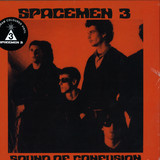
180 gram coloured vinyl now at new price. Spacemen 3's debut album "Sound Of Confusion", released in 1986, was a blistering affair - establishing their love of the two-chord song and also expressing their admiration for the likes of MC5, The 13th Floor Elevators and The Stooges. Sound of Confusion was 7 tracks of overdriven assault, with a strange bleakness and despair creeping through the hypnotic sprawl. R Hunter Gibson would later say: "It boosts the value of unlit rooms, unpaid debts and unfeigned terror and it would rather tackle the gradients than settle for level best. New digipack. Tracks : 1 Loosing Touch With Your Mind 2 2.35, 3 Little Doll, 4 MaryAnne, 5 Roller coaster, 6 Hey Man, 7 OD Catastophe.
The analog LP reissue of the original soundtrack album from the anime Mr. Ajikko, which aired in 1987. The original LP catalog number is K28G-7379, and the original
CD catalog number is K32X-7125, released on June 21, 1988 (the tracklist differs from the CD released in 2004, which included eight newly added tracks).
The original manga, created by Daisuke Terasawa, was serialized in Weekly Shonen Magazine from autumn 1986 to the end of 1989, and was adapted into an anime
series that aired on TV Tokyo from October 1987 to September 1989.
This is the only soundtrack album for the anime series. It features the opening theme “Renaissance Jounetsu” and the ending theme “Kokoro no Photograph”, both
composed and sung by singer songwriter Wataru Kuniyasu, who is also known for composing Akina Nakamori’s “Gypsy Queen”. Lyrics were written by Ikki Matsumoto,
and arrangements were done by Tatsumi Yano.
The album includes image songs, eyecatch music, and preview tracks, with contributions from renowned comedy song artists Masayuki Yamamoto (Side A tracks 4 and 6)
and Tatsuo Kamon (Side B tracks 1 and 7). The album was structured, scripted, and directed by the anime’s director Yasuhiro Imagawa, making it a variety style album.
The main background music (BGM) was composed and arranged by Daito Fujita (Side A tracks 1, 3, 5, 7; Side B tracks 3, 5). The original manga author Daisuke
Terasawa also contributed lyrics for two songs (Side B tracks 3 and 5). Voice actor Tomohiro Nishimura participated both as a singer (Side A track 8; Side B track 7)
and as an arranger (Side B track 7).
Voice actors Minami Takayama, Yoko Kawanami, Miki Narahashi, Hirotaka Suzuoki, and Kenyu Horiuchi also participated in min dramas and chorus segments.
This album, which comically and dramatically portrays cooking battles, is a “Bravo!” anime soundtrack that closes out the Showa era in style. After 37 years, it is finally
being reissued as an analog LP a long-awaited release for anime connoisseurs!
Another Thought was the first collection of Arthur Russell’s music to be released after his death in 1992. Released in 1993 on Point Music it marked the beginning of nearly 30 years of work to let the world hear the enormous archive of unreleased recordings Arthur left behind. Be With revisits this first compilation for a new gatefold double vinyl version and a triple-fold digipak CD reissue.
Both versions of Be With’s 2021 reissue of Another Thought have been mastered by Simon Francis and the vinyl cut by Pete Norman. The original artwork has been restored and tweaked at Be With HQ for the gatefold sleeve and the triple-fold digipak, with the essential help of Janette Beckman. Each version comes with an insert reproducing the liner notes and lyrics from the original CD release.
Together with Calling Out Of Context, Soul Jazz’s World of Arthur Russell, and much of the ongoing work of Audika, Another Thought is absolutely essential for even the most casual Arthur Russell collection. In fact we’d argue it’s essential for any fan of non-obvious pop music. This is the only place where you can hear some of Arthur’s most recognisable tunes and it’s an album that absolutely deserves to be kept in press.
We’ll assume that by now you’re all at least a little familiar with the story of Arthur Russell, the farm boy from Iowa who moved to 1970s New York. Arthur Russell the genuine musical genius who died just 40 years old, leaving behind a wealth of music that dwarfed the few 12"s and LPs that were released during his short life.
Although Arthur had been working on an album for Rough Trade during his last years, with the label no-longer operating it was Point Music (Philip Glass and Michael Riesman’s label set up together with Philips) who stepped in to help Arthur’s partner Tom Lee start working out exactly what Arthur had left behind.
Tom suggested that Arthur’s friend Mikel Rouse was the right person to make the first catalogue. Working in Tom and Arthur’s apartment he had only two weeks to go through what turned out to be around 800 tapes.
As Tom explained “at the end of each day he would generally wait for me to come home and I would, to the best of my knowledge, name and identify pieces in question from that day’s work. As he worked Mikel compiled about a dozen cassettes that he thought would present the most finished sounding songs for Don/Point to use. As Don listened he would then suggest and ask me and thus we collaborated on the choices.”
Don is Don Christensen, Another Thought’s producer. With a final selection of songs from recordings made between 1982 and 1990, including sessions with some of Arthur’s regular collaborators Peter Zummo, Steven Hall, Mustafa Ahmed, Elodie Lauten, Julius Eastman, Jennifer Warnes and Joyce Bowden, it was then Don’s job to turn these into a finished album.
Another Thought is a little different from the compilations of Arthur’s music that came out since. In our conversations with Steve Knutson (who founded Audika Records and who manages Arthur’s estate together with Tom), he explained that “more than any project released by Arthur during his lifetime or posthumously by Audika, ‘Another Thought’ is the most worked over. The material was significantly edited and rearranged from the original source tapes”.
If the aim was to release a comprehensive exploration of every facet of Arthur’s music, from the most avant-garde of his avant-garde compositions through to the most disco-not-disco of his disco-not-disco tunes then the project was a spectacular failure. But as a coherent album of non-obvious pop music Another Thought is wonderful.
Starting with the sparse voice-and-cello of the title track, A Little Lost adds some guitar along with the sneaking suspicion that we’re listening to something nowhere near as simple as it first sounds. By the time we get to This Is How We Walk On The Moon - it could be the moment you notice the congas, or the percussion that’s been building behind them, or maybe it’s that blast of trumpet and trombone - we realise we’ve gone from splashing around to being completely submerged in the musical world of Arthur Russell.
From here the album heads off on its journey around the sounds of the left-field contemporary classical music of the time, re-directed towards pop ears, with minor detours through the swirling woozy disco of the half-remembered night before on In The Light Of The Miracle and My Tiger, My Timing. Whether it’s just Arthur, his cello and some bleeps on Just A Blip, or whether he has some vocal help as he does on the bounding Keeping Up, this is difficult music made so, so easy. And through it all is Arthur’s voice and cello. Sometimes drowned in distortion and sometimes clear as a bell, but always there somewhere.
A Sudden Chill finally returns us to the calmer waters we started in and this last track closes the album with a melancholy that’s not surprising given how soon after Arthur’s death the album was put together.
Whilst Another Thought holds together with the consistency of a proper album, there’s still no getting away from the fact that this was put together from audio recorded in different ways, in different places, with different people at different times. Those with keen ears will hear traces of tape hiss, the occasional blown-out note and some digital fuzz, all fingerprints of those original recordings as well as of the 1990s digital equipment that was used to piece Another Thought together.
Add to this Arthur’s obvious pleasure in making music from the sort of sounds that can make microphones, speakers and ears uncomfortable, it’s no surprise that Another Thought isn’t glossy and pristine. Don Christensen’s productions have been careful to not scrub up those original recordings so much that they lose their original vibe, understandable given that Arthur wasn’t around as a guide. We’ve applied a similarly light touch with the mastering for these Be With versions, just working to make sure they sound like they should on both the vinyl and the CD.
Despite the Discogs rumours, Another Thought was never originally released as an LP. So when it came to the sleeve for this Be With vinyl version we took the original CD artwork as a starting point to come up with something that looks like it could have been in the record racks back in 1993.
We have to thank Janette Beckman for helping us reproduce her iconic photograph of Arthur in his newspaper boat hat. One of many photographs she took of Arthur, Janette shot this in her New York studio back in 1986 for a short article in the January ’87 issue of The Face Magazine. Those with eagle-eyes will notice we’ve used an ever-so-slightly different shot from the one that appeared in The Face and then again on the original cover of Another Thought. The original has long since been lost so we’ve worked with what is left in Janette’s archives. And we also have to thank Tom Lee for giving us permission to reproduce his liner notes from the original CD booklet, together with Arthur’s lyrics.
out of Stock
Last delivered 4 years ago available to reorder, subject to availability
Carpenter Brut draws its influences from 80s TV shows and B-movies loaded with synthesizers.
The mysterious and discreet man evokes an encounter between Justice beats and the universe of John Carpenter.
Across ten tracks, Leather Temple, the third and final chapter of the Leather trilogychannels a raw and nervous energy, somewhere between saturated electro, industrialfever, and 90s synthetic pulse. Yet behind this intensityalso lies a cinematic andorchestral dimension, with arrangements that expand the horizon and add dramaticscope. A tight format, a constant intensity: Leather Temple goes all in on impact,balancing raw immediacy with the feel of a post-apocalyptic moviesoundtrack.
Carpenter Brut draws its influences from 80s TV shows and B-movies loaded with synthesizers.
The mysterious and discreet man evokes an encounter between Justice beats and the universe of John Carpenter.
Across ten tracks, Leather Temple, the third and final chapter of the Leather trilogychannels a raw and nervous energy, somewhere between saturated electro, industrialfever, and 90s synthetic pulse. Yet behind this intensityalso lies a cinematic andorchestral dimension, with arrangements that expand the horizon and add dramaticscope. A tight format, a constant intensity: Leather Temple goes all in on impact,balancing raw immediacy with the feel of a post-apocalyptic moviesoundtrack.
On "Another Year Older," Larry Fleet cements his status as country music’s premier blue-collar soul-singer, delivering a masterclass in honest, salt-of-the-earth storytelling. Shifting his gaze toward the reflective milestones of adulthood, the White Bluff, Tennessee native trades the restless energy of his earlier work for a grounded, hard-won perspective on what truly lasts. The project seamlessly blends the grit of classic 70s country with the soaring, gospel-infused vocal power that has become his trademark, capturing the quiet dignity of the working class and the profound beauty found in the everyday. From the steady wisdom of the title track to the heartfelt odes to faith and family, Fleet treats the passage of time not as a burden, but as a teacher. It is a record for the dreamers and the doers alike—a soulful, unvarnished progress report from a man who has clocked the miles, felt the weight of the world, and realized that getting older is just another word for getting it right.
Emeralds, the sophomore long player from Parlor Greens, finds the trio serving up a beautifully curated sampler of what funky organ music can be. Three true masters of their respective crafts: Tim Carman (formerly of GA-20) on drums, Jimmy James (True Loves, formerly of Delvon Lamarr Organ Trio) on guitar, and Adam Scone (Scone Cash Players, The Sugarman 3) on organ. Seasoned and soulful pros coming together to make infectiously funky instrumental jams. Parlor Greens are truly in top form: tour tight and more confident than ever in who they are and where they’re going.
The first time these three met in Loveland at Colemine’s Portage Lounge studio was marked by a certain freshness. It was new, it was the first time they had all played together. It was exciting, it was unknown territory. The session for Emeralds weighed much heavier on all three members. All three dealing with personal tragedies in their individual lives, the session truly served as a genuine moment of joy for the group. Just three talented musicians, writing and playing music now as friends in a familiar environment. No moment is the weight of the session more obvious than with the album’s closer, “Queen Of My Heart,” a tune Jimmy wrote for his mother shortly after she passed away. So with a heavy and soulful heart, Colemine Records is beyond proud to present the sophomore effort from three maestros. Parlor Greens presents… Emeralds.
Hier ist "Eine Stimme für das Unsagbare, das gehört werden sollte", ein "Künstler von größter Bedeutung". So beschreibt die Band Big Thief, Freunde und Fans, Twain in einer Ankündigung seines Albums "Rare Feeling". Aufgenommen und co-produziert wurde "Rare Feeling" von Adrian Olsen (Natalie Prass, Foxygen) und Scott McMicken von Dr. Dog. Twain ist das Soloprojekt von Mt. (Mat) Davidson, ein Singer-Songwriter und Multi-Instrumentalist mit einer markanten, einnehmend klaren Stimme. Den größten Teil des letzten Jahrzehnts hat er in Bands wie The Low Anthem und Spirit Family Reunion verbracht Nun aber konzentriert er sich mehr und mehr auf sein Solo-Projekt TWAIN, eines, das seine Wurzeln zwar auch in Indie Folk und Americana hat, aber beherzt, und mit Elementen von Psychedelic Rock, seine ganz eigene Stimme bildet. "Twains unermessliche, suchende Musik beschwört den Cosmic Folk eines Tim Buckley herauf", meinte kürzlich NPR. ,Hier ist die Art von Musik" - urteilt NPR weiter - ,die, wäre sie vor 50 Jahren entstanden, heute ein geschätztes Kultalbum wäre." Es ist ein wirklich besonderes Album, etwas, das man zu finden hofft. Es ist gleichzeitig vertraut, zeitlos und zugänglich, aber es überrollt auch mit seiner eigenen Schönheit und Besinnlichkeit. Und der Albumtitel passt perfekt.
With `The devil's door' And Also The Trees, one true original Post-Punk/New Wave band, presents a quiet storm of an album. At times filmic, poetic and intense with an undercurrent of dark psychedelia. It completes a trilogy of works `The Bone Carver', `Mother-of-pearl Moon' and now `The devil's door' created by the current line-up. Here there are signature `And also the trees' poetic lyrics, orchestral guitar and soundtrack influenced songs inspired by newsreel, oil paintings and folklore. But with this work we have the addition of some surprising instruments that skew the album towards a world where John Barry meets Bela Bartok. And also the trees (AATT) formed during the original post-punk era in rural Worcestershire, an environment that has provided a constant inspiration to a group whose music has often explored the dark underbelly as well as the beauty of the British countryside. They are renowned for their captivating live performances, a unique style of mandolin-like electric guitar, evocative lyrics and dark jazz rhythms - not to mention a creative independence fiercely preserved for over four decades. Back then AATT immediately caught the attention of Robert Smith of The Cure, who invited them to tour with his group on several occasions. Smith was also involved with their early recordings alongside his bandmate Lol Tolhurst, who produced their first records. This longterm friendship and mutual respect was further solidified when AATT were invited to perform at the Robert Smith curated 2018 Meltdown festival in London. This July AATT appear as The Cure's special guests at the Nimes festival. Founded by singer Simon Jones and his guitarist brother Justin, AATT have maintained a continuous presence on the post-punk, and alternative rock scenes worldwide, with a solid fanbase e.g. in Germany.
Mia Zapata was the greatest rock singer of her time. She may have likely been the greatest blues singer in punk rock history, the woman who married the 78 and the '78. Tragedy did not make this true. Mia Zapata made this true, and the ferocious, spring-loaded shrapnel frame that was built around her by Andy Kessler (guitar: metronomic and furious), Matt Dresdner (bass: fluid, punching, beat-addicted and melodic), and Steve Moriarty (drums: martial and explosive) - who, with Mia, combined to form The Gits - made it true. The Gits were formed at Antioch College in Yellow Springs, Ohio in mid-1986, grabbing and swapping pieces of art, thrash, noise, punk rock, classic rock, and all the sorts of magical silly and bookish jingle bells that an old-school liberal arts education handed you; for the next few years they worked on turning it all into something tough, sensitive, both brutal and kind. Andy, Matt, Mia, and Steve moved to Seattle in middish 1989, landing in a house on Capitol Hill where they (and fellow travelers) wood-shedded and rehearsed for the next few years. The Gits put out three EPs in 1990 and '91 before signing with C/Z Records and releasing their first full-length album, Frenching the Bully. Seattle quickly claimed the quartet as their own and embraced the Gits blend of ferocious fangs and soft heart, the slug/slap of the guitars, and the gorgeous, soft underbelly of the poetic emotions. These qualities not only fit in with the doe-eyed/sharp-clawed grunge ethos but earned the Gits the respect of their peers, including Nirvana, who tapped them to open a major local show in 1990. Then other stuff happened, and their frantic, confessional barbed-heart snowball began rolling up hill very, very fast; the Gits "quickly" (hah! After half a decade learning to implode and explode hearts and stomping their boots on manifold beer-softened, Marlboro-weeded wood stages!) inspired rapture, awe, and the levitation that happened when peak emotion meets peak grindage in front of amps spitting out something that sounded like the mad marriage of Bolan swagger and Dischord tension_ all fronted by a genuinely incomparable woman who held her heart in her mouth and shared it, in all its celebration and fear, without hesitation. The Gits were an angry, inflamed slinky fully in tune with and tuned by the Bessie Patti Smith of her time, truly the only singer who could summon Joplin, Poly Styrene, Sam Cooke, Iggy Pop and Ian MacKaye all in the same goddamn song. In 1993, less than four weeks after accepting an offer from Atlantic Records, Mia died. I leave it at that, because this is not about death; it's about an extraordinary life. I do not say, "You should have been there," I say, "We are lucky so many of us were, and I am so glad we have this extraordinary evidence of the power and gifts of Mia and the Gits that you now can hold in your hands." And I note that Frenching the Bully, this extraordinary testament to the soul, shock, fury and feeling of the Gits, has been long out of print on vinyl and CD, and this new edition - remastered by legendary Seattle engineer Jack Endino - joyfully rectifies that. -Tim Sommer
James Davison, the most startlingly talented UK brass player of his generation, joins this highly experienced team with brilliant results. Charlie Parker's 'Ornithology',Thelonious Monk's 'Straight No Chaser', Billy Strayhorn's 'Satin Doll' and Horace Silver's 'Peace are amongst the gems to be found here. This is the second Woodville Records release to be based solely around the brilliant arranging skills of world class trombonist Mark Nightingale. The first, Alan Barnes plus 11 (WVCD151) featured Mark's adept and characterful handling of a twelve- piece ensemble. Jazz Classics ...with a Twist displays equal inventiveness and imagination, showcasing a sextet line-up in a programme of individually re-thought takes on these ageless tunes. In Mark's hands this band frequently resembles a much larger ensemble such is his skill in manipulating tone colour and voicing.
Carpenter Brut draws its influences from 80s TV shows and B-movies loaded with synthesizers.
The mysterious and discreet man evokes an encounter between Justice beats and the universe of John Carpenter.
Across ten tracks, Leather Temple, the third and final chapter of the Leather trilogychannels a raw and nervous energy, somewhere between saturated electro, industrialfever, and 90s synthetic pulse. Yet behind this intensityalso lies a cinematic andorchestral dimension, with arrangements that expand the horizon and add dramaticscope. A tight format, a constant intensity: Leather Temple goes all in on impact,balancing raw immediacy with the feel of a post-apocalyptic moviesoundtrack.
Sundays is the debut full length from Oakland-based Tanukichan, aka multi-instrumentalist Hannah van Loon. At surface level, the album sounds just how the title describes: hazy, dreamy, reflective, just like a lazy Sunday afternoon. Upon second and third listens, the dreamy music unveils a deeper world: an ever present sense of longing, an endless state of summer and a period of instability that plagues us all at one point or another in our lives.
Raised in San Francisco, van Loon started out making classical, bluegrass and jazz music as well as playing in numerous bands in the area before deciding to make something more personal. What started with a few unfocused demos, with van Loon playing all the instruments herself in her house, became a studio experience and viable collection of music after her friend Anthony Ferraro of Astronauts, Etc. introduced her to Company Records founder Chaz Bear (Toro Y Moi, Les Sins). After collaborating on her 2016 EP Radiolove, van Loon and Bear set out to make a much more sonically cohesive release, with both the producer and artist playing all the instruments on the record. The result is a slice of dream pop that could only come from the combination of the laid back atmosphere of California and the nostalgic and often difficult memories that are generally associated with coming of age.
To van Loon, the tracks of Sundays are a form of contemplation and approaching life’s issues from a different and less complicated perspective. “Sometimes for me, it feels easier to write songs about things than to talk. A lot of things in life are layered and paradoxical, but with songs it always seems simpler.”
Opening track “Lazy Love” sets the stage, sonically and lyrically, for the rest of the album, combining vulnerable lyrics with gorgeous, fuzzy tones. Above pummeling synths and guitar tones, van Loon sings “you know I'd do anything/don't you know I try my best/if I could wake up when the sun is rising” showing the album’s constant theme of balancing always wanting to be the best person you can be, while also feeling a low level joy at letting life play out as it wants to. “Natural” is a track that feels perfect for a road trip, a track that hums away with a driving beat, culminating in the sheer excitement of finally having a night alone with someone you’ve loved for a while, among many highs and lows: “a window too bright/it's natural sunlight/grey fades to white lie/kiss you tonight/it's natural delight/help me feel right.” The tracks collectively address a deep rooted sense of yearning for someone, something new, while also feeling content with your life; a realization that maybe the places you’ve always belonged aren’t where you should be anymore, that suddenly you might be looking for something completely different.
“I settled on the name Sundays as the title of the record because it encapsulated how the record felt to me,“ van Loon says. “I was thinking about the laziness, and dreamy clarity that you can feel after a late night, waking up having to face the world with a new perspective.” Sundays encapsulates this feeling, a nostalgic way of looking at the world, waking up feeling like a slightly different person than before, looking back on life, not sure if you can tackle what’s next, but doing your best, day in and day out
Rick James Blends Brazen Attitude, Fearless Sexuality, and Shrewd Charisma on Street Songs:
Punk-Funk Album Aims for the Hips and Head, Includes the Timeless Hit “Super Freak”
Sourced from the Original Master Tapes and Strictly Limited to 4,000 Numbered Copies:
Mobile Fidelity’s 180g 45RPM 2LP Set Presents 1981 Smash in Audiophile Sound for the First Time
1/4” / 30 IPS analogue master to DSD 256 to analogue console to lathe
“Punk funk” was a relatively unknown concept before 1981. But once Street Songs took the charts by storm that year, the world soon knew about what became Rick James’ signature style. And how. True to its name, Street Songs blends outspoken sexuality, brazen attitude, and edgy commentary amid contagious R&B-fueled arrangements that simultaneously aim for the hips, head, and various nether regions. And it’s never sounded better.
Sourced from the original master tapes, strictly limited to 4,000 numbered copies, pressed at Fidelity Record Pressing, and housed in a Stoughton gatefold jacket, Mobile Fidelity’s 180g 45RPM 2LP set presents James’ platinum-certified effort in audiophile quality for the first time. Playing with crisp dynamics, lively textures, airy headroom, and revealing clarity, this collectible edition of the record that stayed at the No. 1 spot on the R&B Album Charts for 20 weeks invites you to get closer to music that beckons you to turn your space into a private dance floor.
Then again, you’ll likely be so taken by how the taut bass lines, snappy rhythms, and four-on-the-floor beats — all rendered in stunning detail and with full-bodied architecture — come across with such accuracy and presence, you might stay pinned to your seat. On this pressing, the soundstaging, imaging, and lit-fuse energy of Street Songs reach new heights. Everything from the rubbery feel of the guitar lines to the depth of James’ temperature-raising vocals to the scale of the horn charts emerges as if James and his ace session crew set up in your room.
The Buffalo native and his ensemble waste no time getting their message across. On the album-opening “Give It to Me Baby,” James and company lay down a mix of sleek funk and pulsing disco that practically activates the bright lights of a discotheque and stimulates the libido of anyone within earshot. Having reached No. 1 on the Billboard Hot Soul charts, the song is pure sex — and just one of the carnal delights on a record that embraces the subject as fearlessly as James does his identity.
Of course, the most famous of James’ erotic excursions — the timeless “Super Freak” — hit No. 1 on Hot Dance Club Play charts, No. 16 on the Hot 100, and, later, No. 153 on Rolling Stone’s list of the Top 500 Songs of All Time. Bolstered by a quavering keyboard theme and electro riffs, the much-sampled track worms itself inside your muscles with smile-inducing subject matter, gliding vocals, nimble movements, a hot tenor-saxophone solo, and backing vocals by the Temptations.
The iconic Motown group isn’t the only celebrated guest artist on the Grammy-nominated Street Songs. James’ then-labelmate, Stevie Wonder, lends harmonica to the frank sociopolitical narrative on “Mr. Policeman,” a protest tune that also manages to stroll ’n’ strut via simmering organ, staggering brass accents, and James’ gritty vocal performance. In addition to contributing backing vocals on several cuts, Teena Marie turns in one of the album’s signature moments on “Fire and Desire,” a romantic old-school duet with James that impresses with smoothness, sensitivity, and smokiness.
High-profile colleagues aside, James remains the undisputed star, a figure whose leather-and-latex attire, braided hair, and natural swagger made him misunderstood by some in the mainstream and embraced by everyone in the know as a true original. As a testament to his magnetism and skills, his charisma and rawness seemingly seep through every note, whether on the balladic sweep of the risqué “Make Love to Me” or strident, poke-and-prod persuasion of the moonwalking “Call Me Up.”
On the closing “Below the Funk (Pass the J),” an uptempo autobiographical tale that addresses the visionary musician’s second-favorite love, the singer acknowledges his upbringing and inseparable connection with his roots — an homage to where he began and a toast to where he’s gone.
Rick James, keepin’ it real on Street Songs, still as real as it gets.
out of Stock
Last delivered 7 months ago available to reorder, subject to availability
Don’t believe your ears - Pepper’s Ghost is the latest offering from NYC project Nuke Watch.
Whatever you think it is - it is not. By the same token it really can be whatever you want - electronica, jazz, improv, noise, new age, ambient - it’s none and all of these. Like the primitive visual illusion it’s named for - Pepper’s Ghost is a projection of a thing, it’s not the thing.
The Nuke Watch method - like that of Aaron Anderson and Chris Hontos’ other primary project Beat Detectives - leans almost entirely on live improvisation, with some advanced studio alchemy in post. Where the Beat Detectives palette draws from club music tropes, Nuke Watch blends recognizable tones (hand drums, woodwinds, keys, fretless bass) with sounds of providence unknown, the line between organic and synthesized instrumentation unintelligibly smudged. What is real and what is projection? It’s hard to say. What do our ears tell us? This is where we arrive at Pepper’s Ghost.
Warped as the sounds may be, the playing belies a crew of deeply expressive, learned improvisers who have their craft honed. Their friendship and psychic connection enhances the ritualistic rhythms, mutant modular synthesis, nimble keyboard runs, absurdist sampling and unidentified skronk. They’re wonderfully complemented across several tracks on this set by Cole Pulice’s levitational, sublime saxophone.
As unhinged as this might all appear, once the mind and music meet on the same wavelength this is profoundly moving, energizing and uplifting Alive Music that recalibrates the sense of what music can be.
Nuke Watch is Aaron Anderson and Chris Hontos, with an array of friendly guests. They’ve released records as Nuke Watch on The Trilogy Tapes, Commend and Moon Glyph. As Beat Detectives they’ve released records on Not Not Fun, 100% Silk and their own studio imprint NYPD Records.
Pepper's Ghost was written and produced by Aaron Anderson and Chris Hontos. Additional instrumentation on these recordings by Cole Police, Leonard King, Eric Timothy Carlson, Chris Farstad and William Statler. It was mixed by Chris Hontos and mastered by Jack Callahan. Painting on the cover is “The Unity Of Being” (2020), by Ry Fyan. Design and layout by Aaron Anderson.
RIYL - Musical illusions, puzzles and magic tricks, downtempo, music of the spheres, good journey, Eddie Harris, Ketron, "world building", orange sunshine, suspension of disbelief.
out of Stock
Last delivered 7 months ago available to reorder, subject to availability
From out of nowhere comes a unique collaborative album from Edvard Graham Lewis (WIRE) & Mark Spybey (ZOVIET FRANCE). Mixing lush electronic rhythms, sonic collage, ambient soundscapes and manipulated field recordings, these six compositions form an album with a strong identity. That this is such a vital and fertile partnership should come as no surprise. After all, both men have made careers out of creating confidently questing musics. Lewis with Wire, He Said, Hox, Dome etc. and Spybey with Dead Voices on Air, Beehatch, Altered Statesmen, Zoviet France and so on. This new album however, is something different again: experimental, yet tightly focused, and not averse to the groove or the sly hook. The pair met via an appearance on a podcast in November 2022, hosted by cEvin Key of Skinny Puppy. They hit it off immediately. “We did a live chat with Graham - which I think, went on for about three days” jokes Spybey. It was Spybey who first broached the idea of collaboration. “It was a bit like shy bairns get nowt: I just said ‘maybe we should make something together.’” And so, with no plan other than to see what might develop, the duo began to assemble the compositions at long distance. Indeed, Lewis and Spybey only met in the real world after the album had been completed. “Mark sent half a dozen tracks in a stereo mix,” says Lewis. “And I looked at the ’topography’, to see where the spaces might be. So then I’d add to those areas. But then, when do you take it away? Sometimes you let it drop off a cliff, land in the shingle, and it gets washed out to sea again.” The process moved at a pace. “Almost everything each of us brought, ending up being incorporated in some way.” Says Spybey. “We didn’t really go down any cul-de-sacs.” As Lewis observes “We have such a sympathetic tone.” Full of inventive sonics that draw on both men’s previous work, ‘Lewis/Spybey’ offers up a richly detailed soundworld
out of Stock
Last delivered 7 months ago available to reorder, subject to availability
French artist Trypheme debuts on Impatience with “Odd Balade”, a darkly-hued collection of songs drawn from human delicacy and dreamworld mythology.
“Odd Balade” is Trypheme’s most ambitious and boldest record to date - both lyrically and musically. The album’s thirteen tracks resist rigid genre boundaries and flutter from medieval folk realms, sprawling synths, gothic 80s wave, leftfield pop, haunted vocals, mutant electronica to reverbed guitars - all reflected through her own shadowy prism. Especially album closer “A Walk In The Vercors” evokes a soothing serenity that echoes the sonic balm of Julee Cruise.
Trypheme’s musical repertoire trends heavily electronic and somewhat abstracted, but on “Odd Balade”, the artist slips into the role of the modern troubadour with a shift to a more poetically and personal songwriting that is infused with symbolism and dreamlike fantasies. The connective tissue of the album is the audacity to love and the vulnerability that ensues. As intimate and introspective as the lyrics are, the themes remain universal and human to the core: the fear of losing a loved one, the melancholia of leaving places and t“the fear of losing a loved one, the melancholia of leaving places and the cycles of life. The record was largely composed in Chars, stirred by the French village’s eerie atmosphere and frequent trips to the seaside in Brittany, where Trypheme resides. Drawing inspiration from the rugged terrain of the seaside landscapes, the writings of Allen Ginsberg and Mark Fisher and the hyperrealist art of Scott Prior, Trypheme uses her songs to depict life with broad strokes of rhythm.
On “Odd Balade” Trypheme consolidates herself as a gifted, nimble songwriter, masterly producer and subtly powerful vocalist. The record combines her skill for crafting lush, alien sound worlds and efficient, alluring arrangements with stealthily devastating songs. Belin’s voice becomes a key ingredient, appearing on eleven of Odd Balade’s thirteen tracks, by turns heavily manipulated, sampled and replayed as a form of percussion, or basically bare.
“Odd Balade” is the manifestation of Trypheme’s roving artistic practice, a ceremonial-grade sacrament cast in a rich nocturnal glow. Pairing the mundane with the mythic, the album stays true to its core: odd and strangely familiar.
RIYL - Riding off into the sunset to an unknown destination, hauntology, present, tales told by the fireside, hot summer rain, adventures, to feel a warm presence when you are walking in the forest or in the mountain, coastal landscapes, sailor’s stories, slow motion, vitesse, heavy blossoms, colors, the warmth of the sun, the tenderness of the moon, getting lost in unfamiliar streets, city’s lights, motorway rest area by night, magic numbers, rendez-vous, picnic, serendipity, poetry, the smell of old records and old books.
Tiphaine Belin has been releasing music as Trypheme since 2016. Odd Balade was written and produced by Belin, and mixed by Belin and Abel Roux. It was mastered by Amir Shoat. Cover art photography is by Ariane Kiks, with art direction by Ariane Kiks in collaboration with Mathilde Chaize.
out of Stock
Last delivered 7 months ago available to reorder, subject to availability
Finally, finally, FINALLY! After many years of fruitless praying, a true collector grail can finally grace every turntable the world over. Bright And Shining is a miraculous leftfield library classic from the genius mind of Barbara Moore. It's Highly Addictive Happiness Music TM and one of the coolest records to come out of anywhere...ever! With originals almost impossible to find - and, when they do, going for over £300 - you already know how crucial this beautiful reissue is.
Recorded in 1981 for Sylvester Music Company, Bright And Shining is breezy, dreamy and funky in a perfectly smooth jazzy-soul-groove fashion, with Moore's patented celestial male-female vocal harmonies this time benefitting from the addition of Fender Rhodes and pumping bass lines.
As one particularly enthusiastic Discogs user put it: "If Eno is responsible for Music for Airports, Moore is responsible for Music for Holidays." Indeed, this is brilliantly unique, "maximum happiness music". If you miss the sun-dappled soft-psych soul of Koushik, the heavenly vocal arrangements of the great Library Music doyenne Barbara Moore - her depth, richness, sophistication and warmth - will see you just right.
The gigantic title track, "Bright And Shining", gallops out the gate, all sophisticated, jazzy leisure-soul with sax and guitars backing Moore's effortless vocal swag in this relaxed, mid-tempo head-nod strut. Worth the price of admission alone. Up next, the sunny, vibey "Fly Me High" features strolling, "unworded" vocals (aside from the refrain of the title) alongside breezy alto sax and electric guitar. Pastoral and perfect. The slow'n'sultry "Affluence" presents a moody elegance, a classical "downlifting" gem. Another crucial highlight is the breezy "Going On Holiday". It's happy. It's sunny. It's lively. It's cool and happy. Did we say happy? A mid-tempo, romantic sax workout, "Alto Sex"presents smooth jazzy funk before the first side closes out with the soaring, jazzy "Stay With Me". Seriously uplifting.
Side B opens with "Feel Fine", an excellent uptempo and bright jazz groove. Up next, "Canon" is wracked with refinement, a peaceful, smooth vocal harmony over repeating bass making for an elegant, late-night classic. It's followed by the laconic "Smooth And Soft", a laidback, casual sophisticated soul and easy-feeling jazz gem. The jazzy "Real Thing" is another exercise in strolling sophistication, complete with wordless vocal harmonies. The fairly self-explanatory "Voice Over Sax" sounds precisely how you would expect; a relaxed sax number with heavenly vocal support! To close, the carefree "Feeling Free" is a pleasant, light and breezy mid-tempo groove.
The audio for Bright And Shining has been meticulously remastered by Be With regular Simon Francis, ensuring this release sounds better than ever. Cicely Balston's expert skills have made sure nothing is lost in the cut whilst the records have been pressed to the highest possible standard at Record Industry in Holland. The original, iconic sleeve has been restored here at Be With HQ as the finishing touch to this long overdue re-issue. We'll grant the final word to MillionDollars. on discogs from about 10 years ago: "If you listen to the record on a sunny day you feel like going out surfing in a white linen suit with a blunt on your lips, catching a cool breeze."
out of Stock
Last delivered 7 months ago available to reorder, subject to availability
Samurai Music offshoot SAIBAI welcomes legendary producer ASC to expand upon the label's widescreen strain of electronic music plumbing the depths between techno, electronica and broken beat.
ASC is the flagship project for James Clements, a prolific veteran of the scene who started releasing his distinctive twist on drum & bass back in the late 90s. Across a variety of aliases and many different label projects and collaborations, Clements has retained a strong artistic identity defined by steely atmospherics, rhythmic intrigue and precisely sculpted sound design. He brings those qualities to SAIBAI3.
On 'Raijin' the tempo prowls at 90 BPM, all the better to carry the bass snarls and haunted melodies hovering in the middle distance. 'Rasetsu' meanwhile hides its much sprightlier 150 pace behind a half time construction punctuated by a tactile, almost organic set of percussion. 'Kyubi' sinks into a deep, inky well of spatial sound design with just a light smattering of percussion and a weighty kick for guidance. 'Shigure' completes the picture with a mesmeric tapestry of shifting textures and brooding melancholy.
Clements has devoted much time recently to his ambient output, and it shows in the richness of the space he shapes around his needlepoint patterns, while his roots in more propulsive club music show their hand in subtle, understated ways. It's this balance that makes the release the perfect addition to SAIBAI's evolving story.
Limited to 200 copies
out of Stock
Last delivered 7 months ago available to reorder, subject to availability
A limited vinyl reissue of the third album of Dictaphone from 2012, with a new artwork.
Already formed in the late nineties in Berlin, Dictaphone was born by Brussels-bred multi-instrumentalist Oliver Doerell. In 2000 Oliver Doerell found a partner in Berlin's Roger Döring, who shares Doerell's love for the Brussels-based music of the eighties. In the following years the duo and several guest musicians (e.g. Stephan Wöhrmann (SWOD) , Malka Spigel (Minimal Compact) & more) released the critically highly acclaimed "m.= addiction" (2002), the "Nacht" EP (2004) and "Vertigo II" (2006) via the City Centres Offices label of Thaddeus Herrmann and Shlom Sviri (Boomkat, Modern Love). In 2009 the violin player Alex Stolze joined the band. During their two decades of existence Dictaphone played shows in more than 20 countries with festival appearances at Mutek, Transmediale, Unsound, Benicassim & more. Their latest release "Poems from a rooftop" from 2012 came as a very limited edition through the Berlin-based boutique label Sonic Pieces. In 2017 the band released the long awaited third album "APR 70" on denovali. The label now also offers a reissue of the trio's past repertoire.
Dictaphone never make music for the sake of it, they always want to create something which was missing before. And they did.
out of Stock
Last delivered 12 days ago available to reorder, subject to availability
Written during a period of geographic and artistic transition, Country Music traces Severin Black’s movement from London to Berlin, unfolding through cycles of isolation and adaptation. Composed on the city’s periphery, the album’s material was continually dismantled and reassembled, reflecting a process of both artistic and personal reconstruction. The album marks a shift in production methodology, moving away from the immediacy of summed live takes toward a more deliberate, stratified multitrack approach. Sparse yet hypnotic, the record distills layers of sound formed by constant relocation, recurrent solitude, and a recalibration of instinct. In many ways, it echoes the experience of exile, not in a political sense but in the quieter, more insidious form of displacement that alters one’s perception of time and self. The music drifts between structure and dissolution, a reflection of existing at the threshold of different spaces—both physically and sonically.
The shedding of the previously used Nape moniker signaled a decisive sonic transformation, informed by extended time spent in the Pyrenees and a renewed engagement with folkloric material. Severin began playing the clarinet while making this record, and though its presence is minimal, it reveals itself as an interest in acoustic simulation, particularly the digital approximations of classical instruments that emerged within 1990s synthesizer technology. This interrogation of authenticity and mediation parallels the album’s thematic engagement with memory, where recollection functions not as a retrieval of fixed experience but as an iterative process of distortion and reconstruction. The relocation to Berlin reignited an affinity for grime music, evident in the syncopated brass of Pilgrim Wine and the fractured vocal layers of March, while memories of childhood in rural Wales permeate the record’s atmospheric spaces. The album includes contributions from longtime collaborator Vanessa Bedoret and Berlin-based artist Pavel Milyakov (Buttechno).
Country Music situates itself within an unresolved dialogue—between past and speculative futures, between folk lineage and digital fragmentation, between place and its embodied and sonic traces. What emerges is not a fixed statement but a process, an ongoing negotiation between what is left behind and what is brought forward. Words by Chantal Michelle
Mastered by Owen Pratt / Design by Severin Black / Center label image by Nicky Kidd / Back cover text by Alya Kanıbelli
out of Stock
Last delivered 7 months ago available to reorder, subject to availability
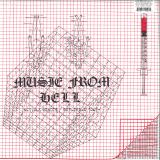
Nervous Gender’s legendary synthpunk LP Music From Hell burbles up from infernal depths to resurface on Dark Entries. Confrontational, unhinged, and unabashedly queer, Music from Hell is an unholy grail for fans of the strangest underbellies of post-punk, minimal synth, and early industrial music, and is presented here newly remastered and on expanded double LP.
Nervous Gender (de)formed in LA in 1978 at the hands of Phranc, Gerardo Velaquez, Edward Stapleton, and Michael Ochoa. Phranc, the androgynous embodiment of the band’s name, left in 1980. Following her departure, a wide cast of LA freaks would find themselves drawn into the band’s orbit, including Alice Bag of the Bags, Paul Roessler of the Screamers, the Germs’ Don Bolles, and an 8-year old drummer named Sven Pfeiffer. In 1980, Nervous Gender appeared on the seminal Live at Target compilation alongside Factrix, uns, and Flipper. With the band’s notoriety cemented, Music from Hell followed in 1981 on Subterranean Records (as no LA label would touch this material).
Side A, dubbed “Martyr Complex”, presents a more punk-forward sound with live drum salvos and slabs of aggressive synth. These twitchy, unsettling shockers ooze with the kind of snotty misanthropy that will endear them to fans of the Screamers or Crass.
Side B, known as “Beelzebub Youth”, is a live performance the band labeled "an electronic bruto-canto dissertation on the banality of spiritual transcendence." Mutant melodies cede way to synthesized clangs, whirs, bleeps, manipulated tapes, and howls of despair.
In addition to all the material from the original LP, we’re treated to a full disc of the band’s demos, the material from the Live at Target compilation, and early live recordings. Included are unrecognizable covers of Carly Simon and Lou Reed, and the Sex Pistols that are so despairingly skewed they fall into the void. This reissue of Music From Hell includes a 36 page lyric booklet, foldout poster, and gatefold sleeve with photos, flyers, and news-clippings designed by Eloise Leigh. Tackling taboo issues like sexual kinks, mental illness, drug use, and childhood molestation, Music From Hell is still surprising – even shocking - over 40 years after the album’s release. Nervous Gender stand as one of the most genuinely anti-establishment outfits in underground music, a colossal fuck you to social norms from religious strictures to gender essentialism.
out of Stock
Last delivered 6 months ago available to reorder, subject to availability
Macclesfield 3-piece Cassia make their extremely welcome return with the announcement of their most ambitious release yet in new studio album everyone, outside - out April 11th.
The album marks a bold new chapter, and recently served up a tropical-tinged first offering in ‘heat’ - with today serving a superb Round Two with the stomping, insatiable, hook-laden new single ‘friends’.
everyone, outside takes Cassia’s sound to new heights. Written fresh off the back of two years of relentless touring, the band channelled every ounce of their renowned live energy into the album, returning to a studio they built themselves in Macclesfield, after creating their previous album in Berlin. The journey provided an added twist, recording the majority of tracks live on TikTok, giving fans a unique, inclusive experience to be part of the process.
The album’s title is a metaphor for embracing your truest self and reflection of a band who are at their happiest outside. It’s a message that speaks to the idea of reconnecting with nature and Britain’s finest summers. As frontman Rob explains, “That title, ‘everyone, outside’ started as a song about how weird it is that we stay inside all the time when being out in nature always makes us feel better. Over time, it came to mean more than that - like a metaphor for being your truest, most natural self, unburdened, like when no one’s watching.”
Drawing influences from a host of genres and cultures, everyone, outside reveals Cassia’s venn diagram of global sounds and intimate storytelling. A trip to Mexico during the writing process injected the record with a new energy, while their time spent in their new space back home gave the band a freedom to try new instruments, new sounds, acquire new tools to hone their production skills - and to simply have fun and explore. “The time we spent in Berlin taught us so much, but coming back home to Macclesfield allowed us to really focus on making something that felt like it came from us. No distractions, just pure creativity,” says drummer Jacob Leff.
Cassia’s rise has been impressive. From their early days busking the streets of Cornwall to playing major festivals, touring the world and receiving critical acclaim from BBC Radio 1, Radio X, The Independent, Rolling Stone UK, Clash & many more, the band has carved out a unique niche. Their sound, influenced by the African music Rob’s father introduced him to, combined with the indie heritage of nearby Manchester, combines the positivity of bands like Foals and Vampire Weekend, with the jazz-tinged afrobeats of Fela Kuti and Ebo Taylor.
After signing to Distiller Records in 2018, the band gave up their full-time jobs and ventured to Bath to record their debut album, Replica. Tracks such as ‘Right There’, ‘Drifting’ & ‘100 Times Over’ have amassed millions of streams, seeing the band sell out multiple headline Tours both in the UK and Europe. Playing to a homecoming capacity crowd at Manchester’s O2 Ritz, as well as sold out headline shows at London’s KOKO & The Garage, the band have accrued a huge, loyal following and their live shows earned them a nomination for Best Live Act at the AIM Awards alongside Idles and DMA’s, as well as making them the winners of Reeperbahn’s Anchor Award in 2022.
Cassia will tour the UK in May 2025, playing songs from the new album and some of their biggest tracks - headlining Leeds, Bristol, a newly added night in Southampton, a special Manchester homecoming, Glasgow, Birmingham, & a huge show at London’s HERE @ Outernet - dates below & Tickets Here. The band will also take things Stateside this year for their first ever run of headline shows in the US & Mexico.
"On a dozen restlessly expressive instrumentals recorded between Marin and Reykjavík, the American guitarist finds turbulent beauty at the edges of the fingerstyle tradition." - PITCHFORK 7.9/10
"The greatest living guitar player" - Hayden Pedigo
Today, guitarist Mason Lindahl — whose “unabashedly beautiful" (Aquarium Drunkard) sound "balances the romantic dynamics of flamenco and the meticulousness of Windham Hill with the unguarded qualities of improvised music" (Pitchfork) — announces a pair of new albums: Joshua / Same Day Walking via Mt. Brings Death.
Though packaged together, Joshua and Same Day Walking chart distinct worlds. Recorded in northern California and produced by Robby Moncrieff (Dirty Projectors, Zach Hill), Joshua is woolier and warmer, evoking haze, humidity, and overgrown Spanish moss. Meanwhile, Same Day Walking — recorded in Iceland and produced by Moncrieff alongside two-time GRAMMY-winning composer / sound designer Sam Slater (Joker, Chernobyl) — is, appropriate for its icier climes, windswept and beholden to the vast emptiness of harsh landscapes. As a pair, they provide a thorough portrait of Lindahl's singular and versatile playing.
Amid Lindahl's purely evident virtuosity, close listeners can savor wonderful imperfections freckled throughout Joshua / Same Day Walking: buzzing strings, minimal electronic ambience, soft undulations of tempo. Lindahl isn’t here to pageant his craft; he's adventuring within, uncovering fresh avenues of sound and emotive gesture.
Described by friend and contemporary Hayden Pedigo as “the greatest living guitar player,” Mason Lindahl’s “austere, gothic flamenco...dares you to submit to this odd and immersive sonic universe" (Uncut). The Northern California native's solo instrumental debut Kissing Rosy in the Rain, released in 2021 via Tompkins Square, was praised as "gorgeous" (Petal Motel) and "a minimalist gem" (Everything Is Noise). Prior to that, his only other solo release is 2009's Serrated Man Sound.
600% Dynamite is the critically acclaimed Soul Jazz Records compilation series of Jamaican music, praised for its eclectic selection of upbeat reggae, ska, soul, rocksteady, dancehall, funk and dub satisfying both connoisseurs and newcomers alike.Originally released in 2003 this album has been out of print for nearly 20 years making it one of the most-collectible of Soul Jazz Records" Dynamite! Series. This is the first ever Color Vinyl edition of this classic album.Party classics and non-stop reggae anthems such as Tenor Saw"s "Golden Hen", The Uniques "Queen Majesty", Johnny Osbourne"s "Buddy Bye" and many more, 600% Dynamite is an addictive mix of well-known classics and rarities.Classic artists such as Dennis Brown, Johnny Osbourne, I Roy, Yabby You and Tenor Saw which feature alongside classic and rare tracks by lesser known artists such as Tall T and The Touchers, Prince Mohammed and more.
One of the last projects undertaken by the NETWORK label was the
60th Anniversary Blu-ray set for STINGRAY which was released in two versions - the Deluxe and Super Deluxe.
Each version was packed with extras but the Super Deluxe had a music item as part of the set – a 7” single of
Themes From Stingray containing cues for the original soundtrack as performed by Barry Gray.
But the 7” single was not included in the set, but to be posted separately to customers who had pre-ordered the Super Deluxe set.
When the single was manufactured, it was housed in a card envelope with a sticker placed on it with the title, catalogue number
and barcode so that all that needed adding was the address label before posting.
Although the Super Deluxe set sold out, there was some stock of the 7” single, still housed in its card envelope left
in the warehouse, NETWORK are no longer trading, and these singles have now been rescued from potential destruction!
Volcanic Sun Vinyl, limited to 500 copies. The Berlin-based power trio once more is driving their musical WEDGE in between many different genres: Garage rock turns progressive while psychedelic guitar lines are tripping over hard rocking riffs. Does this work together? Hell yes! For fans of Deep Purple, MC5, Led Zeppelin or Humble Pie this album is a sure shot. You like fuzz guitars? Hammond organ and vocals trough a swirling Leslie cabinet? More cowbell? You got it. But unlike our beloved rock records from around 1971, which we've heard a hundred times before "Like No Tomorrow" has one huge advantage: It's brand new and the 8 tracks, ranging from 3:00 to 9:00 minutes, deliver a fresh, unspent and unmistakably unique taste to the rock'n'roll menu. In the tradition of bands like The Raconteurs, The Hellacopters, Graveyard or Wolfmother, WEDGE are building on that vintage vibe we all know and love but evolve their very own thing and are able to connect it directly to here and now.
A unique collaboration between two of the most inquisitive and important artists in modern avant-garde electronic music.
Paper Masks marks a striking new collaboration between visionary Mute labelmates Phew and Danielle de Picciotto. Developed quietly over nearly five years, what began as an experiment between friends gradually evolved into a fulllength album. Phew composed and arranged all the music, weaving in dePicciotto’s voice and freely reshaping it to create something entirely new. Performed in both German and English, the result is an exploratory work that balances electronic minimalism with emotional immediacy.
Described by Pitchfork as “a Japanese underground legend”, Phew - former member of Osaka punk pioneers Aunt Sally - has forged a remarkable solo career, collaborating with Ryuichi Sakamoto, members of Can, and many others. In parallel, Danielle de Picciotto, an American-born interdisciplinary artist based in Berlin, co-founded the Berlin Love Parade and has performed internationally, working with Crime & the City Solution, Gudrun Gut, Space Cowboys, and her partner Alexander Hacke (Einstürzende Neubauten and frequent Phew collaborator) in hackedepicciotto.
Paper Masks stands as a mesmerizing exchange between two singular voices in experimental music - an intimate dialogue across distance, language, and sound, and a compelling addition to both artists’ evolving legacies.
Available on limited edition jellyfish color vinyl, featuring lyrics and poetry, and on CD, housed in an eco card-pack with a lyrics and poetry booklet.
The Gun were a late 1960s British rock guitar trio who had a single British Top Ten hit, “Race with the Devil”. Brothers Adrian (guitar) and Paul (bass) Gurvitz teamed up with drummer Louis Farrell to create some energetic music. They founded a crossroads between blues rock, progressive and metal. The power trio created one of the best kept secrets from the sixties.
After a series of successful outings alongside sidekicks Ofofo and Zongamin, studio wizard MYTRON turns in his debut solo full-length for Multi Culti World Records. With contributions on Invisible Inc, Calypso, Bongo Joe, Kalahari Oyster Cult, LYO, Codek Records and Earthly Measures, Mytron has carved out a name for himself in a carefully-curated left-field quadrant of the indie-dance galaxy. Tuning his oscillators to myriad sounds — from dub and disco to krautrock — the London-based producer perhaps most notably channels the pristine compositional style of Kraftwerk. While most apparent in the use of vocoder, there’s a consistent efficiency of arrangement that recalls the man-machine in effervescent, idealistic fashion. Mytron manages to keep it simple, funky and musical — whimsical tunes that bop along with analog grit, wilderness, and wonk. There’s a warmth and wit that shine through every synth line, an understated confidence that speaks of years spent tangled in wires and waveforms, with an inclusive sonic eclecticism that flattens hierarchies between genres, geographies, and generations. Each influence is invited to the table, treated not as pastiche but invited to dine and dance in a space where kosmische dub disco and Afro rhythms can coexist without borders. The sleeve design echoes this philosophy: video-feedback patterns hinting at our modern screens, both portals and filters — coloured, distorted intermediaries through which we perceive the world. In the trippiest sense, the record is both reflection and refraction — a sonic mirror held up to an interconnected, glitchy reality. Tailored equally for DJ use and home-listening head trip, the album is meticulous, mischievous and merry.
BanBanTonTon review:
On Mytron’s debut long-player for Multi Culti groovy 21st Century leftfield house gear collides with Daniele Baldelli and Beppe Loda’s hugely influential `80s afro / cosmic. The 9 tracks are chunky, chugging and full of funky, funny noises. Old school B-lines mixing with eccentric electronics. Spinning, spiralling sounds.
Sugar is an electro-pop, vocoder confection, cut from the same sonic cloth as cult classics like Codek’s Tam Tam. Created from tough trap drums, splashing effects and a mutant Giorgio Moroder bass arpeggio. The title track, Propellor, pits Kraftwerk-esque hardware harmonised vocals against a bongo loop and a whistling hook. Playground has simian shrieks surround tumbling tom-toms. Highway Maintenance adds kosmische synths to a dance of woodblocks and buzzing bottom end. Keep On Dubbing is an organ-led, clip clopping percussive canter.
Tracks such as Speaker Can Talk, shot through with disco lasers blasts and recalling Curt Cress’ Dschung Tek, also lift the tempo up, but the bulk of the music here is a mid-tempo, techno drum circle. Squelchy sequences gurgling in and out of programmed percussion. On Quasar, spiky acid edges in and slowly takes over.
Key references that come to mind are Baldelli’s own turn-of-the-2000s Cosmic Sound Project productions, and Wolf Müller’s scene shaking sides on Themes For Great Cites, from around a decade later.
If you’ve been following the wanderings of prolific psychedelic magicians Elkhorn, you might be surprised that Elkhorn guitarist Drew Gardner’s solo LP Wave Field is the most out and out “rock” record on VHF in many years. Working here in a small group with excellent players Tom Malach (guitar), Andy Cush (bass), and Ryan Jewel (drums), Gardner cuts loose on a set of propulsive and swinging material that allows him to greatly expand his sound into unexpected areas. “Rhizoid” starts with a sneaky groove riding the nimble bass and drums of Cush and Jewel before a leap into the ripping Sonic Youth/NEU! hybrid of “Space Ray.” “Shadow Casting Grass” brings things back down to end the side with some Elkhorn-adjacent gentle guitar weave backed again by the sly rhythm section. “Wave Field” kicks off side 2 with an extended buzzy guitar raga with Cush’s melodic and fat bass providing jammy counterpoint. The epic “Mayan Bees” closes the LP with an extended workout on another extremely fine drum and bass ostinato, a hypnotic minor key riff that slow builds over 10+ minutes.
The Meth Lab returns for its third instalment with “Meth Lab Season 3: The Rehab,” a sharp, hard-hitting chapter that cements Method Man’s place as one of hip-hop’s most consistent and enduring voices. Executive produced by longtime collaborator Handz On, this project finds the Wu-Tang legend in rare form—polished, precise, and laser-focused.
“The Rehab” pulls listeners back into the world Meth has been building since the first Meth Lab sessions: a mixtape-style showcase blending razor-sharp lyricism with streetwise storytelling, packed with energy and attitude. Method Man’s flow remains timeless, weaving between gritty boom-bap, polished modern production, and the unmistakable Wu-Tang aesthetic. A strong lineup of guests brings extra fire to the set—Cappadonna, RJ Payne, Redman, KRS-One, JoJo Pellegrino, Jadakiss, Carlton Fisk, Hanz On, Intell, Iron Mic, 5th Pxwer, Chunk Bizza, Eddie I, Cortez, and more—each stepping into Meth’s world with their own hard-edged energy. Behind the boards, producers like P. Version, Rockwilder, Eric Sermon, Adam McLeer, Daniel C. Wells, Darnell Norman McConnell, and Joshua D. Zimmerman craft a gritty yet refined sonic framework that elevates every performance.
More than just another chapter, Season 3: The Rehab feels like a victory lap: a culmination of decades of craft, a celebration of the Staten Island movement, and a reminder that Method Man still out-rhymes rappers half his age. It’s a must-own for Wu-Tang fans, East Coast purists, and anyone who appreciates sharp writing and decades-deep mastery.
out of Stock
Last delivered 7 months ago available to reorder, subject to availability
“Tubby did three original dub albums, ‘Dub From The Roots’. ‘The Roots of Dub’ and the third is ‘Brass Rockers’ with Tommy McCook ‘pon the flying cymbals. Where he mixed it with the horn going in and out in a dub way and one named ‘Shalom Dub’ you can call Tubby’s too because he mixed the versions as they were off forty fives’’
Bunny ‘Striker’ Lee
King Tubby and Producer Bunny ‘Striker’ Lee are intertwined in the birth of Dub Music. After discovering a mistake that made a ‘serious joke’ (more of which later...) they went on to release the first pressings of this new musical genre namely ‘Dub Music’. Tubby’s vast knowledge of electronics and Bunny’s vast catalogue of rhythms would lay the foundations of what today is taken as a standard... the Remix / Version cuts to an existing vocal tune.
Osbourne ‘King Tubby’ Ruddock was born in Kingston, Jamaica on 28th January 1941 and grew up in the High Holborn Street area of downtown Kingston. He studied electronics at Kingston’s National Technical College and also on two correspondence courses from the U.S.A... When he had qualified Tubby began repairing radios and other electrical appliances in a shack in the back yard of his mother’s home. His work in the early days included winding transformers and building amplifiers for Kingston’s Sound Systems. Tubby built his first Sound System in 1957 playing jazz and Rhythm & Blues at local weddings and birthday parties. His reputation as a man who knew and understood both electronics and music grew steadily and as the sixties drew to a close. Tubby
purchased his own basic two track equipment. He installed this alongside his dub cutting machine, a home-made mixing console, and his impressive collection of jazz albums in the back bedroom of his home at 18 Dromilly Avenue which he christened his music room.
Tubby and Striker were at Treasure Isle Studio’s one day while Ruddy from Spanish Town was working with the engineer Byron Smith....
“Tubby and myself was talking when Ruddy was cutting some dub but Smithy (engineer) made a mistake through we were talking and forgot to put in the voice. It was two track recording in those days. Ruddy said ‘No Man! Make it stay! and so they cut the rhythm. When I went over to Ruddy’s that Saturday night a dance was in progress and when they played the vocal to the tune... then he said we’re going to play ‘Part Two’. They never called it ‘Version’..and then he played the rhythm track. The song was a catchy song and everybody started to sing along and the deejay started to toast so everything went down well. On Monday morning I went up and I said ‘Tubbs the mistake we made was a serious joke.It mash up Spanish Town! The people went wild. So you have to start to do that now ‘cause when the man put on the ‘Part Two’ everyone start singing this song. It played about twenty times. I said you try Tubbs!’...Well the next Saturday night now when Tubby strung up down the farm U Roy said he’s going to play ‘Part Two’ but Tubby did it different now. He started with the voice then dropped it out and let the rhythm run and then he brought in the voice in the middle and from there Tubby started to get really popular.’’
Bunny ‘Striker’ Lee
Dynamic Sounds upgraded to sixteen track recording in 1972 and Tubby purchased, again with the help of a deal brokered by Bunny Lee. The old four track equipment and the MCI console from their Studio B. The four tracks now gave him far wider scope to work with and he began to create a new musical form where the bass and drum parts were brought up while the faders allowed Tubby to ease the vocal and rhythm in and out of the mix. It was only a matter of time before Tubby’s dub plate experiments began to make it on to vinyl and the first ever long-playing King Tubby releases would feature a collection of his mixes to a selection of Strikers rhythms. So please sit back and enjoy this historic set of sounds. Lovingly restored and with a few extra gems added to the CD Editions. These releases were the first to carry the name of King Tubby and the first to credit the great musicians that contributed so much to the rhythms that made these albums possible.
out of Stock
Last delivered 28 days ago available to reorder, subject to availability
Reggae music in many ways reminds us of America’s Motown records. The music comes out of its stable fast and furious we tend to know the songs, the artists, the
studio but who? are the players. The unsung heroes that in many cases, cut most of our favourite tracks One such band this applies to in the Reggae field is the Soul Syndicate Band.
Each Jamaican record producer would have their favourite set of musicians they would use, availability permitting. Although several musicians crossed over into different named bands. For example, a set of players working with Producer Bunny 'Striker' Lee would go under the guise of The Aggrovators. The same group working with Producer Joe Gibbs would work under the name The Professionals. Soul Syndicate were the band of choice for Producer Niney the Observer, who used them for his own recordings and when you put that aside the other artists Niney produced, Dennis Brown, Max Romeo, Michael Rose, I Roy, The Ethiopians, Barry Brown, Gregory Issacs and Freddie McGregor. To name a few and not necessary all, you begin to see the amount of material this set of musicians played on.
Built around the rhythm section of Calton 'Santa' Davis and George 'Fully' Fullwood, drums and bass respectfully. They were usually accompanied by Earl 'Chinna' Smith, Tony Chin on guitars, Keith Sterling, Gladstone 'Gladdy' Anderstone, Bernard 'Touter' Harvey, organ/keyboards and Noel 'Skully' Simms, percussion. Niney's tracks tended to be rhythm heavy and thus Sound System favourites.But when brass was needed/called for ,this was provided by the likes of Tommy McCook, Bobby Ellis, Felix ' Deadley Headley' Bennett. Niney not having a studio of his own at the time used most of Kingston's studios, again availability and money providing. But most of these cuts
selected for this release were cut at Channel 1 and a few exceptions at Randy's Studio 17 and at Joe Gibbs studio at Burns Avenue.
Niney also worked closely with King Tubby on his dub plates, so tracks after the recording sessions were taken to King Tubbys for reconstruction and sometimes
re-voicing over an existing rhythm. These were then used as version sides to the vocal cuts, but most importantly used to nice up the dances, being played out on King Tubbys Hometown Hi-Fi Sound System. We have pulled together a selection of such dub plate specials cut by the Soul Syndicate band for this release. Dub sides that emphasise how well the band worked together, and with Niney at the reigns and the added bonus of some Tubby magic sprinkled on top. Please see our Niney the Observer at King Tubbys 1973-1975 (JRO11) for further examples of this work.
We at Jamaican Recordings hope we are not alone in saluting the musicians, that played such a big part in producing many of our favourite Reggae Sounds. Having released titles by The Revolutionaries (JR003), The Aggrovators (JR005), Sly and Robbie (JR006), we are now pleased to release a selection of rare Dub cuts by another one of Jamaica's finest, the Soul Syndicate band to our catalogue...
Respect Jah Floyd.
out of Stock
Last delivered 7 months ago available to reorder, subject to availability
Minority Records is releasing a unique boxset Politique du silence with three early albums from Sylvain Chauveau, French composer of minimalist neoclassical music.
“When I made my first albums as a composer, I was obsessed with minimalism, and this quote from the film director Robert Bresson summed up my state of mind. I set myself three principles: 1) Use silence as a starting point, 2) Only add sound when it's absolutely essential, 3) Don't imitate the Anglo-Saxon musicians I admired, but draw on the musical culture of my country, France which lead me to listen intensively to Satie, Debussy and Ravel.” Chauveau explains the background to his work.
The collection Politique du silence contains the recordings of Des plumes dans la tête (2004), Un autre Décembre (2003) and Nocturne impalpable (2001) on coloured 180 gram vinyls. The cover features artwork by French photographer Valéry Lorenzo.
“When I discovered the simple and powerful black and white pictures by Valéry Lorenzo, in the 90s, I immediately fell in love with them. We became good friends and since then I ask him to let me use one of his photos for most of my album covers, or to make my portrait for press shots. It has become a real collaboration, music and images, for more than 25 years. It was then logical to ask him again for the cover of this boxset, like a gentle reflection on my piano and strings era. It's a true honour for me to see my early music recollected, repackaged, remastered after all this time. Which gives me hope that this music, in which I've put all my soul and heart during the years 2001 to 2003, is maybe not forgotten yet.” Chauveau himself adds of his collaboration with Valéry Lorenzo.
Nocturne impalpable and Un autre Décembre were re-issued by Minority Records in 2014 and 2015 and both titles completely sold out. This year’s release also includes the album Des plumes dans la tête in its world premiere on vinyl.
Nocturne Impalpable is a world of minimalism, abstraction, and contemporary rendition of classical music with variations for the piano, clarinet, strings, and accordion which are often compared to the compositions of composers Harold Budd and Claude Debussy. Here, Chauveau partially reveals his versatility as a composer by connecting electronic elements, noises, and ambient planes with monumental strings and piano preludes. The
album of piano variations Un autre Décembre is interspersed with field recordings and electronic noises. The inspiration for the recording of the album and for its name was the song Jaurès by the Belgian singer and composer Jacques Brel. This song tells the story of the grandparents’ generation who toiled in the mines. “Comfort and health won’t protect our generation from sadness and discontent. We also live through winter times, even if these are slightly warmer due to the current climate.” An album of 20 short instrumental sketches with several delicate intermezzos for the piano, string quartet, and the clarinet, Des plumes dans la tête, was composed for the eponymous film by director Thomas de Thier.
Sylvain Chauveau was born in 1971 in the French town of Bayonne and currently lives in Barcelona. His extensive discography of mainly meditative neo-classical recordings for the music labels FatCat, Sub Rosa, Sonic Pieces, and Flau is enriched by several collaborations and his participation in the Ensemble 0, Arca, and On projects. Chauveau has also composed many film soundtracks as well as music for the theatre. He has presented his works in Prague several times, most recently in the spring of 2024 at the Spectaculare festival. His compositions get tens of millions of streams on streaming services, and he’s been called the French king of minimalism.
The funky, atmospheric, evocative and sometimes downright weird output of companies such as DeWolfe, Cavendish, Burton and the ubiquitous KPM have always been a guiding inspiration for ATA Records, as evidenced in the spooky soundtrack works of The Sorcerers, the big band brass of The Yorkshire Film & Television Orchestra and even in the soul-jazz of The Lewis Express ('Theme From The Watcher).
Everything released on ATA is written and guided by the label heads Neil Innes and Pete Williams, who frequently dip their toes in the Library pond while working on other projects. These occasional one-off tracks have accumulated over the past few years and have now found a home on the first volume of an ongoing series : The Library Archive
Recorded using the same techniques and equipment used to create the now legendary catalogues of music sold to the film and television industry of the 60's & 70's, The Library Archive could easily sit alongside the plain minimalist covers of KPM or Telesound.
The fierce Brass of 'Whack, Slap & Blow' and 'Kaye Okay' could both be a Keith Mansfield cut, acting as a theme tune to a glamorous saturday night tv show circa 1972. 'Duck Strut' is a cheeky slice of Bass driven Brit-funk, Muted horns and flute adding an element of Quincy Jones amongst the grooving drums and percussion. 'The Needle Nose', 'Midnight Heist' and 'Wiretap' are amongst the more cinematic tracks on the album. Moody and atmospheric, they conjure up images of dark alleys, shadowy figures and dead letter drops. 'Wigged out' channels the wonky organ weirdness of Italian library legends I Marc 4 while 'Nuclear Wind I & II' use Moog and Mellotron as electronic counterpoint to ethereal voices. 'Siren's sea's' acoustic interlude conjures up images of distant clifftops, gossamer vocals enticing you onto the rocks before album closer 'Planet Nine' traverses the cosmos.
out of Stock
Last delivered 6 months ago available to reorder, subject to availability
Intricate structures with an intertwining of spontaneity and randomness, meeting the diverse genre influences of the band members from mediaeval music to shoegaze to noise. That is Unravel, the new album, and first in six years, from Czech band Manon Meurt.
"Unravel reflects the different stages of dissociation, a person's thoughts, observations - whether of the environment or of oneself - and admiration for the beauty and cruelty that nature mirrors," multi-instrumentalist and lyricist Kateřina Elznicová says of the album.
Produced by Eddie Stevens (Freakpower, Zero 7, Moloko, Roisin Murphy) the album was pieced together from recorded fragments, meticulously pieced together. The title Unravel refers to the development of the band, unravelling what they are to find the full potential of their music as well as uncovering the layered nature of the songs and emotions.
"Eddie Stevens’ approach to recording was a big surprise. We understood that there was no one right version of the songs. Each of our themes carries a certain energy that can manifest and blossom in many ways. Compared to previous records, the vision of each member was much more evident, while we learned not to cling to our individual ideas of a signifying break or a nu-metal bounce at the end of an ambient song. The main thing was a common concept," adds keyboardist David Tichý on creating the seven songs on the record.
Abum producer Eddie Stevens describes the collaboration, “Each album is an adventure. You do some preparation, check the route over and over, prepare for any eventuality that your packing space and imagination will allow, plan some places to stop and rest en route, places to eat, sleep, then consider the challenges - the ice wall, the summit, even just finding your way in foreign land. But despite all that planning, you can never really say for sure what’s going to happen, what unexpected path you might take, what strangers might invite you in for a cup of tea and to what ends. So it was making Unravel with Manon Meurt and engineer and studio owner Lukas Martinek at Svárov studios and of course back home in the relative safety of my studio. Musicians who quickly became friends showed me more than I showed them, people with ideas, with creativity seeping from their pores. Music making the right way: no blinkers, no walls, no preconceptions, no barriers, no rules. What a pleasure, and what a magical, technicoloured,
kaleidoscopic album we’ve made together, “
The combination of industrial material with plant motifs in the work Untitled_1 by Ukrainian artist Liza Libenko, which adorns the cover of Unravel, strongly attracted the band. After all, floral motifs have always been close to Manon Meurt's music. Libenko, a student of the Academy of Fine Arts and a finalist of the prestigious Austrian Strabag Artaward International Prize, has recently been working on overcoming the narrative boundaries of the canvas, the paintings "attack"the viewer. Sunflowers are a powerful symbol of life and the sun; in Libenko's paintings they are black and burnt, serving as an allegory for contemporary conditions. The work was photographed by photographer and artist Marcel Rozhoň, and the final processing of the Unravel album was done by graphic artist Zuzana Malá.
Allowing yourself to find meaning or beauty in the mundane is an act of generosity, Whether it’s seeing a smiling face in an electrical outlet socket, or discerning cosmic design amidst the forest floor detritus, it comes from a place of kindness to yourself and senses – and openness to hidden spirit of the world. These tracks came together during a period of intense personal change for adaa, rooted in a fruitful reflection on the connections between spirit and body, “feeling my flesh so I can feel and understand my spirit,” as adaa puts it. The sense of a crossover and clash of multiple connected realities – on-screens, on-line, on-earth, off-world, after-life – unites adaa’s multifaceted productions.
Ostensibly an assemblage of found sounds. scribbled thoughts and poems from diaries, and musial snippets, the album's scattered production reflects adaa’s own many mirror worlds. Field recording sit behind most tracks, alongside VST synths, guitars, and a variety of voices, from adaa’s own mangled vox to EVP samples taken from YouTube (recorded sounds believed to be spirits or paranormal activity), all processed to varying degrees.
While the music was mostly produced either in adaa’s studio in Providence, Rhode Island, or in bed, the field recordings bring the outside world in. The result of walks in the woods, hum of roads and highways, hiss of beaches, warmth of walks with friends and past lovers “around the East Coast”. It sits behind tracks like ‘sight’ where a lilting piano lin bobs atop a pond of rustling and distant whistles. Is that birdsong? Or ghosts? Saccharine hyperpop arpeggiation crossfades sharply into noise guitar squall. Angelic demon voices yawn into a hefty crescendo. Pure drones duet with gales of undefinable field sounds.
“Sometimes I feel like a seed in frosted soil,” says adaa. “If i choose to be optimistic.”
out of Stock
Last delivered 7 months ago available to reorder, subject to availability
Introducing Self Portrait, the latest chapter from the endlessly inventive one-man force Ryan Adams — a brand‐new, 24-track album that brings together fresh, unheard originals alongside spellbinding reinterpretations of classics by R.E.M., New Order and more.Capturing restless creativity and emotional depth across the two dozen songs, this bold collection once again proves why Ryan Adams is one of the most distinctive voices in modern music. Self Portrait shows Adams at his finest – poignant, unpredictable and sonically rich. For long-time fans, it’s another essential chapter in a prolific career, for newcomers, it is the perfect entry point into the world of Ryan Adams. This project isn’t just another album from Ryan Adams—it’s a dual‐mission: hear where he’s been, and where he’s going.
out of Stock
Last delivered 7 months ago available to reorder, subject to availability
You don’t need to be Freud to regard teeth as a delicate issue. They can make joy look joyous and pain look painful, and on the cover of the new múm album they do both at the same time. As »Yesterday Was Dramatic – Today Is Okay« (2001), »Finally We Are No One« (2002) and »Sing Along To Songs You Don’t Know« (2009) »Smilewound« is another example of the band’s art of juxtaposing two conflicting meanings and taking advantage of the energy created through the tension between both.
Sparser in sound than many of its predecessors, »Smilewound« is an airy, relaxed record. The múm-core-duo of Örvar and Gunni doesn’t make you laugh out loud (except maybe for the quirky vintage Arcade-sound-start of »When Girls Collide«), but it will make you smile often - despite the heavenly voices singing about violence in one form or another in most songs. Musically, múm’s capability to build playful electronic sound-ornaments around simple melodies is in full bloom. And these days they know that trimming the ornamentation can strengthen the melody. Take »The Colorful Stabwound«: an aguish drum’n’bass piece and »Smilewound« gets close to a straight pop-song. Even that isn’t very close, but it combines its rhythmic strength with a simple yet effective piano-line and the soothing lushness of a female voice to something compelling that follows you like the smell of a delicate eau de toilette. Or »Candlestick« which started out as a little ditty strummed on an acoustic guitar many years ago and has grown into this bouncy piece of synth-pop that changes its musical colours every couple of beats until you feel comfortably dizzy. Perfect pop in very fancy clothes. No wonder that antipodean pop-princess Kylie Minogue wanted to collaborate with múm on the »Whistle«, the main song in 2012-movie »Jack & Diane«.
Recorded in, among other places, the band’s practice-space, an old baltic farmhouse and on the kitchen-table after dinner, the album was produced by múm themselves. And being the revolving collective they are, it comes as no surprise that we see the return of former member Gyda. Defining satellites as part of the core fits nicely with the band’s penchant for ambivalence - in fact that's part of the album's charm.
out of Stock
Last delivered 7 months ago available to reorder, subject to availability
In 1999, on December 23 to be precise, the electronic music landscape changed forever. On that day, the now legendary Icelandic band múm released their debut album “Yesterday Was Dramatic – Today Is OK”. The thing is though, back in the day, hardly anybody realized. It was Christmas after all, people were busy with potentially more important things and didn’t pay attention to some kids selling records on Reykjavík’s high street. Little did those shoppers know.
Thankfully, those 10 tracks weren’t overlooked for long. On the contrary: the album went on to become one of the most influential building blocks of what back then was called electronica and today is considered an art form playing a crucial and important role in shaping and defining the rich electronic music culture of the 21st century. Now, 20 years after the record dropped onto planet Earth, Morr Music is re-issuing the remastered album with its original artwork, adding newly commissioned re-works: A note-for-note representation of “Smell Memory“ by Kronos Quartet (with additional drums by múm’s Samuli Kosminen), a gentle reinterpretation of “Random Summer” by acclaimed pianist and composer Hauschka and an otherworldly new version of “Ballad Of The Broken String” recorded by label mate Sóley. Additionally, four remixes produced in the early 2000s are made available for the first time ever on vinyl here.
In 1999, electronic music was in full bloom. The dance floors were thriving worldwide.Yet the concept of using electronic sounds in acoustic-based productions (or vice versa) was still in its infancy. Many producers were trying, most of them failed. The results felt often forced, fabricated, unimaginative, random and forgettable. New ideas require new mindsets after all. With “Yesterday Was Dramatic – Today Is OK”, múm established a new approach in music production. Instead of setting a fixed agenda and working with a distinct hierarchy for their sonic palette, Gyða Valtýsdóttir, Kristín Anna Valtýsdóttir, Gunnar Örn Tynes and Örvar Smárason let each instrument and sound source be true to itself, creating an ever-evolving universe of sonic bliss. Listening to the album in 2019 still makes every music lover’s heart jump. Combining Drill-and-Bass-inspired beat-chopping, future-informed DSP-programming, ethereal vocal work, indie rock’s boominess, folk music’s soulful brittleness and a lofty feeling for melody and arrangement, the album is a rare example of musical transcendence and remains impossible to categorize.
Many of the ideas formulated and recorded for the album quickly became an integral part of the canonical self-conception musicians around the world were and still are aspiring to. How these ideas really came about, though, is not known – the dynamics, the struggles, the qualms, the sudden realization of having achieved something which might actually stick. Maybe that is a good thing. Örvar Smárason remembers that most of the album “was recorded in a tiny, sweaty room in the summer of 1999 with carpenters banging nails around us, but sometimes we put on headphones so we couldn’t hear them.” It is a good thing they did. As is often the case with classics, all one can do is listen closely and let the magic sink in – again and again.
out of Stock
Last delivered 7 months ago available to reorder, subject to availability
Francois Kevorkian is a name that should need no introduction. With over 40 years in the game FK has occupied numerous roles in his long and storied career - drummer, DJ, A&R man, remixer and producer - his skills know no boundaries. Having DJ-ed during the nascent days of club culture in NYC alongside Walter Gibbons, Larry Levan and more, Kevorkian has been there from day one. Years spent in the seminal clubs of the day sharpened his ears and his prowess behind the mixing desk saw him become the A&R man at the legendary Prelude records in the early 80's, this in turn led to him working with everyone from The Eurythmics, Depeche Mode, Erasure, D-Train, Yazoo, The Smiths, Kraftwerk and many many more. A true NYC original and legend, Kevorkian is still active today and the respect he commands amongst his peers has never waned, his adventurous extended DJ sets, seminal mixes and remixes and his open ears and open mind have ensured that he will go down in history as a musical pioneer.
Rewind to 1995. Kevorkian's 'Wave Music' imprint has come into existence with a handful of releases. No-one could imagine that his self-produced 'FK EP' - the next release on the label - would be a stone cold classic. Easily one of the most consistent, exciting and solid EP's to come out of NYC during this golden era of dance music. Across 4 tracks we are taken on a sound journey through a world that is undoubtedly informed by FK's time as an engineer, DJ and most importantly, a music lover.
EP opener 'Hypnodelic' brings us into this world, a deep, driving cut that fuses the dubbed out vocals of Freddie Turner against FK's keyboards and immaculate drum programming, oozing cosmic electronic soul, this track was destined to be a future classic. 'Mindspeak' also boasts some tough drums and with a respectful nod to Chicago is an incredibly mixed and arranged peak-time cut that will drive your dancefloor into deep space again and again. 'Edge Of Time' welcomes us to the flipside of the EP, wild Latin percussions, tablas and old school horn stabs drive this monstrous cut, not to mention cavernous dub FX and that huge bassline that just doesn't let up. Essential. 'Moov' rounds things out on a more subdued, stripped back vibe. Reversed percussions and spaced-out synth chords lace this beautifully understated and warm track, one that builds into a crescendo of melodies and hypnotic rhythms and the perfect way to close what has been a truly special musical journey.
This essential reissue of the 'FK EP' has been fully licensed, sanctioned and remastered in conjunction with FK from the original master sources by Optimum Mastering, Bristol UK, repressed onto high quality vinyl and packaged as the 1995 release was. A truly classic record indeed, available again for 2018. Welcome back Wave Music!
Twelve Il Bosco edits of new wave bangers tried and tested down in the Manctalo Disko at The White Hotel and beyond...
No digital will be sold. Again as we said plenty of times before the reason we don't sell the digital tracks is out of respect for the original artists. We make no money on pressing vinyl.
It's expensive. time consuming and nobody fukin buys it anymore.
We do it because we love this shit and the chance to share our discoveries with ya'll.
We hope our compilations serve as an advert for the original artists.
You fall in love with a track, find out who it is and then go and discover more about them.
Shouts here to Hysteric (Mothball Records) for track 3 and Kelvin Andrews & Balearic Mike (Down To The Sea And Back) for putting me onto Car Crash Set leading me to discover track 1.
out of Stock
Last delivered 7 months ago available to reorder, subject to availability
We Mean It, Man! If you're receiving this message, you are a writerly/music/culture person who wants to know more about the new Gogol Bordello album the band just unleashed. It's called We Mean It, Man! And it's out on February 13, 2026 via Casa Gogol Records. Gogol frontman and spiritual figurehead Eugene Hutz calls it the band's "post punk revenge." It's a fitting description. We Mean It, Man! #was co-produced by Nick Launay, whose 40+ year run of musical partners reads like the Great Canon of avant-teasing rock: Idles, Nick Cave and The Bad Seeds, Public Image Limited, Gang Of Four, the Yeah Yeah Yeahs (he did the one with "Heads Will Roll" on it. Dude is the Quincy Jones of the underground). And Adam "Atom" Greenspan (Nick Cave, Idles, Refused, Amyl and The Sniffers).
"Chuck Roth’s music wanders. The New York-based guitarist’s inquisitive style builds from rippling patterns that center the physicality of his instrument, roaming wherever they take him. watergh0st songs, his Palilalia debut, collects songs from the past half-decade, presenting an intimate snapshot of his music that draws from an eclectic background in classical guitar, electronic music, and improvisation." "The mark of watergh0st songs is its exploratory nature. Roth began his musical journey as a classical guitarist studying the canon works for the instrument, but he was never interested in playing fast or flashy. Instead, he wanted to roam down musical paths and see where they led him. He eventually became more interested in electronic music, where he found inspiration in subtractive properties and patterning. The music of watergh0st songs translates that electronic music to the guitar: many of the songs began as synth tones and later branched out through the physicality of his instrument." "When writing music, Roth wants melodies to feel comfortable in the body, focused less on setting a structure and more on letting music unfold how it happens in any given moment. His songs are fluid and his melodies are clear, plucked with careful attention but never too deterministically. His is the music of a traveler, floating around the strings of the guitar. It is about embracing the banal, or the everyday moments that shape a life." "Though Roth’s music often feels quite direct, there is a dreaminess that lives inside of it. His lyrics don’t feel too hot or cold, instead they have a wistfulness and melancholy of what it feels like to live through every passing day. His exploratory style bolsters these lyrics, giving the music its sense of ennui, as does his focus on texture. Each track takes on a different structure: 'Bunny Hop' unfolds like a squirrel jumping from branch to branch of a tree, while 'Private Boy' has a slower approach, growing from delayed harmonics that almost sound like bowed strings. His textures range from metallic and bristling to soft and feathery, evolving with gentleness. It is about ending up somewhere different than where it started, and watching the notes that fall in-between." The embrace of the routine colors Roth’s music. In it, there is a sense of presence, of admiring the smallest details and moments. Roth loves to take walks and look around, observing the beauty of his surroundings. Similarly, watergh0st songs feels like moving through the world at the pace of a comfortable trot and soaking in every sound as it emerges. It is a quiet evolution—but one that stays."—Vanessa Ague
From the heart of Tamanrasset in South Algeria, Imarhan transcend Tuareg tradition, weaving hypnotic synths into desert blues. The result is a timeless work—deeply respectful of their roots, yet alive with a stirring sense of modernity.
ESSAM is the band’s fourth album, recorded with the same core lineup, but marks a significant shift in their sound and approach. Musically, it marks a departure from the rocky, bluesy, psychedelic Tuareg guitar-driven sound influenced by Tinariwen’s heritage — moving toward something more open, modern, and exploratory.
For the first time, their long-time sound engineer Maxime Kosinetz stepped in as producer. He travelled to Tamanrasset with Emile Papandreou (of the French duo UTO), a multi-instrumentalist who introduced electronic elements by sampling live instruments and reprocessing them in real time with a modular synthesizer — subtly reshaping the band's sonic identity.
The album was recorded mostly live, in one big room at Aboogi Studio — the band’s own rehearsal and recording space in Tamanrasset. The studio, a converted concert hall, has become a kind of cultural hub for the local youth. Friends dropped by during the sessions to contribute handclaps, vocals, and just be part of the energy. It’s a space where people gather, hang out, play dominoes, smoke chicha — a rare communal spot in a city that doesn’t offer many for young people, somewhat like a youth and community center.
This context — the creative shift, the live recording process, the atmosphere around Aboogi — might be interesting threads to explore in the conversation.
APORIAMOR noun 1. The death of love’s contradiction.
| “Embody APORIAMOR”
Etymology
aporia-: an irresolvable internal contradiction or logical disjunction in a text, argument, or theory. from Greek aporos ‘impassable’, from a- ‘without’ + poros ‘passage’
-amor: love. Sentimiento intenso del ser humano que, partiendo de su propia insuficiencia, necesita y busca el encuentro y unión con otro ser. Del latín amor.
-mor: latin for death.
APORIAMOR explores the affective ontological and organic processes of love and lust in the turmoil of an urban existence, through the female lens. It expresses the process of strengthening through heartbreak in its various forms.
With her debut EP The Art of the Concrete, elsas knew that by giving that name to a record which was ironically expansive and experimental, she would be calling for a distilled and clearer path further down the line. This is what she’s been incorporating into the sonic world of this new EP, APORIAMOR, signifying the birth of a more matured and distilled version of herself as an artist.
With APORIAMOR (“the death of love’s contradiction”) elsas conveys a personal process of healing in the romantic space. Through different experiences of heartbreak, elsas builds a language - a coping mechanism attached to its subsequent artistic expression – that isn’t founded on hardness or a closing-off, but instead, on a playful but profound reckoning, and learning of self-worth.
APORIAMOR embraces the complexities of being a lover-girl: of moving through life with an open heart. It celebrates the clarity, sweet hindsight, and detachment that come from processing emotion. APORIAMOR is both an affirmation and a release.
elsas makes canonical blends with a forward boundary-bending vision. Her sound in this record is naturally referential of both her Mediterranean heritage and UK alternative music — intrinsic parts of her lived experience. She has had the opportunity to collaborate with artists she deeply admires, each exchange enriching her creative world.
The experience of working hand-in-hand with Sampha for the last 3 years and ongoingly has been a core of her evolution as an artist. She has also collaborated in many forms with artists like Florence + the Machine, Little Simz, Jordan Rakei, Jockstrap, Obongjayar, Black Country New Road, Genevieve Artadi (KNOWER) and Duval Timothy. Additionally, her ongoing work with the Idrîsî Ensemble, of which she is a core member, continues to inform her artistic depth.
The making of this largely self-produced record unfolded over four years — “it’s a well-kneaded dough,” she says. These songs evolved through exposure to multiple environments: from early writing sessions in her childhood home in the Spanish countryside, to stages across the U.S. while on tour supporting Sampha.
Experimentation and modulation are an intrinsic part of elsas’ method, conceiving songs as organisms that respond to their surroundings. Collaborators on this collection of songs include Shrink, Will Lister, Gabriel Gifford, Ethan P. Flynn and more. The record was mixed by David Wrench (a long-time supporter of elsas’) and Nathan Boddy, and mastered by Matt Colton.
With APORIAMOR, elsas creates a visual world from the fabulation of the past, as an act of playful historical revisionism in which she embeds herself as both subject and storyteller. The songs function like an archive of her experiences across various years, each one unearthed and presented as some sort of archaeological artifact. Through this body of work, elsas begins to conceptualize herself as a legacy artist: one who honors the archive of her own becoming while emerging as a distinct and resonant voice in today’s musical landscape.
Conjuring a faithful following, quite rare in these days of ADHD, by sheer force of their celebratory and fiery live shows, Montijo's most celebrated outfit reflects these past couple years of camaraderie and life on the road on their debut album, after a self-released EP and a 4 way split on Zegema Beach Records. Sublimating all the inherent potential of post-hardcore at its most sweeping into a forceful and focused delivery, 'Acetate' captures all their urgency through 13 memorable and sharpened tracks. Recorded patiently and mastered by the gifted know how of Jack Shirley - Deafheaven, Joyce Manor or Gouge Away -, the songs on 'Acetate' open sprawling vistas upon the band's recognizable sound between chaos and order, cutting back on everything that might be redundant or overly technical. Alex Domingos' vocals reach new means of expressiveness through harrowing screams and hints of melody, João Pires' sinewy guitar pulling out riffs and skewed lines that echo for posterity and the rhythmic section of Simão Simões - bass - and João Portalegre - drums - driving all this turmoil with kinetic precision and flexibility. Never before did Hetta sound as relentless, chill and melodic, tracking down life at its own pulse.
All football teams for some reason or other adopt a song and make it their own. In many ways to sing along to or chant over, as their team roll out onto the football pitch. Mal-one a big fan of the instrumental track, likes the way they can set and capture the mood. He has adapted one of his tunes ‘Rude Boy Shuffle’ to help push up West London’s finest team ‘Queens Park Rangers’. In true reggae style he has added the version dub excursion to its B-Side, for further
enhancement. We hope this reggae inspired ditty hits the mark and hopefully the back of the net.
“The blueprint was simple: Hot Chocolate rhythms, George Murray bass lines, classical music instruments with pop sensibilities. We, the architects, however, were complicated.” Paul Simpson, 2025 Needle Mythology, the label founded by music writer, author and broadcaster Pete Paphides, is thrilled to announce the release of the much-mythologised ‘lost’ album by CARE – the group made up of IAN BROUDIE and PAUL SIMPSON Prior to forming Care, Ian and Paul had been very active in the Liverpool post-punk scene. Ian played alongside Holly Johnson, Jayne Casey, Budgie and Bill Drummond in Big In Japan, before joining the Original Mirrors. He also produced several early records by Echo and the Bunnymen, most notably the albums Crocodiles and Porcupine. Paul had played with school friend and future Bunnyman Will Sergeant in Industrial Domestic and the founding line-up of The Teardrop Explodes, before going on to form The Wild Swans. CARE were brought together late in 1982 by mutual friend Will Sergeant, when Paul was looking for someone to play a guitar part for a new song he had written. Ian obliged and asked him to return the favour by singing on one of his songs Tall Ships. When Bunnymen manager Bill Drummond heard the result, now retitled My Boyish Days (Drink To Me), he secured the pair a deal with Arista on the back of it. Care would go on to release three acclaimed singles over the course of a twelve-month period between 1983 and 1984 – My Boyish Days (Drink To Me), Flaming Sword and Whatever Possessed You – before Simpson, still struggling to come to terms with the break-up of his previous band decided not to continue. Although top 40 success eluded Care in the UK, the group quickly found an adoring fanbase in the Philippines, where all three singles became huge hits. Love Crowns and Crucifies marks the first vinyl release of the previously unheard songs gathered together on 1997’s Diamonds and Emeralds CD. Working closely with Paul Simpson and with the approval of Ian Broudie, Needle Mythology has been given access to the original quarter-inch tapes which housed everything that Broudie and Simpson recorded together.
“The blueprint was simple: Hot Chocolate rhythms, George Murray bass lines, classical music instruments with pop sensibilities. We, the architects, however, were complicated.” Paul Simpson, 2025 Needle Mythology, the label founded by music writer, author and broadcaster Pete Paphides, is thrilled to announce the release of the much-mythologised ‘lost’ album by CARE – the group made up of IAN BROUDIE and PAUL SIMPSON Prior to forming Care, Ian and Paul had been very active in the Liverpool post-punk scene. Ian played alongside Holly Johnson, Jayne Casey, Budgie and Bill Drummond in Big In Japan, before joining the Original Mirrors. He also produced several early records by Echo and the Bunnymen, most notably the albums Crocodiles and Porcupine. Paul had played with school friend and future Bunnyman Will Sergeant in Industrial Domestic and the founding line-up of The Teardrop Explodes, before going on to form The Wild Swans. CARE were brought together late in 1982 by mutual friend Will Sergeant, when Paul was looking for someone to play a guitar part for a new song he had written. Ian obliged and asked him to return the favour by singing on one of his songs Tall Ships. When Bunnymen manager Bill Drummond heard the result, now retitled My Boyish Days (Drink To Me), he secured the pair a deal with Arista on the back of it. Care would go on to release three acclaimed singles over the course of a twelve-month period between 1983 and 1984 – My Boyish Days (Drink To Me), Flaming Sword and Whatever Possessed You – before Simpson, still struggling to come to terms with the break-up of his previous band decided not to continue. Although top 40 success eluded Care in the UK, the group quickly found an adoring fanbase in the Philippines, where all three singles became huge hits. Love Crowns and Crucifies marks the first vinyl release of the previously unheard songs gathered together on 1997’s Diamonds and Emeralds CD. Working closely with Paul Simpson and with the approval of Ian Broudie, Needle Mythology has been given access to the original quarter-inch tapes which housed everything that Broudie and Simpson recorded together.
Originally released in 1985, the debut EP by The Mice still stands as one of the finer song-oriented rock records of that era. Drawing inspiration from both mid 1960s British Invasion groups and the energy of punk, For Almost Ever is about as scorching as an essentially pop record can be. Although vocalist / guitarist Bill Fox would go on to release several much-loved mostly acoustic solo records, here he is joined by his younger brother Tommy, a veritable monster on the drum kit, bashing away with both finesse and the manic energy of a high school kid. And let’s talk about the song “Not Proud of the USA.” Conceived as an answer to The Clash’s “I’m So Bored with the USA,” this track is packed with such overwhelming hooks, righteousness, and adrenaline that it’s irresistible. During the war in Iraq, it took on a new life on college radio and online when it was reissued on CD. And with this vinyl reissue, it would seem the timing is sadly spot-on once again. Mastered by John Golden, this new pressing crackles with The Mice’s spirit, reproduced in big 45 rpm sound for deeper low end and greater definition than the original, which has been commanding a steep price for quite a while now. We’ve also been able to restore the colors of the handcolored cover photograph to their original vibrancy.
Tears Before Bedtime is the sparkling new album by the Would-be-goods, Jessica Griffin’s band of pop adventurers. Since The Camera Loves Me, their cult classic 1988 debut for the legendary él Records, they have blazed a musical trail through indie guitar pop, with a garage band edge and forays into other territories - glam rock, tango, French chanson… The result is unique and timeless.
The songs on Tears Before Bedtime balance delicacy and power. Perfect pop melodies are delivered in Jessica’s gorgeous and idiosyncratic voice. Her lyrics are intelligent and wry, wistful and witty. Every song tells a story, taking us on a journey through space and time, from belle époque Paris to a 1960s London biker café, from a riverbank in ancient Greece to a 1970s teenage bedroom.
Listening to a Would-be-goods album is like wandering through a gallery of portraits. Innocence gives way to experience. Danger lurks amid the lights of the funfair in the 1950s carousel whirl of The Gallopers. The sinister Dr Love promises heaven but sends you down to hell, to the sound of a last dance in a smoky soul basement. A nymph meets a god in disguise in a garage-band take on a Greek myth (Tears for Leda). The Rose Tattoo is the tale of a doomed love in a sultry Southern state. Don't Come Crying To Me flames an ex-lover to the sound of Bollywood horns and shivery guitar. In Madame X a portrait painter vents his fury on a spoilt socialite beauty. The album closes with a sweetly jazzy lullaby (The Moon Doesn't Mind).
The Would-be-goods began playing as a full band in the 2000s and have been previewing some of these songs at recent shows in England, Scotland, France, and Spain. The album was recorded in London with Jessica on guitar and vocals, Peter Momtchiloff (Heavenly, Talulah Gosh) on guitar, Debbie Greensmith (Thee Headcoatees and many others) on drums, and Andy Warren (The Monochrome Set, Adam and the Ants) on bass. Guest musicians have contributed organ, piano, vibraphone, cello, trumpet, and flute to make this the richest-sounding Would-be-goods record yet.
Tilaye Gebre is one of Ethiopia’s most soulful saxophone giants, with a musical legacy that’s hard to surpass. A founding member of the Equators, later renamed the Dahlak Band, he was a key figure in Ethiopia’s vibrant hotel music scene and a sought-after musician and arranger for artists like Aster Aweke, Mahmoud Ahmed, Tilahun Gessesse, and Muluken Melesse.
Tilaye — still going strong — was at the epicenter of the Ethiopian music scene during one of the most turbulent periods in the country’s history. Tilaye’s musical trajectory, regardless of the forms it has taken over the decades, is simply ceaseless. The road to a musical career spanning six decades started out winding, and the first steps came almost as a fluke.
With the Dahlak Band, Tilaye had managed to secure a musical residency at the legendary Ghion Hotel, where they honed their skills and developed their musical expression to unparalleled levels. From the late sixties onwards, Dahlak Band lit up Addis Ababa with a mixture of James Brown and Wilson Pickett tunes, rhythm and blues, soul, funk, and the sound of the disco era — mixed with modern Ethiopian styles — serving up majestic concoctions with full-range instrumentation, featuring trumpet, keyboard, saxophone, bass, drums, and guitar. Through their hotel sessions, Tilaye developed further as an arranger, arranging fellow band member Muluken Melesse’s first solo album, Muluken Melesse with the Dahlak Band (Kaifa Records – LPKF 39), recorded during the turbulent years of 1975–1976, following the fall of Haile Selassie. Everything was in flux in this transitional period, but a constant was how Tilaye stood in the spotlight. On that record, there’s a loose vibe to the soundscape that lets Tilaye’s skills shine, while all the other musical contributions coalesce into a slowly cooking atmosphere where the groove at times fluctuates into psychedelic territory, making the music stand out from most contemporaries.
Most of their recorded output came from one-take live cassette recordings at the Ghion, or from music shops at that time — one microphone at the front, hit record: no EQ, no reverb, just some delay. Some of the Dahlak Band’s releases featured Tilaye as frontman, such as Tilaye’s Saxophone with the Dahlak Band from the late 1970s — typical of a rare groove on the Ethiopian scene — with excursions into reggae territory, including the band’s characteristic sound featuring Tilaye Gebre (tenor and alto saxophone), Dawit Yifru (organ), David Kassa (electric guitar), Shimelis Beyene (trumpet), Moges Habte (tenor saxophone), Abera Feyissa (bass guitar), Tesfaye Tessema (drums), and Muluken Melesse (cowbell). The Dahlak Band’s output was so prodigious that they simply couldn’t be pigeonholed.
No saxophonist in Ethiopia influenced the sound of popular music more than Tilaye in the 1970s, yet his recordings have been hard to come by for ages, which has meant that newcomers to the scene have gems to uncover in retrospect. Arguably, Tilaye shifted gears when he relocated to the U.S. to such an extent that his musicianship became even more renowned, accompanying the greatest of his contemporaries internationally. Tilaye is one of Ethiopia’s all-time greats, with a musical legacy — both as musician and arranger — that’s hard to surpass. It’s a wonder to be able to enjoy a recording like this half a century later.
ince its opening in spring 2021, JUBG, a still young Cologne gallery for contemporary art, has specialized in the broad field of artists and collaborations working along artistic interfaces, especially those between visual art and experimental and/or electronic music. For example, JUBG has already hosted exhibitions by Markus Oehlen, Kim Gordon, Wolfgang Voigt, Matthias and Aksel "Superpitcher" Schaufler, Sven-Åke Johansson, and Emil Schult. Albert Oehlen, who is a kind of mentor and supporter of the gallery, was also a guest at Albertusstraße this summer, where he presented the exhibition D-I-E ORPHEUSMASCHINE together with Michael Wertmüller, Thomas Stammer and the poet Rainald Goetz.
It is only logical that the gallery now expands its sphere of activity to include its own label, on which music appears that comes from similar contexts as the artists listed above already suggest.
As catalog number 1, JUBG is now releasing the official soundtrack to "The Painter" from 2021. The film, German title "Der Maler", is a mixture of feature film and documentary and a collaboration between German director Oliver Hirschbiegel, best known for his Oscar-nominated film "Downfall", and Albert Oehlen, with whom Hirschbiegel has a long friendship, as they both once studied together at the Hochschule der Bildenden Künste in Hamburg.
The docu-fiction shows Oehlen struggling with a painting and pondering the meaning of his work. Oehlen is played by German actor and musician Ben Becker, accompanied by the off-screen voice of Charlotte Rampling. In the film, Becker makes a painting that Oehlen himself creates step by step behind the camera, while the actor improvises the process in front of the camera.
The wonderful music for this film comes from no less than two outstanding personalities whose individual biographies and musical signatures could hardly be better suited to this project. On the A-side it is Gudrun Gut, icon not only of the German electronic music scene since at least the 90's, singer, composer, DJ, label owner (Monika Enterprise) and of course founding member of the legendary 80's New Wave band Malaria. On the B-side it’s the world famous and award winning US avant-garde trumpeter and improvisational musician Nathan "Nate" Wooley, who has played with Fred Frith and John Zorn among others.
Gudrun Gut's tracks bear such beautiful titles as "Bewegung", "Küste" or "Weinen" and she once again pulls out all the stops of her great skills and decades of experience as a producer of the most diverse electronic music genres. These are unusual and much more experimental musical paintings that she creates here than on her recent solo works. Edgy, angular, raw and unpolished, yet always elegant and clever, she subverts the male artist madness depicted extensively in the film in her own unique way.
Nathan Wooley answers with the instrument he has been familiar with since childhood, the trumpet, with which he is able to create a ravishingly virtuosic noise. His pieces are more like sketches, often only 90 seconds or a few minutes long, but in all their abstractness underpin the narrative of the film almost perfectly.
A limited edition of 20 copies in total, painted and signed by Ben Becker, can be purchased directly through JUBG.
JUBG, eine noch junge Kölner Galerie für zeitgenössische Kunst, hat sich seit ihrer Eröffnung im Frühjahr 2021 auf das weite Feld von Künstler:innen und Kollaborationen spezialisiert, die entlang künstlerischer Schnittstellen tätig sind, insbesondere an denen zwischen bildender Kunst und experimenteller und/oder elektronischer Musik. So hat JUBG bereits Ausstellungen von Markus Oehlen, Kim Gordon, Wolfgang Voigt, Matthias und Aksel "Superpitcher" Schaufler, Sven-Åke Johansson und Emil Schult gezeigt. Auch Albert Oehlen, der eine Art Mentor und stiller Unterstützer der Galerie ist, war im Sommer dieses Jahres zu Gast in der Albertusstraße, wo er zusammen mit Michael Wertmüller, Thomas Stammer und dem Dichter Rainald Goetz die Ausstellung D•I•E ORPHEUSMASCHINE präsentierte.
Es ist nur logisch und folgerichtig, dass die Galerie ihren Wirkungskreis nun um ein eigenes Label erweitert, auf dem Musik erscheint, die aus ähnlichen Zusammenhängen und Sphären stammt, wie es die oben aufgezählten Künstler:innen bereits vermuten lassen.
Als Katalog-Nummer 1 veröffentlicht JUBG nun den offiziellen Soundtrack zu "The Painter" aus dem Jahr 2021. Der Film, deutscher Titel “Der Maler”, ist eine Mischung aus Spiel- und Dokumentarfilm und eine Zusammenarbeit zwischen dem deutschen Regisseur Oliver Hirschbiegel, vor allem bekannt für seinen Oscar-nominierten Film "Der Untergang", und Albert Oehlen, mit dem Hirschbiegel eine lange Freundschaft verbindet, studierten sie doch beide zusammen einst an der Hochschule der Bildenden Künste in Hamburg.
Die Doku-Fiktion zeigt Oehlen, wie er mit einem Gemälde kämpft und über die Bedeutung seines Werks nachdenkt. Oehlen wird vom deutschen Schauspieler und Musiker Ben Becker gespielt und von der Stimme von Charlotte Rampling aus dem Off begleitet. Im Film erstellt Becker ein Gemälde, das Oehlen selbst hinter der Kamera Schritt für Schritt anfertigt, während der Schauspieler den Prozess wiederum vor der Kamera improvisiert.
Die wunderbare Musik zu diesem Film kommt von gleich zwei herausragenden Persönlichkeiten, die mit ihren individuellen Biographien und musikalischen Handschriften kaum besser zu diesem Projekt passen könnten. Auf der A-Seite ist dies Gudrun Gut, Ikone nicht nur der deutschen elektronischen Musikszene seit mindestens den 90er Jahren, Sängerin, Komponistin, DJ, Label-Betreiberin (Monika Enterprise) und natürlich Gründungsmitglied der legendären 80er Jahre New Wave-Band Malaria, auf der B-Seite der weltberühmte und Preisgekrönte US-amerikanische Avantgarde-Trompeter und Improvisationsmusiker Nathan “Nate” Wooley, der u.a. mit Fred Frith und John Zorn zusammengespielt hat.
Gudrun Gut’s Tracks tragen so schöne Titeln wie “Bewegung”, “Küste” oder “Weinen” und sie zieht hier einmal alle Register ihres großen Könnens und ihrer jahrzehntelangen Erfahrung als Produzentin der verschiedensten elektronischen Musikspielarten. Es sind ungewöhnliche und sehr viel experimentellere musikalische Gemälde, die sie hier entwirft als auf ihren jüngsten Solo-Werken. Kantig, eckig, roh und ungeschliffen und dabei immer elegant und schlau, unterläuft sie den im Film ausgiebig dargestellten männlichen Künstlerwahnsinn auf ihre ganz eigene Art und Weise.
Nathan Wooley antwortet mit dem ihm seit Kindesbeinen vertrauten Instrument, der Trompete, mit der er in der Lage ist, einen hinreißend virtuosen Lärm zu erzeugen. Seine Stücke sind eher Skizzen, oft nur 90 Sekunden oder ein paar wenige Minuten lang, die in all ihrer Abstraktheit das Narrativ des Films nahezu perfekt untermalen.
Eine auf insgesamt 20 Exemplare limitierte Edition, bemalt und signiert von Ben Becker, ist direkt über die JUBG zu erwerben.
out of Stock
Last delivered 7 months ago available to reorder, subject to availability
Alien Tropical: the perfect title for the second album by Servicio Al Cliente (Customer Service), the project of Colombian-born, Berlin-resident Juliana Martinez. If you were cannily seduced by the debut self-titled Servicio Al Cliente album, from way back in 2021, the wait for a follow-up has felt long, but Alien Tropical was worth the wait. Indeed, it feels like the perfect way for Michael Mayer’s Imara imprint to introduce itself to the new year: an album full of play and spirit, verve and sparkle, rich with pop spirit and with one eye smartly cocked toward the dancefloor.
That first Servicio Al Cliente album was a smart statement of intent, and a wonderful, unexpected turn from Martinez, who’d already been through plenty: being expelled from private music lessons,
training in law, joining a group named Las Palabras Correctas. 2021’s Servicio Al Cliente landed on the turntables of anyone with discerning radar (Ada included “Romántico” on her Connecting The Dots mix for Kompakt, for example). With Alien Tropical, Martinez works the sensual sway of her music even harder, building six luscious songs that twist chant-like repetitions into hypnotic mantras, each song the perfect confluence of melody and mystery.
When asked about Alien Tropical, Martinez pieces together fragments of memory: winter explorations, long road trips, navigating the highways and the heart. “I had been driving a lot at the time on the highway,” she recalls. “I depended on music I played in the car to manage my emotions and my thoughts on those long drives. Everything felt strange and unfamiliar on the highway, and I realised music was so psychological and my only tool to influence my feelings between highways and new places.”
So, the music becomes the narrative for where the body and the heart wants to go. That might explain the gentle yearning in Alien Tropical, and its eternal hypnotic, its sense of forever forward-motion, as though the music is flickering like the highway strip reflected in the rear-view mirror. But there’s also the skyward movement of the melodies, the way their loveliness lifts these six songs up through the clouds, like the helium balloons on the cover. From the sensual swelt
out of Stock
Last delivered 8 months ago available to reorder, subject to availability
In his own time, in his own tone and in his own company.
‘Win and lose without losing oneself’’ This line from French rapper Oxmo Puccino greatly accompanied David Walters while composing his fourth studio album. Over the eleven tracks on ‘Ti Love’, David took his time to find the right tone and in turn, tell his truth.
‘Ti Love’, is a French-Creole abbreviation for “petite love”, meaning ‘little love’, evoking that sweet fondness found in those small gestures and little acts of kindness.
Think of things like young kids' brotherly love or a stranger lending you a helping hand, while expecting nothing in return. It’s these motions that allow this album to feel full of real life, carried by beating drums that also pull at our heart strings.
Basing himself in a small village in Martinique, where David had not long since scattered the ashes of his late mother, the multi-instrumentalist decided to remain there and let the writing of Ti Love pour out from deep inside him. Taking influence from around the island, the energy from his makeshift studio set up in Fort de France, allowing a resilient yet grieving man to recount, let go and come to terms with his recent loss.
So embracing these new circumstances, on the rugged coastal Caribbean island of Martinique, David took up an artist’s residency in the island’s capital Fort de France, located near the town’s port is the ‘Manoir des Artistes’, a bustling recording studio space. A place where the walls shake as the latest sounds being created are blasted by locals and visitors alike. Most studio doors are wide open; as music here is a huge part of everyday life, feedback from encouraging neighbouring musicians is on hand and welcomed. A contrast to the isolation often assumed with working in more traditional music studios.
It was here in this stimulating environment that David recorded Ti Love’s initial demos.
With his first collaborator onboard, Neeweed, a 25-year-old producer and gospel expert who David met at the Martinique Jazz Festival.
Of the album’s initial versions of the record David recollects: ‘It took me three years to write it, then I rewrote it, reworked it. In the end I'm really glad I stepped back and listened to myself.’ I found a great ally in GUTS, who ended up being the artistic director of the record”
David surrounded himself with the right people who helped him express himself in the best possible way. He called on other friends and musical comrades; album opener and title track, ‘Ti Love’ features the incomparable Fatoumata Diawara (World Circuit Records / Africa Express) and further along additional production came in from; Izem, Art Of Tones, and GUTS himself, who all added just the right amount of ‘little love’ to this
project. Further helping hands came from Californian producer and DJ Captain Planet, who David was introduced to a few years ago. Closer to home, here in Europe, the German producer Bluestaeb appears on two tracks: the very catchy disco funk ‘Mr Maraboo’ and ‘Kite Koule’, the latter being the first single lifted from the album, where David invited Nigerian guitarist Keziah Jones.
Elsewhere on the album, fellow Heavenly Sweetness recording artist Blundetto contributed two tracks; the reggae ‘Voodoo Love’, which is David's tribute to Studio One, and the very sweet and resilient ‘Bon Voyage’, which closes the album... "It's gold, it doesn't need anything changing.” remarked David - ‘Bon Voyage’ is a goodbye to his mother, whose voice called him from the bottom of the sea one night while he was surfing during the full Moon.
Released almost 20 years after his debut album ‘AWA’ released on French imprint Ya Basta, home to Gotan Project and many others, David boasts a long list of radio supporters including; Gilles Peterson, Cerys Matthews and Don Letts at the BBC, while further field Cosmo Radio in Germany, and KCRW in Los Angeles.
On this new record, David has shown sincerity and vulnerability, while still honouring the infectious groove that he is known for the world over. Despite the upsets, a little love can indeed go a long way.
CREDITS:
Produced by Bluestaeb / Blundetto / Captain Planet / Izem / Art of Tones
A&R : Guts
Mixed by Mr Gib @ Onetwopassit
Except "Bon Voyage” and "Voodoo Love" mixed by Jerome “Blackjoy” Carron
Mastered by Benjamin Joubert @ Biduloscope
Art by Elliott Walters
out of Stock
Last delivered 7 months ago available to reorder, subject to availability
The announcement of the single was covered by the BBC, NME, The Guardian, Resident Advisor, Beatportal, DJ Mag and many others!
Here's the link to view the video
LIMITED EDITION PLEASE MAKE SURE YOU PRE-SALE AS THIS WILL SELL OUT
After 25 years as a fan-favourite in his DJ sets, Fatboy Slim’s ‘Satisfaction Skank’ arrives with full approval from The Rolling Stones and access to the original stems.
Hello Games and Laced Records are embarking on a new intergalactic journey as they bring 32 new songs from the No Man's Sky universe onto vinyl.
Composed by Hello Games' audio director Paul Weir and Sheffield instrumental band 65daysofstatic, No Man's Sky: Journeys has been crafted from the ground-up as a fully-fledged companion piece to the original No Man's Sky soundtrack.
This new soundtrack includes 32 new songs born out of the endless, dynamic soundscapes from the Pathfinder update. Until now, these soundscapes have been sitting inside the video game generating infinite variations of themselves. Now they're landing on vinyl - a sonic representation of the game's constantly evolving journey over the last nine years.
Auf seinem neuen Album "Chopin Orbit" eröffnet Piano-Shootingstar Hayato Sumino einen ganz eigenen musikalisch Kosmos rund um den berühmten Komponisten Auf dem konzeptionell vielfältigen und emotional bewegenden Album, stellt der weltweit gefeierte japanische Pianist und Komponist Hayato Sumino (alias "Cateen") die Musik von Frédéric Chopin in den Mittelpunkt und baut seinen ganzen eigenen musikalischen Kosmos darum auf. Frédéric Chopin, der zu Hayato Suminos Lieblingskomponisten gehört, ist seit Langem eine treibende Kraft in dessen künstlerischen Leben. Diese Verbindung wurde erstmals während seiner vielbeachteten Auftritte beim Internationalen Chopin-Wettbewerb 2021 deutlich und kommt nun in "Chopin Orbit" voll zur Geltung. Zum Programm gehören Chopins Polonaise-Fantasie op. 61, Nocturne Nr. 20 in cis-Moll, Berceuse Des-Dur op. 57 und das "Regentropfen"-Prélude op. 28 Nr. 15. Daneben stellt Hayato Sumino eigene Werke wie "White Keys" und "Post Rain", als auch Stücke von so unterschiedlichen Komponisten wie Thomas Adès, Leopold Godowsky und Leoš Janáček, die Chopins Einfluss über Generationen hinweg unterstreichen. Hayato Sumino erklärt dazu: "Für mich war Chopin schon immer wie ein Idol, und seine Musik liegt mir seit meiner Kindheit sehr am Herzen. Als ich mich als Musiker weiterentwickelte, wurde mir bewusst, wie natürlich sein Einfluss in meine eigenen Kompositionen einfloss. Irgendwann dachte ich mir: Warum nicht ein Album mit Chopin als Mittelpunkt aufnehmen? Dieser Moment war der Ausgangspunkt für dieses Projekt. Meine Stücke entstanden aus der Inspiration durch Chopins Werke. Manchmal zitiere ich ein Motiv oder verwende eine Melodie, aber ich habe nie einfach versucht, 'im Stil von Chopin' zu komponieren. Ich wollte vielmehr seinen Geist mit meiner eigenen modernen Sensibilität und Kreativität verbinden."Und weiter: "Der Titel 'Chopin Orbit' spiegelt diese Idee wider. Ich habe Chopins Musik in den Mittelpunkt gestellt, und von dort aus nehmen verschiedene Reaktionen und Ableger Gestalt an - als würden sie von seiner Schwerkraft angezogen und bildeten ihre eigenen neuen Umlaufbahnen. Aus Respekt vor Chopin ist jedes meiner Stücke mit dem Original gepaart, das es inspiriert hat, sodass das Album abwechselnd seine Werke und meine Reaktionen darauf präsentiert.""Chopin Orbit" folgt auf das gefeierte Sony-Debütalbum "Human Universe" dieses außergewöhnlichen jungen Musikers, das im November 2024 bei Sony Classical erschien und auf dem Sumino mühelos ein vielfältiges Repertoire von Bach bis Zimmer sowie einige seiner eigenen Kompositionen präsentierte. Für das Album und seine herausragenden Leistungen als Pianist erhielt Hayato Sumino als erster Künstler überhaupt gleich drei Preise bei der Opus Klassik Preisverleihung 2025. Wie schon auf "Human Universe" kombiniert Hayato Sumino auch auf "Chopin Orbit" unterschiedliche Klaviere und Flügelklänge bei der Aufnahme.Das Album "Chopin Orbit" erscheint als CD und Doppel-Vinyl.
Brooklyn based baritone saxophonist Jonah Parzen-Johnson presents his new work "Imagine Giving Up" on Helsinki's We Jazz Records. The album, to be released on 17th January of 2020 sees Parzen-Johnson move into new domains of sound as he uncovers newfound energy and pulse in his music.
In addition to the sonically rich analog synth elements that accompany his earlier solo saxophone work, Jonah has layered heavily sound designed samples of his own saxophone to create truly one of a kind percussive snaps, reverberant basses, and warbling leads. At it's core, the music remains deeply devoted to almost vocal sounding melodic lines and patiently developed compositional ideas.
A compact set of 6 originals, "Imagine Giving Up" is Jonah Parzen-Johnson's most ambitious album yet. While taking a step away from the previous world of "ambient jazz", his new music stems from the use of drone-like sounds for baritone saxophone, a style which is uniquely his own. Electronics are blended in for good measure, creating a coherent vision of abstract jazz with depth. As with all of Parzen-Johnson's releases, the music comes with a deeper narrative which he will continually explore in live performance.
The manifesto for the album reads as follows: "Only a few people can really start over. Everyone else is left to struggle down the path they were assigned. The option to give up, to choose your own path, is power, and, hopefully, a call to action: take a risk to help someone." "Imagine Giving Up" by Jonah Parzen-Johnson, will be available via 'We Jazz Records' on violet and black vinyl versions, CD and digitally.
out of Stock
Last delivered 6 years ago available to reorder, subject to availability
Koma Saxo, the explosive quintet led by Berlin-based Swedish bassist/producer Petter Eldh, returns on We Jazz Records with their new album, cut live at We Jazz Festival in Helsinki, December 2019. Whereas their lauded debut was a triumph of remapping the goal posts for an acoustic jazz combo for the 2020's, "LIVE" takes you right to the heart of the actual ensemble sound, with 5 musicians tearing the place down, no post production. From the fiery opening sequence kicking off with "Euro Koma", on to the much calmer beauty of "Waltz Me, Waltz Me Baby, All Night Long" and the first single "Fiskeskärsmelodin", the 8-song set is pure fire, never failing to convey the extraordinary intensity of the group: Eldh on bass, Otis Sandsjö (Y-OTIS), Jonas Kullhammar and Mikko Innanen on saxes, and Christian Lillinger on drums.
An excerpt of liner notes by Peter Margasak:
"When I first saw Petter Eldh's quintet Koma Saxo in Berlin in September of 2019 I was floored. The raw, sprinting energy of the band was both infectious and astonishing, but what I most remember was a sense of cognitive dissonance. Was this the same combo that recorded a fantastic eponymous 2019 studio album that represented one of the most convincing, pleasurable, and driving hybrid's of searing post-bop and the production ethos of hip-hop? There have been endless stabs by producers trying to remap the machinations of an organic, all-acoustic jazz band with electronic post-production, but Eldh, channeling a sonic language heavily informed by J Dilla, nailed it in a way I'd never experienced before. Having the trust of his three imaginative, high-octane saxophonists—Jonas Kullhammar, Otis Sandsjö, and Mikko Innanen—he used their grainy sound as raw material, smudging and smearing it like a painter creating new hues on a palette, and then extending, editing, and powering it up within the imperturbable grooves meted out by he and drummer Christian Lillinger. He didn't really alter the essential core of the band's performances. There's no question that a seriously burning quintet had laid the tracks down, even if the performances reflected the kind of concision many jazz groups adapt for a studio endeavor. But the way his jacked-up bass lines and Lillinger's impossibly peripatetic, stuttering rhythms buffeted the massed saxophones elevated Koma Saxo to plane all its own, and I repeatedly returned to that place—half the time trying to figure out what the hell Eldh had done, and the other half lost in giddy ecstasy.
The live show, on the other hand, featured the band without any production tricks. Its soaring, pithy repertoire came alive in a different way, and this excellent live recording from the 2019 We Jazz Festival, has reminded me of how fun and visceral that experience was."
Koma Saxo "LIVE" is released by We Jazz Records on 30 April 2021 on two vinyl editions (silver + black), as a bundle with an unreleased 7" (+ silver vinyl edition), on CD and digitally. The vinyl versions plus the CD come complete with silver embossed lettering. The vinyl is delivered on heavy-duty tip-on sleeve, complete with an insert featuring liner notes by Peter Margasak, Andreas Müller, Matti Nives and Petter Eldh.
a 01: Euro Koma (Live) feat. Otis Sandsjö, Jonas Kullhammar, Mikko Innanen & Christian Lillinger
b 02: Puls Koma (Live) feat. Otis Sandsjö, Jonas Kullhammar, Mikko Innanen & Christian Lillinger
c 03: Fanfarum for Komarum III (Live) feat. Otis Sandsjö, Jonas Kullhammar, Mikko Innanen & Christian Lillinger
[d] 04: Waltz Me Baby, Waltz Me All Night Long (Live) [feat. Otis Sandsjö, Jonas Kullhammar, Mikko Innanen & Christian Lillinger]
[e] 05: Otis and Christian (Live) [feat. Otis Sandsjö & Christian Lillinger]
[f] 06: Blumer (Live) [feat. Otis Sandsjö, Jonas Kullhammar, Mikko Innanen & Christian Lillinger]
[g] 07: Fiskeskärsmelodin (Live) [feat. Otis Sandsjö, Jonas Kullhammar, Mikko Innanen & Christian Lillinger]
[feat. Otis Sandsjö, Jonas Kullhammar, Mikko Innanen & Christian Lillinger]
out of Stock
Last delivered 5 years ago available to reorder, subject to availability
Koma Saxo, the explosive quintet led by Berlin-based Swedish bassist/producer Petter Eldh, returns on We Jazz Records with their new album, cut live at We Jazz Festival in Helsinki, December 2019. Whereas their lauded debut was a triumph of remapping the goal posts for an acoustic jazz combo for the 2020's, "LIVE" takes you right to the heart of the actual ensemble sound, with 5 musicians tearing the place down, no post production. From the fiery opening sequence kicking off with "Euro Koma", on to the much calmer beauty of "Waltz Me, Waltz Me Baby, All Night Long" and the first single "Fiskeskärsmelodin", the 8-song set is pure fire, never failing to convey the extraordinary intensity of the group: Eldh on bass, Otis Sandsjö (Y-OTIS), Jonas Kullhammar and Mikko Innanen on saxes, and Christian Lillinger on drums.
An excerpt of liner notes by Peter Margasak:
"When I first saw Petter Eldh's quintet Koma Saxo in Berlin in September of 2019 I was floored. The raw, sprinting energy of the band was both infectious and astonishing, but what I most remember was a sense of cognitive dissonance. Was this the same combo that recorded a fantastic eponymous 2019 studio album that represented one of the most convincing, pleasurable, and driving hybrid's of searing post-bop and the production ethos of hip-hop? There have been endless stabs by producers trying to remap the machinations of an organic, all-acoustic jazz band with electronic post-production, but Eldh, channeling a sonic language heavily informed by J Dilla, nailed it in a way I'd never experienced before. Having the trust of his three imaginative, high-octane saxophonists—Jonas Kullhammar, Otis Sandsjö, and Mikko Innanen—he used their grainy sound as raw material, smudging and smearing it like a painter creating new hues on a palette, and then extending, editing, and powering it up within the imperturbable grooves meted out by he and drummer Christian Lillinger. He didn't really alter the essential core of the band's performances. There's no question that a seriously burning quintet had laid the tracks down, even if the performances reflected the kind of concision many jazz groups adapt for a studio endeavor. But the way his jacked-up bass lines and Lillinger's impossibly peripatetic, stuttering rhythms buffeted the massed saxophones elevated Koma Saxo to plane all its own, and I repeatedly returned to that place—half the time trying to figure out what the hell Eldh had done, and the other half lost in giddy ecstasy.
The live show, on the other hand, featured the band without any production tricks. Its soaring, pithy repertoire came alive in a different way, and this excellent live recording from the 2019 We Jazz Festival, has reminded me of how fun and visceral that experience was."
Koma Saxo "LIVE" is released by We Jazz Records on 30 April 2021 on two vinyl editions (silver + black), as a bundle with an unreleased 7" (+ silver vinyl edition), on CD and digitally. The vinyl versions plus the CD come complete with silver embossed lettering. The vinyl is delivered on heavy-duty tip-on sleeve, complete with an insert featuring liner notes by Peter Margasak, Andreas Müller, Matti Nives and Petter Eldh.
a 01: Euro Koma (Live) feat. Otis Sandsjö, Jonas Kullhammar, Mikko Innanen & Christian Lillinger
b 02: Puls Koma (Live) feat. Otis Sandsjö, Jonas Kullhammar, Mikko Innanen & Christian Lillinger
c 03: Fanfarum for Komarum III (Live) feat. Otis Sandsjö, Jonas Kullhammar, Mikko Innanen & Christian Lillinger
d 04: Waltz Me Baby, Waltz Me All Night Long (Live) [feat. Otis Sandsjö, Jonas Kullhammar, Mikko Innanen & Christian Lillinger]
[e] 05: Otis and Christian (Live) [feat. Otis Sandsjö & Christian Lillinger]
[f] 06: Blumer (Live) [feat. Otis Sandsjö, Jonas Kullhammar, Mikko Innanen & Christian Lillinger]
[g] 07: Fiskeskärsmelodin (Live) [feat. Otis Sandsjö, Jonas Kullhammar, Mikko Innanen & Christian Lillinger]
[feat. Otis Sandsjö, Jonas Kullhammar, Mikko Innanen & Christian Lillinger]
[a] 01: Euro Koma (Live) [feat. Otis Sandsjö, Jonas Kullhammar, Mikko Innanen & Christian Lillinger]
[b] 02: Puls Koma (Live) [feat. Otis Sandsjö, Jonas Kullhammar, Mikko Innanen & Christian Lillinger]
[c] 03: Fanfarum for Komarum III (Live) [feat. Otis Sandsjö, Jonas Kullhammar, Mikko Innanen & Christian Lillinger]
[d] 04: Waltz Me Baby, Waltz Me All Night Long (Live) [feat. Otis Sandsjö, Jonas Kullhammar, Mikko Innanen & Christian Lillinger]
[e] 05: Otis and Christian (Live) [feat. Otis Sandsjö & Christian Lillinger]
[f] 06: Blumer (Live) [feat. Otis Sandsjö, Jonas Kullhammar, Mikko Innanen & Christian Lillinger]
[g] 07: Fiskeskärsmelodin (Live) [feat. Otis Sandsjö, Jonas Kullhammar, Mikko Innanen & Christian Lillinger]
[feat. Otis Sandsjö, Jonas Kullhammar, Mikko Innanen & Christian Lillinger]
out of Stock
Last delivered 5 years ago available to reorder, subject to availability
Helsinki quartet Alder Ego, led by drummer/composer Joonas Leppänen, returns with their new album "III" on 9 April on We Jazz Records. A follow up to their successful 2018 We Jazz album, "III" finds Leppänen and his bandmates extracting more depth and punch out of their tenor sax + trumpet + double bass + drums setup, which echoes the greats in the game, such as Ornette Coleman, yet adds a readily identifiable edge to it all. Leppänen's writing is evolving, becoming more and more of a signature of the band and sounding delightfully angular yet easily flowing. On "III", Alder Ego features Leppänen on drums, Jarno Tikka (of OK:KO) on tenor sax, Tomi Nikku (of Bowman Trio) on trumpet and the new addition Nathan Francis on bass.
Kicking off with a key track introducing the band's deep sound, "Love And Maladies", "III" moves through a sonic landscape which is constantly surprising yet identifiable as Alder Ego guided by Leppänen's musical vision at all times. This is true even during moments when the composer himself steps aside, namely in the Tikka–Nikku duo cut "Impermanence" and Nathan Davis's highly memorable solo outing "Nathan's World".
The album's many highlights include singles "November Ghost" and "I Saw It In a Dream", plus the stunning closing track "Ephemeral", featuring Natalia Castrillon on harp.
Alder Ego "III" is available on We Jazz Records on as orange and black vinyl editions, digitally, plus as a bundle bringing together "III" and the band's 2018 album "II".
out of Stock
Last delivered 5 years ago available to reorder, subject to availability
The news arrives in tandem with the release of two powerful new singles, "The Toughening" and "The Softening", shared in recognition of World Mental Health week At its core, 'Everythinglessness' is a record about masculinity and the mental health crisis facing young men, a subject Wolfe has lived through and now gives voice to with unflinching honesty. Turning his own experiences of depression, anxiety and ADHD into something raw, intimate and cinematic, Wolfe invites listeners into a world where vulnerability is not weakness, but a form of survival. Written after a period of intense personal reckoning, including time spent in a mental health rehab facility in 2023, 'Everythinglessness' is Wolfe's most emotionally resonant work to date, an album that unpacks what it means to be a man in a society that often demands silence and stoicism instead of softness and support.
Wolfe's voice channels the emotional resonance of Justin Vernon of Bon Iver and Nick Cave, while his songwriting explores everything from grief and generational trauma to love, loss and survival. The singles have been getting loadsa positive press. Radio support includes interviews and live performance on BBC London, Times Radio & 5 Live. More to come. Album launch show in Hastings, followed by UK and Europe tour supporting Alice Merton.
Bluegrass band Big Richard makes music for the 21st century’s twisted cultural unease. Their Signature Sounds debut Pet, is a fierce, provocative, rejoinder to what troubles them and the world right now, and was recorded live to tape in order to capture the fervor of their live shows.
“Big Richard is so much about our energetic delivery, and so I think it's been really important for us as a group to figure out how to do that for a record,” says mandolin and guitar player Bonnie Sims. And figure it out they did. Pet delivers, successfully translating the supergroup’s live kinetic harmonies and string virtuosity. Unapologetically outrageous and provocative, the band’s name is a wink to the ‘big dick’ energy Big Richard is reclaiming from male bluegrass bands. Since exploding onto the Colorado scene in 2021, the four women have been on a wild ride, slapping as hard as possible on the festival circuit, working up their stamina on nationwide headlining tours, and leaving a wake of die-hard Big Richard Heads across the country swooning for their honest songwriting, chilling vocals, and fiddle-driven barn-burners.
“Our live performances are so raw and so gritty, and I think that our sound never really flourished in that digital landscape.” GRAMMY and Emmy Award-winning cellist Joy Adams says. “Recording live to tape we were all in the same room together, very close together, with a lot of mic bleed, etc. And the energy was insane. It felt so good to record this way. Even on the first day, we were like ‘wow, this sounds like our band.’ And to do something that's very real and gritty and has little mistakes in it just feels alive and human.”
Loaded with tension and anchored by bold textural and stylistic contrasts, Sam Slater’s third solo full-length finds the British sound artist, composer, and engineer grappling with his creative contradictions head-on.
Having spent a life time in bands and producing records, Sam transitioned somewhat by accident through his work with Johan Johansson into working as a composer on high profile projects such as his collaboration with Hildur Guðnadóttir on the Grammy Award-winning Joker and Chernobyl, and with Pulitzer Prize-winning journalist Mstyslav Chernov on the soundtrack to the lauded 2000 Meters to Andriivka. Having a vast set of interests and influences is an asset when helping realise a directors vision for a soundtrack, but one's own musical voice can end up being constrained. In Lunng, Slater has gone back to his wildly divergent range of influences and rather than shy away from the extremes, he's used them to create a singular vision.
Take the opening track “Heatsick”: Slater imagines an extravagant fusion of 2000s drone metal and vintage British brass, welding ear-splitting overdriven drones and blown-out choral vocals to stirring trombone swells from veteran player Hilary Jeffery. On paper, it’s hard to imagine—but Slater’s intentionality conducts these polarizing elements into a surreal blur of sonic extremes, with the guitars’ relative harshness softened by Jeffery’s eerily nostalgic colliery echoes.
His last solo album, I do not wish to be known as a Vandal (Bedroom Community, 2022), showcased this breadth by assembling a team of collaborators including Sam Dunscombe and Yair Elazar Glotman. On this record he’s linking up with acclaimed multi-instrumentalist Maria W. Horn, idiosyncratic sax virtuoso Bendik Giske, versatile percussionist Adam Betts, and the aforementioned Jeffery, Slater ushers these players toward a lattice of calculated confutations.
Working to explore the tension between the divergent practices of his collaborators—Lunng was meant to be challenging. On “Praya”, Giske’s familiar overblown horn phrases are almost vaporized, vanishing among Slater’s weightless synths and Horn’s chillingly hoarse vocals. There are traces of Horn’s Funeral Folk project, but Slater shifts the emphasis, letting her voice brush past the other elements like a hallucination.
Slater’s use of extremes isn’t just in the micro; dynamics drive the album’s overall flow. “Praya” sets the stage for the record’s heaviest, most prickly moment: “Passengers”. Here, Horn’s voice cracks, rasps, and gurgles over serrated synths and Betts’ ritualistic drums. Slater turns an industrial symphony into a folk opera—dark, dramatic, and strangely beautiful—etched with Giske’s fluttering phrases.
But the mood soon shifts. Slater careens toward chaos, unleashing double-time rhythms and piercing textures familiar to anyone with a soft spot for classic black metal. These grotesque incongruities are deliberate; Slater surveys years of musical conflict and leans in, using dissent as fuel to build kinetic energy.
The weight of sentimentality bears down on “Black Metal Rewind (Night Drive Astra, 2006)”, melting teenage memories into hypnagogic ambience—shoegaze dreams whirled with angelic choral delusions. On “Death by Nostalgia, 1688”, he ventures further into polarizing territory, distorting AutoTuned voices with cryptic strings and medieval tonalities, unsettling any stable sense of past or present.
In this record Slater focuses on pure energy, color, and mood. Lunng distills years of listening into a bracing brew—boiling each sound down to its essence, then serving it with unflinching intent.
The strongest Japanese cover of Jackson Sisters and Dan Hartman's signature song is now available on 7" for the first time!
Side A, "Milk Suki" is a soul number that boldly covers the Jackson Sisters' very famous song, "I Believe In Miracles," and explains the importance of milk. The B-side is a cover of Dan Hartman's "Relight My Fire," a dance classic. The gap between the humorous lyrics and the tasteful arrangement is sure to get you hooked!
out of Stock
Last delivered 8 months ago available to reorder, subject to availability
Supercoole Debüt-7"-Single von Marco Benevento, einem echten Klaviervirtuosen, der schon seit seinem siebten Lebensjahr spielt. Seine Karriere hat ihn schon oft um die ganze Welt geführt, wodurch er eine umfangreiche Diskografie und einen Ruf als gefragter Session-Musiker aufgebaut hat. Leon Michels, Mitbegründer von Big Crown und Grammy-Gewinner, hat Marco zum ersten Mal während der Aufnahmen zum Album ,Adult Themes" von El Michels Affair ins Boot geholt. Seitdem hat er sein Talent in unzähligen Big Crown-Projekten eingebracht. Außerhalb des Labels ist Marcos unverwechselbarer Stil unter anderem auf Alben von Clairo, Kevin Morby und Freddie Gibbs zu hören. Aber genug davon, was er für andere gemacht hat - diese Veröffentlichung zeigt Marco von seiner besten Seite: Er macht sein eigenes Ding und das richtig gut. Die A-Seite ,Frizzante" ist pure Feierlichkeit, eingefangen auf Vinyl, die darauf wartet, von der Nadel befreit zu werden. Es ist ein energiegeladener, gut gelaunter Kracher, bei dem Marco Melodien mit sich selbst über einem unerbittlichen Groove austauscht. Von der ersten Note an zieht dich der mitreißende Topline-Riff in seinen Bann und macht Platz für kaskadenartige Klavierläufe, üppige Bläserarrangements und Schichten von E-Piano und Synthesizern, die die Energie immer weiter steigen lassen. Es gibt keine Pause, keine Entspannung - nur einen richtigen Soul-Jazz-Tanz. Auf der 2. Seite zeigt Marco mit ,Turnadot" eine ganz andere Seite seines Sounds, zusammen mit der italienischen Sängerin Marianne Mirage. Der Song ist eindringlich schön und filmisch und passt perfekt zwischen Portishead und Serge Gainsbourg. Mariannes Gesang schwebt über Marcos perfekt ausgewogenem Arrangement - seine Produktion ist sowohl zurückhaltend als auch ausdrucksstark und macht den Song universell fesselnd, unabhängig davon, ob man Italienisch spricht oder nicht.
out of Stock
Last delivered 5 months ago available to reorder, subject to availability
The strongest Japanese cover of Earth, Wind & Fire and KC & The Sunshine Band's signature song is now available on 7" for the first time!
Side A, "Seppun No Theme," is an up-tempo dance tune full of love for Earth, Wind & Fire's well-known classic "September," while side B is a funky cover of a dance classic, KC & The Sunshine Band's "That's the Way (I Like It)." The B-side features "One-box No Owner," a funky cover of the dance classic KC & The Sunshine Band's "That's the Way (I Like It)" that addresses the woes of one-box car owners. The gap between the high quality sound and the surrealistic, empty-headed lyrics is intoxicating, making this a super-powerful double-sider!
out of Stock
Last delivered 8 months ago available to reorder, subject to availability
Adventure's self-titled 2000 debut is finally getting the reissue treatment, remastered by Jacob Holm-Lupo. This album got great reviews at the time, and helped kickstart a new Norwegian prog scene. The music was inspired by bands like Kansas, Uriah Heep and Camel, with an added touch of folk music. ADVENTURE is the brainchild of the Norwegian multi-instrumentalist Odd Roar Bakken, who had 23 years of experience in Rock bands playing guitars & mandolins, and singing in bands like Tammatoys and Nordagust until 1990, when he met Nils Larsen, Torkel Aune and eventually the talented guitar player Terje Flessen. They started working together, each time getting closer to the Symphonic sound they aimed for But they still had a hard time finding a singer that could fit their style - until 1995 when they finally met Verbjorn Moen. They soon started work on their self-produced and self-released, self-titled debut album, a process lasting all the way until November 1999, with a release in the year 2000. The album is a great expression of Symphonic Prog - inspired mostly by Camel, but with an added hard rock influence from bands as Ayreon and Uriah Heep. The lineup of their debut album is consists of Odd-Roar Bakken (Keyboards, Acoustic Guitar, Mandolin, Lead Guitar and Backing Vocals), Terje Flessen (Lead Guitars, Rhythm Guitars, Acoustic Guitars and Bass Guitars), Vebjorn Moen (Lead Vocals and Backing Vocals) with some guests like Elisabeth Nilssen and Stine Mostervik on flute and Stein Egil Bratland on drums and backing vocals. ADVENTURE is a rare example of a band that didn't played Progressive Rock by nature: They set out to perform music in the vein of the classic symphonic prog genre - but adding some Norwegian Hard Rock, inspired by the Byron & Thain Uriah Heep line-up, something entirely different manifested itself.
Pelican war schon immer eine Band, die nicht nur aus Chicago kommt, sondern echt typisch für Chicago ist. Gegründet im Jahr 2000 von den Gitarristen Trevor Shelley de Brauw und Laurent Schroeder-Lebec zusammen mit den Brüdern Bryan und Larry Herweg am Bass und Schlagzeug, hat Pelican seine Wurzeln in der regel- und genreunabhängigen Szene, die man mit dem Fireside Bowl verbindet. Nachdem Schroeder-Lebec nach dem Weggang von Dallas Thomas im Jahr 2022 zur Band zurückgekehrt war, konnte Pelican in dieser wiedervereinigten Besetzung an den Geist ihrer Gründungszeit anknüpfen und mit ihrem 2025 erschienenen Album Flickering Resonance" etwas ganz Neues schaffen. Das Album ist bereits in der dritten Vinyl-Auflage. Sowohl neue als auch alte Fans stöbern wieder im Pelican-Katalog, was auch zu zusätzlichen Neupressungen und Wiederveröffentlichungen ihrer beliebtesten Titel geführt hat. Mit drei Vinyl-Neupressungen allein im ersten Jahr und mehreren Tourneen in den USA und Europa zur Unterstützung des Albums hat Pelican nun eine EP mit vier Titeln aus der Flickering Resonance"-Ära als neue 12"-EP Ascending" neu aufgelegt. Pelican-Fans werden die letzten beiden Tracks Adrift" und Tending the Embers" wiedererkennen, die 2024 digital selbst veröffentlicht wurden und nur auf einer limitierten Anzahl von Kassetten erhältlich waren. Diese 12"-Platte enthält auch eine Gesangsversion der Lead-Single Cascading Crescent" von Flickering Resonance mit Geoff Rickly von Thursday. Diese Version des Tracks war bisher nur auf einer limitierten Anzahl von 7"-Singles erhältlich, sodass sie nun zum ersten Mal digital veröffentlicht und auch in physischer Form allgemein verfügbar ist. Der Titeltrack der EP, Ascending", wurde etwa zur gleichen Zeit wie Flickering Resonance aufgenommen, aber nicht auf dem Album veröffentlicht, da er eher wie ein eigenständiges Werk wirkt. Die Zusammenführung dieser vier Tracks auf einer EP unterstreicht einmal mehr, dass Pelicans regelwidriger Ansatz der Kern dessen ist, was Pelican zu einer festen Größe in allen Genres macht, die sie erkunden.
Pelican war schon immer eine Band, die nicht nur aus Chicago kommt, sondern echt typisch für Chicago ist. Gegründet im Jahr 2000 von den Gitarristen Trevor Shelley de Brauw und Laurent Schroeder-Lebec zusammen mit den Brüdern Bryan und Larry Herweg am Bass und Schlagzeug, hat Pelican seine Wurzeln in der regel- und genreunabhängigen Szene, die man mit dem Fireside Bowl verbindet. Nachdem Schroeder-Lebec nach dem Weggang von Dallas Thomas im Jahr 2022 zur Band zurückgekehrt war, konnte Pelican in dieser wiedervereinigten Besetzung an den Geist ihrer Gründungszeit anknüpfen und mit ihrem 2025 erschienenen Album Flickering Resonance" etwas ganz Neues schaffen. Das Album ist bereits in der dritten Vinyl-Auflage. Sowohl neue als auch alte Fans stöbern wieder im Pelican-Katalog, was auch zu zusätzlichen Neupressungen und Wiederveröffentlichungen ihrer beliebtesten Titel geführt hat. Mit drei Vinyl-Neupressungen allein im ersten Jahr und mehreren Tourneen in den USA und Europa zur Unterstützung des Albums hat Pelican nun eine EP mit vier Titeln aus der Flickering Resonance"-Ära als neue 12"-EP Ascending" neu aufgelegt. Pelican-Fans werden die letzten beiden Tracks Adrift" und Tending the Embers" wiedererkennen, die 2024 digital selbst veröffentlicht wurden und nur auf einer limitierten Anzahl von Kassetten erhältlich waren. Diese 12"-Platte enthält auch eine Gesangsversion der Lead-Single Cascading Crescent" von Flickering Resonance mit Geoff Rickly von Thursday. Diese Version des Tracks war bisher nur auf einer limitierten Anzahl von 7"-Singles erhältlich, sodass sie nun zum ersten Mal digital veröffentlicht und auch in physischer Form allgemein verfügbar ist. Der Titeltrack der EP, Ascending", wurde etwa zur gleichen Zeit wie Flickering Resonance aufgenommen, aber nicht auf dem Album veröffentlicht, da er eher wie ein eigenständiges Werk wirkt. Die Zusammenführung dieser vier Tracks auf einer EP unterstreicht einmal mehr, dass Pelicans regelwidriger Ansatz der Kern dessen ist, was Pelican zu einer festen Größe in allen Genres macht, die sie erkunden.
Featuring special guests Bobby Rush, Shemekia Copeland, Ronnie Baker Brooks, and The Sons of Blues, the record reflects Billy's lifelong journey through the music he loves. "Every song on this album has special meaning to me," Billy says. "This is the most important work I've ever done - and the best work I've ever done as well." Over his remarkable 50-year career, he has earned numerous awards and accolades, including an Emmy award, three GRAMMYr nominations, and induction into the Blues Hall of Fame. His career reads like a "Who's Who" of the Blues world. Mentored by legends such as James Cotton, Junior Wells, Willie Dixon, and Big Walter Horton, Branch has built an enduring legacy both as a performer and a teacher. In addition to releasing 15 albums with his acclaimed band, The Sons of Blues, he has contributed harmonica to more than 300 recordings by artists including Koko Taylor, Willie Dixon, Eric Bibb, Johnny Winter, Taj Mahal, Keb' Mo', Son Seals, and Big Head Todd, among many others.
The journey through French-speaking pop archives continues with this fifth volume, packed with fuzz, gimmicks, and dissent. Far from the charts, the selected tracks display a great creative freedom, often backed by corrosive humor. Welcome to the surprising, kaleidoscopic, and colorful world of the late sixties and early seventies, Wizzz!
Born in Montauban, Robert Pico stumbled into music by chance when he met René Vaneste, then artistic director at Pathé-Marconi. René brought him to Paris to record his first 45 RPM EP in 1964. A year later, Pierre Perret introduced him to Vogue, where he recorded his second album with Claude Nougaro’s orchestra. Sylvie Vartan then introduced him to RCA, where he recorded four singles, including the astonishing "Chien Fidèle," a track backed by a hair-rising fuzz guitar. Alongside his solo career, he also composed for other artists like Alain Delon (the song was recorded but remains unreleased), Magali Noël, Bourvil, and Georges Guétary. In the Paris of the sixties, he mingled with Mireille Darc, Elsa Martinelli, Marie Laforêt, France Gall, Françoise Hardy, Petula Clark, Régine, Dani, Serge Gainsbourg, Joe Dassin, Franck Fernandel, Charles Level, and Roland Vincent. Despite his efforts and winning a Grand Prix Sacem for his final record, Robert Pico didn’t achieve the expected success in show business and decided to leave Paris and return to the Southwest, where he devoted himself to writing. He is the author of 23 books (including Delon et Compagnie, Jean-Marc Savary Editions 2025, a memoir about his youth and his many encounters). Today, he is relieved to never have become a celebrity and devotes himself to his work with passion.
In 1969, the Franco-Italian movie Erotissimo was released, directed by Gérard Pirès (who later directed Taxi in 1998, written and produced by Luc Besson). This pop comedy features Annie Girardot, Jean Yanne, Francis Blanche, Serge Gainsbourg, Nicole Croisille, Jacques Martin, and Patrick Topaloff. The soundtrack was written by Michel Polnareff and William Sheller, with lyrics by Jean-Lou Dabadie. "La Femme Faux-cils," performed by Annie Girardot. It recounts the feelings of a rich CEO's wife who seeks to develop her sex appeal under the influence of advertisement and magazines. Groovy, sparkling and light, this track, with ITS lush arrangements humorously critiques consumer society and feminine beauty standards.
“Je suis l’Etat” (1967) is the flagship track of the first EP by singer-songwriter Spauv Georges, aka Georges Larriaga, better known as Jim Larriaga (1941-2022). Born into a family of bakers, the young man was initially planning to become a hairdresser when he discovered English-speaking music through Elvis Presley and the Beatles. After this revelation, he decided he would become a songwriter and gave himself five years to succeed. He recorded his first two EP’s independently for RCA under the pseudonym Spauv Georges; meaning “that poor George”, a nickname given to him by the mother of her friend Jean-Pierre Prévotat (future drummer of the Players, Triangle, or Johnny Hallyday). Portraying a depressed and eccentric young man, Spauv Georges created corrosive and amusing songs that didn’t reach a wide audience, despite a TV appearance with Jean-Christophe Averty.
Supported by his loyal friend and fellow songwriter Jean-Max Rivière, Georges Larriaga met the future singer Carlos in the early '70s, then Sylvie Vartan’s assistant. He wrote songs for Carlos, including the popular "La vie est belle," "Y’a des indiens partout," and "La cantine", which went onto become a huge hit in 1972. He also composed for Claude François (“Anne-Marie”, 1971), Charlotte Julian (“Fleur de province”, 1972), helped launch child singer Roméo (who sold 4 million records), and later wrote the hit "Pas besoin d’éducation sexuelle" (1975) for the young Julie Bataille. In 1971, Jim recorded an album for Disc'Az: “L’univers étrange et fou de Jim Larriaga”, which featured pop gems like “La maison de mon père”.
The story of the song "Zoé" began when Pierre Dorsay, artistic director at Vogue Records, asked Swiss singer and musician Pierre Alain to write a song for a new female singer. The inspiration came when he realized that Zoé (the artist's name) was also the name of France's first atomic battery, created in 1948, which consisted of uranium oxide immersed in heavy water! The lyrics reflect a bubbling energy that must be handled with caution, while the instrumentation echoes this atomic theme, notably with the use of a theremin.
Zoé’s career lasted only as long as a single 45 RPM, but it seems Christine Fontane was the vocalist behind this pseudonym, who is known for several EPs, a good "popcorn" album in 1964, and a handful of children’s singles in the '70s. Regardless, the photograph on the cover is of a different girl entirely.
Later, Pierre Alain continued his career, writing songs for himself, Marie Laforêt, Danièle Licari, Alice Dona, Arlette Zola (3rd place in Eurovision 1982), and achieving multiple gold and platinum records in Canada. Also an inventor with several patents, president of the Romande Academy, and head of the French Alliance in Geneva, he now composes atonal music, books, and poetry. Moreover, he is also the host of "Les Mardis de Pierre Alain" at "Le P'tit Music'Hohl" in Geneva.
Filled with oriental choruses and fuzz guitar, "Fou" is from Jacques Da Sylva's only EP released by Vogue in 1967. Despite the quality of this recording, all traces of this singer disappear after this first effort.
Valentin is a baroque pop singer born in Belgium. He is the songwriter and composer of most of the tracks on his three singles released in the late 60s in Canada. A legend says that he reincarnated himself as Jacky Valentin during the 1970s for a rock'n'roll revival career in Belgium, but his older brother sadly debunked this story. Valentin's first two singles were arranged by Claude Rogen, a Parisian session pianist who had come to Canada to promote the song “Mister A Gogo”, a cover of David Bowie’s “Laughing Gnome”, adapted by singer Delphine, his wife at the time. Far from his usual network, Claude Rogen arranged music for Polydor, including the arrangements for “Je suis un vagabond” in 1969, a jerk tune with string arrangements and a furious optimism.
Jacques Malia wrote, composed, and recorded his only 45 EP for Festival in 1966. “Histoire de gitan” is an incredible beat track with bohemian scat that tells the story of a gypsy musician who came to Paris to make it in the Music-Hall, to no avail. The hero of the song and its author probably shared a similar fate, as Jacques Malia faded into anonymity after this remarkable attempt.
Bernard Jamet recorded two EPs for Barclay in the late sixties and co-wrote several songs with Christine Pilzer, Pascal Danel, and prolific songwriters Michel Delancray and Mya Simile. The track “Raison Légale” (1968), his masterpiece, immerses the listener in a courtroom right when a murderer is being judged, with jerk rhythm and free arrangements. A unique, paranoid, judicial, and psychedelic oddity.
Jean-Pierre Lebrot-Millers started his career in show business in 1967 as a singer and songwriter for the Philips label. After three singles, he wrote several songs of a new kind with his friend Pierre Halioche, in the midst of the sexual liberation movement and the democratization of drugs. With provocative lyrics, “Les filles du hasard” and “Barbara au Chapeau Rose” were released on a Philips singles in 1968. The character of Barbara was inspired by a queen of Parisian nightlife during the psychedelic years: model Charlotte Martin, who dated Eric Clapton from 1965 to 1968, then Jimmy Page from 1970 to 1983. Jean-Claude Petit’s arrangements, with a table-filled intro, soul brass, and Hendrixian guitar, emphasize the flamboyance of a hedonistic and sexy character, whose dog is named Junkie because “Junkie est un nom exquis”! The track was recorded live in three takes with a full orchestra.
Upon its release, the record was censored by Europe 1 and RTL due to its references to drug use. Jean-Pierre Lebrot was then banned from the airwaves and later dismissed by his record label. He changed his artist name to Jean-Pierre Millers, while his companion Pierre Halioche became D. Dolby for a new dreamy composition, “Chilla”, which Jean-Pierre produced himself with arrangements by Jean Musy. Once again, the song was immediately censored everywhere. After this setback, he decided to stop singing and started taking on odd jobs to support his Swedish wife and their son until the day he met Jean-Pierre Martin, then production manager at Decca, who had worked with Manu Dibango. Martin offered Jean-Pierre Lebrot-Millers, then employed at Rank Xerox, the position of artistic director at Decca. He accepted and became, a year later, promotion director (radio, press, TV). He worked on Julio Iglesias’s first album for Decca, which became a massive hit and allowed him to meet Claude Carrère. The latter asked him to write new songs and find their performers, much like a “talent scout.” It’s through him that Jean-Pierre discovered Julie Pietri and Corinne Hermès. He composed “Ma Pompadour” for Ringo, Sheila’s husband, and took the microphone again for the syncope hit “Rendez-Vous” in 1982.
That same year, Jean-Pierre Lebrot-Millers tried to release a track for which he had heavily gone into debt: “Si la vie est un cadeau”. Having recorded it in London, he presented it to numerous professionals, all of whom refused to get involved. The same thing happened with Antenne 2 and the Sacem when he proposed the song as France’s entry for Eurovision. He then met Haïm Saban, who was producing cartoon soundtracks and had just launched the Goldorak theme song. Saban, having listened to the song, declared it had the potential to become a hit. He sent Jean-Pierre and Corinne Hermès to meet the CEO of the Luxembourg radio and television network. The latter received them, asked to hear a verse and chorus a cappella in his office, and immediately hired them to represent Luxembourg at Eurovision 1983. They reworked the arrangements and recorded a new version with Haïm Saban as co-producer. The song ended up winning Eurovision 1983, a great comeback for our hero. He continued producing and hung out with the band Nacash in Belgium when a couple came to introduce their daughter for an impromptu audition in a hotel room. The girl sang “Les démons de minuit” while dancing to a radio cassette. Impressed, he had her take singing lessons for a year and composed a song for her (for which he had the melody and title, but no lyrics). This required him to go on the hunt for a lyricist, who ended up being Guy Carlier. They recorded the song, which was initially a ballad, at Bernard Estardy’s CBE studio, and gave the singer a new name: Melody. They showed the song around their industry network without success. Later, Estardy called Jean-Pierre to suggest changing the rhythm and making it pop-rock. Orlando, Dalida’s brother, liked the result and decided to co-produce the track. “Y’a pas que les grands qui rêvent » became a classic hit. The song has since been covered by Juliette Armanet (as a ballad, like the original) and Valentina.
Born into an aristocratic Breton family, Hervé Mettais-Cartier worked as a DJ at Queen Kiss, a nightclub in Poitiers, where he formed the band Les Concentrés with Michel (an actor) and Christian (a radio technician). Together, they created a repertoire of whimsical songs (“Ma bique est morte”, “J’suis un salaud”, “Fils de dégénéré”...) that they performed on stage dressed in white (in homage to “concentrated milk”). They performed at Bliboquet and Olympia in 1968 for the 10th edition of the “Relais de la chanson Française” organized by L’Humanité-Dimanche and Nous les Garçons et les Filles, sponsored by Pepsi Cola. Winners in the author-composer category, alongside Danish singer Dorte, their visibility allowed them to record a 45, and appear on television in Jean-Christophe Averty’s show. The A-side of the disc features Bruno le ravageur, a casatchok dedicated to Bruno Caquatrix, the director of Olympia, nicknamed in the song “Coq Atroce” or “croque-actrices”. The B-side is dedicated to “Fils de dégénéré”, a quirky tribute to Hervé's aristocratic roots, mixing absurdity with sophisticated vocal harmonies.
After Les Concentrés, Hervé Mettais-Cartier formed the duo La Paire et sa Bêtise with his friend Olivier Robert. They performed in Parisian cabarets and toured with Pierre Vassiliu. In the late 1970s, Hervé began a solo career. He recorded two albums for the Motors label in 1978 and 1979, which did not achieve their anticipated success due to lack of promotion. In 1980, he met Bernadette, with whom he started a family and created a “Chansons à voir” (songs to see) show that he performed until his death at the end of 2024.
Publicité comes from the final EP by the Missiles (Ducretet Thomson, 1966), a disc that also includes “La (nouvelle) guerre de cent ans”, featured on Volume 4 of our Wizzz! series. Please refer to the booklet for the story of the band.
“He’s 1.82 meters tall, 28 years old, weighs 135 kg, is black and Belgian”: this is the description of singer Hegesippe on the back of his sole single (Decca, 1967). He appears on the album cover wearing a Greek toga, like a hippie gag – we are at the end of the year 1967. In “Le crédo d’Hegesippe”, this former bodyguard of Antoine and the Charlots plays the delightful card of the thick brute converted to Flower-Power and non-violence, with arrangements by Jean-Daniel Mercier, aka Paul Mille.
“Ethéro-disco” was released on a promotional record for clients of the Maréchal company (Liège, Belgium) for the New Year 1979. Over a funky rhythm, celebrity impersonations (Brigitte Bardot, Jacques Dutronc, Fernandel…) deliver an enigmatic text about pharmaceutical products like ether, bismuth, and aspartate. The track was composed by Dan Sarravah (responsible for Joanna's “Hold-up inusité” featured on Wizzz! Volume 3) and Tony Talado, who was also a singer (one 45 in 1967), songwriter (with over a dozen credits between 1964 and 1985 in various styles from surf music to disco), author (Devenez Végétarien, Dricot Editions, 1985), ad designer, and psychologist.
Décollez-les is on the A-side of Mamlouk's only single, a pseudonym for Marsel Hurten, who is known for his work on several EPs in the late sixties, as well as composing music for Hervé Vilard’s “Capri, c’est fini”, Claude Channes' “La Haine”, Annie Philippe’s “On m’a toujours dit”, and Nancy Holloway’s “Panne de Cœur”.
This strange song, with Afrobeat horns and absurd dialogues between a chef and his kitchen staff, is the result of a collaboration between Marsel Hurten and one of his neighbors, a photographer from Pavillon-sous-Bois (93), where the musician settled after returning from the Algerian War. A music video was shot to promote the record.
Marsel Hurten was born in Tourcoing (59) into a musical family. At a young age, he joined the brass band founded by his grandfather, playing the piston before studying trumpet at the conservatory, as well as teaching himself how to play the guitar. As an orchestra musician, he toured in France, Belgium, Germany, and England. He released a series of solo 45’s between 1965 and 1968 for the DMF and Az labels before stopping recording to focus on working for other artists (Gilles Olivier, Noëlle Cordier…).
“L’amour nu” (Vogue, 1971) is the work of the short-lived Belgian band Mozaïque. The track, written by singer Jacques Albin, closely resembles another of his compositions, “Carré Blanc”, which he recorded in 1969 for Disc’AZ.
Represented by the Lumi Son micro-label based in Marignane (Côte d'Azur), Jean-Marc Garrigues released two 45 RPMs in the late sixties, defending the French jerk sound. The song “Je dis Non” is a short, joyful ode to youth, pop music, and rebellion.
Songwriter and performer Jacques Penuel released three singles. The first one, “Astronef 328” (Fontana, 1969), features a dizzying series of chords punctuated by sound effects, a sci-fi story, and arrangements by Jean-Claude Vannier.
We would like to sincerely thank Pierre Alain, Moon Blaha, Marsel Hurten, Bastien Larriaga, Jean-Pierre Lebrot-Millers, Bernadette Mettais-Cartier, Robert Pico, Olivier Robert, Claude Rogen, Micky Segura.
out of Stock
Last delivered 8 months ago available to reorder, subject to availability
Audio taken from a live performance by Anar Band (Jorge Lima Barreto and Rui Reininho) with E.M. de Melo e Castro in November of 1978 at Cooperativa Árvore, Porto. The performance was filmed. A segment was included in »Obrigatório Não Ver«, a weekly programme presented by Ana Hatherly on Public Television’s Second Channel. It was not possible to determine the exact date of the event, and no documentation seems to be available in the relevant archives.
»Encontro que Tenho« and »Profissões«: these titles are specific to this release. Having failed to locate the respective poems after a thorough search in E.M. de Melo e Castro’s body of work, it was deduced both texts were created for the occasion.
Even without a full contextualisation, the sound transmits the spirit of cultural agitation proper to these sessions. When this show happened, Anar Band were Jorge Lima Barreto (ARP Odyssey synthesizer) and Rui Reininho (Ibanez double-neck guitar), with the addition of E.M. de Melo e Castro, whom we shall call a poet but whose creative intervention was far reaching. Besides poetry, also continued his efforts in linking up diverse artistic areas (painting, drawing, collage, performance, video) and his official training in textile engineering. He was one of the artists featured in Henri Chopin's »OU Revue« in 1966, establishing his natural connection to the European concrete/visual/sound-poetry avant-garde. Melo e Castro was also proficient in the agitation of minds and political awareness. A good example in »Profissões«, where initially separate professionals (an intellectual, a fisherman, a soldier, a factory worker) are gradually mixed in a show of interdependency. Symbolically, through his words one listens to a transformation of society, although the same conclusion arises twice: surplus always finds its way to the hands of the capitalists.
That was the state of affairs many were looking to change, an economic and social malaise that the 1974 Revolution in Portugal fully uncovered, when dissident voices could finally be heard in public. Each in his own way, all three participants in this recording were non-believers in the structure of society such as it was presented. Through his books and press writings, mainly concerned with Jazz, Jorge Lima Barreto pushed his way into Portuguese artistic and critical circles since the late 1960s. Consciously and unwittingly, he collected enemies and pointed them by name, people he labelled as reactionary, people who delayed progress, social and cultural mixes, the avant-garde; they even delayed the chaos from which new forms and attitudes arise.
Rui Reininho, a non-conformist by heart, experienced incomprehension from an early age. His anarchic ways, a tendency to baffle others, were revealed through the choice of clothes and accessories, public behaviour, and »real life« performances. Just as Lima Barreto, and even together with him, he enjoyed provoking the extremes: Maoists on one side, right-wing conservatives on the other. He translated leftist books and joined Anar Band precisely on the day a duck or swan or goose (one of them) was thrown on stage in Porto, 1976.
This record documents a concrete action, a snapshot of the agitation, something we have no problem calling punk activism, something which allowed two people with little to no musical training to play and record music. By then, Anar Band had managed to release their only LP in 1977. It’s this performance, however, that reveals the naked rawness of the music: improvisation, mutual listening, and choice of intervention between both musicians and Melo e Castro, clearly sensing when the synth has to change tone, the voice has to make pauses, the guitar punctuates both and finds the space to… scream. The sound was captured by the film crew, adding to the rawness: the instruments are palpable, the voice often too close to the mic. Everything was preserved. First time on disc.
The label ORED Recordings was founded in 2013 by Circassian friends and fellow musicians Bulat Khalilov and Timur Kodzoko, in order to start an activity which is dedicated to documenting and preserving the traditional and post-traditional music of the North Caucasus. Khalilov and Kodzoko, were just as excited about this music as it sounded like a force that transcends borders and in which time dissolves and community becomes the only compass.
Through hundreds of field recordings, which have been made at communal gatherings, local festivities or family meetings, the label has captured a wide range of individual voices and their unique acoustic manifestations. All recordings on this album capture the raw expressiveness of the mountainside villages. Music performances being played by people who dedicate their love to music and an additional willingness to share intimate emotions.
Whereas most academic ethnomusicologists travel around the world in order to study foreign cultures, Bulat Khalilov and Timur Kodzoko were fascinated by what they just heard in the familiar regions of their then home town Nalchik. In resolute contrast to Russian academic circles, they soon developed a DIY Punk ethos for their far reaching work, beginning to formulate their own language in the field of ethnomusicology and to push the traditions forward.
However, the label’s work goes far beyond mere preservation. »We started traveling around the North Caucasus and did recordings with people from many different ethnic groups. In the North Caucasus, our work had a political dimension because there used to be (and still are) a lot of conflicts between different ethnic groups. We quickly understood that our work is not just about music and art,« states Bulat Khalilov.
The work of the label aims to reflect not only the great music of the Caucasus and its various communities but also to tell the stories behind it. They are stories of struggle, of independence, of working with historical memory in the present times of the 21st century.
Since Bulat Khalilov and Timur Kodzoko are now based at the University of Göttingen, we were able to meet each other many times and to eventually exchange ideas which resulted in the release of this collection of recordings. The compilation »Music from the Caucasus« provides a first introduction to the comprehensive work of ORED Recordings. For this collaborative release on TAL the recordings are being made accessible for the first time ever on vinyl, CD and various digital formats, all coming with extensive liner notes and yet unpublished photographs.
Bulat Khalilov and Stefan Schneider, November 2025
“My auntie asked me what’s my path?” spits Lord Jah-Monte Ogbon on his debut from the celebrated Lex Records. The lyric relatably references the cross roads he’s at in his current life, especially as someone right on the cusp of rap stardom. “Recently I’ve been thinking more and more about what comes next in my life,” the artist reveals.
It’s fair to say Ogbon’s Lex LP features less of the sh*t-talking court jester of old. Instead, there’s more of an imperfect man re-examining past mistakes so he can avoid any future forks in the road. There’s a particular focus on overcoming heartbreak, inspiring Ogbon to admit he’s haunted by an ex so badly he now needs to call up the Ghostbusters for assistance.
Since emerging in the late 2010s, Lord Jah-Monte Ogbon has consistently lit up America’s underground rap scene and this is thanks to a refreshingly honest writing style. Amid the exquisitely wavy strings of 2021’s The Missing Link / The Sneaky Link, for example, he rapped: “Everyone thinks they’re player, until their bitch doesn’t come home.” Biting and snappy, the nasally vocals carry the playful verve of comedian Richard Pryor bravely excavating personal Demons to solicit giggles.
All this brash, wry Redman-inspired storytelling continues on the new project. Its first single is titled I’m Signed to Lex, Now I’m Up – a name that mirrors what a big moment releasing a project on the label that once housed MF DOOM represents for Lord Jah-Monte Ogbon’s legacy. “I’m really driven by being able to level up and give my family more financial freedom,” he hopes.
And, if auntie asked what his path was right now, what exactly would the rapper say? Lord Jah-Monte Ogbon concludes: “Auntie: this rapping thing feels like it’s finally about to pay off!”
If you've been following the Payfone story over the last 13 years, you'll know that Phil Passera and Jimmy Day's long-running collaborative project has specialised in one-off musical morsels - sublime songs cooked up in cahoots with all manner of guest musicians and vocalists. Never ones to rest on their laurels, Day and Passera have now delivered a full six-track tasting menu in the shape of Lunch, their hotly anticipated debut album.
Recorded over an 18-month period at Passera's Barcelona studio and Day's studio in Brighton, Lunch is an unsurprisingly assured and musically detailed affair that's entirely made up of previously unheard songs. Unlike acid-flecked recent single 'Volt To Volt', which delivered a tweaked take on late 1980s house music, the album's six tracks showcase the trademark sound the duo has been developing since first joining forces 13 years ago.
Trawl back through Passera and Day's high-quality catalogue, which includes outings on Leng, Golf Channel Recordings and Defected as well as their own OTIS imprint, and that distinctive musical recipe becomes clear. Rooted in their love of classic drum machines and their trusty JUNO-60 synthesiser, the Payfone sound combines equal amounts of electronic and organic instrumentation, warm and inviting downtempo and mid-tempo grooves, and pertinent and thoughtful lyrics delivered with panache by an impressive roll call of guest vocalists.
Lunch, then, is a standalone sonic statement - an initially vinyl only album on their own OTIS imprint - that continues this impressive lineage. Like all Passera and Day's collaborative work, it is free of samples, with the pair preferring to create their own sounds from scratch. Opener 'Movin' On', featuring the honeyed vocals of former XL Recordings artist Willis Earl Beal AKA Nobody and slap-bass from Jo Gabriel Harris (who also features on three other songs across the album), is a deep and effortlessly evocative mid-tempo delight that perfectly sets the tone for what's to come.
Brooklyn-born April Pittman and Russian/Armenian vocalist Zara Kian lend their talents to woozy, sun-baked shuffler 'Paperman' before regular Payfone collaborator Ludmilla Rodriguez headlines 'Joan of Arc', a veritable Mediterranean breeze rich in tumbling analogue synth synths, elastic bass and tumbling guitar solos. Those yearning for a touch of lightly disco-flecked dancefloor heat will savour 'Spend The Night', where Los Angeles singer Collette Tibbetts AKA Carmella The Balls, accompanied by virtuoso keys courtesy of Parisian pianist Gabriel Cazes, rises above a sweet, melodious, dub disco-adjacent backing track. In contrast, 'Pamela' is low-slung and hypnotic, with 'Sofian' vocalist Barbara Alcindor ushering us through a deep, heady groove-scape.
Fittingly, Passera and Day round off Lunch via a vibrant and potent sweet treat, 'Pony Bar'. Headed up by the J.J Cale-esque lead vocals of man of mystery Leon Lace, the pedal steel-sporting song joins the dots between dusty Americana, kaleidoscopic Balearic beats and lilting, slow-motion disco. Like the rest of the album, you'll be thinking about it long after you've washed down the last few musical mouthfuls.
out of Stock
Last delivered 3 months ago available to reorder, subject to availability
Una interpretación de Soinuarenbidea II debería partir de esta premisa: todo es posible, nada es aleatorio, y en sí mismo es un imposible de aleatoriedades. El escenario planteado explora la idea de realidad aumentada desde una percepción sonora, ambiental y colectiva. La obra transita hacia adelante y hacia atrás recreando experiencias extintas de porvenir incierto, tratando de facilitar un fin pacificador. Cada pieza sonora se crea, se despliega, se repliega y se destruye, en una torsión permanente de toda la realidad que hace posible cada fragmento musical, cada identidad acústica, cada espacio sonoro. Lo onírico, la ficción, y el viaje están continuamente presentes, y es en el transitar de cada fragmento donde se produce el diálogo de la exposición musical. Los elementos de esta ficción se recrean continuamente, en un continuum donde se entrelazan y se van contorsionando a medida que crecen o decrecen con cada fragmento de síntesis concreta. Los temas explícitamente musicales son el magma que conduce a dar voluptuosidad al disco, siendo la piel un contexto o límite que en sí mismo fluctúa indefinidamente en texturas y configuraciones posibles. Y la urdimbre del silencio es la síntesis que está continuamente presente y que trata de cohesionar los fragmentos en continua colisión expresiva. Las grabaciones de campo proporcionan el material sonoro concreto, y como un fractal sonoro cada una de ellas ofrece diferentes grados de interpretación que a su vez conduce a nuevos fragmentos y nuevas creaciones. Así que se puede pensar que esta es una síntesis de una posible realidad, pero interpretable en infinidad de maneras. Un movimiento y una estaticidad implícitas que generan estructuras y dinámicas acústicas. Lo que se escucha no es real, pero en sí mismo forma parte de la realidad, creando un escenario expectante. Lo cinematográfico, plástico y teatral, danzante y dinámico cobra importancia en este juego, porque se trata de contar una historia, una experiencia recreada desde los puntos de vista del arte visual. Es a su vez hilo conductor y entretenimiento, discurso político y puro divertimento. Es desde este espacio de convivencia artística que tiene sentido la totalidad y justifica el formato sonoro planteado. La contradicción de la obra es patente en el formato, y es a su vez el planteamiento de una accidentalidad en el devenir vital. Contenedor de Ruido recoge todas estas contradicciones y las manifiesta en la obra Soinuarenbidea II. Es una historia sonora, es un cuento acústico. Es un fragmento de vitalidad en imágenes audibles. Es una invitación a la reflexión, a la crítica, al disfrute, a la meditación, a la celebración. Y sobre todo es esperanzadora apreciación de la realidad como algo maleable que confeccionamos colectivamente, que requiere de una paciente observación y la participación colectiva global, en un mundo finito pleno de diversidades y del que ignoramos prácticamente todo, al que deberíamos volver con respeto y devoción.
Soinuarenbidea II-ren interpretazio batek premisa honetatik abiatu beharko luke: dena da posible, ezer ez da ausazkoa, eta, berez, ausazkotasun ezinezko bat da. Planteatutako agertokiak errealitate areagotuaren ideia aztertzen du, soinu-, ingurumen- eta talde-pertzepzio batetik abiatuta. Lanak aurrera eta atzera egiten du, etorkizun zalantzagarriko esperientzia desagertuak birsortuz eta helburu baketsua lortzen saiatuz. Soinu-pieza bakoitza sortu, hedatu, tolestu eta suntsitu egiten da, musika-zati bakoitza, identitate akustiko bakoitza eta soinu-espazio bakoitza ahalbidetzen dituen errealitate osoaren etengabeko bihurdura batean. Onirikoa, fikzioa eta bidaia etengabe daude presente, eta pasarte bakoitzaren joan-etorrian gertatzen da musika-erakusketaren elkarrizketa. Fikzio honen elementuak etengabe birsortzen dira, continuum batean, non sintesi zati zehatz bakoitzarekin hazi edo txikitu ahala elkar lotzen eta bihurritzen diren. Esplizituki musikalak diren gaiak diskoari atsegintasuna ematera eramaten duen magma dira, azala testuingurua edo muga izanik, testura eta konfigurazio posibleetan mugarik gabe aldatzen dena. Eta isiltasunaren irazkia etengabe presente dagoen sintesia da, zatiak etengabeko adierazpen-talkan kohesionatzen saiatzen dena. Landa-grabazioek soinu-material zehatza ematen dute, eta soinu-fraktal batek bezala, horietako bakoitzak interpretazio-maila desberdinak eskaintzen ditu, eta horrek, aldi berean, zati eta sorkuntza berrietara eramaten du. Beraz, pentsa daiteke errealitate posible baten sintesia dela, baina hamaika modutan interpreta daitekeena. Egitura eta dinamika akustikoak sortzen dituzten mugimendu eta estatikotasun inplizitu bat. Entzuten dena ez da erreala, baina, berez, errealitatearen parte da, eta agertoki espektakularra sortzen du. Zinematografikoak, plastikoak eta antzerkikoak, dantzariak eta dinamikoak garrantzia hartzen dute joko honetan, ikusizko artearen ikuspegitik birsortutako istorio bat, esperientzia bat, kontatzea baita helburua. Aldi berean, hari gidaria eta entretenimendua da, diskurtso politikoa eta dibertimendu hutsa. Elkarbizitzarako espazio artistiko honetatik osotasunak zentzua du eta planteatutako soinu-formatua justifikatzen du. Obraren kontraesana nabarmena da formatuan, eta, aldi berean, bizi-bilakaeran istripu-tasa bat planteatzea da. Zarata-edukiontziak kontraesan horiek guztiak jasotzen ditu eta Soinuarenbidea II obran adierazten ditu. Soinu istorio bat da, ipuin akustiko bat. Bizitasun zati bat da, irudi entzungarrietan. Hausnarketarako, kritikarako, gozamenerako, meditaziorako eta ospakizunerako gonbidapena da. Eta, batez ere, itxaropentsua da errealitatea modu kolektiboan egiten dugun gauza xaflakor gisa hautematea, behaketa pazientea eta partaidetza kolektibo globala eskatzen dituena, dibertsitatez betetako mundu mugatu batean, ia guztia kontuan hartzen ez duguna, eta errespetuz eta debozioz itzuli beharko genukeena.
An interpretation of Soinuarenbidea II should start from this premise: everything is possible, nothing is random, and in itself is an impossible randomness. The proposed scenario explores the idea of augmented reality from a sonic, environmental, and collective perception. The work moves back and forth, recreating extinct experiences of an uncertain future, seeking to facilitate a peaceful end. Each sound piece is created, unfolds, retreats, and is destroyed, in a permanent twisting of all reality that makes each musical fragment, each acoustic identity, each sonic space possible. The dreamlike, the fictional, and the journey are continually present, and it is in the transit of each fragment that the dialogue of the musical exposition takes place. The elements of this fiction are continually recreated, in a continuum where they intertwine and contort as they grow or diminish with each fragment of concrete synthesis. The explicitly musical themes are the magma that leads to the work's voluptuousness, the skin being a context or boundary that in itself fluctuates indefinitely in possible textures and configurations. And the warp of silence is the synthesis that is continually present and seeks to unite the fragments in a continuous expressive collision. The field recordings provide the concrete sound material, and like a sonic fractal, each one offers different degrees of interpretation that in turn lead to new fragments and new creations. So one can think of this as a synthesis of a possible reality, but interpretable in an infinite number of ways. An implicit movement and staticity that generate acoustic structures and dynamics. What is heard is not real, but in itself is part of reality, creating an expectant scenario. The cinematic, plastic and theatrical, dance and dynamic aspects take on importance in this game, because it is about telling a story, an experience recreated from the perspective of visual art. It is at once a common thread and entertainment, political discourse and pure entertainment. It is from this space of artistic coexistence that the whole makes sense and justifies the proposed sound format. The contradiction of the work is evident in its format, and it is, in turn, the presentation of an accidentality in the course of life. Noise Container gathers all these contradictions and manifests them in the work Soinuarenbidea II. It is a sound story, an acoustic tale. It is a fragment of vitality in audible images. It is an invitation to reflection, to critique, to enjoyment, to meditation, to celebration. And above all, it is a hopeful appreciation of reality as something malleable that we collectively craft, requiring patient observation and global collective participation, in a finite world full of diversity and of which we know practically nothing, to which we should return with respect and devotion.
Paisajes sonoros, diseño sonoro, drones y música grabada, realizada y arreglada para Contenedor de Ruido por David Aranaz. Coro: Basandere Ahotsak. Producido y mezclado por David Aranaz. Mástering: Estanis Elorza. Fotografía: David Aranaz. Texto: David Aranaz. Traducción: Saioa Aranaz Oreja. Trabajo y Diseño artístico: Cristina Martinez. Edición: Contenedor de Ruido Producciones y Sarbide Music. Distribución: Contenedor de Ruido.
Contenedor de Ruido agradece el apoyo en la realización de Soinuarenbidea II al coro Basandere Ahotsak y en especial a Eva Orbara Goicoa.
Soinuarenbidea II está dedicado al pueblo palestino.
Paisajes y objetos Sonoros, samplers y otras músicas transformadas para Soinuarenbidea II
Burlada: Paseos sonoros matinales por Merindad de Sangüesa, Calle Mayor, Capuchinas, Parque Uranga y varias iglesias y plazas. Pasajes del cotidiano: basura de papel, cristal y plástico.
Pamplona: Cementerio de San José. CEIP Sanduzelai /// Quinto Real: Fábrica de Armas, Puerto de Urkiaga y alrededores. Suite del silencio, bosques en movimiento /// Fábrica de armas de Orbaiceta: regatas, biosques, paseo sonoro hasta regata /// Belate: Puerto de Belate y alrededores. Vacas en pradera junto a las turberas /// Bardenas Reales: Suite de guitarra y Suite del silencio, estepa desértica /// Austria: Tranvías de Graz y Viena. Muchedumbre del metro de Viena.
Voces cinematográficas de: Matanza en Texas, Robocop, Espíritu Sagrado, Solo los Amantes Sobreviven, Voces de Gaza, Yojimbo, Terciopelo Azul, Los 7 Magníficos.
La pista A2 está dedicada a la memoria de David Lynch.
La pista B4 está dedicada a Eva Orbara Goicoa.
Pista A4: Contiene interpretaciones de piano de Three Piano Pieces Op.11 de Arnold Schoenberg.
Pista A5: Es una interpretación expandida con síntesis FM del Concerto Op. 24 - Etwas lebhaft - de Anton Webern.
Pista A7: Contiene la canción Besarkatu ninduzun (Letra de Josune López y música de Josu Elberdin) en interpretación de Basandere Ahotsak en la iglesia de Burutain bajo la tormenta.
Pista B2: Contiene la canción Recuerdos de la Alhambra (Fernando Tárrega) en interpretación torsionada de David Aranaz Sarasa.
Pista B14: Contiene la canción Agur María (Letra y Música de Estíbaliz Robles “Estitxu” y arreglo exclusivo de Alfonso Ortiz para Basandere Ahotsak) en interpretación de Basandere Ahotsak.
Equipamiento para Soinuarenbidea II.
Micros de condensador SE7, configuración XY y ORTF; Micros de cinta ORTIZ LUTHIER configuración XY y Blumlein; Grabadoras MARANTZ y ZOOM; Sintetizadores y samplers Elektron MONOMACHINE SPS-1, MACHINEDRUM SFX6 y MODEL:SAMPLES. Dave Smith MOPHO. Torso Electronics S-4. Sintetizador Modular 333 DIY; Guitarra clásica ALHAMBRA 6P; Esculturas Sonoras tipo Baschet, cristal y metales; Mesa Soundcraft FX16ii; Interface de Audio RME Babyface Pro FS; DAW Logic Pro; Procesamiento de modelado analógico con Acústica Audio, Waves, Softube, Brainworx, Sonible, Analog Obsesion, Tokio Dawn. Metering de Logic y RME DigiCheck . Amplificación Hafler PRO2400. Monitorización BW DM602 S3. Mezcla digital; Mastering híbrido.
"Deep Purple's Greatest Hits, released in 2009, is a comprehensive compilation showcasing the legendary band's most iconic tracks. Spanning their groundbreaking career, the album features classic live versions of hits like ""Smoke on the Water,"" ""Highway Star,"" ""Child in Time,"" and ""Black Night,"" offering a perfect introduction to Deep Purple's influential sound. Known as pioneers of hard rock and heavy metal, the band’s virtuosic guitar solos, soaring vocals, and dynamic keyboard riffs shine throughout this collection. Greatest Hits captures the essence of Deep Purple's heyday while celebrating their timeless appeal. It highlights the band’s ability to blend powerful rock energy with intricate musicianship, making them a cornerstone of the genre. For longtime fans and newcomers alike, this compilation is an essential addition to any rock music collection, solidifying Deep Purple’s legacy as one of the most influential bands in rock history. Greatest Hits is available as a limited edition of 1500 individually numbered copies on purple coloured vinyl."
"‘Hydra’ is the sixth studio album by Dutch symphonic metal band Within Temptation. It was originally released on January 31, 2014 in Europe and on February 4, 2014 in North America. The album contains guest appearances by singer Howard Jones (ex-Killswitch Engage), rapper Xzibit, metal vocalist Tarja Turunen (ex-Nightwish) and alternative rock singer Dave Pirner (Soul Asylum). It was the first album by Within Temptation to be recorded with three guitarists, with Stefan Helleblad making his Within Temptation studio debut on ‘Hydra’ since his addition to the band shortly after the release of ‘The Unforgiving’ in 2011. ‘Hydra’ is also the first Within Temptation album to feature Robert Westerholt's growling techniques since the band's debut album, ‘Enter’ in 1997. The band wanted it to be a real Within Temptation record, but heavier, more musically challenging, pushing borders and frontiers with new elements and influences, and at the same time bring back more from their early metal roots “... A bit like the past and future at the same time"" – as stated by the band.
The album title refers to the great variation in musical genres, the band improves on with each new release. Guitarist Robert Westerholt adds: ""Hydra is a perfect title for our new album, because like the monster itself, the record represents the many different sides of our music"". According to the ancient Greek mythology, the Hydra was a giant multi-headed serpent that, for each severed head, sprang forth two more in their place. This new Expanded Edition comes with 8 bonus tracks, never released on vinyl before.
Anlässlich des 40-jährigen Jubiläums des Albumklassikers "Thick As A Brick" erscheint am 30. März 2012 eine Fortsetzung zum Originalalbum mit dem Titel "Thick As A Brick 2".
1972 hatte Ian Anderson mit dem Jethro-Tull-Album "Thick As A Brick" einen Klassiker des Progressive Rock aufgenommen. Im Mittelpunkt der Songtexte stand die fiktive kindliche Hauptfigur Gerald Bostock. Das Album avancierte zum Spitzenreiter in den Billboard Charts und zu einem beachtlichen Erfolg in etlichen anderen Ländern.
Vierzig Jahre später: Was würde Gerald Bostock, der nun 50 Jahre alt wäre, heutzutage machen? Wie wäre es ihm in all der Zeit ergangen? Der "zweite" Teil des Albumklassikers zieht die unterschiedlichsten Möglichkeiten in Betracht, was aus dem frühreifen Schuljungen Gerald Bostock hätte werden können, welche Wege er hätte einschlagen können. In den diversen Songs nimmt die Hauptfigur verschiedene Alter Egos an, um die Vielzahl der möglichen Wendungen zu verdeutlichen, die Schicksal und Zufall in einem Leben bereit halten. So illustrieren die Songs nicht nur Geralds Leben, sondern auch die Entwicklungen unserer eigenen Biographien, die nicht selten durch zufällige Begegnungen und Eingriffe völlig neue Wendungen annehmen, auch wenn sie manchmal zunächst noch ganz nichtig und unbedeutend erscheinen.
Ian Anderson über sein neues Album: "Wenn unsere Generation auf ihr Leben zurückblickt, überkommt sie sicherlich gelegentlich dieser 'Was wäre wenn'-Moment. Wären wir, wie Gerald, statt dem, was wir sind, vielleicht Prediger, Soldat, Penner, Geschäftsinhaber oder Finanztycoon geworden? Und all jene, die der Generation des Internet und der sozialen Netzwerke angehören, mögen darüber sinnieren, was mit den unzähligen Möglichkeiten ist, die sich bei jeder Gelegenheit anzubieten scheinen."
Im Rahmen dieser Veröffentlichung wird Ian Anderson erstmals seit 1972 "Thick As A Brick" gemeinsam mit seinen Bandkollegen John O'Hara (Keyboards), David Goodier (Bass), Florian Opahle (Gitarre) und Scott Hammond (Schlagzeug) - sowie einigen musikalischen Gästen - in kompletter Länge live spielen. Zudem präsentieren Ian Anderson und seine Band im zweiten Teil der Show auch die Fortsetzung des Albumklassikers live.
Bert At the BBC is a comprehensive collection of Jansch’s appearances at the BBC, featuring over eight hours of rare and unreleased recordings, including live-on-air spots, studio sessions and full concerts straight from the BBC vaults, delving further into this legendary performer’s canon. Bert Jansch was the very essence of folk music, providing inspiration for everyone from Paul Simon and Neil Young to Led Zeppelin and countless folk revivalists. This unparalleled limited-edition compendium is available as a 4xLP and 8xCD set, housed in a coffee-table book set with a lavish 40-page book tracing the recordings from Bert’s earliest moments at the BBC. It includes interviews and insights from Lauren Laverne, Jools Holland, Johnny Marr, Jacqui McShee, Bob Harris, Bernard Butler, Mark Radcliffe and many more. Twenty broadcasters, producers and collaborators contribute at length to the booklet, with great affection for this gentle, maverick genius. Bert’s BBC legacy remains the most significant and exciting untapped reservoir of his music. The undeniable advantage of recordings made for broadcast is that they were, by their nature, created for public consumption and, barring live-on-air appearances – which might go well or go badly, but were going out either way – were explicitly signed-off by the artist as representations of his art that were good enough to be heard. The set is compiled by Colin Harper, author of Dazzling Stranger: Bert Jansch and the British folk and blues revival (Bloomsbury, 2000), who contributes detailed liner notes to the package. The release is mastered by IFTA award-winning engineer Cormac O’Kane. The vinyl release features 48 tracks on LP and is accompanied by a download card with over six hours of extras spanning 1966–2009, including BBC4’s St Luke’s concert (2003), and a complete Queen’s Hall, Edinburgh concert (2004) for BBC Radio Scotland. It is also available as a special 8xCD set containing all 147 tracks and encased within a coffee-table book. Bert Jansch At The BBC is an epic and enduring trail, 45 years in the making. “He was that rarity, a musician who really did deserve to be regarded as a legend.” The Guardian // “As a guitar player there was no one like him. He was jazz and blues and folk but there was a whole world in there that was just him, esoteric”
Me Saco Un Ojo Records proudly presents the debut EP of Croatian death-doom maniacs Decrepit Altar.
Gloomy guitars greet you with a charnel atmosphere, eerily descending into the graves. This subsides to showcase putrescent riffing and gargantuan drums with a monolithic heaviness, the perfect recipe for fetid death-doom excellence. Morbidly snarled vocals reverberate into the abyss with the spectral instruments perfectly enshrouding their malignant presence.
Combining crushing heaviness with savage and creeping aggression, these three tracks lurk in shadowy cemeteries awaiting your arrival only to punish you with their flagellating horrors. From the warping progressions to the primal bludgeoning force, it will not take long for you to feel this band means business with their first release.
Each sinuous and stringy tendril of terror flows organically from the last, presenting darkness and evil with a veritably claustrophobic and tense sound. Churning malice and groove in equal measure, their vile concoction of festering offal is something pungent and addictive that keeps you coming back for more.
All three of these twisted offerings give something of their own with a personality and character while fitting together to forge a trinity of depraved darkness that doomed death metal fans will certainly cherish. Prepare for egregious defilement…
Technological agitation. Narcissism fatigue. A galaxy of isolation. These are the new norms keeping Weyes Blood (aka Natalie Mering) up at night and the themes at the heart of her latest release, And in the Darkness, Hearts Aglow. The celestial-influenced folk album is her follow-up to the acclaimed Titanic Rising. (Pitchfork, NPR, and The Guardian admiringly named it one of 2019's best.) While Titanic Rising was an observation of doom to come, And in the Darkness, Hearts Aglow is about being in the thick of it: a search for an escape hatch to liberate us from algorithms and ideological chaos. "We're in a fully functional shit show," Mering says. "My heart is a glow stick that's been cracked, lighting up my chest in an explosion of earnestness." And in the Darkness, Hearts Aglow opens with the wistful, winsome "It's Not Just Me, It's Everybody," a song about the interconnectivity of all beings, despite the fraying of society around us. "I was asking a lot of questions while writing these songs. Hyper-isolation kept coming up," Mering says. "Our culture relies less and less on people. Something is off, and even though the feeling appears differently for each individual, it is universal." Other tracks follow in kind. The lullaby-like "Grapevine" chronicles the splintering of a human connection. The otherworldly dirge "God Turn Me into a Flower" serves as allegory about our collective hubris. "The Worst Is Done" is an ominous warning, set against a deceivingly breezy pop melody. "Chaos is natural. But so is negentropy, or the tendency for things to fall into order," she says. "These songs may not be manifestos or solutions, but I know they shed light on the meaning of our contemporary disillusionment."
out of Stock
Last delivered 3 years ago available to reorder, subject to availability
The Modern Sound Quartet represents one of the most treasured, yet least documented, outfits in the history of Italian library music. An exceptional studio band of session musicians with a formidable groove, they released only a handful of albums under this name in the second half of the 1970s. However, their sound indelibly shaped dozens of "invisible" soundtracks, often without ever receiving an official credit on the back sleeve.
Led by pianist and composer Oscar Rocchi, and featuring Andrea Surdi (drums), Luigi Cappellotto (bass), and Ernesto Verardi (guitar), the quartet embodies the more jazz-funk, cinematic, and irresistibly groovy side of the 1970s Milan scene. They established themselves as a compelling alternative to the already established groups operating primarily out of Rome, such as I Marc 4 or I Gres.
Juggling late-night club jam sessions, tours supporting Italian pop giants like Ornella Vanoni, and creating rhythmically intense library records, the Modern Sound Quartet forged a unique sonic aesthetic: sophisticated, electric, and profoundly metropolitan.
This boxset celebrates their funkiest side—an irresistible combination of incandescent drum breaks, tight grooves, and high-intensity fusion passages—bringing together some of the most sought-after tracks from legendary LPs like Erbe Selvatiche (1977), Floreama (1977), Horoscope (1978), and I Tarocchi (1980). The selection also delves further back to the roots of their sound, including two powerhouse tracks from Pop-Paraphrenia (1973), a project where Oscar Rocchi—backed by a young, lethal Tullio De Piscopo on drums—sowed many seeds that would fully blossom in the subsequent Modern Sound Quartet output.
Created with DJs, beatmakers, and collectors of Italian library music in mind, this boxset deliberately features tracks that were never previously released on 7 inch—an ideal format for maximizing the rhythmic punch of the quartet's sound.
Available in a limited worldwide edition (500 copies), enriched by iconic 70s-style artwork conceived and designed by Eric Adrian Lee.
TO COMMEMORATE THE 10th ANNIVERSARY OF HIS PASSING
DEFECTED HONOURS FRANKIE KNUCKLES WITH SPECIAL EDITION ‘HOUSE MASTERS’ VINYL
Defected celebrates the life and legacy of house music pioneer Frankie Knuckles with a limited-edition vinyl offering of his notable ‘House Masters’ release.
Marking ten years since his passing, join Defected in honouring the enduring legacy of house music pioneer. All proceeds of ‘House Masters: Frankie Knuckles’ will be donated to Frankie Knuckles Foundation as it was when the compilation was originally released back in April 2015.
“Frankie Knuckles, whom many consider to be one of the architects of house music is still highly influential to a new generation. Since his untimely passing ten years ago it has been incredible to see the continued outpouring of love and respect that he has received. His legacy is why the Frankie Knuckles Foundation exists. Through our work we honour him by supporting initiatives that he was passionate about: music education, AIDS and diabetes research, prevention and LGBTQIA+ youth homelessness. This commemorative vinyl release of ‘House Masters’ in association with Defected will allow us to do just that!”
Frederick Dunson, Founder, President & Executive Director, Frankie Knuckles Foundation
The forthcoming vinyl releases will feature a selection of his finest productions and remixes including the seminal ‘Your Love’, ‘The Whistle Song’ and remixes for Chaka Khan and Sounds Of Blackness.
Find out more about Frankie Knuckles Foundation and its commitment to educating and supporting initiatives across LGBTQIA+ communities and AIDs prevention
out of Stock
Last delivered 15 days ago available to reorder, subject to availability
In 2016, a year after the 50th entry in the long-running series, none other but the iconic Detroit artist, DJ and producer Moodymann stepped up to helm the next landmark edition of DJ-Kicks, his first ever multi-artist DJ mix compilation. Following !K7's 40 th anniversary, this classic DJ-Kicks mix is now being repressed on coke bottle clear vinyl.
Born Kenny Dixon Jr., Moodymann is a one-of-a-kind electronic music icon, hailing from, and wholly synonymous with the Motor City. He is an outspoken, impossibly charismatic artist who has been putting a distinctive and soulful stamp on house and techno since the early 90s. Melting together jazz, funk, soul, blues and rock in captivating ways, he is responsible for some of electronic music’s most definitive tracks, EPs and LPs on labels like Planet E, Peacefrog and his own KDJ and Mahogani Music imprints. As able to serve up the sweetest and most sensual sounds as he is the darkest and most depraved grooves, his own unique voice and stream of conscious musings infuse expertly sought-out samples for music that is decisively alive and authentic.
Across 75 minutes and 30 tracks, Moodymann does not disappoint: despite being a notorious vinyl fetishist, Dixon’s aim is to present music of quality, not to one-up fellow collectors. Rather than serving up ridiculously rare or hard- to-find records, he instead focuses on creating a libidinous, blues-drenched mood that takes in heart-breaking soul, gorgeous hip-hop and love-fuelled house.
In addition to cuts from his own creative circle, the mix features 11 exclusive Moodymann edits. Like everything Kenny Dixon Jr. touches, his DJ-Kicks showcases the taste, skill, and soul of a dance music original.
out of Stock
Last delivered 4 months ago available to reorder, subject to availability
Mit Secret Love legt die Londoner Band Dry Cleaning ihr bislang reifstes Werk vor. Das dritte Studioalbum, produziert von Cate Le Bon, ist eine konzentrierte Momentaufnahme der besonderen Chemie zwischen Florence Shaw, Tom Dowse, Nick Buxton und Lewis Maynard. Aus intensiven Sessions in Peckham, Chicago, Dublin und schließlich im Black Box Studio in Frankreich entstand ein Werk, das Vertrauen und Verletzlichkeit ins Zentrum stellt - die Bande zwischen den vier Musiker*innen ebenso wie das fragile Verhältnis zwischen Nähe und Manipulation in der Gesellschaft. Musikalisch schlägt Secret Love eine Brücke zwischen den paranoiden Untertönen des frühen US-Punks, dem coolen Strut der Stones, Stoner-Rock, No-Wave-Experimenten und zarten, fast pastoralen Gitarrenfiguren. Die Stücke atmen gleichermaßen Schärfe und Verspieltheit, immer getragen von Shaws unverwechselbarem Sprechgesang, der präzise auf die dynamischen Soundlandschaften ihrer Band reagiert. Damit knüpft sie an eine Tradition von Spoken-Word-Künstlerinnen wie Laurie Anderson an, erweitert sie aber um eine ganz eigene Mischung aus Absurdität, Empfindsamkeit und lakonischem Humor. Die erste Single "Hit My Head All Day" zeigt exemplarisch, wie Secret Love gesellschaftliche Themen - etwa Desinformation und Einflussnahme - mit persönlicher Unsicherheit und existenzieller Fragilität verknüpft. Doch trotz aller Schwere bleibt das Album von einer spielerischen Offenheit geprägt: Ideen wurden ausprobiert, verworfen, neu zusammengesetzt - bis ein Sound entstand, der gleichzeitig roh, elegant und unerwartet warm klingt. Secret Love ist ein Album über das Vertrauen - in Freundschaften, in Musik, in sich selbst - und über die Risiken, die damit verbunden sind. Es markiert für Dry Cleaning den Schritt zu einer Band, die ihre avantgardistische Energie zu einem unverwechselbaren Ausdruck verdichtet hat.
out of Stock
Last delivered 7 months ago available to reorder, subject to availability
Another excellent find here, an unreleased dub/instrumental album compiled by Lloydie Slim at the end of the 70s, featuring exclusive dubwise & instrumental cuts to many of his rhythms from earlier in the decade. As a bonus we've added 2 more tracks to the original 10 track album tape - the vocal & dub cuts to Johnny Clarke's "I'll Never Fall in Love Again", one of Slim's personal favorites of his productions. This single was originally released in 1975 in JA on his Don One label, and again in New York a few years later on his namesake Ivanhoe the Conqueror label. This album is a great listen which reminds us of the classic Channel 1 Revolutionaries instrumentals of the mid/late 70s.
Ninja was a niche Italo disco project formed by Cristina Peri (vocalist, composer and producer) and Enzo Benetti (DJ and producer). Together they managed to compose and produce only a handful of tracks, three of which were released under the Ninja moniker. Their collaboration resulted in a highly distinctive synth-pop sound, marked by a rock-leaning drum approach with a strong, metal-sounding snare, and melodic lines that deliberately avoided obvious, immediate catchiness.
The unique and “super obscure Italo treasure” reissued by Vintage Pleasure Boutique, titled “Mad About Love,” carries an additional point of interest: Pier Michele Bozzetti, better known as Miko Mission, was also involved in the production. “Mad About Love” is a rare and collector-sought track that has never been reissued before. With this new vinyl release, Vintage Pleasure Boutique once again steps forward with an archival initiative, hoping to bring genuine excitement to underground Italo fans and collectors alike.
out of Stock
Last delivered 8 months ago available to reorder, subject to availability
Announcing Perseverance Flow, the latest album from acclaimed Chicago-based ensemble Natural Information Society (NIS), release date 2024-10-24. After a trilogy of double LPs by expanded manifestations of the band that began in 2018 with Mandatory Reality & continued through Since Time Is Gravity (a Pitchfork Best Jazz & Experimental Album of the Year selection & Mojo’s #1 Underground Album of 2023), NIS returns to its core formation of Lisa Alvarado on harmonium, Mikel Patrick Avery on drums, Jason Stein on bass clarinet, & composer/multi-instrumentalist Joshua Abrams on guimbri for one continuous 37 minute composition across a single LP. As the rocket boosters on spaceship earth sputter closer to burnout, lower your stylus into a soundfield that grows stronger the deeper you travel into it; a dose of the medicine many of us look to music to deliver awaits you inside.
One of the deep contemplations of this natural information (thanks Bill Callahan) is the wide range of source materials Abrams draws from over the band’s more than 15 year history: Ideas from minimalism, modal jazz & traditional musics are regularly reimagined in these compositions. The 2021 double LP descension (Out of Our Constrictions), with guest soloist Evan Parker, reflected aspects of Abrams’ love of party music, Chicago house, & John Coltrane. *But even veteran travelers with the NIS best brace themselves for the Perseverance Flow.
Speaking to the history & the inspirations behind the album, Abrams offers: “We played the piece for a year in concert before the recording. At Electrical (Audio Studios, Chicago) we went in at 11 & were done in time to pick our kids up from school.” Abrams continues: "In a reference world, I imagine Perseverance Flow like a live extended realization of a Jaylib lost instrumental as remixed by Kevin Shields. Or vice versa. I also think it has sympathies to some of the more rhythmically intricate dance musics out of Chicago & Lisbon.”
The core NIS ensemble heard on Perseverance Flow always address Abrams’ writing with the discipline of orchestra musicians & the creativity of improvisers. But this time around, instead of inviting living legend status musicians Evan or William Parker or Ari Brown as honored guests to solo freely over the composed materials, Abrams’ invited guest collaborator was the medium of the recording studio itself. Situated at the board with engineer Greg Norman, Abrams pushed post production techniques found only sporadically on earlier NIS records deep into the heart of the music, distorting & reshaping instruments to subtly &, at times, aggressively mutate timbre & texture, color & time.
Refracting the band’s signature mesmerizing chains of overlapping rhythmic patterns through the sonic funhouse of dub makes Perseverance Flow the most formally experimental NIS album to date. Now a soundworld fully unique to itself is listening to itself, consoling & humoring itself, & consoling & humoring you. A destruction myth & a creation myth of a soundworld together at once —”energetically nutritious” (October 2025 Issue 500 The Wire) supernatural information society.
“Perseverance Flow is skipping rope in slo-mo. A dance of co-operation to rally guts & humors & keep marching through pouring tears” (Abrams).
out of Stock
Last delivered 8 months ago available to reorder, subject to availability
DIN SYNC DUB is an exploration of communication through sound. Six tightly packed experimental dub tracks use bass-heavy vibrations to rattle both body and mind, pushing the limits of self-expression in the hope of fostering deeper human connection.
The drive for more efficient and precise communication tools—whether between man and machine or machine and machine—has been a foundational force in the evolution of technology. This duality, the way we interface with computers and the way we speak to one another, is at the heart of DIN SYNC DUB. For this album, N1_SOUND looks back to 1980, drawing inspiration from Roland’s Din Sync—a 40-year-old synchronization technology once used to link musical machines in perfect harmony. While connecting machines to produce precisely sequenced music is nothing new, it’s the tension between perfection and imperfection—the mistakes of both man and machine—that gives DIN SYNC DUB its voice, its emotional rawness.
The journey begins with “Horizontal Hang”, which crashes through the door with a relentless bassline and crystalline synths. “Such Love” introduces a throbbing, guitar-driven groove, while “Intuition Dub” channels the spirit of Jah Shaka, offering a rhythmic pulse that echoes dub’s deep roots. “Us All” provides a moment of introspection with its sparse, three-dimensional melodies, before “Joy” reintroduces chaos, creating a post-dubstep soundscape that dismantles everything in its path. The album closes with “Mauzy” , a hopeful yet fragmented conclusion, reflecting the ever-evolving nature of technology and connection.
By the mid-to-late 1980s, Din Sync was superseded by the more widely adopted MIDI, yet obsolescence is built into the nature of all technology. Just as our relationship with machines shifts and fades, so too does our understanding of how those changes shape us. Before we can grasp the impact, the world has already moved on.
DIN SYNC DUB, the first full-length LP from Spiritual World, pulses with energy, on the edge of malfunction—a manifestation of the tension between the digital and the organic, the past and the present.
out of Stock
Last delivered 5 months ago available to reorder, subject to availability
Introducing Luka Lickshot aka Luke Palmer aka the Wolverhampton Wolverine, prolific reggae DJ and genre warping producer of all things low end inclined.
In previous incarnations Luke has released hypnagogic house for labels such as Workshop and Third Ear, but with his debut LP release ‘Shots Fired’ he takes a sharp turn into the leftfield.
Sonically triangulating early 80s Manc post punk existentialism, 90s darkside trip hop and UK (On-U) sound system culture, the result is something like a more ruffneck Massive Attack jamming with Dome in the Black Ark.
‘Shots Fired’ was forged in an underground Peckham hideout, under strict parameters of time and space, fusing conventional instrumentation with digi know-how, improvised vocals, one take licks and dub fx. Pretty much impossible to pigeonhole the ten tracks but adjacent to / resonant with Giulio Erasmus, DJ Marcelle, Tricky, ‘Hex’….
Japanese black metal legends Sigh formed in 1989/1990. The genre-classic debut ‘Scorn Defeat’ followed on Euronymous’ Deathlike Silence Productions in 1993 & with each subsequent release, Sigh grew to become one of the country’s greatest & most revered metal exports. With a journey through the strange & the psychedelic, incorporating a whole eclectic mix of genre styles & experimentation throughout their career, Sigh has remained a vital creative force in the avantgarde field whilst maintaining their old school roots, as witnessed with the stellar 2022 album, ‘Shiki’. 2025 also saw Sigh reimagining their ‘Hangman’s Hymn’ album for a release on Peaceville as part of the band’s 35th anniversary celebrations, in the shape of ‘I Saw The World’s End: Hangman’s Hymn MMXXV’.
Maintaining the core trio of Mirai Kawashima, Shinichi Ishikawa & Satoshi Fujinami & on the back of the epic & darkly symphonic opus ‘Infidel Art’ (1995), Sigh adopted a more boundary-defying approach to their writing, whilst still keeping the dark foundations & traits of the band’s fundamental sound. The result was ‘Ghastly Funeral Theatre’ which surfaced in 1997 & draped in Eastern & horror-based atmospherics, the band also embraced elements outside of metal with what was their most experimental offering to date; utilising instruments such as the saxophone as well as acoustic passages & notoriously drawing comparisons to the moods of bands such as The Beatles at times, featuring catchy hooks & structures in line with the rock music genre, but masterfully woven into Sigh’s unique blackened metal tapestry.
Continuing with Peaceville’s re-issues of Sigh’s classic early ( & until now, hard to find) works, this edition of ‘Ghastly Funeral Theatre’ contains a new master created by Patrick Engel at Temple of Disharmony, featuring a new transfer from the original DAT source.
The release also includes a new interview with main-man Mirai Kawashima conducted by Dayal Patterson of Cult Never Dies, delving into the history & inspirations behind ‘Ghastly Funeral Theatre’.
This edition of ‘Ghastly Funeral Theatre’ is presented on black vinyl.
Japanese black metal legends Sigh formed in 1989/1990. The genre-classic debut ‘Scorn Defeat’ followed on Euronymous’ Deathlike Silence Productions in 1993 & with each subsequent release, Sigh grew to become one of the country’s greatest & most revered metal exports. With a journey through the strange & the psychedelic, incorporating a whole eclectic mix of genre styles & experimentation throughout their career, Sigh has remained a vital creative force in the avantgarde field whilst maintaining their old school roots, as witnessed with the stellar 2022 album, ‘Shiki’. 2025 also saw Sigh reimagining their ‘Hangman’s Hymn’ album for a release on Peaceville as part of the band’s 35th anniversary celebrations, in the shape of ‘I Saw The World’s End: Hangman’s Hymn MMXXV’.
Maintaining the core trio of Mirai Kawashima, Shinichi Ishikawa & Satoshi Fujinami & on the back of the epic & darkly symphonic opus ‘Infidel Art’ (1995), Sigh adopted a more boundary-defying approach to their writing, whilst still keeping the dark foundations & traits of the band’s fundamental sound. The result was ‘Ghastly Funeral Theatre’ which surfaced in 1997 & draped in Eastern & horror-based atmospherics, the band also embraced elements outside of metal with what was their most experimental offering to date; utilising instruments such as the saxophone as well as acoustic passages & notoriously drawing comparisons to the moods of bands such as The Beatles at times, featuring catchy hooks & structures in line with the rock music genre, but masterfully woven into Sigh’s unique blackened metal tapestry.
Continuing with Peaceville’s re-issues of Sigh’s classic early ( & until now, hard to find) works, this edition of ‘Ghastly Funeral Theatre’ contains a new master created by Patrick Engel at Temple of Disharmony, featuring a new transfer from the original DAT source.
The release also includes a new interview with main-man Mirai Kawashima conducted by Dayal Patterson of Cult Never Dies, delving into the history & inspirations behind ‘Ghastly Funeral Theatre’.
This edition of ‘Ghastly Funeral Theatre’ is presented on black vinyl.
The Deadheads had never had much luck with spaceships. Their first mission had ended in a catastrophic engine failure, leaving them adrift in deep space for weeks. This time, their craft was hardly more reassuring. A hodgepodge of outdated technology and shoddy repairs made it more of a floating death trap than a reliable cruiser. As they began their descent toward the strange planet, the hull creaked and rattled, sending a wave of dread through the crew.
"Hold on," Matt's voice crackled over the intercom, without much conviction, as if he himself doubted they would make it out alive. Outside, a thick, grayish atmosphere swirled ominously, while the planet's gravity became far stronger than anticipated.
“Fuck, we’re gonna burn at the entrance!” M yelled, his hands flailing on the console as sparks flew from the control panel. The ship’s sensors were completely jammed, and the navigation system flickered intermittently, like a dying light. Below, the planet’s surface was a tangle of lava rivers and jagged rock formations, the kind of place no sane person would ever land. But the Deadheads had never pretended to be. They lived in a state of constant emergency.
As the descent intensified, the alarms blared. On the bridge, the screens lit up with red warnings and flashing messages: "SYSTEM ERROR," "UNSTABLE TRAJECTORY," "SUIVITY SYSTEM COMPROMISED." The lines of code scrolled by too quickly to be read, while a mechanical voice repeated relentlessly: "Imminent impact. Structural integrity at twenty percent."
The once pristine shell of the vessel began to disintegrate, with shards of metal breaking away and disappearing into the atmosphere.
With a final, piercing screech, the ship crashed onto the planet's surface, sending up a cloud of dust and debris. The crew was violently thrown from their seats, stunned but barely alive. They struggled to their feet amidst the wreckage, the ship reduced to a charred shell around them.
"Well," M said, wiping the dirt off his suit with a grimace, "at least the air is breathable." Matt scanned the hostile expanse stretching before them and smiled slightly. "Perfect. Let's hope we have better luck with the planet than with our ships."
With that, the Deadheads gathered their equipment and headed into the unknown, while the remains of their ship slowly sank into the unstable soil of the planet.
out of Stock
Last delivered 8 months ago available to reorder, subject to availability
Are you Looking for Love? Advice? Good Luck? Then you’ve come to the right place. Fortune Three, the third release in the Psychic Readings catalog, Peach continues to explore her sound bringing 4 tracks dedicated to the dance.
It starts with In Ur Dreams, an ode to the dreamers and lovers in your fantasies. Peach gives some subtle organ hits a whirl with deeper basslines and punchy drums. Next, a track inspired by and sampling an old Christina Aguilera interview, What U Got is a warm, beachy roller which is reminiscent of hotter temperatures. Pretty pads, shiny stabs, and a weighty bassline create an endlessly playful groove – a Peach signature.
On the flip, we see Brady’s Song mixed two ways – the first being the deeper cut of the two, Brady’s Song slowly unravels melody after melody, playing with sassy stabs and a bassline on the subbier side. The Afters Edit takes a more upfront and jacking approach, focusing on the ability of the bass to roll through the whole track – shimmering percussion and the same stabs from the B1 carry us through until the last second.
All the tracks are a testament to her many moods as a DJ. From club use to home listening, this is an EP dedicated to the dance.
out of Stock
Last delivered 7 months ago available to reorder, subject to availability
Redman recently sampled Betty Chung's "Bang Bang" on "LaLaLa" which Canadian edit maestro Jim Sharp adds his magic to on this double sided banger again championed by Japan's 45 King DJ Koco - don't sleep!
out of Stock
Last delivered 43 days ago available to reorder, subject to availability
In 2023 Ace Records released the album “28 Little Bangers From Richard Hawley’s Jukebox” where the acclaimed Sheffield musician, singer and songwriter compiled together some of his favourite records. These were instrumentals and vocals records that he had collected over the years and found musically addictive. The album received fantastic reviews and allowed his
extensive fanbase to discover and enjoy tracks like Ronny Kae’s ‘Swinging Drums’ and King Curtis’ ‘Hot-Rod’ that were on the juke box in his home.
Now, three years later, Richard has lifted the lid, taken those 7” out and replaced them with another favoured selection. One again, this second version of “Little Bangers” is full of cracking records such as Chet Atkins ‘Boo Boo Stick Beat’, Frank Minion’s ‘Watermelon’, Johnny Todd’s ‘Pink Cadillac’, Sunshine Theatre’s ‘Mountain’, Jet Harris’ ‘Man From Nowhere’, Tracy Rogers ‘Baby’ and the Ventures ‘Fuzzy And Wild’.
A with the first album there are 28 tracks spread across two albums or shoehorned onto one CD. The extensive liner notes see Richard discussing each and every track and what the record or artist meant to him. As he states himself in the introduction, “the record you hold in your hand is the result of a lifetime obsession.”
Listen for yourself and you will discover that this was time well spent.
Cloud Holding is NYC-based Bryce Hackford's fifth album, and first for Futura Resistenza. Seven sound sculptures are coaxed out of recorded improvisations by a group of musicians--Ka Baird, Shelley Burgon, Alice Cohen, Michael Hurder, Dominika Mazurova, Camilla Padgitt-Coles--and worked into formless figures that express an always drifting present. Guided by the Suzuki Nobara--a kind of electric koto with many traditional instrument sounds and unique pitch adjustment controls--and the lyric-less utterances of the human voice, Cloud Holding traces delicate outlines in a collaborative sound world that shines with mysterious, searching affinity.
out of Stock
Last delivered 8 months ago available to reorder, subject to availability
Fantastisches Album mit 12 Liedern der Begena-Musiker Tafese Tesfaye, Admassu Fikre, Seyoum Mengistu und Alemu Aga. ""Die Begena ist eines jener seltenen Musikinstrumente, das seit über 5800 Jahren existiert. Faszinierend an ihr ist nicht nur ihr Alter, sondern auch die Tatsache, dass sich ihre Herstellung und ihr Verwendungszweck über all die Jahre hinweg nicht verändert haben. ... Während des Derg-Regimes, nach dem Sturz von Kaiser Haile Selassie, wurde sie nicht mehr als wichtig erachtet. ... Aber besonders in den letzten 15-16 Jahren hat es eine Renaissance erlebt. Es gibt viele, meist junge Begena-Spieler, von denen ich über 500 Schüler unterrichtet habe. Es gibt auch Begena-Bauer, die das Instrument für neue Schüler bauen. Das Interessante an diesem Instrument ist, dass die Musik, der Klang, der aus diesem Instrument kommt, die besondere Kraft hat, Menschen zur Konzentration, zur Ruhe und zum Nachdenken zu bewegen. Das ist eine besondere Qualität. Man muss kein Äthiopier sein, jeder kann es hören, es wird ihn automatisch zur Ruhe und Konzentration anregen."" – Alemu Aga (aus einem Interview mit Pit Budde für den WDR, Köln, 2008)
out of Stock
Last delivered 8 months ago available to reorder, subject to availability
'The World in Air Quotes' is a genre-shifting style-melting kaleidoscope of art-rock, jazz, techno, folk & industrial. The God In Hackney sound like very little else from the early 2020's and whilst 'The World In Air Quotes' innovative progenitors are manifold - Eno, Coil, The Durutti Column, 1980s ECM jazz to name a few - it sounds beholden to none of them.
The God In Hackney's first album 'Cave Moderne' was Andrew Weatherall's album of the year for NTS Radio.
The God In Hackney's second LP, 'Small Country Eclipse', was album of 2020 for critic Sukhdev Sandhu of The Colloquium for Unpopular Culture: "Mordant music: stuttering, dread, black humour. A record that felt truly independent, beholden to no genre, out of step with all centres and signposted nodes."
'The World In Air Quotes' is The God In Hackney's 3rd album and their most musically emotive and lyrically inventive to date. It's an album that resonates with feelings about climate change, isolation, extinction, the social impact of technology, the flattening of history—and illuminates the darkness with imaginative rhythm, melody, noise & poetry. Songs range from widescreen, anthemic rock, to strange intricately arranged jazz-influenced songs, to abstract, textural electronic pieces. There's a strain of dark and surreal comedy too that runs through the lyrics and some of the choices the band makes in their sounds and arrangements.
The core God in Hackney quartet of Andy Cooke, Dan Fox, Ashley Marlowe and Nathaniel Mellors has expanded to include American multi-instrumentalists and composers Eve Essex (Eve Essex & The Fabulous Truth, Das Audit, Peter Gordon & Love of Life Orchestra, Peter Zummo, Liturgy) and Kelly Pratt (Father John Misty, David Byrne/St Vincent, Beirut, and Lonnie Holley among many others), signalling a new and ambitious direction for the band.
The album cover features original artwork by Iranian-American artist Tala Madani, recently the subject of a career survey exhibition at the Museum of Contemporary Art, Los Angeles.
Advertising:
The Wire, Maggot Brain
Reviews & features:
Maggot Brain - forthcoming feature
Hi-Fi+ Magazine - album review in April 2023 issue
Dereck Higgins (You Tube review)
Sonosphere - interview / feature
Weirdo Shrine - interview
It's Psychedelic Baby - interview
Spettacolo (Italy) - feature.
Ghettoblaster Magtazine (USA) - feature
Airplay:
Gilles Peterson - BBC Radio 6 Music
Steve Lamacq - BBC Radio 6 Music
Dublab - playlisted & featured in Dublab Recommends (Los Angeles)
Cian Ó Cíobháin - RTE Raidió na Gaeltachta (Ireland)
WFMU - playlisted
Resonance FM - The Wire presents Adventures In Sound & Music
Human Pleasure Radio (New Zealand)
Pete Wiggs & James Papademetie - The Seance (Repeater Radio, Sine FM & others)
Peter Hollo's Utility Fog - FBI Radio (Australia)
Jonathan Lethem & Sam Sousa on Radio Free Aftermath (KSP Claremont 88.7)
Life Elsewhere
WRPB Princeton
In Memory of John Peel
Mike Watt's Watt from Pedro Show
out of Stock
Last delivered 8 months ago available to reorder, subject to availability
‘Butter’ is 10-tracks of intricately crafted modern soul from CHERISE and testament to CHERISE’s ability for creating gorgeous, honeyed Wonky Soul that’s the perfect soundtrack for chilled evenings in company of Steve Lacy, Moses Sumney, and Tierra Whack.
Showcasing CHERISE’s passion for collaboration, the project features rising artists Frida Touray and Meduulla and follows CHERISE’s acclaimed debut album ‘Calling’ - a sonic homage to her elders who journeyed to England as part of the Windrush generation.
A truly multi-faceted artist, CHERISE is fast proving herself to be one of the most fiercely talented young musicians in the UK. Her effortless, irresistible vocals, alongside her honest, soulful songwriting manage to be simultaneously both contemporary and timeless. In everything, she’s guided by knowing who she came from, who she is, and what she has to say. Now with ‘Butter’, CHERISE embraces her impulses and redefines what it means to be a modern day Soul artist.
out of Stock
Last delivered 8 months ago available to reorder, subject to availability
Flickering in ultraviolet, there is an elusive place where blue pill meets red, ups become downs, and day merges with night. Those liminal spaces where anything is possible is where you’ll find Nightbus and their hypnotic debut album Passenger. Doom, uncertainty, and opportunity lurk in the shadowy corners of their murky existence with stops at disassociation, co-dependency, and addiction before reaching its final destination - a glimmer of hope.
The in-between of Nightbus’ own Gotham lies where Manchester’s city pulse meets Stockport’s outer realm. An audio-visual entity formed among a musical family of friends, freaks, and foes in messy mills and after hours on dancefloors alike, their sound bleeds from tension where collective creative forces are bound together and collide with the fallout of being torn apart. Before even playing a show, their So Young released single ‘Mirrors’ – a knowing nod of respect to some well-known gloomy Northerners - may have made old school indie heads shimmy at shows in Salford’s The White Hotel but also signalled the duo’s knack for offering listeners a Bandersnatch approach to hitchhiking their own personal Nightbus in whatever direction they choose to take. “Everyone can have their moment with our songs; the music is our response to who we are as young people, living in the city full of this energy right now,” they say.
Whilst reverb hefty melodies and dread-filled loops embody isolation from writing at each of their home studio set-ups, magic happens in the ether across 90s trip-hop, indie sleaze and electronica; Jake’s production layers Olive’s pop sentimentality with drums and samples whilst tales of a cast of faceless characters place Olive as puppet master; her severed self’s perspective manipulating their stringed limbs at arm’s length to see how their stories play out when scenes reflecting her own lie close to the bone. “It’s a bit fucked; like having this out of body experience with a made-up movie running through my head,” she says. “As I write I can see they’re all from a similar world, but they allow me to explore different feelings without giving away part of myself.”
Recorded at The Nave in Leeds with producer-engineer Alex Greaves (Heavy Lungs, Working Men’s Club), surprise and danger lies in every crevice. Brooding whispers turn to chants on 6-minute opus ‘Host.’ Improvised when performed live, its immersive shift in tempo leads to hefty dub courtesy of Jake’s pedals. Even then, you won’t know shit’s hit the fan until its mid-point reveal when ominous bass blasts a thunderous soundtrack as its protagonist defiantly walks away after committing the perfect crime. “It makes you wait, and more songs should have sirens,” Olive grins.
Leaning deeper into alter-egos via the video game-psychological horror of a Silent Hill dystopia, the band’s Fight Club moment ‘Angles Mortz’ turns its literal translation of death angles on its head as it reflects upon kink and internalised shame reincarnated as pride. Elsewhere the ice cool ‘Landslide’ is a Requiem for a Dream about the addiction of being in a band; ‘The Void’ explores co-dependency and estranged relationships; and carefully selected samples revive house track ‘Just A Kid’ from the band’s early incarnation. Passenger’s every direction is to face challenges head on. “That is what’s so great about horror; you can see through predictable patterns so when the unexpected occurs it's more realistic and uncomfortable… I want to own the dark stuff!”
As for Passenger’s first single, the pulsating ‘Ascension’ is a spiralling deep dive into death, suicide, and legacy around who or what we leave behind. A noughties club banger by way of NYC beats - ergonomically designed for those who like to stay out a little too often and too late - it throbs like a house party’s partition wall as the literal levelling up undergoes a neon transformation; blue glitching to pink, diffusing the white construct of the Nightbus Matrix. “It really does feel like the end of something and was purposely written that way,” they say, “the ascension is like a firework going off!”
With wheels in motion, Nightbus has become a movement surpassing sonic realms. Between shows from Porto to Brighton taking in The Great Escape, Rotterdam’s Left Of The Dial and Paris’ Supersonic; DJing; remixing; guesting (BDRMM’s Microtonic album); and even enlisting talented like-minds to craft a 3-part queer coming-of-age music video series which ties in with a new ‘hyperpop’ phase in the evolution of their popular Nightbus Soundsystem club night, heads are now being turned from sports brands to high-end fashion designers. “There are things we can’t reveal just yet,” tells Olive, “but we’re excited about the direction this beast we’ve created is heading.” As the album philosophises and asks one ultimate question; what does it truly mean to be ‘Passenger’? Nightbus may not claim to offer a definitive answer, but it might make you feel a bit better about those demons.
The third instalment of the remixes from J:Kenzo's album 'Taygeta Code' sees four killer producers take on each remix in their own unique style across the 140 bpm spectrum.
BOYLAN (Sentry / Mean Streets) leads the dance with his 140 bpm jungle / breaks flip of 'Like A Hawk' which features vocals by the mighty FLOWDAN. Bringing the heat in heavy and devastating fashion!
MANI FESTO (Rupture / Club Glow) steps up with his electro breaks remix of the modular dance floor heater 'Deadbull', with filtered breaks and a high energy bounce.
Canadian dubstep producer MYTHM (Artikal / Wheel & Deal) delivers his heavyweight remix of album highlight 'Narky'. The Vancouver native flips the groove and levels up the energy bringing additional heat to his version.
The final remix is from UNKEY (Foto Sounds) who takes on the album opener 'Desired State'. Unkey turns the air dark, strips back the vibe and uses sub heavy minimalism to inject a feeling of dread throughout his remix to put a stamp on the finale covering 4 corners of the world of Dubstep and 140 music.
out of Stock
Last delivered 8 months ago available to reorder, subject to availability