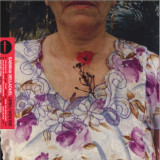
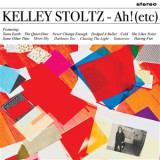
Clear Vinyl
Post-minimalist American composer Rafael Anton Irisarri makes his Umor Rex debut with his new album, The Shameless Years. Inspired by a troubled socio-political climate, buried melodies punch their way through a bleak cover of noisy drones, periodically veering into some of Irisarri's most eerily pertinent music to date.
One of Rafael Anton Irisarri's most thematically and sonically cohesive records to date The Shameless Years came together in a relatively short burst of creativity starting at the end of 2016. Rediscovering some relatively older tools - namely Native Instruments' Reaktor, Absynth, and Kontakt software - Irisarri combined them with his collection of guitars, pedals, amps, and analogue processing gear, turning his Black Knoll Studio north of NYC into a powerful writing tool. Completed quickly by Irisarri's standards, let alone during a period of social upheaval in American society, the record faces down several key personal themes. The title, suggests Irisarri, could in fact be seen as a reflection of the era of shamelessness we're currently living in, a time of fake news and alternative facts.
Two tracks were completely remotely between Irisarri in New York and Umor Rex veteran Siavash Amini from his home in Tehran, Iran. This music came together at the peak of all the anti-Muslim and anti-immigrant rhetoric happening in the USA, not to mention the banning of Iranians from entering the country, explains Irisarri. The diptych with Amini, 'Karma Krama' and 'The Faithless', seems bathed in additional waves of sorrow and dread. The wash of symphonic stormclouds of synth drones and processed notes on the latter gradually appears and disappears over the course of thirteen mournful minutes.
'Rh Negative' marches gigantic guitars through towering valleys of scarred ambient noise dealing with Irisarri's own heritage, many of his ancestors having come to America to escape poverty and oppression. The refusal of modern America to extend similar sanctuary to refugees escaping turmoil weighs heavily on the composer. Elsewhere an emotional onslaught of notes buried in mounds of greyscale noise on 'Sky Burial' aims to deal with Irisarri's very own mortality - something he was recently confronted with following health scares, an accident, and a near-death experience in 2016. Pushing 40 as this album was being made, the composer is constantly aware that he's already outlived his own father, who died at the age of 32. Facing down both intolerance and the void, the epic soundscapes of The Shameless Years are a vast cry of emotion from Irisarri. The clock is ticking - gotta make the most out of it while you still can.
All songs written and performed by Rafael Anton Irisarri, except #5 & #6 written and performed with Siavash Amini. Design by Daniel Castrejón, photos by Camilo Christen. Mastered by James Plotkin.

Buscar:add
Divine Invasions is the sophomore release from Welsh electro post-rock duo Ritual Cloak. The album builds on the cinematic soundscape themes of their debut, with the addition of vocals scattered throughout the record.
Work on Divine Invasions began as soon as the first album had been finished back in September 2019. The first album saw sparing use of guitar, instead mainly writing around piano. When it came to writing the second, Sanders and Barnett didn’t want to fall into the same routine, choosing to embrace exploring new sounds, experiment with new effects, making guitars sound like synths and using vocals for the first time.
The title Divine Invasions is inspired by the Philip K Dick biography. Dick was plagued by nervous breakdowns and driven to near insanity by visions of God.
For Fans Of:Mogwai, Radiohead, Sigur Ros, Kiasmos
Astral Black welcome Eahwee (pronounced errr-wee)to the fold for his 'Solitude' EP. Through his production work with MC's such as Mutant Academy's Koncept Jack$on & High Focus' Coop, a handful of releases on Dallas-based label Sunday Dinner and a flurry of bandcamp beat tapes - the London-based producer has quietly made a name for himself on the international beat scene. With the release of 'Solitude', Eahwee joins the ranks of Astral Black alumni & his production peers Budgie, Shy One & JD. Reid amongst the labels forward-thinking-producer blessed catalogue.
Across the 12-tracks here on 'Solitude', Eahwee contorts a gold-mine of 70's soul samples into a psychedelic reflection on isolation & the human experience, presented in the form a life affirming 17-minute long mixtape. From the exultantly ethereal sounds of 'Duuduu' & 'Windough' to the heart string pulling 'Naybahuud' & 'Rarecandy', Solitude is a testament to how Eahwee has developed his craft into an effortless touch. Though largely instrumental, peppered along the way are a handful of vocal performances in the form of guest appearances from Blah Records commander-in-chief, Lee Scott, the mafioso memoirs of extra terrestrial MC Melanin 9 and neo-soul sage, Ninjah Aragniz – who closes off proceedings with the infinitely loop-able summer anthem 'yah yah'.
The 7" vinyl edition is limited to 100 copies and includes tracks 'LOOOL', 'Shame' & "yah yah' featuring Lee Scott, M9 & Ninjah Aragniz respectively, alongside their instrumentals. Whilst the cassette edition, limited to 30 copies, features all 12 tracks in full on the A-side, with all 12 instrumentals on the B-side.
The Artwork, a comment on working with the best & worse of human nature, comes courtesy of Eahwee himself with yypography & additional design by Morgan Hislop.
With unfettered access to the Zappa Trust and all archival footage, ZAPPA explores the private life behind the mammoth musical career that never shied away from the political turbulence of its time. Alex Winter’s (Bill & Ted’s movie franchises, The Lost Boys) assembly features appearances by Frank’s widow Gail Zappa and several of Frank’s musical collaborators including Mike Keneally, Ian Underwood, Steve Vai, Pamela Des Barres, Bunk Gardner, David Harrington, Scott Thunes, Ruth Underwood, Ray White and others. The soundtrack is a perfect complement to the film available as a limited edition 5-LP 180-gram vinyl set for the Zappa completist. Showcasing 69 total songs, there are 12 previously unreleased recordings from the Zappa archive along with his 1978 Saturday Night Live performance; 24 additional Zappa songs from his extensive catalog spanning four decades; songs from Zappa’s labels Straight / Bizarre Records like “No Longer Umpire” by Alice Cooper and “The Captain’s Fat Theresa Shoes” by The GTO’s; 2 classical compositions by Edgard Varese and Igor Stravinsky; and 26 Original Score cues newly composed by John Frizzell for the documentary – all of which give the universe a sonic exploration into the musical brilliance of Frank Zappa. A 2LP edition on 180-gram clear vinyl will also be available, collecting together eight of the unreleased recordings from the Zappa archive, the SNL performance and 13 recordings from Zappa’s extensive recording career.
When pianist Paul Bley passed away on January 3, 2016, we lost one of the most important improvisers/innovators of modern jazz. He was
instrumental in the surge of free jazz in the 60s.
He established his iconic style and remained influential throughout his life in both avant-garde and mainstream jazz.
The album here is the sequel to SteepleChase’s 1986 LP ‘Live’ from the live recording of March 26, 1986 at Copenhagen’s famous Jazzhus Montmartre.
“If you appreciate Bley’s quintessential lyricism and Lundgaard’s singing lines, this one and the other (‘Live Again’) are noteworthy albums.” - A.G., Compact
“The beautifully clear recording captures Bley’s incisive touch to perfection... recommended to both confirmed Bley addicts and anyone in need of a representative introduction to the startlingly focused genius of the most lucid of romantics.” - Michael Tucker, Jazz Journal International
KNTXT kicks off 2021 by welcoming exciting new talent ONYVAA to its ranks. The much vaunted DJ and producer debuts with her Lost Angeles EP, a superbly powerful four tracker that is perfectly at home on this agenda setting label.
ONYVAA is an LA based artist who has been on a swift rise up through the global techno ranks in the last couple of years. She brings classy Detroit, melodic and dub influences to her music, and her raw analog aesthetic always helps ensure her stylish tracks bring plenty of atmosphere to go alongside her strong modular live-sets. Now, she steps up with a much anticipated debut on Charlotte de Witte's KNTXT label having struck up a personal friendship with the influential artist.
Says ONYVAA, "Lost Angeles was inspired by my time back home in LA and things feeling a bit foreign to my everyday life pre-covid. I’m super grateful for all of Charlotte’s support and really proud to be a part of the KNTXT family. Hoping to play these tracks out on the dance floor soon!"
Opener 'The Way It Is' wastes no time in laying down a heavyweight techno groove that is run through with edgy, laser-like synth riffs. It's an all consuming wall rattler that will blow clubs away. 'Lucid' is a darkened techno roller again lit up with expertly designed synths that are bright yet menacing as distant vocal sounds add another layer of tension. It's an all out acid attack on 'LXD' which places you at the heart of a rave, strobe lights flashing, smoke in the air, darkness enveloping you. The title track closes out at hyper speed, with turbocharged drum programming, interwoven bass and clanking industrial motifs all getting you thoroughly in the zone.
Says Charlotte, "I met Shelby for the first time after a show in Athens. We visited the city the day after and instantly became friends. Whenever the opportunity would arise, we’d spend time together. I love being around the ball of energy that is Shelby and I’m beyond excited to have her and her music on my label. Expecting big things from her!”
This is a fantastic new signing for KNTXT and surely the start of even bigger things for ONYVAA.
Satomimagae is a songwriter, singer, producer and composer residing in the environs of Tokyo, Japan. Hanazano is Satomimagae's fourth album and first for RVNG Intl. Her last albums Kemri (2017), and Koko (2014), were released on Chihei Hatakeyama's White Paddy Mountain. A tribute to everyday mysticism, Hanazono (translated as "flower garden") is an ecology of simple, cyclical refrains and elegiac entreaties cross-pollinating with ludic and layered folk vibrations. Each song on Hanazono is dedicated to a simple theme, object or image, out of which grows uncomplicated melodies wrapped in layers of textural warmth, like a flower subtly moving in sway with its environment. Accompaniments of avian calls and electric guitar strata, added by Hideki Urawa, who also mixed Hanazono, suggest a spacious firmament above this burgeoning bed of earth. An ecology of simple, cyclical refrains are bathed in humming ethers, elegiac entreaties cross-pollinating with ludic and layered folk vibrations. These are songs, lyrically light footed and tunefully mellow. Every element has its place, blooming in synchronicity with its sphere. Hanazono realizes a shift in the artist's habitually intimate and introspective tendencies. Though there are perceptible shades to this space_suggestions of isolation and vulnerability_there is a balance of light which resonates outwards. There is a sense of seeing the world around with wide-eyes, and belonging to it. This way of looking and being is reflected in the folktale relief print illustration which covers the album, setting a scene of sanctuary and insight for this green, growing patch of sound.
Los Angeles-based harpist Mary Lattimore returns with Silver Ladders, the full-length follow-up to acclaimed album Hundreds of Days. Since 2018, Lattimore has toured internationally, released collaborative albums with artists such as Meg Baird and Mac McCaughan, and shared a friends-based remix album featuring artists such as Jónsi and Julianna Barwick. At one of her festival appearances, Lattimore met Slowdive’s Neil Halstead: “A friend introduced us because she knew how big of a fan I was and Neil and I had a little chat... The next day, I just thought maybe he’d be into producing my next record.” He was. Lattimore traditionally records her albums holed up by herself, so the addition of Halstead’s touches as a producer and collaborator leave a profound trace. “I flew on a little plane to Newquay in Cornwall where he lives with his lovely partner Ingrid and their baby. I didn’t know what his studio was like, he’d never recorded a harp, but somehow it really worked
Recorded over nine days at Halstead’s studio stationed on an old airfield, Silver Ladders finds Lattimore exercising command and restraint. Her signature style is refined, the sprawling layers of harp reigned in and accented by flourishes of low end synth and Halstead’s guitar. The music can feel ominous but not by compromising vivid wonder, like oceanic overtones that shift with the tides. This material is colored by specific memories for Lattimore; “Neil has this poster of a surfer in his studio and I’d look at it each day, looking at the sunlight glinting on the dark wave. In these songs I like the contrast between the dark lows and the glittering highs. The gloom and the glimmer, the opposites, a lively surfing town in the winter turned kinda rainy and empty and quiet.”
Lattimore and Halstead reformed three existing demos and improvised the remaining four songs. Among the batch she brought with her, the title track recalls a trip she took to Stari Grad, Croatia on the island of Hvar. “I spent some days there just swimming in the bay, silver ladders right into the sea.” The image stuck with her when she found herself performing at a cliffside wedding overlooking the Pacific. “Before anyone showed up, I had time to set up and play and this song came to me, ‘Silver Ladders (to the sea)’, so I made a little recording on my phone to remember it.” This sketch expanded; a delicately glittering harp melody comes over the horizon, swelling and rolling towards the shore on ebbs of synth and refractory delay.
With Sgurvin's last digital EP receiving praise from a varied selection of DJ's ranging from Ben UFO to DJ Tennis we're excited to present 2 of the original tracks from that EP with the added awesomeness that is neo-trance/techno underground star SYO aka S.O.N.S aka Timothee Victorri take on "Ambience I Love You" and label boss Prins Thomas churning further through the elements of "Take Me To Heavens".
Full Pupp HQ 26th of February 2021
'Without You' is the second release from Athens of the North house band, it's a lovely deep house side with obvious influences. 'Without You' came together while warming up some new gear that had landed in the studio during lockdown and as often happens when you're not trying too hard something just comes together. For the vocal we had a multitrack tape of Avelino Pitts from the band Gold (Sadly he passed a few years ago) and Edinburgh singer Lucy (more to come from her soon). While we may be known for disco and funk AOTN crew grew up in the early 90s, so house is our bread and butter, so you will be hearing more.
On the flip side is something we have been wanting to do for some time, I always loved Mary Love's 'Come Out Of The Sandbox' but felt the structure of the track was a little tricky to play out. We went ahead and restructured the track as well as adding synth parts and created a 12-inch mix that never was (but should have been). We brought to the mix to Ady Croasdell at Ace Records (who currently own the rights) and asked if he would let us release the track legitimately, thankfully Ady liked it and kindly gave us the green light, so delighted that it's not only out but licensed correctly.
Banoffee Pies Records 16th Original Series release comes via a 4 track Split EP collaboration between Kincaid, and Zenzizenz, the ambient moniker of techno producer Viers. After a long year behind us, and likely ahead, this record takes a temporary step into the calm and adds reflection to the blurred months that passed.
The release is a collection of textural bumps and melodies opening with Kincaid's 9 minute "Slow Stumble Home" - an aptly titled down tempo trip through a confused space, layered with composition, like a Playstation home screen theme on Mushrooms. Calm follows with two tracks from Zenzizenz - "Returning From Home", a steady meditation through rumbling sounds soon shift to a new mood on the B side. "Falling Off" offers a more lethargic wandering mood through the marshland before BP016 comes to it's close with "Single Cell", the 2nd Kincaid track, which concludes with a chaptered 4x4 structure and slow bursts of energy within. Time to absorb. Love BP x
Pixey grew up in the sleepy but picturesque village Parbold, Lancashire before moving to Liverpool for school and remaining there to this day. Now signed to Chess Club - a label famed for breaking new talent, where recent exciting signings include AlfieTempleman and Phoebe Green, and past successes include Jungle, Wolf Alice and Easy Life - Pixey is making more waves than ever before. ‘Just Move’ drew attention from BBC Radio 1 DJs Jack Saunders (who made Pixey one of his Next Wave artists) and Huw Stephens amongst many other admirers like Radio X’s John Kennedy who added the band to the X-Posure playlist at the station in October. Pixey has also featured as the cover artist of Spotify’s Indie Brandneu (GER) and Peach editorial playlists, and wasamongst the artists named in major annual tips lists, the Dork HYPE List and the NME 100.
New single ‘Electric Dream’ - with its accompanying video by Thomas Davies - combines cavernous drum machines and dreamy pop melodies with a signature dance stomp. Speaking about new single, Pixey explains: “‘Electric Dream’ was originally written as a piano ballad but after finishing the lyrics I felt the song worked as a dance track. I wrote it to make sense ofbeing locked in with nothing to rely on but technology. The verses are all of my anxieties that come with that - like trying to simulate humanity digitally and what kind of a future that would be - but the choruses are about the imperfections of real life that technology and AI can’t give us.”
Debut EP Free To Live In Colour was written, recorded and produced in Pixey’s bedroom in Liverpool - with additional production added by frequent Gorillaz and Jamie T collaborator James Dring - and draws inspiration from genres like hardcore breakbeat and
dream pop. Pixey says: “I wanted a collection of tracks which gave a quick snapshot into me and my brain - where I’m from, where I want to be and what I’m thinking about. I hope people can take something meaningful from it or simply have a dance.”
Pixey first discovered music as a toddler - she remembers not even being able to walk yet but desperate to sing and dance to Queen - before discovering the likes of Kate Bush, Björk, and George Harrison, whose classic songwriting struck a chord with her in her youth. The catalyst for Pixey’s musical coming of age however, was a near fatal viral illness suffered in early 2016 which hospitalised her, she says: “When I thought I was going to die I thought of all the things I wish I’d done and music was the first thing I thought of. As soon as I started recovering I started learning to record and produce.” She taught herself Ableton production software before mastering guitar and eventually drums and bass after her previous (and current) boyfriend(s) left their instruments lying around to prove she could learn it quicker and play it better.
Once able to carve out her own sound, Pixey turned to The Verve, The Prodigy and De La Soul for sonic inspiration, adding: “I particularly like the idea of using samples/making my own riffs sound like samples which was heavily inspired by the De La Soul album 3 Feet High and Rising. Starting out initially though Grimes was a huge catalyst when I realized she wrote, recorded &produced herself.” Her prolific and unusual songwriting style stems from an original riff or beat, with further layers added as she records and produces, and lyrics being added last - the process taking only a day or two.
With Free To Live In Colour and a whole arsenal of further material being readied on her new label home, Chess Club, Pixey is primed for big things in 2021 and beyond.
black LP[25,00 €]
“Is that what you wanted, Alfred?” we hear in Miles Davis’ unmistakable rasp at the end of “One for Daddy-O,” making it clear that the legendary (and assertive) trumpeter was not just playing the role of sideman on Somethin’ Else, the sole Blue Note album by Cannonball Adderley.
The alto saxophonist was a member of Davis’ band at the time and the depth of their musical camaraderie lifts this session up to rarefied heights throughout, from the breath-taking performance of “Autumn Leaves” that opens the album to the thrilling call-and-response theme of the title track. Pianist Hank Jones, bassist Sam Jones, and drummer Art Blakey round out the quintet on this timeless classic.
This Blue Note Classic Vinyl Edition is all-analog, mastered by Kevin Gray from the original master tapes, and pressed on 180g vinyl at Optimal.
"US funky drummer Les DeMerle who is one of the representations of rare groove scenes. hisA1st album which was released in 1968 is finally reissued as vinyl for the first time!AMany killer tracks for diggers are included, such as ""A Day In The Life"" which is also known as sampling material of HIP HOP classic OC ""Time's Up"" and the US No.1 hit great funk numberA ""Aquarius"" by Fifth Dimension.A
In addition, great musicians were joinedAfor this great funk album such as Frank Foster, Lew Tabackin,AArnie Lawrence, Charles Sullivan etc...you can find how young Les DeMerle was a talented drummer even though he was just around 20 years old at that time!"
One of the most demanded vinyl from diggers, PEOPLE'S PLEASURE "Do You Hear Me Talking To You?" is still shining brightly in the rare groove scene. AP-VINE is proudAof releasing the super killer track "World Full Of People" and the instrumental version of the same song that was not released at the time in the original LP as reissue 7inch for the first time in the world!!AIn addition, this ep includes a special download code for the bonus track that is sung by the producer BILLY BROWN with the same instrumental track!A
Live At Robert Johnson introduces SIRS to its artist roster, with a two-track laid-back Balearic disco EP, reducing the tempi to bring on a nicely crafted and floating cosmic groove. Arrived EP kicks off with Keep Forgetting, a laid-back and slowly evolving cosmic vibe, which lets you forget the daily routines and hardships for a while. On the flip-side, Junee widens the Balearic panorama with added pads, uptempo beats, and a heart-warming synth line. Available digital-only, Call Me turns a notion of long-distance longing into a punchy downbeat, with floating chords and melodies building into a labour-of-love tune. Daniel Klein aka SIRS (read: Sounds In Real Stereo) has come a long way since getting acquainted with electronic sounds in the 1980s and into DJing just a decade later, inspired by the early Hamburg gay scene. His mid-Nineties relocation to Ibiza and Mallorca has clearly informed SIRS’ productions and overall style, which features on many remixes and co-productions, as well as his own tracks and label SIRSOUNDS.
Following on from the success of ‘Greg Belson’s Divine Disco’ series Greg Belson and Cultures of Soul team up again to explore the world of Gospel Funk. Belson, one of the world's leading collectors and DJs of gospel music, has assembled a collection of some of the rarest Gospel funk records for “Greg Belson’s Devine Funk.”
In addition to the full-length, available on CD and LP, choice selections from the compilation will be released on 7 inch singles in limited quantities. Third in the Devine Funk 7 inch series, includes the laid back breakbeat laced “I Don’t Want to Be Alone" by Allen Gauff Jr.,
Birmingham Travelers/Gospel Ambassadors
CALL ME ANSWER (FEAT. HENRY BURTON) / THIS LITTLE LIGHT OF MINE
Following on from the success of ‘Greg Belson’s Divine Disco’ series Greg Belson and Cultures of Soul team up again to explore the world of Gospel Funk. Belson, one of the world's leading collectors and DJs of gospel music, has assembled a collection of some of the rarest Gospel funk records for “Greg Belson’s Devine Funk.”
In addition to the full-length, available on CD and LP, choice selections from the compilation will be released on 7 inch singles in limited quantities. Fourth in the Devine Funk 7 inch series, includes socially-on-point take of the Gospel classic ‘This Little Light Of Mine’ by the
Gospel Ambassadors
Ryley Walker currently resides in New York City. But his latest LP is a Chicago record in spirit. The masterful Course In Fable, the songwriter’s fi@h solo effort,
draws from the deep well of that city’s ferCle 1990s scene, when bands like Tortoise, The Sea and Cake and Gastr del Sol were reshaping the underground,
mixing and matching indie rock, jazz, prog and beyond.
Walker spent his formaCve years in Chicago, absorbing those heady sounds and finding ways to make them his own. Even though he emerged at first in folkrock
troubadour mode, it makes sense that he’s arrived at this point; each LP has grown more intricate and assured, his influences disClling into something
original and unusual. To put it simply: Course In Fable is Walker’s best record yet, full of acCve imaginaCon and endless possibiliCes.
Last October, Ryley went straight to one of the primary architects of the Chicago sound to make the LP. John McEn:re, Course In Fable’s producer/engineer/
mixer, can rightly be called a legend for his work with Tortoise, Stereolab, The Red Krayola, Jim O’Rourke and countless others over a prolific career that now
spans more than three decades. Seeing his name in an album’s liners is preVy much a trademark of quality.
Another Windy City exile, McEnCre is based on the west coast these days, working out of the Portland, OR studio he’s dubbed Soma West. On the seven songs
here, he delivers the signature shimmering and prisCne sonics he’s become known for over the years. But McEnCre was also inCmately involved with Course
In Fable’s overall creaCve process. “I told him to take the mixes and have at it,” Walker says.
The result is a rich, immersive affair — a headphones record if ever there was one. Course In Fable’s songs are twisty, labyrinthine things, stuffed full of ideas
(Walker half-jokingly calls it his “prog record”). But no maVer how complex it gets, the album is never overwhelmingly busy. Wiry guitars melt into gorgeous
string secCons (arranged by Douglas Jenkins of the Portland Cello Project). Tricky Cme signatures abound but feel as natural as can be. Melodies o@en dri@ in
unexpected direcCons but remain downright hummable. Like Walker’s beloved Genesis, the pop element is never too far from the surface even when shit
gets weird. (And speaking of weird, Ryley says that in addiCon to Genesis, much of the album’s inspiraCon comes from “Australian extreme scooter riders on
YouTube and balding gear heads on Craigslist.” Go figure.)
To help put together these various puzzle pieces, Ryley assembled a band made up of several longCme collaborators. Bill MacKay (another Chicago mainstay)
and Walker have made two excellent instrumental duo records of interlocking guitars and warm give-and-take — a rapport very much in evidence
throughout Course In Fable. The freakishly talented drummer Ryan Jewell has performed with Walker for years now in a variety of seangs, from
straighborward song-centric sets to blown-out improv extravaganzas. Bassist Andrew ScoJ Young (Tiger Hatchery, Health&Beauty) has logged many miles on
tour with Walker; he and Jewell are frequently astonishing, a buoyant-but-always-locked-in rhythm secCon, able to navigate someCmes dizzying turnarounds
with apparent ease. Listening to the interplay between Walker and these musicians and you might be fooled into thinking they’d spent a year roadtesCng
Course In Fable’s songs. But it all came together relaCvely fast, thanks to demos, rehearsals and the kind of musical empathy that comes from years of
playing together.
Beneath the wondrous interplay, you’ll find some of Walker’s most personal – if sCll typically crypCc — lyrics, hinCng at some of the trials the songwriter has
been dealing with in recent years. Balanced with necessary doses of dark humor and oddball poetry, Course In Fable feels most of all like a life-affirming
record, fresh air in the lungs, sun on your skin. “Fuck me, I’m alive,” Ryley sings at one point, a moment of both disbelief and pure joy.
Walker has released his albums on a who’s-who of independent labels over the past decade — Tompkins Square, Dead Oceans, Thrill Jockey and Drag City
among them. This Cme around, he’s doing it DIY-style, puang Course In Fable out on his own Husky Pants imprint. You’re in good hands. This is an album that
sounds great (mastered by Greg Calbi), looks great (artwork by Jenny Nelson and design by Michael Vallera). It probably even smells great. Whether you’ve
been onboard since the beginning or are new to the Ryley Walker universe, you’re in for a treat.
Larry de Kat joins Alexis Raphael’s recently launched Paella Hair Sex imprint with his debut EP on the label entitled ‘Radio K-Nip 4.20 FM’.
Utrecht-based DJ and producer Larry de Kat is a rising talent with releases on Slapfunk Records, Lazare Hoche, Ruff and his own Katnip imprint. The artist has built a diverse underground following with his eclectic but distinctive sound gaining support from the likes of Bicep, Mark Farina, Ben UFO and Subb-An. 'Radio K-Nip 4.20FM' explores Jazz, Hip-Hop, House and Funk, adding another impressive release to his growing catalogue.
Alexis has established himself as a critical figure within the house scene since rising through the ranks in 2011. His illustrious career has seen his material land on prestigious labels like Hot Creations, Mad Tech, Moda Black, Get Physical and Nervous, whilst remixing Disciples, Kim English, Tiger Stripes and Miguel Campbell. The recently launched Paella Hair Sex imprint is the beginning of a new chapter in the long-standing Deep House artist’s musical story. A return to vinyl in 2016 sparked the inspiration behind the vinyl-only label, now welcoming a heavyweight release from Larry de Kat this coming March.
Brief ‘cut and paste’ opener 'Tune In Turn On' features immersive drum loops, spoken word vocals and a classic flute sample, laying the way for the rest of the package. The sensational ‘J’ provides a feel-good Deep House affair, as a slick bassline sequence fuses with rising synth lines and soulful vocals to guide listeners on a hypnotic journey. The charming vibe continues on interludes - ‘The Spoiler’, ‘LoPass’ and ‘Zoned Out’ which showcase another side to the artists’ unique style, providing three stripped-back modern jazz affairs.
On the flip, Larry de Kat’s rework of Vanity 6’s ‘Nxsty Girl’ combines funk-infused melodies with taut bass guitar-riffs and loose percussion arrangements to keep the energy flowing. ‘Criminally Understated’ is a harmonic slice of old skool gospel and soul - sensual chords, soft keys and fluttering modulations rise through the cosmos, whilst the B-side interludes 'Lonnies Tune', 'Interloot' and Tribulations round out proceedings in style.
After years of performing live together and appearing on each other's solo albums, critically acclaimed mc's/producers Aesop Rock and Rob Sonic, along with DJ Big Wiz, come together as Hail Mary Mallon and deliver their Rhymesayers debut Are You Gonna Eat That?. The name and album title are inspired by Mary Mallon aka Typhoid Mary, the first person in the U.S. identified as a healthy carrier of the pathogen associated with typhoid fever. Mary Mallon was presumed to have infected 53 people, three of whom died, over the course of her career as a cook. She spent three years in quarantine, which is where she died. Are You Gonna Eat That? is full of powerful dense production and witty word play courtesy of Aesop Rock and Rob Sonic. Add some turntable wizardry from DJ Big Wiz and this trio is destined to be as infectious as Typhoid Mary herself.
Zwischen alternativem, modernem Metal und spürbarem Zeitgeist haben sich die US-amerikanischen Durchstarter TETRARCH in den letzten Jahren mehr als nur einen Namen in der Szene gemacht und sind längst über den Status eines Insider Tipps hinausgewachsen. Bereits das 2017 erschienene Debüt Freak wurde von der internationalen Presse und der Musikindustrie, als auch von Künstlern der Szene hoch gelobt und sicherte der Band eine einzigartige Position innerhalb des Genres.
Das 2021 erscheinende 10-Tracks starke Album Unstable manifestiert den Kometen-Status der Band und beweist deren musikalische Wandelbarkeit auf höchstem Niveau.
Der kommende Longplayer verliert keine Zeit, um die unkonventionelle, enorme Schlagkraft der Band unter
Beweis zu stellen und statuiert bereits mit dem Intro-Track „I’m not right“ ein explosives Exempel für neuartige Spielarten des modernen Metal. Die Zahlen sprechen für sich - die erste Single erreichte inzwischen über eine Millionen Streams auf YouTube - Tendenz steigend. Getragen von der beeindruckenden stimmlichen Varianz von Front-Shouter Josh Fore und den rasenden Riffs der Ausnahme-Gitarristin Diamond Rowe, bricht der Track zwischen puren Emotionen und einer beeindruckenden, neu-gedachten Hommage
an Genre-Größe der frühen 2000er.
Insgesamt liefern TETRARCH mit ihrer 2021er Veröffentlichung Unstable auf 10 Tracks und 37 Minuten
Spielzeit ein Paradebeispiel für starke Attitüde, pures Talent und triumphalen Modern Metal!
A. Smyth debut album, Last Animals, will be released early next year on 19th February. The album was produced by Darragh Nolan (Asta Kalapa) and mastered by JJ Golden. “…we made Last Animals in January of this year, moments before the world was to change forever. Throughout the record I reflect on the effect we as humans are having on our home, little did I know what was to come.... Last Animals is made up of 10 songs, some big, some small, but all with something to say”.
The forthcoming album’s first taster ’Hero’ (Oct 2019) racked up 338k streams with inclusion on Easy, Your Coffee Break and Breath of Fresh Eire Spotify playlists. It followed a series of equally well-received early singles released by A. Smyth over the last two years, including ‘Second Moon’, another add to Your Coffee Break playlist (alongside many other discovery playlists) with 642k Spotify streams to date, ‘Coming Back To You’ and ‘Fever’, both of which featured in ‘Made In Chelsea.’ With the singles gaining early support by major Irish radio stations RTE Radio 1 and Today FM.
A. Smyth has sold out Whelans in his hometown Dublin, and performed at Ireland Music Week and Other Voices festivals - with an appearance also on Other Voices TV show which aired this Spring. As well as performing UK/international showcases at Primavera Pro, Eastbound Festival and All Together Now (among others).
Our new release features the debut of mysterious producer Bosquemar from Chile.
On his self-titled EP, he blends percussive grooves with gritty synths and field recordings.
In sophisticated soundscapes of concrete sounds, crunchy flutes, and conjuring vocals, Bosquemar creates a psychedelic South-American downbeat far from any stereotypes.
For 'Animales' we have Matanza's Rodrigo Gallardo on remix duty, who increases the tempo and adds a dubby flavour with bouncy beats and a calling flute theme.
Recorded sporadically over five years from 2015 to 2019, Sixty Summers was shaped profoundly by Stone’s key collaborators on the album: Thomas Bartlett, aka Doveman, and Annie Clark, the Grammy-winning singer, songwriter and producer known as St. Vincent. Bartlett and Clark were the symbiotic pair Stone needed to realise her first pop vision. A wizard of production and songwriting, Bartlett helped coax Sixty Summers’ independent, elemental spirit from Stone, writing and recording over 50 demos with her at his studio in New York. Itself a thoroughfare for indie rock luminaries, some of whom, such as The National’s Matt Berninger and Bryce Dessner, ended up on the album, Bartlett’s studio was perfect fertile ground for Stone’s growth.
Clark was the incisive yang to Bartlett’s yin, a sharp musical polymath who, when presented with the work Bartlett and Stone had made together, quickly helped fashion Sixty Summers into the album it was destined to be. Contributing vocals and guitar in addition to production, Clark’s revered acidic touch ignited the sparks of Stone’s creations.
The scope of Sixty Summers is dizzyingly vast; miles away from Stone’s past work, it is a world unto itself, a surreal and breathtaking new landscape. Where Stone’s previous solo records, 2010’s The Memory Machine and 2014’s By The Horns, found her grappling with the natural darkness that comes with loving too much, Sixty Summers finds Stone claiming every part of herself: fire, fury, love, lust, longing. Touching on reference points as disparate as the avant-funk of Talking Heads (on ‘Break’) the romantic 2am musings of Serge Gainsbourg (‘Free’, ‘Dance’) and the sleek, ecstatic synth work of Lorde’s Melodrama (‘Substance’), Sixty Summers is an album you can dance to and one you can lose yourself in completely.
After two UK #1 albums, 2 million album sales and an array of international acclaim, you might’ve thought you knew what to expect from Royal Blood. Those preconceptions were shattered when they released ‘Trouble’s Coming’ last summer. Hitting a melting pot of fiery rock riffs and danceable beats, they delivered something fresh, unexpected and yet entirely in tune with what they’d forged their reputation with.
The reaction was phenomenal, with highlights including 20 million streams, a premiere as Annie Mac’s Hottest Record and a run on Radio 1’s A-list and earned alternative radio support and media attention across the globe. In short, Royal Blood are primed to be bigger than ever before. That feat is set to be realised when they release their eagerly anticipated third album ‘Typhoons’ on April 30th via Warner Records.
When Mike Kerr and Ben Thatcher sat down to talk about making a new album, they knew what they wanted to achieve. It involved a conscious return to their roots, back when they had made music that was influenced by Daft Punk, Justice, and Philippe Zdar of Cassius. It also called for a similar back-to-basics approach to what had made their self-titled debut album so thrilling, visceral and original.
“We sort of stumbled on this sound, and it was immediately fun to play,” recalls Kerr. “That’s what sparked the creativity on the new album, the chasing of that feeling. It’s weird, though - if you think back to ‘Figure it Out’, it kind of contains the embryo of this album. We realised that we didn’t have to completely destroy what we’d created so far; we just had to shift it, change it. On paper, it’s a small reinvention. But when you hear it, it sounds so fresh.”
Those traits pulsate throughout the new single and title track. Kerr’s spiralling bass riff casts an hypnotic allure as it grows in intensity, while his vocals switch at will between a raw rock roar and a soulful falsetto. It’s underpinned by Thatcher’s thundering beats, his taut rhythms infused with groove-laden hi-hats.
After setting the tone with ‘Trouble’s Coming’, the album opens in breathless, take-no-prisoners style with the fierce metallic grooves of ‘Who Needs Friends’ hitting an early visceral peak. Royal Blood further reference their fresh array of influences by deploying vocodered vocals on ‘Million & One’ before dynamically switching between the biggest contrasts of their sound with ‘Limbo’. Already a fan favourite having been a regular during the duo’s 2019 shows, ‘Boilermaker’ lives up to its reputation and is more than matched by ‘Mad Visions’, which evokes a hyper-aggressive Prince. It ends with a final surprise in the shape of the stark piano ballad ‘All We Have Is Now’, a vulnerable and revealing reminder to live in the moment.
That song’s unguarded sentiments gives the album a redemptive finale. Whether directly or allusively, the album focuses on exploring the flipside of success that they’ve experienced. It comes from the realisation that success is much more complicated than it seems and that having the time to regain perspective is a precious commodity which becomes ever more elusive. The situation called for reflection and change, which Kerr addressed in Las Vegas. He downed an espresso martini and declared it to be his last drink, and soon discovered that his new-found sobriety would have a positive impact upon his creativity and life as a whole.
That new approach manifested itself in the duo’s decision to produce the majority of ‘Typhoons’ themselves. ‘Boilermaker’ was produced by Queens of the Stone Age frontman Josh Homme, the two bands having first connected when Royal Blood supported them on a huge North American tour. Meanwhile, the multiple Grammy Award winner Paul Epworth produced ‘Who Needs Friends’ and contributed additional production to ‘Trouble’s Coming’.
After two UK #1 albums, 2 million album sales and an array of international acclaim, you might’ve thought you knew what to expect from Royal Blood. Those preconceptions were shattered when they released ‘Trouble’s Coming’ last summer. Hitting a melting pot of fiery rock riffs and danceable beats, they delivered something fresh, unexpected and yet entirely in tune with what they’d forged their reputation with.
The reaction was phenomenal, with highlights including 20 million streams, a premiere as Annie Mac’s Hottest Record and a run on Radio 1’s A-list and earned alternative radio support and media attention across the globe. In short, Royal Blood are primed to be bigger than ever before. That feat is set to be realised when they release their eagerly anticipated third album ‘Typhoons’ on April 30th via Warner Records.
When Mike Kerr and Ben Thatcher sat down to talk about making a new album, they knew what they wanted to achieve. It involved a conscious return to their roots, back when they had made music that was influenced by Daft Punk, Justice, and Philippe Zdar of Cassius. It also called for a similar back-to-basics approach to what had made their self-titled debut album so thrilling, visceral and original.
“We sort of stumbled on this sound, and it was immediately fun to play,” recalls Kerr. “That’s what sparked the creativity on the new album, the chasing of that feeling. It’s weird, though - if you think back to ‘Figure it Out’, it kind of contains the embryo of this album. We realised that we didn’t have to completely destroy what we’d created so far; we just had to shift it, change it. On paper, it’s a small reinvention. But when you hear it, it sounds so fresh.”
Those traits pulsate throughout the new single and title track. Kerr’s spiralling bass riff casts an hypnotic allure as it grows in intensity, while his vocals switch at will between a raw rock roar and a soulful falsetto. It’s underpinned by Thatcher’s thundering beats, his taut rhythms infused with groove-laden hi-hats.
After setting the tone with ‘Trouble’s Coming’, the album opens in breathless, take-no-prisoners style with the fierce metallic grooves of ‘Who Needs Friends’ hitting an early visceral peak. Royal Blood further reference their fresh array of influences by deploying vocodered vocals on ‘Million & One’ before dynamically switching between the biggest contrasts of their sound with ‘Limbo’. Already a fan favourite having been a regular during the duo’s 2019 shows, ‘Boilermaker’ lives up to its reputation and is more than matched by ‘Mad Visions’, which evokes a hyper-aggressive Prince. It ends with a final surprise in the shape of the stark piano ballad ‘All We Have Is Now’, a vulnerable and revealing reminder to live in the moment.
That song’s unguarded sentiments gives the album a redemptive finale. Whether directly or allusively, the album focuses on exploring the flipside of success that they’ve experienced. It comes from the realisation that success is much more complicated than it seems and that having the time to regain perspective is a precious commodity which becomes ever more elusive. The situation called for reflection and change, which Kerr addressed in Las Vegas. He downed an espresso martini and declared it to be his last drink, and soon discovered that his new-found sobriety would have a positive impact upon his creativity and life as a whole.
That new approach manifested itself in the duo’s decision to produce the majority of ‘Typhoons’ themselves. ‘Boilermaker’ was produced by Queens of the Stone Age frontman Josh Homme, the two bands having first connected when Royal Blood supported them on a huge North American tour. Meanwhile, the multiple Grammy Award winner Paul Epworth produced ‘Who Needs Friends’ and contributed additional production to ‘Trouble’s Coming’.
After appearing on the label's Time Is Now Allstars compilation, Bristol's own Wilfy D makes his second appearance with Shall Not Fade, adding to their new Time Is Now White label series. The young garage star serves up the smooth and soulful two-step he is known for, plus two killer remixes from Time Is Now family DJ Crisps and Soul Mass Transit System.
"Garage Tools" opens out the EP with staccato sampling and a rumbling sub bass wobble dominating the track, the most headsy on the record while "All About U (3am Mix)" takes on a gentler vibe. Using luscious vocal chops and glimmering synths, Wilfy D creates a kind of garage love song, delicate and soothing. He kicks things up a notch on "Know U Like It", a slice of speed garage that grooves along to an earworm melody.
On the B-side Wilfy D's original "Midnight Shift", a clean classic noughties garage sound palette, is reimagined twice by DJ Crisps and then Soul Mass Transit System. DJ Crisps gives the track a drum and bass edge replete with teeth-gritting sub bass power; Soul Mass close out the record with a dirty up-tempo remix perfect for a soundsystem.
300: Rise of an Empire is a 2014 American epic action film written and produced by Zack Snyder and directed by Noam Murro. It is a sequel to the 2007 film 300, taking place before, during, and after the main events of that film, and is loosely based on the Battle of Artemisium and the Battle of Salamis.
Its score was created by Dutch DJ and composer Junkie XL. This was made possible because in 2013, Hans Zimmer became responsible for the creation of the score to Snyder’s Man of Steel, for which he asked Junkie XL to collaborate with him and Snyder loved the end result. The score to 300: Rise of an Empire was performed by the Hollywood Studio Symphony, led by Nick-Glennie Smith. The vocals were provided by Hilda Örvarsdóttir and MC Rai. Junkie XL himself added the guitar, bass, drums, piano and synthesizer parts and mixed the full soundtrack at the Computer Hell Cabin studio.
Optimo Music presents “Janara” the new album from Italy’s José Manuel. We always have our ears open for music that is unique, powerful and that can conjure up a ritualistic atmosphere, and this meistrerwerk did all that, and then some. We knew we had to release it after the first listen.
We’ll let José tell you about it….
This album is a result of the necessity of exploring and opening my mind to new musical horizons, by testing the main traditional instrument of the Italian region Campania, whose name is “Tammorra”. It is a big drum, which must not be confused with the typical tambourine, made from a wrap of wood shaped in a circle and covered with dried skin (almost always goatskin or sheepskin). This instrument was used during playful events, especially during rituals and ceremonies, such as the frequent devotional pilgrimages in honour of the Virgin Mary. By using this instrument, the sound, the rite and the magic could take possession of the mind and the body creating a perfect union. Also, the dancers, as if they were bitten by a tarantula and possessed by a strange evil, launched themselves to an uncontrolled dance by moving every part of their body.
In addition to the Tammorra, I also inserted some texts, which have been written by some Neapolitan friends and interpreted with Neapolitans voices, in honour of the “JANARA”. The Janara represents a popular belief of the Southern Italian regions, particularly of the Benevento area. The Janara is one of the many types of witches represented by folktales belonging to the rural tradition.
The Janara was expert in medical herbs, which were also be used for her magical practices, such as the manufacturing of ointment. The ointment gave her the power to become incorporeal with the same nature as the wind. According to the tradition, in order to snatch the Janara it was necessary to grab her by the hair. It was also said that if anyone was able to capture the Janara during her incorporeal moment then Janara herself would offer protection to them and their family for seven generations, in exchange for her freedom.
With this work I hope that the listener might get carried away by the spirit of this pagan and popular legend that can be still be considered as current. As a matter of fact, the folk tales speak of a probable comeback of the Janara, who after being burned at the stake seems to be thirsting for revenge for the evil suffered.
- A1: Die Drachentrommler (Dragon Drummers)
- A2: Lange Melodie Für Den Countdown (Long Melody Towards Countdown)
- A3: Fischer Des Meeres Der Stille (Fishermen Of The Silent Sea)
- B1: Landung Bei Vollmond (Landing At Full Moon)
- B2: Raga Des Aufgehenden Planeten (Raga Of The Rising Planet)
- B3: Amazonenharfe (Harp Of The Amazons)
In the early 1970s, the journalist and composer Walter Bachauer played with experimental fusion group Between, and after founding the Meta Music Festival, began working for RIAS
Berlin. 1981’s Luna Africana was the first electronic album he issued as Clara Mondshine; produced by early Tangerine Dreamer, Klaus Schulze, it’s delightfully lo-fi analogue with a very Berlin feel, the ‘motorik’ style most evident on tracks like ‘Landung Bei Vollmond
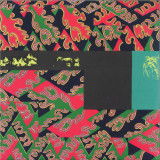
(Landing On The Moon),’ while ‘Raga Des Aufgehenden Planeten (Raga Of The Rising Planet)’ and ‘Amazonenharfe (Harp Of The Amazons)’ add world music elements to the skeletal electronics. Fans of Kraftwerk, Cluster and the Eno/Harmonia collaborations need to
get stuck into this obscure gem, a killer piece of Krautrock’s emerging electronic puzzle.
The 'Abroad EP' catalogues a period of time spent travelling Japan in the spring of 2019. Throughout the course of the month-long trip, Rudy carried around a portable recorder, capturing various sounds that caught his ear. That collection of found sounds would eventually become the foundation for the EP, each track utilizing a handful of different recordings ranging from bird calls in Tokyo's Yoyogi Park, to windchimes in the coastal town of Kawazu. The EP took a full year of patient, daily work to complete, during which time Rudy invited a diverse group of collaborators in to help finish the songs. Throughout the recording process, harp, saxophone, and violin parts were added to create a unique blend of organic and electronic sounds.
POSY is the recording name of Rudy Klobas, Portland-based producer and multi-instrumentalist with a unique sound that intersects jazz, R&B, and electronic music. Originally trained on classical guitar, POSY gradually taught himself piano, bass, and drums and began writing and recording his first songs on a four-track cassette recorder. POSY's music is lush and densely layered, but maintains an element of simplicity that ultimately leaves one feeling relaxed, nostalgic, and hopeful all at the same time.
Part of the new brigade of artists making their mark on the label, Veerus lands his fifth release in two years on Drumcode.
With a pair of EPs and numerous contributions to the coveted A-Sides compilation under his belt since his debut in 2018, Veerus has established himself as a talented go-to producer for Adam Beyer; from his stirring cut ‘Hypnosis’ that highlighted the Drumcode founder’s Cercle performance, to the killer ‘System’ that provided an early 2020 moment for the label.
His consistent vein of form will result in a coveted spot at Drumcode Festival Malta 2021 in September.
‘Recovery’ continues the Italian’s talent for crafting powerful melody-led techno projections.
The title track is an ace. What begins as a smoky atmospheric cut is quicky elevated to beast status as intergalactic robot stabs shatter the mist, while an acid-underbelly adds to the mood. ‘Dysfunction’ brims with a distinct 90s synth aesthetic, propelled by a crisp and classy bottom end.
Scottish producer Gavin Sutherland revives his Other Lands alias with a collection of tracks that were crafted between 1997 and 2012, and were transferred straight from the original cassette.
"What Year Is It? Who Is The President?", is Sutherlands' first full offering with PULP. After multiple remixes for the label (under his Fudge Fingas alias), the release schedule for the Other Lands guise has picked up in the last few months. This resurgence of previously unreleased material will add to Sutherland's elaborate catalog, and confirm that even bits that never saw a release at the time, are sounding relevant and superbly produced.
"What Year Is It? Who Is The President?" (PULP13) starts with "The Caged Bird", which is a synth laden, lush sounding cut that is built around a playful bass sound and beautifully orchestrated chords. The drums are swinging as ever, and the hypnotic character of the lead is present throughout.
"Kaleidoscope" is a venture into the otherworldly. Deep splashes of synth and fx come together effortlessly to create an almost meditative state. The musicality of it all is remarkable, and hard to capture in a few words. The rhythm section is always the backbone, but the fx are equally as important. Fans of Sutherland's work will surely recognize and appreciate the ambiance that is set in Kaleidoscope.
The flipside starts with "It's Something Else". The main lead is indeed something refreshing. In a sense, it's reminiscent of a guitar, but it's clearly not that. The dance floor nature of everything else is supporting the wildness of the lead. Altogether this is something to space out to. On a dance floor, at home or perhaps even during a run.
The final track on the B-side is called "Mind Like A Steel Trap". This sample heavy, hazy sounding piece of beauty is blending soulful flutes, drums and the catchphrase of the song - no more mind games - together with an astonishing ease
Rich in musical associations yet utterly singular in its voice, joyous with an inner tranquility, the music of Natural Information Society is unlike any other being made today. Their sixth album in eleven years for eremite records, descension (Out of Our Constrictions) is the first to be recorded live, featuring a set from London’s Cafe OTO with veteran English free-improv great Evan Parker, & the first to feature just one extended composition. The 75-minute performance, inspired by the galvanizing presence of Parker, is a sustained bacchanalia of collective ecstasy. You could call it their party album.
This was the second time Parker played with NIS. Joshua Abrams: “Both times we played compositions with Evan in mind. I don’t tell Evan anything. He’s a free agent.”
The music is focused & malleable, energized & even-keeled, drawing on concepts of ensemble playing common to musics from many locations & eras without any one specific aesthetic realization completely defining it.
“The rhythms that Mikel plays are not an exact reference to Chicago house, but that’s in there,” Abrams says. “I like to take a cyclic view of music history, can we take that four-on-the-floor, & consider how it connects to swing-era music? Can we articulate a through line? I dee-jayed for years in Chicago & lessons I learned from playing records for dancing inform how I think about the group’s music. The listener can make connections to aspects of soul music, electronic music, minimalism, traditional folk musics, & other musics of the diaspora as well. It’s about these aspects coming together. I don’t need to mimic something, I need to embody it to get to the spirit, to get to the living thing.”
For jazz fans, the sound of Parker’s soprano & Jason Stein’s bass clarinet might evoke Coltrane & Dolphy, even though they didn’t necessarily set out to do that & they play with complete individuality. Abrams sees a bridge to the historical precedent, too. “Since we first met in the 1990s, one of the things that Evan and I connected on was Coltrane’s music,” he says. “I hoped that we would tap into that sound world intuitively. In this case, I think that level of evocation adds another layer of depth, versus a layer of reference.”
Indeed, this is a performance in which the connections among the ensemble & the creative tension between improvisation and composition build into a complex mesh of associations & interactions. While the band confines itself to the territory mapped out by Abrams’ composition, they are remarkably attentive & responsive, making adjustments to Parker’s improvisations. When Parker’s intricate patterns of notes interweave with the band, the parts reinforce one another & the music rockets upward. Sometimes, Parker’s lines are cradled by the group’s gentle pulse & an unearthly lyrical balance is struck.
Drummer Mikel Patrick Avery is locked-in, playing with hellacious long-form discipline, feel & responsiveness. Jason Stein’s animated, vocalized bass clarinet weaves in & out with Lisa Alvarado’s harmonium to state the piece’s thematic material; the pulsing tremolo on the harmonium brings a Spacemen 3 vibe to the party. Abrams ties together melody & rhythm on guimbri, a presence that leads without seeming to. Like his bandmates, he shifts modes of playing frequently, improvising & then returning to the composed structure.
“As specific as the composition is, the goal is to internalize it & mix it up,” Abrams says. “The idea is to get so comfortable that we can make spontaneous changes, find new routes of activity, stasis & byways every gig. It’s like a web we’re spinning. If someone makes a move, we all aim to be aware of it, make room for it. Experiencing & listening is what it’s about, & Evan supercharges that.”
& “supercharged” is the word for this album. With Parker further opening up their music, descension (Out of Our Constrictions) is the sound of Natural Information Society growing both more disciplined and freer, one of the great bands of its time on a deep run.
Aguirre edition: Mastered by Helge Sten, Audio Virus, Oslo. Lacquers by Dubplates & Mastering. Liner Notes by Theaster Gates. LPs pressed on premium audiophile-quality vinyl at Pallas Records. US 2xLP edition available thru Eremite records.
What's the equation that reveals your love? On the latest single from Alba & The Mighty Lions, the question is posed and answered in the form of a beautiful soul slow-roller. Alba Ponce de León's charming word play, both mathematically-minded and straight from the heart, is calculated as a sum of English and Español, and multiplied by the suave accompaniment of a Mighty Lions' backing track that cruises the border of lowrider soul and enchanted exotica. Adding it all up, you may find an answer to this magical schoolyard test, depending on how the numbers align for you. A witty and passionate take on a classic formula, "Matemática" is a deep and sweet flow, a slow dance mood for the heads and lovers alike.
Few Danish bands have been so far around the block at such a young age as Communions.
In 2014, while still in highschool and still shaking dust from the rafters of Mayhem — Copenhagen’s famed underground venue — Communions released their debut EP Cobblestones. The release marked the beginning of a long and productive streak for the band,
who followed it up with the 2015 Communions EP, the 2017 album Blue, a string of self-released singles and an EP, Flesh and Gore, Dream and Vapor, in 2019. Now Communions have joined Tambourhinoceros with a new, reshaped constellation.
Communions’ Rehof brothers — Martin (vocals and guitar) and Mads (Bass) — have decided to continue at the helm of the band after the departure of their long-time bandmates Jacob van Deurs Formann and Frederik Lind Köppen (although the two still feature in the forthcoming Communions recordings). Letting their brotherly musical connection take center stage, the Rehof brothers have assembled a new five piece constellation around themselves going forwards, adding even more depth to their indie rock.
Communions’s early work drew inspiration from the underground scene’s punk cynicism, evidenced by their lofi debut EP which was recorded — with amps blaring — straight onto a USB microphone. Communions’ next two EPs and debut album saw the band refine their craft of songwriting and production while riding a wave of international attention and festival performances. Their forthcoming music now represents another shift in the Communions aesthetic. Marked by sharp cultural criticism, self reflection, and artistic commentary of a grand scale, Communions’ new music takes the signature indie rock from the dark clubs of their youth and merges it with full-fleshed cerebral critique and symbolism.
Surprise!! This is number 7 of this 6 x 45s collection !!
With this new releases you will be able to complete your complete series, but be careful that you will not be able to fit it into the mosaic!
Do not hesitate as this new release in a limited edition of 500 copies will make you enjoy the sounds to the fullest.
TT Syndicate steps forward big time into the direction of early '60s rhythm'n'blues, with the addition of a solid stash of early soul.
Tenor saxophonist Barney Wilen was not quite 21 years old at the time of this meeting with Milt Jackson, Percy Heath, and Kenny Clarke, three veterans of the Modern Jazz Quartet. But the young man is surprising mature and confident throughout the session, interpreting several of Django Reinhardt's compositions, along with a few by his French contemporaries and a pair of his own works. What's surprising about this session is the rare opportunity to hear Jackson exclusively as a pianist, as his playing is a bit more reserved than on vibes. The leader digs into his rhythm section's element with his original "B.B.B. (Bag's Barney Blues)", giving them a full chorus before making a convincing statement himself. The quartet's fluid arrangement of Thelonious Monk's "Epistrophy" swings. Percussionist Gana M'Bow is added for both "Swing 39" and "Minor Swing" to add an exotic touch. Barney Wilen easily holds his own on his first major meeting on a record date with major American jazz stars.
Miles Davis recruited Wilen for his European tour dates at this time (1957), a measure of Davis’s estimation of the young Barney.
"Tex Crick will release his debut singer-songwriter album, ‘Live In… New York City’, on April 23rd as the first artist signed to Mac’s Record Label.
‘Live In… New York City’ was written & recorded entirely on an 8-track recorder by Crick in his New York City apartment over the span of four-weeks during the winter of 2018. Performing the majority of instruments himself, Crick has delicately created a world of delusion within the walls of his New York City apartment. ‘Live In… New York City’ was compiled from these original recordings & additional instruments were added thereafter. Early versions of the album were heard by Mac DeMarco who offered to mix the album in his home studio in Los Angeles"
Afrosound's mission was to emulate the guitar-heavy tropical sounds emanating from Perú and Ecuador at the time. To add to the hippie vibe, there were plenty of whacky improvised vocal asides (called 'inspiraciones'), plus custom fuzz, wah-wah, flange and echo effects boxes for the guitar and keyboards. A barrage of odd sounding synths, drum machines and other electronic flourishes were also sprinkled in to spice up the proceedings. The dozen tracks on Afrosound's debut long play make for a surprisingly diverse palette from which these Colombian musicians painted their daring portrait of Peruvian cumbia, returning the favor in bold colors that still resonate almost 50 years later. "La danza de los mirlos" kicks off with most famous Afrosound hit of all, 'Caliventura', a genius blend of funk and cumbia. Aside from the cumbia amazónica title tune, there are several other covers including three popular songs by Nelson y Sus Estrellas, plus radically reimagined versions of various Colombian costeño classics published by Fuentes. Mario "Pachanga" provides a sad but still groove-oriented Christmas son montuno / cumbia hybrid while Fruko brings us the bomba-funk ditty 'El chorrillo' and the rocking cumbia andina gem 'Cabeza de chorlito' where Sepúlveda channels Enrique Delgado. Fruko collaborator Hernán "Hercovalle" Colorado Vallejo rounds things out with the melancholic psychedelic cumbia 'Esperando por ti', proving that every tropical party has to have its down side as well. The record was also released in the US, Ecuador, Perú, Panamá, Mexico and Venezuela, and probably had an influence of its own, at least in South America. The cover of this lovingly restored reissue features the artwork for the Peruvian edition, which was licensed and issued by Lima's El Virrey label in 1974. The original Fuentes artwork, with a far more outrageous "cheesecake" image, can be seen on the back cover.
Following on from the success of ‘Greg Belson’s Divine Disco’ series Greg Belson and Cultures of Soul team up again to explore the world of Gospel Funk.
Belson, one of the world's leading collectors and DJs of gospel music, has assembled a collection of some of the rarest Gospel funk records for “Greg Belson’s Devine Funk.” In addition to the full-length, available on CD and LP, choice selections from the compilation will be released on 7 inch singles in limited quantities.
First up in the Devine Funk 7 inch series, a split 7 inch from the Christian Harmonizers on the A-Side and The Gospel Travelers on the flip.
- A1: Feelin (Rashad Ft Spinn & Taso)
- A2: Show U How (Spinn & Rashad)
- A3: Pass That Shit (Rashad Ft Spinn & Taso)
- A4: She A Go (Rashad Ft Spinn & Taso)
- B1: Only One (Rashad Ft Spinn & Taso)
- B2: Everyday Of My Life (Rashad & Dj Phil)
- B3: I Don't Give A Fuck (Rashad)
- B4: Double Cup (Rashad Ft Spinn)
- C1: Drank, Kush, Barz (Rashad Ft Spinn)
- C2: Reggie (Rashad)
- C3: Acid Bit (Rashad & Addison Groove)
- D1: Leavin (Rashad & Manny)
- D2: Let U No (Rashad Ft Spinn)
- D3: I'm Too Hi (Rashad Ft Earl)
Die Footwork Legende aus Chicago, DJ RASHAD, beschließt ein erfolgreiches Jahr auf Hyperdub mit seinem ersten Album für das Label und baut damit auf zwei EPs auf, die deutlich demonstriert haben, wie sich der Sound von ihm und seinen mannigfaltigen Teklife Kollaborateuren im Jahr 2013 entwickelt hatte. Benannt nach dem Freizeitcocktail aus Sprite und Kodein treffen auf ,Double Cup" traditionelle 808 Footwork Ausbrüche auf die neuesten Mutationen des Sounds und zeigen so die Vielseitigkeit und Kraft der Chicago Szene im Jahr 2013. Das Album wirft Hip Hop, R&B, Acid, House, Techno und Jungle in seinen Footwork Shredder und spuckt diese auf der anderen Seite als zusammengeklebte Fragmente wieder aus, zusammengehalten durch schnurrende 808 Subtriplets und kantige Polyrhythmen. Das Album wärmt sich langsam mit einem G-Funk Swing auf, der typisch ist für RASHAD und SPINNs Kollaborationen mit TASO aus San Francisco. Diven mit Schluckauf räkeln sich auf den Rhythmen von ,Show U How", ,Only One" und ,Everyday Of My Life" mit Raps von der Crew auf ,Pass That Shit", ,She A Go" und ,Kush, Drank, Barz". Das bereits veröffentlichte "I Don't Give A Fuck" markiert den düsteren Dreh- und Angelpunkt des Albums; das Tempo zieht in der zweiten Hälfte an mit dem treibenden Viervierteltakt des Titeltracks ,Double Cup", dem donnernd gepressten ,Acid Bit" und dem Chicago House von ,Reggie" und ,Leavin. Den Höhepunkt markiert die Breakbeat Wissenschaft von ,Let U No" und ,I'm Too Hi". ,Double Cup" ist vorausschauende Musik für die Tanzfläche und unterstreicht, dass Footwork an der Macht ist.
- 180 GRAM AUDIOPHILE VINYL
- FIRST PRESSING OF 750 NUMBERED COPIES ON
ORANGE VINYL
Fronted by ace drummer Sly Dunbar and his venerable sideman, bassist Robbie Shakespeare, The Revolutionaries were a conglomeration of many of reggae's finest studio musicians. At the time of recording Black Ash Dub, the group were in their prime, boasting a stellar line-up that included the fanes Riddim Twins
alongside such luminaries as Ansel Collins on organ, Bingy Bunny on guitar, Gladstone Anderson on piano.
The LP provides ample evidence of their talents, harnessed by leading producer Jah Thomas, with revered dub masters, Prince Jammy and Scientist, mixing the
killer selection.
Originally released in 1980 and featuring 2 major club hits in Marijuana' and Cocaine', Black Ash Dub is today widely heralded as one of the finest dub collections of the era and considered an essential addition to the collections of all serious fans of the genre.
Available in a limited first pressing on 'Trojan' orange vinyl!
Nearly two decades into her storied career, 9-time GRAMMY-winning singer, songwriter, pianist, and 2020’s most livestreamed artist Norah Jones will release her first full live album ‘Til We Meet Again on April 16. The collection presents globe-spanning performances from the U.S., France, Italy, Brazil, and Argentina that were recorded between 2017-2019. The first single “It Was You,” which is available to stream or download today, was recorded at the 2018 Ohana Festival in Dana Point, California with Pete Remm on organ, Christopher Thomas on bass, and Brian Blade on drums. Additional musicians featured on the album include bassist Jesse Murphy, guitarist Jesse Harris, flutist Jorge Continentino, and percussionist Marcelo Costa. ‘Til We Meet Again can be pre-ordered now on vinyl, CD, or digital download.
The 14 songs featured on ‘Til We Meet Again also span Jones’ entire career from her 2002 debut Come Away With Me (“Don’t Know Why,” “I’ve Got To See You Again,” “Cold, Cold Heart”), 2004’s Feels Like Home (“Sunrise,” “Those Sweet Words”), 2012’s Little Broken Hearts (“After The Fall”), 2016’s Day Breaks (“Flipside,” “Tragedy”), as well as her more recent singles series (“It Was You,” “Begin Again,” “Just A Little Bit,” “Falling,” and the GRAMMY-nominated “I’ll Be Gone”). The album closes with Jones’ stunning solo piano performance of Soundgarden’s “Black Hole Sun,” a tribute to Chris Cornell that was recorded at the Fox Theatre in Detroit just days after Cornell’s death following a performance at the same venue.
It's a strange world we're living in and these addictive cuts mirror it well.
Dancing all night in cheerful melancholy with two strictly limited edits.
The A-side renders gothic synth pop at cruising tempo, spinning a web of tape delay as your mind unravels. A bassline throbs, pistons hiss and a paranoia takes hold of an icy vocal. Lose yourself in the otherwhere.
We step into a pristine wilderness on the B-side, stately pads gliding over a supple rhythm section while tender chimes tug at your heartstrings. Emotion abounds on an instrumental which never was. Big boys do cry, and this dove's weeping over broken wings…
Far Out Recordings is delighted to present Mora!, and for the first time ever on vinyl Mora! II. Mexican-American percussionist and former member of the Sun Ra Arkestra, Francisco Mora Catlett originally recorded and released his debut solo LP as a private press in 1987, but the sequel he recorded over the course of the next few years with an expanded Detroit jazz brass section was shelved for decades to follow. A pan-American melting pot of hypnotic afro-cuban rhythms, frenetic batucadas and fiery sambas, Mora I & II are holy grails of latin jazz, masterminded by an unsung hero of the genre.
Born in Washington DC, 1947, Francisco Mora Jr is the eldest child of two highly prominent Mexican artists, Francisco Mora Sr and Elizabeth Catlett, to whom this project was dedicated. Being born into a mixed heritage bohemian family provided Mora Jr with what he called a “creative, progressive, and healthy arts environment”, building the foundations for a fascinating career journey ahead. Mora grew up in Mexico City where he began working as a session musician for Capitol Records in 1968, before moving to study at Berklee Music College in Boston, MA in 1970. Once he’d completed his studies in 1973, he very briefly returned to Mexico City with the best intentions of cultivating an avant-garde movement in the city, but when the Sun Ra Arkestra came to perform, Mora ended up leaving with the band to tour the world for the next seven years, a decent innings within a group famous for its constantly evolving line up.
Settling in Detroit after his years with the Arkestra, Francisco set to work on his self-titled debut, gathering an ensemble of musicians that included keyboardist Kenny Cox, founder of the legendary Strata Records, esteemed bassist Rodney Whitaker of the Roy Hargrove Quintet and percussionists Jerome Le Duff, Alberto Nacif, and Emile Borde. The album openly embraces and unites the broad spectrum of improvisation, rhythm, and jazz that has thrived throughout the American continents for centuries. In Mora’s own words the album intended to “manifest the African heritage presence in the American continent.” Epitomising this outlook, album opener ‘Afra Jum’ deploys a melody based on Haitian, African and Native American motifs, which is expanded upon by the soulful excellence of the Detroit veterans Cox and Whitaker, amidst a backdrop of afro-cuban inspired percussion.
The sequel Mora II was recorded shortly after with an expanded line up that included trumpet legend Marcus Belgrave, famed for his work with Ray Charles, Charles Mingus, Hank Crawford, Eddie Russ and Wendell Harrison. Continuing the concept of the first album, the follow up moves deeper into South America with the samba jazz dance belter ‘Amazona’, led by the rich vocals of Francisco’s wife Teresa Mora. The ‘Afra Jum’ concept is further explored, with the original motifs beefed up by the additional horns, and interspersions of Sun Ra inspired rumbling free improvisations. This follow up album remained shelved until 2005, when Mora put it out as a now obscure CD titled River Drum, but only now has it been given the high quality vinyl treatment it so deserves, presented as the sequel to Mora! as originally intended.
Through the 90s and into the the 21st century Mora would continue his Pan-American explorations, moving toward a more electronic afro-futurist direction as part of Detroit techno pioneer Carl Craig’s Innerzone Orchestra. Mora also worked with Carl Craig, moog synth wizard Craig Taborn, and his former Arkestra colleague, the legendary Marshall Allen, to form the Innerzone Orchestra spin-off Outerzone, released in 2007 on Premier Cru Records. Mora I & II will be out as two vinyl LPs, CD and digitally 16th April 2021.
Live At Robert Johnson welcomes Amsterdam-based DJ and Producer Alain van der Born aka Perdu to the Club, who already made his marks with Releases on DGTL Records, Heist, and Let’s Play House amongst others. His contribution is a Four Track EP called Soaring Flights, including a Digital only Bonus Track. On this EP, Perdu champions a full-on 1980s sound, which hits more than one Chord in Live At Robert Johnson’s very own set of Styles.
Dystopia (co-produced by Tjade) is a High Energy Track, in which a raw and stoic Bass Riff slowly working its way into a Break. It’s the first Break in which the Atmosphere heats up significantly and subsequently sustains for the remainder of this quite enjoyable, and not quite dystopian rush on the Dance Floor. Retrograde immediately kicks off with a South American infused Rhythm Loop, joined by a deep and analogue Bass Serpentine, with bubbly Acid sprinkled along the way. Rise Of F5 brings back those 1980s signature pumping Kick and gated reverb Snare Drums, employing melodic and slightly haunting elements, which eventually dissolve in Euphoria and a Melody to hum along with (or shout, if you prefer). Somehow It’s Different Now concludes in a slightly different and quite mellow vein, that lets you leave this EP on the easy side. Available Digital Only is the Bells Mix Version of Perdu and Tjade’s Dystopia, for those inclined to a more melodramatic Dystopia with added playfulness thanks to—you guessed it—Bells (no whistles, we promise) …
Isasa’s fourth LP is a guitar excursion from a skillful, humble guide. Minimal, contemplative songs, rich in atmosphere and warm in spirit.
Some musicians give their name to their first album, signifying introduction. Some hold it in reserve — it took Wire 39 years to get around to calling an LP Wire. But whenever they do so, they are making a statement. For Conrado Isasa, an acoustic guitarist from Madrid, Spain, the decision to call his fourth album Isasa reflects the fact that his music’s relationship to his own identity has evolved. Isasa presents an artist whose work reflects that he knows and accepts where he comes from.
Between 1993 and 2003, he played electric guitar in the hardcore metal band Down For The Count and the post rock combo, A Room With A View. These were collective statements, communications between small groups and a select underground community. After the latter group’s demise, Isasa stepped back from recording, and for a while from guitar playing as well. He spent some time learning to play the trumpet, but was inspired to return to the guitar in 2007 after he heard Geoff Farina play a Mississippi John Hurt song for the encore of a Glorytellers gig. Then came another period of learning, during which he studied the playing of Hurt, John Fahey, Jack Rose, and Glenn Jones.
Performing as Isasa, he made three records, each of which can be heard as confrontation with an artistic challenge. Las Cosas (2015) is between the man and his acoustic guitar; what could he do with his fingers, a slide, six steel strings, and a box of wood? Los Días (2016) faces the broader issue of how to deal with the requirements of the American Primitive guitar style. Like Fahey, Rose, and Jones, Isasa sought to make an album that used a cohesive sequence of guitar and banjo instrumentals to express personal experiences. With its references to the sights, sounds, and tastes one might encounter in Madrid, it is like a poetic diary written with the distance that comes from having mastered a second language. After making that record, Isasa toured parts of the United States, and played at The Thousand Incarnations Of The Rose, a festival that gathered representatives of American Primitive guitar’s past, present, and future in Takoma Park, the town where the style’s original synthesist, John Fahey, was born. Insilio (2019) began to look beyond that style, dealing with Hindustani raga forms and adding other instrumental textures.
And now comes Isasa. The name suggests something very personal, and it’s true that it draws upon Isasa’s closest relationships. Two compositions are either named for or feature the voices of his children, but their presence helps this music to transcend the purely personal. For what could be more universally shared than the joy and love one feels for children? Others invoke concepts — absence, liberty, love, reunion. They may mean one thing to Isasa, and another thing to you, but by sharing his reactions to them, he invites you to recognize yours. Isasa isn’t just using his experiences to tell you about his life; he is using what he knows about life to help us know a little more about ours.
A metaphor about diversity and passion for athletics. Looking for inspiration in our environment, as diverse as quality electronics, as extensive as a marathon. Biome Laps wants to take a lot of laps within the IDM universe, electro and the most evocative ambient. This new Madrid electronic music label of José Merinero, which in 2021 celebrates 20 years in music, 15 since he launched his �rst references on his own labels such as City Archives or Ultrix Records and 10 since the creation of .Àrtico Netlabel, his pretty girl, which has allowed him to move in the national underground, and in festivals like L.E.V. and what has been your home to look for that diversity, to �nd that electronics without labels under the name of JM. Here, in addition, it has been able to count on the collaboration of great spanish producers in some references. Passion for electronics speaking of José, he falls short, so he decides to create Biome Laps, where we will �nd timeless music, on vinyl and digital, and above all local music, made with a lot of passion. A veteran who debuts with his own name, showing himself without more, with a single objective, to give back to the music he believes in, everything he has received in return…
For volume 86 in the Brazil45 series, we return with a pair of stellar 1970s Brazilian-Funk / Black Rio nuggets by two of the greats of the genre, Toni Tornado & Zeca Do Trombone.
'Sou Negro' (I'm Black) is taken from Toni Tornado's (aka Antônio Viana Gomes) sought after 1970 four-track compacto EP on Odeon Records. Already having had some experience in show business as a dancer in the 1960s, Toni started his musical career in 1970 and adopted the stage name 'Toni Tornado'. The influence of James Brown flowed through his music, with Toni becoming one of the first Brazilian artists (alongside Tim Maia) to introduce the soul and funk sound into Brazilian music. Together with other contemporary musicians and bands such as Banda Black Rio, Gerson King Combo and Cassiano, this new sound led to DJ's throwing soul parties. This unique Brazilian take on soul and funk (and later on disco) became coined as 'Black Rio'. A movement that celebrated pride in its Black identity and consciousness.
Zeca Do Trombone has an impressive repertoire which has seen him releasing a handful of solo albums and working with some of the greats of Brazilian music, such as Tim Maia, Ivan Lins, Joyce, and Luis Vagner. The track 'Coluna Do Meio' is taken from his 1976 collaboration project 'Zé Do Trombone E Roberto Sax' with saxophonist Roberto Sax, which additionally features the heavyweight Wilson das Neves on percussion. This catchy Wah-Wah guitar-led dancer has become a favourite with DJ's over the years and will continue to be championed for years to come.
ollowing the demise of emo band Mineral in 1997, singer/guitarist Chris Simpson (Mineral/ Zookeeper/ Mountain Time) and bassist Jeremy Gomez reunited to form The Gloria Record. Taking an acoustic and more organic approach than their previous work, The Gloria Record (with the addition of guitarist Brian Hubbard, drummer Matt Hammon, later replaced by Brian Malone and Ben Houtman on the keys, organs and synthesisers) were unarguably the logical progression from Mineral’s emo throes - quieter, delicate and fervently impassioned. Heralded as a “band with big visions and bombastic sounds”, the quintet fostered their admiration for artists with similar arena sized visions ( Radiohead, REM, U2) to produce a sound that was reminiscent of their British contemporaries and American indies. In 1998 the band released their self-titled EP, followed by the intricate offering of 2000’s A Lull In Traffic and 2002’s full length effort Start Here, before disbanding after extensive US tours in 2004. Start Here, the brilliant debut album from The Gloria Record is back on vinyl at long last. Originally released in April 2002, the ten songs are bolstered with four bonus tracks including rarity The Dead Brother, a live version of L’Anniversaire Triste and demos of I Was Born In Omaha and My Funeral Party. Start Here will be released on black double vinyl in a gatefold sleeve on April 16th. The Gloria Record in the press: “…stacked to the gills with nuances that pay back repeat listens in a big way.” - Austin Chronicle “Where their earlier works were true emotional explorations -- singer Chris Simpson's heart fully on sleeve -- The Gloria Record abandons their emo roots for an indie rock growl” - Popmatters “Simpson’s work in Mineral and the dream-pop act The Gloria Record had long established him as a formidable songwriter…”
Having become one of the premier German death metal bands - and rapidly rising the ranks of the genre as a whole - Endseeker storm back into the fray with Mount Carcass. Building on the groundwork laid down on 2017’s Flesh Hammer Prophecy and having the difficult task of besting 2019’s stunning The Harvest they have returned with a streamlined, powerful collection that further raises the bar. To keep the genre sounding fresh in 2021 Endseeker focused on the production, having just a touch of the old school vibe to remain rooted, and they did not limit themselves too hard to the Swedish death metal style of songwriting they previously embraced, but also let other influences into their songs. “You can hear all kinds of stuff that is inspired by bands like Morbid Angel, Bolt Thrower, Slayer, Dissection, Gorefest, etc. We listen to so many different bands and somehow a bit from all of this keeps adding to our music.”
Violence Unimagined. The title tells you everything you need to know about Cannibal Corpse's fifteenth hellish opus. Comprised of eleven tracks, it is state of the art death metal played with passion and breathless precision, making for another flawless addition to what is inarguably one of the premier catalogues the genre has thrown up. Ever improving on the genre they helped define, 2017's Red Before Black stands as one of the highlights of their career. Following it up wasn't exactly easy, but Cannibal Corpse have somehow managed to raise the bar yet again. Already well known for the level of extreme technicality they bring to every record, on Violence Unimagined, Cannibal Corpse have further upped their game.
- 1: Invocation Summoning
- 2: Heart Of The Mind World
- 3: Scarlet Cassocks
- 4: The Death Knell Tolls
- 5: A Cabalist Under The Gallows
- 6: I Am The Ritual
- 7: Radiant Transcendent
- 8: Wayward Confessor 9. Diamonds
- 10: A Stranger's Grave
- 11: Conversations With Rosa
- 12: The Tunnel At The End Of The Light
- 13: Solomon's Song
- 14: Wychwood Shrine
- 15: Oracle Of The Starlit Dawn
Hexvessel and Svart Records celebrate the 10 year anniversary of Hexvessel’s debut album Dawnbearer with a set of reissues, including CD, double vinyl. “Dawnbearer is a very important album for us, being our first album but also the first original album release for Svart Records. It’s also a very special record for our fans, and one that’s particularly close to my heart, in a world of its own when compared to the other records we have made. Considering that it’s been out of print now for some time, I’m delighted to be able to oversee a reissue of this album, together with original demos and out-takes, and liner notes showing the making of this album which carries the initial DNA of Hexvessel’s musical and spiritual journey”, says band leader Mat McNerney, “We haven’t touched a thing on the original layout, but added some bonus material for the limited edition, should you wish to own a luxury edition of this, our now classic debut.” Hexvessel band was founded by English singer/songwriter Mat McNerney (Beastmilk, Grave Pleasures, Carpenter Brut etc) after he moved to Finland in 2009. Their style of music has been referred to as “forest folk” or as Noisey/Vice puts it: “Weaving English folk, lilting Americana, and mushroom-induced psychedelia”. Their debut album 'Dawnbearer' was released worldwide in 2011 on Svart Records and is considered to be an influential classic record of the modern Occult Rock revival. Highly popular with Hexvessel fans and unique in their catalogue, featuring guitars by Andrew McIvor (Code), violin work of Daniel Pioro (who works on Paul Thomas Anderson’s soundtracks with Jonny Greenwood from Radiohead), the early production work of Jaime Gomez Arellano (Ghost, Paradise Lost), and guest vocals from Carl Michael Eide (Virus, Ved Buens Ende, Aura Noir). “Think Woven Hand, haunted ’60s/’70s pastoral folk, or a darker riff on Midlake. McNerney covers Clive Palmer’s post-Incredible String Band crew C.O.B. and successfully transforms and darkens Paul Simon’s “Diamonds On The Soles Of Her Shoes.” He quotes Crowley, Truman Capote, Isaac Babel, etc. Unlike black metal-ready folk, this is folk by a talented, ambitious black metal musician. But the energy’s there. As is the atmosphere.” - Stereogum “(Part of) a new wave of bands who share many of the original occult bands' musical and philosophical characteristics, spearheaded by Ghost, from Sweden, and the Devil's Blood, from Holland – have begun to lure in a new generation of fans, predominantly from the metal scene, their names alone – Ancient VVisdom, Hexvessel, Blood Ceremony– point to a focused step back to the age of Wheatley and Hammer. ” - The Guardian (2011)
- 1: The Miracle None
- 2: Engine Years (Feat. Ezra Hampikian)
- 3: The Towel (Feat. Declan Rowe John)
- 4: The Car Wash (Instrumental)
- 5: Furniture
- 6: Comodify (Feat. Ezra Hampikian)
- 7: Truth Below Surface
- 8: Regenerate The Engine
- 9 3: Waters (Feat. Declan Rowe John)
- 10: Inferno Cone
- 11: Mc / Mc (Feat. Declan Rowe John)
- 12: Today And Forever (Feat. Liam Neupert)
Maximum Crisis/Maximum Calm was released within the context a solo exhibition by Rory Pilgrim at Badischer Kunstverein in 2020. The LP is based on the soundtrack of the 50'min film "The Undercurrent". Produced in collaboration with ten young climate activists from Boise, Idaho, the film and its soundtrack is a powerful statement about the era of climate crisis that explores how people are coping with this global issue on intimate and personal levels.
While musical composition has long been a core aspect of Rory Pilgrim's practice,Maximum Crisis/Maximum Calm - featuring the singers Declan Rowe John and Ezra Hampikian - is the first vinyl release of the artists's music. Interweaving spoken reflections and songs including The Towel, 3 Waters and Regenerate the Engine, the LP also features additional songs and spoken word material extracted from the film. With orchestral parts also masterfully arranged by Pilgrim for the Up North Session Orchestra the record culminates with a moving speech given at the youth climate strike at the Idaho State Capitol on September 20, 2019 by activist Liam Neupert.
Ooh, aah, ooh I didn’t say the giants should be tied up I didn’t say the giants should be tied up I didn’t say the giants should be tied up I didn’t say the giants should be tied up I didn’t say the giants should be tied up I didn’t say the giants should be tied up
All sounds recorded during the creation of the films “Coming of Age” (2015) and “Initiation” (2016). Featuring Mosaku and Retabile Lehselo. Day 1 and Day 2 recorded during ceremonies on January 25 and 26, 2014 in the village of Dreihoek in the Ha Sekake District of Southern Lesotho. Additional footage recorded in the summer and autumn of 2013 in Dreihoek and the surrounding mountain pastures.
Chris Liebing and Mathew Jonson remix Marco Faraone on ‘No Filter Remixes (Part I)’, landing March on Rekids.
Marking the first remix package from Marco Faraone’s 2020 ‘No Filter’ LP, Radio Slave recruits fellow dance music titans Chris Liebing and Mathew Jonson for a pair of remixes on one of dance music’s most essential imprints. Liebing steps up for the A-side, delivering a knockout take on the original. Creeping ambience and deep bass weight bubble throughout the track as additional percussion and synthesis unravel towards a climactic finish.
On the flip, Jonson turns in a distinctively delicate version, clocking in just shy of twelve minutes. Fluttering percussion swirl around off-kilter chords and vocals to craft a hypnotic, dream-like atmosphere.
Under exhausted lights of civil discontent the count has just began. What you parodied, what you scrutinised rears its pure gaze when punctured beyond performance. We cried for justice but instead found order, and now we face the chain. PC World comes through with a haunting EP on She Lost Kontrol to distort the view and warp the vision of industrial addicts and mutant punks with their second release “Order”, a discursive counterattack on four distinct forms of command. The South London duo disfigures the unconscious reduction of pleasure and fetish, the connective tissue between privatisation and violence, the seduction of societal norms, and the neurotic tendencies of self-defeat. Like the surrender to a future shock, these four interwoven tracks are produced for the recognition of restraint and the demand for wanting more. B-side remixes of the title track “Order” come from Physical Wash (former member of High-Functioning Flesh) and Aktion Mutante (featuring members of Violent Poison and Unhuman), two additional perversions of protocol from synth-punk veterans on both sides of the Atlantic. So initiate these six cries of havoc in solidarity with this wasted world, a world of precarious necessity and incessant definition. A world whose shape and conscience will forever be satisfied by order.
- A1: Sacha Hladiy & Paul Behnam – Abyss
- A2: Romain Azzaro – Chloe's Dream Machine I
- A3: Romain Azzaro – Chloe's Dream Machine Ii
- A4: Romain Azzaro – Chloe's Dream Machine Iii
- A5: Paul Behnam – Strat My Love
- A6: Sacha Hladiy – Solstice D´hivert
- B1: Nicolai Johansen & Ruth Mogrovejo – Catharsis
- B2: Sacha Hladiy – Grasshopper
- B3: Paul Behnam , Joao Comazzi, Sacha Hladiy – From Carnival To Quarantine
- B4: Ruth Mogrovejo – The Black Curtain
- B5: Paul Behnam & Sacha Hladiy – Tente Natalie
After a long hiatus, Romain Azzaro is reactivating his Rouge Mécanique Musique imprint with an exciting collaborative project, exploring new musical territories.
As the world started to flip on its head early in 2020, a quintet of musicians formed in Berlin : Paul Behnam (guitar), Sacha Hladiy (grand piano), Nicolai Johannsen (vibrating metal plates), Ruth Mogrovejo (viola), and Azzaro himself (zither) recorded their first album over 3 months in Azzaro’s living room, studio and basement. In Hladiy’s words, “a magical musical circus”. The collision of these different personalities and sensibilities makes Colours Of Now a singular, spontaneous and inimitable object, exploring neoclassical, ambient and experimental music.
“Romain had a wide open vision for a brand new project, connecting musicians from different horizons,” says Paul Benham, “a lot of different processes and beautiful vibrations were shared at this moment in his place.”
Nicolai Johannsen adds: “Colours Of Now is a portrait of a time which was and wasn’t; an alternation between existence and its opposite. The album is a collective formation, realized through different energies drawn to the same centre.”
“This album has become a compilation of people,situations and emotions to me,” explains Ruth Mogrojevo. “2020, the year in which we all met, has been an orderly metamorphosis from which we cannot exclude our professional activities. We all met playing music and deep down we knew that the whole project could be something great and actually meaningful.”
« Colours of Now » is a quintet that formed in early 2020 during quarantine in Berlin. The self-titled album, produced and mixed by Romain Azzaro, explores the different shades of sound in a time where uncertainty leads to the present moment.
Shapes of Rhythm welcomes Emanative to the label for his first vinyl project following contributions to its Isolation Compilation and an Awkward Corners EP both earlier in 2020. Known for his love of collaboration, Emanative connected remotely with Bex Burch during the global lockdown. Disrupt #4 is the result of a meeting of two percussive minds in the midst of a pandemic, and like all good things it started with a groove. Nick initially provided Bex with a hazy, electrified afrobeat sketch. What followed was a musical dialogue which quickly gained momentum. A punk-esque vocal mantra was added, reflecting the here and now of 2020 to drive the track forward. Bex's trademark Ghanaian Gyil xylophone is the conversation with the groove throughout the track. Hector Plimmer also joins the collaboration, seasoning the mix with synthesizers and fx.
Following his stunning Dislocation Songs LP, the label drafted in Awkward Corners AKA Paradise Bangkok's Chris Menist for a remix on the flip that heads towards the club (remember clubs?). Adding 808s, his own conga recordings, synth lines, a sprinkle of acid and a warped vocal treatment, this is classic Awkward Corners: pumped with feeling and rhythm. If Andrew Weatherall was still with us today he'd be digging this take on the a-side.
For our next release we have Parisian artist Jamn Ensemble. "The Snows of Yesteryear" features 3 stunning instrumental tracks of sublime deepness with hints of acid and techno. This ep marks Jamn Ensembles 2nd release and the beginning stages of what is promising to be a long career of quality music and true artistry. We are also very fortunate to have Basic Soul Unit (Stuart Li) on remix duities! Stuart has been consistantly pushing the boundries between deep house and techno for over 2 decades and has released on prestigious labels including Local Talk, Dekmantel, Versatile and Otsgut Ton to name a few. Stuart has added some late night rawness to the title track "The Snows of Yesteryear"
- A1: Intro
- A2: Come Back To Me (Feat Junie & Rick Ross)
- A3: Wake Up Love (Feat Iman)
- A4: Lowkey (Feat Erykah Badu)
- A5: Let's Build (Feat Quavo)
- A6: 1800-One-Night
- B1: Mornin' (Feat Kehlani)
- B2: Boomin' (Feat Missy Elliott & Future)
- B3: 69
- B4: Killah (Feat Davido)
- B5: Bad
- B6: Wrong Bitch
- C1: Shoot It Up (Feat Big Sean)
- C2: Bare Wit Me
- C3: Lose Each Other
- C4: Concrete
- C5: Still
- C6: Ever Ever
- D1: Try Again
- D2: Friends
- D3: How You Want It? (Feat King Combs)
- D4: Made It
- D5: We Got Love (Feat Ms Lauryn Hill)
Being a jack of trades has enabled Teyana Taylor to become a master of all. From her smoky melodic vocals to her dynamic dance moves, the R&B superstar entertainer dips ’n dives between her talents as singer, songwriter, producer, director, dancer/choreographer, actor, fitness guru, model, and mother. When it comes to describing herself, the Harlem native can only think of one word: Everything. In 2014, Teyana’s love for the arts and R&B earned her the title of the first woman signed to Kanye West’s G.O.O.D. Music imprint.
THE ALBUM, released June 19 2020, was tapped by Pitchfork as one of the “most anticipated albums of the summer.” In addition to "Wake Up Love," Teyana’s masterpiece included her new graduation anthem "Made It," pegged by NPR as a “a triumphant, isolation-proof anthem for the Class of 2020.” In August, it was announced that "Made It" was picked by President Barack Obama as one of the tracks on his 2020 Summer Playlist.
Debuted at #1 on the Billboard R&B Charts, the album has spawned a number of standout creative moments, from her self directed video for “Lose Each Other” featuring Elton John. Following the release of her album, Taylor was awarded Video Director of the Year at the 2020 BET Awards.
London-based record label Wisdom Teeth kicks off 2021 with something close to home: Blush - the playful, dynamic debut LP by label co-founder, Facta. Recorded unusually quickly over a short stint in early 2020, the record is the product of a period of refreshed and unfussy creativity. It’s an innovative and distinctly contemporary album that moves a good few steps beyond the artist’s work to date - loosely rooted in UK dance music but taking added influence from ambient, modern classical, dreampop, Balearic, folk music and beyond. The result is a lush, ornate record populated by aqueous pads, bleeping arps, wandering melodies and sparse broken rhythms; acoustic instruments that play out alongside FM synths, all processed with a pristine UV sheen inherited from modern pop music. The record opens with ‘Sistine (Plucks)’ - a crystalline synth piece with a stumbling, shifting metre revolving around an odd-ended MIDI harp loop, coloured through with washed-out pads and snatches of found sound. This breezy mood follows through to ‘On Deck’, where an FM vibraphone rings out on top of woozy, warping chords and a subby soca groove. Moving forward the record moves cohesively through a range of shifting moods and hues. The machine jazz of ‘Brushes’ is tense and coiled, with nods towards Burnt Friedman, Photek and Eli Keszler. ‘Iso Stream’ sees a rich, colourful sprawl of arpeggiated synths and dissociated vocal chops unspool slowly to form pooling, lowlit melodies. Title track ‘Blush’ is a forlorn Autonomic love song built from clicks-n-cuts - like dBridge & Instra:mental reduced and reinterpreted by SND. Throughout, bold, broad melodies take centre stage, and the tracks build like compositions rather than loops or club tools. There are echoes of the dancefloor - particularly in the slo-mo bruk of ‘Verge’ and the glacial subs underpinning ‘Diving Birds’ (a collaboration with friend and Trilogy Tapes regular Parris) - however the end results find us somewhere far off. ‘Blush’ is the second long-form release to come from Wisdom Teeth following K-LONE’s 2020 debut album, ‘Cape Cira’, which was widely ranked as one the best LPs of 2020.
“This is the time. And this is the record of the time.”
Laurie Anderson’s 1982 debut album, Big Science, will return to vinyl for the first time in 30 years with a new red vinyl edition on Nonesuch Records. The release includes the re-mastered original album first released on CD for the 25thanniversary in 2007.
In the early 1980s, Laurie Anderson was already respected as a conceptual artist and composer, adept at employing gear both high-tech and homemade in her often violin-based pieces, and she was a familiar figure in the cross-pollinating, Lower Manhattan music-visual art-performance circles from which Philip Glass and David Byrne also emerged. While working on her now-legendary seven-hour performance art/theater piece United States, Part I–IV, she cut the spare ‘O Superman (For Massenet)’, an electronic-age update of 19th century French operatic composer Jules Massenet’s aria ‘O Souverain’, for the tiny New York City indie label 110 Records. In the UK, DJ John Peel picked up a copy of this very limited-edition 33⅓ RPM 7” and spun the eight-minute-plus track on BBC Radio 1. The exposure resulted in an unlikely #2 hit, lots of attention in the press, and a worldwide deal with Warner Bros. Records.
’Cause when love is gone, there's always justice.
And when justice is gone, there's always force.
And when force is gone, there's always Mom. Hi Mom!
At the time of its original release, the NME wrote of Big Science, ‘There’s a dream-like, subconscious quality about her songs which helps them work at deeper, secret levels of the psyche.’ With instrumentation ranging from tape loops to found sounds to bag pipes, Big Science anticipated the tech-savvy beats, anything-goes instrumentation and sample-based nature of much contemporary electronic and dance music. On the album’s 25th anniversary, Uncut noted, ‘The broader themes of alienation and disconnection still resonate, while Anderson’s use of loops and traditional/synthesized instrumentation is prescient.’
“In the ’70s I travelled a lot,” Anderson recounts. “I worked on a tobacco farm in Kentucky, hitchhiked to the North Pole, lived in a yurt in Chiapas, and worked on a media commune. I had my own romantic vision of the road. My plan was to make a portrait of the country. Big Science, the first part of the puzzle, eventually became part two of United States I–IV (Transportation, Politics, Money, Love). My goal was to be not just the narrator but also the outsider, the stranger. Although I wasfascinated by the United States, this portrait was also about how the country looked from a distance. I was performing a lot in Europe, where American culture was simultaneously booed and cheered. But the portrait was also a picture of a culture inventing a digital world and learning to live in it. Big Science was about technology, size, industrialization,shifting attitudes toward authority, and individuality. It was sometimes alarmist, picturing the country as a burning building, a plane crash. Alongside the techno was the apocalyptic. The absurd. The everyday. It was also a series of short stories about odd characters – hatcheck clerks and pilots, preachers, drifters and strangers. There was something about Massenet’s aria ‘O Souverain’ – which inspired ‘O Superman’ – that almost stopped my heart. The pauses, the melody. “O souverain, ô juge, ô père” (O Lord, o judge, o father). A prayer about empire, ambition, and loss.”
Laurie Anderson is one of America's most renowned – and daring – creative pioneers. Her work, which encompasses music, visual art, poetry, film, and photography, has challenged and delighted audiences around the world for over 40 years. Anderson released her first album with Nonesuch Records in 2001, the critically lauded Life on a String. Her subsequent releases on the label include Live in New York (2002), Homeland (2010), the soundtrack to Anderson’s acclaimed film Heart of a Dog (2015), and her Grammy-winning collaboration with Kronos Quartet, Landfall (2018). Additionally, Anderson’s virtual-reality film La Camera Insabbiata, with Hsin-Chien Huang, won the 2017 Venice Film Festival Award for Best VR Experience, and, in 2018, Skira Rizzoli published her book All the Things I Lost in the Flood: Essays on Pictures, Language and Code, the most comprehensive collection of her artwork to date.
For Böser Herbst, Thomas Fehlmann returns to the sediment of ages, drawing from a similar lexicon of sounds to that used on 2018’s ‘1929 – Das Jahr Babylon’. Like that album, Böser Herbst was produced as the soundtrack to a documentary made by Volker Heise, ‘Herbst 1929, Schatten Über Babylon’, which offers historical insight to the third season of the television series Babylon Berlin. It adds yet another string to the bow of this most forward-thinking and creative artist, whose history takes in NDW (Palais Schaumburg), techno (3MB) and psychedelic ambience (The Orb), plus a clutch of gorgeous solo albums that explore wide terrain, from the dancefloor through supine home listening to compelling soundtrack work. Fehlmann’s approach here was to ‘capture’ samples of contemporaneous music, “picking up the dirt and dust of original 1920s archive sound and music excerpts and shaping the essence into this selection of tunes,” he recalls. After delivering the material to the editing room, Fehlmann “threw all the pieces up in the air, deliberately lost the overview in consequence, researched the atmospheric thread and assembled it for this album.” That explains the singular nature of the material here, and its ability to sit together so neatly and discretely, as its own entity. For Böser Herbst is a music box of possibilities, shadowed by its historical provenance, but never crudely beholden to it, rather “keeping the references only as a distant nod, a scent.”
It’s certainly an evocative listen, a cornucopia of textural pleasure and sensual, tactile assemblage. The spiralling, psychedelic cycle of “Karnickel” winds its way between the ears like thread to the needle; “Mit Ausblick” immerses the listener in deep, gaseous tones, only to be lifted into the air by the glassy drones of “Umarmt”. “Wunschwechsler” crackles with the unpredictability of weather systems while a guitar-like loop unspools across the horizon. Throughout, you can catch tiny tastes of the source material, but they’re pressed into greater service, Fehlmann using these sources for their evocative capacity and then saturating them with grain and rumble, abstracting outwards. It’s a music of temporal disjuncture and clairvoyant resonance, “speaking with the past – alert, distant and quixotic.”
Für “Böser Herbst“ schürft Thomas Fehlmann tief in den Sedimenten der Zeit und schöpft dabei aus ganz ähnlichen Klangquellen wie auf dem 2018 erschienenen Album “1929 - Das Jahr Babylon“. Auch “Böser Herbst“ wurde als Soundtrack zu der von Volker Heise gedrehten Dokumentation “Herbst 1929, Schatten über Babylon“ produziert, die den historischen Background der dritte Staffel der deutschen Fernsehserie “Babylon Berlin“ beleuchtet und dabei Archivmaterial mit Stimmen unterschiedlichster Zeitzeugen verknüpft. Das neue Album fügt eine weitere Saite zum Bogen dieses überaus voraus denkenden und kreativen Künstlers hinzu, dessen Geschichte NDW (Palais Schaumburg), Techno (3MB) und psychedelischen Ambient (The Orb) umfasst, plus eine Reihe von großartigen Soloalben, die ein weites Terrain erkunden, von der Tanzfläche über entspanntes Hören bis hin zu Soundtracks.
Fehlmanns Herangehensweise auf diesem Album war es, Samples aus jener Zeit "einzufangen", "den Schmutz und Staub der originalen 1920er Archiv-, Sound- und Musikaufnahmen zu sammeln und als Essenz in die einzelnen Tracks einfließen zu lassen", erinnert er sich. Nachdem Fehlmann das Material im Schnittraum abgegeben hatte, "warf er alle Teile in die Luft, verlor dabei absichtlich den Überblick, suchte sich dann einen atmosphärischen roten Faden und setzte alles wieder zusammen." Das erklärt die Einzigartigkeit des vorliegenden Materials und dessen Eigenschaft, sich fein säuberlich und gänzlich unangestrengt zu einer Einheit zusammenzufügen. “Böser Herbst“ ist eine Spieldose voll unbegrenzter musikalischer Möglichkeiten, umspielt von düsteren historischen Quellen ohne darin zu ertrinken – Fehlmann ging es stattdessen darum, "die Referenzen nur wie eine flüchtige Geste, wie eine Ahnung von etwas zu behandeln."
“Böser Herbst“ löst eine Vielzahl an unterschiedlichen Vorstellungen beim Hörer aus, es ist ein wahres Füllhorn an lustvollen Texturen und sinnlicher, taktiler Assemblage. Der spiralförmige, psychedelische Kreisel von "Karnickel" dreht sich in die Ohren wie ein Faden ins Nadelöhr; "Mit Ausblick" lässt den Hörer in tiefe, gasförmige Töne eintauchen, um anschließend von den transparenten Drones von "Umarmt" in die Luft gehoben zu werden. "Wunschwechsler" knistert mit der Unberechenbarkeit eines aufziehenden Unwetters, während sich ein gitarrenartiger Loop am Horizont abzeichnet. Überall kann man winzige Spurenelemente des Ausgangsmaterials erhaschen, aber sie werden in einen größeren Kontext gesetzt; Fehlmann benutzt seine Quellen nur als Mittel zum Zweck, um eine bestimmte Wirkung hervorzurufen, die einzelnen Teilchen werden angereichert mit Struktur und Körper und schließlich abstrahiert wieder ins Außen gesendet. Es ist Musik, an der die Zeit sich bricht und in die Zukunft schaut wie in einen Resonanzraum: Musik, "die mit der Vergangenheit spricht - hellwach, mit aller gebotenen Distanz und voller Rätsel".
Jeremy Earl (Woods) and Glenn Donaldson (Skygreen
Leopards, The Reds, Pinks & Purples) met sometime in
the mid-oughts and bonded over a love of tambourines and
DIY sounds. They shared many stages since, and their first
serious collaboration was on the 2011 Woods album Sun &
Shade. Around 2018, Earl was restless in upstate NY and
accepted an invite to record in Donaldson’s studio in an
undisclosed rural coastal town in Northern California. In a
week they emerged with nearly an album’s worth of hazy
folk-rock and psych-pop with touches of more outré lofi
noise. Jeff Moller (The Papercuts) added bass, and they
put the finishing touches on during quarantine. Heaven And
Holy ebbs and flows like coastal fog between songs and
dreamy instrumentals, splitting the difference between The
Clean’s Unknown Country and The Byrds Fifth Dimension.
- 01: Love And Maladies (Feat Joonas Leppänen, Tomi Nikku, Jarno Tikka &Amp; Nathan Francis)
- 02: Impermanence (Feat Jarno Tikka &Amp; Tomi Nikku)
- 03: La Nuit (Feat Joonas Leppänen, Tomi Nikku, Jarno Tikka &Amp; Nathan Francis)
- 04: I Saw It In A Dream (Feat Joonas Leppänen, Tomi Nikku, Jarno Tikka &Amp; Nathan Francis)
- 05: November Ghost (Feat Joonas Leppänen, Tomi Nikku, Jarno Tikka &Amp; Nathan Francis)
- 06: The Gordian Knot (Feat Joonas Leppänen, Tomi Nikku, Jarno Tikka &Amp; Nathan Francis)
- 07: Nathan&Apos;S World (Feat Nathan Francis)
- 08: Ephemeral (Feat Joonas Leppänen, Tomi Nikku, Jarno Tikka, Nathan Francis &Amp; Natalia Castrillon)
Helsinki quartet Alder Ego, led by drummer/composer Joonas Leppänen, returns with their new album "III" on 9 April on We Jazz Records. A follow up to their successful 2018 We Jazz album, "III" finds Leppänen and his bandmates extracting more depth and punch out of their tenor sax + trumpet + double bass + drums setup, which echoes the greats in the game, such as Ornette Coleman, yet adds a readily identifiable edge to it all. Leppänen's writing is evolving, becoming more and more of a signature of the band and sounding delightfully angular yet easily flowing. On "III", Alder Ego features Leppänen on drums, Jarno Tikka (of OK:KO) on tenor sax, Tomi Nikku (of Bowman Trio) on trumpet and the new addition Nathan Francis on bass.
Kicking off with a key track introducing the band's deep sound, "Love And Maladies", "III" moves through a sonic landscape which is constantly surprising yet identifiable as Alder Ego guided by Leppänen's musical vision at all times. This is true even during moments when the composer himself steps aside, namely in the Tikka–Nikku duo cut "Impermanence" and Nathan Davis's highly memorable solo outing "Nathan's World".
The album's many highlights include singles "November Ghost" and "I Saw It In a Dream", plus the stunning closing track "Ephemeral", featuring Natalia Castrillon on harp.
Alder Ego "III" is available on We Jazz Records on as orange and black vinyl editions, digitally, plus as a bundle bringing together "III" and the band's 2018 album "II".
Arrivals features O’Rourke’s first new material in two years and brings us the most emo-tionally raw and affecting album of his career. Produced by Paul Weller at Black Barn Studios, Surrey, the sound is stripped back to Declan’s soulful and resonant voice, the virtuosic acoustic guitar playing for which he’s renowned and only the occasional sparse arrangement of strings and late-night drums bringing colour and light to the LP’s 10 songs. Weller, a fan of Declan’s song writing for some years, also adds his multi-instrumental abilities, including a beautiful piano accompaniment, to the closing track.
Bill MacKay and Nathan Bowles’ debut is well titled: keys are what they play
and keys unlock things too. Their trad bonafides are balanced with
inquisitive playing that adds surprise as a formal songwriting and arranging
tool. Spirited 21st Century folk music made of equal parts bluegrass,
classical, country, gospel and improv.
‘Keys’ is, on first blush, a collection of guitar and banjo duets - but from the
opening moment, it is clear that Bill and Nathan’s agreed-upon duo is a
living organism, growing as it goes. Behind the stately figures of ‘Idumea’, a
19th Century southern hymnal played out on their stringed instruments, a
low organ drone hums persistently, signalling that this music, while coming
from traditional places, is asking more of itself, seeking sparks of inspiration
to light the path forward.
Bill and Nathan met a few years back, if time has any meaning. It didn’t
seem to at the time - after the first night they hung out, it seemed as if
they’d known each other for a while already. A year later, in 2018, they
were booked as a duo at Cropped Out. Preparing for the show involved a
correspondence exchanging lots of provisional ideas, thoughts and music
back and forth from Chicago to Durham NC, then dashing through the ideas
again on the festival grounds an hour before the show. From this seemingly
hectic preparation, their playing that night was remarkably serene, a
spiritual treatise clothed in the casual and natural manner of the proverbial
porch, or in this case, riverside-jam, as the stage literally straddled the edge
of the Ohio River. It was a stellar, simpatico first moment that asked for
more moments like it.
After several more sets the following year, they felt ready to roll tape (as the
saying goes) and chose to do so in Chicago, with Nick Broste at The Shape
Shoppe. Again, an easy rapport prevailed, allowing them to work through
their collected ideas quickly and freely, with the moments of spontaneous
decision that can come only with comfort and trust in each other’s presence.
Throughout ‘Keys’, Bill and Nathan propel their power-folk engine with intent
and feeling, joy and solemnity, as images of wariness, wonder, anger,
deliberation, forgiveness, trust and devotion rise up from the music and roll
it forward into the unknown, a place we can sense both players are happy
to go.
Eight of the ten songs featured are originals, with the other two coming
from different centuries to this one. The diversity of song is matched by the
instrumentation: in addition to Bill’s guitar and Nathan’s banjo, they add
voice, piano, percussion, pump organ, requinto and electric organ to the
richness and rusticity, the traditionalism and open space of the
compositions.
Available again on vinyl for the first time in seven years, ‘The Fact Facer’ is
now pressed on jaundice vinyl (clear with hi-melt green and yellow).
Holy Sons is Emil Amos, a musician whose chameleonic tendencies and
technical versatility has lead to him becoming an in demand multiinstrumentalist as a founding member of Grails and Lilacs & Champagne, as
well as a member of Om and a hired gun for Jandek, to name a few.
Holy Sons is at the centre of his many musical personalities and is his
longest standing project, acting as an outlet for some of his most personal
and direct songs. In Holy Sons, Amos puts his restless imagination to work
using a variety of inventive home recording methods to turn melodic slowburners into multi-layered, atmospheric missives.
While his methods and prolificacy provide a kinship with Sebadoh, Ariel Pink
and other musicians who have offered countless transmissions from their
bedroom floor, Holy Sons comes from the mind of someone who has
internalized the minutia of 70s rock music and eschews the stereotypical lofi sound for a much deeper and more varied palate.
‘The Fact Facer’, his Thrill Jockey debut, bathes Amos’ thoughtful and even
at times philosophical, songs in Technicolor darkness and reinforces Holy
Sons as his musical centrepiece. The album is a collection of home recorded
atmospheric slow-burners steeped in 70s rock with an experimentalist edge.
The songs on ‘The Fact Facer’ creep up on the listener, their fiercely
addictive melodies unravelling slowly and purposefully. Jumping smoothly
between many facets of Amos’ songwriting, the album does much to
establish him as a talented multi-instrumentalist.
From the lysergic leads of ‘Selfish Thoughts’ to the Danny Kirwan
referencing solos of ‘Transparent Powers’ and the skilful acoustic flourishes
of ‘The Fact Facer’, Amos proves himself as adept and creative a guitarist as
he is a drummer.
It is telling that Amos has built up two Holy Sons bands simultaneously: one
based in Portland and one based in New York. Wherever the wind takes
him, there are musicians willing to pick up their instruments and follow his
lead.
“The most admirable thing about Amos’s songwriting is his willingness to
leave empty space in his songs, even though multiple tracks of vocals and
instruments go into each composition” - Pop Matters
“‘The Fact Facer’ is easily Amos’ most focused offering yet, and a perfect
entry point into a back catalogue that’s sure to have listeners drinking the
Kool-Aid again and again.” - Exclaim
The popular mixture of extreme metal mixed with timeless melodies, driving riffs and epic parts as well as the aggressive screams and the choral vocals was retained and expanded with a lot of flair by several nuances. WOLFCHANT was founded in 2003 in Sankt Oswald, Lower Bavaria by Lokhi, Skaahl, Gaahnt and Norgahd. After the two demo self-productions "The Fangs Of The Southern Death" and "The Herjan Trilogy" WOLFCHANT signed their first record deal in 2005. With the albums "Bloody Tales Of Disgraced Lands" (2005) and the groundbreaking "A Pagan Storm" (2007) WOLFCHANT was able to gain a large fan base. This was shortly thereafter expanded internationally with the albums "Determined Damnation" (2009) and "Call Of The Black Winds" (2011) and the band played more tours, concerts and festivals in other European countries. The typical melodic pagan metal of Wolfchant was strengthened from this point on by the clear vocals of Michael Seifert (Rebellion) and the epic factor of the songs was expanded. After the release of "Embraced By Fire" (2013) and "Bloodwinter" (2017) WOLFCHANT managed to take another big step forward and further develop their fanbase worldwide. In addition to festivals such as Wacken, Summer Breeze, the 70000 Tons Of Metal (USA), WOLFCHANT played numerous national and international festivals, concerts and tours and earned a place at the forefront of German Epic Pagan Metal. In 2020 the band signed a new contract with REAPER ENTERTAINMENT and for 2021 the new disc "OMEGA : BESTIA" is now in the starting blocks waiting to be released. Blurb IG#1: With their first single "Komet" epic metal heroes WOLFCHANT strike back with everything they have! Blasting straight into the listeners ears "Komet" might become a new WOLFCHANT classic. Blurb IG#2: Der Geist und die Dunkelheit: A powerful hymn with a groovy and driving riff, combined with superb guitar playing and a epic chorus and lyrics in german!
December 4th, 2020 -- THE LICKERISH QUARTET — Band members of Noel Gallagher's High Flying Birds, Slash’s Snake Pit, Finn Brothers, Alice Cooper, Air Beck – and all formerly of Jellyfish – reunite for 2 nd EP with their first official UK release. Roger Joseph Manning Jr., Tim Smith and Eric Dover are excited to announce their highly anticipated THREESOME VOL.2 EP, to be released 8 th January 2021, will be their first on British indie label Lojinx. The first single, “Snollygoster Goon,” is out now. Of “Snollygoster Goon” Eric Dover says “The music is Adderall-based, in theory, to reflect the absolute breakneck speed at which the corruption flourishes. A frenetic forensic foray into classic old-as-civilization themes involving greed, graft and corruption as applied to any political sphere. The snake oil salesman kissing babies, the saccharine unimaginative public image.” The new release is, naturally, the follow-up to their debut EP, THREESOME VOL.1 - lauded by critics as “a masterpiece” - which was released in May 2020 in the US. With song titles “Snollygoster Goon,” “The Dream That Took Me Over,” “Sovereignty Blues,” and “Do You Feel Better?” Manning, Smith, and Dover’s undeniable chemistry can once again be found throughout THREESOME VOL.2. The songs formed from the same sessions that begun in 2017 offer a slinky and feisty landscape of temptation, freedom of thought, hope and dreams, and a shout out to all who game the systems. An edgy second round of soaring vocals, angular guitars, and pulsing drums, enveloped by timeless keyboard arrangements requires multiple listens to appreciate fully. Manning, Dover and Smith ruminate on the other 3 new songs: “Do You Feel Better?” as told by Tim Smith: A romp along the primrose path of temptations, internal and external, real or imagined, the tiny demons we dance with throughout our lives. A pulsing bass and hypnotic guitar rhythm plays like the backing band to a striptease you’ve sneaked into, and don’t know where to sit, but all are welcome! Some things are more dangerous than others, of course, but this song is sort of a combination of letting your guard down, because of preconceived notions of what’s right or wrong, and justification of actions you think you understand to have under control. Who knows? Experiences do give us perspective, and this song tries to play between the id and superego - a Screwtape letter demon, and an Angel of Mercy. “Sovereignty Blues” as told by Roger Joseph Manning Jr.: “Fears fire’s all they’re fanning, but I won’t light up their fuse.” A tale as old as humanity. Group control over another through the tried and true tactic of fear. And always partnered with a fatal dose of “divide and conquer.” But who’s actually pulling the levers and pushing the buttons of the propaganda machine behind the Wizard of Oz’ curtain of crowd control, so to speak? “THREESOME VOL.2 finds our threesome in fine form, with four new songs to get you through COVID times and beyond!”
- 1: Cat Scratch
- 2: Psychic Horizon
- 3: Saturn's Child
- 4: Aguirre
- 5: More Alive
- 6: Mystery Of Mars
- 7: Love In A Way
- 8: Journeys
KingUnderground releases Other Mirror’s debut record. The album is mixed by legendary engineer ‘No Sleep’ Nigel, who has worked with a plethora of the UK Hip-Hop scene since the late ‘80s.
Other Mirror are James Tilley, Amelie Chevalier and Jonny Cuba. The 3 formed the band in 2018. They had talked for many years about starting a project together and after several years of pursuing their own creative endeavors, the school friends found themselves reunited and finally creating music with one another. Although the Self Titled LP is Other Mirror’s band debut, they’re far from newcomers. Jonny Cuba has been an active musician since the late 90s, with other collaborative highlights including The Herbaliser, Mike James Kirkland, and production for legendary British Library labels KPM, Bruton, and Cavendish. Tilley has had multiple releases with his first band, Fabric, from the early, to late 90s, and has collaborations with DJ Food, and recording sessions with John Peel. Chevalier is an accomplished vocal coach, dancer, and choreographer with various session work, including live shows at Glastonbury Festival, and Bestival. Rounding out the trio with her mystical vocal delivery and groovy bass lines.
The results of the band’s initial collaborations feel reminiscent of a Quintin Taratino movie, cinematic and groovy in nature. Other Mirror are particularly drawn to the power of music within film and TV. It’s ability to support and affect the narrative is similar to how the band taps into direct emotions.
“The music can be partially improvised with unexpected sections. Like films are made in the edit, we follow a similar approach when we are composing.” - Amelie Chevalier
The Other Mirror debut reflects the bands long standing rapport together. It often feels like there is a conversation happening within the music between the old friends. Their unconventional approach to composing adds a familiar flavor in each track on their self-titled LP.
Tony Joe White scored big with 1969’s “Polk Salad Annie” from the album Black & White MOVLP989 and he was having success as a songwriter too: “Rainy Night In Georgia” was a huge hit for Brook Benton in 1970.
His self-titled third album (1971) finds the “Swamp Fox” tempering his bluesy rockers with a handful of introspective, soul-dripping ballads and introducing horn and string arrangements for the first time. The addition of the Memphis Horns and other Muscle Shoals session men really worked well for the album. Many of the songs will remind the listener just how turbulent the cultural climate of the late 60’s and early 70’s was in the U.S. Songs like “The Change”, “Black Panther Swamps” and “I Just Walked Away” (the album’s first single) are testament to the era.
Fingerpoppin’ Records The Dave Brubeck Quartet With Paul Desmond / Live In Indiana 1958 Limited Edition Audiophile Pressing
180gr. Premium Vinyl
Following the year-long world tour set up by the State Department, The Dave Brubeck Quartet returned to the United States in 1958 full of new ideas. The group had played in England, Germany, Scotland, Denmark, Belgium, Holland, Turkey, Pakistan, India, Afghanistan, Iran and Iraq, and the music they heard in those places would inspire Brubeck to compose the pieces that would be featured on the album Jazz Impressions of Eurasia.
A few days before taping that studio album, the group performed most of its tunes in Indiana, during the French Lick Jazz Festival, a set heard here in its entirety. A wonderful performance by the same group at the 1960 Newport Jazz Festival and a rare live reading of the classic “Take Five” have been added as a bonus.
PAUL DESMOND, alto sax; DAVE BRUBECK, piano; EUGENE WRIGHT, bass; JOE MORELLO, drums. Recorded live at the French Lick Jazz Festival, Indiana, August 17, 1958.
Compilation of all the recordings by this legendary punk band prior to their LPs: the sessions for their single 'Mucha Policía', taken for the first time in 27 years from the original tapes, which has unearthed two studio recordings unissued until now; plus rehearsals, demos and live recordings. Completely remastered. A furious, noholds-barred sonic account of a period of immense changes for Spain and the Basque Country. The origins of the most important Spanish punk group, regarded as one of the essential bands of the genre all over the Spanish speaking world.It was a time when the walls were teeming with socio-political proclamations, where the hammer and sickle - alongside the illegal Ikurriña (the flag of the Basque Country) - were the most widely used symbols. A time of general strikes and protests on the streets that often ended in an ugly manner. A time also of smoky joints, where huge speakers played loud rock and there were dreams of strawberry fields. In Santurtzi, on the left bank of the Nervión estuary, a unique band was born: ESKORBUTO. Iosu Expósito and Jualma Suarez lived in working class neighbourhoods that had grown fast. Both Kabiezes and Mamariga were, in the 50s, mainly rural areas of Santurtzi. In the 60s, industrialization and rampant development transformed them into urban areas without any investment in urbanism. Some elements for the alchemy led to the explosion: intelligent young guys who were nevertheless incapable of adhering to school discipline, a country in full swing towards freedom after 40 years of dictatorship. It was a context very familiar with the turbulence of the "Basque conflict", with neighbours seduced by the "armed fight" and the "liberation of Euskal Herria", with the question of "identity" constantly present, traumatic episodes of killings, tortures and imprisonments .One day at the end of the 70s they decided to start a band. The first period of Eskorbuto's life, before the damage done by the needle became noticeable, was incredibly fruitful. They soon found a rehearsal space, thanks to their first drummer ("Gu"), and there the first songs were born: 'Enterrado vivo', 'Busco en la basura', 'Éste es el porvenir', 'Mucha policía, poca diversión'. It was a period of line-up changes. Iñaki Laiseka played bass for them, and that role was also taken by "Seni" and "Garlopa", two precursors of "left bank" punk. Later on they found Paco Galán, who also came from a similar neighbourhood to theirs (Repélega, in Portugalete). Paco always was the necessary engine, the piece around which the rest revolved, which guaranteed continuity. His drumming also added an apparently chaotic element to the already unbridled guitar melodies and visionary texts, halfway between dirty realism and Edgar Allan Poe's nightmares. These recordings are taken from those early times of excitement and vertigo, of journeys to Madrid under a train's seat and endless trips up and down the left bank looking for "someone that I've heard is selling an amp". Now the Reina Sofía Museum exhibits their "Impuesto Revolucionario" LP and there's no Spanish speaking country without legions of fans.
There’s something new under the sun. If you look at it closely,
something new is only (and always) created at crossroads –
when different and signi¦cant traditions are connected and
combined. On their own, these traditions have often existed
for a while. However, in this new form they have never
appeared together. The latest manifestation of something
new can now be found on the album “No Future Dubs”, the
interpretations of “No Future Days” – the most recent album
by German band Messer – by Finnish producer and old
friend of the group Kimmo Saastamoinen aka Toto Belmont.
The intentional traditions that merge on this grand and
digni¦ed album are post-punk, dub and techno. A new
chapter in the culturally constant narrative of dub is written
here. Through their past and parallel activities in hardcore
and post-punk bands, Messer drummer Philipp Wulf met and
befriended Kimmo, originally a drummer too. In their
continuous dialogue discussing their musical journey, Philipp
and Kimmo over the years more and more immersed
themselves in the aesthetic possibilities of dub and reggae.
Indeed, lots of musicians do not listen to the type of music at
home that they write and play in their respective projects
(Take me as an example: House is the music that I produce
and put on as a DJ. On my own, I listen to various stuff,
music by Monk and Messer for example). The same applies
to the protagonists involved here. By discussing dub und
through Toto Belmont’s steadily increasing producingexpertise, the idea of creating dub versions of selected
Messer tracks was born. The Messer album “No Future
Days”, released in 2020, proved to contain the perfect raw
material as the songs on this album are already produced in
a much more transparent way than on previous LPs – and
are hence more suitable for dub. Still, it’s a giant leap from
the originals to the dubs. These add a third dimension to the
described character of the post-punk/dub amalgam: techno.
The result is a sound that hasn’t existed before, especially
not with German lyrics (which scarcely, however, carry
meaning or messages here. Hendrik Otremba’s voice is used
more like an instrument, as if he was the ghostly ¦gure which
he often sings about and which now §oats and screams
through the sound space). The history of mutual contact and
in§uence of (post-)punk and dub (reggae), which Messer
have kept on writing, is glorious and reaches back far in
musical history. Still, it has always been a rather marginal
chapter not only in punk but also in dub history. But already
in the beginnings of punk (the British version, less the
American one), the presence and in§uence of reggae was
obvious in many places as both are united in their resolute
attitude as rebel music. This is how the two genres
recognized each other – especially the punks regarded
reggae as rebellious. As is known, already Johnny Rotten
mainly listened to dub in private. By using the name John
Lydon, he then – together with bass player Jah Wobble –
established the group PiL as one of the most exemplary
bands at the crossroads of dub and punk. The Slits, Pop
Group, Killing Joke, The Ruts and last but not least The Clash
along with the Mick Jones offshoot Big Audio Dynamite –
the thriving British music scene in the early 80s was full of
dub-in§uenced acts. The echoes meandered everywhere. In
the USA, it took longer until the in§uence of dub became
noticeable and it has never been as distinctive as in the UK.
The history of US hardcore, however, cannot be told without
bands like Bad Brains from Washington D.C. who on their
albums occasionally inserted conscious reggae and dub
tracks between breakneck hardcore tracks. Another
important group is Blind Idiot God who similarly included
dub tracks on their LPs – the contrast between densely
droning rock tunes and widely breathing dub versions can be
experienced very vividly here. In the 90s, dub’s in§uence on
post-punk decreased while turning up even more distinctively
somewhere else: Techno was in many respects susceptible
to dub, to say nothing of the music from the so-called British
hardcore continuum (jungle, drum & bass etc.), which directlydeveloped from dub and reggae. But also “pure” techno –
meaning techno without breakbeats – discovered its a¨nity
for the possibilities of dub at an early stage, in England for
instance in projects like Left¦eld or The Orb. In addition, the
project Rhythm & Sound was established in Berlin with close
ties to the Hardwax record store. With regard to this project,
you can’t really say where dub ends and where techno begins
(or vice versa) because of the interconnection of the two
genres here – everything is based on the steppers pulse
which links the two styles like a common DNA. With dub
techno a new genre was created. Until the present day, there
are producers who don’t produce anything else and DJs who
don’t put on any other music. The Messer dubs are
characterized by a grand majestic manner and force that
presumably someone like Mad Professor is able to produce
and that is also inherent in many Scandinavian productions
of the last 15 years; a crystal-clear aesthetic which locates
itself far away from Kingston or Brixton, but features a pulse
referring clearly to Berlin and Helsinki. The songs appear in a
completely new and deconstructed form, the instruments are
exclusively used as particles and raw material, not as riffs;
merely glaring guitar textures ¦ll the wide dub space. There
are many new elements that were added by Toto Belmont,
especially synthesizer sounds and drums. The ¦nal result
creates an enormous aesthetic power and dignity, and an
atmosphere you don’t want to leave anymore. “No Future” is
a well-chosen title as a reference to the protagonists’ punk
association; as a main thrust of the album, however, a
comma between these two words is imaginable as well.
The first single from the Mathlovsky album Yassssin, “ The Heat” i s EXACTLY what is said on the label: PURE FIRE! Featuring the talents of album collaborator and live drummer Gregory Simons, and vocalist duo Jason and Rhonda, this single is the maximum hype pressure coming off the LP. Label boss and global octopus extraordinaire Submerged does the B Side honors with a tasty drum n bass tempo acceleration version. It’s important to rewind and understand how we got here in the first place…
Belgian electronic music giant Mathlovsky has continued his constant evolution, with new live performance with a live drummer. Celebrating and promoting this new partnership, the album Yassssin (4 S’s if you want to make it easy on yourself) is being released on double vinyl by Ohm Resistance this Spring. With 3 video singles, we decided to make a special one-off, limited Fire Red 7” to go along with the first single.
Since 2019, Mathlovsky has invited drummer Gregory Simons to perform at his live shows, to add another layer of punk & funk fueled acoustic drums.
Not replacing the electronic heavy hitting beats but by looking at his drumset as another instrument, Mathlovsky’s music has entered another realm.
As such, a new era has begun. Yassssin, the first album with Simons’ acoustic drums as an added weapon of dancefloor destruction, is the perfect representation of what Mathlovsky live is all about. After ten years of dwelling in the rave scene and band scene alike, Mathlovsky has fused all his influences and tastes into one cohesive album. Inviting his talented Belgian music friends to contribute a voice, an instrument and overall energy, this album is a ride to never forget.
For both ravers and moshers, Mathlovsky has crossed boundaries between worlds and begins this decade with a massive bang.
cello player and electronic artist martina bertoni's new album "music for empty flats" delivers masterfully crafted experimental ambient / drone for fans of hildur guðnadóttir, giulio aldinucci or lawrence english.
martina bertoni is a berlin based cellist and composer. she started playing the cello at a very young age. classically trained, bertoni's career soon developed around experimental and film music where her cello has been featured in numerous records, soundtracks for awarded movies and tv series and collaborations, among others with blixa bargeld and teho teardo with whom she recorded several albums and performed at many prestigious festivals all around the globe.
the core of her solo work is based on deconstructing the relationship with her own instrument by combining acoustic sound, repetition, analog and digital synthesis. after the eps "in a paradise you would be happy" (2018) and "the green ep" (2019) she released her critically acclaimed full length album "all the ghosts are gone" with the reykjavík based label falk in january 2020.
on her new album she continues to explore the sonic possibilities of her instrument which she uses as sound source - sounds which are then processed, adding reverb, feedback and sub-bass frequencies and thus crafting sonic sculptures, rich of atmospheres and frictions.
"the inspiration for the title "music for empty flats" comes from a fraction of time during last winter, while i was visiting iceland. i had the strange opportunity to spend lots of time listening to music, alone in a brand new but unoccupied - therefore completely naked - empty flat in the suburbs of reykjavík. it was christmas, it was constantly dark, outside there was snow, inside there was this strange dystopian empty space in which i could listen to my favourite pieces of music in complete solitude. this is when i started sketching the new record." says bertoni.
the resulting seven new tracks deliver masterfully crafted experimental ambient / drone, dense and intense but fragile and sensitive at the same time. A more than impressive new artistic statement by martina bertoni, recommended not only for fans of hildur guðnadóttir, giulio aldinucci or lawrence english!
“Maestro melodist Christophe Petchanatz (aka Klimperei) and all around music fanatic David Fenech engage remotely in a repetitive exchange of recordings and overdubs on their debut album titled ‘Rainbow de Nuit’, sporadically spanning over the last decade. Evocations of experimental and improvised jazz, chansonesque songs, bluesy folk, and outsider music undulate harmoniously across the record. From music boxes and walkie-talkies down to plastic straws, plucking various stringed instruments such as the charrango and banjo, kazoos and snake-charmer ocarina and flutes, all the way through the sweet accordion and melodica, found and traditional tuned percussion - there is far from a shortage of sound sources on this freakishly inviting record. What germinates as an imaginative and emotional chord progression played by Klimperei, evolves with Fenech layering additional recordings, which would then find their way back home to Klimperei yet again, and so on, and so forth. This recursive compositional and improvisational loop, combined with Fenech’s musique-concrete-like mixing and editing techniques, transforms the acoustic recordings by way of compression, saturation, and reverberation or simple pitch changes - resulting in the duo’s recordings seemingly sound like they may very well be an octet in real time. While the majority of the recordings have been ping-ponged remotely, David and Christophe unite under one roof to record the closing track of the album.
The pieces presented on ‘Rainbow de Nuit’ treat the ears to a carousel ride waltzing through a multiverse made up of surrealist puppet theaters, dramatic film noir act changes, and a mosaic of polyphonic instruments and toys alike. In other words, a score to a fable brought to life with haunting yet charming melodies and occasional hallucinatory voices reminiscent of laughter and infantile epiphanies which we hear on Tarzan en Tasmanie and Madrigal for Lola. This is taken a step further by Fenech, to a brief libretto of incomprehensible tongues on Pocarina. Amid the mysterious and dark (Septième Ciel and Rugit Le Coeur) also lies tender and simple compositions (Rainbow de Nuit and Chevalier Gambette), murky suspenseful melancholy (Levy Attend and Eno Ennio), and casually slipping into pensive psychedelic backdrops (Un Cercueil à Deux Places) - forming a colorful blend of sounds. A world of echoes. A tale of tales. One persistent earworm that you’ll likely be whistling and humming along to on a first listen.”
- A2: Unnoticed (Robert Parker Remix)
- A3: Synthian (Feat Lau - Das Mortal Remix)
- A4: Synthian (Feat Lau - Ends 84 Remix)
- B1: Synthian (Feat Lau - Maethelvin Remix)
- B2: Synthian (Feat Lau - Sung Remix) )
- B3: Synthian (Feat Lau - Highway Superstar Remix)
- B4: Synthian (Feat Lau - Zenith Volt Remix)
- A1: The Wire (Feat Kim Wilde & Lau - Ricky Wilde Remix)
The highlights from NINA's classic albumSynthian, reimagined by some of the hottest names in Synthwave like Robert Parker, Das Mörtal, Highway Superstar, Sung and Maethelvin as well as Aztec's very own Zenith Volt and Ends 84.
The opening track deserves special attention since it gets a very rocky treatment from Ricky Wilde and features the legendary Kim Wilde on additional vocals.
a A1. The Wire (feat. Kim Wilde & LAU) [Ricky Wilde Remix]
[b] A2. Unnoticed [Robert Parker Remix]
[c] A3. Synthian (feat. LAU) [Das Mörtal Remix]
[d] A4. Synthian (feat. LAU) [Ends 84 Remix]
[e] B1. Synthian (feat. LAU) [Maethelvin Remix]
[f] B2. Synthian (feat. LAU) [Sung Remix]
[g] B3. Synthian (feat. LAU) [Sung Remix]
[h] B4. Synthian (feat. LAU) [Zenith Volt Remix]
Controversial glam act New York Dolls were the epitome of rock ‘n’ roll excess, prefacing
the rough edges of punk. Formed in late 1971 and initially known as Actress, the earliest
incarnation featured bassist Arthur Kane, guitarist Rick Rivets and the guitarist that would
become Johnny Thunders, with drummer Billy Murcia and singer David Johansen; soon,
Rivets was replaced by Egyptian-born Sylvain Sylvain. Decked out in androgynous clothing,
including platform boots, lipstick and body stockings, The Dolls toured England in 1972,
which was ruptured by Murcia’s tragic alcohol-and-drugs-related death, bringing Jerry Nolan
into the group. Signing to Mercury, they issued a self-titled debut, followed by Too Much Too
Soon, but disappointing sales saw Mercury drop them. Live At Radio Luxembourg was
recorded in December 1973 and features hot live versions of songs from these two seminal
studio albums; with plenty of banter delivered in cod-French accents between the tracks, the
set reveals the group in their prime, their no-limits attitude taking the form of raucous guitar
riffs, shouted vocals, crashing drums and driving bass, and in addition to classic Dolls like
“Puss N Boots” and “Jet Boy,” there are some blues references too.
Captivating, ethereal and majestic, Mammal Hands (saxophonist Jordan Smart, pianist Nick Smart and drummer and percussionist Jesse Barrett) has carved out a refreshingly original sound from a disparate array of influences: drawing on spiritual jazz, north Indian, folk and classical music to create something inimitably their own. Hailing from Norwich, one of Britain's most isolated and most easterly cities, they have forged their own path away from the musical mainstream and their unique sound grew out of long improvised rehearsals. All three members contibute equally to the writing process: one that favours the creation of a powerful group dynamic over individual solos. Their records are entrancing and beautiful affairs, while their hypnotic live shows have seen them hailed as one of the most exciting bands in Europe as they push their unique line-up to the outer limits of its possibilities.
Shadow Work is their third album and the first they have self-produced. Recorded at 80 Hertz Studios, Gondwana Records home from home in Manchester, it is the result of 18 months of intensive touring and mammoth writing sessions. The energy from their exhilarating live performances has fed into the writing process and yet there is a quiet reflective side to this album, giving it an expanded emotional range that draws the listener deep into Mammal Hand's sound world. One that builds on the sound of their previous recordings, Animalia and the beautiful Floa, but is wider than ever, with the use of prepared piano strings, more prominent effects and field recordings all adding to the band's most ambitious and accomplished album to date. The striking artwork is by Daniel Halsall and reflects the organic, natural influences underpinning the band's music alongside a darker, modern minimalism.
Nicky Night Time and Ali Love have collaborated for a hypnotising new single ‘Ubiquity feat. Breakbot’. Filled with classic disco flair, funk riffs, and infectious vocals the track instantly encapsulates a dreamy dance-floor moment and comes complete with remixes from The Magician, Eric Duncan and Lubelski who all add their signature spark.
With each artist living in a different country, ‘Ubiquity’ has already made its way around the globe, Ali Love explains how the track came together, “‘Ubiquity’ started its life in Australia with Nicky Night Time as a drum and guitar track. Then made its way to London where I added electric bass and vocals very early in the morning. I recall there were about 8 Japanese girls in my flat for some reason, so you could say that really added to the song’s vibe. You can feel there’s a party happening. The tune then travelled to LA where, by chance, Nicky drafted in Breakbot, who wrote the amazing string and horn parts, and sent the song into the stratosphere. The stars have aligned and the vibe is ubiquitous." Nicky Night Time adds “It was a love project really and I think we felt it was a cool thing just to put out into the world between the 3 of us amigos.”
For the remixes, globally renowned producer The Magician adds his signature touch highlighting the original’s funk elements and punchy drums while maintaining the driving bassline from the original. Merging disco with French touch, The Magician accentuates the cut-off and phaser effects for a playful and energetic remix. Next up, Eric Duncan hits with a synth heavy cosmic remix as Lubelski closes out proceedings going for a stripped down, late night shuffler.
Real Real World is the first collaborative effort from Nantes-based Australian drummer/percussionist Will Guthrie and Australian keyboardist/composer James Rushford. Primarily recorded in a fluid, spontaneous studio session in Nantes, with overdubs added later in Melbourne and Nantes, Real Real World presents five spacious, unhurried pieces that inhabit a unique sound world characterised by wheezing, half-voiced organ chords, chiming metal percussion, and eruptions of small sounds. Beginning with the eerily beautiful, shakuhachi-esque sound of Rushford performing on detuned portative organ, the opening title track is abruptly transformed by the entry of Guthrie’s sizzling cymbals, deep gong strikes, and rustling hand percussion. On the epic ‘Lumbering’, which occupies the majority of the record’s first side, organ chords define a space in which a kaleidoscopic succession of amplified thuds, chiming bells, rustled and dragged objects, and abruptly silenced clusters advance and recede in an oneiric blur, eventually making way for a passage of Guthrie’s virtuosic polyrhythms, itself unexpectedly overtaken by waves of melting fairground organ. The record reaches an energetic climax mid-way through the second side with the stunning ‘Slakes’, where lugubrious chords in the organ’s lowest register are joined by Guthrie’s skittering rhythms, which somehow manage to call to mind both the most chaotic moments of Balinese Gamelan and the stochastic breakbeats of late-90s Autechre. On this piece, Guthrie and Rushford are joined by Melbourne saxophone maverick Scott McConnachie, who contributes an alto sax solo of burning precision, working with a single-minded palette of piercing long tones and wild intervallic leaps. Though it makes extensive use of overdubbing, Real Real World retains a strong sense of having been performed, rather than constructed: while at times the fleeting succession of events can recall electroacoustic music, its primarily acoustic nature and unhurried pace is also reminiscent of the music of AACM affiliates or Marion Brown’s classic Afternoon of a Georgia Faun. Immediately engaging while also hiding countless details in the folds of its polychrome fabric, Real Real World is a relaxed and joyous document of collaborative musical invention.
Artwork by Patrizia Bach. Layout by Lasse Marhaug. Mixed and mastered by Joe Talia at Good Mixture, Berlin.
The three players in Chicago’s Moontype orbited each other for years before they came in phase. Bodies of Water, their debut album for local label Born Yesterday, documents travel, insecurity, friendship, and the titular element—all of which are representative of the band members’ strong connection to place and to one another. “Being rooted in the landscape became important to me while studying geology, which completely changed how I think about the world,” offers songwriter, vocalist and bassist Margaret McCarthy of the album’s central themes. The arrangements themselves feel like open-hearted negotiations; sparse fingerpicking gives way to saturated tube-screaming as naturally as the changing of tides. Over twelve tracks, Moontype revels in the woozy concoction of its many influences, but always lands on punchy hooks, shifting between arrangements both spacious and mystifying without abandoning their conversational warmth.
Conservatory students at Oberlin College’s prestigious music program, each member focused on exploring different sounds. Guitarist Ben Cruz, who came up on classic rock shredding and migrated into jazz performance, admired the indie pop of Fountains of Wayne, the groundbreaking composition work of pianist Vijay Iyer, and the genre-morphing folk of heavy hitters like Neil Young and Joni Mitchell. He played in several projects alongside Emerson Hunton, who’d drummed from age six and entrenched himself in the Twin Cities improvised music scene before even heading to college. Margaret—who grew up outside of Boston playing piano, singing in choirs and writing on guitar—spent her time creating knotty, riot grrrl-and-hyperpop inspired songs for bass and voice, as well as noise soundtracks for art installations. Inspired by artists like Adrianne Lenker and Gillian Welch, she recorded the EP bass tunes at home in an apartment over the town’s optician, releasing it upon graduation. A week later she migrated even farther west to Chicago, where Ben and Emerson had already enmeshed themselves in several projects, from avant garde ensembles to a country group.
Ben was instantly impressed by Margaret’s songs, at once “challenging and unlike anything I had played before.” The duo decided to try performing together, but knew this special music would be even better fortified with drums. Emerson was the obvious choice—as Ben puts it, “He’s our great friend and also the best drummer we know. Who else do you call?” Moontype-as-trio gigged around town, eventually embarking on a first fall tour in Emerson’s Prius. On that trip, they felt the music morph into something living, and the care and trust between them intensified. They decided to put together songs for a record, recorded at the end of 2019 with Jamdek Recording Studio’s Doug Malone, a dependable collaborator whose patient process perfectly captured the magic of their newfound familiarity. While Margaret’s skeletal demos still informed the bulk of Moontype’s full-band debut (some of which are re-recordings of bass tunes cuts), the resulting arrangements are songs reborn and strengthened by the three musicians’ absorption of one another’s ideas.
On Bodies of Water, Margaret’s soothing, unadorned alto is often peppered by the gliding, eerie harmonies of her bandmates. “We love the act of singing together,” explains Ben, who describes it as “connecting and grounding and wholesome.” The push-pull search for common ground characterizes the instrumentals as well. Round basslines occupy higher octaves, trading space with guitars chugging in lower registers, and all the while drums break apart and glue back together in idiosyncratic grooves that never lose the pocket. Of the complicated rhythms that sometimes result: “Any mathy moments are based on how the lyrics fall naturally, which feels like it frees us up from having to stay in one time signature,” says Emerson. “Rhythmic elements never feel like they’re being added in, more like they’re already there and we just float on through.”
Touring’s restlessness informed these songs, but so did the DIY scene that welcomed Moontype to Chicago—including, according to Margaret, the “wild harmonies” of Ohmme, the “deadpan explanatory rock” of Ratboys, and the “luxe math rock pattern music” of The Knees. Working at beloved venue Sleeping Village inspired Margaret’s observational vignettes; “We are sitting at the desk and you are mixing all the bands,” she reports in the middle of the dextrous folk hammer-ons of “3 Weeks,” gently admitting, “I am trying to have fun and I am trying to get paid” in a world of bikes, trucks, and velvet. “About You,” a robust power-popper written about a post-gig romp around Richmond with artist Bebé Machete, opens with a Phair-ian quip: “Looking at you with my fuck me eyes / Do you wanna get inside of mine?” Meanwhile, the spectre of lost camaraderie looms over “Ferry,” an atmospheric and anthemic standout that questions, “If I’m not your best friend / then who am I to anyone?” Alongside water, this preoccupation with friendship is a focal concern lyrically, but the palpable love between Moontype’s players is essential in communicating that desire for connection, and all three members are dedicated to exploring sound and meaning organically and together. Care and generosity are at the core of Moontype, and Bodies of Water is a clever album full of insightful music, as cosily enveloping as it is incisively honest.
A year characterised by a pandemic, lockdowns, political ineptitude and oh, so much staying the fuck at home is enough to make anyone want to blow off a little steam. One overused piece of glib idiocy at the start of the Trump era was 'at least punk will be good', as though punk can only be good when it flips the bird to right-wing, authritarian shit-headery rather than amplifying anything else. Sure, there've been plenty of great records over the last four years, but sometimes (across the whole of 2020, for instance) the levels of anger, fear and frustration can be overwhelming and you need a little space to goof around. For some of us, though, goofing around is serious business - and here's a record to illustrate that perfectly. Smirk is the solo project of Public Eye's Nick Vicario, and while you'll hear similarities to his main outfit across these 12 excellent tracks (from the off, you can imagine how PE might refine garage-carved nuggets like 'S Construction'), here there's less sang-froid and more_ well, fun. The reference points you might expect are still there (Killed By Death comps and Wire, especially their 80s period, to name a couple), but with added scuzz and something even approaching joy - the whirling synths of 'Eyes Conversing' feel ominous, but they also convey a sense of delirious excitement. And dammit, it's all fucking cool too. With a name like Smirk, your first instinct might well be to wonder whether Vicario is laughing at us. The first line of the album (a defiant 'it's not funny') should tell you that this isn't the case, but the album certainly finds him in playful mood. The tasteful acoustic instrumental 'Lude 2' descends deliberately into farce as it speeds up and slows down like a turntable alternating speeds, or a record warping in real time.
After an almost 6 year hiatus, and the break up of the audio-visual trio it had evolved into, Origamibiro returns with Miscellany, a body of work amassed during the years since the release of 2014’s Odham’s Standard.
Though the group never officially disbanded, a number of life-changing events meant it simply became impossible to continue together. As such, the project organically reverted back to the solo pursuits of composer Tom Hill. Fellow multi-instrumentalist Andy Tytherleigh, however, remains a strong collaborator.
Miscellany comprises a varied mixture of work, ranging from electroacoustic to orchestral chamber music. Drawing upon much of the found-sound style for which Origamibiro became known, the DIY approach to sampling and composing continues to play a central role in the process.
Exploration into the tangible nature of everyday objects and textures - both in and outside of the home - is a theme relished in much of Origamibiro’s work. Forest brambles and plastic toy Easter eggs are examined in surgical detail alongside the debris of demolished piano parts, to be repurposed into whatever sonic potential they offer up.
However, new additions to the instrumental palette - viola da gamba, piano, zither, singing bowl, glockenspiel, drum machines and gongs - contribute to an even broader timbre.
Avont is a music project by Amsterdam based artist Arjan Timmermans The music on Avont's #1 EP was mainly created with the use of a four-track tape machine, guitar, hardware synths and a eurorack modular synthesizer. Avont juxtaposes the element of chance and the glitches that are inherent in the use of tape loops, with meticulous sound design and synthesizer programming.
Genres that influenced this collection of recordings range from krautrock and noise to jazz and ambient. This resulted in combining atmospheric tape loops with the lush Rhodes piano improvisations of Onno Beukenhorst on "Camtas", while the ambient of "Even" is based on a classic jazz chord progression. Arjan Timmermans studied music at London's Middlesex University, has been a successful sound designer for creative brands such as Van Gogh Museum and Bas Kosters and gained notoriety with new wave and electro infused solo performances in European clubs in the early 00's. For the music on this EP, he was equally influenced by electronic acts like Bitchin Bajas, the krautrock of Harmonia and jazz artists such as Jakob Bro and The Necks.
Unobvious Creative Studio created the concept & design for the cover. They asked Amsterdam based collage artist Dewy Karouw to create artwork. Dewy combined fragments of black and white photo's from vintage adult magazines. By omitting the genitals of the original photos, she prevents an explicit sexual image, in favour of sensual, organic shapes. By adding geometric shapes and colour to these images, Unobvious found a way to underpin the contrast of organic and artificial sounds found in the music.
Warning: don't pull off the fluorescent sticker! Enjoy!
2LP Set With 19 Classic Tracks From One Of The Most Beloved Singers Of All Time In One Of The Greatest Soul Acts.
Gladys Knight & the Pips remain, without doubt, one of the greatest acts of the soul era. With powerful lead vocals supported by ultra-smooth harmonies delivering a catalogue of hits, their mark on the charts alone is impressive enough. Add in their remarkable fashions, memorable choreography & collaborations with some of the greatest songwriters of all time, and you have the
definition of iconic artist right there.
Breaking through in the late 50’s on Jackie Wilson’s Brunswick label, first serious chart success came soon after signing to Buddah in 1973 and the release of a Jim Weatherly number, ‘Where Peaceful Waters Flow’. Their second release for Buddah took them into the pop stratosphere. ‘Midnight Train to Georgia’ - another Weatherly composition - landed them a US No.1 and UK No.10 hit.
And then classic hit after classic hit flowed. ‘Best Thing That Ever Happened To Me’ (Weatherly), ‘Baby Don’t change Your Mind’ (Van McCoy), ‘Make Yours a Happy Home’ (Curtis Mayfield), ‘Baby, Baby Don’t Waste My Time’ and ‘Bourgie’ Bourgie’’ (both Ashford & Simpson) all feature here among many others as a slice of the group’s huge repertoire.
After the group amicably disbanded in 1989 Gladys continued to record and
perform, including her joining the select band of superstars to have performed
a James Bond theme, with her unmistakable ‘Licence to Kill’. Still performing
solo to this day, “The Georgia-born ‘Empress of Soul’ reigns supreme,” wrote
The Times of Gladys as recently as 2019. But it will be group’s golden era from
the early-70’s to the mid-80s catalogued here that Gladys Knight & the Pips will
always be most fondly, and recognisably remembered.
Live is a double live album released by Dutch rock band Golden Earring in 1977. With its long, spun out versions of classic Golden Earring songs (lasting between 5 and 12 minutes each), this record is vastly different than other live registrations by the band. It’s also one of only three albums where guitarist Eelco Gelling was a band member, adding a new dimension to the band’s sound with his incredible solos. Furthermore, this album emphasises Golden Earring’s strong rhythm section on swinging songs like “Mad Love’s Comin’” and “Radar Love”.
The album is available as a limited edition of 1500 individually numbered copies on white vinyl.
In 1984, German band Alphaville released their iconic debut album "Forever Young" that enjoys international popularity to this day. The album contains some of their biggest 80's classics such as the first single "Big In Japan", which went to number one in several territories, and the timeless 80s-anthem "Forever Young"!
Even before the album was released, the band unveiled their second single "Sounds Like a Melody" that topped the charts in Sweden yet again and reached the Top 10 in several European countries. The title track "Forever Young" was released along with the album on September 27th, 1984. Since then the track has become one of the greatest pop anthems of all time.
"Forever Young" the album hit the Top 20 in six European countries, went triple Gold in Germany and was awarded a Swedish Rockbjörnen as "best foreign album". The iconic album from 1984 has been remastered for the first time ever including additional bonus material.
CD1 & LP
Original Album Remastered
01-A Victory Of Love
02-Summer In Berlin
03-Big In Japan
04-To Germany With Love
05-Fallen Angel
06-Forever Young
07-In The Mood
08-Sounds Like A Melody
09-Lies
10-The Jet Set
CD2
Original Singles, B-Sides, 12" Versions
01-Big In Japan (Single Version)
02-Seeds
03-Sounds Like A Melody (Single Version)
04-The Nelson Highrise Sector 1-The Elevator (Single Version)
05-Forever Young (Version Rapide)
06-Welcome To The Sun
07-The Jet Set (Single Remix)
08-Golden Feeling
09-Big In Japan (Extended Remix)
10-Sounds Like A Melody (Special Long Version)
11-The Nelson Highrise Sector 1-The Elevator
12-Forever Young (Special Extended Dance Mix)
13-The Jet Set (Jellybean Mix)
14-Big In Japan (Extended Instrumental)
15-The Jet Set (Dub Mix)
CD3
Demo Versions
01-A Victory Of Love (Demo Remix)
02-Summer In Berlin (Original Demo)
03-Big In Japan (Demo Remix)
04-To Germany With Love (Original Demo)
05-Fallen Angel (Demo Remix)
06-Forever Young (Demo Remix)
07-In The Mood (Demo Remix)
08-Sounds Like A Melody (Original Demo)
09-Lies (Original Demo
10-The Jet Set (Original Demo)
11-Leben Ohne Ende/Seeds (Original Demo)
12-Traumtänzer (Original Demo)
13-Blauer Engel (Original Demo)
14-Romance (Demo Sketch)
15-Colours (Instrumental)
16-Into The Dark (Demo Remix)
DVD
New 60 min documentary "Never grow up - The story of Forever Young" incl. new interviews with Marian Gold & Bernhard Llyod (both Alphaville), Wolfgang Loos & Colin Pearson (both original album producers) and the original artwork designer
Original music videos: Forever Young, Big In Japan & Sounds Like A Melody
ALPHAVILLE FOREVER YOUNG (Remastered) Release Date: 15th March 2019 Format: 1LP 180g black vinyl PPD: £13.00 UPC: 0190295526283Track List
Original Album Remastered
01-A Victory Of Love
02-Summer In Berlin
03-Big In Japan
04-To Germany With Love
05-Fallen Angel
06-Forever Young
07-In The Mood
08-Sounds Like A Melody
09-Lies
10-The Jet Set
ALPHAVILLE FOREVER YOUNG (Deluxe) Release Date: 15th March 2019 Format: 2CD digipack PPD: £12.50 UPC: 0190295509040
Track List
CD1
Original Album Remastered
01-A Victory Of Love
02-Summer In Berlin
03-Big In Japan
04-To Germany With Love
05-Fallen Angel
06-Forever Young
07-In The Mood
08-Sounds Like A Melody
09-Lies
10-The Jet Set
CD2
Original Singles, B-Sides, 12" Versions
01-Big In Japan (Single Version)
02-Seeds
03-Sounds Like A Melody (Single Version)
04-The Nelson Highrise Sector 1-The Elevator (Single Version)
05-Forever Young (Version Rapide)
06-Welcome To The Sun
07-The Jet Set (Single Remix)
08-Golden Feeling
09-Big In Japan (Extended Remix)
10-Sounds Like A Melody (Special Long Version)
11-The Nelson Highrise Sector 1-The Elevator
12-Forever Young (Special Extended Dance Mix)
13-The Jet Set (Jellybean Mix)
14-Big In Japan (Extended Instrumental)
15-The Jet Set (Dub Mix)
From Tumaco, in the deep pacific coast of Colombia, Plu con Pla carries forward essential styles such as Bunde and Currulao, which were created by the African diaspora in response to the realities of life in this coastal jungle territory. The musical language of the South Pacific region is traditionally interpreted with a marimba handmade from the wood of the Chontaduro palm tree and resonating tubes of Guadua (similar to bamboo), a large, two-sided bass drum called the bombo, two slender, high-pitched drums called cununos, and cylindrical shaker called a guasá, along with powerful call and response vocals. Plu con Pla brings a mastery of this language and repertoire together with an urgency of exploration and growth, incorporating hard-hitting urban styles such as Hip Hop and Reggae into their expression, and bringing Bass, Drum Set, Keys, and more into the mix. True to their roots, collective process and social justice consciousness is central to both their music and their actions, with lyrics that address hard themes such as racism and civil war, and a continuing commitment to teaching, leading workshops and accompanying the peace process in Colombia.
Who is Harvey Couture? Some say he’s a survivor of French pop music’s sun-soaked synth-pop era of the early 1980s, others that he’s a more suave and stylish Serge Gainsbourg for the nu-Balearic era. There were even rumours circulating that he’s a musical mobster from the Cote D’Azure: a shadowy member of the mafia who deals in synths, drum machines and fretless bass guitars rather than guns, money and drugs. In truth, not even Leng Records knows much about the man behind the moniker, though his vividly kaleidoscopic, retro-futurist debut album, Scellé En Cristal, does offer a number of crafty clues. Whether listeners will make the necessary deductions to solve the mystery remains to be seen; regardless, it’s the music that matters, and on that score Scellé En Cristal simply cannot be faulted.
Rich in humid, afternoon-bright musical delights, the set sees our publicity-shy hero mix and mangle a multitude of musical influences – think proto-Balearic European synth-pop, Prince style purple funk, immersive ambient, early INXS style synth-rock, the electronic end of zouk and much more besides – with constantly colourful and imaginative results. Couture is most at home adding his variously seductive, sexy and sleazy vocals to bubbly, upbeat and mid-tempo numbers that combine delay-laden drum machine beats with surging synths, fluid bass, stylish guitars, lashings of leftfield pop nouse and plenty of tongue-in-cheek Gallic flair.
For proof, check the throbbing, off-kilter alien-funk throb of ‘Les Portes De La Perception’, the bustling, percussion-laden cheeriness of ‘Crème Solaire’ and the loose-limbed, toe-tapping brilliance of ‘Je Nes Peux Pas’, where chiming, steel pan style melodies and pots-and-pans percussion hits jostle for position with sliding fretless bass notes and flash-fried guitars. Check to ‘Passion’, a swaggering slab of bustling electrofunk/synth-rock fusion rich in ‘Rockit’-style scratches and restless synth-bass. The influence of languid, sunset-ready European pop records of the 1980s – those cuts that would later become sought-after amongst dusty-fingered collectors of Mediterranean music – is another recurring feature of Couture’s cultured but joyous debut album. It can be heard amongst the drowsy guitars, yawning bass and tumbling lead lines of ‘Look Within’, the pleasingly laidback ‘Invincible Line’, the elastic bass, fluorescent synth sounds and stuttering machine drums of ‘Marche’.
Yet Couture is no one-trick pony. Horizontal and loved-up moments of a more downtempo hue can be found scattered across the album, with the enveloping ambient awe of ‘Les Portes’ – all swelling chords, gentle melodies and atmospheric field recordings – and slowly unfurling ‘Whale Song’ both lingering long in the memory. Harvey Couture may not be ready to step out of the shadows just yet, but his music most certainly is. We have a feeling that Scellé En Cristal is just the start of the mystery monsieur’s musical journey.
HIGHLIGHTS "A Buenaventura" is surely one of Julian y su Combo's best albums, a sought-after collector's record that is also popular with tropical DJs. We have added two bonus tracks from 1976, 'Salsa y bembé' and 'Colorin colorao' that were originally a 45 single, resulting a winning combination of familiar and obscure tunes of rich sonic variety. Presented in its original artwork and pressed on 180g vinyl. Recommended by DJ Bongohead of Peace & Rhythm DESCRIPTION During a 20-year period Julián Y Su Combo released 8 LPs on almost as many different companies and "A Buenaventura" was their only record with Medellín-based label Indústria Fonográfica Metrópoli (later reissued by INS on their Fabuloso imprint as "Descarga Salsa Y Boogaloo"). Julián Angulo described the combo's sound as afroantillano, combining Cuban, New Y ork Latin, and Puerto Rican elements with Colombia's own tropical costeño traditions. The group's swinging, jazzy arrangements were distinguished by Angulo's prominent rhythm guitar, a hot rhythm section, and the potent brass lineup of two saxophones and a trumpet (much like Cortijo Y Su Combo) but with the occasional addition of a clarinet or flute (for extra Cuban flavor). Singer José Arboleda lends an earthy, joyful Afro-Colombian sound to the vocals and the entire unit is held together by a combination of his fantastic voice and super-tight, swinging ensemble playing with the occasional expert instrumental solo at just the right interval. "A Buenaventura" is a sought-after collector's record that is popular with DJs not only for the power ('salsa brava' all the way) and diversity of its sound (with hot dance genres that range from guaracha, son montuno and guaguancó to boogaloo and descarga, as well as cumbia and currulao) but also for how well it was arranged, engineered and recorded, making it both a pleasurable listening experience and a dance floor killer. Though the credits do not list a year, most likely it was released in the late 1960s or early 1970s and then pick up again with INS in 1975. In addition to several tasty originals by Julián and other Colombian composers, there are also covers of Cuban classics as well as the funky boogaloo anthem 'Palo de mango' by New York's Eddie Palmieri (with lyrics by the Puerto Rican sonero Cheo Feliciano).
Former member of Rodolfo Alchourrón and Gato Barbieri's bands, Cevasco's first solo effort is a combination of fusion jazz with a pinch of unexpected Brazilian flavours and electronic sounds that now, more than 30 years after the original release of the album, still evoke a refreshing feel of modernity in the same vein as many other experimental Argentine and Uruguayan artists from the same era. Includes guest appearances from artists such as Litto Nebbia or Ruben Rada. Reissued on vinyl for the first time, including insert with liner notes and previously unseen photos. Details: Few musicians can boast of having played with "the greatest" without some eyebrows to be raised. The bass of Adalberto Cevasco has been heard in multiple concerts and recording sessions of artists as diverse as the Spanish divas Rocío Jurado and Isabel Pantoja, tango genius Astor Piazzolla or the cream of the Argentine jazz scene -from Pocho Lapouble, Gustavo Kerestezachi, Rubén López Furst or Andrés Boiarsky to the great Gato Barbieri- With the latter, as part of a dream band that included artists like Nana Vasconcelos as well as other Argentines such as Lapouble or Domingo Cura, he recorded two fundamental pieces in the Impulse! label catalogue in sessions held in Argentina and Los Angeles and also toured across various countries. The daily sold-out shows at the Regina Theater in Buenos Aires and their overwhelming performance at Montreux Festival are still well remembered. It is therefore out of question that Adalberto Cevasco belongs to that top-level league of musicians whose talent has also contributed to enhance those who accompany them. The history of this album begins with an encounter. Adalberto Cevasco joins Rodolfo Alchurrón's jazz-funk project Sanata y Clarificación as bassist and meets Litto Nebbia, who is invited to sing along. Some years on, when Nebbia's Melopea record company was developing, he would receive a cassette with a collection of demos recorded by Cevasco over the years. Some of the songs dated back to 1981 while others were made well into the decade and included such outstanding collaborations as that of the Uruguayan Rubén Rada, whom Adalberto Cevasco had met playing in a group of fusion candombe called Candonga. In addition to producing the complete album, Nebbia would also collaborate in a special way in one of the most outstanding tracks (Reencuentros Nº2) by adding to Cevasco's fusion jazz some unexpected Brazilian flavours and electronic sounds that now, more than 30 years after the original release of the album, they still evoke a refreshing feel of modernity. As the Argentine press of the moment highlighted, it'd seem as if the influences received and developed by the bassist during his career as a freelance musician - from post-Piazzolla tango to proyección folclórica (a movement of revision and modernization of the Argentinian musical roots) - had been added to their superb rhythmic work in this album. "Pájaros Eléctricos" was never presented live and has remained as the only published work by Cevasco as a soloist since the date of its release.
Bad Colours is the moniker of London-born, Maryland-raised, Brooklyn-based DJ and producer Ibe Soliman. With influences of garage from both sides of the Atlantic as well as funk, post-disco, proto-house and rap samples; his debut album 'PINK' is set for release by Bastard Jazz on 26th February 2021.
The drive to record an album came about while isolating at home in Flatbush during the COVID-19 pandemic. Inspired by some rough ideas and samples that friends sent him, Ibe focussed his attention on making music. From time well spent soaking up and storing sounds from clubs around the world, Ibe found, now with the time to dedicate towards it, the tracks flooding out. Taking cues from early Trax records and Larry Heard, the UKG musicality of MJ Cole, Todd Edwards' vocal sampling techniques, the brashness of Bmore, and an encyclopedia of disco, funk and soul knowledge; Ibe got to work and quickly compiled more than enough tracks for a full-length release.
Flowing from the album intro 'PINK!', first single 'Cookin' vibes over a Chris Faust sample and saxophone from south California virtuoso Carras Paton. 'Feelin' Like' was originally built around a short vocal sample by Jarv Dee, but grew to include additional lyrics on black power from the Seattle rapper after he heard it: "Dancey stuff with a message" says Ibe.
Slow jam 'Heyyy', with its preemptive lyrical synths, bridges to the album's next single 'Get You Off'. Ibe had been listening to a lot of Marvin Gaye - particularly 'I Want You' - during lockdown, getting into the production and vocals. After writing the "I just wanna get you off" hooks, he handed the track over to talented singer, actor and playwright Marcus Harmon who wrote the verses and provided the stunning vocal performance.
Keeping the sensual vibe, 'Skin To Skin' samples vocals from 'Private Play' by Wash 'N' Set, also produced by Ibe, with the Chris Isaak-esque guitar lines by Lex from Foreign Tapes. Made late at night, CMYK reminded Ibe of driving at night in the rain in NYC, where the colors bleed together on the wet road while 'Boss', the first track made for the album, is based around a Sunny Jones sample. The closing track 'Feel' was made at the peak of Black Lives Matter protests. "I just wanted something hard sounding," says Ibe.
Known for his residencies at some of New York's top venues, Ibe has been rocking crowds as a DJ for over a decade, and has shared the decks with the likes of James Murphy, Mark Ronson, and Q-Tip. He's performed alongside Wiz Khalifa, Snoop Dogg, Pusha T, and Young Thug, to name a few. In high demand as a private party curator, he's helped set the tone for Jeff Koons, FKA Twigs, Justin Timberlake, Travis Scott, and Usher. When Ibe's not behind the decks, he's in the lab, where he's produced for Kendrick Lamar, Faith Evans, Keyshia Cole, and Rick Ross, among others.
Tortoise's third full-length release, TNT, was written and recorded during a 10-month interval in 1997. This longer-than-usual writing/production schedule was purposefully undertaken by the group in the hopes of crafting an expansive, diverse, yet thematically coherent offering. Clocking in at 65 minutes, TNT builds upon the spare, instrumental framework of the group's first, self-titled album, and the extended edits, melodic adventures, and klangfarben of the subsequent full-length release, Millions Now Living Will Never Die. Further to this, Tortoise's interest in the possibilities offered by the remixing of tracks was realized within the actual production of TNT; individual elements, sections, or sometimes whole compositions mutate within the album's shifting framework. These techniques were suitably realized thanks in part to the use of non-linear digital recording and editing methods, the first example of such work for the group. In addition, many of the arrangements push the group's standard instrumentation into new territories with the inclusion of strings, woodwinds, and brass. The permanent addition of guitarist Jeff Parker (New Horizons ensemble, Chicago Underground Orchestra, Isotope 217) to the group's lineup should be noted; his unique contributions can be felt throughout the album. Tortoise's long-standing interest in electronic and computer music is revealed during the unbroken suite of tracks beginning with "In Sarah, Mencken, Christ, and Beethoven There Were Women And Men," and ending with "Jetty." Yet TNT remains very much a record produced by a group of musicians who enjoy presenting their material in a live context. To this end, the axis of drums-basses-guitars-keyb oards-mallets-percussion continues to provide both the backdrop and the inspiration for points of departure in style and sound.
- A1: Missing Highs
- A2: Caveat Emptor
- A3: Ultra Blue (Feat Newborn Jr)
- A4: An Obstruction In The Clear Plastic
- A5: What Else Do You Want? (Feat Baltra)
- A6: Utica
- A7: Salvaged Copper (Feat Terrence Dixon)
- B1: Basic Needs (Feat Nick Murphy)
- B2: Asmr/Exhaustion
- B3: Cement Object, Vacuum Sealed
- B4: Pain Tolerance
- B5: Muscle/Maintain/Feen (Feat Danny Scales)
- B6: Faith For The Weak
- B7: Life Out Of Balance (Feat Santpoort, Shigeto & Krzysztof Wodiczko)
Since his 2012 debut as Heathered Pearls, Jakub Alexander has constructed art — music, objects, installations, performances — as a way of re-imagining fragments of his past and mapping ideas for his future. The Polish-born, Michigan-raised, New York-based artist and producer sees imagery and narrative framework as fluid components to his craft. Alexander’s first album, Loyal, mimicked the hypnotic motions of ocean waves at night, offering melodic, loop-based ambient music as a tribute to the tasteful influence of his mother and aunt. The second Heathered Pearls album, Body Complex, found inspiration from comfort, imperfection, and visions of interior architecture, transforming Loyal’s soft textures into driving 4/4 figures, glacial tone drifts, and starry synth plateaus. His 2017 EP, Detroit, MI 1997 - 2001, reflected on a formative era through ephem- eral dance music. The third Heathered Pearls full-length,
Cast, returns to moodier loop formats joined by the distinctly new presence of the spo- ken word. The move mirrors the multitudes of its namesake: collaborators comprise a cast, healing in the bind of a cast, complex emotions and the shadows they cast. Alexander started work on Cast when living in Berlin and in Queens.
“I hit a wall listening to these tracks when they were instrumental.” This is where he diverged from previous modes, deciding to integrate speech. With a healthy distaste for aspects of performance art, he invited strictly non-scripted recordings, a series of anti-performances. This new format adds a surprising human element to music that has previously operated as sea-shapes or infrastructure. These flashes of language, Alexander’s close friends speaking about things, narratively and cerebrally, casually and profoundly, turn the distinctive Heathered Pearls sound into some- thing surprisingly gritty, tangible, and in certain sweeps, cinematic. It is as if the world outside of these compositions bleeds into the music, casting their verbal being from just off the surface, like the album’s cover artwork where the light hits the plexi object but misses the wall.
Alexander sees his covers as naturally unfinished workstations; the gauzed and patinaed copper on Cast continues in this philosophy. This is all to say Cast deals with absence as much a presence. Among the guest storytellers is Alexander’s friend and tourmate Nick Murphy (formerly Chet Faker), who unwinds a series of tender observations on “Basic Needs.” The swirling synthesizer immerses a series of empathies; feeling like an egg yolk, a window’s view, his love for the color yellow, and wanting yellow to love him back.
This limited vinyl-only and single-sided 12" gem of a jam by Tetzlaff, an originally well-kept secret Rico Puestel project from 1995, had it coming for over 20 years now...
The mystical inscription "Angliziskuss" appeared on the original audio tape cassette as well as the magnetic tape that carried several drum machine and bass guitar recordings from the mid and late 1990s until the early 2000s - totally forgotten until they emerged in 2011 when everything slowly started coming together.
"Angliziskuss" is a combination of the German word for "Anglicism" (vocabulary borrowed from English from another language) and "kiss", like one language kisses the other one throughout some kind of symbiotic and overriding act.
That initial naming gave a deeper meaning to the whole development of the production and triggered the gathering of all creative amendments to the track over the years that led to one final and closing addition to it about seven years ago: The dynamic meeting of an infamous, emotionally charged English vocal snippet and its more rational counterpoint German translation, delivering a subtle tension overall and within.
All embedded into one charming housier journey of over 14 minutes, the „Angliziskuss“ establishes an unique recipe of balearic-like piano playings, a disco-and-funk-styled live bass guitar theme, both futuristic and nostalgic synth lines based on one unadulterated 1980s drum machine foundation.
- A1: Chill
- A2: Buzz
- A3: Fresh Polo (Feat. Stylo G & Dane Ray)
- A4: Twist & Turn (Feat. Drake & Partynextdoor)
- B1: Mamakita
- B2: Goodaz Gal
- B3: Canary
- B4: Rapid
- B5: Unda Dirt (Feat. Masicka & Tommy Lee)
- C1: Any One A Dem (Feat. Frahcess One)
- C2: All I Need (Feat. Drake)
- C3: Suh Me Luv It (Feat. Jada Kingdom)
- C4: Bruck Di Buddy
- C5: Murda (Feat. Preme & French Montana)
- D1: Jealousy Die Slow
- D2: Friends Like These
- D3: Retribution
- D4: Bank And God
- D5: My Way
Popcaan first unveiled his latest project titled FIXTAPE via Unruly / OVO Sound last year.
FIXTAPE includes a star-studded lineup, such as the Nineteen85-produced track “TWIST & TURN” featuring Drake and PARTYNEXTDOOR. Additional guest appearances include French Montana, Preme, Masicka, Stylo G, Dane Ray, Frahcess One, Tommy Lee, and Jada Kingdom. FIXTAPE continues Popcaan's historic narrative as one of the most prominent global superstars in the reggae space today. It is also the follow-up to his Vanquish mixtape, which was released after it was announced that he had signed to OVO Sound.
The 19-track body of work is powered by Popcaan’s potent energy, lyrics, and unique amalgam of genres from hip-hop to dancehall and pop. FIXTAPE is further proof that his cultural appeal spans from the streets to the club.
Rhythm Syndicate Records, Conspire, and Soul Connection, are proud to announce the upcoming release of the "Deep Beats EP". The Second release on the new label will feature four lush Liquid gems that will be a welcome addition to anyone's prized collection. Conspire, a Shrewsbury native, has been a valuable contributor to Soul Deep and Smooth N Groove over the years, and now his productions are being enshrined on an RSR imprint vinyl release. His first track, "Deep Beat," is a smooth rolling tune that boasts snappy drums, lush atmospherics, and slapping percussion, that create the perfect backdrop for the soaring melodies. The song has received heavy play from LTJ Bukem and others in the scene. Conspire"s second offering is a track called, "Late Night," which ditches the smooth rolling sound and attacks the dancefloor with an all out Liquid-Jungle tune, that will heat up the clubs during prime time.
The B-Side of the vinyl release features 2 undeniable cuts from Serbia's Liquid master, Soul Connection. Over the years, soul Connection has released his timeless songs on Soul Deep, Smooth N Groove, and was featured on Big Bud's classic label, Sound Trax Records. "Dub Music," leads off his offerings with its punchy drums, smooth pads, and ticking percussion. The song lives up to its name and pays homage to the Dub music genre, with its washed out reverbs and echoing efx, that softly drift off into the distance, as the lead sounds surge the composition forward. His second offering entitled, "Keep Me High," takes a more Atmospheric approach, but encompasses the critical elements to work in any setting. The ethereal pads lead things off, and when the drop hits the Amen drums are introduced, which help elevate the tune to another level of greatness. The lead sounds fade in and out of the song, creating more interest and allowing the listener to feel the heart and soul of the tune. Overall, Conspire and Soul Connection have crafted 4 masterpieces worthy of vinyl immortality. The vinyl release is set for pre-order in early 2021, so make sure to reserve your copy before it's too late!
VII Circle returns to his Destroy To Rebuild imprint this March with two fierce techno tracks alongside Mickey Nox and Fractions remixes.
Following 2020's "Fearless EP", which saw support from the likes of Rebekah, Regal, and Randomer, VII Circle returns to his own Destroy To Rebuild imprint with two blistering originals and a pair of remixes from Green Fetish's Mickey Nox and Russian duo Fractions.
Title track "Warriors" gets straight to the point with a heavy-duty synth snaking its way through the track, as a series of relentless drums and sharp production combine to form a pure sonic assault. "Mayhem" takes a darker turn, conjuring images of dark, sweat-filled rooms, taking influences from intense club experiences.
For Mickey Nox's take on "Warriors", the Melbourne based producer strips the track to the bone, turning his focus to bone-crushing drum shaping, reducing the lead synth of the original to a sparsely used element, deployed to maximum effect.
Drawing from their experience on Rotterdam Electronix and Dax J's Monnom Black VA, Fractions turns "Mayhem" into an upfront banger. By adding rave-infused stabs and the occasional breakbeat to the mixture, the duo brings a fresh take on the original, with a euphoric breakdown thrown in for a brief respite before the pandemonium resumes.
Legendary Sun Ra bassist Ronnie Boykins (1935 1980) stepped out on his own for his first and only release as a leader on The Will Come, Is Now. He was invited by ESP in 1964 to record his own album, and in February 1974, he told ESP that he was finally ready, and the session took place later that month. This recording not only features Boykins's solid abilities as a bassist, including his marvelous arco work, but also his talents as a composer and arranger. In addition, one is treated to an all natural bass sound, a rare sound during this particular era of jazz history. In septet format, Boykinss' six originals create a variety of moods and textures that not only evoke the music of Sun Ra but also reflect Boykins's own sensibilities as an artist. Original pressings, made just before ESP Disk' went on hiatus for forty years and thus less common than other ESP LPs, often go for upwards of $150. This limited edition of 500 is on black 180 gram vinyl and features the original artwork.
Hailing from Los Angeles, Jimmy Tamborello has been a key figure in refining what today is considered electronica for over 20 years. "The Seas Trees See" is the first of two Dntel albums to be released in 2021 by Morr Music in collaboration with Les Albums Claus: a free-floating and rather loose stroke of musical genius, giving ambience a whole new meaningful context. It combines crackles and hiss with deep, yet modest, synths and poignant, yet elegant, vocals and lyrics. "Away", its counterpart album, will follow later in 2021. It will showcase Dntel’s unapologetic love for pop music from a long-gone era, presenting yet another aspect of his multi-faceted personality. Dntel has always covered many musical grounds – from the pop-infused hits on "Life Is Full Of Possibilities" (Plug Research, 2001) to his much more abstract works on "Aimlessness" (Pampa Records, 2012), "Human Voice” (Leaving Records, 2014), and his electronics for The Postal Service (Sub Pop). Whatever his style – Tamborello has retained his very own musical voice.
When it comes to producing music, it can be a good idea to get away from the studio and find a more relaxed environment. Inspiration does not necessarily require huge bass bins. Fewer pieces of gear make it easier to really focus on ideas first and let them be. After recording "Hate In My Heart" – his most recent album, released in 2018 – this way, Tamborello continued working in that fashion, mainly jamming and getting ideas together for upcoming live shows. One of the first results of this creative process was the opening track of "The Seas Trees See" – a cover version of "The Lilac and the Apple", originally recorded by Californian folk singer Kate Wolf in 1977. Tamborello turns the acapella song into a vocoder-like extravaganza. Working with the original recording, the track perfectly sets the tone for what "The Seas Trees See" turns out to be – a quiet yet mesmerizing journey through sound and emotion, bringing together his very own sound design, disguised samples and an incredible feel for moods and atmospheres.
"I thought a lot about making an album that you would find in a thrift store", Tamborello remembers. Something "like a mysterious collection of sketches that leaves a lot unanswered. It doesn’t beg for attention or have any big moments." Despite its perfect and gentle flow, it is worth digging deeper, to surrender oneself to all the painstakingly placed details. Whether the beautiful and haunting piano work on "Movie Tears" or the almost sidechained-sounding "Yoga App" – every aspect of this album has been beautifully crafted, often bringing one of life’s biggest questions to the table: What if? What would have happened if Tamborello would have done this on that track or that on this track? It is good that he did not. Small things add up to something great, diverse and riveting.
The subtlety of his latest endeavor is fascinating. It opens up a new world, in which small musical sketches mean at least as much as perfectly produced pop anthems – if not more.
Tasavallan Presidentti, along with Wigwam, were Finland’s top export act in the days of the first wave of progressive rock in the early seventies. Svart Recordshave, in co-operation with the band members, prepared new editions of theseclassic records on vinyl for the ages. Originally released on Love Records in 1974 and subsequently licensed to many foreign labels, Milky Way Moses was Tasavallan Presidentti’s last album of the classic seventies era, theband ending their career for the time being not long after. The Svart reissue expands the original jacket to gatefold, with full lyrics printed inside, and also adds a 12 page booklet with new interviews with the band plus rare photographs.
“The Obvious I would sound unutterably pretty even as an instrumental album. But once you factor in a voice whose purity has elicited comparisons to Robert Wyatt, Mark Hollis and Dean Wareham, the effect is something akin to hearing a ghost transmitting from a machine of its own making” - Pete Paphides ‘The Obvious I’ is the second album from Ed Dowie and is the second new master release from Needle Mythology. In 2017, Ed released his feted debut album ‘The Uncle Sold’, leading The Quietus to hail him as a “bold and starry-eyed visionary”, The Skinny to praise his “beautiful… stolen snapshots of glimpsed futures and lost pasts.” and BBC Radio 3’s Late Junction made the record one of their albums of the year. Now, four years on, Ed is to return with an album that will surely find him new followers alongside longtime fans such as Lauren Laverne, who described its predecessor as an “absolutely extraordinary” achievement. Adhering to Kraftwerk’s maxim about achieving the maximum emotional impact by the most minimal means 'The Obvious I' marks a pronounced evolution from Dowie’s earlier music. Co-produced by pioneering British experimental musician and sometime member of Polar Bear “Leafcutter John” Burton what ultimately emerged from these efforts – and what reveals itself with successive plays – is a beguiling process of alchemy. Each song from The Obvious I is the culmination of a beautiful process of distillation. A crystal extracted from chaos. Tumult distilled into lullaby. “My biggest battle,” says Ed Dowie, “was to ask myself how I can make something that reflects the turbulence of this period without adding to it.” By that metric, and several more, The Obvious I is no small triumph.
South has been added to the BBC 6 Music playlist. South London's Wu-Lu shares his latest track 'South' featuring Lex Amor, accompanied by the video directed by Danisha Anderson. The single is available to download and stream on all available platforms via Ra-Ra Rok Records. A track largely based on growing up in inner-city London, it's a first-hand account of witnessing everything you know about your city being broken down, about gentrification and relationships deteriorating as you get older. "It's a feeling that your area is losing all the things that make it what it is: the smell, the look, the taste, and most importantly, the people," Wu-Lu remarks. "Once someone gets a whiff of money then things start to change. But big changes bring unrealistic outcomes for those who can't afford the new way of living." Using his voice to speak up for the silenced and the marginalised through his music means he's able to communicate his message in a powerful and expressive way, as displayed in his latest track. Written long before the Black Lives Matter movement took momentum, 'South' was an outlet for him to convey the thoughts and feelings that he always had, with the message only becoming clearer and more prominent with the movement gathering pace very recently. Cultivating a new sound that lies between the interplay of underground punk and alternative hip-hop, Wu-Lu is stepping out on his own terms with his voice louder than ever. "I use my platform to try and express as many sides of the voice as I can." Growing up in a musical family, the multi-hyphenate artist has a unique ability to straddle seemingly disparate worlds of music unlike anyone else. Having spent years experimenting with lo-fi, psychedelic guitar and off-kilter hip-hop he is now pushing forward into the world of underground punk with an unparalleled confidence. His undisputed roots in the city's scene are highlighted through affiliations with musical movement Touching Bass, and co-signs from fellow stalwarts Black Midi, Sorry and Show Me The Body to name a few. With an innate ability to deliver his unique point of view through an ever-evolving and always refreshing sound, Wu-Lu continues to show just why he should be at the forefront of the UK music scene whilst remaining refreshingly underground and relatable.
In its review of pianist Shai Maestro’s ECM leader debut ‘The Dream Thief’, All
About Jazz spoke of “a searching lyrical atmosphere, emotional
eloquence and communal virtuosity that serves the music.”
All of which also applies to ‘Human’, where Maestro’s outgoing, highly-communicative
band with fellow Israeli Ofri Nemya on drums and Peruvian bassist Jorge Roeder becomes a quartet with the inspired addition of US trumpeter Philip Dizack.
Shai’s expansive pianism is well-matched by Dizack’s alert, quick-thinking approach to
improvising. And, as ever, Maestro is taking the music forward while also respecting its
sense of tradition. Near the end of a programme comprised almost entirely of Maestro
originals, exploring a range of temperaments, the quartet offers its own take on Duke
Ellington’s “In A Sentimental Mood”, while Shai’s tune “Hank and Charlie” pays tribute to
the musical empathy shared by the late Hank Jones and Charlie Haden.
‘Human’ was recorded at Studios la Buissonne in the South of France in February 2020,
and produced by Manfred Eicher.
Shai Maestro: piano,
Philip Dizack: trumpet,
Jorge Roeder: double bass,
Ofri Nehemya: drums
The American guitarist Wes Montgomery was one of the greats of jazz.
For all friends of this style-defining musician and beyond, Jazzline presents the NDR Hamburg Studio Recordings for the first time and thus
never before published.
In addition to Wes Montgomery, the musicians Johnny Griffin, Ronnie Scott,
Ronnie Ross, Martial Solal, Hans Koller, Michel Gaudry and Ronnie Stephenson
took part in this session. A fascinating line-up! There is also a 34 minute Blu-ray
of the band’s rehearsals as a bonus, which includes five of the tracks.
In the spring of 1965 this outstanding guitarist had only three more years
to live, as in 1968 Wes Montgomery passed away after suffering a heart attack. The European concerts, particularly the happy hours spent at the NDRJazzworkshop on April 30, 1965 in Hamburg, were probably among the best
memories Wes Montgomery had of himself and of the great art he mastered
so well. Simply a must have album!
- A1: Bring It On
- A2: Guitar In The Corner
- A3: The Wall
- A4: Whenever You Come Around
- A5: Wives And Girlfriends
- A6: I Thought I Left You
- A7: Send Me A Picture
- B1: Used To Her
- B2: The Git Go (With Jamey Johnson)
- B3: Band Of Brothers
- B4: Hard To Be An Outlaw
- B5: Crazy Like Me
- B6: The Songwriters
- B7: I’ve Got A Lo T Of Traveling To Do
Band Of Brothers is the 63rd studio album by country music singer songwriter Willie Nelson. Produced by Buddy Cannon, the album was recorded by Nelson in October 2013 and March 2014. The sessions took place at Nashville’s Sound Emporium Studios with additional recordings at Pedernales Studio in Austin, Texas and The Hit Factory Criteria in Miami, Florida.
Nine of the fourteen tracks of the album consist of newly written compositions by Nelson, the most included in one of his album releases since 1996’s Spirit. The album includes covers of Vince Gill’s “Whenever You Come Around”, Gordie Sampson’s “Songwriter” and a duet with Jamey Johnson of Billy Joe Shaver’s “The Git Go”.
The video for the first single, “The Wall” premiered on May 6, 2014 by Rolling
Stone. The single “Bring It On” was later premiered on June 3 by ESPN Music.
Now available as a limited edition of 1000 numbered copies on transparent blue vinyl.
Spinning Coin is a worthy successor to the Bluesbreakers’ previous album Wake Up Call. The newly recruited guitarist Buddy Whittington is brilliant. His fluid, virtuoso playing adds an exciting dimension to already strong material.
Somehow John Mayall, often dubbed the “grandfather of British blues”, still had the fire in his belly to record a strong album almost 40 years after he began his storied career. The album is peppered with some great work, certainly on a par with Wake Up Call. “Ain’t No Brakeman”, “Long Story Short”, “Voodoo Music”, “Fan The Flames” and of course the longest and last track of the album “Remember This” are all very much worth a listen.
The album is available as a limited edition of 1000 numbered copies on transparent blue vinyl, and it comes with an insert.
Vertaal first mixtape, Paradigm Shifting had a soft digital released on the 23rd April 2020, on Vertaal’s Empty Quarter Tribe imprint.
Self-produced, recorded and mixed in their own studio, the EP was nominated by Jazz Revelations for EP of 2020 and produced
four singles, ‘Polar’, ‘Duels, ‘Drop Off’ and ‘Dilla5’.
2020’s lock down led to a completely remixed and partial re-recording of the mixtape into a full, seamlessly mixed double LP with 6 additional
tracks and a further 6 musical ‘skits’ recorded separately by all the contributor musicians on the album during lock-down.
The limited edition numbered coloured vinyl 2LP will be released on March 26th 2021 supported by a fifth single, Alcazar b/w Husky on April 2nd
with promo video directed by Ben Sommers (Smoke No Pony Productions) whose previous credits include Mary Epworth, Archive, Young Knives and many others.
Vertaal have been an increasingly notable presence in the nu-jazz scene over the past 3 years.
Tipped as “ones to watch for 2019” by Jazz Re:freshed, Vertaal played an exclusive pick of sold out shows at prestigious venues such as Ronnie Scott’s, Pizza Express Soho and the Jazz Café.
They have also supported the likes of Mark Guiliana (David Bowie), & Pete Ray Biggin (Level 42) and finished off 2019 guesting for Richard Spaven at The Cambridge Jazz Festival.
Of the six tracks on the current mixtape, first single ‘Polar’ was played on the uber-cool Deeper Cuts show by DJ Karl Bos who described the track as an “incredibly produced record.”
Tony Minvielle (Jazz FM) urged his listeners to “…hunt this down. They’re making incredible music!” after playing two tracks from Paradigm Shifting on his show,
and the mixtape has garnered similar excited responses from many DJs and reviewers (press list below).
Paradigm Shifting will be released on March 26th. The shrink-wrap will be stickered with full information and press quotes.
- Crimson Sin (1985 Demo)
- My Bone (Live At Full Moon Saloon)
- Veil Of Death (1985 Demo)
- You Do Not Scare Me (1985 Demo)
- Division (1986 Live At Full Moon Saloon)
- Right To The Point (1986 Live At Full Moon Saloon)
- She's Fun (1985 Rehearsal, The Sleepers Cover)
- Slow Death (1985 Rehearsal)
- Vampires (1986 Rehearsal)
- Which Guy (1985 Rehearsal)
- My Bone_Veil Of Death (1985 Live At Club Vis A Vis)
Altar De Fey originated in San Francisco in the early 1980’s as part of the emerging musical form that would come to be
known as Deathrock. Out of the Zeitgeist flash of 70’s Punk Rock the new sound took the darkest elements of the counter
culture into ever deeper, gloomier and more mature territory.
Performing at legendary San Francisco venues Mabuhay Gardens, Graffiti, The Nightbreak and the rest billed with
Christian Death, 45 Grave, and all the fellow architects of West Coast Post Punk.
The original incarnation passed through a rotating cast of characters centered strongly by the vision and experimental
guitar of founding member Kent Cates. Eschewing the conventional chord progression/solo form entirely Cates’s guitar spins
strands of melody and rhythm, tone and texture in a style that to this day is all his own. The mood was perfected with the
innovative tribal drumming of Aleph Kali and Butch Mason’s haunted confrontational vocals.
Though the band had a strong base of support, no original recordings were ever released and the young members
carried on into new musical endeavors. By 1988 ADF disbanded.
Years upon years passed yet the name was never completely forgotten. As Goth Punk culture persisted, grew and
developed over time the band began to take on a kind of legendary hue among fans in the know; The lost mysterious
phenomenon of Altar De Fey. -There was a kind of poetry to it. Finally in 2011, when asked if they would play a reunion for a
festival in San Francisco Kent and Aleph surprised everyone by answering yes.
Reforming originally as a 2 piece with a drum machine Kent on guitar and Aleph on vocals to an enthusiastic reception,
the duo enjoyed it so much they decided to continue the momentum and quickly added Skot Brown on bass, Aleph switched
over to live drums, and Jake Hout was added on vocals. The new line up debuted in April of 2012 and has continued
regularly performing songs from the original 80’s catalogue and steadily adding new material ever since.
A new generation of underground Deathrock music is growing across the world, in closer, more direct communication
than ever before, and interest in the band has quickly escalated.
This unique compilation brings you 11 original ADF songs recorded between 1984-1986 (demos, rehearsal records, live
records). If you are into classic Christian Death, 45 Grave, Kommunity FK, Burning Image etc. grab this gem now before it’s
too late!
Thanks to this strange period of lockdown and concerts cancellation,
Voyou took the opportunity to complete a project that was close to his
heart, around his favorite instrument: the trumpet.
Throughout seven (almost) instrumental tracks, he proclaims his love for
music, for all music - jazz, hip-hop, world - and mixes sounds and
influences, like the spirit of adventure of François de Roubaix, one of
his idols. On these «Chroniques terrestres», the trumpeter walks with his nose in
the air, his hair in the wind and his head in the clouds. This album,
Voyou conceived it as a playground, a space of freedom, for him as for
the listener who will be able to close his eyes and see a thousand and
one images.
And when he invites the Armenian singer Zahklin, escaped from her band
Ladaniva on «Malika», it is to better surprise on a song that borrows as
much from the sounds of Mulatu Astatke as from the visions of Madlib.
In addition to his songs and his brilliant and noisy debut album “Les
bruits de la ville”, Thibaud Vanhooland indulges himself with
“Chroniques terrestres” a calm time and takes side tracks. His trumpet
seems to blow a wind of freedom, one that will surely infuse the
continuation of Voyou’s beautiful musical adventure.
Florence Adooni shares a long history with Philophon. Being part of Guy One's group she is the voice on his radio hit "Estre". Furthermore, she is a member of Alogte Oho's Sounds of Joy and can be heard on his smasher "Mam Yinne Wa". Last but not least, Jimi Tenor chose her to sing on his instant club classic "Vocalize My Luv". In addition to all these cooperations, Florence has locally released a series of albums under her own name and with no doubt she can called the queen of Frafra-Gospel.
"Mam Pe'ela Su'ure" is a typical Frafra-Gospel Hymn, sung during Sunday services accompanied only with shakers and hand clapping. Our version here is backed up by Kumasi's finest High Life players, who transform the song into a massive wave of groove. "Naba Aferda" is a homage to the Chief of Zuarungu, Florence's home village, which was also the home village of the legendary Christy Azuma, who became the first international Frafra-Star in the 70s. Christy was always a big inspiration for Florence and makes her proud to be from a small village called Zuarungu.
With his new album Rhapsodic, Nicolas Repac gives life to the archives of the hunter-gatherer of sounds: Charles Duvelle Nicolas Repac is pursuing the dreamlike magic of his art of sampling with his new album "Rhapsodic". The musician plunged into musicologist Charles Duvelle's pioneering field recordings, in order to deconstruct and revisit rare music archives gleaned from all over the world. Repac ventures into the craziest sonic and stylistic pileups - adding voices, rhythms and traditional music from "every world". He offers some "Rhapsodies" of multicoloured sounds and instrumentals, revisited through the prism of electronic music. He liberates himself from all ethnomusicological coherence to speak directly to the soul and imagination of his listeners - beyond the frontiers of time and space. Grafting heady grooves of traditional percussion from Benin onto sub-Saharan violin refrains, interweaving them with Mongolian morin khuur on a bed of pygmy mouth-bow, Nicolas Repac leads us on the most captivating of immobile journeys, to the heart of the most intimate impulses, the most human pulse.
COLOURED VINYL[21,64 €]
One of the most highly regarded modern Brazilian jazz trios, Caixa Cubo announce ‘Angela’, their latest album and first to be licensed for European release by Heavenly Recordings.
‘Angela’, their Seventh since forming in 2007, was named as one of 6 Music’s Recommends Albums Of 2020 (Presenter Picks), chosen by DJ Huey Morgan. The single ‘Palavras’ is currently on the 6 Music playlist. Heavenly Recordings picked up on the record when DJ Giles Peterson played ‘Palavras’ on his show.
Recorded in December 2018, the album features the singer Zé Leônidas on ‘Palavras’ and includes arrangements of songs like ‘Baião Malandro’ by Egberto Gismonti and ‘Dark Prince’ by Geri Allen, in addition to the group’s original compositions.
Made up of Henrique Gomide (keys), João Fideles (drums) and Noa Stroeter (bass), the trio have split their time between Brazil and Europe in recent years, having been awarded scholarships to study at the Royal Conservatory of The Hague, Netherlands.
They have performed at many respected European venues and festivals including Jazz à Vienne Festival (France), Anton Philip Hall (The Hague), A-Trane (Berlin), Riverboat Festival (Denmark) and others in Paris, Brussels, London, Birmingham, Lisbon and Rotterdam. They also performed in Maputo, Mozambique, as well as renowned venues in Brazil, mainly in Sao Paulo (Auditório Ibirapuera and SESC Consolação, Museu da Casa Brasileira).
For Chris Tooker, the first decade of his artistic journey was immersed in bands while the second was engaged in wandering the realms of electronica in the form of creator, composer and engineer for DJ duo KMLN. Today, after many incarnations, Tooker returns to the source of himself while carrying both the treasures of his past and a vision for the future. Tooker has long been called to pursuing obsessive trails through the greater cosmos. On these journeys, he seeks particles with a hypnotic essence. Once found, he interprets this magic in his own special way, through the most universal language - music. His music tells stories of fascinating adventures through the dust, the palms, and the gritty streets of yonder. It is colorful, deep, and disco laced. It flaunts rare collected percussion (delivered live in his sets), various instruments and sometimes whispers a touch of voice. Now his solo-debut EP Nang’o drops on Acid Pauli and Nico Stojan’s label Ouie. For the lead track Nang’o, Tooker recruits the phenomenal talents of Kenya’s multi-instrumentalist Labdi. Labdi’s oruto (a western Kenyan fiddle instrument) and bewitching vocals provide the hooks for this subtle, shuffling track, presented here as both a full version and as an instrumental. Baladi features Shawna Hofmann both on co-production and vocal duties - this time a more driving, rolling groove develops with Shawna adding sultry, evocative vocals to the mix. Undone rounds off the physical release - another signature exercise in subtlety and restraint, as an infectious groove folds in bubbling synths, crisp percussion and dubby effects.
The first two EPs of rising French-Algerian singer-producer-songwriter Sabrina Bellaouel on InFiné are now available on a single 12" vinyl edition for the first time. At the crossroads of modern electronic production, alternative RnB & North African beats, Sabrina Bellaouel offers her listeners an unprecedented mix of grand emotion of the Pop stage and the cutting-edge underground flair of buzzing nightclubs
Textextext - (add your write up)
2020 saw Sabrina Bellaouel step out of her cocoon a fully formed artist. First, there was "We Don't Need To Be Enemies", a powerful and brave record - directing the limelight away from her talent as a singer and focusing on her honed, meticulous production skill and ingenuity in making demanding, forward thinking music. Bellaouel managed to tell stories of her identity and place in the world almost without a single vocal.
Then, there was "Libra" - fusing her own production with that gorgeous voice - showcasing a fully formed, trailblazing, independent artist. Sabrina jumps effortlessly between empowering trap on "Arab Liquor" to luscious RnB on "Float" and ends the record with "She Don't Care", a peak time house curveball that you can picture heating up the festival dance floors around Europe. The diverse and powerful EP united different sides of the press in its critical acclaim, receiving accolades from Resident Advisor, Mixmag, The Quietus, Metal Magazine and Pan African Music - just to name a few.
Both of these records then, represent a side of the coin - and are now available as a 12" Vinyl combining them to a singular listening experience. And when the clubs slowly open up again, you will surely see this secret weapon make it's way some well assorted DJ bags.
- A1: Qualsiasi Cosa
- A10: Lesbo (Seq 13)
- A11: Crepuscolo Sul Mare
- A2: L'isola Dell'amore
- A3: Lesbo (Seq 3)
- A4: A Mezza Luce
- A5: Sesso In Controluce
- A6: Lesbo (Seq 8)
- A7: Lesbo (Seq 10)
- A8: Lesbo (Seq 11)
- A9: Lesbo (Seq 12)
- B1: Lesbo (Seq 17)
- B10: Lesbo (Seq 34)
- B11: Lesbo (Seq 35)
- B12: Lesbo (Seq 36)
- B13: L'isola Dell'amore
- B2: Lesbo (Seq 19)
- B3: Drammatica Rinuncia
- B4: Sirtaki Di Lesbo
- B5: Lesbo (Seq 23)
- B6: Lesbo (Seq 24)
- B7: Con Te Per Sempre
- B8: Lesbo (Seq 29)
- B9: Lesbo (Seq 30)
"Lesbo" is a 1969 erotic film directed by Edoardo Mulargia, his only experiment in this genre within a filmography mostly focused on Western films and sentimental/romantic comedies. Calling "Lesbo" an underground film is practically an understatement, as no official home video releases of this movie seem to exist; its soundtrack instead has luckily survived to the present day and, given the caliber of its two composers, it could only be a terrific work.
The friendship between Francesco De Masi and Alessandro Alessandroni is even more dated than the artistic partnership that was later born between the most famous spaghetti western whistle and Morricone, and "Lesbo" is 'only' one of the various collaborations between these two composers.
Introduced as usual by a sensual theme sung by a seducing female voice, this warm and Mediterranean-flavoured soundtrack has numerous variations with a romantic/symphonic, lounge, even jazz taste, with some typically 'Morriconian' moments of tension too.
An extremely varied work, therefore, of which in 1969 - the year the film was released in theaters - only eight tracks were published on the single side of an LP containing, in addition to the soundtrack of "Lesbo", also that of "L'amore questo sconosciuto" on side B. Recently reissued with the addition
of numerous bonus tracks, it is here in its full version - 24 tracks! - on vinyl for the first time ever.
Once upon a time, two operators stared at their screens. They sat silently for hours, their whole being dedicated to the task they had been assigned to. Days and nights passed in the same monotonous manner. Suddenly signals showed up on their monitors. Alarms started to ring. Both reacted at the same speed and did what they were supposed to do. Controls and commands were entered, as was protocol. After observing these waves for 61:01 minutes, everything became quiet again. What they had just witnessed made them wonder. For the first time they addressed each other. "The data is transferring through our system," announced the first. “Let us both check how this can be interpreted.” The second validated the response. Together, they looked at what had been recorded. Ideas raced through their complicated minds until they realized simultaneously: sounds! They listened. “Is this an unknown language?” one asked. “This is the first time this has been heard throughout our history,” the other answered. They listened again and again. “This electricity has been arranged to form a cohesive entity,” the first said. “Why would machines be used to create that?” the second mused. Something had awakened inside of them, an obsessive curiosity they had never experienced before. They did not understand and were blown away by the beauty of it. “Do you think it could have been left by humans before us?” one whispered. “If it was, these would be Major Signals,” the other concluded. As they processed these thoughts, the two artificial intelligences sat still.
It’s nearly a decade since William Doyle handed a CD-R demo to the Quietus co-founder John Doran at a gig, who loved it so much he set up a label to release Doyle’s debut EP (as East India Youth). Doyle’s debut album, Total Strife Forever, followed in 2014, as did a nomination for the Mercury Music Prize. A year later, he was signed to XL, touring the world and about to release his second album – all by the age of 25.
After self-releasing four ambient and instrumental albums, Doyle’s third full-length record – and the first under his own name – Your Wilderness Revisited arrived to ecstatic reviews in 2019: Line of Best Fit described it as “a dazzlingly beautiful triumph of intention” and Metro declared it an album not only of the year, but “of the century”. Just over a year later, as he turns 30, Doyle is back with Great Spans of Muddy Time.
Born from accident but driven forward by instinct, Great Spans was built from the remnants of a catastrophic hard-drive failure. With his work saved only to cassette tape, Doyle was forced to accept the recordings as they were – a sharp departure from his process on Your Wilderness Revisited, which took four long years to craft toward perfection. “Instead of feeling a loss that I could no longer craft these pieces into flawless ‘Works of Art’, I felt intensely liberated that they had been set free from my ceaseless tinkering,” Doyle says.
“The album this turned out to be – and that I’ve wanted to make for ages – is a kind of Englishman-gone-mad, scrambling around the verdancy of the country’s pastures looking for some sense,” says Doyle. “It has its seeds in Robert Wyatt, early Eno, Robyn Hitchcock, and Syd Barrett.” Doyle credits Bowie’s ever-influential Berlin trilogy, but also highlights a much less expected muse: Monty Don, presenter of the BBC programme Gardener’s World, Doyle’s lockdown addiction.
“I became obsessed with Monty Don. I like his manner and there's something about him I relate to. He once described periods of depression in his life as consisting of ‘nothing but great spans of muddy time’. When I read that quote I knew it would be the title of this record,” Doyle says. “Something about the sludgy mulch of the album’s darker moments, and its feel of perpetual autumnal evening, seemed to fit so well with those words. I would also be lying if I said it didn’t chime with my mental health experiences as well.”
Lead single “And Everything Changed (But I Feel Alright)” is representative of the album as a whole: eclectic and unpredictable, but also playful and properly danceable. On top of the gently pulsing electronics, soothing harmonies and glowing melodies, there’s a ripping guitar solo that ricochets around the song like a pinball. “I wanted to get back into the craft of writing individual songs rather than being concerned with overarching concepts,” Doyle says. Elsewhere there’s the synth pop strut of “Nothing At All”, pulsating static on “Semi-Bionic”, incandescent synths and enveloping soundscapes in “Who Cares”, and the ambient glitch groove of “New Uncertainties”.
Great Spans of Muddy Time is a beautiful ode to the power of accident, instinct and intuition. The result, however, is far from an anomaly: this celebration of the imperfect album is one that required years of honed craft and dedicated focus to achieve, “For the first time in my career, the distance between what I hear and what the listener hears is paper-thin,” Doyle says. “Perhaps therein reveals a deeper truth that the perfectionist brain can often dissolve.”
m 13. [a sea of thoughts behind it]
Dream Violence, Michael Beach’s fourth full-length, is an epic album that explores the duality of the human condition. Or, as Beach himself puts it, the album is about “human futility, passion, desire, anger, frustration, and the struggle to maintain hope in a somewhat hopeless time.” Dream Violence, then, addresses the existential crisis of being an artist in 2020.
Known for his work touring with the Australian guitar pop band Thigh Master and the late, brilliantly eccentric Israeli guitarist Charlie Megira, currently the focus of a number of reissues by the Numero Group, Beach is the architect of a sound that is both well-built and ramshackle, straightforward and indeterminably complex, out of the norm yet familiar in all the best ways.
Dream Violence unfolds like a revelation, filled with sonic tumbleweeds that reference Neil Young’s On the Beach, Bruce Springsteen’s Nebraska, the Velvet Underground’s Loaded, and the Go Betweens’ Before Hollywood. Influences ranging from the enigmatic outlier Megira to Glenn Branca to the Oblivians are combined to create a new, exhilarating sound, part of the path that Beach has been on since 2008’s Blood Courses. A veteran of year-end indie rock round ups beginning with Golden Theft in 2013 and continuing with Gravity/Repulsion, released in 2017, Beach distills the best of those early albums and adds sharpened intent.
Dream Violence works beautifully as a start-to-finish album. There are magnificent stand-alone moments: “Spring,” a raggedly building ballad that perfectly captures the ennui attached to new beginnings; “De Facto Blues,” a born-to-lose anthem that, says Beach, “is the sound of people totally at their wits end;” “Curtain of Night,” a simultaneously derelict and bright tribute to the late Megira, which sounds like it could’ve been cut at Muscle Shoals Sound Studio after the Rolling Stones wrapped up sessions for Sticky Fingers; and the delicately vulnerable “You Found Me Out,” which evokes equal parts Lou Reed and Joni Mitchell. On the latter, the lyrics “You found me out, on a ship at sea, you pulled me in, made a wreck of me,” encapsulate “the aimless of a modern world view in a future without hope and the draw/dependence of love in those times,” Beach explains.
Through music, Beach strives to convey both passion and compassion, energy and action. “My hope is that something gets communicated that makes people think outside of themselves or their surroundings,” he says. “To ask questions, and consider the effects of their decisions. To communicate some essential part of the human spirit that understands intuitively how to feel connected to each other rather than divide, exploit, separate, ignore, and all the other heinous shit we have the ability to do with each other.”
Recorded on two continents, Dream Violence documents Beach’s move from Oakland, California to Melbourne, Australia as he navigated a new music scene, plenty of bureaucratic red tape, and, ultimately, citizenship. Parts of the album were recorded and mixed at Tiny Telephone Recording in Oakland, at the end of a 2019 tour with Kelley Stoltz producing. Other tracks were recorded at Beach’s new home in Melbourne, where he could be “relaxed and sloppy in all the right ways,” and partially remixed at Phaedra Studios.
At the Memphis-based Goner label, Beach joins an increasingly unique roster of international musicians that reaches far beyond garage or indie rock to encompass artists like gospel singer Rev. John Wilkins, Kentucky rockers Archaeas, New Orleans iconoclasts Quintron and Miss Pussycat, and no-wavers Optic Sink.
A quick, spontané voyage to the French Riviera ca. 1968, good times long before things went south, Organi’s “Parlez-vous Français?” is a woozy, tripping, soothing sojourn: DIY dream pop, hazy psychedelia, blurred-but-steady beats dripping down the golden boulevard, complete with mystical chants, a dash of half-remembered Franglais that goes down like some vintage eau-de-vie. There’s a fine massage waiting behind those venetian blinds. Pay half an hour, you’ll be relaxed and revived after 22 minutes. Très irrésistible when streamed, Organi’s haunting, hard-boiled French lesson is even better with that classique vinyl crackle in the mix.
Following the cinematic title skit with its bass loop appendix, Oakland-based producer and multi-instrumentalist Mike Walti (and his songwriting partner Maryam) aka Organi invites singer Jessica Bailiff along for the majestic entrée, an interpretation of Philamore Lincoln’s 1970 tune “The North Wind Blew South” (doesn’t it always?), adding anticon. heavyweights Jel and Odd Nosdam on synths and bass for à la mode enhancements and additional bric-à- brac.
Whereas the theme tune “Organi” comes with big drums, big organ, seductive overtones, pure hypnosis, “Whispers” is the soundtrack to some kind of psychedelic campfire tableau vivant: all brumeux, hazy, with spare guitar, Gauloises or Gitanes dangling, a glass of Bordeaux waiting on the dusty old amp, and featuring guest vocalists Yea-Ming Chen & Susy Borhan. It gets even more Parisienne after that: a French woman just knows how to look classic, even when all she’s got is some attitude, a ramshackle tambourine, a craving for old Sukia weirdness and those budget-couture “4 Dolla Jeans”...
Clearly in love with analog equipment, Organi turn The Vaselines’ “Slushy” into a slow- moving, bottomless lullaby – “... you'll never miss what you never had” –, and the femme fatale minimalism of “Stay The Night” is too magnétique and alluring: A fuckin’ sexy chanson, très léger and yet such a hard-knockin’ head-nod anthem, it’ll make you stay for sure, hungry for la petite mort.
Before the expansive denouement – a bank robbery in style: with bangs and a bucket bag (“Danger Walked In”) – the session gets super loose on “The Getaway,” head scarves and berets shimmering in the cabriolet, and featuring Jena Ezzadine on vocals & Headnodic on bass.
Mike Walti aka Organi is an Oakland-based musician and producer. A third generation Bay Area native, Walti has been running wyldwood Studios in Oakland CA for 10+ years (recording artists like Why?, Latyrx, Del, Dan The Automator, and Big Freedia, to name but a few). A longtime friend of Odd Nosdam, he loves to work with analog equipment (“We just love us some analog!” “Just listen to those relays purr...”). Recorded and mixed by Mike Walti at wyldwood, and mastered by Odd Nosdam.
Gentleman’s Dub Club continues to be one of the most exciting acts in the
UK, selling out shows (when they can play live), headlining festival stages,
racking up streams, and often playing to crowds of 10K or more.
The band returns for their newest full-length, following the February 2019
release of ‘Lost In Space’.
’Down To Earth’ brings the band thematically back to basics, with a set of songs
built around the band woodshedding and writing together in the studio, and
working to capture more of the overall, razor tight sound of their live sets.
Much of the record was recorded in London, with the band meeting up whenever the lockdown permitted, managing to write together, record, and mix at Crosstown Studios, which is owned by bassist/producer Toby Davies and drummer Ben McKone (of General Roots, Hollie Cook’s band).
Guest spots by Hollie Cook and Gardna (who also appeared extensively on the very successful ‘Pound For Pound’ album that paired Gentlemans Dub Club with the Nextmen in 2018) add to the magic.
- 1: This Bitter Earth
- 2: How Lovely To Be A Woman
- 3: You’ve Got To Be Carefully Taught
- 4: Getting To Know You
- 5: The Man I Love
- 6: You’re The Dangerous
- 7: Type
- 8: Trust In Me
- 9: He Hit Me (And It Felt Like A Kiss)
- 10: As Long As He Needs Me
- 11: Everybody Has The Right To Be Wrong
- 12: Prisoner Of Love
- 13: The Sports
- 14: Page
- 15: Sing
Veronica Swift flips the script on This Bitter Earth, the captivating follow-up to her 2019 Mack Avenue Records debut, Confessions. Whereas Confessions played out like pages from her personal diary, on the new album, the 27-year-old singer and master song interpreter looks outward while addressing social ills that plague the world today.
This Bitter Earth takes on the song-cycle characteristics of such classic LPs as Marvin Gaye’s What’s Going On, Kate Bush’s Hounds of Love, and Mary J. Blige’s My Life. For her album, Swift tackles sexism “How Lovely to Be a Woman”, domestic abuse [“He Hit Me (And It Felt Like a Kiss)”], racism/ xenophobia [“You’ve Got to Be Carefully Taught”] and the dangers of fake news [“The Sports Page”].
Accompanied by a team of kindred spirts that includes pianist Emmet Cohen, guitarist Armand Hirsch and flutist Aaron Johnson, bassist Yasushi Nakamura, and drummer Bryan Carter, Swift curates material that covers multiple genres, including jazz, American musicals, vintage R&B and contemporary rock.
- 1: Capitalism A..f
- 2: The Flood
- 3: Two Minutes To Midnight
- 4: Riffin On Jimi
- 5: De-Escalate And Dialogue Now
- 6: Music Is The Sound Of Life
- 7: I Nt Ernationalism
- 8: Mutual Aid
- 9: Weed
- 10: Lamenting Autotuned Life
- 11: Musica Sin Fronteras
- 12: Noise Dancer
- 13: Who Controls The Past
- 14: The Ol' Mass Extinction Blues
- 15: Robot Flamenco Shit
- 16: The Chickens Are Coming Home
- 17: The Machine
- 18: From Civilization To Barbarism
Consolidated, the political dance/industrial music band from the early 90ties joined again for a studio session in San Francisco last summer, resulting in a new album. 'We're Already There'. The first release on Consolidated's own label 'The End Of Records'. What else to expect, the new recordings are an innovating mix of industrial, to hip-hop, to rock and funk with mixtures of live instruments and electronics. Topped with left political activism and politically radical lyrics address issues such as America, Covid and ecocide with song The Flood, demand *'Free Music, Stop America'* with Musica Sin Frontieras & welcome guest vocalist GRETA THUNBERG on the track The 'ol Mass Extinction Blues. The album starts in 'traditional Consolidatedgroove' with the song 'Capitalism A.F.', a mix of beats, industrial sounds and hiphop. Followed by funkypop songs, danceable industrial jams, techno beats, reggae and blues influences plus a remarkable noise track. Main musicians are Adam Sherburne (guitar/vocals) and Mark Pistel (synths/beats) backed by Lynn Farmer (Meat Beat Manifesto) on drums, who replaces the original drummer Phil Steir. The complete album is recorded, mixed and mastered by Mark Pistel at 'Room 5' in San Francisco. The cover shows art paintings from Ayelet Hay (front) and William Kendall (back). On 'We're Already There' Consolidated plays more music than ever. "I have zero interest in being in a band, especially my own_" "I had to develop a different way to be involved with music for aesthetic and mental health reasons_" "FREE MUSIC! is not to the detriment of artists, it's literally the end of artists-as anyone perceives them in the last 500 years" -Adam Sherburne - Consolidated are known for their live performances, in which a microphone is passed among audience members to discuss, rebut, argue or elaborate on song topics. Consolidated: Adam Sherburne & Mark Pistel.
- A01: Armatage Shanks
- A02: Brat
- A03: Stuck With Me
- A04: Geek Stink Breath
- A05: No Pride
- A06: Bab’s Uvula Who?
- A07 86:
- B08: Panic Song
- B09: Stuart And The Ave
- B10: Brain Stew
- B11: Jaded
- B12: Westbound Sign
- B13: Tight Wad Hill
- B14: Walking Contradiction
- C01: Armatage Shanks
- C02: Brat
- C03: Geek Stink Breath
- C04: Stuck With Me
- C05: Brain Stew
- C06: Jaded
- C07: Walking Contradiction
- C08 86:
Green Day’s Insomniac is finally old enough to rent a car (or whatever else you can do when you’re 25, we’re not lawyers), so in order to celebrate the album has been remastered, and we’re throwing in some bonus goodies to boot!
This vinyl double LP includes the cover art printed on prismatic silver foil as well as an additional LP with 8 rare or never previously released live tracks from the Prague stop of the Insomniac world tour on March 26, 1996 and an etched B-side.
British Heavy Metal legends Saxon will deliver a full-roar-fun-down set of covers on March 19th 2021 (Silver Lining Music), with their latest album Inspirations, which drops a brand new 11 track release featuring some of the superb classic rock songs that influenced Biff Byford & the band.
From the crunching take on The Rolling Stones’ ‘Paint It Black’ and the super-charged melodic romp of The Beatles’ ‘Paperback Writer’ to their freeway mad take on Jimi Hendrix’s ‘Stone Free’, Saxon show their love and appreciation with a series of faithful, raw and ready tributes. Recorded at Brockfield Hall near York, UK, with a firm eye on the old school way using Marshall cabs, Marshall amps and real drums, Saxon approach the likes of Motörhead’s ‘Bomber’ (with added whistle!), AC/DC’s ‘Problem Child’, Black Sabbath’s ‘Evil Woman’ and a raucous Deep Purple’s ‘Speed King’ with refreshingly warm, unfiltered, “vintage” sounding renditions.
Byford takes on some new vocal challenges, which he duly smashes on the likes of Thin Lizzy’s ‘The Rocker’. Saxon do a supreme job of entertaining both themselves and their audience throughout Inspirations. For even more proof of the validity behind that statement, wrap your ears around their sparkling take on Toto’s ‘Hold The Line’ and consider Saxon’s Inspirations a mission accomplished.
Classic black vinyl, including DLC with estra track. "Here lies our ancient future, Deep England: our hope and compassion in the chokehold of power and glory.Hand in hand, here we cry our rage: summoning a lament into the ether, a divine androgynous force, a transcendental purge of the dizzying chaos of post-truth Britain." - Gazelle Twin & NYX. Gazelle Twin & NYX: electronic drone choir have announced details of their debut release, Deep England, an 8-track album out on vinyl, CD and digitally on 19 March 2021 via NYX Collective Records.Rooted in English pagan and sacred music, Deep England is an electronic-choral expansion of Gazelle Twin's 2018 album Pastoral (Anti-Ghost Moon Ray). Here, tracks from Pastoral, an album whose political themes have only intensified since its original release, are radically reworked and presented alongside original compositions by NYX, Paul Giovanni and William Blake.Gazelle Twin (aka Elizabeth Bernholz) and NYX, the electronic drone choir reshaping the role of the traditional female choir, originally created Deep England for live performance with Movement Director Imogen Knight, Sound Associate Peter Rice and Designer Chloe Lamford. The performance, described by The Times in their 4* review as a "spellbinding febrile techno-pagan pageant", premiered at the Queen Elizabeth Hall in November 2019. Deep England was transferred to the studio soon after, and the resulting album shows a powerful and often dreamlike Jarman-esque depiction of a country divided by its many selves. The performers are Adélaïde Pratoussy, Cecilia Forssberg, Elizabeth Bernholz, Natalie Sharp, Ruth Corey, Shireen Qureshi and Sian O'Gorman. The album was co-produced by Marta Salogni, Sian O'Gorman (NYX) and Elizabeth Bernholz (Gazelle Twin) with mix and additional programming by Marta Salogni, and mastering by Heba Kadry.
Solution were a Dutch rock band that were active from 1970 to 1983, with an additional reunion taking place in 2006. Solution is their impressive self-titled debut album, which was recorded over just three consecutive days in 1971. Blending psychedelic and prog with jazz, Solution created a unique sound. Some of the tracks, such as “Koan” and “Circus Circumstances” (the latter of which was based on a composition by French composer Jacques Ibert), see the band playing frantically as an ensemble, while the shorter and more peaceful “Preview” provides a nice change of pace. The theme of “Preview” ended up being used on later releases by Solution as well.
Priest=Aura is the eighth studio album by Australian alternative rock band The Church. The album was named after front man Steve Kilbey’s misreading of a Spanish fan’s English vocabulary notes (since ‘priest’ is translated as ‘cura’ in Spanish). It is the first record they recorded with drummer Jay Dee Daugherty, famous for his work with Patti Smith. His addition to the band brought a fresh, almost jazz-like sound to their music. The album was heavily influenced by psychedelic rock and dream pop, and features the songs “Dome”, “Ripple” and “Feel”. Both the band as well as their fans consider Priest=Aura to be an artistic high point for The Church.
This 2-LP set is available as a limited edition of 1500 individually numbered copies on white & black swirled vinyl.
The mighty Channel One Studios,Kingston, Jamaica, has its place set in Reggae's Musical History.Its distinctive sound the studio created on opening its doors in 1972 to its closure in the early 1980's made it the Producers, Singers and Musicians studio of choice during this furtive period. Achieving that vibe and clarity, separated it from the other Kingston establishments.
Run by the Hookim Family's four sons, Jo Jo the eldest followed by Paulie, Ernest and Kenneth. Their father originally came from China and married a Chinese Jamaican lady and settled in the St Andrews district before moving to Kingston Town itself. The family business was built on jukeboxes and one armed bandit machines in and around Kingston. A lucrative venture until the gaming laws changed in 1970, outlawing the gaming machines. So the music side of the business would have to be expanded. So it was decided to open a studio to make the music to supply their already established Jukebox enterprise. The four brothers opened Channel One Recording Studios in 1972 at 29 Maxfield Avenue, Kingston 13. Initially as we stated the purpose of the studio was for the brothers use only, but this would soon change when the various Producers all looking for that Channel One sound came asking for studio time.
The brothers had used the services of Bill Garnet a renowned and well respected technical engineer on setting up the studio. They spent a lot of time laying out the space to get the right acoustics and picking the right quipment. They went with a four track API desk and the best quality microphones such as Neuman, Sony and AKG, vital in obtaining the quality sound and track separation that would prove so worthwhile after the music was recorded to give the best flexibility on the final mix downs. Jo Jo would take over the production duties after the initial hiring of Syd Bucknor a producer who had worked closely with Coxonne Dodds Studio 1 stable. The first release on the Channel One label would be 'Don't Give Up The Fight' by Stranger Cole and Gladstone 'Gladdy' Anderson.The initial two thousand run being swallowed up by their Jukebox interests and so the steady flow of hits would run up to the brake through hit of 1975 'Right Time' by the Mighty Diamonds.
1977 saw Jo Jo extending his stays in New York to a semipermanent status, returning mainly to oversee recording sessions and then taking the results back to America for worldwide distribution. His brother Paulies senseless killing in that year also added to Jo Jo's decision to spend more time with his Hit Bound Manufacturing set up in New York. The Channel One studio would be upgraded in 1979 to sixteen tracks and although Jo Jo and Ernest still covered the mixing and engineering duties Kenneth would now supervise sessions. An often untold part of Channel Ones history is the involvement of Producer Niney The Observer. The mid to late 1970's were heavy times both musically and politically and Maxfield Avenue was in the heart of this crossfire. Some artists and musicians were weary of using the establishment especially when sessions ended late at night and exiting the studio at these times could be somewhat dangerous. But Niney’s fearlessness seen him over running and in many cases running the all night sessions with his trusted set of musicians loosely called The Soul Syndicate. Having the run of the mighty Channel One studio's allowed Niney to build up and work on a stockpile of rhythms that he still has yet to unleash on the world. We have been lucky to select a bunch of material from Niney's vaults for this release. Some great unreleased rhythms and some different cuts to some tracks you might already know. Niney's work with Dennis Brown and his own distinctive heavy roots style productions have been documented and indeed his work on Channel Ones Yellowman releases stand tall also. We hope this fine set of Niney Productions set inside the hollowed walls of Channel One will sit beside them as they so richly deserve.
Nils Petter Molvær and Mino Cinelu had both come a long way in their careers before they met. Cinelu gained international renown on Miles Davis’ albums We Want Miles and Amandla, also noted for his playing with the likes of Weather Report, Gong, Herbie Hancock, Pat Metheny, Sting, Santana, Lou Reed and Laurie Anderson, to name just a few. He has also released 3 solo records and collaborated with Dave Holland and Kevin Eubanks on the World Trio album. Nils Petter Molvær, meanwhile, is one of the most outstanding figures in European jazz. In 1997, he made his debut on ECM Records with the album Khmer, combining the Nordic feeling of nature with the Southeast Asian philosophy of sound. His journey into the uncharted areas of music spans almost a dozen records, on which he explores various combinations of acoustic and electrical sounds. He collaborated with Berlin’s electronic producer Moritz von Oswald in 2013, with the reggae philosophers Sly & Robbie in 2018 and with Bill Laswell on several occasions.
Cinelu and Molvær in some senses represent two worlds, which – at first glance – could hardly be more different. Their musical home is the entire planet, but while Molvær's hoarse and cloudy trumpet sound evokes boreal cold, Cinelu stands for the rhythmic fire of Latin America and Africa. On ‘SulaMadiana’, they’ve found their common playground - the album’s title itself a tribute to the two musicians’ heritage. Sula is the Norwegian island from where Molvær grew up, and Madiana is a synonym for Martinique, from where Cinelu's father hails.
SulaMadiana is a cornucopia, spilling out reverberations of Miles Davis, Gong, and previous works of Molvær, and yet Molvær and Cinelu open up doors to entirely new worlds. Cinelu becomes a singer on his percussion, while Molvær's electronically distorted sounds create a driving pulse. Cinelu plays acoustic guitar, Molvær conjures up drones on the electric guitar. The interplay between the two musicians is key, Molvær observing; “We are different, but what we have in common is that we like to give some space to things. I create space for him, he creates space for me, and we both create space for music.” Cinelu adds: “It doesn't matter who has what share in music. We both know each other’s cultures, we find bridges and crossings, and often we walk these paths that lead in the same direction. We wrote everything together and followed our feelings. There are no limits or barriers.”
PHILLIP BALLOU Pittsburgh-born Phillip Ballou’s earliest years were spent in the gospel field; after he moved to New York City in the ‘70s, he teamed up with Bennie Diggs and Arthur Freeman, founding members of The New York Community Choir and singer Arnold McCuller to form the group Revelation. The quartet recorded for RSO Records, scoring some R&B success in the US with tracks like “Get Ready For This” and “You To Me Are Everything,” touring the Bee Gees among others. Phillip also sang on albums by NYCC recorded for RCA Records and continued with Revelation until 1982. Frequently hired for sessions in and around New York, Phillip teamed up with UK soul music journalist David Nathan (who he’d met in 1974 during Nathan’s first US visit) and John Simmons, formerly a member of The Reflections, another New York vocal group to write a series of songs for his own proposed solo record deal. Although a contract did not materialize, one of the songs – “Ain’t Nothing Like The Love” – got some interest from famed Philadelphia producer Thom Bell who presented it to The O’Jays. Ultimately, the tune was turned down by Kenny Gamble and John Simmons, by then musical director for Stephanie Mills, recorded his own version for a small independent label in 1981. Phillip continued his own musical journey, touring and recording with James Taylor and Todd Rundgren. In addition, Phillip’s name graced recordings by George Benson, Billy Ocean, Kashif, Nona Hendryx, Jonathan Butler, Teddy Pendergrass and Melba Moore; in 1981, he began recording with Luther Vandross and became a part of Luther’s touring band for many years, as well as singing on productions by Luther on Aretha Franklin, Dionne Warwick and others, continuing his association with him until Luther’s 2003 stroke. Phillip returned to his gospel roots in 2004 as Minister of Music at a Brooklyn church and passed away in March 2005, aged 55 .We are proud to bring you Phillips second single on Super Disco Edits, and perhaps his best! "We'll be together" is an uplifting song with an almost gospel tinged melody. But the songs lyrics portray a love thats just about to blossom.
Outer Space, the 6-piece band from Barcelona is back with two original tracks, totally fresh and raw from the depths of the galaxy.
Dead Planet is a slow burnin' theme featuring Catalan guest singer Gemma Humet. A stunning young voice with an already extensive career that will transport you to the streets of Addis Abeba. On the flipside, Not Even Light, another original song where you can taste the distinctive flavour of Mulatu Astatke with extra added soulful grooves. On both tracks special guest percussionist Jesús Campos joins them with his fiery hands.
Once again, Outer Space bring you their characteristic approach to Ethiojazz that will strip paint off the walls.
Xqui travels back one hundred years, navigating a twisted channel to the roaring Twenties. As this record crackles into life, sounds begin to melt and warp in a visceral transgression of time. Uncompromisingly immersive; startling; melancholic; confusing; beautiful - Twenties is the rebirth of a fading spirit song of ages. "Often when I have an idea for a new track with a new approach or sound, it snowballs into something bigger. Whether that be a longer track, an EP or even an album, each time I try to have a theme that carries through the project. Lleisiau was based around voices, Microchasm was my industrial ambient album and Ambients found me in a more reflective and serene state of mind. With Twenties it was simply the thought of using archive recordings and footage to expand into something more tangible. I found dozens of recordings from the 1920s which I thought worked well with some of my more trademark sounds. I was looking at images for the search term ‘1920s’ when I came across an image of a man from one hundred years ago who was wearing a facemask which was presumably from the time of the Spanish Flu pandemic. It was not until I saw it that I realised, with irony, that the same thing was happening here and now. The finding of the photo added another angle to the album, a little bit of horror, interference and mechanical sounds. I recorded and collated more field recordings and manipulated them to give the noise on the album. I feel it is probably my most complete work to date and I’m incredibly proud of it. I present to you, the Twenties." Xqui. Xqui first appeared in April 2018 with his Britannia EP which was swiftly followed by the Dragon album in May. Using field recordings which he manipulated via mobile phone and laptop, he created incredible soundscapes and was quickly compared to Eno, Basinski and Mansell. Since then, he has been in rich productive form with Twenties being his seventh full length album. Appearing in several Albums of the Year lists over the last three years, he has also remixed for the likes of Lark, Elizabeth Joan Kelly and Assassin of Sound as well as collaborated with Transmission 13, Radio Europa and Geiger von Muller to name but a few. His work with boycalledcrow under the moniker of Wonderful Beasts received massive critical acclaim resulting in the approach from a filmmaker to provide soundtrack material as well as a sold-out debut compact disc.
Peter Hook and The Light are an English rock band, formed in May 2010 by bass guitarist/vocalist Peter Hook, formerly of the influential post-punk bands Joy Division and New Order.
The band is noted for performing the Joy Division and New Order albums live.Their setlists primarily feature the two Joy Division albums, Unknown Pleasures and Closer or the first two New Order albums, Movement and Power, Corruption & Lies, depending on the respective tour.
The very concept is bound to stir up conflicted feelings -- bafflement, interest, cynicism, anger -- in any Joy Division fan. Here’s that band’s Peter Hook, singing lead and playing bass, supported by a guitarist, drummer, keyboard player, and additional bassist. In front of a Melbourne crowd, the band roars through the entirety of Joy Division's Unknown Pleasures, book-ending the album with six additional reinterpretations. The musicians play their hearts out, and Hook is absolutely locked into the material. One can’t deny the man’s conviction. The moments of aggression are far more suited for his gruff, seething vocals than the likes of “Candidate” and “I Remember Nothing,” where he has some trouble dialing it down. As an in-the-flesh experience, this was probably quite thrilling. As a home listening experience, it seems unnecessary -- at best, a curiosity -- especially when the source material is a couple clicks away.
- A1: Impulsion (03 02)
- A2: Tension Build (00 30)
- A3: Fast Action (02 28)
- A4: The Chaser (01 57)
- A5: Heat On (01 03)
- A6: Runaway (02 04)
- A7: Power Source (00 30)
- A8: Percussion Power (02 51)
- A9: Shivers (03 08)
- A10: Gathering Storm (02 21)
- A11: Drums On Parade (02 16)
- B1: Samba Street (A) (03 00)
- B2: Samba Street (B) (03 00)
- B3: Child’s Theme (A) (01 14)
- B4: Child’s Theme (B) (00 40)
- B5: Child’s Theme (C) (01 04)
- B6: Child’s Theme (D) (01 26)
- B7: Child’s Theme (E) (01 25)
- B8: Spanner In The Works (02 17)
- B9: Tropical Peace (01 45)
- B10: Clippity Clop (01 15)
- B11: Red Indian Drums (00 35)
- B12: Fairy Wand (A) (00 08)
- B13: Fairy Wand (B) (00 09)
- B18: Timpani (B) (00 05)
- B19: Timpani (C) (00 05)
- B20: Vibraphone (A) (00 15)
- B21: Vibraphone (B) (00 15)
- B22: Bell Chimes (00 27)
- B23: Clock Chimes (00 37)
- B14: Fairy Wand (C) (00 12)
- B15: Snare Drum Roll (A) (00 12)
- B16: Snare Drum Roll (B) (00 07)
- B17: Timpani (A) (00 25)
They Say: “Exploring the wide range of moods and sounds produced by percussion”.
We say: MPCs at the ready because this does exactly what it says on the tin, to devastating effect. Oh, and the sleeve is stunning.
Originally released in 1979, Percussion Spectrum was produced by the legendary percussionists Barry Morgan and Ray Cooper. With dope beats taking in diverse styles, from funk and soul and jazz through to Latin, Brazilian, samba and Afro-Cuban, this is an amazing sample source filled with killer drum-breaks and percussion flares. Unsurprisingly it’s one of the most sought-after records from the Themes catalogue.
This library LP is a library in itself, with its mix of short themes of single beats, short breaks and some longer, more fully-formed DJ-friendly tracks. Trust us when we say that this is a box full of percussion firework ready to be thrown onto the dancefloor at the just right moment. We don’t have anywhere near enough space to describe all 34 tracks (there isn’t even enough room on the labels to list them all!) so we’ll pick out some favourites.
Favourites like opener “Impulsion”, a percussive masterclass with drum upon drum upon drum making it feel like a neat prototype to the percussive underscores of Peter Lüdemann and Pit Troja’s eternal The Now Generation LP. And the dramatic “Fast Action” is exactly that, racing along on a rapid roll of congas, cymbal crashes and throbbing kicks. “The Chaser” is classic library cop-funk with dilapidated drum figures, and the outrageously funky “Heat On” is the perfect accompaniment to your wild action sequences.
A real highlight is “Runaway”, and not just because it sounds like nothing else on the record. Here are drums and percussion in that tight funk style that just cries out to be sampled. “Percussion Power” is an extended, near-three minute suite of funky drum solo after funky drum solo that just aches to be looped: open drums to die for people! “Shivers” is a tense, apprehensive underscore with shock stabs that builds to a climax whilst “Drums On Parade” is a showcase of head-nod drums and cymbals in march time. Did someone say “funky”?
Side B starts with a stroll down “Samba Street”. With the noise of the crowd in the background, this is riotous, authentically drawn samba that sounds like it’s been beamed straight in from Rio in full flow. Drop this at midnight and watch the cobwebs fly off any dancefloor. Prefer it without the fake crowd? “Samba Street (b)” has you covered.
The simple, innocent “Child’s Themes” (all five of them) provide a nice, sweet respite from all the funk. Nursery sounds tinged with only a touch of melancholy. The gentle marimba solo of “Tropical Peace” only adds to the sense of serenity we get from the relatively calm second side. The album closes out with a veritable toolkit of tom toms, snare drum rolls, timpani, vibraphones and chiming bells.
Percussion Spectrum is a joyous collection of sounds, as bright, beaming and downright funky as the vibrant cover. The Themes series is known for each record having its own particularly striking sleeve, which was unusual for library records at the time, and Percussion Spectrums’s multi-coloured drumsticks make for one of the most eye-catching.
As with all of our other Themes re-issues, the audio for Percussion Spectrum comes from the original analogue tapes and has been remastered for vinyl by Be With regular Simon Francis. As usual Richard Robinson has taken the same care with restoring the original sleeve from archive scans. This is another one ticked off the list of library records that should be out there for anyone who wants a copy.
- A1: High Velocity (02 26)
- A2: Crash Course (02 40)
- A3: Crash Course Ii (00 14)
- A4: Crash Course Iii (00 10)
- A5: Matter Of Urgency (02 37)
- A6: Dawn Of Aquarius (02 50)
- A7: Dawn Of Aquarius Ii (02 50)
- A8: Staying Power (03 28)
- B1: Trucking Company (02 32)
- B2: Trucking Company (A) (01 03)
- B3: Trucking Company (B) (00 50)
- B4: Trucking Company (C) (00 38)
- B5: Hot Cargo (02 25)
- B6: Espionage (03 08)
- B7: Interplay (01 55)
- B8: Omen (05 17)
- B9: Perpetual Motion (03 30)
They Say: “Contemporary scores for visual effect”.
We say: Synth-heavy, low-slung space-funk masterpiece.
The creator of the romping tunes that became the iconic themes to the BBC’s Grandstand programme and their televised Wimbledon Tennis Championship coverage, Keith Mansfield was perhaps KPM’s most prolific artist from the mid 1960s right the way through the 1980s. As well as the sort of pop orchestral sound that is all over these classic library records, he could also turn his hand to raw, edgy rock and funk. Quentin Tarantino is a big fan, going as far as including some of Keith’s work on the soundtracks to Kill Bill and Grindhouse.
This is it. This is THE ONE for us: Keith “The Man” Mansfield’s Vivid Underscores from 1977. A sample freak’s wet dream and one of Be With Rob’s favourite ever KPM records. A must for fans of Brian Bennett’s Voyage (yes, THAT good). And no, we’ve no idea either why it took us this long to get round to tackling this monster of a record. But then again some things are worth waiting for.
Attention! Calling all crate diggers, DJs, beat heads, Hip Hop junkies, MF DOOM fans! Behold! Vivid Underscores makes sampling easy. Prepare to be up all night, every night, chopping, looping and splicing these endless grooves and spacey synths. The highlights are too many and too mind-blowing so we’ll pull out a few particular highlights. Trust us, this library LP is just jaw-dropping.
“High Velocity” sets the tone with its aggressive horns, wah-wah guitars, funky baseline and wobbly synth refrain. So good and so hypnotic that Memphis Bleek just had to swipe the ominous, frazzled intro for “What You Think of That” featuring Jay-Z. Also, for real drama, the 1985 Lakers retrospective “Return to Glory” used it to soundtrack the footage from the legendary game five of the NBA finals at the Forum. Heady days. “Crash Course” - Stetsasonic horn refrain? Beautiful - jazzy chase-funk, amazing warm keys, percussion and funky horns - all action.
The more restrained “Matter Of Urgency” is an utterly amazing, brass-heavy underscore. The grandiose, uplifting “Dawn Of Aquarius” still sounds like the future with its tense, thundering drums, killer bassline and swirling synths. Version II loses the drums and percussion but is no less startling. “Staying Power” closes the first side with a relentless, pounding groove which *will* snap your neck. Be warned.
“Trucking Company” is a pacey, synth-and-string masterpiece and its accompanying parts (a–c) mess with the formula to great effect. Part (a) adds echo delay to really dazzle and part (c) plays the breezy, beautiful middle section without the tension. “Hot Cargo” and “Espionage” are both tense spy-funk themes par excellence. “Interplay” is a quiet killer, with flutes over a glistening piano refrain just waiting to be looped. The intro to the menacing “Omen” might’ve been sampled by 7L & Esoteric for their classic “So Glorious” but the entire 5 minute track is a mini-drama masterpiece, one only Mansfield could create.
Even though its a mix of short themes in-and-amongst longer, full-length tracks, Vivid Underscores is still thoroughly listenable from start to finish. That’s not something that can be said of all library records and it still manages to serve as rich resource to keep even the keenest samplers busy for a while.
As with all of our KPM re-issues, the audio for Vivid Underscores comes from the original analogue tapes and has been remastered for vinyl by Be With regular Simon Francis. And as usual, the sleeve reproduction duties were handed over to Richard Robinson, the current custodian of KPM’s brand ident
La Musica is a dreamy track for the perfect Balearic experience. Written by the "Balearicos" it comes with 2 great remixes, one from the chillout legend Cris Coco and another one from Rudy's Midnight Machine .
The original version comes with a long and chill intro of over 2 minutes where echoes and synthetic pads build up the atmosphere to a heavenly happy place until the beloved classic combo of tr 909 and Korg M1 Pianos send all us back to 90s open air dance floor in Ibiza.
There is where the journey starts, accompanied by the piano chords and Brazilian sounding voices, saying: "La Musica".
After the Hype we go back to a chill place, and a soft ending of the track.
Perfect for a set on the beach or as a warm up record, will fit perfectly in your Balearic session.
Rudy's Midnight Machine takes the elements written by R.B. and shakes everything into a Disco dimension.
All the elements for the perfect track are in place: Funky Bassline, Open Hi Hats and muted guitar plus an exploding chorus with a great melodic hook.
You can't miss this tune if you are into Disco with a classy and modern feeling.
Chris Coco's remix is a classic take made with great taste.
He keeps the harmonic elements as well as the bass line almost intact, plays around with the vocals and adds melodic bits that almost give a tropical feeling.
Don't be fooled by a soft intro because the rhythm is soon coming in and taking the listener to the dancing zone. It may generate good moods and generally happiness.
Legendary Chicagoan General Juke aka Gant-Man returns with Distorted Sensory, his brand new acid house adventure. A longtime veteran who's been behind the decks since before he was even a teen, he's been an essential part of Chicago dance music history since the Dance Mania days in the mid 90s, and a major pioneer in jumpstarting the juke movement that followed. This new single, and his debut solo releaseon the Teklife imprint explores the time honored tradition of jacking, channeling the very essence of house music though a modern lens. Employing an enigmatic 303 bassline that mutates and breathes as if it were alive, Gant plays malicious melodies that run up and down octaves in a freaky, hallucinatory manner. Squelchy synth movements are met by eerie FM tones, reminiscent of Cajmere's classic Chicago staple the Percolator. A rugged 909 drum kit bangs the track along in true jacking fashion, making it the perfect tool for shaking the floors of dark, sweaty warehouses. In addition to the original, two of the UK's finest contribute remixes as well. Hyperdub boss Kode9 puts things into overdrive with his 160 BPM warped vision of Gant's acid, sliced up to appeal more to the footworkers and fans of psycho tempos. Dubstep pioneer Loefah strips back the original percussion and lets the 303s float over a cloud of deep sub bass, adorned with lovely splashes of rolling snares and micro percussion. With an array of stone cold classics under his belt, from ghetto house anthem Juke Dat Girl to his brilliant collabs with the late DJ Rashad Heaven Sent and Juke Dat Juke Dat, Gant-Man is a true renaissance man. For over 20 years, he's consistently shown the world the complexity that makes up his city's dance culture, never sticking to one area or tempo. Distorted Sensory is a beautiful celebration of Chicago house music, a return to its true raw design, and a reminder of just how timeless an art form it really is.
Obviously is the new album from beloved band Lake Street Dive. It includes the new single ‘Nobody’s Stopping You Now’, a letter of encouragement from lead vocalist Rachael Price to her teenaged self, co-written with bassist Bridget Kearney. Lake Street Dive has figured out how to write tunes that reflect this particularly turbulent chapter in our shared history. The album track ‘Making Do’, which was released at the end of last year, speaks to the world that future generations are inheriting while exploring the lasting impacts of climate change and our responsibility to address it (featuring a cameo from Senator Ed Markey who co-sponsored the Green New Deal).
As Price puts it, “You’re trying to express your anxieties, your feelings, your sadness, your happiness, all of these things – your authentic state of being in a song. But you’re also trying to create something people will listen to over and over again. That’s the unique fun thing about music, putting these messages into three and a half minute snippets, dropping whatever truth we can and hoping it’s the type of thing that people want to ruminate on.”
Obviously was produced by Grammy Award-winning producer, songwriter, and multi-instrumentalist Mike Elizondo who is best known as a songwriting collaborator for Dr. Dre, Eminem, and 50 Cent and has also served as a record producer for Fiona Apple, Mary J. Blige, Carrie Underwood, and 21 Pilots, among many others. Utilizing Elizondo’s hip-hop record-making expertise coupled with the permanent addition of keyboardist Akie Bermiss, Lake Street Dive’s wide-ranging taste in pop, rock, R&B, and jazz have blended together to make an impressively cohesive sound, combining retro influences with a contemporary attitude. “We’ve been a band for so long that we didn’t want to just become a feedback loop of our own ideas,” recounts Kearney. “It felt like a really good time to bring another person like Mike Elizondo, and he really opened us up. He encouraged us to make bolder arrangement choices, take those chances and try those things. The record really is a success in what we set out to do: continue to challenge ourselves, continue to grow, and do things we’ve never done before.”
The members of Lake Street Dive founded the group in 2004 while attending the New England Conservatory of Music in Boston. The band features Rachael Price (lead vocals), Mike “McDuck” Olson (trumpet, guitar), Bridget Kearney (bass) and Mike Calabrese (drums) as well as their newest member Akie Bermiss (keyboards), who has been a touring member of the group since 2017. Since the band’s inception, they have released six studio albums. Their 2018 self-produced record, Free Yourself Up, debuted at #4 on the US’s Top Album Chart and charted #8 on the Billboard 200. In addition, the album’s hit single ‘Good Kisser’ peaked at #5 at Americana radio and appeared in the Top 20 at AAA radio, both career peaks for the band. The group has toured worldwide performing at major music festivals including Bonnaroo, New Orleans Jazz Festival and Newport Folk Festival while preforming alongside artists such as T Bone Burnett, The Avett Brothers, Robert Finley, Jack Johnson and Trombone Shorty.
First pressing of 400 units comes as yellow vinyl! "I was guzzling wine at my favorite bar in San Francisco, the Rite Spot, and the entertainment that night was some local opera singers singing along with a big video screen showing a collage of various operatic moments with subtitles. One particular subtitle, 'Ah!-(etc)' made me laugh, I thought it was a perfect description of life - the joy of existence against the etcetera of it all, the struggle. With a heavy head of rose' it seemed like ecstatic poetry! I scribbled it on a napkin and thought it might make a good title for something" And so the mystery behind the title of Kelley Stoltz new record is solved. Less of a mystery is the quality contained therein_ after 12 self-titled releases and a several more under pseudonyms, Stoltz is the word for "one-man-band-home-recording-pop-songs of idiosyncratic character." A quick follow up to his more power pop and pub rock LP only "Hard Feelings" offering in the summer, "Ah-(etc)" finds Stoltz returning to his sweet spot, writing songs that never were, but should have been in the 60's and 80's. As with other LPs Stoltz makes virtually every noise on the album which was written and recorded in 2019 at his Electric Duck Studio in. San Francisco. A few friends popped in to play along_ Stoltz former bandmate, Echo & the Bunnymen's Will Sergeant adds electric guitar to "The Quiet Ones" a sort of Scott Walker lyrical take on strangers and neighbors. Karina Denike formerly of Dance Hall Crashers adds gorgeous vocals on the bossanova groover "Moon Shy", where Sergeant pops up again in a spoken word role on the outro. Allyson Baker of SF's Dirty Ghosts sings on "She Like Noise", a song Stoltz wrote for her in celebration of her love of seeing live bands. The album was mastered by Mikey Young in Australia.
Two years after their first record came out, the crew operating legendary dance nights in Nantes are back on top of the new release pile. Two original tracks by Kanot and two remixes. Overall, their stylistic balance signature is maintained, although the gravity center is a bit more leftfield and poetic, a bit less dance-obvious. But that’s only in comparison to other material: any of the four pieces here can take a dance floor apart, played at the right time.
Hit & Run has a massive “star grabbing” feel, the synth and guitar surges sounding like as many jumps above the stratosphere, and the vocalizing choirs on top making it a definitive cosmic jam.
Turbulens is more earthy than spacy: drum breaks and big ass basslines bring out an irresistible leg shaking feel, the melodic guitars on top balance the vibe into that delicious moment when Caribbean sunsets turn the day into a warm a groovy night, certainly a party starter. The Pilotwings Remix is to the image of their added touch: trancy on edges but very far from easy or obvious. Constantly jumping above and diving under the line, it’s playing greatly with dancers’ feet, and eventually their minds.
Houseman Vidock delivers the most danceable material on this record. His strong experience as a DJ for parties focused on having people dancing freely for a long time is clearly audible. This slo-mo belter doesn’t need much advertisement, it just needs to be played to any dancefloor, be it at midnight or 8 am.
Cool Ghouls - a band fledged in San Francisco on house shows, minimum wage jobs, BBQ's in Golden Gate Park and the romance of a city’s psychedelic history turns 10 this year. What better a decennial celebration than the release of their fourth album, At George's Zoo!
How did San Francisco's fab four arrive at George's Zoo? The teenage friendship of complimentary spirits Pat McDonald (Guitar/Vox) and Pat Thomas (Bass/Vox) serves as square one. The Patricks were munching on Eggo-waffle-sandwiches and downing warm vokda in suburban Benicia (San Francisco bay) years before McDonald would hear George Clinton address his fans as "Cool Ghouls". The boys played their debut gig as Cool Ghouls at San Francisco's legendary The Stud in 2011, but there's no doubt the musical moment cementing the band's trajectory was much earlier at the 18th birthday party for boy-wonder Ryan Wong (Guitar/Vox) - at the Wong household.
You might remember the Ghouls' earliest days... McDonald’s hair hung luxuriously past his waist, Thomas dreamt of no longer having to crash on friends' couches to call SF home and Wong looked forward to turning 21. Cool Ghouls' Pete Best, Cody Voorhees, thrashed wildly – but briefly - on the drums and Alex Fleshman (Drums), who still claims he's not really "a drummer", turned out to be a really good drummer. Thomas would sleep pee on tour. Those were golden days!
Flash forward to today and everything is up in flames. No shows, parties or bars. Cool people are streaming out of SF. It's been 2 years since the last time Cool Ghouls have even played. The STUD is gone, The Eagle Tavern is for sale and The Hemlock has been demolished for condos. Your boss is an app. Fascism is no-knocking down the door. There's a pandemic.
Fortunately for us, the Ghouls got an album in before it all went to shit, and they made it count. At George's Zoo includes 15 of the 27 tunes they managed to eke out while simultaneously working through major life moves. It was a 5-month, all out, final sprint down the homestretch (to Ryan's moving day) with affable engineer Robby Joseph, at his makeshift garage studio in the Outer Sunset (pictured on the cover). Instead of recording the entire album over a few consecutive days - like they'd done with Tim Cohen, Sonny Smith and Kelley Stoltz for the first three LPs - the band took it slow by working through a few songs each weekend after rehearsing them the week before. Robby would cue up the tape, McDonald would throw some steaks on the grill and they'd get to work - much to the neighbor, George's, chagrin.
These guys have a real commitment to elevating as songwriters, musicians and ensemble players. It's always been for the music with Cool Ghouls and this long-awaited self-produced outing is a track by track display of the ground they've covered and heights they can achieve. Their vocals and trademark harmonies are front and center and out-of-control-good. Ryan's guitar solos are incredible. The horns by Danny Brown (sax) and Andrew Stephens (trumpet) hit in all the right places. Maestro, Henry Baker (Pat Thomas Band / Tino Drima), plays keys throughout. There's even a mesmerizing string section ("Land Song") by sonic polyglot, Dylan Edrich.
None of this growth is to the detriment of the fun, natural, feeling that fans have come to expect from the band. This is a fully realized Cool Ghouls album. It paints a remarkable portrait of SF's homegrown heroes and the many corners they've explored over the last decade. The songwriting, harmony and playing are nothing if not solid. The lyrics are keen. Robby's recording and mixing sound great start to finish and even better after mastering by Mikey Young. It's a triumphant addition to their catalogue. Recommended for Stooges and Beach Boys fans alike. Listen and see!
Yes, many things have changed since 2011. Who knows what the 20's will have in store for life on Earth, let alone the Cool Ghouls? We at least know that 2021 has At George's Zoo for us, a beautiful keepsake from the Before Times when we used to stand in living rooms together while bands played.
Originally released in 1980, ‘Amanita’ is an early approach of Canadian artist Sherine Cisco, formerly known as Stu Cisco, to the limitless world of synthesizers in music, through ambient, progressive rock and drone noise.
A unique combination of ambient, progressive rock and even drone noises and space-age that converged in ‘Amanita’, her first full album and a piece of music history. This LP marks a milestone in the investigation, experimentation and evolution of musical instruments, where the Mini Moog demonstrated its versatility and creative potential, opening Sherine a path of limitless possibilities.
By the time ‘Amanita’ was first released in 1980 (only 300 copies were pressed at the time), Sherine had been playing synths for seven years. But far from acknowledging how traditional instruments were played, she tried to do things her own way, creating moving landscapes and a unique language of sound. This DIY approach to music was, as well how the album was made, in her own studio, with synthesizers that were originally meant for live performances such as the Elka Rhapsody or the Elektro Harmonix, channeled through a Dokorder 4 Tape Recorder.
However, what Sherine Cisco was living in her personal life, a gender transition, was as important to the record as the instruments she used to create it. “Beginning in the early 1980's, I began experimenting with taking the female hormone, estrogen. I felt like I was gradually being re-born. It affected my music, the mood of the music, and me, physically and mentally”.
A spacey vibe surrounds each of the 12 cuts that compose ‘Amanita’, waving from ambient to experimental music, introducing drone noises that add mystery to the whole piece and creating epic moments, with the Mini Moog accompanied by Randy Gray’s drums. To close things off, a synth pop infused track works as a masterpiece ending to this story.
- 1: Last One Out Turn Off The Lights
- 2: Destruction
- 3: The Smoking Gun
- 4: Going To Sin City
- 5: Don’t Forget To Live Before You Die
- 6: I’ll Be The One
- 7: Young Man
- 8: You’re Gonna Be My Girl
- 9: St Georges Day
- 10: Force Of Nature
- 11: She’s A Millionairess
- 12: Firebird
- 13: Hero
- 14: The Fires That Roar
- 15: Pariah
- 16: You’re Gonna Be My Girl (Live)
- 17: Destruction (Live)
- 18: Last One Out Turn Off The Lights (Live)
- 19: Don’t Forget To Live Before You Die (Live)
- 20: Going To Sin City (Live)
- 21: I’ll Be The One (Live)
- 22: She’s A Millionairess (Live)
- 23: Young Man (Live)
Overview:
British hard-rock heroes, Thunder, release their 13th studio album ‘All The Right Noises’ on 12th March 2020. The album is a return to the full-throttle sound of Thunder that has seen them create a hugely successful 30+ year career at the forefront of British rock, all built around the lifelong friendship of vocalist extraordinaire Danny Bowes and songwriting genius and guitarist Luke Morley. ‘All The Right Noises’ is an intense confection of illicit charms that reasserts their authority as the number one band in the land. Recorded in the months leading up to the first Covid-19 lockdown, it was originally due for release in September 2020. Strange to reflect then on how much of the new material appears to address the challenging new world we now inhabit. On the album, Luke says “ All the songs were written and recorded pre-Covid. But it is interesting how if you look at some of the tracks through the prism of Covid they still make a
lot of sense.” The volcanic lead single from the album, ‘Last One Out Turn Off The Lights’ could easily be mistaken for world-ending lockdown rage. But, says Luke, “That was directly about Brexit, but you could apply it to everything else.” The track is indicative of both the ferocity and message of the album as a whole, with subjects tackled including depression, mental health, and diversity
‘All The Right Noises’ follows on from 2019’s stripped back and reimagined album, ‘Please Remain Seated’ which continued their consecutive Top 10 UK Album Chart run since their ecstatically received comeback six years ago. It is another chapter in the band’s incredibly successful history that has seen them create a succession of some of the most highly-regarded rock albums of the past 30 years. The key to their renown: brilliantly conceived top-drawer material. Thunder is the last of the true British rock giants.
- 1: Last One Out Turn Off The Lights
- 2: Destruction
- 3: The Smoking Gun
- 4: Going To Sin City
- 5: Don’t Forget To Live Before You Die
- 6: I’ll Be The One
- 7: Young Man
- 8: You’re Gonna Be My Girl
- 9: St Georges Day
- 10: Force Of Nature
- 11: She’s A Millionairess
- 12: Firebird
- 13: Hero
- 14: The Fires That Roar
- 15: Pariah
- 16: You’re Gonna Be My Girl (Live)
- 17: Destruction (Live)
- 18: Last One Out Turn Off The Lights (Live)
- 19: Don’t Forget To Live Before You Die (Live)
- 20: Going To Sin City (Live)
- 21: I’ll Be The One (Live)
- 22: She’s A Millionairess (Live)
- 23: Young Man (Live)
Overview:
British hard-rock heroes, Thunder, release their 13th studio album ‘All The Right Noises’ on 12th March 2020. The album is a return to the full-throttle sound of Thunder that has seen them create a hugely successful 30+ year career at the forefront of British rock, all built around the lifelong friendship of vocalist extraordinaire Danny Bowes and songwriting genius and guitarist Luke Morley. ‘All The Right Noises’ is an intense confection of illicit charms that reasserts their authority as the number one band in the land. Recorded in the months leading up to the first Covid-19 lockdown, it was originally due for release in September 2020. Strange to reflect then on how much of the new material appears to address the challenging new world we now inhabit. On the album, Luke says “ All the songs were written and recorded pre-Covid. But it is interesting how if you look at some of the tracks through the prism of Covid they still make a
lot of sense.” The volcanic lead single from the album, ‘Last One Out Turn Off The Lights’ could easily be mistaken for world-ending lockdown rage. But, says Luke, “That was directly about Brexit, but you could apply it to everything else.” The track is indicative of both the ferocity and message of the album as a whole, with subjects tackled including depression, mental health, and diversity
‘All The Right Noises’ follows on from 2019’s stripped back and reimagined album, ‘Please Remain Seated’ which continued their consecutive Top 10 UK Album Chart run since their ecstatically received comeback six years ago. It is another chapter in the band’s incredibly successful history that has seen them create a succession of some of the most highly-regarded rock albums of the past 30 years. The key to their renown: brilliantly conceived top-drawer material. Thunder is the last of the true British rock giants.
White Void is absence of direction and sense in life. It’s a description of the fundamental disharmony between the individual's search for meaning and the meaninglessness of the universe.
Eclectic hard rockers White Void are a curious bunch. Forged in the space between the occult rock of the seventies, the no-excuses-hard rock of the eighties and the British New Wave movement, they balance on the event horizon that separates old from new. Aggression from melody. Dream from drive.
Add to that the fact that the bandmembers of White Void have their backgrounds in Norwegian black metal, chiptune electronica, pop music and blues, and you’ll see why “Anti” is an album that’s hard to pin down. It’s darkly melodic, it’s driven, and it’s infused with earworms, hooks and licks. Boasting a shameless attitude, though, it comes forth as deeply true to the core of our shared hard rock heritage.
In the center of White Void stands Lars Are Nedland, long time member of Borknagar and Solefald. Leading a team of musicians including Tobias Solbakk of Ihsahn fame, electronica staple Vegard Kummen and blues rock virtuoso Eivind Marum, he navigates the waters of hard rock riffs, new wave harmonies and blues rock solos with determination and elegance.
Still, “Anti” probably doesn't sound like you think. It’s an album riddled with contrasts and references, musically as well as philosophically. The concept is based on Albert Camus’ Absurdism and deals with how you cope with an existence that is in its core absurd. Musically it draws on the past while forging towards the future. And the result? Well, enter the Void to find out!
BLACK VINYL[21,64 €]
One of the most highly regarded modern Brazilian jazz trios, Caixa Cubo announce ‘Angela’, their latest album and first to be licensed for European release by Heavenly Recordings.
‘Angela’, their Seventh since forming in 2007, was named as one of 6 Music’s Recommends Albums Of 2020 (Presenter Picks), chosen by DJ Huey Morgan. The single ‘Palavras’ is currently on the 6 Music playlist. Heavenly Recordings picked up on the record when DJ Giles Peterson played ‘Palavras’ on his show.
Recorded in December 2018, the album features the singer Zé Leônidas on ‘Palavras’ and includes arrangements of songs like ‘Baião Malandro’ by Egberto Gismonti and ‘Dark Prince’ by Geri Allen, in addition to the group’s original compositions.
Made up of Henrique Gomide (keys), João Fideles (drums) and Noa Stroeter (bass), the trio have split their time between Brazil and Europe in recent years, having been awarded scholarships to study at the Royal Conservatory of The Hague, Netherlands.
They have performed at many respected European venues and festivals including Jazz à Vienne Festival (France), Anton Philip Hall (The Hague), A-Trane (Berlin), Riverboat Festival (Denmark) and others in Paris, Brussels, London, Birmingham, Lisbon and Rotterdam. They also performed in Maputo, Mozambique, as well as renowned venues in Brazil, mainly in Sao Paulo (Auditório Ibirapuera and SESC Consolação, Museu da Casa Brasileira).
Lingering at the remains of a campfire before dawn, with the politics of the personal burnt into ash, running his stick through what’s left, Wand singer/guitarist Cory Hanson is reflecting on a series of moments in which he steps farther into himself, finding the ultimate big sky country on the inside of his skull. It’s a combination of songs and sounds that journey
through bleak and broken territory and places of sweet, lush remove and it adds up to the best record he’s been involved in yet: his second solo album, ‘Pale Horse Rider’.
Cory’s first solo, ‘The Unborn Capitalist From Limbo’, was an intense affair, a grand experiment that produced inspiring,
nconventional music - but this time around, he wanted to breathe a bit easier, to feel that breath in the music as well. So he and his band drove out to the desert to record in a lowstress environment: Brian Harris’ Cactopia, a house surrounded by 6ft tall sculptural psychotropic cacti. They built a studio inside and then they made music and lived off pots of coffee and chili and cases of Miller High Life as they played guitars, bass, keyboards and drums in what seemed increasingly like a living biomech, their tech made out of fungal networks and cacti needles.
It was loose and flowed onto tape well. Recorded by Robbie Cody and Zac Hernandez (who assisted on Wand’s ‘Laughing Matter’), the sounds were great from the get-go. First takes were mostly best takes. Fuelled with DNA lifted from country-rock cut with native psych and prog strands, Cory guided his craft toward the cosmic side of the highway, a benevolent alien in ambient fields hazy with heat and synths, early morning fog and space echo spreading the harmonies wide.
‘Pale Horse Rider’’s got a lot to get out of its mind, looking around and seeing that, on the surface, things don’t always look like much. A lifelong Californian, Cory’s naturally found himself standing to the left of most of the
country. The west may be only what you make it; these days, the roadside view looks exceptionally sunbleached and left behind. ‘Pale Horse Rider’ eyes the city, the country and the fragile environment that holds them both in its hands - a record as much about Los Angeles as it can be with its back to the town and the sun in its eyes; as much about
ostalgia as new music can be with the apocalypse over the next rise.
On ‘Pale Horse Rider’, Cory Hanson moves ceaselessly forward. The old myths weave and waft, the shadows of tombstones flickering in the mirages and the light that lies dead ahead.
Lingering at the remains of a campfire before dawn, with the politics of the personal burnt into ash, running his stick through what’s left, Wand singer/guitarist Cory Hanson is reflecting on a series of moments in which he steps farther into himself, finding the ultimate big sky country on the inside of his skull. It’s a combination of songs and sounds that journey
through bleak and broken territory and places of sweet, lush remove and it adds up to the best record he’s been involved in yet: his second solo album, ‘Pale Horse Rider’.
Cory’s first solo, ‘The Unborn Capitalist From Limbo’, was an intense affair, a grand experiment that produced inspiring,
nconventional music - but this time around, he wanted to breathe a bit easier, to feel that breath in the music as well. So he and his band drove out to the desert to record in a lowstress environment: Brian Harris’ Cactopia, a house surrounded by 6ft tall sculptural psychotropic cacti. They built a studio inside and then they made music and lived off pots of coffee and chili and cases of Miller High Life as they played guitars, bass, keyboards and drums in what seemed increasingly like a living biomech, their tech made out of fungal networks and cacti needles.
It was loose and flowed onto tape well. Recorded by Robbie Cody and Zac Hernandez (who assisted on Wand’s ‘Laughing Matter’), the sounds were great from the get-go. First takes were mostly best takes. Fuelled with DNA lifted from country-rock cut with native psych and prog strands, Cory guided his craft toward the cosmic side of the highway, a benevolent alien in ambient fields hazy with heat and synths, early morning fog and space echo spreading the harmonies wide.
‘Pale Horse Rider’’s got a lot to get out of its mind, looking around and seeing that, on the surface, things don’t always look like much. A lifelong Californian, Cory’s naturally found himself standing to the left of most of the
country. The west may be only what you make it; these days, the roadside view looks exceptionally sunbleached and left behind. ‘Pale Horse Rider’ eyes the city, the country and the fragile environment that holds them both in its hands - a record as much about Los Angeles as it can be with its back to the town and the sun in its eyes; as much about
ostalgia as new music can be with the apocalypse over the next rise.
On ‘Pale Horse Rider’, Cory Hanson moves ceaselessly forward. The old myths weave and waft, the shadows of tombstones flickering in the mirages and the light that lies dead ahead.
The debut mixtape from Bad Boy Chiller Crew, includes the hits ‘450’, ‘Guns Up’ and ‘German Engineering’.
The debut mixtape from Bradford’s Bad Boy Chiller Crew (BBCC). With over 150 million+ organic streams on their own channels, a feature-length fly-onthe-wall VICE documentary and broadsheet tips for 2020 stardom, the group already have a formidable fanbase and infamy to be reckoned with. In fact, they’re already a fully-fledged organic phenomenon.
MCs Kane, GK, Clive are deeply influenced by the ‘bassline house’ clubbing heritage they grew up around in the North of England as well as emergent UK and US rap. The boys’ have created something of their own new sound, lacing pacey 4x4 bass-quakes with a frantic lyrical fire that veers from infectious
ear-worm hooks to wry observational punchlines. Think The Streets meet T2’s ‘Heartbroken’.
Embracing the term ‘charva’ as a way-of-life, together they channel the nuances and absurdities of northern street life into hugely addictive tunes. These lifelong friends are already celebrities around their Yorkshire locale, with a rabid social media following that devours both their singular brand of bassline-rap bangers.
12-inch gatefold LP on heavyweight 180-gram vinyl. Includes BBCC kingsize rolling papers. A2 fold out poster. Full lyrics and unseen images
Los Saicos created a raw, wild and visceral sound, the Southern Hemisphere equivalent of the garage rock that was coming out of the US and their anthem 'Demolición' is one of the most insane '60s punk songs of all time. Unavailable on a 45 for over a decade, here it is again! The archaeology of rock'n'roll is much like any other form of digging. Significant finds demand the re-addressing of previously considered certainty. You can hear direct links to both The Stooges and The Cramps here and several more equally enthralling combos. The latter spawned several generations of individuals who would dig deep to previously (mostly) unheard seams of music and other forms of culture that have since become part of the mainstream fabric. When Los Saicos' front man Erwin Flores was asked how aware he and his friends were of what was happening in Britain and the US at the time, here's what he had to say: "We knew the Beatles, they were our idols. We heard the Rolling Stones after recording 'Demolición' and also Bob Dylan and others. The primitive nature of our songs is something that came spontaneously out of my head. The band had no problem with assimilating and arranging it. We thought of ourselves as bad boys and that must have been a driving force." "Primitive to the point of primordial, Los Saicos are an important benchmark. Not were. Who ever thought there could be a combo out there in Peru that would make The Sonics sound like Simon and bloody Garfunkel? There is quite possibly some other music out there, someplace, that could well make us re-address this consideration, but until then, cherish this short course of Saicotherapy."