
No en stock
Haga su pedido ahora y le encargaremos el artículo en nuestro proveedor.
Ültimo hace: 5 Años
11,81 €
Haga su pedido ahora y le encargaremos el artículo en nuestro proveedor.

Haga su pedido ahora y le encargaremos el artículo en nuestro proveedor.

Haga su pedido ahora y le encargaremos el artículo en nuestro proveedor.

Repress
In this time of age where it seems many are slowing down the BPM on tracks and releases it makes us extra proud and happy to send you another Fast and XTRM Hardcore monster!
All 4 tracks rock out harder than hard and the slowest track on the EP is 190 BPM.. So you boys & girls get the message... This is not for the weak hearted... This is HARD Core!!!
Hope you guys enjoy these releases as much as we do and play it loud and fast just as DROKZ & AKIRA intended it to be played!!
Haga su pedido ahora y le encargaremos el artículo en nuestro proveedor.

Haga su pedido ahora y le encargaremos el artículo en nuestro proveedor.

Volume 3 : Pink Vinyl LP[55,08 €]
Pacific Breeze is a collection of choice cuts that range from silky smooth grooves to innovative techno pop bangers and everything in between.
Long-revered by crate diggers and adventurous music heads, this music has never been released outside of Japan until now. Including key artists like Taeko Ohnuki and Minako Yoshida, as well as cult favorites Hitomi Tohyama and Hiroshi Sato, the long-awaited release also features newly commissioned cover painting by Tokyo-based artist Hiroshi Nagai, whose iconic images of resort living have graced the covers of many classic City Pop albums of the 1980s.
Many of the key City Pop players evolved from the Japanese New Music scene of the early '70s, as heard on Light In The Attic's acclaimed Even a Tree Can Shed Tears: Japanese Folk & Rock 1969-1973, the first release of the ongoing Japan Archival Series. In fact, you could say City Pop set sail with a champagne smash from Happy End, the freakishly talented subversives who included amongst their ranks Haruomi Hosono and Shigeru Suzuki, both featured on this compilation. As Michael K. Bourdaghs noted in his book, Sayonara Amerika, Sayonara Nippon, this music was, 'Deconstructing the line between imitation and authenticity.' Some of the best City Pop teeters in this zone—easy listening with mutant exotica, tilted techno-pop, and steamy boogie bubbling beneath the gloss.
2xLP housed in a deluxe wide spine jacket with over sized fold-out booklet, full color printed inner sleeves, and custom die-cut obi card
Haga su pedido ahora y le encargaremos el artículo en nuestro proveedor.

Kanto Records goes into sci-fi waves! Turkey based producer Mustafa Yüksel aka Stars Like Dust releasing his debut album with us! We are super excited to present 'Voyager 01 which combines the guitar of 80's new wave and electric instruments of synthwave with influences from science fiction and horror movie soundtracks. The album has some unmissable references to space and sci-fi with influences pouring in from Akira and movies such as Blade Runner, as the name Stars Like Dust is a clear nod to legendary Isaac Asimov's famous novel.
Haga su pedido ahora y le encargaremos el artículo en nuestro proveedor.

Haga su pedido ahora y le encargaremos el artículo en nuestro proveedor.

Soundtrack alert! Reissue from one of Japans most highly regarded composers Joe Hisaishi. This is one of Hisaishi's earlier records and one of very few that are made up of solely electronic compositions. Comes in a gatefold including download card and poster. Limited to 750 copies!
Haga su pedido ahora y le encargaremos el artículo en nuestro proveedor.

Wenn VOIGT & VOIGT im Studio aufeinander treffen, fliegen die Funken innerhalb dieser einzigartigen Maschinerie namens Kompakt gefährlich tief. Das resultiert oft in der ungewöhnlichen Kombination komplett separierter Elemente, die plötzlich zu lautem Geplauder anheben. Auf ihrem Album-Debüt DIE ZAUBERAFTE WELT DER ANDEREN gehen die Voigt-Brüder einer Vielzahl von Einflüssen nach, um eine unvergleichliche Klangwelt zu formen, die zum ersten Mal das vollständig realisiert, was frühere, inzwischen klassische Tracks auf SPEICHER andeuteten. Zeitgleich produziert zum essentiellen Techno von ERDINGERTRAX, entscheidet dieses Album sich für eine psychedelische Erzählstrategie und führt so auf brilliante Weise die experimentellen Neigungen von Voigt & Voigt vor Ohren... ohne dabei das eigene Wissen um den perfekten Groove aus den Augen zu verlieren.
Haga su pedido ahora y le encargaremos el artículo en nuestro proveedor.

6.3 aka Ben DSP brings here two of the best tunes out on DSP records from the end of the 90s.
Electro Drugs from DSP 02 and Des SPérance from DSP 05.
Remastered by Stefan ZMK and cut by Simon Davey at 45RPM, those two tunes of 7/8 minutes lenght are pure pleasure to listen/mix.
Printed sleeve : visual by VSteeFDB showing the Akira scene in the bar, where the sample "c'est pas un night-club ici !" is taken from.
Enjoy !
debe ser publicado en 30.09.2026

Finnish-American guitarist Raoul Björkenheim and Norwegian drummer Paal Nilssen-Love join forces on their new album PING, released by We Jazz Records on 30th October on LP, CD and digital formats. Recorded in Helsinki, the album finds the seasoned duo firing on all cylinders and delivering a remarkable set of contemporary free music.
PING brings together nine excursions beyond “guitar + drums” and way beyond “free jazz”. That being said, those are still good touching points for the music that is wild, imaginative, raw, yet also at times delicate and introspective. Friends and collaborators for decades in groups such as the lauded Scorch Trio, Raoul and Paal have the history and the trust to create memorable and original improvised music that stuns and moves the curious listener.
Raoul Björkenheim (b. 1956) is a Finnish-American guitarist and composer who has been creating original music for the past four decades living in New York City and Helsinki, where he is presently based. Describing his on-going work as investigative guitarism, he is best known for an expressionistic and lyrical guitar style. Björkenheim’s eclectic discography numbers 50+ albums, ranging from ambient soundscapes to visceral free jazz, from duo to big band. His large-scale works for symphony orchestra have yet to be recorded, and he has also composed scores for over ten films and dance productions. Björkenheim has collaborated musically with Bill Laswell, Toshinori Kondo, William Parker, Mats Gustafsson, Hamid Drake, Ingebrigt Håker Flaten, Gerald Cleaver, Henry Kaiser, Lukas Ligeti, Morgan Ågren, Paul Schütze, Edward Vesala and Juhani Aaltonen, for the labels ECM, Rune Grammofon, Cuneiform, Tum Records and Long Song records. Björkenheim has been awarded various prizes including the Emma prize for best jazz recording of the year, and been nominated three times for the Nordic Music Award.
Paal Nilssen-Love (b. 1974) is a Norwegian drummer, composer, bandleader, and producer known for his central role in Scandinavian free jazz and improvised music. Since the mid- 1990s, he has appeared on more than 280 albums, including 70 released through his label, PNL Records. He has performed with influential groups including Atomic, The Thing, Peter Brötzmann’s Chicago Tentet, Scorch Trio, and Frode Gjerstad Trio, and collaborates regularly with artists such as, Ken Vandermark, Akira Sakata, Otomo Yoshihide, David Murray, Arto Lindsay and more. Paal Nilssen-Love’s fascination with traditional and experimental music has taken him around the world. Since his first visit to Ethiopia in 2009, he has built strong connections with musicians and artists in Addis Ababa, leading to collaborations, performances, teaching, and artist exchanges with Norway. Since his first trip to Brazil in 2013, he has returned regularly, developing collaborations with artists and musicians across the country. His musical explorations have also brought him to Tsugaru and Aomori in northern Japan, where he has developed an interest in the region’s traditional music. Nilssen-Love is also an active organizer and educator. He started both Oslo’s all-Ears festival, the Blow Out festival and FRAM Kunstfest, and has led workshops internationally and in Norway.
debe ser publicado en 30.10.2026

Colorful, powerful and elegant. A watershed masterpiece that embraces before then and after that by Kiyoshi Sugimoto, the master of the era.
Since turning professional in 1960, Kiyoshi Sugimoto has been active in many sessions and recordings. From the latter half of the 1960s, he joined groups such as Hideo Shiraki, Akira Ishikawa, and Terumasa Hino, gaining attention and solidifying his position with leader works such as “Country Dream” and “Babylonia Wind.” This work was recorded with Akira Ishikawa, Hiromasa Suzuki, Takao Uematsu and others right after studying in America for about a year. Starting with the groovy and luscious “Our Time” and “Marmalade Sky”, the dubious keyboards of “Jones Street”, and the melancholic and beautiful “Quiet Pulse”, it can be said to be a gap between jazz rock and fusion. There are attractive songs. This work represents Sugimoto’s work in the mid-1970s.
debe ser publicado en 06.11.2026

Hiromasa Suzuki, the hidden force behind Hiroshi Suzuki’s ""Romance"" and Jiro Inagaki’s ""Breeze,"" gathered a superb lineup of musicians and perfected the crossover sound on this masterpiece.
Hiromasa Suzuki was a composer, arranger, and keyboardist who played an active role not only in jazz, but also across the wider Japanese music world, including kayoukyoku, film, television, and commercials. From the late 1960s through the mid-1970s, he was deeply involved in works by Terumasa Hino, Akira Ishikawa, Jiro Inagaki, and others during their most cutting-edge periods, fully demonstrating his remarkable skill. His innovation, always one step ahead of the times, reached a kind of culmination in this work, recorded in 1976. Featuring young Shuichi “Ponta” Murakami, Akira Okazawa, and Masayoshi Takanaka, this is a masterpiece of pre-fusion and crossover.
debe ser publicado en 06.11.2026

Across time and beyond genre, this is an audio component test record that continues to earn universal acclaim. Drop the needle and unleash the fateful grooves etched into its tracks.
The rediscovery of this album—originally produced as a test record for high-end audio systems—stands as one of the great rewards brought about by the rare groove movement. The project was led by the visionary Katsunori Ishida, who would later become renowned as a producer, composer, and arranger for numerous television and film soundtracks. Gathering an exceptional line up of musicians including Shuichi “Ponta” Murakami, Akira Okazawa, Mikio Masuda, Kenji Ohmura, and Tantan, Ishida crafted a sound that is both tight and sophisticated.
Tracks such as “Cool Head” and “Son Of Pin Head” showcase grooves that are at times as powerful as a hammer blow, and at others as thrilling as a rushing torrent. The musicianship, precision, and dynamic energy throughout are simply outstanding. Today, thanks to its remarkable level of craftsmanship and commanding presence, this album is recognized as a true masterpiece, admired and celebrated far beyond the boundaries of any single genre.
debe ser publicado en 13.11.2026

Finally, almost three years after the well-received Orange Wine EP, and three international tours, Okvsho is back with their fourth project “A place between us”. Georg and Christoph Kiss, the two brothers behind Okvsho, are showcasing a project that is more intimate and bolder than ever, offering an insight into their thoughts, feelings, and experiences during the last two years. The unique style Okvsho has become known for in recent years has once again evolved, combining organic and electronic elements with beautiful harmonies and expressive rhythms.
Okvsho’s second LP will also be the first full-length project to be released on the newly founded Zurich-based label Current Moves, with which the Okvsho-brothers aim to shape the young European jazz scene they are inspired by and also an established part of.
“A place between us is the frst step into a new era for us – We’re very grateful for the love and support we received during the past six years and we’ll continue to strive for the better. Thanks for becoming part of our journey.”
debe ser publicado en 20.11.2026

One of the most innovative and ambitious albums ever made, Genioh Yamashirogumi’s Ecophony Rinne is a sonic masterpiece featuring over 200 musicians that expanded the limits of what music and sound could do.
Before Akira there was Ecophony Rinne. Originally released in 1986, Ecophony Rinne is a four-part symphony of “ecological music” by Geinoh Yamashirogumi that married ancient tradition with technological innovation, and changed the way we listen to music in the process.
Half-speed mastered at Abbey Road by Miles Showell, Time Capsule’s high-tech analogue reissue is the first to reproduce composer Ōhashi’s ground-breaking “Hypersonic Effect” theory on vinyl, cutting frequencies beyond the realm of human hearing into wax to capture the full spectrum emotional impact of this extraordinary work.
Founded by genius polymath Tsutomu Ōhashi aka Shoji Yamashiro, Geinoh Yamashirogumi is a shapeshifting collective of over a hundred members from across disciplines. Rejecting professional musicianship, Ōhashi cultivated an ethos where neuroscientists, psychologists, doctors, journalists, engineers and students could critique society through artistic expression and pursue their research in ethnomusicological performances that spanned global traditions, Eastern spirituality and Western classical form.
Ecophony Rinne represents the pinnacle of this vision - an expansive orchestral suite made with over 200 musicians that channeled Ōhashi’s thinking about mankind’s relationship with nature, and fundamental questions of life, death and rebirth.
Here pipe organ synths made from sampled Tibetan horns sit alongside field recordings from Central African forests, Buddhist mantras circle dummy head microphones, Javanese Jegog percussion ensembles pulse like verdant ecosystems, and the acoustics of temples, caves and landscapes are conveyed in the mix. Weaving together culture, nature and technology, it is a record that vibrates with the polyphony of life on Earth.
But Ecophony Rinne was not only musically innovative. Noticing the difference between vinyl and CD versions of the album where digital reproduction limited the sound, Ōhashi developed a theory of “Hypersonic Effect”, determining that ultra-high frequencies above 20khz can impact human perception even if they are inaudible. At once a physical and a psychological experience, to listen to Ecophony Rinne is to feel music differently.
The rest is history. After its release, Ōhashi was approached by director Katsuhiro Ōtomo to produce the soundtrack for Akira, the work for which Geinoh Yamashirogumi is best known. Emerging from the shadows at last, Ecophony Rinne was its transcendental blueprint, reissued in its most complete hypersonic form on vinyl for the first time.
Rather than describe nature, Ecophony Rinne embodied it. Rather than reflect culture, Ecophony Rinne defined it. Rather than explore technology, Ecophony Rinne changed it. As a work of art, it is more relevant than ever. You won’t have heard anything like it.
En el almacen y preparando para el envío

2026 Repress
Akusmi is the project moniker of French-born, London based composer, multi-instrumentalist and producer Pascal Bideau, who signs to the new Tonal Union imprint for the release of his album 'Fleeting Future.' With its hallucinatory, genre-defying blend of minimalism, cosmic jazz and Fourth World influences, and in its quest for optimism in the face of unknown and limitless possibility. 'Fleeting Future' stands apart as an inventive and inspirational debut.
The creation of the album's richly colourful and multi-layered sound world was originally inspired by Bideau's journey to Indonesia, where he immersed himself in traditional Gamelan and gong music. Many of the themes, motifs and melodies on 'Fleeting Future' seed from the 'Slendro' scale, one of the essential tuning systems used in Gamelan. However it is not musical scales, but scales as in the size or extent of things that most fascinates Bideau, specifically he explains; "the compelling way things dramatically change when you shift from any given scale to another."
The album connects directly to nature and the wider world in its evocation of perceptive shifts and transitions from microscopic to macro scale, as evidenced by the opening title track 'Fleeting Future', on which a simple dotted saxophone line morphs and billows into synths, brass and strings, indicating the musical voyage that lies ahead. Like the start of a journey or adventure it is full of anticipation, its arborescent growth conveying the optimism of the unknown and of limitless possibility. The album centrepiece 'Neo Tokyo' is a vibrating, ebullient mass of colliding elements which feels like zooming in to the electron level, as it teeters on the edge of chaos. The title is a reference to Katsuhiro Otomo's Akira, a dizzying work of art set in a sprawling futuristic metropolis.
'Yurikamome', meanwhile, is an imaginary soundtrack inspired by Bideau's yearning to visit Japan which he fuels by watching Youtube videos of drives and rides through Japanese landscapes and cities. "It's amazing" he adds, "that we have the ability to access almost anywhere in the world and see what it's like, that people document it and upload it. It's never going to be any replacement for the real thing, but with places that really touch you, it works." The track is named after a Japanese monorail train line which rides from Shinbashi to Toyosu, a last journey that feels like a new beginning.
'Fleeting Future' was composed and recorded by Bideau between 2017 and 2019 in his North London studio and features additional contributions recorded in Berlin by Florian Juncker (trombone), Ruth Velten (saxophone) and regular collaborator Daniel Brandt of Brandt Brauer Frick (drums / electronic percussion). Having been living through uncertain times, one thing that keeps spiralling into the unknown is the future, about which Bideau leaves us with a final thought:
"The future is fascinating: It is constantly readjusting to new events. I feel we left a linear approach to the future to enter an arborescent one where all the data and information we have about what could happen is exponentially ever-growing. Following a branch might allow you to glimpse into what it may become, but the evolution of the whole picture might very well render the prediction totally obsolete, and even meaningless. In that sense, there is not one future but innumerable ones all cancelling each other. That's what makes it fleeting."
En el almacen y preparando para el envío

- For all fans of the Wamono series!
- All tracks selected by DJ Yoshizawa Dynamite. Includes the first ever vinyl release of The Peanuts' "Ohara Bushi" track, originally released only on tape in 1970.
- Fully licensed King Records masters.
- Mastering and lacquer cut by Jukka Sarapaa at Timmion Cutting Lab, Helsinki, Finland.
- 180g heavy vinyl pressing, reverse board jacket.
- Artwork by Nicolas Kerembellec (Nker).
---
Active as a professional DJ in Japan since the late eighties, DJ Yoshizawa Dynamite is also a renowned remixer, compiler and producer. An avid record collector and an expert of Wamono music, Yoshizawa has published in 2015 the now-classic Wamono A to Z records guide book, which instantly sold-out. The book unveiled a myriad of beautiful and rare records from a highly prolific, but still then unknown, Japanese groove scene. He has also selected a large part of the music in our highly acclaimed Wamono compilations.
For this brand new chapter in the series, Yoshizawa explores King Records' legendary catalog and unearths exceptional, rare and unknown musical gems. King Records has been releasing music since 1931 and is one of the most prestigious labels in Japan. Traditional Japanese music, known as "Minyo", are ancient songs once sung by fishermen, coal miners and sumo wrestlers. They are reimagined here with vibrant afro latin, rock, rare groove and funky arrangements in this killer selection of music released on King between 1963 and 1979. Also worth mentioning is the track Ohara Bushi by The Peanuts, which was released only on tape in 1970 and is now available for the first time ever on vinyl format.
Put the needle on the record, turn up the volume and dig right now into the Wamono sound - the cream of the Japanese funk, soul, rare groove and disco music developed throughout the years since the end of the fifties in Japan!
---
180GWALP08 - Manufactured and distributed by 180g.
En el almacen y preparando para el envío

In the mid-90s, Ken Ishii rose to prominence, with a futuristic sound rooted in Detroit’s machine soul yet unmistakably his own. Hailing from Sapporo, Ishii quickly became synonymous with futuristic, cutting-edge productions, and ‘Jelly Tones’ – originally released on R&S Records in 1995 - was the breakthrough release that propelled the Japanese producer to global notoriety.
Driven by the success of its lead single ‘Extra’, whose iconic and surreal, anime styled video directed by Koji Morimoto (of Akira fame) became a cult classic - the album cemented Ishii’s status as a pioneer who seamlessly fused Detroit techno influences with forward looking sound design and uniquely Eastern melodic sensibilities.
Now reissued on vinyl for the first time since 2008, this 30-year anniversary edition of ‘Jelly Tones’, celebrates the album’s lasting legacy and continued influence with the dynamic rhythms, crystalline synth textures, and sophisticated arrangements that set Ishii apart - from the propulsive elegance of ‘Stretch’ and the layered complexity of ‘Pause in Herbs’, to the tribal, otherworldly darkness of ‘Moved By Air’ and the lush close of ‘Endless Season’.
Integral to this collection as well as the dazzling energy of tracks like ‘Extra’, comes the shimmering synthscapes of ‘Cocoa Mousse’, and the intricate futurism of ‘Pneuma’ - all of which highlight Ishii’s masterful command of both the dancefloor and more cerebral electronic spaces. ‘Jelly Tones’ remains a testament to Ken Ishii’s vision and to a moment when techno became a global language.
En el almacen y preparando para el envío

Lucy Duncombe and Feronia Wennborg compose a modern symphony for virtual choir on 'Joy, Oh I Missed You', muddling sound poetry with Nuno Canavarro and ‘Systemische'-style machine-damaged surrealism. Like a mashup of Lee Gamble's 'Models', Akira Rabelais' 'Spellewauerynsherde' and Robert Ashley's timeless 'Automatic Writing’ screwed to perfection.
Duncombe and Wennborg have been chewing over ‘Joy, Oh I Missed You’ for four long years, working their process until they were "queasily intimate" with their arsenal of artificial voice tools. Tracing the history of the technology, from voice synthesisers and chatbots to AI voice analysis tools, the duo experiment relentlessly to develop a digital-age response to IRL extended vocal technique - think François Dufrêne, Yoko Ono or Phew. Less interested in replicating human sounds exactly, they instead test how various tools might cough up their own idiosyncratic tics as they stretch and stutter through attempts to mimic their "fleshware" counterparts.
Duncombe's got prior form here, most recently re-synthesising her voice on the brilliantly oily 'Sunset, She Exclaims' 45 for Modern Love, following a stunner for 12th Isle in 2021. Wennborg brings along experience from her tenure as one half of microsound duo soft tissue, whose 2022 LP 'hi leaves' (Students of Decay) was a haptic treasure. These approaches mesh remarkably well on their first collaborative full-length, with Duncombe's eerie bio-electronic incantations providing the ideal foil for Wennborg's carbonated hardware processes. It's not completely clear where the human voice ends and the zeroes and ones begin on 'Your Lips, Covering Your Teeth', as rolling cyborg syllables tumble over OS-startup womps and surprisingly svelte outcroppings of glassy, synthetic glitches. The music is surprisingly mannered, a sonic reflection of the cover, where a mouth is pixellated until only colour swatches remain. Duncombe and Wennborg trace the gradual erosion of their voices, leaning into the chaos as their various tools veer off into unique patterns of failure.
What sounds like a far-off, ghosted folk rendition (we're reminded of the Icelandic laments that Rabelais chewed up on 'Spellewauerynsherde') is offset by gnarled, bitcrushed machine faults and pneumatic lip smacks on the brilliant 'Residue', and on 'Brushed My Hair', the duo massage the voice until it sounds like a flute. Assembling stutters and barks and sighs into a celestial chorus alongside time-stretched moans, they create a levitational atmosphere on 'Smell It', freezing the energy from bizarre pitch steps to configure a zonked vocal ensemble.
'Joy, Oh I Missed You’ is an album that, like its source material, constantly morphs, testing the boundaries of its concept repeatedly without bubbling over into conceptual goo. In fact, it's remarkably euphonious, even at its most theoretically abrasive; Duncombe and Wennborg wring out uniquely angelic formations through a process of trial and error that packs a surprising, hefty emotional punch.
En el almacen y preparando para el envío

LP vinyl only release + 4 page liner notes (comes with hype sticker)
The percussive new age soundtracks of '80s and early '90s Japanese TV, anime and manga built alternative worlds and pushed boundaries in the process.
When Japanese composer Yas-Kaz left Tokyo for Bali in the mid 1970s he had little idea of how influential his trip would become. In studying the storied art of gamelan, the jazz and avant-garde percussionist opened a door to a world of sound and rhythm left behind by the West. The music he and his contemporaries made would become known as new age. It also happened to soundtrack the golden era of anime.
Awash with money and with the prerogative to entertain the burgeoning middle classes, anime in the 1980s experienced a creative and commercial boom. Not constricted by generic expectations, production houses such as the now renowned Studio Ghibli were able to experiment liberally with both form and content. And with it came the space for composers to be similarly adventurous.
TV, Anime & Manga New Age Soundtracks 1984-1993 charts this moment across eight tracks spanning classics of the genre and previously unknown rarities. The collection brings together music that found kinship in electronic and acoustic instrumentation, often combining spiritual or environmental themes with percussive, varied and highly refined syncopations of non-Western musical traditions.
Among them is ‘Kaneda’ by Geinoh Yamashirogumi, the shape-shifting group of self-styled musicians, anthropologists and computer scientists that masterminded the soundtrack to game-changing dystopian anime Akira - and with whom the sound, tuning and breakneck speed of Balinese gamelan has become indelibly entwined.
Reflecting the desires of the era to reach beyond Japan’s borders, many of the soundtracks featured were commissioned for narratives set in distant lands or alternative worlds. There’s violinist and composer Norihiro Tsuru’s ‘Farsighted Person’, written for The Heroic Legend of Arslān, set in ancient Persia; Yas-Kaz’s own ‘Hei (Theme of Shikioni)’, for period sci-fi manga & anime series Peacock King - Spirit Warrior; and two tracks - Tassili N’Ajjer and Fiesta Del Fuego - from Yoichiro Yoshikawa’s soundtrack to NHK’s proto-Planet Earth series The Miracle Planet.
Such was the variety and quality of the music produced, if there is a guiding principle to the tracks collected here it is a sense of escapism and adventure that came with the confluence of modern electronic instruments and a fascination with percussive traditions.
Elsewhere, pioneering children’s TV composer Chumei Watanabe’s ‘Fushigi Song’ (performed by a vocal group Korogi ‘72) offers a trippy and infectious groove with sonic similarities to Don Cherry’s ‘Brown Rice’; little-known jazz-funk library group Columbia Orchestra showcase the best of Tokyo’s session musicians on ‘Hearts Beats - Theme for Andrew Glasgow’; before lawyer-turned-composer Kan Ogasawara closes out the compilation with a dramatic flourish on ‘Gishin Anki’.
Following on from Time Capsule’s acclaimed deep-dive into the world of manga & anime synth-pop in 2022, this vinyl only collection is set to broaden and diversify an understanding of how soundtracks shaped the sound of new age music in Japan for a generation.
Curators: Kay Suzuki, Rintaro Sekizuka (Vinyl Delivery Service)
Artwork: Tu-yang
En el almacen y preparando para el envío
Toshihiko Mori – a former keyboard player with Riuichi Sakamoto – has made an EP for Biophon Records using the legendary Prophet 5 synthesizer as the main instrument.
Toshihiko Mori was born and lives in Tokyo. He toured with Riuichi Sakamoto all over the World in the 90s as a keyboard player and rhythm arranger. He also did all the drum programming on Sakamoto´s album Smoochy released in 1995.
Jinen is a different affair though. It contains no drums or sequencers, only improvisations on the Prophet 5, plus the occasional vintage Yamaha VSS-30 8-bit sampler, a few granular guitar pedals and some field recordings from Mori´s walks in the Japanese forests and mountains. Jinen is Japanese for Spontaneity.
"I was thinking Japanese culture, hi-tech and nature, Shinkansen, film directors like SABU, Masaki Kobayashi and Akira Kurosawa, and Riuichi Sakamoto´s first solo album B-2 Unit when I heard his music." (Geir Jenssen, aka Biosphere).
En el almacen y preparando para el envío

Tracks are mixed together.
"In this album, Akira Umeda mixes 42 recordings, dated between 1988 and 2018, which, in a sense, reflect the incredible range of his creative work: from songs, to ambient music; from field recordings to prank calls. The cassette tapes, whose contents make up this double-LP, had been stored in Umeda’s house in São José dos Campos, in São Paulo, Brazil.
Restless, and easily bored, Akira moved seamlessly from one activity to another – he was a little bit of everything (and nothing at all). Such people usually go unnoticed and unrecognized, something which Umeda found perfectly acceptable. Nevertheless, unlike most people, he had no right to see himself in this light – in the light of ephemerality and anonymity –, for in everything he tried his hand at, he inevitably left an impressive and distinctive mark.
The term cruising refers to the practice of seeking and obtaining instant, no-strings-attached sexual gratification with strangers. Akira Umeda was well-acquainted with this term, but his practice of it was not restricted to the aforementioned context. Rather it extended into all spheres of his life and work. A historian by training, he later became a ceramicist, a photographer, a visual artist, a draftsman, a graphic designer, a DJ, a musician, an audio technician, a writer, a researcher... He made forays into a myriad of artistic and academic fields – with a single intention: to achieve a specific objective and promptly exit stage left, as it were."
En el almacen y preparando para el envío

The third release of , which will be released on vinyl with the theme of ancient and modern east and west ~ Nihon no Uta ~, is blindness caused by an illness that he had when he was a child, he met Tsugaru shamisen in a poor and difficult life.
Chikuzan Takahashi, a master of the Tsugaru shamisen, has raised Japanese folk songs to the level of art that has been praised around the world. The recorded song is "Iwaki Impromptu".
Several versions are also recorded in the album work, and there are different arrangements only for improvisational songs, but this time Held from 1973 to 2011 at "Maruyama Park Concert Hall" in Kyoto City to coincide with the Gion Festival in Kyoto
It is a sound source when he appeared in "Yoiyoyama Concert". A thick string that tells the beginning, like slamming Overwhelming power that tightens the chest even though it is not a drumstick, like an orchestra that does not seem to be a single performance
Spread of sound, free development of sound. A shamisen player named Chikuzan Takahashi who completely deviated from the frame of so-called standard folk songs It seems that the expression of is involved in the audience at the scene without even seeing it.
Mr. Takeyama describes this song as "a song where you don't know where it started, where it started, and where it ended." It's just an impromptu song, something that you listen to with subtle changes in sound and complex rhythms while making various changes. It is a masterpiece full of dynamism that you can grab until the end.
Bill Laswell, who is active as a world-class bassist, reconstructed the original sound source this time. He has a deep knowledge of ethnic sound sources, and his arrangement is "Mix-translation" instead of "Remix". Is used. While making the best use of Mr. Takeyama's sound source, as the difference in the words shows, it is unique Arrangement with swelling deep bass bass makes you feel as if you are standing on the same live stage and having a session. It is a finish that you can understand his idea of chewing the original and then translating it.
The jacket picture is by Mr. Akira Kasai, a photographer who has taken Mr. Takeyama's picture for a long time. We asked Mr. Takuji Matsubayashi, the author of "Takeyama Takahashi, the sound of the soul," to introduce the work.
En el almacen y preparando para el envío

Repress!
A MAJOR EXPLORATION OF TOKYO'S CUTTING EDGE 80S SOUND THROUGH THE MUSIC OF CULT JAPANESE LABEL NIPPON COLUMBIA AND ITS BETTER DAYS IMPRINT, SELECTED BY BRITISH RADIO PRESENTER AND DJ NICK LUSCOMBE.
‘Tokyo Dreaming’ is a superb selection picked from the highly collectible Nippon Columbia label and its Better Days sub-label. For the occasion, we’ve teamed up with journalist and Japanese music expert Nick Luscombe who was granted rare access to the much-guarded Nippon Columbia's vaults for a masterful selection encapsulating the fascinating sound of Tokyo in the late 70s and 80s. The selection mixes electro, synth-pop, funk and ambient and features such artists as Ryuichi Sakamoto, Mariah, Shigeo Sekito, Juicy Fruits, Hitomi "Penny" Tohyama and Yumi Murata. The tracklist includes many sought-after rarities and hidden gems which have never been released outside of Japan and the set has been newly remastered by Nippon Columbia. The album has been designed by famed London-based designer Optigram and is annotated by Nick.
Nippon Columbia, one of Japan's oldest music labels is also one of its most collectible thanks to its sub-label Better Days which, in the late 70s, became a hotbed for Tokyo's new generation of pop artists eager to experiment with ambient, electro and funk. Armed with a string of new Japanese-made synthesizers and drum machines that would soon take the world by storm, they made cutting-edge music, which has since become highly sought-after by a new generation of Japanese music lovers. Nick Luscombe, who has long been a leading advocate of Japanese music from this era, has handpicked a selection of some of the sharpest music released on these labels at the time.
According to Nick, “Tokyo Dreaming is a look back to an incredible era of Japanese music, that still sounds and feels like the future. It was a moment when brand-new music tech from Japan helped forge new ideas and experiments that permeated pop, soul and jazz and helped create new forms of music including electro and techno. The perfect meeting point that would help create a new soundtrack for modern living.“
?The selection starts with "The End of Asia" by Ryuichi Sakamoto from his 1978 ground-breaking debut "Thousand Knives Of" (reissued last year by Wewantsounds). The track became a staple of Sakamoto's and YMO's live shows and was even re-recorded by the group for their 1980 album 'X Multiplies'. The track is followed by Mariah's cult Armenian folk flavoured synth pop classic "Shinzo No Tobira" (1983), which first spread outside of Japan when the Scottish DJ duo Optimo started playing the track regularly at their shows.
?Chika Asamoto's "Self Control" (1988) and Jun Fukamachi's "Treasure Hunter" (1985) are perfect songs in the synth-pop canon, while Yumi Murata's rendition of Akiko Yano's "Watashi No Bus" and Hitomi "Penny" Tohyama's "Rainy Driver" both from 1981, move closer towards the slicker, funkier sound of City Pop.
?'Tokyo Dreaming' superbly showcases the breadth of 80s Japanese music and the way electro pop was a playing ground for musicians to experiment with many styles, as showcased by Akira Sakata's dub-enfused "Room" from 1980, Kazumi Watanabe's discoid "Tokyo Joe" (1980) and Juicy Fruits' "kawai" robotic Techno pop song "Jenie Gets Angry".
?The selection flows effortlessly between many shades of synth and ends with two cult classics in the form of Yasuaki Shimizu's "Semi Tori No Hi" and Shigeo Sekito's ambient-jazz masterpiece "The Word II" from his highly sought-after album "Kareinaru Electone (The Word) Vol.2" which, although recorded in 1975, perfectly announces the synth revolution to come. Tokyo Dreaming showcases the groundbreaking sounds of a city turned giant sonic lab which was restlessly inventing the music of the future.
Nick Luscombe is a highly respected and in-demand music influencer who discovers great music from all over the world and shares it internationally through his many radio shows and DJ sets. He has been in charge of music selection for various radio programs since 1999, and from 2010 - 2019, was the DJ for the popular BBC Radio music program "Late Junction”. He has also curated and presented music shows for Monocle and British Airways radio stations. He has worked as both Chief Music Editor at iTunes and Director of Music at London’s Institute of Contemporary Art, and is the founder of MSCTY.
En el almacen y preparando para el envío

Japanese crossover and fusion are hot again now. As either an outgrowth of, or a spin-off phenomenon from, the global reappraisal of city pop,
Japanese fusion has been rapidly rising since around last year.
This was the second release on AURA, the band’s own label established under Polydor, and their 13th studio album overall.
Because they had continued recording overseas for some time, they chose not to bring in guest musicians for this album, instead settling into their
home base at STUDIO JIVE and creating it solely with the band members.
As a result, the album offers a fresh and lively sound that returns to the group’s roots.
Alongside the live staple "SUPER SONIC MOVEMENT," it is also packed with new attempts, including the Japanese-flavored "Old Times," the technodriven big band-style jazz track "SOLID SWING," and the high-speed Latin funk number "RED ZONE."
This also became the final CASIOPEA album for the duo of Tetsuo Sakurai and Akira Jimbo.
debe ser publicado en 25.09.2026

BBE Music’s celebrated J Jazz compilation series reaches its fifth and final volume in early 2026, culminating in a track list that maintains the exceptionally high standard first set with volume one back in 2018. This final volume features a selection of tracks that is as diverse as it is deep, reflecting the rich and varied Japanese jazz scene that spanned from the late 1960s to the late 1980s, a golden era of innovation and creativity. J Jazz volume 5 sees compilers Tony Higgins and Mike Peden dig ever deeper into their respective record collections to reveal tracks that encompass myriad styles including white hot jazz funk fusion from Toshiyuki Honda (Eastern Legacy) and Mikio Masuda (Sonic Barrier), super rare ethnic jazz crossover by Christal Zone - their one-off 45 promo release from 1971, Rai Rai, a deconstructed and abstract jazz classic by Yasuhiro Kohno with his solo piano rendition of My Favourite Things, and Mile and Half’s skin-tearing, shredding freak-out from their mega rare private press album.
A track that is so relentless, it leaves the listener in need of oxygen and a Valium. These hand-picked selections sit alongside other specially chosen numbers that embrace hard-driving samba (Seiichi Nakumura’s Judy’s Samba), epic head-nodding soul jazz (Masaru Imada’s World Line), psychedelic private press fusion (Aoyama Gakuin 101’s Fervor), angular post-bop tear-ups (Akira Miyazawa’s Nijimasu), intense and insistent fusion (Motohiko Hino’s Olive Step), serene cinematic pianism (Hideo Ichikawa’s On the Trade Wind) and tripped-out hallucinogenic tribal funky jazz (Masahiko Sato’s Garandoh’s Africa to Africa). Most of the tracks on this collection are being reissued for the first time, many of them only available previously on extremely limited and mega-rare private press or independent releases. J Jazz volume 5 is a fitting end to a compilation series that helped create a new audience and appreciation of Japanese jazz Some of the albums the tracks are drawn from are featured in the large format book J Jazz: Modern and Free Jazz from Japan 1954-1988, by Tony Higgins and Mike Peden, published by BBE Music in 2024. With almost 7000 words of extensive sleeve notes, J Jazz volume 5 comes in a triple 180g vinyl set inside a deluxe gatefold sleeve with obi strip, and comes with a 4-page insert, with photographs from the renowned Tokyo Jazz Joints project. It is also available as a double CD and digital download. Mastered at the Grammy-nominated Carvery Studio by Frank Merritt, this latest collection is a worthy successor to the preceding four volumes that set the bar so high. The J Jazz series is curated for BBE Music by Tony Higgins and Mike Peden.
Haga su pedido ahora y le encargaremos el artículo en nuestro proveedor.

Kassel Jaeger (alias François J. Bonnet) kehrt nach ,Swamps / Things" (SP119), ,Shifted in Dreams" (SP144) und der jüngsten Neuauflage des Klassikers ,Zauberberg" (SP068) - einem gemeinsam mit Akira Rabelais und Stephan Mathieu komponierten Werk - zu Shelter Press zurück. Mit diesem bedeutenden neuen Album mit dem Titel ,Sub Re" setzt Bonnet seine langjährige Erforschung der musikalischen Möglichkeiten von Klang fort. Dabei erweitert er den konkreten Ansatz, den er bei der Groupe de Recherches Musicales (dem historischen und bedeutenden Pariser Studio, das Bonnet seit 2018 leitet) entwickelt hat, und belebt ihn neu durch eine Herangehensweise, die sich weniger auf die klare Manifestation von Klangmaterial als vielmehr auf dessen mehrdeutige Evokation konzentriert. ,Sub re" kann im Lateinischen ,unter dem Ding, unter der Substanz, unter der Materie" bedeuten. Genau dieser direkte Zugang zur Musik, der sich auf die Gewinnung von rohem Klangmaterial stützt, bildet die Grundlage dieses Albums. ,Under the matter" verweist somit auf den konkreten Aspekt der Musik, jedoch nicht auf das Konkrete, das verklärt wird und zu Dampf und Form wird, zum Substrat einer Idee. Vielmehr verweist es auf das Konkrete unter dem Konkreten, in der Immanenz der Klänge, in ihrem Werden, als treibende Kraft, wie eine Flut, wie ein Gewölbe aus gebieterischer und mächtiger Materie. Um dies zu erreichen, greift Bonnet auf eine Vielzahl von Klangquellen (akustisch, elektronisch, natürlich oder künstlich, absichtlich geschaffen oder zufällig gefunden) und eine Vielzahl von Kontexten und Anlässen zurück, um ihnen Gestalt zu verleihen. Der Satz ,a shell, a bell, a spell" (etwa: eine Muschel, eine Glocke, ein Zauber) war beispielsweise erstmals während eines Konzerts in Venedig zu hören, das im Zusammenhang mit Latifa Echakhchs Beitrag zum Schweizer Pavillon auf der Kunstbiennale 2022 organisiert wurde, während der letzte Satz auf der Platte, ,signalmirror", ein Stück abschloss, das 2023 auf der ersten Sound-Biennale in Sion (Schweiz) präsentiert wurde. Diese Elemente, geformt und losgelöst von ihrem ursprünglichen Kontext des Erscheinens, von den Orten und Menschen, die sie ermöglichten und ihnen lauschten, tragen zu einer komplexen Schichtung von Stimmungen und Klangwelten bei und helfen, ein kontrastreiches Album zu schaffen, in dem Dichte und Zartheit in einer Abfolge bewegter Wellen koexistieren, mal voller Erinnerungen, mal voller Bedauern, stets in Bewegung gesetzt durch ihre eigene Morphologie. Sub Re bezieht sich auch auf ein Kapitel in Victor Hugos ,Die Arbeiter des Meeres", eine Schlüsselstelle, in der sich die Hauptfigur angesichts einer kolossalen Aufgabe allein mitten auf dem Meer wiederfindet, unter einem gigantischen Schiffswrack, das in den Klauen eines isolierten Riffs gefangen ist, umgeben von Wasser, Strömungen und Winden, allein, um sich dem Unmöglichen zu stellen. Denn tatsächlich ist es unter der Oberfläche, wo Handlungen entstehen, Entscheidungen getroffen werden und die Intuition uns leitet.
debe ser publicado en 10.07.2026

Red "Eruption" Marble Blend" Doppel-Vinyl, inklusive 16-seitigem Booklet mit Texten und ausführlichen Liner Notes. Ursprünglich 1998 veröffentlicht, fing ,South Central Thynk Taynk" von Abstract Tribe Unique (Abstract Rude, Fat Jack, Zulu Butterfly Priest, Irie Lion King und DJ Drez) einen entscheidenden Moment in der Underground-Szene von Los Angeles ein - als junge schwarze Künstler den Hip-Hop von Grund auf neu erfanden. Mit einer Mischung aus jazzigen Beats, spiritueller Einsicht und einer äußerst unabhängigen Produktion wurde das Album zu einer Hymne auf Selbstständigkeit und kreative Rebellion. Jetzt wird dieser lange nicht mehr erhältliche Klassiker von Rhymesayers Entertainment als Deluxe-2xLP-Set mit einem Text-Booklet und einem Bonustrack neu aufgelegt und kehrt für eine neue Generation zurück. Im kulturellen Zentrum der Platte steht Project Blowed, eine legendäre Crew aus L.A., die von Abstract Rude und Aceyalone gegründet wurde und eine Reihe von Rap-Innovatoren hervorbrachte, deren Einfluss bis heute im globalen Hip-Hop zu spüren ist. Während der Mainstream-Rap den G-Funk-Boom der Westküste aufgriff, schlug die Blowed-Crew einen anderen Weg ein - geprägt von Jazz, radikaler Politik und afrozentrischem Futurismus. ,South Central Thynk Taynk" ist eine vielschichtige Zeitkapsel aus dieser revolutionären Zeit, die Ab Rudes tiefgründige Lyrik mit Fat Jacks genreübergreifendem Produktionsansatz verbindet und eine poetische Reflexion über Familie, Kampf und künstlerische Bestimmung schafft. Diese Neuauflage enthält den Titel ,L.A. Styles Back (Project Blowed Remix)" mit einer generationsübergreifenden Besetzung von Schwergewichten - Aceyalone, Myka 9, Medusa, Pigeon John, Blu, 2Mex, Ellay Khule, Riddlore und NGAFSH -, die unterstreicht, wie die Underground-Szene von L.A. seit Jahrzehnten ein kreatives Epizentrum geblieben ist. ,South Central Thynk Taynk" ist mehr als ein Kultartefakt; es ist ein lebendiges Dokument der Transformation, der Gemeinschaft und der künstlerischen Kraft.
[o] 15 : L.A. Styles Back (Project Blowed Remix)” [feat. Aceyalone, Myka 9, Medusa, Pigeon John, Blu, 2Mex, Ellay Khule, Riddlore, NGAFSH]
debe ser publicado en 05.06.2026

Masao Yagi’s memorable first leader date, by a musician active since the dawn of Japanese jazz and also known as a devoted Monk scholar. This album features Monk’s compositions throughout, including classics such as "’Round Midnight", "Straight, No Chaser", and "Blue Monk".
Masao Yagi (p)
Sadao Watanabe (as)
Akira Nakano (tp)
Masanaga Harada (b)
Teiichi Tabata (dr)
debe ser publicado en 22.05.2026

KITCHEN. LABEL is proud to present AGATE, the latest album by Japanese artist MEITEI, marking a deepening of the world he first shaped through his Kofū trilogy released between 2020 - 2023.
Named after the mineral agate, a stone formed through slow accumulation, pressure, and time, the album reflects MEITEI’s patient approach to sound. AGATE brings together extended and newly rearranged works from across the Kofū cycle alongside new compositions and passages, refining material developed through years of performance and sustained practice.
The album presents seven tracks:
HAŌ (Previously unreleased track)
SHIN-OIRAN (Remodeled from Oiran I, Kofū 2020)
SHIN-SADAYAKKO (Remodeled from Sadayakko, Kofū 2020)
SHIN-WAROSOKU (Remodeled from Wa-rōsoku, Kofū III 2023)
KYŪGEKI (Remodeled from Shinobi and Akira Kurosawa, Kofū II 2021)
SHIN-OIRAN II (Remodeled from Oiran II, Kofū 2020)
SHIN-EDOGAWARANPO (Remodeled from Edogawa Ranpo, Kofū III 2023)
Across these works, MEITEI expands the musical vocabulary first introduced in Kofū, a sound he once described as “lost Japanese mood.” While Kofū drew from fragments of folklore, theatre, ghost stories, and forgotten urban memory, it was never an act of historical reconstruction. Rather, it reflected a sensibility of the past observed from the present. With AGATE, this worldview is clarified as Shinpu, a process of discovery in which historical awareness becomes a foundation for contemporary creation rather than a constraint.
During five years of Kofū tours across Japan, Europe, and Asia, MEITEI performed this material in a wide range of spaces, from underground live houses and listening rooms to culturally significant sites. These environments influenced pacing, dynamics, and structure, shaping how the material evolved over time. AGATE is therefore not only a studio album, but the result of material refined through repeated performance.
If the Kofū albums were windows into forgotten eras, AGATE explores what lies beneath, sediment and strata formed through time and pressure. MEITEI’s approach to sound mirrors the nature of agate itself. Grains become texture. Texture becomes narrative. Voices drift through decaying layers of sound, while ancient instruments are used in non-traditional ways, forming distinctive percussive rhythms and melodies that appear and vanish without fixed resolution.
The album’s visual materials were developed under MEITEI’s direction through physical art-making processes. The cover artwork originates from a letterpress print created by Kamisoe, a Karakami atelier in Nishijin, Kyoto, using Kyo-karakami paper. The original artwork, produced through traditional woodblock techniques on handmade washi, was subsequently reproduced on print for the album edition. Kamisoe continues to reinterpret this historical Kyoto craft with a contemporary sensibility.
The title calligraphy was created by Bio Xie, whom MEITEI personally invited to participate in the project. During his performances abroad, MEITEI encountered in Taiwan a lingering atmosphere reminiscent of “Shitsunihon” — a sense of old Japanese memory that quietly endures beyond time. He was deeply drawn to Bio Xie’s distinctive use of Chinese characters, which resonated with this experience, and asked him to contribute to the visual expression of AGATE.
In parallel, MEITEI continues to reinterpret Japanese sensibility through his concept of “Shitsunihon,” presenting it as a contemporary musical language. The refined Kyoto motifs envisioned by Kamisoe and the distinctive calligraphic expression by Bio Xie intersect with MEITEI’s singular artistic direction, weaving together a newly articulated worldview.
The accompanying visual imagery, including the liner photographs, was created by photographer Hiroshi Okamoto, who was also responsible for the visual direction of MEITEI’s previous work, “Sen'nyū.” It draws from MEITEI’s lived experiences of winter seas, solitary cliffs, and breaking waves. These scenes symbolize the inner conflicts of the ten years he spent living in Hiroshima, and his confrontation with solitude and the sounds he creates.
AGATE will be released on 17 April 2025 via KITCHEN. LABEL on 180g vinyl, CD, and digital formats. The album is mastered by Kelly Hibbert, known for his work with Flying Lotus, Madlib, and J Dilla.
With AGATE, MEITEI returns to the material of Kofū with greater focus and discipline, continuing an ongoing process of working forward with inherited material.
Haga su pedido ahora y le encargaremos el artículo en nuestro proveedor.

A coloured vinyl edition celebrating the 45th anniversary of her debut.
"Friday Chinatown" is a classic, representative of the city pop movement that has taken the world by storm.
Her debut song, released at just 20 years old, is also her signature song!
She debuted as a singer-songwriter in 1981 with "Friday Chinatown," released by Polydor Records.
Music by Yasuha, lyrics by Toyohisa Araki, and arrangement by Akira Inoue.
At the time, it peaked at #69 on the charts, but this masterpiece is more memorable than its record.
debe ser publicado en 22.04.2026
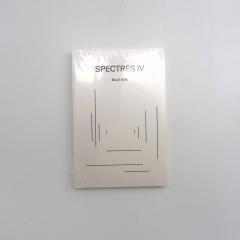
Fourth issue of Shelter Press' annual publication series »Spectres« (in association with INA GRM), this time themed around ›voice‹. Featuring contributions from/about François J. Bonnet, John Giorno, David Grubbs, Yannick Guédon, Lee Gamble, Sarah Hennies, Haela Ravenna Hunt-Hendrix, Stine Janvin, Joan La Barbara, Youmna Saba, Akira Sakata, Pierre Schaeffer, Peter Szendy and Ghédalia Tazartès.
The book includes an essay about the essence of improvisation by Joan La Barbara, Lee Gamble looking at neural networks and vocal simulation systems, an untitled anecdote from Ghédalia Tazartès (RIP) and Stine Janvin on the necessity of singing, plus much more.
»The voice is everywhere, infiltrating everything, making civilisation, marking out territories with infinite borders, spreading from the farthest reaches to the most intimate spaces. It can be neither reduced nor summarised. And accordingly, when taken as a theme, the voice is inexhaustible, even when seen in the light of its very particular relation with the sonic or the musical, as is the case in most of the texts collected in this volume. There is no point therefore in trying to circumscribe or amalgamate the multiple avatars of the voice. We must rather try to apprehend what the voice can do, to envisage its landscape, its potential effects.«
— Extract from the editors' foreword.
Haga su pedido ahora y le encargaremos el artículo en nuestro proveedor.

Synopsis: Welcome to Hyakkaô Academy, a prestigious institution where gambling rules supreme and determines the students’ social hierarchy. Here, those most skilled at betting accumulate wealth and power, while the losers sink into humiliation and bullying. Yumeko Jabami, a new student as elegant as she is unpredictable, shakes up the established order and quickly becomes someone to watch. Unlike the others, she seeks neither fortune nor status—only the adrenaline of risk excites her… and beware to anyone who thinks they can manipulate her.
Featuring 31 thrilling tracks across 2 LPs, "Notes for Kakegurui" takes you on a wild ride through electrifying instrumentals, stylish remixes, and unforgettable vocal duets like "Koi no Russian Roulette.”
debe ser publicado en 10.04.2026

Matryoshka has already built a reputation as a producer for DJ Loser's Magdalena's Apathy imprint as well as work for the Nostalgians, an under-the-radar ambient rap collective featuring Yungwebster, Mdb, tnotsobad, Nopaprr and ogpra1. Her musical roots – dubstep, trance and hard dance – tell some of the story here, but she transmogrifies those influences into haunted, Basinski-esque memories like the gaseous traces and decelerated remnants of the club.
On album opener »Lifelover«, Burial's hazed interludes spring to mind, or perhaps the 4am cityscapes of Space Afrika's now mythical »Somewhere Decent to Live«. Background ambiance simmers below Lawson's pensive FM pads, but once she establishes the mood, things take an unexpected turn with a pitch-bent bassline that might have been lifted straight from a 6LACK loosie, and a rhythmic pulse that traces the thin red line of Shinichi Atobe. If it's dub techno, it's a strand that hasn't been codified quite yet.
»Surface Tension« uses deep, Maybach Music-coded bass womps to twist through her skittering slow rhythms and sadcore pads. But it’s Matryoshka’s harmonic instinct that stands out; if you heard the airy »otr« or »fantasize« from Yungwebster's '»II' you'll know exactly what we mean«, and she takes it even further here, weaving cinematic, languid harmonies that bridge the gap between Steve Roach and Future.
Check »Where the Dancers are Spinning« with its levitational, almost orchestral sweeps that Lawson counterbalances with thudding subs, or the brief title track, an Akira Yamaoka-style save room loop that dissipates into a dreamy, dissociated fog, for further proof. Then there's the second side's centrepiece »Parted by the Sea«, where a ratcheting Chain Reaction-style rhythm builds to a tense crescendo only to get splintered unrecognisably in the second half, its broken pieces pillowed by Lawson's billowing time-stretched chords.
Haga su pedido ahora y le encargaremos el artículo en nuestro proveedor.

Born to Dominican and Brazilian parents, xavi grew up bouncing from place to place, picking up inspiration wherever he landed. His first love was baile funk, but he was raised on classic hip-hop, eventually notching up production and songwriting credits for Vince Staples, Demi Lovato and Ariana Grande. But the major label life wasn’t giving; sick of the industry, he headed back to São Paulo to soak up the atmosphere and connect with artists on the ground. Before long, he started uploading quickfire bangers to SoundCloud – at this point there are over 350 of them on his feed – an »evolutionary playlist« in his own words, bursting with ideas.
»balança e paixão« is his debut release, proper, a 12-cut snapshot of chaotic, trailblazing, turbulent genius – bending thrashed rhythms into relentless vocal chops from a laundry list of young brazillian MCs. Built on ear-zizzing »tuin« hits and razor’s edge cuts, he creates hypnotic ripples that wedge themselves between São Paulo’s weirdo fringe (artists like JLZ and Iguana) and the percussive, MC-heavy sound of funk ritmado, one of the contemporary scene’s most vital and recognisable strains. Crucially, you can hear a Photek-like approach to space in his productions too, filling the gaps with metallic clangs to lend his rhythms their own unique dimension. The flipside takes it slower, deeper. On »sei q tu gosta« (I know you like it), DJ Leal Original and MC Vuk Vuk’s voices are transformed into ghosted sibilances next to xavi’s sonar pings and woodblock hits with an almost avant-dancehall slant, like some choice Equiknoxx dub, while on »cuidado bandida« (be careful bandit), he deploys bone-rattling trills that bite down on atmospherics that wouldn’t be out of place on Akira Yamaoka’s »Silent Hill« OST.
Haga su pedido ahora y le encargaremos el artículo en nuestro proveedor.

YES! We are a "BIG BAND"!!
A 20th anniversary original album featuring new members has been released on a two-disc vinyl set.
Formed in 2005 at the invitation of pianist Makoto Ozone, whose work transcends genres and continues to thrive on a global scale, the 15-member big band
"No Name Horses" has grown into a one-of-a-kind big band, thanks to its sophisticated ensemble built on longstanding relationships of trust, the diverse
original compositions of Ozone and the other members, and its boundless creativity and playfulness. The band has performed both in Japan and overseas.
In 2024, the band changed its name from "Makoto Ozone featuring No Name Horse" to "Makoto Ozone No Name Horse," and began activities under a new
lineup with the addition of three new members: Hidetaro Matsui, Yu Riku, and Shinpei Ogawa. This is the first album since the new lineup was released in
November 2024.
Returning to the classic big band sound, this album was created with each member contributing a new song, based on the concept of a superb swing and resonance.
Makoto Ozone "No Name Horses"
Makoto Ozone (p, org) Eric Miyashiro (tp, flh, picc trp) Akira Okumura (tp, flh) Shutaro Matsui (tp, flh) Yoshiaki Okazaki (tp, flh) Eijiro Nakagawa (tb)
Marshall Gilkes (tb) Junko Yamashiro (b-tb) Masanori Okazaki (as, ss, cl) Atsushi Ikeda (as) Toshio Miki (ts) Yu Riku (ts, fl) Yoshihiro Iwamochi (bs, cl)
Shinpei Ogawa (b) Shinnosuke Takahashi (ds)
debe ser publicado en 12.12.2025

It has been said of Hiroshi Suzuki, one of Japan's leading trombonists, "If you want to sound good, you need to have him as a member of your group”. Suzuki moved to the U.S. in 1971 when he was invited to play with the Buddy Rich Orchestra, and had been living in Las Vegas ever since. The album Cat was recorded when he returned to Japan for the first time in about four years, and released on Nippon Columbia in 1976. The musicians are the same as in Freedom Unity, the group Suzuki had been a member of until his 1971 departure – consisting of pianist Hiromasa Suzuki, drummer Akira Ishikawa, bassist Kunimitsu Inaba, and saxophonist Takeru Muraoka.
Cat is a kind of second chance for that group, which once had a promising future but came to a premature demise. Based on the synergy that they had cultivated together in the past, the players brought their individual technical and musical growth to the album and collectively refined their efforts even further. Each of them had been active on the front lines of the jazz scene, and the quality of their compositions, arrangements, and performances here are extremely high. Cat is one of the most revered albums in the extraordinary Japanese Jazz discography and an essential piece of any music collection.
(Text by Yusuke Ogawa - Universounds)
Haga su pedido ahora y le encargaremos el artículo en nuestro proveedor.

2025 sees the release of the fourth volume of their regular soundtrack series, the Library Archives, out on ATA Records. An honest and forthright homage to the golden age of library recording, this new release is no exception - with nods to David Shire, Roger Webb, 60s/70s Hollywood, early anime and golden era video games.
debe ser publicado en 21.11.2025
