But after collectively moving across the country from Burlington, VT to Seattle, WA, the scrapped tracks transformed substantially into florid, at times entrancing compositions.
The pulsating "Circles" opens the album with lilted reflections on empathy, breathing in midtempo syncopation with subdued guitar tip- toeing around melodic drumming. supernowhere's cast of Meredith Davey (bass, vocals), Kurt Pacing (guitar, vocals), and Matt Anderson (drums) share a collective ambition for maximum interplay and collaborative writing, materializing cleanly knotted compositions that evoke vivid dreamscapes and the profound epiphanies drawn from them ("The Hand", "Ecdysis"). On upbeat "Dirty Tangle" Davey's voice glides through Pacing's angular arpeggiations, carving her own rhythmic lane with her distinctive, descanting singing style.
"Skinless Takes A Flight" notably would not have come to fruition without the help of engineer Dylan Hanwright (mix. Gulfer, mem. Great Grandpa, I Kill Giants), whom the band met shortly after relocating to Seattle. Hanwright offered up the studio where the album was recorded as a temporary rehearsal and writing space during the pandemic, which in turn gave him intimate familiarity with the music, resulting in an album that was recorded as intimately as it was written. Hanwright helped make the little moments shine too, as heard in the fleeting vocal harmonies on "Augury", or the spiraling chaos in "Basement Window," a further testament to the collaborative, everyone's-input-matters nature that characterizes supernowhere's dizzying yet meditative sophomore record.
Search:amp
When one of South Africa's most sought after trumpet players steps forward after a career alongside the very best in the International jazz scene, you know it's going to be a special record.
Dennis Mpale was one of South Africa's heavyweights. You'll find his name springing up on every important South African jazz record and billing since the 1960's. Chris McGregor's iconic Jazz/The African Sound LP, Abdullah Ibrahim's Dollar Brand, Barney Rachabane in the highly influential ensemble Roots, and early work in house bands appearing alongside Nick Moyake in The Soul jazz Men to name just a few. His trumpet playing had character, an extension of the body and amplifier of that great South African sound.
Leaving South Africa during Apartheid as a strong supporter and member of the ANC, Dennis made London his home, joining the newly established SA Jazz scene and standing in solidarity against the oppressions back in Africa.
Moving between London and South Africa during the 70's and 80's It wasn't till the early 1990's when Dennis finally settled again to make his biggest transition to solo artist, redefining his Jazz past and putting a heavy kwaito infused house slammer on the agenda. 1994s 'Paying My Bills' (a title maybe more appropriate now than it ever has been) is a mighty jazz kwaito house effort: From the heavy synth beat and gorgeous floating solo opener of 'Paying My Bills', to the highly infectious vocal phrasing on thumping house anthem 'Take My Time'. Paying My Bills takes the sensibilities of a jazz maestro and pairs it with one of South Africa's biggest producers Peter 'Hitman' Moticoe, creating the perfect recipe for a certified summer slammer.
Having previously only ever been released on CD, this is the first ever vinyl pressing of the album (hazy early test pressings lurk on a small number of lucky shelves). Vinyl mastering is handled by The Carvery's very own Frank Merritt here in London, with the resulting tracks generously split over 2 discs to fully appreciate the swampy heavy dub bass drolls for full dancefloor effect. It's loud and punchy and makes space for those glorious trumpet improvisations while keeping the synth refrains and heavy bass thumping.
Early plays include resident NTS DJ's and a feature on Palms Trax Radio 1 residency with surely more support to follow.
'Nothing left but silence' is Erik K Skodvin’s third solo album for Sonic Pieces and his most quiet to date. Subtitled as "Musical improvisations and quiet collages from the subconscious”, Skodvin reduces his instruments to guitar, reverb and amp - and creates a skeleton of eight hypnotic ragas that meanders in an eternal loop between ephemeral and singular.
Only on the horizon it’s possible to sense that Skodvin has also touched the neoclassical terrain in earlier productions - on Nothing left but silence, however, he acts as a twilight player who is not afraid of the coldness of endless space and who knows how to subjugate the shadowiness of the visible world. Carried by the noise of the amp and the occasional click of the effects pedals, a monolithic, reduced blues emerges, whose mediumistic quality nevertheless reveals that Skodvin's music always comes from the body - and as such is always searching for space. A space that - in this case - blends the vastness of the Norwegian steppe with the brittleness of American wasteland (as if Deathprod and Loren Connors were one and the same person), creating a persistent state between deceleration and absence of presence - that leads Skodvin ever closer to the inner essence of sound.
Initially recorded at Saal 3, Funkhaus, Berlin by Nils Frahm in 2015, the album has itself been subjected to silence as a forgotten relic, re-found and now released in a time where it might connect more with the contemporary state of mind. Welcome to the entrance to the periphery.
Factory Benelux presents a limited crystal clear vinyl edition of Dark Light, the eighth studio album from post-punk trailblazers Section 25, originally released in 2013.
Recorded in 2012, Dark Light would be the band’s first collection of new material since the tragic loss of founder Larry Cassidy in 2010, and marked a return to the smooth electro and synth-pop textures first explored on their seminal 1984 album From the Hip. These echoes are amplified by the presence of co-vocalists Beth and Jo Cassidy, as well as a sublime cover image by iconic artist/designer Peter Saville.
Much of Dark Light was produced in collaboration with remixer Derek Miller (aka Outernationale), and includes new versions of single tracks Colour Movement Sex & Violence and Inner Drive. Other stand-out cuts include future pop classic My Outrage, also released as a single on Record Store Day.
“A revelation. The group were once doomy post-punks whose 1984 electronic album From the Hip anticipated house music and thrilled New York clubland. Now the deaths of singers Larry and Jenny Cassidy have inspired their daughter Bethany to carry on the family business and give the band a makeover. The collision of the original members’ brittle rhythms and the angelic voices of Bethany and similarly fresh-faced co-singer Jo takes recent material into shimmering club-pop heaven” (The Guardian, 2014)
Now released on vinyl for the very first time, FBN 145 is limited to just 500 copies pressed on crystal clear vinyl. The digital copy contains several bonus tracks.
One of Death Metal's biggest bands, DYING FETUS return with their highly anticipated new album, Make Them Beg For Death. Recorded in Baltimore with longtime producer Steve Wright and mixed by Mark Lewis (Cannibal Corpse), Make Them Beg For Death contains every DYING FETUS hallmark. The veteran Death Metal band’s ninth album is fast, intense, and brimming with unstoppable grooves. Monstrous riffs, blast beats, unstoppable hooks, and earth-moving grooves define their catalog. “We put our own twist on Death Metal,” explains co-vocalist/guitarist John Gallagher. “We were like most bands, starting in the garage, drinking beer, having a little fun on the weekend, finding the right amps through trial and error. We blended aspects of bands we liked – Suffocation, Obituary, Deicide, and Cannibal Corpse, among others; the dual vocal approach of Carcass – and made them our own. ‘Let’s make it moshy, let’s make it slammy.’” Make Them Beg For Death delivers savage beatdowns equally designed to pulverize and mesmerize. “It follows on from where Wrong One To Fuck With left off,” drummer Trey Williams promises. “We don’t need to participate in the technical death metal arms race. We’ve got the big guns, and we’ve proven that. It’s all about pointing them in the right direction, so to speak.” To the men of DYING FETUS, the mission is straightforward. “The philosophy is the same now as it was when the band started,” Gallagher confirms. “To write catchy riffs and to make it memorable. Whatever style of music you’re doing, make it something people want to hear repeatedly.”
"Pavement is in transition here-CRCR is a California album recorded on 32nd Street and Ninth Avenue in Manhattan...It"s the sound of a great band gaining ambition, confidence, ability." - Joe Levy, Village Voice "An album electric with carefree swagger and ageless amplification" - Billboard "A masterpiece, a record that continues to glimmer with unique brilliance two decades after its release" - Stereogum
A long-in-the-works project of ours, here comes A Tribe Called Kotori's first foray into full-length territories, as the immensely talented Rampue takes us on a melancholy-riddled ride across his phantasmatic mindscapes. A true sound explorer, deftly steering his ship down the junction of electronica, abstract and balearic-infused prog house, the Berlin-based vibist has us transfixed and elevated throughout the twelve cuts that form the backbone to this lushly textured promenade in sound - at times understatedly euphoric, at others rivetingly exotic.
Of the creative process that lead to 'Bubblebath Trance', Rampue explains "It all started and ended in the same moment: my cherished feline companion, my laptop awash with an unintended bath, and alas, a dearth of backups. The resultant calamity, an echo of chaotic tranquility." Under the generous layer of irony lies some unaltered truth about Rampue's debut long-player for A Tribe Called Kotori: this sense of serenity that goes with stepping into this warm and bubbling primitive chaos of sorts infuses the listening experience far and wide. Distantly emulating the "euphonious strains" of iconic PS1 video games soundtracks from his youth days, the album has us surfing a constant paradox of emotions, wistful but not abandoning itself to sorrow, dynamic yet suspended in some sort of mind-expanding stasis. As if you were looking at the world beneath you in exploded view, conscious of all thing, slowly moving up the many layers of our atmosphere towards uncharted skies.
A paragon of Rampue's most poignant take on classic electronica tropes, 'Harmonie' blazes with a poetic fire that engulfs about everything in its wake. Just figure yourself riding a chocobo across the sand-covered expanse of North Corel (toasting to the FFVII nerds here) as this blasts out in the distance. From this trancey bubblebath emerge lots of musical shades and nuances, from the nicely dubbed-out, brass-heavy coastal jazz of 'Schattenschranz' to the choppy, trip-hop-adjacent future electronics of 'Inside', via the exuberantly joyous mess of faux-organic number 'Tripomatic' and cinematic charisma of 'Ich hasse Sonne' high-flying orchestrations.
Connecting the dots between that trance-indebted ebullience and further downtempo-friendly attraction, 'Verfahren' perhaps encompasses best what 'Bubblebath Trance' is about: gracefully walking the tightrope in-limbo nostalgia-soaked inner movements and a powerful outward thrust, burning to let the feelings ooze out from the shell that holds them.Clad in purely 90s-compatible breaksy motion, 'Salz' is another attempt to reconcile emotional and physical dissonance, like kneading all states - solid, liquid and vaporous - into an impossible mega-vibe of its own; malleable, strong and enveloping in equal measure. Borrowing from two-step and UK garage, 'Take Away' is a definite high in Rampue's master unfolding of musical twists and turns, summoning a Boarder Community-esque atmosphere and clashing it alongside floor-ready footwork motifs to fascinating effect.
An ode to his studio companion, 'Buchla Trip' finds Rampue's exploring his machinic friend's quirky yet soulful array of electronic potentialities - making it sound like a conversation you'd have with R2-D2 in the heart of a Sandcrawler, whereas 'Kajal' beams us up to a fragmented headspace, halfway altered PC-Pop and arps-loaded electronica on amphetamines. Effusive and transporting, the title-track 'Bubblebath Trance' could well figure as the album's no.1 medley in essence: a bountiful lucid dream of dancing forms, colours and sentiments to wrap your head around, confidently drifting from a liminal state of consciousness down the rapids of one's troubled inner workings.
Rounding off the package, the languid ambient finale of 'Die Leiden des hungrigen Fruehstuecks' rubber-stamps the feeling that 'Bubblebath Trance' belongs to that rare category of albums. The ones that mint their own alphabet aside from typical norms and expectations, teaching you the ropes of their new language as it unreels between your ears - real and unreal, elusive to any other meaning than the one your guts and brains will be inclined to give it to, in real time. A crystal-pure object if you will, that shall not reveal its secrets, even after a thousand listens and just as many wowing moments.
- 1: Hello
- 2: A Love From Outer Space
- 3: Crack Up
- 4: Timewind
- 5: What's All This Then?
- 6: Snow Joke
- 7: Off Into Space
- 8: And I Say
- 9: Yeti
- 10: Conundrum
- 11: Honeysuckleswallow
- 12: Long Body
- 13: In A Circle
- 14: Fast Ka
- 15: Miles Apart
- 16: Pop
- 17: Mars
- 18: Spook
- 19: Sugarwings
- 20: Back Home
- 21: Down
- 22: Supervixens
- 23: Insect Love
- 24: Sorry
- 25: Catch My Drift
- 26: Challenge
A.R. Kive collates the three most astonishing works from that most miraculous of duos - A.R. Kane - comprising the ‘Up Home’ EP from 1988 that signified the band’s dawning realisation of their own powers and possibilities, their legendary debut LP ‘sixty nine’ (1988) and its kaleidoscopic, prophetic double-LP follow up ‘i’ (1989).
In founder-member Rudy Tambala’s new remastering, the music on these pivotal transmissions from the birth of dream pop, have been reinvigorated and re-infused with a new power, a new depth and intimacy, a new height and immensity. Vivid, timeless and yet always timely whenever they’re recalled, these records still force any listener to realise that despite the habits of retrospective myth-making and the
safe neutering effects of ‘genre’, thirty years have in no way dimmed how resistant and dissident to critical habits of categorisation A.R. Kane always were. Never quite ‘avant-pop’ or ‘shoegaze’ or ‘post-rock’ or any of those sobriquets designed to file and categorise, A.R. Kive is a reminder that those genres had to be coined, had to be invented precisely to contain the astonishing sound of A.R. Kane, because
previous formulations couldn’t come close to their sui generis sound and suggestiveness. This is music that pointed towards futures which a whole generation of artists and sonic explorers would map out. Now beautifully repackaged, remastered and fleshed out with extensive sleeve notes and accompanying materials, ‘A.R. Kive’ reveals that 35 years on it’s still a struggle to defuse the revolutionary and inspirational possibility of A.R. Kane’s music.
A.R. Kane were formed in 1986 by Rudy Tambala and Alex Ayuli, two second-generation immigrants who grew up together in Stratford, East London. From the off the pair were outsiders in the culturally mixed (cockney/Irish/West Indian/Asian) milieu of the East End, with Alex and Rudy’s folks first generation immigrants from Nigeria and Malawi, respectively. The two of them quickly developed and fostered an innate and near-telepathic mutual understanding forged in musical, literary and artistic exploration. Like a lot of second-generation immigrants, they were ferocious autodidacts in all kinds of areas, especially around music and literature. Diving deep into the music of afro-futurist luminaries such as Sun Ra, Miles Davis, Lee Perry and
Hendrix, as well as devouring the explorations of lysergic noise and feedback from contemporaries like Sonic Youth and Butthole Surfers, they also thoroughly immersed themselves in the alternate literary realities of sci-fi and ancient history (the fascination with the arcane that gave the band their name), all to feed their voracious cultural thirsts and intellectual curiosity.
It was seeing the Cocteau Twins performing on Channel 4 show the Tube that spurred A.R. Kane into being - “They had no drummer. They used tapes and technology and Liz Fraser looked completely otherworldly with those big eyes. And the noise coming out of Robin’s guitar! That was the ‘Fuck! We could do that! We could express ourselves like that!’ moment”, recalls Tambala - and through a mix of
confidence, chutzpah, ad hoc almost-mythical live shows and sheer innocent will the duo debuted with the astonishing ‘When You’re Sad’ single for One Little Indian in 1986. Immediately dubbed a ‘black Jesus & Mary Chain’ by a press unsure of WHERE to put a black band clearly immersed in feedback and noise, what was immediately apparent for listeners was just how much more was going on here - a
tapping of dub’s stealth and guile, a resonant umbilicus back to fusion and jazz, the music less a conjuration of past highs than a re-summoning of lost spirits.
The run of singles and EPs that followed picked up increasingly rapt reviews in the press, but it was the ‘Up Home EP’ released in 1988 on their new home, Rough Trade that really suggested something immense was about to break. Simon Reynolds noted the EP was: Their most concentrated slab of iridescent awesomeness and a true pinnacle of an era that abounded with astounding landmarks of guitar-reinvention, A.R. Kane at their most elixir-like.
If anything, the remastered ‘Up Home’ that forms the first part of ‘A.R. Kive’ is even more dazzling, even more startling than it was when it first emerged, and listening now you again wonder not just about how many bands christened ‘shoegaze’ tried to emulate it, but how all of them fell so far short of its lambent, pellucid wonder. This remains intrinsically experimental music but with none of the frowning orthodoxy those words imply. A.R. Kane, thanks to that second generation auto-didacticism were always supremely aware about the interstices of music and magic, but at the same time gloriously free in the way they explored that connection within their own sound, fascinated always with the creation of ‘perfect mistakes’ and the possibilities inherent in informed play.
‘sixty nine’ the group’s debut LP that emerged in 1988 had
critics and listeners struggling to fit language around A.R. Kane’s sound. As a title it was telling - the year of ‘Bitches Brew’, the year of ‘In A Silent Way’, the erotic möbius between two lovers - and as originally coined by the band themselves, ‘dream pop’ (before it became a free-floating signifier of vague import) was entirely apposite for the music A.R. Kane were making. Crafted in a dark small basement studio in which Tambala recalls the duo had “complete freedom - We wanted to go as far out as we could, and in doing so we discovered the point where it stops being music”. There was an irresistibly dreamy, somnambulant, sensual and almost surreal flow to ‘sixty nine’s sound, but also real darkness/dankness, the ruptures of the primordial and the reverberations of the subconscious, within the grooves of remarkable songs like ‘Dizzy’ and ‘Crazy Blue’. Alex’s plangent vocals floated and surged amidst exquisite peals of refracted feedback but crucially there was BASS here, lugubrious and funky and full of dread, sonic pleasure and sonic disturbance crushed together to make music with a center so deep it felt subcutaneous, music constructed from both the accidental and the deliberate, generous enough to dance with both serendipity and chaos. ‘sixty nine’ remains - especially in this remastered iteration - ravishing, revolutionary.
The final part of this ‘A.R. Kive’ contains 1989’s astonishing double-LP ‘i’ which followed up on ‘sixty nine’s promise and saw the duo fully unleash their experimental pop sensibilities over 26 tracks, plunging the A.R. Kane sound into a dazzlingly kaleidoscopic vision of pop experiment and play. Suffused with new digital technologies and combining searingly sweet and danceable pop with perhaps the duo’s strangest and boundary-pushing compositions, the album did exactly what a great double-set should do - indulge the artists sprawling pursuit of their own imaginations but always with a concision and an ear for those moments where pop both transcends and toys with the listeners expectations. Jason Ankeny has noted that “In retrospect, ‘i’ now seems like a crystal ball prophesying virtually every major musical development of the 1990s; from the shimmering techno of ‘A Love from Outer Space’ to the liquid dub of ‘What’s All This Then?’, from the alien drone-pop of ‘Conundrum’ to the sinister shoegazer miasma of ‘Supervixens’ — it’s all here, an underground road map for countless bands to follow.” Perhaps the most overwhelmingly all-encompassing transmission from A.R. Kane, ‘i’ bookended a three year period in which the duo had made some of the most prophetic and revelatory music of the entire decade.
After ‘i’ the duo’s output became more sporadic with Tambala and Ayuli moving in different directions both geographically and musically, with only 1994’s ‘New Clear Child’ a crystalline re-fraction of future and past echoes of jazz, folk and soul, before the duo went their separate ways. Since then, A.R. Kane’s music has endured, not thanks to the usual sepia’d false memories that seem to maintain interest in so much of the musical past, but because those who hear A.R. Kane music and are changed irrevocably, have to share that universe which A.R. Kane opened up, with anyone else who will listen. Far more than other lauded documents of the late 80s it still sounds astonishingly fresh, astonishingly livid and vivid and necessary and NOW.
- A1: No Traffic Feat. Dank
- A2: Doin' It
- A3: Off The Tap Feat. Zay Bcuz & Nicx *Rhett Cuts
- A4: Not Ever Feat. Harleighblu
- A5: Star Struck
- A6: Relapse
- A7: Shine Your Light Feat. Sam
- A8: Brag
- A9: Circus
- B1: Snaps
- B2: Funny
- B3: Plaques Feat. Maine Soul
- B4: Get Down Feat. Amp Fiddler
- B5: Og Funk
- B6: Boom Bap Feat. Frank Nitt
- B7: Mentions Feat. Serious & Joz B
- B8: Calvin Vm Interlude
- B9: Showin' Love Feat. Kid Gotti
- B10: Good Life
Enter the realm of Illa J, the musical force shaking the foundations of the industry. His latest offering, 'No Traffic', is a testament to his boundless talent and versatility, showcasing his singing, production and rapping abilities on 19 tracks written and produced entirely by Illa J himself. This album marks his debut on BBE Music and a new chapter in his musical journey. Meet Illa J: a musical prodigy raised in a family of talented musicians. With a jazz bassist father and a gifted singer mother, it's no surprise that Illa J was destined for greatness. He's best known as the younger brother of hip-hop legend J Dilla and has made a name for himself as a former member of Detroit's iconic hip-hop group, Slum Village. With a lifetime of exposure to quality music and top-tier musicians, Illa J is a force to be reckoned with. Created amidst the chaos of the pandemic, Illa J's 'No Traffic' serves as a beacon of hope, a roadmap for creatives seeking their path. He enlists the help of Detroit legends Amp Fiddler, Frank n Dank, British soul sensation Harleighblu, and introduces the rising stars of Detroit, Serious, Joz B, Maine Soul, and more, all matching Illa J's energy and passion on the tracks. The focus track of the album, "Star Struck", is a prime example of Illa J's signature style. The astral pentatonic soundscape and precise drum programming transport you to new heights, while Illa J's beats, melodies, and bars will leave you in awe. 'No Traffic' is a musical journey that takes you to a place where Illa J's playful and versatile sound reigns supreme. The album is expertly mastered by Grammy-award nominated The Carvery Studio and is a refreshing experience of a true artist reveling in their artistry. Don't miss out on this once-in-a-lifetime opportunity to delve into Illa J's musical realm."
- A1: Just Like Honey
- A2: Sometimes Always (Feat Isobel Campbell)
- A3: Black And Blues (Feat Isobel Campbell)
- A4: Amputation
- A5: All Things Pass
- B1: Some Candy Talking
- B2: Head On
- B3: The Living End
- B4: Cracking Up
- C1: Teenage Lust
- C2: I Hate Rock 'N' Roll
- C3: Reverence
- D1: Blues From A Gun
- D2: Far Gone And Out
- D3: Between Planets
- D4: Half Way To Crazy
- D5: In A Hole
red 2x12"[26,85 €]
Recorded at the Hollywood Palladium, Los Angeles in 2018, "Sunset 666" is a new live album from The Jesus and Mary Chain on Fuzz Club. In 1990, a young American band, full of a precise kind of noise and darkness, were special guests on the US tour being undertaken by a group who had noise and darkness, poise and catharsis of their own. The young band: Nine Inch Nails. Those headliners: The Jesus and Mary Chain. Almost thirty years later, an invitation was extended. The resulting tour ended with a run of six shows at LA"s Hollywood Palladium and the seventeen tracks captured on the "Sunset 666" double album were recorded from the desk on two of those nights. Sides A, B and C are from the final show, December 15. Those twelve songs were the full set that night, in sequence, meaning the show began with the here-we-f*cking-go drums of "Just Like Honey" and ended with the ferocious euphoria of an eight-and-a-half minute "Reverence". Side D of the vinyl record is taken from the December 11 show and serves almost as a mini-showcase of the "Automatic" album, featuring versions of "Blues From A Gun", "Between Planets" and "Halfway To Crazy".
- A1: Just Like Honey
- A2: Sometimes Always (Feat Isobel Campbell)
- A3: Black And Blues (Feat Isobel Campbell)
- A4: Amputation
- A5: All Things Pass
- B1: Some Candy Talking
- B2: Head On
- B3: The Living End
- B4: Cracking Up
- C1: Teenage Lust
- C2: I Hate Rock 'N' Roll
- C3: Reverence
- D1: Blues From A Gun
- D2: Far Gone And Out
- D3: Between Planets
- D4: Half Way To Crazy
- D5: In A Hole
black 2x12"[25,17 €]
Recorded at the Hollywood Palladium, Los Angeles in 2018, "Sunset 666" is a new live album from The Jesus and Mary Chain on Fuzz Club. In 1990, a young American band, full of a precise kind of noise and darkness, were special guests on the US tour being undertaken by a group who had noise and darkness, poise and catharsis of their own. The young band: Nine Inch Nails. Those headliners: The Jesus and Mary Chain. Almost thirty years later, an invitation was extended. The resulting tour ended with a run of six shows at LA"s Hollywood Palladium and the seventeen tracks captured on the "Sunset 666" double album were recorded from the desk on two of those nights. Sides A, B and C are from the final show, December 15. Those twelve songs were the full set that night, in sequence, meaning the show began with the here-we-f*cking-go drums of "Just Like Honey" and ended with the ferocious euphoria of an eight-and-a-half minute "Reverence". Side D of the vinyl record is taken from the December 11 show and serves almost as a mini-showcase of the "Automatic" album, featuring versions of "Blues From A Gun", "Between Planets" and "Halfway To Crazy".
The free folk/jazz sound of modern Los Angeles. Featuring a heavy bunch of musicians and vocalists including Moor Mother.
"Fearlessly Accessing the Divine Spirit From Here on Out" is the vinyl debut from pianist, composer, and producer Diego Gaeta. He has previously released projects as Club Diego and with the trio Human Error Club (whose members Mekala Session and Jesse Justice helped produce this record). He has quickly become a fixture in a number of Los Angeles musical environments, working with Lionmilk, The Pan Afrikan Peoples Arkestra, Carlos Niño, Black Nile among others. This album is a synthesis of these many LA environments, and carries chamber, jazz, ambient, and folk influences, ultimately giving it an uncategorizable feel similar to works by Arthur Verocai or David Axelrod.
Gaeta recorded the initial ideas for the album by himself after experiencing a burst of creativity during the lockdown of 2020, in the aftermath of a season of protests in Los Angeles, on a piano at his home in El Sereno. "I was constantly not in tune with myself, always awaiting outrage and tragedy in a very unstable world. However, hitting the streets in support of various ongoing pandemic community actions felt necessary and it marked a point in time that ushered in large societal changes. The weight of that era made me feel allergic to making art at the time. All of these ideas came after that period, expressing my reflections subconsciously. I remember that the ideas came in a short amount of time, and then they developed."
Once he had created the tracks as Ableton sessions, he realized the gravity and context of how he was processing his ideas so he, as he puts it, "felt like taking them outside the hands of midi and into the hands of friends." Gaeta was able to assemble his dream band, which ended up being a 9-piece ensemble, or a nonet. "I felt that at some point I was channeling the geometrical balance of that nonet...it's almost as if I had a sextet and then the three of the sextet that's not the rhythm section were doubled. It's a really dense sextet, that's how I see it."
The recording process began the following summer in June 2021 as the musicians were all adjusting to the newfound dynamic of getting tested for COVID, waiting a few days, and then meeting up to record. "We were eating Indian food, some of us were smoking, it was a nice memory, but I felt a little stressed, because I was the bandleader, and I felt the emotional weight of my music."
The title track and single, featuring vocals by Jimetta Rose, begins with a speech by Gaeta delivered when playing with Black Nile in 2019 at the Levitt Amphitheatre in MacArthur park. Gaeta provides the following account: "Even though it was in 2019, socio-political tensions and issues were at the forefront for me at that time. I wrote a speech that was intended to be critical of the US but it ended up becoming a collage inspired by different women that had messages of freedom that spoke to me the most. I quoted Nina Simone and Georgia Anne Muldrow, it wasn't something that I read but something that she said "kicking it with consciousness and style" that phrase stuck with me, so I used it in that speech. Although critical, the speech had a positive feeling to it, and it was hopeful. I gave that speech while fireworks were going off."
Moor Mother & Zeroh are found on their respective tracks, Memory Screen & Eccolo - both delivering a distinct, commanding vocal performance. Low Leaf colors the track Soft Spot with harp, a beautiful ballad nestled in the center of the album. Other players include Gregory Uhlmann on guitar, Jon Kaye on violin, Devin Daniels on alto saxophone, Caleb Buchanan on bass, Dante Luna on vibraphone, Patrick Behnke on viola, Bryan Baker on tenor saxophone/flute, and Mekala Session on drums.
"I’d like for us tonight to embody a freedom oriented life. Freedom isn’t just a dream, it’s a place we must all arrive at together, as one by one the people of the Earth help each other to be Free of power, hate, and insecurities. Let’s kick it with consciousness and style. Can y’all dig that? YEAH. I can too. So now we’d like to present to you a spiritual transmission I like to call: 'Fearlessly Accessing the Divine Spirit of Freedom From Here On Out.' YEAH" - Diego Gaeta
Lyon, France’s Meurtrières has not strayed far from their original goal of writing old-school, epic heavy metal with medieval overtones on their newest effort, Ronde De Nuit. If anything, the band (consisting of new vocalist Fiona, the guitar tandem of Flo Spector and Olivier, bassist Xavier and drummer Thomas) has taken what they started on their well-received 2020 self-titled EP and added new layers of complexity and depth. It is the natural transition for a band gaining more confidence in its songwriting abilities. Yet the noticeable change starts in the vocal spot. Out is the original frontwoman Fleur and in her place is Fiona. Meurtrières wasted little time introducing Fiona — the band started playing live shows and writing new material with her right after the release of the EP, thus, giving Meurtrières ample time to hone its new material. And Fiona fits the band’s hard-charging, gallant music like a glove, coming away with a stronghold of fiery, epic choruses — all sung in the Meurtrières’ native tongue. The lyrical subject matter on Ronde De Nuit still spans the medieval domain but with increased emphasis on paintings by Rembrandt (The Night Watch) and Johann Heinrich (Füssli). The band aimed to make the songs “pictorial,” reflecting imaginary portraits to draw in the listener. Except for “Aucun Homme, Aucun Dogme, Aucune Croix” (which is a known French medieval legend about a real woman), the songs on Ronde De Nuit are based on fantasy with a desired fate: All the depicted characters are doomed to tragedy, for in the world of Meurtrières, there is no such thing as crowned kings and queens and even glorious warriors. Artwork by Ivan Brun rounds out a package that perfectly ties in thematically with the desperate and dark themes of the lyrics. It is a fitting component to an album laced with stunning visuals and epic, old-school metal of the highest order!
Akumandra’s newest release, DIGITAL WATER by German producer, Coss, offers a neat, rhythmically fluid sound that, like water, is both dreamy and soothing as well as energetic. In the first of the EP’s four tracks, ENTRY POINT OBSCURING, a syncopated beat exudes rhythmic energy as watersounding synths plunge us into the track’s intricacies, opening the possibility for rapturous introspection.
Track number 2, ESCAPE FROM PELOG SELISIR, contrasts a deep bass with modulated synth-progressions, to deliver a sound that calls for motion as well as reflection. LOVE LETTER FOR YOU emphasizes bright, upbeat progressions to maximize the ecstatic energy built up
throughout the track.
The currents of emotions stirred by the EP culminate with TWOWORLDS, the smoothest track in the EP. A hi hat groove sustains the rhythm as a bassy synth gives amplitude to the track, creating a subaquatic feeling of depth and wonder.
Clear Vinyl. They say there's always something special about the first time and this record is that first time for the Folk Implosion. The band left the acoustic guitars and fragmentary sketch modus operandi of their earlier cassette behind to focus on an eccentric version of home studio craft, held together by a few cheap microphones (including a Radio Shack PZM) and a Tascam cassette 4-track recorder sequestered under the eaves of a 3rd floor, Cambridge Massachusetts double-decker house apartment. Wood floors and Christmas lights were as much a part of the vibe as an Ampeg VT 40 guitar amp and a small chord organ. The duo would wait until the downstairs neighbor went to work in the morning and then would play until the tunes snapped like a high-pitched snare drum. The setup would close down just before the neighbor came home from work, keeping the peace long enough to see the project through to completion.Once tracked, the band snuck into Fort Apache studios with Tim O'Heir (producer of Sebadoh's `Bakesale' LP) early one morning, freeloading off the Sebadoh sessions that were set to get going that afternoon. Tim mixed the songs through a very hi-fi Neve board in a matter of hours with the Tascam sitting right on the giant board like a tugboat keeping time with an oil tanker. The duo hoped that the spirits of ancestors like The Troggs, Devo, Al Green, and The Bee Gees would be pleased with the scent of tribute that arose from the ashes of the pyre. Today, they are pleased to see the Slaps and the Sputniks on view again nearly 30 years later.
British epic doom metallers Godthrymm (featuring members once
involved in such luminaries as My Dying Bride, Anathema, Vallenfyre, and
Solstice) return with their new album, Distortions
The follow- up to 2020's widely- lauded 'Reflections' shows the Halifax- based
quartet of Hamish Glencross (guitars/ vocals), Catherine Glencross (keyboards/
vocals), "Sasquatch" Bob Crolla (bass), and Shaun "Winter" Taylor-Steels (drums)
elegantly expanding upon their sound and vision. With tracks like "Follow Me,"
featuring former My Dying Bride compatriot Aaron Stainthorpe, "Echoes," and
"Devils," Distortions advances Godthrymm into the hallowed halls of the genre
they adore to death.
"I absolutely wanted to create a much more layered and complex arrangement in
the sound," says Godthrymm's Hamish Glencross. "Totally amping up the
contrasts to the extreme--the light shines brighter, and the darker depths are vast
trenches. There is a lot more harmony and melancholy for much of it, but also
some slab-heavy riffing, too. We wanted a total progression in the production and
more class and clarity in the sound, as opposed to Reflections, which could get
quite dense in tone."
Distortions is the second part of Glencross' Visions trilogy-- the third part,
Projections, is already in the works. Throughout its seven- track, hour- long
expanse, Godthrymm's sophomore effort delves deeper into the despondent
march of post-pandemic singles "Chasm" and "In Perpetuum," the latter released
exclusively on Decibel Magazine's Decibel Flexi Series in 2022. Glencross'
emotionally-charged vocals pair perfectly with his towering riffs and thoughtful,
crestfallen harmonies. The rhythmic foundation of Crolla and Taylor- Steels is
absolutely critical to Glencross' woebegone eclat. With Catherine Glencross'
angelic vocals and atmospheric keyboards stitched into the monumental "As
Titans," the granite-hard "Obsess and Regress," and the stirring "Pictures Remain,"
Distortions has it all.
The songwriting for Distortions began during the first lockdown. For an album
centered lyrically on grief, loss, regret, resolve, love, and determination, it's hard to
imagine something inexplicably heavy yet remarkably beautiful. Producer Andy
Hawkins (Hark, Grave Lines) was the perfect man for the job. Spread across The
Nave Studio in Leeds and Sasquatch Music Studio in Huddersfield, he captured
Godthrymm at their most menacing ("Unseen Unheard") and vulnerable ("Follow
Me"). The tones he extracted from Glencross, Crolla, and Taylor-Steels absolutely
crush, while the brighter moments (like Catherine Glencross' spell-binding vocals
on "Obsess and Regress") splinter Godthrymm's disheartened darkness in two.
Distortions was mastered by Mark Midgley (Doom, Hellkrusher) for Northern
Mastering Co.
- A1: Joe 90 Main Titles
- A2: A Dream Come True
- A3: A Wolf In The Fox's Den
- A4: Air/Sea Rescue Colonel Mcclaine
- A5: Wagon Train Of Fear
- A6: Running The Gauntlet
- B1: Tragedy Aboard The U85/Porto Guava
- B2: A Song And Dance Of Death
- B3: The Tangled Web
- B4: Race Of Intelligence
- B5: Taking The Win
- C1: Fleming In The Fortress
- C2: Breakout And Pursuit
- C3: Nuclear Winter
- C4: Boy With A Suitcase
- C5: Church Rats
- C6: Divine Intervention
- D1: Agent Sladek
- D2: Sladek's Recital
- D3: Trapped In The Sky
- D4: The Alpine Clinic Waltz
- D5: Balloon Ride
- D6: The Mine Rescue
- D7: Joe 90 End Titles
First appearing on TV screens in September 1968, Joe 90 was a unique nine year old boy with the ability to absorb the brain patterns of top experts
enabling him to become the most special agent of W.I.N. (World Intelligence Network).
Whilst there are arguably better-known scores amongst Barry Gray's sublime catalogue of work with the Andersons, the composer's work for Joe 90 is in many ways
the most consistent and inventive selection he ever wrote. Developing a theme for the new series was always the musician's starting point, and for Joe 90, the pop charts breezed into Gray's studio,
with an opening tune featuring a genuine groove. Mixing Gray's inventive electronics with 60s "surf rock" guitars was an inspired decision.
It is no wonder that this piece has gone on to enjoy a second life as a Northern Soul disco floor-filler.
For episodic incidentals, Gray was freed from the detached unearthly premise of Captain Scarlet and able to bring back a playful sensibility
and a more mature musical palette which are amply illustrated in this 24 track collection.
- A1: Just Like Honey
- A2: Sometimes Always (Feat. Isobel Campbell)
- A3: Black And Blues (Feat. Isobel Campbell)
- A4: Amputation
- B1: All Things Pass
- B2: Some Candy Talking
- B3: Head On
- B4: The Living End
- B5: Cracking
- C1: Teenage Lust
- C2: I Hate Rock 'N' Roll
- C3: Reverence
- C4: Blues From A Gun
- D1: Far Gone And Out
- D2: Between Planets
- D3: Half Way To Crazy
- D4: In A Hole
Recorded at the Hollywood Palladium, Los Angeles in 2018, ‘Sunset 666’ is a new live album from The Jesus and Mary Chain, due out August 4th 2023 on Fuzz Club. In 1990, a young American band, full of a precise kind of noise and darkness, were special guests on the US tour being undertaken by a group who had noise and darkness, poise and catharsis of their own. The young band: Nine Inch Nails. Those headliners: The Jesus and Mary Chain. Almost thirty years later, an invitation was extended. Would the Reid brothers care to reverse the roles and open for Nine Inch Nails on their own North American tour? Trent Reznor had been a fan of the Mary Chain, and influenced by them since hearing 'Psychocandy', so it felt a good fit and the Reid brothers accepted. The resulting tour ended with a run of six shows at LA’s Hollywood Palladium and the seventeen tracks captured on the ‘Sunset 666’ double album were recorded from the desk on two of those nights. Sides A, B and C are from the final show, December 15. Those twelve songs were the full set that night, in sequence, meaning the show began with the here-we-f*cking-go drums of ‘Just Like Honey’ and ended with the ferocious euphoria of an eight-and-a-half minute ‘Reverence’. Side D of the vinyl record is taken from the December 11 show and serves almost as a mini-showcase of the ‘Automatic’ album, featuring versions of ‘Blues From A Gun’, ‘Between Planets’ and ‘Halfway To Crazy’.
Harmonica virtuoso Little Walter was a key contributor to bluesman Muddy Waters' music through most of the 1950s. Both as a sideman and bandleader, Little Walter revolutionised the sound of blues harmonica through amplification, clasping a mike to the harp as he played.
His daring instrumental innovations were fresh, startling, and ahead of their time. The Best of Little Walter was his debut LP. First released in 1957, this compilation album contained ten Little Walter songs that appeared in the Top 10 of Billboard's R&B chart from 1952 to 1955, plus two B-sides.
Chain Of Flowers return with their lofty and long-simmering sophomore full-length, rich with reckonings, reverb, and redemption: Never Ending Space. Despite some of the songs dating back a few years, the record first began materialising in earnest during the pandemic, by which point most of the band had relocated from Cardiff to London.
Reunited and rejuvenated, they picked up where they left off, booking two multi-day sessions at Hackney hub Total Refreshment Centre with producer Jonah Falco. In this time they successfully channelled their kinetic chemistry into 10 full-blooded anthems of torn dreams, poetic delirium, and “hope stretched too far.” Musically, Never Ending Space skews notably more maximal than the group’s previous work, fleshed out with trumpets, saxophone, synth, percussion boxes, and spoken word. (Smith jokingly calls them The Chain Of Flowers Orchestra).
Yet the songs still swing and soar with a charged heart, ripe with hooks, drama and ragged melody. Opener “Fire (In The Heart Of Hearts)” stirs to life on a tide of wiry guitar and defiant horns, facing down the embers of love that still glow in the wake of pain: “Peace came tumbling like a shower of bricks / The mind twists slowly till everything fits.”
A tense energy ripples throughout – from the nocturnal rush of “Serving Purpose” and “Amphetamine Luck” to the bruised battle cries of “Torcalon” and “Old Human Material.” Outliers like “Praying Hands, Turtle Doves” hint at proggy possible futures, while instrumental vignette “Anomia” offers an intriguing glimpse at a lesser heard facet of the band: swaying, shadowy, subdued. The album’s title track is also its closing cut, a stomping, sparkling ode to “the wrong side of the night, where time goes to die.” Smith describes the scene: “Everyone’s talking, screaming, trauma bonding, but no one’s listening. Broken dialogue. Shouting over each other. You want to switch off, but everyone’s too fucked.” The guitars spiral and slide towards the oblivion of dawn, the chance to crash and do it all again.
Chain Of Flowers return with their lofty and long-simmering sophomore full-length, rich with reckonings, reverb, and redemption: Never Ending Space. Despite some of the songs dating back a few years, the record first began materialising in earnest during the pandemic, by which point most of the band had relocated from Cardiff to London.
Reunited and rejuvenated, they picked up where they left off, booking two multi-day sessions at Hackney hub Total Refreshment Centre with producer Jonah Falco. In this time they successfully channelled their kinetic chemistry into 10 full-blooded anthems of torn dreams, poetic delirium, and “hope stretched too far.” Musically, Never Ending Space skews notably more maximal than the group’s previous work, fleshed out with trumpets, saxophone, synth, percussion boxes, and spoken word. (Smith jokingly calls them The Chain Of Flowers Orchestra).
Yet the songs still swing and soar with a charged heart, ripe with hooks, drama and ragged melody. Opener “Fire (In The Heart Of Hearts)” stirs to life on a tide of wiry guitar and defiant horns, facing down the embers of love that still glow in the wake of pain: “Peace came tumbling like a shower of bricks / The mind twists slowly till everything fits.”
A tense energy ripples throughout – from the nocturnal rush of “Serving Purpose” and “Amphetamine Luck” to the bruised battle cries of “Torcalon” and “Old Human Material.” Outliers like “Praying Hands, Turtle Doves” hint at proggy possible futures, while instrumental vignette “Anomia” offers an intriguing glimpse at a lesser heard facet of the band: swaying, shadowy, subdued. The album’s title track is also its closing cut, a stomping, sparkling ode to “the wrong side of the night, where time goes to die.” Smith describes the scene: “Everyone’s talking, screaming, trauma bonding, but no one’s listening. Broken dialogue. Shouting over each other. You want to switch off, but everyone’s too fucked.” The guitars spiral and slide towards the oblivion of dawn, the chance to crash and do it all again.
Freak Frequency was a fitting title for the new material Greg Obis was planning for Stuck, the frenetic and twisted post-punk outfit he formed in 2018. Inspired by the doomy social economics of Mark Fisher’s Capitalist Realism, the bleak worldbuilding of horror games Demon’s Souls and Bloodborne, and the bombastic yet arty satire of Devo, Obis channelled his audio analogy into Freak Frequency, an album ringing out with explosive sounds and ideas.
Stuck formed after Obis’ previous projects, Yeesh and Clearance, called it quits in short proximity. Obis is on guitar and vocals, which span from booming theatrics to ecstatic yelps. The project’s rhythm section is completed by shoegaze guitarist-turned-chugging bassist David Algrim and tightly wound drummer Tim Green—also a graphic designer, and the artist responsible for Stuck’s distinctively unified visual aesthetic. Original co-guitarist Donny Walsh contributed freely inventive lines for the first few years of the project, including on Freak Frequency; Ezra Saulnier of Red Tunic, the newest member of the band, now brings calculated contrapuntal riffs to match Obis’ parts.
The building blocks of Stuck include the egg punk eccentricities of Uranium Club and The Coneheads filtered through noise rock power, à la Jesus Lizard or Slint; that melange is glittered with the precision microtones of Unwound and Women. “I want the feeling of immersion and chaos and tension, with a big guitar amp playing a big chord,” says Obis of his inspirations, citing friends and peers Cloud Nothings and Preoccupations. “But I want it delivered by having a lot of smaller points of light poking through.”
In fact, writing for Freak Frequency began while Content’s recording was still underway—beginning with “Scared,” which features acoustic layers under feedback squalls. “Time Out,” with motoric guitars in the sputtering lineage of Wire, was also composed in late 2019. Obis wrote it about the cycles of compulsion and shame woven into social media use, and the way negativity drives algorithmic engagement. It became an exciting exercise for the group in ramping up speed; “I thought I knew how far I could push Tim’s tempos,” Obis recalls. “But Tim kept insisting we do it 20 bpm faster than what I had. He is an absolute monster for playing that.”
Album opener “The Punisher,” a spiral staircase of disembodied guitars and rhythmic slams over a 2/4 beat, came in the aftermath of the January 6 insurrection. It felt immediately emblematic to Freak Frequency, and Obis describes it as his favorite Stuck track: one he wishes he could write again and again. “It hits all the boxes that Stuck can do: it’s goofy, but there’s a lot of intricate guitar interplay, and at the end, there’s a big payoff,” he explains. The last song written was “Do Not Reply,” a pre-album single that came to Obis after engineering for Melkbelly and channelling their earworm melodies. Algrim wouldn’t let it on the record unless Melkbelly’s front person Miranda Winters dueted on vocals; she was happy to oblige, and the gritty epic closes Freak Frequency.
With slippery snark, percussive heft, and funhouse mirrors of sludge, Freak Frequency delivers its needed screeds with gratifying nuance. If Stuck’s interpretation of this messed-up world goes down like a bitter pill, it’s only because its sugar coating is too delicious to keep from eating.
Black[17,23 €]
“A staggeringly confident and progressive second album that is a succession of silicone and sin, salvation and spectacle, the sublime and the simulacrum.” Loud & Quiet 8/10
"A staggeringly confident and progressive second album that is a succession of silicone and sin, salvation and spectacle, the sublime and the simulacrum." Loud & Quiet 8/10
"The God Phone is their most complete work to date. It simply sounds big whilst capturing the catharsis of their live shows and portraying a wildly inventive band reaching their absolute prime." The Quietus (Album Of The Week)
Formed in Rochester, NY in 1976, New Math opened for the likes of the
Ramones, Pretenders, The Cramps, The Psychedelic Furs, The Damned,
and The Gun Club at now-extinct local clubs - Offering up an endless
supply of ascending guitar lines and catchy hooks of amphetaminefueled power pop
With ease, the band produced charming, should've- been hits like the adrenaline
rush of "The Restless Kind," the two- tone English Beat- inspired "Older Women,"
and of course the hyper-melodic anthem "Die Trying." The latter was produced by
Howard Thompson, who was known for working with John Cale and the
Psychedelic Furs. It was first released on Reliable Records in 1979 and then rereleased on CBS in England with the same B- side "Angela," a take on '60s girl
groups that juxtaposed its innocent pop leaning with a tragic story. "Die Trying"
did receive some airplay on John Peel's radio show and landed somewhere near
the bottom of the British Charts.
With a 7" on CBS in the UK (which now goes for a strong price on Discogs) and a
debut EP on US indie label 415 Records, the band rode the new wave. This
collection of out- of- print early singles and unreleased demos showcases why
they made fans both in the US and UK.
Formed in Rochester, NY in 1976, New Math opened for the likes of the
Ramones, Pretenders, The Cramps, The Psychedelic Furs, The Damned,
and The Gun Club at now-extinct local clubs - Offering up an endless
supply of ascending guitar lines and catchy hooks of amphetaminefueled power pop
With ease, the band produced charming, should've- been hits like the adrenaline
rush of "The Restless Kind," the two- tone English Beat- inspired "Older Women,"
and of course the hyper-melodic anthem "Die Trying." The latter was produced by
Howard Thompson, who was known for working with John Cale and the
Psychedelic Furs. It was first released on Reliable Records in 1979 and then rereleased on CBS in England with the same B- side "Angela," a take on '60s girl
groups that juxtaposed its innocent pop leaning with a tragic story. "Die Trying"
did receive some airplay on John Peel's radio show and landed somewhere near
the bottom of the British Charts.
With a 7" on CBS in the UK (which now goes for a strong price on Discogs) and a
debut EP on US indie label 415 Records, the band rode the new wave. This
collection of out- of- print early singles and unreleased demos showcases why
they made fans both in the US and UK.
If you ever thought Debris was Oklahoma's only entry into the bloodstream of feral, batshit rock, guess again. Mag Amplitude's, Wizards Of Today appeared in a miniscule, self released edition of 100 in 1983 & was the brainchild of a blind, guitarist-vocalist by the name of Matt Muncil. On Wizards Of Today, Muncil-considered by the psychedelic mafia to be the 'Higney of Heavy Rock'—& drummer Scott Roher proceed to lay down over 7 tracks an incredible wall of wildly fuzzed & primitive bash that is a singular testament to loner, outsider brilliance. Heavy on double tracked guitar riffs & growling, incomprehensible vocals concerning outer space, rocket ships & rock, Mag Amplitude's Wizards Of Today is a half hour slab of muzzed disorder of the highest possible recommendation. This Zaius Tapes reissue is in a one time pressing of 292 copies. Our first foray into (re) introducing fans & collectors into the cimmerian forest of American real people/outsider psych rock."—Johan Klepp, for Zaius Tapes
Imperial f.f.r.r. was Unrest’s breakthrough album in 1992. It has withstood the test of time and is now considered an indie-rock classic and one of the best albums of the 1990s. Formed in 1984, at Wakefield High School in Arlington, Virginia, the band started releasing homemade cassettes on their own Teenbeat label. Imperial f.f.r.r. is their sixth album and marked the arrival of original Velocity Girl vocalist Bridget Cross joining drummer Phil Krauth and singer/guitarist Mark Robinson. It was recorded by Wharton Tiers (Sonic Youth) at his home studio in Manhattan. After the release of Imperial f.f.r.r., the band released singles on Sub Pop and K and soon thereafter signed to legendary U.K. indie 4AD, releasing their final studio album Perfect Teeth in 1993. This limited edition features the original design and layout of the very first pressing from 1992. All the details have been recreated including the lyric sheet, the blue box around the amplifier on the front, the label art, and even the Ajax and No.6 Records logos. The original didn't have a barcode, so we've created a spiffy new removeable OBI card for that featuring a photograph by Mike Galinsky (The Decline of Mall Civilization) of the band playing at New York's Spiral club in 1991.
'The Devil, The Heart & The Fight' is Skinny Lister's third studio album and is repressed here on yellow vinyl. The band are currently supporting Flogging Molly across the US, have summer festivals confirmed and will be touring across UK and Europe by the end of the year. 'The Devil, The Heart & The Fight' was recorded over five weeks in Newcastle Under Lyme’s Silk Mill Studio in May 2016 with producer Tristan Ivemy (Frank Turner, The Holloways), it is Skinny Lister’s most far-reaching, exciting and accomplished album yet. It’s a full-on rock record that splashes even more punk vigour and eighties pop elements across their fervent folk canvas, taking in hints of Adam Ant and The Clash. It also brings the folk storytelling tradition bang up to date with its brutally honest and close to the knuckle lyrics of real-life stories (‘Geordie Lad’, ‘Charlie’) and on-the-road mayhem, the Pogue-ish ‘Hamburg Drunk’. A mature, vibrant and varied record, it mingles classic Skinny folk romances (‘Grace’, ‘Reunion’) with epic rock takes on rafter-rattling shanties (‘Beat It From The Chest’) and hearty Dexys-style tributes to the fans they meet on the road (‘Fair Winds & Following Seas’), plus a hitherto unseen darker side. Take the deceptively upbeat ‘Injuries’, Dan’s ode on the bruising nature of life, or ‘Devil In Me’, in which Lorna comes on like a particularly melodic Glenn Close in Fatal Attraction. • The Devil, The Heart & The Fight hit the UK Top 40 in the two independent album charts (#38 ‘Breakers’ chart, and #11 Independent Album Chart). • Has received over 2.5million streams on Spotify and the videos have reached over 400K views on YouTube. • Global radio support from 6Music, Radio X in UK Radio Eins, Flux FM, Star FM in Germany and WBSD, WRFL, WYCE, KSJS, WAWL, KPNT, WRIF, KXRN, Indie.FM, WVMO, and WCSF in USA. PRESS QUOTES: “…considerably upped their game.” 4/5 Q Magazine album review “…a deafening and visceral experience.” 5/5 Independent live review from London Garage. "This album has a wholesome kind of dirtiness woven deep into the tapestry of each of the songs." Subba Cultcha "The Devil, The Heart & The Fight’ sees them break their own mould, in places amplifying the popular influences on their sound yet retaining their fundamental roots." Punktastic “(a) kaleidoscope of high octane folk punk via Dexy’s and The Pogues” Louder Than War
Western Massachusetts band Landowner play abrasively clean minimalist-punk. Singer Dan Shaw began Landowner in 2016, writing and recording Impressive Almanac with a practice amp and a laptop drum machine. Those available tools would inform the band’s unapologetic sound—clean, confrontational, and absurdly stark. With a stated goal to sound like “Antelope playing Discharge”, Landowner’s diamond hard structures, repetitious instrumentals and caricatured hardcore make space for lyrics that reflect on the global systems our lives are tangled in and the dark absurdities we take for granted.
Landowner’s fourth Born Yesterday full length Escape the Compound focuses on the powerful grips manipulators and reality-deniers have on their victims, examining the social, political and interpersonal damage of cult-like influence and control. “A lot of the lyrics focus on cult manipulators and narcissists: falling victim to their toxic dynamics, and the difficulty of escaping their grip” says Shaw. From climate change deniers and conspiracy theorists to deceptive narcissists and actual cult leaders, Landowner explores the ubiquity of modern unreality through evocative imagery and a keen sense of awareness. The band’s plain instrumentation sheds and subverts hardcore punk’s noisy veil in favor of a direct, unswerving examination of these themes.
Written and recorded following the release of 2020’s Consultant, Escape the Compound finds Landowner leaning into the studio through deeper experimentation with a wider palette of sounds. The group’s lineup of Josh Owsley (bass), Elliot Hughes (guitar), Jeff Gilmartin (guitar), Josh Daniel (drums) and Dan Shaw played often since coming together in 2017. But with pandemic restrictions in place, the making of Escape the Compound became a much more insular pursuit, one where the mixing and mastering process helped turn the band’s most varied batch of material into a cohesive, thematic collection of songs.
Album opener “Witch Museum” is a collage of dark Massachusetts historical imagery. The song evokes a kind of cult dynamic travelling like a shadow through time, where dark absurdities are taken for granted, toxic behaviours are excused, and normalcy begins to shift. The line “Gail's behaviour has changed” casts fictional “Gail” as the dark manipulator, whose whim we’re at the mercy of. She sheds her toxic behaviour and the crisis finally ends - “and peace returns to the Commonwealth”- an absurdity, given that cult leaders and narcissists rarely seem to change.
By considering the past, Landowner sheds light on the present. The band challenges egomaniacs reluctant to accept an uncomfortable reality with both cynicism and concern. The literal landowner described in “Heat Stroke” collapses in exhaustion, cooked by a suffocating bass line and sizzling hi-hats. “You'd rather die of heat stroke than to let anybody see you change your mind,” Shaw gasps, later pleading with the character in “Floodwatch” to “please reconsider” their brazen stubbornness as they plunge through the rising waters of a flooded road.
The character in “Swimmer of Note” refuses to admit their miscalculations, instead doubling down on an ever-growing and increasingly-unsteady tower of lies. The sneering “Damning Evidence” sets a scene all too familiar: a smoking gun scenario with zero consequences. Shaw’s exaggerated vocal refrains and sarcastic inflections mock false hope: “how will they be expected to keep their minds intact, at the shock of simply hearing such damning evidence?”
“Beyond the Darkened Library” creaks open a secret passageway into a dimly lit, endless labyrinth of conspiracy theories, in which the character becomes hopelessly lost. “Aftermath” sounds the alarms: “stare so long that you start getting used to it; one glance says you should never get used to it.” The pair of “Tactics” tracks express what Shaw calls “an interpersonal microcosm of the album’s themes.”
Perhaps the most ambitious arc on Escape the Compound loosely begins with the title track. The subject in “Escape the Compound” gradually recognizes their own victimhood and plans a calculated flight from the “captivating shepherd” – hop the fence, flee, and regain autonomy. As the narrator escapes their stifling and abusive cult microcosm, a much grander existential timeline begins to appear. “Thousands of Years in Fast Forward” narrates a psychedelic surrender to the shared human experience through space and time, an ego-death adjacent to our ancestry, our own existence, and the before and after. “At the site of the crater, molecular hands unclasp molecular hands as you lose conditioning,” Shaw sings on the title track, “Your grandmother's garden. Your grandmother's kitchen. Your grandmother's primordial ocean.” It’s a profound actualizing glimpse into a true, forgotten reality and a startling reconnection with the self.
Voyager Gold Vinyl
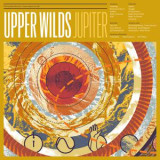
On Jupiter, Brooklyn trio Upper Wilds voyage deeper into the cosmos, mapping out the overwhelming enormity of the universe in soaring hooks and blistering noise. The third installment in the trio"s exploration of our solar system looks to its largest planet for a daring exploration of scale and perspective. New York underground mainstay Dan Friel"s melodic gifts and wry lyricism are magnified and propelled ever outwards by the thundering rhythm section of bassist Jason Binnick and drummer Jeff Ottenbacher, all immersed in rippling fuzz. Just like its namesake, Jupiter stands as Upper Wilds most colossal offering in their catalog. The raw power of their music is amplified to titanic proportions, sky-clawing riffs invoking the sheer awe that the heavens inspire. More than any Upper Wilds album before it, Jupiter makes humanity"s endeavors in space exploration an inseparable part of its sonic DNA . Recorded with Travis Harrison at his studio Serious Business in Brooklyn (Guided By Voices, Dope Body, The Men), the trio"s live recordings are inspired by the Voyager Golden Record - a double LP launched with the 1977 Voyager probe spanning field recordings to compositions by J.S. Bach and Laurie Spiegel. While the Voyager Golden Record"s intended audience may have originally been the extra-terrestrial beings that might encounter the probe, Upper Wilds bring cosmos-seeking sounds back to earth with a record made for and about humanity. Jupiter finds comfort in space"s unending expanse. Far from feeling defeated by the smallness of our existence in the face of an uncaring universe and ever-expanding infinite, Upper Wilds capture the power of creativity to extend our lifespans far beyond our limited time on earth
As the void stares back at me, I am consumed by the waves of this new sonic transmission. ESP's Goblin Synth reigns supreme, guiding me into the darkest corners of my mind, as the Galaxian remix shatters my being into a thousand pieces. This release is a frenzied piece of IDM, braindance, and DnB, fueled by a chemical fury that leaves my mind in a state of pure ecstasy. The relentless pace and shifting soundscapes of the A-side are the perfect conduit for the raw power of the Galaxian remix, taking me beyond the limits of what I thought was possible.
On the B-side, I am treated to a liquid dnb homage that is no less relentless in its pursuit of sonic intensity. Here, the rhythms are more organic, more fluid, but no less potent in their ability. This is music that demands a total surrender of the self.
The insidious rhythms of ESP's Goblin Synth seize my consciousness like a viral agent, rendering my being porous and open to the twitching, glitching transmissions emanating from the depths of the machine. With each stuttering break and howling, modulated synth line, I am hurled headlong into a world of ravenous, cybernetic abandon - a blackened, dystopian horizon of shattered glass and flickering neon.
As my mind is hijacked by the rushing currents of amphetamine psychosis, I realize that this is no mere exercise in genre or form, but an all-out assault on the very fabric of reality itself. The sonic textures here are hyper-real, beyond the grasp of normal human perception - this is the sound of the post-human, the sound of the inhuman, the sound of a future that is rapidly bearing down upon me, whether I am ready or not.
And yet, amidst the chaos and decay, there is a kind of perverse beauty at work - a beauty that can only be glimpsed through the shattered glass of my own shattered subjectivity. With each burst of static and each crunching bassline, I am hurled deeper into a vortex of metallic, crystalline wonder, a realm of pure, unadulterated sound that is as terrifying as it is sublime.
Western Massachusetts band Landowner play abrasively clean minimalist-punk. Singer Dan Shaw began Landowner in 2016, writing and recording Impressive Almanac with a practice amp and a laptop drum machine. Those available tools would inform the band’s unapologetic sound—clean, confrontational, and absurdly stark. With a stated goal to sound like “Antelope playing Discharge”, Landowner’s diamond hard structures, repetitious instrumentals and caricatured hardcore make space for lyrics that reflect on the global systems our lives are tangled in and the dark absurdities we take for granted.
Landowner’s fourth Born Yesterday full length Escape the Compound focuses on the powerful grips manipulators and reality-deniers have on their victims, examining the social, political and interpersonal damage of cult-like influence and control. “A lot of the lyrics focus on cult manipulators and narcissists: falling victim to their toxic dynamics, and the difficulty of escaping their grip” says Shaw. From climate change deniers and conspiracy theorists to deceptive narcissists and actual cult leaders, Landowner explores the ubiquity of modern unreality through evocative imagery and a keen sense of awareness. The band’s plain instrumentation sheds and subverts hardcore punk’s noisy veil in favor of a direct, unswerving examination of these themes.
Written and recorded following the release of 2020’s Consultant, Escape the Compound finds Landowner leaning into the studio through deeper experimentation with a wider palette of sounds. The group’s lineup of Josh Owsley (bass), Elliot Hughes (guitar), Jeff Gilmartin (guitar), Josh Daniel (drums) and Dan Shaw played often since coming together in 2017. But with pandemic restrictions in place, the making of Escape the Compound became a much more insular pursuit, one where the mixing and mastering process helped turn the band’s most varied batch of material into a cohesive, thematic collection of songs.
Album opener “Witch Museum” is a collage of dark Massachusetts historical imagery. The song evokes a kind of cult dynamic traveling like a shadow through time, where dark absurdities are taken for granted, toxic behaviors are excused, and normalcy begins to shift. The line “Gail's behavior has changed” casts fictional “Gail” as the dark manipulator, whose whim we’re at the mercy of. She sheds her toxic behavior and the crisis finally ends - “and peace returns to the Commonwealth”- an absurdity, given that cult leaders and narcissists rarely seem to change.
By considering the past, Landowner sheds light on the present. The band challenges egomaniacs reluctant to accept an uncomfortable reality with both cynicism and concern. The literal landowner described in “Heat Stroke” collapses in exhaustion, cooked by a suffocating bass line and sizzling hi-hats. “You'd rather die of heat stroke than to let anybody see you change your mind,” Shaw gasps, later pleading with the character in “Floodwatch” to “please reconsider” their brazen stubbornness as they plunge through the rising waters of a flooded road.
The character in “Swimmer of Note” refuses to admit their miscalculations, instead doubling down on an ever-growing and increasingly-unsteady tower of lies. The sneering “Damning Evidence” sets a scene all too familiar: a smoking gun scenario with zero consequences. Shaw’s exaggerated vocal refrains and sarcastic inflections mock false hope: “how will they be expected to keep their minds intact, at the shock of simply hearing such damning evidence?”
“Beyond the Darkened Library” creaks open a secret passageway into a dimly lit, endless labyrinth of conspiracy theories, in which the character becomes hopelessly lost. “Aftermath” sounds the alarms: “stare so long that you start getting used to it; one glance says you should never get used to it.” The pair of “Tactics” tracks express what Shaw calls “an interpersonal microcosm of the album’s themes.”
Perhaps the most ambitious arc on Escape the Compound loosely begins with the title track. The subject in “Escape the Compound” gradually recognizes their own victimhood and plans a calculated flight from the “captivating shepherd” – hop the fence, flee, and regain autonomy. As the narrator escapes their stifling and abusive cult microcosm, a much grander existential timeline begins to appear. “Thousands of Years in Fast Forward” narrates a psychedelic surrender to the shared human experience through space and time, an ego-death adjacent to our ancestry, our own existence, and the before and after. “At the site of the crater, molecular hands unclasp molecular hands as you lose conditioning,” Shaw sings on the title track, “Your grandmother's garden. Your grandmother's kitchen. Your grandmother's primordial ocean.” It’s a profound actualizing glimpse into a true, forgotten reality and a startling reconnection with the self.
Brutal Nature Redux is a continuation of Rhys Fulber’s “Brutal Nature” album and art concept, featuring remixes by carefully curated artists. Years of Denial’s take on “Rogue Minority” injects some emotion and humanity into the stark and aggressive original while preserving the driving bass riff and lifting it into the sound of a futuristic tribal gathering. Berlin’s Sarin is up next, leaning into the future EBM style he also shares with Fulber but amping up the intensity and apocalyptic dance floor elements of Central State Institute. Night Render is given a darker and more sinister sheen by up-and-coming Bulgarian producer, Evitceles. The nature elements of the original are replaced by a cinematic dystopia, akin to salvaging lost technology in a ruined city. Orphx add their rhythmic sophistication to “Stare at the Sun, tripping and refining the original down to its base elements while tuning Sara Taylor’s (Youth Code) screams across what appears to be several channels of short wave radio. Qual’s radical re-interpretation of “Pyrrhic Act” brings elements of Fulber’s past history in EBM right to the fore, creating a groove that’s both retro and very modern, slowing it down so the tension hangs heavier in the air. Lastly but certainly not least, Vanity Productions highlights the “nature” of “Fragility”, accentuating it with delicate clouds hanging in an air of contemplation; darkness and light coexisting in thick emotional textures. A fine way to close out this collection of cohesive individualism.
In 1983 there came a sound from the depths of the Brazilian rainforest that was primal, ground-breaking, and completely ahead of its time. The roaring of amplifiers and the beating of drums was the sound of Max and Iggor Cavalera creating their debut cult-classics 'MORBID VISIONS' and 'BESTIAL DEVASTATION', and now it seems that after many years, the Cavalera brothers will be returning to their raw upstarts with a full re-recording of these beloved yet obscure albums.
When 'MORBID VISIONS' and 'BESTIAL DEVASTATION" were first spawned it was done in ramshackle conditions in Belo Horizonte, where the duo grew up. Max and Iggor were 14 and 13 years old during the original recording, and they had all the tenacity and energy of a pack of wild dogs. Only, their sound was not quite refined at that time, their adolescence bled through on those early records. It is well known that Max's guitars were completely out of tune on those sessions, and Iggor's drums often swung around tempos crazily. There's an air of youth and passion that could only be achieved by two teenagers that wanted to shock the world. Four decades later and it is plain to see that they certainly did gather the world's attention.
Despite the production being rough around the edges and the band still carving out their direction, there was a noticeable level of craftsmanship to the song structures and a clear indication that given their desire to thrash like maniacs, these kids from Brazil were going to tear the place up night after night. These albums still hold a dark, mystic and at times eerie quality to them that many have come to love over the years. For some, the music does not have to be delivered with perfect technical precision, the spastic live delivery is something to be cherished, and even with their guitars out of tune, they played like the gates of hell were opening. The crossroads of a shamanistic spiritual summoning at a back-alley metal show in downtown Belo Horizonte.
It is a task of heavy magnitude to try and cross the gap between the accomplished artists that they are today to the scrappy boys that they were when they first wrote these songs, but the duo have executed the performances flawlessly. The perfect bridge between the unbridled energy of the original sessions and the high-quality sound of a 21st century production. It is truly astounding to hear Max once again growl like a monster during "Troops Of Doom" and riff at insane speeds through "War" and "Crucifixion". Iggor's barbaric drumming on "Anti-Christ" is like the galloping hooves of a death-rider. Accompanied by bassist Igor Amadeus Cavalera (HEALING MAGIC, GO AHEAD AND DIE) and lead guitarist Daniel Gonzales (POSSESSED, GRUESOME) the quartet is a force to be reckoned with.
How this re-recording attained such a familiar tenacity is almost a mystery, like some spell that brought these albums back from the grave. Within the first few beats you can hear that the Cavalera’s have lost no momentum, attacking the songs at maximum speed and ferocity. In fact, it seems that the brothers have only empowered their connection through music over the decades. You can feel the spark that those two create, a dynamic sound rich with subtleties and ear-grabbing hooks. As Iggor counts in each song with his drumsticks, and Max's guitar feedbacks loudly as he approaches the microphone, there is palpable apprehension. It is apparent that when these two icons get together to play, they are going to electrify the room with their presence.
Few have had the incredible careers that Max and Iggor have achieved through their music. Even fewer had faith in the young boys that wrote 'MORBID VISIONS' and "BESTIAL DEVASTATION' all those years ago. Yet here they still stand ripping through their earliest works with decades of experience under their belts. For them, it is a breath of fresh air to finally give these songs the desired production that they deserve. They both feel that the fans also deserve a fresh look at these albums, a chance to appreciate them in a completely new light.
From start to finish 'MORBID VISIONS" and "BESTIAL DEVASTATION" are a torrential whirlwind of riffs, beats, and screams. A blast from the past that is sure to take every last listener back to the raucous live shows of the eighties.
Mysterious clouds form above an old cathedral, the summoning of dark magic is upon us, and the troops of doom march forth to announce the arrival of 'CAVALERA'!
Debütalbum der Stuttgarter Hard Rock/Metal Band Front Row Warriors. 2019 von Jay-G, (Drums/ Shining, Sharon), Elkie Gee (Gesang / Ampyre, Antares) und Sorin Badin, einem bekannten rumänischen Gitarristen (Cardinal, Samsara, Crystal Maze) gegründet. Hinzu kamen noch Richie Seibel (Keyboards/ Lanfear, Ivanhoe, Them) und Timo Michels (Bass / 5. Staffel, Pump) und Gitarrist Stef Binnig-Gollub (Septagon). Eine musikalische Reise durch die Ära des Hardrock und Metal der letzten 30 Jahre, mit herausragender Gitarren- und Keyboardarbeit und eingängigen Hooklines. Jedes Bandmitglied repräsentiert einen der verschiedenen Stile und Einflüsse, die den Sound der Front Row Warriors ausmachen. Die Band wurde 2021 vom Verband Deutscher Rock- und Popmusiker zum "Besten Hardrock-Act Deutschlands" gekürt. Die gelungene Mischung aus AOR, getriebenem 80er- und 90er-inspiriertem Hardrock und flotten Uptempo-Nummern sowie epischen Balladen findet sich nun auch dem mit Spannung erwarteten Debüt. Als Special Guest glänzt der US-amerikanische Sänger Todd Michael Hall (J. Starr's Burning Starr, Riot V) auf dem Song "Dystopian Times", für den Sängerin Elkie vom Deutschen Rock- und Popmusikerverband zur besten Hardrock-Sängerin des Jahres 2022 gewählt wurde.
What can't be said about Funki Porcini. From doing Film scores to the surreal live performances with his recent 'Laserium' tour.
An Incredible album of weird & wonderful ridiculousness. An exclusive first time on vinyl, collection of Funki's Famous Fat ones. A fusion of downtempo to eclectic jazz cuts & horns with b-boy latin funk breaks with elements of blissfull strings & melodies throughout.
Funki Porcini delivers his most Incredible vinyl, buffed & ready to play. The most joy you will have with a 12" since 'Lets See What Carmen Can Do'.
- A1: Aos & Tom Bugs - Time Mo 1 (Norman Talley Mix)
- A2: On Your Way (Divinity Vocals)
- B1: Chama Piru's
- C1: Seen Was Set (Norm Talley Mix - Big Strick Vocal)
- C2: Smash (Kyle Hall Keys - Ignit-Linn Drums)
- D1: Buggin Out
- E1: You Silk Suit Wearin Mulafuk'ka
- E2: Take Ya Pik, Nik!!!!!
- F1: Ah'revolution (Poli Grip For Partials Mix'nik - Amp Fidder Vocals)
- G1: Bitch,,,,I'll Buy You Another One!!!
- H1: Heard'chew Single (John Fm Vocals)
Alex "Omar" Smith has never been one for modesty, so we shouldn't be too surprised that he's called his latest full-length - his fifth in total - The Best. To be fair, he is rather good at producing high-grade deep house, and here unveils another eleven gems. Interestingly, he's recruited an impressive cast-list of collaborators and guests, including Norman Talley, Kyle Hall, OB Ignitt and, most surprisingly of all, Bristol-based Tom Bug. Highlights are plentiful, from the dusty afro and blues influences of the tribal "Chama Piru's", and hazy, Rhodes-heavy vocal cut "AhRevolution", to the hip-wigglin' disco-house influences of "Seen Was Set", and retro-futurist, Inner City style Divinity hook-up "On Your Way".
Going past musical genres and instead straight towards something more elemental - Selvhenter’s music creates a strikingly direct, physical experience of sound composed of polyrhythms, acoustic and electric melodies, heavy music and improvised beauty.
Since forming in Copenhagen in 2010, drummers Jaleh Negari and Anja Jacobsen, saxophonist Sonja LaBianca and trombonist Maria Bertel have forged a unique approach to making music that starts with their instrumental setup: two drummers that interlock as frequently as they go their own way, a trombone put through a bass amplifier loud enough to rattle your chest and a saxophone put through a range of effects so that it often sounds unrecognisable. Selvhenter work within their own idiom, drawing from the individual players’ personalities and interests to make a highly collective music, where all four musicians are absorbed into a total sound where an improvised free jazz approach collides with experimental electronic music and avant-garde noise/post-punk sonorities.
Their new LP Mesmerizer - which marks their first physical album release in nearly a decade and their debut on the French label Hands in the Dark - carries forward this process of exploration, deploying original and complex patterns of rhythm through various percussive instruments and finely textured horns and synths. The attention to sonic details is also almost pushed to an extreme on this new offering, making the open auditory adventure suggested by the title of the album all the more captivating. These creative developments have brilliantly kept Selvhenter’s music alive to new uncharted moods and possibilities, while at the same time strengthening their core elements: a propulsive, dense and often ecstatic music.
Globally renowned for his wealth of intricate productions and an expansive musical catalogue that strikes the perfect balance between power and grace, award-winning producer Rodriguez Jr. now announces his latest full-length studio album project, Feathers & Bones - set for worldwide release via his newly launched imprint of the same name.
An extensive, ten-track opus that dives deep into the Frenchman's complex sonic identity, Feathers & Bones was recorded over the course of two years, conceptualized while living in Paris and completed from his new home, Miami. Pivoting towards a new chapter in his illustrious career, the album houses a collection of new Rodriguez Jr. solo productions, two singles with Cuban-American singer, songwriter and multi-instrumentalist Liset Alea, his collaboration with multifaceted Italian artist Giorgia Angiuli, as well as an eagerly-anticipated debut collaboration with legendary English hip hop / electronica outfit, Stereo MC's.
Selected by Jim O’Rourke for his Tone Glow list of 25 albums that “never got their due”, Org was founded in the early 90’s by Espen Jensen and Kjetil D Brandsdal who would later go on to variously record as Elektrodiesel, Noxagt and Ultralyd in the swirl of the highly active Norwegian underground. “Org" was the only album the pair recorded as a duo, pressed in a meagre edition of just over 100 copies which disappeared almost as soon as they were made, lodged in the memory of the select few who have managed to hear it in the years since.
Made up of three long tracks, the near 20-minute ‘001’ opens the album with an extended organ zone-out matched with scraping factory machinery saturated into a dense cloud of harmonic fuzz. There's something transcendental about the sound that intersects with microtonal Alice Coltrane (particularly the unfairly maligned organ-only edition of "Turiya Sings"), as well as Pauline Oliveros and Ramleh. It’s music that pulls you in subconsciously; before you know it, you're fixating on the uncomfortable grind of metal on metal, buried mechanical rhythms and liturgical organ vamps that wind between industrial cacophony and sacred ritual music. For its last few seconds, we go into a full death metal tearout that fades out before it takes full flight, a glorious wtf.
‘002’ connects between minimalist drone styles and shoegaze, distorting fuzzed organ into pliable, dreamlike warbles that end up sounding like Kevin Shields' ‘Loveless’-era glides, or even Sunn O))) at their most devotional. Never losing the numbing overdriven mettle, its a piece that sounds spiritually entwined with Matthew Bower's Skullflower - a minimalist re-reading of high-contrast guitar music that takes all the psychoacoustic power and none of the annoying posturing.
For ‘003’, subaqueous organ is joined by synth and drum machine, sounding like the inspirational spark for Religious Knives' screwed 'n chopped cosmic psychedelia. The choice of sounds links it to Antena's foundational electro samba recordings too, but the overwhelming drone - a constant on all three compositions - connects the music to minimalist spirituals that have simmered beneath the DIY/avant garde for decades.
‘Org’ sits heavy on the nerves with overproof levels of mulched amp worship and ungodly, palms-down organ chords and wheezing, bezonked lines of melodic thought. 25 years out of sight and marinading in the archives, with the benefit of hindsight we can better understand the role these sounds played in the development of music in the contemporary sphere. It’s an important piece of the puzzle, one that makes valuable connections that, over time, have looked progressively more faint.
Repress!
‘Shapes,’ the third album from London-based multi-instrumentalist, Robohands, fuses elements of jazz, krautrock, hip hop and ambient music. For fans of Khruangbin, Yusef Dayes, CAN, Coltrane and 70s library music moods.
Shapes is the solo project of London based composer, instrumentalist and producer Andy Baxter. His debut LP Green was released on Village Live Records in 2018 and was received with much love and acclaim in the UK Jazz, hip hop and surrounding scenes.
His follow up full-length, 'Dusk’, dropped in 2019, combining soul, funk, Latin & experimental moods. It featured vocalists & musicians from around the world including legendary New York French horn player, John Clark, who has worked with Isaac Hayes, Gil Evans Orchestra, McCoy Tyner, Jaco Pastorius, Ornette Coleman and many more greats.
'Shapes' is inspired by 1970s library music and their legendary composers including Piero Umiliani, David Axelrod, Brian Bennett and co. The album builds on these influences and incorporates modern motifs, contemporary jazz/hip hop drumming styles with a nod to 1990s Mo Wax artists such as DJ Shadow. The theme for the record is future/nostalgia, mixing vintage & modern instruments and production techniques.
Much of ‘Shapes’ was recorded with JB Pilon at Buffalo Studios in Limehouse, London. Due to the COVID restrictions that changed everything in 2020, the remaining parts were recorded in Andy’s flat using a collection of old mixing desk preamps and instruments.
For the heads – ‘Shapes’ features an array of vintage snares, including a 1960's Ludwig Pioneer and a mono, overhead ribbon mic on the drum kit provided extra old school points! The kick drum was re-amped through a huge vintage bass amplifier on a couple of tracks to give it some real character: “My favourite guitar sound achieved on this LP project is a Sontronics Sigma ribbon microphone in front of a WEM Dominator amp, which you can hear on the track 'Odysea'. The bass sound for all the tracks is a 1973 Fender Precision into an old Altec valve preamp, the one used on most Motown recordings."
Debut album recorded for launch of new record label by award-winning mastering engineer Kevin Gray!
Recorded all-analogue/all-tube at Gray's new studio, Cohearent Recording, for Cohearent Records!
Shapes and Sound from jazz saxophonist Kirsten Edkins is the debut LP release from Cohearent Records — the new record label companion to famed mastering engineer Kevin Gray's latest enterprise, an all-valve (vacuum tube) recording studio (Cohearent Recording) adjoining his home-based mastering facility in California.
"It's the 'essence of an era' we are trying to recapture with today's musicians, not the sound of specific spaces, engineers or recordings," Gray told music reviewer Michael Fremer.
This album was produced all-analogue/all-tube at Gray's Cohearent Recording on December 10 and 11, 2021. Dave Connor produced, while Gray and Ryan Wirthlin co-engineered. Edkins on sax was joined by Gerald Clayton (courtesy of Blue Note) on piano, Ahmet Turkmenoglu on bass, Lemar Guillary on trombone and Chris Wabich on drums.
Edkins, a composer and saxophonist from Los Angeles, graduated from Eastman School of Music on scholarship. She studied composition and arranging with Bill Dobbins, as well as Walt Weiskopf and the legendary Ray Ricker. Before her time at Eastman she studied with Bob Sheppard, a jazz recording artist and woodwind specialist. Edkins is a sought-after improviser who has performed with Arturo Sandoval (Al "Tootie" Heath), Tim Hagans, Clay Jenkins, John Beasley, and Geoffrey Keezer.
She has performed with the Clare Fischer Big Band, Bill Holman Big Band, Bernie Dresel Big Band (The BBB), Sara Gazarek and others. She's appeard on television shows such as American Idol, Duets, Knight Rider, Glee, and Bones, plus The Tonight Show. She's also a music educator whose associations include Cal State Fullerton, Stanford Jazz Workshop, Saddleback College and Golden West College. She also direct the American Jazz Institute's community outreach program and teaches saxophone at Occidental College in Eagle Rock.
The album is an excellent showcase for Gray's new recording studio. Cohearent Recording was born from Gray's relentless passion to create the best sound recordings. It was that passion that has inspired Gray's long career cutting lacquers for such noted labels as Blue Note, Music Matters and Analogue Productions.
He spent 15 years building gear for the project. "I had a novel idea: In order to get the vintage sound we all love, (I'd) design and build an all-valve (vacuum tube) recording system from microphones through to the disc cutting head, NO transistors or IC's anywhere in the signal path. That took much longer than anticipated but it is finally complete."
Gray was inspired to use his own living room as the studio space when he realized it was similar in size and shape to legendary jazz recording engineer Rudy Van Gelder's Hackensack N.J. parents' home. Many classic jazz albums were recorded there by Gelder.
Some of the same microphones used on those earlier Gelder recordings are in use in Gray's setup. The custom vaccum tube electronics are different and for Shapes and Sound Gray used a tube-based Studer C37 rather than an Ampex.
Gelder's Hackensack recordings for both Blue Note and Prestige, Gray says, are "some of my favourite jazz records, and they are also exceptionally good sonically."
Black Truffle is pleased to announce Symphony No. 107 –The Bard, a previously unheard archival recording of the legendary improvising ensemble MEV (Musica Elettronica Viva), captured in concert at Bard College, New York in 2012. Formed by a group of American expat composers in Rome in 1966, the MEV ensemble played an important role in the development of free improvisation, bridging the live electronics tradition begun by Cage and Tudor and the high-energy squall of free jazz. Early recordings like Spacecraft or The Sound Pool unleash volleys of metal and glass amplified with contact microphones, howling winds, primitive synthesizer bleep and raucous audience participation, the intensity of which puts much later ‘noise’ to shame. In later decades, the ensemble would go through many iterations, often including legendary free players like Steve Lacy and George Lewis. In its final years, MEV settled into the core trio of founding members heard here: Alvin Curran, Frederic Rzewski, and Richard Teitelbaum, using piano, electronics, and small instruments.
Curran, Rzewski, and Teitelbaum were life-long friends blessed, as Curran says, with ‘incompatible personalities’: major figures in the post-Cagean experimental tradition, they explored countless divergent and even contradictory paths as composers and performers, from agitprop songs to brainwave-controlled synthesis. MEV is the sound of these three personalities coming together, their contributions radically individual yet attaining a state of ‘fundamental unity’ that Rzewski, in a text written in the collective’s earliest years, defined as the ‘final goal of improvisation’. Of course, listeners familiar with aspect of the trio’s individual works might hazard some guesses about who is doing what: the crisp piano figures are probably Rzewski’s, the cut-up hip-hop samples most likely Curran’s, the sliding, squelching synth possibly Teitelbaum’s. But often these identities are dissolved in a constantly shifting hall of mirrors, the listener unable to tell which of these pianos is live and which is a sample of a past virtuoso, or whether a horn blast derives from ethnographic documentation or Curran cutting loose on Shofar. The two side-long sets here occupy a similar terrain of constantly shifting texture and instrumentation, unexpected interruptions, and moments of sudden beauty. The first set is sparser, at times almost ominous, as a bell repeatedly sounds across wheezing harmonica, seasick orchestral textures, and creaking wood, making room for episodes of yodelling and delicate prepared piano before exploding into a storm of buzzing synth and piano fragments. The second set is more frenetic, moving rapidly across centuries and continents: cars crash into post-serial piano pointillism, wailing voices collide with chopped and screwed hip-hop samples, Hollywood strings are buried under layers of electronic gurgles. The performance slows in its final moments, making way for a sampled voice repeating the phrase ‘protest and the good of the world’, reminding us that MEV’s idea of freedom was always more than musical. Symphony No. 107 –The Bard is a beautifully recorded example of the endlessly multi-layered later MEV sound, accompanied by new liner notes by Alvin Curran (now the only surviving member of the group) and a selection of previously unseen photographs from across the many decades of the group’s activity. Arriving in an elegant sleeve bearing a beautiful photograph by Francis Zhou of the Olin Hall at Bard College where the concert was recorded, this is an essential document from a major group in the history of experimental music. As Rzewski wrote, this music is ‘like life, unpredictable, sometimes making sense, mostly not’.
Cory Hanson"s third solo LP follows upon 2020"s luminescent Pale Horse Rider, upping the heat to molten levels, six strings at a time. In search of further adventures, Cory draws with vampiric glee from the madness coursing through the world outside; a spiraling shitshow that"s reawakened a compulsion in him - an old ambition, even! - to crush brutality and elegance together into a fresh set of rocks to hail down upon us. Western Cum is a high-stepping, hard-dancing, first love/heartbreak, tonight"s-the-night, future nostalgia kind of good time - the sound of guitars through the speakers of luxury cars. Like the dream you had once, alone, asleep in an amplifier, blasting Guns N" Roses through every last orifice in your body. And it"s coming through! Western Cum"s map to the treasure is less about pastiche, though; more toward executing the songs by executioner"s axe, rolling their decapitated rhythm heads and soaring melodies, the panoply of Cory"s melodic impulses with guitars, guitars, guitars. Harmony leads are just the tip of the iceberg, but be quick - the guitars like to melt everything in their path! The eight songs of Western Cum are driven by the stalwart bass of brother Casey Hanson and the drums of Evan Backer with a few passing acoustics from Cory and the intermittent spirit-moans of Tyler Nuffer"s steel guitar. The quartet sound - two guitars, bass and drums - acts as beat-making principle/phrasing device, as well as template for Cory"s layers of six-string and vocal textures. From the rooftop of their musical safe house - the band in their makeshift hut and Cory ensconced in an outhouse - they let loose with a blast both face-melting and mind-blowing: a social service that gives constipation a good name.
*BLACK VINYL* Eight years in the making, Santa Cruz, California’s reclusive sons of tectonic riffage Mammatus return with Expanding Majesty, a sixty-nine minute magnum opus of kaleidoscopic guitars, soaring analog synths, wall-ofamps fuzz bass and one hundred feet drums. Four sidelong pieces unfold across a double album in unstoppable riffs that span the meditative and joyful un-earthed flight of ’70s kosmische godfathers like Popol Vuh and Tangerine Dream to the kinds of sub-surface thunder pioneered by Melvins and Sleep.
JAG PANZER not only are one of the most important US Heavy Metal bands, but also one of the first ones. The band was formed in 1981 in Colorado, and released their debut album entitled "Ample Destruction" just 3 years later, in 1984.
Today, almost 40 years later, the album – which already presented the band’s very own and unique style - is known as one of the pillars of American Heavy Metal, and is often referred to as the trailblazer of the Power Metal scene. In the last few decades the Heavy Metal scene was going through ups and downs, and so was the band’s career.
Nevertheless, JAG PANZER managed to release 10 more studio albums, and earned the status of an absolute legend of the genre. Yes, they are being called legends, they are being called veterans – but it absolutely doesn’t mean that the band sounds outdated. Exactly the opposite applies:
Their new concept studio album entitled "The Hallowed" of course includes all trademarks and sounds like a classic JAG PANZER album. But it also includes an impressive dose of energy and high-octane in-your-face attitude that will please both old school die-hard fans and young enthusiasts of the genre alike!
- A1: Only Love Feat Lou Rhodes
- A2: Letting Go Feat Andrew Ashong
- A3: Afronaut Feat Amp Fiddler & Laville
- A4: Babylonian Triangle Of Captivity Feat Ebi Soda
- A5: Time Gets Wasted Feat Sly5Thave & Denitia
- B1: Automation Feat Oscar Jerome & Joe Armon-Jones
- B2: Running Away Feat Jazz Ahmed & Laville
- B3: Petrol Head Feat Laville
- B4: Detroit Velvet Smooth Feat Yazz Ahmed
- B5: Jupiter Feat Kennebec
Four years on from his explorative third full-length ‘Aquamarine,’ Londoner Ash Walker returns with an equally ambitious follow-up, set for release via Night Time Stories on 30th June. Alongside a plethora of award-winning collaborators and combining a dizzy- ing array of sounds, ‘Astronaut’ hears Walker push his astral shower of rhythm and vibes to new heights. If 'Aquamarine’ was the take-off of his audial spaceship, ‘Astronaut’ is the cosmic voyage reaching terminal velocity; a rocket-powered masterclass spanning jazz, blues, soul, funk, and reggae.
An avid record collector, Walker has DJed far and wide... from the infamous Royal Mail squat party to the canals of Venice, spinning vinyl in Brixton with The Specials to scattering dub across San Francisco and LA. His own production output is similarly explor- atory: his journeys have taken him far and wide, from tunnels under the river Thames to recording local percussionists in the Atlas mountains of Morocco. Inspired by a deep dive of sounds from artists includ- ing Duke Ellington, Quincy Jones, King Tubby, Bo Diddley, 4Hero, J Dilla, Pete Rock, Curtis Mayfield, Philip Glass, and Steve Reich; his first two albums, ‘Augmented 7th’ (2015) and ‘Echo Chamber’ (2016) gained attention from the likes of BBC 6 Music DJs Gilles Peterson, Don Letts and Gideon Coe.
- A1: Madman (4 22)
- A2: Keep Right On (5 30)
- A3: Reconsider (3 51)
- B1: When Will I Ever Learn 2 (3 44)
- B2: Out Of My Head Is The Way I Feel (3 05)
- B3: Carried Away (3 32)
- C1: Stoned Part 2 (4 13)
- C2: Positively Beautiful 2 (4 09)
- C3: Throw Me A Line (3 42)
- D1: Shame 2 (3 34)
- D2: Won’t Fade Away (4 05)
- D3: Keep On Keeping On (4 47)
Part 1[30,21 €]
Stoned Part II is Lewis Taylor's pure, perfect dance-pop album. His second self-released album and fourth album proper, it initially appeared on his own label Slow Reality in 2004. It's been licensed to Be With for this long-awaited double LP release, its first ever vinyl edition. Gravely misunderstood at the time by hardcore fans and the music press alike, it has aged quite magnificently. An experiment in the sounds of contemporary pop and dance music, Lewis's wonky take on funky pop would annihilate anything kicking around the charts, then or now. If only it were given half a chance.
Stoned Part II is brimming with Lewis's trademark soul, his singing as beautiful as ever, but the rhythms throughout are more upbeat, the overall sound a more smooth and slicker dance-funk presentation. Roughly half the tracks are absolutely essential, fascinating re-workings of tracks from the eternal Stoned Part 1, as Lewis explains: "When we were doing Stoned we were trying different approaches with everything so we ended up with more than one version of nearly all the songs which left us with more than an album's worth of material. There was a lot of really cool house tunes around at the time which we were both really into and that shaped the sound and production, some songs more directly than others." Amen to that.
The swoonsome, string-drenched opener "Madman" is quite the departure, a bleepy, bumping soulful disco-house record with a bassline to die for. Is there anything he can't do? It's followed by another huge dancefloor stomper, "Keep Right On" again riding another killer bassline over funky drums and featuring Lewis's dazzling vocals. There's no let-up with the sparkling "Reconsider" which sounds an awful lot like Daft Punk meets Nile Rodgers (prescient as ever, our Lewis). The wide-eyed French filtered house vibe is to the fore here, and how this wasn't picked up by someone like Kylie and taken wholesale to the top of the charts is something we'll never understand.
Opening the B-Side, "When Will I Ever Learn 2" really slaps, presenting a breezier, more upbeat funk take on the brilliant original and incorporating "From The Day We Met" from Stoned Part I. "Out Of My Head Is The Way I Feel" is absolutely fantastic and one of Lewis's very best songs. The vocals, self-harmonising and virtuoso playing are next level. To close out the side, "Carried Away" is a real standout, Lewis's gorgeous falsetto riding a quasi D&B groove to begin with before adorning a more classically funky 2-step rhythm. The marriage of undulating synths and guitars is stunning, giving way to Lewis indulging his goosebump-inducing Brian Wilson harmonies.
The funky, Rhythm King drum machine soul of "Stoned Part 2" refashions the original in the style of an unearthed Sly Stone classic, circa There's A Riot Going On. Yes, it's that good. On we then glide to "Positively Beautiful 2" which, if it's even possible, manages to be better than the original. The epic, orchestral opening truly captivates before Lewis truly gets down with kaleidoscopic dancefloor-slaying Philly soul-funk. It's surely tracks like this which help explain why he was soon to be tapped up by Dangermouse and Cee-Lo for the musical director role with Gnarls Barkley. "Throw Me A Line" closes out the side
"Shame 2" is a blissful, restrained version of the massive original, without the crazy psych-soul wig-out. Definitely more radio-friendly, that's for sure. The gorgeous mellow vibe continues with "Won't Fade Away", featuring more Beach Boys harmonies over a barely-there pulse (a version of which later pops up in an altered state on The Lost Album). The album bows out with - you guessed it - a psych-soul wig-out! "Keep On Keeping On", a real highlight, opens with looped sampled drums a la Massive Attack and Lewis's multi-layered self-harmonising again very much high in the mix. It amps up gradually to feature vocals dripping with tune and bite before screaming guitars and crashing drums really blast this whole set into the stratosphere.
Simon Francis’s vinyl mastering, approved by Lewis himself, presents the twelve tracks over a double LP so it sounds exactly as it should. The records have been cut by Cicely Balston at Air Studios and pressed at Record Industry. Allow Lewis Taylor to get you Stoned, Part II.
Northwind Splatter Vinyl! Isolated at the rural fringe of Northern California, Bailey's Nervous Kats took Shasta County by storm in the early '60s. Combining surf, rock n' roll, exotica, and R&B, the Kats were a teenage dream draped in Magnatone amplifiers and crisp white polo tees. Their self-titled_and only_LP came at the dead end of the band's run, issued on Orville Simmons' one-shot Emma imprint in 1965. The mid-century modern LP of your dreams.
Isolated at the rural fringe of Northern California, Bailey's Nervous Kats took Shasta County by storm in the early '60s. Combining surf, rock n' roll, exotica, and R&B, the Kats were a teenage dream draped in Magnatone amplifiers and crisp white polo tees. Their self-titled_and only_LP came at the dead end of the band's run, issued on Orville Simmons' one-shot Emma imprint in 1965. The mid-century modern LP of your dreams.
Rober Nikolajev (Estonia) — a man with many hats: runs lo-fi house projects as Nikolajev (Incienso, Collect-Call, Sad Fun) and DIMA DISK (with Ragnar Rahuoja); runs noise events KONSUM; a co-owner of Tallinn’s IDA Radio. For Muscut, Robert prepared a 7 track (almost dark) ambient album imbued with the melancholy of Estonian autumn with spoilers of the forthcoming eternal winter.
Following on from the Bergisch-Brandenburgisches Quartett’s anarchic Live ’82 (BT095), Black Truffle continues its deep dive into the archives of legendary drummer/accordionist/photographer/composer/conceptual prankster Sven-Åke Johansson with Scheisse ’71. Recorded in November 1971 during the Berliner Jazztage at a heavy-hitting concert that also included the Spontaneous Music Ensemble and groups led by Peter Brötzmann, Manfred Schoof, and Masahiko Sato, Scheisse ’71 is the only document of a wild, otherwise unrecorded quintet featuring Johansson on drums, accordion and oboe d’amore, legendary free jazz vocalist Jeanne Lee, her husband Gunter Hampel on vibes, flute and bass clarinet, live electronics pioneer Michael Waisvisz on modified Putney (VCS 3) synthesizer, and the unknown Freddy Gosseye on electric bass. Part of a festival centred on giants of jazz like Duke Ellignton and Dizzy Gillespie, the radical performance shocked its audience, who can be heard heckling and yelling abuse at points, including the titular exclamation of ‘Scheiße!’ Clocking at just over half an hour and recorded in raw but detailed stereo by Johansson himself, the music burns with intensity while also making room for spacious passages and frequent dynamic movement. Beginning with Lee’s voice, Hampel on flute and Johansson on oboe d’amore in a bird-like game of call and response, the unexpected entry of Waisvisz’s tortured, squelching synth bursts prompts the first of many changes in energy and instrumentation, as Gosseye’s busy, roving bass enters and Johansson moves to the kit, his swinging cymbal work and juddering toms extending the approach of Sunny Murray or early Milford Graves. The presence of synthesizer, electric bass, and Lee’s highly amplified voice moves the quintet away from conventional free jazz textures, at times pushing into zones of abstract free sound reminiscent of what groups like MEV, AMM or Johansson’s MND were exploring in the same years. But the energy and joyful melodicism of the music keep it rooted in the tradition of American fire music and its European inheritors. Capable of changing gears in an instant from ferocious blow outs to fragile tapestries of chiming vibes and fizzing synth, the music finds space for Lee’s post-bop free scat (which integrates shrieks and howls just as a post-Ayler saxophonist might), Gosseye’s virtuosic bass runs (a rare attempt to apply the classic free jazz style of players like Alan Silva or Henry Grimes to the electric instrument), Johansson’s folkish accordion interjections, and even a sustained passage of unison bass clarinet and electric bass riffing in its second half. Special mention should be made of Waisvisz’s Putney performance, one of the earliest documents of this under-recorded instrument inventor and player, here playing a major role in giving the music its wildly exploratory, primordial air, his buzzing glissandi and bubbling filter sweeps at times howling like a distressed monkey. Arriving in an austerely stylish sleeve with beautiful black and white photographs by Johansson, Scheisse ’71 is an essential recording that adds yet another layer to our appreciation of this golden era of radical free music.
You heard them first on Brown Acid “The Thirteenth Trip”. We are very excited to present to you the full unreleased recordings from this amazing band from Detroit. Master Danse was formed in late 1973 in Detroit, Michigan when drummer Tom Riss and bassist Cary Fletcher, formerly of the Detroit band Licking Stick, went looking for a new guitarist/lead vocalist and jammed with John Giaier, who had most recently played in the band Crawdad. The three musicians hit it off immediately, and a new power hard rock trio was born. In 1973, Detroit was clearly “Rock City”, featuring such local icons as Bob Seger, Alice Cooper, Grand Funk Railroad, Ted Nugent, and Mitch Ryder, and the high energy punch of Master Danse reflected this proud heritage. Unfortunately, this union would only last one year, and by the end of 1974 the power rock trio known as Master Danse had disbanded. What was left for posterity were only two live reel to reel recordings and one promo 45 single. Some forty-seven years later, the 45 found its way onto the internet and a small cult following of audiophiles was born, people who appreciate the raw power and high energy of early ‘70s rock. Bands like Master Danse and others from this era were riding the wave of transition from the pop rock sound of the ‘60s to an edgier sound that would eventually lead to metal and punk music. With the help of modern-day tape restoration techniques, the two live recordings were restored, and together with the 45, the best versions of the eight songs that have survived the decades are featured on this album. Although recorded live forty-eight years ago on a two-track stereo tape recorder, you can still feel the power of Giaier’s Marshall stack, Fletcher’s twin Acoustic 360 amps, and the relentless attack of Riss’ Ludwig drums. So, sit back and enjoy. Rock on!
Returning after three years, the husband and wife duo of Alexi Erenkov and Alison Alderdiceaka. The Saxophones have announced the arrival of their third album, To Be A Cloud, for 2nd June 2023. Out today is the first single to be taken from it, Desert Flower, featuring a video directed by Rainbow Tunnel. "Alison wants me to try therapy, "says Alexi. “She’s a therapist herself, but I’ve never been to one. The idea of going makes me very uncomfortable. I don’t like being vulnerable in front of strangers. So, instead of confronting my discomfort, I look for an easier path. It’s never easier and it’s always unsatisfying or destructive. “Desert Flower” is about avoidance and fear impeding personal growth and the deepening of relationships. The album itself was recorded at Phil Elverum’s (The Microphones, Mount Eerie) Unknown Studio in Anacortes, WA last autumn. A former Catholic church where the pair lived during 24/7 recording sessions, time was no object as they experimented and developed the sound of the record. Its magical setting and ample space provided natural acoustics for Alexi’s arresting vocals which were recorded live to 24-track tape, suspending them in an ambiguous historical and chronological context between analogue and digital. Enhanced by Alison’s percussion alongside the bass and keys of Richard Laws, together they made the most of the studio’s many instruments which fill out and bookend their exploration of the billions of years of evolution that have led to this moment in time.
"As long as you come to my garden", the sixth release in the cherished Die Schachtel’s series “Decay Music” as well as the debut of the duo Damāvand (Gianluca Ceccarini and Alessandro CIccarelli) on the prestigious Italian label, is a tribute to the Armenian troubadour Sayat Nova, through his lyrics and freely inspired by the cult movie about his life The Color of the Pomegranates (Nřan guynə, 1968, USSR) directed by Sergei Parajanov. The feature film tells the life of the poet, who lived in the 17th Century, from childhood in the royal court, to retirement until his death in the monastery of Haghpat, through a series of episodes, static like paintings that do not tell but show, evoke, they suggest through metaphors, analogies, surrealist flair, dreamlike landscapes, liturgical pauses.
The six tracks are inspired by the dreamlike imagery contained in the movie, weaving sound textures ranging from ambient to noise, to references to the musical tradition of the Middle East.
Gianluca Ceccarini and Alessandro Ciccarelli alternate, without fixed roles, with analog synths, drones, amplified common objects, generative music, audio samples from the film and acoustic instruments such as the tar - a stringed instrument of Persian origin, the trombone and the cornet. In addition, two of the songs on the album contain Sayat Nova’s poems recited in Persian by Nahid Rezashateri.
The sound materials are revealed gradually like episodes, evoking the visual suggestions staged by Parajanov in the movie. As long as you come to my garden is intended as an imaginative journey to distant spaces and indefinite archaic times.
DAMĀVAND is a musical project by Gianluca Ceccarini (electronics, electroacoustic objects, tar) and Alessandro Ciccarelli (electronics, electroacoustic objects, trombone, cornet)
Gianluca Ceccarini, guitarist, electroacoustic experimenter, luthier specialized in the restoration and construction of plucked musical instruments for early music. In 2021 his first album Starving Night was released for the netlabel Laverna and in 2022 the Sarab Label published a CD version. He also works in photographic research, video-art, graphics and independent publishing with the Sarab collective.
Alessandro Ciccarelli is an author who ranges between different languages: photography, video, sound. He is involved in several collective research projects in the musical and theatrical fields. His solo records are released under the nom de plume Elnath Project. The latest work, after six years of silence, from Italian berlin-based composer, performer and publisher (Black Letter Press) Claudio Rocchetti, and a welcomed return on the Die Schachtel imprint after the brilliant Another Piece of teenage wildlife (2008), Labirinto verticale (Vertical Maze) takes its origin from the four years long collaboration of Rocchetti with the Parma-based Fondazione Lenz, a contemporary theatre research collective/organization.
FINALLY BACK IN STOCK ON LP!!! Ozma was recorded soon after Melvins made the move from Washington to San Francisco, and was their first release to include the diminutive yet mighty Lorax (Lori Temple Black) on bass. In fact, the first sound one hears at the album’s opening is Lori standing on her tiptoes to switch on her amp, thereby warning the listener of the onslaught to come. Distorted, down-tuned doom riffs start, stop, lurch sideways with no warning, and seem to end before they start. Buzz Osborne adds extraneous guitar static and vocal squeals. Drummer Dale Crover plays as if he’s inside a barrel going over Niagara Falls; the long, slow fall allows the space between beats to grow and grow until he crashes into the water with the vessel blasting apart in an explosion of drum rolls. The classic Melvins heavy grind is set up and broken up by assorted odd sidetracks: “Revulsion / We Reach” flows forward slower and slower until it eventually melts into a gooey feedback drone. “Raise a Paw” is a superball paddled against one’s head by a grinning village idiot. “Love Thing” enlists in the Kiss Army before getting dishonorably discharged.
Dire Straits' arresting self-titled debut arrived in the midst of punk's reign but couldn't have been further removed from the era's slash-and-burn style. Recorded in West London in February 1978, the band's tasteful, jazz-inflected set embraces folk, blues, and pub rock while also tracing a direct line back to the beat-oriented sound of early rock n' roll. Country and roots accents further distinguish the British quartet's stripped-down music from any 1970s peers, as does the transparent production, which has remained revered among audiophiles the world over – and which has never been better than on this meticulous pressing.
Mastered from the original master tapes and pressed at RTI, Mobile Fidelity's 180g 45RPM 2LP version of Dire Straits features natural tonalities, superb balances, you-are-there imaging, deep-black backgrounds, and pristine clarity. Even if you've heard this album hundreds of times before, you've never experienced it with such lifelike sonics and premium richness. This numbered-edition collector's set immerses you within the smoky, laidback atmospherics of every song. This is how all vinyl should sound.
Crucial to every arrangement, Mark Knopfler's winding guitar lines emerge with supreme transparency and multi-hued textural detail. His intricate playing comes across as if it's being transmitted via his 60s-era Fender Vibrolux amplifier placed right before you. The cleanliness, dimensions, and live feel are that good. His bandmates, too, benefit from the extra groove space afforded by this 45RPM edition. Rhythms skate and swirl; percussive effects resonate with crispness and attack; the leading edges of notes naturally decay.
Dire Straits' strong, well-edited batch of original material further enhances the overall enjoyment and makes the record one whose pleasures go far beyond the organic sonics. Just as Knopfler's narratives pour forth with poetic and surrealist texts, the musical settings – an intoxicating combination of easygoing shuffles, back-hall boogies, and pop-honed ballads – mirror the old-fashioned soulfulness inherent in the classic recordings of the late 50s and early 60s. The lyrics are equally captivating.
Drawing from his time as a youth in Newcastle, Leeds, and London, Knopfler invests tunes with an autobiographical slant and emotional connectivity that become obvious the moment he opens his mouth to sing. "Down to the Waterline," "Wild West End," and "Lions" all feature colloquial touches that add to their reach. By extension, "In the Gallery" functions as a tribute to Leeds sculptor Harry Phillips (father of future Knoplfer collaborator, Steve Phillips) while the record's breakout smash, "Sultans of Swing," pays homage to struggling bar bands.
Through it all, Dire Straits performs with a subtle cool and clever poise that no band ever matched. Just how good is the chemistry? Bob Dylan heard the quartet and invited Knopfler and drummer Pick Withers to play on Slow Train Coming. But even Dylan himself didn't hear Dire Straits sound this magnetic back in its original heyday. Now, everyone can.
- A1: Bowery Electric - Things'll Never Be The Same
- A2: Asteroid #4 - Losing Touch With My Mind
- A3: Mogwai - Honey
- B1: Flowchart - Ode To Secret Hassle
- B2: Fuxa - Amen
- B3: Accelera Deck - I Believe It
- B4: Arab Strap - Revolution
- C1: Bardo Pond - Call The Doctor
- C2: Frontier - Hey Man
- C3: Low - Lord Can You Hear Me?
- D1: Amp - So Hot (Wash Away All Of My Tears) (Wash Away All Of My Tears)
- D2: Piano Magic - How Does It Feel?
- D3: Transient Waves - Billy Whizz
First repress since its original release in May 1998
Celebrating twenty-five years since its release as rgirl2 – the label’s first LP – Rocket Girl is reissuing its seminal compilation A Tribute to Spacemen 3 on double vinyl with spot varnish sleeve in May 2023.
Widely acclaimed at the time of its release (garnering rave reviews in the UK, US, Canadian and European music weeklies and monthlies), the collection sounds as fresh and inventive as it did three decades ago. Launched at a time when tribute albums were prevalent, A Tribute to Spacemen 3 stands apart from other covers albums in that it not only redecorates S3’s songs in a bold new palette of colours, but also acts as a time capsule documenting a very specific wave of 90s US and UK bands that shared many sensibilities – ‘post-rock’ might be the catch-all genre, but their music also encompassed psych, slowcore, analogue electronica, dream pop and space rock to varying degrees – and many of whom (Mogwai, Low, Arab Strap, Bardo Pond) have gone on to reap major critical and commercial success, and are still thriving today. In 1998 the LP was a gateway for fans of Spacemen 3 to discover these relatively unknown experimental artists operating on small independent labels either side of the Atlantic – today it is a celebration of the timeless innovation and longevity of that scene.
As author Richard Milward states in Rocket Girl 20, the 2019 book illuminating the history of the label: ‘In no way is the LP a collection of imitators simply regurgitating Spacemen 3’s songs sound-for-sound – rather, the compilation celebrates the purity and bravery of Pierce’s and Kember’s song writing (themselves never averse to a transformative cover version) while showcasing the originality and diversity of those bands they have inspired.’ It is the simultaneous simplicity and otherworldliness of S3’s songs that make them perfect fodder for reinterpretation, the band’s ‘three chords good, two chords better, one chord best’ mantra providing a solid, tantalising foundation for these bands to experiment with freely. Throbbing and humming with equal parts euphoria and melancholia, over the course of the album’s 69 minutes the tracks slide from slithering stoner psych (Asteroid #4’s ‘Losing Touch With My Mind’) to hymnal delicacy (Amp’s ‘So Hot (Wash Away All of My Tears)’ and Mogwai’s crisp, glockenspiel-chiming ‘Honey’) to zero-gravity lounge jazz (Transient Waves’ closer, ‘Billy Whizz’). There are radical reworkings: the oozing fuzztone lava of Bardo Pond’s ‘Call the Doctor’, and not least Arab Strap’s startling take on S3 live mainstay ‘Revolution’, replete with aggressive, crunching drum machine and the lyrics delivered down the telephone in Aidan Moffatt’s laconic Falkirk drawl – ‘a change, a solution, a wee… a wee revolution’ – before its explosive climax.
Re-issue of Cate Le Bon's April 2016 album originally released on Drag City which she described as "A coalition of inescapable feelings and fabricated nonsense," . A few years prior to its release, Cate's mother unearthed her birth certificate, and admitted to her daughter that they'd had her birthday a day off for nearly three decades. That sense of misaligned reality is the guiding force on Crab Day, where Cate establishes a strange, almost Dadaist lyrical scheme to make sense-or make more nonsense-of some unnamed life rupture that's left her grasping Ltd. coloured vinyl edition!
- 1: Crab Day
- 1: 2 Love Is Not Love
- 1: 3 Wonderful
- 1: 4 Find Me
- 1: 5 I'm A Dirty Attic
- 1: 6 I Was Born On The Wrong Day
- 1: 7 We Might Revolve
- 1: 8 Yellow Blinds, Cream Shadows
- 1: 9 How Do You Know?
- 1: 0 What's Not Mine
Coloured[19,75 €]
Re-issue of Cate Le Bon's April 2016 album originally released on Drag City which she described as "A coalition of inescapable feelings and fabricated nonsense," . A few years prior to its release, Cate's mother unearthed her birth certificate, and admitted to her daughter that they'd had her birthday a day off for nearly three decades. That sense of misaligned reality is the guiding force on Crab Day, where Cate establishes a strange, almost Dadaist lyrical scheme to make sense-or make more nonsense-of some unnamed life rupture that's left her grasping Ltd. coloured vinyl edition!
Four Flies' new imprint Edizioni della Notte is back with a 12-inch maxi single of infectious remixes of Francesco Fisotti's boogie funk track "La Tartana" by eclectic Neapolitan DJ/producer Whodamanny.
The original track, which comes from the 2021 album Lido Sirena (named after a beach resort in the Salento area of Apulia, where Fisotti used to spend his summers as a child), blends funky disco, synths, drum-machine beats and improvisation into an exciting new sound that Fisotti calls "Adriatic funk".
Inspired by slow-tempo but irresistible Italo and cosmic disco tunes, in particular Tonino Balsamo's 1983 "Sta Guagliona Mo Ddà" (one of the rarest Neapolitan grooves ever, recently reissued by Periodica Records), Whodamanny's two remixes amplify the original's dancefloor potential by adding a nocturnal vibe and elements such as synths and electronic drums, as well as a short vocal line ("Don't stop till the music stops") to create a catchy call-and-response effect.
Whodamanny himself explains that he produced not one, but two remixes due to his love of extended dub versions. "It's sort of a professional quirk," - he says - "but you know, it's inevitable. You're sitting at the mixer, listening over and over to a track… Of course you'll find bits you can stretch out to create a fantastic flow! And my approach is always the approach of a DJ. I want whatever I produce to work well in my DJ sets, so these remixes too were bound to be club-oriented."
Birds chirp through a tape-hiss breeze atop a bed of airy pads, and a cleareyed, forlorn guitar springs forth: this is the beginning of the debut album from Sans Merit, a new rock project from Griffin James, otherwise known as Francis Inferno Orchestra.
For over a decade, the Melbourne-raised—and now L.A.-based—producer has been indulging his indie and alt interests, and this fuzzed-out bedroom janglepop and shoegaze LP, Early Grave, is his first extensive deliverance.
The album represents a gestalt of sorts: years of approaching different genres and songwriting styles, and producing not “in the box,” with soft synths and
samples, but with live instruments (and sometimes a band), has led to this focused and succinct thirteen-track musical journey.
In pursuit of a pure and low-key aesthetic, James recorded demos on phones and chose to rely heavily on budget instruments, clapped-out synths, and
crappy amps, and would often cut tapes live in bedrooms, lay down vocal takes in closets and put microphones to broken speakers, all in part of the quest of using limited resources to create a truthful body of work. The finishing touch is a thick coating of nostalgia ooze; soundbites from internet clips flitter throughout the record, and goofy sound effects flicker above like dying incandescent bulbs.
A dream-pop album for our times: its lyrics are off-kilter romantic musings, sarcastic self-loathing mumbles, reflections on the unrealness of real life.
Radien began its descent early 2014. The band draws creativity from the deepest depths of the world and the mind, balancing between crushing heaviness and ethereal atmospheres. This Helsinki-based group from Finland vows in the name of serious amplifier worship and offers their atmospheric blackened sludge with intensity and integrity. Unissa Palaneet will be the second album by Radien with a release date May 19th, 2023, by Svart Records. The album is mixed by Sanford Parker and mastered by James Plotkin. It features international guest appearances by Dylan Walker (Full of Hell), Mike Paparo (Inter Arma) and Italian multi-instrumentalist Lili Refrain.
Ten years ago, Parish Bracha anonymously released his Disconscious album Hologram Plaza, significantly influencing the still nascent Vaporwave scene. He continued producing a number of disparate anonymous projects until Cascade II was released in 2020 on Arca's Mutant Mixtape.
Cascades of Refinement, which includes the single Cascade II, is Parish's debut album released under his own name and his focus on the dialogue between the digital and the organic continues. The techniques that defined his influential early sound have been refined into a flawless hybrid of analog and digital textures which give his post-minimalist compositions an unmistakably personal expressivity.
Classical instruments are mutilated and transmuted into razor-sharp shards of glass suspended on piano wire above warped opalescent metal while never losing sight of their tonal integrity. Much like the impartial juxtaposition Parish employs in his timbral exploration, each composition explores the concepts of beauty and gentleness through and with extremity, violence, and chaos as equal counterparts, with each successive piece refining and relieving the artificial tension between these states. Employing use of the Una Corda, prepared piano, bowed piano, plucked piano, harpsichord, church organ, untuned violin, voice, synthesizers, and resampled field recordings, Cascades of Refinement lies somewhere in the indefinite space between acoustic and electronic and is beholden to neither.
Parish's initial electroacoustic experiments with piano and strings were interrupted by the pandemic lockdown when he was limited to sampled instrumentation and digital processing available on a computer. Out of this necessity evolved an appreciation for the incidental nature of digitally sampled acoustic instrumentation and the unpredictability of its interaction with digital signal processing.
As work on Cascades of Refinement continued and acoustic recording was reintroduced, the focus turned to the tension between recorded and sampled instrumentation, with the goal of integrating the two into a singular indistinguishable material to be warped and shaped together. Each of the four pieces of the Cascade series explore this tension, successively integrating and collapsing their distinction with each piece.
The subtle artifacts of digital processing and incidental mechanical sounds of the acoustic are amplified and given presence alongside the tonal elements of each piece until a point of indivisibility is reached. The sound of a bow scraping along a string or a granular buffer freezing are neither discarded nor hidden, but selected as the ripest material to accompany and structure each composition. Cascades of Refinement is a dialogue between organic and digital, between the mercurial and infinitely reproducible, not as opposites, but as mereologically cohabiting counterparts with equal expressivity.
- A1: Ich Wollte Wie Orpheus Singen
- A2: Spielmann
- A3: Das Haus An Der Ampel
- B1: In Wien
- B2: Alter Freund
- B3: Glück Ist, Wenn Du Freunde Hast
- B4: Die Erste Stunde
- C1: Dann Mach's Gut
- C2: Wir Haben Jedem Kind Ein Haus Gegeben
- C3: Häng Dein Herz Nicht An Einen Hund
- C4: Ich Liebe Es, Unter Menschen Zu Sein
- D1: Dieter Malinek, Ulla Und Ich
- D2: Weißt Du Noch, Etienne?
- D3: Der Vater Und Das Kind
- D4: Ich Liebe Dich
- E1: Männer Im Baumarkt
- E2: Zimmer Mit Aussicht
- E3: Gerhard Und Frank
- E4: Was Will Ich Mehr
- F1: Über Den Wolken
- F2: Viertel Vor Sieben
- F3: Gute Nacht, Freunde / Ausklang Mr Lee
- F4: Bonus The Song Maker
Alle 16 Konzerte der Arena-Tour wurden aufgenommen, alle waren einzigartig und unvergesslich, es war nicht leicht, eines auszuwählen. Reinhard Mey hat sich für das letzte Konzert entschieden, den letzten
Abend im Wiener Konzerthaus, in dem vor über 50 Jahren alles für ihn begann.
Das Live-Doppelalbum enthält alle 22 Lieder dieses Konzerts sowie als Bonustrack „The song maker“, ein Lied, das ihm sein Schwiegersohn, der kanadische Singer-Songwriter Matthew Pearn, zum Tourneeabschied geschenkt hat.
Since the release of the Sentimental Fool, Lee Fields has been touring relentlessly, playing to capacity crowds all across the US & EY with the drive and determination of an artist a fraction of his age. The fruits of which have culmi-nated in his song "Forever" being featured in 2023's top rated Super Bowl commercial, further solidifying Lee as the king of soul. In keeping with the momentum it is our pleasure to announce the release of his brand new single "Waiting on the Sidelines". Written by Thomas 'TNT' Brenneck (MSB, Charles Bradley, Diamond West Records) this beat-ballad grooves low and slow, giving Lee ample room to unleash a heart-breakingly soulful display of vocal acrobatics - an absolute must-have for fans of the Penrose sound. On the flip you'll find "You Can Count On Me", an in demand, upbeat moover previously only available on a limited edition 12" EP. Now bow to the king!
Murmer is the long-standing project for Estonian field recordist and composer Patrick McGinley, and in Tether, The Helen Scarsdale Agency welcomes Murmer back to our roster, over a decade since he graced us with his last production for the Agency. His field recordings often center upon the amplification and activation of resonance from a particular space, landscape, or object. Such sounds emerge from a condition as begin fleeting, inconsequential, or ephemeral and explode into that which alien, sublime, and profound. Here lies the tremendous prowess of the contact microphone, as wielded by an accomplished musician! The source material cited by McGinley includes cables, fences, wires, and vents.
There is a heft to many of these sounds as heard throughout all of "Taevast" with deep throbbing pulsations from arctic wind generating subharmonic patterns upon thick high-tension wires. Elsewhere the subtle dissonance from a rasping cooling fan blooms into a brooding ambience that is sublimely rich in its metallic timbres and complex reverberations. McGingley has long been an exemplary artist in the field of phonography even as he is less prolific than others. On Tether, he has produced a majestic if occasionally foreboding work on par with the mythic wire recordings of Alan Lamb, Jacob Kirkegaard's haunted resonance from Chernobyl, and much of the Touch catalogue for that matter!
Patrick McGingley on Tether:
In 2006, I made a collection of recordings at a mobile phone mast in Mooste, southeast Estonia. It is a guyed tower, 80 meters tall, affixed to 3 support points with heavy cables. I attached my self-made contact microphones to these cables with poster tack, and spent many hours over several weeks recording the various wind and weather variances (it was summer), and the birds that passed or settled on the tower or cables. This was one of my first visits to estonia, where i now live, and one of the things that marked me about that experience was the access: the tower had no fences or protections around it (I have not been back there recently to answer my own question of whether or not this is still the case); it stands in the middle of a field of tall grass along a dirt road in the countryside, just out of view of the few nearby houses, and during all the hours I spent there I was never disturbed or shooed away.
For more than 16 years, I have been thinking about this location and these recordings, and have made several attempts to work with them. I have used the sounds in installations a handful of times, and uploaded one short edit to the Aporee soundmaps, but have never managed to use them in any composed work. They always seemed too big for any structure I could provide them, whether I left them on their own, or partnered them with other sounds. Finally, in 2019, after putting them down and picking them up again repeatedly over so many years, they seemed to allow me in, although it took me another few years before they were happy with what I could offer. They stand now not quite alone - the majority of the layered sounds in the piece come from various edits of those cable recordings, but I added two other contrasting sounds, related to one another: one is snowflakes landing delicately on a plastic cakebox with microphones inside it, and the other is a frosted field of grass thawing on a lightly warming autumn morning (both these recordings can also be heard on their own on the Aporee maps).
Coming back to those cables brought to mind so many other wind-driven sounds that I had spent time with and recorded, but never returned to, that I began digging through my archives looking for them. I ended up with a pool of sounds from resonant wires, cables, fences, poles, fans, and vents, which became the basis for the 2nd work on this release. One of these sounds is among the first sounds I ever recorded, possibly within a month or so of buying my first microphone and minidisc recorder: the rhythmic fan of a beer cooler in a pub where I worked in North London in 1999. Other sounds in the piece include another phone tower, recorded on the northern coast of France in 2008, a telephone pole recorded in the Beaujolais region in 2010, the drone of ventilator fans at a factory in Tezno, Slovenia in 2012, an electric sheep fence in the Scottish borders in 2013, a hanging wire in a storage space in Rovaniemi, Finland in 2016, and, with no relation to cables or wind at all, calcium deposits being cleaned from the inside of an electric kettle here in Estonia in 2019.
I offer these two new pieces as my first solo publication since 2018, the first release on a physical medium since 2016. No one has ever accused me of working too fast, or being too prolific. I have a need, it seems, to leave a physical space of time around my work, before I can consider it 'finished'. Perhaps it is a simple need to forget how I did something, or that I did something; perhaps I have a need to be able to hear a work as a first-time listener would, before I can consider it ready for such an encounter. In some part of my mind I have to forget it before I can let it go. Well, I've just about forgotten that London beer cooler now, and that walk in the Beaujolais (with my father, who has since passed away), and that sheep fence next to our campsite in the borders, and that kettle that is now leaky. So I guess it's time.
- A1: Ss-Say - Care
- A2: Oskarova Fobija - Beli Dekolte
- A3: Danton's Voice - I Hear The Bells
- A4: Sympathy Nervous - Polaroid
- A5: Pas De Deux - Cardiocleptomanie
- B1: Robert Lawrence & Mark Phillips - Computer Bank
- B2: The Fast Set - Kaleidecon
- B3: Reserve - Destination Pour L'inconnu
- B4: Kym Amps - You Don't Know My Name
- B5: Unovidual & Tara Cross - Microphone Connection
A compilation of Minimal Wave from around the world ‘79-‘85. »The Hidden Tapes« features rare, unreleased, and licensed tracks from as far as Japan and the former Yugoslavia. Most of the bands on this compilation recorded on 4-track tape in their bedroom studios while two of them went further to collaborate by sending tapes through the mail. The sounds on this record range from raw proto-industrial to naive danceable Belgradian new wave, to filmic synthesizer music to more complex, vocal-driven melodic synthpop.
The third full-length from Olivia Jean, Raving Ghost, is an album populated by mysterious characters in various states of danger: cursed lovers, doomed souls, women deliriously haunted by unseen forces. Over the course of its 12 spellbinding tracks, the Detroit-born singer/songwriter/multi-instrumentalist amplifies that drama with her wildly melodic take on garage-rock, handling each riff with the power and precision she’s previously shown as a member of the Black Belles (and as an in-demand session/touring musician who’s played with legends like Wanda Jackson). A stunning evolution of the retro-surf sound of her past solo work, Raving Ghost ultimately makes for the most magnificently heavy and mesmerizing output yet from an endlessly fascinating artist.
The second collaborative album from Laetitia Sadier Stereolab & solo and Brazil's Mombojó. Release via Stereolab's Duophonic Super 45s imprint. Modern Cosmology is a musical ensemble composed of six individuals of the human race, none of which are cosmologists or astronomers, although Felipe S. - who sings and plays the guitar - knows quite a bit about reading astrological charts. He shares his frontperson duties with one Laetitia Sadier who, by virtue of her singer-songwriter career both as a solo artist and as part of the Stereolab ‘groop’, happens to be one of the key figures of her bandmates’ musical formation. Their paths first crossed when Marcelo - also on guitars - lent his amp for some of Laetitia’s solo concerts in Brazil under the condition that he got to meet his musical idol, and along came his brother Vicente - who plays the drums - and keyboardist Chiquinho. The four lads, plus Missionário José on bass, are collectively called Mombojó, an established band on the Brazilian alternative scene.
Lost in the depths of space, AAKAARA takes listeners on a journey to the outer limits of the sonic universe with their latest album “Obsidian Promises”. Blending influences from punk and metal, EBM, architectural design and certain celestial objects, AAKAARA offers a fresh take on industrial techno.
This body of work is dark and brooding, full of haunting and thought-provoking soundscapes. Metallic and cold one moment, blisteringly hot the next. Pounding drums create searing rhythms, acid-drenched synths weave abrasive textures, and noise permeates the stereo field. Inspired by the mysterious and alluring world of black holes, the producer explores the beauty of extremes through sound. “If you know my work or me,” AAKAARA says, “it’s no secret that I have a spiritual connection to, and an obsession with, black holes.
It’s not about doom and gloom, but about beautiful extremes: infinite calmness, ultra-high energy, being deeply centered, and inevitable attraction.” “I try to sonify this in a naive sense. It isn’t an attempt at science; it’s a way for me to practice a makeshift spirituality about these entities through craft and functional dance music for people.”
Spirituality and stellar inspiration were essential to AAKAARA’s life during the three years they spent between Los Angeles and London, while writing this album. It provided a sonic home during a period of transition, when they didn’t feel at home and didn’t have access to a studio.
Everything was made “in the box” using only Ableton 10. After collecting guitar pedals and amplifiers for years, AAKAARA has shifted away from a hardware-focused mindset and is now more invested in the conceptual framework, narrative, and cultural implications of their work. Visuals also play an integral role in this maximalist experience.
The outer sleeve (front and back cover) conveys the “big ideas” visually, while the companion poster includes custom typography, detailed drawings, symbol design, and poetry. The poetry provides a textual counterpoint to the lyric-less music, written in parallel but later stages of the production process. The visual identity of this work is inseparable from the music, describing it in an integral way. It’s the other side of the coin, not simply an accompaniment. With its spiritual connection to the infinite and mysterious, “Obsidian Promises” harnesses the beauty and intensity of celestial entities as musical inspiration, transforming the science into mystical, narrative-driven sonic experience. Get ready for a ride through the unknown as AAKAARA’s latest offering takes you on a high-energy trip through the black hole’s playground.
Finest roots anthems from the late 70ies by the legendary singer Sylford Walker compiled and re-issued with the seal of quality of the Glen Brown production and the King Tubby mix.
Available again as LP-Vinyl with eight tracks including the three 12Inch-Single mixes of "Deuteronomy", "Eternal Days" and "My Father's Homeland", the longtime deleted Greensleeves longplayer from 1988)
Sylford Walker's heart-stopping 70's roots anthems recorded for Glen Brown are rightfully regarded like holy relics of reggae. The "Lamb's Bread" album gathers up these classic sides and once again makes them available for the roots disciples. Mixed by King Tubby at King Tubby's, this remastered reissue is the quintessential sound of 1970's Jamaica. An album so full of roots, you may have to scrape the mud out of your amp after playing!
- A1: Sonic Youth - Teen Age Riot
- A2: Bikini Kill - Rebel Girl
- A3: Mudhoney - Touch Me I'm Sick
- A4: Hüsker Dü - Don't Want To Know If You Are Lonely
- A5: Sleater-Kinney - I Wanna Be Your Joey Ramone
- A6: Dinosaur Jr. - Feel The Pain
- B1: Sugar - A Good Idea
- B2: R.e.m. - The One I Love
- B3: Soundgarden - Black Hole Sun
- B4: The Flaming Lips - She Don't Use Jelly
- B5: The Replacements – Swingin Party
- C1: Screaming Trees - Nearly Lost You
- C2: Pixies - Debaser
- C3: Belly - Feed The Tree
- C4: Babes In Toyland - Bruise Violet
- C5: Melvins - Honey Bucket
- C6: Meat Puppets – Backwater
- D1: Pavement - Summer Babe (Winter Version)
- D2: The Amps - Pacer
- D3: Camper Van Beethoven - Take The Skinheads Bowling
- D4: Throwing Muses - Not Too Soon
- D5: Buffalo Tom - Taillights Fade
- D6: Temple Of The Dog - Hunger Strike
Demon Records presents a new collection of 23 classic alternative anthems, brought
together on vinyl for the first time, exploring a golden era for American guitar music
Across the two 140g vinyl, highlights include tracks such as - Sonic Youth ‘Teen Age Riot’, R.E.M. ‘The One I Love’, Soundgarden ‘Black Hole Sun’, Pixies ‘Debaser’, The Flaming Lips ‘She Don’t Use Jelly’, and many more huge tracks.
Pressed on two 140g vinyl, housed in printed inner sleeves.
An essential collection for any alternative music fan!
- A1: Erstes Kapitel (Verschliffen)
- A2: Zweites Kapitel (Ruckartig)
- A3: Drittes Kapitel (Ungesagt, Dann Vergessen)
- A4: Viertes Kapitel (Bewusstseinsfrei)
- B1: Fünftes Kapitel (Kreuzweis)
- B2: Sechstes Kapitel (Herausgewunden)
- B3: Siebentes Kapitel (Verflochten)
- B4: Letztes Kapitel (Halb Vermutet, Halb Gesehen)
11th album by the one-of-a-kind collective: psychedelia and free form jazz (not jazz) trigger a sophisticated excursion into weird textures with drastic turns. Dislocated dense music full of secret connections!
Kammerflimmer Kollektief – "Schemen"
Before reason prevails, invoked by those who want everything to remain as it is, Kammerflimmer Kollektief disrupts the established supply chains of sound. It seeks more interesting ways to assemble them. Trusting in this, because of the fact that every sound that still comes out of a guitar, a bass, a harmonium, drums and electronic devices has already been taken into the common mangle of meaning anyway. Enough of all that. Here, nothing is explained. Here we speak in schemes. Polished and jerky.
The images that Kammerflimmer Kollektief conjures up therefore happen not in the focus of consciousness, but rather in its outer realms. In those to which one does not give one's full attention at the moment, but which are nevertheless perceived. For example, when a leaf falls from the ground back up to the tree in the corner of your eye, and for an instant you think this is possible, before you realize it was a small bird flying into the tree; it is in just such irritating moments between perception and realization that the art of the Kollektief also unfolds. On "Schemen", familiar fragments float gently around their core – a Fender Rhodes tone, a bass figure, a guitar motif, a masterful drum shuffle, a moment of icy stasis borrowed from the harmonium playing of Christa 'Nico' Päffgen. Triggering brief associations, they slowly rush off in other directions through free jazz-informed editing work, whereupon such zones can also arise in which perception has a few tricks ready and earlier experience suddenly breaks into the now in a completely different way. Half suspected, half seen.
Half-music like Can from Cologne – also masters of improvised editing – sometimes produced a few decades ago in their in-between moments. The first minutes of "Future Days" for example, which fade in gently, sketch a barely graspable figure emerging from all directions of the room. Kammerflimmer Kollektief also engages in similarly open moments of development. Loosely, it eludes the first formative impressions, keeping itself ready for moments that do not follow any logic of appointment. This looseness in handling makes Kammerflimmer Kollektief so fluidly audible, even when dissonant peaks and free playing arise. What Karlheinz Stockhausen is to Can's understanding of composition, the recordings of The Cocoon are to Kammerflimmer Kollektief. The Cocoon, a meeting of garage psychedelics from the Hannover area with free jazzers from the Galaxie Dream Band, whose album "While The Recording Engineer Sleeps", recorded in 1985 in unguarded moments, operates in a very similar way with decentralized perceptual ambivalences and only appeared more or less secretly four years later on Wilhelm Reich Schallspeicher. Other traces of "Schemen" lead to the debut album of Quicksilver Messenger Service. The guitars of Gary Duncan and John Cipollina, which refer to themselves in an unforced manner, are instructions to let go. They don't want to be traced in every note as a solo, but they give their music a sense that the essential takes place off center, in the mutual and intuitive gift of loving attentions. Consciousness-free.
Loving turns like the little guitar phrase that, like a kind of leitmotif, is repeatedly ghosting more or less unchanged through all of the Kammerflimmer Kollektief albums. A Coricidin induced, very catchy slide idea filtered out of ancient Æther, which – who knows – maybe even centuries ago found its way from somewhere to America – the old, the eerie – and from there wafted on through the ages to southern Germany, to a smoky studio in the Upper Rhine lowlands. A memory of which even the memory no longer knows what it once reminded. Unsaid, then forgotten.
In Kammerflimmer Kollektief you will also find a friend of slowly building, unhurried music, which probably would have been appreciated by the old Franz Mesmer, who 200 years ago, after tranquilizing treatments, sometimes used to play for his patients ambient melodies on the enormous glass harmonica. However, in order not to surrender completely to the flow of one's own life energy, as Mesmer had in mind with his therapies, Kammerflimmer Kollektief occasionally adds hectic tensions, gently embraced by the droning of a sine wave generator, as if a trance could briefly refesh. This old analog sine wave generator is new in the Kammerflimmer assortment of sounds. So, the art of the Kollektief likes to dock occasionally in modern times, yet with the past in mind. Mental states begin to flicker between imagination and certainty, between culture-bound art expression and coincidences: A cawing and scraping can always just be a cawing and scraping with Kammerflimmer Kollektief, the way Andy Warhol's mushroom eater just eats a mushroom.
Heike Aumüller's cover works, which illustrate all the Kammerflimmer Kollektief albums, additionally act as amplifiers of unexplained refractions. Her style consists of eye-corner art that remains so, even when looked at directly. Her shots remain disquieting because they do not jolt themselves into a reassuring order, even in retrospect. Rather than evading the fear that arises when looking at them by trying to impose some irrational rhyme or reason, that fear must simply be endured. This strategy of endurance is equally applicable to the music. The trick is to let parts be parts without compulsively seeking delusional patterns that lull us into a false sense of security and in doing so, possibly delude ourselves. In this context, freedom means not having to anxiously attach a fantasized superior meaning to everything. "Schemen" has an conspiracy disintegrating effect.
b A2 Zweites Kapitel (ruckartig) [feat. Heike Aumüller]
Over the course of a 19-year career, Marshall Watson has released all manner of musical treats for a similarly wide array of labels, yet it’s the effortless beauty of his downtempo works – and particularly his ambient and Balearic excursions – that have often left a lasting impression.
It certainly caught the attention of NuNorthern Soul founder Phil Cooper, who brought the West Coast producer to the label in the summer of 2021. That EP, Sunsets on Larkin Parts 1 & 2, was undeniably special. The same can be said about his belated return to the label, Foothills, an EP packed to the rafters with slow-burn melodies, sustained chords, becalmed textures and gently unwinding grooves.
Watson’s distinctive take on Balearic naturally comes to the fore on EP opener ‘High Desert’, a soft-focus delight where languid electric guitars, starry electric piano lines, echoing chords and gently pulsing electronics stretch out across a shuffling groove. While tailor-made for watching the sun set off his beloved Pacific Coast – and over the Mediterranean Sea – ‘High Desert’ offers a dose of hazy sonic sunshine that can brighten up even the greyest of days.
Fittingly, the accompanying remix comes from long-time friends of the label Seahawks, whose textured, layered and atmospheric productions similarly blur boundaries between Balearic, ambient, pitched-down dancefloor grooves and glassy-eyed psychedelia. Employing opaque, shape-shifting pads, effects-laden guitars, subtle spoken word snippets and yearning, almost melancholic chords – all atop a crunchy, head-nodding beat and toasty bassline – the duo deliver a remix that’s as emotive and sonically stunning as Watson’s original mix.
The EP’s three other tracks amply demonstrate the subtle variety within Watson’s downtempo output. Vocalist Julie Childe makes her mark on ‘Sweet Sounds’, a brilliant blend of warming deep house and laidback Balearic nu-disco that sports subtle hints to his work as one half of synthwave duo Causeway, while ‘Open Sky’ brilliantly wraps undulating TB-303 acid lines and echoing Spanish guitars around a hypnotic, locked-in dancefloor groove.
Then there’s ‘The Landscape’, a deliciously saucer-eyed slab of breakbeat-powered, TB-303-sporting genius that evokes the immersive, early morning waviness of the ambient house era, the beach party psychedelia of San Francisco’s free party movement, and the bleeping wonder of turn-of-the-90s UK dance music. Like the rest of the EP, it’s an enveloping, head-soothing and mind-expanding treat.
e B2 High Desert Seahawks High Sky Remix
Swedish drone alchemist Mats Erlandsson is sitting in a fictional room on ‘Gyttjans Topografi’, imagining a virtual chamber orchestra using zithers, tapes, double bass, harmonium, organ, and various synthesisers to draft a treatise on alternative tuning and non-normative harmonic structures. Transcendent material.
“The music on this recording is performed by a kind of fictitious chamber ensemble situated in an imaginary room outlined by textures that alternate between gestural foreground and passive landscape. The three pieces contained within this release are tied together by sharing similar harmonic material and instrumentation and could ideally be perceived as parts of one long performance stretching through the two sides of the record. The textural room in which this musical performance operates is unreliable, unstable, constantly shifting in size and activity from sparse and open to dense and claustrophobic. Inside this non-euclidean performance space a chamber ensemble made up of zithers expanded through analog tape transposition, harmonium and organ, double bass, digital FM, feedback-convolution and Serge modular synthesizer perform a music made from justly tuned intervals arranged in a way that blurs the distinction between traditional minor and major tonal harmony in favour of harmonic progression within an essentially modal framework.
‘Oxidationstabell för Hytta A’ unfolds the harmonic material slowly in three sections where individual lines move independently initiated by the attack of the zither while the textural properties of the room shifts and shimmers. ‘Törnar’ forms a dense harmonic counterpoint where lines built from the same intervallic relationships gradually shift the balance from one spectral focal point to the next while the textural-spatial elements move under pressure and permeate the harmonic layers. The double bass heard on this piece was performed by Yair Elazar Glotman.
The whole of Side B is made up of one piece - ‘Sänka’, using a series of chords made from harmonic inversions of a single set of intervals as an anchor, or synchronisation point, for voices gliding towards, or away, from their designated goal as parts of the harmonic structure of the piece. In addition to the harmonic and textural layers previously present, a third percussive voice is present here whose rhythmic material is intimately tied to the intervallic relationships present throughout the record.
The material used to make these pieces included non-harmonic sounds and contaminated field-recordings that have gone through a sort of feedback process between digital and analog, or acoustic, processing where the recordings were edited, processed and re-amplified and recorded again in acoustic spaces to shape their character and imprint acoustic identities on the recordings. The tonal instruments were treated in a process analogous to this - harmonic material built from recordings and digitally generated synthesis recorded, transcribed, rearranged and overdubbed again with additional electronic or acoustic instruments to form a composite electroacoustic instrumental sound.
Mats Erlandsson is a composer and musician, part of the vibrantly reemerging field of drone music in Stockholm, Sweden, associated with practices characterised by the extensive use of sustained sound. Erlandsson presents his work both as a solo artist and in collaborations, most notably together with Yair Elazar Glotman and Maria W Horn.
Soave Records dusts off the psych/synth album by Doctor Steven T. Birchall recorded in 1973 in Indiana, U.S.A. with the following equipment: VCS-3 (The Putney) by EMS, Ampex MM-1000 16 trk, dbx noise reduction, SpectrasSonics Console, Studer A80 Recorder, Eventide Clockworks, Instant Phaser, Cooper Time Cube, EMT Reverb. The absolutely penetrating high tones of the opening track 'Music Of The Spheres' announce us that we are on board, passengers in the hands, or perhaps better to say in the mind, of Birchall who aims to go beyond those "normal" boundaries that we call reality. It is a new world of music that still amazes after half a century. A higher stage of truth projected into the cosmos. Cover art by Earl. E. Hokens.
"The Concert" is the first discographic collaboration between percussionist Alexandre Babel and visual artist Latifa Echakhch. The record is intimately linked to the eponymous exhibition presented at the Swiss Pavilion during the 59th Venice Art Bienniale.
For her exhibition in the Swiss Pavilion, Latifa Echakhch created an orchestrated and enveloping experience, a rhythmic and spatial proposal that allowed the visitor a complete perception of time and of his own body. What is the origin of rhythm? How does the body perceive time? How does the mind rearrange it? Can we substitute one perception for another, the visual for the sound? Can fragments of memory go back in time and recreate a different story?
Her proposal entered a dialogue with the building around it, designed by Bruno Giacometti. The artist revisited its architectural programme as well as the prototypical progression of these exhibition spaces, originally defined for the display of classical art. She appropriated the entirety of the spaces, simultaneously exploring continuity, movement and sequence. Their relationship to light, and the different sounds that emerge from them. Yet the exhibition was entirely silent and the musical composition "The Concert" functions as its sound rendering, by following a similar path.
This one-sided vinyl is a complementary and inseparable partner piece to the exhibition and its eponymous catalogue, the latter having been published in April 2022 by Sternberg Press. The music features field recordings made at the Swiss Pavilion itself as well as pre-recorded percussion sounds and significant contributions by the Berlin-based musicians Jon Heilbronn, Rebecca Lenton, Theo Nabicht, Nikolaus Schlierf.
The record, available only after the closing of Latifa Echakhch’s exhibition offers a concluding phase to the project. The resonance of its sensory score. It reactivates the experience of the physical journey of the installation, without imposing itself as a transcription or an illustration. Through texture, temporality and its totality, the record stands as a resonance of the rhythms that have structured the pavilion, the harmonies that have composed it and the sounds that have inhabited it.
Latifa Echakhch Lives and works in Vevey, Switzerland. She graduated from the École nationale supérieure d’arts in Cergy-Pontoise and the École nationale des beaux-arts in Lyon. Galleries representing her include kamel mennour (Paris and London), kaufmann repetto (Milan and New York), Dvir Gallery (Tel Aviv/Brussels) and Pace (New York). She took part in the main exhibition of the Venice Biennale Arte in 2011 and was awarded the prix Marcel-Duchamp in 2013 and the Zurich Art Prize in 2015. Through her interdisciplinary installations, Latifa Echakhch is recognized for the fine balance between forcefulness and fragility of her visual language, inserting surrealist and conceptual elements, and her use of symbols that–in her own words–are both "political and poetic".
Alexandre Babel Lives and works in Berlin. He is a drummer, composer, and curator. His projects redefine the boundaries of musical convention, confounding listener expectations in the conquest of new contexts. Babel has been the artistic director of the contemporary percussion group Eklekto 2013–2022. In 2020, the monographic Festival Les Amplitudes in La Chaux-de-Fonds focused on Babel’s compositional and curatorial work. He is a laureate of the Swiss Music Prize from the Federal Office of Culture 2021.
Repress!
Using an old door, 17 strings, chopsticks and combining them with phasers, echo units and amplification, the new device was to become his signature sound, mixing Irish folk influences with Asian and North African sounds in a mesmerising and soulful new way that brought him to the attention of the leading improvisers of his day - Alice Coltrane, Ravi Shankar, Don Cherry and more.
A logical follow up to AllChival's recent reissue of Stano's debut LP, Michael O'Shea's self titled LP was originally released on Wire's Dome Imprint in 1982.
The background to the album is as interesting and inspiring as the artist who created it - born in Northern Ireland but raised in the Republic, O'Shea was keen to travel and escape the troubles of his home.
Wandering throughout Europe and the Middle East, O'Shea found himself living and working as a relief aid in Bangladesh in the mid Seventies where he learned to play sitar while recovering from a bout of hepatitis. A later period spent busking in France accompanied on zelochord by Algerian musician Kris Hosylan Harp led to O'Shea's idea of combining both instruments as a homebuilt instrument - Mo Chara (Irish for "My Friend").
He later described the process on the back of the LP himself saying:
"Having sold my sitar in Germany and being desperate for money to travel to Turkey, I conceived of the idea of combining both sitar and zelochord. The first Mo Cara was born, taken from the middle of a door, which was rescued from a skip in Munchen"
A combination of dulcimer, zelochord and sitar, O Shea would play it with a pair of chopsticks, striking the strings softly using Irish folk rhythms mixed with the rich, nostalgic sounds of of the many Asian artists he'd encountered on his travels.
It was a pan cultural sound standing at an unusual crossroads of folk, traditional, rock, progressive, jazz, electronic and post-punk worlds without hesitation.
Perfecting the instrument on the streets, there were further spells spent busking in the underground stations and cafes of London's West End and Covent Garden during the heady days of the 1970s when they were full of eccentric street entertainers, jazz improvisers and musical pioneers.
His work with Rick Wakeman never saw the light of day but O'Shea's contact with the world of post-punk London ensured his name would live on.
Introduced to Wire's Bruce Gilbert and Graham Lewis via cartoonist Tom Johnston, O'Shea eventually acquiesced to an open invite to record at their studio. Turning up unannounced in the summer of 1981 the LP was recorded in a day in the legendary Blackwing Studios and released on Dome the year after.
The first side features the fifteen minute masterpiece "No Journeys End" with the B side featuring more input from Wire in processing the Mo Chara sound.
Lewis himself said years later of the forgotten masterpiece: 'I always said it was the best job we ever did.'
After an aborted LP with The The's Matt Johnson the following year, O'Shea quietly disappeared from the formal recording world and his brief but unique contribution to the music world came to a sad end in 1991 when O'Shea was struck by a post van and died a few days later in hospital in London.
This repress on All City's AllChival imprint has been remastered and reissued with the approval of both Dome and his surviving siblings.
We’re still harvesting the fruits of those past days in seclusion, the cabin fever induced creative outbursts, ideas that would probably have never surfaced without these enforced trips to our inner minds. Lockdown transcendence.
“Don’t Cry” by Italo-Brazilian DJ producer Stephan Barnem and Futuristant is another impressive testament of those days. Secluded in Stephan’s studio in Northern Italy, the duo subconsciously conjured the spirits of one of their mutual favorite bands, Depeche Mode and created a fierce, boombappy Neo New Wave smasher contrived to send rays of hope into the darkest corners of this mad world. We had to add a gratuitous beatless version to the EP that amplifies the cinematic depth and healing potency of this song.
If “Don’t Cry” echoes the dark brooding euphoria of Depeche Mode’s “Music For The Masses” era, the flipside cut “Elysium” harks back to the synthwave happy days of their debut “Speak & Spell”. It’s a wonderfully careless track that’s bringing a dearly needed breeze of fresh air to today’s discerning dancefloors.
Boys don’t cry for me Argentina. Save your tears for another day.
Wir ernten immer noch die Früchte jener vergangenen Tage in Abgeschiedenheit, der vom Lagerkoller verursachten kreativen Ausbrüche, Ideen, die ohne diese erzwungenen Reisen in unser Inneres wahrscheinlich nie entstanden wären. Lockdown-Transzendenz.
„Don’t Cry“ des italo-brasilianischen DJ-Produzenten Stephan Barnem und Futuristant ist ein weiteres beeindruckendes Zeugnis jener Tage. In der Abgeschiedenheit von Stephans Studio in Norditalien, beschwor das Duo unbewusst die Geister einer ihrer gemeinsamen Lieblingsbands, Depeche Mode, herauf und schuf einen wilden, boombappigen Neo-New-Wave-Smasher, der Licht in die dunkelsten Ecken dieser verrückten Welt senden wird. Wir mussten der EP eine Beatless-Version von “Don’t Cry” hinzufügen, die die filmische Tiefe und heilende Kraft dieses Songs noch verstärkt.
Wenn „Don’t Cry“ die dunkle, grüblerische Euphorie von Depeche Modes „Music For The Masses“-Ära widerspiegelt, erinnert der Flipside-Cut „Elysium“ an die Happy Synthwave-Tage ihres Debüts „Speak & Spell“. Es ist ein wunderbar sorgloser Track, der den dringend benötigten frischen Wind auf die anspruchsvollen Tanzflächen von heute bringt.
Boys don’t cry for me Argentina. Save your tears for another day.
- A1: Show Me The Way (Feat. Mark Antonio)
- A2: Do What We Gotta Do (Feat. Delroy Dyer &Amp; Gina Foster)
- A3: I Like To Party (Feat. Andre Stevens, Imaani, Kemi &Amp; Delroy Dyer)
- A4: Gonna Make You Happy (Feat. Jill Francis)
- A5: Love Don&Apos;T Strike Twice (Feat. Easton)
- B1: Share My Love With You (Feat. Imaani)
- B2: Fantasy (Feat. Gina Foster)
- B3: Without You In My Life (Feat. Delores)
- B4: Sweet Vibrations
The transcendental ambiance of the Kāthā cassette continues its amphibian metamorphosis. Adapting to its new terrestrial reality.
Cerebral elements spread through the spine of Kusuma’s double offering towards Nic Ford’s ‘Cyberd’ layering percussive realms with a delicate balance of obscurity and enlightenment. Bolstering into the raw energy of a scared rainforest at dawn.
On the flip side, Konduku stays fearless on Khun Fluff’s ‘Daw’ with his signature style of ominous drum patterns, fluttering low-ends. Goosebump-inducing textures across the grid - keeping the feline’s voice and meditative presence reverberating throughout.
Cosmic veteran, Higher Intelligence Agency, transforms Temple Rat’s “The Garden of Earthly Delights” through his trademark synthetic modulations into a spellbinding B2 dream.
Damage and Their Slices” is a collaborative album NVST and Theo Muller, in which they invite the listeners to a deep dive into an esoteric universe where dark magic meets political revolt.
The Swiss artist NVST shouts, preaches, stirs up and questions the consciences of his audience with a deluge of words about this sick society, the capitalist infection and the abuse of power. In tune with this mantra of georgeorwellian rhetoric, the music by Frenchman Théo Muller turns the malaise of the content into form: paranormal psychedelia, arcane dub, industrial ectoplasms, esoteric ambient and paranormal drones. In short: a friction of electronic sounds that Kraftwerk, years ago, unwittingly defined as metal on metal. Live, this call to action to necromancy and revolution takes on an amphibious, organic, almost cathartic and revealing form.
- 1: Intro (Ghetto Kumbé Remix)
- 2: Sola (Les Enfants Sauvages Remix)
- 3: Vamo A Dale Duro (Uproot Andy Remix)
- 4: Djabe (Monte Remix)
- 5: Pila Pila (Trooko Remix)
- 6: Cara A Cara (Dj Firmeza Remix
- 7: Tambo (Nickodemus Remix)
- 8: Esta' Pillao (Studio Bros Remix)
- 9: Pide Mas (Montoya Remix)
- 10: Lengua Ri Suto (Cero39 Remix
- 11: Bomba Feat. Walshy Fire (Sky Monroe Remix)
There's no denying the power of the drum. It's primal, it cuts across borders and most importantly, it makes you want to move. Ghetto Kumbé don't just understand that_they celebrate it, and it's why the tambor was at the heart of the Bogotá-based trio's 2020 self-titled debut album. Rooted in mysticism and the Afro-Caribbean rhythms they'd grown up with all their lives, the critically acclaimed LP thrillingly updated the traditional Latin template, folding in elements of modern hip-hop, house and bass music while also delivering a transportive Afro-futurist vision. On Clubbing Remixes, that vision has been further amplified, as Ghetto Kumbé_who were already one of Colombia's most prominent alternative acts_have now gone fully global; enlisting an all-star roster of artists from four different continents, they've put together a fresh version of their debut album that's been specifically geared to the world's diverse slate of dancefloors. As the title implies, the new LP is meant for the club, which is why Ghetto Kumbé have turned to Latin music heavyweights like Trooko_a multiple Grammy winner whose resume includes work with Lin-Manuel Miranda and Residente_and Monte (a.k.a. Bomba Estéreo founder Simón Mejía), along with top-shelf DJs like Nickodemus and Uproot Andy, two NYC artists who've spent decades championing Afro-Latin rhythms. True to the LP's global spirit, the record also includes reworks from batida maestro DJ Firmeza, fellow Afro-Portuguese outfit Studio Bros and Parisian house groovers Les Enfants Sauvages, plus genre-blurring remixes from sonically adventurous Colombians Montoya (himself another ZZK artist) and Cero39. Even the artwork on Clubbing Remixes is a remix, as Ghetto Kumbé have tapped Uganda's Denzel Muhumuza to transform the cover of their debut album into a new, explicitly Afro-futuristic illustration. Depicting a strong Black face and glowing neon fauna beneath a sparkling moonlit sky, the fantastical image speaks to both the ritual magic and Afro-indebted heritage of Ghetto Kumbé's music, and thanks to Clubbing Remixes, the group's passionate, drum-fueled sounds will soon be blasting out of sound systems around the globe.
Calisthenics is the first album by Institute for Certified Nomadic Illicit Sonic Practices (ICNISP), the Berlin-based duo of Brazilian musicians Marina Cyrino (flute) and Matthias Koole (el.guitar).
With a mixture of electronic and acoustic sound sources, objects and preparations, inside amplification and no-input mixing, the duo leads guitar and flute towards a common hybrid terrain. Sound perspectives are shifted, instrumental identities are displaced. The piccolo can function as a noise generator and a percussion instrument, the guitar can sound like a bird, the alto flute can be played by an external balloon that moans. Partly inspired by drawings of the Handbook of Calisthenics and Gymnastics: A Complete Drill- book with Music to Accompany the Exercises by J. Watson, first published in 1864, ICNISP came up with a series of musical exercises to stay healthy and fit during the several lockdowns over the past few years. In a playful way, the title Calisthenics also translates an agitation present in many of the duo's energetic playing modes.
On Side A, Calisthenics comprises 7 tracks - or exercises - of different lengths, with a focus on specific instrumental materials or preparations. Side B consists of one track in which a larger form unfurls, with elements of the exercises concatenated into a Full Arch.
No cuts or overdubs.
Marina Cyrino - Amplified Piccolo and Alto Flute.
Matthias Koole - Electric Guitar.
Recorded and mixed by Rabih Beaini at Morphine Raum in Berlin.
Mastered by Paulo Dantas in Rio de Janeiro.
Cover art by Sara Lambranho.
With nothing more than a Gibson Les Paul slung over his shoulder, a warm amp turned all the way up, and a hot microphone on and ready, Jared James Nichols churns out the kind of rock that rips, roars and rolls without filter or apology. The Wisconsin-born and Nashville-based singer, songwriter and guitarist delivers a one-two punch of gritty vocals straight from the gut and incendiary fret fireworks. After earning widespread acclaim from the likes of American Songwriter, Guitar, Guitar World, Relix and more, tallying millions of streams, and packing houses at countless shows, he showcases every side of himself on his 2023 self-titled third full-length offering.
The first ever complete overview of Goth culture will be released in 2023.
Finally, after a decade of work, countless interviews and immersing himself into the culture, John Robb's definitive book is a journey far into The Art Of Darkness. The first in-depth book on Goth is a deep dive into the enduring culture and the social, historical and political backdrop that created the space for The Art Of Darkness to thrive.
680 pages with interviews with the likes of Andrew Eldritch, Killing Joke, Bauhaus, The Cult, The Banshees, The Damned, Einsturzende Neubauten, Danielle Dax, Johnny Marr, Trent Reznor, Adam Ant, Laibach, The Cure, Nick Cave and many others, this is a deep
dive and walk on the dark side and into the very heartland of Goth.
Every generation has got to deal with the blues - embrace the melancholy. Find a beauty in the darkness, a poetry in sex and death...Whether it’s the Roman love of ghost stories, European macabre folk tales of the Middle Ages, Romantic poets, or the original Gothic tribes sacking the Eternal City, a walk on the dark side has always had its attractions. In the post-punk period, Generation Xerox saw music, clothes and culture come together to create one of the most enduring pop cultures of them all that still resonates to this day..
Goth.
It may have been a retrospective term for a scene that was already thriving, but its back story goes back millennia. The book starts with the fall of Rome and ends with Instagram and Tik Tok influencers, taking diversions through Lord Byron, European folk tales, Indian sadhus, Gothic architecture, Romantic poets, philosophers and idealists before coalescing through the dark end of the Sixties’ youthquake, and then blooming like Baudelaire’s Les Fleurs Du Mal in the post-punk period.
Defying the broken heartland of the post-industrial cities, the semi-forgotten satellite towns and the grim real politic of the Thatcher years, this was a post-punk culture full of dark dance and a death disco. The music soundtracked the style and a Stygian obsidian soundtrack fused the many fragments of culture that had been flirted with in the post-war pop narrative; a darker culture that began to coalesce around the holy trinity of the Doors, the Velvets and the Stooges in the late Sixties before flirting with glam rock, being amplified by punk, exploding as Goth, and then splintering into electronic dance music, industrial, psychobilly and new Goth, before finally filtering through dystopian Hollywood blockbusters, modern literature and throughout the modern world.
In the late Seventies, Goth culture emerged around a clutch of bands who found a new form of beauty in the apocalyptic foreboding, as a new youth tribe took glam rock from the catwalk to the cobbles and onto their own dance floors, creating their own art of darkness.
Liturgy transcends the traditional parameters of what constitutes a rock band. Founded by Ravenna Hunt-Hendrix, Liturgy is a part of a shared discipline of composition, art, and philosophy that thrives on exploring the spaces between. Liturgy"s signature use of rhythmic complexity and repetition are exponentially amplified to maximalist proportions on 93696. Along with guitarist Mario Miron, bassist Tia Vincent-Clark, and drummer Leo Didkovsky, Hunt-Hendrix utilizes Liturgy"s past ruminations on burst beats and circuitous phrases as colors to paint rich murals that overwhelm and invigorate the senses. 93696 is the purest synthesis of the diversity of Liturgy, a sprawling and monumental double album exploring religion, cosmic love, the feminine, and metamorphosis while manifesting the ecstatic with breathtaking grandeur. Liturgy is the project of Ravenna Hunt-Hendrix, whose yearning, energetic "transcendental black metal" exists in the space between metal, art music and sacred ritual. Its current lineup features Mario Miron (guitar), Tia Vincent-Clark (bass) and Leo Didkovsky (drums).
This second collection of edits from Italy's matter-of-fact Edits Collection label offers another quarter of superbly feel-good disco sounds. 'Slow Luv' has lush strings and plenty of Philly vibes, while 'Stranger Beat' layers up the jumbled percussion, sliding hi-hats and funky bass. Flip it over for 'Xpress Yourself' which is sure to weave its way into your soul with its hip-shaking groove and more funky bass frets than you know what to do with. 'Xpress Yourbeats' is a more raw and drum focused sound for amping up those energy levels on the floor.
The quintet set their sights beyond formulaic confines with their most introspective, uplifting, vital release to date - their first full-length in five years, 2023’s aptly titled The Awakening. The album shines as a massive and diverse offering mixing symphonic, melodic and power metal styles, yielding some of the heaviest tracks in KAMELOT’s history. KAMELOT is one of few bands in the symphonic genre to fully embrace the dark, but of course, there can be no light without it. Inspiring, engaging lyrical themes of determination, strength, overcoming personal battles and growth are abound on The Awakening, provoked by extreme societal shifts and the overwhelming realization that we have such a brief time to be true to ourselves and live life to its fullest. With crystal clear modern production helmed by the band and longtime producer Sascha Paeth, plus mastering by Jacob Hansen of Hansen Studios, KAMELOT’s score-like 13th studio album is accented by guest contributions - from genre star Melissa Bonny (Ad Infinitum), to renowned instrumentalists like violinist Florian Janoske and Grammy nominated, soundtrack-featured cellist Tina Guo. KAMELOT’s intense brand of ultramodern gothic and symphonic theatricality is amplified further and with more emotionality than ever on this inspiring, anticipated addition to the KAMELOT legacy.
After several years of intense performance activity, the Italian sound artist and
vocalist SARA PERSICO releases her debut EP "Boundary", to be followed by a full album.
Born and raised in Naples, Berlin-based sound artist / vocalist SARA PERSICO cut her teeth
experimenting on the fringes of Naples' fiery underground experimental/noise scene, developing a
technique that would integrate her voice with analogue electronics, field recordings, and samples.
PERSICO holds a BA from the Conservatory of Napoli and a Master's Degree from the
Conservatory of Bologna and gained several residencies and scholarships like Temp Studio,
Lisbon (2018), Amplify Berlin (2021), Sonoscopia, Porto (2022), Sardegna Teatro - V2 Unstable,
Argentiera (2022). She presented her work in festival and events like Ballroom Blitz Beirut, CTM
Festival, Ortigia Sound System Festival/Bosco Colto, Codex Club, Documenta Fifteen, Dancity
Festival, Radical DB, Life Libertas Festival, among others.
As improviser and performer, she has collaborated with a wide spectrum of artists, joining EVELYN
SAYLOR's vocal ensemble for CATERINA BARBIERI's acclaimed "light-years" show at Rewire
Festival and London's Southbank Centre, and worked on projects alongside THE EX's ANDY
MOOR, TONY ELIEH (KARKHANA), LUDWIG WANDINGER, DIRAR KALASH, ELVIN BRANDHI,
RECORDAT, and many others.
She's also a fearless DJ who's able to straddle vastly different worlds, offering just as much
attention to abstract electronic sounds as she does bass-heavy club music, noise, and vocal
experiments. She is currently a resident on Bethlehem's Radio Alhara.
All this energy and experience radiates from her solo debut "Boundary": PERSICO's expressive
vocals play a central role, but her command of precisely sculpted electronic textures and dynamic
rhythmic structures is just as crucial to the overall experience.
Deconstructed beats, experimental voice, harmonic music, distorted rhythms craft a dense
introspective work that explores intimately the boundaries of the self. Identity rupture as a survival
technique, a voice-research climax with an unconventional approach - multi-faceted ideas melt in a
heavy-aesthetical 6 track solo EP that brings together different styles like noise and clubby sounds.
Back In Stock!
American West Coast pioneering rave royalty Doc Martin teams up with Boston bred DJ hero Charlie Soul Clap for a power packed extra dance floor friendly new release. Enter the Freaks Of The Valley! Aptly named after a weekend of music production in Sherman Oaks (aka home of Cobra Kai, lol) at Doc's former home studio, this release ranges from the ironic '2 Degenerates & A Drum Machine' house slammer to the amped up and saturated 'Always Have Acid', with a bonus version for ya Booty, IYKYA!
Green Marbled Vinyl
Following up to his maiden transmission for the label, "Cosmic Silence", issued a year ago, Italian producer Alessandro Cozzolino AKA Cioz resurfaces on Stil vor Talent with his longed-for debut album "Supermassive Whole" - a ten-track cosmic odyssey in sound percolating staple elements of Cioz's palette of choice, from otherworldly techno to Latin-inflected house, via the obvious injection of kosmische and electronica soundscaping.
The lead single "Wachaka" - recorded in collaboration with Cape Town producer Ryan Murgatroyd, exemplifies Cozzolino's electrifying approach to a T. An inch-perfectly balanced mix of Afro-infused polyrhythmic bravura and seesawing synth moves, the track swells with a blazing fire at heart that keeps on sprawling infectiously with each and every bar. Trading the linear buildup for most sensuous levels of syncopation, "Me Monkey" serves up a warmer kind of funk, perfect for getting snug and cozy before an avalanche of seesawing chords up the ante towards space-opera-esque amplitude. All in elusive sinuosity and processed machine talk, "Harakat" dwells the confines of wonky house templates and polyamorous EBM, while "I Always Wanted To..." goes the slo-burning, counterclockwise route, primed for languid moments in the alcove.
"B1" is perhaps the most spitting avatar of the Italian whiz's hybrid rolling-and-pounding rhythmic style, nicely embodying both its quirky, hip-swaying and fanfare-like percussive aspects. The ecstatically bouncy "Do It The Way You Feel" showcases Cioz's more rousing, floor-friendly facet with a killer combo of hi-octane electro dynamics, pop-rock motif'd hooks and slashing breaks taking the controls. The mood also happens to be melancholic at times, such as on the beautifully understated "Is This Real", which bridges the gap betwixt piano-house déjà-vu - here tweaked to distinctively soul-wrenching effect, and a prog buildup glossed under a thick sauce of FX, similar to that of "Sudpol Birgit"'s inflating saturation in the post-prod treatment. Somewhat brushed with balearic shades in mind, "Pace e Amore" follows a more classic curve, slowly veering off onto ambient-laced territories, while "Lost in Space" evokes a certain idea of gravity-defying plenitude through that ever intuitive and subtly arranged collage of tender wistfulness and endless attraction towards the groove, which defines Cozzolino's phraseology so fittingly.
- 1: Ebo Taylor - Amponsah
- 1: 2 Moussa Doumbia - Keleya
- 1: 3 Amadou Balaké - Super Bar Konon Mousso
- 1: 4 Mangue Kondé & Les
- 1: 5 Manu Dibango - The Panther
- 1: 6 Peter King - Ajo
- 1: 7 Itadi - Ayala
- 1: 8 Marumo - Khomo Tsaka Deile Kae
- 1: 9 Apples - Mind Twister
- 1: 0 The Wings - Gone With The Sun
- 2: 1 Kelenkye Band - Jungle Music
- 2: Super Elcados - Get Up And Do It Good
- 2: 3 The Apagya Showband - Kwaku Ananse
- 2: 4 Orlando Julius Feat. Ashiko - Get The Funk
- 2: 5 Alemayèhu Eshèté Feat. Hirut Beqele - Temeles
- 2: 6 Livy Ekemezie - Friday Night
- 2: 7 Willy Nfor - Boogie Down In Africa
- 2: 8 Shina Williams & His African Percussionists - Agboju Lo
- 2: 9 Soul Brothers - Bayeza
- 2: 10 Teaspoon & The Waves - Oh Yeh Soweto
Rare Groove Collection Explore the fusion of world music with soul, funk and disco through the Rare Groove Collection. With this new volume, discover unique groove tracks straight from Jamaica! Fully remastered original versions African RARE GROOVE A journey at the heart of Nigerian afrobeat from Orlando Julius to the ethnojazz of Alemayèhu Eshèté passing by the High-life of the Ghanaian Ebo Taylor...
Vinyl Sampler 1[17,61 €]
The inception of 49North marks the beginning of a brand new era for Duncan Forbes; who most emphatically made his mark on the WW scene as one half of legendary duo - Spooky - alongside Charlie May; releasing a string of landmark singles and albums over 3 decades, not to mention timeless remix / production work for International heavyweights like Depeche Mode, M83, Sasha, William Orbit, Mr.G and Apparat.
A1: ‘Burning Bright As Magnesium’
“Heading up this second ‘Distilled & Amplified’, 12” sampler is one of Duncan’s most leg-sweeping, curveball originals to date - 'Burning Bright As Magnesium'... a super tripped-out, Techno head-spinner; powered by an eerie, almost spectral kind of funk.
B1: ‘In The Mansion Of The Gods’ (Mr G’s ‘Home Alone’ Remix)
“And on the flip, we see Duncan’s second ever solo release - 'In The Mansion Of The Gods' - get the rework treatment from close friend Mr G, and his unrivalled brand of analogue magic. And if you haven't heard the Phoenix G man go full-throttle before - you're in for a barn-storming treat.”
If you find the time, please come and stay a while in abracadabra’s beautiful neighbourhood; a magically wonky wonderland where strangers leave as friends to a block party soundtrack as eclectic as it is infectious. The California duo’s album shapes & colors is a dazzling collage of psych-fuelled synthscapes and contemporary Baroque-pop of anti-capitalist movements and escapism, precisely pieced around their own working lives in a blue-collar town.
In the heart of Oakland’s industrial Jingletown above a former auto-repair shop in what was once a mechanics’ break room where poker rounds ensued, Hannah Skelton (Vocals, Synthesizers) and Chris Niles, (Bass, Synthesizers) constructed the angular 80s-tinged anthems (think John Hughes montages to Talking Heads) of their new album, to positively offset the pandemic’s amplification of dysfunctional society. “It reflects our current reality: a huge mess that is systematically broken but isn’t entirely lost,” Hannah tells. “We’re inviting listeners to conjure up every drop of hope and willpower left inside them, pour that into the giant vat of anger and frustration bubbling inside us all, and with this potion collectively enact the necessary change to bring love and light into this dark space.”
When Covid forced Hannah from her salon in San Francisco to become a backyard mobile hairdresser, what she saw inspired them both and the lyrical foundations for their new record. “I’d drive to mansions and people would complain about how hard the pandemic had been next to their swimming pool and tennis courts.” First meeting after the album’s co-producer Jason Kick (Mild High Club, Sonny and the Sunsets) recruited the pair for a Halloween band covering Eurythmics’ art-rock debut ‘In The Garden,’ the pair hit it off and shapes & colors is a product of the years that followed. It combines Chris’ own rhythmic demos following years on the road touring and opening for Amon Tobin, Matthew Dear and Generationals in Maus Haus with Hannah’s lyrical musings honed from project Cassiopeia, so even when topics are as heavy as the beats, they’re met with luminously positive arrangements of hope and warmth.
The by-product of a psychedelic New Year’s Eve escaping a monotonous 2020 reality, the title track itself captures fireworks over East Oakland as viewed from the pair’s couch whilst listening to Mort Garson’s Plantasia for 6 hours straight. The daydream collage of ‘inyo county’ is “a little souvenir taking me back into the bottled-up essence of a slow lazy morning, waking up in bed far from home,” Hannah tells recalling those enforced stay-at-home days. “It fell out of me because I was craving that blissful flavour.” Meanwhile ‘dawn of the age of aquarius’s new parallel reality evolved from a happy accident when their demos had reset to a drone which Jason reworked into a Laurie Anderson-esque breathy vocoder effect. Even bloops and beeps from a forgotten recording session at the Vintage Synthesizer Museum in Emeryville can be heard, where the pair used Mini Moog, Fairlight EMI and ARP 2600 to arrange their sound into shapes whilst distortion and dirt from mixing on 1979 Neve 5313 Console added to the recordings’ color.
Casting a brighter rainbow still, in all its pastel-hued glory, Hannah, also illustrated a self-portrait of the band for the album artwork. “It reflects our makeshift recording studio to encapsulate all aspects of that time and space,” she shares of their abode where, over an intense two-week period and fuelled by the aroma of fermenting vino from the winery below, their single chord, bass and drum-heavy, groove-first momentum took them on an unexpected journey whilst the next-door couple would fire pizzas in their yard and a grandfather across the road would sweep the street clean. “We’d drink coffee and start the day, consistently working, without interruption,” Chris tells of finding their flow. “The loft is a cool space with skylights, tall ceilings and no shared walls so we could be as loud as we wanted to be.”
Just as well. Diving into decades of electronica and crunchy sound effects, field recordings and animal sounds, blended with an infectious Latin influence, shapes & colors is bolstered by live percussionists Greg Poneris (drums), K. Dylan Edrich (Vocals, Percussion: congas, bongos, chimes, cow bells and wood blocks, tone drum and tri-tone whistle) and Tom Smith (Guitar, Synthesizers, Vocals).
NIMBY crews grab those earplugs now. abracadabra is your new noisy neighbour, and there’s no turning this party down.
Jens Brands has created a large number of installations, musical performances and Interactive Media works. He uses the concepts of parallel activities rather then ideas of fusion. The pieces presented on this recording focus on sonic events related to electronic music (such as intense volumes and dynamics, white noise, square or sine waves) but stay entirely acoustic.
On a live performance of »Ratchets«, the sounds are generated with the idea of a physical, sculptural, yet invisible presence. It might happen that the body of a person moving around in the audience has more impact on the sound then the variations produced by instruments themselves.
"I was always interested in the idea of making acoustic music that has the quality of electronic music," muses Dortmund based musician and visual artist Jens Brand. "Electronic music is fantastic, but I don't like speakers very much."
Take his performance entitled »Motors And Styrofoam«. Pieces of glistening white styrofoam fitted with small motors hang from the ceiling above the audience's heads, squatting balefully in mid-air like lopsided clouds. Acting as a resonator, the styrofoam amplifies the whirr of the motors, which builds up into a loud, persistent drone overlaid with overtones.
Equally uncompromising is »Ratchets«, which deploys a number of football rattles, those small wooden devices originally used by hunters. The ratchets are set in motion by motors whose speed and direction are controlled by a computer: they click busily away, producing a dense, enveloping sound reminiscent of heavy rainfall. In performance, the sound of the ratchets is spellbinding in its rawness and intensity, attaining impressive volumes as it interacts with the features of the space.
Budget Cuts is honored to present the debut EP from New York’s finest, Alien D. In a commanding vinyl debut, Alien D conjures new worlds on D’s World which boldly traverses the territories of breakbeat, techno, and Baltimore club. Deep subs, slowed breaks, and Hazy stabs. In the eternal words of Alien D: “Another World is Possible”
Daniel Creahan is an artist whose musical output takes many different forms. Creahan formed the noise group Mind Dynamics and went on to release solo material under the moniker Stress on Embalming lately and Bootleg Tapes. The Alien D moniker emerged in 2018 with a focus on amphibious textures. Most recently, Creahan co-created DeKalb Works with and releases a stunning album for Where to Now? In 2020. Creahan is a central figure in the New York underground scene as both an artist and co-founder of Sweat Equity records.
"D's World tones down hard-hitting dance floor cuts with dazed melodies, balancing older sounds with the new” - Padideh Aghanoury (Resident Advisor)
"Hard to pick a fave, between Berger's Breaks, Conga Dance and Magnet Dance, I love the melody of Magnet Dance and the overall mood and groove of the record" - Louise Chen (NTS, Rinse France)
"magnet dance for me" - Posthuman (Balkin Vinyl, I Love Acid)
"Dope EP!" - Santiago Salazar (UR, Dublab)
- A1: Ronnie Miller - I Got The Hots For You
- A2: Leaves Of Autumn - Slip Back Into The Magic
- A3: Mirage - Bend A Little
- A4: People - Misty Mood
- A5: Stroke - Without Your Love
- A6: Tom Miles - Old Home Movies
- A7: Jan Lewis Group - Oh Senor
- A8: Synod - Future Shock
- B1: Mikael Neumann - Hey Flicka
- B2: 5-3-74 - Love Is Not For Real
- B3: Babe - It&Apos;S A Long Road
- B4: Jeff Elliott - Magic Sands
- B4: Charles Vickers - Mister Jones
- B5: Aoh - The Answer Lies In Love
- B6: Dianne Elliott - The Ring
- B7: Phil Palumbo &Amp; Pals - It Was A Very Good Year
After 6 years and 7 volumes, the Tramp Records crew invites you to join them on yet another enlightening journey into soulful Jazz, Folk and Funk from the 1970s.
This 8th volume contains nineteen Jazz, Soul and Folk nuggets from between the late 1960s and the late 1970s. One of the many highlights is the opening track by Bobby Cole which is most likely one of the finest independently produced vocal jazz recordings ever put on wax. So true. Oscar Brown Jr. and Mark Murphy sends its regards. But that's just the beginning. Praise Poems Vol.8 covers a wide selection of genres, from big band jazz (Helmut Pistor's Big Rock Jazz Band and Germany's own Ladykiller) to psych-pop (Portraits in Sound, Harve and Charee and Allison & Shaffer), from folk-rock (Flash, Garndarf and the incredible Fang Buzbee) to AOR (The Menagerie and Penn Central), completing the set with a handful of melancholic folk beauties, most notably Hans Hass Jr.'s mind-blowing "Welche Farbe hat der Wind".
Very few compilation series' release as many as eight volumes and those that get that far often start to run out of quality music or meander too far from their original artistic direction. That certainly is not the case with the "Praise Poems" series which leaps from strength-to-strength as our team of compilers and researchers continue to unearth lost and often overlooked music from an era long gone. Many of these records were released in small quantities as private pressings or by small regional labels. Obviously, those labels neither had the budget, expertise, nor options to promote their releases in a sweeping way. Therefore the majority of these artists failed to find the wider audience their music so richly deserved.
- A1: Olga Gutierrez - A Veces He Pensado
- A2: Hermanas Mendoza Suasti - Alas De Sombra
- A3: Benitez Y Valencia - Amor En Tus Ojos
- A4: Caspi Shungo - Mal Pago
- A5: Gladys Viera - Palomita Cuculi
- A6: Orquesta Nacional - Ponchito Al Hombro
- B1: Lida Uquillas - Tengo Un Amor
- B2: Los Inaquingas - Blanco Lirio
- B3: Segundo Bautista - La Naranja
- B4: Benitez Y Valencia - Lindos Ojos
- B5: Los Barrieros - Siendo Triste Vivo Alegre
- B6: Segundo Bautista - Soledad
- C1: Raul Emiliani Y Hector Bonilla - Imploracion Indigena
- C2: Caspi Shungo - Indio Soy
- C3: Duo Aguayo Huayamabe - Mi Ultima Ilusion
- C4: Conjunto Caife - Huasipichay
- C5: Hermanas Mendoza Suasti - Para Ti
- C6: Olga Gutierrez - Despedida
- C7: Lucho Munoz - Lamparilla
- D1: Hermanos Valencia - Destrozado Corazon
- D2: Luis Alberto Valencia - Toro Barroso
- D3: Los Barrieros - Ashcu De Primo
- D4: Duo Aguayo Huayamabe - Panuelo De Penas
- D5: Hermanas Mendoza Suasti - Alma Enamorada
- D6: Benitez Y Valencia - Lamparilla
- D7: Orquesta Nacional - Atahualpa
Impatiently returning to the golden age of Ecuadorian musica national, this second round of retrievals is more of a selectors’ affair: less reverent, more free-flowing, with more twists and turns. There is no let-up in musical quality, maintaining the same judicious, heart-piercing balance between emotional desolation and dignified endurance, the same bitter-sweet play between affective excess and musical sublimity.
This time around, the woman steal the show. Laura and Mercedes Suasti were child stars, with an exclusive Radio Quito contract. Unlike nearly all the men here, they lived long and prospered: Mercedes died last year, at the age of 93. Gladys Viera and Olga Gutierrez both came to Ecuador from Argentina. To start, Gladys plugged the scandalous new Monokini swimwear; Olga performed for visiting British royalty in 1962. Olga was glamorous but tough. She would make little of the amputation of one of her legs: ‘I don’t sing with my leg.’ She is accompanied on our opener by quintessentially reeling, sultry musica national: haunted-house organ, twinkling xylophone, Guillermo Rodriguez’ heart-plucking guitar-playing, and lilting, dance-to-keep-from-crying double-bass. ‘Sometimes I think that you will leave me with no memories,’ she sings, ‘that you hold only disappointments in store for me… In the future your love will search me out, full of regret. By then it will be too late, there will be no consolation, only disappointment awaiting you.’
Other highlights include the two contributions of Orquesta Nacional: Ponchito Al Hombro, like an off-the-wall forerunner of the Love Unlimited Orchestra, beamed into the tropics from an unknowable time and space; and the tone poem Atahualpa, a mystical yumbo invoking Quito’s most ancient inhabitants, the Kichwa. Also the tremulous, gypsy-flavoured violin-playing of Raul Emiliani, who arrived in Quito from Italy, suffering PTSD from the Second World War; the inscrutable, sardonic experimentalism of organist Lucho Munoz; and the mooing and whistling of Toro Barroso — school of Lee Perry — in which a muddy bull dashes home to his darling chola, fearless, full of desire.
Lavishly presented, with a full-size, full-colour booklet, with transporting art-work and expert notes. Luminous sound, by way of Abbey Road, D&M and Pallas.
One amp. One mic. One person. Countless hooks. That’s the Dazy formula. Since first releasing the single Bright Lights b/w Accelerate in August 2020, Dazy mastermind James Goodson has been writing, recording, and releasing new music like a man on the hunt to find the best pop hook, and he won’t stop until he’s put all of them into his songs. Show- casing a unique set of influences, Dazy’s sound marries thumping drum machine beats, blasts of feeding back guitar, and sugar-sweet hooks into something that sounds like God- flesh covering Oasis—or maybe the other way around. With lean songwriting that recalls Teenage Fanclub but a home-re- corded production style better suited for Big Black, Goodson builds a constant churn of abrasive, consuming noise and then makes it catchier than anyone else would ever dare to.
Ross Gentry takes charge of the first Ceremony of Seasons release and the music on it has been specifically written to "be paired with Sink into Seclusion, a Mendocino grown, amphora aged, skin contact Sauvignon Blanc wine." Though it might go well with wine, it works just as well on its own as a pastoral, subtly shifting ambient album with delicate pianos unfolding over sustained chords. Moods fluctuate from cathartic and dreamy on the opener to a little more unsettled and tense on 'A Shadow Decade.' How so ever you enjoy this record it is one that makes a lasting impact.
Infinite Machine is proving again it's a label that refuses to sonically sit still. Having released everything from code-based compositions to bass-heavy techno in 2022, the imprint is readying the release of the black metal-tinged Ehkta by BOLT RUIN later this month. A musician whose work has been described as 'apocalyptic' more than once, on this new mini-album, the Belgian producer blends field recordings, twisted samples and rave signifiers with an eerie tonality born out of his nocturnal production sessions and time spent absorbing the silence of his studio garden.
Bridging the gap from his previous record to this one, 'Sktone' is a cinematic opener that unfolds like a bad dream in slow motion. Warped samples of Bulgarian choirs glide over synths wired in closed-circuit loops which feed back on themselves, degrading for infinity. Texture and space is added via field recordings of waves crashing over the ruins of Brighton West Pier. This track exemplifies the unexpected influence BOLT RUIN took from the wildlife he witnessed in the garden of his urban studio when working on Ehkta. Adapting to the material at their disposal, weasels and blackbirds create nests from organic waste and human trash - an astute metaphor for the Belgian producer's compositional approach.
Next up, BOLT RUIN drives up the tempo with the rave-ready 'Nehng', where a frenzy of trance arpeggios and frantic drum programming builds and intensifies over its 5-minute duration. Inspired by Yves Klein's 'Leap Into a Void', 'Nehng' definitely evokes that bodily rush of freefalling into the unknown. 'Nehng''s driving rhythm is switched out for the brooding 'Tzarhk' - an ode to the soundtracks of B-movies composed on a vintage Roland SH-2 (a prominent character of the Stranger Things soundtrack). BOLT RUIN runs thick, syrupy synth slabs and punishing drum patterns through a rain-soaked limiter the producer found lying on the street by chance.
Another master-class in self-destructive arrangements comes in the form of 'Rfohmdrá' as delicate pianos and synth tones atrophy through daisy chained pedals which erode the signal. Valgeir Sigurðsson's mastering skills shines through here, taking BOLT RUIN's sci-fi-meets-metal sonics and amping them up to a scale on par with the Björk or Ben Frost records he's previously worked on.
Conceived of as the mirror reflection of the LP's opener, 'Maevr' pushes the approach of 'Sktone' to an even more nightmarish extreme. Embracing chance, the clattering layers of beats are sampled of a knocked mic on a window as BOLT RUIN attempted to capture a recording of rain from his studio. A happy and very effective accident for the foreboding mood of the track!
BOLT RUIN rounds off Ehkta with 'Ekztamnh'; an ode to that specific sensation of entering through a corridor to a rave and hearing the rumble of a soundsystem from afar. Snarling melodies are run through a reverse granular delay effect which fragments the signal, reverses it and plays them back in irregular order; much like the shattered memories of a late night in a warehouse.
A musical magpie who finds inspiration in the most unlikely of sources, Ehkta is a restless exploration of salvage-punk aesthetics where doom-laden black metal melodies, amen breaks and an experimental approach to sound design sit in an irregular and uneven musical apocalypse. For fans of Blanck Mass or Caterina Barbieri - this is a must-listen material from a fresh producer establishing himself with a singular musical voice.
Following up last year's orchestral album opus “Overtones For The Omniverse", Mocky has been releasing a number of upbeat and uplifting instrumental tracks and now collects them as "Goosebumps Per Minute, Volume 1" on classic vinyl and digital. Putting his vocals and songwriting to the side for this project, Mocky employs harps, horns, and 70’s analogue synths to provide a funky soundtrack that spreads a little of that California sunshine in the listeners direction. Built around Mocky's signature basslines and ensemble vocal arrangements that include his son Telly and his daughter Lulu, all recorded to his vintage ampex tape machine, Mocky did away with the normal metronomic BPM calculations in modern production and instead measured his music in "GPM" (the tempo at which music transmits Goosebumps) - and on top of a multitude of summery bass, drums & strings perfection, Vicky Farewell drops a blistering Rhodes solo on "Flutter" and Carlos Niño lends a percussive hand on the sublime "Iridescence”. Todd M. Simon handles the horn duties, and Liza Wallace infuses the dance tracks with live harp which recalls the floating approach of Alice Coltrane. Titles like "Refractions", "Wavelengths" or "Conduction" are hinting at a scientific approach to creating the conditions for "Goosebumps Per Minute" - his own calculus for the timing of how and when to hit and strum the things in his studio to make it raw & funky.
The songs were also inspired by his time hanging out at the Goldline bar in LA’s Highland Park. “Throughout the pandemic it was the one place I could go and sit outside and hear incredible music as I listened to my friend DJ Phonecalls playing from the Goldline's vinyl collection. He would be dropping these uplifting funk and disco cuts - and at the end of the night I would go home to my studio and make a track and upload it to my Bandcamp and the streaming services immediately … It reminded me of my time in Tokyo's vinyl bars so "Goosebumps Per Minute" owes a lot to that inspiring culture as well“.
About Mocky:
Performer, producer, songwriter, composer and multi-instrumentalist, Dominic "Mocky" Salole came to prominence in the Berlin electronic scene of the mid 2000s, releasing three acclaimed solo albums and co-writing and producing classics like Jamie Lidell's "Multiply" and Feist's "The Reminder". In 2009, his music took a jazz-inflected turn to the acoustic with the release of "Saskamodie" and in 2011 Mocky relocated to Los Angeles, where he quickly established himself as a co-writer with uncommon credentials collaborating with L.A.’s brightest breakthrough artists like Kelela, Joey Dosik, Vulfpeck or Moses Sumney. Mocky channeled those new creative energies into his fifth full length album "Key Change" and four digital mixtapes/EPs "The Moxtapes" Vol. IIV. After co-producing and co-writing Feist's "Pleasure" and Kelela's "Take Me Apart", in 2018 Mocky released two albums: "Music Save Me (One More Time)" and "A Day At United", an instrumental jazz album, recorded in a single day. In 2019 Mocky delved into soundtrack work by collaborating with legendary Anime director Shinichiro Watanabe on the first two seasons of the breakthrough show “Carole and Tuesday” (Netflix) for which he won Best Score at the Anime Awards. In 2020 he started a new Single series with 2 releases featuring the portugese singer Liliana Andrade and in 2021 he released his orchestral album "Overtones For The Omniverse" and started a series of funky instrumentals under "Goosebumps Per Minute".
Tresa Leigh is the reflection of St. Simons Island, Georgia teenager Teresa Laxamanna (né Leggett).
Wooed by a classifieds listing to audition for Philly funk and soul imprint Lyndell Records, the aspiring 15 year old dragged her father, guitar, fender amplifier and microphone to perform her convincingly mature folk tales of first time heartbreak. Winning the support of label owner Walter L Rayfield, the fresh recruit cut two originals in a makeshift motel studio on the neighbouring Jekyll Island, backed by a band of unhurried session players. The 1970 recording yielded her debut 45, pairing I Remember’s endearing juvenile jangle with the heartsick Ghost Riders cornerstone Until Then.
After a car accident prevented Mr. Rayfield from fulfilling his release plans, an unswayed Tresa responded to Great World Of Sound’s newspaper advert, baiting the prospect of gold records, major label connections and sales of a million copies. With family and friends crowdfunding the $1,200 that the company required to produce a follow-up 7”, she jetted to Nashville, recording a slicker, emotionally elevated update on Until Then, and the symphonic slow dancer I Miss You. In another unfortunate career misfire, the dubious label failed to deliver on any of their promises, with the artist volunteering the only surviving copy for restoration.
Collating all four recordings, this brief anthology immortalises the innocent small town dreams of a genuine original, inadvertently echoing the likes of Nora Guthrie, Bonnie Dobson and Patti Whipp.
Part 31[19,71 €]
Part 6[14,92 €]
Part 4[14,92 €]
Part 15[14,92 €]
Part 43[14,92 €]
Part 17[14,92 €]
Part 26[14,92 €]
Part 27[14,92 €]
Part 12[14,92 €]
Part 9[19,71 €]
Part 3[19,71 €]
Part 2[19,71 €]
Part 7[19,71 €]
Part 41[19,71 €]
Part 40[19,71 €]
Part 37[19,71 €]
Part 39[19,71 €]
Part 44[19,71 €]
Part 38[19,71 €]
Part 29[19,71 €]
Part 20[19,71 €]
Part 19[19,71 €]
Part 33[19,71 €]
Part 42[19,71 €]
Part 45[22,06 €]
Part 21 Standard[22,06 €]
Part 22[22,06 €]
Part 5[29,79 €]
Part 8[29,79 €]
Part 18[29,79 €]
Part 35[29,79 €]
Part 16[29,79 €]
Part 3 Black/Orange Vinyl[26,01 €]
White/Purple Vinyl[26,01 €]
Part 21 Edition Or[26,01 €]
Nada is Bérurier Noir's first 45t EP, released in 1983, originally on vinyl, shared with the band Guernica. 6 punk-psychiatric, aggressive and cold tracks. All in a black and white sleeve, with a terribly disturbing illustration signed by François (singer).
"A delirious rhythm box, relentless guitars, impeccable lyrics, voices from hell, all in a sordid and unhealthy climate, puking as you wish. They walk in the forest, for sure, but their forest is made of concrete, psychiatric hospitals and torture rooms. They're getting uglier and uglier, it's true, but their ugliness is like their music, cold, dark and totally derisory. At last, a dirty record in which one can wallow with pleasure.
In Cauda Venenum n°7 - 1983
The band's name alone evokes the epic of alternative rock: rebellious and committed.
Born by mistake on a February evening in 1983, Bérurier Noir soon found itself the driving force behind a vast "Youth Movement", determined to take control of its life in the face of a society that was ultra conservative at the time. Times have hardly changed.
From the first self-produced records distributed by hand to the creation of self-managed labels, from concerts in squats and wild appearances in demonstrations, on the street or in the metro to endless tours, from interviews given to fanzines and free radio stations to unclassifiable appearances in the mainstream media, Bérurier Noir has waged the most exciting war of independence in the history of French rock, with only a microphone, a guitar, a drum machine, a few red noses and patched-up theatre masks.
The last finger of honour of this turbulent and irrecoverable raia, François, Loran and their "Troupeau d'Rock" commit hara-kiri, at the peak of their glory, during three last concerts in the heart of Paris in November 1989.
Forty years after its birth, Bérurier Noir's work still resonates, whether in demonstrations or free parties, nourishing the hopes of those who wish to overthrow this world to build a truly libertarian, united and fraternal society.
The label Archives de la Zone Mondiale reminds those who missed this unprecedented adventure, 8 discographic parts of the group Bérurier Noir in the form of reissues on particularly original colour vinyls (crown finish), in a limited series and distributed throughout the year.
Renoir Of The Toys is a deep dive into the world of Youri Kun, the nom de plume of Japanese guitarist, singer and songwriter Hiroshi Nar. It follows a similar compilation, Unheld Ball, released in 2022 on Japanese label Inundow; like that album, Renoir Of The Toys draws from the rich catalogue of outsider psych-garage and rock recorded by Youri Kun over the past two decades. Deeply wired into the history of Japanese underground music, Nar was a founding member of legendary ‘70s outfit Datetenryu, and a member of both Brain Police (Zuno Keisatsu) and Les Ralllizes Dénudés (Hadaka No Rallizes), appearing on the latter’s ’77 Live.
After going to ground during the 1980s, Nar started making music with Niplets in the mid-90s, and releasing music at a prolific pace in 2000 – an excellent run of (sometimes archival) CD-Rs on the Hello Goodbye Studio label, both solo, and with his groups Molls, Niplets and Port Cuss; an album on P.S.F. by Jokers, where he was joined by fellow Rallizes member Yokai Takahashi, and drummer Toshiaki Ishizuka (Brain Police, Vajra, Cinorama, etc.); and sixteen albums (and counting) as Youri Kun, for labels Gyunne Cassette, Inundow, and Hören. He’s also fallen in with the Acid Mothers Temple crowd, guesting on a few of their albums, and recording a live set with Kawabata Makoto’s Nishinihon trio.
All Nar’s music shares a deceptive primitivism; it moves with the simplicity of the best 1960s garage punk, but its edges are blurred and stretched, allowing for all kinds of weird, elliptical, and psychedelic moves to happen in its margins. His guitar playing on songs like “Kakunin” (from 2011’s Yamaimo Boogie) shimmies and slurs magnificently; “Kurokami”, from 2012’s Su, has clanking six strings scrawling over loose, spaced-out synth; there are clunky psychobilly moves (“Oshiro no Ninjya”), spirited rave-ups for rattling organ and sputtering guitar (“Totsugeki”), and some lovely, drowsy, melancholy moments (“Sora”).
The constant throughout is Nar’s blues-blurred, drawling voice, as unique a tool as the non-idiomatic speak-sing styles of solo Syd Barrett, Jad Fair, or Dave E. McManus. There are also three Les Rallizes Dénudés covers here, where Nar locates the pop genius at the heart of songs like “Shiroi Yoru” and amplifies this with his simple garage-reverential take on things. Renoir Of The Toys is yet more evidence that Hiroshi Nar was, and is, one of Japan’s musical visionaries, a lonesome voice dedicated to a singular, streamlined vision, one that’s in eternal pursuit of the joy and kicks at the heart of rock’n’roll, and a reminder of what a great, unpretentious rock’n’roller truly should be.
Vinyl Sampler 2[17,44 €]
The inception of 49North marks the beginning of a brand new era for Duncan Forbes; who most emphatically made his mark on the WW scene as one half of legendary duo - Spooky - alongside Charlie May; releasing a string of landmark singles and albums over 3 decades, not to mention timeless remix / production work for International heavyweights like Depeche Mode, M83, Sasha, William Orbit, Mr.G and Apparat.
A1: ‘Strobe Dancer’
“Duncan Forbes’ maiden solo voyage and first ever release on recently birthed imprint, 49North - 'Strobe Dancer' is 9+ minutes of exquisitely-paced, hypnotic dance-floor drama. Sitting somewhere between Deep, Acid House and Slo-mo, Dub Techno - Duncan's opening effort is a wickedly brooding, yet seductive joy to behold.”
B1: ‘Continental Drift’
“After the hypno-House stylings of 'Strobe Dancer' - Duncan takes us to another far-flung corner of his scopic, creative spectrum - via the fittingly titled, ‘Continental Drift’; a pitched-down, acid-glazed slice of mesmeric, widescreen Electronica.”
B2: ‘In The Mansion Of The Gods’
All songs written and produced by Kyle Julian Hall
Expression co-written by Joseph Fiddler
Expression - Rhodes solo by Amp Fiddler
A1 A2 B1 Engineered by Miloco Studios
B2 Engineered by Pirahnahead at The Rust Belt Studios
Mastering by Beau Thomas at Ten Eight Seven
Pressed by Archer Records
Published by KMFH Music Works BMI
Copyright Forget The Clock LLC 2021
Artwork Design by KH x Michiojames
Celebrating its one hundredth release, Black Truffle is honoured to present a major archival discovery: a stunning document of the only performance by the trio of Tony Conrad, Arnold Dreyblatt and Jim O’Rourke. Across a two-night programme organised by David Weinstein at legendary New York experimental venue Tonic in January 2001, Conrad, Dreyblatt and O’Rourke presented individual projects before performing a collaborative set each night, the first with members of Dreyblatt’s ensemble and the second the trio heard here. As Dreyblatt points out in the wonderfully informative and reflective liner notes written for this release, this was a collaboration across generations, reflecting the profound impact of Conrad’s pioneering minimalism on Dreyblatt and O’Rourke. Both Dreyblatt and O’Rourke came to this collaboration armed with a deep appreciation of Conrad’s music and the just intonation principles at its core, Dreyblatt having first encountered the incredible power of Conrad’s precisely tuned violin chords during his tenure as an archivist for La Monte Young in 1975, while O’Rourke had performed with Conrad in various settings since the mid-1990s (as well as admiring, reissuing, and performing Dreyblatt's music). The flyer for the concert promised ‘massive, ecstatic, pulsating overtones’, and the trio certainly delivered. From the moment this keening stream of bowed strings begins, it is clear, as Dreyblatt writes, that we are in ‘Tony’s sonic universe’, as massively amplified, slowly shifting combinations of precisely chosen pitches fill the room with complex beating patterns and ghostly difference tones. For more than twenty-five minutes, the music operates at a level of intensity comparable to classic recordings such as Conrad’s Four Violins, until the texture thins out slightly in the performance’s final quarter, allowing for the listener’s first recognition of the individual voices that make up this enormous, overwhelming harmonic edifice. The constant stream of bowed tones is broken by a beautifully rich pizzicato from Conrad on monochord, the sliding low tones and metallic shimmer of the other strings taking the set's final moments on an unexpected detour into spacious pastoral psychedelia.
Though produced by three individuals known for their own distinctive bodies of the work, this is egoless music, the perfect expression of Conrad's desire 'to move away from composing to listening', to 'working "on" the sound from "inside" the sound'. Historically important and overwhelming in sonic impact, this release also serves as a moving tribute to Tony Conrad from two musicians profoundly marked by the example set by his art and life.
Remixes by Moodymann, Potatohead People, Moodorama.
Kenny Dixon Jr. acuminates it deep and groovy, well, it’s his holy trademark sound. Potatohead People from Vancouver have been championed by Soulection, Nightmares on Wax, Questlove, Big Boi a.o. and have releases on Jellyfish Recordings, or NY label Bastard Jazz. The duo has worked with artists such as Moka Only, Kaytranada, Pomo, Phife Dawg a.o.
On top Moodorama’s remixes are trippy dubby jams. Moodorama have a long recording history, starting in the 90s on Stereo Deluxe, but even before that Martin Sennebogen was the DJ and co-producer of Knowtoryus, the legendary first hip hop outfit on Compost.
Inkswel & Colonel Red started out writing together more than decade ago & over the time have developed quite a unique sound when recording together,..a chemistry that blends music melody & lyric into every verse chorus & hook. So when Inkswel approached Colonel Red to create the 'Holders of the Sun' album, Redz response was to move his hectic schedule around & start immediately. Inkswel dropped the beats Colonel Red dropped the vocals & some fine musical tuning & 'Holders Of The Sun' Vol1 was born….while they promise a Vol. 2.
The fantastic artwork comes from Our Machine, Netherlands, who designed a lot of sleeves for Kindred Spirit, Tom Trago, Versatile, Build An Arc and m.o.
Colonel Red is a groundbreaking soul singer, musician, producer and performer, often referred to as one of the most powerful voices in the UK soul music community, a champion in equal parts of the original Broken Beat scene, as well as the UK soul scene. Working with and writing for the likes of Teddy Pendergrass, Amp Fiddler, Maurice White, Bugz In The Attic, Tony Allen and countless others. His track 'Belive In Me' was awarded the WORLDWIDE award from Gilles Peterson in 2014.
Colonel Red’s foray into the music industry began when Epic Record company giant Sylvia Rhone signed the then lead singer, Nikki Romillie, of Pride n’ Politix, to Atlantic Records. An accompanying publishing deal with Warner Bros. established the artiste, now known as Colonel Red, as one of the UK’s top cutting edge singer/songwriters.
Inkswel has been heralded as one of the busiest and most prolific beat based producers from Australia, a true master of his craft he has worked with the likes of Talib Kweli, Lee Scratch Perry, Andrew Ashong, Dwight Trible, Amp Fiddler and countless others as well as putting out timeless musical projects on labels such as BBE, Sonar Kollekiv, Rush Hour, Warner Music, Boogie Angst and others. He hovers evenly between Hip Hop and Club sensibilities, blending new age approaches with nostalgic leans. 'Holders of The Sun' is the audio melting pot of two musical aliens, future directive soul music drenched in the nostalgia of what once was.
- A1: Where Were You? – The Mekons
- A2: Violence Grows – Fatal Microbes
- A3: The Terraplane Fixation – Animals & Men
- A4: Work – Blue Orchids
- A5: Small Hours – Karl’s Empty Body
- A6: Somebody – Frankie’s Crew
- B1: Confidence – Scritti Politti
- B2: Drink Problem – Thin Yoghurts
- B3: Low Flying Aircraft – Anne Bean & Paul Burwell
- B4: Brow Beaten – Performing Ferret Band
- B5: No Forgetting – The Manchester Mekon
- B6: Fairytale In The Supermarket – The Raincoats
- C1: Can’t Cheat Karma – Zounds
- C2: Bored Housewives – Androids Of Mu
- C3: In My Area (Take 2) – The Fall
- C4: The Sideways Man – The Digital Dinosaurs
- C5: Attitudes – The Good Missionaries
- C6: The Window’s Broken – Human Cabbages
- D1: King And Country – Television Personalities
- D2: In The Night – Exhibit ‘A’
- D3: Nudes - Performing Ferret Band
- D4: Different Story – Tarzan 5
- D5: The Red Pullover – The Gynaecologists
- D6: Production Line – The Door And The Window
• There was plenty of genuine discontent in Britain at the tail end of the 1970s, and it had little to do with bin strikes or dark rumours about overflowing morgues. In the world of popular music, the most liberating after-effect of the Sex Pistols was that anyone with something to say now felt they could make a 7” single. “Winter Of Discontent” is the sound of truly DIY music, made by people who maybe hadn’t written a song until a day or two before they went into the studio. It’s spontaneous and genuinely free in a way the British music scene has rarely been before or since.
• “Winter of Discontent” has been compiled by Saint Etienne’s Bob Stanley and Pete Wiggs, the latest in their highly acclaimed series of albums that includes “The Daisy Age”, “Fell From The Sun” and “English Weather” ("really compelling and immersive: it’s a pleasure to lose yourself in it" - Alexis Petridis, the Guardian). The era's bigger DIY names (Scritti Politti, TV Personalities, the Fall) and the lesser-known (Exhibit A, Digital Dinosaurs, Frankie’s Crew) are side by side on “Winter Of Discontent”. Mark Perry’s Sniffin’ Glue command – “Here’s one chord, here’s another, now start a band” – was amplified by the Mekons and the Raincoats, whose music shared a little of punk’s volume, speed and distortion, but all of its obliqueness and irreverence.
• The discontent was with society as a whole. No subject matter was taboo: oppressive maleness (Scritti Politti); deluded Britishness (TV Personalities); gender stereotypes (Raincoats, Androids of Mu); nihilistic youth (Fatal Microbes); alcoholism (Thin Yoghurts); self-doubt and pacifism (Zounds). The band names (Thin Yoghurts!) and those of individual members (Andrew Lunchbox!) had enough daftness to avoid any accusations of solemnity.
• “Winter Of Discontent” is the definitive compilation of the UK DIY scene, and a beacon in grim times.
- A1: Gloria: In Excelsis Deo / Gloria (Version) - Patti Smith
- A2: Survive - The Bags
- A3: Iama Poseur - X-Ray Spex
- A4: I Gave My Punk Jacket To Rickie - Mary Monday & The Bitches
- A5: I Didn’t Have The Nerve To Say No - Blondie
- A6: You’re A Million - The Raincoats
- B1: Popcorn Boy (Waddle Ya Do?) - Essential Logic
- B2: Expert - Pragvec
- B3: My Cherry Is In Sherry - Ludus
- B4: Kray Twins - Mo-Dettes
- B5: Earthbeat - The Slits
- B6: Das Ah Riot - Bush Tetras
- C1: Bitchen Summer (Speedway) - Bangles
- C2: Shakedown - Au Pairs
- C3: It’s About Time - The Pandoras
- C4: Come On Now - The Pussywillows
- C5: Rules And Regulations - We’ve Got A Fuzzbox And We’re Gonna Use It!!
- C6: Her Jazz - Huggy Bear
- C7: Bruise Violet - Babes In Toyland
- D1: Rebel Girl - Bikini Kill
- D2: Pretend We’re Dead - L7
- D3: What’s Wrong With You - Bratmobile
- D4: Let Go Of The Past - The Tuts
- D5: Hot - The Regrettes
- D6: Silver Spoons – Skinny Girl Diet
• “Guerrilla Girls!”, Ace Records’ much-anticipated first release of 2023, takes us on a thrilling ride from punk’s mid-70s origins, via the left-field post-punk groups, jangly female combos, grunge bands and vigilante Riot Grrrls of the 80s and 90s, to the she-punk bands of recent years – a five-decade alternative to the macho hegemony of rock.
• The collection highlights songs that emerged out of a dynamic underculture of female creative expression. What unites the featured artists is a healthy disregard for the way the music industry ties up its female performers into pretty, neo-liberal packages. From Patti Smith, universal mother of the punk movement, to the Bags, Bikini Kill and Skinny Girl Diet, this music is anti-A&R. Including lesser-known names such as San Francisco street punk Mary Monday and London-based experimentalists pragVec, it shows that, rather than being a few novelty bands existing on the margins, these performers represent a stronger, more three-dimensional version of the female experience.
• Glorious resistance was on display in the first wave of UK female-fronted punk bands. Poly Styrene’s charged vocals on X-Ray Spex’s ‘Iama Poseur’, for instance, were a deliberate refusal to be a pretty punkette. With 15 year-old Lora Logic on saxophone, X-Ray Spex epitomised a fearless, self-defined agency that was at odds with the pastel shades and flowery, submissive Laura Ashley version of 1970s girlhood. By the early 80s, there was a hugely vibrant scene propelled by the diverse rhythms and voices of post-punk feminism. Lora Logic had left X-Ray Spex to form the interweaving textures of Essential Logic, the Mo-dettes mangled ska and off-kilter pop, and Birmingham band Au Pairs sliced political rigour into their lyrics and funky guitar work.
• Some female artists took that elemental energy into pop, creating pop-punk with a twist. We’ve Got A Fuzzbox And We’re Gonna Use It!! made a statement on music technology and female power with a cheeky play on words. Their song ‘Rules And Regulations’ shows that what Guerrilla Girls do well is debunking – taking genres of popular song and turning them inside out – like the way the Pandoras and the Pussywillows would amp up the driving beat and high vocals of the 60s girl group style, and subvert it with a DIY garage element.
• In its fanzine culture, use of montage and DIY music, 90s Riot Grrrl bands such as Bikini Kill and Bratmobile drew direct inspiration from 70s punk, articulated through the prism of Third Wave feminism. Too often, Riot Grrrl gigs were invaded by men intent on heckling “the enemy”. Liz Naylor, manager of British Riot Grrrl band Huggy Bear, says that their concerts became war zones. From the US grunge and Riot Grrrl scenes emerged more female instrumentalists, with bands such as L7 and Babes In Toyland proving that it was possible to recruit cutting-edge drummers, bass players and guitarists. Lori Barbero, whose relentless power drumming is a major element of Babes In Toyland, took the one instrument that has been a staple of male rock’n’roll and made it her muse.
• In the 2000s a new generation of girl-punk bands drew on the Riot Grrrl underculture to form their own sound. London trio the Tuts refashioned C86, Riot Grrrl and lush dream pop on songs like the ironically titled ‘Let Go Of The Past’, while the Regrettes injected shots of ska and doo wop into their explosive West Coast pop-punk. What began with Patti Smith and 70s punk has grown into a vast, spikey infrastructure of girl music. Many take inspiration from their foremothers, like Skinny Girl Diet whose vigilante feminism and punk distortion has been championed in return by Viv Albertine of the Slits. As long as these female artists stay aware of their musical vision and what they are trying to express – in a sense, A&R themselves – the underculture will continue to grow and flower. And this “Guerrilla Girls!” compilation is a celebration of that power.
• The back sleeve of the release features a scene-setting introductory essay by Lucy O’Brien (author of She Bop: The Definitive History Of Women In Popular Music). Each of the two discs come in a swanky inner bag containing a track commentary by compiler Mick Patrick (Ace Records’ long-serving champion of female artists of all persuasions) and exclusive interviews with many of the featured artists by Vim Renault and Lene Cortina (founders of the Punk Girl Diaries webzine).
The Florence, SC-based multi-instrumentalist Alex Melton, known for his renditions of Punk Songs as country influenced songs on YouTube, has announced his new album 'Southern Charm'. The record, which is out 23rd January 2023, is Alex's debut album on label Pure Noise Records. Southern Charm is made up of two halves, amped-up versions of country classics and Alex's trademark alternative spin on punk and metal tracks. The album synthesizes all of Melton’s influences, from the country staples played on a loop in his childhood home through scene icons like blink-182, The Starting Line, A Day to Remember and Four Year Strong. In the first half of Southern Charm it includes covers of Tim McGraw’s nostalgic “Something Like That” (ft. Ryan Scott Graham) and Garth Brooks’ “Friends In Low Places'' the second half offerings come from The Story So Far, The Amity Affliction and Stick To Your Guns. Proficient on drums, guitar, bass, keyboards, and trumpet, Melton typically produces all of his YouTube covers at his home studio, a testament to his insatiable desire for knowledge and self-improvement – and a snapshot of how far he’s come as an artist and recording engineer throughout the years. “All of the technology has changed so much since I first started,” he says, noting his first video was a pop-punk cover of Taylor Swift’s “We Are Never Ever Getting Back Together.” “I started with a Home Recording for Dummies book and an original GoPro, which at the time was the cheapest way to get HD footage on YouTube.” Now armed with vastly more knowledge and resources, Southern Charm finds him working with outside producers for the first time, bringing in Tom Denney (A Day to Remember, who helmed the rock-based country covers) and Alan Day (Four Year Strong, who produced the country-based rock songs) to offer new perspective and add a level of vision and cohesion to the project.
“We Da People” follows Emanuel's recent EP “Funk La Soul” and will be released via London tastemaker label and analogue specialists Gearbox Records (Binker Golding, Roland Kirk, The Cookers, Abdullah Ibrahim). Alongside the announcement, Harrold has shared a new single titled “I Think”, which features two-time GRAMMY-winner, Gregory Porter. Having made a name for himself both live and record collaborating with the likes of Damon Albarn, Keyon Harrold, Hypnotic Brass Ensemble, De La Soul, and Gregory Porter, “We Da People” marks a new chapter in Harrold’s solo career. The LP is a positive combination of uplifting messages and improvisational sounds that transcend R&B, jazz, soul, gospel, and funk. The release also sees Harrold bring in a number of estimable guest musicians including Gregory Porter, Charles Ransom II & Crystal ‘Crissy’ Ransom, Jahmal Nichols, Carlos “Scooter” Brown, Tivon Pennicott, Joel Holmes, Brian Owens, and more. Featuring lead vocals from his long-time friend and collaborator Gregory Porter, the new single and album opener “I Think” perfectly encapsulates the sound of the album by combining gospel-tinged soul vocals, with jazz-funk inflected guitars, uplifting orchestral strings, groove heavy bass that is interweaved with Harrold’s precise, high energy drumming.
Barely heard in his lifetime (1961-2002) but hailed as an outsider hero of ur-punk since 2009’s ‘Cosmic Lightning’ compilation, J.T. IV strikes back!
15 unheard-of tracks found on an obscure cassette tape make the schizo split in his music - rabid rock & roll fantasy and cold-eyed acoustic introspection - an epic. ‘The Future’ is J.T. IV’s mad magnum opus.
The 2009 comp LP, ‘Cosmic Lightning’, cast his tragic silhouette up on the big screen
for all to see: the lost boy, alone in the world, standing before the mic and releasing
his inner star with glee and vengeance, his antisocial visions flying high atop a raging
funnel of distorted guitars and blunt rhythms. Or couched, childlike, within a heart
breaking billow of acoustic guitars - a schizophrenic split that only magnifies the
display of his deep emotions.
‘The Future’ goes even further, excavating fifteen recordings from a previously
unheard-of cassette entitled ‘The Best Of Johnny Zhivago Retrospective 1979–1993’,
and adding four more uncollected tracks from his slim (and impossible to find
anyway) discography.
Of these nineteen tracks, eight are covers - and J.T. IV’s picks, from Velvets to Mott
the Hoople, Roxy Music, Lee Hazlewood, The Kinks, Eno and Stephen Sondheim,
sharpen our image of the misfit adrift; on the outside looking in, but maybe just a few
steps away from his goal.
‘The Future’ unfolds like an epic, as both sides of J.T.’s persona - the street-smart,
damaged rocker and the heart struck poet of the scene - live on together in the best
performances of his short career.
A punk of the old order, John Henry Timmis IV was born in 1961 into a dysfunctional,
abusive and eventually broken family. By the mid-70s, he was desperate to get out,
running away from his mother’s home several times while still a teenager living in the
greater Chicagoland area. At wit’s end, she had him committed to the Menninger
Clinic for a year or so. Released on his own reconnaissance, he began his meteoric
ascent to the mythic level of self-aggrandizement in which he appears here. Inspired
by the underground, proto-punk sounds in the air (the likes of which any sharp-eyed
young thing might chance upon in the back pages of Creem, Crawdaddy, Trouser
Press, etc.) and desperate to be heard himself, J.T. presented like the scabby
younger brother of Bangs and Laughner: born only to rock, his musical conception a
rabid personality crisis of proselyte elitism and nihilist excess.
Now, 20 years on from his passing, ‘The Future’ is ever farther away from the world
in which he struggled so mightily - but his stinging iconoclasm, whether screamed
from Marshall amps or mic-ed up close, feels ever more powerfully infused with his
unique breadth of illness and essence.
These songs represent the two sides of J.T. - and while they emanate from the 80s,
they find themselves potently renewed in the polarized world of today, making ‘The
Future’ a worthwhile destination for everyone who ever had a heart touched by the
transgression and freedom promised by rock & roll.
Neon Orange Vinyl. Reigning Sound's Memphis in June is a document of Greg Cartwright and the original Memphis lineup of his garage/soul group in the pocket and on their home turf. Live from the Harbor Town Amphitheater, right on the river, they forcefully knock out a dozen songs across the band's catalog with their friends, many of whom appeared on 2021's A Little More Time with Reigning Sound. The live album was pressed on neon orange vinyl, for Record Store Day 2022.
- 1: Falling From The Sky With Ben Bridwell (Band Of Horses)
- 2: Bullets & Rocks With Sam Beam (Iron & Wine)
- 3: When The Angels Played With Pieta Brown & Greg Leisz
- 4: Tapping On The Line With Neko Case
- 5: Cumbia De Donde With Amparo Sanchez
- 6: Miles From The Sea With Gaby Moreno
- 7: Coyoacán
- 8: Beneath The City Of Dreams With Gaby Moreno
- 9: Woodshed Waltz With Greg Leisz
- 10: Moon Never Rises With Carla Morrison
- 11: World Undone With Takim
- 12: Follow The River With Nick Urata (Devotchka)
LP 180G HEAVY BLACK VINYL, INCL. 12 TRACK MP3 ALBUM
For the better part of two decades, the acclaimed band Calexico has crossed musical barriers, embracing a multitude of styles, variety in instrumentation, and well-cultivated signature sounds. With their forthcoming record Edge of the Sun, out April 13th via City Slang, they take inspiration from a trip to a place surprisingly unexplored by the band before in Mexico City, and with the benefit of many friends and comrades to help guide the way.
Encouraged by the experience, the guest list grew to include Ben Bridwell (Band of Horses), Nick Urata (Devotchka), Carla Morrison, Gaby Moreno, Amparo Sanchez, multi-instrumentalists from the Greek band Takim, and Neko Case. Burns' brother John Burns lent a hand to some lyrics and songwriting, and the band's keyboardist, Sergio Mendoza, stepped up to co-write and arrange certain songs, ultimately co-producing the album along with Burns, John Convertino, and longtime associate Craig Schumacher.
In the world of heavy music, few bands embrace dynamics and negative
space like Kowloon Walled City - Since forming 15 years ago, the band
has increasingly refined its deconstructed approach to noise rock, math
rock, and doom.Now, with Piecework (Neurot Recordings/Gilead Media),
the band's fourth album and first in six years, Kowloon Walled City
reaches new levels of restraint
Songs are bleak and slow, but also shorter and more concise. (Seven songs clock
in at about 30 minutes.) There are stretches of near silence. While the band has
always operated under the MO that less is more, it has doubled down on that
ethos for Piecework. Singer/ guitarist Scott Evans and guitarist Jon Howell, the
main songwriters, self- imposed restrictions to push themselves creatively
"restraining ourselves into oblivion," as Howell put it. Songs are written in more
straightforward time signatures. Evans and Howell also changed their guitar rigs
to sound more "clean and clanky."
With the gristle stripped away, bone and muscle remain: drums decaying in a
room, bass strings rattling, a lonely guitar chord. Sometimes, it's almost
uncomfortably barren. But the negative space also amplifies the ruptures of
heady aggressiveness that anchor Piecework. Angular guitar notes from Howell
skew off the neck, dissolving into space. Ian Miller's bass lines churn in the muck.
Drums and cymbal smashing by Dan Sneddon punctuate dead air. (Sneddon,
formerly of Early Graves, makes his recording debut with the band five years after
joining.) There's sadness and anger in Evans' shouted vocals, but also a desire for
something better.
Through the resignation and regret, Piecework also hints at perseverance and
hope. Pressed on Milky White color vinyl.
repress!
Ampoule present Pub - Single
Dense and beautiful electronic music that falls somewhere between T++ / Various Artists, early Boards of Canada, Basic Channel and Carl Craigs most epic works.
This record contains rare & long out of print classic tracks from the three Pub EP's that were released on Ampoule in 1999, 2001and 2003 respectively.
There are also two 2 exclusive cuts which have been never released on vinyl before.
Remastered by Dubplates & Mastering and new artwork by Pub.
Over the last decade-and-a-half, C Joynes has ploughed a singular furrow through solo guitar, with a body of work incorporating English folk-tunes alongside North & West African music, and lifting proto-minimalist and improvised techniques from the European classical and avant-garde traditions.
His new release, ‘Poor Boy On The Wire’, is his first full album dedicated wholly to the electric guitar. Through a typically wide-ranging set, Joynes exploits the instrument’s potential by placing intricate parlour music alongside overdriven garage blues throw-downs, wiry electric folk and the brittle ringing tones of free improvisation. However, these explorations of the tones and timbres of close-mic’d guitars and amplification retain an overall coherence and unity through the deliberate use of a limited palette of budget instruments and vintage equipment.
With ‘Poor Boy On The Wire’, Joynes has released 9 albums to date, including ‘The Borametz Tree’ (2019), recorded with long-term fellow travellers Dead Rat Orchestra, and ‘The Wild Wild Berry’, a collaboration with singer Stephanie Hladowski (MOJO Top 5 Folk Albums 2012, fROOTS Editors Choice Album Of The Year 2012). He has played extensively across the UK, Europe and the USA, sharing bills with performers including: Shirley Collins, Martin Carthy, A Hawk And A Hacksaw, Marc Ribot, Alasdair Roberts, Richard Dawson, Jack Rose, Josephine Foster, Sir Richard Bishop, Six Organs Of Admittance and 75 Dollar Bill.
“As much Conlon Nancarrow and Ali Farka Toure as Blind Lemon Jefferson, the compositional mind at work here can take apparently disparate threads of modernism and ethnic tradition and treat them as though they were all archaic blues styles learnt from dusty 78s.”
BRUCE RUSSELL, THE WIRE
“An inheritor to Davy Graham; a lone operator prone to unexpected collaborations, with a repertoire that crosses continents and timezones with consummate ease, and dashed off with a phenomenal, yet lightly applied technique.”
ROB YOUNG, THE WIRE
“His epigrammatic re-castings and re-readings of widely-travelled folk melodies and rhythms from a variety of traditions suggest shared memories that might be intensely universal while seeming strangely out of reach.”
KEVIN MACNEIL BROWN, DUSTED MAGAZINE
Features:
•Quartz-driven turntable with direct drive
•Perfect playback device for your home and for DJ or Studio use
•USB audio output making it easy to digitize your vinyl
•Precise motor control with 2 speed options (33 1/3 & 45 RPM)
•Powerful motor drive with 5.5 kg/cm torque
•Anti-resonant, die-cast aluminium platter with stable rotation
•Stroboscopic platter with speed indicator
•Statically balanced S-shaped tone arm with hydraulic lift and anti-skate control
•Universal connection for pick-up systems (SME)
•Built-in phono pre-amplifier (no grounding necessary)
•Switchable phono and line level output
•Shock-absorbing feet for vibration isolation
•Scratch-resistant finish in matt black
•Incl. removable hinged dust cover, platter, OM Black cartridge system (by Ortofon), headshell, slipmat, counterweight, detachable RCA output cable, power cord, operating instruction manual
SplatterVinyl[29,20 €]
High Roller Records, black vinyl, ltd 500, reissue 2022, 425gsm high gloss cardboard cover, lyric sheet, poster, A5 photo, bonus track, remix version, remastered & restored
Black Vinyl[28,03 €]
High Roller Records, black/ orange splatter vinyl, ltd 500, reissue 2022, 425gsm high gloss cardboard cover, lyric sheet, poster, A5 photo, bonus track, remix version, remastered & restored
- 1: Mario Montalbetti-Música Para Quince Grullas Atadas De Las Patas (2008)
- 2: Jorge Eduardo Eielson - Colores (197)
- 3: Francisco Mariotti - Manifiesto Dadá 1918 Reordenado 1985 (1985)
- 4: Carlos Germán Belli - Expansión Sonora Biliar (1960/1990)
- 5: Ol-Ki-Ol (El Lamento Del Guerba) (1981/2010)
- 6: Omar Aramayo - Homenaje A Marcela Castro (2009)
- 7: E. Verástegui-Lectura Sensual Arquitectura Música Persistente (195-2021)
- 8: Virginia Benavides - Resonancia Magnética Nuclear (2021)
- 9: Florentino Díaz Ahumada - Poema Viento (2011)
- 10: Luisa Fernanda Lindo - Estado De Emergencia (Lugar Común) (2011)
- 11: Carlos Estela - Uncu Erpo (2008)
- 12: Frido Martin - Socos (2021)
- 13: Macri Cáceres - Pers.pec.ti.va (2021)
- 14: Paola Torres Núñez Del Prado - Cae El Cuadro De (2021)
- 15: Peru Saizprez - Huayno Europeo (2021)
- 16: Tilsa Otta - (Auto) Configuración De Voz De Una Máquina Inteligente (2011)
- 17: Rodrigo Vera Cubas - La Otra Mitad (2012)
- 18: Giancarlo Huapaya/Omar Córdova - Pop Es Cía (2011)
- 19: Sandra Suazo - Carteles (2021)
- 20: Michael Prado - Es To No (17)
- 21: Lisa Carrasco - Na Na Na Na Na Na Na (20)
- 22: Luis Alvarado - Hipercomunicación (2021)
This compilation brings together 22 sound poems, including both pioneering and current pieces, and constitutes itself as the first great overview of sound poetry from Peru. It continues a cycle that began in 2009 with the appearance of a CD called Inventar la voz: Nuevas tradiciones orales To Invent the Voice: New Oral Traditions and was followed up in 2011 with another one called Irse de lengua [To Let It Slip], both of which contributed to articulate diverse manifestations of poetry that used technological means, also in the context of intense activity in the local scenes of experimental music and sound art that opened spaces for interdisciplinary dialogues. What we know as sound poetry is the product of a technological revolution associated with the appearance of various means of recording, transmission and amplification of the voice. A long process that took shape in the 20th century, until it became a discipline, articulated as an international movement which, based on phonetic research, expanded into a universe of oral/vocal artistic practices as part of a new technological context. The recordings gathered here comprise a time frame that goes from 1972 to 2021. We find poems that work with montage techniques, either because they explore simultaneity or juxtaposition, such as those by Mario Montalbetti, Frido Martín, Florentino Díaz, Carlos Estela, Luisa Fernanda Lindo, Macri Cáceres, Rodrigo Vera Cubas, Tilsa Otta, Giancarlo Huapaya/Omar Córdova, Virginia Benavides, Lisa Carrasco and Luis Alvarado. Others emphasize vocal/oral performance: we find the phonetic poems of Carlos Germán Belli and Eduardo Chirinos, as well as the concrete conceptual poems of Michael Prado, Sandra Suazo, Peru Saizprez, and the oral/guttural poem of Omar Aramayo. Finally, we find another group of pieces where the poem starts with the creation of a computational parameter or algorithm, as is the case with the pieces by Jorge Eduardo Eielson and Enrique Verástegui, eventually reaching the use of Artificial Intelligence as in the poems by Francisco Mariotti and Paola Torres Núñez del Prado. The Verbal Matter: An Anthology of Peruvian Sound Poetry is part of a series produced by Buh Records for Centro del Sonido, a website set up as a digital archive of Peruvian experimental music and sound art. The compilation has been made by Luis Alvarado and is published in a limited edition of 300 copies in vinyl format. It includes extensive notes and visual documentation. Mastered by Alberto Cendra. Art by René Sánchez.
Jamie Jones and Lee Foss’ label Hot Creations will deliver a combined EP by Aix en Provence-based DJ and producer MALIKK and Marseille-born duo Chicks Luv Us in August. Bridging chunky tech house with dub techno, Can We Dance displays their collective love for bright and playful beats.
On the title track, the producers work in symbiosis to create a club-driven chunker with chopped-up vocal samples and a squishy bassline. Bouncy ‘til the last beat. On the B-side, Chicks Luv Us drop a Balearic-flavoured banger with Makelene. High-pitched vocals pulsate throughout the track, as huge kickdrums and playful sound FX amp up the energy. MALIKK offers a quirky closing track on Walkie Talkie, packed with punchy drums, bleepy percussion and techy vocals—perfectly aligned with Hot Creations’ colourful aesthetic.
Chicks Luv Us are two Marseille-born pals with a penchant for groovy house and minimal techno. Their back catalogue echoes the textures that bring them together as producers, with releases on Loco Dice’s Desolat, Steve Lawler’s Viva Limited and many more. They cut their teeth in DJing during their residency at Spartacus Club in Cabriès in the south of France from 2009 and 2018. Today, the pair continue to grow a legion of international fans while finessing their craft in the studio, and soundtracking dancefloors worldwide. MALIKK is an Aix en Provence-based artist whose early appreciation for 80’s disco, funky and soul still occasionally seeps into his current club-focused music. Previous releases on Hot Creations, Hottrax, Toolroom, and Solotoko display his multi-dynamic palette, nodding to several genres and moods. Having played in Brazil, Argentina, Spain, Belgium, Netherlands and his native France, MALIKK’s DJ sets reflect his fun and explorative approach, marking him as one of Aix en Provence’s finest exports.
Classic Black Vinyl repress in soon note new price. LP with DL card. “a songwriter testing the limits of her sound and redefining herself in the process” - Pitchfork // “Rundle’s voice floats above the seething morass, graceful and triumphant, an angel welcoming the apocalypse” Stereogum // The cover to Emma Ruth Rundle’s fourth solo record, On Dark Horses, bears a blurry photo of the songwriter obscuring her face with a large toy horse with broken legs. The photo suggests something candid but also hidden, graceful but also fractured a fitting portrait for an artist who has established a career by vacillating between shrouding herself in mystery and exposing her wounds to the world. The first peek behind the curtain came with her Sargent House debut Some Heavy Ocean, where layers of distortion were excised in favor of acoustic guitar and Rundle’s beguiling vocals. There was a distinct difference by the time Rundle released Marked For Death, a stark and deeply personal meditation on mortality and self-destructive behavior. Her entire musical trajectory from the cinematic instrumentals of Red Sparowes to the lush haze of Marriages and onward through her solo career seems like a gradual disclosure of intimate secrets. With On Dark Horses, Rundle doesn’t shy away from uncomfortable realities or retreat into a private world, but it does capture an artist who has survived their personal nadir and come out stronger on the other side. Taking the full arrangements of Marked For Death on the road demanded a backing band, which Rundle pieced together from tour companions first Dylan Nadon from Wovenhand and Git Some and later Evan Patterson and Todd Cook from Jaye Jayle. Rundle’s budding romance with Patterson prompted a move to Louisville, Kentucky, which not only amplified the equestrian themes of the record but also yielded a new writing process. “This the first time I haven’t played all the guitars on my own record,” Rundle says of Patterson’s contributions to the writing process. “It was stressful letting go but it was also rewarding.” The collaboration worked both ways, with Rundle contributing to Jaye Jayle’s No Trails and Other Unholy Paths. That album’s “Marry Us” mirrors On Dark Horses’ “Light Song”, with the union of Rundle’s siren vocals and Patterson’s poised baritone conjuring a dizzying and feverish update on the duets of Johnny Cash and June Carter. The eight tracks of On Dark Horses capture the evolution of Rundle as an artist, with vestigial traces of the savvy guitar work of Electric Guitar: One, the siren song beauty of Some Heavy Ocean, and the amplified urgency of Marked For Death all factoring into the album’s rich tapestry. Rundle arrives at the end of the album with an ode to a traumatized and heartbroken friend on the grand and triumphant “You Don’t Have To Cry”. After laboring over the majority of the material for the album, she wrote the finale in one sitting, describing its easy birth as a gift from the gods. It’s a fitting closer, a song announcing Rundle’s newfound hope and reminding us to take control during our darkest moments instead of succumbing to them. Track Listing: 1 Fever Dreams 2 Control 3 Darkhorse 4 Races 5 Dead Set Eyes 6 Light Song 7 Apathy on the Indiana Border 8 You Don’t Have to Cry
Back in stock !
First Word Records is very proud to present a brand new full-length album from Kaidi Tatham. 'It's A World Before You'.
Following on from two EPs released on First Word last year ('Changing Times' and 'Hard Times'), Kaidi has delivered us thirteen tracks that deftly illustrate his various talents as a multi-instrumentalist.
Kaidi is probably best known for his work with Bugz In The Attic, though his musical contributions over the years have also included Amy Winehouse, Slum Village, Mulatu Astatke, Soul II Soul, Moonchild, Leroy Burgess, Amp Fiddler, Chris Dave, Macy Gray, King Britt, DJ Spinna, Mr Scruff and IG Culture to name but a few! In recent times, he's worked with DJ Jazzy Jeff on a variety of projects, including his most recent album 'M3', touring Europe for Jeff and Will Smith's reunion shows, and on the PLAYlist album 'Chasing Goosebumps', with Glenn Lewis, Stro Elliot (The Roots), Masego, Maimouna Youssef, Rich Medina, Daniel Crawford and more.
All this in addition to heating up dances around Europe with his inimitable DJ sets, and working heavily with First Word label-mate, Eric Lau (who also mixed this album) on a variety of projects, and adding releases to his already impressive catalogue on 2000 Black, Eglo and Theo Parrish's Sound Signature, with regular compadre, Dego (who features on the album's title track).
This album personifies Kaidi's diverse palette of sounds - bar Eric & Dego's features, every piece of music is played by himself. Largely flowing on a broken beat rhythm section, Kaidi effortlessly incorporates washes of afro, latin and funk throughout. From the harmonics of 'Your Dream Don't Mean A Thing', to the breakneck funk of 'Outta Audah', each and every riddim exudes energy. But this isn't simply a bruk record. The album is laced together with downtempo beats and future jazz interludes throughout, and some sweet synth boogie is never very far away, especially on the weighty vibes of 'It's About Who You Know'. To top it all off, there's two delightful nuggets of hip hop soul - Mancunian label-mates, Children of Zeus, feature on the neo-soul vibes of 'Out Here On My Own', and there's a feature from Amir Townes, better known as Uhmeer - an upcoming MC from Philadelphia, and son of one Jazzy Jeff Townes - who rides a sub-heavy, piano-led slice of boom bap, voicing an assortment of characters to tell the tale of 'Cupid'.
'It's A World Before You' is set to cause serious damage to sound-systems over the Summer, and show and prove once again the skills of one of the UK's best unsung musical talents, Kaidi Tatham.
- A1: Orkes Teruna Ria - Bulan Dagoan
- F1: Zaenal Combo - Tandung Tjina
- A2: Yanti Bersaudara - Gumbira
- A3: Orkes Suita Rama - Tepui Tepui
- A4: Band Nada Kentjana - Djaleuleudja
- A5: Orkes Lokananta & Chris Byantoro - Nganggo Teklek Nang Krikilan
- A6: Orkes Teruna Ria - Budjang Talalai
- B1: Orkes Kelana Ria - Ya Mahmud
- B2: Orkes Teruna Ria - Geleang Sapi
- B3: Zaenal Combo - Ampat Lima Dalam Djambangan
- B4: Zaenal Combo - Seruling
- B5: Orkes Kelana Ria - Sojang
- B6: Mus Ds - Neleng Neng Kung
- C1: Orkes Gumarang - Malin Kundang
- C2: Orkes Tropicana - Pantjaran Kasih
- C3: Orkes Teruna Ria - Tak Ton Tong
- C4: Orkes Lokananta - Tari Bali
- C5: Orkes Kelana Ria - Emplek Emplek Ketepu
- C6: Mus Ds - Ahai Dara
- C7: Orkes Kelana Ria - Semoga
- D1: Zaenal Combo - Kaden Sadje
- D2: Orkes Irama - Gendjer Gendjer
- D3: Orkes Teruna Ria - Modjang Parahyangan
- D4: Orkes Sendja Meraju - Bubuj Bulan
- E1: Ivo Nilakreshna - Ka Huma (Bonus 7")
- E2: Zaenal Combo - Tandung Tjina (Bonus 7")
- D5: Mus Ds - Tautjo Tjiandjur
- D6: Nada Kantjana - Nelengnengkung
Padang Moonrise is the story of modern Indonesian music
that emerged underneath the volcanoes of Java and
Sumatra. Java, the most populous island in the archipelago
of over 17,000 islands and 1300 distinct ethnic groups, and
its capital city Jakarta, was where most of the post-colonial
national identity, politics, administration and music production
was centred.
Traditional songs from Java, Sumatra, Bali and beyond were
re-imagined by a small group of state-sponsored musicians
that also composed and arranged new music. These songs
aimed at consolidating a geographically disparate country
with a new language and new ideas of national character.
This compilation brings together a handful of these recordings
that combine elements of regional popular music, Islamic
Gambus, Javanese & Balinese Gamelan and Kroncong, with
jazz, Afro-Latin music & instrumentation, and vocal harmonies
influenced by banned American doo-wop and rock & roll.
The results are a unique blend of styles that have remained
mostly insulated from the world outside of Indonesia until a
recent worldwide resurgence in the interest of recorded music
of all forms has shone a new light on these nearly forgotten
recordings.
27 tracks compiled by Miles Cleret, on double vinyl with bonus
7”, housed in gatefold sleeve with extended liner notes.
London based label Natural Selection present their 3rd release in the form of a 4-track physical and digital EP courtesy of Kamikaze Space Programme (aka Christopher Jarman), entitled "Ashes To Ashes, Dust To Dust EP". The release also features a remix from Slave To Society (ex AnD). Cut by Simon at The Exchange Vinyl and mastered by Dadub Studios, Berlin.
Jarman is widely considered as one of the most forward thinking and innovative sound designers around. With roots indebted to the music he released as Raiden in the early 00's, his abstract, field recorded, industrial and broken admission into the annals of Techno via his prevailing alias; Kamikaze Space Programme, has seen his music backed, supported and released by the heaviest of renowned labels such as MORD, Mote-Evolver, Osiris, TRUST & more.
As an avid field recording artist, Jarman's release by and large is made up of foley sound design and sonic experimentation using bespoke apparatus and homemade microphones. Capturing internal resonances and electromagnetic radiation of objects, re-amplified or organic, classic hardware dub mixing completes his instantly recognisable Kamikaze Space Programme aesthetic, and successfully traverses the divide between Techno, Drum and Bass, Electro and Breakbeat.
Natural Selection are well known for bridging the heavier spectrum of Techno, Electro, Acid, etc. with new, experimental style and form. One can always expect cutting-edge, hard-hitting, underground electronics from Natural Selection, with extreme diversity in sound.
Italian, French-speaking and blessed with a Belgian accent Christophe Clébard brings a coherence that prevails both for his person and for his music: a wobbly mound, which sometimes resembles a series of explosions, sometimes a pile of layers cut by a flood of words from which parts can be distinguished. Relying on the amplified intonation of a saturated microphone, a pounding rhythm box and a synthesizer, his performances absorb the hearing to spit it out in a universe where nothing has any meaning, except "we're going to die". A punchline that he chants far from the cliché darkness of the dark wave, since for him death is jubilant and colorful, with the grim reaper as the owner of the nightclub. A nightclub well anchored in his head, without a future, with the upcoming emptiness and the hazy memory of his Christian upbringing.
All tracks composed and recorded by Christophe Clébard at les ateliers claus. The album was recorded during a residency at Les Ateliers Claus during the month of April 2021, mixed by Piccolo Bruno and Christophe Clebard, mastered by Elvin Vanzeebroeck at Rare Sound Studio. Photos and Cover projects by Jonas Meier.
- A1: Ebo Taylor - Amponsah
- A2: Moussa Doumbia - Keleya
- A3: Amadou Balake - Super Bar Konon Mousso
- A4: Mangue Konde & Les 5 Consuls - Pop Konde
- A5: Manu Dibango - The Panther
- B1: Peter King - Ajo
- B2: Itadi - Ayala
- B3: Marumo - Khomo Tsaka Deile Kae
- B4: Apples - Mind Twister
- B5: The Wings - Gone With The Sun
- C1: Kelenkye Band - Jungle Music
- C2: Super Elcados - Get Up & Do It Good
- C3: The Apagya Showband - Kwaku Ananse
- C4: Orlando Julius - Get The Funk (Feat Ashiko)
- C5: Alemayehu Eshete - Temeles (Feat Hirut Beqele)
- D1: Livy Ekemezie - Friday Night
- D2: Willy Nfor - Boogie Down In Africa
- D3: Shina Williams & His African Percussionists - Agboju Logun (Mr Bongo 7" Edit)
- D4: Soul Brothers - Bayeza
- D5: Teaspoon & The Waves - Oh Yeh Soweto
Afro-Finnish band Maajo return with their third album, "Water of Life," a fluid celebration of various influences. Supported by two preceding singles, "Better Days" and "Unelmissani," the album is the group's first release with the Brooklyn, NY-based tastemaker label Wonderwheel Recordings. Maajo's signature Afro-Balearic sound meets late eighties new age and fusion, with touches of modern soul. The addition of two band members, Waina and Gilbert K, as well as featuring artists Issiaka Dembele and Ismaila Sané, has rooted the album's stories in a diverse range of backgrounds, featuring vocals in no less than six different languages.
Gilbert K's drum grooves pay tribute to the late Tony Allen's legendary heritage and the percussion experiments on a more melodic and atmospheric tip. Cold synth pads and 303 squeaks blend with warm guitars, fretless bass, and Issiaka Dembele's sublime kora harps and balafon mallets. "Water of Life" shows a band at its maturation point, reaching the cross-cultural coalescence of Finnish-African sound that's ready for the dancefloor or home-listening.
The three vocalists take centre-stage on the album: Waina hails from Zambia and sings in Nyanja, English and Finnish; a renowned musician in Zambia for over two decades who now calls Finland home, Waina wrote a song that reached the finals of the 2020 Afrimusic contest. Gilbert K primarily sings in his native Mauritian Creole while comprising part of the percussion line. He made his way to Finland by way of South Africa and China, eventually winning the Voice of Finland show. Gilbert K has played with such legends as Tony Allen, Andy Summers, Diana King, and Suzanne Vega. Ismaila Sané is from the Casamance region of Southern Senegal and sings in Wolof (a widely-spoken language in West Africa) on "Ndekete," and in Jola (a smaller language in Casamance) on "Èwàn".
Maajo is a sonic, linguistic, and cultural melting pot that has come together in Tampere, Finland, like a tropical breeze from the cold north. Their musical explorations lead from equatorial soundscapes to the woods and moods of their native Scandinavia. African influences, electronic beats and organic rhythms, ethereality and the sounds of nature all make up the patchwork sound of Maajo.
Not only is Maajo's music a way of travelling to faraway places, the songs themselves have travelled all over the globe. Maajo has evolved from a sample-based electronic music project to a full-sized band, including African vocalists and musicians. The group has put out two full-length albums and three EP's on Queen Nanny records, in addition to a release on German label Permanent Vacation. Maajo has received the remix treatment from artists such as Luke Vibert and Call Super, and has toured festivals and clubs internationally. The band has built a dedicated international following having been championed by the likes of Gilles Peterson (Worldwide FM), Tom Ravenscroft (BBC Radio 6), and Tim Sweeney (Beats In Space), while they've been featured by KEXP (Song of the Day), Resident Advisor, Ransom Note, and Pan-African Music.
"Water of Life" is out on Wonderwheel Recordings October 14th, 2022, both digitally and as an exclusive, limited-run 2xLP.
d 04: Better Days (Kumba) feat. Waina & Gilbert K
With L'Amour Aux Mille Parfums, mim comes out of the shadows, naked, and gives a very personal vision of love that is at once accessible, profound and complex.
mim writes a politics of intimacy that grows out of the rubble of free pop tinged with experimental song. He turns clichés and expectations on their head in his own way in a "post-modern love" music that lowers its weapons and invites laughter and a form of enlightenment. Surprising and invigorating.
To accompany him in this adventure, he invites his friend, Charlène Darling, and together they stage their friendship in a dialogue full of sincerity and laughter. mim & Charlène had already collaborated on the excellent album "Saint Guidon".
Translated with DeepL Translator (free version)
We've heard it a million times: the story of the diary in music, the coming of age, the coming of age, the coming of age record. We've heard it a million times times, but never like this. With L'Amour aux mille parfums, mim comes out of the shadows, naked, and gives a very personal vision of a a record with a heavy heart, hemmed in by inner turmoil as much as by questions by inner turmoil as much as by questions about a socially stifling era. a kind of intimate politics that grows out of the rubble of a free pop tinged with experimental song.
L'Amour aux mille parfums is divided into two segments: a "social" A side and a "mystical" B side. and a "mystical" side B, both of which Mim has conceived of as two proponents of a of a vision embedded in the reality of the desire for love shattered by the outside world. world. Pas Malade is, according to its author, "a piece that breaks the screen, almost documentary". Bienvenue (which opens the album) states loud and clear, without any aesthetic irony "better a broken heart than a closed one". The The narrative and musical path of this album is naturally freed from the of love to wander with a certain malice in the sensitivity of the musician and the sensitivity of the musician and those who listen to him. It turns clichés and expectations on their head in its own way. clichés and expectations in his own way, writing a kind of "post-modern love" music music that lowers its weapons and invites laughter and a form of enlightenment.
- A1: Black Moon
- A2: Paper Blood
- A3: Affairs Of The Heart
- A4: Romeo And Juliet
- A5: Farewell To Arms
- B1: Changing States
- B2: Burning Bridges
- B3: Close To Home
- B4: Better Days
- B5: Footprints In The Snow
In celebration of legendary prog-rock band Emerson, Lake & Palmer’s 50th anniversary, BMG are releasing ‘Black Moon’ as a limited edition Picture Disc vinyl.
Formed in 1970, Emerson, Lake & Palmer were torchbearers of the progressive rock sound and one of rock’s first super-groups. The world-conquering, stadium-filling prog giants helped to broaden the audience for the genre from hundreds of thousands into tens of millions and were one the most commercially successful rock bands of the 1970s.
Their first 7 album releases all made the U.K. albums chart top 10 and U.S. top 20. Black Moon is ELP’s eighth studio album. It was released in 1992 when the band re-formed after 14 years, having split-up after their previous album, ‘Love Beach’ in 1978, and represents a real return to form.
The music is a stripped-down, amped-up, more mainstream rock format, though in many places retaining the feel of their 70s prog epics. Expertly re-mastered in 2017 by celebrated rock studio engineer Andy Pearce.
For fans of - Booker T & The MGs, James Taylor Quartet, Georgie Fame, Big Boss Man. Groovy Hammond garage rock instrumentals from Billy Childish (Thee Headcoats/CTMF etc) and featuring James Taylor (Prisoners/JTQ) We’re loving this new album by The Guy Hamper Trio! Who’s in the band sunshine? Mainly myself on guitar, Julie on bass, Wolf on drums, and of course Jamie on Hammond. A great bonus is Thee Headcoats with Bruce and Tub guest as rhythm section on a track or two. You and James Taylor go back a long way. Do you remember how you first met? The Prisoners were a young group who played with us (the Milkshakes) in the early 1980s. One day they turned up with an organ player, Jamie. Jamie used to then borrow my Selmer guitar amp to play through. You’ve revisited a few old classics on this album, and given them a true makeover. How would you describe The Guy Hamper Trio’s sound? I guess there must be a derogatory term for it but I might need some help finding it. In the very early days of The James Taylor Quartet (Wolf was their drummer back then), I was in the Natural Born Lovers (A blues group with Big Russ and Sexton Ming). We used to be the support for them. I really liked their sound and I guess The Guy Hamper Trio is not a million miles from that blues-influenced, film soundtrack vibe, man. There you made me say “man”. Next thing you know I will be saying “cool!” Let’s just say it's a wizard sound, Jamie is such a great player. Prior to this album The Guy Hamper Trio’s sole release was the ‘Polygraph Test’ 7” from 2009. Why such a big gap? It takes time for all of us to get all our solders in line. “Get on with it mush! And trifle not, your time is but short!” What inspired the album’s title track All The Poisons In the Mud? It’s actually the title of a novel I’ve been writing, and rewriting, over the past 12 years, and is taken from a quote from I Claudius by Robert Graves - a formative influence on me as a 15 year old. The sleeve art is pretty different to your other recent records, could you tell us a about that? Who designed it? I nominally designed it but the truth is that it's essentially a rip off of a Saul Bass sleeve he did for Duke Ellington. We started mining that seam back in the Milkshakes when Bruce (Brand) did the sleeve for Thee Knights of Trashe. The album closes with a storming cover of Jimi Hendrix’s “Fire”. What do you think Jimi would make of your version? I've been a fan of Jimi since my elder brother brought his records home in the '60s. Jimi was well known to “dig” others work and interpretations and would no doubt smile, narrow his smoky eyes and say “cool man!” and I would no doubt reply "wizard Jimi!" TRACKLISTING 1. All The Poisons in the Mud 2. Come Into My Life 3. Moon of the Popping Trees 4. Girl From '62 5. Full Eclipse of the Sun 6. Sally Sensation 7. 7% Solution 8. Step Out 9. Polygraph Test 10. The Kids are all Square 11. Skinwalker 12. Fire
Created and conducted by Sam McLoughlin (N.Racker, Sam and the plants) & David Chatton Barker (Folklore Tapes), Environmental Meditation Music (EMM) is a collaborative project with the natural world, where handmade instruments are placed in the environment and are played by the wind, rain, grass, snow and rivers. The instruments capture and channel the innate rhythms and frequencies of the elements, converting them into a fluid and detailed blend of modulating drones, birdsong, dripping water and the sounds of distant polyrhythmic drumming, overtone flutes and ringing chimes. The instruments include River Harps, Water Gongs, Clock Chimes and Aeolian Flutes, and are made using a variety of materials ranging from guitar strings, rubber bands, saw blades and jars, many of which are amplified using contact microphones. Since 2017 the duo have collected many hours of recorded material, which has been hewn into a long form digital edition and this two-sided 46min long playing record. For the record sleeves, a paintbrush was suspended on a branch using string. The sleeve was cut and placed upon a table with string passed around four bamboo canes in order to keep the brush contained above the card. Windy days were chosen to animate the brush. The brush was dipped into black drawing ink and begun at the middle of the card. Lastly the sleeve was left under rain drops. In total 305x card sleeves were created using this process and so each edition of the record is unique.
- B1: Eat My Butterfly - Dann Ton Zié (El Búho Remix)
- B3: The Garifuna Collective - Ideruni (Help)
- A1: La Chica - 3 (El Búho Remix)
- A2: Zoufris Maracas - Bleu De Lune (El Búho Remix)
- A3: Baiuca & Carlangas - Fisterra (El Búho Remix)
- A4: Biomigrant - La Muerte (El Búho Remix)
- B2: Minük - Pura Flor (El Búho Remix)
- B4: Maarja Nuut &Amp; Ruum - Kuud Kuulama (El Búho Remix)
The second volume of El Búho's "Tributaries" remix compilation series brings together 14 more remixes from UK born producer and remix extraordinaire Robin Perkins aka El Búho. Building on 2018's first volume, the evolution of the producer's sound and influences becomes clear. The album is threaded together by reinterpretations of traditional music in a new electronic-organic context. Be it Galician, Estonian, Colombian, Irish, Garifuna, Reunionnaise or Frenchfolkmusic, El Búho makes his own unique tribute to the originals, bringing them into his owlish universe.
The album mixes club-ready bangers with beautiful and moving interpretations, easily making sense both in your living room or behind the decks. We are treated to a wide delta of influences, styles and sounds, moving between the slow, psychedelic electronic cumbia take on Chadian group Pulo NDJ's Dabadji Am Alcorama across the Atlantic to the upbeat, dancefloor fire remix of Garifuna Collective Ideruni, from an anthemic version of No Más Velorio by Colombia's Plu Con Pla to a refreshing, driving remix of up and coming Reunionnaise producer Eat My Butterfly.
Tributaries offers both a nod to the past, paying tribute to traditions andfolkmusic around the world, and a vision of the future, carving out new channels and directions, transporting the flows of the past into the future.
d 04: Biomigrant - La Muerte (El Búho Remix) feat. Toño García & Fredys Arrieta
[e] 05: Eat My Butterfly - Dann Ton Zié (El Búho Remix) [feat. Sibu Manaï]
[g] 07: The Garifuna Collective - Ideruni (Help) [El Búho Remix]
Special 10th Anniversary Edition In Brown Card Artboard Sleeve With Additional Lyric Print Insert
Slowdive singer and songwriter’s third solo album, which was originally released in November 2012. It is a stunning record and one which, upon its release, underlined the claims that Neil was one of the finest and most underrated British songwriters of recent times. It’s also a very special release in the Sonic Cathedral catalogue; the shoegaze label licensed the record from Jack Johnson’s Brushfire imprint for the UK and Europe and it was the start of a relationship that also gave us the Black Hearted Brother album in 2013 and, ultimately, brought about the reformation of Slowdive in 2014. But Palindrome Hunches is a very different beast. Both stately and understated, this moody and mesmerising collection of peculiarly British folk songs was made with the Band of Hope, a Wallingford, Oxfordshire based collective consisting of Ben Smith (violin), Drew Milloy (double bass), Paul Whitty (piano) and Tom Crook (guitar). Together with producer Nick Holton, banjo player Kevin Wells and backing singer Aimee Craddock, they recorded the album to tape over a few weekends in the music room of their local junior school. “At first we were going to record in a studio, but everything seemed too clean,” said Neil at the time. “We just went through the songs and recorded them live without very much rehearsal. We wanted to be spontaneous and simple and to keep the little mistakes that sneaked in.” This goes a long way to explaining the album’s humanity and intimacy, and also why it has had a quiet life of its own over the past decade, gradually growing in stature alongside Neil’s more high-profile activities with Slowdive; copies of the 2012 original and even the 2017 repress currently fetch up to triple figures on Discogs. The stunning opener ‘Digging Shelters’ was used to devastating effect in the posthumously released James Gandolfini movie Enough Said – a fitting home for a song that rubs shoulders here with ruminations about love and loss such as ‘Tied To You’ and ‘Spin The Bottle’ and, on ‘Wittgenstein’s Arm’, an Austrian pianist who had his right arm amputated in World War I and lost three of his brothers to suicide. The wordplay of the title track is almost light-hearted in comparison; “I wanted to write a song that was the same forwards and backwards, but it didn’t quite work out,” explained Neil, adding that he also chose ‘Palindrome Hunches’ for the album’s title because “I like the idea of things being reversible”. A couple years later, by reforming his old band, he proved that. And now, ten years on, it’s the perfect time to rewind to this understated, underrated classic. Side A 1 Digging Shelters 2 Bad Drugs and Minor Chords 3 Wittgenstein’s Arm 4 Spin The Bottle 5 Tied to You Side B 1 Love Is a Beast 2 Palindrome Hunches 3 Full Moon Rising 4 Sandy 5 Hey Daydreamer 6 Loose Change. Praise for Palindrome Hunches on its original release: ““Nope, it ain’t shoegaze as it's been codified and re-codified. But why be disappointed in someone following his muse to a logical conclusion when that path was always the one he walked on?” – Pitchfork An exquisite set of dark folk music” – The Times “Draws from the same understated, reflective well as John Martyn” – MOJO “‘Tied To You’ doesn’t merely evoke Nick Drake but withstands the comparison – evidence of the songs’ quality” – Financial Times “Halstead’s songs breathe the sort of honesty and goodness that’s harder and harder to find in the iTunes age” – The Independent “Given the chance, they could be songs that continue to enchant for many years to come” – The Line Of Best Fit
Green Vinyl
Föllakzoid are nearly unparalleled in the hypnotic lysergic drenched neo-psychedelic experience. On their debut it is mostly a rather bulky one, determined by the downright dirty, distorted electric guitar, which is also usually accompanied by a spacey, howling and herbaceous howling one. In addition, there is fat bass and powerful drums. During the prolific post-napster musical era dominated by myspace, the Chilean musical field opened up so that many bands could broaden their creative spectrum by taking global and timeless references as an aesthetic holy grail. This experimentation had the internet and specialized forums as a search engine, which not only provided the world parameters in trends, but also allowed to find true hidden gems, bands that were adored by a few connoisseurs of the real quality left behind by the record labels. In this context, a group of university students who have known each other from school began to rehearse in the Caracol Vip underground (Santiago, Chile), in a room owned by a local heavy-metal legend, Juanzer. Equipped with tube amplifiers, Marshall and other custom made, the members of that time: Gonzalo Laguna on vocals, Juan Pablo Rodriguez on bass, Domingo García-Huidobro on guitar, Diego Lorca on drums and Francisco Zenteno on second guitar, they began to play endless jams without a strict sense of songs or directed compositional notion. The rule was to follow the noise in a journey through valleys and peaks that allowed the spontaneous appearance of textures, lyrics, phrases and some invented chords that did not resemble anything that had been heard at that time. The rehearsals were transformed into true live performances without an audience, which were only seen by a few curious, among alcohol, smoke and deafening noise, which could only end when the owner of the room (Juanzer) entered to turn off the equipment. Over time he himself stayed as an auditor, witnessing how the musicians stripped themselves in their rehearsals. Considered at that time as play or fun, the idea of forming a band with a name came with the real live performances to which they were invited, without yet having songs made, at the end of 2006. The myth of their first live performance alludes to a numerical superstition, on July 7, 2007, in a small bar in Providencia (Santiago), which also provided the band with an upward recognition for the psychedelic-punk music they were doing, with a voracious vocalist who destroyed everything on stage and a band that stood firm on the endless songs they built. The name that was invented for that occasion was the result of a nonsense about the German word feuerzeug brought to the group by their close friend Alfredo Thiermann (who would later make the cover of the first album and become keyboardist), which the members of that time took and Spanishized at will. This neologism represents the second founding myth of the band since the interest in bands like Can, Neu! and AMON DUUL II and the characteristic motorik rhythm would soon arrive, in the form of kosmische musik. By 2008 the band had already added several live performances and some songs appeared, among which were Directo al Sol and Loop (nod to the English band), which allowed a greater deployment of ambient-noise resources, almost close to the 'concrete' music. The deconstructed rock of Spacemen 3 was also present in the form of repeated sequences on the bass and drums, as the layers of shrill guitars formed the foam of the tide bursting in the darkness of space. With the ideas and general feeling of the sound that they already had, the band made the decision to record their first album with the sound engineer and Juan Pablo's brother, Ignacio 'Nes' Rodríguez, who later together with JP would form the BYM label to make the first CDs of the forthcoming debut of Föllakzoid and other bands that Nes was recording. Sheltered that winter in the studio that Nes had built in an old house in Recoleta, the band recorded the bulk of the songs on the album with a new jam that emerged in that room composed of 1 note and moments of rising intensity: Sky Input I and II appeared to complete a set of songs that came from rock but were slowly passing to a level of trance and cacophony typical of orchestrated and atonal music. With three takes per song but only one take of the jam, the album was finished with a few extra takes and overdubs, some made in the house of Nes himself, who contributed a guitar to Loop, although it does not appear in the credits, and additional takes of "Pelao" Zenteno with delay and reverse for almost all songs. The names of the songs came from the lyrics that Laguna had worked from the live versions to the studio finals, except for Loop, Sky Input and El Humo. The cover of the album, which as mentioned was made by Thiermann, represents well the spirit of those days, when creative magma looked for an outlet through the instruments without any restriction or explicit direction from any of the members of the group. The image of the tree towards the sky speaks of the roots that rise towards the immensity, the nature projected towards the stratosphere. Ideas that the neo-psychedelia of those years seemed to capture well, echoing in the Chilean bands that at that time were gathering around the BYM label. Both the creative fluency and the lack of a musical director ensured that Föllakzoid was an original band that did not impose themselves a way of doing things or sounding, collective music took shape in the most wonderful way, without characters, without a record name, without faces. Just an instant in space. 2022 GALAXY GREEN coloured vinyl
In what's been a stand out year for the Berlin based, London born, DJ & producer, Amy Dabbs has dropped releases on Lobster Theremin, launched her own label 'Dabbs Traxx' and collaborated with junglist Coco Bryce on new label project 'LT CODA'. With a distinguished sound and undeniable flair, both behind the booth and in the studio, Amy's brand of classic house and radiant jungle now comes to Low Battery with her 'Baddest Gal' EP.
'Don't Go' opens the EP with shimmering synths and lighter than air percussion. The mood is light and understated, conjuring warm and affectionate emotions without the need for amplified design. 'No You' then welcomes us with mid-summer melodies and sprawling pads; vocal loops adding to that feeling of fuzziness and warmth.
The B side opens with title track 'Baddest Gal' an emotional percussive workout that combines thoughtful arrangement with euphoric and dreamy notes. It's one of those tracks that could work just as well in a DJ set or cloud watching as the world slowly drifts by. 'Your Move', The record's finale shows a different side to Amy's dynamic productions; the track ebbs and flows and could be likened to the mixed emotions of meeting an old friend: Excited but nervous, happy but always with a heartheavy goodbye.
Folk Implosion's fan favorite album is available on cassette for the first time! They say there's always something special about the first time and this record is that first time for the Folk Implosion. The band left the acoustic guitars and fragmentary sketch modus operandi of their earlier cassette behind to focus on an eccentric version of home studio craft, held together by a few cheap microphones (including a Radio Shack PZM) and a Tascam cassette 4-track recorder sequestered under the eaves of a 3rd floor, Cambridge Massachusetts double-decker house apartment. Wood floors and Christmas lights were as much a part of the vibe as an Ampeg VT 40 guitar amp and a small chord organ. The duo would wait until the downstairs neighbor went to work in the morning and then would play until the tunes snapped like a high-pitched snare drum. The setup would close down just before the neighbor came home from work, keeping the peace long enough to see the project through to completion. Once tracked, the band snuck into Fort Apache studios with Tim O'Heir (producer of Sebadoh's 'Bakesale' LP) early one morning, freeloading off the Sebadoh sessions that were set to get going that afternoon. Tim mixed the songs through a very hi-fi Neve board in a matter of hours with the Tascam sitting right on the giant board like a tugboat keeping time with an oil tanker. The duo hoped that the spirits of ancestors like The Troggs, Devo, Al Green, and The Bee Gees would be pleased with the scent of tribute that arose from the ashes of the pyre. Today, they are pleased to see the Slaps and the Sputniks on view again nearly 30 years later. Tracklisting: 1. Blossom 2. Sputnik's Down 3. Slap Me 4. Chicken Squawk 5. Spiderweb-Butterfly 6. Had To Find Out 7. Better Than Allrite 8. Why Do They Hide 9. Winter's Day 10. Boyfriend, Girlfriend 11. Shake A Little Heaven 12. Waltzin' With Your Ego 13. Take A Look Inside 14. Start Again
Vinyl LP[39,45 €]
A "cheval de frise" is a military defensive structure and the name Thomas
Bonvalet and Vincent Beysselance chose for their post rock duo, creating
anxious, agitated music with perpetually changing, almost baroque,
patterns
Urgent, emotional and paradoxically structured and thought out in the finest
detail, it drew much of its influences from the many forms of 90s American posthardcore, while being undeniably singular. The formation was instrumental and
the bass was abandoned for an amplified classical guitar. The band released their
first eponymous album in 2000 on Sonore, a label based in Bordeaux. It was well
received, allowing Cheval de Frise to tour all over Europe. Their second album,
'Fresques sur les parois secrètes du crâne', was recorded in 2002. The band split
in 2004 leaving their mini album 'La Lame du Mat' to be released posthumously.
Remastered by Carl Saff, 'Cheval de Frise' is reissued on New York label
Computer Students and is available for the first time ever in cassette and double
LP. The vinyl version is presented in a beautiful gatefold sleeve with an impressive
poster. The whole thing is packaged in a sealed foil pouch, a trademark of the
label.
"Intense, energetic, and audacious, this music is thrilling, unforgettable." - Pop
Matters
"An impressive debut that lingers in between pleasantry and pandemonium, o?
ering forty minutes of odd, deserving attraction." - Tiny Mix Tapes
"Highly in?uenced by many early jazz artists, this is an album that - in many ways -
de?es description." - Babysue
"This band is incredibly unique, and their music knows very few boundaries. What
these two people do with their instruments is rather amazing." - Ink 19
Ingredient is the elegant collaboration of Toronto poets, composers, producers and dear friends Ian Daniel Kehoe and Luka Kuplowsky. Their self-titled release is an enigmatic electronic avant-pop record attuned to the micro and macro perspectives of the natural world. Ingredient is an album whose lyrics are more poem than lyric, and whose songs exist in a merger of house music, philosophically-minded lyricism and contemporary R&B. One might recall electronic and art-pop luminaries such as Yukihiro Takahashi, The Blue Nile, and Arthur Russell, or connect it to contemporaries like Nite Jewel, Westerman and Blood Orange. A distinct world of dance, of questions, of secrecy and ultimate softness.
Eight years of friendship forges strange telepathy.
In the summer of 2020, Ian Daniel Kehoe was entrenched in a new feeling of heaviness; psychosomatic symptoms had started to proliferate; stress made new pores across the body, bending sensitivity into pain. His days were met with confusion, detachment, sleeplessness and pain without causation. Disfigured, he felt that what had been central and centering was blown out to the periphery of things. In a moment of self-preservation he reached out to his dear friend Luka Kuplowsky to make an album together. For Kehoe, it was an instinctual grasp for the anchoring truthfulness of deep friendship and the potential for a dedicated creative collaboration. Kuplowsky’s presence was light, supportful and curious, eager to explore musically the sounds they were mutually drawn to: house music, ambient pop, dub. The duality between Kuplowsky and Kehoe – between the Aflight and the Unmoored – is a portrait of a friendship whose exchanges came easy and produced an outpouring of song. Creation and therapy crisscross. In email correspondence that catalogs their process of collaboration, affection abounds: “feels bare without the Luka Licks”, or “Love you so much”, or “Kinda just overwhelmed with deadliness coming in at all angles.” When their voices first come in together on “Wolf,” that harmony arrives in a dramatic avant-pop sound that is bold and wondrous.
Kuplowsky and Kehoe both arrive at Ingredient as established artists whose works are committed to language’s propensity to provoke and mystify. Kuplowsky’s 2020 album Stardust is an idiosyncratic and otherworldly blend of pop and jazz romanticism grounded by Cohen-esque vocals and a stirring philosophical curiosity. Kehoe’s entrance into the new decade has hatched four records of pop experimentation, most recently 2022’s Yes Very So, a euphoric and bold album of poetic synth-pop and meditative ambient instrumentals. Kuplowsky and Kehoe’s union as Ingredient is a beautiful and unusual chemistry that integrates their distinct approaches while bringing forth a newness: a sound that alternates between cinematic technicolor and dubbed out fogginess; a lyricism that exchanges their lucid and clear poetics for a playful and obtuse verse. The album intuitively taps into the opposing emotional states of Kuplowsky and Kehoe during the conception of the record, contrasting the buoyancy of trumpeting keyboards (“Resurface”), angelic synthesized voices (“Come”), and rolling bass (“Photo”) with the record’s underlying darkness of whirring buzzsaw textures (“Transmission”), whooping sirens (“Wolf”) and murky ambience (“Illumination”). Lyrically, this duality arises in the record’s flux between openness (“Variation”, “Raindrop”) and existential dread (“Wolf”). “Illumination” most clearly crystalizes this opposition, reconciling the verses’ neurotic yearning for enlightenment with the chorus’ liberating doctrine of negation: “no more devotion… no more delusion”. Amidst the gradations of light and dark, Kuplowsky and Kehoe trade indelible, lush melodies as though their voices are made of a substance that melts easily one into the other. The harmony of poetry, sound, and texture cuts through your brain fog like a wet diamond.
Ingredient’s self-titled record was assembled by Kuplowsky and Kehoe over the course of six months in a home studio they frequented daily. Amidst synthesizers and drum machines they composed, re-composed, and workshopped a wide array of music, ultimately focusing on a set of eight songs that lived in a shared musical and philosophical world. Recording days often ended in basketball games at a local court or a rooftop commune over a pot of tulsi tea and a crossword puzzle. Kuplowsky brought in the Blue Cliff Record – the classic anthology of Chan Buddhism – whose inscrutable and sublime insights remained constant throughout the recording process as an activator of reorientation and reflection. While Kehoe was frequently rendered physically immobile by bouts of anxiety, a patience and mutual caring governed the pace of their creation; rest, stretching and meditation became equally important as the act of arrangement. Invited into their intimate circle of composition was Thom Gill, whose heavenly voice uplifts “Variation” and “Raindrop,” and Karen Ng, whose alto sax simmers and dances around the funky strut of “Raindrop.”
The lyrics on Ingredient reflect the persistence of change, the infinite variability of nature where randomness and divergence are no accidents. In Daoism, duality, in the form of Yin and Yang, is not contradictory as it is in Western idealist philosophy, but rather composes the eternal and lived paradox of our changeless-changing universe: changeless because all is change, and changing because the dynamism of the Dao makes each moment transformational. Kuplowsky and Kehoe refract this way of seeing the world, as in Variation: “Variation in the natural world / there it is.” Ingredient is an experience of the manifold ways of saying there it is of the transformational world, and there it is, unfolding. Elsewhere, change and ephemerality is addressed through the record’s preoccupation with non-human perspectives, reorienting the listener to the wolf, the mouse, the emerald frog, the centipede, the bird, the fly in the lamp. The album cover visualizes this fascination with the striking image of a reddish-orange frog atop a defamiliarized landscape of dark green leaves. Mirroring the exploratory process of the record’s collaboration, the frog also signals the amphibian’s natural inclination to leap into boundless potential. Kuplowsky and Kehoe’s lyrics manifest philosopher and ecologist Timothy Morton’s concept of “the mesh,” drawing attention to the “vast, entangled web” of interconnectedness that connects all life forms and interweaving the songwriters’ shared wonder into the Animal’s unknowability. As Luka narrates in the breakdown of the dance-floor ready “Photo,” “the closer we observe things, the further they retreat into abstraction.” In Ingredient’s ecosystem, perception is a reversible fractal where the world’s minutest details mirror the shape of the cosmos.
According to the Dao, the path to healing starts by reorienting perception away from the self and toward the self’s subsumption in Totality. For Kehoe, collaborating with Kuplowsky became the reorientation necessary for the self-preservation he was seeking, opening up a shared creative practice to navigate and soften the complexity of his psychological shattering. The album begins with Kuplowsky intoning “colossal faith” which bounces around the stereo field in a cloud of echo, and it is the enormity of “faith” that centers both Kuplowsky and Kehoe’s collaboration and their inquisitiveness in the vast mysteries of our very being. Truth in Ingredient is not an essential nugget, but a bending of the light – it is the equivocal entanglement of how we are in nature as nature, but with a plea or prayer under our breath that marks our felt distance from what we are a part of: “carry me towards the mountains of my birth / returning to the nest / the silence of the earth.”
With I was born by the sea, Richie Culver brings to a close a period of intense introspection and emotional reckoning with a debut album that serves as both an optimistic statement of intent and a final glance back at the painful places it explores. Following recent work with Blackhaine and Pavel Milyakov, I was born by the sea picks up where Culver’s EP for Italian label Superpang, Post Traumatic Fantasy, leaves off, painting an unabashed portrait of contemporary malaise, detailing a life lived behind closed doors, pinned under the crushing weight of austerity, sapped of the strength to do anything other than gaze out to sea and all the grey possibilities it represents. Where Post Traumatic Fantasy saw Culver returning to his hometown of Hull after a period spent entangled in London’s relentless sprawl, his first full length project reaches further back to his formative years working in a caravan factory and going to raves in and among Hull’s outskirts. Unspooling like a fever dream, I was born by the sea is the anxious clutter of a racing mind spoken clearly, a stark reflection on how it feels to have too many ideas and too much time to act on them.
Though unquestionably a snapshot of a time of significant difficulty, Culver reflects on this period with tender empathy and pitch-black humour, stitching together unflinching observations from England’s neglected corners, ‘there’s more mobility scooter repair shops and bookies than there are bookshops,’ and devastating vignettes of everyday struggle, ‘tears on the tin foil’, with surreal depictions of industrial grit, ‘skimming stones in a small pond by the slaughterhouse’. His DIY approach to production stretches the rough sinew that connects these fragments of memory, a process he describes as using a paired back collection of synths and drum machines to the best of his ability, ‘but to the least of their capabilities,’ wringing out visceral sound with self-taught urgency. During the album’s most impressionistic passages it’s as though Culver has transposed past internal turmoil into powerfully resonant noise, the Sisyphean sonics of ‘Create A Lifestyle Around Your Problems’, which evokes in its concrète clatter and MRI machine barrage the sound of making the same mistake again and again, or the stuttered jumble of ‘Its Hard To Get To Know You,’ its garbled vocal modulation and frayed edges of distortion channeling the paranoia of somebody listening to muffled voices through thin plaster, climbing the walls of their bedroom with the curtains closed, a nervous breakdown in stereo.
In counterpoint to this glides the ever-present spirit of the dance floor, which haunts the record from the moment it is invoked in its first few seconds. Opening onto a sea wall of bright synthesis, the stuttering vocals and bass tone chops of ‘Nervous Energy’ dump us directly into post rave ecstasy, the echoing cry of a voice amplified by loudspeaker carrying the loose energy and surge of crowds moving in darkness. The incessant, dead phone line beep of ‘Pigeon Flesh’ builds to a pulse that suddenly swells into an anxious technoid surge, shapeshifting at lysergic speed into head shrinking audio hallucinations, a descent into the void of the present via machine music hypnosis. Even ‘Its Hard To Get To Know You’ summons the ego death drive of hardcore techno within its scorched textures, flickering indiscernibly between attritional noise and frazzled hardware stomp. Paying homage to both the parties of his youth and a countless succession of Sundays spent offering himself up within Berghain’s hallowed architecture, Culver’s experiments in addressing his formative relationship with rave provide an energetic glimpse at where he might take his sound next.
Between spikes of propulsive energy and grim mood pieces Culver returns to suspended passages of aching, glacial drift, the cold swell of the North Sea, accompanied by some of his heaviest testimonials. The gauzy ebb of ‘Daytime TV,’ its tumbling loops reminiscent of boats bobbing off a distant shore, sees the artist at his most checked out, slumped in front of his television, seven days a week. ‘I used to dream of doing something,’ he admits, ‘anything to get out of this town.’ ‘Love Like An Abscess’ pairs swirling currents of ambient shimmer with violent images of baseball bats lying next to beds and blood-stained mattresses, next to which Culver pleads in a desperate mumble, ‘let our love grow, like a broken abscess.’ Yet it’s with the album’s final word and title track that Culver reveals a glimmer of cautious optimism, a parting gesture of exposition and closure. ‘I knew I had to get away,’ he asserts, ‘so I did and I never looked back.’ What follows builds from a low throb, the flutter of a tiny heartbeat, to a resonant glow, embellished with unfurling synthetic burbles, oil rigs sparkling in the distance, golden light spilling across the sea. In reckoning with the place he had to escape, Richie Culver is now free to look towards the promise of something new, something hopeful.
While frontman Tom Greenhouse’s off-kilter observations and bizarro anecdotes remain front and centre, this time round the band up their game with a more vigorous sound that keeps pace with Greenhouse’s wholly distinctive lyrical style. Greenhouse continues to revel in telling increasingly surreal short stories, rejoicing in the power of the deadpan one-liner and bedecking his songs with far-flung cultural references. But now the band employ a variety of techniques with improved pro- duction, from the impulsively bashed keyboards and jubilantly repetitive guitar stabs that have be- come their trademark, to flirtations with–heaven forbid!–melody, chord progressions and arrangements which elevate their tried-and-tested blueprint into a more exciting and cohesive whole.
Opener Musicians is the perfect embodiment of this conscious development. Here, Greenhouse re- counts a sarcastic tale of half-truths that see him galavanting around town trying to put a band to- gether. Sonically, it begins with a caustic callback to the group’s first EP Crap Cardboard Pet and its über-minimalist aesthetic. But by the end of the song a joyous festival of afrobeat-inspired in- struments including samba whistles, bongos and saxophones are added to the mix as the front- man, ironically, fails in his mission to recruit more players.
With Get Unjaded, the band have somehow conjured something close to pop, without abandoning the repetition and wit that’s relished by their early fans. I Lost My Head also adopts a jangle-pop sheen with a luscious synth melody, as the frontman ditches the spoken-word for a surly croon (his first known attempt at actual singing!) that provides a welcome breather from the onslaught of dense recantations that are the band’s bread-and-butter.
While the lyrics here are still often humorous and political, Greenhouse has also notably expanded his interests on this album to include a new host of topics. The influence of extraterrestrials, for ex- ample, infiltrates the subject matter frequently. On The UFOs, the mysterious protagonist Blinkus Booth’s isolationist lifestyle is apparently interrupted by the spectres of otherworldly visitors, while closer The Neoprene Ravine feels like an extract from a deep space rock opera. Here, jaunty and angular instruments pile-on as we are fed images of an interstellar Spinal Tap, the titular fictional band “The Neoprene Ravine” who are “the alien equivalent of the Velvet Underground” and include an alien Lou Reed yelping “too busy sucking on my little green ding dong!”.
Meanwhile, Hard Rock Potato is propelled by a vortex of keys and synths, a real noise-pop gem comprised of real guitar chords (!) and rock-orientated riffs. Here the stream-of-consciousness lyrics take shots at the sinister financial industry, and include one of the many top-tier one-liners on the album: “It’s not gambling if you’re wearing a tie (even if you’ve got no trousers on)”.
On Sod’s Toastie, The Cool Greenhouse have pushed their distinctive flavour of post-punk to the point of perfection – their incongruous riffs, alchemical instrumental chemistry, and irreverent spo- ken-word vocals are a delight throughout. Sod’s Toastie is hilarious at times, and at others just hilariously good – a not-so-difficult second album.