You can't claim to know anything about Danish jazz unless you're familiar with the great and beloved tenor saxophonist Jakob Dinesen - aka Dino.
Dinesen's reputation as a versatile and virtuosic saxophonist has brought him all over the world and has cemented him as one of Denmark's most
sought-after musicians, performing with jazz, rock, pop and world music elite for the past 30 years. Now, at the age of 54, he is a fully-formed,
dynamic tenor titan with an instantly recognisable voice. His sound on tenor has a tenderness that's totally his own, and his phrases glide and soar
with a seemingly effortless technical command of the instrument.
In early December 2021, Dino travelled to the United States to record with one of his heroes - legendary American drummeer Jeff 'Tain' Watts - who
at 62 years old is considered by many to be the most prominent and influential drummer of his generation. In addition to Dino and Tain, this
resultant album also features two young virtuosos from Denmark - guitarist Jacob Artved and bassist Felix Moseholm - both still in their twenties but
making waves with their incredible talent, drive and taste.
The result is a recording that takes listeners on a journey offering plenty of room for each of the four musicians to shine brighter than ever before.
Jakob Dinesen - tenor saxophone; Jeff 'Tain' Watts - drums; Jacob Artved - guitar; Felix Moseholm - bass.
A limited edition 180g vinyl release.
Definitive compilation spans solo recordings, rarities and duets with Lee Hazlewood Newly remastered from the original analog tapes by GRAMMYr-nominated engineer John Baldwin New interviews with the legendary singer, actress, and activist, Nancy Sinatra Extensive essay by Amanda Petrusich Q&A interview with Nancy & GRAMMYr-nominated reissue co-producer Hunter Lea Never-before-seen photos from Nancy Sinatra's personal archive Deluxe CD housed in 7"x7" hardcover book w/ 64-pg booklet Beautifully packaged Double LP featuring a 24-pg book 2xLP available on Standard Black Wax plus Summer Wine Sunburst Orange Release coincides with Nancy Sinatra's 80th birthday celebration Release to be supported by international press campaign in cooperation with Nancy Sinatra // Light In The Attic Records is proud to present Nancy Sinatra: Start Walkin' 1965-1976. The definitive new collection surveys Sinatra's most prolific period over 1965-1976, including her revered collaborations with Lee Hazlewood, over 23 tracks. Remastered from the original analog tapes by GRAMMYr-nominated engineer John Baldwin, the collection is complemented by liner notes penned by Amanda Petrusich (author and music critic at The New Yorker), featuring insightful new interviews with Sinatra, as well as a Q&A with archivist and GRAMMYr-nominated reissue co-producer Hunter Lea. The CD edition comes housed in a 7"x7" hardcover book (featuring 64-pages) and the two-disc vinyl set is presented in a gatefold jacket (featuring a 24-page booklet), with special color editions available exclusively at and independent record stores. Nancy's performance of the Lee Hazlewood-penned song "These Boots Are Made for Walkin'" was a huge hit in 1966 and became her signature tune. The pair began a three year run of successful albums, duets and singles including "Sugar Town," "Some Velvet Morning," "Summer Wine," "Sand," "Jackson," and the title track to the 1967 James Bond film "You Only Live Twice." Start Walkin' explores Nancy's recordings with Lee, her inspired collaborations with songwriter Mac Davis ("Hello L.A., Bye Bye Birmingham"), producer Lenny Waronker ("Hook and Ladder") and the "should've been hit" song with arranger/producer Billy Strange ("How Are Things In California.") Over the years, she has been cited as an influence by countless artists, including Sonic Youth, Morrissey, Calexico, U2, and Lana Del Rey. Her haunting song "Bang, Bang" gained a new legion of fans when it appeared in the opening credits of Quentin Tarantino's 2003 film, Kill Bill Volume 1.
out of Stock
Last delivered 4 years ago available to reorder, subject to availability
The new album of Swiss artist Martina Lussi joins what no longer is conjoined. Conceived and realized over a period marked by major changes in both the private sphere and the world at large, Balance brings together the before and after. The album is held together by a common feature: Lussi’s voice, with which every composition began. Her singing, modified by effects, is supplemented by other sounds, which are light at times, bittersweet at others, and sometimes replace her voice altogether, like on the album’s fulcrum “Fragments of Attention.” On the first half of Balance, Lussi’s singing plunges “Meditation on the Multitab” into a cosmic soundscape; occasionally a rhythm irrupts into it. On “Time Laps,” a track from the album’s second half, the artist’s singsong articulates rhythmical elements and propels them towards a reluctant euphoria.
Balance appears open and fragile, at times even vulnerable, but Lussi’s relentless openness derives from the immense strength needed to weather changes both small and large.
When Italian composer Bruno Bavota and Dutch songwriter Chantal Acda first met several years ago, they knew almost instantly that they wanted to make music together. Bavota was already a fan of Acda's dreamy, orchestral folk, and in Bavota's intimate, picturesque piano compositions, Acda saw a potential for collaboration that was begging to be explored. As it would happen, the inherent loneliness and isolation of the COVID-19 pandemic would provide a most unusual opportunity to craft an album together - without ever being ion the same room. Originally conceived as a brief two- or three-song EP, A Closer Distance is the result of a month of seemingly endless and effortless creative connections between Bavota and Acda. Spawned from the opening piano phrase that became the album's title track, the nine songs that make up A Closer Distance were written and recorded by Bavota and Acda in their respective homes. No stranger to long-distance collaboration - having worked with an array of artists from Alan Sparhawk and Mimi Parker of Low to guitar legend Bill Frisell - even Acda was surprised by the ease and pace with which A Closer Distance came together: "This all came so weirdly natural. It woke up a part of me that had been asleep for a while." Mostly built around Bavota's solitary piano arrangements and Acda's layered, ethereal vocals, the songs on A Closer Distance reflect the intimacy and tranquility of their conception. It is a magical collection that connects to the listener with the same air of comfort and familiarity that inspired its creation.
Ware began as an experimental electronic duo back in the 1980s, when you had to know what you were doing. Comprising Sacha Galvagna, who went on to play with acts as diverse as Rosa Mota, Horsepower, Charles Atlas, Crown Estate, The Last King of England and Carta, and Andrew Wilson a producers’ producer, noise machine maker and DJ, who found underground acclaim for his Crossed Wires output, the band reconnected earlier this decade when they found themselves with some unexpected time on their hands. From across continents the pair took advantage of 21st century technology to resurrect a sketchpad of aural experimentation that would become the foundation of Star Catalogue, Ware’s long overdue long player set for release through Absent Music.
Setting out with the spectral cha-cha of title track Star Catalogue, Ware chart their passage through diaphanous arrangements that veer off mid-song into unexpected new spaces, melting into liminal vibrations that render large parts of the album as continuous pieces inherently connected by overtones and sentiment. Threading its gossamer sounds into a surprisingly unyielding whole, the album takes in the phantasmal glam of Nerve Agency, Sable Bay’s prismatic ache, the infinitesimal disquiet of Eigen State, and the nylon strung desire of New Model. As the pair impart the unhurried entreaties of The Splintered Woods, which gives way to the cabin fever of My Life as a Ghost and its switch up into ebullient arousal, the unexpected focus-pull of Frame, the shadowy elegy of Nepenthe, and the apparitional house of The Apprentice Pillar, Ware artfully draw the listener into a heady intimacy that is a striking contrast to the cookie cutter soul-bearing histrionics of modern pop music.
In an era in which the thrill of anticipation has been extinguished by the attention-free instant gratification of streaming’s ‘what you want when you want it’ model, Ware have delivered a piece of work that is greater than the sum of its exemplary parts. Painted in exquisitely fragile figures that lead inexorably onward through its 11 tracks, Star Catalogue won’t be so vulgar as to demand your attention, but it unquestionably deserves it.
Niklas Paschburg"s third album Panta Rhei arrives via 7K! on March 17th, 2023. The title and the music are inspired by Heraclitus"s Greek philosophy that "everything flows" and finds the Hamburg-born artist exploring an unrestricted world of post-classical music drawn from deep within himself. Across two previous albums, the now Berlin-based Paschburg has been captivated by the movement of the Baltic Sea (2018"s Oceanic) and the darkness of a Northern European winter (2020"s Svalbard). As a result of being unable to travel during the pandemic, this latest album finds him looking inside his own heart and mind. Niklas"s personal journey becomes a captivating and colourful musical journey that combines his melancholic and delicate pianism with synths and electronic beats, suggestive ambient and the evocative voices of German singer Lúisa, Spaniard Bianca Steck and the Icelandic Kaktus Einarsson, frontman of post-punk band Fufanu. It is a move towards ambient-pop that is intimate and meditative but with positive and uplifting vibes.
As rookies in the thriving Brussels scene, jazz fusion quartet LũpḁGangGang have been making waves the last couple of years. After the EPs 'Stalingrad' and 'Urban Detox', they are now releasing their debut album 'Dopamine Overdose' on March 17 via Sdban Ultra.
Lyrically the inspiration for the album comes from growing up in a digital world and the constant dopamine we all have to deal with because of that. Musically their sound is rich, diverse and hard to pin down, looking at Yussef Dayes, BADBADNOTGOOD and even Black Country, New Road for inspiration.
LũpḁGangGang started out as a jazz/funk cover band in 2017. Anton, Miel, Lena and Rob all met at a jam session summer camp while still in school. Over time, the band started writing their own songs and released two EPs to critical acclaim. Due to the band's desire for creative expansion over genres, they have been able to perform on various Belgian stages for the past three years including Ancienne Belgique to Flagey, Gent Jazz and Handelsbeurs in support of label mates, Black Flower.
The album title 'Dopamine Overdose' is a quote from the track 'Dada Data', a track about the influence social media tends to have on our lives. The album's recurring theme is definitely the struggle with today's hyper virtual society and the overwhelming influence tech is having on society. With unbridled enthusiasm the band tackle relevant themes and combine striking observations with a highly contagious and very diverse sound.
From "Out the Light'', a smooth track about being stuck in the image we all try to create of ourselves, to 'Wanderer', a jazzy tune about the road to self-acceptance, and from 'Candy', combining a punk attitude with infectious hand claps, to 'Time Faded', about the difficulty of finishing your artistic work, LũpḁGangGang constantly showcase their genre-defying versatility.
As a whole, the album is a very balanced collection of tracks, ranging from brooding atmospheres to punky explosions with a constant drive, social criticism and an indomitable energy binding it all together. A promising debut, indeed.
Sacramento, CA duo Blank Gloss’s third album, Cornered, is an exquisite statement of pop ambient starkness, an album that oscillates between lush beauty and spare melancholy. It follows from their 2021 debut for Kompakt, Melt, an album that saw Morgan Fox (piano, synths) and Patrick Hills (guitar) aligned, loosely, with the cosmic pastorale of the ‘ambient Americana’ movement. Cornered feels like a significant step forward, though – by peeling back the layers of their music, they’ve revealed both its restful core and its solemn gravitas. It is unendingly lovely, but with something disquieting at its centre.
Cornered was recorded quickly, over two days in December 2020. There’s nothing rushed or haphazard about the album, though; everything has its place, with each sonic element contributing profoundly to these nine miniature dioramas. It signals change, quietly but perceptibly, through the way the duo sculpts their material, building out of loose improvisations that morphed into songs. While there was no plan in mind when Blank Gloss settled into the studio, Fox recalls that “right away we realised that things were sounding and feeling a bit different than any of the sessions we had previously.”
That difference can be heard in the increased amount of space Blank Gloss gift to their sound sources. Some of the most moving moments on Cornered come when Fox and Hills strip everything back – see, for example, “Crossing”, which sets pensive piano across a shyly humming drone and quiet arcs of guitar, recalling the driftworks of Roger Eno. Curiously, the album’s distinctive shape and mood develops, at least in part, from a change in instrumentation, with Hills using a MIDI pick-up on his guitar. “This resulted in making things happen a lot quicker,” Fox says. “It also helped create what I think is a bit more sombre, dark feeling to some of the songs.”
Elsewhere, on songs like “Salt”, the piano tussles with flecks of guitar, single tones sent out to mingle with the stars, like Morricone at 16 RPM, while Cornered’s centrepiece, the eleven-minute “No Appetite”, lets long arcs of electronic texture breathe and sigh, tangling together in a cat’s cradle of bliss. Throughout, it feels as though the music is blossoming as you hear it, like watching time-lapse footage of flora in bloom. But perhaps the most seductive thing about Cornered is the sense you get, listening, that the music was something unexpected, a visitation. “It almost felt like we weren’t dictating where the music went and how it sounded,” Fox agrees. “We were just there in a room together in December and these sounds were happening, and we were lucky enough to be recording the process.”
Cornered, das dritte Album des kalifornischen Duos Blank Gloss aus Sacramento, ist ein exquisites Statement von pop ambienter Krassheit, ein Album, das zwischen üppiger Schönheit und sparsamer Melancholie oszilliert. Es folgt ihrem 2021er Debüt für Kompakt, Melt, einem Album, auf dem sich Morgan Fox (Klavier, Synthesizer) und Patrick Hills (Gitarre) locker an der kosmischen Pastorale der „Ambient Americana“-Bewegung ausrichteten. Cornered fühlt sich jedoch wie ein bedeutender Schritt nach vorne an – indem sie die Schichten ihrer Musik abschälen, haben sie sowohl ihren ruhigen Kern als auch ihre feierliche Schwere offenbart. Es ist unendlich schön, aber mit etwas Beunruhigendem in seiner Mitte.
Cornered wurde relativ schnell aufgenommen, über zwei Tage im Dezember 2020. Es klingt jedoch nichts überstürzt oder willkürlich an diesem Album; alles hat seinen Platz, wobei jedes Klangelement einen wesentlichen Beitrag zu diesen neun Miniaturdioramen leistet. Es signalisiert Veränderung, leise, aber wahrnehmbar, durch die Art und Weise, wie das Duo sein Material formt und aus losen Improvisationen aufbaut, die sich in Songs verwandeln. Als Blank Gloss sich im Studio niederließen, gab es zwar keinen Plan, aber Fox erinnert sich: „Uns war sofort klar, dass sich die Dinge etwas anders anhörten und anfühlten als bei allen vorherigen Sessions.“
Dieser Unterschied ist in der größeren Menge an Raum zu hören, die Blank Gloss ihren Klangquellen bietet. Einige der bewegendsten Momente auf Cornered kommen, wenn Fox und Hills alles zurücknehmen – siehe zum Beispiel „Crossing“, wo ein nachdenkliches Klavier über einen schüchtern summenden Drone und leise Gitarrenloops setzt und an die Driftworks von Roger Eno erinnert. Seltsamerweise entwickelt sich die unverwechselbare Form und Stimmung des Albums zumindest teilweise aus einer Änderung der Instrumentierung, bei der Hills einen MIDI-Tonabnehmer an seiner Gitarre verwendet. „Dies führte dazu, dass die Dinge viel schneller abliefen“, sagt Fox. „Es hat auch dazu beigetragen, einigen der Songs ein etwas düstereres, dunkleres Gefühl zu verleihen.“ An anderer Stelle, bei Songs wie „Salt“, spielt das Klavier mit Gitarrenfetzen, einzelne Töne werden ausgesandt, um sich mit den Sternen zu vermischen, wie Morricone bei 16 U/min, während Cornereds Herzstück, das elfminütige „No Appetite“, lange Bögen schlägt, elektronische Texturen atmet und seufzt, um sich in einem Katzenkörbchen der Glückseligkeit zu verheddern. Während des Hörens fühlt es sich an, als ob die Musik blüht, als würde man sich Zeitrafferaufnahmen von blühenden Pflanzen ansehen. Aber das Verführerischste an Cornered ist vielleicht das Gefühl, das man beim Zuhören bekommt, dass die Musik etwas Unerwartetes war, eine Heimsuchung. „Es fühlte sich fast so an, als hätten WIR nicht diktiert, wohin die Musik geht und wie sie klingt“, stimmt Fox zu. „Wir waren just im Dezember zusammen in einem Raum, als diese Geräusche passierten, und wir hatten das Glück, dass die Aufnahme mitlief.”
out of Stock
Last delivered 17 months ago available to reorder, subject to availability
Creating an introverted version of restrained electronic music Berlin-based artist Constantijn Lange releases his second album 'Liquide' on Heimlich Musik. The album is based on sketches created in isolation during the second pandemic year. The compositions are characterized by self-reflection and an attempt to translate the abstract experience of listening to oneself into a concrete form. The sound of personal isolation, the necessary withdrawal from the world and the restriction of all social contacts is, therefore, less club oriented and focused on functionality than an expressive concept of ideas, rather oriented on Trip Hop, Breakbeat, Ambient and Jazz. The collective rediscovery of shared experience results in arrangements of melancholic but optimistic melodies recorded with vintage synthesizers, supported by complex drum patterns and diverse percussions that create a signature sound as a new liquid amalgam.
Constantijn Lange is an electronic music composer originally from Ostfriesland now based in Berlin. Besides several releases on Laut & Luise since the early days, his productions appear on labels like Get Physical, Traum Schallplatten, Sinnbus, Platon Records, Egoplanet
and many more.
His passion for thick layered synth melodies, jazzy and kraut – like vibes, atmosphere recordings, deep basslines and selfmade percussion designs give his music a recognizable vibe which can be heard on nearly every production he was involved in so far. He spends a lot of time in his studio in Berlin, working on new music, remixing other artists and also engineering for other sound projects in the art scene. On top of that, he performs as a liveact in clubs and on festivals all over the planet where his music can be described as very emotional and personal. Repeatedly this amazed people in countries like Germany, Russia, Poland, Switzerland, South Africa, Austria, Belgium, Mexico and
many more.
Constantijn’s ambition as an artist is to constantly evolve his productions and create music
which carries emotions and energies into the clubs, to festivals and living rooms alike.
out of Stock
Last delivered 3 years ago available to reorder, subject to availability
By the time Lalo Schifrin composed the soundtrack for Frank Perry's psychological thriller in 1974, starring Cliff Robertson and Joel Gray (who'd just won an Oscar for his role in Bob Fosse's Cabaret) he was Hollywood royalty having worked on such iconic films as Bullitt and Dirty Harry. Perry on his side, had caused a stir with The Swimmer in 1968 starring Burt Lancaster (although he would dismiss the film after being fired from the production) and followed up with a string of great cult movies including ‘Last Summer’ (1969), Diary of a Mad Housewife (1970) starring Carrie Snodgress - whom Neil Young famously fell in love with upon seeing the film and "Play It as It lays" in 1972, adapted from Joan Didion's eponymous novel.
Breaking from the social dramas from of his previous films, Perry decided to shoot a thriller based on journalist William Arthur Clark's book "The Girl on The Volkswagen Floor." The film follows a police officer investigating a murder with the help of a strange ambiguous clairvoyant played by Gray. For the score Perry went to Lalo Schifrin who'd just come out of a bad experience on The Exorcist working with William Friedkin who'd rejected his music in favour of Tubular Bells by Mike Oldfield! The score was recorded in LA with the Wrecking Crew and, although the full line up is not known, it included Emil Richards, Howard Roberts, Bud Shank and of course Schifrin on piano.
'Man on a Swing' is pure undiluted Schifrin from the early 70s. The score plays like a long suite alternating Bossa Nova ("Juke Box Source"), Lounge Jazz ("Trip to LA") and groove ("FM Groove") with superb "suspense” soundscapes like "Rosehaven Hotel". The label has gone back to the Paramount 3-track tape transfers and come up with an updated tracklist (a CD version briefly appeared in the 2010s) - re-sequenced and augmented with a handful of bonus tracks and alternate takes. A highlight is certainly "Radio Source Rhythm" which, losing the guitar and organ, reveal a jaw dropping funk breakbeat that is in the league of Dirty Harry and Enter the Dragon. This and the whole soundtrack, will ravish all the funk diggers and Lalo Schifrin fans around the world.
Limited colour variant "battlefield aftermath with blood & dirt swirl" Following their 2020 debut, Ruin, FORETOKEN's latest album sees the group expand upon their foundations of meticulously lofty soundscapes, mythological narratives, and elaborate musicianship. Utilizing traditional narratives of myths, legends, and folklore from a wide range of Western and Middle Eastern origins, Triumphs examines the ignored collateral damage of the cost of victory through these established mythos. Taking musical inspiration from melodic and tech death metal, as well as power, folk and black metal, Foretoken's core sound on Triumphs is bolstered by subtle and captivating use of traditionally Scandinavian, Southeast Asian, and Middle Eastern instruments for atmospheric depth. Reunited once again with Hannes Grossmann (Hate Eternal, Alkaloid, Obscura, Necrophagist, Blotted Science, and Triptykon) on drums and boasting a guest guitar appearance by The Black Dahlia Murder's Brandon Ellis, FORETOKEN's technical prowess shines through without overpowering any of the nine songs' rhythmic charge. Triumphs was penned throughout 2021 by both Steve Redmond (guitar and orchestration) and Dan Cooley (vocals), with the pair settling on eight original compositions and a cover of Naglfar's I Am Vengeance. Grossmann then commenced drum tracking at his own studio, Mordor Sounds, with guitars recorded by Redmond himself and vocals captured at Trepan Studios by Tony Petrocelly, before mixing and mastering duties were placed in the accomplished hands of Jacob Hansen (Arch Enemy, Fleshgod Apocalypse, The Black Dahlia Murder, and more) at Hansen Studios. Visually tied together by portrait artist Tomas Honz's detailed cover painting, depicting a protagonist's journey in the aftermath of battle, Triumphs aesthetic component is a symbolic embodiment of the duo's enduring fascination with historial consequence via a folkloric lens. Taking fables and fantasy to extreme sonic heights, FORETOKEN's Triumphs is as lofty in ambition as it is accomplished in its musicianship and songcraft.
Memoria Recordings is back! And with a very special release this time. Ilario Liburni, known for his work on the labels Cardinal and Invade with artists like Villalobos, Thomas Melchior, and Valentino Kanzyani, has just released a brand-new project together with Izaakson, the man behind Memoria Music Group. This is their debut EP after working together in the studio.
"Operator," a straightforward track with gritty kicks and snares meeting harsh chords and melodies, is the ideal way to open this EP.
Another club anthem with slamming beats, resonant chords, and captivating vocals is "Get Around."
With "Look At The Line," the B-side, we delve a little deeper.
Pure minimalism!
out of Stock
Last delivered 12 months ago available to reorder, subject to availability
"Dans cent ans" is not a record: it’s a talisman.
Flavien Berger doesn’t make music, he makes time machines.
In 2015, he released his first album, Leviathan, which he’d imagined like a moment suspended into the bowels of present time.
In 2018, Contre-Temps, his critically acclaimed second album, was narrated like a flashback.
Dans Cent Ans (“In 100 Years”) ends this trilogy and launches into the future with the grace of a poisonous serpent.
Flavien had just finished producing Pomme’s last album and was simultaneously scoring Céline Devaux’s feature film Tout le monde aime Jeanne, when he recorded this album, during six months of isolation.
In the garret of a Belgian house in construction, these 12 tracks were born, close to the sky, both direct and mysterious.
Because Flavien Berger knows how to make machines sound sensual (a key example is the pop song “D’ici là”) and dares to interweave electronics, chanson and art music, organic instruments and synthetic choirs, without ever falling into parodic territory.
Because his voice, more precise, unreverbed, and close-mic’d than ever, sings to our ears – using multisyllabic rhymes (“Trop ivres pour te plaire / Tropiques du cancer”) and surrealist imagery (“la neige restera rose” – “the snow will remain pink”) – stories that feel unknown yet obvious.
And like both previous albums ended with a long eponymous track like a breath of air, “Leviathan” and “Contre-temps”, so does “Dans Cent Ans”, a 15-minute long saga where vocals, wind instruments and machines converse, as if Debussy, Etienne Daho and a Sufi Dervish met in a dream.
After listening to this album, the vertigo of love and the collision of times are one and the same.
In one hundred years, music will survive us all, and its dangerous beauty will awaken other lives. In the meantime, Flavien Berger keeps stunning ours.
The roots of JuJu started in San Francisco after Plunky had met his musical mentor, Zulu musician Ndikho Xaba, helping to form his band Ndikho and The Natives. Three members of The Natives (Plunky, bassist Ken Shabala and vibes / flute player Lon Moshe) then joined Marvin X’s theatrical production The Resurrection Of The Dead, joining local musicians Al-Hammel Rasul (keyboards), Babatunde Lea (percussion) and Jalango Ngoma (timbales).
When the production ended, the six musicians formed Juju. “We had high-energy rehearsals that lasted for hours and, as a band, we became powerful and began gigging around the Bay Area,” remembers Plunky. Although orientated towards Black Nationalism, the
band fed off the Bay Area’s culturally diverse communities as Plunky shaped an inclusive worldview based on collective political, social and artistic activities. During this time, the Soledad Brothers case and Angela Davis were prominent and the band supported Professor Davis and the cause. Juju’s music matched the fire of their activism. “As a band, we blew, pounded and stroked our instruments like there was no tomorrow, like our life’s work was wrapped up in each session. We approached our performances like religious rites and the music mesmerised, informed and awakened people.” The band’s first album, a Message from Mozambique, was intentionally political. While the anti-war movement focused on Vietnam, Juju looked towards wars being waged in South Africa, Angola and Mozambique over issues of white supremacy and control of natural resources. A second album, ‘Chapter Two: Nia’ would follow before the birth of Oneness Of Juju during the mid-‘70s. This definitive reissue is fully remastered by The Carvery from the original tapes and features original artwork and a new interview with Juju bandleader James “Plunky” Branch.
Strawberries ripen in the spring. Or so they used to, in a more reliable world, one that seems to be rapidly receding in our collective rearview mirror. Presently, “spring” is a troubled concept — fraught with anxiety. Our seasons, if they are seasons at all, are paradoxical. Crops fail, or they ripen prematurely, all at once, and into a burst of rot. Impossibly, somehow, the supermarket shelves stay stocked (mostly, for now at least), and there are buckets of strawberries on every corner. But, of course, their nature is suspect. And they don’t taste like they used to. Or maybe that’s just ruinous nostalgia. But somewhere along the way we certainly lost something. Everybody knows.
Strawberry Season (Leaving Records, November 9 2022) responds tenderly to this sorry state of affairs, not with false comfort — nor escapism. Rather, the album conveys, often wordlessly, that there remains an abundance of sweetness amidst our increasing unease. While much of twentieth century American popular and folk music may have dwelt on the beauty and plenitude of the prairie, More Eaze applies a similar Romantic focus to the small bursts of fecundity that now hide in plain sight. Blending found sound, generative music, a knack for elegant, classically-informed melodic arrangement, and a sort of Liz-Fraser-by-way-of-hyperpop approach to vocals, Strawberry Season offers unique solace — providing an occasion for the kind of deep listening that our overstimulated and undernourished spirits require if there is to be any hope at all (and of course there must be hope).
More Eaze (serving as composer, songwriter, multi-instrumentalist, producer, and sound artist) guides us incrementally to this locus of attentiveness. Strawberry Season begins with the softly sweeping gentle pets. Early intimations of Velvet Underground give way, indeed, to a string arrangement that John Cale might have saved for Paris 1919. The second track, Suped, features a kaleidoscopic swirl of grocery checkout scanners that eventually coalesce and release with the subtle strumming of a harp. On known, in the midst of a nearly elegiac outflow of feeling, a shower starts to run. Someone steps inside, pulling the curtain back, sending the plastic rings clattering. Moments later, the unmistakable sound of the showerer blowing their nose — an inclusion that is at once light-hearted and jarringly, movingly intimate.
Strawberry Season’s second to last song, low resolution at santikos, serves as a sustained meditation on all that has come before it. Building slowly throughout its nine minutes, teetering, at times, on the edge of danceability, it dissipates suddenly, and Strawberry Season concludes with the rustling of clothes, snippets of distant conversation, creaking floorboards, an exhale and a sniff. There is a feeling of having arrived, of temporary reprieve in the face of uncertainty. A hint of a season yet to come, or one that is perhaps only now accessible in dreams.
The Well & The Gentle, two of the major works of Pauline Oliveros, are presented here in a first time reissue on double vinyl in a gatefold sleeve with extensive liner notes.
If Oliveros had followed a more conventional path she may have, all social obstacles aside, been considered among the major composers of her time. However, Oliveros approached composition in a more egalitarian manner. She wrote music for musicians to interact with or, in the composers words, she wished to create "an inclusive and interdependent and unfolding world of relationships."
Oliveros' propensity towards inclusion is part of what makes this work so remarkably distinctive. The Well & The Gentle is carefully crafted, allowing performers to participate in the creation of the work. Players are asked to collaborate, focus, react and make imaginative choices. Only then can the performers "pass through stages of awakening to the possibilities inherent in making music, working together, leading to the essence of what can shape musical impulses and individual freedom simultaneously."
Unlike most major composers of the era, Oliveros' work focuses on collaboration and improvisation. For Oliveros, the processes involved in making music are as fundamental as the music itself. Oliveros creates, as Arthur Sabatini put it so eloquently in the liner notes, "A world in which sound and the practices entailed in making music merge; become, at once, source and atmosphere, energy and essence, presence and dynamic."
Pauline Oliveros was an electronic music pioneer, accordionist, composer and educator who resided in Kingston, New York. Her instrument was tuned in Just Intonation and she often included it in her meditative improvisational music. Her music is not meditative in the sense that it is intended for listening to while meditating, rather each piece is a form of meditation, such as her aptly titled Sonic Meditations.
A central figure in post-war electronic art music, Oliveros is one of the original members of the San Francisco Tape Music Center (along with Morton Subotnick, Ramon Sender, Terry Riley, Steve Reich and Anthony Martin), which was the resource on the U.S. West coast for electronic music during the 1960s. The Center later moved to Mills College, where she was its first director, and is now called the Center for Contemporary Music. Oliveros often improvised with the Expanded Instrument System, an electronic signal processing system she designed, in her performances and recordings.
Veils Of Transformation 1972 - 1980 is a collection of the earliest works of Gregory Kramer, one of the 20th century masters of textural electronic music. This collection is available on CD and cassette with liner notes from Gregory Kramer and Kaitlyn Aurelia Smith, who first brought this fascinating work to the attention of Important Records.
“Greg is one of the pioneers of electronic music and these pieces are unique opportunities to discover how intricate and dynamic early synthesizers are.” Kaitlyn Aurelia Smith
Kramer developed a musical language focused on continuous transformation of timbre, yielding a continuity of attention. This musical language, formed of timbral change, is a compelling aesthetic in its own right and a source of meditative experience. The four works on this album share a deep sense of order derived not from organizing pitches or rhythms, but from the evolution of timbre itself.
Gregory Kramer (b. 1952) is a pioneering electronic composer, inventor, researcher, teacher and author. In 1975 he co-founded Electronic Musicmobile, a synthesizer ensemble later renamed Electronic Musicmobile, a series of synthesizer concerts in New York from which he formed the Electronic Art Ensemble, a highly regarded all electronic quartet. His work extended to developing synthesizers and related equipment. Kramer also co-founded the not-for-profit arts organization Harvestworks in New York City. He is recognized as the founding figure of the intensely cross-disciplinary field of data sonification. Since 1980, Kramer teaches Buddhist meditation.
The four compositions collected here each represent Kramer’s unique approaches:
The structure of Meditations on 32 Parts of the Body (1978) is derived from the means of its production. Recording 5 people chanting an ancient meditation text, then layering to gradually achieve more than one million voices. The layering was all done using analogue tape recorders. The decomposition of the sound reflects the anomalies of tape machines out of sync, and the build up of artifacts from the audio tape itself, such as uneven response curves and tape hiss, are all engaged as musical materials.
Role (1972) was generated using one complex patch on a large hybrid Buchla 200/100 system. Emerging from a zeitgeist that valued pure synthesis as a combined artistic and technological research. At the time this piece was realized its as exceedingly difficult to produce electronic sounds that were internally complex.
Blue Wave (1980) is built on Kramer’s timbral development technique Veils Of Transformation which allows for disparate timbres to be woven into a continuously developing sound.
Monologue (1977) is a virtuosic performance of a massive patch on a Buchla/Electron Farm hybrid electronic instrument. Built into the patch is a pathway for continuous transformation of voice and voltage-controlled synthesizer. The blunt, raw and sometimes harsh sounds of this piece reflect an attitude prominent among composers that music can, or even should, be difficult, contrary to what’s already been done and, by all means, new.
As rookies in the thriving Brussels scene, jazz fusion quartet LũpḁGangGang have been making waves the last couple of years. After the EPs ‘Stalingrad’ and ‘Urban Detox’, they are now releasing their debut album ‘Dopamine Overdose’ on March 17 via Sdban Ultra.
Lyricaly the inspiration for the album comes from growing up in a digital world and the constant dopamine we all have to deal with because of that. Musically their sound is rich, diverse and hard to pin down, looking at Yussef Dayes, BADBADNOTGOOD and even Black Country, New Road for inspiration.
LũpḁGangGang started out as a jazz/funk cover band in 2017. Anton, Miel, Lena and Rob all met at a jam session summer camp while still in school. Over time, the band started writing their own songs and released two EPs to critical acclaim. Due to the band’s desire for creative expansion over genres, they have been able to perform on various Belgian stages for the past three years including Ancienne Belgique to Flagey, Gent Jazz and Handelsbeurs in support of label mates, Black Flower.
The album title ‘Dopamine Overdose’ is a quote from the track ‘Dada Data’, a track about the influence social media tends to have on our lives. The album’s recurring theme is definitely the struggle with today’s hyper virtual society and the overwhelming influence tech is having on society. With unbridled enthusiasm the band tackle relevant themes and combine striking observations with a highly contagious and very diverse sound.
From “Out the Light'', a smooth track about being stuck in the image we all try to create of ourselves, to ‘Wanderer’, a jazzy tune about the road to self-acceptance, and from ‘Candy’, combining a punk attitude with infectious hand claps, to ‘Time Faded’, about the difficulty of finishing your artistic work, LũpḁGangGang constantly showcase their genre-defying versatility.
Als Secret Discovery 2006 in die Zeitmaschine stiegen, ahnten sie noch nicht, dass sie 17 Jahre später, im Jahr 2023, mit einem neuen Album aussteigen würden. Dabei herausgekommen sind 9 brandneue Songs – über Liebe, Hass und menschliche Abgründe sowie über soziale und gesellschaftliche Missstände.
Von atmosphärisch, melodiös und indielastig bis hin zu brachial, metallisch und hart präsentieren sich die Songs in alter Secret-Discovery Manier mit einem guten Schuss musikalischer Reife. Eingängige Hooks, hypnotische Melodien zwischen Nostalgie und Aggressivität, eingebettet in runde Arrangements und expressive
Harmonien - auf den Punkt gebracht durch Kai Hoffmanns charismatische Stimme.
Charakteristisch ist die für die Secrets typische perfekte Symbiose aus Rock und Elektronik.
Auch als Special Edition im Digipack erhältlich! Aufgepeppt mit 3 nagelneuen Bonustracks als Ergänzung zum Standard Album sowie 2 Remixen und eine bearbeitete Version des Songs „In My Life“ der Band „Alice2“. ’In my Life’ ist eine extended Version mit einem Gitarrensolo von keinem geringeren als Gitarrenlegende Axel Rudi Pell!
Die 2 Remixe von ’Dein Reich’ könnten unterschiedlicher nicht sein: Eine Electronic Dark-Dance Version sowie eine Extended-Guitar Version von Dirk Riegner , der unter Anderem bei Peter Heppner für die Keyboards verantwortlich ist.
Songs zur Entspannung. Zum Runterkommen. Auf eine sehr aufmunternde Art und Weise. Trotz der in der Musik verhandelten Melancholie. Der Assistent klingt dabei nach der Rhythmus-Maschine von Timmy Thomas (R.I.P.), Die Sterne auf Dub, The Durutti Column in „little fluffy clouds“, den Traumwelten von Anna Domino oder den bittersüßen Spannungsbögen eines Krzysztof Komeda zwischen Mystery, Crime und Amore. Dabei immer maximal entspannt. Und immer als Dienstleister guter Vibrationen. "Signale der Nachsicht" heißt das bei ihm. Lauter sanfte Titelmelodien für unser aller individuell fragile Leben. Ganz nebenbei hat er dem Buchstaben W eine Hymne für alle Ewigkeit geschrieben. Wie schön!
Es gibt mehr als eine Art, BEBORN BETONs neuntes Album "Darkness Falls Again" zu hören: Es lässt sich einfach nur tanzen und als zeitgenössische Synthie-Pop-Hymnen genießen, die musikalisch fest in den goldenen 80ern verankert sind - und mit einer Prise leckerer 90er-Einflüsse serviert werden. Eingängige Melodien und ausgereiftes Songwriting verbinden sich zu einer klanglichen Spritztour. Doch BEBORN BETON legen ihren Finger auch auf den Puls unserer Zeit. Das Trio spricht sich lyrisch klar gegen Frauenfeindlichkeit, sexuelle Diskriminierung und Umweltzerstörung aus. BEBORN BETON wurden 1989 von Sänger Stefan Netschio, Keyboarder und Schlagzeuger Stefan Tillmann sowie Keyboarder Michael Wagner gegründet. Die drei Deutschen setzten sich erfolgreich zum Ziel, den Synth-Pop relevant zu halten und ihn um wichtige Inhalte zu bereichern. Nach den ersten beiden regulären Alben "Tybalt" (1993) und "Concrete Ground" (1994) trafen BEBORN BETON in ihrer neuen Label-Heimat auf namhafte Acts wie WOLFSHEIM und DE/VISION. Nachdem sich die Elektro-Musiker in Deutschland fest etabliert hatten, expandierten die Drei mit dem 1996 erschienenen Album "Nightfall" ins Ausland, wo sie ebenso wie mit den folgenden Scheiben "Truth" (1997) und "Fake" (1999) bei Kritikern und Fans auf große Gegenliebe stießen. Spätestens mit dem im Jahr 2000 erschienenen Werk "Rückkehr zum Eisplaneten" hatten sich BEBORN BETON in ihrer Szene fest als Headliner positioniert und in allen Hochburgen der elektronischen Musik rund um den Globus gespielt. Doch die anstrengenden Touren und die kreativ äußerst anspruchsvolle Veröffentlichung so vieler exzellenter Alben in kurzer Folge forderten ihren Tribut. Nachdem die Band "Tales from Another World" (2002) vorgelegt hatte, worauf sie unter anderem eine ausgedehnte Konzertreise quer durch die USA absolvierte, legten BEBORN BETON eine längere Pause ein. Erst 13 Jahre später kehrten BEBORN BETON zur großen Freude und Überraschung ihrer immer noch zahlreichen Anhängerschaft mit einem neuen Album auf Dependent Records zurück. "A Worthy Compensation" (2015) wurde von allen einschlägigen Magazinen wie Sonic Seducer und Orkus mit Lob überschüttet. Da BEBORN BETON nicht in einen unerbittlichen Produktionszyklus zurückfallen wollten, nahm sich das Trio genügend Zeit, um ein weiteres Meisterwerk zu komponieren. "Darkness Falls Again" hat all die köstlichen Zutaten, die Synth-Pop so großartig machen: Eingängige Songs, die die Beine zucken lassen. Eine Prise Melancholie. Eine Dosis Ironie. Aber auch eine Messerspitze Wut. Und das Ganze wird mit jeder Menge an Verstand gekrönt. Willkommen zurück BEBORN BETON!
Es gibt mehr als eine Art, BEBORN BETONs neuntes Album "Darkness Falls Again" zu hören: Es lässt sich einfach nur tanzen und als zeitgenössische Synthie-Pop-Hymnen genießen, die musikalisch fest in den goldenen 80ern verankert sind - und mit einer Prise leckerer 90er-Einflüsse serviert werden. Eingängige Melodien und ausgereiftes Songwriting verbinden sich zu einer klanglichen Spritztour. Doch BEBORN BETON legen ihren Finger auch auf den Puls unserer Zeit. Das Trio spricht sich lyrisch klar gegen Frauenfeindlichkeit, sexuelle Diskriminierung und Umweltzerstörung aus. BEBORN BETON wurden 1989 von Sänger Stefan Netschio, Keyboarder und Schlagzeuger Stefan Tillmann sowie Keyboarder Michael Wagner gegründet. Die drei Deutschen setzten sich erfolgreich zum Ziel, den Synth-Pop relevant zu halten und ihn um wichtige Inhalte zu bereichern. Nach den ersten beiden regulären Alben "Tybalt" (1993) und "Concrete Ground" (1994) trafen BEBORN BETON in ihrer neuen Label-Heimat auf namhafte Acts wie WOLFSHEIM und DE/VISION. Nachdem sich die Elektro-Musiker in Deutschland fest etabliert hatten, expandierten die Drei mit dem 1996 erschienenen Album "Nightfall" ins Ausland, wo sie ebenso wie mit den folgenden Scheiben "Truth" (1997) und "Fake" (1999) bei Kritikern und Fans auf große Gegenliebe stießen. Spätestens mit dem im Jahr 2000 erschienenen Werk "Rückkehr zum Eisplaneten" hatten sich BEBORN BETON in ihrer Szene fest als Headliner positioniert und in allen Hochburgen der elektronischen Musik rund um den Globus gespielt. Doch die anstrengenden Touren und die kreativ äußerst anspruchsvolle Veröffentlichung so vieler exzellenter Alben in kurzer Folge forderten ihren Tribut. Nachdem die Band "Tales from Another World" (2002) vorgelegt hatte, worauf sie unter anderem eine ausgedehnte Konzertreise quer durch die USA absolvierte, legten BEBORN BETON eine längere Pause ein. Erst 13 Jahre später kehrten BEBORN BETON zur großen Freude und Überraschung ihrer immer noch zahlreichen Anhängerschaft mit einem neuen Album auf Dependent Records zurück. "A Worthy Compensation" (2015) wurde von allen einschlägigen Magazinen wie Sonic Seducer und Orkus mit Lob überschüttet. Da BEBORN BETON nicht in einen unerbittlichen Produktionszyklus zurückfallen wollten, nahm sich das Trio genügend Zeit, um ein weiteres Meisterwerk zu komponieren. "Darkness Falls Again" hat all die köstlichen Zutaten, die Synth-Pop so großartig machen: Eingängige Songs, die die Beine zucken lassen. Eine Prise Melancholie. Eine Dosis Ironie. Aber auch eine Messerspitze Wut. Und das Ganze wird mit jeder Menge an Verstand gekrönt. Willkommen zurück BEBORN BETON!
After almost a decade, Ransom's Pain & Glory album is finally being released on vinyl. This 2014 project is considered by many to be Duffle's best LP of the 2010s. The LP includes features from Jadakiss, Raekwon, Freddie Gibbs, Joe Budden, Simone Pash, Mike Classic, MVP, Jade, and Chris Echols, and production from 8 Bars, Dark Night, MVP, and TheRealRaw. Album art & layout by Jordan Commandeur
After the recent Experiments re-issue with 90's off-style unclassifiable tracks composed by the legendary Dub producer - The Disciples - Androo (NS Kroo) sets out to re-create and freely adapt this material. The fact that Sound Metaphors chose Androo to re-construct these works in to new material is not random. Androo has been producing Dub since he was a teenager but he quickly turned to all kinds of musical experiences, mixing styles and influences. Once past the intimidation of working with material from one of his favorite and revered producers, Androo tried to pay homage to the free spirit that this Disciples album contains. Between reference and irreverence, the album is woven with a playful, DIY, and also serious weave. As you listen, a sometimes very harmonious and controlled landscape takes shape, then suddenly steep slopes and raw ridges appear. Almost like an art of sound drawing. A line in permanent oscillation between supposedly antagonistic registers. Danceable pieces cut for dancefloor brush against strange, problematic, and voluntarily irrecoverable elements. Consensual pop chords rub shoulders with sizzling blurred contours and sounds that are sometimes too loud. 4/4 rhythms get jackhammered out of the tempo with opulent delay effects. The “Dubmix” is here, constantly at work. It is, above all, an art of the hands, fingers handling the console which from then on becomes an instrument in its own right - for Androo Dub is experimental music.
out of Stock
Last delivered 2 years ago available to reorder, subject to availability
This series of remixes, stretching all the way back to 1993, continues to progress and expand its base of talented and incredible old skool talent. Part 16 brings some high caliber talent to the table with both Phuture Assassins and Tim Reaper on remixes duty for the first time. Plus we have stellar work from both Mannik and Shoreman, two of Kniteforce’s finest…
out of Stock
Last delivered 3 years ago available to reorder, subject to availability
For a quarter of an hour, Zürich was the navel of the world. Let's look back: at New York's CBGB's, pre-punks were shredding away, Malcolm McLaren, as a man with a fine-tuned taste for the hip, imported the sound to London, where his sweetheart Vivienne Westwood dressed the test-tube band The Sex Pistols. A few pop magazines later (we are in an analog world!) punk bands sprouted everywhere, like shiny pimples on poorly fed teenagers. Contrary to legend, even back then, it was often those with a musical background who were the most successful. One such example, Henrich "Wüste" Zwahlen, who had learned the violin, attended a jazz school and went into prog-rock before joining the Nasal Boys, one of the first punk bands in Zürich. The scene included the female band Kleenex (cover: Fischli of art heroes Fischli/Weiss), whose minimalism was praised by the London music press, while the world's most important rock theorist, Greil Marcus, wrote an ode highlighting Zürich's role as the birthplace of Dadaism. A fertile ground for the militant youth movement that exploded in 1980 and stirred up the city of banks, protestantism and boredom with raw wit and expressive violence. Gathering at concerts of local bands and fueled by endogenous and artificial substances - they paid homage to exuberance and self-indulgence.
The mantra of "everything-is-possible" was driven forward on the musical front by progress in terms of means of production: analog electronic instruments were no longer reserved for hippie nerds, who sat in front of large plug-in boards like autistic-psychedelic switchboard operators connecting cables for their sound carpets. Now snazzy stage personnel elicited fast-paced sounds from handy devices often made in Japan. Kraftwerk was fashionable, the Zurich duo Yello experimented with new synthetic sounds, and the groundbreaking album "Alles Ist Gut" by the Düsseldorf based duo D.A.F. (Deutsch Amerikanische Freundschaft) was released, which chanted its program of provocation times danceability with lines such as "Tanz den Jesus Christus, tanz the Mussolini, tanz the Adolf Hitler." In England meanwhile, electronically backed New Romantic bands were replacing New Wave. The Human League, Heaven 17, Duran Duran, OMD, Depeche Mode or Visage stormed the charts.
In Zürich's underground, the duo Aboriginal Voices caused a stir at that time. A couple, good-looking, styled, looking cool into the cold neon light, with a danceable beat and sequenced electro sounds, to which Micheline gave a very unique touch when she sang in French and English. Micheline had a classical piano education, had left home early, worked as a lighting technician in a strip joint and at Booster, the hottest boutique in town (one of the relicts that still exists). Voilà: a musician who was as stylish as she was tough. She was already playing with Wüste in the band "Doobie Doos", a band where everyone played an instrument they didn't master. In 1980 the Aboriginal Voices were formed, initially with vocalist Magda Vogel (of later UnknownmiX fame), who was trained as a classical singer.
Frustrated by organizational friction and constant hassles with band lineups, Wüste and Misch decided to do everything as a twosome: self-mixed, self-styled, self-produced. With the top-of-the-line Linn drum machine clocking the beat, Wüste's guitar and Micheline on the Yamaha synthesizer created a unique sound of danceable electronic music. Whereby the Aboriginal Voices acted as a kind of proto-influencer, receiving the latest equipment to try out, especially since they made it a point not to work with tapes, but to design everything for live shows. They had an interface built for the legendary Roland MC-4B, who sequenced the modular Roland System 100M but where one output controlled a light show synchronized with the sound. A pioneering act that fit well into the DIY spirit of punk, with its self-distributed tapes and fuck-you attitude towards the cretins of the music industry. Consequently only two cassettes and an EP were released. There was something futuristic about the sound, the vestiary style and the electronics, while the attitude remained rebellious. Of course something so deeped in the Zeitgeist wasn't meant to last. Wüste moved to New York, Micheline stayed in Zurich, both still active in the music scene to this day.
Sven Regener, head of the band Element of Crime and one of Germany's most successful pop writer said a few years ago when asked if he knew of any Swiss music: "Of course! In 1983, a Swiss band called Aboriginal Voices played with us at a festival in Zurich. Great, avant-garde electro-pop. That was my first encounter."
If you ever saw them live, you never forgot them, and so over the years you belonged to a teeny-tiny circle of insiders, happy to be joined after all these years by new aficionados who appreciate the sound of that quarter-hour, when Zurich was ravishing, creative and exciting.
- Thomas Haemmerli
out of Stock
Last delivered 3 years ago available to reorder, subject to availability
Shahrokh Dini delivered two top notch EPs in 2022, “Now We Can Dance” w/ Illinois and “Ubuntu”. After gathering some decent remixes, a proper vinyl release became self-evident. Here we go now with splendid re-works by the likes of Lehar, David Mayer, Omer Tayar, Tooker, Kovi, Patrick Zigon and Apoena. A superb package!
Shahrokh Dini left Karlsruhe, while he is even more active than ever in his old and new basecamp Berlin. Not even that he played a lot of nice gigs during summer (Amsterdam, few times on Ibiza, lot of gigs in Berlin, Italy, Corfu, Sardinia), he is also busy in the studio with several releases and remixes (btw.: one for Compost artist Felix Laband). “Now We Can Dance” with the strong and lovely vocals by Illinois is a contemporary house smash with an 80ties indie dance twist. Shahrokh met Illinois at the Garden Of Babylon parties, where Shahrokh is virtually the resident DJ, too.
Further we have stunning remixes by Lehar (Diynamic Music, Connaisseur Recordings), David Mayer (formerly Keinemusik, Ouïe), Apoena (Freerange), Omer Tayar (The Gardens of Babylon/Tel Aviv), Patrick Zigon (Biotop, Traumraum), Tooker (Ouïe, Crosstown Rebels), Kovi (Compost, Frau Blau).
Shahrokh Dini has a long lasting release history, among them a lot on Compost, also under his moniker Shahrokh Sound Of K. Check both his discographies on Discogs.
out of Stock
Last delivered 6 days ago available to reorder, subject to availability
Taka Noda AKA Mystica Tribe has been releasing deep music on vinyl since 2011 on labels including SD Records, Solar Phenomena, Silent Season, and his own Mystica Tribe Records. Working in the dub/techno continuum, he is one of only a handful of artists who creates brilliant tunes at both ends of the spectrum, from heavy, psychedelic warehouse techno to beautifully orthodox reggae-infused dubwise. For his first ZamZam, he leans hard into the latter.
Noda describes his approach to these tunes as a “virtual live band,” and while “the only real live instrument is the melodica, I wanted to capture the energy of a live band with this song.”
A master of both melody and rhythm, Noda does exactly that with “Ido” (which means a well for water). The mood hits immediately with a loose & confident groove built from impossibly-live sounding drum work, a perfect orthodox bassline, and achingly beautiful interplay between piano, clav, and melodica. Somehow both melancholy and bright, it captures that moment when winter gives way to the first hint of spring, sun finally breaking through clouds after months of rain and darkness.
Rather than a simple dub of the A side, the version is a complete rebuild of the tune. “Ido - Renren Version” (which means flowing like tears, or a river) drops the tempo down to 120 but goes harder rhythmically in spite of its slower tempo. Opening with a stark, dark, and menacingly driving bassline and warped dub siren, the vibe is completely transformed from above-ground to below. Hard percussion, new melodica parts, and 4-4 hats & kick take it into that full post-punk dub territory that the world needs more of. Much more!!
out of Stock
Last delivered 3 years ago available to reorder, subject to availability
Run by Gabriele and Paolo, Italy based newborn label Sunny Crypt's first output is a reissue of the sought-after "Random Rooms" album by Danish poets and multidisciplinary artists Niels Lyngsø and Morten Søndergaard. Both attending the Literature university in Copenhagen, they were linked at first by a mutual passion and fascination towards music - or rather "sound" - even before unveiling each other that they were writing poems. Niels and Morten started bringing their solo homemade DIY sound experiments together, giving birth to a wide genre-spanning album that ranges from slow tempo mutant disco to folk inspired synth-pop to sound collages and more musical compositions that is fairly complex to put in a precise musical genre box.
First released in 1992 on the same day as their debut poetry collections, Random Rooms should be a house or a flat or an exhibition space that you could walk through and in each room you would come across something new. A fusion of genre and bits and pieces of culture and play.
A kaleidoscope of past, present, and future.
out of Stock
Last delivered 3 years ago available to reorder, subject to availability
***Taken from Leaked Whatsapp messages between DJ Absolutely Shit and Il Bosco***
Yo cousin Bosco...how's ya raisin widge?
Nice one for that last lot of dough i'm starting to well buzz off all this music industry bollocks now you know...mad what you can do with a catchy DJ name and pure absolutely mega tunes wot are miles better than anyone elses init?
Anyway i've been diggin' me fuckin' 'ed off ant I recently and got some more well primo gear for yas here...done 8 this time - was thinking if i'm managing to sort me life out banging out EPs for yas - if I do and album or two i'll be mega wedged in no time deffo init.
Yeah i'm thinking fuck this i need to get out this rank shit-hole quicktime... spotted this sick 3 bed thatched cottage gaff in Cadishead the other day, well smart. Detached n everything G, so can deffo get a proper grow on in there piece of piss. Gran's doin me ed in n all here G, big style the old slapper. She keeps robbin' me cash!
Turn me back for 5 mins and she's fuckin chonged it all the little turd... fuckin fuming ta fuck g cant wait to do one from that shitty flat...and if she thinks she's keeping me dodgy sky box she suck me widge haha.
Anyway shout me soon init. fuck knows what to call this album g. ask Pharaoh to come up with a name for it the turd. i can't be arsed thinkin... Seen him the other day actually bumped into him and that Crispy Duck guy who does those sick comics. They was outside some posh coffee gaff in Ancoats with a few other chumps lobbing bricks at a pile of other bricks down near the canal drinking pink hooch the turds. Get em to do the artwork for it n all g. if they want paying or owt tell 'em to suck me widge haha.
Nice one
out of Stock
Last delivered 22 months ago available to reorder, subject to availability
Scopic Records - a new UK label which aims to "bring newcomers and artists with backgrounds, regardless of their background or gender" - launches with a single by its founder New Digital Fidelity in collaboration with singer Monet. We get three nicely different mixes of 'Getting Colder' in all. The A-side is taken up by the club mix, a classic New York deep house groove with chunky pianos chords and Monet's confident vocal performance. The flip begins with the original, a slower version but still effortlessly groovy, bringing its soul, jazz, and R&B influences to the fore. US techno's man of the moment Byron the Aquarius completes the set by turning the track inside out with shuffling hats, snapping machinefunk snares and a bubbling bass, making it even more impressive by exposing its moving parts and giving them a neat polish.
out of Stock
Last delivered 3 years ago available to reorder, subject to availability
Tartelet Records is thrilled to present the debut album from Doc Sleep – 10 tracks of exquisitely rendered melodies and rhythms shaped with grit and beauty in equal measure. Birds (in my mind anyway) is a widescreen vision of electronica as a medium to express your personal situation and respond to your environment – a rave adjacent art form free from the perceived rules of the dancefloor. To date, Melissa Maristuen known as Doc Sleep has established herself in the context of the club – first engaging with the culture in San Francisco before moving to Berlin. She helps run the Room 4 Resistance party, DJs on Refuge Worldwide, co- owns the Jacktone label and has released on Detour, Dark Entries and her own label. But in making Birds (in my mind anyway) she set herself an ultimatum.
“At the time of recording this album, my life, all my routines and priorities had to change – music was no exception. I decided if I couldn't be happy making an album free of the dancefloor, I was finally going to be done with music. Instead, I found a musical voice free of tempo and textural restriction. Eventually, I had a sound, and once I had the sound, the album came pretty quickly. It was a very different process writing music for no one...except myself.”
If the impression given is one of a consistent style across the album, think again. Doc Sleep moves freely between tempos and themes, even if there are some recurring qualities binding the music together. She weaves fluttering arps with poise, lending them an almost choral quality which gives the album a very human touch. But they’re equally emotionally ambiguous or pockmarked with sonic interference – reflections of the collisions and conflicts
that typify the human experience.
Every inch of the album is a personal touch – the title was pulled from Doc Sleep’s mother’s response to hearing the album, while her friend Kiernan Laveaux offered a beautiful text which appears on the back. Those closest to her all fed into the artwork process, which captures the curious dichotomy between urban brutalism and botanical finery often found in the parks of Berlin – a vital place of respite when she was making the album.
out of Stock
Last delivered 3 years ago available to reorder, subject to availability
Compilation of sweet soul and r&b from Plut Records. 11 tracks (7 unreleased) mostly by Lenis Guess. A couple of moody instrumentals are featured, but vocal harmony groups are heard for the most part. And for the most part this music has been silent since it was recorded and put back on the shelf. Each cut is transferred from master tapes. And for those who want to know about the people, the time and the place; it’s Norfolk, Virginia – early to mid Seventies.
Extensive liner notes with 8 pg insert and full color sleeve.\
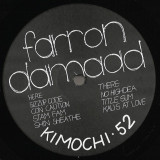
The talented producer and sound designer that is Farron is an artist also known as Lachriz, Quiem and Twuan and has made notable moves on Forbidden Planet, Renascence, and his own Shaw Cuts label. The good folk at Kimochi sign up his widescreen sounds here on a gorgeous 7 track 12" that mixes up plenty of slick techno & ambient styles. There are spacious and jittery rhythms with moody ambient pads, immersive and beatless dreamscapes, dubbed out rhythms and body-popping broken beat workouts with war undercurrents of sub-bass. It's a stylish record that is captivating throughout and looks as good as it sounds with its hand-sprayed sleeve.
out of Stock
Last delivered 4 months ago available to reorder, subject to availability