Injury Reserve was originally a trio, consisting of rappers Ritchie With a T and Stepa J. Groggs and producer Parker Corey. Their mixtapes Live From The Dentist (released in 2015) and Floss (2016) earned them underground buzz, and they capitalized on the attention with their debut album in 2019, the eponymous Injury Reserve.
The group's momentum was put on hold when in June of 2020 Groggs tragically passed away. By the Time I Get to Phoenix was largely completed ahead of Groggs' passing with his contributions, and will be the first Injury Reserve music to be released since their eponymous debut album. Ritchie and Corey took the past year to complete the record, and the title has meaning past simply referencing Injury Reserve's hometown. It's an homage to a song that has been covered countless times, which is in line with Injury Reserve's ethos and approach when it comes to creating music. The group pulls from several styles and eras of hip hop, but runs each one through the Injury Reserve lens, putting their own distinct and cohesive sound across their references. Nowhere is that dynamic more present than on By the Time I Get to Phoenix.
Yesca is back on Shall Not Fade with ‘Paint on Walls’ 12” EP.
2024’s Yesca EP on SNF - “Mood Loops” - set a high bar, so when we say this record is something special you should take note. Of course if you already know Yesca’s music or have had the pleasure of a Yesca DJ set then you will have already this queued up.
Sweet Spot: Ben Sims, Deetron, Oliver Ho, Vince Watson, Grain (Artwork’s Techno alias). Planet-E, Primate Recordings, Paul Mac & Stimulus Recordings found the sweet spot.
According to the OED the first use of the phrase “Sweet Spot” was in 1976 in reference to tennis rackets and golf swings. It’s where everything hits just right. And that’s what this EP does, hits just right. What strikes me is how descriptive the phrase ‘Sweet Spot’ is. Given enough swings and some luck we all know what it feels like to hit the sweet spot in some regard. Finding the sweet spot regularly though takes time and skill. But being able to hit the sweet spot by design every time, well that’s something different. That’s what makes the greats great.
For us at SNF there’s a consensus that in the lineage of electronic music there have been many moments where artists & labels converged on a sweet spot. One such sweet spot for us is in Techno
around 2003 when at the tail end of Hardgroove tempos began to slow and a groovier more refined tech house infused goodness appeared in the racks from a group of killer techno labels & artists (some mentioned above) that moment before the fuller emergence of the 2nd wave of Tech House in the mid 00’s.
That sound, while often emulated, never quite hit the same for us at least – until Yesca came along. His music has everything that we love about that sweet spot. Raw driving groove, rolling basslines and hip shaking percussion. What’s different on ‘Paint on Walls’ is that Yesca stepped on - he had already found the sweet spot on 2024’s Mood Loop EP - now his sound (or swing) is natural. Repeatable, refined and seemingly effortless. To revisit the tennis and golf analogy, this is the start of a Grand Slam run from an artist ready to etch their name in dance music history. Tiger..... Serena......Yesca.
Run the Tracks:
‘How I Do It (They Wonder)’ - A masterclass in less is more, and a serious DJ tool. Full of groove - slow it down and it will light the touchpaper in a house set - speed it up and you’ve got techno weaponry. Forget gatekeeping, this will make you feel like you just found a 2004 techno white label from the likes of Grain or Ben Sims.
‘I Desire’ - House music that I reckon Deetron would be proud of... Blissed out machine funk, whispered vocals, slick jazzy chords and dubbed out techno stabs are all grounded by Yesca’s impeccable, loopy drum programming. The best tunes always end too soon.
‘Domination’ - The ever rising bass, err, dominates this track and this track will dominate on many a dancefloor, but Yesca's knack for dubbed out swinging synth lines has to get a shout out here too. He turns what would be melodic elements into what feels like part of the percussion. Double Threat. Hands Up and Heads Down business.
‘Paint on Walls’ - It would be a tough call to say Yesca’s saved the best til last with the EP’s eponymous track given what’s come before, but Paint On Walls works all the highlights from the rest of the EP into a latin techno/house infused anthem. Skittering percussion, a hint of Detroit goodness and a deep deep rolling bassline and THAT vocal. In every way hopeful yet resistant, and that is what techno is all about.
Fila Brazillia is the name of the decidedly singular collaboration between Steve Cobby and David McSherry, born in the coastal town of Hull in the UK. Bending—and often outright breaking—more or less every rule in the book, they've been effortlessly blending deep house, downtempo, breaks, ambient, and wry humour, sampling anything they can get their hands on. Their first outing was the 1990 single-sided white label 12" Mermaids, an airy deep house tune featuring a cheeky sample taken from the theme from Robison Crusoe. Since then, they've released a boat load of singles, seven highly regarded full-lengths, and more than 60 remixes for artists such as Radiohead, Busta Rhymes, and Lamb.
Black Market Gardening is their third full-length and marks a creative high-point for the duo. Over nine tracks, Fila Brazillia guides you through hazy, bass-heavy trip hop, cosmic synth lines, brisk breakbeats, funky guitar riffs, and even touch of drum 'n bass (it's the mid-1990s after all...). There's just so much to take in, leaving the listener wondering where the samples end and the live instrumentation begins. Yes, Fila Brazillia's output fits squarely within the chill-out tradition prevalent in the UK at that point in time, but their unmatched creativity and boundless approach to the studio process makes their music truly timeless.
Black Market Gardening is available as a 30th anniversary edition for the first time since 2001.
On January 17th, 2026, Grammy Award-winning hip-hop icon Lupe Fiasco joined Miami’s Nu Deco Ensemble, a hybrid orchestra dedicated to reimagining music from all genres, for a special concert at Miami Bandshell. This Juneteenth, Lupe and Nu Deco will release the recording for the whole world to hear, presenting Lupe Fiasco’s hits and new classics as they have never been heard before. Invigorated by the backing of the 33-person full orchestra, led by conductor Jacomo Bairos, Lupe forcefully rhymes every word of career highlights like “Daydreamin’,” “Kick, Push,” and “Paris, Tokyo,” emphasizing the musicality innate to Lupe’s tongue-twisting bars. In addition, Lupe presents unique live versions of new hits, including “Samurai,” from his critically acclaimed 2024 album of the same title, and “SOS,” an outtake released for the first time on 2025’s Samurai DX. The Nu Deco version of 2015’s “Dots & Lines” begins with a solo guitar exhibition from Aaron Lebos, while songs like “Daydreamin’” and thrilling closer “Superstar” benefit from the powerful pipes of backing vocalist Kelley Kessell and J Howard. The 9-track set is a scorcher, reaffirming Lupe’s status as one of the most proficient and electrifying live performers in hip-hop today.
Without turning anything upside down, the trio has released their second album, gracefully deepening the unique path they have carved out for themselves. It is an album that already stands in stark contrast to the attention-deficit culture of our times. Indeed, whilst music sometimes seeks to concentrate the intensity of its references and artefacts, the trio takes a step back, deploying an intensity that is subtly distributed. Thanks to their progressive instrumental tracks blending elements inherited from dub, jazz, folk and even musique concrète, the trio has never allowed the quality of their music to suffer from their experimentation; at the same time, they have never been afraid to venture off the beaten track to achieve the sound they desire. Every single track of this album cast like fragile bridges over various landscapes that explore cycles and the natural rhythm within. It is up to the listener to tread carefully and not lose their footing and embrace the cinematic movement of this music. The three artists have indeed achieved a musical expression so free that it possesses the power of illusion. We are suddenly swept up in all these illusions, to the point where our memories are in flux. Both haunting and in motion, this trio’s music offers an impregnable mental retreat and an invitation to dance. This album conveys a dreamlike conviction that time, in its relentless flight, might—if only for a moment—be brought to a halt. A halt that awaits you.
Ariwa Sounds started in a front room in Thornton Heath, South London. Four tracks, some homemade equipment, and Neil Fraser, better known as Mad Professor, at the controls. That was 1980. Over four decades later, the label has more than 300 albums to its name and a legacy that stretches well beyond the reggae scene.
This compilation pulls twelve tracks from across the catalogue. Dub, lovers rock, heavy roots music, digital dancehall — it's all here. What ties it together is the Ariwa studio sound all going through Mad Professor’s desk.
Mad Professor is the backbone of it. Dub Me Crazy got him known and his production credits run from Jah Shaka and Horace Andy to Massive Attack, Sade and The Orb. The tracks here — the Dub Sampler, H2SO4, Disco Dude, Kathmandu Dub — show why.
The Jah Shaka collaboration Only One God is a landmark. Two of the UK's most important dub figures on one track. Dark and heavy roots music.
The Robotics appear twice — Hong Kong Flew! and Miss Mood. They are Ariwa's house band and have backed U-Roy, Lee Perry, Big Youth and more over the years.
Aisha closes things out with Can You Feel It. A track that crosses reggae, soul and boogie funk. Collectors have been after original pressings for years.
Starky Banton, Ragga Doll, Professor Doppler and Earl Lawrence complete the compilation. Exactly the kind of thing that reminds you how wide the Ariwa net was cast.
Sleeve design is by Trevor Jackson. One of the UK's most respected graphic designers. His work has defined the visual language of British music for thirty years. His involvement here signals exactly the kind of release this is. A serious serious catalogue and compilation of music, treated with the respect it deserves.
Ariwa sits alongside Greensleeves as the most important reggae imprint this country has produced. This compilation shows why.
After decades contributing to records where a single riff could transform a dancefloor, Charlie May turns that instinct inward on Trusted Farms.
For over thirty years, Charlie has occupied a position that seems increasingly rare in electronic music: the musician’s musician, the person behind the machines, the extra pair of hands in the studio, and quite often, the person responsible for the melody you end up carrying around in your head for weeks on end.
Alongside Duncan Forbes as Spooky, Charlie helped shape some of the most important electronic music to emerge from the UK in the early ’90s. That partnership would also sow the seeds for one of Sasha’s defining records: the central riff behind Xpander began life in Spooky’s live material, before Charlie brought the idea into the studio with Sasha and helped transform it into one of electronic music’s most enduring anthems.
Listen closely to Charlie’s work and there’s a particular instinct that keeps returning: knowing when a simple synth line is enough. Knowing which note needs to change. Knowing when repetition stops being repetition and starts becoming the entire reason a track works. More recently, as one-third of Quiet Places on ASIP, he’s taken those same instincts somewhere looser — beatless, gridless and led by improvisation.
Trusted Farms puts those instincts front and centre.
Tiny melodic phrases appear and refuse to leave. Synth lines repeat just long enough to become lodged in your head. Parts rub against each other without being tidied into submission. There’s a sharpness and directness to it all amongst the purposeful analogue warmth.
Some of these tracks feel almost ridiculously simple at first. But simplicity is difficult when you’ve spent decades learning every possible way to complicate something. Many of the parts on Trusted Farms were performed live with minimal editing. A synth line might be doubled, distorted, re-recorded and pushed back through another piece of equipment, but it remains the same idea. Instead of filling the gaps, Charlie works on the weight and character of what is already there. The melodies become physical; slightly worn around the edges.
For someone whose fingerprints can be found across some genuinely monumental moments in electronic music, Charlie has spent decades knowing what to add.
Trusted Farms is about knowing exactly what to leave alone.
Available on black 12”, mastered by Andreas Lupo LOOP-O Lubich and featuring artwork by Peter Skwiot Smith,
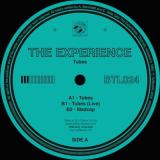
The Experience is a project by Andrea Benedetti and Eugenio Vatta released back in 1992. The track "Madcap" was realized during the period of the collaboration of the duo with Lory D'S Sounds Never Seen period and it's an experiment that mix techno, breakbeat and sample extravaganza at its best. The main track "Tubes" was a deep techno monster presented in two versions. One has been recoreded live with Andrea Benedetti managing drum machine and bass, Eugenio Vatta sampling, chords and effects and Paolo Dieni on percussion. The second one has more emphasis on melodies and effects with different equalizations and volumes concerning percussion and drum machine. A lost jewel reissued by Back To Life.
DJ Support: Glenn Underground, Leo Mas, Sean Johnston / ALFOS, Massimiliano Pagliara / Panorama Bar, Al Mackenzie / Field of Dreams, Shane Johnson / Fish Go Deep, Flash Atkins / Paper Recordings, Pete Gooding, Mark Broadbent, Max Essa and plenty more.
2026 has been a particularly busy year for Visions of Light, the Balearic/ambient/dub trio founded by Freebooter Records’ Simon Sheldon alongside Muzka and Dan Dub Lounge. Following the Dedications EP – their warmly received collection of Balearic dub reinterpretations of White Isle-friendly club classics – the trio return with ‘Mycelium Bloom’, the follow-up to their 2025 debut LP The Mandela Vortex. Mycelium Bloom sees Visions of Light expand their signature sound, blending downtempo dub grooves and sunbaked Balearic soundscapes with hallucinatory electronics and psychedelic touches. Layered guitars, deep bass, immersive textures and dreamlike melodies run throughout an album designed for both sunset listening and deeper late-night excursions.
Opener Split The Scene sets the tone with acidic electronics circling languid beats, heavy bass and spacious pads, while All The Best Thing taps into the spirit of early ’90s chill-out rooms, adding desert blues influences to its hazy, enveloping atmosphere. Holding Jupiter pushes further into psychedelic territory, built around low-tempo rhythmic drift, effects-laden guitars and expansive chords. Elsewhere, the trio reconnect with their rootsier dub foundations. B Town delivers a warm, summery skank, while Radiant Flux shifts towards Balearic dub dancefloor territory. Perfect You, featuring words written and performed by Richard Dormer alongside flute from Luis Vilca, is a gorgeous sunset-ready highlight, while Let Go closes in on pure Balearic bliss through gentle melodies and slow-burning atmosphere.
The fifteenth release of Barro comes with an exclusive: behind the Transylvanian mask of Orlok 101 lies Nöle himself, the boss of the label.
Remember that he used this vampiric AKA to kick off Barro—his The End Of The Beginning being the first release, published in late 2018. That same year, his techno-industrial sound—packed with references from the famous work of Bram Stoker and nightmare atmospheres—helped launch another label: Soil, the Valencia-based imprint, with a project that included a suitably fitting remix of The Horrorist. The following year, he released an EP with five original tracks, titled Runaway, while also “spreading blood” on Antikhrist Visions Vol I alongside his Industrias Mekanikas comrades.
His dark influence has been felt across Barro’s catalogue, whether through his own tracks or remixes—sinking his teeth into artists like The Hacker (under his real name, Amato) or Nebula Circuit. In 2025, Orlok made his debut on Aspecto Humano with a powerful EP, equally gritty and dark. In Barro, we’ve recently had Nöle—the most techno side of Imanol Pagola—with the EPs Electro Bloody Music and Demencial Chico Aceleradom, two great showcases of his ability to keep us dancing nonstop, following the popular Mendekua, released by Xtraperlo.
For Barro 15, the two sides of the producer and DJ come together on this EP, titled Sex With a Cop—four tracks released on vinyl and digitally, plus an alternate version of the final composition as a bonus track.
Nöle's knowledge of the dancefloor and Orlok 101's ability to create atmospheres that will give you goosebumps come together on this EP to create an explosive mix.
Sex With a Cop starts with Hilerri, a techno EBM track where Orlok provides repetitive, screeching sounds and a ghostly melody, while Nöle adds incisive synths and a catchy, addictive vocal sample that warns you of the danger of the material you’re listening to. Orlok then takes over with his industrial and metallic sonorities on the next track, Amets Fabrika, although Nöle’s influence still comes through with his powerful bass and addictive synth lines. A stifled scream and a production packed with a thousand details create an unsettling atmosphere that will surprise you on the dancefloor.
The flip side begins with No Voy A Quedar Con Nadie, a track closer to Nöle’s technooid world. Even with its unsettling opening, it doesn’t take long to turn into a danceable bomb, with that dark touch typical of the Navarro producer.
Surprisingly, he saves the best for last: Harina de Huesos Humanos is one of the most interesting tracks created by Imanol Pagoda, and we can hear it in two versions, one as a bonus track. Thanks to complex production full of details and sounds that come and go, a punchy, hard as granite kick drum, and a carefully crafted industrial atmosphere, it all ends up being the perfect union between the two sonic worlds. A spectacular finale for the label’s fifteenth release.
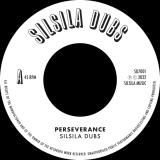
Silsila Dubs is a brand new label emanating from the backrooms and dancehalls of West London. Deeply inspired and rooted in the long standing traditions and dialogues of sound system culture, the label's output will echo the myriad musical foundations laid at various local historic venues including Southall Community Center and the Tudor Rose respectively.
Energized by the sounds of Jah Shaka, Aba-Shanti-I (Falasha Recordings), The Disciples, Manasseh, Conscious Sounds and more, the Silsila Dubs sonic aesthetic is that of classic 1990s sounds and recording techniques, lovingly channelled and dubbed via the cult Soundcraft Ghost Mixing Desk at Silsila HQ.
This debut release from the label has been written, produced and mixed by Govind Singh of the burgeoning Mya Hi-Fi crew who are closely related to Silsila and it's output. Across 2 mixes 'Perseverance' offers us a meditative and uplifting space in which to enrich our ears and our minds to carry on, no matter what life throws at us. Positive sounds for all to absorb.
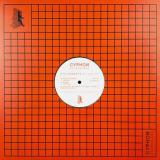
Over the last two decades, Ste Roberts has quietly established himself as one of the UK's more distinctive underground electronic producers. Drawing equally from house, techno, electro, IDM and experimental electronic music, his productions blur the line between dancefloor functionality and sonic exploration. His debut release for Cyphon Recordings continues that trajectory. Four transmissions exploring machine rhythms, synthetic environments, and fractured dancefloor architecture, where melody emerges through corrosion and groove survives mutation.
Over the past months, Demuja’s sound has been moving into deeper, more dub-driven territory. With his new album, "Demuja Presents Dubmuja", he ushers in a new era: one shaped by grooves, hypnotic rhythms and a lot of reverbs and delays.
For Louis Johnstone, making music has never been about waiting for the right equipment, the right environment or the right moment. Across more than a decade of work as both Wanda Group and A Large Sheet Of Muscle, the Huddersfield-based musician has built one of British experimental music's most singular bodies of work by embracing whatever happens to be within reach, allowing instinct, improvisation and circumstance to shape the outcome as much as conscious composition.
"'Chinese Benefits' was made over a year ago on an iPhone that had a broken microphone and was on its way out," he explains. "I have made many records after this with clearer sounds. Sharper ideas. That is never the point, though. You work with what you hold in your hands."
Recorded entirely on a failing iPhone 6 that stopped working shortly afterwards, 'Chinese Benefits' isn't a record about damaged technology. It is a record shaped by it. Rather than resisting the limitations of the device, Johnstone allows them to become part of the music itself, where distortion, interference and deteriorating fidelity are inseparable from the recording process.
Across twenty brief but disquieting pieces, corroded spoken word, environmental recordings, abrasive noise and fractured electronics continually emerge and dissolve. Voices drift in and out of range, reverberation stretches everyday sounds beyond recognition, and bursts of white noise interrupt moments of uneasy calm. There are echoes of radio transmissions, field recordings and musique concrète throughout, yet 'Chinese Benefits' never settles comfortably into any one tradition. Instead, it inhabits a space where accident and intention become almost impossible to separate.
That philosophy has long defined Johnstone's work. Through a vast catalogue of self-released recordings on his Umbro G imprint, alongside releases for labels including The Trilogy Tapes, he has consistently favoured immediacy over refinement, embracing imperfection not as an aesthetic but as a practical reality. His recordings are less concerned with perfection than with capturing the conditions in which they were made.
Looking back on 'Chinese Benefits', however, Johnstone's own assessment is characteristically understated.
"Listening back fully, it's quite a nice record actually. Fair enough, I make them and never really listen again TBH. Even better, it was the last Large Sheet Of Muscle record made on that phone with grit and damaged guts."
Like much of his work, 'Chinese Benefits' offers few fixed meanings. Its titles remain cryptic, its voices partially obscured and its structures deliberately unstable. What emerges instead is a deeply personal document of process over perfection, where the limitations of the tools become inseparable from the music they produce, and where the act of making something matters far more than the conditions in which it was made.
Murmuration’ is the low hum made by vast, beautifully choreographed flocks of starlings as they simultaneously flap their wings and take to the sky. Some people say that the frequency of this unique, rumbling, oscillating sound can cure diseases...
One of the most exciting live bands in the UK, British Birds combine the garage-punk energy of Billy Childish, the wry English sophistication of XTC and the witty pop inventiveness of The Lovely Eggs. Like a murmurating flock of starlings, they create a unique sound, and might even be able to cure diseases.
Based in Chorley, Lancashire, British Birds are a resolutely DIY band. Bobby records and mixes all the music; Emma creates all the artwork. Their first two albums were self-released, selling hundreds of copies at gigs and at a few chosen record stores. British Birds didn’t wait for permission to take flight. They just got on with it. Their songs are sophisticated, hard-hitting, and very skilful. It may be DIY, but it’s big and it’s ambitious.
Sessions for Marc Riley and Gideon Coe have followed, along with tours supporting The Bug Club, BC Camplight and Lovely Eggs.
‘Murmurate, Oscillate’ kicks off with Lie Down With Dogs, Stand Up With Fleas, a rousing expression of exasperation at our passivity in the face of lame authority. British Birds are acute observers of the English political scene, shrouding their observations in humour and surrealism. Polka Dot Eyes is another piece of sharp social observation: it portrays Lancashire lads – friends from school – who join the Army and return home physically and mentally damaged. The song is simultaneously disturbing, funny and catchy as hell. From the fog of disinformation and doubt that surrounds us all in 2020s Britian, British Birds embrace the darkness, but with wit and verve – no slogans, no easy answers – and with an energy that helps us escape the mundanity of a declining island. This might all sound a bit bleak, but it’s not: every single one of the songs on this album has a chorus as big as a house.
There are personal songs too: Scary Movies is a poignant description of Bobby and Emma’s grandfather, who delighted in showing them horror films when they were kids – giving them sneak previews of the darkness they’d come to embrace as adults; Just Like Them is a celebration of introversion: it might not be fun, but it’s better than being an idiot. (Paradoxically, any other introverts who hear this song will feel impelled to join in in the chorus.) Blame Game and Thunder Claps examine the darkness inherent in relationships: there is always an impending storm, if you recognise the low hum of the imminent thunder. Once again: the choruses of these songs confound the melancholy sentiment.
You’ll get the same impression if you see British Birds live: Bobby’s ferocious guitar and dark lyrics are counterpointed with Emma’s sometimes haunting, sometimes playful vocal responses and insistent rhythms. You’ll be swept away by the energy of a band who don’t know the meaning of limits. And as the songs get darker and darker the smile on your face gets wider and wider.
The core members of British Birds are siblings Bobby and Emma Townson, working from their HQ-cum-nest in Chorley. Drums are by Dominic Lawson (apart from Michael Aindley on ‘Just Like Them’). Bass is by James Robinson.
British Birds will be embarking on a headline tour of the UK in early 2027.
On Dummy’s new album, do you love the color of the sky?, the Los Angeles-based 5-piece deliver a breathtaking piece of work that introduces new textures and rhythms to their already varied and refined catalog. For the band’s third album, and first for new label home Polyvinyl, the group split time between self-recording at their home studio as well as Studio 22, linking up with frequent collaborator and engineer Joo-Joo Ashworth (Corridor, Automatic, Spiral XP). The band focused on intentionality and experimentation, exploring downtempo dance beats and electronic music while pushing the guitar as far as they could, using new self-sampling and processing techniques. Percussionist Alex Ewell’s overall sound design and production skills can be heard across the album, with layered drum sounds and rhythmic tremolo techniques shining throughout. Tracks like “Full Spectrum Dominance” and “Alluvial Fan” showcase the band’s tasteful pop sensibilities, while closing track “Heaven’s What You Make Of
It” features perhaps the strongest vocal delivery yet from vocalist/keyboardist
Emma Maatman. Additionally, the dynamic exchange between guitarists Joe Trainor and Nathan O’Dell is absolutely gorgeous, adding a new layer of immersion and directness that is unlike anything the band has done before. The result is Dummy’s most ethereal and sincere record to date, with more feminine and delicate undertones that sit beautifully alongside the gritty and noisy textures the band has become known for. Dummy has been praised in numerous outlets such as Paste, Stereogum, Aquarium Drunkard and Pitchfork, who described their second album, Free Energy, as “the
sound of a band turning all its potential energy into music that’s dazzlingly kinetic and powerful." The band has toured the US, UK, and EU extensively, with festival appearances at Austin Psych Fest, Treefort Music Festival, and others. In addition to larger outlets and festivals, the band’s strong ties to community and DIY ethos are ever-present, oftentimes preferring to play and connect with different local artists on tour, uplifting those around them while shining a light on the history of independent music.
On Dummy’s new album, do you love the color of the sky?, the Los Angeles-based 5-piece deliver a breathtaking piece of work that introduces new textures and rhythms to their already varied and refined catalog. For the band’s third album, and first for new label home Polyvinyl, the group split time between self-recording at their home studio as well as Studio 22, linking up with frequent collaborator and engineer Joo-Joo Ashworth (Corridor, Automatic, Spiral XP). The band focused on intentionality and experimentation, exploring downtempo dance beats and electronic music while pushing the guitar as far as they could, using new self-sampling and processing techniques. Percussionist Alex Ewell’s overall sound design and production skills can be heard across the album, with layered drum sounds and rhythmic tremolo techniques shining throughout. Tracks like “Full Spectrum Dominance” and “Alluvial Fan” showcase the band’s tasteful pop sensibilities, while closing track “Heaven’s What You Make Of
It” features perhaps the strongest vocal delivery yet from vocalist/keyboardist
Emma Maatman. Additionally, the dynamic exchange between guitarists Joe Trainor and Nathan O’Dell is absolutely gorgeous, adding a new layer of immersion and directness that is unlike anything the band has done before. The result is Dummy’s most ethereal and sincere record to date, with more feminine and delicate undertones that sit beautifully alongside the gritty and noisy textures the band has become known for. Dummy has been praised in numerous outlets such as Paste, Stereogum, Aquarium Drunkard and Pitchfork, who described their second album, Free Energy, as “the
sound of a band turning all its potential energy into music that’s dazzlingly kinetic and powerful." The band has toured the US, UK, and EU extensively, with festival appearances at Austin Psych Fest, Treefort Music Festival, and others. In addition to larger outlets and festivals, the band’s strong ties to community and DIY ethos are ever-present, oftentimes preferring to play and connect with different local artists on tour, uplifting those around them while shining a light on the history of independent music.
The Dutch composer and conductor, born in 1993, has assembled a powerful collective with his "hugely inventive and fast- thinking" (UK Jazz News) Brainteaser Orchestra, uniting the vanguard of the current Amsterdam scene - including guitarist Teis Semey , saxophonist Kika Sprangers , drummer Jamie Peet , violinists George Dimitriu and Yanna Pelser , trombonist Nabou Claerhout , clarinetist Federico Calcagno, and bassist Alessandro Fongaro. This lineup has been making international waves, highlighted by invitations to major European festivals and a recent performance alongside Pat Metheny at the North Sea Jazz Festival. Now comes Tonepool Paradox, the orchestra's second album, commissioned to celebrate the 50th anniversary of Amsterdam's legendary BIMHUIS. Wybenga's compositional approach radically breaks with big band conventions. His process mirrors that of a hip- hop producer: he records solo improvisations by his musicians, chops the material into pieces, and uses these fragments as samples to build entirely new tracks. Wybenga layers jazz, electronics, and contemporary classical music without ever sounding academic or overintellectualized. For Tonepool Paradox , he expanded this concept internationally, bringing in guests such as Berlin-based saxophonist Otis Sandjo, Parisian violinist Theo Ceccaldi, singer Lizz Wright , and hip- hop vocalist Pink Oculus . Mixed by Grammy winner Nic Hard (Snarky Puppy), the sound brings together the diverse musical styles of everyone involved, juxtaposing the angular lines of the horns with sweeping, melodic string passages.
In their own words, it's "more focussed, paced and thought-out." Over 13 tracks that explore the horrors of the outside world and the internal minefield of the brain, Mould's debut also hits with the thrills of a brilliant live band who've distilled that energy to tape. The title comes from a line taken from the time signature-warping 'Emotive Language' that distills what it means to be a band in 2026 down to one concise sentiment. "This has always been the dream, playing with your mates and making good songs and getting to tour and make records," says Kane. "But the realities of trying to start a band now, when you're 30 and also have other goals at the same time are hard. We'd be doing it regardless, but you have to learn a lot. " This duality runs throughout the record, where tracks like lead single 'Float' speak of "strolling through hellscapes" of social media yet surround their frustrations with the sort of barbed, visceral musicality that sounds like if Interpol had grown up in gloomy, rain- soaked Britain. "You're endlessly doom scrolling, past a funny video of a sausage, and then there's Farage and then there's an ad for something," Joe says of the track. "That mindnumbing flashy distraction turns you into idiots."
In their own words, it's "more focussed, paced and thought-out." Over 13 tracks that explore the horrors of the outside world and the internal minefield of the brain, Mould's debut also hits with the thrills of a brilliant live band who've distilled that energy to tape. The title comes from a line taken from the time signature-warping 'Emotive Language' that distills what it means to be a band in 2026 down to one concise sentiment. "This has always been the dream, playing with your mates and making good songs and getting to tour and make records," says Kane. "But the realities of trying to start a band now, when you're 30 and also have other goals at the same time are hard. We'd be doing it regardless, but you have to learn a lot. " This duality runs throughout the record, where tracks like lead single 'Float' speak of "strolling through hellscapes" of social media yet surround their frustrations with the sort of barbed, visceral musicality that sounds like if Interpol had grown up in gloomy, rain- soaked Britain. "You're endlessly doom scrolling, past a funny video of a sausage, and then there's Farage and then there's an ad for something," Joe says of the track. "That mindnumbing flashy distraction turns you into idiots."
Wewantsounds is delighted to continue its Ziad Rahbani reissue program with Ana Moush Kafer, a classic album by the Lebanese legend Ziad Rahbani, recorded at his By-Pass Studio in Beirut during the height of the Lebanese Civil War in 1985. Showcasing Rahbani’s signature blend of Arabic music infused with touches of jazz-funk and bossa nova, the album has attained cult status over the years. Originally released on cassette, it has never before been available on vinyl. Newly remastered, this edition features the original Relax-In cassette artwork from 1985 and includes new liner notes by Mario Choueiry of the Institut du Monde Arabe in Paris.
Ziad Rahbani, who passed away in 2025, remains one of the most influential figures in modern Arabic music and a cultural icon in Lebanon. A musician, composer, pianist, producer and playwright, he helped modernize Arabic music over five decades. The son of composer Assi Rahbani and singer Fairuz, he shaped her late 70s–80s recordings producing Wahdon and Maarifti Feek, while building a major solo career with classics such as Abu Ali and Houdou Nisbi, which have become cult favourites for a new generation of DJs and music lovers.
Released in 1985 in Lebanon, Ana Moush Kafer stands as one of Rahbani’s key achievements. Recorded at his By-Pass Studio during the Lebanese Civil War, it blends Arabic melodic traditions with jazz-funk, bossa nova and Western arrangements. Originally cassette-only, it became one of his most revered releases. Throughout the album, Rahbani’s writing reflects the turbulence of wartime Beirut with a blend of sharp social observation, political satire and melancholy. It captures a moment in Lebanese cultural history where experimentation, satire and popular song intersected, giving the album its enduring influence among music lovers.
Sung by Rahbani and Sami Hawat, alongside Beirut-based musicians, the album features both Western and traditional Arabic instruments. It balances refined arrangements with lyrical irony, social commentary and political reflection, which remain deeply resonant in today’s context in Lebanon.
One of the highlights of the album is the song “Shou A’ada Ma Bada,” with lyrics by Joseph Harb, which reveals a clear bossa nova influence, while the closing track, “Al Mokawama Al Watania Al Lobnani,” offers a deeply human view of war, avoiding patriotic cliché in favour of a nuanced perspective rooted in lived experience.
As Mario Choueiry observes in his liner notes, “Ana Moush Kafer stands as one of the high points of modern Arab political songwriting, yet transcends its historical and geographical context through the universal relevance of its themes and the timeless quality of its music.”
Forty years on, Ana Moush Kafer remains a landmark of Arab music. Wewantsounds presents it on vinyl for the first time, newly remastered and featuring original artwork. This long-awaited reissue restores one of Ziad Rahbani’s most important works to circulation, reaffirming its place as a defining statement in modern Arabic music.
a 1. Ana Moush Kafer 5:03
b 2. Shou Hal Ayyam 5:46
c 3. A'anitham 4:37
d 4. Shou A'ada Ma Bada [3:45]
[e] 5. Yessa'ed we Yea'en [5:05]
[f] 6. Bi Halyawmayn [3:46]
[g] 7. Bharf Esheen [1:12]
[h] 8. Bhaneek [5:34]
[i] 9. Al Mokawama Al Watania Al Lobnani [3:06]
[a] 1. Ana Moush Kafer [5:03]
[b] 2. Shou Hal Ayyam [5:46]
[c] 3. A'anitham [4:37]
[d] 4. Shou A'ada Ma Bada [3:45]
[e] 5. Yessa'ed we Yea'en [5:05]
[f] 6. Bi Halyawmayn [3:46]
[g] 7. Bharf Esheen [1:12]
[h] 8. Bhaneek [5:34]
[i] 9. Al Mokawama Al Watania Al Lobnani [3:06]
[a] 1. Ana Moush Kafer [5:03]
[b] 2. Shou Hal Ayyam [5:46]
[c] 3. A'anitham [4:37]
[d] 4. Shou A'ada Ma Bada [3:45]
[e] 5. Yessa'ed we Yea'en [5:05]
[f] 6. Bi Halyawmayn [3:46]
[g] 7. Bharf Esheen [1:12]
[h] 8. Bhaneek [5:34]
[i] 9. Al Mokawama Al Watania Al Lobnani [3:06]
[a] 1. Ana Moush Kafer [5:03]
[b] 2. Shou Hal Ayyam [5:46]
[c] 3. A'anitham [4:37]
[d] 4. Shou A'ada Ma Bada [3:45]
[e] 5. Yessa'ed we Yea'en [5:05]
[f] 6. Bi Halyawmayn [3:46]
[g] 7. Bharf Esheen [1:12]
[h] 8. Bhaneek [5:34]
[i] 9. Al Mokawama Al Watania Al Lobnani [3:06]
[a] a1. Ana Moush Kafer [5:03]
[b] a2. Shou Hal Ayyam [5:46]
[c] a3. A'anitham [4:37]
[d] a4. Shou A'ada Ma Bada [3:45]
[e] b1. Yessa'ed we Yea'en [5:05]
[f] b2. Bi Halyawmayn [3:46]
[g] b3. Bharf Esheen [1:12]
[h] b4. Bhaneek [5:34]
[i] b5 Al Mokawama Al Watania Al Lobnani [3:06]
[a] a1 | Ana Moush Kafer [5 03]
[b] a2 | Shou Hal Ayyam [5 46]
[c] a3 | A'anitham [4 37]
[d] a4 | Shou A'ada Ma Bada [3 45]
[e] b1 | Yessa'ed we Yea'en [5 05]
[f] b2 | Bi Halyawmayn [3 46]
[g] b3 | Bharf Esheen [1 12]
[h] b4 | Bhaneek [5 34]
[i] b5 | Al Mokawama Al Watania Al Lobnani [3 06]
[a] a1 | Ana Moush Kafer [5 03]
[b] a2 | Shou Hal Ayyam [5 46]
[c] a3 | A'anitham [4 37]
[d] a4 | Shou A'ada Ma Bada [3 45]
[e] b1 | Yessa'ed we Yea'en [5 05]
[f] b2 | Bi Halyawmayn [3 46]
[g] b3 | Bharf Esheen [1 12]
[h] b4 | Bhaneek [5 34]
[i] b5 | Al Mokawama Al Watania Al Lobnani [3 06]
[a] a1 | Ana Moush Kafer [5 03]
[b] a2 | Shou Hal Ayyam [5 46]
[c] a3 | A'anitham [4 37]
[d] a4 | Shou A'ada Ma Bada [3 45]
[e] b1 | Yessa'ed we Yea'en [5 05]
[f] b2 | Bi Halyawmayn [3 46]
[g] b3 | Bharf Esheen [1 12]
[h] b4 | Bhaneek [5 34]
[i] b5 | Al Mokawama Al Watania Al Lobnani [3 06]
Since the release of DAMAGED in 2024, Michael Fiedler aka GHOST DUBS has been surfing intensifying waves of adulation, earning praise from such diverse underground legends as Justin Broadrick (Godflesh/Jesu), Regis, Stefan Betke (Pole) and Steve Von Till (Neurosis). With second album Oblique, his mastery of sculpting sound waves results in a spellbinding set of alien soundscapes: larger in scale, richer in tone and considerably more cinematic than its predecessor. Lower, deeper and moodier, its cloudy abstractions, shadowy pulsations and submerged rhythms find Fiedler reaching further into his own sonic void, crafting blurred melodies and addictive narco loops into something simultaneously heavyweight and hypnotic.
Lead single and album opener “Low Times” sets the atmospheric pressure to maximum, resembling a dream date between prime dirt-house era Andy Stott and Berlin dub-tech pioneers Basic Channel. From there, Oblique descends into a series of enchanting mood scenes: the furtive, balletic gyrations of “After All”, the haunting ambience and buried heartbeat throb of “Soft Collapse”, and the noirish atmospherics of “Blackout Dust”, which worms its way into the mind like some forgotten David Lynch scene. The spirit of reggae is more distanced here than on DAMAGED, but the ghost of Jamaican dub still permeates these foggy soundscapes, particularly on “Bombed Suburbs”, where Augustus Pablo-style melodicism is chopped, screwed and slowed into a magnetic lock groove.
Superficially minimal but maximal in its minute detail, Oblique is a record of contorted reflections, mesmeric echoes and tantalising audio mirages. By the vaporous mist of closing track “Almost a Structure”, obvious rhythm has been craftily filtered away, leaving a blurred and blunted residue full of mystery and implied narrative. Dense in the best possible sense and crushing when played loud yet equally potent played quiet, Oblique imagines dub techno burning its own rigid rulebook: sensual, funky and concussive rather than dry or alienating. Following Fiedler’s recent work scoring Sound of Falling, recognised at Cannes in 2025, Oblique finds Ghost Dubs shedding his influences and making it clear he has arrived at a sound entirely his own — essential deep listening and a bewitching dose of future shock.
For the second installment of its renewed imprint, Fuse's own in-house resident and one of Belgium's proudest exports Phara takes the reins for a deep dive into thick percussion and vibrant club landscapes. 'The Wall' puts current dance music under a microscope with a brush of truly vintage spontaneity, merging techno's confrontational nature with house's harmonic genuineness. This duality is reflected through Phara's own relationship with his home base Fuse and the complementary contrast between its two rooms.
The EP's title track serves as a hypnotic introduction for the A1, imposing a bass-heavy rhythm and a persistently oscillating synthline. A dense production full of energy, 'The Wall' inspires intrigue throughout its duration, revealing its true intentions through a capable sound system. Sharing the first side of the press is 'Blaes 208', a name that Fuse club goers will likely recognise, that guides the listener from effect into embrace. With lush keys echoing past a comforting drum sequence fit for a close-eyed dancefloor experience, Phara's impactful tendencies meet his affinity for the melodic through a blissful six minutes of crowd to selector connection. Switching sides, a return to a cold cold aesthetic is quickly apparent through 'Hush Now 206'. A pummeling, saturated bass competes with a kick of equal effect, rolling through a storm of metallic stabs. Mastering the message of urgency, Phara presents a lightshow of resonating percussive work, defining his space just to cut right through it. To close out with a lasting impression, the producer mutes the acoustics of his work through razor-sharp sound design dotting along playful snares, a duality reminiscent of the dynamism of Detroit electro. 'Motion Steps', referring to the stairs that ascend from Fuse's main room to its more left-field counterpart, captures the atmosphere of the almost shimmering music that can be expected to be played there; a place where Phara and many others have been known to explore the extremities of their music. He swiftly throws in melodic elements to recontextualize an otherwise pressing composition, and after three chapters of considerable weight, he concludes his record with infectious groove that flaunts technical ability.
Over the last decade and a half, Rotation Sound System’s annual gathering in the Staffordshire countryside has become one of underground dance music culture’s true success stories – an intimate gathering of like-minded friends and partygoers, powered by a custom-built six-way sound system, with music provided by a carefully curated line-up of dusty-fingered diggers, selectors and hand-picked live performers.
At the heart of the collective’s unique and much-loved approach lies a dedication to finding and sharing lesser-known gems and audio obscurities – fantastic records whose charm and quality has long been overlooked.
Last year, the core members of the crew – founders Dean Meredith and Ben Shenton (renowned for their productions as Mind Fair), and Wrekin’ Havoc trio Rob J, Stuart Robinson and Rich Hall – offered a snapshot of their unique musical approach via debut compilation Everything You Are About To Hear Is True, Volume 1, in the process introducing a global audience to some of the countless unknown mid-tempo classics nestled in their collections.
Fresh from another sold out edition of their acclaimed micro-festival, they’re back with volume two, another must-have collection of slept-on classics, loved-up shufflers and wide-eyed Balearic beats, all of which have played a part in Rotation’s story over the last 13 years.
Appearing on gatefold double vinyl with extensive liner notes telling the stories behind the tracks, Everything You’re About To Hear Is True, Volume 2 is full to bursting with music that sounds mind-blowing on the crew’s high-end sound system.
For proof, check the analogue-rich intergalactic shuffle of Paul Atreides’ 2015 jam ‘Arrakis Walk’, the relaxed boogie-soul of Rocky Winters’ Chaz Jankel produced ‘Vicious Circle’, the easy-listening-jazz-rock bliss of Vincent Maclin’s ‘Should’ve Took a Chance’, the 80s soul squelch of ‘Ecstasy (Centurion Mix)’ by Endgames and the immersive British dub drift of Sigma’s ‘Remember (Dub Style)’.
Everywhere you look, you’ll find eye-opening and ear-pleasing delights. There’s Pinky’s lightly acid-flecked, breakbeat-fuelled, acid house-era street soul classic ‘I Wanna Be The One (Instrumental Groove)’, the 1992 new age downtempo seduction of Linda Myers (‘Shine On Me’), the Clavinet-and-synth sporting jazz-rock/space-rock fusion of Wolfhound (1984 gem ‘Another Moon Song’), the Gallic colour of Buzy’s ‘Keep Cool (Version Maxi)’ and the guitar solo-laden electrofunk explorations of mid-80s UK act Lifesighs (‘Get Serious’, here presented in its extended instrumental form).
Guillaume & the Coutu Dumonts has always been a maverick. The Quebec native draws on his electroacoustic studies and love of Latin and classical percussion to cook up left-of-centre sounds that still work well in a club setting. On this latest for Soundrive, he brings a tender, spectral vocal to 'Big Bird's Roll' that tugs at the heart as the phased percussion rides a dubby house groove. The Nail Remix brings more defined drums and his signature crispness, then 'Chiens De Chasse' has an off-kilter swagger and freaky melange of vocals and 'Argos' explores deep, subterranean techno.
This one means a lot to us. A project we’ve been working on for a couple of years. One where we hand over the curatorial keys of the label to very specific artists in whom we have absolute trust and who have an almost academic knowledge of a specific rhythm or a specific region where our eyes and sensitivity cannot reach. In order to amplify powerful voices from the global south, where the true underground is happening today, and that move away from the traditional axis of New York, London, Berlin. We present to you: Mzansi Bass curated by Shannen SP.
A project meant to explore the space between 3-step, Gqom, the dark sides of Amapiano, and mutations of Pritori rap deeply rooted in Black African rave music from the local scenes of Durban, Johannesburg, Cape Town, Eastern Cape, and their global mutations from Brazil and the Netherlands. The project is anchored around the legacy act of DJ Lag and new comers of South African bass whose music has broken international barriers with pure-emotionally-rich dance music. The release works as both a celebration of the roots and the future offering it projects. As Shannen puts it, it's electronic music with a futuristic feel, both raw but minimal, trance-inducing and deeply physical, built in a very particular geographic space for
the whole world to enjoy.
Indulge into this special soundscapes crafted by their own inhabitants. Expect a couple each year from now on.
In 2000, after almost two decades of hibernation under the ambient waves and dub currents of the Sargasso Sea, LSD revived the seminal ‘Auntie Aubrey's' series, an Orb Remix Project. Released as a 2 x CD compilation, Part 3 is a veritable smorgasbord of classic, new and unreleased labour-of love remixes that span three decades yet still transcend space and time.
Many influential artists have been involved with The Orb since the beginning, and the project keeps evolving and adapting. Dr. Alex Paterson, the gravitation centre of the Orb is known for his playfully subversive remixes and true to form this album highlights the diversity of his musical mind.
We see the good doctor remix the melancholy and evocative “The Last Lighthouse Keeper” from The Transit Kings, an early British electronic music group that included Jimmy Cauty of The KLF, one of the original members of The Orb. The remix of ‘Davy Jones’ Locker’ from System 7 takes you surfing on a sun-dappled sea of ambient dance nostalgia, while Killing Jokes’ ‘European Super State’ remix (in which LSD label founder Martin ‘Youth’ Glover plays bass guitar) sounds like the soundtrack for an imaginary spy thriller with the powerful lyrics and hypnotizing voice of Jaz Summers.
Legendary producer Youth teams up with Lx yet again on a psychedelic rocker with spellcasting vocals by Lara Smiles, and this is just the beginning! Boasting an all-star lineup, the compilation includes many of our scenes most esteemed electronic music producers such as Coldcut, David Harrow, Sendelica and Gaudi as well as the ambient blissed out vibes from the enigmatic DF Tram, Duende India Collective and The Gyuto Monks of Tibet, this collection offers up such the variety to appease even the most dedicated Orbsessives and music connoisseurs
An Elephant Eye; A Frozen Girl; and an Umbrella Man walk into an Icebox. All have been shoveled out of a Jungle-den and are covered in Mud Fleas. The Umbrella Man has been Dolt-ing around on the Machinery for Years. . .knowing it Hasn’t-Really-Rained since he threw his last Bacchanal. He thinks he owns birds; he just listens to them really. The Frozen Girl keeps away from him but moves Incredibly slow given the Circumstances. . .she’s been trying to tie her shoes for 700 years. The floating Eyeball, defying all Man Physics, Miraculously Phases himself All the way to the outside of the Icebox; Barreling through the Crisp air. He then comes to a Grinding halt before a Ginormous Totem pole of Speckled flesh, Grey and exceptionally thick, Wrinkling like telephone Wire. He quickly realizes that’s where the rest of his Body went. The only thing that’s missing is his Trunk. But he’s learned to communicate Decently Well without it. . .Using Semiotic chains of Eyelid-signifiers. . .An Eyeball shaped hole has been Burnt into the Icebox but the Frozen Girl won’t know for another 53 years and by then Big-Pants won’t even be in. The Umbrella Man doesn’t particularly so much as Notice and think its smells a lot like Burnt toast. He says he’s off to the Cemetery.
What do Them Three have in common anyway? Well they all Dig Pins; they also all Exist because of Him. And, Starting today, are Perpetually Entrapped in 10 millimeters divisions of Black resin upon a Circular Plain. I want to hear them cry and shout, You might say, because we are all Up-standers. But all crying and shouting Ourselves into the Icebox. . .
Often credited as the father of multi-media theatre, Alwin Nikolais (1910-1993) took complete creative control over his productions - including cutting-edge approaches to lighting and costume that transformed human bodies into shifting sculptural shapes, while also composing wildly innovative electro-acoustic and synth-based audio as accompaniment.
After initially experimenting with musique concrète and tape manipulation (as demonstrated on the 1959 LP Choreosonic Music of the New Dance Theatre of Alwin Nikolais) Nikolais became the first owner of Robert Moog's synthesizer at the Audio Engineering Society convention in New York in late 1964. Relying heavily on the Moog and later the Synclavier synth/sampler, these 21 tracks document Nikolais' highly-prescient compositions across the mid 1960s through to the late 1980s - existing not only as extensions of his other-worldly choreographic productions, but standalone pieces of foundational mid-century American electronic and experimental music.
"Born in Southington, Connecticut in 1910, Nikolais’s early years and early career were in acting, music and puppetry. It was not until the late 1930s that he began his work as dancer/choreographer in Hartford, Connecticut, where he was commissioned by the Avery Memorial Theatre, a part of the Wadsworth Atheneum, to create an evening-length work to the music of Ernst Krenek. Previously his work and study as a pianist-organist found him accompanying silent films. This sort of accompaniment required from the musician not only a playing skill but also a versatility in improvisation, matching movement to sound, and evoking mood to situation.
Nik was drawn initially to dance by his involvement with the percussion scores used by the illustrious early twentieth century German dancer Mary Wigman. In trying to learn more about percussion, he was lured into dance class and thus his career began. His development of music and dance occurred simultaneously. His introduction to the twelve-tone technique opened his mind to the expanding areas of atonal music, and his dealing with music as sound per se. In 1948, after being appointed director of the Henry Street Playhouse in New York, Nikolais formed the Playhouse Dance Company, later known as the Nikolais Dance Theater, and began his aesthetic orientation toward dance as a study of motion. By the 1950s, he had ceased creating literal dances and began his explorations and eventual milieu as an abstractionist.
Sound became an important part of his abstract theatre. For his first dances, which involved his new thinking of dance as both a visual and kinetic art, he used live percussion scores in which he directed his dancers to play instruments of all nature. There was a combination of children’s toy instruments as well as harsh and resonant automobile brake drums, and other pitched auto parts which he also used to accompany classes. Once he installed his own tape recording machines, he quickly used the limited range these instruments provided in a new way, slowing and increasing speed and reversing sound. He also made the sounds adhere to the choreographic structure (not the other way around), thereby giving the dance its independence from the musical phrasing. But the real need remained: the search for new sound. Nik made a sound library, recording noises and percussion and vocal sounds, which the French aptly called musique concrète. Needless to say, he became a master at splicing bits and pieces.
From 1956 to 1962 Nikolais composed eleven major scores for his theatre pieces using such techniques. In 1963, James Seawright, who at the time was assisting Nik in his productions and also working at the Columbia-Princeton Center for Electronic Music, recorded a sound bank for the production Imago (1963). With this material, Nikolais created his first synthesizer score. Imago won the Paris Grand Prix in 1968 and launched the Nikolais Dance Theatre towards its national and primarily international acclaim.
During the same period, Seawright came to Nik and told him of a young man who had invented and constructed a simplified synthesizer and insisted that Nik visit the electronic fair currently being held in New York. Nik did so and met Robert Moog. He was completely taken by the new machine and after making some suggestions to Moog, (which Moog made), Nik bought the inventor’s first machine with the aid of a Guggenheim Fellowship. Moog himself was astonished by what his machine could produce for Nik. This machine was later acquired by the Museum of Musical Instruments at the University of Michigan at Ann Arbor as the first Moog synthesizer. The Synclavier was Nik’s next source of sound and since the mid-1970s remained the major instrument in the Nikolais soundroom.
Alwin Nikolais has been honored and awarded throughout the world. He has received the French Legion of Honor, the Kennedy Center Honors, National Medal of the Arts, two Guggenheim Fellowships, as well as Mellon, Ford, and Rockefeller grants. He has been a recipient of NEA grants since 1966, been awarded five honorary doctorates, all for his remarkable achievements in Dance Theater. His genius has influenced several generations of artists."
—Murray Louis
Muyei Power or Orchestre Muyei (muyei means 'our country') was one of the top dance bands of the1970s in Sierra Leone. Soundway Records' first collection of music from this West African country ('Muyei Power: Sierra Leone in 1970s USA') is an album of rock-infused, 'afro' music from a group that traveled the world throughout the mid 1970s. Fusing elements of electric Congolese and Nigerian music with fast, syncopated, uptempo modernised arrangements of traditional music, Muyei Power produced a series of unique single-only releases that have been unavailable for 35 years. The rare recordings featured here are a glimpse of a dynamic and powerful band at the very height of its powers.
Even though lyrically Orchestre Muyei focused on traditional themes and songs, the arrangements and formulation of the instrumental side of things still very much reflected the mixed nature of urban Sierra Leone music, exemplified by a small collection of bands that also included Afro National, Sabanoh 75 and Super Combo.
For the early part of 1970s the band toured extensively throughout Sierra Leone, Liberia and Côte d'Ivoire before making a handful of 45s in local TV and radio studios. The recordings featured here however come from a period of touring the college circuit in California during late 1975 and early 1976. Later that year, as they played the colleges of the east coast, they gave the tracks to the owner of the African Record Centre in Brooklyn, New York. He initially released two of them on his in-house Makossa Records label as 7-inch 45rpm singles in 1976. The tracks from 1975/6 were then not heard of again until 1979/80 when the African Record Centre released many of them on a series of Makossa Records 12's that sounded far superior than the records that had been released a few years earlier.
Orchestre Muyei Power finally split up in 1979 leaving no proper album releases and only a handful of recordings for us to enjoy all these years later.
180g Heavy double vinyl LP with liner notes by Tyran Grillo. Limited Japanese Obi for the first pressing. Original artwork by Russell Mills and photography by Jean-Baptiste Mondino.
The third Time Capsule is a body of dub reinterpretations by celebrated producer Bill Laswell of Ethiopian singer Gigi. Curated by Tokyo record collector, music researcher and seasoned reissue supervisor Ken Hidaka, it is the first time Illuminated Audio is pressed to vinyl after its CD release in 2003.
Ejigayehu Shibabaw was born in 1974 in Chagni, northwestern Ethiopia and by pursuing a career as a singer, went against her father’s strict, traditional gender roles. As Gigi, she embraced the same musical freedom she had strived for in her personal life, incorporating the Ethiopian church, funk, hip-hop, West and South African music into her work. She first settled in Nairobi, then Addis Ababa, where she quickly established herself as one of the city’s leading singers. A move to San Francisco in 1998 led to a long and fruitful creative partnership with bassist and producer Bill Laswell.
Around the same time, Chris Blackwell had stepped away from Island Records to start the art house film company and label Palm Pictures. He took an interest in Gigi and together with Laswell, pulled together an all-star cast of musicians for her self-titled US debut album, including Herbie Hancock, Pharoah Sanders and Wayne Shorter. It won international critical acclaim, not just for its musicianship but for making Gigi a “defining voice for the Ethiopian expatriate community”, as journalist Tyran Grillo praises in his Time Capsule liner notes. From the nation-defining 1896 victory over Italian invaders to the quiet revolutionaries who wear simple shemma garments, Grillo believes the themes in Gigi make it “a shower of sunlight on her homeland for those ignorant of its struggles.”
After its success, Blackwell encouraged them to go back into the studio to rethink the album and Illuminated Audio was born. “Anyone can make a voice sound worldly”, Grillo remarks, “but rare are those who can make one sound inner-worldly.” Gigi was clear with Laswell to give her vocals a minor role “because it’s already been done.” Instead her Amharic verse is fleeting, exhaling through the textures like ghostly fragments; soaring yet muted. Yet the album is still titled under her name, an assertion by Laswell of her central role in the album’s creation. Not only was it a fully endorsed project by Gigi, but she would be present throughout its development, giving feedback on half-finished ideas as Laswell played them back in the studio. “It works perfectly”, she reflected after the album’s release. “We wanted to capture the whole spirit of each track, and Bill’s remixes create a different music language that really puts you in a pleasant place”.
This new vocabulary takes its lead from a technical approach that Laswell had been perfecting during a furtive creative period at the turn of the millennium. Much like his ambient interpretations of Miles Davis (Panthalassa, 1998), Bob Marley (Dreams of Freedom, 1997), and Carlos Santana (Divine Light, 2001), Laswell approached Illuminated Audio by returning to the original multitrack masters. Gigi wasn’t just reworked, but recomposed into an expansive lattice of instruments, submerged in a watery ambience of dub and trance undercurrents.
Sonically, this new language that Gigi refers to, is manifested by the original album’s more understated parts being pushed to the fore. Explaining his contrasting methods, Laswell saw Gigi as being “put together in a way that fits”. Contrastingly, in Illuminated Audio, “a lot of things that I featured in the remix weren’t as audible in the original.” Instrumentation laying near-dormant, deep in the mix, are brought to the fore: the acid rock guitar and Wayne Shorter’s saxophone on ‘Tew Ante Sew’, Graham Haynes’ flugelhorn on ‘Nafekeñ’, Laswell’s bass on ‘Kahn’, the melodica in Mengedegna or the floating synths and talking drums in ‘Gud Fella’.
Brought to his attention by mentor DJ Nori, Hidaka describes Illuminated Audio as a “masterful sonic exploration into ethereal ambience and dub” and made sure this reissue also contained a full remaster to give its “deep musicality” much better dynamics and density in the overall sound. Hidaka admits that Laswell's music “is sometimes so out-there, it is often misunderstood” and, indeed, to dub album non-believers this might seem like a prolific producer imposing himself on another artist’s work; eternally developing rearrangements that never quite get to its destination. But that’s missing its true power and triumph. This is more than the reissue of a remix, but “a wholly unique musical entity”, as Hidaka describes. Illuminated Audio refers to the illuminated manuscripts that comprise the major part of Ethiopian art and its new compositions stand in proud solitude as a rare body of reworks that both informs and enhances their originals.
Dire Straits' arresting self-titled debut arrived in the midst of punk's reign but couldn't have been further removed from the era's slash-and-burn style. Recorded in West London in February 1978, the band's tasteful, jazz-inflected set embraces folk, blues, and pub rock while also tracing a direct line back to the beat-oriented sound of early rock n' roll. Country and roots accents further distinguish the British quartet's stripped-down music from any 1970s peers, as does the transparent production, which has remained revered among audiophiles the world over – and which has never been better than on this meticulous pressing.
Mastered from the original master tapes and pressed at RTI, Mobile Fidelity's 180g 45RPM 2LP version of Dire Straits features natural tonalities, superb balances, you-are-there imaging, deep-black backgrounds, and pristine clarity. Even if you've heard this album hundreds of times before, you've never experienced it with such lifelike sonics and premium richness. This numbered-edition collector's set immerses you within the smoky, laidback atmospherics of every song. This is how all vinyl should sound.
Crucial to every arrangement, Mark Knopfler's winding guitar lines emerge with supreme transparency and multi-hued textural detail. His intricate playing comes across as if it's being transmitted via his 60s-era Fender Vibrolux amplifier placed right before you. The cleanliness, dimensions, and live feel are that good. His bandmates, too, benefit from the extra groove space afforded by this 45RPM edition. Rhythms skate and swirl; percussive effects resonate with crispness and attack; the leading edges of notes naturally decay.
Dire Straits' strong, well-edited batch of original material further enhances the overall enjoyment and makes the record one whose pleasures go far beyond the organic sonics. Just as Knopfler's narratives pour forth with poetic and surrealist texts, the musical settings – an intoxicating combination of easygoing shuffles, back-hall boogies, and pop-honed ballads – mirror the old-fashioned soulfulness inherent in the classic recordings of the late 50s and early 60s. The lyrics are equally captivating.
Drawing from his time as a youth in Newcastle, Leeds, and London, Knopfler invests tunes with an autobiographical slant and emotional connectivity that become obvious the moment he opens his mouth to sing. "Down to the Waterline," "Wild West End," and "Lions" all feature colloquial touches that add to their reach. By extension, "In the Gallery" functions as a tribute to Leeds sculptor Harry Phillips (father of future Knoplfer collaborator, Steve Phillips) while the record's breakout smash, "Sultans of Swing," pays homage to struggling bar bands.
Through it all, Dire Straits performs with a subtle cool and clever poise that no band ever matched. Just how good is the chemistry? Bob Dylan heard the quartet and invited Knopfler and drummer Pick Withers to play on Slow Train Coming. But even Dylan himself didn't hear Dire Straits sound this magnetic back in its original heyday. Now, everyone can.
Luca Lozano has long been an artist whose output as both a producer and designer we've admired and after many years of seeing his records fly off the shelves here at Phonica, we're delighted to be releasing the 'Da Vinci' EP by the Klasse Wrecks boss on our main label. We'll let Lucas, the modern day renaissance man himself, take it from here:
"These four tracks were created over a few sessions while I was settling into a dank basement studio (which was new at the time and now long gone).
‘The Magnificent’ and ‘Delta Force’ were made just after I acquired an old Korg Delta synth, I spent a lot of time getting the 1970s beast to sync up with modern equipment and both tracks make use of it in various elements.
‘Eau De Dave’ is a cheeky homage to a UK producer legend, I’ve been digging into his various older productions recently and went back to a fidget sound for the fun of it.
‘Crunchy Nut’ was kind of inspired by early U.K. tech house, it was the last track confirmed on the EP and came together super quick. As usual it’s a mix of old drum machines like a modded 707 and a bunch of old samples I’ve had on my computer for a couple of decades now. I’m happy I managed to work some slap bass into a track finally…"
Paraiso has been doing vital work in Portugal - documenting the underground dance scene's history and pioneers in various mediums while also showcasing equally brilliant artists from newer generations. And they've been doing it for a decade now: we all know that a label dedicated to its local scene through and through is something rare and should be celebrated. This compilation 'X - 10 Years of Underground House Music from a Paradise Called Portugal' is a manifestation of that cross-generational spirit, with ten never-before-heard pieces of music by initiators and legends like The Advent alongside more recent veterans like Roundhouse Kick and Vil or younger talent like Phoebe or Van Der. Things start off with Salbany's 'Trax 10', oozing a techno elegance and irrefutable groove that wonderfully portrays the spirit of the Lisbon sound: raw yet ethereal, disarming in its simplicity while containing rave, romance and rhythmic complexities. Label founders Maria Amor & Shcuro firmly carry on the torch with 'Intracellular', gelled by dubby washes, syncopated drums, infectious rhythmic sense and layered with a melodic vocal motif. Vil's 'Cave' brings in stone-cold tight percussion offset by rich, evocative pads and technoid know-how for days. The Advent steps in with an ode to acid-minimalism, raw and slow-burning, with curious and twisted moments peppered with the skill of an expert. Van Der storms in with a piece of hybrid qualities, impeccably blending a swing onto industrial territories for a hypnotic-yet-banging hands in the air dancefloor moment. Scam Dust (the duo of Tiago and Shcuro, from adjacent generations) picks up on the industrial flavours, adds furious jacking rhythmics and live sonic experimentation that takes us to peak-quality effect and noise manipulation. 'Subvert' follows and goes deeper, as if into the depths of the ocean, with aquatic arpeggios and sparse drums that morph into an 303-driven state of mysterious oceanfloor mania - Roundhouse Kick sending us messages from the South. Violet and her 'Dream Machine' emerge with its mutant noisy motif, delay-drenched percussion and steady beat interrupted by keys, drum variations - and a u-turn to its paranoid loopy beginnings. Phoebe enters the chat and brings sonic sun rays in 'Galaxia 2000', a wide-eyed moment lead by colourful, open synthesisers with gates and filters taking us on a beautiful ride on tense, swingy drum patterns. The tenth track comes from Lisbon's rkeat and is full of closing act ear-candy with its beautifully chiseled, groovy as hell percussion, organic sonics and metallic instruments that seem to announce that the next decade is about to be just as good, if not better than this lovely 2016-2026 stint of boundary and scene-pushing.
History Of Modern is the band's first record since 1996's Universal. Andy McCluskey has described it as their "best album since Architecture and Morality - high praise indeed.
All artwork for the release has been designed by OMD's longtime cohort Peter Saville.
This autumn also sees OMD embark on the 'History of Modern' tour, with the classic line up of Andy McCluskey, Paul Humphreys, Martin Cooper and Malcolm Holmes. The dates will see a mix of new songs with classic hits.
Exit Records expands on dBridge' sophomore album A Love I Can't Explain with two new interpretations by The Fear Ratio (James Ruskin & Mark Broom) and Kahn. In keeping with the label's ethos the artists were left alone to deliver remixes without any stylistic requests and as a result we have two tracks that are personal & uncompromising.
dBridge has been a firm supporter of both Kahn and TFR so it's very fitting that Exit Records releases TFR's debut remix and Kahn's rework, which repurposes what you thought you knew about him as an artist. The ALICE remixes are another leap forward for Exit Records.
Who Cares A Lot? The Greatest Hits spotlights some of the biggest tracks released by Faith No More between 1987 and 1997. It includes massive hits such as “Epic”, “Easy”, “Evidence” and their first single “We Care A Lot.”
Presented in chronological order, this collection highlights the journey Faith No More went on, starting with tracks such as “We Care A Lot” and “Introduce Yourself”; tracks sung by original lead singer Chuck Mosley. After his departure in 1988, the band turned to current frontman Mike Patton, who’s first album with the band was the renowned “The Real Thing.”
Faith No More have maintained a cult status, being widely credited for developing alternative metal and having influence on bands such as Limp Bizkit and Slipknot. Founding member and bassist of Nirvana, Krist Novoselic, cites Faith No More as one of the bands who paved the way for Nirvana. This record presents a true celebration of Faith No More’s music and is on gold vinyl for the first time.
The band had previously announced a European tour in 2020, which had to be postponed due to the COVID-19 pandemic. These dates have now been rearranged for dates across the UK and rest of Europe during June and July of 2021, with an Australia and New Zealand tour to follow.
Accomplished trumpeter, composer, bandleader and educator, Kamal Abdul-Alim has been actively involved in creative music for decades. He has toured Africa, Europe, the Caribbean and the United States. He has recorded with all kinds of bands, large and small, and performed in festivals all over the world. “He takes the postbop of the 50s and free-form jazz of the 60s and turns it into an even balance of fine textures. Alim, who is highly underrated, has one of the most beautiful tones and concepts of jazz. A master of improvisation, he knows the art of weaving different ideas, whether they stem from Manhattan’s lower East Side or Europe” (Hugh Wyatt, New York Daily News). “Dance” was recorded in 1983 but first released on vinyl in 1987. Rhythm section includes drummer Idris Muhammad. Original pressings are extremely rare and expensive. “Brotherhood” is a much sought after track on the jazz dance scene. There is a high demand for this title again on vinyl and pressings are limited to 1000 copies, all individually hand numbered.
Two years in the making, “Talk About It” delivers on all the hype and promise of Blimes and Gab's 20-million-view YouTube sensation “Come Correct,” which blew up the Internet. (It’s included here as a vinyl-only bonus song on side D!) Hip-hop heavyweights Method Man, Jay Park, Bahamadia, and Iamsu! each drop by for features. The song “Feelin It” appeared on HBO’s Insecure. Single "Hot Damn" was featured in the soundtrack for the movie Cut Throat City. Uproxx Music named "Talk About It" one of their top albums of the year. Billboard says “Blimes and Gab drip with pure swagger: Seducing the listener with entrancing melodies and hot-and-heavy lyrics,” while Variety describes “Feelin It" as "the perfect summer song.” This deluxe double LP is pressed on yellow and black vinyl and includes liner notes by Miss Casey Carter. Only 500 individually numbered copies have been made.
Vinyl Packaging: Gatefold LP + download card. Indie Exclusive Transparent Orange vinyl in gatefold jacket Limited to 1000. CD 6 panel Digipak. Gnosis is the highly anticipated 8th full length from Russian Circles. Across the span of their previous seven studio albums, Chicago-based instrumental trio Russian Circles traversed a diverse topography of sounds, moods, and approaches with their limited armory of drums, bass, and guitar. It’s difficult to chart an evolution in their sound when their records have always felt like well-curated playlists. It wasn’t uncommon to hear drone-heavy meditations, dazzling prog exercises, knuckle-dragging riff-fests, haunting folk ballads, and tension-baiting noise rock all within the span of one album. Still, it’s difficult to ignore the progression from the pensive and intricate melodies of Enter (2006) to the layered distorted dirges of Blood Year (2019). It’s been a gradual sonic shift owing to the band’s rigorous tour schedule and a predilection towards playing their more authoritative material on stage. But with their latest album, Gnosis, Russian Circles eschew the varied terrain of their past work and bulldoze a path through the most tumultuous and harrowing territory of their sound. As was the case for so many artists in the age of COVID, the obstacles of geography and isolation forced Russian Circles to reevaluate their writing process. Rather than crafting songs out of fragmented ideas in the practice room, full songs were written and recorded independently before being shared with other members, so that their initial vision was retained. While these demos spanned the full breadth of the band’s varied styles, the more cinematic compositions were ultimately excised in favor of the physically cathartic pieces. Gnosis was engineered and mixed by Kurt Ballou. Drums and bass were tracked at Electrical Audio in Chicago to maximize the natural room sounds of the rhythm section. Guitar and synth overdubs were conducted at God City in Salem, MA to take advantage of Ballou’s vast inventory of amps and effects pedals. Despite the entirety of the album being written remotely, the songs were recorded with the full band playing together to retain the live feel of the material. Owing to the climate of the times and a new writing method, Russian Circles created their most fuming and focused work to date—an album that favors the exorcism of two years’ worth of tension over the melancholy and restraint that often colored their past endeavors. European Co-Headline tour with Cult of Luna slated for Marc 2023 (Dates TBA). Russian Circles have received coverage from most notable press including Pitchfork, Rolling Stone, Stereogum, FADER, AV Club, Consequence, Decibel, Revolver and much more.
Rekids drops a brand new T this fall, coming in two colour ways and featuring the label’s ’Stay Out All Night’ motif and character, referencing Radio Slave’s club anthem of the same name.
Having collaborated with global brands such as Beams in Japan and Berlin’s Being Hunted, Radio Slave and Rekids have been creating t-shirts since the label's inception back in 2006, with Matt Edwards (aka Radio Slave) even launching a spin-off clothing label ‘Electric Uniform’ in 2014.
T-shirts are hand-screened heavyweight 100% cotton, and built for staying out all night.
PURE GARAGE RETURNS WITH A CAREFULLY CURATED SELECTION OF COLLECTIBLE CLASSICS.
Pure Garage, the best-selling UKG compilation of all time, returns with a fresh stack of high value collectible classics on DJ friendly vinyl.
With a host of gold & platinum selling compilation albums under it’s belt, plus countless sold out events across the UK, Pure Garage is known and trusted by both hard-nosed purists & the casual listener.
This latest foray coincides with an incredible resurgence in interest for the UK Garage sound, bringing together 8 high collectible infectiously funky cuts, spread across a DJ Friendly 2 slices of vinyl.
Pure Garage Collectible Classics Volume 1 opens with Buggin Me by garage pioneer Zed Bias alongside Al Brown, a groovy bassline, funky beats and a great vocal hook combine perfectly to showcase the mighty Zed Bias at his funky best.
Set It Off, by Chris Mack / Flavour, is a truly collectible record. Originally only available on vinyl as a limited white label press, copies of Set It Off have been trading hands on sites such as Discogs for as much as £130… It’s worth buying this compilation purely to get hold of this track on vinyl!
Another track that is going for big money on reseller sites is Romantic 2001 by DJ Deller. With this minimal 2 step riddim having sold for up to £120. This is definitely one for the collectors.
Funkaholics aka Jeremy Sylvester rounds off the first piece of vinyl on this album with the bass heavy Down 2 Da Ground.
Vinyl 2 kicks off with the sing-a-long classic from 1998, Anthill Mobs’s track Don’t Leave Me, followed hotly by the speed garage sounds of Body Grooving by M.F. Project.
Finally, Deep Impact drops My Fantasy followed up with a regular name of the Pure Garage live event line ups, Scott Garcia drops his soulful club classic Music Takes You, rounding out an impressive batch of tracks representing everything exciting about the UK Garage genre.
PURE GARAGE COLLECTIBLE CLASSICS VOL 1 will be released on double vinyl 16th December 2022!
The Nu’rons were a family group consisting of two sets of brothers and cousins, the four young men in question being brothers Daryl Howard and Raymond Gibson (Daryl’s mother registered him under his father’s surname of Howard and Raymond under her maiden name of Gibson) together with Otho Bateman and Charles Bateman. They were all born and raised in Salem, New Jersey and from the age of ten and eleven began singing with a fifth member and Gibson brother Rudolph as a group called The Gospel 5. They eventually decided to crossover to secular music and as a group known for their energetic dance routines they came up with the new performing name of ‘The Nu’rons’ (taken from the word ‘Neuron’ which is a cell that transmits nerve impulses). However Rudolph was soon to leave the group due to physical illness. Also Daryl Howard and Charles Bateman had also been part of a working group known as The Devotions prior to becoming The Nu-Ron’s.Following hours of practice The Nu’rons eventually felt confident enough to put their own shows together and began to perform at local dances and parties around New Jersey and Philadelphia, often being used as a non-paid warm up act for bigger named artists. They moved between several different managers including Jimmy Bishop (Duo Dynamic Productions) until they came under the tutelage of WDAS radio DJ Georgie Woods (his wife Gilda, being the owner of the Philadelphia Gil, Dion and Top & Bottom record Labels). It was Georgie who introduced them to Manny Campbell who in turn invited them to an audition at his and partner Charles Bowen’s Emandolynn Music studio in Chester P.A. The song The Nu’rons chose to audition with was the self penned “I’m A Loner”, the audition went well, as during late January/early February of 1970 Manny and Charles took The Nu’rons into the Sigma Sound Studio’s with Tom Bell and the TSOP musicians to record “I’m A Loner” and “All My Life” which was released on the Nu-Ron label in April of the same year. The two studio takes presente don this release came short after the band moved on from the collaboration with producer Emanuel Campbell to take music matters in their own hands. Beside recording "Disco Hustle" to be part of the disco boom in Philly of the times, they recorded also “You Came Thru”, a rough yet beautiful heavy bassline driven soul funk recording, and the just amazing “Hurry Up Tomorrow”, here presented in one of the original Studio takes.
“Danny Elfman’s musical score was to die for, and
it was incorporated into ‘Wednesday’’s joyfully
bleak coming-of-age story so brilliantly.” -
Double LP on Purple Goth with Smoky Shadow
vinyl, with full colour gatefold sleeve and inner
sleeves.
Composed by four-time Oscar nominee, two-time
Emmy winner Danny Elfman (‘Milk’, ‘Big Fish’,
‘Men in Black’, ‘Good Will Hunting’, ‘Live from
Lincoln Center’, ‘Desperate Housewives’, ‘The
Simpsons’) and three-time Emmy nominee Chris
Bacon (‘The Tick’, ‘Bates Motel’, ‘Smash’,
‘Gnomeo & Juliet’, ‘Sherlock Gnomes’,
‘Immanence’).
Elfman also composed music for Tim Burton’s
‘Beetlejuice’, ‘Batman and Batman Returns’, ‘The
Nightmare Before Christmas’, ‘Mars Attacks!’, ‘Big
Fish’ (for which Elfman earned one of his four
career Oscar nods) and ‘Alice in Wonderland’,
among others.
Chris Bacon is a protege of the great James
Newton Howard, and won an HMMA for ‘Gnomeo
& Juliet’, which he shared with James and Bernie
Taupin (Elton John).
Online - Promoted through all Lakeshore Records social
media.
Transparent grünes Vinyl! Wieder lieferbar! Zum ersten Mal überhaupt seit der digital-only Veröffentlichung 2011 erscheint nun der erste "Minecraft"-Soundtrack in physischer Form. Die Vinylversion enthält zwölf Tracks! "Minecraft - Volume Alpha" ist das Werk des deutschen Komponisten und Musikers Daniel Rosenfeld. Unter seinem Künstlernamen C418 erschuf Rosenfeld den weitreichenden Soundtrack und das lebendige Sounddesign, das das auf Voxel aufgebaute Universum von "Minecraft" zum Leben erweckte. Fans und Kritiker waren durch die Bank weg begeistert von seinen beatlosen, ausgewogenen Electro-Stücken. Die bekannte Gaming Seite "Kotaku" führte den Soundtrack unter der "Best Game Music" 2011 und nannte die Musik "beeindruckend beruhigend", während The Guardian die zerbrechlichen Stücke Rosenfelds aus Klavier und minimalistischem Ambient mit den legendären Künstlern ERIK SATIE und BRIAN ENO. In einem Interview destillierte Polygon "Volume Alpha" auf seine Essenz hinuntern: "Der Soundtrack ist nicht gebunden an die Retro-Ästhetik der Minecraft Graphik. Der Soundtrack setzt sich über sie hinweg. Das Album ist ein Versuch, die kombinierte Game/Music Erfahrung in etwas Himmlisches zu übersetzen."
Since 1992, Robin Storey (founding member of the pioneering post-industrial band Zoviet*France) has been creating innovative and thought-provoking music under the Rapoon moniker. Drawing inspiration from his early days with Z*F, he continues to push the boundaries of ambient, industrial, and world music genres, earning him a dedicated following across the globe.
Originally available in 1994 as a limited-edition DAT tape through Staalplaat Records, Cidar was later included as a bonus CD in the reissue of another Rapoon classic, Fallen Gods. Now, after years of anticipation, fans can experience this mesmerizing work as a stand-alone release – remastered and expanded with three previously unreleased tracks from the original 1994 recording sessions.
Cidar showcases Robin’s signature sound – a seamless blend of Z*F-inspired drones and loops intertwined with vibrant African percussion and hauntingly beautiful Asian string instruments. This combination creates an immersive, trance-like atmosphere that transports listeners into a world of meditative sonic exploration.
With its enchanting rhythms and deeply textured layers, Cidar stands as a testament to Robin’s unparalleled ability to craft music that defies genre boundaries while remaining instantly recognizable. Fans of both Zoviet*France and Rapoon will find themselves drawn into the hypnotic sounds of this timeless masterpiece.
The standalone release of Cidar marks an important milestone in the history of experimental music, offering audiences worldwide the opportunity to rediscover or experience for the first time one of Robin Storey’s most influential works.
Xzibit – Kingmaker markiert die lang erwartete Rückkehr der Westcoast-Legende, sein erstes Album seit 2012. Vollgepackt mit Heavyweight-Kollaborationen präsentiert Kingmaker Branchengrößen wie Dr. Dre, Ice Cube, Busta Rhymes, Redman, Royce Da 5'9", Ty Dolla $ign und viele mehr. Mit einer knallharten Produktion und Xzibits charakteristischer, messerscharfer Darbietung verbindet dieses Album rohe Lyrik mit erstklassigen Beats und bekräftigt Xzibits Status als Hip-Hop-Powerhouse. Kingmaker ist ein Muss für Shops und Fans gleichermassen und wird in der gesamten Kulturszene für Aufsehen sorgen.
In 1996, Busta Rhymes delivered his debut album, The Coming, three years after the Leaders of the New School unofficially disbanded. Though his talents were evident on those Leaders of the New School releases, Busta went on a series of features that only built up the public's desire for a solo Busta album. Right out of the gate, Busta dropped his classic debut single "Woo Hah!! (Got You All in Check)" that made it abundantly clear he was to be mentioned among Hip Hop's greatest solo artists. The energy and originality packed on that one song set a tone for the album that displays Busta's raw talent and ability to bend words with his ever rambunctious flow. The album features production by Easy Mo Bee, DJ Scratch, Q-Tip, and J Dilla. Songs such as "Everything Remains Raw", "Abandon Ship", and "Still Shining" all rise above as The Coming's stand-out tracks, but "Ill Vibe" is the album's crown jewel moment. Busta sounds right at home over this J Dilla beat, trading verses with his Native Tongue cohort Q-Tip. The Coming was a critical and commercial success for Busta Rhymes. It reached #6 on the Billboard 200 chart in 1996 and has since received a platinum certification from RIAA. As mentioned, The Coming boasts the hit single "Woo Hah!! Got You All in Check " which reached #8 on the Billboard Hot 100 chart in 1996. It was nominated for a 1997 Grammy Award for Best Rap Solo Performance. It also ended up sporting another hit single, It's a Party featuring Zhané. The Coming shows amazing variety where Busta can break free from the bells and the whistles of the Busta Dungeon Dragon flow to explore other ways of leaving our jaws open by his incredible lyricism. The Coming surely lives up to its title, as Busta delivers a performance that ignited his impeccable solo career.
Known for his deep, melodic sound and genre- blending approach, Bop enlists the vocal talents of DRIIA and Doktor, alongside a collaboration with bass music specialist Chime. 'Cravings' sets the tone with lush melodies and deep atmospherics and a hypnotic vocal. Minimal yet powerful, this is some of Bop's drum & bass work at its finest. The second track on the EP, 'Siren Eyes', sees DRIIA's ethereal toplines intertwine with Doktor's signature dancehall energy. DRIIA, a rising star in the electronic scene, has been named one of BBC Radio 1's Future Stars for 2024, while Doktor's powerhouse vocals have graced multiple collaborations with the likes of Chase & Status, Sigma, and Friction.
'Dormant' brings a fresh twist with Leeds- based producer Chime who's influence injects a unique blend of melody and weight, crafting an immersive soundscape through mind- boggling sound design. Closing the EP, 'Fungification' dives into Bop's garage influences. Weighty and stepping, expect intricate rhythms, evolving textures and an absolute bouncer of a bassline.
Italian cinematic funk heroes Calibro 35 announce a limited edition 45 rpm vinyl featuring two previously unreleased singles. The record is pressed on clear orange vinyl, limited to 600 copies, making it a must-have collector’s item.
On the A side, Calibro 35 reimagine Grover Washington Jr.’s jazz-funk classic “Mister Magic” with an ultra-groovy cinematic funk stormer, perfect for DJs and collectors alike. On the B side, the Milan-based combo revitalizes Can’s krautrock anthem “Vitamin C” with a fresh jazz-punk energy, a track recently brought back into the spotlight through Kanye West’s sampling. Both tracks are taken from the Deluxe Edition of their latest studio album Exploration, set for digital worldwide release on February 6th via Record Kicks.
Praised by Rolling Stone as “the most fascinating, retro-maniac and genuine thing that has happened to Italy in the past few years,” Calibro 35 have built an international reputation as one of the coolest independent bands around. Their music has been sampled by Dr. Dre, Jay-Z, and The Child of Lov (featuring Damon Albarn), and they’ve collaborated with icons such as PJ Harvey, Mike Patton, and Stewart Copeland, continuing to push their cinematic funk universe further.
To celebrate the release, Calibro 35 will hit the road starting mid-October, with two special U.S. shows in Miami and Los Angeles, followed by a European tour including Barcelona, Berlin, Paris, and London.
Rob Smith, RSD is not only a successful dubstep producer and pioneer of the Bristol sound, but also a very popular deejay travelling the world sharing his music. Coming from a reggae background and well-versed in sound system culture, Rob kept some of his best productions for his exclusive use when deejaying, the only way you would hear these gems was being played in one of Rob's sets. Fortunately, we've managed to persuade Rob to let Reggae Archive Records share these dubplate specials with a wider audience on a limited-edition vinyl LP. Compiled and sequenced in conjunction with Rob, the LP features nine tracks newly edited and mastered by Rob to enhance the bass playback on vinyl - it's cut heavy!
The tracks were recorded between 2006 and 2011, a time when one strand of dubstep heavilyembraced reggae and dub. Rob calls these tracks reggae infused dubstep and that's what they are, but Reggae Archive Records is a reggae label and this selection of dubstep tracks will most certainly appeal just as much to reggae and dub fans. Fusing dubstep beats, reggae samples, and seriously heavy basslines, this is a joyous celebration of musical cross fertilisation that has been tried and tested in clubs worldwide. In keeping with the dubplate origins of the tracks, we have designed the labels to replicate an old school acetate, while the sleeve pays tribute to seventies pre-releases albums with a replica stamp giving just the artist and title on a plain white sleeve with aged effect.
Devotional music most often gets distilled into earthy chants and ancient folklore, it doesn't always ascend to the sky like Julinko’s ‘Naebula’ an album that from the first organ note clearly trades in terrestrial dreams for ethereal visions. A feverish quality permeates the whole record, as if a ritualistic performance was being captured from start to finish, a collection of hallucinatory doom, synthetic neo-folk hymns and ghostly art-rock.
Julinko, stage name for Giulia Parin Zecchin, has long been one of the best kept secrets of the experimental community in North-East Italy, with three records that helped define her unique blend of heavy psychedelia, slowcore and dark ambient. On ‘Naebula’ what really stands out is how powerful and soaring her voice is, a weapon of undeniable force that can transform into a vessel of raw fervour or glide effortlessly as a delicate lament. Her unconventional approach shines through on tracks like ‘Jeanne De Rien’, where a marching pulse acts as a pillar for an extended mantra, almost verging into powwow territory. ‘Peace Of The Unsaid’ uses its arrhythmical structure to create space, a crepuscular night ode that reaches the heights of Sinead O’Connor’s most intimate force-fulness while retaining a sweet composure. Whether it’s glacial murderous shrieks or gospel-esque vitality, songs like ‘Cloudmachine’ or ‘Kiss The Lion’s Tongue’ seem to draw as much from a tradition of European minimalism, the use of drones and repetition, to the tradition of folksongs as hymns, where modal harmonies make way for an apparent stasis. Another key element in Julinko’s songwriting is the seamless blend of her minimalistic approach with these dense textures borrowed from a distant outsider metal heritage, Lynchean noir on steroids or wordless exorcisms with deep undercurrents.
Fast-rising pianist and producer Yoni Mayraz presents his debut LP ‘Dybbuk Tse!’ revealing the story of a malicious possession that is taking over one’s body and soul.
Dybbuk, known from Jewish folklore, is a malevolent wandering spirit that enters and possesses the body of a living person. It’s a cursed soul of a dead one that wanders tirelessly for sins committed during their life. The most vulnerable victims are the young and the sinful. Possession can be taken literally or as an analogy to the burden that young people carry generations back, which they have no influence on, and which they have to accept. Dybbuk can only be removed by exorcism. The titular ‘Dybbuk Tse!’ is a command to remove the spirit from the possessed body. The album is a story about possession but also about exorcism through music.
Recorded live with his band over the course of a spring week last year, ‘Dybbuk Tse!’ is indeed experimenting with the ‘darker side of things’, but yet with a somewhat lighthearted approach which is so typical of Yoni’s work. He easily combines jazz with the sound of 90’s New York hip hop and raw old school breakbeat. The album interweaves unique Middle Eastern melodies, sophisticated structures and sounds, and beautifully crafted solos played by some of the promising talents on the scene.
London based Israeli born pianist and producer Yoni Mayraz has set foot in the instrumental music scene with his EP ‘Rough Cuts’ released in 2020. Since then, Yoni and his band have been playing major venues and festivals around the world including the legendary Ronnie Scott’s and The Jazz Cafe, to name a few, bringing raw energy to stage with live versions of the studio materials, and stretching the melodies and structures into a Dancefloor-focused take on jazz.
You wake up abruptly on cold floorboards, your body aching as if from a great fall. White light floods your vision. Where are you? Last thing you can remember you were hurtling through the Genesis Domain at breakneck speed, but this is definitely somewhere different. As your eyes come into focus you see the hall is grand, intimidatingly opulent. A full house of seated onlookers peers at you expectantly. You’re on a stage, you realize. Flames creep up the walls, engulfing the room and lighting the faces in the audience; the heat is oppressive, but nobody seems to notice. A voice booms out.
“And now, ladies and gentlemen, the moment you’ve all been waiting for! Presenting: a performer of great renown all across the land, yours for one night only… introducing—”
Tiny bells jangle around your head as you shift your weight, obscuring whatever name the announcer just called out. You try to sit up. The jester’s hat tumbles off with a clatter. Not this again, you groan. Your head spins with vertigo. You grimace, trying to remember something. You had just gleaned an urgent and existential truth in the Genesis Domain, but it’s slipping away now… what was it?
Off to your left, a whip cracks. The impresario glares at you from the wings, fist clenched around a diamond-encrusted whip, mouthing at you to get up.
You try to run, but the weight of an incorporeal authority bears down upon you. The impresario cracks his whip again, an impish smirk forming on his lips.
With resignation, you begin to work the room. What else can you do? Tendrils of giggling and gossip creep through your periphery. The heat is suffocating and the smoke stings your eyes, but the show goes on. Remembering your bag of tricks as if from a dream, you raise your hands in the air, invoking the universal call to audience participation. The crowd goes wild. You feel the rush of a familiar thrill. Being the Fool comes naturally to you, you realize, as the palace burns around you.
Hiroshi Sato's masterpiece “Awakening” has been reissued for the fourth time in a new color “Pastel Blue Vinyl”. The album was cut by world-renowned engineer Bernie Grundman based on high-spec sound data digitally converted to 96KHz/24bit from the original master tapes. The pressing was done at Sony Music's factory in Japan. This is Hiroshi Sato's fourth original album released in June 1982 after his career in Los Angeles, and his first album for Alpha Records. Featuring Canadian female vocalist Wendy Matthews and using the most advanced drum machine at the time, “LinnDrum,” this mellow and soulful album is a perfect fusion of Sato's sound sense and the atmosphere of American West Coast, and has transcended generations, continues to influence many musicians. Guest guitarists include Tatsuro Yamashita, Tsunehide Matsuki, and Yuji Toriyama! Limited edition.
Ismael Pinkler lives in Buenos Aires. Belly Dance Services head Nick Hanzo in Vienna. Turns out the exact midpoint between the two is somewhere in open ocean. So they abandoned the plan to meet on Earth at all, and met on planet 126 in outer space.
It turned out to be a strange, hospitable little world — spinning at its own pulse, 126 beats per minute, changing landscape every few kilometers, as if it couldn't decide what kind of planet it wanted to be either. Ismael and Nick wandered it together, letting each new terrain talk them into a different song, until ten tracks had quietly assembled themselves. What they brought back drifts somewhere between shoegaze, techno, ambient, trippy tribal house and pop — grounded and gravitational, emotional and mental, to put it in terms Earthlings might understand.
Now, speaking seriously: Ismael and Nick built Planet 126 by passing sounds and ideas back and forth across the ocean, night after night, for eight months. The entire process — composition, vocal recording, production and mixing — took just eight months, a dream scenario for any electronic musician. The collaboration stayed positive, proactive and fresh throughout, letting the project move forward effortlessly. All tracks were written and produced by both musicians together; Nick wrote the lyrics and recorded the vocals, Ismael handled the mix. No samples, no references — just two people building a world from scratch.
Planet 126 also marks a milestone for Belly Dance Services: the label's 30th release, and likely its last. BDS began with BDS001, a vinyl EP by label founders Hanzo & Yaman, and has been solely helmed by Nick Hanzo for the past five years. Now it comes full circle — laid to rest with a big bang: a double vinyl gatefold album co-produced by Ismael Pinkler and label head Nick Hanzo.
New York's contemporary deep house guardian Fred P has a smoky, spiritual sound that is always inescapably immersive and evocative. For this new EP on Base, he kicks off with something brighter and more extroverted: 'Pardon Me' has long been a staple of his sets and balances his signature musicality with a more playful sax lead and bold rhythm that will get floors bumping. 'Freedom Fam' has one of his classic spoken word monologues drifting next to starry cosmic keys like a voice from the heavens. 'In The Light (Still Wanting)' rewires soulful house in his own vision - deep, insular, brilliantly humid. 'Factory Sound (Edit 1)' is as peak as Fred gets - a driving, musical house rhythm that twists and turns freely as sustained chords layer in some of that trademark emotional pull. Superb.
Hackney based Hidden Sounds Records launches – with support from Emotional Recordings – it’s Dark Times label by diving in the the music of Alkahest, a short-lived project from Canadian brother-production duo Lex and Rew MacCrimmon.
For the second EP, the Twisted Up release is re-examined, with a tweaked track list to represent the times and how their sound continues in relevance today. Released in 2 years (1994-1996), Alkahest was the darker side of the MacCrimmon’s productions and allowed them to focus on twisted, psychedelic electronics, away from their main Legion Of Green Men project.
Self-described music obsessives from a young age – lying under a home-made harpsichord, with their heads in the resonator box was an early indication of a love outside the norm. Experiments with forks and pencils on strings – totally unaware of the likes John Cage – highlighted an interest in sound from unusual places.
Anything with a synth notably grabbed their attention, going to the public library to take out BBC Sound Effects and Morton Subotnick albums, sat alongside contacting European mail order catalogues, to grow their knowledge and record collections.
As early productions formed, working under the sound production name of Incarnate, their love of art was just as influential as music. The likes of M.C. Escher, Salvador Dali, Bridget Riley and the Op Art movement, was all part of brothers in their progression to form the Post Contemporary label in 1992.
Following the DIY ethos of the music they had long been buying, their “indie ethic” influences all coalesced in the label, not conforming to one sound or tempo, placed them within the electronic music coming from Canada, but also, out on their own.
Twisted Up expands the Alkahest sound, the title cut a stomping anthem, it’s unrelenting drums and lifting strings a call to arms. The compelling Shake arrives, acid techno rewiring synapsis, dub static between the beats.
On the flip, Twisted Another is just that, a reversion excursion, pushing the psychedelic synthesis to the forefront, stabs call and respond. Closing the EP with the perfectly titled, Kiss My Acid, a journey of industrial bang, reflexed, Alkahest showing their sound is pulsating, widescreen overtures.
ICE CASTLES, Larry Heard's downtempo ambient, deep house masterpiece available on vinyl again. After nearly three decades out of print, Larry Heard's Ice Castles is finally getting the reissue people have been asking for. Originally released in 1995 (as Sceneries Not Songs - Volume Tu), Ice Castles stands out as one of the most overlooked, but essential records in deep house and downtempo. A hazy, RnB, jazz-inflected suite of tracks from the genre's original architect. Forming a blueprint for his release in the decades to come. From the shimmering ''Crystal Fantasy'' to the aching title track, this is Heard at his most intimate: less dancefloor, more personal. Now, for the first time since 1998, it's back on vinyl. Remastered and expanded to a full double LP with all tracks.
Nicolas Balmer reveals the heavy silence of his soul.
Facing his own mirror.
The soundscape unfolds.
Fire sets the tone.
Kindling of the abyss, driven to go on and on.
Passion in his language contains suffering.
A silver lining, found in delicately layered noise.
A myriad of intertwined sounds paint the melodies of a life.
Holding the memories of those who danced with his shadows and light.
Nicolas releases his album “Leben” on Zürich based Subject To Restrictions Discs. While moving between New Wave, Kraut and Electronics, his intuition for ambient oozes from each composition, fast-paced or slow. As Nicolas Balmer lays bare his most intimate sources of inspiration with Leben. He holds nothing back.
The album is shaped by a sense of optimistic melancholy: restless and contradictory, yet full of hope. The music is not about arriving, but about the journey: loss and finding oneself; despair, love, guilt and forgiveness. This is an album that does not seek to explain life, but rather embraces it in all its contradictions.
Nicolas Balmer is a Zurich-based multi-instrumentalist, producer and synthesizer enthusiast who has been exploring contemporary music for over fifteen years. Working across music, theatre and interdisciplinary projects, he moves between genres and forms. His work includes the electronic project Nico Sun, the experimental duo Gūsū with Xueyan Chen, the collaborative project Konstant with Angelo Repetto and Kenel/Sonne. He also composes and produces music for theatre and performance, as well as working in mixing and production. Across his projects, Balmer is driven by raw textures, emotional authenticity and a search for an independent musical language.
Rhythm Section International proudly presents it's 8th offering from local boys Chaos in the CBD. Born in New Zealand, but based in Peckham for the last few years (literally just around the corner from Henry Wu and Bradley Zero), these brothers have made a real mark on the scene here in London town and with their latest set of productions are set to take this message further afield.
Having already released internationally on labels such as ClekClekBoom (Paris), Hot Haus (London) and Amadeus (Montreal), the duo's approach to production has matured immeasurably in the last year, as is evident in the restrained potency and poetic subtlety on the 4 tracks across this accomplished EP, Midnight in Peckham.
Taking it's title from the locale the boys have come to know as home, the record channels a delicate late night energy - equally indebted to the hypnotic incantations of Ron Trent as it is to the hazy suburban atmospheres of Burial. These 4 classic cuts pay homage to deep house in it's truest sense - at once sublime, melancholy and meditative . Chaos in the CBD have clearly taken their cue from the mid-west masters of the genre but have not been afraid to let their own influences and environ creep in, and in doing so have created something that is unmistakablely London and infact, timeless.
On My Way is a forthcoming photo memoir that follows Larry Heard to over 30 countries across 40 years, performing in Fingers Inc, The It, Mr. Fingers, and Larry Heard Live. Published independently by Alleviated Records, this 380 page book draws from Mr. Heard's extensive archive of thousands of photographs, event flyers, and historical documents, many of which have never been seen before. On My Way contains excerpts from over 8 hours of interviews, but the journey is primarily visual: the photographs taken by Mr. Heard and his collaborators serve as a personal and artistic odyssey, documenting almost every single one of the over 350 gigs Mr. Heard has performed in his career. On My Way also presents a history of technology in the arts. We see music equipment evolve, become sleeker, sexier, the studios housing the gear more grandiose. Personal cameras transition from 35mm to digital, first declining in quality as the world embraced the freedom of lightweight yet low resolution lenses, eventually arriving at the contemporary DSLR. The designs of rave flyers begin with photocopied images and hand drawn text, evolving with the genre through the 90s and 00s to take on a futuristic, utopian quality. We watch trends in fashion and art become referential as the 21st century embraces nostalgia. Institutions rise up to support this scene, most notably Red Bull Music Academy, a significant patron of electronic music in the 2010s that sought to connect new musicians to their roots by hosting visionary global festivals and panel discussions. Along this journey we see familiar faces: singers, DJs, club kids, and music industry professionals, as well as the enigmatic gaze of the man whose work has inspired millions.
Dan Kye is the mysteriously evoked moniker from multi-instrumentalist, producer, and vocal sensation Jordan Rakei. The New Zealand-born artist - who now resides in London - presents his first long-player from Dan Kye, ‘Small Moments’, on Bradley Zero’s Rhythm Section INTL. An ode to the dancefloor, the musical project was born out of Jordan’s lockdown experience, created from the comfort of his own home. Recorded with just a laptop, extra live instruments and guest musicians, ‘Small Moments’ seamlessly transcends across electronica, jazz and funk, with each genre being effortlessly fused with Jordan’s melancholy vocals. Allowing himself to push the boundaries, Jordan’s Dan Kye moniker draws on the energetic and uplifting elements of house and techno and perfectly mixes it with the sultry vocals and emotion that come with the live elements we know and love from Jordan Rakei. The record offers listeners a journey through more floor-heavy tracks such as ‘Mogeri’ and ‘Raro’ to more groove infused offerings such as ‘Rainbow Road’ (which is named after one of the maps in Mario Kart and inspired by the energy of Prince’s iconic live concert at The Aladdin in Las Vegas), whilst tracks, like ‘Sober’, take on a more lyrical and anthemic feel.
Jordan Rakei: “Rhythm Section INTL was my entry point into dancefloor orientated music, and it was Bradley who asked me whether I could head in that direction so he could play my music out in the clubs. Dan Kye has still got melodies, but the main focus is to keep it high energy.”
After meeting Bradley Zero online whilst living in Australia, Jordan eventually moved to London in 2014. The same day he landed, he went straight to a Rhythm Section party to meet Bradley, and it was here that he first got a taste for house music. He enjoyed Rhythm Section INTL’s ability to draw on both live and electronic talent; and thus, after Bradley asked him for some productions for the parties, the idea for Dan Kye was born. ‘Small Moments’ is a musical masterpiece that can be enjoyed as much on the dancefloor as it can in the comfort of your own home and is a perfect step into Jordan’s landscape and idealism of dance orientated music.
Bradley Zero - “In around 2014 the proprietor of the famous Northside Records in Melbourne handed me a self released 12” from a new, unknown artist based in Brisbane. It was Jordan Rakei - Franklin’s Room. I’d been home almost a year before I actually got round to listening to it and I remember that moment like it was yesterday. I lay down on the sofa, put the record on and was transported! The Dan Kye project is a testament to the experimental and independent ethos Jordan lives by and is a product of an artist reaching full stride but not afraid to still try something new. This ‘Small Moments’ LP was conceived in a record store, born in a club on Rye Lane and is now flying the nest, throwing caution to the wind and making a bold statement.”
Feeling both familiar and forward-looking, MBK004 expands its reach with an international lineup of
producers united by a shared appreciation for the New York underground sound.
Crafted by Tunisian producer Gringow, our first two tracks take listeners to the darker side of minimal.
Also owner of the HeardOf label, Gringow lends his talent to Minimal Brooklyn with 15 minutes of
hypnotic rhythms. “Black is the new color” gives chills, while “My K” triggers introspection.
Flipping the record will bring listeners to a brighter space. We begin with Chilean DJ/producer
Francisco Ruíz-Tagle and his original track “Primal Depths”. Francisco introduces textures that have
been cultivated throughout his life. His submission to Minimal Brooklyn holds nothing back, delivering
a multidimensional auditory experience to listeners.
MBK004 ends with “Bean Water”, an original track from Chicago-based producer Double Dipp. This
spell-casting production truly highlights the attraction of minimal. Dynamic instrumentals with clean
resolution. This is Double Dipp’s formula for timelessness.
Selected by Lea Lisa, Many Shades Of House - Vol 2 is a reflection of time, movement and memory. Built from decades of digging, collecting and playing records, this new chapter captures the many emotional layers of house music.
From uplifting, groove-led moments to deeper, more obscure and cerebral territories. Each track has been chosen not only for its musical strength, but for the stories it carries: nights behind the decks, connections on the dancefloor, and the quiet influence these records have had along the way.
True to the spirit of the first volume, this selection celebrates diversity and timelessness without compromise. It is a tribute to the artists’ vision, to the culture that surrounds this music, and to the shared experience that continues to unite listeners, dancers and selectors across generations.
This is the reissue of original 1993 Rephlex double vinyl album, completely remastered from DATs by Beau Thomas, with the original artwork, and photography by Richard James. µ-Ziq's Tango N'Vectif was released in 1993, a classic year for auteurist electronic music that didn't always fit on the dancefloor. Written by Mike Paradinas in his late teens with some help from Frank Naughton, it still stands up really well today and its influence on electronic music in the decades since is obvious. Across an expanse of ideas, taking influences from early Aphex, Detroit Techno and UK Hardcore, Mike created this spirited, funky, jerry-rigged, lo-fi version of rave; with crunchy drums and a knack for melody that fell somewhere between John Barry and classic TV themes. Without owning a computer, Mike had been writing techno, house and industrial tracks on and off since 1990, playing live keys alongside drum machine rhythms on his 4-track recorder. µ-Ziq started when Mike linked up with Frank who was also writing dance-influenced music, and importantly owned an Atari 1040ST computer with Cubeat software. They pooled their equipment and Mike would travel up to Frank's house a couple of miles away in Wimbledon to record together. By 1992, and after a false start when a proposed EP for Mark Pritchard and Tom Middleton's Evolution label got shelved, Mike had started at Kingston University where he deejayed and met like-minded people including a couple of guys who knew Aphex Twin who was also a student at Kingston too, and they passed Aphex a demo of Mike's material. A few days later Mike got a message from his mum to 'call Aphex Twin' and he gave Mike some advice, and seemed interested in releasing something. So when Frank and his family went on holiday that summer Mike borrowed his Atari and synths and wrote the majority of the Tango N'Vectif album during that 2 weeks. By the end of 1992 a release with Aphex Twin and Grant Wilson Claridge's Rephlex label had been agreed - Aphex had moved to the house in Clissold Crescent where he recorded a lot of his early classic albums and Mike went over to collect his advance, in the form of his very own Atari computer.
As a tribute to Vladimir sivc aka FUNKY DESTINATION who sadly passed away in march last year, SOOPASOUL is releasing this limited edition special updated version of the now classic '' The Inside Man- REMIX '' pt.1 has been completely rebuilt from the ground up , on the flip is pt.3 .. which is previously unreleased and features Paul 'Dewey' haywood on Tenor sax and Tony wright on Congas as well as toasting and additional guitars by Soopasoul.
The third release on Uprising pairs a sax-driven rockabilly thumper with one of the coolest dance craze records of the mid-60s. ‘Red Hot Car’ was Bobby Verne’s only recording and came out on the tiny Californian Doc Holiday label in 1962. Judging by the current price and collector demand for an original copy only a small quantity were pressed. This is a powerhouse of a tune that has been filling dancefloors across the globe for some time now.
As for the flip, in 1965, Buddy Wayne added self-penned lyrics to Gary Paxton’s rendition of the James Bond theme. Released on the Big Ben label – that only put out four records − it sat unwanted for decades. Then the rockabilly scene picked up on it in a big way when they discovered that it was the perfect stroller. This was closely followed by the northern soul and mod scenes. Today, it is at last crossing over to a more mainstream audience.
Fans and headz worldwide have been clamoring for a follow- up, but all Emapea wanted to do was just 'zone out.' And that's what happened, with the release of Emapea's twenty song album Zoning Out, Volume 1. Emapea's cuts are meant for the listener to get lost in - but they're not only for chilling, or when deep in thought, but also for getting in that crucial head-nod zone, like when the DJ drops the dopest beat. Expertly crafted and sequenced, the album presents a boom-bap journey that's dreamy and spacey while remaining tough and jazzy. "Check It Out" exemplifies the mood with its smooth drums, chiming keys, subtle sax riffs, and hip hop shout-outs. The vibe expands on "Motion", adding an exotic, worldly flavor to the seductively loping rhythm. And "Classy" features a smokey saloon piano melody that cruises smugly out of jeep-beat speakers.
Dark Entries is ecstatic to announce Terminal Fascination, a retrospective release of the music of Camille O’Grady, subversive artist, leather witch, punk poet, and gender saboteur. O’Grady cut her teeth in New York’s burgeoning punk scene at clubs like CBGB’s, where her band Leather Secrets would share the stage with acts like Television. She became one of the few women to be welcomed into the Mineshaft, Wally Wallace’s legendary Manhattan gay BDSM club. Towards the end of the 70s, she would trek west to San Francisco to be with her partner, performance artist and gallerist Robert Opel, who was tragically killed in 1979. O’Grady would pass away from COVID in 2020, with her voluminous works across various media - text, image, and sound - having been unpublished during her lifetime.
Working with O’Grady’s estate, Dark Entries has assembled thirteen of her finest recordings, including instant classics like “James Dean to the Rescue,” “Tourniquet,” and, of course, “Toilet Kiss.” Two songs, “Angel with a Key” and “Love Comes Like a Cutthroat,” were recorded at a studio in Los Angeles for a 7” release that never materialized, while the rest of the material was recorded live in 1979 at The Ambush, a San Francisco leather club. O’Grady’s songs, often written from the perspective of a gay man, explode like a genderfuck version of Patti Smith, like Buffy St. Marie in leather, like the hedonic utopianism of the 1960s dragged (blissfully) through the broken glass of the 1970s. The release of Terminal Fascination coincides with the publication of ‘A Cross-Worlds Angel,’ a 300-page book of O’Grady’s work by Phillip Zimmerman. The record includes an insert featuring liner notes, lyrics, and photographs. Celebrate Camille O’Grady, the artist Jack Fritscher described as an “earth mother, a leather lioness of the arts.”
Subject Sue is an Amsterdam-based artist creating dystopian nightclub music at the intersection of darkwave and ethereal techno. Inspired by queer club culture and the fragile edge between euphoria and estrangement, her music unfolds into a cinematic nocturnal haze.
Music has always been part of her life. As a vocalist and keyboard player, she performed in various projects and studied Visual Arts, where she explored themes of alter egos, personal realities, and the tension between subjectivity and objectivity in storytelling. Over time, she shifted from being an observer of these themes to embodying them herself. What began as an alter ego gradually evolved into something more personal.
Through Subject Sue, she explores desire, identity, and the strange beauty of the night, transforming fragments of her subjective inner world into cinematic club music. Drawing inspiration from Amsterdam’s queer nightlife and fleeting moments of intimacy, she creates music that inhabits the space between desire and isolation.
Debut EP Details In The Dark explores the blurred boundaries between lust and romance, intimacy and alienation through six tracks rich with pulsating synthesizers, textured soundscapes, and haunting vocal harmonies.
The year was 1989, and Derrick May was at a creative peak as both a DJ and producer. Under his Rhythim Is Rhythim moniker, he released a string of landmark records on Transmat, while his residency at Detroit's The Music Institute showcased the distinctive DJ style that would soon take him onto the international stage. Around the same time, he hosted a weekly radio show on Detroit radio station WJLB, alongside influential programs by The Electrifying Mojo and The Wizard (Jeff Mills).
For one of these broadcasts, May assembled a 15-minute megamix in his studio during the week leading up to the show. He opened his radio set with this continuous mix, blending his own tracks and versions into a seamless introduction that reflected his approach to DJing at the time. It includes unreleased versions of classics such as ‘Nude Photo 88’ and ‘Strings Of Life’.
‘All of this is unreleased because I made it as I was playing it on the spot as a special Mayday Mix for my show on the radio station WJLB in 1989, edited together straight from the keyboards live to tape. There is no other recording of these tracks in this form, only here’.
The original WJLB master tapes have since been lost, and no official recording is known to survive. Fortunately, many listeners recorded the broadcasts at home. One such cassette, preserved by Richie Hawtin, eventually made it our way. It has been carefully restored and mastered, with the artist’s approval.
To highlight this remarkable document of techno history, the recording is now available as a limited-edition, one-sided 12-inch release. The mix has been cut as a continuous side, visually divided into eight sections, while the reverse features a custom engraving.
Fall Collection pulls from the vaults. Four tracks, some long out of print, one never
before pressed, all of them worth the dig.
The A-side opens with Ty Tek’s Dirty Fusion, originally released on Gourmet Recordings
in 2005 alongside the Audio Soul Project remix two years later. Both have been
fetching serious money on the secondary market for a reason. This is tech house from
when that phrase still meant something, the walloping cadence, the sci-fi pads, the
seismic synths rolling underneath. You hear it once and it stays with you.
Departed by Wasted Chicago Youth follows. Justin Aulis Long and Mazi Namvar
started from a remix brief and promptly ignored it, building something new from scratch
in a single session. Organs, wailing lead, disco break, 808 subs, a plastic bass line
threading through all of it. Somewhere between an angry Metro Area and a more
psychedelic Jitwam, but really it’s just WCY doing what they do.
Love Thy Enemy by Wasted Chicago Youth appeared on the Chase The Devil EP back
in 2009. The bubbles, shuffles, and wobbling chords hold up, and the vocal samples hit
differently now than they did then.
ASP’s Cloud Dub closes the record. It appeared on Dubs Vol. 2 as a digital release in
2022 and has never been on vinyl, and that’s where the subsonic acid bass line and
the layered string, piano, pad, and organ groove finally get room to breathe. Deep
house the way Chicago made it in the early nineties. Bare, musical, and raw.
Track A1 written by Ty Tek. Remixed by Audio Soul Project
Track A2 written by Justin Aulis Long and Maziar Namvar
Track B1 written by Justin Aulis Long and Mazi Namvar
Track B2 written by Audio Soul Project.
Copyright Control
Fresh Meat Records 2026
Juxtaposing acid-tipped breakbeats with influences of acoustic behaviour in nature, Sully unveils a debut release for Critical Music with two-track 12” ‘Flux’ b/w ‘Chatter’. Sully says: "‘Flux’ and ‘Chatter’ were another attempt to take the groove and feel of the breakbeats I've been previously working with and build them from the ground up. The aim was to find space for the tonal elements to breathe and end up in a place I'd not been to before." Birdsong became an unexpected reference point during the writing process, with Sully using synthesis to analyse and recreate natural calls as compositional material. The resulting dialogue between acoustic behaviour and digital sound generation forms part of the release's underlying methodology rather than a surface aesthetic. "The contrast and contradiction of the organic world captured by digital processes is always a pull for me," Sully explains. "It never fails to inspire." Jack Stevens aka Sully has spent much of the last two decades developing a body of work that sits slightly outside the obvious cycles of revival that have shaped UK bass music. While his records draw from established rhythmic forms, they rarely settle within a single tradition, instead examining the shared characteristics between them. His releases have consistently explored the points where 2-step swing, breakbeat construction, and jungle's rhythmic vocabulary begin to overlap. Sully’s records retain a relevance that extends beyond the moment of their release, continuing to circulate through DJ sets and specialist record collections. This 12” adds another chapter to a catalogue defined by sustained investigation into rhythm, texture and soundsystem music.
2026 Repress
Sun Electric - the legendary Berlin duo of Tom Thiel and Max Loderbauer - returns with Episodes, an enticing new album. While the pair has been active and creating over the years (remember their track 'Every Now And Then' on the 10 Years De:tuned compilation in 2019), Episodes marks their first album of original material in nearly 20 years. Now, with a renewed way of working together, they present fresh and captivating music on the Belgian De:tuned label, built from recordings made with the vintage 1960s Subharchord Synthesizer. Across 6 tracks, Sun Electric takes listeners on a strange yet wonderful journey through shifting moods and sonic textures, capturing their unmistakable sense of exploration and atmosphere. With kind support of the Studio for Electroacoustic Music of the Akademie der Kunste. Stay tuned!
The wonderful Ian Anderson at The Designers Republic created all the graphic work. Mastered by Mike Grinser at Manmade Mastering. Available on 180g vinyl and CD, with a separate digital release through all the usual online stores.
Mining the rich seam between transcendental escapism and crushing physical pressure, Sciama delivers his first album for Samurai Music. Exploring an energetic pitch between half-time and full-tilt 170, the London-based producer sculpts brooding soundscapes of sheer peaks and deep pits, driven by unrelenting but light-footed forward motion and an imposing strain of sound design. As Sciama, Michael Watters has been marking out his exacting sound since 2019 with an assured run of albums on ASC's Auxiliary label. His second EP for Samurai — the Wave Interaction 12" released earlier this year — pointed to his current area of focus inspired by the teachings of electronic music pioneer Daphne Oram. Contemplating the relationship between precise electronic frequencies and human perception, Celetal Form now delivers the full findings of his exploration. Oram coined the term 'celetal' in her 1972 book An Individual Note of Music, Sound and Electronics, trying to sum up a connection between the celestial and electrical. It's this spiritual dimension contained within sound waves Watters is concerned with, and the shape of the music on Celetal Form follows suit. In an opening statement of abyssal ambience, 'Overload Into Silence' establishes an atmosphere that endures throughout the album. Caught between steely textures, vaporous reverb tails and subtle harmonic interactions, the glacial shift of the many layers under Watters' control reveals an intense amount of detail at play even before drums and bass come into play. From there on in, the intensity ramps up from one heavyweight stepper to the next. There is agile, brittle top-end percussion at work on the likes of 'Induced Resonance' and 'Consuming Pulse', perhaps the most closely connected to D&B, while 'Rational Echoes' and 'Scanning Waveband' deal in urgency and techno-coded tension. A half-time roll guides the huge kick drum undulations of 'No Panacea', and 'Celetal Emergence' opens up into more spacious surroundings to let the subtle microtonal inflections of the synth tones set a curious mood. The two 'Intermodulation' tracks bring Watters' exacting approach into sharp focus, pushing the drums back and foregrounding alien frequencies that coalesce into unfamiliar yet strangely uplifting forms. Throughout Celetal Form this uncanny sensation charges the music with a power that reaches beyond its immediate, surface level impact. This intentional reflection on Oram's visionary thinking charges the current sound of Sciama with energetic intrigue that stands apart and invites a mindful, maybe even spiritual, engagement.
Esoteric Ears is a new label from Barcelona’s Conor Brophy.
Its first release comes from an unsung hero of the early 00s: Julian Foddy. As Katakana, Foddy released a string of now sought-after EPs, with a signature, brooding sound in the sweet spot between progressive, breaks and tech house. EARS 01 represents Katakana’s first release in over two decades, archival tracks forgotten for 20 years but that sound like they could have been produced yesterday, perfectly tuned for contemporary dance floors and listeners.
Side-long A1 ‘Incline’ is a driving but patient percussive progressive groove: heavy but spacious. On side B the stabs and bass pressure of ‘Xii’ are primed for peak time play; B2 ‘Fear of the Unknown’ is more heads down and pensive, with gradually unfurling hopeful melodies, perfect for mornings and after hours.
“Neither from here nor from there” is often used to describe migrant identities in territorial terms. In the case of Siete Catorce, it works better temporally: his music has always been so far ahead of its moment that it ultimately carved out a space of its own within both Latin American and global electronic music.
Born in Mexicali and shaped between the Bay Area and northern Mexico, his musical identity emerged through hip hop, dubstep, and the independent borderland scenes. After several years in Mexico City — without a clear place inside the local circuit — he created his own space through his music, developing a distinctive DJ/live set and a singular vision of contemporary Mexican electronic music, becoming a key figure within the city’s most forward-thinking underground.
In 2026, he releases El Valle, his first album in nearly three years. The record moves through different currents of electronic music — ambient, techno, cumbia, and tribal — filtered through a unique rhythmic language marked by syncopation, unpredictable breaks, and a constant tension between restraint and energy.
The album opens with “Mexicali,” alongside Andre Pereda, a tribal track stripped down to its percussive essence, evoking the genre through an ambient and synthetic approach. From there, “Aragón” and “El Rancho” progressively increase the tempo and intensity, combining cadenced phrases with minimalist tribal beats and unexpected turns.
In the second half of the album, now moving through territories of 140 BPM and beyond, tracks like “Montecarlo 1” and “Tierra Roja” drift between futuristic bass music and large-scale techno structures. This is followed by the 8-minute epic “East LA,” where Siete Catorce expands the energy of syncopated techno before releasing it into a pre-Hispanic tribal journey with flute and all the drums required for the occasion.
The closing section arrives with “Tlatelolco,” accelerating into an epic cumbia infused with trance references, and “Los Pinos,” a direct and forceful finale sustained by some of the album’s most precise sound design.
More than genres, Siete Catorce’s work is defined by meticulous sound design and an exceptional rhythmic sensibility — qualities that have established him as one of the most respected drum programmers of his generation.
UK underground legend Acerbic aka Ant, Chicago Loop and many other alias returns to Perc Trax after the huge success of this Acerbic remix of Perc's 'Imperial Leather' last year. A regular on labels such as Stay Up Forever, Cluster, Hydraulix, Maximum Minimum and his own Power Tools label, now it is time for his over overdue first full EP for Perc Trax. Across the four tracks on the Doom Circuit EP Acerbic sets out is vision of club techno. Hard driving and powerful with a constant sense of forward momentum. Opening track 'Doom Circuit' has been a key part of Perc's sets for months now. Acid techno without the acid as a succession of computer bleeps take over the role a 303 would usually play in tracks like this. Next up 'Lukla' floats echoing lead lines, looping house music stabs and just a touch of London underground acid to create a fusion of key underground sounds. B1 track 'Metroliner' is the most energetic track on the EP as a stomping kick and clap rhythm is topped off synths stabs reminiscent of Luke Slater's classic 'Forklift. Finally 'Helter-Skelter' takes things down a notch to finish the EP to focus more percussion intricacy making it the perfect mixing tool for the more creative DJ.
2026 Repress
Sun Electric - the legendary Berlin duo of Tom Thiel and Max Loderbauer - returns with Episodes, an enticing new album. While the pair has been active and creating over the years (remember their track 'Every Now And Then' on the 10 Years De:tuned compilation in 2019), Episodes marks their first album of original material in nearly 20 years. Now, with a renewed way of working together, they present fresh and captivating music on the Belgian De:tuned label, built from recordings made with the vintage 1960s Subharchord Synthesizer. Across 6 tracks, Sun Electric takes listeners on a strange yet wonderful journey through shifting moods and sonic textures, capturing their unmistakable sense of exploration and atmosphere. With kind support of the Studio for Electroacoustic Music of the Akademie der Kunste. Stay tuned!
The wonderful Ian Anderson at The Designers Republic created all the graphic work. Mastered by Mike Grinser at Manmade Mastering. Available on 180g vinyl and CD, with a separate digital release through all the usual online stores.
For ONO006 we welcome born ‘n’ based Palermo producer, DJ, record shop owner and label head Riccardo Schirò to the ever evolving ONO roster. The Sicilian madman plates a killer exxxtended single, Raga Della Sera, complete with a royal remix treatment from downright hero DJ Sotofett.
Riccardo’s Raga Della Sera is a ritualistic summoning of the 303s and 808s of the past, calling on the sounds of old to conjure up a thrilling 11-minute freakout. Signor Schirò combines an acid-inflected proto-trance and a certain Gregorian Giallo flavour to bring forth one truly unique piece of music. Bellissimo!
On the flip, DJ Sotofett reshapes Raga Della Sera with a signature 909 dub, tried and tested at his preferred romping grounds, Globus. The maestro contorts, unravels and reassembles the mystical original into a club demon – ferociously dance-direct and itching to possess heads around the world.
Riccardo has been producing and releasing music on his excellent Gravity Graffiti imprint since 2019, with more than 20 records under his belt he is a hard working and brilliant musician and label curator in our humble opinion. We are proud to be welcoming him to the family and have this brilliant record as a part of the ONO arsenal.
We are beyond excited to unleash this disc upon the world, with both versions coming to a dancefloor near you very, very soon! Let it rip and turn it up!
If you dig deep enough into the internet's lower depths, you'll find a shaky video shot on a camcorder. In 43 seconds, we see a makeshift drum kit built out of backyard Ostbahnhof trash, hear distorted vocals, and feel the anarchic energy of band and ravers dissolving into each other. It's now been twenty years since Bonaparte played their very first show at the legendary Bar25 on Berlin's Spree river. The ringmaster of this unhinged musical theater was Tobias Jundt then, and it's Jundt again now bringing the Bonaparte extravaganza back to the stage. New and nostalgic sit close together when the party's been going this long. Or, as they put it: "PARADISE IF YOU CAN STAND IT."
From late October through mid-November, Bonaparte will tour Germany, Austria, and Jundt's native Switzerland at full intensity, the full lineup - band to burlesque. Since their 2006 debut through their supposed farewell in 2019, Bonaparte played over 800 shows in 28 countries. Bottom line: "Too Much" isn't enough to properly celebrate a body of work like this. And the new songs from "PARADISE IF YOU CAN STAND IT" are far too significant not to bring to the stage. The lo-fi trash-punk of Bonaparte's earliest records has been built out with added layers, in production (largely alongside British avant-garde electronic artist HELiX) and in the songwriting itself.
The world certainly hasn't gotten any simpler since 2006. Tracks like "EVERYBODY PRESiDENT," loosely riffing on Zoe Leonard's poem "I Want A Dyke For President," and the corrosive "BRAiN ROT" mirror the social chaos we find ourselves in 2026. "OBEY (THERE iS STiLL A RiOT GOiNG ON)" is just as furious, though here the principle of hope still holds, as a multigenerational choir concludes "everything will be okay." Jundt speaks across generations again on "i LOVE YOU (MORE LATER)," dedicated in equal measure to his parents and his daughters: "Let the echo chamber bleed - from here into eternity."
The reconciliation and hope Bonaparte allows for and tends to, amid violence and all that noise, make "PARADISE IF YOU CAN STAND IT" a singular document of an artist grown wiser. Separation and grief don't cancel out love and vitality - they depend on each other. Ultimately, the album is a record of searching for and finding a home. To arrive, you have to let go.
And what better place to let go than in step with Bonaparte's wild, hedonistic party circus, finally back to gently terrorize our cities?
If the name The Midnight Hour isn't immediately familiar, the music almost certainly is. Ali Shaheed Muhammad is a founding member of A Tribe Called Quest, one of the most beloved groups in hip hop history. Adrian Younge is the Los Angeles-based composer, multi-instrumentalist, and producer who has shaped the sound of some of the most critically admired records of the past two decades. Together, they have been architects of the sound that serious listeners point to when they try to describe what great music feels like.
The music they had been making together had a life of its own. By 2018, it had become The Midnight Hour: their self-titled debut album, recorded to tape with a live rhythm section and a full orchestra, and released to widespread acclaim. In 2020, the duo were deep into sessions for a second album. But then the world shut down, the recordings were shelved. The album never came and remained unfinished and unheard. But now, via their Jazz Is Dead label, The Lost Tapes have been unearthed
If the name The Midnight Hour isn't immediately familiar, the music almost certainly is. Ali Shaheed Muhammad is a founding member of A Tribe Called Quest, one of the most beloved groups in hip hop history. Adrian Younge is the Los Angeles-based composer, multi-instrumentalist, and producer who has shaped the sound of some of the most critically admired records of the past two decades. Together, they have been architects of the sound that serious listeners point to when they try to describe what great music feels like.
The music they had been making together had a life of its own. By 2018, it had become The Midnight Hour: their self-titled debut album, recorded to tape with a live rhythm section and a full orchestra, and released to widespread acclaim. In 2020, the duo were deep into sessions for a second album. But then the world shut down, the recordings were shelved. The album never came and remained unfinished and unheard. But now, via their Jazz Is Dead label, The Lost Tapes have been unearthed
Tresor Records announces GODSPEED, a new EP from NVST, out on October 23, 2026. From its origins in the Motor City and through to the themes of interstellar travel, techno has always been a genre focussed on forward movement, a tradition that GODSPEED continues boththrough music and title.
The EP is a collection that brings to mind the spirit of early, non-conformist releases on Tresor, full of hypnotic synth loops, spacious FX, and breakbeats, yet with a crisp and modern sonic palette. Side A embarks with two tracks that combine a low, buzzing bassline with trippy melodies and percussion that ventures close to breaks and electro, while the B-side moves intothe fast lane with driving acid and more regimented drums. Digital bonus track "Firliner" combines both approaches across its seven-and-a-half minutes, as a buzzy bassline and spluttering beat ignite into a steady trance-induction.
The EP title arrived the way the best ones do: not so much chosen as absorbed from the aether, the word kept popping up during the creative process until it became the ideal name for this collection, given its connotation with setting out on a journey.
"You remember the nights where you've been on the floor for hours without realising how much time has passed, the conversations you can't fully recall, or how unexpectedly open you've been to everything around you. The music speaks the language of substance not as a statement, but as a way of describing perception. It's about experimenting with yourself, your body, your hearing, your emotions. About reaching a point where things that once felt permanent suddenly lose their grip, even if only for a moment. These recordings come from that place. They capture moments where movement replaces thought, memories blur into feeling, and vulnerability becomes part of the process. They're documents of a very
specific time, but also of something much more familiar: trying to lose yourself just enough to find a different version of who you are." NVST
This fast-paced forward travel is implicit in the word speed, but once this word indicated power or prosperity so that godspeed is a wish for success, forming an appropriate double meaning for this first full release of NVST on Tresor.
The vibraphone may have gone quiet, but the groove hasn't. Roy Ayers passed away on March 4, 2025, in New York City, at the age of 84, but the man they called the Godfather of Neo-Soul left behind a vault deep enough to keep dancefloors moving for generations. BBE Music now hands the keys to Berlin's own Delfonic, whose second volume of reworks digs even further into that treasure chest for six fresh, floor-ready reimaginings. The series began when Delfonic shared a spontaneous edit with BBE founder Pete Adarkwah, and listener demand for a vinyl pressing turned the idea into a full official release. Volume 1 sold out fast and moved through collector circles at speed; Volume 2 arrives with even higher expectations attached, and record heads who missed out the first time won't want to sleep twice. Everything here is pulled from deep, previously-vaulted Ayers sessions. The reworks draw from BBE's celebrated Virgin Ubiquity compilations, a trove of unreleased Roy Ayers recordings cut between 1976 and 1981. These are the rarer cuts serious collectors have been chasing for years, now given a second life courtesy of BBE Music Delfonic is the alias of Markus Lindner, a Berlin lifer. He's been DJing professionally since 2004, building his name across Berlin and wider Europe with a sound rooted in hip-hop but stretched across many genres. For anyone who needs the primer: Ayers pioneered jazz-funk through his group Roy Ayers Ubiquity and was widely regarded as the godfather of neo-soul. His breakthrough came young; he got his first vibraphone mallets at age five after watching Lionel Hampton's band, and by 1963 he had his own recording contract. His records have been sampled for decades by artists including Mary J. Blige, A Tribe Called Quest, Common, and Kanye West, cementing him as one of the most sampled figures in soul-jazz history; a status that only grows with every year that passes. About BBE Music: This is a label with real archival credibility on Ayers specifically. BBE has held the license to the Virgin Ubiquity sessions since 2004, and this rework series is a natural extension of that decades-long relationship. Buyers trust the BBE stamp on soul-jazz reissues and edits precisely because of that history and the care, thought and quality that goes into every physical release, as BBE celebrates 30 years of real music for real people.
Following the acclaimed Milano Undiscovered, Italia Undiscovered and Italia Synthetica series comes Italo International: a new collection celebrating the enduring legacy of Italo Disco. Eight exclusive tracks by established European artists reimagining one of Italy's most influential musical movements with originality, respect, and a contemporary vision.
Italo International is a journey through the many shades of elegant and visionary electronic music, moving between Italo Disco, Synth Pop and dancefloor-oriented sounds. The talented and steadily rising Polish producer Rafał Lachmirowicz, aka Also Playable Mono; Hungarian artist Gianni Durante, aka Electro Potato, who for years has been bringing back the sound of early-Eighties Italo Disco with passion and a contemporary sensibility; Norwegian Tommy Holsen, aka DJ TinTin, who together with the Eighties band Go explores the classic sounds of Nordic Synth Pop; British producer Mark Wilkinson, aka Kid Machine, who for over fifteen years has been creating productions made for the dancefloor; Tyrell Corporation, the alias of Dutch producer Alden Tyrell, who joins forces with Italian duo Italoconnection to rework a track destined to set the dancefloor on fire; Swedish multidisciplinary artist Tobias Bernstrup, who for three decades has been reinventing the more sophisticated side of Italo Disco with elegance and a distinctive vision; the Dutch project Sfera Celeste Project, which blends Moroder-inspired sounds with a hypnotic minimalism reminiscent of Jeff Mills; and, closing the journey, British artists Heartbreak, Ali Renault and Sebastian Muravchik, with a poignant and slow-burning excursion into the melancholic world of Synth Pop.
Born 2 Be Free label head Azaad has been kicking out his twist on UKG for a few years now, and in that same time he has also been beavering away on his debut album. Ahead of that drop, he teases us with a sampler from it that covers plenty of ground. 'Isthisluv (feat Elias Mazian)' is a deep one with an expansive comic backdrop and cool grooves. 'Dubble Lively' is more tightly coupled and punchy, kick-driven garage house, then he remixes 'Lost Worlds' into something dubby but kicking. Two B-side cuts roll deep with deft sampling. Bring on the album!
No Home is the new album by Lane Hartley, releasing October 23rd 2026 on Royal Oakie Records. Produced in collaboration with David Hartley of The War On Drugs & Adam McDaniel (Animal Collective, Angel Olsen, Geologist), the album was recorded at Drop of Sun Studios in Asheville and features contributions from North Carolina’s tight knit music community–including Mary Lattimore, Seth Kaufman of Floating Action & Dream Sitch, David Hartley, Jack Victor Johnson, and more.
After recording his debut album Naming Horses, Lane left Los Angeles and returned home to the Carolinas, eventually landing in Asheville. It wasn’t too long until the songs started flowing and Lane found himself reaching out to Adam McDaniel at Drop of Sun Studios–a vaunted space that’s been at the heart of indie-rock the past few years, bringing to life recent albums from MJ Lenderman, Wednesday, Fust, and more. McDaniel introduced Lane to David Hartley, and what originally started with discussions to record one song quickly turned into a plan to track a whole album live with a six piece band. Once in the studio, co-producer McDaniel encouraged the group to lean on intuition–“All of the players on this record really brought it to life in such a cosmic way. They instilled so much childlike wonder and fun into the making of the album. It inspired me to keep going” says Lane.
Lyrically the album is a collection of vignettes about people who’ve become alienated from their deepest desires of connection, belonging, intimacy, and autonomy–inspired both by Lane’s own life and the lives of people he’s loved. The unique character of the album emerged when Lane made the decision to pair the dark lyrical content with bright & lush arrangements, inspired by Gene Clark’s No Other, Neil Young’s After the Gold Rush, and Amen Dunes’ Love. In Lane’s words, “The content of the songs got way darker, and my reaction was to make the songs catchier, and to lean harder into the music that influenced me. I wanted each song to feel like a room in a haunted house, with a beautiful garden growing outside”.
Album opener “I Am Not Ashamed” was inspired by the anti-memoir of actress Barbara Peyton, a 1950’s Hollywood starlet who met an untimely end; “It’s about knowing that whatever you’ve done to survive, you still deserve love” says Lane. “Mother” pairs lyrics about ancestral trauma with the sunshine-pop influence of Colin Blunstone, featuring backing vocals from Lane’s sister Barrett Hartley. “It's about coming to terms with the fact that the people meant to protect us are dealing with their own trauma…”
Meanwhile, “All Of This Is Yours” and “Tone Poem” form the spiritual center of the album, an attempt to transmute anger & pain to bittersweet acceptance in the wake of a breakup. “I feel like on the surface this is essentially a breakup album, a lot of these songs are about mourning the end of a relationship and reflecting on what went down. I was falling in love and getting my heart broken, then waking up and driving across the country and doing it all over again.” “Love Is Not A Song” was inspired by Margo Guryan’s Love Songs, pairing bright piano with playful lyrics about an old man who’s been beaten down by life but still believes his greatest love is yet to come. Last but not least, title track “No Home” sums up the album’s key theme of alienation, “It all goes back to this feeling of wanting to belong to someone or somewhere, wanting to belong in your own body.”
WRWTFWW Records proudly announces the release of sfs/in vain (selected tracks) by UK jungle heavyweight and Future Retro London founder Tim Reaper, a limited-edition 3LP bringing together selected tracks from two previously digital-only albums, sfs and in vain.
An insane collection of slower 140 BPM wonders, sfs/in vain explores jungle, dubstep, UK garage, R'n'B, grime, liquid D&B and broken beats through Tim Reaper's fresh and informed approach. Deconstructed and reconstructed club music, rooted in tradition but looking forward, these tracks reveal another side of one of the key figures in the modern jungle revival.
The selection comes from 2 albums. sfs collects a body of slower material Tim Reaper worked on throughout 2025, stretching across various genres of UK electronic music. in vain comes from a much more personal place. Written during a period of instability, heartbreak, financial and professional uncertainty, the album became a way for Tim Reaper to process what was happening around him and find some kind of escape. The tracks were made at a point when the effort he had put into rebuilding his life felt as though it had all been "in vain" - hence the title. The result is warm, melancholic, soulful, simply very human.
Together, these selected tracks highlight the incredible range of Tim Reaper's production, proving that his understanding of jungle extends far beyond the traditional boundaries of the genre. From heavyweight bass music to delicate melodic passages, sfs/in vain (selected tracks) is a beautifully varied snapshot of an artist constantly pushing UK club music into new territories.
Tim Reaper has been leading the resurgence of jungle for years, with releases on AKO, Skeleton Recordings, 7th Storey Projects, Green Bay Wax, Dalston Chillies, Parallax, Myor Massiv, V Recordings, Deep Jungle and many more. He is also the founder of Future Retro London, one of the most respected labels and platforms in the contemporary jungle scene.
Industrial noise terrorists LARD, the legendary collision of Jello Biafra and Ministry masterminds Al Jourgensen and Paul Barker, return with the long-awaited repress of their 1990 full-length masterpiece, The Last Temptation of Reid.
A vicious fusion of industrial metal, punk rock, political outrage, and black humor, The Last Temptation of Reid remains as relevant, confrontational, and sonically devastating today as it was when it first detonated over three decades ago. From the opening assault of “Forkboy” (later featured on the Natural Born Killers soundtrack) to the twisted brilliance of “Pineapple Face,” “Drug Raid at 4 AM,” and their unhinged reinvention of “They’re Coming to Take Me Away,” (originally performed by Napoleon XIV), LARD created a collection of songs that still sounds unlike anything before or since.
This new edition has been worth the wait. After production setbacks and multiple rounds of test pressings, Jello Biafra personally halted the project to completely remaster the album, ensuring it finally received the sonic treatment it deserved. The result is the best-sounding vinyl edition of The Last Temptation of Reid ever released. As a special bonus, this edition now includes bonus one sided 12” vinyl of “I Am Your Clock.” Originally a UK exclusive 12”, it’s never been repressed until now.
Originally released on Alternative Tentacles in 1990, The Last Temptation of Reid captured the paranoia, hypocrisy, corruption, and media madness of its era with razor-sharp wit and a patented wall of noise and sonic wizardry. The unsettling truth is that it may hit even harder today.
Industrial noise terrorists LARD, the legendary collision of Jello Biafra and Ministry masterminds Al Jourgensen and Paul Barker, return with the long-awaited repress of their 1990 full-length masterpiece, The Last Temptation of Reid.
A vicious fusion of industrial metal, punk rock, political outrage, and black humor, The Last Temptation of Reid remains as relevant, confrontational, and sonically devastating today as it was when it first detonated over three decades ago. From the opening assault of “Forkboy” (later featured on the Natural Born Killers soundtrack) to the twisted brilliance of “Pineapple Face,” “Drug Raid at 4 AM,” and their unhinged reinvention of “They’re Coming to Take Me Away,” (originally performed by Napoleon XIV), LARD created a collection of songs that still sounds unlike anything before or since.
This new edition has been worth the wait. After production setbacks and multiple rounds of test pressings, Jello Biafra personally halted the project to completely remaster the album, ensuring it finally received the sonic treatment it deserved. The result is the best-sounding vinyl edition of The Last Temptation of Reid ever released. As a special bonus, this edition now includes bonus one sided 12” vinyl of “I Am Your Clock.” Originally a UK exclusive 12”, it’s never been repressed until now.
Originally released on Alternative Tentacles in 1990, The Last Temptation of Reid captured the paranoia, hypocrisy, corruption, and media madness of its era with razor-sharp wit and a patented wall of noise and sonic wizardry. The unsettling truth is that it may hit even harder today.
The third and final full-length, double album from the Elephant 6 Recording Co. co-founders. Their first record in 27 years from the Athens, GA band. A legend is a heavy thing to carry. It has been 27 years since the last album by The Olivia Tremor Control. In that time, they have influenced countless bands, been the subject of documentaries and biographies, and now, finally, improbably, there is a third Olivia Tremor Control album. In the 1990s, The Olivia Tremor Control released two albums of experimental and psychedelic pop genius, Music from the Unrealized Script: Dusk at Cubist Castle (1996), and Black Foliage: Animation Music Vol. 1 (1999). As founding members of the Elephant 6 collective, they redefined the US underground scene, injecting bright paisley colors and sonic adventure into a scene weighed down by grim irony and a fear of pretension. Work began on the album as far back as 2005 but progress was slowed by other projects, other responsibilities, but in 2010, the band of Hart, Doss, John Fernandes, Pete Erchick, Eric Harris, and Derek Almstead began to record. By 2011 The Olivia Tremor Control had reemerged as a fully active band and added AJ Griffin to the lineup as well as touring members Scott Spillane and Robbie Cucchario. The band was now recording constantly and were fast on their way to completing the album. Then in the summer of 2012, Bill Doss suddenly, tragically passed away. With everyone still in shock and grieving, work on The Same Place came to a halt. Every attempt to resume the project stalled until 2023, when, after watching the Elephant 6 Documentary, Athens producer/musician Jason NeSmith came on board to help. In 2024, with the album nearly finished, Will Hart unexpectedly passed away. Drawing on Will's extensive collections of notes, The Same Place was finally completed by the surviving band members, the broader Elephant 6 community, and producers Derek Almstead, Jason NeSmith, and Ron Kwasman. The Same Place does everything The Olivia Tremor Control ever did well. It also does it better, and goes further, than anyone could have imagined was possible.
UK techno lynchpin James Ruskin celebrates 30 years of Blueprint with a remastered edition of his 'Further Design' LP, releasing 4th September 2026. Founded by Ruskin and Richard Polson in 1996, the infl uential label has spent three decades documenting uncompromising techno through releases from the likes of Rommek, Kr!z, Truncate, and many more, with 'Further Design' originally landing in 1998. The anniversary celebrations have already seen Mark Broom revisit seminal Regis recordings on the 'Power Is Neutral' EP, with further releases from Kerrie, Nastia, and more to follow, alongside a merchandise run later this year.
James Ruskin has been a constant presence in techno for over three decades. He defi ned the sound of British techno through his DJ sets, productions, and the releases on his infl uential Blueprint label. His stripped-back, functional, and forward-thinking sound has remained utterly uncompromising, with performances at clubs and festivals around the world while never straying from underground ideals. Substance over trends has always been his MO, through a catalogue spanning Blueprint, Tresor, and numerous collaborations that remain timeless.
The purposeful titles of the tracks on this essential album hint at the minimalist approach to sound. This is bold, linear techno with 'Enter', 'Below', and 'Indirect World' kicking off with rolling low ends and smart sound designs that even now sound futuristic. The likes of 'The Divide' bring spangled synths and crunchy percussive textures that jerk you into motion, while 'Time And Place' is an immersive cosmic odyssey and 'Unknown Destination' melts the mind with liquid synth work that loops around hypotonic rhythms. 'Work' is another perfectly calibrated cut with meticulous percussive placement and the shimmering of bells that dissolve space and time.
It is testament to Ruskin's original vision that 'Further Design' remains as evocative today as it was upon its release, full of otherworldly imagery and grooves that continue to move dance fl oors around the world.
Melissa Weikart and her piano have proceeded through life in step, from her early classical
training to the experimental practice that defines her work today, a blending of sounds and forms that has never been so clear—and so fully realized—as on her new album, Contact. Across twelve shifting and evocative tracks that examine the connective tissue binding us to ourselves and others, the Franco-American musician’s voice and piano navigate personal and emotional terrain with clarity and nuance, forging a rich dialogue between artist and instrument, artist and self, and artist and listener.
Winner of the 2022 Nancy Jazz Pulsations emerging artist award and the instrumentalist prize at the 2023 La Défense National Jazz Competition, Weikart has released two EPs and an album as a solo artist, and one EP and an album—Surprise and Secret—with her electronic duo Beatrice Melissa. A student of jazz and ’70s folk-pop, and a keen lover of improvisation since her time at the New England Conservatory in Boston, Weikart has always conjured the confessional candor of the singer- songwriter in her music, even as she dispenses her lyrics across rich, shifting, dreamlike tableaux.
On Contact, written and arranged entirely by Weikart (aside from “New angles”), she pushes her sound further than ever before. The album is animated by a pressing need for connection, observing what brings us together and what drives us apart, and the life-saving revelations that emerge along the way. The album’s opener, “Crash,” is a dreamy telephone-hour ode, a message in a bottle, to connections new and old. On the wistful “Mesurer le vent,” Weikart conjures Debussy or Ravel, layering contrasting sounds like an Impressionist painting. The title track begins as a showcase of Weikart’s frank lyricism, a splice-reel of missed connections and wasted time, then glides into a hazy, euphoric galaxy of pleas, circling around her thesis—“I wanted to make contact”—that ushers us into “The Intersection,” a song that recalls her the beginning of her career, when it was just Weikart and her keys. “Appétit.e” is built around a sample of her down-the-hall neighbor’s drumming—another subtle, affecting gesture toward proximity and connection—while pulsating synths reminiscent of Air lend the track an unsteady atmosphere. On the Carpenters-inspired “Expectations,” Weikart muses on the relationship patterns, universal and specific, that have always been a hallmark of her songwriting.
The psychedelic “L’amour de construit” is a slow-motion fall down the rabbit hole, as Weikart
considers the way her own emotions are captured and commodified by the confining ways we think about love. The interlude—“L’amour pt. 2”—finds her near the end of that trip, shouting into the void as a last-ditch effort to rescue herself from the fall. The drums near the end of the interlude warn us that there may be no cushion for, until she is saved, again, by the power of revelation, on the confident, resilient “Not Right”—on which a show-stopping, frenetic conversation between singer and piano is gracefully interrupted by a rush of transcendent strings, lifting her back up.
On solid ground anew, “New angles,” featuring Manu Delta, creates a percussion-less groove that relies on experimental synth sounds. The 11-o’clock stunner “Catching up”—composed in a church—meets the singer in a state of ecstatic confession, bringing her to the formative memory that propels “Bicycle,” the album’s closer. Younger, more wide-eyed, she reflects on her move from Boston to Strasbourg, those early days, when Weikart had no other companion than that loyal hunk of scrap metal that took her to the shores of her own soul. She seems to suggest, on “Bicycle,” that a backward-glance is not always troublesome, not always anxiety-producing, but can be grounding: a reminder of where we come from, so that we can keep moving forward.
Ibiza-based Jazz N Palms is back with more musical dispatches from the calmer side of the island that follow on from his Ses Rodes album in 2022. That record was focused on a double album assembled, as if over a Cartesian grid of space-time. While one record was about space/the environment, the other was following the times of the day. This 7" expands that with more music inspired by magical island spaces.
These tracks were recorded in Magrana Studio in Ibiza with three new musicians and, after the post-production, the mixing was made with the help of Ben Westbeech and his beautiful Unfairchild II, an amazing Californian reproduction of the holy grail of tube compressor that has been present in Abbey Road studios since the 60s.
Opener 'El Valle' ('the valley') captures the different shades of light that pass over Ibiza, from early spring light to the arrival of looming clouds and the first thunders of a summer storm. It is the organ which serves as the main character to convey those sensations and the passing from light to dark as a live, loose and dusty groove bounces below. On the flip side, 'La Costa' simulates cruising on the open sea, riding choppy swells as waves lap at the boat and you gaze at the passing landscapes. Only drums and bass have been used to convey the feeling, and the result is a wonderfully uneven, ever-evolving and funky groove full of life.
Italian percussionist Umberto Vitiello takes us on a journey into a vanished world. Mixed by Italian techno master Donato Dozzy, the album draws on memories spanning decades, including Vitiello's years living on Yarakh Beach on the outskirts of Dakar, Senegal. There, the rhythms of daily life flowed with the tides: fishermen launching their pirogues at dawn, griots and vendors gathering beneath three towering palm trees, and the Atlantic Ocean providing a serene soundtrack.
Named after the Lébou people whose fishing culture has shaped the coastline around Dakar for centuries, the record is both a tribute to a community that welcomed Vitiello as one of their own and a reflection on what has been lost.
Those years left a profound mark on both his life and his music. Yet this is not simply a work of remembrance. It is also a meditation on change.
Today, the beach that inspired these recordings has been transformed by pollution and environmental decline. Where fishing boats and palm trees once stood, a sculpture by Senegalese artist Serigne Gorgui Mbaye now depicts two giant ears facing the sea-a reminder of the need to listen: to one another, to nature, and to our own conscience.
Blending percussion, atmosphere and storytelling, the album revisits formative experiences from the 1980s through the perspective of the present day. Featuring vocal contributions from Olympia Ndiaye, Anna Caragnano and Mariangela Morais, and guided by Dozzy's spacious, immersive mix, it unfolds as a deeply personal journey through memory, place and transformation.
For over 25 years, David Madson (aka Odd Nosdam) has been stationed away from the light of the mainstream, diligently working the nightshift. Every so often, we awake to find another of his bleary and beautiful missives slung into the waking world – albums whose assemblages of sampled grooves, atmospheres and voices are unified by a hallucinatory sense of melody, like disparate visions strung together through ribbons of sleep-talk. From his earliest days as a member of the seminal group cLOUDDEAD, through his remixes for artists such as Boards of Canada and Black Moth Super Rainbow, Nosdam has been reporting back from his rounds upon the perimeters of culture and consciousness, forging a musical language all of his own.
On Patrol is the second Odd Nosdam LP to be released on The Notwist’s imprint Alien Transistor – following on from the 2019 album Mirrors – and continues a collaborative history that begun with a 2008 remix of The Notwist song, “Sleep”. It’s a love letter to the vinyl format, produced with the aim of optimizing for a single LP. This objective permeated every aspect of the album’s production, from the duration of each side through to the vinyl mastering (Jessica Thompson) and lacquer-cutting (Dubplates & Mastering, Berlin). As we've come to expect, the album is built almost entirely from found sounds, many of which were taken from obscure and second-hand vinyl gathered during Nosdam’s ceaseless crate-digging escapades. Other sources include field recordings made in 2022 at the Catalonia summer home of artist Salvador Dalí, which are baked into the swirling sci-fi glide of “Here to Know (Adéu Mix)”, and a sumptuous clunking bass line courtesy of Organi’s Mike Walti, which runs like an infinite highway through the fuzzy, sunbaked sprawl of “Deepsimple”.
Odd Nosdam’s work has always swept the entire atmospheric spectrum, from rhythmic vigour to levitational beauty. On Patrol is perhaps his finest assimilation of these extremes. “Sgt. Pepsi” is the perfect case in point: a formidable slow groove capsizes into vinyl crackle after a mere minute, before the song resurrects itself through sweeping strings and vocal harmonies, sliding against each other like the overlain romantic denouements to a dozen Hollywood films from the 1940s. Elsewhere, “Get You In (Belong Mix)” drapes shoegaze guitar over a trundling funk backbeat, straddling the physical world and the outer realms, while hushed voices point toward the song's implied themes of cultural cliques, critical consensus and the plight of the eternal outsider: “Sure, I can get you in... these people are my friends, I’m one of them - I belong.”
This is music that both endures and disappears. Odd Nosdam has always wielded a strange relationship with time, scrambling association with any specific era, weaving together numerous tempos simultaneously. There is no master clock. Each track could happily hold up as an infinite loop, yet Nosdam clearly favours the potency of the gone-too-soon, applying the fadeout just as hypnosis starts to crest. Indeed, the songs are both the product of meticulous long-term construction and spontaneity. While the foundations of On Patrol have come together over several years, the recording process involved channeling vibes through a vintage Roland Space Echo and bouncing song fragments back and forth from hard disk to cassette 8-track, gifting a phased permanence to creative decisions made on the fly – a hat-tip to the production processes of Nosdam's longtime hero, Lee ‘Scratch’ Perry. Like a recurring dream, On Patrol appeals to both the plains of momentary ephemera and the long-established backchannels of the unconscious, equal parts revelation and deja vu.
GERMit Everything in Readiness legt Shovel Dance Collective sein drittes Album vor und bestatigt damit die Ausnahmestellung des neunkopfigen Ensembles innerhalb der aktuellen Folk-Renaissance Großbritanniens. Aufbauend auf der Resonanz der Vorganger The Water is the Shovel of the Shore und The Shovel Dance entwickelt die Gruppe ihren Ansatz konsequent weiter: Traditionelle Lieder werden aus unterschiedlichsten Quellen zusammengetragen, neu arrangiert und zu vielschichtigen Klangcollagen verwoben. Dabei verbindet das Kollektiv akustische Instrumentierung, Improvisation, experimentelle Aufnahmetechniken, Field Recordings und gemeinsame Gesangsarrangements zu einem unverwechselbaren Gesamtbild. Inhaltlich rucken soziale, politische und historische Perspektiven in den Vordergrund, ohne den Charakter der uberlieferten Songs zu verlieren. Erscheint auf dem tak:til-Imprint von Glitterbeat Records und positioniert sich gleichermaßen fur Folk-, Experimental-, Avantgarde- und World-Music-Kundschaft.[ENG]The nine-piece ensemble Shovel Dance Collective have been at the forefront of the resurgence of interest in traditional music since they came together in late 2019 and their two albums thus far - "The Water is the Shovel of the Shore" and "The Shovel Dance" - have been celebrated within, and far beyond, the confines of the folk scene in the UK and internationally.After recent acclaimed releases from artists such as Brighde Chaimbeul, Sirom, Alison Cotton and Cerys Hafana, Glitterbeat's tak:til imprint feels like a natural home for their exhilarating third album "Everything in Readiness".
LUCIANO LAMANNA — A CARLO Blackwater Label — 2026 Distributed by Triple Vision More than ten years in the making, A CARLO is a single-sided EP by Luciano Lamanna for Blackwater Label, dedicated to Carlo Giuliani and to the memory of the events that unfolded during the G8 protests in Genoa in 2001. This record is the result of a long process, one that began more than a decade ago and has remained unfinished until now. Two tracks, both carrying the name and memory of Carlo, finally complete a circle that has been open for years. The first track, “Il Giorno del Sole”, was previously released on physical CD through Blackwater Label. The second, “Amore Infinito”, arrives more than ten years later, completing the dialogue between the two pieces and giving the project its long-awaited counterpart. Together, the tracks form a deeply emotional and personal statement: melancholic, haunting and at the same time driving and hopeful. Lamanna moves through the industrial language that has always characterised his work, while “Amore Infinito” explores a darker, more intimate territory, evoking the emotional intensity of Coil. A CARLO is not intended as a historical reconstruction or a conventional political statement. It is an act of memory.
Bristol innovator Addison Groove has long been reshaping footwork and bass music, but now steps into an entirely new world as Astel. Shards is an album in which he explores ambient frontiers with a sense of space, emotion and hints of nostalgia on Biofield Records, a new label from Darwin designed for deeper listening. There is a weightlessness to the music, with 'Cosmic Affinity' casting you adrift in the deep unknown with smeared pads and gentle flutters of hope way off in the distance. 'Starlight Shards' is all shifting tones and feathery lines, while 'Astral Radiance' has a sandy texture as well as long, sweeping synth arcs. It's an escapist world that provides plenty of prompts for your own endlessly deep reflection.
Seven years after the haunting resonance of Voids, electronic pioneer Martyn returns to the album format with Music For Existing. Arriving on 15 May 2026, the record is more than a collection of tracks; it is a profound exploration of what it means to remain devoted to a craft in an era of relentless noise.
The album’s announcement is heralded by the lead single "Heavy Sound." The track serves as the perfect bridge between Martyn’s past and present - a masterclass in tension and release that previews the album’s dialogue between the producer, the musicians, and the audience. We live inside a culture that has prioritised and monetised restlessness. The modern apparatus runs on the continuous production of "next," driven by algorithms that value novelty over depth.
Music For Existing serves as a love letter to the communal act of making music - something that is both healing and inherently defiant. For Martyn, a musician often finds solace in musical conversation with others; in the moment we press record, we simply exist together. This record is an invitation to build human infrastructure around what we love, leaning into the fluid nature of community and seeing exactly where the music takes us when we choose to listen.
The album is a sprawling, "off-the-grid" tapestry that echoes Martyn’s profound appreciation for jazz - free, instinctive, and bursting in every sonic direction. This collection features an expansive cast of collaborators, including Duval Timothy, Dan Only, Lucinda Chua, and Mark Cisneros. The record is further elevated by the contributions of jazz talents Mischa Porte and Cees Bruinsma, alongside the evocative words of writer and poet Musa Okwonga.
While the acoustic textures and improvisational spirit of this record may feel like a departure, they represent a homecoming. Jazz has always been ingrained in Martyn’s work; even in his most stripped-back club tracks, the DNA of swing, syncopation, and free-form structure was always present, if not always visible.
Music For Existing marks the beginning of an exciting journey that will continue from the studio to the stage, celebrating the radical act of existing in the moment.
""Early Morning"" is the result of an intimate, personal experience within Mexican territories. It unfolds as an open-ended narrative, suspended in vast and indefinite environments where sound merges with the landscape.
Trumpet and electric keyboard act as the central forces within the composition, guiding its emotional core. Around them, additional elements are woven in through subtle interventions-reinforcing, dissolving, and reshaping the piece. The result is a form rich in suspense, positioned between electroacoustics and contemporary experimental music, maintaining a strong focus on timbre, spatial perception, and the relationship between acoustic sources and real-time processing. Jacopo Buda (born in 1994) is a trumpeter, composer, and sound artist. In addition to his work as a musician, he is an artistic director for experimental music festivals within the Italian underground scene and has been the co-curator, alongside Demetrio Cecchitelli, of The Cave hosted by Casa Madiba (Rimini) since 2021.
Those familiar with the work of veteran French deep house don Franck Roger will happily tell you that he has long been one of the best in the business - a European equivalent to US greats such as Larry Heard, Ron Trent, Vick lavender and Glenn Underground. More proof of Roger's finely-tuned, floor-focused musicality can be found on this fine three-tracker on Seasons, an imprint he first featured on way back in 2005. Check first title track 'Avalon', where deep, dusty, minor key motifs, echoing organs and layered percussion cluster around a deep, dubby house groove. 'Draggin' sees him make merry with sustained chords, smooth beats, jazzy synths and gentle TB-303 acid motifs, while 'Ur Shoulder' is a spacey and futurist deep house delight.
Dial Records boss makes a welcome return to Smallville in March of 2024 with a fresh four-tracker EP ‘Gravity Hill’. Peter Kersten, better known to most as Lawrence, has been at the forefront of underground house and techno for decades now. His Dial imprint, co-founded alongside Carsten Jost, has grown to become a north star for many seeking out raw, emotive and understated electronic music and Lawrence’s own productions follow a similar path, finding a home on many beloved labels beyond Dial such as Kompakt, Mule Musiq, Ghostly
International, Giegling, Pampa and of course Smallville, that he co-founded together with Stella Plazonja and Julius Steinhoff in 2005.
Title-track ‘Gravity Hill’ opens the project and perfectly sets the tone with Lawrence’s distinct atmospheric haze of keys, chords and pads billowing atop swaying bass tones and crisp drums. ‘Beaver’ follows next and edges into dubbed out realms with expansive stab delays, rounded subs, modulating percussive flutters and a robust rhythmic drive.
‘The Swamp’ then leads the B-side, diving into a deeper territory via airy Rhodes melodies and subtly unfurling pads, intertwined with organic percussion and a jazz tinged bass line. ‘Stargazer’ then concludes the package and shifts back to a more straight, dance floor- oriented feel via a twitchy acid bass, circling resonant synth licks, hypnotic textures and a swinging drum groove.
Smallville 62 artwork by Stefan Marx as always and it's the first 12“ Smallville cover in full colour ever after 61 black/white releases.
‘Unfindable Ring', out October 23 on Bayonet Records, is an adventurer’s epic. The arc of the journey, like any good Spirited Away or Neverending Story, lands its wide-traveled protagonist right back at home before bedtime. Grumpy, like many great hero tricksters before him, has always been a project of juxtaposition: upbeat radio-ready hits whose buoyant, goofy hooks belie the dark thoughts they describe. Much of this, Schmitt acknowledges, owes its due to the matter-of-fact morbidity of the trans experience in America. It’s from these experiences—personal, romantic, political, and existential—that the tale of ‘Unfindable Ring’ unfolds.
Ambition and play have always defined the Grumpy sound. Late last year, the Fader praised their “demented, hooky” EP, “Piebald,” whose innovative fuzz-pop confections earned them coverage in NPR and the New York Times. Stereogum heralded them as “wonderfully weird,” and Paste designated them “the best of what’s next.”” Through boisterous collaborations with the likes of Sidney Gish and Claire Rousay, they’ve effortlessly ingratiated themselves with the titans of DIY, and, more recently, Schmitt has become an unlikely favored collaborator of chart-topping country giant Zach Bryan, who named his new record––which prominently features Schmitt’s harmonies–– conspicuously, ‘With Heaven On Top.’
In Grumpy, Heaven Schmitt is joined by Anya Good, Ellie Long (Kid Lake), Austin Arnold, Diego Clare (D.A. Crimson), and Lane Rodgers, who each contribute to every step of the process—engineering and recording, mixing, drafting artwork, producing, and making music videos. A kind of interdisciplinary thieves’ guild, the project, while once Schmitt’s solo eponym, is a labor of communal love.
“We are living these happy lives, and there are people we come across who don’t know us at all who want us to die,” Schmitt, explains. Often the visibility of the joy itself is what prompts the vitriol––“I’m so happy I could die,” Schmitt belts over and over on the chorus (a familiar figure of speech, sure, but one which, upon any scrutiny, shows Schmitt’s hand in the macabre.) A middle finger to fate, Good started asking, “What are you going to do with your One Beautiful Life?” Grumpy is going to keep playing, touring, searching, finding.
Layne & Chang might not be household names to everyone, but in the underground they’re long-established fixtures. Chang—who’s released music under a string of aliases over the years—was tipped by Urb magazine as one to watch back in the mid-’90s and has been embedded in dancefloor culture ever since. Alongside him, Layne Fox (formerly San Francisco, now back in Florida) brings deep disco credentials, having helmed the cult-loved Disco Dimensions label and recording as 40 Thieves—best known for the underground anthem Don’t Turn It Off. In short, the boogie lineage on this record runs deep.
And that’s before you even get to Dan Tyler. As one half of the Idjut Boys and co-founder of Noid Recordings, Tyler helped lay the groundwork for London’s edit culture long before it became a global phenomenon. His involvement here only strengthens the package.
“Shake Your Body” opens the release with a locked-in, funk-driven groove—swirling melodic lines, subtly acidic textures, warm vocoder touches, and tight, punchy drums all dialed for peak-time movement. On the A2, “In The Desert” shifts the mood into something more transportive: a hazy, late-night burner equally suited to open-air parties, after-hours sessions, or home listening with the lights low.
Flip to the B-side and Dan Tyler delivers two cosmic reworks that push things further out. Psychedelic, elastic, and built for serious systems, both cuts hit that sweet spot between heady and physical—already circulating among a handful of tastemaker DJs and primed for heavy rotation as festival season ramps up.
A strong, floor-ready release that sits comfortably in the Whiskey Disco catalogue—rooted in disco, but reaching well beyond it.
Nine-time GRAMMY® winner Anderson .Paak and GRAMMY®-nominated rapper Cordae have been operating on the same wavelength for years. What started as pure chemical reaction on 2019’s “RNP” slowly turned into one of hip-hop’s most natural, low-ego partnerships, fueled by back-and-forth gems like “Two Tens” and “Summer Drop” and a series of dynamic TV performances that felt more like two best friends hanging out than a polished routine. On their debut collaborative album, Heavy Is The Crown, that organic bond gets the full-length treatment it’s always deserved.
At its core, the project is a tightrope walk between serious real-life stakes and uncompromising fun. The title isn't just bravado—it speaks directly to the shared weight both artists carry as the primary providers and anchors for their families. But instead of letting that pressure crush the vibe, .Paak and Cordae lean into each other. Meeting as total equals, .Paak’s elastic, soul-drenched musicality anchors Cordae’s razor-sharp lyricism, allowing both to unpack the heavy reality of success and family responsibility without ever losing their spark.
That balance is what makes the album tick. To drive the point home, the album art pays homage to the cult comedy Step Brothers—a nod to the silly, irreverent friendship that birthed the music in the first place. Heavy Is The Crown doesn't feel like a forced corporate crossover or a calculated career move. It’s a record about brotherhood, family, and what happens when two masters of their craft step into the studio simply because nobody makes them laugh, rap, or create quite like the other.
Nine-time GRAMMY® winner Anderson .Paak and GRAMMY®-nominated rapper Cordae have been operating on the same wavelength for years. What started as pure chemical reaction on 2019’s “RNP” slowly turned into one of hip-hop’s most natural, low-ego partnerships, fueled by back-and-forth gems like “Two Tens” and “Summer Drop” and a series of dynamic TV performances that felt more like two best friends hanging out than a polished routine. On their debut collaborative album, Heavy Is The Crown, that organic bond gets the full-length treatment it’s always deserved.
At its core, the project is a tightrope walk between serious real-life stakes and uncompromising fun. The title isn't just bravado—it speaks directly to the shared weight both artists carry as the primary providers and anchors for their families. But instead of letting that pressure crush the vibe, .Paak and Cordae lean into each other. Meeting as total equals, .Paak’s elastic, soul-drenched musicality anchors Cordae’s razor-sharp lyricism, allowing both to unpack the heavy reality of success and family responsibility without ever losing their spark.
That balance is what makes the album tick. To drive the point home, the album art pays homage to the cult comedy Step Brothers—a nod to the silly, irreverent friendship that birthed the music in the first place. Heavy Is The Crown doesn't feel like a forced corporate crossover or a calculated career move. It’s a record about brotherhood, family, and what happens when two masters of their craft step into the studio simply because nobody makes them laugh, rap, or create quite like the other.
This special 3LP clear vinyl collates the “Back To Black” era in a definitive package. Featuring the original studio album, 4x unreleased demos, rare B-sides and demos, alongside the notable live performance from Paradiso, Amsterdam (February 8th 2007) from the Back To Black tour, never released in full and on vinyl.
This edition features brand new alternative cover artwork, including Amy’s handwritten lyrics, and never-before-seen photos by original album photographers Mischa Richter and Alex Lake, plus brand new, exclusive liner notes from Mark Ronson and Salaam Remi.
2026 celebrates the 20th anniversary of the 5x Grammy award winning album “Back To Black”, universally regarded as one of the greatest, most important and influential albums in pop history.
We worked closely with surviving members of The Nerves, Paul Collins and Peter Case along with Jack Lee's daughter Cynthia to bring The Nerves - Best Collection to you.
Unlike previous releases that often relied on secondary copies or rips from vinyl and CDs, we were able to locate the original source recordings and have Warren Defever master/remaster them at Third Man Mastering in Detroit for this release. This is what makes this record so special—it features the definitive versions of these tracks as they were originally intended, some have not been heard since the day they were recorded. We hope you enjoy it.
We worked closely with surviving members of The Nerves, Paul Collins and Peter Case along with Jack Lee's daughter Cynthia to bring The Nerves - Best Collection to you.
Unlike previous releases that often relied on secondary copies or rips from vinyl and CDs, we were able to locate the original source recordings and have Warren Defever master/remaster them at Third Man Mastering in Detroit for this release. This is what makes this record so special—it features the definitive versions of these tracks as they were originally intended, some have not been heard since the day they were recorded. We hope you enjoy it.
By the time Michael Nau completed Popfly, the songs felt less like compositions than companions. Arriving in fragments, notebook lines, and fleeting observations, these pieces kept company for years until taking their final form. The result is one of Nau's most openhearted, expansive records, both homespun and otherworldly at once. Radiant folk melodies, tape-warped textures, and flashes of everyday wonder coexist in perfect balance on Popfly. Nau has never been a songwriter who forces songs into existence. Instead, he follows them, trusting intuition over agenda and allowing songs to gradually reveal themselves. Writing and recording often blur together, with melodies evolving before lyrics are finished and stray recordings forming the basis for new songs. Popfly showcases these creative detours: thoughtful folk songs, sonic experiments, and accidental beauty transformed into fully realized compositions. Many songs began at home, growing in meaning. Since he entered the Vermont studio, Little Jamaica, with longtime friend and collaborator Benny Yurco, many of them had already lived several lives. "Studio recording feels like covering my own songs," Nau says. This idea flows throughout: performances are lived-in, feeling effortless, as if assembling itself. The title track carries a flicker of wonder in its simple observations. "New Slack" moves with the loose confidence of a song content to follow its own path. On "Lost Station Hideaway," soft static and fading signals become something strangely comforting, as if the song itself is being broadcast from somewhere just beyond reach. Family and friendship are deeply woven throughout the record. Nau's children contribute vocals, bringing warmth and spontaneity to the album's communal spirit, with longtime collaborator and wife Whitney McGraw lending her serene voice. The harmonies that drift from them extend the album's central impulse of people gathering to make something beautiful. Across Popfly, loose-limbed folk songs mingle with homespun psych-pop, porchside country-folk, dreamlike atmospherics, and quietly profound observations. The record moves with the ease of conversation among old friends, finding beauty in tiny revelations, strange coincidences, and everyday mysteries. The record is full of transmissions from different moments in Nau's life, stitched together by instinct, affection, and time. Taken together, they form a portrait of a life spent paying close attention to the world and its small miracles.
Not only has the Montreal native cemented his place as one of the most talented producers in the dubstep scene, but his incredible work ethic, energy, and passion—matched by his undeniable talent—mean his ascension is quite simply inevitable.
DDD has been proud to play our part in his career journey, and things are taking another step forward with the phenomenal album Rites.
A tour de force of audio sorcery, savagery, and sacrilege, Rites subjects the listener to Wraz.’ trademark mix of filthy 140 dubstep, thumping trap flavours, and industrial grittiness.
This is expertly melded with stunning, captivating, suspense-filled interludes that provide counterpoints to the bass punishment in ways that are both tension-inducing, yet beautiful.
Featuring collaborations with label bossmen Truth and DDD favourite Hypho, Wraz.’ sonic understanding of his craft feels unparalleled throughout. Each track brings its own unique flavour, while sitting together as a body of work with remarkable cohesion.
Keep a lookout for this as the first DDD vinyl drop of 2026—alongside its full digital release—Rites marks a seismic moment for both Wraz. and the 140 scene.
Wraz. is putting the world to Rites, while we’re living in his universe.
Original, Oliver Lieb, M.I.K.E. Push, Moon Project, DJ Taucher remix
The iconic electronic music masterpiece “The House Of House” by Cherrymoon Trax is set to make an electrifying return to the scene. Originally introduced in 1994, this timeless classic, helmed by the talented trio Axel Stephenson, Yves Deruyter, and Franky Kloeck, has been revitalized in a new remastered wax format.
The eagerly awaited 2 x 12" double vinyl features mixes that have never graced vinyl before, alongside the cherished original and other mixes that have left an indelible mark over the years. As an added treat, collectors will also find the inclusion of the original tracks “Let There Be House” and “Conflictation.”
This exclusive edition is strictly limited to just 500 copies worldwide and features a unique Inside Out cut, pressed on stunning Starlight vinyl — a distinctive black colour with vibrant coloured speckles. The striking vinyl perfectly complements the sleeve, making this a truly special collector’s edition.
But this release marks more than just a return to the past. “The House Of House” also introduces a new upcoming single featuring the return of Axel Stephenson, bringing a legendary name from the original Cherrymoon Trax era back into the spotlight.
Brace yourselves for the resurgence of a true electronic music masterpiece — and the beginning of an exciting new chapter. Only 500 copies available — once they’re gone, they’re gone.
On their third album, FANGS, London collective HMLTD have created an entirely new genre: Götherdammerüng (or ÜberGöth). Predictably unpredictable, it could not be further away from their last outing, 2023 rock opera The Worm. The sixteen-piece orchestra has been traded in for Ableton, the timpani and violins replaced with side-chained four-to-the-floor and rave synths, and the gospel choir swapped for guttural gothic howling and black metal screams. The result is both unique and terrifying: a total reinvention and rehabilitation of the goth genre, through the looking glass of modern electronic and doomscroll-era dance music.
This new beginning was accompanied by a change in personnel, with Theo Spark and Andrei Martynchyk joining the fray alongside original members Henry Spychalski and Duc Peterman. Decamping to a ruined château in the Loire Valley, the quartet became obsessed with vampire lore, and the EBM and goth sound that inspired their early work: Fad Gadget, DAF, Nitzer Ebb, Suicide and Bauhaus. FANGS also points to more contemporary influences like Crystal Castles, German hardcore, 2000s blog-house a la Justice, and 2020s sleazepop.
The world crafted in FANGS is full of cosmic pessimism, glowing horror, imperceptible evil and digital dismemberment, ancient curses and ruined castles, Vampires. But it is also a thoroughly fun, and funny, record, as danceable as it is deep. Born of the club, some tracks would not sound out of place on Brat. Like a Smiths song which sounds happy and carefree until your brain tunes in to the misery of the lyrics, it can be listened to - and enjoyed - on two levels. One can get lost in the throb of bass and ludic synths, or tune into the horror of the lyrics which overlay them.
FANGS attempts to offer up a reflection to a culture that - like a Vampire - has lost its own. The result is something not only thoroughly modern, original, and inventive - but that feels genuinely dangerous and potent. FANGS delights in this ambiguity: simultaneously indicting decadence, decay, and moral rot, while luxuriating in its intoxication by it. Cacophonous sub-bass becomes a chthonic call of the void; seraphic rave synths become the screech of Valkyries; four-to-the-floor becomes a deathly funeral march. Vampire apocalypse.
DAYBREAKERS continue the journey through Fred Everything's archives with a second collection of previously unreleased recordings. If the last release captured the early years, this next chapter moves into the period between 2008 and 2015, uncovering more forgotten gems from one of Montreal's finest.
Fred Everything is one of those producers whose influence runs deep. From his early releases on 20:20 Vision through to decades of essential music on Lazy Days and beyond, he's built a catalogue that's earned the respect of DJs and dancers across the world, always staying true to his own sound.
Once again, Fred opened the vault, revealing another batch of unheard productions that had somehow escaped release. This time the sound leans a little further into the dancefloor, with warm grooves, rolling basslines and the kind of understated musicality that's become synonymous with his name.
These recordings may have been made between 2008 and 2015, but they've lost none of their spark. Timeless, understated and effortlessly classy, they remind you why Fred Everything remains one of deep house's most consistent voices.
Three more lost gems, finally finding their place.
Donato Basile AKA DJ Plant Texture always wants his music to tell a story, and with his debut EP on Tresor Records, entitled Life, he’s now trying to tell the biggest story there is. According to the artist, “Life is about the fear of growing up”; both the anxiety itself and acknowledging and moving past it.
This narrative seems to have struck a chord with those who have heard the track, “People want to reflect themselves in the music; something personal. Lots of people have been in touch after hearing it; I guess they feel something melancholic in it. Personally, I imagine the track is like the life of a person; going from being born through childhood and youth and onwards, so perhaps they hear this?”
Having used an MPC since the early 2000s, Basile feels an intuitive connection to the hardware he uses, and so the creative process is very spontaneous: “I know where everything is so the music is made immediately. I make everything in the first ten minutes; after that if it’s not right then I just abandon it and start something else.” This immediacy, and familiarity with his equipment is apparent on the A-side, where Basile’s previous life as a drummer comes to the fore and tracks like Cycles and Ripetivo display his native understanding of groove but also how to stir things up - the three A-side tracks find classic techno rhythms seemingly falling apart only to snap back into place even stronger. The B-side finds Donato exploring more of his melodic side with WTT and the aforementioned title track showing Plant Texture’s love of breakbeat and classic techno.
The three digital bonus tracks continue this exploration of melody and syncopated beats - The EXP Days echos the wistful feeling of Life, as Basile meditates on the times spent at EXP, his record shop in Bari, which functioned as a meeting place for electronic producers in the area.
Naarm/Melbourne-based artist Now Always Fades returns with Coalesce, the follow-up to his widely acclaimed 2025 album Into The Doldrums. The project of Xavier Bacash, Coalesce sees the musician evolving his modernised approach to downtempo and trip-hop, genres in which he has been heralded as a leading new voice amid their growing popularity. Across the record, NAF's musical and thematic universe expands with the return and addition of a series of new vocal collaborators, speaking to the versatility of a voice as a contextual instrument. In doing so, throughout 'Coalesce', he continues to develop a kind of sonic consistency that focuses on shared emotion above all else. In pursuing those feelings, Now Always Fades finds himself alongside a series of strong and soulful voices: Alia Seror-O'Neill, otherwise known as Alias Error; Lili Hall; and Olive Kimoto, NTS Radio host and singer behind influential 90s band Locust. Throughout the record, each vocalist finds themselves on tracks entirely for them, and in doing so, the NAF project provides everyone involved, and the listener, with something sonically new but emotionally familiar at every turn.
Tokyo-based producer aus debuts on Squama with his new album Mere Meer.
Grounded in the question of how a specific environment can emerge through voice and memory, rather than through recording of an objective reality, the album stands in the tradition of modern Japanese Ambient and Kankyo Ongaku.
aus is the solo project of composer, producer, and curator Yasuhiko Fukuzono. His music is characterized by a precise combination of cinematic strings, acoustic instrumentation, and concrete sound design derived from everyday life.
In recent years, he released music on EM Records, WRWTFWW and his own flau imprint. As a remixer, he put his touch on tracks by Matthew Herbert, Tenniscoats and Craig Armstrong, among others.
His sonic research also extends beyond traditional formats into spatial sound installations and site-specific works, collaborating with experimental figures like Ulla, Li Yilei, and Hinako Omori for institutions such as the Tokyo National Museum.
Much of the album consists of sketches made with synthesizer and voice. Sampled from social media clips, field recordings or a heavily processed version of Fukuzono's own vocals, the voice became a central element of the record. "I have long been interested in the relationship between words and melody.", aus says. In his former work as a speech therapist, he witnessed patients with severe dementia or aphasia, who all of a sudden could recall lyrics when they were sung with familiar melodies. An experience that left a deep impression on him.
During the Covid years, when hearing voices of friends and family sometimes was the only way to feel connected to the outside world, aus began reflecting on the connection between voice and environment. "Every voice represents an encounter with a person, but it's also an encounter with a place."
Unable to travel as freely as before, that limitation became part of his method: rather than just recording actual field material capturing the real world, he would write and perform melodies that simulate a sense of place - an imagined room, an imagined street.
"My interest lies not in the dichotomy between artificial and environmental sounds, but in how they collectively shape a single perceptual field."
By observing and mapping our world, aus creates his own and his new record is a prime example of that process.
FLOOD’s “Late Night Callin’“ has been making the rounds on dance floors for quite a while now, yet it was never released as an actual record. KROF is changing this now, making the galloping tune with its cheeky vocal available on vinyl.
Alongside the original mix, the record includes an updated version of the track which takes a more straight-forward direction and adds some old-school techhouse flavor to it.
With “Gotcha“ and “U Love Me?“ on the B-side, two dace floor-ready house tunes based around groovy basslines and playful percussion complete the package.
After some years of (non)hiatus, Contagious are back with a new album that
furthers the evolution of their uncompromising sound. The album features the high
caliber talents of guests: Valentina Magaletti, Sofia Jernberg and Andrea Belfi.
“Being” is conceived around the different activities pursued by the band since the
release of their first (self-titled) album. Members: Sabine Erklenz, Andrea
Neumann and Mieko Suzuki have been concentrating on performing, composing
and organizing their own event series “Partners in Crime” at Morphine Raum,
Berlin.
This series is an ongoing process of inviting musicians to collaborate, share
and record new material - unrestricted by genre or anything else. It was during
these sessions, “Being" was conceived and recorded. Inspired by the wide range
of lifeforms found in nature, the track titles are once again dedicated to species
that challenge binary notions of sex.
The album conveys the band’s brutal approach to improvised processing - tense
buildups, powerful grooves and delicate release. Contagious’ signature sound
very much suits the wild vocal extensions by Sofia Jernberg, obsessive drum
patterns by Valentina Magaletti and the Moondog-esque, hypnotic percussion of
Andrea Belfi, all of whom offer powerful contributions to a tracks on the LP.
The overall result is a blissful and loving punch in the stomach
Limitierte Auflage von weltweit 666 Exemplaren. Dale Crover sieht Neil Young sehr ähnlich so sehr, dass Neil ihn selbst engagiert hat, um die, ähm, junge Version von sich selbst im legendären Harvest Moon"-Video zu spielen. Es ist schwer, sich jemanden vorzustellen, der besser geeignet wäre, den Song zu covern als Crover, dank seiner Präsenz im Video und seiner langen Karriere als Solokünstler sowie seiner 43-jährigen Zugehörigkeit als Schlagzeuger bei den Melvins, dieser Rock-Institution aus dem Pazifischen Nordwesten. Crovers Version von Harvest Moon" eröffnet seine neue EP Get Yer Ba-Ba's Out" und geht nahtlos über in eine Interpretation des Melvins-Klassikers The Bit" aus dem Album Stag", denn Crover hat den Gitarrenpart geschrieben er ist in der gleichen Tonart, und warum auch nicht? Die EP enthält außerdem Akustikversionen von drei Songs aus Crovers Soloalbum Glossolalia" (Doug Yuletide", Rings" und Jane"), einen aus dem 2021 erschienenen Rat-A-Tat-Tat!" (I Can't Help You There") und den brandneuen Titelsong. Diese intime Inszenierung von Crovers Songs steht hier im Kontrast zum elektrischen, mit Gastmusikern gespickten Glossolalia", aber man kann diese Musik kaum als ausgemustert" bezeichnen. Es fühlt sich eher wie eine Weiterentwicklung des glam-beeinflussten Power-Pop an, den Crover seit The Fickle Finger of Fate" aus dem Jahr 2017 produziert. Die Arrangements von Produzent Toshi Kasai füllen den verfügbaren Leerrum mit Slide-Gitarre, Maultrommel, verschiedenen Glocken und anderen Idiophonen. Der Geist von Crovers Musik war noch nie deutlicher ein rastloses Verlangen, Neuland zu erkunden, kombiniert mit einer tiefen Liebe zum Rock 'n' Roll, dieselbe, die die Melvins zu einer der interessantesten und einflussreichsten Bands ihrer Generation gemacht hat.
For more than two decades, Vidmantas ?epkauskas has occupied a singular position within European underground culture. As the driving force behind Opium Club and gallery 1986 in Vilnius, founder of Ant Bangos, Alfavilnius and OLE festivals, curator, label owner, promoter, DJ and artist, he has spent much of his life creating the conditions for other people's music to be heard.
It makes sense then that he has no shortage of friends and collaborators in play. Across ten tracks, V presents shades of Italo, krautrock, post-punk, minimal synth, industrial pop and neon-noir romanticism, arriving somewhere between the dancefloor and a dream-state. The cast of collaborators both contextualize and help sharpen the vision.
First and foremost, much of the album was crafted alongside Frankfurt's Philipp Lauer, whose friendship with V grew through marathon studio sessions. Curses lends his unmistakable blend of dark romance and theatrical energy to "Is This What You Want?", Australian cosmic journeyman Dreems joins for the kaleidoscopic "Blitz Disc," Domenique Dumont brings their unmistakable emotive touch to "Avventura," while Lithuanian artists Noyus and Ruta MUR, both distinctive voices from the country's queer scene, whose vocals add another dimension to the record's emotional palette. As V puts it, "These are the people I've been vibing with."
That he finally delivers a full-length LP with such elusive qualities is more than a clue to his character. The title itself, a nod to Magritte's famous paradox and his years living in Brussels, suggests that any attempt to define V through a single image is destined to fail. At once playful and philosophical, 12:55 (Ceci n'est pas une V) questions ideas of identity and artistic value while marking the closing chapter of the musical persona that followed ?epkauskas' earlier success as Vidis. Neither retrospective nor statement of intent, it feels like a connected set of reflections spanning a lifetime of influences.
DP10THEAVALANCHES Disco PogoBooks23.10.202623.OCT.26
For Autumn/Winter 2026/2027 our tenth issue is possibly our best ever with three heavyweight cover stars in the shape of Goldie, Mike D and The Avalanches. Issue 10 also features: Kevin Rowland and David Holmes - Two of the most dapper chaps in music go for a walk through London. William Orbit - We pay tribute to the producer who was simply ahead of his time. Sasha and John Digweed - The Man Like and Diggers reflect upon 30 years of their seminal ‘Northern Exposure’ mix. Larry Heard - Can you feel the genius of the man with his Mr. Fingers in many musical pies? Kraftwerk and Sheffield - How a group of German futurists turned the Steel City on its head. The Warehouse Project - The revolutionary Mancunian clubbing institution turns 20. We bring the cake. They blow out the candles. Shy One - It’s been a long and winding road for the artist also known as Mali Larrington-Nelson. Tom Sharkett - The one-man disco has a groove machine and he’s going to use it. Moxie - Moxie by name; moxie by nature. All hail the On Loop leader. KiF - Teenage friends collate an album dedicated to the life of the passion flower. Plus… loads more across 192 pages.
On their third album, FANGS, London collective HMLTD have created an entirely new genre: Götherdammerüng (or ÜberGöth). Predictably unpredictable, it could not be further away from their last outing, 2023 rock opera The Worm. The sixteen-piece orchestra has been traded in for Ableton, the timpani and violins replaced with side-chained four-to-the-floor and rave synths, and the gospel choir swapped for guttural gothic howling and black metal screams. The result is both unique and terrifying: a total reinvention and rehabilitation of the goth genre, through the looking glass of modern electronic and doomscroll-era dance music.
This new beginning was accompanied by a change in personnel, with Theo Spark and Andrei Martynchyk joining the fray alongside original members Henry Spychalski and Duc Peterman. Decamping to a ruined château in the Loire Valley, the quartet became obsessed with vampire lore, and the EBM and goth sound that inspired their early work: Fad Gadget, DAF, Nitzer Ebb, Suicide and Bauhaus. FANGS also points to more contemporary influences like Crystal Castles, German hardcore, 2000s blog-house a la Justice, and 2020s sleazepop.
The world crafted in FANGS is full of cosmic pessimism, glowing horror, imperceptible evil and digital dismemberment, ancient curses and ruined castles, Vampires. But it is also a thoroughly fun, and funny, record, as danceable as it is deep. Born of the club, some tracks would not sound out of place on Brat. Like a Smiths song which sounds happy and carefree until your brain tunes in to the misery of the lyrics, it can be listened to - and enjoyed - on two levels. One can get lost in the throb of bass and ludic synths, or tune into the horror of the lyrics which overlay them.
FANGS attempts to offer up a reflection to a culture that - like a Vampire - has lost its own. The result is something not only thoroughly modern, original, and inventive - but that feels genuinely dangerous and potent. FANGS delights in this ambiguity: simultaneously indicting decadence, decay, and moral rot, while luxuriating in its intoxication by it. Cacophonous sub-bass becomes a chthonic call of the void; seraphic rave synths become the screech of Valkyries; four-to-the-floor becomes a deathly funeral march. Vampire apocalypse.
The Malian virtuoso, indisputably one of the most creative talents of his country, deserved his solo career decades ago. In May 2026, we released his debut solo album SOBRA DANCE featuring his wife Mariam Kouyate on vocals. The groovy and variated electric album, went straight to the top lists of World Music Charts Europe and Transglobal World Music Chart as well as selected for TOP OF THE WORLD by SONGLINES. Gaoussou's solo debut got several 5 star reviews.DJANGO BLUES is a tribute to Gaoussou's father and childhood teacher, who's nickname is Django. On this album the talented guitarist and composer goes deeper into the roots of Malian Dessert Blues, with the variations from the Arabic soundscapes from the north.In Senegal, Gaoussou is nick named "The new Ali Farka Toure". But even though Ali Farka was one of Gaoussou's greatest inspirations, Gaoussou has developed an unmistakable style of his own. He breathes music and goes to his studio every day to work. He uses his composing to reflect, and as a ventilator when things are hard -they often are in his country of contrasts- and as a love declaration to life itself. He is a true Mandingue, a Griot, peaceful and kind, as the philosophy preaches.Accompanying such legends like Toumani Diabate and Kasse Mady Diabate, Gaoussou Kouyate, with his beloved village 'Sobra' as his middle name, has long proven his level. Yet his name has been relatively undiscovered. The trio performed a memorable concert at Dakar Music Expo, led by their producers, Dudu Saar and Lucy Duran. What started being noticed internationally through this exceptional trio was Gaoussou's composing skills.The electric SOBRA DANCE album was released first, to contrast and give space to the acoustic GUITARI BARO album. Now comes the time for DJANGO BLUES. This great album features Gaoussou's band as well as an exceptional Moroccan Ribab- Amazigh violin master and singer, Aziz Ozouss.
After almost twenty years of releasing music, Sven Tasnadi finds himself circling back to some of the sounds that first drew him into house music. Explorer was written at home following a longer break from producing and after moving out of his studio, a change of setting that coincided with a shift in priorities. "The tracks on this EP came together at home after a longer break from music and after I moved out of my studio," he explains. "Musically they are very deep and minimal, at times almost meditative. They were inspired by a new chapter in my life as well as my never-ending love and connection to artists like Lawrence from Smallville and Frank & Tony from Scissor and Thread."
That sense of returning to something runs through the whole record. For much of Tasnadi's career, producing and DJing were closely connected, with many releases naturally shaped by the club. Things have changed. "DJing is no longer my main focus, so I can dedicate myself to these deep and minimal sounds again, free from pressure or expectations," he says. "In a way, after almost twenty years of releasing music, things have come full circle for me."
"Atlas (Chapter 1)" and "Atlas (Chapter 2)" grew from the same initial idea but followed separate paths during production. Chapter 2 came first, while Chapter 1 emerged later from a variation Tasnadi discovered while the track was still essentially a loop. "I was still looking for the right theme for the original idea when another version suddenly opened up," he recalls. He saved that variation for later so he could stay focused on the first version. When he returned to it, the two had developed distinct enough identities to stand independently. Their shared DNA is still audible in the restrained rhythms, slowly shifting details and the way small changes carry much of the movement.
The title track moves further into dub techno, another longstanding passion for Tasnadi. "Explorer is almost a classic dub techno track," he says. "Subtle movements within a constantly repeating pattern create a particular atmosphere. It feels like the track could just keep going forever." It is a patient approach to repetition that he connects to artists such as Moritz von Oswald and his friend Daniel Stefanik.
"Megasektor", one of the first tracks Tasnadi made at home with a new equipment setup, brings the EP into deep house territory. "To me it's almost classic deep house, or at least how I define deep house for myself." Warm, compact and gently propulsive, it provides a natural closing point for a record that is ultimately less about changing direction than reconnecting with an instinct that has always been there.
Explorer captures Tasnadi at a point where making music has become more personal again. The four tracks come from following ideas for their own sake and from rediscovering the deeper, more minimal sounds that have stayed with him throughout his career.
A Portal To The Unknown – 7 Rotations of Neptune Discs brings together 12 producers across a double LP. Tifra and Match Box return following their own ep’s on the label this year, joined by familiar contributors Wigs, Aiden Francis, Jeku, Cybernet and Mahkina. COZi, Dive Crew and Thurlow Joyce make their first appearances, with Milès Borghese and Biodive completing the four sides.
Run independently by Astro from Edinburgh, Neptune Discs treats the exploratory ideas of ’90s and early-’00s club music as unfinished business. Prog, trance, tech house and dub techno remain reference points rather than templates, with more than 50 releases—and the arrival of Jupiter’s Depth and Pyramid Fields—allowing that identity to keep developing.
Wigs’ “Strangers” and Aiden Francis’ “Uno” bring warped, driving prog. COZi makes his Neptune debut with “Ride The Snake”, a lean, stripped-back tech-house roller that brings early-2000s economy into the present. Jeku follows with “Droop”, a trippy, ozone-soaked slow roller, while Thurlow Joyce closes with the warm, deeply submerged dub techno of “Sundowner”.
Beyond the vinyl, three digital exclusives expand the release: Bert Vesper’s “Babbel Truc”, Azzecca’s “Home” and Foley’s “What Could’ve Been”.
Featuring artwork by theAJM, the release is pressed across two 12-inches, distributed by One Eye Witness and arrives on 23 October 2026.
Budapest based concept label Blue Sun arrives with the 3rd edition of their annual VA series, showcasing a colorful taste of the local underground music scene, with some international sidenotes.
Following up on the label’s customs, the 19-track selection is not only released digitally, but also on a limited 200-piece cassette series. Curated by the label heads, the tracks follow Blue Sun's listening-oriented concept without genre restrictions with downtempo, trip-hop, jazz, dub, balearic, ambient, experimental, and electronica as highlights, with pieces that are more difficult to classify.
As before, instead of the usual A-B markings, the two sides are divided by the label's colors: “ORANGE” contains more organic and high-energy music, while “BLUE” contains more pensive and experimental tracks. Moreover, the selection has been carefully curated so that it can be listened to as an endless loop: the end of a side always resonates with the beginning of the other, wherever the listener begins.
The list of contributing artists this year are truly various and just as impressive. From uniqe debuting local artists to internationally recognised performers, it gives a taste of how the Hungarian underground scene sounds like atm. Important to note, that the release marks another debut: the label’s new visual identity by Blue Sun’s new designer, Péter Tóth.
To celebrate three decades of a dancefloor masterpiece, Boris Dlugosch’s 1996 classic house anthem "Keep Pushin'" is receiving a 30th-anniversary reissue. Featuring the unmistakable vocals of Inaya Day and production contributions from Mousse T., the track has been revitalised for contemporary dancefloors.
The package introduces stellar new remixes from Soul of Hex and global heavyweight Purple Disco Machine.
For the purists, the B-side revives the revered DJ Disciple & Mousse T. Hard Dub, alongside the sought-after Path Of Dub Mix.This is a definitive, must-have release for collectors and DJs alike.
Pablo Volt and J.G.G. make dub-folktronica the unpolished way: guitar, horns, drums and synths, recorded loose, drenched in echoes and tape saturation. They met in Barcelona over a shared love of experimental beers and even more experimental sessions, determined to see how far their musical chemistry could take them. "Mordida", their 2023 tape, spent months on repeat at the Pingipung office. Now comes the debut LP: Aqui me quedo. It's a record built on the gap between two childhoods. Pablo Volt (aka Pope, as producer) grew up in Mendoza, Argentina; Jordi Gege aka J.G.G. in a suburb of Barcelona. What they share is a language and a curiosity about each other's memories and musical roots - the studio is where they embrace their different origins in improvisations. A ditch from Pablo's childhood becomes "Zanjon". A mountain Jordi used to roam becomes "Emisora". An ice cream shop, a Sunday market, a football club: small doors into a past the other never lived, but somehow recognises. Aqui me quedo, "I'm staying here", is also the name of the Barcelona bar where they toast after a good session. Two friends, tracing their way back through the past, decide the present is where they'd rather be. Handmade, melodic, unashamed of a smile as they greet from the LP sleeve: this is the spirit in which Pingipung was founded 24 years ago and these two guys, muy simpatico, are living proof of it.
Light Touches Records is devoted to shed new lights on hot rarities, unknown grooves as well as forgotten classics.
As the attention to the older volume is rising, Light Touches camp pushes things further with four uncompromising tunes.
On A side, “Do It This Way” is an intense lost disco roller with oniric string machine and thundering bass, while “It’s True” goes deeper with a relentless Philly groove with psychedelic tones. On the flipside, “Jus’ta Funky Jam” opens things up with some killer groovy arrangement, and “Dance With You” closes the release with a dreamy, mellow jazzfunk tune.
All tracks have been carefully edited without overdubs, in order to bring the spirit of classic disco manipulators to today’s dancefloors!
The Liber series was always about the dancefloor. Dark rooms, loud systems, repetition, pressure and the point where the machinery takes over. Liber Eleven continues that idea. The tracks have been remastered and are now available again on CD, vinyl and download.
This is The Black Dog in full techno mode. Hypnotic, physical and built for big systems, with enough strange corners to keep things interesting when the lights go down.
The Liber series started with Liber Kult, Liber Temple and Liber Nox, followed by Liber Dogma and Liber Chaos. Eleven picks up that thread and carries it forward.
No nostalgia trip. No archive dusting for the sake of it. Just The Black Dog making techno...
Tommy Lefroy has never been afraid of existential questions. From their critically acclaimed debut EP, Flight Risk, the band has captured audiences with their candor wrapped in wit. Both lyrically intimate and sonically vast, the band’s catalog is confessional and commentative, balancing irony with sincerity. They broach their biggest subjects yet on their first full length album, The Precariat. An economic term, the precariat refers to a growing class of people facing increasing instability. “Most people we know are experiencing an unprecedented level of precarity, permeating into the collective psyche. We feel like the best we could strive for in a body of work is an unflinching capture of the moment. The Precariat felt like the perfect title, and emblem of how it feels to be alive these days.” Recorded in Los Angeles at Blue Canyon Studios, The Precariat was produced by band members Wynter Bethel and Tessa Mouzourakis, with co-production from Stephen Sesso, and executive production by Mike Crossey (The 1975, Wolf Alice, MUNA). The album’s songs were written by Bethel and Mouzourakis, over the tenure of their friendship, across apartments and tour vans, phone calls and late night conversations. With themes of friendship, coming of age, personal and collective grief, environmental uncertainty and political decay, The Precariat offers a sonic landscape in which to contend with our rapidly changing world. The album’s title track (largely inspired by Springsteen’s critical narratives mistaken for bleeding heart patriotism) grapples with constant exposure to global suffering, and feeling entrenched within systems that fail us. “The Precariat” disintegrates into the ‘American cities’ outro, an idea started while the band lived in London, about missing home while watching it destabilize from afar. The Precariat faces this head on – all the sheen of the American empire has worn off, and there is much work to be done. “We hope to foster an antidote to precarity – community.”
From a Beaumont Bar is Pug Johnson's third full-length album and his most complete collection of heartbreak songs to date. Rooted in classic country storytelling, the record draws from the bars, backroads, and late nights that shaped him, turning years of lived experience into songs full of regret, humor, longing, and hard-earned perspective. Written with the benefit of hindsight, these stories don't try to rewrite the past—they simply tell it. From barroom anthems and dancehall shuffles to slow-burning ballads, From a Beaumont Bar captures the moments after love has gone wrong, when all that's left is memory, acceptance, and another round. While Beaumont, Texas provides the backdrop, the album's themes reach far beyond one place. It's a record about heartbreak in all its forms, told with the wit, warmth, and honesty that have become Pug Johnson's calling card. Rich with pedal steel, fiddle, accordion, and timeless country grooves, From a Beaumont Bar is both a tribute to traditional country music and a reminder that the best songs don't just tell stories—they make you feel like you've lived them.
Time to turn on and turn it up, theres a brand new Carlton Melton in the offing… its been a good couple of years since the West Coast space/sike travellers have dropped new music.
‘Phantomize beyond the window, into the portal, the panes of eternal returns, wooden spirals, roots into the realms of everything and nothing, the reason beings’
With Anthony Taibi fully ensconsed in the metaphorical Melton Dome, this four piece is ready to soar, go deeper and wider into the sike psyche than on previous recordings, now fully recording live with drums, bass, guitars and keys...recorded at 3D Light in Freshwater, CA by Anthony Tiabi in 2025, and mastered by the inimitable John Mcbain in 2026.
We have a single LP of 40+ minutes spanning 4 tracks, that have textures, and waves and patterns to lull you into some fever dream of motorik psych! Touchstones like Träd, Gräs Och Stenar / Kandodo / Guru Guru / Eno & Fripp / Birds of Maya / Parson Sound come into view.
There are moments of gentle ambience bordered by speaker shredding guitar soloing, whole passages of Krautrock inspired jams that have form and focus.. you blink and your live flashes before you, the record ends, you want more..
There are moments of gentle ambience bordered by speaker shredding guitar soloing, whole passages of Krautrock inspired jams that have form and focus.. you blink and your live flashes before you, the record ends, you want more.. Carlton Melton masterfully blend hypnotic, long-form psychedelic jams with drone and Krautrock influences.
Band:
Rich Millman
Andy Duvall
Clint Golden
Anthony Taibi
Announced to celebrate summers solstice.. released on the Autumn equinox.. with a full UK tour to boot..
Revisiting the sound and spirit of Jazzy Sport, rooted in Japan and carried forward by a new generation. Compiled by Nina Yamada, featuring Cro-Magnon and Grooveman Spot, with remixes by DJ Mitsu the Beats and Idjut Boys.
Founded in 2002, Jazzy Sport emerged at a particularly fertile moment in Japanese music. Beginning as an independent label and record shop, with its first store in Morioka and Jazzy Sport Music Shop Tokyo opening in Shibuya the following year, it became a home for artists including GAGLE, DJ Mitsu the Beats, Cro-Magnon and Grooveman Spot. Its releases moved freely between hip-hop, house, jazz, broken beat and live musicianship, helping define a distinctly Japanese strain of open-minded club culture.
But the music was only the beginning. Jazzy Sport developed into a network of record shops across Japan, alongside its label and distribution work, apparel and design, dance studios, and a Morioka record shop joined to a bouldering gym. These were not unrelated side projects. They expressed the same founding idea: that music, sport and everyday life could come together to create community.
PAST FORWARD: SILVER marks the first release on the Jazzy Sport London label, distributed by Time Capsule. Established in 2022, the London project first took shape through parties, radio shows and community collaborations connecting Japan and the UK. This compilation carries the Jazzy Sport archive and its values forward through a new generation.
At the centre is Nina Yamada, the daughter of one of Jazzy Sport’s core members. She grew up within the community that shaped the collective, and her selection is not a conventional greatest-hits survey, but an inside view of the catalogue and an intergenerational handover made audible.
The music moves naturally between hip-hop and house, electronic production and live performance. That openness has always been central to Jazzy Sport, where club music, musicianship and community are part of the same conversation rather than separate scenes.
DJ Mitsu the Beats’ remix of Cro-Magnon’s “Eclipse” brings the refined, soulful depth that makes him such an important figure in Japanese beat music. Idjut Boys’ deep, dubwise Cro-Magnon rework reflects the long exchange between Japan and the UK, while Grooveman Spot’s “Do The Dance” finds a sweet spot between acid-tinged 808 groove and warm soulfulness.
Elsewhere, Nubian Lady’s “In☆Flu☆Enza” draws on Detroit techno and Chicago house but sharpens those influences into something lean and distinctive. Physical Sound Sport’s “Magical Kalimba” captures the communal energy and openness of a live session. Bottom Fly’s “Rhyme Or Reason,” rooted in Morioka, pairs rough-edged beats with mellow samples and a quiet sense of nostalgia.
What comes through is not only the strength of the individual tracks, but the sensibility that connects them. That keeps PAST FORWARD: SILVER from feeling like a nostalgic best-of. For longtime followers, it offers rediscovery; for new listeners, a way into the breadth of Jazzy Sport; and for DJs, a selection made for the record bag, not just the archive.
For their eagerly awaited third album, the Parisian trio Howlin' Jaws have teamed up with Swedish producer Kalle Gustafsson Jerneholm (bassist with The Soundtrack Of Our Lives and producer for Foals, The Hives, Jose Gonzalez and Junip) and have taken a major step forward, affirmingthe universal appeal of their explosive yet elegant psych-rock. This new album, Living The Dream, crystallises just about everything we'd ever dreamt of hearing from Howlin' Jaws. Here, more than ever, their dreams take the form of unifying choruses, transforming grief ("Troubled Mind") or separation ("Do What You Gonna Do", "So Sorry") into genuine bursts of hope. Rich in texture (with the Omnichord and Mellotron featuring on the spellbinding "Miss You" and the twilight-tinged "Up On The Roof" respectively) and in wit (led by the biting "Living The Dream"), the eleven-track album is equally diverse in its range of influences. Disco looms large on "Terminal Buzz", country creeps in on "Sunset Laundromat", whilst the fiery "Maximum Speed" is a joyful reminder of King Gizzard & The Lizard Wizard's trippy flights of fancy. The trio are stunning when they're in full swing, but just as impressive when they slow the tempo down. Behind its layers of cosmic keyboards, "Time Has Come" immediately sets the scene and subtly invites introspection. Like an echo at the end of the journey, "That Kind of Pain" rubs shoulders with the stars of the French Touch (the Air school), letting the strings of the Stockholm Philharmonic Orchestra burst forth amidst its melancholic swells. All in all, whether he simmers his albums like an omelette or a beef bourguignon, Howlin' Jaws proves he's never short of imagination.
For their eagerly awaited third album, the Parisian trio Howlin' Jaws have teamed up with Swedish producer Kalle Gustafsson Jerneholm (bassist with The Soundtrack Of Our Lives and producer for Foals, The Hives, Jose Gonzalez and Junip) and have taken a major step forward, affirmingthe universal appeal of their explosive yet elegant psych-rock. This new album, Living The Dream, crystallises just about everything we'd ever dreamt of hearing from Howlin' Jaws. Here, more than ever, their dreams take the form of unifying choruses, transforming grief ("Troubled Mind") or separation ("Do What You Gonna Do", "So Sorry") into genuine bursts of hope. Rich in texture (with the Omnichord and Mellotron featuring on the spellbinding "Miss You" and the twilight-tinged "Up On The Roof" respectively) and in wit (led by the biting "Living The Dream"), the eleven-track album is equally diverse in its range of influences. Disco looms large on "Terminal Buzz", country creeps in on "Sunset Laundromat", whilst the fiery "Maximum Speed" is a joyful reminder of King Gizzard & The Lizard Wizard's trippy flights of fancy. The trio are stunning when they're in full swing, but just as impressive when they slow the tempo down. Behind its layers of cosmic keyboards, "Time Has Come" immediately sets the scene and subtly invites introspection. Like an echo at the end of the journey, "That Kind of Pain" rubs shoulders with the stars of the French Touch (the Air school), letting the strings of the Stockholm Philharmonic Orchestra burst forth amidst its melancholic swells. All in all, whether he simmers his albums like an omelette or a beef bourguignon, Howlin' Jaws proves he's never short of imagination.
Animative is new work by composer, producer, saxophonist and synthesist Josh Johnson (SML, Jeff Parker ETA IVtet, Flea and The Honora Band), his third album under his own name, and his first for International Anthem/Nonesuch. The album further advances Johnson deep into a territory he has been exploring for years: live-processed electro-acoustic takes on deconstructed rhythmic jazz. The ten track album - co-produced by Johnson and Paul Bryan, featuring contributions from Meshell Ndegeocello, Macie Stewart, Marquis Hill, Ben Lumsdaine, and more - is a marvel of electro-acoustic innovation that combines compositional brilliance and technological ambition into a mesmerizing blend of skeletal soul-jazz, post-bop, electronic minimalism, and dreamy ambience.
Animative is new work by composer, producer, saxophonist and synthesist Josh Johnson (SML, Jeff Parker ETA IVtet, Flea and The Honora Band), his third album under his own name, and his first for International Anthem/Nonesuch. The album further advances Johnson deep into a territory he has been exploring for years: live-processed electro-acoustic takes on deconstructed rhythmic jazz. The ten track album - co-produced by Johnson and Paul Bryan, featuring contributions from Meshell Ndegeocello, Macie Stewart, Marquis Hill, Ben Lumsdaine, and more - is a marvel of electro-acoustic innovation that combines compositional brilliance and technological ambition into a mesmerizing blend of skeletal soul-jazz, post-bop, electronic minimalism, and dreamy ambience.
Mit „Tranquilo II“ schlagen In Extremo ein neues Kapitel ihrer beeindruckenden Erfolgsgeschichte auf. Am
23. Oktober 2026 erscheint das außergewöhnliche Akustikalbum mit 17 Songs, die mehr als drei Jahrzehnte
Bandgeschichte in überraschend neuem Klang präsentieren.
Statt ihre Klassiker lediglich leiser zu spielen, haben In Extremo Stücke wie „Spielmannsfluch“, „Frei
zu sein“, „Störtebeker“, „Liam“ und „Feine Seele“ komplett neu arrangiert. Swing, Rockabilly, Ska, Reggae und osteuropäische Einflüsse treffen auf historische Instrumente und den unverwechselbaren Sound der
erfolgreichsten Mittelalter-Rockband der Welt. Eingespielt wurde das Album in einem kleinen Studio in
Dornbirn – live, unmittelbar und mit viel Raum für spontane musikalische Ideen.
Unterstützt werden In Extremo von hochkarätigen Gästen: Metal-Ikone Doro Pesch verleiht „Feine Seele“
besondere Intensität, Jan „Monchi“ Gorkow und Max Bobzin von Feine Sahne Fischfilet sorgen bei „Störtebeker“ für eine ebenso ungewöhnliche wie mitreißende Begegnung, während Faun-Sängerin Laura Fella
den Klassiker „Liam“ bereichert. Mit „Heute wird der Himmel brennen“ enthält das Album außerdem einen
brandneuen Song.
Ein besonderes Highlight für Fans ist die exklusive Bonus-EP „Sternhagelvoller“, die der Deluxe-CD sowie
dem streng limitierten Vinyl-Bundle beiliegt. Das Herzstück bildet eine sechsminütige XXL-Version des
Partyklassikers „Sternhagelvoll“, aufgenommen mit zahlreichen Weggefährten aus der Mittelalter-Rock- Szene – darunter Mitglieder von Feuerschwanz, d’Artagnan, Faun, Tanzwut, Subway to Sally, Versengold,
Fiddler’s Green und Corvus Corax. Ergänzt wird die EP durch den exklusiven neuen Song „Amontillado“
und eine besondere Version von „Ave Maria“ mit der kroatischen Vokalformation Metaklapa.
Im November und Dezember bringen In Extremo „Tranquilo II“ auf große Akustiktour. In ausgewählten
Spielstätten wie dem Berliner Admiralspalast, der Hamburger Laeiszhalle, der Alten Oper Frankfurt und
dem Circus Krone in München stehen Nähe, Atmosphäre und musikalische Feinheiten im Mittelpunkt.
„Tranquilo II“ ist weit mehr als eine Reise durch die Vergangenheit: Es ist ein mutiges, vielseitiges und
überraschendes Album, das bekannte Hymnen neu entdecken lässt und zugleich eindrucksvoll zeigt, warum
In Extremo auch nach mehr als drei Jahrzehnten musikalisch unberechenbar bleiben.
Wie Amerika selbst ist auch die Geschichte von Chess Records eine Geschichte von Chancen in neuen Ländern, in denen Grenzen zwischen Hautfarbe und Kultur überwunden wurden, um Rhythm and Blues-Musik
zu schaffen, die Zuhörer auf der ganzen Welt beeinflusste. Das beeindruckende Künstleraufgebot von Chess
– und seine Gründer – haben den Blues von Volksmusik zu populärem Sound weiterentwickelt und verändert.
Chess Records wurde 1950 von den polnischen Einwanderern Leonard und Phil Chess gegründet und entstand im Süden Chicagos, aber der Einfluss ist weltweit und über Generationen der Popmusik hinweg spürbar
– von Acts der British Invasion wie den Beatles, den Rolling Stones und Eric Clapton, die Chess-Künstler
als ihre Vorbilder nannten, bis hin zu den heutigen Stars wie Beyoncé, Jack White, Questlove und Bruce
Springsteen.
Die fortlaufende monatliche Serie wird Veröffentlichungen von legendären Künstlern aus dem renommierten
Chess-Kader präsentieren, diesmal Chuck Berry ”Back Home” und Muddy Waters ”Sing ”Big Bill” Broonzy.
Wie Amerika selbst ist auch die Geschichte von Chess Records eine Geschichte von Chancen in neuen Ländern, in denen Grenzen zwischen Hautfarbe und Kultur überwunden wurden, um Rhythm and Blues-Musik
zu schaffen, die Zuhörer auf der ganzen Welt beeinflusste. Das beeindruckende Künstleraufgebot von Chess
– und seine Gründer – haben den Blues von Volksmusik zu populärem Sound weiterentwickelt und verändert.
Chess Records wurde 1950 von den polnischen Einwanderern Leonard und Phil Chess gegründet und entstand im Süden Chicagos, aber der Einfluss ist weltweit und über Generationen der Popmusik hinweg spürbar
– von Acts der British Invasion wie den Beatles, den Rolling Stones und Eric Clapton, die Chess-Künstler
als ihre Vorbilder nannten, bis hin zu den heutigen Stars wie Beyoncé, Jack White, Questlove und Bruce
Springsteen.
Die fortlaufende monatliche Serie wird Veröffentlichungen von legendären Künstlern aus dem renommierten
Chess-Kader präsentieren, diesmal Chuck Berry ”Back Home” und Muddy Waters ”Sing ”Big Bill” Broonzy.
Released in 2013, Forward features vocal performances by N’Dea Davenport and Dawn Joseph and combines classic Heavies grooves with a polished contemporary production. Highlights include “Sunlight”, “Do You Remember”, “On the One” and “Lifestyle”. Our release marks the album’s first-ever appearance on vinyl. It has been prepared as a high-quality 180g 2LP gatefold edition, cut at 45 RPM. This album will also be reissued as CD Digisleeve
Weirdos Inc. share five chuggy heaters from Glaswegian via London producer Adam Low, aka Pigeon Steve. Leave Some Trace traverses a cinematic palette across five tracks. Euphoric acid, palmy Balearic touches, prog heavy nods to Goa trance. All fused influences shape an original and unique take on club music primed for a proper basement session. Perfect material for any dancefloor moment.
Adam Low has been turning heads over the last couple of years with his DJ sets and finely dialled productions. This EP spins our heads a full 360 on itself. This marks Weirdos’ first release of the year. Hope you enjoy.
Here come two unearthed scorchers from the 90s era of UK Dub. Shades Of Black also known as Jonah Dan and Paul Fox on the riddim, mix and vocals. On the A side, one finds ‚Free Again‘, a conscious vocal piece including two dubs calling for freedom and equality. It has never been released as such, and only sounds like Aba Shanti-I were able to beat down cuts of this one dubplate style. The side B holds ‚Fight For The Right‘ an anti-war hymn from the late nineties, which seems to be unfortunately just as relevant today. A crunch with the needle and let the time traveling begin. 90s SALUTE !
Every coastline develops its own rhythm. The Adriatic is no exception.
For decades, Italy’s eastern coast has been shaped by funk, Cosmic Disco, Balearic sounds, Italo Disco, House, Latin rhythms, Brazilian music and countless other influences. Rather than blending into a single style, these musical worlds have lived side by side, constantly inspiring new generations of DJs, musicians and dancers. For more than fifteen years, Soul Fingers and Funk Rimini have explored that landscape from different perspectives. Founded by Claudio Cavallaro in 2013, Soul Fingers grew into a vinyl-driven community where groove matters more than genre. Its philosophy has always been simple: if the groove is right, genres stop mattering. Brothers Ricky and Francesco Cardelli developed Funk Rimini into a project rooted in funk, disco, live performance and electronic production. Anima Adriatica is where these two journeys meet.
The project didn’t begin with the ambition of making an album. It began behind the turntables. As DJs, Claudio Cavallaro and Ricky Cardelli found themselves constantly searching for records capable of connecting distant musical worlds inside their sets; from Afrobeat into disco, from hip hop into Latin, from Brazilian grooves into boogie, from cosmic electronics into deep funk. Sometimes those records existed. More often, they didn’t. So they stopped searching and started writing them. Not records designed to belong to one genre, but records designed to travel between genres. That space between musical worlds became Anima Adriatica.
The music grew through spontaneous jam sessions with Ricky and Francesco Cardelli, drummer Enrico Mao Bocchini and, gradually, a wider circle of musicians, singers and longtime friends, making Anima Adriatica less a traditional band than the beginning of an open collective. Recorded at SynthPosio Studio, founded by Ricky and Francesco Cardelli inside Rimini’s iconic skyscraper, the project also carries a symbolic connection to the building itself, where many Italo Disco classics (including records by Betty Miranda, The Creatures and many others) were recorded decades earlier.
Betty Miranda returns not as a nostalgic guest, but as a bridge between generations. On the title track she performs a spoken-word text written by Claudio Cavallaro, reflecting on the invisible thread connecting the Adriatic dancefloor across time. From Baia degli Angeli to Cocoricò, from the legendary clubs of Riccione to today’s independent communities gathered around projects such as Soul Fingers and Funk Rimini, the places have changed, but the dancefloor continues to tell the same story. Much like Pier Vittorio Tondelli’s Rimini captured the Adriatic through literature, Anima Adriatica imagines its soundtrack.
Brazilian musician Daniel Plentz (Selton) expands that vision on Açúcar and Alegria, bringing another coastline into the story. Across its four tracks, the EP moves naturally between analogue funk, boogie, Brazilian music, underground disco, cosmic textures and the wider Black musical tradition, with All Down The Line paying tribute to the Paradise Garage era.
Released by Bordello A Parigi, the project found its natural home through a shared love of adventurous dance music, records and club culture. More than the title of an EP, Anima Adriatica marks the beginning of an open collective; a meeting point where musicians, DJs, producers and friends continue building bridges between genres, generations and communities.
Because Anima Adriatica doesn’t live inside a genre. It lives between genres. If soul music has always reflected the places where it was born, Anima Adriatica is simply our own Adriatic Soul.
Originally released in 1989, “Synthesis” is the debut full-length album by Artefacto, a pioneering Mexican techno-pop band formed in Tijuana by Bola Modelevsky, Roberto Mendoza and Melo Ruiz. With its distinctive blend of electronic rhythms, synthesizers and futuristic pop sensibilities, the album became an important and highly sought-after release within the Mexican electronic music scene. Despite the album’s innovative sound and the interest surrounding it at the time, “Synthesis” was mysteriously held back from a wider release.
“Synthesis” has since become regarded by collectors as one of the essential releases of Mexican techno-pop, with tracks such as “Complejo de Amor” and “Mundo sin Viento” remaining enduring classics. “Mundo sin Viento” was later featured on “Back Up: Mexican Tecno Pop 1980-1989”, the influential compilation released by Dark Entries, helping introduce Artefacto’s music to a new international audience.
The story of Artefacto and its creators did not end with this chapter. Its members continued to explore new musical territories through projects such as Artefakto, Panoptica, Nortec Collective, and Klansoff, continuing their creative journey within Mexico’s evolving electronic music scene.
For this new edition, “Synthesis” has been newly remastered from the original master tapes and is presented on transparent red vinyl, limited to 350 copies and including a reproduction of the original lyrics insert.
Nu Vision is a modern salon for visionary leaders, fighting for their art, standing by truths, defending voices, honoring progenitors, whilst pushing forwards towards a new paradigm. The band all have their own stories and extensive discographies, records released on labels you might know, gigs played in places you might have attended but none of that matters. This is a new beginning. A group. A collective.A movement. Nu Vision is a band in the classic do-you-believe-in-alchemy sense. Equal parts rhythm, damage, and deep feeling. Their friends at DFA noted that the album “sounds like Depeche Mode scoring a Michael Mann montage: brooding,motorik, and shot through with black-and-blue beauty.” this idea is taken further in the first video from the album for track one / side one “Time” that launches the project publically along with the albums announcement. The palette of ‘The Seed’ is defined and refined in the best way. It’s an album that opens up many pathways. Brisker, freakier tracks like “Shadow In The Dark,” “R U Serious?” and “Humanity” run towards a softer finish with “Somedays” and the seven-minute, eyeliner-smearing closing ballad, “Lullaby Garden.” These are proper songs made with vintage machines, with a sound that carries obvious influences. ’ The Seed’ pulses forward as the body of the beast is turned inside out, wearing a beating heart on its sleeve, honoring those who left us too soon - DAF’s Gabi Delgado, Nitzer Ebb’s Douglas McCarthy, Depeche Mode’s Andrew Fletcher, and Sandwell District’s Juan Mendez. It’s important to note the emotional core of ‘The Seed’ album is the song ‘Synchronicity’ that is filled with both love and regret, the story of losing a friend without properly making amends. It is unquestionably heartbreaking, but is also delivered with a pang of hope, the feeling that with so many sunrises caught, so many additions and subtractions in life, a perspective has been gained. This is no freshman effort; but rather, a masterclass in continuing sonic education, delivering a unified experience from beginning to end. A New Vision
Shaka from Switzerland has always been someone on our radar and after receiving a test pressing of his release on Seasons Limited of the track Smoky Club the question was asked to do something to suit Ten Lovers Music and he has delivered. Drafting in Michael Berry on additional keys and Martin Cappi on flute, From West To South is as at home on the dancefloor as it is nodding along to at home.
Onto side AA and Takahiro Fuchigami from Japan delivers 3 superb broken beat gems, Rhythm Section, Sliding Window and Sparkling Fate are all very different but musically perfect to our ears.
We are delighted to welcome back one of our most cherished artists, Life Recorder, for the third instalment of his remarkable Time Moods series on Visions Recordings.
This latest release delivers four vibrant and immersive tracks, blending deep techno textures with refined grooves, another strong statement in the series.
Far from the hype, French DJ and producer Kriss, aka Life Recorder, has been steadily shaping a distinctive sonic identity over the years. Deeply influenced by the heritage of Detroit and Chicago’s house and techno scenes, his sound travels effortlessly across genres while remaining rooted in soulful depth.
Born in the French suburbs of Geneva and now based in Marseille, he began his journey in the 1990s, connecting with music through record shops, DJing, and the evolving club culture of the time.
With this third chapter of Time Moods, Life Recorder continues to craft a timeless and introspective musical narrative.
The Bratislava-based band 52 Hertz Whale release their new album Present Sense Impression in a collaboration of the labels Weltschmerzen and Full Moon Forum.
Three years since their album I've Met a Lot of People, the band brings forth a lot of new ideas, finding a new resonant space, and utilising the fierceness // savageness of their live shows, in an intimate stare at contemporary guitar music.
52 Hertz Whale is a band well known in the Central European music context. Their ferocious sound, mixing the intensity of post-punk, heavy guitar wails, and melancholic // stark vocals of Dominik Prok has been tearing down the fixtures of many festivals and venues, all the while being a great example of a band driving at 200mph nonstop. On Present Sense Impression, the band, composed of Dominik Prok, Dominik Fabian, Patrik Nagy, Tomáš Tabiš and Adrián Krišák, have arrived at a record full of manifold manifestations of their live sound, but at times recalling the more marginal waves of 80s pop // rock sound. Resolute drums, heavyweight guitar and bass riffs now deem closer to the lightness of early ethereal darkwave, just to indulge in the classic melancholic heaviness they are known for only seconds after.
Some of the songs have been produced by "Prague's favorite rock'n'roll enfant terrible" Lazer Viking as well as Pulp Studio's Jakub Hríbik, and one features a special guest - the cemballo virtuoso Marcel Comendant. The traditionally stunning artwork was created by the accomplished Martin Mesaroš.
Present Sense Impression is the 20th album released under the Slovak romantic // experimental label Weltschmerzen focused on emotionally hypercharged, humanely intertwined, and acutely sounding contemporary music. This time in collaboration with the czech label Full Moon Forum. It releases August 26th on limited edition baby pink, standard edition black vinyl and on all streaming platforms.
The creation and release of this record have been supported using public funding by the Slovak Arts Council, and SOZA. Fullmoon Forum project was supported by the Ministry of Culture of the Czech Republic.
NYC dance music legend Joey Longo has been a part of the dance music soundscape for those in the know from way back when, his first records surfacing in 1989 under a variety of monikers and on a slew of labels out of NYC.
One of his lesser known aliases was Dreamhouse, which only produced two tracks Jump & Prance and I Can Feel It, both in 1990 and contained here on this official reissue. Special mention to the Dream Mix which has long been sort after by collectors and DJ's worldwide and repressed here for the first time since it's original release in 1990. Finally an opportunity to own a slice of Joey's signature raw New York sound.