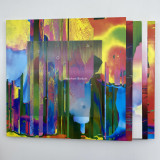
Sought-after Brazilian classic originally released in 1974, "Molhado De Suor" is the first solo effort by Alceu Valença, mixing traditional northeastern Brazilian music and rhythms with folk rock and psychedelia. Aided by Lula Cortes and Geraldo Azevedo, Valença's rich vocals combine with driving guitar work, moody arrangements and unusual trips. Reissued again after years unavailable. DESCRIPTION In the early '70s tropicalia was going strong, a challenge to both the music establishment and the state. Música Popular Brasileira (or MPB) was firmly established. Up in the northeastern corner of Brazil, centered in Recife, was another exciting strain of Brazilian culture called Udigrudi. "Molhado De Suor" is the first solo effort by Alceu Valença, mixing traditional northeastern Brazilian music and rhythms with folk rock and psychedelia. Aided by Lula Cortes and Geraldo Azevedo, Valença's rich vocals combine with driving guitar work, moody arrangements and unusual trips, successfully integrating the sounds of his native region, Pernambuco. Valença followed its release with many albums, the latest from this year, each one establishing him more.
Cerca:brazi
'No Sub Reino dos Metazoários' is the first and only record by musician and poet Marconi Notaro, out of Pernambuco, Brazil. Originally released independently, however, with the support and distribution of Rozenblit, the 1973 album featuring Lula Cortes, Zé Ramalho and Robertinho de Recife is part of the holy trilogy of "Psicodelia Nordestina" amongst the equally mindblowing Paebiru (1975) and Satwa (1973). For its non-comercial a raw aesthetics, the record became a true rarity among collectors worldwide and one of the most important albums of Brazilian Psychedelia. For years it was known that the master tape of 'No Sub Reino dos Metazoários' had been lost during two floods that wrecked the Rozenblit Studios. Lots of equipment were damaged and plenty of material gone. However what no one expected was that the tapes were kept on the highest shelves in the studio where the water did not reach with the thought of "equipment can be replaced, master tapes are unique". Notaro's daughters inherited and rescued the tape and made it available so that Fatiado Discos could release the first and remastered version from the original tapes since 1973. The lysergic highest moments come with nature elements textures as water and wind mixing together with the unmistaken sound of the Tricórdio Acústico - which is a very unique instrument that Lula Côrtes brought himself from India and then adapted it with the help of a local luthier to the regional sound of the Brazilian northeast. The gatefold designed by Lula Côrtes is portrayed in this release and it also has its inner side designed by Cátia Mezel, apart from an extra insert with unpublished photos of Marconi provided by the musician's family.
Stemming from a great legacy of poetry, Quintal de Clorofila was a duo from the south of Brazil composed by two musician brothers, Dimitri and Negendre Arbo, who turned their dad's poetry into music. In the album O Mistério dos Quintais, the two brothers presented a Brazilian Hippie Folk full of psychedelic touches a times with flanger effects, reverb and synthesizers, a times totally raw with medieval melodies, flutes and strings. The record goes with the original artwork, insert with lyrics plus unreleased photos including the one of the debut album O Mistério dos Quintais featuring the bird (a canary) that sang on stage with its own microphone. O Mistério dos Quintais was released originally in 1983 via a some sort of crowdfunding, before the term itself and even the existence of internet. Supporters who invested in the project had their names in the acknowledgements on the first edition insert. Given the fact that it was released independently, the purity and innocence of the Arbo brothers came to light and set them free to grace the listeners with sounds of nature, mysticism, influences from the Peru Andes and even some madness such as taking the family's bird (that was used to singing along with the brothers at their rehearsals at home) to then record in the studio. When the record was ready, the band realized that the record RPM was wrong. The songs were a bit faster, slightly 1/2 a pitch higher. However, it was too late, nothing else could've been done. Because they were a small band, the manufacturing plant refused to repress the records and they had to endure this. Almost 40 years later, Fatiado Discos present the first version of O Mistério dos Quintais in its original rotation speed, the right one.
Radio Diaspora works on the concept of cultural identity, which is flexible and dynamic. This provocation is generated by referring to all African ancestry moved by the diaspora and its sonorous, vocal, polyrhythmic, and polyphonic codes - all the ancestral heritage that has spread throughout the world following expropriations, genocide, and slavery - sampling and amplifying references that become triggers of energetic approaches. A heavy core of representations and senses aims to exorcize through noise and strangeness all secular violence against people of the African diaspora. In the title song of this album, 'Negro Humor', the respected Brazilian actor Grande Otelo highlights the contradiction of the clown, which awakens joy in everyone but is a sorrowful, lonely figure, ridiculing himself and putting himself in the most embarrassing situations. Relieved, loud laughter echoes in the audience because it is not the target of ridicule. In 'Despacho', Radio Diaspora explores the dichotomy of society by introducing a speech by Brazilian lawyer Hédio Silva Júnior specialised in Afro-Brazilian religion. He questions a rule under discussion in Brazil's Congress that would prohibit the use of chickens in Candomblé and Umbanda rituals. Silva Júnior points out that everyone takes a stand to protect the rights of animals, but the same cannot be said of the defense of young black people and outlying societies. The track 'Meia-Noite' evokes a celebrated point of Umbanda, an Afro-Brazilian religious syncretic cult, permeated by free jazz and electronic atmospheres developed by the duo. The other songs on the album are divided into two parts. They feature the voices of North American icons of the black struggle for civil rights: The tracks 'A.H.M. Al-Shabazz 1 and 2', amid sonic dissonances, use extracts from speeches by the American leader Malcolm X, and in 'Muhammad Ali 1 and 2' we hear quotes from famous interviews given by the boxer and activist. Ali ironizes the questions he asked his mother as a child, why all good and positive things are associated with white. "Mother, how come is everything white? Why is Jesus white with blonde hair and blue eyes? Angels are white, the Pope, Mary, and even the angels. When we die, will we go to heaven? She said naturally we go to heaven. So, I said, what happened to all the black angels they took from the pictures." His Inquiry, however, is seen as a joke by the white audience present at the TV show, which laughs off Ali's scathing criticism. Radio Diaspora uses art as an instinctive force to reject submission to traditions and culture as taming. Music is the weapon. "The (album) sound means to exorcise racism out of our minds and make us ready to act". - Rômulo Alexis
Terreno Baldio is hailed as one of the leading progressive rock bands from the seventies in Brazil, from its surrealistic album art to its equally interesting music, translates the feeling of wasteland to an alternative world of beauty and complexity, achieving worldwide popularity over several essential albums lists. The homonymous work Terreno Baldio, released in 1976, was an active part of a whole scenario of youth suffering from strong political repression, representing in the song Grite (Scream) the desire of all Brazilian society that yearned to express its voice with freedom, being an impressive moment of collective catharsis in their live performances. Originating in Sao Paulo in the early 1970s, it released its debut album in 1976, recorded on 4 channels. Formed by Mozart Mello on guitars, Roberto Lazzarini on keys, Joao Ascençao on bass, Jô on drums and Joao Kurk (Fusa) on vocals and percussion. The band Terreno Baldio was born in 1974, when they got together in a group with the purpose of making progressive rock. Roberto Lazzarini was already playing with Joao Kurk and Joaquim in the Ilanders group, a dance band; Mozart Mello and Joao Ascensao joined there, having met on the recordings of Pete Dunaway's album. Everyone knew and liked King Crimson, Gentle Giant and Yes, wanting to make a more worked sound as a group, thus creating Terreno Baldio.
(Ltd 300 copies, 180 gr vinyl) From Senegal to Eastern Europe, from Brazil to India, from the classical conservatory to nomadic people, it is nourished by all their influences that Hands in Motion juggles with the codes of tradition to create a new space of expression, resolutely current and innovative
The third release from Night Dreamer’s essential “Direct-to-Disc” sessions sees an incredible meeting between legendary US saxophonist Gary Bartz and leading UK spiritual jazz ensemble, Maisha, featuring two Bartz classics and three brand new joint songs written by both Bartz & Maisha in close collaboration.
Having cut his teeth playing with the likes of Charles Mingus, Max Roach, Art Blakey and finally in 1970, Miles Davis at the peak of his electric period, Gary Bartz became a leading figure of the early-to-mid 70s spiritual jazz movement, releasing a string of ground-breaking albums on legendary NYC jazz label Prestige Records with his NTU Troop, featuring classics such as “Celestial Blues”, “Uhuru Dance” and “I’ve Known Rivers”, before collaborating on Blue Note Records with the Mizell Brothers on the anthemic jazz funk of “Music Is My Sanctuary”. An oeuvre much loved by soul jazzers and hip hop fans alike.
Led by drummer Jake Long, Maisha have been central to the UK’s jazz explosion, and have fast become the UK’s most exciting and in-demand young spiritual jazz ensemble, from steller shows at Jazz re:freshed, Total Refreshment Centre & Church of Sound and supporting the Sun Ra Arkestra, to releasing their critically acclaimed debut LP, “There Is A Place” on Gilles Peterson’s Brownswood Recordings in 2018. Theirs is an organic & explosive sound that blends influences from afrobeat and broken beat to Persian music, with a deep love and understanding of jazz, particularly the heritage of spiritual jazz led by titans such as Pharoah Sanders, Alice Coltrane and of course, Gary Bartz.
Which makes this collaboration even more special. Bartz was first invited to share a stage with Maisha by Gilles Peterson to headline the inaugural We Out Here festival. Their chemistry was rich and instantaneous, certainly a two-way street, with the young musicians reinvigorating the legend’s performance and wowing the intergenerational festival audience. A European tour followed, including a London Jazz Festival highlight at the Royal Festival Hall, celebrating the 50th anniversary of his album “Another Earth”, originally featuring fellow legends, Pharoah Sanders, Charles Tolliver, Stanley Cowell, and John Coltrane’s own bassist, Reggie Workman.
Now the relationship has evolved into a special straight-to-disc recording for Night Dreamer Records, that captures the vitality of their collaboration. Whilst Bartz and Maisha reinvent classic Bartz compositions “Uhuru Sasa” and “Dr Follows Dance”, extending the pieces into long piece improvised grooves, their recording session gave birth to three brand new joint compositions, written the very same day. These include the propulsive “Leta’s Dance” that magically combines the Bartz’ soulful musical lyricism with Maisha’s African-jazz influences, and the organic jazz
funk of “Harlem to Haarlem”, featuring a hot solo from guest trumpeter Axel Kaner-Lidstrom of Cykada & Levitation Orchestra fame.
Like previous Night Dreamer efforts from afrobeat star Seun Kuti & Egypt 80, and the beautiful collaboration between Brazilian stars Seu Jorge & Rogê, the album was recorded in Haarlem’s Artone Studio, a stones throw from Amsterdam, in just one-take, straight-to-disc, avoiding post-production embellishments and retaining the purity of the performance lost in modern recording techniques.
This record really is an event, in and of itself, a meeting of talents, minds, generations and zeitgeist moments, captured in a unique and pure manner. The music does not disappoint, as Maisha have been inspired to reach new heights whilst we find Bartz truly reinvigorated, and both artists in tune to the spirit of the other.
Recorded direct-to-disc @ Artone Studio, Haarlem, The Netherlands on Tuesday 29th Wednesday 30th October 2019
180 grams / incl. dl code
Universal Vibrations is my most personal project to date. I came back from a month long trip to Brazil feeling very inspired during the start of lockdown and decided to experiment with some slower BPMs for the first time after producing dubstep for the last 15 years.
This album is the result.
One tune came flying out after the other during a crazily productive 2 month period. I was so happy with the beats I thought I'd get some of my favourite MCs on board so spent the next 8 months organizing and mixing down the vocal features.
It all happened very naturally and very quickly, it was just waiting to pop out! To say I'm proud of this album is an understatement.
2 years in the making, I can't wait for you all to hear it!
In the musical universe of the Brazilian singer-songwriter Raphael Gimenes, wild landscapes are metaphors for unspoken feelings. The Copenhagen-based artist writes hauntingly visual, and poetically surrealistic stories, in which he can be hunted by sun-kissing jaguars, chased by thirsty horizons, become a kaleidoscope of butterflies, or turn into dream-singing birds. His 2016 debut album, "Raphael Gimenes & As Montanhas de Som", was elected the best Brazilian album of 2016 by the Dutch website Written in Music, received 5 stars on Jazzism, and was hailed as a "conceptual masterpiece" by the Japanese magazine Latina. His sophomore release, "A tongue full of suns", is co-produced by the Faroese singer-songwriter Teitur, who also features on synths. On this new album, Gimenes explores his non-Brazilian influences and his life outside of Brazil. The songs are sung in English, a language that he learned when he lived in the United States as a boy. The lyrics are inspired by the mountainous landscapes of Jotunheimen, Norway, where he goes trekking on a yearly basis. The production and the arrangements draw heavily on sounds he heard on vintage European prog rock bands, particularly Yes and PFM. The music itself does not stray far from the universe of his debut album, but the songs do take more symphonic, progressive forms, while the Brazilian rhythms are substituted by the more meditative, minimalistic tabla played by the German musician Jan Kadereit. "A tongue full of suns" also features two guitar virtuosos from Argentina and the Netherlands: Matias Arriazu and Tim Panman. The fictitious story behind the concept album is presented as a poetic short text written by Gimenes himself: "These are the last songs written by The Painter, a broken-hearted sorcerer who disappeared on a journey of self-discovery in the vast canvas of the great wild. They were found floating above the silence of an ageless rock, in a valley of slumbering glaciers. It is said that on his odyssey, he learned the hypnotic dialects of the trees, and deciphered the translucent poetry of the moon; that he unearthed ancient vestiges of rhymeless metaphors, and mastered the alchemy of cosmic verbs. It is believed that The Painter could enter the memories of rivers, interpret the dreams of birds, and that his sun-gilded tongue carried melodies that filled entire horizons. Legend says that he is now a wanderer of the infinite; a sacred secret, revealed only by the colors of the solstice alpenglow on inaccessible, rugged peaks."
Following on from the 2 heavyweight EPs, Ah-Free-Ka & Ja-Maye-Ka, Marc Mac continues to fuse worldly music influences into broken beat. This time the sounds of Brazil are featured and blended into that London nu-boogie, broken beat vibe. The strings, piano and bass at times are reminiscent of Marc's 4hero productions as he is joined by musicians Luke Parkhouse on percussion, Nathan Haines on Sax and Canada's Octavio Santos & Mookie Williams on horns. It's a 4 track journey just right for the sun and ready for your summer eclectic musical adventures. The cover art by Mitchy Bwoy is a fantastic compliment to the music and makes up a cool art package in full
- A1: South Funk Blvd - Skying High (Getting Off On Your Lovin')
- A2: Ad Libs - Don't Need No Fortune Teller
- A3: Atlantis - Hung Up About You
- A4: Smoke Inc - Waitin' For Love
- B1: Mandisa - Summer Love
- B2: City Lites - Now You've Gone Away
- B3: Papaya - Favela
- C1: Alcione - Este Mundo Tem
- C2: Quintaessencia - Serrado
- C3: Superior Elevation - It Was September
- C4: Keith Chism & Light - My Life & Song
- D1: Belita Woods - Magic Corner
- D2: Spare Hare - Ain't No Doubt About It
- D3: Sammy Acuna - Never Found A Girl
- D4: Sweet Mixture - House Of Fun & Love
Black Vinyl[26,85 €]
Here we are at the dawn of a new compilation series and we’re kicking things off with an absolute gem that features a selection of hard-to-find records (some impossible to find) and some that have been hiding in plain sight all along. They all share common qualities, being that they are beautiful, soul quenched songs that sing of love, peace and unity.
‘With Love: Volume 1’ has been compiled by Miche and presents a curated selection of rare Brazilian, gospel, modern soul and jazz-fusion fire. We have Brazilian rarities by Alcione and Quientaessencia, UFO gospel by Keith Chism & Light, the jazz-funk/AOR sounds of City Lites taken from a Radio Station album, and the anthemic feel-good emotional soul of Belita Woods to name but a few.
Tracking down artists and musicians from the past is an art form. Like a seagull swooping for treats, sometimes the prizes are easily found, and at other times, it’s the result of very late nights trolling through Facebook profiles, message boards, hitting dead ends and following red herrings, and yet still the search goes on. This compilation is a true labour of love with all the artists tracked down and licensed by Miche. It has long been an ambition of the London based musical connoisseur to compile an album, and like anything that requires craft, care, and knowledge - it takes time. There are many twists and turns in the hunt for those records that make your jaw drop.
In 2018, when just 24, Miche became a music programmer for London’s illustrious Spiritland group of venues. From this musical sanctuary, he was able to listen, learn and meet some of the best selectors from around the world. It was a musical education, and he was particularly drawn to the deep sessions by DJs such as Mark Taylor, George Arthur, Kev Beadle, Patrick Forge, Dr. Bob Jones, and Colin Curtis to name a few. He also used this time to begin running his re-issue label Discs of Fun and Love with co-owner and friend Frederika.
Sometimes the cynical knock compilations, there is certain snobbery amongst some about the original pressing, but music shouldn't just be about lucky collectors giving over large sums of money to record dealers. It's also about a bridge to the past, a celebration of the legacy of somebody’s art, and a second chance for initially overlooked work to shine. As with all the best compilations, it has been compiled with love…
Drei Vinylpremieren und zwei Neuauflagen füllen als hochwertige 180g-Pallas-Pressungen Lücken in der LP-Sammlung.
VINYL-PREMIEREN / BISLANG NUR ALS CD ERHÄLTLICH / REMASTERT / DOPPEL-LPs:
Till Brönner “That Summer” (2004): sommerliche Jazz-Vocals und Instrumentals, smoother Funk- und
Brazil-Grooves, noch immer eines seiner beliebtesten Verve-Alben
Barbara Dennerlein “Take Off” (1995): groovende Hammond-B3-Tracks in klassischer Verve- und BlueNote-Tradition, aufgenommen in New York mit All-Star-Band aus Roy Hargrove, Mitch Watkins, Dennis
Chambers u.a., internationaler Durchbruch von Deutschlands “First Lady of Jazz” Rolf Joachim Kühn Quartett ”Lifeline” (2012): mit den Gästen John Patitucci und Brian Blade, Gipfeltreffen zweier deutscher und zweier amerikanischer Jazzlegenden, ausgezeichnet mit dem Deutschen Schallplattenpreis VERGRIFFENE KLASSIKER ENDLICH WIEDER AUF LP / REMASTERT / 1-LP:
Elis Regina und Toots Thielemans ”Elis & Toots” (1969): aufgenommen in Stockholm, klingt aber so fröhlich und heiß wie direkt unter dem Zuckerhut in Rio entstanden, ein mitreißender Klassiker des BrasilJazz “Joyce Live At The Mojo Club” (1995): brasilianische Kultmusikerin gab rares Deutschland-Konzert im
legendären Hamburger Club und begeisterte das Publikum mit heißer Samba, Bossa Nova und MPB, ein Klassiker des Rare-Groove
Drei Vinylpremieren und zwei Neuauflagen füllen als hochwertige 180g-Pallas-Pressungen Lücken in der LP-Sammlung.
VINYL-PREMIEREN / BISLANG NUR ALS CD ERHÄLTLICH / REMASTERT / DOPPEL-LPs:
Till Brönner “That Summer” (2004): sommerliche Jazz-Vocals und Instrumentals, smoother Funk- und
Brazil-Grooves, noch immer eines seiner beliebtesten Verve-Alben
Barbara Dennerlein “Take Off” (1995): groovende Hammond-B3-Tracks in klassischer Verve- und BlueNote-Tradition, aufgenommen in New York mit All-Star-Band aus Roy Hargrove, Mitch Watkins, Dennis
Chambers u.a., internationaler Durchbruch von Deutschlands “First Lady of Jazz” Rolf Joachim Kühn Quartett ”Lifeline” (2012): mit den Gästen John Patitucci und Brian Blade, Gipfeltreffen zweier deutscher und zweier amerikanischer Jazzlegenden, ausgezeichnet mit dem Deutschen Schallplattenpreis VERGRIFFENE KLASSIKER ENDLICH WIEDER AUF LP / REMASTERT / 1-LP:
Elis Regina und Toots Thielemans ”Elis & Toots” (1969): aufgenommen in Stockholm, klingt aber so fröhlich und heiß wie direkt unter dem Zuckerhut in Rio entstanden, ein mitreißender Klassiker des BrasilJazz “Joyce Live At The Mojo Club” (1995): brasilianische Kultmusikerin gab rares Deutschland-Konzert im
legendären Hamburger Club und begeisterte das Publikum mit heißer Samba, Bossa Nova und MPB, ein Klassiker des Rare-Groove
Drei Vinylpremieren und zwei Neuauflagen füllen als hochwertige 180g-Pallas-Pressungen Lücken in der LP-Sammlung.
VINYL-PREMIEREN / BISLANG NUR ALS CD ERHÄLTLICH / REMASTERT / DOPPEL-LPs:
Till Brönner “That Summer” (2004): sommerliche Jazz-Vocals und Instrumentals, smoother Funk- und
Brazil-Grooves, noch immer eines seiner beliebtesten Verve-Alben
Barbara Dennerlein “Take Off” (1995): groovende Hammond-B3-Tracks in klassischer Verve- und BlueNote-Tradition, aufgenommen in New York mit All-Star-Band aus Roy Hargrove, Mitch Watkins, Dennis
Chambers u.a., internationaler Durchbruch von Deutschlands “First Lady of Jazz” Rolf Joachim Kühn Quartett ”Lifeline” (2012): mit den Gästen John Patitucci und Brian Blade, Gipfeltreffen zweier deutscher und zweier amerikanischer Jazzlegenden, ausgezeichnet mit dem Deutschen Schallplattenpreis VERGRIFFENE KLASSIKER ENDLICH WIEDER AUF LP / REMASTERT / 1-LP:
Elis Regina und Toots Thielemans ”Elis & Toots” (1969): aufgenommen in Stockholm, klingt aber so fröhlich und heiß wie direkt unter dem Zuckerhut in Rio entstanden, ein mitreißender Klassiker des BrasilJazz “Joyce Live At The Mojo Club” (1995): brasilianische Kultmusikerin gab rares Deutschland-Konzert im
legendären Hamburger Club und begeisterte das Publikum mit heißer Samba, Bossa Nova und MPB, ein Klassiker des Rare-Groove
Drei Vinylpremieren und zwei Neuauflagen füllen als hochwertige 180g-Pallas-Pressungen Lücken in der LP-Sammlung.
VINYL-PREMIEREN / BISLANG NUR ALS CD ERHÄLTLICH / REMASTERT / DOPPEL-LPs:
Till Brönner “That Summer” (2004): sommerliche Jazz-Vocals und Instrumentals, smoother Funk- und
Brazil-Grooves, noch immer eines seiner beliebtesten Verve-Alben
Barbara Dennerlein “Take Off” (1995): groovende Hammond-B3-Tracks in klassischer Verve- und BlueNote-Tradition, aufgenommen in New York mit All-Star-Band aus Roy Hargrove, Mitch Watkins, Dennis
Chambers u.a., internationaler Durchbruch von Deutschlands “First Lady of Jazz” Rolf Joachim Kühn Quartett ”Lifeline” (2012): mit den Gästen John Patitucci und Brian Blade, Gipfeltreffen zweier deutscher und zweier amerikanischer Jazzlegenden, ausgezeichnet mit dem Deutschen Schallplattenpreis VERGRIFFENE KLASSIKER ENDLICH WIEDER AUF LP / REMASTERT / 1-LP:
Elis Regina und Toots Thielemans ”Elis & Toots” (1969): aufgenommen in Stockholm, klingt aber so fröhlich und heiß wie direkt unter dem Zuckerhut in Rio entstanden, ein mitreißender Klassiker des BrasilJazz “Joyce Live At The Mojo Club” (1995): brasilianische Kultmusikerin gab rares Deutschland-Konzert im
legendären Hamburger Club und begeisterte das Publikum mit heißer Samba, Bossa Nova und MPB, ein Klassiker des Rare-Groove
Drei Vinylpremieren und zwei Neuauflagen füllen als hochwertige 180g-Pallas-Pressungen Lücken in der LP-Sammlung.
VINYL-PREMIEREN / BISLANG NUR ALS CD ERHÄLTLICH / REMASTERT / DOPPEL-LPs:
Till Brönner “That Summer” (2004): sommerliche Jazz-Vocals und Instrumentals, smoother Funk- und
Brazil-Grooves, noch immer eines seiner beliebtesten Verve-Alben
Barbara Dennerlein “Take Off” (1995): groovende Hammond-B3-Tracks in klassischer Verve- und BlueNote-Tradition, aufgenommen in New York mit All-Star-Band aus Roy Hargrove, Mitch Watkins, Dennis
Chambers u.a., internationaler Durchbruch von Deutschlands “First Lady of Jazz” Rolf Joachim Kühn Quartett ”Lifeline” (2012): mit den Gästen John Patitucci und Brian Blade, Gipfeltreffen zweier deutscher und zweier amerikanischer Jazzlegenden, ausgezeichnet mit dem Deutschen Schallplattenpreis VERGRIFFENE KLASSIKER ENDLICH WIEDER AUF LP / REMASTERT / 1-LP:
Elis Regina und Toots Thielemans ”Elis & Toots” (1969): aufgenommen in Stockholm, klingt aber so fröhlich und heiß wie direkt unter dem Zuckerhut in Rio entstanden, ein mitreißender Klassiker des BrasilJazz “Joyce Live At The Mojo Club” (1995): brasilianische Kultmusikerin gab rares Deutschland-Konzert im
legendären Hamburger Club und begeisterte das Publikum mit heißer Samba, Bossa Nova und MPB, ein Klassiker des Rare-Groove
Sometimes the best things take time to come into fruition, and here we are, ready to finally unleash Brazil45 number 88 - the missing 7"! Featuring two Mr Bongo favourites that we have been longing to share with the world.
First up is a lesser-known Brazilian Boys track titled 'Super Herois’. This slightly trippy and quirky funk-rock groove is taken off an obscure 7" on CID records and was originally released in 1975. 'Super Herois' is super catchy, addictive and a guaranteed complete earworm. It’s a muti genre, crossover nugget that will branch scenes and tick all sorts of boxes.
On the flip is the driving, jazz-rock-samba dancefloor joint 'Tudo Ai’, a cut taken from Rubinho E Mauro Assumpção's highly sought after 1972 album 'Perfeitamente, Justamente Quando Cheguei’. Originally released on Tapecar Records, this short in stature track packs a real punch!
Repress
In 1974 Mazzotti recorded her first album Ninguem Vai Me Segurar (1974), enlisting the in-demand arrangement talents of Azymuth’s original keyboard maestro Jose Roberto Bertrami who co-wrote several of the tracks and plays organ, piano and synthesizers on the album. It also features Azymuth’s bassist Alex Malheiros and percussionist Ariovaldo Contestini, with Romildo Santos who produced the album on drums. Recorded in Estudio Haway around the same time Azymuth recorded their debut album there, it’s no wonder the samba jazz-funk pioneer’s distinctive aesthetic is present throughout, and Mazzotti’s sensational compositions are made even more beautiful for it.
An artist as imaginative and unique as Ana Mazzotti doesn’t come around often. Dubbed a “super-musician” by fellow Brazilian virtuoso Hermeto Pascoal, Mazzotti’s short but rich musical career culminated in just two studio albums: Ninguem Vai Me Segurar (1974), and Ana Mazzotti (1977). Outside circles of Brazilian funk aficionados, these two gems of spellbinding samba-jazz, lysergic funk and trippy bossa have remained relatively obscure. This was partly as a result of Mazzotti’s premature death (she lost her battle with cancer in her mid-thirties), but also due to financial restraints and the prejudice she faced as a female songwriter in a fundamentally sexist society.
Born in Caixas, in Brazil’s Rio Grande do Sul municipality, Mazzotti began to play the accordion aged five, before moving with prodigious ease onto the piano. By the age of twelve she was already conducting her convent school’s choir, and at twenty-one she led her city’s premier chorus, the Coral Bento Goncalves. When rock and roll hit South America in the sixties, a young Mazzotti was one of the early adopters, fronting various guitar groups including an all-female Beatles cover band, and an eclectic, eight-piece psychedelic group Desenvolvemento. Before moving to Sao Paulo to start her career proper, Mazzotti met drummer, producer and fellow music educator Romido Santos, who she would later marry. Romildo introduced Mazzotti to jazz, and music by the likes of Chick Corea and Hermeto Pascoal who she would later befriend and perform with.
In 1977, Mazzotti took her debut album back to the studio, releasing the album with a new running order and new ethereal cover art, ostensibly another crack at commercial success following the small scale of the independently funded first release. With intimately re-recorded vocals, and the bonus of gorgeous horn arrangements and a new track: the carnivalesque ‘Eta, Samba Bom’, replacing Roberta Flack’s hit ‘Feel Like Making Love’, Ana Mazzotti (1977) delivers Mazzotti’s refreshingly cool musical style even more effortlessly, while retaining the all magical energy of her debut.
Far Out Recordings is proud to present the official reissue of this cult favourite Brazilian treasure. Remastered and pressed to 180g vinyl Ana Mazzotti (1977) will be available on vinyl LP, CD and digitally from 13th September.
The masters of the brazilian old school death metal KRISIUN are back. After their last album "Scourge of the Enthroned", which was released in 2018, the three Sao Paulo brothers deliver another board-hard and incredibly strong new studio album. On "Mortem Solis" Krisiun convince with precise riffs and hard-hitting sound with the active support of Mark Lewis (production and mix). “Mortem Solis” will be available as Ltd. CD Digipak, 180 gram LP and on all digital platforms.
Official vinyl reissue of the 2006 album by Brazil’s premier death metal export, the meat grinding trio Krisiun. AssassiNation’s 12 hyper ferocious tracks rage and burn with technical brilliance, depth and clarity like never before.
This 2001 album from the Brazilian death metal war machine Krisiun has never previously been available on vinyl, apart from a limited picture disc release back in the day.
- A1: Bcalm X Banks - Hot Spring
- A2: Living Room - Brazilian Sunset
- A3: Kainbeats - Noddin Off
- A4: Kazam - Chromatic
- A5: Goson X Krynoze - Little Moment
- A6: Sleepdealer - Roses
- A7: Renboz - Better Days
- A8: Honshu Lo Fi - Morning
- A9: Screen Jazzmaster - Rio Donuts
- A10: Oilix | - Feelings
- B1: Saib - Samui Sunrise
- B2: Mujo X Hakone - Nagata Lights
- B3: Shierro - Hiding In A Hoodie
- B4: Matchbox Youth - Freeze
- B5: Dpsht - Feelin
- B6: Enoki - For You
- B7: Hikari - Rooftop Late Night Chill
- B8: Goodge - Skies The Limit
- B9: Duan Wasi - Thrill Devine
Luca LTJ Trevisi (LTJ Xperience) began his dj/producer career in the 80s. As resident dj in two of the most famous Italian clubs of the
time, Kinky in Bologna and Cap Creus in Imola, he was one of the first Italian jocks to spin House and to re-propose those black music,
jazz and latin-bossa classics from the 70s that at the end of the same decade would have given birth to the Acid Jazz and Rare Groove
movements. His first single release in 1988, titled First Job, together with Kekkotronics, was also the first release ever on Bologna
based Irma Records. It was featured in a lot of compilations of the time and entered several playlists, rapidly reaching cult status for
many UK and US djs. During the early 90s LTJ delivered a couple of singles in a kind of pre-breakbeat style: Dont Stop The Sax, released all over Europe, and Funky Superfly. He also produced US singer Tameka Starrs single Going In Circles, always for Irma Records, still a classic in the downtempo/r&b field. In the second half of the nineties Luca began to produce acid jazz bands like Bossa
Nostra, still today one of Irma Records main acts. Their first album had Vicky Anderson as special guest and today is still considered
one of the most important European acid jazz albums. In the following years he concentrated on developing his activity as collector
and rare vinyl merchant, which gave him the chance to get in touch with djs from all over the World and to discover many forgotten
gems from the past years. Thanks to this experience he was able to create two extremely successful rarities series on Irma Records:
Groovy and Suono Libero. In the meanwhile LTJ started to dj outside Italy too, performing in important venues like the Blue Note and
Jazz Café in London, Giant Step in New York and Montreux Jazz Festival in Switzerland. In 1999 saw the release of his first solo
album under the LTJ Xperience moniker. The album was produced with the collaboration of fellow Irma artist and producer Ohm Guru
and had Taka Boom and Jackson Sloan among the guests. Two of the main tracks on the album are brazil house classic Sombre
Guitar and title track Moon Beat, which became a true hit of the Chill Out genre, featured in dozens of important compilations.
After making countless productions for Irma Records, including their second album When The Rain Begins To Fall (with the participation
of the historic Spanish-American singer Joe Bataan), and the recents singles as ORGAN MIND / I LOVE YOU (favorite track by Larry
Heard ) & ON THE FLOOR / SOUND MACHINE, LTJ is devoted almost exclusively to re-edit and reconstruct tracks from the past with
the addition of sounds and rhythms in post production for labels like SUPER VALUE, SMALL WORLD DISCO, HOT GROOVY RECORDS, OH CRISTO! increasing the production of this new musical genre that is currently defined as beatdown/slo-mo, working with
international labels such as Far Out Recordings, Sleazy Beats, Future Classics, E.A.R. Music For Dreams, Apersonal Music, Roam
Recordings, !K7.
The latest three CDs on the Irma label “I Don’t Want This Groove To Ever End” (2012), “Ain’t Nothing But A Groove” (2013), “Don’t Let
The System Get You Down” (2015) and “Beggar Groove” (2017) show the funkiest and grooviest side of LTJ !
In the last years LTJ has literally toured the world, some really important and popular Festivals have booked him for his reknown DJ
Set performances, Scottish Soul Weekender (Dumfries, Scotland), Mareh Festival (Boipeba Island, Brazil), Garden Festival (Tisno,
Croatia), Jazz Refound Festival (Vercelli, Italy)
And visiting Cities like: Tel Aviv, Skopje(Macedonia), Belfast e Derry (Ireland), London, New York, Berlin, Bucarest, Amsterdam, Paris,
Marsille, Barcelona, and Vilnius (Lithuania). just to name a few.
Deepening of a Groove is the new album, the fifth dedicated to the research of sounds Disco Funk from its origins revisited by today's
rhythms and the dancefloor feeling of 2000. For the first time on this album 4 sung songs appear. Bad Side (already released in single
version) and Infiltrator are sung by Anduze, soul singer from Los Angeles also known for his collaboration with Parov Stelar. I'm Gonna
Funk U and Stranger are sung by the Marche singer AdniL for the first time in collaboration with LTJ.
Tape
Los Angeles native Sha Sha Kimbo undeniably lives for the rave. As exemplified through her every intentional move as a producer, DJ, promoter, radio host and label owner, Sha Sha radiates an unwavering love for amplifying, nurturing and supporting the culture of underground electronic music and the community that surrounds it, with her forthcoming release absolutely no exception to this.
Set for release as a digital download and limited edition cassette tape on August 13, the LA rave staple is happy to announce her debut EP on Evar Records, Total Chaos. A brilliant testament to the cathartic importance of staying up late and getting lost in a buzzing crowd of kindred spirits, Total Chaos harnesses the universal experience of having pent-up energy into massive, angst-ridden breakbeat anthems. Over six tracks, Sha Sha channels the hair-raising spirit of '90s rave along with her formative experiences with DMZ-via-Low End Theory dubstep and punk rock. Finding her place within LA's bass music, house, techno and rave scenes while defying easy categorization, Sha Sha personifies the no-rules electronic music ethos behind John Frusciante and Aura T-09's Evar Records. To supplement Total Chaos' three originals, LYZZA, Machine Girl and LCY provide three raw remixes highlighting various aspects of Sha Sha Kimbo's renegade rave spirit.
Drawing from the Los Angeles punk rock and '90s rave music that soundtracked her youth, Total Chaos personifies how she grew up on the dance floor, showcasing Sha Sha's tried and true ability to express rich, nuanced emotions through tracks that, first and foremost, can level a warehouse party. Kicking off the vibe on July 30, the EP's lead single "Save The World" is a perfect representation of this, with the jump-up rave cut employing a megaton breakbeat and sickly-sweet vocal samples over simmering base of dark, UK-influenced atmospherics. From the late night energy of the title track to the euphoric, dawn-breaking feel of "Limited Perfect," Total Chaos offers the refuge of a robust dance floor with the warm reassurance to be one with the universe.
Rounding out Total Chaos EP are three remixes that amicably and serendipitously support Sha Sha Kimbo's visionary aim to both explore the unknown and bring people together along the way. Brazilian-born, Amsterdam-based powerhouse LYZZA adds a full verse and a nest of serrated rhythms to her version of "Total Chaos," while New York's Machine Girl applies their trademark punk electronics approach to "Save The World." Meanwhile, Bristol's own LCY hollows out "Limited Perfect" into a haunting amalgam of post-punk minimalism and low-frequency pressure. A study of the opposing light and dark energies of underground dance music, Total Chaos presents a breakbeat-heavy vortex, sure to awaken everyone's inner raver.
If one could summarize the life of DJ Rambo in 4 tracks it would be with this EP, from dubbed out Euro Dance to Merengue - another mistake release on Poppers.
Dance floor tool release by supposedly star-on-the-rise disc jockey – DJ Rambo. We have no idea who this person is, but one could guess this is one way to find out. Some rather heated opinions on the track list, but politics apart, A1 features a downtempo chugger yet unconventionally dubbed out version of what sounds like an early German Euro House production. A2 shifts gears with Italo tinted sexy house beats. On the flip side 90's Merengue sounds with ravey samples and dubbed out soap opera esque vocals. Lastly, a climatic commentator recording of what seems to be a football match between Brazil and Argentina.
Joining the dots between Brazilian musical culture and the sonic melting pot that is New York City, Saidera are a trio on the rise. They’ve already released a pair of critically acclaimed, carnival-ready singles on Brooklyn’s Let’s Play House label and are now ready to make their debut on Leng Records.
The band’s roots can be traced back to a trip that Lemonade band member Alex Pasternak made to Brazil in 2014. While DJing at a house party in the bohemian Rio de Janeiro neighbourhood of Sta Teresa, Pasternak was left gobsmacked when a mysterious local singer/sambista Vadinho Freire, grabbed the mic and started freestyling lyrics and melodies over his set. Realising their instinctive musical connection, Pasternak and Freire decided to work together on some music, with New Yorker Le Chev joining them to complete the Saidera trio.
Now based in Rio and California, the group’s sun-soaked sound – which they describe as “samba disco-Afro melody” – is a cross-cultural stew in which infectious Brazilian percussion, colourful synth sounds, glistening guitars and celebratory vocals combine to create magical, life-affirming musical moments.
‘Luzes Da Cidade’, their first outing on Leng, encapsulates all that’s good about the Saidera sound and the trio’s approach to music. The song is about identity and connection and in its original form is languid, loved-up and joyous, with acoustic and electric guitars, Portuguese vocals and Korey Riker’s gently breezy flute solos rising above a squelchy synth bassline and energetic, sweat-soaked samba drums.
The song’s main mix comes accompanied by a wonderful instrumental pass featuring more extensive solos by Riker, and Saidera’s own remix of ‘Luzes Da Cidade’ – an extra-percussive, breakbeat-tinged fusion of hazy deep house, energetic samba and sunset-ready synth-disco that will delight DJs and dancers alike.
To round off the EP, Saidera has delivered a brand new “Uprockin Dub” of debut single ‘Deixa Tudo Fluir’, this time with female vocals from Irina Bertolucci taking the lead. Brilliantly kaleidoscopic sonically, with dub delay-laden vocals, guitars and flutes, it’s a superb, life-affirming Balearic reggae interpretation of a now familiar favourite. If you’re not singing along with the chorus after your first listen, we’d be very surprised.
Under the name Delicate Steve, guitarist extrodinaire Steve Marion has
spent the better part of the last decade establishing himself as one of the
most wildly innovative and widely revered players in the game.He's
recorded with Paul Simon, been sampled by Kanye West, toured in the
Black Keys, and released four critically acclaimed albums of genrebending instrumental music
He's your favorite musician's favorite musician, a virtuoso songwriter, producer,
and performer who occupies a lane entirely his own in the modern indie
landscape, but he's never liked the sound of the electric guitar? "I've tried
everything under the sun to get away from it," he explains. "Until now."Written and
recorded on a white 1966 Fender Stratocaster that reignited his love for the
instrument, Delicate Steve's warm and captivating new album, After Hours, marks
a first for Marion, an earnest, easygoing collection that revels in the simple joys of
plugging in and playing. The songs are sweet and breezy here, pairing vintage
soul grooves with mesmerizing, wordless melodies, and Marion's production work
is subtle and restrained, stepping back in all the right places to let the album's
masterful performances speak for themselves. In another first, Marion teamed up
with outside musicians on the record, bringing in renowned bassist Shahzad
Ismaily (Yoko Ono, Marc Ribot) and famed Brazilian percussionist Mauro Refosco
(David Byrne, Atoms For Peace) to help flesh out the arrangements and stretch
his sonic boundaries.
The result is a dreamy, introspective album built for late night comedowns and
deep dive soul searching, a cinematic, escapist fantasy for the wee hours of the
morning that draws on everything from Bill Withers and Sly Stone to Pharoah
Sanders and Salvador Dali as it explores memory and nostalgia, instinct and
intuition, serenity and transcendence.
He might be vocalist in bands such as Brighton-based progressive act Diagonal and psychedelic outfit Baron, but when it comes to his solo work Alex Crispin has typically worked in more wordless fields. Last year the songwriter, vocalist and producer released a triptych of ambient albums, consisting of two older albums in 'Idle Worship' and 'Open Submission', as well as new meditative work in 'Resubmergency'. On his new self-titled album, however, Crispin re-emerges from the cavernous soundscapes to – for the first time – put his vocal and song writing stamp on a record under his own name. “I personally find it easier to create more guarded, moody music, but I was at a point where I wanted to embrace a more universal, intimate and open side to what I might say” Crispin says. “Over time I’d got over certain blocks or preoccupations and so wanted to create something accessible and open hearted, which became a big driver for this record.” Pointedly self-titled to reflect the newfound confidence in his song writing away from the collective of a band, the album’s nine tracks are a warm embrace amidst troubled times. Musically there’s nods to everything from tropicalia and Brazilian MPB, to 80’s dusk pop balladeers The Blue Nile and Paul Simon’s explorations into African music. Lyrically aware of the snowballing turbulence that surrounds us, Crispin in reaction tries to see hope and looks around at the relationships and connections in his life that provide him strength. He opens 'Invisible (To Us)' with the words “Before the world did end, there was just one moment when, everybody thought there might be time, to look around again, to laugh to cry to sing.” Elsewhere, 'Listen & Learn' strikes at the heart of other underlying themes of the record, of the rarity of people opening up, taking on new ideas and allowing change. It’s accompanied with a rich, maximal sound palette of flute and sax that play around each other as Crispin’s vocal chips in with gentle encouragement. “One of the main markers on the album that I was aware of from the start, was to let myself express joy and positivity in the music” he says. “I have come to greatly prize the power of accessibility and universality over artistic 'coolness or trend', much in the same way that so often for me, the greatest pieces of art humans make nowadays are things like Pixar movies, with their combination of undeniable human talent and craft, alongside genuinely moving and accessible themes.” Indeed, there is a cinematic feel to much of Crispin’s own music, something brought over from his ambient creations – although his self-titled album possesses a panorama all of its own. Something like 'When I Reach The Ocean' has a hazy, pastoral feel to it like something out of the Canterbury Folk scene; there’s space between the notes though, which in turn pushes the track out to a greater expanse than the comparatively soft-edged and modest sound palette used to create it. Similarly, the likes of 'Effert' revel in the space afforded to them - in the case of the aforementioned in particular, Crispin lets his voice take a back seat and creates an open wash of sound that he allows the guitar to probe and explore within. “In making any music I am definitely conscious of trying to put in only what is effective” Crispin says. “It is so easy to clutter tracks without realising it, just having the ability to add stuff can just become addictive as it’s so easy to do with recording setups now.” The album started coming together at the end of 2020, with Crispin getting most of the songs to a concrete state, before starting recording in May 2021 with Diagonal bandmates Luke Foster (drums) and Daniel Pomlett (Bass), who put down rhythm tracks. Jazz saxophonist Rob Milne then added parts which would become the glue that held the whole organic aesthetic of the album together. There’s no doubt that lockdown played a part in proceedings, with a kind of forced focus resulting in a need for joyful expression. However, Crispin and his partner also suffered a bereavement which led to her travelling for large periods of time. “It was a very intense and difficult time and I think some of the intensity of emotion of that situation coupled with being alone must have inevitably contributed to the work itself” he says. It's perhaps why when even in moments of sheer happiness, such as the 'Sabu’s' breezily euphoric opener, Crispin ponders: “No-one really cares beyond this moment, and even when it's here, it's never here”. It’s the first of several bittersweet moments on the record that give the album its weight. On this new LP, Crispin recognises that sadness doesn’t mean throwing out hope, and that even in moments of joy there’s still a path ahead of you to take.
- A1: Suena Blanca Espuma (El Kinto)
- A2: Mejor Me Voy (Diane Denoir + Eduardo Mateo) / Mejor Me
- A3: Música De La Película Del Mismo Nombre (Horacio Buscagl
- A4: Musicasion Iii (Urbano Moraes)
- A5: Muy Lejos Te Vas (Rada + El Kinto)
- A6: Sueño De Una Noche De Mermelada (Horacio Buscaglia)
- A7: Si Te Vas De Mi Pueblo (Reinaldo + Mateo
- A8: Príncipe Azul (El Kinto)
- A9: Margaritas Rojas (Mateo + García Vigil + Figares)
- A10: Yo Volveré Por Ti (El Kinto)
- A11: Fabula Moderna Para Ser Cantada Y No Olvidada... (Horac
- A1 2: Hombre (Veronica Indart + Mateo)
- A1 3: Pippo (El Kinto)
- B1: Rosa (Urbano Moraes + El Kinto)
- B2: Mumi (Veronica Indart + Mateo)
- B3: Para Una Musicasion (Horacio Buscaglia + El Kinto)
- B4: Tu Andaras (Urbano Moraes)
- B5: Estoy Sin Ti -En Vivo En El Concierto Beat Iv, (Diane D
- B6: Aquel Payaso -En Vivo En El Concierto Beat Iv, (Rada +
- B7: Base Para "Mirando La Luna" (Urbano Moraes)
- B8: Solo Me He De Quedar (El Kinto)
- B9: Instrumental Para Otra Musicasion (Eduardo Mateo)
- B10: Esa Tristeza -Version Completa- (El Kinto)
- B11: Martín (Urbano Moraes)
- B12: Las Cosas (Urbano Moraes)
- B13: Te Esperaré (Horama)
- B14: Ni Me Puedes Ver -Version Completa- (El Kinto)
LTD 50TH ANNIVERSARY REISSUE
Originally released in 1971, during the dark days of the military dictatorship in Uruguay, this unique album made a strong and lasting impression on Juana Molina when she was a child. The present reissue on Sonamos (Juana's recently-formed owned label) is the result of a patient labor of love conducted by Juana and her associate producer Mario Agustin Gonzalez. This anniversary release comes our as a very limited-edition containing the remastered original LP, a second LP with 16 unreleased tracks, and a thick, informative booklet: Musicasión was a series of collective shows by a group of artists, mixing theatrical elements, poetry, improvised stage effects, and of course music, with a very special blend of rock (then called beat, in a dual reference to British pop bands of the sixties and to Beat Generation poetry), candombe (the percussion-driven style created in Uruguay among the descendants of liberated African slaves) tango, jazz and bossa nova. A combination which bears more than a passing resemblance with Brazilian Tropicália, which originated around the same time.
- A1: Maria Maria
- A2: Cozinha
- A3: Pilar (Do Pila) (Do Pila)
- A4: Trabalhos (Essa Voz) (Essa Voz)
- B1: Lilia
- B2: A Chamada
- B3: Era Rei E Sou Escravo
- B4: Os Escravos De Jo
- B5: Tema Dos Deuses
- C1: Santos Catholicos X Candomble
- C2: Pai Grande
- C3: Seducao
- D1: Francisco
- D2: Maria Solidaria
- D3: De Repente Maria Sumiu
- D4: Eu Sou Uma Preta Velha Aqui Sentada No Sol
- D5: Boca A Boca
- D6: Maria Maria
Repress incoming...
Far Out Recordings proudly presents Milton Nascimento's Maria Maria. Recorded in 1974 and unreleased until almost thirty years later, the album was written as the soundtrack to a ballet which dealt with the legacy of slavery in Brazil. Raw, atmospheric and emotionally charged, Maria Maria reveals one of Brazil's greatest ever songwriters at his creative peak. Featuring an all-star cast of fellow Brazilian legends including Nana Vasconcelos, Joao Donato, Paulinho Jobim, and members of Som Imaginario, Maria Maria holds what Milton considers to be the definitive versions of some of his classic songs, including 'Os Escravos De Jó' and 'Maria Maria'.
Originally released in 2003 as a double CD package, with Milton Nascimento's 1984 follow up ballet soundtrack Ultimo Trem, Maria Maria will be available on vinyl for the very first time from December 2019, with Ultimo Trem set for vinyl release early 2020.
Milton Nascimento possesses one of the most immediately recognizable voices in Brazilian music: high and sweet and as breathtakingly sublime as that of any soul singer. It was this voice that the legendary Brazilian singer Elis Regina fell in love with back in 1964, having heard Milton perform his song 'Canção do Sal (Sultry Song)' at a private party in Sao Paulo. Ellis went on to record the song in 1967 -giving Milton his first hit in Brazil and beginning a career that has spanned over 50 years.
Born in Rio on the 26th October 1942, Milton moved with his adoptive parents at the age of 18 months to Tres Pontas, a rural town in the state of Minas Gerais, 500 miles north of Rio. He began his musical career as a young teenager, singing in a crooner style he learnt from listening to Brazilian singers and US groups such as The Platters on the radio. Hungry for more opportunities to perform, Milton moved to Belo Horizonte, the capital of Minas Gerais, at the age of twenty. By the beginning of the 60s Milton had made a name for himself both as an accomplished singer and guitarist.
Milton became part of a local network of musicians, film makers, dancers, theatre directors and writers that included the journalist and song writer Fernando Brant as well as lyricist Marcio Borges and his younger brother Lo Borges. Together these four wrote and produced what would become Milton's milestone album, 'Clube da Esquina (Club on the Corner)'. The originality of 'Club da Esquina' shaped the local scene, and it reflects the essence of 'the Nascimento Sound'. Milton's religious upbringing as an Afro-Brazilian Catholic saw him exposed to church choral music from an early age. His love of this genre of music is apparent in both his celestial falsetto and vocal choral arrangements. This collection also displays his early fascination with evocative, non-verbal, scat-style singing, spare, harmonic guitar work and local folk music, jazz and rock.
In 1976, Milton and Fernando Brant teamed up with a new contemporary dance company called Grupo Corpo, whose Argentinian choreographer Oscar Araiz, would become a collaborator with the two musicians. Together, they conceived a show based on the composite life story of the daughter of a black slave called Maria. Nascimento wrote music to Brant's lyrics and "Maria Maria" was premiered in the main theatre of the Belo Horizonte Palacio das Artes that year. "Fernando wrote the lyrics for the ballet, but there were originally no lyrics for the theme song, "Maria Maria'". Milton and Fernando worked on the lyrics together, basing them on folk stories about black women of the countryside. Adds Milton "These memories are mostly things that we witnessed – Fernando and I – rather than what we experienced ourselves.
Milton's music is impressionistic, emotional and romantic. Relying on songs without lyrics as well as evocative vocalizing and choruses, Milton experimented heavily with Afro-Brazilian percussion and taped jungle sounds. His composing method for these recordings was highly unconventional: "I wrote the music for 'Maria Maria' in a tiny Rio apartment with friends and their kids running around and having fun! I love to be in noisy places, surrounded by people", he says.
The music on 'Maria Maria' was performed by an impressive group of young musicians who are today household names in Brazilian music, including Naná Vasconcelos (percussion and effects), Toninho Horta (guitars) and Paulo Moura (sax). Several vocalist including Naná Caymmi, Fafá de Belém, Beto Guedes, and Milton himself, had hits in years to come with reworkings of these songs.
Milton says his compositions follow his visions "like a movie", and he believes that reflects his long love affair with cinema. "I only began composing because of enjoying the movies so much," he says. "I wrote my first song "Peace for the Coming Love" after seeing 'Jules et Jim' (the cult 60s French film directed by François Truffaut), with my friend Marcio Borges. We went early in the morning and watched it four or five times in a row, then went to Márcio's home and wrote the song."
The songs also include solo spoken passages set to music, clearly influenced by this style of French art cinema. On the title track, Maria's story is narrated and translated to music through the use of African Percussion, drums and metal signifying the field slave tools of the day. 'Trabalhos (Works)' runs to work rhythms and whipcracks: no words, just pain. 'Lília' documents the beating of the slave woman. After 'A Chamada (The call)' and the triumphant 'Era Rei e Sou Escravo (I was a king now I am a slave' things begin to turn and Milton employs tropical jungle cries to symbolize freedom. 'Santos Catholicos x Candomble (Catholic Saints vs Candomble)' represents the battle between African and European religions through the music of both sides. Milton's heavenly falsetto pours into 'Francisco' and 'Pai Grande (Great Father)' and the outstanding 'Eu Sou Uma Preta Velha Aqui Sentada no Sol (I'm an old black lady, sitting under the sun)' conjures images of an old woman sitting deep in the forest, her memories painted in drums, piano and voices.
- A1: Natalino Otto – Bossa Figgieu
- A2: Gino Paoli – O Straccè
- A3: Bruno Lauzi – O Frigideiro
- A4: Gino Paolillo – Sognado Rio
- A5: Natalino Otto – O Pescou
- A6: Bruno Lauzi – Sto Cicchetton De Un Gioan
- B1: Augusto Martelli – Bom De De Bom Bom
- B2: Roberto Arnaldi – Ho Fatto Un Viaggio
- B3: Gino Paolillo – Seduzione
- B4: Augusto Martelli – Scia Cattaen, Scia Me I Fa I Taggiaen
- B5: Natalino Otto – Arrio
- B6: Nino Ferrer – Rua Madureira (Italian Version)
South American Jazz & Bossanova flavours from 60s & 70s in Liguria, north west Italy. Melody sounds really close to Brazilian Portuguese and instrumental tracks smells of South American Jazz.
Nonetheless, the sound landscape clearly reflects the Italian Library Music of the time. This mingling was made possible by the commercial and cultural interconnections during the discovery of the New World: the local Ligurian language was influenced by new stimuli from the new territories and vice-versa. Moreover, from the end of the Nineteenth Century, a strong migration of Italians involved South America, with numbers comparable to the Italian migration in the USA, but less known because less represented in films or narrative.
As a result of these connections, these songs sound mellow, carioca and exotic, based on the phonetics of one of the most musical, folkloric and peculiar Italian dialects.
The artwork project is a homage to lithographs and ADV that were inspired by the first tourist and migration trips departing from Genoa towards Rio De Janeiro. The lithographs were recovered by “L’Image” an existing art gallery in Alassio, a small town in Liguria.
"Bossa Ligure" can be seen as a micro-genre and a different form and aesthetic of Brazilian music, which is unknown to many, but that we would like to make available with this collectanea. A musical and a
cultural expression which reveals a strong influence and connection to the Brasileiro sound in an unexpected territory.
The roots of Naima Bock’s music are far reaching. Born in
Glastonbury to a Brazilian father and a Greek mother, Naima spent
her early childhood in Brazil before eventually returning to England
and various homes in South East London. This heritage combines
with more recent pursuits in Naima’s music. From the Brazilian
standards that the family listened to while driving to the beach, to the
European folk traditions she tapped into on her own, and the pursuits
that interest her today - studies in archaeology, work as a gardener,
and walking the world’s great trails - Naima’s music draws from
family, the earth and music handed down through generations.
Naima’s debut album, ‘Giant Palm’, is undoubtedly infused with the
Brazilian music of her youth and regular family visits. She found
inspiration in “the percussion, the melodies, chords - and particularly
the poetic juxtaposition of tragedy and beauty held within the lyrics.”
By the age of 15, Naima was embedded in the music scene of SouthEast London, eventually forming Goat Girl with school friends and
touring the world. After six years playing bass in Goat Girl, Naima left
the band to try something new. She set up a gardening company and
started a degree at University College London in archaeology
because, as she jokes, “I liked being near the ground.” During this
time, she wrote music, played guitar, learned violin, worked with evershifting South-London collective Broadside Hacks, and met producer
and arranger Joel Burton through Memorials of Distinction labelhead
Josh Cohen. Joel’s burgeoning interest in Western classical music,
global folk music, and experience in large scale arrangement and
orchestration informed the collaborative process that eventually
culminated in ‘Giant Palm’.
Recorded with the help of over 30 musicians (including Josh Cohen
on synth / electronics) by Dan Carey of Speedy Wunderground at his
studio space in Streatham, South-East London, and engineered by
Syd Kemp, the songs on ‘Giant Palm’ represent a snapshot of a
specific feeling, of brief moments in Naima’s life that make up a larger
whole.
The expansive yet delicate arrangements highlight Naima’s love for
the collectivist values of traditional folk music, in which songs belong
to everyone, and singing can take on countless forms without the
need to exactly replicate something. “All the other representations
that I’d had of singing felt so unattainable,” she recalls. ‘Giant Palm’
finds Naima bucking these expectations to let her unique voice and
sense of communal creativity flourish.
On 'Hurricane Clarice' stringband revolutionaries Allison de Groot &
Tatiana Hargreaves infuse centuries of matrilineal folk wisdom into a
soundtrack to environmental disaster
Produced by indie folk visionary Phil Cook, the duo's energetic sophomore album
features nine pieces, including two epic medleys (carefully selected from their
archival deep dives) as well as a few transcendent instrumental originals.
Recorded during an apocalyptic heat wave in Portland, OR, the album is a
testimony to the relation of community and climate in a dying world. The
Hargreaves- penned title track delves into the surreal world of Brazilian author
Clarice Lespector while the Canadian ballad "The Banks of the Miramichi"
references the "before times" of a polluted river used as a case study in the
environmentalist classic 'Silent Spring'. We turn inward in times of global or
personal crisis, seeking the wisdom of those before us — a human instinct
manifested literally on this record through the recorded voices of the duo's
grandmothers. Any artist unearthing old sounds takes traditional elements and
exaggerates here or there to fit a personal aesthetic or style–there is no authentic
rendition. With 'Hurricane Clarice', Allison and Tatiana propose a third way beyond
tradition and progress. Community might just save us all.
"This fabled 11 minute+ version of Brazilian icon Joyce's groundbreaking "Feminina" was recorded at Columbia Studios, New York in 1977, for the as yet unreleased Natureza album. Produced, arranged and conducted by the great Claus Ogerman (Frank Sinatra, Antonio Carlos Jobim, Billie Holiday... the list goes on), Natureza would have ostensibly been Joyce's big break to international stardom, but mysteriously it was never released. With Joyce came fellow Brazilian icons Mauricio Maestro, Nana Vasconcelos and Tutty Moreno, and Ogerman employed North American jazz legends Joe Farrell, Michael Brecker, Buster Williams and Mike Manieri. In anticipation of the monumental forthcoming Natureza album release via Far Out Recordings, this astonishing version of a true classic gets it's first proper 12" release for Record Store Day 2022. In the spirit of making the release special for RSD, rather than make it a single sided 12", Far Out boss called up Joyce to talk about the recording, recorded the conversation, and pressed it to vinyl on the B side."
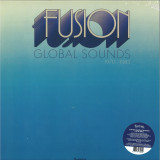
As a fine collector of Jazz-Funk and Fusion for many years, Charles Maurice selected some of his favorite forgotten productions, as he previously did for the AOR Global Sounds, French and Brazilian Disco Boogie Sounds compilations series.
This time, recordings come from Sweden, Switzerland, South Africa, New Zealand, Uruguay, Spain and France, from artists and bands mostly known in their local scenes. You'll hear here the best elements of the Fusion and Jazz-Funk genre: breezy vocal arrangements reminding Flora Purim in Return To Forever or George Duke's albums, sweet and virtuosic Fender Rhodes (kind of common thread of the comp), melodic spiral-shaped fuzzy synthesizers leads, or irresistible basslines, altogether bringing a unique groove to life.
First time reissue from this essential latin jazz album from 1971 !
Often affectionately referred to as the "Godfather of British Latin music" Robin Jones was truly one of the great performers on the international Latin scene.
Denga, his first recording from 1971 is a scintillating fusion of Afro-Cuban and Afro-Brazillian rhythms laden with heavy Fender Rhodes sounds and no less than three Afro-Latin Percussionists. The hard-to-find album has now been reissued by legendary London jazz DJ Paul Murphy's Jazz Room Records imprint. It should be an essential purchase for anyone who loves Latin jazz.
Feature's Robin's personal favorites including "Goodbye Batucada" which rightfully lays claim to be the first Brazilian Jazz Samba tune recorded in the UK and the Worldwide Sound standard setters "Denga" and "Africa Revisited".
- A1: Soul Bossa Nova
- A2: Boogie Bossa Nova
- A3: Desafinado (Slightly Out Of Tune) (Slightly Out Of Tune)
- A4: Black Orpheus (Manha De Carnaval) (Manha De Carnaval)
- A5: Se E Tarde Me Pardoa (Forgive Me If I'm Late) (Forgive Me If I'm Late)
- B1: On The Street Where You Live
- B2: Samba De Uma Nota So (One Note Samba) (One Note Samba)
- B3: Lalo Bossa Nova
- B4: Serenata
- B5: Chega De Saudade (No More Blues) (No More Blues)
First exposed to the sounds of Samba and Bossa Nova while
touring South America with Dizzie Gillespie in 1956, Jones recalls
hearing Gillespie sitting-in with a Samba combo at Rio's Gloria
Hotel and how he was fascinated by the thrilling fusion of Jazz and
Samba. Some years later in 1962, he took a stellar big band into
NYC's A&R Studios to record the Big Band Bossa Nova album. It
was the culmination of a dream for Jones, who had never
forgotten the musical experiences he had encountered in Brazil.
Oh wow! Die Zeit ist wieder gekommen, den Piratenhut aufzusetzen und die Gummienten aufzublasen,
denn die weltberühmte Pirate Metal Drinking Crew ALESTORM setzt mit ihrem siebten Studioalbum
Seventh Rum of a Seventh Rum die Segel und begibt sich erneut auf hohe See! Produziert von ihrem
langjährigen Mitstreiter Lasse Lammert, wird dieses epische Abenteuer am 24. Juni 2022 über Napalm
Records veröffentlicht.
Wieder einmal wird die Band von einer ganzen Reihe von Gastmusikern unterstützt, darunter die Drehleier
von Patty Gurdy, der Gesang von Captain Yarrface von Rumahoy, das Geigenspiel von Ally Storch von
Subway To Sally, majestätische Chöre von Hellscore, sowie einige bekannte spanische und japanische Sängerinnen und Sänger im letzten Teil der „Wooden Leg“ Saga. Am wichtigsten ist aber eine absolute
Weltpremiere: Auf dem Album wird zum ersten Mal ein Spiegelei als Instrument in einem Metal-Song verwendet – gekonnt gespielt von Matt Cockram. Aber damit nicht genug! Als besonderen Leckerbissen für
eingefleischte Sammler enthalten einige Sondereditionen eine vollständige akustische Version des gesamten
Albums, und es gibt sogar noch einmal eine legendäre Version des Albums FÜR HUNDE!
Worauf also noch warten? Mach sieben Flaschen mit altem Rum auf und mach dich bereit für die musikalische Reise deines Lebens!
An absolutely legendary album from Lebanon by Issam Hajali’s group Ferkat Al Ard, “Oghneya” stands out as one of the great musical gems of the Arab world. A groundbreaking release from 1978 that represents the meeting point of Arab, jazz, folk and Brazilian styles with the talent of Ziad Rahbani, who did the albums arrangements. Filled with a variety of sounds and genres, from Baroque Pop to Psych-Folk to flashes of Bossa Nova, Tropicalia and MPB, “Oghneya” is like if Arthur Verocai took a trip to Beirut in the 70’s to record an album.
In 2015 we heard Ferkat Al Ard’s music for the first time, a Lebanese trio compromised of Issam Hajali, Toufic Farroukh and Elia Saba. It was a stunningly unique release that blends traditional Arabic elements, jazz and Brazilian rhythms hand in hand with poetic-yet-politically engaged lyrics. The band was active in the left-wing movement of Lebanon of the time and they communicated their political ideas candidly through their songwriting.
In our mind the idea was to see whether Issam was interested in re-releasing “Oghneya.” He was not opposed to it, but also made it clear that it was not his priority for a first project. He suggested we start with his first album, before Ferkat Al Ard was formed, “Mouasalat Ila Jacad El Ard,” which was recorded in 1977 in Paris together with his friend Roger Fakhr (whose work we have been privileged to re-release in the meantime as well.) “Mouasalat Ila Jacad El Ard” is melancholic, stripped-down, guitar-based folk intertwined with jazz-fused breaks, and the unique sound of the santour glistens through. While the music is very accessible, some song structures are rather atypical, neglecting common patterns of verse, hook, verse, hook. The lyrics mostly trace back to the poetic work of Palestinian author Samih El Kasem, with one song also written by Issam, who composed the music for the whole album.
We re-released Issam’s “Mouasalat Ila Jacad El Ard” in 2019 to a great reception, with positive reviews all over the place and an ongoing appreciation for the album. This meant it was time for us to undertake an “Oghneya” re-release again!
If you compare “Mouasalat Ila Jacad El Ard” and “Oghneya,” one apparent distinction is the strong Brazilian influence in the music. Issam Hajali explained that you can already hear traces of this influence on his debut, but it’s “Oghneya” where this musical relationship really peaks. Lebanon and Brazil have had a strong connection for nearly a century due to the continuous flow of immigrants from one country to the other. Today, Brazil has the largest Lebanese diaspora in the world, the “Brasilibanês”. The migratory route was not a one-way street, however, and some Lebanese returned to their home country, taking recordings of the music they learned to love in Brazil with them. They were followed by Brazilian musicians who visited primarily Beirut during the 1960’s and the first half of the 1970’s, just like many other musicians from around the world. In these years between the independence and the beginning of the civil war, Beirut became even more of a cultural center and regional hub than it already was.
Bossa Nova, at that time, was one of the defining sounds of Brazilian popular music. Issam Hajali remembers hearing it at a bar in Beirut’s Hamra district in 1974, which hosted musicians from Brazil playing the occasional gig. When Issam had returned from Paris in 1976 he got to know Ziad Rahbani, son of Fairouz, who had a shared passion with Issam for a lot of things, among them Brazilian music. Issam showed him some of the tracks he was working on, and Ziad agreed to help with arranging. The music that evolved from this cooperation between Ferkat Al Ard and Ziad Rahbani’s arrangement is, to put it lightly, outstanding. Issam’s singing is embedded into the uniquely beautiful string arrangements backed by the band’s poignant, swinging groove. The lyrics of the songs on “Oghneya” are based on poems by Mahmoud Darwish, Samih Al Qasem and Tawfiq Ziad, three pillars of Palestinian poetry within the last century, and their influence on “Oghneya” was itself a strong political statement during the Lebanese war.
“Oghneya” was eventually released in 1978 by the band themselves on cassette tapes. Finding a blank tape that fit the playing time proved to be impossible during the war so they needed to open up the case of each cassette to physically cut down the tape and customize it to the playing time. The album was well received, though some cultural critics deemed it too “occidental” in its sound. While the cassette was circulating, Ziad Rahbani started a label called Zida, together with Khatchik Mardirian. They decided to help the band with a re-release on vinyl in 1979, a year after “Oghneya” was originally released on cassette.
Sadly, there are two tracks from the original release of “Oghneya” that did not make it onto the reissue. “Ghfyara Ghaza” was replaced by the song “Juma’a 6 Hziran.” while “Huloul” was taken off without a replacement. This happened as a precondition from the band for this reissue to happen. We would have loved to include all tracks, but the decision ranged between having either a reissue like the one we put out or no reissue at all. Thus, an easy choice for us.
As always both vinyl and CD come with an extensive booklet with an interview with Issam as well as unseen photos from the recording sessions.
- A1: Cool Water (Feat Ivan Conti (Azymuth)
- A2: Cycle Of Many
- A3: Admira (Feat Gigi Masin)
- A4: Flowers (Feat Venecia)
- A5: Melt Into You (Feat Alex Malheiros (Azymuth)
- B1: Flos Potentia (Sugar, Cotton, Tabacco) (Sugar, Cotton, Tabacco)
- B2: Sphere (Feat Jean-Luc Ponty)
- B3: Warm
- B4: On My Way Home
- B5: What Do The Stars Say To You
White Vinyl[31,51 €]
In 1990 Ronald Lee Trent Jr. was the teenage creator of Altered States – a raw, futuristic techno-not-techno anthem, which in retrospect was something of a stylistic anomaly for the young artist. Across subsequent years, with time spent in Chicago, New York and Detroit, came the development of his signature sound, and renown as a world class purveyor of deep, soul infused house/garage. This story has already been told, and on casual inspection, the well-worn platitude ‘house music legend’ is an old shoe that still fits. However, in fact, he’s actually so much more, and has been for quite a while. A genuine musician, songwriter, and ‘producer’ in the proper, old-school sense, the artist today has more in common with Quincy Jones than he does your average journeyman DJ track-hack.
To those in the know, these broader skills haven’t gone unnoticed, which is why on the highly collaborative, career-topping new LP ‘What Do The Stars Say To You’, it took little persuasion to recruit serious star power. Brazilian royalty Ivan Conti and Alex Malheriros from Azymuth, violin maestro Jean Luc Ponty, ambient hero Gigi Masin, hype band Khruangbin and more performed, whilst NY cornerstone François K provided mastering duties. At various points Ron himself played drums, percussion, keys, synths, piano, guitar and electronics.
Harking back to the 70s and 80s boom in adventurous, luxurious albums, WDTSSTY is a love letter to the longplayer, where rich musicality and a liquid smooth, silky flow make seemingly odd genre bedfellows acquiesce harmoniously. Each song its own high-fidelity odyssey, Trent incorporated a broad range of live instruments and electronics into a sophisticated, euphonic whole. Described by him as being “designed for harmonising with spirit, urban life and nature”, this is aural soul food, gently easing you into balmy nights, where everything is alright.
Originally wanting to be an architect, Trent’s views his approach to collaboration and music in general as having the same principles. A firm believer in the nourishing qualities of sound, he sees direct parallels between the two disciplines, being as the purpose of good architecture is to improve quality of life. “With WARM, through sound design, I built frameworks for the musicians, who furnished and occupied these structures beautifully, which was a big compliment for me”, he comments.
The conditions required for a good collab are more than simply structural though, as Trent expounds, “I’m a huge fan of everyone on the record, especially Jean Luc and Azymuth, who’re part of my DNA. Each track was made with that guest in mind – for example, when I started writing ‘Sphere’, I immediately thought ‘this IS Ponty’. I played the keys in his style, and did a guide violin solo using a synth, which he then re-did, amazingly. ‘Cool Water’ is based around Azymuth themes, so when I sent it to Ivan, he could immediately see himself in the piece; He got what I was going for straight away. For ‘Melt Into You’ I hit up Alex on Instagram, sent him the track, he liked it, and within 24 hours he’d sent back six different bass passes!”
“Conversely, Admira began with a sketch sent by Gigi and became something combining Jon Hassell-esque chords and the feel of ‘Aquamarine’ by Carlos Santana, which links back to Masin’s recurrent nautical theme”, he adds.
With community, history and the need for racial equality never far from Ron’s mind, ‘Flos Potentia’ translates from Spanish as flower power, but rather than promoting some hippy idyll, instead it refers to plants which drove the slave trade: tobacco, sugar and cotton. Joined by Khruangbin, together they propel Dinosaur L, Hi-Tension and afrobeat into an ethereal, clear-skyed stratosphere.
Aside from these esteemed guests, other key influences cited by Trent include ‘Gigolos Get Lonely Too’ by Prince, ‘Beyond’ by Herb Alpert, David Mancuso, Jan Hammer, Tangerine Dream, The Cars, Trevor Horn, Alan Parsons Project and pre-Kraftwerk incarnation Organization. A multitude of others are audible too, including George Bension, Vangelis, Loose Ends, Maze, Flora Purim, Weather Report, Atmosphere, Grace Jones, James Mason and Brass Construction.
On the subject of influences, although opposed to the fences erected by genre tags, to understand where Ron is coming from, and where he’s at, it’s important to acknowledge just how big the palette is from which he paints. Traversing jazz funk, quiet storm, sophisti-pop, new age, new wave, kosmische, Balearic, samba, afrobeat, Latin rock, soft rock and yacht rock, his deeply entrenched digger’s knowledge pays off in dividends.
- A1: Cool Water Feat. Ivan Conti (Azymuth) And Lars Bartkuhn
- A2: Cycle Of Many
- A3: Admira Feat. Gigi Masin
- A4: Flowers Feat. Venecia
- A5: Melt Into You Feat. Alex Malheiros (Azymuth)
- B1: Flos Potentia (Sugar, Cotton, Tabacco) Feat. Khruangbin
- B2: Sphere Feat. Jean-Luc Ponty
- B3: Warm
- B4: On My Way Home
- B5: What Do The Stars Say To You
Black Vinyl[24,79 €]
In 1990 Ronald Lee Trent Jr. was the teenage creator of Altered States – a raw, futuristic techno-not-techno anthem, which in retrospect was something of a stylistic anomaly for the young artist. Across subsequent years, with time spent in Chicago, New York and Detroit, came the development of his signature sound, and renown as a world class purveyor of deep, soul infused house/garage. This story has already been told, and on casual inspection, the well-worn platitude ‘house music legend’ is an old shoe that still fits. However, in fact, he’s actually so much more, and has been for quite a while. A genuine musician, songwriter, and ‘producer’ in the proper, old-school sense, the artist today has more in common with Quincy Jones than he does your average journeyman DJ track-hack.
To those in the know, these broader skills haven’t gone unnoticed, which is why on the highly collaborative, career-topping new LP ‘What Do The Stars Say To You’, it took little persuasion to recruit serious star power. Brazilian royalty Ivan Conti and Alex Malheriros from Azymuth, violin maestro Jean Luc Ponty, ambient hero Gigi Masin, hype band Khruangbin and more performed, whilst NY cornerstone François K provided mastering duties. At various points Ron himself played drums, percussion, keys, synths, piano, guitar and electronics.
Harking back to the 70s and 80s boom in adventurous, luxurious albums, WDTSSTY is a love letter to the longplayer, where rich musicality and a liquid smooth, silky flow make seemingly odd genre bedfellows acquiesce harmoniously. Each song its own high-fidelity odyssey, Trent incorporated a broad range of live instruments and electronics into a sophisticated, euphonic whole. Described by him as being “designed for harmonising with spirit, urban life and nature”, this is aural soul food, gently easing you into balmy nights, where everything is alright.
Originally wanting to be an architect, Trent’s views his approach to collaboration and music in general as having the same principles. A firm believer in the nourishing qualities of sound, he sees direct parallels between the two disciplines, being as the purpose of good architecture is to improve quality of life. “With WARM, through sound design, I built frameworks for the musicians, who furnished and occupied these structures beautifully, which was a big compliment for me”, he comments.
The conditions required for a good collab are more than simply structural though, as Trent expounds, “I’m a huge fan of everyone on the record, especially Jean Luc and Azymuth, who’re part of my DNA. Each track was made with that guest in mind – for example, when I started writing ‘Sphere’, I immediately thought ‘this IS Ponty’. I played the keys in his style, and did a guide violin solo using a synth, which he then re-did, amazingly. ‘Cool Water’ is based around Azymuth themes, so when I sent it to Ivan, he could immediately see himself in the piece; He got what I was going for straight away. For ‘Melt Into You’ I hit up Alex on Instagram, sent him the track, he liked it, and within 24 hours he’d sent back six different bass passes!”
“Conversely, Admira began with a sketch sent by Gigi and became something combining Jon Hassell-esque chords and the feel of ‘Aquamarine’ by Carlos Santana, which links back to Masin’s recurrent nautical theme”, he adds.
With community, history and the need for racial equality never far from Ron’s mind, ‘Flos Potentia’ translates from Spanish as flower power, but rather than promoting some hippy idyll, instead it refers to plants which drove the slave trade: tobacco, sugar and cotton. Joined by Khruangbin, together they propel Dinosaur L, Hi-Tension and afrobeat into an ethereal, clear-skyed stratosphere.
Aside from these esteemed guests, other key influences cited by Trent include ‘Gigolos Get Lonely Too’ by Prince, ‘Beyond’ by Herb Alpert, David Mancuso, Jan Hammer, Tangerine Dream, The Cars, Trevor Horn, Alan Parsons Project and pre-Kraftwerk incarnation Organization. A multitude of others are audible too, including George Bension, Vangelis, Loose Ends, Maze, Flora Purim, Weather Report, Atmosphere, Grace Jones, James Mason and Brass Construction.
On the subject of influences, although opposed to the fences erected by genre tags, to understand where Ron is coming from, and where he’s at, it’s important to acknowledge just how big the palette is from which he paints. Traversing jazz funk, quiet storm, sophisti-pop, new age, new wave, kosmische, Balearic, samba, afrobeat, Latin rock, soft rock and yacht rock, his deeply entrenched digger’s knowledge pays off in dividends.
- A1: Nonato & Seu Conjunto - Cafua
- A2: Os Novos Crioulos - Mar Afunda
- A3: Jose Roberto - Crioula Multicolorida
- A4: Rita Lee & Tutti Frutti - Agora E Moda
- A5: Trio Esperanga - Nao Aguento Voce
- B1: Robson Jorge & Lincoln Olivetti - Aleluia
- B2: Erasmo Carlos - Jeep
- B3: Chalo Eduardo - Beija-Flor Suite
- B4: Ely Camargo - Taieiras
- B5: Silvio Cesar - A Festa
- C1: Toni Tornado - O Jornaleiro
- C2: Som Tres - Tanga
- C3: Noriel Vilela - 16 Toneladas
- C4: Chocolate Da Bahia - Ele Guenta
- C5: Tim Maia - E Necessario
- C6: Joao Bosco - Cobra Criada
- C7: Os Incriveis - Uma Rosa Pra Dita
- D1: Edson Frederico - Tava Mas Nao Tava
- D2: Helio Matheus - Mais Kriola
- D3: Miguel De Deus - Black Soul Brothers
- D4: Ana Rosely - Skim Dum Dum Dum
- D5: Luiz Gonzaga & Ze Dantas - Sao Joao Antigo
Compiled by Sean Marquand and Greg Caz, 2 DJs well-known for their epic parties at Williamsburg’s legendary Black Betty club, that sadly closed in 2009. The duo played a deep variety of strictly vintage samba, samba-rock, Tropicalia, and Brazilian funk under the banner of ‘Brazilian Beats Brooklyn’.
Sean is known as half of Embassy Sound Productions. He took his team to Brazil to help resurrect Black Rio legends Uniao Black for a new release. Greg has DJ'd at some of the hottest Brazilian parties around the globe and presents a monthly radio show ‘Warm Wave’ on Soho Radio NYC.
Featuring Noriel Vilela’s singular “16 Toneladas,” a sublime cover of the Tennessee Ernie Ford smash “16 Tons” with a spare samba groove and unbelievable baritone vocals and hot jams from Tim Maia, Erasmo Carlos, Joao Bosco, Toni Tornado.
Included in this compilation of original 60's and 70's Brazilian gems are some of Greg and Sean's favourite tracks that have been filling dancefloors for years.
- A1: Alberto Radius - California Bill
- A2: Mario Lavezzi - In Alto Mare
- A3: Beppe Cantarelli - Se Il Mio Canto Sei Tu
- B1: I Ricci - Vienimi A Pigliare
- B2: Eduardo De Crescenzo - Alle Sei Di Sera
- B3: Im Porto - Smettila (Po-Para) (Po-Para)
- B4: Barnaba - Bianco E Nero
- C1: Enzo Cervo - Solo Mo
- C2: Peppino Di Capri - Mo
- C3: Franco Camassa - Non Andar Via
- C4: Stefano Pulga - La Mia Nave
- D1: Massimo Stella - C'e Una Donna Sola
- D2: Gino D'eliso - Ti Ricordi Vienna?
- D3: Enzo Carella - Contatto
- D4: Serafini - Serafini
Between the late 70s and the early 80s, pop music was in a transitional phase. After a return to the roots of punk, rock was morphing into new wave, while disco was rapidly declining and the electronic revolution, already on the rise, was ushering in the transition from analog to digital. This period also saw the emergence and relatively brief flowering of a commercially dominant style that mixed soul influences (especially Stevie Wonder and Ear th Wind & Fi re) , folk/pop songwriting and jazz sensibilities in equal measure, creating a hybrid easy on the ears but also emotionally and musically rich. It was the style represented by artists like Christopher Cross, Michael McDonald, Gino Vannelli and Kenny Loggins, who were all influenced by black music. They belonged to a larger trend that took place in all major music producing countries, including Italy where, like so many other things, the style was not merely imported or copied, but reshaped into a specifically local version based on the nation's tastes and cultural traditions. In Italy, a soulful and sophisticated approach to pop music was embraced not only by established names like Mina, Alan Sorrenti and Loredana Berté, but also, and perhaps most importantly, by an entire generation of writers, arrangers and musicians who had grown up listening to early fusion, to Steely Dan's refined recordings, and to Quincy Jones's productions. So, with this compilation we hope to give new exposure to artists and songs that, despite having moderate or little success when first released, must be regarded as among the creative peaks of Italian pop music. "Paisà Got Soul" features pop veterans Peppino Di Capri, Mario Lavezzi and Alberto Radius alongside atypical singer-songwriters (Enzo Carella, Enzo Cervo, Gino D'Eliso), Italo-disco heroes (Stefano Pulga), international hit composers (Beppe Cantarelli, who has co-written for Aretha Franklin and Mariah Carey), Brazilian-born naturalized Italians (Jim Porto) and complete unknowns (Franco Camassa, I Ricci, Massimo Stella).It brings together little gems that in most cases are no longer available on the market, or only available in their original and now very rare vinyl format. We believe they all deserve to be rediscovered today, partly because of the recently renewed interest in "yacht rock", as this music style has been retrospectively named, and partly because they provide further evidence that Italian artists rework international music styles in creative and original ways.
Compiled and conceived by David Nerattini partnered by Pierpaolo De Sanctis
- A1: Come Fly With Me
- A2: Around The World
- A3: Isle Of Capri
- A4: Moonlight In Vermont
- A5: Autumn In New York
- A6: On The Road To Mandalay
- A7: South Of The Border
- A8: Let's Get Away From It All
- A9: April In Paris
- A10: London By Night
- A11: Brazil
- A12: Blue Hawaii
- A13: It's Nice To Go Trav’ling
- A14: I Love Paris
- A15: Chicago
Limited edition 180g blue vinyl with its own unique sticker, includes
specially prepared liner notes by the 'Penguin Guide to Jazz' writer, Brian
Morton
"In a very real sense, Come Fly with Me captures Sinatra at his untouchable
zenith: his manner seductive, his promise romantic, his range of contacts, as the
track titles suggest, genuinely international." - Penguin Guide To Jazz
HIGHLIGHTS! Acting as an artistic ambassador for Cuba, the Orquesta Revé made several tours abroad, traveling to Peru in 1971. This extremely scarce LP was recorded for MAG in Lima and comprises mostly Cuban songs -like the outstanding Vicente Rojas' original 'Mi Son Combinado'- and also a rare cover of Jorge Ben's 'Domingas'. Quite an invisible record even for hardcore collectors, and almost impossible to find in any condition, "De Habana a Lima" is now reissued for the first time. More: In 1956, the percussionist and composer from Guantanamo, Elio Revé, founded the orchestra popularly known as La Revé, which in the space of a few years became the Cuban music group par excellence for foreign audiences. Elio, dubbed the father of changüí for his seminal work on this genre, is also considered one of the forerunners of salsa music and his orchestra included musicians of the stature of vocalist Ibrahim Ferrer; pianists Chucho Valdés, César Pedroso and Juan Carlos Alfonso; and bass guitarist Juan Formell, who left the group in 1969 to form Los Van Van. Acting as an artistic ambassador for Cuba, the Orquesta Revé made several tours abroad in the seventies, traveling to countries such as Spain, Belgium and the People's Republic of Angola, and these journeys are well documented on the internet. However, little is known about their trip to Peru in 1971_ The local record label MAG quickly signed the Cuban groups that arrived in the Peruvian capital and that the head of the label, Manuel Guerrero, agreed to record. The La Revé LP was followed by a Los Compadres album the following year. "De Habana a Lima..." comprises a dozen songs labeled changüis, mostly written by Cuban composers, the exception being the closing track: 'Domingas', an original song by Brazilian artist Jorge Ben. In contrast, the album opens with the distinctly Cuban song 'Guajira guantanamera'.
"This fabled 11 minute+ version of Brazilian icon Joyce's groundbreaking "Feminina" was recorded at Columbia Studios, New York in 1977, for the as yet unreleased Natureza album. Produced, arranged and conducted by the great Claus Ogerman (Frank Sinatra, Antonio Carlos Jobim, Billie Holiday... the list goes on), Natureza would have ostensibly been Joyce's big break to international stardom, but mysteriously it was never released. With Joyce came fellow Brazilian icons Mauricio Maestro, Nana Vasconcelos and Tutty Moreno, and Ogerman employed North American jazz legends Joe Farrell, Michael Brecker, Buster Williams and Mike Manieri. In anticipation of the monumental forthcoming Natureza album release via Far Out Recordings, this astonishing version of a true classic gets it's first proper 12" release for Record Store Day 2022. In the spirit of making the release special for RSD, rather than make it a single sided 12", Far Out boss called up Joyce to talk about the recording, recorded the conversation, and pressed it to vinyl on the B side."
Ethereal, sensual, subtle. Maria de Fátima is that new favourite singer you think you just discovered, but who had actually always been there. This Brazilian muse from Tijuca (Rio de Janeiro) has worked and recorded with artists such as Milton Nascimento, Gilberto Gil, Arthur Verocai, Airto Moreira & Flora Purim, Chico Buarque, Lincoln Olivetti or José Roberto Bertrami (Azymuth).
We're immensely proud to bring you a deluxe reissue of her only solo album Bahia com H, one of the finest pieces of Brazilian music released outside of Brazil. The album was recorded in 1981 in Uruguay, where Maria had settled with her then husband synthesizer wizard Hugo Fattoruso (OPA), who also takes on production duties. Bahia com H combines Maria's own compositions with her unique takes on some Brazilian classics by Ary Barroso, Denis Brean and Gilberto Gil amongst others, compositions which gain a new significance with Maria's ethereal interpretation and the blended elements of Candombe, provided by the all-star line-up of Uruguayan musicians who joined in for the recording.
First vinyl reissue, preserving the original artwork in its gatefold sleeve, fully licensed and with sound sourced from the original analogue tapes.
Additionally we include a 12-page booklet with photos from Maria’s private archive and liner notes by the mighty producer, journalist, Grammy voting member and living jazz encyclopedia Arnaldo de Souteiro.
First Word Records continues its series of special collaborative releases for it's 15th anniversary with an absolutely firing double-header from 14KT and Tall Black Guy.
On this limited 7" vinyl, the two renowned US beat-makers revisit two of their previous First Word singles, turning out flips of each other's tracks, also featuring a multitude of talent, in the form of Moonchild, Muhsinah, Stro Elliot and James Poyser of The Roots.
Following on from the first volume in 14KT's jazz project 'IAMABEENIE', here he flips TBG and Moonchild's collab, 'I Will Never Know', originally from Tall Black Guy's 2017 sophomore album 'Let's Take A Trip'. The original neo-soul bump is transformed into a deliciously epic latin affair, drenched with deep Brazilian vibes throughout - this is one to draw for at those steamy get-downs; a slinky slab of dancefloor fire.
Tall Black Guy returns to First Word for the first time in a minute, and takes on the Muhsinah-lead joint 'The Power Of Same', the lead single from 14KT's 2019 acclaimed album, 'For My Sanity'.
As to be expected, TBG delivers his unmistakable blend of dope dubbed-out spacey soul and boom bap kicks & snares, complete with guitar licks from Stro Elliot, and keys from James Poyser. Two of the dopest producers in the game, this one is completely 1000% essential.
Rock'n'Roll hits adapted and sung in Italiano to seduce an exotic and difficult music market. A tradition that saw many stars (Mick Jagger, Françoise Hardy...) test their pronounciation skills with swinging (but always very fun) results. Now its The Courettes' turn, to translate two of their newest songs for a special limited single 7'', released in time for their southern Europe tour and the Record Store Day 2022. Anzi, LE FAVOLOSE COURETTES, volevamo dire “the real deal” (Vive Le Rock, UK) “the real sound of now busting through your door” (Rolling Stone, USA)! “the world’s greatest two person rock n’ roll ensemble” (The Next Big Thing, UK) “Your new favourite band once you ve heard them!” (Louder Than War, UK) The Courettes. “A force to be reckoned with. Matching the garage rock ferocity of The Sonics to prime early 60s girl group, the band’s output is utterly feral in the most addictive possible way. Reminiscent of The Ronettes given a Ramones style overhaul, their evil charms arrive covered in blood-soaked glamour. Twanging guitar and raucous percussion, a wild head-long charge into the unknown.” (The Clash Magazine, UK) The Courettes is an explosive rock duo from Denmark and Brazil who found the perfect blend between garage rock, 60s Girl Group, Wall of Sound, surf music and doo wop. Like The Ronettes meet The Ramones at a wild party at Gold Star Studios echo chamber. Praised by the biggest music magazines around the world, in 2020 the band signed with legendary British label Damaged Goods, putting them on the same roster as top international rock icons like Buzzcocks, Manic Street Preaches, Atari Teenage Riot, New Bomb Turks, Amyl and the Sniffers, Billy Childish, Captain Sensible and many others. Their last and third album, “Back in Mono” was released in the Fall 2021 and is a truly milestone in the career. The album brings the band in top form, showing great songwriting skills and with broader nuances, influences and sound qualities to their garage rock recipe. Their last singles, “Want You! Like a Cigarette”, “Hop The Twig” and “R.I.N.G.O.” all got airplay at BBC 6 Radio in England and radio stations in Europe and the USA. “Back in Mono” got top reviews in the main music magazines like Mojo, Classic Rock and Shindig and was featured in countless Best Albums of 2021 lists: “Exuberant third release, a giddying rush of noise” (MOJO, UK) 4 out of 5 stars “Seems like the best record you’ve ever heard. A rock n’ roll sacrament from your new favourite band.” (Classic Rock Magazine, UK) 9 out 10 stars “Sensational good album!” (Ox Magazine, Germany) 9 out of 10 stars “Just keeps getting better and better” (Shindig!, UK) 4 out of 5 stars “Fantastic album” (Louder Than War, UK) 4,5 out of 5 stars “A complete riot” (The Arts Desk, UK) 4 out of 5 stars “14 new original tracks–all killer” (Add to want list, UK) “The whole album is one long highlight” (UK Rock n’ Roll) “Exciting combination of Wall of Sound and Fuzz” (El Periodico, Spain) 4 out of 5 “A collection of perfect songs, full-blown instant classic” (Triste Sunset, Italy)
'É O Que Ela Quer' is a groovy Brazilian version of The Zombies' classic 'She's Not There' recorded by the obscure Mini Trio in 1970 and released as a 7" only that should be in every DJ record box. First time reissue. Although the appeal of the post-Hair/Beatlesque hippie hook of 'Hare Krishna' on the A side of this rare single, the real gold lies on the flipside. 'É O Que Ela Quer' is a groovy Brazilian version of The Zombies' classic 'She's Not There' recorded by the obscure Mini Trio in 1970 and released as a 7" only. The band was most likely a studio group recording international hits for the local Brazilian market and their take on the 1964 classic adds a terrific dancefloor potential to the Zombies song. Very hard to find, especially in good condition, this record now gets a proper reissue for the first time.
Brasil Novo is a compilation made up of eight contemporary Afro-Brazillian tracks disseminating the rich and percussive heritage of Brasil and Samba De Coco. The compilation was compiled by Sao Paolo’s DJ Tahira and London’s Tim Garcia and flits between Samba, Candomble, Batuques, Jazz, Folk and beyond, all selected with the dancefloor in mind.
Some of the tracks have never before been released on vinyl like Dona Celia Coquista’s ‘O Bar’ and the live version of Toró Instrumentals ‘Dunas’, and the release also features tracks from Grupo Bongar, Renata Rosa and women’s Afro Bloco, Ilú Obá De Min.
The compilation has so far been supported by the likes of Gilles Peterson and Jamz Supernova (BBC 6 Music) Lopa Kothari (BBC Radio 3) and Zakia (NTS) and many more.
Generation '22: Chanson mit Seele
Wenn andere Jubiläen begehen, dann schwelgen sie in Erinnerungen. Le Pop ist anders:
Unsere Nummer 10 schaut nach vorn. Sie ist jünger, femininer und souliger als ihre
Vorgänger. Und stellt 16 neue Namen vor, die zuvor auf keiner anderen Ausgabe zu finden
waren. Die neuen Stars heißen Emma Peters, Iliona, UssaR, P.R2B, Ariane Roy und
Clou. Viele dieser Namen stehen am Anfang ihrer Karriere, haben bisher erst eine EP, ein
Album oder ein paar Singles draußen und doch ist spürbar, dass diese neue Generation das
Nouvelle Chanson prägen wird. Nicht alle sind Newcomer, aber Künstlerinnen und Künstler
wie KCIDY, Voyou, Malik Djoudi und Laura Cahen haben in den letzten 4 Jahren (so lange
ist Le Pop 9 schon draußen) eine so fulminante Entwicklung gemacht, dass wir sie diesmal
unbedingt vorstellen wollten. Dazu gesellen sich Schauspielerinnen wie Edwige, Elisa Erka
und Suzanne Lindon, die sich zum ersten Mal als Sängerinnen präsentieren. Ganz
besonders erwähnenswert: Camélia Jordana – einerseits als Musikerin in der Charts-Welt
etabliert, anderseits César-prämierte Schauspielerin, trägt sie in dieser illustren Runde sicher
den glamourösesten Namen.
Doch was macht sie aus, diese neue Generation? Zuerst einmal das Offensichtlichste: Nur
vier der hier vorgestellten Stimmen sind männlich. Das Chanson wird weiblicher und
orientiert sich damit an den Erfahrungen der letzten 20 Jahre. Denn meistens waren es die
Frauen der aktuellen Szene, die sich in der Breite auch im Ausland durchgesetzt haben (man
denke nur an Zaz, Coeur de pirate und Angèle). Le Pop 10 ist nicht nur femininer, die neue
Generation ist auch viel stärker durch die Präsenz von HipHop und R'n'B geprägt. Ein
richtiges Crossover findet zwar nicht statt, dafür merkt man, dass das heutige Chanson
grooviger geworden ist, soul-lastiger auch und punktuell tatsächlich Rap-Anklänge mitliefert.
Besonders deutlich wird das bei P.R2B, die gelegentlich in den Sprechgesang wechselt, bei
Emma Peters, die sogar ein ganzes Album mit Coverversionen von französischen Rap- und
R'n'B-Hits veröffentlichte, bevor sie eigene Songs aufnahm und bei UssaR, der als
Bühnenmusiker auch Rapper wie Kery James und Youssoupha begleitet. Vielleicht nicht
ganz so deutlich, aber wunderschön und subtil binden Iliona aus Belgien (was für eine
Entdeckung!) und Ariane Roy aus Kanada Soul-Elemente in ihre Musik mit ein. Selbst bei
Uptempo-Nummern wie "Le confort" von Voyou ist ein Hauch Motown zu spüren.
Selbstverständlich fehlt auch diesmal nicht der Einfluss von britischem Pop und Americana.
Die Band Palatine etwa ist gitarrenlastig, bringt Folk-Elemente mit und verbindet dies sehr
elegant mit Chanson-Tradition. Bei Laura Cahan finden wir Einflüsse der Cocteau Twins,
Kate Bush aber auch Anklänge an Camille oder Keren Ann. Eine erstaunliche Entwicklung
legte KCIDY hin, die nach einer längeren Phase des Experimentierens mit Elektro und Wave
auf einmal einen mit Vocal-Harmonien, Kraut- und 70ies-Elementen veredelten Gitarrenpop
aus dem Hut zaubert, der nur theoretisch aus der Zeit zu fallen scheint und sich doch ganz
harmonisch in den Gesamtklang der Compilation einfügt.
Und dann ist da auch noch Edwige, eine belgische Schauspielerin, der es nicht mehr
genügte gelegentlich auf Theaterbühnen zu singen. Sie hat ein traumhaftes, in dezenten
Gitarrenarrangements ausgekleidetes Debüt-Album aufgenommen, das im Herbst 2022
erscheinen soll. Ihren Song "Corps & Ame" hat sie uns vorab exklusiv für diese Compilation
überlassen. Den Tipp, uns mit Edwige zu beschäftigen, bekamen wir übrigens von Albin de
la Simone (seit Le Pop 2 immer wieder vorgestellt), der auch schon ein Duett mit ihr
aufgenommen hat.
Mit De La Simone, seit seiner Arbeit für Carla Bruni und das Durchbruch-Album von Pomme
(Le Pop 9) einer der meist gebuchten Produzenten der Szene, sprachen wir anlässlich
seines Konzerts bei der Kölner Reihe "Le Pop La Série" über junge Künstlerinnen wie Iliona,
Clou, Emma Peters und über deren Karrierewege. Dabei machte er uns auch auf Ariane
Roy aufmerksam. Wie sie sind viele der hier vorgestellten Namen Labelmates oder Protegés
etablierter Künstler.
Das sind nicht immer zufällige Beziehungen. In Frankreich erntet das neue Chanson zudem
immer mehr die Früchte des Casting-Show-Booms der letzten 15 Jahre. Hier bekommen
viele Teilnehmer irgendwann die Chance mit renommierten Musikern zusammenzuarbeiten.
Carla de Coignac zum Beispiel flog zwar noch vor dem Finale bei "Nouvelle Star" (2017)
aus dem Wettbewerb, trotzdem nahm Louane (die bei der Konkurrenz-Sendung "L'école des
stars" entdeckt wurde) fünf Songs in ihr Repertoire auf, die die Aussortierte für sie
geschrieben hatte. Teilnehmerin der gleichen Show war auch Camélia Jordana, allerdings
schon 2009. Jordana scheiterte damals im Halbfinale, bekam aber beim Major Sony einen
Vertrag. An ihrem Debüt-Album arbeitete sie mit Jean Felzine (Mustang, auf Le Pop 8
vorgestellt), BabX (Le Pop 8), "L" (Le Pop 7) und Mathieu Boogaerts (seit Le Pop 1 dabei)
zusammen. Inzwischen ist Jordana in der Musik- und Filmwelt etablierter Star und Celebrity.
Wir lernten sie abseits glamouröser Welten bei einer "sièste acoustique" kennen, einem
speziellen Konzertformat in Paris, bei dem das Publikum tatsächlich Siesta hält. Dort trat sie
mit Le Pop-Künstlern wie Armelle Pioline (Holden), BabX und Siesta-Gastgeber Bastien
Lallemant auf. An diesem Beispiel sieht man einmal mehr, wie durchlässig die französische
Szene geworden ist. Jordana ist heute ihre eigene Songwriterin – bei dem hier vorgestellten
Song, dem wunderbar groovenden "Jusqu'au bout des cils" stammen Musik und Text aus
ihrer Feder.
Der Mainstream zeigt sich immer wieder offen für Impulse von Indie-Acts, Kooperationen
zwischen diesen scheinbar gegensätzlichen Szenen sind inzwischen nahezu
selbstverständlich und verschaffen dem Underground zusätzliche Unabhängigkeit.
Le Pop 10 zeigt die Vielfalt dieser Welt auf authentische Weise und formt daraus eine
kohärente Einheit. Wie immer hat auch diese neue Ausgabe keinen Anspruch auf
Vollständigkeit. Wir lassen bewusst Künstler außen vor, die manche Fachleute hier erwarten
würden, die aber nicht "unsere Tasse Tee" sind. Im Vergleich zu ihren Anfängen ist die
Szene heute dynamischer und diverser. In den 50er und 60er Jahren haben Jazz und Brazil
ihre Einflüsse im Chanson der Gegenwart hinterlassen. Zu Beginn der Le-Pop-Reihe waren
es Indie, Electro und Reggae. Heute sind darüber hinaus die Einflüsse von HipHop und R'n'B
zu spüren. Das neue Chanson ist in Bewegung und wird es sicher auch in Zukunft bleiben
- A1: Pawkarmayta - Qaaq
- A2: Qoqeqa - Xi
- A3: Sebuky - A Que No Me Lleva El Alcatraz
- A4: Mangle - Cacerola
- A5: Cruzloma - Brisas (Feat Humazapas)
- A6: Selvagia - Flores (Feat Corina Lawrence)
- A7: La Color - El Baucha (Yoyoyo Remix)
- A8: Akilin - Guaca Amarilla (Feat Bomani)
- A9: Maga Bo - Cade Ze (Feat Rosangela Macedo)
- A10: Galo Vermelho - Domingo Cura
- A11: Tremor - Subibaja
Born out of an underground Buenos Aires party and first launched in 2008, ZZK Records has spent more than a decade at the forefront of Latin American music, carving out space for artists putting a futuristic (and often electronic) spin on classic rhythms and folklore traditions. Along the way, the label spread across the globe and helped launch a few stars-Nicola Cruz, Chancha Vía Circuito, La Yegros and Son Rompe Pera among them-but ZZK's search for new artists, sounds and perspectives is never complete. ZZK Sound Vol. 4 brings together a fresh crop of talent from across Latin America, along with a pair of choice selections from veteran acts Maga Bo (Brazil) and Tremor (Argentina). Compiled by ZZK co-founder DJ Nim-the label's original A&R (and Chancha Vía Circuito's older brother), he'd actually taken a five-year hiatus from the project prior to 2020-the compilation's origins can be traced back to the early days of the pandemic. As the world went into lockdown, he put out a call for submissions, and within three months, he'd received more than 1000 tracks. Nim literally listened to them all, whittling the pile down to his 11 favorites, and after hearing his selections, Grant C. Dull-another ZZK co-founder, who runs the label's day-to-day operations-couldn't believe his ears. Nim had done it again. There were no notes, and no changes to the tracklist. ZZK Sound Vol. 4 was quickly put into production. At this point, few music fans need to be sold on the appeal of Latin music, but ZZK, which has been operating in this sphere long before the genre became the "next big thing," is dedicated to the idea that the potency of these sounds extends well beyond the pop charts. Hopping between continents and recontextualizing rhythmic lineages that date back centuries, ZZK Sound Vol. 4 is both an arresting snapshot of Latin America's electronic avant garde and a thrilling preview of its next wave.
Oops, Four Flies did it again! Like other rare Italian gems, Berto Pisano's La Novizia was long thought lost before the FF team rescued, restored and remastered it from the original tapes. And wow, it's just one of the best things, if not the best thing, about the 1975 film it was written for – an erotic comedy with melodramatic overtones directed by Pisano's long-time collaborator Giuliano Biagetti (they previously worked together on Interrabang and La Svergognata) and starring a young and mesmerizing Gloria Guida.
The film's low budget meant that Pisano had to make a virtue out of necessity. Rather than using a big orchestra and strings (as is well known, he was a brilliant conductor and string arranger), he relied on a smaller ensemble – almost a chamber ensemble, but with a jazz-like rhythm section – to create sensual late-night soundscapes that exude a downtempo ambience. In a nutshell: smooth, warm, velvety music. The epitome of the lounge sound.
At times, whispered, sexy vocals by (the then ubiquitous) Edda Dell'Orso float dreamily over brushed drums, bass, guitars and electric pianos. At others, we find Italian library heavyweights like Alessandro Alessandroni (whose unmistakable whistle can be heard in "Canto Notturno") and even psychedelic rock influences, as in the acid distorted guitars, furious drums and crazy synths of "Free Dimension". At yet other times, we're taken into more easy-listening territory – "Fiore Rosso", for instance, offers a wonderfully cinematic example of Mediterranean, rather than Brazilian, bossa nova (did they ever thought of using a spinet in Brazil??).
The secret to the charm of La Novizia is that it encapsulates the Italian erotic sound of the 70s in all of its nuances, from the morbid, to the prudish, to the naïve. Because yes, this is a record of nuance and musicianship. And while the themes are in themselves simple, the fantastic quality of the writing, arrangement and production is a testament to Berto Pisano's superb talent, style and professionalism.
Finally back to life after decades of obscurity, La Novizia is a thing of beauty – which, as a pretty bright fellow once said, is a joy forever. Don't miss out on joy.
Comes on vinyl, CD and Digi with original artwork by Eric Adrian Lee and exclusive liner notes by the Pisano family. All tracks are previously unreleased in any format.
- A1: Anyone Anywhere
- A2: Getting Started
- A3: Little Voice
- A4: Mindset
- A5: Cloud Cover
- B1: Won’t Remember
- B2: Troublemaker
- B3: He Likes The Sound
- B4: Eyes Open Wide
- B5: Already Won
“Perfect – SAINT ETIENNE meets ‘Moon Safari’-vintage AIR!” (Pete Paphides, MOJO)
For the first time on vinyl, remastered and beautifully packaged: “Looks Like You’ve Already Won” by ASHBY – a critically-acclaimed little masterpiece from 2005.
The pop duo from Boston presents a lushly arranged sound that combines European movie soundtracks, Brazilian bossa nova, post-rock electronica and classic 60s pop. THE SEA & CAKE with female vocals, BROADCAST with a sunnier pop quality.
A new 6-track mini album from a musician with a long list of credits including South African trumpet legend Hugh Masekela, afrobeat co-creator Tony Allen and Ethiopian jazz originator Mulatu Astatke as well as many Brit-jazz and international roots artists. "It's Time" blends spiritual Afro-jazz groove with free improv, spoken poetry and other-worldly atmosphere, with lyrics and titles hinting at unorthodox takes on reality and the times we live in.
Phil Dawson is a top London guitarist who has worked and schooled himself extensively in many different African, Latin and Brazilian music traditions together with styles that more typically cross the radar of someone with a similar British background: roots reggae, punk rock, blues, soul, R'n'B, jazz and funk. As a sideman, he's played with a host of living legends of Afro-fusion music including South African jazz trumpet giant Hugh Masekela, Nigerian afrobeat co-creator Tony Allen, Ethiojazz pioneer Mulatu Astatke, the Algerian "king of rai" Khaled, and London based Ghanaian afro-rock dons Osibisa. Heavy company for sure.
Now he's releasing a new mini 6 track album of original compositions under his own name and band - Phil Dawson ٤-tet - and he's joined by a stellar cast of London's finest players who include Rowland Sutherland (flutes - Airto Moreira, David Murray, Carla Bley), Khadijatou Doyneh (spoken word - The Heliocentrics, Danny Keane), Gaspar Sena (drums - Alfa Mist, Maria Chiara Argiro), Marius Rodrigues (drums - Oriole, Hermeto Hermeto Hermeto), Lekan Babalola (percussion - Cassandra Wilson, Ali Farka Toure) and Matheus Nova (bass - Antonio Forcione, Ed Motta, Jazzinho). Phil himself features on guitars, Fender Rhodes and piano.
'This is great' - Gilles Peterson, BBC Radio 6 (on 'It's Time)
'Beautiful' - Kassin (producer Caetano Veloso, Sonzeira etc) (on 'It's
Time')
'Rapid-fire guitar work with variety and energy' – The Guardian, UK
'A great guitarist' – Tony Allen
'An absolute killer - irresistible' - Snowboy (on 'Gnostic Hilife')
'Phil Dawson and his (quintet) are really smoking at the mo. No wonder the London jazz young guns are ripping it up with bands
like this leading the way. Miss them at your peril' – Russ Jones (Future World Funk)
Jazzwise Review
The British guitarist Phil Dawson is a fixture of a plethora of Brit-jazz bands and international roots outfits; his nuanced stylings have graced the work of A-listers from Ethio-jazz guru Mulatu Astatke to such late African greats as Tony Allen and Hugh Masekela. Like any an in-demand session player worth his chops Dawson also fronts his own trio/quartet/quintet, all of which allow him to stretch out and do his own thing, which – with his quintet - he does to pleasing effect here.
Buoyed by flute, bass and percussion, It's Time is a six-track brew combining free improv and spoken word with Afro-spiritual groove and a far-out esotericism befitting these strangest of times. Opener 'It's Time (Radio Edit)' is a psychedelic romp through a beneficent cosmos where ringing chords and woodwind trills underpin Khaditjatou Doyneh's pathos-laden musings on love and the universe and one of three variations on a theme. Over three minutes longer at 9:34, 'It's Time (aka Ougama)' is a freewheeling instrumental made dazzling by Dawson's silver-fingered guitar work; Doyneh resumes her pronouncing on the more dissonant but equally mind expanding 'It's Time (Fully Spoken)'. Then there's 'Gnostic Hilife', whose three interpretations each juxtapose the structures of this West African lingua franca in ways tight, spacious and inventive
Pachakuti is a musician and producer with family roots in Colombia. He plays keys, tenor saxophone and clarinet. While living and working in Berlin, he draws inspiration from the natural world, investigative travels, and ancestral traditions of Latin America and beyond. His expressive and rhythmical playing and his instantaneous compositions are directed at the human core, arousing subtle experiences. While not being conformed to one style, it always invokes a sense of liveliness and depth to be delved in. young.vishnu is a producer and DJ. He has studied philosophy and music in Hildesheim, Germany, which heavily influenced his views on meaning and mythology in music. In his DJ sets he selects and plays classic and contemporary Funk, Soul and Afrobeat. His practice as a DJ informs his work behind the boards directly, adding also more organic grooves and broader spectrum of musical styles to his in Hip-Hop based production. If you had to put one single tag on their forthcoming album Dédalo, the best choice would be Jazz. That being said, Pachakuti and young.vishnu's sound worlds might be better described in their own words: "We just make music and try to incorporate what we love about it". They are musical freethinkers with shared interests in eastern philosophy and botany who interweave Hip-Hop, Latin and Funk with musical storytelling and world mythology. Undoubtedly, their most ambitious work to date, Dédalo (Spanish synonym for labyrinth), recorded and produced over the course of a year, shows Pachakuti & young.vishnu's ambitions and growth. Where their debut work Semilla (2020) centered around the image of the seed, Dédalo takes on the entire garden. Besides playing multiple instruments by themselves, Pachakuti & young.vishnu invited a growing group of befriended musicians into the studio, including percussionist maestro Eric Owusu (Pat Thomas, Ebo Taylor, Jembaa Groove) and drummer Leon Raum (Bokoya, Wyl), as well as Brazilian newcomer vocalist Laíz, and members of their former band project Soularkestra. The 16 recorded songs, ranging from 1:19 to 14:58 minutes, take you on an emotionally honest, metaphoric journey through the maze of human existence, of modern society and mythic poetry. The mostly instrumental tracks build on expressive melodies, layered rhythms, and a wide range of musical instruments, merging the sounds of Jazz with the classical word of orchestras and choirs, and urban soundscapes with traditional instruments such as the Andean Kena and Charango, the Colombian Gaita and Marimba de Chonta, and an Indian harmonium. The Album thus weaves together past and future, and diverse cultural threads, sounds and ideas in an act of cultural appreciation and global conscience. Mixed and mastered by Roe Beardie at The Brewery Studios, Berlin. The album artwork itself merges the visionary art of Mexican painter Sergio Chávez Hollar with an original artwork-inlay of Brazilian artist Laíz and the work of Carsten Pölking of the Nima Compositions Archive.
Dédalo will be available digitally and on double-vinyl with inside-out print cover and colored inlay with credits and painting by Laís De Mello Barbero.
Polarity, the first album from percussionist and multi-instrumentalist James Larter is a cross-genre Psychedelic journey with driving rhythms at its core.
Larter has always been obsessed with rhythm; whether it be the roaring sound of Brazilian Samba or the intricate and hypnotic drums from the African diaspora, music that makes people move is a passion. He is an in demand musician that has played with a staggering variety of groups and artists
from Sampha to the London Philharmonic Orchestra.
Hailing from the UK and studying in London and New York, his soundscape crosses genres and styles all with a psychedelic twist. Marimba and vibraphone feature heavily with echoes of electronic music played out by an all-star accompanying 10 piece band.
- A1: Robson Jorge & Lincoln Olivetti - Eva
- A2: Chene Noir - Le Train
- A3: Metropolis - Every Time I See Him
- A4: The Brand New Heavies - Stay This Way (Feat N'dea Davenport - The Lunar Dub)
- B1: Typesun - The Pl (Extended Edit)
- B2: King Errisson - Space Queen
- B3: Yusef Lateef - Robot Man
- C1: Daniel Humair, Francois Jeanneau & Henri Texier - Le Cyclope
- C2: Airto Moreira - O Galho Da Roseira (The Branches Of The Rose Tree) (The Branches Of The Rose Tree)
- C3: Francisco - Wache
- D1: Nar'chiveol - Apocalypse Now Ho
- D2: On - Southern Freeez
- D3: Soylent Green - After All
With some of the best DJs and selectors there is a certain mysterious sound or underlying feeling which unites the music they play, regardless of genre, year or tempo Luke Una is a master of telling a story through music and this compilation is a perfect example of his musical alchemy in action. Featuring tracks from Yusef Lateef, Airto Moreira, Crooked Man, Henri Texier and many more, it is a collection of new, old, rare and under-discovered music from around the world, all united by Luke under the banner of "E-Soul Cultura".It's best described by Luke himself, who writes: "As the 5AM city sleeps and the strobe lights are slowly turned off, we gather on the wrong side of town in a transcendental journey alone together. We are the late night disenfranchised holding on in various after parties, flats, lofts, random kitchens and basements into the outer cosmos with É Soul Cultura.
Music from exotic tear jerkers, Afro- spiritual jazz, cosmic Brazilian celestial grooves, machine street soul, dark horses, lost B- sides, £1 bargain- bin bombs, hidden gems, late night Italo dubbing, deep velvet N.Y.C garage, bass buggin sonic futurism, wrong speed 33BPM pitched up +8 new beat, majestic sunset strings, sweet vocals from heaven, no half steppin jazz dancing in outer- space and odd numbers. Yes… magical moments, together, holding on in witness protection suburban cul- de- sacs and Castle Court flats. Cosmic É high, 3000ft above the city getting evangelical to murky, wonky timeless beautiful music. This thing of ours dreaming of better days. Fail we may, sail we must, the sun will come up again."
Brazilian talent Classmatic is next up on Hot Creations with the two-track Toma Dale. Having already set dancefloors alight at the hands of label heads Jamie Jones and Lee Foss, the eagerly anticipated release drops this April.
Toma Dale achieves exactly what Classmatic set out to do. The track opens proceedings with enticing congas that instantly transport you to Latin America. Punchy drum pads pounce in and combine with the percussion to create a highly energetic base, as finely cut Spanish vocals are embedded to fuse everything together. Bape pays homage to the Hot Creations sound. Warm, soft, bouncy kick drums lead the track, joined by subtle acid sounds that tantalise the ears. The breakdown is perfectly placed with the addition of mesmerising vocals that fade in and out before the punchy, bass-heavy drums are hauled back in.
Classmatic has built up a lot of traction over recent years, catching the eyes and ears of major heavyweights in the field, releasing under such labels as Solid Grooves and Hottrax and in 2021 he remixed Cloonees’ major hit, When The Sun Goes Down. Receiving support from artists such as Seth Troxler, Michael Bibi, Pete Tong and Loco Dice to name a few, it comes as no surprise when we say there is a bright future ahead for the talented artist.
L'Aventura arose from the Brazilian heat and the French romanticism. This is the history of Sebastien Tellier's fantasy childhood in Brazil, arranged by the local cult figure Arthur Verocai. A wild mixture of love, dreams, sun and landscapes.
"For this album I wanted to rewrite my childhood. I chose to place this adventure in Brazil, land of splendour and joy, with an eternal childish soul." Sebastien Tellier
The recording produced by the artist took place between Paris and Rio de Janeiro during the year 2013. These adventures brought him into Jean-Michel Jarre's, Bernard Estardy's, and Philippe Zdar's (Cassius/Phoenix) studios. Zdar who knows so well how to make the French music sound internationally sublimates the ten tracks of this album, in halfway between the elegancy and the required level of a maestro and the immediacy of a popular song.
This sixth opus was composed and writed by Sebastien Tellier. For the first time of his career, all the lyrics are written in French. Gainsbourg is not far, like a tutelary figure, Christophe as a springboard, who lets him more space to express himself, and Lucio Battisti, the Italian made him understand that singing in his native language was possible.
L'Aventura is a record of shores stretching in an everlasting restart. Naive art carried by an openheart and childish vision of the creation, close to his classic Sexuality (2008).
French label Aldente presents their new soul tropical single. On flute, you'll find Jazzamar from the Brazilian Electronic Jazz Nu Tropic associated with french beatmaker Lord Funk under the name Tropical Combo.
The A side entitled "Jungle Fever" talks by himself, a warm time in the African forest we are between "An Elephant Called Slowly" and "The Chackachas".
The B side "Incredible Bongo Flute" is an uptempo track as a tribute to the classic "Apache" with hot bongos, congas & flute. Put the needle on the record and this soul tune will make you think about the pressure on a cypher with B.Boys. Join the battle and make a break!
HIGHLIGHTS: 1984 Brazilian electro funk/early rap by Sao Paulo crew Electric Boogies, recorded under the influence of New York's B-Boy culture and local artists like Black Juniors, Villa Box_ First time vinyl reissue. DETAILS: Following the success of the early Brazilian rap artists Black Juniors, Villa Box, Buffalo Girls_ Electric Boogies emerged out of Sao Paulo, Brazil, as a crew devoted to breakdancing under the influence of New York's B-Boy culture. They would record "Break Mandrake" in 1984, originally released on RGE Records. This single has two fabulous electro-funk tracks, side A is vocal and on the flipside we find the instrumental version with some extra keys that give it a more jazzy touch. DJ Irai Campos would provide the scratches while the arrangements and keyboards were credited to Eduardo Assad, who also worked with Black Juniors, Sasha and others.
Edizioni Ishtar and Schema Records proudly celebrate the 15th anniversary of one of their most successful releases and artists (more than 30 million streams and 300 thousand monthly listeners on Spotify) with the first ever vinyl edition of Toco’s Outro Lugar. Produced by S-Tone Inc., this record includes fan-favourite tracks “Outro Lugar”, “Samba Noir
” and most of all “Guarapiranga”, which was chosen for the soundtrack of “Silver Linings Playbook”, a film that awarded Jennifer Lawrence an Academy Award prize as best actress in a leading role in 2013. The strings at the beginning of the title-track have also been sampled by PinkPantheress for her song “Nineteen”, out of her latest album “To Hell With It”.
Outro Lugar hasn’t aged a bit during all these years, for various reasons; first of all it benefits from the outstanding contribution of bossa nova pioneer and inspiration source Roberto Menescal, who played guitar in every track. Most of the album was recorded in Rio De Janeiro at Menescal’s studio, with the participation of some of the best ‘carioca’ musicians, especially double-bass player Adriano Giffoni and pianist Adriano Souza. All these elements gave the album exactly the taste requested by the artist and the producer: inspired from the past yet, through thorough attention, aimed at a sound at the same time fresh and modern, slightly electronic, filled with grooves perfectly blending into acoustic instruments. The second part of the recording was carried out in Milan, with some of the best musicians in the Milanese jazz scene.
The album also sees the contribution of Rosalia De Souza, singing in several tracks and standing out in “Bom Motivo” especially. French chanteuse Coralie Clément appears in “Contradição”, her own piece here re-interpreted by Toco.
Outro Lugar is an album for any kinds of Brazilian music lovers that showed the world what Toco was capable of: a refined and cultured musician, a gifted performer of a warm and smooth voice able to awaken the emotions of the most sensitive listeners.
HIGHLIGHTS Classic Brazilian soul funk from 1976 in the same vein as Tim Maia, Jorge Ben or Carlos Dafé's recordings from that period. All four tracks are stunning and feature dramatic vocals, fat drum beats and sophisticated arrangements, following the tradition of the best funk music coming from the States in the '70s. First time reissue. DESCRIPTION Tony Bizarro was a Brazilian songwriter, producer and singer who worked with most of the greatest soul and funk artists in Brazil. Boogie and disco music were making headway and soon became popular in the Brazilian market. His own discography comprises just one solo album, released at the peak of his career, a bunch of compactos and some later LPs that did not get any bigger than his best-known hit 'Estou Livre'. This 1976 EP has been a long-time dancefloor weapon for DJs in the same vein as Tim Maia, Jorge Ben or Carlos Dafé's recordings from the same period. All four tracks are stunning! The opening song 'Que Se Faz Da Vida' is a downtempo funk joint with some dramatic vocals by Tony Bizarro, fat drum beats and Isaac-Hayesque wah-wah sounds that could have easily been included in the soundtrack of a blaxploitation movie_ The strings and sophisticated arrangements featured on the flipside elevate this record to the top of the best Brazilian funk ever recorded in the '70s. Very hard to find, especially in good condition, this record now gets a proper reissue for the first time.
HIGHLIGHTS: 1965 samba jazz gem recorded by Humberto Clayber, Hermeto Pascoal and Airto Moreira in the early days of their careers. Includes the killer 'Joao Sem Braço' featuring Hermeto's howling flute and Airto's overwhelming percussion work. This is the only album ever released by this Brazilian all-star group and has remained unavailable for decades. First time vinyl reissue. More: 1965 samba jazz gem recorded by Airto Moreira on drums, Humberto Clayber on double bass and Hermeto Pascoal on piano in the early days of their careers. As the original notes state it, the recording session of the album was such a stunning experience for those involved in the studio work: "After going through 'Aleluia' and 'Samba Novo', as a prelude to a sound cataclysm that was transmitted in the tense atmosphere of the studio, they gave us a composition by José Neto Costa (Hermeto's brother), which left everyone amazed. The arrangement created for 'Duas Contas', soft, whispery, subtle, broke the local tension as if on impact. But behold, when they no longer seemed to see the possibility of new surprises, they then performed 'Nem O Mar Sabia' and 'Arrastao', the first revealing totally unknown concepts regarding the trinomial piano-bass-drums.
Rare 1966 Brazilian album with a jazz/bossa nova take on songs by the Beatles, all served up with plenty of great keyboard work from the legendary Manfredo Fest who would later become member of the Sergio Mendes band. The songs are all played with imaginative scents that really take them from their roots as pop songs and open them up as groovers filled with keyboard improvisations. First time vinyl reissue. DESCRIPTION Rare 1966 Brazilian LP with a jazz/bossa nova take on songs by the Beatles performed by the very talented Manfredo Fest and his trio. It was originally released right after their classic 1965 RGE album and has a very similar jazz-based sound. Manfredo Fest was part of the gathering of Brazilian musicians of the late-'50s who were developing the bossa nova movement, and he made a number of trio recordings in that vein from 1961 to 1966. After emigrating to Minneapolis in 1967, Fest moved to Los Angeles where he served as keyboardist and arranger for Bossa Rio and toured with Sergio Mendes. This recording is all instrumental, strongly jazz-based, with piano as the main solo instrument, soaring over the top of some tight, crackling rhythms! The songs are all played with imaginative scents that really take them from their roots as pop songs and open them up as groovers filled with keyboard improvisations. A nice slice of how the bossa nova sound was evolving in its homeland as well as the international impact the Beatles were having on countries outside of the U.S., England, Japan, and Germany. First time vinyl reissue.
FOR FANS OF:
Airto Moreira, Gilberto Gil, Chick Corea, George Duke, Jorge Ben, Sabrina Malheiros, Hermeto Pascoal, Chico Buarque, Stanley Clarke, Jaco Pastorius, Carlos Santana, Jose Neto, Dizzy Gillespie, Stan Getz, Milton Nascimento
First new studio album in over 15 years by the “Queen Of Brazilian Jazz” Musician line-up includes Airto Moreira, Jose Neto, Diana Purim and Celso Alberti.
One of the all-time greats of Brazilian jazz fusion, Flora Purim, returns with her first studio album in over 15 years, ‘If You Will’, released on Strut on 29th April.
Conceived as a celebration of her music and collaborations, the album explores new compositions alongside fresh versions of Flora’s favourite personal songs and positive lyrics from across her varied career. Title track ‘If You Will’ reprises a song from her inspired collaborations with George Duke: “You will find... good love, real joy, so much peace of mind, if you will…”; the resilient ‘This Is Me’ updates an Airto jam band tune ‘I Don’t Wanna Be Myself Again’; ‘500 Miles High’ marks the heyday of the late Chick Corea’s Return To Forever band and ‘Zahuroo’ interprets a song by Claudia Villela about “a shapeshifting animal creature, a messenger who acts as a bridge between our thoughts and the universe.” A family affair recorded primarily in Curitiba and Sao Paulo, ‘If You Will’ brings together many of Flora’s closest circle of musicians including Airto Moreira, guitarist José Neto, her daughter Diana Purim on vocals and percussionist Celso Alberti.
The album is the latest chapter in Flora’s long, illustrious and varied career. As well as her celebrated partnership with Airto and her early days with Quarteto Novo, Flora has worked with Stan Getz, Gil Evans, Miriam Makeba, George Duke, Chick Corea (as an original member of Return To Forever), Dizzy Gillespie’s United Nation Orchestra, Uruguayan band Opa and many more. Her solo albums on Milestone remain true jazz fusion classics.
‘If You Will’ is released on CD, LP and digital, supported by a full international PR and marketing campaign worldwide. The album was co-produced by Flora Purim and Roberta Cutolo with package photos by Mel Gabardo in Brazil and cover illustration by Gabriela Barbalho.
FOR FANS OF:
Airto Moreira, Gilberto Gil, Chick Corea, George Duke, Jorge Ben, Sabrina Malheiros, Hermeto Pascoal, Chico Buarque, Stanley Clarke, Jaco Pastorius, Carlos Santana, Jose Neto, Dizzy Gillespie, Stan Getz, Milton Nascimento
First new studio album in over 15 years by the “Queen Of Brazilian Jazz” Musician line-up includes Airto Moreira, Jose Neto, Diana Purim and Celso Alberti.
One of the all-time greats of Brazilian jazz fusion, Flora Purim, returns with her first studio album in over 15 years, ‘If You Will’, released on Strut on 29th April.
Conceived as a celebration of her music and collaborations, the album explores new compositions alongside fresh versions of Flora’s favourite personal songs and positive lyrics from across her varied career. Title track ‘If You Will’ reprises a song from her inspired collaborations with George Duke: “You will find... good love, real joy, so much peace of mind, if you will…”; the resilient ‘This Is Me’ updates an Airto jam band tune ‘I Don’t Wanna Be Myself Again’; ‘500 Miles High’ marks the heyday of the late Chick Corea’s Return To Forever band and ‘Zahuroo’ interprets a song by Claudia Villela about “a shapeshifting animal creature, a messenger who acts as a bridge between our thoughts and the universe.” A family affair recorded primarily in Curitiba and Sao Paulo, ‘If You Will’ brings together many of Flora’s closest circle of musicians including Airto Moreira, guitarist José Neto, her daughter Diana Purim on vocals and percussionist Celso Alberti.
The album is the latest chapter in Flora’s long, illustrious and varied career. As well as her celebrated partnership with Airto and her early days with Quarteto Novo, Flora has worked with Stan Getz, Gil Evans, Miriam Makeba, George Duke, Chick Corea (as an original member of Return To Forever), Dizzy Gillespie’s United Nation Orchestra, Uruguayan band Opa and many more. Her solo albums on Milestone remain true jazz fusion classics.
‘If You Will’ is released on CD, LP and digital, supported by a full international PR and marketing campaign worldwide. The album was co-produced by Flora Purim and Roberta Cutolo with package photos by Mel Gabardo in Brazil and cover illustration by Gabriela Barbalho.
Following persistent requests, Mr Bongo has finally relented and dedicated an edition of their popular Brazil 45s series to Orlandivo Honorio de Souza, a composer, singer and percussionist whose 1977 album Oelandivo remains high on my collectors' wants-lists. Wisely, their A-side pick is 'Onde Anda O Meu Amore', a cosmic and spacey fusion of samba-soul and jazz-funk rich in ethereal flute lines and intergalactic keys. This time round it comes backed by the equally as impressive 'Gueri Gueri', an insatiable samba-rock number wrapped in heady accordion, jangly acoustic guitar and punchy horn sounds.
Less than a year after their debut, Brazil’s Lasso returns with their second EP. While Lasso’s razor-sharp riffing and songwriting remain intact, this time around the sound is thicker and meaner, as if what was presaged in the first EP’s foreboding, ominous sound has finally come to pass. Indeed, as the world has slid into previously unthinkable depths of darkness and brutality, Lasso’s sound has evolved to match, a hard-won sense of steadiness now augmenting the anguish so palpable on their first record. Lasso also introduces a few new musical wrinkles here. A surf-y, Dead Kennedys-esque lead guitar elevates tracks like “Fechado Em Copas” and “Atarantado” to even higher levels of catchiness than their already-infectious debut, while “Mendaz” closes the record with an apocalyptic, mid-paced stomp. Desperate times call for desperate music, which makes Lasso the perfect soundtrack for 2022. Limited to 400 copies.
Transparent Blue vinyl (Limited to 500). DENT is the fifth LP from Cleveland, OH rock band Signals Midwest, recorded by J. Robbins (Against Me!, Jets to Brazil, The Promise Ring). Inspired by a stolen and ultimately totaled van, the album confronts the uncertainty of a world at halt, and transmits the shaken-up-soda-can energy that fueled its writing process. With a feedback squeal and a quick four-count, DENT hits the ground running, and what follows is just over a half-hour's worth of big songs about little moments, ominous futures, the lure of nostalgia, and finding shards of peace in an almost all-consuming wreckage. In a world up in flames, DENT is a project born from the ashes. ABOUT SIGNALS MIDWEST: Signals Midwest is a loud, smiley punk rock band, made up of Maxwell Stern on guitar and vocals, Steve Gibson on drums and backup vocals, Jeff Russell on guitar, and Ryan Williamson on bass, all (he/him). Signals Midwest has been creating punk/indie music in Cleveland, OH since 2008, and is about to release their 5th album.
- A1: Alibi - Rave Digger
- A2: L-Side - Atomic Bomb
- B1: Lopht - Loose Ends
- B2: Dj Andy & Dunk - Off The Hook
- C1: Acuna - Big Cheers
- C2: Simplification & Ncamargo - Fluid
- D1: Dj Andy & Acuna - Kicking Back
- D2: Btk & Gremlinz - Ganja
- E1: Phizical - Blood Overdrive
- E2: L-Side - Inna Di Dance
- F1: Unreal - S Luv A
- F2: Dj Andy - Come Again
* Legend of the Brazilian scene, DJ Andy, has assembled some of the brightest lights, and hottest rising stars of the Brazilian Drum & Bass family and brought them all together on one huge compilation!
* “When we talk about Brazil we don't just mean Rio de Janeiro, samba, beaches and football. This compilation has music for all tastes. We are 100% connected.” - DJ Andy
* With a history stretching back to the very beginnings of rave music in the early nineties, DJ Andy is a foundational figure in Brazilian drum & bass. He's seen the trends and fashions, the sub-genres and evolutions, the mainstream hits and the underground anthems. He knows the music inside-out. And, with this compilation, he's offered us an insight into the kaleidoscope of styles and the surge of talent that his scene has to offer.
* Of course, the Chronic and V faithful will have already been introduced to many of these artists. We're talking the likes of L-Side, Alibi, BTK, Critycal Dub and more; names we all recognise from the top end of the download charts and the set lists of the biggest deejays in the business. But then there are also those making their debut for the V family. Producers like Phizical and No Scandal, who are about to find a whole new, highly appreciative, audience.
* With this strength in depth available to him in the community, DJ Andy's managed to draw together 20 tracks that reflect the full range of what this music has to offer. You'll hear influences from multiple genres, you'll hear the darkness and the light, the vibrancy and the viciousness. If you thought “Brazilian D&B” was confined to one particular sound, you'd better brace yourself for some powerful suprises.
* As DJ Andy says himself, “I wanted to show that our songs can be heard everywhere. At festivals, nightclubs, at parties with friends, while travelling and even as a dinner soundtrack.”
- A1: Mateus Enter
- A2: O Cidadão Do Mundo
- A3: Etnia
- A4: Quilombo Groove
- A5: Mac?
- A6: Um Passeio No Mundo Livre
- A7: Samba Do Lado
- A8: Sangue De Bairro
- B1: Maracatu Atômico
- B2: O Encontro De Isaac Asimov Com Santos Dumont No Céu
- B3: Corpo De Lama
- B4: Manguetown
- B5: Um Satélite Na Cabeça
- B6: Baião Ambiental
- B7: Amor De Muito
Afrociberdelia is the second studio album Brazilian of manguebeat Chico Science & Zombie Nation, released on May 15 of 1996. It was ranked 18th in the list of 100 best records of Brazilian music by Rolling Stone Brasil magazine and 2nd in the election of the best national records of the years dev 1990, carried out by the website “Scream & Yell”. The album was produced by Eduardo BiD and recorded at Nas Nuvens studio, in Rio de Janeiro. With a stronger presence of elements of electronic music and hip hop than its predecessor, Da Lama ao Chaos, he would reach the gold record in April 1997. In interviews, members of the band stated that they preferred the timbre of the drums in Afrociberdelia, which would finally have approached the sound that the group made on stage.
(Clássicos Em Vinil) Reissue on 180 Gram vinyl by Polysom Brazil.Chakal's debut full-length 'Abominable Anno Domini' was just as important as Sepultura, Mutilator, Holocausto, Sarcófago, when it came to delivering uncompromising extreme metal, Brazilian style.
2023 Repress
"banging piece of sound art" - The Observer
"...a fascinating piece of Brutalist techno that pivots between crisp machine-like minimalism and granulated noise." - Clash
"A piece of immediately engaging techno it reveals more of itself with each listen." - CMU Daily
Nik Colk Void is well established with her work as one half of Factory Floor, one third of Carter Tutti Void (alongside Chris Carter and Cosey Fanni Tutti) and with the late Peter Rehberg as NPVR, but perhaps surprisingly, "Bucked up Space" is her first solo album release.
Void explains, "When Peter Rehberg initially asked me to produce a record for Editions Mego, I didn't feel quite ready and asked if we could make a record together instead. Collaboration is so ingrained into what I do, I only felt ready to make this album after working through ideas live, using the audience in place of the collaborator."
Bucked Up Space combines Void's love of improvisation with the driving force of beat-driven music absorbed from performing in galleries, residencies and clubs across the UK and Europe. She goes on to say, "You find out more about yourself when you explain your ideas to others, and that's how I felt the live performance worked for me."
The process steadily teased out a language and Void employed a variety of tactics in the recording process including a methodical approach of collecting data at her home studio in a manner not dissimilar to keeping a diary. Her microscopic focus on raw instrumental noise, layered and reformulated, resulted in a sound catalogue that Void divided into groups for their tone, density and texture.
These initial pieces were taken to a studio in Margate to put them into a more cohesive compositional context. Something that pragmatically started as cold and detached was given warmth, unity and emotion in the studio. Via improvised repetition co-existing alongside organised production, Void conjures new sonic muscle with tracks such as 'Interruption Is Good' and 'FlatTime'. Initial recordings are rendered into sequences initiating the organic rhythms, triggering awkward jerks of high hats and percussion, or used to activate the margins of post effects detectable in the tracks like 'Demna', 'Big Breather' and 'Oversized'.
Void explains: "It was important to me that the simplicity in the work disguised a lot of complexity, I want this work to be absorbed instinctively."
The sleeve image, a still from We Are City by Brazilian artist Maria de Lima, was chosen to illustrate Bucked Up Space, which Void describes as "a distorted reality, the space that lives at start of an idea, then floats in public view, before returning to inform my understanding of the idea. Once the idea is out in the world, it moves and morphs into something else entirely."
Written, performed and produced by Nik Colk Void, the album was engineered by James Greenwood, mastered by Rashad Becker and tracks 1, 4, 5, 7 and 9 were mixed by Marta Salogni.
Bucked up Space is the result of the ideas and resulting sounds of free exploration morphing into a personal structured album that fearlessly moulds patience, listening and restraint. It's a sharp focussed work embracing collective action through the lens of the self. All this, and also one of the best abstract dance records you will hear in some time!
- A1: Janai̚na Cesar Da Silva Reads Fernando Anto̚nio Nogueira Pessoa - Nuvens (Part One)
- A2: Sergio Fernandez Pan, Lebison, Aznar - Si Conociera Brasil
- A3: Faraualla - Masciare (Eraldo Bernocchi Mix)
- A4: Dj Pippi Ft. Antonio Jimenez Mun╠Âoz - Ibiza World Inspiration (Dub Version)
- B1: Infradisco Ft. Giovanni Santucci - Mother Earth
- B2: Djale - World Tour (O Mundo Inteiro)
- B3: Jose̚ Soberanes - Espo̚ra
Sounds move across the limits of space and time to leave imprinted in the mind an album of memories full of colors and emotions, a travel journal that from the farthest corners of the world burns every kind of distance and returns through warm and strongly evocative sounds the colors, scents, rhythms, the atmospheres of distant lands. The result is a rich and evocative soundscape, where images become sounds and sounds images, where the elements of nature echo voices of different places and cultures, distant in space but deeply similar and intimately connected.
Imaginária Records has commissioned the refined experience of Giovanni Santucci and LucaEffeSunset a journey through the sounds of the world, which from the enveloping wave motion of the warm Iberian beaches carry us to the crystalline dripping of waters and voices of the Mexican jungle, crossing Balearic rhythms and Brazilian brilliance, letting ourselves be captured by the persuasive voices and the chasing rhythm of the magical formulas of the masciare, ancient mysterious witches of southern Italy. In this journey, which represents the first stage of a wide-ranging project (a trilogy that will take the shape of new musical experiences gathered around the themes of the places first and then of the return), an exciting centrifugal movement that attracts towards a single center: the beating heart of a single Mother Earth; voices, suggestions, rhythms, emotions from the far/near, in order to confirm, together with Raymond Murray Schafer, that in the end "the whole world is sound".
Cormac first became aware of Tjor in 2019 while on tour in Brazil. “Azuli” fast became a staple in his sets that
year.
An avid digger and record collector, Tjor has been mixing since 2010. He his noted for his outstanding sets at
the infamous ODD Parties in Brazil where he glides between techno, synthwave and italo influences
The legendary Disk Union Japan and 180g present the best of today's Brazilian music!
A completely unique and beautiful album from contemporary Brazil blending soft pop, indie folk, sixties psychedelia, lo-fi and flavors of the brazilian Clube da Esquina!
- First ever vinyl release of this top album out of contemporary Brazil
- Essential solo effort from former member of Brazilian underground leaders Diesel, Udora and Transmissor
- Analog recording process
- 180g heavy vinyl, comes with download card
---
Leonardo Marques makes a kind of music that creates bucolic and romantic scenarios whose sound goes among indie folk, sixties psychedelia, lo-fi and the brazilian Clube da Esquina.
As Chicago's Dusty Groove tell us about the album:
"A really beautiful album from contemporary Brazil – but one that resonates with some of the best soft pop elements of the late 60s and early 70s! Vocals are in English and Portuguese, and the instrumentation is this fantastic blend of light elements given a really airy spin – almost as if Nick DeCaro and Sean O'Hagan got together in the studio to work on a set that has slight bossa inspirations – but is something completely unique! This is the first we've ever heard of Leonardo Marques, but we'll sure be watching out for him in the future – as he's got this way of embracing so many elements of things we love, yet never stays slavishly in their own territory – wending his way beautifully through songs that include "Ainda E Cedo", "All The Hearts", "Nao Te Escuto", "The Girl From Bainema", "Um Sopro", "In Your Arms", and "So Que Me Enfeita"."
Some things take time to happen, some things perhaps take a bit longer than they should but, finally, we are delighted to present an issue of the iconic, and sought-after, Brazilian album 'Alucinolândia' by Zito Righi e Seu Conjunto from 1969.
The trippy, surrealist 60s cover design with hands holding eyeballs is somewhat confusing. Rather than the stoner acid rock record that the art may suggest, 'Alucinolândia' is actually a quintessential 60s gem, mixing samba, MPB, bossa nova, quirky organ-led mod-jazz groovers and easy-listening crooners with a relaxed cool swagger.
Zito Righi aka Isidoro Righi, the Brazilian saxophonist, instrumentalist, conductor and composer brought together an illustrious cast for this masterpiece, including the much-loved vocalist Sônia Santos. Sônia delivers a masterclass on the album's opener, and maybe its crown-jewel 'Poema Ritmico Do Malandro’. The song is fierce and driving with an enticing funk intro that bursts into a Samba / Batucada workout. A real monster that works magic on the dancefloor. Sônia would later re-visit this track in 1971 on a recording for Copacabana Records, which Mr Bongo released as part of the Brazil45 series. The Brazilian songwriter Roberval penned three tracks on the record, including another highlight and the far too short 'Birimbau'; a catchy Brazilian jazzy-samba dancer at its finest. Other musicians include the drummer Fernando who also recorded with the greats Dila & Guilherme Coutinho.
The fact the record was released in 1969 meant it was probably a bit out of step with its contemporaries in comparison to the works of artists such as Os Mutantes, Gilberto Gil et al. The core of 'Alucinolândia' is that of a more optimistic early to mid-sixties party feelgood vibe rather than the angsty, psychedelia, and rebellion of the Tropicália movement. Over 50 years since its release, the work can finally be judged on its own merit; and what a beauty it is.
Originally released in 1992 and heavily sought after since, this 3rd album of brazilian artist Bruno Nunes aka Brunno is now reissued by Notes on a Journey
When producer, songwriter and multi-instrumentalist Diogo Strausz arrived in France for the first time, he already had an impressive CV. First, as part of the duo Balako, his music was released on Razor-N-Tape, Barefoot Beats and Greco-Roman after gaining the attention of Joe Goddard of Hot Chip. His tracks also have been played by Gilles Peterson on BBC 6. He also produced Brazilian indie artists such as Castello Branco and Alice Caymmi and remixed a track by Brazilian legend Gal Costa. Arrived in France, it is by signing the co-production of the disc "Les Bruits de la Ville" of Voyou or tracks for Julia Jean-Baptiste that he drew attention.
Freshly signed on Goutte d'Or Records, affiliated label of Cracki Records, to whom we can thank for Agar Agar, Saint DX or Alma Elste, Diogo Strausz will present his first EP Flight of Sagittarius in April 2022. Flight of Sagittarius is both retro and current. Between the old school boogie of Marcos Valle and the jazz funk of Azymuth but also the sunny groove of Nu Genea or the electro-funk productions of Guts.
Vinyl LP pressing. 2014 release, the second album from the British singer who has worked with the Slits, Ian Brown, Jamie T. and others. She is also the daughter of Sex Pistols drummer Paul Cook. Produced by Prince Fatty, TWICE sees Hollie's obvious love of Reggae joined by other influences including Bond-like strings, Brazilian percussion, dark Disco and shades of Giorgio Moroder. She is joined on the album by Dennis Bovell, Omar, George Dekker and Winston Francis.
One of the all-time greats of Brazilian jazz fusion, Flora Purim, returns with her first studio album in over 15 years, 'If You Will',released on Strut. Conceived as a celebration of her music and collaborations, the album explores new compositions alongside fresh versions of Flora's favourite personal songs and positive lyrics from across her varied career. The album is the latest chapter in Flora's long, illustrious and varied career. As well as her celebrated partnership with Airto and herearly days with Quarteto Novo, Flora has worked with Stan Getz, Gil Evans, Miriam Makeba, George Duke, Chick Corea (as an original member of Return To Forever), Dizzy Gillespie's United Nation Orchestra, Uruguayan band Opa and many more. Her solo albums on Milestone remain true jazz fusion classics.
Multi-talented musician and Moons' singer-songwriter Jennifer Souza presents her second solo album, produced and recorded by Leonardo Marques at his Ilha Do Corvo studio in Belo Horizonte. With a sound palette that moves from Brazilian song to jazz, from melancholic folk to indie rock with multiple and unexpected instrumentation, "Pacífica Pedra Branca" reveals a musical geography that is highly unique to the artist, one of the most exciting names on the Brazilian music scene today. Welcome to a unique and magical world of soft pop, indie rock and folk from beautiful Brazil!
Recorded between February 2020 and June 2021 in Brazil.
Produced, engineered and mixed by Leonardo Marques at Ilha do Corvo Studio in Belo Horizonte, MG.
Artistic directed, executive produced and co-produced by Jennifer Souza.
LP executive produced by Greg Gouty.
Mastered by Anderson Guerra at Analog Bunker Studio in Belo Horizonte, MG.
Front and back cover photographs by Luiza Ananias.
Designed by Yannick Falisse.
LP additional design by Nicolas Kerembellec (nker.fr).
180GDULP08 - Manufactured and distributed by 180g in collaboration with Disk Union Japan.
- A1: Luli Lucina E O Bando - Flor Lilas (Kenny Dope Remix)
- B1: Jayme Marques - Berimbao
- C1: Di Melo - Pernalonga (Kenny Dope Remix)
- D1: Toni Tornado - Sou Negro
- E1: Milton Banana Trio - Primitivo
- F1: Milton Banana Trio - Cidade Vazia
- G1: Papete - Procissao Dos Mortos
- H1: Papete - Domingo No Parque
- I1: Antonio Carlos & Jocafi - Quem Vem La (Kenny Dope Remix)
- J1: Miguel De Deus - Black Soul Brothers (Kenny Dope Edit)
This special Record Store Day 5 x 45s collection comes packaged in a limited-edition Brazil 45 clamshell collector’s box.
The long-running relationship between Masters At Work and Mr Bongo has been a fruitful affair. Beginning in the 90s, it has included releases such as their seminal 'Brazilian Beat' 12" featuring Liliana, their magnificent rework of Atmosphere’s ‘Dancing In Outer Space’, and their recent hit Surprise Chef remixes 12". The influences of Brazilian music is evident in their DJ sets and productions, take the poly-rhythms of the 'Nervous Track’ as a prime example. We couldn't think of anyone more fitting to curate the third volume in our "Brazil 45 Boxset Curated by" series than one half of the MAW duo, the mighty Kenny Dope.
For his volume of the series, Kenny selected 10 knockout tracks from the golden era of Brazilian music. As you would expect from such a legend, he surpassed the brief of simply compiling the tracks, as he re-edited and remixed a number of his favourites especially for this boxset. Amongst these exclusives is a blazing, heavy psych-funk remix of Antonio Carlos & Jocafi's 'Quem Vem Lá’, and a hip-hop breakbeat bounce woven into Luli Lucinha E O Bando's folky-MPB beauty 'Flor Lilás’. Di Melo and Miguel De Deus are also given the Dopeman remix and edit treatment.
Kenny's selections pull out some forgotten classics and recently overlooked gems, many of which were once top of the want-lists for collectors in the 90s. These include Milton Banana Trio and the irresistible version of 'Berimbao' by Jayme Marques. Along with the Brazilian funk and jazzy-bossa dancefloor-oriented tracks, Kenny has also chosen the leftfield, deeper, trippy psychedelic folk sounds of Papete.
As with previous volumes, the selections are very personal and represent the individual sound and taste of the selector digging from the rich tapestry of Brazilian music. Its unique palate and stamp are exactly what you would expect from a Master At Work.
Bristol's jazz daddies The Jazz Defenders drop their second album for Haggis Records (home of UK funk kings The Haggis Horns), in March 2022 and it's a real departure from their debut release "Scheming" (released in 2020). Whereas that album was a homage to the late 1950s/early 1960s classic jazz style known as hard bop, this release moves into new territory with hip-hop/jazz, cinema soundtrack flavours, Latin rhythms and soul-jazz all upfront in the mix. Three taster singles from the album released in mid/late 2021 and march 2022, "The Big Man/Love's Vestige, "Live Slow" (featuring US rapper Herbal T), and "Perfectly Imperfect" (feat Doc Brown) received great radio support from the likes of Craig Charles (BBC 6 Music), Helen Mayhew (Jazz FM), Jamie Cullum (BBC Radio 2), Ashley Beedle (Worldwide FM), Colin Curtis (Worldwide FM) amongst many others, all loving the Jazz Defenders' musical fusion of retro meets modern.
The classic sound that has inspired the band this time is very much from the mid-late 1960s era and the merging of soul and funk beats with jazz solos/improvisation. Tracks like "Wagger Jaunt" and "Munch" nod to the piano and organ-led soul-jazz of artists like Ramsey Lewis, Herbie Hancock, Reuben Wilson, and Jimmy Smith. Meanwhile "Saudade" and "Love's Vestige" feature Brazilian bossa rhythms but with some added film soundtrack overtones. Speaking of movie soundtracks, "The Oracle'' is a pure homage to the classic cinematic compositions of maestros like John Barry(James Bond, The Ipcress File) or Lalo Schifrin (Mission Impossible, Bullitt) right down to the very impressive string arrangement, beautifully scored and orchestrated by band leader George Cooper.
A big departure from the previous album comes via the two hip-hop/jazz tracks, both of which feature guest MCs. "Live Slow" has US rapper Herbal T blessing the mic over an uptempo soul-jazz number whilst "Perfectly Imperfect" features London MC/actor Doc Brown rapping on a nice and slow 90's style head-nodding hip-hop groove. Both compositions show George Cooper's love for old-school boom-bap hip-hop (by the way, he also plays keys with renowned UK hip-hop big band Abstract Orchestra). For classic jazz lovers who dug the first album, there are two pure jazz tracks that join the dots between that debut release and this sophomore one - "Twilight" and "From The Ashes" - with plenty of vibrant solos for the discerning listener.
"King Phoenix" is a statement in itself from The Jazz Defenders. After 2 years of music being destroyed by the pandemic and many musicians inactive, the band has risen from the ashes with new vigour, energy and vision to try something new and not just repeat past musical glories. A band that sticks to the same script every release might just end up having a short shelf life but the Jazz Defenders are planning on being around for a long time.
j Live Slow (Album Version) feat. Herbal T
On top of that, we have two cassette drops in the form of lost & rescued early recordings from cult dub punk band Reducer from back in '85, as well as a tripped out longform piece from Brazil's Felinto, raising money for the native Guarani people of São Paulo, fighting landrobbery, ecological destruction and gentrification.
Athlete Whippet return to Toy Tonics with an EP showcasing emotionally layered dance tracks and their refusal to stick to genre conventions. The duo are synonymous with sublime cuts that are just as suited to late nights and early mornings on the dancefloor, as they are to home-listening, this perfectly exhibited on the "Noguiera" EP.
The four-tracker is named after a remote place in the mountains around Rio de Janeiro where it was made on a creatively fruitful getaway in 2021. It's sentimental, joyful, bouncy, and futuristic, and showcases the duo’s musicality combining bass guitar and piano, with hardware synths, loops and fragmented vocal samples.
Robin explains - "Spending time in Brazil in recent years was a blessing. The nature, culture and musical heritage over there is beautiful. Mostly in solitude, as I ended up spending most of my time in a remote place in the mountains around Rio, music became the only real emotional outlet for a while. So in a way this is a record of dance music created as far away as we’ve ever been from the dance floor!"
Both from a live performance background, Robin and Avi met studying at Goldsmiths London and found their way to the dance floor via playing in bands, Robin a guitarist, Avi classically trained in trumpet and later on picking up the keys. Absorbing the community of South London, they eventually set up artist collective and record label Squareglass - a proudly established home for new artists coming out of the area. They’ve remixed for the likes of Rhythm Section, collaborated with Olugbenga, and their releases have come with reworks from Ross from Friends, Cameo Blush, Baltra and Seb Wildblood. In 2021, their hybrid sound found a new home with tastemaker German label Toy Tonics who released their "Vesta" EP in May, followed by a run of European tour dates including Funkhaus Berlin, Phonox London and Amsterdam Dance Event.
Reissue of George Duke's classic 1976 jazz-funk-fusion album 'Liberate Fantasies'
This 1976 album, the last one of the MPS fusion series, continues George Duke's tendency to couple his fusion world with accessible R&B songs. Once again, he shows a discernible vocal development. In "Tryin' And Cryin" the Californian together with rock singer Napoleon Brock overlays multiple vocal tracks.
On "Seeing You" Duke lays on a glaze of soulful tenderness, whereas "What The…" is 30 seconds of frivolous funning around. "Back to Where We Never Left" is a witty gem in which Duke bundles his pool of synthesizers into a united groove, whereas "I C'n Hear That" shows off synth and marimba tonal colors in dialogue, with the bass riffing on the bottom.
The album flows into the final bend carrying along the sonorous richness of Brazil. "After the Love" plays with the languorous erotic colours of the tropics, whereas all the band members are allowed to shine on the epic circa ten minute title track with its hot samba flair: the rhythm section with "Ndugu", Al Johnson, and Airto Moreira's percussion arsenal, Daryl Stuermer with his rock interludes on guitar, and Duke himself with inspired virtuosity on all sorts of synths and
keyboards.
- A1: Amazonas / Ivre De La Jungle
- A2: L'été Indien (Feat Omar)
- A3: Les Pyramides Cosmiques (Feat Youka Manuka)
- A4: Le Pain De Sucre (Feat Youka Manuka)
- B1: Le Pain De Sucre (Paul Cut Remix)
- B2: Amazonas / Ivre De La Jungle (Max Graef Remix)
- B3: Amazonas / Ivre De La Jungle (Fouk's Black River Odyssey)
- B4: L'été Indien (Souleance "Braziu-Funk" Remix)
For the second chapter of his odyssey, we find again Le Commandant Couche Tôt in the middle of the Amazon River, escaping from drones and wildfires in a hovercraft.
Une Histoire d’Amour Brésilienne (A brazilian love story) shares a dystopian vision widely inspired by the environmental issues of 2020 and 2021, which illustrates a form of anxiety toward the future.
Its soundtrack however is purposely the antithesis of the story: a very optimistic tribute to space-disco and brazilian funk. A “good vibe” pill to give hope for a new beginning.
In the 1990s, Malka Family landed from the planet Kif to convert France to their vibrant and crazy madness made of euphoric riffs and glittering suits. Direct heirs of George Clinton and his cosmic P-Funk, they quickly burned stages around the world with this communicative energy which only large ensembles have the secret to. France, Europe, Japan, Africa, Canada… They will be forced to stop in the early 2000s replaced by DJs and computers.
2021. June 5th. Three years after the reformation of the band, Ground Control received a message from "Major Thom" - the astronaut Thomas Pesquet himself. The post is clear! Le Retour du Kif produced in 2018 is played in space… @Thom_astro and all the crew members of the ISS are totally fans of the Malka Family’s Music!
A new era begins, the Jedi of Funk have swept away the machines and their logarithmic music, groove and heavyweight Funk reign in the galaxy once again. The Malka Family is releasing a new 14 track album, SuperLune, a crazy and heavenly funk combo!
This time, back to Malka Family’s old recipes. They spend hours, nights in the studio, writing songs, arranging horns, recording vocals, slapping the bass guitar… "SuperLune is a more introspective album, we did everything without any restrictions, and our funk is more accomplished than ever…" says Jo Mannix fresh out from mixing the album. French Radio Nova tells: "In their spaceship, the bass is definitely queen. From your head to your feet and (especially) through your buttocks, “Blue Funk” will awaken your senses. Without even realizing it, you've already been swept up in the crazy storm of the Malka Family. All the ingredients are there: the dance, the music and an atmosphere that only they have the secret to…" Last but not least, to accompany the interplanetary release of SuperLune, Malka re-embark in their spaceship for the next cosmic tour. Let’s go to the Moon! The SuperLune!
Mixing funk, jazz, boogie, it is released for the first time on vinyl with remastered audio and new liner notes by Lebanese DJ and curator Ernesto Chahoud. In the early 80's, Rahbani created a landmark album, 'Houdou Nisbi' now considered one of the best jazz funk albums from the Middle East. Featuring such cult tracks as "Rouh Khabbir", a remake of the Crusaders' "Soul Shadow" sung by Rahbani
himself, the modern soul of "Bisaraha" and the Brazilian flavoured "For Sure", the album is both effortlessly groovy and steeped in Oriental music. Held as "one of Lebanon's best kept Musical treasures' by Ernesto Chahoud in his notes, the album is a certified Rahbani cult classic.
"Houdou Nisbi," which means "relatively calm", an expression used by news anchors on Lebanese TV to describe the mood during cease-fire in the civil war between 1975 and 1990 - has been remastered for vinyl from the original masters by David Hachour at Coloursound Studio in Paris. The artwork has faithfully been reproduced for the enlarged format. An iconic cover highlighting the strange life
in war ravaged Beirut during the cease-fire and in line with the political stance of Rahbani, a self proclaimed non- religious leftist. Wewantsounds is delighted to bring the first-ever vinyl release of this iconic album to the world.
After their debut release in September 2020, Tunesday
Recordings are back with their second installment, marking
the reissue of two boogie funk originals from 1984 by the
German band Trust. Particularly known for their song "It's Not
Over", the band also recorded two wonderfully brazilianin§uenced songs dubbed "Eu Melembro" and "Maracatu" which were also released on their LP "Bow Making". Moving between Funk, Boogie, Jazz and Latin, the two songs remain a trademark for the band's versatile orientation at that time.
Perfectly suited for the task, Joutro Mundo, who is known for
releases on Hello Sailor & Barefoot Beats among others, took
on the originals to cut down his very own interpretations with
modern dance§oors in mind. Many thanks to Trust for
making this reissue possible and many thanks to Dayeon
Auh for putting the vibe into the artwork
- A1: Ricardo Bomba - Você Vai Se Lembrar
- A2: Vânia Bastos - Tabu (The Sweetest Taboo)
- A3: Rosana Mendes & Grupo Veneno - Reague
- A4: Grupo Controle Digital - A Festa É Nossa
- B1: Villa Box - Break De Rua (Versão Longa)
- B2: Batista Junior - Cheira
- B3: Dado Brazzawilly - Saramandaia
- B4: Anacy Arcanjo - Toque Tambor
- C1: Fogo Baiano - O Fogo Do Sol
- C2: Dodô Da Bahia & As Virgens De Porto Seguro - Africamerica
- C3: Via Negromonte - Love Is All
- C4: Electric Boogies - Electric Boogies
- D1: Os Abelhudos - Contos De Escola (Edit)
- D2: Nanda Rossi - Livre Pra Voar (Edit)
- D3: André Melo - Onda De Amor
- D4: Região Abissal - Feminina Mulher (Instrumental)
Some Crate-digging Compilations Are Often The Result Of Someone Hand-picking Their Choice Favourites From Another Country's Musical History, Perhaps Unaware Or Uninvolved With Its Cultural Lineage In The Process. On Soundway's Latest Release - A Treasure Trove Of Synth Jams, Pop, Samba Boogie, Balearic And Electro From 1980 & '90s Brazil - The Tracks Are Picked By Millos Kaiser, One Half Of The Brazilian Duo Selvagem, Who Are At The Helm Of Throwing Some Of The Country's Best Dance Parties. It's A Rare Compilation That Offers Brazilian Music Actually Picked By A Brazilian.
Whilst Names Such As Ricardo Bomba, Villa Box, Fogo Baiano, Electric Boogies And Batista Junior May Not Be Household Names, They Tell An Untold, Yet Rich And Important Part Of Musical History In Brazil. The Release Also Covers A Decade That Has Been Intentionally Forgotten And Brushed Aside By Many In The Country.
Onda De Amor Is A Release That Is Loaded With Smooth Grooves, Bubbling Bass, Glistening Synthesisers, Funk Strutting Guitar Lines And Sheen Of Production That Undeniably Marks It Of Its Time. For Kaiser This Compilation Is About Reintroducing Music During A Period Of Reappraisal, Catching A New Wave And Hoping Contemporary Listeners Will Ride It With Him. the Idea Is To Do Justice To These Songs. Songs That Combine All The Right Ingredients That Should Have Put Them On
Radio Playlists When I Was Growing Up Or At Least In The Cases Of More Adventurous Djs'.
Millos Kaiser Is A Dj, Digger, Vinyl Junkie/dealer Born In Rio De
Janeiro And Living In São Paulo For The Past 8 Years. He Launched The Dance Party/club Night Selvagem With Partner Trepanado In 2010, Bringing Thousands Of Dancers One Sunday A Month To A Public Square In The Heart Of São Paulo.
Solo acts of Paula Rebellato (RAKTA) and Douglas Leal (DEAFKIDS), members of two of the most thriving and groundbreaking bands coming out of Brazil to the world lately. The fusion of traditional and acoustic instruments with electronic and processed sounds highlights the strong characteristics of both projects, melted into a journey within timeless soundscapes. Buh Records presents "Gnose", the joint full-length by the solo acts of Paula Rebellato (RAKTA) and Douglas Leal (DEAFKIDS), members of two of the most thriving and groundbreaking bands coming out of Brazil to the world lately. Produced between 2019 and 2020 in Sao Paulo, Brazil, some of the compositions were first conceived for a live performance in late 2019 and then expanded into a full-length album, part recorded in studio and part at home during the first months of the pandemic. Inspired by the ritualistic potentials of music, "Gnose" offers a vertical and circular narrative throughout its 7 themes, exploring atmospheres that may contribute to experiences of displacement and inner silence. The fusion of traditional and acoustic instruments with electronic and processed sounds highlights the strong characteristics of both projects, melted into a journey within timeless soundscapes. Paula Rebellato is an artist based in Sao Paulo, Brazil. Her journey with music and sound started at young age and became a more consistent path when she co-founded the genre-bending group Rakta.
In the small inland town of São Domingos on Cape Verde's Santiago Island, The Ano Nobo Quartet delivers a fresh take on Koladera, a guitar-driven, subtly rhythmic sound of a lighter spirit. Their sound tells a global story with Cape Verde at its center, a creole melting pot in the middle of the Atlantic attracting the best from four continents: hypnotic, haunting Koladera guitars inflected with twangs of Salsa Cubano, Spanish Flamenco, Brazilian Samba Canção, Jamaican Reggae, Argentine Tango, Mozambican Marrabenta, and finished with a dash of Black American Blues. It's all here. Absent percussion, the quartet's sound still drips with rhythm. Rich, raw acoustic music you can dance to.
This album was recorded in three locations on Santiago Island: at homes, by the sea, and on the volcanic hills of Cape Verde. Each location used a mobile recording studio equipped with different mics placed near and far to capture both the Spanish and Chinese-made guitars and the natural environment that shapes the saudade, a melancholic longing, of Koladera. Each space has its own atmosphere heard in the interludes.
A double LP pressed at 45 RPM for an even silkier listening experience and packaged in a luxurious matte-laminated gatefold with a high quality 12-page booklet along with a hardcover bookcase CD with a 24-page booklet.
- A1: Mambo Inn
- A2: Besame Mucho
- A3: Mama Inez
- B1: Brazil
- B2: My Little Suede Shoes
- B3: Tico Tico
Sonny Red’s Out of the Blue is a gem of the Blue Note catalog deserving of much wider recognition. The alto saxophonist’s lone album for the label was recorded in two sessions with Wynton Kelly on piano, bassists Sam Jones and Paul Chambers, and drummers Roy Brooks and Jimmy Cobb. Blue Note Records’ Tone Poet Audiophile Vinyl Reissue Series is produced by Joe Harley and features all-analog, mastered-from-the-original-master-tapes, 180g audiophile vinyl reissues in deluxe packaging. Mastering is by Kevin Gray (Cohearent Audio) and vinyl is manufactured at Record Technology Incorporated (RTI).
Guitarist Grant Green explored Latin & Brazilian influences on his highly enjoyable 1962 album The Latin Bit featuring Johnny Acea on piano, Wendell Marshall on bass, Willie Bobo on drums, Carlos "Patato" Valdes on conga, and Garvin Masseaux on chekere. Blue Note Records’ Tone Poet Audiophile Vinyl Reissue Series is produced by Joe Harley and features all-analog, mastered-from-the-original-master-tapes, 180g audiophile vinyl reissues in deluxe packaging. Mastering is by Kevin Gray (Cohearent Audio) and vinyl is manufactured at Record Technology Incorporated (RTI).
Reissue of Oscar Peterson's 1969 album 'Motions & Emotions' pressed
on blue vinyl
On 'Motions & Emotions' Oscar Peterson presents jazz versions of popular pieces
from pop, easy listening and classic songwriters, as the quartet of long- time
companions are washed in rich orchestral colours. Arranged and conducted by a
magician of the guild, the great Claus Ogerman, who had previously worked for
Tom Jobim. The Brazilian is also represented with his standard "Wave", in which
the orchestra builds a luminous tropical backdrop for Peterson's fantastically
dragged phrasing. Peterson and Ogerman pay tribute to another great orchestra
leader, Henry Mancini, in "Sally's Tomato" with feather- light trilling brilliance.
Jimmy Webb's "By The Time I Get To Phoenix" experiences a metamorphosis
almost into the classical - Ogerman opens infinite sound spaces here with the
distantly indulging strings. Bobby Gentrys "Ode To Billy Joe" cleverly abducts
Countryfolk into Bigband Jazz by means of fiery keyboard playing.
Finally the hits: from soul comes Bobby Hebb's "Sunny", whose theme the pianist
here cleverly harmonises out to then decorate it bluesy in dialogue with the wind
instruments. Burt Bacharach's "This Guy's In Love With You" shines with a
leisurely late night mood and a pompous finale. Yesterday" is provided with a
sparkling bossa substructure, while the second Beatles homage "Eleanor Rigby"
oscillates between loose groove, deep melancholy and swing. Peterson plus
quartet plus orchestra: Enthusiastic detail work also in the popular sector.
"The question about favourite albums is basically not an easy one, except in my
case, because Motions & Emotions by Oscar Peterson is actually my absolute
favourite album. I think Motions & Emotions might even be the perfect
instrumental album." - Till Brönner (German Jazz trumpeter and professor)
Reissue of Oscar Peterson's 1969 album 'Motions & Emotions' pressed
on blue vinyl
On 'Motions & Emotions' Oscar Peterson presents jazz versions of popular pieces
from pop, easy listening and classic songwriters, as the quartet of long- time
companions are washed in rich orchestral colours. Arranged and conducted by a
magician of the guild, the great Claus Ogerman, who had previously worked for
Tom Jobim. The Brazilian is also represented with his standard "Wave", in which
the orchestra builds a luminous tropical backdrop for Peterson's fantastically
dragged phrasing. Peterson and Ogerman pay tribute to another great orchestra
leader, Henry Mancini, in "Sally's Tomato" with feather- light trilling brilliance.
Jimmy Webb's "By The Time I Get To Phoenix" experiences a metamorphosis
almost into the classical - Ogerman opens infinite sound spaces here with the
distantly indulging strings. Bobby Gentrys "Ode To Billy Joe" cleverly abducts
Countryfolk into Bigband Jazz by means of fiery keyboard playing.
Finally the hits: from soul comes Bobby Hebb's "Sunny", whose theme the pianist
here cleverly harmonises out to then decorate it bluesy in dialogue with the wind
instruments. Burt Bacharach's "This Guy's In Love With You" shines with a
leisurely late night mood and a pompous finale. Yesterday" is provided with a
sparkling bossa substructure, while the second Beatles homage "Eleanor Rigby"
oscillates between loose groove, deep melancholy and swing. Peterson plus
quartet plus orchestra: Enthusiastic detail work also in the popular sector.
"The question about favourite albums is basically not an easy one, except in my
case, because Motions & Emotions by Oscar Peterson is actually my absolute
favourite album. I think Motions & Emotions might even be the perfect
instrumental album." - Till Brönner (German Jazz trumpeter and professor)
Guitarist Grant Green explored Latin & Brazilian influences on his highly enjoyable 1962 album The Latin Bit featuring Johnny Acea on piano, Wendell Marshall on bass, Willie Bobo on drums, Carlos "Patato" Valdes on conga, and Garvin Masseaux on chekere. Blue Note Records’ Tone Poet Audiophile Vinyl Reissue Series is produced by Joe Harley and features all-analog, mastered-from-the-original-master-tapes, 180g audiophile vinyl reissues in deluxe packaging. Mastering is by Kevin Gray (Cohearent Audio) and vinyl is manufactured at Record Technology Incorporated (RTI).
On a balmy Brazilian night in February, 1981, a crowd gathered in Rio de Janeiro's Gávea neighbourhood under the iconic dome of the city's Planetário (Planetarium). Alongside musicians like Helio Delmiro and Milton Nascimento (who were in the audience that night), they were there to see the great "Bruxo" (sorcerer) Hermeto Pascoal live in concert, with his new band formation which would become known simply as "O Grupo" (The Group).
Growing up on a farm in Brazil's northeastern state of Alagoas, Hermeto has always been deeply in tune with, and inspired by nature. In his youth he would make his own flutes to play call and response with the birds and frogs. He would build scrap-metal instruments in his blacksmith grandfather's forge, and sit for hours by the lake listening to the sounds of nature. On the Planetário Da Gávea recordings though, Hermeto is cast as the "sorcerer" or the "cosmic emissary" (as the great Brazilian guitarist Guinga once called him), exhibiting an intuitive sense of harmony and melody beyond that of our own world.
"Tudo e Som" (All is Sound). It's a phrase Hermeto regularly returns to, and it points to the fact that not only can music be made from anything, but also alludes to something much more profound. It's an understanding of the universe as being in a state of constant movement, forever vibrating at the quantum level, like the string of a guitar, or a saxophone's reed. "Tudo e Som" is a declaration of the mystical and spiritual power of sound, as a fundamentally vibrational force.
The series of concerts at the Planetário marked the birth of "O Grupo" which would last with the same line-up (apart from Zé Eduardo Nazário) for the next eleven years. Every member of O Grupo was a phenomenal musician in their own right. It was one of saxophonist/flautist Carlos Malta's first gigs with the group, and the concert unusually featured two drummers, Zé Eduardo Nazário and Marcio Bahia. Nazário, from São Paulo, had played with Hermeto during the mid-70s (as well as with Milton Nascimento, Egberto Gismonti and Toninho Horta, to name a few). Bahia though had just joined the group. Acclaimed keyboard player Jovino Santos Neto was on keyboards, piano and organ, and the great Itiberê Zwarg (who remains in Hermeto's band to this day), played bass. Rounding the group off was the percussionist Pernambuco. During this period (up until the early 90s) the group would rehearse for hours on end, virtually seven days a week, with a total dedication to music and Hermeto's musical vision.
Most of the compositions performed that night at the Planetário had never been recorded before, and many are unique to this album, including the wild 'Homônimo Sintróvio', the exaltant 'Samba Do Belaqua', 'Vou Pra Lá e Pra Cá' and 'Bombardino', which features Hermeto's wonderfully absurd call and response mouthpiece soliloquy. Then there's the stunning 7/4 Samba 'Jegue' which builds with inventive dissonance, before releasing yet another celestially colourful, celebratory refrain. The show also features the first recorded performances of 'Era Pra Ser e Não Foi' and 'Ilza na Feijoada' (inspired by Hermetos' wife Ilza's famed black bean and meat stew), which Hermeto later recorded on his 1984 studio album "Lagoa Da Canoa Município De Arapiraca".
Dubbed by Miles Davis as "one of the most important musicians on the planet", a Hermeto Pascoal live show was (and still is) an experience like no other. Across the recording of the Planetário concert, wild improvisation meets groovy, virtuosic vamping on progressive, extended psychedelic jams. The tracks are generally built around a beautiful, transcendent melody; instantly recognisable as being Hermeto's, and for the most part, the musicians then solo over extended two chord vamps. There's a plethora of powerfully delivered rhythms, wild solos and the performances are punctuated by Hermeto's unpredictable, at times comical sonic antics.
Over forty years since this historic happening, Far Out Recordings is overjoyed to release this magical recording of Hermeto Pascoal e Grupo Live at Planetário Da Gávea, on double vinyl LP, CD and digitally for a February 4th 2022 release.
- A1: Tommy The Cat - How The River Flows
- A2: Filter Dread - Neon Horizon
- B1: Mani Festo X Denham Audio - Things You Don't Do
- B2: Dj Cosworth - Mtx In The Rs
- B3: Dj Decay - Let's Talk About That Trust Fund
- C1: Dwarde & Tim Reaper - 013
- C2: Dj One Time - Vechain
- D1: S.p.y & Shadow Child Pres. Code 23 - Decipated
- D2: Zoo Look - Rush
Jungle, an ever evolving genre still rooted in it's birth some 30 years ago. Paying homage to this evolution, E-Beamz presents Continuum-z, 9 tracks of retro-futurism crafted by some of today's leading artists.
Featuring a core of UK talent such as Tim Reaper, Mani Festo and Denham Audio as well as a smattering of international artists from places as far afield as Brazil & New Zealand, Continuum-Z encapsulates Jungle's enduring global appeal, with the genre in ruder health than ever before in 2022.
Erik Escobar with his third release on Ten Lovers Music is joined by Michael Pipoquinhal on Bass and Miguel Assis on Percussion and Drums for five amazing Brazilian Jazz Fusion tracks. The EP is titled New Brazilian Trio and first up is a track called Arcanjo Miguel which is dedicated to the aforementioned drummer and percussionist Miguel Assis. Following that is Chick which is dedicated to the late great Chick Corea who is still one of Erik's main references. Onto the AA side and Samba for Petrucciani is another track dedicated to one of Erik's main influences, the track is inspired by a Michel Petrucciani track called Bite. Next up is Maraca - Funk, this song is a fusion of a Brazilian rhythm called “Maracatu” with added Funk in the style of Herbie with The Headhunters, another one of Erik's influences since his teenage years. Finally Change of Plan is a song dedicated to the memory of his father, Freddy Escobar who was his mentor.
"My aim for my new record was to find really unusual combinations,"
explains Rolf Kühn, in cheerful mood after his last day in the studio
The special attraction of these 13 'Spotlights' emanates from the extraordinary
combination of instruments and styles, and above all from the fact that a group
of virtuoso artists from very different musical backgrounds have come together
to participate in a a project very close to their hearts. The theme running through
and joining up the album is of course the unmistakable sound of Rolf Kühn's
clarinet. Hamilton de Holanda, the distinguished Brazilian expert on the bandolim,
a kind of mandolin, immerses Kühn's clarinet in Latin- sounding melancholy.
Albrecht Mayer, international classical star and solo oboist with the Berlin
Philharmonic, provides a fascinating angle with his highly sensitive playing and
the rich facets of his art. Asja Valcic, the outstanding Croatian cellist, contributes
her impressive, classical virtuosity and daring improvisation, as she races
frantically through the notes with Kühn. Christian Lillinger, the exceptional
percussionist with the Rolf Kühn Unit, adds his wild groove to the mix and 0 like
Berlin bassist Oliver Potratz - accentuates the tense dynamic mood. Ed Motta,
heavyweight Brazilian singer and megastar in his homeland, brings out his
baritone to sound like a synthesizer suffering voltage fluctuations, breathing and
scatting resounding word scraps into Kühn's compositions.
Dark Purple Vinyl Only
Techno House Connoisseurs proudly present Zopelar. This brilliant Brazilian artist has been turning out quality release after quality release on labels like Apron, Soul Clap and Axe Traxx. This release showcases his unique sound in the realm of Acid. This is classic Zopelar with rich, dreamy synths, layering of distorted percussive elements and of course his version of the timeless TB 303 sound. Exquisite production from an artist who is changing the game!
- A1: Projekt Gestalten - The Beast Within
- A2: The Princess Of Death - Trance
- B1: Projekt Gestalten - Trial And Execution Of The Black Wolf
- B2: The Princess Of Death - When The Saints Go Marching
- C1: Projekt Gestalten - Prey To Be Undone
- C2: The Princess Of Death - The Shrine Revelation
- D1: Projekt Gestalten - The Curse Of Engelhart
- D2: The Princess Of Death - Curse, Shattered
- D3: Projekt Gestalten & The Princess Of Death - Requiem For The Swan King
"The Beast Within" is the new album by Brazilian artist, Diego Garcia; exploring gender identities within contemporary electronic music. The artist uses two of their distinguished artistic identities: The Princess of Death, her feminine identity - where there is an exploration of a more introspective and corrosive textures commonly associated with patriarchal values; and Projekt Gestalten, his masculine identity - where melodic and hypnotic sounds, often associated with matriarchy, are emphasized.
In this project, Diego's aim is to dichotomize their gender identities inspired by a point-and-click adventure game from the 90's called "Gabriel Knight 2 - The Beast Within". The story was written by American game designer, Jane Jensen with original music composed by her husband, Robert Holmes. The protagonist is on the trail of a strange wolf, murderer of a little girl. Gabriel was asked to take care of this evil and suspects that this case is paranormal in nature. Together with his assistant, Grace Nakimura, he discovers the dark truth behind the history of Bavaria. The gameplay alternates between Gabriel and Grace and its storyline is only explored indirectly by Diego - as it is deeply connected with their childhood and formative years and still remains as one of their all-time favorite games.
Just like in the gameplay, Diego alternates between both of their feminine and masculine identities in order to create original pieces of music. As Projekt Gestalten, an array of dance tracks are functionally presented; ranging from melodic and trippy to club-ready driving techno; dissecting a more rational aspect of the game's storyline. In contrast, The Princess of Death goes into an ambient and experimental approach; exploring liturgical themes that includes a dark and dystopian cover of the traditional gospel song "When The Saints Go Marching In", a song that is featured throughout the whole franchise of the game in many different versions. In the end, the gender polarizing concept is extrapolated and both aliases are finally merged into one another; leading to the Gestalt principle, alluded to in Diego's main alias, being fully applied as a whole.
The project's ultimate goal is to challenge preconceived notions of how a specific gender should sound/behave and to explore light/dark, sacred/secular, good/evil, male/female using, as the blueprint, a gender-neutral game where the player is forced to assume a feminine and a masculine role in order to navigate through the story. All of these ideas are perfectly aligned with Diego's own trajectory as an artist and their distinct artistic identities featuring distorted gender values - which comes full circle in this project.
Reissue of George Duke's classic 1975 jazz-funk-fusion album 'The Aura
Will Prevail'
With its intensive quartet, this 1975 recording again mirrors how far Duke, by his
own admission, had moved away from the "smug and overly serious jazz
musician" and towards a master of fusion, eager to experiment and add a note of
humour to the music. With Santana drummer Leon "Ndugu" Chancler, bassist
Alphonso "Slim" Johnson, and the Brazilian percussion magician Airto Moriera,
Duke designed stunning scenarios in sound which once more reveals him to be
one of the synthesizer pioneers.
He paints a fantastic morning atmosphere in Dawn; in Floop the Loop Duke
conjures animated, funky tone poems. There is a change of scene as Duke takes
up the role of soulful singer on the smooth ballads For Love and Fools. His
onetime collaboration with the Mothers of Invention rubs off on Duke's
adaptations of Echnidna's Arf and Uncle Remus, and a touch of samba is added
to the relaxed tropical magic of Malibu.
In many ways, this trio recording is a milestone in the career of this young
Californian
Duke unveils more of his early experiments with the ARP synthesizer, as well as a
new creativity on such more conventional keyboards, as the Wurlitzer, Fender
Rhodes, and the clavinet. As a result, Faces in Reflection is characterized by a
wide variety of tonal hues. The journey moves from the explosive The Opening on
to the tender- tinged Capricorn, which Duke had snatched from the Cannonball
Adderley repertoire. Adderley had been the second major player he had worked
with during that early period; Frank Zappa was the first. Two impressionistic solo
intermezzi segue into the funky fusion escapade Psychosomatic Dung, with
superb interplay between drummer Ndugu and bassist John Heard. The title
piece's secretive synth lines are the moments of calm before Duke's passionate
love affair with Brazil on the B side. The most surprising excursion on this side is
the vibrant and rhythmically intricate adaptation of Milton Nascimentos' Maria
Três Filhos, counterbalanced by the synth laboratory of North Beach. Duke
himself cherished the recordings; he stated that, "This was the first LP that really
said what I wanted to say."
Reissue of George Duke's classic 1975 jazz-funk-fusion album 'Feel'
This album with the strange psychedelic sci-fi cover draws a tighter circle around
Duke's fusion language. The keyboard master ventures deep into his synthesizer
laboratory. Their textures become a more essential component of his pieces,
attaining orchestral dimensions, as evidenced in the opener, Funny Funk, with its
smacking, squishing tongue- in- cheek dialogue between the synths. A virtuoso
layering of the keyboards is also central to Cora Joberge, and on Rashid, Duke's
electronic orchestra explodes over the stormy drums of Leon "Ndugu" Chancler.
Duke shows himself to be a singer with a soulful sound. Shortly before this
recording he had shelved his trombone so that he could communicate more
directly with the audience, as can be heard in the hymnal, dreamlike title piece.
The guest list of players make for an especially exciting concoction. No less than
Duke's playing companion Frank Zappa, under the cryptic pseudonym Obdewl'l X,
performs some adventuresome guitar passages on Love and Old Slippers. On the
California- sunshine pop samba, Yana Aminah, we have a surprise visit by
Brazilian Flora Purim, wife of percussionist Airto Moreira, who opens up his bag
of tricks on The Once Over, and plays on three more tracks.
Reissue of George Duke's classic 1975 jazz-funk-fusion album 'I Love The
Blues'
On the fourth album of his fusion cycle, George Duke substantially expanded the
number of his colleagues. As before, drummer Leon "Ndugu" Chancler beats as
the heart of the rhythm section, and the Brazilian couple, Airto and Flora are again
on board. The ten tracks perform a stylistic balancing act. The jittery funk of
"Chariot" and the smooth ballad "Someday" show off Duke's soulful vocal flair.
Flora Purim crowns the complex "Look Into Her Eyes" with her spheric sound as
she and guitarist George Johnson take care of business on this stratospheric
piece with its bluesy electric shuffle. With two high- voltage guitarists (Daryl
Stuermer and Byron Miller), "That's What She Said" points to the tie between rock
and funk. The most eye- opening outing occurs with star guitarist Lee Ritenour
stomping on "Rokkinrowl, I Don't Know", and its Hendrix parody. "Sister Sirene"
shows that, naturally, the typical dreamy Duke instrumentals are not left off the
album. An almost animistic soundscape is woven into the fabric of "Mashavu",
and "Giant Child Within Us - Ego" is a small fusion suite encompassing the
spectrum from the classical to the Zappaesque finale. The title piece is indeed a
blues, dished out pure and simple - a far cry from the sounds of the preceding
piece with its mountains of synthesizers. Rather, the sultry delta heat, the
acoustic simplicity and raw truth of the song prevail - the blues.
REPRESS!
Brazilian funk-soul at it's finest. Both tracks taken from the increasing more expensive and sought after 'Cartão Postal' LP, originally released on Odeon Brazil from 1971.
Both tracks are heavy on the drums, bass and horns, with Evinha's lead to top them off. 'Esperar Pra Ver' is a mid tempo funk soul jam, and 'Que Bandeira' moves between funk/soul and bossa/MPB grooves.
'Que Bandeira' was released on a 7' EP, featuring tracks from 'Cartão Postal' LP, on Odeon under the artist name 'Eva', in 1972... Ridiculously expensive now, as you have no doubt come to expect - so, released here for your affordable pleasure!
A Series Of Rare And Sought After 'Golden Era' 1960s/70s Brazilian Dancefloor Essentials For DJs And Collectors Previously Unreleased As Singles Or Only Available On Quieter LP Pressings Mastered Cut At High Quality & Packaged In Lovingly Produced Brazil45 Sleeves, Key Track From Their All-Time Classic Self-Titled 1975 LP On Som Livre, Lush Percussion Laden, Rhodes Driven Jazz-Fusion Groover b/w "America Latina" Taken From The Soundtrack To The Rede Globo Soap Opera "Selva De Pedra', Released On Som Livre In 1972, A Cheerful, Upbeat MPB Song With A Killer Chorus Drop
REPRESS!
'Simbarerê' is a straight classic in our opinion - a chorus line that will stick with you all day. Psychedelic-latin-Brazilian-funk fusion, heavy on drums, bass, lead guitar and horns. Taken from the duo's 1972 LP 'Cada Segundo'.
'Kabaluere' is taken from the 'Mudei de Ideia' LP that we recently reissued, as sampled by Marcelo D2's hit 'Qual E!'. More psychedelic Brazilian funk, heavier on the drums, guitars and freaky backing vocals. The contrasting chorus line warms things up and brings the killer hook.
This one's for all the jazz-fusion heads out there and a celebratory tribute to the undisputed king of anything jazzy, Mr. Gilles Peterson.
The Japanese duo The Magic Twins delivers a strong 3-track EP which is full of jazz/brazil/funk-fusion reworks that would make the dancers at the legendary London Club Dingwalls swing just a little longer.
Proper dance material for the jazz-ish community.
This ground-breaking record produced by Creed Taylor
came about when Charlie Byrd introduced Stan Getz to
the Brazilian Rhythm style, having brought the first Bossa
Nova records over to America from Brazil. Recorded in a
church in Washington, during February1962. The subtle
improvisation of Getz, is perfectly matched by Byrd's finger
style on Classical Guitar along with the backing of
experienced personnel.
Award winning saxophonist, Kenny G, is the biggest selling instrumental musician of the modern era and one of the best-selling artists of all time. He’s maintained a high level of creative excellence through decades of unprecedented commercial success. After 6 years since releasing Brazilian Nights on Concord Records, Kenny returns with a new album New Standards, an 11-track collection.
São Paulo-based carnival collective and brass band combine retro horns with cumbia, baile funk, jazz, Michael Jackson & more
A Espetacular Charanga do França started as a political act, part of a recent movement which has seen the people of São Paulo reclaim their streets, turning their city into a revelation of Brazilian carnival. The group takes equal inspiration from the powerful charanga horn and percussion bands that stir the crowds at Brazilian football matches, and the expertly-arranged sounds of 60s
samba, finding that sweet spot between musicianship and music that makes you lose your shit. And they do it with humour, clear as day in their covers of Michael Jackson and pagode pop hits, and the baile funk and Balkan rhythms that sneak their way in to the tunes.
Since forming in 2013 the group have become an iconic staple of São Paulo’s revived carnival, generating crowds 15,000 strong. Though COVID-19 put a stop to them hitting the streets this year, in 2020 they made their way to carnival with over 60 brass players and 30 percussionists, declaring their bloco an anti-fascist zone, their reply to a political climate in Brazil that is suffocating human rights, culture and any hope for equality.
“I like to think that Charanga is an oasis in the middle of all the shit that we live, where you don't have to be worried about who you are, what are your preferences, whether you can be comfortable. If you want to parade with us wearing a tea towel you can, you won't be harassed. And it's also about music, it's about listening to music. We do this thing the whole year, we rehearse all year, we do too much so that people can just get crazy and not care about the music.” Thiago França
The group is the brainchild of saxophonist Thiago França, best known as a founding member of Afro-punk explorers Metá-Metá, and one of São Paulo’s most in-demand horn men, with credits on influential albums by Criolo, Elza Soares, Céu and Lucas Santtana. A
"In Vivo" is the result of the photographic work of Klavdij Sluban at the Fleury-Mérogis Young Offender Institution (France) from 1995 to 2016 Beds in addition to his work from Izalco prison, located in El Salvador, from 2008 visiting rooms connected to the music of Gareth Davis.
Gareth Davis is an artist, composer and musician living in Amsterdam. He plays clarinet(s), the result of a somewhat impulsive purchase whilst window shopping in Covent Garden, London, around ten years before the turn of the century. The serendipitous location of a rather wonderful (and equally important, rather cheap) second hand record shop less than 10m from the bus stop required for seven years of schooling, combined with delivering newspapers on a daily basis, lead to a somewhat eclectic, dusty and generally unclassified taste in music.
The result. Activity covering sonic art and contemporary classical music through rock, improvisation and noise with collaborations that have included the premiering of new written pieces by composers such as Bernhard Lang, Peter Ablinger, Toshio Hosokawa and Jonathan Harvey, soloist with orchestras including the SWR Symphonieorchester, Warsaw Philharmonic and Orquesta de la Comunidad de Madrid, performances with groups and performers ranging from the Neue Vocalsolisten and Arditti Quartet through to improvisers Elliott Sharp and Frances Marie Uitti, electronic artists Robin Rimbaud and Merzbow and multimedia work with artists including Christian Marclay and Peter Greenaway.
"In Vivo" is his second solo release after to have recorded a bunch of collaborative albums with artists such as Scanner, Machinefabriek, Steven R. Smith, Kleefstra Brothers, Frances-Marie Uitti, Merzbow, Adain Baker, Duane Pitre and more...
Klavdij Sluban, winner of the European Publishers Award for Photography 2009, of the Leica Prize (2004) and of the Niépce Prize (2000), main French prize in photography, is a French photographer of Slovenian origin born in Paris in 1963.
He develops a rigorous and coherent body of work, nourished by literature, never inspired by immediate and sensational current affairs, making him one of the most interesting photographers of his generation. The Balkans, the Black Sea, the Baltic Sea, the Caribbean, Central America, Russia, China and the Antarctic (first artistic mission in the Kerguelen islands) can be read as many successive steps of an in-depth study of a patient proximity to the encountered real.
His images have been shown in such leading institutions as the Metropolitan Museum of Photography of Tokyo, the Maison Européenne de la Photographie in Paris, the Rencontres d’Arles, the Museum of Photography in Helsinki, the Fine Arts Museum in Canton, the Musée Beaubourg, the Museum of Texas Tech University. His many books include East to East (published simultaneously by Actes Sud, Dewi Lewis, Petliti, Braus, Apeiron & Lunwerg with a text by Erri de Luca), Entre Parenthèses, (Photo Poche, Actes Sud), Transverses, (Maison Européenne de la Photographie) and Balkans -Transit, with a text by François Maspero (Seuil). Since 1995, Sluban has been photographing teenagers in jails. In each prison he organizes workshops with the young offenders to share his passion. First originated in France, in the prison of Fleury-Mérogis with support of Henri Cartier-Bresson during 7 years, as well as Marc Riboud and William Klein punctually. This commitment was pursued in the disciplinary camps of Eastern Europe –Serbia, Slovenia, Ukraine, Georgia, Moldavia, Latvia – and in the disciplinary centres of Moscow and St Petersburg as well as in Ireland. From 2007 to 2012, Sluban has been working in Central America with imprisoned youngsters belonging to maras (gangs) in Guatemala and Salvador. In 2015, he started photographing imprisoned teenagers in Brazil. In 2013, the musée Niépce showed a retrospective of K.Sluban’s work, After Darkness, 1995-2012. In 2015/16, he was awarded the Villa Kujoyama Residence in Kyoto, Japan. K.Sluban is member of national and international jurys, such as prix Niépce, prix de la Jeune Photographie de Niort, prix Leica, All About Photo…
In their 50th anniversary year, pioneering godfathers of Afro-beat, Osibisa reached out to global icon, Louie Vega, to bring a fresh collaboration to their new release, ‘Yo Luv Is Betta’, taken from their 2021 studio album ‘New Dawn’. Vega instantly pulled in right-hand-man, Josh Milan (keyboardist and co-remixer) and together they brought justice to this mighty track, with The Celebration Mix & Expansions NYC Dub release coming January 14, 2022 at all Digital Outlets and on February 11, 2022 on Vinyl.
Written by Osibisa front man, Gregg Kofi Brown, the track was inspired by the passing of Afrobeat legendary drummer, Tony Allen, and features vocals from Ghanaian vocalist, Ssue. Steeped in voluptuously rich vocals, ‘Yo Luv Is Betta’ serves-up a delicious melodic cocktail of afro-beats, flecked with jazz undertones and big-band instrumentals. The remix combines a joy-ride of Afrobeat and Afro / Brazilian house beats & bass groove, sparkled with scintillating sitars, re-arranged horn stabs and the metal tines of a Fender Rhodes.
The Celebration mix and the Expansions NYC Dub is a classic Vega/Milan hot biscuit for dancers worldwide.
Arriving two years after his last full-length effort ("Jallalla"), Lagartijeando (aka Mati Zundel) once again returns to Wonderwheel with an expansive new album, "La Tercera Vision." A maturation of the Lagartijeando sound, "La Tercera Vision" ("the third vision") sees the Argentinian wade into uncharted, if sonically familiar waters, bridging his Andean inspired electronic-folk with psychedelic ambience, West African instrumentation, and even a few moments of pop melodies. The beauty of Lagartijeando's work is its ability to marry seemingly unrelated styles and sounds to something seamless and wholly original.
"Isla de Sol," the opening track, introduces the album with a taste of Mati's classic sound: Andean pan flute, the familiar chugging rhythm of a cumbia beat, luscious string arrangements, and a sampled vocal. Moving on, "Mano de Fatima" (the project's second single) sees a fusion of traditional Moroccan Gnawa instrumentation with digital cumbia rhythms, featuring the work of Khalil Mounji on vocals and guembri (aka sintir, the three-stringed, skin-covered lute used in Gnawa music). Eva de Marce - a singer-songwriter-producer based in Madrid - takes centre-stage on "Tierra Natal," with her vocals coming through in a rich whisper, singing a melody reminiscent of a lullaby.
At the album's halfway mark, Lagartijeando introduces a new direction for his sound with "Onda," a collaboration with the Brazilian artist Tagua Tagua. An earworm of a melody is sung over a joyous beat that nods to pop sensibilities while being satisfyingly infused with Zundel's sonic DNA. It's a gem of a tune that suggests an exciting new sound for the Argentinian. A few more collaborations close out the album, two with Mexican singer-songwriter Madeleine Bachan Kaur ("Crepúsculo" & "La Montaña Sagrada"), "Magaleña" with Javier Arce, and the album closer "Ware" featuring Sajra. Also included in the album is "Sideral Cumbia," the first single released earlier this Summer, which has seen extensive press and radio support from the likes of Vice / Noisey, Electronic Groove, Sounds And Colours, KCRW ("Today's Top Tune" & "Morning Becomes Eclectic"), and KEXP, as well as landing a spot on Spotify's "Fresh Dance" playlist.
Lagartijeando is the name of producer, musician and DJ Mati Zundel. Strongly influenced by his travels throughout Latin America, Mati's signature psychedelic dance tracks latch onto everything from traditional folk sounds from the Bolivian altiplano to the jungle beats of Brazil. Mati hypnotically fuses his traditional influences (with an emphasis on shaman chant and charango loops) with contemporary electronic beats, creating a sound that once left NPR speechless.
"La Tercera Vision" is due out on Brooklyn's Wonderwheel Recordings October 29th.
- A1: Pra Ele (Feat Hermeto Pascoal)
- A2: Viva Hermeto (Feat Hermeto Pascoal)
- A3: De Cá Pra Lá (Feat Hermeto Pascoal)
- A4: Acalanto (Feat Hermeto Pascoal)
- A5: Samba De Avedøre (Feat Hermeto Pascoal)
- B1: Lucas E Lena (Feat Hermeto Pascoal)
- B2: Entre Os Girassóis (Feat Hermeto Pascoal)
- B3: Ventania (Feat Hermeto Pascoal)
- B4: Bandas E Bandeiras (Feat Hermeto Pascoal)
- B5: Na Carioca (Feat Hermeto Pascoal)
Mariana Zwarg represents the third generation of musicians playing and spreading the tradition of "universal music", created by her godfather, the legendary Hermeto Pascoal from Brazil. Mariana is a flautist, saxophonist, composer and arranger and bandleader.
In 2016 she formed her "Sexteto Universal", uniting musicians from 5 different countries and toured the project regularly in Europe and Brazil.
"Nascentes" is Zwarg's debut album and her first solo project. It was recorded between Rio de Janeiro and Berlin at the tail-end of 2019, just before the first cases of Covid-19 were reported. There are 10 tracks in total: 8 songs composed by her, a theme by Hermeto Pascoal and a theme by Itiberê Zwarg, who are also the album's special guests.
Mimsy describes himself as someone with many interests and few skills, and sure, you can put it that way. But more precisely, he is a seeker and finder who has always felt more at home in the intermediary spaces. Since his first releases on Karaoke Kalk under the names Saucer, Motel and Wunder in 1997, he has mostly been active as Wechsel Garland, working with samples beyond recognition and thus blurring the lines between his own songwriting and the musical material he uses.
In 2011, he ended the project with the album »Dreams Become Things« and is now opening a new chapter as Mimsy with »Ormeology.« The album was ten years in the making and saw the producer work with sounds, voices and text fragments that were gathered over time. The twelve pieces—based on guitar pickings, looped textural sounds, rhythm boxes and shimmering organ sounds—install themselves in the unconscious through sound, melody and subtle rhythmic shifts to send the listener’s perception on a journey into the unknown.
The name Mimsy is a nonce word coined by Lewis Carroll in his famous nonsense poem »Jabberwocky,« a combination of »miserable« and »flimsy,« while the term »Ormeology« refers to the Italian film »Le Orme« (»Footprints on the Moon«), in which the main character is haunted by memories of a fictional film of the same name. While this alone creates a rich thematic frame of references for the album, it does not at all define its themes. Instead, the references are reflected in the methods with which the pieces on »Ormeology« were designed—sound and language orbit freely around one another, images within images are being layered, following their path unconsciously. In »Sans mobile apparent,« the lyrics get to the heart of this: »die Widersprüche aushalten / die Folien übereinanderlegen« (»enduring the contradictions / laying the foils on top of each other.«) Creative frictions emerge not out of binary decision-making patterns, but from additive layering.
Mimsy followed traces forth and back through time and space, collaborating for a few tracks with set designer and musician Lydia Schmidt and letting Wolfram Wire record various lyrics based on automatic writing that were gathered by Mimsy. Furthermore, he asked the photo blogger Lilia Katherine from Brazil and the Canada-based Andrea Hernandez to translate and record his lyrics in their own respective languages. Human global coincidences resulted in collaborations which are presented as discrete and thus make the album as a whole and even more complex meditation on the interplay of the concrete and the abstract. This is best exemplified by the song »Ginster,« throughout which Schmidt and Mimsy’s voices overlap more and more until they enter a sort of call and response pattern, although they never seem to address each other directly.
»Ormeology« is an album that whirrs and flickers, seeking to mediate between the tangible world and the intangible by blurring the boundaries between words and sounds and space. It is an archipelago that is in many ways connected to what surrounds it, while at the same time opening up a space of its own.
After a steady rise to international recognition through 2 LPS and several EP's already since 2018, Zeitgeist Freedom Energy Exchange joins the Get Together family for their first recording session in Europe. "Prayer For Peace" - A 7 track journey through atmospheric scenes, broken to deep four on floor rhythms and colourful top lines. From the Jazz-funk inspired 'Prayer For Peace' to the infectious Boogie twilight of 'Cadillac' this is a record that is equally well suited to dance floor applications as it is to an intimate night with the turntable spinning and the sensual herbs burning.
This Recording represents the Berlin chapter of the Zeitgeist Freedom Energy Exchange. The curated jam band moniker of Ziggy Zeitgeist, the experiment having emerged from the murky depths of the Melbourne underground. Zeitgeist arrived in Berlin in summer 2019 wasting no time in assembling a talented and diverse group of assorted freaks from many corners of the world to bring their own languages, melodies, rhythms and swagger on this cross continental meeting point.
This session captures the raw energetic fusion of such diverse and innovative musicians scene co-existing in the Techno capital of the world. This city already has its own sound, its own attitude. It's no wonder artists gather from every corner of the world to discover themselves through the lens of the city. That is the sound of the 'Zeitgeist Berlin era' the group explores deeper, darker sounds of the club emerging from their signature hip slinging disco, funk fusion.
For such an occasion the recording was engineered and mixed by platinum producer / engineer Axel Reinemer in the esteemed Jazzanova studios. 3 days of steamy Berlin summer looking over the ring-bahn towards the swamps of the Tegel Forest to the north. Spiritual jazz interludes flirt delicately with bouncing Brazilian rhythms. Psychedelic dub-grooves meander before exploding into bursts of finessed energy, before locking into steady and deep-house rollers.... All live, All together in the room, all real human spirit imbued in every note, with the level of production to easily stand up on the club system This is the kind of record that is as diverse as it is essential in every serious collectors artillery.
Rave for Interest? X-Vandals! The fourth release of Frankfurt- and Berlin-based label Klinika will be out on the eleventh of December. X-Vandals is uniting two of Brazil's most recognized names in electronic music in this upcoming project. The duo consists of Davis, as a central figure of São Paulo's new school electronic music scene, and founding member of the ODD warehouse-party series, and his counterpart Martinelli, as one of ODD's very own resident DJs. As X-Vandals they deliver untrained, raw, and direct sounds filled with restless and stirring energy. Prepare yourselves for "Rave for Interest". Three highly effective tracks: Arena, Ravin for interest & Premier Minister de la Mort providing you Detroit schooled, super fast & non-compromising techno. Enjoy!
Beyond their highly sought after 1978 album Festa Para Um Novo Rei - home to the mystical jazz-funk classic ‘Vidigal’ and released on Philips’ iconic Musica Popular Brasileira Contemporanea series (MPBC) - little is known about Marcos Resende & Index, even to aficionados of obscure Brazilian music. Far Out Recordings is immensely proud to present their previously unreleased self-titled debut album from 1976, contributing a crucial missing work from the glory days of progressive Brazilian instrumental music.
Born in Cachoeiro de Itapemirim, Brazil in 1947, Marcos Resende was a prodigious child who learned to play the accordion at the age of two, and the piano aged six. In spite of his immense musical potential, he travelled to Lisbon in the 60s to study medicine. Yet continuing to explore his musical passion on the side, he formed a trio which went on to open for Dexter Gordon at the Cascais Jazz Festival in 1971. From here he formed the electronic oriented prog-jazz group Status, who opened shows for the likes of Elton John, Phil Woods, Stan Getz, Art Blakey & The Jazz Messengers, but in spite of their relative live success they have no known recordings.
Now established as a highly regarded keyboardist, composer, and innovative electronic musician, Resende returned home to Brazil following Portugal’s Revolução dos Cravos in 1974. Inspired by US jazz and British progressive rock he’d experienced while residing in Europe, Resende went all out acquiring a keyboard arsenal to be reckoned with, which included the Prophet 5, Yamaha CP-708 and Mini Moog. Determined to integrate his newfound inspirations with Brazilian rhythms and jazz traditions, he formed a new quartet with Rubão Sabino (bass), Claudio Caribé (drums) and the late great Oberdan Magalhães, of Banda Black Rio and Cry Babies fame. Marcos Resende & Index recorded their self-titled debut at Sonoviso Studios with the legendary sound engineer Toninho Barbosa, known as the ‘Brazilian Rudy Van Gelder’ whose impressive resumé includes the era defining classics Light As A Feather by Azymuth, Previsão Do Tempo by Marcos Valle, and Quem É Quem by João Donato. Marcos Resende & Index fits perfectly amongst these masterpieces, sharing both the timeless ethereal qualities as well as the progressive and futuristic ideals of Light As A Feather in particular.
- A1: Aquarela
- A2: Tristeza
- A3: Desafinado
- A4: Agua
- A5: Orpheu Negro
- A6: The Girl From Ipanema
- B1: One Note Samba
- B2: Saudade Do Rio
- B3: Rio
- B4: Little Boat
- B5: Vôce E Eu
- B6: Din! Din! Din!
Nico Gomez, a Belgian orchestra leader of Dutch roots, has long been a favourite with Latin fans, record diggers, DJs, and collectors alike. His blend of bossanova, latin jazz, and easy listening always turns up a few choice nuggets and surprises; what is perhaps most remarkable is that it was recorded in Europe.
Back in 2013, Mr Bongo re-issued Nico Gomez's sought-after 'Ritual' album from 1971, and now we follow it up with another jewel from his catalogue his 1972 album 'Soul Of Samba'. For this re-issue, we have opted to present it with the cover art originally used on the Trio Records version released in Japan. In the Netherlands and Belgium, the album was released with different cover art under the title 'Bossa Nova’, on Omega International and International Bestseller Company records, respectively. We loved the beautiful psychedelic design of the Japanese version and wanted to use it for this re-issue.
'Soul Of Samba' features several euro-bossa-jazz favourites such as the catchy 'Rio'; which was a firm DJ choice cut at jazz dance nights, including Brighton's 'Jazz Rooms' in the 90s. It also featured in Rainer Trüby's classic ‘Glücklich' compilation series which explored European-Brazilian-inspired music. The beguiling ‘Aquarela', with its engaging latin shuffle, entices feet to the dancefloor and is not one to miss. 'Agua’ has a lazy-quirky latin-funk feel with breathy-stoned vocals floating in the background. The album additionally features numerous breezy latin, Brazilian, and easy listening joints, some of which are ripe for sampling.
- Susana Baca - Maria Lando
- Manuel Donayre - Yo No Soy Jaqui
- Cecilia Barraza - Canterurias
- Lucila Campos - Samba Malato
- Roberto Rivas &Amp; El Conjunto Gente Morena - Enciendete Canela
- Eva Ayllon - Azuca De Cana
- Abelardo Vasquez &Amp; Cumanana - Prendeme La Vela
- Chabuca Granda - Lando
- Lucila Campos - Toro Mata
- Peru Negro - Son De Los Diablos
- Nicomedes Santa Cruz - No Me Cumben
- Chabuca Granda - Una Larga Noche
- Peru Negro - Lando
- David Byrne - Maria Lando
- Vincente Vasquez D - Zapateo En Menor
Once again a ground breaking album, the first Afro Peruvian music heard outside of Brazil and the album to introduce Susana Baca to the world.
“This is secret music - a collection of beautiful songs and infectious grooves that’s been hidden for years in the coastal towns and barrios of Peru. It’s not the guys with flutes and drums in woolly hats - it’s music of the black Peruvian communities. Black Peruvians? Yes, Peru was involved in the slave trade too - and this wonderful,funky music is part of that legacy” - David Byrne
REPRESS!
Marcos Valle - Mentira
Valle is a Brazilian singer, instrumentalist, songwriter and record producer of the highest order. His roots lie in Bossa Nova and he was one of the youngest talents in the scene, extensively touring the USA and residing there for many years. Valle's music crosses touches many styles including samba, rock, soul, jazz, boogie and disco.
Signed by Odeon in 1963, he recorded ten studio albums for them between 1964 and 1974. He also recorded for Verve, Warner and Som Livre among others.
Mentira is a re-record of his own song 'Mentira Carioca' - released four years earlier by Odeon - and appears on his 1973 LP 'Previsão Do Tempo' on Odeon.
Toni Tornado - Me Libertei
This is the second track that we have re-issued by the one and only Toni Tornado, master of Brazilian Funk.
His career began as 'Tony Checker', lip syncing to rock 'n' roll hits and touring extensively outside of Brazil. Whilst in New York he met Tim Maia and became involved in the 'Black Rio' movement. Toni also worked with Ed Lincoln and Antonio Adolfo amongst many others. He had a successful acting career and starred in many soap opera's.
It appears alongside 'O Jornaleiro' on his sought after BR-3 LP from 1971 on Odeon. 'Me Libertei' has never been released on a 7.
- 2022 repress / generic sleeve -
In Skymn's first addition to our sacred doctrine we get to experience the hypnotic trance evoked in voodoo rituals by ancient African cults. With mud up to their knees, bonfires brazing and bone suits rattling in harmony with the beat, the congregation creates a vibe that is almost corrosive. Cannibalistic fetishism, unholy vibrations and maddening techniques of ecstasy that joins the living with the dead.
Supported by Amandra, Antonio de Angelis, Antonio Ruscito, Antonio Vazquez, Arnaud le Texier, Astronomical Telegram, Attemporal, Ben Buitendijk, BLNDR, Brendon Moeller aka Echologist, Cassegrain, Claudio PRC, Deepbass, Edit Select, Eric Cloutier, Exium, Francois X, Hector Oaks, Hironori Takahashi, I/Y, Iori, Jonas Kopp, Juho Kahilainen, Kwartz, Luigi Tozzi, Mattias Fridell, Mod21, Modvs, MTD, Ness, Nihad Tule, Nima Khak, Nobody Home, Oscar Mulero, Rasmus Hedlund, Reggy van Oers, Retina.IT, Ryuji Takeuchi, Samuli Kemppi, Shaded Explorer, Stefan Vincent, Stephanie Sykes, Svreca, Takaaki Itoh, The Noisemaker, Unam Zetineb, Victor Martinez aka. Error Etica, Vilix, Xhin and quite a few more.
Following on last year’s standout 7” release from Diogo Strausz, RNT now reveals the incredible extended mixes of the original pair of tunes, along with a strikingly beautiful remix of the title track by the inimitable Ron Trent. Originally conceived by the Brazilian producer to be long form songs that showcased the deep musicianship of Strausz and his cohorts, extended organ and piano solos and instrumentation now stretch out in all their jazzy glory across one side of a heavyweight 180g 12”.
On the the A-side, Ron Trent takes Emancipação positively interstellar, with added instrumentation and mounting percussion that builds toward a soulful and hypnotic peak, the way only he can do!
Emancipação:
Drums by Patrick Laplan. Moog, organ, electric piano by Rafael Vernet. Sequences and bass by Diogo Strausz. Mixed by Fred Deces.
50 Anos Em:
Grand piano by Rafael Vernet. Sequences, bass, congas, wurlitzer by Diogo Strausz. Additional production by Antoine Gaillet. Mixed by Diogo Strausz and Fred Deces.
Remix and additional production by Ron Trent.
- A1: The King Of Fighters '94 Opening (Title)
- A2: The King Of Fighters '94 Opening (Mvs Title)
- A3: Decision For Death Or Humiliation
- A4: Jungle Bouncer (Brazil Stage)
- A5: Clear (Clear Bgm)
- A6: Ne! (England Stage)
- A7: Ryuko No Hen (Mexico Stage)
- A8: Slum No.5 (America Stage)
- A9: Napolitan Blues (Italy Stage)
- B1: Esaka (Japan Stage)
- B2: Yuu (Korea Stage)
- B3: Psycho Soldier "K.o.f Version" (China Stage)
- B4: Head Off To The R&D(Boss Intermediary Demo)
- B5: Duel R&D (Boss Stage 1)
- B6: Um... (After Boss Stage 1 Demo)
- B7: Conclusion R&D (Boss Stage 2)
- B8: Pre Bon (Ending 1)
- B9: Pre Bon - Longversion- (Ending 1)
- B10: Happy Jah! Ārimasenka (Ending 2-1)
- B11: Sunset Sky Part 4 "Papaya Version" (Ending 2-2)
- B12: Continue ~ Game Over
As the debut title of SNK’s most iconic fighting game franchise, KOF ‘94, composed by Masahiko Hataya as part of the SNK NEO Sound Orchestra, laid the groundwork for the KOF series’ beloved music.
As a Generation Series releases, the KOF94 soundtrack will both feature newly remastered analog and digital tracks, as well as a booklet containing archival artwork and liner notes by former development team members.
It is with great joy that we present the Mr Bongo edition of Marcos Valle's 1983 self-titled masterpiece. A pure vintage that features the ultimate Brazilian-boogie cult-classic ‘Estrelar’ and iconic 80s cover art that sees a gloriously sun-drenched Marcos dressed in a pink v-neck t-shirt surrounded by a generous selection of deadly-looking neon cocktails.
The album was produced by the legendary Lincoln Olivetti and Marcos' brother Paulo Sérgio Valle. It showcases a real who's who of Brazilian music at the time, with stellar performances from vocalists and musicians such as Rosana, Serginho Do Trombone, Robson Jorge and Oberdan Magalhães to name but a few. This was Marcos’ second album, after having moved back to Brazil from his time living in Los Angeles, and that US influence is evident through its prominent boogie, soul and funk sounds. It also features collaborations with the US singer-songwriter, composer, pianist, keyboardist, and record producer, Leon Ware, who co-penned three tracks including 'Estrelar'. To complete the album there are tracks such as 'Fogo Do Sol', which is pure AOR / Balaeric vibes, and tracks that are more MPB and pop-inspired, making a well-balanced track list for both home-listening pleasure and dancefloor business.
What could we do to give one of Marcos' most celebrated albums the treatment it deserved and produce the most definitive re-issue possible? The answer was to enlist the services of Miles Showell, Abbey Road Studios Mastering and lacquer-cutting engineer and all-around audio-magician, to cut a special half-speed master edition. Miles had previously worked his half-speed magic on our Arthur Verocai album re-issue, and once again we are totally blown away by the richness which Miles has brought out in his mastering technique. He has enhanced the listening experience and taken this wonderful album to another level.
To celebrate the release we have pressed up several vinyl versions; both standard master, and Miles' half-speed mastering editions on Black vinyl, alongside special limited edition Rose and Mint-Green coloured vinyl variants that were inspired by the audacious-looking cocktails on the cover - sheer 80s excess!
For number 92 in our Brazil45 series, we delve back to another all-time favourite track, 'Embalo Diferente' by Os Devaneios. This sublime funky Samba joint has always ignited the dancefloor for us. It featured on the band's 1978 album, 'O Conjunto Que Faz Você Vibrar’, which originally saw release on EMI. No crazy hype needed for this one, just a fantastic straight-up, no messing Samba Funk made for dancing.
We only know of four albums by Os Devaneios and for the A-side of this 45, we have selected one of our more recent discoveries with a track entitled 'A Beleza É Você Menina'. Taken from their 1979 album 'Raça Suor E Suingue’ (also originally released on EMI), it was recorded only a couple of years after 'Embalo Diferente’. Whilst it remains in that Samba mold, it has also taken on some of the vibe and characteristics of Soul, Brazilian Boogie and AOR from that late 70s and early 80s period. A feel-good and uplifting record, yet one which simultaneously has a hint of melancholy and is all the more beautiful for it. It's always good to discover a new song by an old favourite, and we hope you grow to love it too.
Pink Vinyl
It is with great joy that we present the Mr Bongo edition of Marcos Valle's 1983 self-titled masterpiece. A pure vintage that features the ultimate Brazilian-boogie cult-classic ‘Estrelar’ and iconic 80s cover art that sees a gloriously sun-drenched Marcos dressed in a pink v-neck t-shirt surrounded by a generous selection of deadly-looking neon cocktails.
The album was produced by the legendary Lincoln Olivetti and Marcos' brother Paulo Sérgio Valle. It showcases a real who's who of Brazilian music at the time, with stellar performances from vocalists and musicians such as Rosana, Serginho Do Trombone, Robson Jorge and Oberdan Magalhães to name but a few. This was Marcos’ second album, after having moved back to Brazil from his time living in Los Angeles, and that US influence is evident through its prominent boogie, soul and funk sounds. It also features collaborations with the US singer-songwriter, composer, pianist, keyboardist, and record producer, Leon Ware, who co-penned three tracks including 'Estrelar'. To complete the album there are tracks such as 'Fogo Do Sol', which is pure AOR / Balaeric vibes, and tracks that are more MPB and pop-inspired, making a well-balanced track list for both home-listening pleasure and dancefloor business.
What could we do to give one of Marcos' most celebrated albums the treatment it deserved and produce the most definitive re-issue possible? The answer was to enlist the services of Miles Showell, Abbey Road Studios Mastering and lacquer-cutting engineer and all-around audio-magician, to cut a special half-speed master edition. Miles had previously worked his half-speed magic on our Arthur Verocai album re-issue, and once again we are totally blown away by the richness which Miles has brought out in his mastering technique. He has enhanced the listening experience and taken this wonderful album to another level.
To celebrate the release we have pressed up several vinyl versions; both standard master, and Miles' half-speed mastering editions on Black vinyl, alongside special limited edition Rose and Mint-Green coloured vinyl variants that were inspired by the audacious-looking cocktails on the cover - sheer 80s excess!
Rare and highly sought after in its original format, Os Brazoes self-titled album was originally released on RGE Discos in 1969. It is a psychedelic masterpiece that fuses samba, r'n'b and rock 'n' roll influences using fuzz guitars, synths, percussion, lush vocals and effects.
Os Brazoes formed in Rio de Janeiro in the late 1960's. They backed Gal Costa during her Tropicalia period, yet apparently never recorded in the studio with her. Miguel de Deus, the bands front man, recorded the highly sought after 'Black Soul Brothers' LP in 1977, which became an important record in the 'Black Rio' movement. Mr Bongo released the title track from that LP, on the 'Brazilian Beats: Brooklyn' compilation in 2006 and recently as part of their Brazil 45's re-issue series.
'Os Brazoes' features covers of Gilberto Gil's 'Pega a Voga, Cabeludo' and Jorge Ben and Toquinho's 'Carolina, Carol Bela'
The Mr Bongo LP reissue is manufactured in Japan, presented in a super high quality card sleeve with replica original artwork. The CD is presented in a 4-page digi-pack.
Orfeu Da Conceição was originally a stage play in three acts by poet and lyricist Vinicius De Moraes with music by Antonio Carlos Jobim. Premiered in 1956 in Rio de Janeiro. The play put the basis for the classic films Orfeu Negro. Needless to remember that Jobim and De Moraes were two seminal figures in Brazilian music, two modernists whose work was a major influence for generations to come. In fact Orfeu Da Conceição can be considered the beginning of their songwriting relationship. First released as 10" in the same year of the theater premier, the album features vocalist Roberto Paiva and guitarist Luiz Bonfà. An essential release for all Brazilian music fans out there.
Argentine producer Pedro Canale returns from a three-year sojourn with his long awaited third album. Originally coming out of Buenos Aires's famed digital cumbia scene, Chancha has notoriously broken way outside those boundaries to forge unprecedented mergers between Brazilian rhythms, Paraguayan harp, Andean mysticism and the solitude of Argentinian folklore - all processed through his own futuristic style of postdubstep.
Chancha's sound is without question truly unique and instantly recognizable to the point he has become a key reference point for an entire crop of artists that have begun to carry his genes.
Hailed by the Washington Post, the New York Times, Pitchfork, NPR and countless others, Chancha Via Circuito defies even the shrewdest of marketing geniuses. On one hand, he is something of a cult artist within micro-circles of electronic music, having been invited to perform at Montreal's MUTEK as well as the Roskilde and Vive Latino Festivals. At the same time, Chancha's music has found broad appeal outside of the avant-garde, most notably his magnificent remix of Jose Larralde's "Quimey Neuquen" which was heavily featured in 2013 as part of the final season of the critically acclaimed television series Breaking Bad. Fans of the show undoubtedly remember Walter White burying his millions in the desert, soundtracked by the wide and gentle grooves of Chancha Via Circuito.
Amansara is a natural progressing of Chancha's special strain of electronic South America. Lead single "Coplita" features the haunting vocals of previous collaborator Miram Garcia, while "Sueno En Paraguay" merges Andean folklore sounds with bleeps and blips and pounding drums in a way that sounds completely natural and ordained. "Jardines" features the driving vocals of Lido Pimienta merging with heavy synths, percussion and bells into an unforgettable track, while both "Tarocchi" and "Guajaca" ramp things up into deep, electronic dancefloor inna rainforest territory.
Art for Amansara comes from Argentinian psychedelic folklore painter Paula Duro who has crafted the look of all of Chancha's previous releases.
Believed to have been recorded in 1983, ‘O Filho Do Homem’ is a newly discovered and previously unreleased single by the late Brazilian composer and keyboardist Ana Mazzotti. Though it’s her only known studio recording of the decade, ‘O Filho Do Homem’ is one of several unreleased compositions Mazzotti and her band performed on TV Cultura and Programa MPB during the 80s.*
These performances showed Mazzotti had transitioned towards a harder edged and more daringly experimental sound in this period, while keeping the core components of samba, jazz and funk that characterised her two studio albums from the 1970s, Ninguem Vai Me Segurar (1974) and the self titled Ana Mazzotti (1977). This evolved 80s sound had evidently taken a similar path to that of her contemporaries and mentors, like Azymuth, whose keyboardist José Roberto Bertrami arranged her debut album, and Hermeto Pascoal who described her as “a super musician.”
Following the resurgence in appreciation for Ana’s music that arose from the 2019 reissues of her two studio albums, her son Toni Mazzotti was compelled to re-examine the archive of artefacts he’d inherited from his parents. Amongst the LPs, chord sheets, photos and VHS recordings, Toni stumbled upon a mysterious reel of tape, which he swiftly dispatched to the Far Out office in London. Toni and the Far Out team were delighted to discover the mystery tape was a hazy jazz-funk gem recorded by his mother (and father, drummer Romildo Santos) during the twilight of her short career; Ana Mazzotti sadly passed away in 1988 from lung cancer at the age of just 37. Aside from Ana on keyboards and vocals and Romildo who produced and played drums on all of Ana’s recordings, the line-up for the quartet is unknown.
“O Filho Do Homem” will be released on 7” vinyl and digitally on the 10th December 2021 via Far Out Recordings.
"In Vivo" is the result of the photographic work of Klavdij Sluban at the Fleury-Mérogis Young Offender Institution (France) from 1995 to 2016 Beds in addition to his work from Izalco prison, located in El Salvador, from 2008 [visiting rooms] connected to the music of Gareth Davis.
Gareth Davis is an artist, composer and musician living in Amsterdam. He plays clarinet(s), the result of a somewhat impulsive purchase whilst window shopping in Covent Garden, London, around ten years before the turn of the century. The serendipitous location of a rather wonderful (and equally important, rather cheap) second hand record shop less than 10m from the bus stop required for seven years of schooling, combined with delivering newspapers on a daily basis, lead to a somewhat eclectic, dusty and generally unclassified taste in music.
The result. Activity covering sonic art and contemporary classical music through rock, improvisation and noise with collaborations that have included the premiering of new written pieces by composers such as Bernhard Lang, Peter Ablinger, Toshio Hosokawa and Jonathan Harvey, soloist with orchestras including the SWR Symphonieorchester, Warsaw Philharmonic and Orquesta de la Comunidad de Madrid, performances with groups and performers ranging from the Neue Vocalsolisten and Arditti Quartet through to improvisers Elliott Sharp and Frances Marie Uitti, electronic artists Robin Rimbaud and Merzbow and multimedia work with artists including Christian Marclay and Peter Greenaway.
"In Vivo" is his second solo release after to have recorded a bunch of collaborative albums with artists such as Scanner, Machinefabriek, Steven R. Smith, Kleefstra Brothers, Frances-Marie Uitti, Merzbow, Adain Baker, Duane Pitre and more...
Klavdij Sluban, winner of the European Publishers Award for Photography 2009, of the Leica Prize (2004) and of the Niépce Prize (2000), main French prize in photography, is a French photographer of Slovenian origin born in Paris in 1963.
He develops a rigorous and coherent body of work, nourished by literature, never inspired by immediate and sensational current affairs, making him one of the most interesting photographers of his generation. The Balkans, the Black Sea, the Baltic Sea, the Caribbean, Central America, Russia, China and the Antarctic (first artistic mission in the Kerguelen islands) can be read as many successive steps of an in-depth study of a patient proximity to the encountered real.
His images have been shown in such leading institutions as the Metropolitan Museum of Photography of Tokyo, the Maison Européenne de la Photographie in Paris, the Rencontres d’Arles, the Museum of Photography in Helsinki, the Fine Arts Museum in Canton, the Musée Beaubourg, the Museum of Texas Tech University. His many books include East to East (published simultaneously by Actes Sud, Dewi Lewis, Petliti, Braus, Apeiron & Lunwerg with a text by Erri de Luca), Entre Parenthèses, (Photo Poche, Actes Sud), Transverses, (Maison Européenne de la Photographie) and Balkans -Transit, with a text by François Maspero (Seuil). Since 1995, Sluban has been photographing teenagers in jails. In each prison he organizes workshops with the young offenders to share his passion. First originated in France, in the prison of Fleury-Mérogis with support of Henri Cartier-Bresson during 7 years, as well as Marc Riboud and William Klein punctually. This commitment was pursued in the disciplinary camps of Eastern Europe –Serbia, Slovenia, Ukraine, Georgia, Moldavia, Latvia – and in the disciplinary centres of Moscow and St Petersburg as well as in Ireland. From 2007 to 2012, Sluban has been working in Central America with imprisoned youngsters belonging to maras (gangs) in Guatemala and Salvador. In 2015, he started photographing imprisoned teenagers in Brazil. In 2013, the musée Niépce showed a retrospective of K.Sluban’s work, After Darkness, 1995-2012. In 2015/16, he was awarded the Villa Kujoyama Residence in Kyoto, Japan. K.Sluban is member of national and international jurys, such as prix Niépce, prix de la Jeune Photographie de Niort, prix Leica, All About Photo…
Dave Lee dons his Sunburst Band trousers and calls in the vocal talents of Wayne Hernandez with this slice of Brazilian flavoured Jazz Funk ‘Listen Love’ - yes the Jon Lucien jazz dance favourite. The sizzling drums & percussion blend perfectly with the pulsating bassline that allows Wayne to scat and weave his way into the blissed out yet uptempo jazzy keys. For those thinking this would be an even better track if it had a flute solo, we’ve got you covered! with Dave Lee’s ‘Flute Reboot’ for that maximum Latin edged jazz-funk feel.
On the flip two people who need not introducing, Louie Vega & Josh Milan get frenzied on the drums and piano, as they up the ante and deliver a jazz dance fusion clocking in at 9 minutes. Their mix really works up a sweat in the second half as the groove and scatting lock together for an intense rhythmic workout. All in all a very impressive outing.
Deluxe LP edition, remastered using transfers from the original
tapes lifted from the Phillips vault by mastering legend Kevin Gray.
Pressed at Pallas on 180g heavyweight vinyl and housed in a thick
reverse-board sleeve with additional insert featuring photographs
and words by bassist on the session Bill Crow.
This session, recorded at New York’s Nola Penthouse Studios in
1963, is a little-known masterwork from the incredible Gerry
Mulligan catalogue.
Baritone saxophonist Gerry Mulligan was a true icon of jazz, being
one of the prominent figures in the West Coast scene through the
1950s until his death in 1996. Voted Number One musician in his
instrument by Downbeat Magazine for 42 years in a row, Mulligan
was one of the key players of his time and a figurehead who
helped shape the sound of jazz to come.
From periods in the ‘Birth Of The Cool’-era Miles Davis line up, as
well as forming a piano-less quartet with Chet Baker, Gerry was
always on the frontline of what was hip and happening in
America’s one true art form.
With its striking Oliver Hardimon designed cover, ‘Night Lights’ is
the very definition of refined cool jazz. Shimmering with a latenight beauty that perfectly evokes a sophisticated New York City in
the early 1960s, Gerry and his Sextet fuse slow burning jazz noir
alongside emerging contemporary Brazilian rhythms, with the
interplay between Mulligan and guitarist Jim Hall a particular
standout throughout.
Title track ‘Night Lights’ is a wonderfully smooth, low light tune,
while the Latin-tinged ‘Morning Of The Carnival’ really finds the
band in their finest and most swinging form. A cover of jazz
standard ‘In The Wee Small Hours Of The Morning’, followed by
Chopin’s ‘Prelude In E Minor’ continues the delightful groove
before we finish out with Mulligan originals ‘Festival Minor’ and
‘Tell Me When’.
For this version of the release, New Land have also included the
1965 version of ‘Night Lights’, which gives an interesting
comparison, performed by his later day Quintet featuring the
Wrecking Crew’s legendary Hal Blaine on drums, amongst others.
“Victory in Blood” is the band's first studio album in over 10 years and offers fresh material for the first time after the highly acclaimed 2018 EP "Annihilation". The new longplayer can be counted as another milestone in the long band history of UNANIMATED and proves that they are still true masters of Nordic Black/Death Metal with insane melodies! The truly incredible artwork and layout was handled by none other than Daniele Valeriani (Mayhem, Triptykon, Behemoth, Dissection, etc. – just to name a few). The vinyl version comes in a Ltd. Gatefold 180g. 2LP, with an Etching on Side D, Art Print and 12-page LP-Booklet. This exclusive vinyl edition also includes a cover version of Brazilian metal legends Sarcofargo, which will be only available on this format. The CD version comes as a 6-panel Pocket Pac eco-friendly enclosure with 12-page CD-Booklet. Also available as digital album.
Tempo Records brings you another new sublabel called TempoSubs. Here we bring Brazilian DJ Andy and he describes the tracks his own words: "A: somente se alcana a sabedoria com ao. AA: a disciplina te leva onde a motivao no pode te levar." meaning something like "Change your mindset".
This beautiful crafted crystal clear limited edition vinyl 12" comes in a new designed Tempo Records high quality "Kraft" outer sleeve and a beautiful innersleeve. All tracks mastered by Stuart Hawkes of Metropolis Mastering, London.
Mixed Colors Vinyl
Brazil's DISCOS 12" label drops some massive fire on this 3 track 1-sided 12â€. Featuring the Latin disco of LEE VANDERBILT's "FUNKY TROPICAL", the futuristic library boogie of ANTHONY HOBSON's "OMICRON" and a rare remake of GIORGIO MORODER's "FROM HERE TO ETERNITY". Limited Heavy weight colored vinyl.
Legendary Brazilian group Orquestra Afro-Brasileira are reborn for first new album in over fifty years, produced by Beastie Boys collaborator Mario Caldato Jr.
Led by maverick composer Abigail Moura, Orquestra Afro-Brasileira were one of the most influential yet overlooked groups in Brazilian music history. Operating for almost thirty years until 1970, they released just two albums - the first of which, Obaluayê, has recently been reissued by Day Dreamer Records - and left behind a legacy of Afro-Brazilian consciousness that continues to resonate today.
Combining Yoruba spirituality, folk tales, Candomblé chants and West African percussion with the instrumentation of the big band jazz tradition in the United States, the Orquestra placed Afro-Brazilian heritage in a new and vital context. Weaving emancipatory narratives into complex poly-rhythms and powerful, syncopated horn lines, the group educated and enlightened all those who saw them perform.
For Abigail’s protégé and percussionist on the group’s 1968 album Carlos Negreiros, the message of the group’s music had a profound impact: “I became aware of what it is to be black,” he says, “discovering the extraordinary potential of the Afro-Brazilian culture in the making of the national ethos.” Now the last remaining member of the original Orquestra, Carlos was tracked down by producer Mario Caldato Jr. - whose credits include Beastie Boys, Marcelo D2 and Seu Jorge among others - to oversee the first new album of Orquestra Afro-Brasileira material since 1968.
“I was overwhelmed with the percussive rhythms, beautiful deep vocals and combined energy,” Caldato Jr. explains. “It felt like the most authentic Brazilian roots music I had ever heard. It was raw and dynamic, a pure organic sound and energy. It was a spiritual experience.”
Alongside arranger Caio Cezar, Carlos assembled his Orquestra to record five tracks at Berna Ceppas’ Estudio Maravilha 8 studio in Rio De Janeiro. With percussion, horns and vocals cut in single takes over three days, the session captured the intuitive, pure and natural spirit of the group in full flow.
Following the success of the initial session, five additional tracks were recorded at the iconic Estudio CIA dos Tecnicos in Copacabana to complete the album. Mixed by Caldato Jr., 80 Anos is a contemporary incarnation of Abigail Moura’s vision, bristling with the flair of the original recordings.
Mainly known to DJs for the funk groover "Te Queria", Rota-Mar is the first solo album by the charismatic Zéca do Trombone. During a vertiginous career which started in the late 60s, Zéca was a permanent member of Wilson Simonal's band, toured with Luiz Eça's Sagrada Família (alongside Joyce, Naná Vasconcelos, Nelson Angelo and others), recorded the seminal Brazilian funk "Coluna do Meio" for his joint effort with Roberto Sax, and played and recorded for some of the big names of Brazilian music such as Tim Maia or Martinho da Vila. Particularly for samba artists such as Alcione, Leci Brandão or Moreira da Silva, Zéca do Trombone was the trombonist of choice.
Rota-Mar displays the work of an established musician who has nothing to prove. Impregnated with Zéca's characteristic voice, the songs draw inspiration from the sea, love and bohemian life, and let us all dream of what life in Rio the Janeiro was during that time. "Te Queria", penned by Zéca's childhood friend Elízio de Búzios (known for his highly collectable funk/boogie single "Tamanqueiro") is the obvious highlight, although we believe the real beauty of the album lies in the relaxed sea-side groove and MPB in the rest of the songs, including Zéca's superb take on Martinho da Vila's "Manteiga de Garrafa".
Favorite Recordings proudly presents Deux, second album of French Jazz-Funk quartet Aldorande. In this new chapter, the four explorers pursue their interstellar trip on the Aldorande
planet, deploying their ever deeper love for the 70's Jazz-Funk & Fusion scene. Extending their first
visions of this new world, the bigger-than-life arrangements of this second album reflect again their
high attention to dramatic narrative schemes, breezy Brazilian vibes, tempestuous funky grooves and
strong cosmic melodies from outer space. Classic and contemporary at the same time, Deux is built
for the like-minded souls still looking for the perfect beat.
Twisting time and space but never forcing the groove, the band dives more profoundly into the
Cortex influence of their compositions, with intense female back vocals fitting perfectly into their
cinematographic vision. Like a cry in space, could these esoteric incantations be heard by Aldorande's
divinities? Or will they be more impressed by the super-tight rhythm section with its bangin' basslines
or an irresistible blend of drums and percussion? In the end, they probably would have to surrender
after hearing the infinite echoes of the synthesizers and horns reflecting in the atmosphere. Deep and
thoughtful, the travel has only begun but it seems that so much has already been experienced.
Breaking the code, they opened the gates to a rebirth. One that could be only accomplished by finding
the “Pierre des Mondes”, deeply buried somewhere on Aldorande - the only key to solve the riddle of
the groove. Mission accepted.
You'll find in Aldorande some of the best French jazzmen including bandleader and founder Virgile
Raffaëlli on bass (Setenta & Joe Bataan, Camarão Orkestra), Florian Pellissier on keys (Iggy Pop,
Setenta, Cotonete & Di Melo, …), Mathieu Edouard on drums (Chassol, De La Soul) and Erwan
Loeffel on percussion (Camarão Orkestra, 10LEC6). On this album, they took the initiative to invite
two guests on some tracks: AOR singer Al Sunny and killer guitarist Laurent Guillet (Le Soldat Rose,
Setenta).eir ever deeper love for the 70's Jazz-Funk & Fusion scene. Classic and contemporary at the same time, Deux is built for the like-minded souls still looking for the perfect beat.
Available on November 19th 2021 as Tip-On Vinyl LP & CD.
Stargazing from the sands of the Niterói beach, Tempos Futuros is low-end-led Brazilian futurism from one of Brazil’s most prolific and influential bassmen. As one third of legendary trio Azymuth, Alex Malheiros has pioneered a unique fusion of space-funk, samba and jazz since the early seventies. His playing can be heard on the records of Jorge Ben, Milton Nascimento, Roberto Carlos, Marcos Valle, and Mark Murphy (to name a few), and he’s performed and toured with everyone from Stevie Wonder to Chick Corea.
Written and recorded in Niterói, Brazil, overlooking Guanabara and the beaches, mountains and forests of Rio de Janeiro, Tempos Futuros has deep roots in Brazilian soil. The rhythms of Malheiros’ homeland have always permeated his music. But just like the Oscar Niemeyer designed Niterói Contemporary Art Museum which stands spaceship-like over the water, Tempos Futuros - while inspired by terrestrial forms, reaches out, deep into the great unknown.
Produced by acclaimed London-based producer Daniel Maunick, who has worked with Marcos Valle, Azymuth, Terry Callier, and Ivan Conti, the funk comes full circle. Daniel’s father Jean-Paul “Bluey” Maunick and Alex Malheiros shared a reciprocal stream of influence throughout the 80s, between London and Rio; Azymuth and Incognito; brit-funk and samba-funk. But just as with Azymuth’s music, you can also hear the influence of stateside jazz-funk masters like Roy Ayers, Weather Report, Lonnie Liston Smith, Mtume and Pleasure.
Tempos Futuros features Alex’s daughter, a Brazilian star in her own right, vocalist Sabrina Malheiros, Brazilian percussion master Sidinho Moreira, London based saxophonist Sean Khan, Marcos Valle’s go-to drummer Massa, and Brazilian keyboard player Dudu Viana. Featuring the late Azymuth keyboard maestro Jose Roberto Bertami on Fender Rhodes, the title track “Tempos Futuros” was originally recorded as a demo in 1995. On this finished version, Alex Malheiros used Bertami’s original keyboard take, explaining the posthumous release.
- A1: Leonardo Marques - Acordei
- A2: Bernardo Bauer - Coragem
- A3: Moons - Creatures Of The Night
- A4: Giovanni Leao - Nao Se Emburreca
- A5: Douglas Scalioni Domingues - Saideira
- B1: Gui Hargreaves - Pra Ela
- B2: Leonardo Marques - Ilha Do Corvo
- B3: Arthur Melo - Forca
- B4: Rodrigo Damati - Bonita
- B5: Invisivel - Dignity & Devotion
● 180g heavy vinyl pressing, comes with a 4p insert including an interview with Leonardo Marques, artists biographies and exclusive pics.
● Multi-talented musician, singer songwriter, music producer, and sound engineer Leonardo Marques selects ten musical gems recorded at his Ilha Do Corvo studio in Belo Horizonte, Brazil. The studio is equipped with vintage instruments and gear from various decades which creates a unique sonic landscape and sound signature in each record it produces. Ilha do Corvo is also an indispensable creative hub for the inimitable Belo Horizonte and Minas Gerais musical scene. This compilation highlights some of the best works recorded at Ilha Do Corvo over the past few years and features some of the brightest talent to record in the studio, with music by Bernardo Bauer, Moons, Giovanni Leão, Douglas Scalioni Domingues, Gui Hargreaves, Arthur Melo, Rodrigo Damati, Invisível and Leonardo Marques himself. This is essential Brazilian music at its best!
Detroit native Blair French joins the RNT fam with a 4-tracker of burning summer edit heat! From the Brazilian boogie burner 'Cut The Crust', to the cruisy camp of 'Surrender', the 'welcoming' uptempo instrumental disco vibes of 'All Is Welcome', to the explosive and percussive 'Excuse Me', this record is a peak-time party from beginning to end.
After 20 years working intensively as a drummer, singer, producer and composer in the city of São Paulo, the Brazilian based in Duisburg Mariá Portugal (Quartabê, Arrigo Barnabé, Elza Soares) releases her new album EROSÃO in November 2021. The album will be released digitally and on vinyl by Selo Risco (Brazil) and Fun in The Church (Germany).
EROSÃO has three layers: song material, acoustic improvisation and electronic manipulation. In each layer exists both the reminiscence and the oblivion of the precedent, like a stone that is built up of overlapping layers that also modify each other through mechanical and chemical processes.
Mariá Portugal’s songs are the first layer and the basis of the project. As any Brazilian singer/songwriter, she has strong roots in the Brazilian song tradition, going from Dorival Caymmi to Itamar Assumpção and Arrigo Barnabé to Caetano Veloso, besides being strongly influenced by same-generation composers, such as Negro Leo, Iara Rennó, Kiko Dinucci and Maria Beraldo.
Stephan Bodzin proves once again why he is one of the most innovative techno artists in the world with new album Boavista. The expressive 17 track full length lands on Herzblut Recordings on October 8th 2021 and is proceeded by lead single 'Boavista' on the Afterlife label.
German icon Stephan Bodzin is globally recognised on a number of fronts - his live show is one of techno's most celebrated, his productions constantly push the genre forward with his own trademark sound. He has put out well-received solo long players Liebe Ist and Powers of Ten as well as worked on many other iconic projects under a range of aliases.
In the last year, Stephan had the chance to look back on the vast archives of music he has recorded but never finished. While spending time in Brazil, he picked his 25 favourites and finished them properly, with the best 17 making up Boavista. His simple aim was to tell stories with each track, to paint musical pictures that conjure up very real emotions in the listener. As always, playing the album live was in the back of Bodzin's mind throughout the creative process. This means each track is a powerful piece that is both emotional and honest, physical and straightforward, but also true to the authentic Bodzin sound. The lack of DJ gigs and club experienceshad no impact on the music: Stephan has long since done his own thing and has never tried to conform to expectations.
And so it proves. The album kicks off with the lush 'Earth' which pays homage to all the elements of life - water, fire, wind, as well as time, light and the rotation of the planet. 'LLL' is an electronic lullaby track defined by a sense of love for the people in Stephan's life and 'Astronautin' has a lead synth that came about after Stephan's daughter said she would like to be an astronaut when she grows up. It truly takes you to the stars before the simple but effective melodic patterns of the title track light up a night sky with real hope.
Elsewhere there 'Infinite Monkey' which was a freeform jam that was led by the music itself, the epic pads of 'Dune' and interstellar explorations of the more thoughtful and melancholic 'Cooper Station’. 'Nothing Like You' was written in a hotel room before Stephan's last pre-lockdown gig, then 'Isaac' is another powerful journey through space and time, different worlds and alternative realities.
Further hypnotising highlights come from the soft melodies but powerful basslines of 'Collider', the expansive synths of 'Trancoso' and the delicate beauty of 'Ataraxia', which references German composer Klaus Doldinger who was a huge influence on Stephan's understanding of melodies and harmonics. 'Breathe' is a second spindling vocal track featuring Luna Semara next to 'Nothing Like You' and closer 'Rose' isa heartbreaking piano piece.
Boavista is another exquisitely crafted album of rich, synth-heavy electronic music that takes you into new worlds of emotion and leaves you in awe
- A1: Dj Marky Feat. Lorna King - Changing Moods
- A2: Data 3 - String Theory
- B1: Random Movement - Patty Melt
- B2: Melinki & D'cypher - Listen To Everything
- C1: Saikon - Guilty Pleasures
- C2: Carlito - About You
- D1: Collette Warren, Dj Marky & Tyler Daley - One Exception (Pola & Bryson Remix)
- D2: Fluidity & Loz Contreras - Back To You
* New from Innerground Records (co-founded by DJ Marky), also the home of Calibre, BassBrothers, Random Movement and Blade, comes the highly anticipated double vinyl LP from DJ Marky & others, ‘100’. Drawing inspiration from the past 18 years of Innerground’s vast history and impact on the Drum & Bass movement, and the signature latin influences of DJ Marky that have brought excitement and vitality to stages around the globe. This special collaboration between one of the most important figures in the genre, and a collection of some of the most highly respected producers and artists in the scene, creates a ground-breaking LP that marks the 100th release from Innerground Records.
* It should come as no surprise that the double LP packs a punch, when looking at the combined experience of its contributors. ‘100’ begins as a bold statement from the main man DJ Marky, laying down the foundations of what’s yet to come from this veteran D’nB lineup. We’re taken on a ride through morphing tempos and enchanting vocals that hammer home what this immense centennial is all about - a special milestone in the genre that will be remembered in years to come.
TRACKLIST:
A1 : DJ Marky Feat. Lorna King – Changing Moods (LEAD SINGLE (SPECIALIST RADIO PLUGGING BY LISTEN UP)
The album launches with the warm Brazilian sunshine D&B that Innerground’s main man Marky is known for. Lorna King’s uplifting harmonies intertwine with playful melodies to shape not only a guaranteed party starter, but a track that will put a smile on your face. Shades of his legendary ‘LK’??!
A2 : Data 3 – String Theory
After the Brazilian sunshine comes the rain… We’re taken on a detour through a dark valley as spiralling synths ascend to a glitch filled break. Ominous chords reverberate around the onslaught of rattling hats and deep choral vocals.
B1 : Random Movement – Patty Melt
The American D&B veteran returns to Innerground, bringing a funky fast guitar filled banger. Rapid drums and airy synths balance over happy vocals and undulating groovy bass guitar to create a track you can’t help but move to. Potential (slow-burner) track of, ’Innerground : 100’, the album?
B2 : Melinki & D'Cypher - Listen To Everything
A dark bopper with swaying hats chiming over aggressive basslines. Vocal samples provide a short-lived breather from this menacing track’s all-consuming energy. This isn’t the first time Melinki & D’Cypher have linked up and we look forward to many more from these two!
C1 : Saikon - Guilty Pleasures
Anticipative strings and a steady break lead to snappy vocal chops, crescendos at a break that unfolds in to house-led bouncey stabs. You wouldn’t expect anything less from Saikon!
C2 : Carlito - About You
Fans know that this is far from Carlito’s first Innerground rodeo – he’s back with a track that balances male and female vocals over enchanting pads. Synths twinkle amongst racing breaks to make for a certified club heater.
D1: Collette Warren, DJ Marky & Tyler Daley - One Exception (Pola & Bryson Remix)
As the album draws towards its close, cinematic piano and vocals to make your hair stand on end craft a beautiful contemplation between Tyler Daley and Collette Warren. D&B household names Pola & Bryson show their take on the track originally produced by DJ Marky. If this song doesn’t move you, you’re made of stone!
D2: Fluidity & Loz Contreras - Back To You
The LP finishes with a bang. Fluidity & Loz Contreras pair up to transport us back to the sunshine that Marky initiated. Oceanic pads and wispy vocals merge seamlessly to craft a warm and groovy finale that will leave you craving more Innerground energy, as this incredible centennial LP boldly forges its place.