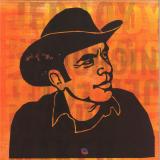
Previously Unreleased Recording. Limited to 1200 copies on transparent cherry vinyl. Tip-on jacket, Download code. Insert featuring LP sized original art by Grungie O'Muck. Includes the original recording of Richard Tucker's "Are You Leaving For The Country", later covered by Karen Dalton, and the only song co-written by Karen & Richard, "Sleeping In The Garden". "Richard, Cam & Bert seem to have grasped The Great Harmony. That is, ensemble singing that is at once sweet, precise, funky and a bit sardonic..." -Mike Jahn / New York Times (1970) "For a few years in the late sixties and early seventies Richard Cam & Bert ruled MacDougal St. walking a fine line between the increasingly commercialized demands created by groups like Crosby Stills and Nash and the fierce integrity of earlier folk performers, the generation to which Richard belonged. They managed this with great aplomb, producing original tunes of great integrity and obvious folkloric origins, as well as those which expressed the anarchic omnipresent psychedelia of the moment. They also never abandoned the idea of including some traditional material in their performances. But for the usual random application of luck they could have been very big." - Grungie O'Muck / Artist, Bluesman, Cover artist for their first album and contributor to this one. Richard Tucker, Campbell Bruce, and Bert Lee coalesced as a trio in the spring of 1968, and by the end of that year had become regular performers at fabled Greenwich Village nightspots - The Gaslight, The Bag I'm In, Cafe Feenjon, among others. But mostly they were street singers, busking regularly in Central Park. Their only LP, Limited Edition, was released in 1970, and sold mainly at gigs and on the street. Somewhere in The Stars compiles earlier, previously unreleased recordings, when all three members were signed with Peer-Southern Music publishers as writers and began using their studio to make demos and experiment musically. Beautifully recorded by house engineer Charlie Mack (supervised by Jimmy Ienner), the demos capture a back room casualness and rustic, homespun quality. For me, listening to their songs and harmonies is like entering a world you always hoped existed but had never experienced. Some of the songs were re-recorded the following year for Limited Edition, but many are heard here for the first time. Among them is the original demo for Richard Tucker's song, "Are You Leaving For The Country", which Karen Dalton covered on her seminal 1971 release, In My Own Time. Richard and Karen were husband and wife for much of the 1960s, performing as a duo (initially as a trio with Tim Hardin), and navigating their time on the Village scene while alternating living in a small mining town outside Boulder, Co. before splitting up in 1967. Also making its debut, is the only song Richard and Karen ever wrote together, the haunting "Sleeping In The Garden". Also contains two epic songs by Cam "One Of These First Nights", and "Stockholm") not on their LP, but staples of their live performances, and noted in a gig review by The New York Times, and in a column by future A&R hero, Karin Berg, who was an early champion. Another rarity is the only cover of "Sweet Mama" by Fred Neil we've ever heard. Campell Bruce came to New York in 1967 as lead singer with a band from Washington, DC, The Natty Bumpo. They'd recently signed a record deal with Phillips, but were falling apart. Cam landed in the Village with an acoustic guitar and first started playing and singing in the basket houses, and shortly thereafter at The Gaslight, as the "Cam Bruce Trio" (which included Collin Walcott). After opening for Mose Allison, Cam's hero, the trio went their separate ways, and Cam returned to regular solo gigs at The Flamenco, and the basket houses on Bleecker. Richard and Cam met up on that scene and quickly found a musical kinship as well as becoming best pals. Bert Lee arrived in New York as a runaway the following winter, and began playing and sleeping wherever he could. His sometime accompanist, Ron Price, introduced Bert to Richard and Cam just as Bert's own songs were garnering attention from publishers. According to Bert, "I arrived on the New York scene during a time of great change, and it was the notion of change that influenced me. All around me I saw there were two sorts of songwriters, on the one hand dedicated to the traditions that had inspired them, folk, jazz, the American songbook. On the other hand were songwriters influenced by the wave of experimentation that The Beatles were the perfect example of. Mixing genres, writing lyrics that weren't just about ordinary love and loss. Richard Tucker was a country blues player, with a relaxed and melodic approach to the craft. Cam wrote something more akin to soul songs, with a hint of jazz in the changes. I was writing tunes that sometimes drew on classical structures with a tendency toward what I suppose would be known as prog-rock. But I was rather adamant about not being pinned down stylistically, and so I would write, for example, a song based on some complex classical chord structure, and then go right ahead and write a simple folk song, like Evelyn. Our band was popular locally, and it was this variety that made it distinct." Delmore is excited to present this unearthed treasure, fifteen years in the making. In the words of Richard Tucker, "Tap on your knee, roll on the floor; if you aint free, what's it all for?" "The trio's singing, playing, and writing have all withstood the test of time. Believe me, because I was there. In 1969 R,C&B, myself, Charles John Quarto, David Bromberg, Ron Price, and Keith Sykes were just a few of that year's crop of song-slingers. We were young turks back then, out on the prowl in New York's Greenwich Village for record deals, gigs, and beautiful young women to sleep with and maybe even write a song about. I've lost the names and numbers of those lovelies and I'm not sure what happened to Ron Price, but Richard, Cam, and Bert are back! - Loudon Wainwright lll
Cerca:cam richard
Analog Fingerprints Vol. 0 is a compilation bringing together the early 2000s works of Marco Passarani under his Analog Fingerprints alias, collecting key tracks originally released on Rome’s Plasmek and Pigna labels.
For Numbers, the story starts long before the label itself. In their formative years, digging in Glasgow’s Rubadub, Passarani’s records felt like dispatches from a future city. Releases on his own Nature Records and on labels such as Generator and Interr-Ference Communications were mind blowing: rooted in Detroit techno, Chicago house and electro, yet pushing somewhere new. Much like fellow travellers Autechre, who would remix him in 2001, Passarani’s music balanced machine funk with restless experimentation.
Information was scarce, and you would hear these records first on the dancefloor or at listening stations in shops like Rubadub. Print fanzines like Ear and early web outposts such as Forcefield offered only fragments. But there was a palpable axis forming between Detroit techno and a new European wave of record labels including Skam, Rephlex, Clone, Viewlexx and Nature itself. It was the sound that defined Saturday nights at Rubadub’s ‘69’ parties in Paisley, just outside of Glasgow.
Passarani’s records, in particular, were instrumental in bringing together the future Numbers co-founders. Richard had already booked him pre-Numbers; meanwhile Calum (Spencer) and Jack (Jackmaster), then 16/17 year olds working alternate Saturdays in Rubadub, were so enamoured with the Roman sound that they travelled to Rome for the Bitz Festival in 2003 to seek out Passarani and Lory D at their source.
The first Analog Fingerprints release landed as a 12” on Plasmek in 2001, following the fractured, IDM-leaning 6 Katun material. For Passarani, the project marked a recalibration. A DJ first and foremost, he had moved into production via early computer setups, from a Commodore Amiga through primitive PC audio, Cubase and Logic, later experimenting with Ableton. The IDM scene had offered a playground for trial and error, but there was always a tension between abstraction and the dancefloor. Analog Fingerprints became the bridge: still intelligent, but with more dance than distance. After years of broken beats and complex arrangements, he wanted directness without surrendering identity.
Working closely with Francesco de Bellis and Mario Pierro in the Pigneto district, the trio formed Pigna as a vehicle for reclaiming a more accessible dance sound, deliberately steering away from the minimal wave beginning to dominate Europe. Sessions were fast, instinctive, often stretching late into the night with friends dropping by. It was a studio as social space, production as collective energy.
“In that constant search for balance, Analog Fingerprints was my way of expressing something closer to the classic dance floor. The track 'Tribute' - a tribute to my favourite early Detroit techno track of all time, 'First Bass' by Separate Minds - came after I realised I had almost lost my connection with the dance floor. The simplest step was to take inspiration from early Chicago and Detroit and twist it in our Roman ‘Pigna’ way. My goal was to create more accessible dancefloor tracks by mixing my unconscious Italo roots with my teenage love for that early US sound, ensuring the result was as far as possible from the minimal sound that was starting to dominate everywhere.” - Marco Passarani
Technically, the Analog Fingerprints tracks span a transitional era: Roland TR-909, SH-101 and Alpha Juno hardware met early software experiments. A Novation Drumstation rack stood in for the unattainable TR-808, syncing with TB-303 and TR-606. Yet the true secret weapon was Jeskola Buzz, a tracker-style modular environment that allowed step-by-step parameter control and strange melodic constructions, later exported into the audio sequencer. Even the lead on ‘Tribute’ came from an early PPG Wave-style plugin. It was hybrid thinking at a moment when digital tools still felt unstable but full of possibility for technologists like Passarani.
Behind the music sat Finalfrontier, a loose Roman collective orbiting Nature and Plasmek. Distribution and production were intertwined; importing obscure records into Italy built connections with like-minded outsiders across Europe and the US. Expensive phone bills and fax machines forged an “electronix network” that linked Rome to Clone, Viewlexx, Skam, Rephlex, Rubadub and Detroit’s Underground Resistance. There was a shared sense of survival and resistance, of operating against commercial systems.
Passarani recalls “The first time I found a sheet of paper inside an Underground Resistance 12” with info about upcoming releases... and a huge picture of Spock on the back. Imagine that: you love the music, you love Star Trek, and there’s someone on the other side of the ocean sharing those same values and sounds. It was the perfect match. We even gave our original company the suffix ‘Finalfrontier’: that says it all.”
Feedback in that era arrived physically: distributor faxes, conversations with visiting DJs, the experience of playing abroad and meeting kids who had connected with the records. Glasgow became a key node in a scattered outlier network. Passarani personally brought the first two Nature releases to Fat Cat in London, playing them in-store. Shortly after, a fax arrived from Rubadub in Glasgow requesting copies.
“I still remember that phone buzz and the fax paper slowly sliding out, with someone I didn’t know saying they wanted 75 copies of Nature 001. Or like the time we got a fax from the Rephlex crew just saying, “Hello Nature Records, Keep up the good work.” That was how we knew the message was getting through. It was a fantastic feeling; just one piece of thermal fax paper as an analog notification - the mood for the entire week would change.” - Passarani
The connection to Glasgow has since stretched across generations. As Passarani reflects, links often fracture as scenes renew themselves, but in Glasgow something different happened. New and old mixed seamlessly. There was a visible trust in what came before, and a willingness to carry it forward rather than discard it. Observed from Rome, it was deeply encouraging.
Analog Fingerprints Vol. 0 captures that moment of exchange: Rome to Glasgow, Detroit to Europe, experiment to dancefloor. It documents an artist recalibrating his sound and a network of scenes discovering one another in real time, connected by vinyl, faxes and shared intent.
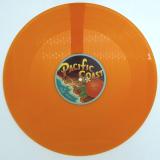
Introducing the 4th instalment of the Pacific Coast House rebirth. We bring back another much sought-after 12” from The Coastal Commission & Jesse Outlaw. “Bring down the Walls” was a nod to Raze’s “Break for Love”, Robert Owens “Bring Down the Walls” and Ritchie Hawtin’s use of the Roland 606 throughout “Sheet One”. Long out of reach and fetching $100+ on Discogs, Atjazz’s freshly remastered editions are finally available .. “Let it Go” was never mastered & only ever cut to dub-plate. It has now been mastered & available in all it’s glory.
Coastal Commission “Bring Down the Walls” “Bring down the Walls” was a nod to Raze’s “Break for Love”, Robert Owens “Bring Down the Walls” and Ritchie Hawtin’s use of the Roland 606 throughout “Sheet One.” We gave the tune a Californian psychedelic twist with conga laden drums, a moody synth, low pulsing 303 patterns + Benjamin Zephaniahs patois call to “Move the Body Rhythmwize!” The first PCH releases had dropped Worldwide to International acclaim from DJ’s far and wide across the Globe with support in London, Paris & New York. However the local scene here in L.A that preached “Love, inclusion & Unity” was anything but that. L.A at that time was very tribal & divided up into 3 camps. If you weren’t affiliated with any of them (aka independent) then you were pretty much locked out of getting any kind of gig support or the Dj’s from those camps actually playing the music. The local feedback from Dj’s was that what we were making wasn’t “house,” but “Techno” which was absurd to me. “Bring Down the Walls” was a mantra to “move the bod”y and in doing so “bring down the walls” of separation not just in L.A but throughout society in general. Thank goodness for support from people like Terry Francis, Eddie Richards, DJ Deep & Philly Stalwart King Britt. After years of copies going for upward of $100+ on Discogs the now freshly remastered copies by At Jazz’s Martin Iveson are finally hitting the platters this Spring.
Jesse Outlaw “Let it Go” I met Jesse at Beatnonstop Records on Melrose Ave with Miguel Placencia in the late 90’s. Miguel (RIP) was a mainstay in the Underground scene and had always been very supportive of my endeavors. He had had success with a huge release on Yellow Orange and was working with Jesse under the moniker “When Worlds Collide.” I signed “Brighter Days” & “Set you Free” from them and released the tracks on my Seductive imprint. They told me that they were making the tracks on a Sony Playstation “Music Now” program and I was like FFS “What.s more Underground than that!?” Later Jesse gave me some of his solo work. The track “Let it Go” was never mastered & only ever cut to Dub-plate and featured on my 1st PCH mix “Pacific Coast House Sounds.” It has now been mastered by Martin Iveson and is available in all it’s glory. The dreamy vocal “You need to let it go” beckons over the top of driving percussive Latin beats and church organ which is a great compliment to the flip side of “Bring down the Walls.” All in all two West Coast stompers now finally available remastered on PCH in Orange vinyl.
- A1: Intro
- A2: The Soundtrack Of Life
- A3: Journey
- A4: World Of Love
- A5: Laurie's Theme
- B1: Emotion Heater
- B2: Dream
- B3: Tiki Mix
- C1: Travel Bug
- C2: Le Tunnel De L'amour
- C3: Stay
- D1: A Close Encounter
- D2: Relaxation Central
- D3: Journey (Reprise)
- D4: Outro
- E1: Space Bubble
- E2: Star
- E3: Sunny Day (Demo)
- F1: Journey (Aphex Twin Care Mix)
- F2: Journey (Gentle Instrumental
WRWTFWW Records is proud to present THE GENTLE PEOPLE - Soundtracks for Living (Expanded Edition), ?the ultimate Lounge/Chill Out classic from 1997, reborn! Available as a limited edition white vinyl 3LP in heavyweight 3-panel gatefold sleeve.
When The Gentle People first glided into the mid-90s on clouds of strings, sugar and sine waves, they sounded like visitors from another, more glamorous planet. Signed to Richard D. James and Grant Wilson-Claridge's cult label Rephlex, this multinational "E-Z-Core" lounge unit took the aesthetics of 50s/60s easy listening and exotica and gently smuggled them into 1990s club culture.
Soundtracks for Living was their defining statement: an album that "takes the lounge scene and runs away with it entirely… blissful and heavenly," as one contemporary review put it. Imagine KLF's Chill Out or Space growing up on French 60/70s pop, bossa nova, soundtracks, vocal harmony groups, library music and easy listening then slipping out for a late-night date with dub, ambient techno and bubble-bath pop. That's Soundtracks for Living: a record that can score cocktail hour, 4am taxi rides, and daydreams in headphones with the same effortless grace.
The Gentle People - Dougee Dimensional, Laurie LeMans, Valentine Carnelian and Honeymink - began in early-90s Brixton, throwing dress-up theme parties before taking their audio-visual universe into the studio. For them, music was "a way of life": soothing to the ear, rich in pop hooks, and pitched somewhere between the playfully idiotic and the hyper-intelligent. Their debut on Rephlex was the single "Journey", later blessed with a shimmering Aphex Twin remix that pushed their sugar-coated sound even further into outer space.
This Expanded Edition of Soundtracks for Living finally gives this glambient lounge-pop milestone the treatment it has always deserved. Spread lovingly across 3LP, it features new mastering from the original sources, allowing every harp glissando, string swell and analog squiggle to float in high-fidelity widescreen. The core album is complemented by a bonus 12" of unreleased and rare material, offering a deeper dive into the Gentle world: alternate takes, lost interludes, and secret soundtrack cues for lives not yet lived.
Crucially, "Journey" appears here in its original version, Gentle Instrumental and the cult Aphex Twin remix, reuniting band and labelmate in one place and underlining the quietly radical nature of the project: this was lounge music that could sit next to braindance, acid and IDM and still steal the scene.
Pressed on limited edition white vinyl, Soundtrack for Living (Expanded Edition) invites long-time fans and new listeners alike to step back into The Gentle People's universe - a place of fondue parties, bubble chairs, star-lit elevators and endlessly rewinding sunsets, where "the pathway to the stars" is never quite out of reach.
In an era that often reduces the 90s to big-room bangers and grunge guitars, Soundtracks for Living remains a quietly subversive reminder that the decade was also about imagination, camp, softness and utopian possibility. As later writers have noted, The Gentle People weren't just a curiosity on a weird label; they became unlikely icons of a whole loungecore moment, gracing TV, compilations and magazine spreads, and proving that tenderness could be as futuristic as any drum machine.
In conjunction with this release, WRWTFWW has also unearthed The Gentle People's Peel Sessions, a 4-track EP from their 1997 BBC on-air performance, available on vinyl for the first time ever !
Back in 2022, Is It Balearic? Recordings founders Coyote (AKA long-serving producers Richard Hampson aka Ampo and Timm Sure) took time out from releasing music on their own labels to deliver a near perfect mini-album on Phil Cooper’s similarly mind-ed NuNorthern Soul imprint, Everything Moves, Nothing Rests.
A superb exploration of their trademark sound, where gentle downtempo rhythms and nods to dub came cloaked in colourful ambient chords, sun-bright melodic motifs, organic instrumenta-tion and quirky spoken word samples, Everything Moves, Nothing Rests deserved a sequel. So, three and a half years on, the duo has delivered just that: a fine six-track EP that offers an even deeper and more atmospheric exploration of their signature sound.
It is a sonic approach that should now be familiar to Balearic en-thusiasts the world over. Aside from delivering a steady stream of singles, albums and remixes on their own imprint, Hampson and Sure have also showcased their skills and loved-up musical mis-sives on International Feel, Music For Dreams, Needwant, MM Discos and Citizens of Vice.
The Higher The Sky, The Deeper The Ocean, their hotly anticipated NuNorthern Soul return, is named in honour of a quote from Ped-ro Alonso’s documentary series On the Ship of Enchantment, an extended voyage in which the Money Heist movie star meets healers and masters of ancestral medicine across his native Mexi-co.
There’s naturally a meditative and slightly psychedelic sound to much of The Higher The Sky, The Deeper The Ocean, which offers a subtly varied exploration of Coyote’s style and influence. Yearning, soft-focus opener ‘Muted Beauty’ – the kind of immersive, effects-laden and sample-sporting ambient bliss found nestling on Fila Brazillia albums of the mid 1990s – is followed by the similarly gentle ‘Go All The Way’, where delay-laden acoustic guitars, spo-ken word snippets and gaseous chords stretch out atop a languid, slow-motion groove.
‘A Drop in the Ocean’ picks up the pace a little via a glorious hat-tip to turn of the 90s ambient house – all dub-wise bass, heady deep house sonics, spaced-out chords and half-buried references to sunrise-ready Balearic synth-pop records of the late 1980s. Late psychedelic guru Terrence McKenna appears in sampled form on ‘Dolce Far Niente’, a tabla-driven drift and musical hallucination which conjures mental images of lying in the Mexican desert, gazing intently at a starry sky.
In contrast, ‘Riviera Sound’ is a chunkier, brighter and more sun-splashed affair – all deep, dubby bass, sustained piano parts, punchy downtempo breaks and the duo’s trademark ambient pads – while superb closing cut ‘No Coincidences’ fixes jazzy double bass samples, twinkling keyboard motifs, subtle acid lines and Latin-laced percussion to a street soul-adjacent beat.
Heady, impeccably crafted and thoroughly enveloping, The Higher The Sky, The Deeper The Ocean is Coyote at their dazzling best. It marks another significant chapter in their ever-evolving musical journey.
- Headful Of Rain
- Might See You There
- Baby Don't
- Forever Elsewhere
- Never In Style
- Pay No Mind
- If You Should Turn Away
- Little Strange
- Bright City Lights
- Where I Belong
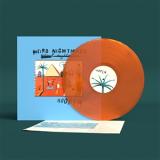
Jede Band, die was drauf hat, hat ein Mitglied, das mal in einem Plattenladen gearbeitet hat. Bei METZ, dem mutigen Noise-Rock-Trio, das zwischen 2012 und 2024 fünf Alben bei Sub Pop rausgebracht hat, war das Sänger und Gitarrist Alex Edkins. Während seines Studiums verkaufte Edkins in seinem Heimatort Indie-Rock- und Hardcore-Platten und wurde zu einem begeisterten Schüler des Rock ,n` Roll, von den psychedelischen 1960er Jahren bis zu den DIY-1990er Jahren und darüber hinaus. Hoopla, das eingängige, melodische zweite Album aus Edkins' Soloprojekt Weird Nightmare, mischt und kombiniert diese Einflüsse auf unterhaltsame und mitreißende Weise und zeigt seine ausgefeilte musikalische Intelligenz. ,Hoopla" sprüht vor Hooks und Ohrwürmern und ist genau die Kassette, die nie aus dem Autoradio genommen wird, sondern immer wieder gespielt wird und den Sommer begleitet. ,Hoopla" ist neu und nostalgisch zugleich und wird deine Ohren erfreuen. Das selbst produzierte und ausgesprochen lo-fi Debütalbum von Weird Nightmare wurde während der Pandemie zu Hause aufgenommen und 2022 von Sub Pop veröffentlicht. Weird Nightmare zeigte Edkins' Indie-Rock-Sensibilität mit einer Vorliebe für unverkennbare Hooks und mitreißende Refrains zum Mitsingen. Auf dem neuen Studioalbum Hoopla, das gemeinsam mit Jim Eno von Spoon produziert und in Seth Manchesters Machines with Magnets aufgenommen wurde, erweitert Edkins die Dimensionen von Weird Nightmare noch weiter. Neue musikalische Texturen wie Klavier, Glocken und Kastagnetten verschmelzen mit Edkins' geradlinigem Songwriting und verleihen diesen Stücken einen glänzenden Schimmer. Es ist, als würde ein beliebter Indie-Regisseur mit seinem ersten Studiofilm einen Schritt nach vorne machen. Wenn das Debütalbum Weird Nightmare ein Underground-Publikumsliebling war, ähnlich wie Richard Linklaters Slacker, dann ist Hoopla Edkins' Dazed and Confused. ,Hoopla" glänzt mit sonnigem Gitarrenpop und wurde mit genau der richtigen Menge an Fuzz und Crunch produziert. Die unmittelbare, schnörkellose Aufnahme versetzt dich direkt ins Studio mit Edkins und seiner Rhythmusgruppe: Loel Campbell am Schlagzeug und Bassist Roddy Kuester. Das ist Power-Pop der Extraklasse; diese scharfen Adrenalinstöße könnten sich nahtlos in einen Radio-Rock-Block zwischen The Replacements und Elvis Costello & the Attractions einfügen. Oder passen genauso gut zu Sharp Pins, Ratboys und Alvvays. Im Kern ist dieses Album ein optimistischer, leuchtender Lichtblick in unserer seltsamen Zeit. Mit Weird Nightmare möchte Edkins euch wissen lassen, dass er die Welt immer noch liebt, und er lädt die Hörer von Hoopla ein, dasselbe zu empfinden. Nutzt diese Chance, um einen Funken der Magie des Pop in unserer verbrauchten alten Welt zu ergreifen. Ihr habt es verdient.
- A1: Design - Premonition
- A2: Vision - Lucifer’s Friend
- A3: Richard Bone - Alien Girl
- A4: John Howard - I Tune Into You
- A5: Ian North - We’re Not Lonely
- A6: Selwin Image - The Unknown
- B1: Harry Kakoulli - I’m On A Rocket
- B2: Rich Wilde - The Lady Wants To Be Alone
- B3: Billy London - Woman
- B4: Alan Burnham - Science Fiction
- B5: The Microbes - Computer
- B6: The Goo-Q - I’m A Computer
- C1: Gerry & The Holograms - Gerry & The Holograms
- C2: The Warlord - The Ultimate Warlord
- C3: Die Marinas - Fred From Jupiter
- C4: Dee Jay Bert & Eagle - I Am Your Master
- C5: Peta Lily & Michael Process - I Am A Time Bomb
- C6: Sole Sister - It’s Not What You Are But How
- D1: Alasdair Riddell - Do You Read Me?
- D2: Karel Fialka - Armband (The Mystery Song)
- D3: John Springate - My Life
- D4: Idncandescent Luminaire - Famous Names
- D5: Disco Volante - No Motion
- D6: Dream Unit - A Drop In The Ocean
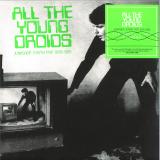
2025 REPRESS ON TRANSPARENT GREEN VINYL
Compiled by Philip King “And then came the rise of synth pop : blokes with dodgy haircuts hunched over keyboard-operated machines stuffed with wires and do-it-yourself tone oscillators making sounds like a brood of geese passing gas in a wind tunnel. Whoopee! This is the way the ‘70s ended : not with a blood-curdling bang bang but with a cheap, synthesized, emasculating whimper.” NICK KENT, NME. All The Young Droids: Junkshop Synth Pop 1978-1985 is a new compilation that charts the underbelly of the epoch-defining sound of the synthesiser in 80s popular music. Compiled by Philip King (previously seen compiling All The Young Droogs, Glitterbest and Boobs - The Junkshop Glam Discotheque), the music here connects the dots between DIY synth enthusiasts grappling with new, cheap synthesisers at the tail-end of punk and wannabe, jobbing songwriters enthral to the new music pioneered by Gary Numan, Depeche Mode and Daniel Miller’s Mute Records. Featuring rare tracks of auto-didactic progressive pop music, proto-techno punk, shoot-for-the-stars-land-in-the-gutter chart flops and heralded, underground synth classics, School Daze paints a picture of beautiful failure. Complete with extensive sleeve notes written by King and never before seen imagery, all 24 tracks were remastered by RPM in-house engineer Simon Murphy, many from vinyl copies due to lost master tapes. The story told on All The Young Droids is one of the dawning opportunity presented by both the emergence to the market of cheaper analog synthesisers and the distribution networks plus indie labels that exploded with the advent of punk music in 1976. While the music that sprouted out all over the globe in the wake of these factors was decried as fake, plastic, a refutation of punk’s guitar-led revolution, it’s telling that much of the music on All The Young Droids.. was created in bedrooms, ramshackle studios and home-made set ups with often borrowed equipment. In the era of record labels jumping to capitalise on the success of The Sex Pistols, The Clash (both on major labels, of course) these artists struggled to stand out from a new gold-rush with next to no budget or PR team. With radio and labels desperate for the new Yazoo, what resulted was a testament to necessity being the mother of invention. At the time, the synthesiser was the music of the future, a shiny new machine that could paint like an orchestra with a single finger and a 4-track. In the hands of Manchester avant-pranksters Gerry & The Holograms it’s a pulsing, sardonic weapon.. the only instrument on the Messthetics classic lampooning of New Wave fashion. In Hamburg, a 16 year old Andreas Dorau used it to write and record (with his female classmates on vocals) a global smash in Fred Vom Jupiter (later licensed to Mute Records). The hard-to-find English version (Fred From Jupiter, natch) is included here. Many artists with alreadystoried careers caught the bug and recorded synthesiser-fuelled peons to space, computers, the future and, of course, love-interests. Harry Kakoulli, late of Squeeze, recorded a solo album in 1979 that included the incredible power-synth-pop smash-that-never-smashed I’m On A Rocket. Similarly, Ian North of Neo and American Power Pop stalwarts Milk ’n’ Cookies bought a Korg MS20 and used a tape machine to record We’re Not Lonely, an absolute lost-classic of minimal synth pop. We’re Not Lonely also features on the Junkshop Synth Pop sampler 7” twinned with John Howard unreleased track You Will See, released April 12th 2025. There are plenty of compilation debuts in evidence. Sole Sister were a mysterious trio who were featured on the Scaling Triangles compilation of female-fronted, queer-adjacent post-punk / underground music that also featured The Petticoats. Selwin Image were from San Francisco and featured members of the recently defunct power pop/punk group The Pushups. Their stupidly catchy The Unknown fizzes with New Wave energy - think XTC to Sparks but remains unreleased until now. Dream Unit’s A Drop In The Ocean is an early synth wave cut, positively teaming with Joy Division instrumentation, previously only released on a long-forgotten and super rare, self-released EP. Incandescent Luminaire’s Famous Names belies an archetypal struggle of a small-town trying to make it in a cruel industry but is a thrilling New Romantic-Synth Wave cross over with a OMD gloominess that’s a joy to hear. Feminist Minimal Wave track I Am A Time Bomb by performance artist Peta Lilly and Michael Chance is a revelation destined for new found cult status. It was released on 7” and lost until now. The flipside to the subterranean, never-made-it synth pop mentioned above are the ambitious, even fruity attempts at success that have a perennial elegance to their confidence. New Jersey-ite Billy London (real name Ed Barth) tried to cash in on the synth boom with Woman, released by a major label, a lurching new wave track built on the Louie Louie rhythm and a wonderfully camp Lou Reedstyle sleazy vocal before exploding in the synthesised chorus. The song bombed but with a chorus like this, you have to wonder why? Ex-Glitter Band member John Springate’s My Life is truly epic, with doomed chord progressions and massive sounding drums turning into at least 3 different songs in the course of the track. Before you wonder what’s going on the song resolves with a glorious return to the main refrain. The dry-ice-dressed dance floor is well catered for too. Design’s Premonition and Vision’s Lucifer’s Friend are stone-cold minimal synth bangers, well loved but given a new lease of life here. The Warlord’s The Ultimate Warlord was released in 1978, a homespun proto Hi NRG banger that was later re-recorded by The Immortals in Canada who had a club hit with it. One-man- band Disco Volante’s No Motion was re-issued by Synth wave label Medical in 2012 but makes its first vinyl compilation appearance here. Close your eyes and you can imagine what Lawrence of Felt would have sounded like with some cheap Korgs a little earlier in his career. Gibraltar-based trio The Microbes imagined a computer programming people to dance - how prescient - and ended up with a propulsive, robo-funk track with splendid rubbery bass playing over a tectonic drum machine. Previously picked up by Belgian label Stroom TV, Dee Jay Bert & Eagle’s heavily Euro-accented I Am Your Master demands the listener to “come to paradise!” In a frankly terrifying manner. All The Young Droids is the first compilation to peel away from the narrative that dour, Minimal Synth and Cold Wave were the only musical children of the first rush of synth pop. Philip King and School Daze Records describe a much more complicated world: along with the austere, Brutalist children of Daniel Miller (who produced Alan Burnham’s Bowie-Low-influenced Science Fiction here) was a plethora of desperate cash-ins, accidental mainstream hits, ambitious pop dramas and major label punts that went nowhere. Crucially, the compilation blurs the line between junk and treasure. What if the two things are interchangeable. What if it’s all science fiction?
- 1: Alive! - Skindo Le Le (4.05)
- 2: Emilio Santiago - Bananeira (.53)
- 3: Carlos Franzetti - Cocoa Funk (5.0)
- 4: The Robin Jones Seven - Atlas (6.58)
- 5: Airto Moreira - Jump (4.13)
- 6: Antonio Adolfo - Cascavel (2.57)
- 7: Hannibal - Mother’s Land (5.09)
- 8: Doug Richardson - Salsa Mama (5.00)
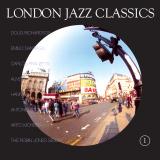
London Jazz Classics originally came out in 1993 - the first album ever to be released on Soul Jazz Records. The album brought together rare and obscure dance tracks in a unique mix of jazz dance and fusion, funk, Brazilian and Latin grooves.
The album was ironically titled - none of the music was from London, none of the music was traditionally classified as jazz, and all of the tracks were at the time practically unknown to most people. Instead these were tracks that were filling dancefloors in a nascent jazz dance scene in London being created by a small group of DJs – Paul Murphy, Gilles Peterson, Sylvester, Patrick Forge and a few others.
As demand for these rare groove jazz tracks grew, previously unknown records such as Alive!’s ‘Skindo Le Le’, Doug Richardson’s ‘Salsa Mama’, Carlos Franzetti’s ‘Cocoa Funk’ and Emilio Santiago’s ‘Bananeira’ became sort after and even-harder-to-find items with original copies going for £100s of pounds.
These tracks became part of the soundtrack to this jazz dance scene which has now spread across the world. This music paved the way for the arrival of many of the UK’s new wave of current artists such Shabaka Hutchings, Nubya Garcia and Ezra Collective who today offer a uniquely London sensibility of fusing jazz with wide-ranging cultural influences – everything from afrobeat to soul.
London Jazz Classics was the first album to bring this jazz dance music featured here to a wider audience. More than 30 years since its initial release Soul Jazz Records are releasing this new 2026 edition, bringing the music once more to a new generation of listeners.
- A1: The Bug – Hooked (Hyams Gym, Leytonstone)
- A2: Ghost Dubs – In The Zone
- A3: The Bug – Believers (Imperial Gardens, Camberwell)
- B1: Ghost Dubs – Hope
- B2: The Bug – Burial Skank (Arches, Vauxhall)
- B3: Ghost Dubs – Dub Remote
- C1: The Bug – Alien Virus (West Indian Centre, Leeds)
- C2: Ghost Dubs – Down
- C3: The Bug – Militants (The Rocket, Holloway)
- D1: Ghost Dubs – Into The Mystic
- D2: The Bug – Dread (Mass Brixton)
- D3: Ghost Dubs – Midnight
When Chuck D proclaimed "Bass, how low can you go?" on Public Enemy's anthemic 'Bring the Noise,' maybe he was pre-empting or inciting the 10,000 fathoms-deep, spine-bending basslines and sub-quake tremors of 'Implosion.'
Implosion is a crushing split album, appropriately released on The Bug's own PRESSURE label. Mapping out a new form of spectral dub, the sound is deliberately immersive, introverted, and yes, definitely implosive. In pursuit of heavy lids, blurred vision, and merciless bass bin punishment, it’s one part meditation, two parts low-end theory, and essentially a confession of devoted sound system addiction.
As expected from a tag team featuring British soundlab explorer and 'London Zoo' composer Kevin Martin, aka The Bug, and Michael Fiedler, aka Jah Schulz—a long-time graduate of Germany's new school of sound system reggae culture—the duo approaches their target differently yet share the goal of keeping their sound "raw" (Fiedler) and "brutally minimal" (Martin). This proves that opposites can attract, even if their tools are different and their methods sometimes diverge.
From such a disparate combo, hailing from different geographical and aesthetic backgrounds, contrasts are certainly on display, even within each artist's own contributions. From the melancholia and transcendence of 'Alien Virus (West Indian Centre, Leeds),' to the duality of ascension and descension on 'Hope,' or the Sunn 0))) in dub, visceral drone of 'Dread (The End, London),' to the tripped-out repetitions of 'Midnight,' which reinvents Chain Reaction for post-millennials, the result is both sacred and narcotic. Each track illuminates the emotional impact and atmospheric pressure being explored across this deceptively sparse album—a mastery of tone and texture.
This collection might be as reduced, minimal, and deep as The Bug has ever gone, perhaps echoing the solemnity of his recent Kevin Richard Martin Black release and invoking the futurist steppas self-pioneered on his previous Pressure album. Alternatively, Fiedler‘s Ghost Dubs project ventures into his most heavyweight direction yet, which is no mean feat considering his previous, the critically acclaimed album Damaged, was a monstrously massive triumph of analogue weight and enviable sound design.
Implosion is ice-cool, a stark contrast to the warmth and sociability of traditional Jamaican roots and the current trends in digi-dub. Instead, the mood is soaked in tension and intense dread, finding an unexpected melting point where classic dub's stark rhythm attack, isolationist ambience's eerie drift, dub techno's floatation strategies, and even the relentless riffs of doom metal collide. As the bass-obsessed pair drop what is arguably the heaviest ambient dub album to emerge from any electronic sector—a moody counterpoint to The Orb's fluffy clouds, etc, Martin has cited The Roots Radics, Black Jade, and On U Sound's Pounding System as heavily influencing his approach to the album, while Fiedler has expressed his admiration for Adrian Sherwood's productions and Rhythm & Sound's enchanting soundscape. Yet, the super heavyweight pulsations, emotive resonances, and bone-rattling vibrations detonated here effortlessly go far beyond these influences.
Shadowy and elusive, there’s a mysteriousness at this record's core. A haunting moodiness oscillating between nostalgia and future shock. Despite the deadly fixation with SLOW and HEAVY, the album maintains a totally hypnotic swing throughout. Implosion and its lead single 'Imploded Versions' are testaments to being enveloped in bass, seduced by bass, submerged in bass, and utterly crushed by bass, as The Bug and Ghost Dubs seek to craft a new form of dub for zonal headz and Babylon seekers.
Mastered by Stefan Betke (a.k.a. POLE) at Scape Mastering studio, this record is heavy as f-ck without resorting to continuous distortion. It’s low-end worship taken to an absolute extreme, yet remains highly listenable and definitely danceable, albeit at the slowest of paces. Sacred and narcotic, this is low-end worship amplified to the max. Dive in if you dare.
- A1: Countrymusicdisco45 4 08
- A2: Sometimes Shooting Stars 2 57
- A3: Short Cut Home 3 25
- A4: Disappointment 3 00
- A5: Days Are Mighty 2 46
- B1: Don't Dance With Me Tonight 3 27
- B2: You Got It Wrong 2 39
- B3: Ring The Bells 3 57
- B4: Let's Make It Up 2 49
- B5: When Did You Stop Loving Me 3 54
- C1: Just Beginning 4 00
- C2: Wintering Of The Year 3 16
- C3: Let It Rain 3 04
- C4: We Tell Each Other Who We Are 3 27
- C5: Trip To You 4 06
- D1: Dirt 2 54
- D2: Heaven Right Here 3 38
- D3: If Later Ever Comes 3 03
- D4: Remember The Season 3 10
- D5: A Little Love 3 35
- D6: Weary Traveller 3 20
“The high priest of country cool” - Rolling Stone
“I like him very much. He’s very special. He’s singing with a voice I never heard before” - Townes Van Zandt
“A conscious, soulful brother” - Horace Andy
“He’s a brother to me - one of the best singer/songwriters I’ve ever met” - Adrian Sherwood
“Unearthed mine of gems from inner Wales - a songbook of ideas - that's Jeb!” - Gilles Peterson
Jeb Loy Nichols is a bonafide Country (Got) Soul legend. The Music Maker presents 21 incredibly deep, grooving and soulful songs from the cream of Jeb's catalogue; from its earliest days to his latest unreleased gems via countless rare and unbelievably good lost-classics. This 2LP set is presented in a gatefold sleeve complete with freshly commissioned artwork courtesy of Jeb himself.
In collecting these uncut, under-heard gems, we hope to do justice to Jeb's jaw-dropping artistic brilliance. A man who, in working with Adrian Sherwood, Dennis Bovell, Dan Penn, Larry Jon Wilson and countless other legendary characters, has crafted some of the most deeply affecting folk, country, soul, funk, blues, dub, reggae, gospel, rap and electronic music, ever heard.
The first music Jeb really felt a connection with was southern soul: "I used to listen to the radio at night and fell in love with Bobby Womack and Al Green, The Staple Singers and Joe Simon – that whole Nashville/Memphis/Muscle Shoals thing.” But Jeb was so much more than a soul boy, Indeed, he "went to bluegrass festivals with my dad and come home and listened to jazz records with my mother.” And, when he was fifteen, he heard his first punk record: "God Save The Queen" by The Sex Pistols. “That and The Ramones completely changed me.” In 1979 he got a scholarship to go to art school in New York: “A great time. Punk was over but hip-hop was starting and I got into that in an obsessive way.”
His first recording, in 1980, was an unreleased rap song called "I’m A Country Boy". If that isn't an insight enough into Jeb's kaleidoscopic path through music, in 1981 he visited friends in London and found himself living in a squat with Adrian Sherwood, Ari Up (from the Slits), and Neneh Cherry. “Adrian put me to work immediately, moving boxes of records all across London. It was Adrian that was and is my biggest influence – in his complete disregard for genre purity.” So, presumably you're getting the picture? A veritable musical magpie with a voracious appetite and unimpeachable taste.
"Mine has always been a meandering career. I've done what I've done, and made the music I've made, due to chance meetings. I'm not particularly ambitious; it's more important to me that I work with friends and like-minded people. I've been a big fan of Be With for years. Everything they release is essential. When they asked about rereleasing "Countrymusicdisco45" I was both pleased and flattered. We began talking about how we'd do it; two years and twenty-one tracks later, here we are. I've always thought of the music I make as Country Music. Music conceived in the country, written in the country, recorded in the country. I left London and moved back to the country so I could live among the trees, the grasses, the animals, those things that don't go to war and get greedy. This compilation is the story of that life. Hand made, lo-fi, ramshackle, stripped down, real deal music. Heartworn and funky. Music made in the kitchen, not in the studio. As the great Skip Mcdonald said, Perfect ain't perfect. It's great to see all these tracks gathered together. It feels like a family reunion. Some older members of the tribe, some newer arrivals."
Opener "countrymusicdisco45" is a song Jeb wrote about how his crew lives, tucked up blissfully in the hills: "House parties full of country folk dancing to disco, reggae, soul, country, hip-hop. All night. I recorded it at home under the influence of Stevie Wonder." It's one of the funkiest records you'll ever hear. "Sometimes Shooting Stars" was recorded in Nashville and mixed by the legendary Dennis Bovell. It's deep, dubby, majestic. A thing of fragile, melodic beauty. The party ramps back up again with the undeniable groove of "Short Cut Home" before the profoundly moving "Disappointment" arrives. One of many songs he's recorded with good buddy Benedic Lamdin (aka Nostalgia 77): "We were going for a Leon Thomas meets Richard Brautigan meets Alice Coltrane kind of thing". We think they nailed it. "Days Are Mighty", like a lot of the tracks on this collection, "started life as a demo, an attempt to get something down while it was fresh. No frills, nothing fancy, just feel." And what feels!
The irrepressibly funky "Don't Dance With Me Tonight" is a deeply moving, slow-mo organ-drenched head-nod-funky country-ballad. Next up, the breezy "You Got It Wrong" was recorded in Wales with some of Jeb's good friends and neighbours, The Westwood All Stars, featuring Clovis Phillips and Will Barnes. Skanking fiddle-flecked gem "Ring The Bells" was the first thing Jeb recorded when he moved to Wales. A combination of all his loves; country, reggae, soul. It's followed by "Let's Make It Up", a truly sumptuous string-drenched emotional groover. "When Did You Stop Loving Me" is another Nashville track, written and recorded during a time Jeb was spending a lot of time with the Muscle Shoals crew, Donnie Fritts, Spooner Oldham, George Soule and Dan Penn: "It shows, I'm sure, their influence." Oh, you bet it does!
The swaggering country-funk of "Just Beginning" should grace many groove-focused DJs' sets whilst "Wintering Of The Year", again made with Clovis, is pastoral, campfire soul. The glacial, gorgeous "Let It Rain" is from an unreleased record Jeb made with the great British jazz bass player Andy Hamill and "We Tell Each Other Who We Are" is freaky country-soul made by a man with a love for strutting, wonky hip-hop stylings. Rounding out the side, "Trip To You" is pure, uncut amphetamine-propelled drum-machine soul.
The spare, beautiful "Dirt" is from an EP Jeb made with Julian Moore in his house in South London: "All first takes, straight to tape." Swoon! "Heaven Right Here" was a very minor league hit in America: "It was produced by the brilliant and much missed Wayne Nunes. It was started in the countryside of Missouri, finished in the countryside of Wales, and recorded in the countryside of Sussex." Double swoon! "If Later Ever Comes" is electronica meets J.J. Cale business whilst "Remember The Season" is truly wonderful and breezy guitar soul. "A Little Love" was made with Wayne Nunes as well, after a night of listening to Studio One and Northern Soul. Bouncy dub closer "Weary Traveller" was written by Bill Monroe, the hero of Jeb's youth: "Monroe's music was heavily influenced by black southern churches; I've tried to keep some of that feral feel." This was the final recording by Jeb's 1990s Country-Dub band, Fellow Travellers.
The name of this compilation comes from a time when Jeb lived in Peckham, south London and he used to DJ and sometimes perform at a local bar: "The owner of the bar, a Jamaican named Count Percy, once asked me what I called my music. I told him I wasn't sure, I guess just pop music. He thought about it for a minute and then said, 'no, more like mom and pop music'. Rather than call me a country singer or a folk singer he always referred to me as The Music Maker."
With the long overdue deluxe overview of his beloved music, we hope to finally shine a light on the unheralded genius of Jeb Loy Nichols. RIYL Larry Jon Wilson, Townes Van Zandt, Bobby Charles, country got soul artists, dub, deep soul, disco, dancing, heartbreak. This deluxe collection, spellbinding from beginning to end, should hopefully go some way to ensuring Jeb reaches an ever bigger, ever more appreciative crowd of followers. Mastering for this special double vinyl edition was overseen by Be With regular Simon Francis and it was cut by the esteemed Cicely Balston at Abbey Road Studios to be pressed in the Netherlands by Record Industry. The artwork has been lovingly put together by The Music Maker, himself, Jeb Loy Nichols. "Be With is the perfect home for this mongrel music. I am forever in their debt." The pleasure is all ours, Jeb.
- A1: She's Getting Married In August
- A2: Evenin' Rain
- A3: Les Papillons
- A4: Zeena
- A5: Virgin Morn
- A6: Seeds
- B1: Crystal Blue
- B2: Lady Carole
- B3: Lotus Child
- B4: Last Prayer
- B5: Hymn For Today
- C1: Boston
- C2: Blackbird Charlie
- C3: My Sun
- C4: Closer To The Truth
- C5: Strange News
- D1: Moonchild
- D2: Red Shoe Truckin
- D3: Beautiful
- D4: Opal Blue Sunday
First time vinyl reissue, expanded and deluxe double gatefold 140g double vinyl, remastered audio with restored artwork and fresh liners written by Paul Hillery (Folk Funk & Trippy Troubadours)
Alan James Eastwood's glorious Seeds is a certified folk-funk lost-classic.
But who was Alan James Eastwood? He had never hit the big time and commercial success eluded him. By the mid-1970s, his musical career was pretty much over and he was almost unknown except among deep heads, amongst whom he would gain cult status.
Original copies of the 1971 vinyl release of Seeds exchange hands for high sums, if you can find one. This expanded 2LP contains an extra record, collecting 9 rare non-album singles and is presented in a gatefold sleeve complete with freshly commissioned liner notes courtesy of Paul Hillery (Folk Funk & Trippy Troubadours).
With the long overdue deluxe reissue of this prized artefact, we hope to finally shine a light on the unheralded genius of Alan James Eastwood. RIYL Nick Drake, Rodriguez, Richie Havens.
Alan James ‘Bugsy’ Eastwood was a renowned musician and singer who came to prominence in the late 1960s with The Exception, an unsung but excellent band from Birmingham. The Exception released many singles, the first featuring friend Robert Plant on tambourine, before an album, The Exceptional Exception. However, by this time, Bugsy was feeling constrained and restless; he left the band within weeks of the release.
Having vanished from the scene, he was honing a deeper, introspective edge to his songwriting. His demos found their way to the sound engineer and producer Mike Cooper at Pan Music Studios in Denmark Street. Loving what he heard, Eastwood soon entered a recording session with Cooper. The session was just Alan, his guitar and harmonica and - by all accounts - it was remarkable. With the songs, the voice and such an exceptional talent, it was hard to go wrong. Says Mike: "We had John Hawkins do the big string arrangements and Richard Hewson arranged the string quartet. We overdubbed the orchestrations on Alan's original session recordings, adding Chris Karan on tabla and various percussion. We considered re-recording the vocals but found that the magic on that original session was so exceptional overdubbing would not be as good as the atmospheric 'live' performance."
Mike and Alan viewed each track as a different entity, giving the album a diverse sonic palette. Assessing each song individually, they decided which would be suitable for each arranger. Top-flight session musicians were added to the roster to complete the sound, with Byron Lye Fook (father of musician Omar) on drums, bassist Mike Ward, Brian Pickles on marimba and jazz drummer Chris Karan on tabla and percussion. Recorded in a matter of days in Pan's small 8-track studio, they carefully added overdubs, rhythm sections and four string sessions arranged by Hawkins, with Hewson's arrangements recorded at Trident Studios.
Seeds was Alan James Eastwood's debut solo album – indeed, his only solo album - and was originally issued on President in 1971. It melded Eastwood’s impressive rock sensibilities with a folk thread to superb effect. His arresting voice - its deep, rough-hewn soulfulness - coupled with gorgeous string-drenched backing, make this a phenomenal listen. It really is a great 70s singer-songwriter record - with touches of acid-folk and folk-funk throughout.
It opens with "She's Getting Married In August", a mellow tune with Richard Hewson's strings arranged around Alan's straightforward guitar structure. Up next, the joyous, sun-dappled guitar and strings workout "Evenin' Rain" glides by before the fragile, accordion-enhanced "Les Papillons" breezes out of the speakers. The bluesy "Zeena" follows, featuring vocals and acoustic guitar and showcasing Eastwood's effortless harmonica. Starting out as a ballad, "Virgin Morn" builds with soaring strings and gospel-tinged backing vocals from Marilyn Powell and jazz singer Josephine Stahl. The A-side closes with the title track, "Seeds". With a chugging mid-tempo beat, soulful vocals and a beautiful Bacharach-esque string arrangement, it truly is stop-you-in-your-tracks spectacular.
Side B opens with "Crystal Blue", gilded by Lye Fook's marimba, lush gospel-esque backing vocals and handclaps. Eastwood's acoustic guitar begins "Lady Carole", which starts as a bluesy ballad and builds with more string arrangement, lifting the track to another height. A towering highlight of epic proportions, "Lotus Child" is a true masterpiece of arrangement. It opens with simple yet stunning do-do-dah vocal harmonies blended with John Hawkins's strings, bass lines and rhythmic beats, forming a vibe very much in conversation with the sounds coming from LA's Laurel Canyon. Next up, the heartwarming "Last Prayer", dedicated to Alan's first and last love, contains a melancholic vocal with a wistful string-drenched arrangement that would sit comfortably in a Federico Fellini score. Bringing the album to a close, "Hymn For Today" is a melodic raga with tabla, strings and a soft-psych feel. Eastwood's prophetic whisper - "I am real. At last, I am real" - profoundly hits home.
Kicking off the extra disc is the sparsely funky and country-tinged "Boston", released as the flip to the astonishing "Seeds". Next up are the two tracks that comprised Alan’s debut solo 7" single from 1968. The laconic, Bobby Charles-esque "Blackbird Charlie" evidences a real depth and charm in Eastwood's songwriting whilst the starkly brilliant flip, "My Sun", was a horizontal, atmospheric folk-tinged soundtracky precursor to his later work on Seeds.
In 1972, two further standalone singles followed. The first was the evergreen flute-driven folk-funk bomb, "Closer To The Truth", backed by the funky blues of "Strange News". The second, a deeply moving Havens-inspired "Moonchild" - rightly fawned over to this day - was flipped with "Red Shoe Truckin'", a groove-infused track. Eastwood also paired up with Marilyn Powell for a single produced by Powell's partner, Mike Cooper. Under the name Eastwood & Powell, they released their staggering rendition of "Beautiful", a rock-blues-pop song arranged by Ivor Raymonde and written by Carole King. Over on the flip, a funky Eastwood original "Opal Blue Sunday" lurked. This is not to be overlooked.
Over the years, Alan remained active on the music scene, but problems with alcohol and health complications from diabetes severely impacted his career. He spent his latter years living in London until his untimely death from heart failure on 25 October 2007, just one day before his 62nd birthday and without his music having received the real acclaim it so dearly deserved.
This deluxe reissue, spellbinding from beginning to end, should hopefully go some way to rectifying this tragic fact. Mastering for this special double vinyl edition was overseen by Be With regular Simon Francis and it was cut by the esteemed Cicely Balston at Abbey Road Studios to be pressed in the Netherlands by Record Industry. The original artwork has been lovingly brought back to life at Be With HQ, with the addition of passionately written liner notes specially for this landmark reissue by none other than Paul Hillery.
An expanded and remastered reissue of the 2009 debut album the collaborative musical project. Vocals and songs from Julianne Regan (All About Eve), Monica Richards (Faith & the Muse), Evi Vine and Amandine Ferrari. Enhanced by violin from Van Morrison/ Penguin Café"s Bob Loveday, Steve Carey on guitars, Fields of the Nephilim"s Tony Pettitt on bass, plus many friends. The album came about from Carey & Pettitt exploring music they enjoyed, and deciding on a revolving line-up of female voices. The result was an amalgam of trip-hop, prog rock and exotic goth-rock, enriched by lyrics and vocals from four exceptional female artists. The album now includes an additional six songs recorded around the same sessions as the original album. The band subsequently had five more releases and regularly toured the UK & Europe.
Emotional Especial reaches a landmark with its 50th release. Started in 2012 as a “dancier & trippier”, club friendly spin off, sub label to Emotional Response, it has gone on to forge a path, releasing a myriad of artists including the opening release by Jamie Paton (Cage & Aviary / ESP Institute) to Richard Sen (Bronx Dogs), the debut of Khidja (Malka Tuti / DFA) and on to unearthing the breaks masters Alphonse (Klasse Wrecks) and Junior Fairplay (Crimes Of The Future), the uplifting Italo influenced Lauer (Robert Johnson), the new wave anthem of Sfire (featuring Sophie), plus perfect remixes bt Kris Baha (CockTail D’amore) and INHALT (Dark Entries), the NYC pop-rave-vox of Kim Ann Foxman, through to showcasing upcoming artists like Berlin’s Giraffi Dog (Aiwo Recs) and the global acid adventures of Akio Nagase (Chill Mountain) to most recently, the slo-mo trance muscle of 53X and post-rave uplighters of Remotif (Space Lab) and DJ 1985.
As with every 10th release on the label, the label present a various artists “Showcase” of what and where the label is. Aptly it is recent signing 53X who opens Gracias Especial with the bounce of Radar. Finland’s Jonne Lydén debut EP on Especial, Zen ’23 came out of nowhere, more than simply riding a zeitgeist of the “Trance Revival”, his all-live analogue symphonies drop the bpms, presenting widescreen beats, darkroom bass, sirens and tripped out vox all mix to propel a singularly driven.
Taking things much deeper has been the hallmark of Jamie Paton’s remixes for the label. As well as providing the opening EP in 2013, designing every sleeve and producing 20 remixes and counting another 2 for the label here, it’s impossible not to associate Especial with Jamie’s music. First, he reworks rising star DJ, but recent break out producer Chez De Milo, with a trademark dub excursion that takes the ethnic origins of Kremer to a space echo wonderland. Space is the place, the lulling beats, see you falling through the gaps, true dub style.
Alphonse makes a rightful return to Especial, with Raze Rave highlighting the allusive producers’ unique understanding of the varied history of rave culture via a techno-suite of soundscapes, perfectly mixing uplifting breaks, memory inducing vocal samples and dub bass, with a nod to the pop sensibility that rave encompassed, while being that allusive “lost chord” moment of man and machine.
The finale returns to the trance acid expanse of 53X, with the mastery of label stalwart Jamie Paton. An apt marriage, Paton takes the title cut from Lydén’s debut EP and crafts a trademark durge-dub, where TB303 and space echo intertwine with the De Witte vocal, hinting at touches of dub, new wave, trance and acid house all in one melting pot of sound the label optimistically termed “Protoid” back at inception of summer 2013.
- A1: Design - Premonition
- A2: Vision - Lucifer’s Friend
- A3: Richard Bone - Alien Girl
- A4: John Howard - I Tune Into You
- A5: Ian North - We’re Not Lonely
- A6: Selwin Image - The Unknown
- B1: Harry Kakoulli - I’m On A Rocket
- B2: Rich Wilde - The Lady Wants To Be Alone
- B3: Billy London - Woman
- B4: Alan Burnham - Science Fiction
- B5: The Microbes - Computer
- B6: The Goo-Q - I’m A Computer
- C1: Gerry & The Holograms - Gerry & The Holograms
- C2: The Warlord - The Ultimate Warlord
- C3: Die Marinas - Fred From Jupiter
- C4: Dee Jay Bert & Eagle - I Am Your Master
- C5: Peta Lily & Michael Process - I Am A Time Bomb
- C6: Sole Sister - It’s Not What You Are But How
- D1: Alasdair Riddell - Do You Read Me?
- D2: Karel Fialka - Armband (The Mystery Song)
- D3: John Springate - My Life
- D4: Incandescent Luminaire - Famous Names
- D5: Disco Volante - No Motion
- D6: Dream Unit - A Drop In The Ocean
MB Crystal Vinyl[32,73 €]
LTD Trans Pink Vinyl[32,82 €]
LTD Trans Pink Vinyl[27,69 €]
Compiled by Philip King
“And then came the rise of synth pop : blokes with dodgy haircuts hunched over keyboard-operated
machines stuffed with wires and do-it-yourself tone oscillators making sounds like a brood of geese
passing gas in a wind tunnel. Whoopee! This is the way the ‘70s ended : not with a blood-curdling bang
bang but with a cheap, synthesized, emasculating whimper.”
NICK KENT, NME.
All The Young Droids: Junkshop Synth Pop 1978-1985 is a new compilation that charts the
underbelly of the epoch-defining sound of the synthesiser in 80s popular music. Compiled by Philip
King (previously seen compiling All The Young Droogs, Glitterbest and Boobs - The Junkshop
Glam Discotheque), the music here connects the dots between DIY synth enthusiasts grappling with
new, cheap synthesisers at the tail-end of punk and wannabe, jobbing songwriters enthral to the new
music pioneered by Gary Numan, Depeche Mode and Daniel Miller’s Mute Records. Featuring rare
tracks of auto-didactic progressive pop music, proto-techno punk, shoot-for-the-stars-land-in-the-gutter
chart flops and heralded, underground synth classics, School Daze paints a picture of beautiful failure.
Complete with extensive sleeve notes written by King and never before seen imagery, all 24 tracks
were remastered by RPM in-house engineer Simon Murphy, many from vinyl copies due to lost master
tapes. The story told on All The Young Droids is one of the dawning opportunity presented by both the
emergence to the market of cheaper analog synthesisers and the distribution networks plus indie labels
that exploded with the advent of punk music in 1976. While the music that sprouted out all over the
globe in the wake of these factors was decried as fake, plastic, a refutation of punk’s guitar-led
revolution, it’s telling that much of the music on All The Young Droids.. was created in bedrooms,
ramshackle studios and home-made set ups with often borrowed equipment. In the era of record labels
jumping to capitalise on the success of The Sex Pistols, The Clash (both on major labels, of course)
these artists struggled to stand out from a new gold-rush with next to no budget or PR team. With radio
and labels desperate for the new Yazoo, what resulted was a testament to necessity being the mother
of invention.
At the time, the synthesiser was the music of the future, a shiny new machine that could paint like an
orchestra with a single finger and a 4-track. In the hands of Manchester avant-pranksters Gerry & The
Holograms it’s a pulsing, sardonic weapon.. the only instrument on the Messthetics classic lampooning
of New Wave fashion. In Hamburg, a 16 year old Andreas Dorau used it to write and record (with his
female classmates on vocals) a global smash in Fred Vom Jupiter (later licensed to Mute Records).
The hard-to-find English version (Fred From Jupiter, natch) is included here. Many artists with alreadystoried careers caught the bug and recorded synthesiser-fuelled peons to space, computers, the future
and, of course, love-interests. Harry Kakoulli, late of Squeeze, recorded a solo album in 1979 that
included the incredible power-synth-pop smash-that-never-smashed I’m On A Rocket. Similarly, Ian
North of Neo and American Power Pop stalwarts Milk ’n’ Cookies bought a Korg MS20 and used a
tape machine to record We’re Not Lonely, an absolute lost-classic of minimal synth pop. We’re Not
Lonely also features on the Junkshop Synth Pop sampler 7” twinned with John Howard unreleased
track You Will See, released April 12th 2025.
There are plenty of compilation debuts in evidence. Sole Sister were a mysterious trio who were
featured on the Scaling Triangles compilation of female-fronted, queer-adjacent post-punk /
underground music that also featured The Petticoats. Selwin Image were from San Francisco and
featured members of the recently defunct power pop/punk group The Pushups. Their stupidly catchy
The Unknown fizzes with New Wave energy - think XTC to Sparks but remains unreleased until now.
Dream Unit’s A Drop In The Ocean is an early synth wave cut, positively teaming with Joy Division
instrumentation, previously only released on a long-forgotten and super rare, self-released EP.
Incandescent Luminaire’s Famous Names belies an archetypal struggle of a small-town trying to
make it in a cruel industry but is a thrilling New Romantic-Synth Wave cross over with a OMD
gloominess that’s a joy to hear. Feminist Minimal Wave track I Am A Time Bomb by performance artist
Peta Lilly and Michael Chance is a revelation destined for new found cult status. It was released on 7”
and lost until now.
The flipside to the subterranean, never-made-it synth pop mentioned above are the ambitious, even
fruity attempts at success that have a perennial elegance to their confidence. New Jersey-ite Billy
London (real name Ed Barth) tried to cash in on the synth boom with Woman, released by a major
label, a lurching new wave track built on the Louie Louie rhythm and a wonderfully camp Lou Reedstyle sleazy vocal before exploding in the synthesised chorus. The song bombed but with a chorus like
this, you have to wonder why? Ex-Glitter Band member John Springate’s My Life is truly epic, with
doomed chord progressions and massive sounding drums turning into at least 3 different songs in the
course of the track. Before you wonder what’s going on the song resolves with a glorious return to the
main refrain.
The dry-ice-dressed dance floor is well catered for too. Design’s Premonition and Vision’s Lucifer’s
Friend are stone-cold minimal synth bangers, well loved but given a new lease of life here. The
Warlord’s The Ultimate Warlord was released in 1978, a homespun proto Hi NRG banger that was
later re-recorded by The Immortals in Canada who had a club hit with it. One-man- band Disco
Volante’s No Motion was re-issued by Synth wave label Medical in 2012 but makes its first vinyl
compilation appearance here. Close your eyes and you can imagine what Lawrence of Felt would have
sounded like with some cheap Korgs a little earlier in his career. Gibraltar-based trio The Microbes
imagined a computer programming people to dance - how prescient - and ended up with a propulsive,
robo-funk track with splendid rubbery bass playing over a tectonic drum machine. Previously picked up
by Belgian label Stroom TV, Dee Jay Bert & Eagle’s heavily Euro-accented I Am Your Master
demands the listener to “come to paradise!” In a frankly terrifying manner.
All The Young Droids is the first compilation to peel away from the narrative that dour, Minimal Synth
and Cold Wave were the only musical children of the first rush of synth pop. Philip King and School
Daze Records describe a much more complicated world: along with the austere, Brutalist children of
Daniel Miller (who produced Alan Burnham’s Bowie-Low-influenced Science Fiction here) was a
plethora of desperate cash-ins, accidental mainstream hits, ambitious pop dramas and major label
punts that went nowhere. Crucially, the compilation blurs the line between junk and treasure. What if the
two things are interchangeable. What if it’s all science fiction?
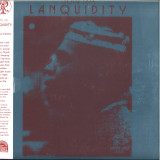
Strut proudly presents a special edition, deluxe repress of Sun Ra’s classic ‘Lanquidity’, for the 25th anniversary of the label. Housed in a tip-on sleeve with OBI strip, this new special editions features an A2 poster including a rare Veryl Oakland photograph of Sun Ra in his home, as well as liner notes by Tom Buchler (Philly Jazz), Michael Ray and Danny Ray Thompson (Sun Ra Arkestra) and Bob Blank. Originally released in 1978 on Philly Jazz, ‘Lanquidity’ was recorded overnight at Bob Bank’s Blank Tapes studio on 17th July 1978 following a performance on Saturday Night Live. “Most critics felt that it was more of a fusion-inspired record,” explains Michael Ray. “As the name suggests, the album is liquid and languid.” Bob Blank adds, “Musically, it was very ad hoc and freeform. There were horn charts but most tracks came out of improvised jams. Sun Ra just did his thing.”
The album 'Lanquidity' consists of five smooth tracks from the Sun Ra discography. It begins gently with 'Lanquidity,' a spontaneous composition by Sun Ra described by Danny Ray Thompson as reminiscent of an Ancient Egyptian Stargazing Ceremony, plotting the stars and planets. 'Where Pathways Meet' follows, featuring Sun Ra's funky interpretation of an Egyptian march, evoking the image of Pharaoh rallying his troops. 'That’s How I Feel' maintains a relaxed groove, featuring reflective trumpet lines from Eddie Gale and solos by John Gilmore and Marshall Allen, with Allen's oboe described as reminiscent of snake-charming. 'Twin Stars Of Thence' dances around Richard Williams' celebrated elastic bassline, while the haunting closer, 'There Are Other Worlds (They Have Not Told You Of),' epitomizes "space music," described by poet Mama Nzinga as 'The essence of light. Spirit takes a ride inside the deep dark space of just being.' Start to finish, Lanquidity remains an effortless, psychedelic pleasure and one of the strongest in the Ra 70's discography.
This new deluxe LP edition of ‘Lanquidity’ features the widely distributed version of the album originally released on Philly Jazz and reflects the album’s original packaging with a metallic foil / magenta sleeve, housed in a tip-on sleeve with OBI strip and featuring both liner notes and a limited edition poster, to celebrate 25 years of Strut records.
Double LP in a gatefold sleeve designed by Simon Fowler. Long-awaited vinyl release for this critically acclaimed album. Featured in The Quietus (best albums of 2023), Mojo (4/5) and Louder Than War.
Scratch Came, Scratch Saw, Scratch Conquered is the 2008 album by Lee ""Scratch"" Perry (born Rainford Hugh Perry), who was a Jamaican record producer, composer and singer noted for his innovative studio techniques and production style. Perry was a pioneer in the 1970s development of dub music with his early adoption of remixing and the use of studio effects to create new instrumental or vocal versions of existing tracks. From his Black Ark Studio in Kingston Jamaica, he worked with and produced a wide variety of artists, including Bob Marley and the Wailers, Junior Murvin, Susan Cadogan, The Congos, and Max Romeo. Later, he moved to Switzerland and reinvented himself as a performance and visual artist but continued to produce innovative music – collaborations include The Beastie Boys, The Clash, Keith Richards, George Clinton, and Adrian Sherwood. Scratch Came Scratch Saw Scratch Conquered is the second in a series of three albums he made with English musician and producer Steve Marshall a.k.a. John Saxon. It features guest appearances by none other than George Clinton & Keith Richards. The 2LP Scratch Came, Scratch Saw, Scratch Conquered is available as a limited edition of 1500 individually numbered copies on translucent green coloured vinyl, housed in a gatefold sleeve.
Incredible new album from our new signing to BDQ records ZAN on the Boogie - Jazz Funk tip, due May. We’re so happy to be releasing this fabulous album.
Zan’s beautiful voice is an abiding part of the Australian music landscape. In the 80’s, she came to prominence out front of Melbourne’s iconic pop funk band
I’m Talking with Kate Ceberano, Zan’s lead vocals shine on one of the bands biggest hits ‘Holy Word’, which is still considered a trail-blazing Australian classic today. She loaned her vocal
talents to some of the most memorable Australian songs including The Models “Out Of Mind Out Of Sight” and “Barbados”. She appears in numerous videos singing backing vocals for a number
of Australian artists.
Zan appeared with I’m Talking in the classic music film Australian Made directed by Richard Lowenstein of Dogs in Space and Mystify fame. The film captured the incredible concert tour, which featured a plethora of major Australian performers such as INXS, Jimmy Barnes, The Divinyls & The Models. In her time with the I’m Taking band and as a solo performer she has made countless appearances on Australian TV including the legendary music programme Countdown.
In the 80’s she even performed for Princess Diana and Prince (now King) Charles at the
Rockin’ the Royals concert, at the Arts Centre in Melbourne, meeting the Royal couple after the show. Zan was bitten by the soul/R&B bug at an early age. Born in London of Sri Lankan heritage,
arriving to the shores of Australia as a young girl. Her love of music took her from Australia to New York and London, where she lived in the 90’s and early 2000’s regularly performing and recording with top international session musicians/artists. She’s also
had the extraordinary honour of performing live with both U2 &
B. B. King, Zan’s self-titled solo album was released through Amber Records in Germany in the mid 90’s and she also toured with UK Acid Jazz band
Mother Earth throughout Europe & Japan, eventually returning to the city she calls home, Melbourne.
Since being back in Melbourne, Zan has performed at various popular music venues such as The Night Cat, Memo and The Espy and in 2019, to the delight of 80’s music fans, Zan sang once again with the re-formed I’m Talking, playing a number of shows supporting Bryan Ferry on his acclaimed Australian tour. The re-formed band received several rave reviews for their shows. Zan’s new material is influenced by her considerable experiences, her rich musical history and the songs and artists she grew up on - soul and R’N B singers such as Chaka Khan, Renee Geyer and many others of that genre. Her new songs are steeped in 80’s dance/boogie funk/soul & pop flavours, re-capturing that feel-good factor from the era whilst bringing to it a new unique and contemporary edge.
“It’s just too easy to make a standard dance track,” Aphex Twin said of his mindset back in 1992. “You’ve got to put a bit of thought into it to get something a bit different.”
‘Didgeridoo’ was released on the Belgian R&S Records label in 1992, and originally peaked at #55 in the UK singles chart in May of that year. Over the last 32 years the track has become one of the essential Aphex Twin tracks in a gargantuan catalogue that continues to amaze and inspire.
“I wanted to have some tracks to play to finish the raves I used to play in Cornwall, to really kill everybody off so they couldn’t dance,” Richard D James, AKA Aphex, told Select magazine back in the 90s. “Digeridoo came out of that.”
Released as a 4 track EP that also included early Aphex productions (now classics) including the industrial, acidic clang of ‘Flap Head’ and hyperbolic futurism of ‘Isopropanol’, the release cemented a relationship with the R&S label that went on to release the ‘Xylem Tube’ EP and the pivotal album ‘Selected Ambient Works 85-92’ in the same year. The label’s owner & A&R Renaat Vandepapeliere reflected “When I first heard Aphex Twin’s music I said, ‘This is it!’, and everybody else said, ‘You’re crazy!’ …a lot of the hardcore R&S fans dropped us. To them it wasn’t music.”
‘Didgeridoo’ (Expanded Edition) is the first time the EP has been re-issued with extra material. Whilst digging in his DAT archive (allegedly stored in an airtight military ammo box), Richard James revisited the recordings, encoding them through a Nakamichi CR7e cassette deck, using the customised deck with vari-speed to encode at speeds “felt right at the time”. Alongside these CR7e versions, the original mixes have been remastered by Beau Thomas at Ten Eight Seven Mastering, offering a dilated insight into one of electronic music’s most endearing releases.
‘Digeridoo’ (Expanded Edition) by Aphex Twin is available on R&S Records from 31st May 2024.
After picking up a camera in 2006 to shoot events at London superclub Fabric, Sarah Ginn started her journey of documenting the dance music scene. With exclusive, behind-the-scenes access at the likes of Fabric, Ultra Festival, Boomtown, Glastonbury, Outlook, Printworks, Creamfields and Hospitality, Sarah captured the sights of UK rave and
dance culture in the 2000s, 2010s and 2020s.
Super Sharp Shooter is a carefully curated selection of over 800 photographs from Sarah’s extensive archives, many never before seen. Spanning drum & bass, dubstep, house and techno, the book showcases festivals, clubs, press shots and record covers, providing an unsurpassed document of electronic music in a colourful celebration of beats and bass.
This deluxe book features artists like Andy C, Skream, Chase & Status, Shy FX, Carl Cox, Fatboy Slim, Goldie, Chemical Brothers, Jon Hopkins, Sub Focus, DJ Zinc, Ben UFO, Craig Richards, Erol Alkan, Miss Kitten, Dusky and many more. Also contained is Sarah’s essay,
The Feedback Loop Theory. A demonstration of how music affects time and energy and makes it a magic entity. Set in colour order to reflect the visible light spectrum, this gorgeous book is a must-have for all music and photography enthusiasts. It has 480 pages in full colour on heavyweight 150 gsm paper. It's available as a book only and as a bundle with an exclusive A2 poster.
“‘I’m looking forward to publishing this book because these actually are my only memories!Research shows that when you take photos it actually affects the way you remember things. So on that note, I hope you all enjoy my crazy spectral journey into sound, the many sights of the rave and everything in between.” - Sarah Ginn
- A1: Mlo - Birds & Flutes
- A2: Pulusha - Isolation (Part Two)
- A3: Space Time Continuum - Fluresence
- B1: David Moufang - Sergio Leone's Wet Dream
- B2: La Synthesis - Frozen Tundra (Dub)
- C1: Richard H Kirk - Oneski
- C2: A Positive Life - The Calling (Loved'ub Mix)
- D1: Sideral - Mare Nostrum
- D2: Primitive Painter - Levitation
- D3: Sun Electric - Love 2 Love
- E1: Lfo - Helen
- E2: Dubtribe Sound System - Sunshine's Theme (Sunshine Remix)
- E3: Human Mesh Dance - 8 (Infinit) (Infinit)
- F1: Link - Arcadian (Global Communication Remix)
- F2: The Arc - Orphic Mysteries
- F3: Bedouin Ascent - Joyriding Iii
Music From Memory is delighted to be turning 50 with a special release: MFM050 - V/A - Virtual Dreams: Ambient Explorations In The House & Techno Age, 1993-1997 (3xLP/2xCD). The first in a series of compilations, alongside more in depth artist-focused releases, Virtual Dreams will delve into music produced during the 1990’s that redefined the boundaries of ‘Ambient’. This was music that explored the possibilities of Ambient music within a new setting, created often by House & Techno music producers for a world beyond dance floors but made very much with the pre and post-clubbing listener in mind.
When House and Techno exploded out of America in the mid 1980s a whole generation was redefined not only musically but also culturally and chemically speaking. Peaking, quite literally, with a second ‘Summer of Love’ in 1988, millions of young people across the world would experience the life-changing ups of a brave new world but with it of course came the downs; enter the concept of a ‘Chill-out’ room. Whilst early Chill-out rooms lacked a specific sound and were often soundtracked by music such as reggae and soul, slowly young Techno and House producers themselves would become increasingly interested in developing a futuristic ‘Ambient’ soundtrack to a world beyond the thud of the main room.
‘Ambient’ in this new age now though had sharper teeth than in Brian Eno's key text for ‘Music for Airports’, instead here the sounds were the mode of transport rather than the backdrop. While the melodies were pretty, the soundscape steered away from the pastoral, dreaming of outer-space and technology as opening up exciting new dimensions. Much like in the first Summer Of Love; the musicians were again exploring psychedelic, mind-altering and transcendental possibilities of music. And also much as in the first Summer Of Love, a psychedelic visual language would accompany the music. Though now the tracks could be accompanied by music videos, utilising early CGI techniques, they would look almost entirely to the future: envisioning technology, nature and humanity intertwined in a new Utopian future. Virtual Dreams of a better world.
From Ambient and early Chill-out classics, to lesser known one-off projects, as well as Ambient deviations by some of House and Techno’s leading producers, Volume One of Virtual Dreams features tracks by Bedouin Ascent, LA Synthesis, LFO, Marc Hollander, Mark Pritchard & Kirsty Hawkshaw, Richard H. Kirk and more.
To celebrate our 50th release the first 1000 copies include a holographic 'Virtual Dreams' sticker plus a special insert poster with artwork by Victoria Pacheco and design by Steele Bonus.
Luuk van Dijk has unveiled his hotly-anticipated debut album First Contact, out 11th November on his own Dark Side Of The Sun label. The Dutch DJ and producer’s maiden LP is the end result of a long and intense voyage of discovery.
Years in the making, it’s a project that Luuk can fully stand behind and be proud of. Next to a search for his own identity and his own place in music, it has also become a passage
through time.
By far his largest body of work to date, the 13-track release kicks off with the suitably-titled ‘Cosmiq’, a deep, grooving sonic exploration that immediately sets the tone. “Because of this
track I wanted to make an album to showcase my other kind of music that people won’t maybe expect of me,” Luuk explains.
Next up is the shimmering, ethereal sounds of ‘Love You’, a track that features the irresistible vocals of US singer-songwriter Dawn Richard and will be released as a single in October. “She really brought this track to a whole new level,” says Luuk. “I couldn’t be more happy with the result.”
Further collaborations come in the form of ‘Wolf’, a majestic, strings-led house cut featuring Steve Burton of oneofmanysteves; ‘Master Plug’, a deep, jackin’ number with Chicago artist
Kid Enigma; and the Detroit-indebted ‘Together We Rise’, punctuated by the spiritual vocals of MC Roga. “I tried making a track the way they used to make music,” Luuk says of the latter.
“With as few machines as possible, just a mixer, sampler and some synths.” Additional highlights include the enchanting ‘Let The Bass Kick’, orchestral ‘Lightning
Striking’ and hypnotic ‘Hot Stuff’, before ‘Knowing How To Love’ closes things out on a peculiarly wistful note. “The last track of the album, also a track that started as an interlude and
ended up being a full song,” says Luuk.
“This song basically sums up how I’ve been feeling the years 2020 and 2021, very emotional, sad, but also hopeful. Everything will be alright.”
One of the hottest new names coming out of Amsterdam’s bustling club scene, Luuk van Dijk is currently making waves in international waters with his infectious take on spirited house
music.
He has already released on labels like Hot Creations, Cuttin’ Headz, Solid Grooves Records and Eastenderz have established his name as a house music prodigy.
He launched Dark Side Of The Sun in 2020 with the aim of exploring a broader approach to his signature style.
First Contact represents a vivid sonic snapshot of one of electronic music’s brightest young talents.
Early DJ Support :
Jamie Jones
Marco Faraone
Carl Craig
Yuksek
Sasch BBC
CamelPhat
Paco Osuna
Stacey Pullen
Tocadisco
A companion piece to the album, Right Now!, this collection contains additional recordings from those sessions, as well as remixes and reimaginings of songs from Right Now! All songs, except for “Reap What You Sow,” have never been released. The psychedelic improv supergroup featuring Dave Alvin and Victor Krummenacher (Camper Van Beethoven, Cracker, Monks of Doom, Eyelids), David Immerglück (Counting Crows, John Hiatt, Monks of Doom, Camper Van Beethoven), drummer Michael Jerome (Richard Thompson, Better Than Ezra, John Cale), and singer/songwriter Jesse Sykes (Jesse Sykes & The Sweeter Hereafter) continues to defy expectations and genre on Spellbinder!
Synthpop, minimal wave, post-punk, goth, new romantic - fans and critics alike have dug deeply into their vintage thesauruses to describe the beguiling work of Nation of Language. And if you can't precisely define the band, that's the point. Frontman Ian Richard Devaney has become prodigious in expanding what synthesizer-driven music can evoke, such that his output is as much an extrasensory journey as it is an all-too-human destination. With that experience in mind, he wrote the band's fourth album - the spectral, spacious Dance Called Memory - in the most humble of ways: chipping away at melancholia by sitting around and strumming his guitar. Nation of Language's first two albums, Introduction, Presence (2020), and A Way Forward (2021), came as pandemic godsends: gorgeous, relatable soundtracks to our collective doldrums. But it was their last LP, Strange Disciple (2023), that catapulted the group from cultural standouts to critical darlings, with the album being named Rough Trade's Album of the Year. With that release, Pitchfork wrote that the band "are learning what it means to get bigger and better." This is Devaney's calling: soulfully translating individual despair into a comforting, collective mourning. The single "Now That You're Gone," which radiates and reverberates with a devastating wistfulness, was inspired by witnessing his godfather's tragic death from ALS, and his parents' role as caretakers for this ailing friend. At its heart, the song is a reflection of how friends can be there for each other, and also highlights a theme throughout the record: the pain and lost promise of friendships that fall apart. On Dance Called Memory, the band once again collaborated with friend and Strange Disciple producer Nick Millhiser (LCD Soundsystem, Holy Ghost!). "What's so great about Nick is his ability to make us feel like we don't need to do what might be expected of us," says synth player Aidan Noell, who, along with bassist Alex MacKay, rounds out the Nation of Language lineup. They imbued Dance Called Memory with a shifted palette - sampling chopped-up drum breaks on "I'm Not Ready for the Change" for a touch of Loveless-era My Bloody Valentine or smashing all of the percussion of "In Another Life" through a synthesizer to cast a shade of early-2000s electronic music. Ultimately, the hope was to weave raw vulnerability and humanity into a synth-heavy album. "There is a dichotomy between the Kraftwerk school of thought and the Brian Eno school of thought, each of which I've been drawn to at different points. I've read about how Kraftwerk wanted to remove all the humanity from their music, but Eno often spoke about wanting to make synthesized music that felt distinctly human," Devaney says. "As much as Kraftwerk is a sonically foundational influence, with this record I leaned much more towards the Eno school of thought. In this era quickly being defined by the rise of AI supplanting human creators I'm focusing more on the human condition, and I need the underlying music to support that_ Instead of hopelessness, I want to leave the listener with a feeling of us really seeing one another, that our individual struggles can actually unite us in empathy."
- A1: Why Don’t You Do Right - Cleo Jons & Dick Reynolds Orchestra
- A2: Fiche Le Camp Jack - Richard Anthony & Les Angels, Dir. Christian Chevallier
- A3: I Pawned Everything - Walter Spriggs & Jesse Stone Orchestra
- A4: Don’t Play No Mambo - The Charioteers & Sid Bass Orchestra
- A5: Mr. Sandman - Chris Powell & The Blue Flames
- A6: Teen Age Rock - Pete Rugolo & His Orchestra
- A7: The Rhinoceros - Osie Johnson & His Orchestra
- B1: Lady Be Good - Knud Jörgensen & The Metronome Singers
- B2: Walk Softly Children - Elizabeth Lands, Orchestra Cond. By Dave Martin
- B3: Timber’s Gotta Roll - The Deep River Boys Feat. Harry Douglass
- B4: Blues In The Closet - The Tritones
- B5: The Baggage Room Blues - Tom Kennedy
- B6: Write Me Baby - The Metrotones
- B7: Rat Race - Little Norman (Norman Kaye)
Auf dem komplett unübersichtlichen Markt der Vinyl-Wiederveröffentlichungen rarer Aufnahmen aus dem im weitesten Sinne Rock & Roll/Rhythm & Blues/Popcorn-Umfeld hat sich die Serie DOWN AT THE UGLY MEN’S LOUNGE mit einer komplett eigenständigen konzeptionellen Farbe etabliert. Das authentische 10“-Format und die Covergestaltung mit obskuren und anonymen Musikerfotos der ersten fünfzig Jahre des 20. Jahrhunderts sind gleichermaßen unverkennbar wie unwiderstehlich.
Das stilistische Spektrum der neuen Auswahl rarer und rarster Trouvaillen aus dem legendären Archiv von Prof. Bop bleibt dem Ursprungskonzept treu: Zwischen Boogie und Mambo, zwischen Blues und Bop, zwischen Exotica und Egozentrik...weniger amateurhaft gespielter Teenager-Rockabilly, eher Rock & Roll etc. von musikalisch versierten und Jazz-geschulten Vollprofis. Allesamt Aufnahmen der goldenen Epoche 1950 – 1962.
On April 13th, 2019 Record Day, Vega Records celebrates with the new release 'My Body' performed by none other than the Legend and King Luther Vandross. This is a song that was never released and was recorded back in 1979 by Luther Vandross when he was working on the colossal album 'Never Too Much'. Brought to Louie Vega by artist and renowned background singer to the greats Mr. Fonzi Thornton, Vega was able to work on the immaculate sounds of Vandross. As Vega recalls 'When I put up the tracks in my studio it sounded as if Luther were singing today, it made it so easy to come with the house grooves having such a perfect vocal performance and one of kind tone. Once I came with the music, I felt I needed to call his original background singer team, which Fonzi organized in a flash. He called upon the genius background singers Brenda White, Lisa Fischer, Cindy Mizelle, Tawatha Agee and Fonzi himself. We are talking the A-Team of background singers, a dream come true in my studio', Vega recalls.
The Result is a stunning art piece by Richard Wilson on the cover of the vinyl double pack 12'. There are seven versions to choose from ready to work back to back.
So not only is it record day, it's also the birthday of Luther Vandross which is on April 20,
HAPPY BIRTHDAY LUTHER VANDROSS!!!
LOUIE VEGA SENDS A BIG HAPPY BIRTHDAY TO LUTHER VANDROSS & THANK YOU TO FONZI THORNTON, SEVETA WILLIAMS, AND VANDROSS MUSIC, LLC.
- 1: The Greatest Gift Of All
- 2: Go Tell It On The Mountain
- 3: Heaven Came (On Christmas Day)
- 4: Little Drummer Boy
- 5: Still The Light
- 6: Silent Night
- 7: On This Holy Night
- 8: Joy To The World
- 9: Reason For The Season
- 10: Winter Wonderland
Legendary Metal Band STRYPER Announces Long-Awaited Christmas Album 'The Greatest Gift Of All' out November 21 via Frontiers Music Srl Iconic and long-running Christian metal band STRYPER is set to release their long-anticipated Christmas album, The Greatest Gift Of All, on November 21st via Frontiers Music Srl. Fans have been requesting a holiday record for years—and now, the wait is finally over. The celebration begins this July with the release of the first single, "Still the Light". STRYPER's current lineup features original members Michael Sweet, Robert Sweet, and Oz Fox, alongside bassist Perry Richardson. Together, they continue to craft what they believe is some of the most powerful and inspiring music of their career. The band recently wrapped up a successful world tour in support of their latest studio album, When We Were Kings. The tour spanned the USA, Europe, and South America, and marked the band’s 40th anniversary—a milestone celebrated with a dynamic setlist featuring classic hits, fan favorites from the newer era, outfit changes, and an upgraded stage production. As STRYPER continues to evolve, they remain a cornerstone of Christian rock and metal, blending faith and heavy music for four decades. Looking ahead, the band is also working on a Kickstarter-funded documentary directed by Chris Atkins, offering a behind-the-scenes look at their remarkable journey. With over 10 million albums sold worldwide and several Billboard Top 40 hits, STRYPER shows no signs of slowing down as they continue to write, record, and perform for their global fanbase.
Old-time and traditional music stay exciting for their contrasts. Exacting instrumentation honed through mentorships and late-night jams at fiddler's conventions tangles with a community-sourced inventiveness that influences variants and new sounds. Joseph Decosimo is a master of this genre for this very reason, blending deep technique with an openness and curiosity that keep his music crackling with life. A "marvelous fiddler" (No Depression) and banjo player who braids "exultation and veneration" (INDY Week) into his music, on his third solo album Fiery Gizzard Decosimo gathers a close-knit ensemble of friends from his musical career to infuse his interpretations of fiddle and banjo pieces with a contagious communal joy. As an artist working with traditional music from the South and Appalachia, Decosimo chooses songs based not only on historical significance and lineage but also his own sensory approach. For Fiery Gizzard, his ear was tuned to otherworldly tones and mystery, sourcing from field recordings such as Virginia fiddler Luther Davis' hypnotic version of "Shady Grove" while amping up the music's psychedelic potential. On the middle Tennessee banjo composition "Flowery Girls," a VHS of bluesman Abner Jay inspired Decosimo to rig up a pickup inside a fretless banjo and play it thr ough a tube amp to capture some of Jay's edge and funkiness. But to round out the sound and keep it kinetic meant galvanizing a genre-eschewing crew to jam out - and not in a "spaced-out drooly" kind of way, he laughs, but as a sort of "responsive conversation." Decosimo has always been a community-minded artist. He began playing as a seventh graderin Tennessee, fostering relationships with older players at jams and in homes, a learning mode natural to his inquisitive nature and desire for musical connection. A folklorist by intuition, he later became one by profession, studying with old-time legend Clyde Davenport, teaching in East Tennessee State University's renowned bluegrass program, and receiving his PhD at the University of North Carolina with a dissertation titled "Catching the `Wild Note': Listening, Learning, and Connoisseurship in Old-Time Music." In North Carolina, Decosimo kicked about in the verdant environment of Durham and Chapel Hill's folk and indie scenes, collaborating with artists including Alice Gerrard, Hiss Golden Messenger, and Jake Xerxes Fussell. This community has influenced his own music, including his "sublime and strangely heartening" (Bandcamp Daily) 2022 release While You Were Slumbering and Beehive Cathedral, Decosimo's 2024 "Appalachian mountain music treasury" (New Commute) trio album with Luke Richardson and Cleek Schrey for Dear Life Records. Continuing on this path, Fiery Gizzard is home base for a loose outfit of mostly Tarheel-based musicians from within and beyond traditional music. Inspired by a tour with fiddler Stephanie Coleman (Nora Brown), guitarist Jay Hammond, and synth builder and multi-instrumentalist Matthew O'Connell, Decosimo assembled studiomates based on close friendships and comfort. Coleman, O'Connell, and Hammond contribute to Fiery Gizzard, along with bassist and producer Andy Stack (Helado Negro, Wye Oak), horn player Kelly Pratt (Beirut, David Byrne), Mipso and Fust's Libby Rodenbough, Joseph O'Connell (Elephant Micah), and trad/experimental artist Cleek Schrey. Decosimo's fiddle and banjo work is virtuosic, intricate and simple simultaneously, a testament to his many years of study. On some tracks, his playing or lovely, plain-hearted singing is the centerpiece, such as on his interpretations of Texan street preacher Washington Phillips' 1929 recording "I Had a Good Father and Mother" or the Eastern Kentucky fiddle barn-burner "Glory in the Meetinghouse," famously played by Luther Strong for Alan Lomax. But there's also a trusting open-door policy, like where Southern Appalachian tune "Ida Red" relaxes into Coleman's sweet, confident fiddling and Hammond's loping guitar. As a bandleader, Decosimo's confidence and enthusiasm for the music reveal the heart of traditional music and how it can come to life through community. Fiery Gizzard is Joseph Decosimo as a powerful champion of traditional music - a sponge who soaks up as much as he squeezes out, a responsive artist who makes his genre accessible, and a magnet who can bring musicians of all sorts into his orbit with his same passion.
- 1:
- 2:
- 3:
- 4:
- 5:
- 6:
- 7:
- 8:
The Sludge Of The Land is the new album by digital folklore and post-exoticism Italian duo Babau. Their first full length since 2023’s Flatland Explorations Vol. 2, with The Sludge Of The Land Babau lands on Impatience with their signature audio-prestidigitation at it’s most disorientingly pungent and zonked, a uniquely contemporary approach described as the sound of a continent moving; animals, plants and minerals included.
As part of a residency at Casa degli Artisti, Milan, in 2022, Babau turned their atelier into a recording studio and performing venue thanks to Francesco Piro, who produced the entirety of the album. There, the duo improvised with different acoustic and digital instruments for several hours a day. Returning after ten years to a sound more akin to a band or small orchestra, Babau re-explores tropes and themes of exotica and jazz from their unique and off-kilter perspective of terminally-online diggers-dwellers of the internet flatland.
An homage to digital content consumption and dopamine-infused sensory overloads, The Sludge Of The Land imagines itself as an abstract sonic wunderkammer of online detritus. By diving into the world of ‘sludge content’: audiovisual chaos produced by mixing different content using split screens or dizzying patchworks of videos, Babau celebrates the formless, viscous goo, spam, chum and slop of out-of-context moving image, fast paced digital videos and lo-fi mp4 artifacts. By endlessly spiraling into the non-spaces of The Net, Babau explore the uncharted parageographies of lavacasts, mysterious Chinese anthropozoomorphic legendary beings, vampiric doomscrolling glides and doppelganger, ctrl+c & ctrl+v spiritualism. These ghosts of pointless microevents and traveling-without-moving bedroom boredom are stuffed by Babau with the epic tone and compositional approach of exotica and world music 2.0 reveries, resulting in an absurd, playful narrative of the dangers and allures of the web.
Bringing together the sound of Richard Hayman and Black Dice, Korla Pandit and Sun Araw, Tony Scott and Carl Stone, once again the duo crafts a compelling audio-textual hallucination of transglobal chimera. A multi-fi, extremely layered treasure of fifth world music.
RIYL - Sun Araw, the strangest corners of the internet, Senyawa, digital wind instruments, Nuke Watch, Black Dice, exotica, hallucinating.
Babau is the pantropical project of Artetetra founders Matteo Pennesi and Luigi Monteanni, where their fascination with exotica, world music 2.0, and field recordings merges with the compositional and improvisational techniques of computer music.
Their latest work, All the Gurls were at the Women’s Archo Ashinto, was recently released by Bamboo Shows, while the previous Stock Fantasy Zone and Flatland Explorations Vol.2, were released by Discrepant. They were selected as SHAPE+ artists in 2023, and the duo has performed at various festivals in Italy and beyond, including Fusion, Club to Club, Terraforma, Nextones, Outernational Days, Camp Cosmic, and Saturnalia. For years, they have been striving to synthesize what has been described as the sound of a continent in motion—people, animals, plants, and minerals included.
The Sludge Of The Land was produced and mixed by Francesco Piro at Casa degli Artisti, Milan, and co-produced by Babau
Drums by Giovanni Todisco, bass by Francesco Piro and piano on A4 by Vittorio Cosmo.
Master by Nick Foglia.
Art by Luca Schenardi.
- A1: Hosanna (Meridian)
- A2: First Born (Redeemed)
- A3: When Angels Speak Of Love
- A4: Doubleupptown (Larocque)
- A5: W-I-S (Above Every Other)
- A6: Pistol Poem (Leadbelly)
- A7: Whip Appeal (Pipn8Ez)
- A8: Seven Trumpets
- A9: Giz'aard ($Uckets)
- A10: Helpmeet (Iyadunni)
- B1: Flir2A
- B2: U&Me (Decemberseventeen)
- B3: Illbethere, 4Everandever
- B4: Alàáfía (Cita's World)
ALTERNATE COVER[27,52 €]
Honour's debut album is a ligament stretching from Lagos to London and to New York, curling across the diaspora and brushing the darker hues of blues, hip-hop, free jazz, ambient, gospel with Christian mythology and Yoruba folklore. As cinematic as it is painterly, Alàáfíà is a meditation on themes of life, death and love that pulls inspiration from the unexpected poetic profundity of casual conversations, field recordings, literature, ephemera, or personal archives. The result is an impressionistic vision in Black and Blur that both exhausts and implicates language_substantiating a mythos proposed by Fred Moten that sublimates boundaries between everywhere and nowhere; history and the present; the individual and the universal. Alàáfíà delineates a gothic landscape cut by overdriven beats, swooping orchestral blasts, choral bursts and ear- splitting fuzz, where the fleshly and spiritual realms commune. Dedicated to Honour's late grandmother, the title track began to take form after their last embrace and remains steeped in her influence and spirit_a tape-saturated composition that starts in Lagos and ends in London's smoke-stained cityscape, the song's dream-like quality developed out of the artist's grief and PTSD coping with this loss. Beneath the stretched guitar drones and stuttering loops, their grandmother's shared faith bubbles to the surface. "When Angels Speak of Love," borrows its title from two works by Sun Ra and bell hooks, respectively. Sculpting echoes of praise music into disorienting spirals perforated with syrupy DJ Screw-inspired breaks and sharp splinters of melancholic guitar, "When Angels Speak of Love" engages a conceptual dialogue with the spirits of both late thinkers, folding them into Honour's pantheon of ancestral guides. The album's ninth track, "Giz Aard ($uckets)," is a dirge of regimented drums which anchor this somber melody as it whirls into a blizzard of heartache, uncertain if its consequence will be death or eternal joy. The album's sole lyrical offering, "Pistol Poem (Lead Belly)," begins with a darkly humorous bar, "He went thru hell and back/ came back/ 2 get the strap," that swells into a haunting allegory based on the life of Philip "Hot Sauce" Champion. A modern take on the Blues, Honour's lyrics reify the artist's status as a student of both literature and popular culture, crossbreeding the artist's clever wordplay with additional references to Richard Pryor, Robert Johnson, Kelly Rowland & Bryon Gysin. Setting core principles of hip-hop, R&B, jazz and gospel music to atemporal soundscapes and compositions, Honour crafts a record that marinates in its own knotty contradictions. The ghosts that sit on the artist's shoulders have never been more tangible than with this emotive debut.
If any album could conjure up the revolutionary spirit of Jamaica in the mid 1970’s, Tapper Zukie’s invincible M.P.L.A. set would surely be a fighting contender. The coming together of great rhythms and meaningful lyrics in a time of unrest in the country seemed to have made the album all the more urgent and relevant. As time would tell it would also prove to be a lasting success, not only with the hard core reggae fans but also their punk counterparts. Who embraced its militant themes and crossed the album over to a whole new audience. Tapper Zukie (b. David Sinclair, Kingston, Jamaica.) had already returned from a trip to London England by the mid 70’s .Initially sent with help from his parents, brother Blackbeard and producer Bunny ‘Striker’ Lee to remove the youth from his troublesome ways on the streets of Kingston, Jamaica. He had performed some live shows in London and made some recordings for Larry Lawrence, that produced his debut ‘Jump and Twist’. Alongside other recordings that would emerge as his ‘Man A Warrior’ set. But feeling homesick he had returned to Jamaica in 1974 to work with Bunny Lee. His work would consist of arranging sessions and collecting payments to bodyguard, the now very successful producer. His frustration of Bunny Lee’s reluctance to record him led him cutting ‘Judge I Oh Lord’ for producer Lloydie Slim. Bunny Lee’s then recording of Tapper’s ’Natty Dread Don’t Cry’ and its subsequent release aboard, led to an altercation between Tapper and producer. The police had to be called and an offer to provide the singer with a set of rhythms put this matter to rest. The eight rhythms and a further two from Jo Jo Hookim and Ossie Hibbert alongside some free studio time at King Tubby’s Studio would result in the M.P.L.A album.
The rhythm provided by Jo Jo Hookim was a Channel One studio cut by The Revolutionaires based on Little Richards ‘Freedom Blues’ and provided the backdrop to M.P.L.A. The Ossie Hibbert rhythm again cut at Channel One based on The Royals ‘Pick Up The Rockers’ would provide the backdrop to Tapper’s ‘Pick Up The Rockers’. These and the remaining Bunny Lee rhythms, were all cut in a one hour session, at King Tubby’s Studio. ’Don’t Get Crazy’ cut on a rhythm based on the Joe Frazier rhythm to Tony Brevett’s ‘Don’t Get Weary’. ‘Go De Natty’ cut on Cornell Campbell’s ‘Please Be True’, originally a cut to Alexander Henry’s ‘Please Be True’. ‘Stop The Gun Shooting’ runs over Horace Andy’s ‘Skylarking’.’Ital Pot’ cut on Johnny Clarke’s version of Burning Spear’s ‘Creation Rebel. ‘Marcus’ see’s Tapper professing over Johnny Clarke’s ‘Poor Marcus’ .’Chalice To Chalice’ pulls on Johnny Clarke’s ‘Give Me a Love’,’ Don’t Deal With Babylon’ answers Junior Ross and The Spears ‘Babylon Fall’ and ‘Freedom’ rides on the great rhythm of Junior Ross and The Spears ‘Liberty’. An outstanding album cut by one of Jamaica’s finest DJ’s and producers the mighty Tapper Zukie. We hope you enjoy this now timeless set.
- A1: Floodbound
- A2: Cure Your Ills
- A3: ? | I'm No Good Without You
- A4: For A While
- A5: Golden Vanity
- A6: Rainmaker, Sunseeker
- B1: The House On The Hill
- B2: Ruby Red
- B3: She Never Sleeps
- B4: The Hanging Stars
- B5: Hang Me High
- B6: Crippled Shining Blues
- B7: Running Waters Wide
*Long overdue reissue of the first album by The Hanging Stars to coincide with their tour support slot with Edwyn Collins – initial 300 copies come with 12 x 12 print*
“In late-Sixties California, the Byrds and Flying Burrito Brothers combined traditional country music with hippy rock to great success. The influence lingered and whatever cultural relevance it has this is a delightful, transporting listen” – The Times 4/5
London-based psych-folk outfit The Hanging Stars re-release their much-loved debut album Over the Silvery Lake on Crimson Crow. Blending folk pastoralism with swampy 60s Americana, they sound like the missing link between the California desert sun and the grey skies of London Town. The album was recorded between LA, Nashville and Walthamstow, with each of these vastly different places leaving an indelible mark on the songs.
Now signed to the Loose Records label and fronted by London-based songwriter, singer and guitarist Richard Olson (The See See, Eighteenth Day of May), The Hanging Stars are essentially a loose collective of people who weave together a blissed-out psychedelic tapestry. The rest of the core band is made up of Sam Ferman on bass and Paulie Cobra on drums, Horse on pedal steel and Patrick Ralla on banjo, guitar. They jam rather than write and hang out rather than rehearse, harnessing a kind of tipsy euphoria resplendent with luscious arrangements and glorious vocal harmonies.
During 2015, prior to this album’s original release the band released two critically acclaimed singles via The Great Pop Supplement (both of which also appear on the album). “Golden Vanity” was premiered by The Line of Best Fit who said; “you'd be forgiven for thinking you'd just unearthed a rare deep cut from the late 60s/early 70s boom of psychedelia infused Americana” and “The House on The Hill” was described by The Guardian as; "a hazy, desert-dream of a song, nicely sharpened with steely-eyed guitars, Mersey-laced harmonies and just a whiff of the Gun Club”.
There are a number of allusions to nature and the weather on the album, borne in part out of the contrasting surroundings in which it was produced. The band’s fascination with Americana led them to record some of the material Stateside, laying down some of the parts at Battle Tapes Studios in Nashville (Lambchop, Paperhead), as well as at Vision Quest Studios in Los Angeles with Rob Campanella. His work with The Quarter After, The Brian Jonestown Massacre, Beachwood Sparks The Tyde, and GospelbeacH was a perfect match to capture their sound and they even had San Franciscan legend Chrystof Certik step in on lead guitar for a couple of tracks.
Following the LA recordings, a trip to the Californian desert provided the core notion of what they wanted to produce - a shard of light that they clung on to whilst recording the rest of the album in the significantly more rain-soaked atmosphere of Walthamstow, London, under the watchful eye of Brian O'Shaughnessy at Bark Studios (The Clientele, Comet Gain). As the band explained at the time: “Ultimately we hope you can hear both the sand and the rain in this record.”
The Hanging Stars place themselves firmly as part of a long folk tradition encompassing European and North American influences – as a continuation rather than a pastiche of these styles. This is the sound of a band really coming in to their own, fully formed and in no doubt of their vision. With Over the Silvery Lake they succeeded in producing a record, which has the country, blues and folk traditions at its heart.
Everything Is Recorded, the collaborative music project centred around producer Richard Russell, returns with a brand new single, “Porcupine Tattoo” - a stripped-back lament featuring two American musical icons - Noah Cyrus and Bill Callahan - who appear on record together for the very first time. The collaboration came together while Russell was hosting sessions for a forthcoming Everything Is Recorded album, one set to build on previous acclaimed releases including 2018’s eponymous, Mercury Prize-nominated debut album. Reaching out to Callahan - an artist he’s long admired and whose song “I’m New Here” was covered by, and provided the title for, Gil Scott-Heron’s final, Russell-produced studio album - Russell asked the simple question “who would you like to write a song for?”. “Noah Cyrus” was Callahan’s reply. The final single features Callahan’s original demo vocal, pitched down and resting on layers of sub bass and complemented by Cyrus’ crystalline counterpoint vocal. It was recorded during a rainy week of sessions in a bungalow at Los Angeles’ Chateau Marmont, which Russell described as “comfortable but haunted”. The song continues a lineage of Russell productions – from “I’m New Here” to Bobby Womack’s “Deep River” and Damon Albarn’s “History of a Cheating Heart” – that explore a sparser, more acoustic side of his sound. The limited edition 7” vinyl single is released on XL Recordings in partnership with Drag City, Bill Callahan’s long term label home. The 7” exclusively features a second collaboration between Everything Is Recorded and Callahan in the form of “Norm”, a tribute to the Austin-based singer songwriter’s favourite comedian Norm MacDonald”
Das von den Multiinstrumentalisten Nicolò und Federico Vese gegründete italienische Progressive-Metal-Duo Asymmetric Uni-verse hat sich mit seinem Sound, der die aggressive Intensität des Metal mit der Harmoniefülle und dem Improvisationsgeist des Jazz-Fusion verbindet, einen festen Platz in der modernen Instrumentalszene erspielt. Entstanden aus der gemeinsamen Lei-denschaft für Komposition und Klangforschung während ihrer intensiven Studienzeit vor fast 10 Jahren, veröffentlicht die Band nun ihr Debütalbum "A Memory And What Came After" bei InsideOutMusic. Das kommende Album, an dem die Band seit Ende 2023 arbeitet, spiegelt eine verfeinerte Vision und tiefere Reife sowie einen kohärenteren und ausdrucksstärkeren Sound wider. Das Album wird auch durch Gastauftritte bereichert, darunter Soli von Richard Henshall (Haken) und Jared Yee (Sungazer). "Dass Richard Henshall bereit war, ein Solo für uns zu spielen, war eine große Ehre! Wir sind seit ihrem ersten Album Fans von Haken. Die Art und Weise, wie er sein Gastsolo komponiert hat, war un-glaublich", sagt Nicolò. "Jared hat uns mit einem melodischen Saxophon-Solo überrascht, das perfekt in das Stück passte und den Räumen Bedeutung verlieh".Mit einem ambitionierten neuen Album, wachsender internationaler Präsenz und einer kompromisslosen kreativen Vision ver-schieben Asymmetric Universe weiterhin die Grenzen dessen, was instrumentale progressive Musik sein kann - technisch an-spruchsvoll, emotional mitreißend und völlig eigenständig. "A Memory And What Came After" erscheint als Limited Edition CD Digipak, als Limited Edition blau-schwarz marmorierte LP sowie als Digital Album.
Originally conceived as a compilation of outtakes and live recordings from The Shadow Ring's 1995 stateside tour, Wax-Work Echoes takes its name from the first line of "Put the Music in Its Coffin," the title track of the group's breakthrough release. Lambkin abandons the bitsand- bobs approach, advancing the Shadow Ring concept with entirely original material that builds on the unit's self-mythologizing lyrics, celebrates the clicking of horse hooves, ponders on the sociability of rats and mice, and warns of the dangers of poultry. The first Shadow Ring album to officially include Tim Goss in the main lineup, Wax- Work Echoes reveals the group in its final and lasting form, awash in the outer bounds of atmospheric exploration, with Lambkin's familiar wry and morbid lyricism and the stripped-down angularity of amateurishly detuned guitars fully intact. While Klaus Canterbury and Tony Clark seem all but forgotten, and the shrugged off S. Fritz is listed on the liner notes as performing only "when required," Lambkin did solicit contributions from outside the inner circle. A bit of "Mambo Twist," lifted from a tape of unreleased Vitamin B12 material sent to Lambkin by Alasdair Willis, found its way into "V.E.R.M.I.N.," while an extended epistle contribution from Richard Youngs (and, technically, Brian Lavelle) would be employed in the second half of "Catching Sight/Of Passing Things." Released on CD in 1996 for Bruce Russell's newly minted Corpus Hermeticum, Wax-Work Echoes was recorded concurrently with intense rehearsal periods, in anticipation of the forthcoming "Rose Watson Tour," and was supported by a celebratory fanzine media blitz. The album seemingly absorbs the frenetic excess of the band's transatlantic travels; Wax-Work Echoes channels the trio's wilder instincts into an unresolved catharsis, not yet free of frustration or restlessness. Out of print for almost three decades and available here for the first time ever on long-playing disc, Wax-Work Echoes is a classic from the outer eddies of The Shadow Ring's sound, a must-have for any aficionado's collection: "A window slides, glass slips from frame / And canvas carcass breathes again." Throughout their legendary, decade-long run, the Shadow Ring were an enigmatic force on the international musical sub-underground. Before their disbandment in 2002, this shambolic rock outfit, formed by a group of rowdy teenagers in southeast England, left behind a mighty run of eight LPs, a handful of 7"s, and a spate of raucous live shows and cryptic zine appearances on both sides of the Atlantic, all which have bolstered their enduring word-of-mouth mystique. Beginning in 2023 with the first-ever vinyl pressing of the self-released pre-Shadow Ring tape The Cat & Bells Club (1992), Blank Forms Editions has been conducting a systematic retrospective of the storied group. Wax-Work Echoes and Hold Onto I.D. are the latest releases in a multiyear reissue effort that includes several LPs, a comprehensive CD box set, and a nearly five-hundred-page book.
- Ida Red
- Glory In The Meetinghouse
- Flowery Girls
- I Had A Good Father And Mother
- Shady Grove
- Pretty Fair Maid
- Billy Button
- Puncheon Camps
- The Queen Of Rocky Ripple
- Boatsman
SEAWEED GREEN VINYL[22,27 €]
Old-time and traditional music stay exciting for their contrasts. Exacting instrumentation honed through mentorships and late-night jams at fiddler's conventions tangles with a community-sourced inventiveness that influences variants and new sounds. Joseph Decosimo is a master of this genre for this very reason, blending deep technique with an openness and curiosity that keep his music crackling with life. A "marvelous fiddler" (No Depression) and banjo player who braids "exultation and veneration" (INDY Week) into his music, on his third solo album Fiery Gizzard Decosimo gathers a close-knit ensemble of friends from his musical career to infuse his interpretations of fiddle and banjo pieces with a contagious communal joy. As an artist working with traditional music from the South and Appalachia, Decosimo chooses songs based not only on historical significance and lineage but also his own sensory approach. For Fiery Gizzard, his ear was tuned to otherworldly tones and mystery, sourcing from field recordings such as Virginia fiddler Luther Davis' hypnotic version of "Shady Grove" while amping up the music's psychedelic potential. On the middle Tennessee banjo composition "Flowery Girls," a VHS of bluesman Abner Jay inspired Decosimo to rig up a pickup inside a fretless banjo and play it thr ough a tube amp to capture some of Jay's edge and funkiness. But to round out the sound and keep it kinetic meant galvanizing a genre-eschewing crew to jam out - and not in a "spaced-out drooly" kind of way, he laughs, but as a sort of "responsive conversation." Decosimo has always been a community-minded artist. He began playing as a seventh graderin Tennessee, fostering relationships with older players at jams and in homes, a learning mode natural to his inquisitive nature and desire for musical connection. A folklorist by intuition, he later became one by profession, studying with old-time legend Clyde Davenport, teaching in East Tennessee State University's renowned bluegrass program, and receiving his PhD at the University of North Carolina with a dissertation titled "Catching the `Wild Note': Listening, Learning, and Connoisseurship in Old-Time Music." In North Carolina, Decosimo kicked about in the verdant environment of Durham and Chapel Hill's folk and indie scenes, collaborating with artists including Alice Gerrard, Hiss Golden Messenger, and Jake Xerxes Fussell. This community has influenced his own music, including his "sublime and strangely heartening" (Bandcamp Daily) 2022 release While You Were Slumbering and Beehive Cathedral, Decosimo's 2024 "Appalachian mountain music treasury" (New Commute) trio album with Luke Richardson and Cleek Schrey for Dear Life Records. Continuing on this path, Fiery Gizzard is home base for a loose outfit of mostly Tarheel-based musicians from within and beyond traditional music. Inspired by a tour with fiddler Stephanie Coleman (Nora Brown), guitarist Jay Hammond, and synth builder and multi-instrumentalist Matthew O'Connell, Decosimo assembled studiomates based on close friendships and comfort. Coleman, O'Connell, and Hammond contribute to Fiery Gizzard, along with bassist and producer Andy Stack (Helado Negro, Wye Oak), horn player Kelly Pratt (Beirut, David Byrne), Mipso and Fust's Libby Rodenbough, Joseph O'Connell (Elephant Micah), andtrad/experimental artist Cleek Schrey. Decosimo's fiddle and banjo work is virtuosic, intricate and simple simultaneously, a testament to his many years of study. On some tracks, his playing or lovely, plain-hearted singing is the centerpiece, such as on his interpretations of Texan street preacher Washington Phillips' 1929 recording "I Had a Good Father and Mother" or the Eastern Kentucky fiddle barn-burner "Glory in the Meetinghouse," famously played by Luther Strong for Alan Lomax. But there's also a trusting open-door policy, like where Southern Appalachian tune "Ida Red" relaxes into Coleman's sweet, confident fiddling and Hammond's loping guitar. As a bandleader, Decosimo's confidence and enthusiasm for the music reveal the heart of traditional music and how it can come to life through community. Fiery Gizzard is Joseph Decosimo as a powerful champion of traditional music - a sponge who soaks up as much as he squeezes out, a responsive artist who makes his genre accessible, and a magnet who can bring musicians of all sorts into his orbit with his same passion.
- 1: Mayfair - St Sound Techniques Session – March 968
- 2: Time Has Told Me - 1St Sound Techniques Session – March 1968
- 3: Man In A Shed- 1St Sound Techniques Session – March 1968
- 4: Fruit Tree - 1St Sound Techniques Session – March 1968
- 5: Saturday Sun - 1St Sound Techniques Session – March 1968
- 6: Strange Face - 1St Sound Techniques Session – March 198
- 7: Strange Face – Rough Mix With Guide Vocal – September 1968
- 8: Day Is Done – Take 5 – April 196
- 9: Day Is Done – Take 2 – November 168
- 10: Day Is Done – Take 7 – April 1969
- 11: Man In A Shed – Take 1 – May 1968
- 12: My Love Left With The Rain – Cambridge, Lent Term 1968
- 1: Blossom – Cambridge, Lent Term 968
- 2: Instrumental – Cambridge, Lent Term 1968
- 3: Made To Love Magic – Cambridge, Lent Term 1968
- 4: Mickey’s Tune – Cambridge, Lent Term 1968
- 5: The Thoughts Of Mary Jane – Cambridge, Lent Term 1968
- 6: Day Is Done – Cambridge, Lent Term 198
- 7: Time Has Told Me – Cambridge, Lent Term 1968
- 8: Three Hours – Take 2 – November 196
- 9: Time Has Told Me – Take 4 – November 168
- 10: Strange Face – Take 1 – November 1968
- 11: Saturday Sun – Take 1 – November 1968
- 12: Fruit Tree – Take 4 – November 1968
- 3: Mayfair – Take 5 – January 1969
- 4: River Man – Take 1 – January 1969
- 5: Way To Blue – Cambridge – Winter 1968
- 6: The Thoughts Of Mary Jane – Take 2 – April 199
- 7: Saturday Sun – Take 1 Into Take 2 – April 1969
- 8: River Man – Take 2 – April 1969
- 1: Time Has Told Me
- 2: River Man
- 3: Three Hours
- 4: Way To Blue
- 5: Day Is Done
- 6: Cello Song
- 7: The Thoughts Of Mary Jane
- 8: Man In A Shed
- 9: Fruit Tree
- 10: Saturday Sun
- 1: Time Of No Reply – Take 3 Into Take 4 – December 968
- 2: Cello Song – Take 4 – January 1969
The Making Of Five Leaves Left tells the story of how Nick Drake’s debut album ‘Five Leaves Left’ came to be released in 1969. This Nick Drake Estate authorised 4LP edition comprises over 30 previously unheard outtakes from the sessions, compiled across three discs. The final disc to complete the package is the original Joe Boyd produced album. The whole set has been mastered by John Wood. Accompanied by a 60 page book printed on special textured paper stock, written by Neil Storey in collaboration with Richard Morton-Jack, complete with full track recording details, charts and recording history. This Nick Drake Estate authorised 4CD edition comprises over 30 previously unheard outtakes from the sessions, compiled across three discs. The final disc to complete the package is the original Joe Boyd produced album. The whole set has been mastered by John Wood.
Accompanied by a 60 page book printed on special textured paper stock, written by Neil Storey in collaboration with Richard Morton-Jack, complete with full track recording details, charts and recording history.
- A1: Design - Premonition
- A2: Vision - Lucifer’s Friend
- A3: Richard Bone - Alien Girl
- A4: John Howard - I Tune Into You
- A5: Ian North - We’re Not Lonely
- A6: Selwin Image - The Unknown
- B1: Harry Kakoulli - I’m On A Rocket
- B2: Rich Wilde - The Lady Wants To Be Alone
- B3: Billy London - Woman
- B4: Alan Burnham - Science Fiction
- B5: The Microbes - Computer
- B6: The Goo-Q - I’m A Computer
- C1: Gerry & The Holograms - Gerry & The Holograms
- C2: The Warlord - The Ultimate Warlord
- C3: Die Marinas - Fred From Jupiter
- C4: Dee Jay Bert & Eagle - I Am Your Master
- C5: Peta Lily & Michael Process - I Am A Time Bomb
- C6: Sole Sister - It’s Not What You Are But How
- D1: Alasdair Riddell - Do You Read Me?
- D2: Karel Fialka - Armband (The Mystery Song)
- D3: John Springate - My Life
- D4: Idncandescent Luminaire - Famous Names
- D5: Disco Volante - No Motion
- D6: Dream Unit - A Drop In The Ocean
Compiled by Philip King
“And then came the rise of synth pop : blokes with dodgy haircuts hunched over keyboard-operated
machines stuffed with wires and do-it-yourself tone oscillators making sounds like a brood of geese
passing gas in a wind tunnel. Whoopee! This is the way the ‘70s ended : not with a blood-curdling bang
bang but with a cheap, synthesized, emasculating whimper.”
NICK KENT, NME.
All The Young Droids: Junkshop Synth Pop 1978-1985 is a new compilation that charts the
underbelly of the epoch-defining sound of the synthesiser in 80s popular music. Compiled by Philip
King (previously seen compiling All The Young Droogs, Glitterbest and Boobs - The Junkshop
Glam Discotheque), the music here connects the dots between DIY synth enthusiasts grappling with
new, cheap synthesisers at the tail-end of punk and wannabe, jobbing songwriters enthral to the new
music pioneered by Gary Numan, Depeche Mode and Daniel Miller’s Mute Records. Featuring rare
tracks of auto-didactic progressive pop music, proto-techno punk, shoot-for-the-stars-land-in-the-gutter
chart flops and heralded, underground synth classics, School Daze paints a picture of beautiful failure.
Complete with extensive sleeve notes written by King and never before seen imagery, all 24 tracks
were remastered by RPM in-house engineer Simon Murphy, many from vinyl copies due to lost master
tapes. The story told on All The Young Droids is one of the dawning opportunity presented by both the
emergence to the market of cheaper analog synthesisers and the distribution networks plus indie labels
that exploded with the advent of punk music in 1976. While the music that sprouted out all over the
globe in the wake of these factors was decried as fake, plastic, a refutation of punk’s guitar-led
revolution, it’s telling that much of the music on All The Young Droids.. was created in bedrooms,
ramshackle studios and home-made set ups with often borrowed equipment. In the era of record labels
jumping to capitalise on the success of The Sex Pistols, The Clash (both on major labels, of course)
these artists struggled to stand out from a new gold-rush with next to no budget or PR team. With radio
and labels desperate for the new Yazoo, what resulted was a testament to necessity being the mother
of invention.
At the time, the synthesiser was the music of the future, a shiny new machine that could paint like an
orchestra with a single finger and a 4-track. In the hands of Manchester avant-pranksters Gerry & The
Holograms it’s a pulsing, sardonic weapon.. the only instrument on the Messthetics classic lampooning
of New Wave fashion. In Hamburg, a 16 year old Andreas Dorau used it to write and record (with his
female classmates on vocals) a global smash in Fred Vom Jupiter (later licensed to Mute Records).
The hard-to-find English version (Fred From Jupiter, natch) is included here. Many artists with alreadystoried careers caught the bug and recorded synthesiser-fuelled peons to space, computers, the future
and, of course, love-interests. Harry Kakoulli, late of Squeeze, recorded a solo album in 1979 that
included the incredible power-synth-pop smash-that-never-smashed I’m On A Rocket. Similarly, Ian
North of Neo and American Power Pop stalwarts Milk ’n’ Cookies bought a Korg MS20 and used a
tape machine to record We’re Not Lonely, an absolute lost-classic of minimal synth pop. We’re Not
Lonely also features on the Junkshop Synth Pop sampler 7” twinned with John Howard unreleased
track You Will See, released April 12th 2025.
There are plenty of compilation debuts in evidence. Sole Sister were a mysterious trio who were
featured on the Scaling Triangles compilation of female-fronted, queer-adjacent post-punk /
underground music that also featured The Petticoats. Selwin Image were from San Francisco and
featured members of the recently defunct power pop/punk group The Pushups. Their stupidly catchy
The Unknown fizzes with New Wave energy - think XTC to Sparks but remains unreleased until now.
Dream Unit’s A Drop In The Ocean is an early synth wave cut, positively teaming with Joy Division
instrumentation, previously only released on a long-forgotten and super rare, self-released EP.
Incandescent Luminaire’s Famous Names belies an archetypal struggle of a small-town trying to
make it in a cruel industry but is a thrilling New Romantic-Synth Wave cross over with a OMD
gloominess that’s a joy to hear. Feminist Minimal Wave track I Am A Time Bomb by performance artist
Peta Lilly and Michael Chance is a revelation destined for new found cult status. It was released on 7”
and lost until now.
The flipside to the subterranean, never-made-it synth pop mentioned above are the ambitious, even
fruity attempts at success that have a perennial elegance to their confidence. New Jersey-ite Billy
London (real name Ed Barth) tried to cash in on the synth boom with Woman, released by a major
label, a lurching new wave track built on the Louie Louie rhythm and a wonderfully camp Lou Reedstyle sleazy vocal before exploding in the synthesised chorus. The song bombed but with a chorus like
this, you have to wonder why? Ex-Glitter Band member John Springate’s My Life is truly epic, with
doomed chord progressions and massive sounding drums turning into at least 3 different songs in the
course of the track. Before you wonder what’s going on the song resolves with a glorious return to the
main refrain.
The dry-ice-dressed dance floor is well catered for too. Design’s Premonition and Vision’s Lucifer’s
Friend are stone-cold minimal synth bangers, well loved but given a new lease of life here. The
Warlord’s The Ultimate Warlord was released in 1978, a homespun proto Hi NRG banger that was
later re-recorded by The Immortals in Canada who had a club hit with it. One-man- band Disco
Volante’s No Motion was re-issued by Synth wave label Medical in 2012 but makes its first vinyl
compilation appearance here. Close your eyes and you can imagine what Lawrence of Felt would have
sounded like with some cheap Korgs a little earlier in his career. Gibraltar-based trio The Microbes
imagined a computer programming people to dance - how prescient - and ended up with a propulsive,
robo-funk track with splendid rubbery bass playing over a tectonic drum machine. Previously picked up
by Belgian label Stroom TV, Dee Jay Bert & Eagle’s heavily Euro-accented I Am Your Master
demands the listener to “come to paradise!” In a frankly terrifying manner.
All The Young Droids is the first compilation to peel away from the narrative that dour, Minimal Synth
and Cold Wave were the only musical children of the first rush of synth pop. Philip King and School
Daze Records describe a much more complicated world: along with the austere, Brutalist children of
Daniel Miller (who produced Alan Burnham’s Bowie-Low-influenced Science Fiction here) was a
plethora of desperate cash-ins, accidental mainstream hits, ambitious pop dramas and major label
punts that went nowhere. Crucially, the compilation blurs the line between junk and treasure. What if the
two things are interchangeable. What if it’s all science fiction?
- A1: Design - Premonition
- A2: Vision - Lucifer’s Friend
- A3: Richard Bone - Alien Girl
- A4: John Howard - I Tune Into You
- A5: Ian North - We’re Not Lonely
- A6: Selwin | Image - The Unknown
- B1: Harry Kakoulli - I’m On A Rocket
- B2: Rich Wilde - The Lady Wants To Be Alone
- B3: Billy London - Woman
- B4: Alan Burnham - Science Fiction
- B5: The Microbes - Computer
- B6: The Goo-Q - I’m A Computer
- C1: Gerry & The Holograms - Gerry & The Holograms
- C2: The Warlord - The Ultimate Warlord
- C3: Die Marinas - Fred From Jupiter
- C4: Dee Jay Bert & Eagle - I Am Your Master
- C5: Peta Lily & Michael Process - I Am A Time Bomb
- C6: Sole Sister - It’s Not What You Are But How
- D1: Alasdair Riddell - Do You Read Me?
- D2: Karel Fialka - Armband (The Mystery Song)
- D3: John Springate - My Life
- D4: Incandescent Luminaire - Famous Names
- D5: Disco Volante - No Motion
- D6: Dream Unit - A Drop In The Ocean
Compiled by Philip King
“And then came the rise of synth pop : blokes with dodgy haircuts hunched over keyboard-operated
machines stuffed with wires and do-it-yourself tone oscillators making sounds like a brood of geese
passing gas in a wind tunnel. Whoopee! This is the way the ‘70s ended : not with a blood-curdling bang
bang but with a cheap, synthesized, emasculating whimper.”
NICK KENT, NME.
All The Young Droids: Junkshop Synth Pop 1978-1985 is a new compilation that charts the
underbelly of the epoch-defining sound of the synthesiser in 80s popular music. Compiled by Philip
King (previously seen compiling All The Young Droogs, Glitterbest and Boobs - The Junkshop
Glam Discotheque), the music here connects the dots between DIY synth enthusiasts grappling with
new, cheap synthesisers at the tail-end of punk and wannabe, jobbing songwriters enthral to the new
music pioneered by Gary Numan, Depeche Mode and Daniel Miller’s Mute Records. Featuring rare
tracks of auto-didactic progressive pop music, proto-techno punk, shoot-for-the-stars-land-in-the-gutter
chart flops and heralded, underground synth classics, School Daze paints a picture of beautiful failure.
Complete with extensive sleeve notes written by King and never before seen imagery, all 24 tracks
were remastered by RPM in-house engineer Simon Murphy, many from vinyl copies due to lost master
tapes. The story told on All The Young Droids is one of the dawning opportunity presented by both the
emergence to the market of cheaper analog synthesisers and the distribution networks plus indie labels
that exploded with the advent of punk music in 1976. While the music that sprouted out all over the
globe in the wake of these factors was decried as fake, plastic, a refutation of punk’s guitar-led
revolution, it’s telling that much of the music on All The Young Droids.. was created in bedrooms,
ramshackle studios and home-made set ups with often borrowed equipment. In the era of record labels
jumping to capitalise on the success of The Sex Pistols, The Clash (both on major labels, of course)
these artists struggled to stand out from a new gold-rush with next to no budget or PR team. With radio
and labels desperate for the new Yazoo, what resulted was a testament to necessity being the mother
of invention.
At the time, the synthesiser was the music of the future, a shiny new machine that could paint like an
orchestra with a single finger and a 4-track. In the hands of Manchester avant-pranksters Gerry & The
Holograms it’s a pulsing, sardonic weapon.. the only instrument on the Messthetics classic lampooning
of New Wave fashion. In Hamburg, a 16 year old Andreas Dorau used it to write and record (with his
female classmates on vocals) a global smash in Fred Vom Jupiter (later licensed to Mute Records).
The hard-to-find English version (Fred From Jupiter, natch) is included here. Many artists with alreadystoried careers caught the bug and recorded synthesiser-fuelled peons to space, computers, the future
and, of course, love-interests. Harry Kakoulli, late of Squeeze, recorded a solo album in 1979 that
included the incredible power-synth-pop smash-that-never-smashed I’m On A Rocket. Similarly, Ian
North of Neo and American Power Pop stalwarts Milk ’n’ Cookies bought a Korg MS20 and used a
tape machine to record We’re Not Lonely, an absolute lost-classic of minimal synth pop. We’re Not
Lonely also features on the Junkshop Synth Pop sampler 7” twinned with John Howard unreleased
track You Will See, released April 12th 2025.
There are plenty of compilation debuts in evidence. Sole Sister were a mysterious trio who were
featured on the Scaling Triangles compilation of female-fronted, queer-adjacent post-punk /
underground music that also featured The Petticoats. Selwin Image were from San Francisco and
featured members of the recently defunct power pop/punk group The Pushups. Their stupidly catchy
The Unknown fizzes with New Wave energy - think XTC to Sparks but remains unreleased until now.
Dream Unit’s A Drop In The Ocean is an early synth wave cut, positively teaming with Joy Division
instrumentation, previously only released on a long-forgotten and super rare, self-released EP.
Incandescent Luminaire’s Famous Names belies an archetypal struggle of a small-town trying to
make it in a cruel industry but is a thrilling New Romantic-Synth Wave cross over with a OMD
gloominess that’s a joy to hear. Feminist Minimal Wave track I Am A Time Bomb by performance artist
Peta Lilly and Michael Chance is a revelation destined for new found cult status. It was released on 7”
and lost until now.
The flipside to the subterranean, never-made-it synth pop mentioned above are the ambitious, even
fruity attempts at success that have a perennial elegance to their confidence. New Jersey-ite Billy
London (real name Ed Barth) tried to cash in on the synth boom with Woman, released by a major
label, a lurching new wave track built on the Louie Louie rhythm and a wonderfully camp Lou Reedstyle sleazy vocal before exploding in the synthesised chorus. The song bombed but with a chorus like
this, you have to wonder why? Ex-Glitter Band member John Springate’s My Life is truly epic, with
doomed chord progressions and massive sounding drums turning into at least 3 different songs in the
course of the track. Before you wonder what’s going on the song resolves with a glorious return to the
main refrain.
The dry-ice-dressed dance floor is well catered for too. Design’s Premonition and Vision’s Lucifer’s
Friend are stone-cold minimal synth bangers, well loved but given a new lease of life here. The
Warlord’s The Ultimate Warlord was released in 1978, a homespun proto Hi NRG banger that was
later re-recorded by The Immortals in Canada who had a club hit with it. One-man- band Disco
Volante’s No Motion was re-issued by Synth wave label Medical in 2012 but makes its first vinyl
compilation appearance here. Close your eyes and you can imagine what Lawrence of Felt would have
sounded like with some cheap Korgs a little earlier in his career. Gibraltar-based trio The Microbes
imagined a computer programming people to dance - how prescient - and ended up with a propulsive,
robo-funk track with splendid rubbery bass playing over a tectonic drum machine. Previously picked up
by Belgian label Stroom TV, Dee Jay Bert & Eagle’s heavily Euro-accented I Am Your Master
demands the listener to “come to paradise!” In a frankly terrifying manner.
All The Young Droids is the first compilation to peel away from the narrative that dour, Minimal Synth
and Cold Wave were the only musical children of the first rush of synth pop. Philip King and School
Daze Records describe a much more complicated world: along with the austere, Brutalist children of
Daniel Miller (who produced Alan Burnham’s Bowie-Low-influenced Science Fiction here) was a
plethora of desperate cash-ins, accidental mainstream hits, ambitious pop dramas and major label
punts that went nowhere. Crucially, the compilation blurs the line between junk and treasure. What if the
two things are interchangeable. What if it’s all science fiction?
- 1: Twenty-Two
- 2: The Belle Sisters
- 3: Tequila Mockingbird
- 4: Trocadero Girls
- 5: Something Precious
- 6: Yellow Crombie
- 7: Last Night I Loved You
- 8: Dreamless
- 9: The Phantom Sonata
- 10: Sundown & Longing
- 11: Captive 1 (Slip Away)
- 12: Captive 2 (Any Old Gin)
- 13: Captive 3 (How Sweet You Were)
- 14: Huntly In Love
- 15: Supernatural
- 16: Pandemonia
- 17: Pandemonia Part 2
- 18: Pandemonia Part 22
- 19: Perhaps Even Easy
The Bathers' 1999 album Pandemonia is re-released by Last Night From Glasgow - Pressed on two shades of vinyl and CD.
"Is Glasgow the most romantic city on earth? The work of the Bathers can make you believe so. Kisses on tenement stairwells, Kelvingrove girls. It's the music of those Glasgow evenings where the elusive sun can make a late appearance on the red sandstone tenements and suddenly that tough old imperial city feels like the perfect place to fall in love. And The Bathers provide the soundtrack."
Featuring guest appearances from Belle & Sebastian's Isobel Campbell and Richard Colburn. Also Catherine Leroy, Mario Caribe, Neil Cameron and Bather regulars...Callum McNair, Hazel Morrison, Robert Henderson, Barry Overstreet & Iain White.