Glen Adams was a Jamaican musician, composer, arranger, engineer, producer, based since the mid-1970s in Brooklyn, New York City. Predominetly known for being a key member of Lee ‘Scratch’ Perry’s group The Upsetters – the Glen Adams Affair was the disco alter ego of this reggae/dub organist.
Originally released as a 12” on the infamous SAM Records label in 1980 the 7-inch version only ever received a small UK pressing. This is the first time this legendary single appears as a 7-inch with the iconic SAM Records sleeve and label.
Remastered by Phil Kinrade and presented in a 7” Discobag sleeve and now officially released in full coordination with SAM Records
Keyboarder, Produzent und Songwriter Joe Armon-Jones präsentiert sein bisher ambitioniertestes Soloprojekt: All The Quiet. Ein mitreissendes Statement, das Jazz, Funk, Dub, Hip-Hop und Soulmusik verbindet und vollständig von Armon-Jones selbst geschrieben, produziert und gemischt wurde. Als Bandmitglied ist er als Teil des mit dem Mercury Prize ausgezeichneten Ezra Collective bekannt, das 2024 als erste Headliner-Jazzband die Londoner Wembley Arena ausfüllte. "All The Quiet (Part II)" ist das zweite Kapitel eines zweiteiligen Albums auf seinem Label Aquarii Records. Gastmusiker und Featuregäste sind u.a. Greentea Peng, Wu-Lu, Yazmin Lacey, Hak Baker, Nubya Garcia und Oscar Jerome.
Sechs Jahre sind vergangen, seit Armon-Jones' letztes Soloalbum "Turn To Clear View" 2019 auf Gilles Petersons Brownswood Recordings veröffentlicht wurde, aber man darf diese Lücke nicht mit einer Pause verwechseln. Denn in dieser Zeit tourte er um die Welt, baute ein Studio auf, wirkte an Alben grosser Namen des britischen Jazz mit und nahm Kollaborationen mit Liam Bailey, Fatima, Hak Baker, Prince Fatty, Ranking Joe, Maxwell Owin und der Dubstep-Legende Mala auf.
The COEO boys need no introduction anymore. Their two last singles made it into the sets of so many DJs. They are among the emerging artists of that new German scene of kids that make house music inspired by old Jazz and Funk records. The boys are mad about rare vinyl. And they love to make music with a positive spirit. Yes, there is something sunny in their tracks. Something that instantly makes you want to move. We heard so many mixtapes that started with a COEO track. Makes sense: They are perfect to set a vibe. A good mood. But if you know that the COEO boys work in a studio over the roofs of Munich, with a fantastic view over the lights of the city, with a great vibe where you see all the glammy colors of the light in the night..... then you understand why COEO's music sounds as it sounds.
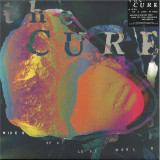
"Mixes Of A Lost World", konzipiert und zusammengetragen von Robert Smith, ist eine neue Remix-Sammlung von Tracks aus The Cure's gefeiertem #1 Album "Songs Of A Lost World", das im November 2024 erschien. Das neue Set enthält 16 brandneue Remixe von Künstlern wie Four Tet, Paul Oakenfold, Orbital und vielen anderen. Die Deluxe-Edition enthält zusätzlich Remixe und Reworks von Chino Moreno (Deftones), Mogwai, 65daysofstatic und vielen mehr. Bei den Künstlern handelt es sich um Freunde von Robert, die die Songs in einer atmosphärischen und stimmungsvollen Art und Weise kreiert haben. Sie sind es, die diesem unglaublichen Album ihre Tiefe verleihen. Die meisten von ihnen stammen selbst aus Bands und begeben sich mit ihren Kreationen auf einen neuen Weg der Entdeckung.
Belgian label Music Man Records presents Boccaccio Life 1987-1993, a new compilation offering a fresh perspective on the legacy of the iconic Belgian club Boccaccio - often associated with the short-lived New Beat movement. The 40-track compilation highlights the raw and futuristic early house and techno sounds that were heard in the pioneering club.
Located in rural Destelbergen (Belgium), just a stone's throw from Ghent, Boccaccio has secured its place among legendary venues like Paradise Garage in New York and The Haçienda in Manchester. Its bold fusion of emerging electronic genres such as New Beat, Acid, House, and Techno was way ahead of its time, drawing music lovers and clubbers from across Belgium and beyond. Sundays at Boccaccio were unlike anywhere else-offering sounds you couldn't hear anywhere else.
Boccaccio Life 1987-1993 is carefully curated by resident DJ Olivier Pieters and club regular Stefaan Vandenberghe, standing as the ultimate testament to a club that was more than just a venue. For those who experienced it, it was a community - a way of life. Hence the club's full name: Boccaccio Life.
This compilation stands as a testament to an innovative time in electronic music, capturing the raw, futuristic sounds of early house and techno. It sheds light on another side of Boccaccio, one that goes far beyond the short-lived New Beat scene. A carefully curated selection of 40 tracks, resonating with those who were there by offering familiar classics, while also reaching a new generation-those who never experienced it firsthand.
With tracks from Blake Baxter, Virgo, Frankie Knuckles, Tyree, and A GuyCalled Gerald, the unmistakable influence of black American pioneers is clear-the originators of the first analog house and techno sounds. On the other hand, UK sound innovators such as The Orb and LFO bring both sharp textures and rough breakbeats to the table.
Club staple tracks include dreamy excursions from Roger Sanchez under his Egotrip moniker, the relentless basement house of Circus Bells by Robert Armani on Dance Mania, an uplifting take on a hip-house cut from The D.O.C. (Portrait of A Masterpiece in the CJ Ed-Did-It Mix), a timeless remix of UK Formation's Age of Chance from 1994, and an alternate take on The Tape by Boccaccio club regular and Belgian producer Frank De Wulf, taken from his B-Sides project.
While not always the obvious hits, these tracks have gracefully withstood the test of time, and were exclusive to Sundays at Boccaccio. Now, they are finally available to experience together in one collection,offering a timeless snapshot of a unique era.
A collection of essential jazz from the NABEL record label (1980-1994), compiled by miche & Rainer Truby.
The Aachen Jazz Files celebrates the pioneering spirit of NABEL Records—one of Germany’s most underrated yet influential independent jazz labels. Founded in 1980 by Rainer Wiedensohler, NABEL became a home for innovative musicians blending classic acoustic jazz with fusion, Brazilian rhythms, and avant-garde flourishes.
This compilation collects some of the label’s finest moments, including the soulful and Latin-tinged brilliance of Monika Linges Quartet (whose album *Floating* was reissued last year by PANORAMA Records for RSD Black Friday), the cosmic jazz explorations of John Thomas & Lifeforce, the deep jazz-funk grooves of Hipsters In The Zone, and the stunning, expressive vocals of Maria João’s quintet.
Nestled in the far west of Germany, near the Dutch and Belgian borders, Aachen has long been a hidden gem for jazz lovers. Its vibrant scene, fueled by music schools and the legendary Malteserkeller jazz club, cultivated a unique sound that resonated far beyond its city limits. In fact, the city didn’t just birth a jazz movement—it also lays claim to opening Germany’s first discotheque in 1959.
From London to Tokyo, NABEL’s releases became secret weapons for jazz DJs seeking deep, danceable cuts. The label’s trademark blend of acoustic jazz, fusion, and Brazilian influences made its way onto turntables in underground clubs and festival stages worldwide.
Expect elegant samba jazz, spiritual grooves, and modal masterpieces that capture the essence of NABEL’s golden years. Monika Linges’ contributions shine with her rich harmonies and heartfelt compositions, while John Thomas & Lifeforce deliver a perfect storm of fiery instrumentation and deep soul. Maria João’s early recordings showcase her extraordinary vocal range, and Hipsters In The Zone bring a forward-thinking, acid jazz-infused perspective to the NABEL sound.
As co-compiler Rainer Truby puts it:
'NABEL Records always had this special ‘Aachen sound’—a jazz flavor that carried its own energy, somewhere between the cool sophistication of fusion and the warmth of Brazilian music. It’s a pleasure to finally bring together some of these classics in one essential collection.'
Compiled by miche & Rainer Truby.
PANORAMA Records is a London-based label dedicated to unearthing and reintroducing rare and essential music to new generations. With a focus on jazz, funk, and global grooves, the label has built a reputation for high-quality reissues that capture the spirit of the originals while providing fresh context for today’s listeners. Their past releases have garnered support from tastemakers like Gilles Peterson, Patrick Forge, and Mr Bongo DJs.
Tauchen Sie ein in die faszinierende Welt des Italo Disco mit unserer exklusiven 4 LP Box „The Italo Disco Collection“.
Diese einzigartige Sammlung bietet Ihnen eine Auswahl der größten Hits aus den 1980er Jahren, präsentiert von einigen der bekanntesten Künstlern dieser Ära. Diese limitierte Auflage umfasst vier hochwertige Vinylplatten, die mit den zeitlosen Klassikern von Gazebo, Sabrina, Scotch, Koto und Valerie Dore gefüllt sind. Jeder Titel wurde sorgfältig ausgewählt, um die Essenz des Italo Disco einzufangen und Ihnen ein unvergessliches Hörerlebnis zu bieten.
Die Box enthält speziell ausgewählte Versionen der Songs, die speziell für diese Edition remastered wurden. Die Klangqualität wurde optimiert, um den authentischen Sound des Italo Disco zu bewahren und gleichzeitig das bestmögliche Hörerlebnis auf Vinyl zu bieten.
Das hochwertige Box-Set wurde mit großer Sorgfalt und Liebe
zum Detail gestaltet.
Holen Sie sich jetzt Ihre Kopie dieser exklusiven 4 LP Box „The Italo Disco Collection“ und erleben Sie den unverwechselbaren Charme des Italo Disco auf eine ganz besondere Weise. Tauchen Sie ein in die Welt der pulsierenden Beats und mitreißenden Melodien, die diese Ära geprägt haben.
Under the radar release on the Muller offshoot Tanjobi! One of Ulrich Schnauss' most early works. We received some backstock from a bankrupt Japanese distributor who kept these records since the 90ies! For the open minded DJ, this can be played at various tempos and speeds. Handy and playful but classy tracks that suit multiple bags.
Hot from his recent outing on SOUNDWAY, SAI steps up with a full length album full of soulful house numbers, jazzy broken beats and neo soul stylings. Guest appearances from EGLO's NATALIE SLADE, HORATIO LUNA, and more. 6 tracks of forward thinking club jams.
Moustache labelboss David Vunk is back on his own imprint with the "Backdoor EP" A 12inch 4 tracker ,electro, EBM, acid, techno 4x4 bunker style. Tracks called: "Purple light", K2", "Tornado Acid" and "Stop the insanity" All written and produced in his analog basement somewhere in the harbour city. Masterd by Alden Tyrell for pump. U Ken doorgaan. Pre order your copy now!
Unearthed in a storage facility in Jersey City, NJ these lost Joe Claussell instrumental takes of the Blaze produced classic Black Rascals ’So In Love’ are finally available. Produced during Claussell's formative years at Dancetracks, a time when he was always creating original jams under the ‘Instant House’ moniker, they still sound as fresh as they did in the early nineties. This is an EXTREMELY LIMITED pressing 7” on red vinyl. Comes in stamped white 7” cardboard sleeve.
The album "THE ENTITY" is an esoteric-horror concept composed of 12 tracks (plus one bonus track) dedicated to The
Entity, the central figure of the DEATH SS project. Its literary inspirations range from Aleister Crowley—who sought to
free mankind by awakening its artistic genius—to characters by Hogg and Stevenson, who delve into the dark side of
human nature. It features figures such as Jack the Ripper, Walter Sickert, Cimiteria, and others, all deeply connected to
the band’s mythology. Produced by Tom Dalgety, renowned for his work with Ghost, The Cult, Rammstein, and more.
Simon Herody put together a live solo performance sequencing electronic devices on stage for him to jam over with acoustic instruments. He played a lot in hotels and lobbies. The music had to be present but not too intrusive. Subtle electronics to guide his saxophone and flute playing. The setup proved successful and inspired him to compose the works that would become 'Hard Lounge'.
'At the same time, I was working at a bar/record store in Neukölln called Motif. Everything changed when I discovered the album "Heisei No Oto - Japanese Left-field Pop From The CD Age." I remember this guy, Jamie, who would sometimes bring new releases to the shop. This album really changed things for me; I was constantly playing it and it inspired the creation of these works tremendously.
The composition process for "Hard Lounge" was pretty unclear. I never really made conscious choices; I wanted to escape the conflicts that come with picking the right chords. I aimed to create music that transports your imagination to a sort of retro 80s jazz lounge, where people feel comfortable and at ease just sitting and listening. I wanted to act like a music designer, giving people a chance to listen without demanding too much of their attention.'
Azzurro 80's new album—his first ever on LP—is a beautifully faded Polaroid that, like a true flashback, plunges listeners into the heart of the 1980s. It's a sonic journey that captures the essence of a decade, distant yet vividly etched in our collective memory.
The Roman producer unleashes his sonic vision with even greater intensity than before, weaving through dreamy italo-disco, electric atmospheres, soundtrack-worthy synth-pop, and boogie-funk grooves.
Each track opens a window onto an era the artist experienced only fleetingly as a child, yet he evokes it with a powerful and refreshingly original touch. Much like a classic library music record, these tracks conjure a wealth of images, scenes, and visual sequences—perfect soundtracks for imagined films or evocative advertising campaigns: as seductive as a perfume ad, as desirable as a car commercial, and brimming with the bright future the 80s promised.
It's no surprise that cinematic references spring to mind even before musical ones. The album echoes the dreamy atmospheres of early 80s Italian cinema, particularly films like Carlo Verdone's "Acqua e Sapone" (1983) and Carlo Vanzina's "Amarsi Un Po'" (1984). Meanwhile, flashes of New Romantic aesthetics and hints of electro-funk transport you to a neon-lit dance floor where a DJ is spinning the vinyl copy of Flashback.
Azzurro 80's new album is a vibrant, energetic work, balancing groove and emotion in equal measure and infused with a sense of nostalgia that feels remarkably contemporary.
Available May 9th on LP and Digital from Four Flies Records!
CS003, our next offering on wax, is home-grown. The Instruction EP features three original productions by label co-founder Niall Kelly complimented by a remix from the inimitable Carl Finlow. Niall’s debut EP showcases his prowess as producer harking to a pool of influences found in the sonic DNA of our hometown of Leeds, with added firepower provided by a legendary artist with close ties to the city.
Echoes of the rowdy bygone Mint Club ooze through the slappy tech house roller ’Section 1’ which opens the record. The chunky basslines retro synths and robotic vocoder connect the dots from Niall’s palette to the unmistakeable sound of Yorkshire Bleep on ‘Seven Wolves’. Carl’s treatment of ‘Section 1’ pivots into a darker, dystopian soundscape full of fizzing hi hats and dizzying synths that amalgamate into a dancefloor shaker that is unmistakably Finlow. The EP is rounded off by Groove Key, a track which serves up a special disorientating euphoria designed to be heard on large soundsystems and felt deep within your bones.
Change, founded in 1980 by Mauro Malavasi, Jacques Fred Petrus, Davide Romani, and
Paolo Gianolio, is a legendary band on the interna#onal soul/disco scene, renowned for
launching iconic voices such as Luther Vandross and Jocelyn Brown.
Their debut album, The Glow of Love, was produced in 1979 between Bologna and New
York. Widely regarded as one of the greatest disco/soul/funk LPs of all #me, it achieved
enormous interna#onal success. It was the first Italian produc#on in this genre to enter the
Billboard 200 chart, peaking at #29 and earning a Gold Record. The singles “A Lover’s
Holiday” (Top 40 on the Billboard Hot 100), “Searching,” and the #tle track “The Glow of
Love” (which reached #2 in Italy) solidified the album’s global impact.
So influen#al was the record that in 2001, Janet Jackson sampled the #tle track for her hit
“All for You,” which went on to win the Grammy Award for Best R&B Recording.
Throughout the 1980s, Change released five addi#onal albums: • Miracles (1981) • Sharing
Your Love (1982) • This Is Your Time (1983) • Change of Heart (1984, produced by Jimmy
Jam & Terry Lewis) • Turn on Your Radio (1985)
In 2010, the previously unreleased album Change Your Mind—recorded in the 1990s and
produced by Davide Romani—was finally released. In 2018, aEer a 33-year hiatus, Love 4
Love marked the band’s comeback. Produced by Romani and Stefano Colombo, the album
introduced vocalist Tanya Michelle Smith and featured eight original tracks wriGen by
Romani, Malavasi, Colombo, and Elio Baldi Cantù. The singles included: • “Hit or Miss” (remixed by Soulpersona) • “Love 4 Love” (also remixed by Joey Negro) • “Make Me (Go
Crazy)” (remixed by Opolopo)
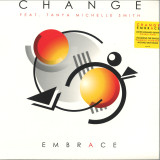
Embrace (2025), credited to Change feat. Tanya Michelle Smith, represents the natural
musical evolu#on of Love 4 Love. Originally conceived in 2019 as Tanya Michelle Smith’s solo
album, it was later reviewed by producer Stefano Colombo together with Mauro Malavasi,
who approved the material and authorized the use of the name “Change.” Malavasi also
contributed to the cover design and selected the album #tle: Embrace.
The first single, “Sunrise Forever,” was released on January 10. The remix by Michael Gray
reached #1 on Traxsource and ranked high on the UK Soul Chart.
The album’s release was postponed when Davide Romani and Stefano Colombo decided to
complete an unfinished demo from the Love 4 Love sessions. Some original parts were lost
due to a corrupted backup, but in 2025 the track was completely rearranged with a newly
recorded bassline by Romani and fresh backing vocals.
On April 4, the single “Got 2 Get Up” was released across all digital plaOorms, receiving
strong radio airplay across Europe and entering the UK Soul Chart. On May 16, a remix by
renowned Italian duo Micky More & Andy Tee will be released in an#cipa#on of the album.
Embrace includes ten original tracks and one cover.
The album will be available on CD and vinyl, distributed by Self Distribuzione Srl. The first
500 vinyl copies will be issued as a limited “Expanded Edi&on”, including the full album plus
a bonus 12” single with Michael Gray’s remixes of “Sunrise Forever.”
"Bassland Prophecy" was a collection of Southern California musicians, including Alex Xenophon (Deep Squared), Stuart Breidenstein (formerly of Skylab 2000), Alissa Kueker (vocals), and Maxx Vaxx (Euterpre, Butterfly Garden).
The act nourished and grew the emerging LA scene and was a renegade force in live electronic improvisation. Rather than composing full tracks, Breidenstein stated over email that they built musical "ingredients" on the fly, syncing DOS and hardware sequencers mid-performance. Their unpredictable sets, from illegal raves to makeshift desert parties, resulted in electrifying, unforgettable sonic trips.
Recalling 90s LA, Breidenstein said: “Before the internet, finding a rave was an adventure. You’d get a flyer with a phone number, call it the night of the event, then drive—sometimes 100 miles or more from a map point to the actual party. The scene was raw and underground, built by music obsessives hunting for the freshest sounds.”
Two standout tracks from 1996—“Nine / Deeper” and “Blue and Purple Starship of Trust”—perfectly represent their unique genre-bending concoctions. Against all odds, the recordings survived and have been given new life, remastered and reissued on Bristol-based *Sex Tapes From Mars*. To produce the wizardry, their setup included a Juno 106, Yamaha FB-01, a Roland S330 sampler, and a Sequential Circuits Pro-One mono synth with external MIDI, and some guitar effects pedals.
“Nine / Deeper,” born from one of their many spontaneous studio sessions, became eerily intertwined with recurring appearances of the number 9 and black cats. So much was the frequency of apophenia episodes that paranoia began to take over the artists. Recorded in a makeshift living room studio, the 14-minute excursion traverses genres and tempos, beginning quick and hypnotic, and climaxing chuggy and drenched in adlibbed acid lines, culminating in a surreal and legendary live performance in Hollywood. The piece captures the raw spontaneity of their sets, crafted with vintage gear, cassette tape recordings, and, as always, a DIY ethos. Breidenstein states, “While improvised sessions often failed, when it succeeded, it was definitely a kind of infectious magic the listener would recognize.”
“The Blue and Purple Starship of Trust” is a deeply personal piece, named after when Breidenstein saw a heavenly blue morning glory on a walk around his neighborhood, and emerged from heartbreak and the following deep depression entrenching his life at the time. Recorded in a single take onto cassette tape, blending piano, guitar, and heart-rending vocals into an emotional, dreamlike journey. The track starts with a lush, cascading synth sound, bolstered up by rolling, reverbing downtempo drums. Using Sequential Circuits Pro-One throughout, the rippling synths and off-key piano licks act like pipetted droplets of water, all elements bleeding into each other in some kind of hallucinogenic swelling, reflecting Breidenstein’s fading relationship. The guitar part is a nod to Bill Withers’ “Ain’t No Sunshine,” and Breidenstein recalls just “bawling as the guitar line was recorded.”
Created in a time of artistic struggle, living in an old school bus, surviving on instant noodles while hauling their gear from venue to venue, and scraping by on gig money, these recordings act as rare artifacts of a movement that thrived on passion and perseverance, standing as a poignant testament to resilience. Though they released a handful of tracks, ranging from deep house to ambient to techno, their true legacy lay in their high-energy, genre-blurring live shows, which are powerfully encapsulated within these recordings and leave a lasting impact on underground electronic music today.
As most of us now live in a world saturated with information, this album feels like a reflection of how the modern world might sound if it were to process its own chaos through a unified scream. Hailing from the highlands of Bandung, West Java, a city where tradition and modernization intertwine in the rhythm of daily life, Xin Lie unpretentiously translates this cultural fusion into a sonically rich and rhythmically bold debut LP.
The artist’s roots in the hardcore and punk scenes reverberate throughout the album, though they’ve been reshaped and refined for the club. There’s an undeniable pleasure in experiencing the chaos Xin Lie channels—irregular beats, dynamic frequencies, and disjointed grooves collide and expand, each track laced with a sense of unpredictable energy. Yet even in its most chaotic moments, the music feels deliberate, its edges softened by a sense of compositional care.
The album reveals a strange duality: tracks that seem to beckon you to the dance floor but never quite let you settle there. Frequencies flicker and fluctuate in patterns that feel just slightly off-grid, as though resisting traditional structures. Yet, amidst the digital textures, Xin Lie weaves in organic sounds—snippets of native conversations or environmental noise—creating layers that feel both intimate and expansive.It’s fair to say this album extends far beyond the boundaries of today’s club music.
Picture this: you’re moving through your daily routines—mundane, repetitive—and suddenly, the music shifts your perspective. It reframes the ordinary as something surreal, as though it’s deconstructing itself in real-time, breaking into fragments or conjuring entirely new forms. Perhaps it’s best imagined as the soundtrack to a multi-sensory art installation or a performance staged not in a gallery but in an unassuming house down your street. Who’s to say where it might take you?
On his second EP for Altered Circuits, "Signal Drift", Jacopo Latini further distills his sound. Taking a more minimalist approach, he unreservedly treats the groove as the focal point. Still relying on his staple talent for weaving melodies and hooks, he delivers four trippy club tracks that show more can be done with less. Opener "Sharp" delivers immediate proof. After starting with a sequence of eerie sci-fi atmospherics and recondite vocoded vocals, the adding and subtracting happens so ingeniously, the track switches to club velocity 303 squelches and enhanced drum programming seamlessly. Similar techniques in building and layering are deployed on "Impulse", but this time, the shifts seem a tad more dramatic. The track revolves around an FM bass melody that's equally effective as it is simple, and its return to this stripped theme, surrounded by characteristic jittery hats, squashed claps, and a little more frills, keeps the listener on his toes. A bass patch, its sustain knob turned wide open, somewhat buried in the mix, drives "Bright Sound" together with a heavily modulated formant mid lead. Deadpan vocals add icing, and slightly euphoric, phased chords bring in a touch of subtle contrast. Closer "Rave Harvey" is a rare diversion as it starts in medias res with chords that reconfigure nineties trance and a distinct bassline immediately going for the limelight. It also shows Latini switching up his palette, trading restraint for vigor, with a slab of direct, unfiltered hi-energy as a result.
Communique Records re-issues DJ Hyperactive "Muzik Make You Lose Control" from 1996 on the sublabel SOUNDS. !!
Re-recorded and re-mastered from original DAT!
*all original recordings from mid 90s Estonian released cassettes. Fascinating interpretations of the UK breakbeat and Jungle sounds recorded when the world felt like a much bigger place.
Since hearing the first breakbeats via the Finnish radio nightly shows introducing the burgeoning UK scene, Virko Veskoja, later head figure of Lu:k, was completely swept away by this new technological language that sounded like machines trying to initiate contact with people. The fluttering rhythm patterns, strings and vocal lines haunting the pathways of the infinite network. Like hip hop taken over by Skynet.
Reimagining it all in mid-90’s Estonia, a fresh and dirt-poor republic newly welcomed to the family of sovereign states on the outskirts of Eastern Europe, was challenging, to say the least. Finally, with the help of entry level music programs, custom-made soundcards and self-built computers by the other Lu:k-head Tõnis Valk, Lu:k took the first tentative steps in the history of Estonian jungle.
Eight Lu:k cuts have been compiled into a handy selection, a true sign of the times when uncertainty came with certain hope and optimism – new territories to chart, new frontiers to conquer. A time of innocence captured so sublimely in Lu:k’s music.
The compilation starts with menacing orchestration that sounds like the birth of a civilization, like in „2001: A Space Odyssey“, or the arrival of Godzilla, only to give way to sweeeet strings and the inimitable Minnie Riperton in “Lovin U”, combining all the essential elements of Lu:k in a track that has remained uncorroded by time since its inception in 1994.
The following “Demo 3” is its antithesis – fast and nervous, a harbinger of the darker days of neurofunk and techstep ahead. More in line with the social realities of the time, when something (or someone) could materialise out of thin air and attack you just as violently as those beats here.
“La:v” was Lu:k’s signature track throughout their brief career that went on only for a few years, 1994-1997. Lifted to heaven’s by Petula Clarks’s wonderful vocals, it perfectly captures the pure essence of creation. “I made it in my bedroom. Something like that just came out. Sorry”, says Virko apologetically.
From the themes of love we are led towards darker scenarios again with “Drunk-Drive”, a more vengeful cut reminiscent of early Ram Records’ nocturnal dangers, skylines shaped by basslines. Previously only available on the uber-rare “Raadiomaja valvelauas” CD compilation from 2005.
“In the Limelight” is lifted from their second album “Dreams in Drums” from 1996 (only released on cassette), and if it’s meant to address their new-found underground celebrity status in Estonia, there is surprisingly little elation here – the track rather consists of introspective strings and beats that sound almost melancholic.
Out of the remaining three tracks, “Proov2mix” and “Kadunud leitud” are the result of a treasure hunt amongst the old, obsolete harddrives – little nuggets that were condemned to obscurity until now. Between them, another vocal-led cut “010”, a non-album track only featured on two comps until now, is a strong reminder of Lu:k’s prodigious ability to handle vocal lines and morph them together with their own weaving synthetic melodies, strong pads and commanding beats.
Lu:k’s music has been largely unavailable for the better part of this century, with original tapes and CD’s changing hands for a small fortune. This vinyl release couldn’t come at a better time, bringing a seminal chapter of Estonian dance music’s mythical history to light again, both for the old-school acolytes and new converts.
For the latest Klasse Wrecks release, the label combine with Japan's finest festival and events crew Rainbow Disco Club to collaboratively present WRECKSRDC. Overrocket were an electro-pop band from Tokyo that enjoyed a grip of great releases in the early 2000s while signed to Neon Discs and its parent label Aten. During a digging session Luca Lozano discovered the forgotten tracks 'Duralumin' and 'Shadow of the Sun' and immediately set out trying to contact the band's members to arrange a re-release and remix. A few months of patient trying, the connection was finally made and wheels were set in motion. Musically the EP conjures up perfectly the sonics of that time, a grey area between analog convention and the unexplored territories of new digital freedom. Shadow Of The Sun is electro-pop perfection, with breezy vocals and a bouncing beat that sounds like nothing else around...past, present or future. Duralumin is a more dancey collection of blips and beats, one that will make sense in the current return to early 2000s aesthetics. To round out the release and propel it into 2025, KW label bosses take a track each and interpret in their own way. Lozano revisits his electro roots with two remixes of Shadow of the Sun, distorted 808s and growling 101 basslines provide a simple backdrop for the perfect vocals. Mr. Ho takes Duralumin into a more driving and pacey direction, upping the energy and excitement with fast percussion and a huge side chained breakdown that recalls the unbridled rawness of the early 2000s, when everything was just a little bit more fun. Keeping within the confines of Japan and in an effort to bring everything full circle, the label enlisted Japanese artist Gonno to master the tracks for an updated modern sound. The tracks themselves being mastered a few miles from where they were originally penned over 20 years ago.
The interstellar cosmonauts of Staatseinde create a theatrical mix of pulsing electro with nostalgic hopeful synthlines, all performed live with synthesizers, a sequencer and tantalizing vocals. From Wave to EBM, from NDW to Punk and everything else in and out of the box. It is like walking into a club meeting Kraftwerk on speed and The Sex Pistols on acid.
Their new release “De Nieuwe Golf” is characterized by dystopian prospects and hopeful sounds, confirming Staatseinde’s name as the founder of the “Neue Niederländische Welle”, in other words the New Dutch Wave.
The uplifting italo rifs in opening track “Grauw” take you on a journey through a gray world in which color cannot be taken for granted. Minimal wave track “Einzelganger” makes you feel like an outsider who can’t keep up with society. “Geef Me De Tijd” sounds like a schizophrenic dreamer swinging casually, but ending as a hard hitting track. Dystopian doom and pessimism is captured in EBM/techno floor filler “Doembeelden”. The raw West Coast Sound of Holland infused “La Haya” is a tribute to the city of The Hague which calls out on everybody to get wasted. The epic ode to space travel “Ruimtevaart Vooruit (2022 Refix)” is back in a rendition inspired by Rude66’s 2010 remix version. “Isla Inutile” is a dark and tropical delirium. In the hopeful “Alles is Weg”, Staatseinde takes you from the downfall on the way to…?
Staatseinde’s “De Nieuwe Golf” holds up a mirror to humanity…progress has not helped us any further. There is hope…but will this new wave be on time? Or is it already too late?
Do minerals dream of becoming semiconductors? Do they yearn to carry charges, amplify, switch, and convert energy into emotions comprehensible to humans? And what if, from the darkness of the underground, they had been listening to us sing in caves before the emergence of the first flute? Could they have guided us, through the course of history, to find them, extract them, and create new sounds through sinusoidal waves, to form valves and bend circuits?
If so, minerals would transition from what philosopher Eugene Thacker defines as the ‘planet’—that virginal and unreachable realm for humans that we study through geology, paleontology, and environmental sciences—to the ‘world,’ the space we inhabit, interpret, and synthesise in our daily lives. Sadly, we only remember the world when it erupts violently, through climate catastrophes or when a new virus emerges. Sometimes a tsunami collides with a nuclear plant, or viruses are cultivated as biological weapons in high-security laboratories, provoking a deep biological anxiety, hard to quell, which we all feel beneath our skin.
There exists a third realm, disconnected from both the world and the planet: the ‘earth’, an immense, dense rock floating in space alongside other planets, situated in the cosmological dimension. Relating to the earth is so complex that we only do so through theoretical speculations of a scientific nature or through science fiction, interweaving until one becomes the prophecy of the other, in an infinite, pendular dance. Beyond the darkness of space and Lovecraft’s cosmic horror, the fantasy of human extinction is the most recurrent: to reach a collapse so devastating that we do not survive it, even though the earth does, without us.
In a world where we quantify everything through body sensors, financial algorithms, nanometre-scale robots, and surveillance drones—a world in which everything that can be domesticated and controlled can also be commodified—a superior artificial intelligence would survive the collapse of the species (some speculate it might even cause it) and learn from our mistakes, thanks to our obsessive gathering of data.
Long after our voices fade, minerals will persist in the darkness of screens, in the silicon of chips, and in their pure form, still unexploited underground. Over the millennia, this intelligence might piece together fragments of our reasoning, as if an alien civilization finally connected with one of our spacecrafts loaded with messages cast into the void. It would sort through endless streams of data, unable to grasp the depths of emotion behind what it quantified, recreating simulations of our past, stripped of the nuance that once defined us and conducting experiments in sandboxes.
Some remnants of our existence—faint echoes of forgotten beauty—would be pieced together in an atlas of loss, buried beneath layers of numbers, decayed bots, and corroded hard drives. What will follow? Perhaps bison will once again roam—trotting to the strange pulse of techno, their ancient forms framed by the ruins of our cities.
Buildings will crumble, slowly dissolving under the soft touch of ambient music, and a thousand flowers will bloom with that ancient music created through electrical signals and computation. 7 songs for a future both improbable and inevitable—a final message from a world lost to itself, from planet Earth to planet Earth.
After over 50 events of Bristol's beloved Club Blanco, the city's anointed high priest of night, Chez de Milo, is crystallising his party's dimension-hopping hedonism into a label, calling on an extended family of esteemed producers and musicians to make it happen.
First up is Johnny Aux, aka Quinn Whalley (Paranoid London, Sworn Virgins, Decius), delivering two offerings accompanied by remixes from Jamie Paton and Chez de Milo himself.
Supersonic blends a hyperspace bassline with euphoric 90s synth elevation that delivers us to a blissful dance floor crescendo, where you've been dancing for hours—maybe days— when the sun appears over the horizon and pierces through the club's blacked-out windows. Chez de Milo's re-rub wraps you up vines of a living, breathing forest, where all your favourite flora and fauna summon you to the dappled light of a clearing, front left of the booth.
On The Train locks you into a rolling groove, and electro slaps and smacks. It feels covered in equal parts space dust and the dust of an old crate of records, where this forgotten banger has been buried deep for 25 years, waiting for the right hands to pull it out. Jamie Paton veers off down a stranger track, conducting a driving Italo beat with eerie soundscapes dissected by lasers and a brooding bassline.
TIJN and Daines this time around for the next instalment of curtea Veche’s Serii Speciale!! 2 x superb originals and a remix by the Legend Franco Cinelli on coloured wax !!
After some time fostering the birth of Melbourne/Naarm’s Solace Bar & Club, circuit|breaker returns with the last offering in our initial run of three Various Artists releases: CBRK003. As always, our focus is razor sharp on cultivating connection, between our home and the global artistic domain. With our third release, we bring you five of the boldest talents, both emerging and established, that are sure to set the standard for forward-thinking electronic music.
Amora Lamor is a project by Lithuanian producers Brokenchord and Munpauzn. Their debut release is a fun and ironic take on current electronic music trends. From disco to lo-fi breaks, from banging club sound to cinematic synthwave, this EP is an experiment of six fuzzed-up cuts delivered using synthesizers, guitars and drum machines.
Amsterdam natives Maarten Smeets and Lars Dales, aka Dam Swindle, unveil their third long-player with the release of a new track, the first to be shared from the upcoming album, ‘Open’ - out on 30 May 2025 via Heist Recordings.
The new album sees the acclaimed duo dive far beyond the deep sonic waters they’re most known for, exploring lower tempos, synthwave, hip-house, and ambient across fourteen tracks. With a gestation period that traces back several years, ‘Open’ is their most intimate and personal body of work thus far, birthed during a time of self-reflection away from touring and personal transformation as individuals.
“We felt the need to tell a very personal story through our music as a translation of our personal development in the past years. We also wanted to make music without a specific goal in mind; We simply wanted to create. By taking away the grid of dance music and any expectations of what a Dam Swindle song should sound like, the creativity started to flow naturally with songs in many different styles and tempos. The result is an album that feels refreshing and uplifting and still very much true to the heart and soul of our sound.” - Dam Swindle, January 2025.
While the trademark Dam Swindle four-to-the-floor beats are still ever-present on tracks like ‘The Present Is Always Perfect’, ‘I Need You’, and ‘Is This Love?’, it’s the gentle waves of synths on opener ‘Home’, the contemplative piano chords of ‘Bloom’ featuring Joep Beving, and the lo-fi ambience of ‘It’s Okay, I Can Wait’ that showcase a melancholic, ethereal sensibility previously uncharted by the duo. Collaborations with vocalists such as NYC’s Haile Supreme on ‘Not Enough’ and Neo-soul singer Faye Meana on ‘Girl’ expertly find room in between the dancefloor and home listening sessions, and a clear standout on the LP is the title cut where message-heavy rapped vocals from UK artist Samson ebb and flow amongst iridescent grooves.
Under the helm of Maarten and Lars’ adept A&R, their Heist imprint has become a beloved home for house heads of both schools old and new, platforming some of dance music’s biggest names from Cinthie to DJ Sneak as well as the musical dawnings of artists such as Kassian and Makèz. The Dam Swindle alias has achieved house music royalty-like status across a storied 15-year career that includes two critically lauded full-lengths, collaborations with the likes of Tom Misch and Kerri Chandler, and a globetrotting touring schedule. This album stands as their most profoundly personal work of art to date, and they can’t wait to share it with you.
""A Synonym for Repetition" weaves together a tapestry of parallels, all intricately linked to Japan. The project initiates with a collaboration with a Tokyo-based musician, which ultimately fails to materialise during Jason Kolar’s recent visit to the country.
From an original approach that has to mutate in its starting phase, the record was conceived from the beginning to embody a sincere homage to Ryuichi Sakamoto, also a Tokyo native. Shaping ideas within the context of a city with a vibrant soundscape, through an exploration where tradition and modernity intersect in an ongoing quest for correspondences.
Yet, the barriers of language and cultural disparity emerge, casting a veil over the perceived connections and rendering them more projection than reality. This dynamic delineates the space observed from an external perspective, perpetually distant from true understanding, framing it in the fields of imagination, both Japan and Sakamoto. Nonetheless, Kolar tries to pay an honest ode to the artist and its scenic background, with all the implications and contradictions of this kind of process, even with the risk of falling into clichés, pastiches, and Eurocentric bias.
Connecting it to ‘vertical listening’ rather than to an obvious tribute exercise, he has morphed his sound to a synthetic and midi approach, aiming to set an ironically fictitious stage, one that resembles something, but it’s not really it."
to rococo rot?s the amateur view (1999) will be reissued as a highly limited expanded edition, featuring 12 bonus tracks on an additional disc, a new gatefold sleeve with previously unseen photos, and liner notes by Jon Dale. The Amateur View is widely hailed as one of the definitive records of late '90s analog electronica. Released in the U.S. via Mute Records, it was named one of UNCUT's Albums of the Year in 1999 and perfectly captured the introspective, experimental mood of the era. The album's influence was far-reaching-so much so that Saint Etienne enlisted To Rococo Rot for their 2000 album Sound of Water. At the time, To Rococo Rot were the band of the moment-jetting across the globe to play the most cutting-edge electronica festivals, including wild WARP events where none other than Aphex Twin spun support DJ sets, The trio was invited three times by John Peel to record radio sessions in the BBC studios between 1997 and 1999. Bands like Modeselektor still cite them as key influences and pioneers. Stephen McRobbie of The Pastels, Mark Fell (SND), and Kieran Hebden (aka Four Tet) are all big fans-Kieran even remixed a track from their debut album so did Mira Calyx and Daniel Miller of Mute, a longtime supporter, and yes Björk is a fan too.
In a blizzard of breaks and surrounded by towering slabs of icy atmospherics, Quelza comes spinning into the Dekmantel UFO orbit with an EP of grandiose proportions.
Anyone who caught Quelza at Dekmantel Ten last summer will be well aware of the breakthrough producer's affinity for evocative soundscapes — amongst his keen instinct for dancefloor propulsion its his richly rendered atmospheres that have made him such a vital new talent in the industry and club scene. The curious, extraterrestrial quality to his sound is the perfect fit for the resurgent UFO series, and Quelza has more than risen to the occasion with four tracks that take in the widest spectrum of his sound to date.
The title track 'Pensa Poetico' is a dramatic, 11-minute epic that moves beyond dancefloor rigidity into a fractured zone where rhythms splinter and shudder around immersive dub chords pulses and IDM infused rhythms . There might be the anchor of an insistent, staggered kick drum, but it's a simple tool to allow the freedom of movement for intricate layers of steel, glass, ice and dust before the second half erupts in a powerful display of breakbeat science. It's the most adventurous expression from Quelza to date — a track he credits with unblocking his creative process on the path towards a more honest expression within his production.
This spirit of adventure maintains throughout the EP, balancing cathartic compositional shifts with hyper-detailed scene-building and energy shifts that push and pull with your expectations. Quelza's well-established affinity for dancefloor physicality holds true as he twists and turns through these constantly surprising, nail-biting arrangements. Even when everything seems to fall apart, he'll sense the perfect moment to return to a pinpoint groove. Toying with minimal, modernist 2-step and complex organic percussion as well as choppy breaks, this is the sound of Quelza breaking out into a new phase where anything feels possible and his production vocabulary allows him to land audacious moves with mind-blowing finesse.
Over the decades, the image of Kompakt as a pirate ship has taken root in our minds, braving the dangers of the seven seas of the music market. Sometimes it glides with a tailwind through calm waters, sometimes it has to survive violent storms. When we set sail in 1993, we never would have dreamt that our journey would still be going on after more than three decades and with 500 releases to date.
In our fast-paced business, the 500 mark is rarely reached, so we want to celebrate it with a lavish 5LP box set. In a democratic process, we have selected 50 pearls from the thousands of tracks released over the last 33 1/3 years and pressed them onto 5 brightly coloured vinyls. Alongside many Kompakt evergreens, there are also some real rarities from the early ‘Kompakt Sound of Cologne’, which have been lovingly remastered here to shine in new splendour.
The box also contains a 144-page book that tells the story of Kompakt from 1993 to today with detailed texts and images. In addition to the manifold musical and graphic achievements of Kompakt, the multidisciplinary links to the visual arts are also highlighted here.
The Bonus Picture Disc opens with the symbolic tolling of 500 bass drums, followed by 50 locked grooves from the 5 Kompakt founders, looping into infinity at 133 1/3 BPM, and the ‘33 1/3 Years Loop Opera’ – in which the loops are combined into one track that, in its reduced essence, is more than the sum of its individual parts. The magic of groovy loop minimalism and the ‘art of omission’ are once again brought to the proverbial point.
On 23 May 2025, the big KOMPAKT 500 art exhibition will open at the venerable Kölnischer Kunstverein to coincide with the release. The entire visual cosmos of Kompakt will be shown here in an unprecedented way on three floors, with the participation of many renowned artists. Of course, there will also be dancing and partying at the vernissage party, with DJ sets and live shows by the Kompakt Allstars.
The last one turns off the bass drum.
Im Laufe der Jahrzehnte hat sich in unseren Köpfen das Bild von Kompakt als Piratenschiff festgesetzt, das den Gefahren der sieben Weltmeere des Musikmarktes trotzt. Mal gleitet es mit Rückenwind durch ruhige Gewässer, mal muss es heftige Stürme überstehen. Als wir 1993 die Segel setzten, hätten wir uns nicht träumen lassen, dass unsere Reise nach über drei Jahrzehnten und mittlerweile 500 Veröffentlichungen immer noch andauert.
Die 500 ist in unserem schnelllebigen Geschäft eine selten erreichte Katalognummer und soll daher mit einer üppigen 5LP-Box gebührend gefeiert werden. In einem demokratischen Prozess haben wir aus den tausenden Tracks der letzten 33 1/3 Jahre 50 Perlen ausgewählt und auf 5 knallbunte Vinyls gepresst. Neben vielen Kompakt-Evergreens finden sich auch einige echte Raritäten des frühen “Kompakt Sound of Cologne”, die hier liebevoll remastered in neuem Glanz erstrahlen.
Die Box enthält außerdem ein 144-seitiges Buch, das mit ausführlichen Texten und Bildern die Kompakt-Geschichte von 1993 bis heute erzählt. Neben den mannigfaltigen musikalischen und grafischen Errungenschaften von Kompakt werden hier auch die multidisziplinären Vernetzungen zur bildenden Kunst beleuchtet.
Die Bonus Picture Disc wird mit einem symbolischen Glockenschlag von 500 Bassdrums eröffnet, gefolgt von 50 Endlosrillen der 5 Kompakt-Gründer, die sich bei 133 1/3 BPM in die Unendlichkeit schleifen sowie der “33 1/3 Years Loop Opera”, in der die Loops zu einem Track zusammengefügt werden, der in seiner reduzierten Essenz mehr ist als die Summe seiner Einzelteile. Die Magie des groovenden Loop-Minimalismus und die “Kunst des Weglassens” werden einmal mehr auf den sprichwörtlichen Punkt gebracht.
Am 23. Mai 2025 eröffnet parallel zum Release die große KOMPAKT 500 Kunstausstellung im ehrwürdigen Kölnischen Kunstverein. Der gesamte visuelle Kosmos von Kompakt wird hier unter Beteiligung vieler namhafter Künstler*Innen in nie gesehener Form auf drei Etagen gezeigt. Selbstverständlich darf zur Vernissagenparty auch getanzt und gefeiert werden zu DJ Sets und Liveshows der Kompakt Allstars.
“To Model Phenomena” is a scientific concept that describes a computer’s ability to emulate, regardless of whether the emulated phenomenon exists outside its circuits or is purely imaginary.
Modeling communication platforms enables us to interact with each other or with computers. Modeling behavior patterns, nuclear fusion, or, as in the case of scientists from the Human Brain Project, a virtual human brain, allows us to simulate cognitive processes such as perception, memory, and decision-making, providing insight into the nature of human thought.
In this record, the phenomena modeled are those moments when the mind leaps into the void, confronting new paradigms. For instance, when science, art, or mass media introduces new information, propelling us into a transformed reality.
From this starting point, European musician Shifting Heigo maps a path between realities, evolving his narrative as his music unfolds. This work draws inspiration from Curtis Roads (vice chair of Media Arts and Technology at the UCSB) and his studies on granular synthesis and time scales, where each track on To Model Phenomena evokes a sense of movement, where nothing begins or ends in quite the same way.
A musician with strong ties to new technologies, Shifting Heigo has collaborated with the University of Málaga (Spain) in its PH Degree Program in video game design, composing interactive music, while also singing as part of the tenor section in the Qatar Concert Choir, affiliated with the Qatar Philharmonic Orchestra.
Currently based in Abu Dhabi, he is now part of a circle of electronic musicians surrounding the New York University Abu Dhabi, an institution that supports electronic and experimental music across the Middle East.
To Model Phenomena is the result of his search for a unique voice as a musician, where ternary rhythms, noise, and silence shape the narrative. This is a discourse from a musician’s perspective on the changes that science, technology, art, and the rapid flow of information demand of us. A direct gaze into the fear of change.
This release blends Acid, Electro, Minimal and Dub, pressed on 180-gram vinyl in a limited edition of 100 copies. Includes a hypnotic remix by Franco Cinelli.
The highly prolific and stylish Konerytmi returns to Analog Concept Records in high funk resolution with the Megapikseli Ep.
Experience tricky video game vibes from both analogue and digital synths inside this pack of slick electro tracks; beginning with Kirsikka, highlighted by rubbery bassline funk, laser zaps, sharp 808 rhythms and awakening pads complimenting the attack.
Then there is the moody and groovy title piece, Megapikseli, heavy on the bass, with intricate clever electro percussion, and fog light chords, formulated to leave your mind stimulated and pixelated; reinforced by an abstract remix in its own cinematic world from the vision of Fleck ESC.
Flip to side B for the twin, Mikropikseli, bringing more of sunlit aura, cosmic atmospheres, emerald textured leads, and playful, vivid effects to the set.
Lastly, is the late night electrosoul aura and rhythm resonating from Puro; confident with rolling acid basslines, starry fx, to pure dark and lovely melody, guaranteed to emit grooves of energy easily.
For the lovers of immersive electro, marinated in the classy flavor of cartridge era platform games, Megapikseli Ep by Konerytmi is the real deal system to entertain.
Scruniversal's sub label Tunes Delivery invites Moscow scene veteran Leonid Lipelis to don his Beard In Dust moniker for their third instalment, one which dips into various different eras of dance history for inspiration. There's a distinctly late 80s feel to opening tune 'Music of the U', complete with sampled bell stabs and the kind of beats that wouldn't be out of place on an S'Express or early Coldcut house affair. 'The Armenian Break' and 'City of Love' look back even further, back to the female-fronted disco efforts of the 70s, the latter adding a touch of Balearic flourishes. 'Abstractish P' circles around some serene arpeggios, with rave whistles and, as it progresses, twisting guitar notes, lending it an individual air, while closer 'RoRyaRe' nods to ExCel-era 808 State with some nice bleepery before settling into more progressive headnodding territory and some distinctive synth play.
When SW. AKA, Stefan Wust, first established SUED in 2011, their compelling, cosmic and anonymous material struck a rare chord, emanating far beyond the freeform Berlin underground in which it was written. Unknowingly, Los Angelean Oliver Bristow had
established a parallel musical universe, founding the hyper-specific label Acid Test, inviting pioneering artists such as Donato Dozzy, Tin Man and Pepe Bradock to indulge in glorious interpretations of 303 control. Without compromise, these were records that quietly
reinvigorated electronic music.
Some years later, a new label, SWOB, unites Wust and Bristow in a very different landscape. And while it would be easy to transform the purity and integrity of this special alchemy into something like nostalgia, yearning for an alternative culture before
influencers and against algorithms, SWOB endeavours to find inspiration in arguably tougher truths.
“By the mid-90s, the techno scene had already reached a breaking point”, recalls Wust.
“Today, the scene is so highly professionalized that it barely resembles what was once called the "underground. But "underground" was never more than the simple reality that music circulated on cassettes among friends or that dubplates were played at illegal
parties... The consequence of today’s professionalization is the death of the original movement.”
Still, no one can kill an idea. Here, inspired by the “Outside Tekno” or “Outkast Techno” that emerged to subvert even back in the day, SWOB are proud to introduce the tekkNOthing trilogy, a new project from SW. beginning on cassette and culminating later
on vinyl. Some years in development, tekkNOthing first began to take shape during the 2020 global pandemic, when ‘the underground’ quickly began to mean something radically different once again.
“I noticed how everything was accelerating while simultaneously spinning in circles – existing in a kind of creative limbo on a global scale”, recalls Wust. “And that’s where true freedom lies: for artists – in any sense – to consciously engage with this necessity. In
other words, irrationality or nonsense can eventually generate meaning.” While hardly capitulating to the contemporary hammering of techno’s most recent developments, tekkNOthing’s first chapter quickly establishes a frenetic pace; tracks like ‘nuclearFALLoutX’ and ‘paslolESmess’ interlock and unfold at a tempo removed from that typically associated with SW. while ‘euroBSS’ and ‘viscousHEAT’ successfully experiment with a more guttural palette, veering far into a rejuvenating and previously uncharted leftfield.
A resolutely human endeavour, the music of SW. is nonetheless written and recorded in the looming shadow of AI, whose free-form adoption of pop culture, hip-hop and techno reminds Wust of “when photography emerged in the 19th century... painting was no
longer bound to naturalism. Similarly, music today is no longer bound to fixed standards – through AI, it can become truly free.”
If not in competition, than taking inspiration from this landscape of new opportunity, tekkNOthing diversifies further with eight unpredictable tracks across part II, taking in stuttering machine-funk on ‘crAMPDUNK’, a freeform organ jam via ‘sonicENdo’ and the
inexplicable piston-percussive, post-punk exotica heard on ‘poorTENOOR#a#01’ DJs with dual cassette decks skills might even find function in the more overtly floor-focused ‘DU ¨NEhowSE#1takeÄ’ or ‘lookLOOK’.
The times may have changed, but the promise remains simple; more music, more freedom.