A simple idea in an over complicated moment. Strip away aesthetics and be artist centric, sharing and explore collisions, sounds and genres. Step out of comfort zones to release a series of EPs of broad, challenging and deep music.
Starting with The Proposal by A Strange Wedding, this Lyon based producer from the Worst label, builds on their "modern style" slow trance to create a label anthem, a template. Stretched Arp, hypnotic bass and searing melody, underpinned by ocean wide kick. Merci for the perfect beginning.
Datasal are next, as this Gothenburg's trio's debut arrives. Acoustics (Miyazawa flute / Fender bass) and electronics (Roland RS-09 / Korg Mono) collide; prog rock meets post punk meets dance; outside organised compositions to improvise to the beat.
Side two leads back to the origin. 84PC, the dormant Tel Aviv collective that developed out of the city's Michatronix Crew (featuring Katzele, Naduve, Asaf and Yovav), return with a previously unreleased remix from Khidja. Their "Welcome To The Pleasuredome" moment is peak time perfection.
To close Barcelona's Iro Aka arrive with another debut. Having dispatched edits on Hard Fist and 44,100Hz Social Club, their bubbling 303 is a tender dreamtime finale that points ahead.
Buscar:city 2 city
- A1: Main Title
- A2: Beth's Story
- A3: Methuen Home For Children
- A4: The Scholars Mate
- A5: You're Gloating
- A6: Training With Mr Schaibel
- A7: Am I Good Enough Now
- A8: Playing Mr Ganz
- A9: Ceiling Games
- A10: First Day At School
- A11: The Green Pills
- A12: Kentucky State Championship 1963
- A13: Top Boards
- A14: Playing Townes
- B1: Playing Beltik
- B2: The Lake - Cincinnati 1963
- B3: Playing Benny - Las Vegas 1966
- B4: Two Sides Of The Same Coin
- B5: Mexico City Invitational 1966
- B6: Playing Girev I
- B7: Playing Girev Ii
- B8: Borgov I
- B9: Beth Alone
- C1: Ohio Us Championship 1967
- C4: Paris Tournament 1967
- C5: Borgov Ii
- C6: Jolene
- C7: Returning To Methuen
- C8: Turning Point
- C9: Ussr
- C10: Moscow Invitational 1968
- D1: Close Your Eyes
- D2: Borgov Iii
- D3: The Final Game
- D4: Take It, It's Yours
- D5: Sygrayem (Let's Play) (Let's Play)
- D6: I Can't Remember Love
- C2: New York
- C3: Training With Benny
A rigorous recollection of all the music that went into last year's Netflix smash The Queen's Gambit. You were probably too busy trying to keep up with actress Anya Taylor-Joy's timer-stopping and piece-placing chops to notice the ingenuity of the soundtrack; packed with contemporaneous music to the time in which the series is set, from Donovan to The Monkees to The Vogues, we're duly thrown back by this new 2xLP edition (which comes to a special black and white colour vinyl). Check it, mate.
After a small nap, Tokyo’s finest Studio Mule is back on the scene, bringing the world some deeply composed guitar music from Japan, crafted by Shin Sasakubo.
Since almost 20 years the guitarist is specialized in classic and contemporary Andean and Peruvian music. a knowledge that he deepened through a three-year stint in Peru between 2004 and 2007.
During his time in Latin America, he played live in Argentina, Chile, or Bolivia and researched in the works of Peruvian novelist, poet, and anthropologist José María Ar-Guedas, as Shin Sasakubo’s take on art is not one-dimensional.
He also loves movies, painting, photography, writing, and theater - artforms that con-stantly influence his music on many different layers. since his return to his hometown Chichibu City in the japanese Saitama Prefecture, he launched the "Chichibu Avant-Garde School”, a college that looks through art and lectures on the Chichibu region, and his en-vironmental and folkloristic history.
As sincerely driven composer, he released three guitar leaning albums in the past ten years. his latest sensation “Chichibu”, originally only released in Japan, now travels the globe via Studio Mule, making his fantastique listening voyage available for all those souls that seek joy through the sound of guitar strings.
Otis Spann is widely recognised as one of the greatest blues pianists of all time. Although Spann made a name for himself in Chicago by the mid 1940s, it wasn't until 1960 that he got the opportunity to record an album of his own. Otis Spann Is The Blues is not only the first solo album ever recorded by Otis Spann, it is also the first album ever recorded for the fledgling New York City based Candid Records label. Stripped down to just the two musicians this magnificent set showcases Spann's voice and piano.
Listening pays off. This is evident not least in the debut EP of Golden Pudel Club barman Paul Speckmann.
Long years behind the bar of the Hamburg club pub made him a willing listener to the numerous and diverse events there - from start to finish, something that very few "regular" clubbers can claim.
And these influences, from indie concert to electronica crunch, from jungle breakbeat massacre to dignified house groove, not only led to his varied DJ sets, with which Speckmann also made his house club happy, but certainly also served as inspiration for these wonderful tracks, which skil-fully oscillate between deep-dusty house, angereak indie dance and playful IDM jingling, often varying different elements in one track.
There is, for example, the delicately dreamy house hit "On The Flip", the latenight funk of "Star-ship", which would not be out of place on the Sunday MFOC floor, or the blurred indie ambient tune "Return", which captivates with campfire guitar and Sophia Kennedy on the vocals.
And these are just three of the seven tracks (or eight on the digital release) on the EP, none of which disappoint. Someone has listened carefully and learned his lessons. Chapeau!
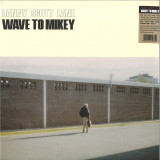
Wave to Mikey, the fourth album from the Los Angeles-based actor, musician and photographer Danny Lane is a nocturnal, neon-lit ode to the friendships that shape us. “I made this album for my friend Mikey from back home,” Danny explains. “We were pretty much inseparable for a large part of our lives, and our musical and social minds were always in sync in a special way. Then with age, we drifted apart, especially since I moved to Los Angeles. This album is just a little wave hello to an old friend and a kindred spirit.”
Equal parts avant-garde composition, instrumental city-pop, ambient, Kankyō Ongaku (environmental music) and Fourth World music, Wave to Mikey is an impressionistic and reflective cycle of eleven richly detailed memory portraits. Throughout the album, the influence of Jon Hassell, Arthur Russell, Hiroshi Yoshimura and Yellow Magic Orchestra hangs in the air like late-night mist, adding character but never overshadowing the rhythmic ambience of Danny’s musical visions.
Wave To Mikey began as a series of sketches on analog synthesisers, guitar, sample and found percussion sketches, initially recorded in Danny’s home studio. Once he’d located the vibe, Danny called on his friends E Talley II, Solange collaborator John Carroll Kirby and Destroyer session musician Joseph Shabason, who respectively added flute, spiritual synth textures and saxophone to the record.
For Glossy Mistakes founder Mario G.R., who originally discovered Danny through his photography, Wave To Mikey captures a vivid feeling of melancholy and peace. “He's able to encapsulate emotions in a very straightforward way, either in his portrait or songs,” Mario says. “I think that's a kind of virtue or skill given to talented artists, no matter the field.”
Born and raised in Staten Island, New York, Danny began playing music with his friends when he was thirteen, before putting that passion on pause to study Fine Arts (Theatre) at Rider University in Lawrence Township in pursuit of an acting career. Acting led him to photography, after playing a photographer in a film, he was inspired to pursue the medium. Danny began shooting photos on film for magazines and lifestyle brands, spent a stint living in New York’s Chinatown neighbourhood, and eventually relocated to Los Angeles in 2017.
Four years ago, Danny started recording and releasing music under his own name, leading to the trilogy of releases that preceded Wave To Mikey, How To Empty A Cup (2019), Memory Record (2019) and CAPUT (2021). Over the course of these releases, he’s revealed himself to be a sophisticated composer and producer with a studied ear from years spent digging through record bins for ambient, experimental, new age, jazz and electronica records from around the globe, with a particular emphasis on Japan.
“Music is something that’s always been involuntary for me,” Danny reflects. “It’s unconditional, always there. It’s something I just have to do. I’ve taken breaks and it’s always gloomy when I’m not playing. I just want to get better and better and understand more and more.”
Here at Glossy Mistakes, Wave To Mikey marks our second contemporary album release, following on from Evenings by Japanese composer Metoronori. We’re proud to be able to present Danny, Metoronori and other modern musicians' work alongside reissues of classic works from Stevia aka Susumu Yokota, Akira Ito, Yuji Toriyama & Ken Morimura, and Takashi Kokubo.
Mastered by Damian Schwartz, Wave To Mikey will be released on Vinyl LP Glossy Mistakes on June 27 2022. Besides the regular black vinyl, a limited clear vinyl will be available in an edition of 100 copies. Both editions come packaged with original cover art photography shot by Danny.
Debut full length album on the Valley of Search label by Mexican born, New York-based vibraphonist, marimbist, improviser and composer Patricia Brennan. The twelve original instrumentals that make up the album were composed and performed solo by Brennan on vibraphone and marimba. Employing unusual performance techniques and occasional electronics, many of the compositions were borne from improvisations created live in the studio at the time of recording. At times exploring silence and space, stillness and patience the album investigates new sonic territories with an endless sense of curiosity. "This album is a personal statement not only as a vibraphonist but also as an improviser and composer," says Brennan. "From bowing and bending pitch, to the use of extended effects via guitar pedals, this album reflects my vision for the vibraphone and the potential of all the possible ways it can be played. I wanted to not only incorporate all those techniques in the compositions but also wanted them to become part of my general improvisatory language." Patricia has performed with many renown musicians including singer and composer Meredith Monk and Theo Bleckmann, saxophonists Jon Irabagon and Scott Robinson, trumpeter Ambrose Akinmusire, drummer Marcus Gilmore, guitarist Mary Halvorson and many others. She has performed in venues such as Newport Jazz Festival, SF JAZZ, and Carnegie Hall, as well as international venues such as Wiener Konzerthaus in Vienna, Austria, Alte Oper in Frankfurt, Germany, Palacio de Bellas Artes in Mexico City and Teatro Colón in Buenos Aires, Argentina.
A simple idea in an over complicated moment. Strip away aesthetics and be artist centric, sharing and explore collisions, sounds and genres. Step out of comfort zones to release a series of EPs of broad, challenging and deep music.
Starting with The Proposal by A Strange Wedding, this Lyon based producer from the Worst label, builds on their "modern style" slow trance to create a label anthem, a template. Stretched Arp, hypnotic bass and searing melody, underpinned by ocean wide kick. Merci for the perfect beginning.
Datasal are next, as this Gothenburg's trio's debut arrives. Acoustics (Miyazawa flute / Fender bass) and electronics (Roland RS-09 / Korg Mono) collide; prog rock meets post punk meets dance; outside organised compositions to improvise to the beat.
Side two leads back to the origin. 84PC, the dormant Tel Aviv collective that developed out of the city's Michatronix Crew (featuring Katzele, Naduve, Asaf and Yovav), return with a previously unreleased remix from Khidja. Their "Welcome To The Pleasuredome" moment is peak time perfection.
To close Barcelona's Iro Aka arrive with another debut. Having dispatched edits on Hard Fist and 44,100Hz Social Club, their bubbling 303 is a tender dreamtime finale that points ahead.
- A1: Orhythmo - Nagel
- A2: Spinnuts - Zweimal Schlafen Atmosphäre
- A3: Ypy - Ms
- B1: Keihin - Exhale
- B2: Dj Nobu - Yakou Gai
- C1: Gabber Modus Operandi - Kisah
- C2: Coni - Ängelsbäcksstrand
- C3: City - 9K
- D1: Ryo Murakami - Reminiscence
- D2: Sapphire Slows - Hinotori
- D3: Compuma - Flowmotion (In Dub)
- D4: Albino Sound - Celestial Sphere
Versatility does not even come close to describing how the humble Japanese ¥ØU$UK€ ¥UK1MAT$U is considered to be one of the best DJs in the world by many of his peers. From his debut at DJ Nobu’s FUTURE TERROR event to performing 3 years consecutively at Berlin Atonal Festival, Yukimatsu’s sets have to be heard for you to understand.
In this special mix album, Yukimatsu gathers round his producer friends to build vessels of the story structure. Threading the pages together, interweaved by friendship and sine waves, he has crafted a masterful presentation from their individual messages. Pulling and stretching all sonic shapes and shades while exploring the farthest reaches of sound, the result is a frequency soup of twelve outstanding tracks that when sequenced together, become part of a greater, grander story: Midnight is Comin’.
From the sound art experimentations of orhythmo – Nagel and wide yawning strings in Ryo Murakami – Reminiscence to the rhythmic slo-mo haze of Sapphire Slows – Hinotori and the exponentially pulsing colours from DJ Nobu - Yakou Gai. The DMT-like spacious virtual meditation hall of KEIHIN – Exhale follows the uneasy footsteps of YPY – MS to the intermissioning chapter of City – 9K. Fall into the wormhole of COMPUMA –Flowmotion (IN DUB) and be transported to the reverb-drenched, intimate experience of Coni – Ängelsbäcksstrand, the primal invocations of Gabber Modus Operandi – Kisah (which also means story in Bahasa Indonesian) to the transcendent notes of SPINNUTS - Zweimal schlafen atmosphäre. The soaring universe of Albino Sound – Celestial Sphere wraps up the album with crystalline notes.
“Versatile is not even close to describing his music selection and mixing skills as he plays anything without prejudice and is purely music loving. He is extremely humble, can mix anything and make it sound interesting.” – nolens.volens (Bangkok, Thailand)
Coming hot on the heels of dynArec's 'Murder is The Number' EP, Sync 24's Cultivated Electronics label presents this double-pack by Alonzo, aptly named 'They Come In Twos'. Originally from Miami and now based in New York, Alonzo has previously released on W.T. Records, Zement, RotterHague, Phormix, Kraftjerkz, and Lost Soul Enterprises. He's also known as Lithium Parasites alongside bandmate, Vidrio. Alonzo's uncompromising approach draws influence from bleak urban landscapes, old city ruins, kinematics and all things bass which he finely represents across these 8 new tracks. Pressed on Yellow and Black vinyl!!!
A soundtrack of Sudan's revolution and the first ever international release of the Beja sound, performed by Noori and his Dorpa Band, an unheard outfit from Port Sudan, a city on the Red Sea coast in eastern Sudan and the heart of Beja culture.
Beja Power! is a living archive of the finest, most heartfelt Beja songs—a six-track portal to another time and place, of melodies long forgotten and never before interpreted by an electric and brass-driven ensemble. Few older Beja recordings were produced. Even fewer, if any, remain.
Electric soul, blues, jazz, rock, surf, even hints of country, speak fluently to styles and chords that could be Tuareg, Ethiopian, Peruvian or Thai—all grounded by hypnotic Sudanese grooves, Naji's impeccable, airy tenor sax, and of course, Noori's tambo-guitar, a self-made unique hybrid of an electric guitar and an electric tambour, a four-string instrument found across East Africa.
A truly ancient community, Beja trace their ancestry back millennia. Some say they are among the living descendants of Ancient Egypt and the Kingdom of Kush. They are even depicted in the hieroglyphics. Beja melodies—nostalgic, hopeful and sweet, ambiguous and honest—are thousands of years old. Yet their sounds are also reminiscent of Dick Dale's 1963 "Misirlou" and jazz great Charlie Rouse's 1968 "Meci Bon Dieu". This album could be 6,000 years, 60 years, or 6 months old.
Along with his Dorpa Band, formed in 2006, Noori's instrumental Beja music forms the latest link in an unbroken chain of an inherited, arresting sound that is local as it is global, a gift of a storied past and the exchanges of the well-traveled Red Sea.
Ostinato Records is honored to bring the nearly forgotten Beja sound in all its nostalgia, sweetness, honesty, and power, recorded and mastered to maintain the warmth of Sudan's signature aesthetic, to your sound system.
Dark Entries presents a reissue of Shawn Pittman’s 1989 Dreams, an obscure and highly sought-after private press gem produced and written by Art Forest. An undersung figure in the development of the late 80’s Detroit techno sound, Forest collaborated with, produced, or penned material for many of the key players in the movement, including Inner City, Suburban Knight, and the Belleville Three themselves (on Kreem’s “Triangle of Love”). This reissue gives Forest’s own productions some shine while providing a thrill for both dancers and collectors.
Dreams features two songs, both written and produced by Art Forest and featuring Shawn Pittman on vocals. The A-side contains two mixes of “Dreams”, a smooth R&B/modern soul number driven by Pittman’s vocal. While the song is undeniably radio-friendly, it contains some of the hallmarks of the Detroit techno sound – sparse arrangement, lush reverb, and booming bass. On the B-side, we are treated to two different versions of the clubbier “I’m Losing Control”. The original mix leans towards boogie/freestyle, with syncopated 909 beats and sassy synth vamps, and wouldn’t sound out of place next to Forest’s work with Inner City. The Extended-Bass-ment Club Mix strips things down and dubs them out, leaving us with shards of bass synth, brooding strings, and Pittman’s vocals eerily warped to the edge of recognition; a perfect late-night warehouse anthem.
All songs were remastered by George Horn at Fantasy Studios. The sleeve is a replica of the original cover art. Also included is a 2-sided postcard with lyrics and photos of Art.
Camisole is proud to unveil another part of the french cold wave history with the reissue of "Paroles Absurdes" LP by White Pain.
Hailing from Lyon the band began as a duo with Patrick Saveau and Patrick Gravier in 1984.Active figures in the underground scene of their city, they played some gigs and even had their own show on the local radio station.They developed a small following around them and recruited other members to record this album in 1986.
"Paroles Absurdes" is driven by the feeling that you can't escape your fate. Saying Words that you sometimes regret but you feel to be true.This testimony infuses this whole album.However, positive assumptions flow from time to time and left their more pop appeal roll into some songs.
This reissue also includes the first two tracks of the group only released on tape in 1985.As a duo, White Pain was a synth and drum machine band inspired by early 80's german pioneers like DAF or Din a Testbild.They used to have a raw, powerful, and dark sound quite unique in France at this time."Vienna" is probably the best way to resume their first intention.
"Prime Sequences" is the latest album by dj and electronic music producer GummiHz, real name Alexander Tsotsos. Alex has an ear for what he describes as elastic frequencies, thus gummi-hertz! In other words, low bass lines, airy synth phrases and shuffle rhythms, playfully arranged within loose forms. A philosophy that comes across throughout this long player. Elements fall in and out of order, time swings back and forth, all together in perfect harmony! Pushing the boundaries of what has become his signature sound, a fusion of house and techno all the way from Berlin to Detroit! This package features underground music coming straight from the heart, or the Hertz more appropriately! The story unfolds within no less than nine tracks showcasing Alex's versatility in making waves!
The opening track titled "Berlinopolis" is a sonic portrait of the city of Berlin, where Alex lives since more than a decade. A smooth soundscape produced by combining abstract melodies with field recordings of the city's ambience. "'Second Wave" follows airy jazz chords and drum parts to launch the listener into trajectory. It feels like the sort of track that would probably make it into Herbie Hancock's deep house collection! The title track "Prime sequence" is a Detroit brewed piece with some Berlin minimalism rawness in the rhythm section! Combining a mixture of drama, suspense and shaking drums to dominate the dance floor. Next up comes "Submerge", a tight and hypnotic affair carrying the right amount of subtle release. It locks in right from the start and doesn't let go! "Prime Dub" dives deeper into the frequency spectrum. Rhythm and sound stimulate the brain waves as a heavy chord phrase cycles to infinity. "Proto Sequence" follows a simple still infectious groove laced with various modulations. This track has party written all over it! Inspired by proto-house motifs pioneered by artists like Chi-town's Ron Hardy. "Metafunk" reaches out to Berlin's club culture at its core. That is, the youth and street culture! The phrase on repeat signifies the urge to reclaim the streets, while endlessly flowing within finely tuned electronics. "Mindloop" is a track written for the after hours looping state of mind. Another minimal house cut with a fair dose of psychedelic sound design. Lastly, "Descension" relaxes the mood through deep pulsating rhythms and playful arpeggios. Pushing towards a meditative state by stimulating mind, body and soul!?
"Prime Sequences" covers a wide range of styles like ambient electronics, peak time house and techno, as well as seriously effed up after hour minimalism! Made for both djs and music lovers, this is the second long player by GummiHz to come out on vinyl after his debut album "Sleepless Nights" back in 2009! While it succeeds his latest EP, "Groove is in the Hertz". What makes it even more special is that it comes out on brainchild Claap, giving the artist total freedom of expression.
- A1: Deadbone Patrol
- A2: Da' Lone March To Radio City / Cobalt's Theme
- A3: Benny's Marsh Tours
- A4: Poot Steps
- A5: War Lizards
- A6: Nipple Kinky
- A7: Where Da' Hell Is Body Bean 26?
- A8: Belinda Bump's Cosmic Ride
- B1: Clouding
- B2: Jivin' Wiv' Pittsburgh & Kansas City B A
- B3: Here Comes
- B4: Country Jug
- B5: The Dreams Of Franklin Gothic Green
- B6: Van Eyke's After Dark
- B7: Bribing' Da Fuzz
Nachdem sie mit seinem unglaublichen Talent aufgewachsen sind, fanden Joe und Josh, dass es an der Zeit war, dass die Welt dieses Juwel aus Bay City, Michigan, entdeckt. Das neue Album enthält 11 Originaltitel (plus 1 Cover) und zeigt Larrys kraftvollen, gefühlvollen Gesang, sein fulminantes Gitarrenspiel und sein erstaunliches Songwriting. Die Blues-Rock-Stars Joe Bonamassa, Warren Haynes und Joanna Connor steuern als Gäste ihre feurigen Gitarrensoli bei.
Margaret Dygas may be based in Berlin but her unique sound can't be tied down to any one city or scene, as she proves on her latest 12" across three tracks for the consistently exciting Half Baked label. Not that there's anything half done here, of course, with A-side tune 'Butterfly Effect' a prime slice of groovy. resonant techno that's understated and restrained enough to gain comparisons to Jaydee's 'Plastic Dreams' classic. 'CC Is 33' is warmer, with nicely slidy, jazzy organ chords and itchy technofunk rhythms, with the most minimal of the three tracks, the static-infused, atmospheric 'Subliminal 20A7', coming last but by no means least. A great showcase for a great, original talent.
For our next Time Is Now release, join us as we connect the dots between the Bristol - Leeds musical axis.
"Peaky Time Vol.1" sees us collaborate with the finest independent all-vinyl label the city has to offer, courtesy of the head honcho himself. Having so far received support from the likes of Moxie, Hodge, and Tom Ravenscroft, Tom Meyer has been making some serious waves as Peaky Beats - a name now closely-associated with his illustrious live sets which combine
breaks, dubstep and UKG.
Kicking off proceedings is sunshine banger "Road Runner" which is later flipped by key member of the TIN London faction, Yosh, who puts his inimitable spin on the classic-sounding UKG. With syrup-smooth vocal licks and staccato piano stabs, "Cats From The Back" maintains the theme, sure to be heard at festival stages across the country this summer. Finally on "XL", Peaky brings
the old school ruffage with clattering breaks and a breakdown that leads to a switch-up begging to be reloaded.
Original member of legendary NYC hip-hop group Heltah Skeltah emerges with a brand new banger, aptly titled "He's On Fire". Having defined the golden era New York Sound alongside Sean Price in Heltah Skeltah, Rockness Monsta (formerly known simply as Rock) serves up two dancefloor friendly but thought provoking odes to New York City street life.
28th April 2022 marks the 50th anniversary of the release of David Bowie’s STARMAN, the first single from THE RISE AND FALL OF ZIGGY STARDUST AND THE SPIDERS FROM MARS. To celebrate, Parlophone Records is proud to announce release details to mark the album’s Golden Jubilee.
On 17th June 2022, 50 years and one day after the original U.K. release date, THE RISE AND FALL OF ZIGGY STARDUST AND THE SPIDERS FROM MARS will be issued as a limited edition 50th anniversary picture disc, featuring a half-speed master and a replica promotional poster for the album.
THE RISE AND FALL OF ZIGGY STARDUST AND THE SPIDERS FROM MARS is the breakthrough album that catapulted David Bowie into the international spotlight. Over the past 50 years it has remained a touchstone record, growing in stature with each passing year. It is now ingrained in popular culture, its undeniable influence spanning musicians from Arcade Fire to Lady Gaga, to Harry Styles’s androgynous fashion sense to Noel Fielding’s shirts on The Great British Bake-Off to Ziggy make-up challenges on Tik-Tok.
David Bowie laid to rest the Ziggy Stardust persona in July 1973 at his infamous last show with the Spiders From Mars at London’s Hammersmith Odeon, but Ziggy’s impact reverberates to this day.
Italo disco meets Balearic ethno-funk in the third installment of re-edits from DJ collective Siffleur. Side A is your leftfield, sensual 80s nostalgia, your introspective, post-multiverse ‘club tropicana’. Side B will take you on a dreamy night-journey through city streets where love is a pink neon light.
Strut present an exclusive collaboration between two jazz greats, Bennie Maupin and Adam Rudolph, on 'Symphonic Tone Poem For Brother Yusef', originally commissioned by the Angel City Jazz festival in Claremont, to mark the late, great Yusef Lateef's 100th birthday on 9th October, 2020. The album weaves a magical, meditative path across five movements, combining electronics, saxophone, voices and Rudolph's wide palette of percussion from hand drums to thumb pianos and gongs. Both artists bring unparalleled experience to the project. Detroit's Bennie Maupin is best known for his work with Miles Davis on Bitches Brew, Herbie Hancock and The Headhunters and Eddie Henderson. Chicago percussionist Adam Rudolph was Yusef Lateef's percussionist for 20 years and has worked with many other jazz luminaries including Pharoah Sanders, Wadada Leo Smith and Don Cherry. His work with Mandingo Griot Society during the '70s and '80s and, more recently, leading Hu Vibrational and Go Organic Orchestra constantly break new ground in the use and context of percussion.
Marc Brauner makes his return to the label, this time collaborating with fellow Berliner, Ulrich Harrison - better known by moniker Tender Games - on five summertime sweeteners.
These two producers are no stranger to working together, co-running their own imprint, Nostalgics Records in their home town of Berlin. This collaboration then came together naturally, and represents the ideal blend of Marc Brauner's syncopated rhythmic tendencies, and Tender Games' musical antecedents in soul music and penchant for instrumentation.
'Concrete Jungle' epitomises this fusion: a two-step rhythm carries a deep bassline which cruises beneath a blissed-out trumpet melody. 'You Keep Me Up' and 'Listen' are skippy old school bangers, the former complete with anthemic piano stabs a la Manix and Inner City and the latter peppered with blithe whispers of a saxophone. 'It Makes Me' follows suit, substituting hi-hats for a focus on funk-inflected low ends before the UKG-leaning 'Violation' draws things to a close with MC vocal chops and bass womp ruffage.
Concrete Jungle EP drops 17th June 2022 via Shall Not Fade
The Hamadcha of Fez are dervishes belonging to the very old (XVII) Moroccan Sufi brotherhood Hamdouchiyia. Its members are mystics who sing and dance to trance in honor of the holy founder, the miracle worker Sidi Ali Ben Hamdouch.
During a performance their amazing spiritual and artistic practices transmit to those who approach them their “baraka”, a divine grace.
The audience vibrates and moves to the rhythms of the dervishes songs, tempos, stories and fascinating dances.
Dj Click puts down his suitcases in the heart of the old city. He goes in search of atypical sounds coming from the heart of the streets, soaks up the atmospheres, then offering us a sound postcards where tradition alongside modernity.
He is the first producer to be accepted into their brotherhood for a such meeting!
Born and raised in the deep outskirts of Mexico City, the Gama brothers are keeping alive the rich legacy of marimba music running through their family with their latest project, Son Rompe Pera. While firmly rooted in the tradition of this historic instrument, their fresh take on the folk icon challenges its limits as never before, moving it into the garage/punk world of urban misfits and firmly planting it in the 21st century.
For more than twelve years, Morphology have been re-writing the rules of electronics. Michael Diekmann and Matti Turunen have melted electro, IDM and techno into their own unique sound. To celebrate their achievements, FireScope has sifted through the impressive discography of this Finnish pairing to bring long out of print tracks back to life.
Twelve 2 brings together a decade’s worth of music released between 2009 and 2019, a dozen works that traverse genres and labels like Abstract Forms, AC Records, Analogical Force, Central Processing Unit, Cultivated Electronics, diametric., Inner Space Records and Vortex Traks. Spliced beats and bulging bass lines introduce the album with "Karma Flies.” Rhythmic patterns are condensed and stretched in “Inversion Layer” and “Amphidiscosa”, the latter’s aquatic undercurrents melting an organic touch with the coldness of the machine. Darker tones lurk, the long shadows cast by “Convince the Computer” spread to other tracks like “Nucleosynthesis.” Yet, despite these more sombre shades, pieces with a human element punctuate the album. The frenetic pace of “Fluid Dynamics,” with its playful melody, throbs with the pulse of a city while the ebbs and flows of the watery “Active Optics” explore an ever morphing and shifting sound. An imagined future is never far away in Morphology’s machinations. These other places are given sound in the frigid grooves of “Sentinel,” the primal beauty of “New Horizons” and the stark structures of “Landforms.”
Not only does this double LP gather rare tracks never heard together before, but also each piece has been lovingly remastered to breath new life into these wonderful works. Twelve 1 celebrates the music of Morphology in all its glory, two masters of modern electronic music who continue to re-define and re-design genres.
140g Black vinyl LP – Printed inner sleeve – Sealed plastic sleeve
In Trux We Pux is an editorial project organized by the Porto based label and collective Favela Discos. Focusing on the city’s thriving experimental and improvised music scene, it sets out to portrait in a series of four volumes some of the characteristic sounds and collaborative practices that have been in development in Porto during the last few years.
In Trux We Pux 04 is the last in a series of four records organized by Favela Discos, set out to shine a light on Porto’s thriving experimental and improvised music scene. Throughout the collection the label tries to expose the eclectic sound and collaborative practices that have been in development in the last few years in the city by promoting the collaboration between artists and the creation of new collective improvisation pieces.
As the first album dwelled into the electronic spectre of the scene, this volume veers itself to the physical side of experimental and improvised explorations. Although there is space for outsiders manipulating the sound by electronic means, most of the music in this album is plucked, bowed, percussed or sung. The artists themselves are as varied as the music they played, among the 13 artists that collaborated for the creation of this album are many promising newcomers but also some of the more recognizable and relevant names in the scene, with the presence of the Sonoscopia founder Gustavo Costa, João Pais Filipe one of the most characteristic drummers in Portugal, and the DIY duo and underground staple Calhau!.
As we could suspect, the diverse selection of musicians, while providing us a view on the various kinds of musical languages that populate the city’s scene, also creates a dynamic collection of sounds. Spanning a large gamut of sub-sub-genres, from near-musique concrète to tribal noise, the album is a rollercoaster collage that miraculously achieves logic and cohesion, like a voyeur listener taking us on a journey through an abandoned mall where most of the bands in Porto rehearse, whose halls reverberate with a cacophony of music.
140g Black vinyl LP – Printed inner sleeve - Sealed plastic sleeve
In Trux We Pux is an editorial project organized by the Porto based label and collective Favela Discos. Focusing on the city’s thriving experimental and improvised music scene, it sets out to portrait in a series of four volumes some of the characteristic sounds and collaborative practices that have been in development in Porto during the last few years.
In Trux We Pux 01, the first record of the collection, is focused on the electronic side of the eclectic but characteristic experimental and improvised scene in Porto, and contains a selection of 23 musicians that have been developing their own take on whatever niche genre they dwell in. Among the list of musicians are Filipe Silva (HHY & The Macumbas), Crónica Electrónica’s heads @c, ocp, coletivo vandalismo and several others that populate a thriving scene that spans a wide gamut of sounds, from delicate to abrasive.
As the tracks themselves, the different approaches to composition and production add to this compilation’s schizophrenia. The first side of the record offers us a spacious and abstract scenery, starting with a collage of field recordings, banjos, and fans, narrated by google translate’s voice. The following two tracks flow along the granular tide of ambient spaces and atmospheres slowing down a bit before the second side turns around 180º and heads towards more rhythmic fields.
Coletivo vandalismo & querido lider present us with their exploration of half balearic, half german-synth-music pulsing away at the beat of broken down dancehallish drums and reggae breaks. Challenger & Lorr No’s track is a trainwreck heading down a break driven jungle that lead us to the album’s closing arguments: MOSCXS’ sludged beat goth-step exploration around the poem “Poema Agreste” by Glória de Sant’Anna.
140g Black vinyl LP – Printed inner sleeve – Sealed plastic sleeve
In Trux We Pux is an editorial project organized by the Porto based label and collective Favela Discos. Focusing on the city’s thriving experimental and improvised music scene, it sets out to portrait in a series of four volumes some of the characteristic sounds and collaborative practices that have been in development in Porto during the last few years.
In Trux We Pux 02 contains the first of Favela Discos’ collective pieces to be published, and it was chosen to represent a long series of site-specic pieces developed by the collective since its formation. Most of the time these pieces remain lost in time or in the label’s archives.
Desilusão Óptica is an audiovisual piece developed for the festival Serralves em Festa 2017 and was recorded between the concert and rehearsals. The piece is influenced by the book Musicophilia by Oliver Sacks, and tries to explore the notion of auditory hallucination, in this case based on the idea of a phantom sound unconnected to its object.
Starting quietly with a single flute note, Desilusão Óptica slowly grows fuller but more uncomfortable as the pitch rises gradually in a hypnotic effect. The sound we hear is a mix of the sound produced live, its manipulation and repetition, thus the piece exists between the time when it happens, its immediate repetition and ghosts of past sounds.
The flute, delayed and sampled, embodies both the sounds it produces and memories of past sounds, creating a confusion between objecto and sound. The sound is produced by an object but is at the same time separated from it, like in Mulholland Drive when we watch a singer emotionally dedicated to a performance and whose voice keeps on singing even when her body collapses.
Like in Dub Music, the musicians are divided into two groups: those who play, in this case divided by winds, percussion and electric guitars, and the dub master / sound manipulators who launch samples of previous recordings and manipulate the sound that is produced live, through loopers and delay pedals.
140g Black vinyl LP – Printed inner sleeve – Sealed plastic sleeve
In Trux We Pux is an editorial project organized by the Porto based label and collective Favela Discos. Focusing on the city’s thriving experimental and improvised music scene, it sets out to portrait in a series of four volumes some of the characteristic sounds and collaborative practices that have been in development in Porto during the last few years.
Milteto is an informal orchestra born out of the Favela Discos collective somewhere in 2014. The idea, that had been around for a while, was materialized for a concert in one of the first events hosted by Favela, in the extinct Picadilly Pub in Porto, a small strip club turned underground venue. It was one of those wet pre-covid nights where the condensation dripped down the mirrored walls, in a loud endurance contest that resulted in a fainted audience member.
For a very large number of reasons, it would be hard to define Milteto’s whole “career” in an album: the band has always inhabited the live context, trying to create massive immersive sound experiences for both the listeners and the musicians, subconsciously seeking to achieve transcendence by volume.
So, in reality this is a momentary reflection of an always mutating entity, instead of trying to define the several years of drastically different experiences in just 45 minutes, they took to the album as just another live presentation where they adapted to the idea of what a record could be as if they would adapt to a venue.
Faced with the idea of creating an album that reflected the project’s mutability, the band looked at the medium itself for inspiration, as the vinyl record has two sides, they thought that maybe it would be a good idea to reflect that on the music. So the recording sessions were split into two days, with two different groups of guests. One side set to recreate a more physical manifestation of the band, the other a more mental side, the first teeming with percussion, the other with electronic devices and synthesisers.
For Fans of Aasha Puthli, Grace Jones, Minnie Ripperton, The Supremes, Love Apple, Liquid Liquid, ESG. Say She She's debut 45 features "Forget Me Not," an homage to New York City's Guerilla Girls and to all the women's rights and protest movements who have paved the way for change. Doused in the funkiest rhythm section and bursting at the seams with harmonies, the song is a psychedelic siren's call to disrupt and dismantle male dominated spaces. "Blow My Mind" is the fiery and seductive B-side. A song about returning to reignite the fire of a former flame you still carry the torch for - even after all these years. The impassioned and sultry cries "Mayday in my heyday, crying out for you to save me!" teeter between youthful yearning and blazing independence. Let the dreamscape bridges guide you to climactic hindi riffs, accented with operatic cries that will lift you yonder.
LP/CD-Deluxe-Edition zum 10-jährigen Albumjubliläum!
Mit seinem dritten Album, ursprünglich 2012 veröffentlicht, eroberte das Portico Quartet musikalisch neues Territorium. Für diese hochwertige Wiederveröffentlichung zum 10-jährigen Jubiläum wurde das Album neu gemastert und für LP auf drei Seiten geschnitten (die vierte Seite ist eine Radierung). Außerdem erscheint der Track „Laker Boo“ zum ersten Mal auf Vinyl. CD und LP erscheinen im neuen Artwork von Bandmitglied Duncan Bellamy, die LP enthält einen Hi-Res-Downloadcode für das gesamte Album sowie bisher unveröffentlichte Tracks, die exklusiv nur über den Download-
Gutschein erhältlich sind. Die LPHüllen sind mit Silberfolie geprägt und enthalten ein 12-seitiges großformatiges Booklet. Das CD-Digipak
im folienbedruckten Slipcase enthält ein 12-seitiges Booklet.
- 1: Concert Intro Music
- 2: Angie
- 3: Street Fighting Man
- 4: Let It Bleed
- 5: Start Me Up
- 6: Midnight Rambler
- 7: If You Can’t Rock Me
- 8: Don’t Stop
- 9: Monkey Man
- 10: Tumbling Dice
- 11: You Got Me Rocking
- 12: Thru And Thru
- 13: Can’t You Hear Me Knocking
- 14: Honky Tonk Women
- 15: Happy
- 16: Gimme Shelter
- 17: Satisfaction
- 18: Brown
White Vinyl[64,29 €]
Um ihr 40-jähriges Jubiläum zu feiern, begaben sich die Rolling Stones in den Jahren 2002 und 2003 auf eine weltweite Tournee, die 117 Konzerte in verschiedenen Arenen und Stadien umfasste. Diese Show fängt den Auftritt der Stones vom Januar 2003 im Madison Square Garden in New York City ein und enthält einen Gastauftritt von Sheryl Crow bei ”Honky Tonk Women”.
“Licked Live In NYC“ enthält bisher unveröffentlichte Performances von ”Start Me Up”, ”Tumbling Dice”, ”Gimme Shelter” & ”Sympathy For The Devil“. Dazu gibt es 3 Bonusauftritte aus Amsterdam und Probenmaterial.
Das Album erscheint als 2CD, 1CD+DVD, 1CD+Blu-Ray, 3LP und Ltd. Coloured 3LP.
- 1: Concert Intro Music
- 2: Angie
- 3: Street Fighting Man
- 4: Let It Bleed
- 5: Start Me Up
- 6: Midnight Rambler
- 7: If You Can’t Rock Me
- 8: Don’t Stop
- 9: Monkey Man
- 10: Tumbling Dice
- 11: You Got Me Rocking
- 12: Thru And Thru
- 13: Can’t You Hear Me Knocking
- 14: Honky Tonk Women
- 15: Happy
- 16: Gimme Shelter
- 17: Satisfaction
- 18: Brown
Black Vinyl[64,29 €]
Um ihr 40-jähriges Jubiläum zu feiern, begaben sich die Rolling Stones in den Jahren 2002 und 2003 auf eine weltweite Tournee, die 117 Konzerte in verschiedenen Arenen und Stadien umfasste. Diese Show fängt den Auftritt der Stones vom Januar 2003 im Madison Square Garden in New York City ein und enthält einen Gastauftritt von Sheryl Crow bei ”Honky Tonk Women”.
“Licked Live In NYC“ enthält bisher unveröffentlichte Performances von ”Start Me Up”, ”Tumbling Dice”, ”Gimme Shelter” & ”Sympathy For The Devil“. Dazu gibt es 3 Bonusauftritte aus Amsterdam und Probenmaterial.
Das Album erscheint als 2CD, 1CD+DVD, 1CD+Blu-Ray, 3LP und Ltd. Coloured 3LP.
Light Green Vinyl[19,75 €]
Delete My Feelings is The Let Go's debut EP on Chess Club Records. The mixtape features self-produced bangers 'Woke' and 'Vegas' as well as current single 'Last Year's Model Club', which features additional production from Oscar Scheller (PinkPantheress, Arlo Parks, Ashnikko). The Let Go are Cole and Scout, 19-year-old Washington natives who relocated to the UK to attend LIPA in Liverpool. They write and produce all their own work together, with influences ranging from The 1975 and Billy Joel to Brockhampton and Dominic Fike, drawing influence from bedroom pop, hip hop, punk, indie and everything in between to create their own unique sonic landscape made for the here and now. Since releasing 'Woke', The Let Go have been featured on BBC Radio 1 as Jack Saunders’ Next Wave, and in tastemaker publications like FADER, DORK, DIY, CLASH & on NME's playlists. The duo will be heading out on tour with The Night Cafe and Daisy Brain in February, and with packed rooms at Sound City and Live at Leeds festivals under their belts already, The Let Go are poised to become one of the most exciting new acts in the UK in 2022.
Glow-In-The-Dark Vinyl[19,75 €]
Delete My Feelings is The Let Go's debut EP on Chess Club Records. The mixtape features self-produced bangers 'Woke' and 'Vegas' as well as current single 'Last Year's Model Club', which features additional production from Oscar Scheller (PinkPantheress, Arlo Parks, Ashnikko). The Let Go are Cole and Scout, 19-year-old Washington natives who relocated to the UK to attend LIPA in Liverpool. They write and produce all their own work together, with influences ranging from The 1975 and Billy Joel to Brockhampton and Dominic Fike, drawing influence from bedroom pop, hip hop, punk, indie and everything in between to create their own unique sonic landscape made for the here and now. Since releasing 'Woke', The Let Go have been featured on BBC Radio 1 as Jack Saunders’ Next Wave, and in tastemaker publications like FADER, DORK, DIY, CLASH & on NME's playlists. The duo will be heading out on tour with The Night Cafe and Daisy Brain in February, and with packed rooms at Sound City and Live at Leeds festivals under their belts already, The Let Go are poised to become one of the most exciting new acts in the UK in 2022.
The music world is most fortunate that the past two decades have witnessed the rediscovery of mind-opening music that went under-recognized when originally released, and the wellspring of musical content produced by a generation of brilliant musicians. One such musician was the late great drummer Steve Reid, whose reissued eclectic recordings on his own Mustevic Sound label gave his career a second wind.
Though teased on a well-received compilation, one Mustevic release never saw reissue: New Life Trio’s Visions Of The Third Eye, a tremendous collaborative effort between Reid, guitarist Brandon Ross and bassist David Wertman.
Due to overwhelming demand, Early Future Records and Finders Keepers Records are proud to announce a second limited edition pressing of the classic and final Mustevic recording. The release also includes a 20-page written zine featuring an in-depth testimonial and interview with Brandon Ross, and an explorative essay by Finders Keepers’ Andy Votel, as well as a wealth of archival photos, scores and reviews.
Reid’s long and varied career began in his native New York City, where he was involved early on as a member of the Apollo Theater House Band and the R&B scene of the 1960s, including recordings with Martha Reeves and James Brown. In the late 1960s, Reid spent three years in West Africa absorbing musical traditions and experimenting with artists such as Fela Kuti, Guy Warren and Randy Weston. After a stint in prison for dodging the draft as a conscientious objector, the drummer came out swinging in the 1970s. He worked regularly as a session and Broadway musician even while immersing himself into the jazz world, from the straight-ahead styles of Freddie Hubbard and Horace Silver to the otherworldly sounds of Sun Ra and Charles Tyler.
The do-it-yourself ethos of the New York Loft Scene inspired Reid to create his own label, Mustevic Sound, on which he began releasing his own recordings and those of a couple of friends. One of these trusted friends was David Wertman, a young bassist from New York who released his own Kara Suite on Mustevic in 1976.
New Life Trio’s story began when Wertman moved from New York to the more sedate but creatively vibrant town of Northampton, Massachusetts. Here Wertman met Brandon Ross, a young guitarist from New Jersey who had relocated there with his brother to join a coterie of New York expats who had found a comfortable, collaborative environment amidst the liberal college towns in the area, including avant-garde legends Archie Shepp and Marion Brown. Wertman and Ross became friends and began to perform together regularly, both formally and informally.
A string trio of Wertman, Ross and violinist Terry Jenoure was set to record, but Jenoure dropped out just prior to the date. This led Wertman to call his friend Steve Reid to come join the two at the Tin Pan Hollow Studios in Vermont to record what would become Visions Of The Third Eye on December 6, 1978. Originally conceived as an all-acoustic date, the recording would morph slightly when Ross added electric guitar muscle on a number of pieces. Reid would then take the helm and release the recording in 1980, giving a very auspicious birth to what has now become a classic spiritual jazz recording.
Fast forward to 1995…..New Life Trio gets a belated second wind from Stuart Baker’s inclusion of the Ross-voiced “Empty Streets” on his Universal Sounds of America compilation. The brief, haunting lead track just hinted at what the full Visions Of The Third Eye album had to offer. Audience awareness resulted in the pursuit of out-of-print original LPs, thus the rarity of Visions Of The Third Eye led to it becoming a kind of “holy grail” record for collectors of jazz and creative music. The album’s cover image was even incorporated into the cover of Freedom, Rhythm & Sound (SJB, 2009), a wonderful coffee table book presenting album covers from those revolutionary decades in Black creative music. The recording’s legend was cemented.
New Life Trio’s legend continues to grow partly due to the brevity of its existence. The triumvirate of Reid, Ross and Wertman would never work together again. Each member would continue along his own path, finding success in numerous projects. Reid’s career was reinvigorated with the reissue of the bulk of his Mustevic Sound recordings in the early 2000s, which led him to a rewarding partnership with Four Tet’s Kieran Hebden until Reid’s untimely passing in 2010. Wertman balanced life between Florida and Massachusetts as a regular in the local jazz scene, recording numerous projects with his wife, Lynne Meryl, before passing away in 2013. The fantastically creative Ross has remained active in the New York creative music scene with a number of projects, most notably with Henry Threadgill, Cassandra Wilson and Harriet Tubman, a wildly eclectic co-led band with underpinnings of rock, dub and free jazz.
Tape
The trio Susana Santos Silva / Torbjörn Zetterberg / Hampus Lindwall emerged in 2015 with their first album, which was received with critical acclaim. The unique conceptual approach to composition & improvisation rooted in both free jazz and contemporary classical music was described as “guaranteed a unique listening experience” (JazzIn), “It is art!” (Gapplegate Music Review) and “unique sound and style” (New York City Jazz Record). On their new album »Hi, who are you?«, they have taken the musical creation a step further by adding live electronics for real time sound treatment. Different techniques from experimental electronic music is juxtaposed with simple use of electric guitar effects to obtain tight and highly emotional sound.
Susana Santos Silva - trumpet Torbjörn Zetterberg - double bass, and electric noise on track 5 and 10 Hampus Lindwall - pipe organ and live electronics
Following on from the success of 2018’s epic triple album The Saving Of Cadan, Cornwall’s space/psych/folk-rock/post-punk cross-pollinators HANTERHIR are back with a new studio album. After more than a decade, …Cadan finally found the band breaking out of their Redruth bolthole, playing a major headline show at London’s Kernow In The City festival in March 2020, just before lockdown. As with many others, this enforced break from gigging encouraged the band to get creative and the new album was soon progressing…Its Cornish title Nyns Eus Denvydth Bys Trest roughly translates as ‘There is no-one to trust’ – “Writing and recording the album was done over the backdrop of Brexit, a falling apart relationship and then Covid lockdowns,” explains singer, guitarist, and songwriter Ben Harris. “With all the wacky things that have come out of people’s mouths over the past few years I think the title pretty much sums everything up.” A massive labour of love for Ben, …Cadan was a sprawling concept based on Cornish legend, which required him to write within a theme. The creation of this album has therefore been a breath of fresh air, a more organic experience allowing him to write from a more personal and immediate perspective. Displaying elements of Hawkwind’s sturm und drang spacerock and Psychedelic Furs’ sax-driven post-punk squall, opener ‘Always On’ finds the septet celebrating themselves: “We play so many gigs with so many other bands and one thing that strikes me about us is that we're always ready, we don't spend hours soundchecking, just point us in the direction of a stage and we'll play there. “‘Honeybees’ is us singing to the people that it's possibly time to stop voting for the same political parties and following the same failed systems,” he continues. “As far as I can see nothing's got better over the past year, or ten years or whatever, things just get slowly worse and people accept it. ”The song ‘Yeah’, which fuses Steeleye Span folk-rock melody and Sonic Youth chaos with spiralling psych guitar, has backing vocals which translate as “I am the same as you”, which Ben thinks is very important: “We're all the same and no-one is more important that anyone else”. Recorded at MHRCC, The Chapel and VIP Lounge by Peasy and Dare Mason; produced by Peasy and mastered by Anders Petersen at Ghost Sounds, Stockholm.
"bit by bit" is the first full-length release from Toronto-based singer-songwriter Evan J Cartwright. This self produced album from the go-to drummer/collaborator (The Weather Station, U.S. Girls, Brodie West) presents a highly singular songwriting vision that combines existential lyrics with masterful musicianship. Steeped in jazz melodicism, Cartwright’s trumpet-like phrasing mixed with contemporary composition presents an eclectic art song performed by an artist that could perhaps be best described as a post-modern Chet Baker. Deep poetic observations on love and time paint an affecting picture of an artist reflecting on life’s universal truths. Visual in nature, "bit by bit" places its audience within a world of musical leitmotifs extracted from field recordings of bells and birdsong. Collected during years of touring, these sounds evoke extant spaces beyond that which the music inhabits. The use of this source material in its unaltered form evokes the feeling of a technicolour European film at one moment and then, as the extrapolated melodies are meticulously translated into electronic tone bank sequences, a modernist setting the next. One carillon melody is used as the basis for a wealth of the album’s musical material before its origin is finally revealed by the chiming of bells in the last seconds of the album. The result is a fragment of space between the constructed world of the musical compositions and the candid world of documentation, inviting the listener to ponder whether those two worlds are distinct or whether the songs and music are not simply “field recordings” themselves. Throughout "bit by bit" Cartwright drops staggering revelations hiding in plain prose that often involve the contemplation of time. In I Don’t Know he states “if I only trusted time / then I would wish it all away” and nearing the album’s end he opens impossibly blue with the phrase “the impossible truth of time”, playfully inserting a pregnant pause before the word time. A drummer’s fixation, to be certain, the album’s recurring theme of time is eclipsed only by Cartwright’s contemplation of human relationships. Here he elaborates on some of the album’s subjects: “Many of the lyrics circle, and try to give a name to the illegible space between human beings. “i DON’t know” celebrates the fact that we will never truly understand what love is. Its message is one of assurance. It says that we can never really touch love, and that is ok. “and you’ve got nobuddy” refers to life’s great tragedy: that we are unable to read each others’ experiences, and in reaction to this, we separate ourselves.” The entirety of "bit by bit" is a continuous work. There is seldom a clear demarcation of where one piece ends and another begins and when this does occur, it is done crudely, as if someone is flipping through a series of broadcasted channels. At times words are sliced right out of their lines and replaced by pure tones. This is both a comical interpretation of censorship and a reminder that there are things in life that will forever remain unseen and illegible. In fact, this statement lies at the centre of the LP and although hidden beauty does reveal itself through repeated listenings, "bit by bit’s" eccentric world remains just out of reach — an imaginary second story room viewed from a crowded city street.
Mieko Shimizu is a London based Japanese singer, songwriter, composer and producer. Mieko first erupted onto the UK electronic scene as Apache 61; her searing alter ego, fusing layers of cross-woven breaks and battling shards of sub-bass within stateless melodies drawn from the fringes of the avant-garde. Garnering plays by John Peel she quickly build herself a name across the underground scene. Originally trained in Jazz, she cites the multidisciplinary performance artist Meredith Monk and composer Terry Riley as early influences, but also draws inspiration from many genres.
Phenomena of the mind is a re-mastered EP of selected tracks from the album of the same title released in 2006, the year after the London Terror attacks. Something dispirited and unexplainable lay heavy in the air of this immense city that we lived and breathed. In the title song “ Phenomena of the mind” Mieko’s intense Japanese rap echoed the din of the chaotic streets we walk.‘Visualise’, she says, try to imagine a way to fight our way our way out of this ominous struggle.
In the track “Signal Found”, the theme continues to shattered Dance Hall beats that reverberate to the “Twisted Sound” of “Broken down” “London Town”. “Have you lost a plot? Are you ok?” she asks?
In the track ‘Black Salt” a dark melancholic theme floats over fragmented, glitchy beats compounded by the repetition of the word “black” which hammers the constant bombardment of racism prescient of the call for freedom that “Black Lives Matter.”
Wonderland Magazine has described Mieko’s music as “beautiful poetic verses and stunning musical arrangements and Mark Taylor describes Mieko in Record Collector as “An avant-garden artist pushing boundaries”
• Re-mastered EP of selected tracks from the album of the same title released in 2006
• Premiering the re-release at Twenty One in Southend on 21st April
• Mark Taylor describes Mieko in Record Collector as “An avant-garden artist pushing boundaries”
Following the success of Field Guide I, which Bandcampdescribed as
'collecting some of the world's best House,Techno, and UKG,' Maison
Fauna continues the traditionwith Field Guide II
The compilation represents the nextchapter in the evolution of Maison Fauna's sound, and giveslisteners an insight into what the burgeoning label plans todebut in 2022. Featuring an eclectic arrangement of House,Techno, UK Garage, and Drum and Bass from 8 talentedproducers ' each one pushing the boundaries of theirrespective genre in their own right ' Field Guide II weavesa compelling sonic narrative. The assemblage ofunderground electronic artists are sourced from ageography as expansive as the sounds they represent,ranging from Durham to Berlin and Bristol.
- Z]C To Infinity
- A2: Home Team
- A3: The Pit
- A4: Girl Guide Cookies (Feat Robo Robb & Eddie Quotez)
- A5: Well Wishers (Feat Illgil)
- A6: Translucence (Feat Kamilah Apong)
- A7: Years (Feat Nole)
- A8: To Friend Too Fortunate (Feat Thesis Sahib)
- B1: S Morganstern (Feat Ginzuintriplicate)
- B2: Nothin Fri3Ndly (Feat More Or Les, Wordburglar, Swamp Thing, The Mighty Rhino & Ghettosocks)
- B3: Lush Karma
- B4: Gjhs
- B5: What Would Buffy Ste-Marie Do? (Outro)
- B6:
The Library Steps is a new pairing of an old rapper named Jesse
Dangerously and a young producer named Ambition
The duo is named in remembrance of the now demolished stone stairs of the
Halifax Memorial Library entrance, where among a loose and ragtag assortment
of the city's rappers they would gather across generations every Friday as the
doors locked, to freestyle, beatbox, and play tapes in a cipher called Public Rhyme
Distribution. Jesse and Ambition have been members of the Canada- wide
collective Backburner since 2001 and 2009 respectively, but only started making
songs as a rapper/producer duo in the spring of 2017. It took them more than a
decade of intention to pair off as a team. All of the beats and rhymes for Rap Dad,
Real Dad were created in the next few months as a time capsule of that season's
preoccupations. The beats are jazzy, soulful, and moody, with a prominent nod
factor, and the rhymes are confessional and witty, vulnerable and boastful,
intimate and intimidating. Under their fingernails, no microscope is needed to
detect the DNA of golden era rapper/producer teams like Pete Rock & CL Smooth,
Gang Starr, a gentler Beatnuts, or any group that was part of Native Tongues or
Hieroglyphics. Just as present are the influences of turn- of- the- century
underground boundary pushers like Sage Francis, Aesop Rock, MF DOOM, and
Buck 65, and for that matter, just about everyone who was on Roc-A-Fella at its
peak. Refracted here, those chosen ancestors and more recombinate into a hiphop that challenges, from unexpected angles, traditional modes and narratives of
masculinity. They are your rap dads, and they just may be your real dads, too.
[n] B6 . [A,Z]A+[A,,Z]B+
Joris Feiertag is a Dutch producer and drummer from the historic and culturally rich city of Utrecht. Having signed to Sonar Kollektiv in 2018, and released his debut long- playing record Time To Recover, and its subsequent remixes, two years later, he now brings us another side to his sound in the shape of the Dive mini LP. This new project sees the producer return to something like his musical roots, delving deeper into the use of synths and embracing more offbeat melodies.
Counter Intuitive Records is proud to bring Origami Angel's debut EP Quiet Hours back to vinyl with a new pressing. Originally released in 2017 and out of print since 2018, this EP introduced Origami Angel as one of the most exciting bands in a new wave of pop punk. This EP remains a cult favorite following the release of two acclaimed LPs: Somewhere City (2019) and GAMI GANG (2021).
Turning toward some Miami bass, beats and style in "Wooooo!" - with its stuttering horns, ruff vocal chants and skipping rhythms steers towards the ghetto tech style for which DJ Godfather is renowned. And for your tongue in cheek ghetto track, as promised, "Wack DJ" will get those bottoms ends working thanks to an undeniable 808 beats!
Legendary A&O 90's album reissued in 2 volumes incl previously unreleased tracks! The vintage UK Dub sound: roots, spirituality and heavy basslines. Bass-music, play LOUD! Incl "Jerusalem", "Stepping Up", "Promised Land", "Great Tribulations", ….
- A1: Please Leave Me Alone
- A2: Nutbush City Limits
- A3: Bootsie Whitelaw
- A4: Bolic
- A5: Golden Empire
- A6: Rockin’ & Rollin’ Again
- B1: I Wanna Jump
- B2: Sexy Ida B3. Living For The City
- B4: Come Together B5. Proud Mary
- B6: River Deep Mountain High
- C1: I Want To Take You Higher
- D1: Please Leave Me Alone (Radio Edit)
Third album of this post-punk/avant-rock french project.
RIEN VIRGULE is before everything else musically, the meeting of four people, islands of desires, tentacles that embrace each other. Or “the meeting of a soldering iron and an iceberg, a pigeon asleep in a packet of chips, a smashed path in a debaptized city” (according to J. Burgun).
For 8 years, two albums and numerous concerts, they have been peddling a generous, graceful and cold, intensely vibrating music.
In a radical and deviant approach to Pop music, the classical structures of verse-chorus serve as a playground and experimentation, where rhythmic, melodic and noisy functions merge.
In June 2019, Jean-Marc Reilla passed away. His homemade instrumentarium and laughter continue to resonate for his loved ones, and his memory lives on in the music of RIEN VIRGULE that has become a trio.
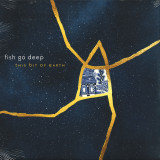
Greg Dowling and Shane Johnson return to the Go Deep label for their third album, ‘This Bit of Earth’. Beginning work in the relative normality of 2019 and finishing over the strange summer of 2020, the resulting music mirrors the thoughts that such upheaval brings out - our world and our place in it - while also functioning as a kind of travelogue of journeys past and planned, real and imaginary.
Mixing samples with modular synths, programmed drums with jazz loops, and quirky plugins with outboard gear, the album ranges far and wide while retaining a warm, natural core sound.
The title track opens proceedings on an ambiguous note. A simple double bass motif weaves around a misheard vocal sample, layers of piano and vibraphone take up the call, and the whole thing gradually spins off axis to a distorted, disjointed finish. ‘Suburban Key’ follows on a groove of busy drum work and deep sub bass, the stately piano and strings setting the stage for an undulating synth solo.
Further in, ‘Alice on Jupiter’ takes a deep breath and blends field recordings, gently swelling pads, modular bursts and a recurring picked melody.
‘Back Trace Dub’ strolls the imagined streets of Irish author Kevin Barry’s ‘City of Bohane’, noting the “taint of badness” in the air and revelling in the tense, dub-noir atmosphere. Later on, the spoken word intro of ‘I Could See’ expresses the dread of confinement and the relief and ecstasy of release, a theme the music reflects as it steadily builds to a joyful climax.
And closing the album on an optimistic note, the languid, emotional Culatra Ferry remembers better, beautiful days in the sun and looks hopefully forward to more.
“Highlights are the stunning sonics of Suburban Key, with its dusty groove and fast paced drums, stately piano, and cinematic strings reminiscent of a Four Hero orchestral masterpiece. High As Scaffold is full of warmth and soul and is yet another example of Fish Go Deep going even deeper into the dark blue waters of their brilliant musical minds.” Ban Ban Ton Ton review, Japan
“So good. Real beauty” Laurent Garnier, Radio FG, France
“Really liking this, would love to support on radio” Colleen 'Cosmo' Murphy, WorldwideFM, UK
“Lovely album” Osunlade, Yoruba Soul, US
“Very very nice album...love the new directions here” Charles Webster, Openlab, SA
“Absolutely beautiful piece of work” Darimont, RWAV, Germany
“A lovely LP of eclectic sounds” Jimpster, Freerange Records, UK
“Delightful album this. Very much appreciate the musicianship and we need that in the world right now as the commercial music world starts to fire up its nonsense for the new beginning” Vince Watson, Yoruba, Netherlands
“Such a fucking great body of work, and on par with ANY of the great albums I've listened to recently” Billy Scurry, Ireland
“There’s some REAL magic here. Possibly the deepest year from this duo” Charles Levine, Soul Clap, US
“A fabulous surprise. I'm sure if he were still alive Jose Padilla would have hailed this as his number one album of the year, it certainly is mine” Steve Miller, Afterlife, UK
“Great album... will play in next shows” Franck Roger, Real Tone, France
“Beautifully produced and great atmospherics” Ashley Beedle, Black Science Orchestra, UK
Radio and DJ support from Ron Trent, Hector Romero, Ame, Cian Ó Cíobháin, Bill Brewster, DJ Sprinkles, Harri, Honey Soundsystem, Alexkid, Moodymanc, Hifi Sean, Kassian, Freddie Garcia, 6th Borough Project, Stuart Patterson, Lars Behrenroth, Fred Everything, Mark Roberts, Cut n Shut, Will McGiven, Stefano Tucci, Tristan Jong, Matthias Schober, Trevor Fung, Ben Davis, Max P and more.
Ex Washington DC native and now Portland Oregon resident Lida Husik has her 1997 album 'Fly Stereophonic' released on vinyl for the first time. Lida Husik's versatile recording career has been graced by a broad pantheon of labels - the likes of Kramer's seminal NYC imprint Shimmy Disc, Caroline Records / Astralwerks, Alias Records and even an appearance on Rough Trade Singles Club with multi instrumentalist Beaumont Hannant. ' Fly Stereophonic ' is Lida Husik's fifth album, another inventive slab with clever twists and turns. Raised on Washington DC's Punk scene, Lida Husik's 90's Indie Rock template has morphed from 1960s Psychedelia with 1970’s SciFi movie scores and even endorsing Electronica with her collaborative efforts with Ambient specialist Beaumont Hannant. This new vinyl version is a welcome format that enhances the breezy and balanced Pop Psychedelia and Folky gem that is ' Fly Stereophonic'. Laced with three solid minute dream pop confections and balanced with addictive melodies and quiet pop sensibilities. Lida Husik's personal stamp is surreal, mature, with catchy trippy hook laden guitar and a great seductive voice to match. A treasure trove - ' Fly Stereophonic ' splendid celestial rhyme; the cosmic wobble of ' Fade Sister Cool '; the panoramic swoon of ' Chocolate City ' and the giddy cover of the Monochrome Set's great masterpiece ' Eine Symphonie des Grauens ' all served with panache. Mastered for vinyl at Abbey Road by Alex Wharton on limited edition 180g clear vinyl. " three-minute confections that sound like pop hits from another galaxy " Salon // " an alluring 34-minute seduction, the songs revealing new layers of wonder with each listen " Chicago Tribune // " as many psychedelicious, bouncing, organ-drenched pop hits as a Stereolab album " Time Out New York
This Ep is Out Of Romford's homage to the original Shakedown FM crew. The A side has two brand new jungle tracks that have been made with authenticity in mind. Locked In is an atmospheric jungle track that just sends people in to mad rushes when its dropped. Electric Highway is more fast paced and something to get the crowd hyped! The B side is something truly special because these are original unreleased tracks from 1994! Both are obscenely good and intense slices of proper jungle that for one reason or another were never released back in the day. Still, 1994s loss is our gain and that means we get to unleash these slices of history for you today.
Jay Cunning, Billy Bunter, the Fat Controller, Liquid, Hyper On Experience, Glowkid, Slipmatt, Dj Jedi, Dj Luna-C, Dj Brisk, Paul Bradley, Jimni Cricket, Bustin, Jimmy J, Doughboy, Lowercase, Dave Skywalker, Ponder and many others
Vega Records is proud to present its newest release “Time To Let Go” with Mike Lindup, singer, keyboard player composer and founder member of the legendary band Level 42. Formed in 1980 with Mark King, Phil and Boon Gould, the band has sold over 30 million albums and still performing worldwide. Mike Lindup has performed onstage with many artists including George Harrison, Eric Clapton, Ringo Star, Sting, and more. Even on theater stages in London’s West End, Mike Lindup has played on shows Thriller Live, Let It Be, and has completed four tours on the Thriller Live tour production, twice as Musical Director. “Time To Let Go” is taken from the new Mike Lindup album “Changes 2” with smokin’ remixes by Two Soul Fusion AKA Louie Vega & Josh Milan. The Remixers deliver two versions, one taking you to the soul house funky grooves of Two Soul Fusion and the other catapulting you into the world of Afro House. It’s all about Mike Lindup’s unique voice and his powerful, brilliant lyrics that make a huge statement well needed in the world today. Grooves to make you dance are no problem for Two Soul Fusion but when you have award winning lyrics its a whole other level here. The man who sang the lead vocal on New York City’s favorite dance club culture classic “Starchild” by Level 42 has now blessed Vega Records with the new gem “Time To Let Go”.
- A1: He’s Here For Us
- A2: A Long Ride Ahead
- A3: Wobani Imperial Labor Camp
- A4: There Are Spies Everywhere
- A5: The Detention Of Jyn Urso
- A6: Jyn’s Interrogation
- A7: Mission To Jedha
- A8: Trust Goes Both Ways
- B1: When Has Become Now
- B2: Jyn’s Memories Of Childhood
- B3: Jedha Arrival
- B4: Hearts Of Kyber
- B5: Ambush In Jedha City
- B6: Jedha City Ambush
- B7: Let Them Pass In Peace Part 1
- B8: Let Them Pass In Peace Part 2
- B9: No Friends Of The Empire
- B10: Imperial Departure
- B11: Reunion At Saw’s Hideout
- B12: Cassian’s Prison
- B13: Today Of All Days
- C1: Star-Dust
- C2: An Imperial Test Of Power
- C3: Apologies Are In Order
- C6: No Trust Among Rebels
- C7: Jyn’s Path Is Clear
- D1: Confrontation On Eadu
- D2: Krennic’s Aspirations
- D3: Rebellions Are Built On Hope
- D4: A Rebel Change Of Heart
- D5: Rogue One
- E1: Cargo Shuttle Sw608
- E2: Good Luck Little Sister
- E3: What Brings You To Scarif
- E4: Are We Blind
- E5: Scrambling The Rebel Fleet
- E6: At-Act Assault
- E7: Finding A Way Through
- F1: Project Star-Dust
- F2: Entering The Imperial Archives
- F3: Get That Beach Under Control
- F4: The Master Switch
- F5: We Have To Press The Attack
- F6: Antenna Alignment
- G1: Your Father Would Be Proud
- G2: Hope
- G3: Jyn Erso & Hope Suite
- G4: The Imperial Suite
- G5: Guardians Of The Whills Suite
- H1: Jyn Erso & Hope Suite (Alternate Open)
- C4: News From The Ashes
- H2: Guardians Of The Whills Suite (Alternate Ending)
- H3: A Long Ride Ahead (Alternate Ending)
- H4: Jedha City Ambush (Alternate)
- H5: Rebellions Are Built On Hope (Alternate)
- H6: Scariff Antenna Alignment (Alternate)
- C5: Approach To Eadu
Mondo, in partnership with Walt Disney Records and Lucasfilm, are proud to present an all new 4XLP expanded edition soundtrack to 2016's ROGUE ONE: A STAR WARS STORY.
In anticipation of its 5th anniversary, Michael Giacchino unearthed nearly over an hour of previously unreleased music and recording sessions from the film.
Featuring all-new original artwork by John Powell, new liner notes by Michael Giacchino, mastered for vinyl, and pressed on 180 gram black vinyl, this collector's set is essential for Star Wars fans.
Composed by Michael Giacchino and John Williams
Artwork by John Powel
In the constant state of flux that house and techno are in since their inception, Berlin’s Sascha Funke is at once a fixture and an emblem of the city’s transformations. Probably best-known for his work on BPitch, Kompakt or the evergreen MZ, Funke’s EP for Running Back is an amalgamation of sounds, influences and atmospheres. Subdued rave euphoria, robotic disco-influenced techno-pop and hints of Berlin’s long gone „Dubmission“ party ethics get re-arranged, extracted and reconfigured with „German engineering“ values.
Take the ritual QAM for instance. Using a sample and the legendary morse melody of the weather forecast at the end of each „Tagesschau“ and putting it in a completely different context, is a prime example of a free-form approach to making music and making nostalgia future-proof.
That also holds true for the rest of the EP. While titles like FEZ (Freizeit- und Erholungszentrum) or SEZ (Sport- und Erholungszentrum) refer to lost places in East Berlin, the tracks are anything but. Yearning, precisely programmed and full of joie de vivre at the same time, they all lock into and complement each other. So much, that you will find a new favorite with every listen.
It’s the desire to celebrate their sonic bounty that first got Oberst and the band excited about
the idea of comprehensive reissues. But this wouldn’t be a Bright Eyes project if a moment
devoted to appreciating the past weren’t turned into an opportunity to connect with the future.
That’s where the companion EPs (on Opaque Gold vinyl) come in. Or as Oberst puts it, “the
supplemental reading” for the primary reissues: one six-track EP per reissued album, each
featuring five reworked songs from that album. “My thing was they had to sound different from
the originals, we had to mess with them in a substantial way.” Plus one cover that felt “of the
era” in which that particular albums was made - a song that meant something to the band at
the time. To help the EPs come alive in the fullest way, Bright Eyes called in lots of old friends,
like Bridgers, M. Ward, and Welch and Rawlings, as well as new ones like Katie Crutchfield of
Waxahatchee.
‘Fevers And Mirrors’ is pressed on Merlot Wave coloured double vinyl
It’s the desire to celebrate their sonic bounty that first got Oberst and the band excited about
the idea of comprehensive reissues. But this wouldn’t be a Bright Eyes project if a moment
devoted to appreciating the past weren’t turned into an opportunity to connect with the future.
That’s where the companion EPs (on Opaque Gold vinyl) come in. Or as Oberst puts it, “the
supplemental reading” for the primary reissues: one six-track EP per reissued album, each
featuring five reworked songs from that album. “My thing was they had to sound different from
the originals, we had to mess with them in a substantial way.” Plus one cover that felt “of the
era” in which that particular albums was made - a song that meant something to the band at
the time. To help the EPs come alive in the fullest way, Bright Eyes called in lots of old friends,
like Bridgers, M. Ward, and Welch and Rawlings, as well as new ones like Katie Crutchfield of
Waxahatchee.
‘Fevers And Mirrors’ is pressed on Merlot Wave coloured double vinyl.
(Re-issue 2022)
Die schwedischen Progressive-Rock-Legenden The Flower Kings und ihr langjähriger Labelpartner InsideOutMusic werden 2022 eine umfangreiche Wiederveröffentlichungskampagne starten, bei der der gesamte Katalog der Band auf CD und Vinyl in remasterten Versionen neu aufgelegt wird, wobei viele der Alben zum ersten Mal auf Vinyl erhältlich sein werden. Den Anfang machen 'Back In The World of Adventures' von 1995 und 'Retropolis' von 1996, die beide in der Besetzung Roine Stolt, Tomas Bodin, Michael Stolt, Jaime Salazar, Hasse Fröberg, Ulf Wallander und Hasse Bruniusson erschienen. Sie werden als Ltd. CD Digipak & Gatefold 180g 2LP+CD & LP-Booklet erhältlich sein, beide mit remastertem und teilweise neu abgemischtem Audiomaterial und erweitertem Artwork und Fotomaterial aus dieser Zeit.
It started, as it so often does, with two old friends hanging out.
John Shima and C P Smith were joking around one evening in their home city of Sheffield. At some point, Smith challenged Shima that, if the latter could produce a record using nothing more than a small modular synth setup, then Smith would release it on his Central Processing Unit label. As heads will know, while Shima has drops on imprints like FireScope and Subwax Excursions to his name, he had never previously released anything via CPU. Shima accepted, and thus we now have his CPU debut, the four-track EP CPU Modular 1.
The specific setup that Shima worked with for these tracks was Smith's Doepfer A-100P6 Suitcase, a small but mighty combination of modules and programmers. It's no surprise that Shima was able to familiarise himself with the equipment in double-quick time - after all, Shima was an early adopter of the Eurorack modular format back in the day. What emerged from the CPU Modular 1 sessions was a quartet of devastatingly effective DJ tools, mid-set rollers which will get the dance moving something crazy.
Opener '003' kicks the EP off as it means to go on. There's something at once stiff-necked and buoyant about the rhythms here, all thwacking Roland tones and snares which crack like someone whipping a length of sheet metal. While the beat barrels unyieldingly onwards, the programming in the tuned modulars is more exploratory and even trippy, full of delay-laced bleeps and flighty rhythmic motifs. It comes together for a cracking mix in the vein of artists like Jerome Hill and London Modular Alliance. Second A-side cut '010' is no different, the street-beat groove and grumbling low-ends underpinning all manner of modular wizardry.
CPU Modular 1 is really timeless stuff, a set of percussion-heavy, future-focussed beats which recalls Smith's own CPU drop 'DJ Tools Vol.1 - 808 Tracks'. '011' kicks of CPU Modular 1's second-half with a dose of Drexciyan dystopia, playing an atonal loop off of an insistent bass wiggle and neurotic hi-hats. Even when Shima tightens or slackens the modulars here, '011' remains unyielding, a dose of pure 'Wip3out' energy that you could happily groove to all day long. The EP closes out with '005', a gnarled, gurgling production which still retains the dancefloor punch of the rest of the record.
For his Central Processing Unit debut, John Shima was tasked to produce four tracks using a single small modular setup. Unsurprisingly given the pedigree of this seasoned machine-funk pro, Shima aced the assignment.
- A1: Sound Dimension - Real Rock
- A2: Marcia Griffiths - Feel Like Jumping
- A3: Freddie Mcgregor - Bobby Bobylon
- A4: Horace Andy - Skylarking
- B1: Lennie Hibbert - Village Soul
- B2: Brentford All Stars - Greedy G
- B3: Johnny Osbourne - Truth & Rights
- B4: Ernest Ranglin - Surfin
- C1: Michigan & Smiley - Eye Of Danger
- C2: Dawn Penn - No, No, No
- C3: The Skatalites - Phoenix City
- D1: Prince Jazzbo - Crabwalking
- D2: Jackie Mittoo - Hot Milk
- D3: Lone Ranger - Badder Dan Dem
- D4: Cedric Brooks - Ethiopia
Soul Jazz Records are releasing this 20th anniversary edition of their classic Studio One Rockers on unique Record Store Day EXCLUSIVE coloured vinyl + download code. This new edition is a one-off pressing exclusively for Record Store Day Owned and founded by Clement "Coxsone" Dodd, Studio One's output serves as a comprehensive guide to the history of Reggae music.
The music on Studio One Rockers covers all areas of Reggae such as Ska, Rocksteady, Roots and Dancehall, all areas in which Studio One led the field and has become the essential introduction to reggae fans throughout the world.
Included in this compilation are classic Ska tracks ("Phoenix City"), Rocksteady ("Feel Like Jumping"), Roots music ("Truth and Rights"), Dancehall (Freddy McGregor, Michigan and Smiley) and many more. Featured here are many of the classic tracks from Studio One. From Dawn Penn's legendary "No, No, No" to classics such as Horace Andy's "Skylarking" and Marcia Griffith's "Feel Like Jumping".
"Compilation of the year. 100% Essential” Time Out "Compilation of the year. A compilation of unbelievable quality. Awesome” DJ "A who's who of Jamaican music” The Times "An essential slice of musical history" Wire "The most credible compilation of reggae you can buy” - The Guardian.
2022 Repress On Elephantine, Cairo-based Maurice Louca guides a 12-piece ensemble through a 38-minute masterwork that might best be described as panoramic. Elements of free improvisation, Sun Ra's cosmic jazz, gorgeous Arabic melody, trancelike African and Yemeni music and minimalism meet in his wholly unique compositional vision. Louca also makes vital contributions on guitar and piano, and inspires stirring performances from a global lineup.
One of the most gifted, prolific and adventurous figures on Egypt's thriving experimental arts scene, Louca has in recent years garnered a global reputation through two previous solo albums and an expanding, evolving lineup of genre-defying collaborations. The Wire called his 2014 sophomore solo effort, Salute the Parrot, "remarkable music-dense, driven and splashed with colour." In 2017, the self-titled debut by Lekhfa, the trio of Louca and vocalists Maryam Saleh and Tamer Abu Ghazaleh, was praised as an "edgy triumph" in The Guardian and picked by BBC Radio 3's Late Junction as one of the very best 12 albums of 2017.
For Louca, 36, Elephantine serves as both the pinnacle of his wide-ranging experience and a bold next step in his development as a composer, arranger and bandleader. The celebrated Egyptian visual artist Maha Maamoun has created the album cover art, following her contribution to Salute the Parrot. "There was a blessed thing about the process of making this record," Louca says of the sessions, held last year in Stockholm and featuring the leader on guitar and piano. "The dynamic between us musically but also as people ...What these musicians delivered was really more than I could ask for, Everyone played their hearts out on this record."
The music-from its pensive lulls through its stretches of hard-grooving hypnosis and moments of avant-jazz catharsis-testifies to that rapport. Best absorbed as a continuous performance, Elephantine's six individually named tracks nonetheless present striking self-contained landscapes. "The Leper" entrances through a deft use of repetition that Louca gleaned from cosmic jazz, African and Yemeni music and other transcendental modal traditions. (Those who've followed Louca's work might be reminded of the Dwarfs of East Agouza, his mesmeric unit with Shalabi and Sun City Girls' Alan Bishop.)
"Laika" manages to evoke the minimalists, though on the combustible terms of '60s and '70s free jazz; "One More for the Gutter," on which Louca ingeniously pits one half of his ensemble against the other, albeit in a synergistic way, mines similarly fiery terrain. "The Palm of a Ghost" distills the band to a Cairo-rooted core, featuring stirring spontaneous melodies from oud player Natik Awayez, violinist Ayman Asfour and vocalist Nadah El Shazly. The album's title track follows, and it too blurs the border between composition and improvisation with gorgeously atmospheric results. "Al Khawaga," with its colossal ensemble riffs, beautifully dirty swing and impassioned blowing, is an ideal finale.
- 1: Burn This Mf (Feat. Gnar)
- 2: Fala
- 3: Kill The Killer
- 4: F U N U N U
- 5: I’d Die
- 6: Doesn’t Count Here
- 7: Down One
- 8: A Joy In Death
- 9: Pushing The Line
- 10: Poor Dom
- 11: No Dead Found
- 12: Yea
- 13: Hate Me When I’m High
- 14: I Was Aye Aye Aye
- 15: Ljflugcvj (Ain’t No In-Between)
- 16: Lost That, Found This
- 17: On My Side
Nathan Hose, known more commonly as N8NOFACE, has built a heavy history behind his name. Known for his previous work with Crime Killz and a string of solo mixtapes, EP’s and collab projects, he comes out swinging to close out 2021 with “Homicide”.
For Fans of: Screamers, Le Shok, Suicide, Xiu Xiu, Atari Teenage Riot
Both a full-length album of all new material and his debut Blackhouse release, N8 shows up with a catalog of raging synth-punk jams, knocked out with only a synthesizer, a computer, and the true-life humility and humanity only he can deliver. The dose of reality that lives within N8NOFACE’s lyrics resonate with a population of people who have stayed true to themselves all the while feeling disenfranchised. People needing an outlet and something raw and new over a year and a half long pandemic (and counting) is the allure behind N8NOFACE, and this record is sure to deliver that and more.
Southern California. A Jekyll-and-Hyde atmosphere of glitz and glamour, with a seedy dark side that lays as an unspoken wasteland in the streets. There’s a thriving underground that has always existed among the Southwest United States. It’s a melting pot of the punk, metal, and hip-hop scenes, skateboarding, art, underground fashion, and custom car cultures. It’s also a hotbed for some real-life shit, to say the least. Crime, drugs, homelessness, porn, and shady activity is part of the life; proof that the city is not only wide awake at night, but it burns white hot. With all the musings one would need to inspire nothing less than a prolific output, when it comes to Long Beach-by- way-of-Tucson synth-punk dynamo N8NOFACE, calling him prolific is an understatement.
- D5: The Fulham Connection
- A1: Know Your Rights
- A2: Car Jamming
- A3: Should I Stay Or Should I Go
- A4: Rock The Casbah
- A5: Red Angel Dragnet
- A6: Straight To Hell
- B1: Overpowered By Funk
- B2: Atom Tan
- B3: Sean Flynn
- B4: Ghetto Defendant
- B5: I Noculated City
- B6: Death Is A Star
- C1: Outside Bonds
- C2: Radio Clash
- C3: Futura 2000
- D1: First Night Back In London
- D2: Radio One - Mikey Dread
- D3: He Who Dares Or Is Tired*
- D4: Long Time Jerk
- E1: Midnight To Stevens
- E2: Sean Flynn
- E3: Idle In Kangaroo Court
- E4: Know Your Rights*
Green Vinyl[26,85 €]
Originally released in May 1982, ‘Combat Rock’ is the final album from The Clash line up of Joe Strummer, Mick Jones, Paul Simonon and Topper Headon. Featuring two of the band’s most well-known songs, ‘Should I Stay Or Should I Go’ and ‘Rock The Casbah’. Now rereleased as a 180gm 3LP special edition, with an additional 12 tracks compiled by The Clash.
Having returned to London following their pivotal 17 show residency at New York’s Bond’s Casino in 1981, the band rehearsed and recorded at The People’s Hall in the squatting Republic of Frestonia near Latimer Road in London and from there they embarked on a tour of the East and South East Asia, during which the album sleeve image was captured by Pennie Smith in Thailand.
The tracks on ‘The People’s Hall’ chart the period from what was their last single Radio Clash right up to the release of Combat Rock, including unheard, rare and early versions of tracks.
Also includes rare Pennie Smith images + history of Frestonia essay by Tom Vague.
t d5 The Fulham Connection aka The Beautiful People Are Ugly Too
[t] d5 The Fulham Connection [aka The Beautiful People Are Ugly Too]
- A1: 38 Spesh - The Showdown
- A2: Che Noir Ft. Street Justice X Klass Murda - Royalty
- A3: 1000 Words Ft. Eto X Crimeapple - Lax
- A4: 38 Spesh Ft. Ransom - Mind Over Matter
- A5: Che Noir Ft. Planet Asia X Street Justice - Crown
- B1: 38 Spesh Ft. Eto - Flour City Ii
- B2: 1000 Words Ft. She Hef X Bodega Bamz - News 12
- B3: Rasheed Chappell - True Story
- B4: Estee Nack X Planet Asia - Force Field
- B5: Fred The Godson X Che Noir - Strings Of Pain
PRESSED ON MAROON-COLORED VINYL
The third instalment of “Speshal Blends” instrumental series includes
ten sought-after beats culled from Spesh’s own 6 Shots: Overkill EP,
Che Noir’s Juno album, 1000Words’ compilation, and the Army of
Trust II compilation. This collection further proves that on top of
being one of the nicest emcees on the mic, Spesh is also one of the
illest producers in the game. The cover continues the series’ trend of
tributing the cigar brands most popular for rolling blunts. This time
around Dutch Masters’ packaging gets flipped.
- A1: Punks Meets The Rockers Uptown 2.48
- A2: Kiss Me Version 2.31
- A3: It’s All Punk Dub 4.35
- A4: A Situationist Dub 2.06
- A5: Dangerously Close To Dub 2.15
- A6: Punky Reggae Dub 3.04
- B1: Anarchy After Grundy Dub 4.06
- B2: Punk Badge Dub .26
- B4: Never Mind The Dub 2.39
- B5: This Is Not Another Dub 2.31
- B6: Punk Times Dub 2.36
It’s All Punk Dub………
There were two trains leaving the musical station back in the late seventies. One was punk rock the other was reggae. I had a foot in both, which we called The Punky Reggae Party.
When I cut tracks for the `It’s All Punk Rock’ album, released in October 2021, I always cut a dub / version of the track. Some came out as the flip side of the 7’’ singles in true reggae style and some were worked on more and changed. Some I dropped different lyrics on top of the backing track simply because it seemed to work. All had the bass /drums pushed up,
lyrics dropped in /out when needed. I always saw these as a different way of listening to the tracks and these seem to work together as an album release.
Hope you enjoy the ride…
1976 the writings on the wall
Police and Thieves, Riots at the Carnival
Dreadlocks In Moonlight, Anarchy In The UK
New Rose, M.P.L.A.
1977 the Silver Jubilee
Two Sevens Clash, In The City
The red, white & blue meets the red, green & gold
It’s a punky reggae party, so I’m told
1978 Ah Strictly Roots
Gabicci tops and bondage suits
Nah pop no style in me whistle and flute
Creepers, Clarkes & DM boots
1979 this is No Fun, Rasta No Pick Pocket
Got me copy of Hong Kong Garden
looks like we a buying what we are sold
Cos the punks & teds are fighting in the King’s Road
Punk Rock meets version International herb
Pass the ready rub
You’ve had It’s All Punk Rock
Now It’s All Punk Dub …..
Limited Edition 500 copies
Four years in making, Voyeurs In the Dark is Toronto artist Barzin’s fifth studio album. That the album is more cinematic in its scope and conceptual in feel than his previous studio albums can be attributed to the time he spent over the past several years composing the soundtrack for the independent film, Viewfinder. Voyeurs In the Dark retains that cinematic quality, and at the same time infuses the music with elements taken from Jazz, electronica, rock and pop. Having primarily explored the quiet side pop and folk in his previous four albums, Barzin has expanded his musical palate, broadening his sound towards a more an experimental direction, while still retaining his preoccupation with exploring the internal landscape. The uniformity of sound that characterized the previous albums has been abandoned for the expression of differing aspects of the self that at times hold opposing views and desires. This is best represented in the image chosen for the cover of the album, which depicts three figures in one body. The album seems to be the expression of not one unified self, but the various aspects of the self. Voyeurs In the Dark sees the artist plot a seductive, contemplative route through city haze, shuttling between graceful glimmering interludes, with wonderfully atmospheric songs at every stop. From opener Voyeurs In the Dark’s first guitar strums and the fizz of its drum machine, the record envelopes itself in a glorious shadow, as shown in the slow waltz of I Don’t Want To Sober Up, dancing around its own swirling guitar chords. On Watching, Barzin plunges himself deeper into a wash of cyclic bass, guitar and synth riffs, as the gloom grooves into light. It’s Never Too Late To Lose Your Life has a much more affirming and urgent tone, shade turning into shapes and motion, while To Be Missed In the End builds its own smoke in a cloud of saxophone and sparse guitar notes, closing out a record full to the brim with scatterbrain beauty and eclectic dusk. Voyeurs In the Dark will be released worldwide on Monotreme Records on May 6th on CD and limited edition180 g black vinyl LP with printed inner discobag and digital download card. Press highlights so far: Video premiere and feature interview on Rumore.IT. Airplay on BBC 6Music, Amazing Radio (UK and US), Glastonbury FM, Shoreditch Radio, Indie Music Discovery, Listen to Discover, Norfolk Radio. Press coverage in V13, Skope, Whisperin and Hollerin, Fame Magazine, High Violet, Indie Midlands, Beehive Candy, Music Won’t Save you. Feature confirmed for Wonderland Magazine. PUBLICITY - UK and North America press and radio Cannonball PR. Europe Five Roses Press
Athens’ CHAIN CULT return with their first full length following a great Demo and 7” from last year. Recorded at Ignite Music by George Christoforidis during May and July of 2019, Shallow Grave shows the progression of a band who have played non-stop for two years, covering pretty much all of Europe. CHAIN CULT’s post punk is anthemic, militant and idealistic, putting music to a very dark and bleak time and place. You can hear echoes of early THE CURE, THE SOUND, Second Empire Justice era BLITZ or WIPERS in their music but also the passion and conviction of locals METRO DECAY, STRESS or ANTI… Very much a perfect reflection of what springs to mind thinking about the current Athens scene. Shallow Grave comes housed in a reverse board sleeve including a printed inner sleeve with lyrics, all designed by CHAIN CULT’s collaborator Aris Panagopoulos of A.D.
Precious Metals are excited to announce "Chaos Butterfly", the debut album from the Vietnamese-Canadian electronic music producer, vocalist and filmmaker, x/o. “Chaos Butterfly” is an epic tale of catharsis and self-actualization explored through metamorphosis. It is a free-falling kaleidoscopic journey into a beautiful nightmare, both cataclysmic and tender. Expanding on the themes present in their first EP “Cocoon Egg”, the album builds a parallel world from a different perspective. “Chaos Butterfly” tells a loose narrative about an anti-hero navigating trauma through whirlwinds of grief and anger; a vengeful spirit who finds true strength in inner healing and forgiveness. An allegory for transcending societal concepts of gender, “Chaos Butterfly” is a journey of self-acceptance and reflection of x/o’s own path towards their non-binary identity. Throughout the voyage, x/o pulls apart and collides masculine and feminine tropes both theoretically and musically by utilising contrasts between soft and hard, internal and external, calmness and anger, loud and quiet. This system of symbolism and influences reveal a pattern that is the overarching theme of duality. Colliding disparate but interconnected influences, x/o references Playstation 2’s Final Fantasy X world-building, Fight Club, the half-yoma warriors in the anime Claymore, as well as the real legends of the Vietnamese Trưng Sisters. Musically, “Chaos Butterfly” resists easy categorisation, playfully fusing moments of reversed breakbeat, with elements of solemn ambience, distorted metal, and trip-hop catharsis, with inspiration from artists such as Yoko Kanno, to Bone Thugs-n-Harmony as well as Deftones, Massive Attack, Orbital, and Aaliyah. The album journey begins with opener “Chrysalis Wrath”, a prologue to the story, and emblematic of the metamorphosis of the album. A soft and unassuming exterior to the hard shell and bone that lies beneath. Delicately cascading melodies and disembodied vocals are torn asunder by a brooding, ominous synth, punctuated by blasts of percussion, like dark clouds forming on the horizon, the egg cracks; a foretelling of what is to come and a reference to what has been. This is followed by “Red Alert,” the first single from the release, which blends airy melancholic vocals with a flurry of drum breaks and synths plucks, an ambitious and cinematic exploration of intuition against recurring trauma. Melodies drifting and out of focus under the swirling vocal, like the blur of neon street lights reflecting in a rain-soaked cityscape. It’s a liminal poem about listening to your inner voice to protect you from harm. Duality is never more apparent than on “Promise : Armour” delicate piano melodies drift and settle like snowfall before crushing blows of hardstyle kicks blast through the ether, as their soulful, but anguished vocal harmony is overcome by a demonic refrain “Cross your heart, don’t cross me”. x/o is a founding member of s.M.i.L.e, a trail-blazing collective of like-minded artists in Vancouver pushing the boundaries of club experimentation, showcasing artists such as Actress, Hitmakerchinx, Mechatok, Nídia, and Shygirl. This is an album that reaches dizzying heights, and in 2022 we expect x/o to do the exact same.
"A high-octane pop with a glam coat"
When listening to Hey You! - mastered at Air Studios by John Webber -, the energy the band exudes on every track is palpable, and live, they're simply something else, giving it their all on every number and completely winning over the audience. Visually, the band are are eye-catching as their music, looking straight like they've stepped out of the '80s. Fronted by the Debbie Harry-esque Rebecca Bex, BeXatron make as much of a statement visually as they do musically, and it's an extremely welcome breath of fresh punk air to see a band that is obviously so incredibly passionate about what they do, and that has the talent to back it up.
Since the release of the album, we have been played worldwide on various shows ranging from mainstream such as:
BBC Radio 6, BBC Introducing, Total Rock, Planet Rock, Soho Radio
but also had tremendous support from local community radio stations:
Insanity Radio, Resonance Radio - Spizz FM, Hunter's Bay Radio, Ontario Canada, Foxy Radio, Deal Radio - Low Life in High Heels, The Chuff Bus, Dark Hearts of Camden, Premium Blend Radio Show, Punk & Preppy Radio Show, Pennsylvania
Perfect for summer clubbing... or any season. Highly recommended. - MIKE NICHOLLS from Ghostwriter books
Sonic Party Sounds, and the packaging looks as good as the band - MARK TAYLOR from Metal Talk/RecorD Collector Magazine
This is the kind of music that is sure to thrive in inner city suburban surroundings - MUSIC NEWS 2 DAY
Cracking. Catchy stuff - SONIC NEWS
Recorded back in 1999, 'Half a Dove in New York, Half a Dove in Buenos Aires' is the recorded debut of a NetCast improv between deep listening pioneer Pauline Oliveros and Argentinian free music trio Reynols >> a fascinating early example of the internet’s capacity to foster remote creativity in-the-moment that deploys the slowest electronics, accordion, voice, trombone and computer sounds on a next level ritual drone incantation recorded in another era, but made for our time.
As the story goes, Oliveros first met Reynols in the mid ‘90s at a Deep Listening workshop she held in their home city, Buenos Aires, where they impressed her with an improvised brass serenade. Years later, in 1999, they met again via NetCast - a series of very early online live improvisations - to explore the Internet’s potential for collaborations between artists thousands of miles apart. Finally mixed down in 2021 and mastered by Helge Sten (aka Deathprod) after marinating in the archive for 22 years, the album resonates with the late, great Oliveros’ legendary work in exploring alternate tunings, spatial dynamics and methods of intuitive performance - a remarkable slab of omnidirectional drone bearing traces of Miguel Tomasin's vox and Oliveros’ just-intoned accordion embedded in its cosmic roil.
Broadcasting from fabled record shop The Thing in NYC, with Oliveros (Accordion) joined by Jennifer McCoy (ICR), Kevin McCoy (Computer processing), and Monique Buzzarté (Trombone), and Reynols revolving Miguel Tomasin (Electronics, subliminal voice & Alclorse drums), Rob Conlazo electronics, leather gloves & e-gtr), and Anla Courtis (electronics, rubber foot & e-gtr) and dialling-in from Florida 943 in Buenos Aires, the results are an incredibly absorbing and consistently surprising testament to vanguard, experimental spirits prizing the internet’s nascent, unprecedented ability to connect minds and art across continents, language barriers, and modalities.
The album's first side, titled 'Micro Macro Wind Dance', puts Oliveros' accordion under a microscope, enhancing it with lower case rumble and noise from Reynolds' arsenal. Shifting glacially over 22-minutes, Oliveros plays subtly and slowly at first, letting the accordion breathe in-and-out like a sleeping mythical beast, before she transitions to fluttering bird-like phrases by the end of the side.
'Astral Netcast Pigeon' expands the dissonant drones to widescreen, submerging Oliveros' trills and drones beneath layers of dirt and grit. It's time-altering music that dissasembles yr head before you've completely worked out what's happening >> basically the perfect mid-point between Oliveros' deep listening practices and Reynols' wildly inspirational free-noise-drone freakouts.
- A1: Yaw - Where Will You Be
- A2: Flying Lotus Feat. Andreya Triana - Tea Leaf Dancers**
- A3: Les Sins - Grind**
- B1: Noir & Haze - Around (Solomun Vox)**
- B2: Julien Dyne Feat. Mara Tk - Stained Glass Fresh Frozen
- B3: Jitwam - Keepyourbusinesstoyourself
- C1: Dopehead - Guttah Guttah
- C2: Talc - Robot's Return (Modern Sleepover Part 2)**
- C3: Peter Digital Orchestra - Jeux De Langues**
- C4: Jai Paul - Btstu**
- D1: Beady Belle - When My Anger Starts To Cry**
- D2: Daniel Bortz - Cuz You're The One**
- D3: Joeski Feat. Jesánte - How Do I Go On**
- E1: Nightmares On Wax - Les Nuits
- E2: Slf & Merkin - Tag Team Triangle**
- E3: Lady Alma - It's House Music ** Moodymann Edit
- F1: Tirogo - Disco Maniac
- F2: Kings Of Tomorrow Feat. April - Fall For You (Sandy Rivera's Classic Mix)**
- F3: Soulful Session, Lynn Lockamy - Hostile Takeover
NO.2 on the groove charts!
Following a year that saw the 50th entry in the long-running series released to wide acclaim, DJ-Kicks returns in 2016 another landmark edition. Iconic Detroit DJ and producer Moodymann is at the helm for his first ever multi-artist DJ mix compilation. Born Kenny Dixon Jr., Moodymann is a one-of-a-kind electronic music icon, hailing from, and wholly synonymous with the Motor City. He is an outspoken, impossibly charismatic artist who has been putting a distinctive and soulful stamp on house and techno since the early 90s. Melting together jazz, funk, soul, blues and rock in captivating ways, he is responsible for some of electronic music's most definitive tracks, EPs and LPs on labels like Planet E, Peacefrog and his own KDJ and Mahogani Music imprints. As able to serve up the sweetest and most sensual sounds as he is the darkest and most depraved grooves, his own unique voice and stream of conscious musings infuse expertly sought-out samples for music that is decisively alive and authentic.
Across 75 minutes and 30 tracks, Moodymann does not disappoint: despite being a notorious vinyl fetishist, Dixon's aim is to present music of quality, not to one-up fellow collectors. Rather than serving up ridiculously rare or hard-to-find records, he instead focuses on creating a libidinous, blues-drenched mood that takes in heart-breaking soul, gorgeous hip-hop and love-fuelled house. In addition to cuts from his own creative circle, the mix features 11 exclusive Moodymann edits. Like everything Kenny Dixon Jr. touches, DJ-Kicks showcases the taste, skill, and soul of a dance music original.
- A1: Mandrill - Fat City Strut
- A2: The Wild Magnolias - Corey Died On The Battlefield
- A3: Ltg Exchange - Waterbed (Instrumental)
- A4: Allez Allez - African Queen
- B1: Fela & Africa 70 - Everything Scatter (Rere Run) (Rere Run)
- B2: Tony Allen With Afrobeat 2000 - Nepa (Never Expect Power Always) (Never Expect Power Always)
- B3: Lionel Hampton - Them Changes
- C1: Manu Dibango - Super Kumba
- C2: Screaming Jay Hawkins - Africa Gone Funky
- C3: Harold Alexander - Tite Rope
- C4: Jack Ashford & The Sound Of New Detroit - Do The Choo-Choo
- C5: Africa Djole - Wassahoumba
- D1: Niagara - Sangandongo
Second volume of this collection of pure Funk, Afro Beat and African Funk music is out!
This chapter, as previous one, includes highly respected artists such as Mandrill, The Wild Magnolias, Manu Dibango, Fela Kuti, Tony Allen, Buddy Miles and many others, but also includes the very rare and exclusive long version of “Sangadongo” from Niagara.
All these artists guarantee the high quality of this collection, a record that any funk lover can’t miss: the real funk from the origins and the groove in its free form.
- A1: Robson Jorge & Lincoln Olivetti - Eva
- A2: Chene Noir - Le Train
- A3: Metropolis - Every Time I See Him
- A4: The Brand New Heavies - Stay This Way (Feat N'dea Davenport - The Lunar Dub)
- B1: Typesun - The Pl (Extended Edit)
- B2: King Errisson - Space Queen
- B3: Yusef Lateef - Robot Man
- C1: Daniel Humair, Francois Jeanneau & Henri Texier - Le Cyclope
- C2: Airto Moreira - O Galho Da Roseira (The Branches Of The Rose Tree) (The Branches Of The Rose Tree)
- C3: Francisco - Wache
- D1: Nar'chiveol - Apocalypse Now Ho
- D2: On - Southern Freeez
- D3: Soylent Green - After All
With some of the best DJs and selectors there is a certain mysterious sound or underlying feeling which unites the music they play, regardless of genre, year or tempo Luke Una is a master of telling a story through music and this compilation is a perfect example of his musical alchemy in action. Featuring tracks from Yusef Lateef, Airto Moreira, Crooked Man, Henri Texier and many more, it is a collection of new, old, rare and under-discovered music from around the world, all united by Luke under the banner of "E-Soul Cultura".It's best described by Luke himself, who writes: "As the 5AM city sleeps and the strobe lights are slowly turned off, we gather on the wrong side of town in a transcendental journey alone together. We are the late night disenfranchised holding on in various after parties, flats, lofts, random kitchens and basements into the outer cosmos with É Soul Cultura.
Music from exotic tear jerkers, Afro- spiritual jazz, cosmic Brazilian celestial grooves, machine street soul, dark horses, lost B- sides, £1 bargain- bin bombs, hidden gems, late night Italo dubbing, deep velvet N.Y.C garage, bass buggin sonic futurism, wrong speed 33BPM pitched up +8 new beat, majestic sunset strings, sweet vocals from heaven, no half steppin jazz dancing in outer- space and odd numbers. Yes… magical moments, together, holding on in witness protection suburban cul- de- sacs and Castle Court flats. Cosmic É high, 3000ft above the city getting evangelical to murky, wonky timeless beautiful music. This thing of ours dreaming of better days. Fail we may, sail we must, the sun will come up again."
Tim Gane from Stereolab plus Jeremy Novak from Dymaxion. 10 instrumental tracks - two previously released as a limited edition mail order only 7"via Duophonic Super 45s. Ghost Power are Jeremy Novak Dymaxion and Timothy Gane Stereolab, Cavern of Anti-Matter and Turn On. Duophonic Super 45s have previously released music by both artists - Novak via a Dymaxion compilation album and 7", Gane via various Stereolab, Cavern of Anti-Matter and Turn On releases. Having previously released a limited edition 7" in 2020, Ghost Power by Ghost Power brings the two musicians together for a full length album. The tracks were recorded in Berlin and New York, both remotely and with Novak and Gane working together in each city. There are no plans to tour...
- A1: David Nyman - Hopes & Dreams
- A2: David Nyman - A Neon Glow Lights The Way
- A3: Insaneintherain - Welcome To Va-11 Hall-A
- A4: Every Day Is Night
- A5: Neon District
- A6: Dusk
- A7: Strictly Business
- B1: Drive Me Wild
- B2: Commencing Simulation
- B3: Good For Health, Bad For Education
- B4: Who Was I?
- B5: Troubling News
- B6: Heart Of The City
- B7: A New Frontier
- B8: A Gaze That Invited Disaster
- C1: A Rene
- C2: Skyline
- C3: Better Luck Next Time
- C4: Jc Elton's
- C5: A City That Never Sleeps
- C6: Friendly Conversation
- C7: Follow The Trail
- C8: Snowfall (Senzafine Remix)
- D1: Digital Drive
- D2: A Star Pierces The Darkness
- D3: Glitch City
- D4: Safe Haven
- D5: Shine Spark (Feat Adriana Figueroa)
- D6: Shine Spark (Instrumental)
- D7: Every Day Is Night
- E1: Synthestitch
- E2: All Systems, Go!
- E3: Umemoto
- E4: Meet The Staff
- E5: Neo Avatar
- E6: Tense
- F1: Base Of The Titans
- F2: Dawn Approaches
- F3: Calicomp 1.1 Startup
- F4: Calicomp 1.1 Shutdown
- F5: Spirit Potion
- F6: March Of The White Knights
- F7: Out Of Orbit
- F8: Transition I
- F9: Transition Ii
- G1: Through The Storm, We Will Find A Way
- G2: An Alternate Reality
- G3: Showtime!
- G4: Another Satisfied Customer
- G5: Where Do I Go From Here?
- G6: Will You Remember Me?
- G7: Everything Will Be Okay
- G8: Your Love Is A Drug (Feat Adriana Figueroa)
- H1: Metropolis
- H2: Karmotrine Dream
- H3: Your Love Is A Drug
- H4: Underground Club
- H5: Go! Go! Streaming-Chan!
- H6: Base Of The Titans (Sage Remix)
- H7: Lifebeat Of Lilim (Feat Adriana Figueroa)
- H8: Lifebeat Of Lilim (Instrumental)
- H9: Truth
- I1: Nighttime Maneuvers
- I2: Those Who Dwell In Shadows
- I3: The Girl With The Iron Heart
- I4: With Renewed Hope, We Continue Forward
- I5: The Answer Lies Within
- I6: Last Call
- I7: Final Result
- J1: You've Got Me
- J2: Snowfall
- J3: Reminiscence
- J4: Believe In Me Who Believes In You
- J5: Until We Meet Again
- J6: Every Day Is Night
"I wrote the album in a tiny apartment, at a time when everything felt big and overwhelming," says poet and songwriter Jenny Berkel about her new album, "These Are the Sounds Left From Leaving"
She was living in a brownstone walk-up full of radiant light and the ever-present soundscape of a leaky bath faucet. It was a sudden move at the time - a spontaneous departure from touring, bustling city life, being many things to many people'that landed Jenny in a space of self- imposed stillness. "The songs themselves are a study of proximity, bringing big fears into small spaces," says Jenny, reflecting on the album. "They're intimate examinations of a world that often overwhelms." The album features contributions from critically acclaimed folk duo Kacy & Clayton, and string arrangements by Colin Nealis (Andy Shauf) - the record was co- produced by Jenny alongside Dan Edmonds and Ryan Boldt (The Deep Dark Woods). Warm and dark, soft with stabs of madness, "These Are the Sounds Left From Leaving" is a cohesive collection of spare songs that bloom
lushly with detail. Whether you're reading Jenny's poetry or listening to her songs, you'll experience her drawing layers of far- reaching concern into particular moments, like concentric waves rippling inward toward a lone cast stone. "These Are the Sounds Left From Leaving" showcases the perspective of a unique storytelling artist, with an evocative practice that hinges powerful narratives on the intricacies of a multifaceted musicality. A songwriter immersed in poetry, a poet immersed in music'her work in all its forms is an invitation into a world of relatable introspection, in which even absences can be sculpted into vividly memorable verse.
Dena Miller grew up on a diet of folk before spending 6 years writing and exploring projects through Philly's punk scene, Oberlin's conservatory experimentalist and NY's DIY history before arriving at her debut album 'Woodpecker' . Think Waxahatchee, Told Slant & Moldy Peaches...
Black vinyl with inner sleeve lyrics & download.
Deer Scout’s debut full length Woodpecker is a record about memory and the subconscious. And like an unforgettable dream that keeps you puzzling over its riddles for days, it’s as packed with direct symbols as it is with ruminative haze. “I approach songwriting as a process of boxing things up, or putting away a time capsule,” explains front person Dena Miller, who wrote the album over a period of six years. It’s a culminating collection of the project’s many sounds and influences to date, from Philly’s punk cooperatives to Oberlin’s conservatory experimentalism to New York’s DIY history. At the center is Miller’s assured guitar fingerpicking and boldly clear voice, firmly grounded even as it gently probes uncertain emotional and musical terrain.
Raised by two folk musicians in Yonkers, Miller began recording songs as Deer Scout her freshman year of college in Philadelphia. There, she wrote Woodpecker’s earliest song “Synesthesia” about a train ride home from a basement show: “Night in the city / Big house on the corner / Her voice has the timbre of summers ago,” recalls Miller resonantly. After Miller’s transfer to Oberlin College, Deer Scout began touring DIY venues around the country and sharing stages with favorite artists including Waxahatchee and Told Slant. The twinned intimacy and intricacy of those two influences is reflected in the carefully adventurous arrangements on Woodpecker, which features, among other contributors, bass from close collaborator Ko Takasugi-Czernowin, cello from Zuzia Weyman, drums from Madel Rafter, and guitar from Miller’s father Mark—who also wrote the song “Peace with the Damage” and originally released it with his band Spuyten Duyvil in 2011.
Many of the songs on Woodpecker were written during periods of grief or change. “I used to sing myself to sleep as a baby and I think music still plays the same role in my life—it’s a way of self-soothing or seeking comfort,” explains Miller. “But there’s also part of it that comes from wanting to connect with people." Recorded and mixed primarily by Heather Jones at So Big Auditory in Philly with overdubs by Miller at home, Woodpecker is an exercise in portraying the incommunicable. “Cup”—about a relational psychology test called “a walk in the woods” that turns encounters with symbols into meaning—uses watery arpeggios, wintry strings, and roving bass to create a liminal sonic space, optimistic but tense. “Cowboy,” with airy layers of acoustic guitar riffs and Miller’s charmingly double tracked voice, takes its little fish, big pond inspiration from the character Joe Buck in Midnight Cowboy. And “Afterthought,” with its unexpectedly bright resolutions, is about God, love, and the complexity of empathy; “Heaven isn’t watching us,” sings Miller candidly over pedal steel.
Though Woodpecker is a record about uncertainty and the unknown, it’s also about compassion and connection—as Miller was able to find over the course of writing and recording this next chapter for Deer Scout and first release for Carpark, which she’s excited to at last share with the world.
"This Is A Photograph", MORBYs siebtes Album, ist ein Loblied auf die Americana, das Leben und Tod und Blut auf der Leinwand zum Ausdruck bringt. Der kreativ gestärkte Songwriter hat es geschafft, seine besten Songs, seine besten Gesangsleistungen, seine prägnantesten Texte und seine üppigsten Arrangements auf "This Is A Photograph" zu vereinen. Dies ist zweifellos sein bisheriges Hauptwerk. Die Geschichte beginnt im Januar 2020, als MORBY im Keller seines Elternhauses in Kansas City geistesabwesend in einer Kiste mit alten Familienfotos blättert. Nur Stunden zuvor war sein Vater bei einem Familienessen vor seinen Augen zusammengebrochen und musste ins Krankenhaus gebracht werden. In dieser Nacht spürte MORBY noch immer den Schock und die Angst, die ihm in den Knochen steckten. Also sah er sich die Bilder an, bis ihm eines davon ins Auge sprang: sein Vater als junger Mann, stolz und stark und voller Selbstvertrauen, der mit freiem Oberkörper auf einer Wiese posiert. "In the photo he looks young and full of confidence, puffing his chest out at the camera as if he were looking for a fight," erklärt MORBY. "It was not lost on me that this was the same chest, just hours before, I had seen the ambulance put a stethoscope against as he lay on the kitchen floor of my sisters house." Während sein Vater wieder zu Kräften kam, grübelte er über diese Gedanken nach. Und dann machte er sich auf den Weg nach Memphis. Er zog in das Peabody Hotel und verbrachte seine Tage damit, den Träumern, die er bewunderte, Tribut zu zollen und sich vor ihnen zu verneigen; er ging hinunter zum Ufer des Mississippi, zu der Stelle, an der JEFF BUCKLEY sein Ende fand. Er schlenderte durch das Viertel, in dem JAY REATARD seinen letzten Tag verbrachte, und fuhr dann am Stax-Zelt vorbei, um seine Stimmung kurz aufzuheitern. Dann fuhr er an Graceland vorbei, bevor er den Highway 61 überquerte und die Geister zu sich rufen ließ, um seine eigenen Träume zu gestalten. Abends kehrte er in sein Zimmer zurück und hielt seine Ideen auf einem behelfsmäßigen Aufnahmegerät fest, das nur aus seiner Gitarre und einem Mikrofon bestand. Die schwermütigen Songs, die zu all dem passen, was er gesehen hatte, sprudelten nur so aus ihm heraus. Wiederum leitete Sam Cohen (der "Singing Saw" und "Oh My God" produziert hatte) das Projekt. Sie begannen in Cohens Studio im Bundesstaat New York, das sich noch im Bau befand, zusammen mit dem Schlagzeuger Nick Kinsey, und arbeiteten langsam an den Songs, da die Reise der Aufnahme der Start-Stopp-Qualität von 2021 selbst entsprach, mit magischen Momenten, die in die prekären Navigationen eingestreut waren. Mit der Zeit füllte sich die Besetzung. Der ehemalige Tournee-Pianist Oliver Hill sowie seine Mutter Meg und seine Schwester Charlotte sorgten für die Streicher. Die Tourneeleute Cochemea Gastelum (Saxophon), Jared Samuel (Orgel) und Alecia Chakour (Gesang, Tamburin) stießen zu den Sessions hinzu, ebenso wie Eric Johnson (Banjo). Und neue Mitstreiter*innen wie Schlagzeuger Josh Jaeger (Schlagzeug, Perkussion), Brandee Younger (Harfe), Makaya McCraven (Schlagzeug), Cassandra Jenkins (Gesang) und sogar Tim Heidecker und Alia Shawkat (die schrägen Lacher auf "Rock Bottom") fügten sich in das entstehende Bild ein. Und passenderweise fanden die letzten Sessions live in Memphis in Sam Philips Recording Co. statt, das von seinem Sohn Jerry Philips geleitet wird und das Erbe des ursprünglichen Sun Records Studios fortführt.
After the Bend is the second album from Louisville based Flanger Magazine, and the follow up to FM’s 2018 debut, Breslin. Whereas Breslin was the solo creation of Christopher Bush, an album noted for “an astute synthesis of ‘library music’ and solo acoustic guitar,” and “a seamless blend into the uncluttered and airier side of classic 1970’s giallo,” After the Bend is an ensemble affair. An ecosystem, a perfect mutualism bodies forth—of strings, outdoor recordings, electronics, reeds, and percussion—featuring new FM players Anna Krippenstapel (Frekons (Freakwater + Mekons), The Other Years), Jim Marlowe (Equipment Pointed Ankh, Tropical Trash, Sapat), Eric Lanham and Benjamin Zoeller (both from Caboladies). The various combos perform with both a distinguished efficacy and unhurried Sunday drift—charged and beautiful, pulsating and pleasing. The production is subtle and tasteful. Mutating past the old saws of bounded individualism, a strange form of tentacular life accrues, cyborgian-fungral-tangles of the more-than-human variety.
Robert Beatty’s cover art of otherworldly and interconnected river-scape gradients, coupled with song titles like “Reservoir,” “Falls Fountain Removed,” and “Sympathies for the River,” cue and clue the listener toward a river as a singular multitude analogue for the album. Interstitial gaps, clearings and openings give rise and merge into an accumulated flow from the tributaries of spirited improvisational performance, palimpsestic song cycles, and high fidelity studio production. The composite sound-image of After the Bend refuses to put both oars down into any one of the eddies of the folk, sound, chamber, electronic, or jazz idioms, and instead glides along the currents found within the slipstreams between.
Gathering samples, a River Doctor Limnologist inspecting the properties of After the Bend might note the specter of Leroy Jenkin’s free-violin heat-light deepin the water’s thermal stratification. Or mortgage the late-Maestro’s time with Gruppo di Improvvisazione Nuova Consonanza to pay down the growing river heat budget. Or take one’s dirty buckets to the banks of the 19th laundromat where Walt Dickerson plays his vibraphone parts from Divine Gemini with dowsing rods. Or excavate the bedrock in the drainage basin, noting skeletal remains of a Shostakovich string quartet attempting to tune up a Kentucky Fiddle’s subsequent influence on the chemical composition of the water. Or consult the historical revisionist reenactment troupe’s episode of Fishing with John (Fahey) in which Codona, The Sea Ensemble and Nuno Canavarro guest host as their fleet of paddle boats churn river water into a regal lager, and all the fish get drunk in their quest for the leaner enamel Hosianna Mantra GPS coordinates of the Fattened Herb.
Bush and Marlowe recorded and produced the album at End of an Ear Studios, located in the Portland neighborhood, in the west end of the city of Louisville, bordering the Ohio River, between Kentucky’s Upper South and the Indiana’s Midwest, during the first year of the global pandemic, amidst the planet’s sixth great extinction event. As good a time to be alive as any other. (by Kris Abplanalp)
- 1: Ordinary
- 2: I'm For Love
- 3: Lucky Guy
- 4: Empty City
- 5: Thrown Away
- 6: Never Goodbye
- 7: The Cube
- 8: Start Again
- 9: Mystery Trip
- 10: The Heart
- 11: Those Pretty Wrongs - Tonight, Tonight, Tonight
- 12: Ain't Nobody But Me
- 13: Time To Fly
- 14: The Carasoul
- 15: Hurricane Of Love
- 16: You & Me
- 17: Life Below Zero
- 18: A Day In The Park
- 19: Undertow
- 20: It's About Love
- 21: Those Pretty Wrongs - It's About Love
Those Pretty Wrongs are Jody Stephens and Luther Russell, two old
friends and veterans of the music scene in different ways - Jody was the
drummer for the legendary band Big Star and now helps run equally
legendary Ardent Studios in Memphis & Luther Russell was the leader of
seminal roots-rock band The Freewheelers and is now an acclaimed solo
artist and producer
Those Pretty Wrongs (2016) & Zed For Zulu (2019) were both released to great
critical success and the duo toured much of the US and EU delighting crowds
with Those Pretty Wrongs music. There's an undeniable influence of Stephens'
former band in the breezy melodies, the strong, simple and straightforward
arrangements, beautifully built around the duo's harmonies. Billed as "Double the
PRETTINESS for the price of one" and inspired by the good ol' truck-stop LP twofers (along with the desire to update the vinyl pressing with premium cutting, and
packaging.) Curation Records has teamed up with Those Pretty Wrongs to not
only put their two LPs back in print but to also remind the world of the power of
"pretty music".
- A1: Streets
- A2: Jesus Saves
- A3: Tonight He Grins Again
- A4: Strange Reality
- B1: A Little Too Far
- B2: You're Alive
- B3: Sammy And Tex
- B4: St. Patrick's
- B5: Can You Hear Me Now
- C1: New York City Don't Mean Nothing
- C2: Ghost In The Ruins
- C3: If I Go Away
- C4: Agony And Ecstasy
- D1: Heal My Soul
- D2: Somewhere In Time
- D3: Believe
A defining artistic statement:Savatage's first concept album!
Every fan believes that their favourite band has a crowning achievement,
a magnum opus, a defining artistic statement
For many Savatage diehards, that landmark is Streets.Originally released in 1991,
the group's first rock opera tells of a rock star who ultimately overcomes the
demons of his drug- dealing past to achieve spiritual salvation. The album
spawned what would become the band's most beloved song, an epic tale of
redemption titled "Believe". It would also be the last Savatage record featuring
vocalist Jon Oliva performing alongside his late brother, guitarist Criss Oliva.
This Savatage classic is being reissued as a Heavyweight Double LP Gatefold
Edition on Black Vinyl, along with a Limited Collector's Edition on Ocean Blue
Vinyl. Both editions are mastered for vinyl and reissued with the original cover
design, specially enhanced artwork, including a 12pages LP booklet with
extensive liner notes by Clay Marshall.
"'Streets' was in my opinion the best work we did with the line-up of Criss, myself,
Johnny, Steve and Paul. It is definitely the most versatile of all our albums, and if
there is one album that shows all the sides of Savatage, 'Streets' is the one" (Jon
Oliva)
A defining artistic statement:Savatage's first concept album!
Every fan believes that their favourite band has a crowning achievement,
a magnum opus, a defining artistic statement
For many Savatage diehards, that landmark is Streets.Originally released in 1991,
the group's first rock opera tells of a rock star who ultimately overcomes the
demons of his drug- dealing past to achieve spiritual salvation. The album
spawned what would become the band's most beloved song, an epic tale of
redemption titled "Believe". It would also be the last Savatage record featuring
vocalist Jon Oliva performing alongside his late brother, guitarist Criss Oliva.
This Savatage classic is being reissued as a Heavyweight Double LP Gatefold
Edition on Black Vinyl, along with a Limited Collector's Edition on Ocean Blue
Vinyl. Both editions are mastered for vinyl and reissued with the original cover
design, specially enhanced artwork, including a 12pages LP booklet with
extensive liner notes by Clay Marshall.
"'Streets' was in my opinion the best work we did with the line-up of Criss, myself,
Johnny, Steve and Paul. It is definitely the most versatile of all our albums, and if
there is one album that shows all the sides of Savatage, 'Streets' is the one" (Jon
Oliva)
- A1: The Perfect Crime
- A2: Smilers Strange Politely
- A3: Material Condition
- A4: Butchering The Punchline
- A5: Up To My Elbows
- B1: I'm In The Water
- B2: Tricks On Everything
- B3: Caveats
- B4: Figure Eights
- B5: The Bell
LTD Clear Vinyl[24,79 €]
RIYL: Guided by Voices, Pavement, The Clean, XTC, Flying Nun. The title of The Stroppies' newest LP, Levity, serves as a creative statement of intent and an acknowledgment of the dichotomy between the music they have made and the conditions in which they were produced. For a group that started over an initial idea to "create open ended music, quickly and haphazardly”, the logistical challenges of creating their second album in the midst of a pandemic, in a city that endured the longest lockdown in the world, created a need to redefine process. Levity, The Stroppies strongest creative statement to date, is the result of this new approach to creative process. Playful yet focused, but broader in scope and experimentation than previous efforts, the ten songs that comprise Levity continue the band's exploration of the pop song as both foil for experimentation and conduit for personal reflection. Whereas the group's debut LP Whoosh! demonstrated their ability to craft clean, concise jangle pop, Levity takes a different route by utilizing a darker pallet of sounds to create its impressionistic whole. Fuzz and distortion are employed to add weight to songs built on tape loops and Motorik drum patterns. Warbling synthesisers and modulated keys add new moods and dimensions to The Stroppies unique brand of pop classicism. Thematically, the band continues their exploration of the personal refracted through the lens of the absurd, though this time around the music feels a few shades darker, a somewhat inevitable consequence of the collective trauma of the past 24 months. While the narrative around the 'lockdown record' is increasingly commonplace, there are unavoidable realities involved in making creative decisions under such circumstances that can't be overlooked, especially for a band that thrives on collaboration. "The restrictions around COVID really informed the way we made the record', says Angus Lord, the band's co-founder and guitarist. "It meant that there was a lot less opportunity to meet and build ideas collaboratively, which is how we’ve worked in the past. Instead, ideas were developed in isolation, then shared digitally, developing slowly over correspondence and only bearing fruit when we were able to be in a room together. I think this had a big effect on the songwriting and execution.” This process even extended to the studio, where The Stroppies found a kindred spirit in John Lee of Phaedra Studios, who mixed the record in isolation, somehow managing to synthesise the band's pop sensibilities with their penchant for studio experimentation. Furthermore, the addition of new member Zoe Monk, known for playing in a diverse array of Melbourne acts (Eggy, Thibault, The Opals) contributed both synthesiser experimentation and rock solid rhythm guitar, a huge addition to the band's developing sound, an infectious combination of the off-kilter 90s US underground, British artpunk ala Wire and a more than generous love of classic Pop songwriting. The Stroppies have managed to craft a record of weight and substance. Through Levity the Stroppies have, at least temporarily, found their feet amongst the chaos
This first-ever vinyl reissue, remastered from the original analog tapes, includes a gatefold jacket and inner sleeve with restored, new, and alternate art and photos by Terry and Jo Harvey Allen; an insert with lyrics, original notes, and Terry’s letter to H.C. Westermann about the songs; and a high-res download code. Deluxe CD edition features a trifold jacket and inner sleeve. Recorded exactly two years after acclaimed visual artist and songwriter Terry Allen’s masterpiece Lubbock (on everything), the feral follow-up Smokin the Dummy is less conceptually focused but more sonically and stylistically unified than its predecessor it’s also rougher and rowdier, wilder and more wired, and altogether more menacingly rock and roll. Following the 1973 Whitney Biennial, in which songwriter and visual artist Terry Allen and fellow iconic artist Horace Clifford “Cliff” Westermann both exhibited, Allen maintained a lively long-distance correspondence and exchange of artworks and music with Westermann, whose singular and highly influential art he admired enormously. In a February 1981 letter to his friend and mentor, written shortly after the late 1980 release of his third album Smokin the Dummy, while he and his family were living in Fresno, California, Terry explains the genesis of the album title: Westermann died shortly after receiving this letter, enclosed with a Smokin the Dummy LP, the minimalist black jacket of which Allen suggested that Cliff fold into a jaunty cardboard hat if he didn’t like the music. That response was unlikely, since Westermann loved Terry’s music, calling his debut record Juarez (1975) “the finest, most honest and heartfelt piece of music I ever heard.” The Panhandle Mystery Band had only recently coalesced during those 1978 Lubbock sessions, Lloyd Maines’s first foray into production. Through 1979, they honed their sound and tightened their arrangements with a series of periodic performances beyond Allen’s regular art-world circuit, including memorable record release concerts in Lubbock, Chicago, L.A., and Kansas City. Terry sought to harness the high-octane power of this now well-oiled collective engine to overdrive his songs into rawer and rockier off-road territory. His first album to share top billing with the Panhandle Mystery Band, Dummy documents a ferocious new band in fully telepathic, tornado-fueled flight, refining its caliber, increasing its range, and never looking down. Alongside the stalwart Maines brothers co-producer, guitarist, and all-rounder Lloyd, bassist Kenny, and drummer Donnie and mainstay Richard Bowden (who here contributes not only fiddle but also mandolin, cello, and “truck noise theory,” the big-rig doppler effect of Lloyd’s steel on “Roll Truck Roll”), new addition Jesse Taylor supplies blistering lead guitar, on loan from Joe Ely (who plays harmonica here). Jesse’s kinetic blues lines and penchant for extreme volume were instrumental in pushing these recordings into brisker tempos and tougher attitudes. Terry was feverish for several studio days, suffering from a bad flu and sweating through his clothes, which partially explains the literally febrile edge to his performances, rendered largely in a perma-growl. (By this point, he was regularly breaking piano pedals with his heavy-booted stomp.) Like the album title itself, the songs on Smokin the Dummy ring various demented bells. The tracks rifle through Terry’s assorted Obsessions especially the potential energy and escape of the open road, elevated here to an ecstatic, prayerful pitch and are populated by a cast of crooked characters: truckers, truck-stop waitresses, convicts, cokeheads, speed freaks, greasers, holy rollers, rodeo riders, dancehall cheaters, and sacrificial prairie dogs, sinners seeking some small reprieve, any fugitive moment of grace. A reigning deity of a certain kind of country music since the mid-70s. – The New York Times // The kind of singular American artist who expresses the fundamental weirdness of his country. – The Wire
RIYL: Velvet Underground, Lou Reed, Nick Cave, Patti Smith, Leonard Cohen, Iggy Pop, Radiohead & Tom Waits. "If you have never heard the Doctors of Madness, you should. Musically they are the Velvet Underground, New York Dolls with shades of glam, hippie, prog and punk all rolled into one, yet are still totally original. Vastly underrated, they should have been huge. Pure genius" Vic Reeves…. The DOM are “the missing link between David Bowie & The Sex Pistols” (The Guardian May 2017). Exploding onto the music scene in 1975 with their theatrical, William Burroughs-inspired Sci-fi nightmare, they were misunderstood by many, but those who knew understood the importance of the band’s dangerous, uncompromising approach to lyrics, to music and to performance. Among the many fans of the band were acts as diverse as The Damned, Vic Reeves, Joe Elliott of Def Leppard, Spiritualized, Julian Cope, The Adverts, The Skids and Simple Minds. The Sex Pistols supported them, so did The Jam & Joy Division. They were the first to combine the avant-garde approach of The Velvet Underground with a distinctly European aesthetic. The blue hair, exotic stage-names, the lyrical themes of urban decay, political propaganda, mind control and madness were all taken up by the punk bands who followed in their wake. The DOM were trailblazers, pioneers, adventurers…pushing the boundaries of rock music and theatre to see how far it would go before it bust. What happened after them was due, in no small part, to what they achieved in 3 short years. They may not have been Jesus Christ, but they were, arguably, John the Baptist!!! Now, 40 years after they imploded, they are back…with an album seething with lyrical anger and passion. It is the most potent and incisive musical dissection of modern life and contemporary politics released the decade. With tracks titles like “So Many ways To Hurt You”, “Sour Hour”, “Make It Stop!” and the ground-breaking sonic assault of the title track “Dark Times”, Richard “Kid” Strange proves once again that he has his finger firmly on the pulse of our times, just as he had when he founded the band in 1974. Produced by John Leckie (Radiohead, Stone Roses, Pink Floyd), the new album, Dark Times, features contributions from Joe Elliott (Def Leppard), Sarah Jane Morris (Communards), Terry Edwards (PJ Harvey, Nick Cave etc), Steve ‘Boltz’ Bolton (The Who, Scott Walker) and the young protest singer Lily Bud, alongside the current thrilling and thunderous DOM rhythm section of Susumu Ukei (bass guitar) & Mackii Ukei (drums) of the Japanese extreme glam-metal band Sister Paul, and Dylan O Bates (violin and keyboards). Julian Cope, another rock star who, like Strange, found the confines of music too tight for his ambition, his energy and his imagination, was blown away when he first heard the songs, declaring, “These Dark Times are enormously informing: the RULES OF THE FUTURE are indeed being forged right now”. Top producer Martyn Ware (Human League/Heaven 17) said the album “…reminds me of Iggy Pop’s Kill City album – love it.” and Biba Kopf (The Wire) declared, “Still listening to new DOM album with immense interest and pleasure”. The first single, Make It Stop!, is an impassioned howl against the global drift to right wing extremism and persecution of minorities, and is already a live showstopper for the band. It features the thrilling cross-generational combination of Def Leppard’s Joe Elliott and Lily Bud on backing vocals. In the period since the last DOM gig in 1978, Richard has written a memoir, collaborated on a cantata with internationally celebrated composer Gavin Bryars, worked as an actor on films with Tim Burton, Martin Scorsese, Harmony Korine & Jack Nicholson, toured the world in a Russian version of Hamlet with James Nesbitt as his grave-digging co-star, played Glastonbury, sung baritone in the British premiere of Frank Zappa’s200 Motels at the Royal Festival Hall, directed a multi-media evening celebrating the life and work of William Burroughs, won Best Art Film Prize at the Portobello Film Festival last year, had his own live talk show, worked with Tom Waits and Marianne Faithfull on the William Burroughs/Robert Wilson stage play The Black Rider, curated events for the Tate Gallery, and sung Walt Disney songs with Jarvis Cocker.
- A1: La Justicia - Guaguanco Coroco
- A2: Ebirac All-Stars Featuring La Calandria & Ramito - Plena Matrimonial-Contraversia
- A3: La Justicia - Las Frutas Del Pais
- A4: Tipica Leal ‘79 - Donde Estabas
- B1: Juventud Tipica ‘78 - Ano Nuevo Y Reyes
- B2: La Solucion - A Bailar Son Montuno
- B3: La Justicia - Alegre Hibarito
- B4: Under The Sun Orchestra - Under The Sun (Instrumental Theme)
Far from the twin epicenters of New York and Miami, Carlos Ruiz and his Ebirac label were both feeling and generating the aftershocks of the mid-’70s salsa boom. Holed up in their own bustling Puerto Rican community center on Chicago’s west side, these third coast salseros plied their trade outside the hot lights, cutting their teeth in city parks, VFW halls, and Holiday Inn rec rooms. Nearly 50 records survive in the wake of orquestas La Justicia, La Solucion, and Tipica Leal ’79, the most impassioned, singular moments of which are compiled here.
- 1: Glasgow Moths
- 2: Everyone Hates The Balloon Guy
- 3: Mortality Maths
- 4: I Didn't Choose The Thug Life Yet I'm Continually Subjected To Its Whims
- 5: I Can't Smell Flowers And Just Assumed Everybody Was Lying About It
- 6: Normalise This Very Niche Confession
- 7: I Fell In Love With An Abandoned Crisp Packet
- 8: When The Bomb Drops I Will F**King Run Into It
- 9: I Don't Want To Hold Your Hand
- 10: Do People In America Wear Easterhouse T- Shirts?
- 11: Puddles
- 12: Why Don't You Deepfake Your Apology?
- 13: Polite Nu Metal
- 14: The Phil Collins Cinematic Universe
- 15: It Doesn't Matter What You Say To Me (Because I Don't Exist At All)
Ex-We Are The Physics and current Slime City vocalist Michael M returns with a brand new album of irreverent lo-fi garage punk bangers
Short, fast, pointed anecdotes crammed into just over 30 minutes (so it's eligible for a Scottish Album of the Year Award) for fans of Weezer, Art Brut, Mike Krol, Half Man Half Biscuit, Mclusky, Jay Reatard. Includes download code and videos for each song.A scathing but reflective attack on the internet's Balloon Guy? 10003;The existential crisis of finding out how old the boy from the Sixth Sense is? A Shangri-Las inspired tragedy-pop song about an old crisp packet?Nu Metal, but polite?
Pressed on a totally randomly assigned Eco Colour Vinyl!
- A1: La Justicia - Guaguanco Coroco
- A2: Ebirac All-Stars - Plena Matrimonial-Contraversia (Feat La Calandria & Ramito)
- A3: La Justicia - La Frutas Del Pais
- A4: Tipica Leal '79 - Donde Estabas
- B1: Juventud Tipica '78 - Ano Nuevo Y Reyes
- B2: La Solucion - A Bailar Son Montuno
- B3: La Justicia - Alegre Hibarito
- B4: Under The Sun Orchestra - Under The Sun (Instrumental Theme)
Far from the twin epicenters of New York and Miami, Carlos Ruiz and his Ebirac label were both feeling and generating the aftershocks of the mid-'70s salsa boom. Holed up in their own bustling Puerto Rican community center on Chicago's west side, these third coast salseros plied their trade outside the hot lights, cutting their teeth in city parks, VFW halls, and Holiday Inn rec rooms. Nearly 50 records survive in the wake of orquestas La Justicia, La Solucion, and Tipica Leal '79, the most impassioned, singular moments of which are compiled here.
Chicago House legends Marshall Jefferson and Curtis McClain together again for the first time since they unleashed 'Move Your Body (The House Music Anthem)' in 1986 on the pioneering Trax Records Chicago based label. Curtis is back singing over four new tracks that Marshall has written. This is House royalty at its very, very best.
LNDFK (aka Linda Feki) presents her ground-breaking debut album, "Kuni" on Brooklyn-based Bastard Jazz Recordings. Undeniably on the rise after her 2019 breakout performance at Primavera Sound, LNDFK has already caught the attention of Pitchfork, Rolling Stone, Clash Magazine, Noisey, and Brooklyn Vegan (among many others) while being championed by the likes of Gilles Peterson, Tom Ravenscroft, and Jamz Supernova & landing spots on tastemaker playlists like Spotify's "Pollen" and "Fresh Finds."
"Kuni" is a spellbinding exploration of dichotomies: Love & Death (Eros & Thanatos), Flower & Fire, Delicacy & Violence, Poetry & Realism, Purification & Destruction. These opposites are reified in the 10-track LPs multifarious and multifaceted sounds, elegantly meandering through a variety of styles and genres, spearheaded by Linda and features the production wizardry of Darrio Bassolino who co-wrote the album.
"Kuni" opens with "Hana-bi," an ambient instrumental piece that sets the tone for the album. Inspired by the Takeshi Kitano 1997 film of the same name – particularly Joe Hisaishi's stunning soundtrack, as well as Kitano's paintings which appear in the film. "Hana-bi" expresses the dialoguing opposites of flowers and fire, the first of many dichotomous representations throughout the album. "Takeshi" acts as an extension and to "Hana-bi," albeit one of opposing sound, with its driving, highly syncopated drums (which reappear throughout "Kuni") – à la Karriem Riggins, Questlove, or Yussef Dayes – frenetic bass line, and jazz chords. Linda's sultry voice is interspersed, initially jumping around in scat fashion, being triggered as if a sample, before her lyrics come in; her vocals are used like an additional instrument, adding to the song's rich texture. "Kuni" truly hits its stride with the next song, "Smoke – a moon or a button" (its title lifted from the 1959 book by Ruth Krauss and Remy Charlip), which is structured like a jazz standard yet flows into neo-soul territory sonically with those prodigious drums a highlight once again.
LNDFK touches on experimental hip hop in two songs on the record (both of which were released as singles in 2021): "Don't Know I'm Dead or Not (feat. Chester Watson)" – track #4 – and "How Do We Know We're Alive (feat. Pink Siifu)" – track #9. Although they embrace a more hip hop-leaning sound, these songs by no means shy away from the exploratory theme, and feature two of the alt-rap scenes rising stars with Chester Watson and Pink Siifu who offer provocatively impressing verses, combining dense word play with unconventional flows. While these tracks may first appear to be outliers on the album, they are undeniably in tune with "Kuni's" message and sonic palette, acting as testaments to LNDFK's willingness to explore and experiment.
Meanwhile, "Ku" – the third and last single before the album release – furthers the pre-established future soul sound while meandering through nu jazz and left-field electronic. Inspired by the graphic novel and film, "Sin City," and its female assassin protagonist Miho, "Ku" is a musical interpretation of Miho's story, incorporating both her beauty – the first half of the song – and murderous tendencies – the second half – to create a stunning juxtaposition, culminating in an ambient finale that suggests the character's vulnerability and inner peace. The song gracefully bridges the gap between Hiatus Kaiyote-esque songwriting, Dilla's rhythmic syncopation, and Thundercat's instrumental prowess (LNDFK has shared a stage Brainfeeder labelmate Kamasi Washington).
Mixed in throughout "Kuni" are a series of instrumental pieces that function as something akin to an interlude. The aforementioned intro, "Hana-bi," and the album closer "se mi stacco da te, mi strappo tutto:" act as bookends, while "Om" indicates the half-way mark, and "Ktm" sees Jason Lindner add his sound the album. These tracks are the ambient foundation of "Kuni," representing the thematic duality of the work. Clocking in at only 24 minutes, "Kuni" packs an astonishingly diverse array of sounds, styles, and themes, all while showcasing virtuosic musicianship and instrumental prowess.
Appearing on "Hana-bi" and "Ktm," renowned international artists Asa-Chang and Jason Lindner add an additional perspective to "Kuni": Asa-Chang on "Hana-bi," and Jason Lindner on "Ktm." Asa-Chang - famously of the Japanese avant-garde group Asa-Chang & Junray - provides vocals and percussion to an alternate version of the instrumental opener, while the acclaimed keyboardist Jason Lindner offers his synth expertise on "Ktm." These features highlight the spirit of collaboration found in LNDFK's music, always willing to try out new ways of working.
LNDFK is a singer and songwriter, born of two cultures – an Italian mother and Arab father. She grew up in Naples, away from her father, the Sahara, her homeland and traditions, which has helped nourish the desire to rediscover – through art – an engagement to her roots. Her music melts with jazz, neo-soul and hip-hop influences, filtered through her experiences and sensibility.
Her first EP, "Lust Blue," was composed with the artistic production of Dario Bass and released by Feelin' Music; after that she released several singles that saw international radio support (BBC, NTS, Wordwide FM) and gained a massive audience on digital platforms. Together with her band, she toured around Europe, performing alongside such notable artists as Kamasi Washington and Mndsgn, among others. Most recently she toured Italy, and performed at Primavera Sound Festival 2019 in Barcelona.
"Kuni," is due out on NYC label Bastard Jazz Recordings in February, 2022, while the vinyl LP will follow shortly after.
Boogie Butt Records presents its new reissue. Originally Released in 1983 on Becket Records, Time To Throw Down, is a party banger, between P.Funk & Boogie, created by the one & only Paul Thomas, founder of the "Magic Crew", The Circle City Band. Bandleader Paul Thomas had produced three 12" single's released under the title Circle City Band in 1983-84, one of those records titled Magic became extremely popular in the mid1980's, but this record was supposed to be the 4th 12inch single on Becket Records.

At the same time in 1983, when Reggie Griffin and Paul Thomas was mixing this instrumental track in L.A, the reverend "Rickie Clark" originally from "Circle City" in Indianapolis, came to see them hearing what there was doing, and fall in love with this track, asking if he could used it for himself .
The "Circle City Band" (CCB) is made up of eight remarkably talented souls. The band is lead and managed by founder, producer/musician/singer/songwriter Paul Thomas otherwise known as "P" aka the "Funky Skunk" and also features long time friends and mentors, including the legendary award-winning, multi-musician/songwriter/producer Reggie “Mr. Everything” Griffin of Tech-No-Funk fame
Ferocious JP / US free jazz bomb. A rare meeting between the NYC free jazz scene and the Japanese free music scene. Old-style Gatefold LP, with rare photographs & liner notes by Alan Cummings.
Following hot on the heels of the first, mid-sixties generation of Japanese free jazz players like Kaoru Abe, Masayuki Takayanagi, Yōsuke Yamashita, Motoharu Yoshizawa, etc., an exciting second wave of younger players began to emerge in the seventies. Two of its leading members were the saxophonist Kazutoki Umezu and multi-instrumentalist Yoriyuki Harada. Both were post-war babies and immigrants to the city, Umezu from Sendai in the north and Harada from Shimane in the west. They first met as students in the clarinet department at the Kunitachi College of Music, a well-known conservatory in western Tokyo. Harada was already securing sideman gigs on bass with professional jazz groups and was active in student politics, making good use of his connections to set up jazz concerts on campus. It was around this time that the two began to play together in an improvised duo, with Umezu on clarinet and bass clarinet and Harada on piano. They also experimented with graphic scores and prepared piano.
These experiments eventually led to the creation of a trio, with a high-school student called Tetsuya Morimura on drums, that they decided to name Seikatsu Kōjyō Iinkai (Lifestyle Improvement Committee) in joking reference to the Marxist discourse of the student radicals of the time. Around 1973, Umezu and Harada decided to call it a day and go their separate ways. Umezu began playing with the Toshinori Kondo Unit and Harada with the Tadashi Yoshida Quintet. In 1974 Harada formed his own trio and began to play at jazz coffeehouses across Japan.
Then, in September 1974 Umezu travelled alone to New York, where he set about building connections with the loft jazz scene in the city. It was a fortuitous moment to arrive in New York. Rents were cheap in the Lower East Side, possibilities for squatting existed, so many musicians and artists had moved to the area. Umezu soon became known on the scene as Kappo and he started to make connections with some of the young musicians like David Murray, Arthur Blythe, and Oliver Lake. He recalls making the rounds of the lofts every evening, checking out the performances, and getting the chance to sit in with many groups including Juma Sultan’s Aboriginal Music Society and trumpeter Ted Daniel’s orchestra.
Things were going so well that Umezu wrote to Harada and invited him to come to New York. He accepted and arrived in the city in July 1975. Harada and Umezu took the opportunity to resume their artistic collaboration. Their first concert together in over two years took place on July 20th at another loft, Sunrise Studios at 122 2nd Avenue. Umezu remembers Sunrise as an unusually sunny loft with the rarest of things, a grand piano. He invited along Ahmed Abdullah, a trumpeter he had got to know while playing with Ted Daniel. Abdullah led his own group and was a long-term Sun Ra sideman. William Parker, one of the key figures in the loft jazz scene of the period, was on bass. Abdullah also brought along Rashid Sinan on drums. Sinan drummed in Abdullah’s units throughout the seventies, but he had also played on Frank Lowe’s immortal Black Beings album and collaborated with Arthur Doyle, playing on Doyle’s Alabama Feeling album. By all accounts the evening was a huge success, with speed and dynamism of Harada’s piano playing gaining him lots of support.
Since they had managed to save some money from their day jobs, Umezu and Harada decided to set up a recording session with the same line-up on August 11 at Studio We, where there was a well-equipped studio on the third floor. Umezu recalls the session as follows, Of course, we recorded our performances in one take, with zero retakes as far as I remember. On all the tracks we recorded, we moved as one unit, sharp and fast. That was the nature of Lifestyle Improvement Committee, New York Branch.
Umezu and Harada would later become known for the elements of parody and entertainment that they brought to their music, a freewheeling blend of pastiche, humour and on-stage performativity that paralleled the approaches of the Art Ensemble, Sun Ra, and Holland’s ICP. But here, on their first recordings, the humour element is not yet present. Instead, there is a febrile sense of joy in creation and connection. On the Umezu-penned “Kim”, for example, Harada opens the piece with a speedy exploration of the full-range of the keyboard, hitting hard on the bass keys to create a rhythmic bed out of which patterns begin to emerge. Umezu enters at a much slower pace, longer held notes that at first float weightlessly over the urgency of the piano before they begin in splinter and accelerate. When Parker and Sinan kick in, it’s a rollicking tempo with Parker plucking deep and hard and the left-handed Sinan skittering hard across the topside of his kit. Abdullah kicks in a glorious solo twelve minutes in, bright and breathy at once. The piece slows and grows more spacious towards the end, giving Parker a chance to showcase some arco work that shades beautifully into the air against Abdullah’s trumpet.
- A1: River Of Gold
- A2: Back In The City
- A3: French Cricket
- A4: Never Better
- A5: Blink The Sun
- B1: Samsun
- B2: This Heart Of Mine
- B3: Douglas
- B4: Jennifer
- B5: Smell The Ocean
- C1: I'd Be Doing Anything
- C2: Hazel Irvine
- C3: Don't Forget Me
- C4: Winter Baby
- C5: Flight From Destruction
- D1: When The Purple Emperor Spreads His Wings
- D2: Never Let You Down
- D3: Dale It's A Damn Shame
- D4: Walking To Wymeswold
- D5: Secret Messages
- A1: Bakeina's Dream (Feat Bocar Sana Coulibaly)
- A2: Golden Cage
- A3: Quicksand Blues
- A4: Mad Girl Lament (Feat Mariam Kone & Samba Toure)
- A5: Ghost Sands
- B1: Are U Satisfied (Feat Samba Toure)
- B2: The First Sone (Feat Anansy Cisse & Bocar Sana Coulibnaly)
- B3: Minamba (Feat Mariam Kone)
- B4: Heaven Sands (Feat Hugo Race)
- B5: Bankoni (Feat Djime Sissoko)
Based in Bamako for sixteen years, Philippe Sanmiguel has been the producer of albums by the famous Malian bluesman Samba Touré since his international debut. Over the years, Philippe has expanded his work with other artists such as the legendary Tuareg band Tartit, Anansy Cissé, Mariam Koné or Djimé Sissoko among others.
While working on the albums of these artists, he often had the inspiration to add influences from his original rock culture but in small measures. That's how Black Mango was born, to gather his favorite musical collaborators around his own compositions and expand the vision. It started with an EP released on Glitterbeat Records in 2014 from which the idea for a full-length album was born.
Black Mango's Quicksand album was recorded in Bamako over a period of several years, in various recording sessions, giving each musician free range to play on a rhythmic and melodic basis prepared in advance. The alchemy was immediate in all cases, often from the first takes.
Philippe originally met producer and musician Hugo Race with Chris Eckman during their stay in Bamako for the recording sessions of Dirtmusic's Troubles & Lion City albums. Hugo loved the raw feeling of the tracks and offered to remix the album in his Melbourne studio, bringing his own unique touch.
The fruit is ripe!
Recorded at Akan Studio & Funhouse Studio in Bamako, Mali by Konan Kouassi & Philippe Sanmiguel
Produced, mixed and mastered by Hugo Race at Helixed Studio
A few words about the main " stars " :
- Samba Touré is Samba Touré.
- Anansy Cissé is a young songhoy artist for whom Sanmiguel has produced two albums, including the recent and acclaimed "Anoura".
- Mariam Koné is one of the most beautiful voices of Mali, who has a self-produced album and teaches music at the conservatory of Bamako.
- Singer Bocar Sana Coulibaly & Ali Traoré are singer and guitarist from Niafunké, nephews of the great Ali Farka Touré and have a band called Espoirs de Niafunké
Das vierte Album von Stephen McBean’s Nebenprojekt von Black Mountain. Die Bandbesetzung wechselt stetig und beinhaltet Mitglieder von Redd Kross, Melvins, Godspeed You Black Emperor, Dead Meadow und Brian Jonestown Massacre.
Breez Evahflowin' is back on the scene and here he teams up with Big Deep of 2 Hungry Bros. to form Deep Breez. This first release reveals their passion for comics and Breez' career in illustration over an energetic Latin-infused Boom Bap beat, while the flip brings you a New York City True School Dream Team of Breez (Stronghold), P.so the Earthtone King (AOK Collective), Jise One (The Arsonists) and DJ Static over Deep's breakdance-ready production.
Both tracks are part the "Bring Out Your Dead" EP coming out on HiPNOTT Records.
Until recently, it was thought that we had heard all there was to hear from Saâda Bonaire. The German studio project's 1980s recordings had been compiled on the now cult-classic double LP Saâda Bonaire, released by Captured Tracks in 2013. Though the group had continued working until 1994, founder Ralph "von" Richtoven had firmly stated that all of their post-1986 work was lost. Released now for the first time ever, 1992 compiles the band's long-lost early nineties material. Produced between Bremen and New York City, the 12 songs presented here capture the group's attempts at steering their trademark fusion sound (reggae, afro-funk, Eastern music, and sultry German female vocals) into uncharted nu jazz, trip-hop, and house territories. It's no surprise, given both the time lapse and the fluid nature of the project, that these recordings differ sonically from the 1980s material. 1992 finds Saâda Bonaire folding new influences from the time (house, hip-hop, rap) into their eclectic sonic universe. Vocalist Andrea Ebert's soulful voice -the result of a church choir background and an early love of American soul and jazz music- offset Stephanie Lange's laid-back, more German-sounding vocals. This unique interplay bolstered the band's new direction - evident in their inspired takes on James Brown's "Woman" and Syreeta Wright and Stevie Wonder's "To Know You Is To Love You". The American influence was also made literal via contributions by renowned DJ Matthias Heillbronn and rapper Jimmy Lee Patterson, both of whom lent some stardust to the tracks at François Kevorkian's Axis Studios in NYC. Unfortunately, the demo recordings were considered too bizarre for 1990s record label standards, and as a result were never published. As with all things Saâda Bonaire, the discovery of these discarded recordings feels like a sort of magical impossibility. It's been nearly ten years since the release of the last compilation, and thirty since the recordings were originally captured. That they still manage to sound fresh and avant garde is a testament to Saâda Bonaire's flair for creating pop music for past, present, and future outsiders.
Released via Columbia Records - new 15 track album is the masked singers follow up to 2019’s 'Pony' and the 2020 EP 'Show Pony'. 'Bronco' will be released in chapter digital installments before arriving in full on April 8th on this 2 LP black vinyl set. UK promo trip. Marketing activity across all media outlets.
Belle and Sebastian's A Bit of Previous is a classic album that found the pair at their melodic best. It showcase their superb knack for songwriting and will fill your head with earworms and pithy lyrics that you will not be able to forget. Amongst the self-produced tunes are some moments of beautiful melancholia as well as lots of what you would expect from the band. It is infused with the experience and sense of responsibility that comes with age as well plenty of musical bravado. There's a reason this is one of the UK's best love pop acts.
Batov Records presents a full-length foray into the musical world of Italian producer and multi-instrumentalist Ayala, with particular emphasis on his love of African music, from Afrobeat to disco. Whilst earning the support of leading DJs such as Colleen Cosmo Murphy, Dave Lee, Danny Tenaglia, J-Kriv, and DJ Rocco, Ayala has built an increasingly visible profile producing and DJ, with releases across a wide range of prolific labels, such as Compost, Hector Romero's Latin freestyle label, Orianna, and leading Italian label, Rebirth, early supporters of the likes of Tensnake, Motor City DrumEnsemble, Soul Clap, Jimmy Edgar, and Deetron.
To celebrate tthe 60 years of the release of the first 7 inch of the greatest rock band of all time, rediscover all the tracks that influenced the sound of the Beatles in a double vinyl. With : Elvis Presley, Gene Vincent, Bill Haley, The Everly Brothers, Little Richard, Chuck Berry, Ray Charles, The Isley Brothers, Peggy Lee...
Wu-Tang Clan founder and producer RZA releases a 12" vinyl single
featuring a collaboration with Flatbush Zombies.Robert Fitzgerald Diggs,
better known by his stage name RZA, is an American rapper, actor,
filmmaker and record producer
He is the de facto leader of the hip- hop group Wu- Tang Clan, having produced
most albums for the group and its respective members. He is a cousin of two
other original Wu- Tang Clan members: GZA and Ol' Dirty Bastard. He has also
released solo albums under the alter ego Bobby Digital, along with executive
producing credits for side projects. After forming the Wu-Tang Clan, RZA was a
founding member of the horrorcore group Gravediggaz, where he went by the
name The RZArector.
Flatbush Zombies are an American hip- hop group from the Flatbush section of
Brooklyn, New York City, formed in 2010. The group is composed of rappers
Meechy Darko, Zombie Juice and Erick Arc Elliott, with Elliott also serving as their
regular record producer. The trio are part of the East Coast hip hop supergroup
Beast Coast, with fellow Brooklyn-based rap groups the Underachievers and Pro
Era.
Architect by day and musician by night, Jaime Tellado picks up as Skygaze, and returns to the fold of Flumo Recordings with his brand new 12”, the ‘Astral Trip’ EP; combining his knowledge of architecture with a love for sound to construct and merge acid house, broken beat and atmospheric melodicism.
The 'Astral Trip' EP follows releases on Guayaba records, Riverette and Thirty Three Circular. And remixes for Ed is Dead and Contours & Yadava, earning support/plaudits from the likes of Mr. Scruff, Simbad, k15, Andrew Jervis, Gilles Peterson, amongst others.
The common denominator throughout the release is the balance and combination of various elements, exploring a multifaceted contemporary dance sound whilst paying homage to the foundations of the sounds that we listen to today.
‘Minor Mood’ pays tribute to Chicago and Detroit with its high paced house rhythm, acid synths, and piano lines, whilst ‘City Cathedratics’ slows the tempo down to lay the groundwork for a dreamy synth-laden soundscape.
Whilst the majority of the project is a solo exploration in dance music and its multi-layered context and history, the contributions of vocalist Ruben Ondina lift the high-paced, synth house grooves of ‘Gimme Five’ to another level. Meanwhile, the broken beat influence of London is keenly felt on ‘Nigh Heat’ and ‘Wagwan’, their rhythms emphasised further by harmonic and melodic exploration via atmospheric synths, melodic improvisation and irresistible synth bass lines.
Skygaze reconstructs the rhythms and synths into his own fresh and unique package to paint a picture of spiritual wonder, richness and excitement.
DJ Support:
Severino / Horse Meat Disco
Ashley Beedle
Fouk
Just Her
John Digweed
Oliver Dollar
DJ Feedback:
Ashley Beedle - Fantastic EP and difficult to pick one track! 'Wagwan' will be ft. on my April 'Heavy Disco Spectacular' radio show on Worldwide FM.
Michel De Hey - Very nice release
Diynamic / Connaisseur - Very nice cosmic vibes!
Xinobi - serious knowledge of groove on this release.
Lex Ludlow - Super nice!!!
Joshua James - Groove on this...
Just Her - Gimme five is really nice
Fouk - Loving this!
Tom Simpson - some good stuff ....summer is coming.
Junior Simba - peng !
Willie Rosado - nice soulful sound
Australia-born Los Angeles-based artist Luke C. presents ‘T.O.M.B.’, his debut solo release on his newly minted label Velvet Bikini.
The seven-track album is a gauzy, starry-eyed style of ambient electronics, embedded with melancholia and a touch of otherworldly psychedelia. A soundtrack to a generation lost, endlessly searching the streets of a sun-drenched, neon-lit city. ‘T.O.M.B.’ will be pressed on limited-edition vinyl.
The bulk of T.O.M.B. was recorded at Luke C.’s home studio in LA over the last 12 months and put together with various sources—MicroKorg, voice, sampled records, treated field recordings, resampled synths—to create the noir-ish atmosphere present across the LP, one that takes the listener through the depths of the psyche and the neon-lit corners of the city in which it was recorded.
Iranian-American artist Kamran Sadeghi mastered the entirety of the LP, known for his recent album on Richard Chartier’s LINE imprint and his work as a key member of Soundwalk Collective.
»Tides« marked a radical change in direction for Arovane. After Uwe Zahn had made a name for himself with cutting-edge IDM rhythms and slick ambient textures on a slew of releases, his sophomore album saw the prolific producer opt for a sample-based approach that resulted in a more organic sound and laid-back downbeat grooves. Having reissued Arovane’s seminal »Atol-Scrap« as a double LP in 2021, the Berlin-based Keplar label now makes »Tides« available on vinyl for the first time since its original release in 2000 through the legendary City Centre Offices. The new version has been remastered by Kassian Troyer at Dubplates & Mastering and comes with a brand new cover artwork. It shines a new light on a release for which Zahn quite literally ventured into previously unknown territory — »Tides« is an album that emits a timeless, quiet calm and nonetheless stays constantly in motion.
»The idea for the album came to me after a vacation in France«, says Zahn. Inspired by the landscape, especially the coastline and the sea, he made field recordings throughout his trip that were also used on the record, giving it its sensual feel. The foundation of the album however, the loose yet gripping grooves at the heart of every track, result from Zahn working extensively with samples. »I wanted to make use of drum sounds and small excerpts from old jazz vinyl records«, he explains. He maintained the unique sound signatures and rhythmic flutter of the source material while building intricate beats with them. Most of the material was culled from the record collection of Christian Kleine, whose spontaneous guitar improvisations over the first musical sketches were recorded and edited by Zahn and can be heard on four tracks. Also employing the occasional cembalo or spinet sound, he worked with a hardware sequencer and a delay to integrate the different, discrete elements into nine tracks that feel both dense and light at once.
What’s astonishing still 22 years later is how spacious »Tides« sounds. This is due to the fact that Zahn not only paid close attention to the sonic idiosyncrasies of his source material, but also to what happened in between those sounds. »Mark Hollis’s solo album was a huge inspiration at that time«, says Zahn. »What I find fascinating about it until this day is how silence and the subtle hiss of the mixing boards were being used on that record.« Silence was also an important stylistic element on »Tides« and adds greatly to the overall atmosphere of an album that with the appropriately named »Theme« immediately sets the mood with intricate spinet melodies: Zahn opens a door for his listeners and invites them to follow him to see a specific part of the world through his very own lens.
As a whole, the album mirrors Zahn’s trip that took him along the steep cliffs on a foggy day (»Seaside«), to an abandoned house in which he found old maps (»A Secret«), along the coastline during a long car ride (»Deauville«), to a sleepy village and the slowly moving sea (»Tides«) and finally back home to his native Germany where he started reflecting upon his experiences, ultimately deciding to translate them into music (»Epilogue«). »Whenever I listen to this album now, the images and memories it evokes are incredibly vivid and vibrant«, he says. It’s not hard to see — or rather hear — why. »Tides« may have been a deeply personal project, but it effortlessly evokes universal feelings by (re-)building an entire world in the course of only a few pieces of music.
Tsampikos Fronas aka June takes a departure from his dance orientated earlier work. Recorded between 2018 and 2020, Window of Time sees the Berlin-based producer explore sparser arrangements than his previous releases.
The record unravels like a dystopian cyberpunk novel, something akin to William Gibson’s Neuromancer. Both the title track and ‘Stratagem / Predator’ create an increasing tension that builds through repetitive sequences. The arpeggiated synths on ‘Year 2092’ evoke images of sprawling metropolitan city scapes, while the claustrophobic mood of ‘The Master of Electricity’, the first track written for the album, wouldn’t go amiss on a soundtrack to a sci-fi thriller like Blade Runner.
Created using modular synthesizers, analog sequencers and analog polyphonic synths, Window of Time eschews melody in favour of cold, pulsating rhythms. Combined with haunting choral toplines and minimalistic flourishes, such as those on album closer ‘Elegy’, June invites the listener on a free dive into their subconscious; to navigate boundless, unexplored territories.
- A1: Three King Fishers
- A2: Love Is Blue
- A3: Theme From Valley Of The Dolls
- A4: Bacchanal
- A5: Sunshine Superman
- B1: Some Velvet Morning
- B2: The Look Of Love
- B3: Divided City
- B4: Theme From Valley Of The Dolls (Single Version)
- B5: Sunshine Superman (Single Version)
- B6: The Look Of Love (Single Version)
- B7: Bacchanal (Single Version)
The long-awaited reissue of this rare Eastern and psychedelic Jazz LP by the famous Hungarian guitarist, originally
released in 1968. For the first time and as extended Edition with four bonus tracks: radio version from 1968/69 7”
singles 7”. Deluxe 6-sided Digipak CD with 20 page booklet and Gatefold Vinyl comes with long, exclusively written
inner notes by the famous researcher and biographer Douglas Payne.
“The performances on this LP have a restrained, introspective quality. Szabo’s work is lyrical, rather economical, and
somewhat angular, and his tone is warm and glowing.” – Harvey Pekar, DownBeat
“Gabor Szabo is at the musical zenith of his career. This album could rank as his best to date.” - Billboard
“But for sheer lyrical beauty, few players are in Szabo’s class. His startling use of dissonance is a delight, too, and
time and again he will alter a final phrase just slightly, totally reorienting a familiar tune.” – Alan Heineman, DownBeat
“This is definitely one of my ‘go to’ Gabor albums.” Mike Stax, Ugly Things
"Gabor Szabo’s Bacchanal documents one of the earliest and finest examples of what was then known as “jazz rock.”
Years before this new jazz style evolved – or devolved, according to some – into “fusion,” jazz rock was mostly
fashioned by younger jazz players whose ears were open to the emerging sounds coming out of rock and roll,
especially those of the Beatles and, later, Jimi Hendrix. " - Douglas Payne
After recording four albums for Impulse in 1967, the distinctive guitarist Gabor Szabo cut three strongest records for
the Skye label in 1968-1969: "1969", "Dreams" and "Bacchanal" all of them became a legendary classic. This time
EBALUNGA!!! are rediscovers "Bacchanal". Szabo's regular group of the era is heard on record for the last time:
guitarist Jimmy Stewart, bassist Louis Kabok, drummer Jim Keltner and percussionist Hal Gordon. With the exception
of two Szabo originals, the material is comprised of current pop tunes including two songs by Donovan, "Love Is Blue,"
"The Look of Love" and "Theme from the Valley of the Dolls."
Gabor Szabo was one of the most original guitarists to emerge in the 1960s, mixing his Hungarian folk music heritage
with a deep love of jazz and creating a distinctive, largely self-taught sound.
Born in Budapest, on March 8, 1936, Szabo was inspired by a Roy Rogers cowboy movie to begin playing guitar when
he was 14 and often played in dinner clubs and covert jam sessions while still living in his hometown. He escaped
from his country at age 20 on the eve of the Communist uprising and eventually made his way to America, settling
with his family in California.
He attended Berklee College (1958-1960) and in 1961 joined Chico Hamilton's innovative quintet featuring Charles
Lloyd. Urged by Hamilton, Szabo crafted a most distinctive sound; as agile on intricate, nearly-free runs as he was
able to sound inspired during melodic passages. Szabo left the Hamilton group in 1965 to leave his mark on the popjazz of the Gary McFarland quintet and the energy music of Charles Lloyd's fiery and underrated quartet featuring Ron
Carter and Tony Williams.Szabo initiated a solo career in 1966, recording the exceptional album, Spellbinder, which yielded many inspired
moments and "Gypsy Queen," the song Santana turned into a huge hit in 1970. Szabo formed an innovative quintet
(1967-1969) featuring the brilliant, classically trained guitarist Jimmy Stewart and recorded many notable albums
during the late '60s. The emergence of rock music (especially George Harrison, Eric Clapton, and Jimi Hendrix) found
Szabo experimenting with feedback and more commercially oriented forms of jazz.
During the '70s, Szabo regularly performed along the West Coast, hypnotizing audiences with his enchanting,
spellbinding style. From 1970, he locked into a commercial groove, even though records like Mizrab occasionally
revealed his seamless jazz, pop, Gypsy, Indian, and Asian fusions. Szabo had revisited his homeland several times
during the '70s, finding opportunities to perform brilliantly with native talents. He was hospitalized during his final visit
and died in 1982, just short of his 46th birthday.
- 1: Little Wing (Lp: Hawks & Doves)
- 2: The Old Homestead
- 3: Lost In Space
- 4: Captain Kennedy
- 5: Stayin' Power
- 6: Coastline
- 7: Union Man
- 8: Comin' Apart At Every Nail
- 9: Hawks & Doves
- 10: Opera Star (Lp2: Re Ac Tor)
- 11: Surfer Joe & Moe The Sleaze
- 12: T-Bone
- 13: Get Back On It
- 14: Southern Pacific
- 15: Motor City
- 16: Rapid Transit
- 17: Shots
- 18: Ten Men Workin' (Lp3: This Note's For You)
- 19: This Note's For You
- 20: Coupe De Ville
- 21: Life In The City
- 22: Twilight
- 23: Married Man
- 24: Sunny Inside
- 25: Can't Believe Your Lyin
- 26: Hey Hey
- 27: One Thing
- 28: Cocaine Eyes (Lp4: Eldorado)
- 29: Don't Cry
- 30: Heavy Love
- 31: On Broadway
- 32: Eldorado
Neil Young announces the release of the fourth installment in his Official Release Series (ORS): a box set that includes his classic ‘80s records Hawks & Doves, Re•ac•tor, and This Note’s for You, as well as his Eldorado EP, previously released only in Japan and Australia. Both vinyl and CD box sets will be available for pre-order today and out on April 29th.
The ORS Vol 4 collects an eclectic set of decade-spanning sounds. Hawks & Doves (1980) revisits his folk roots and explores some of his most country-leaning offerings; the blistering Re•ac•tor (1981) showcases a stomping set of heavy, overdriven rock with Crazy Horse; and This Note’s for You (1988) casts Young as a big band leader, belting out intricately arranged blues. The Eldorado EP (1989) is full of feral distortion and earthy crunch featuring Young backed by The Restless (Chad Cromwell and Rick Rosas). It includes two thundering tracks — “Cocaine Eyes” and “Heavy Love”— not available on any other album.
ORS Vol 4 collects a large swath of his diverse and compelling ‘80s work, testifying to the legendary songwriter’s gift for sonic shape-shifting.
The Wastelands' is an album of material made around the same period as 'The Entire City' though never released commercially. The album expands on 'The Entire City's shadowy, futurescape, featuring foreboding, percussive songwriting, with euphoric choral swells. 'The Wastelands' also features the captivating photo collage artwork of British artist, Suzanne Moxhay.
On their third album »Constant Connection«, West Australian-based Erasers create hypnotic compositions of synth, guitar and voice, evoking the vast expanse of their native landscape and the shrouded emotions behind the senses. Comprising of vocalist, synth player Rebecca Orchard and Rupert Thomas on guitar and synths, Erasers have developed their earthly kosmische music into an open language based on drone, variation in repetition and minimal song structures. Based in Perth, regarded one of the most isolated cities in the world, Orchard and Thomas’s music has brewed in the city’s vibrant DIY/Outsider community and evolved into a meditation on landscape, power, the shadow-world of human emotions and stream of consciousness. »Constant Connection«, with its waves of sound and chant-like vocals evokes a trance that suggests an infinity just beyond the senses.
At the heart of each Erasers composition is the interplay between the instrumentation, played with stoic restraint and recorded directly with minimal effects and the transcendental states induced in the listener. It’s a magic that is performed in plain sight and all the more powerful for it. The recognisable vibrato of Fender Rhodes keyboards and simple drum machine loops, the subtle strands of analog synth melodies that snake in and out of the ear, above all the towering encantations of Rebecca Orchard’s undeniably Australian-accented hymns; all of this is presented with minimal ostentation and yet it instantly engenders a dream state, hints at an infinity beyond the material.
Shades of John Cale’s 70s work with Nico, early 70s German synthesists Kluster and even fellow Australians Fabulous Diamonds can be seen as stylistic touchstones for Constant Connection. Where Nico hinted at the macabre and gothic, Rebecca Orchard’s similarly gliding vocal is more zoned in to a kind of oceanic openness, with words becoming chants and spells that suggested themselves to the singer during recording sessions. It’s this hidden hand of improvisatory, automatic writing that lends a sense of expanse to the music. On opener I Understand, while the lyrics might hint at discontent the emotional spectrum it opens up is far more rich and complex, as layered as the waves of droning chords that are the bedrock of each Erasers track. The title track talks of flow, continuum and balance, the protagonist in the song seemingly weightless, gently pulled through a walking reality that borders on dream. In Erasers’ world, it seems, the borders between reality and dream, consciousness and sub-consciousness are blurred and eroded.
On Constant Connection, Erasers’ music might be deeply evocative of landscape but it’s never clear which one. The vast, open terrain that surrounds Perth is dusty, burned by the sun into desert and Constant Connection feels like the product of the heat and relative isolation, the altered states these elements can create. But it’s these altered states of mind that appear to be the real landscape described by Erasers. It’s a landscape that’s hazy, in-and-out of focus, with emotional undertows pushing and pulling you into a weightlessness. On album closer Easy To See the band dispense with percussion all together, field recordings of the water at the edge of their native city ushering in two duetting synths. Orchard’s vocal undulates with the flow, viewing both the geographical and psychological landscape from the perspective of a consciousness not bound by bodies and from a timescale measured in millennia. The album ends as it begins, with field recordings of the real world that the music seeps out from, temporarily, before regressing back into the other realm it feels like it belongs to.
Between these two recorded hints of reality, Erasers manifest a deeply sensual dreamscape that constantly feels like it’s dissolving at its seams. A desert psychedelia emanating from a real world that might not be that real in the first place.
War Island OST is the soundtrack to this complex and wide ranging anthology of artwork by the multidisciplinary artist GAIKA. It is a concept piece to be released as an international collaboration between GAIKA's own label TSE, NAAFI from Mexico City and, SVBCVLT from Shanghai
- A1: The Western Sky
- A2: One Day We'll Be Free Again
- A3: Even If It Takes A Lifetime
- A4: Black
- A5: Unraveling
- A6: The Dead City
- A7: Last Orders
- A8: All The Way
- A9: Dancing In The Sunshine
- A10: Big Pink Supermoon
- A11: Across The Nation
- A12: Just A Grifter
- A13: I Don't Believe The World
- A14: I Don't Believe The World
- A15: Is Anybody Out There?
- A16: No Smoke Without Fire
The soundtrack to ‘Pig’ is now available on LP, pressed on pink vinyl and housed in a spined sleeve with double sided printed insert and
download card included.
The score reflects the mood of the lead character, played by Nicolas Cage, with the simple ‘folk’-like colours of the solo violin and acoustic guitars creating a richly mournful tone.
More modern, aggressive electric guitars, distorted colours and drums provide a strikingly ominous, propulsive backdrop to the character’s more intense moments.
Alexis Grapsas says this about the film’s score: “The score was born after lots of trial and error and experimentation under the guidance and vision of the filmmakers, where we tried very original acoustic and electric sounds. In the process of creating an environment that would capture the lead character’s emotional world, we landed on a very unique raw and gritty sound that remains true
to the story while being self-aware.”
The NEON film, written and directed by Michael Sarnoski, was released in theatres on July 16th.
Dälek, “the subversive indie hip-hop outfit” (Pitchfork), release their eighth album, ‘Precipice’, via Ipecac Recordings.
Forged in the fires of the East Coast underground music
scene of the late ‘90s, experimental hip-hop pioneers
Dälek have spent the past two decades carving out a
unique niche fusing hardcore hip-hop, noise and a
radical approach to sound. Their brutal sonic
temperament pushes rap music’s capacity for noise and
protest to exhilarating conclusion.
Following in the footsteps of Public Enemy while drawing
influences from My Bloody Valentine and Faust, Dälek
have succeeded in adding completely new textural and
structural dimensions to rap music.
Predominantly the work of Brooks and Manteca (aka
Mike Mare), ‘Precipice’ was recorded and mixed by the
two band members at their Deadverse Studios in Dälek’s
hometown of Union City, N.J.
Tool’s Adam Jones guests (guitar / synth) on ‘A Heretic’s
Inheritance’. The band have supported Tool on tour
previously.
The album’s cover was created by Paul Romano
(Mastodon, Withered) with interior packaging featuring
the art of Afrofuturist painter, Mikel Elam.
The band have toured with and supported a wide range
of acts in the hip-hop, rock, metal and experimental
genres, including KRS One, Tomahawk, The Melvins,
Grandmaster Flash, Jesu, Dillinger Escape Plan,
Pharcyde, RJD2, De La Soul, Flying Lotus, The Bug,
Mastodon and Fantomas, among many others.
- 1: What Did You Do In The War
- 2: Dark And Bloody Ground
- 3: Homestead
- 4: Chain Smokin
- 5: Never Be Enough Time
- 6: Comin' Down Maria
- 7: Talk Show
- 8: American Babylon
- 9: No Strings Attached
- 10: Labor Of Love
- 11: Chain Smokin' (W/ Bruce Springsteen) (Live)
- 12: Billy's Waltz
- 13: Only Lovers Left Alive
- 14: American Babylon (W/ Bruce Springsteen) (Live)
- 15: Only Lovers Left Alive (Live)
- 16: Light Of Day (W/ Bruce Springsteen) (Live)
- 17: Keep Knockin' (W/ Bruce Springsteen) (Live)
- 18: Bruce Springsteen Intro (Live)
- 19: What Did You Do In The War (W/ Bruce Springsteen) (Live)
25TH DELUXE ANNIVERSARY EDITION OF AMERICAN BABYLON FEATURING LIVE TRACKS WITH BRUCE SPRINGSTEEN Grushecky and his band had been a club fixture in the Northeast for nearly 25 years when they released American Babylon in 1995. The Pittsburgh band had proven themselves to be the consummate bar band with occasional flirtations with national success. American Babylon found them teaming up with Bruce Springsteen, who handles production, plays on several tracks, and wrote two songs for the album. The title track is an uptempo rocker detailing the disintegration of societal mores. There are plenty of songs outlining love gone wrong and the struggles of common folk, all delivered in Grushecky’s warm, well-worn voice over a barroom mixture of blues-based traditional rock. However, delivered with such earnestness and spirit makes American Babylon a worthy contender and an enjoyable listen for fans of Mellencamp, Seger, and, especially, Springsteen. The 25th anniversary deluxe reissue edition will include LIVE tracks from the Houserockers’ legendary October Assault Tour recorded at an enthusiastic hometown show that same year. “American Babylon is an impassioned, sharply-etched portrait of working-stiff triumphs and travails.” -Rick Reger, Chicago Tribune “As the leader of the Pittsburgh-based Iron City Houserockers, Joe Grushecky hammered out four heartland rock albums in the late 70s and early 1980s. These won over more critics than fans, so he became a special education teacher to support his family. Still, he maintained a close relationship with Bruce Springsteen, and in 1995, they teamed up for American Babylon. The two remain tight and play together at least once a year, but this album remains their greatest joint accomplishment.” -Rolling Stone “At a time when rock had splintered into grunge, industrial, alternative, and more, Joe Grushecky planted a defiant flag in the soul of rock and roll with American Babylon--one of the very best and undeservedly overlooked albums of the 1990s, and one that sounds just as fresh, vibrant, and relevant 25 years later. Bruce Springsteen may have helped bring the album to life, but his contributions only elevate a collection of songs that in another time would have been radio classics on their own.” -Ken Rosen, E Street Shuffle
The Line Is A Curve is about letting go. The core of the record is that the pressures we face do not always have to be heavy burdens, but can be reframed; the more pressure a person is under, the greater the possibility for release.
The album plays like a chronicle of pressures - the mind-numbing pursuit of a comfortable life, the eternal striving for more, the pressures of the city, the country, the times. The pressures of maintaining relationships, of battling illness, addiction, poor mental health, the vacuous life of our online selves. As we move through these chronicles though, the mood brightens. The musicality becomes more expansive as the lyrical horizon broadens and we glimpse coastlines, high streets, scrap yards, train stations in the rain; the entire album begins to let go. We encounter the contributions of artists who I love and admire, guest vocalists and instrumentalists, and so we defeat the sense of isolation felt in the opening track with a sense of deeply connected community. More Pressure, the penultimate song, is the essence of the whole album and the epiphany that leads to Grace, which is a prayer, a surrendering; ‘Please move me, please move through me, please unscrew me, please loosen me up.’ But once we get to the end of Grace, and the album, we loop back to the start – to ‘Kiss off the day with a mute mouth. Pass the commute like I can die faster than you.’ Because no matter how much a person grapples with, realises, deeply understands, about life and their place in it, we still wake up in the morning back to square one. Life isn’t solved the minute you figure something out about it. It’s a daily operation to increase your resilience, cultivate a deeper acceptance, let go of what’s chasing you and lean in to the pressures. It’s cyclical, as I believe all things are. And instead of trying to fight the cycles, this album asks us to surrender to them. To let go.
These general themes, of acceptance, resilience, surrender are also about where I’m at in my personal life, in my journey towards a greater acceptance of myself as an artist and as a human being. Being more honest with the world and my community about who I am and letting go of some heavy heavy shame, which is a glorious thing.
This album has a beautiful heart, there is so much love running through it and I can’t wait for people to experience it.
Continuing the label's special 7"s releases that capture the nascent 80s post punk, dub, funk and pop - as examined on releases by The Jellies, Woo, Phantom Band, 4AM and more - here a discovery of unheard demos from Dislocation Dance's Midnight Shift album.
As part of the eighties Manchester scene, the band's pop and jazz sensibilities have continued to garner attention, offering a rightful place in the city's rich music history.
With the closure of Richard Boon's New Hormones label in 1982, they came to the attention of Geoff Travis' Rough Trade. Creating a home studio in the basement of an old rambling farmhouse in Withington, Ian Runacres (guitar, vocals), with lyricist Paul Emmerson (bass), set to work creating demos to garner a deal.
Inspired by the funk-disco of Dr Buzzards Original Savannah Band debut album, Here Comes Love was written using Roland TR-606 drum machine, guitars, bass and (cheap) keyboard, its magical and lo-fi charmed quality melts hearts.
On Mr Zak, the fun Runacres had is evident. Written as an "indie" song, but with Aztec Camera and Burt Bacharrach on his mind, with Andy Diagram (trumpet) and Kathryn Way (vocals), hides a structure matching the album version, but which in its rudimentary instrumentation and production is unique and outshines the later version, to encase a specific period and innocence, of time.
"Way back in the 1990s, Mark Hand, Neil Iceton & Jez Nicholl channelled their love of sci-fi-fired Motor City techno into a string of inspired releases under the alias Cubic Space Collective.
After reuniting for a memorable machine jam at Freerotation festival in 2016, Hand & Iceton headed back into the studio for a one-off session and recorded 'Holiday in Beta Centauri', a musical love letter to Mad Mike and the rest of Detroit's most militant futurist techno crew.
Sending us surging skywards via 'Binary System', where lilting lead lines, fizzing electronics and enveloping chords dance atop a snappy, cymbal-heavy drum machine rhythm, before 'Arps in Hyperspace' sees them step things up a notch via layered waves of synths, sparkling melodies and a driving, hyper-speed groove.
The North-East-based twosome then attempt to warm us to the core in the shape of 'Rigil': restless organ stabs, undulating Michigan bass, alien electronics, psychedelic acid lines and Galaxy 2 Galaxy style chords catching the ear. Bringing us gently back down to earth, they complete their deep space mission with 'Beyond The Nebula (Holiday in Beta Centauri)', a bustling electro number full of stabbing analogue bass, star-burst electronics, meditative ambient chords that shimmer full of night-sky melodies.
A fine return to action for this Teesside UR-loving techno twosome... 3,167 miles away in Detroit, their achievement will be noted."
Now reduced to half price. The Moles is a fitting incognito pseudonym synonym nom de guerre pen name make believe disguise cloak for most of the musical ideas I get. The album has accumulated over many years. I recorded in Boston, New York, and Western Massachusetts when ideas and opportunities came along. It is almost like a journal covering 15 years,” explains legendary tunesmith Richard Davies (Cardinal, solo). Recorded with like-minded cohorts such as Boston veterans Bob Fay (Sebadoh) and Malcolm Travis (Sugar), as well as New York City fresh faces Dion Nania (Free Time) and Jarvis Taveniere (Woods), the collected songs continue his streak of dazzling and unique psych pop. The record follows on the heels of the 2014 comprehensive reissue of their past discography; “Flashbacks and Dream Sequences: The Story Of The Moles” as well as a triumphant show at Glastonbury. Quotes - “The greatest differentiator between the work of the Moles and that of their contemporaries, though, is Davies himself. As a presence, there is something deeply and beguilingly inscrutable about him, a purposeful blankness that betrays an enormous amount of weight and depth behind it, and oozes both vulnerability and vitriol when it breaks and cracks.” – PITCHFORK // “Classic sparkling Oceania indie-pop.” – STEREOGUM.
One thing that's become apparent, is the vast trove of super-rare independent U.S. Soul releases that crept out in the ‘60s and ‘70s, usually with only local distribution. Many of these records never made it out of the city they were made in and would have been doomed to obscurity if not for the international network of Soul collectors.
Guitar Ray's incredible "You're Gonna Wreck My Life" on New Orleans’ music veteran Senator Jones' label, Shagg, is a case in point. This New Orleans gem from 1974 has recently soared in popularity with much in-demand original copies going for between £1000-£1500 apiece. We're delighted to be able to make this available again with a straight reissue on the original label. Yet another example of the buried treasures that surround us.
“They were so solid. They meant what they said, they did what they did… here’s two guys, a guitar player and a harmonica player, and they could make it sound like a whole orchestra.” – Taj Mahal
“It was perfect. What else can you say?” – Ry Cooder
Nearly sixty years after they first played together, Ry Cooder and Taj Mahal, longtime friends and collaborators, reunite with an album of music from two Piedmont blues masters who have inspired them all their lives: GET ON BOARD: THE SONGS OF SONNY TERRY & BROWNIE MCGHEE, on Nonesuch Records.
With Taj Mahal on vocals, harmonica, guitar, and piano and Cooder on vocals, guitar, mandolin, and banjo – joined by Joachim Cooder on drums and bass – the duo recorded eleven songs drawn from recordings and live performances by Terry and McGhee, who they both first heard as teenagers in California.
Explaining where Terry and McGhee took him musically, Cooder says, “Down the road, away from Santa Monica. Where everything was good. ‘I have got to get out of here,’ was all I could think. What do you do, fourteen, eighteen years old? I was trapped. But that first record, Get on Board, the 10” on Folkways, was so wonderful, I could understand the guitar playing.”
Taj Mahal adds, “I started hearing them when I was about nineteen, and I wanted to go to these coffee houses, ‘cause I heard that these old guys were playing. I knew that there was a river out there somewhere that I could get into, and once I got in it, I’d be all right. They brought the whole package for me.”
Taj Mahal and Ry Cooder originally joined forces in 1965, forming The Rising Sons when Cooder was just seventeen. The band was signed to Columbia Records but an album was not released and the group disbanded a year later. The 1960s recording sessions, widely bootlegged, were finally issued officially in 1992. GET ON BOARD is Taj Mahal and Ry Cooder’s first recording together since then.
Harmonica player Sonny Terry and guitarist Brownie McGhee, both originally from the southeastern United States, had active solo careers as well as collaborating with some of the most celebrated musicians of their time. But they were best known for their forty-five-year partnership, which began in 1939 and included mesmerising live performances around the world and numerous acclaimed recordings.
Their Piedmont blues style became popular during the folk music revival of the 1940s and ’50s, centered in New York City’s flourishing club scene for jazz, boogie-woogie, blues and folk music. Terry and McGhee traveled in the same circles as Woody Guthrie, Pete Seeger, Leadbelly, and Josh White, among others in a rich mix of writers, actors and musicians. As a new generation emerging in the 1960’s drew inspiration from folk and blues, Terry and McGhee toured the world as the foremost exponents of the acoustic music of the Piedmont. They were named National Heritage Fellows in 1982 in recognition of their distinctive musical contributions and accomplishments.
“You got the south on steroids, when you got the music of the south, the culture of the south, the beauty of the south, through Brownie and Sonny,” Taj Mahal says. He describes McGhee as a “solid rhythm player. To really play behind the harp like that. He would set stuff up. He wasn’t making many notes. Sonny had all the notes, running around. But Brownie, he laid it down.” Cooder adds: “This thing of squeezing the thumb and first finger and a little bit of the second finger, which I still do. I’d forgotten where it came from. That’s what Brownie did. I saw him do that and said, ‘I think I can do that.’”
Taj Mahal calls Terry “a wizard harmonica player”. Cooder says, “Sonny had incredible rhythm for one thing. Making sounds with his voice and the harmonica so you couldn’t tell quite which was which. He was good at that.”
“We’ve been doing this a while,” Cooder says. “Perhaps we’ve earned the right to bring it back. Taj Mahal concludes. “We’re now the guys that we aspired toward when we were starting out. Here we are now… old timers. What a great opportunity, to really come full circle.”
VINTAGE CROP serve to serve again. Over the last four years the Geelong group have become a burgeoning force in the Australian punk scene. Their burly, brusque yet supple songs have evolved from the garage rock of 2017’s ‘TV Organs’ album into the post-punk panic attack of last year’s ‘Company Man’ EP. Now they’ve sculpted their sound further, the barrage now offset with robust songwriting, their full-pelt bounce tempered with flailing guitar lines and sardonic commentary. Bringing to mind Wire tackling tracks from early 7”s by The Yummy Fur, it’s an inspired approach, both striking and effortlessly mirthful. Vintage Crop still dish-up plenty of commanding stomp, their lyrics remain as keen-eyed as ever, but now they’re unafraid to mess with the tempo and drive their point home.
‘Serve To Serve Again’ is Vintage Crop’s third full-length album. It was recorded by Mikey Young after a year of playing solid shows, including tours in Europe and the UK alongside Louder Than Death and URSA and some of the band’s biggest shows to date in Australia with Amyl & The Sniffers, R.M.F.C. and The Stroppies. This allowed Vintage Crop to nail the songs live before committing them to tape, pulling and pushing ideas, stretching them into new-found territories. ‘First In Line’ races off the blocks with its sawtooth riff and splintered beat, all jagged edges and ragged vocals. Quickly follow a pair of totemic bruisers in the guise of ‘The Ladder’ and ‘The North’, both brimming with a nigh anthemic quality, confident in their faculty to rouse the rabble. ‘Jack’s Casino’ is a lurching romp about gambling, ‘Streetview’ is similarly propellent, only choosing to meander and divert itself with cryptic trips around the neighbourhood: “He only moved to that side of town because the postcode is worth it’s weight in gold”.
There’s no better poised nod to frustration than ‘Gridlock’ - “the hustle and bustle of inner-city traffic is driving me nuts because the radios on static”. Guitar lines entwine and wriggle wildly free from the song’s pouncing rhythm and potent vocal, making for the most vigorous of rackets. ‘Just My Luck’ prowls with a shared thrumming verve, whilst ‘Everyday Heroes’ closes out the album with measured flair. Skewed and fervent, rangy at times yet always assured in its intent ‘Serve To Serve Again’ is long-legged leap for Vintage Crop into the delirious now. These songs strive to make sense of futility, they criticise the chain of command, question privilege and most importantly make us want more from life. Now all we have to do is turn up the volume!
Bézier returns to Dark Entries with Valencia, a six track rumination on memory, geography, and transmutation. Multi-instrumentalist Robert Yang’s Bézier project has appeared on Dark Entries many times over the last decade, most recently with the 2018 LP Parler Musique. Says Yang, “What started as a project to investigate the love of the sound and scenery while living in San Francisco quickly developed into a passionate search for interlocking melodies and driving rhythms.”
On Valencia, Bézier invokes twinned places. The Valencia Street of San Francisco is channeled, which was the center of the city’s vibrant new wave scene in the 1980s.
But also echoed is Valencia, Spain, and La Ruta del Bakalao aka La Ruta Destroy, the Spanish clubbing scene throughout the 80s and 90s famed for its aggressive and synthetic sounds. Valencia is a darker record for Yang, exploring themes of submission and catharsis with nods to SF’s gay leather bars of the 70s and 80s. The high BPM salvos of “Valencia” and “Scrupulous” capture the frantic energy of Bakalao and Valencian wave acts like Última Emoción. Elsewhere Yang mines the dreamy space disco and Hi-NRG sounds they’re known for, like on the brooding “Past the Marshes” or the anthemic “Reservoir”, which features their partner Len.Leo on vocals. Bézier deftly navigates past and present, light and dark, pain and pleasure, the stasis of memory and the flux of time.
Valencia was mastered by Alex Michalski, with EQ for vinyl done by George Horn. Gwenaël Rattke designed the sleeve, which features an 80’s punk zine-esque geometric grid pattern mirroring San Francisco street maps. Also included is a 5x7 postcard with notes.
Paris-based producer Alexandre Bazin returns to Umor Rex with another side to his music approach. If in Full Moon (Umor Rex 2016) he explored the analog electronic music merged with classical minimalism, in this new work, Bazin dives into totally rhythmic terrains while maintaining his devotion to electronic exploration and acoustic drums. Four Steps even rubs shoulders without discretion with techno music and the dancefloor, and retains his refined obsession with melody and structure.
In these pieces, Bazin lends space to electronic soundscapes, experimentation, and computer programming, everything derived from precise compositions. With melodies created with Buchla Music Easel, EMS Synthi, among other instruments, Four Steps –through the drone and ambient music– crosses roads with elegant and infinite techno loops. The album is a 4 track EP released in vinyl 12" in 45 rpm, finely mastered by John Tejada with a focal point in harmonics and dimension, offering an exquisite hi-fidelity experience even for the digital lossless audience.
Alexandre Bazin has been a member of the France GRM (Groupe de Recherches Musicales) since 2005.
Composed & mixed by Alexandre Bazin at Château Rouge. Drums in Four Steps III by François Desmoulins. Mastered by John Tejada in Sherman Oaks. Artwork & photos by Daniel Castrejón in Mexico City.
- A1: Omar Aramayo - Nocturno 1
- A2: Manongo Mujica - Invocacion
- A3: Corina Bartra - Jungle
- A4: Julio Algendones Chocolate - Eleegua
- A5: Ave Acustica - Llegue A Lima Al Atardecer
- A6: Espiritus - Bosques Girando Al Ritmo Del Sol
- A7: Miguel Flores - Indio De La Ciudad
- A8: Luis David Aguilar - La Tarkeada
- A9: Arturo Ruiz Del Pozo - Retorno
VARIOUS - TERRITORIO DEL ECO:EXPERIMENTALISMOS...PER· ( HIGHLIGHTS
First compilation brings together the Peruvian experimental scene from 1975 to 1988, a period was the most prolific for a generation of Peruvian artists who, based on musical conceptions derived from modern jazz and techniques inherited from avant-garde music. Collect unpublished and loss pieces from artists such as Omar Aramayo, Manongo Mujica, Arturo Ruiz del Pozo, Miguel Flores (Ave Acústica), Douglas Tarnawiecki (Espíritus), Luis David Aguilar, Chocolate Algendones and Corina Bartra. Rescued from private archives and limited editions on cassette. DESCRIPTION First compilation brings together the Peruvian experimental scene from 1975 to 1988, a period was the most prolific for a generation of Peruvian artists who, based on musical conceptions derived from modern jazz and techniques inherited from avant-garde music, sought to integrate the sounds of Andean, Afro-Peruvian and Amazonian cultures in search of a new musical universe. Native instruments and folk melodies were used in compositions that demanded modern recording techniques and electronic sounds. This generation was articulated in Lima and was made up of musicians such as Omar Aramayo, Manongo Mujica, Arturo Ruiz del Pozo, Miguel Flores (Ave Acústica), Douglas Tarnawiecki (Espíritus), Luis David Aguilar, Chocolate Algendones and Corina Bartra. But more than a movement, it was a set of individuals from dissimilar origins, who came from rock, jazz, contemporary classical and popular music, but also from the visual arts and poetry, and who had in common the cultural climate of the late seventies and early eighties in a country marked by a series of social and economic transformations, as well as the emergence of new visions and insertions of Andean culture and folklore in the city. The appearance of a mythical substrate connected the work of these musicians and defined an aesthetic, based on the deconstruction of folklore and the exploration of the possibilities that indigenous instruments offered. From there, these musicians immersed themselves in abstract, but also symbolic and conceptual forms. In many cases, they were strongly influenced by jazz and were keen to explore the possibilities of the recording studio. Territorio del eco: experimentalismos y visiones de lo ancestral en el Perú (1975-1989) - The Land of Echo: Experimentalisms and Visions of the Ancestral in Peru (1975-1989) - is a compilation that offers an overview of what was one of the moments of greatest creative intensity for experimental music in Peru in its encounter with indigenous sounds. Collect unpublished and loss pieces, rescued from private archives and limited editions on cassette, these pieces are reissued for the first time in vinyl LP format. The album includes 8 pages booklet with extensive notes written by Luis Alvarado, author of the compilation, as well as much visual documentation. Cover art by Paloma Pizarro. Limited to 300 copies. Beneficiary project of the Economic Stimuli for Culture of the Ministry of Culture of Peru.
Debut full length album on the Valley of Search label by Mexican born, New York-based vibraphonist, marimbist, improviser and composer Patricia Brennan. The twelve original instrumentals that make up the album were composed and performed solo by Brennan on vibraphone and marimba. Employing unusual performance techniques and occasional electronics, many of the compositions were borne from improvisations created live in the studio at the time of recording. At times exploring silence and space, stillness and patience the album investigates new sonic territories with an endless sense of curiosity. "This album is a personal statement not only as a vibraphonist but also as an improviser and composer," says Brennan. "From bowing and bending pitch, to the use of extended effects via guitar pedals, this album reflects my vision for the vibraphone and the potential of all the possible ways it can be played. I wanted to not only incorporate all those techniques in the compositions but also wanted them to become part of my general improvisatory language." Patricia has performed with many renown musicians including singer and composer Meredith Monk and Theo Bleckmann, saxophonists Jon Irabagon and Scott Robinson, trumpeter Ambrose Akinmusire, drummer Marcus Gilmore, guitarist Mary Halvorson and many others. She has performed in venues such as Newport Jazz Festival, SF JAZZ, and Carnegie Hall, as well as international venues such as Wiener Konzerthaus in Vienna, Austria, Alte Oper in Frankfurt, Germany, Palacio de Bellas Artes in Mexico City and Teatro Colón in Buenos Aires, Argentina.
Jacob Gorensteyn is an Israeli saxophonist and producer. Born in the USSR in 1980, his family emigrated to Israel when he was a child, with Jacob picking up the saxophone soon after. A long time member and one of the creative forces behind the well-known Israeli brass band Marsh Dondurma, he co-produced all seven of the band's albums, as well as a solo effort that was released locally in 2006. Over the years Jacob became well known in the Israeli music scene both as a potent multi-genre session player and a mixing engineer and music producer, lending his sound to many recordings over the last 20 years. His main focus in his solo work is funky jazz music, being influenced by soul, R&B and funk music, mostly from the 60s and 70s.
Wooden House is one funky record. It began, as many records did at the time, with a recording session arranged to not feel as useless during the early days of the pandemic, at a time when planned gigs and sessions were falling like dominoes, and most, if not all, working musicians across the globe were in a state of mild shock watching their creative outlets, as well as their livelihoods, crumble away. Jacob assembled a group of friends – all powerhouse musicians, and all some of the most favorite people in the world for him to play with – into a recording studio. Just before the pandemic, Jacob moved away from the city into a little wooden house in a village located in the picturesque Yehuda mountains near Jerusalem. The new location prompted some creative juices in the form of a string of funky tunes, written in his new project studio on the 2nd floor of that very Wooden House. Three of those were the tunes he brought into the studio that day. None of the musicians assembled, including Jacob, knew what the music they came out with would end up sounding like. The music was worked out during the session and then swiftly recorded, all of it live, all of it energetic and groovy. Two more similar sessions followed in the following months, often being rescheduled because of lockdowns. What came out became "Wooden House", a funky, brass-heavy instrumental album, a fun, instant mood improver. Put it on and groove with us.The album was recorded in 2020.
If your inspiration is Herbie Hancock's "Head Hunter", or any of The Meters or The Apples albums – This one is for you.
- A1: Sampuesana - Los Dinners
- A2: La Borrachita - Junior Y Su Equipo
- A3: Paga La Cuenta Sinverguenza - Manzanita
- A4: Infinito - Hugo Blanco Y Su Arpa Viajera
- B1: El Jardinero - Manzanita Y Su Conjunto
- B2: Feito Parrandero - Los Feos
- B3: Bien Bailadido - Junior Y Su Equipo
- B4: Saturno 2000 - Los Santos
- C1: La Danza Del Mono - Lucho Gavilanes
- C2: Capricho Egipcio - Conjunto Tiupico Contreras
- C3: El Chacarero - Los Gatos Blancos
- C4: Pa Oriente Me Voy - Los Atomos De Paramonga
- D1: Alegrate - Junior Y Su Equipo
- D2: Todo Lo Tengo De Ti Menos Tu Amor - Grupo Celeste
- D3: La Fuga Del Bandido - Los Ecos
Analog Africa delves deep into the scene of the Mexican's sonideros (sound-system operators) to present the "Rebajada" movement they've created using locally made pitch controls, speakers and sound effects.
"In 2010, I had asked Eamon Ore-Giron - aka DJ Lengua - if he would be interested in compiling a Latin project for Analog Africa, and if so, if he had a theme in mind. He replied, “Have you ever heard of rebajada?“ The question mark above my head, together with the wall of China, must have been the only other object visible from out of space because Eamon, probably noticing I got paralysed, continued, “Rebajada in Spanish means “to reduce, to lower”. It’s basically Mexican sonideros (soundsystem operators) slowing down the beat of a Cumbia to create a much more tangible music to dance to. I’ll send you a mix I made last year and let me know what you think.“ And so he did.
That mix was called Rebajada Mota Mix and I began listening to it on a loop. Although I was not immediately hooked it was intriguing from the get-go, and so I kept listening until magic began unfolding. Slowed down music allows you enough time to hear right through it, revealing itself in ways I had rarely experienced before. Everything became more transparent and I was noticing sounds normally only perceptible by bats. A near psychedelic experience. That mysterious mix included a few Ecuadorian songs by Junior y su Equipo - aka Polibio Mayorga (a cult figure in the sonidero scene), a couple of Mexican tunes, one Colombian, and various Peruvian songs, undoubtedly the driving force behind this project.
The sonidero who brought Peruvian and Ecuadorian music to Mexico was the legendary Pablo Perea from Sonido Arco-Iris, and although his fingerprints are all over the compilation Saturno 2000, this selection of songs in rebajada is exclusive to DJ Lengua. With the exception of a few classics from Polibio Mayorga and La Sampuesana – the queen of all rebajadas – most of these songs were probably never performed as such before, let alone released.
So how did rebajada come to be? In a nutshell; Rebajada started with two families of brothers – the Pereas and the Ortegas – who travelled all over Latin America and returned to Mexico with heavy loads of records which they would sell to the various sonideros always on the lookout for new tunes. Colombian beats especially seemed to fit almost perfectly with the Mexican dance steps – but they were just a bit too fast. As a result some sonideros began experimenting with equipment, and Marco Antonio Cedillo of Sonido Imperial created a revolutionary pitching system that could slow records down to an extent other players could only dream about. And so rebajada was born . . . or so we thought.
At the same time in north of the country, in Monterrey, sonidero Gabriel Dueñez almost got electrocuted by a short circuit that nearly set his record player on fire. As a result the platter started spinning in slow motion for the rest of the party, turning Cumbia into a different affair altogether. The youngsters went crazy for it and started harassing the sonidero with requests to record cassettes for them. Reluctant at first, Dueñez finally began recording a series of pirated cassettes called “Rebajada” which included mainly Colombian cumbia and porro in slow-mo exclusively. Those tapes took the city by storm and turned rebajada into a celebrated and defiant movement of the youth.
Of course it would not be a Mexican urban legend if it didn’t include dramaturgical elements, and so for nearly 30 years, until this day and probably for ever, both cities have been arguing and claiming ownership the creation of rebajada for themselves. But sonidera Joyce Musicolor, who never has time for such trivial arguments, got straight to the point: “Rebajada, and the equipment to perform it, is from here Mexico City but it was Monterrey that popularised it.“
Coloured Vinyl
WRWTFWW Records is absolutely honored to announce the release of Kenji Kawai’s complete soundtrack to Mamoru Oshii's 1993 superb political thriller science-fiction mecha anime PATLABOR 2: The Movie, available on vinyl for the first time ever and housed in a beautiful heavy gatefold sleeve with obi, as well as on digipack CD. Both versions come with liner notes by the great Masaaki Hara.
A true soundtrack maestro, Kenji Kawai is behind the legendary soundscapes of cult animes and movies such as Ghost in the Shell, Avalon, Ring, Ip Man, and Seven Swords among numerous others. PATLABOR 2: The Movie (Original Soundtrack) is one of his most experimental offerings, an outstanding palette of emotion-filled ambient atmospherics and percussion mastery breathing beautifully through Kawai’s minimalism meets modern classical approach. His symphony of moods paints a delicate picture of urban isolation, a central theme in the movie, but doesn’t hide hints of hope for a joyful future.
PATLABOR 2: The Movie (Original Soundtrack) is an ideal companion to Kenji Kawai’s Ghost in the Shell soundtrack, already available on WRWTFWW Records.
- A1: Beauty, Mind And Body _1
- A2: Open The Sense
- A3: Gaze On Your Palm
- A4: Breathing Wave (With Foodman)
- A5: Have A Noble Meal (With Jim Orourke)
- A6: Moisture Of View (With Mc.sirafu)
- B1: Beauty, Mind And Body _2
- B2: Isometrics
- B3: Can You Hear A New World
- B4: Treadmill (With Lisa Nakagawa)
- B5: Aroma Oxygen
- B6: Beauty, Mind And Body _3
The 4th full-length by Tokyo Metropolis electronica entity UNKNOWN ME, Bishintai, is a sublime synthetic suite of cosmic wellness transmissions exploring “the unknown beauty of your mind and body,” appropriately named for a kanji compound meaning “beauty, mind, body.” Crafted with software, synthesizer, steel drum, rhythm boxes, and robotic voice by the core quartet of Yakenohara, P-RUFF, H. Takahashi, and Osawa Yudai, the album unfolds like a holographic guided meditation, soothing but cybernetic, framed by subways and sky malls. Latticework electronics flicker with texture, glitch, wobble, and mirage, themed around sensory perception and body parts.
A diverse cast of collaborators assist in actualizing the collection's uniquely urban expression of new age ambient, from psychedelic footwork riddler foodman to multi-instrumentalist institution Jim O'Rourke to Japanese underground shape-shifters MC.Sirafu and Lisa Nakagawa. Although the group cites a therapeutic muse (“made for the maintenance of the minds of city dwellers”), Bishintai shimmers with an alien strangeness, too, like decentralized relaxation systems obeying sentient circuits. This is music of utopia and nowhere, channeling worlds within worlds, birthed from a sonic ethos as simple as it is sacred: “in pursuit of beautiful tones.”
- A1: She
- A2: When Love Comes Knockin' (At Your Door) (At Your Door)
- A3: Mary, Mary
- A4: Hold On Girl
- A5: Your Auntie Grizelda
- A6: (I'm Not Your) Steppin' Stone (I'm Not Your)
- B1: Look Out (Here Comes Tomorrow) (Here Comes Tomorrow)
- B2: The Kind Of Girl I Could Love
- B3: The Day We Fall In Love
- B4: Sometime In The Morning
- B5: Laugh
- B6: I'm A Believer
- C1: Apples, Peaches, Bananas & Pear
- C2: Don't Listen To Linda
- C3: I'll Be Back Up On My Feet
- C4: Of You
- C5: I Don't Think You Know Me
- C6: Words
- C7: Valleri
- D1: Through The Looking Glass (Remix)
- D2: I Never Thought It Peculiar
- D3: Tear Drop City
- D4: Hold On Girl (Remix)
- D5: I'll Spend My Life With You (Remix)
- D6: Mr Webster (Remix)
- D7: (I Prithee) Do Not Ask For Love (I Prithee)
"Long hailed as the audiophile's label, Mercury Living Presence represents an important milestone in the history of classical recording. Since they were first released, Mercury Living Presence LP records have been collected and coveted and 70 years after the label’s first release — Mussorgsky’s Pictures at an Exhibition, with Rafael Kubelík conducting the Chicago Symphony Orchestra — Mercury continues to be admired for the quality of its artistry and recordings: all celebrated for their sheer vividness of sound. This audiophile series sources the original first-generation master tapes. New HD transfers were made at Abbey Road Studios. Master files, including new 3-to-2 mixes for stereo titles, were produced by Thomas Fine, son of the original producer and recording engineer for the majority of Mercury Living Presence titles.
Originally released in 1964, this first LP of Starker's legendary Bach Suites recordings for Mercury met immediate acclaim and encouraged Starker and the recording team to wax the other four Suites. All six Suites were released together in a 1966 box set. Recorded April 15 and 17, 1963, in Fine Recording Ballroom Studio A, New York City, using three Schoeps M201 microphones.."
2 rare historical recordings (1983 and 1986) originally released as single sides and gathered here for the first time.
"Conductor might be my favourite composition and Life And Death Of Pboc might be my most sincere. Conductor was my first composed piece with no obvious reference points ... Life And Death Of Pboc was the second. These two compositions gave me the title Godfather of Dark Ambient."
Carl Michael von Hausswolff, born in 1956 in Linköping, Sweden, lives and works in Stockholm. Since the end of the 70s, von Hausswolff has worked as a composer using recording technology as his main instrument and as a visual artist using light projections, film/video and still photography as well as other media. He has exhibited at dOCUMENTA (Kassel), the biennials in Venice, Moscow, Liverpool, Istanbul, Sarajevo etc and in Copenhagen, Stockholm, Nicosia, Kaliningrad, Tokyo, London, New York, Philadelphia etc. His music has been played in festivals such as Sonar (Barcelona), CTM (Berlin), L'audible (Paris), el niche Aural (Mexico City), MUTEK, (Montreal) etc. and release works on LP/CD/DL by labels like Erototox (Ashevile), Sub Rosa (Brussels), Touch (London), Pomperipossa (Göteborg) and iDeal (Göteborg). He recently curated the 2nd part the sound-installation FREQ_OUT named freq_wave in co-operation with TBA21-Academy and collaborates with artist Leif Elggren, EVP re-searcher Michael Esposito, composers Hans-Joachim Roedelius, Mark Fell, Jim O'Rourke, author Leslie Winer and as Dark Morph (with Jónsi of Sigur Rós). He has also collaborated with Pan sonic, The Hafler Trio, Freddie Wadling and Erik Pauser (as PHAUSS).
- A1: Remo Seeland - Baldachin (With Laya Ensemble)
- A2: A Frei - Peri-Acoustic Feedbacks
- A3: Maria W Horn - Oinones Death (Part 1)
- A4: Amosphere - Withinside
- B1: Fujiiiiiiiiita - Kumo
- B2: Lawrence English - Outside The City Of God (Augustine Wept)
- B3: Samuel Savenberg - The Endless Present
- B4: Siavash Amini - Spuming Silver
- C1: Magda Drozd - Suspended Stream
- C2: Akira Sileas - Excerpt From Piano Study
- C3: Laurin Huber - Puolipilvista (Partly Cloudy)
- C4: Norman Westberg - For Alice
- D1: Miki Yui - Alternatio
- D2: Reinier Van Houdt - Dream Tract
- D3: Valentina Magaletti - The Narrower Frame
- D4: Martina Lussi - Losing Ground
White vinyl, gatefold cover, silver stamped, spotgloss-printed On Epiphanies, the first-ever "concept-compilation" to be released by Hallow Ground, artists such as Maria W Horn, FUJI||||||||||TA, Lawrence English, Siavash Amini and Norman Westberg, who all have previously released music on the Swiss label, were commissioned to pursue a non-rational creative process in approaching the phenomenon of epiphany through sound. In very different ways, all of the compositions on the compilation draw on the unique emotional powers of certain acoustic instruments, obfuscating the borders between physicality and abstraction. The results, whether long-form, short vignettes, profane and concrete sounds or spiritual and abstract pieces, perfectly encapsulate what Hallow Ground as a label has stood for since its inception in the year 2013: challenging not only conventional notions of what music is supposed to sound like but also the listeners' perception through the power of sound. On Epiphanies, Hallow Ground also welcomes artists including Magda Drozd, Akira Sileas and Valentina Magaletti to make their first ever contributions to the label. For those who greet this compilation with open ears and minds, these 81 minutes will deliver on its title.
French artist Trudge returns to Lobster Theremin with his debut LP No More Motivation arriving on March 18th with a genre-bending and original masterstroke; charged as it is cerebral. The album's concept points to the artist's tumultuous relationship with music; plagued by life events and the looming shadow of tragedy. That same relationship however, has led to an album of nuance, a cathartic whirlwind that pushes and pulls from one part of the psyche to the next.
From the laden house sounds found in his earlier work, to the hard-hitting emotive techno we hear today, both Trudges’ personal and artistic evolution runs parallel, drawing between the lines of introspection and dance music’s modern functionality. Bangkok Radio kicks off proceedings with a reminiscent drive through the city's bustling landscape, as space unfolds the further we travel from the hustle and bustle of daily life. No Motivation, Meaningless is a nod to the producer's headspace - burdened by the unpredictability of reality and it’s governing influence on art; echoing throughout the entire album.
Mazzomba explores the duality of light and dark; heavily submerged sounds can be heard melting below the surface, as airy synths create an ethereal glow - acting as our torch through the crud-infested trench. The album's interlude Berserk provides a rest bite, an ambient dreamscape laced with deeply layered textures - casting warm fluorescent light amongst the clouds as balance is restored.
Dead Orange and Gradient demonstrate the artist's knact for intelligent sound-design and world-building soundscapes, while Unghosted and Punishments sees Trudge venture into raw and unwavering compositions created for the dance-floor. Closing the album is Blue Ritual, a thought-provoking piece that has the ability to transport and heal. It’s introspective layers point to the changing winds to come - rounding off an album not binded by genre, but an eclecticism that characterizes an artist true to his craft.
- A1: Beck - Leopard Skin Pillbox Hat
- A2: Scissor Sisters - Do The Strand
- A3: Lily Allen - Straight To Hell (Feat Mick Jones)
- B1: Elbow - Running To Stand Still
- B2: Tv On The Radio - Heroes
- B3: Hot Chip - Transmission
- C1: The Kooks - Victoria
- C2: Estelle - Superstition
- C3: Rufus Wainwright - Medley From Brian Wilson's Smile
- C4: Peaches - Search & Destroy
- D1: The Hold Steady - Atlantic City
- D2: The Like - You Belong To Me
- D3: Yeah Yeah Yeahs - Sheena Is A Punk Rocker
- D4: Franz Ferdinand - Call Me
"War Child Presents Heroes is the ultimate covers album - an unprecedented coming together of music’s greatest ever legends and with their favourite artists of the time to support children whose lives have been torn apart by war. The album concept sees the biggest heroes in music history select a personal favourite track from their own back catalogue and nominate an act from the next generation to create a modern reworking of that classic song
War Child Presents Heroes is part of a series of four re-releases by War Child Records making the amazing music artists have donated to the charity available on DSPs and vinyl for the first time. All proceeds from these releases will directly fund War Child’s life saving work with children affected by conflict."
The Hill District were a group of working musicians assembled by bassist Walter “Sonny” Hughes who following one afternoon rehearsal session together the very same evening recorded their only ever 45 outing the somewhat elusive and now sort after amongst group harmony collectors “Your Scared Of Falling In Love”. The other group members were Sonny’s brother Richard Hughes (Lead Guitar), Anthony Law (Keyboards), William M. Standard Jr (Piano), Mark Smith (Drums) and Daniel S. Lee Jr (Lead Vocals). The groups name was taken from a grouping of African American neighbourhoods in the city of Pittsburgh P.A. locally referred to as ‘The Hill’. The recording session was held under the direction of record producer and song writer James Richard Calloway (A.K.A) Rich Calloway. Calloway would go on to release “Your Scared Of Falling In Love” on his own ‘C-Way Records’ label featuring a instrumental version on the flipside. Rich Calloway hailed from Uniontown P.A. with Uniontown being known affectionately by the local black community as ‘Oniontown’ the name which Calloway adopted for his publishing company. Unfortunately for the Hill District the final mastering of their song left something be desired (a scenario we’ve now rectified with our release) and as a result local Pittsburgh Disc jockeys refused to plug their song leaving their one and only 45 outing to fade into obscurity with the group members going their own separate ways to continue their careers as session musicians with other ensembles. Producer and lyricist Rich Calloway also continued with his own C-way Productions company later composing both sides of The Cleveland Ohio group ‘The Entertains’1975 outing for Steel Town records “Love Will Turn It Around/Why Couldn’t I Believe Them”. Calloway was no stranger to Cleveland having been earlier employed by Way Out Records owner Lester Johnson to compose the lyrics to Jesse Fisher’s “Your Not Loving A Beginner”, the songs arrangement’s being originally laid down by members of the Way Out group The Soul Notes, William Bell (A.K.A Bill Spoon), John Washington and Ricki Dannison under the working title of “I’ve Been Waiting For Your Love”. Prior to the Hill’s District release Rich Calloway had penned and released a 45 single on another local Pittsburgh artist Richie Merrett. The 1973 outing You’ll Always Have Yesterday Standing By” b/w “I Gave It Up” (C-Way 103). Merritt a professional singer who performed with several groups including The Electron’s on their 1968 outing “Turn On Your Lovelight (Shock 209) recorded his first solo outing on the Nashville Deltron label “Can I Get A Rebate/It’s Never Too Late” which he later released again on his own R.A.M label followed by two early 90’s outings, the modern soul favourite’s “Where Did I Go Wrong” and “You Got Problems”. Richie still performs today doing one off shows in between his solo performances aboard 7 Day Cruise ships travelling between Los Angeles and Sant Cabos, Mexico. “You’ll Always Have Yesterday Standing By” was later produced by Walt Maddox under the shortened title of “Yesterday’s Standing By” on his own group ‘These Gents’.
Therefore Soul Junction brings you two 70’s soul/Lowrider in demanders back to back for your delectation.
Constantin John is interested in the ongoing and never-ending reconfiguration of structures and things. On his debut LP, called Transform , he guides us into a digital swampland, haze or fog—or the catacombs after all? Drawing inspiration from films, video games and his work for theater he creates cinematic, glitchy electronic sketches, that evolve between post post club music and neo-classical pieces for the year 2022. This somehow sounds like the end of the world and a new beginning at once. Subway lines as the veins of the city body, bending steel, falling parts, collapse.
2023 Repress
"banging piece of sound art" - The Observer
"...a fascinating piece of Brutalist techno that pivots between crisp machine-like minimalism and granulated noise." - Clash
"A piece of immediately engaging techno it reveals more of itself with each listen." - CMU Daily
Nik Colk Void is well established with her work as one half of Factory Floor, one third of Carter Tutti Void (alongside Chris Carter and Cosey Fanni Tutti) and with the late Peter Rehberg as NPVR, but perhaps surprisingly, "Bucked up Space" is her first solo album release.
Void explains, "When Peter Rehberg initially asked me to produce a record for Editions Mego, I didn't feel quite ready and asked if we could make a record together instead. Collaboration is so ingrained into what I do, I only felt ready to make this album after working through ideas live, using the audience in place of the collaborator."
Bucked Up Space combines Void's love of improvisation with the driving force of beat-driven music absorbed from performing in galleries, residencies and clubs across the UK and Europe. She goes on to say, "You find out more about yourself when you explain your ideas to others, and that's how I felt the live performance worked for me."
The process steadily teased out a language and Void employed a variety of tactics in the recording process including a methodical approach of collecting data at her home studio in a manner not dissimilar to keeping a diary. Her microscopic focus on raw instrumental noise, layered and reformulated, resulted in a sound catalogue that Void divided into groups for their tone, density and texture.
These initial pieces were taken to a studio in Margate to put them into a more cohesive compositional context. Something that pragmatically started as cold and detached was given warmth, unity and emotion in the studio. Via improvised repetition co-existing alongside organised production, Void conjures new sonic muscle with tracks such as 'Interruption Is Good' and 'FlatTime'. Initial recordings are rendered into sequences initiating the organic rhythms, triggering awkward jerks of high hats and percussion, or used to activate the margins of post effects detectable in the tracks like 'Demna', 'Big Breather' and 'Oversized'.
Void explains: "It was important to me that the simplicity in the work disguised a lot of complexity, I want this work to be absorbed instinctively."
The sleeve image, a still from We Are City by Brazilian artist Maria de Lima, was chosen to illustrate Bucked Up Space, which Void describes as "a distorted reality, the space that lives at start of an idea, then floats in public view, before returning to inform my understanding of the idea. Once the idea is out in the world, it moves and morphs into something else entirely."
Written, performed and produced by Nik Colk Void, the album was engineered by James Greenwood, mastered by Rashad Becker and tracks 1, 4, 5, 7 and 9 were mixed by Marta Salogni.
Bucked up Space is the result of the ideas and resulting sounds of free exploration morphing into a personal structured album that fearlessly moulds patience, listening and restraint. It's a sharp focussed work embracing collective action through the lens of the self. All this, and also one of the best abstract dance records you will hear in some time!
Loraine James' new ambient-minded alias, Whatever The Weather, follows her 2021 solo LP Reflection (Hyperdub). In contrast to her club music sensibilities, this mode embraces keyboard improvisations and vocal experimentation, foregoing percussive structure in favor of shaping atmosphere and tone. From this divergent headspace emerged new coordinates and climates, a new outlet: Whatever The Weather. A longtime fan of ambient-adjacent Ghostly International artists such as Telefon Tel Aviv (who she'd ask to master the album), HTRK (whose singer Jonnine Standish features on Nothing), and Lusine (whom she remixed at the start of 2021), James saw the label as the ideal home for this eponymous album of airy, transportive tracks as they began to formulate. The titling on Whatever The Weather works in degrees; simple parameters allowing James to focus on the nuances as a mood-builder. Her suspended universe fluctuates; freezing, thawing, swaying and blooming from track to track. James describes her jam-based approach for the sessions as "free-flowing, stopping when I felt like I was done," allowing her subconscious to lead. The improvisations have an intrinsic fluidity to them, akin to sudden weather events passing over a single environment - the location feels fixed while the conditions vary. The album opens at "25°C," a sunshower of soft hums and keys. As the longest piece, it serves to establish stability, the inflection point where any move above or below this temperate breeze breaks the bliss. Given James' proclivity for organized chaos in her production, this scene is fleeting, naturally. From that utopia, we plummet to the most melancholic read on the meter, "0°C," its isolated synth line traversing a hailstorm of steely beats and static. Next, the dial jumps for the propulsive standout "17°C." Like a timelapse of springtime in the city, the single accelerates across a frenzy of frames; car horns, screeching brakes, and crosswalk chatter fill the pauses between rapid jolts of multi-shaped percussion. For portions of the work, James leans neo-classical, rendering pensive vignettes of cascading piano keys and warm delay. "2°C (Intermittent Rain)" ends the A-Side on a short and stormy loop; a resulting sense of reset permeates the B-Side's opener, "10°C." The producer mingles intuitively on echoed organ, locking into and abandoning atypical rhythms that suggest her jazz-oriented interests. "4°C" and "30°C" display the range of James' vocal experiments. The former chops and pitches her voice to a rhythmic, otherworldly effect, the latter reveals James at her most straightforward (she cites Deftones' Chino Moreno and American Football's Mike Kinsella as inspirations), singing tenderly and unobstructed for nearly the duration before beats collide in the climax. Whatever The Weather closes at "36°C," while a sweltering heat by any standards the track eases along comfortably on a chorus of synth waves, acting as an apt bookend for this evocative, sky-tracing collection that started in a similar state. Cyclical, seasonal, and unpredictable, true to its namesake.
Kadi Yombo, published in 1989, is the most successful album in the quest for a fusion between tradition and modernity in Bwiti harp music of the Tsogho people of Gabon. Combining beating rattles with a layer of synthesizers, Papé Nziengui blends in a contrapuntal dialogue characteristic of harp playing: male song in appeal and female choir in response, male voice of the musical arc and rhythms of female worship. But above all it’s Tsogho ritual music and modern studio orchestration. The result is an initiatory itinerary of 10 musical pieces which are all milestones likely to be simultaneously listened to, danced, meditated on, and soon acclaimed. In the years since, Nziengui has traveled he world from Lagos to Paris, from Tokyo to Cordoba, from Brussels to Mexico City to become a true icon, the emblem of Gabonese music.
Like Bob Dylan, "electrifying" folk and Bob Marley mixing rock with reggae, some purists have criticized Nziengui for having distorted the music of harp by imposing a cross with modern instruments. They even went so far as to claim that Nziengui was just an average harpist covering his shortcomings with stunts that were only good for impressing neophytes; like playing a harp placed upside down behind his back or playing two or three harps simultaneously. Sincere convictions or venomous defamations, in any case, Nziengui never gave in to such attacks, imposing himself on the contrary to pay homage to the elders (Yves Mouenga, Jean Honoré Miabé, Vickoss Ekondo) while instructing the maximum of young people. He is thus the promoter of many young talents, the most prominent of which is certainly his nephew Jean Pierre Mingongué. In a conservative society where the sacred is confused with secrecy, exposing the mysteries of Bwiti in broad daylight can be punished by exclusion or even execution.
Papé Nziengui has always claimed that he faces such risks because he never felt enslaved to a community that governs his life, that regulates his conduct, that has a right of censorship over his activities. Like Ravi Shankar, the famous sitarist, Papé Nziengui is a man of rupture but also of openness, a transmitter of culture. As proof, he has established himself in Libreville, Gabo’s capital, as the main harpist for sessions and concerts, accompanying the greatest national artists (Akendengué, Rompavè, Annie-Flore Batchiellilys, Les Champs sur la Lowé, etc.) as well as foreign artists (Papa Wemba, Manu Dibango, Kassav', Toups Bebey, etc.). In 1988, he was the first harpist to release an album in the form of a cassette produced by the French Cultural Center (Papé Nziengui, Chants et Musiques Tsogho). At the same time, he created his own group (Bovenga), combining traditional music instruments (musical bow, drums, various percussion instruments, etc.) in the framework of a true national orchestra, which gave the first concert and the first tours of a traditional music that was both modern and dynamic, thus "democratizing" the harp, to the dismay of certain purists.
On the other hand, in modern music, dominated by the logic of profit or even commercialism, artistic creation must often be adjusted for a specific audience based on reason rather than heart. But instead of allowing himself to be distorted, Papé Nziengui has always tried to produce music that is not a caricature, worthy in its expression as in its content, of the sacredness and transcendence of the music of the Origins. This is what makes Nziengui not only the musician, but the man someone whose age hasn’t altered any of his freshness or authenticity
Kadi Yombo, published in 1989, is the most successful album in the quest for a fusion between tradition and modernity in Bwiti harp music of the Tsogho people of Gabon. Combining beating rattles with a layer of synthesizers, Papé Nziengui blends in a contrapuntal dialogue characteristic of harp playing: male song in appeal and female choir in response, male voice of the musical arc and rhythms of female worship. But above all it’s Tsogho ritual music and modern studio orchestration. The result is an initiatory itinerary of 10 musical pieces which are all milestones likely to be simultaneously listened to, danced, meditated on, and soon acclaimed. In the years since, Nziengui has traveled he world from Lagos to Paris, from Tokyo to Cordoba, from Brussels to Mexico City to become a true icon, the emblem of Gabonese music.
Like Bob Dylan, "electrifying" folk and Bob Marley mixing rock with reggae, some purists have criticized Nziengui for having distorted the music of harp by imposing a cross with modern instruments. They even went so far as to claim that Nziengui was just an average harpist covering his shortcomings with stunts that were only good for impressing neophytes; like playing a harp placed upside down behind his back or playing two or three harps simultaneously. Sincere convictions or venomous defamations, in any case, Nziengui never gave in to such attacks, imposing himself on the contrary to pay homage to the elders (Yves Mouenga, Jean Honoré Miabé, Vickoss Ekondo) while instructing the maximum of young people. He is thus the promoter of many young talents, the most prominent of which is certainly his nephew Jean Pierre Mingongué. In a conservative society where the sacred is confused with secrecy, exposing the mysteries of Bwiti in broad daylight can be punished by exclusion or even execution.
Papé Nziengui has always claimed that he faces such risks because he never felt enslaved to a community that governs his life, that regulates his conduct, that has a right of censorship over his activities. Like Ravi Shankar, the famous sitarist, Papé Nziengui is a man of rupture but also of openness, a transmitter of culture. As proof, he has established himself in Libreville, Gabo’s capital, as the main harpist for sessions and concerts, accompanying the greatest national artists (Akendengué, Rompavè, Annie-Flore Batchiellilys, Les Champs sur la Lowé, etc.) as well as foreign artists (Papa Wemba, Manu Dibango, Kassav', Toups Bebey, etc.). In 1988, he was the first harpist to release an album in the form of a cassette produced by the French Cultural Center (Papé Nziengui, Chants et Musiques Tsogho). At the same time, he created his own group (Bovenga), combining traditional music instruments (musical bow, drums, various percussion instruments, etc.) in the framework of a true national orchestra, which gave the first concert and the first tours of a traditional music that was both modern and dynamic, thus "democratizing" the harp, to the dismay of certain purists.
On the other hand, in modern music, dominated by the logic of profit or even commercialism, artistic creation must often be adjusted for a specific audience based on reason rather than heart. But instead of allowing himself to be distorted, Papé Nziengui has always tried to produce music that is not a caricature, worthy in its expression as in its content, of the sacredness and transcendence of the music of the Origins. This is what makes Nziengui not only the musician, but the man someone whose age hasn’t altered any of his freshness or authenticity
DESTRUCTION liefern brutalsten Thrash Metal seit über 40 Jahren!
Die deutschen Thrash Metal Urgesteine DESTRUCTION feiern ihr 40-jähriges Bestehen und liefern eine neue, knallharte Ansage in Form ihres neuen Albums Diabolical.
Mitihrem kompromisslosen, eigenständigen und eingängigen Thrash Metal zählen DESTRUCTION zu der illustren Runde der GERMAN BIG 4 - gemeinsam mit Kreator, Sodom und Tankard, den Legenden des
Deutschen Thrash. Auch auf ihrem fünfzehnten Album Diabolical fahren DESTRUCTION schwere Geschütze voll ehrlichem
und kompromisslosen Thrash Metal auf, welcher sich unnachgiebig den Weg in die Hörkanäle der Hörerbahnt und mit asiermesserscharfem Sound ein Massaker anrichtet, welches sich niemand entgehen lassen sollte!
Loraine James' new ambient-minded alias, Whatever The Weather, follows her 2021 solo LP Reflection (Hyperdub). In contrast to her club music sensibilities, this mode embraces keyboard improvisations and vocal experimentation, foregoing percussive structure in favor of shaping atmosphere and tone. From this divergent headspace emerged new coordinates and climates, a new outlet: Whatever The Weather. A longtime fan of ambient-adjacent Ghostly International artists such as Telefon Tel Aviv (who she'd ask to master the album), HTRK (whose singer Jonnine Standish features on Nothing), and Lusine (whom she remixed at the start of 2021), James saw the label as the ideal home for this eponymous album of airy, transportive tracks as they began to formulate. The titling on Whatever The Weather works in degrees; simple parameters allowing James to focus on the nuances as a mood-builder. Her suspended universe fluctuates; freezing, thawing, swaying and blooming from track to track. James describes her jam-based approach for the sessions as "free-flowing, stopping when I felt like I was done," allowing her subconscious to lead. The improvisations have an intrinsic fluidity to them, akin to sudden weather events passing over a single environment - the location feels fixed while the conditions vary. The album opens at "25°C," a sunshower of soft hums and keys. As the longest piece, it serves to establish stability, the inflection point where any move above or below this temperate breeze breaks the bliss. Given James' proclivity for organized chaos in her production, this scene is fleeting, naturally. From that utopia, we plummet to the most melancholic read on the meter, "0°C," its isolated synth line traversing a hailstorm of steely beats and static. Next, the dial jumps for the propulsive standout "17°C." Like a timelapse of springtime in the city, the single accelerates across a frenzy of frames; car horns, screeching brakes, and crosswalk chatter fill the pauses between rapid jolts of multi-shaped percussion. For portions of the work, James leans neo-classical, rendering pensive vignettes of cascading piano keys and warm delay. "2°C (Intermittent Rain)" ends the A-Side on a short and stormy loop; a resulting sense of reset permeates the B-Side's opener, "10°C." The producer mingles intuitively on echoed organ, locking into and abandoning atypical rhythms that suggest her jazz-oriented interests. "4°C" and "30°C" display the range of James' vocal experiments. The former chops and pitches her voice to a rhythmic, otherworldly effect, the latter reveals James at her most straightforward (she cites Deftones' Chino Moreno and American Football's Mike Kinsella as inspirations), singing tenderly and unobstructed for nearly the duration before beats collide in the climax. Whatever The Weather closes at "36°C," while a sweltering heat by any standards the track eases along comfortably on a chorus of synth waves, acting as an apt bookend for this evocative, sky-tracing collection that started in a similar state. Cyclical, seasonal, and unpredictable, true to its namesake.
- A1: Overture
- A2: Light
- A3: The Little Princess
- A4: The Joy Of Living
- A5: The Sprout
- A6: Li'l Bamboo
- A7: Life
- A8: Mountain Hamlet
- A9: Robe
- A10: Setting Out
- A11: Autumn Harvest
- A12: Supple Bamboo
- A13: Writing Practice
- A14: The Garden Of Life
- A15: The Banquet
- A16: Despair
- A17: The Coming Of Spring
- A18: Melody Of The Beautiful Koto
- B1: Spring Waltz
- B2: Memories Of The Village
- B3: The Nobles' Wild Ride
- B4: Devotion
- B5: Cicada Night
- B6: Mystery Of The Moon
- B9: The City Of The Moon
- B10: Going Home
- B11: Flying
- C1: The Procession Of Celestial Beings I
- C2: The Parting
- C3: The Procession Of Celestial Beings Ii
- C4: Moon
- C5: When I Remember This Life
- C6: Koto Melody
- C7: Nursery Rhyme
- C8: Song Of The Heavenly Maiden
- B7: Sorrow
- B8: Fate
Kadi Yombo, published in 1989, is the most successful album in the quest for a fusion between tradition and modernity in Bwiti harp music of the Tsogho people of Gabon. Combining beating rattles with a layer of synthesizers, Papé Nziengui blends in a contrapuntal dialogue characteristic of harp playing: male song in appeal and female choir in response, male voice of the musical arc and rhythms of female worship. But above all it’s Tsogho ritual music and modern studio orchestration. The result is an initiatory itinerary of 10 musical pieces which are all milestones likely to be simultaneously listened to, danced, meditated on, and soon acclaimed. In the years since, Nziengui has traveled he world from Lagos to Paris, from Tokyo to Cordoba, from Brussels to Mexico City to become a true icon, the emblem of Gabonese music.
Like Bob Dylan, "electrifying" folk and Bob Marley mixing rock with reggae, some purists have criticized Nziengui for having distorted the music of harp by imposing a cross with modern instruments. They even went so far as to claim that Nziengui was just an average harpist covering his shortcomings with stunts that were only good for impressing neophytes; like playing a harp placed upside down behind his back or playing two or three harps simultaneously. Sincere convictions or venomous defamations, in any case, Nziengui never gave in to such attacks, imposing himself on the contrary to pay homage to the elders (Yves Mouenga, Jean Honoré Miabé, Vickoss Ekondo) while instructing the maximum of young people. He is thus the promoter of many young talents, the most prominent of which is certainly his nephew Jean Pierre Mingongué. In a conservative society where the sacred is confused with secrecy, exposing the mysteries of Bwiti in broad daylight can be punished by exclusion or even execution.
Papé Nziengui has always claimed that he faces such risks because he never felt enslaved to a community that governs his life, that regulates his conduct, that has a right of censorship over his activities. Like Ravi Shankar, the famous sitarist, Papé Nziengui is a man of rupture but also of openness, a transmitter of culture. As proof, he has established himself in Libreville, Gabo’s capital, as the main harpist for sessions and concerts, accompanying the greatest national artists (Akendengué, Rompavè, Annie-Flore Batchiellilys, Les Champs sur la Lowé, etc.) as well as foreign artists (Papa Wemba, Manu Dibango, Kassav', Toups Bebey, etc.). In 1988, he was the first harpist to release an album in the form of a cassette produced by the French Cultural Center (Papé Nziengui, Chants et Musiques Tsogho). At the same time, he created his own group (Bovenga), combining traditional music instruments (musical bow, drums, various percussion instruments, etc.) in the framework of a true national orchestra, which gave the first concert and the first tours of a traditional music that was both modern and dynamic, thus "democratizing" the harp, to the dismay of certain purists.
On the other hand, in modern music, dominated by the logic of profit or even commercialism, artistic creation must often be adjusted for a specific audience based on reason rather than heart. But instead of allowing himself to be distorted, Papé Nziengui has always tried to produce music that is not a caricature, worthy in its expression as in its content, of the sacredness and transcendence of the music of the Origins. This is what makes Nziengui not only the musician, but the man someone whose age hasn’t altered any of his freshness or authenticity
‘Hive Mind Records are here to help you through the winter months with this generous helping of Wet Tuna with their signature deeply fried rural psychedelia.
Matt Valentine (MV) and Pat Gubler (PG Six) have been jamming together since the mid '90s, floating around in the US psych-folk scene, playing together in Tower Recordings and separately with influential underground crews Woods, The Golden Road, Garcia Peoples and The Weeping Bong Band. Both MV and PG Six have been prolific with their solo work and over the years they've recorded for labels such as Ecstatic Peace, Drag City, Woodsist, 3 Lobed, and Crash Symbols and we are very happy to be joining such esteemed company.
On these recordings, made during the first months of the COVID lockdowns in the forests of the Vermont wilderness, MV and PG Six handle the guitars and synths but they're joined by fellow forest freaks S. Freyer Esq, Jim Bliss, Coot Moon and Carson 'Smokehound' Arnold on bass and drums. Brought to you in their patented mind-expanding SPECTRASOUND, Eau'd To A Fake Bookie Volumes 1 & 2 delivers an irresistible gumbo of deep, cosmic psychedelia, primitive drum-machine grooves and woozy country-funk jams. These 6 songs are cover versions of artists as diverse as The Blackbyrds, Michael Hurley and Jimmy Cliff, but stretched out over 4 sides, the album is entirely Wet Tuna - loose, free-flowing and lots of fun!’
- A1: I Remember Now
- A2: Anarchy-X
- A3: Revolution Calling
- A4: Operation: Mindcrime
- A5: Speak
- A6: Spreading The Disease
- B1: The Mission
- B2: Suite Sister Mary
- B3: The Needle Lies
- C1: Electric Requiem
- C2: Breaking The Silence
- C3: I Don’t Believe In Love
- C4: Waiting For 22
- C5: My Empty Room
- C6: Eyes Of A Stranger
- D1: Freiheit Ouvertüre
- D2: Convict
- D3: I’m American
- D4: One Foot In Hell
- D5: Hostage
- E1: The Hands
- E2: Speed Of Light
- E3: Signs Say Go
- E4: Re-Arrange You
- E5: The Chase
- F1: Murderer?
- F2: Circles
- F3: If I Could Change It All
- F4: An Intentional Confrontation
- G1: A Junkie’s Blues
- G2: Fear City Slide
- G3: All The Promises
- H1: Walk In The Shadows
- H2: Jet City Woman
The progressive metal band Queensrÿche broke into the mainstream with their acclaimed 1988 album Operation: Mindcrime. The album featured the first charting hits of the band, “Eyes of a Stranger” and “I Don’t Believe in Love”. Operation: Mindcrime was certified Platinum by the RIAA not long after its release. The album follows the story of Nikki, a drug addict who becomes disillusioned with the corrupt society of his time and reluctantly becomes involved with a revolutionary group as an assassin of political leaders.
Its sequel, Operation: Mindcrime II was released in 2006 and contained the singles “I’m American” and “The Hands”. It picked up the story where the original left off, with Nikki out of prison and seeking revenge for the killing of his beloved former prostitute turned nun, Sister Mary.
In support of the album, the band went on tour and performed the two albums in their entirety for three consecutive nights in October 2006 at The Moore Theatre in Seattle.
For the very first time, the live album Mindcrime At The Moore is now available on vinyl. The 4LP set is available as a limited edition of 3500 individually numbered copies on translucent red, solid white & black marbled vinyl and contains an insert.
In the vast musical archive that is Roman Flügel’s discography, Ro70 holds a special place. Written, performed and produced between January and July 1995, it is his debut album as a full-fledged solo artist. Enquired and inspired by a certain David Moufang from Heidelberg, who used to share a classroom with Jörn Elling Wuttke at the SAE Institute and revealed himself to be an Acid Jesus fan and also of the Roman IV 12“ project, it seemed like a good fit for his (and Jonas Grossmann’s) Source Records label.
In the days before file sharing that meant going back and forth with various DATs in his mom’s Volkswagen Polo Fox for actual listening sessions between Darmstadt and Heidelberg. The time was as special and idiosyncratic one as was the sound of Source Records and of course Ro 70 itself. While the rave-olution was ready to eat its kids with the commercial outlook of former underground phenomena looked bright and the scene’s prophecy seemed grim, enterprises like Source and artist like Roman Flügel were defying any competition out of those corners with their own means.
Listening back to the ten tracks of Ro 70, it proves them, their taste and artistic vision right. Probably still being put into the ambient, downtempo, electronica or chill out sections of most record shops, this music could have been made, relished and cherished anytime between 1995 and now. Made in Roman’s home studio in his parent’s house or in the Klangfabrik studio in Egelsbach, this was made for before or after the rave – or for people who din’t want to have to do anything with it at all. His signature is all over it. Well balanced soundscapes with an almost uncanny presence and clarity. Bittersweet symphonies that doesn’t seem to be in an inferior position to modern classical or electronic studies.
It is also a very personal testament to a time in the artists’s life that was ready to get caught in the maelstrom of the oscillating techno city called Frankfurt am Main and its halcyon days between the Delirium record shop, Sven Väth’s marathon sets, the early days of the label triumvirate Playhouse, Klang & Ongaku. In a musical journal without lyrics, those memories will have to stay pantomimic and private. All for the better, that we can at least still listen to them.
Clear Vinyl
The Psychedelic Romance experience is birthed, combining future-facing electronic music, art and healing. The venture is a collaboration between former Trouw & De School resident JP Enfant, energy practitioner & artist Cuevawolf and artist & label manager Maren Monika Brombeiss. It will offer an immersive sensory experience to its audience via an event series and label, with music produced at 432hz, a frequency known to uplift emotional wellbeing.
The trio linked in Amsterdam last year. JP had been previously running Psychedelic Romance events at the legendary Trouw, an opportunity he used to explore the musical terrain linking techno, UK bass and ambient. Over the years, the cream of the underground scene was invited to play, from Pearson Sound to boundary-pushing dubstep/bass producer 2562. He met Cuevawolf by chance mid-way through 2020, after fate would have the Mexican artist “stuck” in the Dutch capital during the pandemic. The click was instantaneous. Seasoned music industry professional and yoga practitioner Maren Monika completed the triangle. Together they seek to combine their passion for cutting-edge electronic music with consciousness-raising events and healing.
The label strand of Psychedelic Romance comes to life via JP Enfant’s ‘Somewhere Else EP’, a veritable musical Rubik’s Cube encompassing techno, ambient and bass. The five-track work includes a remix of lead track ‘Muzieklokaal’ from Bristol’s acclaimed experimental producer LCY, who reworks the playful original into a dynamic pastiche of industrial breaks and techno.
Dubbed a “local legend” of the Amsterdam scene by RA, JP Enfant has built up a credible reputation with gigs across Europe including Berghain, Melt Festival and fabric. His nuanced approach to techno has seen releases on Planet X, a.r.t.less and DGTL Records.
The conscious ethos of the project runs through every thread of Psychedelic Romance. Alongside the music being produced at 432hz, a frequency believed to support a calm body and mind, at upcoming Psychedelic Romance events, Cuevawolf will play the crystal singing bowls, which will transition the night from an uplifting sound healing session into an immersive electronic rave experience, led by JP. “Our goal is to create purposeful healing frequencies through music and art that ultimately raises and harmonizes our audience’s vibration,” Cuevawolf explains. “The idea is to marry electronic music and spirituality providing a safe space for transcendental and self-healing experiences that evolve onto a dancefloor.”
Psychedelic Romance hosted an intimate family and friends gathering during ADE week at Amsterdam’s Pamela, with music led by JP and emerging Amsterdam selector DJ Corridor. On the label front, other artists slated for appearances on Psychedelic Romance include Dutch techno artist Mary Lake and ascendant Austrian talent Arthur Robert.