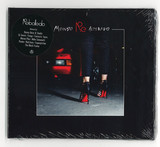
Catalina Matorral is a duo; Marion Cousin and Borja Flames make up its double head and four hands. At the beginning of the 2010s, they were called June et Jim -- they released some disturbing EPs before joining the label Le Saule (a small, chivalrous table whose holy grail is everything unheard, where folk- singing is avant-garde and avant-garde is synonymous with enchantment). Their first LP, Les Forts (2012), evoked the songwriting of indie-hobos inspired by Latin America, contributing to the rejuvenation of French music. Noche Primera (2013) went even further by vibrating in various reveries, from African songs to Spanish medieval music, from Purcell to Bach. It blew hot and cold under a psychedelic candlelight. The record in question has been maturing for seven years in eccentric barrels, marinating in the shadow of Marion and Borja's respective evolutions, nourished by their individual obsessions. Marion fixated on songs and dances from the Iberian Peninsula. This gave birth to a minimalistic, organic record featuring the cellist Gaspar Claus, where humming trembles among frowning pizzicatos, thin drones and throbbing arpeggios. She went on to release another album with the electronic duo Kaumwald, an oeuvre at the crossroads of vernacular narratives and experimental music, simmering everyday songs in an insolently modern production. Meanwhile, Borja leaned towards an intellectual, synthetic and furious pop; made two albums to awaken the dead, somewhere between Moondog and Battiato. They are two conceptual, electrifying and dance-inducing recordings for the phosphorescent masses. ...chimeric narration, heady verses, pop fragments, horizontal synths, distorted technologies. One would think they're listening to an opera composed by Robert Ashley or Laurie Anderson, based on an improbable libretto written by anthropologist Jeanne Favret-Saada, and performed by holograms of Brigitte Fontaine and Areski -- who unexpectedly regurgitate bits of blunt folk, binary jazz, baroque songs and ghostly madrigals. Micro-events, great enchantments. This record was written and recorded by two people, tinkering feverishly for seven years. It was blessed with the furtive appearances of faithful friends: Gaspar Claus played the cello; Igor Estrabol the clarinet, trumpet and flugelhorn; Renaud Cousin the drums; Ernest Bergez played the violin and whimsically mixed the tracks like a bonesetter-scientist. At the crossroads of worlds, eras and moods, Catalina Matorral invents a curiously rural science fiction that confounds poetry with white magic and puts French music in a permanent tension between the cosmos and manure...
Suche:con gas
- A1: Trophy
- A2: Final Song
- A3: Moonshine
- A4: Bird Of Prey
- A5: Dying Breed
- A6: El Diablo Iii
- A7: Dry
- A8: Lucky 57
- A9: White Russian
- A10: Cuss
- A11: Moonshine (Demo)
- A12: Dry (Demo)
- A13: Lucky 57 (Demo)
- A14: White Russian (Demo)
- A15: Dying Breed (Demo)
- A16: King Of Mexico
- A17: Old Work Song
- A18: Angelus Occultation
- A19: Like A Killer (Outtake)
- A20: Missouri Boat Ride (Outtake)
The 25th anniversary edition of the Chicago noise-rock band's undisputed masterpiece recorded by Steve Albini
Remastered edition including a 12- page booklet and a bonus LP of demos, outtakes and unreleased tracks. 'Discipline Through Sound' was the second LP by Big'n, who formed in 1990 and at the time, the band consisted of vocalist William Akins, guitarist Todd Johnson, bassist Mike Chartrand, and drummer Brian Wnukowski. This expanded reissue was intended to come out in 2021 to commemorate the 25th anniversary of 'Discipline Through Sound', Big'n's indisputable masterpiece originally released on Gasoline Boost in 1996, but was delayed due to a PVC shortage and the fallout of the COVID-19 pandemic.
'DTS 25' is a massive album. It contains two pieces of superb-quality vinyl with a reissue and remaster of 'Discipline Through Sound' on the first disc. Side C contains unreleased demos from the album. Side D, contains three previously CDonly tracks from a split with OXES - plus two unreleased outtakes.
The records are packaged in a 6mm spine gatefold cover with matte finish, accompanied by a 12-page booklet featuring photos of the band, a foreword by Steve Albini, and writings from Big'n's associates. The entire package is housed in a sleek, tactile, Type-2 aluminium packaging newly developed and designed by the Computer Students label.
Don't miss your chance to own a brilliant, undersung artifact of '90s noise-rock in Chicago - refreshed, expanded, and more venomous than ever before.
- A1: Back A Bit... Stop
- A2: Heather
- A3: You Should Always Keep In Touch With Your Friends
- A4: The Girl From The Ddr
- A5: Flying Saucer
- A6: Two Bridges
- B1: Pleasant Valley Sunday
- B2: Montreal
- B3: It's A Gas
- B4: Spangle
- B5: Birdsnest
- B6: Little Silver
- C1: Back A Bit... Stop
- C2: Heather
- C3: You Should Always Keep In Touch With Your Friends
- C4: The Girl From The Ddr
- C5: Flying Saucer
- C6: Two Bridges
- C7: Pleasant Valley Sunday
- C8: Montreal
- C9: It's A Gas
- C10: Spangle
- C11: Birdsnest
- C12: Little Silver
Over twelve tracks performed across three sessions from 2012, 2013 & 2014 the undeniable song writing brilliance of David Gedge is clearly evident. From the bounding, propulsive recklessness of ‘Back A Bit... Stop’ (Valentina) to the harsh edges and sudden tempo changes of ‘Heather’ (Seamonsters), The Wedding Present’s bass-driven, muscular riffs are a constant theme throughout. Gedge’s bittersweet lyrics and honest take on love are highlighted in such tracks as ‘The Girl From The DDR’ (Valentina) and ‘Little Silver’ (Going, Going...). Other memorable moments include a frenzied cover of The Monkees' ‘Pleasant Valley Sunday’ and a rapturous performance of ‘Flying Saucer’ [both taken from the Hit Parade series of singles] along with a rousing ‘It’s A Gas’ and a heartfelt ‘Spangle’ - complete with an apologetic Gedge clearing his throat mid-verse - from the Watusi album. Tracklisting: Tracks 1-4 Recorded 19/11/12 Back A Bit… Stop (Valentina 2012) Heather (Seamonsters 1991) You Should Always Keep In Touch With Your Friends (Tommy 1987) The Girl From The DDR (Valentina 2012) Tracks 5-8 Recorded 21/10/13 Flying Saucer (Hit Parade 2 1993)
Two Bridges (Going, Going… 2016) Pleasant Valley Sunday (Hit Parade 1 1991) Montreal (Saturnalia 1996) Tracks 9-12 Recorded 3/11/14 It’s A Gas (Watusi 1994) Spangle (Watusi 1994) Birdsnest (Going, Going… 2016) Little Silver (Going, Going… 2016)
Scott Walker, PJ Harvey, Coil, Matmos, Autechre & Pan Daijing. 180g LP with inner, 12”x24”poster + DL card. The Debut Full-Length By Montréal Producer Kee Avil, The Project Led By Avant/Improv Guitarist Vicky Mettler, Also Known As A Member Of Sam Shalabi’s Land Of Kush And As Co-Founder Of Concrete Sound Montréal. Advance Single “See, My Shadow” Premiered By Mary Ann Hobbs On BBC6 And Picked Up By Music & Riots, Backseat Mafia, Aural Aggravation, Etc In Dec 2021. Kee Avil, a project led by Montréal producer and guitarist Vicky Mettler: a singular expression of fractured dream logic concretized in chiselled postpunk guitar, sinuous low-end electronics, a panoply of organic and digital samples creating alternately twitchy and propulsive rhythm, and the anxious intimacy of her finely wrought lyricism and vocals. Bound by an outstanding production sensibility throughout, Crease unfolds one oblique earworm hook after another, with compositional innovation anchored to an inscrutable and compelling voice across 10 songs of tremendous and imaginative sonic detail. Kee Avil brings a contemporary electroacoustic sensibility to bear on traditions and conventions of pop, postpunk, electronic and sound-art songwriting, where touchstones range from Scott Walker and Coil to Fiona Apple, (early) PJ Harvey and (later) Juana Molina to Eartheater, Pan Daijing and Smerz; or Grouper produced by Autechre. Her unconventional alloys also conjure the guitar-inflected deconstructions of Gastr del Sol and the crystalline micro-worlds of Bjork, Matmos and Rashad Becker. Crease is one of those debut records that excites a wide range of peerless references precisely because it's so compelling in its own idiosyncratic authority, originality and execution. Each song on Crease is its own sculpture, meticulously assembled to resemble disassembly: “each of these worlds was built without consideration for the other; it felt impossible to me, once I would enter the atmosphere of a song, to try to start another until that idea was finished.” The album nonetheless unfolds in impressive holistic integration through a palette of textures and techniques deployed in recurring but continually refracted ways. Alongside her superb austere guitar work stitched into electro-industrial, dark-ambient and minimal-techno soundworlds, it’s her voice and lyrics confidential, hermetic, implacable that provide the galvanizing, always captivating through-line. Her more compositional, exacting, (de)constructed musical identity was first unveiled with the self-titled Kee Avil EP (Black Bough Records) and further honed by pre-pandemic tours sharing stages with Pere Ubu, Marc Ribot and Bill Orcut among others. Woodshedding since then, Crease presents a quantum leap in Kee Avil's exploration of studio-based experimentation, arrangement and production, signaling the arrival of a brilliantly genre-melding, refined and assiduous new voice in avant-garde songcraft.
- A1: Container - Recliner
- A2: E-Saggila - Palm Bass
- A3: Privacy - 0X33 Key
- A4: Dj Loser X Penelope's Fiance - Bloodthorns
- B1: Myntha - Creepin Neva Sleepin
- B2: Yabboq Penuel - La Recontre
- B3: Crave - 20 Cans Of Gasoline
- B4: Anthem - Couilles D'hirondelle
- C1: Beau Wanzer - Blood Type Gravey
- C2: Liquid G - The Power Of... (Mick Wills Cut)
- C3: Fade Accompli - Devil's Claw (Quel Bel Endroit) (Quel Bel Endroit)
- C4: Lower Tar - Brothers (Pt 1)
- D1: Maenad Veyl - Carbon Copy
- D2: 110 - Behaviour Issues
- D3: Dj Richard - Sub Ursa Zero
- D4: Gavilan Rayna Russom - Blessing
Always hot on the steel-hard plates and murky subterranean atmospheres, Public System turns in a haunted double package from the crypt. Spanning hi-octane indus bullets, half-baked mutant salvos and shadow-clad juicers from a host of reputed names and rabid underdogs, this new comp collates ruff’n’tuff joints from gritty techno don Container, genre-unbound explorer E-Saggila, Berlin’s electro arsonist Privacy, acid-spitting hydra DJ Loser x Penelopes Fiance, basement guerillero Yabboq Penuel alias Le Syndicat Electronique, neo-punk beat thrasher Crave, Yves Tumor collaborator and sine-wave crusher Anthem, expert circuit dissector Beau Wanzer, Liquid G as remixed by Mick Wills, Night Gaunt’s Lower Tar, occult machine funk preacher Maenad Veyl, DJ Chupacabras under new guise 110, soundwaves cross-pollinator DJ Richard, vibrant mood-scapist Gavil�n Rayna Russom, as well as label boss Myn going ubiquitous with studio fellows Kluentah as Myntha, and R Gamble as Fade Accompli. A much desirable feast of raw, unhinged, all-round spine-tingling jams for the club and not.
Kris Barras Band return armed with towering anthems on the heaviest
album to date; 'Death Valley Paradise', available on CD, transparent red
vinyl and digitally
Produced by Dan Weller (Enter Shikari, Bury Tomorrow, SiKth) and recorded at
VADA Studios in Alcester, they return heavier, darker, more introspective but
enormous at the same time. Barras decided to remove all shackles and began
collaborating with songwriters, such as the heavyweights; Jonny Andrews (Three
Days Grace, Fozzy), Bob Marlette (Alice Cooper, Airbourne, Rob Zombie), Blair
Daly (Halestorm, Black Stone Cherry) and Zac Maloy (Shinedown, Tyler Bryant).
Death Valley Paradise started life as a song before it was dissected and spread
across the album. Death Valley is a place of extremes, where living things are
said to not be able to survive.
For 18 months the world stood still and the realisation set in that there was no
control of ourselves anymore. For the ex-MMA/cage fighter, there was only one
way out, to re-focus, and started with no preconceived plan for the album.
But now, Death Valley Paradise is ready to be unleashed upon the masses, who
are yearning to rock out, fist pumping in the air.
- A1: A King Of Comets (Feat New Composers & Lovvlovver)
- A2: Sikao Qi Yun (Feat Jimi Tenor, Minako Sasjima & Lovvlovver)
- A3: Sergio Leone (Feat Lovvlovver, Gadzhi, Roman Englisgh & Juravlove)
- B1: Talking In My Dreams (Feat Wolfram & Lovvlovver)
- B2: Untitled Ritual (Feat Noteless)
- B3: Time Traveller
- C1: Your Ghost In Me (Feat Hard Ton, Noteless & Ruf Dug)
- C2: After The Storm (Feat Maajo)
- C3: Why You Guys Broke? (Feat Rich Thair)
- D1: A Mirage Seen At Buffalo (Feat Gadzhi, Lovvlovver, Lipelis, Roman English, Noteless & Jimi Tenor)
- D2: Et Que Je Dorme (Feat Miriam Sehhon & Lovvlovver)
- D3: Every Minute Is Too Late
The acclaimed Kito Jempere joins Cherrystones and DJN4 on the label for 2020, with an album full of international minds. Working with array of collaborators across a cast of friends including Jimi Tenor, Wolfram, Hard Ton, Lipelis, Rich Thair (Red Snapper), Ruf Dug, Cedric Gasaida (Azari & III) and many more, presenting this, his third long play.
A hail of freedom of thoughts and voices before these changed times, recorded and shared across continents. Kito - following releases with DFA, Lo Recordings, Bordello A Parigi, Hell Yeah and Duca Bianco - acts as curator rather than conductor, the idea not to transform the contributions but allow them absolute.
Sending music and receiving back, nothing was touched to keep the truth and honour. From Tokyo to London, Berlin to his base in St Petersburg, trusting the chosen artists led to a broad palette, as his 4/4 driven funk expands with Jazz horns to Motorik percussion, Avant-Reich vocals to White Isle melodies, J Pop Balearics to Chanson stories wrapped around Club memories.
A true world meeting, crossing borders and genres. An eye on the dance floor and week long chill outs. With remixes from the likes of Samo DJ, Lipelis, Cable Toy and more to follow, this is more than Yet Another Kito Jempere Album.
TAPE012 ASYLUM - Is This The Price? 7” EP Formed in 1981 by a crew of hardcore punx and skins from Stoke-on-Trent in the industrial Midlands of England, Asylum fully embraced the ‘Noise Not Music’ rallying call. The missing link between Discharge and Japanese Noisecore, their sound is characterised by detuned ear-piercing distortion: buzzsaw guitars, fuzzed bass, charging drums and gargled vocals battle each other in a maelstrom of lo-fi production murk that reflects the bleak outlook of their lyrics. Only existing for a brief moment in time (playing a handful of mainly local gigs and releasing one demo tape and the occasional track on compilation tapes) and obscure even during their existence, Asylum were nonetheless influential, their ‘1,000 M.P.H. Hardcore Punk’ inspiring other U.K. groups such as Skum Dribblurzzzz and Napalm Death. This release contains the 6 Track demo Is This The Price? Which was originally released as a tape only EP on Retaliation Records. The tracks have been remastered and mark the first time Asylum have released anything on vinyl. Asylum had an urgent intensity that surpassed other bands of the era: Death of Music - Birth of Noise. (Nic Bullen) This reissue comes with a 12 page booklet and repro of the original lyric insert. FFO: LÄRM, Early NAPALM DEATH, DISCHARGE, WRETCHED, GASMASK, TRANQUILIZER, DISCLOSE
It is with undoubted excitement that Stroboscopic Artefacts can present the new release from Irish duo Lakker as SA019.
This comes hot on the heels of Lakker's recent work for the label through the dark trappings of Monad XIV. 'Harbour' could imagine a vessel out to sea, battling a tempest. Heavily distorted rhythms build like the swirl of a storm, a distress signal popping on, radio distortion. As implosion seems near a moment of calm sets in and a less maniacal beat assumes control. But the unpredictable hammers resume once more, thumping above a sheet of glinting and sharp precipitation. The storm eventually ceases, abruptly, and the 'Harbour' is left still. 'eeAea' is a different experience. It is based on surer footing, concrete beneath the limbs. A thump, incessant, pounds in the background, giving clarity to a winding sigh and dissonant percussion. Yet there remains melody in the madness, with beautiful hi ends peeking through the atmosphere and a strut which surges towards conclusion. The conclusion ends (unresolved) at 'Valentina Lane'. It is a street of mystery, set upon a gas of syncopated flashes and airy scrapes. An uncomfortable synthesiser hums in the background, darting high and interjecting low. And it meanders thence, pausing for the odd moment of reflection. It is as deliberate as 'Harbour' is chaotic; it is a tight, cogent finale.
Grace Cummings is an actor and musician from Melbourne, Australia. Grace
learned piano as a child and took up the guitar as a young adult, but only
began to write and perform music in 2018. She went from a debut gig at
Melbourne’s Old Bar to a breakthrough performance at Boogie Festival in the
space of six months, picking up support slots with J Mascis and Evan Dando
along the way.
With buzz building around her powerhouse live show, Grace grabbed the
attention of Flightless Records (King Gizzard and The Lizard Wizard), who
released her debut album, ‘Refuge Cove’, in late 2019. Refuge Cove won
praise from publications around the world, including Pitchfork and All Music,
and Grace was tapped for support slots with Weyes Blood, Cash Savage,
Teskey Brothers and Allah-Lahs.
In 2020, Grace recorded the single ‘Sweet Matilda’ for Mexican Summer’s
‘Through the Looking Glass’ series before landing a worldwide deal with
indie powerhouse ATO Records (Alabama Shakes, My Morning Jacket, King
Gizzard and the Lizard Wizard). Her sophomore album, ‘Storm Queen’, is
now set for release.
Available on CD and opaque white vinyl. (Once the coloured vinyl format has
sold out, a standard vinyl format - ATO0589LP - will be made available.)
A graduate of the drama program at the Victorian College of the Arts, Grace
appeared in Elbow Room’s award-winning production ‘Prehistoric’, which
played to packed houses and widespread critical acclaim at the 2018
Edinburgh Fringe. In 2021, she made her debut with the Melbourne Theatre
Company in 2021, in Joanna Murray-Smith’s ‘Berlin’.
“Cummings isn’t content to merely sing along to her melodies. She tears her
low, surging voice to shreds, braying like she’s beckoning you from the
opposite end of a crowded room. It adds an eerie, intense quality to her
music - a desperation behind the calm of her arrangements.” - Pitchfork
“One of Melbourne’s hottest new talents... filled with raw power.” - Beat
Magazine
“Cummings has a voice that demands to be heard, while her lyrics cut
through to the heart, leaving listeners gasping for air.” - Folk Radio UK
“Like a combination of Sandy Denny, Odetta, Tom Waits, Leonard Cohen
and Marianne Faithfull... as the last piano chord ends, you are left wanting
more.” - Your Music Radar
“There’s a striking androgyny in her tone, it brings the power needed for
these songs to make you stop and listen...Her wit is very sharp and it bites
back with cunning rhetoric.” - Stomp and Stammer
“Take notice of Cummings as a fresh new Australian talent.” - X-Press Mag
- A1: Orlando Julius & The Afro Sounders - Alo Mi Alo (Parts 1 & 2)
- A2: Segun Bucknor & His Revolution - La La La
- A3: Lijadu Sisters - Orere Elejigbo
- B1: Peter King - Shango
- B2: Sahara All Stars Band Jos - Enjoy Yourse Lf
- C1: Fela Ransome Kuti & The Africa 70 - Jeun Ko Ku (Chop %U2018N%U2019 Quench)
- C2: Tunji Oyelana & The Benders - Ifa
- C3: Ofo The Black Company - Allah Wakbarr
- D1: He Funkees - Dancing Time
- D2: Monomono - Tire Loma Da Nigbehin
- D3: Bala Miller & The Great Music Pirameeds Of Afrika - Ikon Allah
- E1: Sir Victor Uwaifo & His Melody Maestroes - Akuyan Ekassa
- E2: Shina Williams & His African Percussionists - Agboju Logun
- F1: Gasper Lawal - Kita Kita
- F2: Sunny Ade & His African Beats - Ja Fun Mi (Instrumental)
25TH ANNIVERSARY EDITION[31,05 €]
Strut present a definitive vinyl edition of the groundbreaking compilation 'Nigeria 70'. Originally released in 2001, the collection set the benchmark for a new generation of archive labels and releases mining the vaults for rare Afro funk and Afro jazz fusions and helped to paint the wider picture of the 1970s Lagos scene beyond Fela Kuti's catalogue for a legion of soul, funk and dance music enthusiasts. This definitive reissue features the original LP remastered and pressed on 180g triple vinyl in a gatefold sleeve.
Narrated by Wunmi with commentary by the late Nigerian academic "Elder" Steve Rhodes, this one-hour piece is an essential snapshot of the 1970s Lagos scene and the cultural and political context from many of the key players of the time. It includes interviews with Ginger Baker, Fela Kuti, Ebenezer Obey, Segun Bucknor, Joni Haastrup of Monomono and many more.
Utrecht label U-Trax welcomes 90s legend P.A. Presents for an enhanced re-release of his first two releases on this label, namely "Salicylic Acid" and "Flight Simulator".
Ironically P.A. Presents aka Peter Aarsman is the only artist on U-TRAX that actually is born and bred in the city of Utrecht. Even more irony lies in the fact that he hasn't lived in the city for 25 years and has only recently returned home. He was an early player in the hip hop and boogie scenes and long before house landed in Europe he was playing disco and Italo which helped establish him as a truly vital DJ talent. The two reissue EPs presented here marked his production debut back in 1993, both of which are hugely sought after and pricey techno records on second hand markets. In 2019 he returned to the music scene with two new EPs on U-Trax in the the form of Swirling Gas and Sax Madness and new releases are planned for 2020.
The release kicks off with 'Mesopmorph', an effervescent, nostalgic cut with a deeply buried techno rhythm that eventually takes over in tribal style. 'Pop' is a brilliantly tense and dense track wired up with fizzing synths, chattering claps and haunting effects as well as pending drums, then 'Theme' is cosmic industrial, with powerful hits and metallic sounds married to searching laser synths.
'Vera S' is classic 90s techno with mad vocal sounds and frantic synth lines darting about the mix, then things grow deeper and more heady on the stripped back intergalactic journey that is 'Flight Simulator.' The timelessness continues on the dancing analogue drums and hi hats of the classic Detroit styled 'Experiental' and 'A Gasp' before 'Vexillum' brings more warm solar winds and molten techno grooves whist 'Long Metal' closes out with pounding kicks, skewed synths and real sense of space travel.
These are essential early techno tracks that sound as fresh and relevant now as ever and come with remastering and restoration from Thee J Johanz.
Pressed on 2x12" 180 grams grey marbled vinyl.
Sharing his InBach album with the world in 2020 set events into motion that ultimately led to Arandel making second edition in the critically acclaimed, borderless project that unites rare instruments, musical reimanigation.
Arandel unites once again behind the musical phrases of the Leipzig composer specialists of ancient and modern instruments (Thomas Bloch), modern synthesizers and moogs, strings experts (Gaspar Claus), and the poetic spoken word of Myra Davies and Bridget St.John.
Textextext - (add your write up)
"There is a Bach for everyone" Arandel says, "and that discovery is what led me here, to InBach". Beneath the intricate history, the godlike adoration placed upon Bach, he was a playful musician, an eclectic one even. And so, a full year after the release of the first InBach record on InFiné, there is enough material to make a second one. "There is so much about Bach I didn't even know when making the first one - but after the release, people kept coming to me, telling me about certain pieces I should listen to or rework; songs that I had never even heard of."
The second InBach grew like a garden from the seeds of the first one - an eclectic journey through melodic fantasies, intricate sound design and a certain Pop silver lining. Some tracks were born out of Arandel's band performing on stage, experimenting with the songs live and composing them anew, like "Nos Contours", a new, French-lyrics version of Bodyline with Ornette, Arandel's stage partner.
InBach vol. 2 is a logical consequence then, of someone diving into a pool of music and history so large that it is being chronicled to this day. A substantial part of the instruments used on the lofty, eclectic album were recorded at the Musée de la Musique Paris: rare instruments like the *Erard square piano, ondioline, Zach's cello, Stroh violins*. They help shape the unique sound of Arandel's InBach project: sometimes _eerily familiar, always otherworldly and elusive.
In the vein of rare instruments, the first guest musician Arandel approached for InBach was Thomas Bloch, who lends his gift to four tracks over the two albums, playing the ondes Martenot, one of the first electronic musical instruments ever invented. Thomas has worked with many major artists in his career of ike of Radiohead, Gorillaz, Marianne Faithful, Tom Waits, Daft Punk.
The record travels *between styles, ideas and moods elegantly - it is a distinctly fun and personal album. Freeing himself from the weighty shackles of expectation surrounding the classical maestro, Arandel goes for the core of every Bach piece he tackles, making them his own. on "Octobre", based on Air On G-String, from Orchestral Suite No. 3 D-dur, BWV 1068, his nephew tells a dreamlike story of an ominous gang of children, literally blossoming in the mud. "Fabula" - featuring the French singer Scalde - based on the melancholic, Christian lament Meine Seele wartet auf den Herrn, becomes a grandiose, auto-tuned pop ballad on InBach vol. 2, featuring the virtuoso cello of fellow InFiné associate *Gaspar Claus*.
The use of spoken word is another new layer to InBach, and acts a lyrical thread carrying the listener through InBach vol.2: the closing track features Bridget St.John, John Peel-associated folk legend from the UK to offer to collaborate on a poem for this second volume, she replied to him with a line from André Gide : "You can't discover new land if you aren't willing to lose sight of every shore". A lovely way to sum up the InBach experience for both artist and listener.
There are records with empathy, records which are your friends and then there's the others... There might be little difference between them, a certain "je ne sais quoi", an "almost nothing but still something" which makes the difference between almost pointless and vital records. Despite, or rather thanks to his cynical despair, Matt Elliott's music never holds up a moralizing mirror to us - on the contrary, it creates a compassionate dialogue with listeners like the rhythm of two steps that synchronize to become as one. In 2016, Matt Elliot brought out his seventh solo album The Calm Before whose obscure title is neither exactly threatening nor comforting... the calm before what? Before the storm for sure but maybe also before the great record, the immediate classic we felt might be coming for a long time in the dual discography of the Bristol-born artist working under his own name and his electronic alias Third Eye Foundation. The elegant details and perspectives of Little Lost Soul (2000) already hinted at the upcoming masterpiece from the English singer-songwriter. The Mess We Made (2003) was Matt Elliott's first solo album and portrayed a universe in a kind of flight towards Balkan horizons made up of visceral despair. With the Songs trilogy, he put aside the electronic side of his work to continue working with a minimalist, stark and lucid style of writing. The Broken Man (2012) was full of tears and long laments sometimes carried by Katia Labèque's piano on a record which painted new shades of grey. On this record Matt began working with the producer, arranger and multi-instrumentalist David Chalmin (La Terre Invisible) who has kept on collaborating with the Bristol-born singer since then. Their partnership continued on Only Myocardial Infection Can Break Your Heart (2013) and The Calm Before (2016). Stéphane Grégoire is the head of the Ici D'Ailleurs label which has accompanied Matt Elliott since 2005 and perhaps he describes this album the best: "This new record by Matt is without a doubt his best album to date, a record that takes him into another dimension where he fully asserts himself as a songwriter and singer of the calibre of artists like Bill Callahan, Leonard Cohen or Johnny Cash." Matt Elliott's other records all seemed like empathic links between each other. Farewell To All We Know is an instant classic based on the sensitive piano and superb arrangements of David Chalmin, the sensitive cello of Gaspar Claus, the subtle bass of Jeff Hallam (who has also played with Dominique A and John Parish). There is a clear form of alchemy in all of this and still we find Matt Elliott's usual atmospheres and scenery, the same Eastern European folk music, long songs that take time to settle over time. Everything is the same but also is transfigured. By making his music stark and purifying and redefining the subject matter, Matt Elliott's work became so much more delicate. However this work is never frail nor really turned in on himself and thus becomes like a vital tune that vibrates and unfolds. The opening song Farewell To All We Know seems torn between the fear of what tomorrow may bring, inevitability and hope for the future in a permanent and progressive dramatic tension expressed by his Spanish guitar, the impressionist style piano and Matt's voice teetering on the edge of whispers. A funereal tribute to endless twilights and the dawns we all dream of seeing. There are touches of Leonard Cohen from Songs from a Room or Thanks For The Dance in The Day After That with Gaspar Claus's counterpoint cello. There is no spirit of resignation in Matt Elliott's work - life's path has to be followed against all odds. We have to follow the river's flow to reach the immense ocean and its infinite freedom. The haunted instrumental Guidance Is Internal harks back to the atmospheres of Howling Songs (2008) with its guitar parts full of scansions and muted threats. The music is transcendental but never seems afraid of the risk of falling. This is also what Bye Now tells us with its quasi-obsolete simplicity and sunburst melancholy reminiscent of the work of Luiz Bonfá, Bill Evans on Peace Piece or laidback crooners of the 50s. In Farewell To All We Know, Matt Elliott incessantly alternates between the dual desires to face up to the world or to protect himself from it. Hating The Player, Hating The Game is a lucid statement about the dullness of our daily lives sometimes, our right to get out of the game and no longer want to be part of it. Matt Elliott is tender but spares no one, particularly himself. Aboulia speaks of the tiredness of living and of looming death while Crisis Apparition says that there is always a time for reconstruction after chaos. This is like initially wearying wandering in the ruins of Aleppo with the slow dilution of the melody into a hallucinated drone. However the smell of great fires always fades and the earth always regenerates. Matt Elliott seems to suggest that the survival instinct is stronger than any cold winds could ever be. Matt Elliott never sings of certainties and prefers possibilities. Possibly the worst is over? Maybe... Maybe the storm has passed and devastated everything, now we just have to rebuild and live again. Farewell To All We Know shows us the distance that still needs to be walked and he walks next to you - right next to you, he is the friend who doesn't spare you the truth like all true friends really do.
Have we ever needed great storytellers so badly? Voices to snap us out of our collective grey funk, to pull us out of our narrow, hemmed-in worlds and to lighten our days and enlighten us with their perspectives, Immersing us in their worldview and history. People who can make us laugh, cry, gasp or nod sagely, to see our world anew and not feel so alone. We need stories, vignettes, new windows to look out of, and narrators to help those new visions make sense.
In short, we need Scott Lavene. Born and raised in Essex, but a man of the world who has wandered far and wide, Lavene’s a storyteller who can capture all the madness, joy and frustration of life while singing about worms writhing in the ground. Lavene’s been in bands since his teens, but only really located the voice that makes his new album Milk City Sweethearts so remarkable – that combination of wry observation, humble wisdom, unguarded vulnerability and unpredictable humour – in a music workshop for alcoholics and addicts, long after he’d bid farewell to childhood dreams of pop stardom, and the ghosts and demons that accompany those dreams.
He released an album as Big Top Heartbreak, 2016’s Deadbeat Ballads, and followed it with his first album under his own name, 2019’s droll and marvellous Broke. “I was signed to a little label in Bristol, but then they went skint,” he remembers. This time, however, the disappointment didn’t shake his confidence or his resolve. “I started writing prose, like ‘flash fiction’, and I’ve begun a novel,” he says. “And I’ve started some creative writing workshops for people who’ve come out of my situation.”
Amid all this activity, the songs that became Milk City Sweethearts began to take shape. Lavene noticed the border between his prose and his songwriting beginning to become porous, and the album feels like a clutch of excellent short stories set to music. Without a label, he recorded the album at home, and assembled it in a week in his mum’s garage during lockdown’s heavy manners. It’s a warm, witty, charismatic record with a dark heart at the centre, Lavene sounding dislocated and therefore able to write his everyday stories with a left-handed brilliance and blunt honesty that keeps them so fresh, like classic Kinks, or David Bowie if he’d never had to go to space to feel otherworldly. His songs are talking blues, set to loose and minimal and excellent art-rock with a pop sensibility, the honk of Roxy sax and the guttural weird-funk of Ian Dury’s Blockheads haunting their grooves.
Have we ever needed great storytellers so badly? Voices to snap us out of our collective grey funk, to pull us out of our narrow, hemmed-in worlds and to lighten our days and enlighten us with their perspectives, Immersing us in their worldview and history. People who can make us laugh, cry, gasp or nod sagely, to see our world anew and not feel so alone. We need stories, vignettes, new windows to look out of, and narrators to help those new visions make sense.
In short, we need Scott Lavene. Born and raised in Essex, but a man of the world who has wandered far and wide, Lavene’s a storyteller who can capture all the madness, joy and frustration of life while singing about worms writhing in the ground. Lavene’s been in bands since his teens, but only really located the voice that makes his new album Milk City Sweethearts so remarkable – that combination of wry observation, humble wisdom, unguarded vulnerability and unpredictable humour – in a music workshop for alcoholics and addicts, long after he’d bid farewell to childhood dreams of pop stardom, and the ghosts and demons that accompany those dreams.
He released an album as Big Top Heartbreak, 2016’s Deadbeat Ballads, and followed it with his first album under his own name, 2019’s droll and marvellous Broke. “I was signed to a little label in Bristol, but then they went skint,” he remembers. This time, however, the disappointment didn’t shake his confidence or his resolve. “I started writing prose, like ‘flash fiction’, and I’ve begun a novel,” he says. “And I’ve started some creative writing workshops for people who’ve come out of my situation.”
Amid all this activity, the songs that became Milk City Sweethearts began to take shape. Lavene noticed the border between his prose and his songwriting beginning to become porous, and the album feels like a clutch of excellent short stories set to music. Without a label, he recorded the album at home, and assembled it in a week in his mum’s garage during lockdown’s heavy manners. It’s a warm, witty, charismatic record with a dark heart at the centre, Lavene sounding dislocated and therefore able to write his everyday stories with a left-handed brilliance and blunt honesty that keeps them so fresh, like classic Kinks, or David Bowie if he’d never had to go to space to feel otherworldly. His songs are talking blues, set to loose and minimal and excellent art-rock with a pop sensibility, the honk of Roxy sax and the guttural weird-funk of Ian Dury’s Blockheads haunting their grooves.
„Sounds like Burial who listened to Psychic TV instead of UK Garage. For me the best Pudel Produk-te so far, I'm thrilled. And you know me, I find a lot of things good, but only super cool super cool, best Pudel Produkte ever. How did you find them, do they come from Mainz or the surrounding area or what? Top record, I would also like to have it on vinyl for grandpa's cupboard“.
// Superdefekt
„The record sounds great!
This is the MFOC record, you can't get more MFOC than this.
Every track is awesome !!!!! It's on rotation here :))))"
// Rvds
„The Masterpiece, can only be topped by the Volume 2!"
// Ralf Köster
More records from VA
Switch view
Switch view
Various Artists
Less Popular Than Cats
Verdant
12"
pre-sale
Wunschliste
14,99 €
Buy
Various Artists
DOING IT IN LAGOS
soundway
3LP
pre-sale
Wunschliste
22,99 €
Buy
Various Artists
Visitors Vol.1
Alien Imprints
12"
pre-sale
Wunschliste
8,69 €
Buy
Various Artists
Life’s Better With Disco Album Sampler
z records
12"
pre-sale
Wunschliste
8,99 €
Buy
Various Artists
Buena Onda - Balearic Beats 2021 - Sampler Due
Hell Yeah Recordings
12"
pre-sale
Wunschliste
9,72 €
Buy
Various Artists
América Invertida
vampisoul
LP
pre-sale
Wunschliste
15,99 €
Buy
More records from label Pudel Produkte
Switch view
Switch view
VA – Remix EP
W/ rmxs by Plaid, Lowfish, John T. Gast ..
Pudel Produkte
12" Excl
backorder
Wunschliste
8,99 €
Buy
Rosaceae
DNA (LP)
Pudel Produkte
LP Excl
backorder
Wunschliste
10,49 €
Buy
Cosmic Cars
Cosmic Cars
Pudel Produkte
12" Excl
backorder
Wunschliste
6,79 €
Buy
quadratschulz
quadratschulz Remixes EP
Pudel Produkte
12" Excl
backorder
Wunschliste
6,79 €
Buy
quadratschulz
Pudel Produkte 33
Pudel Produkte
12" Excl
backorder
Wunschliste
6,79 €
Buy
Death Circuit
Teeparty am Waldbrand (feat. Raf & Das Bo)
Pudel Produkte
12" Excl
backorder
Wunschliste
6,79 €
Buy
Word and Sound
top of page
2step/garage
Acapella
Acid House
Afrobeat
Alternative/Electronic
Ambient/Balearic/Kraut/Electro
Breaks
Chicago House
Classics
Cosmic Disco/Italo Disco
Deephouse
Detroit House
Detroit Techno
Disco
Dope Beat/Hip Hop
Drum + Bass
Dub/Reggae
Dubstep
Eclectic
Electro
Electrobass
Electronica
Funk
House
House / Techno
Indie/Altern/Electronic
Minimal
NouvelleRaveElectrAvantg
Nu Jazz
Pop
Pop
PostRockNouvelleVague
Salsa
Soul/Funk
Space Disco/House
Tech-House
techhouse
Techno
techno / minimal
Trip Hop/Headz
UrbanHipHopBeatesque
World Music
#1149
Getting started - FAQ
Our team - Who we are
Kontakt - Contact us
Jobs
Allgemeine Geschäftsbedingungen - Terms and conditions
Datenschutzerklärung - Data Privacy Statement
Impressum - Imprint
The use of this website signifies your agreement to the Terms of Service. Word And Sound © 2021
Stadsbilder ("City Images") is the first collaborative album between Swedish musicians Jakob Lindhagen and Dag Rosenqvist. The composers have both made names for themselves within the contemporary music scene - Jakob as an award-winning film composer with solo music streamed in the millions on digital platforms, and Dag as a highly prolific musician and sound artist,
having over 50 releases over the last 15 years in a vast array of constellations, both solo works and as part of the duo From The Mouth Of The Sun, as well as film composing and music for dance performances. The music on Stadsbilder intertwines layers of organic and electronic sounds, with minimal piano melodies meeting vintage synthesizers, found sounds,harmonium, banjo, kantele, Fender Rhodes and saxophone, as well as cello (played by Sebastian Selke of CEEYS).
Third album from Pablo Infernal. Altin Asllani, Fabio Schoeni, Flavio Scano and Jan Jossi – four friends from Zurich with Swiss, Albanian, Brazilian and Italian roots, who have been sharing an ardent passion for music for more than a decade. With their third album 'Mount Angeles' they are now setting out to conquer all Rock enthusiasts beyond their country’s borders.
Their mutual love and enthusiasm for the rock music of the 70’s speaks to style-defining bands such as Deep Purple, Frank Zappa and all the progressive rock pioneers. For years, the band’s first choice for retreating and letting the artistic urge flow freely has been a 19th century house in the middle of the Swiss Alps, called Gasthaus Gruenenwald. The former train station and inn situated in Engelberg (which means nothing else than “angel mountain” in German, hence the album name), has become an essential part of the group’s songwriting process.
Mixed by none other than five-time Grammy Award winner Chris Lord-Alge from Los Angeles (Aerosmith, Muse, Foo Fighters, Green Day and many more) and finalized by Bill Skibbe at Jack White’s Third Man Mastering Studio in Detroit, 'Mount Angeles' presents the preliminary zenith of Pablo Infernal’s work.
Biffy Clyro will release the surprise new project ‘The Myth of the Happily Ever After’ on October 22nd. The record is a homegrown project that represents a reaction to their #1 album ‘A Celebration of Endings’ and a rapid emotional response to the turmoil of the past year. It is the ying to the yang of ‘A Celebration’, the other-side-of-a-coin, a before-and-after comparison: their early optimism of 2020 having been brought back to earth with a resounding thud. It’s the product of a strange and cruel time in our lives, but one that ultimately reinvigorated Biffy Clyro.
“This is a reaction to ‘A Celebration of Endings’,” says vocalist / guitarist Simon Neil. “This album is a real journey, a collision of every thought and emotion we’ve had over the past eighteen months. There was a real fortitude in ‘A Celebration’ but in this record we’re embracing the vulnerabilities of being a band and being a human in this twisted era of our lives. Even the title is the polar opposite. It’s asking, do we create these narratives in our own minds to give us some security when none of us know what’s waiting for us at the end of the day?”
Grounded by lockdown, Biffy Clyro recorded ‘The Myth’ in a completely different way to how they approached ‘A Celebrations’. Rather than spending months in Los Angeles, they traded one West Coast for another by recording for just six weeks in their rehearsal room (converted DIY style into a fully functional studio by rhythm section brothers James and Ben Johnston) in a farmhouse closer to their homes.
The trio went in with the intention of completing some unfinished songs from ‘A Celebration’, but instead ‘The Myth’ took over as it started to take shape late in 2020, with everything written and recorded within a ten-mile radius. Traditionally, 90% of Biffy songs have been written in Scotland before the band head to London or Los Angeles for recording, but this represented the first time they’ve ever recorded in their homeland. As Simon jokes, “It’s our first full-on tartan album!”
‘The Myth’ blends experimental flourishes with flashes of old school Biffy. ‘Existed’ is the moment that shaped the record an elegant expression of self-doubt that redefines the sonics of the band’s catalogue of vulnerable slowburners, while ‘DumDum’ is an even bigger departure, having been constructed primarily around soft synths sampled from Simon’s voice. And ‘Slurpy Slurpy Sleep Sleep’ is just as audacious a closer as ‘Cop Syrup’ from ‘A Celebration’. It also represents one of a selection of “easter eggs” or “turns of phrase” that subtly complement and contrast the two records.
At the other extreme, devoted fans will connect with the feral anger of ‘A Hunger In Your Haunt’, the arena-scaled drama of ‘Errors In The History of God’ and the sheer catchiness of ‘Witch’s Cup’.
‘The Myth’ has been launched alongside the new track ‘Unknown Male 01’. In six adventurous minutes, the band explore every facet they’re renowned for, taking in the unguarded emotion of its introduction, a skewed off-kilter breakdown, and a jagged, spiralling riff that builds towards a cataclysmic crescendo. The song reflects on friends who have taken their own lives.
“When you lose people that you love deeply and have been a big part of your life, it can make you question every single thing about your own life,” he says. “Like a lot of creative people, I struggle with dark thoughts. If you’re that way inclined you realise you’re staring at darkness, but you don't want to succumb. Those moments don’t stop. As the song says, ‘The devil never leaves.’ There’s never a day where you wake up thinking, ‘I feel great, it won’t cross me ever again.’”
A recurring concept of the album is the power of personal convictions, which have taken on an almost religious fervour via the echo chambers of social media and news platforms. But that idea has the nuance to rise above contrasting sides of an argument, arguing that greater unity and open-mindedness is the only way forward. Elsewhere, it spans everything from gaslighting to the ultimate devotion of cults and the beautiful failure of a Japanese racehorse.
‘The Myth of the Happily Ever After’ is now available to pre-order here, with ‘Unknown Male 01’ provided as an instant download. It will be released on CD and digital formats, as well as a limited edition red vinyl which is packaged with a must-have bonus CD for fans: full audio of the acclaimed livestream show that Biffy Clyro performed at Glasgow Barrowland in August 2020 to commemorate the release of ‘A Celebration of Endings’.
After headlining Reading and Leeds in August, Biffy Clyro will also play further large-scale outdoor gigs this summer at Cardiff Bay and Glasgow Green. Plans for 2022 are also taking shape, with April’s long sold-out ‘Fingers Crossed’ intimate tour and a huge Saturday night headline set at Download. Please see the band’s official website for a full list of shows and ticket information.
COLOURED vinyl[45,42 €]
Over nearly 20 years, Howlin Rain may have become the quintessential independent American rock ’n roll band: a steam-spitting Hydra of cranked guitars, kicking asphalt dust through a kaleidoscoping travelogue of desert motels and dives, volleying forth transmissions of sci-fi poetry from the blacktop veins of this cracked and aching country.
Now, in America 2021, capping these strangest and sorest of times, the band returns with The Dharma Wheel, a six-track, 52-minute dive into a joyous fantasy realm of exaggerated present.
“I wanted The Dharma Wheel to be a portal from our everyday world, the one from which you stand on hard ground and hold the album in your hands and peer into the artwork, and into another universe,” says songwriter, guitarist and vocalist, Ethan Miller. “You enter into that universe with your eyes and ears and mind and take a ride through free-form meditation on these ideas — from big, fundamental concepts about our existence right down to the grease that rolls down the arm of a pulp novel killer as he eats a gas station hot dog in an old Dodge in an alleyway.”
Lyrically, Miller has completed his evolution into a mushroom-plucking Whitman of the West, singing outlandish tales in a topographic blend of Humbead’s Revised Map of the World and an inverted U.S. where downtrodden bodhisattvas roam the back streets and moonless country roads.
“Down in Florida swamps, run by nature’s law, standing in the water, Eden gone. Two men loading rifles, beasts making time, they shot a boy from an orange tree and watched the colored birds take flight, watch the colors as they soar and dive.” — ‘Under the Wheels.’
The band, Jeff McElroy (bass, backing vocals), Justin Smith (drums/percussion, backing vocals) and Dan Cervantes (guitar, backing vocals), again sounds hardwired into Miller’s vision, building tracks that swagger and sway in response to his verse. Lending a hand this time around is the legendary Scarlet Rivera (Bob Dylan’s Rolling Thunder Revue) on violin, and the endlessly inventive Adam MacDougall (Chris Robinson Brotherhood, Circles Around the Sun) on keys.
Songs were shaped via the blast furnace of endless gigs, then recorded often mere hours after the band slipped the stage.
“The captured sonic fact about this record is that it’s the sound of a band that rehearsed this material a lot and put a ton of work into its construction and was on the road a lot and recorded on days off in the tour schedule,” Miller says. “In some cases we were on stage on Saturday night playing these songs at quarter-to-2 in the morning and by Noon the next day we were sipping coffee in the studio playing them for the machine.”
Rivera’s violin is the first sound heard as the album dawns on the instrumental “Prelude.” Soon, the band joins, twirling the theme into a psychedelicized awakening. “Don’t Let the Tears” brings the boogie, with MacDougall’s madcap synth work and wah-wah guitars showering 70’s glitter upon a parquet dance floor of the mind. “Under the Wheels” and “Rotoscope” center the album with taut, compositional epics populated by murdering drifters and fuzz pedal explosions. The blue hour comedown of “Annabelle” meditates upon the weariness of lost love, with Rivera again amping the heartache via her violin strings.
“In the evening the trains go by, and shake the dust from dirty walls, sometimes I feel like a spider in an old mason jar, who threatens only convex light from down the hall. I’ve been lost to the world since the photos of the black hole, landed on my desktop screaming, perhaps the all and nothing all-in-one is just too much to take, for particles and matter that never found their way.” — ‘Annabelle’
The record closes with the 16-minute title track, a multi-movement suite which cycles from Crazy Horse-meets-Traffic jams through colossal, mass-moving funk stomp, eventually cresting and washing into a sing-along gospel lament.
The Dharma Wheel is an album of great depth, and one steeped in good vibes: a rich, glistening world of the ultra-vivid. As illustrated in Arik Roper’s cover art, the grand dharmachakra has been set in motion, churning off the California coast.
“We were trying to build a world big enough that the imagination won’t go soft on you after just a few listens and where our love for this music, and music in general — along with a good dose of audacity — create a magic carpet ride through the world of The Dharma Wheel,” Miller continues. “In pursuing that I think we also managed to make a record that has a lot of joy in it: the joy of playing music, the joy of experiencing music, the joy of storytelling and poetry, the kind of singular joy and extended ecstatic moment that only a real ‘band’ can express in just that way.”
And it’s this joy, this exuberance and dedication to the lines of cosmic expression — all centered in the exalted art of the everyday — that constructs the heart of the record. At its core, The Dharma Wheel is the triumph of a working band, a transmission from a never-paused before arriving for our strange, bruised, spectacular now.”
Black vinyl[39,37 €]
Over nearly 20 years, Howlin Rain may have become the quintessential independent American rock ’n roll band: a steam-spitting Hydra of cranked guitars, kicking asphalt dust through a kaleidoscoping travelogue of desert motels and dives, volleying forth transmissions of sci-fi poetry from the blacktop veins of this cracked and aching country.
Now, in America 2021, capping these strangest and sorest of times, the band returns with The Dharma Wheel, a six-track, 52-minute dive into a joyous fantasy realm of exaggerated present.
“I wanted The Dharma Wheel to be a portal from our everyday world, the one from which you stand on hard ground and hold the album in your hands and peer into the artwork, and into another universe,” says songwriter, guitarist and vocalist, Ethan Miller. “You enter into that universe with your eyes and ears and mind and take a ride through free-form meditation on these ideas — from big, fundamental concepts about our existence right down to the grease that rolls down the arm of a pulp novel killer as he eats a gas station hot dog in an old Dodge in an alleyway.”
Lyrically, Miller has completed his evolution into a mushroom-plucking Whitman of the West, singing outlandish tales in a topographic blend of Humbead’s Revised Map of the World and an inverted U.S. where downtrodden bodhisattvas roam the back streets and moonless country roads.
“Down in Florida swamps, run by nature’s law, standing in the water, Eden gone. Two men loading rifles, beasts making time, they shot a boy from an orange tree and watched the colored birds take flight, watch the colors as they soar and dive.” — ‘Under the Wheels.’
The band, Jeff McElroy (bass, backing vocals), Justin Smith (drums/percussion, backing vocals) and Dan Cervantes (guitar, backing vocals), again sounds hardwired into Miller’s vision, building tracks that swagger and sway in response to his verse. Lending a hand this time around is the legendary Scarlet Rivera (Bob Dylan’s Rolling Thunder Revue) on violin, and the endlessly inventive Adam MacDougall (Chris Robinson Brotherhood, Circles Around the Sun) on keys.
Songs were shaped via the blast furnace of endless gigs, then recorded often mere hours after the band slipped the stage.
“The captured sonic fact about this record is that it’s the sound of a band that rehearsed this material a lot and put a ton of work into its construction and was on the road a lot and recorded on days off in the tour schedule,” Miller says. “In some cases we were on stage on Saturday night playing these songs at quarter-to-2 in the morning and by Noon the next day we were sipping coffee in the studio playing them for the machine.”
Rivera’s violin is the first sound heard as the album dawns on the instrumental “Prelude.” Soon, the band joins, twirling the theme into a psychedelicized awakening. “Don’t Let the Tears” brings the boogie, with MacDougall’s madcap synth work and wah-wah guitars showering 70’s glitter upon a parquet dance floor of the mind. “Under the Wheels” and “Rotoscope” center the album with taut, compositional epics populated by murdering drifters and fuzz pedal explosions. The blue hour comedown of “Annabelle” meditates upon the weariness of lost love, with Rivera again amping the heartache via her violin strings.
“In the evening the trains go by, and shake the dust from dirty walls, sometimes I feel like a spider in an old mason jar, who threatens only convex light from down the hall. I’ve been lost to the world since the photos of the black hole, landed on my desktop screaming, perhaps the all and nothing all-in-one is just too much to take, for particles and matter that never found their way.” — ‘Annabelle’
The record closes with the 16-minute title track, a multi-movement suite which cycles from Crazy Horse-meets-Traffic jams through colossal, mass-moving funk stomp, eventually cresting and washing into a sing-along gospel lament.
The Dharma Wheel is an album of great depth, and one steeped in good vibes: a rich, glistening world of the ultra-vivid. As illustrated in Arik Roper’s cover art, the grand dharmachakra has been set in motion, churning off the California coast.
“We were trying to build a world big enough that the imagination won’t go soft on you after just a few listens and where our love for this music, and music in general — along with a good dose of audacity — create a magic carpet ride through the world of The Dharma Wheel,” Miller continues. “In pursuing that I think we also managed to make a record that has a lot of joy in it: the joy of playing music, the joy of experiencing music, the joy of storytelling and poetry, the kind of singular joy and extended ecstatic moment that only a real ‘band’ can express in just that way.”
And it’s this joy, this exuberance and dedication to the lines of cosmic expression — all centered in the exalted art of the everyday — that constructs the heart of the record. At its core, The Dharma Wheel is the triumph of a working band, a transmission from a never-paused before arriving for our strange, bruised, spectacular now.”
Love Wash opens with “Across the Flats” and closes with its title track, both upbeat ballads that build from scorched drones into momentous sprawling pop songs that help ease in and out of the album, which features contributions from co-PC Worship collaborators (LEYA’s Adam Markiewicz on violin and NYC drum shredder Greg Fox).
The second and third tracks “Drive” and “Saints” carry the subtle intensity that opens the album, with unpredictable instrumentation, chord changes and arrangements. This vibe is revisited later in the album on “Dune House” and “Hidden Away”, all of which are sonically rich, unraveling, dark, introspective and powerfully optimistic.
The rest of Love Wash is comprised of catchy, borderline alt-country hits with a twisted Nashville tele vibe (“December Sun”, “New Thing” & “East Side Walk”), featuring pedal steel and vocal contributions from fellow Dougie Poole band members Tristan Shepherd and Francesca Caruso. Love Wash has a natural flow throughout, however the one real outlier is the well placed and hyper paced middle child of the album “Dredging Up Old Blues,” a schitzo-synth-pop Mountain Dew Rock jam that feels like buying trucker speed at a digital gas station in Middle-America.
Love Wash has echoes of a post-Beatles solo record, recorded in the Northwest in the mid-90s; transient in its influences yet tied together with the aesthetic of its approach. Sequenced like the best, most damaged early K / Kill Rock Stars records and driven by fingerpicked acoustic guitar, sweeping drones, euphoric synths, lush vocals and soaring Dead Man leads, Love Wash is a beautifully rich pop record at its core and an ambitious journey of an album that started as bedroom demos and evolved into a layered studio exploration.
-- Justin Frye (PC Worship
Born in Majorca, Marc Melià is a composer/producer, who’s been based in Brussels for over 10 years. First spotted alongside Françoiz Breut, Lonely Drifter Karen or Borja Flames, he released Music for Prophet in 2017. It was issued on Gaspar Claus’s label Les Disques du Festival Permanent, as part of Flavien Berger’s curation.
On that first album, Marc Melià had explored the possibilities of a mythic synth; on Veus, as if sloughing, he applied the process of sound modification to his own voice, until becoming an android. But an android who sings of love and dreams, a sensitive automaton who plays with the tropes of pop music. Through this device, Marc Melià knowingly seeks poetry and beauty within transgenics, in the search of a universe where one can surf though waves of profoundly moving chord patterns, hear voices unconstrained by range limitations, or dance freely, as in zero gravity.
Part of the album has been recorded in Une ferme dans les Vosges, courtesy of Rodolphe Burger. It was recorded with Roméo Poirier, one of the most promising figures of ambient, and the elegant multi-talented Lou Rotzinger. As if progressing in parallel with his own linguistic experience, to add another layer to the sloughing, side A is sung in Catalan, Marc Melià’s mother tongue, and side B in French, his adopted language.
Like an echo to his previous album, Veus opens with an instrumental, “Pulse on a E”, which starts with a sequence created with a single note transposed to its octave, just like “Fata Fou”, the last song on Music for Prophet.
Although the title seems to reference an iconic 80s synth, “DX7” is actually about the seven days of the week. It is a love song, about the temperamental oscillations which make every morning the blank canvas of an unpredictable story. Wednesday, I hate you, Sunday, I love you. With few words and a lot of emotion, a synthetic voice is trying to grow more human each day.
“Dent de Serra” deals with the weight of memory on our relationships, but also with the way we revisit them constantly in order to integrate souvenirs within present relationships. Suddenly, the song stops and enters a new dimension, everything is different, as if what had just happened was now forgotten forever.
Oxytocin (“Oxitocines” in Catalan) is said to be the hormone of love. This song deals in a playful way with the duality between science and faith, between rational and magic, when it comes to sentimental relationships. Love is a universal theme, it is everywhere in the world, and love songs have been written for a very long time. But this particular love song is an ode to an aspect of love that has been less sung about: biology, which makes it possible to feel like you’re floating in space when you fall in love.
“Les étoiles” is a trio with Flavien Berger and Pi Ja Ma. The song is about attraction. What attracts humans to each other, but also the inevitable gravitational attraction. The song is also about accidents, magic moments that take us outside of our daily lives and give us the possibility to imagine a sidereal, infinite love.
“A propos d’une chanson” was born after Marc Melià had dreamed he had written the most beautiful song he’d ever created. When he woke up, he realized that song was actually O Superman by Laurie Anderson.
Aside from these songs, Marc Melià offers a few breaks, instrumental but no less narrative.
“Final d’hivern” conjures these quiet moments between two intense events; sleeping at night between two days; the calm that settles in after a hard winter, right before spring properly starts.
Using a musical language that clearly references Ryuichi Sakamoto, “Romain”, with its theme based on a melancholic chord pattern, could be the soundtrack to a 1970s movie lost in time. Little by little, elements that seem to come from a completely different context find their place, while turning the initial mood into something strange and unexpected.
Finally, “Retorn”, which finishes the album, is a reprise of the theme of “DX7”.
From the chords that make up a song, to the days that make up our lives, existence is but a cycle, and Veus is an exploration of them. Marc Melià keeps on drifting on his personal path, between homage to the past and visions of the future.
Tancade is the solo debut by experimental cellist Gaspar Claus. Following on from his previous soundtrack work and a wealth of collaborations (incl. Bryce Dessner, Sufjan Stevens, Jim O'Rourke), Claus brings forth a collection of pieces which free the cello from its own limitations. Majestic and adventurous, stormy and radiant, dreamy and rigorous, Tancade defies categorisation, evoking chamber music suspended in the fourth dimension, the soundtrack of an experimental film or the strange folk music of an undiscovered tribe.
‘Concordance’ is Susan Howe’s and David Grubbs’s fifth album in the
fifteen years of their unexpected and richly satisfying collaboration. Here
they’ve pared down their materials to voice and piano, aspiring to the
hushed intensity of their live performances. What had previously resulted
from Grubbs’s recomposition of recorded materials now arrives as
unadorned duo performance.
“Howe is a poet who has spent her career reminding us that our
experiences of meaning and sound are synchronous.” - Tess Taylor, The
New York Times
‘Concordance’ is Susan Howe’s and David Grubbs’s fifth album in the
unexpected and richly satisfying collaboration that began with ‘Thiefth’
and includes ‘Souls of the Labadie Tract’, ‘Frolic Architecture’ and
‘WOODSLIPPERCOUNTERCLATTER’. Where these works feature the
fragmentation and multiplication of Howe’s recorded voice - in a style
akin to her celebrated text collages - with ‘Concordance’ they’ve pared
down their materials to voice and piano, aspiring to the hushed intensity
of their live performances. After fifteen years of working together, the
subtleties of inflection and interaction that previously resulted from
Howe’s nuanced delivery and Grubbs’s composition using recorded
materials now arrives as unadorned duo performance.
One of America's greatest living artists, Bollingen Prize-winning poet
Susan Howe’s text for ‘Concordance’ originates in a collage poem of the
same name published by Grenfell Press, which then became the title
work in her most recent book, published to acclaim by New Directions in
2020. She has continued to rework the text for this performed version,
incorporating material from her 2015 book of essays, ‘The Quarry’. Her
source material is scissored from print concordances of the poetry of
Milton, Herbert, Arnold, Browning, Dickinson and Coleridge, as well as
old field guides to birds, rocks, trees, moths and mushrooms; Howe’s
fiery commitment to placing these echoes of the past in dialogue with the
present speaks to her position as one of America’s essential artists.
David Grubbs is Professor Of Music at Brooklyn College and The
Graduate Center, CUNY. He is the author of ‘The Voice in the
Headphones’, ‘Now that the audience is assembled’ and ‘Records Ruin
the Landscape: John Cage, the Sixties, and Sound Recording’ (all
published by Duke University Press) and, with Anthony McCall,
Simultaneous Soloists (Pioneer Works Press). Grubbs has played in
Gastr del Sol, The Red Krayola and Squirrel Bait and performed with
Tony Conrad, Pauline Oliveros and Will Oldham, among many others.
Sid's legendary performance at the Electric Ballroom in London, in 1978. His last show before moving to the US and the first for his new band consisting of him on vocals, early Pistols' bass player Glen Matlock, Rat Scabies from the Damned and Steve New from the Rich Kids. A must for all Pistols' collectors out there.
Audiophile 180glp pressing includes eight 12"x12" art print reproductions of analog film stills by renowned experimental filmmaker Daïchi Saïto. The first purely solo record by Jason Sharp - where every sound is created by his saxophone, breath, heartbeat & modular synthesis rig. Sharp's customized electroacoustic biofeedback system utilizes a heart monitor to turn his pulse into signal & tempo responsively synthesized in real time during peformance & recording. Produced by Radwan Ghazi Moumneh (MATANA ROBERTS, SUUNS, BIG | BRAVE, ERIC CHENAUX, JERUSALEM IN MY HEART). For Fans of Fennesz, Christina Vantzou, Tim Hecker, Klaus Schulze, Ben Frost, Gas, Windy & Carl, Colin Stetson. Montréal saxophonist and electroacoustic composer Jason Sharp presents his third album on Constellation. The Turning Centre Of A Still World is Sharp's first purely solo record and his most lucid, poignant, integral work to date. Following two acclaimed albums composed around particular collaborators and guest players, Sharp conceived his third as an interplay strictly bounded by his own body, his acoustic instrument, and his evolving bespoke electronic system. The Turning Centre... is a singular sonic exploration of human machine calibration, interaction, expression and biofeedback. Using saxophones, foot-controlled bass pedals, and his own pulse - patched through a heart monitor routed to variegated signal paths that trigger modular synthesizers and samplers - Sharp paints with organic waves of glistening synthesis, pink noise and digitalia. Melodic strokes and harmonic shapes ripple and crest across ever-shifting seas, through an inclement cycle from dawn to dusk. The album's six main movements navigate a world where placid surfaces are always roiled and disquieted by a deeper inexorable gyre: the gravitational pull and tidal perpetuity of our bodies made of water, buffeted by terrestrial atmospheric pressures, wrung out by emotions, coursing with blood, sustained by breath, inescapably yearning for and returning to ground again and again. Sharp's heartbeat literally courses through these compositions - while only occasionally surfacing as a clearly audible pulse or rhythm, it physically feeds into a spectrum of generative synthetic processes that help constitute and conduct the music.
- A1: Miguel A Ruiz - Transparent
- A2: Camino Al Desvan - La Contorsion De Pollo
- A3: Mecanica Popular - Impresionistas 2
- A4: Finis Africae - Hybla
- A5: Orfeon Gagarin - Ultima Instancia
- B1: Victor Nubla - 2000 Lenguas
- B2: Javier Segura - Malaguenas 2
- B3: Jabir - Vuelo Por Las Alturas De Xauen
- B4: Miguel A Ruiz - Trivandrum
- B5: Mecanica Popular - Impresionistas 1
- C1: Finis Africae - Hombres Lluvia
- C2: Esplendor Geometrico - Sheikh
- C3: Victor Nubla - Chandernagor
- C4: Luis Delgado - El Llanto De Nouronihar
- C5: Camino Al Desvan - Adjudicado A La Danza
- D1: Mataparda - Me Llena La Cachimba
- D2: Suso Saiz - Horizonte Paseo
- D3: Camino Al Desvan - Fock Intimida A Gordi
- D4: Mataparda - La Papa Suave
- D5: Eli Gras - Flu
Following “La Contra Ola” (BJR015), Bongo Joe presents 'La Ola Interior', a compilation exploring the ambient side of the Spanish electronic music produced in the 80’s, bringing together 19 little-known and innovative pieces from the golden age of Spanish electronic music !
It gathers musicians from various horizons and of many generations, who shared the desire to create an immersive soundscape and to combine electronic music with non-Western musical traditions. As a general rule, the Anglo-Saxon tropism did relate the spanish peninsula’s ambient music to the Balearic Sound, that is to say to the relaxing music played in Ibiza’s nightclubs. But this music takes place in the productive territory of experimental musics, and particularly in its two main breeding grounds: the tape recording underground and the independent musicians-producers scene.
Inseparable from the processes of self-publishing, distribution and exchange of music that were then taking place in Spain in an artisanal way, the vast underground movement of cassettes was divided between an "ethno-trance" combining industrial beats and oriental sounds on the one hand (Esplendor Geométrico, Miguel A. Ruiz / Orfeón Gagarin) and unclassifiable low-fi tinkerers on the other hand (Camino al desván, Eli Gras, Mataparda, Victor Nubla). Hyperactive, this scene is radical and strongly dominated by the hardest musical styles, but the ambient, influenced by the German Kosmische Musik and "krautrock", also develops here.
The second vein of Spanish ambient comes from some of the independent labels of the peninsula (DRO, GASA, El Cometa de Madrid, EGK) whose activity will mark the return of some of the most adventurous musicians-producers of the 70s. Some were influenced by American minimalism (Luis Delgado / Mecánica Popular, Suso Saiz, Javier Segura), others by Fourth-World Music conceived by Jon Hassell and Brian Eno (Finis Africae, Jabir). Having passed through folk, ancient, traditional or contemporary music, and being familiar with improvisation and studio techniques, these artists come from a mutant hippie culture, capable of phagocyting many musical styles from electronic ambient to ethnic improvisation and modal jazz.
These two scenes and generations that make up LA OLA INTERIOR intersect around a common interest in non-Western musical traditions. Their exploration may be that of the tribal origins of electronic rhythms or the Arab heritage of Spain. Above all, it is a dreamy exoticism, an immobile journey as the sounds, rhythms or instruments of these traditions are scrutinized by Western practices (avant-garde music, electronic technology). The result is a hybrid music, filtered and reinvented, neither Western nor extra-Western, with a pronounced taste for the fusion of opposites, which we have called "Acid Exoticism" because of its permanent search for trance or contemplation. Atmospheric, contemplative and serial, these musics still plunge us today into a sensorial journey, at the same time interior and distant, organic and technological, between exotic reminiscences and interior visions.
Andre Navarra,Josef Suk,Czech Philharmonic Orchestra
BRAHMS: CONCERTO FOR VIOLIN, CELLO AND ORCHESTRA
This LP is extracted from the CD “Cello” box set which received rave
reviews. Awarded the first prize at the Conservatoire de Paris by
unanimous decision of the jury when he was only 13, Andre Navarra was
barely 20 years old when his soloist career began, taking him across Europe
as he performed with the finest orchestras to play all the concertos
of the repertoire.
Navarra took first prize at the Vienna International Competition in 1937. But
the war put a temporary obstacle in the way of his ascension. Unlike some of
his fellow musicians, he refused to collaborate with the occupiers and he took
refuge behind his music stand, playing as an ordinary member of the Paris Opera orchestra. From 1945 onwards, he could again be heard in the capitals of
Europe, conducted by the likes of Munch, Paray and Barbirolli, and later Mehta,
Ristenpart and Ancerl.
A parallel career opened up for him: teaching. He taught in Paris, Sienna, SaintJean-de-Luz, Nice, London, Vienna, Sion and Detmold. His mastery of the bow
was unique: he borrowed the technique used by violinists. It revolutionized
the method of cello playing, bringing roundedness, sensitivity and strength. He
pursued his two callings with equal intensity, one career enriching the other, as
this collection shows so clearly.
He approached every repertory with the same passion: contemporaries such
as Jolivet and Schmitt; classics such as Bach, Boccherini and Haydn; romantics
such as Dvorak, Brahms, Schumann, Bruch and Bloch; and early 20th century
composers such as Prokofiev, Kodaly and Martin.
Navarra died under the Tuscan sun that was so dear to him, his legacy a school
of cello playing that is unique in the world and whose technique and phrasing can still be recognized in the playing of those who use it, from Heinrich
Schiff, Frederic Lodeon, Philippe Muller, Roland Pidoux, Marcel Bardon, Rene
Benedetti, Anne Gastinel, Valentin Erben, Dominique de Williencourt, Marcio
Carneiro, Yvan Chiffoleau and Christophe Coin to Gautier Capu on, Yan Levionnois, Xavier Phillips, Taeguk Mun, Victor Julien-Laferriere and Bruno Philippe.
His perpetual, intense energy notwithstanding, Navarra leaves us with the image of a warm-hearted, unassuming man, who could, after a day alone with his
cello, invite his students on the spur of the moment to fun-filled spaghetti parties. Pablo Casals, who admired Navarra’s free spirit, said to him at a competition in Mexico City, “Ah, there you are, Andre. The man who never comes when
I invite him. I thought you were afraid of me. But no, the cello is your only love.”
Thomas Köner is one of the most influential modernist minimal composers. Alongside Wolfgang Voigt's "Gas" project, Köner has been centrally responsible for electronic music's fascination with depth and reduction. His signature sound is vast, seemingly endless, which at first seems homogenous and infinite, but once exposed to it, when our senses calibrate to the fine nuances of changes, we discover and immerse into abundance of textures, richness of modulations and almost infinite range of sonic titilations. Köner's work was inspired by his frequent travels in the Arctic, and listeners feel his music as a journey to mysterious worlds of the Arctic region. The experience of being exposed to the extreme cold, the hightening of our senses and ability to notice even the slightest changes in color, sound, light or density that creates this dangerously reductive environment, is like an immersion in the sonic world of this German artist, where masterfully crafted layers of sound open into colossal spaces, teeming with aural life, waiting to be discovered by those who venture into it. The titles of Köner's highly regarded albums from the 90's ever so often play with this affinity - Nunatak, Permafrost, Teimo - all reference to the world of the Artic region, just as his album Nuuk that points us to the capital of Greenland. Subdued and minimal at first glance, this album is brimming with low-end frequences, shadowy resonances and boreal ambience, but at the same time, constant fluctuation and vulnerability of sonic events, makes it very organic, human and almost comforting, like the tiny harbour existing in the sea of ice, it is named after.
Sam Prekop's eponymously titled LP is a study in pop nuances. Simultaneously transporting the listener from mild climes and swinging palms to darkened skies and wind blown steppes, the record will be easily recognized by fans of The Sea and Cake. Known to many as the singer and main songwriter for said group, Mr. Prekop is assisted on this release by Chad Taylor (Chicago Underground Duo), Josh Abrams (ex-Roots, Town and Country), Jim O'Rourke (Gastr del Sol) and Archer Prewitt (The Sea and Cake). Those expecting to find more of the computer beats and trickery found on The Fawn and Two Gentlemen are in for a surprise. Whilst prevalent on "Faces and People" - (a lucious groove overlayed by cornet and guitar), the computer takes a back seat to real strings, drums, piano, electric piano and organ as well as electric and acoustic bass. The subtle grooves, a trademark of The Sea and Cake records, are still present here as Sam and his band blend West African rhythms with a bit of soul, jazz and pop. The resulting record is something wholly original, elegant and earthy. A cauldren, if you will, of sweet smelling and enlightening stew. So line up, grab a spoon, and dig in. All the ingredients and intoxicating aromas necessary for an auditory feast are contained within.
2021 Repress
Rone is a stalwart of the French electronic scene and returns with his fourth album, 'Mirapolis', a synesthetic journey with features from Bryce Dessner (The National), Baxter Dury, John Stanier (Battles) and Saul Williams. The artwork was created by the critically acclaimed director Michel Gondry.
Stepping into Rone's music is like sleepwalking through a vividly colourful dream, eventually stumbling across a strange, scintillating Megapolis of saturated light and colours: 'Mirapolis'. Its twelve tracks / districts, each with their own specific planning, pulsate as though animated by their musical mastermind.
The project was an opportunity to get reacquainted with long- time stage and studio partners John Stanier, Gaspar Claus and the Vacarme band and Bryce Dessner (guitarist for The National,) while bringing in new collaborators (and thus, new interpretation of Rone's dreams). We find American slam-poet Saul Williams, who happened to be in Paris for a moment and contributes a searing anti-Trump screed, Baxter Dury, who brings an irresistible East London touch to 'Switches', a kind of fan fic that reimagines the Beatles' Sergeant Pepper lounging pensive in a club chair, Israeli electronic music muse Noga Erez, who inspired 'Waves' which, despite being recorded remotely, betrays a euphoric partnership, and finally, Kazu Makino, Blonde Redhead's bewitching singer and multi- instrumentalist, who contributes to the album's closer, the gauzy 'Down For The Cause'.
Rone remains a producer of grand instrumental pieces, which cannot be easily categorized in the architectural canon of our electronic music galaxy. Hypnotic, cinematic opening track 'I Philip' is an offshoot from the score for the first French virtual reality fiction, built around Philip K Dick - the perfect gate into a city that then opens up myriad temporal perspectives.
Following the release of Limewax's Untitled and Speed Dealer Moms' SDM-LA8-441-114-211, Trickfinger and Aura T-09's Evar Records imprint is keeping its foot on the gas, officially introducing the arrival of its sub-label, RAVE4EVAR. Embracing more of an outlaw mindset, RAVE4EVAR was created as a place for rebellion to collide with rave, offering refuge for off-the-cuff releases, special projects and occasional one-off collaborations.
Ushering in the sub-label's inaugural release, RAVE4EVAR is proud to present Chicago-based DJ, producer and new media artist S4M23's debut EP, Angelface. The five-track project, set to arrive on July 2nd via a limited edition cassette and digital download, combines haunting vocals with pounding kicks and rave synths to create a moving take on hardcore. Written and recorded during a weeklong session in April 2020, the creation of Angelface took place during a period of processing grave personal loss juxtaposed with the collective state of chaos, grief and fear brought on by the covid-19 pandemic.
Within that specific period of time, S4M23 channeled intense emotion to reflect how cathartic it can be to honor the connections we build with one another despite how frenetic and heart-wrenching the circumstances of a particular moment or experience can be. Pouring an immense spectrum of emotions into Angelface, these productions eschew simple repetition to create unexpectedly complex rhythms and textures that evoke the sounds of British club music and '90s rave, while simultaneously creating something entirely new.
Over the past decade, Egyptian-born, Barcelona-based DJ and techno producer Raxon, known to friends and family as Ahmed Raxon, has popped out a steady stream of twelve-inch singles, precision-tooled, for labels like Cocoon, Drumcode, Diynamic, Truesoul, and Ellum Audio. An alumni of Kompakt’s Speicher series – check the insistent, vibrating pulses of “The Ancient” and “Dark Light” on 2019’s Speicher 107 – with Sound Of Mind, Raxon has produced a long-awaited debut album that’s ready and aching both for the dancefloor and the boudoir, traversing the heat of the club and the warmth of the home.
“The idea of an album has always floated around in my head for the past few years,” Raxon confirms, “but it was never the right moment in my mind.” Instead, he’s been insistently pursuing his vision of deep, elegant techno, taking him from early DJ gigs in Dubai, including the legendary audio tonic night, then relocating to Europe on the recommendation of Herman Cattaneo, all the while allowing his experiences to inform and transmute his producer’s thumbprint. He’s an architect by training (though he gave architecture up for electronic music), which might explain why Raxon productions are so sturdy and well-designed; but remember also that architecture is a field filled with brave experimentation, something Raxon definitely draws on throughout Sound Of Mind.
Like many albums from the past twelve months, Raxon’s debut developed partly thanks to the unique social situation the planet has found itself caught within. “In the beginning of 2020 I started working on a few tracks with the album in mind,” he recalls, “with no idea of what’s to come in the next few months. As catastrophic as the situation was/is, I found myself in the studio; in a way the lockdown gave me that creative freedom in the studio, to try to tell my story through sound.” And indeed, there is something in the way of ‘life writing’ about Sound Of Mind, particularly in the way Raxon’s productions pay subtle homage, perhaps, to his formative listening experiences in the late nineties.
It’s no retro trip, but there’s plenty of variety here, and a few moments that’ll tickle the collective memory – see the prowling pulsations of the opening “Majestic”, the alien breakbeat action of “Vice” and “Journey Mode”, where the interstellar tones feel like Foul Play or Steve Gurley, the leaking gas and woozy keys that make “Droid Solo” so subtly destabilising, or the strobelight drones that sputter and flare throughout “El Multiverse”, where dappled organ tones fight it out with interdimensional transmissions, all sucked into the vortex of a late-night techno mantra. Beautifully sculpted, Sound Of Mind feels consummate, an elegant set that pulls Raxon’s vision into its sharpest focus. Alive with possibilities, it’s a fever dream of creativity.
In den letzten zehn Jahren hat der in Ägypten geborene und in Barcelona lebende DJ und Techno-Produzent Raxon, der Freunden und Familie auch als Ahmed Raxon bekannt ist, eine ganze Reihe von 12inch-Singles auf Labels wie Cocoon, Drumcode, Diynamic, Truesoul und Ellum Audio veröffentlicht. Wir kennen Raxon außerdem durch seinen Beitrag zur Kompakt Extra/Speicher-Reihe – man höre sich nur mal "The Ancient" und "Dark Light" auf dem 2019 erschienenen Speicher 107 an. Nun hat Raxon mit “Sound Of Mind“ sein lang erwartetes Debütalbum produziert, das sowohl für den Dancefloor als auch für die eigenen vier Wände geeignet ist und dabei sowohl die Hitze des Clubs als auch die Wärme des eigenen Zuhauses durchmisst.
"Die Idee eines Albums schwebte in den letzten Jahren immer in meinem Kopf herum", bestätigt Raxon, "aber es gab nie den richtige Moment." Stattdessen verfolgte er leidenschaftlich seine Vision von tiefem, elegantem Techno, die ihn von frühen DJ-Gigs in Dubai, einschließlich der legendären Audio-Tonic-Nacht, dann auf Empfehlung von Hernan Cattaneo nach Europa führte. Im Laufe dieser Zeit sammelte er unzählige Erfahrungen, die es ihm erlaubten, seinen Stil als Produzent mehr und mehr zu transformieren. Raxon ist gelernter Architekt (obwohl er die Architektur für die elektronische Musik aufgegeben hat), was vielleicht erklärt, warum seine Produktionen so robust und gut durchdacht sind; aber man sollte auch nicht vergessen, dass Architektur bestenfalls immer ein Feld mutiger Experimente ist, etwas, worauf Raxon in “Sound Of Mind“ definitiv zurückgreift.
Wie viele andere Alben der letzten zwölf Monate auch wurde Raxon’s Debüt von der einzigartigen gesellschaftlichen Situation, in der sich der Planet momentan befindet, beeinflusst. "Anfang 2020 habe ich angefangen, an ein paar Tracks für das Album zu arbeiten", erinnert er sich, "ohne zu wissen, was in den nächsten Monaten auf uns zukommen würde. So katastrophal die Situation auch war/ist, ich fand mich im Studio wieder; in gewisser Weise gab mir der Lockdown auch eine kreative Freiheit im Studio, um zu versuchen, eine Geschichte durch meinen Sound zu erzählen." Und in der Tat gibt es auf “Sound Of Mind“ so etwas wie eine "Lebensgeschichte", besonders in der Art und Weise, wie Raxon’s Produktionen eine subtile Hommage an seine prägenden musikalischen Erfahrungen in den späten Neunzigern darstellen.
Es ist fürwahr kein Retro-Trip, aber es gibt hier viel Abwechslung und ein paar Momente, die das kollektive Gedächtnis kitzeln werden - zum Beispiel der sich langsam heran pirschende Pulsschlag im Eröffnungstrack "Majestic", oder die außerirdischen Breakbeats von "Vice" und "Journey Mode", in denen sich die interstellaren Sounds ein wenig wie Foul Play oder Steve Gurley anfühlen. Dann das ausströmende Gas und die wummernden Tasten, die "Droid Solo" subtil destabilisieren, oder die Strobo-Drones, die in "El Multiverse" herum sprudeln und flackern, wo einzelne Töne einer Orgel mit interdimensionalen Transmittern um die Wette strahlen und schließlich in den Strudel eines nächtlichen Techno-Mantras gesogen werden. “Sound Of Mind“ fühlt sich formvollendet an, wie ein elegantes Set, das Raxon’s Vision verstärkt in den Fokus rückt. Ein Fiebertraum voller Kreativität und Möglichkeiten.
The Chilean/French duet are known for their hypnotic music which incorporates eerie sounds generated by raw and mineral materials (metal, rocks etc) to create tracks that are in turn hyper-rhythmic and dreamy, poised between postpunk rock and electronic dance music. The band have also been very active in the field of multimedia & performance arts, and Xpujil explores that other dimension of their talent. Released on Crammed's revered MADE TO MEASURE series (which is dedicated to experimental, minimal & ambient music), Xpujil consists of a single 40-minute track, which draws the listener into an aural, immersive experience. Based on sounds recorded by Nova Materia during a trip in the Mexican jungle, in Maya territory (Xpujil is the name of an old Mayan city, now lost in the middle of the forest), the album was then produced in the band's Parisian studio, and features contribution by electronic musician/drummer Ikue Mori (of DNA fame) and cellist Gaspar Claus. The album was mixed in binaural, and is best enjoyed on headphones. Nova Materia will be performing Xpujil in appropriate settings (museums, performance arts spaces), with multichannel immersive sound systems. Nova Materia are Caroline Chaspoul and Eduardo Henriquez, formerly with Panico, the alternative rock band they had created in Chile, with which they toured around the globe and released several albums.
Documented during peak isolation times in Los Angeles, between December 2020 and January 2021. These pieces were performed as Live AV pieces from 2017-2019, at Coaxial Arts, Zebulon and Desert Daze 2019, but not documented in a release until later. Signal processing and sequencing frameworks built in Max 8 with signals generated from Prophet '08, a broken AW16G, 0-coast, Max, and a MC-909. With the context of the electromagnetic medium, the absence of live performance and moving visuals and the new "spirit" of the pestilent times, "Cutting Them All Off" should barely be represented as reworks of the originally performed pieces. What was once pulsing and blasting out of PA speakers live is now referenced as a distant past document. These pieces (for better or for worse) have been removed and cut-off from their contextual source and can only be presented in their displaced/liberated state. Like a fish out of water gasping for air, or the only drunk survivor of a car crash that was his fault.
Christopher Reid Martin started Rotary ECT in 2016. The project focuses on highly active signal processes on synchronized Audio -> Visual signals, with many signals being constructed to self-generate. Much like a rotary machine's rotation, the process is consistent and signalled when turned on. Much like electroconvulsive therapy, a human need to be there to actively monitor and attend to the process and generation of the signals being emitted.
Christopher currently works for Cycling '74, is a curatorial/programmer at Coaxial Arts Foundation and ⅓ of curators (alongside J.Prey and J. Rivera) behind the ephemeral stream Cathode TV/Cathode Cinema. Christopher continues to show gallery works, both virtual and physical, digital and video works and performs in other numerous events and projects such as Bailouts, CGRSM (with Gabie Strong), Shelter Death, Gate (with Michael Morley) and Via Injection. He has performed and collaborated with artists Joseph Hammer, Bryce Loy (RIP), Tetuzi Akiyama, Christopher Thompson, James Roemer, Andrew Scott, Gabie Strong, Michael Morley, Lev Abramov and many others.
Repress
Punctual like a Swiss watch, Driftmachine presents a new album that once again astounds and delights. We know their trademark: solid mechanical percussions, forceful bass and melodies systematically built around circular patterns. "Spume & Recollection" is the sixth Umor Rex album by the Berlin duo, and what better way to celebrate the label's 15th anniversary than with a new record from the masters of labyrinthine cables and patches. Regarding "Nocturnes" (UR 2014), their debut album, we described their sound as precise and symmetrical, identical concrete blocks mounted and articulated in a random order. Their already obsessive style continued to evolve with their third record, "Colliding Contours" (UR 2016), now pushing further into abstract dub, ultra-tense grooves, and even more kinetic loops, moving further away from conventional musical structures. Between these two albums they released the remarkable "Eis Heauton" (UR 2015), a kind of hypnotic experiment informed by shadowy atmospheres, chance, and an intuitive dialogue with their musical machines, a unique situation in which they acted as bemused observers in hunt for epiphanies, resulting in an exquisite amalgamation of lucid dream-logic and mechanical precision. A one-of-a-kind soundtrack for minute and wordless scenes unfolding in pitch-black back alleys and hidden, alchemical basements. A similar map was explored with "Shunter" (UR 2018), a superb secret meeting between avant-garde phantasmagoria and concrete experimentation. "Radiations" (UR 2017) offered B-sides and bonus tracks, in addition to collaborations with Shackleton and The Sight Below, a kind of preamble that united Driftmachine’s different expressions and leanings.
When Andreas Gerth and Florian Zimmer come up with new material, one listens with high expectation. Looking back on their discography, one could safely anticipate a high quality album densely layered with their familiar leitmotifs. And yet, "Spume & Recollection" takes us by surprise and finds a new way to transfix. Fresh methods and ideas are introduced to their dynamics and formula. Yes, of course, you can still expect a healthy dose of kosmische, which is one of the dominant features in Driftmachine’s DNA; but this is now entwined with novel materials, semi-material patterns of alien code stretching over exhilaratingly tense and detailed grooves, clouds of gas shifting on top of deep dub architecture and blocking out the sun for prismatic effect. Even more of a surprise is the immediate, streamlined nature of these tracks, making "Spume & Recollection" their most accessible record and, perhaps, the most addictive (and this without sacrificing the essential mystery and strangeness at the core of Driftmachine’s sound).
We have previously described their work as post-industrial-dub; right now, we might just call it hypno-music for man and machine to dance and dream together. "Spume & Recollection" takes this concept as far as it can go without breaking, and finds some strange new feelings, and weirdly danceable grooves, to shed some light on this dark and dazzling ride.
All songs written & produced by Andreas Gerth & Florian Zimmer in Berlin Mastered by John Tejada Artwork & Photos by Daniel Castrejón
For our 5th vinyl release on Bouquet. Recs, Trent is toeing the line between fresh and trippy, but undeniably dance floor heat on his first solo EP, and first release on our label.
We are proud to share his momentous solo effort. Recorded in Berlin between 2018 and 2020, 'Transition 35' takes cues from multiple eras of dance to characterise the ever changing colours of nightlife. C'mon ride the train - final destination? The limits of your sensual abandon. Stops along the way? 90's rave. Psychedelic space station.
Trent is a Berlin-based Italian DJ and producer who co-created the party series and label 'Oscillator' with fellow Italians Dama and Budino.
Alongside resident and cosmic pioneer Beppe Loda, they curated one of Berlin's remarkable events for obscure italo, disco and electro.
Taking lessons from the past Trent weaves together a highly sophisticated yet playful sound for the contemporary club goer. Having spent many years as part of collectives, his solo aesthetic is thoughtfully considered and always surprising.
A longtime fixture of the infamous playground party Cocktail d'Amore, Trent collaborates with Juan Ramos under the shared byname Greenvision, releasing together on Cocktail d'Amore, ESP Institute and Ene Tokyo.
'Transition 35' marks Trent's first solo EP sojourn and a triumphant showcase of his individual voice, on Bouquet. Recs
TRACK DESCRIPTIONS
A1. Like a fast train barreling out the station to destinations unknown, This is a Trip hurtles forward like a 90's rave classic, with new wave and nu beat inflections that keep you hooked through unexpected transitions to its explosive finale.
A2. Gasping lysergically, the sci-fi sounds of Don't Stop evoke ecstasy on the dancefloor. That internal scream as you summon more energy, eyes closed, enjoying the trip with a smile.
B. Touch Me is a spell of primal percussions and ominous warlock voices to make for a dark, hot situation
- 01: Transcievers
- 02: A Mould Beyond Perception
- 03: False Fusion
- 04: The Bird Of Paradise
- 05: Everything Is Bleeding
- 06: Self-Mutilation
- 07: Phantasies From The Schema
- 08: Scope
- 09: Hallucinatory Violence
- 10: Grotesque. Empty. Spaces
- 11: Open As A Glade Unfolding
- 12: Emersion
- 13: Intramuscular Administration
- 14: Locked Within Herself
Dalhous end the 5-year silence with the long awaited follow up to 2016's House Number 44, presenting the second volume of The Composite Moods Collection. "Point Blank Range" reinterprets the established narrative with an inverse look at the proceedings. Taking the “point of view of the disease", the perspective is now turned inside out, revealing an alternate account from the eyes of the photographed subject of House Number 44. If Vol.1 was a documented presentation of another person's condition, Vol.2 takes the listener behind the facade.
From the outset, the album offers a narratively uncooperative stance, weaving together layers of anxiety and painful specificity that often overtly manifests the psychotic protagonist's stormy interior state. A clearly subjective assault, which is made evident right from opening track 'Transceivers' through to the imploding nature of 'Intramuscular Administration’, to the vulnerable, psychedelic mania of 'Open As A Glade Unfolding'. Continuing to work within the framework of a soundtrack-like structure, Dalhous ramps things up to provide the aural equivalent of sound and picture, manifesting an almost quasi-visual experience.
The entire record can be listened to as a continuous piece, each track seamlessly linked together as though part of an interconnecting nervous system. Where House Number 44 offered airy, widescreen soundscapes of detached detail, Point Blank Range presents an altogether different form. Creating airtight vacuums of agitated twitching feeling, tracks are pulled to the forefront of the stereo field, continually mutating their densely painted neurochemical hallucinations with a breadth of sound previously unheard on previous releases.
Listeners will be able to decipher nods to long standing soundtrack influences from composers such as Fabio Frizzi, with his use of strikingly bold and haunting melodies, to Tangerine Dream’s distinctively foggy atmospheres of The Keep. There are moments that evoke the nihilistic drones of Brian Gascoigne’s soundtrack to Phase IV, and the more horrific passages of metal clanging ambience from the likes of Chu Ishikawa with his scores for Shinya Tsukamoto.
After their former record label Blackest Ever Black disbanded, Dalhous found themselves out on a limb. It took 5 years to find a new home with Denovali. Given the unusually extended period between records, Dalhous had the time to dive deeper into the material, rendering a level of experimentation previously unavailable to them. Over 4 hours of material was created, a total of 1TB of data. Countless revisions to the track listing ensued with some of the unused material being reutilised in the making of the final chapter in the trilogy to form a direct companion piece.
11001 Records is a Berlin-based record label focused on techno, ambient, experimental and other forms of abstract visions. Co-founder of Teufelsberg Domecast, a sound installation podcast series with ambient experimental live performances using the dome at the top of Teufelsberg as a natural parabolic reverb. In ‘Dimensional Perception’, each song revolves around an object in outer space: A1 RYUGU Ryugu is the name of an asteroid. In June 2018, a Japanese spacecraft called ‘Hayabusa2’ landed on it, took some measurements and samples. After a long journey it landed successfully in the desert of Australia early December 2020. The goal is to discover what asteroids carry with them across the universe. If they carry water this could explain how life is spreading in the cosmos. A2 QUASAR A Quasar also known as a quasi-stellar object, is an extremely luminous active galactic nucleus, in which a supermassive black hole with mass ranging from millions to billions of times the mass of the Sun is surrounded by a gaseous accretion disk. They are capable of emitting hundreds or even thousands of times the entire energy output of our galaxy, making them some of the most luminous and energetic objects in the entire universe. B1 SEDNA Sedna is a large planetoid and possible dwarf planet in the outer reaches of our solar system. Its surface is one of the reddest among Solar System objects. It is a possible dwarf planet. It has an exceptionally long and elongated orbit, taking approximately 11,400 years to complete and a distant point of closest approach to the Sun at 76 AU. Understanding its unusual orbit is likely to yield valuable information regarding the origin and early evolution of the Solar System. Scientists continue speculations on its origins of this trans-Neptunian object. B2 NAMAKA Namaka is the smaller, inner moon of the dwarf planet Haumea at a distance of 25,600 kilometres. It takes 18 Earth-days for the moon to complete one orbit around the dwarf planet. Discovered on 30 June 2005 it was named after Nāmaka, the goddess of the sea in Hawaiian mythology and one of the daughters of Haumea. Photometric observations indicate that its surface is made of water ice.
For Böser Herbst, Thomas Fehlmann returns to the sediment of ages, drawing from a similar lexicon of sounds to that used on 2018’s ‘1929 – Das Jahr Babylon’. Like that album, Böser Herbst was produced as the soundtrack to a documentary made by Volker Heise, ‘Herbst 1929, Schatten Über Babylon’, which offers historical insight to the third season of the television series Babylon Berlin. It adds yet another string to the bow of this most forward-thinking and creative artist, whose history takes in NDW (Palais Schaumburg), techno (3MB) and psychedelic ambience (The Orb), plus a clutch of gorgeous solo albums that explore wide terrain, from the dancefloor through supine home listening to compelling soundtrack work. Fehlmann’s approach here was to ‘capture’ samples of contemporaneous music, “picking up the dirt and dust of original 1920s archive sound and music excerpts and shaping the essence into this selection of tunes,” he recalls. After delivering the material to the editing room, Fehlmann “threw all the pieces up in the air, deliberately lost the overview in consequence, researched the atmospheric thread and assembled it for this album.” That explains the singular nature of the material here, and its ability to sit together so neatly and discretely, as its own entity. For Böser Herbst is a music box of possibilities, shadowed by its historical provenance, but never crudely beholden to it, rather “keeping the references only as a distant nod, a scent.”
It’s certainly an evocative listen, a cornucopia of textural pleasure and sensual, tactile assemblage. The spiralling, psychedelic cycle of “Karnickel” winds its way between the ears like thread to the needle; “Mit Ausblick” immerses the listener in deep, gaseous tones, only to be lifted into the air by the glassy drones of “Umarmt”. “Wunschwechsler” crackles with the unpredictability of weather systems while a guitar-like loop unspools across the horizon. Throughout, you can catch tiny tastes of the source material, but they’re pressed into greater service, Fehlmann using these sources for their evocative capacity and then saturating them with grain and rumble, abstracting outwards. It’s a music of temporal disjuncture and clairvoyant resonance, “speaking with the past – alert, distant and quixotic.”
Für “Böser Herbst“ schürft Thomas Fehlmann tief in den Sedimenten der Zeit und schöpft dabei aus ganz ähnlichen Klangquellen wie auf dem 2018 erschienenen Album “1929 - Das Jahr Babylon“. Auch “Böser Herbst“ wurde als Soundtrack zu der von Volker Heise gedrehten Dokumentation “Herbst 1929, Schatten über Babylon“ produziert, die den historischen Background der dritte Staffel der deutschen Fernsehserie “Babylon Berlin“ beleuchtet und dabei Archivmaterial mit Stimmen unterschiedlichster Zeitzeugen verknüpft. Das neue Album fügt eine weitere Saite zum Bogen dieses überaus voraus denkenden und kreativen Künstlers hinzu, dessen Geschichte NDW (Palais Schaumburg), Techno (3MB) und psychedelischen Ambient (The Orb) umfasst, plus eine Reihe von großartigen Soloalben, die ein weites Terrain erkunden, von der Tanzfläche über entspanntes Hören bis hin zu Soundtracks.
Fehlmanns Herangehensweise auf diesem Album war es, Samples aus jener Zeit "einzufangen", "den Schmutz und Staub der originalen 1920er Archiv-, Sound- und Musikaufnahmen zu sammeln und als Essenz in die einzelnen Tracks einfließen zu lassen", erinnert er sich. Nachdem Fehlmann das Material im Schnittraum abgegeben hatte, "warf er alle Teile in die Luft, verlor dabei absichtlich den Überblick, suchte sich dann einen atmosphärischen roten Faden und setzte alles wieder zusammen." Das erklärt die Einzigartigkeit des vorliegenden Materials und dessen Eigenschaft, sich fein säuberlich und gänzlich unangestrengt zu einer Einheit zusammenzufügen. “Böser Herbst“ ist eine Spieldose voll unbegrenzter musikalischer Möglichkeiten, umspielt von düsteren historischen Quellen ohne darin zu ertrinken – Fehlmann ging es stattdessen darum, "die Referenzen nur wie eine flüchtige Geste, wie eine Ahnung von etwas zu behandeln."
“Böser Herbst“ löst eine Vielzahl an unterschiedlichen Vorstellungen beim Hörer aus, es ist ein wahres Füllhorn an lustvollen Texturen und sinnlicher, taktiler Assemblage. Der spiralförmige, psychedelische Kreisel von "Karnickel" dreht sich in die Ohren wie ein Faden ins Nadelöhr; "Mit Ausblick" lässt den Hörer in tiefe, gasförmige Töne eintauchen, um anschließend von den transparenten Drones von "Umarmt" in die Luft gehoben zu werden. "Wunschwechsler" knistert mit der Unberechenbarkeit eines aufziehenden Unwetters, während sich ein gitarrenartiger Loop am Horizont abzeichnet. Überall kann man winzige Spurenelemente des Ausgangsmaterials erhaschen, aber sie werden in einen größeren Kontext gesetzt; Fehlmann benutzt seine Quellen nur als Mittel zum Zweck, um eine bestimmte Wirkung hervorzurufen, die einzelnen Teilchen werden angereichert mit Struktur und Körper und schließlich abstrahiert wieder ins Außen gesendet. Es ist Musik, an der die Zeit sich bricht und in die Zukunft schaut wie in einen Resonanzraum: Musik, "die mit der Vergangenheit spricht - hellwach, mit aller gebotenen Distanz und voller Rätsel".
Multidimensional duo Divide and Dissolve release their third full length studio album ‘Gas Lit’ on Invada Records, produced by Ruban Neilson of Unknown Mortal Orchestra.
Divide and Dissolve members Takiaya Reed (saxophone, guitar, live effects) and Sylvie Nehill (drums, live effects) create instrumental music that is both heavy and beautiful, classically influenced yet thrillingly contemporary and powerfully expressive and communicative. Their music has the ability to speak without words and utilises frequencies to interact with the naturally occurring resonance.
The CD is presented as a digipack.
The vinyl is pressed on 180g Transparent Red vinyl and comes housed in a heavyweight spined sleeve with printed insert and digital download card.
‘We Are Really Worried About You’ presents a formidable saxophone sound giving way to a surge of crushing percussion and heavy guitar riffs. ‘Denial’ is a potent blend of Takiaya’s ominous and unsettling sax that blows wide open into riff city for almost eight glorious minutes. Both tracks encapsulate the message behind the music: to undermine and destroy the white supremacist colonial frameworks and to fight for indigenous sovereignty, black and indigenous liberation, water, earth and indigenous land given back.
For fans of James Baldwin, Osa Atoe, Adrienne Davies, the ocean and freshwater, breath/breathing, Toni Morrison, Octavia Butler, Afro futurism, indigenous futurism, indigenous sovereignty, slavery abolition, resistance, the forest, bodies of water, being submerged, the railroad and Ai Ogawa.
Following on from the likes of Goat, Josefin Öhrn, Hills, Flowers Must Die, Centrum and GÅS - VED continue to be among the wonderful plethora of Swedish bands to release their exploratory music on Rocket Recordings. With 3 albums, 3 EPs (including one on Rocket), a compilation on labels like Höga Nord and Adrian Recordings already behind them this Malmö 5 piece are famed for creating trance inducing, repetitive, psych. Their ever evolving sound has always taken in many global influences, from Middle Eastern to African to the monotonous explorations of composers like Steve Reich and Terry Riley. Rhythmically driven like the jittered ecstasy of a Post Punk band covering a Oriental Surf a track, “Ett visst fängelse” (translated as ‘A Certain Prison’) establishes a pulsating
clink clack shimmer that is as hyper actively addictive as CAN in full animated instrumental groove. “The Embrace Of The Oarfish” the lead track, advances the propulsive pummeling to a more aggressive sound centred around a repetitive single bass note that masquerades like an menacingly deep percussive outlaw. The looming ribbon like nature of the track slithers like the giant sea serpent the title alludes too - some say the Oarfish can forecast earthquakes themselves, maybe its the resonance of the bomb shelter in
Malmö that is the bands rehearsal space that imposes itself tremor like through their oscillating work. The firewood that is VED’s work has reminiscent echoes of the primal work of UK act Snapped Ankles, but VED’s journey is a wholly unique controlled burn where rapid oxidation devours any listener into a blaze of restorative enchantment.
2x12" + DL Repress
NOTE: ALL FORMATS CONTAIN THE FULL VERSION OF "RAUSCH". THE ALBUM IS MEANT TO BE HEARD FROM BEGINNING TO END AS A WHOLE. IT HAS BEEN TRACK MARKED OR SEPARATED DUE TO FORMAT RESTRICTIONS
Rausch with no name / My beautiful shine / You are the sun / This is where I want to be / Rausch with no morning / This is where we burn / The Stars sparkle / In a sea of flames / Horns and fanfares / Fanfares of joy / Fanfares of fear / The wine we drink through the eyes / The moon pours down at night in waves / Careful with that axe Eugene / Personal Jesus / No beginning no end / Eighteenth of Oktember / The night falls / The king comes / The hunt starts / Freude schöner Götterfunken / The long march through the underwood / Trust me there's nothing / Once upon a time there was a bandit / Who loved a prince / That was long ago / Spring Summer Fall and Gas / There is a train heading to Nowhere / Drums and Trumpets / Future without mankind / Warm snow / Alles ist gut / The bells toll / You are not alone / The murmur in the forest / The murmur in the head / Light as mist / Heavy as lead / Music happens / To flow like gas / A clearing / Heavy baggage / Debut in the afterlife / Death has seven cats / World heritage Rausch / Finally infinite
Wolfgang Voigt 2018
Rausch ohne Namen / Mein schöner Schein / Du bist die Sonne / Hier will ich sein / Rausch ohne Morgen / Wir brennen hier / Die Sterne funkeln / Im Flammenmeer / Hörner und Fanfaren / Fanfaren der Freude / Fanfaren der Angst / Den Wein den man mit Augen trinkt / Gießt Nachts der Mond in Wogen nieder / Vorsicht mit der Axt Eugene / Personal Jesus / Kein Anfang Kein Ende / Achtzehnter Oktember / Die Nacht bricht an / Der König kommt / Die Jagd beginnt / Freude schöner Götterfunken / Der lange Marsch durchs Unterholz / Glaub mir da ist nichts / Es war einmal ein Räuber / Der liebte einen Prinzen / Das ist lange her / Frühling Sommer Herbst und Gas / Es fährt ein Zug nach Nirgendwo / Pauken und Trompeten / Zukunft ohne Menschen / Warmer Schnee / Alles ist gut / Die Glocken läuten / Du bist nicht allein / Das Rauschen im Wald / Das Rauschen im Kopf / Leicht wie Nebel / Schwer wie Blei / Musik ergibt sich / Strömt wie Gas / Eine Lichtung / Schweres Gepäck / Einstand im Jenseits / Der Tod hat sieben Katzen / Weltkulturerbe Rausch / Endlich Unendlich
Wolfgang Voigt 2018
‘Dekalb Works’ is the collaborative project of Austin Peru (Vision Fortune) & Daniel Creahan (Sweat Equity / Alien D). Born out of a shared deep sociological interest of dialects and cultural frameworks, and the effects these have on meaning within modes of speech, the pair here delve into the dialects of their own beginnings, mining US/British regional accents and weaving these situational scenes through a textured, intentionally disjointed, hand made soundscape of bass tension and fleeting, glistening melody – adding additional layers of emotion and meaning to everyday observations of language.
‘Duologue’ intends to blur the lines between perceived and constructed reality, occupying a gauzy, dreamlike space shared by the likes of Hype Williams & James Ferraro, where foggy sonars & deep subs provide the backbone to both eccentric and mundane ephemeral flutters of dialect.
‘Duologue’ revels in its variance of linguistic stylings – from the deep US south religious lament of ‘of a’ hovering above an ambience of Zither & Bells, to the doom laden sax skronk and vocal stutter of ‘with’, to the creeping stripped micro dub of ‘only’ which allows the familiar hue of the British news reader and typical West Midlands dialectical moments to clash – aptly documenting of an impending collision.
This is certainly one for heads into all things slow & spacious - for sure there’s a lot to digest and get lost in here across the records quite intentionally intoxicating ark, where touch points and historical nods range from Laraaji’s signature ambience to Ernest Hood’s visionary ‘Neighbourhoods’, filtered through modern outer sound explorers such as John T. Gast, Mark Lecky, and the bass minimalism of SND.
- A1: Phantoms Of Dreamland (Lh Mix)
- A2: Men In Green (Neue Grafik Rework)
- A3: End Of An Era (Felicia Atkinson Fennel And Moon Mix)
- B1: Our Man In (D.k. Remix)
- B2: Rainwater Fjit (Jimmy Edgar Remix)
- B3: Phil 5 (Lucrecia Dalt Remix)
- B4: Ball Of Fire (Object Blue Version)
- C1: Maid Of The Mist (Nick Höppner Remix)
- C2: Spookie Boogie (Luca Durán Remix)
- D1: El Teb (Mehmet Aslan Remix)
- D2: Are You Psychic (Parco Palaz Remix Pt I)
- D3: Are You Psychic (Parco Palaz Remix Pt Ii)
- D4: Maid Of The Mist (Oso Leone Rework)
Born in Croydon, UK in 1960 and working in Switzerland for decades, Michal Turtle has led a storied career as a composer, arranger, technician and producer, consistently aligned with some
of the most exciting bands and projects within the realms of pop and experimental music. A figure as masterful in the realm of expansive ambient recordings as advertising jingles, it’s only in recent
years that Michal’s solo productions have gained acclaim and a cult following that continues to grow ever wider.
Turtle made a long-awaited return earlier in 2020 with the extended ‘On a Canvas Lived a Baby’, a one-sided twelve of new material released on Planisphere Editorial. Now, the Basel based label
invites a diverse and international cross-section of electronic musicians to reinterpret the artist’s back-catalogue, each delivering a thoughtful remix driven by the same sense of curiosity,
exploration and genre-blurring that Turtle himself helped pioneer. Each track on the remixes collection was originally recorded between 1980 and 1985, in between Turtle’s regular tours with established bands. Opening the collection, Laurel Halo adopts her LH alias for a textural and tripping revisit to ‘Phantoms of Dreamland’, transporting the haunting original to a hyper-detailed alternate dimension. Zoning back in, Neue Grafik finds typically eclectic form with ‘Men in Green’, turning the dials and blending ideas as if tuning between the emerging musical scenes that defined Turtle’s early-eighties life in Camden, London. In stark contrast, avant-garde polymath Felicia
Atkinson designs a ‘Fennel and Moon’ version, weaving between earthy field recordings and an aching piano line, conjuring an almost ritualistic atmosphere, far from the city. Radical musical turns continue to define the collection as son of Detroit, Jimmy Edgar takes
‘Rainwater Fijit’ down a dark, damp tunnel, expanding on the pitter patter of Turtle’s more outlandish studio experiments, blending vocal experiments with fresh funk. Colombian experimentalist Lucrecia Dalt pulls further bizarre shapes from a patchwork of samples, a heaving,
gasping industrial shuffle, before French producer D.K. returns a stronger rhythm, both building on Turtle’s lovingly naive tributes to the legacy of sample culture and his trusty ARP2600.
Ostgut Ton mainstay and Panorama Bar resident Nick Höppner proceeds to sensitively rewire ‘Maid Of The Mist’ into a blossoming, introspective celebration of melody and ambience, an
almost weightless experience that lends itself well as a breather before Luca Duran’s analogue, acid-tinged take on Spookie Boogie takes Turtle’s esoteric touches back into the direction of the
funk and italo records at the heart of his initial inspiration.
The Remixes final chapter continues to expand in distinct and wide-reaching sonic directions. London’s Object Blue seems to slow time itself across her sublime interpretation of ‘Ball Of Fire’.
Initially Turtle’s tribute to Howard Hawks 1941 film classic and the legacy of old Hollywood, worlds further collide into rolling, weightless bliss.
Fellow Swiss citizen Mehmet Aslan stirs an enchanting, percussive mystery that unfolds with great
pleasure on El Teb, while Parco Palaz conjures not one but two radically different remixes of ‘Are
You Psychic?’, demonstrating both their imaginative nous, as well as the depth of Turtle’s legacy.
Finally, an irresistible vocal contribution from Oso Leone adds even further colour and joy to ‘Maid
of The Mist’, sending off this ambitious collection on a transformative, dream-pop high.
With further details set to be revealed, there is an ongoing development focused around the
accompanying art and visuals. The Peruvian born and now Amsterdam based graphic designer
Jonathan Castro leads the art direction, along with visual artist Chris Harnan. Both artists look to
explore the intersection between sound, imagery and its reorientation, exhibited through the
musical contributors and visual translation.
“I am happy and honoured to have been the spark for this remarkable compilation.
The magnificent work done by this collection of very special people speaks for itself, so listen and
be transported. It has been half a lifetime since my original tracks were written, and I am gratified
to know that they are somehow still relevant enough to be reworked and reinvented.”
Jupiter, the gas giant in our Solar System, with thunderstorms a thousand times more powerful than on Earth, rainfalls of diamonds in the atmosphere, temperatures below -100°C, plenty of hydrogen, 79 moons and a South pole that looks like an abstract painting, has just the kind of environment this music seems to emanate from.
Jupiter and Beyond, the second collaborative effort of composer/performer Rafael Toral and percussionist João Pais Filipe as a duo (after Saturn in 2016), is definitely not quite a record of Earth music. On the contrary, Jupiter and Beyond, is indeed gas music, unfolding over two long movements without solid body or any tangible outline, between ambient and noise. A music of sheer volume and beauty, icy, massive, in which the elements of Toral's signature, in particular his use of jazz-inspired electronics and feedback, dissolve to become a labile, nebulous, expansive material, occasionally struck by abyssal depressions and masterful densities, magnified by the return, after 17 years of silence, of the electric guitar in Rafael Toral's instrumentarium.
Towards the end of Beyond, the second piece on the record, lurking behind the volutes of feedback, a bell and a bass drum, one can detect from the distance... a barking dog, as a surreptitious and prosaic reminder of where we are here and now, a calling back to Earth. Between sadness and joy, anger and peace, movement and stillness, Jupiter and Beyond is indeed a mirror held out to us, music reflecting our times and that emotionally speaks first of all about us.
"While João Pais Filipe was drummer in the Space Quartet, we played a live duo set. During soundcheck we were jamming for a while on bowed gongs and feedback and lost track of time, it just flowed so well. I joked "we could make a whole record with this!". But later we took the idea seriously and set to record an improvised session at his cymbalsmith workshop (he made the gong on the cover and it was used in the recording). When we listened to the first take the mass of sound was amazing. At some point it reminded me of the complex clusters of sound in Ligeti's music as it appears on Kubrick's 2001 scene "Jupiter and Beyond the Infinite". In the end the title felt like an apt choice for Saturn's successor. Back at my studio I felt the need for some more layers of density in some sections. I thought of using trombones, but ended up picking up the electric guitar, which I hadn't used since 2003.” Rafael Toral
‘Instant Opaque Evening’ is an epic offering from The Underflow, the new trio of Mats Gustafsson, David Grubbs and Rob Mazurek. It makes vast strides on the heels of their self-titled 2019 debut (Corbett vs. Dempsey/Underflow Records) with nearly 90 minutes of intensely focused live performances from January 2020 shows in France, Belgium, Italy and Poland. That tour was a revelation for all three members, experienced as they are, with this still-new group’s freedom to walk onstage each night determined to surprise one another, moving from long instrumental improvisations into and out of songs and covering a terrific amount of ground at each of these concerts.
‘Instant Opaque Evening’ conveys this broad sweep, from the full-tilt electronics of ‘Self-Portrait As Interference Pattern’ and the climax of the seventeen-minute ‘Instant Opaque Evening’ to the inspired, alternate universe chamber music of ‘Planks’ and ‘A Thin Eternity’ and the group’s spontaneous arrangements of three previously recorded songs by Grubbs, ‘Gethsemani Night’, ‘An Optimist Declines’ and ‘Cooler Side Of The Pillow’.
The short version of the long tale of intersecting paths bringing together these three musicians begins in Chicago in the 1990s, with all three active participants in numerous convergences among jazz, free improvisation, experimental rock and more. Both Gustafsson and Mazurek appear as guests on Gastr del Sol albums (‘Upgrade & Afterlife’ and ‘Camoufleur’ respectively; that’s Rob’s cornet taking ‘The Seasons Reverse’ to new heights) and shortly thereafter Grubbs and Gustafsson recorded two duo albums, including the deep minimalism of ‘Apertura’, a talismanic favourite of both musicians.
David Grubbs has played in Gastr del Sol, the Red Krayola and Squirrel Bait and performed with Tony Conrad, Susan Howe, Pauline Oliveros, Will Oldham and many others. He’s the author of the books The Voice in the Headphones, Now that the audience is assembled and Records Ruin the Landscape.
Saxophone player, improviser and composer Mats Gustafsson is known as a solo artist and for international tours and projects with, among many others, Sonic Youth, Merzbow, Jim O’Rourke, Barry Guy, Otomo Yoshihide, Yoshimi, Peter Brötzmann, Neneh Cherry, Christian Marclay, Albert Oehlen, Ken Vandermark and the working groups FIRE!, THE END, LUFT, ANGUISH and Gush, as well as collaborations with contemporary dance, theatre, art, poetry and projects with noise.
Rob Mazurek is a multidisciplinary artist with a focus on electro-acoustic composition, improvisation, performance, painting, sculpture, video, film and installation, who spent much of his creative life in Chicago and then Brazil. He currently lives and works in Marfa, Texas. He leads/co-leads many ensembles of various sizes and shapes including his flagship large ensemble Exploding Star Orchestra, Chicago Underground and São Paulo Underground. He has
collaborated with Bill Dixon, Pharoah Sanders, Roscoe Mitchell, Jeff Parker, Nicole Mitchell, Chad Taylor, Jim O’Rourke, Naná Vasconcelos and many others.
Ein einzigartiger Künstler an einem legendären Ort: Tripping with Nils Frahm dokumentiert seine transzendentalen Liveshows in der geschichtsträchtigen Kulisse des Funkhaus Berlin. Gleich vier Shows im Funkhaus Berlin gaben den Auftakt zu Nils Frahms ambitionierter All Melody Tournee Anfang 2018, die sein gleichnamiges und allseits gepriesenes Studioalbum in den nächsten zwei Jahren auf die Bühnen dieser Welt brachte. In den folgenden über 180 ausverkauften Shows war der Ausnahmekünstler unter anderem im Sydney Opera House, in der Disney Hall in Los Angeles, im Barbican in London, in der Elbphilharmonie sowie auf zahlreichen großen Festivalbühnen zu Gast. Dennoch blieben Frahm die Konzerte im ehrwürdigen und für seine großartige Akustik gerühmten Saal 1 im Funkhaus Berlin in,mm besonderer Erinnerung.
Als Frahm ein knappes Jahr später zu vier weiteren Konzerten im Funkhaus einlud, waren die Tickets binnen Stunden vergriffen. Frahms langjähriger Freund und Filmemacher Benoit Toulemonde, der unter bereits für die Film-Konzertserie La Blogothèque mit zahlreichen weltbekannten Künstler-innen und Bands zusammenarbeitete, hielt die Abende an diesem geschichtsträchtigen Ort mit einem siebenköpfigen Kamera-Team fest.
Tripping with Nils Frahm ist ein Dokument Frahms vielfach gepriesener Fähigkeiten als Komponist und passionierter Live- Musiker sowie der besonderen Stimmung und Atmosphäre seiner legendären Funkhaus-Shows. Ein außergewöhnlicher musikalischer Trip — exklusiv und intim, roh und direkt.
"It was about time to document my concerts in picture and sound, trying to freeze a moment of this period where my team and I were nomads, using any method of travel to play yet another show the next day. Maybe tonight is the night where everything works out perfectly and things fall into place? Normally things go wrong with concerts, but by combining our favorite moments of four performances, we were able to achieve what I was trying to do in
these two years of touring: getting it right! When you hear the applause on the end of the film you should know that I was smiling happily, being a tad proud and feeling blessed to share these moments with you.
Much love, Nils"
Two years in the making, Future Ruins, TOM And His Computer’s debut album, will be released on Trentemøller’s In My Room label in October 20th. As a 20 year veteran of the Copenhagen music scene, Thomas Bertelsen has been releasing music under the sobriquet of TOM And His Computer for five years, merging the newest technologies with the old, while squeezing fresh sounds out of equipment that’s not only obsolete, sometimes it’s barely functioning at all. “I switch back and forth between the digital and the analog worlds. I’ll utilize old guitar pedals as well as the newest software,” says Thomas Bertelsen, producer behind TOM And His Computer. “It’s never about the gear, though, but rather finding that one little sound that can trigger an idea for an entire track.” Future Ruins was also co-produced and mixed by Trentemøller. While previous offerings have taken listeners to the outer boundaries of what can be considered “electronic music,” including nods to dark wave, dream pop, krautrock and modern psych rock, Future Ruins presents those influences in a new way and represents a great leap forward for the Copenhagen based producer.
The result is a genre-less collection of songs showcasing TOM’s obsession with propelling sounds of the past into the present, and future, combining noise and edginess with his “commitment to fresh ideas with a clear sense of melodies,” according to Clash Magazine. “My tastes are eclectic and I like to flirt with many different sub genres,” says TOM. “The aim was to combine various styles while trying to maintain a common denominator,” which committing to a full-length offered as an opportunity.
Motus is more (to me) than just music made with analogue synthesizers, it is about attitude, a way of relating to sound and the (e)motion it affects. A lifestyle, where movement, being moved and moving become one. My practice is vibrational, about the skin, touch and surfaces and the gaseous medium in between. I dream of a dance floor where Motus would be enjoyed. What kind of world, or rather, what kind of society would allow that? And when? Is this futuristic? A situation-to-come, where the understanding of music expands greatly, when blissful moments are independent of simple melodies, where harmony appears beyond I-V-vi-IV chord progressions, when the techniques of social alienation, which determine the use of all the drugs that accompany recreational music, are reversed into creative tools of exploration. ‘Motus’ is part of this exploration: to find dance, free of clock, and groove, free of rhythm. There is pulsation, and the downbeat connects to the downward beings as in stones and minerals, the upbeat connects to the upward beings as in grasses, flowers, trees and stars. Binding both together, connecting sky and earth, is the dancer. The moves / the movement is pure. It is the kiss of spirit and matter.” (Thomas Köner)
Meda Fury is so gassed to welcome Silvestre back for a virtual hug and a 5 track EP of new jams and remix fire! The Lisbon boy done good has been enjoying some well earned praise for his last few releases - his '...is boss EP' on Secretsundaze, 'Girar' on Diskotopia, and 'Yeah' via yours truly. Gigs in Amsterdam, Bristol, Porto, London and Lisbon followed - including his debut on Boiler Room. For this new EP we are served 3 brand new Silvestre tracks and 2 huge remixes from one of the most respected labels in Lisbon - Príncipe! 'Todos Bem' starts as an organ led scratch-fest, with a tight auto-tune vocal from Silvestre himself, before mutating into an anthemic/hedonistic 303 acid and whistle banger! This euphoric string-laden track equally at home in Ibiza or Notting Hill Carnival! 'Paga O Que Deves' is up next; Joao's love of grime and UK bass culture is evident from the drop, twisted synths and breaks recall everyone from Eastman to Wiley. On the flip we find serious remix pressure from Silvestre's friends and contemporaries - the Lisbon crew of Príncipe! DJ Firmeza is up first, pushing the tempo way up on 'Yeah', turning it into a banging kuduro rave monster, propulsive batida drums upping the temperature. DJ Lilocox follows with an intense remix of 'Demónios Na Cabeça', converting it into a percussive trancey big-room bomb. Layers of mixed afro/gqom drums follow a strict samba-like rhythm forcing hands and possibly the ceiling higher.
Parisian label Chuwanaga curated by Clémentine & Saint-James is back in the production game with fresh music from Ishkero, maybe the hottest Jazz-Fusion band of the capital city. Going from Jazz-Funk to Afrobeat through Prog and Psychedelic influences, Brume infuses together killer grooves, irresistible melodies and excellent musicianship. The 12inch, coming with its beautiful illustration, reveals a uniformly good yet diverse musical journey. Behind Ishkero, you’ll find five young and gifted musicians with strong jazz knowledge: Tao Ehrlich (drums), Adrien « Dridri » Duterte (flute & percussion), Antoine Vidal (bass), Victor Gasq (guitar) and Arnaud Forestier (keys). With its strong evocation power fuelled by their youthful energy and creativity, Ishkero’s music is a one-of-a-kind variation on the Jazz genre. Fusion at its best potential! Expect intense rhythmic sections, virtuoso solos, lush FX sections and robust arrangements. Used to play a lot live, the musicians developed a vigorous connection that really shines on stage and during studio sessions. Collectively with Saint-James as their co-producer, they recorded Brume in summer 2019 at Studio Delta (Paris) with sound engineer David Cukier aka Greita (Disques Flegon). The first track, "Triple B", is an ode to 70’s jazz-funk carried by Jeff Mercadié’s Sax performance. "Tonik Gin"’s mighty jazz-rock groove which comes afterwards brings the genre to its emotional climax. B side starts with the main track "Brume", bringing together long-tailed reverberated guitars and Mizell-like piano chords for a very warm and hazy effect. As the last track, "Gare De l’Ouest" is a nice jazz variation on the Afrobeat genre, again with Jeff Mercadié on Saxophone.
Das für den GRAMMY nominierte Duo ODESZA und der bahnbrechende australische Produzent Golden Features veröffentlichen neues gemeinsames Album als BRONSON.
BRONSON wurde gegründet, als die ODESZA-Mitglieder Harrison Mills und Clayton Knight 2014 bei einem australischen Musikfestival auf Tom Stell von Golden Features trafen. Die drei teilten ihre gegenseitige Bewunderung für die Auftritte der jeweils anderen und blieben in Kontakt, indem sie Musik über Zeitzonen und Kontinente hinweg über Dropbox-Dateien und FaceTime-Anrufe austauschten. Das Aufeinandertreffen des Trios gipfelte in einem Treffen 2018, als die drei Künstler eine Woche in der abgelegenen Region von Berry in Australien verbrachten, um das aufzunehmen, was später das Debütalbum von BRONSON werden sollte. Wie aus den beiden ersten Singles hervorgeht, ziehen sich Elemente von Licht und Dunkel durch das zehn Songs starke Album, da das Oberthema von „BRONSON“ das dem Menschen innewohnenden Kampf von Licht gegen Dunkelheit widerspiegeln möchte. Die Platte kombiniert sowohl melodische Vocal-Songs als auch stimmungsvollere, tiefergehende Elektronika mit Gastbeiträgen von lau.ra (die, neben u.a. Nigel Godrich von Radiohead, Teil der experimentellen Rockband Ultraísta ist), dem gefeierten US-amerikanischen R&B-Sänger Gallant und dem britischen Produzenten Totally Enormous Extinct Dinosaurs (TEED). ODESZAs und Golden Features’ kombinierte Streamingzahlen reichen in die Milliardenhöhe und die beiden Acts haben jeweils mehrere Singles und Alben veröffentlicht, die mit Gold und Platin zertifiziert wurden. Die Künstler haben mit einer Reihe von renommierten Künstlern wie Sia, Charli XCX, Leon Bridges, Regina Spektor, Katy Perry und anderen zusammengearbeitet. Als hochgefragte Live-Acts haben die beiden Projekte zudem Millionen von Fans auf der ganzen Welt auf ihren jeweiligen Headline-Tourneen erreicht. ODESZA haben zudem legendäre Veranstaltungsorte auf der ganzen Welt ausverkauft, wie bspw. Die Verti Music Hall in Berlin, die Londoner O2 Academy Brixton, das Staples Center in Los Angeles und das Barclays Center in New York und waren Headliner auf Festivals wie Melt!, Coachella, Bonnaroo und Lollapalooza.
Das für den GRAMMY nominierte Duo ODESZA und der bahnbrechende australische Produzent Golden Features veröffentlichen neues gemeinsames Album als BRONSON.
BRONSON wurde gegründet, als die ODESZA-Mitglieder Harrison Mills und Clayton Knight 2014 bei einem australischen Musikfestival auf Tom Stell von Golden Features trafen. Die drei teilten ihre gegenseitige Bewunderung für die Auftritte der jeweils anderen und blieben in Kontakt, indem sie Musik über Zeitzonen und Kontinente hinweg über Dropbox-Dateien und FaceTime-Anrufe austauschten. Das Aufeinandertreffen des Trios gipfelte in einem Treffen 2018, als die drei Künstler eine Woche in der abgelegenen Region von Berry in Australien verbrachten, um das aufzunehmen, was später das Debütalbum von BRONSON werden sollte. Wie aus den beiden ersten Singles hervorgeht, ziehen sich Elemente von Licht und Dunkel durch das zehn Songs starke Album, da das Oberthema von „BRONSON“ das dem Menschen innewohnenden Kampf von Licht gegen Dunkelheit widerspiegeln möchte. Die Platte kombiniert sowohl melodische Vocal-Songs als auch stimmungsvollere, tiefergehende Elektronika mit Gastbeiträgen von lau.ra (die, neben u.a. Nigel Godrich von Radiohead, Teil der experimentellen Rockband Ultraísta ist), dem gefeierten US-amerikanischen R&B-Sänger Gallant und dem britischen Produzenten Totally Enormous Extinct Dinosaurs (TEED). ODESZAs und Golden Features’ kombinierte Streamingzahlen reichen in die Milliardenhöhe und die beiden Acts haben jeweils mehrere Singles und Alben veröffentlicht, die mit Gold und Platin zertifiziert wurden. Die Künstler haben mit einer Reihe von renommierten Künstlern wie Sia, Charli XCX, Leon Bridges, Regina Spektor, Katy Perry und anderen zusammengearbeitet. Als hochgefragte Live-Acts haben die beiden Projekte zudem Millionen von Fans auf der ganzen Welt auf ihren jeweiligen Headline-Tourneen erreicht. ODESZA haben zudem legendäre Veranstaltungsorte auf der ganzen Welt ausverkauft, wie bspw. Die Verti Music Hall in Berlin, die Londoner O2 Academy Brixton, das Staples Center in Los Angeles und das Barclays Center in New York und waren Headliner auf Festivals wie Melt!, Coachella, Bonnaroo und Lollapalooza.
Control is the incredible debut album from Sydney based vocalist Natalie Slade, produced by Hiatus Kaiyote's Simon Mavin and featuring contributions from other members of the Grammy Nominated group.
Combining Soul, Jazz, Folk and RnB, Natalie's timeless vocals dazzle across 10 stunning tracks, perfectly complimented by rich, live instrumentation and Mavin's vibrant production. The album is classic to its core, whilst taking a fresh and energetic approach to a long tradition of Soul/RnB long players. Familiar broken rhythms and jazz heavy motifs, notorious with Hiatus Kaiyote's writing and arrangement style are present, reminding us throughout that we are in the hands of true masters. The result is a kaleidoscopic reimagining of sounds and styles from an exciting new vocal talent.
Recording began after a chance encounter between Natalie and the Hiatus keys player Simon Mavin, resulting in a writing session that quickly escalated into a full blown album project. The chemistry was clear and the creativity flowed. Spontaneous recording sessions ensued, with visitors to the studio jumping in to play on tracks, the levels of musicianship on the album never fall short of stunning and Natalie's poetic and enchanting song writing shines throughout.
The album kicks off with an energetic flash on 'Cloud Cover', an arpeggiating bass line bubbles over skipping drums and aquatic synths. The title track 'Control' puts it's foot on the gas with a driving synth bass, broken beats and soaring vocals. 'Colour' see's Natalie pouring out her heart to the universe over a fluttering mellotron whilst the beautiful 'There Is Light In Everything' gives her a chance to show off her vocal prowess. Control is a truly unique and dynamic debut album from two masters of their craft, we hope you enjoy it just as much as we do
Recommend for fans of Hiatus Kaiyote, Rosin Murphy, Fatima, Yasmin Lacey, Khadja Bonet.
Belgrade's 'Yes' is back with its 3rd release - a debut EP by Moscow-based producer Yssue.
"The Laughing Gas" is a five-track collection of heavily percussive dance floor belters. Contemporary, and contagious.
2x12"
It’s taken Yotam Avni a little while to get to his debut album; almost a decade, really, since his debut 12”, “That’s What The World Needs”, on California’s Seasons Limited imprint. During that time, the Tel-Aviv based producer has refined his productions, tightening the groove and paring everything back to bare essentials; the power in an Avni cut is its combination of piston-pulse propulsion and a deep, but gently applied, musicality. This combination gives his techno productions added heft on the dance floor, but also a lyrical sensibility that places him squarely in a tradition of techno legends who somehow manage to make the four-to-the-floor a space of poetic intensity, of rigorous joy.
Avni’s been on Kompakt’s radar for a while, first appearing on the label last year, with his Speicher contribution, “Mañana Mañana”. (“Track For Agoria”, from that EP, also appeared on Total 19.) The connection immediately made sense – dance music that managed to feel both lush and streamlined across the same great gasp of late-night energy. But with Yotam Avni Was Here, he’s taken a huge leap. After a brief intro, Avni sets his stall with “Beyond The Dance”, which features slow-moving vocal melisma over sculptural, melting tonalities, a tintinnabulating, harpsichord-like two-note phrase pacing out the track. Then “It Was What It Was” comes into view, its strip-light textures suddenly placed into sharp relief by a muted trumpet figure that hangs in the air, melancholy and pensive.
It’s no surprise, at this point, to discover that Avni’s inspirations for Was Here took in the histories of both techno and jazz. “I wanted to try something more around Detroit Techno meets ECM,” he reflects, when explaining the motivating forces behind the album. “Carl Craig’s Just Another Day EP and Kenny Larkin’s Keys, Strings, Tambourines came out during my high school years and had huge impact on me.” Avni’s also appeared on Transmat compilations, and remixed artists like the Midwest’s Titonton Duvanté, and Orlando Voorn – the latter particularly important for the way he connected the Detroit and Amsterdam techno scenes – his career path is marked by ongoing connections, direct and indirect, to Detroit’s storied history.
“I always wanted to go back to those hi-tek soul roots on a full album,” he continues, and he’s definitely exploring that terrain here, with the sky-strafing brass on “Free Darius Now”, morse-code keys on “Vortex” and glitchy, microhouse tickles of “Know Hope” all contributing to an oblique narrative that seems to arc across Was Here – one fleshed out by guest musicians, who include dop and Gerog Levin on vocals, and trumpets by Greg Paulus (of Beirut and No Regular Play). The cover art makes the jazz connection explicit, riffing on the text-based, minimal design of The Modern Jazz Quartet’s 1955 album for Prestige, Concorde. But the way Avni has gathered around him both inspiring musicians and intriguing reference points makes me think of his broader career as well, the collectivism behind his AVADON nights in Tel-Aviv, his many and wide-ranging releases on labels like Innervisions, Hotflush and Stroboscopic Artefacts, and the openness of his productions, which seem to be all about the multiple, the possibilities of cross-pollination, of fusing this with that, of adding and subtracting, all under the pulsating thumbprint of techno.
Good things, after all, are worth waiting for.
OKTEMBER is the second EP release under Wolfgang Voigt’s mythical GAS project. Originally released in 1999 on the iconic Frankfurt imprint Mille Plateaux, and then reissued in 2016 as a part of GAS “BOX”, OKTEMBER is now released on his own label KOMPAKT on 180 gram LP vinyl in its original artwork. This reissue features the single “Tal ‘90“ – originally released as a part of the Pop Ambient 2002 collection.
This two-track long player starts with A-Side “Tal 90”. Sampled strings and guitars soundtrack a more uplifting side to what is typically accustomed to being the sound of GAS. The title track “Oktember” is a dense, hypnotic affair that conjures a unique vision of dub techno that few have been able to replicate.
A monumental soundtrack to uncertain times.
Limited edition of 300 copies of Natureboy Flako's all new 4-track EP "Besito".
Dario Rojo Guerra aka Natureboy Flako is set to release a unique musical room shaker. Picking up the energy of productions such as “Kuku” from his debut album, these four new banging tracks invite to dance and have fun while bouncing them out loud. The title track “Besito” is carrying a sincere message of love with an unmistaken production quality, also found on his previous release entitled “Theme For A Dream” which explores the boundaries of music, science and spirituality. His rather unpredictable but inspiring output will be continued with a full length album of library-like songs & soundscapes which is set to be released before summer also. But for now level up the energy and enjoy singing along to “Besito”.
“WOW I’m happy you are still making such incredible heat! I actually lost my fucking mind as well as the rest of the club.” - Gaslamp Killer
Pilo returns to BNR in 2020 with the “A.R.E.A.” EP. Since his first release for the label in 2013 at a very young age, each subsequent record could be seen as a milestone of growth - the “A.R.E.A. EP” feels confident, produced with consummate skill, focusing on the LA-producers strongest themes and devices. This is not, however, the sort of “maturity” that sees things get boring, more restrained. Pilo’s drum is the beat of LA’s unhinged underground techno scene - they don’t do boring - and this drum is always banging.
A-side examples: “Acid by Mouth.” A stuttered kick and a gated, uncanny valley voice form the backbone for increasing layers of texture and percussion. It’s a rollercoaster, as viscerally satisfying on the way up as on the way down. Pilo’s production journey has been increasingly cinematic, and you can see the songs here - “Acid by Mouth” is suited for a Gaspar Noe nightclub scene, and you love to hear it as long as no one gets murdered. “Ruhig” is tribal, made for spaces with 4 story high ceilings and sparse but blinding flashes of light. You can hear steel beams buckling under pressure, a breath too close behind you. The workers of the factory in fit of madness started raving to the sounds of their own machines. They’ve been dancing, without pause, for years now.
The B-side opens with “Exit the Artificial.” Headbanging broken beat kick, aggressive Skinny Puppy snares, ghost voices in hallucinatory bursts too short to confirm to be real. The draw-distance of the stereo spread seems infinite - listen at the very edges and a whole other (ominous) world is taking place. The ghosts mock you in gated laughs by the end. “Adapt Tactics” leads you out - low tempo, hissy percussion, haunted again at the fringe. Things break down, reduced to grain - brain short-circuits, “will I feel like this forever?” It’s a warning - turn back, there’s nothing for you out there. You embrace the madness, and start Pilo’s “A.R.E.A.” EP again from the beginning.
- A1: Darıldım Darıldım - Akbaba İkilisi
- A2: Misket - Kına Gecesi Ensemble
- A3: Gönül Dağı - Mehtap Tuna
- A4: Topal - Sarı Zeki
- A5: Karanfilli Yar - Handan Yazgan
- A6: Yine Gönlüm Sende - Mehmet Karakoç
- A7: Mercanlar - Sultan Sümbül
- B1: Yaz Dostum - Gülcan Opel
- B2: Nar Tanesi - Mehtap Tuna
- B3: Dom Dom Kurşunu - Sarı Zeki
- B4: Mavilim Hangi Ellidir - Handan Yazgan
- B5: Sarı Yıldız - Kına Gecesi Ensemble
- B6: Asrın Bozuk Düzeni - Aşık Emrah
Uzelli Kaset was established in 1971 by Muammer and Yavuz Uzelli in Frankfurt, Germany. Their music resonated not only with the longing that Gastarbeiter (guest workers) felt for the homelands and families they had left behind and the melancholy brought by their difficult living and working conditions in Germany, but also with the joy that welled up at village weddings on their days off, and the long car or train journeys home. Reaching the remotest corners of Germany as well as Turkey, Uzelli Kaset was soon more than just a music company; it became a companion to Turkish workers living far from home. Not counting the handful of 8-track tapes and 14 LPs released in the early days, the catalog consisted entirely of cassettes.
When they opened their Istanbul office in 1977, Uzelli moved beyond production and became successful in the areas of reproduction, distribution and marketing. Taking the catalogs of other production companies under its umbrella, it continued its rapid growth.
The 90s became the CD decade, and because Uzelli Kaset had not released its catalog in CD format, hundreds of albums remained unavailable to an entire new generation. Because the albums had not been released in LP form either, musical explorers ran into the same problem. Remaining active and serving in various areas of the music industry, Uzelli carefully preserved its visual, audio and document archives, ensuring their survival to the present day.
After an immense amount of work, this catalog, which had long awaited discovery by new generations, was finally released in digital format. For record collectors seeking the spirit of those times, we also began offering this special selection of compilation albums in vinyl format. As we created this series, our goal was to guide listeners toward new discoveries, and open new pages for music lovers to explore. Leaving our rich, multifaceted catalog to genuine musicians, curators and artists, our desire became to approach the recordings of that period from a different perspective.
We are overjoyed to know that our continuing meticulous work will bear fruits whose taste and aroma have been long forgotten.
Uzelli
Deliberately breaking all the rules Mr. Hornby once famously outlined regarding the creation of homemade (tape) compilations, Saroos’ members indeed had the term “mixtape” on their minds while working on their latest full-length – albeit in the hip-hop sense: a sonic snack box, interconnected shots from the hip, something that just came together and immediately felt right.
Whereas hip-hop folks nowadays often use the vacuous term “project” in order to steer clear of the ontological debate caused by the almost synonymous use of album/mixtape, Florian Zimmer, Christoph Brandner, and Max Punktezahl, otherwise busy with The Notwist, Driftmachine & Lali Puna, stick to the classics: their new 16-track project “OLU” (Off Label Use) is, officially, still an album. But it’s wild and vibrant like a mixtape, interwoven like its cover: a seamless burst of ideas, impulsively combined to form a split-screen snapshot of recent moments and momentums.
Re-appropriating the term “Off Label Use” – which actually means: using prescription drugs in ways that aren’t mentioned on the instruction leaflet – in their own “off-label” way, Saroos never sounded more loose-limbed and elastic. Whereas the trio’s earlier releases were rather conceptual and homogenous, “OLU” indeed has a more loose, spur-of-the-moment feel, a spontaneous force at its core. Checking the weighty sci-fi inspirations at the door, they use that Bomb Shelter-type of freedom to reinvent themselves at every turn, chasing sounds that happened to emerge in the group’s triangular energy field.
Kicking it off “with a killer, to grab attention” (Hornby/Cusack, after all), the massive reverb-stumblin’ adjustment between beats and bass of opening track “Quarantaine” cross-fades smoothly into “Humdrum Rolloff,” an early hint at the group’s off-label practices: the underwater creepers floating around here were really voices (mostly). From majestically built oriental sound-pieces (“Looney Suite Serenade”), synth-based “End House Mario” and a triptych of speaker-boxxxing gas lamp experimentations entitled “Cord Burn 1-3,” Saroos have rarely sounded this playful and unrestricted: there’s a new energy at work that welds all the different sonic playing fields together to create one continuous 40 minute mix.
For the B-side descent, “Tatsu Jam,” at less than 4 minutes still the longest cut, billows over the kind of sizzling hi-hats you’d expect to hear on real trap tapes from Hotlanta. A prelude to a bunch of quicker-paced instrumentals (“Scratch Pets”, “24h Love Gumbo”) and ambient sun showers, until the next “Plateau” (Mo’Wax vibes!) brings the beats to the fore once again (“Tomorrow’s Kudos”), and the ultimate “Whirligig” sounds like a mix of Oktoberfest 2020 and Johnston’s “Casper The Friendly Ghost” coming apart at the seams.
Whatever you wanna call it – album, LP, mixtape, project, who cares? –, it’s definitely a double A-side tour-de-force.
London based producer Christian Piers has a decade of production experience and a discography that spans house, techno and drum and bass. He is a long-term friend of 17 Steps, and became the second artist to release on the label after label heads Dusky back in 2015. Acclaimed releases on Curle and with Leon Vynehall as Laszlo Dancehall have sustained Christians' reputation as a truly versatile producer.
With ‘Virus’, his debut LP under this alias, Christian puts himself forward an exceptional and compelling voice in UK techno, drawing on his experience in drum and bass and breaks, a sample heavy hip-hop inspired approach to production and a dubbed out, industrial techno aesthetic.
Opener ‘Extrinsic’ lays the foundations, combining cavernous drones and rattling breaks over submerged kicks, conjuring up images of chasmal warehouses, dusty basements and rattling window frames. Elsewhere delay soaked stabs bounce off combative breaks. A dialogue between Christians’ influences ensues that’s as captivating as it is individual.
Christian creates passages of intense energy without breaking a sweat. Cold atmospheres are navigated with an unhurried authority and confidence that prevents them from becoming desolate. Behind the gritty haze and forceful bassweight Christian hides the playful, agile rhythms that have become his signature – percussive sounds stumble and roll in the background, whip like snares slice through the fog.
‘Virus’ is an exhilarating ride; right up to the final bars of the teasing, anti-climactic dancefloor weapon ‘Resource Depletion’. The infinite rising tones of the closer are a bold and forward looking statement of intent from an artist whose evolution continues to unfold.
- A1: Breaking The Silence
- A2: Creature
- A3: Two Days Of Horror
- A4: Bells
- A5: The Golden Arm
- A6: Motel Transilvania
- A7: Psycho
- A8: Nosferatu
- A9: Up From The Depths (Feat. Hubert Daviz)
- B1: Halloween Party
- B2: Black Cat
- B3: Cinema Of The Death
- B4: Voodoo Woman
- B5: Wayne Tower
- B6: R.i.p
- B7: Mustard Gas (Feat. Crimeapple)
- B8: Midnight Hour
- B9: Memorabilia
Wun Two remains one of the most envied lo-fi hip-hop producers on the planet. Consistently pumping out thematic releases from last summer’s Pirata to his ever-consistent Snow series, his first vinyl release through Fat Beats since his 2016 Baker’s Dozen was spawned by a horror movie binge watch. “Nosferatu represents the atmosphere of Halloween and cold and darker days. I plugged the SP into my TV and recorded movie dialogs and sound samples while watching. At the end I had a lot of material/sound sources...I liked the outcome of it and decided to release it for Halloween.” Wun Two said.
Inspired in part by composers Maurice Jarre and Bernard Herrmann, Wun Two wanted to create a project that didn’t emote the somewhat-depressive feelings of certain scores, but an atmosphere of tension and suspense so often associated with Hitchcock and Stephen King novels. This deluxe picture disc LP not only includes 2 bonus beats not included on the original digital release, but an additional track featuring vocals from CRIMEAPPLE. “My feature list is very short as I prefer to release instrumental tracks.
But CRIMEAPPLE is definitely one of the most interesting MC´s now and it´s really great that we could win him for a contribution,” added Wun Two on the rare appearance from an MC over his beats. Releasing this Halloween in a strict one-time vinyl pressing, Nosferatu is a perfect accompaniment as the weather gets colder and the nights darker.
Rebekah’s Elements label welcomes Storb who delivers two vigorous cuts, while the label boss herself and Scalameriya provide remixes.
Something of a mystery, Storb may be elusive but his driving music speaks volumes. The industrial techno producer has released on labels like Diffuse Reality and Emetic, but now he is invited to join Birmingham’s pivotal techno tastemaker Rebekah’s imprint accompanied by a remix from the esteemed artist herself, not to mention Serbian techno purveyor and live performer Scalameriya who’s recently released on THEM and Genesa Records.
Taking a haunted and brutal route from the off, ‘The Donut Theory’ is built on contorted synths and sewed pads that together generate a twisting and turning aural experience, followed by ‘Gasp’ which thunders forward using hyperdrive drums, frazzled effects, overdriven machine sounds and caustic textures.
On the flip, Scalameriya remixes ‘The Donut Theory’ incorporating hammering broken beats, urgent alarm samples, industrial components and fizzing stabs. Tying it all together, Elements boss Rebekah reinterprets ‘Gasp’ by stripping things back to focus on colossal kicks and firing sirens that permeate a relentless groove to generate a pure warehouse inclined energy.
Carla dal Forno announces her second full-length album, Look Up Sharp , on her own Kallista records.
Dal Forno beckons a bold new era in her peerless output pushing her dub-damaged DIY dispatches to the limits of flawless dream-pop. In a transformative move towards crystal clear vocals and sharpened production, Look Up Sharp is an evolutionary leap from the thick fog and pastoral stillness of her Blackest Ever Black missives, You Know What It’s Like (2016) and The Garden EP (2017). Three years since her plain-speaking debut album, the Melbourne-via-Berlin artist finds herself absorbed in London’s sprawling mess. The small-town dreams and inertia that preoccupied dal Forno’s first album have dissolved into the chaotic city, its shifting identities, far-flung surroundings and blank faces. Look Up Sharp is the story of this life in flux, longing for intimacy, falling short and embracing the unfamiliar. Dal Forno connects with kindred spirits and finds refuge in darkened alleys, secret gardens and wherever else she dares to look.
In her own territory between plaintive pop, folk and post-punk dal Forno conjures the ghosts of AC Marias, Virginia Astley and Broadcast through her brushwork of art-damaged fx and spectral atmospheres. The first half of the record is filled with dubbed-out humid bass lines, which tether stoned hazes of psychedelic synth work as on ‘Took A Long Time’ and ‘No Trace.’ These are contrasted with songs like ‘I’m Conscious and ‘So Much better’ that channel the lilting power of YMG and are clear sequels-in-waiting to dead-eyed classics like ‘Fast Moving Cars.’
The B-side begins with the feverish bass and meandering melody of ‘Don’t Follow Me,’ which takes The Cure’s ‘A Forest’ as its conceptual springboard. It’s the clearest lyrical example since ‘The Garden’ of dal Forno’s unmatched ability to unpick the masculine void of post-punk and new wave nostalgia to reflect contemporary nuance. Look Up Sharp reaches its satisfying conclusion with ‘Push On’ - dal Forno’s most explicit foray into an undiscovered trip hop universe between Massive Attack and Tracey Thorn. The album’s last gasp finds personal validation in fragility: ‘I push on / I’m the Place I’m Going,’ a self discovery lifted by reverberant broken beats and glass-blown vocals.
Adding further depth to Look Up Sharp are the instrumentals, which flow seamlessly between the vocal-led pieces. ‘Hype Sleep’ and ‘Heart of Hearts’ drink from the same stream as The Flying Lizard’s dubbed-out madness and the vivid purple sunsets of Eno’s Another Green World. While ‘Creep Out of Bed’ and ‘Leaving for Japan’ funnel the fourth-world psychedelia of Cyclobe’s industrial-folk into the vortex of Nico’s The Marble Index.
Conceived as a whole, Look Up Sharp is a singular prism in which light, sound and concept bend at all angles. A deeply personal but infinitely relatable album its many surfaces are complex but authentic, enduring but imperfect, hard-edged but delicate. A diamond. Look up sharp or you’ll miss it.
- Nothing Is Safe
- He Dead (Feat. Ed Balloon)
- La Mala Ordina (With The Rita) (Feat. Elcamino & Benny The Butcher)
- Club Down (With Sarah Bernat)
- Run For Your Life (Feat. La Chat)
- The Show
- All In Your Head (Feat. Counterfeit Madison & Robyn Hood)
- Blood Of The Fang
- Story 7
- Attunement (With Pedestrian Deposit)
- Piano Burning
There Existed An Addiction To Blood" ist das insgesamt vierte Album von Clipping und ihr drittes für Sub Pop. Es ist der Nachfolger des von Kritikern und Publikum gleichermaßen gefeiertes Album ,Splendor And Misery" aus dem Jahr 2016. ,There Existed An Addiction To Blood" enthält die Singles ,Nothing Is Safe", ,Blood Of The Fang" und ,La Mala Ordina" (Feat. Benny The Butcher, Elcamino, The Rita), die von Clipping produziert, von Steve Kaplan gemischt und von Dave Cooley bei Elysium Masters in Los Angeles gemastert wurden. Das Album enthält auch Gastbeiträge von Ed Balloon, La Chat, Counterfeit Madison und Pedestrian Deposit. ,There Existed An Addiction To Blood" ist Clippings Interpretation eines neuen Rap-Splitter-Genres unter Zuhilfenahme ihrer einzigartigen Lupe. Clipping wenden sich auf dem neuen Werk intensiv dem Horrorcore zu, eines bewusst absurden und kreativ bedeutsamen Subgenres, das Mitte der 90er Jahre blühte. Einige der bemerkenswertesten Pioniere hießen Brotha Lynch Hung und Gravediggaz, aber es umfasst auch bahnbrechende Werke der Geto Boys, Bone Thugs-N-Harmony und die nahezu vollständigen Veröffentlichungen des klassischen ,Memphis cassette tape rap". Der wahrscheinlich subversivste und experimentellste Rap hat sich oft als ,Alternative" zu konventionellen Sounds präsentiert, aber Clipping verzerren das Ganze respektvoll in neue Konstellationen. ,There Existed An Addiction To Blood" absorbiert die hyper-gewaltigen Horror-Symboliken der Murder Dog-Ära, stellt sie aber in einem neuen Licht dar: immer noch dunkel getönt und düster, aber in einem seltsameren und lebendigeren Farbton. Wenn der traditionelle Horrorcore mit ,Blacula", dem populären Blaxploitationsfilm-Klassiker aus den frühen 70er Jahren, verwandt war, so ist das neue Output von Clipping analog zu ,Ganja & Hess", dem blutrünstigen Kultklassiker von 1973, der als unbesungenes Wahrzeichen des schwarzen Independent-Kinos gilt, dessen Score von Sam Waymon, Clipping als Inspiration zum Titel des Albums diente und auch Samples auf dem Track ,Blood Of The Fang" lieferte.ENG The science-fiction visionary Octavia Butler once declared that "there is nothing new under the sun, but there are new suns." The aphorism could apply to any art form where the basic contours are fixed, but the appetite for innovation remains infinite. Enter Clipping, flash fiction genre masters in a hip-hop world firmly rooted in memoir. If first person confessionals historically reign, the mid-city Los Angeles trio of rapper Daveed Diggs and producers William Hutson and Jonathan Snipes have spent the last half-decade terraforming their own patch of soil, replete with conceptual labyrinths and industrial chaos. They have conjured a mutant emanation of the future, built at odd angles atop the hallowed foundation of the past. Their third album for Sub Pop, There Existed an Addiction to Blood, finds them interpreting another rap splinter sect through their singular lens. This is Clipping's transmutation of horrorcore, a purposefully absurdist sub-genre that flourished in the mid-90s. If some of its most notable pioneers included Brotha Lynch Hung and Gravediggaz, it also encompasses seminal works from the Geto Boys, Bone Thugs-N-Harmony, and the near-entirety of classic Memphis cassette tape rap. The most subversive and experimental rap has often presented itself as an "alternative" to conventional sounds, but Clipping respectfully warp them into new constellations. There Existed an Addiction to Blood absorbs the hyper-violent horror tropes of the Murder Dog era, but re-imagines them in a new light: still darkly-tinted and somber, but in a weirder and more vivid hue. The album contains interludes with hissing recordings of demonic invasions, and guest appearances from Griselda Gang's Benny the Butcher and Hypnotize Minds horror queen La Chat. Other tracks feature contributions from noise music legends The Rita and Pedestrian Deposit. It all ends with "Piano Burning," a performance of a piece written by the avant-garde composer Annea Lockwood. Yes, it is the sound of a piano burning. There Existed an Addiction to Blood fits neatly into the broader scope of the band's career, which has seen them expand from insular experimentalists into globally recognized artists. Since the release of their first album in 2013, Diggs has won a Tony and a Grammy (both for his acting/rapping work as Thomas Jefferson and Marquis de Lafayette in Hamilton), as well as co-written and starred in 2018's critically hailed Blindspotting, while Snipes and Hutson have scored numerous films and television shows. Clipping's last album, the 2016 afro-futurist dystopian space opus Splendor & Misery was recently named one of Pitchfork's Best Industrial Albums of All-Time. Commissioned for an episode of This American Life, their 2017 single "The Deep" became the inspiration for a novel of the same name, written by Rivers Solomon and published by Saga Press. But their latest masterwork embodies what the band had been building towards - a work that finds them without peer. This is experimental hip-hop built to bang in a post-apocalyptic club bursting with radiation. It's horrorcore that soaks up past blood and replants it into a different organism, undead but dangerously alive. It is a new sun, blindingly bright and built to burn your retinas.
Inland Versions is the electronic extension of the latest album "Inland" by the French pianist Vanessa Wagner. 5 reworks by GAS, Suzanne Ciani, Vladislav Delay, Nadia Struiwigh and Marc Melia.
On the original album, released in May 2019, Vanessa Wagner performed, with excellence, solo piano rare pieces from the minimalist repertoire (Moondog, Philip Glass, Wim Mertens...) to featured works from younger composers from the contemporary music scene (Bryce Dessner, Nico Mulhly). On Inland versions, the pianist has invited established artists from the current experimental scene to transform her unique interpretations into equally fascinating electronic explorations.
This new and grainy Sbire release sees La Chaux-de-Fonds electronic craftman Gaspard de La Montagne work as per usual with Nathan Baumann. The two of them share a long history of forward thinking music projects, including EPs, videos, movie soundtracks and so on. Things have changed on this one though as Baumann co-signs the record, instead of an usual credit mention. Both artists describe these 7 tracks as a small album which average format of tunes leans towards pop music. A thoughtful and progressive tracklist bounds all titles together as a whole journey, landmarked by Baumann's ethereal vocals and minimalistic french lyrics. This new approach makes Auras a moving and bittersweet journey that will see you wander from a crowded club to your lonely bed.
Philippe Cam is the Thomas Pynchon of the electronic music world. Little is known about him and only a couple of pictures have been put online since he emerged on this planet to write his first and only album18 years ago. We know he worked as a sailor and that’s it. If you dig deeper you might find out that he worked as a DJ in the beginning of the 90ies in Brussels and began to study electronic music there and also began to write music for theaters and ballets.
The American distributor Forced Exposure once wrote that about him: „Philipe Cam is a star in his own field. He is among the few people who have succeeded to write hypnotic dance music without a conventional beat still conveying a thrilling, dramatic feel. Cam has developed an accurate, intense and complex formula of modulation-techno. Starting with music similar to Pan Sonic in 1996, his music turned towards a more elegant form of minimal music. Abstract soundtracks lead to an organic form of music, which was equally influenced by modern techno as Wolfgang Voigt's Studio 1/Gas or Basic Channel/Maurizio. Cam's music corresponds heavily to the Cologne scene, where his music is appreciated and played throughout the clubs by the likes of Michael Mayer, Tobias Thomas and various other DJs as well as experimental djs from the A-musik corner.“
So what’s new with his music? Basically the art of filtering is still his passion. Maybe he can be less associated with techno and the themes of his new tracks emerge in a more distinctive pattern? Well that’s hard to say, we would comment the energy of his early techno days in Brussels have returned here in a fierce way with some oft he tracks. The rhythmic movements are classy and stick with you. Whereas other tracks look for a distinctive relaxation of some kind.
We are releasing the album as a double clear vinyl with cover art by Yvette Klein who also designed the cover for his Philippe Cam’s album 18 years ago. Graphics for "Rotterdam" come from Cologne designer Daniela Thiel. We also would like to thank the cultural department of Cologne for supporting us to finance the album and to see the artistic value in this piece of minimalism.
The album kicks off with the mellow and soothing "Cocoa Beach". A Gentle beat that moves like bodies swaying in the hot summer sun. The clock moves a step forward and then a step backward as evolution takes a rest.
"Manga" feels like an acceleration to the moon, the contemplative moments come in spurts and hide in the intervals of the chords which are on the loose. Philippe Cam is the most energetic person in the world when it comes to core activity, this is head banging stuff for the ambient lounge.
"Short Summer" is a heavy and violent recognition. As intensive as it is it knows when to stop and disappear. In the ear and brain of the listeners it leaves an indisputable echo which lingers on for minutes. We suggest not to make a pause but jump directly into "Vermillions Sands".
What can be said about into "Vermillions Sands"? Be prepared some Terry Riley might lure around the corner to offer you some oranges on a silver plate, but don’t eat them. This is luring and beautiful at the same time. Maybe the best ambient track ever written and yet who can ever venture to say that without making a fool of himself. "Vermillions Sands" comes in waves and they could be longer we think.
"Rotterdam" the home of Philippe Cam for a long time but not anymore. He moved away. So that changes the perspective. But when was the track written? "Rotterdam" seems mechanical and rusty and spooky and divided. This arrangement is very different to all the other tracks so far and is almost dub in style but way more fractured. A steady stop and go emerges. But the longer it runs the better it gets. At minute 6 the brain resets itself and tries to grasp what has happened so far, reconstruction as a result of its own phantasmic imagination and hardly true at all, wonderful. Applause included!
Here comes "Bis", a short episode of a track and before we can comment on it, it is already over.
"The Game" is a mule of a track. It has a quiet stubborn sequence that bites and kicks you in the back without any change in near sight. We can hear a voice whispering, which sounds like a miniature vocoder featuring the voice of a child calling out - never stopping. This is treadmill to some extend but starts to breathe towards the middle of the track and slowly changes perspective. In fact there are some changes taking place here which go beyond a sound design that works heavily on the stereo image. Stick with it and the experience will be a great one.
"Ultimate Fly For Halloway" somehow orchestrates how you might feel after you climbed a 8000 meter high mountain and reached the top. A rejoicing off a special kind. Lava for the ears. No cheerleader murder plot sorry.
"Last Track" is a perfect example of a true minimalistic pice of music that manages to make contact with other genres and does this with elegance, determination and a lot of soul.
key selling points: The key selling point is the fact that Philippe Cam once was referred to as one of the main protagonists of the minimal music scene along with Wolfgang Voigt's Studio 1/Gas and Basic Channel/Maurizio. A true artist with a vision which is very rare.
Philippe Cam has picked up the sound he was famous for but has developed it further without selling out to any genre and expectation that rules our daily business.
Exactly this is the strength of the album to create a vivid world of impressions by using instruments in a whole different way than all software developers would suggest.
"Rotterdam" is a piece of art that can set off a firework when you listen to it and it owes nothing to anyone.
- A1: Jean Kely Et Basth – Andosy Mora
- A2: Soymanga – Moramora Zoky
- A3: Roger Georges – Mama
- A4: Ny Anjarasoa – Mahonena
- B1: Charles Maurin Poty – Amboliako Fary
- B2: Mahaleo – Izahay Mpamita
- B3: Papa James – Ngôma Hoe
- B4: Los Pépitos Et Leur Ensemble – B B. Gasy
- B5: Jeanot Rabeson Et Son Orchestre – Jazz Sega
- C1: Feon’ala – Farahy
- C2: Terak’ Anosy Group – Soaliza
- C3: Saka Dit The King – Ody Ody (Tsy Mentsy Mandroso)
- C4: Michael – Razana Tsy Ho Meloko
- D1: Falafa – Rapela
- D2: Los Matadores – Andeha Hanarato
- D3: Nino Rafah – Oa Niny Ê
- D4: Kaiamba Orchestra – Tokatoka
- D5: Atrefy Andriana – Zaka Tiako Mamolaka Keriko
Strut continues its essential compilation series of Indian Ocean sounds with 'Alefa Madagascar', the first compilation to document the unique culture of salegy, soukous and soul on the island during the '70s and '80s.
'Alefa Madagascar' showcases the rich variety of sounds during this heyday of Malagasy music: Roger Georges' 'Mama' and Jean Kely et Basth's 'Andosy Mora' bring the raw energy of salegy, influential band Los Matadores drop military drums and Hammond soul in the classic 'Andeha Hanarato'; Mahaleo's 'Izahay Mpamita' showcases the band's powerful folk sound, a crucial voice emerging from the Rotaka farmer and student protests of 1972, while Terak'Anosy Group work around a stomping Congolese guitar groove. The era paved the way for many of the household names of Malagasy music today including Jaojoby, D'Gary and Lego.
Audioslave may be one the rare cases of remnants of 2 great bands coming together and creating an even greater band. Consisting of three quarters of Rage Against The Machine plus former Soundgarden singer Chris Cornell, Audioslave came onto the music scene with a mix of 70's Zeppelin & Sabbath warped into the year 2000 and beyond. Having Chris Cornell as their leadsinger was producer Rick Rubin's idea and the band penned no less than 21 songs in a period of 19 days, jamming and rehearsing.
Their live debut was a David Letterman gig on the rooftop of the Ed Sullivan Theatre in New York, kicking off a successful world tour. Debut single 'Cochise' was a worldwide smash and the 2nd single 'Like a Stone' even topped that (certified Gold by the RIAA)! The album was certified Gold in the USA within a month after its release. 2 Audioslave albums followed, before the members parted ways to join their former bands.
The NMB Allstars have been part of the SKAM family for nearly twenty years. Initially as DJs then as producers, they beguiled us with their dub-informed rhythms and caustic beats. When they first put their Bug EP together at the back end of 2001, we discussed what might come next – a plan for five 12” EPs before an album, not realising it would take fifteen eighteen years to get to number five... but, here it is, the 5th of 5, NMB005 the GazOhmEater EP.
The pattern of releases has played with titles and logos of UK nationalised industries – Bolton8 (002) referenced Altern-8 and the Greater Manchester Passenger Transport Executive, NWH20 (003) North West Water. and Mancweb (004) drew on Manweb, a local electricity provider. For this final EP Acid and Gas are the go-to aesthetic narcotics. Along the way the 12” series had guest appearances from Meam, Made and Pendle Coven, part of the NMB extended crew.
These days neither of the two founder members locate themselves in urban situations, preferring to retreat to the hills spending hours on the moors of the Pennines. Even these landscapes are punctuated by infrastructure,
be it pylons, reservoirs or tunnels, and the resonant hums, filtered through peat bog and horizontal rain can be sensed in these new tracks put together slowly over the last seven years. NMB stated from the beginning that their “output was not controlled by time” - how right they were.... They have said the album should be ready in 2028.
“Built By Humanoid” is Humanoid's second album, a mere 30 years after the debut, though Brian Dougans claims the first album wasn't really him anyway.
Humanoid's classic acid house single, ‘Stakker Humanoid’, highly regarded as one of the key tracks from the era (Richard James (Aphex Twin) sights the Stakker project as a major influence), enjoyed massive success in 1988. Reaching No.1 for 5 weeks in the UK dance charts, performances on Top of the Pops, a John Peel session for the BBC and European tours eventually led to an album deal.
Whilst all this was happening, Brian Dougans (one half of electronic legends Future Sound of London) claims he was returning to his squat in Kings Cross with no electricity or water. He not only became disillusioned with the business, but also became increasingly ill from the conditions he was living in. Around 6 tracks into the album, he left London and record label, Streetsounds, returning to Manchester to recover and regroup his thoughts. However, Steetsounds pressed ahead with the album and it was finished in Brian’s absence with guest performers.
Brian left Humanoid behind and went on to create FSOL with Gaz Cobain becoming leading lights in the burgeoning ambient scene, scoring a top 10 album "Lifeforms" on Virgin Records.
In 2003 Rephlex (Aphex Twin’s label) released a posthumous album of 1988 out takes compiled by Brian.
Recently Humanoid tracks have been popping up on modern compilation albums (Touched Music / Gasman, etc) signalling a possible return.
“Built by Humanoid” is a brand new nine track album of future acid cuts, breaks and electronics, a lot of which is credited to 2 synthesisers co-designed by Brian Dougans and English Electronics company Digitana. It is this innovation that has helped usher Humanoid back into the limelight and consequently the album has a rather new and unique sound and style.
The track ‘Polymath’ is created using a possibility / probability theory that results in a track which at no point repeats itself - 303 tinged acidic bubbles. Meanwhile ‘Traktion’ is a break beat, pulse laden, bass heavy monster. ‘Fu*k It’ is the future sound of 303. Fast, frantic and beat driven. Whilst ‘Post Humans’ combines thumping 909 and 303 into an acid hallucination.
KÖNIGSFORST – following the 1997 release of ZAUBERBERG (KOMPAKT 370.1), Wolfgang Voigt’s GAS project returned with KÖNIGSFORST, a full length that has stood the test of time as a template for introducing fundamentals of 90’s techno into the principles of contemporary electronic music.
Originally released in 1998 on the iconic Frankfurt imprint Mille Plateaux, and then reissued in 2016 as a part of GAS “BOX”, ZAUBERBERG is now released on his own label KOMPAKT on 180 gram 3LP vinyl in its original artwork.
KÖNIGSFORST brings glimmers of light into Voigt’s dark, magnificent forest. Melodic strings and brass are added to his signature layers of ominous intensity. The forest path is laid out by muffled kick drums as classical music loops incessantly swirl with no direction.
KÖNIGSFORST – following the 1997 release of ZAUBERBERG (KOMPAKT 370.1), Wolfgang Voigt’s GAS project returned with KÖNIGSFORST, a full length that has stood the test of time as a template for introducing fundamentals of 90’s techno into the principles of contemporary electronic music.
Originally released in 1998 on the iconic Frankfurt imprint Mille Plateaux, and then reissued in 2016 as a part of GAS “BOX”, ZAUBERBERG is now released on his own label KOMPAKT on 180 gram 3LP vinyl in its original artwork.
KÖNIGSFORST brings glimmers of light into Voigt’s dark, magnificent forest. Melodic strings and brass are added to his signature layers of ominous intensity. The forest path is laid out by muffled kick drums as classical music loops incessantly swirl with no direction.
Cochemea Gastelum is coming home to connect with his roots. After nearly 15 years of touring the world with Sharon Jones and The Dap-Kings, the saxophonist offers a deeply personal album of jazz and indigenous-influenced rhythms. All My Relations¸ out February 22 on Daptone Records, is 10 tracks of mesmerizing and spiritually ascendant instrumentation. The first single 'All My Relations' is available now.
'All My Relations is a way for me to explore my roots through music. Some of it is a memory that is imagined from a time and place I've never been ('Sonora') or a musical impression of ritual ('Mitote'),' Cochemea says. 'I felt compelled to add the way I feel when I go to ceremony, when I feel connected with my ancestors, to the musical narrative.'
A California native with Yaqui and Mescalero Apache Indian ancestry, Cochemea grew up surrounded by music but without knowing much about his heritage. Both his parents were musicians, and they gave their son a heavy name meaning 'they were all killed asleep.' Cochemea has spent much of his diverse musical career - as a soloist, musical director, composer and ensemble player - exploring and iterating on roots music, and All My Relations is a capstone meditation on his own ancestry.
Originally conceived during Sharon Jones and The Dap-Kings' final year of touring, Cochemea and Daptone's Gabe Roth cast a varied but familial set of New York musicians to bring All My Relations to life. A large portion of the album was created through improvisation and collective writing, where its 10 musicians created a melodic, percussive conversation. 'It was a beautiful experience - people would start playing and we'd work up these arrangements on the spot, then record it.'
'In a sense, this record is a prayer for unity, love and the recognition that we are all part of a web, and everything we do effects everything else,' Cochemea says. 'These days there's so many lines being drawn, I wanted to focus on what unites us.'
Cochemea has a long history of uniting multiple genres with his powerful polyrhythmic sensibilities. His roots in jazz, Latin, funk and rock led to multiple tours with funk-jazz organist Robert Walter's 20th Congress, and connected him with Sharon Jones & the Dap-Kings for their 2005 Naturally tour. Cochemea also played tenor sax with The Budos Band and Antibalas, and Baritone sax on the Amy Winehouse sessions, before becoming a full-time Dap-King in 2009.
In between marathon tours, Cochemea recorded a critically acclaimed solo album of soul, funk, and afro-Latin jazz, The Electric Sound of Johnny Arrow, all while doing session work for the likes of Mark Ronson, Rick Rubin and Quincy Jones. He's performed alongside Archie Shepp, Beck, David Byrne, Public Enemy and The Roots. Cochemea was also a featured soloist in the award-winning Broadway play Fela!, which led to historic performances in Lagos, Nigeria.
We are pleased and honored to finally introduce you our ninth release:
Carnera – Colpo Di Mano Nella Zona Grigia
The EP comes out with 4 original tracks and two stunning remixes from Esplendor Geometrico and Ancient Methods.
Carnera was founded in 2014 as a multimedia project by Giovanni Leonardi (Siegfried, Div. Sehnsucht, SNNC) and by visual artist Simone Poletti (Dinamo Innesco Revolution). In 2016 the sound designer Yvan Battaglia and Monica Gasparotto (Les Champs Magnétiques) joined the militant collective.
They have released two albums “Strategia della Tensione” (2015) and “La Notte della Repubblica” (2017), both released for the historic Old Europa Cafè, and several collaborations, remixes and singles.
A creature in continuous mutation, Carnera moves between dark ambient and soundtrack music, Martial and Techno Industrial, evolved EBM and Kosmische Musik, boldly combining new sounds and Old School attitude.
“Colpo Di Mano Nella Zona Grigia” is made by a robust and genuine dose of old-fashioned industrialism and postmodern manipulation, underpinned by a fascination with Futurism.
The EP ends up with two remixes. The first is a martial remix from Esplendor Geometrico recalling the old intelligence behind the industrial music, the epic and the aesthetics of Power, “the geometric splendor and numerical sensitivity” of Marinetti. The second is from Ancient Methods with his rare and own imprint transporting you in middle age landscapes full of metal and agony.
“The history of our country has taught us that terrorist eversion can not change things, in fact, it has often been used by power to address the fate of the community at will. It is not an exaltation of our armed struggle, we would miss it. But I do not see how it would be possible to reconstruct a civilization now in full decadence in a painless and non-gory way. It will not be the flags of peace, the barefoot marches, the fake humanitarian operations to restore dignity to our lineage. Nor are the old ideological contrasts of seventy years and the daughters of a civil war that has never really been overcome.”
credits
- A1: Gypsy's Curse
- A2: Fake Fur
- A3: The Ride Pt.2
- A4: Where Water Flows
- A5: The Black Light
- A6: Sideshow
- A7: Chach
- A8: Missing
- B1: Minas De Cobre (For Better Metal)
- B2: Over Your Shoulder
- B3: Vinegaroon
- B4: Trigger
- B5: Sprawl
- B6: Stray
- B7: Old Man Waltz
- B8: Bloodflow
- B9: Frontera
- C1: El Morro
- C2: Man Goes Where Water Flows
- C3: Glowing Heart Of The World
- C4: Too Much Sprawl
- C5: Rollbar
- D1: Minas De Cobre (Extend-Omix)
- D2: Minas De Cobre (Spatial Mix)
- D3: Minas De Cobre (Acoustic Mix)
- D4: Lacquer
- D5: Drape
- D6: Bag Of Death
+ download coupon
2LPX version is an indies only format.
An Album About Crossing Physical And Metaphorical Borders That Has Never Been Timelier: Calexico's Classic Album 'the Black Light' Turns 20 This Year. This Limited Celebratory Anniversary Edition Includes All New Artwork By Victor Gastelum, Extensive Linernotes, And 11 Bonus Tracks.
What Was Surprising About The Black Light (and What Set Its Architects Apart From Their Indie Rock Peers) Was The Album's Unusual Willingness To Wade Into The Rapids Of American And Mexican Culture, Fully Immersing Itself Midstream. From The Outset, With 'gypsy's Curse', The Record Combines Guitar Twang And Flamenco Flourishes; And By Its End, Almost An Hour Later, It's Contrived A Skillful And Instinctive Union Of Smoky Bar Room Jazz, Arthouse Indie Rock, And Compelling Mariachi Brass In 'frontera'. If Calexico Falls Short As A Name, It's Only In The Fact That - Alongside Their Mining Of Mexico's Fertile Musical Past - Joey Burns And John Convertino Weren't Just Digging Into California's Songbook...they Were Unearthing America's Too.
- Anniversary-edition On 180g Heavy Double Vinyl Including 11 Bonus Tracks
- Limited Clear Double Lp On 180g Heavy Vinyl
- New Alternative Artwork By Victor Gastelum
- Gatefold Cover With Embossed Logo And Silver Print And 8 Page Booklet
- Limited To One Pressing Only
Originally released in a limited white-label edition, in two different silk-screened sleeves of 108 copies each, The Stars On Their Horsies, containing just one track, is now reissued as a standard black vinyl LP. Textually based around two NightMares David Tibet had, of which he recorded accounts of as soon as he woke from them, The Stars On Their Horsies may be seen as a SideShowPeek, or perhaps a GasStationCarnival, and a slide into October's new C93 album, The Light Is Leaving Us All. In a full-colour sleeve with artwork by David. Side 1 The Stars On Their Horsies Side 2 The Stars On Their Horsies
A mythical and misplaced masterpiece of lost soft rock and acidic folk funk by a one-hit wonderer lost in the wilderness for four decades. From the producer of Margo Guryan, writer behind Wool, Gerry Mulligan collaborator, Tarantino soundtracker and Wendy & Bonnie confidant, Paint A Lady now emerges from folkloric obscurity, to bring a wash of soft psychedelic colour to your vinyl collection and quench the repeat requests of a thirsty new found audience waiting for the rain.
Within certain record collecting circles, especially those who gather under the umbrella that covers fragile niches like 'acid folk' and 'soft rock', it's difficult to imagine a time when the legendary Susan Christie album didn't exist. When Finders Keepers Records first shared the unheard 60's songs like Paint A Lady, For The Love Of A Soldier and Echoes In Your Mind with a wide-eyed audience thirsty for organic soul and festival friendly acoustic funk, Susan's new found fan base instantly felt like they had known these songs all of their lives, and with a single needle drop we saw the birth of what could rightfully be described as an 'instant classic'. Which is why it's hard to believe that the music on this lost 60s acetate was only pressed 12 years ago. As our lucky seventh release in an international discography that now surpasses the 100 mark (and one of a small clutch of English language recordings on the label) Paint A Lady has slowly become one of our most requested re-releases, and with this 2018 edition it is technically accurate to say that this pressing is the first-ever reissue of this elusive and essential LP.
The oft over used term mythical applies to this album on many levels. Perhaps it's the woozy nostalgia found within the pop craft of Paint A Lady that has led to false rumours that original 1960's copies used to exist on the collectors market, or the bizarre claim that songs like the head-nodding title track, and the acid-drenched sound effects on Yesterday Where's My Mind were just a product of a contemporary studio band trying to create a fake folk funk red herring. As a result Susan Christie and her producer and husband of 40 years, John Hill have happily taken the repeat phrase 'unbelievable' as a compliment to their songwriting skills and foresight. In all fairness, with a decade to ponder, the original 1969 song titles alone do seem custom-built for the nostalgia market... No One Can Hear You Cry might lament the unrequited yearning for a record deal which never quite followed Susan's won one-hit wonder novelty hit I Love Onions; similarly When Love Comes might allude to the subsequent 35 year wait for the right label to eventually come along. Echoes In Your Mind and the aforementioned Yesterday... could easily allude to the haunting melodies that sat in the can on John Hill's studio shelf while his projects for Margo Guryan, Wool and Pacific Gas & Electric sat proudly in record racks before benefitting successful French cover versions or making their way on to Quentin Tarantino soundtracks. The track Paint A lady itself, complete with it's future-proofed sample-worthy rhythm section, seems like the perfect title for a mock rock pseudo psych contender - at which point you eventually step back and see the bigger picture. These guys were simply one drop too far ahead of their time; a family force of experimental pop perfection that late 60's America simply wasn't ready for. It is just over 12 years since champion record rustler Keith D'Arcy (who you'll meet on the inside sleeve) stumbled upon one of the original acetates that led to the final release of Paint A Lady, and it's almost a longer 50 years since Susan and John added their final touches to these recordings which tragically went into hibernation for over four decades.
Whether this album has been on your wish-list for what seems like a lifetime, or you are taking a plunge into this deep puddle for the first time, when the needle drops on the first track you'll find that Susan Christie, John Hill and Finders Keepers have been saving up for a very rainy day.
Jac Berrocal, David Fenech and Vincent Epplay return with Ice Exposure, their second album for Blackest Ever Black. A sequel and companion piece of sorts to 2015's Antigravity, its title couldn't be more apt: sonically it is both colder, and more exposed - in the sense of rawer, more volatile, more vulnerable - than its predecessor, capturing the combustible energy and barely suppressed violence of the trio's celebrated live performances with aspects of noir jazz, musique concrète, no wave art-rock, sound poetry and spectral electronics all interpenetrating in unpredictable and exhilarating ways. While there are moments of great sensitivity and even a cautious romanticism, the prevailing mood is one of anxiety, paranoia, and mounting psychodrama: close your eyes and Ice Exposure feels like a dissociative Hörspiel broadcasting from the seedy backstreets of your own troubled mind. Before he picks up an instrument or opens his mouth, Berrocal's unique and compelling presence can be felt: a combination of studied, glacial cool and anarchic, in-the-moment intensity that has served him well over a long and storied career. It was honed during his time as a theatre and film actor, and in the 70s Paris improv scene, it powered his influential Catalogue group in the 1970s, numerous seminal, sui generis solo sides, and far-sighted collaborations with the likes of Nurse With Wound, Lol Coxhill, Pascal Comelade and James Chance which have seen him come to be valorised by two generations of avant-garde agitators and eccentrics. Now in his eighth decade, it comes with an added gravitas, perhaps, but no less energy or vitality. On Ice Exposure, his lyrical, instantly recognisable trumpet playing is a key feature - see especially the ghostly, dubwise take on Ornette's 'Lonely Woman', the dissolute exotica of 'Salta Girls', and the sublime echo-chamber soliloquy 'Opportunity'. But more often it's his voice that commands centre-stage, whether casually discharging surreal poetic monologues or moaning in animal despair - a vocal tour de force that transcends language and culminates in the Dionysian frenzy of 'Why', Berrocal's half-spoken, half-howled exclamations jostling with David Fenech's slashes of dissonant guitar, over Badalamenti-ish, panther-stalk drums. Fenech's origins are in the mail-art scene of the early '90s, when he led the Peu Importe collective in Grenoble, and since then, in addition to his own recordings he has worked as a software developer at IRCAM and played with Jad Fair, Rhys Chatham and many others. Together with Vincent Epplay he is responsible for Ice Exposure's inspired arrangements and vivid, vertiginous sound design. Epplay is a visual artist and composer with particular interest in aleatory composition, concrete, and the reappropriation of vintage sound and film material. He and Fenech fashion a remarkable mise-en-scene for Berrocal to inhabit, one that embraces cutting-edge electronics while also paying homage to the best traditions of outlaw jazz and libidinous rock'n'roll ('Soundcheck' invokes the brutish spirit of Berrocal's hero Vince 'Rock N Roll Station' Taylor). On 'Blanche de Blanc', Berrocal's voice is framed by a groaning, ghoulish orchestra of industrial drones, while 'Equivoque' evokes the most humid and hostile Fourth World landscapes and 'Panic In Surabaya' lives up to its name, a hectic, pulse-quickening concrète collage that leaves you gasping for air. This is a searching and singular trio operating at the absolute peak of their powers, with an interplay that transcends studio and stage and occurs at an almost telepathic level. Ice Exposure is a triumph of that group mind, an underworld dérive as life-affirming as it is unnerving and psychologically precarious.
Panic In Surabaya
FANTASTIC TWINS, the solo artist formerly known as The Twins, has always carried an air of transmutability - not only in a name creating its own hall of mirrors, but also in a constantly fluctuating sound, from the first spoken word interludes recorded as The Truly Fantastic Dessagne Twins From Saint-Etienne (for the Pachanga Boys' infamous 'We Are Really Sorry' album) to myth-building solo releases on Hippie Dance and Optimo Music, as well as style-bending remixes for La Mverte Vs Capablanca, Moscoman and - most recently - fellow Hippie Dancer Rebolledo.
Following the echo-drenched 'Holiday' on 'A Very Nice Combinado Volume Dos', the project from Julienne Dessagne has embarked on yet another transforming journey, leading to the latest outing with the well-suited title THE NEW YOU. Its four tracks prove Dessagne's ongoing commitment to an open sound aesthetic that works the techno blueprint from the inside out, mutating from foreboding, post-industrial landscape to dazed interzone opera in a heartbeat.
Uncanny rave polaroids from last night's ill-memorized peak floor flash up on opener SHAKE IT's mental screen, while follow-up HEY tries to herd its nervously rushing percussion to no - albeit banging - avail. The title track slowly implodes in reverse, pitting Dessagne's obsessing, molting vocals against a stubbornly no-wave-ish synth bassline and octave-hopping freeform keyboards blown to gaseous smithereens. Post-punk closer TIME SCIENCE kicks into motion with a confused diary entry turned subconscious commentary - while the psych guitar gently weeps all over the neatly arranged furniture. Welcome back, newcomers!
* Belia Winnewisser is returning to Präsens Editionen with Radikale Akzeptanz. The record is her debut album as a solo artist and it marks her second release on 'the curious label arm of Lucerne's zweikommasieben magazine.'
* Radikale Akzeptanz, a furious amalgamation of (synth-)pop references and more abstract sounds, combines long running traits from Winnewisser's practice in various band projects with rather new interests from her studies in sound art. Thus, bittersweet off-pop-hymns with bubble-y melodies can be found next to austere examinations. Add a good amount of time spent in clubs and you get a Skull Disco-esque banger at the end of this gutsy album.
The title Radikale Akzeptanz—or radical acceptance—stems from a concept in evidence-based psychotherapy. Even more than the concept as such that is about accepting uncompromisingly your situation, however, it is the expression's mere sound that is of interest to Winnewisser. Homey and adventurous, gentle and challenging, at ease with itself and full of tension(s).
Edition of 300copies, artwork (incl. booklet) by Vinzenz Meyner.
Quotes:
'Interesting stuff! It has a surprising bit of post-rock language in it to my ears, just executed with electronics.' - Byron Westbrook (Hands In The Dark, Umor Rex)
'A pleasant listen! Especially 'III,' 'Trapped In My Mind,' 'The View' and 'Albasty.' Also, found that the idea behind the title is weighty to the extent it can be related to relevant issues of today's ways of interaction!' - Arcagelo de Castris (Macao, Dance Affliction)
'Sounds like John T Gast, Caterina Barbieri and Klara Lewis making tunes on a space ship!' - James Marrs of Laura Lies In
'This is really good.' - Hypermedium's Timos Alexandropoulos
Press / Promotion*Airplays on NTS Radio by Flora Yin-Wong, Hypermedium and more, airplay on Radio Raheem by Arcagelo, feature on Noods RadioVarious (release) events upcoming, incl. a show at London's Café Oto, an exhibition in Lucerne and gigs next to Lorenzo Senni, Puce Mary and more.
Premiere of 'WAHDWTH' on Bizaarbazaar.PE / zweikommasieben mailing list = 2000 subscribers
Social NetworkingPräsens Editionen - Facebook = 550 likes / Insta = 500 / Spotify = 350 subscriberszweikommasieben - Facebook = 5200 likes / Insta = 2000 / Twitter: = 680 followers
Hosono's solo career would take many twists and turns from this point forward, with forays into exotica, electronic, ambient, and techno, culminating in the massive success of techno pop group Yellow Magic Orchestra (YMO), who made their debut in 1978. Admired by artists ranging from Van Dyke Parks to Mac DeMarco, Hosono continues to forge ahead as he heads into his fifth decade as a musician. With the re-release of his key albums for the first time outside of Japan, his genius will be discovered by a whole new generation of fans around the world.
.
The unbelievably prolific Haruomi Hosono is one of the major architects of modern Japanese pop music. With his encyclopedic knowledge of music and boundless curiosity for new sounds, Hosono is the auteur of his own idiosyncratic musical world, putting his unmistakable stamp on hundreds of recordings as an artist, session player, songwriter and producer.
Born and raised in central Tokyo, his adolescent obsession with American pop culture informed his early forays into country music, which he would revisit later in his career. Hosono made his professional debut in 1969 as a member of Apryl Fool, whose heavy psychedelia was somewhat at odds with his influences, which leaned towards the rootsy sounds of Moby Grape and Buffalo Springfield. The latter was one of the main inspirations for his next group, Happy End, whose unique blend of West Coast sounds with Japanese lyrics proved to be highly influential over the course of three albums. After the band’s amicable break up in 1973, Hosono began his solo career with Hosono House, an intimate slice of Japanese Americana recorded inside a rented house with recording gear squeezed into its tiny bedroom.
Comma And A.fruit Land Two Unadulterated Bangers On Rua Sound, Backed With The Unmistakable Sounds Of Tmsv And Itoa On Remix Duties.
Oakland's Comma Roars Out Of The Blocks On His Rua Debut With A Crushed-up Glitchy Cut Entitled Gasworks. Comma Rams The Heavier End Of The West Coast Beat Scene Into The Uk Hardcore Continuum, On A Track Buzzing With Furious Energy.
If You Don't Know Itoa Yet - It's Time To Catch Up. Exit Record's Latest Addition Brings His Singular Production Style To The Remix With Whip-sharp Drums, A Colourful Sound Design, And Fresh, Unconventional Arrangements.
A Producer In Ascendency, Russia's A.fruit Serves Up The Darkness On The Flip With A Stepping Growler, Sodden With Bass. Her Production Is Tightly Bound Together By D.e.'s Intense Vocal And Delivers A Punch.
Rua Regular Tmsv Picks Up The Pace On The Remix, Rounding Off The Ep With Dancehall-infused Dread-rave Vibes, Like Only He Can.
Support From Deft, Fixate, Tim Parker, Breaka, Mister Shifter, Dolenz, Yorobi, Executive Steve, Coco Bryce, Hyroglifics And More.
Nach Dem Sensationellen Erfolg Des Ersten Albums - oracle Im Letzten Jahr, Erscheint Nun Das Zweite Album Der Deutschen Jazz-supergroup Web Web. - dance Of The Demons Ist Ein Furioser Tanz Mit Den Dämonen - Mal Im Positiven Spirit Soul Jazz Rausch Wie Bei - land Of The Arum Flower , Das Mit Seiner Ergreifenden Melodie An Ethopian Jazz Der 60er Jahre Erinnert, Oder Mal Verrückt, Entfesselt Wie Bei - sandia .
Web Web Spielt Nun Mittlerweile Seit 2 Jahren Intensiv Zusammen, Man Hat Duzende Konzerte Absolviert Und Man Spürt Förmlich Die Geschlossenheit, Intensität Und Kraft, Die Sich Als Homogener Organismus Aus Einem Guß Heraus Zu Einem Phantastischen Sound Zusammenbraut.
Als Einen Besonderen Glücksfall Konnte Die Band Den Berühmten Marrokanischen Sänger Und Gembri-spieler Majid Bekkas Gewinnen, Der In Rabat Beheimatet Ist. Tony Lakatos Arbeitete Mit Majid Und Joachim Kühn In Den Letzten Jahren Immer Wieder Zusammen, Ebenso Roberto Digioia In Zusammenhang Mit Klaus Doldinger. Insofern Lag Es Nahe, Diesen Brillianten Musiker Mit Seinen Nordafrikanischen Wurzeln Mit Dem Ungeschliffenen Konzept Von Web Web Zu Verbinden. In - maroc Blues , Einer Soloperformance Von Majid, Hört Man Den Warmen Klangkörper Der Gembri, Einem Kontrabassartig-klingendem Instrument (dreisaitige Langhalslaute), Sowie Auch Majids Wunderbare Stimme, In Der Sich Die Jahrhunderte Alte Tradition Der Berber Widerspiegelt. - safar Zeigt Ebenso Die Große Improvisatorische Klasse Von Web Web, Vor Allem Wie Sie Auf Allen Ebenen In Die Spirituelle Sprache Eintauchen.
Majid Bekkas Ist Einer Der Bedeutendsten Musiker Und Vertreter Der Gnawa-musik, Die In Der Südlichen Sahara Beheimatet Ist. Am Konservatorium Für Musik Und Tanz In Rabat Studierte Er Seit 1975 Klassische Gitarre Und Oud.
Nach Ersten Erfahrungen Mit Eigenen Bands In Den 80er Jahren Gründete Er 1990 Sein Trio Gnaoua Blues Band, In Dem Er Blues Mit Gnawa-musik Verband. In Den Darauffolgenden Jahren Interessierte Er Sich Zunehmends Für Jazz, Trat Schon Bald Mit Größen Wie Archie Shepp, Louis Sclavis, Peter Brötzmann Oder Hamid Drake Auf.
- dance Of The Demons- Wurde Wie Auch - oracle An Einem Wochenende Live In München Eingespielt
Toningenieur Ist Wie Auch Bei - oracle Jan Krause (beanfield, Poets Of Rhythm U.v.m.)
Das Nächste, Dritte Web Web Album Wird Im Winter 2018 Ebendort In München Aufgenommen, Und Es Werden Wíeder Ein Oder Zwei Hochkarätige Gäste Dazu Eingeladen.
Web Web Sind: Roberto Di Gioia (piano, Synth, Percussion), Tony Lakatos (tenor- Und Sopranosaxophone), Christian Von Kaphengst (upright Bass) Und Peter Gall (drums).
Roberto Di Gioia Arbeitete Mit Zahlreichen Jazz-legenden Zusammen, Wie Z.b. Mit Woody Shaw, Art Farmer, James Moody, Johnny Griffin, Charlie Rouse, Clifford Jordan, Clark Terry, Roy Ayers, Gregory Porter U.v.m.
Anfang 1990 Wurde Er Mitglied In Klaus Doldingers Passport.
Als Pianist Machte Er U.a. Aufnahmen Mit Udo Lindenberg (mtv-unplugged,2011), Charlie Watts (- music Of The Rolling Stones , 2005), Console (- reset The Preset , 2003), The Notwist (- shrink 1998, - neon Golden , 2002).
Seit 2007 Arbeitet Er Zusammen Mit Samon Kawamura Und Max Herre Als Kahedi: Max Herre (- hallo Welt , 2012), Joy Denalane (- gleisdreieck , 2017), U.v.m.
Seine Eigene Band Marsmobil (produziert Von Peter Kruder) Wird Im Herbst Ihr 4.studioalbum Veröffentlichen.
Tony Lakatos Stammt Aus Der Berühmten Lakatos-familie Aus Budapest, Ungarn. Sein Vater War Ein Berühmter Geiger, Ebenso Sein Jüngerer Bruder Roby. Er Begann Mit Dem Saxofon-spiel Als Er 15 Jahre Alt War.
Tony Studierte Auf Dem Bela-bartok-konservatorium In Budapest, Machte Seinen Abschluß 1979 Und Spielte Seither Auf Über 350 Jazzproduktionen Weltweit Mit, U.a. Mit Al Foster, Kirk Lightsey, Randy Brecker, George Mraz, David Witham, Terri Lyne Carrington, Anthony Jackson. Tony War Mitglied Der Band Pili Pili Von Jasper Van´t Hof. Seit 1993 Ist Er Solist In Der Hr Radio-bigband.
Christian Von Kaphengst Bekam Mit 6 Jahren Klassischen Klavierunterricht Im Peter-cornelius-konservatorium In Mainz.
Von 1988 Bis 1995 Studierte Er Jazz-kontrabass Sowie Instrumentalpädagogik An Der Musikhochschule In Köln.
Sein Jazzquartett - cafe Du Sport Absolvierte Im Auftrag Des Goethe-instituts Tourneen Nach Pakistan, Indien, Türkei Und Westafrika. Seit 1999 Ist Er Regelmäßig Bassist Von Patti Austin Sowie Der New York Voices Für Europäische Konzerte.
Von Kaphengst Spielte U.a. Mit Randy Brecker, Nat Adderley, Roy Hargrove, Joe Sample, Charlie Mariano, Katja Ebstein, Xavier Naidoo, Roachford, Yvonne Catterfeld.
Peter Gall Gewann Bereits In Jungen Jahren Erste Preise Bei Jugendjazzt Und Tourte Mit Dem Bundesjazzorchester Unter Leitung Von Peter Herbholzheimer. Er Studierte An Der Berliner Universität Der Künste Und Am Jazz Institut Berlin Bei John Hollenbeck. Gall Absolvierte Sein Masterstudium An Der Manhattan School Of Music Bei John Riley.
Er Arbeitete U.a. Mit Kurt Rosenwinkel, Seamus Blake, Ben Street, Gabriel Rios, Jasmin Tabatabai, Thomas Quasthoff, Peter Fessler.
Feedback - Web Web - oracle :
"oracle Ist Nicht Nur Ungemein Packend, Sondern Klingt Auch Absolut International, Bewegt Sich Auf Einer Ebene Mit Leuten Wie Kamasi Washington Oder Shabaka Hutchings." - Jazzthetik
"ein Wirklich Erstaunliches Erstes Album" - Süddeutsche Zeitung
"sun Ra Wäre Stolz Gewesen Auf Web Web Und Ihr Erstes Album Oracle." - Soultrainonline.de
"...the Album Is Engaging And Fascinating In Equal Measures. ... Sonically, The Album Embraces The Various Late 1960s And '70s Jazz Aesthetics Of Modal, Fusion And Spiritual Jazz Soundscapes, But 'oracle' Isn't A Strata East Or Black Jazz Tribute Record. This Is Very Much A Contemporary Affair With Its Richness Emanating From The Group's Varied Musical Tastes And Sensibilities And It Favours An Entire Listening Experience." - Ukvibe.org
"raise A Glass And Toast This Supremely Enjoyable Recording." - Birdistheworm
"oracle Contains 13 Tracks Of Pure Retro Sounding Perfection. This Is Like A Long Forgotten Treasure. It's Certainly An Album Serious Lovers Of The Genre Will Embrace." - Reviewgraveyard
"wonderful Album!!" - Simon Harrison / Basic Soul
"this Is Amazing. Going To Have To Grab A Vinyl Copy For The Collection" - Kev Beadle
"fantastic Record ! Love It ! We Need More Music Like This !!" - Peter Kruder
- Direct from Spain and totally lost in time the orchestra Enterprise was a great blend of the ''Disco Orchestral'' and ''Space Disco'' styles.
- Amazing project, wisely conducted by Josep Llobell Oliver, a Spanish keyboard player, composer, engineer and producer.
- Enterprise was the perfect soundtrack to your space trip, that dancing hidden treasure you always wanted to discover.
- Remastered reissue includes pictures and linernotes by Dr. Vinilo (Madmua Records).
#funk #soul #spacedisco #cosmicdisco #josepllobell #oliversplanet #spanishgrooves
In 1975 he was commissioned by the label's artistic director to produce a studio album with a hefty budget. It was his first company and he named it after the intergalactic ship Enterprise. He assigned the bands logo (inspired by the musical group Chicago) to a friend-musician and selected the tracks: Barry White, Chick Corea, the everlasting Beatles, sonidos calientes and other well-known hits, all played by Llobell along with the labels other musicians, all on payroll thanks to Belter. Javier Cubedo, Enrique Tudela, Gabriel Martinez, Kitflus, Ricard Roda, etc. all gave their best on a magnificent first album that would be followed by 3 more, one per year, all including original compositions by the group along with international hits that are currently part of our countries wonderful music library, even though they still haven't received all the recognition they deserve, Garcia Segura, Santisteban, Calderón, Pepe Nieto, José Solà, Manolo Gas, Adolfo Waitzman and Algueró, Ramón Farrán, Miguel Ramos, Albert Peter, Jaume Cristau, Josep Llobell and many others, published albums in the 70's.
Josep has been inexhaustible, for many years he has influenced the career of soloists and bands, modernizing their sound, Manolo Escobar, Peret, Junco, arrangements and productions for Marfil, Bachelli, Ana Reverte, even great artists from 'La Movida' and rock music like Burning or El Último de la Fila.
Lucrecia Dalt's Anticlines is a volume of bodily and geological substrates within poetic theory and sound. It is a place where skins and minerals dissolve and commingle, where gaseous subterranean leaks inflate lungs, where brain cavities echo interplanetary waves bent from passing through atmospheres.
A former geotechnical engineer from Colombia currently residing in Berlin, Dalt's concern with boundaries and edges shape the lyrics and music of Anticlines, her sixth album. Paying careful attention to pace, breath, and texture, Dalt microtonally shifts the distance between speech and song while using traditional South American rhythms to support her contemporary electronic composition.
Lucrecia arrived at the atmosphere of Anticlines after several months of studying and creating new patches for the Clavia Nord Modular, forming a rhythmic feedback flow with it, a Moogerfooger MuRF, and her voice. The overall effect of cavernous space backdroping Dalt's intimate vocal phrasing rewards contemplation, supported in the physical formats of Anticlines by a lyric booklet documenting Lucrecia's collaboration with Australian artist Henry Andersen.
The album opens with Edge,' bordering on a pathological circlusion of self upon other. The lyrics depart from the Colombian myth of El Boraro, an Amazonian monster who turns its victims insides to pulp before sucking them dry and inflating their bodies like balloons to lifelessly float away. Tar' ponders human dependence on earth at the boundary of the heliopause, where to inhale might be like breathing tar. Dalt's distant and obscured vocals end with, we touched only as atmospheres touch.'
The sonic rise and fall of Analogue Mountains' is inspired by martian traces found in Antarctica embedded by meteorite ALH84001, suggesting that we might well be living in mountains transferred from Mars.' The steadily winding music on Concentric Nothings' descends with the lyrical exercise of dissolution let my touch be indistinct and instinctive.'
Interspersed with the lyrical pieces of Anticlines are instrumental interstitials that demonstrate preceding concepts — as if to say, this is what antiforms sound like, and this is what the universe's indifference sounds like.' Dalt's ongoing experiments with visual artist Regina de Miguel support these ideas, their practice allowing the objects of their attention to slip in and out of being.
Mystic of matter, Lucrecia Dalt has previously performed and worked with Julia Holter and Gudrun Gut, her slippery spoken word and performative nature recalling the work of Laurie Anderson, Robert Ashley, Asmus Tietchens, or Lena Platonos. While touching stones, The Thing by Dylan Trigg, Cascade Experiment by Alice Fulton, and Wretched of the Screen by Hito Steyerl are but a few formative scripts that support Dalt's exploration of the betwixt and between.
In preparing a live set for Anticlines, Dalt plans to stage an uninterrupted configuration, like a kind of alienated lecture, aiming for gestures that create tensions with non-existent objects.' Dalt intends to provide meaning and a place for the listener to meditate or relate to the concerns and ideas' she presents.
- Lucrecia Dalt is a Colombian recording artist, songwriter, and producer.
- After studying civil engineering in Colombia, Dalt worked at a geo-technical company for two years and has since lived in Barcelona and Berlin, where she currently resides.
- She has released five solo albums and has collaborated with musicians Julia Holter, Laurel Halo and Rashad Becker, to name a few.
- Dalt has composed for sound design installations and performance pieces for institutions such as the Santa Monica Art Centre, Reina Sofia Museum and the Maisterravalbuena gallery of Madrid, in collaboration with visual artist Regina de Miguel.
- Anticlines is Dalt's sixth solo record, and her first on RVNG Intl., following the release of 2015's Ou.
- Anticlines explores the boundaries and limitations of human consciousness. The album's poetic lyrics were written collaboratively between Dalt and Henry Andersen during a weekend in Brussels, Belgium.
Dirty Projectors Melden Sich Mit Neuem Album Lamp Lit Prose Zurück!
Lamp Lit Prose Erscheint Nur Anderthalb Jahre Nach Dem Selbstbetitelten, Lezten Album. Man Darf Es Getrost Als Yang Zum 2017er Yin Verstehen. Die Dunklen Zeiten Des Break-up-albums Hat Longstreth Hinter Sich Gelassen. Nun Herrscht Hoffnung Statt Das Gebrochene Herz. Die Stärke Aus Der Neuen Lebensbalance Macht Lamp Lit Prose Zum Wahrscheinlich Zugänglichsten Album Des Dirty Projectors Kataloges. Songtitel Wie I Feel Energy, I Found It In U Oder (i Wanna) Feel It All Sprechen Für Sich. Zurück Sind Die Gitarren, Zurück Sind Auch Die Verschlungenen Gesangsharmonien. Lamp Lit Prose Ist Das Wiederbekenntnis Zu Den Soundidealen Von Dirty Projectors. Produziert Wurde Lamp Lit Prose Vom Gesicht Der Band, Dave Longstreth, In Seinem Ivo Shandor Studio In Los Angeles. Und Wieder Hat Er Eine Illustre Schar Von Gästen An Bord: Syd, Empress Of, Amber Mark, Haim, Rostam, Robin Pecknol, Dear Nora Sowie Nat Baldwin Und Mike Johnson, Die Beide Schon Sein Vielen Jahren Die Rhythmus-sektion Der Dirty Projectors Ausmachen.
Bergsonist is the moniker of Moroccon born and NYC based Selwa Abd. 'Solyaris' follows the self-released '' and a prolific slew of releases for labels such as Styles upon Styles, Borft, and Angoisse amongst others. For Selwa her uncompromising & otherworldly, hypno technoid creations aim to capture a given moment in time, contextualising her often direct, hugely affective, & unpolished approach to production.
Selwa describes 'Solyaris' as 'an ode to the present broken education system that allowed me to sustain my dreams in NewYork', explaining, 'As an immigrant from Morrocco, I felt always fearful of the future, pressured to succeed at school. The only way I was able to channel all that anxiety was through music'.
There's a undeniable physicality to Bergsonist's work, and the idea of expunging anxiousness into her music is felt from the oft as 'Solyaris' strides into vision with it's quickening roaring pulse and scrambled explorative electronic probes. This sense of anxiety eases as layers of rhythm build - heads begin to turn down and lush minimalist swathes eventually envelope bodies in calm unity, Anxiety diverted.
'Conflict in Yeman' opens with a gambit of off-kilter percussive experiments & electronics, conveying a sense of determined urgency. Things grow more & more intricate & immediate as we progress - layers of disruption weave around a reoccurring 140BPM shuffle, anchoring Selwa's constant explorative concrete diversions.
'Former Alien who has been naturalized by a U.S Citizen' brings things down a notch - skittering drums linger below a truly haunting whispered melody, occasionally broken down by collapsed rewinds and thunderously raw in the red beat grit - to dizzying effect. Whereas previously 'Solyaris' had taken its cues from Drexciyan Detroit Electro 'Former Alien...' stands closer to a Fantastic Damage era EL-P instrumental rather than anything aimed at the floor.
The EP rolls out with 'Fidel Gastro', a structured & focused piece of Machine Funk & end of days drop cues, conjuring an effective mix of both euphoria & imminent dread.
Bergsonist cuts a unique figure for electronic music in 2018 as someone explicitly exploring the relationship between head & body music. Although undeniably more than oft aimed at the dancefloor, Selwa's work also holds an equal respect and understanding of the head & heart. From her politically loaded Track titles, to her ideologically aligned guise of 'Bergsonist', to most significantly - her music's ability to elicit a spectrum of finely tuned emotional responses within the confines of each track
Opening with a Gasmask Live extract, this RSF will keep on digging the mental tribe sound as it always did....
The Gasmask is just a perfect brain swinger : long flanged acid style in the Curley SOM.
Skelle then comes with another Live track, swinging deep bass playing with your nerves :)
The flip opens with a Misspic pumpin mental tune, sweet groove at the Tribe Funk frontier, very Spirally inspired.
Bart finished the job with a dry kicker, totally old school is the DSP style...
Rsf Confirms its post-Dsp direction and bring on the future of the tribe brain dance sound !
First Ever Vinyl Reissue, Limited Edition To 500 Copies Only, Bonus Tracks Not On The Original Lp, Remastered Sound, Insert With Liner Notes By Nick Rossi And Photos, Beautifully Housed In Three Back-flapped 1960s Uk Style Picture Sleeve ! The Wynder K. Frog Story Evolves Around Mick Weaver. After He Switched From Piano To Organ He Joined A Band Named The Chapters That Would Soon Be Renamed Wynder K. Frog And Perform Material From James Brown's Flames, Booker T. And The Mgs Or Even Songs Learned Through Georgie Fame's Recordings And Graham Bond's Repertoire. Wynder K. Frog Moved To London And Became Regulars In The City's R&b Scene Playing At Swingin' London's Clubs Like The Tiles Or The Marquee. A Contract With Island Records Was Secured And -under The Wings Of Producers Like Chris Blackwell, Guy Stevens, Jimmy Miller Or Gus Dudgeon- Wynder K Frog, A Name That Would Eventually Be Used As A Pseudonym For Weaver More Than A Proper Band Name, Did Some Some Amazing Hammond Organ-ized Recordings And Issued In Three Lps And A Bunch Of Cool 45s.
At The End Of The 1960s, Weaver Would Quit The "band Scene" To Become One Of The Most In Demand Session Musicians And Throughout His Career He'd Be Heard Backing Names Such As Eric Burdon, Roger Chapman, Dave Gilmour, Keef Hartley, Alexis Korner, Ralph Mctell, Taj Mahal Or Otis Rush A.o, But His Lps As Wynder K Frog Are Classic Hammond Sound From The 1960s Uk And Will Appeal To Those Into Brian Auger, Graham Bond, The Artwoods, Zoot Money, Jimmy Mcgriff, Booker T. & The Mgs And The Likes.
Out Of The Frying Pan
Released At The End Of The Summer Of 1968, And With A Host Of Session Musicians That Included The Brass Section Of John Mayall's Bluesbreakers, Producer Gus Dudgeon Helped Weaver / Wynder K Frog To Improve The Results Obtained On The Debut Lp And Get One Step Closer To The Live Action. The Formula Was More Or Less The Same, Instrumental Hammond A Go Go Covers Of Hits From The Era, Including The Rolling Stones' "jumping Jack Flash", A Funked Up Version Of The Classic Tommy Tucker Blues Number "hi Heel Sneakers", An Exploding Cover Of "tequila" Or The Standard "green Door", But It Also Included The Sensational Weaver-penned "harpsichord Shuffle".
- A1: La Tuna Club (S. Mantequilla' Font)
- A2: Azul Trompeta (S. Mantequilla' Font)
- A3: Whisky Jazz (S. Mantequilla' Font)
- A4: Jamboree (S. Mantequilla' Font)
- A5: Blue Note (S. Mantequilla' Font)
- A6: Full De Ases (S. Mantequilla' Font)
- B1: Moanin' (Timmons)
- B2: Not Problem (Marray)
- B3: Blues 3/4 (S. Mantequilla' Font)
- B4: Atmosfera (S. Mantequilla' Font)
- B5: Vat 69 (S. Mantequilla' Font)
- B6: Balada (S. Mantequilla' Font)
Salvador Font studied violin, clarinet, composition and harmony at the Conservatori Municipal de Barcelona, but very soon started to gain notoriety as a saxophonist in the rich jazz scene of 1940s Barcelona. Font would soon be playing tenor sax and clarinet in the Orquesta Gran Casino. He was in his early twenties and his hot swing technique was already praised through the citiy's scene, he would grow to be considered the best saxophonist in Spain by playing in many orchestras and combos, among them: José Puertas', Antonio Vilá's Virgina, Bonet de San Pedro's band, Pierre Michel, El Lirio Campestre, Los Marios, Luis Rovira y su orquesta, Orquesta brasileña Fon-Fon, Jaime Camino, Los Embajadores, Italo Leone's... With these and others, Font toured constantly, visiting many countries and even staying on some for long seasons: Mexico, Morocco, Switzerland, Egypt... Hungarian violinst of Turkish ancestry Kurt Dogan gave him the "Mantequilla" surname - he felt "Mantequilla" (which means "butter") fit Font's mellow yet swinging improvisation style.
Mantequilla y su conjunto
In the early sixties, "Mantequilla" had the chance to lead his own combo, Mantequilla y su conjunto, with which he was to record the three splendid EPs that are compiled on the present album. All these 7" have become elusive collector pieces in the record market, with sellers demanding from 200 to as much as 950 euros per copy.
In 1961 "Mantequilla" was at his best moment, his gigs at the Jamboree Jazz Cava had brought him back to the first line of Barcelona's jazzmen after he had been working abroad for a long time, and was approached by the Belter label to record an EP. On the sessions he was accompanied by Manolo Mercedes on trumpet, Pedro Ferré on piano, Rafael Lizandra on double bass and Rafael Verdura on Drums. The material chosen for the disc were four original compositions by Salvador Font which had a high West Coast flavour all over: "La Tuna Club", "Whisky Jazz" and "Jamboree" named after famous jazz clubs and "Azul Trompeta", dedicated to Manolo Mercedes.
In late 1962, after spending some time in Madrid working as members of the Italo Leone combo, "Mantequilla" and pianist Manuel Gas came back to Barcelona for the recording of the second "Mantequilla" EP, also on Belter. We find again Manolo Mercedes on trumpet, Pedro Ferré on piano and Rafael Lizandra on double bass, the drummer this time was José Farreras. Another news is that Manuel Gas also sat on piano and vibraphone. The songs chosen for the occasion were two tunes from the Art Blakey Jazz Messengers repertoire: Bobby Timmons' classic "Moanin'" and the Jacques Marray track "No Problem" from the soundtrack of the Les liaisons dangereuses film (mispelled "Not Problem" on the sleeve and label), plus the Salvador Font penned "Blue Note" and "Full de ases" - on "Full de ases" "Mantequilla" trades his sax for the violin, which he also mastered under high influence from Stephane Grapelli. The record was released on Belter in early 1963 and showed "Mantequilla" adding a certain aggressivity to his sound, in a soloist style which has been compared to that of tenor saxophonists Barney Wilen or Benny Golson.
1965 was the year of release of Mantequilla y su conjunto's third EP, now on the Discophon label. Mercedes and Farreras are again present in the recording sessions, joined by Ricardo Miralles on piano and Enrique Ponsa on double bass. Four original Font compositions make up the fantastic EP: "Blues 3/4", "Atmósfera", "Vat 69" and "Balada".
There would be a further EP on Belter, released in 1971 as Mantequilla Group it was a cash-in operation to take some redits of the ye-yé discothèque phenomenon, it gets quite afar in style from the jazz works of Mantequilla y su conjunto, so we just left it aside for the present edition.
"Mantequilla"'s career would continue, in 1968 he would settle in Majorca and form a swing band with Bonet de San Pedro and Manuel Bolao. He played in local orquestras and also with first class world acts like Gerry Mulligan, Tete Montoliu, Errol Gardner, a.o. He was even approached by Henry Mancini to play sax on The Pink Panther Theme in a gig Mancini did with his orchestra in Palma de Mallorca in 1975, He also joined his son Salvador Font (a demanded drummer himself who has played with Máquina!, Orquestra Mirasol, Música Urbana, Gary Burton Quartet, Georgie Fame, and many others) and his peers Carles Benavent, Emili Baleriola, Josep Mas 'Kitflus' and Jordi Bonell with whom he recorded his acclaimed "Mantequilla" album in 1987.
Now, for the first time ever, the legendary three ultra rare and imposible to find EPs by Mantequilla y su conjunto are compiled in a lavish vinyl LP with remastered sound, featuring liner notes and photos and a fantastic period inspired, three backflaped, front laminated sleeve. It is a stricly limited edition of only 500 copies and they are expected to sell out very soon, do not miss your chance of getting yours - it may be the last chance of chasing the Mantequilla sound on vinyl at a reasonable price!
l
- A1: Odonata
- A2: Shaping The Mud
- A3: Nymphs Dance
- B1: Pond Mood
- B2: Standing/Crumbling
With this new work Maurizio Abate recovers the discourse started with Loneliness, Desire and Revenge (2016) but with a different narrative sensitivity. The symbolic air that you breathe suggests a personal and universal experience in which thoughts and perceptions remain as enveloped in an eternal cosmic wheel. It's a condition that flows sincerely into an emphatic introspection and identification between the stasis of an inner soul and the flowing vitality of stagnant aquatic landscapes. In this direction the music of Abate always condenses multiple ranges of different emotional spectra evoked by profound naturalistic references. The airy openings of the strings, the distant whispers of the harmonica, cascades of phrasings more calm or more torrential can lead into the magnificent climax of the Nostalgia. The string arrangement for violin and cello by Lucia Gasti introduces in a dimension of idyll, in elegiac passages of touching poetry almost of chamber music but at the same time wet by the pastoral and bucolic moods of autumn landscapes, they are paintings imbued with different flavors and colours that recall the light and the candor of the Venetian tonalisms or the moving paintings full of meaning of Tarkoski. In the darkest and saddest moments the open chords are like suspensions of unresolved questions and torments, but the cathartic finale with a free and minimalist piano prelude to possible future glares, almost to perceiving that even where there's stasis the sun can still shine the hope for the new on the clearing of the pond. Remains the feeling with that stylistic "freedom of expression" dear to the visionaries Fahey and Basho, but also a clear interpretation of the expressive possibility of the lead guitar, absolutely lyrical and contemporary for refinement of the crystalline sound, which places this work in parallel with the basic acoustic tests of others great like Jim O'Rourke, Jack Rose or James Blackshaw.
Lord Tusk has associated with acts like Klein, John T. Gast, Dean Blunt, Yasiin Bey AKA Mos Def, and released on Jon Rust's Levels, Funkineven's Apron, Soul Jazz Records and Low Income $quad.
Communiqué is made of breathy, glossy Sci-Fi electro, bitcrushed drum samples and Minneapolitan funk feng shui, the hits and stabs of new jack swing and FM boogie, all pieced together with a one-take energy but a meticulous attention to detail. It's songwriting for a miscellaneous kind of soundsystem music, body music, flamboyant across tempo, from the yearning thump of Shyne Eyed Gal to the puffed-up strut of Champion Lovers (sounding like a home-taped Electrifying Mojo opener), the staggered slink of Beyond Limitation's unfiltered tones to the 4x4 uptempo skid of Don't Be Shy or the veering slap-bass groove of Elevation. It's a record that shoots around corners, conjuring lazy romances and smokey vistas, lit by the nocturnal shimmer of an electrified city, streaked with gargantuan, shrill, birdlike call-and-response riffs and visited by the astral bodies of Teddy Riley, Gerald Donald, Prince.
The latest release on Serotonin brings recently remastered versions of four classic Synapse tracks from the early years of the label together into the "Cosmic Freak Gas Bubble" EP
Side A features two tracks from SER004 "Get the Freaks and Get Some". Side B contains two tracks from SER-002, a split EP with Auto Kine c.
"Cosmic Connecton" is classic Synapse electro-chill, featured
back in the day on the infamous late night German television
series 'Space Night' and related compilatons. This track is a call
to intelligent extraterrestrial seekers of intergalactc FNK. Fse
this as your beacon, broadcastng across the galaxy and bringing the aliens to you.
"The Freak" is an undeniable body mover and was featured on the legendary DJ Assault mix CD "Straight Up Shit Detroit Vol 3". An homage to straight up Detroit funk is exactly what Synapse was going for and with 'The Freak' they clearly hit the target.
Back in the rave days 'Gas" was an electro/breaks cross-over 'hit" in the FSA, getng play in dirty warehouses across the naton in 996. A randomly
selected spoken Japanese vocal clip provides a repetetve, non-sensical hypnotc hook. The sample apparently has something to do with environmentalism and sounds cool. The hybrid style of "Gas" hits a lot of the Serotonin values, from funk to new wave melody to breakbeat rave energy.
Just when you think you've fgured out what Synapse is all about, 'Bubble" presents yet another hybrid. The hypnotc dub techno chords create a dream state in which to lose consciousness of the fact that the infectous beat already has you rocking.
The "Cosmic Freak Gas Bubble" EP from Synapse is one record to have when you need some funk to match any occasion.
Tiefenrausch returns with a Various Artist EP. Gathering three unique dub techno musicians linked through deep chords and driving basslines. While Biodub and Upwellings already contribut- ed their part to the label, the new member Star_Dub joins in with his raw vision of dub techno.
The leitmotif of the Progression EP' consists of concised chord clusters above groovy basslines, thick kicks and reverbish atmospheres. Biodubs Varial' opens the EP with a club oriented tune made of long build ups and compli ying drops. Subduction' by Upwellings follows this direction. Echoing chords utter between pumping basses and driving hihats. The EP is closed by Aero- naut', where Star_Dub does what he is best known for: creating raw and powerful soundscapes.
The release is designed by Alex Ketzer who joins in for a collaboration with the illustrators Mag- dalena Paz and Florian Gassmann for the next releases of the Tiefenrausch label. The audio is mastered by SALZ music and the EP comes on 180g vinyl and shrink wrapped.
- Astonishing solo debut by acclaimed cellist and composer Lucy - A daring, non-conformist and deviant approach to composition and instrumentation - One side of filigree, multi-layered autobiographical collage-work, the other of raw and phased cello glissandi - RIYL: Mark Leckey, Alvin Lucier, Beatrice Dillon, Nate Young, Valerio Tricoli, Popol Vuh
Lucy Railton is a prolific performer who has appeared on countless recordings and collaborations with many important figures in contemporary music over the last few years. Paradise 94 is, remarkably, her solo debut - featuring archival, location and studio recordings which serve as a time capsule of all the myriad disciplines and influences that have brought her to this point in time. It both plays up to and shatters expectations of her music, which harnesses a duality of energies - acoustic/electronic, real/imagined, iconic/iconoclastic, pissed-off/romantic; out of place and androgynous - resulting in a visceral emotional insight and rare narrative grasp. Variegated, asymmetric, and located somewhere between her usual fields of exploration, Paradise 94 gives free reign to aspects of her creativity that have previously been subsumed into collaborative processes and interpretations of other composers' work. Here, she's free to probe, sculpt and layer her sounds through a much broader range of techniques and strategies, placing particular focus on non-linear structural arrangements and exploring the way her cello becomes perceptibly synthetic through collaging, rather than FX. At every turn Paradise 94 is bewilderingly unique. The A-side unfolds an oneiric, inception-like sequence traversing temporalities, timbres and tones from what sounds like a spectral ensemble playing on a traffic island in Pinnevik, to bursts of rabbit-in-headlights trance arps emerging from meticulously dissected musique concre`te in The Critical Rush, and a collision of masked vocals, string eruptions and a deeply moving, light-headed Bach rendition in For J.R. On the other hand, Fortified Up on side B tests out a far rawer approach, sampling herself playing the same glissandi over and again, which she layers into a sort of perpetual, sickly motion, the Shepard Tone riffing on the listener's psychoacoustic perceptions before calving off into a cathartic dissonant folk coda in its final throes. In the most classic sense, you can only properly begin to f*ck with something from the inside once you truly know it. Railton's dedicated years of service have more than equipped her with the nous and skill to do just that, gifting us with what will no doubt be looked back on as a raw, exposed and important solo debut in years to come.
FUN FARE is the experimental pop laboratory of Friedrich Günther, Julia Boehme, Joseph Heinze and Jakob Zander, which hails from Leipzig. In combining and distilling their respective influences they are constantly withdrawing from all possible expectations and presumptions. Krautrock meditations are interrupted by synth-pop intermezzi and bathed in waves of post-punk without laying false or random trails. It's more like an experiment under controlled conditions or an elaborate construction that is spontaneous and playful. In the autumn of 2015, Fun Fare recorded their debut album - Wrong Gong , which was released in February 2016 via Hartnack Records and played shows with Candelilla, Soft Grid, Friends Of Gas and Priests. Recently they released a split tape with Berlin post-punk band Plattenbau via Flennen and at the Trans Century Update Festival in UT Connewitz in Leipzig shared the stage with John Maus, Alex Cameron and Thurston Moore Group among others. Their second album Trifles & Events Are Your Concern' promises to deliver on the promise of their early releases and is a strong addition to the catalogue of Späti Palace.
Alésia Cosmos was a collective of musicians led by Bruno de Chénerilles formed in the early 1980s in Strasbourg, France. The group consisted of Pascal Holtzer (guitar, synthesizer, tapes, drum machine, vocals), Pierre Clavreux (vocals, gong), Marie-Berthe Servier (vocals), Bruno (guitar, tapes, synthesizer, drum machine, vocals) and Tunisian percussionist Lotfi Ben Ayed (darbukas, bendir). In 1981 Bruno composed and wrote some sci-fi radio plays for French state radio channel France Culture. Under the influences of William Burroughs, John Cage, Pierre Henry and others, he developed tape music studio work. By 1982 he appeared for the first time under the name Alésia Cosmos Furi Show. It was a solo performance on guitar, voice, analog synth and tapes. This experimental show lead to a music project based on Bruno and Pascal's compositions to be performed and recorded with other musicians in the beginning of 1983.
Exclusivo! was the group's debut album recorded and self-released in 1983 on Planetarium. Pascal and Bruno would compose tunes in their personal home studios. Then they would bring the tapes, electronics, guitar lines and lyrics to experiment and rehearse with the other members of the group. Improvisations and adaptations brought more ideas and the album was recorded in a few days. The result was a musical mixing of electronic music, field recordings, North African and Asian percussion, electric guitars and voices, compositions and free improvisations. All four musicians take turns singing onomatopoeic phrases and backing vocals, even sometimes in an unknown language, a sort of mixed bag between Breton and Japanese. All songs have been remastered cut by George Horn at Fantasy Studios in Berkeley. Each LP is housed in a replica of the 1983 cover and includes a 6-page insert with photos, lyrics, reviews and liner notes by Bruno de Chénerilles.
REPRESS !
Opening the EP, 'A Matter Of Time' sets the things up with a phlegmatic tempo centered around a feverish acid line. A soft mist of organic snares, dub percussions and jazz hi-hats slip over a spacious spread of synthesizers.'Abduction' steps into a more intense dimension, bringing distorted, shamanic, high-energy drumming intended to put the listener into a trance state. The momentum is reached as a deep organ covers the whole structure and releases twirls of acid onto its mediative canvas.Closing the side, 'Harmony Of Spheres' brings the pace down again, condensing all the acid material into a drowned mechanical piece that finally breathes when pads comes in at half-course.The B-side opens with 'Alternative Currents' a gasping piece of electronic jazz centred around a play of tribal percussions and dissonant pads. 'Parsec City' continues the story with its amazing free jazz rhythm investigation, showing once again the expertise of Marini in complex patterns. Closing the EP, the shorter 'Seven Transmutation' plays with sharp acid stripes and immersed organs chords on a frame of abstract drum sequences.
(en) While the last Kompakt offering from legendary Russian synthesists SCSI-9 dates back to 2008, when the duo released their album Easy As Down' (KOMPAKT CD 068), co-founder and techno/house virtuoso ANTON KUBIKOV kept himself busy cultivating his own label Pro-Tez Records - and establishing a career as solo artist with a clear penchant for dub-infused soundscapes and ambient music. WHATNESS is Kubikov's first solo full-length under his proper name, weaving airy and iridescent sonic tapestry that takes up where his excellent contributions to our Pop Ambient compilations left off.
ANTON KUBIKOV's special ear for ambience and tonal spaces was always an integral part of SCSI-9's musical DNA that would alternate between tight dance workouts and vast melodic range - but it's as a solo artist that he truly started to explore these spaces, following mysterious sonic trails into foggy, reverb-heavy territory. Kubikov's contributions to the several instalments of our Pop Ambient compilation series announced the arrival of a promising new project in our talent pool - a promise more than satisfied with the immersive sound bath of first solo outing WHATNESS.
Going from the richly layered electronic drones of LIQUID MIRROR or ENTRANCE to the lush ambient dub of OTHER THE SEA and KURT'S FOREST, or the minimalist, evocative piano of OKTOBER and PIA, the album covers lots of stylistic ground, but remains committed to its overall aesthetic of misty mountains and serene valleys. With the endearing APRIL, a true Pop Ambient classic from the 2016 compilation (KOMPAKT 345 CD 128) makes a welcome return, priming the canvas for the subtle bass throb of NORTH and its charming synth bell orchestra. Masterfully refining and extending his sonic pallet on WHATNESS, ANTON KUBIKOV can claim his spot among the very best of today's ambient composers.
(de) Obwohl die letzte Kompakt-Offerte aus dem Studio der legendären russichen Synthesizeristen SCSI-9 schon eine Weile zurückliegt - 2008, um genau zu sein, mit dem Album Easy As Down' (KOMPAKT CD 068) -, hat Co-Gründer und Techno/House-Virtuose ANTON KUBIKOV nicht auf der faulen Haut geaalt, sondern sein eigenes Label Pro-Tez Records gepflegt - und eine Karriere als Solo-Künstler mit klarem Drang zur verdubbten Tonlandschaft und Ambient-Musik in die Wege geleitet. WHATNESS ist seine erste Solo-Album-Veröffentlichung unter eigenem Namen und webt einen luftigen wie schillernden Klangteppich, der genau da weitermacht, wo Kubikovs exzellente Beiträge zu unserer Pop Ambient Compilation-Reihe aufgehört haben.
ANTON KUBIKOVs besonderes Ohr für Ambientes und tonale Räume war schon immer integraler Bestandteil von SCSI-9s musikalischer DNA, die gerne zwischen fokussierter Tanzathletik und ausufernden Melodieräumen changiert - doch erst als Solo-Künstler macht er sich daran, diese Räume wirklich auszuloten und geheimnisvollen Klangspuren in neblige, hallende Gegenden zu folgen. Kubikovs Gastspiele auf mehreren Ausgaben unserer Pop Ambient-Serie deuteten auf ein vielverprechendes neues Projekt im Talentpool hin - ein Versprechen, das mit dem mitreissenden Klangbad von WHATNESS mehr als erfüllt wird.
Von den reichhaltig verschichteten elektronischen Drones von LIQUID MIRROR oder ENTRANCE zum üppigen Ambient-Dub von OTHER THE SEA und KURT'S FOREST, oder dem minimalistischen, andeutungsreichen Klavierspiel auf OKTOBER und PIA erstreckt sich das Album über viel Stilgebiet, bleibt aber der eigenen Ästhetik dunstiger Gebirgszüge und einsamer Täler true. Mit dem überaus reizenden APRIL macht ausserdem ein echter Pop Ambient-Klassiker von der 2016er Ausgabe (KOMPAKT 345 CD 128) seine Aufwartung und bereitet den Boden für den subtil pochenden Bass von NORTH nebst charmantem Synthieglockenorchester. Meisterhaft veredelt und aufgebohrt, ist ANTON KUBIKOVs Klangpalette auf WHATNESS Grund genug ihm einen Platz zwischen den besten Ambientkomponisten unserer Tage zu sichern.
- CD1 1: Life Is Strange
- CD1 2: The Black Frame - Black Rainbow Woman
- CD1 3: Maceo Plex - Discotico Plexico
- CD1 4: Paulor - Discotico Desertico
- CD1 5: Superpitcher - Rainboy Superspacer
- CD1 6: Pow Pow
- CD2 1: A Numb Gas To The Future
- CD2 2: Fantastic Twins - Fantastic Pow Pow
- CD2 3: Want
- CD2 4: Mike Simonetti - Discotico Simonettico En Panico
- CD2 5: Mike Simonetti - Discotico Simonettico Hypnotico
Following 2016's much-acclaimed solo album Mondo Alterado (HIPPIE 008CD/LP), original Pachanga Boy and Hippie Dance mentor Rebolledo returns to the limelight with the jam-packed Mondo Re-Alterado, tapping into his vast and varied network of friends and fellow soundsmiths. Artists such as Superpitcher, DJ Tennis, Maceo Plex, Red Axes, Fango, or Fantastic Twins deliver stunning takes on Rebolledo's unique signature sound, creating a full suite of exclusive remixes, cover versions, and reinterpretations. From the super-energetic club rumblings of Maceo Plex's "Discótico Pléxico" to DJ Tennis's dreamy "Pimiento Drive Version" of "A Numb Gas To The Future" or Fantastic Twins' party bomb "Fantastic Pow Pow", the journey through Mondo Re-Alterado is full of twists and turns -- a world where an epic, cinematic soundscape such as Superpicher's "Rainboy Super Space" sits comfortably alongside the claustrophobic, punishing banger that Fango sculpted from stand-out cut "Pow Pow". Meanwhile, Red Axes turn the casual narrative of "Life Is Strange, Life Is Hard, Life Is Great" into a bouncing workout -- a great companion piece to "WANT", Danny Daze and Shokh's propulsive, jagged dub version of "Fears Come True". Other highlights include Jörg Burger aka The Black Frame with the lush "Black Rainbow Woman", Paulor's country rock extravaganza "Discótico Desértico" and not one, but two excellent contributions from former Italians Do It Better honcho Mike Simonetti. It's a magical, surprising ride that finds beauty in contrasts -- while staying tuned to Rebolledo's spirit of adventure and powerful sense of style.
- Messy Love
- Baobab Tree
- I Will Keep You
- Spirit Reflection
- Entranced
- Super Nova Lovers
- Stay A While
- Lo Mas Dulce
- Into Oya!
- Windwaves
'Spirit Reflection' is the third album LP from Los Angeles singer-songwriter
Gaby Hernandez. Blissful layers of instrumentation, electronics, vocal harmonies and folkloric percussion intertwine with west coast feel to create aunique, beautiful and multi-layered album.
The album features a stellar line-up of LA talent, jazz star Kamasi Washington, Stuart Howard (AKA Lapalux), Kelis and Gaslamp killer collaborator Dexter Story, plus Ninja Tune, Plug Research and Soul Jazz artist Carlos Niño, Miguel Atwood-Ferguson and Gabriel Reyes-Whittaker all accompany Gaby, with stunning results. Even before Spirit Reflection had been finished, the demo mixes caught the ear and gained support from Gilles Peterson, Lefto, Toshio Matsuura (U.F.O.) and JRocc (Beat Junkies). Born, raised and based in Los Angeles and of Chilean descent, Gaby Hernandez has been writing and recording since 2001. She was a founding member of the 'creative music ensemble' Build An Ark alongside others including Carlos Niño, Dexter Story and Dwight Trible.
Gaby was the only vocalist on Teebs' debut Brainfeeder release Ardour. She made major contributions to AmmonContact's Ninja Tune releases New Birth and With Voices, plus The Life Force Trio's Plug Research album Living Room. She was also the vocalist on Dimlite's Outernational Duet - released as part of his highly acclaimed Sonar Kollektiv longplayer This Is Embracing.
Hernandez was invited by Mia Doi Todd to sing on the Jonathan Wilson produced song Canto de Iemanja, which was included on Todd's City Zen record Cosmic Ocean Ship and the Red Hot + Rio 2 compilation, which also featured Beck, Seu Jorge, Aloe Blacc, David Byrne and Madlib. Among her main musical comrades is the prolific multi-instrumentalist, composer and producer Dexter Story, for whom Hernandez sang on the track Water Bearer from his LP Seasons, on Kindred Spirits. David and Graham from Mr Bongo met Gaby and Carlos Nino at the end of their hugely successful Arthur Verocai album launch and rare record sale at the RAPPCATS venue in LA. Gaby and Carlos passed us a copy of 'Spirit Reflection'.and we put it on the deck. It immediately grabbed us and we couldn't stop listening to it. When we got back to the UK we got in contact straight away and signed the album. We're very proud to be releasing it'... ...this is a future classic, an 'album' in the truest sense of the word. Brilliant.' says Graham.
3xLP+CD Artbook
(en) - Nearly two decades after the last official GAS album release, Wolfgang Voigt returns to his iconic Ambient project with a brandnew full-length.
- NARKOPOP continues the classic GAS aesthetic of symphonic scope and subtle variation, taking the listener on an otherworldly journey to the depths of rapture and reverie.
- Available as luxurious hardcover CD incl. 24 pages booklet.
In the body of work of Cologne artist Wolfgang Voigt - who, like few others, has informed, shaped and influenced the world of electronic music with countless different projects since the early 1990s -, GAS stands out in particular as a saturnine sound cosmos based on heavily condensed classic sequences. Even after nearly 20 years, the sound of GAS doesn't seem to have lost any of its luster, as shown by the commanding success of Kompakt's fall 2016 re-release of the essential back catalogue as a 10xLP/4xCD box set.
The overwhelming feedback from a loyal international fan community and worldwide media outlets attests once again to the sheer timelessness of GAS. Which is why it will feel like hardly a day has passed since the release of the last official album 'Pop' nearly two decades ago, when Wolfgang Voigt resumes this specific creative path with the upcoming new full-length NARKOPOP.
Even in the here and now, the unmistakable vibe of GAS immediately hits home, taking the listener on an otherworldly journey with the very first sounds, drawing him or her into an impervious sonic thicket, down to the depths of rapture and reverie. From wafts of dense symphonic mist emerges a floating and whirling feeling of weightlessness, before the listener steps into an eerily beautiful forest of fantasy, pulled in by the allure of a narcotic bass drum.
While earlier GAS tracks were often based on the hypnotic effects of looping techniques, the 10 new pieces on NARKOPOP unfold their magic in a more entwined manner, sometimes with the sonic might of an entire philharmonic orchestra, sometimes as subtle and fragile as the most delicate branch of a tree with many. A main characteristic of Voigt's oeuvre, the coalescence of seemingly contradictory stylistic aspects such as harmonious and atonal, concrete and abstract, light and heavy, near and far is also a decisive feature of NARKOPOP.
In accordance with the transgressive spirit of his collective work, Voigt carries the aesthetic conceptions of his music over to the realm of the visual. Based on his abstract forest pictures, the GAS artwork addresses Voigt's artistic affinity to romanticism and the forest as a place of yearning. For the first time, a closer look at the cover of NARKOPOP reveals signs of architectural fragments which hint at another, maybe parallel world behind Voigt's forest. Truth is the prettiest illusion.
(de) - Fast zwei Jahrzehnte nach dem letzten offiziellen GAS-Albumrelease kehrt Wolfgang Voigt mit einem brandneuen Langspieler zu seinem legendären Ambientprojekt zurück.
- NARKOPOP setzt die klassische GAS-Ästhetik zwischen symphonischer Grösse und subtiler Variation fort, eine Reise zu den Untiefen von Rausch und Entrücktheit.
- Erhältlich als luxuriöse Hardcover CD- Erhältlich als luxuriöse Hardcover CD inkl. 24-seitigem Booklet.
Aus dem Gesamtwerk des Kölner Künstlers Wolfgang Voigt, der mit seinen unzähligen unterschiedlichen musikalischen Projekten seit den frühen 1990er Jahren wie kaum ein Zweiter die elektronische Musikwelt geprägt, gestaltet und beinflusst hat, ragt sein Projekt GAS, ein auf stark verdichteten Klassiksequenzen basierendes, düsteres Klangkunstwerk, in ganz besonderem Maße heraus. Dass der Sound von GAS auch nach fast 20 Jahren scheinbar nichts von seinem Zauber und seiner Kraft verloren hat, zeigte eindrucksvoll der große Erfolg des im Herbst 2016 als 10xVinyl/4xCD Box auf Kompakt wieder veröffentlichten Backkatalogs.
Die überwältigende Resonanz, sowohl seitens der treuen internationalen Fangemeinde als auch der weltweiten Presse, bezeugte einmal mehr die schiere Zeitlosigkeit von GAS. Daher fühlt es sich auch an, als sei kaum ein Tag vergangen, wenn Wolfgang Voigt nun mit NARKOPOP genau da den künstlerischen Faden wieder aufnimmt, wo das letzte offizielle Album »Pop« ihn vor fast zwei Jahrzehnten hat fallen lassen.
Auch hier und heute verfängt der unverwechselbare Geist von GAS unmittelbar und nimmt den Hörer bereits mit den ersten Tönen mit in eine andere Welt, zieht ihn hinein in ein undurchdringliches Dickicht aus Klang, hinunter in die Untiefen von Rausch und Entrücktheit.
Aus dichten sinfonischen Nebelschwaden entsteht ein Schweben und Taumeln, ein Gefühl der Schwerelosigkeit, bevor der Zuhörer von der Anziehungskraft einer narkotischen Bassdrum wieder hinunter in den schaurig-schönen Fantasie-Wald gelockt wird.
Während frühere GAS Tracks oft auf der hypnotischen Wirkung des Loops basierten, entfalten die 10 neuen Stücke auf NARKOPOP ihre Magie auf verschlungeneren Pfaden, mal mit der klanglichen Wucht eines ganzen Philharmonieorchesters, dann wieder so zart und zerbrechlich wie der feinste Ast eines weit verzweigten Baumes. Das für Voigts Arbeiten so typische Ineinanderfließen scheinbar widersprüchlicher stilistischer Aspekte wie harmonisch und atonal, konkret und abstrakt, leicht und schwer, nah und fern ist auch auf NARKOPOP essenziell.
Im Sinne seines grenzüberschreitenden Schaffens, überträgt Voigt die ästhetischen Konzeptionen seiner Musik auch auf die Ebene des Visuellen. Das auf seinen abstrakten Waldbildern basierende GAS Artwork thematisiert Voigts künstlerischen Nähe zur Romantik und dem Wald als Sehnsuchtsort. Wer einen genaueren Blick auf das Cover von NARKOPOP wirft, der wird erstmalig Andeutungen architektonischer Fragmente entdecken, die eine andere, vielleicht parallele Welt hinter dem voigt'schen Wald erahnen lassen. Wahrheit ist der schönste Schein.
A regular contributor to Figure SPC, it was Jeroen Search who both started the series and also put an end to its story. With this creative chapter neatly closed, he is now bringing his ever-impressive work back to the main label. Across the EP the Dutch artist doesn't stick to one style, instead he lets his infamous machines roam about freely. They take us for a smooth ride along swaying dub chords and gentle ripples until bellowing eches slowly rise above a hypnotic groove.On the B-side Search then pulls out all the stops and barges right in with fidgety claps and whirling bleeps, leaving the track itself gasping for air. This is the renowned ferocity of his live act - carved into wax! Ensuing the sonic assault, a simple synth figure emerges stoically over an almost housy bounce as nostalgic rave strings bring the EP to an epic ending. Firmly rooted in the past while always looking forward, Jeroen Search clearly is still on the top of his game. He simply keeps coming up with timeless techno - time and time again.
Two years on from his critically acclaimed self-titled debut LP and 2016's similarly transcendent club hit Safe/Multiply, Ghost Culture is pleased to announce his new EP Nucleus. Due for release on Phantasy, Nucleus, captures the enigmatic London artist's signature sound in the reflection of unexpected, vibrant new lights.
Leading with the understated groove of 'Coma', Ghost Culture quickly reaffirms his unwavering ability to hold the collective energy of a dancefloor, yet colours his latest work with a sense of intimacy and experimentation that resonates stronger than ever.
'ICO130' explores almost every facet of Ghost Culture's electronic form, as gasping synths and stuttering drum patterns flirt with an aching, unfurling emotional vocal sample, acknowledging both classic IDM influences such as Aphex Twin and Authechre, while subtly nodding towards contemporary, crystalline RnB.
The EP's centrepiece, 'NGC1275' adds flavour to a stirring, reflective acid line, amid a complex flurry of minor deconstructions and distortions, highlighting Ghost Culture's unique, contrarian ability to inspire both beckoning darkness and escapist fantasy through his work.
While the opening half of the five track EP is more primed for the night, Nucleus' leads to an introspective denouement. 'Perseus' pits raw electronics against a framework of loose, lucid drums, before 'NGC1265' delivers a wistful, brooding conclusion that makes an emotive case that impacts powerfully across just a short sketch.
ustice are a French electronic music duo consisting of Gaspard Augé and Xavier de Rosnay. The band's debut album † was released in June 2007 to critical acclaim. The album was later nominated for a Grammy Award for Best Electronic/Dance Album and came in at number 15 on Pitchfork's Top 50 Albums of 2007 and number 18 on Blender's "25 Best Albums of 2007" list.The band's remix of the MGMT song "Electric Feel" won the Grammy Award for Best Remixed Recording in 2009.
The band released its second album "Audio, Video, Disco" in 2011.
Tobias. explores space and gasiform substances with his Helium Sessions on Ostgut Ton. Following his recent image and sound collaboration with visual artist Valentina Berthelon as Recent Arts, Tobias. now delves into the idea of music reminiscing gas leaking into space with four new tracks.
While we all agree that there can't be sound in a vacuum, Science Fiction taught us the opposite, that space can potentially sound hyperfuturistic, hostile yet exciting. And since the Chandra X-ray Observatory discovered the deepest sound in the universe near a supermassive black hole - why should analogue synth jams with the stars seem impossible
With Helium Sessions Tobias. proposes an acoustic representation of the gaseous state of matter in space. LAGEOS 1' on A1 already sets the tone with meandering drones atop a gnawing synth pad and distorted flickering percussion. The title refers to the satellite LAGEOS-1 which will continue to orbit planet earth in 5,860 kilometers altitude for another 8.4 million years (or 4,418064E+12 minutes) - we'll let you do the maths of how often the 6:03-minute LAGEOS 1' could be played until the satellite's returnal.
Nucleon' on A2 comes with a more dubby, deep and throbbing feeling, Helios' on the flip features epic noise textures with shimmering melodic synth leads and a multi-layered break beat vibe, while Spectrum V' on B2 closes this 12 with another dub cut, detailed synth explorations and alienated vocal bits.
Helium Sessions offers four new zero-g tracks from Tobias. spread out over 27 minutes on this extended EP, his third full-length album will be landing in 2017.
After his successful debut album SUPER VATO (CÓMEME CD LP 01) from two thousand eleven, his highly praised mix CD MOMENTO DRIVE (KOMPAKT CD 117) from two thousand fourteen, and all-around mayhem during his adventures as one half of the Pachanga Boys, Xalapa's finest REBOLLEDO returns with his second solo album MONDO ALTERADO: a recollection of moments and experiences from recent years, colorful mnemonics encompassing the brightest and the darkest. The result is a kind of soundtrack for a movie that doesn't exist, a sonic journey designed like a mixtape that faithfully reflects Rebolledo's background as DJ and producer. Nine tracks connect for one overarching narrative, sharing elements, motives, details as they blend together. The artist's signature can be found all over the place, roaming between straight, rock-drenched drumming, sinister atmospheres, raw synth textures, exciting peaks and foggy bottoms - but always following this kinetic flow and drive which is such a big part of Rebolledo's compelling charme.
- 1: Oblique Axis
- 2: Lets Go
- 3: Wholly Unaware
- 4: Champagne Walk
- 5: Rave Splurge Noise Fm
- 6: Improvisation #1
- 7: In The Air Today
- 8: Gas Attack
- 9: Interlude
- 10: Drive (Minimal)
- 11: Heavy Handed Sunset
- 12: Underwater Electronic Struggle
- 13: Confirmation Of Our Worst Fears
- 14: Hardwax Flashback
- 15: Broken Mantra
- 16: Extended Industry Knowledge (For Oscar)
- 17: Noise Rave
Repress!
As Sure As Night Follows Day is Russell Haswell's landmark second album for London's Diagonal Records. Consolidating a quarter-century at the coal face of extreme computer music, techno and death metal in 19 tracks and 49 minutes, it's Haswell's most coherent yet varied burst of activity to date — zigzagging from improvised n0!se outbursts and asphyxiated R&B to a brace of thundering acid bullets that positively froth for the 'floor.
The album was extracted over a fast-working period in late 2014, and is best perceived as a sort
of fractured regression to his formative influences: you can hear the picnoleptic recollections of
grindcore shows in the Black Country, the refracted shades of mega-raves at Coventry's Eclipse,
the conflating toxic texture-memories of early Japanese noise, and the incandescent stomp of
Mills and Hood in that early 90s phase.
Fortunately for the ravers, this album includes some of Haswell's most direct dance floor attacks to
date. 'Hardwax Flashback', for instance, finds him in pure tekno panik mode — a four-to-the-floor
wrecking ball groove that someone, somewhere, may even be able to mix. 'Gas Attack' distils his
penchant for all things Belgium into a vicious strain of New Beat lactic acid. Haswell then doffs his
cap to Detroit electro legends Drecxiya on 'Underwater Electronic
Struggle' — a story goes that he once thrashed a jet-ski all over the Mediterranean while listening
to 'Wave Jumper' in his 'phones — before he does the salty freestyle electro flex 'ting on 'Industry
Knowledge (For Oscar)' while reminding his trusty apprentice, Powell, that he still has a lot to
learn. In between these 'floor-flexers, we find more freakish disturbances and intrusive drum-box
improvisations: the modular mind-floss of 'Rave Splurge Noise' or 'Noise Rave', for instance, or the
self-explanatory 'Improvisation #1'. 'In The Air
Today' investigates warehouse-ready electro-acoustic percussion, while the chaotic clusters
of 'Interlude' swarm and invade your senses with psychoacoustic incision. This is Diagonal and
Russell at their most f**ked up and fizzy, and an important reminder of the artist's stream-of-
consciousness genius — and the pressing need for more chaos and unpredictability in electronic
music today.
Cadenza Records displays a deft touch in showcasing new talent, just as much as it leans on its core of established producers. The 'Split' EP shines a bright light on the musical endeavors of Enrico Gasperini AKA gAs, and fellow Italian, Lino Pugliese. One side of vinyl each, and gAs opens up Side A with 'Rack Attack', its woody hits and scattering hi-hats holding a solid groove whilst gentle keys entwine a melodic touch with a stuttering synth riff that's designed to circulate around the brain. Splashes of cymbals and white noise provide the all important drama as the track rises to a crescendo. Enrico's second contribution, 'Agogo', keeps up the ante with another slice of exquisite house grooves. The inner-city street ambience opening gives way to an undeniably funky rhythm track, incessant spongy stabs and frenzied percussion that makes this one a sure fire winner. Over on Side B, Lino Pugliese gets to flex his sonic palette after recent releases on Cadenza Lab and Memento. 'Banging On Your Door' takes its time to unfurl; a percussive swing not too dissimilar to the Stones' 'Sympathy For The Devil' sets the tone magnificently, as low frequency synth sweeps and distant vocal effects build, the kick drum jolting the track into life with bursts of furry snares and handclaps. More ambient soaked business on 'Aniwama' as Lino forges melodious piano and clanging ride cymbals with low end sonics as the track deconstructs as quickly as it builds, tearing up the arrangement rule books to create a unique cut that can perform as a mood-setting piece just as well as a peak time genre-shifter.
Imagined as a sharp contrast and complement to Funn City's trashy vintage vibes, Darshan Jesrani's new Cylinder moniker sets out to explore the more streamlined, forward-facing side of Startree's vision, while sacrificing none of the warmth or funk of its classic influences. 'Disco Engine' is a futuristic joyride which draws upon late 80s and early 90s techno vibes as much as it does disco and R&B to produce a groove which is warmly insistent, buoyant, sexy and a little menacing. Ruthless, detuned 808 toms and a punchy, round analog bass synth provide a floor you can push the gas pedal to. A greasy, giddy synth rhythm holds the middle down like a session guitarist when rent is due, and ecstatic choral synth pads and vocals by Chelsea Adewunmi soar just above the horizon. Underground dance music with the top way down. Side B's '4-Stroke Dub' works a more DJ-oriented angle around that 808 and juxtaposes parts which do not play together in the original, creating a track which is subtly driving and every bit as engaging. The gorgeous, understated vocal refrain in the middle is a destination you will have been happy to go the extra distance to reach. Startree is happy to present its second release as a continuing statement of its musical intentions and its simple desire for all to have a really good time.
So it seems that 2013 was the year Skudge team decided to camp by the pressing plant! The Skudge imprint is indeed growing along its artists as we're now ready to embrace longer formats, a testimony to the future and most than anything a continuous effort to grasp the present's relevancy.
After their wonderful EP from a year ago, the Fishermen are ready to take you on a diving trip with their very first album, an accomplishment in itself With 'Patterns and Paths', Thomas Jaldemark (YTA) and Martin Skoggehall (MRSK, Smell The Flesh) have crafted a rather mesmerizing story of abstract and figurative tropes altogether, and eerie is probably the best word to describe the general mood of this, but hard and raw eeriness! The affair starts with 'Green Horn', a gentle foreplay setting the tone for an imminent journey into the lightless abysses. 'Hope Is gone' further enhances the incoming grim turn of events in a coil-like fashion before 'Serpents' makes our feet and hips take over our fear of the unknown. The trance has indeed begun and we're soon entering a hidden warehouse rave cave of un-earthy shamanism, the unforgiving stomp of 'Get None'. 'Dyspnea' manages to find a path into deeper regions the groove shift towards a darker funk with 'Lost Teeth', a caribbean techno banger that'd wake any zombie in the making! 'The Four Skulls' suddenly hints of a safer journey with healing percs and melancholic pads, but 'Rise' soon shatters those false hopes with an evil lurking motoric groove. Then, you hit 'Scurvy' where the pace slows down a little only to introduce the seductive side of this gloomy adventure, a challenge to you feet inducing lascivious moves. Keeping you in trance, 'In Solitude' kind of combines both previous tracks strengths with an added Twin Peaks value. Now finally reaching the far bottom of the ocean, the mood gets even more claustrophobic with 'Sunken Mosque', the last stage of this trance before maybe getting back to the surface. Indeed, if 'Torments' might let you catch a breath of air, it is filled with minerals, the world above has changed, and you might very well feel safer back under the water, a reverse mirror to Mike Ink's old Gas project. While this tour guide concludes his narration, the Skudge camp proudly hopes to see you embark on it very soon!
It's no secret that Kompakt pioneers Wolfgang Voigt and Jörg Burger have
maintained a long and steady friendship outside the studio. It's even
detectable if you give a critical listen to their collaborative sound, where
almost like magic, the distinct musical swagger of each artist synchronises
completely with the other. There's Wolfgang Voigt, a confirmed radical, a
stalwart, analytical, mindbombing sensualist who famously transformed
Techno into a state of matter and lifted the Art Brut club canvas. His
material spans from Mike Ink and Gas to Protest or Kafkatrax, and within
this contrast-rich portfolio, each new oeuvre transports the serial anarchy
which is the artist's trademark.