The return of Jonne Lydén aka 53X is an exhilarating welcome for Emotional Especial with 4 more seismic analogue psychedelic jams that are becoming recognisably a unique and hypnotic statement.
Lydén’s studio time is distillation for personal contemplation and perfection just 3 releases in 5 years that are worth the wait. The heady demand for his debut ‘Synapse’ and the following ‘Zen ‘23’ on Especial (limited repress incoming!) show constant development a sound of widescreen technoscope where dub beats trance pyrotechnics and 303 mind-melt swirling in a cosmic matter.
His return takes this further his music heritage in Finland’s hardcore punk scene to finding the techno of Detroit and Berlin before submerging in synths and drum programming jamming recording and mixing these trip-out electronic journeys live.
This heavy 4/4 jack is apparent on opening Sanctuary. Like his recent outings ‘Radar’ found on the Especial 50th “sampler” release ‘Gracias Especial’ (EES050) and also ‘Simulaato’ hidden away on blink and you miss it cult label Avidya (AVI003) this is a pure undiluted bang. Straight forward heavy bass kicking charged with acid 303 and monotonic vocal insights the track is a flourishing temple a call of embrace.
The eponymous Cyan Haze showcases 53X’s cinematic finest panoramic audio and sound design creating expansive phonics. BPMs drop samples flourish around break drops and rolling bass – breathing looping shouting lifting.
Owls enlightens. Hardware rumbles cerebral a temporal universe awakening. The collage of found sound successive sequential all encased by hypnotic broken chords rolling bass and melancholic piano refrain. Meta worming braindance ecstatic tribal industrial gliding by Shiva into the night.
Dust closes apt its basement collage pounds Lydén to techno genesis. Proto-zeitgeist steppa dark room incantation pulling and expanding the fantasy to strange dreamscapes. Reincarnation and hope in 2026.
Next up on Berlin’s Pure Hate Trax PH009 PH EP by NX1 Incl. UVB Remix. For over a decade, the Barcelona-based duo NX1 have forged and continuously refined a unique sonic identity. Their music radiates an awe- inspiring physicality: powerful low-end pressure, meticulously crafted breaks, and tension-driven crescendos that elevate each track without ever resorting to clichés. The duo has consolidated its position with releases on some of the most respected labels in the scene, including Planète Rouge, MORD, Modularz, Semantica, BITE, Earwiggle and their own imprints NX1 and Nexe Records. Their discography reached a pivotal moment with the release of their acclaimed album “What You Should Know About Yourself”, a defining chapter in the evolution of their artistry. On remix this time we are proud to welcome UVB to the label. The French Berlin based artist needs no introduction due to his constant presence on the Techno scene for well over a decade now releasing on such labels as Mord, 47, Monnom Black, Analogue, STOOR and his own imprints SHIV and Body Theory. Mastered by Paul Mac Graphic design by Slave To Society Distributed by Triple Vision Distribution 2026 Pure Hate Trax
The fourth release on Samurai Music sublabel SAIBAI comes from Spanish techno mainstay Reeko. True to his long-standing reputation for hypnotic sonics and rhythmic precision, Juan Rico builds on a recent run of activity on Samurai to offer up a densely packed, evocative pair of 160/170 BPM soundscapes. In keeping with the spirit of previous SAIBAI releases, Rico emphasises exploration on both sides of this new record as he draws out continually morphing textures that land between melodic expression and percussive impact. It's instantly clear there's a free tekno undercurrent buried beneath 'Gathering 1' that defines the energy of this latest transmission. The difference is how Rico wields that energy, artfully submerging the kick drum propulsion and letting three-dimensional sonic sculpture beat a path towards the dance. Layers of arrhythmic delay ripples loosen the valve, but there's a constant pressure pushing at the edges of the production from start to finish. There's a more immediate urgency to the mixing of the rhythmic elements on 'Gathering 2' as Rico teases a gabba-like intensity tempered by misty clouds and textural sweeps that soften the attack without sacrificing the thumping energy of the track. Measured and meticulous, bristling with micro-details on top of the imposing presence, both 'Gathering's reaffirm Reeko's current hot streak working outside his usual field of focus.
A vast pulse from a distant past gets lost in incantations from the future. Ascending divine harmonies are reminiscent of specters of forgotten dreams. Followed by a trance like state of mind all spirits are transferred to arcane items and form evocative rhythms for evocative rituals. New imprint by Rupert Marnie exploring the atmospheric and minimal sides of techno. The first release features two extended hypnotic cuts built from acid influenced basslines, ethereal pads and constantly shifting sound structures for late hour dancefloors. Both sides end in locked grooves to keep the beat going. All tracks written and produced by Matthias Schubert Additional Mixing Bendrik Grossterlinden Mastered by Isabel Schröer at Olo Mastering and cut at Scape Mastering Berlin Artwork by Martha Jokier
Curió Curió came to flight by chance. Two artists, Rio-born, Austria-based singer and actress Luiza Monteiro and German producer Dustin Braun, had separately reached a fork in their journeys. An opportune encounter soon blossomed into an uplifting, heartfelt Brazilian MPB-groove project shaped by psychedelic disco and studio experimentation. In their own words Curió Curió’s sonic vision “is not straight disco, not straight samba, not strictly old-school but inspired by all of them, creating something contemporary but still nostalgic”.
A modern fusion influenced as much by Gal Costa and Jorge Ben Jor as Say She She and Bala Desejo, their sound deftly plots a course all of its own. A celebration of freedom, movement, love and life, intertwined with introspective moments of reflection. Treating tradition as something alive, migratory and unresolved, the album is not simply bound by a shared love of Brazilian music, but by a deeper question that runs through every track; where does one belong when home becomes plural? As a Brazilian living in Europe, Luiza's lyrics explore themes of identity, culture, and existence. The tracks move between cities and emotional registers without settling, tracing a sense of identity that shifts rather than resolves. Songs like ‘Amor Doente’ and ‘Mar sem Dar Pé’ circle around relationships that resist clarity, while ‘Menina Passarinho’ captures the fear and necessity of committing to music as a path. For Luiza, deepening her commitment to music alongside years in theatre was both inevitable and difficult. Braun’s production follows a similar logic. Initial ideas were often built without obvious reference points, only later incorporating rhythmic and vocal elements that hint at Brazil without reproducing it. Analogue techniques, tape, ribbon microphones and live ensemble recording bring a tactile quality that reflects the duo’s interest in process as much as outcome. Highlights include ‘Bem Querer’, built on an authentic samba street vibe with a super-catchy sing-along chorus, and ‘Vem pra Casa’ with its cosmic-tinged Brazilian boogie flavour. The album closes with ‘A Cor do Meu Sonho’, a quiet act of insistence. A refusal to shrink in unfamiliar environments, and a belief in the strength of difference. It is less a conclusion than a continuation, leaving the central question open. “I started to understand that I can belong to many places at once”, Luiza reflects. “And that can be something to embrace”. Lyrics from the song ‘Raiz’ translate in English to “I value a burning sun and the cold in the air. Constant change is my companion”. With Curió Curió, that idea is lived through sound, story and collaboration. A debut that feels both searching and assured, grounded in heritage yet shaped by distance.
Third in the series is a split EP by 2 Portuguese artists, Moddullar and Temudo. Even though they are already fresh in comparison, their many releases have had a constant level of quality. We can expect a long career from both of these artists, staying true to their high quality productions.
‘The Sci-Fi Era’ marks the launch of Utopiality, the new forward-looking project from Berlin-based DJ and producer Rickie. A space where rhythm and texture converge into immersive, ever evolving forms.
On the A-side, ‘Galactica Expedition’ cuts through with aggressive basslines layered against
delicate pads, setting things in motion. ‘Imagination’ follows, diving deeper into unknown realms with a mind-bending, exploratory energy.
The B-side expands the narrative: ‘Stellar’ pairs intricate drum programming with constantly
shifting synths and basslines, while the closing track ‘Destination’ locks into progressive grooves and immersive pads, unfolding toward a hypnotic endpoint.
Diffuse Reality presents Rotor Militia - Exit Human A double LP on vinyl, also available in digital format. Eight tracks that will flood your heart, mind, and soul with emotion. Robust and powerful Techno built on off-beats, broken rhythms, and industrial sounds, layered with celestial textures and atmospheres. A constant interplay of immersive drums drives the energy throughout the record. Without a doubt, a very special vinyl, a timeless piece. Prepare yourself for a journey with no return!
Always lurking amidst the underground Porto music scene is Spitbender, the most stable moniker of the ever-morphing Francisco Antão. Spin gathers a collection of tracks that demonstrate his experimentalism & coy sonic precision. Spitbender takes cues from Jungle & Hip Hop producers to create his own unique blend of Downtempo. What becomes clear throughout the album is the attention to detail: it is infused as much by Industrial's red-line spectra as it is by the dubplate logic of the Darkside Continuum, yet it does so at its own tripped out speed.
Spin begins with the laid-back but constantly shifting 'Global Overgroove'. Its breakbeat science moves in & out of DSP glitch-work & dub reflections. When its slinky bassline melody arrives, a certain dread sets in.
'Weyward Fold' drops into a driving, hard-edged chug, threaded with snippets of Malcolm X's disobedient pedagogy. The momentum carries into 'Headnod Doctor', where the bass distortion thickens & the cymbal circuit is overloaded, landing somewhere between Hip‑Hop grit & metal weight.
Side A ends with the downtempo roller 'Dogs and Moles (Skylurk Mix)'. The familiar break drifts into new territory, pulled along & wrapped in a slap-back echo. A quirky melody cuts through the haze, giving the track a fresh tilt. The mulch of the track forms a steady, unhurried pulse.
Spitbender's spacious atmospherics & groove-focused approach comes further into focus on 'Nothing Here But the Recordings'. Creating his own chapter in the book of Trip Hop, his minimalist touch is laid out in full.
'Force the Hand Ov Chance' pulls Boom Bap gently into dub mechanics, letting space do the heavy lifting. Its simplicity hides a deep pocket.
Returning to broken-up distortion, 'Mirrors of Flesh (Dub Mix)' finds Spitbender using the mixer as an instrument to push & pull the heavy drums of Benjamin Brejon of Méchanosphere alongside the voice of Rui intoning the title phrase.
Sitting between the album's two poles, 'Out Take Dub' fuses the clipped‑obsession timbres of Spin's heavier moments with its blissed out flow. Feedback & distortion are welcomed & drawn long.
In the end, Spin hits like a fully formed statement—lean, focused, & unmistakably Spitbender. Every track pushes its own angle, but together they land with a clarity that feels earned. It's a sharp marker in his trajectory, & it leaves a charge in the air.
In the late 1980s, Klaus Wiese (Popol Vuh) deepened his connection with Tibetan culture. The result is a series of works solely dedicated to the universal purity of the Singing Bowls. Uranus, perhaps the most rigorous of these, is an intense meditation on the trans-personal sphere of the VI chackra. The music becomes like a single harmonic chant, the reflection of a constant flow of divine light, which transforms the psyche and dilates the secret passages of the heart. In the galaxy of pure sound, the accumulated overtones offer the intrepid listener the access to a prismatic, fluoriscence-rich consciousness. The ego thus becomes the sonorous composer of itself, of the vital circle flooded with beneficial acoustic vibrations. In this sense, Uranus, originally published on tape (Aquamarin Verlag/1988), also marks a parallel with the same research by Henry Wolff & Nancy Hennings or Nada Himalaya's Deuter.
Augusto Taito makes his mark on Renegade Methodz with Rough Skin - a raw, powerhouse Techno record that confirms his place among the genre's most exciting talents. Known for his unfiltered, high-octane approach to techno, Taito has already captured the attention of the scene, with respected releases on labels like Mord and Tar Hallow. The sound of 'Rough Skin' is a fearless fusion of techno's physicality and dynamic rhythmic patterns, with each track a testament to his constant evolution while staying true to the genre's roots.
Curió Curió came to flight by chance. Two artists, Rio-born, Austria-based singer and actress Luiza Monteiro and German producer Dustin Braun, had separately reached a fork in their journeys. An opportune encounter soon blossomed into an uplifting, heartfelt Brazilian MPB-groove project shaped by psychedelic disco and studio experimentation. In their own words Curió Curió’s sonic vision “is not straight disco, not straight samba, not strictly old-school but inspired by all of them, creating something contemporary but still nostalgic”.
A modern fusion influenced as much by Gal Costa and Jorge Ben Jor as Say She She and Bala Desejo, their sound deftly plots a course all of its own. A celebration of freedom, movement, love and life, intertwined with introspective moments of reflection. Treating tradition as something alive, migratory and unresolved, the album is not simply bound by a shared love of Brazilian music, but by a deeper question that runs through every track; where does one belong when home becomes plural? As a Brazilian living in Europe, Luiza's lyrics explore themes of identity, culture, and existence. The tracks move between cities and emotional registers without settling, tracing a sense of identity that shifts rather than resolves. Songs like ‘Amor Doente’ and ‘Mar sem Dar Pé’ circle around relationships that resist clarity, while ‘Menina Passarinho’ captures the fear and necessity of committing to music as a path. For Luiza, deepening her commitment to music alongside years in theatre was both inevitable and difficult. Braun’s production follows a similar logic. Initial ideas were often built without obvious reference points, only later incorporating rhythmic and vocal elements that hint at Brazil without reproducing it. Analogue techniques, tape, ribbon microphones and live ensemble recording bring a tactile quality that reflects the duo’s interest in process as much as outcome. Highlights include ‘Bem Querer’, built on an authentic samba street vibe with a super-catchy sing-along chorus, and ‘Vem pra Casa’ with its cosmic-tinged Brazilian boogie flavour. The album closes with ‘A Cor do Meu Sonho’, a quiet act of insistence. A refusal to shrink in unfamiliar environments, and a belief in the strength of difference. It is less a conclusion than a continuation, leaving the central question open. “I started to understand that I can belong to many places at once”, Luiza reflects. “And that can be something to embrace”. Lyrics from the song ‘Raiz’ translate in English to “I value a burning sun and the cold in the air. Constant change is my companion”. With Curió Curió, that idea is lived through sound, story and collaboration. A debut that feels both searching and assured, grounded in heritage yet shaped by distance.
Seasons Limited is the only place to go for the always stirring deep house of French legend Franck Roger. He's dropped a ton of the good stuff in recent times and is far from done yet if this new one is any sort of marker. His 'Seashore' EP starts with a title track perfect for early hours when the vibes are building or later on when the energy is simmering rather than boiling. The dub version is even more adrift in an ocean of warming rhythmic swells. 'L'Amour Fou' brings a little more bounce and some cosmic synth arpeggios that are gently loopy and constantly evolving. 'The Quest' shuts down with far-sighted astral reverie and a widescreen horizon that leaves you in awe.
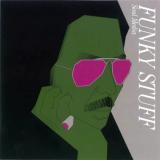
What Soul Media, led by Jiro Inagaki, ultimately arrived at was a tight, cool, and ultimate groove.
As Inagaki himself has stated that he “played black funk” on this album, the explosive jazz-rock foundation he had cultivated up to that point is fused with the stickiness, elasticity, and physicality of black music—elevating his musical vision to an entirely new dimension. Combined with the masterful arrangements of Hiromasa Suzuki, the groove is polished to a high sheen, growing richer, more fluid, and subtly seductive.
Every track stands out: the vibrant, driving energy of “Painted Paradise”; the coexistence of funkiness and mellowness on “Breeze”; and the low-slung, razor-sharp cover of Kool & The Gang’s “Funky Stuff”.
Now regarded as a definitive classic, this album remains in constant demand from listeners around the world.
Bambino Recordings is back with the highly anticipated repress of Toka Project's 'Ego Trip’ EP due to overwhelming demand for the vinyl. W&P by Andrew Riley, renowned as one-half of the legendary Inland Knights. Originally released 21 years ago, this timeless classic is now available once again. Secure your fresh copy now before it sells out! The tracks still sound as fresh today as they did 21 years ago, one of the very reasons they have been in constant rotation in many of well known DJ’s sets for years. Expect deep, tough, bumping underground house aimed to liven up any dance floor.
In 2023, Kraków-based composer Martyna Basta and Los Angeles-based sound artist claire rousay were invited to Poland by Unsound for a short residency, where they spent a few days trading ideas and concepts, and brainstorming their first collaboration. Initially motivated to create lengthy, expansive pieces together, they also ended up experimenting with shorter vignettes, and ‘hotel room’ expresses these two extremes, featuring three long-form tracks and three brief, euphoric songs. “It wasn’t something we specifically planned,” explains Basta. “It just unfolded that way.” The most important stage of the process, however, was the period that followed the residency, when rousay and Basta began working on their sketches in isolation, trading drafts and sculpting the sounds independently before rousay handled the final mixdown. In the comfort of their own bedrooms, they were better able to reflect their individual creative routines, organically reaching a junction where their music felt truly unified. Even while they were in Poland, the duo joked that it might have been easier if they’d been holed up in separate rooms emailing each other.
Both artists have had an energetic few years: after steadily building a reputation for her diaristic and candid concrète experiments, rousay signed to Thrill Jockey in 2023, releasing the acclaimed ‘sentiment’, ‘a little death’ and the more eaze collaboration ‘no floor’; Basta, meanwhile, followed up 2023’s hallucinatory ‘Slowly Forgetting, Barely Remembering’ and her debut for Belgium’s Stroom imprint, ‘Diaries Beneath Fragile Glass’ with a studio album on !K7’s 7K sublabel: ‘Winged in Collapse’. The title of their collaboration reflects rousay and Basta’s hectic touring schedules in the wake of these releases, the constant feeling of displacement and the emotions that emerge when the environment is in flux. “I know we aren’t the only musicians traveling and creating work at the same time,” says rousay, “but being able to speak about that experience and all the things that come with it was comforting.” And the music itself, assembled from hypnagogic field recordings, spectral voices, electronics and filtered instrumental improvisations, sounds bewitchingly unmoored, not tied to a specific location but hovering around the uncanny space in-between.
Scratchy ASMR sounds introduce us to the opening track ‘zoom’, initially obscuring the duo’s elegiac harmonies. They are careful to let the various elements evolve at their own pace, with the fictile guitar drones melting into the foreground while Basta’s dissociated whispers and rousay’s illusory synths pick out the subtlest subliminal shades. It all builds to the piece’s dramatic third act, when layered chords ring out like organ blasts, enveloping the negative space. The shorter, more anxiety-provoking ‘denim’ is remarkably divergent, a dismantled folk memory pieced together from skeletal piano notes, vaporous choral echoes, haunting string plucks and pulsating feedback. Where the music aligns is in the mood itself, capturing a feeling that’s neither completely abstract nor fully referential. Not ambient exactly, ‘hotel room’ is a suite of soundscapes that gesture towards structure while repeatedly folding in on themselves.
On ‘Lost and Found’, wordless Autotuned ad-libs spiral around delicate guitar plucks and washing waves, coalescing into a faded Polaroid of opiated Americana, and on ‘Where Are You Now’, operatic squeals and corroded orchestral scrapes are juxtaposed with nauseous low-end tones. Evaporating until only industrial whirrs and music box chimes remain, the latter encapsulates the entire album’s chilling liminality, smudging saturated voices with casual electro-acoustic interjections before it erupts abruptly, transforming into a dense, pitch-skewed hymn. ‘hotel room’ plays like a surreal travelogue, teasing listeners with airy familiarities as it humidifies dry, awkward spaces. More a labyrinth of catacombs than a single, fixed chamber, it’s Escher-like – cryptic and seductive – and decked out with personal asides and intimate details that reward the most patient, curious listeners.
"Potency rolls into double figures with a new release from Malik Kassim, aka Retromigration. Following albums and singles on labels including Love On The Rocks, Rhythm Section and Wolf Music, the tenth release on Cromby's rapidly-evolving, floor-focused imprint locks into the sound of one of house music's most consistent and consistently exciting producers, seamlessly bridging the established Potency energy with a luxurious vision of the genre. 'Love Rock' summons an instant block party energy, showcasing the expert weight of Kassim's basslines, as well as hinting at the fusion of hip-hop and jazz that bubbles through the textures of the German-Nigerian producer's studio work. Meanwhile, 'I Do Dance' stays true to the promise of its title, delivering blissful sun showers of synths amid emotional pads and hints of the classic Korg M1 organ sound, a universal signal to party. Ushering in the flip, the more tightly-wound percussion of 'Neighbourhood' maintains Kassim's driving groove, while dancehall samples and dub influences expand the established Retromigration sound into new spaces. Finally, 'Go 2 Nowhere' completes the dance, masterfully blending pillowy breakdowns and wistful keys with the EP's most urgent groove. Rich in detail while keeping the floor in constant motion, 'I Do Dance' reinforces Malik Kassim's timeless touch for unmistakably modern house music."
Ja:ck is an artist who moves beyond fast-paced trends, focusing instead on a clear, driving vision. His releases on the renowned label Cocoon Recordings represent an uncompromising sound that balances hypnotic techno and energetic club dynamics. With a keen sense of tension and atmosphere, he has developed a signature style over the years that works as effectively on large floors as it does in intimate sets.
His new track, Dinamo, perfectly encapsulates this energy: pulsating, powerful, and precisely crafted. The track builds with subtle intensity before erupting into a forceful, captivating movement designed for the peak time.
Notably, Ja:ck has been supported for years by techno icon Sven Väth, who consistently integrates Ja:ck's sound into his sets. This ongoing backing underscores not only the quality of his productions but also his relevance within the international scene. With Dinamo, Ja:ck delivers another clear statement: raw, direct, and absolute club material.
The Oliver Keim remix of Ja:ck’s Dinamo translates the original track into a clean, stripped-back club aesthetic with a steadfast focus on groove and energy. From the start, a driving flow emerges: precise, dry drums meet a deep, rolling bassline that constantly pushes forward. The arrangement remains intentionally minimalist, yet leaves enough room for subtle details to unfold and build tension. Finely placed breaks provide dynamics without losing momentum, leading back into powerful, controlled drops.
The remix eschews clutter, relying instead on clarity, punch, and timing. This makes it versatile enough for both intimate club settings and larger floors, fitting seamlessly into Tech House, Melodic Techno, or driving House sets. It is a modern, functional remix—minimalist in sound, powerful in impact, and strictly geared toward the dancefloor.
Ja:ck ist ein Künstler, der sich jenseits schneller Trends bewegt und stattdessen auf eine klare, treibende Vision setzt. Seine Releases auf dem renommierten Label Cocoon Recordings stehen für kompromisslosen Sound zwischen hypnotischem Techno und energetischer Club-Dynamik. Mit einem feinen Gespür für Spannung und Atmosphäre hat er sich über die Jahre eine eigene Handschrift erarbeitet, die sowohl auf großen Floors als auch in intimen Sets funktioniert.
Sein neuer Track Dinamo bringt genau diese Energie auf den Punkt: pulsierend, druckvoll und gleichzeitig präzise ausgearbeitet. Der Track baut sich mit subtiler Intensität auf, bevor er sich in eine kraftvolle, mitreißende Bewegung entlädt, gemacht für die Peak-Time.
Besonders bemerkenswert: Ja:ck wird bereits seit Jahren von Techno Ikone Sven Väth unterstützt, der seinen Sound immer wieder in seine Sets integriert. Diese kontinuierliche Rückendeckung unterstreicht nicht nur die Qualität seiner Produktionen, sondern auch seine Relevanz in der internationalen Szene.
Mit Dinamo setzt Ja:ck ein weiteres klares Statement : roh, direkt und absolut clubtauglich.
German Text:
Der Oliver Keim Remix von „Dinamo“ von Ja:ck übersetzt den Original-Track in eine klare, reduzierte Club-Ästhetik mit konsequentem Fokus auf Groove und Energie.
Von Beginn an entsteht ein treibender Flow: präzise, trockene Drums treffen auf eine tiefe, rollende Bassline, die sich konstant nach vorne bewegt. Der Aufbau bleibt bewusst minimalistisch, lässt aber genug Raum für subtile Details, die sich im Verlauf entfalten und Spannung erzeugen. Fein eingesetzte Breaks sorgen für Dynamik, ohne den Drive zu verlieren, und führen kontrolliert zurück in kraftvolle Drops.
Der Remix verzichtet auf Überladung und setzt stattdessen auf Klarheit, Druck und Timing. Dadurch funktioniert er sowohl in intimen Clubsettings als auch auf größeren Floors und lässt sich vielseitig zwischen Tech House, Melodic Techno und treibenden House-Sets einsetzen.
Ein moderner, funktionaler Remix, reduziert im Sound, stark in der Wirkung und konsequent auf den Dancefloor ausgerichtet.
A bad idea rarely arrives all at once, it drifts in slowly, playful at first and impossible to resist. With Bad Idea, Warsaw-based Ukrainian artist uiava delivers Groovebox’s first-ever vinyl release: a five-track journey through house and electro, balancing warmth, tension, groove, and emotion across a 12” and digital EP. Bad Idea Pt.1 opens the record with a playful and constantly evolving house cut full of unexpected turns, swinging grooves, and subtle details. Fellow Warsaw artist PayoYayo reshapes the original into a driving, tool-focused reinterpretation, hypnotic, functional, and built for the darker hours of the dancefloor. On A3, Bad Idea Pt.2 sharpens the rhythm with restless percussion, rolling movement, and stripped-back energy designed to lock bodies into motion without ever standing still. Berlin-based artist Nat Wendell opens the B-side with a timeless nine-minute reform remix of Bad Idea Pt.3. Slowly unfolding and rich in detail, his version expands on the original’s emotional message, transforming it into a patient and powerful club journey suspended somewhere between introspection and peak-time energy. Closing the release, Bad Idea Pt.3 dives into deeper emotional territory, an electro piece filled with fragile melodies, playful tension, and a strong emotional message that lingers long after the last notes have faded away.
Curió Curió came to flight by chance. Two artists, Rio-born, Austria-based singer and actress Luiza Monteiro and German producer Dustin Braun, had separately reached a fork in their journeys. An opportune encounter soon blossomed into an uplifting, heartfelt Brazilian MPB-groove project shaped by psychedelic disco and studio experimentation. In their own words Curió Curió’s sonic vision “is not straight disco, not straight samba, not strictly old-school but inspired by all of them, creating something contemporary but still nostalgic”.
A modern fusion influenced as much by Gal Costa and Jorge Ben Jor as Say She She and Bala Desejo, their sound deftly plots a course all of its own. A celebration of freedom, movement, love and life, intertwined with introspective moments of reflection. Treating tradition as something alive, migratory and unresolved, the album is not simply bound by a shared love of Brazilian music, but by a deeper question that runs through every track; where does one belong when home becomes plural? As a Brazilian living in Europe, Luiza's lyrics explore themes of identity, culture, and existence. The tracks move between cities and emotional registers without settling, tracing a sense of identity that shifts rather than resolves. Songs like ‘Amor Doente’ and ‘Mar sem Dar Pé’ circle around relationships that resist clarity, while ‘Menina Passarinho’ captures the fear and necessity of committing to music as a path. For Luiza, deepening her commitment to music alongside years in theatre was both inevitable and difficult. Braun’s production follows a similar logic. Initial ideas were often built without obvious reference points, only later incorporating rhythmic and vocal elements that hint at Brazil without reproducing it. Analogue techniques, tape, ribbon microphones and live ensemble recording bring a tactile quality that reflects the duo’s interest in process as much as outcome. Highlights include ‘Bem Querer’, built on an authentic samba street vibe with a super-catchy sing-along chorus, and ‘Vem pra Casa’ with its cosmic-tinged Brazilian boogie flavour. The album closes with ‘A Cor do Meu Sonho’, a quiet act of insistence. A refusal to shrink in unfamiliar environments, and a belief in the strength of difference. It is less a conclusion than a continuation, leaving the central question open. “I started to understand that I can belong to many places at once”, Luiza reflects. “And that can be something to embrace”. Lyrics from the song ‘Raiz’ translate in English to “I value a burning sun and the cold in the air. Constant change is my companion”. With Curió Curió, that idea is lived through sound, story and collaboration. A debut that feels both searching and assured, grounded in heritage yet shaped by distance.
The free folk/jazz sound of modern Los Angeles. Featuring a heavy bunch of musicians and vocalists including Moor Mother.
"Fearlessly Accessing the Divine Spirit From Here on Out" is the vinyl debut from pianist, composer, and producer Diego Gaeta. He has previously released projects as Club Diego and with the trio Human Error Club (whose members Mekala Session and Jesse Justice helped produce this record). He has quickly become a fixture in a number of Los Angeles musical environments, working with Lionmilk, The Pan Afrikan Peoples Arkestra, Carlos Niño, Black Nile among others. This album is a synthesis of these many LA environments, and carries chamber, jazz, ambient, and folk influences, ultimately giving it an uncategorizable feel similar to works by Arthur Verocai or David Axelrod.
Gaeta recorded the initial ideas for the album by himself after experiencing a burst of creativity during the lockdown of 2020, in the aftermath of a season of protests in Los Angeles, on a piano at his home in El Sereno. "I was constantly not in tune with myself, always awaiting outrage and tragedy in a very unstable world. However, hitting the streets in support of various ongoing pandemic community actions felt necessary and it marked a point in time that ushered in large societal changes. The weight of that era made me feel allergic to making art at the time. All of these ideas came after that period, expressing my reflections subconsciously. I remember that the ideas came in a short amount of time, and then they developed."
Once he had created the tracks as Ableton sessions, he realized the gravity and context of how he was processing his ideas so he, as he puts it, "felt like taking them outside the hands of midi and into the hands of friends." Gaeta was able to assemble his dream band, which ended up being a 9-piece ensemble, or a nonet. "I felt that at some point I was channeling the geometrical balance of that nonet...it's almost as if I had a sextet and then the three of the sextet that's not the rhythm section were doubled. It's a really dense sextet, that's how I see it."
The recording process began the following summer in June 2021 as the musicians were all adjusting to the newfound dynamic of getting tested for COVID, waiting a few days, and then meeting up to record. "We were eating Indian food, some of us were smoking, it was a nice memory, but I felt a little stressed, because I was the bandleader, and I felt the emotional weight of my music."
The title track and single, featuring vocals by Jimetta Rose, begins with a speech by Gaeta delivered when playing with Black Nile in 2019 at the Levitt Amphitheatre in MacArthur park. Gaeta provides the following account: "Even though it was in 2019, socio-political tensions and issues were at the forefront for me at that time. I wrote a speech that was intended to be critical of the US but it ended up becoming a collage inspired by different women that had messages of freedom that spoke to me the most. I quoted Nina Simone and Georgia Anne Muldrow, it wasn't something that I read but something that she said "kicking it with consciousness and style" that phrase stuck with me, so I used it in that speech. Although critical, the speech had a positive feeling to it, and it was hopeful. I gave that speech while fireworks were going off."
Moor Mother & Zeroh are found on their respective tracks, Memory Screen & Eccolo - both delivering a distinct, commanding vocal performance. Low Leaf colors the track Soft Spot with harp, a beautiful ballad nestled in the center of the album. Other players include Gregory Uhlmann on guitar, Jon Kaye on violin, Devin Daniels on alto saxophone, Caleb Buchanan on bass, Dante Luna on vibraphone, Patrick Behnke on viola, Bryan Baker on tenor saxophone/flute, and Mekala Session on drums.
"I’d like for us tonight to embody a freedom oriented life. Freedom isn’t just a dream, it’s a place we must all arrive at together, as one by one the people of the Earth help each other to be Free of power, hate, and insecurities. Let’s kick it with consciousness and style. Can y’all dig that? YEAH. I can too. So now we’d like to present to you a spiritual transmission I like to call: 'Fearlessly Accessing the Divine Spirit of Freedom From Here On Out.' YEAH" - Diego Gaeta
Bruno Berle is a singer, songwriter, producer, multi-instrumentalist and figurehead of a contemporary Brazilian music movement. With a quiet mastery of songwriting and an astonishing voice, his music has won hearts around the world. Since the release of his debut album No Reino Dos Afetos (2022), Berle has performed across the UK, Europe, Japan, South Korea, and China, only leaving his home country for the first time in 2023. Shaped by these journeys, Berle’s third studio album, Sem Fronteiras (Without Borders), reflects a utopian vision of a unified world.
Recorded across London, São Paulo, Minas Gerais, Germany, and Maceió, the album–co-produced alongside his longstanding musical partner Batata Boy–is the most expansive canvas Berle has worked on to date. Shot through with the imagery that has always animated his songwriting: open skies, morning light, vivid colours and the magic of human connection, Berle’s carefully crafted poetics and warm, delicate instrumentation drive this vivid body of work.
“I came from nothing”–Berle doesn’t take his rise to global prominence for granted.
Born to a working class family from Brazil’s northeastern Alagoas state, one of Brazil’s most economically deprived, Bruno moved frequently in his youth to follow any job opportunities his parents could find, before eventually settling in the coastal capital of Maceió. “I used to travel to Caruaru, Santa Cruz, Recife, Garanhuns, Arapiraca, which I loved and feel it made me ready to be in this rhythm i’, but at the same time I think not having friends from childhood and being in constant change made me a little numb to the constant upheaval”. On Sem Fronteiras, there is a similar duality at play. The album celebrates the collective joy and human connection that live touring brings, but it also sits with the darker realities of crossing borders. While music moves more freely around the world than ever before, our bodies are not granted the same privilege.
Though he’s never lacked self-belief, Berle recognises that talent alone doesn’t guarantee opportunity. “Before my second album No Reino Dos Afetos 2 everything I had ever recorded was made with the help and kindness of people who believed in my ability”. Determined to pay that kindness forward and help others from the sharp end of Brazil’s desperately unequal society, Berle produced and featured on the recent self-titled albums by his northeast Brazilian compatriots, Nyron Higor and Phylipe Nunes Araújo (both 2025), helping propel both onto the international stage. In turn, following the successes of Nyron & Phylipe’s albums alongside his own, Bruno finds himself at the forefront of a thriving community of artists now based in São Paulo, but primarily originating from northeastern states like Alagoas and Pernambuco.
Much like the famed Clube Da Esquina movement that spawned in 1970’s Minas Gerais, they operate with a free-exchange of ideas, writing songs with and for each other, performing on each other’s albums and on the live circuit together. Lead single ‘Manha’ flows from this ethos. It was written by Berle’s friend and fellow Alagoan João Menezes (writer of ‘Ate Meu Violao’ and ‘Te Amar Eterno’ from Bruno’s previous albums) and Marvin Viera, and originally recorded on their 2018 album Areia e Mar.
Sem Fronteiras opens with ‘Você Já Sabe Que Eu Te Amo’, just six beats of one nylon guitar chord ring out before changing key, paving the way for the gentle strike of fender rhodes and the arresting call & response duet between Berle and Higor. On ‘Amor Inteiro’, the album reaches a celebratory burst of catharsis, with the punch-packing drums of Pedro Lacerda and Nina Maia’s joyous backing vocals encapsulating the live energy that Berle and his band bring to the stage.
With the abundant talents of this musical community at its heart, Sem Fronteiras releases 10th July 2026 via Far Out Recordings, supported by a summer tour across Europe. Bruno Berle will perform in a four-piece band alongside Nyron Higor, Phylipe Nunes, and Batata Boy, culminating in an appearance at Roskilde festival, Berle’s biggest live show to date. He’ll continue to carry a hopeful vision of a world where artists and musicians can move as freely as their music flows.
Tracklist:
A1 “Você Já Sabe Que Eu Te Amo”
(Nyron Higor / Bruno Berle)
Nyron Higor – drums, bass, acoustic guitar, electric piano, synthesizers, vocals
Bruno Berle – piano, vocals
Batata Boy – piano
Jorik Bergman – score preparation and conducting
Klara Gronet – violin
Ségolène de Beaufond – violin
Cristina Ardelean Montelongo – viola
Ilektra Stevi – cello
A2 “Não Posso Viver Sem Você”
(Batata Boy / Bruno Berle)
Batata Boy – electric piano, organ, synthesizer
Bruno Berle – drums, bass, synthesizer, vocals
Jorik Bergman – score preparation and conducting
Klara Gronet – violin
Ségolène de Beaufond – violin
Cristina Ardelean Montelongo – viola
Ilektra Stevi – cello
A3 “A Noite de Estrelas”
(Nyron Higor / Bruno Berle)
Nyron Higor – synthesizers
Bruno Berle – bass, drums, vocals
A4 “Outra Noite”
(Bruno Berle)
Nyron Higor – drums
Bruno Berle – acoustic guitar, bass
Felipe Berle – congas
Lucca Francisco – guitar, vocals
B1 “Amor Inteiro”
(Bruno Berle)
Pedro Lacerda – drums, choir
Nyron Higor – bass, choir
Batata Boy – guitars, organ, electric piano, choir
Nina Maia – choir
Bruno Berle – guitars, acoustic guitar, congas, vocals
B2 “Ideias Mágicas”
(Batata Boy / Bruno Berle)
Heloisa Alvino – trombone
Batata Boy – synthesizers, beats, electric piano, organ, bass
Bruno Berle – synthesizer, vocals
B3 “Vim Dizer”
(Batata Boy / Bruno Berle)
Batata Boy – electric piano, organ, synthesizer
Thomas Stankiewicz – synthesizer
Nyron Higor – synthesizer
Bruno Berle – acoustic guitar, bass, vocals
B4 “Tô Assim”
(Bruno Berle)
Bruno Berle – acoustic guitars
Batata Boy – synthesizer
Nyron Higor – bass, synthesizer
B5 “Manhã”
(João Menezes / Marvin Silva)
Bruno Berle – acoustic guitar, vocals, congas, shaker
Batata Boy – piano, shaker, electric piano, vibraphone, synthesizers
Nyron Higor – drums, bass
B6 “Sem Fronteiras”
(Bruno Berle)
Filipe Mariz – guitar
Bruno Berle – acoustic guitar, vocals, bass
Jennifer Souza – vocals, acoustic guitar
Rudson França – drums
Credits:
Produced by Bruno Berle and Batata Boy
Mixed and mastered by Bruno Berle, Batata Boy and Felipe Berle
Audio engineering:
Nyron Higor (track 1 – production; track 4 with Felipe Berle)
Joe Osborne (tracks 7 and 9)
Victor Gelling (strings on tracks 1 and 2)
Filipe Mariz (track 10)
Photography: Claudio Virgínio
Design: Minchai
Recorded in:
Maceió, Alagoas, Brazil
Tamandaré, Pernambuco, Brazil
Belo Horizonte, Minas Gerais, Brazil
São Paulo, São Paulo, Brazil
London, England
Cologne, Germany
Gala – Freed From Desire was first released in 1996 on NiteLite Records in Italy. 2024 and Ministry of Sound Recordings / B1 Recordings are happy to release two fresh new remixes for the first time on limited edition yellow transparent vinyl. Gala wrote this song when she was drawing on a Buddhist concept that challenges the constant craving for more and encourages us to value our principles and our own freedom instead. She believed that ‘Freed From Desire’ could resonate with people all over the world. Arguably one of the biggest sporting songs of all time, it has become a unifying sensation across the world. The main mix has been re-recorded for a whole new generation but is still very true to that original of ’96, whilst on the flip, Diplo; the American superstar, showcases his trademark, energetic, thumping style. A huge club and radio hit.
CEPX002 is around the corner and marks the second chapter of the X Series on CEP Records. With this release we welcome vinyl head Eubo from Glasgow to the label. From the first track he sent us it was clear that this is the direction we want to push. A strong old-school influence, shaped by vinyl culture and the energy of the early two thousands. The connection felt natural from the start.
A1 'Iron' is probably the most intense track on the record. A rolling bassline, sharp and slippy drums, and a lead that lays over the track with deep mids. It brings a short moment of calm, while the drive stays constant. A2 'Aluminium' stands out with its clear high hats and a modular synth that recalls sweaty and dark mornings. The sound has a slightly hypnotic and metallic touch. On the B side, 'Steel' moves through the interplay of its synths. The kick and bass stay steady and driving. A timeless track that can underline the peak moments in a DJ set. Closing the release is 'Lead'. It brings a funky bass together with serious, almost contrasting synth stabs.
Life In Patterns welcomes Amsterdam-based live act and producer VNTM for his debut appearance on the label with “Ostbahn”, a five-track EP arriving on vinyl and digital formats on 24 July 2026. For VNTM, Ostbahn marks a departure from his usual creative process. While most of his productions are conceived and developed within the familiarity of his studio, every track on this release originated elsewhere — each one tied to a specific place, encounter, or moment beyond its walls. These external sparks became the foundation for a collection that feels both deeply personal and unmistakably geared towards the dance floor. Across the EP, VNTM explores the intersection of emotional depth and physical intensity. Dark, immersive pads and melancholic atmospheres are woven into powerful techno frameworks, driven by heavy low frequencies, tightly locked grooves, and a precise sense of movement. The result is a body of work that balances introspection with impact, equally suited to peak-time systems and solitary listening. Based in Amsterdam, VNTM has established himself as one of techno's most distinctive live performers, appearing at major festivals and clubs worldwide with a hardware-focused setup dedicated entirely to his own productions. His sound combines harmonic exploration and narrative-driven composition with distorted percussion, futuristic sound design, and a constant embrace of emerging synthesizer technologies. Beyond his performances, VNTM is the driving force behind the acclaimed Mindscape events at Amsterdam's Lofi, where he has hosted artists including Len Faki, Kangding Ray, Sterac, Âme, Recondite, Polygonia, Luigi Tozzi, Vril, and JakoJako. Recent highlights include his debut on the Awakenings Festival Mainstage, an all-night-long live set at Lofi Amsterdam, and a sold-out debut performance at Refuge in New York City. With “Ostbahn”, VNTM delivers a compelling first chapter on Life In Patterns — a release shaped by experiences beyond the studio, translated into hypnotic, emotionally charged techno built for deep immersion and maximum physicality.
Moving Pressure 03 lands as Rene Wise's third release on his imprint. With a refined approach to rhythm and restraint, the artist once again distills techno to its purest form: hypnotic, percussive, and propulsive. Across four tracks and in line with the label's essence, MP03 thrives on movement-low-end mastery meets tightly coiled grooves, while textural elements shift and evolve with subtle precision.
A1 'Relax' sets the foundation with a mighty sub-base, rolling forward with effortless force. Chopped-up claps ricochet through the mix, while a funky, disembodied vocal repeats a single command: "relax". Then comes 'Chomp Chomp', a denser offering in Wise's sensorial arsenal. Layered with gritty textures, his signature percussion builds a soundscape that is both tactile and weightless, evoking a kinetic dream state where groove and space are in constant conversation. On the flip, 'Cave' plunges into murkier terrain. Swathed in fog and sinister atmospherics, it unfolds through an eerie blend of sci-fi surrealism and grounded physicality. Bleeps hover like distant signals, their sharpness softened by a cavernous, smothering embrace. It's a study in tension-hypnotic and unsettling in equal measure. Closing the release is 'Deep Under', a track that embodies its name with subterranean mystique. The soundscape is rich with detail, an ecosystem of sonic fragments shifting beneath the surface. It's immersive yet elusive, like catching glimpses of something just out of reach-a mirage that flickers between the tangible and the ethereal.
This is minimalism with intent, built for deep immersion. Less, here, is infinitely more.
Jhobei has been on a constant ascent in the last couple of years, and he's worked with some of the most credible labels in the game in that time, from Fuse to Picnic to Semi Delicious. Now he steps up to Burnski's Pilot with four absolute nuggets. 'Pulse Reflex' is amped right up and ready to go - tightly circling synths, buoyant beats, garage shuffle and slick fills that all demand you bust out some moves. 'Believe' dials things back into a more heady, deeper dub tech vibe and 'Cannei Getcha (To Feel)' brings crispy electronic synths and pensive pads to a future groove before 'Synthetic Symphony' closes with buffed neon pads and smooth progressive chords that ride clean, meticulous drums.
We are delighted to present to you a very special release. Gregor's anthemic „Quiet Distortion“, the titletrack of his album back in 2016, received a very special peaktime remix treatment by Bart Skils. Gregor and Bart have been friends for a long time, so it was a no-brainer to be excited, when Bart told us he is working on a remix. Barts meteoric rise in recent years, kicked off by his fantastic productions and his pivotal role in the Drumcode artist roster, are only the next step in his constant career and the reward for his hard work as he continues to deliver remarkable work as a producer and DJ as well. His version of Quiet Distortion highlights Gregor's songwriting qualities by featuring the original melodies and pushing them to new levels by adding Barts irresistible trademark drumming and also a dramatic arrangement, guaranteed to set every dancefloor on fire!
Kaizen is a Japanese philosophy that means “continuous improvement.”
The new Lisbon-based label is built around a vision of constant evolution in groove and rhythm. The label’s debut release comes from its founder, Stan Yaroslavsky, delivering a deeply personal project that reflects his artistic growth throughout years of musical exploration and production.
The 4-track EP showcases different sides of his musical identity, with each track representing a unique approach to sound, groove, and atmosphere. Blending elements of House and Tech House with subtle minimal influences, the release captures both movement and progression while staying true to the label’s core philosophy of continuous change.
Constantly pushing his studio craft into unexplored realms, Pugilist returns to Samurai with a fresh clutch of innovative hybridised meditations transmitting from upper tempos. The versatility in Alex Dickson's approach is proven by the broad spectrum of labels he releases on — as comfortable shelling down for Shall Not Fade as he is tearing out on Rupture London. As the Melbourne / Naarm-based producer opens up the Triads EP with 'Rune', he hones in on a dynamic fusion of insistent technoid propulsion and brooding bass snarls with a mysterious portent. 'Pyre' swiftly turns up the percussive intensity with bludgeoning kicks and whipcrack snares that evoke classic electronica as much as D&B. For all the sharp attack of the drums, though, Dickson manages his ingredients with ruthless restraint, creating a fierce kind of meditation in the process. 'Woven' allows a rich variety of snaking synth lines to take centre stage as we tunnel into the second half of the EP, relishing the space for dynamic modulation and slowly evolving, cinematic pads that offer a glacial foil to the twitchy pace of the snappier elements in the mix. 'Machiavellian' plays the consummate closer in its lead in, playing a patient game in ritualistic drums before the herald of rave tropes rear up in some pronounced, choppy snare science. Yet again, Dickson opts for a softer approach where you might be expecting an explosive drop, allowing the skittering drums to roll on until they become a mesmerising texture in the track. In the end, it's an expert flourish demonstrating the energetic possibilities that lie in the spaces beyond more obvious peaks and troughs. Across four brilliantly original, highly advanced rollers, Pugilist nails the balance between subtlety and impact and proves himself a worthy advocate for the path less travelled.
Christian Prommer – producer, drummer, DJ and multi?instrumentalist best known for his work with Trüby Trio, Fauna Flash, Drumlesson, Voom:Voom (with Peter Kruder), Prommer & Barck (with Alex Barck), and as the producer of DJ Hell’s Teufelswerk – presents his new album Rhythmic Nocturne, spanning spiritual deep house, jazz, balearic trip?hop and hypnotic rhythm explorations. A must for fans of St. Germain, Floating Points and refined grooves at all speeds.
This album distills ten years of Berlin into a twilight drift between order and abandon. Daytime studio sketches are pulled apart at night, reshaped by shifting perspectives that swing between jazz harmony, textural experimentation, and the heavy gravity of techno basslines and analog drums. Intimately close-mic’d piano, drums, percussion, cello, and strings are constantly recontextualized—dropped into new rooms, resonances, and imagined spaces—so their meaning keeps mutating. Room noise, human breath, and accidental sounds are folded into the pulse, turning spill and imperfection into rhythm. Even a piano lid thudding shut on “Dark Matter” is claimed as part of the beat, underscoring an album that embraces freedom, spontaneity, and the beautiful lack of accountability that defines this city at night.
Damian’s Ghost materialises from the shadows on Astrophonica with another collection of outstanding, heartfelt, and authentically deep jungle music. Universalis showcases four tracks that further define what is fast becoming the unmistakable Damian’s Ghost sound: a perfect blend of rawness and attention to detail, underpinned by a constant focus on emotion and mood. No fanfare, no lyric videos—just music.
Fracture:
“Lots of people are making Jungle music, but only Damian’s Ghost makes Damian’s Ghost”
DJ Support - Job de Jong, Boss Priester, Reeshy, Dennis Quinn, Moxie, Kepler, Burnski.
Kepler and Burnski join forces once again for a 4 tracker on Kepler's Contact Imprint. They are no strangers to working together with previous releases on labels like Up The Stuss, Homegrown, Constant Sound and Fabric.
Applying the solid structures of floor-focused Berlin techno to the expressive space of introspective electronica, Answer Code Request returns to Delsin with his first album in eight years. Halo finds Patrick Gr?ser broadening his sound palette more than ever before, matching atmospheric synthesis with dynamic beat constructions true to his impressive legacy while breaking new ground. Across Halo, smoky clouds of pads and chords lend the album an introspective quality in the grand tradition of ambient techno. In front of these haunting melodic forms, Gr?ser is free to explore all manner of rhythmic directions. There are fractured, downtempo micro beats and angular fractals on the likes of 'Fading Shadows' and 'Refraction' that take their cues from breakbeat -- finely detailed drum sequences constantly evolving into new arrangements. A pointed nod to D&B rears its head on the aptly named, hard-edged 'Fracture' and you might hear a firmly submerged hint of ravey acid coursing under 'Sublith'. Elsewhere, the firmer kick-anchored pulse of the classic Answer Code Request sound manifests for more forthright techno excursions such as 'Halo' and 'Bliphar'. In the context of the album, though, these tougher tropes are channeled into mesmerising soundscapes that soften the attack without diminishing the potential for club impact. In this era of his craft, Gr?ser moves instinctively through the sounds and approaches that inspire him, and the end result is an album that feels natural and open, all the while steadily progressing the ongoing evolution of Answer Code Request.
pdqb shows no signs of slowing down. Relentlessly productive and constantly locked into transmission mode, it delivers 13 tracks of its unmistakable Electro-Cognition sound. Sharp, futuristic, body-moving music wired straight into the nervous system.
From precision electro workouts to mind-bending synth transmissions, every track hits with purpose, style, and identity.
However, the remix lineup is equally heavyweight. Four elite reworks from four serious operators, each one twisting the source code into new dimensions.
---
Half pinball table, half neural reactor, wired directly into a wall of aging synthesizers. The so-called Transient Witness (aka Preconscious Data Quantum Buffer) records not what people did - but what they almost did: Every flash of hesitation, every thought that vanished before becoming real, every dream erased at sunrise.
At its center pulses a synthetic brain, decoding impulses too brief for language. These signal transients are micro-events that appear and disappear in milliseconds.
When activated, the table will not play sound. It remembers it. Each collision of steel ball and sensor triggers forgotten futures, lost timelines, phantom rhythms from decisions never taken. Basslines from parallel selves. Melodies from unrealized lives. Percussion patterns from collapsing probabilities.
The 13 original tracks featured on this release are a transmission recovered from one of its sessions. Electro pulses, synaptic breaks, machine funk, and signals from thoughts that never survived long enough to exist.
DMA & Friends returns with a four-track EP from Groningen-based producer Mathijs Smit, one of the most interesting names emerging from the new wave of the Dutch underground scene.
Known for his hybrid approach between modern techno, progressive influences and intelligent club-oriented dance music, Smit has been steadily building a strong reputation through releases on labels such Superlux, alongside appearances across the Dutch underground circuit.
Built around hypnotic grooves, soaring melodies and emotionally charged atmospheres, the EP creates a constant sense of tension and release while moving between modern techno pressure and progressive inspired dancefloor moments.
ALERT: BIG 90s ITALIAN RAVE COMP - a lot of very in demand tunes on here.
Navigators
Franco Falsini and the Interactive Test Universe
There are musicians who follow their time.
And then there are those who seem to move along a different trajectory—like navigators crossing sonic eras without ever truly belonging to any one of them. The story of Franco Falsini belongs to the latter. It is a story that begins long before raves, before techno, before the word “electronic” had even become a recognizable musical genre. A story that moves across continents, technologies, and sonic visions, eventually arriving at a small creative laboratory born in Italy in the early 1990s: Interactive Test. This compilation is a fragment of that universe. But as often happens with the hidden histories of music, understanding it requires going back. Far back.
The Beginning: Machines, Tape and Space
In the late 1960s Franco Falsini leaves Italy and moves to the United States. It is not merely a geographical journey—it is also a journey into a new idea of music. At the time, synthesizers are only just emerging from research laboratories. Multitrack tape recorders allow musicians to build entire sonic worlds on their own. Technology is still far from standardized: every studio is almost an experimental workshop. In Virginia, Falsini builds one of his own. Among cables, oscillators, electric guitars and reels of magnetic tape, a kind of music begins to take shape that resembles nothing else being made at the time. It is not simply rock, and it is not yet truly electronic. It moves somewhere in the space between the two. Out of these explorations emerges Sensations' Fix, the project through which Falsini releases a series of albums during the 1970s. Records that seem to come from a parallel dimension: cosmic landscapes, electronically treated guitars, synthesizers drifting like satellites. Many years later those albums would be rediscovered as visionary works. But at the time they were simply the result of relentless curiosity. A curiosity that would never fade.
The City That Never Sleeps
In the 1980s Falsini’s trajectory leads him to New York. The city is a sonic organism in constant transformation. In its clubs and recording studios something entirely new is beginning to take shape: music built from drum machines, sequencers, and samplers, created for the body before the living room. It is the dawn of modern dance culture. Falsini works as a sound engineer, producer and experimenter. From close range he observes electronic music transforming into a global language. Machines become more accessible, computers begin entering studios, and rhythm takes on an increasingly central role. Yet even in this phase Falsini does not simply follow what is happening. He absorbs. Observes. Reimagines. When he eventually returns to Italy, he brings back not only technical experience but also a clear vision: the conviction that electronic music is an open space, a territory still waiting to be explored.
Tuscany, Early 1990s
At the beginning of the 1990s something is happening in Italy as well. In clubs, abandoned industrial warehouses and clandestine parties, a new scene is beginning to form. It is rave culture: a spontaneous movement bringing together DJs, producers and listeners in a collective experience driven by rhythm, technology, and creative freedom. It is within this context that Franco Falsini, together with his brother Riccardo, creates Interactive Test.
The name almost sounds like a scientific experiment. In many ways, it is. Interactive Test does not emerge as a traditional record label. It begins as a laboratory—a place where ideas, sounds and musical identities can be tested and explored. Around the Falsini studio in Tuscany a small constellation of artists and DJs begins to gather, helping to shape the sound of Italy’s emerging electronic scene. Among them are Andrea Giuditta, Francesco Farfa, Gabry Fasano, Roby Mastelloni, Roby J and many others. Each brings a different musical sensibility. But they all share the same intuition: electronic music is not a genre. It is a language.
The Laboratory of Identities
One of the most fascinating aspects of the Interactive Test universe is its constant play with identity. Franco Falsini releases music under several different names: Open Space, Youth Wave, Agent Fylfoyt, Man Myth Magic. These are not simply pseudonyms.
They are different sonic perspectives, as if each project were a window opening onto a parallel musical universe. Open Space, for example, explores more atmospheric and visionary territories. Youth Wave moves between electronic groove and club-oriented rhythms. Other projects experiment with digital psychedelia or hypnotic techno textures. Interactive Test becomes something more than a label. it becomes an ecosystem.
Domestic Machines, Infinite Worlds
Looking back today at the technology used in those productions, one might almost smile. Many tracks were created on Amiga computers, MIDI sequencers and analog synthesizers wired together in home studios—tools that appear modest when compared to today’s digital possibilities.
Yet precisely these limitations became a creative force. Every sound had to be built, shaped and reinvented. Sequences developed slowly, almost like living organisms. The tracks did not always follow traditional dance music structures; often they felt like genuine sonic journeys. Music built from space.
A Hidden Constellation
Many of the records released by Interactive Test in the 1990s remained for years almost invisible objects, circulating quietly among DJs, collectors, and devoted listeners. Yet it is precisely this underground existence that helped preserve them. Listening again today, one perceives something rare: the feeling of music that does not fully belong to its own time. Music suspended between different eras. Perhaps because it comes from a vision that both precedes and transcends trends.
Continuing the Journey
Looking at Franco Falsini’s entire path—from the electronic psychedelia of Sensations’ Fix to the rave culture of the 1990s—a surprisingly coherent line emerges.
A line defined by exploration.
Each project, each pseudonym, each record appears as a new route within the same great sonic voyage.
Interactive Test was one of its stations.
A laboratory.
A community.
A creative platform.
This compilation gathers some of its traces.
Not as a simple archive of the past, but as a map of a musical territory that continues to expand even today.
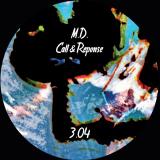
The new 12" release, "Call and Response", by the enigmatic artist MD, is a masterclass in the resurgence of retro techno, bridging the gap between the raw industrialism of early 90s Detroit and a modern, high-fidelity punch. The A-side is defined by its massive, anthemic vibes, built around a thundering TR-909 kick and a soaring, crystalline synth lead that feels both nostalgic and startlingly fresh. What truly sets this record apart, however, is its intricate counterpoint structure; rather than relying on simple loops, MD weaves multiple independent melodic lines together in a rhythmic dance of tension and release. The "call" begins as a jagged, percussive stab that is immediately answered by a "response" of lush, interlocking minor-key arpeggios, creating a sense of constant movement and architectural depth. It’s a track that demands attention on a massive sound system, proving that the classic techno blueprint can still be expanded into something grand and deeply intellectual.
Diffuse Reality presents TOBAS 005. We welcome Kushkusshhh with Hollowed Memories. A deep, hypnotic and powerful LP. Stellar sounds that awaken all your senses, a constant hypnosis, immersive from the very first track, with textures and atmospheres that take you on a rewarding journey into your most inner self. Available on 12" vinyl and digital. Prepare yourself, we're in this journey together.
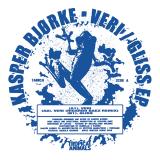
Danish producer Kasper Bjørke returns with a new release on Tropical Animals, the “Veri/Gliss” EP a work that fully captures his signature blend of cinematic depth, refined production, and forward-thinking electronic aesthetics.
“Veri” opens the EP as a richly layered and immersive experience. Built around an evolving tapestry of textures, the track unfolds through pulsating synths, shifting sonic details, and a steady yet powerful rhythm. The result is a truly intergalactic journey, where each element seems to orbit around a constantly transforming emotional core. This is Bjørke at his most visionary-bridging club functionality with intricate sound design in a hypnotic and expansive narrative.
On remix duties, label head Ricardo Baez reinterprets “Veri” with a sharper, more direct approach. Stripping back the original’s layered atmospheres, he delivers a driving electro version that’s lean, tense, and fully focused on the dancefloor. With its tight groove and immediate impact, the remix is built for peak-time energy and club intensity.
On the flip side, “Gliss” reveals a more intimate and emotive dimension of Bjørke’s sound. A modern electronic ballad, the track blends sensual rhythms with delicate, suspended melodies. Its subtle yet captivating groove carries the listener to an unknown planet, where everything moves in sync, locked into the same pulse and flow. It’s a piece that radiates both mystery and warmth, showcasing Bjørke’s ability to craft deeply atmospheric yet rhythmically engaging compositions.
With the “Veri/Gliss” EP, Kasper Bjørke and Tropical Animals reinforce a shared artistic vision where sonic exploration meets club-ready precision, balancing introspection and dancefloor energy, cosmic textures and physical groove.
Dewa Alit, master of radical Balinese gamelan, returns to Black Truffle with Baur Bentur. Genetic (2020, BT063) introduced international listeners to the magical sound-world of Alit’s Gamelan Salukat, who perform on instruments tuned to a unique scale derived from modified versions of two traditional Balinese scales. The two pieces heard on Chasing the Phantom (2022, BT093) further demonstrated his radical fusion of tradition and experimentation, with passages where unorthodox techniques make the acoustic ensemble resemble glitching electronics. Baur Bentur now highlights another aspect of Alit’s work, presenting pieces composed in 2024 and 2025 where Gamelan Salukat performs alongside virtuoso pianist Sri Hanuraga. Alit’s music is grounded in deep reflection on the tradition of Balinese gamelan and its place in the contemporary world. His title, ‘Baur Bentur’, which translates as ‘mixing and smashing’, points to his embrace of the intercultural mixture of Eastern and Western elements in the search for innovation. Against the calcification of Balinese music into tourist entertainment, Alit poses his searching, experimental work, which celebrates the communal values and performance practices of traditional gamelan while pushing into startling new directions.
‘Sukat Tacara’ is a study in layered tempos, meters, and polyrhythms, a constantly shifting dialogue between piano and the instruments of Gamelan Salukat. It begins close to a traditional concerto, pairing a brisk sequence of melodic variations from the piano with a spare but propulsive accompaniment of drums and hanging metallophone tones, punctuated by low gong strikes. The piano builds in volume and density across a rapid succession of fragments, at points recalling George Antheil’s ticking wind-up machinery, though Hanuraga’s jazz background shines through in the fluidity with which he navigates the complexities of the score, where chromatic movement co-exists with bluesy phrases. An abrupt change in the piano to patterns of dense clusters introduces a new episode, during which the metallic instruments of the gamelan enter the foreground. The piece dazzles with its inventive rhythms and dynamics, building to a stunning passage featuring the signature heavy muting technique of the Gamelan Salukat metallophones in kinetic patterns that would be at home on a Príncipe release.
The title piece begins at high intensity and rarely lets up, working through bracing unison ensemble melodies and punctuation points where piano and gamelan together seem to become a single, thudding drum. For much of the piece the piano is tightly integrated into the ensemble, the harmonic extensions of the melodic line subsumed into a moving cloud of complex overtones generated by the gamelan instruments. Wildly kinetic on the rhythmic level, the piece swarms with microscopic movements of beating patterns generated by the ‘blend and crush’ of three simultaneous tuning systems: the equal temperament of the piano and the saih cenik (small scale) and saih gede (big scale) used by the gamelan instruments. Accompanied by the composer’s thoughtful liner notes and images of the musicians, Baur Bentur is a stunning next step in Alit’s radical combination of tradition and innovation.
madness" she whispered as she tried to navigate through an onslaught of people.
She carried a feeling of numbness within her that helped her manage the constant distortion and the all to obvious hypocrisy surrounding her. Mindless wandering after having just survived another day in the trenches was a welcomed exercise in fact she had already begun to dissociate from the commonly perceived reality; entering the one of her choosing. If one was to observe her, a sway to the hips could be noticed furthermore, as if momentarily height on a good thought the woman now strutted around attracting all sorts of attention, from negative to overtly admiring.
All the cages in her mind were artfully crafted with beautiful bars made of gold and the ceilings had their own stars and suns that shone upon them. None of them were locked
The Trip To Vega is about deep outer space odyssey that occurs in the process of traveling from Earth through the Cosmos to another "favorable" star system 25.3 light-years away.
The time is year 2097, Sept 23rd.
To this day, Earthlings have managed to dodge some of nature's more dangerous extremities, massive volcanic eruptions, Earthquakes, solar burst that knocked out the Planet's entire electrical grid for 3 years, numerous plagues of disease, food and fresh water shortages, domestic and International Wars and many other life-changing operas, but for this event, what remains is a realization that has no remedy. The cause: Earth's physicality has changed. It is no longer favorable for living things.
It is the constant shifting of the planet's internal tectonic plates which has unfortunately produced an unexpected and impassable dilemma.
Because of the collisions, deep within the planet's core, the planet is now producing an extraordinary amount of sound that includes a specific harmonic frequency that erodes the natural senses of all life on Earth.
It is intensifying. It is intolerable and it is unlivable.
Yet, some humans prefer to stay, to "ride it out" like the Titanic captain going down with his ship. Some, in total disbelief as some have concluded it is the second coming of Jesus Christ. But for most, the decision is clear. Tolive another day, leaving is the only rational choice.
At an increasing rate, scientific research data shows that humans and most animals, excluding the Jellyfish will eventually lose the usage of hearing and are to greatly suffer from an array of other neurological and psychological effects. The sense of touch and taste, sleep depreciation, severe nerve damage, constant hallucinations. Everyone will lose many of their cognitive abilities within an estimated 12 months from now.
On this day and every 7 days afterwards until all registered passengers have departed, the first of a fleet of large number of massive size spacecraft carrying approximately 1 million humans per vessel will permanently leave Earth to begin the long and adventurous trek across outer space to a new home: Vega.
This is not a precautionary tale as there is nothing to learn. Instead, a decision has been made and a Trip To Vega is the consequence.
Komatssu, Lefrenk, Vema Diodes y Celine Arnauld comparten este various artists de cuatro cortes para el tercer disco de Undancel.
La tercera referencia del sello discográfico de Undancel se caracteriza por una fase de transición entre varios sonidos. Representado un punto «ni aquí ni allí» donde la identidad o el estado anterior se disuelve antes de alcanzar uno nuevo, cuyo nombre LIMINAL.
Cuatro cortes en vinilo de 12″ de varios artistas más una canciones extra en formato digital con código de descargas en su interior.
A1_KOMATSSU_DESTRUCTOR DE MUNDOS: En activo desde 2005, Komatssu es el proyecto más personal de Héctor Sandoval (Tensal y 50% del reconocido proyecto Techno Exium). Un proyecto cimentado sobre la fusión natural entre la IDM más melódica, el Electro, el Breakcore y el avant-techno espectral que concibe el sonido como catalizador de emociones, dando lugar a un imaginario sonoro sumamente personal.
A2_LEFRENK_INDECENT: Lefrenk es un productor y DJ coruñés con más de 20 años de experiencia y más de 100 lanzamientos.
También es profesor en Fanzine School.
En el ámbito editorial, destaca como cofundador del sello Deep Different junto a Ikke Alra y fundador de Knerfel, su sello centrado en el techno.
Su trabajo se distingue por la fusión de texturas sonoras orgánicas e innovación digital, lo que refleja una constante evolución personal y creativa. Siempre innovando, Lefrenk ha expandido su influencia a través de colaboraciones dinámicas y actuaciones en directo junto a figuras de renombre de la industria.
B1_VEMA DIODES_MINDNIMALIST: Productor con raíces en el Baix Llobregat, cuya identidad se define por la experimentación técnica. Su trabajo es una exploración constante de la síntesis, donde las máquinas dictan el mensaje.
Desde sus primeras producciones en 2002, ha refinado un sonido que transita del electrobass crudo a estructuras más complejas y horizontales, fusionando la calidez analógica con la precisión digital.
Fundador del sello ÚTIL Records, Gente Seria Viste Chándal y Dialecto Periférico, plataforma desde la que reivindica el sonido de máquinas icónicas como la TR-808, tratadas con distorsiones y texturas de corte industrial.
Entiende el electro no como un género rígido, sino como un proceso de «electrificar» la señal. Su música es un equilibrio entre ritmos sintéticos y pinceladas de IDM, buscando siempre una narrativa sonora avanzada.
B2_CELINE ARNAULD_GLITCHED DANCE SYSTEM: Celine Arnauld es el nombre artístico de Pablo Miranda Caballero, artista y productor de música electrónica especializado en géneros como el IDM y el glitch con texturas ambientales. Recientemente, ha creado los alias DJ Don’t Sleep, donde da rienda suelta a la vertiente más rave del jungle y el breakbeat, y Paul Basscoigne, donde explora el electro, el acid, el IDM y el braindance.
Ha publicado su música en varios sellos, como EVEL, Clean Error, Dynamic Form, Mahorka, Hypnotica Colectiva, EC Underground, Dead Trax, Not 4 Human Consumption, New York Haunted, Point Source Electronics Arts, Moatun 7, Polygon Network, Colorsquad Records, Opal Tapes y Zabra Records.
Bailen Records presents “Planet Juno EP” by Rene Sandoval, a vinyl release where the swing and energy of tech house define the character of the record.
Raw drum machines and analogue sounds build a direct and functional sound designed for the dancefloor.
There is something cosmic in the momentum of the EP: mechanical rhythms moving with precision, bright sounds expanding into space, and a constant sense of motion. The result is tech house that feels elegant yet physical, deep yet direct.
The energy recalls certain golden moments of European 90s house: hypnotic grooves, warm harmonies and that perfect balance between club functionality and timeless musicality.
French producer Berzingue appears with a remix that pushes the material into a more modern club territory, reinforcing the harmonies of the original track and the overall dynamics of the EP.
Destination Unknown is an EP by Unpronounceable born from an archive of sounds collected between 2019 and 2024—sonic fragments that took shape without a predetermined direction guided only by an open idea in constant transformation. The original track conceived as a “destination unknown” composition developed its own independent identity. However precisely because of its fluid and cross-genre nature Unpronounceable chose not to place it within a traditional EP context instead opening it up to a multiplicity of perspectives by inviting five artists to reinterpret it freely without genre constraints.
The result is an EP that unfolds like an alternative map of the same sonic territory where each remix explores a distinct direction transforming Destination Unknown into a multifaceted and ever-evolving experience.
In Carl Finlow’s remix Destination Unknown takes on a strong cinematic and narrative dimension. Inspired by the title Finlow imagines a mysterious journey toward a futuristic dystopian city turning the track into a kind of electro soundtrack—dark yet ironic rich in character and capable of evoking vivid images and motion.
MANASYt pushes the track toward more physical and ritualistic territories focusing on the dark pads and the more oneiric vocal elements of the original. The result is a hypnotic pulsating tribal-industrial reinterpretation where rhythm and sonic material become central intensifying the track’s most visceral qualities.
With Gay Horror the focus shifts to an emotional and narrative dimension. The vocals are deliberately made elusive and undefined while the structure develops through a slow controlled crescendo that recalls the atmospheres of ’90s trip-hop. This version also reflects a long-standing human and artistic relationship conceived as a story that travels through time and reaches the present day.
Kevin Follet adopts a more conceptual approach overturning the perspective of the original track. Rather than working with its main elements he brings the underlying structures to the foreground transforming what usually remains hidden into the core of his reinterpretation. His remix is elegant and deep balancing sound exploration with a strong attention to songwriting.
Closing the EP is GP The Synth Roller with a radical and highly experimental reinterpretation. The track behaves like an unstable system: parameters shift without warning surfaces lose coherence sudden accelerations collide with moments of arrest. There is no resolution only a sonic condition in constant tension eventually condensing into a dark compact mass.
Taken as a whole Destination Unknown is far more than a simple remix collection: it is a collective exploration of the potential of a single composition. Unpronounceable’s original track and the reinterpretations by Carl Finlow MANASYt Gay Horror Kevin Follet and GP The Synth Roller move across electro techno industrial and experimental territories offering six different perspectives from the same starting point. An open journey with no fixed destination where every detour becomes an integral part of the path.
Mystic Letter K presents Occulimus. Behind this alias stands Cari Lekebusch, one of Europe’s most respected and prolific techno figures, with an undeniable legacy and historic releases on labels such as Missile, Hybrid, and Planet Rhythm, among many others.
With Mystic Letter K, Lekebusch steps into a parallel, more mature and conceptual universe—one where he fully explores a mental, tribal, deeply hypnotic and highly danceable strain of electro. His sound is built on constantly shifting patterns: elements that repeat, reconfigure, and sequence themselves in multiple ways, creating a continuous sense of motion that drives the listener into states of trance and altered perception. Occulimus captures this essence with surgical precision: an unmatched groove, raw yet refined, designed for the dancefloor but equally suited for full immersion. Each side of this double vinyl acts as a powerful and versatile tool, allowing any DJ to build, sustain, and transform energy with a single record in the bag.
A direct, functional, and absorbing work that reaffirms Lekebusch’s forward-thinking vision and his unique ability to sculpt sound in motion.
Originally from Patagonia, Aldana grew up deeply connected to the Earth. It was in Buenos Aires, however, that she shaped her musical identity, immersed in a vibrant and inspiring scene. Influenced by the energy of parties and the community around her, she soon felt the urge to channel that intensity into her own music.
Today, she marks a new chapter for Luzerna with the label’s very first EP — a project moving between the emotional and the physical. There are more introspective moments and others that are more direct, designed for the dancefloor. It’s also very versatile and can be experienced in different contexts and moments.
The production is largely driven by intuition, allowing the sound to find its own shape.Although each track has its own identity, they are all connected by groove, like a constant pulse that brings them together.
This release is part of the La Bush Reunion concept, created by DJ George’s, which keeps the club’s energy alive by blending La Bush’s iconic classics with contemporary productions designed for today’s dancefloors.
For this chapter, four tracks by the concept’s residents (DJ George’s, Laurent Top, Cedric Piret (CP), Michael Forzza) are brought together. Four complementary visions, shaped by club culture, turntable experience, and a relentless pursuit of groove and intensity.
Français
Enigma Records, le label dirigé par DJ George’s, résident historique du mythique club La Bush, présente LA BUSH REUNION – CHAPTER 1.
Cette sortie s’inscrit dans le concept La Bush Reunion, créé par DJ George’s, qui fait revivre l’énergie du club en mêlant les classiques incontournables de La Bush à des productions actuelles pensées pour les dancefloors d’aujourd’hui.
Pour ce chapitre, quatre titres des résidents du concept (DJ George’s, Laurent Top, Cedric Piret (CP), Michael Forzza) se retrouvent réunis. Quatre visions complémentaires, façonnées par la culture club, l’expérience des platines et la recherche constante de groove et d’intensité.
LA BUSH REUNION – CHAPTER 1 perpétue naturellement l’esprit de La Bush : garder l’ADN qui a fait vibrer le club tout en l’emmenant dans le présent. Pas de nostalgie figée, mais une énergie qui évolue et continue de faire danser les foules
A sonic journey that feels both intimate and expansive, Inigo Lunani drifts between late-night introspection and dancefloor euphoria. The album blends minimal grooves and warm tones into a cohesive narrative that feels alive—constantly evolving, yet grounded in emotion.
Each track unfolds like a fragment of memory: hazy, rhythmic, and slightly surreal. There’s a tension between control and spontaneity, where tight percussive patterns meet playful, almost careless melodies. The result is music that invites movement but rewards deep listening—equally at home in a dark club or through headphones at sunrise.
Inigo Lunani isn’t just about sound; it’s about identity in motion. It captures the feeling of searching, of becoming, of existing somewhere between who you were and who you’re about to be.
A new voice enters the orbit. MBM carves three slow-burning studies in tension and release – merging patterns with fragile harmonics, melancholia, and restraint. Everything feels carefully placed yet emotionally exposed. Moments of pressure give way to space, steel meets softness, rhythm turns inward. No peaks. No breaks. Just pulse, texture, and tone – in constant negotiation. Music for the body, drawn from the depths. Soultones hits hard. Feel it.
Music springs eternal. Recognising the enduring power of timeless albums to guide us through life, Forever Records is a reissue series dedicated to rediscovering lost musical treasures from across the spectrum of head-feeding, heart-rending electronic music.
Established by Rush Hour co-founder Christiaan Macdonald and Delsin founder Marsel van der Wielen, Forever Records places heartfelt faith in a carefully curated sequence of seminal, largely forgotten records from disparate eras, scenes and spaces within electronic music history. Tipped towards the mellow and introspective, these are albums that stop time when the needle hits the groove, stirring only when it's time to flip over before you sink back into the experience. That's what albums were always meant to be about, back then, right now, always and forever.
The Release:
Dancing on the wildest edge of the 90s outsider techno zeitgeist while proudly independent of any so-called scene, Ov Biospheres And Sacred Grooves: A Document Ov New Edge Folk Classics is both of its time and out of time. Rooted in the experiments of electronic music pioneers, industrial culture and ethnic music from around the globe while responding to the house and techno explosion, Robbert Heynen, Reinier Brekelmans, Reinoud van den Broek and Tim Freeman's freewheeling masterpiece takes in lush electronica and murky abstraction on its singular voyage through parts unknown.
Forever Records presents an extensive reissue edition of the first 'fully released' Psychick Warriors Ov Gaia album. Originally released in 1992, this is the first time the full, previously CD-only, version of Ov Biospheres and Sacred Grooves will be pressed on vinyl. The original LP and CD artwork from the various editions released in the early 90s has been combined and designed by the band, and the audio has been remastered with their full approval. As well as a new LP edition of the album, there will also be a uniquely numbered, limited edition available housed in a gatefold sleeve that comes with a bonus 10" featuring two previously unreleased tracks.
Press response to Ov Biospheres and Sacred Grooves - A Document Ov New Edge Folk Classics:
“That’s Magick! The Psychick Warriors Ov Gaia are Holland’s best kept secret.”
Sherman, NME, UK 1992
“PWOG’s debut LP is an organic invocation rite — the soundtrack to a new world coming to life, an odyssey. Cross-cultural rhythms, ambiences and environmental samples segue into one another like a fluid relay, and unlike the majority of dance records, it never settles into a routine. It’s always evolving, always unpredictable, an indefinitely religious experience.”
John Selzer, Melody Maker, UK 1992.
"Grown men, who snorted their first ecstasy to this record, stammered with tears in their eyes about divine experiences and the cosmos, man."
Peter Erik Hillenbach, Marabo Magazine, Germany 1992.
Sacred Grooves’ introduces tribal dance music for the mind, body music leaning on the avant garde. Its ripples of sound drift through tranced out ritualistic beats into ambience and serenity resembling something akin to The Orb meeting Klaus Schulze at a brain tuning session.
Sherman, NME, UK 1992
"There's still dance for a moment, in the opening track "The Challenge," then Psychick Warriors roam the earth, where African drummers, tropical sounds, and science-fiction chords have found their place in a spiralling interplay of rhythms and sounds. A captivating, almost magical ritual." Corné Evers, Oor Magazine, Netherlands 1992.
"It's truly astonishing what these Dutchmen have come up with for their first LP. Their roots might explain the enigma, for Psychick Warriors are more in the tradition of Psychic TV than in the desolate temples of techno-house fetishists, to which they are wrongly relegated. Here, chromosomes dance, not instincts." CMK, Tip, Germany 1992.
"The transcendental essence of this album is spread throughout, with musical gravitations emerging unexpectedly from sonic experiments that are sometimes primitive, sometimes
futuristic in intention… But there is always an aura of cosmic magic that constantly puts all the parts involved in conflict and which, upon closer analysis, ends up being the main reason for the final result." Blitz Magazine, Portugal 1992.
Music springs eternal. Recognising the enduring power of timeless albums to guide us through life, Forever Records is a reissue series dedicated to rediscovering lost musical treasures from across the spectrum of head-feeding, heart-rending electronic music.
Established by Rush Hour co-founder Christiaan Macdonald and Delsin founder Marsel van der Wielen, Forever Records places heartfelt faith in a carefully curated sequence of seminal, largely forgotten records from disparate eras, scenes and spaces within electronic music history. Tipped towards the mellow and introspective, these are albums that stop time when the needle hits the groove, stirring only when it's time to flip over before you sink back into the experience. That's what albums were always meant to be about, back then, right now, always and forever.
The Release:
Dancing on the wildest edge of the 90s outsider techno zeitgeist while proudly independent of any so-called scene, Ov Biospheres And Sacred Grooves: A Document Ov New Edge Folk Classics is both of its time and out of time. Rooted in the experiments of electronic music pioneers, industrial culture and ethnic music from around the globe while responding to the house and techno explosion, Robbert Heynen, Reinier Brekelmans, Reinoud van den Broek and Tim Freeman's freewheeling masterpiece takes in lush electronica and murky abstraction on its singular voyage through parts unknown.
Forever Records presents an extensive reissue edition of the first 'fully released' Psychick Warriors Ov Gaia album. Originally released in 1992, this is the first time the full, previously CD-only, version of Ov Biospheres and Sacred Grooves will be pressed on vinyl. The original LP and CD artwork from the various editions released in the early 90s has been combined and designed by the band, and the audio has been remastered with their full approval. As well as a new LP edition of the album, there will also be a uniquely numbered, limited edition available housed in a gatefold sleeve that comes with a bonus 10" featuring two previously unreleased tracks.
Press response to Ov Biospheres and Sacred Grooves - A Document Ov New Edge Folk Classics:
“That’s Magick! The Psychick Warriors Ov Gaia are Holland’s best kept secret.”
Sherman, NME, UK 1992
“PWOG’s debut LP is an organic invocation rite — the soundtrack to a new world coming to life, an odyssey. Cross-cultural rhythms, ambiences and environmental samples segue into one another like a fluid relay, and unlike the majority of dance records, it never settles into a routine. It’s always evolving, always unpredictable, an indefinitely religious experience.”
John Selzer, Melody Maker, UK 1992.
"Grown men, who snorted their first ecstasy to this record, stammered with tears in their eyes about divine experiences and the cosmos, man."
Peter Erik Hillenbach, Marabo Magazine, Germany 1992.
Sacred Grooves’ introduces tribal dance music for the mind, body music leaning on the avant garde. Its ripples of sound drift through tranced out ritualistic beats into ambience and serenity resembling something akin to The Orb meeting Klaus Schulze at a brain tuning session.
Sherman, NME, UK 1992
"There's still dance for a moment, in the opening track "The Challenge," then Psychick Warriors roam the earth, where African drummers, tropical sounds, and science-fiction chords have found their place in a spiralling interplay of rhythms and sounds. A captivating, almost magical ritual." Corné Evers, Oor Magazine, Netherlands 1992.
"It's truly astonishing what these Dutchmen have come up with for their first LP. Their roots might explain the enigma, for Psychick Warriors are more in the tradition of Psychic TV than in the desolate temples of techno-house fetishists, to which they are wrongly relegated. Here, chromosomes dance, not instincts." CMK, Tip, Germany 1992.
"The transcendental essence of this album is spread throughout, with musical gravitations emerging unexpectedly from sonic experiments that are sometimes primitive, sometimes
futuristic in intention… But there is always an aura of cosmic magic that constantly puts all the parts involved in conflict and which, upon closer analysis, ends up being the main reason for the final result." Blitz Magazine, Portugal 1992.
Extinction Burst! is the new invocation in album-form by Guttersnipe, Leeds’ premier and pre-eminent XFCER (XFCER: Xenofeminist crisis-energy rock)* duo. Slamming at full speed to multi-dimensional oblivion, Extinction Burst! is the most full, hidefinition lurid dream-mare yet spewed out by Uroceras Gigas & Tipula Confusa. Engineered and mixed by Ross Halden at Hohm Studio in Bradford and mastered by Rashad Becker, Extinction Burst! follows 2018’s My Mother The Vent, which garnered universal critical adoration. Nevertheless, this long-awaited follow up is more extreme: it is wildness beyond reason, splitting new tears in the reality gauze, ultimate hallucination through sound ecstasy. 2026’s Guttersnipe are evolved, mutated by 8 years of touring together and with the labyrinthine network of groups both Guttersnipe members are involved with - Tristwch Y Fenywod, Nape Neck, Petronn Sphene, Yexxen to name a few. On Extinction Burst!, as with previous material, the duo are heavily augmented with technology. Tipula Confusa's drum kit triggers chasm-causing synth pulses with thumping low end attack.. Strafing from all over the stereo field the constant shatter of the cymbals and toms feel like Sunny Murray or Rashied Ali in full flight during a John Coltrane session in 1967. Uroceras Gigas’s guitar + synth storm is by-now similarly an instantly recognised tool kit in underground music. Switching from screeching guitar atonality to intricate riffs from the black metal/Voivod hinterland to ultra-distorted synth meltdown, it’s an utterly overwhelming, essential and vital pouring-out of the full emotional spectrum. Both artists vocalise, ecstatic and primal, drawn out or yelped in pain or pleasure or panic. Alive On Tuesday begins with some of the only space on Extinction Burst! Digital crackles and tight-delays blow out into a fullthrottled death-dive into sweet opaqueness, offset by the duo’s vocals. There’s a popular believe that Guttersnipe is chaos, but over 9 mins here the group are clinical in their control of the simulated entropy. Mincing while the Maelstrom Churns’s guitar is modulated into jagged atonal atonement, duetting with the virtuoso drum patterns before it thuds into gear at quadruple the speed. Threads Of Radical Unaliveness veers close to the extreme Metal influences with blast beats and guttural vocalisations until the track exhausts itself into unaliveness. Keep Honking summons a demonic digital panic, with the duo reincarnating in real time as haunted versions of themselves, almost translating the lurid, ultra vivid, simultaneous hell+heaven of being alive in this dimension. Primordial Invagination harnesses No Wave’s dissension of normality before the structured collapse of Skra¨ckblandad Fo¨rtjusning, in which Tipula Confusa’s accelerating drums simulate a bouncing barrel of brimstone descending into a primordial gunky ooze, a respite in the middle before the record splutters to a stuttering finale, both members’ vocals out there in the neon realness, alive with crisis energy. There is nothing on this cursed earth like Guttersnipe. For over 10 years they have whirled in a wiggliness both woebegone and wonderstruck on a mission of radical mutant exaltation using rock music weaponry loaded with a queer hysterical ammunition to rupture the fabric of the known Rock universe and unleash a tendril-soft hallucinatory violence; thrumming with the bracing vividness of insect bodies, crazed with alien synaesthetic emotions, harnessing jagged excoriating illogic as a face meltingly snazzy affront to redundant macho mediocrity with the hope to break minds, squeeze hearts, explode pelvises and maybe even reset the parameters of reality. Addendum: xenofeminist : proposing and creating a world defined not only by sexual/gender equality, queer empowerment and the toppling of the racist heteropatriarchal hegemony and it’s tyranny of phallogocentric signifiers, but a philosophy of radical queerness that explodes the basic notion of embodied existence itself beyond even the human, where we see bacteria, invertebrates, reptiles, marine life, animalia in general, inanimate objects, quantum phenomena and as yet inarticulated bodies and minds as social and political equals that may inspire and inform our concepts of self, feeling and meaning as we labour to build a collective reality that doesn’t completely suck!! crisis energy : a term borrowed from the weird fiction author china mieville to describe a type of extreme concentration of power which emerges when a system or organism is pushed to it’s absolute limit; the point of rupture, chaos, entropic overload, just before it all breaks apart. rock : Rock ’n’ Roll, rock music, the devil’s music, sex, guitar, drums, voice, rhythm, riffs!
Up next from The Evil B-Side Twins aka DJ TOOL & YAZZUS comes their second EP on their fresh twisted label. In this hypnotic exploration of sound, the pair weaves together a tale of contrast and tension, bridging the worlds of trancey rhythms, bringing techno precision, melodic class and cryptic atmospheres. From the first beat, Placebo Effect pulls you into a cinematic, almost dreamlike realm, where every sound is meticulously crafted to distort and enchant.
The journey is as strange as it is addictive, where punk rawness collides with clean, minimalist textures, producing a haunting yet oddly beautiful experience, sonically taking you to places hard to believe. This is an underground avant-garde club record for advanced DJs with a flare for B-Sides and off kilters. Placebo Effect is an invitation to explore the unknown, to question perception, and to lose yourself in a world that constantly shifts under your feet. Like a déjà vu that never happened.
If art is to be exhibited, then Ulrika Spacek will ensure that their art is collective; that even as the world becomes inhospitable to community, their intentions are an act of resistance.
Whether it is Oysterland, the self-curated night the band have been Hosting for over ten years to platform artists of other disciplines in live music spaces, or Total Refreshment Centre, the East London studio Syd runs which connects the dots between the jazz scene and like-minded experimental artists of the capital and beyond, or their creative bleed as musicians and producers over the years with the likes of Crack Cloud, caroline, DIIV, Holy Wave and Slowdive, the band’s existence is inseparable from their community.
In a hyper-individual world, the band’s fourth album, ‘EXPO’, offers an antidote. It’s there, in the shared dream logic of the music, the off-kilter melodies, jagged guitars and cirrus cloud atmospherics. It’s there, in all the things that are said and unsaid between them; there in the writing, producing and mixing processes they share in. And even as each of their parts Moves toward a unified vision, it’s never more keenly felt than in the bigger Picture to which Ulrika Spacek belong.
Though their well-established foundations are in the art-rock world - and though they are inspired by electronic elements more than ever - Ulrika Spacek are interested in the glitch that exists between the two. Their Music reckons with human warmth and digital isolation, equal parts welcoming and altogether alienating. “Our music has always been a collage - a bit patchwork, sonically - but what makes this album a landmark for us is that we went one step further and made our own sample bank,” explains singer / guitarist Rhys. They create their own doppelgängers in a world of almostreal, where the band appear as if in a hall of mirrors. Digital drums are sampled layered upon real drums, and the effect is almost like birth in reverse - pulled from the ether and returned back to the tangible world.
“There’s a lot that can be said about writing when there is no aim, there is a freedom and a purity in it which opens a door to more music, and in this case, it set a mood for a new album, one that would be colder, darker and one that would embrace electronics and new instrumentation in a new terrain,” the band share. “The album’s greater theme is isolation and alienation in an online world where it seems everybody around you is constantly exhibiting themselves, living in public wanting to be seen and heard. The age of ‘individuality’ is lonely, it’s a room of concave mirrors, and with this in mind, we set upon making our most collective effort; ‘It’s back to strength in numbers, count in fives.”
For fans of Radiohead, Moin, DIIV, Astrel K, Slowdive.
Enrico Fierro, known as Milord, a daytime engineer and researcher of human mind states during dreaming, has collaborated for years with Periodica Records and co-produced projects such as Danger Boys and Space Garage. In “Perfect Crime”, he presents a nostalgic vision of twilight synth-pop, capturing an urban landscape alive at night and in constant motion, blending street soul and echoes of classic house with textured synths, 808 patterns, and subtle new wave influences
Sounds of Sirius Music presents SOSNZ012 – Vedanā – Convergence / Polarity
All forces move in pairs. Light and shadow. Push and pull. Signal and silence.
Frequencies bend toward each other, magnetic fields collapsing into a single point of awareness. Tension becomes motion. Duality becomes flow.
New Zealand-based artist Vedanā leads the A-side with two original cuts, channeling a deep, hypnotic energy that moves between restraint and release. Each track reveals a different side of the same spectrum, balancing introspection with forward momentum.
On the B-side, label founder Herman Saiz delivers a reinterpretation rooted in his signature groove, bridging Chilean and New Zealand influences with a refined, driving touch. Romanian producer RQZ adds his own perspective, reshaping the original into a textured and immersive journey.
Convergence / Polarity captures the space where opposites meet — not as contradictions, but as essential counterparts in constant motion.
Diffuse Reality presents RVDMNTL - La Fuerza De Mostrarse Vulnerable. A 12" vinyl and digital release built on solid, robust Techno. Four tracks on vinyl, complemented by three additional digital cuts. Powerful sounds, raw textures, and atmospheres that pull you deep into an inner ocean. The vinyl includes remixes by Adriana Lopez and Tensal, adding even more rigidity and intensity with their signature sound. Here, the sound reveals itself as aggressive and abrasive, a record that will go straight into your bag for those moments of pure tension and impact.
Mihail P delivers four tracks of machine-driven techno exploring classic 90s aesthetics while moving freely between electro, breakbeat and deep house sensibilities. The Phantom Broadcast EP channels the spirit of early 90s records with evolving rhythms, dubby textures and emotive chord work.
“Pulse Memory” opens with a deep electro-techno roller, constantly shifting its rhythmic framework while weaving in subtle deep house elements, recalling moments from the back catalogue of Pacific Records. “Tempest” begins with dubby 909 drums and rolling hats before unexpectedly transforming mid-track into a breakbeat sequence, eventually looping back to its original structure and closing with a distinctly Detroit-influenced finale.
On the B-side, “Cat TV” pushes the tempo to 138 BPM with breakbeat rhythms, 808 low-end pressure and constantly evolving Detroit-style chords. The track builds intensity before easing into melodic tones towards the end, creating a reflective closing passage. “Sights Unseen” blends deep house and techno foundations with a rising acid line that gradually takes center stage, supported by rolling percussion and a driving bassline that keeps the groove energetic while retaining a deep emotional core.
Functional and atmospheric dancefloor material for DJs navigating the deeper and more hypnotic corners of techno.
Evighet proudly presents its sixth release, EVIGHET006, featuring the distinctive sound of Healing Force Project, the long-running creative vision of Italian artist Antonio Marini. For more than a decade, Healing Force Project has explored the intersections between electronic experimentation, free jazz and electroacoustic research. His work unfolds with a rare sense of spontaneity and depth, merging intuition and technical precision into a sound language that feels timeless and deeply personal. Over the years, this unique approach has earned him a cult reputation across the underground and avant-garde music scenes. EVIGHET006 is the result of a free creative process, a series of recordings shaped by intuition rather than concept or structure. Within this collection, elements of jazz, drill-inspired beats and dubstep textures emerge and intertwine. The music alternates between dark tonalities and unexpected shifts toward melodic and almost folkloric moments, inviting the listener into an evolving, immersive experience. A highlight, “Playing Tabla and Smoking Weed with Aliens”, reveals the hypnotic pulse of the tabla, guiding the piece through a steady percussive flow that feels both ancient and futuristic. Elsewhere, rhythmic improvisations and fragmented breaks form intricate layers that dissolve and reform with subtle tension. With this release, Healing Force Project continues to move along his own path, shaping sound as a form of exploration and reflection. EVIGHET006 captures an artist in constant evolution, translating instinct into form and intuition into movement.
As one of the foundational artists of Flipsight, it is only fitting that ColorJaxx gives the first major 2 x 12" gatefold statement on the label. The debut album 'In Between' of the Belgian producer gives a full overview of his trademark deep grooves with a re-invention of his club sound.
The first record is your invitation to the beach. The A-side kicks off with the ambient "Playamer", setting a scene of salt air and warm breeze. The shoreline waves combine with an electric piano groove to "Out The Door". This is where a slick trumpet gets the parole and cuts through the atmosphere, signalling to the dancefloor. "Never Enough" serves as a spiritual successor of his first EP on the label "Tales of never": shimmering guitar samples, a warm, everlasting groove, and that unmistakable "ColorJaxx" swing that we fell in love with initially.
The B-side is where Jordy catches the first hints of Spring with "Just Around" by blending uplifting trumpets and sax melodies with a fresh forward-moving baseline. "Higher" elevates the mood further with smooth rhodes keys and a jazzy piano lead. As the evening chill sets in, the first disc concludes with the literal end of the day: "The Beach Is Closed".
Time to grab the second wax out of your gatefold: leave the sand behind for the strobe light as this is where the maestro gets in club mode. "Back Then" serves as the bridge into "Discotheques," a heavy-hitting wink to the old-school Belgian club scene that shaped the underground of the early 2000's. This vibe created "Moving On," a sophisticated French-like house tune with Chris Farmer where the vocalist enters into a constant conversation with rhythmic elements, creating a versatile track that fits in any part of a DJ set.
The finale is reserved for heavy hitters: "This This" and "Disco Trouble" are pure, pumpy club rollers. Peak-time bangers designed for maximum impact, before the album dissolves into the hazy, cinematic outro of "Blurred Lines."
The Nightlife finds Honey Dijon exploring the space between house music’s past, present, and future — blurring boundaries, bending conventions, and inviting an all-star cast of collaborators to help redefine what club culture sounds like for today.
Rooted in the lineage of house yet never confined by it, the album moves effortlessly from sweat-soaked basement energy to lush strains of soul and R&B — and into unexpected spaces in between. It’s not a strictly house record; it’s an expression of nightlife itself: fearless, fluid, and in constant evolution.
At once reverent and forward-looking, The Nightlife honors the foundations of the dancefloor while pushing its possibilities outward. It captures the communal pulse, the intimacy, and the transformative power that only music at night can hold.
Limited Edition: Box with holographic hot foil logo print and five printed inner sleeves - No Repress
SHDW's label, Mutual Rytm hits a notable milestone at the start of 2024 as it turns two years old and hits its 20th release. To mark the occasion, the carefully curated compilation 'Federation Of Rytm III' arrives on February 2nd with a 30-track 5 x 12" boxset vinyl release and a further 6 digital bonus tracks.
Mutual Rytm is synonymous with serious, no-frills techno. It is a go-to for the world's most influential DJs and a home to some of the scene's most innovative producers. Over the last two years, it has explored several shades of sound, always with high-quality production and forward-thinking styles. A fine balance has always been struck between new and emerging talents and established names with plenty more to say, and that is the case on this collection which features the legendary likes of Blawan, Gary Beck, Colin Benders, The Advent and Dax J next to ANNE, Alarico, JakoJako, Chlar, LDS and many more.
Founder SHDW says, "I've poured my heart into curating a compilation of 36 tracks, a reflection of my deepest musical passions. The lineup is stacked with incredible artists, and it captures the label's essence - a fusion of artists spanning generations, united by a shared spirit and aesthetic, creating a seamless 'mutual rhythm'."
Although all 36 tracks stand alone as high-grade and club-ready dynamite, they also collectively form a versatile listening experience thanks to how they've been carefully assembled into a perfectly sequenced journey.
Each one dives into a different nuance within the world of techno and there is a range of moods from dark and driving to more energising and uplifting. The collection not only shows how far Mutual Rytm has come in a short space of time but also that it remains in a constant state of evolution and has a bright future ahead in 2024 and beyond.
SHDW's vision at Mutual Rytm was always to present a cohesive yet varied musical experience, and Federation Of Rytm III does exactly that.
Death Is Not The End collaborate with Uzbek label Maqom Soul to deliver an LP counterpart to last year's mixtape of the same title, compiling specially picked & fully licensed individual belters from the ex-soviet studios of Central Asian republics between 1978 and 1989 - incl. Uzbek, Tajik, Kurdish & Uyghur artists pulling traditional folk motifs together with pop & rock and psych elements.
"These recordings do not form a smooth or coherent history. They feel more like a sequence of discoveries made at different moments and in different circumstances. Songs and instrumental pieces that once lived inside specific contexts radio broadcasts, philharmonic programs, touring routes now sit side by side, revealing hidden connections as well as clear fractures between them.
Nasiba Abdullaeva appears here as a voice from the end of an era. Trained within a conservatory system, she worked inside the format of the Soviet pop song while filling it with melodic logic that did not come from Moscow or Leningrad. Her voice is soft and sustained, shaped by Eastern melisma, and it never functions as decoration. Even in tightly structured songs there is a sense of resistance, an effort to preserve a musical language rooted in Uzbek tradition rather than fully adapted to an all Union standard.
The ensemble Sintez, later renamed Navo, represents a different path. Beginning as a student rock group, the band was gradually absorbed into the official VIA system with all its limitations and compromises. Yet it was precisely within those boundaries that Sintez and Navo developed a recognizable sound. Electric guitars and jazz rock harmonies do not overpower the folk material but remain in tension with it. Their recordings feel like negotiations between what the musicians wanted to play and what they were allowed to perform.
The Tajik ensemble Gulshan reflects an institutional approach carried to a high professional level. Formed under television and radio structures, the group treated folk material almost as a written score. Carefully constructed arrangements, close attention to orchestration, and restrained use of pop techniques define their sound. There is less spontaneity here, but a strong sense of discipline and structure, where national melody becomes part of a carefully controlled sonic framework.
Koma Wetan occupies a very different space. Formed in the 1970s, this Kurdish rock group approached poetry and folklore as tools of cultural assertion. Their psychedelic rock never feels like a stylistic borrowing. Instead it functions as a contemporary vessel for language and themes that might otherwise have remained unheard. Even today these recordings sound fragile and stubborn at the same time.
The Uyghur ensemble Yashlik, closely connected to a musical drama theatre, operated somewhere between stage performance and popular music. Their songs are built on folk melodies but shaped for wide audiences. What emerges is a constant attempt to preserve the recognizability of Uyghur musical identity without freezing it in a folkloric frame. Yashlik's music exists in a state of balance between representation and development.
Digging Central Asia does not attempt to establish hierarchies or offer a single wayof listening. Names and dates matter less than the sound itself. Tape noise, abrupt transitions, and unexpected timbres remain part of the material rather than flaws to be corrected. This music existed at the crossroads of multiple routes geographic, cultural, and ideological. Heard today in a new context, it no longer feels peripheral. Instead it stands as a reminder that the history of popular music is far more fragmented, layered, and polyphonic than it is usually allowed to be."
Between flesh and silicon. “Under My Skin” (2026) is the first album by IADI, released by Neo Life. A record like few
others, highly conceptual, cover art included. Its essence lies in the folds of the increasingly ambiguous relationship
between man and machine, where the former designs the latter and, perhaps without fully realizing it, is gradually
destined to adapt and be reprogrammed by it. Each track of “Under My Skin” is, in fact, a sort of interface, connector, or
any other imaginative point of contact between two creative phases, amid emotional impulses and binary calculations.
The sonic architecture oscillates between analog warmth and algorithmic coldness, constructing landscapes in which
pulsating synthesizers and mechanical rhythms seem to question each other. There's no linear narrative, but rather a
progressive immersion in a zone of near-friction, where the comfort of technology coexists with more than a faint
musical uneasiness, like a background noise that never ceases to remind you who's truly in charge. In “Under My Skin”,
the machine is neither an enemy nor a simple instrument: it's a real presence, intimate, even tactile, amplifying desires,
fears, and dreams of dawns beyond the digital realm. Intelligent dance music. Less noise, more sensations. Electronic,
but profoundly human.
The final result, then, is a music project that speaks to the present, yet sounds like an X-ray of the future, capturing that
fragile moment when humanity and technology stop observing each other from afar and begin to merge, track after
track. It's no coincidence that IADI's album opens with “Impulse”, an immediate expression of an electrical impulse, for
both humans and machines, which is also the language of the nervous system, as fast as it is vital—pure energy and
rhythm, a track as intense as it is irregular. And after this introduction, it's the turn of the equally erratic “Axon”, whose
title describes the neuron that transmits the signal over distance, telling the listener to sit back and relax for a new
journey through the notes toward the more melodic “Cortex”. The cerebral cortex, the ultimate seat of thought and
memory, becomes the source from which the musical flow of the first part of the work is drawn.
Then, suddenly, an automatic, or instinctive, response to the constant succession of impulses: “Reflex”, or zerotemperature techno, with a fragmented pace, featuring vocal samples, breaks, and restarts. In the producer's
imagination, the subsequent, and conversely placid, “Neuron” represents the emotional core of the second part of the
work, providing a kind of respite from the seething vibrations. While the neuron is the basic unit of the nervous system,
the synapse is the functional connection point between one neuron and another effector cell, essential for the
transmission of nerve impulses and communication in the nervous system, enabling functions such as learning and
movement. Likewise, a track like “Synapse” once again illuminates the path traced by IADI. The more experimental and
streamlined “Static” instead suggests true ordered chaos. “Dreamstate” is the conclusion suspended in the void, relating
to that dreamlike state between waking and sleeping, where consciousness fades toward infinity and visions begin. Pure
fading into the subconscious. Eternal return to where it all began. Dancing is a form of consciousness. Every beat is a
question. IADI, however, holds all the answers you need.
Since emerging in 2020, the band has carved out a reputation as one of the most exciting rising acts in heavy music, with support from BBC Radio 1, Kerrang! Radio and acclaimed rock and metal press such as Metal Hammer, Kerrang! and Alt Press. 2024 saw the band make their Download Festival debut, undertake their first UK headline tour, and secure huge support slots with powerhouse bands such as Skindred. Following the release of their EP "Echoes", the band has enjoyed a busy schedule in 2025 - with appearances at 2000trees (main stage) and Alyx Holcombe's MANTRA showcase.
In recent months, Mallavora have been popping up everywhere, from the stages of Boomtown and Burn It Down Festivals, to the catwalk at London Fashion Week where they provided the soundtrack to Unhidden's latest clothing range. Most recently, you may have heard vocalist Jessica's incredible vocal abilities in an episode of BBC 1's The Celebrity Traitors, a star- studded game show that features household names such as Stephen Fry, Alan Carr and Claudia Winkleman. Jess was called upon by the producers of the show to produce 'banshee-like' wails, demonstrating her vocal range which stretches from beautiful high octave singing to the extremes of fry screaming. All of Mallavora's achievements have been leading to this moment: the announcement of their debut album ' What If Better Never Comes ?'. Set for release on March 27th 2026 via Church Road Records , this record showcases the band's growth as songwriters and highlights their constant hunger to push the envelope.
We welcome you to the third installment of Scala. Each new release on Scala Muziek reflects the evolving mindset of its founder. For the third chapter, Pascal Benjamin delivers Soul Extension EP, an exploration of movement, mood, and the subtle shifts that define his sound. A1: Almost Fact sets the tone with taut rhythms and shimmering low-end pulses, balancing tension and release in constant motion. A2: Shift Happens dives deeper into modulation, its warped stabs and filtered delays gradually building a shifting, evolving energy. On the flip: B1: Extension expands into rolling grooves and atmospheric layers, blending vintage warmth with modern precision. B2: Phases closes with a sparse, contemplative mood—fragmented voices and echoes creating a hypnotic sense of drift. Soul Extension captures Pascal at a point where artist and label move forward as one, shaping the next chapter of Scala Muziek’s identity.
Mechatronica proudly presents "Ants" by UK Producers Mani Festo & K-65.
A six-track electro EP shaped by heavy basslines, sharp transitions, and broken rhythmic structures. The tracks unfold with precise sound design and evolving melodic patterns, creating constant motion and tension throughout the release.
"Ants" is focused, mechanical, and immersive - music designed to be felt through rhythm and movement.
A strong statement from Mani Festo and K-65, delivering forward-thinking electro with weight, edge, and purpose.
Akusmi is the project moniker of French-born, London based composer, multi-instrumentalist and producer Pascal Bideau, who signs to the new Tonal Union imprint for the release of his album 'Fleeting Future.' With its hallucinatory, genre-defying blend of minimalism, cosmic jazz and Fourth World influences, and in its quest for optimism in the face of unknown and limitless possibility. 'Fleeting Future' stands apart as an inventive and inspirational debut.
The creation of the album's richly colourful and multi-layered sound world was originally inspired by Bideau's journey to Indonesia, where he immersed himself in traditional Gamelan and gong music. Many of the themes, motifs and melodies on 'Fleeting Future' seed from the 'Slendro' scale, one of the essential tuning systems used in Gamelan. However it is not musical scales, but scales as in the size or extent of things that most fascinates Bideau, specifically he explains; "the compelling way things dramatically change when you shift from any given scale to another."
The album connects directly to nature and the wider world in its evocation of perceptive shifts and transitions from microscopic to macro scale, as evidenced by the opening title track 'Fleeting Future', on which a simple dotted saxophone line morphs and billows into synths, brass and strings, indicating the musical voyage that lies ahead. Like the start of a journey or adventure it is full of anticipation, its arborescent growth conveying the optimism of the unknown and of limitless possibility. The album centrepiece 'Neo Tokyo' is a vibrating, ebullient mass of colliding elements which feels like zooming in to the electron level, as it teeters on the edge of chaos. The title is a reference to Katsuhiro Otomo's Akira, a dizzying work of art set in a sprawling futuristic metropolis.
'Yurikamome', meanwhile, is an imaginary soundtrack inspired by Bideau's yearning to visit Japan which he fuels by watching Youtube videos of drives and rides through Japanese landscapes and cities. "It's amazing" he adds, "that we have the ability to access almost anywhere in the world and see what it's like, that people document it and upload it. It's never going to be any replacement for the real thing, but with places that really touch you, it works." The track is named after a Japanese monorail train line which rides from Shinbashi to Toyosu, a last journey that feels like a new beginning.
'Fleeting Future' was composed and recorded by Bideau between 2017 and 2019 in his North London studio and features additional contributions recorded in Berlin by Florian Juncker (trombone), Ruth Velten (saxophone) and regular collaborator Daniel Brandt of Brandt Brauer Frick (drums / electronic percussion). Having been living through uncertain times, one thing that keeps spiralling into the unknown is the future, about which Bideau leaves us with a final thought:
"The future is fascinating: It is constantly readjusting to new events. I feel we left a linear approach to the future to enter an arborescent one where all the data and information we have about what could happen is exponentially ever-growing. Following a branch might allow you to glimpse into what it may become, but the evolution of the whole picture might very well render the prediction totally obsolete, and even meaningless. In that sense, there is not one future but innumerable ones all cancelling each other. That's what makes it fleeting."
The fifth release on SAMMLER is shaped by an intense year and a period of transformation. Created as a way of processing lived experiences, the EP pushes the sonic boundaries of the project further while staying rooted in its hypnotic foundation.
On the A-side, ""Obion"" is stripped down and direct. A weighty beat meets a sharp, distinctive lead, building tension through reduction. ""Seno"" unfolds through a constant interplay of elements. Shimmering percussion and spacious textures create a glistening, almost cosmic atmosphere.
The B-side dives deeper into mood and movement. ""Riba"" revolves around a looping chord sequence that evokes an underwater sensation while maintaining steady drive. ""Dana"" closes the record with depth and presence, combining atmospheric pads with a stomping beat designed for full dancefloor impact.
SAMMLER 05 captures a refined yet uncompromising sound - immersive, focused and forward-moving.
Incl. Remixes by Red Axes, Roman Flügel & Abe Duque
What does it mean to exist in sound?
It does not begin with a beat, but with a choice. With the moment when someone decides not merely to inhabit the space, but to shape it – and in doing so, makes themselves visible.
Roman Flügel stands as a constant in the background. Not as an authority, but as a collective consciousness. Since the 1990s, he has moved through club music like a seeker, never content with the first answer. House, techno, experimentation – these are not genres, but states of being. His remix thinks, hesitates, opens, strikes like a surging acid wave, warping reality and demanding true presence.
New York taught him that club music is never neutral. It is body, friction, attitude. Abe Duque’s remix carries a strangely enchanting relentlessness, a resistance to smoothness – as if the dancefloor were a place where freedom is not claimed, but fought for.
Red Axes do not enter this space; they conjure it. Their sound is raw, repetitive, circular, as if deliberately refusing linearity. House, dub, and acid elements become material for a movement that is more trance than structure. Their remix does not ask where it is going; it asks why one should ever stand still.
And then there is Tim Paris. Not at the center, but as a narrator. As someone who knows that the voice is an attitude. “That Boy” is not a pose, but a mirror, ironic, direct, vulnerable. Paris moves between new wave house and club, always aware that identity is never fixed, but formed in the moment.
This remix record is not a gathering of names. It is a situation, four perspectives on the same question:
What does it mean to exist in sound?
Yet sound alone does not tell the full story: like music, the visual is a space to be shaped, felt, and deciphered. The cover of Tim Paris feat. Foremost Poets – That Boy, created by Konstantin Fürchtegott Kipfmüller, a visual artist at the Hochschule für Gestaltung in Offenbach under Heiner Blum, embodies this principle. Drawing inspiration from the urban environment, Kipfmüller transforms traces of decay, weather, and time into abstract narratives that, like the music of Tim Paris, Roman Flügel, Abe Duque and Red Axes, unfold meaning layer by layer. The result is no mere adornment, but a mirror of the sonic landscape: every line, every surface an echo of the question of what it means to exist – fully, in the moment, in sound.
DISPLACES represents Fabris' most personal musical journey to date, inspired by the concept of hyperobjects and cartographic practices. The album sculpts a high-dimensional phased time-space composed of concrete materials and digital archetypes in a state of constant displacement. It delves into the symbolic and philosophical realms of mapping as one of the greatest sense-making mechanisms for life, in dialogue with object-oriented environments, superimposition and non-locality applied to cosmic, temporal, and emotional memory.
The sonic ecosystem expands on the image of navigating a path through a set of places, from the microcosm of quanta to the macro force of dark matter, from underwater depths to overland terrains, encapsulating the cyclical flow between birth and death, both in ecological and anthropological sense. The intersection of these shifting states is explored through the extensive processing of the langspil, Iceland's only traditional instrument, intertwined with manipulated field recordings of biophonies and geophonies captured across Icelandic and Venetian territories. These recordings form the backdrop for a meditative process that relocate familiar objects into unfamiliar realms, reflecting on the transformative power of self-reflection while encapsulating the fragmentation and entanglement found in nature and the human state. The record plunges the listener into a disconcerting and physical soundscape, as a “ghostly spectrality that comes in and out of phase with normalized human spacetime,” evoking sensations of suffocation and release as each layer continuously unfolds the palimpsest of the enclosed labyrinth.
“Extraction of the I” embodies a subatomic reaction—erupting as a molecular force that rises, only to re-submerge with a solitary exhale underwater. In this mutated dark space, beluga whales breathe into "Xanadu Phasing," creating a pulsating tension that releases only to unveil a frozen landscape.
In “Barricading the Ice Sheets” the glacial material morphs into a liquid tunnel of digital artifacts, building a wall of noise that shatters into scattered fragments of ice, resembling bird calls from another world.
A moment of stasis is offered with the appearance of an asymmetrical loop in Monolith I, evoking a primitive rite before an unknown force emerges.
The physical intensity of subsonic material in "A Quake in Being" interrupts the hieratic tone, detuning into polluted sonic matter sourced from relics of the First World War in the Venetian Prealps. The geography of this place reconciles with the original homeland in "The Map is the Territory," blending negative space with anthropogenic elements and exploited sounds of the langspil.
The burning density of "Wolf-Rayet" projects into the void, echoing the residual sounds of a local church as relics of fossilized religions. Wolf tones are the remains in Monolith II, introducing the final track, "Topography of Extinction," where evolving psilocin textures invite the listener to uncover deeper layers of meaning and dislocation.
Analog Fingerprints Vol. 0 is a compilation bringing together the early 2000s works of Marco Passarani under his Analog Fingerprints alias, collecting key tracks originally released on Rome’s Plasmek and Pigna labels.
For Numbers, the story starts long before the label itself. In their formative years, digging in Glasgow’s Rubadub, Passarani’s records felt like dispatches from a future city. Releases on his own Nature Records and on labels such as Generator and Interr-Ference Communications were mind blowing: rooted in Detroit techno, Chicago house and electro, yet pushing somewhere new. Much like fellow travellers Autechre, who would remix him in 2001, Passarani’s music balanced machine funk with restless experimentation.
Information was scarce, and you would hear these records first on the dancefloor or at listening stations in shops like Rubadub. Print fanzines like Ear and early web outposts such as Forcefield offered only fragments. But there was a palpable axis forming between Detroit techno and a new European wave of record labels including Skam, Rephlex, Clone, Viewlexx and Nature itself. It was the sound that defined Saturday nights at Rubadub’s ‘69’ parties in Paisley, just outside of Glasgow.
Passarani’s records, in particular, were instrumental in bringing together the future Numbers co-founders. Richard had already booked him pre-Numbers; meanwhile Calum (Spencer) and Jack (Jackmaster), then 16/17 year olds working alternate Saturdays in Rubadub, were so enamoured with the Roman sound that they travelled to Rome for the Bitz Festival in 2003 to seek out Passarani and Lory D at their source.
The first Analog Fingerprints release landed as a 12” on Plasmek in 2001, following the fractured, IDM-leaning 6 Katun material. For Passarani, the project marked a recalibration. A DJ first and foremost, he had moved into production via early computer setups, from a Commodore Amiga through primitive PC audio, Cubase and Logic, later experimenting with Ableton. The IDM scene had offered a playground for trial and error, but there was always a tension between abstraction and the dancefloor. Analog Fingerprints became the bridge: still intelligent, but with more dance than distance. After years of broken beats and complex arrangements, he wanted directness without surrendering identity.
Working closely with Francesco de Bellis and Mario Pierro in the Pigneto district, the trio formed Pigna as a vehicle for reclaiming a more accessible dance sound, deliberately steering away from the minimal wave beginning to dominate Europe. Sessions were fast, instinctive, often stretching late into the night with friends dropping by. It was a studio as social space, production as collective energy.
“In that constant search for balance, Analog Fingerprints was my way of expressing something closer to the classic dance floor. The track 'Tribute' - a tribute to my favourite early Detroit techno track of all time, 'First Bass' by Separate Minds - came after I realised I had almost lost my connection with the dance floor. The simplest step was to take inspiration from early Chicago and Detroit and twist it in our Roman ‘Pigna’ way. My goal was to create more accessible dancefloor tracks by mixing my unconscious Italo roots with my teenage love for that early US sound, ensuring the result was as far as possible from the minimal sound that was starting to dominate everywhere.” - Marco Passarani
Technically, the Analog Fingerprints tracks span a transitional era: Roland TR-909, SH-101 and Alpha Juno hardware met early software experiments. A Novation Drumstation rack stood in for the unattainable TR-808, syncing with TB-303 and TR-606. Yet the true secret weapon was Jeskola Buzz, a tracker-style modular environment that allowed step-by-step parameter control and strange melodic constructions, later exported into the audio sequencer. Even the lead on ‘Tribute’ came from an early PPG Wave-style plugin. It was hybrid thinking at a moment when digital tools still felt unstable but full of possibility for technologists like Passarani.
Behind the music sat Finalfrontier, a loose Roman collective orbiting Nature and Plasmek. Distribution and production were intertwined; importing obscure records into Italy built connections with like-minded outsiders across Europe and the US. Expensive phone bills and fax machines forged an “electronix network” that linked Rome to Clone, Viewlexx, Skam, Rephlex, Rubadub and Detroit’s Underground Resistance. There was a shared sense of survival and resistance, of operating against commercial systems.
Passarani recalls “The first time I found a sheet of paper inside an Underground Resistance 12” with info about upcoming releases... and a huge picture of Spock on the back. Imagine that: you love the music, you love Star Trek, and there’s someone on the other side of the ocean sharing those same values and sounds. It was the perfect match. We even gave our original company the suffix ‘Finalfrontier’: that says it all.”
Feedback in that era arrived physically: distributor faxes, conversations with visiting DJs, the experience of playing abroad and meeting kids who had connected with the records. Glasgow became a key node in a scattered outlier network. Passarani personally brought the first two Nature releases to Fat Cat in London, playing them in-store. Shortly after, a fax arrived from Rubadub in Glasgow requesting copies.
“I still remember that phone buzz and the fax paper slowly sliding out, with someone I didn’t know saying they wanted 75 copies of Nature 001. Or like the time we got a fax from the Rephlex crew just saying, “Hello Nature Records, Keep up the good work.” That was how we knew the message was getting through. It was a fantastic feeling; just one piece of thermal fax paper as an analog notification - the mood for the entire week would change.” - Passarani
The connection to Glasgow has since stretched across generations. As Passarani reflects, links often fracture as scenes renew themselves, but in Glasgow something different happened. New and old mixed seamlessly. There was a visible trust in what came before, and a willingness to carry it forward rather than discard it. Observed from Rome, it was deeply encouraging.
Analog Fingerprints Vol. 0 captures that moment of exchange: Rome to Glasgow, Detroit to Europe, experiment to dancefloor. It documents an artist recalibrating his sound and a network of scenes discovering one another in real time, connected by vinyl, faxes and shared intent.
At the core of the creative process behind “HPC” and “Bor3d” lies meta-irony, a quality that permeates much of today’s digital content landscape.
Both tracks are a deliberate attempt to push the sound toward a barely perceptible absurdity and ironic unseriousness in their interpretation of well-familiar styles of dance club music. It is a play with form, expectation, and recognizability — balancing sincerity with sarcastic exaggeration.
Okay
Okay is built around interruption. Voices, fragments of dialogue, yawns, irritation — people seem to step inside the track uninvited. Someone is bored, someone is annoyed, someone tries to stop the flow entirely. Just like in real life, the process is constantly disrupted. The track reflects the experience of being surrounded by opinions, noise, and skepticism — especially the kind that will never be convinced, no matter what you do. “Okay” becomes a quiet, ironic response to this pressure: not agreement, not approval, but endurance. The track continues anyway.
Tripatura
Tripatura is a fictional creature — a warped echo of cryptid mythology. In this narrative, Tripatura doesn’t simply exist, it hunts. Once it finds you, it drags you into an endless trip with no exit point. Time stretches, perception blurs, and the track itself becomes the trap. Its prolonged, unresolved ending mirrors the experience of being stuck inside a loop that refuses closure. Tripatura doesn’t rush. It lingers, slowly pulling you deeper, until the trip no longer feels temporary.
This is the first release from the label, signed by Lukio (aka Luciano Gentile).
Four tracks built around a constant sense of depth and a clear focus on the dancefloor. The approach is straightforward: solid grooves, controlled saturation, and a sound palette designed for long sets and proper systems.
MPC-driven drums provide a strong backbone, while Blofeld pads and the vintage character of the Yamaha TQ5 add texture without cluttering the mix. The EP moves between minimalist passages and rougher, tech-driven sections, maintaining tension and cohesion throughout.
This record sets the foundation of the project: hardware-driven sound, deep dancefloor functionality, and a long-term vision.
David August's most expansive, ambitious album to date, the Italian – German composer and producer lets his vast sonic universe collapse, rediscovering in its wake an instrument that's been a constant presence in his life. 'Hymns' is a deeply personal set of candid piano – led reflections that tell a simpler but far more distinctive story; rather than concentrate on the life cycle of humanity and civilization, August narrows his field of vision, tracing his own background and re - asserting his relationship with a musical language he'd tried hard to unlearn. An intimate, instinctual album that emerged from isolation and contemplation, 'Hymns' is also a surprisingly hopeful suite of soft hued, evocative improvisations that well up from the depths of the soul. In August's own words, "it should recall light, not darkness."
Between electronic shadows and cinematic textures, this new album from QUENUM draws its influences from the likes of Massive Attack, Archive, and Burial. Started and produced in London, it reflects a change of time — both in the climate and within.
This project represents a personal and artistic turning point for QUENUM. He wanted to experiment with new ideas, not necessarily music for the club. The album was created in close collaboration with his son Zac, a talented musician who contributed both as a singer and instrumentalist on several tracks. They shared wonderful moments creating this album together.
He also worked hand in hand with his long-time friend Christophe Calpini, who played a key role in mixing and in developing the textures and atmospheres that shape the album’s sound. The result is an intimate, personal, and timeless journey, deeply rooted in the now.
Quenum elaborates: “The idea for my album was born during Covid in London, when concerts, museums, and social activities suddenly stopped. To cope, I started running daily and spending hours in the studio creating music. In our garden cabin I worked alongside my son Zac who was practicing piano, preparing for his entry into Trinity Laban Conservatoire. He listened to my tracks, and eventually contributed vocals with his ex-partner on two songs, ‘Blue Sky’ and ‘Never Like Before’. The album’s dark atmosphere reflects that period. Once it was complete, I asked my longtime friend Christophe Calpini to handle arrangements and mixing.”
A true pioneer of electronic music, QUENUM has been shaping the global techno and house scene for over two decades. One of his most celebrated tracks, “Orange Mistake”, co-produced with Luciano in 2001, became a turning point in his career. The success of this collaboration led them to launch the legendary Cadenza label, which rapidly grew into one of the most recognisable and respected imprints in the scene, known for its vital releases and unforgettable parties worldwide.
Over the years, QUENUM has continued to explore new creative paths and refine his artistic identity, constantly reinventing his sound while maintaining his unique musical signature. His insatiable curiosity and openness to new influences have kept him consistently in demand, from intimate underground venues to the world’s most respected festivals and clubs.
Daniele Baldelli and Jolly Mare come together for a record that feels less like a collaboration and more like a shared state of mind. Flusso Uno moves through Afro-cosmic kraut-inflected psychedelia and cinematic electronics with a natural, unforced flow, where rhythm, texture and narrative all pull in the same direction.
Rather than referencing the past, the EP treats it as a living language. The longform, ritualistic percussion of early cosmic dance culture meets the hypnotic motorik pulse of krautrock and the more structured, sample-driven tribalism that followed in later decades. What ties it all together is a deep sense of atmosphere and intention: music that feels physical, emotional and quietly transportive.
“We particularly focused on ritual percussions, hypnotic grooves and suspended atmospheres, trying to blend musical anthropology, auteur electronics and narrative instinct.”
Dhol Parade opens the journey like a slow-burning procession, drums circling and expanding as if guiding the listener into another space. With Icari the perspective lifts, melodic lines drifting and tilting, constantly searching for balance between gravity and flight. Huldufolk pulls everything back into a shadowy, nocturnal zone, where textures feel half-real, half-imagined.
Finally, Viaggio Tascabile loses the record in a quietly reflective way, a compact voyage that sums up the EP’s philosophy: small in scale, deep in meaning. Flusso Uno is not about nostalgia or revivalism. It is about taking the spirit of cosmic culture and letting it breathe in the present, where storytelling, dancefloor intuition and sonic exploration still meet. A record made for open ears, open minds and long nights.
Yeong Die would typically be described as DJ, musician, or “experimental” composer, but in reality she is a sculptor. Between the rapidly disintegrating boundaries of composition and sound design, her work employs a hunting and gathering of intangible material—bursts of memory, fragments of liminal space, interstitial banalities—materializing as boundless expressions that evade genre constructs. As an integral presence among Seoul’s most forward thinking sound artists, Yeong is in a constant uphill battle rejecting the reverence that so quickly creeps in and infects contemporary craft, that relegates even the most audacious attempts of her peers to pigeon-hole pastiche. Given this style-agnostic starting line, her ESP Institute debut 'Uncapturable' exudes non-urgency, an unfettered pace that allows breathing room, affording the listener freedom to mentally isolate and explore elements without fear of missing a “bigger picture.” There is a warm and welcoming feeling that invites repetitive, even studied listening. While half the work is somewhat singular in presentation—'1km', 'Like Your Flaw', or 'Burnt'—there are moments of meticulous complexity—'Morning Rum Punch' (featuring vocals by Cifika) and 'Did' (featuring a smattering of spoken words by icecream drum), both underground Korean peer artists. These moments feel more of like an acute focus on execution that compliments the overall shape of the album, rather than a dynamic contrast. Cifika’s vocals, in particular, command the listener’s periphery in a playful and refreshing way, exaggerating negative space and in-between moments that not only the paint an arresting stereo field but a remarkable sense of depth, not easily achieved without production sorcery. It is, without a doubt, these beautiful fleeting moments that we describe as 'Uncapturable'.
Cindytalk has remained a majestic proposition over the decades, one marked by a continued process of disintegration and regeneration. Change has been a constant for Cindytalk, as has been the presence of the Scottish musician Cinder, who has fronted the project since the early '80s. The first Cindytalk albums embraced a dark theatricality of post-punk dissonance and abject rock deconstruction that coupled industrial dirges with Cinder's beatific vocals, these same vocals that were once plied to the earliest This Mortal Coil and Cocteau Twins recordings,forever binding Cinder to the 4AD lore. But even on those albums, Camouflage Heart and In This World, Cinder was pushing the band to embrace the studio as a tool for further abstraction of sodden drones, cobwebbed dark elegance, and decayed textures.
By the early aughts, Cinder had reimagined Cindytalk through the granular processes of digitalia with a handful of equally celebrated works of glitch-born expressionism for Editions Mego. Cinder explains that "those elements were growing roots under our sound and had started to organically change the shape of what we were doing. The fucked-up rock music was in retreat and the electro-acoustic abstractions were becoming apparent. Fast forward to the early part of the 21st Century and my first laptop. It seemed natural where I needed to begin that part of my new sonic journey. To further explore those and new territories. Sunset and Forever is intrinsically connected to what came before."
Sunset and Forever is a labyrinthine opus, one that returns to the themes of the sacred and profane that have rippled through all of Cindytalk's recordings, albeit in various guises. The opening track "Embers of Last Leaves" is a haunted piece of undulated, cyclical tones that entwine into a sorrowful chorale with Cinder's own voice. Thumps of electronic drum kicks and bass drops dot the apocalyptic menace of "Tower of the Sun" but serve not as a rhythmic grid, but as painterly noises that further disrupt and disturb the machined dissonance. A cinematic radioluminescence blooms from the tempered electronics within "For Those Eyes, Shadows Of Flowers." The finale "I See Her in Everywhere" bookends the opening number with a seemingly human chorus build from electronic tones cast in cathedral reverence. Sounds throughout may appear adjacent to those of Fennesz, Holly Herndon, or even Lovesliescrushing from time to time, but Sunset and Forever remains purely Cindytalk.
Cover designed by Chris Bigg, known for his iconic design work for 4AD. Mastered by James Plotkin.
There is a breaking point where the mind yields and the body takes command. This is precisely the territory of Frenetic Habits EP.
Asymetric80 lands at INDUSTRIAS MEKANIKAS with an unapologetic statement: a direct immersion into the aesthetics of collapse and extreme habits. The work places you in the center of a post-apocalyptic scenario, where survival no longer relies on calm, but on your ability to endure mechanical tension.
The sound is built upon solidity and saturation. You won’t find fragility here, but rather an architecture of EBM, New Beat, and Industrial Techno designed to dominate any sound system that dares to play it.
Side A establishes the hierarchy with Frenetic Habits. Far from linear, the track unfolds a broken, demolishing rhythm, generating a devastating sonic pressure that completely envelops you. It is a piece of constant drive, an armored machine advancing over the very ground you stand on. It is followed by Exile and Unmasked, which shifts the strategy towards depth: a hypnotic immersion where industrial textures densify, creating a dark atmosphere that traps you with no escape.
On Side B, Bleak materializes the heaviness of the environment. A slow-burning, corrosive track with deep bass, which you can feel advancing with the force of concrete. To close, Dementia releases the accumulated tension with overflowing kinetic energy; a final outburst of controlled aggression that closes the cycle with maximum intensity.
Frenetic Habits EP is a record of ironclad textures and terminal atmosphere. A work that documents not defeat, but the brute force needed to remain standing when everything around has come crashing down.
Melbourne / Naarm strongholdButter Sessionsclock 15 years in the game with a trilogy of 12"s, sustaining their uncompromising streak of peak-form electronics. The family-style V/A binds friends, collaborators, former studio neighbours and DJ booth allies, capturing a label that exists as community as much as catalogue.
Disc Three entrantRBIserves up a tweaked-out psy-not-psy cut with a built-in spin-back upending the room, beforeUnsolicited Joints- siblingsCousinandBen Fester- slide in with a deep dub techno shuffler. Tokyo mainstayHarukaseals the side withEventide, a serotonin-tipped house curveball made in collaboration with Rotterdam'sCharlton Bakeliet, one of the last internationals to grace the Mercat X booth.
The B-side blooms withOK EG's zoned, psychoactive techno, handing over toHybrid Manto diffuse the tension with their morphing dubwise excursion.Yuzo Iwatacontinues his uncategorisable strain, self-described as EPM (Electronic Psychedelic Music), marked by Japanese ingenuity and free of genre boundaries. Finally,Sleep Dround out the set with a rogue link-up withPosseshot, a raw and adrenalised raver laced with a vocal that snarls closer to The Prodigy than hip-hop.
Whether taken alone or folded into the three-disc triptych, each instalment stands as a bag-ready constant, charged with Butter Sessions' curatorial finesse.
For the 23rd entry in our ICONYC catalogue, we welcome rising Swedish star Fahlberg and his collaborative single with German maestro Paul Brenning, ‘Show Me’. Amped by reworks and edits by Hunter/Game, BAILE, and KEVSKI, our latest delivery is a monumental EP that is bound to awe and inspire in equal measure.
Hinting at something emotionally gripping from the onset, the original version of ‘Show Me’ unfurls over a tight frame as a synthetic bed surges to the front before Fahlberg deploys a thundering bassline. Slowly, we start to sway, making our way to a break in the cloud while Brenning’s ever-alluring vocals glide over the piece in a spectral presence, immersing us deeper into the narrative, as crisp arpeggios make their way through brass swells and backing chords. Blissful, yet exciting at every turn, ‘Show Me’ is a dazzling collaboration that invites us to revel in the possibility of a new, warmer dawn.
Taking ‘Show Me’ in a slightly darker direction, Hunter/Game presents us with their own interpretation, an introspective juggernaut that is constantly evolving as it walks the tightrope between light and shadows like only this acclaimed duo can.
Adding a new layer of depth to this package, BAILE gifts us a wondrous remix that fragments ‘Show Me’ in a different light. Employing broken beats and lush, evocative moments, this softer twist is a mesmerizing creation bound to wash the pain away.
Completing this aural gem that is ‘Show Me’, avant-garde electronic-classical duo KEVSKI unveils an exquisite masterpiece, deconstructing the original skyscraper into a sublime menagerie of textures and melodic flourishes that blossom somewhere between melancholy and hope.
The new album by the collective that for
over 25 years has been among the most
representative names of the Italian dance
and electronic scene worldwide.
“BLOOOM”, this is the title of the new release,
will be available in all traditional stores and
on digital platforms starting January 16.
Set against the soundscapes that have become
the Planet Funk trademark, the lyrics by Dan
Black attempt to give voice to a fragile and
contradictory condition of our time: an
intensified sensitivity that, instead of
turning into openness and connection, often
becomes emotional overload. A generation
constantly overwhelmed by excessive stimuli,
relentless information, anxieties, and fears,
called upon to find its way in a world thaoffers neither pauses nor silence. In this paradox, sensitivity is no longer just a natural gift, but
a daily effort: staying open and receptive without being overwhelmed, trying to preserve a human and
vulnerable gaze in order, despite everything, to fully appreciate life and the present moment.
The single’s artwork—like that of the album—curated by Nationhood, visually conveys this tension: the
distant sirens of a city that amplifies feelings of disorientation and loneliness even when we are
surrounded by thousands of people.
“BLOOOM”, preceded by the single “FEEL EVERYTHING”, arrives at the end of an intense, creative year
full of music, which saw Alex Neri (DJ, keyboards, synthesizers), Marco Baroni (keyboards, piano,
programming), Dan Black (vocals and guitar), and Alex Uhlmann (vocals and guitar) engaged between
studio work, collaborations, and live performances in Italy and abroad. A journey that today
transforms into new energy, into an even more open vision oriented toward the future.
Exactly one year ago, PLANET FUNK released “Nights in White Satin”, a single that reached the top
positions of the radio charts and launched a season rich in concerts and DJ sets in Italy and around
the world. The subsequent “I Get a Rush”, the collaboration with Alfa and Manu Chao on the remix of
their hit “A me mi piace”, and the track “È Naturale” together with Francesca Michielin, confirmed
Planet Funk’s ability to renew themselves and engage with different musical worlds while always
remaining true to their own identity.
Throughout this journey, music has inevitably intertwined with life. The memory of Sergio Della Monica
and Domenico “Gigi” Canu, pillars and founding souls of the PLANET FUNK project, is a living part of
this new chapter. Their vision, creative spirit, and way of understanding music continue to be a
constant guide, a deep root from which new ideas and new directions can grow.
“BLOOOM” is also this: a personal and artistic blossoming that, starting from the legacy left by
Sergio and Gigi, transforms into a living process of growth, metamorphosis, and discovery. An album
that does not look back with nostalgia, but forward with awareness, momentum, and a desire for
renewal.
Founded in 1999, for over 25 years PLANET FUNK have represented one of the most important, solid, and
influential realities in the international electronic music scene. Born from the meeting of Souled
Out! (Domenico “GG” Canu and Sergio Della Monica) and Kamasutra (Marco Baroni and Alex Neri), and
following their debut with “Non Zero Sumness” in 2002 (a gold record and a turning point for the
band), PLANET FUNK have managed to reinvent themselves over time while maintaining a unique sonic
identity. This has led them to collaborate with internationally renowned artists, deliver iconic
performances around the world, create soundtracks and international advertising campaigns, and
continue to demonstrate constant creative vitality
Specific Objects debuts on Life In Patterns with Helios, a powerful 6-track EP shaped by the pressures, ambitions, and contradictions that define creative work in a hyper-competitive society. The record explores the perpetual pursuit of success - an ever-distant horizon that inspires as much as it consumes.
Named after the sun, Helios symbolizes the personal goals we orient ourselves toward: radiant and motivating, yet capable of overwhelming those who chase them too closely. The EP was written during a period of intense reflection on performance culture, "hustle" mentality, and the rat race of late capitalism - an environment amplified by constant comparison on social media.
Helios is both a celebration and critique of ambition - a techno journey through the heat, pressure, and brilliance of striving. It is scheduled to release on February 6, 2026 on both digital and vinyl formats.
Prolific beat pharmacist par excellence Brendon Moeller continues his hot streak with a return to Samurai to serve up the exquisite craftsmanship of Shadow Language. Across 15 fresh productions the seasoned house and techno producer demonstrates yet more variations on his rejuvenated sound since pivoting towards 160 tempo zones. Heavyweight dub techno pulses collide with D&B pressure and dubstep snarl, delivered with devastating restraint and mediative warmth.
Moeller's dub-informed, high-grade production hit a hot streak as he started to experiment with faster tempos and more broken rhythms, reaching into thrilling new sound fields where fast-slow rhythmic intrigue meets with spatial subtlety and constantly evolving synth voices. The past year has seen him release a swathe of albums, from Further on Samurai to outings on Constellation Tatsu, ESP Institute and Quiet Details that all burst with inspiration, each distinct from the last and offering an original perspective on this rich seam of crossover electronics.
Shadow Language shows Moeller burrowing even deeper into this new era of his work, continuing the hypnotic approach set out on Further while edging more forthright ingredients into the mix. From the outset 'Division By Zero' hits with immediacy even as it dips into a dubwise breakdown, with snatches of vocal and even the iconic loom bird making the slightest of appearances. 'Feral Hymn' finds a curious kind of uplift in the synth chord that twists in and out of the mental techno murmurations of the rhythm section. 'Impermanence' has some snarling bass that belongs in the gnarliest tech-step, while the nagging hats ticking through 'Junkyard Syntax' hint at a shockout without resorting to brute force. The majestic dub techno chords of 'Driftform' create a through-line across Moeller's extensive catalogue, but here they dominate the mix above a spongy bed of sub bass throb and framed by the tiniest slithers of percussion.
Throughout the album, it's the implications Moeller suggests with the tools at his disposal that create a powerful energy. Restraint governs the delivery, guiding the listener in deeper until they find a maximal experience from each elegantly understated roller. The weight and presence is abundant across every track, fuelled by the invigorating power of each tone and frequency while avoiding the clutter of overloaded arrangements.
Finding the notes in between and half-hidden rhythms, Moeller himself perfectly summed up his latest opus as he continues to develop his own compelling Shadow Language.
Forthcoming on our home label Prospektiva, PRZ11eleven marks the first VRSION release in nearly a decade.
The alias made its debut on Craig Richards’ The Nothing Special in 2015, with a remix from the late, great Trevino, before resurfacing in 2016 on Constant Sound, accompanied by a remix from Jesper Dahlbäck under his much-coveted moniker, The Persuader.
This release follows a long hiatus for VRSION, aka Irish producer Gavin Herlihy, a once-prolific fixture of the late 2000s whose work spanned a who’s who of leading techno labels before he retired his work under his own name in 2014. In 2024, Herlihy re-emerged with Between The Lines, a collaborative EP with debut artist Nikol under the name Body Copy, released via Barcelona's respected label O.C.D.
PRZ11eleven picks up where VRSION left off, delivering four tracks of timeless, acid-laced house and breakbeat techno with an ear to the future as well as the past.
‘Let’s take a trip’ – with major names on the psytrance scene Avalon and GMS releasing on KNTXT for the first time, combining forces for a full-on attack, 4-track EP ‘The Underground’, out December 11th. Their joint mission? ‘Combining two worlds where psytrance meets techno, a fusion which will take you on a mind-expanding journey! Welcome to The Underground…you have arrived!
London DJ/Producer Avalon was recently awarded the number 1 top-selling psytrance artist on Beatport with over 30+ psytrance chart #1s and 5 top-selling LPs to his name, and performs at the likes of Tomorrowland, Boom, EDC Las Vegas, Glastonbury, Exit, Burning Man, Ultra, ASOT, Ministry Of Sound,... GMS (Growling Mad Scientists) was founded by Dutch Ibiza-based DJ/Producer Riktam with the sadly late Bansi, to establish pioneering psytrance label Spun Records and to have director Tony Scott no less, using GMS tracks on three of his films. A prolific producer with over 300K album copies sold, GMS holds the most psytrance records released overall.
‘I'm beyond honoured to release this stunning four tracker from psytrance legends Avalon and GMS. With this release, friendships were formed and worlds truly started colliding. I have massive respect for both these artists and their long standing impact on electronic music. This release feels like a bridge between generations and genres. It carries an energy that deserves to be heard, experienced, and felt on dancefloors around the world.’ Charlotte de Witte
Title track ‘The Underground’: hyperspeed trance beats support a wild variety of acid-dripping pulsations, spacey arps, otherworldly swoops, mind-teasing stabs, it’s like a lightshow in sound. That transports its listeners into another dimension. On ‘Horizen’, psytrance thrives, while ethereal vocals call, with intricate sound design painting a mythical soundscape. On ‘Machines’, it’s driven by hypnotic acid lines, pulsating Kick & Bass with sprinkles of techno infused percussion! Its choral notes and alien-like spoken lyrics, both gripping and disorientating as builds & breaks come thick and fast. ‘Rave to the Grave’: constant pulsing high synth and vocals with twanging acid together with frantic percussion create a sustained, agonizing build, build, build – until ‘On the 7th day, the Lord said ‘Let the beat drop!’’ Phew!
‘We are very excited about our debut release on KNTXT ‘The Underground’ and can’t wait to share this 4 track EP with you all. We hope you enjoy it as much as we did creating it. This fusion of techno/psytrance is brought together by all of our mutual love for acid & driving hypnotic dance music! Enjoy… Play it loud! Welcome to The Underground… You have arrived!’- Avalon & GMS
A mind-bending EP, with racing beats that give the ‘trance’ in psytrance a huge adrenalin shot. This is high energy reaching new altitudes; hold on to your brain cells, they’re going for a ride!
Fides Records pushes further into its 10-year anniversary journey with X3, the third chapter of the series. Staying true to the label’s decade-long commitment to forward-minded underground techno, this new instalment sharpens the focus with five cuts that move between peak-time impact, melancholic tension, and dubwise pressure—each one a different angle on the Fides aesthetic.
Side A opens with Dustin Zahn’s “Madness”, a no-nonsense peak-time weapon built on stomping momentum, immersive pressure, and relentless drive—proof of why the US veteran remains a constant reference point. Marco Bruno follows with “Aura”, where melancholic leads and detuned synths shape an introspective yet heavy-hitting groove, capturing the Italian producer’s emotional weight and versatility. Closing the side, JANEIN (co-founder of Seelen Records) delivers “Polaris”, a spatial, bleepy roller that leans into darkness while keeping the propulsion locked forward.
Flipping to Side B, Yant’s “Fractured” shifts the palette: playful yet precise, kinetic in motion, with textures that keep mutating as the rhythm snaps into place. DHÆÜR “Sealand” captures the mood of a young Italian artist carving a new lane in minimal, elegant, unapologetic techno—energized and raw, yet defined by clean design, confident restraint, and a sharp personal signature. The record concludes with Hadone’s “No Longer Observed”, a dub-tinged stomper rich in detail and low-end depth; club-weight with an emotional undercurrent, balancing elegance and power in a way that feels unmistakably Fides.
Jalapeno Records are celebrating their 25th anniversary in the business. The label are marking the occasion with the release of a 3LP compilation featuring some of label boss Trevor Mac's favourite dancefloor gems from across the years. From a humble start in a basement recording studio on Holloway Road to a quarter century anniversary celebrated from their Brighton offices – Jalapeno Records has been an indie label with a mission - to bring the funk to the masses. Along the way that has taken in so many genres from chill to house, gospel to soul, breaks to drum & bass but it has all had a common thread running through it - the funk. "Twenty Five years means there are too many artists to list and this album is not supposed to be a Greatest Hits. We did that on the 20th anniversary. The album is dedicated to all of the artists that trusted us with their music and all the people who supported us along the way" says Trevor
k 11. Back Again (Hot Toddy Remix) feat. John Turrell — Kraak & Smaak
n 14. Alone with You (Purple Disco Machine Remix) feat. Cleopold — Kraak & Smaak
[k] 11. Back Again (Hot Toddy Remix) [feat. John Turrell] — Kraak & Smaak
[n] 14. Alone with You (Purple Disco Machine Remix) [feat. Cleopold] — Kraak & Smaak
[k] 11. Back Again (Hot Toddy Remix) [feat. John Turrell] — Kraak & Smaak
[n] 14. Alone with You (Purple Disco Machine Remix) [feat. Cleopold] — Kraak & Smaak
The Éthiopiques series returns! Essential archive recordings from an extremely fruitful period in Ethiopian music.
Before “Swinging Addis” took over the world, there was Moussié Nerses Nalbandian — the Armenian-born composer who shaped modern Ethiopian music. Mentor, arranger, and pioneer, he laid the foundations of Ethio-jazz.
This Éthiopiques volume revives his forgotten legacy, recorded live by Either/ Orchestra First issue ever with new exclusive photos and in depth liner 8-page insert.
“Ethiopian jazzmen are the best musicians that we have seen so far in Africa.
They really are promising handlers of jazz instruments.”
Wilbur De Paris
(1959, after a concert in Addis Ababa)
አዲስ፡ዘመን። *Addis zèmèn* **A new era.**
The time is the mid-1950s and early 1960s, just before "Swinging Addis" bloomed – or rather boomed – onto the scene. Brass instruments are still dominant, but the advent of the electric guitar, and the very first electronic organs, are just around the corner. Rock’n'Roll, R’n’B, Soul and the Twist have not yet barged their way in. Addis Ababa is steeped in the big band atmosphere of the post-war era, with Glenn Miller's *In the* *Mood* as its world-wide theme song, neck and neck with the Latin craze that was in vogue at the same period. Life has become enjoyable once again, with the return of peace after the terrible Italian Fascist invasion of Ethiopia (1935-1941). The redeployment of modern music is part and parcel of the postwar reconstruction. *Addis zèmèn* – a new era – is the watchword of the postwar period, just as it was all across war-torn Europe.
The generation who were the young parents of baby boomers** were the first to enjoy this musical renaissance, before the baby boomers themselves took over and forever super-charged the soundtrack of the final days of imperial reign. Music is Ethiopia's most popular art form, and very often serves as the best barometer for the upsurge of energy that is critical for reconstruction. Whether it be jazz in Saint-Germain-des-Prés or the *zazous* who revolutionised both jazz and French *chanson* after the *Libération*, be it Madrid's post-Franco Movida, or Dada, the Surrealists and *les années folles* that followed World War I, the periods just after mourning and hardship always give rise to brighter and more tuneful tomorrows. Addis Ababa, as the country's capital, and the epicentre of change, was no exception to this vital rule.
**Two generations of Nalbandian musicians**
Nersès Nalbandian belonged to a family of Armenian exiles, who had moved to Ethiopia in the mid-1920s. The uncle Kevork arrived along with the fabled "*Arba Lidjotch*", the** "*40 Kids*", young Armenian orphans and musicians that the Ras Tafari had recruited when he visited Jerusalem in 1924, intending to turn their brass band into the official imperial band. If Kevork Nalbandian was the one who first opened the way of modernism, pushing innovation so far as to invent musical theatre, it was his nephew Nersès who would go on to become, from the 1940s and until his death in 1977, a pivotal figure of modern Ethiopian music and of the heights it. Going all the way back to the 1950s. Nothing less. And it is Nersès who is largely to thank for the brassy colours that so greatly contributed to the international renown of Ethiopian groove. While the younger generations today venture timidly into the genealogy of their country's modern music, often losing their way amidst a distinctly xenophobic historiographical complacency, many survivors of the imperial period are still around to bear witness and pay tribute to the essential role that "Moussié Nersès" played in the rise of Abyssinia's musical modernity.
Given the year of his birth (15 March 1915), no one knows for sure if Nersès Nalbandian was born in Aintab, today Gaziantep (Turkiye/former Ottoman Empire) or on the other side of the border in Alep, Syria... What is certain is that his family, like the entire Armenian community, was amongst the victims of the genocide perpetrated by the Turks. Alep, the place of safety – today in ruins.
Before Nersès then, there was uncle Kevork (1887-1963). For a quarter of a century, he was a whirlwind of activity in music teaching and theatrical innovation. *Guèbrè Mariam le Gondaré* (የጎንደሬ ገብረ ማርያም አጥቶ ማግኘት, 1926 EC=1934) is his most famous creation. This play included "ten Ethiopian songs" — a totally innovative approach. According to his autobiographical notes, preserved by the Nalbandian family, Kevork indicates that he composed some 50 such pieces over the course of his career. This shows just how much he understood, very early on, the critical importance of song as Ethiopia's crowning artistic form. Indeed, for Ethiopian listeners, the most important thing is the lyrics, with all their multifarious mischief, far more than a strong melody, sophisticated arrangements or even an exceptional voice. (This is also why Ethiopians by and large, and beginning with the artists and producers themselves, believed for a long time — and wrongly — that their music could not possibly be exported, and could never win over audiences abroad, who did not speak the country's languages).
Last but not least, one of Kevork's major contributions remains composing Ethiopia's first national anthem – with lyrics by Yoftahé Negussié.
Nersès Nalbandian moved to Ethiopia at the end of the 1930s, at the behest of his ground-breaking uncle. Proficient in many instruments (pretty much everything but the drums), conductor, choir director, composer, arranger, adapter, creator, piano tuner, purveyor of rented pianos,... he was above all an energetic and influential teacher. From 1946 onwards, thanks to Kevork's connexion, Nersès was appointed musical director of the Addis Ababa Municipality Band. In just a few years, Nersès transformed it into the first truly modern ensemble, thanks to the quality of his teaching, his choice of repertoire, and the sophistication of his arrangements. It was this group that would go on to become the orchestra of the Haile Selassie Theatre shortly after its inauguration in 1955, which was a major celebration of the Emperor's jubilee, marking the 25th anniversary of his on-again-off-again reign.
At some point or other in his long career, Nersès Nalbandian had a hand in the creation of just about every institutional band (Municipality Band, Police Orchestra, Imperial Bodyguard Band, Army Band, Yared Music School…), but it was with the Haile Selassie Theatre – today the National Theatre – that his abilities were most on display, up until his death in 1977. To this must be added the development of choral singing in Ethiopia, hitherto unknown, and a sort of secret garden dedicated to the memory of Armenian sacred music, and brought together in two thick, unpublished volumes. Shortly before his death (November 13, 1977), he was appointed to lead the impressive Ethiopian delegation at Festac in Lagos, Nigeria (January-February 1977).
His status as a stateless foreigner regularly excluded him from the most senior positions, in spite of the respect he commanded (and commands to this day) from the musicians of his era. Naturally gifted and largely self-taught, Nerses was tirelessly curious about new musical developments, drawing inspiration from the very first imported records, and especially from listening intensely to the musical programmes broadcast over short-wave radio – BBC *First*. A prolific composer and arranger, he was constantly mindful of formalising and integrating Ethiopian parameters (specific “musical modes”, pentatonic scale, and the dominance of ternary rhythms) into his “modernisation” of the musical culture, rather than trying to over-westernise it. It even seems very probable that *Moussié* Nerses made a decisive contribution to the development of tighter music-teaching methods, in order to revitalise musical education during this period of prodigious cultural ferment. Flying in the face of all the historiographical and musicological evidence, it is taken as sacrosanct dogma that the four musical modes or chords officially recognised today, the *qǝñǝt* or *qiñit* (ቅኝት), are every bit as millennial as Ethiopia itself. It would appear however that some streamlining of these chords actually took place in around 1960. It was only from this time onward that music teaching was structured around these four fundamental musical modes and chords: *Ambassel*, *Bati*, *Tezeta* and *Antchi Hoyé*. A historical and musical “details” that is, apparently, difficult to swallow, especially if that should honour a *foreigner*. Modern Ethiopian music has Nersès to thank for many of its standards and, to this day, it is not unusual for the National Radio to broadcast thunderous oldies that bear unmistakable traces of his outrageously groovy touch.
Hanagasumi, or "flowering haze," is a Japanese term that poetically describes the smoky, blurred appearance of numerous cherry blossoms visible from a distance. This image is often compared to a floral mist or fog. Through this word, the Japanese convey the visual effect created by a large number of flowers forming a soft, diffused, and ethereal picture. Such a description beautifully resonates with the musical palette of the new release. Introducing the long-awaited album Agera by the mysterious musician Jon'Smu. The record combines elements of classic deep house and ambient music, creating a unique atmosphere and the author's distinctive signature. The album features 8 stunning tracks, carefully selected and compiled into a cohesive story. A few words from the author: "This album, spanning a vast timeline of creativity, is about how important and interesting it is to be in motion and in constant search of something new. The recordings presented cover a significant interval of my musical journey through the diversity of genres and sound experimentation. At the core of the music lies Nature - it is the primary source of inspiration for me, and Action is a key moment of life for everything in nature. A wide range of instruments was used in the recording process, whether fully digital compositions or those featuring vintage analog instruments. I hope my love for an immense variety of genres is reflected in this album and brings joy to the listeners."
No Static Automatic is proud to cap off the year with the electrifying *Cabin Pressure EP* from seasoned producer and sound designer **Luke Sanger**.
Set for release on limited edition vinyl, this four-track weapon is a potent fusion of classic electro rhythms and Sanger’s signature world of bleeps, wobbles, and modulated
chaos.
With a career spanning two decades at the nexus of music and technology, Luke Sanger is a relentless innovator. While his roots are often linked to techno, his artistic output defies easy categorization, constantly exploring the full spectrum of electronic music. On the
*Cabin Pressure EP*, he turns his focus to electro, injecting the genre with his uniquely off- kilter and captivating sound.
The EP is a masterful display of analog synthesis. Sanger crafts simple, infectious basslines and leads, then sets them in motion, allowing them to converse, modulate, and evolve into a complex tapestry of sound. The result is a listening experience that is as intellectually fascinating as it is physically compelling. Over a bedrock of sturdy electro beats, Sanger layers acid basslines with wild envelope modulation, distorted humanoid samples, and an array of wobbly, techy textures designed to bring dancefloors to a state of ecstatic, unstable bliss.
This is a record built for impact. The *Cabin Pressure EP* is not just a collection of tracks; it's a dynamic tool for DJs, guaranteed to become a secret weapon in sets that demand character and forward-thinking energy.
Memory Remains proudly welcomes its first-ever guest artist — Rigzz — for a powerful solo EP.
Hailing from Córdoba, Argentina, Rigzz stands among South America’s most refined underground exports. Known for his analogue-driven, deep, and minimalist sound, he has already left his mark on leading labels like Eastenderz, Moan, Tamango, and Constant Black, earning the support of heavyweights such as Enzo Siragusa, Traumer, and Chris Stussy.
With a raw sense of groove and a pure vision of musical freedom, Rigzz delivers an EP that perfectly embodies the Memory Remains ethos — timeless, immersive, and crafted for true connoisseurs of underground house.
"Mary Yuzovskaya's Monday Off rounds out 2025 with its eighth vinyl-only various artists compilation, arriving 12th December, featuring Feph, Rasser, Mathys Lenne, and Xhato.
Opening the record is Florida's Feph, co-operator of Alchemista Records and Zosimos, with 'A Realization', where wild electric currents crackle over a subtle, sharp beat as shocks and zaps scatter into the darkness. Spanish DJ and producer Rasser follows with 'Constant Pulse', a hulking techno chugger of warped rhythms and hammering metallic hits. On the flip, France-born Germany-based Mathys Lenne, known for outings on Mord, ORBE, and Blue Hour, offers 'A Gentle Singularity', its tumbling percussion and drone-like synth casting a hypnotic spell while sparkling high-end shimmers above. Previous Monday Off contributor Xhato then closes with 'Lemon Swirl', a mystical finisher where soft sequences snake through brooding ambience, providing a guiding light as the kick drum marches resolutely."
During the 35 years of making music, Dave Lee has constantly been searching for new singers and writers to work with. A search that’s ended up with many fantastic collaborations and releases with the likes of Thelma Houston, Taka Boom, Dianne Charlemagne and Seal. More recently this quest led him to Maurissa Rose and the creation of their album ‘London / Detroit’. After hearing Maurissa's voice on a Theo Parrish record Dave reached out to her and after a few long phone conversations and mp3 swaps they both agreed a visit to London would be much more fun than trying to work together remotely. Maurissa made the journey from her home in Detroit to write and record an album with Dave at his studio in March 2022 - as they both feel that creating music together in the same room is always better. The fruits of their labour yielded 11 brand new songs (and 1 cover) tapping into their collective love of Soul, Disco and R&B, with a sprinkle of Soulful House. This album is a special one for Dave Lee as it’s the first time in his career he’s recorded an entire album with same singer on every track.
In the album’s liner notes Dave talks of how Maurissa is a naturally creative person, full of ideas, warm & unpretentious which is reflected in her vocal performances throughout ‘London / Detroit’. Dave’s expertly crafted music is backed up with a deeply passionate yet effortless delivery from the Detroiter, a marker of someone who has honed and perfected their art. When it comes to the music side of this LP, Dave Lee is once again proving he’s still at the top of his game and shows no sign of relenting. Drawing from his encyclopaedic knowledge of all things Soul/Funk/Disco, we are treated to a range of styles, BPMs and influences from 95bpm street soul to more uptempo disco and boogie flavours. Be it the rippling synth voyage opener of ‘You Decide’, taking the Johnnie Taylor classic ‘What About My Love’ into a modern Boogie realm, upping the tempo on the soulful houser ‘I Feel the Sun” or bringing the tempo back down to the bassy acidic chug of ‘You’re Giving Me Life’. Mr Lee is truly adept at creating a modern disco soul sound without the usage of samples.
London and Detroit might be two very different cities on opposite sides of the Atlantic but this album is proof that creative synergy knows no distance.
Out everywhere on Feb 28th on Gatefold Vinyl, CD and Digital/Streaming.
“Everything flows – nothing remains, there is only an eternal becoming and changing” is a well-known formulation of the river theory of the Greek philosopher Heraclitus, also known as panta rhei (ancient Greek: πάντα ῥεῖ, “everything flows”). This teaching states that everything in the universe is subject to constant change and that nothing stays the same forever. The metaphor of the river illustrates this: You can't step into the same river twice because both the river and you are constantly changing. The water is constantly flowing, but the river stays in one place. Thus, reality is constantly changing, even if sometimes perceived as constant.”
„Same Same but Different.“ Always different – always the same. Chill-Out DJ Heraklit
For the 26th time, the most consistent of all ambient compilations, in a constant flux of static change, is released on Kompakt. Joining good friends from the early days and reliable confidants are some new additions to the non-hierarchical charts of contemplative rapture culture.
Leading the way is Micå, a Japanese electronic musician whose finely chiseled, graceful musical style has made it onto the new collection with two pieces. Also making his debut is Richard Ojijo, a seasoned sound engineer known, among other things, for his long-standing collaboration with the artist Marcel Odenbach and the Cologne-based label Magazine. Oskø aka Max Hytrek, a multi-talented newcomer to Kompakt and the music scene, debuts with his rapturously ecstatic piece "Ar Vag." He's followed by Sebastian Mullaert, appearing for the second time—this time teamed up with Sebastian Lilja aka Hush Forever. After his surprise return last year after a 20 year hiatus, we are delighted that Tetsuo Sakae aka Pass Into Silence is back again this year with one of his distinctive sound gems. As are Dirk Leyers (Closer Musik) and Mikkel Metal. 18 tracks are featured on this CD. "Erlösung" (Redemption) is the title of Segensklang's closing track. A kind of ambient bolero into infinity. Or at least until next year...
And what would Pop Ambient be without the iconic, artistic cover design of Veronika Unland, who once again, in her unmistakable way, says through the digital flower: The eye always listens...
Natasha Pirard returns with her most personal project yet, dedicated to her mother and late grandmother, whose care shaped her life. Fernande, Cecile is a photobook of songs, weaving voice, field recordings, synthesizer, and violin into an ode to her matrilineal line. Pirard lost her grandmother at seven, yet Fernande’s warmth stayed with her as a touchstone. Her mother, Cecile, has been a constant presence, guiding her through difficult years.
Alzheimer’s—her grandmother’s illness—and the fragility of memory permeate the work. A conversation with her mother sparked the album: over coffee, Cecile placed a hand on her heart and said, “If I ever develop this disease, don’t forget I’m still here (inside).” That moment became central to the compositions, which translate Pirard’s gratitude and love into music as tender as possible.
The music moves in fragments—notes, chords, loops—evoking gardens, sunlight, and childhood afternoons. Rhythms shift like life itself, carrying echoes of loss and the persistence of memory. Ambient textures brush against her voice and instruments, sometimes punctuated by her grandmother’s favorite bird.
The album unfolds in two parts: Fernande, capturing her grandmother’s warmth and fading recollections, and Cecile, honoring her mother’s care and resilience. Track titles trace memories while the music drifts through longing and gratitude, articulating what words cannot.
The album was written and recorded by Natasha Pirard, produced and mixed by David & Stephen Dewaele of Soulwax/2manydjs at DEEWEE.
Kucera & Delayed Sentence Present the Analog Rhythms EP
Scrap & Delete continues its trajectory as a home for uncompromising techno with the Analog Rhythms EP. A collaborative release from Kucera and Delayed Sentence that merges their respective strengths into a tightly honed four-tracker of futuristic machine music.
Opening cut "Analog Rhythms" sets the tone with raw propulsion and hypnotic focus. Anchored by a driving low end and jagged synth pulses, it balances grit with surgical control. A track built for long blends and warehouse immersion.
"Between Networks" dials into a more kinetic space. Its interlaced groove patterns, off-axis drum programming and haunting vocal grooves create a feeling of constant shift, evoking unstable connections and digital interference while maintaining absolute floor impact.
On "Synthax," the duo lean into sci-fi atmospheres. Bleeding-edge textures swirl through a thickly percussive dancefloor orientated framework, creating a dark yet spacious momentum that's equal parts cerebral and physical.
Closing cut "Twisted Ankl3" is the EP's most unhinged moment. A wonky workout full of broken signal bursts and twitchy rhythmic grooves. It's a subtly evolving sequenced post-industrial DJ tool, leaving dancers disoriented and locked in.
With Analog Rhythms EP, Kucera and Delayed Sentence showcase a shared vision rooted in sonic discipline, hardware fluency, and unrelenting energy. This is high-functioning techno at its most distilled. A perfect fit for Scrap & Delete's refined catalogue.
Swiss-born, Berlin-based artist Stallo makes his anticipated vinyl debut on Casanova Bar Records with Mifepan EP.
After first appearing on the label in 2020 with a contribution to CBB007 a digital VA, he now returns as the main artist on CBR008, delivering two original tracks that define his signature sound.
The EP opens with Bleenthal, a hypnotic journey built on rolling drums and immersive textures. On the flip, "Wavoom" pulsates with a constantly evolving synth, pushing forward with relentless energy.
Elevating the release, Japanese techno legend Takaaki Itoh delivers a raw and powerful remix of Wavoom, while Italian innovator Fabio Florido reinvents Bleenthal with his cutting-edge sound design.
Mifepan EP is a bold statement from Stallo, an immersive exploration of deep grooves and evolving driving textures.
A central figure in the contemporary scene, Setaoc Mass delivers five tracks of intimidatingly dystopian techno for Fuse's next release. Synth-heavy and melodically focused, the UK native brews moody tones over his signature percussion to provide a touch of improvisation for balance. In Static Rush, genres and influences collide under the persistence of concrete club music.
A haunting synth sequence opens FUSE10 with 'The Sky Above', showcasing Setaoc Mass's intentions for the rest of the release. Playing with decay and sifting through shakers, the seasoned producer fills the spectrum with constant tension throughout the entirety of the A1. In 'Shaded', whipping white noise over sixteenth synth notes, the pressure rises and falls with whistling accents on the transitions. Keeping the dancer on their toes with a lively arrangement, Setaoc Mass keeps his hands on all elements to maximise the record's progression. Moving to the B side, Feeling blends harmony and robust tone. Claps thunder through the track's warehouse acoustics, complemented by a sharp lead cutting through a heavy low end. The structure remains elusive and quick like the previous two, and it boasts a full, grinding sound destined for peak-time sets.
The end of Feeling then dips down into a two-track journey of ethereal sound designs and soft melodies. Keeping the rhythm swinging, Flutter By settles the atmosphere with an IDM-inspired iced synth and pads. This change of emotion pushes depth into the record, providing a welcome surprise in Static Rush. Setaoc Mass then signs off with the final contribution to the EP, Overload. Pushing further than ever into melody with hints of Detroit electro and a complete absence of a kick, the producer teases a slithering arrangement that ends his record with a bold conclusion.
Daniele Baldelli
Considered one of the first DJs in Italy, Daniele Baldelli began his career in 1969 mixing vinyl at the Tana Club in Cattolica (his hometown),
predating the birth of the modern DJ by several years. In the following years, he solidified his talent and technique at histor such as the Tabù Club, Baia degli Angeli, and Cosmic. From 1979 to 1984, Baldelli created his unique and eclectic style, blendi ic clubs ng seemingly distant sounds and musical styles, complementing them with tempo adjustments (bpm) and deliberately extreme equalization,
creating a truly distinctive sound, known as "Afro Disco." Soundscapes and tribal percussion blend with early electronic music experiments, and Baldelli's sets become truly mystical experiences, where, for the first time, the temples are replaced by the dance floor.
The documentary film "A Cosmic Life" has just been released, starring Daniele Baldelli alongside other illustrious guests from the nightclub scene, recounting the history and formation of this movement from the 1970s to the present.
Gaudi
A producer/musician among the most highly regarded on the international dub/electronic scene, over the past 30 years Gaudi, from his
London studio, has contributed significantly to expanding the boundaries of musical genres with high-profile releases and innovative
music production techniques. Recently nominated for a Grammy Award with 'Mass Manipulation', the album he produced for the reggae
band Steel Pulse, and also nominated for a World Music Award with his album 'Dub Qawwali' with Pakistani singer Nusrat Fateh Ali
Khan, Gaudi has collected a series of number 1s on the international charts: Billboard - with the album 'Heavy Rain' by Lee "Scratch"
Perry, 'Vessel of Love' by singer Hollie Cook and with 'Mass Manipulation' by Steel Pulse -, UK Chart n.1 with the album 'Prism' by the
band The Orb (with whom he has collaborated as a producer and keyboardist since 2008), with 'Blue Monday' - by Gaudi himself with
the band Dub Pistols -, UK Dance Chart n.1 with 'Jus Come rmx' produced with DJ Angelino for Cool Jack. He also reached no. 41 the UK charts with the album ‘Midnight Rocker’ by reggae singer Horace Andy (known to the general public for his hits with Massive in
Attack), no. 13 with the album ‘Dubwise 2’ by the band Dreadzone and no. 5 in the Italian charts with the song ‘Lasciala Andare’, written
by him for Irene Grandi. With 19 solo albums and 350 remixes and productions under his belt, Gaudi, with his artistic versatility, has
worked with Groove Armada, UB40, Simple Minds, Brian Ferry, Devo, Big Audio Dynamite, Damian Marley, Seun Kuti, Mad Professor,
Trentemøller, Grandmaster Flash ft KRS-One, Lamb, Don Letts, The Beat, Deep Forest, African Head Charge (in which Gaudi is a keyboardist and dubmaster), Elisa, Scientist, Dub FX, Roedelius, Caparezza, Caravan Palace, EMF, Sizzla, Jovanotti, Sly & Robbie, Piero Pelù, Youth of Killing Joke, and Maxi Priest, to name just a few. Capleton,
Daniele Baldelli & Gaudi
DJ Daniele Baldelli and producer Gaudi first met three years ago at the Jazz Cafe in London. Mutual respect and an innate need to
create new stylistic fusions were the catalysts for Baldelli and Gaudi, leading to a series of subsequent meetings that inevitably culminated in the need to create music together. The project began at Gaudi's Metatron Studio in London using analog equipment and later
moved to Baldelli's studio in Cattolica, where the two organically defined their sound, also inspired by Baldelli's precious record collection. The duo consolidated a powerful compositional symbiosis, and the project, born from a simple initial groove, later transformed
into an entire EP consisting of four original tracks and a highly innovative sound, featuring fusions of psychedelic-funk, tribal-dub,
electronic-disco, and, of course, "Afro-Cosmic"! Daniele Baldelli and Gaudi began their sonic collaboration without setting any stylistic
direction and with the intention of not creating pre-established goals to achieve; it is a project of pure artistic freedom guided by their
compositional instinct and their experience. Constantly active with their evenings and live concerts, Baldelli and Gaudi have performed
individually in many of the best international clubs and festivals.
Early support from Timo Maas, Paco Osuna, Ilario Alicante, Just Her, Adriatique, and more. Igor Vicente joins forces with Dka for the ‘Ecstatic’ EP this November, released via Belgian imprint Move Recordings, including a remix from Gregor Tresher.
Move Recordings is a Belgian electronic music label founded and helmed by veteran DJ/producer End-Jy (Jérôme Naujoks), known for his roots in the 1990s techno scene of Tournai and major collaborations with acts like Marco Bailey. Now reborn in 2025, the label returns with more powerful electronic music for the modern-day discerning listener. This time, it welcomes fellow Belgian DJ and producer Igor Vicente, renowned for his genre-blending style and releases on labels such as Mobilee, Hot Creations, and Visionquest, once again in collaboration with fellow Belgian DkA, who’s racked up releases on labels like Get Physical, Constant State, and Mau5trap Recordings—a striking sign of his ability to explore a variety of genres and styles.
The original version of ‘Ecstatic’ leads, featuring subtly blooming atmospherics, a nuanced synth hook, oscillating percussion, and raw drums, all building towards a climatic breakdown and a powerful drop in the latter stages. Gregor Tresher reshapes the original with his signature twist, extracting fragments of the track and fusing them with elongated bass grooves, heavily shuffled, crunchy drums, and intricately intertwined melodious elements.
‘Planets’ opens the B-side, a nine-minute excursion through squelchy acid bass notes, cinematic pads, robust drums, and chuggy arpeggio synth lines. The ‘Ecstatic (Dub Mix)’ then concludes the EP, shifting focus solely onto the raw groove and hypnotic melody of the original composition, as the name suggests.
Dave Huismans (ex_libris, A Made Up Sound) presents In Transit, a self-titled LP of arresting downtempo vignettes, with origins dating back to over a decade ago.
Renowned for some of this century’s most notorious rhythmic advances, the work of Dave Huismans (fka A Made Up Sound and 2562) continues to provide a blueprint for new generations of innovation-obsessives. After a long hiatus from releasing original material, he returned in 2025 with two beloved EP’s as ex_libris. Now he returns to FELT as In Transit, following up on his remix of Civilistjävel! from 2023.
Borrowing its name from the closing dialogue of a novel by Dutch author Hella S. Haasse, In Transit was written in just two weeks in the summer of 2013 on a Korg ESX sampler. Since then, he has patiently refined its constituent parts.
Over the course of 38 minutes across six tracks, In Transit maps out an absorbing vista. The music shimmers with a celestial quality, underpinned by rhythmic stamina and creeping intensity. Tangential to Huismans’ previous work, the beats here are decentred and further scattered, acting as buoys to the constantly evolving and intricate narratives of layered textures.
In Transit marks a fascinating new addition to Huismans’ sprawling catalogue, a truly remarkable racket to be crafted with such humble means, finding a suitable context within FELT’s continued venture into parallel sounds.
Soulwax 's first new album in 8 years, entitled "All Systems Are Lying" and set for October 17th release. Available on CD & various 2LP fromats . The campaign will kick off July 9th with a double single “All Systems Are Lying / Run Free”, album announcement + pre-order launch. Since 1995, David and Stephen Dewaele have consistently pushed the boundaries of music into new and innovative territory by diversifying into many different guises. They are a band (Soulwax), djs (2manydjs), a record label (DEEWEE) and a sound system (Despacio, created along with James Murphy from LCD Soundsystem).
They are also widely renowned as one of the most innovative remix and producer teams around. They have released 7 studio albums to date, including the critically acclaimed ‘Any Minute Now’ and ‘Nite Versions’. Some of their already cult remix credits include the Grammy nominated “Work It” by Marie Davidson, as well as Peggy Gou, Fontaines DC, Roisin Murphy, Robyn, Arcade Fire, The Rolling Stones, Tame Impala, Metronomy, Daft Punk, The Gossip, Hot Chip, MGMT and Warpaint, among many others.
Stephen and David Dewaele are familiar to millions as 2manydjs, a project which undoubtedly moved the needle for modern DJing. Alongside like-minded allies such as Erol Alkan, Tiga and Jacques lu Cont, 2manydjs swept international dancefloors into delirium, gifting a rock ‘n roll attitude to club culture.
Following up a string of releases on labels such as Mana, Sun Ark, Orange Milk Records and Abyss, Other People are honoured to present the new album Fobia by Argentinian musician and sound artist aylu, real name Ailin Grad. Inspired in part of Grad's many collaborative projects over the last few years, Fobia sees her collecting and rearranging the music and sounds fostered within these to create an intimate, spiritually charged album that turns personal struggle into collective resistance and resilience. What initially started as a way for Grad to process her own experiences with agora- and claustrophobia, and an attempt to navigate feelings of shame and a perceived demand to keep these feelings bottled up and hidden from the world, she began to realise how mental health struggles are not isolated incidents but part of broader systems of collective suffering and injustice. “It took a long time for me to discover that my issues were part of a system that produces these kinds of symptoms and that it takes a lot of courage to find a way around them. I have the feeling that more and more people suffer from these kind of things in some way or another, and what was at first taught as something you should be silent about and keep private, I discovered that the more you talk about it and share it with people you trust, the more you realise that it’s part of something much bigger.” This tension and constant pull between fear and joy, light and dark, is present throughout the album. From the strained breathing featured in opening track Yodo echoing the suffocating feeling from claustrophobia interspersed with the lighter textures of Obelisco Elysium and Prospero offering up a sense of relief, to the almost cacophonous, immersive soundscapes of El Sol Mal, mirroring the complex, often contradictory emotions when navigating mental health challenges. Fobia invites listeners to move through pain with honesty, finding strength in shared experiences.
Italian leftfield funk heat reissued on Best Record, with artwork by famous cartoonist Jacovitti! The link between music and art has always been constantly renewed! Even when the union between these profound expressions of the soul manifests itself in an eccentric, surreal way, as happened in 1978 with Kamasultra a downtempo, vaguely funky that only the courageous record producer, talented musician and conductor Aldo Pagani had the courage to release. Nando De Luca, a Milanese composer and acclaimed jazz musician, who 10 years earlier, had arranged Paolo Conte's Azzurro for Adriano Celentano, accepted the strange recording project as a joke, or rather for fun, strongly influenced, like co-author Roberto Rizzo, by Jacovitti' s cheeky and impertinent artwork. Danilo Braca' s restoration and editing work, well supported by talented musicians, reestablishes the balance between music and art. It is also worth his respect for the two original versions of Kamasultra and Kama Kama just extended for the DJ's work in the club. Then the New York-based Italian DJ - known to his friends as Danyb - performs two robust house-style arrangements, evoking memories and emotions, making this reissue unique and rich. Best Record 's main aim is to make us smile and reflect on the talent of Jacovitti, able to assert his own style without indulging in conformism.
SCALER are the electrifying Bristol-based band hailed as the city’s “next national breakthrough” thanks to their pulverising live show and meticulous, mind-warping sound. Now they’re back with ‘Endlessly’, a sublime and stylistically expansive new album. 10 potent tracks written and recorded more collaboratively than ever before, as SCALER explore what it means to make music with no ceiling.
Building on what they know and taking it in new directions has been a constant throughout the three-year journey behind ‘Endlessly’, which came together in the studio beneath Bristol’s legendary The Louisiana. Inspired by time apart, the album finds them reconnecting with their diverse sonic touchpoints – many tangled in their city’s much-mused-on musical heritage – and the creative energy of collaborators around them. Close friends and long-admired peers, including Akiko Haruna, Art School Girlfriend, Tlya X An, Shadow Stevie, Thomas Ridley and Cold Light’s ELDON add colour to SCALER’s darkened palette and point to the left-turns they’re leaning into. The intense softens into introspection. The blistering becomes a balm.
‘Endlessly’ is the second album from SCALER, a.k.a. Alex Hill, Isaac Jones, James Rushforth and Nick Berthoud, alongside visual artist Jason Baker. The record follows 2022’s acclaimed ‘Void’ and marks their debut for Bristol’s revered Black Acre, a longtime champion of genre-defying electronic music.
Since his earliest days, Ben Frost has been fascinated by the cinematic qualities of the guitar. His output to this point has hinted at this, but with »Steel Wound« he makes a bold statement of intent.
Finding his way to a deserted stretch of Johanna Beach along the Great Ocean Road (Victoria, Australia) in early 2003 Frost set up a remote studio at a derelict cabin overlooking the icy waters of Bass Strait. With a constant wind flowing off the sea his only companion, Frost started work on a series of improvisations that would eventually become »Steel Wound«. A few months go by and Frost has made his way back to civilization. He begins editing the masses of treated guitar from the Johanna Beach improvisations and before long a theme takes hold - one that very much reflects the isolation of the environment where the tracks were created.
Each of the pieces on »Steel Wound« is a epic journey, coloured with a deep sense of filmic narrative and suggested dialogues. The textural quality of the works, laced with field recordings and lost vocal fragments, sketches out the emotional soundscapes Frost had unwittingly gathered during his time at Johanna Beach. Each piece is a splintered fragment in time – a forgotten memory beautifully rediscovered in a moment of introspection.
On his sixth studio release Roulette, the prolific producer, songwriter, pianist and MC Alfa Mist has created his own sci-fi universe - a vast dystopia where themes of revenge, forgiveness and redemption loom large.
Alfa Mist’s albums have always tackled big themes. This time, however, he explores an imagined near-future in which reincarnation is discovered to be a potent tool linking dreams and past lives. But with this discovery comes consequences: ethical, moral and philosophical. “If reincarnation is real, how does that shape society?” he explains. “If reincarnation means accumulation of knowledge, would you share it and enable everyone to understand more about the world? Or do you struggle for power? And do some people want to stop others from remembering who they were?”
Over 15 tracks, Alfa explores these ideas with heady potency. Each song is a spin of the wheel – a different song and character. The musician’s signature is still there – lambent keys, intuitive groove, free-flowing jazz improvisation – but Roulette is imbued with a smoky psychedelia. An immersive listen, this album is designed “to feel” on every level, says Alfa. It also contains some of his most impressive arrangements yet - see the eight-minute title track that effortlessly flips through time signatures – “because life’s like that,” says Mist; it’s not always linear.
Roulette underlines Alfa Mist as one of the most forward-thinking composers in UK music, with poignant, plaintive melodies that lodge deep in your psyche. “I’m exploring different parts of myself,” he says. “But obviously, as I grow, all of those parts change. Music is a constant; it’s my state of mind that I constantly chisel and work on and make sure that’s always growing and staying interested in new things. As long as I do that, it’ll come out in the music.”
The second EP of Global Pulse is brought to you by young Dutch prodigy JSPRV35. Riding a constant flow of creative energy, he originates the Kyoto EP: a solid collection of tracks that explore the full spectrum of pure and unpolluted Techno. On this record, Jasper brings it back to the essentials by mixing a minimalistic sound selection with a fast-forwarding rhythm palette, making The Kyoto EP an essential contemporary masterpiece!
Emotional Response is delighted to present the debut EP of Aaron Coyes (Peaking Lights / Leisure Connection) new project, as Exotic Gardens. An additional music universe as his love of dub expands to include new wave, goth and acid psychedelics across 5 catchy, bass heavy songs.
While the continuing journey of his duo band, Peaking Lights, with his wife Indra, earns plaudits and fans alike, his early years as a one-man lysergic music polymath that saw his youth in punk and hardcore bands, expanded during a mid-90s burst of “living in San Francisco” creative expansion, devouring music, genres, and influences for life.
Started as a sub-project to Peaking Lights and his personal dub excursions, Exotic Gardens pollinates a rich tapestry. Recording through the pandemic in their then home in Amsterdam, before being archived, assembled, and completed following the move back ‘home’ to the West Coast, California.
Re-embracing that love of his inner goth, the analogue warmth is all there, now featuring Coyes’ dub-languidity of stripped drum machines, widescreen bass, haunting guitar lines and an almost idle voice to peddle true, raw songs.
Combined, the pop layer of hooks and tight grooves instantly catch you. Opener and EP title, Drugs & TV is the perfect anthem for the Exotic Gardens sound, before the “dubwave” of Last Of The Light and Tonite shimmer that yearning melancholy of youth.
In the almost 10 minute dub house opus Organize Your Movement an appreciation and understanding of the psychoactive properties of the Roland 303 and 909, they also hark to a love of Industrial / Noise bands, a lineage from the death pulse of his cult project Rahdunes through to Sound Design and Sound System culture to the pop-dub psychedelics with Indra, now melded here to include a dark assault, whispering invocations and pulsing pads.
To close, Turn It On is a roaming multi-genre evocation, an exotic end from this constant troubadour, cassette junkie, record dealer, sound system builder, always looking to get back on the road, to live to roam.
Avenue 66 opens Series 33 with a Düsseldorf–Lyon connection.
Jonquera first encountered Tolouse Low Trax a decade ago in a small Lyon club. That night, his hypnotic slow-motion set was cut short, yet it left a lasting imprint. The Düsseldorf artist’s mechanical psychedelia, and the influence of the Salon collective have been a constant touchstone for
Jonquera, even inspiring playful “Düsselcore” edits in his Tera Octe days.
After several LPs, Jonquera returns to the EP format with Cause & Utility / Tales of Decay. Built from improvised drum, bass, and vocal recordings, the tracks are reworked through heavy looping and acoustic treatment, a method inspired by his recent live shows. Cause & Utility revolves around the
abstract idea of two dogs as concepts, enriched by the earthy drone of a hurdy-gurdy. Tales of Decay paints a surreal image of a house losing its rooms like a body shedding parts.
The MPC sorcerer Tolouse Low Trax, aka Detlef Weinrich, brings his Düsseldorf circuitry and autobahn funk with two tracks of pure rhythm apparition. Amp is a quintessential Tolouse Low Trax cut, built on concealed rhythmic structures, swampy bass lines, and fragments of radio and voice
samples. The piece extends his exploration of how art can mirror the flow of inner-city traffic; drifting without a clear climax. Solid Rock echoes this idea, first conceived as a variation on Amp where particles repeat themselves. The result is distinct yet conceptually linked, evoking the
density of a crowded neighboring city: beginning in apparent disarray before locking into an abstract, hypnotic funk.
Series 33 begins with the convergence of Jonquera’s looping experiments and Tolouse Low Trax’s mechanical psychedelia, a dialogue between Lyon and Düsseldorf.
Proud to present you our third RETROFUTUR compilation, including 6 tracks by our most regular artists.
Endrik Schroeder opens the ball with the pure warehouse banger “Automated” ! The track’s sonic intensity never falters, driven by a relentless rhythmic structure and saturated synthetic textures. The modulated layers and the syncopated break recreate the visceral urgency worthy of the underground raves of the 90s.
With “Happy End,” Brandski distils a contagious euphoria, designed to set the dancefloor ablaze with collective joy. A leading figure of the Italian-French new wave, he creates a track as jubilant as it is unstoppable, where rhythmic mastery flirts with festive instinct. An invitation to luminous abandon: arms raised, shared smiles, communion guaranteed.
With “Eldorado” John Lord Fonda reaffirms his status as a key ambassador of French techno on the international scene. The track unfolds a relentless, extremely tense groove, where darkness becomes driving tension. A rigorous, almost martial sound signature, serving an uncompromising vision.
“White Light” by Panthera is a polished track that transports us on a euphoric journey. The heavy, incisive kick blends with atmospheric layers and heady arpeggios, creating a constant tension that culminates in thunderous drops. The whole thing is supported by a deep, vibrant bassline, typical of the 90s rave scene.
Once again, Berlin’s My Secret Playground stands out as the architect of a muscular German nu-disco, flirting with the boundaries of techno. “Don’t Panic” combines percussive pulses and dark tension, while distilling subtle reminiscences of the disco aesthetic. A masterful sonic hybrid, between retro hedonism and contemporary intensity.
Club Mayz delivers a masterful closing performance with “Tonight I Have To Hide”, an electro track fueled by the raw heritage of Detroit techno and the dark textures of EBM. The track combines dramatic tension and synthetic precision in a nocturnal and introspective aesthetic.
Straight from Maracaibo, a region in western Venezuela known for its intense heat and constant energy, come Onoffon and Ginno presenting a sound that fuses the rawness of the present with the warmth of classic synthesizers from the 80s and 90s. Cervical EP features four tracks made for the dance floor. A debut that speaks clearly about what the label will offer us in the future under Onoffon's leadership.
A1 - Side Effect
Diving straight into the breakbeats for a classic atmospheric workout, Side Effect sees Aural Imbalance utilise the timeless Hot Pants break with a juddering, detailed beat pattern which sets the tone for a delightfully dreamlike track. Inspiring washes of floaty, subtle synthwork sail serenely across bassy seas - an inquisitive, tonally perfect 808 sub rising and falling below like distant waves, far away from land.
A2 - Blue Light
Panning, swooshing effects and filtered breaks introduce Blue Light, dancing gently before presenting us with an elegantly sombre synth that surrounds the ears like a calming comfort blanket. A clutch of discreet melodies develop throughout, hovering over the breaks like a living watercolour, begging you to shut the noise of the world out and allow this expertly crafted atmosphere to soothe your core.
AA1 - Cascade
Clouds of wistful pads wash over delicate hi hats as Aural Imbalance smoothly introduces Cascade, an immensely tight, break-driven track with a beat pattern to die for. The breaks are crisp and intense in the mix with swathes of inimitable ambience flowing as the 808 dutifully rumbles below. This track is a classic, impeccable fusion of atmospherics and breakbeats that make you move, and will fit any discerning DJ setlist.
AA2 - Different World
An inspired, melodic underwater kaleidoscopic introduction welcomes a fitting closing track to the EP, Different World. Conjuring images of playful marine life dancing in the filtered light, a serene landscape of sound rides analogue old-school breaks laden with dense kickdrums and excitable hats. The track develops with quiet intent, effects constantly added and retracted as the breaks flow, effortlessly.
It's time for a new compilation in our house and we have some good music to fill it up. This collection of talent is going to be served in two flavours, the physical one a four cut vinyl EP featuring previously only digital tracks and the second one a ten track selection from our back catalogue featuring some of the best producers in our family.
Asier Morillas ( A4 ) is probably one of the most original sci fi specialists out there and he's been part of our sound since his first steps into production. His track Kynosoura is a perfect example of hi tech jazz.
David Reina is also a science fiction specialist, also featured with a full length work in our catalogue, our pick for this collection is Autoscopy, a mental and complex sonic voyage into the best outer space techno.
From Mod 21 we have selected one of his most played tools, Escalation of Violence, the perfect hypnotic drill to boost your mixes properly.
Vertical Spectrum brings us to hyperspace in BALN006 combining a distorted groove with floating alien bleeps in a sci-fi techno masterpiece.
This four cuts will be pressed on wax, let's talk about the next eight:
From his Idle Ep we have chosen Temudo's Spiritual Song, a merciless floor weapon heavily tested on the best clubs and big stages out there.
Next comes BiiBii by Null Forms approaching a more abstract and sci-fi terrain, maintaining the danceable pulse and well-managed distortion. The result is more mental and synthetic. A kind of controlled chaos.
Axial Rotation from Translate starts with a fast paced groove, heavily bass fuelled with a continuous synth line moving across the basement. All sound elements are constantly mutating and evolving although the mood is linear and loopy.
Eight cut comes from Dutch veteran Dimi Angelis, the third from his
A Journal of Impossible Things EP from 2023. The hypnotic bleep penetrates your mind while the dirty sound of the old drum machine sets the pace for your feet. Special mention to the occasional resonant sweep that appears from time to time creating the required tension.
On the ninth, Ruman's Lizard from Where The Ring Ends LP, mental and hypnotic, perfect for adding tension to a mix, again heavily tested on the best dancefloors extensively.
Closing the release, CONCEPTUAL with Red Sun a magnificent closing anthem, no more words needed here.
With this collection you get a tiny snapshot of the sonic palette of Warm Up Recordings sound. Check our full catalogue to get the proper picture.
When billy woods released Today, I Wrote Nothing ten years ago, it was an unexpected departure from a rapper who was just starting to make waves in the indie rap scene. After spending the earlier part of his career in the wilderness, woods had managed to crawl out of obscurity with the minor success of 2012’s History Will Absolve Me. Dour Candy, 2013’s collaboration with underground legend Blockhead drew accolades, which only increased with Armand Hammer’s debut Race Music.
Then, woods dropped out of sight for two years before returning with Today, I Wrote Nothing, a record that deviated significantly from what had come before. Where Dour Candy had been concise and focused, TIWN was a sprawling 24 tracks. Where History Will Absolve Me was anchored by hard-hitting beats, anthemic songs, and a couple high powered features, TIWN was comprised of short vignettes, quietly eclectic production, and the only guests were his Backwoodz label-mates. Only one video was released; the claustrophobic “Flatlands”, shot on a shoestring budget in a Brooklyn housing project. Reviewers didn’t know quite what to make of the record, and in many cases, neither did fans.
As is often the case for woods’ albums, many perspectives shifted as the years passed. Listeners came to see the sad, quiet beauty of Today, I Wrote Nothing; a road trip album that doubles as a meditation on life’s journeys and death’s hiding places. The album’s power is in it’s intimacy, it’s insistence on holding your hand through the darkness. Now, TIWN is considered one of the more unique and vital records in woods catalogue. The dynamic woods created with TIWN vis-a-vis History Will Absolve Me and Dour Candy is one that would come to define his ouerve; constant experimentation, a refusal to be pigeonholed, and an unwavering search for the emotional heart of his subject. For us at Backwoodz, being able to repress this album on it’s ten year anniversary is especially sweet, because we remember how long it took us to sell that original run of 500. To everyone who copped one of those and helped us keep the lights on, this is for you too, we couldn’t have gotten here otherwise.
Deep house pioneer Abacus returns once more with some fresh energy on his revitalised label, Re: Think. The fourth volume of Analogue Stories opens with a Jeep Mix of his 'In Between The Lines', which is a widescreen comic affair built on dusty and jostling drums. Din-dunya offers the lithe rhythms of 'In My Life', which is marbled with freaky vocals, and Haf S offers two cuts. 'My Love Is' is a Detroit hi-tech soul sound with a constant sense of promise and 'Availability' is a raw, mechanical and jerking workout for jacked up sessions. All four of these could be 30 years old or sent back from the future.
Lucy Duncombe and Feronia Wennborg compose a modern symphony for virtual choir on 'Joy, Oh I Missed You', muddling sound poetry with Nuno Canavarro and ‘Systemische'-style machine-damaged surrealism. Like a mashup of Lee Gamble's 'Models', Akira Rabelais' 'Spellewauerynsherde' and Robert Ashley's timeless 'Automatic Writing’ screwed to perfection.
Duncombe and Wennborg have been chewing over ‘Joy, Oh I Missed You’ for four long years, working their process until they were "queasily intimate" with their arsenal of artificial voice tools. Tracing the history of the technology, from voice synthesisers and chatbots to AI voice analysis tools, the duo experiment relentlessly to develop a digital-age response to IRL extended vocal technique - think François Dufrêne, Yoko Ono or Phew. Less interested in replicating human sounds exactly, they instead test how various tools might cough up their own idiosyncratic tics as they stretch and stutter through attempts to mimic their "fleshware" counterparts.
Duncombe's got prior form here, most recently re-synthesising her voice on the brilliantly oily 'Sunset, She Exclaims' 45 for Modern Love, following a stunner for 12th Isle in 2021. Wennborg brings along experience from her tenure as one half of microsound duo soft tissue, whose 2022 LP 'hi leaves' (Students of Decay) was a haptic treasure. These approaches mesh remarkably well on their first collaborative full-length, with Duncombe's eerie bio-electronic incantations providing the ideal foil for Wennborg's carbonated hardware processes. It's not completely clear where the human voice ends and the zeroes and ones begin on 'Your Lips, Covering Your Teeth', as rolling cyborg syllables tumble over OS-startup womps and surprisingly svelte outcroppings of glassy, synthetic glitches. The music is surprisingly mannered, a sonic reflection of the cover, where a mouth is pixellated until only colour swatches remain. Duncombe and Wennborg trace the gradual erosion of their voices, leaning into the chaos as their various tools veer off into unique patterns of failure.
What sounds like a far-off, ghosted folk rendition (we're reminded of the Icelandic laments that Rabelais chewed up on 'Spellewauerynsherde') is offset by gnarled, bitcrushed machine faults and pneumatic lip smacks on the brilliant 'Residue', and on 'Brushed My Hair', the duo massage the voice until it sounds like a flute. Assembling stutters and barks and sighs into a celestial chorus alongside time-stretched moans, they create a levitational atmosphere on 'Smell It', freezing the energy from bizarre pitch steps to configure a zonked vocal ensemble.
'Joy, Oh I Missed You’ is an album that, like its source material, constantly morphs, testing the boundaries of its concept repeatedly without bubbling over into conceptual goo. In fact, it's remarkably euphonious, even at its most theoretically abrasive; Duncombe and Wennborg wring out uniquely angelic formations through a process of trial and error that packs a surprising, hefty emotional punch.
Life Elsewhere marks the striking debut of Catalan artist Oriol Cebrián, working under his Absent Corps alias. Known in underground circles for his razor-sharp ear and deep historical knowledge of electronic music, Oriol steps fully into the spotlight with an EP that both pays tribute to—and expands upon—the clubbing traditions of the late ’80s and early ’90s Valencia and Girona scenes: two epicenters of Spain’s most fervent and influential electronic underground. Crafted with a clear sense of purpose and sonic identity, Life Elsewhere is a masterclass in tension and rhythm—fusing hard- edged new beat with body-moving EBM, break-heavy trance detonations, and raw, unfiltered machine techno. All of it is filtered through a contemporary, uncompromising vision. Each track feels designed for the floor, yet refuses to fall into formula—constantly shifting between muscular propulsion and hypnotic detail. Presented in a truly limited ONE- OFF edition of 300 copies, lacquer-cut and pressed on 180g high-quality solid BLUE vinyl. All tracks have been specially remastered and mastered for vinyl.
We are excited to announce the release of a new album by Solidwood, Life Of Relative Bliss, available starting June 20, 2025. The album will be released exclusively on vinyl and will be ready for distribution to independent record stores next month.
Life Of Relative Bliss is the second chapter of Solidwood’s musical journey.
This album delves into the ephemeral nature of human happiness: a relative bliss, never absolute, that constantly drives us to seek new personal gratifications. The tracks reflect on how each joyful moment is often followed by a sense of longing, fueling a continuous cycle of desires and expectations.
Drummer and Composer David Lee Jr.’s stunning and rare album Evolution (1974) blends the deep experimentalism of John Coltrane and Sun Ra with the pulsating second-line and parade rhythms of New Orleans to create a stunning sonic and rhythmical tour de force. In a lineage of incredible New Orleans drummers that includes James Black, Idris Muhammed, Zigaboo Modeliste of The Meters, and stretching back to Earl Palmer and Baby Dodds, David Lee Jr. stands out for his fire, experimentalism and an out-there-ness like no other. 'Evolution' is a super deep, ‘lost classic’ radical and groundbreaking deep spiritual jazz album. Originally released in New York in 1974 (400 copies only ever pressed!), ‘Evolution’ is an extraordinary one-off solo album, pressed on the artist’s own Supernal Records, a record company whose slogan ‘seeking creative progress’ and dedication ‘to peace and freedom’ clearly displayed artistic intent over any commercial or market-led forces. David Lee Jr was born in New Orleans and the deep experimental drum-compositions featured on ‘Evolution’ are as rooted in this southern city rhythmically as they are in the spiritual and metaphysical musical ideas of Afro-Futurist pioneers like Coltrane, Sun Ra and others. In the early 1970s Lee Jr. headed off to New York, playing in Roy Ayers’ Ubiquity and later immersing himself in the thriving loft deep jazz scene playing with Leon Thomas, Lonnie Liston Smith, Harold Alexander, Charles Rouse, and recording for a host of seminal deep jazz labels including Strata-East, India Navigation and Flying Dutchman. Today 'Evolution' remains one of the rarest and heaviest of all deep and spiritual jazz albums ever made. One-off super-limited edition magenta colour vinyl, newly digitally remastered, complete with new reproduction artwork, sleevenotes and download code.
Sophomore release from the acclaimed trio of Inspectah Deck (Wu-Tang Clan) And 7L & Esoteric. Features MF Doom, GZA, Method Man, Large Professor, Juju Of The Beatnuts, Ra The Rugged Man, & Meyhem Lauren. Packaged in a 70+ Page Hardcover CD Casebook / 2LP on Clear vinyl with Lyrics & Cover Art From L'amour Supreme (Mishka NYC). Includes a comic, written by Esoteric with artwork by Gilberto Aguirre Mata (El Ultimo Codice) & L'Amour Supreme. CZARFACE - Wu-Tang founding MC Inspectah Deck and veteran Boston duo 7L & Esoteric - isn't concerned with the glitz and the B.S. that modern consumer culture is pushing. And neither are the group's fans. In 2013, the trio appeared relatively unassumingly with their self-titled debut, which was chiefly produced by DJ 7L and included guests ranging from Ghostface Killah and Cappadonna to Vinnie Paz, Action Bronson and Roc Marciano. The soon-to-be acclaimed group found out quickly that there was a groundswell of hip-hop fanatics thirsting for the lunchpail, lyrics-above-all-else rap they fell in love with in the '90s. Several pressings of the album on CD, 2-LP and even cassette later, they are back and ready to up the ante. This time around the group is the same, but it's fair to say that all three men have stepped up their game. We knew how we felt about the last album, but weren't sure how it would be received by listeners,' explains MC Esoteric. But people really responded to it, even more than we had hoped. That gave us the confidence to really spread our wings and let loose on this one. The chemistry is even tighter this time around. We know exactly what lanes we are cruising in and what weight class we are fighting in for Round 2.' Inspectah Deck adds, Czarface is like the Danger Room for the X-Men, I can use all my weapons on there. When I'm in Wu-Tang, I have to come a certain way because we have a certain style of fan, when I'm here doing the Czarface projects, it allows me to actually be an MC, it allows me to actually just spit...I love that. I love when i can just spit freely and just be an MC.' The fighting analogy - whether drawn from pugilism or '80s wrestling, both which figure into Every Hero Needs A Villain - is an apt one, considering the unrelenting lyrical attacks that Deck and Esoteric unleash on track after track, each trying to one-up the previous verse. Best of all, it is friendly camaraderie, based around a loose theme of renegade mutant MC talents running wild. DJ 7L explains, All three of us are influenced by comics, sci-fi movies, TV, wrestling. Czarface encompasses all of that, and it helps with the visuals as well.' On the production side, 7L shows yet again - as he did with the group's debut - that he remains a formidable yet underappreciated musical force, constantly providing hard, funky and alternatingly ominous backdrops for the assembled MCs to use as lyrical luge paths. If that wasn't enough, it's all iced with a ridiculously intricate and beefy 70-plus page, hardcover CD casebook with lyrics and extensive artwork by Gilberto Aguirre Mata (El Ultimo Codice) and L'amour Supreme, and with Death & Abduction,' a comic written by Esoteric, and an explosive, comic-book-inspired cover by L'amour Supreme (Mishka NYC).
01. Don The Armor
02. Czartacus
03. Lumberjack Match
04. Nightcrawler (Feat. Method Man)
05. World Premier (Feat. Large Professor)
06. The Great (Czar Guitar)
07. Red Alert
08. Junkyard Dogs (Feat. Juju Of The Beatnuts)
09. Sgt. Slaughter
10. When Gods Go Mad (Feat. Gza)
11. Ka-Bang! (Feat. Mf Doom)
12. Deadly Class (Feat. Meyhem Lauren)
13. Escape From Czarkham Asylum
14. Sinister
15. Good Villains Go Last (Feat. Ra The Rugged Man)
Schadenheimer fled Syria for Europe in 2016, eventually finding refuge in Germany. While working through personal challenges, they began exploring new wave, electronica and the raw aesthetics of post-punk, all of which shaped the sound and feel of this release.
Their first single, "Der Lärm in meinem Kopf / Selbstliebe ist egal" reflects a state of inner unrest. Drawing from experiences of war, migration and personal struggle, Schadenheimer shares a direct and honest take on what it means to live with constant noise/war within.
This release comes from something deeply personal but speaks to a broader experience. While rooted in the trauma of displacement and emotional conflict, the songs touch on something many can relate to. They explore self-doubt, emotional numbness and the quiet pull of self-sabotage.
According to Schadenheimer, despite the weight of these themes - there was always a sense that something within could carry them forward. That feeling doesn’t remove the struggle, but it helps to keep moving.
"Der Lärm in meinem Kopf / Selbstliebe ist egal" will be released on 18.07.2025 on 7" vinyl and digital via the Leipzig imprint, R.A.N.D. Muzik Recordings.
Multi-instrumentalist, visual artist, and scene creator, Jonathan Uliel Saldanha, has been releasing music under various guises for two decades. With the successes of his moniker HHY (Nyege Nyege Tapes) whether in symbiosis with The Kampala Unit or the syncopationophilic big band of The Macumbas, Jonathan Uliel Saldanha's sonic signature continues to grow more and more singular. Ever synthetic and digital, Uliel Saldanha's work-ethic never eases—having recently started a label of his own, Horror Vector.
Surface Disorder sees the release of the music from Jonathan Uliel Saldanha's large-scale exhibition of the same name that occurred in Porto & Lisbon, (2024-25). As with much of his work, there is a Ballardian sense of a near-future in dystopia. And since we're already living the apocalypse, there's never a hidden moral to veer away from the torment. Instead, Uliel Saldanha dives into it and catalyzes it further.
Information from Angels feels like a cunty John Dee AI (credited as The Mouth) becoming an oracle of information overload, accompanied by an instrumental bidirectionally that splits into a lush harmonic layer of blissful punctuated pads and another that is a speedy but subdued melodic bassline. The Mouth intones a 15-minute fever dream that flows through themes that have occupied Uliel Saldanha for quite some time.
On Swarming the Pit, the intricacy of Jonathan Uliel Saldanha sonic wizardry is on full display. A constantly moving swarm of granulated particulates of sonic material morph into a variety of textures: coins or gunshell casings hit the floor, engines rev their monstrosity, rubber-like pulses are splayed into spectral blurs and pops. This is clearly an update on music conrète's obsessions.
The Mouth on the closing track, Wolf & Virus Dialogues, has a completely different texture from the first, alerting the listener to the uncanny nature of its genesis. Here the instrumental sounds are all triggered by the articulations of the voice: a weird unison, it serves as its own artificial accompaniment. The reiteration of a self-model (a rabid 'my') creates a greater tension between computational self-certainty and the terror of its inevitable actualization.
With a steely sound matching fathoms-deep echo chambers with metallic textures and precision drums, Sciama arrives on Samurai Music to press into the inspiring hinterland between techno and drum & bass.
Sciama is the production alias for Michael Watters, a producer who since 2019 has carved out a formidable reputation across a stellar run of releases on ASC's Auxiliary label. While his music references UK bass, transcendental techno and industrial, the end result is a taut, focused journey through fractured, weighty rhythms and vast, ranging atmospherics tilted towards the darkness.
Between Veils is testament to Watters' refined production, steeped in intensely detailed and layered sound design in constant fluid motion, whether locked to the grid or shifting across the surface of the track like grayscale snow drifts. Noise becomes a subtle tool in his hands, capable of delicacy as much as abrasion, and discord evokes a haunting beauty if you listen past the clangorous overtones he elicits from his pads.
For all the writhing, artful sonics, there is still ample weight in the Sciama sound to hold court over a sound system. 'Figures In Mist' rests on a constant half time cycle underpinned by monolithic bass pulses and 'Ghost Trail' finds deadly energy in the faintest flicker of double-time hats above the slow march of a 4/4 kick clocking around 85BPM. Restraint is paramount, even in the fuller rhythm section that drives 'Anima Trace', creating tension through what isn't sequenced as much as what is. 'Veil Of Mirrors' has an especially punchy kick propelling the cavernous echos and ripples that shape out yet another vivid soundscape, but at all times Watters keeps a tight grip on his arrangement to keep the energy simmering just below boiling point.
Moving well beyond the boundaries of any specific genre, Between Veils winds upas a strong, independent statement on the meeting point between broad influences and clear intentions - a formidable addition to Samurai Music's explorations beyond drum & bass and Sciama's steadily evolving, singular style.
Dutch maestro Kettel (Reimer Eising) is back on Madrid's Analogical Force with Inmate Shuffle, his first full EP for the label since 2017's Alacasa (AF008). This release features five tracks straight from the heart of Reimer's universe, serving as a heartfelt reaffirmation of his unique identity. Kettel's artistry is a testament to staying true to oneself. Artists like Reimer are not bound by fleeting trends or rigid genres; instead, he carves his own paths, constantly reinventing his sound with honesty and passion. This is why his material is reviewed again and again and serves as a clear reference for many. While Dubio (2025), his recent full-length album inspired by the soundtrack of the acclaimed puzzle game of the same name, explored cinematic and conceptual landscapes, Inmate Shuffle takes us back to the playful, melodic, and rhythmically rich territory that first captivated his devoted audience. Five tracks, five parties. Inmate Shuffle will resonate in your head for a long time. MUST.
Lars Bartkuhn returns to Rush Hour with “See The Light”, as deep and complex as we have come to expect but as always his ever-present hunt for new inspiration and unique approaches is clearly evident across all 3 mixes of this beautifully deep yet pulsating track!
Originally written as a final foray into house music for the legendary Needs co-founder, this production aimed to “push boundaries within the world of electronic dance music, integrate fresh new elements, bring new compositional perspectives to the listener and to create overall rewarding experiences.”
It’s a deeply personal track, best summarised by the incredible piano solo in the Full Experience Mix. In Lars’ own words, “I am ten million light years away from being a good pianist, but for some reason I NEED to play those kind of things…even if they are raw, primitive and incomplete and lack parameters like elegance, fluidity and wisdom - I need to express myself in that very moment in this exact way.” It’s these unrestrained moments of brilliance that create rich palettes of sound with deep textures, organic rhythms and joyful melodies that keep your ear constantly engaged.
The Full Experience Mix is a near-13 minute trip through lush vocals, complex percussion, deep chords and raw piano solos that guides the listener through the changing motions of “See The Light”. Backed by two dub mixes, Inner Experience hones in on the keys and synths - truly elevating those striking notes. Opening with atmospheric percussion, the Dub Reprise settles into a chugging rhythm that brings the drums to the forefront.
“When a musician/composer really goes ‘all in’ there is almost nothing impossible. If you really pour out your heart and give all the sweat and tears you have you create a kind of zone where everything fits together in mysterious ways.” - Lars Bartkuhn
Italian artist Raffaele Attanasio kicks off the New Year for Mutual Rytm with his superb 'South Signatures' EP, channelling multiple techno styles into one potent package.
Landing as Raffaele Attanasio's second outing on SHDW's Mutual Rytm label, following his incredible debut 'Quasar' and recent appearance on the third instalment of the label's Federation Of Rytm compilation, the EP is a showcase of an exciting artist with a new school take on techno while bringing real respect for the roots of his sound. He has played live on stage with the legendary Jeff Mills, and is involved in several other musical projects in different genres but reserves his finest techno for his own name.
'Madrigal' opens the EP, with Attanasio crafting an apocalyptic anthem composed of one sound, the Nord Wave 2 synthesizer and a pumping groove. It is pure dance floor heat with unrelenting drums that lock in the crowd. The brilliant 'Heat' then brings tribalism, with a powerful rolling groove peppered with chord stabs that bring it to life. 'Aogiri Tree' features rousing drums that emerge from the undergrowth and accompany the macabre lead synth. Its mischievous notes hint at hidden danger and keep you on your toes.
Keeping the energy high, 'Stratford Fog' delivers a battle between drums and the constantly pulsing bass. Edgy chord stabs and raw percussion make for a breathtaking groove that never lets up and keeps you utterly engaged. The title track is a laser-focused production that harks back to the golden age of Neapolitan techno with a perfectly designed groove, before digital bonus 'Eleven' brings hints of stylish Detroit techno with its lush chords and arpeggiated saw bassline, creating a continuous flow right to the last beat.
The title says it all - A Cellarful Of Motown! ..A Northern Soul Love Affair.
West Grand has been set up to mine the deep vaults of mighty Motown courtesy of a licence deal with Universal Music.
The first West Grand LP fuses two musical religions, Motown and Northern Soul.
In some ways they are unlikely bedfellows. Motown became known as Hitsville by churning out hit after hit, while Northern Soul passion is fired by a constant search for the unknown and the obscure.
The 16 tracks here - on incredibly the first Motown various artists vinyl album released worldwide for 40 years - join the dots. All of them were recorded in the 1960s. None of them were released at the time, despite being prime examples of the sublime magic conjured up by Berry Gordy’s genius-like team of singers, writers, producers, arrangers and musicians at that tiny little snakepit of a recording studio on West Grand Boulevard in Detroit.
Motown authority Adam White’s album sleeve notes confirm just how productive that studio was. It often ran 24 hours a day, 7 days a week.
As a result, lots of the most sublime music ever made was somehow rejected for release. It would have stayed unknown and unloved in tape boxes if it had not been for detective work by Soul aficionados turned detectives. That’s Northern Soul power. Many were DJs and collectors tracking down cassette copies or acetates (some of them found in rubbish skips and about to be destroyed). Others, notably Paul Nixon, the founder of the CD series A Cellarful Of Motown! which inspired this album, badgered the Motown gatekeepers so much they were eventually granted access to the forbidden kingdom.
Over recent years all the tracks contained here have been released—some bootlegged, some on legitimate seven-inch issues, some on CD, one download-only. The album proudly boasts debut vinyl release for some in the collection. All have been remastered and have never sounded better.
As a homage to Motown music makers + Rare Soul fanaticism, WEST GRAND believe we have come up with a classic.
The forthcoming Macadam Mambo is a very special one. It has been a while we were following The Jaffa Kid, from his first apparences on La Beauté du négatif, Deeptrax or Utter to Altered Sense more recently… checking his almost daily delivery productions on his soundcloud, always very amaze… so it went very naturally to contact him and start this project together. The process went so smooth, he was delivering amazing track after amazing track on a daily constant, going from IDM to Jungle, Break to Electro or Downtempo and Ambient. Everything with a very special sense for melancolic harmonies and rhythms. This is high class productions we collected here, 12 burners to make a magnificent double album in the intemporal vibe of AFX, ERP, Drexciya, μ-Ziq or Luke Slater’ 7th Plain, that won’t probably get aged.
Rene Wise returns to Dustin Zahn's Enemy Records with a massive follow up to 2022's label debut, Jungle House. On "Deprivation," the Moving Pressure artist delivers 4 undeniable, heads-down Techno grooves in his signature style.
Minimalism is the theme on the A-side. Anxiety and Insomnia are both stripped down and tripped out. Both hold steady in arrangement, allowing for the smallest details to shine through. Each track is topped off with Rene's otherworldly synth washes and FX splashes atop of steady unwavering grooves.
A slight departure from his usual grooves, the B-side drifts off into uncharted territory while keeping in line with the moodiness of the A side. Sakar focuses on a pulsating tension-building synth line in constantflux. Meanwhile, staccato basslines and percussive splashes merge to form the record's funkiest moment on Cutting Thick.
Alien D, aka Daniel Creahan, is a staple in the NYC underground, known for his releases on labels including Lillerne, 1432 R and Banlieue Records. On his latest album, For the Early Hours of a World in Bloom – his first for Theory Therapy – Creahan takes us deeper into the dubby landscapes of his previous work, with a renewed focus on groove and movement.
Where Lillerne’s Spiritual World leaned toward ambient abstraction, Early Hours pulses with kinetic energy, with tracks like “Soil Dub” and “Sleepy’s Gambit” propelling us forward with dubwise rhythms crafted for the dancefloor.
The album thrives on its infectious, steady groove, with repeating phrases and subtle shifts that keep the music in constant motion. Nowhere is this more evident than on the gentle roller, “Breather.” Over 13 minutes, Creahan lets small variations in tone and a propulsive low-end evolve gradually alongside Ben Seretan’s guitar.
While Early Hours embraces a more rhythmic direction, it still retains the eccentricity and atmosphere that defines Alien D’s sound. Conceived in the first days after the COVID lockdown, there’s a hopeful quality to the music – flickering tones, soft percussive elements and organic textures that hover just behind the beat – making it feel both intimate and expansive. It’s as though Creahan has bottled those transcendent moments that can occur during the early hours of a party, when everything feels suspended in a state of potential.
LIVE AT OBLICUO is a label of Abstract Electronica, experimental, downtempo releases. It's a collection of live concerts which takes place at Barcelona's OBLICUO HIFI Bar.
The Easy Mountain Listening album Live at Oblicuo records the performance at OblicuoHIFI in Barcelona on January 5, 2024
The atmosphere is densely populated by a crowd of gentle ghost sounds where uncertainty empowers tranquillity. Music to crack meanings of a deeper sea where broken textures need no repair. Its like Squarepusher in slowmotion is being sucked by Oval most hidden layers. There are no beats, and no easy way out in each these four adventures in the spatial self. Synthetizers sounds like blades floating underwater and the Phoenix will return again after seeming to disappear.
The musical project is called Easy Mountain Listening, and it features Warren Walker on Eurorack and Francesco Geminiani on the Buchla Easel. They both come from the jazz saxophone world, and one summer day in 2023 they got together for the first time to experiment with synthesizers. They recorded for a few hours and that first session, completely improvised, was magical. Something really fit, and that recording became their debut album, published on Foehn Records in June 2024.
Warren Walker
Tenor Saxophonist, synthesist, composer and producer Warren Walker comes from Grass Valley, California before moving to Paris, France in 2007. He operates in an effervescent musical universe that is in constant flux and infuses jazz with widescreen inspirations.
Francesco Geminiani
Tenor Saxophonist, electronic musician and composer Francesco Geminiani comes from beautiful Verona (IT) before moving to Switzerland, NYC and Paris. An endless musical curiosity drives him across styles and melodies, sharing the stage with great human beings across the New and the Old World. Inspired by the masters, he embraces impressionism to connect with the curious listener.
Evaporate 蒸發, Taiwan’s first minimal house label, proudly announces the release of its debut Various Artists vinyl record. This compilation showcases the label’s evolving musical journey and dedication to groove-driven sounds
A-Side: Andrey Djackonda and Solus deliver groovy, minimal house tracks that embody the rhythm and energy of the dance floor.
B-Side: Preesh and Venda explore darker, dub-infused minimal landscapes, offering a contrasting yet complementary vibe.
Evaporate 蒸發 is a label rooted in minimalism, constantly pushing boundaries by fusing elements from diverse genres. With a commitment to innovation and groove, it continues to redefine the soundscape of minimal house music.
For his second solo album, Officium offers us a free and unrestrained journey through inner worlds, hazy stories, and ghostly traces. Throughout its eight tracks, Light Trap oscillates between immersive textures, impulsive basslines, and rough guitar chords, creating a subtle tension between softness and intensity.
Interlaced with the haunted voice of Lou (1/2 of Reymour) and the precise arrangements of Yolek, this album is the result of meticulous sound work, fueling a constantly moving introspective odyssey.
Light Trap paints a moving chiaroscuro image, like the last rays of light passing through the teeth of a trap, just before it snaps shut on the moment.
Simon Herody put together a live solo performance sequencing electronic devices on stage for him to jam over with acoustic instruments. He played a lot in hotels and lobbies. The music had to be present but not too intrusive. Subtle electronics to guide his saxophone and flute playing. The setup proved successful and inspired him to compose the works that would become 'Hard Lounge'.
'At the same time, I was working at a bar/record store in Neukölln called Motif. Everything changed when I discovered the album "Heisei No Oto - Japanese Left-field Pop From The CD Age." I remember this guy, Jamie, who would sometimes bring new releases to the shop. This album really changed things for me; I was constantly playing it and it inspired the creation of these works tremendously.
The composition process for "Hard Lounge" was pretty unclear. I never really made conscious choices; I wanted to escape the conflicts that come with picking the right chords. I aimed to create music that transports your imagination to a sort of retro 80s jazz lounge, where people feel comfortable and at ease just sitting and listening. I wanted to act like a music designer, giving people a chance to listen without demanding too much of their attention.'
In a blizzard of breaks and surrounded by towering slabs of icy atmospherics, Quelza comes spinning into the Dekmantel UFO orbit with an EP of grandiose proportions.
Anyone who caught Quelza at Dekmantel Ten last summer will be well aware of the breakthrough producer's affinity for evocative soundscapes — amongst his keen instinct for dancefloor propulsion its his richly rendered atmospheres that have made him such a vital new talent in the industry and club scene. The curious, extraterrestrial quality to his sound is the perfect fit for the resurgent UFO series, and Quelza has more than risen to the occasion with four tracks that take in the widest spectrum of his sound to date.
The title track 'Pensa Poetico' is a dramatic, 11-minute epic that moves beyond dancefloor rigidity into a fractured zone where rhythms splinter and shudder around immersive dub chords pulses and IDM infused rhythms . There might be the anchor of an insistent, staggered kick drum, but it's a simple tool to allow the freedom of movement for intricate layers of steel, glass, ice and dust before the second half erupts in a powerful display of breakbeat science. It's the most adventurous expression from Quelza to date — a track he credits with unblocking his creative process on the path towards a more honest expression within his production.
This spirit of adventure maintains throughout the EP, balancing cathartic compositional shifts with hyper-detailed scene-building and energy shifts that push and pull with your expectations. Quelza's well-established affinity for dancefloor physicality holds true as he twists and turns through these constantly surprising, nail-biting arrangements. Even when everything seems to fall apart, he'll sense the perfect moment to return to a pinpoint groove. Toying with minimal, modernist 2-step and complex organic percussion as well as choppy breaks, this is the sound of Quelza breaking out into a new phase where anything feels possible and his production vocabulary allows him to land audacious moves with mind-blowing finesse.
When Omar J Neri sent us the DAT with a white sticker marked with the date “26 January 1996” and some psychedelic drawings, we were quite astonished. Even more so when we listened to the incredible material inside the tape.
In 1996, Roby J was probably at his best, playing constantly in clubs like Insomnia, Imperiale, and Ashram, as well as Alex Piacciafuochi, the mind and owner of one of the studios (Alex Midi Studio) that defined the Tuscan progressive sound.
At that time, Omar J was a young talent building his reputation around the best clubs in the region. It was a fertile period for him, leading to his first release: "Primitive Pulsar".
Roby and Omar’s distinctive leftfield touch can be heard in these two long, slow-evolving, and structure-changing tracks. Truly two steps ahead and forward-thinking!
Unfortunately, Roby left us too soon in 2014. With Omar’s help, we are extremely honored to continue his important legacy and lucky enough to open their archives. More is yet to come… in loving memory of Roby J.
Presenting a massive EP from a rising talent in our thriving scene: Mtty makes a powerful debut on ABS with three original club-ready weapons, tried and tested on the dance floor.
Adding to the excitement, the highly acclaimed Tiago Walter delivers a fresh twist on Mtty’s A1 track, The Jammed Elevator, with a high-energy UKG-inspired remix.
Sydney-based Mtty brings his distinct sound to this release, cementing his promise to be at the very core of our wonderful music scene.
At Addition by Subtraction, our mission remains unwavering: to spotlight the finest artists from across the globe. While our signature sound continues to evolve with the times, one thing stays constant - our relentless passion for discovering and supporting groundbreaking talent.
Building on the subtle beauty of her last album ‘Kassi Valazza Knows Nothing’ (???? The Times, ???? Mojo) ‘Weight Of The Wheel’, the first single off her new album ‘From Newman Street’, evokes feelings of heaviness and confusion with life’s constant cycle. Delivered with what can only be described as exquisite songwriting alongside her unmistakably tender yet warm voice that conjures up thoughts of the likes of Karen Dalton, Joni Mitchell and Sandy Denny with much of the same quiet wisdom.
Kassi Valazza returns with From Newman Street on May 2 via Loose Music. Newman Street refers to the location of a friend's house in Portland where Kassi found shelter and a safe space while navigating change in 2023. Here, she wrote most of the songs for the new record and planned her move to New Orleans, Louisiana. The 10-track set is delivered through a strikingly honest lens as Valazza ponders her willingness to accept change, finding positivity where she can. From Newman Street follows 2023's Kassi Valazza Knows Nothing, which received rave reviews from NPR Music, UNCUT, No Depression, MOJO, The Times, Holler, and more.
‘Weight Of The Wheel’, the first single from the new album, evokes feelings of heaviness and confusion with life’s constant cycle. Delivered with what can only be described as exquisite songwriting alongside her unmistakably tender yet warm voice that conjures up thoughts of the likes of Karen Dalton, Joni Mitchell and Sandy Denny with much of the same quiet wisdom.
The International Archives of Popular Music (AIMP), affiliated with the Ethnographic Museum of Geneva (MEG), is a label and collection dedicated to the preservation of world music. Founded in 1944 by musicologist Constantin Brăiloiu, it gathers over 18,000 recordings, from wax cylinders to digital formats. AIMP releases albums and collaborates with artists such as Midori Takada, exploring the connections between sound archives and contemporary creation. Through these projects, the label preserves and reinterprets musical traditions on a global scale.
Aimer Perdre is a movie by the Guit Brothers and tells the story of Armande Pigeon; the queen of shenanigans. In Brussels, she struggles to make ends meet because she can’t stop gambling on everything, always ending up on the wrong side of luck. When she teams up with Ronnie one night, everything changes – they win it all. And when you hit a winning streak, you have to know when to stop.
For Aimer Perdre, Brooklyn NY native Simon Hanes travelled to Brussels in order to work directly with the directors, synchronizing the editing of the film with the composition of the soundtrack so that both processes would influence each other. Hanes and the Guits spent 3 months working alongside each other almost every day, passing ideas back and forth and allowing the soundtrack to grow organically. The music is an honest representation of Hanes’ experiences over those months, which he spent couch surfing across Brussels, sharing meals and ideas with new friends in broken refrains of French and English – falling asleep at the Cinémathèque, and occasionally breaking into abandoned buildings…but thats a story for another time.
Throughout all this, Simon hired musicians he met in bars, members of the Brussels experimental/artistic community, singers from a choir that was rehearsing in the squat where the Guits built their editing room…All the while sculpting the soundtrack out of these seemingly dissolute elements and constantly blurring the line between the compositional process and his day to day life.
Finally the process culminated in hiring the FAMES string orchestra for ONE SINGLE HOUR (all they could afford) to achieve the full orchestral sound the film’s climax so clearly needed.
The end result, like the film itself, is a reflection of life – a hodgepodge of sounds, colors and ideas that come together to create a beautiful, unique tapestry, sometimes harmonious, other times less so.
Comes with a limited edition flexidisc with a bonus track.
We have a proud introduced 4th vinyl-only release from our original series, featuring Romanian artists Funky Trip with two original cuts and Barac on remix duties. Titled “Alpha EP”, the record delivers a solid dose of inspiring minimal rhythms mastered by Mike Grinser at Manmade Mastering Berlin.
Funky Trip stands out from the Romanian new wave of electronic music producers, exploring an endless universe of distinct sounds and emotions reflected on his releases with Rawax, Nazca, Stamp Records, Artreform and others. On this EP, he invites acclaimed local artist Barac of Moment Records to join in and leave his fingerprint on the title track, laying out a soothing rhythm influenced by psychedelic elements.
Side A opens with the title track, “Alpha”, an immersive minimalistic composition powered by dreamy background atmospheres, swinging drumming patterns, a solid wobbling bassline and mysterious vocals that seamlessly intertwine with tension-building chords and breathing moments. Following, “Dreams” gets a bit more groovy, focusing on the percussion, the punching keyboard stabs and the phased effects that run throughout the track, all while having a subtle touch of melancholy radiating from the piano and complementary layers.
On the flipside, we find Barac‘s reinterpretation of A1 dropping a twisted progressive sound that constantly evolves as wave upon wave of spiralling synths and chugging drums mix in a massive dancefloor tool perfect for peak-time moments at any party.
Artwork by Jose Alvarez
Early support by Gescu, Sepp, Nu Zau, Mihai Pol, Sublee, Charlie, Lumieux, Tania Vulcano, Costin RP, Iuly.B, Crihan, Primãrie, Zenk and more..
After a highly acclaimed first volume featuring pioneers of the new Euro-Jazz movement such as ECHT!, Lander & Adriaan, Triorität, Ishkero, La Récré amongst others, we are proud to present the second volume of Groove Dingueries, our compilation series aiming to shine a light on the new hybrid and constantly evolving sound of jazz and groove. This time, we’ve expanded research further into western Europe with new bands and solo acts such as Divorce From New York, Louis Fontaine, Bombataz, Namas, Opek and many others. This selection of outsider grooves infused with rock, soul, electronica, hip-hop, dub, library and world music will please any groove head looking for something fresh and new.
Crush of Souls is the musical endeavour of Charles Rowell (Crocodiles, Flowers of Evil, Issue). One foot in early Industrial and the other in 80’s Synth-Pop, Crush Of Souls hold the whip and demand that you submit your soul.
Returning once again to Catacomb Soul studios where he had recently finished recording “(A)Void Love”, Charles Rowell mapped out the next chapter for Crush of Souls, limitations were set in place while new faces appeared to lend a fresh coat of black magic to the album.
The album is a love letter to Paris; all of its beauty and decay. “Lézire” which is a slang mixture of the French words for Lizard and Desire provides a sinister title to an album full of hard hitting, romantic songs.
Harry Howard (These Immortal Souls) provides his signature snarl and profound lyrics to the haunting ballad “You Rose Up”. Long time sax player Stanislas de Miscault colors the dark corners of the record with his unhinged personality and one half of new look COS, Stevan Dinet bangs both the martial beats and the Fairlight sample pads.
An album cover full of chains and S&M can provide enough of an explanation as to the new direction of Crush of Souls. Cronenberg’s “Crash”, David Lynch’s “Lost Highway”, Psychic TV and Sisters Of Mercy are constantly mentioned.
Roy Rosenfeld is a relentless innovator, continuously refining his craft in unparalleled ways. His distinct musical signature is instantly recognizable, yet he deftly ensures that each track offers a fresh perspective. Rosenfeld continues to assert his presence with the second release from his No Drama label, advancing sonic expression and audio techniques.
The opening track, Da Vision, introduces a rich blend of oriental motifs and unique, pitched synth lines set against a percussive, tribal backdrop. Unified by an unmistakable touch, this piece brings an exotic flair and unexpected vitality. Every detail in Da Vision reflects a meticulous approach. Rosenfeld offers a vibrant listening experience with every beat, creating a dynamic, organic flow. Rosenfeld's approach makes each moment in his track feel spontaneous and human.
The second track, Get Loose, is aptly titled, inviting listeners to shed the burdens of daily urban life. In an era of stress, congestion, and constant demands, his music offers an escape-a brief yet rejuvenating mini-vacation
from the urban hustle. Researchers have long explored the therapeutic power of music, and Get Loose stands as a testament to that potential. The track weaves a hypnotism uncompromising in its primal allure. Layered with a resonant mantra that pulses through consistent intervals, Rosenfeld merges cutting-edge production techniques with a deep-rooted respect for musical heritage, culminating in a melodic crescendo.
With this release, No Drama Records proves that Rosenfeld is as committed as ever to transforming music into an immersive, healing experience for the modern listener.
DJ Support: Frank Rizardo, Capriati Bros, Dice, Marco, Bibi, Pawsa, Rossi, Richy Ahmed, Jamie Jones, Illario Alicante, Blondish
The Leeds/Hull born DJ has always championed new and younger artists. But with Nature his aim was to begin to develop the careers of next-gen talent alongside already established tech-house figures. After overseeing a steady stream of serious tech-house numbers as the Nature head, wAFF will take back the reigns for the label’s 12th release.
‘Leaving You’ sets off with an addictive groove that vigorously permeates throughout the 7-minute opener. Like many of Nature’s releases, the track features a vocal lead that will remain with you long after leaving the dance. Its vibrant sound design is underpinned by a tough bassline and simmering percussion.
wAFF employs a taut and squelchy pad combo on ‘Underbite’ to accompany a tumbling bass. The track unrolls like a coiled spring, steadily expanding into a hi-energy, foot stomper that oozes with a sugary ambience despite its somewhat hard-edged undertone.
The snappy claps and zig-zagging synths that open ‘Fat Couch’ are a constant throughout the EP’s final number. It’s another playful but sharply presented track that switches up late on as an ominous, Jaws like melody circles before a chopped vocal – which is instantly recognisable – signals the last few measures of oscillating bass, hypo hats and snares.
As the new year begins and resolutions spark against the
backdrop of winter's stillness, Circular Motions EP by Hamburg based DJ and producer OFF/GRID channels the fire of renewal through dubby, chord-driven techno. Known for his high-paced, grooving redefinition of dub techno, OFF/GRID brings euphoric intensity to the dancefloor, alongside moments of depth and
reflection that maintain unrelenting energy.
The EP features four thoughtful arranged peak-time tracks that blend old-school purism with vibrant and modern sonic aesthetics. Resonating with power and precision, these tracks represent the fire that fuels us even in the coldest moments, inspiring movement and momentum as 2025 unfolds.
After Dull Boy Johnny's previous release, a double EP with a tropical A-side and an erotic B-side, this time the three gentlemen are out on the dance floor. After all, the neighbours decided as much.
Unlike the recordings of their previous work that took place abroad, this time they stayed in a steamy attic room in Belgium, where guitarist and producer Jan built a studio. Unable to record at night because of neighbours who did not (yet) appreciate Dull Boy Johnny's music, they dove into Antwerp's nightlife.
The group's previous work took you on a cinematic journey where every musical nuance takes you to a specific setting. Be it an erotic seventies scene, a beach party in the Bahamas, or a blood-curdling chase in the Wild West, Dull Boy Johnny covers it all. Nard Houdmeyers, Rik De Bal and Jan found each other in a shared interest in film genres such as blaxploitation, neo-noir and spaghetti westerns. And therefore also the artists inherent to these genres such as Isaac Hayes, Curtis Mayfield and Ennio Morricone. Dull Boy Johnny's conceptual approach to music can be traced back to this passion for cinema.
For the new EP, however, they traded that cosy movie-watching for turbulent nightlife (the angry neighbours, you know). Besides, it was about time to get their inspiration in the flesh. Dull Boy Johnny immersed himself in the pulses, flashes and swell of downtown Antwerp. Thunder chasing crept under their skin and then into their guitars. In grandfatherly fashion, they then turned to composing, first with just bass, guitar and vocals. In that small lineup and with the sounds of the night still reverberating in their minds, the first pieces of the puzzle were laid out. After that, the sound was opened up and a solid rhythm boost was added. This defined the catchy, up-tempo nature of the upcoming EP that centres on themes of dancing, flirting and partying. Expect rousing riffs, catchy hooks and swinging rhythms. Details were meticulously laid out and bricked into the songs with delicate grouting. The fine polishing of the songs was done with patient finesse and a constant attitude to serve the song. With songs like Suspicion, She Can Groove and Dynamite, it is immediately clear that the gentlemen got their mustard from the club: action, party and spunk! All without losing their typical sensuality.
Despite the different working methods for the third EP, there are a lot of recurring elements that define Johnny's fresh sound. The essence? Catchy high vocals contrasted with a sensual baritone voice, carried by a groovy bass and rhythm section. Around it, the details that give the songs the right atmosphere swirl.
Dull Boy Johnny's music prefers to function as a soundtrack to your own imagination. As you listen, you are invited to wander through the various landscapes of their musical world, regularly giving a nod to the more lustful side of your brain. The songs have already been praised for their compelling melodies and irresistible energy.
With this release, Dull Boy Johnny proves their ability to create timeless music that both touches the soul and moves the body. So surrender to Dull Boy Johnny's punchy grooves and dance the night away. Long live the neighbours!
10, 9, 8, 7, 6… the countdown to blastoff has started! Paris-based band Setenta is preparing for their upcoming 20th anniversary by releasing their sixth album, Apollo Solar Drive. The record is poised to be their best yet and is the culmination of an odyssey of artistic discovery. Setenta has been constantly striving for illumination through the years, yet also exploring the dark side of the human condition along the way. As the band describes it, this record is an Afro-Latin retro-futurist tribute to the sun. If their previous album, Materia Negra, launched the Setenta space shuttle crew into the void of “dark” matter and black holes, they now change course and valiantly approach the sun at full warp speed, taking us from darkness into the light. Miraculously, Setenta manage to bring some of the rhythmic and harmonic material they’ve explored on Earth with them, yet boldly dare to go where no one has gone before, challenging themselves to take their music, and their audience, to uncharted dimensions and new realms of existence.
In keeping with the themes of Materia Negra, FIP (Radio France) selection in 2020, Setenta’s sixth mission to explore “the great beyond” of “inner space” is aptly titled Apollo Solar Drive, emphasizing the band’s turning to the life-giving light of the sun for inspiration while playfully echoing the title of Eddie Palmieri’s Latin funk and social commentary masterpiece, Harlem River Drive. The overall vibe is warm and positive, propelled by the dual energy thrusters of funky, fierce beats and deceptively complex arrangements, yet going down smooth in the best sense of the word, like your favorite tropical cocktail or classic jazz dance fusion record of the 1970s. Of course this delicious treat is served with a special Setenta flavor all its own.
This time around, Apollo Solar Drive celebrates the trajectory of the band’s unique interstellar journey by deploying a resolutely jazzy, “funkadelic” angle to their beloved Afro-Latin music. Setenta’s band members tell their truths as a collective, with an emphasis on instrumental sections, focusing on the interweaving of multiple keyboards and guitars, while condensing the vocals to group choruses, as opposed to the solo voices of the past. The overall approach is more futuristic in its conception and realization, from the arrangements to the sonic engineering, although the rhythmic base still remains rooted in Afro-Cuban traditions as well as those of other Caribbean nations.
Pablo E. Yglesias (DJ Bongohead) of Peace & Rhythm (USA)
Piska Power presents Hazardous Marine Creatures.Techno with constant modulations that will make your room vibrate. Movements that envelop you and capture you at all times. Includes remixes from Squaric, a Techno version for the dance-floor and an Electro-classic version from Ilektrolab to travel to another dimension. Printed cover!