Gilles Peterson: "Fascinating… love this. Thoroughly recommended"
The Observer: "The focus is on great grooves and fine playing. A band to seek out."
The Guardian: "Delightfully quirky album of folk songs reimagined from Afrobeat to reggae"
The Times: "Minyo Crusaders sound like nothing else lurking on your Spotify playlist"
(PRESS FOR PREVIOUS ALBUM)
Minyo Crusaders return with theiir highly anticipated sophomore album TOUR OF JAPAN following on from their debut that has sold 4k on vinyl since release and their runaway single smash 'Cumbia Del Monte Fuji' that has almost hit 5million streams on Spotify.
Since the release of their debut in 2019 the band have toured Europe four times playing major European festivals such as Roskilde, Best Kept Secret, Green Man Festival, WOMAD, Fusion, Les Escales, Lowlands and many, many more, succesfully road-testing the songs from this album.
On this new album which has been mixed by Mario from Frente Cumbiero, Minyo have finessed their winning formula of adapting ancient Japanese folk somgs to global rhythms with influences this time from Ethiopia, boogaloo, salsa, West Africa and jazz. Says band-leader Katsumi: "The concept of this album is the sea with various expressions".
Search:cumbia
Gilles Peterson: "Fascinating… love this. Thoroughly recommended"
The Observer: "The focus is on great grooves and fine playing. A band to seek out."
The Guardian: "Delightfully quirky album of folk songs reimagined from Afrobeat to reggae"
The Times: "Minyo Crusaders sound like nothing else lurking on your Spotify playlist"
(PRESS FOR PREVIOUS ALBUM)
Minyo Crusaders return with theiir highly anticipated sophomore album TOUR OF JAPAN following on from their debut that has sold 4k on vinyl since release and their runaway single smash 'Cumbia Del Monte Fuji' that has almost hit 5million streams on Spotify.
Since the release of their debut in 2019 the band have toured Europe four times playing major European festivals such as Roskilde, Best Kept Secret, Green Man Festival, WOMAD, Fusion, Les Escales, Lowlands and many, many more, succesfully road-testing the songs from this album.
On this new album which has been mixed by Mario from Frente Cumbiero, Minyo have finessed their winning formula of adapting ancient Japanese folk somgs to global rhythms with influences this time from Ethiopia, boogaloo, salsa, West Africa and jazz. Says band-leader Katsumi: "The concept of this album is the sea with various expressions".
Limited edition 7" vinyl of "La Mujer Serpiente" on the A side and "Selam (Bass Mix)" on the B side.
La Mujer Serpiente/Cumbia Serpiente is the 1st single from Earthtones' upcoming LP on Wonderwheel. This collaboration with longtime friend & co-producer, Oliwa, features vocal delivery and heartbreakingly beautiful songwriting by Colombian Canadian artist/singer, Lido Pimienta. Behind the live cumbia rhythms, bass synths, analog keys, 808 drums & guitars, the vision of this track is one of upliftment of womxn and femmes everywhere.
Selam is a vision of peace. This collaboration between producer/DJ Earthtones and Ethiopian musician/vocalist Etsegenet Mekonnen features haunting vocals sung in Amharic.
Analog & semi-modular synths combine with 909 drums and afrobeats percussion by Earthtones, to weave grooves for Etsegenet's depth in songwriting, voice and soul. The main version has a dancehall bassline that calls one to movement, while the dub versions evoke mystery amidst long modulated leads + filtered pads.
Selam enezra ahunim (let us sow peace).
Today, Los Diablos Rojos are known around the world for a unique tropical sound that has transcended passing fashions and managed to hold its own in an era marked by transience and oblivion. Over the years, they have become the forerunners of a trend that has been developing for half a century and is gaining more and more praise and recognition. They have become a musical reference for other contemporary tropical music bands that have found in Los Diablos Rojos, above all, an example of creativity and resilience.
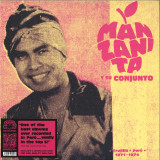
The Peruvian cumbia band Los Diablos Rojos was born within the quincha and adobe walls of Cañete Chico with a proposal very different from what all the musicians of the time were working on: an instrumental tropical music style of their own. Even Enrique Delgado (Los Destellos), Beto Cuesta (Los Ecos) and Berardo Hernandez (Manzanita y su Conjunto), who all found a source of income in música criolla, did not limit themselves to working for hire. They were all crossing the same bridge, the bridge of tropical music. Above all, the sense of renewal was the incentive for this bet. If they wanted to change the paradigm, they would not do it by copying styles they had already heard many times before.
- A1: Intro/Love (Feat Coco Maria)
- A2: Casa Loca (Feat Baldo Verdú)
- A3: The Cheeky One (Feat Coco Maria)
- A4: Cachetón
- A5: Sabrohito (Feat Coco Maria)
- A6: Gwely & Môr (Feat Elan Rhys)
- A7: Vamonos! (Feat Coco Maria)
- A8: El Cañon (Feat Baldo Verdú)
- A9: The Mountains Of The Mind (Feat Coco Maria)
- A10: Padre Tiempo (Feat Luzmira Zerpa)
- B1: El Konto (Feat Coco Maria)
- B2: Esa Tristeza (Feat Nina Miranda &Amp; Little Barrie)
- B3: Bom Dia! (Feat Coco Maria)
- B4: Oh Minha Querida (Feat +2`S)
- B5: A Secret Rendez-Vous (Feat Coco Maria)
- B6: Sempre Amor (Feat Elan Rhys)
- B7: For All The Side Chicos & Chicas (Feat Coco Maria)
- B8: Maybe Man (Feat Silvia Machete)
- B9: Hay Esperanza (Feat Coco Maria)
- B10: She`s In L A. (Feat. Young Gun Silver Fox)
- B11: Todo Chévere (Feat Baldo Verdú, Coco Maria & Don Leisure)
By it's very nature "Radio Chevére", the new album by Rio 18 and their host of guests cannot be categorized simply: at once both a Latin mixtape and a radio show, it's also an internationalist love letter, an offering to the goddess of Tropical Music and all that it encompasses. Ambitious, yes. Foolhardy, possibly. But sincere, committed and FUNKY? Definitely.
With the voice of guest DJ Coco Maria as our guide, "Radio Chévere" takes us on a journey through myriad musical styles and stories. Stopping off at Uruguay, Brazil, Venezuela, Colombia, Mexico, California, New York and countless other sonic destinations via Samba, Salsa, Funk, Cumbia, Joropo, Disco, Psychedelic and Electronic stylings, "Radio Chévere" is also a musical metaphor for migration - a journey from one continent, one life to another.
This album features songs in no less than four languages (Spanish, Portuguese, Welsh and English) and includes collaborations with Brazilian legends the +2's (Moreno Veloso, Kassin and Domenico Lancellotti) on the tender samba ballad, "Oh Minha Querida", transatlantic Yacht Rock gods Young Gun Silver Fox ("She's In LA"), "Sao Paulo's finest" Silvia Machete on the sweaty funk "Maybe Man" and Venezuelan Llanera and Joropo queen Luzmira Zerpa sings "Padre Tiempo", set to an incessant Afro-Venezuelan pulse. Why this torrent of eclectica now? Having recorded three albums in Welsh, predominantly inspired by Brazilian music, Rio 18 founder, Carwyn Ellis had a hard time following 2021's "Yn Rio": "We'd made a concept album with an orchestra. How do you follow that?" he says. "So I retreated to my laboratory, learned as much new music as I could, started learning Spanish too, and ended up writing tunes in a bunch of languages and styles, all of which reflected things I've learned or experienced over the last couple of years."
Since the group's inception in 2018, on the suggestion of Chrissie Hynde when he toured South America as a member of the Pretenders, Carwyn has been on a voyage of musical discovery through the styles of that continent. And in those five years he learnt a lot! But in a radical new move, Carwyn has stepped back from the mic, preferring to focus on writing and producing, handing over the vocal duties to band members Baldo Verdu (Venezuela) and Elan Rhys (Wales) plus a host of collaborators. "They can sing and express what I'm feeling so much better than I can, and both Elan and Baldo bring an authenticity and strength to our songs that surprise and elevate me. Collaborating with so many other inspiring artists on this album has helped us to grow and assimilate more styles - we're halfway through our next album already."
Rio 18 is an internationalist collective with Celtic and Latin roots and love at their core. With eye popping carnivalesque cover art by the brilliant Colombian graphic artist, Yoda, "Radio Chévere" is both timely and timeless.
It is with great pleasure that we announce Mitchum Yacoub's debut album Living High in the Brass Empire_ a showcase in unique stylings of tropical funk, afrobeat, cumbia, and soul; a musical patchwork threaded by a heavy, hypnotic rhythm section and powerfully vibrant horn lines. What sounds like a 12-piece ensemble was actually mostly recorded and performed by Yacoub at his home in San Diego, featuring a few close friends from local groups Sure Fire Soul Ensemble and Boostive. The horn section is comprised of Travis Klein, Bradley Nash, and Wesley Etienne (featuring Todd Simon on "Los Muñequitos"), each with distinguished performances that send the music to higher heights. Nuanced vocalist Divina Jasso lends humanity and introspection throughout the head-nodding soul sounds of "Never Knew", latin dance anthem "Cumbia Divina", and the syncopated funk of "Empire". You'll hear rhythms from Colombia, folkloric percussion of Cuba, interlocking grooves à la Fela Kuti, 70's r&b influence, and something in between it all. Drawing many inspirations into a refreshing and unified record, we think you'll enjoy Living High in the Brass Empire.
After Prince Istari finished the Dub Encounter with Erik Satie, he
immediately set to work on expelling the evil curse of artificial intelligence. While the encounter with Satie was guided by the original
compositions, this album delves deeper into dub science.
The opening track is "Curse Of Machine Learning," a grinding cumbia dub track that sucks you into the curse of machine learning. It's followed by "Artificial Neural Network," arguably the album's most nerve-wracking track, with wild snare rolls colliding with offbeat echoed riddim sections. "Large Language Models" offers a more relaxed, arabesque one-drop riddim with speech synthesis vocals. "Fake Image" closes the first side with a full trombone solo contributed by Eugene Rosebud.
Side B starts with the one-drop killer tune "Haunted By Delusion,"
featuring an organ solo by Prince Istari. Drum and bass in your face.
"Evil Forces," on the other hand, is a fusion of jazz and dub; after the
brass section breakdown, it rolls into a crazy synth solo. Then next „I
Want Your Data" pulls your data into the AI's guts with a vibraphone.
This is maybe the ambitious tune on the record speaking of chord
progressions. The final track sees Eugene Rosebud return with a double trombone solo in "Transhuman Feedback Rock" assisted by a saz cooling the blues pattern with a hookline. Here we have beautifull springreverb and harmonizer dub effects on the snare twirrling around the trombone solos.
All tunes composed, arranged, conducted and engineered by Prince Istari and played by his house band The Virtualistics. Trombone Solos by Eugene Rosebud. Packaged in a nice cover drawn by Markus Schäfer and frequency shift and cut by LXC.
Campo's debut album, released in 2012, was a milestone in the new South American music scene. The brainchild of Juan Campodónico - one of the creators of Bajofondo - combines sophisticated pop, electronica, and South American roots, uniting past and present in a unique way. Neo-cumbia, tango, and candombe shake hands with Britpop, soul, and trip-hop in a timeless album. A place where indie rock intersected with the great Latin bands of the 1950s, fringe genres like cumbia villera were transformed into sophisticated music, tango joined alternative pop, and track music became contemplative and landscaped. Juan Campodónico has a long artistic career (Peyote Asesino, Bajofondo) and extensive experience as an artistic producer on some fundamental records of Uruguayan and South American music (Jorge Drexler, Cuarteto de Nos, No te Va Gustar among others). In 'Campo' is a very heterogeneous group of composers, performers and instrumentalists from different genres and geographical locations (Jorge Drexler, Martín Rivero, Ellen Arkbro, Pablo Bonilla and Verónica Loza, among others). 'Campo' was based on the song format, jumping the limits of the Río de la Plata, immersing himself in rhythms, genres and forms of South American songs from the past and present, seeking the link with pop, rock and electronic music. The album -which received nominations for the American Grammys, the European MTV Awards and the Latin Grammys- broke schemes and prejudices. He brought together opposite worlds such as cumbia and britpop, songwriters and dance music, or bolero and electropop, finding beauty and sophistication in unexpected places.
La Sonora Mazuren is the latest addition to the already rich indie-tropical scene out of Bogotá, Colombia. Deeply rooted in the popular sounds and rhythms of South America, the group draws from cumbia, chicha, guaracha, champeta and other styles mostly from Ecuador, Colombia and Peru.
Far from being revivalists or folklorists, the group combines synthesizers and electric guitars with accordion and percussion to create a style indebted to early pioneers such as Polibio Mayorga or Bogota’s own Eblis Alvarez, of Meridian Brothers fame, who also produced their new album. The result is a psychedelic feast reminiscent of the golden years of tropicalia.
Comes with insert and download coupon.
Imagine a Latin remake of Back to the Future. The mad scientist is Arsenio Rodriguez (the godfather of salsa) and the young student who travels through time with him is Eblis Alvarez (Meridian Brothers). This album can only be described as the perfect soundtrack for that movie that never was.
After the massive buzz generated by his first solo album, Mentallogenic, Alex Figueira got back in the studio to work in a more collective fashion this time, carefully assembling the second album of his largest project to date, Conjunto Papa Upa; a team of 6 musicians, spanning 3 generations of some of the best talent in the Latin and avant-garde scenes.
In an era where tropical music is dominated by purely electronic and rhythmically uniform sounds, the ten songs encompassed in “Fruta Madura” (“Ripe Fruit”) wander through the most diverse tempos, rhythms, and motifs effortlessly. A real breath of fresh air that gracefully incorporates soul, funk, jazz, psychedelia, and electronics into a solid tropical, irresistibly polyrhythmic foundation, without ever succumbing to the many genre clichés.
The distinctive production and catchy songwriting of Figueira shine in a very distinctive light on this second full-length. Living up to his reputation (Miles Cleret, founder of Soundway Records, called him “one of the scene's truly authentic and eccentric producers”), he takes the opportunity to show he’s not afraid to keep walking his own path.
Taking the band for a wild ride through the traditions of Africa, America, and the Caribbean; contrasting them with a ridiculously wide plethora of vintage, contemporary, and futuristic sounds, and pivoting on the exuberant musicality displayed by his musicians; the result leaves no doubt: this album is destined to be considered a future classic of the exciting tropical psychedelic music of the 21st century.
Addressing the most diverse themes in this new collection of songs, things take on a much more mature tone, as the title clearly suggests.
The opening track “El segundo es más sabroso” (“The second one is tastier”) sets the tone in the most assertive way imaginable, with the band boldly declaring, through multiple metaphorical references (laid upon a crazy mix of Dominican merengue, Detroit techno, classic and free jazz, dub, and electro), that the bar will be set higher with this second album.
The remaining compositions touch upon the most diverse subjects, with a fair dose of humor, sarcasm, and postmodern “magic realism”. “El Algoritmo” (The Algorithm) is a parranda-cumbia hybrid (for lack of a specific term) about the omnipresence of technology in our lives. The sophisticated Latin soul of the titling track “Fruta Madura” makes a case for the beauty of the maturity process. Some key philosophical teachings of Marcus Aurelius (the role of causality, the impositions of “the logos” and the importance of self-control) get a twisted cumbia treatment on “Reos del Deseo” (Prisoners of Desire). “No le pongas Coca-Cola” (“Don’t put Coca Cola in it”) shows us the most satirical side of the band, accusing those who mix Coca Cola with Rum of committing "sacrilege", on a powerful base of Dem Bow (the grandfather of Reggaeton), intertwined with touches of soul, salsa, and Cuban comparsa.
"Háblame Claro" (“Talk to me clearly”) is a story of heartbreak that evokes in its first part the spirit of the erotic salsa of the 80s (a subgenre deeply despised by purists), and after an unexpected samba interlude, leads to the hardest salsa of the 70s (a subgenre adored by purists), to end up in the surprising form of pure Afro-Cuban ceremonial music.
“Tu mamá tenía razón” ("Your Mom Was Right") is an attempt to exalt the spirit of the Latin American soap opera in the key of “acid bachata”, to recount a real-life case, witnessed by the band on countless occasions: the partying woman who arrives at the show accompanied by her bitter husband, who obviously does not like to dance. A very cheeky song to talk about the very serious and pertinent topic of female empowerment.
“La misma vaina” (“The same thing”) with its indescribable blend of bantú, candomblé, and Mozambique rhythms with abstract synthesizers, is an ode to adventure in favor of the aversion to taking risks and seeking predictability.
“Amigas picadas” (“Salty friends”) is another humorous song recounting another real-life case witnessed by the band on countless occasions: a love encounter sabotaged by the girlfriend's friends, who all happen to fancy the same guy. A jazzy take on the ancient Dominican rhythm of pambiche (grandfather of merengue), with generous psychedelic touches, resembling the classy late 60s releases of Guadeloupe's legendary producer / label owner Henri Debs.
“Vinimos a hablar” (“We came to talk”) takes sarcasm to the highest level, to ridicule the absurdity (also experienced by the band firsthand) seen in live music venues where people pay a ticket to go and have conversations that could be carried out much better on any bar, where no band is playing. The music alternates between a delicate melody with loose, sparse percussion and a full-on, pumping Angolan semba, with a techno kick drum included; bringing things to an apotheotic grooving finale, where the peculiar swing of Venezuelan calypso from the Callao region is thrown on top of all the precedent elements; closing the album in the most uplifting, “end of the carnival parade” feel.
The artwork is a delicate and impactful oil painting by Colombian artist Kevin Simón Mancera, who has collaborated many times with the label before (“Maracas, tambourines and other hellish things” tape and the Lola’s Dice LP).
What the experts are saying:
“Alex (Figueira) dove into this work with a brutal cohesion between lyrics and synths. Timbre poetry, sound poetry (you name it). And that, superimposed on his always impeccable percussive base, confirms the title of “avant-garde visionary of our beautiful Latin music”".
EBLIS ALVAREZ (MERIDIAN BROTHERS)
“Papa Upa's infectious quirkiness is a balm against boredom. A mature album, but without an expiration date”.
GLADYS PALMERA
“Here there is a lot of strength, drum, cadence and psychedelia, lost dance rhythms, united in an intercontinental Latin/African/and Caribbean journey, a unique winning combination that we could consider the new “Ritmo Figueira”.
DISCODELIC
Conjunto Papa Upa are:
Alex Figueira - Timbales, percussion, vocals.
Gerardo Rosales - Congas, percussion, vocals.
Ramón Mendeville - Bongos, percussion, vocals.
Randy Winterdal - Bass.
Andrew Moreno - Guitar.
Nico Chientarolli - Organ, piano, synths.
All songs written by Alex Figueira.
Arranged and performed by Conjunto Papa Upa.
Recorded, produced, mixed and mastered by Alex Figueira at Heat Too Hot, Amsterdam.
In anticipation of Gitkin's upcoming album in October, Wonderwheel drops a cheeky little 7" with two Latin covers from the man himself. The A-Side finds an instrumental Cumbia cover of the eternal 80s classic by The Human League. Leading with the guitar for the verses, the song chugs along nicely with a faithful interpretation of the original with Simon Moushabeck's accordion leading the chorus. On the flip, Gitkin covers Peru's infamous Grupo Celeste's 1975 classic "Mi Lamento" with friend and collaborator Gabe Case on vocals. Keeping with the Tropical Andean sound of the original, Gitkin's funky, wah wah guitars drive the track set over uptempo, cumbia inspired drums while Case's melodic vocals float on top. Two fun, happy tunes to light up dancefloors this summer!
Air is the central element in Antonina Nowacka's third solo album Sylphine Soporifera. The title names an imaginary species and the land they inhabit, inspired by the unreal desert landscape of Paracas and the undulating tree-less hills of the Outer Hebrides, and comes from the writings of Rudolf Steiner, who describes creatures called Sylphs as the spirits of the air, and the Latin word sopor which means deep sleep.
As with all her releases, Nowacka's other-worldly vocals coming as if from beyond the veil, at once haunting, alien and utterly entrancing. "The voice is the most beautiful and resonating instrument,” she says. “When I sing I feel I create a field in between myself and the air in front of me," she explains. "It is not just that I'm singing – something in the space in front of me is happening, and I merge with this sphere.”
She conjures and is inspired by open environments and infinite landscapes: places full of light and air, manifested here in the sound of ocarinas from Budrio in Italy, whistles from Mexico, simple bamboo flutes from Nepal, alongside tremulous zithers, synthetic Hawaiian sounds from a vintage organ and the uncanny wind instrument presets from a 90s synth.
Nowacka’s first album was informed by vocal sketches made in caves in Indonesia, later recorded at a fortress in Poland; she studied Hindustani music in India with vocalist Shashwati Mandal, fell in love with early Cumbia in Mexico and Peru, and has more recently found inspiration in the landscapes of Italy. Hers is a new New Age soundworld that finds its origins everywhere and nowhere. Sylphine Soporifera gathers these sounds, visions and experiences into an album permeated with a sense of hope and fulfilment, that feels like sitting in an enlivening white beam of afternoon sunlight, as dustmotes swirl in the stillness.
First time reissue of “Quiero…” by Peruvian-Cuban singer and composer Króffer Jiménez, leader of Poppy y sus Pirañas, one of the key figures in Peruvian tropical music.Recorded in 1969 but not released until 1972, this album comprises guarachas and cumbias that were ahead of their time, mostly original compositions. Unfortunately the album went almost unnoticed back in the day, becoming a sought-after collector’s item in recent times. Quintets such as Compay Quinto, Pedro Miguel y sus Maracaibos and Los Totos were the stars of the Peruvian tropical scene at that time, winning over listeners with their powerful rhythm section and fast-paced melodies. In contrast, the dozen guarachas and cumbias on "Quiero..." are slower and more relaxed, where the elegant intonation displays Króffer’s Cuban roots, with the Pirañas contributing during the more festive moments. The cumbia 'Mala mujer' and the guarachas 'Amar en el mar' and 'El sortilegio' were ahead of their time, as the singing style adopted would only become fashionable from 1971 onwards. 180g vinyl.
"To change your mood or mental state - change your Vibration" A fragment from the Kyballion has deeply resonated with the band in recent years. Everything is mental, as Above so Below. BALTHVS deeply believes in these tenets, and their manifestation is through music. Melodies that try to resonate deep within and generate a different type of Vibration.
From the psychedelic experience arises a more balanced lifestyle, and from arduous and uncertain times arises the desire to have inner peace of mind. Music is medicine for the soul and the trio plays this music to wind down, relax, and be more present. It's music from the 21st century, a time when the world has deeply connected to one another via the digital realm, cultures are now free from geographic boundaries, they influence, mesh, and collide with one another. Turkish melodies meet Latin rhythms, from instrumental tunes to Spanish and English lyrics.
The band freely takes from all corners of the world, and it reflects on the global audience they have slowly amassed in the past 4 years. Third Vibration is a celebration of life; a deep respect for the power of music.
"To change your mood or mental state - change your Vibration" A fragment from the Kyballion has deeply resonated with the band in recent years. Everything is mental, as Above so Below. BALTHVS deeply believes in these tenets, and their manifestation is through music. Melodies that try to resonate deep within and generate a different type of Vibration.
From the psychedelic experience arises a more balanced lifestyle, and from arduous and uncertain times arises the desire to have inner peace of mind. Music is medicine for the soul and the trio plays this music to wind down, relax, and be more present. It's music from the 21st century, a time when the world has deeply connected to one another via the digital realm, cultures are now free from geographic boundaries, they influence, mesh, and collide with one another. Turkish melodies meet Latin rhythms, from instrumental tunes to Spanish and English lyrics.
The band freely takes from all corners of the world, and it reflects on the global audience they have slowly amassed in the past 4 years. Third Vibration is a celebration of life; a deep respect for the power of music.
- A1: Deià Dream
- A2: Ọ̀sanyìn (Feat Maikel Alberto Salazar)
- A3: La Mujer Serpiente (Feat Lido Pimienta &Amp; Oliwa)
- A4: Quiero Que Mami (Feat Verito Asprilla)
- A5: Limones (Feat Oliwa, Numu &Amp; Semblanzas Del Rio Guapi)
- B1: Deià Dream Ii
- B2: Selam (Dub)
- B3: Salta La Cuerda (Feat Huaira)
- B4: Song Of The Wind
- B5: Selam (Feat Etsegenet Mekonnen)
- B6: Waves
"We Can Live Together is the first full LP by Earthtones on Wonderwheel. The title is a message, a prayer, and a vision for humanity. It is a reminder that we are in this life together, that love binds us all, and it is only the ideologies and social systems built to prohibit our ability to recognize how close we are that hold us back. We can live, together. The record is based in Folkloric Futurism, a movement that explores the convergence of global folk traditions with technology. Channeling the influence of proto House & Techno pioneers like Mr. Fingers, Kevin Saunderson and Inner City, Earthtones combines analog synthesizers & vintage drum machines with folkloric vocals and instrumentation in a way uniquely his own. It's a celebration of the intersection of past and future, here and there, ancestry and technology. It celebrates themes of spirituality, feminism, love, and most of all, peace. Highlights include "Ọ̀sanyìn", a prayer to the Orisha Ossain, with Maikel Alberto Salazar of rumba super-group Obbatuké on vocals. Recorded in Santiago De Cuba, the track is evocative of Mala's classic "Mala In Cuba" album that broke down barriers between electronic music & traditional music. "La Mujer Serpiente", having seen a sellout 7" last year features Polaris prize winning artist Lido Pimienta-behind the live cumbia rhythms, bass synths, analog keys, 808 drums & guitars, the vision of this track is one of uplifting womxn and femmes everywhere. Ancestral and contemporary Colombian voices are present on the mid-tempo dancefloor track that is the single "Limones" with Semblanzas Del Rio Guapi, Oliwa & the chugging analog rap soundscapes of "Quiero Que Mami" with Verito Asprilla . The album also touches into ambient moments ("Song of the Wind" , Waves") – inspired by friends Carlos Nino, Matthew David, Colloboh and the vibrant West Coast environmental sound movement. credits
g 07: Selam (Dub) [feat. Etsegenet Mekonnen]
Krautige Cumbia der Zukunft trifft auf unverzerrte Gitarre! Bewusstseinserweiternd! Der in Bogotá lebende kolumbianische Komponist Eblis Alvarez, bekannt als Meridian Brothers, kreiert seit 1998 eine einzigartige Mischung aus psychedelischen Klängen. Mit seinem neuesten Projekt "Mi Latinoamérica Sufre" erkundet Alvarez das ungenutzte Potenzial der E-Gitarre in einem tropischen Latin-Kontext. Inspiriert von afrikanischen Highlife- und Soukous-Traditionen schafft Alvarez ein furchtloses Klangexperiment voller Erfindungsreichtum, Verspieltheit und Emotionen. Im Gegensatz zu typischen tropischen Gitarrenalben verzichtet dieses Album auf Verzerrung und Klischees und setzt stattdessen auf einen reinen, sauberen Ansatz. Mit komplizierten Kompositionen, die Cumbia, Champeta, Soukous, brasilianische Tropicalia und psychedelischen Underground-Rock mischen, huldigt Alvarez der goldenen Ära der kongolesischen Rumba, des ghanaischen Highlife und des nigerianischen Afrobeat. "Mi Latinoamérica Sufre" ist ein Egotrip, der eine humorvolle und zugleich introspektive Reise der Selbstfindung und Identität darstellt. Die Hauptfigur, Junior Maximiliano der Dritte, navigiert mit Hilfe psychedelischer Substanzen, politischer Philosophie und Folklore durch die Komplexität der Selbstfindung. Während er sich mit Nostalgie, Paranoia und geteiltem Leid auseinandersetzt, stellt Alvarez sein stimmliches Können unter Beweis und schafft ein akustisches Theater des Geistes. Begleitet von visuellen Erzählungen des kolumbianischen Künstlers Mateo Rivano, porträtiert das Album verschiedene psychologische Zustände von Desorientierung, Selbstmitleid, Erleuchtung und Optimismus. "Mi Latinoamérica Sufre" entpuppt sich als würdige und innovative Ergänzung der Konzeptalbum-Tradition und bietet eine unverwechselbare Mischung aus bittersüßen Aromen, die von Latinoamérica inspiriert sind.
Never before had the lyrics of Peruvian cumbia been able to touch the reality of migrants from the countryside living in the capital. In 1974, Grupo Celeste, under the direction of Víctor Casahuamán Bendezú, recorded 'En el campo', a first single that not only broke sales records, but also brought thousands of people into contact with their homeland. The band not only wove the nets of that urgent, necessary reconnection, but also gave birth to one of the most relevant popular singers in the history of Peru: Lorenzo Palacios Quispe 'Chacalón'. The year was 1974. Until then, only Los Destellos had recorded a non-instrumental cumbia song, 'Elsa', in 1970. Víctor Casahuamán Bendezú, a musician, creator and the composer behind Grupo Celeste understood that in order to continue the legacy of Peruvian bands from the sixties like Los Demonios de Corocuchay, Los Yungas and Los Demonios del Mantaro, it was necessary to address in his lyrics a special and urgent topic: the feeling of displacement from the homeland and the vicissitudes of the migrant sector. The experiences of those who traveled from the provinces to the capital in search of opportunities they could not find in their towns of origin; the process of settling and adapting in a foreign city; the challenges derived from this change of environment; the recognition of a different culture and the creation of a space they understood as their own were the stories that had to be told in the songs. This is why Grupo Celeste was the backbone of cumbia in Peru: it established a common story that thousands of migrants would identify with. From this idea and impetus was born 'En el campo', the band's first single.
First career spanning compilation on vinyl, covering studio albums, singles and unreleased tracks (2009-2023) by the acclaimed Peruvian instro band, Los Protones. A collection of intense recordings - mostly originals - which combine surf music, psych, garage, and tropical & Andean flavors. DESCRIPTION The Protones began their strange journey in Lima, Peru, in early 2007. The band's roots were as a side project for several members of Manganzoides, a well-remembered Peruvian garage rock band, but they quickly consolidated their own instrumental style that, to this day, combines musical genres from the 60s such as psychedelia, surf music and garage rock, sometimes paying tribute to Peruvian rhythms such as chicha and Amazonian cumbia. They are surely the only band in the world that has shared stages with Los Shapis and the New York Dolls, although not on the same night... Over the course of two decades they have played countless concerts, including visits to Europe and other Latin American countries. The music on this compilation comes from their four, full-length studio albums: "Los Protones", "Hijas del Diablo", "Maravilla!" and "Misión: OA4", in addition to the previous CD compilation "20 Monstruos! 2007-2015" and "Double Feature", a split CD with the Brazilian band Os Brutus. The group's current lineup includes Gonzaleo (guitar), Tito (drums), Jimi (keyboards), Andrés (bass) and Lucía (violin). Dance floor oriented tropical music at its best!
Malphino is a mysterious band from an imaginative tropical island of the same name that plays Cumbia and a heady mix of exotic sounds. The musicians of Malphino reinterpret the traditional banda, playing organ, accordion, tuba, and an array of percussion and rhythms from all corners of the world. Malphino has an unique style and is a gathering of nationalities, hailing from Japan, Malaysia, Colombia, France, UK and the Philippines. This central idea of multiculturalism is the foundation for Malphino’s conceptual music project.
For the fourth time now Jaqee introduces herself to the World with her impressive voice and her unique attitude. Born in Kampala, the Capital of Uganda, she began her vagabond like life the moment she was born. During her childhood, she travelled the rural areas of her home country with her parents. This is where she collected her first impressions of the life as a nomad. From birth on, wandering the earth became a part of her destiny. In the early nineties she undertook a huge step and immigrated to Sweden. The City of Gothenburg would become her adopted home from where she was able to access all the different destinies and directions, which were on offer to her. Through all the borders Jaqee crossed, music has always been her steady companion whereas it never was a stereotype thing that let her get down with any special genre, than more like a special feeling. “To do what I want in a particular moment is my motivation. I like to express myself in all kind of sounds.” So above all, she became a true nomad in the world of music. After several successful co-operations with numerous artists, in 2005 Jaqee made an impact with her debut album “Blaqalixious”, which was mainly a Soul and R&B album. “That was my direct contact to the music that a rural community in the Diaspora plays” she explains. But it did not end up there because a nomad like Jaqee does not settle anywhere. After further creative and fruitful collaborations, Jaqee released her second long player “Nouvelle d´ amour” in 2007. This time, the sound was more of a rocking, bluesy vibe. It seemed to be the total opposite to her debut album but for Jaqee it was only the next step on her path in the circle of life. “Everything is possible as long as it is real. I never wonder about things like genre as long as the vibe fits.” One step further on, she encountered the songs of Billie Holiday, which lead to the album “A letter to Billie” recorded together with Bohuslänbigband, a lovely homage to the great American Jazz Singer. Both of her first two albums each received a Swedish Grammy nomination and several appearances in the Swedish national television increased her standing as a passionate and soulful Singer. So Teka, producer and creator of many successful riddims for his co-found German label, Rootdown Records considered her to be part of his new project “Koala Desperados“, which link Caribbean vibes like Cumbia to Reggae, and while working on it a totally new idea was born. Jaqee and Teka decided to combine both their talents into one album. The results of which you can now hear on “Kokoo Girl” a refreshing mix of Old School Reggae sounds from the seventies combined with up-to-date Beats, electronic twists and turns and of course the amazing voice of Jaqee. For her, this means that she has achieved some of her ambitions. “I grew up with African Gospel, in sad and turbulent environment, so for me, this means I grasp and totally understand the reggae and its non ending struggle for the common man.” No sooner said than done and “Kokoo Girl” will become Jaqee’s fourth and newest release. All the paths she followed, countries she crossed and influences she absorbed are a part of this album. She sings with the freedom of spirit of the travelling people. The word “Kokoo” is the only memory that remains everlasting. It is just a word but its impact is so huge that Jaqee does not really like to explain it. “It implies irony and seriousness as well as sarcasm and fun.” It is more than a gimmick. “Kokoo” is a very special feeling and a clear view of the world from an artist who has seen more of it than all the people that have settled down.
On their latest album, Sonido Cosmico, Hermanos Gutiérrez embark on a sonic exploration that defies the conventional boundaries of instrumental music. The collection is a richly textured tapestry, interwoven with the intricate threads of Latin rhythms and ephemeral atmospherics: each track a vignette, a carefully crafted narrative without words, where the brothers' transcendent guitars speak in a language all their own.
There is a subtle sophistication in the way Hermanos Gutiérrez fuses the elemental with the experimental. The album resonates with the echoes of their Latin musical heritage, yet it is undeniably contemporary in its execution, both nuanced and expansive.
Sonido Cosmico stands as a reflective mirror to the band's evolving artistry, united by music across age and geographical divides: a sound mosaic as celestial as its title, an expression of a band that has found its voice in the vast universe of modern instrumental music.
DJ Support: Don Letts (6 Music), Piet Blank Blank & Jones / Dj Ease Nightmares On Wax / Macca Nts Radio / Coyote / Mike Salta Music For Dreams / Pete Gooding / Layne Fox 40 Thieves / Chris Coco / Richard Dorfmeister Kruder & Dorfmeister / Bill Brewster / Simon Mills [Bent. Plus Loads More.
DJ Feedback:
Lovely laid-back vibes. Excellent! - Francois K [NYC, USA]
Ay what a beauty! Takes you away from the madness for a moment. - Macca (NTS)
Following on from Los Rayos Del Sol (2021) & the follow up Los Rayos In Dub (2022) NuNorthern Soul presents ‘Moonbeams’ by Ibiza based producer, per-cussionist and sunset selector, George Solar.
Inspired by nocturnal moods and illuminated by the moon in all its phases, this collection follows the vibrations of 'Los Rayos Del Sol.' It's a journey into night-time peace and harmony, embracing the moonlit atmosphere.
MEDIA LUNA (feat. Ken Fan)
Opening with angelic dubby downtempo, this track translated is 'Half Moon,' sets the tone for the night.
MOONBEAMS (feat. Ken Fan)
Featuring love poet JEN, 'Moonbeams' captures the rise of the moon and the message of love.
COUNTERMOON (feat. Ken Fan)
Originally a slower cumbia demo, this track evolved into a retro dance piece with a minimalistic touch. Reflecting the off-center vibe of lunar forces.
LUNATICOTINA (feat. Ken Fan)
A tribute to the global beats scene, this ritual tune incorporates grooves from all continents, dedicated to Ibiza's 'global beats' oasis LAYLAH venue.
O LUAR
Influenced by Samba vibes and the Brazilian approach to moonlight, this track combines Solar dub and cosmic stardust.
MOONBEAMS reprise (for KS)
A tribute to Klaus Schulze, a secret Solar Moon band member, this reprise is a spontaneous improvisation recorded in memory of the spiritual godfather.
Repress!
StarWax magazine celebrates its fifteenth year, it is in the extension of the anniversary event that the vinyl Wild Star Wax 15 Years Edition in Partnership with Overdrive is born!
Curated and Seòected by Dj Coshmar for the most famous STARWAX magazine a powerful dancefloor combo for djs, diggers and clubbing addicted.
Available in stores from September 2022, the tracklist contains six tracks of cumbia, disco, creole funk, bass music and hip-hop that are available exclusively in this vinyl format, at exception of "An Tèt Aw" the last title of side A already available on the Lp of DjeuhDjoah &
Lieutenant
- A1: La Marimba Del Monte - Ft Absalon & Afropacífico
- A2: Piel De Piedra
- A3: Pedacito De Coco - Ft La Perla
- A4: Negra Soy - Ft Mónica Castillo & Mary Grueso
- A5: Guajiralta
- B1: Recógela - Ft La Perla & Troy Berkley
- B2: Viche, Tumbacatre Y Arrechón (Version) - Ft Absalón & Afropacífico
- B3: La Gaita De Las Aves
- B4: El Mexicano
- B5: Mariposafro
LTD 260 copies pressed / printed sleeves / Sealed
Jungle master Krak In Dub’s new album Catleya is a vibrant hommage to Colombia and its incredibly diverse musical culture. Entirely recorded in Bogotá with the who’s who of today’s Colombian music scene, the album casts a brand new light on the fusion of beats and Latin-American traditional rhythms and instruments, blending reggae, hip-hop, breaks and house with cumbia , afrobeat, ska, and bullerengue.
Standing out on this sun-soaked yet heavy-on-the-beats-and-bass adventure is the appearance of female modern folk trio La Perla, the Afro-Colombian combo Absalon & Afropacifico, and Bermudian singer Troy Berkley.
VOL. 2[16,39 €]
More astonishing new music from Jason Boardman's BiD imprint.
KlangKollektor is a solo project by Lars Fischer (the drummer with the Psychedelic Cumbia band Trak Trak from Nurnberg.)
The clips here only tell half the story, these are meticulously evolving and utterly absorbing pieces.
A stellar collection of seven dubwise tracks over 4 sides with a Techno and Balearic influence.
- A1: Los Saicos– Demolición
- A2: Jean Paul 'El Troglodita'– Tema Del Troglodita
- A3: Gloria Travesí– Pobre Adan
- A4: Los Cuatro Brillantes– Vuelve A Mi Barquita
- A5: Claudio Fabbri– Fiesta De Verano
- A6: Los Saicos– Te Amo (Instrumental)
- A7: Golden Boys (11)– No Resisto Más
- B1: Los Peruvian Brass– Virgines Del Sol
- B2: Chano Scotty Y Su Combo Latino– Prende La Vela
- B3: Chano Scotty Y Su Combo Latino– Psicosis
- B4: Toño Y Sus Sicodelicos– Mr Boogaloo
- B5: Los Guajiros Del Ritmo– El Fresco
- B6: Alicia Estrada– Yolanda
- B7: Toño Y Sus Sicodelicos– El Guayacol
Disperú is the first independent record label in Peru and South America that was founded and run by a woman. In the space of five years Rebeca Llave turned not only Disperú into a successful company but also transformed it into an amplifier and showcase for unique Peruvian popular music projects including the raw, wild and visceral sound of Los Saicos, 60s punk pioneers. This compilation comprises 14 amazing tracks, ranging from cumbia or boogaloo to beat and garage, to celebrate the music legacy of this unique pioneer woman. Disperú was founded at a key moment for Peruvian popular music. In 1965 young Peruvians were gaining prominence in society and the entertainment industry. The hangover of the 'new wave', with its balladeers, persisted on the radio and television, but rock bands were also emerging, inspired by what was happening musically in Liverpool and on the beaches of California. Guided by her ability to spot talent and target what she perceived as commercial prospects, Rebeca signed up an impressive lineup of artists. Several of which would move on to bigger labels, after 'the girl with the charming smile' had set them on the recording road to fame. Besides gathering young rockers (Los Saicos, Jean Paul El Troglodita_) and new wave bands (Los 4 Brillantes, Golden Boys_) under its umbrella, Disperú also ventured into coastal and Andean music from Peru and tropical music (Chano Scotty y su Combo Latino, Toño y sus Sicodélicos_).
- A1: Honkaya - Boat Rowing Song
- A2: Etukuma Kara - Dance Practice On Ice
- A3: Uekap - Greeting Song
- A4: Cikap - Dance For The Crane
- A5: Sonkayno - Game Song
- A6: Haw Sa - King Of Round Singing
- A7: Hetono He Karakara - Sake Ritual
- A8: Yaykatekara - Wedding Song
- A9: Tacuro - Birds
- B1: Sikata Kuykuy - Snow Falling From A Tree
- B2: Horippa - Dance Song
- B3: Hunpe Yan Na - A Whale Ashore
- B4: Hunpe Pa Wa - From The Whale Head
- B5: Pon Repun Kamuy - Little Orca Sea God
- B6: Orouru Roahun - Lullaby
- B7: Kanerenren - Bear Ceremony Song
Marewrew (pronounced: Ma-leoo-leoo / mɑleːul̯ eːu)̯ is a female vocal group that sings traditional Ainu songs. The music of the long-suppressed people from northern Japan has been a particular focus of Pingipung's output in recent years, together with Oki Kano who recorded and produced many Ainu artists. Following various re-releases by Umeko Ando, the late grande dame of traditional Ainu music, the spotlight is now on the a cappella music of Marewrew, which by the way means ‘butterfly’ in Ainu. Attentive listeners will recognise the voices, as some of the band have already performed as backing singers on recordings by Umeko Ando. Their a cappella versions of traditional Ainu music shed a whole new light on the fascinating songs that have been passed down through generations exclusively through song. 'Ukouk' means 'round singing', which refers to the form in which Marewrew perform and record. Many of the songs are set as tightly interwoven canons: one starts, the others join in, but slightly out of phase: Almost like dub echoes, except that they are sung and not created in post-production. The short songs sometimes unfold into a wondrous trance ('Sikata Kuykuy', 'Honkaya') that seems to spin round and round - if singing can actually dance, then this is how. Nature sounds and woodpeckers can be heard ('Hawsa’), and there is a funny miniature in which the ladies imitate birdsong ('Takuro'). Things get hypnotic with an evocative song about stranded whales ('Hunpe Yan Na’) or an ode to the Orca as ‘Little Sea God’ (‘Pon Repun Kamuy’). The album culminates in unexpected pop ('Yaykatekara') or cumbia moments ('Kanerenren') with a band line-up including percussions and Oki Kano on the famous Tonkori harp. Marewrew are Rekpo, Hisae and Mayunkiki. Rim-Rim was a member of the group until 2022. Mayunkiki reflects on the ambivalence of performing traditional music as a contemporary band: "When we first started performing, we all thought we had to perform in an Ainu way. But over time we have become more and more open to new ways of singing. I think if our way of singing is seen as the only, correct way of our tradition, then it won't spread, it's not alive. We like it when it's traditional, but it changes, just like our voices have changed over time.” * 'Ukouk' is a selection of Marewrew's work from the last 13 years, compiled from CD releases by Pingipung's Andi Otto. Oki Kano has contributed unreleased material and added new versions of the songs which had only been released in Japan. The album has been remastered by Kassian Troyer and is now available on LP for the first time.
You may ask yourself what lies beyond the cumbia? What psychedelic permeations reveal themselves in the breaks of the modern day tropical wave? La Banda Chuska's debut single on Names You Can Trust provides a glimpse into the broad benchmarks of this new noise and language, channeling and surfing through a barrel of rip-roaring guitar licks to create something decidedly distinct and du jour at the same time. Just imagine if the B-52s got trapped in some sort of demented Pacific-Peruvian time warp and were forced to shred their way back into existence, bongos in tow. Come along for this excellent adventure and experience for yourself, the tropical waviness of La Banda Chuska's colorful crush.
Little Beat More is proud to present you a two-track EP by Turist, a Vienna based psychedelic Dembow project, founded to combine the energy of a live band with the tightness of an overdub session. ?Turist made it their mission to revive handmade music from the 60's and 70's aiming for the dancefloors of today!
The two tracks demonstrate how they interlace heavy basslines, colorfully echoing guitars and driving drums, drawing inspirations spanning from Ghanian highlife to Peruvian cumbia.
“Skeet”, on Side A, is the band’s manifesto with their special blend of Caribbean dance rhythms and Californian surf music psychedelia. Side B's "Ez Up" is a straightforward champeta song, the Afro-Colombian style that fuses sweet soukous guitar lines with uplifting soca rhythms, making you want to immediately look for the nearest Pico Soundsystem.
Set off on a rhythmic journey following Turist in their musical nomadism with us!
Little Beat More is proud to present you a two-track EP by Turist, a Vienna based psychedelic Dembow project, founded to combine the energy of a live band with the tightness of an overdub session. ?Turist made it their mission to revive handmade music from the 60's and 70's aiming for the dancefloors of today!
The two tracks demonstrate how they interlace heavy basslines, colorfully echoing guitars and driving drums, drawing inspirations spanning from Ghanian highlife to Peruvian cumbia.
“Skeet”, on Side A, is the band’s manifesto with their special blend of Caribbean dance rhythms and Californian surf music psychedelia. Side B's "Ez Up" is a straightforward champeta song, the Afro-Colombian style that fuses sweet soukous guitar lines with uplifting soca rhythms, making you want to immediately look for the nearest Pico Soundsystem.
Set off on a rhythmic journey following Turist in their musical nomadism with us!
Malegra, Reyna Tropical's long-anticipated debut full-length album, is at once a vibrant arrival and an electrifying bridge. The album is a contemporary celebration and continuation of wide-reaching cultural traditions - from Congolese, Peruvian, and cumbia rhythms to revolutionary artists like lesbian Mexican guitarist-singer Chavela Vargas - these influences meld and are remixed through the distinctive lens of trailblazing guitarist and songwriter Fabi Reyna. Traversing themes including queer love, feminine sensuality, and the transformative power of intentional relations to the earth, Malegría spotlights narratives often pushed to the margins and offers them a sonic homeland. The portmanteau, born from a 1998 Manu Chao song by the same name, is akin to bittersweet and blends the Spanish "mal" which means "bad" and "alegria" which means "happiness." Malegria marks Reyna Tropical's return to centering creative joy and movement through music. Whether enjoyed during listening parties or infectious live sets, the music will move listeners and irresistibly command a jump - into action in protection of the land, into the arms of a crush, into your own power and fearlessness, into steady body rolls along to the beat. Malegria offers us all a chance to witness history in the making.
Hit La Rosa are the heirs of the psychedelic cumbia of Los Mirlos and Los Destellos. The band explores the many facets of Peruvian cumbia music, infusing it with pop music, folklore, jazz and dancehall to produce its distinctive grooves and hooks. “Ceres Entrópicos” it’s a collage of the landscapes and rhythms of Peru, product of sound exploration and free composition. This special edition of the original album has some remarkable additions like ‘El Pongo’, their single with the legendary amazonian group Los Mirlos and the remixes of the outstanding Latin producers El Remolón (Ar) and Ballcap (Mx). The band's precise-yet-dreamlike music and punk sensibility all come together to make music that explores life's shadowy sides. They are one of the Peruvian bands with the biggest international growth and one of the few with a Tiny Desk Session. The band is inspired by the sound of Peruvian Cumbia roots and also explores the folklore of other cultures around the world. Their experimentation is wrapped with a contemporary sound and psychedelic vibe that blends into a particular and unique harmony. The band hit Lima's underground scene in 2014 and released their first studio album in 2017 called "Hit La Rosa y Su Gran Unidad Tropical". In 2021 they released “Ceres Entrópicos”, their secondstudio album (digital only). From the beginning until now they have been part of the biggest festivals in Peru, the rest of Latin America, USA and Europe. “Ceres Entrópicos” it’s a collage of the landscapes and rhythms of Peru, product of sound exploration and free composition. First time vinyl edition
Mesmerizing and exuberant Argentinian La Yegros, probably the most magnetic artist on the South American continent, is back with a new album!
The undisputed Queen of "Nu Cumbia" has not rested on her laurels. Surrounded by the same accomplices who have supported her for the last ten years, but eager to renew herself, she has set about recording her fourth album, which stands out from her discography. Although her personal folklore is still rooted in South American folklore, La Yegros is now absorbing contemporary, global music, while tackling intimate, often melancholy and even painful subjects, which she overcomes with the same resilience that drives her in concert. Nothing stands in the way of this Argentinian whirlwind, all the more fascinating for the fact that personal considerations are now surfacing beneath the veneer of the party atmosphere she sets alight.
La Yegros returned to the stage in 2022 to celebrate the 10th anniversary of Viene de Mí, her single hit from the self-titled album, released in 2012 in Argentina and then worldwide in 2013, which catapulted her to international fame. We then discovered a singer who had grown up in the traditions of her country. Her parents come from Misiones, a province bordering Brazil and Paraguay, where balls are filled with the sounds of chamamé (a mix of polka and Guaraní music), Carnavalito (Andean folklore) and Colombian Cumbia. But she herself is a native of Buenos Aires, whose nights are enlivened by the bass of Dancehall and electronic music.
These influences have merged in two further successful albums, Magnetismo (2016) and Suelta (2019), followed by high voltage tours during which La Yegros has been able to display her generous nature, inexhaustible energy, exuberant personality and infectious enthusiasm.
To record her new album entitled 'HAZ', La Yegros has put her faith in the same team that has worked with her since Viene de Mí. On one hand, producer Gaby Kerpel (also known as King Coya), a pioneer of synthetic experimentation applied to traditional music, who has remained her faithful accomplice for over twenty years. On the other hand, composer Daniel Martín, who knows how to come up with melodies to dream about and hymns to sing along to. Inseparable and complementary, the trio continues to concoct this mesmerizing mixture where acoustic instruments meet samples and the rolling of machines. But the new productions don't rely on a tried and tested formula. Generally co-produced between France and Argentina, they break away from over-defined genres. La Yegros knits together new rhythms and incorporates sounds that are unheard of in her country, derived from the latest urban trends, as well as echoes of reggae and funk. As for the lyrics, signed alternately by the trio, they are embodied by La Yegros whose charismatic voice questions a period of her life tossed by waves of love and lovelessness, joy and sorrow, euphoria and anguish, indulgence and resentment.
The album is open to a wealth of musical styles. You'll hear funk guitar and Andean flutes, melancholy accordion and rolling drums, Tuareg blues enhanced by brass, house and electro Cumbia loops, and the bassoons of a chamber orchestra. The folklore 2.0 of La Yegros, nourished by its colorful inspiration, at times tender or exalted, has been imagined as a hymn to love and the contradictory feelings that come with it. As always, it has also been conceived with the stage in mind. Hatching in a storm of overturned emotions, the album is all the more explosive for the strength of the live show that accompanies it. In addition to the usual line-up of guitar, accordion and percussion, a musician handles synthesizers and machines to boost the electronic turboshaft. In any case, you can count on the singer to assert her increasingly clear-cut character with each new project. And, above all, she won't give up. L.a Yegros is back and her batteries are fully charged.
- Pedro Laya - Navidad Negra
- Buddy Ace - Screaming Please
- Elena Madera Pu-Chun-Ga
- Muddy Waters - Ebony Boogie
- Tamps Red - Since Baby's Been Gone
- Noro Morales - Mississippi Mambo
- Sylvestre Mendes - Malambo
- Katherine Durham - Congo Moundong
- The Sultans - Toss In My Sleep
- Machito - Guajeo
- King Eric - Big Bamboo
- Lina De Lima - Cafe Cafe Cafeecito
- Billy Mure - Misirlou
- Joe Swift - That's Your Last Boogie
Voodoo Mambosis And Other Tropical Diseases ist der 2. Teil einer neuen Serie auf Stag-O-Lee. Vier Volumen sind geplant. Die Original Schallplatten stammen aus dem Fundus von unserem geschätzten Duke Jens-O-Matic, seit Jahrzehnten als Grafiker, international gefeierter DJ, Sammler und Jäger unterwegs. Schon damals, als wir Stag-O-Lee das erste Leben einhauchten, war Jens-O-Matic dabei und lieferte vier Volumen der wundervollen Jim Jam Gems 10" Serie ab. Jeweils stilistisch in sich geschlossen. Aktuell arbeitet er an weiteren Jim Jam Gems Volumen, tut sich aber mit den Linernotes schwer, weil, "man hat ja einen pädagogischen Auftrag!". Nun zu dem vorliegenden Tonträger: Was macht ein Freund der obskuren 7", wenn er schon alles im Bereich Rhythm & Blues usw. hat? Er sucht sich weitere Betätigungsfelder. Andere Länder, andere Musik, andere Einflüße. So auch unser Jens-O-Matic. Eine kleine Weltreise hat er für Voodoo Mambosis unternommen, seine neue Liebe den Cumbia einfließen lassen, eine Prise Voodoo drunter gemischt, einige alte Bluesheroen reaktiviert, dazu etwas Exotica - die schadet nie. Die große Kunst ist nun, diese auf Papier disparaten Elemente so zu verbinden, dass etwas einzigartiges, durchweg spannendes entsteht. Voodoo Mambosis And Other Tropical Diseases ist das beste Beispiel dafür! Das Cover, ebenfalls designt von Jens-O-Matic, ist eine Hommage an die wegweisende 84er Compilation Rockabilly Psychosis and the Garage Disease!
Original Son del Barrio, from Monterrey; presenting their first album Tropical Gueto. A trip through different neighbourhoods, with a collection of sounds ranging from Digital Cumbia and Hip-hop to Reggae and Tropical bass. Created as a collaboration between Mexico and Germany (featuring founding member and singer Angel Perez, and Dj and producer Andres Digital), this tropical experiment begins with a series of concerts in Rome, Amsterdam and Paris. Plans are laid for the co-production of Tropical Gueto in said tour; and the resulting efforts saw the participation of Indepe Roots, Bianca Ciocca, Moska Hernandez, Joyce Musicolor and Feo Feo Records; as well as Gran Om, on art duties. Tropical Gueto sets the bar high for Digital Cumbia, setting a clear benchmark for the genre. Angel Perez (aka Son del Barrio) lends his voice to the streets and the “barrio” culture of Monterrey, in the expressive language of his own lyrics and compositions; through the sensitivity and technical ingenuity of producer and Dj Andres Digital (aka Jaky Tuff).
Für Maria Raquel gibt es keine Angst, wenn es darum geht, ihrer Leidenschaft zu folgen. Ob sie nun von Kolumbien nach New York zieht, um ihrem Traum zu folgen, oder ob sie mit den Größen der lateinamerikanischen Musik auf der Bühne steht, Maria kennt keine Bedenken. Auf ihrem Debütalbum 'Mucha Mujer' taucht Maria kopfüber in die klassischen Klänge von Boleros und Cumbias ein und bringt ihre rauchige Altstimme inmitten eines 16-köpfigen Live-Orchesters aus Perkussion, Streichern, Bläsern, Bass und Gitarre zur Geltung. Das Album besteht ausschließlich aus Eigenkompositionen und wurde auf analogem Band aufgenommen. Es erinnert an klassische Aufnahmen von Künstlern wie Omara Portuondo, Celia Cruz und La Lupe, doch Maria Raquel haucht diesen klassischen Genres neues Leben ein - die eindringliche Sehnsucht der Boleros kontrastiert mit der pulsierenden Beharrlichkeit der Cumbia. Mit einigen der besten Latin-Musiker New Yorks wie Reuben Rodriguez (Tito Puente), Marcos Lopez (Marc Anthony) und Ivan Renta (Eddie Palmieri), arrangiert und produziert von Mike Eckroth (Orquesta Akokán) und Jacob Plasse (Los Hacheros), stellt Mucha Mujer der Welt ein fesselndes neues Talent vor.
Conjunto Media Luna invites Turbo Sonidero to remix one of their most recent songs: "Noches de Media Luna," which also serves as the title for the album it is a part of.
While it is also a Cumbia song, it originates from another contemporary branch of this genre: the tropicanibalistic sound of Bogota´. These two styles blend in a powerful Kumbiero track that is perfect for dance floors around the world where cumbia has established its unique hypnotic vibe.
Credits:
Prod. by Conjunto Media Luna
Remixed by Turbo Sonidero
Artwork by Michael Boulton
Mastered in 2023 by Simone Squillario
Made with by Little Beat More 2023
Conjunto Media Luna invites Turbo Sonidero to remix one of their most recent songs: "Noches de Media Luna," which also serves as the title for the album it is a part of.
While it is also a Cumbia song, it originates from another contemporary branch of this genre: the tropicanibalistic sound of Bogota´. These two styles blend in a powerful Kumbiero track that is perfect for dance floors around the world where cumbia has established its unique hypnotic vibe.
Credits:
Prod. by Conjunto Media Luna
Remixed by Turbo Sonidero
Artwork by Michael Boulton
Mastered in 2023 by Simone Squillario
Made with by Little Beat More 2023
Purple Clear Vinyl[12,82 €]
Take part in the sound of Bogota's eclectic cumbia scene that permeates the ritual sonido of this new 7" Vinyl by Conjunto Media Luna, out now on Little Beat More!
Enter the labyrinth that transcends the danceable and psychedelic, guided by the Colombian accordion and ecstatic percussion of their slow-pitched beat.
The 7" includes 2 songs taken from the debut album "Noches de media luna", with the iconic "Conjunto Media Luna" and "Perdi´ mis temores" featuring colombian rappers N. Harden & Mismo Perro!
Credits:
Prod. by Conjunto Media Luna
Artwork by Michael Boulton
Made with by Little Beat More 2024
Black Vinyl[11,72 €]
Purple Clear Vinyl
Take part in the sound of Bogota's eclectic cumbia scene that permeates the ritual sonido of this new 7" Vinyl by Conjunto Media Luna, out now on Little Beat More!
Enter the labyrinth that transcends the danceable and psychedelic, guided by the Colombian accordion and ecstatic percussion of their slow-pitched beat.
The 7" includes 2 songs taken from the debut album "Noches de media luna", with the iconic "Conjunto Media Luna" and "Perdi´ mis temores" featuring colombian rappers N. Harden & Mismo Perro!
Credits:
Prod. by Conjunto Media Luna
Artwork by Michael Boulton
Made with by Little Beat More 2024
Die Crystal Fighters melden sich mit ihrem fünften Album „LIGHT+“ zurück! Das Konzept hinter „LIGHT+“ war einfach: Eine Neu-Definition der Crystal Fighters, indem sie zu ihren Grundwerten zurückkehren. Daher ist ihr neues Album voller Ideen – von Rave-Workouts bis hin zu tropischem Pop, von Anklängen an kolumbianischen Cumbia bis hin zu köstlichen Popmelodien. „Mehr Licht. Mehr Positivität. Mehr Klarheit. Wir alle brauchen mehr Hoffnung in unserem Leben.“ Crystal Fighters sind wie ein Lichtstrahl in der Dunkelheit – bald geht die Sonne auf und die Party kann beginnen. Passend dazu erscheint das Album auf „Glow In The Dark“ Vinyl und als CD!
For the past few years we’ve been mesmerized by Elijah Minnelli’s output on his own Breadminster County Council label… a handful of hand-crafted 7”s that live at the foggy intersection of dub, outsider folk, and various strands of Eastern European and South/Central American musics. It now seems inevitable that he would join the ZamZam family.
Firmly rooted in dub through its mammoth bassline, ‘Gradually’ is a shaggy, unhurried tune framed by melancholy, almost grieving squeezebox and gorgeous ensemble percussion that reverently recalls early cumbias. The tune is unique for Elijah in that it features fully-sung vocals. Themes of loss, despair, tragedy and coping circle and loop, ironically held in a musical matrix that spirals in deliberate repetion.
In ‘Gradually Verzion’ the introduction of a minimal melody and long echo trails signal a dramatic shift, going full dubwise steppers without compromising its warm center. Elijah holds back the wheezy melodics, deftly forwarding the percussion in time-honored echo chamber mode.
Coltrane, Shorter, Hubbard, Davis & Perkins from a Latin perspective! The Mantecas represent one of the finest concentrations of experience and talent in Latin and Jazz music ever to be based in the UK. A pure uplifting Latin Jazz music celebration. NOT-TO-BE-MISSED!! Recorded at different locations in London during 2022/23. Mixed at Abbey Road Studios in March 2023. The Mantecas (formerly known as "Manteca") is an eight piece, London-based, Latin Jazz, Soul and Boogaloo band well known for creating a party mood at festivals and gigs everywhere they go, from Glastonbury, Ealing Festival and Tropical Pressure Festival to The 606 Club and The Jazz Café in London. They have a particular ability for bridging the culture gap with any audience getting all crowds up hitting the dance floor in a jive. The Mantecas will blow your mind with a mesmerising mix of salsa, Cumbia, Funk, Latin jazz and Boogaloo. For this new release album, the band is exploring the legacy of some of the Jazz giants through a Latin lens, reworking timeless pieces by Coltrane, Shorter, Davis, Hubbard and Perkins, giving them the infusion of Latin rhythms while remaining true to the Jazz language. The band is made up of some of the best musicians in the Latin, Jazz and Pop scenes in London: TRYPL HORNS: Paul Booth (Incognito/Brand New Heavies), Trevor Mires (Jamiroquai/Incognito), Ryan Quigley (Gregory Porter/Beverly Knight) Dave Oliver: Keys (Lisa Stansfield/Snowboy) Satin Singh: Percussion (Jazz Jamaica/Roberto Pla/Pucho and the Latin Brothers) Javier Fioramonti: Bass and arrangements, MD (Alex Wilson/Jack Costanzo/Joe Bataan/Salsa Celtica) Flavio Correa: Vocals (Omar Puente/New Regency Orchestra) Will Fry: Percussion (Tom Misch, Tony Allen) Rob Luft: Guitar (Dave O'Higgins, Byron Wallen) "Expect loads of hard-hitting salsa, exploding drums and outrageously funky boogaloo". Time Out * "Ripping new Latin Jazz band from the finest musicians of London". Fact Magazine * "One of the best Latin Jazz-funk bands working the scene today". The Jazz Café, London Ltd Ed.
- A1: A Poil
- A2: Gilbert Contre L'univers
- A3: Monte Le Son
- A4: De Rouille Et De Diamant
- A5: Balek
- A6: Punks Des Cavernes
- A7: Terreplate
- B1: L'amour Est Un Crapaud Qui Pue
- B2: Chuck Norris Dans La Prairie (Si Señor)
- B3: Derrick A Mes Basques
- B4: Cthulhu !
- B5: Je Sens Que Ca Me Gonfle
- B6: Les Beatles Du Cosmos
- B7: Métal Noir
- C1: Youplapunk
- C2: Let It Burn
- C3: Kaliman Sauve Le Monde
- C4: Hola Que Tal ?
- C5: Los Pollos Hermanos
- C6: J'ai Sauvé Mon Père
- C7: Yodel To Hell
- D1: Dans Les Rues De Paris
- D2: Job De Merde
- D3: Voisins Voisines
- D6: Donjons Et Boulets
- D7: Casques Rouges
- E1: Oui Oui Est De Retour
- E2: Destructeurs De Mondes
- E3: J’aime Les Fleurs
- E4: Mes Amis Sont Tous Morts
- E5: Dans Mon Sofa
- E6: Donde Esta Jipé Ramone ?
- E7: Claire Fontaine Carnage
- F1: Crève Salaud
- F2: Louise Sur Les Barricades
- F3: Make Love Not War
- F4: Policeman
- F5: Quand Le Vent Soufflera Dans Nos Voiles (Ohé Matelots !)
- F6: Gomez (Morticia, Will You Marry Me)
- F7: Nous Les Filles De Fukushima
- G1: Jupiter Imperator
- G2: William Kramps 2, Le Retour
- G3: Que Viva La Evolución
- G4: Le Jour Où Les Hippies
- G5: Nous, Les Hommes
- G6: Force Rouge, Force Verte
- G7: La Cumbia Del Pogo
- H1: Do The Godzilla
- H2: Réveillez-Vous Les Gens
- H3: Sigmund Freud Au Pays Des Merveilles
- D4: New Club
- H4: Sur La Route Du Paradis
- H5: Punks Rébous
- H6: Cadavres
- H7: Tout Le Monde, Il Aime Les Ludwig
- D5: Charlu 07 (L'espion Qui Venait Des Champs)
Iconic french punk band Ludwig Von 88 celebrates its 40 years birthday with a 4LP/CD box set including their recent albums "L'Hiver des Crêtes", 'L'Ete du No Future", "Le Printemps du Pogo" & "L'Automne de L'Anarchie".
Who managed the artistic feat of composing 56 cosmic hits in one year, recording them, engraving them with chisels on plastic discs that are not at all environmentally friendly, and packaging them in a magnificent box, with marvellous illustrations and sleeves of a taste that surpasses perfection? Who did?
Look no further than the Ludwigs, who could do it. And since they had no plans for 2023, apart from celebrating their fortieth birthday over a tasteless cake in a dingy old flat in a godforsaken suburb in the forbidden zone, they did it. And they're proud of it.
56 tracks. One album per season. The Mozart of pogo becomes the Vivaldi of stakhanovism!
Good rough punk, ska, swing, reggae, cumbia and even yodelling. What a gift to the universe before its final destruction.
Listen and enjoy. Sing along and get your groove on. After the Ludwigs, the music will have the flavour of a rosewater romance declaimed by Garou in Birkenstock and the colour of the cosmic void after his encounter with André Rieu's five poodles.
Llevamos mucho tiempo trabajando en este proyecto familia, y desde lo más profundo de la estepa manchega… tenemos el orgullo de presentar nuestra primera referencia en formato vinilo, un 12” que se introduce en el amplio espectro del amen breaks , jungle y esos sonidos rotos que tanto nos caracterizan, para ello quisimos contar con artistas que nos han apoyado siempre en el camino.
BELLOTA DUBS serán los encargados de ofreceros un breackcore mas que significativo , serio, elegante y contundente, como ya bien nos tienen acostumbrados.
BOOMBASS BROTHERS no podía faltar nuestros hermanos de alegrias y fatigas que tanto camino hemos recorrido juntos.
Los cordobeses se han encargado frecuencias más undergrounds fundiéndose con un amen breaks que tiene su esencia más que reconocible.
SILLY TANG y su amor por la cumbia, va a caracterizar mucho este track no dejará a nadie indiferente, para ello nos ofrece un tema de los que dejan huella allá donde vayas.
PABLO DREAD consideramos que las producciones de Pablo son “brutales”
En esta ocasión nos deja un track, que nos remonta años atras, en esas raves noventeras con teclados, y con esa finura y elegancia que tanto le caracteriza.
En definitiva un vinilo que engloba uno de los estilos que nos mueve, nos aporta,y nos da una gran amplitud donde todos nos vamos a sentir mas que a gusto, con los distintos enfoques que nos ofrecen estos pedazo de artistas, que han cumplido nuestras expectativas de largo y con en el cual nos sentimos realmente orgullosos de presentar este primer EP.
Increíble currazo que se ha pegado nuestro hermanito @adrian__bd millones de gracias Adri más contentos no podemos estar.
Esperamos que sea de vuestro agrado aunque solo sea una minima parte de lo que de verdad a sido este proyecto para nosotros.
Muy pronto en vuestra tienda de vinilos de confianza.
El Buhos fünftes Album ist intim und persönlich und setzt sich mit der Spannung auseinander, die das positive Erleben von Glück, Freude, Familie, Musik und Dankbarkeit mit sich bringt, während die Welt um uns herum zusammenbricht. Mit dabei sind u.a. Fuel Fandango-Sängerin Nita und der argentinische Saxofonist Leandro Guffanti.
- 'Der Nachtvogel verwebt unter dem Namen El Búho (Der Uhu) Folkloreklänge und Downtempo-Beats zu verträumten Klanglandschaften.' - welt.de
- 'Der DJ und Produzent El Búho erforscht mit seiner Musik die indigenen und afrikanischen Wurzeln Südamerikas. Er liefert den perfekten Soundtrack für eine neue Partygeneration, die auf Spiritualität schwört. So mystisch, dunkel und fedrig wie sein Alter Ego ist auch die Musik des 32-jährigen Briten. Perkins fusioniert die Gesänge der Anden mit Clubsounds, Naturklängen und den weichen Bässen der Cumbia. Sein organischer Electrosound hat ihn zu einem weltweit gefragten DJ gemacht, von der Kantine des Berghain bis zum Monsterfestival Lollapalooza Chile.' - welt.de
b 02: Cenizas De Agua (feat. Nita) feat. Nita
d 04: Brujería (feat. Li Saumet) feat. Bomba Estéreo
feat. Minük
30 Jahre Voodoo Rhythm Records wird mit 15 komplett verrückten Bands gefeiert, 15 empörende, ohrenbetäubende Stücke aus aktuellen oder kommenden VVR-Alben auf einer schick animierten Picture Disc oder als Digipack-CD mit Booklet! Flamenco und Blues Trash trifft auf Exotica Space Cumbia und wilden Rock'n'Roll Garage Chainsaw Punk plus Neanderthal Synth... Voodoo Rhythm Records wurde 1992 in Bern Schweiz gegründet, um eine Plattform für unkontrollierten Nicht-Mainstream-Rock'n'Roll zu sein: Voodoo Rhythm steht für eine Hirnexplosion und befasst sich mit den inneren Teufeln (voodoo), um sie mit den Teufeln in deiner Umgebung mit Rock'n'Roll (Rhythm) zu konfrontieren. Und das tun die 15 Bands auf dieser Kompilation alle auf ihre eigene Weise: The Monsters aus Bern in der Schweiz mit einem Song von ihrem kommenden Album 'You're class, I'm trash' oder Degurutieni aus Japan mit seiner Hi Exotic Hymne 'Acme am Nachmittag' und unser brandneuer Stier im Haus Nestter Donuts aus Spanien mit seiner unglaublichen Flamenco Trash One Man Band!!!! und viele viele mehr. Das Label ist nicht nur gegründet worden, um irgendwas zu veröffentlichen, wir wollen etwas anderes, neues kreieren und arbeiten zu 100% an allen Veröffentlichungen mit: vom Artwork bis zu den Aufnahmen usw. Auch bei diesem fünften Sampler hier ist die Moving Picture-Disc vom rumänischen Künstler Andy ,sinboy' Luke (Bad Decisions), der auch für andere großartige Artworks verantwortlich ist, gestaltet worden, das Mastering stammt von Lo Spider aus dem Swamp Land Studio in Toulouse Frankreich. (STILL) SONGS TO RUIN ANY PARTY, AGAIN!
Considered one of the most innovative groups on the Colombian musical circuit in 1973, Columna de Fuego forged its sound by creatively and organically mixing elements of heavy rock with rhythms rooted in the music of the Pacific and Caribbean coasts of the country. Columna de Fuego, the first Colombian rock band to tour outside South America, was the supporting act for Leonor González —La Negra Grande de Colombia— for months and featured members of Los Young Beats, Los Speakers and Siglo Cero. Their only LP, recorded in Spain and released in Colombia only in 1974, was a turning point in the history of Colombian rock, an album full of funk, soul, cumbia and currulao that maintains a fast pace from start to finish. After unsuccessful attempts to establish themselves in Europe, the group parted ways; some members returned to Colombia and others stayed in Europe as part of La Banda Salsa, a vibrant and little mentioned chapter in the history of Latin rock. Roberto Fiorilli, the stand-out drummer of Colombian rock, returned to his native Italy. Over the following five decades, the myth of Columna de Fuego, that wonderful Bogota rock band that dared to experiment with the music of the Colombian coastline, grew. The curiosity of musicians interested in the traditional music and folklore of the coasts since the late 80's, the consequent mixture of different musical genres (modern and roots) at the end of the 20th century and the almost impossible desire of collectors to find a copy of the album or one of the band’s singles, gave it the status it should always have had as a pioneer, milestone and beacon. After remaining unavailable for five decades, we are proud to now present the first-time reissue of this obscure gem with its original artwork, including an insert with notes and rare photos. Sleeve
Repress!
Debut single by 'TURBO Q 3000', a project by Turbo Sonidero (Grupo Jejeje / Kumbia Net) & Principe Q (Kumbia All Stars / Royal Highness)
Turbo Sonidero is a music producer and record collector from San Jose, CA who blends Cumbia Sonidera (sound system) with Rap. He is a co-founder of Grupo Jejeje and also the-founder of Kumbia Net/Kumbia Obscura, a collective that promotes new and up-and-coming cumbia producers from Mexico and beyond. Turbo Sonidero is a pioneer who continues to lead the reemergence of cumbia globally. He has been featured in Vogue MX, The New Yorker, Fader, Vice MX, Afropop Worldwide, KQED, and XLR8R, among others.
Music producer/DJ Svani Quintanilla (aka Principe Q) is noted as the creator of "Screwmbia", pioneered by his duo Royal Highness (with DJ King Louie). "Screwmbia" is his modern take on cumbia, blending trap drums with slowed down cumbia rhythms. Bringing cumbia in to the modern times is an homage to his aunt, Selena Quintanilla-Perez, who also did so in the 80's and 90's. He is the oldest son of Kumbia All Star founder A.B. Quintanilla III and has recently joined the band as a percussionist.
Limited to 500 7" copies
Exclusive artwork by Jaime Ruelas
OLAYA SOUND SYSTEM, Peruvian band founded 15 years ago and with a discography of 6 CDs, present their first vinyl release, comprising some of their most outstanding productions recorded between 2015 and 2022. Their songs explore the sounds of Andean cumbia and chicha, with elements of psychedelia, reggae and Afro-Latin rhythms of global relevance, projecting with its music an innovative new chapter in the development of Peruvian tropical music of the 21st century.
Just like Chico Trujillo, Frente Cumbiero or Son Rompe Pera are also doing, OLAYA SOUND SYSTEM are reaching a global impact modernizing tropical music.
This album is released on the recently revamped Peruvian label Rey Record, one of the essential and most iconic record labels during the golden days of cumbia and chicha, decades ago. Olaya Sound System was founded in Chorrillos, Lima (Peru), in 2009 and since then they have developed a very particular exploration of the sounds of Andean cumbia and chicha, with elements of psychedelia, reggae and Afro-Latin rhythms of global relevance, projecting with its music an innovative new chapter in the development of Peruvian tropical music of the 21st century. Both on the dance floor and in meditative listening, Olaya Sound System take us with this LP on a journey through bucolic landscapes of the Andes, the Amazon and the infinite Pacific Ocean, essential locations that constitute their native Peru and that have inspired very perceptibly their sound. This album, the band's first release on vinyl, comprising some of their most outstanding productions recorded between 2015 and 2022. Cultivators of a very particular tropical musical style, they collect and adapt the Peruvian traditions of the cumbia, chicha and huayno genres, and then blend them with a melting pot of contemporary Latin and global influences such as reggae, salsa, rock, among others.
Emerging from the Peruvian independent scene, Olaya Sound System reflect relevant social topics in its lyrics, such as the search for individual and collective consciousness, with a strong content of social issues. The band has become, from their native Peru, in one of the most interesting projects that modernize tropical music today, just like groups like Chico Trujillo, Frente Cumbiero or Son Rompe Pera, are also doing from different Latinamerican territories, reaching a global impact
The Colombian band Frente Cumbiero from Bogota has been successfully mixing traditional cumbia rhythms with more contemporary music trends for a number of years, creating an unusual end product. At the Javeriana Universidad of Bogota, in 2010, there was a productive meeting between the four-piece band and some local musicians with Mad Professor. After three work-intensive days, the recordings were in the can.
Out on a limited sold out double Lp, and a sold out 7” inches box set, we're so honored to repress 2 songs from this masterpiece on a single 45 vinyl.
Made with Love and cut it loud for your ear pleasure.
Edition of 600 copies, coming in a black paper sleeve with sticker.
Pressed on high quality Black and Yellow vinyl wax (40 gr.).
The Colombian band Frente Cumbiero from Bogota has been successfully mixing traditional cumbia rhythms with more contemporary music trends for a number of years, creating an unusual end product. At the Javeriana Universidad of Bogota, in 2010, there was a productive meeting between the four-piece band and some local musicians with Mad Professor. After three work-intensive days, the recordings were in the can.
Out on a limited sold out double Lp, and a sold out 7” inches box set, we're so honored to repress 2 songs from this masterpiece on a single 45 vinyl.
Made with Love and cut it loud for your ear pleasure.
Edition of 600 copies, coming in a black paper sleeve with sticker.
Pressed on high quality Black and Yellow vinyl wax (40 gr.).
- (Hey Baby) Que Paso (Fat Tony)
- Possum Kingdom (Ryan Bingham)
- Say My Name (Adrian Quesada)
- True Love Will Find You In
- The End (Shaky Graves)
- Texas Sun (Sir Woman)
- That’s Right (You’re Not
- From Texas) (The Texas Gentlemen)
- My Maria (The Suffers)
- Si Una Vez (Luna Luna)
- Since U Been Gone (Toadies)
- Angel Flying Too Close To
- The Ground (Sarah Jaffe)
- Pancho & Lefty (Shane Smith & The Saints)
Texas Parks & Wildlife Foundation, in partnership with Rambler Sparkling Water, introduce ‘Texas Wild’, a standout album featuring Texas musicians as they pay tribute to classic Texas tunes showcasing that untamed spirit found only in Texas music.
Produced by Texas singer songwriter Walker Lukens (The Song Confessional, Golden Dawn Arkestra, Darkbird, Coco Zandi), ‘Texas Wild’ is a standout album that blends the sounds of traditional Texas genres like blues, cumbia, and country with modern sounds like hip-hop, R&B and electronica, sure to please old school country fans
and new listeners alike.
Block print album art created by Texas artist, Mishka Westell.
Featuring covers of classic Texas songs by Texas musicians including Toadies, Fat Tony, Shaky Graves and Sir Woman.
Sales from the album will benefit Texas Parks & Wildlife Foundation.
Born and raised in the deep outskirts of Mexico City, the Gama brothers are keeping alive the rich legacy of marimba music running through their family with their latest project, Son Rompe Pera. While firmly rooted in the tradition of this historic instrument, their fresh take on the folk icon challenges its limits as never before, moving it into the garage/punk world of urban misfits and firmly planting it in the 21st century.
The latest project by "El Gusano", a moniker of the elusive Pablo Arrangoiz, aka Dj Fitness, Bauzer Vep, Señor Faxwater, Glue Boy, Goiz and too many more to list (seriously, check out his Bandcamp/discogs). Arrangoiz is a Mexican native based in Miami, known as much for his ever varying aliases as he is for his scrupulous production and sui generis live and DJ sets. Focused on incorporating Latin ritmos with contemporary elements of his other influences such as house, techno, free jazz, German new wave, electro, Miami bass, noise, and more, Arrangoiz’s production, much like the artist himself, is one of a kind.
Saka La Bolsita", the inaugural release on Impacto, the new label and love child of Miami powerhouse producers Nick León and Jonny From Space, is a sonic conglomeration of acid cumbia with slivering jazz chords, microtonal reggaetón constructed with a tuning system made by finding the overtones of air conditioners, demonic dembow with a dash of house, Autotune Festival sex music, and all out pure ratchet core with an El Chavó sample. Including collaborations with lifetime friend Matt Angel AKA "El Descarao".
- A1: Astros De Mendoza, Demian G - Cabalgando Con Ella
- A2: Astros De Mendoza - Lamento En La Selva
- A3: Astros De Mendoza, Don Alex - Ay No Se Puede
- A4: Astros De Mendoza, Cumbia Drive - Eres Mentirosa
- A5: Astros De Mendoza, Tropikore - La Danza De Los Mirlos
- B1: Astros De Mendoza, Guacamayo Tropical - Pod
- B2: Toy Selectah, Chico Sonido - Fiesta Brava
- B3: Astros De Mendoza, Dedy Dread - Un Trago De Ayahuasca
- B4: Astros De Mendoza - Amor Tierno Amor
- B5: Astros De Mendoza, Kay Remix - La Danza De Los Mirlos
Hot on the heels of their highly acclaimed fifth album "Ask," the Turkish-psych band Altin Gün return with a two-song summer remix single. The two tracks feature the remixing talents of Altin Gün band members Jasper Verhulst (bass) and Chris Bruining (percussion). Both Verhulst and Bruining are always searching for new ways of (re) creating music and these remixes were one way to discover new paths in the music they fashion as part of Altin Gün. Kalk Gidelim is a cumbia driven remix, inspired by the cumbia villera of Argentina, while Su Siziyor is a digidub style remix with lots of King Tubby inspired reverbs and phasers. In the end this remix project is focused on fun. Something to help enhance the summer spirit.
Altin Gün: Merve Dasdemir - vocals, keyboards Erdinç Ecevit - vocals, saz, keyboards Jasper Verhulst - bass Thijs Elzinga - guitar Daniel Smienk - drums Chris Bruining - percussion
- A1: Raz Olsher - Pacific Dreams
- A2: Los Pirañas - Puerta Del Sol
- A3: Lola's Dice - Sacudete
- A4: Guess What - Children's Favourite
- A5: Acid Coco - Seguimos Sonriendo
- A6: Juan Hundred - Always Ready To Smoke
- A7: Las Mijas - Ronca (Carta Para Una Mija)
- B1: Dip In The Dub - La Cumbia Del Sufi Que No Sabia Bailar
- B2: Chupameeldedo - Metalero
- B3: Guess What - Stickle Bricks
- B4: Candeleros - El Bravo
- B5: Iko Chérie - Lepidoptera
- B6: Ronald Snijders - Off The Groove
- B7: Raz Olsher - Vamonos Cocos
yellow LP[28,28 €]
- A1: Raz Olsher - Pacific Dreams
- A2: Los Pirañas - Puerta Del Sol
- A3: Lola's Dice - Sacudete
- A4: Guess What - Children's Favourite
- A5: Acid Coco - Seguimos Sonriendo
- A6: Juan Hundred - Always Ready To Smoke
- A7: Las Mijas - Ronca (Carta Para Una Mija)
- B1: Dip In The Dub - La Cumbia Del Sufi Que No Sabia Bailar
- B2: Chupameeldedo - Metalero
- B3: Guess What - Stickle Bricks
- B4: Candeleros - El Bravo
- B5: Iko Chérie - Lepidoptera
- B6: Ronald Snijders - Off The Groove
- B7: Raz Olsher - Vamonos Cocos
black LP[23,49 €]
- A1: Junior Y Su Equipo - America India
- A2: Eduardo Morales Y Su Requinto - Muevase Vecina
- A3: Polibio Mayorga - Panuelo De Seda
- A4: Polibio Y Su Vibrafono - Altas Horas
- A5: Los Locos Del Ritmo - Llorona
- A6: Alcibiades Y Su Banda - Haciendo Bomba
- A7: Olmedo Torres Y Polibio Mayorga - Mi Paisa
- A8: Polibio Mayorga Y Su Conjunto - Culebrita Dormida
- B1: Orti, Mayorga Y Chiriboga - Munequita Blanca
- B2: Olmedo Torres Y Polibio Mayorga - Unita Mas
- B3: Alcibiades Y Su Banda - Bomba De Pobres
- B4: Olmedo Torres Y Los Gatos - Don Alfoncito
- B5: Polibio Mayorga - Ferrocarril
- B6: Orti, Mayorga Y Chiriboga - Di Que Me Amas
- B7: Conjunto La Jorga - La Perra Vida
- B8: Polibio Mayorga Y Su Conjunto - Cumbia Totorana
Analog Africa is back with another of its eye-opening and mind-altering trips into musical wonderment here as the 20+ year-old label digs deep into the Andean city of Quito. It's the Ecuadorian capital and home to the music which maykes up this vital collection and which owes so much to Polibio Mayorga.
He spent much of his musical career trying to - and succeeding in - modernise the ancient rhythms of his region, namely Huaynito, Sanjuanito and Albazo. He did so with cutting-edge - at the time - electronic equipment and a trusty Moog and the result of his effort was that he is now regarded as a pioneer of tropical psychedelia. Dig in deep to hear how that happened across these superb 16 sounds.
It is with great pleasure that we announce Mitchum Yacoub's debut album Living High in the Brass Empire a showcase in unique stylings of tropical funk, afrobeat, cumbia, and soul; a musical patchwork threaded by a heavy, hypnotic rhythm section and powerfully vibrant horn lines. What sounds like a 12-piece ensemble was actually mostly recorded and performed by Yacoub at his home in San Diego, featuring a few close friends from local groups Sure Fire Soul Ensemble and Boostive. The horn section is comprised of Travis Klein, Bradley Nash, and Wesley Etienne (featuring Todd Simon on "Los Muñequitos"), each with distinguished performances that send the music to higher heights. Nuanced vocalist Divina Jasso lends humanity and introspection throughout the head-nodding soul sounds of "Never Knew", latin dance anthem "Cumbia Divina", and the syncopated funk of "Empire". You'll hear rhythms from Colombia, folkloric percussion of Cuba, interlocking grooves à la Fela Kuti, 70's r&b influence, and something in between it all. Drawing many inspirations into a refreshing and unified record, we think you'll enjoy Living High in the Brass Empire.
Chupameeldedo is made up of former members of legendary Cumbia group Meridian Brothers (releases on Bongo Joe, Soundway etc). A side project dedicated to the strangest takes on Colombian music..
A wild and funky collection of Afro grooves that was ahead of its time in 1977 and has become a collector’s item in recent years, especially due to the growing international interest in Colombian picó sound system culture. Fruko and his studio bands Wganda Kenya and Kammpala Grupo treat us to a diverse set of African and Caribbean styles, laced with crazy synths, psychedelic guitar and infectious pan-African polyrhythms. By the time Discos Fuentes released the album “Wganda Kenya Kammpala Grupo” in 1977, Wganda Kenya’s discography was expanding with many 45 singles and appearances in various artists collections. The group’s 1975 debut record “África 5.000” was a full length LP in the U.S. and a various artists compilation in Colombia, which was followed by the self-titled long player the following year. However, Kammpala Grupo, which shared the album’s title and was credited to three songs on the record, had never appeared before, yet was basically the same studio group as Wganda Kenya. Most likely the creation of this short-lived studio band was just a ploy by the label to make it seem like there were more groups playing the type of exotic afro tracks favored by the picotero DJs of Colombia’s Caribbean coast (especially in Barranquilla and Cartagena). 1974 Discos Fuentes’ management had sent musician, band leader and producer Julio Ernesto “Fruko” Estrada to the coast on an A&R mission to discover what people were dancing to in the verbenas (communal open air neighborhood parties) run by the owners of picó sound systems (decorated mobile DJ rigs). Always game for an adventure, Fruko was tasked with bringing some popular examples of these esoteric, hard-to-find African, French and Dutch Antillean records back to Medellín to serve as inspiration (or to outright copy) so that the label could enter into the growing regional market and spread its popularity to the interior of Colombia and other Latin American countries via its own studio creation, Wganda Kenya. Fuentes was always returning to exploit the rich African-rooted culture of the coast as it had with the cumbia and other regional genres before, so in a way it was not surprising that they were attuned to this particular niche phenomenon from a marginalized sector of the population. The most popular genres with the champeta dancers in the 70’s and 80’s were styles like Congolese rumba, highlife, afrobeat, juju, mbaqanga and soukous as well as the music of Haiti, Guadeloupe, Martinique, Curaçao and Dominica, all of which were fiercely guarded by the DJs who had managed to acquire them often through extreme means of travel, barter and intense digging. The record kicks off with the joyful ‘El Gallo Africano’ which features exquisite interplay between Sepúlveda’s highlife style guitar and an authentic-sounding African style saxophone, perhaps played by Carlos Piña. In reality it was ‘Go Call Police Chief’ by prolific Nigerian highlife guitarist Chief Oliver Sunday Akanite, aka Oliver De Coque. Next up is Kammpala Grupo’s ‘La Yuca Rayá’ (‘Grated Yuca’), written by Isaac Villanueva in a style he termed son haitiano which sounds much more like Zimbabwe Shona mbira music. Wganda Kenya’s ‘Caimito’ (star apple, a type of tropical fruit), on the other hand, is actually a cover of a relatively well-known Haitian merengue song. Kammpala Grupo then takes us from the French Antilles to the multi-cultural discotheques of Paris, where a cover version of Black Soul’s Afro-boogie anthem ‘Black Soul Music’ is retooled and renamed ‘King Kong’, perhaps in a nod to the 1976 remake of the monster flick of the same name. Side two introduces us to the infectious merengue rebita of Angola via ‘La riphyta’ with “Paparí”, aka Mariano Sepúlveda, doing the vocals and faithfully replicating the Angolan guitar style. ‘La Trompeta Loca’ (‘The Crazy Trumpet’), probably the nuttiest track on the album, is an ingenious cover of ‘Ye Gbawa Oo Baba (Tribute To Nigeria)’ by Joe Mensah of Ghana. As with all their covers of African tunes, this rendition tightens up the original with some pop sheen, more consistent drumming and higher production values, remaking it into a powerful slow-burning dance floor filler. This is followed by one of the most powerfully original songs to come out of the entire Wganda Kenya project, Mike Char’s reggae anthem ‘El Nativo’ with Joe Arroyo on vocals. The record ends on a more authentically Caribbean sounding note with the instrumental ‘El testamento’, a cheerful islands banger with bright brass, syncopated calypso beats and chunky cuatro guitar (or ukulele). The original was in the mento genre and titled ‘Sweet meat’, written and recorded by Jamaican trumpeter Bobby Ellis. First time reissue. 180g vinyl.
Images Of Goo is what Munich sound bricolageurs Leo Hopfinger aka LeRoy (head of Das Hobos, H, Spiritual Emojis and others) and Cico Beck aka Joasihno (active member of The Notwist, Aloa Input, Spirit Fest and others) call their first musical dialogue in album format.
It is equally a dialogue with the elements of their sonic repertoire of echo variations and sonic shadows from the percussive instrument box. In their sum, a Wunderkammer of a panaudic, which can be approached and departed in six tracks per side.
There we pass a fuzzy factory flow music of sound tiles and find ourselves in the next station in a game of pot banging and gong shower with firecrackers and other sound explosions. Tinpan tinkertoy and sparkler warehouse become an offbeat downbeat of sound loops, and already we imagine ourselves amid the hammering and pounding of a magic sound forge at the center of the earth, which may be the center of a distant galaxy.
On side two, we enter a dripstone cave boogaloo ("Let's start tripping") and it drips candle wax from a vocoder space-age melody, emoting and coagulating into a Morse-coding cumbia chant. Wax music this is - music that grows out of itself, even if by the means of tape and collage.
At the end there is a music snake, which, having become snake music itself, disappears in front of our ears with a swing. And maybe this is the beginning ...
Take part in the sound of Bogota's eclectic cumbia scene that permeates the ritual sonido of 'Noches de Medialuna', the latest album by Conjunto Medialuna out now on Little Beat More!
Enter the labyrinth that transcends the danceable and psychedelic, guided by the Colombian accordion and ecstatic percussion of their slow-pitched beat. A tribute to the power of guacharaca, and the street parrandas where each song becomes a discovery of new archetypes of what has always been traditional but today makes part of the urban tribes of Latin America and the world.
Collaborations with artists such as N. Hardem, Mismo Perro, Son Rompe Pera, MC Hydro, or the Japanese-Latin connection with percussionist Muupy elevate this musical journey to a universal level that transcends cultural boundaries.
- A1: Carlos Redaelli - La Pollera Blanca
- A2: Tito Alberti - Batijugando
- A3: Yuyu Da Silva - Doctor
- A4: Las Minifaldas - El Sonido De Las Minifaldas
- A5: Los Guayacanes - Jalaito Con Guapacha
- A6: Los Caucanos - Fiesta Negra
- A7: Dany Montano - La Cumbia De La Pantera
- A8: Mari To Y Sus Candombes - Yacumensa
- B1: Carlos Argentino - Gaucho Pachanguero
- B2: El Pato Carret - Vivir En Carnaval
- B3: Las Imperiales - La Palomita
- B4: Los Martinicos - Caracoleando
- B5: Marietto D'agostino - La Yerbita
- B6: Miguel Angel - Cachita/Panama
- B7: Los 4 Hermanos Diaz - Me Llaman El Calavera
- B8: Rodolfo Zapata - No Vamo' A Trabajar
On the eve of her 80th birthday, Dona Onete - ‘the grande dame of Amazonian song’ - returns with Rebujo, a love letter to her hometown of Belém, situated deep in the Amazon.
Rebujo brims with two music styles born in Belém: carimbós, influenced by African grooves, and bangues, a ska-type rhythm, plus there’s a cumbia, brega (‘romantic’ music) and samba.
Since the release of her 2017 album Banzeiro, Onete has become a superstar in Brazil – she composed and sung the theme song for one of Brazil’s biggest soap operas (A Força do Querer), been awarded the Brazilian Ordem do Mérito Cultural in recognition for her contribution to Brazilian culture + her video for ‘No Meio do Pitiu’ has an impressive 9.2m views on Youtube.
Outside of Brazil she’s performed at Roskilde, Womad (UK, NZ & AUS), Gilles Peterson’s Worldwide Festival and TFF Rudolstadt and is a global spokesperson for indigenous cultures.
- 3rd album of funky Brazilian/Amazonian grooves from the ‘Diva of the Amazon’, mastered @ The Carvery
- David Byrne, Caetano Veloso, Gilles Peterson, Cerys Matthews all big supporters
- A1: Carlos Picklin - La Charanga Del Espacio
- A2: Tito Chicoma - Cumbia A Go Go
- A3: Choche Merida - El Rock De Los Chinos
- A4: Benny Del Solar, Melochita, Ita Branda - Rumba Espanola
- A5: Lucho Macedo - Rock & Roll Mambo
- A6: Nallye Fernandez - Batijugando
- A7: Nelson Ferreyra - Twist En Guaracha
- B1: Los Kintos - Kintos Boogaloo
- B2: Patty Pastel - Computador Electronico
- B3: Luciano Luciani - A Bailar Bump
- B4: Willy Marambio - Trompeta A Go Go
- B5: Los Vikingos - Go Go En Patines
- B6: Edgar Zamudio - Dia De Pago
- B7: Lucha Macedo - El Maestro Del Rock & Roll
Exotica, ye-yé cumbia, guaracha infused twist, rock’n roll mambo, Spanish rumba, boogaloo beat, tropical garage and other unexpected bastard genres are featured in this festive compilation of bizarre hits taken from the glorious catalog of records released during the 60s and 70s on the Peruvian label Discos MAG. Some clearly unite genres, others are projects with creative names, but all are bold musical initiatives that got and will always get people onto the dance floor. “Sabroso Go Go” brings together fourteen musical mixes created in the recording studios of Manuel Antonio Guerrero (MAG), in which music directors combine rhythm with alchemy in a quest to find the philosopher's stone of the dance. Exotica, ye-yé cumbia, guaracha infused twist, rock’n roll mambo, Spanish rumba, boogaloo beat, tropical garage and other unexpected bastard genres are featured in this festive compilation. Although this compilation begins in 1957, experiments like this (some more memorable than others) were not new in Peru. The songs on this album were however much more successful hybrids. Some clearly unite genres, others are projects with creative names, but all are bold musical initiatives that got and will always get people onto the dance floor. At the end of the fifties, rock music shook the foundations of Peru, and orchestras rushed to cover hit songs and explore the possibilities of mixing them with tropical music. Lucho Macedo's orchestra took up the mantle and reinterpreted a well-known guaracha by Celia Cruz ('Rock and Roll') in mambo style, renaming it 'Rock and roll Mambo'. 'Maestro de Rock and Roll', a hit by the Cuban Conjunto Casino, received similar treatment. Another mix in this vein is the rock tune 'El Rock de los Chinos' by the Mexican Manolo Muñoz (author of 'Speedy González') recorded by the Chilean Choche Mérida for MAG in 1961. The following year, Chubby Checker’s 'The Twist' hit the scene and was immediately fused with guaracha by maestro Nelson Ferreyra. A legendary MAG musician, Carlos Pickling, composed 'La Charanga del Espacio' in 1963. The space sounds are produced by Pickling and his inseparable Hammond. He himself is the one who leads the orchestra that accompanies Benny Del Solar, Lita Branda and Pablo "Melcochita" Villanueva in the tropicalized version of Spanish Rumba, when the beats of the Iberian rumba were still exotic in South America. Around that time, the Chilean Willy Marambio was already living in Lima. In the track included on this album, the go-go style showcases his virtuosity on the trumpet. Another outstanding trumpet player, Roberto "Tito" Chicoma from Chiclayo, played as a session musician with MAG from 1959. A few years later, he became one of the most popular Colombian cumbia players, a talent he demonstrates in the song on this compilation, which blends the fun of go-go with yé-yé beats. 'Batijugando' was a hit from Mexico and was played in all the rhythms played across the Hispanic world since 1967. Inspired by the "Batman" series, it was performed at MAG by the Betico Salas orchestra, with vocals by the Panamanian lady crooner Nallye Fernández. 'Computador Electrónico' is another surprise on this album, performed by Panamanian vocalist Patty Pastel, it is the only known version in Spanish of 'Der Computer Nr. 3', originally sung in German by France Gall. Two other songs feature Edgar Zamudio. The versatility of Zamudio y Los Vikingos (originally a Chilean group) is demonstrated in the guitar-heavy song composed specifically for the late sixties skate fashion ('Go Go en Patines') and in his idiosyncratic protest song ('Día de Pago') performed in beat style. In the mid-seventies, Los Kintos, led by guitarist Francisco Acosta, developed different harmonic ideas in an instrumental track that veers from boogaloo to salsa, the fashionable rhythm of the day. Finally, in 1976, when the bumping hips dance craze swept the continent, Manuel Guerrero was quick to jump onto the bandwagon, composing a Bump song, together with his son Carlos. The Italian musician based in Lima, Luciano Luciani performed the song 'A Bailar Bump' backed by his band of local musicians Los Mulatos.
White vinyl 7” is for Indie stores only. For Fans Of... Quantic, Erykah Badu, Fela Kuti, Antibalas. Unique blend of Alt. R&B and afrobeat. Smokey, soulful vocals, lush hom section and percussion. "Never Knew" features Divina Jasso's illustrious vocals over a heavy backbeat marinated in distorted farfisa, percussion, and a dynamic 3-piece horn section; a meditative groove that will keep your head nodding and hips swaying. On the flip, we have "Impala", a dark and hypnotic afrobeat tune that is mixed somewhere between Fela and Dr. Dre. Thick drums and bass with insistent percussion and scolding hot brass melted on top. Also Available From Mitchum Yacoub: Cumbia Divina 7”. Tracks: A: Never Knew (Feat. Divina Jasso. B: Impala (Inst. Feat. Bradley Nask)
Drop a needle on Psyché's debut album and you'll see visions, or rather Mediterranean visions, be they of waves of heat shimmering above dunes of sand, or of women dancing around a bonfire on a rocky plain, or of bushy cliffs overlooking emerald-green and turquoise sea. The name Psyché is of course ancient Greek for 'soul' or 'mind', signifying the band's love of psychedelic funk, but also the wide range of Mediterranean influences – from Southern Europe to the Balkan Peninsula, and from Anatolia to the Maghreb – that provide an endless source of inspiration for their hypnotic sound and minimalist style.
Psyché members Marcello Giannini (Guru, Nu Genea, Slivovitz), Andrea De Fazio (Parbleu, Nu Genea, Funkin Machine) and Paolo Petrella (Nu Genea) have been active in the Naples music scene for almost two decades, most notably during the first wave of the new Neapolitan Power movement (Slivovitz, Revenaz Quartet). Over the years they have often crossed paths and collaborated on side projects in various genres (math-rock duo Arduo and, more recently, synth-pop duo Fratelli Malibu), before working together as the rhythm section of Nu Genea's live band. Following their first tour with Nu Genea in 2018, they started Psyché with the intent of exploring more minimalist styles and making music with just a few elements.
A unique combination of psychedelia, groove and improvisation, the music of Psyché goes back to the roots of our future; it evokes visions of a mythical past, blending centuries-old music traditions and mixing them with modern genres. Like a warm Mediterranean breeze, it travels across lands, seas and eras, distilling essential rhythms and cosmic pulsations.
The album's opener "Kuma" (titled after the first ancient Greek colony on the Italian mainland, now an archeological site near Naples) is like a vibrant, magical wave. With its deliberately simple harmony and sharp guitar riffs, it travels across the Mediterranean from Italy to North Africa, first lapping gently on Greek and Turkish shores – with some compositional elements reminiscent of Italian pop legend Lucio Battisti – and then speeding up and landing on the driving, syncopated rhythms of afrobeat. While listening to it your eyes fill with images of small white houses shining in the sun, of fig trees heavy with fruit, of spice bazaars and colourful medinas, and you can almost feel the desert wind blowing in your hair.
The journey continues with two examples of Psyché's bold and elegant approach to contemporary afrobeat and cumbia fusion: "Cumbia Mahàre" and "Amma". The former combines minimal synths and exhilarating rhythmic patterns of drums, percussion, guitar and bass, drawing us into the movements of an imaginary ritual dance (the term mahàre was used in Southern Italian dialects to indicate witches). Next is the cinematic and mysterious ambiance of "Angizia" (a snake goddess worshipped by the Marsi in ancient Italy), another fascinating mixture of different sonic traditions and cultures where hip-hop/funk drums are blended with Maghreb influences, Balkan echoes, and hypnotic, Theremin-like synths that have sort of a sci-fi movie quality to them.
The title track "Psyché", with its uptempo afro-rhythms, ethereal vocalizations and refined percussion, is almost a manifesto of the band's style and confirms the freshness of their minimalism, which is not afraid of taking in the sun of lands confined between the sea and the desert. The following "Manea" (named after the Roman-Etruscan goddess of the dead) is an afro-funk number with smooth and introspective dreamy jazz touches, and with an arrangement dominated by a guitar that, dripping notes like drops of water, creates a delicate, cinematic sound. Next, we come to "Hekate" (the Greek goddess of magic, witchcraft and crossroads), a track that fuses psychedelia, spacious Latin guitars and a fast, tight groove. The album comes to a close with the exquisite melodic ballad "Kelebek", which seamlessly combines hip-hop drums and dreamy guitars, and whose warm, flowing sonorities and evocative atmospheres conjure the image of a butterfly (which is what kelebek means, in Turkish) floating over the Mediterranean and, from there, the world.
Golden-voiced Mavericks frontman Raul Malo lets his guitar do the singing in this 10-song collection highlighting his skill as an arranger and instrumentalist. From midnight in Havana to the beaches of California, hear Malo‘s full range of musical influences on display as he explores a wild variety of textures from surf guitar licks, lush earthen tones, spaghetti western to big band jams and more, accompanied occasionally by his Mavericks bandmates. It’s a sonic adventure befitting his time leading music’s most shape-shifting band.
- A1: Hasta La Cumbia
- A2: Carnaval Arco Iris (Feat Veronica Ferriani)
- A3: Vem Desacatar (Feat Lucas Santtana)
- A4: Cade Renan
- A5: Eu Te Conheco (Feat Suzana Salles)
- A6: Cheia De Manias
- B1: O Capitao Do Sax (Feat Jucara Marcal)
- B2: Cara Do Apetite (Feat Tulipa Ruiz)
- B3: Shabab'la
- B4: O Trombonista
- B5: Hino Da Charanguinha (Feat Veronica Ferriani)
- B6: Nao Para (Don't Stop'till You Get Enough) (Don't Stop'till You Get Enough)
- B7: Oba Ina
São Paulo-based carnival collective and brass band combine retro horns with cumbia, baile funk, jazz, Michael Jackson & more
A Espetacular Charanga do França started as a political act, part of a recent movement which has seen the people of São Paulo reclaim their streets, turning their city into a revelation of Brazilian carnival. The group takes equal inspiration from the powerful charanga horn and percussion bands that stir the crowds at Brazilian football matches, and the expertly-arranged sounds of 60s
samba, finding that sweet spot between musicianship and music that makes you lose your shit. And they do it with humour, clear as day in their covers of Michael Jackson and pagode pop hits, and the baile funk and Balkan rhythms that sneak their way in to the tunes.
Since forming in 2013 the group have become an iconic staple of São Paulo’s revived carnival, generating crowds 15,000 strong. Though COVID-19 put a stop to them hitting the streets this year, in 2020 they made their way to carnival with over 60 brass players and 30 percussionists, declaring their bloco an anti-fascist zone, their reply to a political climate in Brazil that is suffocating human rights, culture and any hope for equality.
“I like to think that Charanga is an oasis in the middle of all the shit that we live, where you don't have to be worried about who you are, what are your preferences, whether you can be comfortable. If you want to parade with us wearing a tea towel you can, you won't be harassed. And it's also about music, it's about listening to music. We do this thing the whole year, we rehearse all year, we do too much so that people can just get crazy and not care about the music.” Thiago França
The group is the brainchild of saxophonist Thiago França, best known as a founding member of Afro-punk explorers Metá-Metá, and one of São Paulo’s most in-demand horn men, with credits on influential albums by Criolo, Elza Soares, Céu and Lucas Santtana. A
On the eve of her 80th birthday, Dona Onete - ‘the grande dame of Amazonian song’ - returns with Rebujo, a love letter to her hometown of Belém, situated deep in the Amazon.
Rebujo brims with two music styles born in Belém: carimbós, influenced by African grooves, and bangues, a ska-type rhythm, plus there’s a cumbia, brega (‘romantic’ music) and samba.
Since the release of her 2017 album Banzeiro, Onete has become a superstar in Brazil – she composed and sung the theme song for one of Brazil’s biggest soap operas (A Força do Querer), been awarded the Brazilian Ordem do Mérito Cultural in recognition for her contribution to Brazilian culture + her video for ‘No Meio do Pitiu’ has an impressive 9.2m views on Youtube.
Outside of Brazil she’s performed at Roskilde, Womad (UK, NZ & AUS), Gilles Peterson’s Worldwide Festival and TFF Rudolstadt and is a global spokesperson for indigenous cultures.
- 3rd album of funky Brazilian/Amazonian grooves from the ‘Diva of the Amazon’, mastered @ The Carvery
- David Byrne, Caetano Veloso, Gilles Peterson, Cerys Matthews all big supporters
Edition OF 500 copies, Comes with insert and download code.
An album that sounds like The Menahan Street Band playing in a tropical jungle, at dawn, right at the point when the first rays of sunlight penetrate the dark depths of the forest. During the 2022 summer of natural disasters, under an unprecedented heatwave, and haunted by news reports of ancient relics, sunken ships, and hunger stones resurfacing as rivers dried-up all-over Europe, Amsterdam based multi-instrumentalist producer Alex Figueira started to hear uncanny metallic vibrations And eerie melodies of untraceable origins, day and night. He recalls nightmares of winged creatures inside timeless structures of Escherian architectures playing cosmic instruments amidst tropical storms
and acid rains. As the visions came more often, his wife reported that he babbled during his sleep about South American demon Yurupari. Soon, Alex found himself in a sleepless state and decided to cleanse the studio, with hallowed rites and
the intense burning of Palo Santo. After almost burning the studio down, he turned to his neighbourhood’s most experienced psychic, seeking answers. He was told there were “cosmic entities” trying to manifest a message “too complex for us to understand in this dimension” and the only way he could find peace was to deliver those messages in a decipherable form. It was then he decided to transmute his hallucinations into music, an all-or-nothing cathartic solution.
Alex entered a feverish dream, fuelled by the kaleidoscopic motion of the cosmos, ancient meteor showers, and visions of forgotten interstellar South American gods. He remembers very little of the work, but the outcome is this record. Entirely composed, recorded, produced, and mixed in a frenetic nine-day studio stint.
How the experts describe it:
”Just when outernational vinyl vampires thought they had it all sewn up, the metronomic makeshift
magician known as Alex Figueira unravels the entire fabric of your record collection to expose a gaping
hole where PUNKUMBIA and Transplant-Tropicalia should be. Reducing an expansive palette of
influences to a recipe that tastes wildly exotic but comfortably over-familiar, Alex’s roles as both
scavenger and chef, bookend a whole ensemble of other highly adept musical personalities in between.
Discover this record NOW, or wait until all your friends (or enemies) recommend it to you later.”
Andy Votel (Finders Keepers)
“Incendiary, lysergic takes on South American and Caribbean music from one of the scene's truly
authentic and eccentric producers. You can always count on Venezuelan-born, Amsterdam-based,
multi-instrumentalist, music-fanatic Alex Figueira to surprise and innovate, whilst consistently keeping it
true and real. The former Fumaça Preta drummer & front-man's debut solo album does not disappoint!”
Miles Cleret (Soundway)
“The one man band Alex Figueira comes through with some major flavors on this one. Cumbia beats and
psychedelic elements with that Latin touch of soul & Funk!”
Kenny Dope (Masters at Work)
“I really respect Alex Figueira’s DIY ethos. From running his own little funky recordstore to running his
own label and making his own music by playing every instrument himself. I was already a fan of the song
“Aprende” which he released on 7 inch and with“Mentallogenic” he takes it a step further in that same
vibe. From songs like “La Culebra” making use of a vocoder in his typical latin sound to songs like
“Serious” playing with rhythmic changes and topping it off with some synth flavors. A lovely and fun
album”.
Antal (Rush Hour).
- A1: Pasillaneando (Feat Humberto "Huango" Muriel)
- A2: El Expresidiario (Feat Humberto "Huango" Muriel)
- A3: Bang Bang (El Tiroteo) (El Tiroteo)
- A4: Langaruto (Feat Humberto "Huango" Muriel)
- A5: Todo Es Todo (Feat "Piper Pimienta" Diaz)
- A6: Oriza (Feat "Piper Pimienta" Diaz)
- B1: La Chica Del Barrio Obrero (Feat "Piper Pimienta" Diaz)
- B2: Perlas Negras (Feat "Piper Pimienta" Diaz)
- B3: El Dia Que Naci Yo (Feat "Piper Pimienta" Diaz)
- B4: Algo Pa' Goza (Feat "Piper Pimienta" Diaz)
- B5: Yo No Vuelvo A Querer (Feat "Piper Pimienta" Diaz)
- C1: El Coco (Feat "Piper Pimienta" Diaz)
- C2: Dame Un Break (Feat "Piper Pimienta" Diaz)
- C3: Canto A Panama (Feat "Piper Pimienta" Diaz)
- C4: Cumbia Bacana (Feat "Piper Pimienta" Diaz)
- C5: Pa' Los Bomberos (Feat "Piper Pimienta" Diaz)
- D1: Caifaz (Feat Joe Arroyo)
- D2: Va A Llover (Feat Wilson Saoko)
- D3: Fruko Presidente (Feat Joe Arroyo)
- D4: La Loteria (Feat Joe Arroyo)
First solo LP by the talented Peruvian artist Betico Salas, lead trumpet player of the great Sonora de Lucho Macedo, one of the best ensembles playing Cuban repertoires in the early '60s. This 1966 album features Alfredo Linares on piano and sonero vocals by Benny del Solar, and combines a mix of guarachas, guanguancó and even cumbias. Betico Salas would later release two more albums and become a legendary trumpet player in Peruvian musical history. First time reissue.- DETAILS: Alfredo Linares on piano and sonero vocals by Benny del Solar stand out on this album. Benny del Solar sings lead vocals on the cumbia of Argentine origin 'Nos vamos a casar'; the Colombian 'Lo que pasa es que la banda está borracha', a continental hit since the early sixties; the guaracha 'A los muchachos de Belén', by Puerto Rican musician Tito Rodríguez; the guaracha 'Ritmo del amor'; the elegant Cuban guaguancó 'Así namá', also well known for Tito Rodríguez's rendition; and the cumbia 'Qué le digo a mi mujer'. Singer, César Gonzales, who would have an extensive career in Peruvian tropical music, sang lead vocals in the guaguancó by the Sonora Matancera 'Lindo Omelenko' and the bolero 'El árbol', a hit for the singer Roberto Ledesma, also recorded that same year by Peruvians Carmita Jiménez, Anamelba, Raul del Mar and Lucho Macedo himself, who decided to sing for his new record label. The mythical singer Johnny Arce, years later known as Mr. Macondo, also appears on the album on the two guarachas: 'La renga', a composition by Esther Forero, known as La novia de Barranquilla; and 'Yo soy candela', a composition by the Colombian Ray Rodríguez. Finally, 'La chola' is a cumbia by Peruvian composer Tomás Benítez; and 'Mambo Jazz' is a version of the descarga 'Yayi's instant mambo', an innovative instrumental track performed by Puerto Rican Willie Rosario, who recorded it in the United States at the start of 1966 with his own orchestra. Betico Salas would later release two more albums and become a legendary trumpet player in Peruvian musical history.
Terra Magica Rec. first 7’’ release „Chiqui Tan“ by the label heads Hektisch Sprengen DJs will be limited to 250 copies. The A-side hits the listener with some 1980s early Electronic-Downtempo-Cumbia-Colombian-Venezuelan-Tablemountain-Dub-Grooves. This reminiscence is leading to an extra full blown up 21st century Bass-Queen alert. And these HSDJ dials hit you into a stripped naked sample of Nigerian-Swedish DJ-dentist-mainstream-star Dr. Alban and his Eurotrash-90s-Pophouse-anthem “No Hash Hash, No Cocaine”. This is for sure no “Ottonormal”-90s-revival thing!
On the flip side Hektisch’s haptic wood razzle move covers the classic 1994-Liquid-Deep-Netherlands-Trance-House-Track “Paper Moon” by 51 Days which back then sampled the rare 1972-MPB-Funk-Cover-Version of Carol Kings “Corazón”. Guess what! It drops like a late 1990s-Ed-DMX-London-classic gone Electroboogie-Miamibass-Break with a SH101-baseline and Sprengen’s take on Spanish-90s-Trance-Vocals. Watch out 4 TERRAMs “Asi me gusta” title caps series as well! Trigger warning: That hidden Sequential Circuit Sixtrack loves you like a windy horse on Acid. Loads to experience on this little innocent wax disc!
This latest release from Discos Resaca is a 14 song tribute to East Side San Jose.
East Side San Jose is the newest by Flores, a San Jose accordionist and producer, with collaborations from many of the musicians on the record label he runs, Discos Resaca. Partially funded through a grant from downtown arts org/museum MACLA, the album reaches beyond genre to incorporate cumbia, freestyle, Chicano soul, hip hop, funk and lowrider classics.
But more than just a throwback to a bygone era, East Side San Jose is the spiritual successor to an earlier album, another kaleidoscopic record titled East Side San Jose, the 1970 album by the multitalented Clifford Coulter. Once considered the greatest musician in San Jose, Coulter was a lightning rod in the South Bay scene for decades.
Exclusive and limited 7” with two new recordings by Don Letts and Greg Foat & James Thorpe, recorded for the new RELATIN project (the reimagining of Latin musical roots from another time for our generations).
Don Letts, together with the producer Gaudi, applies his vast knowledge of dub and spatial sound he is known for to a song recorded by the Venezuelans Un Dos Tres... Y Fuera in the 70s. At the time an avant-garde folk sound from South America gets dubbed out in the hands of an innovator of British rock. The track included here is a edit version from the one heard on streaming platforms. Greg Foat brings an unprecedented jazzy sensibility to a song from the Colombians Cumbia Moderna de Soledad (from the late 70s), a band set out to modernize the folk music of their people.
“Baile en el Infierno” & “Villa Incepciòn” are the new singles from Bogota-based cumbia band Conjunto Media Luna. Directed by accordionist and producer Ivan Medellin, Conjunto Media Luna makes a sound shift towards fresher and more street sounds influenced by the Sonideros from Monterrey, and the Chicano movement of the Low Rider Kumbias from California. However, Conjunto Media Luna still sticks to their roots by homaging the original format of the traditional Cumbia Sabanera from the Montes de Maria region of Colombia and including accordion licks that remind of Andres Landero’s style.
Edition of 500 copies, coming in a plastic sleeve including artwork printed cardboard.
Pressed on high quality Black vinyl wax (40 gr.).
Magenta Vinyl
“Baile en el Infierno” & “Villa Incepciòn” are the new singles from Bogota-based cumbia band Conjunto Media Luna. Directed by accordionist and producer Ivan Medellin, Conjunto Media Luna makes a sound shift towards fresher and more street sounds influenced by the Sonideros from Monterrey, and the Chicano movement of the Low Rider Kumbias from California. However, Conjunto Media Luna still sticks to their roots by homaging the original format of the traditional Cumbia Sabanera from the Montes de Maria region of Colombia and including accordion licks that remind of Andres Landero’s style.
Edition of 500 copies, coming in a plastic sleeve including artwork printed cardboard.
Pressed on high quality Black vinyl wax (40 gr.).
Once upon a time Mr. Cauliflower made his way to Amsterdam and met his friend Jo Bissa (one half of the electronic duo Umoja).
Mr. Cauliflower dropped an Lp on the turntable and played "Casa da Arvore" from Nomade Orquestra. The sound was deep and went direct to Jo's heart.
It sounded like gipsy music, but had a funky feeling; it had some reggae elements, but with a latin heart. That's the mixture of styles that better represent the Nomade Orquestra's signature sound.
A quartet that has since swollen into a decet from their beginnings in 2012, Brazilian band Nomade Orquestra musicians pride themselves on stretching far and beyond their jazz roots to create a sound that's hard to pinpoint, but inclusive of various cultures across the world.
While listening to the song Jo Bissa knew immediately how to twist it with a remix, and created an electro cumbia dancefloor killer!
The result is a tasty 7" inches called "Veggie Tales Vol. 5"!!
We hope you'll enjoy as much as we did.
Buon appetito!
White Vinyl Only
Once upon a time Mr. Cauliflower made his way to Amsterdam and met his friend Jo Bissa (one half of the electronic duo Umoja).
Mr. Cauliflower dropped an Lp on the turntable and played "Casa da Arvore" from Nomade Orquestra. The sound was deep and went direct to Jo's heart.
It sounded like gipsy music, but had a funky feeling; it had some reggae elements, but with a latin heart. That's the mixture of styles that better represent the Nomade Orquestra's signature sound.
A quartet that has since swollen into a decet from their beginnings in 2012, Brazilian band Nomade Orquestra musicians pride themselves on stretching far and beyond their jazz roots to create a sound that's hard to pinpoint, but inclusive of various cultures across the world.
While listening to the song Jo Bissa knew immediately how to twist it with a remix, and created an electro cumbia dancefloor killer!
The result is a tasty 7" inches called "Veggie Tales Vol. 5"!!
We hope you'll enjoy as much as we did.
Buon appetito!
- 1: Falling From The Sky With Ben Bridwell (Band Of Horses)
- 2: Bullets & Rocks With Sam Beam (Iron & Wine)
- 3: When The Angels Played With Pieta Brown & Greg Leisz
- 4: Tapping On The Line With Neko Case
- 5: Cumbia De Donde With Amparo Sanchez
- 6: Miles From The Sea With Gaby Moreno
- 7: Coyoacán
- 8: Beneath The City Of Dreams With Gaby Moreno
- 9: Woodshed Waltz With Greg Leisz
- 10: Moon Never Rises With Carla Morrison
- 11: World Undone With Takim
- 12: Follow The River With Nick Urata (Devotchka)
LP 180G HEAVY BLACK VINYL, INCL. 12 TRACK MP3 ALBUM
For the better part of two decades, the acclaimed band Calexico has crossed musical barriers, embracing a multitude of styles, variety in instrumentation, and well-cultivated signature sounds. With their forthcoming record Edge of the Sun, out April 13th via City Slang, they take inspiration from a trip to a place surprisingly unexplored by the band before in Mexico City, and with the benefit of many friends and comrades to help guide the way.
Encouraged by the experience, the guest list grew to include Ben Bridwell (Band of Horses), Nick Urata (Devotchka), Carla Morrison, Gaby Moreno, Amparo Sanchez, multi-instrumentalists from the Greek band Takim, and Neko Case. Burns' brother John Burns lent a hand to some lyrics and songwriting, and the band's keyboardist, Sergio Mendoza, stepped up to co-write and arrange certain songs, ultimately co-producing the album along with Burns, John Convertino, and longtime associate Craig Schumacher.
Eck Echo records is set to release a mixed bag of original songs and remixes by one of digital cumbia's founding fathers, Peru's Tribilin Sound. Plastic Toy Sounds turns "Virgenes del Sol" into a woozy cumbia-dub with bright, shimmering guitar lines. Loris, adds squiggly sawtooth synths to the already irresistible beat of "Sarita", and Chancha Via Circuito offers up an atmospheric take on "Condorcanqui" that sounds like DJ Shadow and Augustus Pablo soundtracking a Peruvian heist while Peruvian duo Dengue Dengue Dengue reinvent "El Carmen's" Afro-Peruvian festejo groove as ageless ambient techno. Eck Echo records is set to release a mixed bag of original songs and remixes by one of digital cumbia's founding fathers, Peru's Tribilin Sound. Jalea is the affectionate term used by seafood-craving Peruvians for one of the country's signature dishes. In this jalea the menu consists of four original tracks highlighting the artist's career on one side, and four selected remixes by iconic producers from Mexico, Argentina, and Peru. Tribi arrived on the scene as digital cumbia was busy spreading its wings from Buenos Aires, soon to take over Latin America (and later the world), with Lima the next city to catch the bug. Ernesto had been DJ'ing in clubs since the mid-90s, and experimenting with Peruvian cumbia since the mid-00s, but the birth of his alias Tribilin Sound allowed him to go wholesale into his beloved chicha, reinterpreting grooves by classic Peruvian groups like La Pintura Roja, Los Titanes and Chacalón y la Nueva Crema, as well as proving to be a dab hand at a mash-up. Soon, he found himself at the heart of a like-minded community, releasing a debut self-titled album with Peruvian label, Terror Negro, and following it up with Aquí Siempre Bailamos (2014) for pan-Latin collective Sello Regional. Coming from a club background, rhythm has always been central to Ernesto's approach, his adopting of Peruvian styles never deviating from the necessity to get bodies moving, and the remixers here seem to take delight in stretching out his rhythms. Mexico's Plastic Toy Sounds turns "Virgenes del Sol" into a woozy cumbia-dub with bright, shimmering guitar lines; another Mexican, Loris, adds squiggly sawtooth synths to the already irresistible beat of "Sarita", and Chancha Via Circuito offers up an atmospheric take on "Condorcanqui" that sounds like DJ Shadow and Augustus Pablo soundtracking a Peruvian heist while Peruvian thunder-duo Dengue Dengue Dengue reinvent "El Carmen's" Afro-Peruvian festejo groove as ageless ambient techno..
Ayahuasca: Music for Film, by Luis David Aguilar (1978-1983) compiles works by Luis David Aguilar, one of the most prolific composers of film scores in Peru. It shows the great versatility and avant-garde style that has distinguished his work. Luis David Aguilar (Arequipa, 1950) occupies a fundamental place in the history of film music in Peru, not only because of the prolific nature of his work (which also includes music for television and advertising), but because of the singular, experimental style found in many of his scores. Aguilar's music blends modern academic composition with the use of native instruments, synthesizers, sound collages and a diversity of resources, which identify him as a key figure to understand a period of Peruvian music marked by the imprint of the avant-garde and the use of native sounds, which developed during the late 70's and the early 80's. Aguilar belongs to the so called "Generation of the 70's", along with Peruvian composers such as Walter Casas, Seiji Asato and Aurelio Tello, who were then immersed in the languages of contemporary classical music. But he also shares the spirit of renewal of a generation of musicians who came from the world of jazz and electronic experimentation such as Manongo Mujica and Arturo Ruiz del Pozo. Ayahuasca is an album that collects pieces from 1978 to 1983 and offers an overview of the different musical paths that Aguilar followed during his career as a soundtrack composer. The album opens with music from the film El viento del ayahuasca The Wind of Ayahuasca (1983), by director Nora de Izcue, performed by the National Symphony Orchestra and Choir of Cuba under the baton of Luis David Aguilar, with Chucho Valdés on piano. Recorded at the ICAIC studios (Cuba), it is an ambitious orchestral and vocal composition, in which you can hear the beginning of the famous melody of "Mujer Hilandera" [Female Weaver], popularized by the Amazonian cumbia group Juaneco y su Combo, which serves as an introduction to the sound world of the jungle, a dense and hypnotic atmosphere that, without a doubt, places this work as one of the most important compositions of the author's repertoire. The next track is the music for the documentary Anónimo cotidiano [Anonymous Everyday] (1979), by director Jorge Rey, a unique experimental piece for synthesizers (played by Aguilar), drums and percussion (played by Manongo Mujica), with the addition of various Andean instruments (panpipes, charango, among others). It is a clear example of fusion of sound experimentation and timbres from the Andean world. And finally Los constructores [The Builders] (1978), by director José Carlos Huayhuaca, a salsa which incorporates unusual sounds of tubular bells and prepared pianos. Ayahuasca: Music for Film by Luis David Aguilar (1978-1983) is the second album by Aguilar released by Buh Records, following the celebrated Hombres de Viento/Venas de la Tierra (1978-1982), appeared in 2015. The album is published in vinyl format, in a limited edition of 300 copies, as part of the Essentials Sounds collection. It includes a booklet with notes by Luis David Aguilar. The audio has been remastered from the original reel tapes by Aldo Montalvo. The artwork and design is by About Studio.
Many music fans will remember Jimmy Salcedo due to his wonderful work as arranger and producer with the duo Elia and Elizabeth in the early 70s. Their delicate songwriting acquired, after his treatment, a special Tropical aroma that even included the funk influences received by Salcedo at that time. He released with his band, La Onda Tres, a few LPs and singles that had a limited distribution, mainly in Colombia only. This anthology comprises a selection of songs that celebrate Salcedo's sound signature: a base of coastal funk with vocals and melodic bubblegum-bomb arrangements and hints of light psychedelia. Many of the compiled songs became popular radio hits in Colombia that Jimmy Salcedo and La Onda Tres recorded and arranged at the Zeida studios in Medellín. These recordings include Latin-jazz tracks ('Mira') with stunning percussion solos, songs recorded under a heavy Caribbean-soul influence ('Qué linda es Colombia!' and 'Lo mismo de siempre') 'Maranguango', an irresistible mix of Afrolatin percussion and catchy Tropical harmonies spiced up with moog keyboard sounds, fuzz and wah wah guitars and even touches of hammond, in a psychedelic funk style, an exhilarating moog driven instrumental with a heavy Afro-funk rhythm ('Moogambo') and revisited Latin classics ('Moliendo Café').
- A1: Descarga Royal - Los Royal´s De Pucallpa 03 30
- A2: La Cervecita - Sonido Verde De Moyobamba 02 09
- A3: Selva Virgen - Los Zheros 02 40
- A4: Moyobambina - Grupo Siglo Xx De Rioja 02 43
- B1: Humo En La Selva - Los Invasores De Progreso 02 58
- B2: La Hamaca - Los Cisnes 02 54
- B3: Cumbion Universal - Fresa Juvenil De Tarapoto 03 35
- B4: La Trochita - Los Rangers De Tingo Maria 02 40
- C1: La Bola Buche - Los Invasores De Progreso 03 21
- C2: Bailando En El Infinito - Ranil Y Su Conjunto Tropical 02 56
- C3: Safari En La Selva - Los Cisnes 02 52
- C4: Baila Bonito - Ranil Y Su Conjunto Tropical 02 55
- C5: Ali Baba - Los Zheros 02 43
- D1: La Palmerita - Fresa Juvenil De Tarapoto 02 57
- D2: Recordando A Aguaytia - Sonido Verde De Moyobamba 02 18
- D3: El Pasito De Miriam - Grupo Siglo Xx De Rioja 02 51
- D4: Rio Mar - Los Cisnes 02 34
- D5: La Uñita - Los Zheros 02 22
Less than a hundred miles inland from the capital city of Lima lies the great Peruvian jungle, an untamed land of impenetrable forests and endless winding rivers. In its isolated cities, cut off from the fashions of the capital, a unique style of music began to develop, inspired equally by the sounds of the surrounding forests, the roll of the mighty Amazon and Ucayali Rivers, and the rhythms of cumbia picked up from distant stations on transistor radios. With the arrival of electricity, a new generation of young musicians started plugging in their guitars and trading in their accordions for synthesizers: Amazonian cumbia was born.
Powered by fast-paced timbale rhythms, driven by spidery, treble-damaged guitar lines, and drenched in bright splashes of organ, Amazonian cumbia was like a hyperactive distant cousin of surf music crossed with an all-night dance party in the heart of the forest. While many of the genre’s greatest tracks were instrumental, and others were simple celebrations of life in the jungle, the goal of every song was to keep the party going.
Radio stations in Lima remained unaware of the new electric sounds emanating from the jungle, but a handful of pioneering
record producers ventured over the mountain passes to the cities of Tarapoto, Moyobamba, Pucallpa – even Iquitos, a city
reachable only by boat or plane – and lured dozens of bands to the recording studios of the capital to lay down their best
tracks. Although many became local hits, few were ever heard outside the Amazonian region … until now.
With eighteen tracks from some of the greatest names in Amazonian cumbia, Perú Selvatico is both the improbable soundtrack
to a beach party on a banks of the Amazon and a psychedelic safari into the sylvan mysteries of the Peruvian jungle.
Sonido Verde De Moyobamba feature on the second volume of Analog Africa's Sonic Expedition into the Peruvian Amazon, as well as being behind this brilliant new collection which drops on the same day from the same label. It is a coming together of eight super-rare cuts of guitar and organ inventiveness taken from the five albums the band recorded between 1981 and 1987 for Discos Universal. You would beard pushed to find any Cumbia from the Peruvian jungle that hits as hard as this with its incessant rhythms, mad acoustic guitars and bustling percussion.
(GF Col. LP + DL
Formed in 1980 by guitar prodigy Leonardo Vela Rodriguez, Sonido Verde de Moyobamba created some of the hardest, craziest Cumbia to emerge from the Peruvian jungle. With distorted, surf-addled guitar facing off against lysergic organ and hyperactive tropical rhythms, Sonido Verde conjured the organic sound of the dense forests surrounding their hometown while riding their dance-party grooves to dizzying psychedelic peaks.
Compiled by Analog Africa, Sonido Verde de Moyobamba presents eight ultra-rare tracks of guitar and organ madness drawn from the band’s five albums recorded for Discos Universal between 1981 and 1987. Pressed on Sun Yellow colored vinyl, housed in a screen-printed jacket and strictly limited to 2000 copies, Sonido Verde is a definitive trip into the heart of the jungle.
Limited Edition 180g LP - Comes with a Silk-Screen printed cover and a Sun Yellow colored vinyl
Download for LP from Bandcamp also includes unlimited streaming of *Sonido Verde de Moyobamba* via the free Bandcamp app along with high-quality download in MP3, FLAC and more Analog
Lido Pimienta is a Toronto-based, Colombian-born interdisciplinary musician and artist-curator. She has performed, exhibited, and curated around the world since 2002, exploring the politics of gender, race, motherhood, identity and the construct of the Canadian landscape in the Latin American diaspora and vernacular. Her new album Miss Colombia takes her ecstatic hybridity to a new level, building on the “nu” intersection of electronica and cumbia established by her 2016 Polaris Prize-winning La Papessa as Canadian album of the year. Produced with Matt Smith, a/k/a Prince Nifty, Miss Colombia overflows with the kind of understated genius that promises yet another breakthrough. TOURING EUROPE IN 2020. Already confirmed: May 22 - London Calling (Paradiso), Amsterdam (NL).
Especial Specials and Chillmountain Recordings present the 2nd EP in the Enjoy Your Self EP, diving deeper into the Osaka based labels music to showcase their roster in detail.
The EP starts with label head, Ground's mesmerising Beatdown meets Trance inducing Utau Narukoyuri. A slow burning, late night trip out for deep parties or 'afters'.
Next, Especial 'favourite' Akio Nagase appears for the first time in the series with the heavy, tribal percussives of Arauma (Kobato Dub). The original link between the Chillmountain and Especial, Akio's name is on the rise and here the heavyweight dub basslines and ethereal, new age flute is perfect for late night dark room, psychedelic adventures.
The label's collaborative approach shines as Equador duo Josefina Gandara and Juan Diego Illescas are welcomed. Members of electronic cumbia project, Categal, his backgrounds in film and sound composition, sound design and visual media, highlights Illescas' mastery of the conscious sounds of the pueblos, working with Ground's dub minimalism, all elevated with the awe and lanquitidy of Gandara's natural vocals.
To end Akira Arasawa returns, here with Kun and Franky-Ch, and a meandering Balearic journey of hazy beats, guitar, Hoomii (Mongolian) throat singing, found sound, bird song and folkloric strings, beautifully together for the perfect come down.
- B1: Eat My Butterfly - Dann Ton Zié (El Búho Remix)
- B3: The Garifuna Collective - Ideruni (Help)
- A1: La Chica - 3 (El Búho Remix)
- A2: Zoufris Maracas - Bleu De Lune (El Búho Remix)
- A3: Baiuca & Carlangas - Fisterra (El Búho Remix)
- A4: Biomigrant - La Muerte (El Búho Remix)
- B2: Minük - Pura Flor (El Búho Remix)
- B4: Maarja Nuut &Amp; Ruum - Kuud Kuulama (El Búho Remix)
The second volume of El Búho's "Tributaries" remix compilation series brings together 14 more remixes from UK born producer and remix extraordinaire Robin Perkins aka El Búho. Building on 2018's first volume, the evolution of the producer's sound and influences becomes clear. The album is threaded together by reinterpretations of traditional music in a new electronic-organic context. Be it Galician, Estonian, Colombian, Irish, Garifuna, Reunionnaise or Frenchfolkmusic, El Búho makes his own unique tribute to the originals, bringing them into his owlish universe.
The album mixes club-ready bangers with beautiful and moving interpretations, easily making sense both in your living room or behind the decks. We are treated to a wide delta of influences, styles and sounds, moving between the slow, psychedelic electronic cumbia take on Chadian group Pulo NDJ's Dabadji Am Alcorama across the Atlantic to the upbeat, dancefloor fire remix of Garifuna Collective Ideruni, from an anthemic version of No Más Velorio by Colombia's Plu Con Pla to a refreshing, driving remix of up and coming Reunionnaise producer Eat My Butterfly.
Tributaries offers both a nod to the past, paying tribute to traditions andfolkmusic around the world, and a vision of the future, carving out new channels and directions, transporting the flows of the past into the future.
d 04: Biomigrant - La Muerte (El Búho Remix) feat. Toño García & Fredys Arrieta
[e] 05: Eat My Butterfly - Dann Ton Zié (El Búho Remix) [feat. Sibu Manaï]
[g] 07: The Garifuna Collective - Ideruni (Help) [El Búho Remix]
It's been 5 years since Nicolas Cubillos started his musical odyssey with his band Lachinos. In 2020 they released their first EP America Lachina with the label Goutte d'Or Records. Through these four songs full of lysergic magic, they offer an ode to Latin American music that was danced at home.
In the fall of 2022, Lachinos will release his second EP entitled Costa Brava, still on Goutte d'Or Records. This record, which mixes surf rock, merengue, cha cha cha and cumbia with Japanese tints, is a sincere exploration through their colorful and festive universe.
With the added bonus of two brilliant remixes by Voilaaa and Matias Aguayo Currently, the group is composed of important actors of the avant-garde music scene in Peru and Colombia: Ernesto Velarde
(Moldes, Juan Wauters) on drums, Santiago Jimenez (Mamíferos, Las Migrañas) on keyboards and vocals, John Socha (Romperayo, Nkumba System, the Caribbean Makina) on bass.
The musician Roberto Enrique "Tito" Chicoma forged one of the most solid and constant career paths in Peruvian music. Self-taught, he started playing tenor saxophone in his father's orchestra, also playing the trumpet, piano or trombone when the occasion arose. In 1959, at the age of 23, Tito moved to Lima, where he soon joined ensembles such as the Koki Palacios and Armando Boza orchestras, which took him abroad for the first time on tour. A recognized musician in his own right, Tito would later decide to form his own orchestra, which was soon hired by América Televisión, starring on programs such as "El Show de Juan Silva", where he accompanied international artists that visited Lima. In 1966, Tito made his first record under his own name on the MAG label, performing two cumbias by the Colombian group Los Teen Agers. The praise the single received led to the recording of his first LP, "El ritmo de moda", where he continued to compile Colombian songs. At the end of 1967, he dedicated his new LP project to recording two fashionable rhythms at the time: cumbias y boogaloos. The Colombian cumbia became popular in Peru from 1964 onwards, when local orchestras like those of Andrés de Colbert, Mario Cavagnaro, Eulogio Molina and Lucho Macedo recorded cumbia hits, then the genre soared when groups like Los Pacharacos and Los Demonios del Mantaro mixed it with Andean music.
Desumanos' fresh mixture of guitar driven melodies is as evocative as it is playful. This instrumental project is made up of a dream-team of Brazilian producers and musicians. Kassin, on bass, was member of The +2's band and co-produced Gilles Peterson's Brazilian project Sonzeira, featuring legendary artists such as Elza Soares, Naná Vasconcelos, Wilson Das Neves_ While Liminha, on guitar, is a former member of Os Mutantes. His signature sound is heavily influenced by classic instrumental surf music, but tropical rhythms are also dropped in the mix. The band is completed with Felipe and Manoel Cordeiro (on guitar), one of the lambada originators, and Stephane San Juan (drums), currently playing with David Byrne. Across the tracklist of this Desumanos debut album we can find a unique combination of musical styles that are all filtered through the sieve of instrumental surf music without losing their roots anchored in tropical sounds such as cumbia, African rhythms and, of course, popular genres from Brazil such as forró or lambada. Ten original songs in which the guitar is the undisputed protagonist and the tropical atmosphere emanates through each note.
- A1: Los Avilenos - Cumbia Con Guitarra
- A2: Tito Chicoma Y Su Orquesta - Ritmo Veregua
- A3: Freddy Roland Y Su Orquesta - Arroz Con Coco
- A4: Silvestre Montez Y Sus Guantanameros - El Diablo
- A5: Mita Y Su Monte Adentro - El Yoyo
- A6: Los Kintos - Tin Marin
- A7: Orquesta Reve - Mi Son Combinado
- B1: Poppy Y Sus Piranas - Guayaba
- B2: Al Valdez Y Su Conjunto - Aprieta
- B3: Sonora Casino - El Negro Javier
- B4: German Neciosup Y Su Orquesta - Casamiento No
- B5: La Sonora Mag - El Negro Bembon
- B6: Nico Estrada - La Malanga
- B7: Melcochita Y Karamanduka - Machu Picchu
This sampler compiles 14 killer tropical tracks for the dance floor, all taken from the vaults of Peru's MAG records, including cumbias to descargas, boogaloo to salsa. Classic songs such as 'Arroz Con Coco' or 'Aprieta (Oye Como Va),' and also obscure recordings like the stunning 'Ritmo Veregua' by Tito Chicoma or the totally under-the-radar -recorded in Lima- 'Mi Son Combinado' by Cuba's legendary Orquesta Revé. MAG will turn 70 in 2023 and is a pivotal label in Peruvian music, mainly focused on tropical rhythms although its extensive catalogue also includes rock, pop and jazz recordings. This compilation celebrates the recent addition of Discos MAG to the Vampisoul family, where the best and most elusive titles from the MAG archive will become available again. MAG has been, since its foundation in 1953, an essential label in the music scene of Peru, allowing the development of the careers of both tropical artists and musicians of other genres. At the head was Don Manuel Antonio Guerrero, its founder, whose name comes from the acronym of the label itself (M.A.G.). In 2021 MAG was acquired by the Spanish company Distrolux SL, owner of the Munster and Vampisoul record labels, after years of previous collaborations in which some of the most emblematic titles in the catalog were already reissued for the international market: Nils Jazz Ensemble, Sonora Casino, Traffic Sound, Al Valdez, Pax_ "14 MAGníficos" is a 14-track compilation that celebrates a new era in the history of the label, now under the Vampisoul umbrella, with a selection of astonishing dance floor-oriented gems. This is also a perfect introduction to MAG, showcasing the amazing musical variety sported by the Peruvian label throughout the years. The comp includes juicy Cuban songs like 'Mi Son Combinado', an outstanding original taken from the extremely scarce LP recorded by Cuba's finest Orquesta Revé for MAG in Lima, and the explosive guaracha 'Tin Marin' by Los Kintos, a group lead by guitarist Pancho Acosta. Also classic songs such as 'Arroz Con Coco' or 'Aprieta (Oye Como Va),' and obscure recordings like the stunning 'Ritmo Veregua' by Tito Chicoma.
Hinter dem Psych-Soul-Duo ABRAXAS stecken die beiden Indie-Musiker Carolina Faruolo (früher LOS BITCHOS) und Danny Lee Blackwell (NIGHT BEATS). Gemeinsam veröffentlichen sie im Oktober ihr Debüt "Monte Carlo" beim US-Label Suicide Squeeze. Beide Musiker waren bereits seit Jahren miteinander befreundet und bewunderten gegenseitig ihre musikalischen Projekte, doch da Faruolo im Vereinigten Königreich und Blackwell in Texas lebt, waren ihre Interaktionen begrenzt. Bis zum Jahr 2020, ab da spielte geografische Nähe keine Rolle mehr. In dieser Zeit der Isolation und Ungewissheit erfanden Faruolo und Blackwell unter dem Projektnamen ABRAXAS ihre eigene private Flucht in die Welt der lateinamerikanischen Rhythmen. Die in Uruguay geborene Faruolo wuchs mit den tropischen Beats des Cumbia und dem psychedelischen Geschmack klassischer Chicha-Künstler auf. Blackwells Arbeit beinhaltet die Verschmelzung von Outlaw-Soul und R&B mit einem einfallsreichen DIY-Geist.
DEDICATED COPY !
Calle Sound System est un mini-album conçu par Sidi Wacho en réponse à la crise sanitaire. Leur univers musical est constamment en
renouvellement pour sortir des stéréotypes et des étiquettes.
Leur groove binaire s’inspire de la cumbia chilienne avec des arrangements inspirés des fanfares balkaniques.
Rap, rythmes latinos et reggae peuvent aussi plonger dans cette sauce relevée à souhait !
Los Cotopla Boyz: Millennial Cumbia For The End Of The World. The newest psychedelic space ranger Cumbia band from Bogotá's infamous DIY scene have been sent to earth to save the party! Los Cotopla Boyz make the walls sweat, they set fire to your feet on the dance floor. It all started in Bogotá, which you might say is the tropicanibal venue par excellence, a place that has brought life to acts like Frente Cumbiero, Los Meridian Brothers, Romperayo, Chúpame el dedo, Dub de Gaita, Los Pirañas, Onda trópica and León Pardo, among other eccentricities that have taken the world and stand out not only for their virtuosity but also the connection that lives between that salvaging of traditional folklore and lysergic futurism that expands hypnotically around the world. From this musical hotbed that emerged in the second decade of the new millennium, there is now a new generation to continue the tropicanibal scene, with groups such as La Sonora Mazurén, La Tromba Bacalao, Los Yoryis, El Conjunto Media Luna and, of course, Los Cotopla Boyz, a five-piece that formed in Bogotá in 2018 but inhabit a post-pandemic dystopian multiverse where their mission is to save the party. So their live performances have that illusion of frantic Power Rangers singing about their adventures, as if these were epic chants, except instead of heroic feats they sing with humor about their everyday lives, like the drama “N’sync” about that chat where they leave you on read, or “Me Malviajé con las Ganlletas” about the hallucinogenic experimentation of ingesting cannabis and flipping out. These experiences also lead to songs like the clumsy love lost of “Dama tu Wasap,” the cathartic “Tren de Cotopla” and the ode to excess that is “Raspafiestas,” that moment in your life when the night seems eternal and you only want to go from one party to the next until the world ends. These songs, together with “Plankton (Abanico Sanyo)” and “El Peruanito” are part of Mamarron, Vol. 1, a compilation of seven millennial cannon shots inspired by Los Mirlos, Los Hechizeros Band, Anan, Wendy Sulca, La Sonora Cordobesa, Bad Bunny, Yandel and Los Corraleros de Majagual, tracks laid down on their debut record that saw the light in 2020 in the middle of the pandemic and will be re-released in 2022 by AYA records (ZZK Records imprint.) As well as being pressed on vinyl the album will include the bonus track “El Peruanito” remixed by Colombian producer Santiago Navas and taken from Mamarrón, Vol. 2, their album of remixes by figures such as Frente Cumbiero, Cerrero, Prendida, Sonido Confirmación, DJ Rata Piano and Felipe Orjuela, local producers and musicians with a global scope and vision who expand the raspafiesta universe to the limits of the world. Los Cotopla Boyz are a sweaty, schizophrenic cumbia experience that has been witnessed by emerging Bogotá clubs like Matik-Matik, Boogaloop, El Chamán, Tejo Turmequé, Videoclub and the festival Hermoso Ruido, providing nights of wild abandon to the beat of an outrageous big cumbia sound, a ritual of release giving those present a maximum catharsis that has no compare, not even the most animalistic moves of any metaller shaking his powerful mane. Los Cotopla make the walls sweat, they set fire to your feet on the dancefloor, drawing amorphous moves from their fans on exquisite nights. Tracks SIDE A: 1. Plankton (Abanico Sanyo) 2. El Peruanito 3. Dame tu Wasap 4. N’sync SIDE B: 1. Tren de Cotopla 2. Me Malviaje con Ganlletas 3. Raspafiestas 4. El Peruanito (Santiago Navas Remix)
- A1: Pepe Velasquez Y Su Arpa Paraguaya - Santo Domingo
- A2: Pedro Salcedo Y Su Orquesta - La Pollera Colora
- A3: Pedro Laza Y Sus Pelayeros - La Compatible
- A4: Los Alegres Diablos - La Magdalena
- A5: Juan Pina Y Sus Muchachos - Zapatico Viejo
- A6: Pello Torres Y Sus Diablos Del Ritmo - El Lunatico
- A7: Los Satlites - Pa La Playa
- B1: Julio Erazo Y Su Conjunto - El Indio Chimila
- B2: Ariza Y Su Combo - Ariza En Descarga
- B3: Pedro Jairo Garces Y Su Guitarra Estereofonica - Fajardos Charanga
- B4: Los Claves - El Dulcerito
- B5: Los Super Star De Colombia - El Toro Pusnaix
- B6: Peregoyo Y Su Combo Vacana - Salsa Pa Ti
- B7: La Carnaval Swing - Descarga Colombiana
- C1: El Sexteto Miramar - Cumbia De Serenata
- C2: Tono Y Su Combo - Con El Tambor
- C3: Los Corraleros De Majagual - Amaneci Tomando
- C4: Juancho Vargas Al Organo - La Murga Panamea
- C5: El Super Combo Los Diamantes - Salsa Sabrosa
- C6: Csar Pompeyo Y Su Sonora - Marcela
- D1: La Integracion - Wah Wah
- D2: Dimension Caribe De Pedro Conde - Atruku Truku Ta
- D3: Michi Y Sus Bravos - Corazon De Arana Negra
- D4: The Latin Brothers - La Noche
- D5: Wganda Kenya - El 77
- D6: Afrosound - Zaire Pop
Third volume in our series of Afro-Latin sounds from the golden period of the seminal Discos Fuentes label in Colombia. An outstanding selection of 26 hard-to find-tracks, many reissued for the first time, covering a wide array of Afro-rooted genres, with an stronger focus on the music's folkloric origins than in previous volumes, comprising recordings by the likes of Michi Sarmiento, Wganda Kenya, The Latin Brothers, Los Corraleros De Majagual, Peregoyo_ It's been a few years, but Vampisoul is back with the next installment of Colombian tropical bangers from the deep vaults of Discos Fuentes. The term Afrosound denotes an always exciting, sometimes surprising soundtrack chronicling the embrace, development, dissemination, and commercialization of the country's rich Afro-Coastal musical heritage over more than four decades. It is the proud sound of African-rooted culture translated, transformed, and transmitted through the commercial enterprise of Discos Fuentes, and this third collection offers an even more diverse and chronologically wide-ranging array of tracks than the previous two volumes, with an even stronger focus on the music's folkloric origins. The unifying factor this time is the same: African roots or influences and the period of experimentation, self-expression, upheaval, rebellion, and rebirth in the industry, nurtured by the label and its stable of musicians, song-writers, producers, and engineers. Although this volume does not list Fruko Y Sus Tesos in the track-by-track credits, the presence of Julio Ernesto Estrada Rincón can be felt throughout, with the first half setting the stage for his artistic birth, schooling and eventual emergence at the label, and the second half featuring bands that he was an integral part of or had a hand in creating, producing, and composing for. And with that said, we dedicate this collection to Fruko: long may he reign as The King of Afrosound. This incredible stream of black gold adorned and enriched the public airways of Cali, Buenaventura, Cartagena, Baranquilla, to become a symbol of pride and part of Colombia's collective identity. It includes an extended booklet with notes by compiler Pablo Yglesias aka DJ Bongohead.
Ten releases in the space of seven years and then…puff, then nothing (in Europe). Los Peyotes seemingly vanished into the smoke that they knew full well did us wrong. But now they’re back, ripping up the rule book once again to shower us with evil-hearted, spitfire garage punk rock'n'roll on an album that takes in and mashes up straight from the grave garage rock with doses of savage psychedelia and hip-shaking yé-yé. Prepare to be beaten, bastardised, and left twitching on the floor as they hit you with 13 brand new tracks. "They say we’re all the same. Long-haired freaks. Drugs, sex, and into everything filthy. Haters of authority. But Los Peyotes don’t give a damn." As they spit on the opening track, "People are sh+t", but hey, at least their dog ain’t! Screw the haters and critics, everyone thinks they’re one. Take a look around. But who cares when Los Peyotes are biting back with all the force they have? Cranked guitars, a stabbing Farfisa and those ever-present wild-eyed howls. Theirs is, and has always been, a garage that draws lines straight back to their furious forefathers; Los Saicos, The Sonics, Los Shakers, The Seeds; and on their new album, Virgenes, they keep not only the flame but the whole goddamn sin-fuelled incinerating city burning. They rise up in swirling insanity on tracks like No Puedo Aguantar Mas (I Can’t Take Anymore) before bringing everything crashing down on songs like the riotously spooky Dame Dinamita (Gimme Dynamite). And yeah, of course, everything is sung in Spanish, drawing a line firmly back to their musical ancestors who cranked up that British Invasion sound like nobody else to pave the way for proto-punk. All hail Los Peyotes! Prepare to get dosed once again. - Sir Nathan Whittle de Manchester Genre: Alternative / Garage / Punk
Track list: 01 La Gente Es Una Mierda 02 Soy La Droga 03 No Puedo Aguantar Mas 04 El Hombre De Dos Cabezas 05 Terrorista De La Musica 06 Mi Chica 07 Mi Planeta Rosa 08 No Quiero Crecer 09 Soy Asi 10 Cumbia Del Dolor 11 Dame Dinamita 12 Peyolove 13 Nada Pude Ver
Cawd Slaydaz is a clear shift for Frigio Records. Yet, this debutant also marks a return of sorts. The album brings together Hugo de Naranja, co-founder of former Red Light Radio, and Max Abysmal. The link that connects the two? Their love for Colombia and the rich musical melting pot of this diverse nation. Nothing is stable on this eleven track LP, recorded in Bogotá Colombia with 10 different local guest artists. Rhythms are cross pollinated, cold and stark city thump collides with rich and lively organic flows. The style pursued is anything but singular, like the messages. Social exclusion and brutality in the poetic Perreo “Dejen Bailar” is mirrored in the Cumbia food ode “Potato Trip”. Dark Electronics, Experimental Bass & Trap are the genre tags that most will attempt to label this record with. This ignores the Leftfield Funk of “El Gorila Del Desierto”, the Stoner Ambient of “Uffff” or the Synth-Punk rage of “Razones”. An audio snapshot of a country: TOTÁL.
- A1: Round 1. Como Si Estuviera En El Espacio (Like If I Was Out Of Space)
- A2: Round 2. Aro Es Azul (Aro Means Blue)
- A3: Round 3. Me Gusta Meshell (I Like Meshell)
- B1: Round 4. Ya Vienen Les Misak (The Misaks Are Coming)
- B2: Round 5. Esto No Es Un Party (This Is Not A Party)
- B3: Round 6. Sale El Sol, Tranqui! (The Sun Is Coming Out, Chill)
This album records a mystic standoff between Shahzad Ismaily on drums and Niño Lento es Fuego on electric guitar, featuring hypnotic synth storms and spiritual beats brewed into a heavy healing trance. “It was like having that conversation that we never really had,” says Niño Lento es Fuego (a.k.a guitarist Camilo Rodriguez), “‘cause he’s shy, and me too.” Niño Lento and Shahzad Ismaily – multi-instrumentalist, producer and studio owner – have been circling each other for years. They are both legendary players and leaders in their own right who have built many musical worlds in Brooklyn. Ismaily records and performs with artists such as Laurie Anderson, Lou Reed, Tom Waits, Laura Veirs, Sam Amidon, Ceramic Dog, Secret Chiefs 3, John Zorn, Will Oldham and Nels Cline. Rodriguez is a NY-based guitarist and percussionist who co-founded Combo Chimbita, M.A.K.U Soundsystem, Bulla en el Barrio, and Carolina Oliveros y la Nación along with fellow Colombians in New York. He also performs with La Cumbiamba eNeYé, where he first met Ismaily. On September 22, 2022, Figure & Ground releases Ahora Contra el Resto de los Tiempos, Vol. 1, an exploratory and improvisational project comprising six original tracks composed in real time by Shahzad Ali Ismaily (drums) and Niño Lento es Fuego (electric guitar). Produced, recorded and mixed by Lily Wen, the duo recorded guitar and drums live in the room at Figure 8 Recording.
Fortuna Records return with a mysterious album by the anonymous artist known only as Moontribe. A deep-space journey between tribal percussion, hypnotizing organs and long echo ripples, all joining in for a snake-charming voodoo ritual of which Moontribe is the Shaman. Expect African drums, hints of cumbia, and distant galaxy exploration in unmeasured doses. An absolute must-have For fans of Sun Ra, Moondog and Idris Ackamoor.
- A1: Just Can't Wait (Feat Lumi Hd)
- A2: One More Time (Feat Sanity)
- A3: Nagu
- A4: Music Is… (Feat Mr Auden Allen)
- A5: Alegre (Feat Ellie Coleman)
- B1: Party (Feat Lumi Hd)
- B2: On The One (Feat Mr Auden Allen &Amp; Renegade Brass Band)
- B3: Only Because You&Apos;Re Around (Feat Andrea Brown)
- B4: Blockbuster
- B5: Tears
- B6: So Real (Feat Lumi Hd)
LP with Digital Download Card
"Honestly, this album from Sam Redmore is having it" - Craig Charles
"Very clever. Very Nice." – Fatboy Slim
"Totally loving this. It's been on repeat since I heard it." – Nemone
"Amazing. Where can I get all your stuff?" - Jazzy Jeff
Having established himself first as a DJ and then as a remixer, Sam Redmore is now very much making himself known as an original producer of quality global grooves that can light up any dancefloor, carnival or party.
After garnering early support for his remixes from the likes of Gilles Peterson, Quantic, Nightmares On Wax, The Nextmen, Lauren Laverne, Danny Krivit and Craig Charles, Sam has built a name for crafting soul-drenched remixes of the classics, with his army of fans eagerly awaiting every new re-work.
Signing to Jalapeno Records for his debut album of original material, Sam has kept the eclectic tastes of all his fans satisfied with a series of very different singles showcasing the wide range of styles he is known for - all picking up rave reviews and a very wide spread of radio support including Radio 1 / 6 Music / Radio 2 / Jazz FM / Worldwide FM in the UK as well as hitting Number 1 most added on US college radio charts (world).
The single Nagu in particular has become a mainstay on daytime 6 Music but each successive release has been finding new fans. From his killer cumbia covers (Tears / Just Be Good To Me) through to the afro-house exuberance of One More Time and leading neatly up to Just Can't Wait, an extremely soulful disco house floorfiller, this is an album with broad appeal both in the UK and overseas.
In the meantime, Sam has been honing his live shows throughout 2022, with festival bookers keen for a piece of the action. Boomtown, Wilderness, Green Man, Kendal Calling and a whole host of others have seen what the punters at Mostly Jazz, Funk & Soul Festival saw last summer, when Sam debuted his live show on the main stage of a key festival on the Saturday afternoon. Anyone who was there and saw the audacious 12-piece live ensemble playing their first show knew they were seeing something special.
Cerrero, Llorona Records founder's solo project, joins young "Gaita flute" and trumpet wizard El "León" Pardo (Ondatrópica) for an acid cumbia infused dub journey to the underground electronic sound of south America. Blend of ritualism and futurism, rough ethereal sound, melancholic voices and analog dub mixing for a unique record that presents the work of the thriving electronic acts from Colombia. Llorona's in-house act, Cerrero, teaming up with another Colombian, gaitero and trompetista, El Leon Pardo. The enigmatic and cult like figure has featured on many-a-Colombian record in recent years, including, Ondatropica and Velandia y La Tigra. Though this might be one of the most exciting match-ups yet. Cerrero's minimalistic electronic beats channeled through an analogue console alongside the abraded howls of gaita and accentuated trumpet work. The deep and bassy four-track EP, Canción Para Un Amigo, was justly named to mark the meeting of these two brilliant minds. Mixed in the extemporaneous ambience of a live recorded session, it makes for a riveting listen. Six standalone tracks, bound through crescendoing loops which culminate in an ethereal and atmospheric ritual of sound which evokes Colombian ancestry. From the spellbinding opening of gaita-led "Canción Para Un Amigo", the EP evolves through "Todo Te Llevaste", a track skillfully stitched between its vocal interludes by the rat-a-tat of accented tambor, a fanfare of trumpets and underpinning bass line. Closing out via "Cumbia en Lejanía"'s, gaita / trumpet led interplay into "Despedida", a pining jazz melody soaked in reverb, it's as complete of a work we've heard yet from Cerrero and represents another glistening gem in the ever increasing bows of the Llorona catalogue. Inescapably mesmeric as it is a true delight.
The newest psychedelic space ranger Cumbia band from Bogotá's infamous DIY scene have been sent to earth to save the party! Los Cotopla Boyz make the walls sweat, they set fire to your feet on the dance floor. It all started in Bogotá, which you might say is the tropicanibal venue par excellence, a place that has brought life to acts like Frente Cumbiero, Los Meridian Brothers, Romperayo, Chúpame el dedo, Dub de Gaita, Los Pirañas, Onda trópica and León Pardo, among other eccentricities that have taken the world and stand out not only for their virtuosity but also the connection that lives between that salvaging of traditional folklore and lysergic futurism that expands hypnotically around the world. From this musical hotbed that emerged in the second decade of the new millennium, there is now a new generation to continue the tropicanibal scene, with groups such as La Sonora Mazurén, La Tromba Bacalao, Los Yoryis, El Conjunto Media Luna and, of course, Los Cotopla Boyz, a five-piece that formed in Bogotá in 2018 but inhabit a post-pandemic dystopian multiverse where their mission is to save the party. So their live performances have that illusion of frantic Power Rangers singing about their adventures, as if these were epic chants, except instead of heroic feats they sing with humor about their everyday lives. Mamarron, Vol. 1 consists of seven millennial cannon shots inspired by Los Mirlos, Los Hechizeros Band, Anan, Wendy Sulca, La Sonora Cordobesa, Bad Bunny, Yandel and Los Corraleros de Majagual. The tracks were laid down on their debut record that saw the light in 2020 in the middle of the pandemic and are now re-released in 2022 by ZZK Records imprint AYA records and being pressed on vinyl. The vinyl album also will include the bonus track "El Peruanito" remixed by Colombian producer Santiago Navas. Los Cotopla Boyz are a sweaty, schizophrenic cumbia experience that has been witnessed by emerging Bogotá clubs like Matik-Matik, Boogaloop, El Chamán, Tejo Turmequé, Videoclub and the festival Hermoso Ruido, providing nights of wild abandon to the beat of an outrageous big cumbia sound, a ritual of release giving those present a maximum catharsis that has no compare, not even the most animalistic moves of any metaller shaking his powerful mane. Los Cotopla make the walls sweat, they set fire to your feet on the dancefloor, drawing amorphous moves from their fans on exquisite nights.
1970 album that marked a milestone in the history of Peruvian tropical music comprising an outstanding repertoire of Cuban rhythms as a response to the trends of the moment: boogaloo and Colombian cumbia. Guitarist Pancho Acosta lead the band and Kiko Fuentes delivered the vocals across some juicy descargas and guarachas. In the late sixties, a generation of young Peruvian musicians, who were fans of tropical sounds, chose Cuban rhythms over the onslaught of boogaloo and Colombian cumbia. This musical movement attracted a legion of young followers, mostly from popular districts of Lima. In 1969, percussionist Domingo Guzmán Villanueva was commissioned by the MAG record label to get together a group to revive Cuban musical tradition. To lead the project he recruited, Francisco "Pancho" Acosta, founder and guitarist of the Company Quinto. The new group was baptized Los Kintos, in a nod to their desire to carry on playing in the Compay Quinto style. The link between the two groups appears on this first album, as the group's name is written in two different ways: Los Kintos, on the front cover; and Los Quintos, on the back. Recordings began in 1969 and included the stunning 'Descarga Kinto', Richie Ray and Bobby Cruz's original 'Pancho Cristal' -renamed here 'Pancho Guzmán- and Cuban classics from the repertoire of the historic Trio Matamoros like 'Lágrimas Negras' or 'Mentiras', all with lead vocals by Kiko Fuentes. The success of their concerts would take them on tours across the country, always recognized as outstanding figures of Cuban music in Peru. This reissue brings back an album that marked a milestone in the history of Peruvian tropical music and revives the fame of the group's legendary live performances. First time vinyl reissue.
"Ésta sí es salsa!" is one of the most sought-after records in the impressive catalog of the Discos Fuentes tropical all-star group Los Corraleros de Majagual. The record is high on collectors' want lists for many reasons: excellent sound quality, diverse and highly danceable repertoire infusing its grooves, and the inclusion of the Cuban genres of descarga and charanga. The album includes outstanding cover versions of '60s New York salsa but featuring the unusual sound of the accordion and the heavy bass playing of Julio Estrada. First time reissue. "Ésta sí es salsa!" is one of the most sought-after records in the impressive catalog of the Discos Fuentes tropical all-star group Los Corraleros de Majagual. It was released in 1970, nine years after the band was first conceived by Alfredo Gutiérrez, Calixto Ochoa and label boss Don Antonio Fuentes as an orchestra to play mostly typical folkloric Colombian genres like porro, cumbia and paseo and the occasional guaracha or pachanga, but with a fully orchestrated big band sound that combined the accordion with a complete rhythm and brass section. The record is high on collectors' want lists for many reasons, not least of which is its excellent sound quality and the diverse repertoire infusing its grooves, ranging from expected coastal tropical Colombian rhythms like paseaíto, paseo and pasebol (all related to cumbia and vallenato), to more exotic modes like sonsonete, casatschok, and the Cuban genres of descarga and charanga. There was never any doubt with the label's intentions of introducing this "new" genre of salsa on this LP, albeit as seen through the lens of Colombian musicians only recently converted to the movement, and indeed, the title unequivocally proclaims: "¡Ésta sí es salsa!" ("This is definitely salsa!"). The proof is in the fascinating (and long) cover versions of Nuyorican artists from the burgeoning Big Apple salsa scene that are the centerpiece of the album. Two massive dance tracks on the record are 'Ocho días' and 'Amanací tomando', but neither was inspired by exposure to New York salsa, as they are very "typical" Colombian numbers. First time reissue.
- A1: La Cigarrona
- A2: Mara Del Carmen
- A3: Tambo Tambo
- A4: Virgen De La Candelaria
- A5: Perdi Las Abarcas
- B1: Mi Machete
- B2: La Muerte De Eduardo Lora
- B3: Martha Cecilia
- B4: Cuando Lo Negro Sea Bello
- B5: Asi Se Goza
- C1: Cumbia En La India
- C2: Que Te Vaya Bien
- C3: Por Ahi Es Que Va La Cosa
- C4: La Mochila Tercia
- C5: Rosa Y Mayo
- D1: La Pava Congona
- D2: Yo Amaneci
- D3: Las Mellas
- D4: Mercedes Elena
- D5: La Sanjacintera
Re-released after being unavailable for 2+ years. Andrés Landero embodies like no other the spirit that made it possible to bring cumbia to the world. His legacy represents a creative pinnacle of tropical music and has influenced countless artists. This collection gathers tracks from 1966 to 1982, taken from his albums on Discos Fuentes and other labels. They all are extraordinary masterpieces of Colombian popular music. Includes liner notes by Carlos Mario Mojica (Don Alirio).
Andrés Gregorio Landero Guerra, born in 1931 in San Jacinto, Colombia, embodies like no other artist the spirit that made it possible to bring cumbia music to the world. Synonymous with the evolution of this musical genre, inevitably any selection of Landero's best songs cannot aspire to do him full justice.From the very first note he played, Landero managed to charm audiences through a complex weave of compositions, shot through with local nuances and diverse derivations from his native Caribbean province. A torrent of words and refreshingly original, he constantly sought to create his own language while remaining acutely alive to tradition. Driven by a strong personality and undeniable abilities, and solely governed by his desire to follow his musical vocation and write songs that faithfully reflect the stories of his pure native land, Landero left home at seventeen, manifesting his passion to take artistic creation to the limit while demonstrating his belief in freedom and communal living, expressed through the free rein he gives to transparent narratives in all of his songs.
Not one of the records released during Andrés Landero's career is bad, mediocre or dispensable. His coherent and constant efforts to build on the foundations of the cumbia tradition form an extraordinary legacy rich in masterpieces of Colombian popular music. Sixteen years after his death, he continues to be the creative summit of an entourage of names associated with the folk music of the tropics. He is the author of a polyphonic blossoming whose beats still sound fresh today and the outstanding figure through which to appreciate, from a historical perspective, the syncretism of indigenous and African slave music from the Caribbean coast, namely cumbia.
- A1: Preservation Hall Jazz Band - That's It! (Nickodemus Remix)
- A2: Gabriele Poso - La Bola (Nickodemus Remix)
- A3: Pernett - La Rumba Bacana (Nickodemus Remix)
- A4: Quantic Presenta Flowering Inferno - No Soy Del Valle (Feat Nidia Gongora - Nickodemus & Zeb Remix)
- B1: Empresarios - Cumbia (Nickodemus Remix)
- B2: Bosq - Rumbero (Feat Nidia Gongora - Nickodemus Remix)
- B3: Veiux Farka Toure - Sangare (Nickodemus Remix)
- B4: Atropolis - Gaita Flute (Nickodemus Remix)
The Remix Machine has been pumping through Nickodemus’ studio since the late 90’s with over 100 remixes as far & wide. In this special vinyl selection of 8 remixes, Nickodemus chose some rare unreleased on vinyl remixes including Preservation Hall Jazz Band uptempo driving Jazz stomper, to the funky afro-latin dance-floor main stays of Gabriele Poso, Pernett & Vieux Farka Toure afro-latin mid tempo sure-shots, to the Colombian dubbed out Empresarios, Quantic & Atropolis.
Here we have 4 songs on each side, a very limited edition for the DJ’s & vinyl collectors.
The new Cristian Vogel album "1Zhuayo" sounds as if non-musicology & ultra-blackness is not an end or a destination to be arrived at, but as if it is the point of departure, much like tomorrow relates to the day after tomorrow. As if we have left the space of certainties and are moving instead into one of manifold possibilities. They are anticipated in the micro-structures of sound, which is the process of playing with and against the software. Beyond genre delimitation and fragmentation, it is non-music in the post, without itself immediately becoming a cliché, like deconstructed club music or hyperpop. Without being superficially conceptual, the musical material alone succeeds in creating a different, coherent, sonically possible world.
Los Jerjeles were born in 2019 in Santiago de Chile. Friends since they were young, participants in the Santiago hardcore punk scene, decided to start a band inspired by the music they were listening to at the time: cumbia, funk, afrobeat and a bit of punk. The stages where they use to perform are small underground bars in Santiago's barrios, full of weed smoke and beer bottles, and the public are usually melomaniac freaks and vinyl lovers who are fans of this fresh and eclectic style. Currently the group devotedly practices every week, getting stuff ready for their next long player. We can assure you it's a labour of love for music and friendship. Band Members during the recording of Chanchiwua & Desayuno de Campeones: Guitars: Matías Espinosa / Bass: Christobal Loader / Drums: Pablo Madrid / Congas: Andres Ugarte / Trumpet: Matías Pedreros / Trumpet: Felipe Cordova / Kaos pad, knobs and circuit bending: Ervo Pérez
The Spy from Cairo (aka Moreno "Zeb" Visini) returns with his 5th studio album on Wonderwheel Recordings: "Animamundi" features some special collaborations from his travels & live shows from over the past few years. The album reflects the move from his home in NYC to his mother's home in a quiet village in Italy to take care of her in her older age. It's been a difficult transition with Italy's challenging experience with the pandemic, including some of the strictest measures enforced on the public. He recalls by stating "This album was conceived between 2020 and 2021 in Italy, between lockdowns, restrictions, and various pandemic mandates. Its message is of hope and positivity - a reminder that we are all spiritual beings… Free spiritual beings… and that freedom can't be broken."
"Animamundi" is a reconfirmation that The Spy from Cairo overcomes all obstacles & delivers a diverse progression of his iconic "Arabadub" sound, with the help of collaborators like Andalucian vocalist Carmen Estevez, Mexican vocalist Mambe Rodriguez on the heavy hitting "Criminal," Egyptian vocalist Adii Small on "Beautiful Baraka," and former touring band member, the multi-instrumentalist and vocalist Fatima Gozlan from Hungary. The music can vary from heavy deep electronic synths and live eastern instrumentation with Zeb playing oud, saz, chiftelli, bass, percussion, and other instruments, all along giving it his signature dub mixing style.
The songs take inspiration from a wide range of musical traditions and cultures, including Turkish (on "Cosmic Pasha," "Qanun in Dub" – using the qanun, an instrument popular across the Middle East, with a sound between the European harp and a dulcimer – and "Black Sea," which utilises a typical Dabke melody), Egyptian ("Mizmirized," sampling riffs from a mizmar), Indian ("Seeds of Culture), and Sufi ("Divination," a devotional composition), fusing these reference points with healthy doses of cumbia, funk, reggae, psychedelic, and dub. Thematically, "Animamundi" deals with some of the struggles Zeb – and all of us – have faced the last two years, through the lens of his personal experiences. Yet, the tone of the record manages to remain positive, like an uplifting dance through the world's sounds; after all, "Animamundi" means "soul of the world" in Greek. With album art by Sam Angeli and layout design by Marcial Arts, this beautiful album is a truly well-rounded worldwide collaboration.
"Animamundi" will be released digitally on March 4th, 2022, with the LP to follow shortly after.
First ever reissue of one of the most sought after titles in the catalogue of Peruvian's label MAG, in high demand not only among Latin music collectors but also among those interested in the most exotic and experimental psychedelic sounds around. - It includes 'Astronautas a Mercurio', a cosmic descarga full of electronic effects, filtered voices and fierce guitars with wah wah and raw distortion, as well as guarachas, cumbias and descargas. - Details: Hugo Macedo was a member of the first sonora in Peru, directed by his brother: the Sonora de Lucho Macedo. His brothers were the singers of the band while he performed as a timbalero. After nine years he founded the Sonora Casino of Hugo Macedo in 1964, later incorporating his wife, Lucía "Pochita" Rivera as a vocalist. "Trompeteros" was released on the Peruvian record label MAG in 1972. Previously, the Sonora Casino had already recorded several albums for Philips since the mid-60s. At the time their repertoire was fed by rhythms such as cha cha cha, bolero, guaracha... Their MAG period would start in 1970 with the album "Pochita y la Sonora Casino de Hugo Macedo" in which Hugo Macedo's wife was granted with an important visual presence on the front cover, with a similar follow-up on "Trompeteros", creating some confusion since vocalist Pachito Nalmy was the actual main singer on the record. The vocalist, who hails from Callao, demonstrates here a great vocal versatility as captured on songs like 'Guajira del amor', with a heavy rhythm that will surely delight boogaloo lovers, or the bolero number 'Pasa, pasa', being both songs own compositions of the multitalented Nalmy. Guarachas, descargas and cumbias complete the offering of this fantastic album, one of the strongest tropical LPs in the MAG catalogue. But the real banger here is the almost magical 'Astronauts to Mercury', a cosmic descarga full of electronic effects, filtered voices and fierce guitars with wah wah and raw distortion, closer to the sound of any psychedelic recording than the classic tropical sound of La Sonora Casino, and right next to those elements, an impressive brass section that boosts the intensity of the song to the highest levels. It is not surprising that "Trompeteros" has become in recent years a highly sought-after album not only by Latin music collectors but also by those after the most exotic and experimental psychedelic sounds around... Pablo Iglesias aka DJ Bongohead
Having embraced the wide wired world of modular synthesis, Prince of Queens aka Felipe Quiroz has already proved fit and formidable in dialing in the necessary sonic component of his current stargazing outfit Combo Chimbita. His first two solo records on NYCT have only added to an already wide-ranging electronic fluency, yet have also brought a flare and understanding of dance music foundation that in combination is rarely matched.
For his next release, Prince of Queens teams up with the voice of El Julius, his Colombian countryman and New York neighbor. As a seasoned member of Names You Can Trust alumni, Bulla En El Barrio, El Julius helps to bridge the classic with the contemporary. "Rompe Cadenas" is a traditional arrangement with poignant lyrics, but it's still funneled through the unpredictability of POQ's machinery. It's a modern day reinterpretation of sound system cumbia at its heart, and just a further example of the breadth of POQ's production possibilities. Much of that potential is realized on the second track of this double-sided release, "Acidosa." Like his earlier releases, POQ's quintessential future leanings are on display here with all of his remarkable synthesis. It's worth the trip alone. Just imagine a wild and hypnotic meeting of cumbia and pitched-down acid and off we go.
Calexico's Joey Burns and John Convertino return in 2022 with their luminous 10th studio album, El Mirador; a hopeful, kaleidoscopic beacon of rock, bluesy ruminations and Latin American sounds, to be released on April 8.
Convening at longtime bandmate Sergio Mendoza's home studio in Tucson, Arizona, the ensemble recorded throughout the summer of 2021, crafting one of their most riveting and whimsical productions to date. Convertino, who now resides in El Paso, and Burns, who relocated to Boise in 2020, channeled cherished memories of Southwestern landscapes and joyful barrio melting pots into an evocative love letter to the desert borderlands that nourished them for over 20 years.
- A1: Sampuesana - Los Dinners
- A2: La Borrachita - Junior Y Su Equipo
- A3: Paga La Cuenta Sinverguenza - Manzanita
- A4: Infinito - Hugo Blanco Y Su Arpa Viajera
- B1: El Jardinero - Manzanita Y Su Conjunto
- B2: Feito Parrandero - Los Feos
- B3: Bien Bailadido - Junior Y Su Equipo
- B4: Saturno 2000 - Los Santos
- C1: La Danza Del Mono - Lucho Gavilanes
- C2: Capricho Egipcio - Conjunto Tiupico Contreras
- C3: El Chacarero - Los Gatos Blancos
- C4: Pa Oriente Me Voy - Los Atomos De Paramonga
- D1: Alegrate - Junior Y Su Equipo
- D2: Todo Lo Tengo De Ti Menos Tu Amor - Grupo Celeste
- D3: La Fuga Del Bandido - Los Ecos
Analog Africa delves deep into the scene of the Mexican's sonideros (sound-system operators) to present the "Rebajada" movement they've created using locally made pitch controls, speakers and sound effects.
"In 2010, I had asked Eamon Ore-Giron - aka DJ Lengua - if he would be interested in compiling a Latin project for Analog Africa, and if so, if he had a theme in mind. He replied, “Have you ever heard of rebajada?“ The question mark above my head, together with the wall of China, must have been the only other object visible from out of space because Eamon, probably noticing I got paralysed, continued, “Rebajada in Spanish means “to reduce, to lower”. It’s basically Mexican sonideros (soundsystem operators) slowing down the beat of a Cumbia to create a much more tangible music to dance to. I’ll send you a mix I made last year and let me know what you think.“ And so he did.
That mix was called Rebajada Mota Mix and I began listening to it on a loop. Although I was not immediately hooked it was intriguing from the get-go, and so I kept listening until magic began unfolding. Slowed down music allows you enough time to hear right through it, revealing itself in ways I had rarely experienced before. Everything became more transparent and I was noticing sounds normally only perceptible by bats. A near psychedelic experience. That mysterious mix included a few Ecuadorian songs by Junior y su Equipo - aka Polibio Mayorga (a cult figure in the sonidero scene), a couple of Mexican tunes, one Colombian, and various Peruvian songs, undoubtedly the driving force behind this project.
The sonidero who brought Peruvian and Ecuadorian music to Mexico was the legendary Pablo Perea from Sonido Arco-Iris, and although his fingerprints are all over the compilation Saturno 2000, this selection of songs in rebajada is exclusive to DJ Lengua. With the exception of a few classics from Polibio Mayorga and La Sampuesana – the queen of all rebajadas – most of these songs were probably never performed as such before, let alone released.
So how did rebajada come to be? In a nutshell; Rebajada started with two families of brothers – the Pereas and the Ortegas – who travelled all over Latin America and returned to Mexico with heavy loads of records which they would sell to the various sonideros always on the lookout for new tunes. Colombian beats especially seemed to fit almost perfectly with the Mexican dance steps – but they were just a bit too fast. As a result some sonideros began experimenting with equipment, and Marco Antonio Cedillo of Sonido Imperial created a revolutionary pitching system that could slow records down to an extent other players could only dream about. And so rebajada was born . . . or so we thought.
At the same time in north of the country, in Monterrey, sonidero Gabriel Dueñez almost got electrocuted by a short circuit that nearly set his record player on fire. As a result the platter started spinning in slow motion for the rest of the party, turning Cumbia into a different affair altogether. The youngsters went crazy for it and started harassing the sonidero with requests to record cassettes for them. Reluctant at first, Dueñez finally began recording a series of pirated cassettes called “Rebajada” which included mainly Colombian cumbia and porro in slow-mo exclusively. Those tapes took the city by storm and turned rebajada into a celebrated and defiant movement of the youth.
Of course it would not be a Mexican urban legend if it didn’t include dramaturgical elements, and so for nearly 30 years, until this day and probably for ever, both cities have been arguing and claiming ownership the creation of rebajada for themselves. But sonidera Joyce Musicolor, who never has time for such trivial arguments, got straight to the point: “Rebajada, and the equipment to perform it, is from here Mexico City but it was Monterrey that popularised it.“
- A1: El Mirador
- A2: Harness The Wind
- A3: Cumbia Peninsula
- A4: Then You Might See
- A5: Cumbia Del Polvo
- A6: El Paso
- B1: The El Burro Song
- B2: Liberada
- B3: Turquoise
- B4: Constellation
- B5: Rancho Azul
- B6: Caldera
Red Vinyl[23,24 €]
Calexico's Joey Burns and John Convertino return in 2022 with their luminous 10th studio album, El Mirador; a hopeful, kaleidoscopic beacon of rock, bluesy ruminations and Latin American sounds, to be released on April 8.
Convening at longtime bandmate Sergio Mendoza's home studio in Tucson, Arizona, the ensemble recorded throughout the summer of 2021, crafting one of their most riveting and whimsical productions to date. Convertino, who now resides in El Paso, and Burns, who relocated to Boise in 2020, channeled cherished memories of Southwestern landscapes and joyful barrio melting pots into an evocative love letter to the desert borderlands that nourished them for over 20 years.
Voltaje Raizal is the first album of the tropical futurist music project Rizomagic, an electronic music duo, that consists of Diego Manrique, director of the avant-garde cumbia orchestra Niño Pueblo, and Edgar Marun, director of the ethno-afrobeat ensemble Dorado Kandua; Two outstanding projects from Bogota's new thriving alternative psychedelic scene.
The sounds of the album are rooted in the Afro-Caribbean musical tradition, in the mixed ancestry that defines Colombian culture, and IDM. The melodic construction of the album takes inspiration from variouscultures, including Indigenous chants from Colombia’s Embera people, the traditional scales from Mali’s Bambara ethnic group, and the Ghanian palm wine guitar interpreted by a Caribbean millo flute. The mix and mastering carried out by Eblis Alvarez (Meridian Brothers, Pirañas, Chupame el Dedo) and Camilo Manchego offered the final touches that make Voltaje Raizal a fresh proposal to Colombia’s futurist tropical scene. "Rizomagic set out to recontextualize their sources. It’s no coincidence that their name comes from rhizomatic, the botanically derived term for a subterranean, horizontal network of roots".
If Cannibale's members brought their breakfast back up when talking about 'Not Easy To Cook', their listeners would be surprised. There's a world of difference between the beginning of Cannibale's success story and this second album. The most surprising thing about 'Not Easy To Cook' is the sultriness that emerges. It's hard to sum it up other than by comparing these 10 songs with some pressure cooker in which bits of dancehall, London ska and Hawaiian dub would have cooked together. Here's the small miracle achieved by this LP recorded by the band in its remote French village: sounding French, but Polynesian French. A very psychedelic mixture of cumbia, African rhythms and garage music. Or, if you will, a kind of missing link between Fela Kuti, The Doors and The Seeds!
São Paulo-based carnival collective and brass band combine retro horns with cumbia, baile funk, jazz, Michael Jackson & more
A Espetacular Charanga do França started as a political act, part of a recent movement which has seen the people of São Paulo reclaim their streets, turning their city into a revelation of Brazilian carnival. The group takes equal inspiration from the powerful charanga horn and percussion bands that stir the crowds at Brazilian football matches, and the expertly-arranged sounds of 60s
samba, finding that sweet spot between musicianship and music that makes you lose your shit. And they do it with humour, clear as day in their covers of Michael Jackson and pagode pop hits, and the baile funk and Balkan rhythms that sneak their way in to the tunes.
Since forming in 2013 the group have become an iconic staple of São Paulo’s revived carnival, generating crowds 15,000 strong. Though COVID-19 put a stop to them hitting the streets this year, in 2020 they made their way to carnival with over 60 brass players and 30 percussionists, declaring their bloco an anti-fascist zone, their reply to a political climate in Brazil that is suffocating human rights, culture and any hope for equality.
“I like to think that Charanga is an oasis in the middle of all the shit that we live, where you don't have to be worried about who you are, what are your preferences, whether you can be comfortable. If you want to parade with us wearing a tea towel you can, you won't be harassed. And it's also about music, it's about listening to music. We do this thing the whole year, we rehearse all year, we do too much so that people can just get crazy and not care about the music.” Thiago França
The group is the brainchild of saxophonist Thiago França, best known as a founding member of Afro-punk explorers Metá-Metá, and one of São Paulo’s most in-demand horn men, with credits on influential albums by Criolo, Elza Soares, Céu and Lucas Santtana. A
Arriving two years after his last full-length effort ("Jallalla"), Lagartijeando (aka Mati Zundel) once again returns to Wonderwheel with an expansive new album, "La Tercera Vision." A maturation of the Lagartijeando sound, "La Tercera Vision" ("the third vision") sees the Argentinian wade into uncharted, if sonically familiar waters, bridging his Andean inspired electronic-folk with psychedelic ambience, West African instrumentation, and even a few moments of pop melodies. The beauty of Lagartijeando's work is its ability to marry seemingly unrelated styles and sounds to something seamless and wholly original.
"Isla de Sol," the opening track, introduces the album with a taste of Mati's classic sound: Andean pan flute, the familiar chugging rhythm of a cumbia beat, luscious string arrangements, and a sampled vocal. Moving on, "Mano de Fatima" (the project's second single) sees a fusion of traditional Moroccan Gnawa instrumentation with digital cumbia rhythms, featuring the work of Khalil Mounji on vocals and guembri (aka sintir, the three-stringed, skin-covered lute used in Gnawa music). Eva de Marce - a singer-songwriter-producer based in Madrid - takes centre-stage on "Tierra Natal," with her vocals coming through in a rich whisper, singing a melody reminiscent of a lullaby.
At the album's halfway mark, Lagartijeando introduces a new direction for his sound with "Onda," a collaboration with the Brazilian artist Tagua Tagua. An earworm of a melody is sung over a joyous beat that nods to pop sensibilities while being satisfyingly infused with Zundel's sonic DNA. It's a gem of a tune that suggests an exciting new sound for the Argentinian. A few more collaborations close out the album, two with Mexican singer-songwriter Madeleine Bachan Kaur ("Crepúsculo" & "La Montaña Sagrada"), "Magaleña" with Javier Arce, and the album closer "Ware" featuring Sajra. Also included in the album is "Sideral Cumbia," the first single released earlier this Summer, which has seen extensive press and radio support from the likes of Vice / Noisey, Electronic Groove, Sounds And Colours, KCRW ("Today's Top Tune" & "Morning Becomes Eclectic"), and KEXP, as well as landing a spot on Spotify's "Fresh Dance" playlist.
Lagartijeando is the name of producer, musician and DJ Mati Zundel. Strongly influenced by his travels throughout Latin America, Mati's signature psychedelic dance tracks latch onto everything from traditional folk sounds from the Bolivian altiplano to the jungle beats of Brazil. Mati hypnotically fuses his traditional influences (with an emphasis on shaman chant and charango loops) with contemporary electronic beats, creating a sound that once left NPR speechless.
"La Tercera Vision" is due out on Brooklyn's Wonderwheel Recordings October 29th.
- A1: The Link Is About To Die
- A2: I Enjoy It
- A3: Pista (Fresh Start)
- A4: Ffs
- A5: Tropico
- B1: Las Panteras
- B2: Good To Go!
- B3: Change Of Heart
- B4: Tripping At A Party
- B5: Try The Circle!
- B6: Lindsay Goes To Mykonos
Panthers prowling through a desert. Cowgirls swaggering into a saloon and kicking up dust. Riding shotgun with a Tarantino heroine. Having the fiesta of your lives under a giant piñata with all your friends. Los Bitchos’ hallucinatory surf-exotica is as evocative as it is playful: the London-based pan-continental group could well be your new favourite party band with their instrumental voyages that are the soundtrack to setting alight to a row of flaming sambucas and losing yourself to the night. They’ve got a bun-tight knack for a groove – and they’ve got the best fringes in rock’n’roll too.
Serra Petale (guitar), Agustina Ruiz (keytar), Josefine Jonsson (bass) and Nic Crawshaw (drums) hail from different parts of the world but met via all-night house parties, or through friends, in London. Their unique sound binds them together, though, taking in a
retrofuturistic blend of Peruvian chicha, Argentine cumbia, Turkish psych and surf guitars. They are London’s answer to Khruangbin, if Khruangbin spent all weekend getting slammed on cheap tequila in
a Dalston dive bar.
- A1: Chacalo´n Y La Nueva Crema - Poco A Poco
- A2: Pintura Roja - La Ciega
- A3: Los Shapis - Borrachito Borracho´n
- A4: La Mermela´da - Solitario De Amor
- A5: Grupo Halley - Quisiera
- A6: Los Ovnis - Corazo´n Herido
- B1: Los Shapis - Mi Tallercito
- B2: Grupo Maravilla - Arrepentida
- B3: Pintura Roja - Llorara´s
- B4: Chacalón Y La Nueva Crema - Por Ella, La Botella
- B5: Los Orientales De Paramonga - Que Soledad
- B6: Pepito Y Su Grupo Mazamorra - La Contestacio´n A Gaviota
- C1: Pintura Roja - Yo Soy La Cumbia
- C2: Los Shapis - El Serranito
- C3: Los Destellos - Palomita De Barro
- C4: Grupo Alegri´a - Clase Social
- C5: Chacalo´n Y La Nueva Crema - Soy Provinciano
- C6: Los Ovnis - Gregorio
- D1: Grupo Maravilla - Recordando A Natacha
- D2: Pintura Roja - Navidad Sin Mama
- D3: La Mermela´da - Mambo De Machahuay
- D4: Los Orientales De Paramonga - Pobre Cada Dia Ma´s Pobre
- D5: Los Ecos - Cholo Men
- D6: Grupo Celeste - Hombre Del Ri´o
(Deluxe Gatefold Vinyl 2LP, 12-page booklet with liner notes, lyrics in Spanish / English, rare photographs from that era + DL code). This compilation brings together 24 iconic songs from that era, with a focus on the theme of love songs (A + B side) as well as social political songs (C + D side), highlighting the emotions that this music brought to the popular working classes of Lima, nationwide and the diaspora.
Combo Chimbita unleash a primal roar of catharsis on their latest album,
IRE, channeling a burning spiritual awakening blazing through the world
and in their hearts
Rapturous cumbia, ancestral drumming, free jazz, electronic distortion and
wordless chants abound throughout IRÉ; a testament to the ever expanding
scope of Combo Chimbita's sonic palette and acts of resistance in realms both
spiritual and terrestrial.
The New York City- based quartet are tracing their roots back to Colombia and
even further to the precolonial continent of Abya Yala. Often described as tropical
futurists for their ambitious melange of ancestral musical traditions and cutting
edge experimentation, the creative unity of Carolina Oliveros (vocals,
guacharaca), Niño Lento es Fuego (guitar), Prince of Queens (bass, synthesizers)
and Dilemastronauta (drums) transcends common concepts of time and
nationality. By identifying as Abya-yalistas, the ensemble takes yet another step
towards unshackling their essence from the cruelty of conquest and the stifing
oppression of land borders.
From a fascinating yet relatively undiscovered era of experimental music in Peru's capital city Lima, this never before released split single features two of the foremost musical minds of modern day tropical, electronic and ambient roots music. One song each was plucked from the archives of mutual friends Los Palteados (Tomas Tello) & La Sonora Roza (Efraín Rozas / La Mecánica Popular), offering a rare glimpse into the musicians' respective productions and group projects at the onset of the 21st century. The pair of selected recordings each have their own hypnotic sensibility, yet both remain blissfully approachable experimentations in the beloved styles of cumbia & descarga.
Limited Transparent Magenta Vinyl. Enigmatic pop outsider Tony Gallardo makes music that's perpetually perched on the outskirts of Mexico's fertile electronic underground. Since 2008, he has been releasing music that inhabits its own artistic universe, a cross between Frank Zappa, Daniel Johnston, The Knife, OutKast and Rosa Pistola. He co-founded the Cocobass label, pioneered the fusion of L.A. noise and cumbia known as ruidos6n and has released music under a plethora of monikers: dark techno as Boi Patrol, ramshackle electronic pop as Maria y Jose, experimental surf rock as El Capricho and experimental dembow as La Fiebre X. "Selected Works" assembles some of Gallardo's most crucial material from a run of EPs released between 2008 and 2013. These tracks show the breadth of his output, running through sleazy, neon electro ('Bruja', 'Mi Presa'), neck-snapping tropical dance music ('Kibose', 'La Conquista'), and eerie Mexican trap ('Plata 0 Plomo', 'Ultra'). It's introspective, haunted music from one of Mexico's most original and most under-appreciated artists that paints a picture of a psychedelic musical landscape that's hard to resist. One listen to the album's closer 'Club Negro', originally released in 2013, should tell you all you need to know. This track is the perfect introduction to the world of Tony Gallardo, with screwed 'n chopped Spanish vocals, 7 doomy syncopated beatbox rhythms and wobbly houseparty electronics.
Argentine producer Pedro Canale returns from a three-year sojourn with his long awaited third album. Originally coming out of Buenos Aires's famed digital cumbia scene, Chancha has notoriously broken way outside those boundaries to forge unprecedented mergers between Brazilian rhythms, Paraguayan harp, Andean mysticism and the solitude of Argentinian folklore - all processed through his own futuristic style of postdubstep.
Chancha's sound is without question truly unique and instantly recognizable to the point he has become a key reference point for an entire crop of artists that have begun to carry his genes.
Hailed by the Washington Post, the New York Times, Pitchfork, NPR and countless others, Chancha Via Circuito defies even the shrewdest of marketing geniuses. On one hand, he is something of a cult artist within micro-circles of electronic music, having been invited to perform at Montreal's MUTEK as well as the Roskilde and Vive Latino Festivals. At the same time, Chancha's music has found broad appeal outside of the avant-garde, most notably his magnificent remix of Jose Larralde's "Quimey Neuquen" which was heavily featured in 2013 as part of the final season of the critically acclaimed television series Breaking Bad. Fans of the show undoubtedly remember Walter White burying his millions in the desert, soundtracked by the wide and gentle grooves of Chancha Via Circuito.
Amansara is a natural progressing of Chancha's special strain of electronic South America. Lead single "Coplita" features the haunting vocals of previous collaborator Miram Garcia, while "Sueno En Paraguay" merges Andean folklore sounds with bleeps and blips and pounding drums in a way that sounds completely natural and ordained. "Jardines" features the driving vocals of Lido Pimienta merging with heavy synths, percussion and bells into an unforgettable track, while both "Tarocchi" and "Guajaca" ramp things up into deep, electronic dancefloor inna rainforest territory.
Art for Amansara comes from Argentinian psychedelic folklore painter Paula Duro who has crafted the look of all of Chancha's previous releases.
What do you get when you blend a reverential take on the diverse canon of popular Caribbean music with an all-star cast of seasoned studio musicians from the heart of Brooklyn? The answer lies in Combo Lulo's much anticipated debut studio long-player, Neotropic Dream. The group takes its influence from the deep musical heritage of New York's cultural pedigree, especially the heyday of the city's Caribbean record distribution industry — a culture of music that still bubbles today in the crevices of the city's independent neighborhoods and record communities.
Despite the general scope of the muse, it's hard to precisely pin down this fantastic re-imagining. In some ways, that's why the title for the band's debut album is Neotropic Dream, a nod to the biogeographic region that encompasses the countries along the Afro-Caribbean diaspora, a region intensely diverse in its climate, fauna and flora. This theme manifests musically as you journey through Combo Lulo's original compositions and cleverly chosen covers. More than anything, it's a dreamy storm of styles and musical moments born anew. And just as weather swiftly travels and transforms the Caribbean, so the varied musical styles carry the listener from the album's start to finish. Not just a talented band's showcase of styles, but rather a sumptuous feast of savory and sweet ingredients on display, together. A musical curry roux, if you will, that fits together so harmoniously, it's no wonder the band engenders automatic appreciation both in their studio recordings and in their uproarious live shows.
Whether it's cumbia gone rock steady, or reggae gone chicha, or vocal vs. version, there's a little something for everybody on here, depending on where you drop the needle. With splendid original compositions and horn arrangements from band leader Mike Sarason and saxophonist Anant Pradhan, respectively, Combo Lulo is quickly proving themselves to be a powerhouse of the highest caliber.
Driven by support from the likes of Gilles Peterson, Quantic, Nightmares On Wax, The Nextmen, Lauren Laverne, Danny Krivit and most prominently Craig Charles, Sam Redmore has built a name for himself over the last few years for crafting soul-drenched remixes and reworks of both solidified classics and lesser-known material.
Having spent so much time re-working the classics it is no surprise that production values are high when it comes to his own original music.
At the start of 2021 Sam signed to Jalapeno Records, giving everyone involved cause for celebration after a difficult year and his debut album is slated for May 22.
Many of the album tracks were purpose-built for inclusion in his DJ sets - which can range from cumbia, afrobeat, samba, funk and reggae through to house, broken beat, disco and everything in between…
On The One will be the first single to drop from the album and features the inimitable vocals of poet and rapper Mr. Auden Allen as well as the soul drenched horns of Renegade Brass Band. Debuted on BBC 6 Music when Sam performed a guest mix in April this year, it seemed the perfect track to debut from Sam's new record.
Paz en La Tierra is a result of a search by the Meridian Brothers & Conjunto Media Luna of the heart of something that can be called a 'power format' of Colombian Caribbean music; Accordion , Guacharaca, Caja, Congas, Electric bass, and vocals.
Departing from this idea, and casually working with the music of a documentary on the famous singer Diomedes Diaz, Iván Medellín (accordionist of Conjunto media luna), and Eblis Álvarez from the Meridian Brothers, embarked on a new work building a sound exclusively on the traditional format, searching for several spaces between the lines in the universe of accordion in Colombian music.
The duo departed from the basic: the line of vallenato, the most famous in the country but not the only one, the line of sabanero music more of the lands of Sucre and Córdoba inclined towards cumbia, bullerengue, son vallenato among other airs fed the group's ideas. The Barranquilla center deserves a separate mention, due to its cosmopolitan approach, using all kinds of influences, from the Caribbean islands to ancient rhythms or even modern rock and funk, also used as an inspiration for this record.
In the process, new ways of melody appeared and new ways of expression emerged. Although the rhythms used in the record are rooted in the traditional, the duo glitched those rhythms turning them into new directions in the style, using exclusively the past references to transmute the sound into something that looks inside a parallel future.
Using several theatrical situations, alterations in musical structures, and slight deformations of the traditional harmony (a tonal center and its dominant) the result of "Paz en la Tierra" is enigmatic and charming, and at the same time directed towards the dance floor keeping the past alive and flourishing the essence of the tradition.
HIGHLIGHTS: Long-awaited second album by the rising stars of Neo Cumbia and Psychedelic Chicha in Peru, Arequipa's very own Los Chapillacs, featuring the late Lucho Carrillo, lead singer of the legendary band Los Diablos Rojos, Daniel F (Leusemia) and Laurita Pacheco. A mix of many different music genres and styles from Peru and beyond. From the expected cumbia and chicha (with and without the psych element) to Chacalon influences, popular Afroperuvian rhythms and a touch of rock with a certain sense of humor that even welcomes '80s hair metal guitars and a touch of deep ballad vocals... Jungle-tinged electric guitars firing up the party! DESCRIPTION: Long-awaited second album by the rising stars of Neo Cumbia and Psychedelic Chicha in Peru, Arequipa's very own Los Chapillacs. "Lo bueno, lo malo, lo feo y los alaracosos Chapillacs" comprises many different music genres and styles from Peru and beyond. From the expected cumbia and chicha (with and without the psych element) to Chacalon influences, popular Afroperuvian rhythms and a touch of rock with a certain sense of humor that even welcomes '80s hair metal guitars and a touch of deep ballad vocals... A number of guest top artists are featured in this new album: Daniel F from punk band Leusemia; harp virtuoso Laurita Pacheco on 'Cada Noche Me Pierdo'; the late Lucho Carrillo (Cumbia All Star, Los Diablos Rojos) on "Fiesta de Mostros"; and also0 Rony Carbajal (Xdinero) and Arequipa's folk artist Filiberto Barrios. Jungle-tinged electric guitars firing up the party!
Stix Records, a sub-label of Favorite Recordings, proudly presents Push Push, the new album by acclaimed producer
Taggy Matcher aka Bruno "Patchworks" Hovart (Voilaaa, Mr President, The Dynamics, Uptown Funk Empire,
Metropolitan Jazz Affair, Da Break, …). After the success of his previous LP Singasong, Taggy Matcher returns with 8
tracks exploring his wide range of Reggae & Dub influences, each time magnified by a fine crew of vocal guests as LMK,
Birdy Nixon, Alexandra Charry, Hawa, John Milk & Elodie Rama. With a great sense of authenticity, they all bring their own
touch to Taggy Matcher's compositions and covers. Always faithful to its inspirations, brilliantly produced, Push Push is
your new invitation to follow the Lion to Zion.
The album starts with "Push Push", a title already released last year as a vinyl single 7", in collaboration with rising
singer LMK, who you may know from her successful previous reworks on Taggy's last album ("No Love Allowed", "My
Man"). Sharing the same love for the early 80's Digital Rub A Rub productions, lyrics are about street harassment of
women… with a pinch of humor!
On "Little Things", Taggy invites old mate Birdy Nixon for a cover of an early rocksteady classic by Hemsley Morris.
With the vintage bounce we love combined with modern sounds and productions, the song is all about tenderness and
simplicity.
"Volvere Mañana", the song has this very cumbia hip move with the participation of gifted singer Alexandra Charry
from Cali in Colombia, where they both composed the song. Then, Taggy invited Boris Pokora to play the "gaita" local flute
to give the song its proper Colombian Caribbean coast flavor.
The album continues with "Two Dimes" featuring longtime collaborator Hawa (from Mr President to Mr Day and other
numerous projects). This shaky disco reggae rockers is all about getting ready for the party… but with two dimes only!
"Q Fashion" is a song full of wittiness and self-mockery wrote during the first Covid-19 lockdown. Parisian Soul singer
John Milk was stuck in Paris while Bruno was in Lyon. On this minimalistic digital reggae tune, they give the ingredients to
perfect your next quarantine outfit.
Discoish reggae tune "Get Enough" featuring Birdy Nixon has a simple and successful recipe: just mix a big dose of
Lovers with the same amount of Rockers and you've got this 100% soulful song.
On "Suit and Tie", Taggy and John Milk go Pop with this version of Justin Timberlake, that fits perfectly with John's
tender and mellow style.
Finally, Elodie Rama with Taggy Matcher pay tribute to Erykah Badu and her legacy to the Soul music scene at the end
of the nineties. The mood is jazzy, mellow and warm, with a tiny Lee Scratch Perry early 70's vaporous vibes.
- A1: La Cumbia Me Está Llamando Feat. La Perla (Kaidi Tatham Remix)
- A2: Together Is A Beautiful Place To Be (Nala Sinephro Remix)
- A3: The Message Continues (Dj Harrison Remix)
- A4: Inner Game (Blvck Spvde Remix)
- A5: Boundless Beings Feat. Akenya (Georgia Anne Muldrow Remix)
- B1: Stand With Each Other Feat. Ms. Maurice, Cassie Kinoshi And Richie Seivwright (Keiyaa Remix)
- B2: La Cumbia Me Está Llamando Feat. La Perla (Suricata Remix)
- B3: Source (Dengue Dengue Dengue Remix)
- B4: Pace (Moses Boyd Remix)
SOURCE ⧺ WE MOVE finds Garcia reinventing her Mercury Prize-nominated album, Source, through new collaborations with several artists and producers, including; Dengue Dengue Dengue, Georgia Anne Muldrow, DJ Harrison and Moses Boyd. The reworked tracks retain the inspiring musicianship and blend of jazz and other influences found on the original, whilst also moving in a more beat-driven, electronic direction. The full track list is included below.
Garcia’s critically acclaimed debut album, Source, released in August 2020, is included in this year’s Mercury Music Prize shortlist. Garcia will perform at the awards ceremony, broadcast live on the BBC on 9th September.
LTD COLORED[23,82 €]
A Espetacular Charanga do França is Sao Paulo's most hyped carnival collective and brass band led by Thiago França - best known as a founding member of Afro-punk explorers Metá Metá. The collective combines retro horns with cumbia, baile funk, jazz and features Brazilian vocal legends such as Lucas Santtana, Tulipa + Jucara Marcal.
LP[20,55 €]
LTD BLUE COLORED VNYL LP Espetacular Charanga do França is Sao Paulo's most hyped carnival collective and brass band led by Thiago França - best known as a founding member of Afro-punk explorers Metá Metá. The collective combines retro horns with cumbia, baile funk, jazz and features Brazilian vocal legends such as Lucas Santtana, Tulipa + Jucara Marcal.
HIGHLIGHTS: Two head-nodding psych anthems from Peru mixing surf guitars with fuzz effects, fierce Latin percussion_ making them sound as if Hendrix and Santana would have joined a cumbia combo! Another exciting dig into the hidden musical treasures of late '60s Peru. DESCRIPTION: Los Sideral's were a Peruvian band founded in 1967. Their first recordings are heavily influenced by the surf intrumentals and tropical sounds, mastering the cumbia guitar like few others. At the edge of the new decade, psychedelic and funk ingredients were also incorporated. 'Dongoh' is the result of this musical journey, as if Hendrix and Santana would have joined a cumbia combo, mixing surf guitars with fuzz effects, fierce Latin percussion_ 'Vírgenes del Sol' is a surf-guitar driven dancefloor anthem that became their most popular song. Both recordings see now their reissue on a 7" vinyl for the first time. Another exciting dig into the hidden musical treasures of late '60s Peru.
Ipek Yolu is the Turkish name for the Silk Road which connected the East and the West. This band does not deal in silk but they connect flavors, smells and sounds from different corners of the globe, connecting the world.
The band merges bass-heavy electro-tinged cumbia grooves, saz riffs and surf guitar into a multicultural melting pot of South American rhythms, Anatolian folk music and 60s psychedelic rock. A unique universe of sound that bridges the tropical jungles and the dusty deserts in a kaleidoscopic blend of music. Ipek Yolu has used 2020 to write their debut album Tropical Anatolia and are ready to hit the venues and festivals.
The members of Ipek Yolu first got together for an improvised jam session during the Aarhus Roots & Hybrid Festival in 2018. The show was set up as a special one-time-only show merging members from the bands Hudna & Junglelyd. The show ended up lasting for almost three hours. It didn’t take them long to discover they were onto something special. If you know any of these bands mentioned you know you’re in for a body-shaking party, characterized by musical curiosity and improvisation.
The three members of Ipek Yolu have all been part of the Danish music scene for several years. The band leader, Orhan Özgür Turan, is a well-known and respected saz player all over Denmark, and has made a name for himself through his efforts in the Anatolian Folk band Hudna. In 2018 he won an award as Global Roots Artist of the year at The Danish World Music Awards. Olaf Brinch and Lasse Aagaard have worked together for many years making high energy cumbia with their band Junglelyd and Afrobeat with their band African Connection. Olaf is also an integral part of the Danish band AddisAbabaBand. In addition, Olaf and Lasse have toured and recorded with great musicians such as CC Yoyo, former drummer of Fela Kuti, in both Ghana and Denmark. All of the past experiences collided to create Ipek Yolu.
Eight years deep into their existence, Paris-based Mawimbi are proud to present their debut album Bubbling.
Through their own label and events, the collective have championed up and coming artists who look to fuse african music
with the modern dancefloor. They’ve released records from Lya, Onipa, Afriquoi and James Stewart and brought
established artists and fellow travellers to such as Auntie Flo, Africaine 808, Awesome Tapes From Africa and Esa to
Paris. Now it’s time for the collective to unveil their identity as producers and musicians in their own right.
“Bubbling” refers to the many ideas, encounters and projects that the collective have come into contact with over
the past years. Through their events and their work as label curators and remixers (for artists such as Oumou Sangaré,
Blick Bassy, Cerrone, Onipa), Mawimbi have become known as ambassadors for “afro-electro” - whatever that might
mean - and their debut album buzzes with the contagious energy of the music they love. If you ask Mawimbi, Afro-electro
is about global and local inspiration, from both sides of the Black Atlantic. It’s about paying tribute to the forefathers and
the brothers and sisters in arms across the world. Afrobeat, highlife, South African bubblegum pop, Malian music,
maloya… Bubbling seeks to connect geographically separate but spiritually similar club sounds.
Hence “El Caribe” (feat. Ghetto Kumbé) is half cumbia, half Carribean dancehall, while “Ngana” (feat. Fatim
Kouyaté) has some elements of dub music and “Kakraa” (feat. K.O.G) nods to disco‐infused Ghanaian productions from
the 70s. Despite the influences, this is a record designed for home-listening, a nod to our present circumstances, but also
a deliberate step away from dancefloor. A moment of patience and reflection as much as joy and celebration.`
Above all, Bubbling is a personal record, about unexpected cross-pollinations and the collective’s individual
explorations of these musical territories. Mawimbi's own history is one of coincidences and chance encounters, and so is
“Bubbling”. All the collaborations were born out of the connections made over the last 8 years. A WhatsApp chat with
Zambian artist Mufrika, a spontaneous studio jam with Ghetto Kumbé in a Parisian Basement: these are captured
moments of real, vital connections made.
Like Mawimbi itself, Bubbling is a collage of relationships and shared experiences, shaped by nascent friendships
and musical encounters. It’s a truly DIY document in that sense, the sound of the last eight years of the Mawimbi
adventure: free spirited, passionate, warm and generous.
Los Angeles based band Los Lobos have always
been inspired by their surroundings and the place
they call home. Their music is influenced by rock
and roll, Tex-Mex, country, zydeco, folk, R&B,
blues, brown-eyed soul, and traditional music such
as cumbia, boleros and norteños.
With ‘Native Sons’ the band set out to showcase
all of these influences with their own take on the
songs of Los Angeles from some of the cities
greatest songwriters.
‘Native Sons’ features 13-songs from well known
LA artists such as Buffalo Springfield, WAR,
Jackson Browne and The Beach Boys as well as
deep cuts from The Jaguars, The Basters and The
Premiers.
The album title track is the sole original
composition written by the band.
2LP in gatefold sleeve (etching on Side 4).
“Ritmo del Barrio” is a new independent record label based in London UK, focused on reissues of Latin American music (especially Cumbia) on vinyl.
Is a project that started earlier this year and they are now finally ready to release their first 7 inch record, featuring “Cuarteto Universal” from Peru.
Following the 70s Peruvian cumbia compilation by Ranil last year, Analog Africa returns to Latin America to highlight the work of one of Perú’s undisputed masters of the electric guitar: Manzanita. This 13th release in the Limited Dance Edition Series includes 14 mostly instrumental compositions of electrifying Peruvian cumbia and guaracha. Manzanita's unique guitar lines rest on confident foundations that shifts gears effortlessly. Limited Edition LP in Gatefold Cover pressed on 180g high quality virgin vinyl
"I was in Lima, hanging out with collector-extraordinaire Victor Zela, who had spent the previous few years pouring his passion for Peruvian Cumbia into the blog „la cumbia de mis viejos“, a trove of incredible music. But after the birth of his first child, his priorities shifted and he decided to part with some of his rarest LPs. I was one of the lucky few given an early chance to examine his treasures, and when I picked up the album Manzaneando com Manzanita, Victor said: “Take it! its one of the best LPs ever recorded in Perú … easily in the top five”. That was all the encouragement I needed … two years later many of the songs from that masterpiece have made it onto Manzanita y su Conjunto, a compilation of electrifying Cumbia sides from Manzanita’s golden era.
Berardo Hernández – better known as Manzanita – first surfaced during the psychedelic Cumbia craze. At the head of the scene were the magnificent Los Destellos, whose leader, Enrique Delgado, was such a six-string wizard that other guitarists found it impossible to escape his shadow. But when Manzanita arrived, his electric criollo style sent shockwaves through Lima’s music scene and posed a serious threat to Delgado’s dominance as king of the Peruvian guitar.
Manzanita had come to Lima from the coastal city of Trujillo, five hundred miles up the coast – a place where Spanish, African and indigenous populations had been living and making music together for centuries – and came of age at a time when the first wave of psychedelic rock from the US and UK was starting to sweep the airwaves. But the sounds of Cream and Hendrix disappeared from the radio just as quickly in 1968 when Juan Velasco seized control of the country in a military coup. The new regime, which favoured local traditions over cultural ‘imports’ from the north, was a blessing in disguise for the Peruvian music scene.
Record labels flourished as new bands, raised on a hybrid diet of electric guitars and Cuban rhythms, rushed in to fill the vacuum created by the lack of imported rock. A new genre, known as Peruvian cumbia, was born and Manzanita quickly became one of its most original voices.
Starting in 1969, Manzanita y su Conjunto released a steady stream of singles that used Cuban guaracha rhythms as the foundation for dazzling electric guitar lines. After countless 45s and several years on the touring circuit, the band signed to Virrey, an important Peruvian label, and recorded two LPs acknowledged as masterpieces among aficionados of tropical music. Most of the songs on Analog Africa’s new compilation Manzanita y su Conjunto are drawn from those legendary sessions of 1973 and 74.
Although he scored a few more hits in the later 70s, his dissatisfaction with the music industry caused him to withdraw from the scene for several years; and when he finally retired for good, the golden age of Peruvian cumbia was a distant memory. But when Manzanita was at the top of his game he had few equals. Victor Zela was right: this is some of the best music ever recorded in Perú."
Milanese imprint Ansia returns with a new V/A of warped, unconventional techno. Following his critically acclaimed debut LP 'Perdu', label-head Piezo continues to carve out his club-ready and explorative sonic niche, this time calling on a team of kindred left-field sound manipulators to get the job done. Manchester's BFFT (Whities, Gobstopper, Cong Burn) leads the charge with a dexterous cut that marries mind-bending sound design with club-ready functionality. Next up is Timedance-affiliate Metrist, who is as playful as ever on 'LB Steaua': a deceptively simple 4/4 beat peppered with distorted glitches and psychedelic details reminiscent of Perlon's more left field releases. Moving to the B-side, Piezo delivers his trademark brand of ruffneck techno - buzzing with off-grid tribal drums, cartoon synths and nonsense vocal samples. To close, Mexican leading-light Siete Catorce ratchets up the tempo for a singular track in a world entirely of its own: rude, fast, no-frills, sitting somewhere between digital cumbia and hardcore tekno. Unsurprisingly this one ended up in Batu's relentlessly forward thinking BBC Essential Mix.
Tampo is a mystic sextet from somewhere out of the hustle and bustle of the busy Helsinki scene. They operate on a level of their own, performing latin jazz inspired by cumbia and mambo. This 7" single release by We Jazz Records features two high calibre cuts, "Keumgang" and "Tampomambo", making this one a solid choice for all lovers of psychedelic music with character.
- A1: The Dutch Benglos - Shabi-Bi-Di-Do
- A2: Pat Thomas Kwashibu Area Band - Yamona - Dam Swindle Rmx
- A3: Pupkulies Rebecca - Saude
- A4: La Gran Banda Calena - Que Quieres Que Haga
- B1: Martina Camarguo - Me Robaste El Sueno
- B2: Mackjoss - Mounadji 76
- B3: Voilaaa - Limye-A Ft David Walters Lass Pat Kalla
- B4: Jobby Valente - Mi Moin Mi Ou
- C1: Luis Dias - Liborio
- C2: Bande-Gamboa - Pe Di Bissilon - Dam Swindle Rmx
- C3: Ngalah Oreyo - Aye
- C4: Alcione - Nzambi-Muadiakime
- D1: Ismail Sixu Toure - Utammada
- D2: Pat Kalla Le Super Mojo - Canette - Bosq Rmx
- D3: Aurelio - Nando
- D4: Chucho Pinto - Cumbia De Sal Y Azucar
"Guts finest selection from his DJ sets. Some dancefloor classics and some discoveries"
Any DJ set tells you, unconsciously or not, about its author.
Through the record choices and the way they are organized, one can feel the DJ’s state of mind and find out a bit more about the musical deposit discovered that is being shared and dug through by him or her at the moment.
The appetite for diggin’, the quest for a novelty or a forgotten rarity is what makes a DJ set a true organic living matter constantly fueled although not always, unfortunately, respected.
Time stretching. Too many DJ’s made a pact with this diabolical creature. A true digital steamroller that runs over the rhythm to fix the tempo while leaving behind an agonizing drummer whose sole crime was to have been carried away by his energy and having moved forward the BPM. At the end, everything that gave charm and life to the track, its imperfections and the peculiar fact that it makes you dance faster towards its end… all these along with all the lively movements contained within the track are reduced to nothing.
My conception of music and DJ sets is the exact opposite. Since the first volume of Straight From The Decks, my DJ sets have been redesigned, refreshed and improved. However, there was no preexisting plan, they evolved naturally following my new desires.
The famous core of my indispensable musical choices started to morph little by little into something different without losing sight of its center of gravity which remains undoubtedly afro-tropical.
No matter which track, its style and its origin, the quality of the music that is brought to my ears is always my sole and primary concern.
In this selection, you’ll find 7” vinyl records available to everyone sitting proudly next to some rarities found online and acquired through nerve-raking auctions battles. There are indeed exclusive remixes along with titles that until now were only available in their digital formats. Now for the first time they are available here in vinyl format. Obviously, if you have chosen the CD format, that precision doesn’t really matter…
Sixteen titles which have become the heart of my sets throughout this past year.
A heart which in a year will beat to a certainly different drum…
Pura Vida
Gutsto attend the next one..."
One off album by an all-star ensemble of musicians and singers, many of whom had played with Fruko y sus Tesos and other Colombian orchestras previously. There is cumbia, salsa, bolero, son montuno, descarga and even calypso, including 'Cumbia y tambó (En la lluvia)' which has been an international dance floor staple for many years. One of the best tropical records released by Codiscos that receives its first-time reissue here in glorious remastered sound.
Afrosound's mission was to emulate the guitar-heavy tropical sounds emanating from Perú and Ecuador at the time. To add to the hippie vibe, there were plenty of whacky improvised vocal asides (called 'inspiraciones'), plus custom fuzz, wah-wah, flange and echo effects boxes for the guitar and keyboards. A barrage of odd sounding synths, drum machines and other electronic flourishes were also sprinkled in to spice up the proceedings. The dozen tracks on Afrosound's debut long play make for a surprisingly diverse palette from which these Colombian musicians painted their daring portrait of Peruvian cumbia, returning the favor in bold colors that still resonate almost 50 years later. "La danza de los mirlos" kicks off with most famous Afrosound hit of all, 'Caliventura', a genius blend of funk and cumbia. Aside from the cumbia amazónica title tune, there are several other covers including three popular songs by Nelson y Sus Estrellas, plus radically reimagined versions of various Colombian costeño classics published by Fuentes. Mario "Pachanga" provides a sad but still groove-oriented Christmas son montuno / cumbia hybrid while Fruko brings us the bomba-funk ditty 'El chorrillo' and the rocking cumbia andina gem 'Cabeza de chorlito' where Sepúlveda channels Enrique Delgado. Fruko collaborator Hernán "Hercovalle" Colorado Vallejo rounds things out with the melancholic psychedelic cumbia 'Esperando por ti', proving that every tropical party has to have its down side as well. The record was also released in the US, Ecuador, Perú, Panamá, Mexico and Venezuela, and probably had an influence of its own, at least in South America. The cover of this lovingly restored reissue features the artwork for the Peruvian edition, which was licensed and issued by Lima's El Virrey label in 1974. The original Fuentes artwork, with a far more outrageous "cheesecake" image, can be seen on the back cover.
HIGHLIGHTS "A Buenaventura" is surely one of Julian y su Combo's best albums, a sought-after collector's record that is also popular with tropical DJs. We have added two bonus tracks from 1976, 'Salsa y bembé' and 'Colorin colorao' that were originally a 45 single, resulting a winning combination of familiar and obscure tunes of rich sonic variety. Presented in its original artwork and pressed on 180g vinyl. Recommended by DJ Bongohead of Peace & Rhythm DESCRIPTION During a 20-year period Julián Y Su Combo released 8 LPs on almost as many different companies and "A Buenaventura" was their only record with Medellín-based label Indústria Fonográfica Metrópoli (later reissued by INS on their Fabuloso imprint as "Descarga Salsa Y Boogaloo"). Julián Angulo described the combo's sound as afroantillano, combining Cuban, New Y ork Latin, and Puerto Rican elements with Colombia's own tropical costeño traditions. The group's swinging, jazzy arrangements were distinguished by Angulo's prominent rhythm guitar, a hot rhythm section, and the potent brass lineup of two saxophones and a trumpet (much like Cortijo Y Su Combo) but with the occasional addition of a clarinet or flute (for extra Cuban flavor). Singer José Arboleda lends an earthy, joyful Afro-Colombian sound to the vocals and the entire unit is held together by a combination of his fantastic voice and super-tight, swinging ensemble playing with the occasional expert instrumental solo at just the right interval. "A Buenaventura" is a sought-after collector's record that is popular with DJs not only for the power ('salsa brava' all the way) and diversity of its sound (with hot dance genres that range from guaracha, son montuno and guaguancó to boogaloo and descarga, as well as cumbia and currulao) but also for how well it was arranged, engineered and recorded, making it both a pleasurable listening experience and a dance floor killer. Though the credits do not list a year, most likely it was released in the late 1960s or early 1970s and then pick up again with INS in 1975. In addition to several tasty originals by Julián and other Colombian composers, there are also covers of Cuban classics as well as the funky boogaloo anthem 'Palo de mango' by New York's Eddie Palmieri (with lyrics by the Puerto Rican sonero Cheo Feliciano).
Like it’s predecessor, the acclaimed ‘Joia!’, this album is a collection of songs sung in Welsh combined with distinct pop and South American flavours drawn from Bossa Nova, Cumbia, Samba and Tropicalismo styles, recorded in Rio de Janeiro, Caernarfon and London.
Mas feels strangely right for our times: an album whose title means several things, as befits its global outlook. Mas means “out” in Welsh, “more” in Spanish, and “but” in Portuguese: these meanings filling that single syllable with promise, potential, but also the subtle edge of a warning. It’s a mood that fits the more political tenor of Rio 18’s second turn around the world, as Carwyn and his friends explore some substantial subjects: the drowning of villages, climate change, migration and the rise of megacities. They do so not in sober, serious settings, but beautiful, uplifting songs. Other tracks also celebrate the vivid pleasures of love, nature and our essential humanity.
Mas is a record of beautiful songs that says, wait, listen, delight, come together, then act. We owe it to ourselves, to each other, to our beautiful world.
In a world governed by stereotypes, Lachinos break down the boundaries between people and gender. It is impossible to clearly distinguish the origin, roots and cultures that are specific to each of its members. An association that turns out to be as unexpected as it is effective on their first EP America Lachina, out on Goutte d’Or, a sub-label of french team Cracki Records.
America Lachina is also and above all an ode to Latin American music. One travels to the rhythms of merengue, cha cha cha, cumbia or even Brazilian surf, always with a musical commitment to rock accents.
- A1: Samba Negra - Eberebijara
- A2: King Somalie - Monkey 'S Dance
- A3: El Grupo Folclórico - Tamba
- A4: Los Viajeros Siderales - El Campanero
- A5: Rio Latino - Ayu
- B1: Aníbal Velásquez - La Mazamorra Del Diablo
- B2: La Francachela - Mosquita Muerta
- B3: El Grupo Folclórico - Juipiti
- B4: King Somalie - Le Mongui
- C1: El Grupo Folclórico - El Tornillito
- C2: Samba Negra - Long Life Africa
- C3: La Banda Africana - Te Clavo La... Mano
- C4: Myrian Makenwa - El Platano
- D1: El Grupo Folclórico - Tucutru
- D2: Grupo Bola Roja - Caracol
- D3: El Grupo D'abelard - Otro Perro Con Ese Hueso
- D4: Conjunto Barbacoa - Wabali
La Locura de Machuca is the story of one man’s bizarre odyssey into Colombia’s coastal music underground, and the wild, hypnotic sounds he helped bring up to the surface.
One night in 1975, a successful tax lawyer named Rafael Machuca had his mind blown in Barranquilla’s ‘Plaza de los Musicos’. Overnight he went from a high ranking position in the Columbian revenue authority to visionary production guru of the newly formed record label that bore his name, Discos Machuca, and for the next six years he devoted his life to releasing some of the strangest, most experimental Afro Psychedelia Cumbias ever produced. La Locura de Machuca is the story of one man’s bizarre odyssey into Colombia’s coastal music underground, and the wild, hypnotic sounds he helped bring up to the surface.
The Colombian music industry was thriving in the mid-seventies, but while homegrown bolero and vallenato tunes were doing well on the charts, it was imported African records that were setting crowds on fire at the picos – the sound-systems that fuelled neighbourhood parties – and wherever those records were played there were always a handful of groups who were inspired to plug traditional Cumbia directly into the electric currents coming from across the Atlantic.
It was these obscure bands, who fused Colombian and African rhythms with the swirling organs and psychedelic guitars of underground rock, that fired Machuca’s imagination. While the label made its money releasing popular hits by legends such as Alejandro Durán and Aníbal Velásquez, that money was poured back into a unique run of experimental releases by fringe artists such as La Banda Africana, King Somalie, Conjunto Barbacoa, and Abelardo Carbono, one of the godfathers of Champeta Criolla.
When Machuca couldn’t find groups to realise his particular vision, he simply created them himself. Drawing on a fearsome roster of musicians associated with the label, he assembled bands that lasted only as long as it took to record an album ,and unleashed the results – complete with arrestingly unusual album covers – under a series of different names such as Samba Negra or El Grupo Folclórico. This unorthodox approach led his longtime recording engineer, Eduardo Dávila, to describes Machuca’s productions as the “B-Movies of Colombian music.”
The story of Doctor Machuca and his eccentric exploits tells of one of Colombia’s most atypical and peculiar record companies; a defining pillar of Afro-Caribbean psychedelia. His productions have come to represent the roots of Champeta and set the pedigree standards for Afro and Costeño avant-garde. The seventeen tracks on La Locura de Machuca, harvested from the darkest, strangest corners of the Discos Machuca catalogue, sound like little else recorded before or since.