While the world continues to be in a bizarre mixture of feelings and circumstances, we can thankfully still hark back to last fall when the sophomore LP from the elusive and innovative KAMM band, Cookie Policies gave us an opportunity to reflect on the past while fully looking toward the future.
The album presented a beautifully unique blend of listening-oriented music styles, combining the early roots of the four producers and their pre-DJ formative musical travels. It is now our great pleasure to introduce an EP set of specifically dance floor-focussed remixes that take the diverse textural arrangements and expansive sonic bliss of the LP and stretch it around some solid percussive membranes, sure to excite many DJs and dancers out there in the wild as things begin to reopen.
KAMM band members Dave Aju, Alland Byallo, Kenneth Scott, each chose one original album track to rework with a more propulsive feel and from Aju's psychedelic West Coast breaks rendition of the noir-esque "CCBPGC", to Byallo's high vibe leveled-up flight of "Bird Call", or Scott's bold section-by-section recreation of the sprawling "The Soft Glow Of Electric Sex" laser-designed for heads-down late night club sessions, the boys came through to say the least. The real A1 treat of this reinterpretation package however comes from unanimous artist choice and label favorite I:Cube, whose majestic take on "Shleem" sees the veteran producer and master remixer move the bubbling ambient piece into bumping and rich space-age deep house territory, equal parts angelically uplifting and pure 5am club-belter/mind-melter.
Buscar:da move
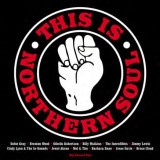
- A1: Gimme Little Sign ~ Brenton Wood
- A2: Another Dirty Deal ~ The Incredibles
- A3: So In Luv ~ Othello Robertson
- A4: I’m On My Way ~ Barbara Dane
- A5: A Little Spark Of Fire ~ Bruce Cloud
- A6: Meet Me At Midnight ~ Cindy Lynn & The In-Sounds
- B1: The Ice Man ~ Billy Watkins
- B2: Gonna Hang On In There Girl ~ Jesse Davis
- B3: One Love ~ Jimmy Lewis
- B4: Backfield In Motion ~ Mel & Tim
- B5: I’ve Arrived ~ Jewel Akens
- B6: The ‘In’ Crowd ~ Dobie Gray
The UK’s love affair with American soul music blossomed in the
mid 1960s, with the launch of the Tamla-Motown record label in
Britain. But by the end of the decade this passion took on a
distinctly homegrown twist with a new movement that grew out
of the North of England and Midlands’ underground soul and
R&B scene. It was here at dancehalls and clubs such as
Manchester’s Twisted Wheel and the Wigan Casino that
devotees danced the night away to uptempo, joyous US soul
records that always came with a heavy beat. Pretty soon the
movement had a name: Northern Soul. This collection is the
next best thing and it is all on vinyl, exactly how the movement’s
fans originally heard them
A first listen might suggest this is a new production emerging from the
legendary funk scene of Minneapolis.
Wrong by far! It is in fact three Swiss musicians who are boosting funk to new
heights on their self-titled album ‘The Next Movement’.
J.J. Flueck, Pascal “P” Kaeser and Sam Siegenthaler form the explosive helvetic
Trio, with their music unmistakably fusing the influences of R&B, funk and blues
from James Brown, Prince, Jimi Hendrix to Miles Davis on this album. And they
do it in skilful way with near sonic perfection.
Since signing with Rhymesayers in 2015, Sa-Roc has continued to both invigorate and grow her fanbase with a string of singles, accompanied with powerful and visually enthralling music videos, including “Forever”, which is nearing 4 million views on YouTube. In that time, she has continued to cultivate and sharpen her skill sets, and now she is set to release her first album for the label.
Speaking on the meaning of the album’s title and inspiration, Sa-Roc shares, "The Sharecropper’s Daughter speaks to my father’s actual beginnings on a Virginia tobacco farm where his family sharecropped. The title is meant to signify that both my father’s and my upbringing, though so different, are linked by a shared history that informs the way I move through the world. Although his formative years were spent in the Jim Crow era of the south, where he suffered through poverty and racial oppression, and mine were shaped in the heart of DC, amidst the war on drugs and the effects of its fallout, the album finds points of connection in two very different yet tragically familiar stories of Blackness in America. It’s a sonic reflection of the things we inherit. About the emotional weight that we unknowingly bestow upon the next generation; the genetic transfer of both trauma and triumph that we, both donors and
Spirits Having Fun records are ones made from and for shows and spaces—arrangements rooted in a deeply collaborative process, that come to life through intuitive and locked-in live improvisation. Following their 2019 debut Auto-Portrait, Two finds the New York and Chicago based four-piece continuing to challenge ideas of what a rock band can be, pulling apart their musical experiences and reimagining them as kinetic compositions, equally studied but palpably organic.
Two is constructed around gut feelings and strong grooves, elastic rhythms and playful pacing. Its twelve songs expand, contract, and make sharp turns between melodies under singer-guitarist Katie McShane’s meditative lyrics. “Broken Cloud,” which was also released last year on a compilation in support of Chicago Community Jail Support, offers a glimpse into her reflections on the natural world: "A city grew out of the ground / to a mountain it's only a blur."
True to its name, the internal logic of the band is also just a lot of fun, built on trust and deep-rooted musical relationships. Before there was Spirits Having Fun, McShane, bassist Jesse Heasly, guitarist-vocalist Andrew Clinkman, and drummer Phil Sudderberg had performed together in various arrangements over the years. McShane, Heasly and Clinkman met in a specific corner of the Boston underground in 2013, a time when a scene had coalesced around students from local music conservatories frequently collaborating with punk bands and noise artists, exchanging ideas and warping musical worldviews. Heasly and Clinkman played together in Cowboy Band, making mutant, free jazz-inspired takes on old country tunes. When Clinkman moved to Chicago, Heasly and McShane played in experimental groups like EKP and Listening Woman; in Chicago, Clinkman met Sudderberg playing in projects like jazz scene fixture Ken Vandermark’s high-powered band Marker.
Spirits first came together as an attempt at a long-distance collaboration among friends in 2016, driven by the simple feeling of missing each other; they’d meet up for marathon weekends here and there to practice, playing small loops through dive bars and art spaces around the Midwest—just enough for McShane and Heasly to afford plane tickets back home. Being split between Chicago and New York forced the project into a deliberate pace. “We tried to take it slow and let it be what it was,” said McShane. That sense of patience unexpectedly prepared them for March of 2020, when their planned tours and the release of Two were indefinitely delayed.
Two was mostly recorded in the summer of 2019 with the help of omnipresent Chicago engineer Dave Vettraino and DPCD’s Alec Watson, whose contributions on organ, synths, and piano are laced throughout the record. The album reflects a synthesis of solitary and communal songwriting processes—each song drawing on fragments written by individuals, which McShane threaded together and shaped through her distinct compositional lens, making the songs whole before returning to them to the band to mature collectively. When composing, McShane writes first on the keyboard before adapting parts for guitars played by herself and Clinkman. Their dueling approaches to guitar are complementary: McShane, being a newer guitarist, brings a freshness to the project (“I'm just discovering the whole time,” she says) while Clinkman has been playing since childhood.
“There's a lot more collaboration on this record,” says Clinkman, “in terms of all of us letting stuff bloom a little bit more.” The record’s first single, “Hold The Phone” is a good example of this process—it started with a playful intro riff from Clinkman, a melody and bridge added by McShane, a wobbly outro groove added by Heasly, which Sudderberg brought to life. Another single, the dynamic “See a Sky,” written primarily by Heasly, underscores the rhythm section chemistry at play across the record, the song ebbing and flowing around Heasly and Sudderberg’s eclectic percussive palettes.
“Entropy Transfer Partners” is the only song on the record with lyrics by Clinkman, and the album’s most politically direct—a call for solidarity in the face of systemic failures, an acknowledgment of the shared material devastation caused by our country’s ongoing healthcare and housing crises: “These are not things we're experiencing individually. We struggle through them collectively. And we could actually declare, all of us, that it doesn't have to be this way, and fight and organize to ameliorate some of those conditions.” (“We won't work to create the shit you monetize, to run our lives,” they sing.)
From front to back, Two is an absorbing listen simply for its impressive range. But as the members explain themselves, the complexity of the record is about more than its intricate riffs, or how often they count out an odd time signature, but how they reject the notion of boxing the songs in, letting the melodies take on lives of their own. “Making music that feels alive is important to us,” says Clinkman. “Music feels most powerful to me when it deepens our sensation of feeling alive and connected to other humans. It’s so easy to feel worn down and isolated; that your life’s value is fixed to your productivity at your job, or the things that you have or don’t have. Making music that feels joyful and fun seems like one effective antidote to that feeling.”
Deluxe Edition[33,57 €]
Portuguese experimental trio 10 000 Russos are gearing up for the release of their fifth album ‘Superinertia’, which is due out September 10th on Fuzz Club Records. Following on from 2019’s ‘Kompromat’ LP and tour dates around the UK, Europe and Mexico in support, the Porto-based band describe ‘Superinertia’ as a record addressing the “state of inertia that humans live in the West nowadays. It isn’t a record about the past or future. It’s about now.” For all that ‘Superinertia’ might take aim at a world without motion, however, the same cannot be said of 10 000 Russos themselves.
On the one hand, since their 2013 debut LP and the three that have followed on Fuzz Club since (2015’s self-titled, 2017’s ‘Distress Distress’ and ‘Kompromat’), 10 000 Russos’ music has always been about as kinetic as it gets: a truly unrelenting and motorik sonic force. On the other hand, ‘Superinertia’ also sees the band itself move into whole new musical territories – aided especially by the recent addition of synth player Nils Meisel to the line-up (who replaces former bassist André Couto.)
“The synths really opened up the sound of the band and gave more routes for the music to journey down. The most important thing on this album was to not repeat ourselves. A new arc in our sound is coming to life”, drummer and vocalist João Pimenta explains. On said arc, the Russos sound is expanded to include moments that invoke Ry Cooder’s ‘Paris, Texas’ soundtrack (‘Mexicali/Calexico’), dancey outbursts that transport you to the 90s Summer of Love (‘Super Inertia’), the closest thing Russos have ever done to a pop song (‘A House Full of Garbage’) and even a touch of banjo (albeit one that sounds like a country band on amphetamines playing over a feedback-blasted Stooges beat.)
“10 000 Russos are bizarre and excellent in equal measure.” - The Quietus
“Songs drip with heavy echo, relentless beats and bass and a sense of charging into the ultimate infinite.” - Bandcamp Daily
“Something unholy has indeed been summoned out of the ground, and it is a power trio from the Iberian Peninsula.” - Clash Magazine
Blue vinyl[26,43 €]
Portuguese experimental trio 10 000 Russos are gearing up for the release of their fifth album ‘Superinertia’, which is due out September 10th on Fuzz Club Records. Following on from 2019’s ‘Kompromat’ LP and tour dates around the UK, Europe and Mexico in support, the Porto-based band describe ‘Superinertia’ as a record addressing the “state of inertia that humans live in the West nowadays. It isn’t a record about the past or future. It’s about now.” For all that ‘Superinertia’ might take aim at a world without motion, however, the same cannot be said of 10 000 Russos themselves.
On the one hand, since their 2013 debut LP and the three that have followed on Fuzz Club since (2015’s self-titled, 2017’s ‘Distress Distress’ and ‘Kompromat’), 10 000 Russos’ music has always been about as kinetic as it gets: a truly unrelenting and motorik sonic force. On the other hand, ‘Superinertia’ also sees the band itself move into whole new musical territories – aided especially by the recent addition of synth player Nils Meisel to the line-up (who replaces former bassist André Couto.)
“The synths really opened up the sound of the band and gave more routes for the music to journey down. The most important thing on this album was to not repeat ourselves. A new arc in our sound is coming to life”, drummer and vocalist João Pimenta explains. On said arc, the Russos sound is expanded to include moments that invoke Ry Cooder’s ‘Paris, Texas’ soundtrack (‘Mexicali/Calexico’), dancey outbursts that transport you to the 90s Summer of Love (‘Super Inertia’), the closest thing Russos have ever done to a pop song (‘A House Full of Garbage’) and even a touch of banjo (albeit one that sounds like a country band on amphetamines playing over a feedback-blasted Stooges beat.)
“10 000 Russos are bizarre and excellent in equal measure.” - The Quietus
“Songs drip with heavy echo, relentless beats and bass and a sense of charging into the ultimate infinite.” - Bandcamp Daily
“Something unholy has indeed been summoned out of the ground, and it is a power trio from the Iberian Peninsula.” - Clash Magazine
Pokey LaFargeʼs 7th studio solo album, ‘In The
Blossom Of Their Shade’, showcases the positivity
of coming out of the darkness and into the light.
When the 2020 global pandemic hit, LaFargeʼs
rigorous work ethic powered him through the
potentially challenging creative period. As days
became a couple of months, songs blossomed
from embryonic ideas into fully-formed ones and
he was ready to move on, which typified his
mindset as a working artist.
With this record, LaFarge captures the thematic
notion of being the perfect summer afternoon
soundtrack... the type of music you want to listen
to while having a cocktail with your significant
other.
It makes sense musically as well - LaFarge
intentionally crafted songs that created space and
have melodies that can glide throughout a
composition thatʼs a far cry from the swing and
blues-infused songs of his earlier work.
LaFarge is an artist who refuses to rest on his
laurels and compromise. He's always motivated
and ready to create. ‘In The Blossom Of Their
Shade’ is one of LaFargeʼs strongest and most
mature efforts to date.
LP in gatefold sleeve.
- A1: The Way Of Discreet Ten
- A2: Woman Of Water _ Music
- A3: Claudia Wilhelm R _ Me
- A4: Shadow Player
- A5: The Sneerer (Mr G C)
- A6: Improbably Music
- B1: Loa Song
- B2: Night Music
- B3: Dalangs Dream
- B4: Lidia After The Snow
- B5: Drums On Chambri Lake
- B6: Katak Dance For H Partch
- C1: Kami Shintai
- C2: Lazy Raga
- C3: Night Music Ii
- C4: Okkulte Stimme
- D1: Tantric Hymes
- D2: The Age Of Fragmentation
- D3: The Story Of The Serpent Who Created The World
- D4: The Time Of Fine _ Dream
- D5: Vinaya Pitaka
Italian experimental music is notoriously resistant to definition and location. If ever there was an object to encapsulate the spirit of that movement, it is the composer and musician Roberto Musci’s debut album from 1984 - The Loa Of Music. Recorded after a decade travelling the world - drifting between African, Indian, and the Near & Far East - studying music, making field recordings, and collecting instruments, not only is it a perfect culmination of such an experience, but a lens into the rigorously democratic and international spirit of the generation of artists to which Musci belongs. Phenomenally ambitious,The Loa Of Music entirely refuses the well trod path - distilling a remarkable range of sonic reference and reality. A work of field recording, musique concrète, electronics, synthesis, and instrumentation, pulling from countless musics from across the globe, the result is nothing short of brilliant and stunningly beautiful. A near perfect work - an egoless gesture, which rather than attempting to find consensus, offers every voice equity and cohabitation - harnessing the history music, with all of its cultural diversity, as a vision for a more ideal future. Geographies and their sounds intertwine, while Musci’s interventions and instrumentation thread a path. Ambiences ripple, sounds and voices converse in a vision of unity that may only exist within sonic realms. Unquestionably seminal, and one of the most important works to emerge from Italy in the last 50 years. Never before issued on vinyl since it’s original release, and surely not to be around for long, this is one not to miss.
Daptone Records is honored to announce the release of Innov Gnawa's full-length, Lila. Formed in NYC, this grammy-nominated group of Moroccan expats has been making waves locally and abroad with their hypnotic live shows. The group is led by Ma'alem Hassan Ben Jaffar, a master musician and spiritual elder of the ensemble who plays a three-stringed african bass known as a guembri. Ben Jaffar is accompanied by a brotherhood of musicians – (Amino Belyamani, Ahmed Jeriouda, Samir Langus and Nawfal Atiq) – all playing the qraqeb, metal castanets that represent the shackles and chains of slaves and also singing chorus responses. Gnawa music is a spiritual tradition rooted in Moroccoʼs ancient history. Often referred to as “Sufi Blues”, Gnawaʼs African influence originated from West African slaves brought to Morocco centuries ago. Not unlike blues music in the American South, Gnawa music is revered throughout Morocco as treasured indigenous soul music.
After seeing a performance at a mutual friend's party, producer and local Gnawa enthusiast, Bosco Mann, invited Innov Gnawa to come record some tracks at The Daptone House of Soul. The invitation was accepted and over a five-hour session, the group tracked an entire albumsʼ worth of material - all in one take. The session tracked that evening is what we humbly offer up to you, the beloved Daptone Family. Lila, literally meaning "night" is a traditional ceremony in which the Ma'alem and his qraqeb ensemble dedicate an evening of healing through music. This all-night rhythm fest is a spiritual ritual which cleanses the body, mind, and spirit. We invite you to immerse yourself in Lila. Experience Freedom, Liberation and the power of healing through music. The spirit of Gnawa is people. Experience the freedom, liberation, and power of healing through music. You are not alive if this music doesn't move you.
How does a musical production in the world of entertainment evolve and materialize? What happens behind the scenes of designing a musical idea?
It's amazing how music plays a vital role in the lives of people who believe in it. In a historical moment like this and with the music scene losing its identity, Supercinema records welcomes ITNA an artist collective to its world, consisting of Ezio aka SWRD, Edoardo and Luca. The three started in 2016 and after three years of working on this project, they returned aiming to implement a collective of ideas coming from three different generations with different sounds while trying to adapt to the contexts of a world that has radically changed. The idea was to create a musical journey by combining multiple genres in order to unite diversity and create a balance that brings the people of music under a single social flag.
The goal of the project lays the foundations of a path that encompasses all those contents, interactions, and expectations of emerging artists who relate to the external world, tormented and deconstructed, which through musical, cinematographic, and exhibition productions, to then move on to tormented artistic scenographic dynamics of the fashion world. The artistic collaborations will be aimed at the production of sound samples, beats, audio packages, and unreleased songs that will be part of the ITNA collective.
The band aims to implement a collective of ideas, embrace the general culture, interactions and above all to be able to experience ephemeral emotions in our days.
In the most literal sense, globally renowned whistler Molly Lewis makes her gorgeous
and curious compositions out of thin air.
New entrees into the Exotica canon; sprawling, would-be Spaghetti Western scores;
and a dash of Old Hollywood glamour - the whistle-led songs on her debut EP ‘The
Forgotten Edge’ are as complex, delicate and indelible as anything performed with
viola or piano.
“Whistling is like a human theremin,” said Lewis, an Australian native who’s spent the
last several years in LA and whose performances there and around the world are
changing any preconceived notions of whistling by the room-full.
That’s not to say Lewis is all serious and snooty about the craft. Quite the contrary.
Her sense of humour is witty, self-deprecating and zany. She’s as likely to reference
the slapstick Leslie Nielsen film series ‘Naked Gun’ for music video concepts as she
is a classic piece of noir cinema.
Look no further than the equatorial and breezy opening cut ‘Oceanic Feeling’, a
lovely walk across the flotsam-sprinkled sands in the rum-pumping vein of Les
Baxter. Meanwhile, the title track - and really, the entire collection here - is a loving,
albeit rather haunting, salute to one of Lewis’s heroes, the Italian composer and
musician Alessandro Alessandroni, whose whistle and guitar you hear on the title
theme of Ennio Morricone’s ‘A Fistful of Dollars’. Lewis and her ensemble create
classic cinema for your mind.
Her own love for the artform began when, around the age of twelve she was given
the CD ‘Steve ‘The Whistler’ Herbst Whistles Broadway’. Something contained in it
clicked. “It wasn’t that I was immediately obsessed, but I knew it was something I
could do well,” Lewis said.
The daughter of a musician mother and a documentary filmmaker father who often
focused his films on niche communities and topics, Lewis recalls watching a
television documentary with her parents about The International Whistlers
Convention in Louisburg, North Carolina. “My dad said, ‘If you ever make it into the
competition, I’ll take you there’,” Lewis said. Turns out, there was no bar to entry, just
a small fee. And so, several years later, she and her father travelled to the
convention. New to the form, Lewis didn’t take home one of the bigger prizes but they
were awarded the prize for Whistler Who Traveled The Greatest Distance. “We really
just used the trip to drive around the United States,” she said.
After studying film in Australia, Lewis moved to Los Angeles to be close to the film
industry. There, her circle of artist friends grew naturally and with providence - her
unique talent drawing more and more recognition. And over the last few years,
Lewis’s Café Molly events at LA spots like Zebulon, Non Plus Ultra and The Natural
History Museum have become fabled, elegant happenings with appearances from
guests like John C. Reilly, Karen O and Mac DeMarco.
Recorded with a crack team of friends and musicians during 2020’s quarantine, ‘The
Forgotten Edge’ is rife with incredible performances from Thomas Brenneck (Sharon
Jones & The Dap-Kings / Budos Band), Joe Harrison (Charles Bradley, Lee Fields),
Eric Hagstrom (Brainstory), Abe Rounds (Meshell Ndegeocello, Andrew Bird, Blake
Mills), Leon Michels (El Michels Affair), Gabriel Rowland and Dave Guy.
Gold Vinyl
Though the hallowed halls of Berlin’s nightlife excess now sit cold, the sounds that once haunted their depths beat ever onward, and colder still. Birthed in these hushed plaguelands, XTR HUMAN’s new full-length G.O.L.D evokes the frozen melancholy of a post-pandemic city, driven ever onward by the impetus of night’s primary currencies: sweat, release and change. The latest full-length from Johannes Stabel, G.O.L.D finds the German producer evolving as much as the rest of the world has had to. Taking his political and socially conscious lyrics into his native tongue brings a deeper and more powerful thrust to their weight—particularly at a time when Germany is weighing its own social consciousness after years of being seen as a leading world figure. Across G.O.L.D’s ten tracks, Stable brings our zeitgeist into a new realm, where the anger and frustration at our current existence is refined into the energy that fuels our engines, that primal desire always amplified during times of social upheaval—the desire to move your body. Many of the songs delve into Stabel’s own experiences as a German, from explorations of the Deutsch mentality of persistent fear to tackling the fake news, jingoism, racists and coronavirus deniers on hypnotic bangers ‘Dark Germany’ and ‘Dieser Klang’; issues just as prevalent in Germany as in the USA and UK. Yet each song carries just as much weight on to the dance floor, melding driving EBM bass with soaring synthlines and coldwave atmospheres that dispel the tenseness that such heavy topics imbue, in favor of intensity and beauty. Influenced by the pop hooks of Austrian New Wave legend Falco, G.O.L.D never neglects its danceability and HD club accessibility, no matter how heady the lyricism. ‘Starker Junge’, a dissection of toxic masculinity, drops down onto the listener with sparkling synths and razor-sharp guitar, while capitalist critique ‘Fleisch’ is a pogo synthpop anthem that could send any floor into a twirling frenzy. Wrapped in darkened beats and political ideals, G.O.L.D can’t hide the light that emanates from within its glistening, imminently catchy hooks and groove-laden rhythms. In a time where the dance floor sometimes seems like a distant memory, it’s the perfect philosopher’s metal to transmogrify your existence. All songs written and recorded by Johannes Stabel Mixing by Andrew Wiseman Arwork by Nicolas Zupfer Mastering at Dadub Studio
Porcupine is Echo & The Bunnymen’s most profound and personal album from their early period. Weathering band turmoil, rejections from their record company and spans of songwriting drought, the group emerged with a passionate and compelling set of songs described by vocalist Ian McCulloch as “coming to terms with the opposites in me.” Following their fourth Peel session in early 1982, the band chose Ian Broudie, leader of The Lightning Seeds and co-producer of Echo’s 1980 album Crocodiles, to produce Porcupine. While the album includes both “The Back of Love” and “The Cutter” (two of their most upbeat and successful singles), most of the material was fairly introverted and autobiographical.
Unfortunately suffering negative reviews upon release (including a misguided hate-piece in the NME), Porcupine has since become a gold standard for both the band and British underground rock from the ’80s. It’s also simultaneously their most retro album and their most forward-looking. The production is full of guitar effects that must have set the mind of Kevin Shields onto the path to My Bloody Valentine’s own masterpiece, Loveless.
In addition to the “The Cutter” and “The Back of Love”, Porcupine includes songs such as “My White Devil,” “Heads Will Roll,” and “Porcupine” that transcend and enlighten to this day. It’s an essential album from one of the most influential bands of the post-punk movement.
In 1970, Kevin and David met whilst they were working in the Labour Exchange Office on Aytoun St, Manchester. Both played guitar and had been searching for other musicians who played atmospheric music. Kevin had been playing in small clubs in Manchester and David performed in a few local bands. One evening, they jammed together at Kevin’s family home, and quickly realized that their playing blended together to form the basis of the sound they had been looking for. In the late ‘70s, the music scene in Manchester was bursting with new bands and music.
However, Kevin and David had little in common with the local acts, being disciples of a more meditative approach. They followed a path of their own, reaching for an otherworldly sound that they heard from artists like John Martyn, David Crosby, Erik Satie, Terry Riley, Eberhard Weber, Alice Coltrane, and Ralph Towner. They experimented combining their acoustic guitars and David’s bass with various effects pedals and techniques to try and achieve a warm and expansive sound that rides the line between ambient, jazz, and psychedelic folk Music.
Towards 1981, they had written eleven songs and accompanied a few with Moog synthesizer laid down by Rob Baxter. All were recorded on cassette decks in their simple home studios. They named this collection of music “Light Patterns”, after a poem Kevin had written. With Light Patterns complete, they set out to find a label to represent their music. They started playing a few gigs in Manchester; Band On The Wall, the Gallery, and other venues, such as Rotters which local promoter Alan Wise had organized. They set up with small amps along with their effects and played as though they were back at home. As Kevin remarks, “It was unusual, to say the least, to play such venues in a low volume chilled out way. However, people listened, often in shocked curiosity, and some even asked for tapes.”
Peter Jenner, of Blackhill Enterprises, eventually picked up the album for his new label, “Sheet”. Peter had managed lots of experimental bands and solo artists, including Pink Floyd in their early Syd Barrett days. He always favored outsiders! The tapes were taken to Strawberry Recording Studios in Manchester, who were surprised when Kevin and David walked in with just a couple of home-produced cassette tapes. Fortunately, they liked them and agreed to master the album. It was then sent to Portland Recording Studios in London for final mastering to vinyl. George Peckham, aka “Porky”, did the pressing with a personal message in the deadwax; “Kaftans, Candles and be Cool Man”. The artwork for the album cover was done by the late Barney Bubbles, a truly visionary artist.
After the album’s release, the pair continued to play together regularly until David moved away from the city. Kevin still resides near Manchester in the rolling hills outside of the city. He continues to experiment with dreamy music in his loft, and we are set to share a selection of his ethereal archival and current compositions in the coming months. David lives a quiet life in a small coastal town in the South, he likes to sail and is an avid cricket fan. We’re excited to make Light Patterns accessible again for the first time in nearly 40 years, remastered from the original tapes. As the original press release said, “Put the album on, lie back and enter the land of no floors”.
Colkin, who is based in Wuppertal, is one of those guys who pushes things forward in the subcultural field and follows words with deeds. Together with Nico aka dont-call-him-molly and his other partners, he has been running the mauke_club in Wuppertal for several years. An ultimate melting point for dance culture, scene connoisseurs - as well as newcomers who want to be smoothly introduced into the things we love. Not to forget his considerable discography.
Besides the fact that he is a fine guy and we have been in exchange with him for a long time, we appreciate his taste in music very much. This seems to be mutual, as the ep he recorded fits us like a glove. Three what we find to be great, timeless house productions that forget the Covid circumstances for a brief moment and bring the dance floor to life with your eyes closed. These tracks will accompany us until the clubs reopen, That's for sure!
We are also pleased that Javonntte and melchiorsultana have been musical influences on these productions, which were recorded in Paris during Colkin's stay there. This obviously had a considerable influence on the naming. Whether in Paris, Wuppertal or Düsseldorf - we are actually looking forward to our fifth release with Colkin!
- A1: Ash (2021 Remaster) 07 06
- A2: Chessa (2021 Remaster) 06 58
- A3: Blast (2021 Remaster) 03 04
- B1: Duh (2021 Remaster) 03 40
- B2: Marche (2021 Remaster) 05 21
- B3: Nerf (2021 Remaster) 03 40
- B4: West Nile (2021 Remaster) 02 16
- B5: Melt (2021 Remaster) 05 30
- C1: Logical (2021 Remaster) 03 01
- C2: Dead Leaves (2021 Remaster) 05 22
- C3: Scrapbook (2021 Remaster) 07 53
- D1: Habitat (2021 Remaster) 07 04
- D2: Bloom (2021 Remaster) 03 31
- D3: Angelic (2021 Remaster) 03 39
Keplar re-issues the fourth album 'Chessa' by Dan Abrams' project Shuttle358 on vinyl for the first time. The double LP edition includes 3 previously unreleased tracks from the same recording sessions back in 2004, as well as an extended artwork with unseen photographs by Dan Abrams.
While undoubtedly associated with the microsound and 'clicks & cuts' movement around the turn of the millennium, on 'Chessa' Shuttle358 left behind the classical rhythmic patterns of the genre and shifted further towards warmer territories, meandering between modern digital minimalism and the soft tones of ambient music. Counter to his microsound synthesis approach on Frame (2000), Abrams created Chessa by writing software that manipulated samples from his unreleased songs, guitar pieces, and vintage japanese films sampled from video tape. In particular, a special granulating technique was written and performed at intentionally low sample rates that gave the uniquely fragile, yet dense sound to the album. Over fourteen tracks Abrams arranges slowly evolving sonic entities of unfading elegance. Strayed and hazy melodies pulse and cascade, elongated but brittle harmonies shimmer and disappear, echoing far-off in the rounded corners of the mind. The patient and detailed way Abrams combines the broken with the beautiful in creating organic collages of sound that retain the euphonic essence of a song, makes this piece of work so powerful and timeless, sounding just as relevant today, as it did 17 years ago.
Under modern scrutiny in Abrams latest studio, he refocused the original recordings to emphasize the elements most important to the original vision. The final mastering and vinyl preparation was done in collaboration with Stephan Mathieu, vinyl was cut by LUPO.
From the original press release in 2004 by Taylor Deupree:
Without a doubt Shuttle358 has become one of the most admired artists to emerge from modern electronic music’s sea of musicians. From the humble beginnings of a demo CD in 12k’s mailbox to 4 critically acclaimed CDs, Dan Abrams is, to some, the one credited for bringing a warmth and human touch back into what has often been considered a very cold, sterile genre. It began with 1999’s Optimal.lp (12k1005), a groundbreaking debut release that immediately defined the Shuttle358 sound; a hybridization of the then-emerging “microsound” genre with Eno’s true ambient explorations. In 2000 Abrams outdid himself with Frame (12k1011) by honing his sound design and exploring production techniques at rates that made his “now” quite brief and creating what was to become one of the most sought-after CDs in the 12k catalog.
Chessa is the third release from Abrams’ Shuttle358 moniker on 12k and he continues to do what he does best: attempt to move microsound away from the world of theory and towards absolute real life. Like his photographs, Chessa is music about, and to be listened to in, unexpected places. It is a narrative, a simple slice of life that plays out through the incidental photography of the cover artwork. To achieve this Abrams fuses irregular granular sound particles, like the movements of everyday life, with a deliberate melodic base that captures emotion and simplicity.
Re-mastering by: Kevin Gray
This is a reissue of a now out-of-print album from live trio date by the legendary LA-based pianist, composer and multi-bandleader, Horace Tapscott. Pianist Horace Tapscott is always at his best when he is leading a trio. Born in 1934 in Houston, Texas, Horace came from a musical family centered around his mother, Mary Malone Tapscott, who worked professionally as a singer and pianist. When Horace was nine, the family moved to Los Angeles. As a teenager in the late 1940's, Horace was surrounded by the music of Central Avenue: Art Tatum, Charlie Parker, Coleman Hawkins, Dexter Gordon, were among the many cats on the set. Around this time, Horace also began to take music lessons from teachers Dr. Samuel R. Browne and Lloyd Reese, whose other students included Eric Dolphy and Frank Morgan. Horace's musical studies included trombone in addition to piano.
In 1952, Horace graduated from Jefferson High, got married to Cecilia Payne and went into the Air Force. Horace played in an Air Force Band while he was stationed in Wyoming for his term of duty. After mustering out, he returned to Los Angeles where he worked around on various gigs until he joined the Lionel Hampton Big Band as a trombonist.
In 1959, Horace finally went with the Hampton Big Band to New York, where his friend Eric Dolphy introduced him to John Coltrane. A tough winter, a lack of gigs, and too many nights on the floor of a friend's art gallery finally sent Horace packing for sunny Southern California, where a life with wife and family awaited his return.
The sixties saw Horace emerge as a die-hard leader of the Avant Garde. Horace began to gain public notice playing with his own group, that included alto saxophonist Arthur Blythe, bassist David Bryant, and drummer Everett Brown II. Horace also appeared on records for the first time.
Horace was always outspoken about racism, politics, stereotypes, and social ethics. His forward-minded vocal presence on and off the microphone is as much a part of his art as his piano playing. As a result, he was labeled a "dissident," categorized as an "employment risk," and black-listed from the music industry establishment in the early 1970's. None of this slowed Horace down. He began gigging sporadically at Parks and Recreation events and for churches around Watts. This "dark period," with his only regular gig at his friend Doug Weston's Troubadour on Los Angeles' "Restaurant Row", was also a time of intense creativity.
Around 1977, Horace reorganized the Pan-Afrikan Peoples Arkestra with the help of several old friends and many new faces. The Arkestra performances involve singing, dancing, and poetry in addition to the music. Soon after the new group's debut, Horace came to the attention of producer Tom Albach who contracted Horace to record a number of albums for Nimbus Records. Albach also helped introduce Horace to an international audience by arranging several European tours.
The 80's saw Horace emerge as one of jazz's premiere solo pianists. He recorded several solo piano albums for Nimbus.
According to the artist himself, zake's first solo album of 2020 was recorded and produced during "a four-day excursion in several secluded areas" in South Carolina. As a result, listeners can expect to hear babbling brooks, birdsong and the gentle rustling of leaves beneath Zake's alluring mixture of enveloping ambient chords, unearthly drone tones, opaque electronics and slowly-shifting, heavily processed neo-classical movements. The results are hugely immersive and undeniably enjoyable, with each of the four tracks delivering a head-in-the-clouds journey that ripples with becalmed, atmospheric intent. In other words, it's the kind of ambient music you can get lost in. More please!
- 1: You Go Girl!
- 2: You Ain't Takin' My Man
- 3: For Gato
- 4: Oh Henry!
- 5: To The Stars Major Tom
- 6: Oh No You Did Not!
- 7: To Feel
- 8: To Feel Embraced
- 9: Slappin’ Yo Face
- 10: Mmmmkayy I'm Goin' Out Now And I Don't Want Any Trouble From You!
- 11: Queenie Got Her Blues
- 12: Sparkle On Sad Sister Mother Queen
- 13: No Exit
A vibrant electronic fusion of lounge, jazz, and disco is maybe not the first (or fifth) thing you would expect to hear from one of the world’s most renowned modern composers and ambient tape loop pioneers, but upon first listen, it makes so much sense that one wonders why it didn’t happen sooner.
After years of producing and mentoring slews of young artists in 1990s Williamsburg, Brooklyn, William Basinski moved to Los Angeles. There he hired a young studio assistant, Preston Wendel, who eventually introduced his own works to the curious composer. That spawned a creative partnership that inspired Wendel to persuade Basinski to haul out his saxophone. Five years later, SPARKLE DIVISION has arrived with their enchanting debut album, To Feel Embraced.
Produced by SPARKLE DIVISION at Basinski’s Musex International in Los Angeles, the duo were joined by a few notable friends: Mrs. Leonora Russo (who Basinski affectionately calls “the true Sicilian Sparkle Division, my Brooklyn Mom, the Queen of Williamsburg”) offers her sparkling voice to “Queenie Got Her Blues”; fabled free-jazz icon and genuine bodhisattva, the late Henry Grimes, contributed upright bass and violin to the aptly-named “Oh Henry!” (“Lotta babies gonna be born from this one,” Henry and Margaret Davis Grimes playfully declared); and London vocalist Xeli Grana offers her ethereal voice to the album’s meditative title track.
Audiophile 180glp pressing includes eight 12"x12" art print reproductions of analog film stills by renowned experimental filmmaker Daïchi Saïto. The first purely solo record by Jason Sharp - where every sound is created by his saxophone, breath, heartbeat & modular synthesis rig. Sharp's customized electroacoustic biofeedback system utilizes a heart monitor to turn his pulse into signal & tempo responsively synthesized in real time during peformance & recording. Produced by Radwan Ghazi Moumneh (MATANA ROBERTS, SUUNS, BIG | BRAVE, ERIC CHENAUX, JERUSALEM IN MY HEART). For Fans of Fennesz, Christina Vantzou, Tim Hecker, Klaus Schulze, Ben Frost, Gas, Windy & Carl, Colin Stetson. Montréal saxophonist and electroacoustic composer Jason Sharp presents his third album on Constellation. The Turning Centre Of A Still World is Sharp's first purely solo record and his most lucid, poignant, integral work to date. Following two acclaimed albums composed around particular collaborators and guest players, Sharp conceived his third as an interplay strictly bounded by his own body, his acoustic instrument, and his evolving bespoke electronic system. The Turning Centre... is a singular sonic exploration of human machine calibration, interaction, expression and biofeedback. Using saxophones, foot-controlled bass pedals, and his own pulse - patched through a heart monitor routed to variegated signal paths that trigger modular synthesizers and samplers - Sharp paints with organic waves of glistening synthesis, pink noise and digitalia. Melodic strokes and harmonic shapes ripple and crest across ever-shifting seas, through an inclement cycle from dawn to dusk. The album's six main movements navigate a world where placid surfaces are always roiled and disquieted by a deeper inexorable gyre: the gravitational pull and tidal perpetuity of our bodies made of water, buffeted by terrestrial atmospheric pressures, wrung out by emotions, coursing with blood, sustained by breath, inescapably yearning for and returning to ground again and again. Sharp's heartbeat literally courses through these compositions - while only occasionally surfacing as a clearly audible pulse or rhythm, it physically feeds into a spectrum of generative synthetic processes that help constitute and conduct the music.
Ephat Mujuru exemplifies a unique generation of traditional musicians in Zimbabwe. Born under an oppressive colonial regime in Southern Rhodesia, his generation witnessed the brutality of the 1970s liberation struggle, and then the dawn of independent Zimbabwe, a time in which African music culture - long stigmatized by Rhodesian educators and religious authorities - experienced a thrilling renaissance. Under the tutelage of his grandfather, who was a respected spirit mediumand mbira master, Ephat showed an early talent for the rigors of mbiratraining, playing his first possession ceremony when he was just ten years old. By then, guerilla war was engulfing the country and his grandfather Muchatera tragically became a victim of the violence, a devastating blow to the young musician. In the midst of the liberation struggle, mbira music became political. Eventually, the Rhodesians were defeated, but rather than return to the past, the nation of Zimbabwe was born and a new future unfolded. Ephat threw himself into the spirit of independence, singing of brotherhood, healing, and unity: crucial themes during a time when the nation's two dominant ethnic groups, the Shona and the Ndebele, were struggling to reconcile differences. Ephat's band would eventually follow the popular trend and add electric instruments. But before that, he and Spirit of the People released two all-acoustic albums, and they may well be the most exciting and beautiful recordings he made in his career. Mbavaira, the second of these albums, was released in 1983. As the independence years moved on, there would be fewer and fewer commercial mbira releases. But for the moment, Ephat had the required stature and reputation. Also, with the energy and drive we hear in these recordings, the album could easily rival the pop music of its day. Within a few years after the release of Mbavaira, it and albums like it became harder to find in Zimbabwean record stores. Ephat adapted to the times and formed an electric band. They recorded more albums over the years but none of them have the particularly delicious energy of Spirit of the People in the first years of Zimbabwe's independence.
Things become intangible. On his 3d album "Take Care Of Me", Murena Murena does an about-turn: his new songs are silhouette vehicles in the reverse of all traffic formulas that strive for speed and progress. You can also do it with your back on the floor, you can also go backwards! In Murena Murena's Augmented Reality Roll, language, rhythm and harmony always turn and expand in the opposite direction. The direction we / they came from. If the idea of a monoposto was to replace the front passenger with a rear-view mirror, and from then on to let the driver run the distance forwards and backwards in the driver's eye, then you can also carry out a U-turn while sitting on a chair with eyes painted on the lids. A mandrill will quickly become the Sphinx. And a hawk moth sees just as much as a fire bug. Dry sump lubrication in the box: camshafts driven by a spur gear cascade ensure additional turbulence of the helium mist in the crankcase through their rotary motion. Of course, that's hard to believe. Gone, the wet sump lubrication of ,Shame Over,! You, listener, now have to grab the ropes yourself and perform wave-like movements, pull the ropes and let them pop. If your eyes go black, you have both hands free again.
Born in Naples, educated in New York and now residing in Paris, drummer Francesco Ciniglio combines spotless drumming facility with substantial compositional flair, and has the capacity to move, reflect and express through his music. An in-demand sideman, Ciniglio has collaborated with Wynton Marsalis, Shai Maestro, Aaron Parks, Dayna Stephens, Seamus Blake and Tony Tixier. Following his debut solo solo release ('Wood', with Parks and Joe Sanders), Ciniglio returns as leader for his Whirlwind debut, 'The Locomotive Suite', a set of compositions for sextet that combine a personal metaphor of resilience with snapshots of his formative familial influences. Barcelona-based Raynald Colom (trumpet), fellow Paris emigrée Matt Chalk (alto) and Matteo Pastorino (bass clarinet) take the frontline duties, with Frenchman Alexis Valet on vibraphone and rising star Felix Moseholm on double bass.
Only Up is the second Breeze album by producer and artist Josh Korody
(Nailbiter, Beliefs).
Enlisting a whirlwind of performances from Tess Parks, Cadence Weapon and
an array of the Toronto music scene, including members of Orville Peck, Tallies,
Vallens, Zoon, Sauna, Fake Palms, Rapport, Praises, Civic TV, Moon King, Blonde
Elvis, For Jane, Ducks Ltd, TOPS and Broken Social Scene. Only Up sees Korody
digging through and channelling three decades of anthemic British bands.
From the angular guitars of late 70”s post-punk (Gang Of Four, Wire), to the
lush gloom of 80’s electro-pop (Tears for Fears, OMD), with the dance floor
psychedelia of the Manchester sound (Primal Scream, Happy Mondays), and
through the late ‘90s and early 2000s post-punk / new wave revivalists.
When originally tasked with making this album, Korody and his long time music collaborator Kyle Connolly (Orville Peck, The Seams) quickly threw down
ideas in a session, however with Connolly embarking on a world tour, and with
Korody’s demanding schedule at his Candle Recording Studio, the project sat
unattended.
Somehow, by the time of the album’s delivery deadline, Korody not only orchestrated a creative ensemble of friends and collaborators, he wrote, recorded and mixed the entirety of the album in two weeks without a single regret
or compromise.
“It was the best way I could have done it. A strict deadline to make decisions,
move on and focus on things that matter the most. Every decision was made in
that headspace. The ease of technology to endlessly tweak with, it sometimes
can end up destroying records until there is no soul in it, no happy accidents
and it’s completely sterile. You can have a well produced record without going
down that dark rabbit hole.” Only Up is out via Hand Drawn Dracula.
- A1: Smith & Mighty Feat Jackie Jackson “Walk On ..”
- A2: Boca 45 “Wild Style Skit”
- A3: Massive Attack Feat Daddy Gee & Carlton “Any Love”
- A4: 3Pm “Better Late Than Never”
- B1: Rpm “2000”
- B2: One Cut “Horn Tune”
- B3: Boca 45 “Walls On Fire Skit”
- B4: Sir Beanz Obe Feat Fog Scratch Leg Aka Junior Disprol “Mars Attacks”
- C1: Purple Penguin “Memphis”
- C2: Numskullz “I’m Alive”
- C3: One Cut “Zombie Bomb Fire”
- C4: Aspects “Chinese Burns”
- D1: Atari Safari “Play This One For Them”
- D2: Hundred Strong “Sword Lies Broken” Feat Taskforce
- D3: Boca 45 Feat Stephanie Mckay “Parking Space”
Vanguard captures the iconic Bristol Sound.
The early days of the iconic Bristol Sound are captured in a new album including an exclusive re-release of the very first track from Massive Attack and tracks from Smith & Mighty, Purple Penguin and more.
The curated tracks are also linked in that all were originally released with bespoke original covers from legendary Bristol street artists, including Banksy and Will Barras, tying its release toVanguard’s current exhibition Bristol Street Art: The Evolution of a Global Movement at M Shed, Bristol, running until October.
Compiled by DJ Boca 45 (Scott Hendy), Vanguard brings together the seminal tracks that defined the rebellious era which saw the birth of the Bristol Sound for the first time. Featured tracks include an exclusive re-release of Any Love - the first ever track by Massive Attack released on Massive Attack Records in 1988, Smith & Mighty’s breakout hit Walk On, Purple Penguin’s downtempo classic Memphis and other trip hop classics.
The LP celebrates the globally recognised Bristol Sound whose experimental breakbeat rhythms and influence still dominate the scene today. Along with classic tracks from the ‘90’s into the ‘00’s and beyond, the album uncovers lesser known cuts by some of Bristol’s pioneering musicians such as One Cut and West Country hip hop’s finest Aspects.
The explosion of the Bristol Sound coincided with the boom in UK street art which led to fruitful collaborations between artists and musicians. Finding inspiration in each other’s work, street artists frequently designed rave posters, logos and cover art while DJs provided the beats to accompany street artists’ clandestine painting.
Vanguard The Album pays homage to these relationships with a beautifully put together gatefold LP featuring iconic cover art designed by some of the biggest names in street art such as Inkie, Dicy, Will Barras and Nick Walker. These early works capture the boisterous energy of the era and confirm Bristol’s status as an extraordinary cultural melting pot.
The double vinyl record also features extensive sleeve notes written by Bristolian writer and curator Jamie Hombre as he reflects on these ground breaking cover art collaborations.
Guitarists Marisa Anderson and William Tyler distil deeply
rooted and varied traditions into distinctive voices all their own.
Anderson and Tyler are each unyielding in their desire to extend
through those traditions and the confines of ‘guitar music’ to
craft music at once intimate and expansive, conversational and
transcendent.
The duo’s debut collaborative album tethers together their
singular voices into unified narratives that glisten, drive and
sway. On ‘Lost Futures’, Anderson and Tyler’s guitars dance
through lush arrangements and pastoral duets serpentine and
reverent.
‘Lost Futures’ takes its name from writer Mark Fisher’s cultural
theory of the loss of potential futures, the hopes and ideals
which once felt inevitable but have since been interrupted.
Anderson and Tyler’s use of textural drones, rhythmic repetition
and harmonic shifts embody the building tensions of uncertainty
created by profound loss: loss of life, experience,
companionship, compassion. Across ‘Lost Futures’, Anderson
and Tyler mold their instruments into breathtaking panoramas of
blight and bliss. Each movement contains a dense biome of
transportive sound.
The duo’s music together reckons with mounting pressures as
well as the joy of newfound friendship and gratitude for being
able to play together. In tandem, Marisa Anderson and William
Tyler have composed a work of remarkable breadth, brimming
with resplendent odes of solace.
Marisa Anderson and William Tyler are both prolific solo artists.
Tyler has also toured with groups including Lambchop and
Silver Jews and Marisa has contributed to recordings by Beth
Ditto, Sharon Van Etten and Circuit Des Yeux among others.
‘Lost Futures’ features guests Gisela Rodriguez Fernandez on
violin and Patricia Vázquez Gómez playing quijada.
Package features artwork by Sam Smith. LPs include artworked
inner-sleeve featuring photography by Marisa Anderson.
Fractal City, the latest Cubenx album is a collection of terrestrial jams and arachnean ambient ballads that are particularly apt for urban listening. If its predecessors cracked the musical codes in force and shone by the versatility of their references, this new opus offers its listener an intense and symbolic sound environment.
The raw material of Fractal City was first conceived as a series of sound patches, designed to run in parallel with Canadian digital artist Maotik's installation. Broadcasted in real-time by generative patches reacting to various external and non-human data, those musical excerpts have been rendered in hundreds of nuances and extended over infinite durations. This unusual approach confers to the recording of the finished album's outstanding immersive strength.
Recorded live on a single track over a short period of a few weeks, the nine compositions of Fractal City capture the obsessions of its author for postmodern urban landscapes, and the revelation of new perspectives on the city of Paris.
The opening piece `Ssarg´ seems to hide the figure of the Mexican ambient producer Jorge Reyes. Cubenx built a cocoon of energetic layers, a new home of the mystical kind harmoniously integrated in a flourishing rainforest ecosystem.
`Transect ´refers to the urban development model of the same name, which is based on a division of the city into autonomous "fractal" zones. It also echoes the concept of "metro polarities" which considers the city as a mosaic of social groups. "By cycling in the evening with a friend, we could get away from the city centre to the suburbs of Paris. The contrasts are striking. You move from chic districts to bedroom communities, from industrial zones to improvised caravan camps. But there is a kind of energy in this heterogeneity that pushes you to always pedal further."
A few miles away, it would look like Art and urbanism have tried to level the cultural and social discrepancies of the outskirts of Paris. "Architectural sites like the Arcades of Bofill are splendid. There are completely extravagant projects, which seem to emerge from nowhere."
These buildings with ambitious aesthetics off the beaten tourist track, deteriorate over time and often remain far from the expectations of the local population. A feeling of nostalgic beauty is particularly perceptible on the slowest and most introspective ballads of the album as 'Urban Decay', 'Hagel' or 'Axe Majeur'. The producer leaves nonetheless no room for melancholic emptiness. "Every time, I have the impression that urban culture is taking its rights back and that young people appropriate the places in one way or another."
Just like `Transect', ` Quantified' and `Fractal City' present themselves as mirrors of a daily urban life in constant motion. All three are empowered by an overheated factory, which dispatches hypnotic beats and burst of analogue compressors with a clinical precision and direct them straight away to the reptilian areas of their listener's brains.
The sequencing leaves however space and time to take breath and makes way for aerial sonic excursions of spiritual and enlightened nature. On `Human Dilemma', Cubenx shows some concerns to opening the Pandora's box of transhumanist theories. While a long cosmic wave gives the listener a feeling of perfect fullness, a dizzying guitar distortion cast doubts on long term outlooks. `Smash Other' on the other way alternates gentle dissonances over an ocean of white noise and concludes the album on ethereal note.
With ´Fractal City", Cubenx eludes his irreconcilable love for shoegaze pop song and techno to concentrate exclusively on the production of mutant experimental materials. The result is an uncanny musical object, rich in image and sensation. Cubenx give us a guiding framework, enthralling enough to engage the listener to a tour of town. But he leaves it to the sole listeners to design their own projection of the city.
Coming off a strong 2020 for the label with releases from Big Strick, Gnext, and Butterbandz, 7 Days follows up with an EP featuring all 3. This trio (or TRINITY) put on a fantastic showcasing of talent. The EP starts off with a sweeping dance tune from Big Strick titled Balance. The catchy piano keys lift your spirits as the drum programming moves your feet. The very animated baseline is a strong force in this song as well. Somebody's Watching shows us Gnext's deep side once again. Hard hitting drums, delayed hi-hats, warm synth pad, aggressive yet friendly bass line, and some acid sprinkled on top. What's not to like? Lastly we get to see more of what to expect from ButterBandz. Another classic in the making for the rising producer on the 7 Days imprint. Ultra Instinct also has a deep underground feel. He brings a thundering, in your face, base line on top of a systematic drum program and airy synth pad. The heat is turning up for 7 Days and this is just a taste of things to come.
The new school meets the old school. Riding those crystal-clear waves off the back of their standout EP for WOLF Music, New Zealand duo Manuel Darquart double down with this 10-inch remix package containing a classic reworking from the master of dream house, Don Carlos and a sleazed up street soul workout from themselves.
No introduction is needed when you see Don Carlos’ name in the mix. A legend of the Italian dream house movement that has influenced so much of what we’ve heard since, not least the productions of the Manuel Darquart guys. A dream (house) matchup some might say.
Step one, Carlos sprinkles his magic on ‘Keep It DXy’ switching up the drum programming and adding those Balearic flurries that add a considered dose of dreaminess to whatever he touches, think summery sweeping strings and echoing synth stabs.
On the flip the Manuel D guys go full sleaze, weak at the knees for their ‘Sleazy Sunday Mix’. Imagine a street soul, Balearic lovechild and you’re on the right track. Start suppin’ a margarita and you’re getting closer. Sun-lounger on the sand, Adriatic in front of you, last night’s euphoria still a buzz in the brain and you’ve hit the spot.
The redoubtable renaissance man Barrie K Sharpe is back with a scorching vinyl 45 showing he’s lost none of his edge or ingenuity in producing a potent fusion of funk, soul jazz and beyond. This effusive cut sounds utterly unlike anybody else and is testament to his flamboyant superfly style cementing why he is considered to being one of the burgeoning spearheads in the Acid Jazz movement of yesteryear.
It’s interesting to note he hasn’t stood still either and has been extremely prolific releasing three exceptional albums under the banner of Rhythm Rhyme Revolution and this slow burning dance floor groove is the perfect distillation of his recent body of work.
‘BaDThingz’ falls between the sensual and the spiritual like all good dance music and the direct ‘come on’ lyrics becomes an injunction to move on the facts not just suppositions!
The groove is the epitome of seduction itself with a funkified blessedness as clear as a bell. A fantastic homily signalling the virtues of sexual chemistry whilst highlighting the modern era of cutting edge studio production to sonic perfection. The groove is simply total atomic explosiveness and DJ Tabu is someone you’d definitely want cooing in your ear!
Aided and abetted by multi instrumentalist Gareth Tasker and trumpeter Kenny Wellington it seems your man is riding his groove to glory - with a bit of added polish from Fritz Catlin. This is going to have untold longevity in any DJ’s trunk of funk. Grab it now for a shock of pure pleasure. (Emrys Baird – Blues & Soul)
- A1: Miguel A Ruiz - Transparent
- A2: Camino Al Desvan - La Contorsion De Pollo
- A3: Mecanica Popular - Impresionistas 2
- A4: Finis Africae - Hybla
- A5: Orfeon Gagarin - Ultima Instancia
- B1: Victor Nubla - 2000 Lenguas
- B2: Javier Segura - Malaguenas 2
- B3: Jabir - Vuelo Por Las Alturas De Xauen
- B4: Miguel A Ruiz - Trivandrum
- B5: Mecanica Popular - Impresionistas 1
- C1: Finis Africae - Hombres Lluvia
- C2: Esplendor Geometrico - Sheikh
- C3: Victor Nubla - Chandernagor
- C4: Luis Delgado - El Llanto De Nouronihar
- C5: Camino Al Desvan - Adjudicado A La Danza
- D1: Mataparda - Me Llena La Cachimba
- D2: Suso Saiz - Horizonte Paseo
- D3: Camino Al Desvan - Fock Intimida A Gordi
- D4: Mataparda - La Papa Suave
- D5: Eli Gras - Flu
Following “La Contra Ola” (BJR015), Bongo Joe presents 'La Ola Interior', a compilation exploring the ambient side of the Spanish electronic music produced in the 80’s, bringing together 19 little-known and innovative pieces from the golden age of Spanish electronic music !
It gathers musicians from various horizons and of many generations, who shared the desire to create an immersive soundscape and to combine electronic music with non-Western musical traditions. As a general rule, the Anglo-Saxon tropism did relate the spanish peninsula’s ambient music to the Balearic Sound, that is to say to the relaxing music played in Ibiza’s nightclubs. But this music takes place in the productive territory of experimental musics, and particularly in its two main breeding grounds: the tape recording underground and the independent musicians-producers scene.
Inseparable from the processes of self-publishing, distribution and exchange of music that were then taking place in Spain in an artisanal way, the vast underground movement of cassettes was divided between an "ethno-trance" combining industrial beats and oriental sounds on the one hand (Esplendor Geométrico, Miguel A. Ruiz / Orfeón Gagarin) and unclassifiable low-fi tinkerers on the other hand (Camino al desván, Eli Gras, Mataparda, Victor Nubla). Hyperactive, this scene is radical and strongly dominated by the hardest musical styles, but the ambient, influenced by the German Kosmische Musik and "krautrock", also develops here.
The second vein of Spanish ambient comes from some of the independent labels of the peninsula (DRO, GASA, El Cometa de Madrid, EGK) whose activity will mark the return of some of the most adventurous musicians-producers of the 70s. Some were influenced by American minimalism (Luis Delgado / Mecánica Popular, Suso Saiz, Javier Segura), others by Fourth-World Music conceived by Jon Hassell and Brian Eno (Finis Africae, Jabir). Having passed through folk, ancient, traditional or contemporary music, and being familiar with improvisation and studio techniques, these artists come from a mutant hippie culture, capable of phagocyting many musical styles from electronic ambient to ethnic improvisation and modal jazz.
These two scenes and generations that make up LA OLA INTERIOR intersect around a common interest in non-Western musical traditions. Their exploration may be that of the tribal origins of electronic rhythms or the Arab heritage of Spain. Above all, it is a dreamy exoticism, an immobile journey as the sounds, rhythms or instruments of these traditions are scrutinized by Western practices (avant-garde music, electronic technology). The result is a hybrid music, filtered and reinvented, neither Western nor extra-Western, with a pronounced taste for the fusion of opposites, which we have called "Acid Exoticism" because of its permanent search for trance or contemplation. Atmospheric, contemplative and serial, these musics still plunge us today into a sensorial journey, at the same time interior and distant, organic and technological, between exotic reminiscences and interior visions.
Francesco Cavaliere and Tomoko Sauvage embody a tactile audio visual display, radiating the color green into sounds and painting meditative music. By transforming collected objects into invented instruments and scenography, each motif becomes a dedication to a specific situation, an anecdote or a symbol, sometimes real and other times absurd, that the artists have encountered through their travels and conversations: the Chinese myth about a man wearing a green hat, naming convention of Japanese traffic lights, or even the imaginary chants of frolicking twin dolphins. This inspired the duo’s personal research on experimenting with raw and synthesized idiophones, stage landscape design, spontaneous field recording and organized improvisation.
For their installation and performance, Cavaliere and Sauvage assemble a green cabinet of curiosities - instrumentarium combining water, glass, clay, bamboo xylophones, metallophones and synthesizers. Tomoko describes in an interview: “When you are actually surrounded by green musical instruments, it has a calming effect as if you were looking at a forest or mountain.” Surrounding themselves with amulets and fluorescent fluids, the duo transcend into a musical imagination that connects scores, choreography and sculpture. Motions like crisscrossing the stage, feeling the presence of a perfectly plump leaf as it strikes a glass bowl, minerals slipping through fingers, all resonate to the soothing sounds of splashing water. There’s an intuitive yet methodical nature to this conceptual approach to composition reminiscent of the fluxus art movement. The pair’s initial motif was to play Henning Christiansen’s Green Music, whose score turned to be nonexistent. By then, their green dream was already flourishing in their mind, retracing the path of so-called environmental music from Walter Tilgner, Knud Viktor, to the likes of Kankyo-Ongaku and Hiroshi Yoshimura.
Since there is a strong visual element to their work, witnessing this captivating site specific performance may be imperative in understanding the range and influence of the color green and the impact on the sounds they create together. On ‘Viridescens’, the first release by Cavaliere and Sauvage, we are invited to experience these recordings in a more musical context. Acting like an intermediary, the duo transport us to their special planet, enlivened by animal voices, wind, and aquatic creatures dancing across a luminous aurora.
Airplay from Mary Ann Hobbs, Liz Alker and Tom Ravenscroft and beyond
Reviews in Mojo, The Wire, Quietus, Uncut and more
On October 9ththe multi-instrumentalist Jack Wyllie (Portico Quartet/Szun Waves) presents his new project Paradise Cinema. It was recorded in Dakar, Senegal in collaboration with mbalax percussionists Khadim Mbaye (saba drums) and Tons Sambe (tama drums).
The impressionistic and dream-like quality of 'Paradise Cinema' is a stunningly effective realisation of Wyllie's experience, in ahypnagogic state of aural consciousness:
"I had a lot of nights in Dakar, when the music around the city would go on until 6am. I could hear this from my bed at night and it all blended together, in what felt like an early version of the record."
Atmospherically 'Paradise Cinema' is vaporous and enigmatic, but also percussive; existing in a paradoxical sound-space that's amorphous,yet still purposeful, serene, but propulsive and aesthetically sharp.
Khadim Mbaye and Tons Sambe, provide the rhythmic backbone of the record. There are traditional elements of mbalax rhythm, but it is often deconstructed or played at tempos outside of the tradition, so while it hints at a location it occupies a space outside of any specific region.
'Paradise Cinema' is also informed by notions of hauntology – a philosophical concept originating in the work of French philosopher Jacques Derrida– on possible futures that were never realised andhow directions taken in the past can haunt the present.
On the album's title Wyllie comments, "there are a handful of old cinemas in Dakar – these big modernist buildings dotted around the city built around independence. They're old and derelict now, but feel to me like monuments to that period, when the city was flooded with utopian ideas about its potential futures."
As such it sits closely to 4thworld music – situated in an imagined culture and time that never came to pass. And while it contains rhythmic references to Senegal it combines these elements with ambient and minimalist music to produce a sound that sits outside of any tradition.
Setting the tone for the long-player's themes is the optimism-driven, balmy beauty of 'Possible Futures', where rich-toned drums throb and levitate in a stratospheric ether.
Like a time-lapse video of plants in bloom, 'It Will Be Summer Soon' is the sound of anticipation and growth. Rhythmically it flickers and flutters, evoking rainfall, or the blurred wings of a bird in in flight.
Casamance moves through field recordings drifting in and out of focus, beats pitched-down low and unfurling saxophone, whilst the ambient 'Utopia' was made mainly with processed saxophone and suggests a longing for a perfect world.
Galloping percussion juxtaposes with a wistful mood on 'Liberté' – a title that referencesa derelict modernist cinema in Dakar of the same name– a hauntological landmark, made more poignant by the its name being part of the French national motto.
Tying into the cover artwork, Jack explains, "the 'Digital Palm is a telecommunications mast disguised as a palm tree in central Dakar. As a modern piece of technology that on first glance looks natural, it mirrors the combination of modern and acoustic elements."
Perhaps eliciting a time that never came, or maybe still in hope of it yet to come, 'Eternal Spring' concludes the LP's otherworldly beauty with hypnotic drums powering a subtly-building, sparkling and powerful crescendo.
Jack Wyllie is a musician, composer, electronic producer who draws on influences of jazz, ambient, and the trance-inducing repetition of minimalism.
Wyllie performs and records in Portico Quartet, Szun Waves (withLuke Abbott and Laurence Pike)and Xoros. He has also collaborated with Charles Hayward, Adrian Corker and Chris Sharkey and released on Ninja Tune, Babel, Leaf, Real World and Gondwana.
Khadim Mbaye and Toms Sambe play in various mbalax groups in Dakar. Khadim has also toured internationally with Cheikh Lo.
Ubiquity Records presents a limited repressing of "Awakeining" by the legendary Pharaohs which is highly sought after and has been out of print for several years. Awakening was originally released in 1971 and re-issued by Luv n’Haight in 1996 and quickly became a must-have for collectors of spiritual, deep, Afro-centric Jazz. "The legend of The Pharaohs starts at Crane Junior College on the West side of Chicago. Under the tutelage of James Mack a student band is formed- The Jazzmen- which in 1962 wins the best band category at Chicago's annual Harvest Moon Festival which translated into the early members finding success at Chess Records as studio musicians. After a while these musicians moved over to the South Side to the fledgling Affro Arts Theater where they joined the Artistic Heritage Ensemble, under the leadership of Phil Cohran and where they eventually merged after Cohran left to teach at Malcolm X Junior College. It was this version of the band: Louis Satterfield, Charles Handy, “Big” Willie Woods (Trombone), Oye Bisi (African drums), Shango Njoko Adefumi (African Drums), Black Herman Waterford (Quinto drum, alto sax), Don Myrick (saxes), Yehudah Ben Israel (guitar, vocals), Alious Watkins (trap drums, tuba), Derf Reklaw Raheem (percussion, flute), Aaron Dodd (Tuba); that in 197I recorded “The Awakening”. By 1972 when “In The Basement” was recorded the unit had expanded to include Derrick Morris (trap drums), Warren Bingham (guitar), Rahm Lee (trumpet) and Sue Conway (Vocal).
After a period of spending time in nature living in the Spanish coastal town of Dexo - producer Roi speaks of his experience of returning to city life on his second EP for Fanzine Records on Crunia EP. Set to drop this summer, Roi shares two tightly honed original tracks inviting Carl Finlow and The Exaltics to remix.
The EP is a counterpoint to Deixo EP - his 2019 EP on Fanzine that speaks from his opposite perspective of the self-knowledge born out of his isolation when he first moved to the coast out of the city. Crunia marks his time preparing the return to the jungle of the asphalt.
It's a new chapter moving from an introverted to extroverted existence and between nature and man's constructs in the city. Opening the EP Maianca works in deep breakbeats with shimmering synths with a jumping and uplifting feel. Carl Finlow's remix builds it into an ultra-funky electro boogie number that perfectly speaks of the carefree existence of living in nature.
Crunia takes the EP into a more frantic corner of urban life - to light up dark corners gritty warehouse dance floors. For their remix The Exaltics take's Roi's heavy handed lead and brings a heavily kicking version of Crunia to the mix ready to pump the city's sound systems.
Fanzine Records is part of Fanzine Project - promoters and educators based in A Coruna, Spain. They focus on developing and supporting local artists through Fanzine Records, Fanzine Fest and Fanzine School.
While there is a wealth of young, fresh talent on the house music scene right now, few have cultivated such a polished sound as Mark Laird. Hailing from Ireland but already enjoying success on the international scene, Laird joins Shall Not Fade's Killer Cuts series for the diverse and invigorating Random EP.
First on the 5-tracker is "Bet", and it's an immediate onslaught of breaks and heavy kicks, a chunky melody that follows choppy vocals to create a cheeky bit of dancefloor action. "I Just Wanna" takes on a noughties fidget house style, cascading vocal samples that are somehow hypnotic.
On the B-side, Laird shows the breadth of his production abilities, moving away from the hard-hitting club beats for a moment on "4 Cruisin'" and instead crafting a pulsing, spaced out house track that feels like sunshine dazzling on some far-off beach. This blissful energy grows in the next track, "Woosh" - a euphoric warehouse rave-tinged number that showcases the best of classic piano house. Closing off the EP is the edgy, energetic "Ghetto Booty", with flavours of early American house sounds and a groove that is impossible not to move to.
This is the first official re-release on vinyl under licensed courtesy of BMG Rights Management,UK, remastered from an original master copy out of the vaults of BMG, originally released in 1972 on Bronze Records.
Co-founder of Colosseum in 1968 with Jon Hiseman, he knew from his Jazz Club years as drummer for Georgie Fame, Dick ran through this group's hectic recording and touring schedule for over 3 years until November 1971, when it disbanded.
In his late 30s at that time, on top of his musical shape, he moved on to start recording on his first solo project, with material left over from Colosseum days (written by D. H.-S., Clem Clempson and Jon Hisemann) and new material jointly composed with well-known lyricist Pete Brown. He recruited the help of Colosseum mates, Hiseman, keyboardist Dave Greenslade and vocalist/bass player Mark Clarke, plus the brilliant ex-Elton John group Caleb Quaye (Hookfoot) on guitars and Rob Tait (ARC, Battered Ornaments) on drums; old pal G. Bond is featured providing remarkable moog work on 'Pirate's Dream', funky organ on 'Moses In The Bullrushourses' and sharing piano duties with Gordon Beck (G.B. Trio, Nucleus) on 'What The Morning Was After'; Paul Williams (Juicy Lucy) gets the lion share of vocal duties, and Chris Farlowe and Chris Spedding (Nucleus, Battered Ornaments) have respectively a sole vocal and a guitar spot on 'Pirate's Dream'.
The album track by track:
Side one starts with 'Future Song', the track that really rises above the other tracks here. The guitar, vocals (by Mark Carke) and sax are great on this one. Killer sax 2 minutes during an excellent instrumental interlude. H.-S. sounds slightly eastern-influenced on his outstanding sax lines. Such an uplifting track with it's repetitive riff and hard, driving sound! Next is 'Crabs', starting off in a mellow way with Greenslade's piano and reserved vocals as the sax joins in followed by guitar and drums as it builds. Irresistable! Great vocals by Paul Williams. One could easily imagine both tracks on a Colosseum album. 'Moses In The Bullrushourses' is uptempo, owing just as much to jazz, blues and hard rock. Great groove! Lots of organ here to send shivers down your spine and perfect guitar playing. 'What The Morning Was After' opens with some sax excursions as the drums help out. Acoustic guitar by Quaye and powerful vocals by Paul Williams take over as the piano joins in. Our second favourite tune on here after the opener. A folky song really until it picks up half-way through.
Side 2 opens with the 11 minutes 'Pirate's Dream', with Farlowe on vocals and Spedding's initial rock blues riff, but soon evolving to a complex multi parted composition in the best spirit of Valentyne Suite, driven by Hiseman multi faceted drumming. D. H.-S. twin saxes soar on a calmer mid section with Spedding doubling the licks and the bass grumbling relentlessly behind; it slowly gains speed with moog, sax and vocalizations duelling and answering each others with dazzling, demanding and inspired phrasings on top a thundering rhythm section; after the lyrics resume it evolves into a majestic, grandiose finale. A bluesy clean guitar lick opens 'Same Old Thing', a swinging, calm heavily modulated twisted blues, with a punchy rhythm section, a soulful Williams on vocal, Quaye delivering an inspired sparkling solo and D. H.-S.'s sensitive fat sax enhanced with some double tracking on the solo part. A great ending to a great album.
Album comes with the reproduction of original gatefold cover sleeve, additional cover-sized insert with band story, lyrics and photos. A highlight! Highly recommended!
After the successful digital release in 2017, the "Ein Fenster zum Sprache" EP is now available for the first time on vinyl as part of Record Store Day 2021.
Amewu has already made a name for itself in the rap landscape and convinces with unbelievable rap talent as well as enormously profound, reflective and poetic texts. Phase by Team Avantgarde and Chris Fader are also represented as features on the EP.
Musically, the EP moves in a creative field of tension between enormously energetic, powerful, processing tracks like "Arrival", and very profound, calmer songs like "Seinbildung".
Colin Hay first emerged as songwriter/vocalist for hitmakers Men at Work
before establishing himself as a solo artist.
But his love for music was born in his native Scotland while working at his parents’ record store and hearing the hits of the day.
At home during quarantine in 2021 Hay was moved to record some of his favorites from that period. From the Kinks’ “Waterloo Sunset” to Faces’ “Ooh La
La” and Dusty Springfield’s “I Just Don’t Know What to Do with Myself”, Hay
delivers a set a lushly reimagined classics that showcase both his talent for
interpreting songs and his iconic vocals.
Fragments, The Debut Album From Trifecta (Beggs, Holzman, Blundell)
Trifecta, a new addition to the Kscope roster, features 3 of the contemporary
music scene’s most lauded and revered musicians - bassist and songwriter Nick
Beggs, keyboardist extraordinaire Adam Holzman and completing the line-up,
Craig Blundell - one of the world’s most celebrated drummers.
Having performed together as part of Steven Wilson’s band, the three would
jam together after soundchecks and from these sessions the fledgling ideas for
Fragments were born. Nick Beggs comments “after the last tour with Steven
finished, we had a handful of tracks ready to work on and as we moved through
our various separate projects we agreed to work on Trifecta.”
The record primarily leans toward a fusion of jazz rock, being instrumental except for the first single (the wonderfully titled “Pavlov’s Dog Killed Schrodinger’s Cat”), the lyrics of which, Beggs states, “are written from the perspective of
a layman trying to understand quantum mechanics...and failing.”
Each band member completed the recording and engineering of their own
contributions in their various home studios, helping to bring their individual
production ideas to each track. Adam Holzman mixed the record at his New
York home studio with the mastering handled by Andy VanDette (Rush, David
Bowie, Deep Purple, Porcupine Tree, Beastie Boys) in New York.
Asked what fans of the musicians can expect from Trifecta, Beggs says, “Fission!
It’s like Fusion but less efficient and more dangerous.”
The debut album resulting from this “fission” of these extraordinary musicians
is entitled ‘Fragments’ and will be released on Kscope on 20th August 2021.
Concentric Records presents Radiant, the third compilation of its introductory release trilogy. Featuring music by ASWA, HOLOVR, Max Loderbauer, Petre Inspirescu, Supply, The Waves, William Selman, the album evokes luminous, iridescent and ethereal sonic spaces - a journey that overcomes struggles, spinning upward towards the light.
The album opens with calm, bright and assertive tonalities, evoking mental spaces prone to exploration and wondering. Molecular textures and real-world sounds bring us closer to an intimate and physical sphere, a voice. Ultimately everything dissolves into a synthetic domain of acid-like washes, in a cinematic sense of departure.
MAX LODERBAUER has been an active engineer, producer, and musician across four decades. He first came to notice in the late ‘80s as a member of Fischerman’s Friend. Known then as Daimler Max, Loderbauer’s associates included Stephan Fischer and Tom Thiel, as well as producer Thomas Fehlmann. Once the group went dormant, Loderbauer and Thiel established Sun Electric; one of the leading sources of entrancing downtempo and ambient techno through the ‘90s. During the 2000s and 2010s, Loderbauer collaborated in numerous settings, including NSI with Tobias Freund, Chica & the Folder with Paula Schopf, and Moritz von Oswald Trio with Vladislav Delay and Moritz von Oswald. Loderbauer was partly responsible for some of the most progressive and experimental electronic music released during these years. In 2011, he and contemporary Ricardo Villalobos assembled Re: ECM, a project that involved radical transformations of ECM label recordings by the likes of Bennie Maupin, Christian Wallumrød, John Abercrombie, and Arvo Pärt. More recently he consolidated the collaboration with Ricardo Villalobos via the Vilod project, and with Samuel Rohrer and Claudio Puntin as Ambiq - both described as ‘a fertile patch of inspiration, shaking up the principles of minimal techno with the loose, expressive qualities of jazz’. The album opening track - ‘Harmonic’ - feels like a glowing dream. Composed of stunning electronics in a polychromatic, blinding and shimmering light; harmonious interwoven melodies calmly wind down invoking a serene mental state and grounding peace.
WILLIAM SELMAN was the very first artist ever approached by Concentric Records prior to the label’s birth, back in 2018, following his defining release ‘Musica Enterrada’. A musician and multimedia artist currently based in Portland, Oregon, his work employs analogue and digital synthesis techniques, live percussion and instrumentation, and his own rich field recordings to create compositions and sound art focused on the ideas of place and environment. Selman's recent works have been released on Mysteries of the Deep and Hausu Mountain.
PETRE INSPIRESCU is an extremely versatile composer. As co-founder of the legendary RPR Soundsystem together with Rhadoo and Raresh, he mostly produced club-ready, heavily textured takes on tech-house and minimal techno. In 2015 he released his first album on Mule Musiq, considered a significant departure from his previous work, scoring piano, strings and woodwind instruments for the first time, resulting in a set that sat somewhere between ambient and neo-classical. Since then, he continued to explore further sonic territories, adding in vintage synthesizers and occasional nods to dub techno, resulting in melodious sequences of musical movements that relate to the work of classical composers, American minimalists and ambient legends. ‘The Garden’ is a dreamy, intimate and nature inspired composition, recorded in his home studio in Ibiza sometime in the Summer.
DJ and producer SUPPLY (youngest so far on the label) was born and raised in Gießen, within sight of the skyscrapers of Frankfurt am Main, and has been living in Berlin since 2017. Musically socialised through hip hop, he found his connection to electronic music produced in Chicago and Detroit in the 90s by moving to FFM in 2013. For almost 6 years he has hosted his own events in his hometown. His productions connect the dots between hip hop, retro futuristic movie soundtracks and techno, he recently released on YAY Recordings. ‘Inhale / Exhale’ was created during a time of stress and mental tension, partly self-inflicted, partly result of my surroundings, as it turned out in retrospect. The track tries to capture a moment of taking a deep breath by releasing that tension for a moment. I came up with the first sketch one night around 4am, the final arrangement found its way onto a C60 Chromoxid Cassette - inhale - exhale.’ - Supply
THE WAVES is a post-punk and synthwave-inspired project led by Maayan Nidam, that places her vocals at its front and centre. As a musician obsessed with sound and the technology behind its creation, her workflow places a strong focus on the studio environment. Triggering chain reactions between guitar pedals, drum machines, modular synths and acoustic instruments, generating sounds in unpredictable ways. Drum machines keep a steady groove as to give support to an array of guitars and synthesisers, all topped with The Waves own, mostly unmasked, lyrics and voice. ‘Hold On’ was written by Maayan during the 2020 pandemic as she dived deeply in studio work in Berlin. Her lyrics are featured as part of the art print insert, and have became a central statement to the LP and its narrative - the power to hold on and break through.
Jimmy Billingham's HOLOVR project has racked up various releases on some of the most forward-thinking electronic music labels over the past few years, including Firecracker Recordings, Likemind, Further Records, Opal Tapes and his own Indole Records. Though best known for melodic, drifting acid techno and electronica, he's equally at home crafting textured ambient soundscapes. HOLOVR's deeply emotional synth passages and pads will take you on a journey into the outer. 'Melancholy of Time came out of a period exploring ways of producing and recording outside of the grid-based structures that I was previously working with. I wanted to strip it back to what I often find to be the emotional core of a piece of electronic music - ebbing and flowing synth pads - but to push and pull it a bit to create a slight disjointedness, unpredictability and shop-worn texture, as if it's coming apart and fraying, yet retaining a sonic clarity. I recorded it live using looped and layered synth phrases, underpinned by a layer of hiss and pin-prick textures. I find reflections on time and its passing to be a recurrent feature of my work, both in a more straightforward way of harking back to music of a certain period or pieces of equipment but also in a more abstract sense of creating a feeling where time doesn't matter - a deep feeling of now; that escape that you find in music and other ecstatic experiences. Though of course we’re always in - and running out of - time, and hence the melancholy.’ - Jimmy Billingham
Hailing from the German underground scene, ASWA aka Attila Fidan has an intricate, hypnotic style of electro, techno and ambient. Coming from visual arts and not primarily a trained musician, Attila produces under various and multiple monikers: ‘I never really start out knowing which moniker the track will be made under’. Since 2017 he runs a boutique Berlin label named ‘Tape Archive’. ‘Dust Palace’ is a synthetic piece that resonates with a cinematic vastness, closing the LP in an uplifting tone that evokes new departures and new beginnings.
- A1: All Of Me
- A2: Strange Fruit
- A3: Tigress & Tweed
- A4: The Devil & I Got Up To Dance A Slow Dance (Feat Sebastian Kole)
- A5: Solitude
- A6: Break Your Fall
- B1: I Cried For You
- B2: Ain't Nobody's Business
- B3: Them There Eyes
- B4: Lady Sings The Blues
- B5: Lover Man
- B6: Gimme A Pigfoot & Bottle Of Beer
- B7: God Bless The Child
The United States vs. Billie Holiday, in which Andra makes her feature-acting debut staring as Billie Holiday, will shed light on the innovative vocalist's embattled years as a target of the Federal Bureau of Narcotics--the unit sought to imprison Holiday on drug charges, a retaliatory action given her dedication to singing highly politicized songs like "Strange Fruit" and her efforts to integrate her audiences. In the upcoming film, directed by Lee Daniels and written by Suzan-Lori Parks, Andra stars alongside Moonlight lead, Trevante Rhodes.
Andra's iteration of the jazz-infused recording adheres to the cool, sultry stylings of Holiday's original. By stepping into her predecessor's persona, Andra brings the past to the present, adopting a vocal approach and musical sensibility that's nothing short of a classic.
The legendary Billie Holiday, one of the greatest jazz musicians of all time, spent much of her career being adored by fans across the globe. Beginning in the 1940's in New York City, the federal government targeted Holiday in a growing effort to escalate and racialize the war on drugs, ultimately aiming to stop her from singing her controversial and heart-wrenching ballad, "Strange Fruit."
Led by Oscar® nominated director Lee Daniels and introducing Grammy® nominated singer-songwriter Andra Day, The United States vs. Billie Holiday unapologetically presents the icon's complicated, irrepressible life. Screenplay writer Suzan-Lori Parks, the first African American woman to win a Pulitzer Prize for Drama, pens this intimate tale of a fierce trailblazer whose defiance through music helped usher in the civil rights movement. NAACP Image Award® Nominee Trevante Rhodes and Emmy® Nominee Natasha Lyonne co-star along with Garrett Hedlund, Miss Lawrence, Rob Morgan, Da'Vine Joy Randolph, Evan Ross, Tyler James Williams, Tone Bell, and Erik LaRay Harvey.
- 1: Life On Mars" By Miguel Atwood-Ferguson
- 2: Sound & Vision" By Healdo Negro
- 3: Lady Grinning Soul" By Kit Sebastian
- 4: Soul Love" By Jeff Parker And The New Breed Feat. Ruby Parker
- 5: Panic In Detroit" By Sessa
- 6: The Man Who Sold The World" By The Hics
- 7: Right" By Khruangbin
- 8: Silly Boy Blue" By Nia Andrews
- 9: Chant Of The Ever Circling Skeletal Family" By Foxtrott
- 10: Move On" By L'rain
- 11: Tonight" By Eddie Chacon & John Carroll Kirby
- 12: Modern Love" By Jonah Mutono
- 13: Where Are We Now" By Bullion
- 14: Fantastic Voyage" By Meshell Ndegeocello
- 15: Heroes" By Matthew Tavares
- 16: Space Oddity" By We Are King
BBE Music is thrilled to announce the release of Modern Love, a diverse compendium of specially commissioned cover versions of rarities and classics in tribute to David Bowie. Featuring an array of artists such as Jeff Parker, We Are KING, Meshell Ndegeocello, Helado Negro, Khruangbin, Matthew Tavares, Nia and more, Modern Love seeks to champion Bowie’s lesser-known connection to soul, R&B, jazz, funk, and gospel. The prominent jazz influences throughout Bowie’s final album, Blackstar, were a key inspiration for curating this collection of reimagined Bowie songs with these artists. The resulting album is an eclectic tribute featuring a group of artists who not only fit together creatively, but who, like Bowie, straddle different worlds musically, with soul and jazz at their core. Modern Love offers a fresh look at Bowie's trailblazing career, aiming to highlight the often overlooked relationship between his back catalogue and musical genres traditionally pioneered by artists of color. The project was curated by music executive and DJ Drew McFadden, alongside BBE Music founder Peter Adarkwah. "I felt that the connection between Bowie and R&B, jazz, funk, gospel and all things soulful, had never really been explored before — at least not so much in covers, which tend to lean more towards rock and pop,” says McFadden. “Certainly, there's been plenty of Bowie covers over the years, but none that have really tapped into what seems to have been a big part of his core musical style and direction
Limited Coke Bottle Green vinyl, 250 copies only for the UK. Any future pressing will be on black vinyl. Massage feature Alex Naidus from Pains At Being Pure At Heart. Recorded by Lewis Pesacov (Fool’s Gold, Foreign Born, Peel’d). Massage was supposed to be low-stakes, no big deal "anti-ambition," as Andrew Romano, guitarist and vocalist, put it. The L.A.based jangle-pop group's first album, 2018's Oh Boy, was a sweet and simple weekend warrior's affair, or more specifically, an every-other-Monday one, as the band members gathered to bash out songs that offered messy but heartfelt tribute to their chosen heroes: The Feelies, the Go-Betweens, Twerps, Flying Nun. For Romano, not taking things too seriously is a dead-serious affair: “Nothing kills the kind of music we want to make faster than the sense that a band is trying too hard,” he says. The kind of music Massage makes sunny, bittersweet, tender is less a proper genre than a minor zip code nested within guitar pop. Take a little "There She Goes" by the La's, some "If You Need Someone" by the Field Mice; the honey-drizzled guitars from The Cure's "Friday I'm In Love," a Jesus & Mary Chain backbeat, and you're almost all the way there. Indie pop, jangle pop, power pop whatever you call it, pushing too hard scares the spirit right out of this sweet, diffident music, and Massage have a touch so light the songs seem to form spontaneously, like wry smiles. Still, on their sophomore effort, Still Life, they manage to take a quantum leap forward in songwriting, production, and depth, all somehow without seeming to try. These 12 deft songs are full of late-summer sunlight and deep shadows, pained grins and shared jokes, shy declarations of love and quietly nursed heartbreak. Still Life resurrects a brief, romantic moment in the late-'80s, right after post-punk and immediately before alt-rock, when it seemed like any scrappy indie band might stumble across a hit. When Andrew Romano and Alex Naidus first met in 2007, Naidus had just joined a band with his friends Kip Berman and Peggy Wang that was about to stumble into many of them. When Naidus finally left Pains for L.A. in 2013, two hit albums and a few world tours later, he started playing with Romano to recapture the no-stakes, suburban-garage joy of making music for its own sake. It was "friendship incarnate," Naidus remembers. The other members came from within the friend circle Gabrielle Ferrer (keyboard/vocals) is Romano's sister-in-law, Michael Felix (drums) is one of Naidus’ best friends, and David Rager (bass) is a childhood friend of Felix’s. When Felix moved to Mexico City in early 2020, Naidus’ wife, Natalie de Almeida, stepped in. The result is the finest batch of songs they've ever produced. From Naidus' velvet-lined JAMC tribute "Half A Feeling" to Ferrer's Let It Be-era Replacements-tinged lament "The Double" to Romano's "In Gray & Blue," these are gold-standard indie-pop gems from emerging masters of the form. Still Life glows with the sincerity and unfakeable warmth of the era they so lovingly channel. Like the best Gin Blossoms chorus you still remember, the songs on Still Life stir big, pure emotions, but beneath them, uneasy truths about adulthood linger, just below the surface. Maybe the exact mix of ringing guitars and two-part harmonies can chase those feelings away, or redeem them, for at least a minute or three. Massage won't stop trying.
There has always been a Reggae inuence in the music of El Michels Affair. From their cover of "Hung Up On My Baby" done in a Reggae style, to the general sound and approach that permeates Leon's production style. While recording Bailey's 2020 Ekundayo album, they did some straight forward reggae tunes inspired by different eras alongside some modern R&B tracks that would t more comfortably next to Frank Ocean than Jacob Miller. It is this same notion that old and new can live so comfortably together that birthed the idea of Ekundayo Inversions. Traditional dub came out of reggae in the late 60s and early 70s when pioneers like King Tubby and Lee Perry started taking the multi track recordings of songs and running them back through the board adding effects and additional instrumentation. These recordings are called "dubs" or "versions" and are typically instrumentals with ourishes of vocals from the original tracks. El Michels decided to use the blueprints left behind and make something using the inuences of today. He wound up straying so far from the traditional format that it didn't seem right to use the word `Dub', hence Ekundayo Inversions. All the songs are tied together by WhatsApp messages between Leon and Liam that perfectly narrate the story of this record and their working relationship. One of the highlights on Ekundayo Inversions is a guest appearance from the legendary Lee "Scratch" Perry on the "Ugly Truth" version. L$P switches between singing and talking, proclaiming his powers one minute and playing with the track's title the next. On "Awkward take. 2" Leon takes one of the most experimental songs from Ekundayo and actually straightens it out. A track that once seemed to be oating in space has now been anchored by the addition of drums and bass. "Faded", a version of "Paper Tiger", is given the full EMA treatment with the addition of emotive horns over an uncomfortably sparse rhythm track peppered with Liam's voice drenched in delay and echo. "Champions" features a verse from Black Thought of The Roots and halfway through, El Michels sends the rhythm section 50 years back. At the end of the day, Ekundayo Inversions is a testament to how strong the original songs are. Whether they're in a R&B style, reggae style, stripped down to their bare bones, or loaded with production, the songs will move you.
- A1: Ballade De Melody Nelson (Howie B Remix)
- A2: La-Bas C'est Naturel (Faze Action Remix)
- A3: Love On The Beat (Krikor & Warrio Remix)
- B1: Bonnie & Clyde (Herbert Remix)
- B2: No Comment (Dax Riders Remix)
- B3: Sea Sex & Sun (Demon Ritchie Remix)
- C1: Lola Rastaquouere (Chateau Flight Remix)
- C2: Aeroplanes (Readymade Mix)
- C3: Marabout (Bob Sinclar Remix)
- C4: Five Easy Pisseuses (Ogm Remix)
- D1: Requiem Pour Un Con (The Orb Remix)
- D2: L'hotel Particulier (Stratus Remix)
- D3: Je T'aime Moi Non Plus (Dzihan & Kamien Remix)
- D4: New York Usa (Snooze Remix)
Reissued on vinyl almost 20 years after its release I Love Serge (subtitled electronica Gainsbourg) is released on July 9. The album tribute from the electro scene to Serge Gainsbourg originally released in 2001. This pearl is composed of remixes of emblematic titles by Serge Gainsbourg produced by the flower of the electro movement of the time. Reviews and Ads – L’Echo and London Macadam
- A1: Dance Yrself Clean
- A2: Drunk Girls
- A3: I Can Change
- B1: Time To Get Away
- B2: Get Innocuous
- B3: Daft Punk Is Playing At My House
- B4: Too Much Love
- C1: All My Friends
- C2: Tired / Heart Of The Sunrise (Excerpt)
- C3: 45 33 Intro
- C4: You Can't Hide (Shame On You)
- D1: Sound Of Silver
- D2: Out In Space
- D3: Ships Talking
- E1: Freak Out / Starry Eyes
- E2: Us V Them
- F1: North American Scum
- F2: Bye Bye Bayou
- G1: You Wanted A Hit
- G2: Tribulations
- G3: Movement
- H1: Yeah
- H2: Someone Great
- I1: Losing My Edge
- J2: Jump Into The Fire
- J3: New York, I Love You But You're Bringing Me Down
- I2: Home
- J1: All I Want
The 10th anniversary of a milestone in the history of LCD Soundsystem will arrive August 6, when DFA Records partners with Parlophone / Warner Music to celebrate The Long Goodbye: LCD Soundsystem Live At Madison Square Garden; a 5-LP vinyl unabridged recording of LCD Soundsystem’s near four-hour April 2, 2011 show at New York’s Madison Square Garden, and released on 3CD for the very first time.
Produced and mixed by LCD founder and frontman James Murphy, The Long Goodbye is the ultimate audio document of LCD Soundsystem’s legendary — if not quite final — sold-out Madison Square Garden performance.
The Long Goodbye show was the lengthiest, most career-spanning LCD Soundsystem has played to date. The album finds the LCD core live band of Murphy, Pat Mahoney, Nancy Whang, Al Doyle, Gavilán Rayna Russom and Tyler Pope joined by a choir, string and horn sections — plus special guest performances including Win Butler and Regine Chassagne of Arcade Fire, Reggie Watts, the Juan MacLean, Shit Robot, Planningtorock, and Shannon Funchess of Light Asylum.
Classic Miles Davis LP pressed on 180 gram vinyl, with a bonus CD digipack included containing the complete album ‘Birth Of The Cool’ album plus 11 bonus tracks and updated liner notes.
“The virtuosity led to relaxing, stylish mood music as the end result - the very thing that came to define West Coast or ‘cool’ jazz - but this music is so inventive, it remains alluring even after its influence has been thoroughly absorbed into the mainstream.” - **** AllMusic (Stephen Thomas Erlewine)
Benjamin is a British pianist, keyboardist and composer who has recorded with Randy Brecker, Frank Gambale, Chad Wackerman, Allen Vizzutti, Barry Finnerty and Mike Miller. Known for his extensive knowledge and experience in a multitude of music genres, he is mostly associated with jazz. At the age of seven, Benjamin began piano and trumpet lessons, later going on to study at Leeds College of Music. After graduating, he completed several contracts on international cruise lines and moved to the US. During this period, Benjamin toured the world twice, and worked with artists as diverse as Belinda Carlisle, Leslie Garrett, The Temptations and The Platters. Benjamin relocated to London in 2012, where he became a regular performer at Ronnie Scott’s, the Jazz Café, Pizza Express Jazz Clubs, The Vortex and others, playing with the finest musicians on the scene. Benjamin also performed in the West End Show, Straight From the Heart, and worked on TV shows such as The Voice and Britain’s Got Talent. In 2018, he recorded for Beautiful South founder Dave Hemingway’s latest project, Sunbirds, and has been working as a session musician, composer and arranger on a number of projects over the years. His upcoming second album, Far and Distant Things, was recorded throughout 2020, an ambitious project featuring legendary musicians from the US.
Fake Laugh & Tarquin first became acquainted a very long time ago, before they were either Fake Laugh or Tarquin. Two humans in their late teens with a keen interest in sound, they would indulge each other in whatever conversation they could muster while loitering in the corridors of their sixth-form college. Their place of learning existed in a sleepy Sussex town where once a year, the skies are filled with explosions, while burning effigies are carried through the cobbled streets by inebriated locals. The two did not suspect that much would become of their light friendship - but in good time that would all change…
In the years that followed, the two young artists moved to London and embarked upon their own totally distinct musical journeys - Fake Laugh was playing in venues with ‘rock bands’, while Tarquin was carving out a niche for himself in the bubbling, lava-like instrumental grime scene, which brought a new kind of heat to the clubs of the city. His vibrant, unapologetically obtuse (and at times absurd) brand of club-music delighted the ears of listeners, the feet of dance-floor dwellers and the brains of music theorists - all in one fell swoop. Having released with Mr. Mitch’s crucial Gobstopper imprint as well as big-guns Rinse, Tarquin has become a household name in the homes of those that know. All the while, Fake Laugh was in his bedroom writing scores of songs and occasionally releasing collections of the strongest cuts on a variety of indie labels who believed in his talent for timeless melody, focussed through his own rose-misted, yet modern lens.
It wasn’t until the fabled summer of 2019 that Fake Laugh & Tarquin would make music together in the same room. The first session resulted in album opener Slow, a song which for the previous two years, lay dormant in an acoustic form on a dusty Fake Laugh hard-drive. Fake Laugh had the idea that perhaps the song could be transformed into something far bigger and better in the hands of Tarquin - a theory which was proven correct.
Throughout Fake Laugh & Tarquin the pair continuously confound the listener, fusing sharp and glacial synthetic elements with warm organic tones and heartfelt vocal performances. Money was written at the start of the global pandemic, a time in which people had more financial concerns than usual. Rejecting total doom and gloom, Fake Laugh & Tarquin turn this dystopian angst on its head and create a one-of-a-kind club mover that pulls inspiration from the super-slick grooves of early noughties stalwarts Moloko and Groove Armada. The album twists, turns, morphs and mutates until it’s peaceful conclusion in the form of existential piano-ballad Meaningless Thin
RSD 2021 TITLE
Gold Nugget Vinyl
Having teased working together numerous times in the past, Boosie Badazz and MO3 finally link up for the album, Badazz MO3, shortly before MO3s untimely passing. Featuring the hit single, "Errybody (Remix)," the album is classic trap music from the pre-cap era.
Parisian Soul debut on Local Talk is intelligent, warm, jazzy, peak time house music.
It has the underground vibe yet speaks to everyone, timely thought out chords that gives you positive rush to your ears and give your heart a great big hug.
On the flip legendary producer Olivier Portal aka Playin' 4 The City delivers a mix that is screaming to be played as much on a sunny afternoon as it is at a night party, it is heavenly!
Artist info : In the early 80's, when he was still a young boy, David Hachour involved himself totally in Hip Hop culture. He bought turntables and became a Hip Hop DJ. He threw parties, participated in graffiti contests, became a high level BMX competitor. Having moved to London, David ditched the Adidas and the paint bombs for electronic music.
In 1998, David Hachour founded Oscar with his friend Florent Sabaton, releasing 3 albums and many singles. David traveled all over the world to play alongside famous DJs such as Rainer Truby, Louie Vega, Shazz, Carl Craig, Grand Master Flash, Kenny Larkin, Dixon.
In 2016, David started working on Parisian Soul with his friends Alexandre Destrez (St Germain, Dimitri From Paris) and percussionist Edmundo Carneiro (St. Germain, Bob Sinclar, De La Soul).
- A1: The House Song - Lee Hazlewood
- A2: If Only She Had Stayed - Chris Gantry
- 3: Endless Miles Of Highway - Jerry Reed
- A4: The Back Side Of Dallas - Jeannie C Riley
- A5: Way Before The Time Of Towns - Hoyt Axton
- A6: Strawberry Farms - Tom T Hall
- B1: Down From Dover - Dolly Parton
- B2: July 12, 1939 - Charlie Rich
- B3: What Am I Doing In L.a.? - Nat Stuckey
- B4: Mr Stanton Don’t Believe It - Rob Galbraith
- B5: Saunders’ Ferry Lane - Sammi Smith
- B6: Four Shades Of Love - Henson Cargill
- C1: Drivin’ Nails In The Wall – Waylon Jennings & The Kimberlys
- C2: Ruby, Don’t Take Your Love To Town – Kenny Rogers & The First Edition
- C3: Why Can’t I Come Home - Ed Bruce
- C4: Mr Walker, It’s All Over - Billie Jo Spears
- C5: Harlan County - Jim Ford
- C6: Widow Wimberly - Tony Joe White
- D1: Belinda (Alt Take) - Bobbie Gentry
- D2: Joanne - Michael Nesmith & The First National Band
- D3: Mr Jackson’s Got Nothing To Do - John Hartford
- D4: Alone - Lee Hazlewood & Suzi Jane Hokom
- D5: Fabulous Body And Smile – Sir Robert Charles Griggs
- D6: I Feel Like Going Home - Charlie Rich
• “Choctaw Ridge” explores a new country sound, one that emerged at the end of the 60s in the wake of Bobbie Gentry’s ‘Ode To Billie Joe’, a shock number one hit in 1967. When singers like Gentry, Jimmy Webb, Michael Nesmith and Lee Hazlewood moved from the south to Los Angeles to make it in the music business, they were not part of the Nashville in-crowd and they forged a new direction.
• ‘Ode To Billie Joe’ was the tip of the iceberg, and its success helped a bunch of singers and storytellers to emerge over the next three or four years. Some of the tracks on this collection bear that song’s stamp more clearly than others: Sammi Smith’s moody ‘Saunders’ Ferry Lane’ had a similar mystery lyric, and Henson Cargill’s ‘Four Shades Of Love’ is a portmanteau, with one (or possibly two) of the theoretically romantic situations ending in death.
• Suddenly, character sketches of southerners became a lot more rounded – women didn’t have to stay home, or take abuse at the office, and darkness wasn’t only found at the bottom of a bottle. Storytelling is the link between all of the songs on this collection. We have cautionary tales about what could happen to someone who heads for the bright lights and doesn’t make it, ending up in the grasping hands of ‘Mr Walker’ (Billie Joe Spears), or on the ‘Back Side Of Dallas’ (Jeannie C Reilly), or on a mortuary slab in the case of the songwriter with the ‘Fabulous Body And Smile’ (Robert Charles Griggs). And there are stories about wanting to go home – Nat Stuckey’s ‘What Am I Doing In LA?’ and Charlie Rich’s ‘Feel Like Going Home’ – and others from Ed Bruce and Lee Hazlewood, who know that their home isn’t home anymore.
• The tracklist and fulsome sleeve notes have been put together by Bob Stanley (Saint Etienne) and Martin Green (Smashing, The Sound Gallery), who have been collecting these records for decades.
• The voices are resonant and relatable, and the productions take in the best of what pop had to offer in the late 60s and early 70s. Before the factionalism between smooth pop-conscious Nashville and the hedonistic ‘outlaws’ made it look inward again, this was a golden era for an atmospheric, inclusive and progressive country music. It began on the third of June, another sleepy, dusty Delta day.
- A1: A Los Soneros
- A2: Brisa Mananera (Mambo Man Film Version)
- A3: Cada Vez Que Te Veo
- A4: Carretero
- A5: Como Las
- B1: De Cauto Cristo A Rio Cauto
- B2: De Cuba Vengo Y Cubano Soy
- B3: Descarga Cubana
- B4: Finca Santaelena
- B5: La
- C1: Maidel Mambo
- C2: Mambo Man (Also Known As Ella Es Asi) (Also Known As Ella Es Asi)
- C3: Nada De Ti
- C4: No Critiques Al Nene
- C5: Pa Apartar Lo Malo
- C6: Quiero Cantar Son Del Llano
- D1: Romance
- D2: Son Para Envidiosos
- D3: There Is Still Hope
- D4: Yo Quiero Gozar
Re-mastering by: Ray Staff at Air Mastering, Lyndhurst Hall, London
With the Buena Vista Stars, including Candido Fabre. Based on a true story and filmed in the exotic countryside outside Havana, this remarkable and engaging film will move both your spirit and your feet with its unforgettable passion and intoxicating music. The soundtrack and live performances in the film include some of the legendary Cuban artists who appeared in the box office smash, Buena Vista Social Club.
MAMBO MAN is packed with musical contributions from Cuban legends including; Candido Fabre, Maria Ochoa, Alma Latina, David Alvarez, Arturo Jorge, Omara Portuondo, Eliades Ochoa, Juan De Marcos Gonzalez and the Afro-Cuban All Stars.
REVIEWS Rome Prisma Independent Film Awards
“There is rather the mature and conscious gaze of two authors who want to represent Cuba, and the story of the protagonist, with truth and love. With this awareness, each shot conveys a charm superior to that of a good staging. This film, made with passion, penetrates the audience to the rhythm of music and tells us about a whole, small, precious universe, absorbing its beauty and misery. “Mambo Man” is a bit like Cuba: beautiful, kind and melancholic.”
J.B. Spins, Joe Bendel
“It’s a dynamic, colourful film, with bustling markets, lively clubs, friendly outdoor cafes, and—best of all—a remarkable soundtrack of classic Cuban music, which is a focal point of the film.”
Tape
"Precision ambient might be a suitable genre description for metra.vestlud's work. Every element has a clearly delineated meaning and purpose, and the precise interaction between these elements makes the musical pieces seem more like songs rather than Eno-style ambiences. From flowing water, to nervous birds and rich emotional textures, ∞ sends us onto a deep and thoughtful sonic journey about the flow of life and the many springs therin."
Artem Dultsev was born in 1993, in Revda, Russia. In 2010 he started to write music and later released under different aliases: Artem Dultsev, Moon Rabbit, Virusmoto. In 2017 he founded with a friend Daniil the label Faktura, where they began to release records from the Urals region. The history of metra.vestlud began In 2019 with the release of the album - Hydrogen Lifeforms (Faktura).
metra.vestlud began as a protest against the standard principles of sound recording and musical theory. All the rules and boundaries were shifted towards the unconscious - that something unique would emerge. But on the album ∞ - the other side of this sub-personality showed itself, the sensual side. The music of metra.vestlud is inspired by the eco-futurism and new age of the 80's-90's.
“The album is dedicated to my wife. In April 2021 we had a son.”
"Two days before the birth of our first child, I was sitting at home alone while my partner was already in the hospital. I wasn't able to visit due to Covid restrictions. Anxiously waiting for any updates, while Germany being in complete lockdown, searching for distraction, I did something I rarely do: look into the public-facing email account of my previous label. Normally, I only find spam in there, but this time there was an email that looked different, it was a demo I was supposed to consider for release. I could tell this person had listened to previous music I had been involved with and deliberately chose to send this to me. I could also tell right away that something special was being sent to me. I downloaded the music, listened to it, and to my surprise, was moved to tears. This was on a Friday night in Leipzig, around 32 hours before our child was born.
Sometimes this world can be incredibly strange but in the most beautiful way. For some reason, someone from Yekaterinburg in Russia, close to where the European and Asian continental plates meet, decided to send me an unspeakably beautiful album for release on my new label (which I technically hadn't even founded yet). The album is centered around love and birth, and it sounds like emotion-fueled beginnings, like a meta-version of spring you can visit any season you like. And I received it less than two days before the birth of our child and a couple of months before the birth of their child - what are the odds? And not just that, I had visited Yekaterinburg many years ago with my parents due to a somewhat mysterious obsession my father had with the place and it had left quite an impression on me. There are some moments in life where you think: "please just pinch me". I am just not sure anymore how much of all of this can be attributed to chance. Probably a lot, but if so, it also means incredibly unlikely and beautiful things do happen even if they probably shouldn't.
In any case, I am grateful metra.vestlud reached out to me at this very special moment in time and I am grateful we have created something that will forever document a very special time in our lives. And we are incredibly happy that we are able to share this document with the world." - kofla tapes
∞ is dedicated to metra.vestlud's wife, In April 2021 they had a son.
A DAY IN THE LIFE – is the first chapter of a dedicated series fully curated by Steve Bicknell for KR3.
This bold new work by the veteran English artist provides an insight into the mind of the artist.
Side A features three tracks by The Evader, another face of Steve Bicknell.
An obscure intro leads us straight to the point: 4/4 sounds, repetitive and hypnotic, not afraid to be heavy.
In fact, that’s the point: to take everything that is a burden to us and embrace it. After all, there can be no light without darkness.
On Side B, Steve Bicknell has a killer approach. A parallel rail to Side A, with a more furious, still gloomy attitude. He moves in the same direction but vents different emotions. The sound is harder, rawer, faster and more impetuous. An outro ends the EP, as if to represent a circle closing: The first lap inside A Day in the Life.
If Shelter swam through the serene side of the Library experience on GBR016, CV Vision blasts off in the opposite direction, riding an explosion of funk breaks and frazzled synths into the event horizon on his retro-futurist opus ‘Insolita’.
As contemporary life accelerates way past peak-weird, CV Vision leans into uncertainty and leaves Earth in the rear-view. Strung out on Simulacron-3, World On A Wire and Omaggio Ad Einstein, the Berlin-based musician imagines his own Brave New World, an alternate eXistenZ in a secret simulation.
Using the space age obsession of the Italian libraries as a launch pad, Dennis Schulze slathers a sonic storyboard with ferocious percussion, psychedelic fuzz and the pastoral electronics of Germany’s Kosmische movement. But this is less Can, more uncanny - and Schulze perfectly renders the cognitive estrangement of a simulated reality through his adventurous production. The monolithic live drums, recorded in a Neukölln garage on a battered Soviet kit are smeared with tape hiss, compressed to death and fired through LFOs, re-materialising on record in impossible scale. Time slips out of joint under the wow and flutter of the reel to reel, drum computers add digital interference to organic rhythms and the unfaltering slew of the 303 lends the hallucinatory thrill of the club sound system to an already psychedelic affair.
As Schulze’s imagination runs free, we’re taken through epic space battles and narrow escapes, moments of reflection and affection and a final resolution, all expressed through a dexterous control of movement and mood. For every explosion of break-fuelled adrenaline, there’s a cruise into cryo-chamber music and holodeck exotica. For each neck-snapping blast of acid funk, there’s a zero gravity lullaby waiting just around the corner.
So put isolation on ice and surrender to the strange, this is a trip you don’t want to end.
The Staples do it again with another Ska classic that is guaranteed to get you singing along. This song is something of a good time anthem with happy vibes contrasting with some of the negatives that are around right now. With this song Neville and Sugary Staple really know how to put a smile on people’s faces. I can see this becoming a live favourite.
Dr Pete Chambers BEM, Coventry Observer
My goodness, the best of two huge talents. Husband and wife team Sugary & Neville Staple haven’t disappointed again! Feel good ska-based melody, toe-tapping and butt-shakingly good!TRISH ADUDU, BBC RADIO CWR
Well known for changing the face of music not once, but three times, 2Tone music legend Neville Staple (From the Specials), also known as the ‘Original Rude Boy’ and his super sidekick wife, Sugary Staple, release their brand new song, ‘Be Free Baby’, on the highly respected, Pickout Records.
A super ska track which mixes the original influences of Jamaican sounds, along with the 2Tone style that this dynamic ska duo, take on tour with them globally, alongside their top band of musicians.
Written by Neville Staple, who has scores of music awards from 40 years of 2Tone & Ska hits and albums, and his super talented sidekick, Sugary Staple and acclaimed record producer Lloyd ‘Pickout’ Dennis this song is a truly happy song, to take our minds away from the difficult days of Covid lockdowns, into a party mood of freedom and dancing. Fans will love the irresistible skanking beat, along with super feel-good lyrics to sing along to.
“After recently writing a song about the Lockdown, which related to the tough days of staying home and following rules and so on, I decided we needed some uplifting music too.” Explained Sugary, Frizzle TV Award Winner and Skamouth Festival Founder. “There is so much doom and gloom about in the news and we know how music can really be so good for the human soul. This tune has a lot of love and feeling behind it, as it encompasses all the fun, freedom and thrills that we have on stage, when we perform live. A whole year of global touring has been postponed, so we put the vibrance of a live show into this song.
Neville agrees, “I love writing with Sugary, as we are both on the same wavelength. We feed off each other. We were both in need of getting out there and performing for the masses but have had all our 2020 shows moved to next year, so we decided to bring the party to everyone through this song. We love the traditional sound and the bluebeat vibes too, with a twist of 2Tone magic. It makes me think about our holidays back home in Jamaica and beach parties, street carnivals, gigs and festivals. This is a happy tune for dancing away the blues!”
Following on from their 'Junction EP' at the tail end of last year, My Nu Leng return to provide a selection of rave-tinged cuts that further cement their status as one of the leaders in the bass music scene. Following a packed-out summer tour diary, the 'Alter EP' consolidates elements from the duo's previous releases and influences into five tracks of low-end damage. Harking back to the pair's underground roots with inspirations from Techno, House and Breakbeat, opener 'Spaced' sets the tone.
Featuring their classic bass growls amongst hardcore pad stabs, an acid-esque synth line and raucous interjections from legendary drum & bass MC GQ, this one's designed to make you move. Takura returns to Maraki on 'Echoes', lending his distinctive vocals over a lethal distorted bassline and uncompromising 2-step beat. 'City Lights' provides momentary respite, a scintillating arpeggio motif over blissful chords and an enchanting vocal hook. My Nu Leng team up with DRS on 'Sinking Sand'. The Mancunian host leads the charge into a warping climax, showcasing his penmanship through relentless triplet flow. 'Signal' closes off the EP in sombre fashion, atmospheric synths and lamenting strings building into an emotive vocal and reflective bassline.
La Castanya is releasing “Gran Sur” on vinyl for the first time, originally released on CD in 2004. Very Limited/Non-Returnable.
Hello Cuca, inspired by the DIY philosophy and the Riot Grrrl movement, toured the United States with The Make Up (Dischord / K Records) and Spain with Bratmobile (Lookout! Records / Kill Rock Stars).
Hello Cuca released on vinyl a handful of EPs between the late nineties and the two thousands and then an album released on CD, Gran Sur, an out of print release right up until now that La Castanya is going to release it on vinyl for the first time.
In Gran Sur Lidia Damunt (the same Lidia Damunt who has now gone solo) was joint by her sister Mabel Damunt on the bass and Alfonso Melero (the same Alfonso Melero from Villarrobledo’s much-missed indie aristocracy) on drums. She sang Mabel’s lyrics about a place in-between the Spanish Levante Coast and the West Coast of the United States. A place for Mabel’s dream-theories about love and sisterhood and how we learn how to be people when we talk to each other, when a name is given to us, when we do things and let the others see we have done them.
There they were, and there they are still. Lidia shouting that madness of lyrics and
playing the guitar and Mabel and Alfonso doing their badaboom-badaboom from behind.
It was incredible to watch, it is irresistible, they are the best without question. I think a lot
about Hello Cuca. — Manolo Martínez, Astrud
oracle and audioMER. are honoured to announce the release of a new LP; Reading the City with music by oracle, Laszlo Umbreit & Mira Sanders.
In 2019 oracle invited artist Mira Sanders to interact with their practice through her writing. Due to the corona crisis, their shared working time couldn’t happen in the planned way:
“The writing project was originally planned as an exchange while travelling together one week on the Buratinas boat, navigating on the canals and rivers starting from Brussels. Due to the sanitary conditions with the Covid19, the trip together could not be realised or at least was complicated.
Instead of seeing the situation as an obstacle, I saw it as an opportunity to travel with them from afar. Me, living outside the city and them, inside. My question was ‘how, through their voices echoing with the urban spaces, will I imagine the city’s everyday life?’. Because one of the things that oracle’s practice does is to offer ways to perceive and encounter the city and its inhabitants.
For the texts I was inspired by the recordings oracle sent me every day during one week. Besides that, the book Invisible Cities written by Italo Calvino gave me a way of structuring my imagination.” – Mira Sanders
Following this artistic exchange and during a collaboration with sound artist Laszlo Umbreit, the idea of the record Reading the City was born. The existing recordings and the written sci-fi episodes by Mira Sanders functioned as a source of inspiration for the electronic sound composition Places, infiltrated by the original voices and city soundscapes. The recordings of the texts From Afar reflect oracle’s playful and spontaneous way of interacting with their given environment. From Afar is an invitation for the reader to immerse in the city while being in movement. Each track on this side has its own identity or colour, often in relation to what Mira’s text evoked, but this also happened in an empirical way, by trial and error.
Places is a composition in movement, following the idea of interaction with imaginary cities but regularly coming back to a presence of the workshop’s raw documentary sound. While being a carefully edited piece, it tries to keep a certain sense of immediacy and improvisation through semi-random dropping of heterogeneous sound materials in the timeline. Accidents are welcome. The arc drawn by the journey through different “places” is an interpretation of what can happen inside (and outside) when experiencing the oracle practice: being around them, imagining what was felt at different moments in the street, from a distance, preparing the itinerary in the city beforehand, talking about what oracle could be as a record and if it can exist outside the moment it happens.
Land of the Free? with revered classic songs like the incendiary “F*ck
Authority,” was a wake -up call from Pennywise, aimed at the slumbering
masses of America, an attempt to shake people out of their lethargy and
prod them into thinking about the world.
Originally released in June 2001, the band’s six studio album tackled the political and social issues of the day, from police corruption and mass shootings to
elections, topics that 20 years later are just as relevant.
Pennywise have made a name for themselves over the past 33 years as a politically minded, melodic hardcore /punk band that has sold millions of albums
and become one of the most successful independent acts of all time.
Formed in 1988, the band played backyard parties in their hometown of Hermosa Beach, California, without having any aspirations other than playing as
many songs as they could before the police showed up. Hermosa Beach and
the surrounding neighborhoods are a prominent place in popular culture, with
groups like Black Flag, The Circle Jerks and Descendents merging a fast rebellious sound with the surrounding aggressive surf and skate culture.
Inspired by their predecessors, Pennywise were at the forefront of a second
wave of American punk rock that would catapult the movement from a tightknit subculture into a worldwide movement.
Dissolution Sessions' is the first release by art punk rockers The Imbeciles since their well received eponymously named debut album earlier this year. The six-track EP
features a new band line up - and a different sound. 'We've slimmed down from a meandering, vegan, six member prog rock combo, to a tight-knit, guitar-led, steakeating 4-piece,' says lead Imbecile, Butch Dante. 'The guitar sound is fuzzy punk beast-master AF, and we like it.'
The band had originally gone into the studio earlier this year to record a radio session for 6Music. That ended up being cancelled because of the pandemic crisis. 'We
were there anyway so we started riffing on some new songs and everything came together real fast,' continues Butch. The result is three new songs and three new
versions of tracks that first appeared on the album. 'The music is still weird; but everything just gets to the point faster,' he adds. "You can hear that energy in 'Yes I
Am'; it's the sound of a band having fun being creative again after a difficult year.'
That particular new track is a Foo fighters/STP/Stooges-style banger, but played on Imbeciles terms - one note leads and guitar scrapes, with off beat stabs and a pop
punk drum track that pulls the whole together. And the overall vibe of the EP is a NSFW hybrid of 1979 London punk (Skids and Ruts), with second guitar stolen from
eighties Echo and Bunnymen and a leavening of Bauhaus art rock.
'Sunday Leaguer' was inspired by Butch's love of English football. The song is both a banging punk celebration of the beautiful game, and a lament to the gaping hole left
in peoples' lives when Coronavirus forced the cancellation of all football in March. As well as the Premier League, MotD and other football staples, the song also
celebrates the unsung legends of amateur Sunday League football. Dante, a Crystal Palace fan, enlists Palace's Holmesdale Fanatics on the track, who are heard chanting
'Eagles', while the video for the song pays tribute to the club's mascot, Keya, who sadly passed away this summer.
Charlie Conkers makes his debut on the EP as the band's drummer. 'He's young, good looking, and talented. It's quite annoying, actually,' Butch says. New lead guitarist
Stan Moseley makes a sideways move into the band from his previous role as The Imbecile's chief engineer and co-producer - the producer role now being occupied by
music legend, Youth, with whom the band has just started working on a new album, to be released in 2021.
'Having Youth involved as producer and co-writer is the most dope thing that has ever happened to the band,' says lead singer and bass player Kip Larson. 'Everyone is in
a super positive, hyper creative place right now and we can't wait to see what we come up with.'
So what about the name, Dissolution Sessions? Was it a nod to the pandemic, or a reference to the band breaking up and reforming again with its new members?
Neither, according to Butch. 'Kip was super hung over at the session. too many Dos Equis, yo. Hence: Dissolution Sessions.'
Originally released onPrivilege, a sub-label of Polydor, this soundtrack by free jazz saxophonist Marion Brown is almost impossible to find in its original pressing. Nowmore than fifty years later it is finally reissued, to the delight of free jazz enthusiasts and film music collectors.
By 1967, Brown, then aged 36, already had a very successful career in the United States, appearing on John Coltrane’s ‘Ascension’, Archie Shepp’s ‘Fire Music’, performing with Sun Ra and Pharoah Sanders and recorded several records under his name for renowned avant-gade jazz label ESP Disk.
That year, he however decided to move to Europe where he met with German saxophonist and vibraphonist Gunter Hamphel. Accompanied by Steve Mc-Call (drums and percussions), Barre Phillips (double bass), Alain Corneau (Cowbells) and Ambrose Jackson (trumpet), they recorded in 1969 in the legendary Parisian studio Davout, the soundtrack of the movie by Marcel Camus entitled
“Le temps fou”.
This film, which starred Nino Ferrer, was released in 1970 under the title “Un été sauvage” and unfortunately it did not make history in cinema. Fallen into oblivion, only his two original soundtracks (there is also a 7’’ with titles composed by Richard de Bordeaux and Daniel Beretta) are spreading the word.
- A1: The Nips - Gabrielle
- A2: Dolly Mixture - New Look Baby
- A3: The Blades- Revelations Of Heartbreak
- A4: The Crooks - Modern Boys
- A5: Inspiral Carpets - Saturn 5
- A6: The Users - Kicks In Style
- A7: Untamed Youth - Untamed Youth
- B1: Les Elite - Get A Job
- B2: The Gents - The Faker
- B3: The Name - Fuck Art Let’s Dance
- B4: The Scene - Something That You Said
- B5: The Killermeters - Why Should It Happen To Me
- B6: The Accidents - Blood Spattered With Guitars
- C1: The Fixations - No Way Out
- C2: The Leepers - Paint A Day
- C3: The Variations - Fight Back
- C4: The Same - Movements
- C5: The Kick - Stuck On The Edge Of A Blade
- C6: Daggermen - Ivor The Engine Driver
- C7: New Hearts - Only A Fool
- D1: The Long Ryders - Looking For Lewis And Clark
- D2: Ocean Colour Scene - The Day We Caught The Train
- D3: Nine Below Zero - Pack Fair & Square
- D4: The Jolt - I Can’t Wait
- D7: The Moment - Sticks & Stones
- D5: The Inmates - Dirty Water
- D6: Scarlet Party - 101 Dam-Nations
In 1979 as a 15-year-old Eddie Piller was perfectly placed to be at the epicentre of the Mod revival. An inquisitive passion
for music, a family connection to Mod royalty The Small Faces, and an attitude that saw him travelling his home city, then
the country and then the world to take in the sounds that were emerging. In the years since, Piller has been a legendary
figure within the music industry setting up and continuing to own the ground-breaking Acid Jazz label, signing multiplatinum artists such as Jamiroquai and The Brand New Heavies collaborating on compilations with Martin Freeman and as
an award winning broadcaster even setting up his own Totally Wired Radio station. In The Mod Revival he looks back at the
movement that set him on his way.
• Mod is a sixties youth movement original built on sharp clothes, American soul music and nights on the town, that has never
really died. The originals added young British groups to their likes and then moved on, but their influence echoed on
through the 1970s in Northern Soul clubs, and in the sixties influenced bands of the pub rock era. When punk arrived, it was
supposed to sweep away the past, but instead the Sex Pistols were covering the Small Faces. The Clash brought in Mod DJ
Guy Stevens to produce London’s Calling, The Buzzcocks sounded closer to the Hollies than The Ramones and in The Jam’s
Paul Weller there was a musical and sartorial nod to the past of The Who, The Beatles and pop art arrows.
• Weller had spent the 1970s becoming obsessed by mod and saw punk as having a similar youthful energy to the era he had
missed by being born a decade too late. For others Weller’s style proved an inspiration, and as the Jam broke through in late
1978, they saw a wave of bands follow in their wake, and they themselves influenced others to form their own groups. But
there were other things. In bleak late 70s Britain the glorious optimism of the 1960s looked bright and shiny, and as it was
only a decade or so in the past, it was easy to pick up original records, clothes and books for pennies, and as you bought
these you met other like-minded souls who did the same. For those a little too young for punk, it was a community of gigs,
scooters, clothes, bands and records, and for many it developed on through.
• Eddie never stopped being a mod and has a unique perspective having now lived through four decades of being intimately
involved in the music that has emerged from the mod scene. In this part two double vinyl edition (Part 1 and its CD
equivalent reached #14 in the UK compilations charts) Ed guides us through some of his favourite music from the scene. He
guides us through a plethora of bands whose influences include The Who, The Kinks and the Jam, to sixties soul and R&B,
those with an eye on psychedelia. The records have a vitality and a certain stylish swagger to them, that marks them out as
mod. In the deluxe booklet, Piller has written a 5000 word note describing what it meant to him and has granted access to
his own scrapbooksfrom his many years of gig-going from which pages and memorabilia are reproduced.
• Eddie Piller’s Mod Revival is a personal appraisal from the founder of The Modcast, on what the mod explosion of the late
70s and 80s means to him…
Emotional Rescue and HMV Record Shop (Japan) end their DISCO REGGAE LOVERS 7" series with reggae legend Sugar Minott and this utterly unique UK soul-boogie rarity, I Remember Mama.
Reggae star, vocalist, producer and sound system operator, Kingston JA born Minott released over 50 albums and hundreds of singles for the likes of Studio One, Wackies, Suffering Heights and his own Black Roots label.
His distinctive soulful voice pioneered the Dancehall style and following his UK hit "Hard Time Pressure" he moved to London in 1980, adopting the rising Lovers Rock sound. On a visit to Wackies' offices in Soho he met Steve Parr, who had recently opened a studio next door.
Keyboard player for the likes of Desmond Dekker and Geno Washington, Parr moved into composition, mixing, sound engineering and production, before setting up the Sound Design Studio in Dean Street.
Principally a studio, the meeting with Minott hatched the idea to create a label to showcase their capabilities. Produced by Parr, he played all the instruments except the distinctive sax by friend Andy MacDonald.
With Minott's heartfelt lyrics, this marriage created a one-off, a ground-breaking synthesised 4/4 rhythm track with funk groove and soulful vocals. Released on 7" and 12", the versions noticeably differ and is the perfect closing to the DISCO REGGAE LOVERS series.
After a very short break Daje Funk are back with a super fresh redesign. The label is also fully embracing the move from their previous 10” format to 12” with the obvious bonus that they are now able to cram just that little bit of extra music onto their releases.
Their latest release, the Slam Dunk EP, is their 9th since the label arrived and it’s been a memorable journey so far. Keeping things decidedly funk with a modern dancefloor twist for their latest instalment they have assembled and all-star cast of producers with Dutch edits wizard, Ronny Hammond, England’s Shit Hot Soundsystem and Uptown Funk and Italian producer Coldbeard all taking turns to vie for dancefloor gold.
Together they have turned in one mighty slab of black wax.
The EP opens with Ronny Hammond’s ‘Keep On Groovin’ and it’s a very serious club track. For those of you with long memories and deep collections the original used here was sampled for Screen II’s Hey Mr DJ, a 90’s house classic on Cleveland City and it feels just as essential right now in 2021 as it did in both the 70’s when the original arrived and in the 90’s. Keep On Groovin’ is a proper funk bomb and Ronny has taken it to town with the addition of a powerhouse bassline, ass shakin’ drums and cheeky ear worm vocal samples. Indeed there is no chance that you will be able to sit still when this one drops. Expect it to cause serious dancefloor mischief over the coming summer months.
Shit Hot Soundsystem is up next with ‘Woah’ with label co-boss De Gama adding some extra scalpel action. Another track with classic subject matter, this often sampled track has rarely sounded as good as on this monstrous funky outing. It still sounds as fresh and exciting as the first time you heard those vibrant and vital synths and beautifully layered vocals. ‘Woah’ is both immediate and essential and will be soundtracking parties for years to come.
Over on the flip Uptown Funk’s ‘South Side Boogie’ also has De Gama on edit duty and here things head off downtown 70’s funk style. Brass stabs, wah guitar, and spicy synth licks all combine for a track which has plenty of joyous zest as it combines disco edges with a funk packed groove combing to deliver serious club heat.
Seeing the EP out is Coldbeard and he takes up deeper still with a bubbling groove which captivates from the first notes of the dynamo synth bass before adding in electric guitar licks and a rhythm line to die for. A Funky Situation is a perfect example of how to build a track piece by piece until it becomes utterly essential. Once you have heard that Rhodes and the vocal stabs working together you just know that this one will need to be played religiously.
Four utterly essential tracks which perfectly bridge the gap from the 70’s to 2021. Nine releases deep Daje Funk delivers yet again on its mission to make funk as utterly essential in clubs again nearly 4 decades after it’s glorious genres beginnings.
Token celebrates its 100th release with Luke Slater, a legend of the genre, releasing under one of his most iconic aliases: Planetary Assault Systems. For over 25 years, Slater has delivered unparalleled quality in his music - a formative figure in Techno and instrumental in defining the sound globally, few can touch the Brit for depth, urgency and hit rate.
Exhibiting near enough perfect renditions of classic dance-floor moods, the four track EP is a wrought iron rollercoaster through some of the artist's most exacting work. Booming opener Bang Wap chugs unrelentingly while a lithe FX line does the bulk of the movement in the high mid range - building tension before a satisfying release in the last quarter. A2 Bolt is classic Planetary Assault Systems - hypnotic and driving with a single sequence dipping in and out of view. On the flip, Say It Loud could be an idiosyncratic hit waiting to happen - dry and tight in the drum department for maximum effect, and featuring a recurring vocal sample chopped and skewed for tension. Closer Shine takes a deeper, more psychedelic route with shades of the classic, jacking Detroit sound in the pitch bent lead line, but maintains the energy throughout with stylish delay sends upping the ante where required, all in all delivering a neat finish to the EP.
Fast-rising producer Mr.Diamond makes his debut on Hot Creations this June with the three-track Dance With Me EP. The release continues a standout 2021 for the young talent, which has seen him release on Saved Records already this year.
Dance With Me sets the tone, with jazz-fused horn string samples cosying up next to stripped-back kick-hat combos. It’s a signature peak-time offering that highlights the young talent at his best. Bongomastic takes on a darker edge, as murky drum loops converge on punchy late-night percussion. London Bass rounds off proceedings, a pacey minimal-laced number that you can’t help but move your feet to.
Mr.Diamond has taken the electronic music scene by storm in recent times. His maiden release came in 2019 and he’s since gone on to produce for a selection of contemporary house’s leading labels, including Solid Grooves Raw, Saved Records, Seven Dials and many more besides. Dance With Me EP marks a career milestone, a testament to his keen-ear for production, and sets the tone for a bright future that will see him continue to rise up the global dance ranks.
Acid Dad is an American alternative-rock band composed of singer-guitarists, Vaughn Hunt and Sean Fahey, and drummer, Trevor Mustoe. Vaughn first started recording the band in his Bushwick, NY basement releasing singles “Brain Body” and their first EP “Let’s Plan a Robbery.” Appearing live in the New York City rock scene in 2016, Acid Dad quickly moved to a world stage with their self-titled debut album, released by Greenway Records in 2018. During 2020, the band spent their time building a new studio space in Queens, NY, while continuing to independently produce all their own music, art and even building their own guitars. With a new space and vision, the band produced their second LP, “Take It From The Dead,” set to be co-released in June 2021 by Brooklyn’s Greenway Records and psych powerhouse LEVITATION’s label, The Reverberation Appreciation Society. “Take It From The Dead” features an array of different influences ranging from 90’s neo-psych, modern post-punk and 70’s rock-n-roll. Acid Dad has crafted a record that sounds new, yet feels nostalgic. In contrast to their earlier work, they make use of slower tempos and expand their sound to include songs that are both more intricate and more hypnotic. To accompany the new record, the band spent the last year collaborating with video artist Webb Hunt, producing psych and glitch art videos that form a visual counterpart to the dreamy distortions of their sound. Take It From The Dead is out June 11th via Greenway Records / The Reverberation Appreciation Society on Deluxe LP & CD.
Tonnon produced the album with longtime collaborator, and The Beths’ guitarist and producer, Jonathan Pearce. Tonnon wrote the bulk of the songs during an extensive period of touring after the release of Successor - a period where Tonnon performed with Nadia Reid in Europe, The Veils in the USA, and The Chills, The Phoenix Foundation and Don McGlashan in New Zealand. The pair workshopped songs between tours, often recording new parts as the live versions developed.
Tonnon and Pearce recorded between 2017 and 2020, and in that time, Tonnon’s practise evolved heavily. He incorporated new technology into his set, including the Wellington-designed Synthstrom Deluge, which allowed him to adapt his set for new performance environments;Art Galleries, Museums, even New Zealand Fashion Week. He took that technology further when he collaborated with the Otago Museum on the immersive show for Planetariums, A Synthesized Universe, which travelled to Arts Festivals around New Zealand in 2019.
Creating a music video for ‘Old Images,’ which explored a lost passenger train network, Tonnon came to the idea for a new experience-based show called Rail Land. It took audiences on railways to reach distant community halls around Aotearoa. The show saw Tonnon combine historical research and spoken word narrative, with the immersive lighting and musical technology he developed for A Synthesized Universe. In March, Rail Land finished a three-night run at Auckland Arts Festival, cementing Tonnon’s move to the concept show.
Over time, Tonnon and Pearce’s production moved further from the traditional rhythm sections that powered songs like Successor’s ‘Water Underground.’ In their place came off kilter electronic rhythms, like the beat in ‘Two Free Hands,’ and textures that blur lines between organic and synthesized sound. Guitars are set against synthesizers, and drums against drum machines in ‘Entertainment’ and ‘Peacetime Orders,’ which Tonnon also used in his soundtrack for RNZ’s 80s spy-themed podcast The Service. In ‘Leave Love Out Of This,’ a ballad starts with a piano and a string quartet, but ends in a wall of electronic sound.
The constant has been Tonnon’s lyrics. Whether singing about evolution and the future of work in ‘Two Free Hands,’ the television industry in ‘Entertainment,’ or environmental disaster and regulatory failure in ‘Mataura Paper Mill,’ Tonnon has followed a distinct approach to subject matter, description and phrasing that have seen him longlisted for the APRA Silver Scroll three times.
Tonnon’s explorations of local government and civic infrastructure in his work - an unusual preoccupation for a songwriter, have taken new meaning in his adopted home of Whanganui, where last year, he was elected by councillors as Whanganui District Council’s representative for public transport.
After Tonnon moved to Whanganui, and Pearce toured almost constantly after the success of The Beths’ first album, the pair conducted their collaboration over distance, but with key sessions at Pearce’s Karangahape Road studio, including drums and bass with long time band members Stuart Harwood and David Flyger, a string quartet led by Charmian Keay and arranged by Matthew Bodman, and additional drums with The Beths’ Tristan Deck.
As Leave Love Out Of This is released, Tonnon and Pearce find themselves in very different places to where they started, working on Auckland’s Karangahape Road, close to the venues like Wine Cellar and Whammy Bar where they regularly performed. Back in New Zealand since Covid, Pearce has had to adjust to being in one of Aotearoa’s best-known bands, while Tonnon, when not working on conceptual shows, wrestles with how to restore civic infrastructure to a post industrial city in the regions.
Created over a life-altering period of, Leave Love Out Of This is the culmination of years of experimentation and development - with new technology, new sounds, and new ways of creating, and performing music.
Old 97s are an American alternative country rock band from Dallas, TX, fronted by lead vocalist and primary songwriter, Rhett Miller. Formed in 1993, they have since released twelve studio albums, two full EPs, and have one live album. Starting out as a popular bar band before being spotted by Bloodshed Records, they are pioneers of the alt-country movement during the mid-to-late 90s. Their Bloodshot debut LP brought them to the attention of Elektra Records, who hoped that alt-country could be a new post-grunge trend.
In 2005, Blender magazine ranked the band’s then most successful single, 1999’s “Murder (Or a Heart Attack),” as the 176th greatest song “since you were born.” Their music has been featured in a number of film and TV series, including The Break Up, Clay Pigeons, Slither, Ned’s Declassified School Survival Guide, Ed, Scrubs, Veronica Mars and Scorpion. Old 97s recorded three albums for Elektra, before moving on to New West and ATO Records subsequently.
Their fourth studio album, Fight Songs was recorded at Kingsway in New Orleans and released on April 27, 1999. The album is more-slick and pop-oriented than their previous efforts. For the release of this deluxe worldwide debut on vinyl, ROG had six-time Grammy® award-winning producer and engineer, Vance Powell, remix the 12-track album as the band originally intended; stripping off the slick 1990s-style production and sheen that helped the album get on the radio in 1999. With the assistance from the band we are also able to offer previously unreleased 1998 pre-production demos on a 3rd LP that helps to round out the complete story of this classic 1990’s alternative country record.
The finest and rarest chapter of EMANUELLE saga by the cult maestro Nico Fidenco and his loyal orchestra director Oscar Lindok (Giacomo Dell'Orso). Majestic original soundtrack of the sex thriller movie "EMANUELLE IN AMERICA" from 1977 directed by the legendary Joe D'Amato. Sexploitation cult and acclaimed director's third instalment of Black Emanuelle film series starring Dutch actress Laura Gemser. The deepest, intense and most thrilling volume of Black Emanuelle adventures with the best music cuts of the whole series. Spellbinding, breathtaking and wordless music with dreamy orchestral movements, unbelievable downtempo Funk and timeless beats, mental Afro-beat and dancing percussion, sweet Psychedelic guitars, subtle female chorus, heavy strings and orchestra, loungy sounds, driving funky drums and so on. Essential Italian OST masterpiece!
If you’re the average of the five people you spend the most time with, what happens with the realization that they’re no good for you? When you try to help, try to leave, try and move on, but they won’t let you change and won’t let you go?
Lipstick Jodi’s More Like Me is this raw experience explored and expressed in their national debut album on Quite Scientific. The three-piece outfit from Grand Rapids, Michigan’s layered and complex synth-pop sound is highlighted by the vocals of lead singer Karli Morehouse, which are alternately haunting, triumphant, sorrowful, and make you want to dance around your bedroom punching the air and singing at the top of your lungs.
You may know Rodrigo Amarante already. You may have heard "Tuyo," his theme tune to the Netflix drama Narcos, or the Little Joy album, recorded with Fab Moretti and Binki Shapiro, you might have noted his name among the credits on songs by Gal Costa, Norah Jones and Gilberto Gil; or perhaps you saw him play live with Brazilian samba big band Orquestra Imperial, or with Rio rockers Los Hermanos; you really should have heard his debut album, Cavalo, released in 2014. You may think you know Rodrigo Amarante already, but Drama, his second solo album, is going to introduce a whole new level of confusion to the mix.
Drama is purposefully caricatural, cinematic; "As biased as memory". It flows as an arch, playfully deceiving, like a tale. The ominous opening number gives you a hint that things might not be what they appear, and clues are hiding in plain sight. "Projection,
attachment, deception: that is Drama." The sunny upbeat start of "Maré", with a nearly childish opening melody, echoes something less naïf: "The tide will fetch what the ebb brings". The beat helps you move past. "Tango" sounds like falling in love on the dance floor, warm and tropical, it celebrates companionship, while perhaps pleading for it, yearning. "Tara," meanwhile, feels like something Astrud Gilberto might have sung at the height of bossa nova’s global popularity, with the twist of the big-band-era muted horns on the chorus, nearly self-deprecating, as if mocking such idealized infatuation.
Drama closes with the piano on "The End." To live is to fall. After all the emotional upheavals the singer has put his cast through, is this some kind of farewell to this mortal coil? "Everything Furthers." says Amarante. "Whispering, you get louder like that, people respond better to an invitation," and adds: "Staring at the absurd while remaining kind, being open to the gifts of confusion; that's why we create these tools that are stories and songs, to help us see each other."
Toronto’s PACKS make music that’s like leafing through a diary entry of a time without visible movement, a subtle beauty that appears only when paying close attention. The band’s debut is a collection of songs that marry the loose but incisive jangle of early Pavement with the barbed sweetness of Sebadoh and the wideeyed wonder of the first Shins LP. Written in two different settings, between the city limits of Toronto where Link was living in 2019, and the Ottawa suburbs where she was quarantined with her parents in the spring 2020, both remain complementary emblems of selfreflection and wry observation of the mundanity of daily life. Packaging: LP Printed Inner Sleeve
Born in Naples, educated in New York and now residing in Paris, drummer Francesco Ciniglio combines spotless drumming facility with substantial compositional flair, and has the capacity to move, reflect and express through his music. An in-demand sideman, Ciniglio has collaborated with Wynton Marsalis, Shai Maestro, Aaron Parks, Dayna Stephens, Seamus Blake and Tony Tixier. Following his debut solo release (‘Wood’, with Parks and Joe Sanders), Ciniglio returns as leader for his Whirlwind debut, ‘The Locomotive Suite’, a set of compositions for sextet that combine a personal metaphor of resilience with snapshots of his formative familial influences. Barcelona-based Raynald Colom (trumpet), fellow Paris emigr e Matt Chalk (alto) and Matteo Pastorino (bass clarinet) take the frontline duties, with Frenchman Alexis Valet on vibraphone and rising star Felix Moseholm on double bass. The suite is a collection of substantial, knotty harmonies, rhythmic shifts and spacious textures. But it also experiments internally, with chordal horn textures giving bass and vibraphone more melodic freedom. The unusual scoring is inspired by the soundworlds of Pat Metheny and Ben van Gelder, bridging the gap between music for large ensemble and harmonically focused trio music. Or, as Ciniglio puts it, it’s all about “finding an ensemble that’s not too big or small.” “This album is all about movement - getting a train here, marching there,” summarises Ciniglio. But it also reflects on people and places, and on the personal growth that helps make ‘The Locomotive’ Suite a significant compositional statement.
- 1: Anything To Say You’re Mine
- 2: My Dearest Darling
- 3: Trust In Me
- 4: A Sunday Kind Of Love
- 5: Tough Mary
- 6: If I Can’t Have You *
- 7: My Heart Cries *
- 8: Next Door To The Blues *
- 9: I Just Want To Make Love To You
- 10: At Last
- 11: All I Could Do Was Cry
- 12: Stormy Weather
- 13: Girl Of My Dreams 2:23
- 14: Spoonful *
- 15: It’s A Crying Shame *
- 16: Something’s Got A Hold On Me *
Contains new specially prepared liner notes by Penguin Guide To Jazz’s writer Brian Morton and by Paris’ prestigious Jazz Magazine.
6 bonus tracks (Green Vinyl) “The question of whether Etta James became a pop singer, a jazz singer, or a blues singer needn’t detain you long. She was all of those, as At Last bears out, and more besides. James touched on gospel, doo-wop and rhythm’n’blues
with equal facility. “Dance With Me, Henry” was a hit, but renamed “The Wallflower” and covered by Georgia Gibbs. Because James had a composition credit, it made her some money, but she didn’t like to be bested. She made sure that the next time it would be her name on the label.“ Penguin Guide to Jazz “At Last!, her debut LP, made for the celebrated Chicago label Chess, certainly is one of her most memorable. It’s impossible to not be moved by the power of her voice, beginning with the opening notes of “Anything to Say You’re Mine”.
Every phrase, every word is attacked with an energy that commands respect. But beware, this young woman (she was only 22 at the time) could also take on the sweetest forms of a melancholy ballad, such as “Stormy Weather”, and manage to achieve tenderness. At Last! is one of the key soul music albums of the early 1960’s.” Jazz Magazine ETTA JAMES, lead vocals; The Riley Hampton Orchestra. Arranged and conducted by Riley Hampton. Recorded in Chicago, Illinois, 1960 and 1961. Original sessions produced by Phil and Leonard Chess.
Director David Lynch once said "I long for a kind of quiet where I can just drift and dream. I always say getting inspiration is like fishing. If you're quiet and sitting there and you have the right bait, you're going to catch a fish eventually. Ideas are sort of like that. You never know when they're going to hit you." Inspired by this quote in both name and spirit, Hollie Kenniff's The Quiet Drift is an ambient gallery of cloudlike synths, seraphic strings, echoing guitars, and other celestial textures guided to cohesion by Hollie's own wordless singing. Though the album certainly creates (and originates from) the kind of space where Lynch's proverbial "fish" can be caught, The Quiet Drift is a fitting title for Hollie's own history, both recent and distant. During the course of the album's creation, Hollie and her family moved cross-country from an island in Washington state, to an island in Maine before ultimately relocating to Canada. "As a child I visited Ontario year-round," she explains in her own words. She continues "More than any other landscape, I think the lake, rivers, and woods there left the most enduring impression on me. The landscape and pace of life of these places will always stay with me." But the reverberant spaces Hollie crafts need no physical headquarters. Instead of conjuring views of nature at the ground level, her sound more readily evokes a top-down perspective, with the distinct features of the land shrinking underfoot as the listener becomes untethered from geography altogether. The Quiet Drift belongs more to the liminal spaces between life and afterlife, memory and fantasy, landscape and dreamscape, than any mappable locale. Describing her formative years, Hollie says "As a dual US/Canadian citizen who spent my childhood in a rural town-- one that I haven't returned to in many years - I have a sense of not entirely belonging anywhere. When I was a teenager my close friends were male musicians, so I was also an outsider to the degree that they were wild and anarchic in a way that I wasn't. I was a quiet book reader and avid music listener who enjoyed being around a creative group. I was also a radio DJ for alternative and punk music throughout high school." In this light, The Quiet Drift attests that creativity is placeless, and calls into question the stereotype of artists as scene-centric city dwellers. Having come of age in the absence of metropolitan sensory overload, Hollie learned to spot the muse in nature, and within herself, instead of the echo chamber of a frenzied peer group. On The Quiet Drift Hollie Kenniff wholly escapes from such pop-culture feedback loops into transcendent, shimmering realms, and she brings the listener along with her. In this age in which we have all been called to reevaluate our relationship to indoor spaces, and seek refuge in the great outdoors, The Quiet Drift provides an apt soundtrack for such rebalancing.
Traditional village music transformed into fiery and frenetic underground Hip Hop. Emerging from the digital cultural renaissance of the early 2000s, where DIY studios sprung up throughout West Africa, "Patriote" is a shining example of localized global music. Hypnotic and driving rhythms built from sampled percussion and chopped-up instruments combine with syncopated staccato "ragga" inspired flow into infectious hammering tracks that sound like nothing before. Mamaki Boys was formed in 2002 by Aziz Tony, Bachou Issouf, and Salif André, when a local Hip Hop movement was exploding in the capital of Niger. "Patriote" was recorded to address a trend in the scene they perceived as too derivative. Produced at Studio BAT, one of the first studios in Niamey, Mamaki Boys sought to merge modern Hip Hop with traditional music. They invited elder musicians into the studio to play Nigerien instruments like duma and kalango, which were sampled and looped over their compositions. "We wanted to put tradition in the rap, ancestral dances, the things that our grandparents did in the village," Aziz explains. "Our mission was to re-value the culture, put it into Hip Hop, and to show all the colors of our country." Self-describing their music as "tradi-moderne", a Nigerien movement of folk revitalization, their cultural manifesto presents through every aspect of their work. Each track relies heavily on traditional instruments, and each rhythm is based on a dance from Niger. Their mission extends to the urgency of their lyrics: Takai challenges the population to preserve their culture, Kagani Kagani is a demand to take back mineral, oil, and uranium rights from their colonizers, while Komando uses war cries to inspire artists to keep speaking out. A strong entry in 21st-century global music, Mamaki Boys "Patriote" takes back the tools of globalization, repurposing them in the fight for cultural identity. Originally self-released in 2009 on limited edition CDR in Niger.
Rock ‘n’ roll is often hard to define, or even to find, in these
fractured musical times. But to paraphrase an old saying,
you know it when you hear it. And you always hear it with
The Wallflowers. For the past 30 years, the Jakob Dylanled act has stood as one of rock’s most dynamic and
purposeful bands - a unit dedicated to and continually
honing a sound that meshes timeless songwriting and
storytelling with a hard-hitting and decidedly modern
musical attack.
That signature style has been present through the
decades, baked into the grooves of smash hits like 1996’s
‘Bringing Down the Horse’ as well as more recent and
exploratory fare like 2012’s ‘Glad All Over’.
But while it’s been nine long years since we’ve heard from
the group with whom he first made his mark, The
Wallflowers are silent no more. And Dylan always knew
they’d return. “The Wallflowers is much of my life’s work,”
he says simply. That life’s work continues with ‘Exit
Wounds’, the brand-new Wallflowers studio offering. The
collection marks the first new Wallflowers material since
‘Glad All Over’.
‘Exit Wounds’ is an ode to people - individual and
collective - that have, to put it mildly, been through some
stuff. “I think everybody - no matter what side of the aisle
you’re on - wherever we’re going to next, we’re all taking a
lot of exit wounds with us,” Dylan says. “Nobody is the
same as they were four years ago. That, to me, is what
‘Exit Wounds’ signifies. And it’s not meant to be negative at
all. It just means that wherever you’re headed, even if it’s
to a better place, you leave people and things behind, and
you think about those people and those things and you
carry them with you. Those are your exit wounds. And right
now, we’re all swimming in them.”
Originally conceived as a medium for Chicago-based multi-media artist/activist Damon Locks's sample-based sound collage work, Black Monument Ensemble (BME) has evolved from a solo mission into a vibrant collective of artists, musicians, singers, and dancers making work with common goals of joy, compassion, and intention. A genuinely multi-generational collective, ages of BME members range from 9 to 52 years old; members include instrumentalists and fellow IARC recording artists Angel Bat Dawid and Ben LaMar Gay. Their debut album Where Future Unfolds was released in 2019 by International Anthem glowing praise; landing at #3 on Bandcamp's "Best Albums of the Year," #25 on WIRE Magazine's "Best Albums of 2019," and being repeatedly dubbed "The Best Album of 2019" by BBC/Worldwide radio titan Gilles Peterson. Locks & BME's new album NOW was created in the final throes of Summer 2020, following months of pandemic-induced fear & isolation, the explosion of social unrest, struggle & violence in the streets, and as the certain presence of a new reality had fully settled in. Set up safely in the garden behind Chicago's Experimental Sound Studio, the music was recorded in only a few takes, capturing the first times members of BME had ever played or sang the tunes. For Locks, the impetus was more about getting together to commune and make art than it was about producing an album. In his words: "It was about offering a new thought. It was about resisting the darkness. It was about expressing possibility. It was about asking the question, 'Since the future has unfolded and taken a new and dangerous shape... what happens NOW?'"
CRIMSON/BLACK COLORED
Indie Retail Exclusive Crimson & Black color vinyl Originally conceived as a medium for Chicago-based multi-media artist/activist Damon Locks's sample-based sound collage work, Black Monument Ensemble (BME) has evolved from a solo mission into a vibrant collective of artists, musicians, singers, and dancers making work with common goals of joy, compassion, and intention. A genuinely multi-generational collective, ages of BME members range from 9 to 52 years old; members include instrumentalists and fellow IARC recording artists Angel Bat Dawid and Ben LaMar Gay. Their debut album Where Future Unfolds was released in 2019 by International Anthem glowing praise; landing at #3 on Bandcamp's "Best Albums of the Year," #25 on WIRE Magazine's "Best Albums of 2019," and being repeatedly dubbed "The Best Album of 2019" by BBC/Worldwide radio titan Gilles Peterson. Locks & BME's new album NOW was created in the final throes of Summer 2020, following months of pandemic-induced fear & isolation, the explosion of social unrest, struggle & violence in the streets, and as the certain presence of a new reality had fully settled in. Set up safely in the garden behind Chicago's Experimental Sound Studio, the music was recorded in only a few takes, capturing the first times members of BME had ever played or sang the tunes. For Locks, the impetus was more about getting together to commune and make art than it was about producing an album. In his words: "It was about offering a new thought. It was about resisting the darkness. It was about expressing possibility. It was about asking the question, 'Since the future has unfolded and taken a new and dangerous shape... what happens NOW?'"
- A1: Eat Static - Kothluwalawa
- A2: Magic Mushroom Band - Aravinda
- A3: The Ullulators - Zulu Proons
- B1: Ozric Tentacles - Secret Names
- B2: Revolutionary Dub Warriors - Dread V1
- B3: Junkwaffel - Substrata
- C1: The Ullulators - Simply Conscious Dub
- C2: Magic Mushroom Band - Squatter In The House
- C3: Ozric Tentacles - Sploosh!
- D1: Divine Soma Experience - Music Is Magic
- D2: Extremadura - Epsilon
Musique Pour La Danse is proud to present SPACED OUT!, a compilation curated by Belgian artist and producer DJ Athome (Front de Cadeaux) which focuses on psychedelic dub, space rock, and early electronica created in the UK's festival scene between 1986 and 1996, the result of a life long passion and 30 years of following artists from the festival scene.
It was a loosely organized British musical movement born in the early 80s and focused on free festivals in Stonehenge and other countercultural sites across the country. It represented a continuation of the psychedelic spirit of the 60s, with altered states of consciousness, dub production techniques, non-Western influences as well as instruments featuring heavily, along with a desire to side-step mainstream venues, labels, and attitudes.
Musically, it took on many forms, from mind-expanding space rock to third eye-opening electronica to shattering psychedelic dub. Visually, the zines, cassettes, LPs, and CDs created by this scene also displayed heavy influences from 60's psychedelia, updated for the late 80s and early 90s.
In the 90s, the zines and cassettes reached the eyes and ears of DJ Athome, then a young DJ living in Liège. After meeting a group of like-minded individuals organizing local gigs which was single-handedly responsible for putting Liège on the map for many British bands, he dived headfirst into the sights and the sounds of this festival scene, gathering as many albums as possible and joining local collectives involved in the organization of events.
This compilation is in equal amounts an introduction for newcomers and a confirmation for those who already know that this was without a doubt one of the trippiest and most compelling psychedelic musical movements of the last decades, notable for its hybridity, its sincerity, and above all its wonderfully life-changing effects for listeners and performers alike.
The compilation is presented in 2LP format, along with a limited edition Riso printed scene which features a foreword by acclaimed philosopher Timothy Morton, along with liner notes by David Borsu, one of the key players of Liège's musical collectives in the 90s and illustrations by designer Andrew Beltran.
If you don't yet know, Flexi is a record store and music label based in Italy and run by Simone and Lorenzo.
Over the years, Flexi have gained both the respect and recognition of the music scene, earned by almost forty years of experience in the world of music and with the support of many DJs, artists and fans
Finally Flexi Cuts returns with a brand new release pressed on a “raw transparent" vinyl called “Velvet Series” no 2 – six quality tracks from six superb artists for an electronic journey that makes you fly over “velvet”.
Selection of the works wasn't easy; the tracks were chosen tryin' to maintain a high quality level, such as the oldest (v. series part 1) which have been so appreciated out there.
The A side opening is by Bologna-based Brine, with “YR Body” that provides a Juno-ish bassline with a catchy vocal and a jazzy mood.
Then we have “Benerice" from Daughters and Sons (aka the master Luca Fronza) who throws us into a beautiful Detroit-inspired analog jam.
This side ends with our very own Sicily man Manuold with fresh Italo-House vibes absolutely made for the dance floor.
On the B side, welcome back the veterans Tengrams (formerly the Piatto brothers from N.O.I.A Records) with the outstanding "Rapid Eye Movement"… travelling across retro-future influences and 808 patterns… under a dystopian-sci-fi movie theme.
B2 track is by the Calma duo who plays with a few elements to build a neverending techno climax...did you recognise the sample?
The last track is a sort of relaxing downtempo sunset closure complete with bells, from the California producer Gloved Hands, a name that speaks for itself.
Tape Crackers: An Oral History Of Jungle Pirate Radio. Rollo Jackson is a London-based filmmaker who grew up immersed in the city's dance music culture of the mid-90's. His films, whether for the likes of Hot Chip, Man Like Me, or Warp Records bare the traits of someone whose formative years were spent clad in the brash hues of a Versace print shirt and the bright white of a fresh pair of Reeboks. Whatever his subject, the spirit of too many late nights spent doing homework to the crackling sounds of pirate radio, or of weekends spent in booming, sweaty warehouses on the outskirts of London is always threaded throughout. Rollo presents a documentary DVD entitled Tape Crackers, an oral history of Jungle music and an affectionate, touching, and, at times, incredibly funny, tale of bedroom obsessiveness. Told through Michael Finch's tape collection which he recorded while growing up in Islington, North London, it's also an untold (or more accurately unheard) history of UK underground music of the last 10 years - Jungle, Garage and Grime are all knitted into the story through the MCs and DJs who manned the decks and mics. Movers of the underground today such as Riko Dan and B Live are on some of the tapes played in the film. The D90s might be dusty but this music still sounds ultra-crisp. Warning, may contain: late days of Dream FM, middle days of Kool FM/MC Ruff and DJ Uproar on Dream FM/MC Fize and DJ Swiftly/Riko Dan on Pressure FM/Evil B on Rude FM/DJ Target and Maxwell D on Rinse FM/DJ Brockie, MC Five-O and MC Moose on Kool FM in 1993/DJ SL with Strings, Koji and Flinty Badman (Ragga Twins) + Demon Rockers.
- A1: Permanent Flebo
- A2: Lieve Affranto (Moderato Dolore)
- A3: Io Ti Spacco La Faccia (Dal Vivo)
- A4: Makaroni
- A5: Io Sono Un Pestone
- A6: Non Puoi Troncarmi Un Rock
- A7: Permanent Flebo Reprise
- B1: Sono Rozzo, Sono Grezzo
- B2: Blues A Balues
- B3: Io Vi Odio
- B4: Spacco Tutto
- B5: Inascoltabile (Strumentale)
- B6: Io Te La Do Su
- B7: Tutti Fatti
Back in print ! Inascoltable is the first album from Bolognese group Skiantos, the band that added a completely different flavor to the italian underground with their delirious performances and over the top lyrics. Released through Oderso Rubini's Harpo's Bazaar label (later Italian Records) in 1977 on cassette format, the album was recorded in one night in November 1977 in a session that was almost improvised. It was later printed on LP in 1979. This reissue from the original master does full justice to the insanely creative playing of the band fronted by Freak Antoni, who were true forerunners of demented rock and virtuous artists capable of colorfully interpreting all the non-standard rock movements from the British and American underground. This record wouldn't be out of place in the Zappa discography, although the whole turned out a little bit more punk...
- A1: Conjunto Típico Corazón De La Selva - Alegría En La Selva (02:47)
- A2: Los Pihuichos De La Selva - La Carachama Coqueta (02:46)
- A3: Los Pihuichos De La Selva - Chupizinatay Yacui (02:37)
- A4: Los Pihuichos De La Selva - Shamuy Pacarina (02:32)
- A5: Los Pihuichos De La Selva - El Montañés (02:41)
- A6: Los Pihuichos De La Selva - El Huancahui (02:38)
- A7: Los Pihuichos De La Selva - Flautero De La Montaña (02:31)
- A8: Los Pihuichos De La Selva - El Jornalero (02:30)
- B1: Los Pihuichos De La Selva - La Danza Del Trapichero (02:32)
- B2: Conjunto Típico Corazón De La Selva - Picaflor Loretano (02:31)
- B3: Conjunto Típico Corazón De La Selva - Ushpagallo (02:56)
- B4: Conjunto Típico Corazón De La Selva - Punchacacho Tutacacho (02:50)
- B5: Los Pihuichos De La Selva - De Dónde Vienes Loretano (02:31)
- B6: Conjunto Típico Corazón De La Selva - Bailando En La Selva (02:52)
- B7: Los Pihuichos De La Selva - La Huayranguita (02:34)
Andrés Vargas Pinedo is a prominent composer of Amazonian popular music from Peru. He is blind and has excelled as a player of the quena and the violin. He was born in the city of Yurimaguas but he developed as an artist in Lima, for thirty years he has worked as a traveling musician on a street in the San Isidro district of Lima. Throughout his career, he has formed and joined various popular music groups. This compilation presents fifteen songs of his authorship, belonging to his first two groups: Conjunto típico Corazón de la Selva and Los Pihuichos de la selva, active between 1965 and 1974, and which helped define the sound of Amazonian popular music.
These years saw the emergence of an Amazonian popular music movement led by Vargas Pinedo as well as groups such as Los Solteritos, Flor del Oriente or Selva Alegre. These artists based their music on the rhythms of the Amazonian folklore (pandilla, sitaracuy, movido, cajada, chimayche) and were nourished by influences from the coast and the highlands of Peru, as well as by the tropical rhythms of Brazil, Colombia and Ecuador, achieving a musical synthesis that is an invitation to collective celebration and endless dance. A sound that is defined by a constant and hypnotic rhythmic base of kick and snare drums, upon which the quena and violin develop imaginative melodic lines. Sometimes there is a singing voice, sometimes the voices playfully appear as sounds that identify Amazonian popular speech or that emulate jungle animals.
The fifteen tracks gathered in 'El fabuloso sonido de Andrés Vargas Pinedo: Una colección de música popular amazónica' (1966-1974) / 'The fabulous sound of Andrés Vargas Pinedo: A collection of Amazonian popular music' (1966-1974) are a good introduction to the work of an essential creator of Peruvian music, whose sound expresses the spirit of the Amazonian people and summarizes the transition from tradition to the popular in the context of the emergence of a record industry of Amazonian music. Andrés Vargas constitutes a fundamental basis for the music of the Amazon, as his work synthesizes diverse influences, having that original root as its main motive.
This compilation is presented in vinyl format and includes a brochure with extensive information and photos. The audio has been remastered directly from the original tapes. Edition of 300 copies. Art by Jordy García (Blumoo Posters).
- A1: Take You Out (Feel Good) 04:10
- A2: Meet Me On The Dancefloor 05:49
- A3: And Then We Kiss 03:58
- A4: Move With Me 04:14
- A5: Feels Like Ooh 03:58
- A6: Kiss Me 04:57
- B1: Back To Love 03:37
- B2: Adored 03:51
- B3: I'll Be Good To You 04:15
- B4: Trulove 03:42
- B5: 1000 Nights 04:10
- B6: Where I Wanna Be Tonight 04:45
• With more than 60 MILLION STREAMS across his catalogue listened to by fans all around the world, ‘…TO BE CONTINUED’
is the best ‘greatest hits’ album that you’ve never heard!
• This 12-track Limited Edition Vinyl LP collection, with a brand new floorfiller, features his most popular tracks and fans’
favourites, and this is his first Physical release album to celebrate, LE FLEX has signed 500 prints for this Limited Edition.
• Although LE FLEX clearly states that “I just make Pop music”, his 6 EPs and 6 Studio albums are nothing short of serious and
brilliantly creative blends of nudisco, poolside vibes and slow-jams but retaining the essence of his familiar ‘80s
synthpop/dance-based infusions. The accompanying videos are purely tongue-in-cheek, with more than a smattering of
self-deprecation, as you will see on his dedicated YouTube channel.
• Judging by the comments from long-established fans and music lovers from South America to Australia, via the UK, through
Europe and the Far East, discovering LE FLEX for the first time, they are quick to state that his vocal inflections share more
than a passing resemblance to George Michael, an icon about whom LE FLEX modestly says, “I’m not fit to shine his shoes”.
• LE FLEX is a renowned Producer with his popularity rising, having worked with Jaki Graham, Lemar and Ben Macklin and
was commissioned to produce new Donna Summer remixes in 2020.
• Released on heavyweight 180g Clear Vinyl, if you fancy summery escapism, there aren’t many better ways than doing so
than with LE FLEX
I first discovered khroniky – Ukranian folk songs – in the Highlands of Scotland. I was watching a screening of Bajka, a mesmerising documentary made by the filmmaker Lucia Nimcová and sound artist Sholto Dobie. I knew nothing about these ballads beforehand, but I was fascinated by these odd, beautiful songs, especially the easy way in which they mixed misery and levity, where gentle melodies blend with tales of dark violence. The folk songs describe hardship, murder, torture, death in gulags, heavy drinking, outsmarting men, love affairs. But they’re often very funny too – many of the songs make fun of marriage, and there’s an amazing subcategory of khroniky songs called potka (vagina) songs.
The khroniky have never been properly documented because they were considered too crude, or contained lyrics that were problematic, politically. When Ukrainian folk songs have been archived in the past, it’s normally a sanitised, more polite version of the ones that Lucia remembers from her childhood. Lucia grew up on the other side of the Ukrainian border in Slovakia. She is part of the Rusyn (Ruthenian) minority ethnic group found in the borderlands of Slovakia, Hungary, Romania, Ukraine and Poland. Rusyn is a centuries-old Slavic language, looked down upon as a poor, uneducated dialect by the neighbouring Ukraine and Slovakia. It was forbidden to talk about Rusyn culture at Nimcova’s primary school, but the khroniky stayed in her memories.
“I remember weddings when I was young,” says Lucia, who now lives in Addis Abeba, Ethiopia. “At the end of the night, when everyone was drunk and the young couple would go around their guests, people would sing in Rusyn. There was singing and dancing, and songs about being in prison or falling in love. I picked up the lyrics and sometimes my mum would make my sister and I sing them for people we met on the train. I was about five or six but the lyrics still come back when I sing to my kids.”
Determined that these rich, nuanced, unique songs shouldn’t be forgotten, she decided to record them. Over two years, Lucia, joined by experimental musician Sholto Dobie, visited Rusyn villages high in the Carpathian mountains to rediscover the songs and make the documentary. It was at the beginning of war breaking out in Ukraine in 2014.
“The Rusyn community is a very closed one,” explains Lucia. “Sometimes we’d have to wait several days to hear someone sing; we had to earn their trust before they shared something very personal to them. We’d stay up ‘til 5am at a wedding, then go straight to a morning baptism, or collect haystacks with the villagers, hoping they’d sing while they were working.”
DILO is named after an important independent Ukrainian daily newspaper that was shut down when the Red Army entered Lviv in 1939. The four long tracks on DILO blur field recordings with song; an unpolished, privileged glimpse into a private world. We hear dogs barking and insects buzzing in the summer heat, then a blast of hurdy gurdy or violin will drift in, or a plaintive song soars softly over the rural background noise, with casually harrowing lyrics about a cuckoo, “lifeless in a world of misery”, as translated in the album’s booklet.
For both Lucia and Sholto, it was important not to tamper too much with what they heard. “When you think about ethnography,” Lucia explains, “you have to have a lot of time, love and respect to document it with sensitivity.”
“The songs all have their own atmosphere and intimacy from the spaces they were recorded in and it was important to maintain these particularities and move with them,” adds Sholto, who now lives in Vilnius, Lithuania. “They guide and sometimes interrupt a journey between interiors – domestic spaces; in kitchens, by the fire – and exteriors; marketplaces, cow sheds. We used contact microphones to record metal bridges and fences, and we spent one afternoon recording a wool processing machine, the details of the rattling and tuning wheels are the ground layer for the third track.”
Lucia took rough notes and diary entries during the recording process, which are now shared in the booklet alongside a selection of lyrics, loosely translated, but revealing the depth and astonishing beauty that sometimes lies in the language of these folk songs.
The feel of the album is intimate, flipping between laughter, where a woman sings about selling her pussy to buy a cow in one track, then shifts to a raw, painful truth; an adult son asks his mother why his dad won’t be back for dinner, as he’s gone to war.
Since Lucia and Sholto began working together in 2014, they have shared the audio recordings on radio and film and shown photos in gallery spaces, making sure these special, smutty, poignant songs don’t get lost. This new record and booklet joins that same continuum, another glorious fruit from the same rare tree.
- A1: Introductory Movement
- A2: The Waltz Of The Monsters
- A3: Frida
- A4: Quimper 94
- A5: Ballendai
- A6: Summer Nursery Rythm N°17
- A7: Cleo On Trapeze
- A8: The Waltz Of The Monsters
- A9: Banquet
- A10: Summer Nursery Rythm N°17
- A11: Introductory Movement
- A12: The Street
- A13: Iwakichi
- A14: Hanako
- A15: The Joke
- A16: The Countdown
- A17: Introductory Movement
Seit langem fragen Leute, ob sie diese Alben erstehen könnten und bisher lautete die Antwort: Nein. Bisher! Wir sind begeistert, die Re-Issues dieser vier unglaublichen Alben mit verbessertem Artwork bekannt zu geben. Alle Alben wurden remastered und ist zum ersten Mal überhaupt auf Englisch erhältlich (eine englische CD-Version wird später auch noch erscheinen). Als die ursprünglichen Versionen veröffentlicht wurden, wurden die meisten Exemplare in Frankreich verkauft. Aber Yann wurde, nicht zuletzt durch den Soundtrack von ,Die fabelhafte Welt der Amelie auf der ganzen Welt bekannt. Für sein internationales Publikum hat er nun höchstpersönlich seine Titel mit größter Sorgfalt ins Englische übersetzt, um sicher zu stellen, dass die Originalinhalte beibehalten bleiben. Im Januar folgen die nächsten beiden Alben. "Dies ist die Synthese aus klassischem Können, postmoderner Kreativität und zugkräftiger Vorstellungskraft. YANN TIERSEN hat ein Album geschaffen, das zwei Bewegungen vereint, denn die beiden Kompositionen wurden ursprünglich für zwei Theaterstücke - "Freaks" (nach dem Film von Tod Browning) und "Le Tambourin de Soie" (nach einem Stück von Yukio Mishima - komponiert. Das Werk ist voller neuer Gedanken; ein zukünftiger Klassiker den man unter gar keinen Umständen verpassen sollte." - La Griffe, 1995
- A1: Alf Layla
- A2: Hazihi Laylati
- A3: Fakarouni
- B1: W Marrat El Ayam
- B2: Amal Hayati
- B3: Men Ajel Aaynayk
- B4: Anta Oumri
Omar Khorshid (9-Oct-1945 – 29-May-1981) is an Egyptian musician, composer, accompanist, and actor.
Born in Cairo, Omar Khorshid was a well-known guitarist who accompanied many Arabic singers, including Farid Al Atrach, Oum Koulsoum, Mohammed Abdel Wahab, and Abdel Halim Hafez.
From 1973 to 1977, Khorshid moved to Lebanon and began recording albums under his own name, working with sound engineer Nabil Moumtaz at Polysound Studios in Beirut.
Khorshid's musicality in orchestra performances, original songs, and film scores was considered revolutionary at the time in the Middle East. His extensive theoretical knowledge, fusion of Western sounds with Eastern sounds, and incorporation of different, more modern instruments (e.g. the electric guitar, electric keyboard, and synthesizer) in Arabic music was previously unheard of.
Khorshid's unique style sparked inspiration from many aspiring musicians not only in the Middle East, but in Europe and the Americas as well. His mixing of "modern" instruments with older Arabic tunes spawned a new, more modern sound of Arabic music that many use for belly-dancing today.
In October last year Pete Josef's second album ëI Rise With The Birdsû came out. Now Sonar Kollektiv has decided to release four remixes of three different songs off the fantastic album. First of all there is the Jazzanova remix of ëGiantsû, which almost completely gets rid of the vocals, but all the more absorbs the zeitgeist - a remix probably working perfectly for a group of battling breakdancers. The program continues with a remix by Pete Josef himself. The Englishman strips down ëThis Sunû to its basic structure, then simply building a modern Salsa track out of it. Which brings us to the remix by Friend Within. The Liverpool producer and Pete Josef have been friends for many years, dating back to a 2013 collaboration (ëThe Workû) that made it onto Disclosure's Mixmag mix CD. ëMainframeû sounds super fresh after Friend Within's rework and seems like the party banger we've been looking forward to for months! But what Feiertag finally takes the liberty of doing with his remix of ëGiantsû is beyond imagination. Far away from the original Feiertag's interpretation moves in dark downtempo realms - dubby and spheric at the same time. In short: Each of the four remixes is a small masterpiece on its own.
Shifted offers the latest distillation of his trademark sound.
Following on from the recent release of “The Dirt On Our Hands” – Guy Brewer’s fourth studio album and the first to arrive on his own Avian imprint, “Constant Blue Light” – another full length, explores new avenues in caustic minimalism.
Eschewing the booming effervescence of his own more plosive dance floor material – Shifted takes a no less nuanced, but decidedly more introspective angle on this new LP. At the centre of Brewer’s practice as an artist, there has always been a sense of dedication to the refinement of a singular idea. In some ways “Constant Blue Light” represents a move closer to the apex of this approach.
Opener “Slowly Counting Backwards” creates the framework for the record – reduced and meditative, owing somewhat to previous work, but still crisper and more precise. “Natural Elevation” riffs on airy patches that hiss and bend while “The Weight of It” transmits an unsettling hysteria with flanging leads and untethered rhythmic components. On the B side, the ominous dirge of “Soft Palate” brings a kind of uncanny energy to proceedings before “Into Your Ocean” utilises exquisite FM tones to create a captivating sonic montage. “Several Instances” hinges on dense low end and scattering white noise, before giving way to the machinations of “Clotting Time”. Closing piece “This I Know” offers a stunning, crystalline finish to the LP – upping the ante in its final minutes before giving way to a hiss of delay trails.
A continued exploration from a focused and diligent artist that provides yet another fully formed and beautifully articulated component to his own discography and that of the Avian label.
- A1: Wolfgang Dauner - Output
- A2: My Solid Ground - The Executioner
- A3: Association Pc - Scorpion
- B1: Fritz Muller - Fritz Muller Traum
- B2: Exmagma - It's So Nice
- B3: Anima-Sound - It Loves Want To Have Done It
- C1: Tomorrow's Gift - Jazzi Jazzi
- C2: Out Of Focus - See How A White Negro Flies
- C3: Brainstorm - Snakeskin Tango
- C4: Thirsty Moon - Big City
- D1: Gomorrha - Trauma
- D2: Brainticket - Black Sand
With his ongoing commitment to like-minded archivist label Finders Keepers Records, industrial music pioneer Steven Stapleton further entrusts us to lift the veil and expose “the right tracks” from his uber-legendary and oft misinterpreted psych/prog/punk peculiarity shopping list known as The Nurse With Wound List.
Following the critically lauded first instalment and it’s exclusively French tracklisting both parties now combine their vinyl-vulturous penchants to bring you the next ‘Strain Crack & Break’ edition which consists of twelve lesser-known German records that played a hugely important part in the initial foundations of the list which began to unfold when Stapleton was just thirteen years old.
From the perspective of a schoolboy Amon Düül (ONE) victim, at the start of a journey that commenced before phrases like kosmische and the xeno-ignant Krautrock tag had become mag hack currency, this compendium is devoid of the tropes that united what many would accurately argue to be the greatest progressive pop bands in Europe
(namely CAN, Neu! and Kraftwerk) and rather shatters the ingredients across a ground zero landscape for both inquisitive fans and socially rehabbing musos to begin to assemble a unique self-styled identity. If Krautrock was the music that journalist told us lurked behind schlager (German pop) in the 1970s, then this record includes the music that skulked behind Krautrock and perhaps refused to polish its backhanded name belt.
Including lesser-known artists like the late Wolfgang Dauner, whose career proceeded and outlived the kosmische movement while consistently informing and outsmarting them whenever they got stuck in their metronomic ruts, or how about Fritz Müller, the man who
was to Kraftwerk what Stuart Sutcliffe was to The Beatles but had more in common with Yoko and quite rightly couldn’t give a stuff about the Fab Four’s Hamburg roots.
Elsewhere we have a plethora of German bands made for German audiences as they try and shed secondhand flower power Americanisms and feel the benefits of much harder drugs and the realisations of difficult second album budgets while Kommune 1
newsflashes wipe smiles from everybody’s faces and replace them with opioid chic or acid-sarcastic grins. Bonzo Cockettes show us their Big Muffs and drummers ask for extra mics while Conny Plank goes for parliamentary office and gives babies good firm handshakes for the camera.
‘Strain Crack & Break: Volume Two’ is the sound of Steve Stapleton’s sponge-like mind and the dividends of anyone who was brave enough to even peek inside those brick-thick gatefold covers never mind drop the needle.
Over forty years since Nurse With Wound’s first album was released, Finders Keepers Records and Steve Stapleton take connoisseurs of our kind of music back to the disused elevator shaft towards ground zero. Arriving at the same checkout from different departments, Finders Keepers and Nurse With Wound continue to sing from the same hymnal with this ongoing collaborative attempt to officially, authentically and legally compile the best tracks from Steve’s list, where many overzealous erds have faltered (or simply, got the wrong end of the stick).
After ‘Strain Crack & Break: Volume One’ merely scratched the surface of this DIY dossier of elongated punk-prog peculiarities, this second lavish metallic gatefold double vinyl compendium drives a much deeper groove which, in accordance with Steve’s wishes, focusses exclusively on individual tracks of German origin - the country whose music forged the prototype of the NWW inventory in the form of his secondary school vinyl wantlist in the early 1970s, comprised of disassembled free jazz, unshowered stoner psych, hypnotic prog, deranged monk funk and fuzzed out Deutschmark bin bonzo beats.
Everaldo Marcial aka Évé, born in 1951 and raised in Sao Paulo, fled the Brasilian dictatorship in 1974 to settle in France. Canto Aberto, originally released on the Free Lance label in 1979, is his one and only sought-after recording, made before he moved to the US in the early 80s and decided to quit music.
Recorded with Parisian musicians, noteworthy fellow expatriate Manduka on one song and the AfricanAmerican saxophonist Bruce Tobe Grant as musical director, the music of Évé will please fans of Egberto Gismonti, Nana Vasconselos, Milton Nascimento, Edu Lobo...
This first vinyl reissue is remastered from the original master tapes by Frank Merritt at The Carvery.
Something wicked this way comes. Following singles 'Know The Future' b/w 'Digital Warfare' in 2019 and 'Hypersocial' b/w 'Safety Test' in 2020, ESP’s own Patrick Conway has now teamed up with the illustrious Appleblim (of Skull Disco and Apple Pips fame) for a meaty self-titled debut 2xLP under the new collaborative moniker, Trinity Carbon. There is something to be said for art created in the face of global unraveling, while mass transgression and the friction of culture shifting produce poignant commentary, but more often than not, it’s the personal coping mechanisms within our work that have the power to speak directly to the receiver. After a number of sessions resulting in wild imaginative beginnings, it was the untimely passing of Andrew Weatherall and a coming to terms with that loss that moved the two Brits-via-Berlin to herd their roaming sketches into a more narrative statement. In the uphill struggle to retain some sense of individualism, it’s always outsiders like Weatherall whose risks illuminate the roads of creativity less traveled, and when those beacons go dark there is a disorientation felt far and wide. Conway and Blim concede to the internal inquiry, “What would Weatherall do?” bringing to mind the man’s pervading morale, always soldiering onward through mediocrity, as it was undoubtedly an impetus for the duo growing steadfast and chiseling 'Trinity Carbon' into completion. While employing trusted machines in the bass department, they established a warm euphonic home base from which they could stray in a variety of tonal and rhythmic directions without straining a tether to the album’s core. However, as soon as any hint of familiarity may arise, or listeners begin to mentally assign stylistic epithets, the duo boldly change course to remind us that while the banal stay safely defined, it’s the iconoclasts, the outsiders who make us feel.
Parisian label Chuwanaga proudly presents Latitude, Saint-James label co-founder new studio project. Keeping it close to the deep jazz-funk ethos of the label, Latitude brings to the light two luminous songs of joy and hope for a better day, highly danceable yet rich and complex grooves with a human feel to feed your soul and make you move. Their new EP Leo / Attitude presents these first effort with a Dub Remix by Mato: plenty of diverse tastes for every music enthusiasts. Available as Vinyl 12" and Digital.
Latitude is french. Not a random collection of chansons sung in french. Latitude is so french in its sheer elegance, in its simple yet so sophisticated seemingly effortless attempt to groove in a pop context, trying to create moments of grace in the process. Latitude is here with the right vibe as the chorus of "Attitude" says it in french: "It’s the bad attitude, always the good latitude". Latitude is sprung out of the wicked musicianship of Parisian jazz-funk and fusion mavericks and Saint-James tight and adventurous compositions and production. All that jazz combined with David Cukier (Greita) retro-futurist engineering skills in these intense sessions captured in his cutting edge vintage Delta studio.
On A Side, "Leo (Extended Mix)" is an uptempo disco track for the dancers but also a beautiful song for the summer. A seductive number with a pregnant classic French jazz-funk feeling with the help of Parisian singer Club Celest’s energy and beautiful voice. It comes on digital as a short edit for radio but as a serious extended 12inch mix on the vinyl with 8 minutes and 10 seconds of pure pleasure, ending in a real climax after an irresistible percussion break.
On B1, "Attitude" enchanting quality shines with a banging rhythm section and goes for the win as an anthem chorus while sweeping synths keep on growing till the very last drop. On B2, Reggae/Dub don Mato (Stix Records) delivers a sweet dub wise riddim for the Lovers Rock massive.
‘It Still Moves’’ 2021 repressing features remixed and
remastered audio pressed on two ‘golden smoke’ coloured LPs
and housed in a premium gatefold jacket. My Morning Jacket’s
reverb-drenched, landmark third studio album ‘It Still Moves’
boasts some of the great American rock music of our time.
Remastered by Bob Ludwig at Gateway Mastering in 2016,
each track has an increased strength and clarity while retaining
the album’s classic shimmering grandeur. Everything would shift
for My Morning Jacket after ‘It Still Moves’ - as the conclusion to
their initial trilogy of albums, it remains one of their most pivotal
and enduring releases.
Imperium Droop brings two mavericks of sweeping exploration together into new avenues of musical expression. Kid Millions and Jan St. Werner explore a liminal space between improvisation and composition, a fluid yet defined sound-space, founded on the unique chemistry of their friendship and pushing into the future. Kid Millions stands as one of the most sought after drummers and improvisers in NYC, known for his work as the drummer for Oneida, his expansive solo work as Man Forever, as well as collaborations and performances with the likes of Laurie Anderson, Philip Glass, Royal Trux, Boredoms, White Hills, and Spiritualized. Regardless of who he's working with Kid Millions radically redefines the drums as an instrument. Jan St. Werner has consistently remained at the vanguard of electronic music. In his work as one half of the visionary duo Mouse On Mars, as well as his acclaimed solo work both as a composer and sound artist, and in collaborations with The Fall's Mark E Smith, Oval's Markus Popp, Stereolab, and The National St. Werner constantly pushes the limits of recorded sound. Together, Millions and Werner have crafted a monument of unpredictable beauty built on breathless forays into the unknown. Werner's application of a seemingly infinite arsenal of textures unleashes colorful swaths of energy. Mats Gustaffson joins Werner on the maximalist "Color Bagpipes," unleashing torrents of swiveling melody and breathy clicks over the exponential thunder of Millions' drum kit. Pieces like "Dark Tetrad" and "Astral Stare" demonstrate the duo's mastery of space and surprise. Dark flutters flow in slow pulses across "Apotropaic" where erratic swirls of sound twist and mutate on "Sorrows and Compensations," unified as a single force by the overwhelming diversity of sounds. Millions' drums effortlessly rides each wave of Werner's prismatic deluges and channels their energy into dynamic movements. Through his singular prowess, Millions' tireless rhythms and subtle gestures mirror Werner's boundless textural palette and drive each piece towards transcendence. On Imperium Droop, Kid Millions and Jan St. Werner have combined their powers into an incomparable work of gripping and intrepid sonic fluctuations.
Rico started his career in the late 1950’s playing with the likes of Prince Buster, Laurel Aitken and Max Romeo as a session musician in addition to creating his own recordings. He moved to the UK in the early 60’s and continued performing live and playing as a session musician. He signed to Island Records in the 70’s, releasing his first solo albums.
In 1979 Rico met Jerry Dammers and began playing with The Specials. He became an honorary member of the band and featured prominently on some of their most famous tracks, along with Dick Cuthell, which produced a distinctive sound. In 1980 he released his first album for the 2 Tone label, That Man is Forward.
Jama Rico was the second album released on 2 Tone Records in 1982. This album felt like a celebration of Jamaican musicians - Jama Rico was an altogether different beast. This was a more resolute statement, more African in its rhythms and a hidden treasure within the 2 Tone label.
This time the recording sessions were split between Joe Gibbs studio in Jamaica and sessions at London’s Town House Studios. The Jamaican sessions again were produced by Dick Cuthell and comprised of musician friends Sly Dunbar, Robbie Shakespeare, Headley Bennett, and Ansel Collins. The London sessions, produced by Dick and Jerry Dammers, featured Specials John Bradbury and Horace Panter, along with Tony Utah and Satch Dixon.
This new remaster, originally released in May 1982, is a part of the ongoing 2 Tone ‘40th Anniversary’ releases.
The package is a 3mm Spined Sleeve, 180gm Heavyweight Black Vinyl, printed inner and bellyband.
For BRZ45087 we present a split release comprised of two tried-and-tested favourites from the Mr Bongo record bag.
Rio-born pianist and organist Lafayette’s career started in the mid-60s and saw him become a prominent member of the Brazilian musical movement entitled 'Jovem Guarda’. For his inclusion on this selection in the Brazil45 series we move things along a few years to 1982 and the Brazilian boogie gem 'Sol De Verão'. Taken from his album 'Edição Especial’ and originally released on Copacabana Records, 'Sol De Verão' was written by Jorginho Gomes from one of Brazil's greatest bands Os Novos Baianos. It's a superb slice of 80s boogie/funk brilliance with a super catchy ear-worm of a vocal - definitely one for the dancers!
For the flip, we include an absolute monster from the fantastic Marisa Rossi, who we featured previously on number 38 in the Brazil45 series. 'Quem Vem Lá’ is a heavy driving Samba Rock / MPB groove track with female and male call and response vocals. Originally released on a very rare and exclusive 7" also on Copacabana Records, but this time in 1971. Marisa would go on to work with the legendary Arthur Verocai in the 1980s.
Two very different slices and styles of Brazilian music, but both absolute gems.
Rico started his career in the late 1950’s playing with the likes of Prince Buster, Laurel Aitken and Max Romeo as a session musician in addition to creating his own recordings. He moved to the UK in the early 60’s and continued performing live and playing as a session musician. He signed to Island Records in the 70’s, releasing his first solo albums.
In 1979 Rico met Jerry Dammers and began playing with The Specials. He became an honorary member of the band and featured prominently on some of their most famous tracks, along with Dick Cuthell, which produced a distinctive sound.
In 1980 he released his first album for the 2 Tone label, That Man is Forward. Produced by Dick Cuthell and recorded in Jamaica over two sessions in Joe Gibbs studio. The album is a celebration of Jamaican musicians playing together, with the likes of Jah Jerry, ‘Deadley’ Headley Bennet, Robbie Lyn, Sly & Robbie, Ansel Collins -the list goes on.
This new remaster celebrates its 40th Anniversary, originally released in March 1980, as part of the ongoing 2 Tone ‘40th Anniversary’ releases.
The package is a 3mm Spined Sleeve, 180gm Heavyweight Black Vinyl, printed inner and bellyband
Cinema – which features tracks in English and Spanish – draws inspiration from the classic films and directors that María and Josh grew up watching, including Pedro Almodóvar and Wes Anderson. The title also pays homage to how the band first began creating music in the first place.
The Marías have fast proven among the most visionary and entrancing new bands in recent memory. Born in Puerto Rico and raised in Atlanta, María Zardoya moved to Los Angeles in 2016 where she met drummer Josh Conway after a performance at the famed Kibitz Room Bar at Canter’s Deli. The two began writing together, crafting a remarkable collection of mesmerizing original songs fusing kaleidoscopic soul, gentle jazz, and imagistic, bilingual lyricism.
Last year saw The Marías unleash a series of new songs affirming their continued creative evolution. “Hold It Together” and “Jupiter” were released in the top half of 2020, accompanied by official music videos. The former received praise from The FADER, which wrote, “The pop-leaning and low-key love song features guitar and key lines that interlock hand in hand. Right in the pocket is the cotton candy-textured voice of vocalist María that coolly asks you to slow down with her. ”Meanwhile, “Jupiter” was hailed as “a soothing dream from retro outer-space,” by Melted.
In October of last year, the group released two new songs written and recorded during lockdown – “Care For You” and “bop it up!” – both joined by official videos co-directed by María with longtime visual collaborator Bethany Vargas. “Care For You” received acclaim from V Magazine, which praised it as “a slow, jazzy jam, both sensual and soothing,” while Órale enthused, “‘bop it up!’ is unlike any project The Marías have put out before... Although their signature tenderness is still recognizable, listeners will discover a newfound sense of invigoration. ”International art and fashion magazine Teeth added: “Both tracks are quarantine jams to dance and cry to, the kind of music we need during this endlessly trying time... The Marías have this incredible ability to transport you.”
- A1: An Introduction To Intention
- A2: Yesterday's Sun
- A3: Sustainer| Cub/Cub
- A4: The Scouring Of The White Horse
- A5: Throbbing Motor Lifeforms
- A6: Heralding The Dawn
- A7: Sage
- A8: And They Named Him Hen The Sun Stands Still
- A9: All Of Us, Under The Sun
- A10: Midsummer Men
- A11: The Sun-Stone
- A12: First Rays Of The Summer Sun
Beautiful orange & yellow sunburst vinyl - Solstice '21 sees twelve bright lights of independent electronic music mark the coming Summer Solstice. In such dark days, the age-old practice of celebrating the move from shadow to light, feels steeped in a renewed symbolic power. Solstice '21 marks this significant moment with a rich array of musical offerings. Reflective, lively, and always powerful, this collection is spun with modern twists of an ancient thread. Rotator - This is the first outing under this moniker from Justin Owen, also known under the alias Licit, as well as being a protagonist in the world of modular synthesis as the man behind the Abstract Data modules; Letters from Mouse - "Bubbling analogue synthesis from Scotland." This analogue synth maestro and inimitable broadcaster (aka The Magic Window), boasts a string of quality releases, including the recent highly acclaimed album An gàrradh, also on Subexotic; Cub/cub - "Cub/cub explores the world in-between nostalgia and nihilism, analogue and digital, real and false; creating evocative and mournful musical collages." First discovered on Boards of Canada forum Twoism, Cub/cub's two debut releases with Subexotic demonstrated his considerable talent to mix fascinating texture with beguiling melody. With an astonishing follow-up album coming soon, his rising star feels unstoppable; Orbury Common - "aural ephemera from the home of the orbs." This mysterious duo from the West of England are blessed with delightful musical cunning; their brilliant debut on Subexotic lifted the lid, and this offering reaffirms exciting times lie ahead; Onepointwo - "Minimal electronics, abstract radio signals and dystopian soundscapes are proceeded from both digital and analogue sources." A creator of intricate yet powerful collage, with finely wrought motifs that repeat and build to create a shimmering psychedelic impact. This is Onepointwo's glorious trademark. Spell-binding releases already exist on Woodford Halse, Poeta Negra, Lotus, as well as an imminent powerhouse album forthcoming on Subexotic; Giants of Discovery - "Experimental electronica with the occasional noisy guitar thrown in." Giants of Discovery's ability to get to grips with the musicality of his subject, has lead to previous exquisite sojourns into realms such as Victorian cosmic horror and Greek mythology, as well as an equally fantastical, towering follow up album on Woodford Halse; Wonderful Beasts - "A Wonderful collaboration between boycalledcrow and Xqui." Their playful interaction finds ways of crafting acoustic fragments into unexpected kaleidoscopes of sound. With beguiling debuts on cult label Wormhole World (soon to be followed up by an extraordinary new album on Subexotic), there is a kind of breathless magic about everything they do; Dogs versus Shadows - Electronic Sound Magazine says "A rare example of gamekeeper turned poacher...a welter of impressive electronica." Lee Pylon's ability to straddle a wealth of uncompromisingly inventive creations, and his broadcasting prowess as the much loved Kites & Pylons, is already the stuff of legend. A multitude of releases across many labels including Subexotic, Woodford Halse, Miracle Pond, Third Kind, Submarine Broadcasting, Sensory Leakage, provide a glittering treasure trove of work; Counter Silence - A stalwart of Subexotic, Counter Silence's sparkling and wistful musical work very much stands alone in temperament and style. 2020's Pathways EP on Subexotic remains a precious oasis, imbued with a haunting solitude that lives on in the memory; Transient Visitor - "All music unlocked by Alex Cargill (C.O.I. Central Office of Information) and Martin Jensen (The Home Current)." These two intercontinental maestros (well Sidcup & Luxembourg) boast impressive solo back catalogues across many labels (including Castles in Space, Polytechnic Youth, Woodford Halse). Their newly conceived collaborative Transient Visitor project, brought about the superb TV1 album in 2020 - we can see the sparks fly again in this welcome 2021 return; Simon Klee - "Natural, Electric, Organic Psychedelic - Sounds, noise and psychedelic beats." Klee's playful alchemy engages the mind and spirit, as witnessed in a flurry of top quality releases in recent times (e.g. Subexotic, ANR, Woodford Halse), and there is a visceral joy in his work that is perfectly placed for a midsummer celebration. Klee also produces a truly excellent mixcast and increasingly essential tape label, both under the guise of Anticipating Nowhere; Rupert Lally - "Hailing originally from England but now based in Switzerland, Guitarist, Percussionist and Electronic Musician Rupert Lally began his career as a Sound Designer and Composer for Theatre and TV, before launching his solo career in 2005. Since then his releases have blurred the boundaries between electronic and acoustic music." Lally's consistently brilliant work is always a highlight of the electronic music calendar, including recent stellar works across many labels such as Spun Out Of Control, Third Kind, Woodford Halse, and Modern Aviation.
Produced by long-time friend Cate Le Bon, ‘Boy from Michigan’ is Grant’s most
autobiographical and melodic work to date. Grant stopped being a boy in Michigan aged
twelve, when his family moved to Denver, Colorado, shifting rust to bible belt, a further
vantage point to watch collective dreams unravel. Across 12 tracks, Grant lays out his
past for careful cross-examination.
In a decade of making records by himself, he has playfully experimented with mood,
texture and sound, all the better for actualizing the seriousness of his thoughts. At one
end of his musical rainbow he is the battle-scarred piano-man, at the other a robust
electronic auteur. ‘Boy from Michigan’ seamlessly marries both.
With Le Bon at the helm, Grant pared back his zingers, maximizing the emotional impact
of the melodies. A clarinet forms the bedrock of a song. One pre-chorus feels lifted from
vintage Human League. There is a saxophone solo.
‘Boy from Michigan’ ultimately swings between ambient and progressive, calm and livid.
The album’s narrative journey opens with Grant at his artistic prettiest, three songs drawn
from his pre-Denver life (the Michigan Trilogy, as Grant calls them): the title track, ‘The
Rusty Bull’ and ‘County Fair’. Each draws the listener in to a specific sense of place,
before untangling its significance with a rich cast-list of local characters, often symbolizing
the uncultivated faith of childhood.
Elsewhere, tracks like ‘Mike and Julie’ and ‘The Cruise Room’ offer an affecting plunge
deep into Grant’s late teenage years in Denver, while the midpoint of the album is
highlighted by ‘Best In Me’ and ‘Rhetorical Figure’, a pair of skittish, scholarly dance tunes
that build on the lineage of Grant’s electropop heroes, Devo.
Childhood as a horror narrative is the theme of ‘Dandy Star’, which observes a tiny Grant
watching the Mia Farrow horror movie ‘See No Evil’ on an old family TV set and finally, on
‘The Only Baby’, Grant removes his razor blade from a pocket to cleanly slit the throat of
Trump’s America, authoring a scathing epitaph to an era of acute national exposition.
Though he has lived in Iceland since 2011 - the same year he was also diagnosed HIVpositive - Grant spent his childhood and formative years in the US and maintains US
citizenship. Growing up, Grant was subjected to a deeply ingrained hatred of anyone
perceived as homosexual at school. Following the demise of his first band The Czars,
Grant left music entirely for over five years, only to achieve greater success as a solo
artist (his acclaimed 2015 solo LP ‘Grey Tickles, Black Pressure’ went Top Five in the
UK). Grant has sold out Royal Albert Hall, performed at Glastonbury, Latitude and more
and his song ‘Snug Snacks’ was featured on Pitchfork’s Songs That Define LGBTQ Pride.
BBC Radio 6 host Mary Anne Hobbs described Grant’s music: “Most songwriting, even if
it’s based on a true story ... is embellished in some way. But John's lyrics - they’re so true
they might as well be written in blood.”
Deluxe 2LP pressed on 140g black vinyl in inner sleeves with paintings by Gil Corral, 2
unique prints, 36-page photo booklet, pull out lyric sheet and digital download card, all
housed in a beautiful black velvet O-Card gatefold sleeve with Glitter Spark Eye.
Produced by long-time friend Cate Le Bon, ‘Boy from Michigan’ is Grant’s most
autobiographical and melodic work to date. Grant stopped being a boy in Michigan aged
twelve, when his family moved to Denver, Colorado, shifting rust to bible belt, a further
vantage point to watch collective dreams unravel. Across 12 tracks, Grant lays out his
past for careful cross-examination.
In a decade of making records by himself, he has playfully experimented with mood,
texture and sound, all the better for actualizing the seriousness of his thoughts. At one
end of his musical rainbow he is the battle-scarred piano-man, at the other a robust
electronic auteur. ‘Boy from Michigan’ seamlessly marries both.
With Le Bon at the helm, Grant pared back his zingers, maximizing the emotional impact
of the melodies. A clarinet forms the bedrock of a song. One pre-chorus feels lifted from
vintage Human League. There is a saxophone solo.
‘Boy from Michigan’ ultimately swings between ambient and progressive, calm and livid.
The album’s narrative journey opens with Grant at his artistic prettiest, three songs drawn
from his pre-Denver life (the Michigan Trilogy, as Grant calls them): the title track, ‘The
Rusty Bull’ and ‘County Fair’. Each draws the listener in to a specific sense of place,
before untangling its significance with a rich cast-list of local characters, often symbolizing
the uncultivated faith of childhood.
Elsewhere, tracks like ‘Mike and Julie’ and ‘The Cruise Room’ offer an affecting plunge
deep into Grant’s late teenage years in Denver, while the midpoint of the album is
highlighted by ‘Best In Me’ and ‘Rhetorical Figure’, a pair of skittish, scholarly dance tunes
that build on the lineage of Grant’s electropop heroes, Devo.
Childhood as a horror narrative is the theme of ‘Dandy Star’, which observes a tiny Grant
watching the Mia Farrow horror movie ‘See No Evil’ on an old family TV set and finally, on
‘The Only Baby’, Grant removes his razor blade from a pocket to cleanly slit the throat of
Trump’s America, authoring a scathing epitaph to an era of acute national exposition.
Though he has lived in Iceland since 2011 - the same year he was also diagnosed HIVpositive - Grant spent his childhood and formative years in the US and maintains US
citizenship. Growing up, Grant was subjected to a deeply ingrained hatred of anyone
perceived as homosexual at school. Following the demise of his first band The Czars,
Grant left music entirely for over five years, only to achieve greater success as a solo
artist (his acclaimed 2015 solo LP ‘Grey Tickles, Black Pressure’ went Top Five in the
UK). Grant has sold out Royal Albert Hall, performed at Glastonbury, Latitude and more
and his song ‘Snug Snacks’ was featured on Pitchfork’s Songs That Define LGBTQ Pride.
BBC Radio 6 host Mary Anne Hobbs described Grant’s music: “Most songwriting, even if
it’s based on a true story ... is embellished in some way. But John's lyrics - they’re so true
they might as well be written in blood.”
Deluxe 2LP pressed on 140g black vinyl in inner sleeves with paintings by Gil Corral, 2
unique prints, 36-page photo booklet, pull out lyric sheet and digital download card, all
housed in a beautiful black velvet O-Card gatefold sleeve with Glitter Spark Eye.
Perila (Aleksandra Zakharenko) left her native Russia six years ago, landing in Berlin. Finding her place almost immediately - first at Berlin Community Radio and through that amongst a group of like-minded creative individuals (including her current flatmates Special Guest DJ and exael) - she started a regular practice of working on an expressionistic "sonic diary" of field recordings and electronic sound research for her own pleasure. When the opportunity arose to create her own podcast series, WET (or Weird Erotic Tension) was born. Upon hearing her evocative and atmospheric music layered with friends Nat Marcus and Inger Wold Lund's erotic spoken word poetry, Sferic Records asked to release it, and Perila - a project name originally used for her BCR show - truly came to be. Aleksandra, who was raised in St. Petersburg, has been involved in music since childhood thanks to her melomaniac father. She's been both drummer and singer in local bands in Russia, and is also the co-founder of radio.syg.ma - one of the first online stations in Russian focusing on experimental sounds - but Perila is something else entirely. You could loosely describe it as ambient, but her soundworld is so specific and transportative, filled with detail and movement, it's more akin to hauntological musique concrète, touched by song. Her fascination with voice and language - she studied English literature at university - is still evident, although that's now her voice, her texts, her crooning you can hear on the Everything Is Already There cassette (Boomkat Editions, 2020), her processed breaths on the Meta Door L cassette (Paralaxe Editions, 2020). The Wire Magazine got it right when they said about Irer Dent that, "Sensuality is presented as a secret pass to a higher consciousness." For her debut album, How Much Time it is Between You and Me?, released via Smalltown Supersound on June 11th, Aleksandra takes inspiration from the concept of time, which she felt keenly during the pandemic. Recorded primarily in September 2020 in a rural village in France - her only travel during the first year of the pandemic period - surrounded by mountains but otherwise alone with no internet, her perception of time there differed immensely. She describes the trip as, "an immersive experience into self," viewed through a "silence prism" where everyday sounds usually ignored felt amplified. While her work has always dealt in intimacy - be it the private thrills of WET or the audible closeness of our surroundings - the organic response and consistent feedback she gets for Perila made Aleksandra recognize a longing, a need for it in today's world. Intent on creating work based in honesty and tenderness, Perila's practice also explores how we feel music and emotion throughout the body and how sound can help to release it. How does the sound enter a body and travel through it? Where does movement start? How do you reach and unblock emotional clusters with the help of sound and deep listening of the body responses? Aleksandra likes to describe her music and performances as trips - thick narratives drifting along sound to get closer to self. Let Perila guide you through this journey.
- A1: The Dutch Benglos - Shabi-Bi-Di-Do
- A2: Pat Thomas Kwashibu Area Band - Yamona - Dam Swindle Rmx
- A3: Pupkulies Rebecca - Saude
- A4: La Gran Banda Calena - Que Quieres Que Haga
- B1: Martina Camarguo - Me Robaste El Sueno
- B2: Mackjoss - Mounadji 76
- B3: Voilaaa - Limye-A Ft David Walters Lass Pat Kalla
- B4: Jobby Valente - Mi Moin Mi Ou
- C1: Luis Dias - Liborio
- C2: Bande-Gamboa - Pe Di Bissilon - Dam Swindle Rmx
- C3: Ngalah Oreyo - Aye
- C4: Alcione - Nzambi-Muadiakime
- D1: Ismail Sixu Toure - Utammada
- D2: Pat Kalla Le Super Mojo - Canette - Bosq Rmx
- D3: Aurelio - Nando
- D4: Chucho Pinto - Cumbia De Sal Y Azucar
"Guts finest selection from his DJ sets. Some dancefloor classics and some discoveries"
Any DJ set tells you, unconsciously or not, about its author.
Through the record choices and the way they are organized, one can feel the DJ’s state of mind and find out a bit more about the musical deposit discovered that is being shared and dug through by him or her at the moment.
The appetite for diggin’, the quest for a novelty or a forgotten rarity is what makes a DJ set a true organic living matter constantly fueled although not always, unfortunately, respected.
Time stretching. Too many DJ’s made a pact with this diabolical creature. A true digital steamroller that runs over the rhythm to fix the tempo while leaving behind an agonizing drummer whose sole crime was to have been carried away by his energy and having moved forward the BPM. At the end, everything that gave charm and life to the track, its imperfections and the peculiar fact that it makes you dance faster towards its end… all these along with all the lively movements contained within the track are reduced to nothing.
My conception of music and DJ sets is the exact opposite. Since the first volume of Straight From The Decks, my DJ sets have been redesigned, refreshed and improved. However, there was no preexisting plan, they evolved naturally following my new desires.
The famous core of my indispensable musical choices started to morph little by little into something different without losing sight of its center of gravity which remains undoubtedly afro-tropical.
No matter which track, its style and its origin, the quality of the music that is brought to my ears is always my sole and primary concern.
In this selection, you’ll find 7” vinyl records available to everyone sitting proudly next to some rarities found online and acquired through nerve-raking auctions battles. There are indeed exclusive remixes along with titles that until now were only available in their digital formats. Now for the first time they are available here in vinyl format. Obviously, if you have chosen the CD format, that precision doesn’t really matter…
Sixteen titles which have become the heart of my sets throughout this past year.
A heart which in a year will beat to a certainly different drum…
Pura Vida
Gutsto attend the next one..."
Repress
Next round for Another Picture. After exploring the highs in electricity and the lows of the deep grounds we go further into things. Sensing vibration of the fire below and turning it into a never-ending evolution of sound and groove. This is what you might know about Losoul tracks - and here you can't go wrong either. There are scattered artefacts of the city bringing vibe and inspiration - the streets, the people, the concrete, the action - it's all in between. Then there's the ever-changing beauty of nature out there on a day to just leave things as they are. Soul, movement and emotion. Again Losoul gives a strong example of experience from his longterm career in house and techno production and performing. Two pieces of music timeless in many ways. See you on the dancefloor. And everywhere else.
It’s testament to the man they call Medlar, that you never quite know what you might get with one of his releases. WOLF Music family since the early days, his latest mini-LP on the label is no exception. Seven cuts that prove this man can do anything, taking you on an otherworldly, island tour.
First stop, ‘Aerial’, channelling that inner Wally Badarou for a cosmic, sand-stomping chuggathon, heavy on the juiced-up basslines, tripped out synth wizardry and space delay goodness. Your pace quickens, ‘Iguanadon’ rattles the world around you, shamanic echoes swirling through your skull as that acidic stab hypnotises you into a stupor.
Out the other side, you stumble across an ‘Elephant Bingo’. Cup of tea, track three. Slap bass, bongos and synth stabs lifting the spirits.
Back on the beach you drift off into a slice of sleazed up Balearic business, turning the funk dial all the way up to 11 via ‘ELV’. Suddenly things take a trippier turn. Are you dreaming? ‘CR78-108’ booms in the background, pure jungle-tinged, digi dubwise movements.
A few stiff drinks and you’re on your feet again. ‘Phoenix Lights’ New York house stylings pump you with life, even if your hazy brain is still hearing wild echoes all over the place.
How did you end up here, 10 hours later? One too many ‘Sin Prisa’ homebrews no doubt, yet you’re still stompin through, granted it’s of the slow-mo, acid-laced variety though.
What was in that welcome drink Medlar handed you at the start? Who knows, who cares when you get that kinda bang for your buck.
‘Miracle’ is the new album from Manchester singer songwriter Francis Lung,
released on Memphis Industries.
“For me, ‘Miracle’ is about the struggle between my self-destructive side and my
problem-solving, constructive side,” says Francis. “I suppose through a lot of
these songs I’m dealing with these emotional problems, acknowledging the
negative aspects of my behaviour instead of burying them, and providing an
alternative point of view for myself.”
Despite its serious subject matter, ‘Miracle’ is far from austere in sound, marrying
the cinematic, dreamlike quality of Francis’s earlier music with the pared-back
charm of great singer-songwriters like Judee Sill, Jeff Tweedy and Elliott Smith.
The album opens with ‘Bad Hair Day’, a relentlessly catchy - and deceptively
upbeat - ode to hangovers and missed connections. “I’ve been calling on you all
night / But I never get through, I just get in the way” Francis laments; “I am a
cloud in the sun’s light / Whatever I do, whatever I say.”
Elsewhere, the title track finds him pondering the fickle nature of the music
industry: “I think of [‘Miracle’] as acknowledging and even encouraging the
feelings we’re not supposed to succumb to - giving up, giving in - just because it
can be comforting to hear it from someone else. ‘Why am I climbing these social
ladders and jumping through the hoops of this creative industry? Does this make
me happy?’”
These themes of longing and lacking, missing and being missed, reoccur
throughout ‘Miracle. “When I die / Will I be missed / Or am I missing the point?”
asks ‘Say So’; while ‘Lonesome No More’, inspired by the Kurt Vonnegut book of
the same name, begs the question: if loneliness was eradicated, would we miss
it?
By confronting these feelings, Francis is able to move forward, as triumphant
album closer ‘The Let Down’ proves. Its lyrics serve as a call to action, as
Francis wills himself (and the listener) to “Get up / Get something going / Do
something, do it / Do it now.”
‘Miracle’ was produced by Francis in collaboration with Brendan Williams (Dutch
Uncles, Matthew Halsall, Kiran Leonard) and Robin Koob (who co-arranged and
performed strings). The opportunity to take creative control was one Francis
relished. “I’m quite bad at delegating,” he admits, noting that he played every
instrument except strings on ‘Miracle’. The result is a cohesive, deeply personal
record, which is as vital as it is vulnerable. “I don’t want to be defined by my
anxiety, my depression or any history of substance abuse,” Francis says, “but I
do want to reach out to other people who have had similar experiences,
especially if it’s in a way that helps them feel a little better. To me, this music is
celebrating healing as much as it focuses on the darker sides of the human
psyche.”
Here’s a monster of its own. Not to be confused with Trevor Jackson early 2000 project (even if the british producer has obviously been informed by post-punk, dub, post-industrial and the likes) Playgroup was more than anything a collective, based somewhere around Bristol and London. Drummer Bruce Smith was the key figure behind the project. Neneh Cherry husband and fabulous motorik force for The Pop Group, The Slits, New Age Steppers, African Head Charge and – more recently - Public Image Limited, Bruce brought the post-punk aura into the realm of controlled chaos with several partners in crime.
Playgroup is the so-called English version of Jamaican dub, informed by the industrial revolution and the studio wizardy of On U Sound acolytes. Crucial Tony (Creation Rebel, Dub Syndicate, Singers & Players) on bass and guitars, Sean Oliver (New Age Steppers, Rip Rig & Panic) on guitar, the almighty Style Scott (Creation Rebel, Dub Syndicate, New Age Steppers) on drums and percussionists Eskimo (African Head Charge, Creation Rebel, Mark Stewart And The Maffia) and Bonjo I (African Head Charge) are among the main conspirators here. Produced by none else tham Adrian Sherwwod Epic Sound Battles Chaper One still resonates with its original dark humor and guerrilla warfare tactics.
As a New Era beckons globally, Manchester’s primo Manctalo merchants – Red Laser Records – quietly unveil their latest clutch of specialist space-age kinetics. A fifth-kind encounter enabling users to bridge the continuum of dance & interaction between our Earth-dwelling selves and the inter-dimensional overlords.
Containing three brand new movements in machine music from our treasured production stable of Kid Machine, Bob SwanS and Il Bosco; it also houses an honorary appearance from revered Danish spearhead Flemming Dalum, who serves up a particle-splitting redux of a lesser-known proto-techno nugget from Belgium. Dalum’s been traversing the star-clusters on his own intrepid missions for a while, so we’re mega buzzed to have him back on the RL mothership.
Stretford based synthesizer technician, Bob SwanS has been drafted in specifically by RL head Il Bosco for his advanced skills on the patch bays. “Aphelion Run Theme”, the point of which an object’s orbit is furthest from the Sun, vividly detailing in sound the journey our collective consciousness must undergo in order to reach the Highest Elders. We highly recommend utilising this track alongside Dr. Greer’s outstanding work with extra terrestrials.
KID Machine’s celebratory, vocoder-led Manctalo message: “It’s The K.I.D” is a sonic motif to our interplanetary relatives; this cybernetic b-boy’s way of spray painting the Red Laser logo over Proxima Centauri B’s subway network in neon-blue, pyroxene paint.
Bosco lets loose with one of his most impassioned creations to date too. “We Almost Lost Oddbins” previously titled: “Save Our Scene”, a universe-wide cry for help recorded when worldwide limitations on dancing and human co-exchange were at their most aggressive; its nonetheless positive outlook inviting us all to look both inward and outward for solutions in the New Normal.
Encased within a striking monolith art print, depicting the mystic energies of ancient galaxies it heralds the now widely-accepted belief that we are in no way alone in this universe and that channels of communication between more advanced civilisations than ours have already begun…
Carrying on a new white label series of killer garage cuts, Bristol's Time Is Now have hand-picked British duo Cortese for their next installment. Expect playful, niche-inspired garage sounds with a unique touch of modernism.
The EP opens with "Abbey Park"; a glistening neo speed-garage track with delicate synth chords dancing over the cavernous slow attack bassline. It purrs into the squelchy bassline style "Where You At", that compliments upbeat piano stabs with autotuned vocals.
"Floaty" uses an iconic Aaliyah vocal chops, dancing around a chunky El-B inspired snare. This one has a melancholic breakdown which is perfect for a dancefloor breather, before the growling bassline is reintroduced to devastating effect. A collaboration with Brighton-based DJ Movement, "Things That Make You Go 'Hmm'" is pure bassline garage energy let loose in a furore of bass patches in a moodier track that still doesn't take itself too seriously. Closing out, "Figure 1" brings a searing synth melody which complements another rolling bassline. The understated drums make excellent use of a syncopated kick pattern whilst diva vocals chime along in the background.
A collection of songs / mixtape from Sunun + Jiinx - made up of all their own material, a combination of fully realised songs (some of which you might recognise from earlier outings on BKV, Idle Hands, Euphonic Rhythms etc) as well as unheard demos / ideas and alternate versions. The mix was compiled by Jiinx over a period of nightshifts - sat in his (now cubed) car with the computer running through the stereo. You can hear the dry eyes as the tape moves through sleep deprived jungle to new-age and ambient interludes - with voices (including Sunun's own) moving in and out like real world sounds intruding into a dream (there's also a cameo from Jiinx's daughter). The tape operates in the spaces between waking and sleeping and night and day - and manages to walk the line between euphoric rave afterglow and sleepless sickness and disorientation. Definitely one for the shift workers / ravers / insomniacs. Dedicated to the roofless Beemer.
“The term ‘Front Porch Singin’’ may actually be a metaphor for
many creative and conceptual musical ideas. But, for us, this title
has become more of an attitude than anything else. What if the
four of us were sitting on a porch together and someone begins to
sing a favorite old Gospel song, like ‘Swing Down Chariot’, or a
country and Western standard like ‘Red River Valley’, and
everyone else just joined in?
“That is what happened at RCA Studio A. But, as usual under
producer Dave Cobb’s leadership, this album turned into so much
more. The Front Porch Singin’ attitude remained prevalent
throughout, as songwriters, musicians, Dave and all four of us
kept coming to the table with terrific creative ideas to enhance our
Front Porch experience.
“This project is quite honestly one of the most heartfelt albums we
have ever recorded. Perhaps it is because we recorded these
songs in the middle of a raging pandemic that changed the face of
America and obviously took a huge toll on those of us in the music
business. It was a bit strange to social-distance from each other in
the studio, but we believe it drew us all closer and, in doing so, we
may have inadvertently recorded the perfect project for this time
period. These songs, whether new or old, reflect a certain
optimism and a deep-seated faith that God will work all of this out
as we move forward. ‘Life is beautiful’, as one song says. We must
embrace it and celebrate it with all of our being.
“Join us on The Front Porch and, if it is God’s will… Let’s keep on
SINGIN’.” - The Oak Ridge Boys
Produced by six-time Grammy award-winning producer Dave
Cobb (John Prine, Brandi Carlile, Chris Stapleton, Sturgill
Simpson, Jason Isbell & the 400 Unit), who also co-wrote several
of the songs on the album.
The Oak Ridge Boys are members of the Country Music Hall of
Fame and The Grand Ole Opry. They are Grammy, ACM, CMA
and Billboard Award winners. They have had 12 gold, three
platinum and one double platinum album, more than a dozen
national Number One singles and over 30 Top Ten hits.
Following a limited 7” vinyl release of SunPalace edits in 2020, BBE Music finally delivers the full-length versions of Moodymann and Kenny Dope’s ‘Rude Movements’ remixes, alongside brand new interpretations by François K, Frankie Feliciano and OPOLOPO, plus a special edit by Phil Asher.
François Kevorkian needs no introduction to fans of House and electronic music. Featuring keys by Eric Kupper, his ‘SATS Dub’ and ‘TradMix’ versions of ‘Rude Movements’ are simply classic works, summoning House music’s golden era forward in time, to the here and now.
Bonus spaced-out ‘Flerken Space Bubbles’ and beat-less ‘Atmosphere’ revisions are also included in the digital version: both invaluable tools for DJs. Ricanstruction label founder and
long-time champion of the good groove, Frankie Feliciano delivers a slick and faithful update of ‘Rude Movements’, with a slight Latin soul twist. Swedish mix-king OPOLOPO turns in a typically live-sounding, funky and dancefloor-ready jam (ready whenever the dancefloor is,
anyway) The full, extended version of Moodymann’s remix retains the original ‘jammed’ feel of Rude Movements, adding stellar flute, sax and piano solos to that hypnotic vibe. Kenny Dope’s Afro-Latin inspired ‘Dancefloor Powder’ version is joined this time by a rough’n’ready, street tough ‘O'Gutta’ mix; calling all b-boys and b-girls! For the expanded digital package, we are also including a special edit by our sorely missed brother Phil Asher, created for his
own DJ sets and now available to all.
Made famous by David Mancuso at his New York Loft Parties, ‘Rude Movements’ was an obscure Brit-funk b-side recorded in the home studio of Mike Collins. The track’s unique sound, coupled with pristine sonics and production values caught the audiophile ears of
Mancuso, and the rest is history. Soon the track found its way into the hands of Loft Party denizens Larry Levan, Nicky Siano, Frankie Knuckles and Danny Krivit and continues to influence House and electronic producers through to this day.
Ian McDonnell is an Irish producer living in Wicklow near Dublin. Alongside his solo releases as Eomac he's also one half of the duos Lakker, noeverything and Lena Andersson. 'Cracks' represents a change of scenery and a change of practice from his previous two albums which were both conceptualised from the outset and recorded while living in Berlin. In contrast 'Cracks' was made in a beautiful rural part of Ireland without any outside pressure. These circumstances allowed Ian to wipe the slate clean and make an album guided by his mood on any particular day, connecting into the subtle power of his new environment and reflecting it, rather than working to please the suffocating demands of clublife. The title 'Cracks' comes from the idea that, to quote Leonard Cohen, a crack is "how the light gets in", but also of course it's a title that bears witness to the cracks fomenting in the world right now. The music comes across with depth and passion, sounding deep and mossy with Eomac's penchant for punchy, shuffling drums underpinning the emotive tracks. From the off, the furious 'Mandate For Murder' flips and repeats Akala's protest about systemic racism, rushing deep into the panicked sirens of 'Portuguese Man O' War'. The album settles into a sense of mystery, wildness and dark otherworldliness with the foggy drone and timber kick of 'Ancient Self' reflecting the awe and spiritual connections to his new environment, much like the gorgeous strings and aqueous bleeps of 'Seashells' or the pitch-shifted shoegaze of 'Prophetess'. At other points it responds to the human condition, for instance the cathartic 'Falling Through the Cracks' where a broken scream is pitted against clattering drums. At other moments it simply reaches out; 'Reasons to Live's' whispered mantra of "I know you are loved by somebody" is gently insistent. It ends with a reference to a place he's left behind, seen through the lens of nature. 'All the Rabbits in the Tiergarten' could be a missing track from Aphex's Ambient Works, albeit with cut-up scissoring drums. The album is a fruitful move, inwards and forwards.
Family Of Swede hail from Oakland, California and released one single in 1976 on Butter Fields Records called 'Everybody Must Pay' & 'I Got To Move On'. Prior to this they released one single as The Epics on Bridge Town Records called 'We Are Made As One'.
Both 'Living From day To Day' and 'Where Are You' are previously unreleased and were recorded in the 1970s. 'Living From Day To Day' is a glorious uptempo soulful dancer that features dueling lead vocal exchanges with some excellent clav work. On the flip the tempo is dropped with the deep soul ballad 'Where Are You'.
Coinciding with the release of the Curtis Vodka EP on Mutual Intentions, Kurtiss moves from the fringes of the dance floor to the centre of the DJ booth with this lively three-track tool for the same label. The mysterious artist pays tribute to House music's origins as he takes his style of Hi-Def House music into peak time.
Shimmering hi-hats, deep basslines and staccato keys explode on "Every Woman loves Acid" where a disembodied vocal and squelching 303 go line for line in a psychedelic call and response. The obvious Larry Heard tribute, hastens the step of the Chicago classic "Can You Feel It" to accommodate an impatient dance floor, while Sadé croons over a skipping bass line for a live remix of "Never Thought."
Kurtiss homes his efforts in on the groove for this outing in a fitting selection for the whitelabel format. Alongside the official EP, this ushers in a new era for Kurtiss' music, sealing his future in wax, and bringing his music to a bigger audience through the Mutual Intentions franchise.
Kurtiss is a sporadic figure on the House music scene with eccentric habits, whose music is a rarified sonic experience for those who seek it out. Finally, this package re-constitutes the artist's presence in a physical format that will indefinitely become a future apogee on his and the label's discography.
- A1: Three Time Loser
- A2: Alright For An Hour
- A3: All In The Name Of Rock' N' Roll
- A4: Drift Away
- A5: Stone Cold Sober
- B1: I Don't Want To Talk About It
- B2: It's Not The Spotlight
- B3: This Old Heart Of Mine
- B4: Still Love You
- B5: Sailing
- C1: Tonight’s The Night (Gonna Be Alright)”
- C2: “The First Cut Is The Deepest”
- C3: “Fool For You”
- C4: “The Killing Of Georgie (Part I And Ii)”
- D1: “The Balltrap”
- D2: “Pretty Flamingo”
- D3: “Big Bayou”
- D4: “The Wild Side Of Life”
- D5: “Trade Winds”
- E1: “Hot Legs”
- E2: “You’re Insane”
- E3: “You’re In My Heart (The Final Acclaim)”
- E4: “Born Loose”
- F1: “You Keep Me Hangin’ On”
- F2: “(If Loving You Is Wrong) I Don’t Want To Be Right”
- F3: “You Got A Nerve”
- F4: “I Was Only Joking”
- G1: “Da Ya Think I’m Sexy?”
- G2: “Dirty Weekend”
- G3: “Ain’t Love A Bitch”
- G4: “The Best Days Of My Life”
- G5: “Is That The Thanks I Get?”
- H1: “Attractive Female Wanted”
- H2: “Blondes (Have More Fun)”
- H3: “Last Summer”
- H4: “Standin’ In The Shadows Of Love”
- H5: “Scarred And Scared”
- I1: “Holy Cow” – With Booker T. & The Mg’s
- I2: “To Love Somebody” – With Booker T. & The Mg’s
- I3: “Return To Sender” – With Booker T. & The Mg’s
- I4: “Rosie” – Early Version
- I5: “Get Back” – Alternate Version
- J1: “You Really Got A Hold On Me” *
- J2: “Honey, Let Me Be Your Man” *
- J3: “Lost Love” *
- J4: “Silver Tongue” *
- J5: “Don’t Hang Up” *
Sir Rod Stewart was on his way to becoming one of the most successful recording artists in history in 1974 when he moved to America and signed with Warner Bros. Records (now Warner Records). Over his next 27 years with the label, Stewart released some of the most commercially successful and critically acclaimed records of his extraordinary career. This 5LP boxed set features Stewart's first four Warner albums on vinyl, plus a bonus LP of rare and unreleased studio outtakes from those albums: Atlantic Crossing (1975), A Night on the Town (1976), Footloose & Fancy Free (1977), and Blondes Have More Fun (1978).
After being out of print for decades, the studio albums look and sound better than ever as they return to vinyl, complete with replica sleeves and newly remastered sound. The albums and the bonus LP are all organised in an iridescent box with Stewart foil-stamped on the cover, his blonde shag haircut glistening in gold, and his leopard-print suit shimmering in silver.
After brilliant stints with the Jeff Beck Group and the Faces and several outstanding solo albums, Stewart moved to Los Angeles in 1974. ROD STEWART: 1975-1978 reflects the burst of creativity that followed, starting in 1975 with his label debut, Atlantic Crossing. The album was produced by the legendary Tom Dowd, who produced Stewart's next three albums. After Atlantic Crossing was certified gold, A Night On the Town went double-platinum, and Foot Loose & Fancy Free went triple-platinum, as did its follow-up Blondes Have More Fun, which became Stewart's first #1 album. That era introduced many of the singer's best-known tracks: "Sailing," "I Don't Want to Talk About It," "I Was Only Joking," "The First Cut Is the Deepest," "You're in My Heart (The Final Acclaim)," "Da Ya Think I'm Sexy?" and "Hot Legs."
The bonus LP, titled Encores 1975-1978, is a collection of 10 outtakes selected from the recording sessions for all four albums. The first side highlights five songs from the recent deluxe editions released for Atlantic Crossing and A Night on the Town. Songs include an alternate version of the B-side "Rosie" and a cover of the Bee Gees' "To Love Somebody" recorded with the influential Stax Records house band, Booker T. & The MG's. The flip side features five previously unreleased session outtakes from Foot Loose & Fancy Free and Blondes Have More Fun. Highlights include a cover of the Motown classic, "You Really Got A Hold On Me," and the unreleased tracks "Silver Tongue" and "Don't Hang Up".
It’s not easy to summarize any band whose career has stretched over two decades. In the case of Growing, though, it’s all in the name: since 2001, the core duo of Kevin Doria and Joe DeNardo have been making vibrating, explorative experimental music that is in a forever state of evolution. In that time, they have amassed a hard-to-define and influential body of work, and Diptych sees the band operating at the height of their “big amp ambient” powers.
Diptych is a masterclass in slowly undulating ambient drift, and quite possibly the definitive headphone album of the year. Guitars that sound like organs pointed at the heavens are cut with subtly damaged electronic moves, the end result being a record that is at once ecstatic, transportive and gritty.
Ambient and new age music have become part of the larger indie vocabulary. Things were different over twenty years ago in the Olympia, Washington punk community where Doria and DeNardo got their start. Both veterans of aggressive music by the time the band began, Growing emerged like a rainbow at the other end of the heavy music tunnel: loud as ever, but with a sonic and aesthetic position that ran counter to punk rock norms.
Created over the past year and a half, Diptych extrapolates on Growing’s formative drone-based work, showing a unit in full control of a language that they have built and reconfigured over time. The music here continues to be an intuitive outgrowth of a friendship that started in late-90s Olympia and still bears fruit today—even as each member lives in a different city.
Marcus Schmickler's music is designed for multi-channel sound projections and references German electronic music tradition, spectral music, experimentalism as well as 1990s club music. His artistic practice explores avant-garde trajectories in electronic music composition, formal systems, sonification and psychoacoustics. EMEGO 296 features two new major works from this audacious sound explorer.
Sky Dice / Mapping the Studio premiered at Donaueschinger Tage fur Neue Musik 10.20.2018 having being commissioned by SWR and realized at the Experimentalstudio (EXP) in Freiburg. This is a work for ARP 2500, Publison DHM89B, Publison Infernal Machine and Computer. Taking cues from Bruce Nauman's Mapping the Studio I (Fat Chance John Cage) (2001) the piece draws a fragmented acoustic map of the SWR facility itself; the studio serves as a source-model for the sonic display of historical signal flow graphs. Various acoustic and psychoacoustic effects come into play including the Larsen effect, as well as Style Transfer and Topological Sonification. The result is a daring and dizzying display of disorientating audio. Sound moves in most unusual ways, rising and falling simultaneously, appearing and disappearing like apparitions, nothing here behaves in expected ways. To paraphrase Albert Einstein's now famous quote regarding quantum mechanics, this is spooky audio at a distance.
Fortuna Ribbon is a selection of sonic material that emerged from a research based on how DPOAEs (Distortion Product Otoacoustic Emission) can be designed in the context of musical frameworks, augmenting the compositional pallets in regard to spatial hearing. In this manifestation, the materials are presented without context. The resulting emissions from the ear that are excited in varying ways from the 6 examples on display here. Playback in undisturbed acoustic environments is recommended at >82 dB/A.
Schmickler's ongoing investigation of sound matter conjures impossible audio that delight's in the extremity of form and resulting effects on the listener. Schmickler's audio invocations explore the capabilities of contemporary technology resulting in dizzying new worlds of sound.
Thanks to the Experimentalstudio crew, Detlef Heusinger, Björn Gottstein, Julian Rohrhuber and Peter Rehberg.
- That’s Me, Just A Sweet
- Melody
- Side Effects
- Religion (U Can Lay Your
- Hands On Me)
- The Stage
- Bklynldn
- Tommy
- Princess Leia
- Flyin’
- Forever
- Control
- Skyline, Be Mine
- Magazine Launch (Demo)
- Elevator Girl Ft. Ivy Sole
- Obsession
- T-Shirt
- Side Effects (Acoustic)
- Religion (U Can Lay Your
- Hands On Me) (Acoustic)
- The Stage (Acoustic)
- Bklynldn (Acoustic)
- Forever (Acoustic)
Shura announces a deluxe version of her acclaimed 2019 album
‘forevher’, released via Secretly Canadian.
‘forevher: Deluxe Edition’ is released on cassette and features the
eleven original album tracks with nine extras. These include acoustic
versions of five album tracks recorded and produced with Sam Evian
and featuring Hannah Cohen on backing vocals, previous Bandcamp
single ‘magazine launch (demo)’, last year’s collaborative single
‘elevator girl’ featuring Ivy Sole and two unreleased tracks including
‘obsession’.
On ‘obsession’, Shura explains: “‘obsession’ was one of the songs I
wrote whilst I was writing ‘forevher’. I always wanted it to be a duet
between two women but it never came to fruition during the recording
process. Then, when I toured ‘forevher’ in Europe, Rosie Lowe came
with us and we’d always spoken about wanting to collaborate on
something together and I suddenly remembered this song, which I loved
but had somehow never finished. I sent the track across to Ro and when
she sent back her rough take I was like ‘YES. this is it.’”
With ‘forevher’, Shura’s immediately identifiable way with love, touch and
how we talk about it reached even greater creative heights. Having
moved from West London to New York following her adored 2016 debut,
,Nothing’s Real,, it’s all mirrored in a lyrical journey from rejection and
loss to desire, long-distance love and the prospect of how we make
something real actually work.
In 2020, Shura emerged as one of contemporary pop’s accidental
trailblazers. A frank, funny voice in the LGBTQ+ community whose
contribution to the paradigm-shift in the cultural landscape cannot be
underestimated.
Written primarily about Shura’s relationship with her girlfriend and their
long-distance conception, ‘forevher’ traces everything from the initial pull
of desire to that first real life meeting (‘the stage’), before recognising
when the connection develops into something scarily meaningful. It’s a
classic NYC-to-London love story but one told through the totally modern
filter of dating apps, unanswered texts, Skype chats and MUNA gigs.
And whilst how to live - and love - as a queer woman has always been
integral to Shura, it’s remarkable to hear these stories twisted through
such a gorgeous amalgam of influences: Joni Mitchell and Minnie
Riperton, Bon Iver and Frank Ocean, Prince and Ariel Pink. Through
these inspirations, Shura’s own modern, outlier perspective found a
newer, more daring approach to sound and song.
Originally released on CD in 2012, Chapter's landmark compilation of 70s gay musical pioneers gets a vinyl release for the first time ever - and on limited baby pink vinyl to boot! Strong Love explores the first wave of openly gay songwriting, emerging after New York's Stonewall Riots kickstarted the modern gay rights movement in 1969. It took just a few years for the defiant chanting and interlocked arms of early 70s pride marches to reverberate onto record, and Strong Love begins with the earliest known example, 1972's A Gay Song by London hippie collective Everyone Involved. Across 15 tracks, the compilation takes in disarmingly personal folk, uplifting soul, outsider country and dark synth-rock. But tellingly, none of its songs could be considered well-known. New York's Steven Grossman released the first major label album by an openly gay artist in 1974, and Tom Robinson hit the UK Top 20 with the fiery Glad To Be Gay in 1978, but these are the exceptions. The coy ambivalence of Lou Reed and David Bowie was about as sexually adventurous as the 1970s music industry got, and most Strong Love artists released their own self-funded recordings in very limited numbers. Unlike their lesbian counterparts, who joined forces to create long-lasting record labels, strong distribution networks and considerable sales figures, gay male musicians in the 1970s existed largely in solitary bubbles. Which doesn't mean they didn't carve out niches of their own. Chris Robison played with the New York Dolls and Elephant's Memory, while LA glam seducer Smokey saw members of the Stooges and Quiet Riot pass through his backing band. Steven Grossman was covered by Twiggy and Scrumbly & Martin are infamous for their work with San Francisco drag hippies the Cockettes. Strong Love illustrate the vision, talent and raw courage that drove 1970s songwriters to sacrifice popular careers for the sake of honesty and selfexpression. Compiled by Chapter Music's Guy Blackman, with an evocative introduction from drummer RIchard Dworkin (who played with Blackberri and Buena Vista), the album is a powerful tribute to pioneering artists whose music has been neglected for too long.
The group Magizter formed in Malmö, Sweden in the early 90s, and mainly consisted of former members of the Hungarian industrial band Das Kapital, of which some managed to flee to Sweden from the communist regime before the fall of the Soviet Union.
Gyula Szilagyi, who was the first to make his escape via train through Berlin in 1987, recalls: “it was a few weeks before mandatory military service would begin, and our passports should have been turned over to the authorities”. Risking deportation and prison, he was granted asylum in Sweden after some months in Stockholm.
Szilagyi and the rest of the band were all part of the underground scene in Budapest, of which some had been under surveillance by the secret police since their teens. It was a tight knit community where anti-communist and illegal literature was distributed, and many bands shared mutual members.
The track “Das Kapital” was produced in Malmö in 1993 by Szilagyi and fellow Magizter member Zoltan Lengyel, in a home studio overlooking the Möllevång Square, were Szilagyi had moved after some years working at the glass factory in Orrefors. He had managed to save a few performances by Das Kapital recorded on cassette, of which one served as sample material for the Magizter track; an homage of sorts to a group involuntarily disbanded.
The cassette sampled here was recorded in 1986 during a live concert at the university-affiliated venue Ráday Klub, where Das Kapital performed alongside the British industrial act Left Hand Right Hand (who had formed from the Sheffield band Zahgurim).
On the eve in question, Szilagyi remarks: “we used a guitar that we had made ourselves to resemble a Kalachnikov rifle. During the concert at Ráday Klub the guitar was destroyed using a drill machine. It made a powerful sound effect”
A remix of the remix is offered by Vienna-based Heap, who with his own productions as well as his work with the Neubau label is building a bridge towards the new era of European industrial music.
Have you ever felt like you’re being watched? Have you felt unseen eyes staring at you, monitoring your every move? Composer and guitarist Daniel Davies reflects on this familiar paranoia on his new EP, Spies. Across its five stirringly atmospher- ic tracks, the frequent John Carpenter collaborator evokes the tingle you get on the back of your neck when you sense you’re under surveillance - a feeling some psychologists have dubbed the “psychic staring effect.”
The songs for Spies were composed in the fall and winter of 2020, in the depths of pandemic lockdown. Working in isolation in his L.A. studio, Davies composed the five tracks entirely alone. With no collaborators, his gaze turned inward, and the songs feel intimate and intense. Yet at the same time, they would become the most sonically expansive material he’s ever put on a solo record. His guitar and synthesizer are bolstered by double bass, cello, viola, and violin, adding a new depth to the music.
As he did for his 2020 full-length Signals, Davies teamed up with acclaimed visual artist Jesse Draxler for the artwork. The stark, black-and-white piece that Draxler contributed for the cover of Spies perfectly captures the mood of the record. Eyes are cut out, disassociated from faces, their gazes made inscrutable. Yet they seem to fix on the listener. Have you ever felt like you’re being watched? Maybe you are.
Aparde’s new album, Alliance sees the German
musician retreat from his recent experimentations
with avant-gard pop music back into the world of
deep, and oftentimes dark, electronica. For his
previous album, Hands Rest, Aparde ventured
outside Berlin’s club scene through the use of his
voice, which gave his music a softer and more
intimate edge. Alliance is no less intimate, except
this time the musician’s vulnerability seeps through
the cracks rather than taking center stage.
As impressive sonically as it is technically, Aparde
used a mixture of electronic sounds, analogue
equipment and his own voice either as a sound
element or lyrical component to explore this duality
of sound. “This album was about focusing on
something that calmed me down and brought me
away from reality,” says Aparde. When the musician
says ‘away from reality’, he doesn’t mean into
dreamy, ethereal soundscapes, but rather a deep
dive into dystopian atmospheres of drone sounds
and chewed-up drum machines. Alliance’s second
track, Allies has a dire beginning and one might
even be tempted in skipping it if it weren’t for
Aparde’s hushed voice shining through the
shadows, melancholic yes, but also warm. Despite
the album’s focus on electronic gear the music isn’t
exactly dance-able, tracks have a ruminative pace,brooding even, “I wanted to make the tracks with
more breathing space between the atmosphere
and silence. There are fewer elements but more
impact, I think,” says Aparde.
Things change gears toward the middle of
Alliance, with both Lined and The Shift representing
the colder, club-ier tracks of the album. For
both of these tunes, any emotionality gets
converted into a dense and thumping energy that
is released in a cathartic fashion. It is, as Aparde
describes, music “for you to move to when you
have a good moment or a mental crisis”. But
Aparde doesn’t leave it at that frequency; he closes
off the album courageously by letting listeners in,
once again, to his own world and emotions. While
still a driving electronic track, Hole is framed
around melancholic piano keys that bring the
mood down, and prepare listeners for Know you,
the album’s most intimate, and vulnerable piece. “I
never felt alright,” Aparde admits open-heartedly
on the track.
With Alliance, Aparde brings listeners deep into
his soul, a soul that is at times conflicted and
agitated and at times low-key and solemn. And as
he does so, the listener’s own mood is muted and
lifted in a journey of quest, dance and healing.
Sinéad O’Connor marks a long-awaited return with a stunning version
of ‘Trouble Of The World’, a traditional song made famous by exalted gospel singer Mahalia Jackson, available as a 7” single backed with an a cappella version on Heavenly Recordings.
It follows somewhat belatedly the-ever-more pertinent ‘Trouble Soon Be Over’, her contribution to 2015’s ‘Tribute To Blind Willie Johnson’ compilation and once more exudes the heart and soul of this extraordinary performer.
Sympathetic to its origins, the heartfelt, evocative tones propel this impassioned rendition to the present its poignancy highlighted by a remarkable artist who leaves her own indelible mark on this topical realisation whilst realigning with a positive viewpoint.
In her own words, she explains; “for me the song isn’t about death or dying. More akin, a message of certainty that the human race is on a journey toward making this world paradise and that we will get there.”
The inspirational lyrical narrative that underpins ‘Trouble Of The World’ bears more relevance than ever today in the context of the death of George Floyd and the highlighting of the persistent racist undercurrents that trouble mixed societies across the globe.
The song sees Sinead joining forces with renowned producer David Holmes and, recorded in Belfast, Northern Ireland at the easing of the lockdown, it shares an uncanny albeit eerie symmetry with our new trouble of the world backdrop and once again Sinéad awakes our souls to the ironies and similarities of our collective past and present. The pair have created a sonic tonic and shout out to the powers that be as a voice of the people still questioning all-toofrequent events such as witnessed over the past few months that ensue decades since the nascent birth of the civil rights movement in the United States.
Embodying a voice with beauty and innocence, a spirit part punk, part mystic with a combined fearlessness and gentle authenticity - unique, uncompromising, a pioneer, a visionary, just some of the descriptions that perhaps merely touch the surface of Sinéad O’Connor.
- 1: Lyrics Collection
- 2: Well Excellent Feat. Junior Demus
- 3: Sound Killa Feat. Specialist Moss & Footsie
- 4: Bussa Blank Feat. Mikey General
- 5: Give Thanks To Jah Feat. Mc Supernatural
- 6: Rocking Style Feat. Topcat
- 7: Plant It More Feat. Specialist Moss
- 8: Worldwide Shopping
- 9: General Love Feat. Ras Demo
- 10: My World
Vinyl LP comes with a limited edition magazine, featuring drawings by Williamz himself, as well as lyrics.
‘SoundKilla Mindset’ is a Reggae & Dancehall opus which takes Mr. Williamz back to his roots as a sound system native and draws on inspiration from the OG Nicodemus. A respected statesman of the Portobello dancehall-soaked streets, Mr. Williamz uses modernity combined with elements of styles from the Reggae greats to create a record only someone as proficient and knowledgeable in the scene as he could.
Born in London, UK - when Mr Williamz was 6 years old, his father moved home to Jamaica bringing both him and his younger with him. By the age of 10 he was already a local favourite winning local clashes and competition and at 15 he returned to London. Fast-forward to today and he is a soundsystem icon who is recognised for his authenticity, Mr Williamz 20 year career has seen notable collaborations with: Major Lazer, Shy FX, Mungo's Hi-fi, Green Lion Crew and Big Zeeks. He has recorded and performed with the likes of: Chronixx, Damian Marley, Gappy Ranks, Hollow Point, Jah Mason, Junior Demus, Mikey General, Pinchers, Spragga Benz, Stephen Marley, Supercat and Topcat.
He also recently made his acting debut in the feature length film “Yardie”, directed by Idris Elba. With recent radio support from David Rodigan, Ras Kwame, Rodigan, Toddla T, Robbo Ranx, Daddy Ernie & Allan, press support from Clash Magazine and Reggaeville, Mr Williamz is undoubtedly continuing building his lasting impact on the genre and wider UK music scene.
Moving into 2021 Pure Space is excited to deliver another year of Australian electronic music. Lately we’ve found therapy through regular body movement to help us see that better days are ahead. We hope you feel this too with this new release…
For our first release of the year, Melbourne’s Third Space captures his most club-focussed exploration to date. It offers a broad path which melts genres, instead showing us an alternate domain.
Having started his own label ‘Nice Setting’ in 2020 and self-releasing an album and an EP, Third Space has established his sound of complex undulating rhythms. For his release on Pure Space, ‘Pattern of Spring’ continues this exploration of dramatic structures with continually shifting timbres - morphing them as they progress through energies, rumbles, and struck surfaces.
The two A-side tracks are powerful displays of organic instrumentation with fluttering pads and subtle resonations. An upbeat tempo and abright atmosphere underpins the opening side, anchored by dnb leaning programming and off-kilter polymetric rhythms.
‘170 Shitshow’ showcases complex percussion underwritten by a formidable resonating karplus-strong section throughout the track. Whilst ‘Pulsing Delay Mod’ builds upon this notion of polymetric rhythms continually at play with one another, it offers a crisp and menacing drum pattern pulsating amongst metallic timbres.
Flipping to the B-sides; ‘Cyclical Pan Workout’ reflects an unruly and evolving atmosphere, anchored by a wonderfully cerebral drum pattern and delicate pad toward the close.
The final track ‘Nonlinear (For Pillows)’ offers re-contextualised melodies and percussion, providing a sense of closure and sonic bookending by linking tones and timbres referenced throughout the EP into a pillow like state.
Born in San Francisco, Rickey Kelly moved to Los Angeles in 1982.
I first heard Rickey on the local Jazz station and that haunting sound on vibes was just too much to resist. He was working at Hughes Aircraft and didn't have time for gigging in the evening. He had to take care of his family which numbered about six children. I began booking his band soon after meeting him. An artist this blessed should not be working a day job I thought. Rickey soon quit his job at Hughes aircraft and began performing full time. Rickey stayed in his apartment for long periods of time just practising. He often mentioned to me that he needed to stay in isolation to keep his music pure. During Rickey's stay in L.A. he had worked with all the great jazz and R @ B bands. Musicians like altoist Bobby Watson, the legendary drummer Billy Higgins, The Jazz Crusaders, pianist Ahmad Jamal, and one of the most popular artists of his generation Marvin Gaye, often called on Rickey to perform with their bands. As great as these artists were, the addition of Rickey Kelly on vibes seemed to make their music better.Because of his isolation Rickey's music has developed a uniqueness and purity of sound that transcends styles. One reviewer described it as a "childlike quality, a profound innocence”. Relax and listen closely. This is music with a purpose
After decades on the road and the never-ending hustle of life as an artist, Lou Barlow has tapped into a new confidence in the chaos. In 2021, the concept of balance feels particularly intimidating. Now more than ever, it's clear life isn't just leveling out a pair of responsibilities. Instead, we're chasing after a flock of different ideals with a butterfly net. On Barlow's new solo album, Reason to Live, he has come to an understanding of that swirl rather than trying to contain it. As a long-time indie legend, Barlow has found a life akin to a middle-class musician. In recent years, he's moved from Los Angeles back to Massachusetts, where he lives with his wife and three kids. And yet rather than settle into a comfortable malaise or yearn for the open road, Barlow's strengthened urgency finds a way to merge the two instincts. Reason to Live is shambolic and grand yet intimate and doting, warmly acoustic and crackling with grit. "I had been struggling for a way to connect both my home life and my recorded life, but this record is the first time I've integrated that," Barlow says. By folding the many facets of his life into one package, Reason to Live radiates with a renewed balance and calm. That comfort in complexity shines through even in the recording process, with select songs having origins in decades past and others written in the early stages of 2020. The multitude of whirring messages of Reason to Live are united by Barlow's roiling multilayered arrangements and the understanding that change is inevitable - and that it can bring you a new reason to live in the darkest times. "This album is me really opening up, and the album follows that through its many different themes," he says. "Some of my other work could be almost claustrophobic in its insistence on being all tied together but there's space for people to live inside these songs." After albums with Sebadoh, Dinosaur Jr., Folk Implosion, and under his own name, listeners may have felt they knew the construction of a Barlow song, even that they knew Barlow himself. "People have this vision of me as this heartbroken, depressed guy, but this record feels so true to who I am, to this rich life I now have full of people I love," he says. "The songs culminated over the last five years to show that music has returned to its central comforting role in my life. Now I'm home."
- A1: R. Roland - Ethero-Disco
- A2: Carl Watson - King Kong
- A3: Charles Vernon - Baby Won't You Turn Me On
- A4: Love Dream - Sexy
- B1: Fancy - Tropicana Beach
- B2: Marianne - Queen To The Pharaoh
- B3: Flame - Groovin' To The Music
- B4: Steve - I'm Free
- C1: C.c. Band - Be My Love Tonight
- C2: Quartz - Cool & Get Up
- C3: Dan Davis - Feel So Glad
- C4: Kevin Morane - Ivre De Vie
- C5: L2 - La Gomme
- D1: Venus - Strange How You Move
- D2: Bubble - Bubblegum
- D3: Carl Candy And The Candy-Chicks - It's Magic
repress
Compiled by cratediggers Loud E & The Wild, Discophilia Beligica' is a collection of next-door-disco and local spacemusic from Belgium 1975-1987. The tracks on this delightfully obscure collection are from ordinary folk. Most have day jobs. Yet as musicians, they go as far out as possible in to the disco universe and back again.
- A1: Jayda G - All I Need
- A2: Fred Again - Diana (You Don't Even Know) (You Don't Even Know)
- B1: Lns - Bitumen
- B2: Jennifer Loveless - In 10.000 Places
- B3: Haai - Good Ol'fashioned Rugs
- C1: Dj Boring - Gardenia
- C2: House Of Jazz - Hold Your Head Up
- D1: Glass Beams - Taurus
- D2: Royale - I Want Your Body
- D3: Benny Sings - Summerlude
Orange Vinyl[24,33 €]
For Jayda G, joy is a state of mind. Whether she transmits it through her upbeat productions or magnetic energy at the decks, the Canadian-born DJ and producer, real name Jayda Guy, is a beacon of empathy on the dancefloor. It's no surprise, then, that Jayda G's DJ-Kicks mix captures the buoyant spirit of the music that has influenced her most. "DJ-Kicks has been a personal goal of mine for a really long time. I've been a fan for decades now. I remember there was one mix by Chromeo and it had some French disco on it that always stood out in my mind," she remembers. Clocking in at just over an hour, Guy's mixtakes you on a journey that moves through loved classics and new bubblers. The mix contains Jayda's Brand new single "All I Need", the follow up to Grammy Nominated breakthrough single "Both Of Us", a slinky house tune co-produced with James Ford that fizzes with shimmering energy. A rallying cry for kinship and understanding, Guy's insouciant vocals insist "all I need is you to hear me", gliding across the perfectly swung house beat. "Because the mix was made during the pandemic, I thought, 'What music makes me happy?' I want people to feel like they know me. I wanted it to be approachable, still honouring the disco and soul music that I love. I hope that translates in some shape or form."
- A1: Jayda G - All I Need
- A2: Fred Again - Diana (You Don't Even Know) (You Don't Even Know)
- B1: Lns - Bitumen
- B2: Jennifer Loveless - In 10.000 Places
- B3: Haai - Good Ol'fashioned Rugs
- C1: Dj Boring - Gardenia
- C2: House Of Jazz - Hold Your Head Up
- D1: Glass Beams - Taurus
- D2: Royale - I Want Your Body
- D3: Benny Sings - Summerlude
2LP+Dwn[24,75 €]
TRANSPARENT ORANGE VINYL
For Jayda G, joy is a state of mind. Whether she transmits it through her upbeat productions or magnetic energy at the decks, the Canadian-born DJ and producer, real name Jayda Guy, is a beacon of empathy on the dancefloor. It's no surprise, then, that Jayda G's DJ-Kicks mix captures the buoyant spirit of the music that has influenced her most. "DJ-Kicks has been a personal goal of mine for a really long time. I've been a fan for decades now. I remember there was one mix by Chromeo and it had some French disco on it that always stood out in my mind," she remembers. Clocking in at just over an hour, Guy's mixtakes you on a journey that moves through loved classics and new bubblers. The mix contains Jayda's Brand new single "All I Need", the follow up to Grammy Nominated breakthrough single "Both Of Us", a slinky house tune co-produced with James Ford that fizzes with shimmering energy. A rallying cry for kinship and understanding, Guy's insouciant vocals insist "all I need is you to hear me", gliding across the perfectly swung house beat. "Because the mix was made during the pandemic, I thought, 'What music makes me happy?' I want people to feel like they know me. I wanted it to be approachable, still honouring the disco and soul music that I love. I hope that translates in some shape or form."
Songs zu schreiben ist für Toby Whyle eine Selbstverständlichkeit, im Musikkosmos ist er seit langer Zeit ein bekanntes Gesicht. Neu ist die Erkenntnis, dass Songwriting für ihn einer der wenigen Wege ist, die grelle, schnelllebige Außenwelt auszublenden. "A Mood Of Its Own" ist der Anfang eines neuen Abenteuers, auf das sich Toby erstmals alleine begibt. Vorbehaltlos setzt er sich den Anziehungskräften von elektronischer Musik und Gitarrenpop aus, umkreist beide immer wieder knapp, lässt sich aber nie ganz fangen. Jeder Song folgt dabei einer eigenen Umlaufbahn, gewährt neue Einblicke in Tobys Gedankenwelten.
Der Titel "A Mood Of Its Own" entstammt einer Textzeile der ersten Single "No One Moves", mit der Toby gleich mal auf dem ersten Platz der Radio FM4 Charts landete. Der Song beschreibt eine Schreibblockade, die zweite Single "Quiet The Silence" begleitet das Auseinanderdriften zweier Menschen, "Pity" erzählt von Stolpersteinen und einem Neubeginn und "How It Feels" von der Suche nach Konstanten in einer schnelllebigen Welt. Auf seiner ersten Solo-EP zeigt Toby Whyle die volle Bandbreite seines Songwritings, lässt einen oft energiegeladen aber nachdenklich zurück. Gemeinsam mit Produzent Maximilian Walch hat Toby unterschiedliche Stimmungen eingefangen, auf das Wesentliche reduziert und eine verbindende Ästhetik geschaffen.
Debut solo album by the Red River Dialect songwriter. Recorded at the Hotel2Tango, Montreal, by Howard Bilerman. Featuring Thor Harris (Swans, Thor & Friends, Shearwater) on drums and Thierry Amar (GYBE!, ASMZ) on bass, with guest appearances from Tom Relleen (RIP) (Tomaga, Melos Kalpa), Catrin Vincent (Another Sky) and Coral Rose (The Silver Field, Red River Dialect).
David has written five critically acclaimed collections of songs under the Red River Dialect name. The last two albums (released by Paradise of Bachelors) achieved a glowing Pitchfork review and a Folk Album of the Month award from the Guardian. Selected press below.
“Folk Album of the Month. Alert, anti-colonialist folk. Songwriter David Morris brings alternate seduction and disquiet on this worldly album steeped in the British landscape... a wide-eyed, curious creature, willingly alert to the world.” – 4/5 The Guardian
“Animated with a new intensity, the Cornwall band’s fifth album may be its most ingenious and immersive mix of folk and rock yet. It’s also Morris’ most compelling set of songs. He invests small sensations with outsize power, finding joy in sensory pleasures as well as in the mystical inquests that music allows. Even as the record is steeped in the long history of British folk music, that balance of the tactile and the spiritual anchors these songs in the present moment.” – Pitchfork
“The most underrated folk-rock band in Britain. The idea of them as a Cornish-born, Buddhist-inclined Waterboys is more potent than ever. Their fifth album of elementally-battered, rueful and rousing folk-rock ... is as stirringly anthemic as they've managed thus far.” – MOJO
“A beguilingly atmospheric record… imagine Steve Gunn transplanted to Kernow.” – Clash
“Gorgeous and moving, anchored by the heft of the physical but reaching for more. The epic spareness, the way it manages to be both still and an enveloping swirl, reminds me most of Talk Talk. There’s a prayerful intensity to the quiet bits, a listening, wondering awe, that makes the rock payoffs more powerful. The album works as a restless, searching, gorgeous whole. Morris and his band have never been better.” – Dusted
“It’s not often that a band comes along and over the course of nine songs both plays to the tradition and stands it on its ear. RRD has taken the challenge of playing with reckless abandon to heart, generating an album that stands on the shoulder of giants showing no fear.” Folk Radio
Monastic Love Songs continues the tradition that David has established over the course of five albums with Red River Dialect: using a song cycle to articulate a relationship with inner and outer landscapes, inspired by the Taoist approach of observing the movement of the heavens in order to understand the cosmos within, and vice versa. The joyful closing track Inner Smile was initially written as a poem of thanks to his Tai Chi teacher Hollis and takes its name from a Taoist practice.
The songs were written during the final weeks of a nine-month retreat at Gampo Abbey, a Buddhist monastery in Nova Scotia where David took ordination as Buddhist monk. The album title is sincere, with a little tongue-in-cheek. The songs mostly explore human relationships within the community, with outliers: Gone Beyond shimmers with cosmic devotion, in Rhododendron a reverie grows from the shadow of a flower. Steadfast concerns the love to be found beyond the urge to like and be liked, when you can’t avoid that difficult person. Leonard Cohen, on his six years living in a monastery:
“You know, there’s a Zen saying: ‘Like pebbles in a bag, the monks polish one another.’
David considers this album to be a follow up to 2015’s Tender Gold and Gentle Blue. The cover of that lp featured an image of him on top of Skellig Michael, in the years before the island was made famous as the home of the Jedi. He considers the visit to that abandoned Celtic monastic site to be one of the influences that stirred up his motivation. Skeleton Key speaks of what was given up to go, and what he was giving up to leave, referencing the Tibetan concept of the ‘bardo of becoming’.
The album came about through a series of fortunate encounters. David’s friend Tom Relleen visited him at the Abbey in May 2019, mentioning a postponed plan to visit the Hotel2Tango. A spark was sown: this studio had long figured in David’s imagination. Many of the releases on Constellation Records, which he had become a die-hard fan of in his teens, were recorded there. Tom contributed some Buchla synthesizer to the opener New Safe, which concerns healing in emptiness and light.
In May David was given permission by the senior monastics to acquire a guitar, which was swiftly baptised as “Malibu Barbie”. Having let the identity of being a songwriter loosen up, not playing an instrument in six months, he was unsure what would happen. In the single hour he was permitted to practice each day, songs began to cascade. The first, Purple Gold, concerns a reacquaintance with first love. David wrote to the Hotel2Tango asking if they had any days available in mid-July?
Engineer and studio co-owner Howard Bilerman replied that they did, and a date was set. Did Howard know any local drummers or bass players who might do a session? He did, too many to choose from, what kind of style? David decided to ask for his ideal: did Thierry from Godspeed ever do sessions? Howard sent him the demos. Thierry was up for it. On the day he went deep into the cover of traditional song Rosemary Lane, his double bass singing on this and on Circus Wagon.
David asked if there were any local drummers he would recommend? Thierry said “many, what style?” David tried his luck again, “two of my favourite drummers are Thor Harris and Jim White.” Thierry said let’s invite them. Thor, having met David a decade earlier, flew from Austin to Montreal for that July day in the studio. Nine months of watching thoughts come and go in meditation helped David recognise this as an opportunity to practice enjoying the day without expectations.
He is, however, grateful that this album came out the way it did, channelling some of what it was like to live those nine months in a monastery overlooking the Gulf of St Lawrence, frozen and flowing.
Mixed by Jimmy Robertson at SNAFU, London, mastered by DenisBlackham.
- 1: I’m An Ohio Boy
- 2: Son Of The South
- 3: 59 Cadillac, 57 Chevrolet
- 4: Wreckless
- 5: Nothing To Lose
- 6: When I Was A Young Man
- 7: If That Ain’t Country (Part Ii)
- 8: Only God Knows Why
- 9: Single Father
- 10: Drank My Wife Away
- 11: A Harley Someday
- 12: Panheads Forever
- 13: Take This Job And Shove It
- 14: The Ride
- 15: You Never Even Called Me By My Name
- 16: Amanda
If there’s ever been a way to describe David Allan Coe, it’s got to be his ability to defy categorization. With over six decades of following his musical muse wherever it’s led, this craggy voiced outlaw has crossed the panorama of American roots music. As well as being a singer, guitarist, songwriter, David is also a magician and a ventriloquist, deep sea treasure hunter, and movie star. His movies included Stagecoach, The Last Days Of Frank and Jesse James, Lady Grey, Buckstone County Prison, Take This Job and Shove It, to mention a few. David signed with Sun Records in 1968 and recorded his first album Penitentiary Blues, all songs that David had written in prison. In 1973, Columbia Records bought David’s contract from Sun Records and he recorded his first Columbia album, titled “The Mysterious Rhinestone Cowboy”, several years before Glen Campbell had a hit with the song, “Rhinestone Cowboy.” Much has been written about David’s past and his lifestyle, but not much about his achievements over the years. From performing on Farm Aid to touring with Neil Young, Kid Rock and Willie Nelson. David’s song, “Take This Job and Shove It” has received multi-million airplays certificate from BMI. His “Greatest Hits” album is multi-platinum and his “First Ten Years” album is gold. David has had sixty three songs on the Billboard Singles Charts, including, “Mona Lisa Lost Her Smile”, “The Ride”, “Please Come To Boston”, “Willie, Waylon and Me”, “Jack Daniels If You Please” and “You Never Even Called Me By My Name” to name a few. David has written songs for Johnny Paycheck, Tanya Tucker, George Jones, Willie Nelson, Leon Russell, Charlie Louvin, Del Reeves, Tamy Wynette, Melba Montgomery, Stoney Edwards, The Oak Ridge Boys and Kid Rock. Both “Would You Lay With Me” and “Take This Job and Shove It” are multi- million seller songs penned by David. Johnny Cash has also recorded David’s songs including “Would You Lay With Me” on his chart topping album entitled, Cash. David has been through a lot in his life but has managed to put his past behind him and move forward with his life. This album was recorded in 2001 live from the Iron Horse Saloon in Daytona, Beach Florida and includes the only recorded version of, I’m An Ohio Boy.
After getting a handful a couple of weeks back, we now have a good supply of this wonderful album coming in: in for 14th May release date.
With her ambidextrous and pedidextrous, multi-instrumental
techniques of her own making and influences ranging from video
games to West African griots subverting the predominantly
white male canon of fingerstyle guitar, Yasmin Williams is truly
a guitarist for the new century. So too is her stunning sophomore
release, Urban Driftwood, an album for and of these times.
Though the record is instrumental, its songs follow a narrative
arc of 2020, illustrating both a personal journey and a national
reckoning, through Williams’ evocative, lyrical compositions.
Williams, 24, began playing electric guitar in eighth grade,
after she beat the video game Guitar Hero 2 on expert level.
Initially inspired by Jimi Hendrix and other shredders she
was familiar with through the game, she quickly moved on to
acoustic guitar, finding that it allowed her to combine fingerstyle
techniques with the lap-tapping she had developed, as well as
perform as a solo artist. Deriving no lineage from “American
primitive” and rejecting the problematic connotations of the
term, Williams’ influences include the smooth jazz and R&B
she listened to growing up, Hendrix and Nirvana, go-go and
hip-hop. On Urban Driftwood, Williams references the music
of West African griots through the inclusion of kora and hand
drumming of 150th generation djeli Amadou Kouyate, on the
title track.
Yasmin Williams is virtuosic in her mastery of the guitar and
in the techniques of her own invention, but her playing never
sacrifices lyricism, melody, and rhythm for pure demonstration
of skill. Storytelling through sound is important to her too. As
detailed in the liner notes, the songs on Urban Driftwood were
completed during the COVID-19 pandemic and subsequent
lockdown, in the midst of a national uprising of Black Lives
Matter protests in response to the killings of George Floyd and
Breonna Taylor. But while Urban Driftwood illustrates current
struggle, can’t help but open-heartedly offer a timeless solace.
Steevio is perhaps one of the most influential electronic artists you’ve never come across. With more than forty years of knob-twiddling experience, this modular magician boasts enough cable to bring you to the moon and back. Away from the blinking racks, Steevio runs music festivals, like Freerotation, manages record labels and generally paves the way. Now this pioneer and Firescope are teaming up for a very special EP.
With Acatalepsy, this veteran dives deep into his machines before resurfacing with four tracks of melting organic techno. “Tarantism” comes to life with drums, percussive textures that prove fertile ground for ever more intricate patterns while orange blossom keys bloom. From understated chatter, a hive of beats soon forms around “Cynefin” as dewy notes float on the warmth of a new dawn. The natural world is an integral part of these compositions, the industrious movement of rhythms, the change and reshaping that comes with growth. Another presence on the 12” is the musician himself and his own influences. These early inspirations come to the fore in the hazy hi-hats of “Oxytocin” with its satellite-like bleeps and dreamy basslines that echo both the armchair and club of sounds of 90s techno. Those bleeps grow ever more distant in the fragile finale of “Intonation.” A melody precariously perches, thawing like ice, above delicate echoes that ghost behind modular bulges as drums fade.
Acatalepsy encapsulates the ephemeral nature of sound. Through this selection of one-off recordings, through these live jam sessions, Steevio captures a palpable and primal energy with an expert’s ear. An EP that casts spells from beginning to end, an EP from a true waveform wizard.
Originally released as a 12” single in 1982, ‘Every Brother Ain’t A Brother’ was the final record from Brooklyn multi-instrumentalist and producer Freddie Thompson’s Panaché band. Built around a fully cleared sampled bassline from ‘The Message’ by Grandmaster Flash & The Furious Five, ‘Every Brother Ain’t A Brother’ plays out like a summertime stroll through New York in the early 80s. The streets are full of excitement, but as the lyrics, written by vocalist Denise Williams (not to be confused with Deniece Williams of ‘Let’s Hear It For The Boy’ fame) make it clear, they’re dangerous as well.
Thirty-nine years later, Isle of Jura is proud to present the first official 12” reissue of ‘Every Brother Ain’t A Brother’. A cult classic from the disco-rap era, the reissue includes the original vocal and instrumental versions of ‘Every Brother Ain’t A Brother’ plus a Jura Soundsystem special version with additional live percussion.
Originally made up of Freddie, his wife, the singer Debra Thompson and keyboardist Douglas Glover, Panaché formed at the behest of a local disco DJ, Carl Nelson. In the wake of Chic’s early singles, Carl felt a French name would give Freddie a competitive edge. “He explained it to us that it was a French word for style and elegance. Panaché, a step above chic,” Freddie reflects.
Business minded, Freddie formed his own label, Roché Records and joined SIRMA - The Small Independent Music Manufacturers Association. “It was very hard for the independent manufacturers to get airplay and distribution at the time, so we all came together,” he remembers. Through SIRMA, Freddie met Joe and Sylvia Robinson from Sugar Hill Records, who several years later, let him sample ‘The Message’ for ‘Every Brother Ain’t A Brother’.
In 1979, Panaché scored some radioplay when they covered ‘Not On The Outside’ by ‘60s D.C R&B group The Moments. Emboldened, they brought onboard backing vocalists and recorded their only album. This Is Panache saw the band blurring the boundaries between soul, jazz-funk and disco and become a sought after collectible.
By 1982, Debra had stepped back, and one of Panaché’s backing singers was center stage, Denise Williams. “Denise was good with writing poetry,” says Freddie. "She had one called ‘Every Brother Ain’t A Brother’. It was about the unrest that was going on in the city at the time. I thought I could do something with that.”
After releasing ‘Every Brother Ain’t A Brother’ in 1982, Panaché quietly moved from center stage to behind the scenes. Over the last thirty-nine years, Freddie has continued to work in the music industry as a session musician and producer. “As soon as we stopped trying to become stars as Panaché, we became busy working in the industry,” Freddie laughs.
Lux' is what we use to measure the intensity of light as we perceive it, when it's hitting or passing through a surface.
The first track, that gives the EP its name, embodies exactly that - the fluctuating, ever-changing nature of light; from fragile and fleeting to overwhelming and powerful. 'Lux' kicks off with warm synths creeping in, like rays of sunlight breaking through the clouds. Dreamy crescendos take you for a ride and build up until they melt into a comforting blanket of piano chords, accompanied by a propelling hi-hat pattern that will make you want to move. The track is hopeful, the start of a journey, with compelling break downs, industrial rhythm elements and powerful build-ups such as the one to the final section, dominated entirely by its fusion between techno-beat and dance-feel.
Next up is 'Odyssee'. An unapologetic track that picks up the pace. Kicking off boldly with harmonic tension and enticing drum sounds, it's hard not to surrender to the rich and fast-moving soundscape. Proud drums meet steel sounds and tentative piano figures, all glued together by the driving beat, determined to get to the next stop of this lifelong voyage. Striking accents, in the form of short-lived breaths or staccato bass lines take you through a labyrinth of growing gritty synths. A track that easily leads you through space and time and makes it feel like the most natural thing in the world. We're greeted with standalone bright and sparkly synth movements as 'Phoenix' rises and wraps us in warmth. Gently, like raindrops, a rhythmic pattern starts dripping in. Definition, like in many of his other works, blends rhythmical sounds that couldn't be more different into one, making them sound like they were never meant to exist unless next to each other. The track is a symbiosis of modern and classical sounds, lets us bathe in analogue warmth but always rolls along with digital precision.
'Phoenix' starts softly and ends in roaring flames: in a repetitively enchanting party, fabricated out of dark, pumping beats and gritty synths. 'Raven', the final of the four tracks and the lead single (released alongside the Jonas Ratshman remix just 1 week ago), intrigues with chants and empowerment just as much as with its determination and fragility. Falling from the highest heights, Raven lets you rediscover who you are when you hit the ground. Carried by a throbbing four-on-the-floor kick drum and covered in a synth-haze that is hard to resist, you'll float along, fall and rise with the everlasting wave-like movement of human existence.
Glasgow post-punk six-piece Kaputt aren’t strangers to directing their explosive energy and maximalist vibrancy in the name of allegory and critique. Their 2019 debut album on Upset the Rhythm ‘Carnage Hall’ confidently deconstructed themes of surveillance, paranoia, and cultural identity through a sonic lens of high-tempo, bright, danceable pop hooks and technical, polyphonic rhythms which border on the bombast of Zeuhl.
New EP ‘Movement Now/Another War Talk’ continues the synthesis of animation and discontent with an ethos that exemplifies post-punk’s most original and guiding purpose: casting aside the rigid, signifying fashions of modern performative genre tropes and instead combining a vast fluidity of influence, tone and style to create something as unique and personal as it is counter-cultural. The result is a release that responds to the apathy of our current situation with a positive thesis, breathing life into the lived-in, bursting through every vessel, leaving nothing unturned.
‘Movement Now’ enters with the distinct high-low drive of guitar whines and racing low toms, emblematic of the presence one feels when pushing past bodies in a heaving DIY venue, but it is not afraid to play with expectations. When the song thematically opens out, disrupts convention and progressively rebuilds upon itself, the track, a comment on the ever-lagging pace that jaded, old values take to transform, transitions from a goth aesthetic to the optimism characteristic of any indie heavyweight.
‘Another War Talk’ shines in production and composition as arguably one of the best examples of distilling the band’s manic live energy into a studio recording. The divergent vocal duality of Cal D. and Chrissy B. accompanied by competing percussionists and dynamic saxophone lines encapsulates the performative strengths that has allowed the band to become a constant highlight in Glasgow’s ever exciting DIY scene. It is, in essence, the naturalness by which six passionate voices can combine into one vision so seamlessly, which one who has not experienced the band live should take away from the track for now in anticipation of the future.
Backed by members of the David Nance Group, Rosali (Long Hots, Wandering Shade, Monocot) wades through the emotional mire with infectious, earworm melodies led by her luminous voice. With their rich, raw instrumentation, these rock ballads sound like the resilience discovered in facing one’s darkest moments, the assurance of the calm and clarity that comes after the storm. As she sings on the second track, “Bones,” “Through the darkness of the field / I walk through without yielding / To the rest of the feelings / I’m carrying.” With her confident song craft, Rosali illustrates the ability to push through, moving toward something greater without being destroyed by the weight of trauma.
Engineered by James Shroeder and featuring Kevin Donahue (Simon Joyner), James Shroeder (Simon Joyner, DNG, Connor Oberst), David Nance, Noah Sterba, Colin Duckworth, and Daniel Knapp, the album was recorded in ten days and the raw immediacy of the music is palpable across these ten tracks. Added adornment was contributed by Philadelphia's Robbie Bennett (War on Drugs) on organ and keys, and Matt Barrick (The Walkmen, Jonathan Fire Eater, Muzz) makes a percussion cameo on “Whisper,”which was tracked at Philly’s Silent Partner Studio, where No Medium was mixed by Quentin Stoltzfus (Mazarin, Light Heat). The open creative collaboration elevated the songs, resulting in the exciting, vibrant sound of the album.
Rosali wrote the bulk of these songs in January of 2019 while on a self-imposed two week residency in the hills of South Carolina. Alone in an old farmhouse, she experienced supernatural events and faced her own demons in the deepest darkness. Perhaps as a result, there is a boldness that permeates the album, a daring vulnerability in both the lyrical themes and their musical accompaniment. Rosali says, “I approach guitar playing the same intuitive way I sing, which is profoundly spiritual for me. Where words fail, the guitar becomes the conduit for raw feelings, providing a direct connection to them. I’m constantly working on being fearless in my work, which means showing the rough side, the mistakes along with the triumphs.”
While writing No Medium, Rosali was inspired by harmonographs—swinging pendulums that create beautiful illustrations of the mathematics of music—considering how the mind, too, creates images through song. She imagined herself as the swinging pendulum—“a body suspended from a fixed point” (Encyclopedia Britannica), governed by the forces surrounding her. She thought about the pendulum’s relationship to time, movement, and even its use in divination practices. The album’s title, lifted from Charlotte Brontë’s, Jane Eyre, resonated with this vision: “I know no medium: I never in my life have known any medium in my dealings with positive, hard characters, antagonistic to my own, between absolute submission and determined revolt. I have always faithfully observed the one, up to the very moment of bursting, sometimes with volcanic vehemence, into the other.” With the multiple meanings of “medium”—as middle ground, a term for psychics, and as the material of artistic expression—No Medium felt like the appropriate name, describing how the self is shaped by the patterns of life .
The influences for the sound of No Medium reflect this pairing of assured vulnerability, in the stylistic coherence of Bob Dylan’s Desire, the tender delivery in Iain Matthews’ Journey From Gospel Oak, the strut and swagger of Bowie’s Hunky Dory, the ambition and beauty of Gene Clark’s No Other, and the playful catharsis of Harry Nilsson’s Nilsson Schmilsson. The Richard and Linda Thompson-esque album opener “Mouth,” places Rosali within both a physical and emotional space. “East of the river I was travelling on / watch me lie, undone / rest me in a forest, overgrown / until I am free of all that I’ve known,” she sings. There is movement, both within a cityscape, and in her outlook on love. Speaking of her thought process when writing the song, she says, “I imagine confidently walking away from the past, toward a new approach to love and intimacy to achieve a closer relationship with myself.”
In “Pour Over Ice,” Rosali explores her relationship with alcohol and her former reliance upon it as a social lubricant to quell her social anxiety, an energizer to keep moving, a means to cope and self-medicate, and most addictively, to lure out her wild side as a free flowing, good time girl. While drinking helped her through some shitty times, it eventually got the upper hand and became an insatiable hole within. She says, “The ‘you’ in the song is really me, talking to that component of myself struggling with drinking and self-sabotage, caught up in the cycle, and all the bad choices I made.” She sings, “Maybe I didn’t care enough / or can’t remember / chasing small pleasures / making fire from embers.” Rosali wanted her lead guitar on this track to simultaneously sound like a slow motion car crash propelling her through the day, and the sound of a gnawing hunger for something more.
Rosali’s alliance with the Omaha musicians that orbit David Nance Group (including Nance himself) came about while on a Long Hots / DNG tour in the summer of 2019. Great friendships formed and one night after playing in Detroit, Dave suggested they be her backing band. The pairing was effortless and natural, and in November of the same year, they were recording No Medium in a basement in Omaha.
“John Andrews is picking flowers from each corner of his life and
presenting you with an unusual bouquet. His imaginary band ‘The
Yawns’ are back! Third time’s a charm. In hockey terms, they call it a
‘hat trick’ and you know who’s always wearing a ratty old hat? John
Andrews. Three years in the making and we have Cookbook, the third,
and most colorful record from your favorite New Hampshire based
craftsman.
“Unknowing folks usually assume he lives in New York City or
Los Angeles but confer with John for five minutes and if he’s in the
right mood he’ll talk your ear off about the granite state and the old,
seedy colonial barn where he’s tracked his records with his weird and
wonderful friends.
“Take a listen to his previous effort, 2017’s Bad Posture. It was the
grassroot slacker’s pie in the sky. His head was stuck in the past. He
probably excessively listened to ‘Cripple Creek Ferry’ and he most
likely wasn’t keeping up with household chores. Time moves on,
but just look at him now! All grown up yet likely still feeling those
growing pains. After a few more years of traveling we now have
Cookbook, fresh out the oven…phew! About nine or ten new tracks,
but who’s really counting?
“The lyrics are simple and endearing, inspired by mid-century love
songs. His inspirations are all across the board. If his subconscious
was a bootleg taper, life would be the show.
“At any rate, it doesn’t sound like a record made in New
Hampshire, but make no mistake, this is a dyed-in-the-wool Yawns
record, refreshingly straightforward yet full of character. It’s less of a
crowded honky tonk, and more of an empty, poignant speakeasy. You
can finally relax indoors after a weary day out in the cold. Have you
ever seen that painting of dogs playing poker? It might as well be what
they were listening to as the bulldog pushed his chips forward.”
On Halloween 2014, the director and composer John Carpenter introduced the world to the next phase of his career with “Vortex,” the first single from Lost Themes, his first-ever solo record. In the months that followed, Lost Themes right-fully returned Carpenter to the forefront of the discussion of music and film’s crucial intersection. Carpenter’s foundational primacy and lasting influence on genre score work was both rediscovered and reaffirmed. So widespread was the acclaim for Lost Themes, that the composer was moved to embark on something he had never before entertained – playing his music live in front of an audience. 2016 will host the first ever John Carpenter tour and in true Carpenter spirit, a sequel to Lost Themes: Lost Themes II. The follow-up brings quite a few noticeable changes to the process, which result in an even more cohesive record.
Lost Themes’cowriters Cody Carpenter (John’s son) and Daniel Davies (John’s godson) both returned. Cody was recently also heard as a composer for Showtime’s Masters of Horror series (Cigarette Burns and Pro-Life), and NBC’s Zoo. Davies was a composer for NBC’s Zoo, as well as the motion picture Condemned. All three brought in sketches and worked together in the same city, a luxury they weren’t afforded on the first Lost Themes. The result was a more focused effort, one that was completed on a compressed schedule — not unlike Carpenter’s classic, notoriously low-budget early films. The musical world of Lost Themes II is also a wider one than that of its predecessor. More electric and acoustic guitar help flesh out the songs, still driven by Carpenter’s trademark minimal synth.Keep your eyes peeled for John and his co-writers to hit the road next year performing both lost and newly found themes, in addition to retrospective work from Mr. Carpenter’s multi-generational career. Long live the Horror Master.
After a year of sadness comes an album fit to resist it. Detritus, the third solo LP by violinist/composer Sarah Neufeld, confronts anguish with beauty, turmoil with grace, gliding through the present like a dancer mid-motion, reaching through space 'til she's caught. Detritus originated with a collaboration: in 2015, Neufeld was invited to appear on stage with the legendary dancer/choreographer Peggy Baker. Baker had prepared a solo piece based on work from Neufeld's second album, The Ridge, to which Neufeld added an original lyrical prelude. The live result was an incendiary duet, almost a sort of face-off, which left each artist unsated. They agreed to reunite for a more extended collaboration - a full-length show with Baker's company, where Neufeld would write to (and perform music alongside) Baker's choreography. It was a fertile partnership, uniting the two women's intense, curious, ferocious sensibilities across an age difference of 29 years. Baker had conceived the show around the title of Neufeld's prelude, "Who We Are In The Dark," exploring themes of loss, betrayal and the emptiness of space; Neufeld was herself in crisis mode, reacting to a specific, earthbound kind of grief (including the end of a relationship). Making work together, they drew on these raw feelings - insistent, urgent darkness but also something that was, for Neufeld at least, much more unexpected: a romantic, tender-hearted love, inspired by the movements of the dancers before her. The work premiered in February 2019. Even before Neufeld and Peggy Baker Dance Projects set off on tour, she had the intuition that this music might take another form: as a distilled set of songs, refined and developed beyond the versions performed on stage. Starting that summer, she began arranging this lush and soloistic material - work that eventually became Detritus - and performed some of these experiments at her own solo gigs. Neufeld worked throughout the process with her Arcade Fire bandmate Jeremy Gara, whose drums, synths and ambient electronics co-anchored the Peggy Baker shows and helped shape the reimagined album versions. She would go on to add foot-pedal bass synth, wordless vocals and swells of French horn courtesy of Bell Orchestre compatriot Pietro, bringing in woodwind wizard Stuart Bogie as a one-man flute ensemble, layering clusters of chords atop Neufeld's luminous compositions.
Cuernavaca / Stateville / Frankincense And Myrrh / Apsara / Ancestral / Spin / Zincali
Approaching his eighty-fifth birthday, sharp and lean, Phil Cohran lives a couple of blocks from the lake on the north side of Chicago. His modest apartment is filled with a palpable richness. His cornet and trumpets, zithers, French horn, harp and frankiphones (an electric kalimba of his own invention); his beloved telescope; African art; a mural of the Chinese monastery where Muslim monks bestowed on him the name Kelan ('holy scripture'); hand-printed posters from the culture wars of 1960s Chicago; all reflect a life dedicated not just to music, but also to science and astronomy, to history and activism. In its range of subject matter the track-list of Kelan Philip Cohran & The Hypnotic Brass Ensemble embodies this invigorating and all-embracing curiosity: a Mexican hill-town filled with perfume and flowers... an Illinois state prison where Cohran taught inmates in the 1960s... heavenly dancers in the temples of Cambodia... a tribute to a sixteenth-century Venetian musicologist. Welcome to the musical world of Kelan Philip Cohran.
Cohran was born in Mississippi and grew up in St Louis. In the immediate post-war years St Louis was a jazz heartland, home of stalwarts like Clark Terry and Oliver Nelson (both of whom he played with), not to mention a genius called Miles Davis. In 1950 Cohran moved to another heartland, Kansas City, where he played trumpet in one of the hardest swinging swing-groups, led by Jay McShann (who famously had given Charlie Parker his first job). With McShann he spent 'the best year of my life', touring as far as Mexico and playing proto-rock'n'roll in Texas with the likes of Big Mama Thornton on vocals. Back in St Louis Cohran led his own group, the Rajas Of Swing, whose show involved wearing red jackets, grey slacks, blue suede shoes and turbans.
Then in the mid-50s he moved to Chicago. He had a small group with a friend, the legendary tenor saxophonist John Gilmore, whose regular gig was to play at Sarah Vaughan's weekly 'birthday' parties, an excuse for the Sassy One to splash the cash and have some fun. ('What, Sarah Vaughan would sing with you and John Gilmore' 'No way, Sarah didn't sing, she was too busy partying.') And in 1959, through Gilmore, he was invited to join Sun Ra's Arkestra, at a crucial period in the evolution of that extraordinary group. Effortlessly wrapping traditions as divergent as boogie-woogie and electronica in an Afro-centric, intergalactic mythology of his own making, Sun Ra casts a huge shadow across conventional narratives of jazz history. 'With Sunny', Cohran simply says, 'I found my own voice'.
You can hear the emergence of this voice on the LP Angels And Demons At Play, recorded in 1960 - Sun Ra's masterpiece from the period. On the track Music From The World Tomorrow, against the urgent whipped and chopped percussion of the Arkestra, it is Cohran's zither, initially bowed and then plucked and strummed, which is the track's magic ingredient. More profoundly it was Sun Ra's example - his defiant self-confidence and sense of purpose - that set Cohran on his own (to quote another Ra composition) 'pathway to unknown worlds'. Indeed this spirit of self-belief led Cohran to turn down the invitation to accompany the Arkestra when Sun Ra moved east in 1961.
Staying in Chicago, Cohran founded the Affro-Arts Theater and performed with the Artistic Heritage Ensemble, recording the group for his own Zulu Records imprint. (Co-members went on to become Earth Wind & Fire; Cohran taught the group's leader Maurice White the mysteries of the frankiphone). The AACM, a musicians' collective of immense influence and importance, had its first meeting in Cohran's front room. With Oscar Brown Jr and Gene Page he wrote and performed in a show celebrating the nineteenth-century Afro-American poet Paul Lawrence Dunbar. He taught music tirelessly in schools and prisons. His studies into music theory and history led him to the discovery of a key book in his life, Gioseffo Zarlino's treatise on harmony, published in Venice in1558. Astronomy is another passion and another area of expertise. One of the gems of the Cohran discography is African Skies, with its lovely harp playing, commissioned by the Chicago Planetarium in 1993.
In Chicago he also raised a large family. Many of his children have gone on to become professional musicians; eight of them are the Hypnotic Brass Ensemble. For each of them, their first teacher was their father, who famously insisted on giving them music lessons not just for several hours after school, but for several hours before school as well. Their father's music was all around them as children; they all vividly remember lying in bed at night not being able to sleep because their father was rehearsing with the Jazz Workshop downstairs.
For the Hypnotic Brass Ensemble, the voyage to where they are now - whether tearing up festivals from Glastonbury to Melbourne, or touring with Gorillaz, or recording their first album on Honest Jon's - has involved a necessary stepping away from their father's shadow. Phil Cohran is the first to recognise this, happily allowing their sound - heavy on the funk, with the urgency of hip hop never far away - to blossom.
But likewise this album is for all of them a natural step. Recorded in Chicago in June 2011, the idea was beautifully simple - 'my music and their band' as Phil puts it, 'we don't have to rattle on more than that'. Only to point out perhaps that here - in the majestic surge of Zincali, for instance, or in the sheer verve and bounce of Cuernevaca - is music not just filled with the warmth of home. This is music that plumbs the depths and rings with joy.
'Cuernevaca is a town in the mountains south of Mexico City. I was there in 1950 when I was on the road with Jay McShann's band. It's a place close to paradise, a city filled with the fragrance of flowers. I always wanted to go back... In 1974 I taught workshops at the prison in Stateville, the Big House where Al Capone spent time. There's a huge wall around the prison, and once I took Hypnotic there - ha - to see what the future holds for them... Makeda, the Queen of Sheba, sent a caravan of gifts to King Solomon - a caravan that took more than a day to pass one point - and the main gifts were Frankincense And Myrrh... I wrote Apsara in 1967, when Jackie Kennedy was in the news with her visit to the temple of Angkor Wat in Cambodia. Apsara were celestial beings, dancers who brought forth the civilization of ancient Cambodia, by dancing in the holy nectar called Amrita... Ancestral is a meditation drone written for my Friday-night residence at the Ethiopian Diamond Restaurant in Chicago's Rogers Park... Spin is the latest of these compositions. Everything in the cosmos spins, from the smallest objects we can see in a microscope to the largest galaxies. Spin is the motion of all things whether it looks like it or not... Zincali is a name Spanish gypsies call themselves. 'Zin', East Africa; 'cali', the people. One of the offshoots in my research into Moorish Spain has led me to Gioseffo Zarlino, the sixteenth-century master of music at St Mark's in Venice. It's said that Bach lost his sight reading Zarlino's treatise on counterpoint. His greatest composition is his setting of the Song of Songs - 'Nigra Sum', 'I am black'. This is my tribute to Zarlino and to the zincali.'
LIMITED 180GM OPAQUE ORANGE VINYL.
BUFFET LUNCH are a Scottish group who make it their mission to craft satisfyingly imperfect pop songs filled with imagery and humour.The group’s elementary parts are Perry O’Bray (Vocals/Keys/Guitar), Neil Robinson (Bass), John Muir (Lead Guitar) & Luke Moran (Drums), united by a shared love of music on the ABBA-to-Beefheart axis.
These four ricochet between Glasgow and Edinburgh, creating music that bristles with DIY spirit and upbeat wonkiness. Their tracks are vigorous excursions, meandering into clattersome terrain as often as hiking up into the breezy, melodious foothills.The desire to lead the listener along a curious tale helps tie things together, showcasing a lyrical playfulness that pins down their puzzle of sound.
Having been an active band for a few years, playing regularly north of the border with like-minds such as Irma Vep, Robert Sotelo and Kaputt, Buffet Lunch spent early 2020 working on the follow-up to their two EPs on Permanent Slump.The fruits from such labour bore out as the band’s debut album ‘ThePower of Rocks’, out may 7th on UpsetTheRhythm.
‘ThePower of Rocks’ was recorded in a Crofters cottage/studio on the banks of Upper Loch Fyne in Argyll, over four nights and five days at the beginning of March 2020, before Covid-19 made itself such an ongoing concern. Back then four people could occupy the same space and make music, lunch and dinner together. Days fell into a pattern of long sessions and long meals.The album came together as a luminous mix of Buffet Lunch’s live chestnuts, some sparky recent songs and some new material entirely written and recorded in situ. All tracks were recorded by Neil Robinson acting as the in-house engineer.
As the seriousness of the virus and talk of national lockdowns developed - there was a feeling of anticipation more than fear in the air, but being holed up in cottage in a wild corner of Scotland surrounded by snowy mountains still took on an apocalyptic feel, albeit an apocalypse where the band were safe and overdubbing vocals. After leaving the cottage, reality (as it must) set in and finishing the album became a more remote task.
Over the following months, an extended period of listening awarded the recordings a deeper realisation, as they bounced between band members computers. Perry also started writing on his Casio keyboard and collaborated on a couple of songs (‘Ten Times’ & ‘Ashley’s New Haircut’) with Jayne Dent (of electronic music project Me Lost Me), drawing on her ethereal singing voice as a counterpoint to his own more ‘spoken’ vocals on the album. These gauzy, dreamlike tracks were then sent to other members of Buffet Lunch to add their respective parts, creating evocative new dimensions to close each half ofthealbum with.
The Power of Rocks’ rattles along like a short-story collection, exploring a variety of narratives. When it comes to the music itself, Perry describes their approach as “see what happens” but admits to a preference for simple synth melodies, plenty of percussion, and prickly guitar-parts. ‘Red Apple’ opens the album with a dizzy swagger, guitars and keyboard notes swirling in forays whilst its lyric tackles notions of social bravado. ‘Orange Peel’ follows equally serpentine with its blattering tune and jagged, yet jolly melodic twists.The themes across the album are wide-ranging and personal, from irritation with out of touch politicians (‘Pebbledash’), to love letters to seaside living (‘Bladderwrack’), to even the frailty and confusion of old age (‘Said Bernie’, ‘It Helps to Know’). Title track ‘ThePower of Rocks’ is an ode to the power of nature sunk within a rolling wave of cheery jangle. “Do you believe in the power of rocks when the sun is too hot on your face?” sings Perry as the song zigzags with consequence. ‘He Wore Two Hats’ sports similarly bop-worthy riffs and addictive nods as it deals with its story of savvy man who’d bitten off more than he could chew.
Buffet Lunch’s debut album accomplishes a lot in its brief 38 minutes. It stuns and startles, intrigues and entwines, drawing the listener further into its characterful world. When asked about any intent posed with this debut record Perry confides that “we hope people can hear the joy the band had making the album and the curiosity and frustration that went into the writing. There was no process or design, but there is detail, and deliberateness in our wish to explore and create.” It’s this attentive focus alongside a keen sense of humour that really sets Buffet Lunch apart, with ideas darting wilfully to and from the poignant truths at hand.
Next up for Shall Not Fade's new Killer Cuts series is London-based DJ and label boss Tom Frankel. The up-and-coming producer has gained attention and respect for his slick techy house cuts that take from a range of classic house and UKG sound palettes. He makes his debut on Shall Not Fade with Milestones EP, six tracks of skippy house that reminisces early 90s raves.
The record meshes modern sounds with nostalgia; "Better Perspective" is a pulsing laid back house track but with a swerving bassline that gives it edge. Frankel experiments with the sounds of a warehouse rave in a nod to dancefloor romance, "Mandy Cuddles" - melding the classic M1 house piano with searing jungle vocals that cut through the melody like a laser.
Showing the cheekier side of his production, "Slippery Nipple" pays homage to filter house, a skippy garage bassline bringing it up to date. The funkiness of this one is unavoidable, making even the most static hips move; onto "Peak District", a throbbing 90s style roller to keep the pace going.
The two final tracks dabble in the darker end of Frankel's sound palette; "Tapas" adds heavy bass and percussive organ stabs to a clean house sound while "Cuckoo Land" is a deep, sweeping club track that formed a spaced out end to an otherwise high-intensity EP.
‘Archive Series Volume no. 5: Tallahassee Recordings’ is the lost-in-time debut
album from Iron & Wine. A collection of songs recorded three years prior to his
official Sub Pop debut, ‘The Creek Drank the Cradle’ (2002). A period before the
concept of Iron & Wine existed and principal songwriter Sam Beam was studying
at Florida State University with the intent of pursuing a career in film.
‘Archive Series Volume no. 5’ documents the very first steps on a journey that
would lead to a career as one of America’s most original and distinctive singersongwriters. ‘The Creek Drank the Cradle’ arrived like a thief in the night with its
lo-fi, hushed vocals and intimate nature, while almost inversely Tallahassee
comes with a strange sense of confidence. Perhaps an almost youthful discretion
that likely comes from being too young to know better and too naïve to give a
shit.
The recordings themselves are more polished than ‘The Creek Drank the Cradle’
and give a peak into what a studio version of that record might have offered up.
‘Archive Series Volume no. 5’ was recorded over the course of 1998-1999 when
Beam and future bandmate EJ Holowicki moved into a house together. Beam
had not been performing publicly however, he was known for playing an original
song or two in the early morning glow of a long night. Holowicki - also in the film
program and who would go onto a career as a sound designer at Skywalker
Sound - had a mobile recording device and after some prodding convinced his
friend to record these late-night meditations.
Together they would record close to twenty-four songs, ideas and sketches, with
EJ on bass and Sam on vocals, guitar, harmonica and drums. The recordings -
all captured in the house where they lived - have a ‘live in the room’ feel akin to
say Neil Young’s ‘Harvest’ or Nick Drake’s ‘Five Leaves Left’, rather than the
homespun lo-fi 4-track home recording experiment taking place at the time.
These recordings, minus one track, have never been made available and were
instead left preserved on a hard drive for the last twenty years. The one track
that floated out there, called ‘In Your Own Time’ was shared without a title to
childhood friend Ben Bridwell (Band of Horses) at some point. The song became
known as the ‘Fuck Like A Dog’ song and Ben shared it with more than a few
folks during the golden era of mix CDs. Two of those folks were Jonathan
Poneman from Sub Pop and journalist Mike McGonigal, who included it on his
best songs of 2001 mix CD, passed out to friends and acquaintances. And for
many that is where the Iron & Wine story begins, until now.
‘Archive Series Volume no. 5’ is the foreword to your favourite book that you’ve
somehow skipped over time and time again. It’s an alternative history mixed with
some revisionist history told over the course of eleven songs. It’s also the debut
record by Iron & Wine some twenty years after the fact.
Flat Worms on 45! These two tracks charge forth in perfect accord with the increased speed of the format. Culled from their sessions at Electrical Audio for the just-released ‘Antarctica’, this is the upper-cut to follow the album’s gut-punch, a classic knockout move.
The dance called ‘The Guest’ is a bit like The Twist but with more writhing involved. There’s horror there so it’s earned writhing on your part. For this song, Flat Worms take a DEVO-esque view, looking passively upon the actions of the real people. It’s pretty scary.
‘Circle’ belongs to that tradition of 45 tracks that may or may not allude to the 45 itself. “Find the circle! Find the center!” might serve as both timely
polemic and shameless self-promotion. Or maybe not. One thing that’s not ambiguous is the acidglazed lead guitar that hovers like a neon apparition above the thrashing rhythm section. It’s
definitively eerie.
‘Antarctica’ was a life sentence. This double-A-side
45 is the emphatic exclamation point that follows.
Fold Unfold is the debut album by violinist Katrine Grarup Elbo from the Danish collective We like We. As a solo artist she steps out from the safety of group performance and presents a vulnerable portrait using only her classical training and analogue electronic setup.
Peaceful scenarios of natural beauty that hover like calm mist over cold streams are interrupted by spine chilling forces. Naked passages and electroacoustic electronics together create ripples in time as the pieces mold into flowers reaching for the outer edge. Elbo summons the most time stopping affairs using only the most basic of ingredients, as a true master. Clouds of uncertainty and reason echoes infinitely into the ether as she moves in and out of acoustic and manipulated sonic landscapes. Imagine Jocelyn Pook´s captivating Masked Ball piece from Kubrick´s Eyes Wide Shut with its clouds of mystery, suddenly turning unmasked and fragile, as if abruptly standing vulnerable in the shadows listening only to the reverb of the room and ones own breath.
The album was recorded and mixed at Saal 3, Funkhaus, Berlin with Antonio Pulli. In the 29 minutes runtime, we are presented with transportations through silent, almost Baroque sounding pieces towards overpowering, processed alterations of her violin that vibrates like echoes springing off the stars. A stunning debut with all its natural purity and intimacy.
black & red transparent marbled vinyl
This is the 24th release on RIOT Radio Records, an independent techno label based in Scotland.
Moscow based Trust True is a producer and DJ who’s quite literally off his rocker. Displaying agonizing and often deranged broken beats which seize the very beat of your heart, his music rushes, grinds and pulsates with so much ferocity, even your living breath will be succumb to its lethal effect.
Continuing with our ‘Limited As Fuck’ series of 12”s, this overpowering ‘OUTBURST’ will provocatively attack your gnarly senses in an unrealised beguilement on this crazy Russian’s 1st ever vinyl release.
There’s four demolition grade tracks on this vinyl release that will completely eradicate any dance floor of ravers not able to keep up with its devastating destructiveness. Bursting with aggressive intensity from the get go, Trust True’s warmongering battle cry of ‘AAIRAA’ is akin to that of a volcanic eruption which never ceases in fieriness through-out the remaining tracks.
The full digital release also features two bonus paroxysmal abuses of your auditory senses. Every single track counterbalances each-others cognitive array of hedonistic sentient comprehension to such an extent your sub-vocal oscillations will be fit to burst.
WARNING: ONLY A HEART OF STONE WOULD FAIL TO BE MOVED BY SUCH TORRENTIAL DISTURBANCE
black vinyl in mirrorboard gatefold jacket with die-cut! Much like the New Orleans-born artist who created it, Second Line is an unapologetic genre bender that pushes boundaries, expands possibilities, and shatters expectations. It's more than just an album: Second Line is a cohesive sensory experience that questions traditional ideas of sound, production, and visual aesthetics as they relate to music. Its interlocking parts tell an epic story about the quest for artistic expression, with Dawn describing her project as "a movement to bring pioneering Black women in electronic music to the forefront." She elaborates: "You never see women appreciated as producers and artists alike _ especially Black women in the electronic space. The time is now for us to start recognizing their talent, not only in electronic music but in all genres. I wanna be the reason why a young Black girl from the South can be whoever she wants to be musically, visually, and artistically." Second Line cuts to the chase with its opening suite of dancefloor bangers, immediately displaying Dawn's mastery of layered production and melodic hooks. Second Line treats Louisiana Creole culture, New Orleans bounce, and Southern Swag as elemental, allowing Dawn to weave in and out of house, footwork, R&B, and more. As she says, "I am the genre." The story of Second Line centers on Dawn's persona King Creole, assassin of stereotypes, a Black girl from the South at a crossroads in her artistic career. To move forward, she decides to look back, but where previous album New Breed took influence from her father, Second Line is illuminated by Dawn's mother. Her proud repeated proclamation of "I'm a Creole Girl" introduces the ecstatic dancehall pop of "Jacuzzi," and later, on the cinematic album centerpiece "Mornin | Streetlights," she answers Dawn's question of how many times she has been in love. Intimate conversations like this between the two are interlaced throughout Second Line, giving credence to how the protagonist came to be, and direction to build a lane forward. It's no surprise that King Creole's story parallels Dawn Richard's. As a founding member of Danity Kane, and later with Diddy's Dirty Money, Dawn was able to explore the ins and outs of commercial pop music. As a solo artist, she opted to selfrelease her music. Over the span of five critically acclaimed full-length albums, Dawn has made the message clear that she will not bow down or bend to industry norms. All the while, she's built her resume with enough extracurriculars to make your head spin: Cheerleader for the New Orleans Hornets? Check. Animator for Adult Swim? Check. Owner-operator of a vegan pop-up food truck? Check. Martial arts expert? Check! Second Line embodies the heritage of soul music and the roots of New Orleans, all surrounded by the influences of electronic futurism. "The definition of a Second Line in New Orleans is a celebration of someone's homecoming," says Dawn. "In death and in life, we celebrate the impact of a person's legacy through dance and music. I'm celebrating the death of old views in the industry. The death of boxes and limits. I'm celebrating the homecoming of the Future. The homecoming to the new wave of artists. The emergence of all the King Creoles to come." Dawn Richard is bold, confident, purposeful, and a King throughout Second Line. Are you ready to dance?
In many ways, DJ Black Low's debut album, Uwami, shows the signs of an artist's first offering in any musical genre. Showcasing fluency in a broad range of styles and stuffing a number of ideas to the record's brim is the 20 year-old producer's attempt to both introduce himself to a wide listenership and stamp a recognizable sound in their minds. In other ways, somewhat out of the young South African producer's control, Uwami goes against the grain. The album comes at a time when South African electronic music is being fundamentally disrupted. Amapiano, the electronic music movement which first gained popularity with a small, core group of followers, now dominates the mainstream. Well-known and pervasive, amapiano borrows from a diverse palette of musical styles which are popular in South Africa's largely Black townshipsjazz, kwaito, dibacardi, deep and afro house among them. Instead of pandering to the seemingly insatiable local appetite and growing global penchant for amapiano though, on Uwami DJ Black Low seeks out the limits of the sound du jour and tries to stretch them. On his solo productions, he uses the samples and compositional norms that make amapiano hits the bedrock on which to experiment and improvise. With collaborators, DJ Black Low improvises within the boundaries of listener-friendly grooves. The sound he creates has foundations of what could easily have progressed into captivating amapiano songs on their own. But he uses improvised but structured electronic percussion and distortion sounds to drive the tracks in a particular direction. What remains is something like a deconstructed amapiano. For a young producer living in the townships of the greater Pitori area of South Africa's Gauteng province, there were few avenues available for Radebe to pursue a career in music. His trajectory shows the vulnerability of this pursuit. "I had started producing in 2013 and it so happened that I lost my equipment in 2014. I couldn't afford to buy equipment. In 2017, a friend of mine who had been making music found a job and decided to quit music. He gave me his equipment and I was able to start producing again. That's when I started getting back to it. I tried to pick up where I had left off, with hip hop and commercial house but I found that amapiano was the popular music. I liked it, so I started producing it."


![Rico - Jama Rico [40th Anniversary]](https://www.deejay.de/images/l/4/0/977140.jpg)

![Rico - That Man Is Forward [40th Anniversary]](https://www.deejay.de/images/l/4/1/977141.jpg)