As 2024 unfolds, DBB008 emerges like a breath of clarity amidst the noise. “Fresh Air” by Ober Dada—an alter ego of Keyn Acid—is a journey between the mechanical and the organic, the familiar and the unexplored. Out both digitally and as a 200-limited vinyl edition, “Fresh Air” invites listeners into a world where space expands, time is unbroken and every beat matters.
Limited 200 copies!
Buscar:dada
After years of reluctance, finally a new album from Dada Pogrom. The Icelandic musician Kenneth Walter Balys has created a masterpiece of elaborated synth passages with wonderful pop melodies. His performances are few and far between, but in March 2024 he had already played some of the new songs in front of a full sold out house at the Kernkrach Festival. The audience was thrilled and demanded encores. The synth god in perfection!
- A1: Drift On
- A2: Piñata 02 50
- A3: Gunz
- A4: First Among Misfits (Ft The Narrator) 04 28
- B1: La Vacanza (Ft Kidä)
- B2: Sublime
- B3: Exit To Cisco
- B4: Lady (Ft Bbymutha) 03 44
- C1: O Vampiro
- C2: Bonehead Behavior
- C3: Vicious Chambers
- D1: Ultra Scuro
- D2: And There Goes The Challenger
- D3: Less Burners Bigger Hearts (Ft The Narrator, Azekel)
Multidisciplinary artist GAIKA returns with a new track titled “LADY” featuring bbymutha from his forthcoming album, Drift out on September 8th.
Thrashing drums and droned out guitars take immediate effect on “LADY” but it’s the two mavericks' electrifying chemistry that is the driving force of this track. Enlisting KIDÄ (Yves Tumor) on production with additional contributions from Azekel (Gorillaz) and Max Winter, alternative rock and audacious rap come crashing together as GAIKA and bbymutha flex their lyrical prowess, unapologetically expressing their devotion to their lovers on this twisted, feverish affair.
Newly signed to Big Dada Recordings, home to Roots Manuva, Yaya Bey, Kae Tempest, Brian Nasty and more, GAIKA jumps back into music with new invigoration after delving into work as a composer to unveil Drift - his most expansive work to date. The visionary invites listeners on a high-speed journey where love, pain, brutality and beauty collide to produce a vivid and provocative cinematic masterpiece. The sonic universe of Drift is the most stylistically accurate representation of GAIKA’s personal tastes to date, stitching musical influences past and present such as Prince, Wu Tang Clan, Massive Attack, John Coltrane, Pink Siifu and A$AP Rocky to land on a gritty, distorted sound pulsating with an unwavering, formidable energy that’s disruptive yet timeless.
Drift is 14 tracks of nostalgic escapism, a shape-shifting body of work with hip hop and club music cultures at its core, as those simply run through the veins of GAIKA. Analogue and retro in feeling, Drift’s psychedelic feel is formed by incorporating 90s grunge, dark wave, post-punk and alt-rock into its tapestry. It’s a representation of his heritage and environment, featuring calypso steel pans to gospel vocals, reverberating dub to frenetic rap and elements of sound design taken from recordings of the real world. GAIKA’s music transcends borders and his nomadic nature means he simultaneously belongs and doesn’t, his music cannot be confined to just one genre and this unique new record further cements him as one of the most progressive artists of our time, telling the tale of modern day renaissance man driving away from the economic hierarchy he doesn't believe in.
GAIKA endeavoured to create a waking dream by constant participation in communal art making, removing the separation between art and life, his imagination and community and breaking the boundary between real life and any spectacular representation of it. He set up a number of situational arts facilities in the heart of London including shows at ICA, 180 the Strand, Now Gallery and as the world reopened, created pop up galleries, studios, exhibitions and raves with the intention to enhance the experience of real life by dreaming. To achieve this coherently and authentically the process became akin to a form of psychological examination of memories made before music “mattered” to GAIKA - before becoming commodified, individualised and his name capitalised.
Drift became the term used to describe the creative happenings in these spaces and the name for the collective of people who made this record. GAIKA is the central writer and composer working closely with KIDÄ on production and a group of classically trained musicians with contributions from Azekel, Charlie Stacey, Brbko and The Narrator over an extended period of time where they recorded music late into the night, night after night.
Die iranisch-amerikanische Singer-Songwriterin Rahill veröffentlicht ihr Solo-Debüt Album ‘Flowers At Your Feet' auf Big Dada, ihrer neuen Label-Heimat. Das Album, auf dem 14 Tracks zu hören sein werden, enthält Kollaborationen mit Beck und Jasper Marsalis (Slauson Malone). Es folgt auf Rahills nostalgische 2022er Cover-EP, „Sun Songs“, und zeigt, wie sie sich auf eine Reise der Selbstakzeptanz und Selbstliebe begibt. Das Projekt greift auf Elemente von Triphop, Jazz und Alternative Rock zurück, untermauert von Rahills ehrfürchtiger und nachdenklicher Lyrik. Das Album wurde während des Lockdowns in mehreren Phasen aufgenommen und entstand in enger Zusammenarbeit zwischen Rahill und dem Produzenten Alex Epton (FKA Twigs, Arca), der sofort die Kraft und das Potenzial von Rahills vorhandenen Solokompositionen erkannte, von denen sie einige bereits Jahre zuvor geschrieben hatte. Rahill Jamalifard ist eine multidisziplinäre Künstlerin und Musikerin, die aus Lansing, Michigan, stammt und derzeit im Hudson Valley im Bundesstaat New York lebt. Als Gründungsmitglied der Brooklyner Garage-Rock-Band Habibi erspielte sich Rahill den Ruf, eine eklektische Bandbreite an Einflüssen zu verarbeiten und sie in fesselnde und gewichtige Popsongs zu destillieren, die sich an den Modi und Melodien des iranisch-amerikanischen Haushalts orientieren, in dem sie aufgewachsen ist - ein Erbe, das sie durch wiederholte Reisen in den Iran weiter pflegt.
Format: - 140G grünes Vinyl inklusive Downloadcode
- A1: More
- A2: Protector
- B1: Sender Receiver
- B2: Zenith
- B3: Don't Give It Up Now
Die EP ist eine Sammlung von Songs, die von einer bedrohlichen, oft frenetischen Energie durchdrungen sind. Dieses Unbehagen wird durch Helado Negros intensiven Einsatz von Elektronik, Echo und Verzerrung noch verstärkt, die seinen Worten eine benommene, schockierte Qualität verleihen und die intensiven Gefühle der Angst und Unsicherheit unterstreichen, die seine tiefgründigen Betrachtungen über einen Planeten in der Krise prägen. ??An anderer Stelle auf „The Last Sound On Earth“ untersucht Helado Negro systemische Machtstrukturen, wie in „Sender Receiver“, das die inhärente Gewalt und Unausgewogenheit unserer technischen Terminologie reflektiert. Oder „Protector“ – aufgebaut um einen klassischen Jungle-Break – wo er eine zynische Reflexion über die zerbrochene Vorstellung bietet, dass diejenigen, die an der Macht sind, wirklich in unserem besten Interesse und zu unserem Schutz handeln. Trotz der oft schweren Themen bewegt sich die Musik selbst im Uptempo-Bereich, und die letzten Titel „Zenith” (die andere Seite des Tiefpunkts, das Gleichgewicht zwischen etwas und nichts) und „Don't Give It Up Now” (ein Song über das Durchhalten und den Kampf für Veränderung) versuchen, Helado Negros Gefühle in etwas Positives und Zukunftsorientiertes zu verwandeln.
„The Last Sound On Earth“ ist voller komplexer Emotionen und der Sound eines Künstlers, der sich mit der sich verändernden Welt um ihn herum auseinandersetzt und vorsichtig nach einem Weg in die Zukunft sucht.
- A1: Gataway Feat. Jazzbois
- A2: Visions Feat. Meryem Saci
- A3: Cat And Dogs Feat. Mr Woodnote
- B1: Sunday Afternoon Feat. Rayjah 45 & Jazzbois
- B2: Caravan Feat. Reggie Watts
- B3: Visions - Acca
After a two decades long hiatus, One Self have reformed to present a new record – ‘Visions’ - to celebrate 20 years since the release of their acclaimed debut album – ‘Children of Possibility’ which was released on Ninja Tune and featured their indie hit single ‘Bluebird’. The ‘Visions’ EP sees Blu rum 13, Yarah Bravo and Daddy Vad rejoin forces with some special friends - Mr woodnote on the sax (DUB FX), Dj Woody, Reggie Watts and Meryem Saci to bring some organically grown soul to the hip-hop flavours the group are known for.
he debut release of italian new artist “lorenzo dada & leo benassi”.
we’ve met in milano and they sent us a beautiful 90’s italian balearic deep house EP.
it’s a modern re-interpretation of italian deep house like 90’s IRMA records releases.
if you like that sound, you will love this record!
Big Dada verkündigt mit Stolz eine Vinyl-Neupressung des legendären Album Klassikers ‘Brand New Second Hand’ von Rodney Hilton Smith aka Roots Manuva zu seinem 25. Jubiläum auf halbdurchsichtigem Doppelvinyl inklusive Roots Manuva Photo-Druck und Downloadcode welcher neben dem Album auch die beiden Bonus Track “Skiver's Guide”(1999) & “Feel Da Panic” (1998) beinhaltet.
Swiss intergalactic 3 piece experimentalists lean on a Dadaist theme for their late-night, jam-inspired, and smokey beat laden trip to the cosmos.
Distilling surf rock, jazz and ambience, energised and patched together with spoken word samples, wind instruments and, blunted hip hop beats, ali dada’s album SUM is their invitation to dadaversum’ - their eccentric universe of sound and emotion.
Featuring Orlando Ludens (guitar & ambient soundscapes), Rulla (beats & field recordings) and Max Licht (brass & trombone), experimentation is the trio’s constant and SUM is the result of jams and associative distillation’ always with a fluid sense of genre.
Whilst SUM clearly takes new and furtive steps, ali dada’s sound is wholly their own. Nothing feels rigid here and rules don’t apply. Improvisation lingers in the air, even after the last note fades. A series of sound sketches, dense in detail, stylistically rich, SUM gives licence to couch-melt, sungaze or for those used to wintry climes, add another log on the fire.
“The songs often emerge from imperfect elements or mistakes, like from a loop or glitch. or something I played that wasn’t quite clean and building on that becomes the challenge ” recalls Orlando. Rulla adds “I play a lot of instruments, very, very badly and in music production, I’m trained to craft something awesome out of wonky sounds. That’s how songs emerge from unusual sounds”.
As for who played the double bass, no one remembers. Who belongs to the band and who doesn’t is open to interpretation. Though a core group exists the spotlight remains on experimentation through jam sessions. ali dada is a construct, a dadaverse.
Highlights include the album’s opener 'abolish the police', a mix of guitars, weirded-out wind instruments and Häuserfrau’s ever chilled vocal presence. 'tone print' is the band’s first single from the album, which combines sliding guitar, the infamous psychedelic Tim as a narrator, some early CPU game sound-splats and a meteoric dope beat, providing the head nodding groove. 'ohnedi'’s ambient charm features some gorgeous manipulated choir moments and some fidgety electronic synths.
Die neue EP, „blush“, ist eine Hommage an den eklektischen Sound der frühen 2000er Jahre, die nahtlos Elemente aus Club-, Rock- und Garagenmusik miteinander verbindet. Sie wurde von Girl Ultra in enger Zusammenarbeit mit ihren engen Freunden, Sam Katz und Kiddie, produziert. Die Songs mischen nahtlos Elemente von trockenem, klarem Gesang, resonanten akustischen Gitarren und pulsierenden Drums mit einem ansteckenden, von Clubmusik inspirierten Flair. Im Herzen der „blush“-EP liegt eine zutiefst emotionale Geschichte, die von der turbulenten Überschneidung von Anziehung, Verlangen und Melancholie erzählt. Girl Ultra teilt eine ehrliche Erkundung der modernen Weiblichkeit, die sich mit der komplexen Dynamik von Selbstbild und Sexualität auseinandersetzt, mit einem ergreifenden Hauch von Bitterkeit. Die neue Musik von Girl Ultra folgt auf ihre bahnbrechende, in Deutschland jedoch gänzlich übersehene EP, „EL SUR“, aus dem Jahr 2022, die in der New York Times, Pitchfork und Harper's Bazaar besprochen wurde. Der internationale Rolling Stone beschrieb die herausragende Single, „Punk“, mit Little Jesus, als „aufregende klangliche Wendung... ruhig, intensiv und unendlich eingängig“ - der Song hat mittlerweile mehr als sieben Millionen Streams. Nach der Veröffentlichung der EP nahm sie Sessions bei NPRs Tiny Desk Concert und KEXP in Seattle auf. Weitere Presseunterstützung erhielt sie von COLORS, DAZED und gal-dem.
- A1: Crying Through My Teeth
- A2: The Evidence
- A3: Chrysanthemums
- A4: Sir Princess Bad Bitch
- A5: East Coast Mami
- A6: Chasing The Bus
- A7: All Around Los Angeles
- A8: Slow Dancing In The Kitchen
- B1: So Fantastic (Feat. Grand Daddy I.u.)
- B2: Eric Adams In The Club (Feat. Exaktly)
- B3: Me And All My Niggas
- B4: Iloveyoufrankiebeverly
- B5: Career Day
- B6: Carl Thomas Sliding Down The Wall
- B7: Yvette's Cooking Show
- B8: Let Go
red LP[28,53 €]
Yaya Beys neues Album ‘Ten Fold' knüpft an den kraftvollen Doppelschlag ihres 2022er-Albums, „Remember Your North Star“, und der Folge-EP, „Exodus The North Star“, aus dem Jahr 2023 an und ist ein frei gesprochenes und fließendes Selbstporträt, das von unmittelbaren Reflexionen über die Vergangenheit, Gegenwart und Zukunft geprägt ist. „Ten Fold“ ist vollgepackt mit den Nuancen von Yaya Beys Identität und den verschiedenen Facetten ihrer kreativen Bemühungen. Es richtet den Fokus nach innen und meditiert über ihr inneres Wesen, während es gleichzeitig Raum für den Humor und den bissigen sozialen Kommentar schafft, der ein bestimmendes Merkmal ihrer Arbeit ist.
Die als Hadaiyah Bey geborene Yaya Bey begann bereits im Alter von neun Jahren mit dem Schreiben von Songs und trat mit ihrem 2020 erschienenen Album, „Madison Tapes“, als neue Stimme in der Avantgarde der R&B-Storyteller:innen in Erscheinung. Ihre 2022 erschienene LP, „Remember Your North Star“ und die darauf folgende EP, „Exodus The North Star“, wurden vom Spiegel, Stern, Zeit Online, Rolling Stone Deutschland, Jazzthetik, Missy Magazine, Plattentests u.v.m. und im Radio von u.a. Deutschlandfunk Kultur, BR 2, Cosmo, ByteFM, RBB Radioeins und FluxFM sehr positiv aufgenommen, sowie international u.a. von der New York Times, Pitchfork, Rolling Stone, The Guardian, NPR, GQ, Crack Magazine, The Times, Clash ebenfalls hochgelobt.
Kürzlich spielte sie an der Seite von Immanuel Wilkins die Hauptrolle in einer Werbekampagne für die aktuelle Zusammenarbeit von Converse mit der New Yorker Marke AwakeNY. Bevor die in Brooklyn geborene Künstlerin offiziell das Jahr 2023 abschloss, spielte sie eine ausverkaufte Show im New Yorker SOBs für Spotify Stages und krönte damit eine Reihe von Live-Auftritten auf Festivalbühnen rund um den Globus in diesem Jahr, darunter Glastonbury, Pitchfork Festival in Chicago, Roskilde Festival in Dänemark und viele mehr.
- A1: Samba 00 04:58
- A2: Panorama 00 04:39
- A3: Golfo Mistico 00 04:34
- A4: Open Sky With Tears Of Blue 00 04:56
- A5: Contemporary Lullaby 00 03:05
- A6: Requiem 00 02:55
- B1: Whispers 00 04:19
- B2: Modular Clouds In Rome 00 03:21
- B3: Piano Bells 00 03:30
- B4: Space Call From Mars 00 03:01
- B5: Tuning The Orchestra With Tears Of Blue 00 03:22
With Lucifer, Kompakt presents an album of rare beauty from two masters of modern music. A family affair, it’s a collaboration between the Italian father-and-son duo of Luciano Michelini and Lorenzo Dada, whose combined histories bring to Lucifer a depth of experience alongside clarity of vision and a finely tuned, neatly developed combined compositional voice. A lovely, beguiling suite of music that combines the electronic and the acoustic, the urban and the pastoral, its gorgeous night-eye vision and tender melancholy sits neatly within the Kompakt universe, while offering the curious listener some rich new perspectives.
There is already plenty to know both artists by. Lorenzo Dada creates across multiple fields – a techno producer and DJ who has already worked with the likes of Jay Haze, Fete, Leo Benassi, and Der, he’s released a small clutch of stylish, smartly designed EPs, and a solo album, Second Life (2018). His complementary background in classical music and composition informs his ensemble project, Tears Of Blue (who appear on Lucifer), where Dada paints with neo-classical tones for a quartet of violin, viola, cello and grand piano, supplemented by electronics for live performance.
Luciano Michelini’s history is yet richer. He may be best known, to many, for his piece “Frolic”, the theme to Larry David’s Curb Your Enthusiasm series; it was also sampled by Snoop Dogg for 2022’s “Crip Ya Enthusiasm”. But there’s much more to Michelini’s story. A successful soundtrack composer, Michelini both studied and taught at the Conservatoro di Santa Cecilia, and worked for RCA from the sixties to the eighties; his soundtracks from this period are gorgeous examples of the form, particularly his work for Il Decamerone Nero (1972), L’Isola Degli Uomini Pesce (1979), and the devastatingly gorgeous Dimensione Donna (1977).
In the eighties, Michelini and his wife Anna Gutling founded the Electronic Music Division studio and academy in Rome, which is where the majority of Lucifer was recorded. Dada reflects on the experience: “We never worked together before, so it was all new for both of us,” with Michelini adding, “I truly love this experience with my son. He’s a talented pianist and composer. I am not very familiar with electronic music nowadays, but we did it fluently.” There’s certainly a familial energy at play through Lucifer, and you can hear how Dada and Michelini, through exploration and experiment, find a shared language, balancing Dada’s tendency toward minimalism, and Michelini’s composerly voice.
Lucifer flows as a suite that interweaves electronic music with acoustic instruments: the lonely sigh of saxophone; Michelini’s lush, verdant piano; the weeping strings of Tears Of Blue (recorded at the studio of Michelini’s friend, the late Maestro, Ennio Morricone). These multiple voices are located within the electronic sighs and swarms from Dada’s kit; there are moments of propulsion, and passages of lambent drift, where the album revels in its tonal sweetness. If it flows so effortlessly, that’s because Lucifer was designed that way, as a suite or a sonata of sorts.
And the title? Dada reflects, “Lucifer was an angel who decided not to be one anymore. The miracle of life is that we can decide what we want to be, even if we are born as angels or vice versa.” This feels somehow apposite: there’s certainly something of the transformative, and the transportive, in Lucifer, a unique family collaboration of rare poetry and sensitivity, where two generations meet in the modern crucible that is the electronic music studio.
- A1: Crying Through My Teeth
- A2: The Evidence
- A3: Chrysanthemums
- A4: Sir Princess Bad Bitch
- A5: East Coast Mami
- A6: Chasing The Bus
- A7: All Around Los Angeles
- A8: Slow Dancing In The Kitchen
- B1: So Fantastic (Feat. Grand Daddy I.u.)
- B2: Eric Adams In The Club (Feat. Exaktly)
- B3: Me And All My Niggas
- B4: Iloveyoufrankiebeverly
- B5: Career Day
- B6: Carl Thomas Sliding Down The Wall
- B7: Yvette's Cooking Show
- B8: Let Go
black LP[26,47 €]
Yaya Beys neues Album ‘Ten Fold' knüpft an den kraftvollen Doppelschlag ihres 2022er-Albums, „Remember Your North Star“, und der Folge-EP, „Exodus The North Star“, aus dem Jahr 2023 an und ist ein frei gesprochenes und fließendes Selbstporträt, das von unmittelbaren Reflexionen über die Vergangenheit, Gegenwart und Zukunft geprägt ist. „Ten Fold“ ist vollgepackt mit den Nuancen von Yaya Beys Identität und den verschiedenen Facetten ihrer kreativen Bemühungen. Es richtet den Fokus nach innen und meditiert über ihr inneres Wesen, während es gleichzeitig Raum für den Humor und den bissigen sozialen Kommentar schafft, der ein bestimmendes Merkmal ihrer Arbeit ist.
Die als Hadaiyah Bey geborene Yaya Bey begann bereits im Alter von neun Jahren mit dem Schreiben von Songs und trat mit ihrem 2020 erschienenen Album, „Madison Tapes“, als neue Stimme in der Avantgarde der R&B-Storyteller:innen in Erscheinung. Ihre 2022 erschienene LP, „Remember Your North Star“ und die darauf folgende EP, „Exodus The North Star“, wurden vom Spiegel, Stern, Zeit Online, Rolling Stone Deutschland, Jazzthetik, Missy Magazine, Plattentests u.v.m. und im Radio von u.a. Deutschlandfunk Kultur, BR 2, Cosmo, ByteFM, RBB Radioeins und FluxFM sehr positiv aufgenommen, sowie international u.a. von der New York Times, Pitchfork, Rolling Stone, The Guardian, NPR, GQ, Crack Magazine, The Times, Clash ebenfalls hochgelobt.
Kürzlich spielte sie an der Seite von Immanuel Wilkins die Hauptrolle in einer Werbekampagne für die aktuelle Zusammenarbeit von Converse mit der New Yorker Marke AwakeNY. Bevor die in Brooklyn geborene Künstlerin offiziell das Jahr 2023 abschloss, spielte sie eine ausverkaufte Show im New Yorker SOBs für Spotify Stages und krönte damit eine Reihe von Live-Auftritten auf Festivalbühnen rund um den Globus in diesem Jahr, darunter Glastonbury, Pitchfork Festival in Chicago, Roskilde Festival in Dänemark und viele mehr.
Embark on a sonic odyssey with "Between Poetry and Catastrophe," a 15-year labor of love by Norwegian electronic artist Ars Dada. The title draws inspiration from the poignant words "Music lives in the span between poetry and catastrophe", of the late Norwegian composer Arne Nordheim.
In this album, Ars Dada delves into the extremes—where chaos intertwines with serenity, and violence meets the poetic. Every track is a meticulously crafted journey, featuring real instrumentation such as vocals, piano, and strings, including a grand collaboration with the chamber orchestra of the Arctic Philharmonic Orchestra. From intense breakbeat chaos to delicate neoclassical string pieces, Ars Dada invites you to experience the visceral beauty of this musical tapestry.
This isn't just an album; it's an exploration of the human condition at its most extreme.
Thank you to the performers and Arctic Philharmonic
Written and recorded with support from Fund for Performing Artists
All music written, arranged and produced by Erlend Bilsbak/Ars Dada
All strings recorded in Kysten studio by Sivert Henriksen
Violin on all tracks except Fjordyp, End of September, Skyggespill, and Du Må Ikke Sove performed by Brynjar Lien Schulerud
Violin on Fjordyp, End of September, Skyggespill, and Du Må Ikke Sove performed by Sander Tingstad
Viola on all tracks except Tjernet performed by Heidi Schulerud Bilsbak
Cello on all tracks except Tjernet performed by Håvard Bilsbak
Grand Piano on Fjordyp and Skyggespill performed by Yegor Shevtsov
Alto soprano on Fjordyp, End of September, Sub Luna Saltamus, Du Må Ikke Sove, and Grief performed by Marika Schultze
All strings on Tjernet by performed by Arktisk Filharmoni (Arctic Philharmonic)
Mastered by Julien Guillot at Electric Voyage Studio
Album photo and design by Erlend Bilsbak
Congo Natty ist ein Mann, eine Familie, eine Bewegung. Mikail Tafari alias Rebel MC steht im Zentrum, aber wie "Jungle Revolution" zeigt, ist er vielmehr die Linse, die das Ganze in den Fokus rückt. Ursprünglich 2013 veröffentlicht und zehn Tracks lang, zeigt "Jungle Revolution" deutlich, wie Tafari Jungle als einen Neustart des Roots-Reggae für ein neues Jahrhundert sieht. Voller Blut, Schweiß, Tränen und Feuer, Subbass-Sternchen, rasanten Drum-Breaks, süßen Hooks, rechtschaffener Wut und Liebeserklärungen.
Format: Ltd 2LP im gelben und grünen Vinyl in einer reflektierenden Goldhülle mit dem gleichen Artwork wie das Originalalbum
- A1: Fazers
- A2: Fastlane (Feat. Biolante)
- A3: Krazy World (Feat. Gian)
- A4: The Final Hour (Feat. Mf Doom)
- B1: Monster Zero
- B2: Next Levels (Feat. Lil’ Sci, Id 4 Winds & Stahhr)
- C1: No Snakes Alive (Feat. Jet-Jaguar & Rodan)
- C2: Anti-Matter (Feat. Mf Doom & Mr Fantastik)
- C3: Take Me To Your Leader
- C4: Lockjaw (Feat. Trunks)
- D1: I Wonder (Feat. Hassan Chop)
- D2: One Smart Nigger
- D3: The Fine Print
- A1: Anti-Matter(7")
- B1: I Wonder(7")
King Geedorahs alias MF DOOM zweites Solo-Album, jetzt in der limitierten 20th Anniversary Edition! Ein zeitloser HipHop Meilenstein!
Format: Ltd Reissue erscheint im originalen Artwork als 2LP im schwarzem Vinyl gebundelt mit der 7inch Anti-Matter (schwarzes Vinyl) inklusive Downloadkarte
Das experimentelle elektronische Hiphop-Duo H31R (sprich: air) - bestehend aus der Produzentin/ Komponistin JWords aus New Jersey und der Rapperin/ Sängerin maassai aus Brooklyn - kündigt seine neueste Veröffentlichung, „HeadSpace“, auf dem Ninja Tune-Sublabel Big Dada an. Das Album folgt auf ihr außergewöhnliches Debütalbum, „ve-loc-i-ty“, aus dem Jahr 2020, das sofort die Aufmerksamkeit von Pitchfork, The Wire, Brooklyn Vegan, Okayplayer, Cabbages, Bandcamp und anderen auf sich zog.
„HeadSpace“ markiert eine neue Phase des Erwachsenwerdens für das Duo; es findet sich mit einem neuen Verständnis dessen ab, was es ist, und erkundet, wie es mit der Welt interagieren möchte. Wie sein Vorgänger manövriert auch „HeadSpace“ mit rasender Geschwindigkeit durch seine 14 Tracks. „Glitch In Time“ gibt den Ton für das Album an, mit düsteren Bässen, groovigen Drums und schrägen Melodien, die sich durch das ganze Album ziehen. Es enthält Momente der Introspektion und Selbstreflexion, in Songs wie „Static“ und „Reflection“, während das erbauliche Diptychon „Rotation“ - ein oszillierender Track, der die Essenz von Licht und Dunkelheit einfängt - und „All Over The Place“, das die Dualität transzendiert und sich zu einem multidimensionalen Selbst ausweitet. Auch „Backwards“, das trotz seines Namens ein treibendes Stück ist, in dem es darum geht, sich von Dingen zu lösen, die einen zurückhalten, und „Train Of Thought“, das die Mechanismen des Denkens untersucht und zunächst konkreter beginnt, bevor es gegen Ende des Songs allmählich abstrakter wird.
„HeadSpace“ enthält außerdem Beiträge des aufstrebenden Rappers und Produzenten Semiratruth aus Chicago zu dem motivierenden „Glass Ceiling“ und eine verspielte Strophe des für den GRAMMY nominierten Produzenten und Rappers Quelle Chris aus Detroit zu „Down Down BB“.
Birthed amidst a vibrant artistic community fragmented and dislocated through the pandemic, tds bem Global is a message in the bottle blasting from a streetparty sub- woofer encouraging others to make their art. FFO: Rosalia, Tokischa, Major Lazer.
- A1: Intro
- A2: Libation
- A3: Big Daddy Ya
- A4: Keisha
- A5: Nobody Knows
- A6: Alright
- A7: Meet Me In Brooklyn
- A8: It Was Just A Dance
- A9: Pour Up (Feat Dj Nativesun)
- A10: Uh Uh Nxgga
- B1: Reprise
- B2: Rolling Stoner
- B3: Don't Fucking Call Me
- B4: I'm Certain She's There
- B5: Street Fighter Blues
- B6: Mama Loves Her Son
- B7: Either Way
- B8: Blessings
Yaya Bey ist eine der spannendsten Storytellerinnen des R&B. Mit einer Kombination aus den Kräften ihrer Vorfahren und denen ihrer eigenen Selbstverwirklichung navigiert die Singer-Songwriterin nahtlos an den Stolpersteinen des Lebens vorbei und direkt hinein in die freudigen Momente der Musik. Beys neues Album, „Remember Your North Star" fängt diese emotionale Achterbahn mit einer Mischung aus Soul, Jazz, Reggae, Afrobeat und Hiphop ein, die die Seele nährt.
Beys Fähigkeit, die emotional kaleidoskopische Natur von Frauen, insbesondere von schwarzen Frauen, anzuzapfen, ist die Essenz des gesamten Albums. Die von der Kritik gefeierte multidisziplinäre Künstlerin und Kunstkuratorin, die mehrere Kunstresidenzen im Brooklyner MoCADA (Museum of Contemporary African Diasporan Art) absolviert hat, beschäftigt sich mit Themen wie Misogynie, Generationstraumata, sorglose Romantik, elterliche Beziehungen, weibliche Ermächtigung und Selbstliebe. „Remember Your North Star“ setzt Beys persönliche und künstlerische Entwicklung fort, indem sie sich bemüht, ein Resonanzboden für schwarze Frauen überall zu sein. „Ich fühle mich durch die Musik gestärkt, weil ich alles, was mir widerfährt, in etwas Wertvolles verwandeln kann. Musik hilft mir, den Wert dessen zu erkennen, was in meinem Leben passiert.“, erklärt sie. „In der Musik steckt ein Geist. Sie ist eine Kultur, und ich bin Teil dieser Gemeinschaft und trage mit meiner Geschichte dazu bei, dass wir miteinander verbunden bleiben.“
Brace! Brace! That record is a bouncing riddim, and we never know where it's gonna land: here noise or miami bass, there dark disco and then Balearic. What could be an easy puzzle for diggers always feels true though. Sincere, like the 14-year-old DJ F16 Falcon, going nuts on some American nu hardcore - the back of the record are actual screenshots testifying of that moment. A life ago, DJ F16 Falcon used to be a part of the noise music scene in Paris, releasing music under the Roger mpr moniker. He dropped the complicated stuff for dance music but kept the industrial touch. We all need some dance. And we all need a Sugar Dada.
„The Things I Can't Take With Me“ ist die neueste Veröffentlichung der multidisziplinären Künstlerin und Singer-Songwriterin Yaya Bey. Die selbstproduzierte, sechs Tracks umfassende EP folgt auf ihr letztes Album, das intime und politische „Madison Tapes“ aus dem Jahr 2020, das von Pitchfork (7.7), FADER, Afropunk, Noisey und anderen Medien gelobt wurde. Dem gleichen Geist ihrer früheren Projekte folgend, sucht „The Things I Can't Take With Me“ nach den zutiefst persönlichen und erfrischend ehrlichen Wahrheiten des schwarzen Frauseins und der Liebe.
Geboren und aufgewachsen in Queens/ New York, betrachtet Bey sich selbst hauptsächlich als „East Coast girl“, da sie ihre prägenden Jahre als Erwachsene in der DMV-Region (Washington DC, Maryland & Virginia) verbrachte und dort kreativ tätig war. Es war der aus Wahington DC stammende Produzent Chucky Thompson (bekannt für seine Arbeit mit Notorious B.I.G. und Diddy), der Bey ermutigte, ihre eigenen Songs aufzunehmen, nachdem sie jahrelang für andere geschrieben und Spoken Word Poetry vorgetragen hatte. Wie ihr Vater, Old-School-Rap-Legende Grand Daddy I.U., machte Bey das Beste aus dem, was sie als autodidaktische Musikerin mit einer Vorliebe für Storytelling und einem Ohr für Sampling hatte.
The Moscow’s dancefloor burners are back with the new single “ ANZARE”. Offering again their usual modular sonic artillery and their lovely blend of electro, dark techno and body music with 2 new tracks that are insured/guaranteed floor-fillers. TANZARE Ltd. Edition EP comes presented in a ONE-OFF truly limited edition of 200 copies lacquered pressed on 180 gr. high quality MAGENTA vinyl. All tracks have been specially remastered for LONG CUT vinyl by Daniel Hallhuber at Young and Cold Studios.
Introducing new sounds into the continuing MANHIGH project with Azteka Tekno, emerging Moscow producer Ober Dada finds rare power with his refined combinations of EBM and techno. Fusing concepts from Dadaist, Futurist, and Suprematist art with vocal guests from the Krasnodar Opera on ‘Tomorrow No’ and ‘Erdefalt’, the sophistication of his vision is immediately apparent in the arrangements and structures. With lyrics sourced from World War I-era apocalyptic poetry and a forthcoming opera from the artist, these two efforts show uncommon complexity in their running times, with layers of vocals and melodies trading off in sections with punishing rhythms that move between lashing breakbeats and straighter 4/4 sections. The comparably straightforward title track prominently features the producer’s own snarling vocal refrain, repeated through heavy distortion over pounding kicks and wayward electronics, while a contrasting melodic sequence enters from the breakdown for needed relief. Again featuring Ober Dada’s voice, ‘Hey’ foregrounds its wandering keyboard line for a comparatively restrained but still intense study on the styles found across the record.
ORACULO RECORDS is proud to welcome the enfant terrible of Moscow dark techno scene OBER DADA and his partner in crime LERA FOER whom present themselves to the world with an outstanding EP full of dark energy to get in flames any dance floor. Electro and ebm fans will consider this one a truly holy grail. All tracks have been specially remastered for LONG CUT vinyl by Eric Van Wonterghem at Prodam Berlin.
A new work produced by Zurich Dada, a duo from Porto, who play a kind of calm and melancholic Synth Pop. The release comes with two original tracks from them. On side A with 'Peta Bytes', which includes Antoni Maiovvi and Franck Kartell remixes, who are back on Aspecto Humano. On side B is included 'Kites' with a banger remix from the house by Anbau.
Mastered by Alden Tyrell.
Das New Yorker Jazz Ensemble Onyx Collective veröffentlicht 7' als Vorgeschmack auf ihr zweites Album!
Das New Yorker Jazz Ensemble Onyx Collective war lange ein Geheimtipp in der Internationalen Jazz-Szene. Big Dada veröffentlichte 2017/2018 insgesamt drei EP's der Combo digital. Die zwei besten Stücke 'Fruit Stand' und 'Snake Charmer' erscheinen nun auf 7' um die Wartezeit auf das kommende Album zu versüßen. Das Album, das den Namen - Lower East Suite trägt, ist zusammengestellt aus Aufnahmen ihrer Live-Auftritte im vergangenen Jahr. Ladenfronten, Bars und Straßenecken dienten hierbei sowohl als Venues als auch als Aufnahmestudios für das Onyx Collective. Die vorab-EP's wurden unter anderem von Gilles Peterson, XLR8R, Fader, Clash und Pitchfork hochgelobt.
Auf weltweit 500 Einheiten limitierte 7' Vinyl inklusive Sticker Sheet in durchsichtigem Plastik-Sleeve.
Der britische Produzent und DJ WEN veröffentlicht Ende Juli sein Big Dada Debüt auf 12inch (inklusive Download). Die 4-Track EP "Carve + Gaze" folgt auf eine Reihe von EPs und Singles auf Labels wie Tectonic, Keysound und Soundman Chronicles. Bei der Songauswahl wurde er von der "Gaze Theory" inspiriert, einer Theorie, die sich mit der Art und Weise beschäftigt, wie wir Kunst aufnehmen und zum Ziel hat, eine Methode zu entwickeln, um diese in den kreativen Schaffensprozess einzubinden. "Carve + Gaze" begann als eine Ansammlung von Songs, welche WEN auf regnerischen, spätnächtlichen Fahrten durch seine Heimatstadt Margate abhörte und final zusammenstellte. Auf weltweit 700 Einheiten limitiertes schwarzes Heavyweight 12" Vinyl (180g) inklusive Downloadcode.
Lullabies for Insomniacs brings you the debut release from the intoxicating Garland. A project which emerged years ago and subsequently developed and transformed through overseas exchanges. Influenced by popular media and musical practices the duo channels a resonating wonderland that echoes, calling for magic to ignite.
"SUCIO is a series of weekly parties, which take place at the Goethe University of Frankfurt/ Main since 2010. The idea to start a record label under the same name is as old as the event itself. SUCIO is also a platform for local DJs, artists and music lovers. With this record we want to offer these people a medium.
A1 - Phonk D opens the release with a great hybrid of Disco Edit & Housebanger. The raw and funky loop heads up to the peak which exposes the sample source more and more.
A2 - After a joint gig at the SUCIO Homebase ‚Café KOZ', Jacob Stoy & Le Rubrique recorded their experiences in a session. The result is a classic Deephouse track that reflects the evening with all its facets and emotions.
B1 - The young live artist Dan Bay is adding an experimental piece that connects House with Bass Music. The low frequencies and the dreamy melody drive the listener into absolute trance and melancholy.
B2 - This dark Downtempo Edit reminds you of early 1990s smoky folk evenings in New York. Raw & dirty, he rolls down everything that gets in his way."
“One foot out the door, another in the otherworld…”
So begins Hannah Lew’s debut, self-titled solo record, soaked in imperious, wide-eyed pop songwriting and a girl-group/post punk aesthetic that belies the artist’s history in the U.S. underground. A towering, hook-laden album, it’s infused with an optimism and surrealism that conversely deals with the times we find ourselves in.
Recorded at home in Richmond, CA and in The Best House studio with Maryam Qudus in Oakland CA, with the assistance of a crack team of West Coast musicians, this album sees Hannah Lew stepping out from behind the legacy of her two groups Grass Widow and Cold Beat. While musically bearing similarities with her previous work, “Hannah Lew” is a bold leap into direct pop territory, making ample use of a vocal style that teases out the inherent melancholy in her melodies. Mastered by Sarah Register, each song is a perfectly honed nugget that frequently pulls the heart in two directions at once.
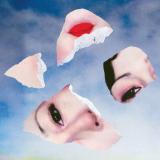
Themes of change, breaking up, shattering old ways of being are shot through the record. For the front cover, a photograph of the artist’s face was printed, ripped up and re-assembled, resembling the creative process embarked upon by Lew for her first “solo” material. The album feels instinctual, almost dream-like in its assemblage of sweeping synths and pulsating, propulsive drum machine beat patterns with Lew’s vocal performances sensitive and caressing over the top. Increasingly relying on the subconscious and dreams to guide her creative process, Hannah Lew frequently abandons literal interpretations or linear narratives, the songs seeming to exist in a swooning, effortless flow-state while remaining emotionally hard hitting.
On an album where every song could be a single, there are kaleidoscopic shades and varying emotional tones in abundance. First single Another Twilight is carried along a pumping, Italo-disco-style 4/4 beat and mono-synth bass line, the low end pulling at the heart and body. Lew’s vocal melody teases the track before swan-diving into a gorgeous chorus as she sings “it’s all over baby and I don’t mind… in decline, I take my time…” The album is suffused with moments like this. On slow builder Damaged Melody, an arpeggiated synth elongates the verse before a cascading synth showers down melodic glitter. The stunning Replica uses dual swirling synth patterns before a driving, synthpop chorus for the ages carries Hannah Lew’s vocal into the stereo field, sailing in on a high register singed with the embers of a break up.
In a departure from previous groups, her solo songs are guided by dreams and free association inspired by Dada and the Surrealist movement and sculpted afterwards. As such, the songs reveal themselves on repeated listens, revealing traces of heartbreak inspired by both personal and global elements - Hannah Lew regards the album “a wartime album.” On Move In Silence, Lew intones “there’s a war outside, just out of view,” revealing the dichotomy at play throughout. With the songs evolving naturally and in a flow state, the pressures and sadnesses of the modern age bleed through, mixed in with Lew’s inherent love, sensitivity and fractured-but-intact optimism. On the swooning, sublime Sunday layers of Numanoid synths open up for the commanding vocal performance pontificating on grief, love, pain as she “feels the ache on Sunday…” As the chorus builds and Lew’s call-and-response vocal adds to the emotional tension, it almost feels like too much to take.
Elsewhere, there are echoes of Hannah Lew’s previous work. On Time Wasted a bass guitar comes in with a heavy, punk attack before the synths and vocal harmonies reminiscent of later Cold Beat elevate everything. The glassy, sweetly resigned closer The Clock sounds like so classic it could be cover, a sweetened Jesus & Mary Chain tune perhaps, before it erupts into volcanic chorus that could only come from Hannah Lew in 2026.
Belgian minimalist, Dutch-language new wave/synth pop, since 1981! The historic album ‘Jonge Helden’ (1981) brought them instant eternal fame, the single ‘Lekker Westers’ (1983) a Belpop classic & the line-up changed wildly with icons such as Luc Van Acker (Revolting Cocks), Dani Klein (Vaya Con Dios), Willy Willy (The Scabs) or Andrew Chi Claes (Stuff) ...
However, MARCEL VANTHILT (lyrics & music) continues to rock the anarcho-Dadaist-electro-super-tronica scene to this day. Side note: Vanthilt often strayed into TV land (BRT, VPRO, MTV-EUROPE, BBC) and is now a DJ at Radio WILLY with the alternative ‘De M-Show’.
AA! is once again performing frequently in the best clubs (Depot, Casino, Macca) and on major stages (Pukkelpop, Villa Pace, Paulus Oostende). This will also be the case in 2026! This is due to the fresh and spicy new album ‘AA!PKPP’ in collaboration with PARKAPARAPLU.
PARKAPARAPLU: New dark wave duo from Antwerp. With ...
> EMMA ROTSAERT, singer and actress. She plays the lead role in the Ensor-nominated TV drama series ‘How To Kill Your Sister’ (2025). And comes from the same absurd planet as Vanthilt.
> GEERT VANBEVER, veteran of Wizards Of Ooze, Rudy Trouvé Septet, Dead Man Ray, Tuff Guac, among others... worked with Hugh Cornwell (The Stranglers) and Budgie (The Banshees), among others. Together, Emma & Geert also have a Sisters Of Mercy tribute band: Body Electric.
- 1: Screwdriver
- 2: Nearest Distance
- 3: Fields
- 4: Favourite Narrative
- 5: Pale
- 6: Coming Home
- 7: Project Dada
- 8: My New Shirt
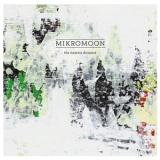
Transparent grünes Vinyl. Mikromoon sind fünf erfahrene Musikerinnen und Musiker aus Saarbrücken, die in zahlreichen Bands aktiv waren/sind (u.a. Blind, Pure Bug Beauty, Britney und Oaks) und in dieser Formation seit 2022 Songs ins Universum senden. Ihr Sound ist eine exklusive Mischung aus Indierock, Wave, Postpunk, Folk, TripHop, Grunge, Pop und einer Prise Psychedelik. Mit ihrem Debütalbum "The Nearest Distance" formulieren sie ein trotziges Gegengift zur allgemeinen Weltlage. In acht intensiven Songs tauchen wir ein in eine Welt aus hoffnungsvollen und melancholischen Klängen, die zwischen bedingungsloser Liebe, hemmungsloser Wut, gnadenloser Isolation, Identitätsverlust und dem Finden inneren Friedens oszillieren.
- A1: Future Song
- A2: Submarine
- A3: Flute Song
- A4: Sunrise
- A5: Don’t Wake Me Up
- B1: Driving In The Sun
- B2: Fragile
- B3: Eight
- B4: Even When
- B5: Everything For
- B6: The Maker Of Heavenly Trousers
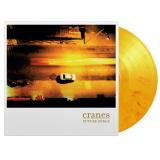
Cranes is a dream pop/shoegaze band formed by siblings Alison and Jim Shaw, who rose to stardom following a world tour with the Cure in 1992. After the influential Dedicated label folded in 1998 they went on a two-year hiatus after which they set up their own label Dadaphonic. On Dadaphonic, they released three studio albums between 2001 and 2008, of which Future Songs is their first.
Between 1986 and 1997 Cranes released a steady stream of records on Bite Back! and of course Dedicated, and when the latter folded, the Shaw siblings took a relatively long break from recording. Then, in 2001 they returned with a different bassist and drummer, their new Dadaphonic label and a fantastic new record to go along with it. A breathe of fresh air,
Future Songs acts as a bridge between their somewhat brusque approach to shoegaze from the 90s and electronica-infused sound from the zeroes. A remarkable effort, especially considering the Shaws recorded almost everything on their own.
Future Songs is available as a 25th anniversary edition of 1000 individually numbered copies on yellow marble vinyl, and includes an insert.
- 1: Male - Sirenen
- 1: 2Die Radierer - Angriff Auf's Schlaraffenland
- 1: 3Der Kfc - Gefangen In Der Brd
- 1: 4Hans-A-Plast - Rock'n Roll Freitag
- 1: 5Brüllen - Dämmerung Canceln, Gesang Stehen Lassen (Tage
- 1: 6Palais Schaumburg - Telefon
- 1: 7Egotronic - Raven Gegen Deutschland
- 1: 8Carambolage - Tu Doch Nicht So
- 1: 9Die Aeronauten - Freundin
- 1: 0Korpus Kristi - Stadt Der Blauen Eier
- 1: Östro 430 - Zu Cool
- 1: 2... But Alive - Ohnmacht
- 1: 3Isolierband - Keine Gnade
- 1: 4Mutter - Ich Weiß Ja Wer Du Bist
- 1: 5Die Goldenen Zitronen - Flimmern
- 1: 6Rotzkotz - Computamensch
- 1: 7Acht Eimer Hühnerherzen - Eisenhüttenstadt
- 1: 8Freiwillige Selbstkontrolle - Herz Aus Stein
- 1: 9Family 5 - Hau Weg Den Dreck
- 2: 1S.y.p.h. - Industrie-Mädchen
- 2: Bärchen Und Die Milchbubis - Happy Bonbon
- 2: 3Ea80 - Verloren
- 2: 4Die Nerven - Eine Minute Schweben
- 2: 5Superpunk - Nein Nein Nein
- 2: 6Tommi Stumpff - Mich Kriegt Ihr Nicht
- 2: 7Toxoplasma - Ordinäre Liebe
- 2: 8Schnipo Schranke - Pisse
- 2: 9Terrorgruppe - Opa
- 2: 10Antilopen Gang - Beate Zschäpe Hört U (Mit Jan Windmei
- 2: 11Slime - Deutschland
- 2: 1Tocotronic - Freiburg
- 2: 13Muff Potter - Auf Der Bordsteinkante (Nachts Um Halb Ei
- 2: 14Dritte Wahl - Greif Ein
- 2: 15Normahl - Geh Wie Ein Tiger
- 2: 16Stereo Total - Die Dachkatze
- 2: 17The Shocks - More Kicks
Mit "Angriff auf"s Schlaraffenland" veröffentlicht Tapete Records eine umfassende, musikalisch kuratierte Reise durch 50 Jahre deutschsprachigen Punk - von den frühen Experimenten der späten 1970er bis zu modernen Positionen der Gegenwart. Die Compilation begleitet die Jubiläums-Veröffentlichungen des Ventil Verlags, der über 200 Autor:innen zu ihren prägendsten Punk-Songs versammelt und damit das Vermächtnis sowie die Relevanz des Genres würdigt. Wie ein gutes Mixtape verzichtet die Sammlung bewusst auf Chronologie und setzt auf rein musikalische Kriterien: rohe Energie, politische Haltung, Humor, Widerspruchsgeist und stilistische Vielfalt. Vertreten sind u. a. Die Radierer, Hans-A-Plast, Palais Schaumburg, Egotronic, Bärchen und die Milchbubis, Toxoplasma, Slime, Schnipo Schranke, Stereo Total, Die Nerven - Bands, die Punk mit Pop, Dada, Elektronik, Chanson oder Noise neu definiert haben. "Angriff auf"s Schlaraffenland" ist damit ein unverzichtbares Dokument für alle, die Punk nicht als Nostalgie, sondern als lebendige, widersprüchliche und weiterhin unbequeme Kulturform verstehen.
- A1: Herbaliser – A Mother
- A2: Small World – Livin’ Free (Soundtrack Mix)
- B1: Tango – Spellbound
- B2: The Lab Rats – Give My Soul
- B3: Statik Sound System – Revolutionary Pilot
- C1: Jmj & Flytronix – In Too Deep
- C2: Aquasky – Kauna
- C3: James Bong – Mr. Kiss Kiss Bong Bong (Big Brothers Dubbing You Full On - Dub Tractor Remix)
- D1: Hardfloor Presents Dadamnphreaknoizephunk – Dupdope (Dubdope)
- D2: Thievery Corporation – Shaolin Satellite
- D3: Kruder & Dorfmeister – High Noon
- E1: Beanfield – Keep On Believing
- E2: Sapien – Que Dolor
- E3: Shantel – Bass And Several Cars
- F1: Karma – Look Up Dere
- F2: Showroom Recordings – Radio Burning Chrome
- F3: Kruder & Dorfmeister – Black Baby (Dj-Kicks)
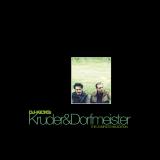
For its 30th anniversary, Kruder & Dorfmeister’s DJ-Kicks is available for the first time in mixed form on 3LP, remastered by Bernie Grundman and packaged in a special box set including original imagery. Kruder & Dorfmeister's rendition of the series created an era defining moment, which tied together a glowing array of musical registers. The Viennese downtempo royalty blended a fusion of slowed down moments across many genres with rolling Drum and Bass from the likes of Aquasky, the melting acid lines of deep Hardfloor and the 90s boom bap sampling, smoked out atmospherics of Thievery Corporation amongst many more.
These masters of mood channeled the sound of a moment with their DJ-Kicks, which still retains a certified cinematic sheen, the patina of the real – curation and mixing at its most playful and refined. It remains to this day one of the most recognizable DJ-Kicks and mixes of all time. Containing two certified cuts from K&D themselves; the wooze is strong on “High Noon” with Dorfmeister's intoxicating jazz flute licks and a trembling harmonica atop a mirage of breaks. Their DJ-Kicks original and legendary tune “Black Baby” closes the mix providing a piece of grandeur, riding off into the distance deep to the vanishing point.
When the mix dropped in 1996, the slo-beat pioneers were among the hottest producers in the dance universe. Even though they only produced two unreleased maxis, names like Count Basie, Bomb The Bass, Alex Reece or United Future Organization had some of their tracks remixed by these exceptional producers. Rumour has it during the work for DJ-Kicks and their debut album they refused doing remixes for U2, Grace Jones, Elvis Costello and the Fantastic Four! ‘DJ-Kicks: Kruder & Dorfmeister’ took its place in the pantheon a long while back, effortless in its ability to traverse sounds, styles and tempos while retaining a selection which remains timelessly recognisable as: Kruder & Dorfmeister.
A1 GIRL IN A BAND (ORIGINAL BY HALF GIRL)
A2 INCOMPREHENSIBLE WORLD (ORIGINAL BY LAUNDROMAT CHICKS)
A3 NACHT (ORIGINAL BY CULK)
A4 PAST LIFE (ORIGINAL BY EUROTEURO)
A5 INVISIBLE (ORIGINAL BY LUISE POP)
A6 CAN'T YOU SEE (ORIGINAL BY SALAMIRECORDER & THE HI-FI PHONOS)|TOPSY TURVY
B1 THE BULLSHIT (ORIGINAL BY TELEBRAINS)
B2 TOMORROW (ORIGINAL BY DIVES)
B3 SCHÖNE GRÜßE (ORIGINAL BY TCHI)
B4 WHO'S GONNA LOVE ME (ORIGINAL BY BAD WEED)
B5 TROUBLES CAUGHT (ORIGINAL BY MILE ME DEAF)
B6 PLEASE WASTE YOUR TIME (ORIGINAL BY POTATO BEACH)
B7 MARCELINO (ORIGINAL BY TOPSY TURVY)
Das Wiener Label SILUH RECORDS feiert 20-jähriges Jubiläum u.a. mit dieser limitierten wirklichen Vinyl Only-VÖ (no CD, no DL, no Stream)! Das Album kommt mit 13 Songs, aktuelle Label-Artists covern jeweils einen liebgewonnene Song von Labelkolleg*innen. Ein wilder Ritt zwischen den Genres ist vorprogrammiert, was auch den breiten Backkatalog der Wiener Indie-Institution Siluh Records gut widerspiegelt. Das 2005 gegründete Label mit mittlerweile über 100 Releases ist ein wahrliches Szene-Juwel, wo Bands wie DIVES, GARDENS, CULK, MILE ME DEAF, LAUNDROMAT CHICKS, SEX JAMS oder EUROTEURO ihr zuhause haben und zum kleinen Undeground-Hype der Musikstadt Wien maßgeblich beigetragen. Doch im Label-Backkatalog finden sich auch ein paar internationale illustre Gäste. So zum Beispiel gab es Releases mit JAD FAIR von Half Japanese bzw. dem französischen Elektro-Akustiker PHILIP PETIT, den 90er US-Indie-Rockern SWEARING AT MOTORISTS, eine Techno-Remix Platte mit ALEC EMPIRE, ERIC D. CLARKE, JASON FORREST und BERNHARD FLEISCHMANN, ein Single mit CASSIE RAMONE von The Babies, oder Alben vom Chokebore-Frontman TROY VON BALTHAZAR. Für die Jubiläumsplatte wurde jetzt der Auftrag an derzeitige Siluh Acts erteilt, je einen Song aus dem Katalog neu zu interpretieren. ISCHIA zaubern aus einem LAUNDROMAT CHICKS Song eine wahre Dream Pop Hymne mit Shoegaze Finale. LAUNDROMAT CHICKS wiederum basteln aus dem Garagenrock von TELEBRAINS eine Neil Young'esque Version. TELEBRAINS nehmen sich DIVES' "Tomorrow" vor, diese wiederum graben einen alten LUISE POP Song, der nie auf einem Album erschienen ist, aus und erwecken ihn zu neuem Leben. Die Indie-Folk-Gruppe GARDENS bearbeiten eine Dada-Pop-Nummer von EUROTEURO, die wiederum einen TOPSY TURVY Song eingedeutscht haben. Und so geht's munter weiter... Der Titel "POCKET SONGS" bezieht sich auf ein Zitat des befreundeten Betreibers von Bachelor Records, der mal meinte "Pocket Band, eine Band für die Hosentasche. Eine Band, die man liebt und von der man Freunden erzählen möchte, aber nicht zu vielen, denn die Band sollte klein und in der Hosentasche bleiben und nicht in den Playlists von jedem Tom, Dick und Harry vorkommen". Dem Vinylalbum beigelegt ist ein Siluh-Poster, alle Tracks nur auf LP hier exklusiv/original! Herzlichen Glückwunsch!
- Svitlana Nianio Phanton - Fake
- Svitlana Nianio Phanton - Manyspace
- Svitlana Nianio Phanton - Quiet Place
- Svitlana Nianio / Phanton - Політ Світляки
- Няньо, Гинерв & Таран - Nianio, Geenerve & Taran - Шепочуть Cтіни - Whispering Walls
- Няньо, Гинерв & Таран - Nianio, Geenerve & Taran - Pічка Bтома - Tired River
- Solar - Your Secret
- Solar - Three Steps
- Solar - August Samba
- Taran - Death And Bachelor
"I got to know visual artist, musician, and producer Guido Erfen and sound engineer, acoustic artist, and percussionist Michael Springer as part of a group of five by the name of SHM1. The members of the group organised concerts at Rhenania, a disused grain silo, where I performed with The Absurd in 1988 and 1989. The band was also featured on one of Erfen's tape releases. Erfen and Springer met when they were still at the same secondary school and soon became close friends and musical allies. With the other members of SHM they built an independent network for creating and distributing music beyond the mainstream in Cologne. Rent at Rhenania was incredibly low, allowing a recording studio to be established there.
The first traces of the Ukrainian Underground arrived at Erfen's door via a cassette tape with three bands from Kharkiv and Kyiv, the package including a long essay which detailed the rock scene in the two cities by Sergey Myasoyedow. In 1986, Myasoyedow, together with Sasha Panchenko, had founded the “Novaya Scena“ rock club in Kharkiv, presenting bands inspired by punk, the avant-garde, dadaism, and even medieval melodies. If Erfen hadn't been part of the independent mail-art scene, he wouldn't have had the chance to discover this unorthodox music. It was the summer of 1990, shortly before the Soviet Union collapsed and Ukraine became an independent state the following year.
In 1991, singer and keyboard player Soloveyka from Kharkiv arrived in Cologne and gave Erfen half a dozen cassettes with underground bands from Ukraine and a handful with bands from the Soviet Union. Intrigued by the original music of many of the acts, he visited Ukraine twice, made friends there, compiled a tape with his favourite tracks and finally succeeded in convincing Hamburg label boss Alfred Hilsberg to present underground music from Ukraine on the CD “Novaya Scena“ via his label What's So Funny About (the original home of Einstürzende Neubauten).
The album compiled 20 tracks recorded between 1986 and 1992 by 14 bands out of Kharkiv and Kyiv– music beyond the usual Perestroika records, often with jarring dissonances over grooves that fans of Captain Beefheart or The Fall would certainly enjoy.
On the other hand, there are tracks featuring flute and trumpet that seem inspired by folk, classical music, and punk. Ghostly chamber prog miniatures by Cukor Belaya Smert (lit. Sugar White Death) from Kyiv featuring, among others, the classically trained pianist and singer Svitlana Nianio (née Ochrimenko) and guitarist, visual artist, and spokesman Yewgeny "Yenia" Taran. Nianio sang in her native Ukrainian, as did two more of the bands. Today, this seems more relevant than ever, more culturally and historically significant from a Ukrainian point of view than it was even in 1993. Young Ukrainians were amazed at that time that rock music sung in their native tongue could work!
It is in the aftermath of the “Novaya Scena“ album that the music on this LP was created. About a year after the release of the CD in August 1993, Nianio and Taran came to Cologne to work on music for the dance production "Transilvania Smile" by the dance theatre ensemble Pentamonia2.
The seeds for the Traces of Ukrainian Underground in Cologne were sown. Starting in 1994, a series of informal recording sessions took place at Michael Springer’s Phanton Studio and at SHM studio in Rhenania. Together, these sessions formed the basis of the four different incarnations of the Ukraine-Cologne connection heard on STROOMS’s compilation.
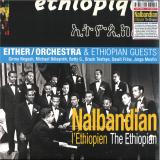
The Éthiopiques series returns! Essential archive recordings from an extremely fruitful period in Ethiopian music.
Before “Swinging Addis” took over the world, there was Moussié Nerses Nalbandian — the Armenian-born composer who shaped modern Ethiopian music. Mentor, arranger, and pioneer, he laid the foundations of Ethio-jazz.
This Éthiopiques volume revives his forgotten legacy, recorded live by Either/ Orchestra First issue ever with new exclusive photos and in depth liner 8-page insert.
“Ethiopian jazzmen are the best musicians that we have seen so far in Africa.
They really are promising handlers of jazz instruments.”
Wilbur De Paris
(1959, after a concert in Addis Ababa)
አዲስ፡ዘመን። *Addis zèmèn* **A new era.**
The time is the mid-1950s and early 1960s, just before "Swinging Addis" bloomed – or rather boomed – onto the scene. Brass instruments are still dominant, but the advent of the electric guitar, and the very first electronic organs, are just around the corner. Rock’n'Roll, R’n’B, Soul and the Twist have not yet barged their way in. Addis Ababa is steeped in the big band atmosphere of the post-war era, with Glenn Miller's *In the* *Mood* as its world-wide theme song, neck and neck with the Latin craze that was in vogue at the same period. Life has become enjoyable once again, with the return of peace after the terrible Italian Fascist invasion of Ethiopia (1935-1941). The redeployment of modern music is part and parcel of the postwar reconstruction. *Addis zèmèn* – a new era – is the watchword of the postwar period, just as it was all across war-torn Europe.
The generation who were the young parents of baby boomers** were the first to enjoy this musical renaissance, before the baby boomers themselves took over and forever super-charged the soundtrack of the final days of imperial reign. Music is Ethiopia's most popular art form, and very often serves as the best barometer for the upsurge of energy that is critical for reconstruction. Whether it be jazz in Saint-Germain-des-Prés or the *zazous* who revolutionised both jazz and French *chanson* after the *Libération*, be it Madrid's post-Franco Movida, or Dada, the Surrealists and *les années folles* that followed World War I, the periods just after mourning and hardship always give rise to brighter and more tuneful tomorrows. Addis Ababa, as the country's capital, and the epicentre of change, was no exception to this vital rule.
**Two generations of Nalbandian musicians**
Nersès Nalbandian belonged to a family of Armenian exiles, who had moved to Ethiopia in the mid-1920s. The uncle Kevork arrived along with the fabled "*Arba Lidjotch*", the** "*40 Kids*", young Armenian orphans and musicians that the Ras Tafari had recruited when he visited Jerusalem in 1924, intending to turn their brass band into the official imperial band. If Kevork Nalbandian was the one who first opened the way of modernism, pushing innovation so far as to invent musical theatre, it was his nephew Nersès who would go on to become, from the 1940s and until his death in 1977, a pivotal figure of modern Ethiopian music and of the heights it. Going all the way back to the 1950s. Nothing less. And it is Nersès who is largely to thank for the brassy colours that so greatly contributed to the international renown of Ethiopian groove. While the younger generations today venture timidly into the genealogy of their country's modern music, often losing their way amidst a distinctly xenophobic historiographical complacency, many survivors of the imperial period are still around to bear witness and pay tribute to the essential role that "Moussié Nersès" played in the rise of Abyssinia's musical modernity.
Given the year of his birth (15 March 1915), no one knows for sure if Nersès Nalbandian was born in Aintab, today Gaziantep (Turkiye/former Ottoman Empire) or on the other side of the border in Alep, Syria... What is certain is that his family, like the entire Armenian community, was amongst the victims of the genocide perpetrated by the Turks. Alep, the place of safety – today in ruins.
Before Nersès then, there was uncle Kevork (1887-1963). For a quarter of a century, he was a whirlwind of activity in music teaching and theatrical innovation. *Guèbrè Mariam le Gondaré* (የጎንደሬ ገብረ ማርያም አጥቶ ማግኘት, 1926 EC=1934) is his most famous creation. This play included "ten Ethiopian songs" — a totally innovative approach. According to his autobiographical notes, preserved by the Nalbandian family, Kevork indicates that he composed some 50 such pieces over the course of his career. This shows just how much he understood, very early on, the critical importance of song as Ethiopia's crowning artistic form. Indeed, for Ethiopian listeners, the most important thing is the lyrics, with all their multifarious mischief, far more than a strong melody, sophisticated arrangements or even an exceptional voice. (This is also why Ethiopians by and large, and beginning with the artists and producers themselves, believed for a long time — and wrongly — that their music could not possibly be exported, and could never win over audiences abroad, who did not speak the country's languages).
Last but not least, one of Kevork's major contributions remains composing Ethiopia's first national anthem – with lyrics by Yoftahé Negussié.
Nersès Nalbandian moved to Ethiopia at the end of the 1930s, at the behest of his ground-breaking uncle. Proficient in many instruments (pretty much everything but the drums), conductor, choir director, composer, arranger, adapter, creator, piano tuner, purveyor of rented pianos,... he was above all an energetic and influential teacher. From 1946 onwards, thanks to Kevork's connexion, Nersès was appointed musical director of the Addis Ababa Municipality Band. In just a few years, Nersès transformed it into the first truly modern ensemble, thanks to the quality of his teaching, his choice of repertoire, and the sophistication of his arrangements. It was this group that would go on to become the orchestra of the Haile Selassie Theatre shortly after its inauguration in 1955, which was a major celebration of the Emperor's jubilee, marking the 25th anniversary of his on-again-off-again reign.
At some point or other in his long career, Nersès Nalbandian had a hand in the creation of just about every institutional band (Municipality Band, Police Orchestra, Imperial Bodyguard Band, Army Band, Yared Music School…), but it was with the Haile Selassie Theatre – today the National Theatre – that his abilities were most on display, up until his death in 1977. To this must be added the development of choral singing in Ethiopia, hitherto unknown, and a sort of secret garden dedicated to the memory of Armenian sacred music, and brought together in two thick, unpublished volumes. Shortly before his death (November 13, 1977), he was appointed to lead the impressive Ethiopian delegation at Festac in Lagos, Nigeria (January-February 1977).
His status as a stateless foreigner regularly excluded him from the most senior positions, in spite of the respect he commanded (and commands to this day) from the musicians of his era. Naturally gifted and largely self-taught, Nerses was tirelessly curious about new musical developments, drawing inspiration from the very first imported records, and especially from listening intensely to the musical programmes broadcast over short-wave radio – BBC *First*. A prolific composer and arranger, he was constantly mindful of formalising and integrating Ethiopian parameters (specific “musical modes”, pentatonic scale, and the dominance of ternary rhythms) into his “modernisation” of the musical culture, rather than trying to over-westernise it. It even seems very probable that *Moussié* Nerses made a decisive contribution to the development of tighter music-teaching methods, in order to revitalise musical education during this period of prodigious cultural ferment. Flying in the face of all the historiographical and musicological evidence, it is taken as sacrosanct dogma that the four musical modes or chords officially recognised today, the *qǝñǝt* or *qiñit* (ቅኝት), are every bit as millennial as Ethiopia itself. It would appear however that some streamlining of these chords actually took place in around 1960. It was only from this time onward that music teaching was structured around these four fundamental musical modes and chords: *Ambassel*, *Bati*, *Tezeta* and *Antchi Hoyé*. A historical and musical “details” that is, apparently, difficult to swallow, especially if that should honour a *foreigner*. Modern Ethiopian music has Nersès to thank for many of its standards and, to this day, it is not unusual for the National Radio to broadcast thunderous oldies that bear unmistakable traces of his outrageously groovy touch.
The latest wayward soundsystem sonics on the Social come from Wroclaw in Poland courtesy of dadan karambolo. As part of the strictly legit SPLOT crew karambolo is spearheading a vibrant community of bassweight freaks digesting all the best misfit club music from the cracks between — a hint of dubstep, a twist of techno and plenty of advanced sound design, all poured into a thoroughly modern, richly realised brew.
Having previously snuck tunes out on SPLOT’s in-house label and the respected Awkwardly Social crew out of Berlin, karambolo delivers an extended statement with his Sneaker Special Club debut. Subtle pressure is the order of the day as he zeroes in on evocative soundscaping and a subdued mood, all while piling on ample low end intensity and edging some sharp angles out of the meditative roll. Even when minuscule slithers of amen breaks sneak into ‘Awkward Expression’, the ambience remains somewhere between dream and dread while ‘Huskarl’ scatters industrial jackhammers across a vast tundra of drone.
‘Done For’ steps forward a touch more forthright with its grime-coded bass spasms, deploying the kind of bludgeoning physicality and ruthless reduction you might associate with fellow Sneaker alumni, Mars89. ‘Burbot’ also switches the script for a cheeky B3 that toys with 80s electro chopped into a snappy breakbeat and underpinned with a sticky synth line. Sidestepping direct dancefloor routes in search of different ways to achieve movement in the club, karambolo has more than matched the over-arching Sneaker ideal with an assured, original transmission from the outer limits of the soundsystem.
RedNilo is an Italian-Moroccan duo composed of Reda Zine and Danilo Mineo, two musicians based in Bologna linked by a deep passion
for world music, particularly African music. Their ongoing and tireless musical exploration has led them to collaborate for over a decade
on numerous artistic and recording projects. Their new album, eponymously titled RedNilo, features six tracks characterized by a sound
reminiscent of Gnawa, Hassani, Tuareg, and experimental rock. The psychedelic, raspy riffs of the electric guitar, the repetitive rhythms
of the percussion, and the rhythmic-melodic lines of the guembri represent and evoke their journey. The resulting sound material is the
culmination of their journey and their encounters with masters, artists, griots, artisans, and instrument makers in the Draa Valley in
southeastern Morocco, bringing together the two musicians' urban and experimental backgrounds and souls. The album's artwork was
designed by Moroccan artist Aali Wica, initiator and mentor of their spiritual and artistic journey to the southern African continent,
across the long black snake.
Réda Zine, a musician and documentary filmmaker born in 1977 in Casablanca, launched his musical career in the 1990s, contributing
to L'Boulevard, Africa's largest independent festival. Raised in the Casablanca medina, he was introduced to Gnawa music by various
Maallems. After studying at the Paris 3 Sorbonne University, he founded Café Mira, a project that has performed at several international
events.
From 2011 to 2014, Zine was artistic director for Creative Commons (Middle East and North Africa), where he won the #CC10 Korea
award in 2012 with the project "It will be Wonderful," which brought together musicians from over 12 countries. He has also been
involved in exhibitions on music and censorship, participating in events in major cities such as Paris, Buenos Aires, and Seoul. In Italy,
he continued his musical research with the Hardonik project and was part of the Afrobeat group Voodoo Sound Club, recording the
album Mamy Wata. Zine collaborates with artists such as Seun Kuti and has initiated educational activities related to Gnawa music,
contributing to initiatives such as the African Symphony Laboratory for improvisers. He is the co-founder of Fawda, a Gnawa-based
project, and is part of the Gnawa Rumi collective, which explores the music of the Moroccan diaspora in Italy. He directed the documentary "The Long Road to the Hall of Fame" about Public Enemy, which won an award at the Pan African Film Festival in 2015.
Danilo Mineo graduated as a national educator from the AMMnationalscholl music academy in Milan, with a thesis entitled "Afro-Cuban
Music and the Rhythm Section." Over the years, he has attended workshops and masterclasses with international artists and masters
of percussion and drums, including Horacio El Negro Hernandez, Airto Moreira, Trilok Gurtu, Luis Agudo, Arto Tuncboyaciyan, Dudu
Tucci, Dom Famularo, Karl Potter, Rodney Barreto, and Eno Zangoun, exploring the rhythmic language of various musical genres and
styles.
In addition to publishing several educational manuals for percussionists, music critics consider him a versatile percussionist, active in
various musical productions and recordings: Mop Mop, Fawda, Guglielmo Pagnozzi "Voodoo Sound Club," Fabrizio Puglisi "Guantanamo," Panaemiliana, The Mixtapers, and many others, with whom he has performed at numerous national and international music festivals (in Europe and Africa). As a percussionist and side man he has recorded numerous albums and collaborated with Italian and
international artists including: Giancarlo Schiaffini, Gianluca Petrella, Roy Paci, Roberto Freak Antoni, Famoudou Konate, Melaku Belay, Baba Sissoko, Kalifa Kone, Jamal Ouassini, Deda, Dj Lugi, Bioshi.
- A1: Downtown Club Owner
- A2: Hot And Steamy Sweatpants
- A3: No Need To Thank Meme
- A4: Second Rate Quality Good Stuff
- A5: Look What The Dog Bought In
- B1: Shakin Cat Stevens
- B2: Farmer Had A Farm Song Crazy Dog Lady
- B3: Ukulele House Of Worship Aka Casino Place
- B4: This Town Is Big Enough For You Two
- B5: Less Is More For My Baby
- B6: Unexpected Money Transfer
With Schokolino Choco Loco, Icelandic duo Stilluppsteypa brings a warped dispatch from the outside fringes of experimental sound--part valium-drenched dreamscape, part dadaistic radio hallucination. Like a nocturnal transmission from a parallel universe, the record drifts and mutates through layers of joyous abstraction, laced with a deadpan sense of humour, while at the same time it is strangely sensitive. This LP is less a collection of tracks than a slow-motion joyride through Stilluppsteypa's singular sonic universe--so hypnotic and absurd, it ends up warming your heart.
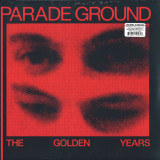
Parade Ground march back to Dark Entries with The Hidden Side, a compilation of B-sides and unreleased material. Brothers Jean-Marc and Pierre Pauly started Parade Ground in Brussels in 1981. Their Dada-laced brand of post-punk fuses propulsive drum machines and icy synths with skeletal guitar riffs and Jean-Marc’s distinct and powerful voice, pioneering the subgenre of emotional body music. The brothers met Daniel B. and Patrick Codenys of Front 242 in 1982, marking the beginning of an enduring collaborative partnership. In 2011, Dark Entries released The Golden Years, a compilation chronicling the band’s A-sides and exposing them to a new generation of EBM enthusiasts. The Hidden Side continues this mission, illuminating lesser-known facets of the band’s oeuvre. The tracks here were written between 1982 and 1989, and showcase Parade Ground’s range of styles - all cold, dark, and brooding. Tracks like “Riddle in the Stain Glass Window” and the previously unreleased “Looking Through Keyholes” see the band in menacing coldwave mode, rocking chorus-drenched bass guitar and blasts of analog synth. The band’s dancier proclivities shine elsewhere, like on “Off-Balance” or the supremely funky “Hollywood (The Sexiest Fish),” a floor-filler driven by bass guitar and thumping digital drum machine beats. Also included is “Marble Mind,” a previously unreleased latter-period track from the band recorded by Patrick Codenys at 242 Studio. The Hidden Side includes liner notes featuring lyrics and a photo of Jean-Marc and Pierre Pauly. Additionally, a newly remastered edition of The Golden Years will be released along with The Hidden Side.
Parade Ground has always been the duo of brothers Jean-Marc and Pierre Pauly from Brussels, Belgium formed in 1981. Taking cues from Post-Punk, Coldwave, Dada and Surrealism, Parade Ground channeled suffering, tension and rage through pulsing synthesizers, skeletal guitar, severe bass and Jean-Marc’s expressive vocals as the most melodic and emotional instrument. The Golden Years is an 11-song, career-spanning collection of Parade Ground’s long out-of-print 7” and 12” singles as well as rare compilation tracks from the pioneers of electronic body music created during 1982-1988.
Parade Ground first appeared on the Nationale Rockmeeting LP in 1982, striking straight to the heart with the passionate plea “I Shut My Eyes.” Later that year the brothers met Daniel B. and Patrick Codenys of Front 242 beginning a collaborative partnership that continues to present day. In 1983 they released their debut 3-song 7” EP Moan On The Sly on the New Dance label, musically a hybrid of Joy Division and Fad Gadget. 1984 brought further explorations into the world of electronic body music with the 3-song Man In A Trance EP and 2 tracks on the live concert compilation Mask Promotion both records released on Front 242's Mask Music label. The following year the single Took Advantage/Moral Support 12” was released incorporating then, state-of-the-art modular synthesizers programmed by Daniel B. and back-up vocals from Flo Sullivan (A Formal Sigh, Shiny Two Shiny). Then in 1987 the brothers collaborated with Colin Newman of British post-punk band Wire, who produced and lent his vocals, guitars and keyboards to two songs ("Moans"/"Action Replay") while Daniel B. produced flipside "Gold Rush" on the Dual Perspective EP that stands alongside 80s anthems from Tears for Fears, Modern English, Echo & The Bunnymen. Finally in 1988 their debut album Cut Up was released on Play It Again Sam Records and featured the singles Strange World and Hollywood. In 1993 the brothers wrote and composed the vocals on two Front 242 albums Up Evil and Off. After 15 years of silence the boys released their second album Rosary in 2007 and continue to write new material and tour with their extensive catalog of dark dance classics. Each LP includes a 6-page press kit with lyrics, discography, photos and liner notes by Daniel B. of Front 242. The history of Belgian electronic music would not be complete without a trip through “The Golden Years” of Parade Ground.
- A1: All Rights Resevered
- A2: God Factory
- A3: Hawaii / Torso / 97 Cigarettes
- A4: Acid Fur
- A5: Dance
- A6: New York Is A Lonely Town
- A7: (This Track Doesn't Exist)
- B1: Much About Bones
- B2: Scat
- B3: Pander To The Natives
- B4: For Garry 5
- B5: The Monkey Is Safe
- B6: 1-2-3 A Baby Buggy
- C1: Walking Best Friend
- C2: Untitled 1
- C3: Untitled 2
- C4: Now This Is God's Son 1
- C5: Acid Fur (Demo)
- C6: Now This Is God's Son 2
- C7: Hello Donald, Merry Christmas
- C8: Pinstripe Bus
- D1: The Man Of My Dreams
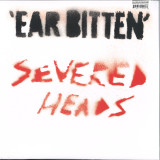
Dark Entries picks up Severed Heads yet again for Ear Bitten, a double LP reissue of some of the band’s earliest material. As originary Aussie industrial legends - although founder Tom Ellard would balk at being branded as such - Severed Heads shaped the continental subcultural sound with their kitchen electronics, chaotic tape loops, and quietly infectious nursery-rhyme-esque melodies. In 1979 Ellard, Richard Fielding, and Andrew Wright abandoned the moniker Mr. and Mrs. No Smoking Sign and adopted the edgier name Severed Heads “to pretend to be an industrial band such as Surgical Penis Klinik & Throbbing Gristle.” Noise-rockers Rhythmx Chymx had placed an advertisement in a local shop looking for a band to share the costs of pressing an LP. The Heads set about recording a Dadaist racket on a pair of open reel dictaphones and a cassette deck using a TRS-80 computer, Kawai Synthesizer 100F and Korg Mini Pops drum machine. Ear Bitten was released in 1980; original copies now fetch obscene sums, in part due to most of Severed Heads’ copies perishing in a fire at Richard’s home. The band’s next endeavor was a cassette titled Side 2, a collection of free-form experiments fashioned as Ear Bitten’s second side. For this reissue, Dark Entries has collected both Ear Bitten and Side 2 on the first disc, presenting the album in its full form. Disc two includes the original first version of Ear Bitten, which was only unreleased because it was recorded in a format not suitable for pressing. The album comes in a gatefold sleeve designed by Eloise Leigh and includes photos, liner notes, and reproductions of the original Xerox inserts from the 1980 issue. Ear Bitten delivers 22 tracks of pain you can dance to!
Tape Reworks, Vol. 2is the fourth project by Langham Research Centre released onNonclassical. Following the success of theirTape Works, Vol. 1and subsequentTapeReworks, Vol. 1(which featured remixes by Jim O'Rourke and Group A), this EP presentstwo remixes of tracks fromTape Works, Vol. 2:'Movable Fields', remixed by Kara-LisCoverdale, and 'Nachholbedürfnis', remixed by Beatriz Ferreyra. Kara-Lis Coverdale's 'Movable Fields' is an icy soundscape, gently moving at a glacial pace, evoking the feel of a field recording from a strange planet. 'Movable Fields' draws from elements of twoTape Works, Vol. 2tracks, 'Accarezzo' and 'Terminal Voltage Traces'. Ferreyra's remix of 'Nachholbedürfnis' is a dadaist cacophony of bleeps and lo-fi scratchy samples, darting chaotically throughout the track in true GRM fashion. The original album utilizedrecordings made in specific locations, particularly brutalist buildings, as an audiomanifestation of modernism.
Saeko Killy, Jamie Paton, Andrei Rusu and Anastasia Zems remix “Kraus is the Limit” by the Zurich electronic-wave duo Dâdalus & Bikarus and take the original to new dimensions.
“Kraus is the Limit (Remixes)” preserves the raw energy and emotion of Dâdalus & Bikarus’ live performances while introducing new textures. It is not merely a collection of remixes but an intimate experience that invites listeners to rediscover the original tracks through the lenses of Saeko Killy, Jamie Paton, Andrei Rusu and Anastasia Zems.
Saeko Killy translates Voran into a mesmerizingly timeless journey that is even more kraut-y and space-y. Jamie Paton brings his distinctive style to the table by adding laidback and dubby vibes to Gone and Youri Gagarine. Andrei Rusu strippes down Tous Tes Mensonges, creating a sonic whirlwind that takes the listener on an thrilling and hypnotic ride. Anastasia Zems’ take on Voran lets us wallow in the depths of an acid abyss. A tripped-out experience is guaranteed.
- A1: Radio Dada
- A2: Holeg Spies & Rip Van Hippy - Face The Strange
- A3: Lostrosphere
- A4: Holeg Spies & Thierry Gotti - Urban Resilience
- A5: Kuba - Pharoahs Day Out (Feat Youth & Gaudi - Holeg Spies Remix)
- B1: Holeg Spies & Youth - Pomegranate
- B2: Holeg Spies & Thierry Gotti - Captain Haze
- B3: Lady L
- B4: Desert Cruising
- B5: Notinism Dot Org
Holeg Spies’ 7th album BRAVE NEW WORLD is a new step towards his creation of an immersive sound world intermixing his various music influences. The album features collaborations with YOUTH (Killing Joke, The Orb, producer of Pink Floyd and The Verve), well known Dub producer GAUDI, renown Australian percussionist RIP VAN HIPPY, psychedelic dub artist KUBA and French Goa-trance pioneer THIERRY GOTTI (Spectral/Blue Room).
This unshackled album escapes all classification, getting lost in the confines of Electronic, Progressive Rock, Dub, Ambient, Symphonic and Psychedelic music.
French trail-blazer electronic artist, Holeg’s 30-year music exploration has taken him from the early days of techno productions to composing music for films.
Touring Europe and Japan, where he was regularly invited to perform thanks to JUNO REACTOR, Holeg crossed paths with his first filmmaker, the notorious TAKASHI MIIKE, for whom he made an audiovisual remix of one of his most famous films, ICHI THE KILLER in 2001.
His film music duo SAVAGE & SPIES created the soundtrack for the cult classic THE HUMAN CENTIPEDE, BLACKSITE, a $15M thriller by the producers of SICARIO & JOHN WICK and ABRUPTIO starring Oscar-winner JORDAN PEELE. Released on Liquid Sound Design in 2021, his latest opus AXIS MUNDI RELOAD was based on personal immersive journeys in the steppes of Mongolia and among the Hopi tribe in Arizona and features collaborations with YOUTH as well as JAIA and DF TRAM.
Modern highlife luminary Rex Omar has been a force within
the Ghanaian music scene for over 30 years. Now Soundway
presents five of his premier cuts remastered for a new self-titled
EP.
Over his career Rex Omar has evolved the genre, pushing
boundaries and dazzling listeners. A definitive piece of his
repertoire comes via his Dangerous album: while it was selfproduced and recorded in London circa 1997, upon CD
release it saw success mainly within his homeland of Ghana.
An irresistible blend of street-soul-come-highlife, with elements
of bouncing 90s RnB/hip-hop, it was developed with help
from Ibibio Sound Machine’s Kari Bannerman and prolific
Jamaican producer Bill Campbell. From this album rising
London producer and DJ Aroop Roy revisits the four-to-the-floor
excursion ‘Dada’, repurposing for today’s dancefloor with the
addition of fizzing synth chords and stabs.
While Omar regularly raps on his earlier works, on ‘Kele
Ngele’ (taken from his 2004 album Ajala) we hear a yearning
melodic vocal over a more laid back RnB beat. This rounds out
the new Rex Omar EP for the discerning listener to experience
the full breadth of his inventive output.
Brandon Spivey & Richie Anderson have been producing incredible music since 1993 when they released under the name "Prole Sythesis" on Alien Reign records. In 1994 they put out a series of highly sought after picture discs on the UK label Kill Out Recordings under the name A'Simetric. They went on to produce releases on USA labels Drop Bass Network & Six Sixty Six records out of Milwaukee!
These tracks are a mixture of new and old tracks. The original 90's tracks recovered from old DATs!
This release has some seriously special artwork by Mattthieu Bourel aka EK Dojo. He's had work commissioned by the New York Times, The Guardian, Washington Post, Esquire, New Scientist, Vice Managzine and many more. He has also done album covers for Venetian Snares, Carl Craig & Somatic Responses in the past.
Also comes with a free download code for the digital release of this EP.
LTD 200 COPIES
2nd edition
Legendary debut album by Junko Tange (mystery woman who showed up on the NWW list), originally issued by Osaka’s Vanity Records in 1979. Dadaesque recitations and sparse guitar, piano and electronic meanderings combine for a beguiling, hypnotic dreamworld. Officially licensed from the custodians of Yuzuru Agi's Vanity Records archives, this edition has been fully remastered from new transfers of the original analog tapes by Stephan Mathieu.
- A1: Dancing As An Act Of Rebellion
- A2: Fuck Green New Deal
- A3: Your Miserable Fake Flag Is Not Your True Homeland
- A4: La Maté Porque Era Mía (Feat Espectra Negra)
- A5: Semiconducteur Dopage (Poupees Electriques Remix)
- B1: Embrace Capitalism (Until It Strangles You)
- B2: Fake News, Good News
- B3: Religious Music For Atheists (Feat Bavs)
- B4: Quiet Before The Last Storm
- B5: Europe Is Dead (We Are Not Brothers Rework Feat Ana Curra)
- C1: Your Miserable Fake Flag Is Not Your True Homeland (Melting Dogmas Remix)
- C2: Religious Music For Atheists (Feat Bavs) (Hbk Remix)
- C3: Fake News, Good News (José Rodríguez Remix)
- C4: Fuck Green New Deal (Soj Remix)
- C5: Embrace Capitalism (Until It Strangles You) (We Are Not Brothers Remix)
- D1: Fake News, Good News (Geistform Remix)
- D2: La Maté Porque Era Mía (Feat Espectra Negra) (Smforma Vs. Morbia Remix)
- D3: Fake News, Good News (Ober Dada Remix)
- D4: Embrace Capitalism (Until It Strangles You) (Pandemian Mascletà Dework)
Dancing as an act of rebellion is the first Abraxas LP in collaboration with the Valencian label Soil Records. A compilation of the first project recordings released between 2020 and 2021 plus some new tracks and, in addition to this, a second vinyl by other darkwave electronic artists remixing the first one: Geistform, We Are Not Brothers, Ober Dada, Melting Dogmas, SMforma, HBK1, José Rodríguez, SOJ and PanDemian.
Abraxas is a halfway project between dark dance electronic music, philosophical reflection, socio-political activism and musical entrepreneurship. Its main goal is to shake bodies and minds by spreading messages of individual and social self-criticism from the point of view of duality, extremes and contradiction, inherent to the human being and capitalist society.
With UPGRADES, Fogata Sounds imprint nearly 20 years of collaboration between Troy Berkley & Krak in Dub. This opus follows half a dozen maxi 45's and 300 gigs across Europe, from the One Love Festival to the underground sound system nights. The vocalist and the producer skills take you on a journey into “Sound System” music, from Early Roots to Future Dance-Hall, oscillating between Dub and Jungle. Those styles appear like solar polaroids , bringing images to the minds of neophytes and music lovers. 12 effective and original tunes mixing analog instrumentals like in “Life pon the line” or “CrystalBall” to the uncompromising Stepper from « Roll Call ». Featuring the big tune « Matta » and to singles « Dub plate Dada » et « Sound and Power » feat Sr Wilson.
- A1: Parade Ground - The Lights Gone
- A2: Diseno Corbusier - La Esperanza Esta En Antena
- A3: Lena Platonos - Mia Gata Sas Perimenei Ste Gonia
- A4: Victrola - Luca (Instrumental)
- A5: Borghesia - Magla
- B1: Tom Ellard - Ga Duum Blitzfonika
- B2: X-Ray Pop - Corto Maltese
- B3: Second Decay - Lubeckerstrasse
- B4: From Nursery To Misery - Contentment
- B5: Cyrnai - Digital Grit Box (Demo)
Celebrating a Decade of Dark Entries with a compilation titled ‘Tens Across The Board’. We revisit our roster and chose 10 songs from 10 bands from 10 different countries spanning the years 1981-1993. The songs flow in chronological order and have never appeared on vinyl, with 7 of the songs previously unreleased.
The compilation begins in 1981 with Parade Ground from Belgium, the duo of brothers Pierre and Jean-Marc Pauly with help from Patrick Codenys and Jean-Luc of Front 242. “The Light’s Gone” was one of their earliest experiments and employs a stark minimalism with modular synthesizers, guitar reverb and tape delay. Next we venture to Granada, Spain in 1982 to meet the trio of Diseño Corbusier. Influenced by Cabaret Voltaire and Dadaism, “La Esperanza está en Antenas” was the band’s take on melancholic pop fueled by a robotic DR-55 bass-line. Sailing the Mediterranean Sea to Athens to meet Greek electronic goddess Lena Platonos who shares a demo from 1983. “Μια Γάτα Σασ Περιμένει Στη Γωνία” translates to “A Cat Is Waiting On The Corner” and is possibly the witchiest sounds we’ve shared yet, ending with a blood curdling scream. Frozen in 1983 we cross Ionian Sea to Messina, Italy and visit Victrola, the duo of Antonino “Eze” Cuscinà and Carlo Smeriglio. They’ve unearthed a melodic instrumental version of “Luca” fueled by a Korg Polysix and TB-303. Traveling across the Adriatic to Slovenia circa 1984, where Borghesia are working on their album ‘Ljubav Je Hladnija Od Smrti’. “Magla” translates to “Fog” fitting for the thick, somber electronics of Aldo Ivancic providing a dense atmosphere for the baritone vocals of Dario Seraval.
On Side B we go down under to Sydney and excavate a hidden Tom Ellard song recorded in 1984 under the alias Lord Metal, an anagram of his name for copyright reasons. “Ga Duum Blitzfonika” is a slow-motion, unadulterated dance groove originally released on the cassette compilation "Independent World”. Skipping ahead to 1986 in Tours, France we salute X-Ray Pop the minimum new wave duo of Didier "Doc" Pilot and Zouka Dzaza. They contribute the hypnotically fragile “Corto Maltese” that originally appeared on the cassette compilation ‘Plop’. Crossing the German boarder we arrive in Dortmund at the apartment of Andreas Sippel of Second Decay who recorded the instrumental demo “Lübeckerstrasse” in 1988 with partner Christian Purwien. Utilizing an TR-808, SH-101 and Arp Odyssey this cold slice of futurism was named after the street Andreas lived on. Traveling westward to England, specifically Basildon, Essex to the teenage bedroom of From Nursery To Misery, the trio of identical twin sister vocalists Gina and Tina Fear and keyboard player Lee Stevens. “Contentment” is an introspective, ethereal pop song with child-like vocals that originally appeared on the Belgian tape compilation ‘Heartbeat Vol.4’ in 1989. Finally, we return home to San Francisco and close out the compilation with Cyrnai the moniker of multi-instrumentalist Carolyn Fok. “Digital Grit Box (Demo)” was an outtake from the ‘Transfiguration’ album sessions recorded in 1993, utilizing dark dance drum beats made with MIDI sequencer programs Studio Vision and Sample Cell.
All songs have been remastered by George Horn at Fantasy Studios. The vinyl is housed in a custom designed jacket by Eloise Leigh featuring our label’s colors black-white-red with connect-the-dots pattern linking the 10 songs via maps/timeline/location, all relating to the reissue process, plus source images from San Francisco, our hometown. For this landmark release we've also printed a 2-sided fold-out wall poster that includes every artist we've released in our first 10 years 2009-2019 in black, red and silver metallic ink, plus an 8x11 insert with lyrics, notes and photos.
2025 Reissue.
Münchenbuchsee, a suburb of Bern, Switzerland. Stephan Eicher is the youngest of three children. His father, a radio and TV repairman, is also a jazz violinist and a sound tinkerer in his spare time. In the family home's converted fallout shelter turned studio, Mr. Eicher experiments with homemade sequencers, tortures handcrafted drum machines, and abuses reel-to-reel tape recorders—all under the fascinated gaze of young Stephan.
The boy quickly develops a musical curiosity, exploring sound through various experiments and wanderings. Alongside his younger brother Martin, Stephan crafts audio plays on a homemade multi-track recorder (essentially several cassette decks hooked together!), which they write, record, add sound effects to, and perform for family and friends. Just a couple of nice kids, really...
Then comes 1972, and Lou Reed's Transformer album changes everything for the Eicher kids. For 13-year-old Stephan, it's a revelation—especially "Vicious", the opening track, which he plays on repeat for months. He convinces his father to buy him an electric guitar. Not stopping there, his father also builds him a tube amp using an old radio.
Then comes adolescence. A rough one. Stephan leaves home at 16 and moves to Zurich. With obvious artistic talent, he persuades his art teacher to help him get into F+F, a radical, alternative art school—despite his young age. Accepted, he starts learning video techniques, determined to become a filmmaker.
At F+F, Stephan organizes Dada-style happenings and concerts with a group of friends known as the Noise Boys. Among them: one of his teachers on bass, Veit Stauffer on drums (who would later found ReR/Recommended Records), his girlfriend Sacha on vocals, and Stephan on guitar. In one of their early performances, they release a remote-controlled mouse covered in dull razor blades into the audience to create panic and chaos. Keeping with this aggressive, confrontational spirit, they once played a concert while wearing headphones blasting Tristan and Isolde, trying to perform their own songs simultaneously—to maximize the cacophony. The goal was always the same: clear the room.
Their “songs,” if you can call them that, followed suit. Take "Hungeriges Afrika", for instance—performed entirely with power drills and some drum feedback.
To make ends meet, Stephan returns to Bern on weekends to work as a waiter at the Spex Club, the city’s main punk venue. On September 16, 1980, during a show by proto-electro group Starter, the police raid the club and arrest everyone. Stephan, who manages to avoid arrest, seizes the opportunity to “borrow” Starter’s gear left behind. He suddenly finds himself in possession of a Roland Promars synth, a Korg MS20, and a gorgeous CR78 drum machine, which he runs through a Big Muff distortion pedal to get that perfect gritty sound.
He then sets out to reinterpret some Noise Boys tracks, reworking them during impromptu sessions recorded on a dictaphone (yes, a dictaphone—now the lo-fi sound makes more sense, doesn’t it?). He ironically titles the resulting cassette "Stephan Eicher spielt Noise Boys" ("Stephan Eicher plays Noise Boys"). This gem features seven tracks, which are the ones reissued here.
Back in Zurich, he visits his friends Andrew Moore and Robert Vogel, who have a DIY cassette duplication setup. They make 25 copies of Stephan Eicher spielt Noise Boys for Stephan and his friends. Robert encourages him to visit Urs Steiger of Off Course Records and play him the tape.
Without much hope, Stephan shows up at Urs’s office. But Urs is instantly hooked and suggests releasing a 7” single. Due to space constraints, they reluctantly drop two of the seven tracks ("Hungeriges Afrika" and "One Second"). As for the musical score featured on the cover—it was randomly chosen and remains a mystery to this day. Calling all music theory nerds!
The 7-inch is pressed in 750 copies and released in the first week of December 1980—a date Stephan remembers well, as it’s the same week John Lennon was killed. Smartly, Urs sends a promo copy to François Murner, Switzerland’s answer to John Peel, who hosts a show on alternative station Sounds. Murner falls in love with the record and starts giving it airtime. To Stephan’s surprise, sales follow—and people actually seem interested in his music.
Even this modest underground success scares Stephan a bit. He stops making music for a year and moves to Bologna, where he works as a programmer at Radio Città, a feminist radio station.
Meanwhile, Stephan’s younger brother Martin, who’s also involved in the punk scene, joins the band Glueams as a singer and guitarist. Glueams, named after the fanzine run by two of its members (drummer Marco Repetto and bassist GT), eventually rebrands as Grauzone. Stephan is invited to their shows to project hacked Super 8 visuals live on stage.
Urs Steiger, now working on a compilation titled Swiss Wave – The Album, asks Grauzone to contribute alongside bands like Liliput, Jack and the Rippers, The Sick, and Ladyshave (Fall 1980).
For the album, Martin tasks Stephan with producing their recording sessions. Under Stephan's artistic direction, two tracks emerge: "Raum" and "Eisbär". During "Eisbär", Martin plays a minimalist bass line borrowed from post-punk band The Feelies (just an open string). Drummer Marco Repetto struggles to keep time. Later that evening, unhappy with the takes, Stephan builds a four-bar drum loop from a ¼-inch tape and uses it instead of the flawed original. He then adds bleepy synths and wind sounds to complete the track’s icy vibe before handing it over to Urs.
The Swiss Wave – The Album compilation is released quietly at first, but things snowball thanks to "Eisbär", which eventually becomes a smash hit—selling over 600,000 singles.
Meanwhile, Stephan plays in a rockabilly band called SMUV (named after Switzerland’s social security agency) and begins producing artists, including the debut album of Starter (1981), which includes a more pop-oriented version of "Minijupe".
By early 1982, Stephan starts spending time with the post-punk girl band Liliput (formerly Kleenex). They’re older than him, and he happily drives them around in his Renault Major, acting as their roadie.
By 1983, Grauzone—signed to the major label EMI, which turned out to be a misstep—is falling apart. Stephan begins to pivot toward a more mainstream pop sound with his debut solo album Les Chansons Bleues.
But that... is already another story.
Meeting vulnerability with persistence, Lucerne-based musician Remo Helfenstein presents Spite, his first solo album on Präsens Editionen. Whereas his 2022 debut EP, Comforting Katharina, traced raw, devotional impulses, Spite expands the terrain—balancing psychedelic drift with sudden moments of clarity, wounded grandeur with flashes of pop transcendence.
The record thrives on contradiction: oscillating between the no wave austerity of Suicide and the meditative (and dadaist) expanses of Bitchin Bajas and Bonnie “Prince” Billy’s collaborative work, while opening into passages of gospel-infused spaciousness. At times intimate and porous, at times expansive and ecstatic, Helfenstein shapes a sound world that fuses analog and digital processes—both deeply personal and insistently collective. This duality comes to life most strikingly in recordings with fellow musicians Klara Germanier (background vocals and guitar), Raphael Loher (k
- A1: All Hail
- A2: Judge
- A3: M. Dada
- A4: Body Meat
- B1: Senegal
- B2: In The Corner Dunce
- B3: Joumana Kayrouz
- B4: Harem Induction Hour
Limited[24,79 €]
Hailed as one of the US's most exciting and provocative new bands, Prostitute's bracing debut Attempted Martyr finally sees its official worldwide release on Mute.?
Emerging out of Dearborn, Michigan, this five-piece deal in pure chaos and catharsis - fiery live shows, razor-sharp intensity, and a sound that's as incendiary as it is brutally tight. Their name reflects their fixation on identity, desperation, and survival under late capitalism.
Attempted Martyr was written in the midst of global and personal turmoil, capturing the zeitgeist of a world unraveling. A loose concept record, it chronicles the rise and fall of a doomed zealot whose pursuit of holy vengeance spirals into a psychotic orgy of violence, greed, and lust. It's dense, turbulent, and charged with blaring Middle Eastern, African and East Asian influences - all scorched into shape by producer Chris Koltay (The Armed, Mdou Moctar).
With mounting online buzz, critical acclaim and a run of sold-out bootleg editions, Prostitute's debut continues to gain momentum - now available on red viny
- 1: Vanishing Point
- 2: K56
- 3: Every Town
- 4: Here Comes The Snow
- 5: Particles & Waves
- 6: Avenue A
- 7: Astronauts
- 8: Far From The City
- 9: Streams
- 10: Light Song
Cranes is a dream pop/shoegaze band formed by siblings Alison and Jim Shaw who rose to stardom following a world tour with the Cure in 1992. After the influential Dedicated label folded in 1998 they went on a two-year hiatus after which they se up their own label Dadaphonic. Here, they released three studio albums between 2001 and 2008, of which this record is their penultimate. This record, as any other on their label, strikes the perfect balance between their typical 90s alt rock underpinnings and modern electronica. Downtempo beats and swirling effects combined with jangly guitars and Alison Shaw's mysterious vocal presence make for a deep and subdued album, in the best way possible. Fans of the band have been requesting a vinyl release for quite a while now and to them we say: ask and you shall receive. Particles & Waves is available on vinyl for the first time as a limited edition of 1000 individually numbered copies on Crystal Clear, Blue & White Marbled vinyl.
2026 Repress
Ob Krypto-Mensch oder Krypto-Substanz, es wird auf jeden Fall eine verhängnisvolle Affäre. Molas Musik ist die ungeschönte Antithese zu einer rosaroten Welt.
Sie feiert sich kaputt, zieht dich mit in ihr inneres Chaos und verzichtet auf übliche romantisierende Verklärungen der unbarmherzigen Orientierungslosigkeit, die einen nach der letzten Kippe auf dem Nachhauseweg einholt.?Das Album erzählt düster und doch fragil von kompromisslosen Autopilot Nächten die uns vereinen und trennen. Temporär reduziert intim, um dann in ikonischem 80er "Purpel Rain" Pathos zu eskalieren, illustriert MOLA das Gefühlschaos, das der innere Dialog von linker und rechter Gehirnhälfte in ihr auslöst.
Bei MOLA werden alle Erfahrungen misstrauisch auf links gedreht, um zu sehen was sich hinter der alltagstauglichen Fassade verbirgt. Sie kehrt ihr Inneres nach außen und spricht an was sie verletzt - unverzerrt, nicht übertrieben, nahbar.?MOLA beschreibt die eigenen Tiefschläge mit trotzigem Selbstbewusstsein, ohne sentimentaler Glasur.
"Schnee im Sommer" könnte ein Album einer 80er Jahre Punkrockband mit Liebeskummer sein, aber auch einer Alternative Band aus den 90ern kurz vor ihrem Urlaub in einer Betty Ford Klinik.
- Frei Wie Eine Kaugummi-Cloud
- Keine Nichtmusik Eins
- Der Sputz Der Tagropronisten
- Keine Nichtmusik Drei
- Röntgenstrahlen Strahlen
- Flieg, Du Mensch, Flieg (Version 1)
- Flieg, Du Mensch, Flieg (Version 2)
- Männer & Männer
- Hugs & Kisses
- Küsse & Umarmungen
- Gewalt, Herrschaft, Macht, Dominanz
- Schlingen Siefen Und Fässe Binden
- Ich Schäme Mich Sehr
How do we listen when we know the human is absent? Neue Deutsche Kunst present a collection of music created for their own films, from Bubblegum Pop (literally - the first track is about Kaugummi), Dada Chanson, sugary Psychedelia, Cartoon Prog, Fake Jazz - documenting a period of Unheimlichkeit in the technological development of humankind. The music was neither composed nor recorded, no soundwaves were moved, no microphones abused. Absurd lyrics speak of non-reality, LSD, violence and revolution in a flowery almost-German non-poetry. Three songs are sung in a non-existing speculative language. It literally is Keine Nichtmusik - or is it?
- A1: Apt A (1) 06 29
- A2: Apt A (2) 05 52
- B1: And All You Can Do Is Laugh (1) 05 35
- B2: And All You Can Do Is Laugh (2) 05 51
- C1: I Promise Never To Get Paint On My Glasses Again (1) 05 46
- C2: I Promise Never To Get Paint On My Glasses Again (2) 06 02
- D1: Jimmybreeze (1) 07 01
- D2: Jimmybreeze (2) 05 33
- E1: (Cloud Dead Number Five) (1) 05 23
- E2: (Cloud Dead Number Five) (2) 06 00
- F1: Bike (1) 07 13
- F2: Bike (2) 06 54
european exclusive version[39,92 €]
cLOUDDEAD's debut album, compiling six 10" EPs that appeared between 2000-2001, is aurally dense and obscured. A sprawling mass of miniature beat-suites and Dadaist lyrics, this strange and beautiful 3xLP would influence a myriad of sub-genres (cloud rap, hauntology, lo-fi hip-hop, etc.) in the two decades since its initial release.
Only the three members of cLOUDDEAD – Why?, Doseone and Odd Nosdam – can speak to the group's origins, but in the context of underground hip-hop towards the end of the 20th century, their arrival makes perfect sense. Cincinnati had a vital scene; home to Scribble Jam, an annual confluence of MCs, DJs, B-boys and graffiti artists. While the trio soon relocated to the Bay Area where they co-founded the Anticon collective, their Midwestern roots – in ramshackle basements of off-campus hovels, as the "cerberus of Southern Ohio" – would remain the atomic heart of their early recordings.
As Chris Martins writes in the liner notes, "The only reason we know their names today is because of how loudly and curiously they aired their insularity. They rewrote the entire world as they knew it through their own fucked perspective, and when those mysterious 10-inches started popping up in record shops, it wasn't just a puzzle to investigate: there seemed to be a whole cosmology hidden in those grooves."
Each side of the album represents one of those elusive 10-inches, each embodying a universe unto itself. Opening salvo "Apt. A" and "And All You Can Do Is Laugh" are perhaps most emblematic of the cLOUDDEAD experience. Why? and Dose create a new language through boundless non-sequiturs, sing-song non-choruses and call-and-response hooks, while Nosdam's dexterous production shifts from crackling ambience of Flying Saucer Attack to tight Ohio Players drum breaks and oblique film samples.
Taken all together, cLOUDDEAD is an original interpretation of hip-hop in the surreal Y2K glow – a bizarre meeting point between William Basinski's Disintegration Loops and MF DOOM's Operation: Doomsday. All it took was a Dr. Sample SP-202, Tascam cassette eight-track and cheap RadioShack mic. There's truly nothing like it.
This edition has been faithfully restored by Nosdam. European exclusive version comes on clear vinyl, incl. fold-out poster and liner notes insert.
Belgian electronic duo schntzl, known for their fearless live improvisation and playful fusion of jazz, Dada, and ’90s trance kitsch, invite listeners to hear sound anew with their latest album.
On their new album Fata Morgana, an illusory trip of emotion and confrontation, Belgian duo schntzl conjure mirages of fleeting realities while diving headfirst into a trance-driven, confrontational digital sound.
Fata Morgana unfolds like a hyper-visual journey, constructing enveloping dreamworlds through trance-infused live electronica. Yet trance here is present not in form but in essence—an intensity, a state of being. It may stir the same emotions as club music, but schntzl express them in a language entirely their own. Kitsch loops, improvisation, and distortion bend their music into illusions that dissolve and reappear, creating sonic worlds that never settle into habitual patterns.
- A1: Dadax
- B1: Futurismo
black & silver vinyl[35,50 €]
Merzbild Schwet, the second album opus released in 1980, is considered one of Nurse With Wound's major releases, and is part of the famous "Silver Edition" on Rotorelief Records, with a luxurious chrome-plated cover in double Gatefold sleeves, and sumptuous 200g vinyl discs issued in 300 copies on silver and black vinyl, and 700 copies on black vinyl.
The first track, Futurismo, begins with clanking rhythms, record skip clicks, and horn riffs before veering off into a crazed quilt of women singing, laughing, and talking in French. About halfway through, wild screeches of distortion disrupt the piece, and then more bizarre sounds take over before the piece ends with a collage of over modulated electronic hum and rambling piano. The other cut, Dada X, goes further into weirdness with lots of silences, creepy creaking noises, tones that build up and collapse, and scattered spoken word in French and English from Eve Libertine from the political punk band Crass, and the piece certainly lives up to the Dada of its title.
- A1: Hymn For Konori 12:08
- A2: Shatterin’ Man Falling 8:28
- B1: Mandrake Memorial 10:14
- B2: Stoned Age 12:52
- C1: Tickling That Great Pudarkus In The Sky 16:24
- C2: Psychedelic Underground 4:38
- D1: Bagpipe Gestation 10:31
- D2: Scissors, Radio, Bongo And Bell 10:56
Active for 40 years, Nurse with wound is one of the projects of Steven Stapleton, materialized in a very wide range of hysterical noise over sound collages and cut ups, abstract music, soothing drones and surreal sound paintings, and more rhythmical and mechanical pieces, always inspired by Dadaism and Futurism, Krautrock, jazz improvisation, surrealism, never losing his main goal, that is having fun and enjoying himself.He has had many collaborators, a recurrent one in the 80s and 90’s being Current 93’s David Tibet, another noticeable one still at work with him is Andrew Liles.The main line of this unpredictable sound builder is hectic and uncompromised, his point of view is that everything is possible and applies it to himself. As a youngster he wanted to be an artist so decided he was one . He is not a musician, and says he has no interest in becoming one. Surprisingly, (or not!), the love of his life is building sculptures out of recycled and reclaimed materials, building things with anything, even junk. And sounds, we are a witness to it.With these very strange juxtapositions of styles and manners, female rap music and 50s and 60s lounge music having a special top priority in Steven’s tastes, and a creativity that has no bounds no taboos, with a taste of novelty every time, Nurse with wound will no doubt continue to surprise people listening to his works, and himself, as he wants to keep it fresh every time, mostly for him.
RUHR is a project born between Verona and Berlin, mixing rough analog synth sounds inspired by the beginning of the minimal noise experimental wave in the 70's and the need of violent dance moves coming from the repetitive structures of early EBM. Minimal aestethic, High Contrasts and screamed dadaistic/political lyrics portrait a vision of sensual industrial soundscape and the need of social riot.
- Dienstag Bewölkt
- Schlafstörung
- Lucia
- Treten Und Schieben
- Stotterlied
- Regenwalzer
- Zweig Am Spalier
- I Bin Gstresst
- Kleines Nilpferd In Berlin
- Pulliwetter
- Früher Als Kind
- Novo Mesto
- Rum & Num
- Phili
- Still
Maxi Pongratz ist ein außergewöhnlicher Musiker und Künstler, der mit seinem einzigartigen Akkordeon-Stil und seinen hintersinnigen Texten die deutschsprachige Musikszene bereichert. Bekannt wurde er als Mitglied der Band "Kofelgschroa", mit der er drei Alben veröffentlichte, die von Micha Acher ("The Notwist") produziert wurden. Sein musikalischer Weg war keineswegs vorgezeichnet: Ursprünglich gelernter Gärtner, hat er unter anderem Apfelstrudel im Hofbräuhaus gebacken und die Ski-Abfahrt "Kandahar" für den Weltcup präpariert. Doch seine Leidenschaft für Musik führte ihn von Wirtshäusern auf die Bühnen der Kleinkunstszene. Mit seinem vierten Solo-Album "rum&num" widmet sich Maxi Pongratz den großen Fragen des Lebens: Was bedeutet Heimat? Wie viel Ordnung braucht das Leben? Seine Musik bewegt sich zwischen Tradition und Rebellion, Wirtshausmusik und Dadaismus, Poesie und Klang. Er ist ein Grenzgänger, der mit neugierigem Blick und offenen Ohren die Welt erkundet und dabei die deutschsprachige Musikszene mit seiner Authentizität und Kreativität prägt.
- Krautrock
- The Sad Skinhead
- Jennifer
- Just A Second / Picnic On A Frozen River, Deuxième Tabl
- Giggy Smile
- Läuft... Heisst Das, Es Läuft Oder Es Kommt Bald?... Lä
- It's A Bit Of A Pain
LIMITED CLEAR VINYL[24,79 €]
Mit "Faust IV" veröffentlichte die Krautrock-Formation 1973 ihr zugänglichstes und zugleich widersprüchlichstes Werk. Nach zwei radikal experimentellen Alben und dem surrealen "Faust Tapes"-Sampler wagte die Band den Schritt ins professionelle Studio - und blieb dennoch ihrem anarchischen Geist treu. Entstanden in Virgin Records" "The Manor"-Studio, kombiniert das Album neue Aufnahmen mit Fragmenten früherer Sessions. Der Opener "Krautrock" parodiert den Genrebegriff mit hypnotischem Motorik-Groove und klanglicher Raffinesse. "The Sad Skinhead" überrascht mit Reggae-Anklängen und ironischen Texten, während "Jennifer" als frühes Dream-Pop-Vorbild gilt - schön und verstörend zugleich. Die zweite Albumhälfte zeigt Faust in freier Form: Elektronische Experimente, jazzige Improvisationen und dadaistische Klangcollagen wechseln sich ab. Der Abschluss "It"s A Bit Of A Pain" vereint akustische Melancholie mit elektronischer Störung - ein Sinnbild für Fausts kreative Widersprüche. "Faust IV" ist ein vielschichtiges Dokument einer Band, die sich nie festlegen ließ.
- A1: In Der Tierhandlung, 1. Folge 0:53
- A2: Döf 0:08
- A3: Love Me 3:34
- A4: Arafat 3:29
- A5: Arbeiter 2:52
- A6: Deutsches Mädel 2:54
- A7: Döf 0:09
- A8: Josef 3:32
- A9: In Der Tierhandlung, 2.Folge 3:38
- B1: Codo 5:12
- B2: Taxi 3:11
- B3: Trude 3:10
- B4: L. Hirschinger 2:42
- B5: Döf 0:09
- B6: In Der Tierhandlung, 3. Folge 2:13
- B7: Anka 4:06
Und ich düse, düse, düse, düse im Sauseschritt - und bring die Liebe mit"... Codo düst wieder durchs All:"DÖF" - farbige remastered Vinyl-ReIssue des legendären Kultalbums erscheint am 14.11.2025.Mit einer Mischung aus dadaistischem Humor, elektronischem Minimalismus und unwiderstehlichen Ohrwurmqualitäten schrieb DÖF 1983 Musikgeschichte. Nun erscheint das legendäre selbstbetitelte Album DÖF erstmals seit Jahrzehnten wieder als LP-ReIssue, und das in einer limitieren, farbigen und remastered Vinyl-Edition für Sammler und Fans von Austropop und der Neuen Deutschen Welle.Im Zentrum des Albums steht der Mega-Hit "Codo... (Ich düse im Sauseschritt)", der nicht nur die Charts über die Grenzen des deutschsprachigen Raums hinaus eroberte, sondern auch zu einem der ikonischsten NDW-Songs wurde. Mit seinem eigenwilligen Sprachwitz, dem charmant-schrägen Elektropop und einer unverwechselbaren Ästhetik prägte DÖF eine ganze Generation.Hinter DÖF - kurz für "Deutsch-Österreichisches Feingefühl" - standen die österreichischen Kabarettisten Joesi Prokopetz und Manfred Tauchen, die gemeinsam mit der Berliner Musikerin und Produzentin Annette Humpe (Ideal, später Ich + Ich) ein einzigartiges Klangbild zwischen Satire, Pop und Zeitgeist erschufen. Humpe war nicht nur an der Produktion des Albums beteiligt, sondern prägte auch den charakteristischen Sound maßgeblich mit - ein kreatives Crossover zwischen Wiener Schmäh und Berliner Coolness.Codo ist zurück - und mit ihm das gesamte DÖF-Universum, wie es klingt, knistert und lebt.DÖF - "DÖF" - farbige, remastered Vinyledition
Deadbeat Records is back with a debut 4-track EP from rising star Berwick. Four tracks of tightly produced breaks that range from moody and playful, uplifting to joyous - and everything in between. Will Hofbauer is on remix duties, and turns in a woozy, dub-soaked remix that sounds like it's been up way past its bedtime.
Early support from: Laurent Garnier, Identified Patient, DJ EZ, Doctor Jeep, Enzo Leep, AC Slater, Syz, Jay Carder, Alien Communications, Bake, Giant Swan, Yushh, Dead Man's Chest, Vladimir Ivkovic, Alien Communications, Shy One, Nala Brown, Andy Martin, Ehua, Ayesha, Sha Ru, Double O, French II, Tañ, Dadan Karambolo, Bokonon, An Taobh Tuathail, Shady Daoud, bake, Dax J, LWS, Gigsta, Nancy June, COLA REN, Yas Reven, Just Jane, Will Hofbauer, Guiltee
Endlich das erste Soloalbum des bayrischen Experimental-Volksmusikers und Frontmanns der hochgelobten "Kofelgschroa" ist wieder lieferbar. Maxi Pongratz - der bayrische Texter und Liederschreiber der Band "Kofelgschroa" - ist mit diesem Album nun endlich auch solo unterwegs. Nach den drei erfolgreichen Alben mit seiner 4-köpfige Kapelle und ihrer ganz eigenen Version traditioneller Blasmusik, geht Maxi Pongratz nun eine Zeitlang eigener Wege: Mit seinem ureigenen Akkordeonspiel und Liedern, die uns laut auflachen lassen, solange, bis uns das Lachen auch mal gehörig im Halse stecken bleibt, die mehr als nur zwei Ebenen haben, in der die heile Welt Risse kriegt und die, das ist entscheidend, dem Schmunzeln und Augenzwinkern, der leisen und auch der lauten Ironie ihren Raum geben. Kaum ein anderes Bundesland hat eine so starke Tradition der anarchistisch gegen den Strich gebürsteten Volksmusik hervorgebracht wie Bayern; wo sonst wird so kritisch, politisch, witzig und laut geschrammelt, gestampft und gesungen? Ganz in dieser Traditionslinie der Zick-Zack-Gänger und Querschläger stehend, hatte es nicht umsonst bereits über die Texte von "Kofelgschroa" geheißen, sie seien dadaistisch-valentinesk. Das setzt Maxi Pongratz auf seiner ersten Soloplatte nun noch eins drauf. Mit seinem Akkordeon oder dem Klavier lässt er diese Texte in schnellen Schritten springen, plötzlich stocken oder schleppt und schuppst sie hinter und vor sich her. Das ist authentisch und rau, laut und lustig und nicht zuletzt auch ziemlich schlau.
- Weimar Drill Head
- 3: Lesbian Sardines
- Transference (Did Marcel Steal Elsa's Urinal)
- Doing What We Are Told Makes Us Free
- Broken America
Three lesbian sardines! Shouted by a heckler at a performance by the Dadaist Hugo Ball on stage at the Cabaret Voltaire. Is a perfect title for Nurse With Wound's final appearance at the `Great Monster Dada Show' at the legendary Henie Onstad Kunstsenter in Oslo, 2019. The largest exhibit of dada art and artefacts this century, over 250 artworks by 43 artists including Kurt Schwitters, Jean and Sophie Teuber Arp, Hannah Hoch, John Heartfelt, Tristan Tzara, Max Ernst, Francis Picabia, Raoul Hausmann, Marcel Duchamp, Man Ray. This electric performance captures the band at their most eclectic and playful. Here six tracks feature the classic line up of Steven Stapleton, Andrew Liles and Colin Potter including the toe tapping crowd pleaser `Flea Circus' - a mutant hybrid of Kraftwerk and Aphex Twin and is amongst the best the band have ever recorded. `Broken America' is timely reminder of the dire situation we are all facing with the arrival of Trump's America. The cover features stunning new artwork by acclaimed artist Babs Santini. 500 copies only in NEON GREEN VINYL.
Reflecting years of listening from behind the drum kit with Animal Collective, Boredoms, Dan Deacon, and Lifted arrives Low Air, the first solo LP from Jeremy Hyman.
The record is collected from home studio sessions, taken on the road, and sequenced through reflections of the live experience. Building on previous dance-floor-tuned outputs for Max D’s Future Times label, Low Air moves into a broader compositional arena: pared-down rhythms guide a wash of understated harmony, and compositions surface from a stream of purling noise. There were no standard operations across the music, but one key to the sound is the doubling and tripling of playback speed to fit musical passages into old sampling equipment. This process opened up a new line of inquiry into fidelity and pitch that can be heard throughout the LP.
- Why Don't You Eat Carrots?
- Meadow Meal
- Miss Fortune
WHITE VINYL[24,79 €]
Mit Faust erschien 1971 eines der kompromisslosesten Debütalben der Musikgeschichte - ein Werk, das bis heute als Grundstein des Krautrock gilt. Jetzt wird dieses legendäre Album von Bureau B neu aufgelegt - roh, radikal und visionär wie eh und je. Was als Suche nach einer deutschen Antwort auf die Beatles begann, wurde zu einem anarchischen Klangexperiment: In einem umgebauten Schulhaus in Wümme lebte und arbeitete die Band wie in einer Kommune - mit selbstgebautem Studio, völliger kreativer Freiheit und einem Hang zum Kontrollverlust. Das Ergebnis: ein Album, das mit Tape-Loops, Improvisation, Dada-Collagen und Noise-Elementen die Rockmusik dekonstruiert und neu zusammensetzt. Tracks wie "Why Don"t You Eat Carrots" oder "Miss Fortune" sind keine Songs im klassischen Sinn, sondern klanggewordene Manifeste - roh, verspielt, politisch, poetisch. Faust ist ein Meilenstein für Fans von Avantgarde, Post-Rock, Industrial und experimenteller Elektronik - und ein faszinierendes Zeitdokument aus einer Ära des musikalischen Aufbruchs.
Mit Faust erschien 1971 eines der kompromisslosesten Debütalben der Musikgeschichte - ein Werk, das bis heute als Grundstein des Krautrock gilt. Jetzt wird dieses legendäre Album von Bureau B neu aufgelegt - roh, radikal und visionär wie eh und je. Was als Suche nach einer deutschen Antwort auf die Beatles begann, wurde zu einem anarchischen Klangexperiment: In einem umgebauten Schulhaus in Wümme lebte und arbeitete die Band wie in einer Kommune - mit selbstgebautem Studio, völliger kreativer Freiheit und einem Hang zum Kontrollverlust. Das Ergebnis: ein Album, das mit Tape-Loops, Improvisation, Dada-Collagen und Noise-Elementen die Rockmusik dekonstruiert und neu zusammensetzt. Tracks wie "Why Don"t You Eat Carrots" oder "Miss Fortune" sind keine Songs im klassischen Sinn, sondern klanggewordene Manifeste - roh, verspielt, politisch, poetisch. Faust ist ein Meilenstein für Fans von Avantgarde, Post-Rock, Industrial und experimenteller Elektronik - und ein faszinierendes Zeitdokument aus einer Ära des musikalischen Aufbruchs. Erstmals als weiße limitierte Vinyl-Edition
His hits GO GYAL (a straight-up Moombahton classic) and DADA are massive radio hits and classics in Eastern Europe.
The progressive house bangers KING and BORN again hit the official singles charts in Benelux and France. His tracks stream in the hundreds of millions on Spotify and YouTube.
His 6 biggest hits can be found on this unique EP.
Since our first contact with NYC based producer Thavius Beck in 2018, he sent us over 100 unreleased tracks, or beats, as he calls them. 25 of them have been selected for releases on U-TRAX, good for over 2 hours of music, across this album and the Lovesick EP.
Growing up in LA, Thavius Beck entered the hip-hop scene as member of Global Phlowtations, and released several solo albums under the Adlib moniker. In later years, he released five albums under his own name on labels like Mush, Big Dada and Plug Research, and also produced albums for artists like Saul Williams and K‑the‑I???, and did some remixing for amongst others Nine Inch Nails.
Nowadays he combines making music with a career as a succesful certified Ableton and Bitwig trainer and as a music teacher at Berklee NYC.
The tracks vary in style a lot, but what they have in common is that they either are moody – in U-TRAX lingo: deep - or they are drum heavy. The common denominator would probably be 'experimental/instrumental hip-hop', reminiscent of producers like Flying Lotus. People have tried all sorts of comparisons to pinpoint Thavius' sound, ranging from 'between DJ Shadow and Orbital' and 'a mix of Massive Attack and The Orb'. None of these are spot on, yet quite a few of these tracks feel like a happy marriage between hip-hop beats and techno sounds.
Despite the fact that some tracks are 20 years old and have been made with widely different gear (one track was even made on a PlayStation 2), this selection sounds remarkably balanced, yet diverse.
From the irresistible single 'Lovesick/Still Sick' to the dark and massive 'Birdsong' (that echoes the sound of his popular song 'Atmos'), and from the head-nodding 'Work!' to the soothing 'Reunited With The All' - if this collection showcases anything, it's Thavius' brilliant production and composing skills, as well as his wizard-level sampling techniques. The result is a luscious electronic music album with a broad appeal.
Available on double 180 grams colored vinyl vinyl, comes in gatefold picture sleeve.
- A1: Our Prayer
- A2: Gee
- A3: Heroes & Villains
- A4: Do You Like Worms? (Roll Plymouth Rock)
- A5: I'm In Great Shape
- A6: Barnyard
- A7: My Old Sunshine (The Old Master Painter/You Are My Sunshine)
- A8: Cabin Essence
- A9: Wonderful
- A10: Look (Song For Children)
- B1: Child Is Father Of The Man
- B2: Surf's Up
- B3: I Wanna Be Around / Workshop
- B4: Vega-Tables
- B5: Holidays
- B6: Wind Chimes
- B7: The Elements Fire (Mrs O'leary's Cow)
- B8: Love To Say Dada
- B9: Good Vibrations
The Fuse album was remastered at Abbey Road in 2023. The album includes an extra unheard track from the period called New Liberty. Artwork is by Chris Bigg of V23.
The second in a series of archive releases by Cranes, Fuse was recorded in Portsmouth, their home town by siblings Alison and Jim Shaw. It originally appeared as a cassette album in 1986 on the Bite Back! label. With an initial run of only 200 copies, over the years this album, with its distinctive purple cover has been highly sought after amongst fans, often exchanging hands for more than £100.
FUSE showcases a sparser, darker and more industrial, post punk sound. From the hypnotic allure and rhythmic intensity of the title track to the ferocious and challenging beats of Wrench, the songs are just as mesmerising as Cranes' later, critically acclaimed releases.
Recorded in a garage on a 4 track porta-studio, the band spent many months experimenting and became obsessed with the recording process. Jim Shaw used a very early sampling pedal to create the drum sounds, which were all individually triggered. The only and first ‘industry’ person to hear anything by Cranes at this time was Martin Hannett (legendary producer of Joy Division and New Order). He was looking for unsigned bands to appear on a new music TV show in Manchester and so Ian Binnington from Biteback! sent him a compilation tape of many Portsmouth bands. Hannett picked out ‘Fuse - original version” by Cranes and told Ian that the track was ‘fucking great’.
Following their sold out gigs in October 2023 in London and Portsmouth, Cranes will be playing the following shows in May, supported by deary*: Tue 30th April BRUSSELS, Botanique, L’orangerie (Sold-Out) Thu 9th May LEEDS, Brudenell Social Club* Sat 11th May LONDON, Islington Assembly Hall* Mon 27th May BARCELONA, Primavera @Apolo.
Chickasha, Oklahoma is not a place known for producing a lot of original proto-punk bands. In fact, there is, to our knowledge, only one: Debris'. Formed in 1975 by bassist Chuck Ivey, guitarist Oliver "Rectomo" Powers and drummer Johnny Gregg, the trio created some of the most art-damaged outsider rock 'n' roll this side of MX-80 Sound.
When a local studio offered the package deal of ten hours for recording and mixing as well as pressing 1,000 LPs and two-color jackets, Debris' came in well-rehearsed – nailing all eleven of their songs in just one take. In April 1976, the same month as Ramones' debut album, Debris' would release their lone record onto the world.
Opener "One Way Spit" could easily be mistaken for a lost KBD single – from Chuck's bizarre count-in to the band's trashy start-stop rhythms, unfurling a Dadaist flag around Johnny's visceral vocals. On "Tricia," a reference to the then-current Patty Hearst trial, Oliver's gruesome groans are sardonically juxtaposed with an electric saw. These LSD-tinged tunes are a potent mix of Beefheart-ian controlled chaos and the genuinely weird avant-rock associated with the mid-'70s Cleveland scene.
Enhanced by analog synthesizers and electronic effects, the album sounds like Eno-era Roxy Music or Stooges' Fun House buried deep in the red Oklahoma dirt. While punk would spark a handful of bands who boldly straddled the line between the primal and the experimental, the relatively unsung Debris' were one of the first to do so.
Debris' had a standing invitation to play New York at Max's Kansas City and CBGB in 1976, although they never made it out of Oklahoma. The private-press edition of their self-titled album (also known as Static Disposal, which was actually the label name printed on the original front cover) has since become a collector's item and is even namechecked on the infamous NWW list.
PARADE is an 8-piece group, predominantly from Brighton and now based in London. Its members - who are all involved in their own capacities in music, art, fashion, design and more - have been making music since they met at college in Brighton, flipping records and making beats in founding member Jago’s attic room. Since then the sound has evolved to incorporate live instrumentation alongside electronic elements. Though always collaborating in each other’s orbits, PARADE was fully formed when all members gravitated towards South-East London, scattering around in musically less mythologised areas across Nunhead, Forest Hill, Camberwell and Norwood.
Lightning Hit The Trees is the band's debut mixtape, and was entirely written, produced, engineered, and mixed in just two weeks. It was recorded in a shipping container in Forest Hill on basic, often broken, equipment with ideas often formed in the moment. As demonstrated by these two first singles, the mixtape pulls together a body of music that incorporates a wide range of ideas from a group of inventive, inspired new artists and comes together in a remarkably clear and unified vision. The mixtape is guided by uncanny valleys, cinematic tones, “hyper-real” mixing techniques, and by a light with no shadow. Influences include: Wim Wenders, Juergen Teller, Velvet Underground, Radio Dept., Scott Walker, Magliano, Soft Machine, This Heat, Pixies, John Cassavetes, Domenico Gnoli, Dadaists, Judy Garland, Cindy Lee, Arca, Bette Davis, Sun Ra.
… oder Beastie Boys…oder Robert DeNiro…oder Banksy…oder Sportfreunde Stiller – klein anfangen und
dann mal schauen, was draus wird. Es wurde – zwar nicht wie alle erwähnten Künstler, aber der Weg
ist ja eventuell noch nicht vorbei für die Sportfreunde, die bei ihrem ersten Studioalbum auf vier Jahre
Liedansammlung zurückgreifen konnten. In Spanien mit und bei Uwe Hoffmann (Die Ärzte…) turbulente
Wochen verbracht, um in die Wunderwelt der Produktion eingeweiht zu werden. Daraus entstand eine
vorwärtsdrängende Musikplatte, die das zukünftige Spektrum der Sportfreunde definieren sollte. Zwischen
„Hockey (Feld)“ und „Fast wie von selbst“ liegen Punksongs, Balladen, verspielter Dadaismus, Neugier auf
Energie und tiefe Emotion. Sie schwebten damals auf Wolke sieben und waren auf Ochsentouren, auf den
10-Meter-Brettern (Video „Wellenreiten“), auf dem Mond (Video „Fast wie von selbst“), in Fernsehstudios
(Mit ihnen wuchsen und an ihnen verzweifelten MTV und VIVA), in Kochstudios (Video „Heimatlied“),
bouncten mit der Meute und Hans Rosendahl bei „Spitze“ um die Wette und sie klauten dem FC Bayern
die Meisterschale im Video zu „Wunderbaren Jahren“, dem Lied, das ihre erste musikalische Errungenschaft war und nach fast 30-Jahren immer noch deren Bandmotto darstellt. Denn, was soll denn noch
kommen? Außer eventuell ein Duett mit Mike D. und Ad Rock von Beastie Boys, ein Kurzfilm mit Robert
DeNiro, ein Mauerkunstwerk in New York mit Banksy oder eine Übernahme des königlichen Fußballclubs
Real Madrid…die wunderbaren Jahre sind noch nicht vorbei.
Auf dieser LP sind erstmalig auch die Lieder ”Rocket Radio”, ”Wir müssen gewinnen” und ”Money Mark”
enthalten, die es bisher nur auf der CD gab.
Nun kommt das Ganze in weiß daher, damit Nachzügler die reine Shellac-Weste bestellen können. Let´s
surf it!
180gr + weißes Vinyl, bedrucktes Beiblatt mit jeder Menge exklusiven Fotos von damals!
Signing with FatCat Records in 2022, and having released four singles to date, Nottingham-based Midnight Rodeo have now delivered their debut album, “Chaos Era”.
Extensive, relentless touring (sold-out hometown shows,The Great Escape, Dot To Dot, and Kendall Calling) created a tight-knit family, their pleasure in playing as an ensemble is instantly evident on the album. When asked about this they’ll explain, “We want people to tap into why we are always smiling on stage.”
The songs are collaborative efforts. Their different musical backgrounds result in a genre criss-crossing and totally unique creative collisions. Bassist Harry says, “What we do is Dada-istic. The drums play hooks, the bass plays parts usually taken by brass, the guitar’s playing West Coast psyche over disco rhythms.”
Written over a prolonged period of time, the songs on the album can be viewed as a kind of coming-of-age “suite”, as the unit of 20-somethings wrestle with subjects such as relationships, shifting social dynamics, changing hopes and dreams. The LP’s title refers to tumultuous personal events they’ve helped each other through. Reinforcing their bonding. With no pointed political agenda, the album is about “escape”. “We want people to dance”, they say.
The band recorded the album with Samana’s Franklin Mockett. Making full use of the acclaimed duo’s residential studio, located deep in the Welsh countryside, during an Indian summer heatwave. The aim was to remove all distractions, and, with Mockett’s assistance, capture the group as live, and as analogue, as possible. For 10 days, in sometimes 16 hour sessions, music, incense, and whiskey flowed, while vintage amp valves glowed.
Just like the band’s live performances, “Chaos Era” is packed with a palpable joy. The exhilaration of creation in each others company. Its punchy production is most definitely meant to be played loud.
Dummy is a rock band from Los Angeles comprised of Alex Ewell, Emma Maatman, Nathan O'Dell, and Joe Trainor. Their debut full-length "Mandatory Enjoyment" (Trouble in Mind) arrived in late 2021, becoming one of the year 's sleeper hits and garnering praise from Pitchfork, Stereogum, and more. Coming out of lockdown, the band spent two years touring in support of the record, and it is this transformational experience that pulses through "Free Energy ", the exhilarating follow-up to "Mandatory Enjoyment". A creatively restless band, Dummy (Ewell: drums, synths, bass; Maatman: vocals, synths, organ; O'Dell: vocals, guitar, organ; Trainor: guitar, bass, synths) wanted to get harder, dancier, more psychedelic for their next record. This meant applying explorative potentials of electronic textures to the elemental qualities of rock i.e. more vocal loops, sampling, more crazy rhythms, and playful synths - but make those samples of Trainor 's guitar, let Maatman sing bolder, experiment with using cold mechanical elements in warm and sparkly ways, and lean harder into traditional-yet-still-awesome forms of rock guitar experimentation like feedbackThe result is a record that celebrates music's ability to move the body, whether that be through a teeth-rattling wall of MBV-esque noise, a sticky pop chorus, or a joyous drum machine_or, if you're Dummy, maybe all of them in the same song. Pop music has always been a big part of Dummy's sound and it manifests in different ways all over Free Energy: the bubbly synth sequence made with a Korg EM1 popping all over "Nullspace," the revved-up drone-pop inspired by second and third wave Dunedin Sound bands like Look Blue Go Purple and Dadamah, and the motorik beat powering "Nine Clean Nails," perhaps the most confidently pop song Dummy has ever recorded and one that exemplifies "Free Energy "'s balancing of live performance intensity with electronic augmentations, the dancier rhythmic elements created out of a drum loop recorded by Ewell while the bridge recalls the Feelies with call-and-response guitars from O'Dell and expressive vocals from Maatman. "Free Energy " also features guest appearances from Oakland-based saxophonist and electroacoustic artist Cole Pulice (Moon Glyph) contributes saxophone and wind synths and Jen Powers of Powers / Rolin Duo (Astral Editions, Feeding Tube Records).
- From Kita
- Ahora Te Puedes Callar
- Db (Deutsche Bullshit Oder Dürer Und Bayern)
- Deine Nostalgie Ist Meine Gegenwart
- Nobody
- Fegefeuer
- Frag Die Sonne
- A Simple Answer
- Reisbürger*In
Horizontaler Gentransfer" beschreibt die Übertragung genetischer Informationen bei den Mikroorganismen jenseits normaler Paarungsbarrieren .Die Band "Horizontaler Gentransfer" (HGT) ist eine Experimental Art Pop, K-Punk- Kollektiv, das von sechs (!) Künstlerinnen (Mizi Lee, Seonha Park, Jerry Ahn, Yun Park, Lilian Gonzalez, Hanseo Oh) mit Migrationshintergrund im Mai 2022 in Stuttgart initiiert wurde. Dem Prinzip der horizontalen Übertragung folgend, übertragen sie dies auf u.a. Memes, Posts, Chats- oder K-Pop-Kulturen, die sich über Smartphones oder iPads verbreiten und suchen dabei nach einem experimentellen Weg, um mit Text, Musik und visuellen Elementen zu Mode, Infektion und Migration zu forschen. HGT hinterfragt nicht nur kulturelle Normen, sondern reagiert direkt auch auf Stereotypen oder rassistische Angriffe. Direkte Fragen werden gestellt, energetische Aussagen getroffen und Stimmungen eingeholt die mal aggressiv, mal entspannt oder mit einem Augenzwinkern dargeboten werden. HGT sind eine Wundertüte verschiedener Genres und Stile, von Punk bis Poetry aber auch Schlager und Elektro gibt es zu entdecken. 'Everything Possibbong' ist das zweite Album und HGT lassen sich weiterhin nicht eine Schublade stecken. Das Album verbindet traditionellen koreanischen Schlager mit elektronischem Punk und einer guten Prise urban contemporary Pop. Die erste Single 'From Kita' zeigt wie sich Vielseitigkeit in Sinuswellen ausdrückt ohne aus der Reihe zu tanzen. Ein minimalistisches 808 pattern, ein vorantreibendes Keyboard und eine Telefonhörer Stimme mäandern durchs Intro und wandeln sich schließlich mittels Break in einen dadaistischen Pop Song der am ehesten an OOIOO denken lässt, sonst aber keinerlei Vergleichsfläche bietet. Vinyl comes with many goodies as there are 2 Stickers, 2 random character cards, a lyrics booklet & download code.
- A1: Been In The Train
- A2: Once Again
- A3: Fukah!
- A4: My Motorcycle
- A5: Big Decision
- A6: Back In Summer
- B1: Jazz Track Number 2
- B2: Hey Now!
- B3: You And, Me
- B4: No Distance
- B5: Exit
Flirtmachines neues Album 'California Salzburg' ist die Rock'n'Roll-Aufarbeitung der Beziehung zu ihrer verschlafenen Heimatstadt.
Trotzdem ist der schweißtreibende Indie Funk-Rock besonders der ersten paar Tracks auf 'California Salzburg' keineswegs doppelbödig, sie sind ernsthaft bei der Sache, nehmen sich dabei aber selbst mit ihrer unberechenbaren Mischung aus Indie Rock, Funk, Dada Pop und was immer ihnen im Proberaum gerade in den Sinn gekommen ist nicht zu ernst. Wie es sich für kalifornische Verhältnisse gehört gibt's dann noch ein paar Skateboard-Referenzen, bis man schließlich mit Skating to the ocean (Exit) dem Pazifik oder auch nur dem Fuschlsee entgegenbrettert.
Australia's left-field club renaissance keeps flowering, and Horatio Luna's cult 2020 debut Yes Doctor remains an essential root document. The LP welds dub-soaked bass pressure, broken-beat jack and smoky nu-jazz improv onto a house chassis—picture Moodymann deep cuts drifting through Dadawah's spiritual haze. Championed by Gilles Peterson after Luna appeared on Brownswood's Sunny Side Up compilation—where drummer Phil Stroud and synth maestro Dufresne also featured—the record was pieced together across 2019 during a run of late-night sessions while Hicks was living in the La Sape house. La Sape's brand-new 2025 pressing (cat. SAPE00825) uses freshly cut plates and presents the full ten-track programme on 140 g black vinyl. The package features subtle touch-ups to the jacket artwork and refreshed centre-label stickers while preserving the original aesthetic. "Yes Doctor is my coming-of-age—mixing every style I could think of into house, pushing aesthetic boundaries, making 'un-boxable' music," Luna says. File next to Theo Parrish and Yesterday's New Quintet: DJs will lock onto the title track's seven-minute bruk workout, while deeplistening customers will cherish the front-to-back journey in groove alchemy.
"JUJU" drops on May 17th (WERF Records) and is programmed at Gent Jazz Festival (July 11th)
Juju continues the work done on the second album half, with the Terre Sol Four quartet: Willems' voice, drums, percussion objects, keyboards and field recordings accompanied by the saxes of Marc De Maeseneer, Vincent Brijs and John Snauwaert.Juju fits perfectly in Willems' output. Also: in the coherent oeuvre it has become, it is perhaps her most consistent release yet. It's infectious as hell, carefully crafted, packs a punch and more accessible than ever before.
Everything is connected. Not just in the grand scheme of things - politically, culturally, socially,... - but also in the colourful universe of Karen Willems. A lifelong quest for profound experiences through organizing sound led to the crucial Terre Sol-series, four tapes released in 2020. Out of that fertile well, Grichte (2022) was born. A double LP that presented Willems as an original explorer as well as a committed bandleader, it was her boldest statement to date.
While the first (solo) album halfalready received a follow-up in K A A P M I J (2023), another tape release that suggested there's still a lot of ground left to uncover, Juju continues the work done on the second album half, with the Terre Sol Four quartet: Willems' voice, drums, percussion objects, keyboards and field recordings accompanied by the saxes of Marc De Maeseneer, Vincent Brijs and John Snauwaert. It was already something to behold on Grichte, swerving from introspective exploration to expressionist riff rock and semi-Dadaist avant-garde.
On Juju, the four-piece digs even deeper and the results are utterly spellbinding. One of the many attractions of Willems' recent work is that it combines relentless artistic experimentation with a commitment to broader socio-political issues. In essence, the artist tries to set up a discussion with her surroundings, sending out musical invitations to connect and participate, reminding ourselves of responsibilities that are too easily forgotten in these hectic, self-centered times. The refugee crisis is one, ecology awareness another, and it's hard not to consider "Voor De Stranden Verdrinken" ("Before The Beaches Drown") a caustic warning. Things need to change.
As said earlier, the music on Juju remains as adventurous as before, but this time around, the playing feels even more confident, diverse and punchy. If the album opener accentuates its urgency with a throbbing pulse and reed sirens, "Tako Deli" continues with rich vocal arrangements, roaring saxes and sweeping melodies. What follows strikes with vigor and consistency: "Nuuki" is as dense as it is infectious, while "Fuzzy Williams" manages to combine Ellingtonian abundance with Swans-like preaching.
And there's more, much more. Eccentricity and playfulness ("The Woo Woo Room, Dance Back In Style", "In Open Veld") go hand in hand with smoldering exercises in tension and release ("Koortsdromen") and a ridiculously infectious call for connection in antisocial times ("Come Vai"). Guest contributions by Nabou Claerhout, Kapinga Gysel, Esther Lybeert and Filip Wauters enrich the band's sound considerably. By the time you reach album closer "When Daytime Lands", Willems takes you on a short trip through that eerie soundscape-land she previously explored.
In short: Juju fits perfectly in Willems' output. Also: in the coherent oeuvre it has become, it is perhaps her most consistent release yet. It's infectious as hell, carefully crafted, packs a punch and more accessible than ever before. It's the sound of an artist at the peak of her powers, not just expanding her range, but digging deeper with obvious glee. It's not just intriguing; it's inspiring to witness..
- A1: Cáin Chairr
- A2: Fear Liatroime Páirt 1
- A3: Maidin Heinz
- A4: Fear Liatroime Páirt 2
- A5: M'anam Go B'ea
- B1: Teach Tuí Bhearna
- B2: Cé Mo Dhuine Siúl Sa Hi-Vis
- B3: Monty Phádraic Jude
- C1: Ndáiríre Tho, Meastú Cén Fáth Nach Mbíonn Signal Ag An Bhfón Thart Ar Shiopa An Phobail
- C2: Fear Liatroime Páirt 3
- C3: Yung Fella
- C4: Bóthar An Chillín
- D1: Maidin Heinz Athrach
- D2: Cáin Chairr Athrach
- D3: Monty Athrach
'Trá Pháidín are an Irish nine piece collective from Conamara, Galway, a wild coastal region of West Ireland where Gaeilge remains the first language. The group are currently lighting up Ireland's underground with their joyful noise, a unique and unpredictable blend of traditional Irish folk, post-rock, jazz, and Dadaist absurdity. The glorious album An 424 takes us on a psychogeographical journey along the 424 bus route which follows this remote stretch of coastline, introducing us to the landscapes and the characters who depend on the buses. Expect wild improvisational flights filled with brass, woodwinds, harp and fiddles alongside relentless grooves.
Here's what the band themselves have to say about the album:
Psychogeography is a funny aul term......the effect geography and landscape of a certain area has on the psychology, identity and nature of the local people...........I suppose
Notoriously, Conamara is famous place for psychogeoraphy due to the work of the great Tom Robinson. He walked every coastline in every area contemplating the geography, culture, history, Gaelic language, English language and folklore of the area while he was drawing it's best map with great depth and detail.
Right, so I've given context, a few buzzwords and some interesting names, now it's time for the absurd stuff....
"Bóthar Chois Fharraige" (the R336 and whatever anglicized name they call it) is well known by everyone in the South Conamara Gaeltacht (Gaeltacht is an area where Irish/Gaeilge is the dominant language, there aren't many because we were colonized by the British and our government doesn't care about its own language). The people of Conamara travel this road almost every day by car, by bike, on Peadar Óg's buses or of course, through the medium of the 424 (the bus service provided by Bus Éireann, Ireland's public-private bus company). From Bearna to Carna (maybe sometimes a detour in Casla going as far back as an Cheathrú Rua and/or Leitir Mealláin)
Every passenger is well versed of gorgeous views of the landscape that is on offer on this journey. Included are Cuan na Gaillimhe/Galway Bay, An Bhoirinn/the Burren, na hOileáin Árann/the Arann Islands,Aillte an Mhothair/the Cliffs of Moher, Portach Mhaigh Cuilinn/the bogs of Maigh Cuilinn, Bóthar Loch an Iolra/Eagle lake road, Cuan Casla/Casla Harbour, Cuan an Fhir Mhóir/Greatman's Bay, Cnoc Mordáin/Mordáin hill, Sléibhte Mhám Toirc/the Maamturk Mountains and Na Beanna Beola/the twelve pins. Passengers would also be well used the unique character of the bus. Depending on the day, you will get a unique perspective of the "complicated identity" of the Gaels as the bus travels from the Gaeltacht into anglophone Ireland, or maybe going the other way.
This is a topic you could write a PhD about (and maybe someone already has). But, if you are someone who grew up or lives in this region, you have a particular understanding at this stage of how complicated Gaelic psyche is and the kind of spectrum of identity along bóthar Choise Fharraige. With the landscape in mind, this bus journey is a great meditation of the various topics of life.
‘Bhfuil tionchar ag an mbus ar nádúr na ndaoine?
Nó an bhfuil tionchar ag na daoine ar nádúr an bhus?'
'Does the bus effect the nature of the people?
Or do the people affect the nature of the bus?'
Le gach dea-ghuí,
TP.
(translated from Gaeilge by Peadar-Tom Mercier)'
Belgian musician and filmmaker Jef Mertens has been an active force in the experimental music and film scene for nearly two decades. Known for his documentaries on artists like Sonic Youth and Borbetomagus, as well as his work with the now-defunct Dadaist Tapes label, Mertens continues to push the boundaries of sound exploration. His previous solo works include NO MATHEMATICS, released on KRAAK/Feeding Tube Records.
With Orchid Alto, Mertens dedicates himself to the taishogoto, a Japanese stringed instrument that became a new focal point in his sonic explorations. Initially drawn to its unique tonal qualities, he approached the instrument with an open-ended curiosity, using it as a means to reshape his musical language. The transition to taishogoto marked a shift away from guitar-based compositions, offering a fresh perspective on texture and resonance. Through these explorations, Orchid Alto serves as a blueprint for new sonic possibilities.
A bold and immersive sonic journey, Orchid Alto merges traditional resonance with modern experimentalism, further shaping Mertens' artistic voice—one influenced by artists like Michael Flowers, Turner Williams Jr., and Bill Nace.
The debut album from CEM, 'FORMA' was developed as a soundtrack to Mauro Ventura’s series of "action painting performances" and uses various bell sounds (cowbells, doorbells, Shinto bells, singing bowls) to pick out anxious giallo sequences and heaving Dadaist formations.
CEM's best known for pneumatic DJ sets that have propped up Berlin's queer underground for a decade at this point, but don't expect to find any vaped darkroom tek on 'FORMA'. Each of the six compositions were commissioned for Ventura’s performative installation at Volksbühne in 2022, and CEM opted to represent the piece's themes of labor and repetition by sampling an arsenal of bells and metal objects that anchor his varying widescreen vignettes. 'The Calling' is a relatively subtle introduction, establishing the space with double bass drones and ratcheting digitally altered chimes - it's 'Bells Corrupt' that cements CEM's concept more righteously, harking back to Goblin's iconic 'Suspiria' score without pastiching any of its Italo-prog themes. Cycling ritualistic bell loops with squashed, industrial-strength thuds and granulised laptop belches, CEM silhouettes the tension and the vivid color of Argento's film, chrome plating the result.
'An Industrial Satire' is even more convincing; this one takes its cues from legendary German sound artist Limpe Fuchs, and the first part integrates scraped, alien resonances with CEM's loping industrial rhythms and squelchy EBM bassline. The real shift occurs in the second part, when CEM's choppy electroacoustic minimalism falls away to unlock his rolling hand drum performance, that he matches with a ghaita sample lifted from the Master Musicians of Joujouka's 1971 album with Brian Jones. With the future-facing deconstructions a memory, 'Statue Garden' beds reedy organ drones in eerie gallery ambiance, and closer 'The New Sincerity Test' finds Lithuanian performance artist Gertrūda Gilytė skewering the wellness industrial complex over nauseous subsonic oscillations and scratchy noise.
- Collection 001 - 001 A 23:46
- Collection 001 - 001 B 23:48
- Collection 002 - 002 A 18:12
- Collection 002 - 002 B 20:54
- Collection 003 - 003 A 22:14
- Collection 003 - 003 B1 09:33
- Collection 003 - 003 B2 05:25
- Collection 004 - 004 A 16:11
- Collection 004 - 004 B1 07:08
- Collection 004 - 004 B2 09:52
- Collection 005 - 005 A1 08:38
- Collection 005 - 005 A2 08:54
- Collection 005 - 005 B1 07:14
- Collection 005 - 005 B2 03:53
- Collection 005 - 005 B3 03:57
- Collection 005 - 005 B4 04:03
- Collection 006 - 006 A1 17:35
- Collection 006 - 006 A2 05:12
- Collection 006 - 006 B 23:12
- Collection 007 - Merzrock B1 + Dubbing 5 11:21
- Collection 007 - Merzrock A1 + Anemic Pop 1 02:00
- Collection 007 - Merzrock A1 + Anemic Pop 2 08:32
- Collection 007 - E-Study #3-1 + Merzsolo 1 15:49
- Collection 007 - E-Study #3-1 + Merzsolo 2 05:58
- Collection 008 - Concrete Tape Ph#1~ 05:19
- Collection 008 - E8 A1 + 006 A1 06:03
- Collection 008 - Merzsolo 10/6.81 A1 10:36
- Collection 008 - E8 B2/Concrete Tape Ph#1~ 06:28
- Collection 008 - Sans Titre Merz 1 + Tape Loops 04:54
- Collection 008 E6 A3 + Concrete Tape Ph#1~ 06:46
- Collection 008 - Merzsolo 10/6.81 A5 + Violin 03:21
- Collection 009 - N.a.m.4 + E-8 06:11
- Collection 009 - Telecom 1/3 + N.a.m.5 17:32
- Collection 009 - E-3-1-1 11:24
- Collection 009 - E-3-1-2 01:50
- Collection 009 - Tape Loop + Noise 1 (Concrete Tapes) 02:39
- Collection 009 - Tape Loop + Noise 2 (Concrete Tapes) 04:25
- Collection 010 - 007 B1 + Ah Corps 11:47
- Collection 010 - E3 B2 + Ah Corps 11:28
- Collection 010 - N.a.m.6 With Radio & Tapes 22:47
Carrying on their longstanding dedication to the seminal output of Merzbow, Urashima returns with what is unquestionably their most ambitious release to date: “Collection 001-010”, a deluxe, 10 LP vinyl box set limited to 299 copies, gathering together the entirety of the project’s first ten releases, originally released in 1981. Encountering the band in its early incarnation of the duo of Masami Akita and Kiyoshi Mizutani, raw, exposed and bristling with energy, foreshadowing numerous trajectories they would follow over the coming years, these astounding full lengths - the majority of which have never been released on vinyl - come housed in a beautifully produced, deluxe wooden box, with each LP in its own individual sleeve reproducing the original artwork, and a LP-sized 32-page book containing reproductions of artworls and collages by Masami Akita, an interview conducted by Jim O'Rourke, and liner notes penned by Lasse Marhaug, Thurston Moore, and Akita himself, amounting to what is unquestionably one of the most historically significant releases we’re likely to encounter in 2025.
Deluxe Edition of 299 copies, remastered from the original analog tapes by Masami Akita, each LP comes in its individual sleeve reproducing the original artwork, also includes a LP-sized 32-page book. ** Since its founding during the late 2000s, the Italian imprint, Urashima, has become a definitive voice in the landscape of noise. Bringing forth beautiful limited edition releases, they’ve sculpted a singular vision of one of the most vibrant and revolutionary bodies of experimental sound to have graced the globe. Among the many projects that they have supported over the decades, there has been an undeniable dedication to the output of the seminal Japanese noise outfit, Merzbow, making a significant amount of the project’s out of print back catalog available across a range of formats. Now they return with what is arguably their most stunning and ambitious release dedicated to the project to date: “Collection 001-010”, gathering the entirety of Merzbow’s first ten releases, largely privately released by the band on cassette across 1981, in a deluxe, 10 LP vinyl box set. Representing what is effectively ground zero in Japanese noise and collectively amounting to some of the most sought after releases ever produced within that movement, Urashima’s truly beautiful collection comes fully remastered by Masami Akita himself from the original tapes, presenting all but a small number in their first ever vinyl pressings, with each LP housed in its own individual sleeve reproducing the original artwork, alongside a LP-sized 32-page book containing reproductions of artworks and collages by Masami Akita, an interview conducted by Jim O'Rourke, and liner notes penned by Lasse Marhaug, Thurston Moore and Akita himself. Towering with energy and groundbreaking creative vision, within the realms of noise and experimental music, releases don’t get more monumental or historically important than this!
Merzbow came roaring onto the Tokyo scene in 1979, and remains, to this day, one of the most prolific and aggressively forward-thinking projects in experimental music. Eventually becoming the solo vehicle for the efforts of Masami Akita, in its earliest incarnation the project was the duo of Akita and Kiyoshi Mizutani, taking their name from German artist Kurt Schwitters' pre-war architectural assemblage, The Cathedral of Erotic Misery or Merzbau, and quickly set out to challenge entrenched notions of what music could be. Embracing technology and the machine, even in its earliest iterations, Merzbow pushed toward new territories of the extreme, arriving at a space of pure, unadulterated sonic onslaught that has continued, for over 40 years, to set the pace for the entire genre of noise, and has remained one of the movement’s most important, definitive voices, continuously laying the groundwork for countless artists who have followed in its wake.
When dealing with historical gestures, there’s an invertible aura surrounding original line-ups and early statements, and rightfully so. It is often within a band’s debut that we catch the purest glimpse of the raw energy and creative ferment that made them what they are. This is certainly the case when regarding the coveted early releases of Merzbow, capturing the emergence of the project in its form as the duo of Masami Akita and Kiyoshi Mizutani as they helped set the blue print from the then emerging movement of Japanese noise. Over the course of its nearly five decades of activity, Merzbow has always been noted for how prolific and ambitious the project is. This was no less the case in the very beginning. While they were active for roughly two years prior, in 1981 alone they issued ten self-released cassettes numerically titled “Collection 001-010”, albums which have both individually and collectively become holy grails in the realms of noise, with only two - “Collection 007” and “Collection 009” - ever receiving vinyl reissues prior to now.
As Lasse Marhaug deftly articulates in the newly commissioned liner notes for “Collection 001-010”, despite having been recorded in different location across a span of time, the sum total of Merzbow’s first ten releases might be best regarded as a single release to be listened to in the same, durational sitting, with the material standing well apart from what most came to expect from Merzbow, while foreshadowing numerous trajectories the project would take over the coming years. Not only do these recordings feature a vast array of instrumentation - tapes, acoustic and electric guitar, violin, drums, voice, recorder, organ, found sounds, clarinet, homemade and prepared instruments, a vast arsenal of effects and electronics, and piano, to only begin to scratch the surface - the majority of which would disappear from the project’s active sources of sound generation over the subsequent years, but there is a slow pacing and raw sense of openness and exposure that reveals strong connections to the avant-garde improvisations of groups like AMM, Musica Elettronica Viva, and Gruppo di Improvvisazione Nuova Consonanza, the psychedelia of groups like Taj Mahal Travellers and Flower Traveling band (both of whom Akita mentions having seen in youth within his interview with Jim O’Rourke), and rock in general - albeit in fully abstracted forms - unspooling as brittle, pointillistic, textural, raw and abrasive forms, that occasionally flirts with unexpected tonal sensibilities. As Marhaug describes it in his excellent liner notes: «Sonically, “Collection” sounds more sparse and stripped. It’s dry sounding, up-front, no reverb, and there’s less heavy low-end grime and thin on the signature frequency sweeps. Viewed in a 1981 context, musically, it’s more akin to what the LAFMS (Los Angeles Free Music Society) pool of artists were doing at that time than what was happening in industrial music... There’s a strong playfulness throughout, like the sound objects are being explored for the first time, without neither restraint nor hurry. Events are allowed to be fully examined before the music moves on, or simply cuts off. To a large degree, the music on “Collection” feels acoustic in nature, although a Electro-Harmonix ring-modulator features prominently throughout.»
Easily described as a rarely encountered revelation into the original and earlier documented studio sound of Merzbow, “Collection 001-010” collectively amounts to an engrossing sonic journey in its own right, while also allowing for important, often overlooked connections drawn from numerous other creative wellsprings, notably free jazz, underground rock, the output of European and Japanese avant-garde music, as well as Dada, Fluxus, and Mail Art, much of which, beyond the illumination made possible by the sounds, Jim O’Rourke’s fantastic interview with Akita, published in the booklet, further explores, offering great insights into the origins of Merzbow and the thinking behind the project, as well as aspects of the earliest days of Japanese noise.
- 01: Ich Und Ich
- 02: Industriemädchen (Splut)
- 03: Töneflöten
- 04: Liebeslied
- 05: Mittelalterloop
- 06: Wildes Malen
- 07: Blech
- 08: Mondpogo
- 09: Two Minutes In A Room
- 10: Hello Mr
Mit ihren unberechenbaren Live-Auftritten und Songs wie "Zurück zum Beton" und "Industriemädchen" sorgten S.Y.P.H. Ende der 70er für Furore - als eine der Bands, die rund um Düsseldorfs Ratinger Hof begannen, deutschsprachig zu texten. Die Band brach von Beginn an mit genre-konformistischen Erwartungshaltungen und machte Musik, die sich bei Rock, Punk und Kraut genauso bediente wie bei der Zügellosigkeit des Dadaismus und der Realität des Tagesgeschehens. Nach dem ersten Album und mehreren Singles (wiederveröffentlicht bei Tapete Records im Dezember 2024) produzierte die Band zwei weitere Alben - Pst und S.Y.P.H. (Album 4) - gemeinsam mit CANs Holger Czukay. Von 1978 bis 1981 entstanden neben Tapete Records veröffentlicht beide Alben gemeinsam mit einer Sammlung zuvor unveröffentlichter Raritäten - Punkraut 1978-1981. Auf dieser Compilation wurden rare und zuvor unveröffentlichte Aufnahmen aus den ersten drei Jahren der Bandgeschichte zusammengestellt: Die Songs "Blech" und "Mondpogo", 1978 live performt bei S.Y.P.H.s erstem Konzert im Düsseldorfer Carsch-Haus und fünf Aufnahmen, die zwischen 1978 und 1979 in Solingen entstanden. Außerdem gibt es drei Studio-Aufnahmen aus den Hamburger Container-Studios im Dezember 1981 - Aufnahmen aus einer Zeit, in der "sich die Band sowohl endgültig vom Punk als Musikrichtung verabschiedet hatte, als auch vom Einfluss des zwischenzeitlichen Produzenten Holger Czukay und einen völlig eigenen Stil gefunden hatte." (Kurt Dahlke, DAF)
Mit ihren unberechenbaren Live-Auftritten und Songs wie "Zurück zum Beton" und "Industriemädchen" sorgten S.Y.P.H. Ende der 70er für Furore - als eine der Bands, die rund um Düsseldorfs Ratinger Hof begannen, deutschsprachig zu texten. Die Band brach von Beginn an mit genre-konformistischen Erwartungshaltungen und machte Musik, die sich bei Rock, Punk und Kraut genauso bediente wie bei der Zügellosigkeit des Dadaismus und der Realität des Tagesgeschehens. Nach dem ersten Album und mehreren Singles (wiederveröffentlicht bei Tapete Records im Dezember 2024) produzierte die Band zwei weitere Alben - Pst und S.Y.P.H. (Album 4) - gemeinsam mit CANs Holger Czukay. Tapete Records veröffentlicht beide Alben gemeinsam mit einer Sammlung zuvor unveröffentlichter Raritäten - Punkraut 1978-1981.
- Die Deep
- Hänschen Horror
- Lämmerschwanz
- Nachbar (Lange Version)
- Satarasch
- Little Nemo
Mit ihren unberechenbaren Live-Auftritten und Songs wie "Zurück zum Beton" und "Industriemädchen" sorgten S.Y.P.H. Ende der 70er für Furore - als eine der Bands, die rund um Düsseldorfs Ratinger Hof begannen, deutschsprachig zu texten. Die Band brach von Beginn an mit genre-konformistischen Erwartungshaltungen und machte Musik, die sich bei Rock, Punk und Kraut genauso bediente wie bei der Zügellosigkeit des Dadaismus und der Realität des Tagesgeschehens. Nach dem ersten Album und mehreren Singles (wiederveröffentlicht bei Tapete Records im Dezember 2024) produzierte die Band zwei weitere Alben - Pst und S.Y.P.H. (Album 4) - gemeinsam mit CANs Holger Czukay. Tapete Records veröffentlicht beide Alben gemeinsam mit einer Sammlung zuvor unveröffentlichter Raritäten - Punkraut 1978-1981.
More than a decade ago, dub legend Lee “Scratch” Perry (1936–2021) walked into a Quasi Dub Development recording session in New York. His signature freestyle lyrics — dadaist and quirky as only the Upsetter could deliver — became part of their Little Twister album, released in 2014. Looking back on Pingipung's 22-year history, “Let’s Communicate” is certainly one of the highlights on the label, but it remained under the radar as part of the LP. In 2025, this standout track will receive this special 7’’ re-release, paired with a version by UK dub wizard Elijah Minnelli.
The Quasi Dub Development is an Italian-German-American collective around Luca Fadda and F.S.Blumm. The musicians are mostly renowned for their ambient, neo-classical and experimental music, and they share a passion for dub. They explore the genre using their acoustic instruments, creating a unique, playful, and atmospheric approach to dub, with only sparse use of electronics.
To coincide with the 7’’ single, a revisited version of the Little Twister album from 2014 will also be released on all digital platforms. This new edition includes the instrumentals of the vocal tracks that originally featured contributions not only from Lee Perry but also Lady Ann
After four EPs of skeletal kraut-punk and slimmed down post-motorik alienage Milan’s Tv Dust are back with an entirely different beast, their proper debut ‘Transition’, an incredible collection of no-jazz, breakneck rhythms, mutant-wave, trance-funk, shredded sax jags and furious, yet mysterious assaults.
Tv Dust run a tight ship, they jam econo, with the album strongly based around the incredible interplay of drums (Sergio Tringali), bass (Filippo Aloisi) and sax/synth (newest member Gaetano Pappalardo). Shedding the use of vocals has completely freed the band up into a mutating beast, wild horses racing beside a volcano eruption, improv bursts that perfectly soundtrack the ruins of a city facing the inhuman consequences of wild expansion and dumb economics.
Transition is a no-jazz, no-panic, no-border album, born between a small bar and a basement, reworking some ideas from the first Tv Dust sessions with a new mindset, with improvisation becoming an important tool in the trio's new path that already sees releases on Occult Punk Gang, My Own Private Records, Sentiero Futuro and Maple Death.
Transition like the transformation of the group, you still get the original package of furious hypnotic grooves, shortwave radio alien funk, devo-id convulsions, jittery no-wave and Italo post-punk tradition alongside dada-jazz and freeform freakouts.
- A1: Biomantric L-If-E (Remastered)
- A2: 0093 (Remastered)
- A3: Phil Because Ov, Indeed (Remastered)
- A4: You're Only Sql (Remastered)
- A5: We Are Haunted (Remastered)
- B1: Cctv Nation (Remastered)
- B2: Stempel (Remastered)
- B3: Northern Electronic Soul Pt 1 (Remastered)
- B4: Northern Electronic Soul Pt 2 (Remastered)
- C1: Northern Electronic Soul Pt 3 (Remastered)
- C2: Skin Clock (Remastered)
- C3: Dada Mindstab (Remastered)
- D1: Tunnels Ov Set (Remastered)
- D2: Later Vexations (Remastered)
- D3: Kissing Someone Else's D O.g (Remastered)
As part of maintaining The Black Dog's back catalogue, Dust Science has now re-issued the 2010 album, "Further Vexations". It's a real successor to Radio Scarecrow, moving forward with the dark tone and concepts.
Further Vexations picks up from what was started in Radio Scarecrow, moving beyond the world of open secrets and the bemusing transmissions of number stations, to exploring the dark cynicism of Orwellian practices carried out by our Govern-
ments, institutions and corporations.
Martin Dust from tBd explained, “Our main concern was and still is the amount of personal freedoms being surrendered under the banner of "for your own safety" – CCTV, Biometrics and the World Wide Databases being the latest inventions to save us from ourselves. What is it going to take for people to wake up? How much further can the people that we’ve put into power go before something finally snaps? We've had enough now! We believe that people have become lazy and accepting of "beige" political parties who have realised if they stand for nothing, people will fall for anything.”
10 years on, the references to George Orwell's 1984 appear to be a little naive and wholly inadequate. From billion-dollar corporate entities openly mishandling our data for profit to highly-targeted and manipulative political propaganda campaigns, the misuse of our data and communications is far more sophisticated and devious than originally envisaged.
The stark omens of Further Vexations are now more prophetic than ever.
Jamwax proudly presents the reissue of Laurel Aitken’s iconic 1966 single, showcasing two R&B dancefloor gems: Last Night and the soulful classic Don’t Break Your Promises. Originally released on the Rainbow label in the UK, this 7-inch record captures the essence of Aitken’s versatility and his pivotal role in bridging the Jamaican and British music scenes.
Last Night draws direct inspiration from the sounds of The Mar-Keys (1961) and Georgie Fame (1966), reflecting the influence of R&B rhythms on Aitken’s work. This release marked a milestone in his career as he gained increasing popularity in the UK, particularly among the mod and skinhead subcultures.
As for Don’t Break Your Promises, it is a cover of Milson Luce’s 1956 release on the Argo label. The song was already a hit in Jamaica, having been licensed the same year by Dada Tewari on his Downbeat imprint. Following Aitken’s rendition, the song inspired several Jamaican covers, including versions by Dandy (1972, Trojan), The Chosen Few (1973, Studio One), and John Holt (1973, Bunny Lee).
Nicknamed the "Godfather of Ska," Laurel Aitken was born Lorenzo Aitken on April 22, 1927, in Cuba. He moved to Jamaica at the age of 11 and became a central figure in the development of ska during the 1950s and 1960s. Before shaping the emerging ska sound, he recorded mento and calypso, laying the foundation for his groundbreaking contributions. His prolific recording career in England included numerous singles on legendary labels such as Blue Beat, Pama Records, and Trojan Records. Aitken’s legacy as a pioneer of Jamaican music and his influence on British subcultures firmly establish him as a key figure in the global evolution of ska and reggae.
Originally released in 1966
Licensed courtesy of Cherry Red Records Limited
Merzbild Schwet, the second album opus released in 1980, is considered one of Nurse With Wound's major releases, and is part of the famous "Silver Edition" on Rotorelief Records, with a luxurious chrome-plated cover in double Gatefold sleeves, and sumptuous 200g vinyl discs issued in 300 copies on silver and black vinyl, and 700 copies on black vinyl.
The first track, Futurismo, begins with clanking rhythms, record skip clicks, and horn riffs before veering off into a crazed quilt of women singing, laughing, and talking in French. About halfway through, wild screeches of distortion disrupt the piece, and then more bizarre sounds take over before the piece ends with a collage of over modulated electronic hum and rambling piano. The other cut, Dada X, goes further into weirdness with lots of silences, creepy creaking noises, tones that build up and collapse, and scattered spoken word in French and English from Eve Libertine from the political punk band Crass, and the piece certainly lives up to the Dada of its title.
- Dadadoo
- Task
- Considerations
- Pre Moon Shooter
- Shoot To The Moon
- Or Somthin
- Just For The Night (Part Two)
- Nu-Best
- Arbutus Intermission
- Toothful
- I Do Love
- Less Sensible
- The Key Still
- Grinnin' And Winnin
- Rocky Point Road Interlude
- Do U A Solid
- Pleem
- A Vibe And A Flow
- Hype Sight Interlude
- All This And More
Moka Only is a hip-hop legend with a career spanning nearly three decades. Hailing from Vancouver, he's renowned for his prolific output, introspective lyrics, and unique blend of melodic rap and thoughtful storytelling. His music explores themes of personal growth, societal issues, and introspective reflections, making him a respected voice in the hip-hop landscape.
Moka's highly anticipated new album, "Arbutus Canyon” is a deeply personal tribute to his formative years on Vancouver Island, the album is a sonic exploration of the region's landscapes, culture, and memories. Inspired by the iconic Arbutus tree and the Arbutus Canyon, a real geographic location near Victoria, the album is a rich tapestry of sounds and stories. Moka's signature beats evolve while remaining true to his established style, creating a seamless continuation of his previous work, "In and of Itself."
Throughout "Arbutus Canyon," listeners will encounter coded references to adventures and experiences on Vancouver Island, as well as cryptic elements that invite deeper exploration. The album features a variety of interludes, including the extended "Arbutus Intermission," providing a unique listening experience.
- 1: Arndale Dawn
- 2: Super Shiny Floors
- 3: Roller Shutter Fault
- 4: Bargain Bin Shuffle
- 5: Flamingo Window Display
- 6: Shoplifter Outwits Security
- 7: Arndale Dreams
- 8: A Fancy Electronic Gadget
- 9: What A Pointless Gift!
- 10: Dwell Time
- 11: Incident In The Food Court
- 12: Arndale Hopes (Shattered)
- 13: Closing Time, Please Leave
"Dwell time is defined as the length of time a shopper spends in a shopping center, starting from the moment they enter till the moment they exit."
Experimental artists Xqui & Dogs Versus Shadows join forces in this lively, dadaesque spree through the earthly delights of shopping mall muzak and consumer theory. Xqui is a prolific experimental electronic producer based in Lancashire UK, known for his mind melting-palettes and brooding abstract soundscapes: "carefully constructed, intelligent and mature.. a musician very much in control of his art" - We Are Cult "As good as Basinski, and neck and neck with the degenerative sounds of Eno's best." – TQ Dogs Versus Shadows is a prolific experimental electronic producer based in Nottingham UK, known for his boundless invention and quick-witted powers of reflective observation. Formerly a much-loved broadcaster, Lee 'Pylon' was known for his influential underground radio show Kites & Pylons, before changing tack to delight and intrigue listeners with his DVS project: "A rare example of gamekeeper turned poacher...a welter of impressive electronica"
- A1: Industrie-Mädchen
- A2: Europa
- A3: Moderne Romantik
- A4: Klammheimlich
- A5: Zirpenknirspel
- A6: Stahlregen
- A7: Viel Feind Viel Ehr
- B1: Der Bauer Im Parkdeck
- B2: Falsche Freunde
- B3: Alte Freundin
- B4: Knudelblues Ii
- B5: Traumraum
- B6: Bekenntnisse Eines Knüppelträgers
- B7: Masolinchen
- B8: Herrlich Anonym
- B9: Clean City
- B10: Hugo Hugh
- B11: Mir Ist Das Leben Klar
- B12: Wo Ist Der Ausgang
- B13: Maschine Von Beruf
Mit ihren unberechenbaren Live-Auftritten und Songs wie "Zurück zum Beton" und "Industriemädchen" sorgten S.Y.P.H. Ende der 70er für Furore - als eine der Bands, die rund um Düsseldorfs Ratinger Hof begannen, deutschsprachig zu texten. Die Band brach von Beginn an mit genre-konformistischen Erwartungshaltungen und machte Musik, die sich bei Rock, Punk und Kraut genauso bediente wie bei der Zügellosigkeit des Dadaismus und der Realität des Tagesgeschehens. S.Y.P.H. entstand 1977 in Solingen und begann im nahen Düsseldorf Konzerte zu spielen. Anfangs deutlich am Punk angelehnt, entwickelte sich der Sound der Band schnell weiter und wurde zusehends schwerer einzuordnen. In intensiven Jahren entstanden Produktionen, bei denen immer wieder Gäste aus der Düsseldorfer Szene um den Ratinger Hof mitwirkten, aber auch Holger Czukay von der international bekannten experimentellen Rock-Band CAN, mit dem sie zwei Alben aufnahmen. Zunächst wird die erste Schaffensphase der Jahre 1977 bis 1982 aufbereitet. Die "Pure Freude Singles" inkl bisher unveröffentlichter Songs und das selbstbetitelte Album "SY.P.H". Drei weitere Wiederveröffentlichungen, zwei davon produziert von CANs Holger Czukay, folgen in 2025. Pure Freude Singles Eine Sammlung der frühen Singles: Vier Titel - darunter auch "Industriemädchen" und "Europa" - erschienen ursprünglich 1979 auf der EP "Viel Feind, viel Ehr". Dreizehn weitere Tracks - u.a. "Falsche Freunde" und "Knudelblues II" - wurden in 1982 veröffentlicht als "Der Bauer im Parkdeck". Drei weitere Songs sind bisher unveröffentlicht.
Mit ihren unberechenbaren Live-Auftritten und Songs wie "Zurück zum Beton" und "Industriemädchen" sorgten S.Y.P.H. Ende der 70er für Furore - als eine der Bands, die rund um Düsseldorfs Ratinger Hof begannen, deutschsprachig zu texten. Die Band brach von Beginn an mit genre-konformistischen Erwartungshaltungen und machte Musik, die sich bei Rock, Punk und Kraut genauso bediente wie bei der Zügellosigkeit des Dadaismus und der Realität des Tagesgeschehens. S.Y.P.H. entstand 1977 in Solingen und begann im nahen Düsseldorf Konzerte zu spielen. Anfangs deutlich am Punk angelehnt, entwickelte sich der Sound der Band schnell weiter und wurde zusehends schwerer einzuordnen. In intensiven Jahren entstanden Produktionen, bei denen immer wieder Gäste aus der Düsseldorfer Szene um den Ratinger Hof mitwirkten, aber auch Holger Czukay von der international bekannten experimentellen Rock-Band CAN, mit dem sie zwei Alben aufnahmen. Zunächst wird die erste Schaffensphase der Jahre 1977 bis 1982 aufbereitet. Die "Pure Freude Singles" inkl. bisher unveröffentlichter Songs und das selbstbetitelte Album "S.Y.P.H". Drei weitere Wiederveröffentlichungen, zwei davon produziert von CANs Holger Czukay, folgen in 2025. S.Y.P.H. - S.Y.P.H. Während sich um 1980 Punk und NDW als vermeintlich klare Begrifflichkeiten verfestigen, bezeugte S.Y.P.H.s Musik schon auf der ersten, selbstbetitelten LP die in Wahrheit verschwommeneren Genregrenzen: auf der A-Seite schmettert uns die Band kurze punkige Songs wie "Zurück zum Beton" und "Lachleute und Nettmenschen" entgegen, während die B-Seite mit über zehnminütigen Kraut-inspirierten Stücken überrascht.
- A1: Munich (Feat Alice Silvestrini)
- A2: Polaroid De Une Promenade (Feat Fabrizio Massara)
- A3: Darling (Feat Anita Dada & Fabrizio Massara)
- A4: The Right Words (Feat Fred Ventura)
- A5: Crystal (Feat Alice Silvestrini & Andy)
- A6: You Are So Beautiful (Feat Killme Alice & La Tosa)
- B1: Summer On A Solitary Beach (Feat Johnson Righeira)
- B2: Italopop (Feat Anna Soares & Eugene)
- B3: My Love In Tokyo (Feat Terrienne - French Version)
- B4: Betty Blue (Feat Alice Silvestrini & Margo)
- B5: Everybody Say Oh Oh (Feat Chiara Camillieri)
After the surprising debut with ‘Monochromatic’, Milano 84 - the musical project of Fabio Di Ranno and Fabio Fraschini - returns with a new album that brings the formula into even sharper focus. Synth pop, new wave, Italo disco acquire a contemporary dimension and an international flavour.
‘Ultradisco’ brings together eleven tracks, some in English, others in Italian. They are velvet dancefloor songs, emotional and romantic, elegantly distant from the obvious. Milan 84's fellow travellers include, among others: Johnson Righeira, here in the futurist reinterpretation of a Franco Battiato classic (Summer on a solitary beach); Anita Dadà – a well-known avant-garde artist - is with Fabrizio Massara (Baustelle) in the languid and intense ‘Darling’; Andy (Bluvertigo) and Alice Silvestrini (Laison) illuminate the prismatic ‘Crystal’; Anna Soares - a revolutionary performer - and Eugene - electro songwriter - colour ‘Italopop’, a manifesto made up of décollage quotations; Fred Ventura ignites the engines of the new wave to come with ‘The right words’. And he is also artistic supervisor of this unmissable album for all lovers of the 80s, the decade that never ended.
- A1: Apt A (1) 06 29
- A2: Apt A (2) 05 52
- B1: And All You Can Do Is Laugh (1) 05 35
- B2: And All You Can Do Is Laugh (2) 05 51
- C1: I Promise Never To Get Paint On My Glasses Again (1) 05 46
- C2: I Promise Never To Get Paint On My Glasses Again (2) 06 02
- D1: Jimmybreeze (1) 07 01
- D2: Jimmybreeze (2) 05 33
- E1: (Cloud Dead Number Five) (1) 05 23
- E2: (Cloud Dead Number Five) (2) 06 00
- F1: Bike (1) 07 13
- F2: Bike (2) 06 54
US version[44,33 €]
cLOUDDEAD's debut album, compiling six 10" EPs that appeared between 2000-2001, is aurally dense and obscured. A sprawling mass of miniature beat-suites and Dadaist lyrics, this strange and beautiful 3xLP would influence a myriad of sub-genres (cloud rap, hauntology, lo-fi hip-hop, etc.) in the two decades since its initial release.
Only the three members of cLOUDDEAD – Why?, Doseone and Odd Nosdam – can speak to the group's origins, but in the context of underground hip-hop towards the end of the 20th century, their arrival makes perfect sense. Cincinnati had a vital scene; home to Scribble Jam, an annual confluence of MCs, DJs, B-boys and graffiti artists. While the trio soon relocated to the Bay Area where they co-founded the Anticon collective, their Midwestern roots – in ramshackle basements of off-campus hovels, as the "cerberus of Southern Ohio" – would remain the atomic heart of their early recordings.
As Chris Martins writes in the liner notes, "The only reason we know their names today is because of how loudly and curiously they aired their insularity. They rewrote the entire world as they knew it through their own fucked perspective, and when those mysterious 10-inches started popping up in record shops, it wasn't just a puzzle to investigate: there seemed to be a whole cosmology hidden in those grooves."
Each side of the album represents one of those elusive 10-inches, each embodying a universe unto itself. Opening salvo "Apt. A" and "And All You Can Do Is Laugh" are perhaps most emblematic of the cLOUDDEAD experience. Why? and Dose create a new language through boundless non-sequiturs, sing-song non-choruses and call-and-response hooks, while Nosdam's dexterous production shifts from crackling ambience of Flying Saucer Attack to tight Ohio Players drum breaks and oblique film samples.
Taken all together, cLOUDDEAD is an original interpretation of hip-hop in the surreal Y2K glow – a bizarre meeting point between William Basinski's Disintegration Loops and MF DOOM's Operation: Doomsday. All it took was a Dr. Sample SP-202, Tascam cassette eight-track and cheap RadioShack mic. There's truly nothing like it.
This edition has been faithfully restored by Nosdam. European exclusive version comes on clear vinyl, incl. fold-out poster and liner notes insert.
- Rejection Letter Sample
- No Network
- Contactless
- Gift Shop
- Every Elevator
- A4:
- Bad Deal
- Ketchup
- Brainfog
- Covfefe
- Homework
- Tennis
- Portal
Dischi Fantom’s Sussurra Luce series, blurring the boundaries between text, music and voice, returns with their fifth instalment, an expanded version of Hanne Lippard’s “Talk Shop”. Sculpting a fascinating bridge between radically experimental sound practice, conceptual art, and sound poetry, across its two sides the Berlin based multidisciplinary artist taps an almost dada sensibility, delivering a suite of poems and texts where singular words and sentences are looped and repeated creating a sensory experience of the efficiency and stress found in our private as well as public life.
Roughly a year ago, we had the pleasure of exploring the first two releases from Dischi Fantom’s emerging Sussurra Luce series, Ginevra Bompiani, Caterina Barbieri, and Tomoko Sauvage’s “Il Calore Animale” and Francesco Cavaliere’s “Zoomachia Disc 1”. An extension of the Milan based cultural platform Fantom’s broad and diverse activities (exhibitions, installations, performances, etc.) across numerous artistic disciplines, the series, curated by Francesco Cavaliere and Massimo Torrigiani, delves into the “science of imagination”, working with contemporary authors to explore and blur the boundaries between text, music and voice. Now the brilliant series returns with its latest entry, the Berlin based multidisciplinary artist Hanne Lippard’s “Talk Shop”. Released in a limited edition of 200 copies and coming with an LP-sized booklet, it combines orality and textuality with the idea of loop and repetition to explore the notion of time, and it’s a stunning gesture of performative poetics that plums a startling range of subjects through its sonorous forms.
Working across the fields of text, vocal performance, sound installation, printed objects and sculpture, for more than a decade Hanne Lippard has deployed language as the raw material for her work. Working within a practice that rests at the juncture of the spoken and written word, drawing upon content appropriated from the public sphere (found text) intertwined with her own words, Lippard’s work investigates how the rise in digital communication and mediation reprograms our relationship to language, presenting the subsequent fragility of language - its flaws, oddities, and potential for misinterpretation - and its attempts to convey meaning and sense.
“Talk Shop”, the fifth instalment of Dischi Fantom’s Sussurra Luce series and Lippard’s third recorded release - building upon the ground of 2020's “Work”, issued by Collapsing Market, and 2021's “PigeonPostParis”, released by Boomkat Editions - began as a live performance. Combining orality and textuality with the idea of loop and repetition to explore the notion of time, its relationship with the world of work today, and its personification through the experience of the human body - anonymity as the spearhead of the digital economy - the conceptual underpinnings of the piece depart from the notion that the human voice has become commodified by the ubiquitous nature of contemporary productivity, and intertwined with the mechanics of capital - the voices of satnavs, smart speakers and voicemail systems - while the written word has become increasingly anonymous online.
Addressing vocal anonymity as a spearhead of the digital economy, Lippard’s “Talk Shop” - regarded by the artist as “a compilation of poems and texts where singular words and sentences are looped and repeated creating a sensory experience of the efficiency and stress found in our private as well as public life” - taps an almost dada sensibility through its unexpected layers of meanings drawn from a maximalized approach to the potential of the human voice, creating an engrossing and challenging listen from the first sounding to the last, that continues to reveal itself and unfold with every return.
Sculpting a fascinating bridge between radically experimental sound practice, conceptual art, and sound poetry, it culminates as one of the most strikingly singular creative gestures we’re likely to encounter this year. Highly recommended and not to be missed.
Hanne Lippard (Milton Keynes, 1984) explores the social forms that govern discourse. Her artistic practice, which mainly takes the form of reading and sound installations, investigates the voice as an instrument of emancipation and alienation in times of hyper-connectivity. By mixing personal thoughts and appropriating texts from advertising, slogans and newspaper articles, the text becomes a mix of private and public that regains inventiveness and authorship through the use of the voice, becoming a body of its own. Her recent artistic research has focused on the use of the female body as a container of sounds, on the conscious and unconscious automation of speech and language.
Lennon & McCartney. Simon & Garfunkel. Ralf & Florian. Enema & GeJonte. The inventors of modern pop music as we know it. Joining forces in 1988, Orebro duo Kai Parviainen and Jonas Ohlsson put out four cassettes and a split album with Frak under the Enema & GeJonte guise, all teeming with clever and funny electronic pop songs. The sound? Imagine Duet Emmo jamming out with the Residents on a wheat field on Narkeslatten. Or picture early Severed Heads covering lost Philemon Arthur & The Dung tapes. Kai pushes his Sequential Circuits Pro-One synthesizer to its limits while Jonas makes discerning observations on everyday life in a Swedish small town. Mostly sung in Swedish, sometimes in English, but always with a touch of sweet naivety and innocence on par with lo-fi punk/pop geniuses Dan Treacy and Daniel Johnston. Typical song subjects: A friendly game of five-a-side football. The joy of rising at the crack of dawn to get on with the tasks of the day. A bus journey to Odensbacken to savour a semla at a local cafe and some small talk with the gas station manager. All delivered with a playfulness and ecstasy more commonly found on the records with Swedish Christian music Kai so devotedly collects than in contemporary industrial or electronic music. When Jonas moved to Amsterdam in 1996 the boys ceased making music together, leaving behind a treasure trove of unreleased material, some of which appeared on a couple of cassettes in the 00's. But the best stuff has remained buried until now. How dada pop gems like ''Joxa med trasan'' and ''Underground'' could dwell in obscurity for thirty-ish years beggars belief. Other standout tracks on this compilation: ''Plan 714 till NYC'', a wonderful waltz time instrumental performed in the vein of a drunken Bob Hund, and the En Halvkokt I Folie style cut up experiments of ''Gasten Harry''. So get ready for a glorious blast from the past, as the Swedish pioneers of the hypnotic groove cordially invite you to a sonic journey as adventurous and memorable as a trip on the lansbuss to Odensbacken. Get on board, grab a seat and enjoy the ride. Liverpool. New York City. Dusseldorf. Orebro. // Ulf Osterstrom
Inverted Hyperspace Splatter Vinyl[19,96 €]
Cassette[14,08 €]
TRANSPARENT GREEN VINYL[21,43 €]
Worlbmon is Guguou's second album. The name of the album is "worlbmon", a word derived from the words "world" and "montage", meaning montage of the world. Istanbul based group's influences include situational aesthetic, performance art, and Dada which can be traced on their music that is the primary factor uniting them. The sound. In a nutshell, it is both, neither, nor...
Futurismo präsentiert das nie erschienene Album der New Wave-Band Strange Party, einer stylischen Truppe exzentrischer Künstler, die 1980 in New Yorker Clubs eine neue Art von Performance-Art-Pop-Extravaganz erschufen. Von der Presse als 'beste Partyband in New York' gefeiert, gehörten Mitglieder auch zur Liveband von Downtown-Legende Klaus Nomi (hier mit einem Gastfeature). Strange Partys Spektrum aus Jazz, Funk, Disco, Latin und Punk wurde als Dada-Disco beschrieben und hatte einen immensen Einfluss auf andere Musiker (z.B. Talking Heads), ihre Faszination beruhte auf der Leftfield-Ästhetik ihrer visuellen Themen. "Sleepwalking Through Life", benannt nach der gleichnamigen 7"-Single, ihrem einzigen offiziellen Release, ist eine Momentaufnahme einer Zeit in New York, als Kunst, Musik, Mode und Clubleben eine integrative Einheit bildeten.
Dream Theater-Keyboarder Jordan Rudess ist kein Unbekannter, wenn es um Experimente geht. Er hat den Ruf, kreative, klangliche und technologische Grenzen gekonnt zu überschreiten. Sein neuestes Werk, das Soloalbum "Permission to Fly", verkörpert dieses Ethos und beschäftigt sich mit der Komplexität der menschlichen Existenz in unserer facettenreichen Welt. Mit Darby Todd (Devin Townsend) am Schlagzeug, That Joe Payne am Gesang, Steve Dadaian an der Gitarre und Bastian Martinez als Gast-Gitarrensolist hat Rudess diesmal eine Kerngruppe von Musikern zusammengestellt, die seine Vision unterstützen und erweitern. "Permission to Fly" ist eine abwechslungsreiche Sammlung, die von ausgefeilten Prog-Kompositionen bis hin zu mitreißenden Balladen reicht. Die Songs erforschen verschiedene Themen - von alltäglichen menschlichen Kämpfen bis hin zu übernatürlichen Phänomenen. Jeder Song ist eine eigenständige Reise, aber in seiner Gesamtheit enthüllt das Album eine musikalische Odyssee durch das breite Spektrum menschlicher Erfahrungen.
Punk pioneers Crass continue their vinyl reissue series, re-pressing their limited releases by adjacent artists through Crass Records, in association with One Little Independent. Absurdists jazz-infused post-punks, The Cravats originally released single 'Rub Me Out' with Crass Records in 1982. A favourite of John Peel's, the Redditch band left a long legacy, reforming in 2009. Penny continues; “Fast, furious, fiery and often very funny, the Cravats were nothing like the average punk band, indeed, like Zappa before them, their sensibilities leant more towards progressive jazz mixed in with an ample helping of gallows humour; ‘make mine rare’. Dada also comes to mind as The Shend weaves his way through the complex vagaries of everyday existence. ‘Now you see me, now you don’t’. There’s no doubt about it, the Cravats are worth keeping your ears open, and your eyes out for, but mind the gaps!”
Zusammen mit Bands wie Hans-A-Plast und Der Moderne Man gehören Rotzkotz Anfang der 80er zum Umfeld von No Fun Records, einem hannoverschen Label aus der linksalternativen Szene. Zunächst spielen sie klassischen Punk-Sound, den sie auf ihrem zweiten Album um elektronische Sounds und teils dadaistisch anmutende Texte ergänzen: Mit Lebensfroh + Farbenfroh veröffentlichen sie so 1981 eines der spannendsten Alben der alternativen deutschsprachigen Musik der 80er Jahre. Gute 40 Jahre später wird das Album jetzt inklusive der zwei Songs der "Kein Problem"-Single (ein kurzer Ausflug zum Major EMI) wiederveröffentlicht - neu gemastert und ergänzt um ausführliche Linernotes sowie bisher unveröffentlichtes Bildmaterial. Zwischen Punk und Avantgarde, zwischen elektronischen Sounds und digitaler Dystopie, zwischen Majorlabel-Deal und No Fun Records, zwischen 70ern und 80ern - Rotzkotz sitzen zwischen allen denkbaren Stühlen und schaffen es dabei, mit Farbenfroh + Lebensfroh ihre Nische auf eine auch heute noch außergewöhnliche Art zu besetzen.
Careening from the Black Sublime of Dadawah to the, er, Foxy Brown of Jennifer Hylton, Dug Out lets off this early~nineties r'n'b~spiced piledriver, recorded by Lloyd Pickout Dennis at Dynamic, with the Firehouse Crew - George programming drums, Danny the bass, and Wrong Move the other keys
Nach "Die Drift" erscheint mit "Kenne Keine Töne" nun das zweite Studioalbum der in Wien lebenden Künstlerin Conny Frischauf. Zwischen Pop und Experiment begibt sie sich auf die Suche nach dem Momenthaften, den Übergängen und sonorischen Schwellenräumen und schafft so mit "Kenne Keine Töne" ein faszinierendes Klanglabor, das uns einlädt, unsere Hörgewohnheiten neu zu adjustieren. Die Phänomene um uns herum sind nicht so, wie wir sie sehen, und so führt sie uns in ihr synästhetisches Klanglabor, wo sie Steine, Wind, Wasser und andere Phänomene als Schallereignisse akusmatisch erforscht und gepaart mit zarten Pop-Anleihen hörbar und zu wahren Wunderstücken macht. In den sechzehn Stücken ihres aktuellen Albums spielt Frischauf mit unseren Sinnen. Fieldrecordings, sorgfältig mikrofonierte Perkussionsinstrumente, Aerophone, Händeklatschen sowie heimelige Synthiesounds werden auf diesem Album zu fein ausbalancierten Antagonisten, die sich tief in unsere Gehörgänge graben. Im Innenohr angekommen beginnt die Musik uns zu kitzeln, uns anzustoßen, uns von Innen haptisch zu berühren, dass wir an unsere Ohren fassen, sie mit unseren Händen betasten möchten, um uns zu vergewissern, und uns fragen: Ist es denn möglich, sich auf beiden Seiten des Hörtrichters gleichzeitig zu befinden?
Repress! No one is raising the standard in the underground as high as Black Milk and Danny Brown. After their collaborative track "Black and Brown" from Black's LP Album of the Year became a fan favorite, the two decided to record an entire EP together, fittingly titled Black and Brown. While the aforementioned track appears on the EP, the remainder of Black And Brown sees Danny Brown exclusively handling mic duties, with Black Milk showcasing his masterful production.
Black Milk’s Album of the Year dropped in September 2010 to strong reviews and an impressive showing on the Billboard charts, and his stock has continued to rise ever since. Performing with a live band for over 80 shows on a worldwide tour in support of the album, he has established himself as one of rap’s best live performers. He also
became the first rap artist to record and release music with rock superstar Jack White, who co-produced and played on the much-publicized “Brain” 7-inch single on White’s label Third Man Records. Never straying from his hip hop roots, Black Milk also serves as a member of the group Random Axe (with Sean Price and Guilty
Simpson), and entirely produced their successful self-titled 2011 full-length release.
Danny Brown first gained wide recognition with the release of his album The Hybrid as a free download in March 2010. Since the release, he’s emerged as one of rap’s most distinct new voices. The shock value of his drug-fueled and sex-laden rhyming has been frequently compared to the early works of Eminem, and his ear for
progressive beats as well as his unique fashion sense has made him a favorite with critics. His latest project XXX was released as a free download in August 2011, and was instantly hailed as one of the top rap albums of the year by artists and fans alike, while receiving heavy coverage from media outlets like Pitchfork, MTV, and The Fader.
The first in a series of archival releases from Cranes, the band’s John Peel Sessions are collected for the first time.
John Peel Sessions (1989-1990) will be available on black vinyl with a worldwide pressing of 500 copies.
Artwork by feted 4AD/v23 sleeve designer Chris Bigg (Cocteau Twins, Pixies etc)
Formed in mid-1980’s Portsmouth by the brother & sister duo of Jim Shaw (drummer, keyboardist, guitarist, programmer) & Alison Shaw (vocalist, guitarist, bassist), Cranes first appeared in 1986 with Fuse, a self-released & now highly sought-after cassette of demos.
Their debut album Self-Non-Self followed in 1989, catching the attention of legendary DJ John Peel, who invited them to record two sessions for his show in 1989 & 1990, the second seeing Mark Francombe (guitarist, keyboardist, bassist) & Matt Cope (guitarist) join ranks to form the line-up who would go on to record multiple albums for Dedicated including the much-loved album, Forever, which enjoys it’s 30th anniversary this year.
Cranes are releasing John Peel Sessions (1989-1990) on their own Dadaphonic label. The first in a series of archival releases, this compilation features original artwork by fêted 4AD & v23 sleeve designer Chris Bigg (Pixies, Cocteau Twins, The Breeders
It’s burning, everything is catching fire, and Aquaserge are singing and dancing on the embers of a world contemplated in a rear-view mirror. A world which is hyper-connected, yet forgets its primary emotions.
This seventh album by the band is an ecological poem, where present and past collide. A resolutely rock-sounding album, laced with electronics, experimental pop songs and audio archives. Along the way, the listeners will encounter traces of Oulipo (the famous experimental French literary movement founded in the ’60st), Dada and free jazz. They will cross paths with the ghosts of Ennio Morricone, Walter Benjamin and Marguerite Duras, with the shadows of Kim Gordon and Brigitte Fontaine. And other audacious and exciting melanges, in the pure tradition of Aquaserge.
The album was arranged and produced by Benjamin Glibert, the band’s guitarist and main composer.
The recording took place in a house located in the french countryside (where Aquaserge’s mobile studio was installed). The mix was done at Studio St Guidon in Brussels, the album was mastered by the legendary Dominique Blanc-Francard at the Labomatic studio in Paris.
The members of the band’s current line-up all took part in the recording: Audrey Ginestet (vocals, bass, guitar, etc.), Benjamin Glibert (vocals, guitar, keyboards, etc.), Olivier Kelchtermans (saxophones, keyboards, vocals, etc.), Manon Glibert (clarinets, vocals, etc.) and Julien Chamla (drums, vocals, etc.).
Few recording artists have aligned the quantity and quality of their releases as well as New Zealand singer/guitarist Roy Montgomery has in 1995. Beginning with kranky's release of the soundtrack for an imaginary film That That Is...Is(Not) by Roy's duo Dissolve early in the year, a series of superb albums and singles have been issued by a variety of labels across the world. Each one of them is a must have. Most recently, the Drunken Fish label released a collection of pastoral drones entitled Scenes From The South Island, singles have appeared on the Roof Bolt and gyttja labels, and further singles are scheduled with Ajax, Siltbreeze and others.
Temple IV is the first solo recording by Roy Montgomery on kranky. The album was recorded by Roy on a 4 track tape deck and then thickened up with monophonic moog. The tracks on the album are thick with interwoven guitar lines and moog drone, inspired by the Guatemalan rain forests and the mysterious ruins of the temple and ruins Roy visited there.
Roy Montgomery spent the past year in New York, Chicago and London before returning to New Zealand. While in the UK he played live with Flying Saucer Attack and collaborated with spoken word performer Kirk Lake. A brief tour across the United States in September saw Roy performing before enraptured audiences in New York, Boston, Chicago, Detroit and Los Angeles.
The long overdue recognition of Roy Montgomery as a crucial figure in New Zealand's musical history as a member of The Pin Group, Shallows and Dadamah, is now augmented by his new recordings. Temple IV will serve to extend and deepen that appreciation.
Jim Jarmusch und Carter Logan (Gründungsmitglieder von SQÜRL) kehren mit einer klanglichen Erkundung des filmischen Werks des dadaistischen Pioniers Man Ray zurück, einem fesselnden Projekt, das Musik und Film miteinander verschmilzt. In den vergangenen acht Jahren haben SQÜRL das Publikum mit ihrer Live-Vertonung von Man Rays Kurzfilmen in ausverkauften Konzerten an renommierten Orten wie dem Centre Pompidou in Paris, der Queen Elizabeth Hall in London und dem Art Institute of Chicago verzaubert. Der Höhepunkt ihrer Bemühungen fand im Frühjahr 2023 statt, zum 100. Jahrestag von Man Rays erstem Ausflug ins Filmemachen, als der neu restaurierte Film "Die Rückkehr zur Vernunft" bei den Filmfestspielen von Cannes seine Premiere feierte. Der von Womanray (Marieke Tricoire) und Cinenovo (Julie Viez) produzierte Film ist eine Anthologie mit vier Stummfilm-Kurzfilmen von Man Ray - Étoile de mer (1928), Emak bakia (1926), Le Retour á la Raison (1923) und Les Mysteres du Château de Dé. (1929) - jeweils gepaart mit einer Originalpartitur von SQÜRL. Jarmusch und Logan, zwei multidisziplinäre Künstler, die für ihre Experimentierfreudigkeit bekannt sind, wollten mit diesen Partituren einen ekstatischen Zustand schaffen, einen Raum zwischen Bewusstsein und Unterbewusstsein, Realität und Surrealem. Das daraus resultierende Album "Music for Man Ray", das aus einer Live-Aufnahme im Centre Pompidou in Paris im Februar 2023 hervorging, enthält verzerrte Gitarren, hypnotische Rückkopplungen, Loops und affektierte Synthesizer Logan: "Es ist eine Reise, auf die wir das Publikum mitnehmen wollen, indem wir Themen in diesen Filmen beleuchten. Sie sind eigenständig, aber es gibt auch wiederkehrende Anklänge im gesamten Programm." Jim Jarmusch fügt hinzu: "Wir sind sehr stolz darauf, die Begleitband von Man Ray zu sein." Nun erblicken sowohl der Film als auch die daraus resultierende Musik in Form von "Music for Man Ray" das Licht der Welt - beide stehen als Zeugnis für die kreative Synergie zwischen Man Rays bahnbrechendem Kino und der innovativen musikalischen Interpretation durch SQÜRL.
GER Jim Jarmusch und Carter Logan (Gründungsmitglieder von SQÜRL) kehren mit einer klanglichen Erkundung des filmischen Werks des dadaistischen Pioniers Man Ray zurück, einem fesselnden Projekt, das Musik und Film miteinander verschmilzt. In den vergangenen acht Jahren haben SQÜRL das Publikum mit ihrer Live-Vertonung von Man Rays Kurzfilmen in ausverkauften Konzerten an renommierten Orten wie dem Centre Pompidou in Paris, der Queen Elizabeth Hall in London und dem Art Institute of Chicago verzaubert. Der Höhepunkt ihrer Bemühungen fand im Frühjahr 2023 statt, zum 100. Jahrestag von Man Rays erstem Ausflug ins Filmemachen, als der neu restaurierte Film "Die Rückkehr zur Vernunft" bei den Filmfestspielen von Cannes seine Premiere feierte. Der von Womanray (Marieke Tricoire) und Cinenovo (Julie Viez) produzierte Film ist eine Anthologie mit vier Stummfilm-Kurzfilmen von Man Ray - Étoile de mer (1928), Emak bakia (1926), Le Retour á la Raison (1923) und Les Mysteres du Château de Dé. (1929) - jeweils gepaart mit einer Originalpartitur von SQÜRL. Jarmusch und Logan, zwei multidisziplinäre Künstler, die für ihre Experimentierfreudigkeit bekannt sind, wollten mit diesen Partituren einen ekstatischen Zustand schaffen, einen Raum zwischen Bewusstsein und Unterbewusstsein, Realität und Surrealem. Das daraus resultierende Album "Music for Man Ray", das aus einer Live-Aufnahme im Centre Pompidou in Paris im Februar 2023 hervorging, enthält verzerrte Gitarren, hypnotische Rückkopplungen, Loops und affektierte Synthesizer Logan: "Es ist eine Reise, auf die wir das Publikum mitnehmen wollen, indem wir Themen in diesen Filmen beleuchten. Sie sind eigenständig, aber es gibt auch wiederkehrende Anklänge im gesamten Programm." Jim Jarmusch fügt hinzu: "Wir sind sehr stolz darauf, die Begleitband von Man Ray zu sein." Nun erblicken sowohl der Film als auch die daraus resultierende Musik in Form von "Music for Man Ray" das Licht der Welt - beide stehen als Zeugnis für die kreative Synergie zwischen Man Rays bahnbrechendem Kino und der innovativen musikalischen Interpretation durch SQÜRL.
[ENG] Clear Vinyl. Jim Jarmusch and Carter Logan (founding members of SQÜRL) return with a sonic exploration of the cinematic works of Dadaist pioneer Man Ray, a captivating project that melds music and film. Over the past eight years, SQÜRL have been enchanting audiences with their live scores to Man Ray's short films across sold-out shows in prestigious venues like the Centre Pompidou in Paris, Queen Elizabeth Hall in London, and the Art Institute of Chicago. The culmination of their endeavor took place in the spring of 2023, on the 100th anniversary of Man Ray's inaugural foray into filmmaking, when the newly restored Return to Reason premiered at the Cannes Film Festival. Produced by Womanray (Marieke Tricoire) and Cinenovo (Julie Viez), Return to Reason unfolds as an anthology featuring four silent short films by Man Ray _ Étoile de mer (1928), Emak bakia (1926), Le Retour á la Raison (1923), and Les Mysteres du Château de Dé. (1929) _ each paired with an original score by SQÜRL. Jarmusch and Logan, two multi-disciplinary artists known for their experimental prowess, approached these scores as a way to create an ecstatic state, a space between consciousness and unconsciousness, reality, and the surreal. The resulting album, Music for Man Ray, born out of a live recording at the Centre Pompidou in Paris in February of 2023, features distorted guitars, hypnotic feedback, loops and affected synthesizers. In the words of Logan, "It's a journey we want to take the audience on, illuminating themes throughout these films. They are discrete, but there are also recurring echoes throughout the whole program." Jim Jarmusch adds, "We feel very proud to be Man Ray's backup band." Now both the film Return to Reason and the resulting music in the form of Music for Man Ray are seeing the light of day _ both stand as a testament to the creative synergy between Man Ray's groundbreaking cinema and the innovative musical interpretation by SQÜRL.
Legendary Swiss punk band from the late 70s - "You can't dispute Liliput's status as pioneers of feminist art-punk - Along with fellow travelers like the Slits and the Raincoats, this (mostly) female Swiss group took advantage of punk's anything-goes attitude and created jittery, spirited pop that was both in step with the times and completely singular. The early material is a riot of exuberant energy, taking stylistic cues from peers like Gang of Four and Wire-- propulsive bass, skittering pop rhythms, slashing guitars-- and adding distinctive overlapping vocal patterns, which are sung, shrieked, and hiccupped in three languages and made- up dadaistic slang. More than 20 years on, it still sounds fresh." - Lisa Gidley
Yuval Havkin, also known as Rejoicer, is one of the foremost exponents of downtempo music, inspired by the fusion of jazz and hip-hop. His new album thus draws on his early influences while exploring the world of calm, melodic electronic music that borders on ambient.
This Is Reasonable has a chill-out feel to it, a record filled with melodies and atmospheres that, throughout its eleven tracks, conveys a sense of calm and floating, akin to ambient music. Stripped of the clichés of the genre, the album is built around subtle melodies and rich harmonies from keyboards and synths, which borrow as much from the spirit of jazz as from the inventions of electronica, whilst being supported by a gentle groove. This equilibrium is perfectly captured by Rejoicer's moniker, a term that evokes both the idleness of artificial paradises and a soft, caring form of spirituality.
Musical path
Yuval Havkin was born in Israel in 1985, and grew up in England before returning to his homeland. He began studying classical piano as a child, but was put off by such conservative teaching and turned to hip-hop and beatmaking in his teens. Throughout the 2000s, he learned his skills "on the job", working with musicians he met in Tel Aviv, a local scene that nurtured a sense of community and emulation. Back then, he was particularly impressed by the grooves and electronic inventions of Detroit producer Dabrye, who had a revelatory effect on him, before he discovered legendary musicians Madlib and Jay Dee aka J Dilla, who led him down the path of beatmaking.
Yuval Havkin's music career got off to a more serious start in the late 2000s with the creation of his own label, Raw Tapes, both based in Tel Aviv. Blending jazz, funk and hip hop, whilst still embracing pop influences, the label's productions showcased the richness of the new Israeli scene combining cool, elegance, playfulness, and a degree of research and inventiveness, thanks to the talent of artists and bands such as Duo Brothers, Maya Dunietz, iogi, Nitai Hershkovits, the Buttering Trio and Rejoicer, the artist's most personal project.
In 2018, Rejoicer's warm and engaging sounds caught the attention of the prestigious Los Angeles label Stones Throw, renowned for having signed his idols Madlib and J Dilla, not to mention Aloe Blacc and Peanut Butter Wolf (its founder). Two albums followed, Energy Dreams (2018) and Spiritual Sleaze (2020), both of which demonstrate his instrumental mastery, jazz culture and lush orchestrations. Both albums are on a par with more renown sampling prodigies of the beat scene, and gave him his first international recognition.
Now based between Los Angeles and Savyon, near Tel Aviv, this hyperactive and instinctive artist simultaneously pursues a career as a composer, musician and label owner, member of numerous bands and collective projects (Apifera, PlayDead, collaborations with Jimi Prasad and Avishai Cohen) while also offering his studios and production skills to other artists.
“Fela Kuti meets Aphex Twin”
This new Rejoicer album, which follows three earlier jazz-tinged records, marks a new and more personal musical direction for an artist who previously favored group work and collaborations. Following his meeting with Mathias Duchemin, founder of the Circus Company record label and a keen enthusiast of the new Israeli jazz scene, Yuval chose to delve into a more electronic and sequenced style of music, playing Prophet 6 and 8 synths, a Juno 60, a Minimoog and his Fender Rhodes keyboard, in contrast with the more organic sounds of his previous albums.
While a few tracks on this new album may sound like a laid-back version of some of the Warp label's early electronic classics by Aphex Twin or Boards of Canada, Yuval Havkin claims to have also been inspired by the great Fela Kuti, particularly in his search for harmonies between bass, keyboards and percussion, and by his elder trumpet-playing friend Avishai Cohen, a musician he particularly admires.
Beyond these various influences, This Is Reasonable is an album of compelling and bewitching melodies. The moods, peacefulness and sheer beauty of This Is Reasonable are, indeed, quite paradoxical, in stark contrast to the country's tragedies (the title explicitly refers to recent political disputes in Israel) and the war currently raging less than a hundred miles from his studio. A paradox fully embraced by the artist, who views his music as a response to the violence of our times.
"Jolifanto" takes its name from the first verse of "Karawane", a seminal Dadaist phonetic poem by Hugo Ball. When Ball first recited it in 1916 at the Cabaret Voltaire, both the author and the audience embraced a trance that left Ball exhausted, requiring assistance off the stage as the audience claimed the spotlight.
Over a century later, by a series of fortuitous events, "Jolifanto" is also the title of an album featuring two powerful musical entities. Artists stemming from diverse backgrounds converge with a shared experimental spirit, curiosity and passion for exploration in their music.
"Jolifanto" is an unexpected explosion propelled by (poly)rhythm, expanding into seemingly distant territories under the influence of flamenco. The Dadaist spirit permeates the work, where a constant tension between the improvised and the meticulously planned is evident. ZA! and Perrate together form an organism traveling from the roots to the rave, with nothing sounding out of place because the place is yet to be defined.
Perrate witnessed ZA!'s concert in a festival he attended as part of the audience. The Catalans surprised him with a proposal that he found radical and unclassifiable. Later, after being invited to prepare a collaboration for the Música y Museos season in Seville, Perrate decided to move off the beaten path, approaching ZA!, who quickly embraced the proposal. Exchanges of ideas and audio tracks ensued in a short time and they quickly found out that they were in the same wavelength. A week before the concert, they met in the same physical space for the first time, dedicating a couple of days to composition and preparing the gig at La Mina Studios in Seville. The concert took place, hailed as "the best concert most attendees had experienced in a long time", as reported by the Diario de Sevilla. That energy needed to be captured, and so it was, at the Happy Place studio in Seville, where the album was recorded between March 6th and 9th, 2023.
The Catalan duo ZA!, "the duo that mash up terrace-chant mayhem with... everything else" (The Wire #384), has operated independently and self-managed since their inception in 2004. They overlap genres and amalgamate sounds that move, with intensity, between wild jazz, post-rock and avant-garde electronics, among other influences. In their acclaimed latest work, they have revived the Phoenician language, exploring Mediterranean sounds alongside MegaCobla and Tarta Relena.
Perrate, active since the late 90s, explores the outer edges of flamenco without forsaking its profound essence rooted in lineage and tradition, evident in every note of his voice. His latest work, "Tres golpes" (Lovemonk/El Volcán, 2022), named flamenco album of the year by Babelia/El País, and one of the albums of the year for BBC3's Late Junction, reflects an innate curiosity, possibly the seed of all the fortuitous events leading to this album.
The encounter between Perrate and ZA! is the result of serendipitous events interwoven with the narrative of artists dedicated to experimentation and radicalism in all its forms.
- A1: The Godfathers - Ebe Ye Yie Ni
- A2: Pat Thomas - Gye Wani
- A3: Bessa Simons - Sii Nana
- B1: Rex Gyamfi - Obiara Bewu
- B2: Pepper, Onion, Ginger & Salt - M.c. Mambo
- B3: Andy Vans - Adjoa Amisa
- C1: Starlite - Anoma Koro
- C2: Abdul Raheem - Alaiye
- C3: Ernest Honny - New Dance
- D1: Kwasi Afari Minta - Barima Nsu
- D2: Marijata - Otanhunu
- D3: Jon K - Asafo
- E1: Dadadi - Jigi Jigi
- E2: Gyedu Blay Ambolley - Apple
- E3: Charles Amoah - Fre Me (Call Me)
- F1: George Darko - Kaakyire Nua
- F2: Nan Mayen - Mumude
- F3: Nana Budjei - Asobrachie
“Soundway presents a collection of 18 burger highlife, electronic afrobeat and reggae tracks, featuring rarities from legends including Pat Thomas, Rex Gyamfi and Gyedu-Blay Ambolley and deep cuts from lesser known artists like Abdul Raheem, Starlite and The Godfathers. Includes extended liner notes, original covers and never- before-seen photos.”
Please inform your stores of this announcement, and share the news far and wide.
Punk pioneers Crass continue their vinyl reissue series, re-pressing their limited releases by adjacent artists through Crass Records, in association with One Little Independent. The series, including over twenty bands and solo artists recorded at the legendary Southern Studios and produced by Penny Rimbaud, continues with two more historic pieces from the Crass Records catalogue; ‘Barbed Wire Halo’ by Annie Anxiety and ‘Neu Smell’ by Flux of Pink Indians.
They follow records from the likes of Captain Sensible, Omega Tribe, Honey Bane, Jane Gregory, Lack of Knowledge, Sleeping Dogs, Rudimentary Peni and Zounds. First released on 7” vinyl, limiting the sound, the new series has been remastered for 12” by Alex Gordon at Abbey Road Studios, allowing them to be heard as never before. This, plus enlarged replicas of the original covers, brings new gusto to their already radical sound.
New York City musical maverick and performance artist Annie Anxiety, aka Little Annie aka Annie Bandez, began her illustrious career (including work with Adrian Sherwood, Coil, Current 93, and Lee ‘Scratch’ Perry) with Crass. They released her first solo single, 1981’s ‘Barbed Wire Halo’ alongside ‘Cyanide Tears’, an extraordinarily prescient piece of jagged electronics, samples, and skeletal rhythms, led by Annie’s nightmarish vocals.
She tells us; “When creating this single with Penny I hadn’t heard the word ‘avant-guard’ nor could I spell it – I only got explained ‘concretism’ via an interview I did in Berlin regarding some of my work three years ago – My father was a printer so I grew up with sound of printing press and subway train beats and always heard melodies and cross rhythms within those beats – I was just making dance music / disco tunes to my mind and Pen heard those same tunes I was hearing – my first recording, in retrospect I guess, was pretty ‘out there’ at its release, but to us it was dance floor for a club yet to be invented- one day”.
Penny Rimbaud expands; “Annie Anxiety is a total enigma, a passionate voice in the wilderness of consensual reason. Dada in instinct, Monroe in affection, Rambo in inflection, Annie rams it home with divine thunder. An instigator and innovator, she’s the bonkers angel of Yonkers, NYC. With no time to spare, Annie takes to the road with complete conviction, overtaking Kerouac halfway down 5th Avenue. Catch her if you can”.
From out of nowhere - if nowhere is the febrile, warped and twilit imagination of Julia McFarlane - comes Whoopee, the second album by J.McFarlane’s Reality Guest. Whoopee is an esoteric, kaleidoscopic movie in music form directed by Julia McFarlane and co-conspirator Thomas Kernot. Full of life, breakbeats and smokey vignettes on the fragile nature of interpersonal relationships, Whoopee is a stylistic evolution from everything McFarlane has done before. Surreal, beautiful in parts and replete with the aching wisdom McFarlane’s songwriting has always promised, this Reality Guest pulls back the curtain on a whole scene of naked truth. Recorded in Melbourne in bursts since the release of 2019’s Ta Da, Whoopee features a new sound palette and band member in Kernot. The duo dive deep into electronic pop tropes, mining digital synths, samples, breakbeats and deep bass grooves, largely dispensing with live instrumentation. If Ta Da took twists and turns with your expectations, offering a Dada-ist, monochromatic take on pop music, Whoopee is McFarlane’s subterranean love-sick pinks, reds, greens, purples and blues. Becoming something of a tradition, the album starts with an instrumental intro pilfered from a 90s’ spy film or cinema intro music, puffing up the listener for the heart-squeezing bathos of Full Stops. Over a bleary backdrop of walking bass lines, jazz- inflected keys and smoked-out atmosphere, McFarlane’s poetry narrates the fragile state of a relationship: “You put a full stop where I thought there’d be a comma, I want the story to continue even with all the drama.” Over a palpable pain, the narrator is revelling in the drama of a relationship, addicted to tumult and heightened emotion. On Sensory, a space age bachelor lounge pad ballad, the converse state of the previous song is explored, here the narrator is battling the numbness of being out of the drama, stuck in a sensory-deprivation tank, anaesthesized and battling to emerge from the fog. Wrong Planet explores an otherworldly pop music, hewing a bright hook out of a sense of confusion. A bona-fide, sing-along chorus bursts out of the narrator musing on the absurdity of existing in this reality. It speaks of one of Julia McFarlane’s main talents, her knack of inspecting human relationships and states with a clear perspective, like an alien visiting Earth and realising everything we are is really, really strange. Whoopee is both more accessible than previous Reality Guest work and somehow more obfuscated. Where the production on Ta Da was dry, sharp and strange, this Reality Guest is blurred, almost smeared with the effluvium of 90s+00s culture and existence. Through it all, it’s hard to deny the undeniable pull of the songs. Precious Boy carries on the lounge theme with a whole sampler of cut up sounds fading in and out of the haze as McFarlane’s voice is right up to the speaker cooing and free- associating, maybe in love or maybe in confusion... maybe they’re the same thing? Sometimes the listener is invited to just bathe in the tone of the vocal, as on Apocalypse, where the texture and timbre of the vocal is luxurious, bathing in piano tinkles and double bass throb. On lead single Slinky, a cut up beat reminiscent of Washingtonian Go-Go drum patterns leads, the song slipping through your fingers, elusive and presenting sound as pure pleasure. Closer Caviar jumps back into the broken breakbeats of a surreal funk, fuelled by the sensory pleasure of the music, a hedonistic whirl in rapture, the narrator now living life to the fullest in all its giddy heights and deep troughs. This is the album’s main character fully-actualised and in the terrible, beautiful moment.
Malka Tuti is proud to present the solo debut EP by mister Andrei Rusu,
one half of Khidja.
After a series of stellar remixes in the past year to Cosmo Vitelli (on Im a Cliché), Dadalus & Bikarus, Santaka & Nic Arizona, Rusu is finally ready to present his own original solo materials to the world.
Ahead of a full LP planned on MT for later this year, Rusu is presenting us with 2 fresh new tracks. The A-side is a 120bpm dirty and distorted super- trippy banger for the biggest floors and the darkest rooms.
On the B-side Rusu collaborates with an artist known to the followers of the label - Decha, who contributes her signature expressive vocals on this half time industrial dub track. This time however, the vocals run through the hands of Rusu who soaks them with distortion and even more punk attitude, almost echoing the energies of the late Genesis P-Orridge.
The release includes 2 remixes by a couple of master remixers who also happen to be part of our extended family.
Remixing the title track, and off the success of his 2 incredible albums
released on 2023 (Music From Memory & Offen), Philipp Otterbach supplies a remix for the books, channeling the original track’s intensity through oceans of reverb, whimsical samples and addictive trippy rhythms.
For the Hedesch Remix we’ve asked one of our favourite remixers out there aka Black Merlin to contribute his cut and boy he didn’t disappoint (does he ever?)
Black Merlin supplied us with a long and addictive psychedelic synthetic and very dubby journey for the b-side.
A counterculture movement united by an expansive, experimental and deeply soulful sensibility, Japan’s rebel protest music challenged the status quo and changed the country’s music industry in the process.
The birth of Japan’s nascent acid folk scene was rooted in the messy and invigorating political climate of the late 1960s. It is a story of Dadaists, communists, pharmacists and cult leaders, led by a young generation of upstart students, artists and dreamers hellbent on turning their world upside down.
Born on the campuses of Tokyo, Kyoto and Osaka, and centred around newly formed independent label and left-wing stronghold URC, this uniquely Japanese form of folk expression provided an outlet for musicians who were tired of aping Western sounds and instead found ways to sing in Japanese and integrate traditional forms in new ways.
At the forefront of this movement was Yellow Magic Orchestra’s Haroumi Hosono, a polymath innovator whose band Happy End released the first Japanese language rock album, and whose influence would go on to be felt across Japanese music for decades. Alongside, and informed by the Kansai scene’s Takashi Nishioka and Happy End collaborator Ken Narita, they experimented with cadences and accents of the Japanese language to open the door for others to experiment with their own forms of psychedelic folk too.
Some, like Nishioka, were more inspired by Dadaism than drugs, while others, like Kazuhisa Okubo, would ultimately find work as a chemist, having founded two further folk groups that flirted with varying levels of success. Obstinately uncommercial, relentlessly creative, the music featured on Time Capsule’s Nippon Acid Folk represents a broad church of influences.
Perhaps the wildest addition to this congregation however was Hiroki Tamaki, a classically-trained violinist and committed iconoclast, whose synth-prog odysseys hinted at his obsession with the divine. Subsumed by the teachings of Bhagwan Shree Rajneesh, he penned an album in praise of the infamous religious leader of which two superbly mind-bending tracks are featured on this compilation.
Charting the decade from 1970 to 1980 as the dreams of political and spiritual liberation seeded in the ‘60s turned to dust, Nippon Acid Folk surveys a little explored corner of Japanese music history, but one which ultimately laid the foundations for an independent music industry, launching the careers of Hosono and others in the process.
Nippon Acid Folk 1970-1980 is pressed on 12” vinyl and represents the start of Time Capsule’s deep dive into Japan’s rich history of folk and psychedelic soul music.
- A1: Triston Palma - Get Weary
- A2: Al Campbell - Jah Love Conquers All
- A3: Solo Banton - Dem Gone
- A4: Eek-A-Mouse & King Kong - Wake Up The Town
- A5: Chezidek - It’s Time
- A6: General Levy - Don Dada
- B1: Barrington Levy - Like A Soldier
- B2: Linval Thompson - Get Ready
- B3: Chezidek & Stinging Ray - Mount Zion
- B4: King Kong & Burro Banton & Pinchers - Old School
- B5: Luciano - Hammer
- B6: Joe Yorke - Time
In the realm of modern reggae music, few labels have left an indelible mark quite like Irie Ites. With more than two decades of relentless dedication to the genre, they have steadily climbed the ranks to become one of the leading international record labels. Their latest offering, "Cream of the Crop 2023" is not just an album; it's a testament to their legacy of excellence.
- A1: Nazan Şoray - Hal Hal (Barış K Edit) 04 48
- A2: Kamuran Akkor - İkimiz Bir Fidanız (Barış K Edit) 03 43
- A3: Edip Akbayram & Dostlar - Ayrılık (Barış K Edit) 04 27
- B1: Erkin Koray - Cemalım 05 56
- B2: Modern Folk Üçlüsü & Ayşegül Aldinç - Dönme Dolap (Barış K Edit) 05 24
- B3: Urfalı Babi - Disko Kebap (Barış K Edit) 05 47
- C1: Derdiyoklar - Yaz Gazeteci (Barış K Edit) 05 04
- C2: Osman İşmen - Tv Ara Müziği (Barış K Edit) 07 13
- C3: Şenay - Dalkavuk (Barış K Edit) 05 27
- D1: Ersen & Dadaşlar - Derman Bulunmaz (Barış K Edit) 05 30
- D2: Nazan Şoray - Teselliye Sen Gerek (Barış K Edit) 04 00
- D3: Cem Karaca - Nem Alacak Felek Benim (Barış K Edit) 04 53
Decision Paralysis is the first collaboration by Eva Sajanova and Dominik Suchy.
Their music is very minimalist, repetitive, still, the compositions // songs surprisingly evolve over time. The cold synths are beautifully augmented with raw or effected layers of Sajanova's vocal. Of striking prominence is the decision to forgo the use of any beats or percussive elements. The whole album revolves just around vocals, synths, and layers, and the richness they possess enough in themselves.
This goes in line with Suchy's previous work, one of his trademarks being working mostly with melody and harmony, defying a lot of what is going on in contemporary experimental music. In a way, it is a strive to return to classical or pop ????? in her deepest sense; experimental more in the use of sounds, approaches and forms, rather than defying the musical.
The lyrics are exclusively in Slovak, open to interpretation and perhaps leaving the listener unburdened by meaning, enabling them to focus on Sajanova's voice, phrasing, and vocal techniques. They span from child-like repetitive dadaist poems, to heavy existentialist statements on life's inherent beauty yet meaninglessness.
All of it is further supported by the album cover by the Slovak illustrator Martu, blurring the lines between the naive, the beautiful, the natural, synthetic, dark, and glowing. All at the same time.
KOU is the new project by Apolline Schöser (half of Nina Harker) & Thomas Coquelet.
Apolline & Thomas have been performing since 2022 under the KOU guise with 24 electronic harmoniums. Producing dense layers of tones & overtones. On their debut album KOU steers in another direction. The harmonium appears occasionally, but more prominent are delicate guitar pluckings, distant vocal effects, synths, flutes, piano strokes, a touch of musical magic and Apolline’s jazz not jazz vocals.
As soon as the needle drops it’s clear we are jump-cutting straight to the other side of the mirror. Cats purr, a woman sings as if asleep, drum machines stutter and warp and Alvin Lucier is not 'sitting in a room that is not different to the one you are not in now’. If you’re already confused, join the club. But, it’s the good kind of confused, a bewildering experience akin to the first time hearing the Faust Tapes or watching Inland Empire. Wait though, as pigeons coo and the tape machine clunk-clicks a gorgeous weirdo version of Roger's and Hart’s Blue Moon emerges to let you know this isn’t just dada splurge, there’s a genius pop sensibility at work here too. Side two takes us further into the murk with mournful detuned brass, stoned Joan La Barbara-esque vocalese and a droning Farfisa hymn, before ending with another too-tempting snatch of DIY pop. Some of the references are recognisable. All kinds of 70s/80s European art prog - think early Battiato, Pierot Lunaire’s Gudrun, Lucia Bosè and Gregorio Paniagua's Io Pomodoro etc etc. There’s a strong whiff of 90s us goof-off surrealism too- Bongwater, Siltbreeze, Royal Trux’s Twin infinitives, the damaged folkier side of Alastair Galbraith, Half-Japanese, early Beck even all feel relevant.
Like an oddball group of friends you might meet by chance and end up weirding-out with for days, the minds behind this deliciously odd music allow you to stay for a while in their strange subcultural world. You might not want to live here forever but a short trip, while it lasts, rewires your brain for the better.
Remastered Re-Release des 1988er Albums des belgischen Synth-Pop-Trios, mit dem dadaistischen "Rap" von "Peanuts", durch den Telex fast bei Motown gelandet wären.
Two visionary maestros, Pierre Bastien and Michel Banabila, unite in their first collaborative album, Baba Soirée. The veterans of electronic music bring their unique expertise to the table, resulting in a captivating fusion of experimental styles. Bastien’s mechanical loops and experimental instrumental setups merge seamlessly with Banabila's sound design and impeccable skills of sampling collages. It's not a dance party, nor is it an avant-garde intervention. It's a soirée: a cultivated evening of sonic alchemy hosted by these two charismatic gentlemen.
Pierre Bastien is a composer and multi-instrumentalist with a background in French literature. He has spent decades crafting an idiosyncratic world of experimental sound with his self-built mechanical orchestra Mecanium. It was most notably showcased in audiovisual releases on Aphex Twin's Rephlex label. Bastien's creations are a mesmerizing combination of traditional instruments (he has a vast collection) and mechanical automatons. The violin in the track Rotomotor, for example, is physically played by one of his machines. In Baba Soirée, Bastien also plays a prepared cornet (Slow Dance, Banbas Aura), infusing the recordings with a breathy, dreamy dimension.
Michel Banabila, a sound artist, composer and producer, possesses an eclectic musical repertoire that defies genres. His seamless blend of minimal electronica, tribal ambient, and neo- classical influences has earned him a prominent place in the world of experimental music, and an impressive discography (Knekelhuis, Bureau B, Séance Center, a.o.). Banabila serves as the creative sampling editor for Baba Soirée, expertly weaving together the recordings to craft an evocative sonic tapestry.
The two share a curiosity for traditional instruments from various cultures. The instruments used in the recordings are shown in the cover artwork. A mutual admiration for each other's work paved the way for this fruitful artistic partnership of the Rotterdam-based artists: Collaborating on a single as a fundraiser for Yemen in 2022 set the stage for the creation of Baba Soirée.
For Pierre Bastien, Dada, Fluxus and International Situationism have played a significant role in shaping his artistic vision. The title Baba Soirée is an homage to Kurt Schwitters and Theo van Doesburg's "Kleine Dada Soirée" collaboration which took place exactly a century ago. There's an unmistakable stoicism and an anarchic not-giving-a-f*** attitude in these recordings by Bastien & Banabila, which resonates in the light of this Dada reference.
It’s been a hot moment, so we can’t wait to finally announce the next EP on our Awkwardly label, “a hack is a foul“ by dadan karambolo.
Safe to say he’s been on our radar for a while, so we’re mighty excited to welcome the Wroclaw-based producer on AWK005. After a strong debut release on his co-owned SPLOT imprint, an equally solid LP on Regime Brigade as well as contributions to various compilations, dadan is back with his signature moody, bass-bin shaking sound.
Hitting the sweet spot somewhere between dubstep, grime, breaks and ambient techno, these 4 tracks provide a somber yet seductive quality that invite the listener to get lost in a hazy amalgamation of stylistic elements. Rest assured, this combination of low end and rhythm heavy explorations contains the right formula to cause some damage on the dance floor.
DJ picks ups and plays by: DJ Voices, EMA, Ehua, Kassian, HAAi, Ila Brugal, Jaye Ward, Mani Festo, mi-el, Nala Brown, Om Unit, Peder Mannerfelt, Pinch, Stenny, Sybil, Tom Ravenscroft, Toumba et al.
We first fell in love with Antwerp’s BRORLAB with an urgently abrasive EP which ranked amongst our faves of 2020. Fast forward to 2023 and they are back with a totally out of control 12” of modern fuckwave. The A side is seven new songs of their trademark dadaist electronic punk, full of fuzz guitars and sharp nasty beats, with a vocalist that fits perfectly the Honey Bane - Chitose vocal range and smart attitude. The B side brings bang back to life the 8 tracks from their criminally obscure debut EP, which will make any lover of ear-damaging noise smile with pleasure. All in all an aberrant slice of psychedelic gabber infused punk for the end of time
Hans Hulbækmo, a driving force in the groups Moskus, Skadedyr, Flukten and Reolo, and a prominent member of bands like Atomic, Hanna Paulsberg Concept, Broen and Hulbækmo & Jacobsen Familieorkester, is now ready with his first solo album - "Tilfeldig Næpe".Hulbækmo was born into a musical family, where both his mother Tone Hulbækmo, and father Hans Fredrik Jacobsen, were active musicians within Norwegian Folk Music. Hans and his brother Alf were taken on tours around the world from an early age. His upbringing has shaped his identity as a musician and has made music a natural part of everyday life. His versatile musicality makes it as natural for him to express himself through the drum set as through other instruments. On "Tilfeldig Næpe" he explores a variety of instruments that form an "expanded drum kit".Throughout the album, the listener is introduced to Hulbækmo's passion for Dadaism and European improvisational music, while also finding inspiration in the everyday and in Norwegian traditional and functional music. Each track is improvised and showcases his unique musicality, strongly characteristic playing style, and ability for spontaneous composition. The love for interaction, communal improvisation, and the social aspect of music has always been essential to Hulbækmo. On his first solo album, he has found ways to play with or against himself, both in the spontaneous creation and in the process of putting the album together as a whole. At times, he plays several different instruments simultaneously. This framework creates both opportunities and limitations. "Tilfeldig Næpe" draws the listener into Hans Hulbækmo's creative world, a world full of coincidences and exciting compositions
Ted Milton and Graham Lewis return as Elegiac with their second release – a four track EP inch titled “Meet My Stalker”. The pair of idiosyncratic sonic stylists, bullish outsiders with a Dadaist's ear for unexpected rhythms and ear-catching turns of phrase return showcasing a new track – the title of the EP - along with three bass heavy dubbed out no wave versions of tracks from their self titled debut LP.
Ted Milton is a prolific poet, with several volumes under his belt, as well as an avant-garde puppeteer. Yet he's probably best known as vocalist/saxophonist with psycho-funk afro punk fake no-wave pogo jazz trio Blurt. Milton's group has produced an impressive string of albums, not to mention his numerous solo recordings.
Meanwhile, Edvard Graham Lewis has a history of strong solo releases, both under his own name and as He Said. And of course, as bassist, lyricist and sometime vocalist with post punk innovators Wire, he's been responsible for numerous landmark releases, from 1977's Pink Flag, to 2003's Send, to 2020's Mind Hive.
Arranged, like the album, by electronic composer and sound artist Sam Britton whose sure touch pieces all the elements together. Kicking off with a stripped down driving shortened version of “He Folds” with its eerie honking sax and kraut like pulsating bass the perfect complement to Milton’s chorus echoing throughout. “Boat” is another album track beefed up with Milton’s chants backed by layered percussive blasts and squawking sax. “Meet My Stalker” makes its first appearance here with its infectious snarling looped bassline and Milton’s refrain “It’s a wind up”. Closing out with another album highlight an elongated version of “Vancouver Slim” all synth bleeps and ricocheting grumbling sax and hypnotic vocals. Punchy, idiosyncratic, packed with melody and groove, this second release is the fascinating sound of an evolving Elegiac.
Building on the success of their first releases featuring Cornel Campbell, the Swiss producer duo "The Circle of Confusion" is set to drop a new single on Rocafort Records, featuring none other than English old-school reggae singer Wayne Paul.
Active in the 90's and 2000's within the London label Big Dada, the artist of Jamaican origin sank into alcohol and drugs, before rising from his ashes fifteen years later. Now he's back with a powerful message of hope on this track called " Soul Of A Lion ". Wayne's soulful voice blends perfectly with the modern reggae feel created by The Circle Of Confusion.
An 80s roots-oriented sound mixed with a crusty digital edge backed with a dope dub track makes the perfect 45 for reggae heads.
Recorded in 1995 and 1996, mostly in John Fahey"s room at a Salem, Oregon boardinghouse, the performances on Proofs and Refutations prefigure the ornery turn of the page that marked Fahey"s final years, drawing another enigmatic rabbit from his seemingly bottomless musical hat. Cloaked in the language of dogma - what is he proving? refuting? - this is Fahey dancing a jig in the Duchampian gap, jester cap bells a-jingling. True believers? He"s got something for you: an uncompromising vision that you can sneer at ("guy can"t play anymore and refuses to concede!") or embrace as evidence of his genius ("the reinventor does it again!"). Skeptics? He"s there with you, too: sending up the fallacy of certitudes altogether. Institutions, systems, accepted wisdoms. Heroes. Alternative facts, indeed. Right out of the gate, Fahey re-materializes before us, somewhere between Oracle of Delphi and Clown Prince at Olympus. Mounting a thundering dialectic from on high, "All the Rains" resembles nothing else in his extensive discography - betraying roots in everything from Dada to Episcopal liturgical chant - and contains nary a plucked guitar note. You can"t fool him! When the lap steel of yore appears on "F for Fake," it serves more as soundbed for an extended sequence of vocal improvisations, running the gamut from wordless Bashoian caterwauling to free-form (but decidedly fake) Tuvan, even revealing a burnished falsetto in the process. Fahey takes on a different kind of provocation in the two acoustic guitar-based tracks closing Side 1 - "Morning" parts 1 and 2 - the first of 4 recordings in this session that have him wrestling with the ghost of Skip James, perhaps Fahey"s effort to wrench the "bitter, hateful old creep" (his words) back into the grave. Anchoring Side 2 is the two-part "Evening, Not Night," the second half of his extended cathexis on James (and the latter"s avowed castration complex - another story for another day, perhaps). Bit of a chill in the air - where"s the impish Fahey from earlier? Unmistakably working through some psychic wounds here, we might think: the unheimlich rendered in glistening viscera. Or is he playing with our notions of authenticity, of his reputation as troubadour of raw emotional states, a pilgrim of the ominous, the simmering unconscious? These cards are kept decidedly close to the vest. The opening and closing pieces again feature Fahey"s guitar as drone soundbed - employing distortion, oscillation, and an altogether absurd quotient of reverb to create texture and harmonics that are - if we wanna go there - not dissimilar to the sustained tonic clusters of Tibetan singing bowls, the hurdy gurdy, Hindustani classical music, or La Monte freaking Young. Portions of this material appeared on obscure late "90s vinyl in the 7" or double-78 rpm format, but as a "session" it has lain dormant more than a quarter century now. Taken together, we can now see these tracks as secret blueprints to latter-day Fahey provocations, several years prior to records like 1997"s City of Refuge and Womblife.
Composer Ori Barel rolls up the playful aestheticism of ‘90s electronica, taught pointillism of Rock in Opposition, dada collage of Krautrock, and the heavy lushness of Jack Nitzsche arrangements into a seamless sci-‑ fantasia.