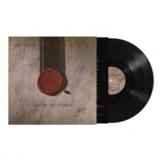
Das 1989 erschienene Album „Slip of the Tongue“ zeigt Whitesnake in voller Arena-Rock-Power. Mit „Fool
for Your Loving“ und „The Deeper the Love“ sowie angetrieben von David Coverdales kraftvollem Gesang
und Steve Vais virtuoser Gitarrenarbeit ist diese Ausgabe auf 180-g-Vinyl gepresst – und liefert ausgefeilte
Hooks, eine beeindruckende Produktion und Hardrock der späten 80er Jahre auf dem Höhepunkt.
Pioneering Ghanaian musician King Ayisobareturns September 4, 2026 with his forthcoming seventh album Pure Confusion, recorded and produced by On-U-Sound’s Adrian Sherwood.
Ayisoba is one of Ghana’s most distinctive musical voices. The world’s foremost player of the kologo - a homemade two-string lute fashioned from a calabash and covered in goatskin - he delivers fiercely political and socially observant songs using three different voices, including the voice of his grandfather that possessed him as a child. Sherwood meanwhile is the pioneering British producer and founder of On-U Sound whose hugely influential career has connected dub, post-punk, industrial, hip hop and experimental music through collaborations with artists including Lee “Scratch” Perry, Mark Stewart, Horace Andy, Sinéad O’Connor, Nine Inch Nails and Depeche Mode.
Ayisoba and Sherwood first collaborated during a BBC Radio 3 Late Junction session at Maida Vale in 2017, organised by Ayisoba’s long-time collaborator Arnold de Boer/Zea of The Ex. The pair immediately connected, and during the pandemic, when Adrian’s long-time African Head Charge collaborator Bonjo Iyabinghi Noah was in Ghana looking for musicians to collaborate with Sherwood suggested Ayisoba, who eventually featured on two tracks on African Head Charge’s 2023 album A Trip To Bolgatanga (Bolgantanga is the region Ayisoba is from). Ayisoba then returned to the UK in late 2024 and travelled to Sherwood’s Ramsgate studio where the pair laid down the songs that would become Pure Confusion: “All the songs were already in my head,” says Ayisoba. “This album is all recorded live, over one afternoon. Adrian only plays live, and I like that. And he works hard - he doesn’t sleep. I woke up in the night and he was still working.”
“In my role producing it, I just let it roll to make a good vibe,” says Sherwood. “We recorded it completely live, did some programming and processing on some tracks, using dub techniques live on the mixing desk and adding some slick touches. We wanted the colours on the album to swing off what Ayisoba was doing, so we invited some friends to participate. Doug Wimbish (Sugar Hill Gang) arrived from America and lent his services playing bass on a couple of tracks; the wonderful Ivan Hussey (Celloman) played bass, keyboards and cello - cello is not really featured on African recordings so we thought it would be really cool to try it. I'd been working with Alex White (Fat White Family/Primal Scream) on my album (The Collapse of Everything) and so he added sax to a few tracks and I brought Alan Glenn down especially - Alan was in Little Axe but also Nine Below Zero and played in the Yardbirds – to add some mouth organ; Mark Bandola added a bit of flavour with his Juno, Ayisoba’s long-time Ghanian collaborator Ayuune Sule added some percussion and vocals and Matt Smith did some programming.”
“King Ayisoba is quite amazing, so unique,” Sherwood continues. “He’s got his own handmade instrument and three different voices - when you’re listening you think it’s three different people. He’s a breath of fresh air, full of love for the music which he wants to share with everybody. Some tracks we kept very straight and others we experimented with - adding dubby psychedelic little touches to trip you out a bit. The added production we did at On-U has given it a shine while still keeping it vibrant, live and spontaneous. I’m really proud of this record”.
On Pure Confusion, Ayisoba documents the anxieties, contradictions and changing social realities of contemporary Ghana. “Land is a problem for everyone,” says Ayisoba of the opening track “Property”. “If you don’t build on your land they will take it away. Plenty corruption in Ghana, plenty confusion. They sell the land to two, three, four people and then everybody fights.”
Elsewhere Ayisoba explores illness, spirituality and social stigma on “Bemba”, warning against hiding sickness out of shame or fear of “bad juju”: “People hide their sickness and the sickness kills them.” “Tewigiloge” reflects on cultural difference and open-mindedness encountered through world travel: “We will tour the whole world and we will see many things we may not like or understand… your eyes will see, but don’t talk - you have to be open-minded.”
Spirituality runs deeply throughout the album. Ayisoba’s grandfather was a respected spiritual healer whose presence the musician says still guides him today. “The grandparents’ spirits are the ones you can contact,” he explains of the spiritual chant “Nkaase”. “This song talks about the forefathers.” The closing track “Leeda-Mampanga (It’s Not My Strength)” acts as a statement of humility and gratitude: “You have to be humble, even if you have talent. God gives you the power.”
For more than two decades, King Ayisoba has been one of Africa’s most distinctive musical innovators, transforming northern Ghanaian kologo traditions into a bold contemporary sound rooted in hypnotic rhythms, social commentary and spiritual intensity. Since the breakthrough success of 2006’s Modern Ghanaians, Ayisoba has built an international following through acclaimed albums, relentless touring and collaborations with artists including Lee “Scratch” Perry, Orlando Julius and African Head Charge. Performances at Roskilde, WOMAD, Le Guess Who? and the Barbican have further cemented his reputation as a singular live performer and cultural force.
Die britischen Pioniere des Progressive Alternative Metal, Haken, kehren mit der EP *In a Fever Dream* zurück - ihrem ersten neuen Material seit dem von der Kritik gefeierten Album *Fauna* aus dem Jahr 2023 -, das den Beginn eines spannenden neuen Kapitels für die Band markiert.Die gemeinsam mit George Lever (Loathe, Sleep Token) produzierte EP präsentiert einige der bisher emotional direktesten und kraftvollsten Stücke von Haken. Für zusätzliche Tiefe sorgen die renommierten Musiker Adam "Nolly" Getgood (Periphery) und Bryan Beller (The Aristocrats, Joe Satriani), die sich den Basspart auf den fünf Titeln der EP teilen.Die EP mit dem markanten Cover-Artwork von Vaxo Lang wird als limitierte CD-Digipak-Edition, als Deep Blood Red Vinyl LP und als digitales Album erhältlich sein.
Marion Poncet delivers his heartbeats in full length format as 2x12“ on Smallville's Fuck Reality.
While Traumer might be the most prominent moniker of Romain Poncet- and the one he is currently touring the world as- there is countless other musical projects that the artist is operating as. And its the lesser-known side-projects, that complete the picture of a truly versatile musical mind. So next to Traumer, you'll meet Brako, Amine Laje, Jinger, Redspecs- Marion Poncet - and even more side-projects within the world of Romain. He has always seen his monikers as a form of expression and to showcase his musical broadness. Of course there is House music in all different shades & moods- but Romain also released techno, downbeat & trippy things for the heads as well as broken beat material.
„The Raging Swells Crushing The Cliff Of My Love” was written during a period of longing for his love – so here is a deeply personal album as a musical dedication. Expect thoughtful-but-crunchy house music with a chunk, that sounds as if it was made for Smallville's Fuck Reality imprint.
Fuck Reality LP 02 comes as a 2x12”, as always with a full cover artwork by Stefan Marx.
Love from Smallville - stay positive – Fuck Reality!
out of Stock
Last delivered 9 days ago available to reorder, subject to availability
GAEG is the production project of Japanese duo Keita Sano and Monkey Timers, bringing together two key figures from Tokyo’s underground dance scene. Built from the ground up with carefully placed disco samples, twisted FX and warped electronics, their sound is psychedelic, anarchic and unpredictable. Familiar dancefloor elements are pushed through a distorted lens, creating a sound deeply rooted in house and disco, while drifting into strange and futuristic territory. Highly effective on a dancefloor, these four tracks cover a wide range within the mid BPM range for different scenarios in the club space, one for the DJ record bag at all times.
out of Stock
Last delivered 19 days ago available to reorder, subject to availability
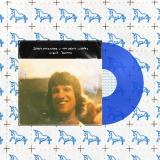
Richard Laviolette (1982–2023) released his second record "a little less like a rock, a little more like home" on CD in 2006 on Burnt Oak Records, an artist-run co-operative and independent record label co-founded by Brad MacInerny, Ryan Newell and jiaqing wilson-yang, active between 2005 and 2007. Burnt Oak was based out of a rented house at 127 Grange Street in Guelph, Ontario, where the collective lived, rehearsed, hung out, and hosted all ages shows, also recording each others’ music, packing and mailing CD orders, and silk-screening and sewing the covers for the albums they released.
Combining folk, rock, and country influences, a little less like a rock, a little more like home is a beloved lo-fi classic of brilliant songwriting and powerful vocals, animated by Richard’s deeply held anti-capitalist, anti-colonial, DIY, and community-based ethos. It includes some of Richard’s most timeless songs and performances, including the unclassifiable magic of Qq, the shockingly intimate and utterly cosmic Ants vs. Universe, and the beautifully fingerpicked folk-song Oncoming Trains.
You’ve Changed Records is proud to present this first ever vinyl pressing of "a little less like a rock, a little more like home" . This Limited Edition LP features audio newly mastered for vinyl by Kevin Parks, recreated artwork by artist sophia bartholomew, and includes a full lyric insert
In a world increasingly shaped by disposable content, Chat Pile answer with something defiantly real and organic, a mentality that permeates Who Loves The Sun, their third full-length record. Since the band’s formation just over six years ago, the Oklahoma City-based quartet Chat Pile has grown from a scrappy passion project into one of the defining heavy acts to emerge from the 2020s underground. Ray B. (vocals), L. Manhole (guitar), Stin (bass), and Cap’n Ron (drums) create a crushing, crass, and cathartic take on noise rock that captures a raw, undeniably human essence in an age marked by technological overreach and the cold state of society. Nothing about Who Loves The Sun feels synthetic.
Whereas their debut album God’s Country depicted a particularly American flavor of dread, and the follow up Cool World showed a cruel planet defined by global systemic violence, Who Loves The Sun peels the skin back on how collective indifference defines this new century. Spanning imagery of coastlines devouring cities, dead-end jobs, and submission to data-driven inauthenticity, the album dissects the apathy-bloated state of 21st-century existence as a slow-motion apocalypse. As with much of Chat Pile’s work, Oklahoma City itself looms over the album like a character, its sprawling isolation, economic contradictions, and underlying sense of decay embedded in the fabric of the record. The perfect allegory for the thematic essence of Who Loves The Sun is the photo embossed on the record’s cover, where Devon Tower, a glassy, largely vacant monolith, looms high above the Oklahoma City skyline while a burnt-out home or storefront envelops the foreground. The album remains lyrically and sonically confrontational, but Chat Pile approached the songwriting with hooks in mind, drawing on melodic tones of pre-2000s indie rock, alt-rock, and new wave. From the blood-soaked vocal passages of “Christabel ’26” to the eerie trip-hop pulse of “Same Rules,” Who Loves The Sun is deeply human despite its allusions to a dying, divided .
In a world increasingly shaped by disposable content, Chat Pile answer with something defiantly real and organic, a mentality that permeates Who Loves The Sun, their third full-length record. Since the band’s formation just over six years ago, the Oklahoma City-based quartet Chat Pile has grown from a scrappy passion project into one of the defining heavy acts to emerge from the 2020s underground. Ray B. (vocals), L. Manhole (guitar), Stin (bass), and Cap’n Ron (drums) create a crushing, crass, and cathartic take on noise rock that captures a raw, undeniably human essence in an age marked by technological overreach and the cold state of society. Nothing about Who Loves The Sun feels synthetic.
Whereas their debut album God’s Country depicted a particularly American flavor of dread, and the follow up Cool World showed a cruel planet defined by global systemic violence, Who Loves The Sun peels the skin back on how collective indifference defines this new century. Spanning imagery of coastlines devouring cities, dead-end jobs, and submission to data-driven inauthenticity, the album dissects the apathy-bloated state of 21st-century existence as a slow-motion apocalypse. As with much of Chat Pile’s work, Oklahoma City itself looms over the album like a character, its sprawling isolation, economic contradictions, and underlying sense of decay embedded in the fabric of the record. The perfect allegory for the thematic essence of Who Loves The Sun is the photo embossed on the record’s cover, where Devon Tower, a glassy, largely vacant monolith, looms high above the Oklahoma City skyline while a burnt-out home or storefront envelops the foreground. The album remains lyrically and sonically confrontational, but Chat Pile approached the songwriting with hooks in mind, drawing on melodic tones of pre-2000s indie rock, alt-rock, and new wave. From the blood-soaked vocal passages of “Christabel ’26” to the eerie trip-hop pulse of “Same Rules,” Who Loves The Sun is deeply human despite its allusions to a dying, divided .
In a world increasingly shaped by disposable content, Chat Pile answer with something defiantly real and organic, a mentality that permeates Who Loves The Sun, their third full-length record. Since the band’s formation just over six years ago, the Oklahoma City-based quartet Chat Pile has grown from a scrappy passion project into one of the defining heavy acts to emerge from the 2020s underground. Ray B. (vocals), L. Manhole (guitar), Stin (bass), and Cap’n Ron (drums) create a crushing, crass, and cathartic take on noise rock that captures a raw, undeniably human essence in an age marked by technological overreach and the cold state of society. Nothing about Who Loves The Sun feels synthetic.
Whereas their debut album God’s Country depicted a particularly American flavor of dread, and the follow up Cool World showed a cruel planet defined by global systemic violence, Who Loves The Sun peels the skin back on how collective indifference defines this new century. Spanning imagery of coastlines devouring cities, dead-end jobs, and submission to data-driven inauthenticity, the album dissects the apathy-bloated state of 21st-century existence as a slow-motion apocalypse. As with much of Chat Pile’s work, Oklahoma City itself looms over the album like a character, its sprawling isolation, economic contradictions, and underlying sense of decay embedded in the fabric of the record. The perfect allegory for the thematic essence of Who Loves The Sun is the photo embossed on the record’s cover, where Devon Tower, a glassy, largely vacant monolith, looms high above the Oklahoma City skyline while a burnt-out home or storefront envelops the foreground. The album remains lyrically and sonically confrontational, but Chat Pile approached the songwriting with hooks in mind, drawing on melodic tones of pre-2000s indie rock, alt-rock, and new wave. From the blood-soaked vocal passages of “Christabel ’26” to the eerie trip-hop pulse of “Same Rules,” Who Loves The Sun is deeply human despite its allusions to a dying, divided .
In a world increasingly shaped by disposable content, Chat Pile answer with something defiantly real and organic, a mentality that permeates Who Loves The Sun, their third full-length record. Since the band’s formation just over six years ago, the Oklahoma City-based quartet Chat Pile has grown from a scrappy passion project into one of the defining heavy acts to emerge from the 2020s underground. Ray B. (vocals), L. Manhole (guitar), Stin (bass), and Cap’n Ron (drums) create a crushing, crass, and cathartic take on noise rock that captures a raw, undeniably human essence in an age marked by technological overreach and the cold state of society. Nothing about Who Loves The Sun feels synthetic.
Whereas their debut album God’s Country depicted a particularly American flavor of dread, and the follow up Cool World showed a cruel planet defined by global systemic violence, Who Loves The Sun peels the skin back on how collective indifference defines this new century. Spanning imagery of coastlines devouring cities, dead-end jobs, and submission to data-driven inauthenticity, the album dissects the apathy-bloated state of 21st-century existence as a slow-motion apocalypse. As with much of Chat Pile’s work, Oklahoma City itself looms over the album like a character, its sprawling isolation, economic contradictions, and underlying sense of decay embedded in the fabric of the record. The perfect allegory for the thematic essence of Who Loves The Sun is the photo embossed on the record’s cover, where Devon Tower, a glassy, largely vacant monolith, looms high above the Oklahoma City skyline while a burnt-out home or storefront envelops the foreground. The album remains lyrically and sonically confrontational, but Chat Pile approached the songwriting with hooks in mind, drawing on melodic tones of pre-2000s indie rock, alt-rock, and new wave. From the blood-soaked vocal passages of “Christabel ’26” to the eerie trip-hop pulse of “Same Rules,” Who Loves The Sun is deeply human despite its allusions to a dying, divided .
'Channel Zero is a new release produced by the London-based Brazilian artist Protocol. It is made up of 4 unprocessed live jam recordings of heavy, stripped-down techno. Composed over a period of 2 years, the artist focuses on experimenting on the far edges of techno, inspired by early avant-garde music, drone, and Musique Concrete. It comes in a hand-numbered limited edition of 180g black labels, in a 3mm inside-out cover with a black inner-sleeve.
'The work is a confirmation that techno still thinks forwardly, but pays homage to its mostly overlooked origins. The titles come from one of the early Cybernetic Culture Research Unit essays, also named Channel Zero.
'Lost Signal (Noise) opens up the EP with reverberated static noise, followed up by a deep bass with more layers of percussion and atmospheric noise patterns, slowly evolving into unexpected rhythms. The second track, Blind Belief, is composed of a deconstructed kick sequence, with machinic-like sound structures in the background and a hi-hat that morphs with various envelopes, together with a nostalgic 909 rim-shot. Turning to the B side, Electromagnetic Shadow is an atmospheric four-to-the-floor techno track, where deep kick drums and polyrhythmic noise soundscapes move into industrial noise pattern. Closing Protocol's debut EP, Black Snow Cult brings together the EP's sound palette into aggressive patterns of Birmingham-esque industrial percussions, where synthetic sounds are put together in primitive sounding sequences together with high pitched frequencies.'
LIMITED EDITION FIRST PRESS OF 300 COPIES ON TRANSPARENT RED VINYL WITH JAPANESE STYLE OBI. NON-RETURNABLE.
Osaka quartet HIBUSHIBIRE return this August with their fifth studio album ‘Phantom Fuzzy Exotica‘.
Phantom Fuzzy Exotica continues to find the band exploring their own little universe, where psychedelia, 70’s hard rock and folk rock influences collide. You’ve got the short punchy riff heavy songs, the mellow time-out bits, and of course the epic psych jams and more vocals then previously. It’s all here, and as always they deliver the goods.
Phantom Fuzzy Exotica … in the bands own words
The initial image behind this album was “phantoms”- things that seem to exist, yet somehow don’t. Another thing that sets this album apart from our previous releases is that four of the five tracks feature vocals. The only instrumental is “Invocation and Ritual Dance of the Electric Nonsense.” We didn’t consciously plan it that way; it just happened naturally. After finishing last year’s tour, we didn’t have much time, but everyone’s ideas came together, and I think we’ve created an album we’re truly satisfied with.
Mandrake Oracle: The opening track of the album.Built around a single guitar riff by changchang, while the other instruments and electronics keep pushing the music forward. Personally, I imagined Deep Purple playing a Pink Floyd song while writing this one.
Minagoroshi Western: Imagined as the soundtrack to a fictional spaghetti western. In the end … everybody dies.
Daydream Rendezvous: A piece of daydream acid psychedelic folk.
Invocation and Ritual Dance of the Electric Nonsense: Hard psychedelic jazz rock. The title is a little nod to Frank Zappa.
Ai Vist Lo Lop (Cover): I’ve always loved Ai Vist Lo Lop by the wonderful Occitan traditional band Mont-Jòia, and I’d wanted to cover it someday. We especially enjoyed creating the a cappella section and finding the right sound for the main melody.
We sincerely hope you enjoy listening to this album as much as we enjoyed making it. — changchang
The Phantom Fuzzy Exotica European Tour 2026
AUGUST
19th Archive, Liverpool (UK) , 20th Ivory Blacks, Glasgow (UK), 21st The Golden Lion, Todmorden (UK), 22nd The Bunkhouse, Swansea (UK), 23rd Beautiful Days, Devon (UK), 25th The Peer Hat, Manchester (UK), 26th Le Pub, Newport (UK), 27th Strongroom Bar, London (UK) with Black Helium, 28th The Holloway, Norwich (UK), 29th The Sunflower Lounge, Birmingham (UK), 30th The Piper, St Leonards (UK) with Black Helium
SEPTEMBER
1st DND, Dunkirk (FR), 3rd Pilsen Busking Fest, Pilsen (CZ), 4th Pilsen Busking Fest, Pilsen (CZ), 6th Riff, Budapest (HU), 7th Végállomás Klub, Szombathely (HU), 8th A Beton, Győr (HU), 9th Chemiefabrik, Dresden (DE), 10th Bar Neun, Berlin (DE), 11th Subsol, Dusseldorf (DE), 12th Magasin 4, Brussels (BE), 13th De Onderbroek, Nijmegen (NL), 14th La Bulle Café, Lille (FR)
HIBUSHIBIRE are
Changchang (Guitar/Vocal/Bouzouki/Electronics/Melting Eye Spectacle), Tetsuji Toyoda (Bass/Vocal/Mermaid Mountain), AOI HAMA (Drums/Vocal/Cat Tongue Queen), Kohei Katsuma (Conga/Vocal/Theremin/Percussion/God Dog Family)
This album is a masterpiece in which the three core pillars of Akira Ishikawa’s musical vision—jazz, rock, and African music—are fused in a sublime and thrilling balance. One arresting track follows another: the solemn and majestic “Prayer”, evoking the eternal land; the clear yet subtly psychedelic “Dawn”; the serene and beautiful “Love”; and the highly dynamic, explosive “Jumbo”.
The brilliance of Hirmasa Suzuki’s arrangements deserves special mention—simple yet profoundly deep, they give vivid clarity to the album’s overall concept and imagery. Among Ishikawa’s serious, non–instrumental-cover works, this album stands shoulder to shoulder with Electrum, Bakishinba, and Uganda, and should be regarded as one of his definitive achievements.
When everything around is racing blindly toward ruin, change direction and spin as fast as you can until you defy gravity and rise above the ground into blissful madness. "K-drone", the debut album by three renegades—Jakub Šimanský, Michal Vaľko, and Ján Podracký—is like a hallucinatory Calvary with five stations. Each station is a time-loop capsule, a tiny utopia sneering at the phantom progress of the world outside.
The opening track, "Speedrone", is pure vertigo; for seven long minutes, there's nothing to hold onto. Šimanský’s banjo cuts through the air, Vaľko’s hurdy-gurdy sounds like someone scraping a rusted sheet of metal with a handful of nails, and Podracký’s bass recorder hums like a slowly intensifying migraine. "Sine" is like a train journey through a barren wasteland, where the images outside the window constantly repeat like a bad trip. "Pro DJ" starts like a gig in a bar at the end of the line—a gig that never actually goes anywhere. It’s as if all three are locked in a spasm, their repeated motifs turning into haunting earworms. "Alien Radigue" shifts into a strange idyll in a clearing in the middle of the forest, where an unknown bird species trills in the background. The end and definitive dissolution come in "Slush", where everything suddenly slows down. Šimanský plucks a simple guitar melody, Podracký’s harmonica drifts from side to side like a boat gently rocking by the shore, and Vaľko’s hurdy-gurdy drones like a drunken mosquito buzzing around.
"K-drone" sounds like an acid anti-western movie recorded in a tucked-away burrow, like smoke-soaked folk and experimental campfire songs echoing through a deep forest. It evokes Third Ear Band's "Alchemy", it screeches and repeats like some of Henry Flynt's experiments, and you could easily imagine hearing it drifting from one of the windows on the cover of Hala Strana's eponymous album.
Jakub Šimanský is the bard of Czechoslovak guitar primitivism, an earthy folk sommelier whose fingerpicking you may also know from the duo Šimanský Niesner. Michal Vaľko, aka Line Gate, needs no introduction to fans. He has released three albums on mappa, and his hurdy-gurdy meditations hold an important place in the drone and minimalist music scene. "Den", "Apex", and "Trap" have become essential listening. Ján Podracký is a self-taught composer and musician whom you might know from various participatory music projects, such as an orchestra where all the players play diatonic harmonicas. Besides harmonicas, he has long explored a wide range of flutes. In short, a pied piper who will guide you through other worlds.
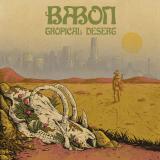
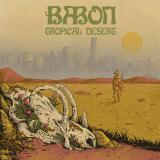
BABON is a psychedelic instrumental band from Indonesia, formed in 2023 by Wahyudi T. Raupp, Rayi Raditia, and guitarist Rori Jiwa Putra. Their music blends traditional Indonesian genres such as Keroncong and Dangdut with global influences like Middle Eastern grooves, Latin rhythms, Spaghetti Western motifs, and Afro-funk, creating a sound they call "Tropical Desert" music. Their debut album, Tropical Desert, follows the 2024 release of the singles "Desert Rose" and "TNT" on London-based label Batov Records. Beyond their genre-bending sound, BABON is deeply rooted in environmental advocacy, using instrumental music and visual storytelling to address ecological issues. They are currently producing a live session featuring four tracks from the album, set against cinematic footage highlighting Indonesia's natural landscapes and environmental challenges.
BABON's distinctive sound has earned them strong international recognition, with radio play from major stations including BBC Radio 3 and Soho Radio (UK), RBB Radioeins and Byte FM (Germany), CBC Radio One (Canada), Triple R and 2SER (Australia), and WYEP and KALX (USA). Their 7-inch vinyl release was nearly sold out, further signaling their growing global appeal. The album's cover and packaging were created by Indonesian retro surrealist Christian Candra, contributing to the band's cohesive artistic vision. BABON is represented worldwide by PR and radio agency Only Good Stuff, helping to amplify their message and music to audiences across the globe.
(2LP, limited black vinyl repress) After last year's extroverted and funky album "Be Who You Wanna Be," Stef Kamil Carlens presents a more introspective double album recorded with Nel Ponsaers and Rahmat Emonds.
Featuring 14 songs—some of his own compositions and very surprising covers or reinterpretations—this album emphasizes lyrics, vocals, and a band sound primarily driven by acoustic instruments. Once again, it stands as a key addition to the already very eclectic catalog of one of Belgium’s most versatile and productive artists. Stef Kamil Carlens & The Poem will tour starting in October 2025.
Big Crown Records is proud to present the debut full length offering from Les Imprimés, Rêverie. The stirring and ethereal sounds of Les Imprimés have been making fans of anyone who hears them since their first 7" single hit the speakers. Morten Martens is the man behind the band. Born, raised, and working in Kristiansand, Norway, he keeps a low prole while making his heart felt, highly infectious, and unique music. This album is a long time coming for Martens and it is sure to make him a name to be reckoned with. The first thing you notice listening to Les Imprimés is the high level of musician-ship. Martens plays nearly every instrument on the recordings and handles the production and arranging. He has been making records for decades, winning a Spellemann Award (aka, the Norwegian Grammy) in 2006 for producing a HipHop album as well as getting nominations across three other genres. While awards and accolades speak to the level of his talent, this new album really shows who he is an artist on his own terms. Moving away from being a hired gun on the touring scene naturally led him to start doing more studio work. Slowly collecting gear and getting more experi-ence behind the boards he built his own studio on the island of Odderoya and was making a living playing with and recording other people's music. As the story goes, after those sessions would end he would work on his own project into the wee hours of the night. From these late night sessions, Les Imprimés was born and Rêverie began to take shape. However, "it wasn't until COVID, when things locked down, that I was really able to nd the time to focus on Les Imprimés" Morten says about creating and leading his own solo project. "It was a scary time. But I knew I had to do something with it." He took the sum of his inuences, combined them with his own vibe and got busy writing the music, playing the instruments, and singing the songs. "It's soul music, but I don't exactly have the soul voice," Morten explains humbly. "But I do it my own way, in a way that's mine. "It is his sound, his fingerprint, his sensibility, that makes his music hard to put in a box. The album showcases both Martens' range and his ability to make a cohesive album. The lead single "Falling Away" starts with a raw drum break and turns into a lushly arranged tune that paints the picture of love when it slips away. On "Still Here" he professes his resilience through life's twists and turns over a thundering track that puts a new spin on the B side ballad genre. Songs like "You" and "Our Love" mix tones from 60s and 70s Soul with arrangement nods to Doo Wop records while Martens' lyrics and delivery leave you singing the melodies long after they finish. "Love & Flowers" finds Martens in a moment of clarity with a song that ts the niche sub genre of happy break up tunes, the four on the floor track will move the dancefloor or while the message will resonate with anyone who put too much effort into the wrong situation in their lives. However, it is songs like "Muse" and "Chess" that really encapsulate the uniqueness of Les Imprimés as they push the boundaries of genre, one a profession of love for music and the other a cover of an electronic record respectively. Martens' lyrics, emotion, and delivery truly make the whole thing come together and stand out from any of his peers. There's an infectiousness and a pop sensibility in the writing that is done with the utmost class and taste giving Les Imprimés the rare quality of immediate attraction that only deepens the more you listen.
After the wild Afro-jazz fusion of Trancedance (reissued as BT118) and the meditative solo Christer Bothén Donso n’goni (BT133), legendary Swedish multi-instrumentalist Christer Bothén returns to Black Truffle as part of a dream quartet completed by the three members of Ghosted: Oren Ambarchi (guitar), Johan Berthling (bass) and Andreas Werliin (drums). Recorded at a rustic studio built by Werliin and Hans Fredriksson in the sylvan surrounds of Hamburgsund, Sweden across a few days in September 2023, Serpentine offers up four generous slices of hypnotic repetition and shimmering resonance, cut through with wild bursts of Bothén’s bass clarinet.
The depth and ease of the quartet’s rapport is evident from the first moments of the opening title-track. Berthling’s resonant upright bass locks into a head-nodding ostinato that makes sensitive use of a prominent end-of-phrase rest, opening spaces through which Werliin’s continually shifting statements of the pulse shine through. Having worked together in various groups for many years, Berthling and Werliin are masters at playing subtle games of difference and repetition, creating a driving rhythmic flow animated by perpetually changing details: here, you can never step in the same groove twice. Weaving through it all is Ambarchi’s now-signature Leslie-cabinet guitar tone, sounding out long chords at times strikingly close to a Hammond, while also creating intricate cross-rhythms through the play of his tremolo modulations against the bass and drums. When Bothén enters five minutes in, the growl of his bass clarinet at first works deep in the collective brew, carving off brief staccato phrases and twisting them into fragmented melodies. As he moves into the instrument’s higher registers, Bothén’s playing becomes wilder, twinning with Ambarchi’s guitar in shimmering arcs like a 21st century update of the Garbarek-Rypdal pairing immortalised on Sart.
Each of the four pieces explore different possibilities of a shared language. On ‘Antigorite’, another hypnotic bass riff emerges gradually from an atmospheric haze, eventually developing into a frenetic rhythmic workout propelled by Werliin’s cowbell. Berthling sits out for ‘Lizardite’, while Bothén moves from bass clarinet to the Donso n’goni, the sacred Wassoulou hunter’s harp he has studied for half a century; the resulting performance streamlines the approach heard on other tracks into pure modal propulsion, sparkling with harp-like arpeggios from Ambarchi’s guitar. On the closing ‘Chrysotile’, the bottom drops out, leaving a swampy, churning mass of wavering organ-like chords, roaming bass runs, and distant toms, over which Bothén floats bass clarinet figures by turns bluesy and abstract, the whole thing landing somewhere between classic ECM and the most blasted freeform moments of early Amon Düül II. Bearing a delicate calligraphic abstraction by Bothén on its cover and beautiful documentation of the recording sessions on its inner sleeve, Serpentine is a powerful reminder of the magic that can happen when inventive musicians just get together and play.
Recorded April 17 and 18, 1993, at the Union Grove Baptist Church, Ozark, Alabama.
The Wiregrass Singers' Dewey Williams began learning the shape-note tradition in his childhood. He studied under Judge Jackson, who authored the landmark 1934 hymnbook The Colored Sacred Harp. In 1971, Williams formally organized The Wiregrass Sacred Harp Singers to preserve the music full-time. This unified troupe began touring nationally and leading workshops, which ultimately launched them onto stages at the Smithsonian and Newport folk festivals up until Williams' passing in 1995 when the group disbanded. The African-American Sacred Harp tradition in the Wiregrass region has steeply declined since the start of the 21st century, due to an aging generation of singers, and today it is largely sustained through archival preservation and occasional multi-book singing meetups.
This raw recording, made at the Union Grove Baptist Church, Ozark in mid-April 1993 finds the group singing from B. F. White’s The Sacred Harp (1844), which together with his brother-in-law William Walker’s Southern Harmony (1835) formed the musical backbone of generations of Southern music and Southern musical styles.
"On almost any Sunday between the months of March and October, the season most conducive to travel and outdoor dinner-on-the- grounds, Sacred Harp devotés join with fellow songsters at the County Line Church in Slocomb, or the Mount Sinai Church in Henry County, or the Union Grove Baptist Church in Dale County, or at any one of a dozen or so churches in the southeast Alabama counties of Barbour, Coffee, Dale, Geneva, Houston and Pike, to form the square and sing fa-sol-la. Approximately fifteen African-American Sacred Harp singings occur annually in the Wiregrass region of southeast Alabama. A singing tradition characteristically associated with white culture in the Deep South, southeast Alabama has enjoyed a vibrant African-American Sacred Harp tradition for well over a century.
On a day of a typical African-American Sacred Harp Singing, the participants arrive casually in the late morning, seat themselves in the square according to voice part, and begin to sing. A dinner break occurs in the early afternoon, and the singers enjoy a covered-dish "dinner-on-the-grounds" (or in the church basement) prepared by the women. The most intense and emotional singing typically occurs after the dinner break. Each singer takes a turn leading the song of his choice. He walks to the middle of the square, calls out the song's page number and waits for the designated tuner to key the song. Singers are discouraged by the other singers from repeating a song that has already been sung, or "used." This proscription is often dispensed with, however, if the singer is particularly young, particularly old, or if the song has special significance to the individual song leader (perhaps the favorite song of a recently deceased relative).
Every singer is given an opportunity to lead a song. Often, older or more infirm singers will request younger singers to lead their songs for them. The motions of the song leaders are highly stylistic and often emotional. Young children are taught in singing school to mark time with their right arm while holding the book in their left. Typically, a singer will stand in place at the center of the square while leading the singing of the notes. When he begins to lead the lyrics portion of the song, he will often begin to "walk time," rhythmically pacing from one side of the square to the other, being careful never to turn his back on the tenor section. This "walking time" is unique to the African-American tradition. As a singer grows more confident he develops his own distinctive leading style. During fuguing songs in particular, he may gesture to each section of the square as its part joins in. Skilled song leaders often elicit applause or other emotional responses from the group. Occasionally a singer may fall into a state of spiritual ecstasy and "get happy." The episode might include a personal testimonial followed by a repeat of the last verse or refrain from the previous song. The singings break up around 5 P.M."
—Henry Willett, 1997 credits
In a world currently defined by unrest, uncertainty, and cultural fracture, acclaimed saxophonist, composer, and bandleader Isaiah Collier returns with Joy, a 5-track EP that reframes one of humanity’s most nuanced emotions both as a devotional grounding and political act.
Collier’s deeply personal compositions present joy as an act that isn’t rooted in escapism or abstraction, but rather, as something hard-won rooted in lived experience, shaped by transformation, and sustained through connection. Throughout the album’s five compositions, Collier positions joy as a guiding light during challenging times, an expression of challenging yourself to utilize your gifts, an affirmation of love and discovery, and as an affirmative source of reassurance.
“We are in a paradoxical time, where so much is being revealed to us,” Collier shares. “Everything feels political from every scope… our collective hearts feel the heaviness in the air. Yet I say to you all—don’t despair. For right now, the most political thing we can do is share joy.”
That ethos is made clear in the opening title track and lead single “Joy.” A pulsing rhythmic motif anchors the melody with a sense of both searching and certainty. Collier conceived the piece around 3 years ago reflecting on a time where many people in his life were experiencing loss of family and friends and experiencing profound life transitions. “Everything just felt like it was falling apart with no aim in sight,” he reflects. “Yet, there is a light at the end of it all.”
As he played the chords with a sense of urgency, he could feel the vibration of yellow in the piece. That initial triplet motif serves as the guiding light on the piano and the only word Collier could hear was Joy. In addition to Collier at the helm singing and playing piano and tenor sax on the track, it features an expansive 11-piece ensemble with a full horn and string section allowing Collier’s propensity for composition and arrangement to shine with an eclectic sonic palette.
“Landscape of Dreams” finds Collier serendipitously leaning into utilizing his gifts as a multi-instrumentalist. While he had a sketch of the piece going into the studio, a traffic delay caused musicians to be late arriving at the studio. Never one to waste time in the studio environment, Collier stepped into new creative territory and took up the challenge of executing playing all instruments himself as an act of trust and experimentation. “I’ve never done this before, and so it was a leap of faith for me,” he asserts. “I always dream of doing stuff like this, and being part of the small percentage of people who can do it like Prince, Steve Lacy, Frank Zappa, and Stevie Wonder. The end result finds Collier immersed in a hypnotic soundscape playing layered flutes, drums, Metatron, Wurlitzer, and auxiliary percussion.
Another layer of joy is revealed in “Where I’m Loved” that serves as a love letter and leaning into the process of stepping into the willingness to explore life and love with a partner. On the intimate meditation of vulnerability and connection, Collier's vocal prowess is on full display, exerting effortless falsetto reminiscent of D’Angelo over soulful Wurlitzer and guitar as he crosses over into more R&B-inspired realms. “I believe everyone deserves this feeling or to honor the memories of it. Furthermore, I believe you should also go where you’re celebrated and not tolerated.”
“When the Dust Settles” captures the electricity of live collaboration and Collier further steps out of being confined to any specific genre. He had just gotten a microKORG keyboard from co-producer Sonny Daze and was exploring the vast array of sounds on the instrument. Collier plays synth bass on the microKORG joined by the electrifying improvisation of Cole Runge on guitar and the combustible rhythm of his brother Jeremiah Collier on drums with additional post-production work from Sonny Daze.
The album’s final track “God’s By Your Side” reflects on perseverance and artistic legacy, directly inspired from the passing of D’Angelo, whose life’s work was a huge part of Collier’s childhood growing up in the late 90s and early 00s. With gospel flavor and direct influence both from D’Angelo’s vocal and instrumental arrangements, the track speaks to resilience and persistence in the face of obstacles—an affirmation of source and reassurance. “And what’s better than having God by your side, right?” asserts Collier.
Joy is a through-and-through expression of the arc of joy in its truest form. Joy transcends fleeting happiness and is conscious gratitude shaped by taking chances, leaning into your gifts, fostering community, and lived experiences.
“Joy is partially happiness,” Collier explains. “But to me it means happily being grateful for family, friends, lovers, teachers, and good times. These are the things that anchor us.”
The release of Joy comes off the heels of significant momentum for Collier, whose work continues to garner accolades and resonate across cultural spheres. He was featured on the cover of DownBeat’s April 2025 issue, where he was named “The Next Sax Giant,” and profiled on NPR’s Jazz Night in America for his ambitious 13-movement interdisciplinary suite The Story of 400 Years, that traces 400 years of Black American History. He released two full-length albums in 2024 with The World Is on Fire highlighted in The New York Times’ Fall Arts Preview and The Almighty named among the publication’s Best Jazz Albums of the year.
Beyond performance and recoding, Collier’s influence is recognized in broader cultural and intellectual spaces as he was the recipient of the Jazz Journalists Association’s 2025 Up and Coming Artist of the Year Award, the 2024 Chicagoan of the Year in Jazz, and was named a Steve Jobs Archive Fellow joining an elite cohort of the next generation of artistic visionaries through a yearlong program.
In addition to the release of Joy, Collier is touring his “Collier Plays Coltrane” program throughout 2026 in honor of John Coltrane’s centennial. Rather than presenting Coltrane’s expansive catalog as repertory, Collier approaches this music as something living, reshaping it in real-time with a sense of space and improvisational dialog reflecting both reverence to the past and present times.
out of Stock
Last delivered 68 days ago available to reorder, subject to availability
includes DL code and insert with English & Japanese lyrics
The terms “nursery rhymes” and “children’s songs” may give rise to visions of idyllic innocence and the charms of childhood, but "Play Nursery Rhymes and Children's Songs" by Tokiyo Ooto & Orhythmo, their first release on EM Records, brings forth quite different aural imagery: this is an eerie and unsettling sonic picture book which hints at the darkness and mystery which form the hidden heart of many traditional songs and rhymes. The length of the songs provides a hint: each piece delves deeply into the latent uncanniness of the music, with superficial innocence gradually displaced as electric guitar, bass, field recordings and concrete sounds draw the listener into a chilly forest, while Tokiyo Ooto’s voice croons dark “lullabies for adults,” blending elements of folk, slowcore and dream pop. The Tokiyo Ooto & Orhythmo duo formed in 2023, releasing their first album in 2024. This release updates two pieces from the first album, and also includes a traditional Japanese children’s song from Shiga Prefecture and a masterpiece for children by composer Yasushi Akutagawa. Both musicians are Osaka-based: Ooto is a guitarist and singer-songwriter who also works in band and solo contexts; Orhythmo is a bassist with hardcore punk roots who focuses on improvisation, drone, noise and ambient sound. This release is available on CD, vinyl and DL; physical versions feature a printed insert with Japanese and English lyrics. The evocative cover is by Yoshitomo Ano.
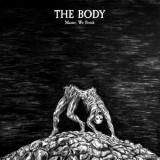
The Body"s landmark record Master, We Perish, originally released in 2013, found the acclaimed duo at a crossroads in their career. Recorded just before the duo of drummer Lee Buford and guitarist/vocalist Chip King were leaving their longtime home of Providence for Portland and released in between their breakthrough albums All the Waters of the Earth Turn to Blood and Christs, Redeemers, Master expanded on the duo"s love of layered worldbuilding with more precision and a stronger emphasis on percussive samples than ever before. The seeds of the duo"s celebrated collaborative inclination are evident as the album features Assembly of Light Choir leader Chrissy Wolpert, choir member Reba Mitchell, Otesanek vocalist Leslie Weitz, and guitarist David Lifrieri. With the expanded edition, the album"s striking cover painting by Providence mainstay Manifester aka Matt Brinkman (Mindflayer, Forcefield) is finally rendered in its original form. Master, We Perish is expanded with rare bonus tracks from The Body"s early days, taken from a pair of rare 7" singles Cop Killer/Dead Cops as well as a split with Get Killed. These storied singles mark the first time the band truly pushed the boundaries of sound in the studio and on record. It also marks the beginning of The Body"s practice of wielding the studio as a veritable weapon to translate their gargantuan sound with deeper impact on LP. The results are not only pushing the capacity of the album format but are sonically riveting. The bonus material was recorded at Machines with Magnets. The band described them economically: "NASTY."
The Body"s landmark record Master, We Perish, originally released in 2013, found the acclaimed duo at a crossroads in their career. Recorded just before the duo of drummer Lee Buford and guitarist/vocalist Chip King were leaving their longtime home of Providence for Portland and released in between their breakthrough albums All the Waters of the Earth Turn to Blood and Christs, Redeemers, Master expanded on the duo"s love of layered worldbuilding with more precision and a stronger emphasis on percussive samples than ever before. The seeds of the duo"s celebrated collaborative inclination are evident as the album features Assembly of Light Choir leader Chrissy Wolpert, choir member Reba Mitchell, Otesanek vocalist Leslie Weitz, and guitarist David Lifrieri. With the expanded edition, the album"s striking cover painting by Providence mainstay Manifester aka Matt Brinkman (Mindflayer, Forcefield) is finally rendered in its original form. Master, We Perish is expanded with rare bonus tracks from The Body"s early days, taken from a pair of rare 7" singles Cop Killer/Dead Cops as well as a split with Get Killed. These storied singles mark the first time the band truly pushed the boundaries of sound in the studio and on record. It also marks the beginning of The Body"s practice of wielding the studio as a veritable weapon to translate their gargantuan sound with deeper impact on LP. The results are not only pushing the capacity of the album format but are sonically riveting. The bonus material was recorded at Machines with Magnets. The band described them economically: "NASTY."
BABON is a psychedelic instrumental band from Indonesia, formed in 2023 by Wahyudi T. Raupp, Rayi Raditia, and guitarist Rori Jiwa Putra. Their music blends traditional Indonesian genres such as Keroncong and Dangdut with global influences like Middle Eastern grooves, Latin rhythms, Spaghetti Western motifs, and Afro-funk, creating a sound they call "Tropical Desert" music. Their debut album, Tropical Desert, follows the 2024 release of the singles "Desert Rose" and "TNT" on London-based label Batov Records. Beyond their genre-bending sound, BABON is deeply rooted in environmental advocacy, using instrumental music and visual storytelling to address ecological issues. They are currently producing a live session featuring four tracks from the album, set against cinematic footage highlighting Indonesia's natural landscapes and environmental challenges.
BABON's distinctive sound has earned them strong international recognition, with radio play from major stations including BBC Radio 3 and Soho Radio (UK), RBB Radioeins and Byte FM (Germany), CBC Radio One (Canada), Triple R and 2SER (Australia), and WYEP and KALX (USA). Their 7-inch vinyl release was nearly sold out, further signaling their growing global appeal. The album's cover and packaging were created by Indonesian retro surrealist Christian Candra, contributing to the band's cohesive artistic vision. BABON is represented worldwide by PR and radio agency Only Good Stuff, helping to amplify their message and music to audiences across the globe.
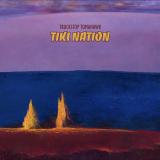
Tiki Nation finds Truckstop Tomahawk charting new territory at the outer edges of modern exotica. Created by Robert Kress—one half of Kava Kon—the album treats tiki not as nostalgia, but as a living, evolving sound world. These tracks roam freely through imagined geographies: remote islands, half-remembered myths, roadside rituals, and sun-bleached dream states where vintage exotica collides with forward-leaning composition.
Rather than simply revisiting mid-century tropes, Tiki Nation recontextualizes them—layering cinematic arrangements, unexpected textures, and playful titles that hint at folklore, travel, and quiet surrealism. The result is music that feels exploratory and unbound, equally suited for deep listening, late-night reverie, or drifting into unfamiliar landscapes with a drink in hand.
The album’s visual centerpiece deepens this atmosphere. The cover art, Pele’s Release, was painted by Catherine Robbins, a self-taught artist and longtime Hawaiʻi Island resident who created the oil painting in her rainforest studio just miles below Kīlauea’s erupting summit. That proximity to raw, elemental power mirrors the album itself—beautiful, mysterious, and quietly volatile.
Tiki Nation stands as a bold statement of intent: exotica untethered from the past, alive in the present, and pointed firmly toward uncharted horizons.
DJ NOTOYA, who was among the first in Japan to spotlight Japanese music and gained international attention with his mix CD “Tokyo 1980s”—which became an
instant classic upon release. Now, his compilation “Tokyo 1980s Victor Edition,” which focuses on Victor Records’catalog and showcases his deep understanding of
the essence of 1980s Japanese music—blending elements of disco, boogie, and modern soul—is finally being reissued as a long-awaited color vinyl edition!
This release features a carefully curated selection of gems—tracks that received high praise internationally in previous digital releases—specially compiled for vinyl.
Notably, Reiko Takahashi’s “Sunset Road” is included on vinyl for the first time, a long-awaited treat for fans as the original 7-inch is now extremely hard to find.
This must-have collection for fans of Japanese music and city pop is now complete, featuring cover artwork by Hiroshi Nagai. It’s the definitive album, perfect for
everything from club nights to casual listening!
A new solo album from Seu Jorge reveals his 'other side' on this new solo album featuring Beck and Maria Rita. Produced by Mario Caldato Jr. (Beastie Boys), the album moves between jazz and bossa nova and is the result of a 16-year musical journey.
Seu Jorge is ready to present to the world the most ambitious project of his international career. After 16 years in the making, “The Other Side” finally arrives on streaming platforms in May. A departure from the soul and samba that defined his solo career, the new album is a sophisticated orchestral celebration of Brazilian music, moving between jazz and bossa nova.
The seed for this meeting between the Brazilian soul and orchestral sophistication was planted by a longtime friend and admirer: the legendary producer Mario Caldato Jr., known for his work with the Beastie Boys and Jack Johnson. The partnership, however, goes back further. “It’s not often that you find a voice and talent as vibrant and powerful as Seu Jorge’s. That’s what I felt in 1999, when I met him in Los Angeles,” recalls Caldato. “Since then, our friendship and admiration have only grown, allowing us to create music together with total freedom.”
The spark for “The Other Side” came from a moment of pure sensitivity. “This album was born when I recorded Jorge playing a simple version of ‘Girl You Move Me,’ by the band Cane and Able, on a nylon-string guitar. The performance was very sensitive and dynamic, which moved me deeply,” says the producer.
It was then that Caldato had the idea to invite multi-instrumentalist and arranger Miguel Atwood-Ferguson to orchestrate that demo. The partnership, which began in 2009, blossomed organically. “I shared some ideas with Miguel, and he understood perfectly, creating a beautiful arrangement that elevated the song to a much more luxurious and sophisticated dimension. That experience planted the seed for this orchestral adventure. "
With his characteristically deep, velvety voice, Seu Jorge guides the listener through a repertoire that revives gems of MPB. The artist cites as references the catalog of the German label ECM Records and the arrangements of Claus Ogerman, a conductor who worked with Tom Jobim and João Gilberto.
Recorded in stages between 2009 and 2018, the album is a true work of musical
craftsmanship, created with calm and friendship. The live rhythmic foundations were
provided by Seu Jorge’s band. “Jorge has a lot of confidence in and pride for his musicians, allowing them to express themselves freely. Each one brings a special flavor to every song; this was their album too, ” notes Caldato Jr.
“It was a week of pure joy for me and for all of us, recording and capturing that magical spirit and vibe,” adds the producer, who saw the work come together with arrangements by Miguel Atwood-Ferguson. “When it came time for mixing, everything felt very natural. The album revealed itself and came together magnificently. For me, it’s a timeless album.”
The album features covers of songs such as “Crença” by Milton Nascimento (from his 1969 debut album); “Caboclo” by Arthur Verocai, in a version with psychedelic guitars; and, of course, “Girl You Move Me” by the Canadian band Cane & Able, which inspired the project. Among the tracks featuring guest artists, “Vento de Maio” by Márcio Borges (a hit with Lô Borges and Elis Regina) features an intense duet with Maria Rita. Another major collaboration is with American singer Beck, a self-proclaimed fan of Brazilian music and Grammy winner. Together, they perform “River Man” by the revered British singer Nick Drake.
out of Stock
Last delivered 89 days ago available to reorder, subject to availability
For over a decade, fans around the world have screamed their lyrics back at AS IT IS across the UK, USA, Europe, Japan, and Australia. They’ve lit up festival stages and toured alongside scene legends like Neck Deep, Sum 41, Against The Current, Silverstein, Mayday Parade, Set It Off, and so many more - building a community that has only gotten louder, prouder, and more connected with time. Fans have seen AS IT IS honoured with multiple Rock Sound Magazine awards, including the 2025 Icon Award and 2019’s Power of Music Award, and celebrated on the covers of Rock Sound, Upset, Kerrang, and Alternative Press. Their voice has even echoed into The New York Times and GQ, where their honesty and emotional transparency helped shape a bigger conversation about what music can mean to people. With their self-titled fifth studio album at the forefront, AS IT IS aren’t just reflecting on their journey - they’re welcoming fans into a new chapter. One defined by growth, resilience, and the unbreakable connection between the band and the people who have stood with them every step of the way.
Legendary singer Sandra St Victor needs no introduction as the lead voice of Family Stand and having worked with the likes of Lalah Hathaway, Chaka Khan, Prince, Roy Ayers and many more.
The US artist has a new album entitled ‘Eleven’ soon to drop on Mother Tongue and this is the double A-sider debut single.
First Sandra teams up with wonderkid EDB on ‘Life’ where she shows all her incredible vocal range over an infectious soulful groove. Exclusive to this release is a special extended version by Patrick Gibin.
On the flipside ‘Moonchild’, which is an stellar cover version of Captain Sky’s deep disco classic, sees the singer in full force with a priceless contribution from Kaidi Tatham on production, keys and even vocals.
All pressed on a limited loud twelve inch!
out of Stock
Last delivered 80 days ago available to reorder, subject to availability
For some time now, followers of Field Medic have been piecing together clues about Floral Prince. The name has been mentioned in late night Twitter hints, secret YouTube leaks, teaser riddles, Instagram live sets, and standalone single drops. This unconventional approach paints a bigger picture for the 11-track project as a whole, set for release October 2nd from Run For Cover Records. Part mixtape, part album, part collection, part musical patchwork quilt, Floral Prince is the latest offering from Field Medic, aka the preeminent Bay Area freak folk artist Kevin Patrick Sullivan. It’s a reflection of his unique approach to songwriting and a creative drive that can’t be contained to the traditional album format. Field Medic’s songwriting rarely slows down; even after the release of his 2019 full-length fade into the dawn and the busy touring schedule that followed, Sullivan still found himself flush with new songs and ideas. As he attempted to earmark certain songs for his next release Sullivan began to chafe at the pressures of a follow-up album. Longing for the spontaneity of Field Medic’s earlier work, Sullivan found inspiration in what he calls the “full-time freestyle” mindset where he writes and records songs on the fly with a four-track, usually with a self-imposed limit of three takes. “This style lends itself to more off-the-cuff lyrics and recordings that communicate their point much clearer to my ears,” he explains. “It’s also fun.”
The process proved surprisingly satisfying, often capturing the diary-like nature of Sullivan’s songwriting more accurately than some of the music he’d been poring over. “The songs born from this method aren’t always ‘hits,’ he says. “But they feel much more important to me…closer to how I really feel.” Some of these charming homespun missives made their way onto the internet, spurring fans to follow the breadcrumbs towards these first glimpses into Floral Prince and the ever-expanding Field Medic mythology. “I realized the songs I was saving for another album were much less focused and effective than some of the freestyles I had been creating and subsequently leaking,” Sullivan says. “I think that’s because I really enjoyed the process of writing and recording the freestyles, whereas the ‘hits’ I was attempting to make were being approached as more of a chore.” Floral Prince officially began to see the light of day through a series of stand-alone singles released throughout early 2020 in tandem with episodes of Sullivan’s homemade webseries, the field medic show. To invite fans further into Field Medic’s unique world of achingly beautiful melodies and conversational lyricism, songs like the atmospheric ballad “better way” and the Alex Menne (pickleboy/Great Grandpa) collaboration “talkin johnny & june (your arms around me)” were shared alongside the YouTube show’s accompanying live versions. Other tracks—like rousing opener “-h-o-u-s-e-k-e-y-z-” and the longing “i want you so bad it hurts”—were repurposed from the fade into the dawn sessions to finally find a home on Floral Prince. Elsewhere “it’s so lonely being sober” exemplifies the unvarnished appeal of the full-time freestyle attitude. The song’s direct lyrics and single-take phone recording preserve the deeply personal storytelling, relatable details, and palpable emotions that make Field Medic’s work so intimate and enthralling.
Although Floral Prince is culled from several years of Field Medic songs, its 11 tracks have a sense of cohesion that can be attributed to Sullivan’s singular vision and willingness to allow the listener into his life. “These songs were written through different seasons of my life but they all share a common theme of quiet, nagging, yet somehow defiant insecurity,” he explains. “To hear them all grouped together reminds me that I’ve always felt more or less the same way, and have had the same obsessive tendencies my whole life that have often led to self-destructive behavior. Maybe this is catharsis.” In the end Floral Prince is actually many things at once: a snapshot of an artist shaking off the perceived boundaries of his medium; a document of years of Sullivan’s life preserved in musical form; the closing of one songwriting chapter and the start of another. Or perhaps as Sullivan puts it, “All songs have their day…”
Chinese multi-instrumental Lao Dan, a rising star of free jazz with a deep background in traditional music from his homeland, debuts a blistering new quartet recording featuring three of the most important figures from the Chicago scene_percussionist Michael Zerang, bassist Joshua Abrams, and pianist Mabel Kwan. Lao Dan - tenor saxophon, chinese flute, suona Mabel Kwan - piano Joshua Abrams - double bass Michael Zerang - drums, percussion Recorded Live At Elastic Arts, Chicago, April 4th, 2024 Recording by Nick Broste Mix & Mastering by David Zuchowski Cover Artwork by Qiu Xiao Fei
The CJP Band return to Supa Jams with two more tracks for your listening and dancing pleasure.
First up 'We Must Believe' channels disco (not) disco vibrations on a strings for days sea of spiritual spaceways. Soaring skyward on Boogie driven basslines and roaring sax solos.
This fresh cut nods to the psychedelic soul vocals of Rotary Connection, Idris Muhammad and The 5th Dimension, Carrying a powerful spiritual message of unity and transformation.
On the flip, Charles Earland 1976 jazz funk classic 'Let The Music Play' gets the CJP cover treatment.
A raw, Driving dancefloor burner, Powered by heavyweight drums, Deep Fender precision basslines, Flamboyant Brazilian percussion and crazy guitar and sax solos. Featuring Hannah Williams on guest vocals.
Hand Stamped Sleeve
Limited Pressing
Don't Sleep!
out of Stock
Last delivered 18 days ago available to reorder, subject to availability
Time to welcome Soul 223 to the label with his debut Delusions EP entitled Fear Of Stopping. Something of a complete legend in our eyes and ears, Steve Pickton has been releasing top drawer tuneage for over two decades both as Stasis on influential labels such as B12 and Peacefrog and more recently as Soul 223 on equally well regarded imprints like Delsin, Soul Jazz and Neroli. Always one to shy away from any limelight or self promotion it's true to say that this underrated British producer remains something of an anomaly, staying true to his underground roots where faceless, shadowy and obscure reigns supreme over the latest over-exposed cover star. This ethos naturally carries through into his music where you will always find both expansive beauty and unrefined rawness in equal measures ensuring his tracks always sound fresh rather than over produced or contrived.
Fear Of Stopping opens the EP with a low-slung disco groove providing the backbone for intermittent pad washes and reversing stabs. The focus here is firmly on the drums and simple conga riff with thankfully very little else to deter you from this sublime slice of abstract dance music.
Next up we have a remix from another ridiculously talented producer who chooses quality over quantity, having only ever had one release under his own name, albeit for one of the most respected labels in the world; Rush Hour. Maxi Mill came to our attention having released one of the tracks of 2011 namely To The Next. On this, his first ever solo remix he brings a brilliant bump to the EP with a raw, warehousey and bass-heavy workout. Just the right amount of strings and pads keep the deep vibe intact but the filtering bass and jacking drums definitely take this one to the floor.
Flipping over we have Walberswick in it's Hoist Covert Mix incarnation. Almost thirteen minutes of spaced out, deep Detroit house music awaits you, ready to lure you in and cocoon you with it's warm and hypnotizing machine funk. Lovely to hear the old Stasis influence working it's way into this one sounding both decidedly old-school and completely futuristic and otherworldly as only the best tracks ever do.
Closing the EP we have Birdbrook Rain dropping the BPM's for a beautifully sparse track that brings with it an almost desolate and disconnected feeling, echoing synths providing a naive melody while a dusty pad shifts simply beneath. A little slice of magic concluding a fresh and interesting EP, we hope you agree.
A super-powerful mashup where a female vocal shines over the groove of “Ain’t No Stoppin’ Us Now”!
This 7-inch release extracts the backing track from McFadden & Whitehead’s legendary 1979 Philly soul classic and layers it with Qubiko’s “Set Me Free,” resulting in a deeply groovy rework.
This release features two powerful tracks by French prvoducer Assal, who energetically delivers killer dance tracks mainly in the digital distribution field. The tracks are selected from the extensive catalog of the French label Plaizir Muzic, run by Stephane Deschezeaux, who also releases music by T-Groove.
The A-side reconstructs the hard-hitting rhythm track and lush, memorable string sections of the dance classic-famously covered by artists such as Biz Markie-and overlays them with the soulful female vocals from Italian producer Qubiko’s “Set Me Free,” creating a truly magical tune.
On the B-side, the tempo of Merry Clayton’s 1980 mid-tempo boogie is pushed up and the rhythm intensified, updating it into a fully floor-ready version.
After five years Simone Guerra (aka Relative) returns to the "House of Mikkit" on his own Flexi Cuts imprint. This dancefloor-oriented album is a manifesto of raw obsession and future patterns, crafted for those who’ve stopped chasing trends to find something real.
The record breathes through deep fat analog basslines and hypnotic arpeggios, layered with dreamy synth lines and ghostly vocoder textures.
It’s a gritty, essential dive into the Italian underground—eight tracks where the machine finds its soul.
If you’re feeling down with your things, if you’re always chasing the tail end of the wave and looking back to it saying "wow"… this is a record you might want to listen to.
______________
Packaged in a protective PVC sleeve with a super raw hand-printed cover.
Including a postcard + 8 tracks download code.
******-----**
Produced, composed and mixed by Simone Guerra aka Relative at Studio Noce (Lugo) between dec '24 and sept '25.
Mastered by Francesco Brini
Design by Yari Calanna and Pietro Galeati.
Words by Matteo Garavini
out of Stock
Last delivered 3 months ago available to reorder, subject to availability
MELODI is the debut full-length album from Norwegian artist Sommerfeldt; a collection that takes listeners through the artist's mind, inspirations, experiences, and travels.
With a 20 year track record and releases on labels such as Full Pupp, Paper Recordings, and his other home Badabing Diskos, this album showcases a playful approach to genre, where a tight drum machine groove forms the foundation of a colourful record that touches on ambient, '80s, new wave, deep house, balearic, and downpitched progressive trance from the early millennium (which Sommerfeldt himself highlights as his formative years).
The album has been four years in the making. Several of the tracks were recorded around the world on hardware samplers and synths; bird sounds and ocean waves were captured, processed, and later finalised in his studio in Oslo.
Joining him is a stellar team of contributors; Embla Maria, Sigmund Floyd, Toshybot, Guro Kverndokk, Kristian Solhaug and Magnus JJ, adding outstanding vocal performances, gritty guitars, and oval percussion, the original cover artwork signed by Sommerfeldt's own favourite artist, Quentin Desveaux.
All of this is woven together into a cohesive whole that will make you want to listen again and again.
The six track musical masterpiece is set for physical release May 29th 2026 on a bold orange 12"
out of Stock
Last delivered 3 months ago available to reorder, subject to availability
We are very happy to welcome Lb Honne from Switzerland to the Smallville circle, bringing a superb 4-tracker for the special dancefloors. Including a full Cover Artwork by Stefan Marx.
out of Stock
Last delivered 3 months ago available to reorder, subject to availability
Long-time house architect Louie Vega dropped his comprehensive last album, ‘Expansions In The NYC’, as another homage to New York City's 50-year history with dance music. It was full of vocal collaborations and spanned disco, boogie and all forms of house.
'Touch The Sky' feat Tony Momrelle is the latest track from it to get full remix treatment, following on from 'All My Love' late last year.
First to offer his own perspective is Japan's Masaki Morii, a regular on the likes of King Street and Shelter, as well as the founder of his own M2SOUL MUSIC & NU ONE. He bridges soul, deep and Afro house, always with plenty of emotion. His first remix is a lush layering of feathery drums and skyward melodies with the original vocal bringing plenty of heart-aching soul. It's a life-giving work for a moment of pure celebration and release, and shows how musical and artful house can be in the right hands. Extended dub and instrumental remixes all bring out subtly different facets of the original without losing its uplifting essence.
Brandon Weems and Craig Handfield are Musclecars, a duo with a community-first approach to music. From high-profile magazine front covers to gigs at Panoramabar and their residency at Nowadays in New York, they have a fresh and authentic sound that pulls from soul, jazz and disco on labels like BBE, Rhythm Section and their own Coloring Lessons. Their majestic, 10-minute remix is a soulful deep house odyssey designed to nourish and enrich. The soaring vocals come from a place of love, and there is freedom to the jazzy melodies and lavish percussion that warms the heart while pianos and synths are locked in a joyous tussle. The dub shifts things back to chunkier, more bouncy drums, with slightly pared-back, more late-night melodies, while the instrumental is all about giving everything room to breathe.
out of Stock
Last delivered 57 days ago available to reorder, subject to availability
Cinna Peyghamy unveils new album fusing Persian tombak and modular synthesis Five years in the making, "Music For Tombak & Synth" bridges heritage, technology, and personal identity. The project, initiated in 2019 during Peyghamy's master's thesis research on contact microphones, was conceived as a means to reconnect with his Persian roots while exploringexperimental sound design. In the album, Peyghamy seamlessly blends the traditional Persian tombak with modular synthesis and digital signal processing, creating a distinctive musical landscape that bridges live improvisation and studio production. The album’s genesis traces back to Peyghamy’s exploration of improvised electronic music and his desire to craft a performance-ready setup. Over
several years, the project evolved from capturing the energy of his live shows into a fully composed studio work.
"Music For Tombak & Synth" stands as the first record where Peyghamy unites his dual identities as a live performer and producer, resulting in a body of work that reflects his deep connection to family, memory, and cultural heritage. The album features personal elements such as his father’s voice reciting the poetry of Ahmad Shamlo on the track Dar Shab ,?? ??collaborations with long-time friend Quelque Bourdon on clarinet, and the evocative sounds of the Persian setar, all anchored by the physicality and rhythms of the tombak. A sentiment further reflected in the album cover; a photograph taken by his father, Khosrow ‘Payram’ Peyghamy, picturing both his parents and grandparents.
With this release, Peyghamy moves beyond conventional boundaries of "traditional versus contemporary" or "acoustic versus electronic," instead offering a nuanced exploration of identity through sound. Each track serves as a keepsake, referencing cherished memories, emotions, and musical influences that define his experience as a French-born artist of Iranian descent, unable to visit his home country. "Music For Tombak & Synth" invites listeners to engage with a deeply personal narrative, rooted in both cultural history and sonic innovation.
out of Stock
Last delivered 3 months ago available to reorder, subject to availability
Jeffrey Alexander and the Heavy Lidders return with their best album yet, and a UK tour this August. Press by Silver PR
‘’On the alternate timeline where the Meat Puppets inherited the bulk of the Grateful Dead’s tourheads when Jerry Garcia died in 1995, none of this would be necessary, because Jeffrey Alexander and the Heavy Lidders are a household name for evolving their own musical space that overlays dusty folk, cosmic jazz, deep psych, free improv, and even (gasp!) indie rock, building an audience that ranges from open-eared curiosity seekers to deep committed music weirdos that’s also yielded the Heavy Lidders, an infamous sub-cult of concert tapers that you’re already sick of hearing about. A lot of other things are better over on that timeline, too.
But in this consensus reality (and probably the other one, too), Liquid Donnon catches the Lidders at their heaviest, “heavy” in the Lidderverse being far from a monolithic musical idea. There’s heavy like the album-opening “From Loch Raven to Fells Point,” one of several tracks with elegant and gnarled conversational jams featuring the core Lidders lineup of Alexander alongside guitarist Drew Gardner and bassist Jesse Sheppard (both of Elkhorn) and drummer Scott Verrastro. But there’s heavy, too, like “Calliope Walker” and “Tightroping,” featuring Gardner shifted to dream-space vibraphone, the former with saxophonist Tacuma Bradley, the latter with Christina Carter of Texas noise-psych legends Charalambides on veil-crossing wordless vocals, her first collaboration with Alexander in some 20 years.
But then there’s also heavy like the cover photo of Alexander’s late friend and album namesake Donnon, taken at a Dead show at Rich Stadium in Buffalo in 1989, a spirit threading through the songs and weaving unexpectedly into Alexander’s life decades later, emerging especially when Alexander passed through a near-death experience of his own. But, taken together, the different heavies of Liquid Donnon add up into a state of musical grace, where all the Heavy Lidders from all the universes come together as one. Just, like, imagine.
Convened in 2019 on Alexander’s relocation back to his native east coast, the Heavy Lidders are the latest hard-touring expression for the guitarist’s music, joining a vast and tangled discography (and tape list) that includes the beloved long-running west coast Dire Wolves Just Exactly Perfect Sisters Band and, before them, the Iditarod and Black Forest/Black Sea, as well as a bushel of solo play-all-the-instruments projects, a stint with Jackie-O Motherfucker, sessions with Kemialliset Ystävät and Avarus and others, and you’ll have to keep digging for the rest.
And while it’s not hard to find tapers at Lidders gigs (and they encourage you to be one), or to track themes and songs over Alexander’s many live releases, Liquid Donnon makes a new primary text, the original versions of six new pieces for the repertoire. The album closes with a devastating pairing of “Reservoir Drop” into “The Summer Song,” floating into a duo between Alexander’s guitar and Carter’s voice. Catch a half-dozen Lidders shows this summer, and you might not ever catch them playing it like that again, but you just might open the doorway back to that better place." - Jesse Jarnow (writer, WFMU DJ, producer and host of The Good Ol’ Grateful Deadcast)