Six tracks. Six undeniable hits. Science can't explain it.
Four dazzling pdqb originals: pop-infused disco house transmissions where retro dreams collide with absurdly modern groove technology and hyper-modern circuitry. Hooks everywhere. Basslines that flirt shamelessly with eternity. Rhythms that know exactly what they're doing.
And then Roman Flügel arrives at the party. With two remixes of such dubby, technoid magnificence that they bend the laws of physics wherever they're played.
The cover? Pure gold. A radiant golden surface punctured by bullet marks - courtesy of world-renowned artist Maurizio Cattelan. When the music hits this hard, the artwork should too.
And the vinyl itself is no less extravagant: it reveals a dramatic close-up of the Direct Hit - a colossal crater surrounded by smoky burn marks, gleaming like a tiny golden monument to impeccable taste.
A small but undeniable upgrade to the cultural history of planet Earth. Play loud. Repeat often. History will thank you.
P.S. Real-world violence is neither glamorous nor welcome - this record stands firmly for peace, joy, and the radical idea that the only explosions worth having happen on dancefloors.
Buscar:disco explosion
- 1
Following their 2023 LP Presents, Nathan Nelson's American Cream Band bring the Twin City heat back to Quindi with an album rooted in duality. From the yin and yang party-starting A side and meditative B side to the dual-attack boy-girl vocals, the nature of opposites and equals steer the expansive, artful strain of rock n' roll that spill out of this wholly unique Minnesotan export. For the ever intriguing Quindi, it's a strident step into Spring after the frosty introspection of Roudi Vagou & Läuten der Seele's Taghelle Nacht. While the world burns and injustice prevails, Twin is a celebration of unity and radical expression-all the more urgent against the backdrop of authoritarian overreach and righteous protest that has whipped through Minneapolis in recent times.
Twin continues Nelson's drive at the helm of American Cream Band to draw in a colourful cast of players to feed into his orgiastic sound, meshing the trance-induction of krautrock with the irrepressible funk of the post-punk-new-wave explosion. But principal among the cast of characters and forming a central tenet to the identity of this album is Liz Buhmann, lead vocalist and a formidable, playful foil to Nelson's own Midwestern twang. Around the electric spark between Buhmann and Nelson, a heavy duty ensemble wrangle guitar, bass, sax, a cornucopia of synths and a battery of percussion into all manner of sonic forms.
The double-sided concept manifests throughout Twin. On 'Call Me' Buhmann sings in French to contrast Nelson's English, while the strident strut of the NYC disco groove is offset by an inherent dreaminess that turns the track into a more cosmic kind of dancefloor workout. 'Ethical Vampire' is a spiky cut with a garage rock patina that spirals into a psychedelic, synth-soaked get-down. 'Don't Burn The House Down' is a loose and limber roller that captures Can at their funkiest along with the hypnotic vibe of other such esteemed long format jammers, but American Cream Band boils that energy into a hook-laden art pop sensibility before a gentle, drawn out landing.
Even the more pensive moments on Twin find space for friction. For all its tender, smoky temperament, 'Leda and the Swan' lets the electric piano and guitar fray at the edges and bleed into the red while Mat Heinrich's tumbling drums lurch with pent-up intensity on the one. 'No Funeral Necessary' skirts around the mellow pools of new age but prefers to let liberally doused Tape Echo tweak out Alex Meffert's honeyed sax inflections and Buhmann and Nelson's disparate sermons.
Nelson describes Twin as "an oppositorum coincidentia" - a reference to the mystical Latin concept of the coincidence of opposites that suggests contradictory ideas 'fall together' in a higher reality. Beyond the sound of the album, this idea also manifests in the cover photography by Sho Nikado and the swans on the LP labels by Autumn Garrington. As freewheeling and wide-open as American Cream Band feels, nothing appears by accident. The end result feels like a nourishing whole - rich with substance and nuance, deep enough to be explored and absorbed yet also so brazen and immediate you can't help but feel its surface charms from the first thrusts of 'The Hive Is Pissed' to the last ripples of 'We're Not So Sinister'.
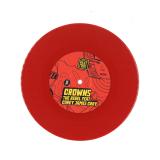
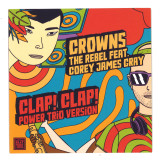
Crowns by The Rebel feat. Corey James Gray is out now on 7’’ via Little Beat More!
The Rebel, aka Tommaso Taroni, producer from Rome and Founder of DJ’s Choice label, delivers a raw, soulful track that opens the door to his debut album. Crowns features the sharp lyrics and smooth, magnetic delivery by Corey James Gray (FKA Ill Spookin), riding over a sturdy groove with crisp drums and deep guitar loops.
On Side B a further explosion comes: Clap! Clap! signs a Power Trio remix of the track that flips everything on its head. With thunderous syncopated riddim and wild brass stabs, this version hits like a futuristic brass band from New Orleans: unrelenting, joyful, and rhythmically overpowering. A bold reimagining by one of Italy’s most visionary electronic producers.
Packaged in a stunning disco bag illustrated by El Moro, this 7” is both a record to play and a piece to keep. A snapshot of a fresh project in the pipeline, ready to go!
With a multi-decade spanning back catalogue behind him, Bearface aka Raj Panasa shows no signs of slowing down. Over the years he has built a sturdy reputation around his distinct and innovative feel-good touch whether that be on his own Beartone Records, or the many other labels he has shared his classy sound with.
“Remakes and Raw Cuts Vol. 1” is the launch of a new vinyl series from the London-based producer, a safe place for him to showcase his eclectic sound, alongside edits and remakes of some of his favourites over the years, all finding a home on his Beartone label.
Starting off on the A side Bearface provides a funk fuelled latin explosion with his version of the classic “Tudo Que Você Podia Ser”, sassy disco attitude ready for the summer months, presenting some unforgivable dance floor mania. The A2 “Got To Be” is an original cut, meandering between playful guitar licks, and stripped back, hypnotic percussion, there is a curious atmosphere as the track continues to simmer.
On the flip side an edit from the revered beatmaker. First up he edits “Tell Me I’m Not Dreamin’” by Jermaine Jackson, the infectious vocal injects a zesty life into a killer electro groove, a playful and animated trip ready to rock the floor! Closing out the EP is the retro sounding “Everything”, the robotic vocal flashes in and out, nodding towards Daft Punk, boasting beautiful strings and crispy hi-hats bringing that day time energy.
Bearface teasing those summer moments with a jam packed EP brimming with sunshine and positivity, dive in and feel the fun!
Space Echo is proud to present the new single by Derane Obika and Go.Soul.Map., arranged and performed by Sicilian
mastermind producer Salvo Dub - an overwhelming fusion of electronic sounds and soulful vibes. This track is a balance
of pulsating rhythms and enveloping melodies, a sonic journey that invites dancing and reflection.
The production stands out with its electronic soul — a rich blend of synthesizers and deep bass lines that pull the listener
into an energetic and immersive atmosphere. Every beat is crafted to move your feet and light up even the most
sophisticated dance floors.
It’s an explosion of energy, set against the unmistakable voice of Derane Obika. With his warm, soulful tone reminiscent of
Seal, Derane brings a unique spirit to the track, infusing every word with raw emotion and deep.
Here, Derane and Go.Soul.Map. don’t just celebrate dance music — they invite the listener into a full-bodied sensory
experience, where electronic beats meet soul tradition to create something truly extraordinary.
The lyrics expresses the idea of a complete fulfilment found in someone or something essential. It suggests that this
presence — a person, an emotion, or a spiritual guide — is so fundamental and complete that everything else becomes
unnecessary.
It evokes a profound sense of connection, purpose, and clarity. Like a path that leads directly to the essence of existence,
it conveys the feeling of being guided, inspired, and grounded all at once. It is a declaration of absolute trust, of love or
devotion — where the journey and the destination fully coincide.
Side B features a new version of “Walkin’ a Dream” from the debut album “Peaceful Sound for Broken Minds”. The new
rework 25, offers us futuristic and electronic sounds with 70s and 80s disco influences, mixing with space and cinematic
themes - very interesting!
As a preview of the upcoming release Richie Weeks' The Love Magician Archives: Boogie & Post Disco. NYC 1980–1983 Vol. 3 on Past Due Records, we’re proud to present a killer 7” featuring two previously unreleased versions of What’s In It For Me by Hot Cargo.
Hot Cargo was a fresh project Richie Weeks was developing with Salsoul Records around 1982–83, right at the height of New York City’s Post-Disco and Boogie Funk explosion. These two versions were recorded at the legendary Right Track Studios, with an all-star lineup of top-tier disco and funk musicians.
Had it seen the light of day back then, there’s little doubt that What’s In It For Me would have become a staple at Larry Levan’s Paradise Garage—and yet another major hit in Richie Weeks’ unstoppable run.
"We loved this piece of ramshackle punk funk when we first heard it on 7" in 1994 and we still love it now!" - The Chemical Brothers, 2025 A timeless slice of garage soul punk, the "Fuck Shit Up" DBN102 7" 45rpm was released in 1994, the second volume in Dub Narcotic Sound System's Dub Narcotic Disco Plate series. Immediately recognized as a unique bending of disco bleed towards the teeming masses, "Fuck Shit Up" was championed by the likes of Chemical Brothers, Beck, The Jon Spencer's Blues Explosion (who covered the song on their 1996 Now I got Worry LP) and Make-Up. "Fuck Shit Up" is still a must-play at every down-in-the-basement dance stomp the world over. Assorted unauthorized postings on youtube have accumulated over 100,000 views. Now available for the first time in the digital realm, the original "Fuck Shit Up" is reimagined as a 7" 45rpm phonograph record with new remix version on the flip by Hifi Sean (aka Sean Dickson of Soup Dragons). Hifi Sean's most recent album, in collaboration with David McAlmont, is Twilight (Plastique Recordings), a twelve-song night drive, dancing from dusk `til dawn, with all the moments in-between (out February 14). Hifi Sean has also directed a video for the "Fuck Shit Up Hifi Sean Mix."
On June 27, 2025, a long-dormant signal reactivates from Hamburg’s hidden places: Helena Hauff and F#X return as Black Sites with R4 on Tresor Records—their first full-length album and the first release under the moniker since 2014. Like a hieroglyphic recently discovered and translated, R4 feels more like a long-awaited resumption than a comeback.
Recorded to tape with minimal editing or post-production the record is a classic example of the symbiotic relationship that can come from the interaction of human and machine. This punk ethos isn’t invoked through distortion alone, but through method; in the album’s breaking from the received wisdom of hardness tethered to speed as most of the tougher pieces are lower BPM and vice versa (with one notable exception in the mind-melting stomp of BLOKK).
Across ten tracks, Black Sites traverse a landscape where genre dissolves into intention. It migrates through electro’s danceability, acid house’s corrosion, and into the liminal realm of machine funk—a genre coined by Andrew Weatherall, which sounds like the results of technology dreaming of soul where the emphasis is on live execution, on immediacy over perfection—a sound forged in the act of creating, not polishing.
In a 2013 interview, around the time of the first Black Sites EP, Hauff was quoted as saying that she wants “things to fit together properly, but on another level, I really want them to make sense together.” That principle animates R4: The album’s form reveals itself in time, with each movement echoing and amplifying the others to create a synergistic whole.
From the opening crawl of C4 (a name that like the music foreshadows the explosions to come) to the end-of-the-night bliss of MOTHERJAM via the intense peaks of BLOKK, 707, and classic acid track 3D it’s clear that R4 is a work made with serious intent; a refutation of a world where streaming has made the two-minute single the dominant musical form again. R4 demands immersion, not just attention. It is not a collection of tracks, but a singular, recursive experience: a mirror in which sound and listener repeatedly rediscover one another.
This time, Vintage Pleasure Boutique is reviving a high-energy Eurobeat classic straight from the vaults of Hotsound Records – the legendary “Say You’ll Be Mine” by the one and only Kim Taylor.
Originally produced by Rob Van Eijk in 1987, this track marked a shift in the Euro Disco sound, paving the way for the Eurobeat explosion in Japan while also becoming a cult anthem in the LGBTQ+ club scenes of the U.S. Its high-speed, melodic energy set dancefloors on fire across the globe. In 1988, a special U.S. remix by Frank Del Rio and Victor Flores pushed it even further into dance music history.
Now, thanks to Vintage Pleasure Boutique, “Say You’ll Be Mine” is back on vinyl – packed with stunning remixes. Alongside the original versions and the rare 1988 remix, this edition features fresh reinterpretations by Electro Potato, Chris Van Buren, A.P. Mono, and Albiero – all staying true to the high-energy spirit of the original.
This vinyl won’t stay in stock for long! If you love Italo disco, Hi-NRG, and vintage 80’s dancefloor magic, this is a must-have for your collection. Don’t miss your chance.
Crowns by The Rebel feat. Corey James Gray is out now on 7’’ via Little Beat More!
The Rebel, aka Tommaso Taroni, producer from Rome and Founder of DJ’s Choice label, delivers a raw, soulful track that opens the door to his debut album. Crowns features the sharp lyrics and smooth, magnetic delivery by Corey James Gray (FKA Ill Spookin), riding over a sturdy groove with crisp drums and deep guitar loops.
On Side B a further explosion comes: Clap! Clap! signs a Power Trio remix of the track that flips everything on its head. With thunderous syncopated riddim and wild brass stabs, this version hits like a futuristic brass band from New Orleans: unrelenting, joyful, and rhythmically overpowering. A bold reimagining by one of Italy’s most visionary electronic producers.
Packaged in a stunning disco bag illustrated by El Moro, this 7” is both a record to play and a piece to keep. A snapshot of a fresh project in the pipeline, ready to go!
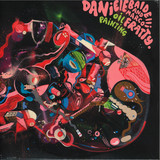
Leng Records’ first album of the year release comes courtesy of two contrasting legends of Italian dance music, Afro-Cosmic pioneer Danielle Baldelli and sometime FPI Project member Marco Fratty (real name Marco Frattini).
Both producers have a wealth of experience. Baldelli first to rose to fame as resident DJ at the near mythical Cosmic Club in the early 1980's, before moving into music production two decades ago. Since then, he’s collaborated with heaps of producers – most notably DJ Rocca, Marco Dionigi and Dario Piana – but “Oil Painting” marks his first collaboration with Frattini, an experienced producer whose bustling discography stretches right back to the Italian house explosion of the late 1980's and early ’90s.
The pair’s debut collaborative release is bold, bubbly, vibrant and funky, with the storied Italian veterans making extensive use of live instrumentation, vintage synthesizers and chugging, floor-friendly grooves. As you’d expect from a Baldelli-related project, the influences are obvious – think funk, dub-disco, cosmic rock, Italo-disco and nu-disco – but the resulting colourful cuts refuse to settle on one specific style.
Firmly focused on the dancefloor, “Oil Painting” is a gleeful, celebratory and excitable as anything either producer has released to date. For proof, check the surging arpeggio style synth-bass, kaleidoscopic synthesizer lines and eyes-closed rock guitar solos of “Automatic Amplitude”, the flute-laden dub disco shuffle of “Jasmine Flavour”, the organ-laden cosmic funk chug of “Oil Painting” and the lolloping disco-funk exuberance of “Steam Engine”, where crunchy guitar licks and Meters style organ stabs wrap themselves around a vintage disco bassline and head-nodding, toe-tapping drums.
The highlights don’t step there, either. Check the percussion and delay-laden Afro-Cosmic funk fusion of “Slinky Funk”, a veritably tropical excursion that repurposes the bassline and incessant cowbells from Cymande classic “Bra”, and the Clavinet-heavy stomp of “Positive Flow”, whose snaking, constantly-changing saxophone solo and flash-fried guitar riffs help create a thrillingly excitable mood.
From start to finish, “Oil Painting” is an album full to bursting with musical joy and umpteen giddy calls towards the dancefloor. From producers of Baledlli and Frattini’s experience, we’d expect nothing less.
Source of an all-time 'Breaks and Beats' classic, Mr Bongo reissue Herman Kelly’s timeless 1978 album Percussion Explosion!. Immortalised in hip-hop folklore, when the anthemic 'Dance To The Drummer's Beat’ was featured on the influential Ultimate Breaks & Beats compilation series in 1986.
Percussion Explosion! was the brainchild of drummer, percussionist, producer and arranger, Herman Kelly and his percussive disco-funk group from Miami, 'Life', that featured Aaron McCarthy, Oliver Well, John DeMonica, Michal Cordoza and Travis Biggs. The album houses a collection of disco, funk and Latin-inspired cuts that were destined for greatness. Nestled within the grooves is the B-Boy and B-Girl’s anthem, 'Dance To The Drummer's Beat’, which contains a now legendary break. A cursory glance at Whosampled will show that it has been sampled in over 125+ songs. These include Double Dee & Steinski on their groundbreaking 1985 production 'Lesson 3 (History Of Hip Hop Mix)', as well as by DJ Shadow, N.W.A, Masters At Work, Run D.M.C. and a whole host of heavyweights across hip-hop, dance and pop music.
When the album was released in 1978 it came out on two different labels, Alston Records and Electric Cat. Each label pressed different versions of 'Dance To The Drummer's Beat’, with the former featuring a 4:12 version and the latter a longer 5:09 version that has a different structure, crowd noise at the start and overdubbed percussion.
For this Mr Bongo reissue, we have chosen the classic 4:12 version from the Alston Records release, which would later find its way on to the illustrious Ultimate Breaks & Beats compilation. To make matters even more confusing the Alston version art on the back cover also states the track length as 5:09, whilst the centre label lists it correctly as 4:12.
Aside from the much celebrated 'Dance To The Drummer's Beat’, the album includes a range of other fantastic overlooked cuts. From the percussive soul stepper 'Share Your Love', to the beautiful Latin-flavoured 'A Refreshing Love' or the party disco-funk groover 'Who's The Funky D.J.?'.
This wonderful and inspirational record features an important piece of hip-hop heritage and deserves a place in every collection.
THE TWO CLASSIC AND HIGHLY COLLECTABLE INEVITABLE SINGES PLUS RELATED PEEL SESSION RECORDINGS. CAPTURING THE FIRST TWO YEARS OF DEAD OR ALIVE’S CAREER. ON BERRY-RED VINYL! A SEQUEL AND COMPANION RELEASE TO 2023’S CRITICALLY AND COMMERCIALLY SUCCESSFUL ‘LET THEM DRAG MY SOUL AWAY’.
Having been ‘discovered’ working in Liverpool’s Probe Records during the punk rock explosion of the late 1970s, Pete Burns quickly found himself fronting his very own band, Nightmares In Wax, who quickly mutated into the more familiar Dead Or Alive.
A star was born. But prior to pop superstardom, tabloid-tantalising celebrity and his later revival and recognition as an icon of gay punk and pop culture, Pete led Dead Or Alive into far darker waters, as one of the earliest explorers of the post-punk Goth scene.
Captured on two remarkable 7” singles originally released on Liverpool label Inevitable, the band also caught the attention of the
ever-reliable John Peel, and recorded material for his seminal BBC Radio One programme. ‘Running Wild’ compiles those early
singles and related Peel Session highlights, bringing the latter to vinyl for the first time. Pressed on berry red vinyl,and housed in
a cover photograph by Dead Or Alive’s then manager Francesco Mellina, ‘Running Wild presents an early glimpse at the
phenomenon Pete would become, and a long overdue back story accompaniment for fans and collectors alike.
"Deep Dancefloor Jams of African Disco, Funk, Boogie, Reggae & Proto Electro Music 1977-1986reggWhen a passionate DJ and crate digger intuitively selects music for a DJ compilation, without artistic compromise and without the burden of trends, AfroMagic vol.1 emerges from the depths of his soul. Herewith we present the new favorite phonomancer’s tool for all the DJs who experience the dance floor as a sanctuary and a source of freedom and love.
The most fundamental thing that defines African music is that it was created for dancing. In African dance, there is often no clear distinction between ritual celebration and social recreational entertainment – one can seemlessly merge with the other. Because dance and rhythm have more power than gesture and more richness than words, and because they express the deepest experiences of human beings, dance is in itself a complete and self-sufficient language. It is truly an expression of life with all of its emotions – joy, love, sadness and hope – without which there is no African music and dance. For the African people, dance and music are integral parts of the body and soul, thus depicting the expression of life, current emotional states, visions or dreams. Through hypnotic repetitive music and dance, people communicate with each other and with the souls of the dead, the animals, the plants, the stars, the Gods… They free the body and the spirit through ecstatic states, reaching a healing sense of freedom, happiness, and satisfaction.
Throughout history, this transcendental perception of rhythm and dance originating from Africa, influenced popular music worldwide, thus creating new living and breathing forms of musical genres – freeing them from their industrial mold. Funk, disco, soul, boogie, reggae, dancefloor jazz etc., developed in parallel all over the world. It is foolish to perpetually discuss where they originated from and who were the creators of all these fiery dance floor genres – being obvious that they directly or indirectly originate from the African continent and its people who were as well, over the centuries, influenced by disturbing socio-cultural factors of colonialism. However, no one can enslave the soul. The seeds of free and uninhibited dance and rhythm, true to their original form, initially first sprouted onto the USA’s fertile fields of clubbing and popular music while later evolving in other parts of the world.
The disco funk club culture manifested itself as a phenomenal explosion of artists and grooves in the second half of the 70s in the USA. Shortly it spread around the world continually reigning over charts in its various forms – to this day. Clubs emerged where the DJ is an almighty shaman and the dancers are a tribe united under one roof. This urban ritual had and still has a single goal: togetherness, freedom, and love. Clubs have evolved into temples where we free ourselves from the burden of a consumerist lifestyle and suppressed emotions – a place where we receive love and give love – to be who we really are.
Disco funk clubbing was such an influential global phenomenon that its influence can be observed in various other genres from the disco funk era i.e. progressive rock, which mutated by layering complex rock arrangements with a disco funk groove resulting in hybrids, highly sought by today’s diggers, producers and collectors. The profit-hungry music industry of the 80s very quickly commercialized the original disco funk sound by amputating of its original Afro groove to be able to easily ‘sell’ it globally. So, the original disco funk groove became underground again, and it has remained so until this day. Today, for a DJ to unearth that ravishing groove that will lead the dancers to the stars, he must dig passionately like a true musical archaeologist in search of that groove that picks you up after just a few initial beats. That groove which forces the atoms in your body to vibrate, that groove which unites the body and releases the burden.
The AfroMagic compilation series is created as a tool for real DJs who stick to the aesthetics and essence of clubbing.
This continuation of the Afromagic compilation by DJ Borovich was created in a private jam session which served as an escape route from intense and complex love problems.
Unconsciously driven by intuition and emotion and following a live mix tape framework where many tunes are arranged instantaneously, Borovich narrates his story with a strong rhythm that cuts loose even the most blocked off energy nodes and restores happiness to the spirit and the body.
The musical experience of the groove is completed by the lyrics of the songs, which symbolically give DJ Borovich universal answers to his questions arising from questioning the boundaries, nuances and other forms of love.
When considering that Borovich’s selection was created to facilitate an escape from the burdens of reality through rhythm and dance, we can be sure that Afromagic Vol. 2 will have a 100% uplifting, energized and spaced-out effect on the listeners.
The intro to A1, “Feeling Happy” by the Apostles, introduces us to an experienced and slow, cool and irregularly tight groove containing a confidently sung chorus that instantly gives a sense of freedom and hints at the remainder of Afromagic Vol. 2: “I’m gonna feel happy, ´cause I know I’m gonna be myself.” After the anthemic song mantra of the Apostles, Aigbe Lebarty uncompromisingly continues with a dirty disco rhythm. Acidified by accented synths that elevate it to shamanic levels and held together by a female tribal choir, we embark on an uncompromising ritual disco journey. Without a moment to take a breather the prog funk band Mighty Flames and their Road Man launch a highly vicious and raw, thick funk groove spiced with acid synths and dirty RnR breaks, raising the bar for the A side. Jimi Hendrix himself would surely praise it given the ultimate freedom and virtuosity in the solo sections. With the last tune on A side DJ Borovich decides to burn the floor with Geraldo Pino’s psychedelic, acid furious groove and lyrics which describe this HEAVY part of love problems: “The way she walk, the way she talk, the way she does a funky dances, she is really really heavy – that woman”.
While the A side represents a compact intoxicating afro groove machine that separates us from reality and lifts us up to the stars in over 23 minutes, the B side is a treasure trove of proto sub-genres gems. This selection represents the mission of the Afromagic: to find singular events in African recorded discography of popular music from the 70s and 80s that give evidence to the birth of new modern genres on the Dark Continent even before they emerged in the U.S.A. or Europe. The beginnings of electronic music influenced genres are represented back to back with 80s synth jazzy pop, all painted in African colours.
The B side opens big with Jake Sollo and a huge reggae blues number singing about the humiliation of a man – goosebumps guaranteed! “You think I’m nobody that’s why, you don’t know the way for me, I’m somebody I know, I found myself at last”. Adolf Ahanotu then enters the scene with a hard sliding tackle at B2 and an exotic rare disco funk dancefloor napalm. A ‘Sensation’ that would ignite even the coldest of introverts. While we approach the end of the compilation the narrative revolves again and takes a different turn. No less and no more than to the proto-electro that Baad John Cross serves us in “Give Me Some Lovin´”. The fat and repetitive broken electro synth groove, championing many early 90s electro tracks, is presented here without hesitation and with constant tension accompanied by a mantric chorus “Gimme some, gimme some, gimme some looooovin’, EVERBODY!!!”. Finally, we’re guided to the end of Afromagic Vol. 2 by Eji Oyevole’s 80s synth pop style presented in an authentic afro manner, giving us a glimpse at yet another released Afromagic edition, as well as giving an answer to DJ Borovich’s love problems. A smoothly broken electronic rhythm resembling electrified highlife sounds, carried on the wings of a virtuoso dreamy saxophone on top of which Eji presents the most intimate parts of himself. Finalizing the track with a symbolic chorus, on the surface referring to the dancefloor and simply having fun, but in actuality referring to the skill and happiness of living: “I´m a dancer, I can dance”. So, get up and dance among the stars with DJ Borovich and Afromagic.
With a mysteriously unknown release date, “Photochrome” could have been originally put out somewhere between the late 70's to early 80's on the Italian Idea label, which although only boasting a minuscule catalogue of mainly 7”s has gotten the attention of many collectors of European disco obscurities for releases such as “Flavio – Drum Explosion” and “Aleo's Band - EOE”. “Photochrome” features a very organic sound with hints of early electronics that might have been making their way into studios at the time. A fast passed driving bass line layered with what almost sounds like an early 303 bass line and spacey/cosmic vocals. Dry drum recordings give it a naive DIY feel which coupled with the experimental tricks on the vocals results in a very unique sound that has put this release on the radars of diggers world-wide. Now available once again at an affordable price with a new two part bonus beats remix that starts off as a more DJ friendly tool but soon embarks into a questionable full-fledged acid house excursion. Originally only released in 7" format but now re-issued in remastered 12" format.
Mood Child label owners Sirus Hood and Manda Moor curate a sonic journey featuring global talent as they proudly present their latest compilation, ‘Various Moods’. A kaleidoscope of experiences, the release showcases six tracks from diverse artists, each contributing their unique vibe to this eclectic musical package.
Hailing from Brazil, Wayne Le’s ‘This is How’ pays homage to the origins of electronic music with a rolling bassline and a vocal tribute to classic Roland machines, the 808 and the 303. The track’s energy crescendos, making it a highly sought-after ID. Spanish duo Fourth Phase brings ‘WTF’ to the compilation, a groovy masterpiece characterized by 909 drums, a massive bassline, and a playful vocal, reminiscent of the 90s. From Curitiba, Brazil, guerrA. presents ‘Storno’, a fast-paced old-school beat that weaves chopped vocals from a rap DJ tool into a groove enriched with analog drums and a powerful bass sound.
A fusion of French and Taiwanese influences, Nathan Alzon’s ‘Flashback’ captures the essence of a new beginning. The track features a vocal saying “take me away”, blending seamlessly with the groovy sound characteristic of Alzon’s productions. Representing Mexico, Gama delivers ‘Tatata’, an explosion of Latin percussive elements blended with a hypnotizing groove. Inspired by his hometown Cancún, Gama experiments with new rhythms and sounds, infusing a significant Latin influence into the track. Marseille’s Malikk, known for his releases on Hot Creations and Hottrax, collaborates with Palermo-based Side B. The duo draws inspiration from '80s disco, funky, soul, and retro movies, crafting ‘How I Feel’ with punchy drums, a heavy bassline, and unique grooves.
Glasgow's finest Austin Ato is first out of the blocks off this mysterious new series “I Love Your Edits” with a 4 track EP of Disco Edits & Reworks following on from his work on Classic Music Company, Percolate, Phonica White, Defected, Me Me Me, Futureboogie, Delusions Of Grandeur and our very own Pantai People.
Two tracks on the funkier edge, whilst two are full on face-melters, both will tear the floors up.
Symphony Orchestra is a new group from Maximilian Turnbull and Michael Rault. Both Rault and Turnbull are accomplished songwriters, performers and producers in their own right, with Turnbull leading The Badge Epoque Ensemble, playing with the group Darlene Shrugg, and once releasing records under the name Slim Twig and Rault having released several psychedelic rock & roll classics under his own name in the past decade. The pair have worked together in various capacities for many years, writing and recording together on U.S. Girls' In A Poem Unlimited, and contributing to each other's releases, but the debut LP from Symphony Orchestra (due out May 12th on Telephone Explosion) marks their first release as an official entity.
Needless to say, there is a potent creative chemistry between Rault and Turnbull and Radiant Music showcases the alchemy between their distinct skill sets. The album is an exercise in pure collaboration. After years spent focusing on solo projects and working as hired guns on other projects, the duo came together with no specific intentions other than to work free of boundaries and direction. Freeing themselves from the familiar pressures of deadlines and expectations, they found a sense of discovery through togetherness. Duties on this project were split between Rault acting primarily as a one-man rhythm section and lead vocalist with Turnbull bringing chord sketches and his trademark aphoristic lyrical musings to the table. Trading off roles on guitar and keys from song to song, the duo's deft approach to melody bleeds through their instrumental parts as much as it does through Rault's vocal melodies. The majority of this album was self-engineered over the course of three sessions in 2018, at Michael's Montreal studio. Dormant during the pandemic, Rault's move to Los Angeles and the birth of Turnbull's twin sons, work reignited in 2022. The latterly tracked instrumental 'Concerto' and ballad 'Unthink The Thinkable' provide a dynamic depth to the album perhaps attributable to this tumultuous pause. Mixing came courtesy of Steve Chahley & Tony Price (U.S. Girls, BÉE, Jane Inc, etc).
In all of their work, Rault and Turnbull have made a hallmark of elaborately precise production and arrangement, Radiant Music is no different, though its pared-back simplicity provides a streamlined directness. The pairing of Rault's soulful, elastic vocal with Turnbull's evocatively cerebral lyrics provides a thrilling sensation unlike anything else in their respective catalogs. With an explosive, groove-forward approach, kaleidoscopic walls of vocal harmony and technicolor displays of guitar work, these 31 minutes of music will most certainly stimulate the mind of any fan of classic pop rock and funk. The blown-out breakbeats, winsome woven vocal melodies and propulsive wah-wah guitars of the title track evoke memories of an after-school cartoon special that never really existed outside of a lysergic daydream. "Harp In The Wind" is a perfect moment of overcast melancholy complete with ribbons of weeping synthesizers and velcro-fuzz guitar that could rip a clean line through Kevlar. "Know Thyself" and the harmony-rich "Intersection" are standout tracks that find a kinship in Stereolab's space-age effervescence. "Concerto" is a slab of beaming, mischievous funk that nods to Billy Preston's extraterrestrial keyboard explorations.
Radiant Music, like the best pop music, is life-affirming, confectionary, and enticing. Symphony Orchestra have created an album that hits you right where you need it, anchoring heady, adventurous sonic ideas down to a solid foundation of masterful songcraft, virtuosic instrumental performances and undeniable groove. Not a bar, nor beat is wasted.
A vibrant and powerful performer, Danny Toeman seamlessly blends the classic vibes of Funk and Soul's golden age with his own inimitable London edge that modernises his work, giving it a fresh 'neo-vintage' flavour.
His gravel tones combined with an altitude-defying falsetto set him apart, creating a sound oozing with character and emotion. With his backing band 'The Love Explosion', Danny Toeman stages an electrifying show filled to the brim with feel-good funky soul, designed to make everyone get on up! Born in London, Danny was well acquainted with the Soul, Funk, and Rhythm and Blues of artists such as James Brown, Aretha Franklin, and Ray Charles from an early age, before graduating onto the hard hitting Souther Soul of artists like Wilson Pickett and Bobby Womack, and the refined uptown Philly Soul of artists like the O'Jays and the Spinners. A guitarist since the age of seven, and a singer before that, he grabbed any opportunity to perform his songs on stage for an audience. Danny Toeman truly set out to on his musical career after graduating University (where he won the regions official Battle of the Bands contest). Soon after, he was in demand as a supporting act for a number of great Soul artists, including Charles Bradley of Daptone, Michael Kiwanuka, Queen of Rare Groove Betty Wright, and 4-time Grammy winner Robert Cray. Around the same time, Danny's music reached a worldwide audience when a song of his was discovered on Soundcloud by scouts, and placed on the in-store playlists of Abercrombie & Fitch. Since then, his music has appeared in film and television shows around the world, most notably Saturday Night Live (NBC). Danny continued to perform nonstop around the UK, occasionally travelling to continental Europe for appearances. From 2019-2021, he hosted and promoted a series of headline shows at the famous Pizza Express Jazz Club, which garnered sold out crowds every night. The pinnacle of the support slots came in 2019, when Danny was chosen as the primary support act for Kool and the Gang at their o2 Arena show in London, in front of 10,000 spectators.
In Mid-2020, as the world was shutting down, Danny was approached by LRK Records to release his track 'She's Got Something About Her' on vinyl.
Within 3 months of release, the disc completely sold out due to demand, taking the European Soul Scene by storm. It garnered multiple radio plays, including from BBC 6 Music's Craig Charles, and veteran BBC DJ Robert Elms pronounced it 'his new favourite song'.
In 2022, Danny received his first spin on BBC Radio 2 for the single, 'Shake the Blues Outta Your Shoes', and was chosen out of thousands of competitors by industry professionals to act as the opening act for the legendary Diana Ross at one of her rare UK performances!
As the world starts to open up, Danny looks forward to releasing more new music, and taking his show across Europe and around the World.
Limited edition 45. Only 300 copies pressed.
- 1: Diarabi
- 2: Goatman
- 3: Goathead
- 4: Disco Fever
- 5: Golden Dawn
- 6: Let It Bleed
- 7: Run To Your Mama
- 8: Goatlord
- 9: Det Som Aldrig Förändras / Diarabi
2026 black vinyl, 2022 Abbey Road remaster, original 2012 artwork! When the mysterious masked collective calling themselves Goat first emerged in 2012, armed with an incendiary debut album 'World Music' - there was, and there still isn't, anyone else on earth quite like them. With their enticing mythology, music full of sinuous grooves and manic explosions of fuzz, Goat were outliers from the very beginning. 'World Music', received an avalanche of acclaim with critics, psych heads, outernational crate diggers etc, all left enraptured by its thunderous intensity, conjured from a singular mix of sounds from across the globe. 'World Music' is brimming with tracks now seen as 'classic' Goat live favourites. Tracks that have been wowing audiences all over the world; the afrobeat stomp of 'Disco Fever', the fuzz abuse of 'Goathead', the post-punk groove of 'Let it Bleed', the sing-along repetitive pop of 'Run to your Mama'... From the first note to the last, 'World Music' oozes with a sonic confidence rarely seen on a debut album. What Goat have is unique - they've managed to create a sound unrestrained by genre or any other boundaries. So if you haven't done so already, then it is now time you joined the Goat commune.
- 01: Glass Mask On
- 02: Celebrity Culture Simp Farm
- 03: Please Just Make It Stop
- 04: No Laughter Left In Me
- 05: Weaponizing My Failures
- 06: Unthinking My Every Thought
- 07: Insignificant Other
- 08: It Keeps On Stinging
- 09: I Took A Pill In Vilvoorde
- 10: Suffering In Technicolor
DOODSESKADER clearly haven’t had enough of redefining boundaries – they’ve only just gotten started. Tim De Gieter and Sigfried Burroughs return on April 3rd, 2026 with their third full-length album, The Change Is Me, a rollercoaster that can only be described as the unstable lovechild between witch house, hip-hop, industrial dream pop, and stadium rock that can’t decide if it wants to watch the world burn or shout from the rooftops that we need to save it. Their combination of grungy 90s melodies with distorted synths, sludgy bass, hard tuned vocals, rapping, singing, and explosions of undiluted rage at the current state of the world leave you wondering just exactly what it was you smoked last night, and if it was too much or not enough. The Change Is Me is an album that grabs you by the arm and asks if you’re ready to go on a grand adventure, then pulls you into its chaos before you can say “yes” or “no.”
Tim and Sigfried aren’t just breaking the boundaries between genres; they’re breaking out of their own Year cycle, a path they had laid out for themselves at the band’s inception in 2020. Up until now, the duo had set out to document their “journey to getting better” through writing one album each year: Year Zero (2020), Year One (2022), and most recently Year Two (2024). After spending eight months throughout 2024 and 2025 writing, recording, producing and mixing Year Three, the band scrapped the finished record entirely. Playing shows while simultaneously navigating the process of mixing Year Three created a sort of disconnect – the people that they were when they wrote that record and the people that playing shows made them become were no longer one and the same. “We’re people with faults and strengths, and we realized we needed to accept it. That’s equal parts bleak and liberating. If you’re so focused on self-improvement, you can’t even applaud yourself for how far you’ve come,” the band explains. “This project is meant to be a document of us and of the human condition, not a self-improvement handbook designed to keep us all stuck on what may or may not have happened to us or because of us in the past.”
DOODSESKADER chose instead to embark anew on a week-long creative journey in Tim’s own Much Luv Studio with one goal in mind: to make an album that captures who they are right now. Finally writing everything together in the same room for the first time in years, the process of bringing "The Change Is Me" to life was captured by Diana Lungu in their latest documentary, "Now I Know You See Me", out December 2nd, 2025.
"The Change Is Me" marks the beginning of DOODSESKADER’s shift into a more positive era, both musically and conceptually. Over the course of the 40-minute record we hear the two friends unite in a fight against a world that grows more and more disappointing, a concept made crystal clear in tracks like “Celebrity Culture Simp Farm,” “It Keeps On Stinging,” and of course the album’s epic closer “Suffering In Technicolor.” While their previous albums saw them trying to outrun their pasts and arrive at a better version of themselves, here the search for some external or internal revelation that will “make them better” is no more. It’s been replaced by the realization that change isn’t something we force: it’s gradual, and more importantly, it’s something that’s already there – we just need to reach out and accept it.
The band’s live appearances over the last several years have been instrumental in shaping their ideology. On stage is where the duo find connection; not only with the audience, but also with each other. Their sold-out release shows at Ancienne Belgique (2022) and VierNulVier (2024) have proven that they are one of Belgium’s must-see acts. Abroad, their energy has translated into a month-long EU/UK tour with French band Alcest in 2024, as well as appearances at festivals such as Roadburn Festival (NL), Eurosonic (NL), Hellfest (FR), Mystic Fest (PL), Jera On Air (NL), ArcTanGent (UK), Fluff Fest (CZ) and more.
"The Change Is Me" is out April 3rd, 2026 on DOODSESKADER’s own label, 45 Records.
- A1: Santrax - Come & Get It
- A2: Marini - Let’s Get It On
- A3: Time Unlimited - Back Fire
- B1: Venus Dodson - Shoot Me (With Your Love) (With Your Love)
- B2: Wings Of Light - He Loves You
- B3: Ship Of The Desert - Count Of Monte Thisgo
- B4: Frank Hatchett Dance Explosion - Super Hero
- C1: Cherish - For You
- C2: Jaze - Wanna Get Down With You
- C3: The 21St Century - One Of These Days
- C4: Porno Disco - Go Down Moses
- D1: Cousin Ice - Catch Your Glow (Feat Zack Sanders)
- D2: Boobie Knight - Juicy Fruit My Love
- D3: John Lamkin - Ticket
Represss!
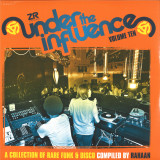
Z Records continues its commitment to unearthing the obscure and
long forgotten tracks from the last 40 years through the ever-popular
Under The Influence series. Following on from Red Greg, Nick The
Record, Sean P, Faze Action, and last years Alena Arpels. It’s now the
turn of one of the scene’s most impressive collectors & DJs; Rahaan
Hailing from Chicago his love affair with muzik started in the late 70’s early 80’s, listening to muzik on the radio combined with his mom and dad playing their records every weekend. In the early 80’s on the South side of Chicago, he started hearing something a bit different, what they called ‘house muzik’. A combination of Disco, Jazz, Soul Funk, New Wave and Italo Disco. Here Rahaan digs deep into his impressive record collection that he has collected, built up and crafted over his many years of travelling, networking and DJin to showcase 22 of his finest and rarest cuts. Many of the tracks on the album would cost hundreds and that’s if you were even able to find the originals! As always with ZR compilations a lot of time and effort has been spent on creating these masters from the original vinyl, cleaning them up, removing all the clicks and pops resulting in the cleanest sounding copy possible.
With her sophomore album JAWBREAKER, Sam Quealy cements her status as one of pop’s most daring new voices. Like the cult candy it’s named after, JAWBREAKER is bold, addictive, and dangerously fun — a sugar-coated explosion of chaos, glamour, and emotion.
Produced alongside longtime collaborator Marlon Magnée (La Femme) between their Paris home studio and the legendary Studio Ferber, the album marks a striking evolution from Blonde Venus (2023). Here, Quealy trades the sharp edges of techno-pop for a lush, disco-infused sound, blending live instrumentation and cinematic sheen with her trademark anarchic energy. The result is a record that feels liberating, hedonistic, and deeply human — a vibrant antidote to modern gloom.
From the euphoric escape of “LONDONTOWN” to the dark romance of “LOVE LASSO”, and the shimmering pop fantasy of “GIRLS NIGHT”, Quealy channels a thousand versions of herself — club queen, rock diva, dreamer, and provocateur. The ethereal duet “BY MY SIDE” with Magnée closes the album in a haze of tenderness and light.
A multidisciplinary artist — singer, dancer, performer, and visual visionary — Quealy extends her universe through spectacular music videos and high-energy live shows that merge fashion, choreography, and raw emotion. On stage, she’s magnetic: a whirlwind of hyper-femininity and power, commanding every room with unfiltered authenticity.
With JAWBREAKER, Sam Quealy delivers a fearless pop statement — an exhilarating fusion of sensitivity, chaos, and self-expression that confirms her as a genre-defying visionary ready to take over the world.
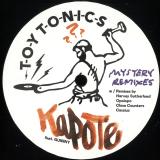
Big remix package for TOY TONICS'S boss KAPOTE. His song "Mystery" from the last album reworked by HARVEY SUTHERLAND, OPOLOPO, CLOSE COUNTERS with a bonus remix by french house master CASSIUS. Turning Kpaote's New school house anthem into super fresh jazz-funk disco, NYC 1990ies House hit and proto-dance bangers. There is no way there is not one version that every good DJ with an interesting fresh sound can't play.
It's 2025 and Toy Tonics one more time tries to define what are the perfect vibes for the "post-dark-electronic music age". Yes. After 10 years of explosion of hard techno, dark trance and fast race sounds Toy Tonics is trying every month to bring ideas for a more positive, high quality, forward-thinking dance music.
Opolopo: Opolopo brings his legendary touch to "Mystery." With a career spanning decades and a reputation for fusing boogie, funk, and broken beat, his remix promises a soulful journey. An artist who's famously remixed everyone from Gregory Porter to Stevie Wonder, Opolopo's version is pure, unadulterated groove.
Harvey Sutherland: Straight from the heart of Melbourne's electronic underground, Sutherland delivers his signature "Neurotic Funk." The celebrated synthesist and producer, known for his distinctive analog textures and a discography that's earned him ARIA Award nominations, is sure to inject his unique genre-bending energy into the track.
Close Counters: The duo from Melbourne, Close Counters, are set to turn "Mystery" into an electrifying fusion of house, soul, and jazz. Known for their dense synths and infectious energy, they have earned praise from tastemakers like Gilles Peterson and have wowed crowds at festivals like Splendour in the Grass.
Finally, the package features "Berlin Boogie Town" with a new interpretation from Parisian legend Cassius, adding some uplifting French Touch filter vibes.
- A1: Retrospect - This World Is Not My Home
- A2: Hidden Fire Improvisation
- B1: Hidden Fire Blues
- B2: Hidden Fire Blues
- C1: My Brothers The Wind And Son #9
- C2: My Brothers The Wind And Son #9
- D1: Hidden Fire I
- D2: Hidden Fire Ii
Strut Records proudly presents the official reissue of Hidden Fire Volumes 1 & 2, the final album released by Sun Ra on his El Saturn label in 1988.
Captured live over three nights at the Knitting Factory in New York City, these performances mark the closing chapter of a 33-year odyssey of radical, independent music-making. Originally issued in tiny quantities with minimal packaging and cryptic artwork—often featuring hand-written labels or Ra’s own handmade designs—Hidden Fire was among the most elusive entries in Sun Ra’s vast discography.
Musically, these recordings stand apart from Ra’s other '80s compositions. Here, Hidden Fire plunges into darker, more dissonant territory. Ra performs exclusively on the Yamaha DX7 synthesiser, pushing its digital sound palette into alien dimensions. The Arkestra lineup is uniquely configured, featuring a rare and heavy string section with three violins, including the legendary Billy Bang, and the singular space vocalist Art Jenkins, whose eerie textures and vocalisations had not been heard so prominently since the early 1960s Choreographers Workshop sessions. The music is raw, unsettled, and often overwhelming.
“Retrospect / This World Is Not My Home” opens with a palindromic riff that evokes Ellington before unraveling into a stark sermon from Ra, warning of death’s dominion over Earth-bound minds. “Hidden Fire Improvisation” is a furious explosion of tone science, with Marshall Allen, Billy Bang, and John Gilmore delivering fire-breathing solos over relentless drumming and Ra’s cascading synth clusters. “Hidden Fire Blues” offers a warped, electrified version of Ra’s familiar blues feature, led by Bruce Edwards on guitar and Rollo Radford on electric bass, transformed through the haze of DX7 textures. “My Brothers The Wind And Sun #9” evokes the experimental weight of The Heliocentric Worlds with its crashing percussion, pulsing synth-vocal duets, and string- driven chaos that seems to spiral into oblivion.
Even the quieter moments—such as “Hidden Fire II,” a duet between Ra and Art Jenkins—feel thick with unease and shadowy beauty. These performances represent a Sun Ra less concerned with cosmic joy or outer-space swing, and more focused on conjuring portals to the unknown.
Remastered from original sources and presented with archival photos, new liner notes by Paul Griffiths, and restored artwork inspired by the original Saturn editions, this reissue offers a definitive window into the last creative surge of one of music’s most visionary figures across two Vinyl LP’s.
- 1: Iron Gate
- 2: Death Of Day
- 3: It Washes Over
- 4: Hole
- 5: White Noise
- 6: Eviscerate
- 7: October
- 8: Mater Dolorosa
- 9: The Well
- 10: Meet Your Maker
Los Angeles trio Faetooth sophomore album Labyrinthine is a deeply felt exploration of emotional weight: grief, memory, uncertainty, and the quiet work of growing around your own wounds. Following the band's 2022 debut Remnants of the Vessel, which introduced the band’s signature blend of heaviness and mysticism, Labyrinthine pushes further inward. True to its name, the album winds through a maze of feeling and form, where meaning is never handed over easily. It’s rooted in self-discovery through disorientation, the idea that understanding comes not from escape, but from getting lost. Ari May (guitars and vocals), Jenna Garcia (bass and vocals), and Rah Kanan (drums) manage to stay grounded in the immediate in parallel with fantasy themes of the band's namesake. Labyrinthine holds space for this contradiction; tenderness and intensity, restraint and release. The band's self-branded “fairy doom” sound fits between shoegaze, doom, and grunge. It isn’t just texture; it’s a framework for navigating the unsaid. Like the myth that inspired its title, Labyrinthine doesn’t end in victory, but in confrontation—not with escape, but with the Minotaur. Only here, the Minotaur isn’t a monster. It’s something quiet and more familiar: unresolved feelings, old memories, and sadness that refuse to stay buried. The album winds like a maze, sometimes heavy, sometimes hushed, always intentional. Faetooth isn’t chasing catharsis. They’re creating space to reflect, to feel, and maybe to get a little lost along the way.
Artist quote: "White Noise" emerged from a diary entry, and is a relentless and intense reflection on inner turmoil. We’re often drawn to the familiar, even when we don’t realize we’re reaching out for it. It is an emotional upheaval, carrying harsh truths that weigh heavily on the heart. Guitarist, Ari May mentions, “Performing the song always takes me back to a specific place, even if just for a moment.”
“Riffs and melodies brimming with loneliness and longing… this band’s incantations affect my mood the whole day after listening.” — The Sleeping Shaman
“Bringing otherworldly hazy doom goodness… dreamy clean vocals, echoing harsh vocals, entrancing riffs, meditative shoegaze melodies.” — Nine Circles
“Slow, lumbering behemoths of great weight… couched in a melancholy atmosphere and explosions of crushing heaviness.” - Where Strides The Behemoth
Los Angeles trio Faetooth sophomore album Labyrinthine is a deeply felt exploration of emotional weight: grief, memory, uncertainty, and the quiet work of growing around your own wounds. Following the band's 2022 debut Remnants of the Vessel, which introduced the band’s signature blend of heaviness and mysticism, Labyrinthine pushes further inward. True to its name, the album winds through a maze of feeling and form, where meaning is never handed over easily. It’s rooted in self-discovery through disorientation, the idea that understanding comes not from escape, but from getting lost. Ari May (guitars and vocals), Jenna Garcia (bass and vocals), and Rah Kanan (drums) manage to stay grounded in the immediate in parallel with fantasy themes of the band's namesake. Labyrinthine holds space for this contradiction; tenderness and intensity, restraint and release. The band's self-branded “fairy doom” sound fits between shoegaze, doom, and grunge. It isn’t just texture; it’s a framework for navigating the unsaid. Like the myth that inspired its title, Labyrinthine doesn’t end in victory, but in confrontation—not with escape, but with the Minotaur. Only here, the Minotaur isn’t a monster. It’s something quiet and more familiar: unresolved feelings, old memories, and sadness that refuse to stay buried. The album winds like a maze, sometimes heavy, sometimes hushed, always intentional. Faetooth isn’t chasing catharsis. They’re creating space to reflect, to feel, and maybe to get a little lost along the way.
Artist quote: "White Noise" emerged from a diary entry, and is a relentless and intense reflection on inner turmoil. We’re often drawn to the familiar, even when we don’t realize we’re reaching out for it. It is an emotional upheaval, carrying harsh truths that weigh heavily on the heart. Guitarist, Ari May mentions, “Performing the song always takes me back to a specific place, even if just for a moment.”
“Riffs and melodies brimming with loneliness and longing… this band’s incantations affect my mood the whole day after listening.” — The Sleeping Shaman
“Bringing otherworldly hazy doom goodness… dreamy clean vocals, echoing harsh vocals, entrancing riffs, meditative shoegaze melodies.” — Nine Circles
“Slow, lumbering behemoths of great weight… couched in a melancholy atmosphere and explosions of crushing heaviness.” - Where Strides The Behemoth
Los Angeles trio Faetooth sophomore album Labyrinthine is a deeply felt exploration of emotional weight: grief, memory, uncertainty, and the quiet work of growing around your own wounds. Following the band's 2022 debut Remnants of the Vessel, which introduced the band’s signature blend of heaviness and mysticism, Labyrinthine pushes further inward. True to its name, the album winds through a maze of feeling and form, where meaning is never handed over easily. It’s rooted in self-discovery through disorientation, the idea that understanding comes not from escape, but from getting lost. Ari May (guitars and vocals), Jenna Garcia (bass and vocals), and Rah Kanan (drums) manage to stay grounded in the immediate in parallel with fantasy themes of the band's namesake. Labyrinthine holds space for this contradiction; tenderness and intensity, restraint and release. The band's self-branded “fairy doom” sound fits between shoegaze, doom, and grunge. It isn’t just texture; it’s a framework for navigating the unsaid. Like the myth that inspired its title, Labyrinthine doesn’t end in victory, but in confrontation—not with escape, but with the Minotaur. Only here, the Minotaur isn’t a monster. It’s something quiet and more familiar: unresolved feelings, old memories, and sadness that refuse to stay buried. The album winds like a maze, sometimes heavy, sometimes hushed, always intentional. Faetooth isn’t chasing catharsis. They’re creating space to reflect, to feel, and maybe to get a little lost along the way.
Artist quote: "White Noise" emerged from a diary entry, and is a relentless and intense reflection on inner turmoil. We’re often drawn to the familiar, even when we don’t realize we’re reaching out for it. It is an emotional upheaval, carrying harsh truths that weigh heavily on the heart. Guitarist, Ari May mentions, “Performing the song always takes me back to a specific place, even if just for a moment.”
“Riffs and melodies brimming with loneliness and longing… this band’s incantations affect my mood the whole day after listening.” — The Sleeping Shaman
“Bringing otherworldly hazy doom goodness… dreamy clean vocals, echoing harsh vocals, entrancing riffs, meditative shoegaze melodies.” — Nine Circles
“Slow, lumbering behemoths of great weight… couched in a melancholy atmosphere and explosions of crushing heaviness.” - Where Strides The Behemoth
Emotional Rescue completes the series of non-defined reissues where the label licenses an all-time favourite, remasters and then reappraised with new interpretations by contemporary producers for today’s collectors.
After the series started back in 2019 with Hawkwind’s sprawling psychedelic electronics, featuring deep drone mixes by the esteemed digger Cherrystones (ERC074), the bouncing cosmic-Balearics of Thomas Leer with wonderful reworkings by friend and producer Bullion (ERC075) and then the post punk dubs of The Embrace and Timothy J Faiplay’s brooding italo-dub excursions (ERC076), there was always one artist and producer left out. Finally, then the percussive excursion of the early 80s band The Impossible Dreamers and their cult B side jam, Spin, coming with 9 minutes percussion-dub extravaganza of an extended reversion, plus a dub heavy reprise, by label go-to Dan Tyler (Idjut Boys /Noid), under his NAD moniker.
Started by a group of friends while at Exeter University that centered around Caroline Radcliffe, James Hood, Justin Adams and Nick Waterhouse, their debut 12” record is one of just three on the 100 Things To Do label. The other two releases have already been covered with the Hamburger All Stars ‘Swinging London’ 12” (ERC114) of 2022.
Recorded before the move to West London, ‘Life On Earth’ was a raw post punk vocal pop cut, with influences of dub, funk, hip-hop and African music shining through, there were in their own words, “young music fans starting out, with no agenda”.
However, it was on the B side that things got interesting. Enamored by the growing trend of extended 12” singles, they decided, with the A side wrapped up, to have some studio experimentation by recording a drumming jam, with all the members playing percussion, followed by some overdubbing. Memories are hazy, but at the time the band was an 8-piece, so the results a chaotic explosion, capturing the essence of that time. Featuring Nick and James on 4 hand piano, plus Caroline on Oboe, with some additional hollering and wooping vocals, Spin was a 5-minute burst of energy.
In effect, self-released in 1982, the band didn’t expect much to come of it, but the 12” acted as a calling card leading them to London and later signing for RCA. At the same time, Spin was being discovered in the early eighties alternative club world. On a trip to New York, the track was heard being played Downtown, and on enquiring it was discovered the DJ was playing a 7” that was never an official release but cut in the US solely for the club DJs there.
Its resonance extended further, to Italy and the Cosmic club of the resident, an ever-searching Danielle Baldelli, before being picked up a few years later by a young Andrew Weatherall during his pursuit of an alternative “Balearic” beat during the late eighties Summers of Love and has even recently received the Joe Clausell edit treatment back again in NYC.
For the remake to fit the label series, it was only right to ask label friend Dan Tyler to do what he does so well, putting the original through his array of dub machines and pedals, extending and cutting with aplomb to create an incendiary ‘Reversion’ that will send dancefloors literally in a spin. Teasing the percussion incandescent, looping and teasing, the piano held back before finally releasing in a haze of dub effects.
This is followed by the ‘Riddim Reprise’. Working with London based drummer Matt Bruce (Claptrap), this is the perfect DJ tool, taking the original idea of the band, to just jam see what happens, twisting it full of space echo and reverb, to offer a perfect 12” Extended Mix.
- 1: Don't Lie Back
- 2: (That's When) It's Worth It
- 3: Instant Touch
- 4: Sex Without Stress
- 5: Fiasco
- 6: Intact
- 7: Tongue In Cheek
- 8: Stepping Out Of Line
- 9: Shakedown
- 10: America
Sense and Sensuality (1982) was the second and final album by seminal British post-punk band The Au Pairs. The four-piece group from Birmingham were very much in tune with the early 80s growth pangs from the first punk explosion - stripping down their music from their debut LP to a funkier, more rhythmic essence, and shifting the focus of their lyrics to the personal rather than the political.
The addition of horns and imaginative synthesizers allowed for more satisfying sonic diversity, from the disco-informed dance-punk of “Instant Touch” to the cabaret swing of “Tongue in Cheek”. While “That’s When It’s Worth It” takes several elements of popular post-punk - looping auxiliary percussion rhythms and a sporadically used horn section - and crafts them into a wild sound that’s equal parts dance, psychedelia, punk and art pop.
Their distinctly punk take on sex and gender politics, meanwhile, was their strongest thematic strain - and that’s truly where Sense and Sensuality shined. Despite only reaching #79 in the UK when first released, it’s now widely seen as one of the best post-punk albums ever.
Sense and Sensuality is now available as a limited numbered edition of 750 copies on translucent magenta coloured vinyl and contains an insert.
Razor-N-Tape goes big for their first ever edits VA on their legendary white label series! Timed to drop at their Detroit Movement weekend event, this spicy 12 Inch includes contributions from four of the artists on the bill: Glenn Underground, Rahaan, The Patchouli Brothers and JKriv. Classic RNT style, all killer no filler disco heat on this one!
"Flam" is the 5th album from the ever-triumphant duo of Steve Gunn (guitar) and John Truscinski (drums, synths). They have spent the better part of the last 15 years assembling a singular and expressive discography representing their unique and sympathetic interplay. "Flam" sees the duo branch out and get a little more atmospheric than the prior LPs - track after track washes over you. There's slow burners here ("Fin"), fiery explosions ("Conviction") & journeys to the drift ("Felt"). Essential.
Reissue of the 1983's classic Messages From The Stars by British Electronic Funk outfit, The Rah Band.
Released in 1983, "Messages From The Stars" by The RAH Band—AKA multi-instrumentalist and producer Richard Anthony Hewson—emerged as a modest club hit, peaking at number 42 on the UK charts. Four decades later, the song has been rediscovered and revered as a cult classic, transcending time and generations. This reissue celebrates The RAH Band’s pioneering sound and the track’s unexpected rise from obscurity to international acclaim, largely thanks to devoted selectors and fans who never let it fade away.
Created on a Roland SH5 synthesizer in Hewson’s home studio, the track’s iconic vocals, spontaneously delivered with playful innocence by Hewson’s then-wife Liz, proved to be a masterstroke, with her warm, conversational tone giving the track an authentic charm. The interstellar lyrics, cosmic synth-line and funky bassline combined are addictively catchy, undoubtedly contributing to the track's success as a crossover boogie-funk classic.
The RAH Band’s resurgence owes much to DJs like DāM-FunK and Martin Iveson (Atjazz), who introduced "Messages" to new audiences in the ‘90s and ‘00s. DāM-FunK recalls discovering the track in the late '90s and making it the centrepiece of his sets, with crowds demanding repeat plays during his iconic Funkmosphere nights in Los Angeles. Fast-forward to 2019, “Messages” was selected as the opening track on pop superstar Frank Ocean’s ‘Blonded’ radio show and playlist, fuelling the track's viral explosion on TikTok in 2020 and sparking a relentless, enduring internet popularity that continues to this day.
Hewson, now in his eighties and residing quietly near the Sussex coast, continues to create music every day in his garage-turned-studio, using the original vintage gear that once brought "Messages From The Stars" to life. Enjoy this slice of space-disco history, where messages from the past have made their way to the present.
Hello, Do you read me?
I have a message
A message from the stars
ON SAND COLOUR VINYL FOR FIRST TIME
Post-Punk? Indie-Rock? Post-Hardcore? The Van Pelt walked between all these worlds. Spoken/sung vocals, anthemic pop hooks, fiery guitars and a tightly wound rhythm section made them stand outs of the DIY basement scene they emerged from.
RELATED TO: The Lapse, Native Nod, St Vincent, Blonde Redhead, Enon, Jets to Brazil, Vague Angels.
ABOUT “STEALING FROM OUR FAVORITE THIEVES”:
90s NYC indie heroes The Van Pelt have had a lasting power far greater than so many of the other once bigger bands of that era have had. The sort of interest that has neither waxed nor waned over the decades since they disbanded, yet just mysteriously continues on despite their discography being out of print since the end of the last millennium. So what is it that sets them apart? Too soft to have ran with the AmRep or Touch and Go crowds, not hip enough to have made sense on Matador or Merge, ernest yet not histrionic enough to make it onto the “best emo bands” lists, not weird enough to be on bills with Arto Lindsay and Thurston Moore, etc. In a sense, their outsider status comes not from the wings, but from the dead center eye of the storm. The 90s were happening all around them, they were witnesses thereof, yet they emerged transcendent of it all. You Follow? Maybe it’s worth having a listen to see what I mean.
Barcelona’s La Castanya records is treating us with the first ever rerelease of the two Van Pelt albums to mark the 20th anniversary of Sultans of Sentiment, their benchmark album. They teased us in 2014 that this might be on the docket with the release of Imaginary Third, a collection of singles and unreleased Van Pelt tracks which were originally intended to have been the components of their third album, including the alt-famous “Speeding Train”. Now we’ll finally have access to their entire discography. The first album, Stealing From Our Favorite Thieves is an explosion of anthems belted out as if the war was already lost yet they were hoisting that tattered banner anyhow until there wasn’t a shred to salvage. The momentum coming out of that album had every major label in the States salivating at the possibility of turning them into the next Nirvana. Instead, The Van Pelt followed it up by pulling the van into the garage, leaving the engine running, funneling the exhaust into their lungs, and blissfully deciding to bow out of the race with the epic Sultans of Sentiment. Of course as the story goes, their intended financial flop was the exact opus that jettisoned them into the history books. Buy both albums. You’ll need them both.
- A1: Nanzen Kills A Cat
- A2: The Good, The Bad, And The Blind
- A3: Yamato (Where People Really Die)
- A4: My Bouts With Pouncing
- A5: Don’t Make Me Walk My Own Log
- B1: The Young Alchemists
- B2: We Are The Heathens
- B3: Pockets Of Pricks
- B4: Let’s Make A List
- B5: Do The Lovers Still Meet At The Chiang Kai-Shek Memorial?
BRAND NEW VINYL PRESSING ON GREEN VINYL FOR FIRST TIME
Recorded in 1996, the second album from this NYC quartet featured a new line up & sound. Clean, warm, spacious guitars paired with repetitive, hypnotic songs showcased the band reaching a new peak. Beloved by those initiated, it continues to find new devotees.
RELATED TO: The Lapse, Native Nod, Blonde Redhead, Enon, Jets to Brazil, Vague Angels
90s NYC indie heroes The Van Pelt have had a lasting power far greater than so many of the other once bigger bands of that era have had. The sort of interest that has neither waxed nor waned over the decades since they disbanded, yet just mysteriously continues on despite their discography being out of print since the end of the last millennium. So what is it that sets them apart?
Too soft to have ran with the AmRep or Touch and Go crowds, not hip enough to have made sense on Matador or Merge, ernest yet not histrionic enough to make it onto the “best emo bands” lists, not weird enough to be on bills with Arto Lindsay and Thurston Moore, etc. In a sense, their outsider status comes not from the wings, but from the dead center eye of the storm. The 90s were happening all around them, they were witnesses thereof, yet they emerged transcendent of it all. You Follow? Maybe it’s worth having a listen to see what I mean.
Barcelona’s La Castanya records is treating us with the first ever rerelease of the two Van Pelt albums to mark the 20th anniversary of Sultans of Sentiment, their benchmark album. They teased us in 2014 that this might be on the docket with the release of Imaginary Third, a collection of singles and unreleased Van Pelt tracks which were originally intended to have been the components of their third album, including the alt-famous “Speeding Train”. Now we’ll finally have access to their entire discography. The first album, Stealing From Our Favorite Thieves is an explosion of anthems belted out as if the war was already lost yet they were hoisting that tattered banner anyhow until there wasn’t a shred to salvage. The momentum coming out of that album had every major label in the States salivating at the possibility of turning them into the next Nirvana. Instead, The Van Pelt followed it up by pulling the van into the garage, leaving the engine running, funneling the exhaust into their lungs, and blissfully deciding to bow out of the race with the epic Sultans of Sentiment. Of course as the story goes, their intended financial flop was the exact opus that jettisoned them into the history books. Buy both albums. You’ll need them both.
THE TWO CLASSIC EARLY SINGLES ORIGINALLY ON THE BLACK EYES LABEL. RE-PRESSED AND REISSUED ON RED AND BLACK SPLATTER VINYL. PLUS FIVE 1982 DEMOS FROM THE LEGENDARY PETE BURNS FRONTED BAND. CAPTURING DEAD OR ALIVE’S MUTATION FROM PROTO- GOTHIC ROCK BAND TO HI-NRG POP SUPERSTARS.
Having been ‘discovered’ working in Liverpool’s Probe Records during the punk rock explosion of the late 1970s, Pete Burns found himself fronting his own band, Nightmares In Wax who mutated into the more familiar Dead Or Alive, eventually bringing Pete into the UK pop mainstream, and a star was born.
Bringing together two-self-released 1982 singles and a collection of early versions of HiNRG tracks which would eventually find their way onto the band’s debut album, ‘Let Them Drag My Soul Away’ showcases the blossoming of one of the 80s pop scene’s most colourful characters.
Repressed on suitably atmospheric red and black vinyl and housed in a cover photograph by Dead Or Alive’s then manager Francesco Mellina, ‘Let Them Drag My Soul Away’ presents a last glimpse at a pre-stardom Pete, and a long overdue back story accompaniment for fans and collectors alike.
For the next reissue in Mr Bongo’s Cuban Classics series, we look to Raúl Gómez’s entrancing 1977 Instrumental album. Presenting a unique blend of orchestral disco and jazz-funk, with Afro-Cuban flavours and soundtrack influences, it’s rich with drum breaks, energy and evolving compositions. A record that forever keeps you guessing, powered by an exemplary orchestra at the top of their game.
Cuban composer and singer Raúl Gómez is most known for featuring in the groups Mirtha Y Raul and Los Bucaneros alongside producing the Cuban classic Los Reyes 73 album, amongst a whole host of other incredible productions over the years. Released on Cuba’s state-owned label Areito, Instrumental sees Gómez not only as an instrumentalist and author, but also as a producer and arranger.
It's an album that deftly evades pigeonholing. Floating between instrumental mood music and library/soundtrack mastery, followed by explosions of cosmic-Latin funk, psych guitar workouts and compositions that reflect the orchestrated disco coming out of the US at the time, from greats such as Love Unlimited or MFSB. Lace that together with a healthy serving of Afro-Cuban magic to underpin the tracks and it’s a recipe for a record that captivates from start to finish.
Predominantly an instrumental album as the title suggests, the record showcases the Orquesta EGREM in full flow, soaring strings and vibrant horns at every turn. Highlights include 'Mi Samba Carnaval' with its breathtaking drum break, bubbling synths and sublime arrangements and the romantic film music impressions of ‘Tema De La Sierra', that have been a sampling source for many a producer. Elsewhere, ‘6 Son’ is a mind-melding psych guitar powerhouse, with 'Dacapo', written by Gilberto Peralta, offering up a slice of atmospheric and energetic Latin shuffle. One of only a handful of tracks where scat vocals compliment the orchestral tones, a Brazilian percussion theme marries with dancefloor sensibilities for a dose of feel-good, brilliance.
A wide-ranging, multi-dimensional release, Instrumental exhibits musicianship, composition and creativity at its finest and demonstrates another key example of the rich output of music that flowed from the island of Cuba post revolution.
Jon Spencer teams up with Kendall Wind and Macky Spider Bowman - the rhythm section from Woodstock NY punk rock wunderkind The Bobby Lees - to chew bubblegum and kick ass. Two years after “Spencer Gets It Lit” (Marc Riley’s BBC6 Music Album of the Year, “hugely entertaining” MOJO, “a sonic witchdoctor who’ll blow your mind” UNCUT) there is still more work to be done saving rock'n'roll music. “Sick of Being Sick!” will be released on limited clear 45rpm Super-Stereo cut LP. Jon Spencer has been innovative force in the independent music scene since the mid-80s. An acclaimed live performer, he has toured all the continents except Antarctica and has amassed a dizzying discography as the leader of Pussy Galore, The Jon Spencer Blues Explosion, Heavy Trash, and Jon Spencer & the HITmakers, as well as with Boss Hog, The Honeymoon Killers, The Gibson Brothers, and Taxi Girls. His collaborations include (but are not limited to) working with Steve Albini, Add N To X, Nicole Atkins, Beastie Boys, Beck, Bomb The Bass, R.L. Burnside, James Chance, Coldcut, Chuck D, Dan The Automator, Jim Dickinson, DJ Shadow, Einsturzende Neubauten, Guitar Wolf, GZA, David Holmes, Japanese Popstars, Dr. John, Calvin Johnson, Steve Jordan, Khan, Moby, Money Mark, The Muffs, The North Mississippi All Stars, Princess Superstar, Puffy AmiYumi, The Sadies, Nancy Sinatra, Solex, Solomon Burke, Speedball Baby, Rufus Thomas, UNKLE, Unloved, Andre Williams, and Bernie Worrell. His production credits include: Cheater Slicks, Demolition Doll Rods, Experimental Tropic Blues Band, Perrosky, Mike Edison, Jesper Munk, Sunshine & The Rain, The Bobby Lees, and Samantha Fish & Jesse Dayton.
Absolutely electrifying and timeless, the 1973 Philly disco anthem is back! Now fully licensed and repressed for 2024 on a premium 12" single, "The Love I Lost" shines brighter than ever. This all-time classic showcases the extraordinary vocals of a young Teddy Pendergrass, who was on the cusp of becoming one of the era's most successful male performers. This full-length LP version, generously spread across an entire side of the 12" single, is an essential addition to any collection. It's one of those formative tracks that laid the foundation for the disco explosion—pure perfection!
Flip the record, and you'll find another landmark tune: "Wake Up Everybody." This 1975 mellow dancer carries a powerful, heartfelt message and stands as another monumental hit in the Blue Notes' impressive catalog. With socially conscious lyrics that resonate even today, this track has solidified its status as a timeless classic, exuding depth and soul. The entire B-side is dedicated to this one track, providing ample room for its message to resonate and ensuring top-quality sonic playback for DJs and dancers alike. If you appreciate soulful sounds, this record is a must-have—peerless and unforgettable!
*BLACK VINYL*Asher White's third album in two years (and fifteenth overall), Home Constellation Study is less a refinement of last year’s sly, quaint New Excellent Woman and more an explosion of it. Her meticulous chamber pop has given way to resplendent swells of horns and squeals of noise, throbbing bass and queasy orchestral loops. The cover, painted by White, frames a burst of flowers against a dark blue abyss, mimicking the music: over frenzied sambas, bleary slacker rock, hushed ambient meditations, and surprisingly slick disco. The past year has found the prolific Providence-based singer-songwriter ascending through her city’s fertile experimental rock scene alongside the breakout synth-punk act BabyBaby_explores and her labelmates Or Best Offer. Live, White’s band plays riotous, unpredictable noise rock that nods to their city’s storied DIY scene; on Home Constellation Study, mid-album highlights like “Downstate Prairie” and “Hymn” nod to Providence’s bands of yore with their blistering sheets of feedback and pummeling drums, placing White, improbably, within the lineage of local heroes Les Savy Fav or the broken pop dispatches of Black Pus. At its core, however, Home Constellation Study is the product of studied, monastic auteurism. Like New Excellent Woman, it was arranged, performed, recorded and mixed by White alone in her basement studio in Providence. “Happy Birthday” is an earnest psalm, a paean of devotion and remorse to God a la Beverly Glenn-Copeland that drifts along with Panda Bear haziness. White’s concept of “toxic femininity” undergoes further investigation on “Good luck!” and “Runes,” both with Elliott Smith-like chord changes and the barbs of cynical romantics like Aimee Mann. Asher White’s vision has never been so expansive and unpredictable.
Highly wanted amongst collectors for its unique sound, this Italian psychedelic percussion heavy disco single was originally only released on 7" format sometime in the late 70s on the Idea label. Quite experimental for its time, it stands out not only for the reckless use of percussion but also the use of early synthesiser sounds in very rhythmic conscientious manners, some moments almost sounding as if a pioneering example of Acid House years before its time. While it seems like all possible percussion instrument sounds are chaotically employed into the drum salad that unfolds, the clavinet and vibraphone offer a contrasting dreamy nuance via a simple and slowly moving melody. Besides the original “Parte 02a” version this release comes with a new remix “Drum Implosion (Parte 10a)” further propelling the chaos commenced in the original release with the aid of flangers and delays, already striking the fancy of DJs like Marcell Dettmann. Severely remastered at Manmade mastering, now featured in 12” format with full cover artwork.
- A1: The Sonics - Have Love Will Travel
- A2: Count Five - Psychotic Reaction
- A3: The Paragons - Abba
- A4: Kim Fowley - The Trip
- A5: The Preachers - Who Do You Love
- A6: The Strangeloves - Night Time
- A7: The Monks - Oh, How To Do Now
- A8: The Bogeymen - Electrocution
- B1: Harry Nilsson - Jump Into The Fire (Single Version)
- B2: The Eyes - When The Night Falls
- B3: 13Th Floor Elevators - Reverberation (Doubt)
- B4: The Poets - That’s The Way It’s Gotta Be
- B5: The Squires - Going All The Way
- B6: The Electric Prunes - I Had Too Much To Dream (Last Night)
- B7: The Chocolate Watch Band - I’m Not Like Everybody Else
- B8: Mc5 - Gotta Keep Movin’
- C1: The Stairs - Weed Bus
- C2: The Hives - Main Offender
- C3: Pond - Fantastic Explosion Of Time
- C4: Novella - Something Must Change
- C5: Thee Oh Sees - Web
- C6: Allah-Las - Catamaran
- D1: Moon Duo - Eye 2 Eye
- D2: White Hills, Gnod - Run-A-Round
- D3: Goat - Gathering Of Ancient Tribes
- D4: Tame Impala - Half Full Glass Of Wine
Two-Piers, the label that brought you ‘Pop Psychédélique (The Best of French Psychedelic Pop 1964-2019)’ brings you the second instalment in the series ‘Garage Psychédélique (The Best of Garage Psych and Pzyk Rock 1965-2019)’. A thrill-a-minute dive into the crazy awesome world of Garage Psychedelic Rock.
From the Psych sound explosion onto the underground club scene in the US and UK in the mid 1960s, to its discovery by a wider audience via the exceptional Nuggets and Pebbles compilation series in the 1970-1980s. Through its mainstream revival with the Garage sound of the late 1990 - early 2000s, to the current crop of exceptional bands flying the Garage Psych flag today, ‘Garage Psychédélique’ takes you on a journey and gives you a little taste of some of the finest music from the scene and the bands that blazed a trail for others to follow…..Sit back and enjoy the ride!
From the opening bars of The Sonics ‘Have love Will Travel’ through the Psych workout that is Count Five’s ‘Psychotic Reaction’ to the joys of ‘60s Beat Psych groups from the US such as The Paragons, The Preachers, The Strangeloves, The Squires, and the eccentric stylings of The Monks. The album careers along at a blistering pace of Garage Psych brilliance, jammed packed full of underground floor fillers a plenty.
US legendary underground acts such as The Electric Prunes, The Chocolate Watch Band and MC5 all deliver classic tracks for the cause, and singer-songwriter Harry Nilsson even makes a foray into the psych rock sound with ‘Jump into the Fire’.
In recent years such bands as Thee Oh Sees, Moon Duo and Allah-Las from the US have taken the Garage Psych influence and ‘60s sound and made it their own. A whole crop of bands such as White Hills, Gnod and Goat from the scene have evolved the music into a ‘Pzyk Rock’ feel with a darker and heavier vibe, but crucially still with the joyous undertones that the scene brings to its devotees.
The Garage Psych sound has influenced groups from around the globe with bands like Liverpool’s The Stairs ‘Weed Bus’, Scotland’s finest The Poets with ‘That’s the Way It’s Gotta Be’, The Bogeymen, a largely undiscovered ‘90s Psych Hammond band from France with ‘Electrocution’. Hailing from Sweden Goat bring us ‘Gathering of Ancient Tribes’ and The Hives their dancefloor anthem ‘Main Offender’. From Perth, Australia Pond’s Psych leanings on ‘Fantastic Explosion of Time’ are clear to see. Finally, Kevin Parker’s band Tame Impala were very influenced by the whole garage psych sound in their early band incarnation, as perfectly showcased here on the epic wig-out that is ‘Half Full Glass of Wine’ that closes the album.
This isn’t meant to be a ‘crate diggers’ album or a compilation of ‘obscure hard to find tracks’ to out-do your mates. It is quite simply a celebration of the Garage Psychédélique scene and a chance to revel in its brilliance and dance around your kitchen. If it means you go down a rabbit warren of discovery to unearth more gems and brilliant bands from the Garage Psych scene then job done!
Having been ‘discovered’ working in Liverpool’s Probe
Records during the punk rock explosion of the late 1970s,
Pete Burns found himself fronting his own band,
Nightmares In Wax who mutated into the more familiar
Dead Or Alive, eventually bringing Pete into the UK pop
mainstream, and a star was born.
Bringing together two-self-released 1982 singles and a collection
of early versions of Hi-NRG tracks which would eventually find
their way onto the band’s debut album, ‘Let Them Drag My Soul
Away’ showcases the blossoming of one of the 80s pop scene’s
most colourful characters. Unapologetic, unfiltered, loud and
proud – Pete Burns singularly brought a punk rock mindset to the
pop paradigm, providing a much needed antidote to the sexless
Thatcherite stars beginning to dominate the UK pop charts
during the middle of the decade – this collection of recordings
captures something of that spirit and the energy of the driving
force behind it.
Pressed on deep red vinyl and housed in a cover photograph by
Dead Or Alive’s then manager Francesco Mellina, ‘Let Them
Drag My Soul Away’ presents a last glimpse at a pre-stardom
Pete, and a long overdue back story accompaniment for fans and
collectors alike.
2025 Repress
Operation Sole like the summer, hopefully, imminent; “Operazione Sole” like the 1967 song by Peppino Di Capri, considered, perhaps wrongly, the first ska in Italy, but certainly the first to talk about Jamaica and upbeat rhythms.
The record you have in your hand is intended to be a testimony to how much the sounds born in Kingston between the '60s and '70s had a significant influence on local pop.
With the first explosion of reggae in England between 1968 and 1970, as well as with the rise of Bob Marley to a worldwide cult phenomenon, parallel to the all-English phenomenon of Two Tone and the ska revival, Italy, always attracted by the new trends not only English, he certainly couldn't stay on the sidelines.
Therefore these innovative and unknown upbeat sounds, derived from the blues of the 1950s and mixed with a Caribbean sauce, have also taken hold in the Bel Paese.
It began as early as 1959 with the song “Nessuno” by Mina, considered to all intents and purposes a Jamaican shuffle, to arrive in a few years at blue-beat (I4 di Lucca, Claudio Casavecchi) and ska (Margherita, Peppino Di Capri , Silvano Silvi, Renzo and Virginia) and be exposed to the first reggae (for example Jo Fedeli and his Italian version of “Israelites” by Desmond Dekker). Thus, we quickly reach the end of the decade of the economic boom and the culture, styles, references change: everything becomes more busy (on a cultural, artistic and political level).
After a stalemate phase that lasted more than five years, Bob Marley's reggae (considered a sort of new Messiah) conquers the planet, including Italy: the producers and artists, even at a high level, for a few years do not remain at all indifferent to this novelty and decide to introduce the "upbeat", primarily reggae, into the various pop repertoires: well-known names such as
Loredana Bertè, Mario Lavezzi, Rino Gaetano, Ivano Fossati, Ilona Staller, Adriano Celentano, Edoardo Bennato throw themselves headlong into new sonic adventures, in a pioneering way, but often with excellent results.
The "Operazione Sole" collection wants to take the credit, instead, of proposing and discovering lesser-known artists (with the exception of Gino Santercole, former associate and relative of Il Molleggiato), often real meteors in the Italian musical panorama, who have tried to achieve (or achieve again) success by adapting the pop that was so popular in those years to the new black sounds prevailing in the West.
We are in the early 80s and we range from the most classic reggae, to Italo-disco contaminated by dub up to the true Neapolitan style which, on more than one occasion, in its being endemically "black" and full of groove, has wrung out the watch out for agreements made in Kingston and London.
“Operation Sun”: a pleasant philological work, but surrounded by an equally pleasant aura of disengagement.
- Automate Insection
- Device For Annihilation
- Jetset
- Years Past
- Post Meridian
- Crushing Blows
- Inertia
- Distance To Empty
- Earache
- Full Steam Ahead
- Jetset (45 Version)
- Epiphany #2
- Sequenced For Explosion
- Send Me An Angel
- Risking Your Life With A Capital R
- Smoky Mountain High
- Strangers Die Everyday
- Crainial Masses
- Kodaliths
- Asphyxial Eclipse
- Iron Curtain
- Five Months In Poland
- Automate Insection (Live Wnyu)
- Kodaliths (Live Wnyu)
- Smoky Mountain High (Live Wnyu)
- Post Meridian (Live Wnyu)
A 2xLP discography from the late 90s post-hardcore/early screamo band, The Red Scare. The band existed during an interesting period when hardcore music was evolving and splintering into various sub-genres. They perfected a blistering hardcore that will appeal to fans of Born Against, Heroin, and Universal Order of Armageddon, as well as fans of later hardcore bands like Saetia, Jerome's Dream, City of Caterpillar, and Ampere. This record comes on high end paper, custom gatefold packaging, and limited edition colored vinyl. "Smoky Mountain High" gathers both of the bands LPs, their singles, as well as 4 live songs from their session at WNYU.
The Samosa label gets its Re-Funk Head on once again with Part 2 of the exciting sonic laboratory project.
Opening this outrageously good EP are Samosa alumni Dirty Elements & Drunk Drivers feat E.M.E and their all-powerful and energy blasting ‘Disco Ball’ – a track that never even attempts to hide its sassiness. The brass ensemble fanfare (which is truly one of the best disco riffs in the known universe) acts as a victory parade through Samosa City – all tickertape and confetti raining down on smiling faces. A serious, serious groove which has featured in sets by Art of Tones on his Ultimate Mix Show for Glitterbox Ibiza and by Folamour in his Amsterdam gigs in March 2024.
Track 2 is respected Italian Maestro, Moplen and the wonderful ‘Ain’t No Doubt About It’. There’s an immediate dance floor lure to the disco beats and bongo rhythms here. Take a good helping of ‘pew-pew’ laser bolts, cow bells and hand claps; add a masterful bassline and you have some serious, serious disco business. You could be sipping evening cocktails in Club Coco Bongo or taking in a beach at sunrise - this track would make you want to dance regardless.
On the B-side the disco theme continues with the most aptly titled ‘Sexy Thing’ by Jazzyfunk. At 122bpm, this heads quickly into soaring, heavenly strings and punchy bassline territory, enveloping your ears like a warm duvet. The melody is a dance floor dream – it demands that you join the hands-in-the-air crowd and there really is no point in resisting. ‘Sexy Thing’ is one of those rare ‘moment in time’ tunes that could either kick a night off or act as the grandest of grand finales. Pure, unadulterated disco pleasure.
Closing the EP with Track 4 is DeGama himself and ‘Feel The Groove’. Make no mistake, this is a powerful, brooding beast of a tune that bursts out of the traps in no time at all. At a very deceptive 120bpm, ‘Feel The Groove’ starts with a warm, housey vibe that quickly breaks into a jumping, blues inspirerd guitar battle. The solid beat bounces gorgeously in tandem with the filthy rhythm guitar riffs and sultry saxophone in a knee-slapping, somersaulting, backsliding explosion. A seriously filthy tune from DeGama.
Re-Funk Head Part 2 acts as a perfect companion to its predecessor – featuring an all-star cast of some of the best talents to grace Samosa. A must for all serious record collectors.
- A1: Chosen Few – Dancin’ All Over The World
- A2: The Freex Machine – Freexfunkatized
- A3: Nzimande All Stars – Sporo Disco (Woody Bianchi Edit)
- A4: The Firebolts – Firebolt Hustle
- B1: Aggression - Tag (Woody Bianchi Edit)
- B2: The Movers – Onthekele Beer (Jwala)
- B3: World - You Got The Power
- B4: Joe & Lee – Black Gold Disco Moving Machine
- C1: Joe Pugliese - Plie And Isolation
- C2: The Family Tree - As
- C3: Pressure Point - Straight To The Point
- C4: John Blair - Momma Said Shut Up
- D1: The Headquarters - Sweetie
- D2: Wylie - Fan-Tasy (Woody Bianchi Edit)
- D3: Cania - Visions
- D4: Montreal - Night People
Repress!
We"re back with another instalment of badass Funk from the Disco era with Supafunkanova Volume 3 which has been selected by prolific DJ, producer, remixer and record collector Woody Bianchi. Woody digs deep into his collection, compiling a high-quality album filled with lesser-known disco, funk and boogie. As the title suggests, Supafunkanova focuses on the funkier end of the 70"s & 80"s, showcasing some of the bumpier grooves recorded in the disco era when even James Brown had to take notice of the Saturday Night Fever inspired disco explosion. It will come as no surprise to hear some particularly hard to find gems have been unearthed here, and ones that aren"t just rare and expensive (if you can even find a copy!) but genuinely merit being re-issued. With expansive sleeve notes by Woody himself to give you an in depth insight to the music, artists and personal discovery of each record.
New York / Toronto producer Tony Price makes his Telephone Explosion debut with the Interview/Discount LP. Made up of two side-long tracks, the record is an electrifying collision of fractured jazz-concréte and combustible downtown funk that crushes the entire continuum between minimalism and maximalism into a hypnotic wreck of metropolitan sound matter. Finding inspiration in the quicksilver impressionism of modal jazz, the manic bombast of early electro-funk and the narcotic non-linearity of 1970s minimalism, Price assembled a crew of jazz-funk heavyweights and free-improv wizards and set out to create an auditory representation of the soundscapes of New York City.
- Chance Is Her Opera
- Heatwave Pavement
- Green Ray
- Orange Zero
- Late July
- Darkness-Blue Glow
- Mono Valley
- Coastal Lagoon
- Alkaline Eye
- 3: Am Walking Smoking Talking
- Three Fires
- Disc 2
- She Smiled Mandarine Like
- Under The 3000 Foot Red Ceiling
- Orange Zero (Single)
- Chance Is Her Opera (Demo)
- Late July (Demo)
- Alkaline Eyed (Demo)
- She Smiled Mandarine Like (Demo)
World Of Echo are proud to announce the long-awaited reissue, on 17th February, of the self-titled debut album by Bristol’s Movietone. Originally released in 1995 by Planet Records and reissued on CD in 2003 by The Pastels’ Geographic Music imprint, this is the first time Movietone has been reissued on vinyl. An expanded double-LP edition, it includes the extra tracks from the 2003 CD (their first two singles, and an unreleased demo of “Chance Is Her Opera”), and adds three more unearthed gems: demos of “Alkaline Eye” and “She Smiled Mandarine Like”, and an early take of “Late July”, recorded in a garden by Dave Pearce (Flying Saucer Attack) in 1993. Taken together, this is the definitive collection of music from the first phase of one of Bristol’s most remarkable groups.
Movietone was the cumulation of a series of events, explorations, and discoveries, starting at secondary school – the group’s core membership of Kate Wright, Rachel Brook, Matt Elliott and Matt Jones met at Cotham School in Bristol. As for many other groups, their early years were all about experimenting, and finding ways to ‘make do’, a DIY sensibility that would inform Movietone through their decade-long lifespan. From formative rehearsals in a shed in the garden of Brook’s family home, to recording early material to four-track in Redland Library, and on into the Whitehouse and Mr Grin’s studio sessions for their debut album, Movietone’s music fell together in a creatively unpredictable, yet conceptually rigorous manner.
By the time they released Movietone, they’d found a home with Bristol’s Planet, run by author Richard King and James Webster, who had both released their first two singles, “She Smiled Mandarine Like” and “Mono Valley”. There was other music happening around them in Bristol, too, from the Jones brothers’ avant-rock outfit Crescent (who were Movietone’s closest conspirators), through Elliott’s jungle/electronica project Third Eye Foundation, and Brook and Elliott’s membership of Flying Saucer Attack. A closely knit community, Movietone are the centre of this nestling architecture of groups.
The vision in the music, mostly, belongs to Wright, but Movietone ran in democratic creative consort. Listening back to Movietone, you can hear this democracy in action through the wildness of the music, which is balanced by the poetics of Wright’s lyrics and melodies. Full of half-captured memories and entangled abstractions, there’s an elliptical, ruminative quality to much of the writing here that shows the deep influence of the Beat Generation writers, along with a twilight environment captured in the songs that’s pure third-album Velvets, Galaxie 500, early Tindersticks, Codeine. Unpredictable interventions – the crashing glass in “Mono Valley”, the sudden explosions of “Orange Zero” – point towards the noise blowouts of My Bloody Valentine, the unpredictability of Sonic Youth; Wright’s understated vocal cadence suggest a deep, embodied understanding of John Cage’s Indeterminacy.
Movietone would go on to make three fantastic albums for Domino – Night & Day (1997), The Blossom Filled Streets (2000) and The Sand & The Stars (2003) – and their Peel Sessions were released early in 2022 by Textile. Still held in high regard by artists like Steven R. Smith, and The Pastels, whose Stephen McRobbie once described them as “one of the great unknown English groups,” it’s an absolute thrill to listen to Movietone anew – still inspired, still seductive, still magic, still mysterious.
- A1: Main Title
- A2: The Giant Tail
- A3: Facing Fear
- A4: A Close Call
- A5: Godzilla Appears In Nemuro
- A6: In The Ocean Depths
- A7: A Sleeep Of 60 Million Years
- A8: The Object From Outer Space / Unusual Phenomenon
- A9: The Self Defence Force Mobilizes
- A10: Godzilla’s Theme 2000
- A11: End Title – The Feared God Godzilla
- B1: The Object From Outer Space Flight
- B2: Eerie Silence
- B3: Eerie Silence Ii
- B4: Ominous Premonition
- B5: The Wonder Of G Revealed
- B6: The Flight Of The Giant Ufo
- B7: The Earth Invasion
- B8: Before The Explosion
- B9: Millennium
- B10: Thinking Of Dad
- B11: Millennial Kingdom
- C1: Miraculous Survival
- C2: Organizer – Godzilla’s Theme
- C5: Extraterrestrial Life/The Metamorphosis
- C6: Astonishing Resurrection
- C7: Millennial Kingdom
- C8: G’s Decision
- C9: The Space Monster Ironic Fate
- C10: End Title – The Feared God Godzilla
- C11: End Title – The Feared God Godzilla Ii
- C3: Extraterrestrial Life /The Birth
- C4: Rising Tension
He's back - again! Years after the end of the Heisei era, the big G came back to film in 1999 with the first of a new era: GODZILLA 2000: MILLENNIUM. Directed by Takao Okawara (GODZILLA VS. DESTOROYAH), a new look Godzilla is still harassing Tokyo, with the Godzilla Prediction Network out there trying to figure out where he'll show up next. To make matters worse, the government's Crisis Control Intelligence care more about firing missiles, but everything changes when they discover a mysterious meteor has a UFO inside. All of this results in Orga, a kaiju made from Godzilla's DNA, and of course it's up to the Big G to kick its ass back to space. Scoring GODZILLA 2000 was Takayuki Hattori, who had previously composed 1994's GODZILLA VS. SPACEGODZILLA. Hattori's music is very much about mood; the composer brings a sense of lyricism to proceedings, but of course, he also knows how to get us excited for Godzilla's appearances. Hattori does that with a spectacular new theme for the Big G that perfectly captures the creature's grandeur and immense power. There's also a fantastic piece for the UFO that has a wonderfully primevil beat, and of course, Akira Ifukube's classic theme for Godzilla returns in a big way. A perfect start to the Millennium era! (Charlie Brigden)
Artwork by Matt Ryan Tobin
2X 140gram Eco-Vinyl
Let the Music Play: How R&B Fell in Love with 80s Synths is the overlooked story of how R&B, disco and funk were transformed by the explosion of music tech in the era of ghetto blasters and Ronald Reagan. It traces how pioneers like Stevie Wonder and Herbie Hancock inspired a new generation of black musicians and producers to reinvent music with a whole new set of rules.
From superstars like Prince and Sade to production geniuses like Kashif and Jam & Lewis, it tells the fascinating stories of the artists involved and how they made some of the best-loved records of the era – creating a blueprint for music today.
Telephone Explosion proudly presents the self-titled debut LP from Toronto’s UH HUH, out physically and digitally on April 14, 2023. The album features eight tracks of dub-damaged art rock which conjure a potent vision of spaced-out 1980s post-punks feeding their angular rhythms and bass-heavy grooves through layer upon layer of grime-spattered spring reverb.
There is a palpable sense of discovery and exploration throughout UH HUH’s 37 heady minutes. Elastic basslines and serpentine guitar phrases throb and glide, cutting through dubwise reverberations like hands moving through an opaque cloud of reefer smoke.
Formerly known as Teenanger, the reconfigured (and reinvigorated) group’s newfound sense of sonic identity is put on display the moment the door kicks open. The percolating spaciousness of opener “Somewhere Beyond” is followed by the cyclical grooves of “Redemption Pause.” Vocalists Christopher Swimmings and Melissa Ball each take respective turns at lead vocal duties, showcasing their contrasting yet complimentary styles.
“Babylon”, a slab of overcast, loping funk features both singers on the same track, alternating between Swimmings’ stoned syncopation and Ball’s saccharine melancholy. This juxtaposition leans against a backdrop of reverb-soaked drums, watery guitar chords and rippling trumpet.
The slinking, fractured grooves of “Rain (In The Afternoon)” and “Citrus Song” call to mind the deranged minimal dub-wave of Naffi or Vivien Goldman. Both songs feature lyrical content heavily inspired by the Florida swamplands, although the aural landscape on these tracks is decidedly more brutalist than Boca Raton. Two of the songs included here are reworkings of previously released Teenanger numbers. “Blinds Drawn” is reduced to its core elements of bottom-heavy rhythm, spliced guitar shanks and Swimmings’ murmured ruminations. “Good, You”, on the other hand, is completely re-imagined as a blissed-out melt of opiated bossa nova.
After countless hours of experimentation during the album’s recording sessions at Toronto’s Studio Z, the band decided to send their drum machines, snare drums and percussion through an obscure 1960’s Japanese Guyatone guitar amp with a notoriously ecstatic spring reverb sound. The result was immediately inspiring.
The dank, busted and clanking tones produced by the Guyatone evoke a muggy, humid atmosphere that mimics the photo on UH HUH’s cover. The process of re-amping is literally the means through which UH HUH found the sound of this record. UH HUH is a record that asks more questions than it does provide answers. This is searching music that requires that the listener lean into it, the more time you spend in between the beats, bars, notes contained within, the more vivid the picture becomes.
Soft Cells Debütsingle 'Memorabilia' wurde ein Jahrzehnt vor der Acid House-Explosion aufgenommen, als Marc Almond eine stolzierende Disco-Basslinie mit einem futuristischen Proto-Acid-Techno-Beat verschmolz. Das 2023er Remix-Paket eröffnet niemand geringeres als Daniel Miller (Mute Records), während der französische Kult-DJ The Hacker und Berlins Newcomer Wally Funk die Maxi abrunden, letztere indem sie Elemente des Originals mit der späteren 'Non-Stop Ecstatic Dancing'-Version kombinieren, um einen neuen Hybriden zu schaffen, der am besten extrem laut gespielt wird.
'Die erste Acid-House-Techno-Platte aller Zeiten' - Marc Almond, Soft Cell
The birth point of ecstasy in British music is usually credited to acid house and the second summer of love: a cemented vision of kids sweating and vibrating in clubs, fields and warehouses in 1988, united by universal empathy and mind-popping sounds. However, in 1981, a couple of young men from Leeds went to New York, discovered the drug in its infancy, fused its’ gritty synth pop to acid house’s squelchy 303 groove and recorded an album: Soft Cell’s Non-Stop Erotic Cabaret. The rest, as they say, is history.
Shortly before that Soft Cell’s debut single Memorabilia was born. Originally recorded a decade before the explosion of acid house and rooted in predominantly black NYC, Chicago and Detroit gay clubs, Memorabilia is a seminal early prelude to rave culture. Merging a
strutting disco bass line with a futuristic proto acid-techno beat, Marc Almond has past described Memorabilia as “the first acid house techno record ever”.
Dave Ball remembers: “Memorabilia got to about number 99 in the charts, but the clubs picked up on it. In NME or Sounds they had a chart for the Danceteria in New York, and we were in it. Our label Phonogram saw this and thought: ‘why is this weird little duo from Leeds that no one’s heard of suddenly getting played in one of the hippest clubs in New York?’ So I think they thought: ‘we’ll give them another chance’.”
Berlin’s very own upcomers Wally Funk round off the remix package, upping the original tempo slightly, while combining elements the of original production with the later Non-Stop Ecstatic Dancing version to create a new hybrid, best played extremely loud!
- 01: Subterraean Futari Botchi - Nanako Sato
- 02: Silhouette - You & The Explosion Band
- 03: I Wish You Love - Hatsumi Shibata
- 04: Kirameku Inner Space - Yuji Ohno & Galaxy
- 05: Speak Low - Ann Young & Yuji Ohno Trio
- 06: Lilac-Gai No Aki - Ken Tanaki
- 07: I Want To Be Happy - Mieko Hirota
- 08: The Soaring Seagull - Electric Keyboard Orchestra
- 09: Mouchido Kikasete - Hatusmi Shibata
Wewantsounds is delighted to announce the release of "TOUCH," a selection of sought-after tracks produced by Yuji Ohno, one of the most revered producers and arrangers on the Nippon music scene. His blend of Jazz, Space Funk and Disco have long been highly sought-after by DJs around the world and we've been given unique access to the Nippon Columbia vaults and to Mr. Ohno himself to come with a versatile selection from his 70s body of work, all bearing his uniquely recognisable sound. The set includes works with singers Nanako Sato, Hatsumi Shibata and Ken Tanaka alongside tracks from his cult anime soundtracks for "Lupin III" and "Captain Future." Approved by Yuji Ohno himself, "Touch" was remastered in Tokyo by Nippon Columbia and features liner notes by Nick Luscombe in conversation with the maestro and artwork by Optigram's Manuel Sepulveda.
Born in Atami in 1941, Yuji Ohno started learning the piano at a young age and formed his own band during his teenage years, getting into Jazz in the process. After high school, he entered the prestigious Keio University in Tokyo and played in the revered university big band alongside two other pianists, Masahiko Sato and Hirosama Suzuki, who would have an illustrious career in their own right. After University, Ohno became a professional musician and started playing with the new wave of Japanese Jazz musicians forming his own trio and recording with the likes of Hideo Shiraki, Terumasa Hino and Masahiko Togashi from 1967 onwards.
At the turn of the 60s, Ohno started to veer away from the Jazz scene as he realised, as told to Nick Luscombe that "the jazz music being played by the Japanese at the time was only chasing the cutting edge, and was ignoring the roots and origins of jazz." Ohno therefore shifted his efforts to film and TV and also to producing artists for various Japanese labels, becoming one of the most in-demand composers, arrangers and producers in Japan. This is when Ohno developed his unique sound across a wide variety of styles. More than anything else, he got renowned for his anime soundtracks, particularly with the Lupin III series - represented here by the superbly funky "Silhouette" - which made his fame in Japan
Whether it's jazz, funk, disco or Pop, the "Ohno Sound" is unmissable both in terms of melodies and arrangements, on a par with those of such legends as Quincy Jones and Michel Legrand. Ohno's melodies are sophisticated yet accessible and there's a great sense of space in his productions especially when it comes to slow-burning grooves as heard on "Kirameku Inner Space" from the cult anime soundtrack "Captain Future" or "The Soaring Seagull" from the sought-after 1975 album "Electro Keyboard Orchestra." This album was recorded with seven fellow musicians including Kentaro Haneda and Ohno's old friend, Masahiko Sato and using twenty Korg synths to create a unique blend of futuristic jazz funk. "The Soaring Seagull" could be the perfect embodiment of Ohno's signature sound when it comes to instrumentals. The producer was however equally at ease with producing lush disco extravaganzas such as "Subterranean Futari Botchi" by Nanako Sato or "I Wish You Love" by Hatsumi Shibata, a revamp of Charles Trenet classic, both colourful and glitzy.
Ohno's versatility is on display here with a couple of jazz vocal tracks, "Speak Low" by Ann Young accompanied by the Yuji Ohno Trio and Mieko Hirota's fast and furious "I Want to Be Happy" while he also excelled at crafting gorgeous mellow songs such as Ken Tanaka's "Lilac-gai No Aki" and Hatsumi Shibata's "Mouichido Kikasete" closing the selection on a perfect note. "Touch" is just a tiny selection from Yuji Ohno's immense body of work and it will hopefully open the ears of Japanese music lovers to one of the most important musician, producer and arrangers of his generation.
Reissue des in Paris aufgenommenen und im Disco-Jahr 1978 erschienenen Albums 'Sun Explosion' von Manu Dibango. Die LP umfasst 4 Titel mit einer Länge von jeweils 7-9 min und einer Vielzahl von Stilen, von lässigem Reggae-Jazz und traditionellem Afro-Funk-Jazz bis zu vom Disco-Sound inspirierten, episch-funky Strings, lebhaften Bläsern und funky Xylophon-Klängen. Ein Album, das im heutigen Musikklima überraschend zu Hause zu sein scheint.
- A1: High Energy (Extended Version)-Evelyn Thomas-1984-7.51
- A2: In The Evening (Original 12" Version)-Sheryl Lee Ralph-1984-6.16
- A3: Another Night (Dance Mix)-Aretha Franklin-1985-6.40
- B1: Body Rock (Dance Mix)-Maria Vidal-1984-6.30
- B2: Tell It To My Heart (Club Mix)-Taylor Dayne-1987-6.46
- B3: Love Will Save The Day (Extended Remix)-Whitney Houston-1988-7.59
- C1: Passion (Full Length Album Version)-The Flirts-1982-5.04
- C2: So Many Men So Little Time (Extended Version)-Miquel Brown-1983-8.14
- C3: Can't Take My Eyes Off You (12” Version)-Boys Town Gang-1981-9.31
- D1: The Male Stripper (Original Extended U.s. Remix)-Man 2 Man Meet Man Parrish-1987-7.51
- D2: Love Reaction (12" Version)-Divine-1983-5.34
- D3: Rocket To Your Heart (Remix)-Lisa-1983-9.35
- E1: Why? (12” Version)-Bronski Beat-1984-7.48
- E2: You Spin Me Round (Like A Record) (Murder Mix)-Dead Or Alive-1984-8.01
- E3: Theme From S ‘Express (12" Version)-S ‘Express-1988-5.58
- F1: No G.d.m. (Dedicated To Quentin Crisp) (12" Version)-Gina X Performance-1981-5.55
- F2: Relax (New York Mix)-Frankie Goes To Hollywood-1983-7.26
- F3: Don't Drop Bombs (Extended Remix)- Liza Minnelli-1989-5.57
- G1: Oh L'amour (The Extra Beat Boys 12” Mix) -Dollar-1987-6.53
- G2: Fascinated (Club Mix)-Company B-1986-7.33
- G3: Love In The First Degree (Jailers Mix)-Bananarama-1987-6.02
- H1: You Came (The Shep Pettibone Mix)-Kim Wilde-1988-7.36
- H2: Call Me (Viva Mix)- Spagna-1987-5.40
- H3: In Private (12” Version)-Dusty Springfield-1989-7.16
Box 2[78,19 €]
The influence that 80s gay nightlife had on electronic music, pop music in general and the evolution of clubbing for
subsequent generations is pretty much incalculable. In spite of the shadow of AIDs and reactionary political and media
forces both at home and in the USA, the period 1980 – 1990 bore witness to a dazzling explosion of dance music that
artfully drew a line from the peak of late-70s disco to the emergence of house and its 90s glory days. The art of the
12” single, the thrill of the remix, the rise of the superclub, the electronic spark of chart pop, the challenging of gender
barriers… all had their origin in the gay clubs. It’s not unreasonable to make the claim that by the end of the 80s,
virtually ALL chart pop music sounded like it had its origins on the dancefloors of Heaven nightclub!
Over 4LPs and 24 tracks, ‘Box Of Sin’ strives to tell the story of that decade, and to tease apart the strands of 80s gay
clubbing to show a period of unrivalled creativity and disco diversity. Via the box’s themed discs it shows how highenergy became house, how gender-bending synth bands took over the pop charts, how pop stars the whole world
over found a route to fame via the gay clubs, and how the era’s biggest producers aimed their masterworks purely at
the dancefloor. High energy, deep house, Eurobeat, synthpop, divas, acid house… all combine to paint a picture of a
rich and vibrant lifestyle. Along the way, ‘Box Of Sin’ unearths some overlooked gems rarely compiled today:
meanwhile some of the decade’s biggest names in club music gather to get into the picture – from Whitney Houston
to Dead Or Alive, Bananarama to Bronski Beat, Aretha Franklin to Inner City.
Based on the actual club charts at the time and with a stunning design package inspired by the small ads section of
80s gay press, ‘ Box Of Sin’ comes fully annotated and with an introduction by renowned gay author Paul Burston.
Throughout, it’s illustrated with photography documenting 80s gay clubbers in action, provided for Demon by The
Bishopsgate Institute, the UK’s LGBTQ+ archive. The project also resurrects the much-loved brand ‘Disco Discharge’, a
recognisable hallmark of quality among collectors and aficionados of club music heritage.
Cyphon is proud to bring you brand new music from one of Europe’s pioneers of techno and IDM, Stefan Robbers aka Terrace and Florence. His early releases for Djax-Up-Beats and his own Eevo Lute Muzique in the early 90’s were hugely influential striking a sweet spot between stark minimalism, majestic analogue lushness and dance floor grooves. In more recent years his own reinterpretation of the Detroit sound can be found on the highly regarded Dutch label Delsin.
Here on his ‘Thermionic EP’ Terrace sings out with such intensity that minds are blown. Listen to the brutal, exhilarating sequences of ‘Territorial’ which leads the new EP, and you will receive that message loud and clear. While the music is as much about the consequence of soulful depth, it is also about edgy machines communicating intimately. Sweet chords fuse and then contrast with grainy acidic sonics, leaving the tempo poised at an irresistible pace like all our futures depended on it.
As you move next onto the more subtle electro pulse of ‘Thermon’, shimmering keys dance around a frame-by-frame remembrance of robotic disco in the 23rd century. The uplifting brilliance of ‘Woodward’ follows filling the void with an explosion of colour that is all about life-affirming instrumentation, hitting you fast and loose with a cascade of arpeggios, tough drums plus an incendiary surge of melodic distraction causing the airwaves to crackle with celebration.
Completing this stunning release from Terrace are the fierce, hotwired grooves forged by ‘Ritual’, conjuring up endless combinations of an analogue model rediscovered. The sheer dancefloor animation found within each of Terrace’s productions on this EP purposefully point to and enhance Cyphon Recordings own mission to explore, propelling the emphasis forever forwards.
DJ Support:
Sean Johnston, Kevin Reynolds, Vince Watson, Gareth Sommerville, Daniele Baldelli, Dj Rocca, Massimiliano Pagliara, Craig Smith, Jason Kendig, Rarish & Yoshi Horino
For more than a decade, Freak Heat Waves have been steadily amassing a cult following and earning acclaim from both critics and underground aficionados alike. Their music is a heady cocktail that defies easy categorization, blending elements of post-punk, psych, dub, ambient, house, and techno.
Their eclectic sound has served as the soundtrack to countless DIY punk shows, outsider galleries and sleazy discos, establishing the duo as iconoclasts with a reputation for ignoring expectations and subverting genre conventions. While at times, the term ‘acquired taste’ may have seemed fitting, their latest release offers their most alluring output to date.
Mondo Tempo, the duo's fifth LP, released through Vancouver's Mood Hut, was primarily recorded at their home studios in Montreal and Victoria. Building upon the electronic explorations of their previous record, Zap The Planet (Telephone Explosion), they inject their signature sound with a smoother and sweeter blend of dance music. The album’s tracks feature midi smoothness, trance mantras, dancehall grooves, ambient textures and vocal samples, creating a world that is both captivating and immersive.
Notably, the lead single “In A Moment Divine” features a collaboration with Cindy Lee, resulting in a dance floor number that boldly ventures beyond the familiar wheelhouses of both acts. With Mondo Tempo Freak Heat Waves solidify their reputation as one of the most exciting and unpredictable acts around.
Welcoming the inimitable DJ and Producer Dan Shake with his forthcoming EP Verde, set for release on May 26 2023.
Renowned for his infectious charm in the booth and an expert ear for funk, soul and disco rarities, the producer who cut teeth making maximum impact dancefloor groovers is now taking an introspective new direction. Dan was inspired after his relocation to Devon from London where a new found feeling of escapism and appreciation for nature allowed him to experiment with his own sound more than before, including using his own vocals at the forefront for the very first time.
Dan Shake (Daniel Rose-Weir) began his notoriety with the Mahogani Music released 3AM Jazz Club / Thinkin’ in 2014, using Moodymann’s seal of approval as a springboard for his ambitions. Even as dancefloor-igniting releases piled up year on year, such as the Ibiza-smashing ‘Claudia’s Trip’, or any number of Shake Tapes white label edits, Shake’s expertise as a DJ began to match his production chops. This makes for two combined sides of what Dan Shake represents: an explosion of colour, variety and flavour, no matter whether he’s jamming on a rotary in the booth, or juicing fresh joy from old samples in the studio. Basements, lofts, tents, festival stages with the production dialled up to 11 – all are welcome opportunities to let loose. But as his sound has evolved and his reputation as a killer DJ has grown, Shake’s love of connecting to the dancers in front of him has remained, well, unshakable.
Paperback: 288 pages
Product Dimensions: 12.9 cm x 19.8 cm x 2.3 cm
• A global view of Discovery as a cultural phenomenon, placing the album at the centre of celebrity culture, fan clubs, video, the music business etc., while also examining its profound musical impact.
• An examination of Discovery as a flawed jewel, rather than blatant hagiography, as the album celebrates its 20th anniversary.
• An antidote to the revisionist history about Daft Punk and Discovery, from a journalist who has lived with the idea of Daft Punk for more than 20 years and interviewed the band.
Daft Punk’s Discovery is a record that looked into the future and liked what it saw; an album that predicted the electronic music explosion, YouTube and the end of privacy, while dragging soft rock back into vogue. Discovery was not only one of the best albums of the 2000s, it was one of the most prophetic, the kind of record that makes you wonder: how did they know?
You can draw lines from Discovery to Glass Swords, Kanye West, EDM, Autotune, iTunes, Beyoncé, Guilty Pleasures, social media and more. Discovery's footprints can be found all over the modern world but it also looked back to Daft Punk’s childhood, to Van Halen records, Japanese cartoons and even Johann Sebastian Bach.
Discovery was a record that confounded many fans when it was released in 2001, thanks to its blatant pop hooks and unlikely sonic bricolage. It was a record that was - and still is - widely misunderstood; Discovery’s impact has only become clear with the passing of time, as Daft Punk have been proved right time and time again.
This book is a homage to a fascinating, troubled beast of an album that casts a huge shadow over the 21st Century, as Discovery reaches its 20th anniversary.
“Incredible biography of the most colossal electronic act of our generation, by one of the best music writers of our time. Ben Cardew charts the history of Daft Punk from their humble rock band beginnings, to starting the groundbreaking and genre-defining Roulé records, to achieving stadium status as superhuman robot selectors.” Sinjin Hawke
Jean-Luc Mocard met Jean Ronde in September of 2009, while working at the CASIO Palaiseau factory, near Paris. Before, they were both active musicians with a particular taste for synthesized music, touring extensively through European and Asian underground venues and clubs. Eventually, their furious passion for collecting 80’s keyboards brought them together to become the fabulous duo Vive Les Cônes.
Presently based in Porto, Portugal, by a matter of pure chance, Vive Les Cônes is a CASIO explosion, the fuel of a dancing machine that never stops and cherry picks moments from dance and pop music culture along the way. Their live concerts are non-stop hit parades featuring their very own local cult classics, such as “Bonaparty” or “Brocoli-Rave”, and medleys of pop-culture classics ranging from video-game soundtracks, to dance hits, to classical music.
“De France”, their debut album, is the product of years of playing live, training and mastering the perfect CASIO technique. Every track in this album is played live using only pure unmodded Casio PT-380 and Yamaha PSR-37 keyboards, thrift store fx pedals, bringing to the recorded form the meticulously crafted tracks that set dancefloors on fire all throughout the world.
The album is an eclectic journey through electronic and dance music on cheap keyboards, from traces of House Music in “Maillon” and the instant hit “Je Ne Sais Pas”, fumes of vaporwave in “Machine à Vapeur”, and, of course, baguettes of French electro in “Brocoli-Rave”, the track that usually andeuphorically ends Vive Les Cônes’ set.
The Quietus has referred to the duo as a “weird John Shuttleworth take on house music”, but them being French, a better comparison would be something like “Daft Punk lost all their gear on tour and had to play a gig using some old keyboards”. But could they even do it? Maybe a “Pascal Comelade on molly live set for Boiler Room” could make thembetter Justice. We’re not really sure what to compare them to though, and probably there’s no need to compare them to anything, as the best thing you can do is to give them a go and check them out for yourself.
Jean-Luc Mocard met Jean Ronde in September of 2009, while working at the CASIO Palaiseau factory, near Paris. Before, they were both active musicians with a particular taste for synthesized music, touring extensively through European and Asian underground venues and clubs. Eventually, their furious passion for collecting 80’s keyboards brought them together to become the fabulous duo Vive Les Cônes.
Presently based in Porto, Portugal, by a matter of pure chance, Vive Les Cônes is a CASIO explosion, the fuel of a dancing machine that never stops and cherry picks moments from dance and pop music culture along the way. Their live concerts are non-stop hit parades featuring their very own local cult classics, such as “Bonaparty” or “Brocoli-Rave”, and medleys of pop-culture classics ranging from video-game soundtracks, to dance hits, to classical music.
“De France”, their debut album, is the product of years of playing live, training and mastering the perfect CASIO technique. Every track in this album is played live using only pure unmodded Casio PT-380 and Yamaha PSR-37 keyboards, thrift store fx pedals, bringing to the recorded form the meticulously crafted tracks that set dancefloors on fire all throughout the world.
The album is an eclectic journey through electronic and dance music on cheap keyboards, from traces of House Music in “Maillon” and the instant hit “Je Ne Sais Pas”, fumes of vaporwave in “Machine à Vapeur”, and, of course, baguettes of French electro in “Brocoli-Rave”, the track that usually andeuphorically ends Vive Les Cônes’ set.
The Quietus has referred to the duo as a “weird John Shuttleworth take on house music”, but them being French, a better comparison would be something like “Daft Punk lost all their gear on tour and had to play a gig using some old keyboards”. But could they even do it? Maybe a “Pascal Comelade on molly live set for Boiler Room” could make thembetter Justice. We’re not really sure what to compare them to though, and probably there’s no need to compare them to anything, as the best thing you can do is to give them a go and check them out for yourself.
- A1: Intro
- A2: You're Love
- A3: Here With Me (Feat Swindail)
- A4: Kiki
- A5: Don't Stop (Feat Flamingosis)
- A6: Slam Jam! (Feat Luca Lush)
- B1: Party In Me
- B2: Come On Girl
- B3: Fall In Love With Me (Feat Flamingosis)
- B4: Ain't Nobody Like You (Feat Josh Pan)
- B5: Not A Single Question? (Feat Yung Aloha)
- B6: Blue Skies (Outro)
It may have snowed yesterday in New York, but summer is on the horizon. Yung Bae, whose real name is Dallas Cotton, wants to kick off the summer a little early with his new studio album: Bae 2.
Get ready for an explosion of disco, funk, hip-hop and soul with this album!
A session of electrifying and groovy hits. From track to track, it's a celebration of rhythm and dance. Tasteful samples that are blended into something new, and unique from their origin in this album.
Glasgow’s Seated Records return with more archival Scottish New Wave material; this time, in the form of Pop Wallpaper’s disco-not-disco interpretation of the Shuggie Otis classic, “Strawberry Letter 23”. And interpretation is the right word, guitarist Evan Henderson confesses that the lyrics sang by Audrey Redpath on the record were, “err inaccurate due to pre-internet home recording translation”.
The Edinburgh band first released “Strawberry Letter 23” in 1986 as a double A side 12” alongside original song, “Nothing Can Call Me Back". The 1986 record’s sleeve states that the original - “Strawberry Letter 23" has been “re-modelled for special pleasures, namely on the dance floor”. Here the re-model has been re-modelled once more. The track is recontextualised for 2022 playing on a four track 12” that includes an unreleased instrumental demo version of the track, as well as mixes from label founder Pigeon Steve and close friend of the label, Useful Tom.
Wallpaper’s first EP “Over Your Shoulder” was released in 1984. The release received a considerable amount of radio support, not least from Radio 1’s John Peel and Janice Long, which culminated with a live session for Long’s show at the BBC’s studios in London. Released a couple of years later, Strawberry Letter received similar levels of radio play. Despite (much to the band’s confusion) being tracked by Motown UK at one point, Pop Wallpaper did not go on to receive commercial success and eventually went their separate ways.
“Strawberry Letter 23” sits in the singular historical, cultural context of mid-80s Britain. Following the explosion of punk at the end of the 1970s, in the 1980s many British bands began experimenting with new styles and instruments - always keeping an eye firmly on their punk roots. The loose percussion and synthesiser melodies have an almost new-age, balearic mood, while the falsetto vocals of singer Audrey Redpath are an unmistakable embodiment the Post-punk style of the time. The prominent bass-line suggests a reggae or disco inspiration, and bass player Myles Raymond admits that he obsessed over a Sly & Robbie Taxi records compilation around the time the band put the tune together.
This reissue includes an unreleased, unheard instrumental demo-version of the cover, “SL23”. The band recorded the demo during an nighter at Wilf’s Planet studios in Edinburgh, just after Wet Wet Wet had just finished up their own demo for “Wishing I Was Lucky” (Pop Wallpaper all insist they thought it would never be a hit). In this version, we hear the band messing around with drum machines and synths which, in a similar style to Kevin Low and Fiona Carlin on Seated 001, creates a stripped back dance floor work-out that bares almost no resemblance to any version of “Strawberry Letter 23”. In an attempt to emulate the Trevor Horne production style of the time, the band’s drummer Les Cook recalls pushing for more and more reverb on the drums during the session to a reluctant producer Chic Medley, who “eventually obliged, but needed a lot of persuading”. Much to Cook’s disappointment “the reverb was toned down when we got to the final release”.
On the B side, label boss Pigeon Steve delivers a dubbed-out and acid drenched, cosmic rendition of the track with “SL24”, before Useful Tom (son of Pop Wallpaper bass player Myles Raymond) brings the EP to an end with spacey de-construction of fractured vocals and gliding synths on the B2 with “SL25”.
The 1980s will forever be remembered for electropop sensations, yet few, if any, are quite as sensational as Yaz's Upstairs at Eric's. A standard-setting mélange of smoky blues singing, jazzy arrangements, disco-tinged beats, and dancefloor vibes, the smash debut fits equally as well at a late-night club as it does in a living room, where the record's complexity and exoticism takes listeners hostage. No wonder the 1982 landmark remains one of the decade's most essential albums.
This numbered edition Silver Label LP breathes with a decongested openness, textural richness, and expansive tonal palette. Alison Moyet's inimitable vocals, such a huge part of the record's appeal, are dramatically enhanced, her sensual timbre, bittersweet crooning, and knockout range now encompassing the full frequency spectrum and projecting outward in a way that traverses the flatness of the original pressings.
Indeed, her bluesy deliveries are at once elegant and exuberant, and give collaborative partner Vince Clarke free range to construct beat architectures that encompass freewheeling disco, house music, uptempo dance, and chilled-out pop. The former Depeche Mode member also layers on elegant keyboard melodies, establishing contagious hooks and electronic-laced landscapes that preceded the techno explosion and do so with a cooler elegance. Tape loops, random field-noise dialogues, and synth-stroked bass notes add to what's nothing less than a perfect collusion of moody paranoia and soulful warmth.
While a cousin to synth-pop LPs by the likes of the Eurythmics, Soft Cell, OMD, and Depeche Mode, Yaz's Upstairs at Eric's is singular for its chemistry between Moyet and Clarke – and an insouciant batch of songs high on emotion, style, and substance.
- 1: Turpe Est Sine Crine Caput
- 2: Não Fale Com Parede
- 3: Espêlho
- 4: Lem - Ed - Êcalg
- 5: Ôlho Por Ôlho, Dente Por Dente
- 6: Metrô Mental
- 7: Teclados
- 8: Salve-Se Quem Puder
- 9: Animália
Módulo 1000 were not messing around when they made 'Não Fale Com Paredes’. It holds its own, not just as a raw, heavy, experimental “Brazilian” psychedelic rock album, but as a raw, heavy, experimental psychedelic rock album, full-stop!
Formed in Rio de Janeiro in 1969, Módulo 1000 honed their craft as the house band in clubs and resorts in São Paulo where they predominantly covered American artists such as Jimmy Hendrix as well as British giants, Led Zeppelin. After acquiring a taste for fame following the performance of one of their tracks at the Rio International Song Festival, the band focussed their attention on composing original material. Their manager, Marinaldo Guimarães, encouraged the band to explore their experimental and creative sides. This, in parallel with the explosion of experimental music in Brazil, resulted in the band performing alongside heavyweights such as O Têrço; there was a happening in the air.
Módulo 1000 recorded just one album. Released on Top Tape records in 1972, it featured Eduardo Leal on bass, Candido Faria on drums, Daniel Cardone on guitar, violin and vocals, and Luiz Paulo Simas on organ, piano, and vocals. 'Não Fale Com Paredes' was produced by the popular DJ, Ademir Lemos, and came housed in a fold-out cover featuring tripped-out artwork and design by Wander Borges. However, due the uncompromising nature of its wild, heavy psychedelic rock sound, the album was destined not to be played on the radio in Brazil. Rumours suggest that the label didn't understand the album, and as a result, it wasn't promoted or marketed. Thus, like many other underground cult classics, it was lost in the ether, only later to be rediscovered by a new audience at a different time.
One thing is certain, you definitely know when you've heard Módulo 1000. The sound is raw, heavy and at points quite aggressive, more Black Sabbath than Os Mutantes. It floats between psychedelic rock, prog rock, early metal, and dare we say, displays elements of proto-math-rock.
The band’s discography includes a 7" single, as well as their music being featured on several compilations for Odeon Records, additionally they released a 7" single under their alias 'Love Machine' for Top Tape Records. These compositions are included as bonus tracks on the CD version of our reissue.
Freedom is both an integral and multi-layered topic for improvised music, describing its mechanics, aesthetics, and values and often an underlying political dimension as well. In the case of free jazz specifically, the word carries additional weight given the music's deep connection to the black liberation movement of the 1960's and 70's.
The passionate and unclassifiable work of Calgary-based improviser Jairus Sharif embraces each of these definitions of freedom and others, albeit strictly on its own personal and idiosyncratic terms. Since early 2020, the 34 year-old autodidact has been generating a steady stream of homespun solo recordings that forge unprecedented connections between hip-hop abstraction, cosmic skronk, outsider jazz, and staunch post-punk DIY ethos.
Leading up to the pandemic, Sharif's immersion in spiritual and exploratory jazz had culminated in him deciding to purchase an alto saxophone. Unbeknownst to him this instrument would be a catalyst for him to discover his own ardently individualistic artistic voice.
Prior to that point, he had always been somewhat of a solitary musical traveler. In 2002, he acquired his first instrument—a pair of Technics 1200s — but struggled to find local collaborators that had equal investment in hip hop culture. Ultimately, Sharif picked up the guitar, turning to the resilient local punk community, that had also nurtured both of his mothers some time earlier.
As Black Lives Matter gained momentum in the wake of George Floyd's murder, Sharif was suddenly flooded with an acute awareness of his own identity. It compelled him to zealously plunge headlong into open-ended spontaneous solo creation. Water & Tools, his strange and stirring debut for Toronto's Telephone Explosion Records (home to full-lengths from the likes of Brodie West's Eucalyptus, Mas Aya, and Joseph Shabason), offers a glimpse into this ongoing hermetic journey.
As Sharif dedicated himself to uncovering his own deeper musical truths, he assembled a home studio in his basement, cobbling together a drum kit from bits his bandmate had left at his house pre-pandemic, chaining effects together and outfitting the entire space with microphones. Somewhere between the chaos of child's treehouse and the tidy import of a shrine, this space (pictured on the album's back cover) consecrated his own imagination. He laid it out to maximize access to any and every tool in his arsenal, providing him a freedom to explore that he had never permitted himself to consummate before.
Within this cozy private universe, his recent purchase—the saxophone—assumed new meaning. It furnished a tangible connection to the black radicalism that mobilized free jazz, but also something far more personal. From a technical standpoint, the instrument was completely unfamiliar to him, yet rather than this being a hindrance to Sharif, his inexperience opened fruitful path forward, unencumbered by preconceptions. Resolving to shirk formal training, convention, and build his own understanding of it from scratch, allowed him to access his most raw, fundamental creative impulses. The Saxophone's inseverable bond with breath compounded this effect, echoing revelatory discoveries he had been making about breathing through yoga, research, and psychotherapy. Of course, the parallels with BLM's harrowing rallying cry—“I can't breathe”—were not lost on him either.
Water & Tools is a dense, contradictory statement with a blustery surface that shelters a soulful heart. It's generous music, exuding profound vulnerability—grappling with the loss of one his mothers, Lisa—all the while brimming with electric wide-eyed wonder. Almost every one of the nine pieces seems to carry some semblance of a groove, while remaining completely untethered from pulse. For Sharif, this collection is an expression of newfound lucidity, however for the listener his sonic concoctions act as powerful psychotropics. At points, there's a timelessness that's conveyed through the music's processional, ritualistic tenor, and yet there's an endless amount of wild, futuristic detail waiting to unspool at any given moment. Similarly, while this recording emerges from Sharif's private pilgrimage and personal emancipation, he also leaves room for collaboration. Woven throughout Sharif's one-man-ensemble textures, one finds Maxmilian Turnbull (of Badge Epoque, U.S. Girls, and Cosmic Range infamy) providing sundry keyboards and treatments, as well as his mixing skills.
Whether conjuring effusive psychedelia or plumbing introspective depths, the music that Jairus Sharif produces is singular, visceral, and wondrously unpredictable. Water & Tools sketches a raw, firsthand account of his nascent explorations within his own unbridled imagination.
- 1: Help Me Please
- 2: Mr.x
- 3: Cluster Fuxa
- 4: Sun Is Shining
- 5: Shadazz
- 6: Mary
- 7: Real Wild Child
- 8: Mari
Limited edition picture disc in full colour printed sleeve
Covered In Stars featuring members of Luna, Spacemen 3, Slowdive, Spectrum, Add N To (X), The Vacant Lots, Spiritualized, Slipstream and more.
This is a wonderfully colourful, beautiful fun and powerfully transcendent album by Fuxa, Featuring driving drum machines, gritty fuzz bitten guitars on The Sun Is Shining and Mary, 80's neon midnight post-punk disco grooves on Shadazz and perfectly blissed out floating in space vibes (Help Me Please and Cluster Fuxa). The synths shimmer and elevate, guitars attack and sparkle and the vocals deliver dark romanticism which evoke often David Cronenberg inspired fantasies such as photographs of car crashes, crushes on perfect strangers and unknown futures.
- Simon Scott (Slowdive)
Fuxa returns in 2022 with a new album 'Covered In Stars'
Eight new songs and several years in the making, of what can best be described as a full on sonic explosion. Mixing space-rock elements, krautrock rhythms, punchy beats and swirling electronic sweeps and beeps that would make for a perfect soundtrack for any warp speed travelling cosmonauts with phasers set to fun!!
For the past 25 years Fuxa front man Randall Nieman has no doubt been on a cosmic journey in sound and space. from his early beginnings a part of Detroit locals Windy and Carl as a guitarist/synth player, running and releasing close to 100 releases on his own label Mind Expansion, to later joining Sonic Boom's (Spacemen 3) group Spectrum for close to a decade. Performing the songs that Spacemen taught him touring across North America and Europe as well as recording and releasing several releases with Sonic under the Spectrum moniker.
Randall has since worked with and released numerous amounts of material with the likes of Martin Rev (Suicide), The Telescopes and Dean and Britta (Luna) to name a few.
It is no surprise that Randall would once again build this new album with friends that he became close to over the years musically and there's certainly no shortage of indie royalty star power on this album
Produced by Randall Nieman, Richard Formby and Stefan Persson.
Mastered by Simon Scott (Slowdive)
This album features guest appearances from Britta Phillips and Dean Wareham (Luna), Ann Shenton (Add N to (X)), Mark Refoy and Jonny Mattock (Spiritualized, Slipstream), Roger Brogan (Spectrum/Dean Wareham), Jared Artaud (Vacant Lots) and more! Each adding an unmistakable and timeless element that Fuxa's core members have created.
It would be hard not to notice the sheer aesthetic glory of this release as once again Randall has chosen the amazing James Marsh (most would remember him as the phenomenal artist responsible for all the Talk Talk albums over the years. His artwork is not only featured on the jacket but on both sides of the limited edition picture disc vinyl.
Covered in stars is a celebration of 25 years of music and friendships made along the way.
Ladies and gentlemen, welcome to the Fuxa!
Royal Blue Vinyl[25,42 €]
* Remastered At Abbey Road * Ltd Colour 180gm Vinyl * Die Cut Sleeve * Two New Sleeve Designs * Fold Out Poster. When the mysterious masked collective calling themselves Goat first emerged in 2012, armed with an incendiary debut album ‘World Music’ and a backstory for the ages – the band’s anonymous members hailing from the remote village of Korpilombo in northern Sweden, where inhabitants had for centuries been devoted to a form of voodoo introduced by a travelling witch doctor – there was, and there still isn’t, anyone else on earth quite like them. Their mythology enticing, their music full of sinuous grooves and manic explosions of fuzz, Goat were outliers from the very beginning. ‘World Music’ received an avalanche of acclaim with critics, psych heads, outernational crate diggers etc, all left enraptured by its thunderous intensity, conjured from a singular mix of sounds from across the globe.Now, exactly a decade later, Rocket Recordings and the band have decided to dust-off the original recordings of ‘World Music’ and pass them over to the capable hands of the team at the legendary Abbey Road Studios to remaster the tracks and make them shine like they have never before. The results are better than we could have hoped. New details within the tracks have been revealed and - most importantly - the fuzz is even more explosive than before. You hear every crackle of electricity as it flows through the pedals. ‘World Music’ s famous die-cut sleeve has been updated too, the colours of the eye-popping pattern have been reversed from the original, making this package even more desirable. The album is brimming with tracks now seen as ‘classic’ Goat live favourites. Tracks that have been wowing audiences all over the world; the afrobeat stomp of ‘Disco Fever’ , the fuzz abuse of ‘Goathead’, the post-punk groove of ‘Let it Bleed’, the sing-along repetitive pop of ‘Run to your Mama’ ...From the first note to the last, ‘World Music’ oozes with a sonic confidence rarely seen on a debut album. Over the last 10 years many bands have tried to recreate the addictive ingredients which make up Goat ’s cosmic soup, but none have ever come close to getting the recipe right. What Goat have is unique. They have an unsurpassed level of authenticity and honesty that makes them stand head and shoulders above all their imitators. They’ve managed to create a sound unrestrained by genre boundaries. There literally is still no other band on earth that sounds quite like them
Hot Pink Vinyl[23,74 €]
* Remastered At Abbey Road * Ltd Colour 180gm Vinyl * Die Cut Sleeve * Two New Sleeve Designs * Fold Out Poster. When the mysterious masked collective calling themselves Goat first emerged in 2012, armed with an incendiary debut album ‘World Music’ and a backstory for the ages – the band’s anonymous members hailing from the remote village of Korpilombo in northern Sweden, where inhabitants had for centuries been devoted to a form of voodoo introduced by a travelling witch doctor – there was, and there still isn’t, anyone else on earth quite like them. Their mythology enticing, their music full of sinuous grooves and manic explosions of fuzz, Goat were outliers from the very beginning. ‘World Music’ received an avalanche of acclaim with critics, psych heads, outernational crate diggers etc, all left enraptured by its thunderous intensity, conjured from a singular mix of sounds from across the globe.Now, exactly a decade later, Rocket Recordings and the band have decided to dust-off the original recordings of ‘World Music’ and pass them over to the capable hands of the team at the legendary Abbey Road Studios to remaster the tracks and make them shine like they have never before. The results are better than we could have hoped. New details within the tracks have been revealed and - most importantly - the fuzz is even more explosive than before. You hear every crackle of electricity as it flows through the pedals. ‘World Music’ s famous die-cut sleeve has been updated too, the colours of the eye-popping pattern have been reversed from the original, making this package even more desirable. The album is brimming with tracks now seen as ‘classic’ Goat live favourites. Tracks that have been wowing audiences all over the world; the afrobeat stomp of ‘Disco Fever’ , the fuzz abuse of ‘Goathead’, the post-punk groove of ‘Let it Bleed’, the sing-along repetitive pop of ‘Run to your Mama’ ...From the first note to the last, ‘World Music’ oozes with a sonic confidence rarely seen on a debut album. Over the last 10 years many bands have tried to recreate the addictive ingredients which make up Goat ’s cosmic soup, but none have ever come close to getting the recipe right. What Goat have is unique. They have an unsurpassed level of authenticity and honesty that makes them stand head and shoulders above all their imitators. They’ve managed to create a sound unrestrained by genre boundaries. There literally is still no other band on earth that sounds quite like them
Grey Marbled Vinyl
Clear water hits the surface of a grainy ball. The stream slowly dissolves and flows down the spherical structure until it finally drops on a candle. The flame extinguishes; fragile streaks of smoke ascend until they hit the rough surface of the colossal globe again.
The cover art to Marble Arch, the second long-player of Vienna- and Berlin-based artists Oberst & Buchner, depicts masterly the dramatic juxtapositions the musicians have always been reflecting in their musical outcome.
The massive density of a giant sound wall is contrasted by spacious openness. Fragile sonic details are sparkling out of colossal pitch-black clouds. The songs are filled with gentle warmth and cold roughness, bright digital clarity and deep analogue crackle, ranging in style from pulsating dark-disco over classic pop to experimental ambient.
The duo's two-week artist residency in a 250-year-old house, located in the mystic landscape of the Bavarian woods set this specific mood for the 10-track album which became a mixture of electronic synthesis, organic instrumentals and field recordings. Heavy-weight basslines in combination with bitter-sweet orchestral instrumentation and the minutiae of precise percussion recordings and drum programming are the characteristics that formed the sound of Marble Arch.
Oberst & Buchner's way to deal with tension is in how they compose their song structures as extreme arcs of suspense in a near classical manner. Their intense dynamic arrangements always alternate between rise and explosion or implosion and fall. This way the compositions pick up the motive of creation and destruction throughout the long-player in the same way as the cover-art.
Taken together, all these fragments form the duo`s signature cinematic articulation of dramatic slowed down club music and moments of surprise.
BIO
Oberst & Buchner are two friends and musicians living in Vienna and Berlin. They look back on a mutual musical journey that is as rich in variety as it is more then 15 years long. For one thing, countless high-energy DJ sets in clubs and at festivals all over Europe in recent years have earned them a reputation as a dynamic duo infernale. At the same time, their own productions draw from the full palette of moods and emotions.
Boiled down to the very essence, there's one common denominator running through the duo's musical works: colossally massive elements are masterfully set against a shimmering backdrop of incredibly detailed layers. Each so full of subtle suspense that they feel like the first raindrops before a monstrous thunderstorm. You can literally hear the calm before the storm in every break they build up, then feel the force of the wind in your face when it hits you.
Ranging from pulsating electronica over slow organic sounds derived from both nature and acoustic instruments to deep dance pop ballads, their songs are full of suspense and packed with drama. In their productions, the two friends conjure up soundscapes that are extremely dense and at the same time infinitely open and spacious. Within this framework, they play with stark contrasts of antithetic elements: repetition and improvisation, functionality and emotions, emptiness and overload, clarity and crackling.
Eric Dolphy's final studio album is hailed as one of the finest examples of mid-'60s post bop. Its reputation is purely one of backwards significance. Dolphy, having recorded the album in February 1964, was in Europe less than six weeks later and his all-too-brief life ended less than two months after that. Though likely he never held a copy in his hands or heard any critical opinion of it, it marked his last flurry of original compositions and is considered his apex. It is fascinating to consider whether he would had moved past or away from the album in 1965, had he lived.
Though Dolphy should not be considered an avant-garde musician by the term's most common definitions, most interpretations of Out To Lunch have been done by players working squarely in that area. So it is with this album, the most ambitious in its recreation of the five-tune disc (with one original added to the final "Straight Up and Down, extending the piece to almost thirty minutes). All five compositions from the original quintet LP are revisited in the same order, the record sleeve even duplicates the old album jacket, down to the typeface and black-and-blue color scheme, although a photo taken by Daidō Moriyama inside Tokyo's massive (and massively busy) Shinjuku railway station replaces the Dolphy's album's enigmatic "Will Be Back" sign, whose clock hands indicated no conventional time of expected return.
Otomo Yoshihide first came to international prominence in the 1990s as the leader of the experimental rock group Ground Zero, and has since worked in a variety of contexts, ranging from free improvisation to noise, jazz, avant-garde and contemporary classical. The always surprising and sometimes confounding turntablist, sound artist, onkyo improviser and now avant jazzer heading up a 15-piece aggregation of Japanese and European experimentalists. Who better to grapple with Dolphy's legacy -- so idiosyncratic in its day and yet so influential to creative improvisers who followed -- than a musician with his own singular take on how sounds can be organized in the jazz realm over 40 years later and half a world away? In other words don't expect the conventional from Otomo any more than you would from Dolphy himself. That's not to say that recognizable themes ("Hat and Beard," "Out to Lunch," "Straight Up and Down") don't appear, or that individual players -- including Alfred Harth on bass clarinet bursting into the mix and leaping across the instrument's tonal range in a way that recalls the master himself -- don't carry forward echoes from the past in the spirit of a sincere and heartfelt homage.
However, a good deal of the time all bets are off; in addition to the usual brass, reeds, bass, and drums (and of course a bit of vibraphone, here played by Takara Kumiko in far less prominent role than that of Bobby Hutcherson) are such sonic paraphernalia as sine waves, contact mike, no-input mixing board, and, of course, "computer." (Otomo himself plays skronky electric guitar.) From composition to composition and even during episodes within compositions, the band takes radically different approaches. There are blasts of free jazz energy not too far removed from the Peter Brötzmann Tentet, an impression reinforced by the presence of spluttering wildman Mats Gustafsson on baritone sax. Not surprisingly and often in contrast with the Dolphy original, the music is dense and filled to overflowing with sounds -- sometimes due to fundamental reworkings in structure rather than just the larger size of the ensemble. The middle section of "Something Sweet, Something Tender" somewhat belies the original's title with elongated howls and cries from the horns over slo-mo bass, drums, and electronic noise poised somewhere between dirge and drone, and the sudden explosion of punk-ish rock energy in the following "Gazzelloni" is a startling contrast.
At times, the feeling is that of listening to the original Out To Lunch while a séance is going on to contact Dolphy's ghost, with supernatural sounds swirling around the stereo. The effect is disconcerting, as is the post-apocalyptic cloud hanging over the arrangements, but it makes the effort more than an unnecessary tribute album. Instead, Dolphy is transported into the 21st Century and allowed to romp through modern developments in music. An inspiring concept and an album that will stretch the boundaries of anyone who comes into contact with it.
Incl. Schacke Remix
Having been extensively road-tested this past year by DJs including Daniel Avery, HAAi and Gerd Janson, Highdive arrives with tangible anticipation. The work of less-than-shadowy figures Gramrcy and John Loveless, the pair have passed lockdown and beyond remixing artists such as WH Lung, Discovery Zone and Ghost Culture. Debuting their first original material, closely following Gramrcy’s recent appearance on Loveless’s own Hot Concept imprint, Highdive is a long-anticipated explosion of energy.
Built around a sonic-boom breakdown, glossy rave chords and pounding post-punk drums, Highdive feels immediately at home on Phantasy. Having worked closely alongside founder Erol Alkan in recent years to shape the imprint's diverse output, Loveless' collaboration with the Peach Discs founder nods to the electro landscape of the label's earliest days. Having never left dance floors since, Gramrcy & John Loveless take a golden opportunity to plunge dancers into the sublime and the ridiculous.
While a stripped-down ‘Beats Mix’ sees the pair adopt a less-maximal approach, leave it to Schacke to stretch Highdive into hardcore rave heaven. The already-influential Copenhagen artist underscores his refreshing funk in the ‘fast-techno’ scene through which he has risen, turning the screws and upping the tempo with intense but elastic results.
The wiggy wanderings of Oog Bogo wind up on the same island of lost joys all at once, manufacturing a virtual jukebox of singles and side flips that won’t unplug, and just keeps reeling and raging on instead. A bright metallurgy of guitar pop, psych, post-punk and apocalypse disco embosses the sleek, multicoloured flash of ‘Plastic’.
Oog Bogo are a four-piece rock band from Los Angeles and their new album is ‘Plastic’, an electrifying set of songs and sounds that just don’t stop, working like a machine that makes joy and endless flips and repetitions, whether in front of the turntable or out in the real world.
In the past several years, Oog Bogo dropped two records that previewed this explosion in wildly divergent ways: 2019’s ‘Oogbogo’ EP, with wigged-out production, its contorted fun house mirror images pulling punk, psych and new wave in and out of focus in a chaotic procession of mutant tunes. 2021’s ‘EP2’ radiates a starkly different vibe, as chilled-out guitar-pop tunes conjure a flowing medley of plaintive echoes and atmospheres in a mellow mist of hiss.
Kevin Boog recorded these records in a largely hermetic state: at home on 4-track, playing all the parts, slowly drawing out the sounds. The songs for ‘Plastic’ were demoed this way too, as a starting point for a group interpretation - but when, for obvious reasons, logistics prevented everyone from getting in the same room to even rehearse, the planned recording session at Ty Segall’s Harmonizer Studios took on a different shape.
Starting off with only drummer Thomas Alvarez (Audacity) to accompany him, Kevin
realized that any obstacles to getting the record made were also opportunities, for
something else that was also right to happen. Rather than reach for the design of the
demos, he kept himself in the present moment, approaching every passage as fluidly
as possible, playing what he needed to play, staying open to what he needed to
know. It didn’t hurt that the laptop with all his songs crashed right after he walked into
the studio! There was no way possible but forward.
The direction was right on with the guys at Harmonizer - Ty Segall’s sense of
imagination made him the ideal production counterpart to walk together with Kevin
into this world, psyched to experiment and ready to get weird at any time. Ty and
engineer Matt Littlejohn met all requests and requirements in the form of sounds, with
gear and approaches that amazed and delighted, and an eternally ebullient spirit.
As this was Oog Bogo’s first time recording away from home, Kevin was a kid in a
candy store - where the store owner turns out to be a Wonka-esque philanthropist.
As band members Mike Kreibel (Dirty & His Fists) and Shelby Jacobson (Shannon
Lay) joined the session, there was a synchronicity and community with everyone
involved, finding an unexpected road to realizing the songs, with all the colours and
hues they added making everything pop that much harder.
Fluidity was key: ‘Plastic’’s tunes depict a polymorphic cast of characters. As in life,
they leap avidly from style to style; from pretty psych rock to new wave apocalypse
disco and harsh post punk bleakness, sometimes in a verse and a half. Corkscrewing
over and over like a riff-driven space-coaster, morphing in and out of each
successive moment with increasing momentum and gravity, ‘Plastic’ defines and
redefines Oog Bogo, with sweet tunes, barely-controlled intensity and sharp
production moves - a killer first album and an equally killer evolving state of mind.
The wiggy wanderings of Oog Bogo wind up on the same island of lost joys all at once, manufacturing a virtual jukebox of singles and side flips that won’t unplug, and just keeps reeling and raging on instead. A bright metallurgy of guitar pop, psych, post-punk and apocalypse disco embosses the sleek, multicoloured flash of ‘Plastic’.
Oog Bogo are a four-piece rock band from Los Angeles and their new album is ‘Plastic’, an electrifying set of songs and sounds that just don’t stop, working like a machine that makes joy and endless flips and repetitions, whether in front of the turntable or out in the real world.
In the past several years, Oog Bogo dropped two records that previewed this explosion in wildly divergent ways: 2019’s ‘Oogbogo’ EP, with wigged-out production, its contorted fun house mirror images pulling punk, psych and new wave in and out of focus in a chaotic procession of mutant tunes. 2021’s ‘EP2’ radiates a starkly different vibe, as chilled-out guitar-pop tunes conjure a flowing medley of plaintive echoes and atmospheres in a mellow mist of hiss.
Kevin Boog recorded these records in a largely hermetic state: at home on 4-track, playing all the parts, slowly drawing out the sounds. The songs for ‘Plastic’ were demoed this way too, as a starting point for a group interpretation - but when, for obvious reasons, logistics prevented everyone from getting in the same room to even rehearse, the planned recording session at Ty Segall’s Harmonizer Studios took on a different shape.
Starting off with only drummer Thomas Alvarez (Audacity) to accompany him, Kevin
realized that any obstacles to getting the record made were also opportunities, for
something else that was also right to happen. Rather than reach for the design of the
demos, he kept himself in the present moment, approaching every passage as fluidly
as possible, playing what he needed to play, staying open to what he needed to
know. It didn’t hurt that the laptop with all his songs crashed right after he walked into
the studio! There was no way possible but forward.
The direction was right on with the guys at Harmonizer - Ty Segall’s sense of
imagination made him the ideal production counterpart to walk together with Kevin
into this world, psyched to experiment and ready to get weird at any time. Ty and
engineer Matt Littlejohn met all requests and requirements in the form of sounds, with
gear and approaches that amazed and delighted, and an eternally ebullient spirit.
As this was Oog Bogo’s first time recording away from home, Kevin was a kid in a
candy store - where the store owner turns out to be a Wonka-esque philanthropist.
As band members Mike Kreibel (Dirty & His Fists) and Shelby Jacobson (Shannon
Lay) joined the session, there was a synchronicity and community with everyone
involved, finding an unexpected road to realizing the songs, with all the colours and
hues they added making everything pop that much harder.
Fluidity was key: ‘Plastic’’s tunes depict a polymorphic cast of characters. As in life,
they leap avidly from style to style; from pretty psych rock to new wave apocalypse
disco and harsh post punk bleakness, sometimes in a verse and a half. Corkscrewing
over and over like a riff-driven space-coaster, morphing in and out of each
successive moment with increasing momentum and gravity, ‘Plastic’ defines and
redefines Oog Bogo, with sweet tunes, barely-controlled intensity and sharp
production moves - a killer first album and an equally killer evolving state of mind.
• Revised reissue of the acclaimed first-ever book-length investigation into French Touch.
• Back in print for the first time since 2004.
• Updated version features previously unpublished interviews with Daft Punk, Laurent Garnier, Cerrone, Jean Jacques Perrey, Motorbass, Chris Le Friant (aka Bob Sinclar), Air, Etienne de Crecy, La Funk Mob, Cassius, The Micronauts, Stardust, Benjamin Diamond, Modjo, DJ GilbR, i-Cube, DJ Cam and many more...
During the second half of the 1990s, Paris experienced a dance music revolution thanks to groundbreaking artists like Daft Punk, Air, Super Discount, Motorbass, Cassius, Dimitri from Paris, Bob Sinclar and many, many more. It was a scene that became known as French Touch and was heralded throughout the world as the epitome of dance music cool, forever placing Paris on the dance culture map.
Journalist and author Martin James was there right from the start, documenting the scene from its inspirations to its earliest moments and onto its global breakthrough. In the process, he inadvertently provided the French Touch moniker that became adopted throughout the world.
Drawing on a dazzling array of exclusive interviews with the biggest names in French electronic music history, French Connections explores France’s significant contribution to dance music culture that paved the way for the French Touch explosion.
“Endlessly informative and thoroughly enjoyable, James manages to bring even the most boring artists (Air) to vibrant life with his energetic prose and rich imagery.” Bob Stanley, Mojo
“(James) has a rare, imagistic talent for evoking the unearthly sounds of modern dance music.” The Guardian
“Viva Monsieur James! Essential reading for all fans of Gallic grooves.” DJ Mag
“If ever a book was overdue then it’s this one, which charts the influence of French electronica on the world outside the hexagon over the past decade or so… tres bien.” Select
Incl. Schacke Remix
Having been extensively road-tested this past year by DJs including Daniel Avery, HAAi and Gerd Janson, Highdive arrives with tangible anticipation. The work of less-than-shadowy figures Gramrcy and John Loveless, the pair have passed lockdown and beyond remixing artists such as WH Lung, Discovery Zone and Ghost Culture. Debuting their first original material, closely following Gramrcy’s recent appearance on Loveless’s own Hot Concept imprint, Highdive is a long-anticipated explosion of energy.
Built around a sonic-boom breakdown, glossy rave chords and pounding post-punk drums, Highdive feels immediately at home on Phantasy. Having worked closely alongside founder Erol Alkan in recent years to shape the imprint's diverse output, Loveless' collaboration with the Peach Discs founder nods to the electro landscape of the label's earliest days. Having never left dance floors since, Gramrcy & John Loveless take a golden opportunity to plunge dancers into the sublime and the ridiculous.
While a stripped-down ‘Beats Mix’ sees the pair adopt a less-maximal approach, leave it to Schacke to stretch Highdive into hardcore rave heaven. The already-influential Copenhagen artist underscores his refreshing funk in the ‘fast-techno’ scene through which he has risen, turning the screws and upping the tempo with intense but elastic results.
New York-based duo Bottler, Pat Butler and Phil Shore, are the vanguard of their own distinctly eclectic sound. Raw, emotive, bold and highly creative, the duo has successfully carved out their own path with a series of EPs that represent the broad scope of their production prowess. Over the last five years Bottler have been working on their debut album, ‘Journey Work’, a milestone achievement that marks a pivotal moment in their music career. The LP is a distillation of the duo’s multifaceted upbringing, blending a variety of styles together bound together by an overarching attitude and approach that embraces creative freedom and self-acceptance.
Pat and Phil are childhood friends whose bond is akin to that of blood relatives. Their parents are best friends and they grew up side by side, developing their deep love for music together; sharing discoveries and inspirations, learning to play and perform, and nurturing their creativity together. Now formally ordained as Bottler, they channel their eclectic tastes into a sound that encapsulates the love and trust that forms the foundation of the friendship. The duo blends a myriad of styles to create songs that emanate warmth, joy, sorrow, pain and the full spectrum of human emotion.
The album title, like their music, is open to interpretation. The duo reveals themes related to chronicling life’s many ups and downs, the deep preparation that must be taken ahead of a spiritual ceremony or psychedelic experience, and, simply, the journey taken during the conception and creation of an album. A quote from Walt Whitman also partly inspired the title; “every leaf of grass is no less than the journey work of the stars”. However, the intention behind the title is to allow for ambiguity, giving the listener an opportunity to write their own narrative.
Across 11 cuts Bottler illustrate their distinct take on electronic music, weaving in elements of indie, pop, rock, house and techno with confidence and panache. ‘Journey Work’ starts at ‘Home’, a song that is fizzing with positive energy, Pat’s vocals welcoming the listener to the start of this meandering audio adventure.
‘Chrysalis’ opens with delicate piano keys that guide us into a bombastic bassline and energising drum beats. As it progresses, scintillating layers of synth and strings are added, creating a highly affecting, uplifting atmosphere.
‘Melatonin’ follows up next, merging heartfelt vocal delivery with a sombre instrumental, and a stirring guitar riff. A glorious demonstration of Bottler’s songwriting capabilities, which are also evident on ‘Vinyl’, an uptempo dance number with an unbelievably catchy chorus. Here we see the duo channel their experience of playing in multi-member bands, as the breaks and arrangement feel perfectly suited to a festival-sized crowd.
On ‘Tacoma’, Pat and Phil channel their appreciation of house and techno into a haunting cut that utilises reverse strings and extended vocal refrains to chilling effect. A heady club track for the twilight hours. ‘Meds’ incorporates muted singing, mystical pad work and a mesmerising riff to produce a captivating slice of uncomplicated dance music.
This is followed by ‘Hot Water’, which feels like a trip to a Californian beach, circa 1965. The vocals drift over a bouncing bassline with a complementary guitar riff. ‘Mako’ features Samurai Velvet singing about fireflies and afterlife in a wonderfully heartrending manner, Bottler’s instrumental keeping things simple, yet highly effective.
We head back underground with ‘Weed’, a dense, gloomy cut with inspired use of chopped up vocal clips, stuttered throughout, alongside a mean bassline. ‘You’re Old’ is the soundtrack to an explosion of festival euphoria, dancing shoulder to shoulder with your best friends, forgetting all your troubles and living in the moment. An anthemic song that transposes Bottler’s idiosyncratic style onto the pop blueprint. Finally, ‘Cicada Rhythm’ closes the LP with a pensive, yet joyful feeling. A chunky bassline is juxtaposed with Pat’s angelic vocals cascading over the top. A hint of tribalism comes through, as we approach the end of the Journey Work…
Five years in the making, fuelled by the desire to express their deep love for music of all varieties, Journey Work is symbolic of the long road it takes to accept oneself and be comfortable expressing one’s truth. Diverse, dynamic and daring with a rawness and honesty that is rare to find, the album marks a triumphant debut for Bottler and one that crystalises their unique identity.
Lost somewhere between the mysterious alleys of 70s Istanbul and the scorching sun and crystal blue sea of Jaffa, Tel Aviv, Şatellites self-titled debut album is set to be released on Batov Records on April 1st.
The Şatellites’ sound shimmers between traditional Turkish folk and instrumentation, ethereal psychedelic guitar leads and groovy dance floor baselines. The resulting concoction of songs draws on cross continental influence yet at its core is a desire to illuminate the vivid qualities of classic Turkish music, honouring the Anatolian folk and psych artists from this golden era of music. From the funky disco beat of Disko Arabesque to the celestial lead guitar in Yağmur Yağar Taş Üstüne, the band add fire and flair to time-honoured pieces of Turkish music giving them new meanings. Covering important tracks such as female singer Kamuran Akkor’s track Olurmu Dersin, and musician and guitarist Zafer Dilek’s Yekte, the album covers an array of original pieces of different musical styles and sounds, that once have and continue to flow out of Turkey. The band boasts six members; Ariel Harrosh (Bass) Lotan Yaish (Drums), Yuli Shafriri (Vocals), Tsuf Mishali (Keys and Synths), Tal Eyal (Percussion) and Itamar Kluger (Diwan saz, both electric and acoustic, electric baglama, Greek 4 double string bouzouki). They came together some years after band leader Itamar Kluger discovered the saz whilst travelling the Kaçkar mountains in Turkey’s eastern region. The saz being a long necked, plucked stringed instrument native to the rural areas of the country, which remains an integral part of Şatellites’ union, and plays predominance throughout the bands’ album and music.
In the same way the guitar was electrified in the 1930s, the electrification of the saz in the 1960s led to an explosion of rock music dredged in middle eastern influence, a musical genre fittingly called “Anatolian Rock” and based on the principles of Anglo-American and psychedelic rock music, yet incorporating the style, rhythm, and scales of traditional Anatolian folk music.
As such, throughout the creation of the album, the band conceived the idea of intertwining differing elements such as the groove of funk, the rhythm of disco, and reverb of psychedelic, with traditional middle-eastern rhythm and structure, opening up the wealth of Turkish music to the western world, so that anyone and everyone can relate to something from the album. With that said, Şatellites emphasise that their music is not fundamentally Turkish music, on the contrary, they merely try to sound as close to the genre as possible. Their sole aim is to honour this amazing culture and to present it to the world in a more accessible and attainable form.
Tape
Lucia H. Chung is a Taiwanese experimental artist based in London. She performs and releases music under the alias 'en creux'.
Under this alias, Lucia is interested in the underlying structures of what we call noise and is examining the effects of human interventions into its complex web of tones. Repetition and chance operations are fundamental to Lucia‘s music. It is not built on the dionysian maximalism and symbolic harshness of lots of noise artists; catharsis is not reached via an explosion of sound, but via concentration on sound phenomena and small changes, which, not unlike some minimal disco night your usual mind-altering drone ritual, sucks you in more with every tiny alteration. This music is as intense as it is sensitive.
„The Liberated Mind“, in Lucia‘s own words, „is a sort of split release between two no-input configurations“. For „Wyldside“, she tuned two different feedback mixers with identical routings as close possible, as much as tuning is possible at all on these highly volatile instruments. „The two channels naturally phased in and out from each other. I guess the process was actually akin to Steve Reich's tape techniques on Come Out and It's Gonna Rain. The whole release extrapolated from that point onwards...“ Finding and replicating similar routings/settings on no input mixing desks is the nightmare of every control freak and a task doomed to failure, but in letting go and embracing these failures, patterns emerge. And thanks to Lucia‘s careful work, these patterns become hypnotic as she carves out the essence of each feedback loop, or, as she puts it: „Actually, I did remember the setting for the final track „Earthrise“, but for whatever reasons, I just cannot reproduce the sounds and it's forever lost (at least for this point in time, maybe when the conditions are primed again for the machine, the same sounds will emerge again...). I guess that's really the essences of improvised NIMB setup. Every single sound was the effect of the previous iteration and the cause of the next iteration... (Wait... isn't it just like a Blockchain? Ha!)“
A collection of no-input studio sessions improvised with Mackie 1202-VLZ Pro, TAPCO MIX260FX, MXR Phase 90 and Electro-Harmonix Bad Stone Phase Shifter. All tracks recorded live, no overdubs. Recorded in London in February 2020. Mastered by causeandcondition
Lucia also works as independent curator, producer and broadcaster at Happened. Check out Lucia‘s other albums on Hard Return, Falt and SM-LL.
- A1: Peter Seiler - Serengeti
- A2: The Ambush - Casablanca
- A3: Bourbonese Qualk - Ton Ton Macoute
- B1: Pyrolator - Ein Weihnachtsmann Kommt In Die Disc
- B2: Torch Song - Hark (Long Version)
- B3: Kirlian Camera - Communicate (Instrumental Version)
- C1: Dj Blasy - Metacognition
- C2: Budino & Berko - Transoceanic
- C3: Fidelfatti - Ocean
- D1: Vibes Of Rhythm - Thrill Me (Trance-Paradise Mix)
- D2: Clock Dva - Cypher (Glyph)
- D3: Scott Edward - The Ion Engine
The Sound Of Love International 004 is a particular poignant collection of rarities, collectables and unearthed gems, pulled together by the Italian DJ and crate digger Budino. For the last two years, the pretty coastal town of Tisno in Croatia has been devoid of the (now) legendary Love International week-long celebration of music, leaving thousands of revellers and regular devotes with only the sounds of Love International to keep the spirits strong until the next time friendships are rekindled and dance resumes under the sun and the stars. Luckily, the fiesta is scheduled for a return to Tisno from 13th – 19th July 2022.
Budino, AKA Valentina Bodini, has a lifelong passion for vinyl, amassing an enviable collection of multi-genre LPs and singles via her years spent in Italy and now in Berlin. As resident DJ for Discodromo’s CockTail d’Amore parties, her enthusiasm for music and digging knows no boundaries, and her instalment into the Sound Of Love International series gives us an aural insight into her musical realm.
Musically, The Sound Of Love International #004 is a smorgasbord of sound. Opening with the glacial tones of Peter Seiler’s 1986 new-age gem ‘Serengeti’, the twelve track selection glides through proto-house, tribal ambience, industrial EBM, balearic dance and so much more. It’s a testament to the ground- breaking nature of these tracks that most of the music here was originally released some 30-40 years ago. Inclusions from Oliver Leib’s The Ambush project, Vibes Of Rhythm and Scott Edward stem from the post house & techno explosion of the early 90s, whilst the early proto-electronic experiments from the likes of Kirlian Camera, Clock DVA, Bourbonese Qualk and Pyrolator are welcomely revived for a new audience. Interestingly, a flexi-disc only release of ‘Hark’ by William Orbit & Laurie Mayer’s early 80s Torch Song project is also included here, elongated by Budino herself in the edit suite. Two brand new productions from DJ Blasy and Budino & Berko ensure that business is brought bang up to date, offering a unique and modern spin on the sounds of Budino, and her tantalising selection on this compilation.
- A1: Saint Etienne - Cool Kids Of Death (Underworld Mix)
- A2: Unloved - Why Not (Gwenno Remix)
- A3: Nots - Reactor (Mikey Young Remix)
- B1: Mildlife - Automatic (Jono Ma Ascend Mix)
- B2: Espiritu - Los Americanos (Mother Mix)
- B3: Confidence Man - Out The Window (Greg & Che Wilson Remix)
- C1: Mattiel - Guns Of Brixton (Rub-A-Dub Style Part 2)
- C2: Baxter Dury - Miami (Parrot & Cocker Too Remix)
- C3: Jimi Goodwin - Terracotta Warrior (Andy Votel Spazio 1975 De-Mix)
- D1: Working Mens Club - X (Minsky Rock Remix)
- D2: Moonflowers - Get Higher (Get Dubber Mix)
- D3: Raf Rundell - Monsterpiece (Harvey Sutherland Remix)
- D4: Cherry Ghost - Finally (Time & Space Machine Edit)
Marshall McLuhan’s famous edict ‘the medium is the message’ has never been more apt than with regard to modern remix culture. Although the idea of the remix goes way back to the Jamaican dub pioneers and New York disco remixers of the 1970s, the form didn’t truly come into its own until the acid house explosion of the 1980s, when remixers’ credentials often subsumed — and sometimes surpassed — the original source material. Some, among them our lost friend Andrew Weatherall, used remixing as a springboard into multiple other directions, and became auteurs in their own right.
Forged in the white-hot heat of post-acid house Britain, these Heavenly remixes are perfectly weighted with respect and irreverence, the remixer in each case carefully chosen to add heft to the song (as on Al Breadwinner’s dubwise reworking of Mattiel’s ’Guns of Brixton’— the pairing more a game of chess than a best-of-three arm wrestle).
Although Heavenly was founded in the wake of huge upheavals in electronic music, it was still imbued with its own curious parallel life. I’ve always thought of Heavenly as one of the UK’s alt-pop labels; a place where brilliant pop bands live and record, if the general public would only realise. Some of them have ended up in the real, actual charts (Saint Etienne, Doves), but that’s missing the point about Heavenly, who are, like Factory and Fast Product before them, pop music’s conscience.
There is no sense of order to this compilation and we make no apologies. It’s the Heavenly way. Think of it as a present from Loki, the Norse god of mischief. You’ll find a smattering of older tracks: album openers Saint Etienne are taken on a Poseidon Adventure with Underworld, who inject ‘Cool Kids of Death’ with typically manic energy. Elsewhere, ’90s Brum duo Mother add dancefloor pzazz to Espiritu’s innate glamour on an all-funked-up reworking of ‘Los Americanos’, and Mark Lusardi’s remix of Moonflowers’ ‘Get Higher’ is an early Heavenly classic.
On ‘Terracotta Warrior’, a perfect, psyched-out, Mancunian union is created betwixt Jimi Goodwin and Andy Votel, whilst Goodwin cohort Simon Aldred, in his Cherry Ghost guise, receives a proper Tamla-Motowning from Richard Norris (aka Time & Space Machine) on an inspired cover of Cece Peniston’s glam-house hit, ‘Finally’.
There are several of Heavenly’s current darlings here too. One of the most exciting young British prospects, Yorkshire’s Working Men’s Club, effectively remix themselves, as Minsky Rock — WMC’s Syd Minsky-Sargeant and producer Ross Orton — cleave ‘X’ into a riotous industrial racket. Jagwar Ma’s Jono Ma takes the Kraftwerkian leitmotif on ‘Automatic’ and drives the Australian jazz-funkers Mildlife down an electro-convulsive psychedelic tunnel (thankfully no-one was harmed during the making of this remix); Sheffield’s DJ Parrot and Jarvis Cocker deliver one of the outstanding remixes of 2018, turning Baxter Dury’s ‘Miami’ into a lovelorn minor opera; and, making its first appearance on vinyl, David Holmes’ Unloved project is taken on a panoramic Welsh waltz thanks to Gwenno.
There may well be no rhyme, nor reason, to how these compilations have been put together, beyond the fact that they are assembled with love, an innate understanding of the power of great pop music, and a skilled marriage of song and remixer — but does one really need anything more than that for an album to make sense? I’d suggest not.
- A1: Abyad Barraq (With Greg Fox)
- A2: Sa'at (With Alexei Perry Cox)
- A3: Istashraqtaq (With Beirut)
- A4: Tanto (With Lucrecia Dalt)
- A5: Ana Lisan Wahad (With Farida Amadou & Pierre-Guy Blanchard)
- B1: Qalaq 1 (With Alanis Obomsawin & Diana Combo)
- B2: Qalaq 2 (With Roger Tellier-Craig)
- B3: Qalaq 3 (With Moor Mother)
- B4: Qalaq 4 (With Rabih Beaini)
- B5: Qalaq 5 (With Oiseaux-Tempete)
- B6: Qalaq 6 (With Viz Reka Csiszer)
- B7: Qalaq 7 (With Tim Hecker)
- B8: Qalaq 9 (With Mayss, Mazen Kerbaj, Sharif Sehnaoui & Raed Yassin)
The Acclaimed Arab-Levantine Contemporary Music & Art Project Returns With Its First New Album Since 2018. Led By Lebanese-Canadian Producer Radwan Ghazi Moumneh, Whose Many Credits Include Matana Roberts, Big | Brave, Sarah Davachi, Suuns. Featuring A Different Guest Collaboration On Each Track, Including Tim Hecker, Moor Mother, Beirut, Lucrecia Dalt, Greg Fox. Europe & Canada Tour In November 2021 With Experimental 16mm Analog Films By New Duo Member Erin Weisgerber.
One of the most renowned and uncompromising entities working in 21st century avant-garde Arab-Levantine art and music, Jerusalem In My Heart presents a new album of vital and haunting electronics and electroacoustics, framed by founder and producer Radwan Ghazi Moumneh’s spoken and sungArabic, buzuk-playing and sound design. Qalaq is the most distilled, variegated and finely wrought Jerusalem In My Heart album to date – featuring a different guest/collaborator on every track, yet as cohesive, emotionally resonant, sonically adventurous and narratively powerful as any release in JIMH’s celebrated discography. Guests across the album's 13 tracks include Moor Mother, Tim Hecker, Lucrecia Dalt, Greg Fox, Beirut, Alanis Obomsawin, Rabih Beaini and many more. “Qalaq” is an Arabic word with many shades of meaning but Moumneh particularly intends it as “deep worry” – on various obvious global levels, but also specifically with respect to Lebanon: its collapsing domestic politics, economy and infrastructure; the tragedy and aftermath of the 2020 Beirut port explosion; the intractable geography and geopolitics that continue to condemn the country to corruption, disruption, destabilization and violence. Moumneh writes: “The Side Two tracks are all named ‘Qalaq’ and then numbered, representing the degrees of layered and complex violence that Lebanon and the Levant have reached in the last couple of years, from the complete and utter failure of the Lebanese sectarian state that has driven the economy to a grinding halt, to its disastrous handling of the migrant influx from neighbouring failed states, to the endemic corruption that led to the August 2020 port explosion, to the latest chapter of Palestinian erasure and yet another brutally asymmetrical and disproportionate bombing campaign on Gaza.” Qalaq is shaped by a "dismantled orchestra" ofmusical collaborations, forged through long-distance file exchange during lockdown winter 2020-21 (and the inverted companion to JIMH's previous 2018full-length Daqa'iqTudaiq, which featured a 15-piece orchestra recorded live in Beirut). Moumneh initially through composed Qalaq in purposely stark and skeletal form, then gave each guest artist a section to decompose, edit, re-interpret and recompose as they desired, working their stems back into his own mixes for each piece/section and moulding newfound coherences in the overall work. The result is The album artwork with a front cover colour photograph by Myriam Boulous capturing a scene during the Beirut October Revolution of 2019.
k 11 Qalaq 6 (w/ VÍZ Réka Csiszér)
Joshua is the follow-up album to Olympic. While the second album, typically, often shows what critics call “maturity”, here Simon has released instead an album of adolescence. The musician opened up his own memory box to contemplate his childhood souvenirs, and dust them off of all nostalgia. At that time, he would VHS-record movies from TV and tape record soundtracks directly from the TV speaker, so he could listen to them in his bedroom. This is when he “discovered the power of music, the way it makes you enter another world, far from reality. I wanted to pay tribute to the era I shaped myself in – the ’80s and ’90s”. Tangerine Dream, Kraftwerk and Soft Machine. Logically, these are the sonic signatures that seem to haunt the album. The timeless pioneers of synthetic music constitute the sound references, without any established chronological timeline, that blend with the atmosphere of typically “French Touch” movie soundtracks – long before the term was even coined. “I use a musical palette that acts as a flashback to my favourite teenage movies: the synth sounds of Close Encounters of the Third Kind; the synth pads in Jean-Jacques Cousteau’s fascinating documentaries about the sea world; the melodies in the manner of François De Roubaix; the themes that evoke the soundtracks of late-night TV sessions (those by Verneuil, those with Belmondo, Depardieu, etc.); and the sci-fi ambiences like in Blade Runner.” In short, an aesthetic was decided on by Simon very early on: French analog synths instead of North American symphonic orchestras.
The name Joshua has two meanings for French 79: one is linked to the idea of nostalgia, the other to adventure. On the one hand, the computer in the 1983 movie Wargames, and on the other, the boat of French sailor Bernard Moitessier.
The track titled Joshua synthesizes the spirit of the album – an odyssey, a neverending crossing of the world in search of oneself, a spontaneous escape into the future, under the benevolent eye of the past. This epic invites everyone of us to a specific place in our imagination, which is also the source of an indescribable pleasure for French 79: a gust of wind, a sailboat ride, a skateboarding trick, the smell of freshly fallen snow, or the dull roar of an impatient audience.
The same aesthetic preferences are found in the videos that illustrate Joshua’s first tracks: for Hold On, the skateboarder chose to recall the cult ’90s skate videos that he would watch on repeat as a teenager, while Hometown hints at Close Encounters of the Third Kind. Although he now calls Marseille home, Simon continuously draws with passion from the anachronic contemporaneity of his childhood in the Eastern French region.
“I need escape to be able to create. A two or three-day sailing trip gives me enough inspiration to lock myself in the studio for a week when I’m back on dry land.” His boat takes him far away from everything, far from the Old Port where she moors, the rest of the time Simon would escape by walking the streets of his city or climbing the Alpine mountains.
Not only does the new version French 79 reveal a few biographical pieces of Simon henner's history, but it also inaugurates the first vocal track for the musician. One feels a guilty pleasure when hearing him take the lead on the first track, The Remedy. The electronic fugue that opens the album sets the tone: Simon has found the cure for his inner turmoil and wants us to discover our own treatment too. Hold On is a sonic explosion that celebrates the feeling of freedom - what's more of a teenage dream than this feeling - and it eventually command one to feel the same way too. Echoing Olympic, the electronic argonaut invites his muse again, singer Sarah Rebecca. On By Your Side and Touch The Stars, the native of Ocean Springs, Mississippi, now based in Paris, hoisted the mainsail of dream pop. First, though a dialogue that surfaced their unfailing attachment to the bonds of friendship, then through the light hearted atmosphere that leaves us with no choice but to believe in our own dreams and do anything possible to fulfill them. The quest for peace in the midst of the daily din is heard in both Code Zero and the title track Joshua, two majestic journeys in search of hedonism, combined with introspection.
- A1: Africa Is My Root - Osayomore Joseph And The Creative Seven
- A2: Ta Gha Hunsimwen - Akaba Man The Nigie Rokets
- A3: Popular Side - Akaba Man And The African Pride
- B1: Iranm Iran - Victor Uwaifo And His Titibitis
- B2: Sakpaide No 2 - Victor Uwaifo And His Titibitis
- B3: Ta Ghi Rare - Akaba Man The Nigie Rokets
- C1: My Name Is Money - Osayomore Joseph
- C2: Ogbov Omwan - Akaba Man The Nigie Rokets
- C3: Aibalegbe - Victor Uwaifo And His Titibitis
- D1: Who Know Man - Osayomore Joseph And The Ulele Power Sound
- D2: Obviemama - Victor Uwaifo And His Titibitis
- D3: Ororo No De Fade - Osayomore Joseph And The Ulele Power Sound
Analog Africa Presents Edo Funk Explosion Vol. 1, available on
2xLP/Gatefold LP with 20-page booklet / CD with 36-page booklet. It was
in Benin City, in the heart of Nigeria, that a new hybrid of intoxicating
highlife music known as Edo Funk was born.
It first emerged in the late 1970s when a group of musicians began to experiment with different ways of integrating elements from their native Edo culture
and fusing them with new sound effects coming from West Africa s night-clubs.
Unlike the rather polished 1980 s Nigerian disco productions coming out of the
international metropolis of Lagos Edo Funk was raw and reduced to its bare
minimum.
Someone was needed to channel this energy into a distinctive sound and Sir
Victor Uwaifo appeared like a mad professor with his Joromi studio. Uwaifo
took the skeletal structure of Edo music and relentless began fusing them with
synthesizers, electric guitars and 80 s effect racks which resulted in some of the
most outstanding Edo recordings ever made. An explosive spiced up brew with
an odd psychedelic note known as Edo Funk.
That’s the sound you’ll be discovering in the first volume of the Edo Funk Explosion series which focusses on the genre’s greatest originators; Osayomore
Joseph, Akaba Man, and Sir Victor Uwaifo: Osayomore Joseph was one of the
first musicians to bring the sound of the flute into the horn-dominated world
of highlife, and his skills as a performer made him a fixture on the Lagos scene.
When he returned to settle in Benin City in the mid 1970s - at the invitation of
the royal family - he devoted himself to the modernisation and electrification
of Edo music, using funk and Afro-beat as the building blocks for songs that
weren’t afraid to call out government corruption or confront the dark legacy of
Nigeria’s colonial past.
Akaba Man was the philosopher king of Edo funk. Less overtly political than Osayomore Joseph and less psychedelic than Victor Uwaifo, he found the perfect
medium for his message in the trance-like grooves of Edo funk. With pulsating
rhythms awash in cosmic synth-fields and lyrics that express a deep personal
vision, he found great success at the dawn of the 1980s as one of Benin City’s
most persuasive ambassadors of funky highlife.
Victor Uwaifo was already a star in Nigeria when he built the legendary Joromi
studios in his hometown of Benin City in 1978. Using his unique guitar style as
the mediating force between West-African highlife and the traditional rhythms
and melodies of Edo music, he had scored several hits in the early seventies,
but once he had his own sixteen-track facility he was able to pursue his obsession with the synesthetic possibilities of pure sound, adding squelchy synths,
swirling organs and studio effects to hypnotic basslines and raw grooves. Between his own records and his production for other musicians, he quickly established himself as the godfather of Edo funk.
What unites these diverse musicians is their ability to strip funk down to its
primal essence and use it as the foundation for their own excursions inward to
the heart of Edo culture and outward to the furthest limits of sonic alchemy.
The twelve tracks on Edo Funk Explosion Volume 1 pulse with raw inspiration,
mixing highlife horns, driving rhythms, day-glo keyboards and tripped-out guitars into a funk experience unlike any other.
Outside Ludlow / Desert Disco is the first major solo release from Australian performer-composer Sam Dunscombe, now based in Berlin after residing for the past decade in San Diego and Tokyo. A virtuoso clarinettist who has performed in composed and improvised settings with artists such as Klaus Lang and Taku Sugimoto, their practice also embraces computer music, lo-fi electronics and field recordings, in addition to their long-term commitment to archiving, studying and performing the work of Romanian spectralist composer Horatiu Radulescu.
The two side-long pieces presented on this LP began from a chance encounter in a specific geographic location (documented in the photographs that grace the record’s sleeve). Exploring California’s Mojave desert with a friend, Dunscombe made the unlikely discovery of a tangle of quarter-inch tape snared on a cactus. The digitised version of this tape, variously edited and processed, as well as Dunscombe’s own transcription and embellished performance of some of its material on Hammond organ, makes up one of the main ingredients of the LP’s first side. The other is a field recording of the area outside the ghost town of Ludlow, where the tape was found, where haunted silence is punctuated by freight trains and clusters of explosions from gold mines and the local marine corps. Far from any kind of documentary approach, the resulting composition reaches back to the smeared atmospherics and overdriven tape crunch of Hands To, Small Cruel Party or Joe Colley, before the Hammond organ rises up to cast a spectral shimmer reminiscent of 1960s tape music classics like Arne Nordheim’s ‘Warszawa’.
On ‘Desert Disco’ (its title perhaps a clue to the content of the mysterious tape), Dunscombe zeroes in on a single fragment of the tape, accompanying it with analogue synthesis to craft an immersive work based on a single chord. Throughout the course of this work, the monolithic opening sonority gradually splits apart, revealing an infinity of rhythmically phasing lines that swarm like a cloud of insects and patter like falling rain, placing Dunscombe’s piece in a lineage of patient electronic exploration that includes landmarks like Costin Miereanu’s Derives and the contemporary work of Jim O’Rourke.
Limited edition vinyl with images by Sam Dunscombe and design by Lasse Marhaug. Mastered by Joe Talia at Good Mixture, Berlin.
Mysterious and masked techno talent Paul Villard unveils more of his musical weaponry on the Lone Romantic label this August.
Nothing is known about this artist but from the fact that, “strange and unusual superhuman powers and abilities” came to him after a “gamma accident.” He has released on Blind Allies and Applied Research, remixed Carl Finlow and is a producer with a cinematic electro sound.
Futuristic opener 'Side Effects’ is a bumping electro cut with a stuttering drum pattern and squelchy synth funk from another planet. ‘Submarine Limousine’ keeps up the cyborg styles with a crisp electro groove that is run through by sci-fi vocals and effects, while ’Fluid Dynamics’ is all watery synth droplets and fractured vocals panning about the mix. Taught bass stabs keep you on your toes and make for an otherwordly robot disco vibe.
The second half of this well-crafted EP starts with the glowing pads and creepy atmospheres of
‘Bioluminescence’, a classic Drexcyian electro jam that charges hard and deep into the cosmos. ‘Neon Death’ is an explosion of coruscated synth lines and bumping bass, tripped out machine sounds and warped electro-techno before closer ‘C.A.R.R.I.O.N.’ zones you out with intense ambient pads and modulated synths that are restless and paranoid.
With this majestic EP, Paul Villard paints and vivid picture of some distant interplanetary world.
Ragoo Records celebrates its debut on wax with an highquality record, “Break It Down”. The release features an
original cut from Astratto & Brine plus three stunning
remixes from the best young talents in the Italian house
scene. Recorded and fully composed on the first day they
met in the studio, the Original Mix is a dusty deep house
jam perfect for the club or for chillin’ wherever you want
to. For Astratto, Ragoo Records co-founder, this
represents his first official vinyl release. Brine has
delivered hot tracks through the infamous Irma and has
recently appeared on Boogie Cafè Records and Trend
Records. On the A2 Sam Ruffillo offers an impressive
remix that merges the Original to the land of jazzy vibes
with some smooth Rhodes and an extra groovy bassline.
Over the last years Sam Ruffillo has been releasing great
EPs via Irma Records and the Bristol-based Boogie Cafè.
DJ Rou’s remix occupies the flip side with a real classic
deep house joint full of warm pads and rolling drums. Chief of L'Archivio record store in Bologna, charismatic DJ and
outstanding producer, DJ Rou has released his music
through labels such as Bosconi Records, Cognitiva, Red
Rooster and Daphian Prod. The B2 remix is produced by
D’Arabia, Red Rooster founder and House of Disco
affiliated artist, who accomplishes an hot groove
explosion, with a special Jamiroquain feeling, perfect for
burnin’ the dancefloor. This EP is intended to be a
snapshot of Bologna’s house music scene. All artists
featured on it are based in the city and contribute to its
musical landscape.
In the late 90’s, east-side LA was in the throws of a post-indie explosion; a network of stoned bands ranging from neo-psychedelia to pseudo-country overran Spaceland (our generation’s Troubadour) and the local Silverlake Lounge. I was playing freakbeat records twice a week in dive bars, half of Spacemen 3 was crashing at my house (my drop-out roomate was Sonic Boom’s tour drummer) and it was during this blur that I met Raymond Richards, a clean-cut all-American pedal steel guitarist playing in Mojave 3 (the country-tinged side project of 4AD shoegaze royalty, Slowdive). I was instantly swept off my feet, head over heals in love with Raymond's weeping tone—the most chill-inducing, emotionally responsive dialog I’d had with music since discovering Satie as a child—it was then and it is now, truly haunting. After a year of personnel trials, my roomate and I stole Raymond for our own band, and not only did he smother our songs with his enchanting steel, he was virtuosic with a variety of atypical instruments such as baritone guitar and theremin, he utilized them all. The band was short-lived—I joined Ariel Pink, Raymond fled to Portland and me subsequently to New York City—but in founding the ESP Institute years later, there was always a recurring mental note; we must make Raymond’s pedal steel album. I had managed to wrangle his blessed performance on a remix for Project Club’s El Mar Y La Luna, but it took almost a decade until I once again wore the producer hat and we began working on The Lost Art Of Wandering, a title borrowed from Sam Shepard’s Stories. Spiritually candid, expansive yet enveloping, this is the strung-out, visceral country music that simply radiates from Raymond. Each song is his set of coordinates in a vast open terrain, holding a sentimental familiarity, a truthful longing for the simple comforts that diffuse life’s complications, a place to get lost. –Lovefingers
- A1: Get Funky 1933 (Feat The Color Grey, Pomrad)
- A2: Oh Baby 1939
- A3: Royale With G's 2013 With Gramatik
- A4: Roller Disco 1980 (Feat Hi Levelz)
- A5: Overview Effect 1972 With Møme (Feat M I.l.k.)
- A6: Kanagawa Waves 1831 With Fakear, Balkan Bump
- B1: Payeng's Ark 1979
- B2: Cloud Nine 2000 (Feat The Color Grey)
- B3: Time Machine 1985
- B4: Electric City 2015
- B5: Keep Moving Up 1978
- B6: Paris Jazz Club 1920 (Feat Anomalie)
For The Geek and VRV, everything is a matter of time. Since they first met six years ago, the two beatmakers have been broadcasting their music to the four corners of the world, and their collaboration is as strong as ever after the years. Vanguards of the French instrumental hip-hop scene, they’re coming out today with their first album, Time Machine, a synthesis of the sounds and the ideas they’ve been working on from the very beginning of their careers. A trip back through time, as its name suggests, demonstrating the range of sound possibilities that they created in previous projects and on their international tours.
The release of their hit “It’s Because” in 2013 launched them on the scene as French producers who managed to break into the United States, with sampling as their musical base. Closer to home, the Coachella, Osheaga, and Solidays music festivals were won over by the pair’s complementarity, which made the success of their BTOS beat tapes and their EPs, Electric City and Origami.
But since everything is a matter of time, it was sometimes necessary to just let things go, take a break and think things over before coming back even stronger. A year and a half ago, The Geek and VRV started to slow things down, in order to take a step back and concentrate on this new album. With one overriding idea: to explore different eras and time periods, and transpose them into our modernity. Each track is associated with a pivotal year in music. With “Paris Jazz Club 1920”, the first single on the album, we're plunged into the cozy atmosphere of the cabarets, featuring the virtuoso Montreal pianist Anomalie. A meeting made possible thanks to the famous beatmaker Gramatik, who was a fundamental inspiration for their music, and who is also present on the album, as well as the flagship producers Fakear and Møme.
On Time Machine, The Geek and VRV have turned on their time machine to bring us to the year of James Brown’s birth, and find the unstoppable groove of “Get Funky 1933”. Always with hip hop in sight. The explosion of disco inspired them to record “Roller Disco Party 1980”, and the film Back to the Future was behind “Time Machine 1985”. The mixing of different time periods means that the styles, genres and atmospheres are channeled to perfection. The Geek and VRV have been preparing for this trip for five years now. With Time Machine, the time has come for them to begin their exploration, and to take us along for the ride.
Releasing his first ever vinyl release 'El Sunset' on James Holden's, Border Community back in 2007, Chilean producer Ricardo Tobar has since been held in high regard by the seminal UK producer. Intricately constructing his way around the parameters of emotionally-lead, highly atmospheric electronic music, Ricardo has brought his sound forward to grace the rosters of Jennifer Cardini's, Correspondant, ESP Institute and MUSAR Recordings. Continuing to extend his already significant discography, he now returns to MUSAR Recordings for a third time with the 'After The Movie' EP.
Ricardo's 'After The Movie' EP forms a selection of cuts that have been held in his locker for quite some time. Uncovered by MUSAR Recordings label head, David on a podcast from way back, it seemed only natural that this unreleased music from Ricardo would find its home on the Amsterdam-Tel-Aviv label.
"This EP is quite special to me because it reflects a long timeline in my work. The 'After The Movie' track had been in the vault for ages until David from MUSAR found it in an old podcast; it really takes me back to those first steps in recording music." Ricardo Tobar
Across his EP, Ricardo plays with varying textures and arrangements that in turn provide a cross-section of his sound that has expanded and developed over time. 'After The Movie' presents the experimental ambience synonymous with his early works, whilst 'Parques' brings an idyllic, cinematic feel with strictly crafted synth arrangements riding high, post-rock influences also show through. 'Regain Your Power' represents a change of course, whilst also channeling a political message punctuated by social unrest taking place in Ricardo's home country, Chile. He abandons experimentalism in favour of tougher 4x4 elements, allowing his machines to run riot.
"The mixture of ideas and feelings on this EP have a politically charged spirit, as electronic music always does. A few weeks after I finished 'Regain Your Power' the whole Chilean social explosion took place with the same ideals I had in mind when recording the track." Ricardo Tobar
Stepping up on the remix is a pair whose names are etched into the history of UK electronic music, Andy Turner and Ed Handley a.k.a. Plaid. Reworking title track 'After The Movie', they produce an emotive, soundscape complete with droning basslines and ex-terrestrial flourishes.
In the mid-80's, an original form of music was discovered on the midi-capable little planet of Austin, Texas. At the age of 32, Charles Ditto would release his first solo album applying cutting edge computers and synthesizers of the era (Roland DX7, Roland MKS-20, Roland MKS-80, Sequential Circuits Profit 2000 along with a Macintosh SE), creating a unique and detailed world that was inspired by Cluster, Eno & The Residents.
In Human Terms bridges the gab between contemporary classical and minimal pop. Rhythmic but melodically abstract. Microtonal and organic. Often described as experimental electronics, tone poems or Cyber-delic-psychotropic-avante-garde.
In Human Terms, remains very emotion, deep and different. Ditto's music imparts a new listening experience that is still somewhat indescribable today, but remains approachable and relatable.
'What makes Ditto's music so strikingly different is his overt use of emotion, very descriptive melodies and deep atmosphere' Audio Magazine - August 1988 // 'If Erik Satie had midi gear' Keyboard Magazine - April 1988 // 'Brian Eno meets Seastones, but with more melody' Relix Magazine - August, 1988 // 'Ditto's choice of Synthesizer tones are at once both organic and unique' Electronic Musician - June 1988.
- A1: Cito Jarvis - Fighting Soldier
- A2: Roger Bain - Stand Up & Rock Your Body (Instrumental)
- A3: D Ivan - Fire (Extended Dub Edit)
- B1: Bill Campbell - Body Beat
- B2: Brother Resistance - Move It (Version)
- B3: Adonijah - It's Alright
- C1: Peter Britto - I Want Your Love
- C2: Juno D - Hotter & Hotter (Dub Edit)
- C3: Colin Jackman - D'jab Jab Dance (Bad Lad Mix)
- D1: Levi John - Soca
- D2: Spiking - Liberation Train
- E1: Mohjah - Zion Gates (Dub)
- E2: Andre Tanker - Wild Indian Band
- E3: Touch - Touch Music (Edit)
- F1: D' Rebel Band - Solid
- F2: The Millers - Last Days
- F3: Chocolate Affaire - Jump To Calypso
Body Beat: Soca-Dub and Electronic Calypso (1979-98) comprises 17 obscure Soca B-side versions, dubs, instrumentals and edits as well as vocal tracks influenced by disco, boogie, house-music, soul and the more conscious lyrics of roots reggae. This compilation traces the soca genre from its explosion in the late 1970s right up to the period just before contemporary soca became established around the end of the 1990s. TIP!!
Compiled by Soundway Records label founder Miles Cleret and DJ/collector Jeremy Spellacey, Body Beat, as with many compilations on the label, explores the fringes of this often maligned (by outsiders) genre. Boiled down to the bare bones of the matter though: soca is party music.
Soca was originally a re-invention of Calypso music; a genre that in the 1970s was fast becoming usurped around the Caribbean by Jamaican reggae and American soul, funk and later disco. The originator of soca (or sokah as he called it), the calypsonian Lord Shorty, began experimenting and modernising on the formulation of calypso in the early 1970s. His first album featured a strong emphasis on East African rhythms and a punchier recording style that emphasised the beat, and introduced arrangements that often owed as much to American funk and soul as to calypso.
So here you go - seventeen slabs of soca crossover, rapso, electronic calypso, and Caribbean ‘soca-soul’ for your enjoyment - and bound to fit well into modern, open-minded DJ sets alongside the resurgence of burger-highlife, digi-reggae, soukous and zouk.
Soundway Records presents the eponymous debut LP from in-demand Amsterdam five piece The Mauskovic Dance Band – fusing no-wave dance punk, Afro-Caribbean rhythms and space disco in a “controlled explosion” (The Quietus).
Entirely self-produced, the band has reiterated their favourite elements of the 70s and 80s legacy of the Afro-Latin psychedelic music of Colombia and Peru, interpreting it through the context of modern day Amsterdam. The output is a lo-fi No Wave groove all its own - rooted in a deep love of champeta, Palenque, psychedelic cumbia, chichi, classic afrobeat and picó soundsystem culture.
Since the release of their “Down In The Basement” EP on Soundway Records in early 2018, the band have found themselves on a hectic European touring schedule – not to mention being involved in other side projects. Following stints with Turkish psychedelic folk rock group Altin Gün, and touring with the re-formed 70s Zamrock outfit W.I.T.C.H., Nic Mauskovic also teamed up with Dutch neo-psychedelic artist Jacco Gardner to form the “cinematic Balearic disco” duo of Bruxas (released by Dutch institution Dekmantel) – and together, they mixed The Mauskovic Dance Band debut album in Lisbon.
Lead single Space Drum Machine encapsulates the band’s prototypical brand of busy rhythmic patterns interwoven with insistent synth stabs and vibrant disco toms, layered with an elastic guitar riff drawing inspiration from Kenyan kikuyu and benga styles. High-pitched vocals describe being on a flight together and inciting each other to press a button of unknown consequence with “push it, push it” - and push it they do, at breakneck pace. And of course, the undeniable influence of Amsterdam’s hotbed of underground dance producers shines through as it does on all tracks - with the vintage psychedelic swirl of synthesiser, lo-fi drum machines and tape recording.
- A1: Die Heteros - Monogamie, Kannibalismus Unserer Zeit (Kapote Rework)
- A2: Camilla Motor - Gefahr Im Tivoli (Kapote Rework)
- B1: Exkurs - Fakten Sind Terror (Kapote Rework)
- B2: Carmen - Schlaraffenland (Kapote Rework)
- C1: Explorer - Yellow Power (Kapote Rework)
- C2: Bbb - Alltag (Kapote Rework)
- D1: Roter Mund - Mit Dir Allein (Kapote Rework)
- D2: Die Chefs - Frauenkörper (Kapote Rework)
There have been millions of typical disco edits in the last years. But there is so much more interesting music from the late 1970s and early 80s yet to bubble its way to the surface. One of those lesser explored fields is the crazy funky side of Germany's underground disco and new wave from that period. At the time, many German bands were trying to make their own version of English and American styles. After Kraftwerk and Can had started to use the German language in a cool, new way, many bands that followed in their steps experimented with German new wave. Most of these bands didn't reach a bigger audience. Their records never got pressed to more than 300 - 500 copies as they were a number of years ahead of the huge commercial explosion of German pop in 1984: The NDW aka 'Neue Deutsche Welle", with Nena's humongous hit 99 Red Balloons. The bands featured on the compilation released their music before the NDW hype and later broke up. Plenty of these early bands are best forgotten but if you dig deeper you'll find the gems, bursting with style and attitude. And that's just what Toy Tonics heads Mathias Munk Modica & Kapote did. They hit gold.
Limited retail edition in double transparent yellow vinyl.
Explosions in Slow Motion is the new album from Brock Van Wey's transcendent bvdub project.
Van Wey's previous n5MD album Heart- less found him harnessing the turmoil around him to create something vast, emotive, and brooding, yet somehow comforting, allowing you to cradle in its weight.
Months after Heartless' release Van Wey moved from turbulent times of his native California home to the chilling winter of Warsaw Poland. A divergence. Alone against the icy cold, confined to the indoors in search of protection against the world outside, Van Wey channeled, as he always does, his surroundings as they coalesced with his self-imposed aberration. The outcome of this move, and period of near total isolation, is Explosions in Slow Motion.
Featuring four long-form songs accompanied by four 'ember' vignettes, Explosions in Slow Motion is quite possibly Van Wey's most mournfully isolated work in his massive discography to date.
Filled with swelling arcs of spectres from the past appearing then slowly drift away. Foggy memories of friends, loved ones, and even adversaries seem to achingly sweep across Explosions in Slow Motion's eighty-minute runtime.
There is a forlorn thread of shrouded nostalgia throughout the album which by album's end leads to catharsis, acceptance and the finality of progres- sion.
SEPT 2016. The Moog Sound Lab's first trip out for a live session at Café Oto's project & café rooms. Jimi Tenor, finnish futurist, shako & Warp Records confederate, jazzed, funked, far-ra'd out. Tony Allen - original drummer to Fela Kuti - Godfather of the Afro-Beat.
These two titans of the beat strange -fed & watered through the mighty Moog Sound Lab via a prototype future sound
systems drum trigger unit built & operated by UK moog minder engineer Mr Finlay Shakespeare. New sound universes emerge, collide.
Explosions & implosions make sonic debris. Cosmic dancers prepare to be run ragged by a feral 'tronic funk that brings to mind early 'D.A.F.
A first-ever collection of the highly sought after and largely previously unheard recordings of the one of Turkish pop and rocks best kept secrets - featuring the two rare has hen's teeth 1 Numara 7' singles (which fetch in excessive of £200 on certain internet auction sites) - including a previously unreleased extended version of Evren The missing component in the history of Turkish pop and one of the earliest exponents of Turkish electronic music alongside Ilhan Mimaroglu and Bülent Arel, Gökçen Kaynatan electrified the rock and roll scene of the late 50s/early 60s - sending teenagers wild with his custom built guitars and back lines - helping charge the climate for the birth of Anatolian rock. Then, from the sanctuary of his private studio, he revolutionised the industry with his pioneering use of electronics whilst hanging the sonic wallpaper in the living rooms of an entire generation of telly addicts as in house composer of choice for Turkey's first national television channel TRT 1. Despite having a modest discography of only four 7' singles to his name his influence is a major current that flows through over 50 years of Turkish pop culture. Compiled with unparalleled access to his private studio vault, Finders Keepers proudly presents the first-ever collection of Gökçen Kaynatan's pioneering early electronic works. Featuring a selection of his experimental pop and rock recordings dating from as early as the 1968 it features both of the highly sought after 1 Numara singles - including a never before heard extended version of Evren - as well as previously unheard archive material and songs recorded for and broadcast exclusively on TRT 1 - most of them never to be repeated. In helping Gökçen end his self-imposed 44-year exile from the record industry we can now share with you the first of these important recordings from a genuine maverick who helped shape the face of modern Turkish music, as well as shedding some light on the rise of one of Anatolian rock and pops must fruitful and experimental periods that began with the arrival (and subsequent explosion) of domestic synthesisers on the Turkish scene.
- A1: Tala A.m. - Get Up Tchamassi
- A2: Eko - Bowa'a Mba Ngebe
- A3: Uta Bella - Nassa Nassa
- A4: Charly Kingson - Nimele Bolo
- A5: Manu Dibango - Sun Explosion
- B1: Kemayo & K. System - Biram
- B2: Momo Joseph - Africain
- B3: Jake Sollo - Tinini Yanana
- B4: Pierre Didy Tchakounte - Soul Magabe
- B5: The Monstars - Funny Saga
It's just over 3 years since we launched the Africa Seven label in Paris and London. Our first release back then (Airways One) is still our best seller and had to be repressed 4 times so far. Forty or so releases later it is time to take to the clouds again. Being the unimaginative bunch we are, the fourth installment of our African sky filled musical cornucopia is called African Airways Four (Disco Funk Touchdown - 1976 - 1983). This time around all tunes have the Disco flavour. As ever it's all about the music... the skies are wide and funky and the air is filled with musical goodness. Your flight is about to leave.
Your flight opens with a punchy disco funk assault from Paris based Cameroonian Tala AM. Here with his drive bass and guitar funk riff 1981 stomper "Get Up Tchmassi". Next up and staying with the Cameroonian connection is Eko with "Bowaa Mba Ngebe". The lyrics talk of accomplishing the things in life for your family and yourself. The sweeping strings and gloriously uplifting music matching the sentiments of the words perfectly. Uta Bella began singing in the 60's and by the time disco hit in the 70's she was already established a singer in her native Cameroon, here the locked on groove of "Nassa Nassa" is a perfect snapshot of the sound and the African disco times.
Charly Kingson (cousin of Manu Dibango) is next with his "Nimele Bolo". Recorded in Germany with the cream of Munich's session musicians the bass synth is out in force on this one. Punchy brass, rock solid grooves and jazzy Rhodes add all the right ingredients for a fine disco synth excursion. Next is the musical heavyweight from Cameroon cousin Manu with his 1978 Disco, jazz funk masterpiece "Sun Explosion".
Side two opens with a blast of Elvis Kemayo and his piano and guitar funk bomb "Biram". Next Momo Joseph gives us "Africain". Best known in France as an actor, this disco funk groover was released on his self pressed LP "War For Ground" in 1983. A true gem indeed. Nigerian, ex Funkees member Jake Sollo is next with "Tinni Yanana". Recorded in the UK in 83 its slick and smooth with a hint of "at the car wash" groove. Pierre Didy Tchakounte follows on with his soul funk 'golden years' style groover "Soul Magabe". Produced by one of our favourite Parisian producers Slim Pezin. We close off our journey with the tribal chant disco-funk special from the Monstars "Funny Saga".
Ladies and Gentleman, we have landed at your destination, please remain seated until the aircraft has reached the terminal. We look forward to welcoming you aboard Africa Airways again soon.
Alongside De Gama, Pierandrea The Professor aka Les Inferno is the man behind the much-loved Samosa imprint. A DJ for over 30 years, 'The Professor' is well known in his native Italy as a true vinyl connoisseur, a fact that's no doubt attributable to a seventy-thousand strong vinyl collection.
And so it is that he pipes up with the label's latest. Under his Les Inferno alias, Pierandrea concocts two classic jams (and two neat interpretations of each). A full-scale disco explosion, the EP is a treat for fans of sun-kissed house, the likes of which is sure to win plaudits from DJs such as Prosumer, Hunee and Ben UFO.
The action kicks off courtesy of the original Everything I Do'. Produced with an obscure disco sample at its core, it's a dreamy anthem with roots that will speak to fans of vintage Loft records especially. Effortlessly simple but devilishly catchy, it's the perfect tonic with which to help ease the autumn blues. The 'breakdown'
version strips the original of its vocals, allowing the drums to take centre stage alongside its gorgeous melodies.
On the flip, What Do You Think' goes even funkier still, with its dancefloor prowess epitomised by a vocal that wouldn't sound of place in Paradise Garage. A truly momentous record, it's sure to unleash pandemonium on any DJ it's allowed to let loose on. If you're after something similar but without the campness of the original,
there's a dub version that ought to do the trick. A stunning release throughout.
Much could be said about German house royalty Boris Dlugosch. From his teen DJ years under the wings of Front's legendary Klaus Stockhausen in Hamburg to his own marvelous tenure there that is pretty much synonymous with the explosion of Acid House in its proto- and post-incarnations. One could examine his role as a herald of US garage and Jersey house or as a remixer of underground gone pop records. But we will leave that and other stories for the Front page soon. The 'Traveller EP' is the result of Dlugosch and Cassara meeting at a mutual friend of theirs, getting excited about their shared love for classic synths (see Sh-101 for the Traveller bass line) and exploiting the latter's extensive synth collection. What you get: classic disco, French house, electro-funk, DJ sound effects (that tractor plowed the Front EVERY night) and most of all fun, fun and a little bit of extra fun. Chin-stroking impossible....
First complete Sonic Youth album is one of Thurston Moore's favorites. Includes live cover of The Stooges' I Wanna Be Your Dog'. Vinyl includes digital download. Originally slated to be a 7' to follow up their self-titled debut, Sonic Youth's Confusion Is Sex blossomed into the band's first album: a brain-bludgeoning, completely fried endeavor of dissonance and disarray, a perfect soundtrack for running from a chain-wielding gang near the SIN Club. This was the sound of 1983 New York City, nothing like the jangly roots of college radio rock starting to formulate in Athens, Georgia. It sounded like no one else on Earth, for that matter. The raw, Wharton Tiers 8-track production is dark, the Kim Gordon- scrawled cover figure art of Thurston Moore is dark, Lee Ranaldo's back cover photo-collage and Catherine Ceresole's crumpled-xeroxed images that adorned the inside are dark. It's an album that moves Sonic Youth forward from their first EP almost by devolving backwards into true ugly, lo-fi primitivity. The bareboned arsenal of junkpile guitars and implementation of alternate tunings was growing, and so were the songs that matched the individual attributes of each instrument: certain ones groan and growl a specific way that the band started to realize itself could become the compositional germ of a song. Herein is the threshold of a new explosion of the band's creativity, replacing the comparatively cleaner buzz of the Sonic Youth EP with guitars that spew fractured, uglier chunks of sound everywhere, held down by menacing minimalist basslines (actually played by Thurston on half of this LP, and for the only time ever on Protect Me You,' Lee) and the brutal-yet-controlled metronomic drumming of Jim Sclavunos, augmented with replacement drummer Bob Bert's notable bashing on Making the Nature Scene' and grotty no-fi live rendition of I Wanna Be Your Dog.' Hearing the crashedwindow intro of Inhuman' and subway-brake screech of The World Looks Red,' you can attest that while Sonic Youth's guitars are not quite yet being utilized in the totally controlled, lyrical fashion seen later on albums like Evol, Daydream Nation et al., they were well aware of the colors and tonalities that were unfolding and the possibilities presented. Also, they were getting a grasp on adding colors to the chaos with tempered, simmering moments like Gordon's Shaking Hell' and Renaldo's chimy, home-taped Lee is Free.' Making the Nature Scene' and The World Looks Red' even toss in glints of hip-hop vocal approach way ahead of its time, albeit through a blender. While its confrontationalism might have put off some critics, time has rewarded Confusion with a truly distinctive air and atmosphere in the Sonic discography, enough to have Moore declare it his fave along with the band's swan-song The Eternal. Brian Turner, WFMU.
Back in 2013, Futureboogie released The Fade EP by Outboxx, a record that received critical acclaim from the who's who of music press, helping to propel Outboxx on the upward trajectory they've managed to maintain since those early releases. Unsurprisingly, Futureboogie are delighted to get the pair back for more.
Having developed their sound in the two years since, the pair has refined the raw ingredients of those records to show a combined maturity beyond their collective years. Previously the pair of producers (Matthew Lambert and Jake 'Hodge' Martin) have released music on respected independent imprints such as BRSTL, Idle Hands, Well Rounded Records and Local Talk; honing their analogue rich sound that touches on the hard edge of drum machine rhythms crafted by Hodge and the harmonic, jazz soaked embellishments from Lambert on Keys.
'Day One' opens with the sound of a string sample drifting behind warm drums to beautifully open up proceedings. As the track develops with an explosion of shuffling hi hats, the main hook enters with more than a nod to the classic Acid basslines of a 303, built to hypnotize dancers into the early hours with subtle simplicity.
The EP's title track 'Under The Lights' shows the pairs appreciation of Disco, with overdriven drums and a dotting bassline setting the feel. As the track develops, elements of Detroit enter the picture, with more string samples setting the key, and further allowing Lambert to contribute more of his signature Jazz licks as the track winds down to an unwanted close.
'Gift of Life' features the always-beautiful vocal contributions from long-term collaborator, Naomi Jeremy. Having featured on some of their most memorable releases to date, Jeremy's vocals again add a complexity often found in Jazz, but with the drum machine funk of 90's House; creating a sound that blurs the lines between sampling and original composition, uniquely, as only Outboxx can.
The record ends on the appropriately named 'Closing Titles', a track seemingly built to allow Lambert the opportunity to show his prowess and mastery of melody and harmony. Creeping basslines and warm chords mix with looped drum machine rhythms to wind down the release elegantly, showing the pairs versatility and understanding of each other's strengths.
- 1