In 2015, Freestyle Records re-issued the groundbreaking 'African Party' album by the somewhat mysterious figure of Ginger (George Folunsho) Johnson. Recorded in 1967, nearly 20 years after he first arrived in post war London and immediately began performing and recording with London jazz stalwarts Ronnie Scott and Pete King.
Credited by those in the know (including Giles Peterson, Louie Vega, Fela Kuti's drummer Tony Allen & writer David Toop) as the godfather of afrobeat, Ginger and his group, The African Messengers enjoyed a varied career as the go to afro-cuban percussion group for recording sessions in the UK, working with Georgie Fame, Osibisa, Madeleine Bell and Quincy Jones - as well as acting us mentor to a young Fela Kuti and members of Cymande who cut their teeth as members of his ensemble. They also performed at The Royal Variety Performance, Ginger's music featured in the James Bond film 'Live & Let Die' and Ginger himself appears on screen drumming in the Hammer Films cult classic 'She', and famously performed with The Rolling Stones in Hyde Park in 1969.
Aside from 'African Party', and several Hi Life singles released on the Melodisc label in the 50's, it was thought that there were no further recordings by this hugely influential musician . Eventually, prompted by the attention afforded the Freestyle re-issues - Ginger's son Dennis Dee Mac Johnson was contacted by Uchenna Ikonne, a renowned African music collector, who told him he had discovered one rather battered original copy of a 45 single, released in the mid 70's on the short lived 'Afrodesia' label,
For Record Store Day 2019, Freestyle are proud to release the 2 tracks on a fresh vinyl 45. 'Witchdoctor' is not the track of the same name on African Party, but it and 'Nawa' (written by Dizzy Gillespie cohort Chano Pozo) demonstrate a musical progression as funk had stamped it's indelible footprint on Ginger's music along with afro-cuban rhythms and jazz.
Thanks to Claudio Passavanti at Doctor Mix Studios in London, who has done quite an amazing restoration and re-mastering job on this long lost music.
In 1980, the 9th Creation began working on new music at a Modesto studio, South East of Stockton. The studio was suspiciously cheaper than all of its competitors. After recording weeks of material, the band discovered the reason. 'We didn't know that the guys that were running the studio were drug dealers,' A.D. Burrise recalls. 'There was a big raid.' All the studio's master tapes were confiscated by the DEA. J.D Burrise unsuccessfully sued the DEA to recover the tapes but to no avail. Luckily Mike Micenheimer saved cassette mix-downs of some of the group's songs from those sessions. 'A Step Ahead' is the the 9th Creation's lost album. 8 unreleased songs of pure soul, funk, disco and boogie.
We are proud to present this lost album for the first time. The ultra talented Jacob Arnold also wrote the complete story of the band that we are presenting with never seen before pictures.
Finally the CD version includes bonus tracks from the Love Crime 12', the Mellow Music 7' and 3 previously unreleased (rough) demos.
(Because of the source of these recordings, please know that (sadly) some of the songs have drops in stereo and are not 100% audio quality.)
Previously Unreleased Cinematic Jazz-Funk for Film & Television by Arranger/Composer J.J. Johnson
21 tracks featuring music from Across 110th Street, Top Of The Heap, The Fuzz Brothers, The Bold Ones.Funky Moog modulations, car chases, moody library cues and a righteous soul sister preaching universal truths all revealed in these recently discovered recordings.Masterful arranging and lush orchestration by one of the giants of the Jazz & Soul/Funk Genres.Cut direct to vinyl from the reference tapes.
Connaisseur posthumously releases Daso's self-titled long player to create a final memento for his musical legacy.
We first came in touch with Daso when we saw him performing live at the
Dachkantine in Zurich around 2006. He really had this stage talent which
fascinated us straight from the beginning. At this party we agreed on the first release on Connaisseur, the "Adventure EP" including the strong "Sam n Max", which was a great presentiment of the many releases to come.
Daso was a unique character with a lovely sense of humour, and surprising quirks which could be like marvels to us. One moment, we would be worried just seeing him crossing a busy street and in the next, he would be rocking the stage with major self-confdence and the attitude of a real rock star.
In our history of Connaisseur, he defnitely was one of our most important
artists, and some of his best music was released with us. He played many label nights, and together we enjoyed uncountable laughs, discovered cities and countries while touring and collected invaluable memories.
It is the way of the world that we as a label eventually focussed on new artists, and Daso, too, embarked in new directions. We still stayed in touch, even though the gaps between our contacts became bigger with time. The frst time we realized that Daso was ill was in the frst quarter of 2016. We had invited him to our 10th anniversary party in Berlin, but he didn't feel well enough to be able to come. Shortly after this, he went to the doctor and was diagnosed with cancer. We were shocked. Daso was always such a positive person, it simply didn't add up for us that someone like him could get sick.
Obviously an irrational and unjust thought, but it just felt so unfair.
When he started chemo therapy I spoke to him on the phone, and my label partner Martin, who lives in Berlin, gave him a frst hospital visit early in summer of that year. A bit later we visited him together, and yes, he was optimistic, still full of humour and also motivated to pick up his career again as soon as possible. This impression was of course only from a distance, but I was delighted to see how confdently he presented himself on socials after all his treatments, and how after recovery he started playing gigs again.
At some point I realized Daso hadn't been active on his socials for a while, which concerned me. This was in the frst quarter of 2018. His last post on Facebook had been made on November 30th and I knew this couldn't bode well. After contacting some common friends I was told his prospects were not good. I was about to go on an Easter holiday but planned to visit him on my next monthly trip to Berlin. I didn't have the chance. On Easter Monday, April the 2nd, 2018 Daso passed away.
At Daso's funeral, which was on a wonderfully sunny day in late spring, his father came up to me and asked if I might be interested in releasing this album, which Daso had been able to fnalise in the last months and weeks of his life. We didn't decide on doing so lightly, knowing that the release of a post-mortem album can bring up certain issues. However, in the end, we agreed to do it, as we sincerely strive to create a fnal memento for Daso's musical legacy.
The self-titled album Daso will be released on April 5th, three days after the first anniversary of Daso's obit.
serenitatem, the fifteenth installment of FRKWYS, RVNG Intl.'s collaboration series pairing intergenerational artists in creative conversation, joins Visible Cloaks with Yoshio Ojima and Satsuki Shibano, two trailblazers of the Japanese avantgarde music and visual arts scenes of the 1980s and 90s.
Yoshio Ojima began his career as a composer of environmental and ambient music, with a particular interest, and optimism, in the possibilities of generative software. His compositional pursuit of human synthesis with computerized forms was realized in its fullest potential alongside Satsuki Shibano, a pianist renowned for her interpretations of Erik Satie and Claude Debussy. Together, they were among a handful of influential Japanese artists whose innovations still resonate, if not more vibrantly than ever, well beyond the tightly-knit scene's original core. In the early 90s, Ojima was among the programmers of the influential satellite radio experiment St. Giga, a constantly-evolving sonic landscape that combined field recordings and sound collage with occasional readings of Japanese poetry. Satsuki was a regular reader for the station. This musical terrarium bloomed out of sight in a small Tokyo studio, a greenhouse of sound with no set start or finish time that audiences could tune into, absorb, and immerse.
The perpetual flow state of St. Giga — recordings of which Ojima shared with Visible Cloaks — would be highly influential to serenitatem's constitution. As Visible Cloaks, the Portland, Oregon duo of Spencer Doran and Ryan Carlile have developed their own set of creative strategies that form an aesthetic fuse point between human intention, aleatoric composition, and improvisation.
These are notions most recently reflected in 2017's Reassemblage and Lex, a respective album and EP in which the duo combined generative software and virtual representations of global instruments into lacy, interlocking patterns. Long time admirers of Ojima's work on albums like 1988's Une Collection Des Chainons, Doran and Carlile discovered after an online introduction that they shared with Yoshio and Satsuki an abiding interest in pre-classical composers, the Lovely Music, Ltd. label, and the British avant-garde, as well as a mutual respect for one another's techniques and processes.
The four musicians met in Tokyo, Japan at Sounduno Studios in December 2017, at the tail end of Visible Cloaks' first Japanese tour, to commence work on serenitatem. Leading up to the studio sessions, Doran and Carlile sent Ojima processed sound sketches recorded while on a European tour, which Yoshio would add to and return. Visible Cloaks would then fold Yoshio's edits back into the original compositions, which Doran and Carlile brought to the exploratory recording session. During that week together in Tokyo, the quartet made use of a number of creative strategies — 'echoing sound together,' as Yoshio puts it. Among the strategies, MIDI randomization gave the quartet melodic lines and what Doran calls 'randomized clouds,' or 'tightly grouped notes that become smeared tonal clusters functioning more like chords in themselves.' Carlile would also feed Ojima and Satsuki's text into Wotja, a generative music software which produced a MIDI language around which the quartet expanded their compositions.
'The aim,' Doran says of serenitatem, 'was to make a work that was not specifically ambient (or environmental), but something more multi-hued, weaving these deconstructive concepts into an album that has a deeper architecture underpinning it.' Accordingly, serenitatem is a marvelously sharp record, its sutures between human and machine virtually impossible to find but suggested everywhere you turn. The collaboration among Ojima, Satsuki, and Visible Cloaks is both musically and conceptually inseparable from the technology that made it possible. Throughout the album, Shibano's playing resonates like Satie's, her rhythms cascading like drops from leaves an hour after the rain. Overtones are stretched and warped like modeling clay, then spun around and shown off from multiple angles.
A single soaring note might seem to be suddenly plunged underwater, its richness of sound made shallow and its sharp edges blunted. Pittering chimes and rapidly warping vocal samples hang in the luxuriously glossy space, water trickles from ear-toear, familiar melodies rise from nothing and dissolve before they can be traced. With the depth of its emotional charge, serenitatem burns away the easy cynicism of the day, presenting itself as the kind of delocalized work of art the internet promised us decades ago — a synthesis of artistic visions, technological sophistication, futurist ambition, and, occasionally, ancient polyphony. Listening to it can feel a bit like tuning in to a 21st Century version of St. Giga: It's a place where the future still grows.
Visible Cloaks, Yoshio Ojima, and Satsuki Shibano's serenitatem, FRKWYS Vol. 15, will be available across LP, CD, and digital formats on April 5, 2019. The quartet will perform select live shows throughout 2019.
out of Stock
Last delivered 7 years ago available to reorder, subject to availability
Lavascar is a sound and music project by creative instigator and provocateur Michèle Lamy, multi-disciplinary artist Nico Vascellari and Lamy's daughter, the artist Scarlett Rouge.
Following the release of their debut album A Dream Deferred in 2017 - which was inspired by Langston Hughes' poem Montage Of A Dream Deferred, the trio will release new album Garden Of Memory through The Vinyl Factory label.
Drawing on the work of Lebanese-American poet, journalist and artist Etel Adnan, Garden Of Memory explores the tension between the organic and industrial, layering both Rouge and Lamy's idiosyncratic delivery over Vascellari's ambient and EBM-influenced electronics. After Vascellari described the debut LP as 'an evocation of Michèle Lamy sitting in a cave, surrounded by wild beasts ready to devour her', Lamy says the new record has loftier concerns: 'So far it seems like we are more in the cosmos... We are coming out of the hole!' Lamy continues: 'I like poetry, I don't like when there is sentence that tells you everything, I like suggestion.' It was for this reason that Lamy was drawn to the 93-year-old Adnan - 'a woman explaining what's going on in life. We can say everything is political, this is especially important.' It's a sentiment that Scarlett Rouge echoes: 'She wrote political poetry, and she is a journalist, so that's why I think when Michèle discovered her there was an immediate sense that this is now what needs to be felt and said.'
Record Kicks presents a limited edition 45 with two deep soul winners from the enfant prodige Alexis Evans. On the A side the northern soul cut "She Took Me Back". On the flipside the rnb/soul floorshaker "It's All Over Now".
Heading from Bordeaux, the Anglo-French Alexis Evans is not a newcomer in the music scene. He discovered Afro-American music as a child and learnt to play guitar thanks to his father, an English musician. At the age of 17 he debuted with his first project "Jumping to the Westside", with which he was awarded the "Cognac Blues Passion" prize and flew to the "International Blues Challenge" in Memphis, Tennessee. Soon after in 2016 he exploded onto the French scene with "Girl Bait", his astonishing debut album that hit the airwaves of FIP, France Bleu, and Jazz Radio amongst the others. Despite his young age Alexis Evans has already built a household name, touring extensively his country with explosive live sets at RDV Erdre Nantes, Rhino Jazz St-Etienne, Lyon Ninkasi, Club Nubia Paris, Festivals Relâche Bordeaux, Jazz à Vienne as well as Festivals in England, Estonia, Switzerland and Wales.
A must have 45 for every soul djs and lovers. Watch out the 45 is limited to 500 copies worldwide.
*Limted to 300 copies worldwide* It all began in summer 2017 when Peter Broderick's former Efterklang bandmate Rasmus Stolberg invited him to perform at his new festival in Denmark, with the specific idea that Peter would play an entire set of Arthur Russell songs. As a long-time lover of Arthur's work, Peter immediately accepted the invitation and began to learn a collection of Russell songs. Stolberg put together a band of Danish musicians to join Broderick on stage, and the festival performance went off without a hitch.
Immediately after, Peter starting receiving invitations from other festivals, asking for the same thing — a full set of Arthur Russell songs. Even Arthur's long-time partner Tom Lee took notice of these performances of Arthur's work, and reached out to Peter personally. It wasn't long before Broderick was invited to examine some of Russell's archival work, and asked to do audio restoration work on the old tapes.
Peter's strong love for Arthur's work grew exponentially as he dove into the psyche of his hero, listening to hours and hours of unreleased material. He discovered that some of his favorite Russell songs have yet to be heard by the masses, and felt inspired to learn some of these tunes himself.
It was inevitable that Peter would record an album of his own renditions of Arthur's songs. And there was no better place to do it than the state of Maine, where most of Arthur's surviving family are based, and where Broderick himself was born back in 1987. With a large cast of friends and family, including Arthur's niece Rachel Henry and nephew Beau Lisy, Peter set out to capture his love for Arthur's music with a diverse collection of 10 songs, two of which have yet to be released in their original versions.
Its cover adorned with an original painting by Tom Lee, 'Peter Broderick & Friends Play Arthur Russell' is a vibrant and joyful tribute to one of Broderick's greatest heroes. Peter extends his deepest gratitude to all of Arthur's family, friends and fans who have so warmly welcomed his own versions of these tunes. It is hoped that these recordings will serve to honor the truly staggering legacy of Arthur Russell.
Time flies when you're having fun and we can't fathom how this can be Ben Sun's 5th EP for Delusions Of Grandeur but it's true enough and once again he comes up trumps in the form of the Place Of Worship EP. Having previously graced such esteemed imprints as Royal Oak, Tru Thoughts, Razor n Tape as well as his own vinyl-only label Voyeurhythm the London based Australian producer continues to be both highly regarded, yet somewhat under the radar but we're sure that's about to change with this incredible new three tracker.
Opening up we have See It Come Shining, just the kind of life-affirming club track which seem to be in such short supply these days, but that we need now more than ever. Gospel flavoured piano chords tug on the heart strings whilst a simple, raw disco groove with added 909 punch creates a warmth and energy that transcends the dance floors that it's destined to liberate.
Flipping over we have Oceanways T150, a deep, analogue jam that harks back to simpler times when breakbeats collided with a house thump, uplifting pianos meld into punching basslines and discovering music through muffled old cassette mixtapes or patchy pirate radio reception was all we knew.
Rounding off the EP we have the perfect closer Atlantis Transfer. Here Ben puts more early influences into the mixing pot with ambient washes cascading down over a sublime 90's deep house bassline. Analogue hats and tripped-out sound FX skirt around a naive synth melody making for a heady late night treat to get lost in.
Under pseudonym "Jean Eon,' Johnny Quinn Alston is the artist behind the project _ - / _ EON, a performance endeavor born out of an intense personal and familial experience in 2011.
_ - / _ EON is a portrait of the various manifestations of energy throughout the wide span of time and space we inhabit, from human experience to multidimensional mystery, as well as a peek into the many emanations that eternal power can create.
Jean Eon is merely a human form attempting to channel what bits of existential mystery he can interpret into sensual experiential form. He aspires to be as comfortable as possible with existence as a flawed, but striving, human being, and is not to be confused with the immortal and cosmically balanced EON itself.
_ - / _ EON is larger than Jean, and the EON is also you, we, and everything in between. We are all already avatars of the EON, and this project makes an attempt to shape truths of the great æther from which we are carved and will presumably* return to, however bittersweet or glorious that eternal promise may be.
+ °
* do we ever really die
+ °
The music released under NEW YORK TRAX 08 results from physical expression as . _ - / _ . EON focuses on channeling physiognomy over dictation. The EP explores pre-existing textural combinations discovered and rescued from stone as opposed to built step by step.
The initial inspiration for this EP arose from driving past randomly unfolding rural scenes. A majority of . _ - / _ . EON's resulting work similarly gravitates towards a series of landscapes discovering each other rather than 'arrangements' played on repeat.
In the back of your head, you know those blinking aircraft warning lights on towers, but how mysterious and ominous they look before you discover what they really are On the surface, this project represents the sound of being struck by the sight of something for the first time, and the ominous, transfixing, thrill of not knowing what it is.
Chemistry between individuals is an amorphous and elusive notion. It is usually seen as something that occurs between two people who are sharing a physical space, with access to each other's body language and energy. However, modern technology has provided many other opportunities for chemistry to blossom and be explored and this record is just one example of that: Vent is proud to present Kina, a double LP of musical collaborations between MAYa and Tolga Baklacioglu.
Tolga Baklacioglu is an associate professor in aeronautical engineering. He is also a musician. For several years, he has been steadily building a body of work that explores the outer boundaries where techno and abstract textures merge and blur. In 2014, Tolga created a label, VENT, as a platform for his explorations and those of likeminded travelers within this sonic realm.
MAYa Hardinge works in film. She is also a musician. She has collaborated with numerous artists. Beginning in 2008, She released 4 EPs under her solo guise MAYa. Considering her background in film, it comes as no surprise that her work has a strong visual element. Pre- dating Beyonce´'s Lemonade by many years, her last two EPs were visual albums made in
collaboration with various directors.
It makes total sense that MAYa and Tolga should have made an album together. Their interests and backgrounds overlap and diverge meaningfully in a way that has all the hallmarks of good musical chemistry. There is however one unusual element to their collaboration: they have never met. Tolga lives in Eskisehir (Turkey) and MAYa lives in New York City.
Always on the look out for inspiration and new collaborators, Tolga stumbled across MAYa's videos online. What he saw and heard inspired him to reach out and contact her. After some correspondence they decided to experiment with the prospect of making music together. Perhaps deprived of the traditional notions of chemistry defined by proximity, they found inspiration across time and space in the name of exploration and discovery. Tolga began by sending MAYa files of beats and ambiance. Upon finding the ones that spoke to her, MAYa went to work disassembling, adding, subtracting and rearranging. MAYa's work would then go back to Tolga, a world away, for further input and then back again. In this way each track was painstakingly constructed and a true chemistry was born. One built on sensitivity, support and honest artistic communication. In a word: LISTENING.
The songs cover a broad spectrum of topics, from the deeply personal feelings and experiences, to world events, and the fundamental aspects of life and death. Kina is a document of two artists from different backgrounds and their shared visions of the interplay
between one's private microcosm and the global macrocosm of our time; a testament to the fact that, for all its vastness and diversity, this world offers inspiration and potential collaboration around every corner. The music contained within has traveled around the world many times before reaching your ears. As MAYa and Tolga have done before, it is now your turn to LISTEN.
For their next trick, Get Physical treats everyone to a taste of their latest big project, India Gets Physical, with a single from Kone Kone that includes remixes from Reboot and Todh Teri (who will be curating and mixing the bumper forthcoming compilation). Mumbai's Kone Kone has an unconventional DJ style, creating audio-visual productions that are 'a new route to discover old media.' Kone Kone's electronic sounds explore Indian musical practices with a lo-fi finish, including references taken from disco, funky basslines and rolling toms. This superb latest track is a tribute to Indian cinema's '80s dance music. Entitled 'Come Closer,' it is a brilliantly loose and louche house track propped up by elastic bass. A whole world of instrumentation and exotic percussion enrich the groove while female vocal coos and soulful pads bring rich colours to lift the listener. Remixer Todh Teri is behind the acclaimed Deep In India release series and is at theheart of the revival of Indian cinematic sounds, where Bollywood sounds are reworkedfor the modern dance floor. His brilliant version has heavier drums doing big loops and pulling you further in each time as the synths bring cosmic vibes. Last of all, label stalwart Reboot's Muscleflexx Remix is darker and more edgy, with late night dance floors in mind as the pulsing synths and slippery drums gradually unravel. This is a great introduction to the next exciting chapter in Get Physical's country- focused compilation series.
ESS - Sometimes we need to revisit the past to discover the future. That's why we are so happy to present the incredible Electronic Speech Systems 'Capsule Collection' (by Dublin's electro modular warrior DeFeKT). A selection of his finest works from his three only releases in 2011 on 'New Flesh', 'Takeover Recordings' & 'AC Records' have been remastered to form an electro tour de force.
We pull the trigger with his deadliest of weapons 'Trigger My Sequencer'. A full throttled four-to-the-floor doppler dance werk out. The expelling of his drexciyan demons continues with the polar cap melting 'Thermo Drive', a deep dive into aquatic funk & electro dub waves.
On the flip, slicing chord stabs and pulsing signals launch us back into the milky way with 'Halley's Comet'. The fusion of Kraftwerk inspired grooves & pulsing alpha juno synth lines pair perfectly to make it a certified electro cult classic. Lastly JX10 brings it home with a beautiful arrangement and showcase of perfectly executed electronic architecture, leaving us speechless.
ESS - Sometimes we need to revisit the past to discover the future. That's why we are so happy to present the incredible Electronic Speech Systems 'Capsule Collection' (by Dublin's electro modular warrior DeFeKT). A selection of his finest works from his three only releases in 2011 on 'New Flesh', 'Takeover Recordings' & 'AC Records' have been remastered to form an electro tour de force.
We pull the trigger with his deadliest of weapons 'Trigger My Sequencer'. A full throttled four-to-the-floor doppler dance werk out. The expelling of his drexciyan demons continues with the polar cap melting 'Thermo Drive', a deep dive into aquatic funk & electro dub waves.
On the flip, slicing chord stabs and pulsing signals launch us back into the milky way with 'Halley's Comet'. The fusion of Kraftwerk inspired grooves & pulsing alpha juno synth lines pair perfectly to make it a certified electro cult classic. Lastly JX10 brings it home with a beautiful arrangement and showcase of perfectly executed electronic architecture, leaving us speechless.
out of Stock
Last delivered 3 years ago available to reorder, subject to availability
As Metronomy work on their forthcoming sixth album, they take a moment to reflect on the 10th anniversary of their breakthrough album 'Nights Out'. Metronomy's Joseph Mount has delved into the archives for 'Nights Out: 10th Anniversary Edition' which will be released on February 8th on Because Music.
It features the original critically acclaimed album alongside a second LP which expands upon Mount's vision with a set of unreleased demos, rarities and b-sides - many of which make their first appearance on vinyl. Two of the highlights come with alternative versions which have become staples of the Metronomy live set: a bedtime dub version of 'Holiday' which takes it into a darker, glitchier direction, and a French-language version of 'Heartbreaker'.
Mount's Francophile leanings are also explored in Breakbot's remix of 'A Thing For Me', which contrasts French touch vibes with Mount's distinctly English-accented vocals. Previously issued on an exclusive Rough Trade bonus disc, 'Over' is an instrumental of cinematic scale, while the disc closes with four previously unreleased demos including the leftfield minimalism of 'Das Booty'.
Although Metronomy's 2006's debut album 'Pip Paine (Pay The £5000 You Owe)' was discovered by those in the know, it was 'Nights Out' that captured the imagination of a much wider audience. Mount achieved the seemingly impossible: he highlighted both the joyous atmosphere of a big night out and a taste of the resultant comedown in a set that playfully veered towards being a concept album.
About Nights Out Joseph Mount says: 'Oscar reminded me the other day how I said to him on completing Radio Ladio 'I think I've just written my first number 1'. I hadn't. We also reminisced about the day we borrowed the Honda Insight for the album artwork: I found the owner on an enthusiast chat room, we gave his daughter two Kate Nash tickets and a meet and greet with Kate in exchange for a few shots with the vehicle... simpler times. Shout out to Myspace.'
Metronomy's most recent album 'Summer 08' was released in 2016 to widespread critical acclaim. DIY described it as a 'pure-pop odyssey' and NME concluded, 'Mount has done it again. He could write music about the impact of Brexit on the UK's trade with China and make it sound amazing. He's that good.'
Metronomy bring 2018 to a close when they play Edinburgh's Hogmanay Street Party on December 31st. The 65,000 capacity show is headlined by Franz Ferdinand and completed by Free Love.
Ot to not to is the experimental RnB recording project of Virginia natives Ian Mugerwa and Noah Smith - These are the remixes!
.
Ot to not to is the experimental R'n'B recording project of Virginia natives Ian Mugerwa and Noah Smith. In 2016, Mugerwa released the first Ot to Not to LP Goshen through Nicolas Jaar's OTHER PEOPLE imprint after being discovered by Jaar in 2015 while recording. Goshen was a very deliberate effort to create an R'n'B concept album that explored aesthetics and recording methods usually more associated with European experimental electronic music. More specifically, it was an effort to subvert tropes in pop R'n'B, whether those be the stereotypical, sterile cleanliness of radio R'n'B or the safe themes and song structures. Forthcoming LP "It Loved to Happen" will be released March 1 and is preceded by a remix 12 featuring abstract interpretations of tracks by Xiu Xiu, Carlos Nino, Ben Chatwin & Machinefabriek.
'learning To Cope With Cowardice', The Groundbreaking Debut
Solo Album By Visionary Post Punk Iconoclast Mark Stewart, Is To Be Given A Definitive Reissue Alongside 'the Lost Tapes', A Newly Discovered Cache Of Unreleased Material.
'learning To Cope With Cowardice' Is Released On Double Cd,
Double Vinyl With Digital Download Code And Separately As
Digital Download Albums. 'learning To Cope With Cowardice' Is A Vital Chapter In The Legacy Of Mark Stewart & The Maffia, A Project That Would Prove To Be A Revolutionary Benchmark For Many, From The Innovators Of The 'bristol Sound' (the Wild Bunch, Smith & Mighty, Tricky, Massive Attack) Through To The Likes Of Trent Reznor And Nine Inch Nails. Collected Together This Set Realizes An Expansive Restoration Of One Of Stewart's Most Audacious Statements. As It Was In The Early 1980s So It Is Now, 'learning To Cope With Cowardice' Is A Masterwork Of Mutant Design And A Rude Awakening Of Extraordinary Bite.
Mark Stewart Himself Perceives 'the Lost Tapes' As A Document
That Now Possesses A Storied Significance: it Was A Real
Adventure Discovering This Forbidden History, A Twisted Tale Of
Muswell Hillbillies, French Pirates And A Dutch Schizophrenic
Doctor Doing Psychic Archaeology.' Whilst Adrian Sherwood
Describes These Works As Characteristic Of A Distinct Primitivism: ('the Lost Tapes' Represent) The Early Childhood Of The Songs Before Mark And Me Conducted Frenzied, Scorched Earth, Slash And-burn, Twenty Hour Mental, Manic Editing Sessions At Crass' Studios That Led To Birthing The Finished Album.'
White Shadows In The South Seas is the title of a book written in 1919 by Frederick O'Brien as part of a trilogy he wrote based on his experiences living in the Pacific islands in the early part of the 20th century. His book was taken as the starting point for a film to be directed, initially, by Robert Flaherty (famous at the time for his groundbreaking documentary / fiction film Nanook Of The North) with W.S.Van Dyke as his support. The film, ultimately, apart from the title, had little to do with O'Brien's book and Flaherty left the film after a few months leaving Van Dyke to finish it.
I purchased O'Brien's book, along with many others, from Basement Books, a secondhand bookstore in Melbourne/Australia. Part of my 'Islomania' and on going fascination with all things Pacific. When I discovered there was a 1929 silent film based on the book I sought it out and started to present it as part of my 'Live Music/Silent films' repertoire. Tabu by Frederick Murnau, which coincidently also had Flaherty as co-director originally, was the first film I ever wrote / improvised a score for and presented as a live film/music performance. My repertoire extends to over 23 films now.
My eclectic and diverse musical and artistic interests extend into 'Hawaiian', 'Exotica', 'Ambient' and 'Electronic' Music. I have produced several volumes of so called 'Electronic, Ambient, Exotica' on CD and Vinyl, including Kiribati, Globe Notes, Rayon Hula ( on Vinyl, CD and digital format ) and most recently, New Globe Note on Vinyl and White Shadows In The South Seas on CD.
White Shadows In The South Seas features some of the music presented in my live screenings of the 1929 silent film.
The film is the story of Dr. Matthew Lloyd, an alcoholic doctor who is disgusted by the exploitation by white people of the natives on a Polynesian island. The natives dive for pearls, however, numerous accidents occur and one diver dies. In anger, Dr. Lloyd punches Sebastian, the employer. As revenge and to prevent further interruption of his activities, he tricks Dr. Lloyd onto a ship with a diseased crew (thinking they are ill) and his men rough him up and send the ship off into a storm. Dr. Lloyd survives and is washed ashore on an island where none of the natives have ever seen a white man before. Lloyd is rescued and ultimately falls in love with the chief's daughter, who is Taboo, hence Lloyd is prevented from pursuing his love for her. An incident occurs and a young boy is thought to have drowned but Lloyd is able to revive him, earning him points and permission with the chief's daughter. Lloyd begins to realise that the local islanders have no sense of the value of the black pearls which grow in abundance around their island and he starts to dive for them and collect them. One morning the white man Sebastian unexpectedly turns up on a scooner and starts to offer the islanders trade for their pearls. Llloyd tries to interrupt the encounter and is shot and dies. His wife and the islanders morn for his dead body and, symbolically, the passing of a way of life.
Mike Cooper plays - Electric and acoustic lap steel guitars / electronics / Zoom Sampletrack / Kaos Pad / Casio SK1 / Korg Drum Machine / Self Made Instruments.
It also features field recordings made on Pulau Ubin by Mike Cooper during a month as Artist In Residence for The Artist Village / Singapore.
I would like to acknowledge and thank Lawrence English (Room40 Records) for his assistance and encouragement with the original recordings and the CD version of White Shadows In The South Seas.
All music written and played by Mike Cooper PRS/MCPS - except Po Mahina (trad. Arr. Cooper) and Hilo Hanakahi (trad. Arr. Cooper)
Recorded and Mixed at the Steelworks in Rome 2012/2013.
A White Shadow In The South Seas
In February 2014 'A White Shadow In The South Seas' was the title of an audio-visual installation I made at the Teatro In Scatola in Rome, Italy, presented as part of a series of sound installations titled 'Visitazioni' produced by Proposte Sonore.
The essay below, as well as our collection of Hawaiian shirts, Exotica and Hawaiian vinyl records, was an inspiration for this installation.
'..the transformation and reconstitution of the souvenir commodity as an indigenous ethnic art form and a scarce relic of Hawai'i's romanticized past...' from - Clothing and Textile Reasearch Journal - From Kitsch to Chic by Marcia A. Morgado.
And....
Michael Thompson's Rubbish Theory (1979)
' ...a critical aspect of Western culture is the pre-disposition to see objects in terms of two overt categories: the transient and the durable. Objects identified as transient have finite life spans and lose value over time, whereas those identified as durable have infinite lives and over time increae in value....category assignments are arbitrary, but once assigned a category membership determines relative value. Fashion apparel-by defenition-is assigned to the transient category; paintings commonly are designated durables....how is it that transient objects.. ( e.g. Hawaiian shirts and vinyl records ) ..sometimes become durables.
Objects assigned to the rubbish category are largely invisible, have no value and, ideally, no life span. Fashion for example, no longer worn and relegated to the back of the wardrobe has fallen into the covert rubbish category. But rubbish can be rescued and transformed. Thompson says ' What I believe happens is a transient object gradually declining in value and in expected life span may slide across into rubbish. Here it exists in a timeless and valueless limbo where it has a chance to be re-discovered and be successfully transformed to a durable. Such transferes are radical: objects gradually slide from transcience to rubbish, but the transformation from rubbish to durable involves an all-or-nothing leap across two boundaries, that separating the worthless from the valuable and that between the covert and the overt. Things drift into obscurity but they leap into prominence.
The delightful consequence of this hypothesis is that in order to study the social control of value we must study rubbish.
The rubbish-to-durable transformation is accompanied by the development of highly specialized knowledge derived from the discovery of subtle variations and complex details that went unnoticed in the objects transient stage. The discoveries initiate renewed interest in the object and its market value begins to climb. As prices soar beyond the reach of ordinary people, the object becomes available only in high priced collectors' markets. Furthermore, as market values rise, the aesthetic value of the object undergoes a reassessment as well, and it becomes increasingly apparent that the objects intrinsic beauty has been overlooked. Ultimately the object is re -assigned as a durable and becomes recognized as a timeless classic.
Exotica, Ambience and Pacificism - A dialogue with Mike Cooper & Professor Philip Hayward Deputy Pro Vice Chancellor of Research Southern Cross University, Lismore, Australia.
'Sometimes it's hard to say how you feel,' says songwriter-vocalist
Jade Vincent. 'These songs are vulnerable stories for me to tell -
they're things I couldn't say out loud. But I found that I could sing
them. And then I closed my eyes when they would listen.'
Listening to Vincent's songs were her partner - producer/composer
Keefus Ciancia - and DJ and producer/composer David Holmes.
Together, Vincent, Ciancia and Holmes make up Unloved, the musical
project that evolved out of a late-night Hollywood bar in 2015,
releasing a stunning debut album the following spring and this year
crafting the soundtrack to Phoebe Waller-Bridge's acclaimed new
series 'Killing Eve'.
Introduced to Ciancia through soundtrack work, Holmes found
himself invited to DJ one night and to curate other nights at the
Rotary Room. To invite Holmes to DJ is to unleash a kind of whirling
dervish of musical enthusiasm but through those nights the trio
discovered a shared love for 60s girl groups and French pop and film
noir soundtracks, Brigitte Fontaine, Shuggie Otis, George 'Shadow'
Morton, Bruno Nicolai, Lee Hazlewood and Jack Nitzsche, along with
a tremendous desire to work together.
Their debut EP - 'Guilty Of Love' - and the full-length, self-titled
album that followed in the spring of 2016, offered a quite remarkable
thing: a sound at once hauled out of the silty depths of the past and
simultaneously wholly modern. There was the soft hiss of a lo-fidelity
recording - the murky crackle of sample, beats and half-remembered,
long-lost favourite tunes. However, much of the songs' success
belonged to Vincent's sublime voice and lyrics, both possessed of an
aching, rich-smoked tone of loss and love.
Unloved's second album, 'Heartbreak', is about love. The album plays
out each song like a vignette of nothing but love. The songs that rose
up were in some ways surprising, but also felt insistent. 'They're real
feelings and real experiences that I had the guts to finally say, but
always ambiguous, this is very important to me,' she explains, 'and
always about love, one way or another.'
LP pressed on red coloured vinyl with digital download code.
Panoptique is probably one the most prolific guy from the electronic punk scene in France, member of the collective Simple Music Experience, member of the formations Violent Quand On Aime, Les Simplists, Succhiamo or United Assholes with his old roomates Maxime and Yasade... Just to say he is a guy to follow, understand ! So we are very proud to present on the Seven Series two super tracks from him and United Assholes, two super cool songs in the Minimal-Wave/Synth-Pop punkish style which were originally released on cassette on Lost Dogs Entertainement in 2017. « Objectif Jeune » is a little ballade with dirty bassline, tiny riff, and melancolic voice. « Là, Les Chachats, Là, Les Chienchiens » is a sleezy hypnotic rhyme with dirty voice on repeat and crazy synth lines jam. For the artwork we digged into the arcade of the web to discover this special painting of the
netherland realistic artist Jeanne Illenye who is specialised into painting animals and still lifes. Limited to 300 copies, don't sleep !
For their second release, NBN Records select Walter Mecca, the enigmatic character out of Paris' suburbs, who built an extensive catalogue over the last decade under various aliases on his own imprint Weirdata.
.
He steps up here to deliver his first vocal opus "Lose Control" under the moniker of Waltaa as we discover another side of the multi-faceted artist. The result is a truly unique hybrid R&B project spiced up with touches of Jazz fusion.
Blending contemporary vibes and early Timbaland productions on the hit single "Ready Or Not" , his song writing and arrangements are further illustrated on the smoothed-out low funk of the two-part title track - "Lose Control" .
An alien in the music industry, Waltaa reaffirms his eccentric character, staying out of step with current trends while maintaining a timeless quality, rooted one foot in the next.
Günter Schickert, four decades of multi-instrumental cosmic explorations, under Berlin's sky, above genres, and compromises.
It was memorable the time when I firstly listened to his debut LP of 1974, the monumental Samtvogel. It overwhelmed me with layers of echoing guitars roaring into space, causing a powerful release of dopamine spreading through my skin, in the way an Interstellar Overdrive', or a Richard D James Album would do. It was a proof of the divine to discover Günter Schickert, it is a profound honour today to present on Marmo his seventh album to date, Labyrinth, the first to be released on vinyl format since 1983`s Kinder In Der Wildnis.
Schickert's Samtvogel, self-published first, then licensed to Brain, equaled the imaginative leap and sonic power of the early Pink Floyd, Manuel Gottsching's Inventions For Electric Guitar or A.R. & Machines's Die Grüne Reise. What followed, from his second LP Überfällig on Sky Records to his collaborations with Klaus Schulze, Jochen Arbeit and Schneider TM, even if little acclaimed, spans a large spectrum of music styles, always through a distinctive and personal aesthetic, that is deeply linked to the one he firstly crafted back in '74, when Schickert pioneered the use of echo effects applied to guitar playing.
And now Labyrinth, a record that stands for versatility, where genres do not matter, soundscapes or life situations take over, song-writing emotions pop out, handing out a spectrum of surprises to the listener. You may find yourself flying low along steep cliffs and with a blink of eye you are thrown into a Middle Eastern scenery.
The album is divided into two parts, two different production bulks and periods of Günther Schickert's life. Side A features a selection of tracks recorded in 1996, appearing on the 2012 album HaHeHiHo, released via Pittsburgh based VCO Recordings, on a limited press of 100 units, tape format only. I felt that the visionary and emotional richness of these pieces deserved the vinyl format and a chance to reach to a wider audience.
The Raga-inspired Morning' opens Labyrinth with exotic charm and bitter-sweet nostalgia. Sieben' kicks off with the same guitar scales of the previous theme, before the motorised progressions of a Korg MS-20 synth surprisingly storm in, carrying along an intersecting multitude of filters and sharp guitar effects, flowing into an epic, paradisiac ending. Ninja Schwert' remains on astral dimensions, it is a struggle of cosmic forces, where the steady ride of a pounding beat gets embraced by different guitar layers and analogue electronic filtering. The side closes up with HaHeHiHo', a slow ballad featuring Mr. Schickert on vocals, guitar, bass guitar and drum machine - an example of simple, stripped down yet gifted songwriting that is capable to reach the heart of the listener.
Side B contains material produced between 2007 and today. The intricate, bewildering Tsunami' shows the multi-instrumental and recording abilities of Günter Schickert: a field-recorded storm with mesmerising powers, a peculiar progressive approach to guitar playing. Mysterious sinister spirits and sounds are emerging and the feeling of being lost in a pleasant trance arises. In contrast, Oase' muffles the intensity and jumps into a completely different soundscape, where in liaison with the sounds of a rolling drum tom and a desert-like trumpet, the microphone carefully captures the found sound tones of everyday-life objects and actions. Like HaHeHiHo on side A, Checking' represents the vocal gem of the B side, in a raw and direct way of songwriting like if Syd Barrett was his invisible helper. Palaver' (which means unnecessarily talk' in German) assembles different vocal recordings of Schickert into a bizarre free-style conversation through a mysterious language, where he attempts to emulate illiterate children conversating. The final track, Morning (Slide)', reprises the opening theme, this time solely performed through the caressing dilated sounds of Günter's slide guitar.
Galvanised by a passion for soul, jazz, funk, folk, and Brazilian samba, Judith Ravitz's Bolerio (in Hebrew, Yehudit Ravitz - ) brilliantly reimagines the music of the Brazilian legend Jorge Ben. Increasingly sought-after, housing as it does her seminal take on 'Dia De Indio' - often re-edited and sampled, bootlegged but never bettered - it's a uniquely thrilling LP in its own right. The year is 1983, and Ravitz discovered that Jorge Ben was touring Israel with his crack backing band A Banda Do Zé Pretinho. After joining her in the studio, the ensemble reinvented a selection of Ben's killer tracks that the band regularly performed. On Bolerio - 'come to Rio' - Ravitz handed them equal billing as they aided a recontextualization of Ben's music for an audience that was barely aware of him. These versions are by no means straight re-treads. Far from it. The highlights are many and memorable. The aforementioned 'Dia De Indio', a strutting, electronic samba-funk with stabbing bass and fluid arrangements, sounds so current and fresh that it's hard to believe it's now 35 years old. Its vibrant ambience has been likened to the wiry dubbiness of King Sunny Ade's Synchro System and it's easy to see why. Indeed, the electro elements add a futuristic feel that the original could never comfortably possess. Undeniably rocking more furiously than Ben's versions, the album begins with a throbbing take on 'Boiadeiro', the opener from Ben's Salve Simpatia.
The Orbitants run into galaxy exploring the unknown. Space ambient track from the electro soldier The Exaltics, explores the parallel worlds with his iconic sound. The electro duo Faceless Mind, straight outta North Europe kicked it with 'Viggen Formations': heavy bassline, highly evocative and hypnotic synth. Follow up the B1. Keep on going with the well-crafted formula DJ Vietnam and Haterparisi. Generated arpeggios by modular square-waves with syncopated beats reminding their techno background tells the experience of an alien abduction. Discover the raw surfaces of the B side which feels both organic and apocalyptic. 'Intergalacid' by Umwelt, a mix of acid-rave and electro to create some high impact sonic weaponry. Highly recommend for the strongest dancefloor!
Loya is a new project by French producer Sébastien Lejeune, which allows him to research his
own cultural heritage, as a native of La Réunion.
For the past five years, Loya has been exploring the musical environment of the sister islands of the
Mascarenes (Indian Ocean), breaking down the boundaries between electronic music and
traditional music in a globalized world. Growing up in the great melting pot of La Reunion, Loya was
exposed to a number of cultures and rhythms that fueled his curiosity.
Settling in metropolitan France in the mid-90s, Loya's first encounter with electronic music
happened upon discovering acts such as Autechre, Plaid and Boards of Canada. Soon, Loya was
drawing from Intelligent Dance Music and bleep techno to build complex rhythm arrangements and
ethereal melodies. Throughout this research, Loya gradually managed to tame the erratic nature of
his machines to summon states of trance that reminded him of the music he grew up listening to as
native of the Mascarene.
From this route through the meanders of contemporary electronic music, Loya developed a
trademark sound based on triple time beats, pointillist sound design and a taste for experimentation.
Such distinctive features can already be heard on his first self-produced album Eruption, released
in 2014 and the EP Indian Ocean, released in 2016 on Mawimbi Records, although Corail is his
most accomplished work and a testament of his clear talent.
Exploring the blue depths of the Indian Ocean with the fluency of a native, the ten compositions of
Corail unfold like an archipelago. Showcasing the talents of traditional musicians such as Mauritius
ravanne icon Menwar and Madagascan accordion master Régis Gizavo, Corail finds a fine balance
between the soft, velvety ripples of modular synthesizers and the rawness of frantic percussion
motifs and local field recordings.
One year after his debut, the label Hidden Tapes is proud and pleased to present CMBM 'cosmic microwave background radiation' by Dark Division, a 2×12' inch gatefold in stores on 12 November: a techno experimental project that range from ambient dimensions to more dark and industrial techno. The release features 8 new tracks including 2 astonishing remixes.
In this new release Dark Division reaches a more abstract dimension with emerging cosmical and spacial feelings, swirling and deep sounds obtained with dark pads, disruptive deep basses, with ever present echoes and focused distortions: the entire projects sound pleasant and challenging.
It's a small journey, lasting 8 tracks, that envision a unique point of view on the scientific theory about multi-universes. His primary and essential sounds blend with other rhythmic elements. The result are rich dynamics and a unique metric structure. It takes multiple listenings to discover a complex blend of sonic fluxes.
On each record there's a remix: the first one features PRG-M, and the second features Matter. Both artists enhance Dark Division's music making this double vinyl an extremely interesting release...
out of Stock
Last delivered 3 years ago available to reorder, subject to availability
Known for a broad swath of genre-obliterating club tracks on crucial labels including Critical, Exit, and 50Weapons, Sam Binga approached us earlier this year with a radically different kind of project, a collaboration with Welfare, true junglist and label boss at D&B bastion Rua Sound. The result of their team-up is Conamara Fieldworks. Its unique inspiration and patient process are best described by the duo themselves:
"In early November 2016, we set off through the bleakness of an Irish November into the wilderness that is Conamara, County Galway, Ireland, with about half an idea of what we wanted to do. Our friend Laney had been kind enough to allow us the use of a 300 year old cottage overlooking the sea, itself belonging to her family through generations which she was bit by bit restoring to its former glory. The isolation was perfect - very little in the way of creature comforts, no network coverage, but plenty of turf for the stove and Guinness for the belly.
Our routine for the next few days consisted of trudging the length of the rugged coastline in search of interesting sounds we could potentially process into usable elements for some kind of dub/dub techno-inspired composition...This took us inside tidal caves and abandoned ruins, across sheep fields, up and down mountains and winding country lanes, in and out of the odd pub, under upturned boats and (carefully) across huge washes of seaweed-covered shoreline. Using our handheld recorder (shouts Danny Scrilla for the lend) we assembled a palette of varied noises, constantly battling with the peaking and distortion created by the incessant Atlantic gusts.
Each evening, following some intense huddling around the stove and vital Irish home cuisine and stout, we'd examine and dissect what we had collected that day, sometimes discovering the most interesting material firmly planted in the background of the soundscapes. A certain amount of (but not too much) processing later we had the bones of a few short loops of each sound which made some kind of musical sense when played alongside each other.
Binga suggested staying true to the craft and keeping the rawness to the foreground by attempting to develop the loops into full compositions via live desk mixing, arrangement and effects. We said our goodbyes to Conamara and a month or two later said our hellos to the Dubkasm shedio. Following a crash course from the dynamic duo, we set to work for the day, learning as we went along and enjoying to the full the unpredictability, intuition and sheer vibes a dubbing session can bring, particularly in a studio kitted out with some fine analogue gear which undoubtedly helped us to keep that damp, saturated feeling that Conamara had sown."
The resulting collection of music speaks for itself, and does so in its own language. It is meditative, deeply textural, and richly saturated, with awesome sound design, generous bass weight, and dubwise finesse. Referencing ambient, concrete, and dub techno while never letting any genre dictate its path, Conamara Fieldworks is a deeply rewarding and intensely involving listen. A restrained yet transporting remix from the one Ossia completes the set.
One thing The Vryll Society aren't short of is admirers, Lauded at just about every turn by press and public alike, the release of their debut LP for Deltasonic Records is hotly anticipated thanks to the promise this band have shown through their live sets and recent single releases.
Discovered and nurtured by the late and much missed Deltasonic founder Alan Wills, they fitted the type for him perfectly. He instantly saw in them similar attributes he'd previously found in the early days of The Coral and The Zutons. The confident swagger, the solid union formed by their band-of-brothers gang mentality, their willingness to stand outside the conventional and often stifling jangly Liverpool scene, and the work ethic. Always the work ethic.
Wills instilled in The Vryll Society something which has become over the ensuing years a key element of what they are, what they've become, and of the music they produce. He gave them belief. A belief that hard work and determination will bring them to the place they wanted to reach.
'Alan taught us that all you need to conquer the world is a rehearsal room, your instruments, a good work ethic and a positive attitude and you'll get there. He kind of taught us the rules and the attributes that you need to have to be successful so we've just continued on that path' says frontman Mike Ellis.
Ellis has stated that it was that attitude and that work ethic which got them through the subsequent tragic loss of their friend and manager in 2014, driving them forward through those times, propelling them to harder work, and bonding them even closer together as a unit.
That unit have spent the intervening time creating and honing their own brand new-psych sound, and building up a fanbase with their superlative live shows. Drawing from an eclectic palette of influence from deep funk to Krautrock, electronica and prog, they've created a heady, intoxicating, pin sharp, and tightly wound mellifluous groove, washed over with cyclical motifs, acres of effects laden guitar hooks, and shimmering, textural technicolour soundscapes. It is at once blissful, dizzying and madly infectious. It's that eclecticism, that kaleidoscopic swirl of influences which brings together hip hop flavours, with the prog stylings of names such as Aphrodite's Child and The Verve - pre Urban Hymns - when the drugs were still working. The dynamic leaps and folds through all these influences is where you find The Vryll Society's own brand perfect pop. Its all there in the loops, in the hooks, the drive and the vibe of this unique band. But this isn't frippery, these aren't throwaway cheap thrills for our disposable times. No, this is heavier. This is music too feed your head.
Live too, The Vryll Society are a formidable force. That gang mentality binds them together over the ideas formed by spending long hours together in the rehearsal every day. Hotwiring these ideas into the heads of the crowd through extended psych jams and deep solid grooves gives a different show every time, and with each and every set, the offer gets better. Recent travels have seen them take SXSW 2017 by storm as guests of BBC Introducing as well as major festivals such as Glastonbury and Leeds/Reading.
The songs that fill the delicious grooves of Course Of The Satellite weren't so much written as devised or developed, brought together organically over months in the band's underground lair, or over weeks in Liverpool's Parr Street Studios. Working closely with producers, Wills' right hand man and Deltasonic brother-in-arms Joe Fearon and Tom Longworth, the album took shape organically, biding its time and finding its way. The result is a work of impressive confidence and stature. It's a record that believes in itself, and for all the right reasons. This is an effortlessly cool album, the sort of record that makes friends easily. The world is ready, willing and more than able to take The Vryll Society even deeper to their heart. The path Alan Wills showed them awaits. It's a path that leads to greatness.
a1 | Course Of The Satellite
a2 | A Perfect Rhythm
a3 | Andrei Rublev
a4 | Glows And Spheres
a5 | Tears We Cry
a6 | When The Air Is Hot
b1 | The Light At The Edge Of The World
b2 | Shadow Of A Wave
b3 | Soft Glue
b4 | Inner Life
b5 | Give In To Me
The body never lies. Every dance is a graph of the heart. Nothing is more revealing than movement.
These are the words of Martha Graham, one of the greatest American dancers and choreographers of the 20th century. Massimiliano Pagliara might as well have them tattooed on his chest, close to his heart, being an accomplished dancer, too. He has studied contemporary dance in Milan and Berlin, and went on to dedicate his life to transforming experience into movement, be it musical, physical, or spiritual. Massimilano's message is clear: Don't stand still. Don't keep looking back. Know where you are coming from, but don't remain petrified by the past. Take a chance at Endless Change, instead. Move on! Just like Massimilano did.
Stemming from Lecce province, an area at the south-eastern-most tip of Italy, Massimilano has been based in Berlin for several years where he's been one of the main forces behind recombining the city's hardboiled techno scene with an often overlooked sensibility for the soft and the tender. Call it underground disco passion. Massimilano's last and sophomore album, With One Another, released in 2014, was about celebrating the joy of human encounters and in parts seemed like a big get-together with like-minded artists and friends (among them nd_baumecker, Lee Douglas, and Credit 00). The record quickly hit the number one spot in Groove magazine's album chart - and its creator hit the road.
Besides his busy DJ schedule and far from the usual club circuit routines, Massimilano dedicated himself to intense travelling and exploring the world anew. 'I felt like I have lived more than ever,' he states. 'Getting to discover all these beautiful places around the world and meeting so many lovely interesting people, has inspired me in many different ways. I feel enriched.'
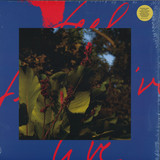
The result of these experiences is Feel Live, Massimiliano's third full-length endeavour. It was recorded in several intimate, sometimes improvised studio settings between Los Angeles, Portland, and Massimiliano's homebase in Berlin as well as at airports and on intercontinental flights high up in the sky. Featuring vocals by Private Agenda, Peaking Lights, Kim Anh and instrumental contributions by Fort Romeau, Tim K, and Jules Etienne, Feel Live is Massimilano's most playful and imaginative work to date. It's as emotional as sensual, as vibrant as the first ray of light after a thunderstorm has cleared the air.
Is it awkward or odd to call this record jazzy Presumptuous to pinpoint its spacial, almost orchestral qualities Unfair on the ruling Cosmic powers to highlight its aspirations of founding a new land of Balearic Harmonia and getting down at a huge fertility rite with electro enthusiasts and house lovers Not one bit. Feel Live is pure grandeur and elegance. It feels like an eternal movement.
Martha Graham has dedicated her whole life to dancing. 'It's permitting life to use you in a very intense way,' she said. 'Sometimes it is not pleasant. Sometimes it is fearful. But nevertheless it is inevitable.' Massimilano couldn't agree more. His advice when facing the inevitable: 'Live what you are feeling, feel what you are experiencing, good or bad, it is an experience.'
A lost ambient cosmic gem from Liquid Liquid founding member Dennis Young is getting a long-overdue vinyl reissue! Young, the percussionist and marimba player in the seminal New York art-wave group, recorded a series of cassette-only releases in the '80s after Liquid Liquid disbanded. A couple of these were picked up at the time for Korean release, which is where Daehan Electronics, a South Korea-based label dedicated to tracing the history of electronic music in the land of the morning calm, comes in.
Quest was one of these albums, part of a biorithmically-aligned New Age serie, each album meant to be heard on specific days of the week. DE has worked with Young to remaster the the album for this new release, bringing out the full warmth of the analog synthesizers used to create it. It is the first in a series of projected collaborations with Young, which will delve deeply into both the scarce cassette issues and other, unreleased material newly discovered on tapes. Liner notes outline the history of the record and include Young's own look back at the making of Quest.
Emotional Rescue returns to the music of Takenoko, the Bordeaux based synth-pop project from 1982-1988, to follow their LP collection L'Amour Est Mon Arme (ERC062), with an EP of remixes from Dresden's cult-like producer, Sneaker DJ.
The meeting of Takenoko and Sneaker offers a perfect marriage of left field cold wave tones, inventive drum programming and pop lyrics, with a master-mixer, programmer and DJ of today.
Following releases on cult labels like Uncanny Valley, Rat Life and Frigio as Sneaker and numerous labels such as Macadam Mambo, Bordello A Parigi and Bahnsteig 23 under several pseudonyms, Sneaker first contacted the label after his trance-inducing, drum heavy remix of C Cat Trance , with the suggestion to research an idea to create a reissue / remix project out of a band he had discovered, Takenoko.This was soon expanded to become a stand-alone album and remixes EP after the discovery in the vaults of a cache of unreleased songs. The breadth of styles found on L'Amour Est Mon Arme is matched with these "Mixes", as Sneaker takes 3 of their singles and indelibly puts his marker on them.
Starting with his retake of their second single, Lee Harvey Oswald, he reworks their pop ode to the Kennedy tragedy and strips it groove back for a near 9 minute vocal-meets-discodub that lets the lyrical structure remain, before stretching it out and letting the instrumental interplay between keys, guitar and rhythm machines glide before bringing it all back for finale.
Next, their 1988 single Trans Amor Express is given what is becoming a trademark Sneaker treatment. In a similar vain to his remix of C Cat Trance, here he rips the original apart to extend a single vocal refrain with the raw percussion elements for mind-inducing results.
Finally, his mix of the anthemic John Wayne is almost gentle in comparison, adding 909 overdubs but letting much of the original stay, showing again a modern mastery of mixing desk technique and craft.
With MEL013, Melodies International are extremely proud to bring you at last, a disco anthem from Detroit that was originally recorded in 1980 and dedicated to the 'King Of The Champion Fighters': Le Stim - A Tribute to Muhammad Ali (We Crown The King).
Le Stim was a band formed by lead vocalist Donald Jennings in the late 70s. Now an ordained deacon back in Detroit, Jennings was brought up in a gospel environment and was said to be born to sing. Growing up picking up songs from the likes of Nat King Cole, Ella Fitzgerald or Sam Cooke, Jennings frequently performed for family and friends and went on to sing for audiences in New York, St. Louis and all around Detroit.
We Crown The King is a song written in the mid 70s by the late Herbert Andrei Duncan, also from Detroit. Duncan approached Jennings with the song who was initially reluctant to sing it because it took him out of his usual vocal range. However, Duncan finally (thankfully!) managed to persuade Jennings after five years to record a tune that would prove to become a party anthem decades later.
Remembering Duncan, Jennings says: 'Andrei was positive..inquisitive.... and determined. I was only 18 or 19 years old at the time and remember Andrei coming over to my house.... He had a cellphone in his car!.. I remember going to Andrei's house, and he said he wanted to do the track. Andrei did not take no for an answer! The answer had to be yes! However Andrei didn't have any money to record the song with. So we made a deal. In exchange for the use of his P.A., Loc (the drummer) provided the seventeen musicians for Le Stim to record 'We Crown The King'. The session itself was recorded at a studio in Southfield, Michigan.
According to Jennings, Muhammad Ali did hear the track back then and liked it! Le Stim were in touch with Ali's management and were about to meet him on a number of occasions which unfortunately didn't work out.
Licensing this record has proven to be Melodies' biggest research effort as of yet and has involved visiting it's author, Duncan's former house in Detroit only to discover it had burned down and that his family had moved years ago. It wouldn't have been possible without the invaluable help of Jeremy from Rain&Shine records (NZ) who then managed to track down the family back in Texas!
Officially licensed, remastered and cut to half-speed lacquers at 45rpm (instead of it's original 33rpm format) to bring the shine out of the top end - MEL013 comes forth in it's original 12' vinyl format with exclusive Melodies stickers and digitally too.
Available as either a 3CD/1 Blu-ray set or a 6LP/1 Blu-ray set, both packages include:
· The original album, now newly remastered by Bernie Grundman from the original analog tapes. For the LP set, Grundman prepared an all analog direct to disc vinyl transfer of the album, preserving the authenticity.
· Electric Ladyland: The Early Takes, which presents 20 never before heard demos and studio outtakes. Included are incredibly intimate demos for song ideas Hendrix recorded himself on a reel-to-reel tape at the Drake Hotel, as well as early recording session studio takes featuring guest appearances from Buddy Miles, Stephen Stills and Al Kooper. Full tracklist included below.
· Jimi Hendrix Experience: Live At the Hollywood Bowl 9/14/68: Part of Experience Hendrix's Dagger Records official bootleg series, this live album documents their triumphant Los Angeles concert held a few weeks before Electric Ladyland was released. The recently discovered two-track soundboard recording captures the energy that had the audience in such a frenzy that many concert goers jumped into the reflecting pool that separated the bandstand from the seats. Full tracklist below. Experience Hendrix's Dagger Records releases are physical only so this will ONLY be available as part of the physical release with no digital.
· Blu-Ray: includes the acclaimed full-length documentary At Last... The Beginning: The Making of Electric Ladyland, the first ever 5.1 surround sound mix of the original album overseen by Hendrix's original engineer Eddie Kramer plus the original stereo mixes in uncompressed 24 bit/96 kz high resolution audio. NOTE: unfortunately due to unforeseen circumstances the documentary will not have translated subtitles.
· Electric Ladyland 50th Anniversary Deluxe Edition includes a full color, 48-page book containing Jimi's handwritten lyrics, poem and instructions to his record label, as well as never before published photos from the recording sessions that were shot by Eddie Kramer himself. Also included are essays by celebrated journalist David Fricke and Hendrix authority John McDermott
· All contained in a numbered luxe casemade book for CD+Blu-Ray release and casemade lifttop box for the LP+Blu-Ray release with new cover art which is true to Hendrix's original vision of the album's cover: a Linda (McCartney) Eastman photograph of the band and children at the statue of Alice In Wonderland in New York's Central Park.
Aperture records has always been about discovering new artists and bringing them to the forefront and italy is well-renowned for its electronic music, both former and current. so, from one italian duo (t.e.s.o.) to another... introducing Diaster.
Diaster aka Teo & G grew up in treviso, listening to the most experimental music they could find in their small rural city near venice.
With Matteo inspired by metal and musique concrete and Gianluca a researcher of old electronic/instrumental music, they decided to experiment with their various experiences in house, techno and drum n bass, inserting strata of industry and noise into their material. after 'Enchantments', a debut ep on DVNTT which deserves more recognition, and an accomplished follow up on Subsist records; 'Final Beginner', aperture records brings you their latest contribution; 'Clustered Non Symmetry'.
On first acquaintance, this 8 track album appears on the minimal spectrum; monolithic and indivisible. tension builds slowly and influences, mostly of a similar vintage, come through. arrhythmic incursions of stark and contorted electronics conjure up a hesitant, stealthily-undermined delineative framework.
The New York Downtown Producer/Composer Returns With His First New Album In 3 Years
EIGHTEEN: the year of release, 2018. EIGHTEEN: the age at which I first used a synthesizer.
In creating EIGHTEEN I worked independently in the studio, initially building up tracks with synthesizers and found sounds recorded in my daily comings and goings. After working with the tracks over a period of months,I shared them with a few musicians, who added their own instrumental layers. Though working independently, we all shared a similar working process: working in our personal recording spaces, as opposed to larger recording studios.
The musicians are: Gabe Gurnsey (drums) of Factory Floor, with whom I collaborated on the Beachcombing EP and performed live at London's ICA. I appear on Gabe's newly released album Physical;
Larry Saltzman (guitar) has played in my Love Of Life Orchestra since the 1970's. Well-known for his work with Arthur Russell ('Kiss Me Again', Flying Hearts), he is in high demand in NYC by acts such as Simon and Garfunkel;
Paul Nowinski, (bass) has played with LOLO since the 1980's. Paul has an impressive list of credits, including Les Paul, Keith Richards, Bernard Purdie and the Boston Pops; Matt Mottel, (electric piano), is the newest addition to the Love Of Life Orchestra. He is half the duo Talibam!, a leading act in the noise jazz scene; Lewin Barringer, (guitar), is a talented guitarist and producer in Philadelphia.
After mixing the final tracks, I brought the mixes to Berlin. There I worked with the brilliant mastering engineer Mike Grinser who helped to give the album a unified sound.
I think of this album as electronic music. It was created in my home studio, using analog and digital synthesizers, found sounds recorded on my phone, and instrumental parts contributed by friends. Finely crafted melodies and harmonies are set against subway noises, street construction, and distant foghorns. Sometimes there are sustained clusters, generated by my leaning against the keyboard. Deliberateness paired with randomness: this is what guided the artistic process.
This album is atypical for me as I am not playing saxophone. (I do play one reed instrument - a harmonica.) I grew up with the sax as my primary instrument. Yet my father was a radio journalist so the reel-to-reel tape recorder was a ubiquitous presence in the family home. From an early age,
I experimented with the tape machine: recording, overdubbing and splicing tape. I learned about Varese from Frank Zappa liner notes; I read John Cage's 'Silence.' Electronic music was on my radar.
My first exposure to an actual synthesizer came when I recorded my first single at the fabled Sound City Studio in Van Nuys, CA. The studio had a custom Neve board, but it also had a firstgeneration Moog modular synthesizer sitting unused in the maintenance room. I asked and they kindly let me experiment with it. Soon, I enrolled at the University of California - San Diego after I discovered they had separate studios for their Moog and Buchla systems. These large modular synthesizers were affordable then only by institutions and rock stars. But these would be soon eclipsed by smaller, cheaper synths in the 70's and early 80's. In the same way, recording studio technology became accessible in the 90's. . And thus the personal computer and digital audio allowed studio quality production in the home studio. Electronic music had become democratized.
Handmade music by way of digital technology: this is the music of EIGHTEEN
Hosono's solo career would take many twists and turns from this point forward, with forays into exotica, electronic, ambient, and techno, culminating in the massive success of techno pop group Yellow Magic Orchestra (YMO), who made their debut in 1978. Admired by artists ranging from Van Dyke Parks to Mac DeMarco, Hosono continues to forge ahead as he heads into his fifth decade as a musician. With the re-release of his key albums for the first time outside of Japan, his genius will be discovered by a whole new generation of fans around the world.
.
The unbelievably prolific Haruomi Hosono is one of the major architects of modern Japanese pop music. With his encyclopedic knowledge of music and boundless curiosity for new sounds, Hosono is the auteur of his own idiosyncratic musical world, putting his unmistakable stamp on hundreds of recordings as an artist, session player, songwriter and producer.
Born and raised in central Tokyo, his adolescent obsession with American pop culture informed his early forays into country music, which he would revisit later in his career. Hosono made his professional debut in 1969 as a member of Apryl Fool, whose heavy psychedelia was somewhat at odds with his influences, which leaned towards the rootsy sounds of Moby Grape and Buffalo Springfield. The latter was one of the main inspirations for his next group, Happy End, whose unique blend of West Coast sounds with Japanese lyrics proved to be highly influential over the course of three albums. After the band’s amicable break up in 1973, Hosono began his solo career with Hosono House, an intimate slice of Japanese Americana recorded inside a rented house with recording gear squeezed into its tiny bedroom.
Moritz Simon Geist, media artist and robotic musician, publishes his first record. It is the world's first techno record played entirely by self-made futuristic robots. This is the 4-track EP to the following full-length album out 16. Nov. 2018. All of the sounds on his records are played by robots: small motors that beat on metal, futuristic 3D-printed robo-kalimbas, salvaged parts from old hard drives that click and cut. It took Geist several years to build, tweak, test and play all his DIY robotic instruments. His 'Sonic Robots' try to push the boundaries of the imaginable. He did so already in 2012 with his well-known oversized 808 robot - an iconic drum machine gotten real, 4 by 2 meter, filled with robotic parts which play the instruments live and in front of the audience. Now, Moritz Simon Geist goes even further to discover the unknown and futuristic world of techno robotics. For this quest he teamed up with the berlinian sound wizards from Mouse On Mars and dug deep in the history of mechanical music and experiments of early electronic music.
On the 4-track EP 'The Material Turn' Moritz Simon Geist turns materials into sounds. The opener 'Entropy' is a bassy club-track, played by futuristic bass-kalimbas, a psychedelic pattern of tonal glasses and pneumatic hi-hat patterns. It is core piece to this EP and is also featured in the main video. Even without a visual part, listening to his music, a sound world opens up which is unheard before: in definition, reference and organic nature. Geist: 'When you listen to robots playing, you realize, that they sound precise, but in contrast to digital sounds they transport an immense organic feeling. No beat is like the other, everything is played with actual acoustic physicality and thus actual error. On the same time, the repetitive nature of the robots make it perfect for playing electronic music. Its industrial and organic at the same time.' The second track 'Under Deconstruction' is a metal-on-metal slammer with a heavy beat played on a big sheets of metal. 'I often try to compose a track around one instrument', explains Geist, 'letting the sounds take a lot of room so they can stand out.' The B-side starts with 'Supercharged' - a heavy drone, reminding of the darked sides of music concrete. Here, tuned air fans, and a metallic percussion robot create the texture. 'Detok' closed the EP with an up-tempo club track, featuring complex rhythmic textures and well defined robotic percussion elements. What Moritz Simon Geist came up with is a stunning record of what is possible today - to explore the sound of mechanics that keep on filling our world. Geist creates a smashing soundtrack for both the precise automation and physical fragility that shapes today's society.
Hot on the heels of Rapid Eye Movement's journey of discovery and growth comes the EP 'Split: Remixes' featuring reworks of the quartet of cuts originally signed by label founders Memorial Home and VII Circle.
Invited to apply their own reflections onto the material are rising producers Nur Jaber and Wrong Assessment as well as renowned artists on the underground experimental scene Edit Select and Reggy Van Oers.
First up is Nur Jaber's take on VII Circle's 'Metaphysical Functions' showing how the young Berlin-based Lebanese artist is as much inspired on remix duties than in crafting her already much acclaimed productions. The perfect mixture of dark and intense driving techno beat with haunting ambient-driven melodic motifs and dramatic breakdowns encompasses much of what her sophisticated sense of sonic exploration is about.
Up next on a heavier kicking note is 'Dogma' refashioned by Milanese fellow Wrong Assessment who transmits his vision of both minimal and hard pounding techno by merging a strait rugged beat with undulating synth lines and bouncy cymbals that will drive the audience to an insane rave-spirited dance floor venture.
Following the path, Tony Scott a.k.a Edit Select's interpretation of Memorial Home's 'Second Floor' is a clear example of the unique and forward-thinking sound that the Scottish techno scene 'veteran' has developed throughout the years. Deftly combining a tension-building drum and bassline work with layers of hypnotic synth textures that makes the track both suggestive and trippy-hitting in equal measure.
Concluding the journey is Reggy Van Oers (RVO)'s rework of Memorial Home's 'Ampere' which evinces this quest for organic and mental techno soundscapes inspired by classical and cinematic music, characterising the both complex and powerful crafting signature of Dutch Telemorph label's owner.
Between dark shadows and brightness, REM confirms with this new release that quality and free-minded artistry are the key pillars of the platform's curation philosophy.
Voiski embarks on the third expedition into the cosmic lands .A collection of singular and utopian ambient, electronica and techno tracks illustrated by spectacular picture of Layla Kerley and Bruno Compagnet.
Cosmic Adventure is an honest portrayal without fabrication or pretense. Too often electronic music is subjected to the damaging opinions of others and categorized in a movement or a trend, choking the freshness out of the sound. Cosmic Adventure provides a platform of creative energy, a unique platform for unique artists who search nothing except discovering new landscapes and inspiration.
out of Stock
Last delivered 4 years ago available to reorder, subject to availability