3rd album by Have You Ever Seen the Jane Fonda Aerobic VHS? Artist: Have You Ever Seen the Jane Fonda Aerobic VHS? Genre: Garage pop Formats: Digital + vinyl (Black Vinyl + Ltd Edition Yellow Vinyl) Finnish“flower-garage”3-pieceHave You Ever Seen the Jane Fonda Aerobic VHS? have carved out a unique sound for themselves, opting to use keyboards instead of guitars. This is after songwriter Ekku Lintunen and drummer Janne-Petteri Pitkälä, on seeing the film Drive, instantly decided to form an 80ssynth-pop band as a side project to the garage-rock act they were in at the time. When Susse Stemma-Sihvolacame in on vocals, bringing her scuzzed out bass tones with her, it ended up being garage-rock with a twist. They are further shaped by the aesthetic and sonics of the underground cassette culture punkbands in their small town of Kouvolarely on, as well as the thread of styles that have tied the towns musical history together through the decades. Amish-mash of 60s girl-groups, punk, glam, grunge and NYC/Manchester indie coming together generates their electrifying style that has given rise to one of the most exciting and infectious bands to come out of the Nordics in recent years. Lintunen likens his songwriting to crafting surreal movies. Starting with a picture in his mind, he throws out lyrical phrases to create this image for the listener. Enough is held back though that there are more questions than answers. Like all great films, the listener interprets as they do. After their debut album Teenage Sweetheartwas released in autumn 2015and following with their sophomore album Jazzbelle 1984 / 1988the trio have been praised in the international music media, and gathered fans around the world.
Suche:drummer
The Pharaohs only managed one release during their short lifetime, 1971's masterful Awakening. But when the San Francisco-based jazz-funk reissue label Luv N Haight reissued Awakening in 1996, they also came out with a brand-new CD of mostly previously unreleased material called In the Basement. Most of this album was recorded live in 1972, after the already enormous 11-piece band had grown to include four more players, including a sixth drummer. The live tracks are fascinating, because where Awakening sounds like an earthier and more Afrocentric version of Earth, Wind & Fire (which several members of the Pharaohs would go on to found in 1973), the much loopier and more jazz-oriented tracks here sound more like Sun Ra jamming with the P-Funk All Stars. The 11-minute take on the Stylistics' "People Make the World Go Round" is absolutely indescribable, a mix of otherworldly horns and psychedelic guitars over a non-stop African-style groove. Other highlights include the all-rhythm "Drum Suite," a hypnotic blend of organic polyrhythms and chanting. – AllMusic.
A unique talent with a remarkable voice, the German singer, composer
and lyricist Alma Naidu is an artist such as one rarely fnds, Jazzthing
magazine praised her "delicate, wonderfully clear voice with absolutely perfect intonation".
Renowned drummer and producer Wolfgang Haffner recognised her talent immediately; he discovered Alma for himself in 2019 and featured the Munich native on his album 'Kind of Tango'. "When I heard Alma for the first time at a jam session in early 2019, I was immediately inspired by her musicality and her way of performing on stage," says Haffner. " Alma is a very special talent with a strong
musical voice of her own."
With Alma now comes the promising debut on the Leopard Records label.
Recorded in Bonn during the pandemic (November 2020, March and April 2021) and produced by Haffner with guests Dominic Miller, Nils Landgren, Simon Oslender and others, this debut work of the 25-year old Naidu could just as well bear the title: A Star Is Born.
Joona Toivanen Trio makes their We Jazz Records debut with their new album "Both Only", out 25 Feb 2022. A landmark work for the long standing group, the album showcases a new sound for the band, trekking deep into new ideas for an acoustic jazz piano trio. Since their formation as teenagers in mid-1990's, the trio of pianist Joona Toivanen, bassist Tapani Toivanen and drummer Olavi Louhivuori (of Superposition, Ilmiliekki Quartet and Linda Fredriksson "Juniper") has developed their remarkably coherent band sound step by step, touring the world over. Nowadays, the trio is geographically split between Gothenburg, Sweden (Joona), Copenhagen, Denmark (Tapani), and Helsinki, Finland (Olavi), but the unit has never sounded so together as one, and as adventurous as on "Both Only".
"Both Only" by Joona Toivanen Trio is a cocoon, a welcoming shelter of sound that opens up naturally for the listener to inhabit. The album is moody and introspective, even dark at times, but by the time you get to the closing track, "This and This", you'll likely notice something hopeful brewing up. This is not music dealing with nostalgia or a world lost. Instead, it's a body of work with delicate dynamics, taking a minute just to listen and to look inwards to learn something, to move forward.
The first single "Enlightened" is perhaps the most traditional piece on the album, yet it flows like a vessel beyond genre, conveying a mood, a feeling and an idea. Listen to how the piano, bass and drums discuss, how the groove moves with the instruments having their clear roles but also supporting each other and documenting a musical aging process exactly as that of a quality bottle of red wine. As a song like "Direction" proves, the melody is there all the way, yet there is nothing obvious about how it's carried by the trio. Things remain surprising, fresh and moving at all times. "Except For" keeps its intensity, while nearly erupting into a full on 4-to-the-floor banger. Nearly! The key here is how the energy sustains itself, building the intensity within the music.
"Both Only" is a powerful statement from a band ready to renew itself time and again, and one willing to do it slowly, outside of the hype. This process makes the impact enduring, nuanced and lovely.
WJLP37 Joona Toivanen Trio "Both Only" is available on vinyl as a black vinyl edition and as a LP+7" bundle also including WJ0716 "Except For (7" Edit)" / "Keyboard Study No. 2".
“More excellent poetic soundscapes from We Jazz! Love the flow through the tracks here – textural pieces moving into more rhythmic jazz abstractions. Beautifully recorded too.”
Quinton Scott — Worldwide FM
“Following on from the excellent Linda Fredriksson album We Jazz extend the journey with this innovative Joona Toivanen Trio set.”
Paul Bradshaw — Straight No Chaser
“You’ll look in vain here for extravagant splashes of color or bright swathes of sound, but what you will discover are a finely-chiselled set of compositions that make the most of the trio’s limited palette: flint-sharp melodies hewn from the ice, crisp and crackling rhythms.”
Cal Gibson — Ban Ban Ton Ton
“Incredible album from Joona Toivanen Trio and a strong start to the new year from We Jazz.”
Kerem Gokmen — Dubmission
“Encapsulating a new movement in jazz.”
Jay Scarlett — Sounds Supreme
“Interesting listen on the shortest day of the year. They have a very definite and saturated style.”
John Chacona — All About Jazz
“Airplayed the track”
Tom Ravenscroft — BBC6 Music
“Jazz album of the year released already in February?”
Ralf Sandell — Hufvudstadsbladet
“★★★★★”
Iida Simes — Voima Magazine
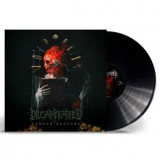
Across eight studio albums, DECAPITATED grew from the adolescent dream of teenagers from a small Central European town to one of the leaders of the metal genre. Each successive album further expands the band’s sound with genre-bending authenticity and integrity. As Metal Injection rightfully observed, “any self-respecting death metalhead knows the name well.”
DECAPITATED’s music is a weapon forged by four young men from a historic medieval-fortified town in Poland, which catapulted them to the top of a worldwide subculture. Like a rose in the devil’s garden, the DECAPITATED story builds triumph from tragedy. The gleeful grotesquery of extreme metal imagery and rifftastic bludgeoning beckons listeners to uncover broader truths.Upon the release of 2017’s Anticult, Metal Hammer declared DECAPITATED “a serious successor to the likes of Pantera and Lamb Of God – a band who can draw new legions into the metal world as its new champions.” Their diverse follow-up, 2022’s Cancer Culture, delivers on that promise.
Instantly recognizable devastation and deceptively sinister hooks abound. Freshly minted DECAPITATED anthems like “Last Supper,” “Hello Death,” “Just Cigarette,” “No Cure,” “Iconoclast,” and “Cancer Culture” shimmer with sonically sharp production and unrelenting bombast. There’s also a newly increased emphasis on melody, even venturing into darkly romantic territory. Wacław "Vogg" Kiełtyka (guitar), Rafał "Rasta" Piotrowski (vocals), Paweł Pasek (bass), and James Stewart (drums) are at the top of their game, delivering the goods at peak performance. Jinjer vocalist Tatiana Shmayluk and Machine Head frontman Robb Flynn make guest appearances.
Set on the descending plains of a mountain range amid a dense forest, Krosno boasts a 14th-century Gothic church, a Subcarpathian museum, and stunning artisan glassware. In this Polish town, teenage music student Wacław "Vogg" Kiełtyka discovered records from bands like Morbid Angel, Cannibal Corpse, Metallica, and Machine Head. The guitarist and his younger brother, drummer Witold “Vitek” Kiełtyka, cofounded DECAPITATED in 1996, inspired by a wide range of technical death, blackened thrash, and local heroes, like KAT and the world-renowned Vader. Death and black metal reigned supreme in the Polish scene of the 1990s, where Behemoth originated as well. In fact, a Vader song called “Decapitated Saints” inspired the band’s moniker.
The organic musical chemistry between the Kiełtykas was akin to the brotherly connectivity and vibe driving Pantera, Gojira, and the classic era of Sepultura. In 2006, Kerrang! praised the first three DECAPITATED albums - Winds of Creation (2000), Nihility (2002), and The Negation (2004) – as “superbly conceived and executed eruptions of technical brilliance and razor-sharp songwriting that turned these youthful Poles into one of the genre’s most widely respected bands.” That year’s Organic Hallucinosis further perfected Vogg’s penchant for blending extremity with catchy hooks.
The rule-breaking ferocity and invention of the first four albums reinvigorated death metal, as DECAPITATED inspired a new generation of bands who followed suit. Sadly, this era came to a shocking end in late 2007. While touring Russia, the band’s bus collided with a large truck near the border with Belarus. Both Vitak and then-singer Adrian “Covan” Kowanek sustained severe head injuries. Tragically, Vitak passed away in a Russian hospital a few days later. He was just 23.Vogg summoned the courage to continue, in honor of his brother and what they created, and returned with a new incarnation of DECAPITATED and the fiercely adventurous comeback album, Carnival is Forever (2011) featuring new vocalist Rafał "Rasta" Piotrowski. Blood Mantra (2014) introduced bassist, Paweł Pasek. Blabbermouth declared it “perhaps the most poised and gutsy” DECAPITATED album, adding “its courageous bends make it a turbulent but pleasurable ride.”
Cancer Culture sounds brilliant, modern, and tasty. “There is no place for any fake, plastic, bullshit drum machine or anything like that,” Vogg insists. “It’s all organic, pure, and clear, showing the true face of the band. Vogg and company entrusted the Cancer Culture mix to David Castillo at Sweden’s Fascination Street Studios / Studio Gröndahl (Sepultura, Carcass, Opeth, Katatonia), and legendary American producer Ted Jensen (Metallica, Slipknot, Pantera, Machine Head, Korn).
The devoted supporters who traveled to see DECAPITATED on international tours with the likes of Lamb Of God, Meshuggah, Soulfly, Fear Factory, and Suffocation over the years will recognize the ever-present pummeling backbone. Longtime fans and newcomers alike will connect to the variety of atmospheric depth throughout Cancer Culture’s ten boundlessly energetic and creative tracks.
“If you told me 25 years ago, in my neighborhood in the South of Poland, that I would be in Machine Head, sharing riffs with Robb Flynn,” Vogg marvels. “It’s simply incredible. It means that everything is possible in your life. That gives me the faith to believe that I can achieve even more in my career. The dreams we have when we are kids, things we can barely imagine, can happen.” Flynn contributes a hauntingly beautiful vocal to the Cancer Culture track “Iconoclast.” “Clean vocal singing is a really new thing in DECAPITATED,” Vogg notes. “It’s really unique and amazing.”
Driven by Vogg’s passion and integrity, the dual emphasis on creative invention and technical prowess maintains DECAPITATED’s stature as genre-leaders in 2022 and beyond. The band’s supporters continually demonstrate confidence and absolute certainty DECAPITATED will deliver.
Across eight studio albums, DECAPITATED grew from the adolescent dream of teenagers from a small Central European town to one of the leaders of the metal genre. Each successive album further expands the band’s sound with genre-bending authenticity and integrity. As Metal Injection rightfully observed, “any self-respecting death metalhead knows the name well.”
DECAPITATED’s music is a weapon forged by four young men from a historic medieval-fortified town in Poland, which catapulted them to the top of a worldwide subculture. Like a rose in the devil’s garden, the DECAPITATED story builds triumph from tragedy. The gleeful grotesquery of extreme metal imagery and rifftastic bludgeoning beckons listeners to uncover broader truths.Upon the release of 2017’s Anticult, Metal Hammer declared DECAPITATED “a serious successor to the likes of Pantera and Lamb Of God – a band who can draw new legions into the metal world as its new champions.” Their diverse follow-up, 2022’s Cancer Culture, delivers on that promise.
Instantly recognizable devastation and deceptively sinister hooks abound. Freshly minted DECAPITATED anthems like “Last Supper,” “Hello Death,” “Just Cigarette,” “No Cure,” “Iconoclast,” and “Cancer Culture” shimmer with sonically sharp production and unrelenting bombast. There’s also a newly increased emphasis on melody, even venturing into darkly romantic territory. Wacław "Vogg" Kiełtyka (guitar), Rafał "Rasta" Piotrowski (vocals), Paweł Pasek (bass), and James Stewart (drums) are at the top of their game, delivering the goods at peak performance. Jinjer vocalist Tatiana Shmayluk and Machine Head frontman Robb Flynn make guest appearances.
Set on the descending plains of a mountain range amid a dense forest, Krosno boasts a 14th-century Gothic church, a Subcarpathian museum, and stunning artisan glassware. In this Polish town, teenage music student Wacław "Vogg" Kiełtyka discovered records from bands like Morbid Angel, Cannibal Corpse, Metallica, and Machine Head. The guitarist and his younger brother, drummer Witold “Vitek” Kiełtyka, cofounded DECAPITATED in 1996, inspired by a wide range of technical death, blackened thrash, and local heroes, like KAT and the world-renowned Vader. Death and black metal reigned supreme in the Polish scene of the 1990s, where Behemoth originated as well. In fact, a Vader song called “Decapitated Saints” inspired the band’s moniker.
The organic musical chemistry between the Kiełtykas was akin to the brotherly connectivity and vibe driving Pantera, Gojira, and the classic era of Sepultura. In 2006, Kerrang! praised the first three DECAPITATED albums - Winds of Creation (2000), Nihility (2002), and The Negation (2004) – as “superbly conceived and executed eruptions of technical brilliance and razor-sharp songwriting that turned these youthful Poles into one of the genre’s most widely respected bands.” That year’s Organic Hallucinosis further perfected Vogg’s penchant for blending extremity with catchy hooks.
The rule-breaking ferocity and invention of the first four albums reinvigorated death metal, as DECAPITATED inspired a new generation of bands who followed suit. Sadly, this era came to a shocking end in late 2007. While touring Russia, the band’s bus collided with a large truck near the border with Belarus. Both Vitak and then-singer Adrian “Covan” Kowanek sustained severe head injuries. Tragically, Vitak passed away in a Russian hospital a few days later. He was just 23.Vogg summoned the courage to continue, in honor of his brother and what they created, and returned with a new incarnation of DECAPITATED and the fiercely adventurous comeback album, Carnival is Forever (2011) featuring new vocalist Rafał "Rasta" Piotrowski. Blood Mantra (2014) introduced bassist, Paweł Pasek. Blabbermouth declared it “perhaps the most poised and gutsy” DECAPITATED album, adding “its courageous bends make it a turbulent but pleasurable ride.”
Cancer Culture sounds brilliant, modern, and tasty. “There is no place for any fake, plastic, bullshit drum machine or anything like that,” Vogg insists. “It’s all organic, pure, and clear, showing the true face of the band. Vogg and company entrusted the Cancer Culture mix to David Castillo at Sweden’s Fascination Street Studios / Studio Gröndahl (Sepultura, Carcass, Opeth, Katatonia), and legendary American producer Ted Jensen (Metallica, Slipknot, Pantera, Machine Head, Korn).
The devoted supporters who traveled to see DECAPITATED on international tours with the likes of Lamb Of God, Meshuggah, Soulfly, Fear Factory, and Suffocation over the years will recognize the ever-present pummeling backbone. Longtime fans and newcomers alike will connect to the variety of atmospheric depth throughout Cancer Culture’s ten boundlessly energetic and creative tracks.
“If you told me 25 years ago, in my neighborhood in the South of Poland, that I would be in Machine Head, sharing riffs with Robb Flynn,” Vogg marvels. “It’s simply incredible. It means that everything is possible in your life. That gives me the faith to believe that I can achieve even more in my career. The dreams we have when we are kids, things we can barely imagine, can happen.” Flynn contributes a hauntingly beautiful vocal to the Cancer Culture track “Iconoclast.” “Clean vocal singing is a really new thing in DECAPITATED,” Vogg notes. “It’s really unique and amazing.”
Driven by Vogg’s passion and integrity, the dual emphasis on creative invention and technical prowess maintains DECAPITATED’s stature as genre-leaders in 2022 and beyond. The band’s supporters continually demonstrate confidence and absolute certainty DECAPITATED will deliver.
David Gedge says: “During the summer of 2006 we were invited to record a session for 'One Music With Huw Stephens' - a show on BBC Radio 1. However, this was the year after the 'return' of The Wedding Present and we'd basically been pretty much continually on tour ever since the release of the 'Take Fountain' album the previous year. Accordingly, we didn't really have any new songs of our own and so I decided that we could pursue that other favourite pastime of The Wedding Present... the recording of cover versions! Arranging covers is fascinating, actually, because you get to explore how other people write songs and I think that can often feed back into your own writing. I thought it would be interesting to pick a song from each of four different decades... the 1960s, 70s, 80s and 90s. No particular reason... if we'd've been asked to record five tracks I would have thrown in the 50s, too. So I chose four classic pop songs for us to look at. They weren't particularly 'favourites' - although I have always loved 'Step Inside Love' and 'Lovin’ You' - they were just songs that I thought the band could successfully 're-imagine'. I have never seen the point of recording faithful copies; I have always felt that any Wedding Present version has to bear the stamp of The Wedding Present. And I think we accomplished that particularly well on this session. I'm pretty proud of this E.P., in fact. I remember Graeme Ramsay, our drummer at the time, initially hating the idea of us doing a 'Take That' song but I think he eventually came round to it, especially after The Guardian said it was an interesting 'post-rock' take on the original, or words to that effect..." Track-listing - Step Inside Love/Lovin’ You/Our Lips Are Sealed/Back For Good/
Featuring Squirrel Flower and Liam O’Neill (SUUNS). Recommended If You Like: Mount Eerie, Low, Richard Swift, the Weather Station, Lomelda, Fleet Foxes, Squirrel Flower, L’Rain. Cedric Noel is a songwriter, bassist, collaborator and producer currently based in Montréal, Québec. The newest longplayer from Tio'tiá:ke/Montreal staple Cedric Noel lands with a stunning sense of surety and self. Hang Time stands as a high water mark for a songwriter who's spent the past decade quietly expanding the borders of his music. Longtime fans will recognize the fluid elements of the album’s open-ended rock formations: reflective strumming, soaring choruses, searing guitar lines, subtle bass grooves; all occasionally dissolving into pools of pure ambience. New listeners will find surprises throughout: threads of folk pop, ambient and sound collage fasten the foundations of this expressive whole. However, what’s most striking on Hang Time is Noel’s newfound sense of voice, both literal and metaphorical. Written primarily in 2017-18 during an intense period of self-reflection, this collection of songs finds Noel wrestling profoundly with his sense of identity, self and place. The album’s material was captured faithfully at The Pines, a beloved downtown Montreal studio whose doors shuttered shortly after amidst the strain of the pandemic. Noel worked closely and patiently with friend and engineer Steve Newton, ensuring the songs had the time and space needed to come fully to fruition. Hang Time features subtle rhythm work from drummer Liam O’Neill (SUUNS) and guest spots from Brigitte Naggar (Common Holly) and Tim Crabtree (Paper Beat Scissors) among others. The album opens in mid-air with ‘Comuu’, a song that implores a becoming-more while hovering triumphantly. Then follows a suite of songs (‘Headspace’, ‘Keep’, ‘Stilling’) that recall the heart-rending power of y2k-era Low, albeit with a more vigorous beat. On ‘Bass Song’, an intimate duet with musician Ella Williams (Squirrel Flower) that explores the depths of interpersonal constriction. At the crux of the album sits ‘Born’, a deceptively pleasant-sounding song that explores the confounding emotionality of adoption before fading into a distended soundfield. Throughout the back half of the album, Noel double’s down on this commitment to his genuine, proud, Black self. The most confrontational track, ‘Allies’ finds him refraining “Are you on my side?” as a trailing guitar solo interweaves a Malcolm X soundbite, eventually engulfing the composition. Glorious lead single ‘Nighttime (Skin)’ traces the artist’s sense of ancestral dissociation through to a triumphant moment of pride in self-acceptance. Throughout Hang Time, Noel finds a way to ask hard questions (both of the listener and himself) in ways that are compassionate, open and honest. The ebb and flow of tension and tenderness that moves within these tracks helps to grow the heart and redefine what Black music can be in 2021.
Part of The Optic Sevens 4.0 Reissue Series.
Limited to 1000 copies worldwide. Please check your allocation with your sales rep.
Pressed on Red Vinyl.
Includes postcard and poster. Non-Returnable.
The Monochrome Set were something of the unsung heroes of the post-punk world; they fitted into absolutely no category whatsoever and their puckish take on spaghetti western soundtracks meets lounge jazz via the twisted lyrical imagery of vocalist Bid was as singular as it was unique.
Comprising a couple of ex-Ants in Andy Warren and Lester Square, with singer / guitarist Bid and drummer JD Haney, their filmic, playful material found favour with many, including John Peel although they failed to match this with commercial success.
The Jet Set Junta was originally released on Cherry Red in 1983 with its urgent, ringing guitars surrounding Bid’s lyrics telling of dodgy arms dealings and armoured limos as Lester Square’s Ennio Morriconetwang bends and reverbs as a counterpoint.
AN ISLE ATE HER don’t have the typical story that most bands in metal music do. They were an artistic mathematical monster that took over Atlanta, Georgia in the early 2000’s, but it’s members had taken some very unexpected turns in artistic direction as solo artists after they disbanded.
Absolutely manic breakneck tech grindcore that was as mind-bending to listen to as it was to see live. Formed initially in July 2007, Vocalist Chaz Bell, guitarist Collin Hutchinson, drummer Matt Cooper, and various other members performed under various names, playing countless shows and tours while constantly building their musical skills.
500 PRESSED WORLDWIDE . For Fans of: Daughters, Dillinger Escape Plan, The Red Chord, PIg Destryer
These words by legendary bassist/composer Charles Mingus are a touchstone for Little Big, the quartet led by pianist Aaron Parks. The band’s new recording, Little Big II: Dreams of a Mechanical Man, communicates with a clarity and simplicity that belies its ultimate depth. “I want to cast a spell,” explains Parks, “to lull you into a trance where you think you know where you’re going, and then take you somewhere unexpected, almost without realizing how you got there.”
This new music continues the band’s cultivation of a musical language that marries creative improvised music to more groove-centered music—electronica, indie-rock, hip-hop, and psychedelia—but without a trace of mannered “fusion” or a sense that the music is cobbled together from disparate styles. Rather, it feels seamlessly integrated, whole in and of itself.
Dreams of a Mechanical Man is Little Big’s second release on Ropeadope Records, recorded after more than two years of touring for Parks, guitarist Greg Tuohey, bassist David “DJ” Ginyard, and drummer Tommy Crane. One primary distinction of this new album, according to Parks, is that “today, the band operates as a single organism. The first record was about the tunes and the aesthetic. This album keeps that focus and also captures the chemistry we’ve developed on the road, the way this band feels as it makes music in the moment.”
Big Crown is proud to present the first 7" offering from Surprise Chef, the newest band signed to the label. Hailing from Melbourne, Australia, these guys caught our ear with their unique sound and approach. They are something of a funky blend of Jazz, Hip Hop, and Soul with a shade of David Axelrod which all comes out their own. These two tunes on this 45 are a taste of what is to come. The A side "Velodrome" starts out with a heavy drum break and an earworm synth line guaranteed to have you humming it long after the song is over. The intro gives way to beautiful and tasteful arrangements showing their music prowess as well as their ear for restraint. The B side "Spring's Theme" is a gorgeous and moody instrumental ballad that starts out with guitar that plays cat & mouse with the percussion until they decide to give the drummer some. Again, they run through arrangements that link together like chapters in a book taking the listener through a myriad of energies that all fit together to make this a quick favorite here at HQ.
“As a human being it’s really important to feel and express
emotions whether happy or sad,” says Hiro Amamiya, the
Teleman drummer whose solo guise is Hiro Ama. “I sometimes
struggle to and so these are a collection of songs that explore
different emotions. I want people to feel something through my
music so I called this EP ‘Animal Emotions’.”
Amamiya follows up on swiftly on 2020’s field recording-heavy
EP ‘Uncertainty’ with a record made in his bedroom and during
a time of introspection to create something even more personal.
“On ‘Uncertainty’ I was using sounds from everywhere and
whatever sounded good,” he says. “But for ‘Animal Emotions’ I
stuck with fewer instruments so the EP feels much more united.
I also used more acoustic instruments as I sometimes feel
electronic music in general lacks some organic and human
elements so I tried to make this EP as organic as possible.”
However, buried beneath the warm electronics, gently pulsing
grooves, infectious melodies and immersive soundscapes - that
veer from disco strut to IDM via jazz-laced ambient - you’ll still
find some field recordings. “You might not hear them as
obviously as on my previous EP but field recordings are there,”
he says. “I like them because it's very spontaneous and gives
some human feel. It also adds some air to a recording which I
quite like.” On the opener ‘Free Soul’ - which marries funk bass
with subtle electronics and squelchy grooves - you can hear a
voice sample of a woman from Southeast Asia singing a lullaby.
“I wanted to make an up-tempo and danceable song so I can
dance in my room during the lockdown. I got lost in Jazz music
the last couple of years and it really changed and opened up
the way I make music.” The moods, tones and emotions on the
EP shift as seamlessly as the genres, never quite settling into
one single place and constantly exploring and expanding into
new musical terrain. A process mirrored by Amamiya’s own
varied influences and tastes that were funnelled into the record,
from film soundtracks to IDM to spiritual jazz such as
‘November Cotton Flower’ by Marion Brown and ‘Harvest’ by
Pharoah Sanders.
Splattered Vinyl[24,75 €]
Luzifer wurden im Jahre 2009 von L. Steeler (Bass) und S. Castevet (Gesang, Gitarre, Schlagzeug) in Hamm/Westfalen als Nebenprojekt der im Underground gefeierten Vulture gegründet. 2015 erschien die "Rise"-EP, 2018 gefolgt von der "Black Knight" 7" Single auf High Roller Records.
Mittlerweile ergänzt Vulture-Drummer Gereon Deceiver die Besetzung von Luzifer, der auch auf den sieben Songs des ersten vollständigen Albums "Iron Shackles" zu hören ist. Stefan Castevet erklärt: "Mit Gereons Einstieg bei Vulture hat sich das im Laufe der Jahre so ergeben. Gereon übernimmt so auch bei Luzifer die Drums, macht bei den Background-Chören mit und hat sich am Songwriting beteiligt. In die finale Phase der Vorbereitung hat er viel Energie mit reingebracht, und da ich eh seit vielen Jahren nicht mehr richtig hinterm Schlagzeug gesessen habe, ist er ein echter Segen für die Band (lacht)."
"Soundmäßig wollten wir auf dem Album so klingen wie Quartz bei 'Satan's Serenade' und da zusätzlich so 'ne Sommer-Note reinkriegen wie in Rockers 'Mighty Thor'", umreißt Stefan das stilistische Koordinatensystem von "Iron Shackles". "Ob uns das gelungen ist, weiß ich gar nicht unbedingt. Vieles hat sich im Aufnahme- und Mixing-Prozess dann verselbständigt. Große gezielte musikalische Einflüsse besitzen wir in dieser Form gar nicht. Zumindest nicht bewusst. Viel 70er-Kram und dazu dann sowas in Richtung Heavy Load trifft's vielleicht am ehesten."
Neben "Der goldene Reiter", eine in Eisen gegossene Coverversion des NDW-Hits von Joachim Witt, ist auf dem Album noch eine weitere Nummer mit deutschen Texten zu finden, nämlich "Hexer (In drei Teufels Namen)", von dem Stefan Castevet zu berichten weiß: "Wir hatten auch schon auf unserem ersten Release einen Track auf Deutsch. Wir finden das einfach sehr charmant. Damals war's DDR-Heavy-Metal, den wir abgefeiert haben, diesmal hatten wir schlicht Lust drauf. Machen halt nicht so viele. Der Text stammt übrigens von unserem Freund Ela von Iron Kobra. Der kann sowas einfach besser als wir!"
Black Vinyl[24,75 €]
Luzifer wurden im Jahre 2009 von L. Steeler (Bass) und S. Castevet (Gesang, Gitarre, Schlagzeug) in Hamm/Westfalen als Nebenprojekt der im Underground gefeierten Vulture gegründet. 2015 erschien die "Rise"-EP, 2018 gefolgt von der "Black Knight" 7" Single auf High Roller Records.
Mittlerweile ergänzt Vulture-Drummer Gereon Deceiver die Besetzung von Luzifer, der auch auf den sieben Songs des ersten vollständigen Albums "Iron Shackles" zu hören ist. Stefan Castevet erklärt: "Mit Gereons Einstieg bei Vulture hat sich das im Laufe der Jahre so ergeben. Gereon übernimmt so auch bei Luzifer die Drums, macht bei den Background-Chören mit und hat sich am Songwriting beteiligt. In die finale Phase der Vorbereitung hat er viel Energie mit reingebracht, und da ich eh seit vielen Jahren nicht mehr richtig hinterm Schlagzeug gesessen habe, ist er ein echter Segen für die Band (lacht)."
"Soundmäßig wollten wir auf dem Album so klingen wie Quartz bei 'Satan's Serenade' und da zusätzlich so 'ne Sommer-Note reinkriegen wie in Rockers 'Mighty Thor'", umreißt Stefan das stilistische Koordinatensystem von "Iron Shackles". "Ob uns das gelungen ist, weiß ich gar nicht unbedingt. Vieles hat sich im Aufnahme- und Mixing-Prozess dann verselbständigt. Große gezielte musikalische Einflüsse besitzen wir in dieser Form gar nicht. Zumindest nicht bewusst. Viel 70er-Kram und dazu dann sowas in Richtung Heavy Load trifft's vielleicht am ehesten."
Neben "Der goldene Reiter", eine in Eisen gegossene Coverversion des NDW-Hits von Joachim Witt, ist auf dem Album noch eine weitere Nummer mit deutschen Texten zu finden, nämlich "Hexer (In drei Teufels Namen)", von dem Stefan Castevet zu berichten weiß: "Wir hatten auch schon auf unserem ersten Release einen Track auf Deutsch. Wir finden das einfach sehr charmant. Damals war's DDR-Heavy-Metal, den wir abgefeiert haben, diesmal hatten wir schlicht Lust drauf. Machen halt nicht so viele. Der Text stammt übrigens von unserem Freund Ela von Iron Kobra. Der kann sowas einfach besser als wir!"
Sdban Records is delighted to announce the reissue of this genre-defying jazz album originally released on library label Selection Records in 1972.
Delving into the story of the American pianist and composer Phil Raphaël reveals more questions than answers. He was born in New York where he played with Charlie Parker, Jon Eardley and Howard McGhee, but a 1951 recording with Red Rodney for Prestige Records is the single remaining trace of his bebop days. Raphaël appeared under unknown circumstances in Belgium in the 1960s, playing among others at the 1966 Jazz Bilzen festival, and he eventually settled in Brussels. A multifaceted musician, he did not limit himself to jazz and also worked in pop groups, directed the music for the spectacle Hair, and even had a brief residency at Pol's Jazz Club where he played the music of Johann Sebastian Bach four nights per week.
His album 'Stop, Look, Listen', which was recorded with the rhythm section of Babs Robert's group, consists of four long genre-defying tracks colored by the dreamlike vocals of opera singer Rose Thompson. A surreal blend of genres, hard to pin down. It's highly imaginative jazz, that much is sure. Raphaël shifts from serene late night piano jazz to more free or even spiritual passages, magnificently paired with the otherworldly vocals of Rose Thompson. The LP was put out by Selection Records, a label that primarily issued library music at the time, and thus went largely unnoticed upon release. The recording makes clear that Phil Raphaël was a highly gifted artist whose talent will forever remain undervalued, since it was his only effort as a leader. Raphaël's passage through the Belgian nightlife was just as mysterious as his music, and few people seem to remember him. Drummer Bruno Castellucci describes him as remarkable, both as a musician and as a person: "He was a hippie before there were hippies. He wasn't part of the system but he had a system of his own."
Pachakuti is a musician and producer with family roots in Colombia. He plays keys, tenor saxophone and clarinet. While living and working in Berlin, he draws inspiration from the natural world, investigative travels, and ancestral traditions of Latin America and beyond. His expressive and rhythmical playing and his instantaneous compositions are directed at the human core, arousing subtle experiences. While not being conformed to one style, it always invokes a sense of liveliness and depth to be delved in. young.vishnu is a producer and DJ. He has studied philosophy and music in Hildesheim, Germany, which heavily influenced his views on meaning and mythology in music. In his DJ sets he selects and plays classic and contemporary Funk, Soul and Afrobeat. His practice as a DJ informs his work behind the boards directly, adding also more organic grooves and broader spectrum of musical styles to his in Hip-Hop based production. If you had to put one single tag on their forthcoming album Dédalo, the best choice would be Jazz. That being said, Pachakuti and young.vishnu's sound worlds might be better described in their own words: "We just make music and try to incorporate what we love about it". They are musical freethinkers with shared interests in eastern philosophy and botany who interweave Hip-Hop, Latin and Funk with musical storytelling and world mythology. Undoubtedly, their most ambitious work to date, Dédalo (Spanish synonym for labyrinth), recorded and produced over the course of a year, shows Pachakuti & young.vishnu's ambitions and growth. Where their debut work Semilla (2020) centered around the image of the seed, Dédalo takes on the entire garden. Besides playing multiple instruments by themselves, Pachakuti & young.vishnu invited a growing group of befriended musicians into the studio, including percussionist maestro Eric Owusu (Pat Thomas, Ebo Taylor, Jembaa Groove) and drummer Leon Raum (Bokoya, Wyl), as well as Brazilian newcomer vocalist Laíz, and members of their former band project Soularkestra. The 16 recorded songs, ranging from 1:19 to 14:58 minutes, take you on an emotionally honest, metaphoric journey through the maze of human existence, of modern society and mythic poetry. The mostly instrumental tracks build on expressive melodies, layered rhythms, and a wide range of musical instruments, merging the sounds of Jazz with the classical word of orchestras and choirs, and urban soundscapes with traditional instruments such as the Andean Kena and Charango, the Colombian Gaita and Marimba de Chonta, and an Indian harmonium. The Album thus weaves together past and future, and diverse cultural threads, sounds and ideas in an act of cultural appreciation and global conscience. Mixed and mastered by Roe Beardie at The Brewery Studios, Berlin. The album artwork itself merges the visionary art of Mexican painter Sergio Chávez Hollar with an original artwork-inlay of Brazilian artist Laíz and the work of Carsten Pölking of the Nima Compositions Archive.
Dédalo will be available digitally and on double-vinyl with inside-out print cover and colored inlay with credits and painting by Laís De Mello Barbero.
- A1: The Hydrosphere - Atlantic Ocean
- A2: Indian Tea - S & B
- A3: Pacific Mountains - Marco Allevi
- A4: After Sunset - After Sunset
- B1: Dimension Alpha - Simon F
- B2: Ballad Of The Midnight - Chillout Marine
- B2: Prayer - Himalaya Feat Hamalya
- B4: Litu - Polarity
- B5: The Magic Dream Of Music - Dp Project
- C1: Dubai Sun - Breakfast Trim-48-136 7
- C2: African Twlight - Ricky Stecca
- C3: Soul Cello - Dr Drummer Feat. Maxim
- C4: Deep Relax - Jack Lizzard
- C5: Get Away - Devon Boy
- D1: Night In - Danny Hay
- D2: Guitarra Sospesa - Alex Latino
- D3: Africa Time - Stephen Aguilar
- D4: The Wind Has No Borders - Windsor Project
Black vinyl edition. Available for the first time ever on vinyl, cassette tape and digital, the reissue features fully remastered tracks and new artwork along with a 12“ size insert, 2x12“ size poster, sticker and DL-Card. Vocalist Chaka Malik and guitarist Chris Traynor met in the New York hardcore band Burn and began playing together as early as 1992. With an early version of Orange 9mm, the duo released a live EP in 1993. The recording earned the band a contract with East West, and after picking up bassist David Gentile and drummer Matthew Cross, Orange 9mm began recording. Driver Not Included was released in 1994, and the band spent time touring with Helmet before signing with Atlantic the following year. Gentile left later in 1995 and was replaced by Taylor McLam just after recording ended for Tragic, with production by Barkmarket's David Sardy. Tragic was released in 1996; it would be three years before Orange 9mm issued a follow-up, which bore the title of Pretend I'm Human.
Strut continue their deep dive into the archives of Black Fire Records with a new reissue of Oneness Of Juju’s Bush Brothers & Space Rangers, showcasing the band at the peak of their powers in 1977.
Oneness had enjoyed two fruitful years with Black Fire prior to these recordings, breaking through with the African Rhythms and Space Jungle Luv albums. “When we recorded African Rhythms we didn’t use a guitar,” explains bandleader Plunky Branch. “So, when vocalist Jackie Eka-Ete and guitarist Ras Mel Glover came in in around ‘75, that moved our sound into a more soulful direction. The drummer on this album, Tony Green, was the drummer with Gil Scott Heron and he added a little more sophistication to our soulfulness. African percussionist Okyerema Asante was also fully incorporated into the band after joining in 1976. By 1977, we were in full production mode recording songs; one or two of the tracks here also feature Brian Jackson, known for his work with Gil.”
Primarily recorded at Arrest Studios in Washington DC, the album is packed with landmark Oneness tracks including ‘Be About The Future’ (“possibly the first ecology-themed song that I know of”) the George Clinton-influenced ‘Plastic’, an acoustic alternative version of ‘African Rhythms’ and strong covers of Caiphus Semenya’s ‘West Wind’ and Bobby Womack’s ‘Breezin’’. Plunky continues,
Mit ihrem neuen Album „3“ öffnen die belgischen Krautrocker MOTOR!K ein neues Kapitel ihrer musikalischen Bandgeschichte. Während die Schlüsselelemente ihrer vorherigen Alben „MOTOR!K“ und „2“ (hypnotisierende Basslines, hämmernde Drums und sich repetetiven Gitarrenlinien) auch im neuen Album wiederzukennen sind, unterscheidet sich dieses Album dennoch von seinen Vorgängern.
Von Tracks mit minimalen Techno-Grooves, ambientartiger Gitarren- und Elektronik-Tracks, "Vintage" MOTOR!K Songs bis hin zu Post-Rock Feelings und psychedelischen Gitarren & Synthesizern. Delay-Gitarrenspiel und spacige Elektronik bauen hier neue Horizonte auf und zollen damit den Klängen der späten 70er Jahre ihren Respekt.
Motor!k 3 - ein Album dass geradezu danach schreit, in einer schweißtreibenden Konzertumgebung live gehört zu werden.
Das Belgische Trio bestehend aus Gitarrist/Synthesist & Motor!k Songkomponist Joeri Dobbeleir, Dirk Ivens - Guitar / FX (The Klinik/ Dive) und Drummer Dries D'Hollander, hält den instrumentalen Krautrock Vibe aufrecht & lebendig, sowohl auf Platte als auch live auf der Bühne.
Es gibt musikalische Projekte, da muss man die Headline zwei Mal lesen, um die tatsächliche Bedeutung zuverstehen. Zum ersten Mal in der mittlerweile fünf Dekaden umfassenden Erfolgsgeschichte der Rocklegendeaus dem südwestfälischen Hagen, erscheint ein rein akustisches Studioalbum mit Songklassikern der Band.
Das einfach nur „GROBSCHNITT ACOUSTIC ALBUM“ betitelte Werk enthält 13 Stücke und ist ab dem 13. Mai erhältlich. Das Album ist auch eine Reminiszenz an das 50jährige Bandjubiläum, das im
Herbst 2021 im Rahmen einer imposanten Grobschnitt-Ausstellung im renommierten Osthaus Museum ihrer Heimatstadt Hagen gefeiert wurde. Es ist aber auch eine Hommage an die die treue Fangemeinde, die mittlerweile drei Generation umfasst und deren Motto „Kein Tag ohne Grobschnitt“ immer schon Kult war und ist. Das ”Grobschnitt Acoustic Album” erscheint pünktlich zum Tourstart der Band am Freitag, den 13.
Mai 2022 auf Doppel-Vinyl, als CD sowie auch in digitaler Form und ist bereits jetzt schon vorbestellbar. Für die Grobschnitt-Enthusiasten und alle Progressive Rock-Neugierigen heißt es wieder einmal: HEUT´
IST EIN SCHÖNER TAG‘.
- 1: Ordinary
- 2: I'm For Love
- 3: Lucky Guy
- 4: Empty City
- 5: Thrown Away
- 6: Never Goodbye
- 7: The Cube
- 8: Start Again
- 9: Mystery Trip
- 10: The Heart
- 11: Those Pretty Wrongs - Tonight, Tonight, Tonight
- 12: Ain't Nobody But Me
- 13: Time To Fly
- 14: The Carasoul
- 15: Hurricane Of Love
- 16: You & Me
- 17: Life Below Zero
- 18: A Day In The Park
- 19: Undertow
- 20: It's About Love
- 21: Those Pretty Wrongs - It's About Love
Those Pretty Wrongs are Jody Stephens and Luther Russell, two old
friends and veterans of the music scene in different ways - Jody was the
drummer for the legendary band Big Star and now helps run equally
legendary Ardent Studios in Memphis & Luther Russell was the leader of
seminal roots-rock band The Freewheelers and is now an acclaimed solo
artist and producer
Those Pretty Wrongs (2016) & Zed For Zulu (2019) were both released to great
critical success and the duo toured much of the US and EU delighting crowds
with Those Pretty Wrongs music. There's an undeniable influence of Stephens'
former band in the breezy melodies, the strong, simple and straightforward
arrangements, beautifully built around the duo's harmonies. Billed as "Double the
PRETTINESS for the price of one" and inspired by the good ol' truck-stop LP twofers (along with the desire to update the vinyl pressing with premium cutting, and
packaging.) Curation Records has teamed up with Those Pretty Wrongs to not
only put their two LPs back in print but to also remind the world of the power of
"pretty music".
This first-ever vinyl reissue, remastered from the original analog tapes, includes a gatefold jacket and inner sleeve with restored, new, and alternate art and photos by Terry and Jo Harvey Allen; an insert with lyrics, original notes, and Terry’s letter to H.C. Westermann about the songs; and a high-res download code. Deluxe CD edition features a trifold jacket and inner sleeve. Recorded exactly two years after acclaimed visual artist and songwriter Terry Allen’s masterpiece Lubbock (on everything), the feral follow-up Smokin the Dummy is less conceptually focused but more sonically and stylistically unified than its predecessor it’s also rougher and rowdier, wilder and more wired, and altogether more menacingly rock and roll. Following the 1973 Whitney Biennial, in which songwriter and visual artist Terry Allen and fellow iconic artist Horace Clifford “Cliff” Westermann both exhibited, Allen maintained a lively long-distance correspondence and exchange of artworks and music with Westermann, whose singular and highly influential art he admired enormously. In a February 1981 letter to his friend and mentor, written shortly after the late 1980 release of his third album Smokin the Dummy, while he and his family were living in Fresno, California, Terry explains the genesis of the album title: Westermann died shortly after receiving this letter, enclosed with a Smokin the Dummy LP, the minimalist black jacket of which Allen suggested that Cliff fold into a jaunty cardboard hat if he didn’t like the music. That response was unlikely, since Westermann loved Terry’s music, calling his debut record Juarez (1975) “the finest, most honest and heartfelt piece of music I ever heard.” The Panhandle Mystery Band had only recently coalesced during those 1978 Lubbock sessions, Lloyd Maines’s first foray into production. Through 1979, they honed their sound and tightened their arrangements with a series of periodic performances beyond Allen’s regular art-world circuit, including memorable record release concerts in Lubbock, Chicago, L.A., and Kansas City. Terry sought to harness the high-octane power of this now well-oiled collective engine to overdrive his songs into rawer and rockier off-road territory. His first album to share top billing with the Panhandle Mystery Band, Dummy documents a ferocious new band in fully telepathic, tornado-fueled flight, refining its caliber, increasing its range, and never looking down. Alongside the stalwart Maines brothers co-producer, guitarist, and all-rounder Lloyd, bassist Kenny, and drummer Donnie and mainstay Richard Bowden (who here contributes not only fiddle but also mandolin, cello, and “truck noise theory,” the big-rig doppler effect of Lloyd’s steel on “Roll Truck Roll”), new addition Jesse Taylor supplies blistering lead guitar, on loan from Joe Ely (who plays harmonica here). Jesse’s kinetic blues lines and penchant for extreme volume were instrumental in pushing these recordings into brisker tempos and tougher attitudes. Terry was feverish for several studio days, suffering from a bad flu and sweating through his clothes, which partially explains the literally febrile edge to his performances, rendered largely in a perma-growl. (By this point, he was regularly breaking piano pedals with his heavy-booted stomp.) Like the album title itself, the songs on Smokin the Dummy ring various demented bells. The tracks rifle through Terry’s assorted Obsessions especially the potential energy and escape of the open road, elevated here to an ecstatic, prayerful pitch and are populated by a cast of crooked characters: truckers, truck-stop waitresses, convicts, cokeheads, speed freaks, greasers, holy rollers, rodeo riders, dancehall cheaters, and sacrificial prairie dogs, sinners seeking some small reprieve, any fugitive moment of grace. A reigning deity of a certain kind of country music since the mid-70s. – The New York Times // The kind of singular American artist who expresses the fundamental weirdness of his country. – The Wire
Cocteau Twins, Jefre Cantu-Ledesma, Julia Holter, DIIV, Washed Out, Broadcast, Insides, Beach House, Drug Store Romeos. Introducing Beneather, a BAFTA-nominated composer from North London obsessively crafting sad, lo-fi, cinematic, ambient scandi-dreampop submerged in gently fuzzy tape loops. Much like the paintings of Gerhard Richter or a heavy mist rolling through a familiar landscape, the debut long player from Beneather obscures and blurs ten beautiful tracks beneath washes of cinematic, ambient scandi-dreampop – details emerge and fade, voices ooze and flow, tunes soothe and unnerve, metronomic beats click and swing. It would not be out of place on a David Lynch or Jim Jarmusch soundtrack. Inspired by the likes of Jefre Cantu-Ledesma, Hammock, Grouper, Low, GAS, Huerco S., Emeralds, Jenny Holzer, William Basinski & ABBA!! Beneather is the solo project of Lewis Young - composer and collaborator in The Leaf Library, drone pop from north London. As a composer, Lewis recently scored the British short ‘Lucky Break’ which found its way into the BAFTAs short list only to narrowly miss out on the gong. Lewis is a multi-instrumentalist, producer, designer and filmmaker currently living in Walthamstow, London. He started as a guitarist in noughties math-rockers Tea with the Queen, shifting to bass for multi-harmonied Naomi Hates Humans before returning to thumping roots as drummer for The Leaf Library. Objects Forever - the imprint label created by The Leaf Library - has provided Lewis with the vehicle to jump back into experimental song craft, inspiring the genesis of Beneather. “I just needed to make a project which spoke to all the aspects of music I’ve loved creating as a multi-instrumentalist. Plugging things into things to make satisfying little electronic loops, then layering extremely minimal bass and guitar lines with a lo-fi aesthetic. Melinda and I spent a few days in the studio - picking out objects, patterns… items that could inspire a thread of instinctive wordless melody. I took that expressionism and sliced it to pieces, rearranging it into ambient vocal hooks.” Beneather is an exercise in hypnotic simplicity. Experimental, dream-like music built on layers of scratchy electronic tape loops, chiming spacious guitars and abstract pulsing vocals. These cinematic songs combine Grouper's wistful deviations with the warm fuzz of Jefre Cantu-Ledesma, the nocturnal hum of Emeralds, the crackling collapse of William Basinski and Low's glacial pop melancholy. Outside of compositions for film, TV and Podcasts - Lewis plays with the indie drone-pop band The Leaf Library, featuring Matt Ashton from John Peel faves Saloon (“World-weary yet innocent, blissful dream-pop” - UNCUT - 8/10). Lewis has supported the likes of Lali Puna, Joanna Newsom, Lætitia Sadier & Alexis Taylor.
Stunning second album from Royal Headache and 2015's underground pop sensation. Royal Headache's follow-up, retains that swagger, pop hooks and grace but adds extra romance and instant appeal. The amount of emotion and range of Shogun's vocals and the whip-smart counterpoint provided by the band - drummer Shortty, guitarist Law, and bassist Joe - present a dash through decades of pop history, recombining not just the music but all of the feelings of pain and joy elicited from audiences, supercharged and ready to explode once more. Shogun's voice and lyrics aren't so much a secret weapon in Royal Headache's arsenal as they are the front line, happiness and hurt soaring above the songs, driving home all the feelings within. For fans of the Buzzcocks, The Strokes first album, Marked Men and The Undertones.
BLACK BOMBERS, Birmingham's rock 'n Roll veterans whose primal racket contains elements of both proto and post punk, drop a new 7"on Friday, April 1st - on Easy Action Records. All Fools' Day 2022 seems the perfect time to release a track about false promises and the fantasy of returning to fading Empires. The recording for the single was originally carried out during one of those brief respites from Lockdown in the Summer of 2020 and was then developed in the Soho studio of new Black Bomber guitarist Steve Crittall over the following few months. The 'B' side of the single features Black Bombers' cover of The Damned's 'You Take My Money' - the much maligned second album being something of a band favourite. Bass player Darren Birch played with Damned guitarist Brian James in a short-lived line-up of his James Gang band. This release comes as 'UN-SCENE!', Black Bombers' drummer Dave Twist's compilation album of Birmingham Post Punk, is receiving real acclaim and is already in short supply... The band have dates around the country in the coming weeks and play the DIE DAS DER benefit show for Ukraine on March 27th at the Hare & Hounds, Kings Heath Birmingham.
Famed free jazz concert registration of an early New Direction for the Art performance. Recorded in 1971. Old-style Gatefold LP, with rare photographs & extensive liner notes by Alan Cummings.
The performance by Takayanagi Masayuki New Direction for the Art at the Gen’yasai festival on August 14, 1971 was an intense, bruising collision between the radical, anti-establishment politics of the period in Japan and the febrile avant-garde music that had begun to emerge a few years before. The ferocious performance that you can hear here was received with outright hostility by the audience, who responded first with catcalls and later with showers of debris that were hurled at the performers. Takayanagi though described the group’s performance to jazz magazine Swing Journal as a success, “an authentic and realistic depiction of the situation”.
In 1962, Takayanagi, bassist Kanai Hideto and painter Kageyama Isamu went on to form an AACM-style musicians’ collective called the New Century Music Research Institute. Every Friday, members gathered at Gin-Paris, a chanson bar in the fashionable Ginza district of Tokyo, to push the outer limits of jazz creativity.
But the pivotal moment for his music was the creation a new trio version of his New Directions group in August 1969, with the free bassist Yoshizawa Motoharu and a young drummer Toyozumi (Sabu) Yoshisaburō. Experiments eventually led to the creation of two basic frameworks for improvisation that Takayagi referred to as Mass Projection and Gradually Projection.
“La Grima” (tears), the piece that was played at the Gen’yasai festival, is a mass projection and listening to it, you can get a clear sense of what Takayanagi was aiming at. Mass projection involves a dense, speedy and chaotic colouring in of space that destroys the listener’s perception of time, and thus of musical development.
The ferocity of the performance of “La Grima” at the Gen’yasai Festival in Sanrizuka on August 14, 1971 was consciously grounded by Takayanagi in a particular historical moment, ripe with conflict and violence. A month after the festival, on September 16, three policemen would die during struggles at the site. This was the context that the three-day Gen’yasai Festival existed within. The line-up reflected the radical politics of the movement, with leading free jazz musicians like Takayanagi, Abe Kaoru, and Takagi Mototeru appearing alongside radical ur-punkers Zuno Keisatsu, heavy electric blues bands like Blues Creation, and Haino Keiji’s scream-jazz unit Lost Aaraaff.
New Direction for the Arts trio topped the bill on the opening day, playing an aggressive, uncompromising “mass projection” set of polyphonic improvisation. Alongside drummer Hiroshi Yamazaki and saxophonist Kenji Mori, Takayanagi soloed hard and continuously for forty minutes. This was performance as precisely calibrated metaphor: three musicians responding to the demands of the moment with instinctive force and fury, untethered by rules, leaderless yet not rudderless (the direction part of the group’s name was no accident). The piece was entitled La Grima – tears - and the fusion between the palpable anger of the performance and hopeless sadness of its title were also perfectly apt for the situation. This was a fight that the state was always going to win. Yet, by all accounts, the band’s set went down like a fart at a funeral. The band were showered with catcalls and debris throughout, and by chants of “go home” when the music finally came to an end.
However, looking back at the event in the year-end issue of Japan’s leading jazz magazine, Swing Journal, Takayanagi was surprisingly upbeat: New Directions brought a solid political consciousness to our performance and succeeded in an authentic and realistic depiction of the situation. But journalism revealed its superficiality in its inability to penetrate the core of the music. I don’t know much about anyone else, but we at least left behind a competent record.
It’s a fascinating statement in many ways. Perhaps on one-hand it can be read as stubborn, solipsistic and self-justifying, yet in conjunction with his statement in 1971 there are points that guide us towards an understanding of just what Takayanagi intended with his performance at the festival. As Kitazato Yoshiyuki has argued, it becomes an almost religious act, directed at the earth deities of the land. A union of anger, sorrow and malevolence that can be placed nowhere effective, all it can do is find expression and channeling. The forcible land seizures at Narita, the eviction of farmers from land that had been in families for generations, the destruction of communities: none of this can be prevented, not least by an artistic action. All that can be done is an attempt to mark the land itself, to soak it with the combined force of emotions and the volume of the performances, to bury something there that cannot be drowned out, even by the coming roar of jet engines.
“Friends For Now” the debut album from San Francisco’s Young Prismsis getting repressed with completely new artwork
for the first time since the original 2011 release.
Formed in the late 2000s by life-long friends Matt Allen and Giovanni Betteo alongside Stefanie Hodapp and Brooklyn based drummer Jordan Silbert, Young Prisms is not only back with new music, but reissues of their debut LP and sophomore LP In Between.
Young Prisms plays a fiercely loud and sneakily melodic brand of shoegaze that also traces along the edges of noise pop scrappiness and neo-psych dreaminess.
Fans of dream-pop, shoegaze, noise-pop, psychedelia, and love songs look no further than San Francisco’s Young Prisms.
Formed in the late 2000s by life-long friends Matt Allen and Giovanni Betteo alongside Stefanie Hodapp and Brooklyn based drummer Jordan Silbert, Young Prisms is not only back with new music, but reissues of their debut LP, Friends For Now, and sophomore LP In Between, which was originally released in 2012.
Young Prisms plays a fiercely loud and sneakily melodic brand of shoegaze that also traces along the edges of noise pop scrappiness and neo-psych dreaminess.
- A1: De Lichte In Zottegemse Velden
- A2: Ennio
- A3: Zingende Winden Vergaan
- B1: Letterkouter
- B2: De Stinker En De Blinker
- B3: Schijfjes Van Plezier
- B4: Uit Ritme
- B5: Andere Routes
- B6: Kklangs
- B7: Solina Song
- B8: Cilio
- C1: Reset
- C2: Van Roodkapje Naar De Woestijn
- C3: Tsjien Tsjan
- C4: Secret Of The Soul
- C5: Hold On
- D1: Ben Vrackie
- D2: Honking For Love
- D3: More Than A Station
To celebrate the 45th anniversary of iconic Dutch jazz label Timeless Records, Music On Vinyl is releasing a series that features albums that are part of the Timeless Records legacy and will be released mainly throughout 2021/2022.
American jazz drummer Billy Higgins recorded his second album The Soldier in 1979. Featured on this album are Monty Waters on alto saxophone, Cedar Walton on the piano, Walter Brooker on bass and vocalist Roberta Davis. The track “Peace” features guest performer Horace Silver and on “Sonny Moon For Two”, Higgins is accompanied by Sonny Rollins.
Higgins mainly played free jazz and hard bop. He was one of the house drummers for Blue Note Records and played dozens of Blue Note albums of the 1960s. His drums were an important addition to many recordings such as Dexter Gordon’s Go! and Herbie Hancock’s Takin’ Off.
The Soldier is available as a limited edition of 500 individually numbered copies on translucent green coloured vinyl and includes an insert with upcoming titles from the Timeless Records 45th Anniversary Jazz Series.
Within 11 seconds of clicking “play” on “Lava Lamp Pisco” it’s instantly
apparent why Night Gnomes, the latest album from Psychedelic Porn
Crumpets might be their greatest offering yet
The track is a riffy monster that delivers a much- welcome Black Sabbath- style
slap to the head. It’s big, shiny, sleek and irresistible. It’s Psychedelic Porn
Crumpets giving their best and Jack McEwan the band’s fearless leader has the
battle scars from the four-second harmonica solo to prove it. “I hadn’t blown the
harmonica in five years. It was just sitting on my desk,” he recalls. “The first thing I
did was suck in all this dust, and I couldn’t talk for like a day. Afterwards, the rest
of the band was like, ‘You have to scrap that. It’s so cheesy.’ Anyone under 30
hates it, but it has the dad-rock vibe, so I kept it in.”
That devil-may-care spirit is present on each and every song on Night Gnomes.
With guitarist Luke Parish, drummer Danny Caddy, bassist Wayon Billondana and
multi- instrumentalist Chris Young by his side, McEwan bunkered down in his
home studio, creating a sonic pastiche that almost sounds like turning the dial on
a temperamental old radio every few minutes.
Tibor Szemző's new LP features two composition, »The Other Shore« & »CUBA«. As the album title implies, »Snap #2« can be considered a sequel to his cult album »Snapshot from the Island« (released in 1987). Back then the island was a metaphor for isolation, while »Snap #2« offers Szemző’s reflections of his visits to real islands, Cuba (1988-1990) and Japan (1992-1994). As usual, Tibor Szemző processed the themes both visually and musically and has presented them many times live as cinematographic performances.
A previous version of »The Other Shore« was released in 1999 on CD. On this album, the original recording from 1997 is used; it has been recomposed, remixed and remastered and some additional recordings have been included. The core of Szemző’s Gordian Knot ensemble of the mid-nineties (Tibor Szemző on bass flute, Péter Magyar on drums and Tamás Tóth on bass guitar) has been enlarged by a string section and additional percussionists. The Other Shore composition has a multilayered texture; it starts with strings and is followed by prerecorded voices reciting the Sutra of the Lotus Flower of the Wonderful Law (Myôhô-Renge-Kyô in Japanese), the most important sutra of Mahayana Buddhism. Then percussion introduces the basic beat of the piece and the voice of the 102 year-old Buddhist priest Ônishi Ryôkei giving a lecture on Kannon sutra is heard. The following uneven entries of drums and bass guitar are like paint brush strokes in Zen calligraphy. The long tones of Szemző’s bass flute enters the piece as the last element suggesting itself as a connecting thread through all previous layers.
When Tibor Szemző first visited Cuba in 1988, he had just started shooting film on 8mm, something of a personal diary. When he met Jonas Mekas in Budapest a few years later, he realized that this footage could be screened publicly and also be an integral part of live performances. »CUBA« is the recording from 2000 of one such performance and was remixed by the author in 2021. It is as similar to and yet different from »The Other Shore«. The Gordian Knot band seemingly structures the piece in the same way, but the resulting sound is much heavier especially thanks to drummer Péter Magyar. Nevertheless, the contributions of Szemző on bass flute, Mihály Huszár on electric bass and T. Bali on prepared electric guitar also inject the proper rock sting. Incorporated Havanna street sounds and local radio broadcasts recorded by the author provide even more steamy roughness to the sound of Szemző’s »CUBA«.
The cover design of the »Snap #2« with photo reproductions from Szemző’s films reflects the aesthetics of the Snapshot from the Island album. This vinyl LP runs at 45 RPM for better sound quality.
After high rotation online, Ghent's finest dub crew finally bring 'Furious' to wax, with an exclusive dub version by Kosmo Sound's drummer Marius Couvreur on the flipside. One for the bassheads!
The instrumental sextet mix heavy bass lines and tight drums with spacy melodies into an organic trip that sets every venue on fire. They have already performed twice as the support act for dub legend Adrian Sherwood and became winners of Sound Track in 2019.
“It's a slow motion dub explosion.” - Woodburner
“As a mixture of Slimmah Sound, El Michels Afffair and Khruangbin in which deep dub basses flirt with thin desert blues guitars, jazzy drum patterns and tufts of saxophone.” - Indiestyle
“The canvas that these six musicians span as Kosmo Sound has a musical breadth that effortlessly ranges from dub over jazz to psych.” - daMusic
180g audiophile pressing of guitar great Larry Coryell's 2003 album
'Tricycles', which includes 2 bonus tracks and has been remixed and
remastered from the original tapes
On 'Tricycles', we hear the one-time associate of Miles Davis, Sonny Rollins and
Dizzy Gillespie and many other superstars in an intimate jazz setting. For the In
+Out recording he teamed up with two very special companions. The merits of
bass player Mark Egan, a pupil of the late Jaco Pastorius, cannot be overstated.
Paul Wertico, praised as an "impressionist painter" among jazz drummers, not
only participated in many Pat Metheny Group records, but is also a much soughtafter session musician and producer who has worked with avant-garde trios and
popular artists like Terry Callier and Special EFX. The abilities of this exceptional
troika are impressively captured on this album.
The Epitaph debut from pop punk upstarts, MAGNOLIA PARK
Contrary to what some may say, pop punk is alive and well in 2021, and groups
like MAGNOLIA PARK are making sure it stays that way. Hailing from Orlando,
Florida, MAGNOLIA PARK is a five- piece consisting of lead vocalist Joshua
Roberts, guitarists Tristan Torres and Freddie Criales, bassist Jared Kay, and
drummer Joe Horsham.In recent years, experimental sounds and more personal
lyrics have dominated the pop punk scene. While staying true to the genre's roots,
the members of MAGNOLIA PARK bring their own twist to the table with louder,
angrier vocals and a fusion of genres ranging from hip-hop and emo to hardcore
and alt rock.
To celebrate the 45th anniversary of iconic Dutch jazz label Timeless Records, Music On Vinyl is releasing a series that features albums that are part of the Timeless Records legacy and will be released mainly throughout 2021/2022.
Archie Shepp’s Black Ballads first came out in 1992 and celebrates its 30th anniversary in 2022. This 2LP features eleven great jazz ballads including classics such as “Embraceable You” and “Georgia On My Mind” by the tenor saxophonist. Shepp is supported by pianist Horace Parlan, bassist Wayne Dockery and drummer Steve McRaven.
To celebrate the legacy of Wim Wigt’s Timeless Records 45th Anniversary, Music On Vinyl is releasing the 45th anniversary Jazz Series. Each release includes the Timeless Records insert showing the first 8th albums on limited coloured vinyl.
Black Ballads is available on vinyl for the very first time as a limited edition of
500 individually numbered copies on translucent magenta coloured vinyl. The package comes with an insert with upcoming titles from The Timeless Records
45th Anniversary Jazz Series.
A new album by legendary Estonian pianist Tõnu Naissoo, accompanied by his new group Tõnu Naissoo Electric Trio !
Accompanied by his synthesizers and two of the best Estonian jazz musicians, bassist Mihkel Mälgand and drummer Ahto Abner, Tõnu Naissoo began recording his album “Different Directions” in the autumn of 2019 at the legendary Linnahall studio that he had booked for that purpose several years in advance. The new tracks he composed for the album flow from jazz-rock to smooth jazz, lingering briefly on the frequency of free jazz.
The popular Estonian jazz pianist Tõnu Naissoo was born in Tallinn, Estonia in 1951. His father Uno Naissoo was a renowned composer and an organizer of jazz festivals, who encouraged Tõnu to take an interest in jazz and improvisation. By the age of 15 he had already begun participating in local jazz orchestra. He performed first time with his trio and presented his jazz music compositions at the international Tallinn Jazz Festival of 1967 in Tallinn. The next year he was given an opportunity to record his own album. Since then he has dedicated himself to jazz music and recorded around 30 albums that have been released in Estonia, Japan and Russia. Most of his earliest recordings have been reissued in recent years.
“Different Directions” feels like Tõnu Naissoo’s ’missing piece’ album from the 1980s. It will be a worthy addition to Tõnu Naissoo’s and Frotee’s discography.
Re-mastering by: Ray Staff at Air Mastering, Lyndhurst Hall, London
Charles Tolliver / Music Inc ‘Live In Tokyo 1973’ 180g Vinyl (Pure Pleasure) 5/5
It’s incredible to witness this resurgence of Strata-East’s recordings over the last few years – an appreciation for the label’s ground-breaking approach to music-making, backed by a phenomenal catalogue, continues to attract listeners both new as well as its devoted faithful once again giving rise to its revered and cult-like status. The label’s return to prominence and its subsequent reintroduction to new audiences has been aided, in no small part, by reissues like these – Pure Pleasure as a prime example of a label that lovingly curates these treasured releases, repackaging them for vinyl enthusiasts the world over.
There’s certainly a keen eye that goes into the joyous task of plunging through the Strata-East vaults and although Charles Tolliver and Music Inc’s ‘Live in Tokyo 1973’ isn’t as forgotten a treasure as previous Pure Pleasure reissues of projects like Stanley Cowell’s ‘Such Great Friends’ may be, it’s no less of an incredible project to revisit in this way.
Recorded 7th December 1973, the fifth album by trumpeter Charles Tolliver and his quartet of musicians comprising Music Inc performed a 50-minute set in Tokyo’s Yubinchokin Hall. The performance was initially released through Strata-East the following year and would even be revisited a further time by Mosaic Records in 2005 as part of a three-disc box set – all of this a true testament to the masters of the craft gracing the stage on this night.
Despite the slew of releases with Music Inc, Tolliver boasts an incredible resume that has seen him perform alongside luminaries including Horace Silver, Andrew Hill, Roy Ayers, Gary Bartz amongst others. Born in Jacksonville, Florida, and raised in New York from the age of 10 years old, Tolliver’s inspired contributions to jazz couldn’t be celebrated enough – from his innumerable successes as a musician in his own right to his achievements as co-founder of Strata along with Stanley Cowell. Despite neither having any formal or business training, Tolliver and Cowell’s pioneering efforts positioned them as beacons for being an independent, black-owned success story.
With the Music Inc quartet comprised of bassist Clint Houston, drummer Clifford Barbaro and Stanley Cowell on piano, Tolliver and company present a set of five compositions including tracks from the pen of the trumpeter himself (‘Drought’ and ‘Stretch’) as well as a heralded rendition of ‘Round Midnight’ initially composed by Thelonious Monk. Kicking the project off with the exquisite slow build of ‘Drought’ which starts with Tolliver’s trumpet holding court on centre stage while the glorious crescendo builds around him. ‘Stretch’ eschews in another high-energy number before making way to the sublime lament of ‘Truth’.
‘Live in Tokyo 1973’ is certainly a project that has been afforded its due reverence over the years but once again, an exceptional performance from Charles Tolliver and Music Inc benefits from an unrivalled presentation at the hands of Pure Pleasure. By Imran Mirza/ukvibe.org - est.1993
- A1: Three King Fishers
- A2: Love Is Blue
- A3: Theme From Valley Of The Dolls
- A4: Bacchanal
- A5: Sunshine Superman
- B1: Some Velvet Morning
- B2: The Look Of Love
- B3: Divided City
- B4: Theme From Valley Of The Dolls (Single Version)
- B5: Sunshine Superman (Single Version)
- B6: The Look Of Love (Single Version)
- B7: Bacchanal (Single Version)
The long-awaited reissue of this rare Eastern and psychedelic Jazz LP by the famous Hungarian guitarist, originally
released in 1968. For the first time and as extended Edition with four bonus tracks: radio version from 1968/69 7”
singles 7”. Deluxe 6-sided Digipak CD with 20 page booklet and Gatefold Vinyl comes with long, exclusively written
inner notes by the famous researcher and biographer Douglas Payne.
“The performances on this LP have a restrained, introspective quality. Szabo’s work is lyrical, rather economical, and
somewhat angular, and his tone is warm and glowing.” – Harvey Pekar, DownBeat
“Gabor Szabo is at the musical zenith of his career. This album could rank as his best to date.” - Billboard
“But for sheer lyrical beauty, few players are in Szabo’s class. His startling use of dissonance is a delight, too, and
time and again he will alter a final phrase just slightly, totally reorienting a familiar tune.” – Alan Heineman, DownBeat
“This is definitely one of my ‘go to’ Gabor albums.” Mike Stax, Ugly Things
"Gabor Szabo’s Bacchanal documents one of the earliest and finest examples of what was then known as “jazz rock.”
Years before this new jazz style evolved – or devolved, according to some – into “fusion,” jazz rock was mostly
fashioned by younger jazz players whose ears were open to the emerging sounds coming out of rock and roll,
especially those of the Beatles and, later, Jimi Hendrix. " - Douglas Payne
After recording four albums for Impulse in 1967, the distinctive guitarist Gabor Szabo cut three strongest records for
the Skye label in 1968-1969: "1969", "Dreams" and "Bacchanal" all of them became a legendary classic. This time
EBALUNGA!!! are rediscovers "Bacchanal". Szabo's regular group of the era is heard on record for the last time:
guitarist Jimmy Stewart, bassist Louis Kabok, drummer Jim Keltner and percussionist Hal Gordon. With the exception
of two Szabo originals, the material is comprised of current pop tunes including two songs by Donovan, "Love Is Blue,"
"The Look of Love" and "Theme from the Valley of the Dolls."
Gabor Szabo was one of the most original guitarists to emerge in the 1960s, mixing his Hungarian folk music heritage
with a deep love of jazz and creating a distinctive, largely self-taught sound.
Born in Budapest, on March 8, 1936, Szabo was inspired by a Roy Rogers cowboy movie to begin playing guitar when
he was 14 and often played in dinner clubs and covert jam sessions while still living in his hometown. He escaped
from his country at age 20 on the eve of the Communist uprising and eventually made his way to America, settling
with his family in California.
He attended Berklee College (1958-1960) and in 1961 joined Chico Hamilton's innovative quintet featuring Charles
Lloyd. Urged by Hamilton, Szabo crafted a most distinctive sound; as agile on intricate, nearly-free runs as he was
able to sound inspired during melodic passages. Szabo left the Hamilton group in 1965 to leave his mark on the popjazz of the Gary McFarland quintet and the energy music of Charles Lloyd's fiery and underrated quartet featuring Ron
Carter and Tony Williams.Szabo initiated a solo career in 1966, recording the exceptional album, Spellbinder, which yielded many inspired
moments and "Gypsy Queen," the song Santana turned into a huge hit in 1970. Szabo formed an innovative quintet
(1967-1969) featuring the brilliant, classically trained guitarist Jimmy Stewart and recorded many notable albums
during the late '60s. The emergence of rock music (especially George Harrison, Eric Clapton, and Jimi Hendrix) found
Szabo experimenting with feedback and more commercially oriented forms of jazz.
During the '70s, Szabo regularly performed along the West Coast, hypnotizing audiences with his enchanting,
spellbinding style. From 1970, he locked into a commercial groove, even though records like Mizrab occasionally
revealed his seamless jazz, pop, Gypsy, Indian, and Asian fusions. Szabo had revisited his homeland several times
during the '70s, finding opportunities to perform brilliantly with native talents. He was hospitalized during his final visit
and died in 1982, just short of his 46th birthday.
- 14: I Got It Bad And That Ain’t Good
- 18: The Feeling Of Jazz
- 1: In A Sentimental Mood
- 2: Take The Coltrane
- 3: Big Nick
- 4: Stevie
- 5: In A Sentimental Mood
- 6: My Little Brown Book
- 7: Angelica
- 8: The Feeling Of Jazz
- 9: Big Nick
- 10: In A Sentimental Mood
- 11: Take The Coltrane
- 12: Big Nick
- 13: Stevie
- 15: My Little Brown Book
- 16: Angelica
- 17: The Feeling Of Jazz
Presented here both in its Stereo and Mono versions, this album was Duke Ellington and John Coltrane's only ever recorded encounter. For the occasion, Trane and Duke were accompanied by the bassist and drummer of their respective groups (who alternated from track to track), Aaron Bell and Sam Woodyard (from Duke's rhythm section), and Jimmy Garrison and Elvin Jones (from Trane's rhythm section).
"For this classic encounter, Duke Ellington 'sat in' with the John Coltrane Quartet for a set dominated by Ellington's songs; some performances have his usual sidemen (bassist Aaron Bell and drummer Sam Woodyard) replacing Jimmy Garrison and Elvin Jones in the group. Ellington always recognized talent, and Coltrane seemed quite happy to be recording with a fellow genius." - Scott Yanow,
AllMusic
i 9. Big Nick [john Coltrane Quartet Version]
[n] 14. I Got It Bad And That Ain’t Good [john Coltrane Quartet Version] *
[r] 18. The Feeling Of Jazz [duke Ellington Orchestra Version]
[i] 9. Big Nick [john Coltrane Quartet Version]
[n] 14. I Got It Bad And That Ain’t Good [john Coltrane Quartet Version] *
[r] 18. The Feeling Of Jazz [duke Ellington Orchestra Version]
Elders is the debut release from Ensemble Nist-Nah, a nine-piece percussion group led by Nantes-based Australian drummer and percussionist Will Guthrie. The diverse group of French musicians that make up Ensemble Nist-Nah – whose collective experience encompasses traditional Gamelan performance, contemporary composition, noise, jazz, and everything in between – perform on drum kits, traditional and junk percussion, and a complete set of Javanese Gamelan instruments. Though building on the foundations of Guthrie’s solo work with Gamelan instruments (Nist-Nah, BT057) and primarily performing his compositions, Ensemble Nist-Nah is a collective endeavour, propelled by a breathtaking enthusiasm that has seen the ensemble manage to rehearse, perform, and even tour Europe during the Covid-19 pandemic.
From the first seconds of opening track ‘Geni / Tirta’, it becomes immediately obvious that this is no dry academic exercise or exotic indulgence. Rapid arpeggiated figures are propelled by manically busy kit drumming while slow-motion melodic lines float above. After a series of abrupt tempo changes and fragmented unison passages that crossbreed the rhythmic intensity of the Balinese Kecak with the joyride of an Ornette Coleman head, the music slows to a monumental groove, equal parts Javanese court music and Dark Magus. Another sequence of thrilling divagations leads us to the unexpected guest appearance of acclaimed vocalist Jessica Kenney, who elaborates a haunting Javanese Bedhaya across a spacious backdrop of massive gong hits, shimmering cymbals, rustling bells, and gritty textures.
The remaining pieces that make up Elders explore a dizzying variety of approaches, from the shifting rapid-fire muted textures of ‘Overtime’ to the ghostly bowed tones and ominous swells of the title piece (developed from a track on Guthrie’s solo Nist-Nah release), which gradually builds into waves of shuddering low resonance and asynchronous percussive clicks like a haunted clock mechanism. On the aptly titled ‘Rollin’, virtuosic twin drum kits criss-cross errant metallophone patterns in propulsive polyrhythms, while ‘Planeker’ manages to achieve a bizarrely effective fusion of Harry Partch and Autechre. Arriving bedecked in beautiful monochrome images of gongs drawn by ensemble member Charles Dubois, Elders is a feast for the ears: music that burrows deep into timbral and rhythmic possibility while possessing an intoxicating physicality and revelling in the joy of collective performance.
The latest entry in An’archives’ ‘Free Wind Mood’ series, Ki is a trio that pits long-time collaborators Tamio Shiraishi (saxophone, voice) and Takahashi Michiko aka Mico (drums, voice, vocoder, melodica, piano, percussion) against drummer, percussionist and vocalist Fritz Welch. They each bring a wealth of experience, from Shiraishi’s early moves in the Japanese underground of the late ‘70s and early ‘80s – he was a founding member of Fushitsusha, and played with Taco and Machinegun Tango – to his legendary, late-night solo New York subway performances; he and Mico also spent some time playing with No Neck Blues Band, while Welch, currently based in Glasgow, has a long history taking in stints with Peeesseye, Lambs Gamble and FvRTvR.
Tearful Face Of My Cute Love (Is Begging To Me), named after a yakuza song, is Ki’s first LP, after CD-Rs on Chocolate Monk (Ki No Sei, 2009) and Unverified (Stops Dropping, 2010). Documenting two live performances from 2008, it’s a startling, wild freedom chase, each piece stretching languorously across one side of the vinyl, giving the trio maximum space to thunder their way through space and time. Their West Nile 2008 show, on side one, opens with a battery of drums, fierce and livid, before Shiraishi’s unmistakable and remarkable whinnying, high-zone tone slithers into earshot. The stage is set, the battle moves forward, yet there’s remarkable simpatico between the three players, with Mico and Welch volleying guttural vocal exhortations at each other. When it does offer respite – see the sudden swoop into near- silence at around 12:30– everything’s still tense; who knows what’s around the corner?
For all its fury, though, Tearful Face Of My Cute Love... is full of oddly lyrical moments, too – see the sweet melody that winds out, with gentle melancholy, near the very end of the West Nile performance. This lyricism also haunts the second side of the album, a performance from Glassland, Brooklyn, which seems more focused on the intersection of incidents, from clattering cymbals to ghostly swarms of sax scream, to dive-bombing spirals of vocoder. There’s an appealing sense of audio verité here, as though you’re in the room with the performers, shaken and stirred by every movement, lost in the interlocking maze they’re weaving in real time. It’s a bracing, thrilling document of very immediate, human music – of three bodies moving through the world, sounding their environment.
[a] a1 Tearful face of my cute love [is begging to me] (Side A)
[b] b1 Tearful face of my cute love [is begging to me] (Side B)
Following 2019’s critically-acclaimed sophomore album, I Spent the Winter Writing Songs About Getting Better, Proper. is making their return with The Great American Novel. “The Great American Novel is a concept album about how Black genius, specifically my own, goes ignored, relentlessly contested, or just gets completely snuffed out before it can flourish,” vocalist Erik Garlington said. “This record is a concept album that’s meant to read like a book; every song is a chapter following the protagonist through their 20s. Imagine a queer, Black Holden Caufield-type coming up in the 2010s.” The result is an album that is both lyrically and musically heavy, the former something fans have come to expect from Garlington’s unflinchingly honest lyrical content, but the latter something that’ll be refreshingly new. Channeling the heavier music he listened to during his adolescence — from post-hardcore outfit At the Drive-In to progressive metal band System of a Down — Garlington and the rest of Proper. — bassist Natasha Johnson and drummer Elijah Watson — push themselves in ways they haven’t before, culminating in an ambitious project that showcases the new sonic territory the band is heading in. Recorded by Bartees Strange in early 2021 and mixed/mastered by Brian DiMeglio, TGAN is made up of 14 songs, with three of them to be singles dropped throughout the course of the album’s release
Legendary Swedish progressive folk-fusion-rockband KAIPA returns in April 2022 with their 14th studio album “Urskog” and a new drummer. Urskog takes the listener on a breathtaking journey through the Swedish wilderness and the changing seasons. Hans Lundin's six new compositions draw influences from the landscapes he witnesses during his solitary countryside biking treks as well as from a less known part of his own vast song catalogue. Lean back, relax and immerse yourself in the sonic forest of Urskog, or better yet use it as the soundtrack for your own wilderness excursion! “Urskog” will be available as Limited CD Digipak, Gatefold 180g 2LP + CD & as digital album.
Philadelphia’s DEVIL MASTER’s roots in ritual magick have never been more prominent than on their highly anticipated new album Ecstasies Of Never Ending Night. Recorded live to analog tape by Pete DeBoer (Blood Incantation, Spectral Voice), Ecstasies expands on the warped riffing and dark atmospheres that have already propelled DEVIL MASTER as one of the underground’s most unique and unfettered bands. From the band’s blackened punk maelstrom of “Acid Black Mass” to the spiraling death rock of “Abyss In Vision” and the layers of refined atmosphere on the closer “Never Ending Night”, lead guitarist Darkest Prince of All Rebellion shines across a collection of fiery, tumultuous riffs - Lyrically, vocalist Disembody Through Unparalleled Pleasure laces Ecstasies with life-affirming blasphemy and existential dread. Ecstasies of Never Ending Night witnesses DEVIL MASTER at its core. Vocalist Disembody Through Unparalleled Pleasure has assumed the role of bassist, strengthening the songwriting alongside Darkest Prince and founding member/rhythm guitarist Infernal Moonlight Apparition. Fresh blood was required and found in drummer/keyboardist Festering Terror in Deepest Catacomb (a.k.a. Chris Ulsh of Power Trip and Iron Age). Ecstasies of Never Ending Night proves to be a crucial addition to the pantheon of evil satanic metal. In the end, magick reigns!
Weymouth punk band Weatherstate are back with a bang in 2021. Since releasing their debut album ‘Born A Cynic’ via Failure By Design Records in 2019, the band have been busy playing gigs (both IRL when that was allowed and on the internet when it was necessary) and continually working on new music. Their hooky, melodic riffs, 90s throwback feel with a modern twist and hard-working DIY ethic caught the attention of awesome independent label Rude Records, who are set to release the band’s second album in 2021. Led by vocalist and guitarist Harry Hoskins, Weatherstate’s line-up is completed by guitarist Callan Milward, Joe Hogan on bass and drummer Toby Wrobel. They’ve risen to the challenges that COVID has posed and, whilst the pandemic threw a bit of a spanner in the works, the band have been working with Four Year Strong’s Alan Day to produce new songs with them, albeit remotely. “I feel Alan really taught us a lot about how to approach a song and see the potential in having an open mind on songwriting,” enthuses Callan about the process and connection. “We really wanted to level up and evolve as a band. I feel the first single we’re releasing - ‘Hangar’ - is evidence of that. He's a super talented dude and has great vision in the potential of new music.” “It goes without saying but doing everything remotely has been a massive challenge and an interesting obstacle to overcome,” continues Callan. “Especially for us, as we have been pretty traditionalist when it comes to writing. I feel we handled it in the best way we could, considering the international side of things too. With pre-production, we had to have some late nights because of the time-zone differences. Neil Kennedy at The Ranch really nailed the engineering and Alan smashed the mix over in the States. All I can say is that you can work miracles over Zoom these days.”
Abbey Lincoln's distinctive vocal style, thought-provoking writing, and spirited personality has secured her a place among the jazz greats. Though she made her first recording for Riverside, and later in life for Verve, it was with the young and audacious Candid Records that she made her biggest musical statement, 1961's Straight Ahead. Straight Ahead is one of Abbey Lincoln's greatest and most important recordings. A testament to her credibility and talents, the section on this album includes saxophone giant Colman Hawkins, the great Eric Dolphy on flute alto, trumpeter Booker Little, pianist Mal Waldron and the iconic drummer Max Roach.
Working with producer Paul Butler (The Bees, Micheal Kiwanuka, Caroline Rose, Hurray for the Riff Raff), Seratones have taken the invitation to knock at the door of the cosmos. A.J. Haynes's voice dances with soul-stirring devotion at the altar of Black Feminisms: weaving the words Toni Cade Bambara, Octavia Butler's Xenogenesis multiverse, echoes of bell hooks, and Audre Lorde's Power of the Erotic. With drummer Jesse Gabriel's machine- like precision and the
transcendental touches from guitarist Travis Stewart, the album oscillates between Alice Coltrane-inspired bliss & Giorgio Moroder's ecstatic release. Each song hovers and pulsates in the wide, dark matter'constellations guiding a journey through the subtle body, the vast fullness of the human experience and the irresistible potential of liberation.Packaging: CD Digipack
After the 2020 album "Lieder Für Geometrische Stunden", Sankt Otten finally make us happy again with a new release at the beginning of 2022. "Symmetrie Und Wahnsinn" (Symmetry and madness) fits here skillfully, both creatively and musically, in an album series with geometric context.
The album starts unusually buoyant with "Hymne Der Melancholischen Programmierer" (Hymn for sentimental programmers). A Kraut-Pop pearl, which could go on forever with its Motorik swing and with its catchy melody the track doesn't come across as melancholic as the song title predicts. You have to listen twice to not succumb to the illusion that it was composed in Düsseldorf at the end of the seventies. Here (and on the track "Sei Symmetrisch Zu Mir"), Sankt Otten were supported in the studio by drummer friend DIRK PELLMANN.
The drum machine in rumbling funky mode. "Die Glücklichen Unglücklichen", the secret hit of the album? They bend the beat into geometric shapes, let the bass play in circles and cover the song with ghostly choirs. The echo of a spinett-like sound overlays the sound, spitting out a deceptively cuddly dream world.
The 10 minute long "Die Ordnung Des Lärms" could be called an Ambient-Kraut symphony without hesitation. An enormous swelling to ecstasy, a guitar sings distantly in the background. Silence. Synthetic strings pave the way and are supported by choirs. A crackle that suggests a rhythm until it is taken over by a drum computer in the main part of the track. Bombastic mountains of synthesizers pile up and yet a catchy melody finds its way through this mishmash of hypnotic electronics. Fourth movement - Kosmische-choirs in suspension over a bass synth and an Ebow guitar. Is this already Prog-Rock? The question doesn't arise, in the end everything merges into reverb. "Luftspiegelung Der Sentimentalitäten" begins cautiously with a gentle sequence and a discreet kick drum. The mini-Moog sounds like a guitar. Anyway. A surface floats by and returns, layers and shapes build up. At last, everything melts into perfect harmony with a plaintive-sounding synth. This track was composed as a stripped back reprise of the first track from the last album "Sentimentale Sequenzen". A hypnotic Motorik-beat of an 808 that encourages head nodding and could almost be danceable. True to style with warm analog 80s electronic sounds and a loose echo guitar. This is "Angekommen In Der letzten Reihe". Man and machine hand in hand as a homogeneous musical unit and the connection of tradition and vision.
Sankt Otten like images of infinity. In the religious sense of meditative mantras, or also in the mathematical sense of an elongated curve that eventually returns to its starting point. "Bis Das Helle Licht Uns Holt" goes exactly in this direction with its classical use of sequencers and a sound carpet of choirs. Sound worlds that, through a clever repetitiveness, barely noticeably guard the constant changes in the compositional mesh like a secret and only reveal what is to be discovered by listening closely and letting it be seen. Such a thing is probably called Berlin School?
The Osnabrück duo Sankt Otten, founded in 1999, has been releasing on Denovali since 2009. With their now 12th album they give us again a gem of timeless instrumental music. The holy trinity of Krautrock, Ambient and contemporary Electronics, but always stylistically confident and unmistakable Sankt Otten. For the mastering New York based RAFAEL ANTON IRISARRI could be won. Also with the cover layout again good taste is proven. As part two of a cover series, this extraordinary die-cut cover artwork was again created by designer DANIEL CASTREJÓN.
acido records has grown older.
In the meantime hang on in there for the deep cinematic joyride that is Synaptic Sugar and Gentle Hell, 2 epic fantasy trax with increasing tension. A spiritual sort of thing, written and produced by drummer and curator Andres Lõo from Tallin, Estonia...it could be Detroit.
LDI Records serves up a celebration of The Hague's famous electro sound with native Cliff Dalton aka Sander Evers behind four originals and fellow West Coast legends Legowelt and Rude66 both remixing. Cliff Dalton is a relatively new project from a long-time Dutch music great. Sander Evers is the drummer in psychedelic stoner rock band Monomyth and has played with other notable groups including 35007 and Gomer Pyle. Next to those projects, he has always had his ear tuned into the region's enduring techno and electro scene and now offers up his own fresh take on it. The EP's title refers to the fact that all these artists are bound by geography, but is also a nod to the fact that The Hague is the largest Dutch city by the sea. The opener 'We Are The Little Ones' is about an evil robot factory in a futuristic dystopian city. It is a coruscated electro-funk workout with crisp analogue drums and nimble bass overlaid with withering sci-fi melodies. 'We Don't Need A Real World' is a superbly cinematic eight-minute excursion with widescreen synth work taking you to the stars as you ride an elastic bassline. The majestic 'City Under The Sea' then layers up neck-snapping snares with cosmic arps and plunging bass and 'Cleopatra's Matrix' soundtracks an ancient Egyptian city with its mystic leads and eerie pads luring you into a late-night electro trance. West Coast pin-up and hugely prolific electronic innovator Legowelt remixes 'We Are the Little Ones'. His version has plenty of his textbook intrigue, lo-fi texture and magical synth charm, and finally key Bunker Records associate Rude 66 flips 'City Under The Sea' into a snaking dub rhythm with hypnotic acid lines and seductive vocal whispers woven in deep. The Blue City EP is a timeless package of West Coast electro direct from the source.
- A1: O Ronco Da Cuíca
- B1: Incompatibilidade De Gênios
Originally written by João Bosco and Aldir Blanc and released on Bosco's 1976 album Galos De Briga, "O Ronco da Cuica" is a samba/MPB masterpiece. In the song, the cuíca roars: roars in anger, roars from hunger and is told to stop, but it cannot - "it's a man thing" explains Bosco in the lyrics. Personifying the instrument in this way, "O Ronco da Cuica" points to something quite profound about the nature of human suffering and our primitive need for expression. On this brilliant reimagining, renowned bassist Dudu Lima teamed up with Joao Bosco himself, as well as Azymuth drummer Ivan 'Mamão' Conti, pianist Dudu Viana and percussionist Marcos Suzano. Ironically, this version contains no cuíca, instead it takes a more stripped back instrumentation, exploring the deep jazz potential of this roaring samba classic, to stunning effect. On the B-side is a beautiful duet between Dudu Lima and João Bosco: acoustic guitar and vocals, and fretless bass - together they take on "Imcompatibilidade De Gênios", also from Bosco's 1976 Galos De Briga album.
Philadelphia, PA's finest rock & roll up-and-comers, Big Nothing, have announced their sophomore full-length, Dog Hours, due out February 18th from Lame-O Records. Dog Hours finds the four-piece incorporating new dynamics and textures into their timeless songwriting to make ten songs of warm and welcoming guitar pop that's as comforting as it is catchy.
To mark the album's announcement Big Nothing have shared Dog Hours' lead single "A Lot of Finding Out" a slice of up tempo, alt-country tinged power-pop that's sure to please fans of Evan Dando and Tom Petty alike.
Big Nothing (guitarist/vocalist Matt Quinn, bassist/vocalist Liz Parsons, guitarist/vocalist Pat Graham, and drummer Chris Jordan) have a sound that's rooted in big guitars and big hooks, but unexpected circumstances forced them to try a different approach making Dog Hours. “With the pandemic, we were all writing separately and stuck playing quietly in our apartments,” Quinn explains. “And so it was pretty natural that we started making more stripped-back music.” The result is a more intimate version of Big Nothing that brings the acoustic guitar and layered harmonies to the forefront without sacrificing the palpable camaraderie that makes their music so endearing. It's an album that explores all of the uncertainties and existential dread of adulthood, but counters it with a Westerberg-esque sense of humanity and warmth.
Canadian rock band Sum 41 formed in 1996 in Ajax, Ontario. In
2000 they released their debut extended play Half Hour Of Power on Big Rig Records, a subsidiary of Island Records. Officially it’s an EP, but many consider it to be their first studio album. It was produced by lead singer and frontman Deryck Whibley (also known as Bizzy D) in collaboration with Greig Nori. The release was well received and peaked at #36 on Billboard’s Heatseekers charts. Its cover features drummer Steve Jocz aiming a Nerf gun up in the air.
Debut full length album on the Valley of Search label by Mexican born, New York-based vibraphonist, marimbist, improviser and composer Patricia Brennan. The twelve original instrumentals that make up the album were composed and performed solo by Brennan on vibraphone and marimba. Employing unusual performance techniques and occasional electronics, many of the compositions were borne from improvisations created live in the studio at the time of recording. At times exploring silence and space, stillness and patience the album investigates new sonic territories with an endless sense of curiosity. "This album is a personal statement not only as a vibraphonist but also as an improviser and composer," says Brennan. "From bowing and bending pitch, to the use of extended effects via guitar pedals, this album reflects my vision for the vibraphone and the potential of all the possible ways it can be played. I wanted to not only incorporate all those techniques in the compositions but also wanted them to become part of my general improvisatory language." Patricia has performed with many renown musicians including singer and composer Meredith Monk and Theo Bleckmann, saxophonists Jon Irabagon and Scott Robinson, trumpeter Ambrose Akinmusire, drummer Marcus Gilmore, guitarist Mary Halvorson and many others. She has performed in venues such as Newport Jazz Festival, SF JAZZ, and Carnegie Hall, as well as international venues such as Wiener Konzerthaus in Vienna, Austria, Alte Oper in Frankfurt, Germany, Palacio de Bellas Artes in Mexico City and Teatro Colón in Buenos Aires, Argentina.
Falk & Klou thrives in the glorious nostalgia of the golden age of grooving jazz, jazzy libraries and pfunky stuff, reimagined in the year of the Corona. The Swedish duo consisting of multi instrumentalists Carl Johan Fogelklou and Fredrik Segerfalk who haphazardly met over a pile of vintage synthesizers that required immediate attention, only to realize that they had a common goal in this life - to pretend that they were recording producers and artist in the seventies. The urge led to actual sessions, first only the two, later to be followed by horn players, drummers and other desperate pandemic struck musicians. In the end ten prominent tracks emerged, with the common denominator being the love of great music. The library of Falk & Klou.
3x12"
Extraordinary musical talent returns with a deeply textured third outing on Blu Mar Ten Music.
Having made serious waves with the release of his debut album "Coeur Calme" in 2014 and the incredible 2016 follow up album "Zawadi", Kimyan Law steers his sound in a darker, more introspective direction with the twelve heavily themed set-pieces of his new album, "Yonda".
The album title, "Yonda", homophonically flits between a location in Kimyan Law's native Congo and definitions of something situated at a distance but still visible, foreshadowing the artist's move away from his typical uplifting palette into less playful territory.
While previous work seemed to be a personal exploration of joy-tinged melancholy, "Yonda", feels much more sober and pensive, infected with external events. In conversation with Kimyan Law the artist described one piece ("Krieg") as his "portrait of war", with the music moving through phases of violence, silence, panic, redemption and peace. Ever the allegorist, Kimyan Law relates themes of conflict and war not just to obvious geopolitics but also to his own physical struggles, and even an obsessive battle with the music itself, ("Yonda" has been more than three years in the making). In 2017 the artist wrote, "I've reached a point where I couldn't sleep because it bothered me so much... I have found myself unable to make any music except for Krieg".
An accomplished drummer in his own right, Kimyan Law's intricate rhythmic sensibility is the lifeblood that runs throughout the album, incorporating ever more outlandish sources of percussion recorded from his natural surroundings and filtered through technology.
"Yonda's opener, "Jaardin", is deceptively gentle, with off-kilter rhythms and pianos providing fertile ground for Elyn's delicate singing before the whole piece careens off into what can only be described as orchestral proto-jungle territory. It soon becomes apparent that this placid introduction is misleading, with subsequent tracks fluctuating between pounding tribal beats ("Arboreal Epitone" / "Kin"), chilling orchestration ("Byo" / "Krieg") and rehabilitated jungle forms ("Seven Ant Foley"). A constant mix of light and dark, futuristic yet primitive atmosphere hangs over the album, with waves of luscious synths and deeply musical string arrangements lovingly cloaked over the razor-sharp drum work.
Unusual conceptual themes litter "Yonda"; "Dor Rhythm" is about a Dung Beetle's journey, "Lampion" is about paper lanterns, "Nova" is about plant growth while "Kilele" is a song about peace, featuring Kimyan Law's own vocals in a new language he created himself, conjuring memories of Cocteau Twin's Liz Fraser.
While "Yonda" contains moments of incontestable beauty it can often be a difficult listen, an illustration of an anxious mind yearning for peace. An obsessive and intricate musician, Kimyan Law's use of African percussion, finely honed polyrhythmic patterns and celestial sprinklings of keys melded with slabs of sub-bass power and sheer energy makes for an intoxicating listen. As ever, Kimyan Law has delivered a profoundly serious piece of work that expands the vocabulary of his genre. Despite the darkness saturating the work, a soft light still breaks through the window. It is the east, and Kimyan Law is the sun.
- A1: Change
- A2: Time Escaping
- A3: Spud Infinity
- A4: Certainty
- A5: Dragon New Warm Mountain I Believe In You
- B1: Sparrow
- B2: Little Things
- B3: Heavy Bend
- B4: Flower Of Blood
- B5: Blurred View
- C1: Red Moon
- C2: Dried Roses
- C3: No Reason
- C4: Wake Me Up To Drive
- C5: Promise Is A Pendulum
- D1: 12,000 Lines
- D2: Simulation Swarm
- D3: Love Love Love
- D4: The Only Place
- D5: Blue Lightning
‘Dragon New Warm Mountain I Believe In You’ is a sprawling album exploring the deepest elements and possibilities of Big Thief. To truly dig into all that the music of Adrianne Lenker, Max Oleartchik, Buck Meek and James Krivchenia desired in 2020, the band decided to write and record a rambling account of growth as individuals, musicians and chosen family over four distinct recording sessions.
In Upstate New York, Topanga Canyon, The Rocky Mountains, and Tucson, Arizona, Big Thief spent five months in creation and came out with 45 completed songs. The most resonant of this material was edited down into the 20 tracks that make up ‘Dragon New Warm Mountain I Believe In You’, a fluid and adventurous listen.
The album was produced by drummer James Krivchenia, who initially pitched the recording concept for ‘Dragon New Warm Mountain I Believe In You’ back in late 2019 with the goal of encapsulating the many different aspects of Adrianne’s songwriting and the band onto a single record.
The attempt to capture something deeper, wider and full of mystery points to the inherent spirit of Big Thief. Traces of this open-hearted, non-dogmatic faith can be felt through previous albums but here on ‘Dragon New Warm Mountain I Believe In You’ lives the strongest testament to its existence.
- A1: Ceremony
- A2: All Roads Lead To Los Angeles (Feat Jaleel Shaw)
- A3: Blaming Mercury
- A4: Window To A Shimmering World
- A5: Chemical X
- B1: A Ring On Each Finger
- B2: Kamishinjo (Feat Jacob Mann)
- B3: Inner Crooner
- B4: Wax Hands (Feat Brandee Younger)
- B5: You've Got To Pull It Up From The Ground (Feat Theo Croker)
"We're a bunch of outsiders who refused to be kept out," says High Pulp drummer Bobby Granfelt. "We've never had an academic approach to jazz-most of us grew up playing in DIY bands-so it was the rawness and the energy and the absolute freedom of the music that called to us in the first place." Indeed, there's something defiant, something utterly liberating about High Pulp's remarkable ANTI- Records debut, Pursuit of Ends. Drawing on punk rock, shoegaze, hip-hop, and electronic music, the band's brand of experimental jazz is both vintage and futuristic all at once, hinting at times to everything from Miles Davis and Duke Ellington to Aphex Twin and My Bloody Valentine. The songs here balance meticulous composition with visceral spontaneity, and the performances are nothing short of virtuosic, fueled by raw, ecstatic horn runs ducking and weaving their way around thick bass lines and dizzying percussion. While the Seattle-based collective is centered around a crew of six core members, they also make judicious use of a broad network of collaborators on the album, wrangling special guests like sax star Jaleel Shaw (Roy Haynes, Mingus Big Band), harpist Brandee Younger (Ravi Coltrane, The Roots), GRAMMY-nominated trumpet?er Theo Coker, and keyboardist Jacob Mann (Rufus Wainwright, Louis Cole) to help stretch the boundaries of their already-expansive sonic universe. The result is a lush, cinematic collection that's as unpredictable as it is engrossing, an urgent, exhilarating instrumental album that manages to speak to the moment without uttering a single word.
Lander & Adriaan is a Belgian duo with drummer Lander Gyselinck (Stuff.,Beraadgeslagen,LABtrio) and Adriaan Van de Velde (Pomrad, Mauro Pawlowski, J. Bernardt).
Their common fondness for slick digital synths and 90s underground dance music genres brought them together to submerge in symbiotic jams during the very first lockdown in 2020.
After a bunch of very successful under-the-radar concerts, they recorded an album in the summer of 2021 that will be released in the spring of 2022.
Their gently disturbed mashup of 90s dance music genres like Chicago juke, Detroit techno, UK-Funky, Classic rave, corny jazz fusion and mundane jazz improv brings you to a pleasantly disturbed realm of unguilty pleasures, sheer weirdness and pure excitement.
Building on the success of a solo EP released in early 2021, Franco-American jazz pianist Tom Sochas, previously known for his work with London staple Phoenician Blinds, releases his debut album 'The Sorcerer', which introduces Tom's new trio with Greek bassist Thodoris Ziarkas and British drummer Olly Sarkar. The record is very much an ode to story-telling, to ancient myths and tales, which presents itself as a present-day reimagining of a classic character. The album follows a linear story-line through which Tom Sochas blends his love of hard hitting post-bop and his passion for western classical repertoire to create an atmosphere rich in risk and solace.
Danish singer-songwriter Soren Munk releases his debut solo album Purr Show on 15 April 2022 via Navarino Records.Soren also travels the world as a cameraman for Channel 4 News, and the album was written and recorded in between trips to cover some of the major global events of recent times, from the war in Mali to the Taliban resurgence in Afghanistan
Soren also co- wrote the much- loved theme tune to the hit animated TV series Charlie and Lola – which is currently trending on TikTok with millions of views.Despite the nature of his news work, the songwriting on Purr Show has a more private focus, dealing in intimate but ambiguous moments of love and loss.
Melodic and intense, the album has elements of Dream Pop, Slowcore and classic songwriting, while the blend of electric guitars, analogue synths and vocals draws on the work of artists that combine restraint and power, such as Neil Young, Low, Big Star and Elliot Smith. Soren worked with Andy Ramsay from Stereolab to record the album, and Jimmie Robertson (Depeche Mode, Arctic Monkeys) during the mixing Soren explains, “I wanted to create slow pop songs. Romantic and melodic but with an edge of strangeness that makes them harder to pin down. That's the music I respond to – things that are assertive but fragile at the same time. Where every element counts.”Soren drew together a strong lineup of musicians and collaborators, including guitarists Garo Nahoulakian (Emiliana Torrini, Gaz Coombes, Piney Gir) and Nick 'Growler' Fowler (Gaz Coombes, Luke Haines); a Danish rhythm section of drummer Nikolaj Bjerre (Lamb) and bassist Andreas Jensen (Dub Pistols); and
pianist Tom Dyson (co-writer of the Charlie and Lola theme). Soren's vocals are often combined on the songs with the soft alto of backing singer Emma Faulkner, creating a sense of something confidential, like snatches of pillow talk.
Nick Walters returns to his D.O.T. Records imprint with a suite of forward thinking, cosmic, electronic-jazz experiments, inspired by NASA & the concept of gravitational singularity. Each track on “Singularity”, his first home studio produced album, is built around an audio sample recorded by NASA in space, then expertly transported back to earth by Walters via some magical trumpet and synth work on his newly purchased Juno-106. The album features key contributions from Ruby Rushton drummer Tim Carnegie, 22a Music’s Tenderlonious on flute and some sublime guitar work from Thibaut Remy.
Nile Marr is the son of former Smiths guitarist and current solo artist
Johnny Marr and his wife Angela
He was named for one of his father's musical heroes, Chic's Nile Rodgers. Marr
started out as a solo artist, then as a duo with American singer- songwriter
Meredith Sheldon, and then in the trio Man Made, alongside drummer Scott
Griffiths and bassist Callum Rogers, with future tour manager for Blossoms, Dan
Woolfie, as their sound engineer. They released their debut album TV Broke My
Brain in 2016, although its constituent songs were written over a period of eight
years. Marr released a debut solo album in 2020, titled Are You Happy Now? 'Part
Time Girl' was released as its first single in 2019. 'Are You Happy Now?' followed
in June 2020. An EP, Still Hearts, was released on 24 April, 2020. 'Still Hearts' was
its first single. Aside from the title track, there are two other tracks: 'Hush' and
'The Pusher'. Marr added acoustic guitar and backing vocals on 7 Worlds Collide's
2009 album The Sun Came Out. He has also appeared on two of his father's
albums: on 2013"s The Messenger he plays as a soloist, while on 2014"s Playland
he adds backing vocals. Marr has toured extensively with German film score
composer and record producer Hans Zimmer. His influences include John
Martyn, Fugazi and Elliott Smith.
Tito Lopez Combo is a combination of some of London’s finest musicians headed by drummer Harbans Srih, best known for his playing on the Theme to Starsky & Hutch with the James Taylor Quartet. Featured on vibes is the legendary Harvey Mason on the opening track. Primarily instrumental the LP also features a great vocal performance by Debbie Taylor on the only non original track Blind,Crippled & Crazy.
In March 2020, Tahiti 80 had a plan to start recording their new album in the studio. That plan, of course, along with everything else in the world, got derailed. But the five-piece group was resilient and resourceful. They quickly shifted to a socially distanced plan B that included file swapping and virtual sessions, all refereed by producer Julien Vignon. The result, due for release in March 2022, is the buoyant Here With You, a collection of eleven upbeat songs that unfold like a prescription for a post-pandemic panacea.
“When lockdown in France happened, we said, 'We're not going to stay at home not doing anything,'” says singer-guitarist Xavier Boyer. “And our new plan became a hopeful thing, waking up every morning and seeing what the other guys had worked on. It wasn't always easy, but this new method allowed a freer approach where we could really go all the way with an idea without being influenced by each other’s suggestions. It must've been overwhelming for Julien, who ended up selecting all our arrangements. But he stayed positive all the way through.”
To help stay inspired and focused during their time in isolation, the band created a mood board, with the centerpiece a photo of an early '90s rave in the UK.
Boyer says, “Whenever you see pictures from this era, people seem very innocent. There are no cell phones and everybody is in to what they are experiencing. We kept that picture in mind as a kind of mantra that would help everyone feel connected to this idea of people celebrating, gathering and just having fun. We were missing the connection with people, and thought it would be great if we could create music that would inspire that kind of emotion.”
Indeed, the songs on Here With You are brimming the feeling of communion that we've all been missing over the past two years. It's there in the catchy opener Lost in the Sound, which walks the walk with Chic guitar flicks, urban nightfall sparkles and an inviting chorus (“Your heart grooves like a thousand 808s on the right time”). It's there in the Jackson 5-style syncopated bounce of “Vintage Creem,” the lush, dreamy “Breakfast in L.A.” and the panoramic sweep of “UFO.” And it's there in the first single “Hot,” which matches an irresistible groove with a neon-lit, percolating arrangement that evokes the disco clubs of 1979.
What's remarkable is that though Tahiti 80 displays a clear affection for sounds of the past, from bubble gum to '70s soul, they never trade in mere pastiche. Their take is more a slightly warped and playful carnival mirror mash-up of classic pop styles, given depth through Boyer's hang-gliding, coolly emotive vocals and lyrics that often rub against the euphoric grain of the music.
“I like to think of songs as a three-minute drama,” says Boyer. “This concept of drama definitely adds different levels to our music. There's the melody, the lyrics, then the production that can maybe emphasize or counterbalance the interaction between the yin and yang in a song.
“There's a difference between the very upbeat, sunshine-y soft rock and the lyrics, even on our past albums,” he continues. “Not dark, but a little more melancholy, and also looking for some kind of motivation, talking to yourself. Like with a lot of Motown songs, you get that feeling where you body’s dancing while your mind’s reflecting, reminiscing.”
That alluring blend of happy-sad has been a signature part of the Tahiti 80 sound from the time Boyer and bassist Pedro Resende formed the group in 1993, as students at the University of Rouen. Taking their name from a souvenir t-shirt given to Boyer's father in 1980, the duo recruited guitarist Mederic Gontier in 1994, and with the addition of drummer Sylvain Marchand a year later, the lineup was complete. The foursome released a self-produced and self-financed EP, 20 Minutes, in 1996, which resulted a record deal with French label Atmospheriques in 1998. Their full-length debut Puzzle, produced with Ivy's Andy Chase and mixed by Tore Johansson, went gold and featured the international hit “Heartbeat” that established the band throughout Europe and Asia.
In the years since, Tahiti 80 – with the additions of Raphaël Léger on drums and Hadrien Grange on keys - has released eight acclaimed albums. The band has fused what MOJO called a “glorious entente of old and new technology” (including singles like “Yellow Butterfly,” “1000 Times,” “Sound Museum,” “Crush!” and “Big Day,” which was featured on a FIFA video game soundtrack), while collaborating with such producers and arrangers as Richard Swift, Tony Lash and Richard Anthony Hewson, who famously arranged The Beatles' “Long and Winding Road.” Boyer has also put out two solo albums, the first under the anagram Axe Riverboy and the second under his name. In 2019, the band released Fear of an Acoustic Planet, a stripped-down reimagining of some of their best-loved tracks from the previous twenty years. It served not only as a look back but a reminder of their formidable songwriting skills.
Boyer is definitely a student of the timeless three-minute pop song format pioneered by '60s artists like The Beatles and The Beach Boys. He says, “I see it as kind of a frame for a painting. Most of the songs on this album, I wrote a verse, pre-chorus and chorus. There aren't many middle eights. I wanted it to be very concise. I feel like people have less attention. There's so much music. It's too easy to switch off or skip to another track, so I want to hook the listener. The three-minute song is kind of an easy code to crack, but at the same time you have to figure out a new way to tell the stories that we've heard before.”
And the stories on Here With You are very much about the longing for connection. Of the album title, Boyer says, “In the world right now, that can mean a lot of different things. Like missing our fans, missing going to concerts. In a way, it can be a statement of what happened last year, and a wish of 'I want to be here with you again.' It's our ninth album. We've had some had some very open, conceptual titles like Puzzle, Activity Center. Sometimes they were more specific like Fosbury orWallpaper for the Soul. Here with You, seems more personal, more engaging in terms of relationships. When I suggested that title, everyone in the band said, 'Yeah, that's it.'”
Until Tahiti 80 can resume a full tour schedule, Boyer says he hopes the new record will make that personal connection. “If I see from the point of view as a music fan, sometimes I see albums I like as companions throughout my life. So if we can be a part of people's existence, even if it's a song that reminds them of the time they were driving with the windows open and it was sunny. Or a sad song that resonates with them after a breakup. That's what we're all looking for when we're making music. You do this very personal thing and you want it to touch as many people as possible.”
The start of the new "Live At Fabrik Hamburg" series on Jazzline in
cooperation with the legendary venue and NDR Kultur - is this previously
unreleased concert from jazz greats Freddie Hubbard and McCoy Tyner
from 1986
It will be released as a double CD in a three-part digipak and as a triple LP in a
triple gatefold cover that includes detailed Liner notes by Michael Laages. In the
Altonaer Fabrik in 1986, the master trumpeter Freddie Hubbard was a guest in the
trio of one of the most important pianists of contemporary jazz: McCoy Tyner,
whose extremely powerful attack always added percussive power of the most
energetic kind to his virtuoso playing.
McCoy Tyner died in March 2020, the recording from 1986 (he was 58 years old
at the time) show him at the height of the unmistakable jazz expression that
defined him. His piano and the enormous radiance of the Hubbard trumpet (born
in the same year as Tyner in 1938, but died in 2008) are the outstanding
protagonists. But the recording also features bassist Avery Sharpe, born in 1954
and with excellent acoustic and electrical credentials, as well as Louis Hayes, still
today the most indestructible of all modern drummers at well over 80 years of
age. Together they refine the nine titles of this two- hour concert on this truly
remarkable evening of music!
Reissue of the Count Basie Orchestra's 1970 album 'High Voltage',
arranged by Chico O'Farrill and featuring Eddie "Lockjaw" Davis, Cecil
Payne, Joe Newman, Freddie Green and Harold Jones among others
When in January, 1970 Count Basie entered the studio with his 17-piece big band
to record 'High Voltage', he ushered in the last full decade as bandleader of his
Orchestra. The Orchestra had left its imprint on the sixties by recording with the
likes of Frank Sinatra and Ella Fitzgerald. There would be more great albums with
star vocalists in the seventies, but the band's purely instrumental works, which
had begun in 1965, would also continue. Back then Basie had engaged acclaimed
Cuban composer/arranger Chico O'Farrill to arrange the music for such concept
albums as "Basie Meets Bond" and "Basie's Beatle Bag", transforming them into
crossover gems.
On 'High Voltage' O'Farrill demonstrates his affinity to Basie's big band sound, this
time with a repertoire of standards. For this album, Basie specifically chose
pieces the band had never recorded in their more than 30-year existence. This is
saying something, since the band covers such an impressive span of jazz history,
from the beginning of the swing era to the bop-influenced bands of the 50's on
through to the present album.
The Count's new drummer Harold Jones propels Fred Fisher's "Chicago" with a
tremendous drive. The Rogers and Hart classic "Have You Met Miss Jones"
features beguilingly dense deep- register horn lines and an almost languorous
piano, and Eric Dixon's tasty flute solo spices up "The Lady Is A Tramp". With its
smoky sophistication, Eddie Lockjaw Davis' Tenor dominates "Bewitched",
whereas guest trumpeter Joe Newman's muted tongue-in-cheek solo highlights
"Day In Day Out". Of course, Basie himself also steps forward: for instance, on the
Fats Waller-like intro to "I'm Getting Sentimental Over You", and with the playful
grace notes on "If I Were A Bell"." Reminiscent of the Las Vegas shows the band
performed with Frank Sinatra, "Get Me To The Church On Time" is also a
masterful dialogue between the horn sections.
180g vinyl pressing of Norwegian trumpeter Mathias Eick's 2021 ECM
album 'When We Leave'
Eick's expressive playing, which according to the New York Times radiates a
"pristine yet penetrating tone", is remarkably well complemented in the company
of his gifted supporting players and fellow travelers. Violinist Hakon Aase, one of
the outstanding improvisers of his generation, shadows the leader with lines that
reflect a profound background in folk as well as jazz. Drummers Helge Andeas
Norbakken and Torstein Lofthus mirror their exchanges, as they interact with
purring precision. Near the centre of the action, pianist Andras Ulvo and bass
guitarist Audun Erlien ferry ideas between frontline and rhythm section and make
statements of their own. On several tracks, the delicate swell of Stian
Carstensen's pedal steel guitar adds a dimension of mystery.
'When we leave' was recorded at Oslo's Rainbow Studio in August 2020.
Mathias Eick: trumpet, keyboard, vocals
Hakon Aase: violin, percussion
Andreas Ulvo: piano
Audun Erlien: bass
Torstein Lofthus: drums
Helge Andreas Norbakken: drums, percussion
Stian Carstensen: pedal steel guitar
Dengue Fever on Vinyl! This Deluxe Reissue contains 5 bonus tracks not
availble on the original release / w download
Fronted by amazing vocalist Chhom Nimol, Dengue Fever has surprisingly
universal appeal - Chhom herself is already quite accustomed to seizing the
hearts of listeners (including the King and Queen of Cambodia), as she comes
from a family best considered as a Cambodia pop music dynasty– not unlike a
Cambodian version of the Jacksons. The rest of the band is no flake-fest either,
consisting of Zac Holtzman (Dieselhed) and his brother Ethan on Farfisa organ,
Senon Williams (Radar Brothers), David Ralicke (Beck) and seasoned drummer/
engineer Paul Smith. Their covers stay remarkably true to the crazy party music
spirit of the '60s- and '70s-era originals. But there are also original songs, some of
which veer off into the darkened corridors of lost love and ghostly noir
romanticism, dissolving sometimes into spaces of genuine bleakness and
tragedy — all in the Khmer tongue. Far from mere novelty or cheap Orientophile
thrill, Dengue Fever keeps listeners on their toes, dancing to their way-out tones.
The Deluxe Reissue contains 5 bonus tracks not availble on the original release.
"Just As I Am" – wer spät seine Karriere startet, kann sich bereits ein ausdrucksvolles Persönlichkeitsprofil erarbeitet haben, auch wenn es so wie bei Bill Withers zunächst nicht von Musik geprägt worden ist. Withers diente viele Jahre in der US-Marine, jobbte als Milchmann und installierte bei einem amerikanischen Flugzeugbauer Toiletten in Jets, während seine selbst gefertigten und fleißig verschickten Demo-Tonbänder bei den Plattenfirmen im Abfluss landeten. 1971 folgte der steile Aufstieg, als der erfolgreiche Producer Booker T. Jones ihn ins Schlepptau nahm und ihm Top-Musiker wie den Gitarristen Stephen Stills, den Drummer Al Jackson und Donald 'Duck' Dunn als Bassmann ins Studio stellte.
In seinem Debüt-Album zeigt Withers seine universellen und ausgereiften Fähigkeiten als Sänger, Komponist und Interpret, die er in späteren Aufnahmen kaum mehr übertraf. "Harlem", ein ungeschönter Milieu-Funk über die die New Yorker Slums, "Grandma’s Hands", der obligatorische Rückblick in die Kindheit und die gemütslastige Ballade "Ain’t No Sunshine" mit ihrem gebetsmühlenartigen im Off-Beat kreisenden »I know, I know …« sind freigelegte musikalische Jahresringe eines erfahrenen Mittdreißigers, der endlich zu Wort kommt. Zu dieser Schallplatte des großen Songwriters mit dem kleinen Repertoire gibt es keine Alternative.
Two monster sounds from The Trinikas circa 1969, the culmination of the female four piece’s short-lived career.
Recorded in Missouri and sneaking out on the Pearce label, ‘Black Is Beautiful’ was a post-hippie dance anthem that later made a short-lived appearance on their native west coast Century label.
A horn-led classic with a four-part vocal and a truly funky drummer in attendance, it’s a spiritual blast.
The B-side of the original single is dusted off here too; a funkier cut that’s turned up in a few DJs’ setlists thanks to a re-issue via Numero and Jazzman.
‘Remember Me’ with its staccato guitar, upbeat horns and swirling organ is an infectious head-nodder.
Remastered for full-on soul supremacy.
Toy Matinee had a short but celebrated career with their only album, the 1990 eponymous self-titled album. Their sound featured an array of influences, including progressive rock and pop. The band was founded by Patrick Leonard and Guy Pratt, who became friends after working on Madonna’s album True Blue. They added vocalist Kevin Gilbert, drummer Brian MacLeod and guitarist Tim Pierce to the band. The album was produced by Bill Bottrell, who also collaborated with Michael Jackson, Madonna and Electric Light Orchestra amongst others. The album was received well with the tracks “The Ballad Of Jenny Ledge” and “Last Plane Out” receiving wide play on rock radio stations.
Toy Matinee is available as a limited edition of 1000 individually numbered copies on blue coloured vinyl.
1987 LP Ernie Wilkins and his 'Almost Big Band' led by tenor saxophonist, composer and arranger Wilkins and featuring pianist Kenny Drew, drummer Ed Thigpen and trombonist/vocalist Richard Boone Ernie Wilkins (1919 - 1999) made phenomenal contribution to the big band music in the last five decades by composing and arranging for such major big bands as those led by Earl Hines, Count Basie, Dizzy Gillespie, Tommy Dorsey, Harry James and Clark Terry.
Wilkins moved to Copenhagen in 1979 and in 1980 launched his own Almost Big Band which consists of top musicians from Europe and USA.
"Under leadership of Ernie Wilkins music never becomes a mere parade of soloists. He builds up a piece and gives it a form of unity...Listeners will keep finding fresh surprises." - Albrekt von Konow, Orkester Journalen
Some things take time to happen, some things perhaps take a bit longer than they should but, finally, we are delighted to present an issue of the iconic, and sought-after, Brazilian album 'Alucinolândia' by Zito Righi e Seu Conjunto from 1969.
The trippy, surrealist 60s cover design with hands holding eyeballs is somewhat confusing. Rather than the stoner acid rock record that the art may suggest, 'Alucinolândia' is actually a quintessential 60s gem, mixing samba, MPB, bossa nova, quirky organ-led mod-jazz groovers and easy-listening crooners with a relaxed cool swagger.
Zito Righi aka Isidoro Righi, the Brazilian saxophonist, instrumentalist, conductor and composer brought together an illustrious cast for this masterpiece, including the much-loved vocalist Sônia Santos. Sônia delivers a masterclass on the album's opener, and maybe its crown-jewel 'Poema Ritmico Do Malandro’. The song is fierce and driving with an enticing funk intro that bursts into a Samba / Batucada workout. A real monster that works magic on the dancefloor. Sônia would later re-visit this track in 1971 on a recording for Copacabana Records, which Mr Bongo released as part of the Brazil45 series. The Brazilian songwriter Roberval penned three tracks on the record, including another highlight and the far too short 'Birimbau'; a catchy Brazilian jazzy-samba dancer at its finest. Other musicians include the drummer Fernando who also recorded with the greats Dila & Guilherme Coutinho.
The fact the record was released in 1969 meant it was probably a bit out of step with its contemporaries in comparison to the works of artists such as Os Mutantes, Gilberto Gil et al. The core of 'Alucinolândia' is that of a more optimistic early to mid-sixties party feelgood vibe rather than the angsty, psychedelia, and rebellion of the Tropicália movement. Over 50 years since its release, the work can finally be judged on its own merit; and what a beauty it is.
Repress
To emerge from a global pandemic with a renewed sense of situational awareness, hard won insight, and a new album is the kind of move we've come to expect from THRICE over the last twenty years. With Horizons/East, Dustin Kensrue and his bandmates address, with candor and courage, the fragile and awkward arrangements that pass for civilization, while inviting us to dwell more knowingly within our own lives. Without surrendering any of the energy and hard edge of their previous albums, they've given us a profoundly meditative work which serves as a musical summons to everyday attentiveness. Since forming THRICE with guitarist Teppei Teranishi, bassist Eddie Breckenridge, and drummer Riley Breckenridge in 1998, Kensrue has never been one to back down from a mental fight. This mood is set by the opening synth-driven number "Color of the Sky," which sounds well-suited to accompany the closing credits of the Stranger Things season finale. Think Flying Lotus giving way to Elbow and setting the listener down in a new dimension. A self-recorded effort, Horizons/East conveys a palpable sense of danger, determination, and possibility.
- A1: Down The Rabbit Hole
- A2: Digital Rain
- A3: Earth That Was
- A4: Victim Of The Modern Age
- B1: Human See, Human Do
- B2 24: Hours
- B3: Cassandra Complex
- B4: It’s Alive, She’s Alive, We’re Alive
- C1: It All Ends Here
- C2: As The Crow Dies
- C3: Two Plus Two Equals Five
- D1: Lastday
- D2: Closer To The Stars
- D3: Knife Edge
- CD1 1: Down The Rabbit Hole
- 2: Digital Rain
- 3: Earth That Was
- 4: Victim Of The Modern Age
- 5: Human See, Human Do
- 6 24: Hours
- 7: Cassandra Complex
- 8: It’s Alive, She’s Alive, We’re Alive
- 9: It All Ends Here
- CD2 1: As The Crow Dies
- 2: Two Plus Two Equals Five
- 3: Lastday
- 4: Closer To The Stars
- 5: Knife Edge
In a career spanning more than three decades, composer and multi-instrumentalist Arjen Lucassen has established himself worldwide as a driving force in progressive rock. The multi-talented Dutchman is best known for his rock opera project Ayreon, but also regularly devotes himself to musical side projects that explore all different aspects of his musical personality
Lucassen is committed to maintaining a consistent vocalist lineup on Star One. For "Victims of the Modern Age," he reunited the high-powered cast of lead singers from the first album, "Space Metal" (2002): Russell Allen (Symphony X), Damian Wilson (Headspace, Threshold), Floor Jansen (ReVamp, ex-After Forever), and Dan Swanö (Nightingale, Second Sky, ex-Edge Of Sanity). The different vocal styles of these great vocalists, ranging from soaring power vocals to haunting melodic passages to brutal growls, give each song a stunning variety of vocal textures
As for the instruments, the Dutchman recorded the rhythm guitars, Hammond organ, Mellotron, Solina strings and analog synthesizers himself and invited drummer Ed Warby (Ayreon, Hail of Bullets, Gorefest) and bassist Peter Vink to provide the powerful rhythm tracks. He also enlisted the intimidating solo skills of former After Forever keyboardist Joost van den Broek and guitarist Gary Wehrkamp (Shadow Gallery), both of whom contributed characteristically blistering solos. In addition to this formidable lineup, Lucassen recruited three other vocalists - Mike Andersson (Cloudscape, Full Force, Silent Memorial), Rodney Blaze and former Black Sabbath frontman Tony Martin - for several bonus tracks on the album
For the first time, "Victims of the Modern Age" is available on vinyl as a gatefold 2LP+2CD & LP booklet, as well as a Ltd. 2CD digipack.
Classic Bill Evans Trio album on 180g vinyl LP, plus a bonus CD that
contains the complete album + 6 bonus tracks
The LP contains an extra track from the same session not included on the original LP. "If there's any doubt that Evans is one of the freshest things to happen to the piano in the last few years, this album should dispel any such feelings. The trio is a closely integrated unit. The interplay among the three men is best illustrated in 'Leaves', wherein they carry on a three- way conversation, with bassist Scott LaFaro leading the discussion. 'Witchcraft' finds LaFaro making pungent comments on Evans' statements and drummer Motian egging on both of them. Here is an album with meaning - here is truth." - Don DeMicheal, DownBeat
HOROJO Trio is the soul-rocking rhythm and blues trio that won Best
Band at the 2020 International Blues Challenge in Memphis Drummer Jamie Holmes, singer/keyboardist Jeff Rogers and guitarist/singer JWJones (who also won Best Guitarist at International Blues Challenge 2020) have individually helped to create music that reached the Top 10 Billboard Blues Charts, was nominated for JUNO Awards, and have performed in live music venues internationally. Set The Record is their debut album.
The trio came together in a chance jam session that was so inspired, it left both the audience and the trio wanting more. Even before their first gig, the blues music media called them a "blues super- group". The band have performed at several top blues festivals and venues including a high profile spot on the stage of the Legendary Rhythm & Blues Cruise in January 2022.
To emerge from a global pandemic with a renewed sense of situational awareness, hard won insight, and a new album is the kind of move we've come to expect from THRICE over the last twenty years
With Horizons/East, Dustin Kensrue and his bandmates address, with candor and courage, the fragile and awkward arrangements that pass for civilization, while inviting us to dwell more knowingly within our own lives. Without surrendering any of the energy and hard edge of their previous albums, they've given us a profoundly meditative work which serves as a musical summons to everyday attentiveness.Since forming THRICE with guitarist Teppei Teranishi, bassist Eddie Breckenridge, and drummer Riley Breckenridge in 1998, Kensrue has never been one to back down from a mental fight. This mood is set by the opening synthdriven number "Color of the Sky," which sounds well- suited to accompany the closing credits of the Stranger Things season finale. Think Flying Lotus giving way to Elbow and setting the listener down in a new dimension. A self-recorded effort, Horizons/ East conveys a palpable sense of danger, determination, and possibility.
- A1: Trophy
- A2: Final Song
- A3: Moonshine
- A4: Bird Of Prey
- A5: Dying Breed
- A6: El Diablo Iii
- A7: Dry
- A8: Lucky 57
- A9: White Russian
- A10: Cuss
- A11: Moonshine (Demo)
- A12: Dry (Demo)
- A13: Lucky 57 (Demo)
- A14: White Russian (Demo)
- A15: Dying Breed (Demo)
- A16: King Of Mexico
- A17: Old Work Song
- A18: Angelus Occultation
- A19: Like A Killer (Outtake)
- A20: Missouri Boat Ride (Outtake)
The 25th anniversary edition of the Chicago noise-rock band's undisputed masterpiece recorded by Steve Albini
Remastered edition including a 12- page booklet and a bonus LP of demos, outtakes and unreleased tracks. 'Discipline Through Sound' was the second LP by Big'n, who formed in 1990 and at the time, the band consisted of vocalist William Akins, guitarist Todd Johnson, bassist Mike Chartrand, and drummer Brian Wnukowski. This expanded reissue was intended to come out in 2021 to commemorate the 25th anniversary of 'Discipline Through Sound', Big'n's indisputable masterpiece originally released on Gasoline Boost in 1996, but was delayed due to a PVC shortage and the fallout of the COVID-19 pandemic.
'DTS 25' is a massive album. It contains two pieces of superb-quality vinyl with a reissue and remaster of 'Discipline Through Sound' on the first disc. Side C contains unreleased demos from the album. Side D, contains three previously CDonly tracks from a split with OXES - plus two unreleased outtakes.
The records are packaged in a 6mm spine gatefold cover with matte finish, accompanied by a 12-page booklet featuring photos of the band, a foreword by Steve Albini, and writings from Big'n's associates. The entire package is housed in a sleek, tactile, Type-2 aluminium packaging newly developed and designed by the Computer Students label.
Don't miss your chance to own a brilliant, undersung artifact of '90s noise-rock in Chicago - refreshed, expanded, and more venomous than ever before.
Back in May 2019, Vancouver trio Corner Boys released their sole album… and promptly split a few months later. In retrospect, they couldn’t have known that the album’s title (‘Waiting For 2020’) would soon seem grimly ironic - and we all know why, right? No reason to go over all that shit again. But while the past two years have at least seen drummer/songwriter Patrick McEachnie staying active across two essential records with hardcore heroes Chain Whip, lockdown saw him switching roles. Basically, he bought a guitar and made an excellent record all on his lonesome, and as followers of his other projects will have come to expect, it’s fucking excellent. ‘Glad To Be Forgotten’ is the debut album by Pack Rat - in some ways you can see some level of crossover with Corner Boys in its manic energy and dedication to hooks (cuts like ‘Next Time Hit Me’ and ‘My Own Reality’ are so damn catchy, you could be forgiven for thinking you’ve already been listening to ‘em on repeat for the past 20 years). Familiar reference points show up (the melodies of the Pointed Sticks; the garage-slanted rifferama of Rudi or The Undertones) while a tinny budget synth keeps things ticking along nicely, just to remind you that this is a homespun DIY project. But honestly, this has the feel of a fully fleshed-out project and leaves you desperate for another fix of its sweet’n’sour tang. For anyone who loves the collision point between ‘New Rose’, powerpop sunshine and sheer rock’n’roll exuberance, this is essential. For everyone else, this is surely the gateway to all of that good stuff. You want to hear the tunes that’ll star on future generations’ equivalents to the Killed By Death comps? That’ll set your pulse soaring and your pogo muscles into overdrive? That’ll remind you of why this punk rock business still feels worth dedicating your life to, even after all this time? Hey, Pack Rat’s got ‘em. Now do your part
It begins with a rustle of noise, equally reminiscent of distorted factory noise and a cassette recording of cathedral bells unspooling, before a near-robotic beat and stuttering bassline enter the fray. Initially, you could be forgiven for thinking you’ve stumbled across the lost tapes of Joy Division’s early Warsaw incarnation, but the atonal blast of strafing guitars fading in and out soon make you realise this is a very different proposition. This is The Drin, and ‘Engines Sing for the Pale Moon’ is their debut album. It’s also one of the best things you’ll hear all year. Helmed by Dylan McCartney, drummer of the rock band Vacation, The Drin originally released this album as a hyper-limited cassette via Future Shock. It’s as much of a departure from McCartney’s usual output as it is for Drunken Sailor Records; songs don’t so much explode out of the gate as drift towards you like a creeping fog that turns your skin inside-out and leaves you sloshing organs all across the carpet. Second track ‘Guillotine Blade’ shows the pieces all coming together, a dubbed-out riot of claustrophobic noise that feels like Pere Ubu trapped in a cupboard one minute, and ‘Warm Jets’-era Eno trying on Bauhaus’ trenchcoats the next. Meanwhile, ‘Down Her Cheek A Party Tear’ unfolds across jittering, skittering rustles of drums and an undulating bassline, making you wonder why post-millennial post-punk so often settles for dickheads shouting non-sequiturs over landfill indie, when it could be entering these dark, unsettling territories instead. The Drin like to get weird. The Drin like to get wild. The Drin rarely cut loose, but that’s because the trip is already intense and haunting enough without things getting raucous in here as well. Hey kids, turn off those shite band name redacted records and get into this; you deserve so much better, and better’s right here. Fall into it, immerse yourself and step forward into a brave new world. I love this record
Vinyl LP pressing. 2014 release, the second album from the British singer who has worked with the Slits, Ian Brown, Jamie T. and others. She is also the daughter of Sex Pistols drummer Paul Cook. Produced by Prince Fatty, TWICE sees Hollie's obvious love of Reggae joined by other influences including Bond-like strings, Brazilian percussion, dark Disco and shades of Giorgio Moroder. She is joined on the album by Dennis Bovell, Omar, George Dekker and Winston Francis.
- A1: Assimilation (Feat Dylema)
- A2: His Mother's Eyes (Feat Jermain Jackman)
- A3: The Investigator (Feat Brother Andrew Muhammad)
- A4: Break The Chains
- A5: A Police Service, Not A Police Force (Feat Lee Jasper)
- A6: Hackney Ain't Innocent (Feat Yolanda Lear)
- B1: On The Daily (Feat Ugochi Nwaogwugwu)
- B2: Say Black (Feat Dylema)
- B3: The Babylon Encounter (Feat Janette Collins & Leroy Logan)
- B4: Witness The Whiteness (Feat Adam Elliot Cooper)
- B5: Lifeline (Feat Zara Mcfarlane)
Red vinyl[27,35 €]
The Brkn Record is a new project led and produced by Jake Ferguson, the co-founder and bass player for the UK's foundational deep jazz outfit the Heliocentrics. With fellow Heliocentrics co-founder and legendary drummer Malcolm Catto, Ferguson has been a regular collaborator with globally recognised artists including Archie Shepp, Mulatu Astatke, Melvin Van Peebles, Orlando Julius and many others. The Architecture of Oppression Part 1 represents Ferguson's debut as a bandleader and orchestrator, and manifests as a committed and soulful response to ongoing and systemic anti-black racism, social oppression and state violence both at home in London and across the globe. Combining poetry, testimony and song with rich and cinematic backdrops, Ferguson has produced a sui generis sound that conjures flavours of Arthur Verocai, Ennio Morricone, classic library productions, Madlib-style deep-jazz beat science, and psychedelic soul. With bandmate Malcolm Catto on drums, Ferguson draws on their long years of collaborative experience in the Heliocentrics to build an album of striking texture and depth.
- A1: Assimilation (Feat Dylema)
- A2: His Mother's Eyes (Feat Jermain Jackman)
- A3: The Investigator (Feat Brother Andrew Muhammad)
- A4: Break The Chains
- A5: A Police Service, Not A Police Force (Feat Lee Jasper)
- A6: Hackney Ain't Innocent (Feat Yolanda Lear)
- B1: On The Daily (Feat Ugochi Nwaogwugwu)
- B2: Say Black (Feat Dylema)
- B3: The Babylon Encounter (Feat Janette Collins & Leroy Logan)
- B4: Witness The Whiteness (Feat Adam Elliot Cooper)
- B5: Lifeline (Feat Zara Mcfarlane)
Black vinyl[25,42 €]
The Brkn Record is a new project led and produced by Jake Ferguson, the co-founder and bass player for the UK's foundational deep jazz outfit the Heliocentrics. With fellow Heliocentrics co-founder and legendary drummer Malcolm Catto, Ferguson has been a regular collaborator with globally recognised artists including Archie Shepp, Mulatu Astatke, Melvin Van Peebles, Orlando Julius and many others. The Architecture of Oppression Part 1 represents Ferguson's debut as a bandleader and orchestrator, and manifests as a committed and soulful response to ongoing and systemic anti-black racism, social oppression and state violence both at home in London and across the globe. Combining poetry, testimony and song with rich and cinematic backdrops, Ferguson has produced a sui generis sound that conjures flavours of Arthur Verocai, Ennio Morricone, classic library productions, Madlib-style deep-jazz beat science, and psychedelic soul. With bandmate Malcolm Catto on drums, Ferguson draws on their long years of collaborative experience in the Heliocentrics to build an album of striking texture and depth.
Repress
Growing Bin burst into 2018 with a bang, crash and symbol splash, uniting a premier pair of per-cussion obsessives for a supernatural mission into the heart of the rhythm.
Dressed in the pitch black of Du¨sseldorf stands Wolf Mu¨ller, master of the tropical drums and seven time Salon Des Amateur breakdance champion. Repping Cologne and Berlin is Niklas Wandt, Germany's funkiest drummer and a mixed musical artist as adept in experimental jazz as demen- ted Euro dance. Standing toe to toe in a no holds barred, no drum unstruck groove contest, these two titans will make you swing your pants like a Crash Bandicoot victory dance...so stretch out and step in to ‚Instrumentalmusik von der Mitte der World'.
Taking to their task with the joyful abandon of two big kids getting creative with the Kindergar- ten music tray, Mu¨ller & Wandt marry dripping electronics, Froesean pads and rubber-limbed basslines with tribal polyrhythms, C2 claps and Indonesian shakers - and that's only on the A1. Comprising of three trance-inducing epics, a handful of medium-sized movers and a couple of freeform interludes, this dynamic double pack could almost pass as a lost Library masterpiece, but our mind guides go Furthur, fusing esoteric funk and free-jazz freak-out a truly transportive experience. Prepare to enter a world of techno totems and neon skulls, shades of Yello and excel- lent birds. Within these grooves lies a transdimensional pathway between the Temple of Doom, the Twilight Zone and De Palma's Paradise, brought to life in a shamanic rite.
Forget the healing frequencies of Growing Bin's ambient outings, this time we're dancing for mental health.
(words by Patrick Ryder)
Sublime funky jazz album by Harold Vick under the Sir Edward name - first time reissue from the 1973 edition on Funky Drummer Bernard Purdies short lived Encounter Label !
One of the great unsung saxophone hero's: Harold Vick worked as a sideman with Hammond Legends Jack McDuff, Jimmy McGriff, Big John Patton, and Larry Young. He played on and off with Walter Bishop, Jr. and also worked with Philly Joe Jones, Howard McGhee, Donald Byrd and Ray Charles and appeared with Dizzy Gillespie, King Curtis, and from 1970 to 1974 with Aretha Franklin. He played in Jack DeJohnette's jazz-rock band Compost from 1971 to 1973,recording with them in 1972 which is about the same time as this recording and that is probably the reason it is under the pseudonym of "Sir Edward". Add to that an absolutely top notch band, including bassist Wilbur "Bad" Bascomb, Jumma Santos on percussion and the mellow vibes of Omar Clay and this is a must have soulful jazz outing.
The music is a funky mix of some of the big Soul tunes of the day, with versions of Donny Hathaway and The Stylistics and a nod to the CTI stylings of the day with a get down version of "People Make The World Go Round".
Lee Burridges’ All Day I Dream Presents Jim Rider’s Fantastic New EP, The Final Straw
The UK-Producer Revives the Labels’ Heavier Melodic Sensibilities Across 4-Originals
The title track opens an EP led by intention, accenting a time in the producer’s life where he was disillusioned with his day job and intent on pursuing music full time once again. “The Final Straw'' includes a romantic, husky narrative delivered by Namibian vocalist “Black Soda” (AKA Annely Ickua). Here we find him pulling from his musical upbringing - melodic elements afforded to him by his Mother, a folk musician and singer, and his focus on percussion fueled by his background as a drummer.
“Rascals” is a follow up to “Fools” from Jim’s 2021 Beatport category #1 EP “Popcorn & Politics”. It pays homage to the classic 1950s American TV show “Little Rascals” with eccentric keys and playful percussion alongside dazzling, eccentric elements from keys to tropical-inspired marimbas. “Los Que Caen,” as the name suggests, is inspired by Rider’s love of latin music and percussion and includes a heavy bass guitar riff, bouncy synths and a harp-led rhythm section. EP closer “The Cypriot” blends lead flute lines with plucky synths and a driving bassline while sporadic haunting vocal ad-libs and delayed keys add decoration to the track.
- A1: Two Headed Dog
- A2: Don't Shake Me Lucifer
- A3: Bermuda
- A4: The Wind & More
- A5: Starry Eyes
- B1: I Walked With A Zombie
- B2: Stand For The Fire Demon
- B3: Bloody Hammer
- C1: Wait For You
- C2: Wake Up To Rock & Roll
- C3: You're Gonna Miss Me
- C4: Creature With The Atom Brain
- D1: I Think Up Demons
- D2: The Beast
- D3: I've Just Seen A Face
- D4: The Interpreter
- D5: White Faces
- D6: Klbj Radio Ad
Upon completion of the Stu Cook produced Roky Erickson & The Aliens LP in the summer of 1979, Roky decided to return home to Austin from San Francisco
He needed a band and The Explosives came highly recommended to Roky's manager, Craig Luckin - Introductions were made and rehearsals began. Roky & The Explosives immediately hit it off, musically and personally. They played together in Texas and California from 1979-1981 logging in around 50 shows.
13th Floor Elevators drummer John Ike Walton remarked to Explosives drummer Freddie Steady Krc "You guys played more shows with Roky than the Elevators did!" The guys got in the van and barnstormed all over the Lone Star State.
Bootleg recordings began to emerge that were sub- quality live performance recordings that everyone was making money off except Roky and The Explosives.
Craig and Freddie agreed Freddie would review all the recordings they could find from 1979-81. Almost all were in Craig's possession. Upon final review, Freddie would select the best performance of each song they were playing live from that time period. Some like 'Heroin' and 'I've Just Seen a Face' were called on the spot by Roky at a show, performed once and never played again. After the music was selected, Craig and Freddie went through their personal collection of photos,
poster images and added a complete show itinerary from 1979-81.
'Halloween' is a loving collection of performances documenting a time of Roky's re- emergence into the rock music world. It was something most thought they would never see after his final days with 13th Floor Elevators, following drug busts and his plunge into mental illness eventually ending in his stay at Rusk State Mental Hospital. This record is a testimony of Roky's personal strength and will to return to performing and songwriting. Long live his music!
After turning heads with the densely orchestrated Riddles, produced by Dan Deacon, the Baltimore-based duo Ed Schrader’s Music Beat have given us another giant leap forward with their fourth record Nightclub Daydreaming. The whiplash-inducing stylistic shifts between aggressive noise rock and operatic gloom pop that have become the band’s trademark have given way to a single aesthetic that fuses both impulses. On Nightclub Daydreaming, menace teems just below the surface as propulsive, stark arrangements leave space that Schrader fills with strident, reverb-soaked narration.
LIMITED GOLD VINYL w/ Download Card
When Ed Schrader and Devlin Rice began writing the record in 2019, the idea was to make a fun, danceable album, but an underlying moodiness proved unshakeable. As Schrader puts it, “The cave followed us into the discotheque.”
The duo road-tested the songs “This Thirst,” “Echo Base” and “Black Pearl” with drummer Kevin O’Meara on tour with Dan Deacon in February 2020. COVID restrictions cut the tour short, squashed plans to go immediately into the studio and sent the touring party on a sprint from LA to Baltimore. “We broke down outside Roswell,” Schrader recalls. “And these cops laughed at our dumb asses as we used all our pent-up stress and fear to propel our half-submerged bus out of the muck, yelling epithets to the sky.”
It was one of the last experiences they had with O’Meara, whose death in October 2020 weighed heavily on Rice and Schrader’s minds as they worked on the record. It was also a cathartic moment that presaged the aesthetic that would permeate the songs on Nightclub Daydreaming: “mad euphoria in the face of doom,” as Schrader puts it.
“This Thirst” is an alienation-fueled barn burner barely restraining itself through musically sparse, lyrically dense verses to culminate in a howling, synth-saturated chorus that beats horror punk at its own game. “Came from the north with a twisted planetarium, rock salt, nervous tic and novocaine,” Schrader sings, assuming the guise of a vagrant whose irresistible urges lead him through a fever dream of chemicals, back-alley bartering and existential threats.
The hyperactive “Echo Base” exudes agitated-cool, with breakneck drum fills and a relentless bass line. The narrator is stranded in a frozen landscape and running out of options. “She is just a night train away,” we are assured, and yet we sense that may not be an altogether good thing.
The band recorded and mixed Nightclub Daydreaming over a two-week period with Craig Bowen at Tempo House in Baltimore with David Jacober on drums, turning demos with artificial sounds and placeholder melodies into fully realized songs playable by a live band. The end result is not the album of “sunny disco bangers” that Rice says the band set out for, but something deeper, darker and more rewarding.
Recorded in Brooklyn, NY and in Accra, Ghana.
Osei Korankye is a master musician and singer from Accra, Ghana. Known as one of the very last remaining seperewa musicians in Ghana.
These tracks are a throw back to the classic styles of Afro-Funk in 1970s Ghana.
Recorded to tape and produced by Super Yamba bandleader and drummer Daniel Yount and engineer/bassist Vince Chiarito (Ikebe Shakedown/Charles Bradley/Black Pumas).
Upon a trip to the United States in 2017 Korankye linked up with Yount for a few gigs in New York City. Yount learned Korankye’s music and played drums on the gigs. “After that I knew I wanted to collaborate with Osei on some of the songs Super Yamba had written in the style of Ghanaian funk.” The collaboration came together effortlessly and the result is two beautifully psychedelic funk tunes made for dancing time!
Art Blakey is one of the greatest jazz drummers and first made name for himself in the 1940s when working with bebop musicians Thelonious Monk, Charlie Parker and Fletcher Henderson. In the mid-1950s, he then formed The Jazz Messengers together with Horace Silver, which quickly became known as an incubator for young talent. 35 years after forming The Jazz Messengers, Blakey entered his final year still at it. Due to the many promising young players around the time, he expended the collective from its usual quintet or sextet into a septet for this fine recording session. Because Blakey constantly persuaded his musicians to write music, The Jazz Messengers stayed young in spirit, just like its leader.
Chippin’ In is available as a limited edition of 750 individually numbered copies on red coloured vinyl and includes an insert with upcoming titles from the Timeless Records 45th Anniversary Jazz Series.
'Welcome To The End Of The World' delivers The Dead Milkmen's
trademark twisted humour along with some underlying dark elements
that will creep in to your consciousness if you pay close enough attention
The six tracks run the gamut of weird and wild, from the heavy, Ramonesinfluenced lead single 'Only The Dead Get Off At Kymlinge', a ghost story about the haunted trains terrorising passengers on the Stockholm Metro to 'Battery Powered Rat', a jangly instrumental about two popes, a chess game, and a rat at the Vatican. ("Battery Powered Rat is one of the weirdest things we've ever done", says drummer Dean Clean.)
Musically, the band draws on industrial influences, with a strong beat- driven aesthetic. "It's a pretty good representation of the different styles of things that we do", Dean Clean explains. "It's got some sort of heavy stuff and some groovy, almost dance-oriented stuff, which is fun to say".
TV on the Radio's "Province" and Beverly Glenn-Copeland's "Ever New" were released more than 20 years apart, with little in common sonically, but here, they’re intrinsically linked as studies in formative musical heroes for artists with dazzling voices. For Bartees Strange, TV on the Radio is an inspiration for where he could take his own genre-bending brand of guitar-driven rock. For Anjimile Chithambo, Glenn-Copeland is a reflection of themself in every way - a Black trans musician writing profoundly resonant songs focused on identity and rebirth, and the expansiveness you can find within. "Province" began with Eric Slick, who was the producer behind the track. The multi-instrumentalist, solo musician, and Dr. Dog drummer had been obsessed with Return to Cookie Mountain, TVOTR's third record, as a kid, and found himself revisiting it again and again. This past year, he made his own rough acoustic cover of "Province," before deciding to reach out to Bartees Strange and having him contribute vocals. TV on the Radio was pivotal for Bartees -- the moment he saw the band perform is seared into his memory. He came across their performance on The Late Show with David Letterman while channel surfing one night when he was a kid, and was immediately enraptured by their performance. He hadn't known what he wanted to do musically until he saw them perform, and it changed the possibilities of his life. Here, in his interpretation of the song, his voice is cavernous here, fleshed out atop a bed of Mellotron, Moog, and MPC instrumentations from Slick and celestial swells added by Ohmme's Sima Cunningham and Macie Stewart. Anjimile's interpretation of Glenn-Copeland's "Ever New" came together in a more solitary way, recorded alone in their Boston apartment. In his cover, the original seven-minute new age ballad from Glenn-Copeland's revolutionary 1986 album Keyboard Fantasies is trimmed down, sonically simplified to its core. Anjimile moves it more into a folk territory, building out the sonic world with the delicate, tender acoustic guitar lines and finger picking that's been an identifier across their own catalog. It's a more muted, subtle palette translating Glenn-Copeland's epic of springtime bloom and rebirth, but emanates that same tenderness. Anjimile's stunning vocal performance ushering the hymn into new direct clarity.
Long awaited second album from UK indie rock band Don't Worry! Since their inception in 2014, Don’t Worry have earned themselves a loyal following, releasing their debut album Who Cares Anyway? back in 2018. The band, helmed by co-lead singers Ronan Van Kehoe and Samuel Watson, write about everything from the mundanities of life to the relatively profound delivering a relatable commentary on modern day life. The band cite a diverse range of influences for their new record, combining the vocal harmonies of classic pop groups like The Beach Boys and The Beatles, the guitar stylings of US indie heroes Built To Spill and Pavement with the energy and quintessential ‘Britishness’ of acts like The Streets, The Cribs and Blur. Remorseless Swing was recorded in Spring 2021 at No Luck Audio, Exeter, a studio run by drummer Tom Gilbert. Now eight years into their journey together, Don’t Worry are showing no signs of slowing down and are very much looking forward to taking their explosive new album on the road in Spring 2022.
Before the very popular thrashy death metal band Legion Of The Damned was formed, with albums out on Massacre and Napalm Records, vocalist Maurice Swinkels and drummer Erik Fleuren played in the more brutal extreme blackened death metal band Occult.
Hailing from Geldrop, Noord-Brabant, The Netherlands, the already very extreme barking voice of Swinkels was supported by female vocalist Rachel with an even more brutal grunt. After two studio albums on the Dutch label Foundation 2000 they were on the search for an international record deal and they recorded two demos to achieve that goal.
The first four songs on this album come from a rehearsal room session in 1997, and the last five songs were recorded in the small Harrow Studios in 1998. It resulted in a deal with the German Massacre Records label, and Occult’s third studioalbum, ‘Of Flesh And Blood’, saw the light in 1999.
Now you can finally hear, for the first time, most of these songs in their original, raw and rough demoversions.
For fans of Desaster, Absu, Deicide, Usurper, Vader, Sinister, Skeletonwitch, Goatwhore, Destroyer 666.
A transcendental journey that takes in meditative musical mantras, sprawling tenor sax improvisation and mesmeric percussion, the new album byWork Money Death(the group that backed ATA artist Tony Burkill on his 2017 debut record of the same name) seeks to reinterpret the sound of artists such as Pharoah Sanders & Alice Coltrane over two tracks: the brooding tension of A-Side"Dusk"and the sanguine & uplifting"Dawn"on the B-Side.Titled "The Space In Which The Uncontrollable Unknown Resides Can Be The Place From Which Creation Arises", this new LP was conceived and recorded by Tony Burkill and Bassist Neil Innes during the spring/summer of 2020.
A stalwart of the Leeds music scene for the best part of 3 decades, Tony Burkill had maintained a low profile nationally, choosing to favour continued study and development on the instrument over attainment of success or recognition within the music industry. With his debut release on ATA in 2017 he impressed audiences with his powerful and gutsy approach to improvisation. Also featuring on the record are Drummer Sam Hobbs (The Electric Doctor M and Producer of Matthew Bourne's Moogmemory), Bassist Neil Innes (The Sorcerers, The Lewis Express), Pianist Adam Fairhall (Nat Birchall) and Percussionist Pete Williams (The Sorcerers, The Lewis Express).
Originally conceived as a large scale group performance of a single extended piece "The space in which the uncontrollable unknown resides, can be the place from which creation arises"was written by Tony and Neil through a series of extended improvisations similar to the extended meditation sessions that both musicians practice. These sessions enabled a state of flow through which Tony's compositional approach to improvisation yielded meaningful melodic fragments that would be returned to and developed in a way similar to someone returning to the mantra.
With thirty years of active, nefarious service under their bulletbelts, NECROPHOBIC are undisputed legends of the death and black metal underground. Formed in 1989 by drummer Joakim Sterner, the Stockholm blackhearts propagated a singular and fearless vision from the very start, confirming their prowess with now legendary debut album The Nocturnal Silence in 1993. Eschewing the self-conscious amateurism and primitive sonics that many of their peers held dear, NECROPHOBIC established a bold and vivid identity of their own, conjuring a densely melodic but endlessly wicked take on macabre extreme metal that countless lesser bands have since emulated. With “Hrimthursum”, the 5th full-length album, NECROPHOBIC already injected its blasphemous attack metal with melody and atmospherics, not to mention a great attention to instrumental detail, in the first place when the album was released in 2006. The Swedish black death metal legends are re-releasing this full-length record as first out of nine upcoming re-issues in total. The album will be available as Ltd. CD Jewelcase in slipcase, Gatefold LP & Poster and Digital album. A must have for every black and death metal maniac out there!
Super Session (1968) was conceived by Al Kooper and features the work of guitarists Mike Bloomfield and Stephen Stills. Kooper and Bloomfield had previously worked together on the sessions for the ground-breaking classic Highway 61 Revisited by Bob Dylan. For Super Session, Kooper recruited keyboardist Barry Goldberg and bassist Harvey Brooks, both members of the Electric Flag, along with well-known session drummer 'Fast' Eddie Hoh.
On the second day of recording, with the tapes ready to roll, Bloomfield did not show up. Kooper hastily called upon Stephen Stills, also in the process of leaving his band Buffalo Springfield. Regrouping behind Stills, Kooper's session men cut mostly vocal tracks, including 'It Takes A Lot to Laugh, It Takes A Train to Cry' from Highway 61 and a lengthy and atmospheric take of 'Season of the Witch' by Donovan.
The album peaked at #12 on the Billboard 200, and has been certified a Gold record. The success of this record opened the door for the 'supergroup' concept of the late 1960s and 1970s — Blind Faith, Crosby, Stills & Nash, and the like.
Paul Butterfield was an iconic blues harmonica player and singer, famous for his in 1963 formed Paul Butterfield Blues Band. Their 1966 releases classic East West is one of the outstanding albums in which they integrated psychedelic rock in traditional blues music. The supergroup consisted at that time of guitar hero Mike Bloomfield, keyboardist Mark Naftalin, bassist Jerome Arnold, drummer Billy Davenport and, of course, the master himself, Paul Butterfield. The authentic blues sounds are woven in the sounds of jazz and raga music. It's an exciting trip in which you can hear the talented individuals, but also how they created their music together. The album proved to be one of the essential albums in the blues-rock movement of the 60s.
Paul Butterfield died in 1987 at the age of 44. During that time he was still recording new songs. In 2006 he was inducted into the Blues Hall of Fame and in 2015 again as part of his own Paul Butterfield Blues Band.
As pieces of musical curation go, Kenny Dope’s reimagining and reediting of the Wild Style breakbeats is outstanding. While the music from the ‘Wild Style’ OST is truly seminal, the story behind it is even more fascinating.
Underneath the voices of important rappers from hip-hop’s first wave – Cold Crush Brothers, Double Trouble, Rammellzee, Busy Bee and more – were a selection of backing beats that have underpinned and influenced a whole lot of hip-hop ever since.
It would be easy to mistake them for genuine breakbeats dug out of crates, but they’re not. Overseen by hip-hop impresario Freddie Braithwaite – better known as Fab 5 Freddy – in collaboration with Blondie’s Chris Stein – the songs from the Wild Style soundtrack are all unique creations intended as a homage to the early breakbeats.
Drummer Lenny Ferrari – who had played for Aretha Franklin before emerging on the punk scene – and bassist David Harper played many of the iconic grooves, two somewhat forgotten participants in shaping a legendary sound. They – and Chris Stein – weren’t even in the same studio at the same time.
Kenny Dope, a long-time fan of the music, later acquired the original reel-to-reel tapes from Charlie Ahearn, the film’s director. Using the Wild Style breakbeats – many just a minute or so long – he transformed them into longer edits that give them more room to breathe. ‘Down by Law’ and ‘Subway Beat’ are two of the most famous, breakdance classics that summon up visions of graffiti’d trains speeding through the South Bronx.
Octahedron Each of the Mars Volta albums that preceded Octahedron had pushed the envelope further, their music growing larger, more intense, more complex.
Each had delivered an implied, unspoken challenge to its makers within milliseconds of its final notes: “top this”. And with each subsequent album, Omar and Cedric had turned their creative dials up one more notch, a further step past “eleven”.
With the addition of new drummer Thomas Pridgen, and their ranks swollen by extra guitarists, more percussion and a sax-player, the intensity of The Mars Volta’s sound had increased. Octahedron, however, would follow The Bedlam In Goliath’s brilliant excesses with a sideways step few were expecting, even though the group had telegraphed their intentions to take this new direction for years.
“This one didn’t have multi-layered sub-texts or any sinister spirits,” says Omar, referencing predecessor Goliath’s traumatic birth. “Octahedron was like an expression of will into reality. Like, ‘This one will be easy, this one will be fun’. Everything had a different process.” “Octahedron was a rebellion,” adds Cedric. “Us saying, ‘This isn’t like anything we’ve done before. This is our “pop” album.’ We’d always promised we’d do a ‘pop’ album.’ This was it.”
A guitarist, a composer, a sought-after musical enabler and sideman? Of course, he's all of those things and more, but none of those descriptions really do the seven-time Juno Award-winning musician justice.
Like all of Steve's albums, 'Gone, Long Gone' features brilliant instrumental performances from some of the finest players in roots music. Jeremy Holmes holds everything together on bass with drumming split between Gary Craig and Jay Bellerose (both drummers play together on 'Six Skeletons'), while Kevin McKendree and Chris Gestrin laid down the piano, organ and other keyboards.
Keri Latimer joins in on vocals on two songs, and Steve's old 'Birds of Chicago' band- mate, Allison Russell joined in to sing on a few as did Steve's daughter Casey Dawson. John Prine alumnus Fats Kaplin also dropped in to add some sweet fiddle and mandolin.
'Gone, Long Gone' is just the first of three new albums that Steve created during the lockdown. The next two will come to light over three month intervals throughout 2022. Be on the lookout for a moody, psychedelic pedal steel excursion coming up next!
With the world in chaos, exhilarating new music has become more
important than ever before.
As a re-sult, the emergence of French tech-metal mavericks Stengah could hardly be better timed. One of the most exciting new bands on the planet, the French quintet have spent the last few years in a state of per-petual evolution, armed with some of the most visceral and forward- thinking riffs and refrains in recent memory. Now, the band are ready to introduce themselves to the world. Founded by drummer Eliott Williame in 2013, Stengah have the sound, the smarts and the
ambition to push heavy music ever further into the future. After years of steady evolution and meticulous attention to detail, the band – completed by bassist Benoit Creteur, lead guitarist Maxime Delassus, rhythm guitarist Alex Orta and powerhouse frontman Nicolas Queste - have honed their sound to a state of cutting- edge perfection, as showcased on their formidable, forthcoming debut album SOMA SEMA."The music is about (re)connecting with yourself," says Eliott.
"It's about people, their fears, their faiths and their philosophies. How sometimes those things can guide them, and how sometimes they can blind them. It asks, with no judgement, about how odd and how strange the social and emotional behaviors of human beings are. It's all about the power to believe, in creativity, and in consciousness. Our music is technical but fun to play," adds Eliott. "People often become surprisingly transfixed by our energy, espe-cially when they haven't
seen us before. We love being on stage, we are truly passionate and that is what you see and feel during our live performances, from the first to the last song."
The history of metal is littered with the burnt-out shells of bands that lacked the vision and the vivacity to make things happen. For Stengah, the sheer power and fury of their music drives them forward. Mean- while, the sheer quality and ingenuity of Soma/ Sema looks certain to propel the band swiftly up the heavy music ladder and into the spotlight. Newly signed to Mascot Label Group, they're just getting start-ed and the sky's the limit!
Prolific punk pioneers Penny Rimbaud and Youth proudly present their collaboration album ‘Corpus Mei’, out November 19th via One Little Independent Records, with limited edition grey vinyl available from January. Vinyl edition is limited to 500 units. Recorded and mixed over the year 2011 and then remixed in 2019 (it took all that time to see the depths), 'Corpus Mei' brings together two disparate elements and makes them as one – Penny Rimbaud and Youth. Rimbaud is perhaps best known as a founder member, drummer, and lyricist of the seminal anarchist punk band Crass. Since those times, he has dedicated his life to the headier pursuits of poetics and philosophy. Youth, whose post punk band, Killing Joke, remains a vibrant musical force, has at the same time become one of the most sought-after record producers of today. Realising from the outset that they shared an interest in the creation and promotion of “matters spiritual”, these two now legendary
The progressive metal band Crimson Glory formed in Florida in 1982 and consisted of vocalist Midnight, guitarists Jeff Drenning and Ben Jackson, bassist Jeff Lords and drummer Dana Burnell. They played together for four years before recording their debut album Crimson Glory in 1986. Tight harmonies and soaring vocals are featured prominently on this release. The band wanted to be immediately identifiable from other metal bands, so they wore full-face metallic silver masks on-stage, for all photo shoots and public appearances. Following the release of the debut album, these were toned down to smaller half-face masks. Midnight was an astoundingly powerful vocalist, so in addition to their identifiable look, they were easily identifiable in sound.
It was certainly unpredictable that a legendary jazz drummer would record one of spiritual disco's most revered songs twenty-three years into his career, but that's exactly what happened when Idris Muhammad laid down the epic "Could Heaven Ever Be Like This" in 1977. Hailing from New Orleans, Muhammad always had more than a touch of funk to his rhythms, and by the late '70s his collaborations with master engineer Rudy Van Gelder on recordings for the CTI and Kudu labels had gelled perfectly with the reigning jazz-funk sound of the day. Arranger Dave Matthews (famously part of the James Brown stable) collaborated with lyricist and former Long Island record store clerk Tony Sarafino on writing the song, which on the original recording unfolds over a nearly 9-minute build. Appearing at the crest of the disco movement, "Could Heaven Ever Be Like This" was an immediate hit with David Mancuso and the attendees of his loft parties, quickly spreading to other venues and even making a small climb up the Billboard R&B charts. For this new issue on Most Excellent Unlimited, Danny Krivit, whose own career as a dancefloor orchestrator from the DJ booth has paralleled the timeframe of the song's existence, has replaced the original loose introduction with a mix-friendly steady groove that maintains the unstoppable pulse of the song while maintaining the cathartic mid-song break and giving the track potential for even more momentum.
Another percussionist is responsible for our flip side track, "Magic's in the Air." Vince Montana was not only an in-house arranger and producer for Philadelphia International and other Philly soul labels, but was an accomplished vibraphone player. His talents are on display and doubly emphasized by Mr. K in this overlooked cut from Ronnie Walker, a falsetto singer who draws a rather strong comparison to the best songs of fellow Philadelphians Blue Magic with this uptempo, subtly synthy 1975 track. Never having appeared on a 12-inch, and indeed never having appeared even on a full-length album, Krivit's edit is the first extended mix of "Magic's in the Air" to date. Alongside "Could Heaven Ever Be Like This," itself notoriously difficult to find in 12-inch form, this latest from MEU's long running series with Mr. K is a bonafide must-have for the discerning DJ.
Following the demise of emo band Mineral in 1997, singer/guitarist Chris Simpson (Mineral/ Zookeeper/ Mountain Time) and bassist Jeremy Gomez reunited to form The Gloria Record. Taking an acoustic and more organic approach than their previous work, The Gloria Record (with the addition of guitarist Brian Hubbard, drummer Matt Hammon, later replaced by Brian Malone and Ben Houtman on the keys, organs and synthesisers) were unarguably the logical progression from Mineral’s emo throes - quieter, delicate and fervently impassioned. Heralded as a “band with big visions and bombastic sounds”, the quintet fostered their admiration for artists with similar arena sized visions ( Radiohead, REM, U2) to produce a sound that was reminiscent of their British contemporaries and American indies. In 1998 the band released their self-titled EP, followed by the intricate offering of 2000’s A Lull In Traffic and 2002’s full length effort Start Here, before disbanding after extensive US tours in 2004.
After their debut full-length album, Puritan Masochism, took the entire doom and heavy metal scene by storm upon its release in 2020, critically acclaimed Danish blackened death doom outfit KONVENT returns with a sophomore offering that doubles down on the band’s songwriting talent and brutal, heavy sound! The sonic evolution of KONVENT over the course of just two years is immediately evident on Call Down The Sun, surprising with new elements at every turn. Undoubtedly inspired by recent dark times, the ongoing pandemic and cancellation of live performances, the new album sees the Copenhagen-based band more pissed off, fast-paced and pitch black throughout. Rikke Emilie List’s guttural, sublime growls and fierce screams perfectly integrate with a heavy as hell wall of blackened death and funeral doom metal riffs from guitarist Sara Helena Nørregaard, backed by a thick, profound rhythm section provided by bassist Heidi Withington Brink and drummer Julie Simonsen. Tracks such as “Grains” – a ground-shaking, stomping black doom metal epos that will be a must-hear on KONVENT’s upcoming live setlists – showcase the band’s deep black soul with a hint of post-metal and even progressive elements. Featuring a haunting violin and cello guest performance by Felix Havstad, the band creates dark, eerie yet epic atmosphere on “Harena”, revealing threatening yet beautiful facets of their sound. With songs such as “Pipe Dreams” and massive album opener “Into the Distance”, the four-piece unleashes hurricanes of blackened death doom metal. Recorded and mixed by Lasse Ballade at Ballade Studios, Sweden and mastered by Brad Boatright at Audiosiege Studio, the new album’s thunderous apocalyptic sound is impossible to escape. Call Down The Sun a refreshing, vibrant record that is not only poised to top 2022 Album Of The Year lists, but reign as one of the best death and blackened doom metal records of modern times!
Yellow Vinyl
Recorded in December 1976, »Hear & Now« was produced by drummer/keyboardist Narada Michael Walden (ex-member and session man for Journey, Mahavishnu Orchestra, Weather Report). The album – licensed by major label Atlantic – has been often dismissed by jazz purist and early days Cherry fans as a commercial effort. To be true it is a record that epitomize the ‘club’ tendencies discovered in the second half of the decade by many jazz and fusion artists. Led by the incredible ‘world’ rare groove of Universal Mother, the album is to be rediscovered in a different light.
"If I could watch any jazz band in the UK, any, I would choose Matthew Halsall's band, just love what he's been doing over the last few years... It's always high level, spiritual jazz music" Gilles Peterson BBC Radio 1.
Matthew Halsall (born September 11, 1983, in Manchester, England) is a Worldwide Award winning and MOBO nominated trumpeter, composer, producer and DJ.
Since 2008, Matthew has released seven critically acclaimed studio recordings and has been a key figure in the rise of a new jazz sound in the UK. In addition to his own releases Halsall has collaborated with many DJs and producers, most notably DJ Shadow and Mr. Scruff, and in 2013 Matthew's music was selected by Bonobo for his Late Night Tales compilation. Halsall is also the founder of Gondwana Records, a genre bending independent record label featuring a wealth defining albums by the likes of Portico Quartet, GoGo Penguin, Hania Rani and Mammal Hands.
His own rich music draws on the spiritual-jazz of Alice Coltrane and Phaorah Sanders, contemporary electronica and dance music alongside his travels in Japan, the traditional art and music of which, has left a lasting impression on his compositions.
Sending My Love (2008) and Colour Yes (2009) were his first releases and document Halsall's first great bands featuring the likes of flautist Chip Wickham, saxophonist Nat Birchall, harpist Rachael Gladwin, bassist Gavin Barras and drummer Gaz Hughes. Joyful, life-enhancing albums, drawing on UK jazz and spiritual jazz influences but with a decidedly modern bounce, they introduced Halsall's music to the world gathering support from the likes of Gilles Peterson and Jamie Cullum, Mojo, Straight No Chaser and beyond.
But Halsall was never completely happy with how the records were presented and as part of Gondwana Records 10th anniversary decided to revisit the recordings, meticulously remixing and remastering them for vinyl and commissioning new artwork from Ian Anderson, one of his favourite designers. These then are the definitive editions of the records.
Sending My Love comes complete with the beautiful bonus track This Time, while Colour Yes features the equally striking It's What We Do and Ai.
"I am very proud of these early recordings. They represent the starting point of my musical journey in Manchester and showcase some of the cities finest musicians such as: Nat Birchall, Chip Wickham, Rachael Gladwin, Adam Fairhall, Gavin Barras and Gaz Hughes. They are also the very first recordings my brother and I decided to release on our record label (Gondwana Records). Listening back they sound full of energy and joy and really reflect how I was feeling at that precise moment. But as much as I loved the music, I was never 100 percent happy with the sound of the mixes and mastering.
So I decided to go back to the original tapes to remix and remaster them and present them the way I'd always wanted, and along the way we unearthed a couple extra unreleased tracks, which we decided to include as bonus material. Myself and my brother also decided to bring in Ian Anderson of The Designers Republic to re-imagine the artwork and we are super blown away by the results!" Matthew Halsall, Oct 2019
In February of 1976 Eddie Carmichael left the group “The Voshays” after catching the bandleader/manager stealing from the band. Derry Shepherd and Duncan Bethel left at that time also. About a week later I asked Derry if he would be interested in starting another band and he said sure. At that point Duncan Bethel agreed to participate and he recruited his friend Flynn Emanuel to play trombone. Derry was the manager of the cafeteria at Sears Department Stores in The Pompano Fashion Square Mall and he met Sandy Ficca who was the manager at Chess King Men’s Clothing Store in the same mall. Sandy also agreed to join the group and we auditioned bass players and chose Dave Segal and only one keyboard player auditioned and that was Bob Groszer. We now had all of the personnel for the group and we commenced rehearsing in the recreation center in Pompano Beach, FL at Westside Park. We did a few “Chitlin’ Circuit“ gigs to fine tune the band and music and then moved over to the beach circuit. While there we would perform spring and summer months at “The Ocean Mist” on the Strip in Fort Lauderdale, FL and for the fall and winter months the Big Daddy’s 8600 Club on Miami Beach. After 18 months of constant gigging I suggested that the band go into the studio and record some original music. Now all we needed was some serious financial support and songs. I met a man by the name of Jerry Bullard and convinced him to back the project. We formed our own independent label “Get Off Records” and publishing company “Situated Music”. At that point Dave Segal and Sandy Ficca left the group and Bruce Saddler who was the drummer for The Voshays joined us on the drums for the first two recordings. Sandy Ficca returned as drummer and brought in his old friend and bandmate Daryl Walker to play Bass on five of the six remaining songs. We recorded the entire album in five days at SRS Studios and Triad Studios both in Fort Lauderdale, FL in August of 1977. The first single “Give It Up (Let Yo Funk Fly Free) was a winner released only in the New York tri state area where in two weeks it reached number 16 in the top 100 and was poised to go number one nationwide on the R&B charts in the next two weeks. Henry Stone, owner of TK Records in Hialeah, FL wanted to sign the group as did many other major record labels including Maurice White of Earth, Wind & Fire. But the usual problems of the music business reared its ugly head and the record was pulled from all radio airplay and the group who became disenfranchised with the business of the industry decided to call it quits. Derry Shephard went into Gospel Music production, Sandy Ficca went on to become the drummer for the Pop/Rock recording artists “Firefall”. Daryl Walker is a session player and music teacher, I did studio sessions and played in several cover bands and toured internationally. Bob Groszer toured with Sly Stone and other legendary recording artists. Dave Segal went on to start New York Bass Works in New York. Flynn Manuel became a music teacher in The Broward County School District and Bruce Saddler and Duncan Bethel left the Music industry completely. We were young and not good business people at that time and did not understand the rules of do’s and don’ts of the music industry. But we had three talented songwriters, a great arranger, a killer band and all the financial support that we needed. Looking back if we only had an experienced manager I truly believe Mirror would have gone on to create some great music over the years that followed.
Peace and love all the time,
Nonesuch Records releases Ghost Song, the label debut of singer/songwriter Cécile McLorin Salvant. Ghost Song features a diverse mix of seven originals and five interpretations on the themes of ghosts, nostalgia, and yearning. Salvant says, “It’s unlike anything I’ve done before – it’s getting closer to reflecting my personality as an eclectic curator. I’m embracing my weirdness!” Cécile McLorin Salvant plays at Cadogan Hall on November 16 as part of the EFG London Jazz Festival, four shows at SFJAZZ in February, and two nights featuring the music of Ghost Song at Jazz at Lincoln Center in May. Salvant says of the title track, out now, “What if the love has gone, the love has left you and you have the emotions around that, and you’re still going through them, still engaging with the ghost of that love?” She continues, “Some songs are so painful to come out but this one came out pretty quickly. I’ve had some loss the last couple of years: my grandmother, the drummer in my band Lawrence Leathers.”
Ghost Song opens and ends with a sean-nós (traditional Irish unaccompanied vocal style) performance by Salvant, recorded in a church. On track one, she transitions into Kate Bush’s 1978 classic ‘Wuthering Heights’. Salvant says of the song, “Wuthering Heights is a book that really struck me to my core as I was making this album, during the pandemic. And the best interpretation of the novel is Kate Bush’s song.” She continues, “It’s the most classic ghost story. I decided I wanted to do an album called Ghost Song, and I knew that one had to be on it. Then I had the idea to mix it in with the sean-nós ‘Cúirt Bhaile Nua’, which binds it to the traditional ‘Unquiet Grave’, the last track on the album. The ghost is not haunting me; now I am haunting the ghost. They parallel each other so well and they’re such different time periods. I wanted the album to be a circle, with the sean-nós reference at the beginning and at the end. So it is the first track but it’s also the last track and it’s also the middle track, which is how I listen to music, walking around my neighborhood, on a plane, travelling somewhere, putting stuff on repeat.” “All the songs on the album kind of mirror each other. I tried to create this strange symmetry. So as you go in from both ends, the songs are sort of matched together,” Salvant says. “‘I Lost my Mind’ is the center of the Russian doll. I wrote that in the middle of the pandemic. There were nights when I wanted to just scream. It was this deeper part of me saying, ‘It’s OK if this sounds completely crazy, OK to just go with the completely crazy thing and not worry if people think you have lost your mind for doing it.’
“The bands also mirror each other from top to bottom. In terms of the instrumentation, everything,” Salvant explains. “That’s why the songs are there in that relationship: they match each other, they’re like fraternal twins, or one is the evil twin of the other. I, as the living, am visited by the ghost, and then I go visit the ghost in turn. I am haunting the ghost and annoying the ghost, which is saying, ‘Get out of here and go live.’” Of the sonic variety on Ghost Song, Salvant says, “Texture is a big part of how I sing, having multiple textures in one song. It’s almost a compulsion. I can’t allow myself to stay in one texture. The instrumentation creates that but the recording process as well. It’s something I like, even when I’m eating. You want the creamy and chewy and crunchy at the same time. Warm and cold.”
Cécile McLorin Salvant, a 2020 MacArthur Fellow and three-time Grammy Award winner, is a singer and composer bringing historical perspective, a renewed sense of drama, and an enlightened musical understanding to both jazz standards and her own original compositions. Classically trained, steeped in jazz, blues, and folk, and drawing from musical theater and vaudeville, Salvant embraces a wide-ranging repertoire that broadens the possibilities for live performance. Salvant’s performances range from spare duets for voice and piano to instrumental trios to orchestral ensembles. Her unreleased work Ogresse is an ambitious long-form song cycle based on oral fairy tales from the nineteenth century that explores the nature of freedom and desire in a racialized, patriarchal world. Salvant studied at the Université Pierre Mendès-France. She has performed at national and international venues and festivals such as the Newport Jazz Festival, the Monterey Jazz Festival, the Village Vanguard, and the Kennedy Center. Salvant is also a visual artist.
Munich quintet Fazer are set to release their third album ‘Plex’ on City Slang in 2022. Moving freely between composition and improvisation, the band’s spacious, organic sound pitches lyrical melodies from guitar and trumpet over double-drummer polyrhythmic grooves and dub-like basslines.
Coming from different musical backgrounds ranging from bebop to electronic, Fazer met while studying jazz at the Academy for Music and Theatre in Munich. The German city has a rich history of improvised music; home to labels ECM (Keith Jarrett, Chick Corea, the Art Ensemble of Chicago, Steve Reich) and Enja (Archie Shepp, Eric Dolphy, Freddie Hubbard, Elvin Jones) and Krautrock icons Embryo. Today much of the scene in Munich revolves around Radio 80000, an online community radio station located in the east of
the city. There, dedicated diggers like Karl Hector (Now-Again) or Marvin & Valentino of Public Possession are doing regular shows and it’s this diversity that drives the band’s DNA
Munich quintet Fazer are set to release their third album ‘Plex’ on City Slang in 2022. Moving freely between composition and improvisation, the band’s spacious, organic sound pitches lyrical melodies from guitar and trumpet over double-drummer polyrhythmic grooves and dub-like basslines.
Coming from different musical backgrounds ranging from bebop to electronic, Fazer met while studying jazz at the Academy for Music and Theatre in Munich. The German city has a rich history of improvised music; home to labels ECM (Keith Jarrett, Chick Corea, the Art Ensemble of Chicago, Steve Reich) and Enja (Archie Shepp, Eric Dolphy, Freddie Hubbard, Elvin Jones) and Krautrock icons Embryo. Today much of the scene in Munich revolves around Radio 80000, an online community radio station located in the east of
the city. There, dedicated diggers like Karl Hector (Now-Again) or Marvin & Valentino of Public Possession are doing regular shows and it’s this diversity that drives the band’s DNA
- A1: Mambo Inn
- A2: Besame Mucho
- A3: Mama Inez
- B1: Brazil
- B2: My Little Suede Shoes
- B3: Tico Tico
Sonny Red’s Out of the Blue is a gem of the Blue Note catalog deserving of much wider recognition. The alto saxophonist’s lone album for the label was recorded in two sessions with Wynton Kelly on piano, bassists Sam Jones and Paul Chambers, and drummers Roy Brooks and Jimmy Cobb. Blue Note Records’ Tone Poet Audiophile Vinyl Reissue Series is produced by Joe Harley and features all-analog, mastered-from-the-original-master-tapes, 180g audiophile vinyl reissues in deluxe packaging. Mastering is by Kevin Gray (Cohearent Audio) and vinyl is manufactured at Record Technology Incorporated (RTI).
Reissue of a 1969 trio recording by American guitarist Jim Hall, who
resides at the top of the jazz guitar pantheon
At the time of his death in 2013 at the age of 83, he had long been considered
one of the jazz greats, a major influence on generations of jazz guitarists. It
seems that virtually every major musician wanted to play with Hall. His work as a
sideman ranged from swing era giant Ben Webster to new music pioneer Ornette
Coleman. HIs recording credits include a series of classic albums with groups
headed by Jimmy Guiffre, Sonny Rollins, and Bill Evans; Hall often spoke of
Rollins and Evans as two of his major influences.
This intimate June 1969 musical get-together was due in large extent to the close
friendship between the Hall and legendary German writer/ critic and producer
Joachim-Ernst Berendt. As Hall, his wife and daughter were visiting him in Berlin,
Berendt noticed that, although he had been recording extensively with a number
of major jazz figures over the last years, including several collaborative gettogethers, Hall had not recorded an album solely under his own name in over a
decade. Berendt immediately set up a trio recording for Hall that included two
internationally renowned musicians with whom Hall had previously worked, the
American expatriate bassist Jimmy Woode and Swiss- French drummer Daniel
Humair.
In such a transparent setting, Hall unfurled his finest qualities. Humair
perceptively summed it up: Hall played with "more clarity, more purity, more
sensitivity" than any other guitarist of the period. It resulted in an album of
intensely introspective music.
In 2005 the Californian heavy metal band Static-X released their fourth studio album, titled Start A War. The band’s line- up fluctuated quite a bit over the years and this was the first studio album to feature drummer Nick Oshiro, who also played in Seether and Blue Man Group. The album delivers guttural guitars, unrelenting roars and refreshing live drumming. Several tracks of the album were featured in video games, such as WWE SmackDown! Vs. Raw 2006, Project Gotham Racing 3 and Need for Speed: Most Wanted.
coloured vinyl
Newest Ruffneck Prime (DJ Ruffneck) at his own label - a great hardtechno banger!! Available on limited coloured vinyl!!
Support from: SNTS, Richie Hawtin, Esther Duijn, Paula Temple, Dax J, Jerome Keys, Vishscale, Edo Messina, Obscur Antism, Joseph Capriati, Rats On Acid, D.A.V.E. The Drummer, DJ Scot Project, DJ Hellraiser, Jack Wax, DJ Wank and more !!
Back in stock! Ghanaian Afro-Rock From Producer/Composer JJ Whitefield, Inspired By His Karl Hector & The Malcouns And Whitefield Brothers Projects JJ Whitefield, who in the early ‘90s revived the gritty, analogue Funk sounds of the ‘60s and ‘70s with his Poets Of Rhythm, has been working with Now-Again Records for over decade, releasing a flock of acclaimed projects with Karl Hector & The Malcouns, Whitefield Brothers, Rodinia and the Original Raw Soul anthology. He first started exploring African rhythms with the Whitefield Brothers in the late ‘90s, continuing in the ‘00s with Karl Hector & The Malcouns. He’s been instrumental in launching Ghanaian Afro Beat/Funk legend Ebo Taylor´s international career, decades after the maestro recorded the landmark albums that have inspired thousands. Whitefield recorded two new studio albums with Taylor and toured in his band between 2009 and 2013, where he met Taylor’s son Henry and percussionist/Singer Eric Owusu. The trio now front the Johnny! band and find inspiration not only in Ghana’s hypnotic grooves, but also the full frontal fuzz guitar assault heard on the legion of 70s Zambian Zamrock albums reissued by Now-Again. Indeed, Whitefield credits his tours with Zamrock godfathers Rikki Ililonga and WITCH’s Jagari Chanda as instrumental in creating the Johnny’s sonic backdrop. The band is rounded out by Turkish drummer Bernd Oezsevim (Woima Collective, Rodinia) and Indonesian bassist/multi instrumentalist Tomi Simatupang (Whitefield Brothers). This is what was oft-called “Afro Rock” at the core, with the possibilities to stretch out into swinging highlife, sweet soul or psychedelia . The results, point at a new direction for the music inspired by the Great Continent. One that takes a direction once mocked as derivative and asserts its importance on the globe’s current musical stage.
On a balmy Brazilian night in February, 1981, a crowd gathered in Rio de Janeiro's Gávea neighbourhood under the iconic dome of the city's Planetário (Planetarium). Alongside musicians like Helio Delmiro and Milton Nascimento (who were in the audience that night), they were there to see the great "Bruxo" (sorcerer) Hermeto Pascoal live in concert, with his new band formation which would become known simply as "O Grupo" (The Group).
Growing up on a farm in Brazil's northeastern state of Alagoas, Hermeto has always been deeply in tune with, and inspired by nature. In his youth he would make his own flutes to play call and response with the birds and frogs. He would build scrap-metal instruments in his blacksmith grandfather's forge, and sit for hours by the lake listening to the sounds of nature. On the Planetário Da Gávea recordings though, Hermeto is cast as the "sorcerer" or the "cosmic emissary" (as the great Brazilian guitarist Guinga once called him), exhibiting an intuitive sense of harmony and melody beyond that of our own world.
"Tudo e Som" (All is Sound). It's a phrase Hermeto regularly returns to, and it points to the fact that not only can music be made from anything, but also alludes to something much more profound. It's an understanding of the universe as being in a state of constant movement, forever vibrating at the quantum level, like the string of a guitar, or a saxophone's reed. "Tudo e Som" is a declaration of the mystical and spiritual power of sound, as a fundamentally vibrational force.
The series of concerts at the Planetário marked the birth of "O Grupo" which would last with the same line-up (apart from Zé Eduardo Nazário) for the next eleven years. Every member of O Grupo was a phenomenal musician in their own right. It was one of saxophonist/flautist Carlos Malta's first gigs with the group, and the concert unusually featured two drummers, Zé Eduardo Nazário and Marcio Bahia. Nazário, from São Paulo, had played with Hermeto during the mid-70s (as well as with Milton Nascimento, Egberto Gismonti and Toninho Horta, to name a few). Bahia though had just joined the group. Acclaimed keyboard player Jovino Santos Neto was on keyboards, piano and organ, and the great Itiberê Zwarg (who remains in Hermeto's band to this day), played bass. Rounding the group off was the percussionist Pernambuco. During this period (up until the early 90s) the group would rehearse for hours on end, virtually seven days a week, with a total dedication to music and Hermeto's musical vision.
Most of the compositions performed that night at the Planetário had never been recorded before, and many are unique to this album, including the wild 'Homônimo Sintróvio', the exaltant 'Samba Do Belaqua', 'Vou Pra Lá e Pra Cá' and 'Bombardino', which features Hermeto's wonderfully absurd call and response mouthpiece soliloquy. Then there's the stunning 7/4 Samba 'Jegue' which builds with inventive dissonance, before releasing yet another celestially colourful, celebratory refrain. The show also features the first recorded performances of 'Era Pra Ser e Não Foi' and 'Ilza na Feijoada' (inspired by Hermetos' wife Ilza's famed black bean and meat stew), which Hermeto later recorded on his 1984 studio album "Lagoa Da Canoa Município De Arapiraca".
Dubbed by Miles Davis as "one of the most important musicians on the planet", a Hermeto Pascoal live show was (and still is) an experience like no other. Across the recording of the Planetário concert, wild improvisation meets groovy, virtuosic vamping on progressive, extended psychedelic jams. The tracks are generally built around a beautiful, transcendent melody; instantly recognisable as being Hermeto's, and for the most part, the musicians then solo over extended two chord vamps. There's a plethora of powerfully delivered rhythms, wild solos and the performances are punctuated by Hermeto's unpredictable, at times comical sonic antics.
Over forty years since this historic happening, Far Out Recordings is overjoyed to release this magical recording of Hermeto Pascoal e Grupo Live at Planetário Da Gávea, on double vinyl LP, CD and digitally for a February 4th 2022 release.
Breaking News! DJs Pareja and Matias Aguayo have joined to form the dance project MDM Factory!
Modern transcendental Techno music for those who know, and those who want to learn!
In a turmoil of events nightlife would change forever, and confined to their respective places - A flat in Buenos Aires and a house in the jungle Diego Irasusta, Mariano Caloso and Matias Aguayo joined forces to create new communication on distance via music.
Taking all their dance floor knowledge and dreaming of sound systems and togetherness in a better future, DJs Pareja & Aguayo put their minds, bodies and souls to work on this stunning EP that will please the forward thinking underground freaks as well as the big room techno pros.
Let’s dive into this divine mess of glorious dance floor jams from the future...
A1. Curvas Peligrosas
With the first track it becomes clear what this is all about: Wobbly metamorphous sounds from outer space jamming with stomping and bass driven techno beats of tomorrow, a new kind of rave, hypnotic and seductive, utterly strange but wonderfully catchy and contagious in a good sense, harsh shuffled hiatus and alternating kick drums, a relentless bassline and sophisticated electronic sounds in a a permanent evolution resembling and invoking altered states of consciousness.
A2. Love Boat
This new rave anthem seems like a classic you haven’t heard about. Muscle memories from dancefloor days trigger your body as you listen on your headphones, awaiting the chance to play it out soon, hopefully, as the dance floors slowly reopen. Alternating between parts of kickdrum, clap and snare awesomeness, and the mangled rave signals that slowly morph into a more concrete melody reminiscent of ancient dreams of the future, this track has it all for the club kids of today.
B1. La Vida Loca
The title track is a tech banger that will please those who dig Kenny Larkin, Claude Young, The Surgeon, Dave Clark or any other star in the nocturnal sky of Techno Techno, as well as the lovers of DJs Pareja’s classic Cómeme Clubbangers, or the more Techno side of Mr. Aguayo. Definitely has the potential to become a huge hit if enough djs that don’t rely on algorithms get their hands on it
B2. Las Llaves
The closer is hyper modern tech funk at its best. Percussive greatness as you can find it on many Cómeme releases is triggered in a different way, “sabroso” rhythms that are played in the light and purposeful way of an elegant jazz drummer, pave the way for an always evolving psychedelic lead synth sound, that will be a useful tool for the dj who knows when to keep the groove, prolonging those magic times between the risings...
Splash Blue is proud to present a brand new album borne from the latest collaboration between Jean-Paul ‘Bluey’ Maunick and Francisco Sales of Incognito – ‘The New Guitar Underground Vol 1’.
THE NEW GUITAR UNDERGROUND
The New Guitar Underground are Jean-Paul ‘Bluey’ Maunick and Francisco Sales of Incognito. Neither require introduction – Bluey – founder of the legendary Incognito, Inner Shade, CitrusSun and co-conspirator on the STR4TA project, solo artist, Composer and Record Producer & Francisco Sales, guitarist of Incognito and Citrus Sun, as well as being a solo artist in his own right, have come together to deliver a set of 10 highly crafted and accomplished tracks that lift the spirits and soothe the soul.
Inspired by the inspirational playing of the giants of the guitar world – Tony Mottola, Denis Budimir, George Benson, Bill Jennings & Melvin "Wah Wah" Watson to name but a few, the album reflects the deep love that Bluey and Francisco have for this multi faceted and beautiful instrument.
Guests on this album include bass players Francis Hylton, Hendrik Linder, Rui Pedro Pity and Julian Crampton, keyboardists Matt Cooper, James Berkeley and drummer Francisco Mendolia.
Of course the quality and depth of this musical composition should not be a surprise – given the pedigree of the artists involved, however, as Bluey says himself in the album notes, ‘’This is not a project seeking chart success. Just two guitar buddies having fun chasing musical waterfalls, and not sticking to the rivers and the lakes they’re used to.
We are just making ourselves happy. And if in doing so we make you happy too, then that, as they say, is "the payoff!" The result is an intoxicating fusion of guitars, samba, latin jazz, drum-driven beats, heavy bass lines - with some scratching and sampling thrown in for good measure!
Cut For The Original Analog Tapes At Bernie Grundman’s Mastering. Includes Hi Res Audio Download Card. Black vinyl re-issue For Europe (2000 copies). CURTAINS is the eighth solo album by JOHN FRUSCIANTE. It was originally released on February 1, 2005. The album features contributions from AUTOLUX drummer CARLA AZAR, upright bassist KEN WILD, and THE MARS VOLTA guitarist OMAR RODRÍGUEZ-LÓPEZ. John Frusciante is an American guitarist, singer, composer, and producer. He is best known as the former guitarist of the rock band RED HOT CHILI PEPPERS (1988 until 1992 and from 1998 until 2009). He recorded five studio albums with them and was recently inducted into the ROCK & ROLL HALL OF FAME. Frusciante has an active solo career, having released twelve solo albums and five EPs; his recordings include elements ranging from experimental rock and ambient music to new wave and electronica. He has also recorded with numerous other artists, including the Mars Volta, for whom he was a studio guitarist (and occasional live performer) from 2002 until 2008; JOSH KLINGHOFFER and JOE LALLY, with whom he released two albums as Ataxia; and various collaborations with both Klinghoffer and Omar Rodríguez-López. He has also produced and/or recorded with Duran Duran, Wu-Tang Clan, Swahili Blonde, Black Knights, The Bicycle Thief, Glenn Hughes, Ziggy Marley, Johnny Cash, George Clinton, Johnny Marr, Dewa Budjana and others.
New limited pressing on 180g Electric Blue Vinyl. L.A. Witch’s self-titled debut album unfurled like hazy memories of late-night revelries in the city center creeping back in on a hungover Sunday morning. Guitarist/vocalist Sade Sanchez purred and crooned over jangling guitar chords, painting pictures of urban exploits, old American haunts, and private escapades with a master’s austerity. Bassist Irita Pai and drummer Ellie English polished the patina of the band’s vintage sound, adding a full-bodied thump and intoxicating swing to the album’s dusty ballads, ominous invitations, and sultry rock songs. The album had an air of effortlessness like these songs were written into the fabric of the Western landscape by some past generation and conjured into our modern world by three powerful conduits. The band readily admits that L.A. Witch was a casual affair and that the songs came together over the course of several years. That natural flow hit a snag when the band’s popularity grew and they began touring regularly, so a new strategy became necessary for their sophomore album, the swaggering and beguiling Play With Fire
Escape Music are pleased to announce the release date for Lonerider’s second studio album titled “Sundown" with 500 limited edition Vinyl “Smokey” colour all will be numbered 1-500 and will include an exclusive hand signed postcard from all members of the band! (limited edition 500 units in “smokey” colour). The Band is: Steve Overland: Vocals / Simon Kirke: Drums / Steve Morris: Guitars, Keyboards and Hammond / Chris Childs: Bass - In 2019 the debut album “Attitude” by Lonerider was released, a band that not only features Steve Overland (FM, Solo, Shadowman), Steve Morris (Heartland, Shadowman) and Chris Childs (Thunder) but legendary drummer Simon Kirke of Free and Bad Company fame. The band come across like Bad Company mixed with Shadowman and their debut “Attitude” was loved by many. Lonerider have the feel of that classic Bad Company that we know and love, yet the songs are modern, fresh and vibrant. Since 2019 the band have been working on a new release and it will be available in early 2022, entitled “Sundown”. This new album boasts 12 new tracks of classic rock in the same vein as “Attitude”, well why change a winning formula? - The vinyl version is a numbered edition of 500 and to make it special it has two different tracks to the CD, namely “Love to Love” and “Long Time Gone”. A great start to 2022.
Wonderwall-Groove-Experimental-Soul-Expericence - CYRIL CYRIL from Geneva does it! "Another special band name - another easy explanation: Cyril Cyril are a duo consisting of two Cyrils. Cyril Yeterian plays accordion, banjo and myriad other instruments, and Cyril Bondi is an extraordinary drummer/percussionist with an experimental bent whose other bands include the wonderful Plaistow. Describing themselves as "muezzin without frontiers", they are fuelled by an irrepressible desire to travel beyond the obvious routes and find new places only they know exist." (Swiss Music Export) "A single word, a single cry can say a lot, as long as it is soulful. The sound of a duo reduced to its simplest expression - rhythm, a riff, a voice - can bear within itself an infinitely luxuriant musical organism - the double helix of DNA. Cyril Cyril, so real, so rich."
Reissue of violinist Jean-Luc Ponty's 1967 album 'Sunday Walk', originally
released on the SABA label (which later was renamed MPS), featuring an
all-star group that includes pianist Wolfgang Dauner, bassist NielsHenning Örsted-Pedersen and drummer Daniel Humair
Legendary drummer Kenny Clarke compared Jean- Luc Ponty to Dizzy Gillespie.
Fellow violinist Stuff Smith marvelled, "He plays violin like Coltrane plays
saxophone." Born in 1942, the French violinist transported jazz violin playing into
the world of modern jazz. On Frank Zappa's urging, Ponty moved to the States in
1973. Over the next years he toured with Zappa as well as the Mahavishnu
Orchestra. In 1975 he founded his own band and became one of the most
prominent figures of the jazz- fusion movement in the USA, selling millions of
albums that all reached the top of the U.S. charts.
On the 1967 'Sunday Walk' the band saunters through two blues, a waltz, and a
standard before reaching "Suite for Claudia", which begins at a blistering pace
with Ponty's saxophone- like "brilliance and fire" playing. It then settles into a
medium swing groove with Wolfgang Dauner's infectious piano play followed by a
smouldering Ponty. Daniel Humair's crisp drum solo segues into a heart- felt
waltz. After all, this was written for Ponty's wife. Ponty is here with a group of
Europe's finest at their youthful best. The way they play, it's all a walk in the park.
Beside Dauner and Humair, legendary bass player Niels-Henning Ørsted Pedersen
completes Ponty's quartet.
"The re-issue of this album by MPS makes me extremely happy as I consider it to
be one of my best recordings from the 60s. " - Jean-Luc Ponty
By All Means (Feat. Herbie Hancock, Freddie Hubbard,
Lee Ritenour, Seawind Horns)
Reissue of Alphonse Mouzon's killer 1981 album 'By All Means', featuring
Herbie Hancock, Freddie Hubbard and Lee Ritenour - the album is a
classic of the period, blending funk, disco, and improvisational creativity
At the time of his death in 2016 at the age of 68, drummer, composer and multiinstrumentalist Alphonse Mouzon had for decades been a major force within the
jazz, fusion, R&B and pop arenas. The early eighties was a time when Mouzon
toyed with disco and channelled funk. His musical amalgam was a far cry from
the Saturday Night Fever brand – he brought more funk, more soul, more
spontaneous creativity into the mix.
For 'By All Means', Mouzon brought together musicians who were masters in
virtually any musical style. The rhythm section belonged to the who's who of the
LA studio scene. Electric bassist Scott Edwards had worked with such stars as
Stevie Wonder, Smokey Robinson & Aretha Franklin. 21- year- old guitarist Paul
Jackson Jr. was just beginning his stellar career, had recorded with Aretha
Franklin and within a few years he would participate in Michael Jackson's Thriller
and Bad and would go on to work with the likes of Elton John, George Duke, Al
Jarreau, and Marcus Miller. Lee Ritenour began playing and recording with
Mouzon in 1974. At the age of 17, Ritenour first worked with Tony Bennett. He
was also brought in to put a little more rock in the rock 'n roll of a couple of takes
on Pink Floyd's seminal "The Wall". Over the years he has recorded with many of
the giants of pop, rock, and jazz, and his own recordings have had a slew of
Grammy nominations.
Herbie Hancock stands beside Mouzon as the other major presence on the
recording. Like Mouzon, at the beginning of the eighties he delved into disco,
adding danceable grooves to the mix. During this period Mouzon was Herbie's
drummer on four of Hancock's albums, so it seems appropriate that these two
like- minded musicians came together for this recording. The Seawind Horns
provide the last needed ingredient in this tasty musical concoction. Guesting on
the title track, trumpet great Freddie Hubbard's contributes a flashy solo.
By All Means, get out on your private dance floor and get up with it.
Half a century ago, legendary rhythm and blues drummer Ginger Baker (Cream, the Graham Bond Organisation etc) moved to Nigeria to work with Fela Kuti and his dextrous drummer, Tony Allen. The resultant recordings, which featured Kuti, Baker, Allen and the rest of the Africa 70 ensemble, were released on the brilliant Live With Ginger Baker LP in 1972, which here gets a deserved, expansive reissue. What you get this time around is the original album - a freewheeling, ultra-percussive Afrobeat masterpiece, full of duelling drum solos, righteous horns and killer grooves - plus a second slab of wax. One side of that is etched, with the over featuring recordings of an infamous drum battle between Allen and Baker that's extraordinarily heavy, sweaty and on-point. In a word: essential!
Magic spells, time-traveling futurists, sword-bearing horse riders, mountain-residing sorcerers, possessed journeyman,
ominous warnings: Demons and Wizards lives up to its title as a collection of fantasy-based narratives rooted in dreamy,
gothic-minded arrangements. Universally recognized as the finest effort of Uriah Heep's four-decade-plus career, the 1972
LP also perseveres as a prog-rock landmark that influenced countless of bands ranging from Metallica to Styx. And now, it
sounds better than ever on this extremely cool green-vinyl gatefold pressing from Wax Cathedral.
The first album on which founding members Mick Box, Ken Hensley, and David Byron are joined by staple drummer Lee
Kerslake, Demons and Wizards captivates by way of taut songwriting and instrumental execution. Rather than function
as the primary attraction, make-believe lyrical themes augment a formidable assembly of folk-derived melodies, sharp
medleys, and powerful hooks. Acoustic guitars weave webs of finite textures through which crackling, church-like organ
passages and space-conscious bass lines maneuver. Songs come across with an ethereal, powerful feel.
Glowing with old-fashioned tube-amp warmth, concise and punchy fare like 'The Wizard,' 'Traveler In Time,' and the hit
'Easy Livin'' touch upon garage-rock basics. Epics such as 'Circle of Hands' and 'Paradise/The Spell'—a multi-part sonic
excursion whose choral grace and spiritual glide evoke distant lands, misty cloud forests, and peaceful eternities—cling to
a sensitivity underscored by deft piano touches. No wonder Uriah Heep spent the remainder of its lifespan trying to again
capture such a balance.
Tankard is a German thrash metal band from Frankfurt am Main, founded in 1982. Alongside Kreator, Destruction and Sodom, Tankard is often considered one of the 'Big Four' of Teutonic thrash metal. Stylistically, Tankard have consistently played thrash metal that thematically centered primarily on alcohol. Zombie Attack was released in July 1986.
In October 1987 their sophomore album, Chemical Invasion, was released, followed a year later by The Morning After. Original drummer Oliver Werner quit the band to be replaced by Arnulf Tunn, and the band released three albums with this lineup: The Meaning of Life, Stone Cold Sober and Two-Faced. They also recorded the live album Fat, Ugly and Live during this time. This lineup then folded when Tunn was replaced by Olaf Zissel, who remains in the band to this day, in May 1994 and the next year founding member Katzmann was forced to leave due to osteoarthritis in the wrist. That year the band released The Tankard and was their final album with Noise. Now celebrating their 40th anniversary the band are still gigging all over the world and recording & releasing new music.
►Under the new moniker A/N, French producer Apollo Noir delves deeper into his music and casts a strong yet versatile sonic alloy of atmosphere, beat, voice and texture.
►ACIE E R R (alliteration, French for steel) is a raw, eloquent and fickle stream of consciousness of openness and transparency.
Coming from the steel-city of Thiers, where his family forged a reputation as unrivaled knife manufacturers, A/N does not hide his deep bond with the age-old metal alloy and its making, which here become a structural metaphor in a work that inevitably goes deep into the emotional, the personal and the political.
A sort of 'romanticism of steel' sets the narrative mode of the eight tracker where touching chords progressions, pounding beats, synth washes and eerie vocal intrusions alternate grounded physicality and propulsive sways with unfathomable angelic hues and electro-acoustic subtleties.
Making use of a wide range of analog equipment and the invaluable help of drummer Seb Forrester, A/N's textural sound stream tempers its gleaming chrome finishes by means of sonic shocks and sublime coatings of distorted warmth.
From the bubbling arpeggios of 'Mentir En Temps De Crise' and the organic texture of 'Disparaître', to the clustered sound particles of 'Chromé' and the instant-classic attitude of 'Avoueur Condamner' (Andy Stott, Lanark Artefax) ACIE E R R's contrasting sonic energies bring openness and versatility into focus.
Steel is one of the world's most-recycled materials ☺
Flashback to 2008. Barack Obama is in charge of the US, China is hosting the Summer Olympics and Amy Winehouse's 'Back To Black' is ruling the charts. In Belgium - more specifically in Aalst - four friends of friends decide to make music together. A year or so later, Intergalactic Lovers achieves its first successes and in 2011, with 'Greetings and Salutations', the band records its first album. The press is wildly enthusiastic, the gigs are piling up, the train is rolling...
13 years and two more successful albums ('Little Heavy Burdens' (2014) and 'Exhale' (2017)) later, singer Lara Chedraoui, guitarist Maarten Huygens, bassist Raf De Mey and drummer Brendan Corbey know each other like the back of their hands as they have navigated many waters together, both professionally and privately. The unbreakable foursome is ready to start the next chapter in the career of Intergalactic Lovers. "We kept a low profile the last two years" Brendan admits, "but we always have to disappear for a while after a tour. From the stage and from each other. Otherwise, you couldn't keep doing this for 13 years alongside a job, a family..."
Erik Escobar with his third release on Ten Lovers Music is joined by Michael Pipoquinhal on Bass and Miguel Assis on Percussion and Drums for five amazing Brazilian Jazz Fusion tracks. The EP is titled New Brazilian Trio and first up is a track called Arcanjo Miguel which is dedicated to the aforementioned drummer and percussionist Miguel Assis. Following that is Chick which is dedicated to the late great Chick Corea who is still one of Erik's main references. Onto the AA side and Samba for Petrucciani is another track dedicated to one of Erik's main influences, the track is inspired by a Michel Petrucciani track called Bite. Next up is Maraca - Funk, this song is a fusion of a Brazilian rhythm called “Maracatu” with added Funk in the style of Herbie with The Headhunters, another one of Erik's influences since his teenage years. Finally Change of Plan is a song dedicated to the memory of his father, Freddy Escobar who was his mentor.
Reissue of The Rolf Kühn Group's funky 1975 fusion album 'Total Space',
featuring Joachim Kühn, Philip Catherine, Gerd Dudek, Albert
Mangelsdorff and Daniel Humair
For a German jazz musician to find international recognition as a major player
has been and remains a rarity. Clarinettist Rolf Kühn belongs to this elite class.
No one sounds like him on the clarinet; warm, round and masterful, his tone
remains unmistakable no matter what style he may be playing at any given
moment. His play resonates with a maturity and wisdom gathered from a long
and rich life of musical experiences. At MPS, Rolf Kühn was allowed free rein to
choose the team for the recordings and so he decided to get Wolfgang
Hirschmann on board, one of the most interesting sound engineers in jazz at that
time. Having a free jazz background, Kühn breaks out in a new direction towards
jazz fusion with this album.
"My recordings for the MPS label always benefited from an atmosphere of artistic
freedom, something that I am still thankful for. MPS was the first German record
company that recorded solely jazz and was open for experiments and new fields
of music. For "Total Space" I was allowed to try out new things like having two
drummers, Daniel Humair and Kaspar Winding and to invite completely
freethinking players like Albert Mangelsdorff or Gerd Dudek to the recording." -
Rolf Kühn, 2019
Reissue of George Duke's classic 1975 jazz-funk-fusion album 'The Aura
Will Prevail'
With its intensive quartet, this 1975 recording again mirrors how far Duke, by his
own admission, had moved away from the "smug and overly serious jazz
musician" and towards a master of fusion, eager to experiment and add a note of
humour to the music. With Santana drummer Leon "Ndugu" Chancler, bassist
Alphonso "Slim" Johnson, and the Brazilian percussion magician Airto Moriera,
Duke designed stunning scenarios in sound which once more reveals him to be
one of the synthesizer pioneers.
He paints a fantastic morning atmosphere in Dawn; in Floop the Loop Duke
conjures animated, funky tone poems. There is a change of scene as Duke takes
up the role of soulful singer on the smooth ballads For Love and Fools. His
onetime collaboration with the Mothers of Invention rubs off on Duke's
adaptations of Echnidna's Arf and Uncle Remus, and a touch of samba is added
to the relaxed tropical magic of Malibu.
In many ways, this trio recording is a milestone in the career of this young
Californian
Duke unveils more of his early experiments with the ARP synthesizer, as well as a
new creativity on such more conventional keyboards, as the Wurlitzer, Fender
Rhodes, and the clavinet. As a result, Faces in Reflection is characterized by a
wide variety of tonal hues. The journey moves from the explosive The Opening on
to the tender- tinged Capricorn, which Duke had snatched from the Cannonball
Adderley repertoire. Adderley had been the second major player he had worked
with during that early period; Frank Zappa was the first. Two impressionistic solo
intermezzi segue into the funky fusion escapade Psychosomatic Dung, with
superb interplay between drummer Ndugu and bassist John Heard. The title
piece's secretive synth lines are the moments of calm before Duke's passionate
love affair with Brazil on the B side. The most surprising excursion on this side is
the vibrant and rhythmically intricate adaptation of Milton Nascimentos' Maria
Três Filhos, counterbalanced by the synth laboratory of North Beach. Duke
himself cherished the recordings; he stated that, "This was the first LP that really
said what I wanted to say."
Reissue of George Duke's classic 1973 jazz-funk-fusion album 'The Inner
Source'
In 1971 George Duke, having just recently done his time with the Mothers of
Invention, was engaged by the Cannonball Adderley Quintet. Beginning in April of
that year, Duke made two recordings over a short timespan that on their release
in 1973 as a double LP (against the desire of the artists, by the way), would be a
major statement.
On Chapter One of his fusion autobiography, "Solus", Duke, along with the
skeleton crew of bassist John Heard and drummer Dick Berk, tries out the new
compositional philosophy he had absorbed from his work with Adderley. On
Chapter two, "The Inner Source" " Duke lives it up as he shows off his exuberant
experimental synth side and also begins to vary the line-up here as some tracjs
are reinforced with Latin percussion, incisive horn and reed instruments or with
Duke on his first instrument, the trombone. As a curiosity, two basses compete
with each other on "Twenty Five".
Reissue of George Duke's classic 1975 jazz-funk-fusion album 'I Love The
Blues'
On the fourth album of his fusion cycle, George Duke substantially expanded the
number of his colleagues. As before, drummer Leon "Ndugu" Chancler beats as
the heart of the rhythm section, and the Brazilian couple, Airto and Flora are again
on board. The ten tracks perform a stylistic balancing act. The jittery funk of
"Chariot" and the smooth ballad "Someday" show off Duke's soulful vocal flair.
Flora Purim crowns the complex "Look Into Her Eyes" with her spheric sound as
she and guitarist George Johnson take care of business on this stratospheric
piece with its bluesy electric shuffle. With two high- voltage guitarists (Daryl
Stuermer and Byron Miller), "That's What She Said" points to the tie between rock
and funk. The most eye- opening outing occurs with star guitarist Lee Ritenour
stomping on "Rokkinrowl, I Don't Know", and its Hendrix parody. "Sister Sirene"
shows that, naturally, the typical dreamy Duke instrumentals are not left off the
album. An almost animistic soundscape is woven into the fabric of "Mashavu",
and "Giant Child Within Us - Ego" is a small fusion suite encompassing the
spectrum from the classical to the Zappaesque finale. The title piece is indeed a
blues, dished out pure and simple - a far cry from the sounds of the preceding
piece with its mountains of synthesizers. Rather, the sultry delta heat, the
acoustic simplicity and raw truth of the song prevail - the blues.
Sieben pragmatisch durchnummerierte Tracks hat Wallner komponiert und produziert, obwohl man Pragmatismus hier vergeblich sucht, denn die niemals überladene Opulenz ist ein fester Bestandteil seiner Musik. "Voices" ist natürlich in erster Linie ein Gitarrenalbum, hält aber nicht stumpf aneinander gereihte Griffbrett-Kabinettstücke parat, sondern folgt einem Narrativ, einer Art undertow unter, zwischen und hinter den Tracks: sie sind ineinander verwoben und miteinander verwandt und erzählen fortlaufend eine zusammenhängende Geschichte. Arpeggierte Synthie-Kaskaden und verdichtetes Riffing liefern hier die Staffelei für episch singende Soli, an denen Wallner hörbar Spaß hat. Allerdings hier wird nicht kopflos gegniedelt, man hört die Arbeit eines erfahrenen Komponisten und mehrere Themen und Motive ziehen sich wie Ariadnefäden durch die Tracks.
"Voices" wird höchsten audiophilen Ansprüchen gerecht und ist wie jede Produktion Wallners demanding listening, reife Kompositionen, in denen sich Herz und Hirn vertragen und ergänzen. Das Album illustriert den Jetzt-Zustand eines Musikers, der sich eine luxuriöse Position erarbeiten konnte, kompromisslos sein zu dürfen. Vielleicht sogar zu müssen. Sieht man sich die rund 26 Jahre seiner Diskographie an, war er das eigentlich schon immer und es sieht nicht so aus, als würde sich das jemals ändern.
Als Gäste sind mit an Bord: Arno Menses (Subsignal), TANYC, Yogi Lang (RPWL) sowie der renommierte Drummer Marco Minnemann.
Neben dem formschönen CD-Digipak wird es eine 180 Gr. Vinyl (Clear Vinyl) mit bedruckten Inner Sleeves geben.
Classic Rock: "…exzellentes musikalisches Gespür für Spannungsbögen, faszinierende Sounds und gekonntes Songwriting. … Dies ist eine Scheibe für Freunde des guten Geschmacks."
Rock It 8.5/10: "Musikalisch bewegt sich auch der Rest der Truppe auf höchstem Niveau, die Produktion ist druckvoll und klar und passt sehr gut ins stimmige Gesamtbild. Eine gelungene Reise durch progressive Musikwelten."
eclipsed 7.5/10: "Mucke für Fans zwischen David Gilmour, Maxxess und Joe Satriani und gerade unterm Kopfhörer ein spannendes audiophiles Erlebnis."
Guitar 5/5: "…spielt der Liebhaber hochwertiger Gitarrensounds, unterstützt durch Marco Minnemann am Schlagzeug, feinsten Prog mit atmosphärischer Dichte, tighten Riffs und sagenhaften Gitarrensoli."
Slam 8/10: "Vielfältig, stimmungsvoll und mit jeder Menge Melodie gerät "Voices" zum überaus gelungenen Werk, das vor allem durch sein farbenprächtiges und intelligentes Songwriting überzeugt."
Rock Hard 7.5/10: "Abwechslungsreichen, angenehm rockigen und zeitlosen Instrumental-Progrock zockt RPWL-Gitarrist KALLE WALLNER auf seinem vierten Soloalbum "Voices" (Gentle Art Of Music/Soulfood)."
Rocks 7/10: "Kalle Wallner, Gitarrist bei RPWL und Blind Ego, hat mit diesem Album ein kraftvolles Statement fast ohne Gesang aufgenommen. Die titellosen, durchnummerierten Tracks basieren vor allem auf massiven Riffs, die die Basis schaffen für stimmungsvolle solistische Ausflüge des Gitarristen. …Voices ist keines dieser aufregenden Gitarrenhexer-Alben, sondern eher lautstarke Kontemplation."
Break Out: "Die Stücke sind sehr spannend aufgebaut und in sich schlüssig. Oder wie es im Presseinfo steht: "reife Kompositionen, in denen sich Herz und Hirn vertragen und ergänzen." Dem ist nichts hinzuzufügen, nur dieses: beide Daumen hoch für dieses starke Soloalbum!"
Myrevelations.de 13/15: "Verdammt starke Platte, Prog, Instrumental- und Gitarrenfans, sowie Post Rock Anhänger werden begeistert sein!"
Darkstars.de 9/10: "…ähnlich wie bei David Gilmour schafft es Kalle Wallner seine Gitarre sprechen zu lassen und den Hörer mit auf eine Reise zu nehmen. Ganz großes Gitarrenkino und mit Marco Minnemann sitzt zudem ein echtes Ass auf dem Schlagzeug Hocker. Ein Album zum Entdecken…"
- A1: Graceful (1:53)
- A2: Drumcrazy (2:58)
- A3: Giants (2:26)
- A4: Sound Inventions (3:04)
- A5: Glide (1:06)
- A6: Greenwich Street (0:50)
- A7: Stretching Out (1:42)
- A8: Air Space (2:11)
- A9: Statements (1:24)
- A10: Don’t Stumble (0:56)
- B1: Beauty (2:12)
- B2: Rhythm Function (1:20)
- B3: On Disco Street (0:56)
- B4: Fidget (0:38)
- B5: Waves (1:44)
- B6: Funky Art (2:06)
- B7: Rainbows (1:28)
- B8: Uncertain (0:56)
- B9: A Few Cuts (1:37)
- B10: Hot Chocolate (1:17)
- B11: Sections (1:20)
- B12: Early Start (1:01)
The second Be With foray into the archives of revered German library institution Selected Sound is one of our favourites, Sound Inventions from Klaus Weiss Rhythm And Sounds, originally released in 1979.
From the notoriously strong mind of Niagara drummer / library-funk overlord Klaus Weiss, Sound Inventions is loaded with tripped out studio funk-freakery, mad samples and swaggering abstract funk grooves. From dramatic deep disco with dark Italo/Moroder leanings to heavy German funk breaks, this is absolutely sensational. Absolute synth-and-string-drenched magic.
Born in 1942 in Gevelsberg, Germany, Klaus Weiss began his career as a jazz drummer at sixteen (with a group called the Jazzopators) before working with the internationally successful 60s groups the Klaus Doldinger Quartet and the Erwin Lehn Big Band. In 1965 he formed his own trio, the first of many groups to bear his name, and as his renown as a bandleader grew over the next decade it naturally lead to working in production music.
About as cult as it gets when it comes to library music legends (German or otherwise), he produced essential records on German library labels Coloursound, Selected Sound and Sonoton, as well as making two essential entries in the Conroy catalogue. Collections of music in the trademark Klaus Weiss sound of electronics unsurprisingly built on top of sometimes funky, sometimes frenetic, but always hard-hitting drums.
Sound Inventions is one of those library records with a hefty track list, 22 in total, but they’re all pretty stunning. That’s not something you can often say and picking out the highlights is almost impossible. If pushed, we’d steer you towards the tough teutonic funk of “Drumcrazy”, the by turns juddering and sweeping majesty of the title track “Sound Inventions”, the aquatic serenity of “Glide”, the elegant strut of “Greenwich Street”, the muted, eerie cosmic-funk of “Air Space”, the squelchy acid-clavs of “Rhythm Function”, the calming, melodic “Waves”, the stuttering proto-Timbaland sensation that is “Rainbows” and the percussive funk-fuelled workout of “A Few Cuts”. Phew. Heavy indeed!
Founded in the late 60s by German composer and musician Klaus Netzle, Selected Sound began as a production music company specialising in jazz, orchestral and electronic recordings. You can’t miss those early LPs in their iconic glossy metallic copper sleeves with minimal German typography. Serious, classy stuff.
This re-issue of Sound Inventions has been mastered for vinyl by Be With regular Simon Francis from audio from the original tapes. Richard Robinson has handled reproducing the glossy metallic (iconic) original Selected Sound sleeve. Essential.
A welcome vinyl issue for Matthew Halsall's 2012 masterpiece, Fletcher Moss Park, specially re-mastered for this limited edition release.
Released to critical acclaim and arguably Halsall's most complete recording Fletcher Moss Park is inspired by one of Manchester's most beautiful places. A rambling, multi-tiered park of walkways and dreamy gardens that offers the contemplative Halsall a place of peace and respite from the city, a meditative space to think and write in. The stillness and beauty of the surroundings have steeped into his beautiful compositions for this album. Elegant and sincere, Halsall's compositions draw on his love of spiritual jazz, modern dance music and favour an earthy honestly and direct communication over tricksy arrangements and it is this deceptively simple openness that gives his music such a unique flavor.
Featuring saxophonist Nat Birchall, harpist Rachael Gladwin, pianist Adam Fairhall & Taz Modi, bassist Gavin Barras and drummers Gaz Hughes & Luke Flowers plus a string quartet.
Sammy Burdson/Klaus Weiss/Larry Robbins Backgr Ound Rhythms
Dramatic Tempi / Larry Robbins Background Rhythms
- A1: Pop Waves (1:49)
- A2: Cyclodrom (1:10)
- A3: Devils Drive (1:28)
- A4: Crime Ways (2:06)
- A5: Is It Hip (2:00)
- A6: The Camp (3:29)
- A7: Tomorrow (1:53)
- A8: Rhythm Trip (4:28)
- B1: Vox Pop (1:22)
- B2: Rock Pop (2:47)
- B3: Pop Phase (2:46)
- B4: Pop Twang (0:55)
- B5: Canned Pop (1:40)
- B6: Percussion Take 1 (1:24)
- B7: Percussion Take 2 (1:08)
- B8: Percussion Take 3 (1:16)
- B9: Percussion Take 4 (1:10)
- B10: Percussion Take 5 (0:52)
- B11: Percussion Take 6 (1:54)
- B12: Percussion Take 7 (1:24)
C-L-A-S-S-I-C library breaks and beats set of heavy drums and louche funk.
One of two Be With forays into the archives of revered British library institution Conroy, we present one of our favourites on the label - the super in-demand Dramatic Tempi / Larry Robbins Background Rhythms, originally released in 1975. Rare and sought-after for many years now, this is one of those cult library LPs that rarely turns up on even the deepest dig.
As a single LP, Dramatic Tempi / Larry Robbins Background Rhythms is two distinctly different collections of music. The first side, Dramatic Tempi, is made up of four tracks each from Sammy Burdson and Klaus Weiss.
Sammy Burdson was one of the many, many aliases of the mighty Austrian composer, arranger and conductor, Gerhard Narholz. Founder of adored library label Sonoton in 1965, and a classically trained composer, his work runs from easy listening through pop, jazz and electronic, to avant-garde.
About as cult as it gets when it comes to library music legends (German or otherwise) Klaus Weiss produced essential records on German library labels Coloursound, Selected Sound and Sonoton, as well as making two essential entries in the Conroy catalogue. Having started his career at the age of 16 as a jazz drummer, the Klaus Weiss trademark electronic sound is unsurprisingly built on top of sometimes funky, sometimes frenetic, but always hard-hitting drums.
The second side is both titled and also credited to Larry Robbins Background Rhythms. We have to admit to being stumped as to who Larry was, but we don’t think it’s too much of a stretch to assume it might well be yet another incarnation of Gerhard Narholz’s.
First up from Dramatic Tempi are the phased, gargantuan hip-hop beats of Sammy Burdson’s impeccable “Pop Waves”. This is otherworldly funk on a whole new level. Hearing is believing. The magnificently titled “Cyclodrom” is up next, a beast of booming bass and wah wah guitars over frenetic funk drums. “Devils Drive” is dramatic, blaxploitation street funk with rolling, pounding drums. “Crime Ways” is an acid-squelch, slow-pace neck-snapper.
Klaus Weiss starts by askings us “Is It Hip” and we can only answer “yes it is!” to the clean, skipping drums, booming bass and proto-hip-hop bells, layered beneath laconic and melodic guitar shredding. This is just horizontal soul perfection. “The Camp”, propelled by jazzy guitar à la Joe Pass over fast drum and conga breaks, gives way to the dark guitars and cymbal crashes of “Tomorrow”. It sounds like an early New Order jam session. Closing out a pretty startling side of library greatness, “Rhythm Trip” presents early stuttering funk before easin' on in to a jazzy, soulful groove; all breezy guitar and warm keys. Lush.
Larry Robbins Background Rhythms is a lighter, poppier affair, but it’s not without its drum-heavy bangers. “Vox Pop” and “Pop Phase” each have clean, open-ish drum breaks, ripe for sampling or more daring DJ sets. “Pop Twang” is a short and sweet beat-heavy number that gives way to the fantastically out-there “Canned Pop”. We‘d love to know if this was ever actually licensed for something! The final seven tracks are a set of 1-to-2 minute “Percussion Takes”. All compelling, and all equally useful for any number of production needs. Get sampling.
The British library label with those instantly recognisable “orangey-red” sleeves, Conroy began releasing production music in 1965. A sub-label of Berry Music Co, its catalogue typified the library industry’s strange mixture of tradition and experimentation from the start. Conroy’s early releases included work by big band stalwarts like Eddie Warner as well as early electronic recordings by the likes of Belgian experimental pioneer Arséne Souffriau. With Berry Music Co working as a distribution partner to the German library label Sonoton, it was through the Conroy that a great deal of German library music found its way into the UK market.
Conroy stopped putting out new music in the 1980s, but its history and its catalogue offer an excellent window into the trends and eccentricities of a highly unique industry at the height of its international appeal.
This re-issue of Dramatic Tempi / Larry Robbins Background Rhythms has been mastered for vinyl by Be With regular Simon Francis from audio from the original tapes. Richard Robinson has handled reproducing the iconic, hypnotic original Conroy sleeve. Essential.
- A1: Chamber Spins Three
- A2: Punishment
- A3: Shades Of Grey
- A4: Business
- A5: Black And White And Red All Over
- B1: Man With A Promise
- B2: Disease
- B3: Urban Discipline
- B4: Loss
- C1: Wrong Side Of The Tracks
- C2: Mistaken Identity 4
- C3: We’re Only Gonna Die (From Our Own Arrogance)
- C4: Tears Of Blood
- C5: Hold My Own
- D1: Business (Demo)
- D2: Urban Discipline (Demo)
- D3: Loss (Demo)
- D4: Black And White And Red All Over (Demo)
BIOHAZARD formed in Brooklyn in 1988 and soon after released their first demo. The band consisted of founding members Billy Graziadei (vocals, guitar), Bobby Hambel (lead guitar) and Evan Seinfeld (vocals, bass). After the release of their second demo in 1989, drummer Anthony Meo left the band and drummer Danny Schuler replaced him. BIOHAZARD released their combined the urban sounds of hard-core, metal and rap with scorching lyrics describing the forces at work in our modern urban lives. With an impressive career spanning over 20 years with 10 albums (on both indie and major labels), the band sold over 5 million records. In 1990, Biohazard signed a recording contract with Maze Records. The band's self-titled debut album was poorly promoted by the label and sold approximately 40,000 copies. The album's subject matter revolved around Brooklyn, gang-wars, drugs, and violence.
In 1992, Biohazard signed with Roadrunner Records and released Urban Discipline, which gave the band national and worldwide attention in both the heavy metal and hardcore communities. The video for the song "Punishment" became the most played video in the history of MTV's Headbanger's Ball, and the album sold over one million copies. The band also began opening for larger acts such as Pantera, Suicidal Tendencies, House of Pain, Fishbone, and The Cro-Mags. In 1993, the hardcore rap group Onyx brought on Billy Graziadei for an alternate "Bionyx" version of their hit single "Slam" with Biohazard as their backup band. This led to a collaboration on the title track of the Judgment Night soundtrack. The soundtrack would go on to sell over two million copies in the United States. Months later, the band left Roadrunner Records and signed with Warner Bros. Records Inc. who released their third studio LP, State of the World Address. The album was produced by Ed Stasium in Los Angeles and contained the single "How It Is" featuring Sen Dog of Cypress Hill, for which a video was also shot. During their 1994 tour, the band made an appearance on the second stage at the Monsters of Rock festival held at Castle Donington. State of the World Address went on to sell over one million copies, and Rolling Stone magazine selected the Biohazard logo as the best logo of the year.
This was the last Biohazard album with Bobby Hambel, who left due to differences with the rest of the band. The band recorded their fourth studio album, Mata Leao, as a three piece in 1996. It was produced with the help of Dave Jerden. For the 1996-97 Mata Leao Tour, former Helmet guitarist Rob Echeverria joined the band. The band also played on the Ozzfest mainstage alongside Ozzy Osbourne, Slayer, Danzig, Fear Factory, and Sepultura. While touring Europe in support of the Mata Leao album, the band recorded their Hamburg, Germany, show for their first live album, No Holds Barred (Live in Europe), which was released in 1997 through their former label, Roadrunner Records. The band signed to Mercury Records and released their fifth studio album, New World Disorder, in 1999, once again with Ed Stasium as a producer.
The relationship with Mercury Records soured quickly as the band felt betrayed and misunderstood by the label. They severed their ties with the label amidst the merger of Mercury Records, Island Records, Def Jam Records, and Polygram into the Universal Music Group. The following year, Biohazard signed two new record deals with SPV/Steamhammer in Europe and Sanctuary Records for the remainder of the world. Despite the new record deals, the band took some personal time in order to work on other projects. Graziadei and Schuler also collaborated in transforming the band's rehearsal Brooklyn studio into a digital recording studio, known as Rat Piss Studios and soon after changed the name to Underground Sound Studios. Re-investing into the band, Graziadei and Schuler honed their engineering and productions skills while recording and producing local acts and new Biohazard demos. The band then undertook the process of writing, recording, and producing their own music. Their studio work led to the band's sixth studio album, Uncivilization, released in September 2001.
The album featured several guest appearances by members of bands such as Agnostic Front, Hatebreed, Pantera, Slipknot, Sepultura, Cypress Hill, Skarhead, and Type O Negative. Shortly after the release of Uncivilization, guitarist Leo Curley left the band and was replaced by former Nucleus member Carmine Vincent, who had previously toured with Biohazard as part of their road crew. The band had to cancel scheduled European festival dates when Carmine Vincent underwent major surgery. The band did manage to find a temporary guitarist, Scott Roberts, formerly of the Cro-Mags and the Spudmonsters, in time to join the Eastpak Resistance Tour with Agnostic Front, Hatebreed, Discipline, Death Threat, Born From Pain and All Boro Kings. Biohazard completed their seventh studio album in seventeen days; Kill Or Be Killed was released in 2003. While touring North America with Kittie, Brand New Sin and Eighteen Visions, Biohazard announced that Roberts would remain as their permanent lead guitarist. The tour was curtailed when it was announced that Seinfeld had fallen ill. With more downtime due to Seinfeld's illness, Graziadei and Schuler collaborated to mix Life of Agony's live comeback album, River Runs Again: Live 2003. Once Seinfeld was healthy again, the band toured Japan and North America, headlining over bands such as Hatebreed, Agnostic Front, Throwdown, and Full Blown Chaos.
By the end of 2003, the band had begun recording its eighth studio album, Means To An End. The completed album was lost in a studio disaster, forcing the band to completely re-record the album, which was finally released in August 2005. In October 2004, Graziadei announced that Means To An End had been the final Biohazard album and that he would continue playing with his new band Suicide City as his main focus. One month later, on the Biohazard website, it was announced that there would in fact be a 2005 Biohazard tour. On December 15, 2005, Seinfeld and Graziadei participated in the Roadrunner United conglomerate event at the Nokia Theater in New York for an all-star event. The show opened with Biohazard's "Punishment," performed by Seinfeld, Graziadei, Sepultura's Andreas Kisser, former Fear Factory member Dino Cazares, and Slipknot's Joey Jordison. Graziadei and Schuler relocated their recording studio to South Amboy, New Jersey and renamed it Underground Sound Studios. The studio was renovated to include a live room with 20-foot (6.1 m) ceilings and 4,000 square feet (370 m2) of studio space. After Schuler's departure from the studio business, Graziadei relocated the studio to Los Angeles and changed the name to Firewater Studios. In January 2008, the classic lineup of Evan Seinfeld, Billy Graziadei, Danny Schuler and Bobby Hambel made the announcement that rehearsals had begun for a 2008 summer tour to commemorate the band's 20th anniversary. They toured Australia and New Zealand in April with Chimaira, Throwdown, Bloodsimple and headliners Korn to celebrate their newly declared reunion. The band also took part in Persistence Tour 2009, and announced at one of their shows that they were working on a new record. Biohazard brought in producer Toby Wright to work on the album and after several months at Graziadei's Firewater Studios in Los Angeles, the band completed their recording sessions. In June 2011, Biohazard announced that Evan Seinfeld had quit the band and Scott Roberts returned to replace Seinfeld for two UK dates but no decision regarding a permanent replacement was made. In January 2012, the band decided that Scott Roberts would remain with the band as a permanent member. The new album, Reborn In Defiance, was released worldwide, with the exception of North America, on January 20, 2012 through the Nuclear Blast label. In support of the album, Biohazard embarked on a short co-headlining tour of Europe with Suicidal Tendencies in the latter half of January 2012. After touring the world in support of Reborn in Defiance, the band entered the studio to work on a new release and after a falling out, Roberts departed the band.
Biohazard remains as it’s core founding members of Graziadei, Shuler and Hambel. Graziadei has since ventured off onto a solo career as BillyBio and teamed up with Cypress Hill frontman Sendog to start Powerflo. Both groups are working on their second releases due out late 2021 and early 2022.
Deluxe 2LP editions with artwork re-imagined by Ian Anderson of 'The Designers Republic'. "If I could watch any jazz band in the UK, any, I would choose Matthew Halsall's band, just love what he's been doing over the last few years ... It's always high level, spiritual jazz music" - Gilles Peterson BBC Radio 1. Matthew Halsall (*September 11th' 1983, in Manchester, England) is a Worldwide Award winning and MOBO nominated trumpeter, composer, producer and DJ.
Since 2008, Matthew has released seven critically acclaimed studio recordings and has been a key figure in the rise of a new jazz sound in the UK. In addition to his own releases Halsall has collaborated with many DJs and producers, most notably DJ Shadow and Mr. Scruff, and in 2013 Matthew's music was selected by Bonobo for his Late Night Tales compilation. Halsall is also the founder of Gondwana Records, a genre bending independent record label featuring a wealth defining albums by the likes of Portico Quartet, GoGo Penguin, Hania Rani and Mammal Hands. His own rich music draws on the spiritual-jazz of Alice Coltrane and Phaorah Sanders, contemporary electronica and dance music alongside his travels in Japan, the traditional art and music of which, has left a lasting impression on his compositions.
Sending My Love (2008) and Colour Yes (2009) were his first releases and document Halsall's first great bands featuring the likes of flautist Chip Wickham, saxophonist Nat Birchall, harpist Rachael Gladwin, bassist Gavin Barras and drummer Gaz Hughes. Joyful, life-enhancing albums, drawing on UK jazz and spiritual jazz influences but with a decidedly modern bounce, they introduced Halsall's music to the world gathering support from the likes of Gilles Peterson and Jamie Cullum, Mojo, Straight No Chaser and beyond. But Halsall was never completely happy with how the records were presented and as part of Gondwana Records 10th anniversary decided to revisit the recordings, meticulously remixing and remastering them for vinyl and commissioning new artwork from Ian Anderson, one of his favourite designers. These then are the definitive editions of the records. Sending My Love comes complete with the beautiful bonus track This Time, while Colour Yes features the equally striking It's What We Do and Ai.
"I am very proud of these early recordings. They represent the starting point of my musical journey in Manchester and showcase some of the cities finest musicians such as: Nat Birchall, Chip Wickham, Rachael Gladwin, Adam Fairhall, Gavin Barras and Gaz Hughes. They are also the very first recordings my brother and I decided to release on our record label (Gondwana Records). Listening back they sound full of energy and joy and really reflect how I was feeling at that precise moment. But as much as I loved the music, I was never 100 percent happy with the sound of the mixes and mastering. So I decided to go back to the original tapes to remix and remaster them and present them the way I'd always wanted, and along the way we unearthed a couple extra unreleased tracks, which we decided to include as bonus material. Myself and my brother also decided to bring in Ian Anderson of The Designers Republic to re-imagine the artwork and we are super blown away by the results!" Matthew Halsall, Oct 2019.
Re-mastering by: Cicely Baston at Alchemy/Air Mastering
Recorded in 1986 in Paris and originally released only in France, Great Friends mines the John Coltrane spiritual legacy with fervent incantatory playing and an ecstatic charge. Not that alto saxophonist Fortune and tenor man Harper necessarily speak with Trane’s voice, but the intensity of their playing and their use of certain scales and modes produce a Tranelike atmosphere. Drummer Hart (who organized this band at the request of a Japanese promoter), bassist Workman and pianist Cowell form a hard-hitting team alongside the horns.
Things begin with “Cal Massey,” a tribute penned by Cowell. Harper sets the spiritual vibe in motion with a big-toned, take-no-prisoners solo. The Texas tenor man has the heaviest low-register sound in the business. On Workman’s “East Harlem Nostalgia,” he chomps into the low notes as a prelude to wailing runs into the upper register. Harper’s up tempo “Insight” is the album’s tour de force, with rippling solos and torrid exchanges between the saxophonists. Fortune’s searing tone is well suited to the exuberant joyride of this performance.
The rhythm section can be compared to the McCoy Tyner, Jimmy Garrison and Elvin Jones triumvirate that backed Trane. Equally heavyweight and agile, it is relentless in its conviction and spiritual attitude.
The first studio recording with the group's new and permanent drummer Dan Weiss! Recorded at Colemine Records HQ with Leroi Conroy! For Fans Of.. New Mastersounds, Soulive, Jimmy Smith, Khruangbin. Previous albums have sold over 25k LPs. Their KEXP video has over 8 million views and no other KEXP upload in the last three years has more views. Previous studio album entered at #1 on Billboard Jazz charts
2022 may bring much much uncertainty to the world but one thing we know for a fact is that we are introducing our most innovative and intriguing new act in years – the French duo Archil & Leon with their five track debut (appropriately called) “Blooming”.
Having both released in the past independently, Archil & Leon were originally brought together thanks to their teenage band His Majesty and from there, their passion to create music together never has faltered. Leon is a veteran session and live drummer who also produces music for his own dance project Ongaeshi and the dance collective moovance. Archil is an accomplished solo electronic musician and the force behind Archil Lab handmade musical devices. Using elements like springs (Springophone) and wheels (Roulettophone), his instruments are lovingly manufactured in wood and somehow carry the characteristics of modular gear but in the most unconventional way possible.
At a first listen, Archil & Leon’s music comes off as a well oiled live jam but as you dig deeper, it’s clear these tracks have a precision and style that separates them into a category of their own. Their EP “Blooming” is the result of two full years of being locked in their studio, writing and experimenting together. Indeed, an underlying flow of 70’s funk permeates throughout their music, however pigeonholing them into such a stereotype would be a travesty as they have impeccable song writing skills and their self made instruments conjure an experimentalism which is through and through rooted in electronic music. We can only hope that fans of now-classic Jamie Lidell / Super_Collider will appreciate where they are coming from, and you agree their “sound” is brilliantly individual. After all, they created their tracks literally from the ground up.
Watch more about Archil & Leon and their wonderfully outlandish instruments.Das Jahr 2022 mag viel Ungewissheit in die Welt bringen, aber eine Sache, die wir mit Sicherheit wissen, ist, dass wir euch mit dem französischen Duo Archil & Leon unseren innovativsten und faszinierendsten neuen Act seit Jahren vorstellen werden. Passenderweise trägt ihre ihre Debüt 5-Track EP den Titel "Blooming".
Archil & Leon haben beide in der Vergangenheit unabhängig voneinander Musik veröffentlicht haben und kamen ursprünglich durch die Teenager-Band His Majesty zusammen. Von da an hat ihre Leidenschaft, gemeinsam Musik zu machen, nie nachgelassen. Leon ist ein erfahrener Session-Musiker und Live-Schlagzeuger, der auch Musik für sein eigenes Tanzprojekt Ongaeshi Studio und das Tanzkollektiv moovance produziert. Archil ist ein versierter Solo-Elektro-Musiker und die treibende Kraft hinter den handgefertigten Musikinstrumenten des Archil Labs. Seine unter Verwendung von Elementen wie Federn (Springophone) und Rädern (Roulettophone) hergestellten Instrumente sind liebevoll aus Holz gefertigt und erinnern irgendwie an modulare Geräte, aber auf sehr unkonventionelle Art und Weise.
Auf den ersten Blick wirkt die Musik von Archil & Leon wie ein gut geölter Live-Jam, aber wenn man tiefer gräbt, wird klar, dass diese Tracks eine Präzision und einen Stil haben, die sie in eine eigene Kategorie einordnen. Ihre EP "Blooming" ist das Ergebnis von zwei Jahren, in denen sie sich im Studio eingeschlossen haben, um gemeinsam zu schreiben und zu experimentieren. Ein unterschwelliger Flow von 70er-Jahre-Funk durchdringt ihre Musik, aber sie in eine solche Schublade zu stecken, ginge gehörig am Thema vorbei, denn die beiden haben tadellose Fähigkeiten was das Songwriting angeht und ihre selbstgebauten Instrumente zaubern einen Experimentierfreude hervor, der durch und durch in der elektronischen Musik verwurzelt ist.
Wir sind uns sicher, dass Fans von dem jetzt schon klassischen Jamie Lidell / Super_Collider Material ahnen, woher der Wind hier weht und von welch individueller Brillanz Archil & Leon's Sound ist. Immerhin haben die Jungs ihre Musik wirklich von Grund auf neu kreiert. Schaut Euch ihre wundervollen, außerweltlichen Instrumente auf ihrer Website oder YouTube an
"The core of confusion and upheaval that drove some of the band's most fiery earlier work, however, is replaced by a more stabilized undercurrent, a mentality that's reflected in songs not afraid to try new things and honestly explore uncomfortable feelings. When combined with exciting production and songwriting choices, that mindset helps make Feels So Good // Feels So Bad one of the Shivas' best albums.” - AllMusic "Portland, Oregon-hailing psych-surf band The Shivas accomplish another time-traveling, reverb-ridden sound that refuses to get boring. Jared Molyneux’s guitar work knows when to be bright or bashful at the right times, breaking into guitar solos that possess a late-’60s groove… The Shivas seem to blissfully flourish” - Paste "a consistent treat for the ears” - The Vinyl District "Though the psych-tinged guitar riff that drives 'Feels So Bad' was written while The Shivas were still on the road, its lyrics didn’t fall into place until the band was well into lockdown, unsure of when they’d be able to return to their most imperative true love: Live shows... Accordingly, 'Feels So Bad' permeates with a sense of urgent desperation, building off a chugging prog-rock instrumental.” - Consequence (on “Feels So Bad”) "They hooked the audience with their throwback rock sounds. The guitar strums and rhythmic drum beats were layered atop smooth and hallucinogenic vocals. The eyes can tell the take at times and there was a sparkle there that said that the band members just love doing live performances." - California Rocker "This single layers on the fuzz but keeps it dreamy, with an especially sticky guitar riff sure to lodge itself in your brain with minimal effort." - Portland Monthly (on “If I Could Choose”) “'My Baby Don’t' translates the genuine vibrant joy
of the live experience into the studio, bringing the band’s ‘60s garage rock roots, sharp pop vocal harmonies, and fervent performances along for the ride." - Under The Radar "Perfectly straddling the line between a solid-head bopping track and an introspective deep cut, The Shivas’ 'Undone' is a rock & roll gem. The track sounds straight out of the late 60s and fits seamlessly in the Portland band’s electrifying catalog." - The Luna Collective "The first time I clicked play on this track, I knew it was a yes for me." - Ear To The Ground Music (on “If I Could Choose”) "The harmonies would make the “Happy Together” Turtles blush, but the unsettling guitar doesn’t shy away from the woollier implications of the ’60s." - Willamette Week (on “If I Could Choose”) "'Undone' is just the perfect song for the good days and the bad ones." - GlamGlare "another hit" - Austin Town Hall (on “Undone”) "one of the best forthcoming albums of the year" - Austin Town Hall RADIO: #3 Most Added @ NACC - 50 official adds BIO Every working musician has had their life turned upside down by Covid-19. For The Shivas, who had recently released a new LP and normally keep a rigorous touring schedule, it was a particularly screeching halt. “We were about to go to SXSW, the following weekend was Treefort in Boise, and then we were going to open for our friends’ band on tour in the US before going to Europe,” Jared Molyneux remembers. Then everything just stopped. They were faced with a dilemma. “It forced us to adapt or just quit,” Molyneux says. “The reality is that shows are our job.” In truth, live shows aren’t just The Shivas job: they are the band’s greatest love. Shivas shows are bombastic, explosive and thoroughly communal live rock and roll experiences where barriers between the performers and their audience seem to dissolve into the sweat and sound. The stage—or the basement, or the living room—that’s The Shivas’ true element. It’s their raison d’etre. It’s their religion. The band’s live urgency may have been born in 2006, when the band’s young members—who began booking West Coast tours while still in high school—waited without fanfare on sidewalks or in parking lots, before being rushed onstage for their sets at 21-and-up clubs. Maybe it developed a little later, as The Shivas blasted their way through Portland’s storied and unsanctioned mid-aughts house show scene. Whatever the origin of their famously kinetic live experience, it’s the show that keeps them coming back after over 1,000 performances spread over 25 countries in 15 years. In those 15 years, The Shivas have grown tight-knit as a group. Guitarist/singer Jared Molyneux, bassist Eric Shanafelt and drummer/singer Kristin Leonard have all been with the band since its earliest days; guitarist Jeff City, another high school friend, joined in 2017. Together they’ve learned to thread a seemingly impossible needle: They’ve honed and tightened their performances without sacrificing the element of surprise that makes each show special. And despite touring and recording for most of their lives, they speak about their project with humility, in the DIY vernacular of their Pacific Northwest upbringing. They talk up their own favorite bands, play all-ages shows as much as possible, and bring a sort of blue-collar humanism to the live performances they relish so much. “We just want to make people feel good,” Molyneux says. “We want them to forget they have to work tomorrow.” Kristin Leonard elaborates, “The live show is all about that feeling of catharsis—in ourselves and in everyone who comes out. We’re creating this safe space where we can all let go. Where we can exhale. And it feels really good when we are able to facilitate that.” So when Covid hit, the band knew it was time for transformation. After a settling realization that live music would be grounded for the foreseeable future, The Shivas booked significant studio time with Cameron Spies, who also produced the 2019 Dark Thoughts LP. They also transformed their lives: three of the band’s four members found work with a local nonprofit serving unhoused Portland residents. They became engaged in protests and fundraisers for social justice. They spent a whole summer actually living in Portland, settling into the city they had always called home, but that sometimes felt like a temporary stop between tours. “We got into a more community-minded headspace,” Leonard says. “And that did give us some purpose. It felt cool to see everybody come together to stick up for what they believe in. It feels like an incredibly formative last twelve months.” The album that emerged from this new moment finds The Shivas reborn as a band that seems seasoned and perfectly at home with itself. There is a calm, even a hopefulness, to Feels So Good // Feels So Bad that sounds new. The Shivas didn’t write or record the album with a particular theme in mind, but one seems to have emerged: where Dark Thoughts was about confronting your demons with fearless self-examination, much of Feels So Good // Feels So Bad is about what happens once you find that peace: how being honest with yourself changes your relationships and your priorities. “I do think it’s about acceptance,” Leonard says. “There’s a weird relaxation that comes with being at peace with things you can’t control or have regrets about.” Maybe that’s why the squealing, riff-laden break-up song opener, “Feels So Bad,” is such a shock to the system. But it’s more of an exorcism than a melodrama: more a song about not being able to do the thing you love (in
this case, playing live shows) than splitting with a partner. “It’s like part of you goes to sleep,” Leonard says. As bandmates who are also in a long-term relationship, Molyneux and Leonard know that their songs might be seen as glimpses into their personal lives, but their songwriting is rarely autobiography. Leonard compares their process to something more akin to screenwriting. “There’s bound to be some autobiographical material in there,” she says. “But the common denominator is the exploration of universal feelings: ones that everyone experiences or can relate to.” The goal is to use the music to drill down into something genuine and sincere, beyond genre or stylistic affectation. That’s where The Shivas have arrived. Whatever growth led the band to Feels So Good // Feels So Bad, plenty of their fascinations remain. They’re still turning love songs into psychedelic, transcendent epics. “Tell Me That You Love Me” subverts doo-wop extravagance and dabbles in Flamenco rhythms. “Rock Me Baby” is a bubblegum anthem soaked in so much reverb that we might just be hearing it from the stadium nosebleeds. “Sometimes” is almost impossibly huge, like a witchy outtake from the Brill Building era. Those songs feel like logical expansions from a band that has always excelled at a timeless sort of rock and roll that tinkers with and explodes elements from every era. But on the towering and mournful “You Wanna Be My Man,” a slow-burning six-minute shoegaze prayer for a higher sort of love, there is a level of emotional nuance that feels like something altogether revolutionary. It’s there again in the stripped-down vulnerability of the album-closing elegy “Please Don’t Go.” Yes, Feels So Good // Feels So Bad is an album about acceptance. Sometimes that acceptance feels enlightened and sometimes it feels like the end result of a lot of kicking and screaming. The Shivas have adapted in both of those ways. With new tours scheduled and a new album on the way, they’re still hoping--like all of us--for a new era of vibrant, cathartic live music. The lessons they learned from having their normal upended, though, have only helped them grow
Additional Artists: McCoy Tyner Wynton Kelly Paul Chambers Jimmy Cobb Elvin Jones Steve Davis
John Coltrane's Coltrane Jazz on 180g 45RPM 2LP from ORG Music!
180g 45rpm Double LP Mastered From Original Analog Tapes!
Pressed at Pallas and Mastered by Bernie Grundman!
Mastered from the Original Master Tapes : You Will Not Hear a Better Analog Version
Meticulous LP Pressing Boasts Incredible Tones and Presence
1960 Atlantic Set Followed Groundbreaking Giant Steps
Originally released in 1960, and on the heels of Giant Steps, Coltrane Jazz came in the midst of the saxophonist's peak Atlantic period. The album is among several recordings that Coltrane issued from 1959-1961, and which, ultimately, forever changed the face of music.
Featuring pianists Wynton Kelly and McCoy Tyner, bassists Paul Chambers and Steve Davis, and drummers Elvin Jones and Jimmy Cobb, the set was recorded at three separate sessions. The expert personnel are a harbinger of the great quartet Coltrane soon would assemble for 1960's My Favorite Things. And while not as famous as that iconic title, Coltrane Jazz belongs in the pantheon of phenomenal jazz albums and is an absolute must for any music fan.
In addition to boasting superior performances and playing, the set marks Trane's first use of multiphonics, the practice of extracting more than one tone at a time from the horn, which here, and unlike on any other Coltrane record, is querulously pitched, allowing him to explore new tonalities on tracks such as "Harmonique." Innovations abound. Every cut is an original composition save for Johnny Mercer's "My Shining Hour." Not surprisingly, Miles Davis' influence is felt throughout; his rhythm section is used on all but one selection.
ORG Music continues its praiseworthy archival vinyl series, presenting this landmark jazz effort cut at 45RPM and on first-rate 180g vinyl. Mastered from the original master tapes with meticulous care, Coltrane Jazz teems with new life, with the headliner's horn playing and tonalities assuming lifelike richness, boldness, and presence. The supporting cast's movements and fills are heard in pristine clarity, and the airiness that all jazz lovers prize is here in spades.
Musicians:
John Coltrane, tenor sax
McCoy Tyner, piano (on "Village Blues")
Steve Davis, bass (on "Village Blues")
Elvin Jones, drums (on "Village Blues")
Wynton Kelly, piano
Paul Chambers, bass
Jimmy Cobb, drums
Johnossi’s seventh album ’Mad Gone Wild’ is a pulse-pounding psychodrama and intimate portrait of a man slipping into insanity. For guitarist/vocalist John Engelbert and drummer Ossi Bonde, the making of the album involved tapping into their own interior lives while pushing into the furthest reaches of their imagination; “We wanted to explore the dangers of living in your head too much, and ask questions like: ‘Is there an exact point where you go from sane to insane? What is that point? And aren’t we all insane in one way or another?’”
JOHNOSSI HISTORY
Singer/guitarist John Engelbert and drummer Ossi Bonde formed Johnossi in their native Stockholm, Sweden, in 2004. After only three shows they landed their first record deal and with the release of their self titled debut album they instantly became one of the most influential contemporary acts in Sweden, winning a Swedish Grammy Award and a huge fanbase with their explosive live shows.
Johnossi have toured extensively through out their career mainly in Scandinavia / Europe but also in the US and Japan, both headlining and as support to other acts like The Hives, Green Day, Lykke Li and The Soundtrack of Our Lives.
Kapingbdi came together in Liberia, West Africa, during the late 1970’s and had their own unique style. This six to seven-piece band played original compositions in a vibrant mix of African Rhythms, Soul, Spiritual Jazz, Funk and Rock. Led by Kojo Samuels on sax, flute and vocals “Born in The Night” presents the essential tracks from their rare studio LPs produced between 1978-1981. The work has been carefully edited and remastered in 2019 for vinyl LP and a 6-Page Digipack CD, which includes two additional recordings. Kapingbdi toured through Europe and the U.S. and were the only Afro funk band to ever come out of Liberia.
Kapingbdi hail from Liberia, West Africa and have their own imitable style. They effortlessly combine traditional African music in a modern mix of Jazz, Funk, Soul and Rock. The band is a fusion of the old and the new.
The word "Kapingbdi" is taken from the Sierra Leone language Mende and means "born in the night". Kojo Samuels was given the name by his Latin teacher whilst attending high school in Freetown, They often meet and debate at night in the city and soon after Kojo is called Kapingbdi. The name serves as a description of his origin. Born In Lagos, Nigeria in 1943. The son of slave children. His mother from Nigeria and father from Sierra Leone who moved the family to Liberia, during the 1950’s.
Kojo has played music for as long as he can remember. He starts with the harmonica and later becomes a drummer and percussionist in his first band at school. During his art studies 1965-1972, he tours Germany and works as an art teacher in the USA. His band Kapingbdi is reorganized five times and consists of up to seven musicians. In a VW-Bulli he drives the group from concert to concert and if the drummer fails, he jumps in himself. Between 1978 and 1981 three Kapingbdi LPs are produced for the independent label Trikont, recorded in Hamburg and Munich. During this creative period, the band plays at festivals in Africa and Europe. In 1984, the band tours the United States and shortly after, they came to an end.
At their best, Kapingbdi would rouse the audience with original compositions like "Human Rights", justice for all, especially for South Africans, and "You Go Go You Go Come". The officials and employees in the government departments have no time for the common man, for any questions such as job search, scholarship or similar, he receives the answer "go, come back tomorrow" and the same thing the following day. Or "Now Is The Time For Cry For Love." Now it is time to scream for love and finally, time for humanity and justice. Despite immense difficulties, the musicians consciously live and work in Africa and are at home in Liberia.
On April 12, 1980, ordinary soldiers and non-commissioned officers organize a coup against the government. This is an attempt to put an end to a policy of exploitation of the Liberian people. Whilst efforts to eradicate poverty, lawlessness and illiteracy are obvious throughout the country, Liberia is still Americanized to a high degree. This is evident, as the radio programs of that time almost exclusively played American disco music. Under these conditions, the people seek a reconnection to their folk music, and Kapingbdi were aware of this. Kojo tried many times to come together with traditional Liberian musicians. This passion takes him north of the country. Meeting and playing with the old hornblowers and playing music on traditional instruments, such as the elephant tusk.
Kapingbdi make high quality tape copies of their own vinyl LPs and patiently try to displace all unauthorized tapes from the domestic "market". Nevertheless, it is hard to make a living through music in Liberia. Kapingbdi, is now celebrated. The radio plays are in abundance, but royalties are not forthcoming. Their musical link is the feeling of Afrobeat and Highlife, which is found in each of the many Kapingbdi pieces. They embody Jazz, which is understood to be the most refined example of black music outside of Africa. In Liberia, Jazz is virtually impossible to hear. Bright shining names such as John Coltrane, Charlie Parker or Miles Davis were widely unknown. Thus, the Black Jazz, including its Back-To-Africa movement of the 60’s and 70‘s, passes by without leaving a trace in Africa itself.
Kojo's claim at the time, was to make African music with the depth, sensitivity and the freedom of the technical level of Jazz. This makes Kapingbdi the torchbeares. The underpaid prophets in small Liberia. It is the passion with which the founder of the band continues to work on their music for years. Tirelessly, stimulating and encouraging his fellow musicians. This is ultimately responsible for the success of Kapingbdi in Liberia itself. The local audience seems to listen to the band in fascinated astonishment. One wonders about the ability to develop as demonstrated by Kapingbdi on the basis of their music. It is African and unusually jazzy, danceable and better than the American disco music heard on the radio.
Rather than chase the money and the job opportunities in Europe, Kapingbdi are firmly rooted in Africa. The musicians live in Monrovia, the capital of Liberia, at the Kabingbdi workshop, located in the Congotown area on the eastern edge of the sprawling city. Kojo works here as a sculptor, painter, batik artist and musician. The sales revenue that his activities generate, gives him the opportunity to support the development of African Jazz music. The highest percentage of funds are from Germany and Kojo’s work ethic is “to work on your own thing“. The stance taken aims to support the welfare of Liberians and Africans. The other musicians of the group live in a second house that is nearby.
For the sake of consistency, Kapingbdi is a full-time band. However, the revenue, from all of the sources, could not keep them afloat. Equally, as important to the group are Kojos's knowledge of traditional African music and his sculpting skills. His knowledge is shared with others at the afternoon workshops. It is here that they discuss new lyrics, engage in political debate and the self-imposed task of improving conditions in Africa. At times the debate became heated, especially during rehearsals. This was regarded as good and integrative, sowing the seeds of innitiative to keep the band together.
From 1980 to 1985 Kojo also opened and ran the club "Panjebota", located on the grounds of the U.S. Consulate in Monrovia. Almost every evening Kapingbdi perform the song "Wrong Curfew Walk", whose lyrics lament the killing of citizens during the curfew imposed by the Liberian government. When the head of state Samuel Doe hears the song, he behaves agressively and forces Kojo to close the "Panjebota". Kojo had already moved on. Soonafter he meets Fela Kuti at the Africa-Festival and plays concerts in Germany with Cecil Taylor's workshop band.
Kapingbdi is for thinking, dreaming, dancing. What they sing about is what they have experienced. Kojo Samuels is 76 years old today and still follows his vocation as a critical musician, artist and activist.
Ekkehart Fleischhammer / Sonorama 2019 (with the help of original press sheets and the memories of Kojo Samuels)
- A1: Joke
- A2: Locomotive Cheer
- A3: Pink Ice Cream
- A4: I Dreamed When I Was Young
- B1: Ten Days Of Shiver
- B2: Running Scared
- B3: Bonsai Tree
- B4: Century Breaks
- C1: Badgers Of Wymeswold
- C2: Nostaw Boogie
- C3: Sports Bar
- C4: Hard Times
- D1: Silver Breasts
- D2: Caribbean Ginger Cake
- D3: I'm Going Out Tonight To Play Some Pool
- D4: Poppies
Garage rock supergroup The Surfing Magazines have announced Badgers of Wymeswold.
Consisting of one half of Slow Club and two thirds of The Wave Pictures, The Surfing Magazines’ primary influences are Bob Dylan, The Velvet Underground and all the great surf guitar music of the 1960s. They burst onto the scene with their eponymous debut album in 2017, a lauded LP described by Record Collector Mag as “a vintage-yet-modern rock’n’roll classic”.
Mixing the noir surf textures of 1960s garage rock along with west coast sun beaten harmony pop, the 17-track Badgers of Wymeswold follows the acclaimed debut and is to be released July this year. The London based foursome recorded the album at Ranscomb Studio in Rochester in February last year before the start of the first UK lockdown.
Pushing their sound forward, the band utilise their garage rock ethic and have both Drummer Dominic Brider and Rhythm guitar player Charles Watso lead on vocals across multiple tracks. The album sees a return of free form saxophone parts, eerie violins and piano all appear, notably on tracks ‘Nostaw Boogie’ and ‘I’m Going Out Tonight To Play Some Pool’. The title track is drawn from David Tattersall’s nightmare vision about his home town's population of self-governing people, the album artwork was also made by Tattersall and depicts a collage of his referenced dreams. The extensive LP showcases their characteristic sound at their brightest, from softer ballads such as ‘Poppies’ and ‘Silver Breasts’, surf guitar rock anthem ‘Locomotive Cheer’, and to the six bar blues ‘Pink Ice Cream’.
KORN changed the world with the release of their self-titled debut album. It was a record that would pioneer a genre, while the band’s enduring success points to a larger cultural moment. The FADER notes, “There was an unexpected opening in the pop landscape and KORN articulated a generational coming-of-angst for a claustrophobic, self-surveilled consciousness. KORN became the soundtrack for a generation’s arrival as a snarling, thrashing, systemically-restrained freak show.”
Since forming, KORN has sold 40 million albums worldwide, collected two GRAMMYS, toured the world countless times, and set many records in the process that will likely never be surpassed. Vocalist Jonathan Davis, guitarists James “Munky” Shaffer and Brian “Head” Welch, bassist Reginald “Fieldy” Arvizu, and drummer Ray Luzier, have continued to push the limits of the rock, alternative and metal genres, while remaining a pillar of influence for legions of fans and generations of artists around the globe.
The level of KORN’s reach transcends accolades and platinum certifications. They are “a genuine movement in a way bands cannot be now,” attests The Ringer. They represent a new archetype and radical innovation, their ability to transcend genre makes barriers seem irrelevant.
Over the course of the last five years, the Delvon Lamarr Organ Trio have established themselves as the world's premier funky organ trio. The organ trio, along with founder and manager Amy Novo, continues to devise the perfect blend of raw, passionate music and engaging industry practices. Through a firm partnership with label Colemine Records, the trio has garnered Billboard charting albums, sold out shows, tens of thousands of albums sold, and millions of streams. Lofty accomplishments for an instrumental organ trio. Now, with permanent drummer Dan Weiss behind to kit, DLO3 is proud to present Cold As Weiss, their third studio album to date that finds them tighter than ever, and continuing to push funky instrumental music to a new generation of fans. For Fans of New Mastersounds, Soulive, Jimmy Smith, Khruangbin.