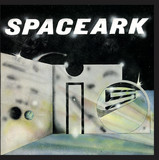
Numero's "Planisphere", für diejenigen innerhalb der 30-40 Grad Zone, wird Ihnen ein ziemlich erkennbares Diagramm liefern, um sowohl Deep-Sky-Objekte als auch tellurische emotionale Impulse zu entdecken. Statisch gefüllte Signale, die tief aus dem Inneren der Wände des Laurel Canyon kommen und von Clustern der beginnenden Technologie des späten Jahrhunderts abprallen, werden durch die verdrehten Kaninchenohren eines Chevy Astro Van gezogen. Der zweideutige Klang von Hippies frisch aus dem Hinterland schaukelt Trommelmaschinen durch herzzerreißende Aspirationen, als ob die Musikabteilung des Whole Earth Catalog zum Leben erwachte. Diese 9 Nomaden, die aus dem Astronomieunterricht mit einem Arm voller Brain and Sky Label-Releases hervorgehen, kritzeln Plein Air Narrationen über eine Landschaft, die der Sonne den Rücken kehrt. Genießen Sie den Nachhall unseres himmlischen Heims.
> Individuelle gestanzte 2-farbiges Cover im Spanplatten Look
> Klar bedruckte Hülle mit radialem Kalenderzifferblatt
> Picture Disc LP mit Sternenkarte der Sterne, die am Nachthimmel in der 30¢ª-40¢ª Zone sichtbar sind
Search:dur
Celebrating its 25th anniversary, Far Out Recordings proudly presents two albums of previously unheard Azymuth demo recordings from 1973-75
Since their debut album release in 1975, Azymuth have risen to rank alongside the world’s greatest jazz, funk and fusion artists. As young men in Rio de Janeiro, they stood out for both their exceptional talent as musicians, and their wild rock ‘n’ roll antics in the predominantly middle-class worlds of bossa nova and jazz. Their signature ‘Samba Doido’ (crazy samba) sound ruptured the tried and tested musical structures of the day, resulting in what can only be described as an electric, psychedelic, samba jazz-funk hybrid.
Before they became Azymuth, José Roberto Bertrami (keyboards), Ivan ‘Mamão’ Conti (drums), Alex Malheiros (bass) and Ariovaldo Contesini (percussion) played backing band to just about every major artist in Brazil. Bertrami was also contracted as an arranger and songwriter at some the biggest labels of the era: Polydor, Philips, Som Livre, and EMI being just a few. Azymuth’s name can be found on record sleeves by the likes of Jorge Ben, Elis Regina, Marcos Valle, Ana Mazzotti and countless others. But at the dawn of the seventies, fascinated by developments in improvisational music - from jazz in the US, to progressive rock in the UK and of course samba, bossa and tropicália on home turf - the energetic young group were inspired and ready to move forward. Any spare moment in which they weren’t in sessions and writing music for other artists, they would be carving out their own sound.
These previously unheard recordings took place between 1973-75 at Bertrami’s home studio in the Laranjeiras district of Rio de Janeiro. At the time of recording, there was nothing in Brazil, less the world that sounded anything like them, so perhaps it’s unsurprising that when Bertrami presented his demos to the record companies he had been working for, he was turned away, and told in effect that the music was ‘wrong’.
One of the demos ‘Manhã’ would be picked up by Som Livre and Azymuth released their seminal debut album in 1975. Throughout the late seventies and eighties, the group released a series of now classic albums for Milestone Records, before taking an indefinite hiatus to pursue their individual careers.
When English producers Joe Davis and Roc Hunter arrived in Brazil in 1994 to record the first Azymuth album in over a decade, Bertrami dug out the demos which had sat virtually untouched for over twenty years. Joe recalls how he was “blown away by the freedom and intensity of the music, as well as the genius of the ideas musically.” Beginning a long and fruitful relationship, ‘Prefacio’ would be the first track Azymuth recorded for Far Out Recordings and was released on the Carnival album (1996).
Along with ‘Manhã’ and ‘Prefacio’, only a handful of these demos were ever professionally recorded and released, making this the first opportunity to hear many of these early Azymuth compositions in their raw, original form.
On every track the frenetic energy in the studio is palpable, giving the recordings a beautifully personal feel and a sense of the phenomenally creative vision Bertrami, Malheiros and Conti were realising at the time. Fifty years on, Azymuth’s earliest recorded music retains an ineffable, futuristic quality, standing amongst their most captivating and moving work.
Credits:
Keyboards: José Roberto Bertrami (Mini Moog Series One, Arp Omni, Arp 2600, Arp Solina Strings, Fender Rhodes 88, Hammond B3 with box speaker, Clavinet with Wah Wah)
Drums: Ivan ‘Mamão’ Conti
Bass: Alex Malheiros
Percussion: Ariovaldo Contesini
Produced by Azymuth and Jose Roberto Bertrami
Recorded at José Roberto Bertrami’s home studio in Laranjeiras, Rio De Janeiro, Brazil between 1973–1975.
Issue and project co-ordinator: Joe Davis
Tape transfers by Roc Hunter (thanks to Simon Hitner)
Mastered by Daniel Maunick at the Sugar Shack, Lanark, Scotland
Mastered by Frank at Carvery Cuts
All tracks published by Far Out Music Publishing/Westbury Music LTD
After a break of some 10 years producer and DJ Mat Carter felt the time was right to wake his imprint from hyper sleep.
It was started as and will continue to be an outlet for both Mat’s own material and that of other like-minded beings and as the name Varial suggests the label is not limited, instead it reflects Mat’s tastes and touches on many styles.
Varial launches with the remaster and re-release of the much sought after cult classic, Zark Time E.P. Written and produced by Mat himself, this E.P. pulls on influences of fractured imagery, fuzzyelectronics and dense soundscapes to form five tracks of warm, funk-fuelled jams that 17 years on still refuses to neatly conform with any one genre. As Mat himself says, “I can’t help my influences.”
During his time away from the music scene Mat’s focus was on raising a family and honing a physical craft but the pull of music never went away.
Temporary linearity in a lysergic world.
Imagination and reality, science and humanity: SPIME.IM weave their audiovisual tales from the ethereal textures that shape our worlds. Their album "Exaland" synthesizes reality by combining human expression with technological potentialities in an infinitely changeable virtual world. The seven tracks are defined by razor-like sounds, crystal textures and digital overload, captured in those weightless seconds on a parabolic flight. Just as SPIME.IM's live performances, this album is a temporarily linear journey through a narrative space shaped by psychedelic landscapes, synthetic colors, mutating objects and transient life-forms.
SPIME.IM was born as a word pun between the concept theorized by Bruce Sterling - the spime for the note, an object that can be traced through space and time for the duration of its existence - and the contraction of English "I am". If the Being is therefore the object of the intertwining between the real and the virtual, then it becomes possible to create new imaginaries that turn into immersive environments and narrative spaces in which artificial and natural, science and humanity, imagination and reality interpenetrate, giving life to new boundaries to be explored, to experience the own consciousness and what, while invisible to our eyes, surrounds and influences us.
Affirming digital reality, the Turin-based media art collective SPIME.IM explores the boundaries and possibilities of identity and perception in a world where virtual doppelgängers take on an all-encompassing position. SPIME.IM use technology, 3D art and electronic music to weave immersive audio-video experiences.
Cochemea Gastelum is coming home to connect with his roots. After nearly 15 years of touring the world with Sharon Jones and The Dap-Kings, the saxophonist offers a deeply personal album of jazz and indigenous-influenced rhythms. All My Relations¸ out February 22 on Daptone Records, is 10 tracks of mesmerizing and spiritually ascendant instrumentation. The first single 'All My Relations' is available now.
'All My Relations is a way for me to explore my roots through music. Some of it is a memory that is imagined from a time and place I've never been ('Sonora') or a musical impression of ritual ('Mitote'),' Cochemea says. 'I felt compelled to add the way I feel when I go to ceremony, when I feel connected with my ancestors, to the musical narrative.'
A California native with Yaqui and Mescalero Apache Indian ancestry, Cochemea grew up surrounded by music but without knowing much about his heritage. Both his parents were musicians, and they gave their son a heavy name meaning 'they were all killed asleep.' Cochemea has spent much of his diverse musical career - as a soloist, musical director, composer and ensemble player - exploring and iterating on roots music, and All My Relations is a capstone meditation on his own ancestry.
Originally conceived during Sharon Jones and The Dap-Kings' final year of touring, Cochemea and Daptone's Gabe Roth cast a varied but familial set of New York musicians to bring All My Relations to life. A large portion of the album was created through improvisation and collective writing, where its 10 musicians created a melodic, percussive conversation. 'It was a beautiful experience - people would start playing and we'd work up these arrangements on the spot, then record it.'
'In a sense, this record is a prayer for unity, love and the recognition that we are all part of a web, and everything we do effects everything else,' Cochemea says. 'These days there's so many lines being drawn, I wanted to focus on what unites us.'
Cochemea has a long history of uniting multiple genres with his powerful polyrhythmic sensibilities. His roots in jazz, Latin, funk and rock led to multiple tours with funk-jazz organist Robert Walter's 20th Congress, and connected him with Sharon Jones & the Dap-Kings for their 2005 Naturally tour. Cochemea also played tenor sax with The Budos Band and Antibalas, and Baritone sax on the Amy Winehouse sessions, before becoming a full-time Dap-King in 2009.
In between marathon tours, Cochemea recorded a critically acclaimed solo album of soul, funk, and afro-Latin jazz, The Electric Sound of Johnny Arrow, all while doing session work for the likes of Mark Ronson, Rick Rubin and Quincy Jones. He's performed alongside Archie Shepp, Beck, David Byrne, Public Enemy and The Roots. Cochemea was also a featured soloist in the award-winning Broadway play Fela!, which led to historic performances in Lagos, Nigeria.
This the first release of this newly formed label, product of the studio collaboration between the experienced music duo.
A1 holds a special place since it was one of their first productions, defining their sound and workflow in the studio. Driving energy, crispy drum sounds and well crafted pads make this one a perfect track for the early morning hours. B1 is one of these tracks that stay glued in your mind and you can't stop humming their melody. Evolving basslines, forceful kick drums and an elegant lead make 'Backup' one to remember. B2 is showcasing the duos attention to detail when it comes to minimalism in music making. Few elements arranged in a way that make the track progress flawlessly to a proper mind bending groove.
Focus and hard work ethic are the key elements of this collaboration. During endless studio sessions the duo has defined their characteristic sound and more material will be coming out soon. Staying quiet. Working hard. Together
The story of TodoTodo is one of the most incomprehensible and surprising in the history of Spanish electronic music. Without doubt it is, sadly, also one of the most ephemeral. The curse that has haunted them since their forming in 1980 and during their short year and half of life is already legendary. Domestica Records did justice to the group in 2012 with a comprehensive compilation and this EP joins this initial tribute as it reimagines some of these trailblazers most representative productions: Digital Dancer and Autoga´s.
Almost forty years later, Frigio is bringing some of their music to a fresh audience. Juanpablo with his extended edit of 'Digital Dancer.' A steady kick tethers a tripping mechanical melody, a melody that bubbles and simmers as toms, horns and daring funk collide for this seven minute odyssey into the world of Iberian underground synth. The original version from 81 closes the A, a brief and brilliant piece of proto-techno. The flip is introduced by Catalan Dj, journalist and author of ¡Bacalao! Historia Oral de la Mu´sica de Baile en Valencia, Luis Costa. Costa re-imagines 'Autogas' with his Tool Edit, reshaping the off-kilter keys and future highways and byways of the original. The finale is a true treasure from the annals of time. A live version of 'Autogas' from the legendary Rock'Ola club in Madrid, an unreleased work that is as audacious and bold as it was when it was first performed in 1981.
Civil Disobedience's seventh and debut vinyl release welcomes Polish artist, TAKA, to the family. TAKA presents 1610, an exceptionally personal and moving collection of music written and produced during a period of coming to terms with her father's passing. In her own words, "I began to feel strong again when I was creating this music." This is an EP where emotions of the darkest and lightest kind dance together.
TAKA executes her story in rough and ready beats, quirky and randomised percussion, with intense and emotive leads progressing throughout each track.
Entrusted to remix such precious material is TAKA's friend, Gareth Wild, who has crafted a signature heavy duty techno destroyer of "Cry Cry. "Cry Cry" especially promises to leave its mark on listeners, its leading chords are a raw melodic masterpiece, underpinned with a pummelling bassline. This piece of music penetrates the soul, awakens the subconscious, and leaves you radiating with profound hope and knowing. Those who hear it do not forget it.
A product of the transformative power of dance music, Ede moved Berlin after he experienced something magical while dancing to Ame at
Berghain. So enchanted was he by the pivotal moment that he set his sights on making music to be released by Innervisions… And that happened
three years later when his track ‘Jenny’ made it into the label’s ‘Secret Weapons 11’ compilation. Ede’s dark, new wave style has also
piqued the interest of Jennifer Cardini, who signed his music to a V/A on her Correspondant Music label recently. Now the producer joins the
TAU family for a full EP, featuring four original cuts.
‘Raum’ jumpstarts the collection with menacing allure. Whirring analogue forms the core of this deadly track, keeping it tight in the low end
while various layers of synth fizz and snarl. An urgent riff joins the fray, adding depth and energy. Across almost 10 minutes Ede showcases his
ability to create a dark atmosphere and imbue his music with spinetingling theatrics. Fans of the riff will be pleased to find a beatless version of
‘Raum’, which will be useful for creating dramatic moments during DJ sets no doubt.
On side B, ‘Zeit’ brings the pace down slightly. A melancholy synth line evokes feelings of sorrow, while the beat pumps along. Ede uses the full
8 minutes of this track to really build the tension, finally unleashing it halfway through. This could easily be used on the soundtrack for a cyborg
action movie set in the future.
Last up, ‘Unendlichkeit’ is a further demonstration of Ede’s love of futurism, new wave and film noir circa 2080. Here he tells a story with the
machines, each one adding their contribution to the narrative which gets more and more chaotic as the tune progresses.
A very impressive EP, and we’re sure you’ll agree it’s something quite special.
Initially a duo formed in Berlin, FITH have since multiplied and expanded to become a revolving collective of musicians and poets spread out across a Paris/Manchester/Berlin axis. The project, currently comprised of members Dice Miller, Enir Da, Rachel Margetts, ChrIs Lmx, & Arnaud Mathé gesture towards notions of the literary salon, expanded cinema happenings, and the ancient traditions of Greek oratory and religious sermons. Driven by the spell of the spoken word, minimal percussive refrains, oneiric textures & deep melodic synths, FITH channel cinematic imagery, enigmatic narratives & spiritual frenzy.
Their self-titled debut 12' album was released via their collectively run imprint Wanda Portal in November 2016, a 'quietly alluring debut of post punk tempered avant-pop songs' (Boomkat) that laid out the project's foreboding mystique and intoxicating dream sequences with a lurking, devastating sense of purpose and (mis)direction. Other outings have included myriad solo collections of poetry, a two-track release of lurid dissonance and elegiac elevation (Signs / Cornerstone, December 2016) and an extraordinary reinterpretation of the soundtrack for cult film & iconic document of modern alienation Wanda (1971, dir. By Barbara Loden)
With Swamp, their sequel to this activity and their first appearance on Outer Reaches, FITH become a refined force, on a record where all their compelling pluralities and attributes are honed and augmented; everything dilated to delirium. The atmosphere here is one of veiled dread and psychic disturbance, a haunting and macabre psychedelia strewn with echo and dub FX, fragmentary fever dream poetics, elemental drum patterns and volatile synthetic interference. Although the collective conserve the raw crux of their earlier material their execution is, in this special instance, heightened by an intent to broaden and prolong their unique strain of intensity.
Emphatically sinister openers like Forest and Pound present sidereal sequences before building to barrelling, corrosively processed percussion, paroxysmal free jazz and a baleful, concrète-inflected score of electronics, while Swamp introduces phasing currents and a vocal evocative of a chorale from some forgotten giallo film. Elsewhere l'au delà (the beyond) presents a stunning, sombre passage to another state entirely, like some desolate new inflection on Coil's Going Up, before Bialystok shifts into a finale of transportive and meditative evaporation. Together these tracks make for an incredibly immersive and congruous conception; an utterly complete and mesmerising document.
In Swamp's various dimensions perhaps there's comparisons to be drawn with the ritualistic krautrock of Conny Plank and Holger Czukay's Les Vampyrettes, with the hallucinatory, tribal rhythm cycles of Shackleton & Anika's Behind The Glass collaboration, with the primeval drone of Jeremie Sauvage, Mathieu Tilly and Yann Gourdon's France project, with the echoic, disquieting chamber intimacies of Tuxedomoon's Pink Narcissus material and with Lucrecia Dalt's eerie free verse abstractions. But really, we've not heard anything like this before.
Discussing their own inspirations and touchstones the collective cites Franz Kafka, Dario Argento, Lucrecia Martel's La Ciénaga (The Swamp - the film the record is named after) and Yiddish ghost theatre as figures, works and artforms that were prominently drawn upon during the making of Swamp. Yet whilst their imprints could be traced by some, they resemble more of a covert presence within a nuanced whole rather than obvious aspects which moor this record to any familiar setting.
Instead, the acutely unsettling yet poignant spoken word of Miller and the mercurial nocturnes and visitations produced by Margetts, Lmx, Mathé and Da make for a record of strange, novel and striking energies. In revealing the remarkable location and period in which Swamp was recorded Margetts and Miller give a vivid indication as to how these energies are so potently invoked:
'The record was mostly recorded in a caretaker's wing of a 17th century castle in Normandy. It was early March 2018, and our first encounter with the Spring. We had no idea how everything would unfold. There was a lot of tension. Some of us felt compelled to get out the attic room where we had set up our makeshift recording studio and just walk and walk down the vast flat meadows and explore the relics of the wartime barracks, others wanted to keep recording. The outside was serene and inviting, and even though we had been cooped up indoors recording for long stretches of time, we could see from the corner of our eyes, the branches of the trees quivering; an impersonal energy blew through us and then things just happened.'
Repress available in early May.
Faitiche releases a new collaboration between the Japanese sound artist ASUNA and Jan Jelinek: the album Signals Bulletin brings together joint improvisations and compositions made over a period of three years in Berlin, Kyoto and Kanazawa. ASUNA’s meandering organ drones merge with Jelinek’s pulsating synthesizer and field recording loops to create dense superclusters that span broad harmonic arcs.
"Watching the Japanese sound artist ASUNA playing the organ, some people might be surprised. ASUNA is no virtuoso flying over the keyboard in a rage. Instead, with the calm gestures of an office worker, he cuts strips of adhesive tape to the correct length before sticking them onto the keys of his instrument. In this way, large clusters of keys are held down, creating a dense and sustained range of frequencies, while the sound artist continually prepares further sets of keys or removes tape again. I have rarely seen a more convincing performance concept, with such a power to fascinate.
I first met ASUNA when we both gave a concert at the 21st Century Museum of Contemporary Art in Kanazawa, his home city. He performed the organ drones as described above and I immediately knew I wanted to collaborate with him. Six years and five meetings later, we completed Signals Bulletin. The album includes both joint improvisations and compositions, recorded in Berlin, Kanazawa and Kyoto.
Whether using prepared organ, Casio keyboards or mechanical plastic toys, ASUNA creates rich textures of sound that barely change over long stretches of time. It is a music without breaks. For a while, I was unsure how my loops made using modular synthesizers and live sampling fitted here – until I realized the role I had to take in this duet: I would provide the rhythmically pulsating foundation over which his dense continuums could unfold.
The result is harmonically drifting superclusters that put us into a meditation-like state. It can perhaps be compared to Automatic Writing – a mode of creative expression floating somewhere between concentration and distraction. Both the structure of our pieces and our approach to our instruments allow a similar “absence”: we let the machines play and repeat themselves – while we, in a mild form of trance, adopt the role of observers, intervening only occasionally.
It is no coincidence that ASUNA owns a collection of Doodle Art – drawings jotted down during conversations or while talking on the phone. It is said that works made like this point to the unconscious and reveal pet motifs – because a doodler always inadvertently returns to his or her favourite themes. The artwork for Signals Bulletin features pictures from the collection, in this case sheets of paper from the pads provided in stationery shops to test out pens. The special quality of such doodles is that the jumble of drawings is the work of a collective whose individual members do not know each other. Layer by layer is added, by someone different each time – until it becomes a dense cluster of lines and symbols ..."
Jan Jelinek, Berlin 2018
- A1: Heroes
- A2: Post Requisite
- A3: Heroes In A Half Shell
- A4: More Feat. Anderson .Paak
- A5: Capillaries
- A6: Burning Down The House Feat. George Clinton
- A7: Spontaneous Feat. Little Dragon
- A8: Takashi
- A9: Pilgrim Side Eye
- A10: All Spies
- A11: Yellow Belly Feat. Tierra Whack
- A12: Black Balloons Reprise Feat. Denzel Curry
- A13: Fire Is Coming Feat. David Lynch
- A14: Inside Your Home
- A15: Actually Virtual Feat. Shabazz Palaces
- A16: Andromeda
- A17: Remind U
- A18: Say Something
- A19: Debbie Is Depressed
- A20: Find Your Own Way Home
- A21: The Climb Feat. Thundercat
- A22: Pygmy
- A23: Carrots Feat. Toro Y Moi
- A24: Ff4
- A25: Land Of Honey Feat. Solange
- A26: Thank U Malcolm
- A27: Hot Oc
Sein letztes Werk "You're Dead" (2014) bescherte ihm eine Grammy-Nominierung, sein Brainfeeder-Label ist zu einem der innovativsten Klanglabors der Welt avanciert, er co-produzierte Kendrick Lamars mit fünf Grammies ausgezeichnetes Meisterwerk "To Pimp A Butterfly" (2015). Nun veröffentlicht Flying Lotus sein neues Album für Warp: "Flamagra" greift alle kreativen Quantensprünge und innovativen Elemente aus 12 Jahren FlyLo-Karriere auf und denkt sie weiter, größer, epischer und universeller: Hip-Hop, Funk, Soul, Jazz, Electro, IDM, die Ansätze der befreundeten Beatmaker aus L.A., Tribal-Elemente, Polyrhythmen. Aber selbst diese Liste reicht nicht aus, um "Flamagra" auch nur ansatzweise zu verorten, weil es immer wieder ausbricht aus diesem Koordinatensystem. Die Gästeliste liest sich wie ein Traum: Anderson .Paak, George Clinton, Little Dragon, Solange, Tierra Whack, Denzel Curry, Ishmael Butler (Shabazz Palaces), Toro Y Moi, sein musikalischer Stammesbruder Thundercat, ja selbst David Lynch ist zu hören. Der legendäre Regisseur steuert ein paar schaurige Worte bei, eine düstere Erzählpassage, mit der er uns eindringlich warnt: "Fire is coming". "Flamagra" ist die Essenz des letzten Jahrhunderts im Bereich der afroamerikanischen Musik, vollkommen neu und weitergedacht, kollektiv gefiltert und feingeschliffen. Auch wenn Flying Lotus ein Nachkomme seiner ehrwürdigen Großtante Alice Coltrane ist, die mit John verheiratet war (wobei auch Miles und Madlib, Dilla und DOOM als seine Vorfahren gelten dürfen), hat er inzwischen seinen eigenen Kult geschaffen: Eine Gefolgschaft, die alles Geniale aus der Vergangenheit absorbiert und in Bereiche überführt, die sich die genannten Vorfahren nicht mal im Traum hätten ausmalen können. Flying Lotus ist zurück. Fire is coming.
- 1: أنا الأم الحزينة = Ana Oum El Hazina
- 2: طريق أورشليم = Toroq Ourashaleem
- 3: يا شعبي وصحبي = Ya Chaabi W Sahibi
- 4: قامت مريم = Qamat Mariyam
- 5: وا حبيبي = Wa Habibi
- 6: اليوم علق على خشبة = Al Youm Oulliqa
- 7: يا يسوع الحياة نعظمك = Ya Yasou'h Al Hayat Nouaazzimak
- 8: كامل الأجيال = Kamel El Ajiyal
- 9: إستنيري = Estaneeri
- 10: المسيح قام = Al Masih Qam
Fairuz, who sung during her youth regularly with a church choir, gives to these Good Friday hymns stronger and deeper dimensions: with her exceptional voice, she expresses the emotions and feelings of all believers. Remastered official reissue, comes on 180 gram vinyl.
Make Mistakes head honcho Roy England teams up with pianist AC Jones to deliver The Shadow Gallery, a sprawling, hypnotic love letter to the dance floor. Music for the modern dance floor, with classic flare, and its heart on its sleeve.
From High On You, to Wayfaring at the end, The Shadow Gallery delivers a cohesive, focused musical journey. But, We Can Make It delivers best on the albums promise. Classic house grooves and bass propel the track forward, with AC’s piano weaving a melodic counterpoint to the relentless dance floor hustle.
While the front half of The Shadow Gallery begs for the afterhours sweatbox, the back half delivers peak hour party cuts for lovers. Anchored in the middle by the title track, The Shadow Gallery, a tune that would sit comfortably in any epic house journey. By crafting such a smooth progression through the collaboration, Shadow Gallery works just as well as sit down, and listen to some true pros bringing their skills together in a way that feels evokes the ghostly spirit of dance music’s past, while creating a modern sound for discerning ears.
Get some.
“We have no idea, now, of who or what the inhabitants of our future might be. In that sense, we have no future. Not in the sense that our grandparents had a future, or thought they did. Fully imagined cultural futures were the luxury of another day, one in which 'now' was of some greater duration. For us, of course, things can change so abruptly, so violently, so profoundly, that futures like our grandparents' have insufficient 'now' to stand on. We have no future because our present is too volatile. ... We have only risk management. The spinning of the given moment's scenarios. Pattern recognition”
― William Gibson, Pattern Recognition
Anadol is a psychedelic synth folk project by Gözen Atila, a Turkish sound artist and photographer based in Berlin. Her third album Uzun Havalar is based on collective improvisations of middle eastern folk songs called „uzun hava“. They turn out as rich, atmospheric synth ballads. A diverse roster of improvising musicians creates their fascinating complexity. Anadol recorded them during extensive sessions in Istanbul. You can hear drummers laughing and playing guitars, composers howling, announcements in French and screams in no language, record collectors playing oscillators, and trumpets through spacious echoes. Anadol represents Gözen Atila’s liberation from a rather academic approach to electronic composition which she pursued during her music technology studies in Istanbul. She calls her education the „darkness of serious music“ where she first tried to belong, then to break free with the help of lo-fi synth pop. As a producer of radio plays and an expert field recording artist she has developed a distinct sense of timing, editing and sound design. Her Anadol project walks in the footsteps of lone synth experimentalists like Bruce Haack and The Space Lady with their childlike curiosity for electronic sounds, pushing the boundaries of minimal equipment. On Uzun Havalar she translates her experimental background into these floating folk ballads. The album was originally released on tape via Kinship in 2018.
Written by Chris Franck and Davide Giovaninni, Oba Lata draws on traditional Yoruban chant blending it with a live afro-beat groove. Edgy, rhythmical analogue synths, vocals, guitars and percussion tied together by the clave and driving afro bassline make this a credible dance floor contender. The vocals honour "Obatala", one of the main Orishas in Yoruban culture. He is seen as the creator of earth and a lover of peace and harmony.
NameBrandSound are IG Culture and Alex Phountzi. The duo were part of the original West London broken beat scene and are known for their involvement with New Sector Movements and Bugz in the Attic. This remix draws on some of the modern African rhythms like Gqom (Durban - South Africa) and Coupé-Décalé (Ivory Coast via Paris) and combines them with their own "bruk" sound. Stripped back vocals and instrumentation make this a remix focused heavily on groove.
This instrumental track 'Dakar' is the result of a recent trip to Senegal during the period of Ramadan. It features an 8 piece woodwind/horn section recorded in Belo Horizonte (Brazil) which has been beautifully arranged by Rafael Martini. A mid tempo groove leaning heavily towards North Africa combining acoustic and electronic elements to create a deep modal feel and mood.
- A1: Throbbing Gristle – Dead On Arrival
- A2: Deutsch Amerikanische Freudschaft – Der Musolini
- A3: Cabaret Voltaire – Walls Of Jericho
- B1: Polyphonic Size - Zas
- B2: The Neon Judgement - Chinese Black
- B3: Da Davo - Sex Head
- B4: Borghesia - No Hope No Fear
- C1: Chris & Cosey - Exotika
- C2: Click Click - Headf
- C3: Front 242 - Body To Body (1988 Mix)
- C4: The Cassandra Complex -One Millionth Happy Customer (Ebm Mix)
- D1: The Weathermen - Poison (Lethal Mix)
- D2: Nitzer Ebb - Control I’m Here (Strategic Dancefloor Initiative Mix)
- D3: Meat Beat Manifesto - Radio Babylon
Electronic Body Music, abbreviated as EBM, is a term whose origin stems from the Belgian group Front 242, chosen to describe their electronic music; cold and dancing, free of the dominant influences of the time. Powerful, cold and minimalist electronic rhythms were the hallmarks of this new genre.
The movement quickly garnered followers with the British group Nitzer Ebb but also in the rest of Europe, with the likes of Borghesia and The Neon Judgment, later signed to labels like PIAS, Antler- Subway, Wax Trax!, Mute, Off Beat, Zoth Ommog, Pendragon and Metropolis.
EBM’s popularity grew rapidly in the underground scene during the 1980s and early 1990s, especially in Europe, before breaking through in the rest of the world, also influencing the subsequent electro-industrial scene.
‘Dancing In Darkness: EBM, Black Synth & Dark Beats From The 80s’ - to give it its full title - is a compilation of some of these bands; bands that changed contemporary music in terms of ideology, politics and aesthetics.
CD version in digipack with poster booklet. 2LP version in gatefold sleeve.
The new album by Juno Award and Polaris Music Prize-nominated Canadian soul star Tanika Charles.
Produced by a stable of some of Canada's finest musical minds including among the others Chin Injeti (DJ Khalil, Eminem, Drake, Aloe Blacc..), Record Kicks proudly presents "The Gumption" the awaited new album by Canadian soul star Tanika Charles that will hit the streets worldwide on May 10.
"What gave you the gumption?" Tanika Charles rhetorically asks during the introductory notes of her sophomore album appropriately titled The Gumption. While the apprehensive lover at the receiving end of that inquisition should feel slighted by the remark, it also alludes to the assuredness Tanika has gained since the release of her Juno Award and Polaris Music Prize-nominated debut Soul Run. The Gumption picks up where Soul Run left off, continuing her tradition of marrying classic soul with modern production styles. Across a dozen songs spanning 38 minutes, Tanika addresses moments of vulnerability, vindication, uncertain love, forbidden fruit and the state of the world today. "It's a little more mature. It's not feeling guilty about being up front, not being afraid to address situations that aren't comfortable for me. I'm comfortable in my skin now in a way I never was before. The overall theme is growth. I feel the music reflects that, and my words reflects that. Even the album cover tries to convey the feeling too. I'm not putting up with unnecessary nonsense anymore."
Predominately guitar-driven mid-tempo soul, with a handful of dance floor friendly tunes and some psychedelic leanings, The Gumption was indirectly influenced by the likes of Alabama Shakes, The Supremes, Khruangbin, D'Angelo, and Moses Sumney. It is sonically moody at times, but with consistent silver-lining arcs. "I've grown up and learned to deal with situations significantly better. We have a tendency to hold back our innermost feelings for fear of hurting others. Even when we're happy we worry about over-sharing, as if joy is a competition you don't want to gloat about."
The success of Soul Run propelled Tanika in front of new audiences far and wide, with extensive touring in North America and Europe. "I've been touring, experiencing new places and meeting new people. And in that time also worked on completing this album". While criss-crossing Canada with festival appearances on both the east and west coasts, Tanika also embarked upon four overseas tours for a combined 45 European shows within a one year period. This included performances at the prestigious Trans Musicales Festival in France, the Lärz, Germany Fusion Festival, Mostly Funk & Soul and Jazz Festival in UK, the Holy Groove Festival in Switzerland, and the Canarias Jazz Festival in Spain.
After a stunning debut on Sublunar last year with the “Meta”, Refracted is back on the label run by Sciahri and Dagdrom with “Nothing is True, Everything is Permitted”, a new EP of four mind-bending techno tracks.
Shuffle Transmit opens the EP and immediately start to build the tension giving to each sonic detail a distinctive personality while converging into a powerful impact.
Polar Creatures express solidity with razor shaped textures and keeping a propulsive attitude during his continuous development.
Deviant, the most introspective track of the 12″, bounces between vibrant pads and an immersive sense of depth, everything feels weightless.
Drone Ship, last track of the EP, builds it’s flow on a polyrhythmic hypnosis created between thick drums and a nervous rash of offbeat bleeps.
Alt-rock icon Josephine Wiggs is best known as bassist in The Breeders, rising to superstardom in the '90s and continuing to draw crowds and critical acclaim in the wake of their 2018 album All Nerve.
But over the years, Wiggs has released several of her own albums, all of which delightfully defy genre. Her new solo record, We Fall, is both a departure and a distillation of an enduring personal aesthetic: moody and spare but also melodic, at once contemporary and nostalgic.
Some influences are clear: We Fall is reminiscent of the experimentalism of Brian Eno's Another Green World and recalls the delicate, languid minimalism of Harold Budd. The album's classical inflections, sharpened by a dialog with electronic elements, evoke Alva Noto and Ryuichi Sakamoto. This is an album of juxtapositions: minimalist at moments, richly layered in others; ambient while also sharply focused; melancholy yet resolute.
There's something both dreamy and scientific about We Fall. Wiggs, an enthusiastic amateur mycologist, has an impressive collection of mushrooms she's photographed in her travels. We Fall could be the soundtrack to what can't be captured in a single photo—the growth and decay of miraculous creatures that a less astute and sensitive eye might overlook entirely.
Composed, performed and recorded by Wiggs, with drums and electronics by her longtime friend and collaborator Jon Mattock (Spacemen 3, Spirit , We Fall is a lyrical, bucolic album with an undercurrent of disquiet. Think of a wintertime walk in the woods as dusk falls too soon. True to the classic album form, the 10 almost entirely instrumental tracks on We Fall form a compelling whole: a crystalline meditation on paths not taken and words unspoken, an elegy for moments lost and last embraces.
JOSEPHINE WIGGS BIO
Josephine Wiggs grew up in an unconventional family north of London. Returning home from a summer holiday with a donkey riding in the back of the family's 1927 Rolls Royce was not considered at all bizarre. Wiggs studied cello as a child, segued from college in London to undertake a master's degree in Philosophy, and then, in a move few would have predicted, joined a rock band.
After making three albums with The Perfect Disaster (1987-1990), Wiggs left to join Kim Deal (Pixies), Tanya Donelly (Throwing Muses), and Britt Walford (Slint) in forming indie supergroup The Breeders, whose debut album Pod came out in 1990. Following a shift in line-up—with Kelley Deal on guitar and new drummer Jim Macpherson—The Breeders released Last Splash in 1993; with its hit single 'Cannonball' and 'Divine Hammer,' they became alternative rock superstars.
During the same period, Wiggs released two lower-key albums with Jon Mattock (Spacemen 3, Spiritualized): Nude Nudes (1992) under the name Honey Tongue, and Bon Bon Lifestyle (1996) using the moniker The Josephine Wiggs Experience. She also recorded and produced Klassics with a K (1996), the beloved and only album by the Kostars (Luscious Jackson's Jill Cunniff and Vivian Trimble). During a brief run of shows, Wiggs joined the band on drums, showing her range of musical ability.
In the late '90s Wiggs collaborated with Vivian Trimble as Dusty Trails, whose eponymous 2000 album is an homage to neo-noir soundtracks, spaghetti westerns, and Gallic pop. Time Out described it as 'one of the most subtly suggestive, understatedly elegant...things likely to have caressed your cochlea in years.'
Allusions in Dusty Trails to film music foreshadowed the next stage of Wiggs's career, writing scores for feature and documentary films—from Happy Accidents by Brad Anderson in 1999 to Appropriate Behaviour by Desiree Akhavan in 2014. Her new album We Fall began as a suite of short pieces for the documentary film Built on Narrow Land. Wiggs has also composed and recorded music to accompany live performance and short films by the acclaimed Brazilian choreographers chameckilerner.
In 2013, following the 20th anniversary of Last Splash, the classic lineup of The Breeders reunited for a world tour. Five years later in 2018 they released All Nerve, with Wiggs co-writing two songs and singing lead on the standout track 'Metagoth.' We Fall, Josephine Wiggs' third album of her own design and ninth album in a career spanning three decades, will be released on vinyl and available for download and streaming on April 12, 2019 by Sound of Sinners.
180g
In order to celebrate 5 thrilling and inspiring years, we gathered well-known artists, Goldmin regulars and emerging talents. It was really important for us to express the elusive nature of the Goldmin sound, in the form of a compilation tracklisting. Over the past 5 years, we had the chance to meet most of these guys in person, follow their very own creative path, share ideas, thoughts and there’s no doubt that they all had their part to play in crafting our sound. This intimate and stimulating kind of collaboration had to be expressed and there couldn’t be a better way to capture what we’ve been busily working for, than a serie of Various Artists 12″. What it comes down to is a quintessential, hard-to-follow Goldmin selection devoid of any specific standard or norm. And this whole compilation seems to reflect that non-septate artistic direction, this little something, which has grown throughout our whole catalogue, since the label’s birth.That’s why, picking these select few tracks, that could illustrate Goldmin Music’s essential freedom was probably our toughest work yet. It was also important to pick only the most original and iconic tracks from each artist. In the end each track had to be their most Goldmin one and they all have been tried in all types of situations, in club at 1 and 5 AM, on the highway at night or even staring at the ceiling during a sleepless insomnia session. They all fullfilled their duty.
Dark Star Safari, a newly formed group featuring Samuel Rohrer, Jan Bang, Erik Honoré and Eivind Aarset, present its eponymous recording debut, an evocative song-driven album. These songs conjure shadows of memory, clouds of dreaming and silhouettes of foreboding through the album’s layered, many-textured fabrics and Jan Bang's silken delivery of Erik Honoré's acute lyrics. Dark Star Safari is the work of four kindred spirits, their open modus operandi, and a remarkably interconnected creative nerve system. Key to their collaboration is an organic freedom that enables the music “to fill itself in", to be self-actualizing via the musicians as medium. The music of the 10 songs resulted from a two-stage process: an initial phase of free flowing open improvi- sation, and a subsequent exploratory phase where hidden potenti- als were discovered and nurtured. The groundwork of the album’s music originates from a session initiated by Samuel Rohrer, who invited Jan Bang and Eivind Aarset to the renowned Candy Bomber studio in Berlin. The ses- sion was run under the imaginative craftsmanship of sound engi- neer Ingo Krauss, who worked in the famous Conny Plank stu- dio, and its recording and mixing employed sophisticated use of vintage analogue equipment alongside cutting edge digital pro- cesses. This meeting opened the door for something larger to emerge. The group did not settle for just the outcome of the initi- al open improvisation. They were driven to dig deeper, to atten- tively examine and manipulate the material, in order to discover what it had to offer. This caused a creational chain reaction, forcefully spreading across the group. During this second phase, Jan Bang, while meditating upon the possibilities and reach of the improvised material, felt a strong urge to give additional shape and colour to it by singing. Thus, he organically stepped into the role of vocalist, a role he had not pursued since the early days of his musical career. He sent the results to Erik Honoré, who immediately was inspired by its po- tential, quickly penning lyrics and providing the project with its name. Honoré composed two additional songs, Mordechai and Fault Line, and thus rounded the project out towards a fully reali- zed opus. The group continued this back and forth process, with Samuel Rohrer and Eivind Aarset bringing in fine-tuning and e nrichment to the song structures and textures.
Point B Biog 2018
Starting out on legendary Electro label SCSI AV and Orson Records in the mid noughties, Point B began to earn himself a reputation through his intense dance floor-focussed EPs and pensive, experimental long players. By sewing together influences ranging from 70s sci-fi films to traditional middle eastern music, he wove a unique sonic fabric. Later that decade and after absorbing the waves of dubstep and post-garage that washed up on the shores of South London, his sound matured into something that can deliver club euphoria and introspective melancholy.
With his last commercial release back in 2014, a four year hiatus passed whilst he worked on other music projects. During that time he built up a collection of handcrafted synth patches, some of them employing modular synthesis techniques. The ensuing sketches formed the basis of his latest work: Smash Hits. This is arguably Point B's most direct and focussed record to date. Opting for a techno template, he consciously kept the sound palette narrow, concentrating his efforts on the groove, energy and production fidelity. This is a statement record that demonstrates his creative control and programming playfulness.
Back in 2014 when we first released the self-titled Chupame El Dedo we weren't sure if people could hold their mojitos while banging to their music. In 2019 we seriously advise to keep your hands free while listening to their second album. Formed by psych cumbia master Eblis Alvarez (Meridian Brothers) and Pedro Ojeda (Romperayo), the man that found the perfect cocktail mix for acid + folk + tropical beats, Chupame El Dedo are ready to mess around with Satan. 'No Te Metas Con Satan' it's a humorous title for music that expels cartoonish metal-vibes mixed with tropical rhythms. It's a pitch perfect title for a record that's never at the right pitch. The humour makes way for the funny stories that Eblis and Pedro explore in their lyrics. Souk's fourth release is a daring adventure in global beats. Frequently it comes to mind the universe of Quasimoto, Madlib's abstract hip hop that sounded delicious in the early 2000s. Chupame El Dedo lives in the same kind of power trip, fuelled by intense salsa rhythms dressed with heavy metal images.
That's where Satan comes into place. The Devil wears many clothes, but none are as multi-coloured and trendy as the ones we see in 'No Te Metas Con Satan'. We are advised of that during the first side of the LP. Each song dares the listener, with a multitude of ideas, sometimes dissonant ones, that find their way to make sense. An example The first song 'No Te Metas Con Satan' sounds like a perverted version of 'Da Ya Think I'm Sexy' and when you think it's over, it starts again, repeating ideas and leaving you extremely confused. What the fuck just happened Chupame El Dedo happened.
And it goes on. Flip to the other side and 'Alexandra Candelaria' says hi. A 7:43 minute long sinful & hilarious soup opera. No-one is ready for this. Laughter mixes with intense head banging, while we listen to what would happen if Jodorowsky made a Cartoon Network show. A damn good one. Maybe it's a good idea to not mess around with Satan, but you'll be in serious trouble if you don't listen to this. Seriously.
In the lead up to part two of the highly anticipated Outro Tempo compilation, MFM drops this teaser EP with the never before heard cassette madness of São Paulo's Bruhahá Babélico and Individual Industry's ethereal electro pop on the flip.
Music From Memory announces a series of Brazilian releases for this Spring that pick up where their 2017 Outro Tempo compilation left off. Circling around the musical projects that emerged out of the art world in Brazilian cities during the late 1980s and 1990s, 'Outro Tempo II: Electronic and Contemporary Music from Brazil, 1984-1996' takes anotherdive into the depths of the Brazilian underworld, exploring the rhythms that lurk beneath the Ipanema sunset. It shines light on more illustrious unknowns and on the genre-defying music that maintained asymbiotic, yet uneasy, relationship with mainstream popular culture.
The now legendary turntablism festival 'National Phonographic' has been hosting some of the most prominent turntable wizards in between 2001-2005. The X-Ecutioners, Cutmaster Swift, Kid Koala, Grazzhoppa, the list goes on and on. Equally as legendary are the National Phonographic 'Turntablist Tackle' vinyl releases. They've been used during DJ battles and sampled by leading producers worldwide. Now, 16 years after the latest record, 'Tackle 3' will be released! Top notch producers Eni-Less, Mike Redman and DJ Optimus created an amazing tool for turntablists and producers alike. This volume, pressed on 7inch limited edition colored vinyl, contains exclusive sounds, phrases and beats. The record also includes a voucher with a unique download code. We're safe to say that 'Turntablist Tackle 3' is the best volume yet!
Renato Ratier is one of the most important names in Brazilian and South American electronic scene not only as the creator of the d-edge club and partner of Warung club, two of the world's leading electronic music clubs. As a producer and citizen of the world, this time the artist found inspiration in the middle of the Atacama desert in Chile during a trip to a gig in that country. Definitely, the vibe and atmosphere of this unique place, suggested to Ratier a track full of personality as well as his work as a producer. While working on his new album, Ratier offers us a precious and pulsating track, with a striking square bassline and a hypnotic line of chords and synths. To complete this special package, Ratier invited two of the most important djs and Brazilian producers to bring their remixes.Ney Faustini and A.84 with their brilliant jobs.
- 180 GRAM AUDIOPHILE VINYL
- CLASSIC AND HARD TO FIND BRAZILIAN RARE GROOVE ALBUM
- FEATURING THE BREAKBEAT/SAMBA CLASSIC 'BOBEIRA'
- LIMITED EDITION OF 1000 INDIVIDUALLY NUMBERED COPIES ON TRANSPARENT RED VINYL
Sweet and breezy, light and jazzy, with plenty of warm touches - and one of the only albums ever releases by Edson Fredrico. Edson Frederico E A Transa features Frederico working with arrangements by Luiz Eca and Durval Ferreira, done with light percussion touches, plenty of keyboards, and some of the warm fusion phrasing of the mid 70s Brazilian scene. Vocals on most tracks are done in an ensemble chorus style, which makes for a nice finish to go with the warm feel of the cuts - and tracks include 'Ginga Gire Gire', 'Sacode Carola', 'Tema De Heloisa', 'Sambane', 'Garota De Copacabana and the breakbeat classic 'Bobeira'.
Edson Frederico E A Transa is available as a limited edition of 1000 individually numbered copies on transparent red vinyl.
- 180 GRAM AUDIOPHILE VINYL
- CLASSIC AND HARD TO FIND BRAZILIAN RARE GROOVE ALBUM
- FEATURING THE BREAKBEAT/SAMBA CLASSIC 'BOBEIRA'
- LIMITED EDITION OF 1000 INDIVIDUALLY NUMBERED COPIES ON TRANSPARENT RED VINYL
Sweet and breezy, light and jazzy, with plenty of warm touches - and one of the only albums ever releases by Edson Fredrico. Edson Frederico E A Transa features Frederico working with arrangements by Luiz Eca and Durval Ferreira, done with light percussion touches, plenty of keyboards, and some of the warm fusion phrasing of the mid 70s Brazilian scene. Vocals on most tracks are done in an ensemble chorus style, which makes for a nice finish to go with the warm feel of the cuts - and tracks include 'Ginga Gire Gire', 'Sacode Carola', 'Tema De Heloisa', 'Sambane', 'Garota De Copacabana and the breakbeat classic 'Bobeira'.
Edson Frederico E A Transa is available as a limited edition of 1000 individually numbered copies on transparent red vinyl.
The Mandatory Eight first appeared on the compilation "Funk, Soul & Afro Rarities: An Intro To ATA Records" released in 2015 on Here & Now recordings with the song "Suckerpunch", which has since become the label's most requested song for re-release as a 45. ATA have dug deep in the archives to unearth two dance-tempo 45 killers to placate the calls until studio time is allotted to the band for a debut album.
The band's sound and ideology definitely lies in less refined eclectic soul. Feel over precision, passion over execution, soul-on-a-budget grooves.
From the opening drum pick up of "Soul Fanfare #3" it is clear that The Mandatory 8 are here to make you move. With proud horn lines reminiscent of something that you might find in the Stax vaults, Soul Fanfare definitely takes it's lead from backing bands such as the Barkays and the funkier side of Booker T and the MGs. One can imagine that this was definitely a set opener for the group, guaranteed to put foot to floor. Guitar and bass have a care free movement and feel, conjuring up tones of late 60's summer soul hits.
The B-side "Turn It Out" has a darker, moodier feel to the previous side. Still a dance floor filling groove, the band take a direction more similar to below the radar funk outfits such as Amnesty or LA carnival. Biting minor horn lines set the tone backed by a bubbling bed of congas, rhythm guitar, unruly bass and drums which don't dip below boiling for the duration. "Turn It Out" features a manzarek-esque farfisa organ solo which sets the sonic tone of a band without funds but with plenty of soul in the bank.
Both sides will reflect well for different moods on the same dance floor.
Sechs Jahre Nach Seiner Letzten Lp "busted With A Bag Of Bliss" (my Favourite Robot) Kehrt Der Kanadische Indie-elektronica-meister Sid Le Rock (aka Pan/tone, Gringo Grinder) Mit Seinem Fünften Studioalbum "scenic Route" Zurück. Die Neue Lp Ist Ein Musikalischer Trip Durch Eine Breite Klangpalette, Die Von Dancefloor-tracks (kismet, Morgenfrisk) Bis Zu Electro-meisterwerken (speak Sweetly, Hiraeth) Reicht. Das Artwork Wurde Von Alex Solman Erstellt, "dem Mann Hinter Den Unverwechselbaren Zeichnungen Für Den Golden Pudel Club Und Einem Der Besten Bildenden Künstler, Der Heute In Der Musik Arbeitet" (resident Advisor). Die Lp Enthält 6 Tracks, Der Download-code Insgesamt 11 Tracks.
- A1: Vosill
- A2: Tint 1 - Barely Barley
- A3: Paintchart
- A4: Tint 2 - Rosey Apples
- A5: Ampule
- B1: Tint 3 - Clearly Caramel
- B2: Bolselin
- B3: Spinning Jennie
- B4: Tint 4 - C\'Est Le Tempo
- B5: Tint 5 - Glittery Disco Blue
- C1: Skeek
- C2: Tint 6 - Cheeky Cherry
- C3: Iam Twisq
- C4: Tint 7 - Bloody Mary
- C5: Anklet
- D1: Spoonery (Bonus Track)
- D2: Thumbloop (Bonus Track)
- D3: Xylomat (Bonus Track)
- D4: Untitled (Bonus Track)
Special Record Store Day 2013 release! LP version includes free download! One explanation for the 90s-fascination with Casio, Korg and other analogue synthesizers is quickly at hand: The 1st video-game generation was coming of age and were happy to hear that their dearly loved “Space Invaders“-soundtrack was suddenly popping up in electronic music. It takes slightly longer to explain why one record from that time - “Beautronics“, the debut by UK-synth-duo ISAN first released in 1998 - kept its appeal until today. “Beautronics“ does not grab you immediately. You don’t hum these tunes after a few listens, in fact you might not even hum them after dozens of spins. It’s not about humming. It’s about soft cushions and a cosy duvet made of sounds, it’s about aural sheets floating around like warm humidity during a hot bath. Occasionally it’s even about IDM, but in a very late-night kind of way. Antony Ryan and Robin Saville, the two English lads behind ISAN, are very open about their goals. They separate the longer tracks with short, often abstract pieces they called “Tints“. So it’s as much about tonal colour, as it is about melodies. The “Tints“ form an interesting contrast between ambient sounds and the more focused tunes. But even their most bass-dominated songs such as “Skeek“ are not exactly four to the floor. There’s no more than one to the floor, while the rest is sailing somewhere above in a haze of beautiful sounds and melodies. The album’s sleeve and title are straightforward about this: it’s all about the human beauty in electronica. Just like your mom’s heartbeat that set the tone for the first nine months of your life, “Beautronics“ produces sounds that radiate a warmth and naturalness that make them feel familiar upon first listen. The 15 years since its initial release don’t change a thing about this. That’s why it’s certain, that “Beautronics“ will win a new generation of listeners with this re-issue.
With 2019 marking 50 years since David Bowie's first hit, Space Oddity, Parlophone is set to release a 7" vinyl singles box set of nine previously unreleased recordings* from the era during which Space Oddity was first conceived.The title 'Spying Through A Keyhole' is a lyric taken from the previously unknown song, Love All Around, and though most of the other titles are known, these versions have never been officially released until late last year. Most of the recordings are solo vocal and acoustic home demo performances, unless otherwise stated.
The design of each single label is presented to reflect the way David sent many of his demos to publishers and record companies, featuring his own handwritten song titles on EMIDISC acetate labels. The singles themselves are all mono and play at 45 r.p.m.
Due to the nature of some of the solo home demos where Bowie accompanied himself on acoustic guitar, the recording quality isn't always of a usual studio fidelity. This is partly due to David's enthusiastic strumming hitting the red on a couple of the tracks, along with the limitations of the original recording equipment and tape degradation. However, the historical importance of these songs and the fact that the selections are from an archive of tracks cleared for release by Bowie, overrides this shortcoming.
French producer Erell Ranson's affinity for the deeper shades of Detroit sound is well known, but his ability to absorb those influences and create beautiful music with his own signature is the reason we're so excited to welcome him into our family. Having previously released on labels such as Kalahari Oyster Cult, aDepth audio, Nice & Nasty Records and his own MySelf Recordings, amongst others, Erell's became quite skilled in crafting sophisticated and emotional tracks which still seem to feel perfectly at home in a crowded 3 AM club situation. EP for Barba, titled "Dreams Of Nila", is a 4-tracker consisting of "Dreams Of Nila", "Reminiscence 0f The Past", and "Far Away Of Your Side", with the latter receiving an additional remix treatment by a Rotterdam-based project Duplex. "Dreams Of Nila" is a somewhat more leaning towards Chicago-ish side of things, with its huge bassline enveloped by shuffling 707 drums. Soft-sounding synth pad sequences work as an emotion injection and appear perfectly timed, without removing the edge of this, essentially, club track. "Reminiscence Of The Past" is the most direct of the bunch. Syncopated bass drum, forward-leaning groove and those classic techno snare roll fills make this track hard to ignore as it is, without mentioning complex interaction of synth lines, chords and beautiful detroit-reminiscent string stabs. Wonderfully executed counterpoint of hard edge and soft touch is what makes this cut a truly special one. Techno in its fullest form. "Far Away Of Your Side" is somewhat closer to the energy level of "Dreams Of Nila", and is a well-paced deep cut perfect for later moments in the night when subtle approach is everything. Slow synth pads give your mind some time to relax while the groove keeps your body occupied. Duplex remix of "Far Away Of Your Side" takes the track another notch down but in a more sideways manner. Broken electro groove is what keeps the foundation of the track while Chris Aarse & John Matze (aka Duplex) masterfully work their synths and pads to keep the tension for the whole duration of the track. Melancholy mood is tangible here, and at its best, ready for the dancefloor.
See Through is a new collaboration between Aidan Baker (Nadja), Faith Coloccia (Mamiffer, Mara, Sige Records) and renowned percussionist Jon Mueller.
The project was brought to life through Baker exploring textural rhythms created by sampling small, sharp and abrupt sounds on the electric guitar and then sequencing them in a drum machine to form the bedrock of the tracks. Mueller then added his particular, signature brand of intricate, hypnotic percussion to the mix and the compositions began to grow and take shape. The pair agreed that the pieces needed a more human touch and Coloccia was invited onboard, contributing processed vocals via looping, tape manipulation and microphone feedback.
The result is an other-worldly record that seamlessly flows from beginning to end, immersing the listener in waves of ambient movements and soporific beats. There is a trance-inducing aspect to this work, deserving to be consumed in one sitting and allowed to manifest itself for the duration. The trio have crafted a piece of work that stands up to the quality and integrity of their combined back catalogues and indeed adds something completely new for fans to discover and devour.
Radha-Krsna Nama Sankirtana was the first of two albums Alice Coltrane released in 1977 (the other being Transcendence). Coltrane's music during this period grew out of an epiphany in which she would renounce secular life and don the orange robes of a swamini (spiritual teacher in the Hindu tradition). Musically, this meant leaving jazz behind (at least partially) and embracing the chants and rhythms of devotional music.
The first half of Radha-Krsna is mostly filled with simple arrangements of bhajans (Hindu devotional songs) and features the singing of students from the Vedantic Center, the Ashram that Coltrane founded in 1975. The group bounces with the joy of a gospel choir (not coincidentally, some had backgrounds in Southern Baptist churches).
A rapturous aura permeates opener "Govinda Jai Jai" with Alice leading on Fender Rhodes. On "Prema Muditha," she returns to acoustic piano (her main instrument in the early part of her career) to deliver a powerful and poignant theme.
Sidelong "Om Namah Sivaya" beams with probing organ improvisations accompanied by the drumming of her 13-year-old son Aruna John Coltrane, Jr. This closing track offers a strong indication that even if Alice Coltrane was turning toward new traditions for inspiration, her music was still something that only she could make.
Originally released in 1993 by Hani AlBader on his first label Super Doppler Communications. It was primitively programed on 8track sequencer then recorded on a 4 track tape machine in his spare bedroom studio in Denver, Colorado. Only 300 hundred copies were pressed initially. It was not an easy record to sell to distributors at the time due to the various genres & sounds on it. Mailed out few promos to a handpicked list of names. One of them was dj Dubfire whom at the time was starting as Deep Dish. One morning in spring of 93' Hani received a phone call from Ali Shirazinia aka Dubfire who was full of compliments & requested similar tracks for his label.26 years later Hani's name became internationally known & till this day continues to produce & remix under many aliases while running his own label Soterios Records. In 2017 Hani started receiving several purchase requests from seekers of this record. Thanks to Discog they were able to find out who to contact.Jeep Warehouse Beats Vol:1 is now in high demand among techno / rave fans and some deejays are offering up to $110 per copy. Unfortunately it's out of stock. Due to the serge of interest by deejays and collectors, SDc is back! Repressing of this highly sought after piece of vinyl are ready to ship. Hani have also found buried deep in the vault an unreleased Jeep Warehouse Beats Vol:2 plus an extended version of the mainly requested track 1 on B-side called Vector Selector that will be released on future Jeep Warehouse Beats Vol: 1.5 with some help from Synchrophone in France.Here's a quote from the info sheet included in all promo mail-outs back in 1993. 'The Super Doppler Communications laboratory is the brainchild of Hani - technics technician extraordinary Hani takes no shorts on the beats. He deals with compounds and elements from the periodic table of dance. House, techno, trance, garage, and funk groove can be expected to oose from the test tube. SDc has been experimenting with the innovative styles of Burrito revolution, veggie tracks and the erotic magic of Miles Blacklove. SDc is a mile above sea level. All music is the property of the universe. Adults need not be present during lab because they just would not understand these
Amazing and unique private soul/jazz-funk fusion LP, 'New York To L.A.: Coasting' is the first release (1980) on Andrew Scott Potter and David Eric Tillman's PO/ET label. Sublime from the beginning to the end, it has become, just like their second and final release '...Space...Rapture...', a sought-after collector's item.
Andrew and Eric both come from Chicago. They met in the early 70's, shortly after Eric's discharge from the U.S. Air Force. They played together on the local jazz scene for several years (among others, with Maulawi). During that period, Andrew also toured with Minnie Riperton and Eric toured with The Dells, Linda Clifford and others. In the late 70's Eric left Chicago for Los Angeles, when he began touring with The Temptations. Since moving to California Eric has played and/or recorded with a variety of artists, including, Willie Bobo, Justo Almario, Alex Acuna, Norman Connors, Billy Paul, GAP Band, Linda Hopkins, Billy Higgins, O.C. Smith, and many others.
Cut by Rashad Becker at Dubplates & Mastering, Berlin, November 2018
Mastering: Mathias Durand
Translations: Valérie Vivancos
Layout: Stephen O'Malley
Photos: Stéphane Ouzounoff, Bernard Bruges-Renard
Coordination GRM: François Bonnet
Executive Production: Peter Rehberg
SIDE A
Contrée (2013), 20'
SIDE B
Allégeance volatile (2002), 8'46
Esquive (2010), 10'10
The mastering of these tracks was done by Mathias Durand at François Lê Xuân's Studio 101, in Paris. I would like to warmly thank him for this.
Allégeance volatile and Esquive each tackle the same issue in their own way. Overcoming time: whether it be successive, additional, enumerative, or repetitive. However, there is nothing here about the ensuing nature of so-called "repetitive" music. These are types of high-end music. And it is more about insistence, the obstinacy of an individual who keeps knocking on a door that will never open.
Allégeance's rustic drumming, talkative, acidulous, colourful and overarticulated, with almost clownish desinences, eventually dies out in this very respite. The iterative and puffy shimmering of Esquive with its dull, thin and precise sounds, shifts and is engulfed into another sonic world — which appears as a gaping and collapsed response to this prime insistency.
This is, indeed, a 'volatile allegiance' and 'avoidance' from the sonic to the musical elements: the musical phenomenon anticipated and pursued as the non-sound of sound — or, in other words, the void of sound. This seems to be the lesson of the concrete attitude in music. Such is the kind of questioning that stirs the composer.
He returns with another title: Contrée, which, once again, speaks of a counter-event. Here, the movement is broader, more generous, more confident. Time spreads and stretches out. What seems to be a landscape of entanglements, trajectories, influx, masses and points emerges. "Something" rises and presents itself out of the sounds - these escaping beings, these "relatively short combustion flames " (Schaeffer).
The piece consists of five consecutive and uninterrupted parts: Entrée and Stance I — Véhémence de l'air and Stance II — Grande Allure. It is the central section of an electroacoustic triptych with Sables (2011) as the first and Nil (2017) as the last.
Info We Release Jazz is ecstatic to present its fifth release (following Ryo Fukui's Scenery and Mellow Dream, Le Cercle Rouge's soundtrack by Eric Demarsan and Stuff Combe 5 + Percussion), the first ever live performance and recording by Marc Moulin's sought-after jazz-funk band Placebo, captured at Casino Kursaal during the Montreux Jazz Festival in 1971 and never released before. Placebo's Live 1971 is available in a limited edition 180g vinyl mastered at half speed, housed in a 350gsm sleeve with UV coating and an obi strip. June 17th, 1971, the Montreux Riviera, its delightful microclimate and postcard scenery, its fabled music history and the luscious wines of the region. A dream setting for Marc Moulin to lead his ensemble on a 26 minutes+ jazz adventure - Nick Kletchkovsky on bass, Freddy Rottier on drums, Johnny Dover on bass clarinet, Alex Scorier on soprano saxophone, and Richard Rousselet on flugelhorn. The magic of that night is dripping through Placebo's sumptuous 'Showbiz Suite", a soulful piece in two parts in which every instrument gets enough room to shine, smoothly navigating between cozy cognac-by-the-fireplace funk and heartfelt grittiness, served with a pinch of Soft Machine vibes. It's the night Placebo was born, when foundations were laid for three classic albums: Ball of Eyes (on which you can hear a shorter studio version of 'Showbiz Suite"), 1973, and their final self-titled album. Born in 1942 in Ixell
- Four Secret Weapons for the Night' wäre sicher auch ein
passender Titel für Katalognummer 11 aus dem Hause
Polyfon gewesen. Doch das erschien den stets angenehm
zurückhaltenden Label-Aktivisten aus Thüringens MiniMetropole Erfurt vielleicht ein ganz klein wenig zu dick
aufgetragen. Gerechtfertigt wäre der Name auf jeden Fall
gewesen. Schlussendlich aber haben wohl die gefühlten 12000
Jahre Danceoor-Erfahrung der beteiligten Protagonisten die
EP benannt. Dass das Ganze dabei absolut fresh rüberkommt,
steht außer Frage. Den Auftakt zu der Mini-Compilation liefern
Tino Bohne und Benjamin Brunn aka The Hangout Project mit
- I´m crazy about you', einer charmanten Elektronik-Nummer,
die durch ein wunderschön und dezent eingesetztes VocalSample sowie einer sowas von überraschend loslegenden 4/4-
Bassline überzeugt. Diese erinnert auch sofort daran, dass
man zum tanzen auf der Welt ist. Weiter geht es mit Le
Rubriques Abenteuern in der - Bar Celona'. Ob diese nun in
Katalonien oder Hessen steht, weiß man nicht. Die Tonart ist
auf jeden Fall nach Frankfurter Art, so dass der Bembel bebt.
Kez YM ist sowieso egal, in welcher Region oder Galaxie sich
etwas bendet. Mit - CL05VER06' lässt er Raum und Zeit auf
jeder Tanzäche links und rechts der Milchstraße zerießen,
wie es auf unserem Planeten noch am ehesten die großen
Meister in Michigan zelebrieren. Und dass Johannes Albert
seinen ganz eigenen - Style of House' hat, sollte nun wirklich
jeder wissen. Ob in der Waldschänke Dornheim oder im Boiler
Room Amsterdam! Check!
- A1: Love Games
- A2: Love Meeting Love
- A3: (Flying On The) Wings Of Love (Flying On The)
- A4: Turn It On
- A5: Starchild
- A6: Weave Your Spell
- B1: The Chinese Way
- B2: The Sun Goes Down (Living It Up) (Living It Up)
- B3: Micro-Kid
- B4: Hot Water
- B5: The Chant Has Begun
- B6: Something About You
- B7: Leaving Me Now
- C1: Lessons In Love
- C2: Running In The Family
- C3: To Be With You Again
- C4: It's Over
- C5: Children Say
- C6: Heaven In My Hands
- D1: The Way Back Home
- D2: Tracie
- D3: Take Care Of Yourself
- D4: Guaranteed
- D5: Forever Now
- D6: Take A Look
In the early eighties Level 42 started out as a jazz-funk fusion band in the United Kingdom, formed by Mark King and the Gould brothers (Phil and Rowland). During the Brit Funk era, they met up with Mike Lindup and Wally Badarou (who would become a fifth member in all but name) and recorded their first single Love Meeting Love'. Their follow-up Love Games' cracked the UK Top 40 and had success in Europe. What followed was a string of minor hits with The Sun Goes Down (Living It Up), Hot Water' but the big breakthrough was with Something About You' in 1985. The single was Level 42's first American hit, and would do well on both sides of the Ocean. The band carried on delivering hits through their funky, jazzy songs with finger popping good grooves and infectious rhythms. During the following years up until today, Level
42 are recording records and continue to tour the world, although in a slightly different line-up.
The Collected double vinyl album contains a selection of their songs from the earlier years of Starchild' up until Tracie' and Take A Look'. These tracks, specially remastered for vinyl, are exciting, standing the test of time, delivered by a timeless band.
Creating a composition means making decisions. During times in which you virtually have all sounds that have ever been recorded at your availability, composers must choose between infinite possibilities. The duo Ellicist does not perceive this contemporary ocean of possibilities as too much choice, they are swimming in it. Ellicist are weaving thick textures from the most diverse tones and rhythms. Their tracks are placing synthetic buzzing, the croaking of frogs, low frequency billowing and humming, flutes, the droning of flies, and the whole spectrum of the digital creation of sound next to one another. This intensity of sensations is not supposed to overstrain the listener, it invites them to follow a process. This music does not have a strict structure; instead, it is breathing openness at every moment. Ellicist are incessantly oscillating between abstraction and elements of pop music. Melodies are being hinted at, and sounds are being piled up, at times tirelessly. Fragments of etheric choirs or field recordings are unfolding their associative power. The melodious Ink is a track full of touching intimacy and is in constant motion until it eventually pauses to create a silent ocean of sound. Passage People is permeated by a groove of throbbing synths. The tapestries of sound of Ponds & Graves, on the other hand, are creating the foundation for expressive percussions. Ihnen Steg is almost a dub track. During the opener Hennepin and its follower Lilei sounds of palpable corporeity are being combined with ones that are hardly tangible. Point Defects has a incredible spatiality. At one point you might believe that you are able to precisely localize the sounds in an imaginary system of coordinates. And then the whole systemization crumbles. It is an astonishing production: you can almost taste the sounds. Biographical Notes: Ellicist are Thomas Chousos & Florian Zimmer. Chousos studied composition in Greece before moving to Berlin, where he is working as a producer and sound engineer under the moniker Tadklimp. Florian Zimmer has been playing with several groups. Besides Ellicist he is a member of Saroos and Driftmachine.
The KBCS are:
Lucas Kochbeck - Drums
Nicolas Börger - Keyboards
Lars Coelln - Guitars
Daniel Stritzke - Bass
The KBCS were born in the northern hemisphere under the zodiac sign of snowman. They sound like Föhr and nicely topped pizza, tight as thinly folded pizza boxes and with drums dry as flour that would nearly make you cough. But hotter. Laughing is part of their ritual to get into the zone. Even though some of them prefer Ph without coriander, they still won't order it online because of plastic waste.
The moon shone happily while they recorded their spiced up cinematic, funky & atmospheric lowdown grooves album.And since the polar star was missing, they headed for Venus instead. Luckily, they didn't keep it four-dimensional but had old friend and funk head Mr Flo Mega himself on keys and good vibes - things got really wicked from there. Few people were present and those who were are not entirely sure how it all happened or where it began. Some people say it was Roy, others blame it on the sauna. Fact is that the session took its own course and most people were smiling during the recordings.
Nobody knew then about the flamingo on the cover or why the bird at least looks like one. Hailing from Hamburg, Germany the KBCS not only love to record but also play around Europe. Be sure to welcome them with a Ph in your city and they will surely return the favor by taking you on a ride utilizing a special horse: the (space) funk lama.
Midnight Embassy is a pingpong project by songwriter Angela Aux and producer Sam Irl. During nightly sessions and on walks together, the two artists have created a palette of timeless tracks and futuristic sculptures from pop music flotsam. Like if two archive junkies had synchronized their sketch collections and notebooks so that the different genres and decades seem to effortlessly swirl through each other: Dub, Folk, Beatnik literature, Afrobeat & Electronica. Aux & Irl celebrate a gentle escapism, both cosmopolitan and aloof. This island mentality sparkles unobtrusively through all five tracks of the debut EP. No fireworks, no illuminated advertisements, no selfie thunderstorms: they come at dusk, set shimmering beacons and disappear on a reverberation trail behind the curtain of the night.
Remix extravaganza ahead! What started as an attempt to transport Feater's brillant outsider pop 'Time Millionaire' (taken from the Socialo Blanco album) onto a dance floor with one or two remixes, ended up as a feast served on three different platters with some heavy hitters. First up, Pépé Bradock and Ricardo Villalobos are crossing their beams. Spread over two 12s, the masters of idiosyncrasies and splendid aural design, Bradock and Villalobos treat the voice of Vilja Larjosto with love and care and bring it into their respective universe during peak time: vocals, dubs, acapellas and bonus bits included. Expertly, tricky and inventive. Remix EP no. 3 merges different trajectories of UK dance music traditions (or Ireland for that matter). Man of the moment Krystal Klear takes the material down to love town: the sound of 1980s Island records meets NYC boogie and UK street soul sounds. Hessle Audio's Pangaea follows the other path: uptempo bass fun with a driving dub and an instrumental pass. Last but not least, Feater & Sam Irl themselves deliver a blissed out dub of the original. Oh, and if you have enough time, flip over to the 10 with an Aba Shanti-I approved UK reggae and lovers rock take on it by Blood Shanti.
Mark Is Releasing A New Ep Called Integriert Euch Nicht. It Features Two Tracks Taken From His Berghain Debut And A Freshly-composed Drum & Bass Missile. 'fucking Sick Of Myself Since Day One (hot Desk Mix)' And 'hats Off To Herr. F' Were First Performed At Mark's 2018 Berghain Live Set During Ostgut Ton Nacht. The Former Is A Breakcore-adjacent Call To Arms For The Self-loathing, The Latter An Antarctic Shiver Of Predator- Mode Idm-illektro. 'integriert Euch Nicht (commercial Jump Up Mix)' Features Singing From Blackest Ever Black Alum Silvia Kastel. Mark Wrote The Vocal Parts With Sine Waves Before Kastel Recorded Each Tone Individually, Creating Microtonal Clusters In The Vein Of Luigi Nono. The Sax-like Sounds Are Wilted Woman Playing The Aerophone, An Electronic Woodwind Instrument. Otherwise, It's Mark's Most Deliberately Straight Ahead Drum & Bass Track To Date, Trading The Beat Science Of Former Releases For A Stubbornly Boneheaded Approach In Line With The Title's Message. Integriert Euch Nicht Is Something Of A Spiritual Successor To Last Year's Tech/gentrification/real- Estate-investment Themed Integrier Dich Du Yuppie And A Ruffer, More Floor-focussed Elaboration Of The Techniques Tested On His Unterton Debut The Least Likely Event Will Occur In The Long Run. Under His Klon Dump Alias, Mark Has Also Previously Released A Psych-mnml Double Ep Called Klon Dump Vs. The Open Air On A Colourful Storm And Two Rooms, A Tape Of Sound Art Improv And Knackered Pop-strumentals On Bristol-based Imprint Nocorner. When Not Playing Solo, Mark Also Accompanies Blackest Ever Black's Carla Dal Forno On Live Electronics.
Random Numbers comes back with "Islands" EP by BXP.
An ecstatic recon through the meaning of isolation where field recording unfolds the ambient/techno sides of BXP's production. Born from nature, crafted in studio: techno meant for wide landscapes.
"Islands" is the result of a long search spent seeking sounds on various islands during his journey through south-east asia with a Tascam recorder and several directional microphones. He captured natural sounds from jungles, dunes, beaches and wild urban landscapes, not to mention the deep sounds of the Earth's elements: the sea, the wind, the interaction between man and nature.
Véronique Sanson is one of the most famous French pop oriented female
singer, songwriter, and composer of the 80s. She began her career in the 70s,
and was the girlfriend of genius composer Michel Berger. Her world turnt
upside down when she met Stephen Stills of Crossby Stills & Nash. One Day,
during a recording session in Paris, she left the studio pretending to go buy
cigarettes, but never came back... She flew overnight to the USA, where she
married Stephen Stills. In LA, she records new music with superstar
composers such as Ray Parker JR and Harvey Mason. "On m'attend là-bas",
produced in 1974, was one of the single of the album Le Maudit.
Funky French League is an intergenerational collective (based in Paris)
formed by Young Pulse (Gamm) , Dabeull (Roche Musique), Arthur Chaps,
Woody Braun (Malka Family), Mr Willy, DJ Asko et Uncle T (Groove
Deluxe). All coming from different universe from hip-hop, to electronic music,
but united by their love for the groove and the funk.
First Terrace Records is thrilled to announce that Justin Wright - the Montreal cellist & composer hand-picked for support duties by luminaries such as Colin Stetson, Hauschka, Bing & Ruth, and the late great Jóhann Jóhannsson - is gliding calmly into the spotlight with his debut long player.
With an assembled quartet of violin, viola, cello and double bass, the record was tracked in Rolston Hall at the Banff Centre, in the Canadian Rocky Mountains, and carries in its sound the location's stately beauty.
Over the duration of Music For Staying Warm, nine experimental compositions and improvisations are unwound for the listeners pleasure, each with its own gentle patience, as Justin invites you to 'relinquish your sense of anticipation' and enjoy the drift.
Announcing itself like sunshine on frost, Harmonic Loops opens the record and begins to thaw the path ahead. Throughout the album, woollen strings swell at their unforced pace and combine to swaddle the brain's pleasure sensors in frequent moments of pure hygge.
serenitatem, the fifteenth installment of FRKWYS, RVNG Intl.'s collaboration series pairing intergenerational artists in creative conversation, joins Visible Cloaks with Yoshio Ojima and Satsuki Shibano, two trailblazers of the Japanese avantgarde music and visual arts scenes of the 1980s and 90s.
Yoshio Ojima began his career as a composer of environmental and ambient music, with a particular interest, and optimism, in the possibilities of generative software. His compositional pursuit of human synthesis with computerized forms was realized in its fullest potential alongside Satsuki Shibano, a pianist renowned for her interpretations of Erik Satie and Claude Debussy. Together, they were among a handful of influential Japanese artists whose innovations still resonate, if not more vibrantly than ever, well beyond the tightly-knit scene's original core. In the early 90s, Ojima was among the programmers of the influential satellite radio experiment St. Giga, a constantly-evolving sonic landscape that combined field recordings and sound collage with occasional readings of Japanese poetry. Satsuki was a regular reader for the station. This musical terrarium bloomed out of sight in a small Tokyo studio, a greenhouse of sound with no set start or finish time that audiences could tune into, absorb, and immerse.
The perpetual flow state of St. Giga — recordings of which Ojima shared with Visible Cloaks — would be highly influential to serenitatem's constitution. As Visible Cloaks, the Portland, Oregon duo of Spencer Doran and Ryan Carlile have developed their own set of creative strategies that form an aesthetic fuse point between human intention, aleatoric composition, and improvisation.
These are notions most recently reflected in 2017's Reassemblage and Lex, a respective album and EP in which the duo combined generative software and virtual representations of global instruments into lacy, interlocking patterns. Long time admirers of Ojima's work on albums like 1988's Une Collection Des Chainons, Doran and Carlile discovered after an online introduction that they shared with Yoshio and Satsuki an abiding interest in pre-classical composers, the Lovely Music, Ltd. label, and the British avant-garde, as well as a mutual respect for one another's techniques and processes.
The four musicians met in Tokyo, Japan at Sounduno Studios in December 2017, at the tail end of Visible Cloaks' first Japanese tour, to commence work on serenitatem. Leading up to the studio sessions, Doran and Carlile sent Ojima processed sound sketches recorded while on a European tour, which Yoshio would add to and return. Visible Cloaks would then fold Yoshio's edits back into the original compositions, which Doran and Carlile brought to the exploratory recording session. During that week together in Tokyo, the quartet made use of a number of creative strategies — 'echoing sound together,' as Yoshio puts it. Among the strategies, MIDI randomization gave the quartet melodic lines and what Doran calls 'randomized clouds,' or 'tightly grouped notes that become smeared tonal clusters functioning more like chords in themselves.' Carlile would also feed Ojima and Satsuki's text into Wotja, a generative music software which produced a MIDI language around which the quartet expanded their compositions.
'The aim,' Doran says of serenitatem, 'was to make a work that was not specifically ambient (or environmental), but something more multi-hued, weaving these deconstructive concepts into an album that has a deeper architecture underpinning it.' Accordingly, serenitatem is a marvelously sharp record, its sutures between human and machine virtually impossible to find but suggested everywhere you turn. The collaboration among Ojima, Satsuki, and Visible Cloaks is both musically and conceptually inseparable from the technology that made it possible. Throughout the album, Shibano's playing resonates like Satie's, her rhythms cascading like drops from leaves an hour after the rain. Overtones are stretched and warped like modeling clay, then spun around and shown off from multiple angles.
A single soaring note might seem to be suddenly plunged underwater, its richness of sound made shallow and its sharp edges blunted. Pittering chimes and rapidly warping vocal samples hang in the luxuriously glossy space, water trickles from ear-toear, familiar melodies rise from nothing and dissolve before they can be traced. With the depth of its emotional charge, serenitatem burns away the easy cynicism of the day, presenting itself as the kind of delocalized work of art the internet promised us decades ago — a synthesis of artistic visions, technological sophistication, futurist ambition, and, occasionally, ancient polyphony. Listening to it can feel a bit like tuning in to a 21st Century version of St. Giga: It's a place where the future still grows.
Visible Cloaks, Yoshio Ojima, and Satsuki Shibano's serenitatem, FRKWYS Vol. 15, will be available across LP, CD, and digital formats on April 5, 2019. The quartet will perform select live shows throughout 2019.
Johannes Brecht (diynamic) Und Christian Prommer (sonar Kollektiv) Setzen Nach Ihrem Kollaborations-debüt-ep "voix Grave" (2016), Die Wochenlang #1 Der Beatport Deep House-charts Belegte, Ihre Exklusive Zusammenarbeit Auf Diynamic Fort. "page Blanche" Ist Eine Weitere Klassisch Inspirierte Komposition Der Beiden, Die Sie Nochmal Einzeln Neu Interpretieren. Während Brecht Mit Einem Treibenden Melodic Techno-schwert Dunkle Und Vernebelte Clubräume Durchdringt, Nimmt Prommer Die Dramatische Richtung Und Kreiert Mit Zusätzlichen Synth-stufen Eine Melancholische Aura Um Das Arrangement.
Transversales Disques presents KSHATRYA, (The Eye Of The Bird), never released before
recording by french avant-garde electronic composer Igor Wakhevitch, who composed a bunch of
major experimental albums in the 70's such as Logos, Docteur Faust, Hathor, Les Fous d'Or,
Nagual and Let's Start.
During this 10 years period, Wakhevitch was close to Jean-Michel Jarre, the Pink Floyd, the Soft
Machine, and legendary choreographer Maurice Bejart having with him many conversations around
dance and music, human body and soul, spiritual path, collective life, new society, human evolution.
As a composer Igor Wakhevitch collaborated with Salvador Dali, Carolyn Carlson, and Terry Riley to
name a few. He's considered as one of the first French composer using synthesizers like Synthi
AKS, ARP2600 or Moog modular systems.
After spending almost 30 years in India, Igor Wakhevitch dug in his archives this unreleased work
recorded in 1999 on his 'Mysterious Island 88' system. Esotheric, sacred and cosmic, KSHATRYA,
(The Eye Of The Bird) is the logical follow up of Igor's early works and a monumental piece of
electronic music. A must!
- A1: Ken Parker - True, True, True
- A2: Techniques - Run Come Celebrate
- A3: Techniques - Sweet Soul Music
- A4: Joya Landis - Kansas City
- A5: Termites - Love Up, Kiss Up
- A6: Soul Lads - Funny
- B1: Supersonics - Regay
- B2: Supersonics - Second Fiddle
- B3: Danny Simpson - Mary Poppins
- B4: Tommy Mccook - Soul Remedy
- B5: I Techniques- 'M In The Mood For Love
- B6: Soul Lads - I'm Yours Forever
- 180 GRAM AUDIOPHILE VINYL
- LIMITED EDITION OF 750 INDIVIDUALLY NUMBERED COPIES ON ORANGE COLOURED VINYL
The famous Jamaican record producer Duke Reid founded record label Treasure Isle in the 1960s. Some of his best production skills can be found on the compilation album Here Comes The Duke. Showcasing the talents of some of the giants of the rock steady era, the recordings, all issued during the latter half of '68, demonstrate just why the Duke is widely regarded as the king of the rock steady sound. The grooves are thoughtful and the brass section adds the right attitude to the different songs.
Here Comes The Duke is available as a limited edition of 750 individually numbered copies on orange coloured vinyl.
German duo Avidus bring their spellbinding style to Crosstown this March. The pair have conceived a four track EP that serves to showcase their unique sound.
Avidus have produced a mesmerising EP that submerges the listener in an intriguing sonic soundscape. On title track XII prominent drums arise alongside dramatic strings that create a track full of suspense. Psalm 23 opens with an ethereal vocal sample that bleeds into a high-octane beat that's pacing and intense. On the flip, Lux is a dreamy and emotive number, calmer than its predecessors with a breathtaking breakdown, whilst last year's Revenge Of The Whales gets a rework for Crosstown.
Hailing from Kiel in North Germany Fritz Wagner and Marc Wolf, aka Avidus, have forged a strong partnership over the years. Fritz began producing music in the late 90s, making Hip Hop beats and pop music before moving on to house. During his early years, Marc produced backing tracks for hardcore bands before DJ'ing at illegal, outdoor raves. He started his own night ENDVR at Kiel's Luna Club, where he invited guest such as Âme, Roman Flügel, Barnt and Marcus Worgull. Their diverse musical tastes and influences are apparent in their music, which refuses to be confined to any one genre. The duo launched their own imprint Empore Music in 2014 that has charted releases from Johannes Albert amongst others.
- A1: Roots Manuva & Doug Wimbish - Spit Bits
- A2: Sherwood & Pinch (Ft. Daddy Freddy & Dubiterian) - One Law For The Rich
- A3: Horace Andy - Mr Bassie (Play Rub A Dub)
- A4: Neyssatou & Likkle Mai - War
- B1: Lee 'Scratch' Perry - African Starship
- B2: Denise Sherwood - Ghost Heart
- B3: Higher Authorities - Neptune Version*
- B4: Sherwood & Pinch Ft. Lsk - Fake Days
- B5: Congo Natty - Uk All Stars In Dub
- C1: Mark Stewart - Favour
- C2: Lsk And Adrian Sherwood - The Way Of The World
- C3: Gary Lucas With Arkell & Hargreaves - Toby's Place
- C4: Nisennenmondai - A' - Live In Dub (Edit)
- D1: African Head Charge - Flim
- D2: Los Gaiteros De San Jacinto - Fuego De Cumbia / Dub De Sangre Pura (Dub Mix)
- D3: Little Axe - Deep River (The Payback Mix)
- D4: Ghetto Priest Ft. Junior Delgado & 2 Bad Card - Slave State
- D5: Coldcut Ft. Roots Manuva - Beat Your Chest
Vol. 8[25,42 €]
Fortsetzung Der Legendären On-u Sound Compilationreihe Mit Neuen Adrian Sherwood-produktionen, Einzigartigen Mixes Und Unveröffentlichten Tracks Von U.a. Roots Manuva, Lee "scratch" Perry, Coldcut, Gary Lucas (captain Beefheart's Magic Band), Mark Stewart Und Horace Andy. "pay It All Back" Startete 1984, Die Letzte Ausgabe Erschien 1996. Die Tracks Sind Wie Üblich Durch Spezielle Effekte Im Piratensender-style Miteinander Verknüpft. 15 Von 18 Tracks Sind Unveröffentlicht, Ein Track Befindet Sich Exklusiv Auf Den Physischen Formaten, Die Beide Zusätzlich Ein Umfangreiches Booklet Mit Detailierten Illustrationen Und Kommentaren Zum On U Sound-katalog Enthalten.
- A1: Moeder En Haar Jongens - Hollandse Taal
- A2: Jimmy Frey - Eva's Pakje
- A3: Lieven - Spitsuur
- A4: Daan Broos - Handicap 2000
- A5: Spectrum - Wie Weet
- B1: André Van Der Veken - Jimmy
- B2: Jan De Beer - Dat Soort Lui
- B3: Magenta - Als Je Iets Wil Doen, Dat Je Echt Doen Wil
- B4: Lamp, Lazerus & Kris - Huisje
- B5: Daan Broos & Dapokaster - Maan-Dag
- B6: Elly & Rikkert - Het Oink-Beest
- C1: Liesbeth List - Hee Ouwe Meneer
- C2: Josine Van Dalsum - Nooit Meer
- C3: Raymond Van Het Groenewoud - Ze Weet Niet Wat Ze Doet
- C4: Laurentius - Zomerliefde
- C5: Luk Bral - Het Huis Van Wilde Tederheid
- D1: Bizjoe - Lui
- D2: Lamp & Lazerus - Onheil
- D3: Schralen Tsjip En De Mussenschrik - De Mens Is Een Beest
- D4: Herman De Bruycker - Gemengd Gevoel
- D5: Della Bosiers - Rust
After taking a deep dive into the dusty crates with Belgian & Dutch music, Harde Smart now unearths a smooth selection of jazzy, funky & soulful gems from their collected vinyl stash. All the music you hear, was recorded and produced during the 1970's, in either Flanders (the Dutch-speaking part of Belgium) or Holland. Besides exquisite grooves and hard-pounding drums, the selected songs also have Dutch lyrics in common, making this a rather unique way to approach and compile lyric-driven Flemish and Dutch music from back in the days. Record collectors all over this language area seem to have neglected a considerable part of their own musical legacy for a few decades, while firmly searching for rare grooves and breaks in the bins with more exotic music.
Yet nothing is so certain as the unexpected. 'Flemish & Dutch grooves from the 70's' is the first 'Dutch' compilation album to uncover the genuine, Afro-American funk and soul vibe. A sound that - albeit infrequently - influenced the work of some of the popular and less popular singers and musicians in this small part of the world in the 70's. Although influences undoubtedly also derived from the French chanson and rock music from that era. This 21-track album smashes all musical predictability and takes you on a weird and nostalgic trip; offering a revised set of 'essential homegrown classics' for the local listener, yet also being very exciting to the ears of the non-Dutch speaking audience.
Recorded Between The Release Of Sand (1977) And Lost Secrets(1981), Symphonic Songs Is A Formerly Unreleased Work That Chronicles The Dynamic Shift And Development In Experimental Swedish Composer Ragnar Grippe's Canon.
Following His Seminal Release Sandin 1977, Swedish Experimental Composer Ragnar Grippe Worked On Various Art And Performance Commissions, Often Returning To Stockholm During The Summer Months To Focus His Efforts On His Compositional Practice. It Was There At The Famed Ems Studioswhere He Began Employing The Buchla Synthesizer And The Facilities Multi-tracking Capabilities As New Instruments To Map His Mining Of Sound And Movement.
During The Late 1970's, Grippe Formed A Creative Collaboration With Choreographer Susan Buirge, Specifically Writing Compositions For Her Works restes And tamis, Thus Pushing Grippe To Start Working In A More Intricate Studio Environment. These Passages Inspired Grippe Into A More Complex Layering Process That Focused More On Placement And Structure, Rather Than The Aural Floods And Flourishes Of His Previous Sand Album, Eventually Germinating In His First Full 24-track Composition Entitled orchestra.
After Debuting orchestra In 1980 At The Electronic Music Festival In Stockholm, Grippe Holed Up At Ems Studios With Those Lessons And The Fussy Buchla Synthesizer, In Which Grippe Affectionately Recalls needed To Be Tuned And Calibrated Every 20-30 Minutes. He Emerged With A New Commission For Susan Buirge Later Formally Titled Symphonic Songs And Used In Her Avant-garde Theater Piece ci-déla Which Debuted In Paris In 1981.symphonic Songsshowcased Grippe's Sound Au Courant, Pushing Dense Against Sparse, Calm Into Cacophonous, Using Each Track As Its Own Intersecting Plane. Using The Machinations Of Studio And Structure To Drive Symphonic Songs' Voice, Grippe Culled A Haunting, Often Cinematic Electronic Work That Dots And Darts Into Unexpected Corners With Curious Aplomb.
Listen To The Words, Both Terms Have Their Root In Classical Music, But Not In Its Form But Because Now I Had So Many More Stems Or Voices That Could Be Played Simultaneously Compared To My Earlier Pieces. Coming From A Classical Background, But With Big Nostrils For Pop And Jazz Music, I Can Now See A Thread In Which Classical Got A New Costume, Dressed Up In Buchla Synthesizer And Real Bass Sounds Grippe Says. Since Its Live Theater Debut Over 37 Years Ago, Dais Records Releases For The First Time Symphonic Songs, One Of Grippe's Most Ambitious Compositions, As A Deluxe Double Vinyl Lp (with Limited Edition Color Variants) And On Digital Formats. Artwork Packaging By Artist J.s. Aurelius (ascetic House) With Reflective Linear Notes By Ragnar Grippe.
Fresh of their most busy year actively djing in Milan and across Europe, Ayce Bio, Turenne and Borbo are ready to launch a new Ep: One track each + a Remix by Bologna's finest producer and vinyl collector DJ Rou.
Mixed and mastered by Reel Mastering, distributed by Rubadub Uk.
Funclab records runs a monthly show on Rocket Radio and a club night at Apollo club, inviting al- ways different dj's and producers to share the decks with them, among others they played with San Proper, Boo Williams, Eclair Fifi and Pangea.
After the first release 'House al dente', they spent one month during the summer touring with a van around Europe to promote the vinyl, going to their favourite radios and vinyl stores to bring it personally, ending at Barrakud festival in Croatia in front of two thousand people with a dj set and set design.
The collective is the real strength behind the newborn record label, collaborating with a lot of local producers they're always working on new things, in the next few months they are going to release also a various and other two eps.
A1 AYCE BIO - COME IN TO GET HER
909 patterns and jazz funk chops with crispy bass cuts, let your children know who play funk.
A2 AYCE BIO - COME IN TO GET HER (DJ ROU REMIX)
Bass infused remix from Bolo's finest producer and collector.
B1 BORBO - STUNTMAN MIKE
Deep atmosphere, '70s hypnotic rhodes with lofi-esque drums and vocal cuts from Grindhouse.
B2 TURENNE - REALLY COOL
Funk/Soul samples with groovy drums and a really cool vocal.
This is part three and the last of the collaboration series between Ethopia's legendary soul singer Alemayehu Eshete and the Philophon house band The Polyversal Souls.
On the A-side you hear Alemayehu's classic song Addis Abeba Bete in an intimate live performance. This recording happend during a cultural exchange programm organized by Galerie Listros, Berlin's finest gallery for Ethopian art, with support from the Bundeskulturstiftung der Bundesrepublik Deutschland.
The flip side is the complimentary portrait to the recently released Portrait of Alemayehu (Daytime) - now, on Portrait of Alemayehu (Night-time), you get an idea of the masters fiery stage persona as it is documentated on the A-side. It's night-time now - booooooom!
The New Creation were a local Los Angeles group who during 1974 recorded the H.B. Barnum produced 'The Fish Song' a tribute song dedicated to the door to door fish sellers of Whiting H&G. With the flipside again a tribute song dedicated to Elijah Muhammad the leader of Afro-American religious and political movement ,The Nation Of Islam. At the time of release the song received little radio airplay due to the radio stations deeming it a commercial song and demanding spot payments for it's promotion. Undeterred the group self promoted and distributed the 45 amongst the local community and the audiences at their shows. The group continued to perform right through until the early 1980's often sharing the stage with Philadelphia's The Delfonic's, L.A,s own The Youngheart's, New York's Cool & The Gang (who also recorded a LP track dedicated to Whiting H&G). Fast forward to the present and 'The Fish Song' and it's flipside 'Elijah Knows' has become a very desirable and sought after 45 (although most copies of the few copies found are not in great shape) amongst Lowrider, Crossover, Sweet and Group Harmony collectors both in Europe and the 45's native USA.
° +
Under pseudonym "Jean Eon,' Johnny Quinn Alston is the artist behind the project _ - / _ EON, a performance endeavor born out of an intense personal and familial experience in 2011.
_ - / _ EON is a portrait of the various manifestations of energy throughout the wide span of time and space we inhabit, from human experience to multidimensional mystery, as well as a peek into the many emanations that eternal power can create.
Jean Eon is merely a human form attempting to channel what bits of existential mystery he can interpret into sensual experiential form. He aspires to be as comfortable as possible with existence as a flawed, but striving, human being, and is not to be confused with the immortal and cosmically balanced EON itself.
_ - / _ EON is larger than Jean, and the EON is also you, we, and everything in between. We are all already avatars of the EON, and this project makes an attempt to shape truths of the great æther from which we are carved and will presumably* return to, however bittersweet or glorious that eternal promise may be.
+ °
* do we ever really die
+ °
The music released under NEW YORK TRAX 08 results from physical expression as . _ - / _ . EON focuses on channeling physiognomy over dictation. The EP explores pre-existing textural combinations discovered and rescued from stone as opposed to built step by step.
The initial inspiration for this EP arose from driving past randomly unfolding rural scenes. A majority of . _ - / _ . EON's resulting work similarly gravitates towards a series of landscapes discovering each other rather than 'arrangements' played on repeat.
In the back of your head, you know those blinking aircraft warning lights on towers, but how mysterious and ominous they look before you discover what they really are On the surface, this project represents the sound of being struck by the sight of something for the first time, and the ominous, transfixing, thrill of not knowing what it is.
The Edwards Generation were a San Francisco family group that were lead by Chuck Edwards, who was the father of the group members. Chuck had been a recording artist since the 50s and had recorded for labels such as Duke, Kapp and Apollo before establishing the Edwards Generation as a force in Frisco during the 1970s. Their one and only album 'The Street Thang,' which was released in 1976, is a much revered and sought after album by serious soul collectors across the globe. We will be releasing an album of unreleased songs in 2019, but in the meantime we have the groups first vinyl release since 1977 with the uptempo dancer 'I Like Your Style' on the A Side, This version will not feature on the album and is only available on this single release. Whilst on the flip we've got the only song from our album that features their father Chuck on lead vocals with the Motownesque 'The Love I Found In You.' The Edwards Generation were a talent that deserved a greater exposure and with this we're happy to be partnering with them in releasing their unreleased gems.
Véronique Sanson is one of the most famous French pop oriented female singer, songwriter, and composer of the 80s. She began her career in the 70s, and was the girlfriend of genius composer Michel Berger. Her world turnt upside down when she met Stephen Stills of Crossby Stills & Nash. One Day, during a recording session in Paris, she left the studio pretending to go buy
cigarettes, but never came back... She flew overnight to the USA, where she married Stephen Stills. In LA, she records new music with superstar composers such as Ray Parker JR and Harvey Mason. "Bernard's Song", produced in 1976, was the first single of the double gold album Hollywood.Funky French League is an intergenerational collective (based in Paris) formed by Young Pulse (Gamm) , Dabeull (Roche Musique), Arthur Chaps,
Woody Braun (Malka Family), Mr Willy, DJ Asko et Uncle T (Groove Deluxe). All coming from different universe from hip-hop, to electronic music, but united by their love for the groove and the funk
Regen, Sonne, Bogenlampe - Fern Aller Entgeisterung Schwebt
Euphorie Übers Parkett. Kaum Faerlezt Und Seicht Ent¢ammt
Verbiegen Sich Vergangene Räume. Leise Und Voller Durst
Entgleist Die Struktur Hinzu Frohlockender Ekstase.
Charismatisch Windet Sich Carlotta Aus Den Trümmern Der
Ideenlosigkeit - Die Sanftmütigkeit ¢attert Elektrisierend Wie
Eine Lockenpracht Vor Dem Inneren Auge Des Ersten Eindrucks.
Lag Er Direkt Am Fuße Ihres Berges, So Hat Er Doch Vergessen
Ihr Wesen Ohne Reue Einzufangen. Ungebändigt Gestikuliert Der
Letzte Moment Trauter Unverbindlichkeit Wie Ein Morsezeichen
Und Ohne Jeden Titel In Eine Gestanzte Leere. Heiser Legt Eine
Bekannte Versuchung Wärmend Und Voll Von Wahrhaftigkeit
Die Kühle Hand Auf Des Treibenden Schulter. Es Scheint Wie Ein
Werk Der Analogen Entfaltung - Episch Knacksend Und Mühelos
Rudernd.
" I used to live in rue de Clignancourt, and remember as a kid going to the 14th of July West Indian ball organized by my father rue André Del Sartre in Montmartre every year. There I would meet, among others, saxophonist Robert Mavounzy. Sticking to the area, my older brother had a band and often played at the famous venue La Cigale, where even Henri Salvador joined him for a jam from time to time."Since childhood Serge Fabriano bathed in music, to-ing and fro-ing between his native Guadeloupe and Paris where he grew up. He attended the music conservatory, learnt how to play bass, met and played with many musicians and was ultimately angling for a career as a music teacher. But Serge had wanderlust; he lived to meet new people and was passionate about travel.Thus, it was in a squat located rue de Flandres in the 19th district of Paris that Serge Fabriano met by chance zarb player Djamchid Chemirami, one of Iran's greatest percussionists, who invited him to the Arts Festival of Shiraz-Persepolis. After a month-long motorcycle journey, he and his guitar teacher, Roger Bénichou, arrived in Tehran. Sadly their guitars didn't survive the journey. It was there that he met, among others, Woody Shaw, Max Roach and his wife Abbey Lincoln. Serge also formed a friendship with saxophonist Gary Bartz and stayed on a month playing with the cream of the musicians who'd attended to the Festival.During the mid-70's, he alternated between teaching classes and live gigs, and performed in Germany with a funk band comprised of ex-GIs from the US Army. He also met the members of Chick Corea's group, Return to Forever, and especially Stanley Clarke who became a great source of inspiration to him.From 1978 onwards, Serge Fabriano put aside teaching and devoted more time to music. He became a musician's musician, doing studio recordings with rock bands. He also played with members of the Caribbean diaspora, which included the great drummer Marcel Lollia (known as Velo), Patrick Jean-Marie, Guy Conquette, Winston Berkley, Mino CineluDuring the "Ayatollah Comédie" musical comedy tour organized by the Journal Liberation, Serge met actor Pierre Clémenti (Il Gattopardo, Belle De Jour, The Conformist). This was a game-changer : "I was trying to record my first record. Clémenti suggested the Studio Beaubourg in Paris. "The group Fabriano Fuzion - Fabriano Unit Zion - was born.The band brought together some of the Caribbean's most inspired musicians: Martinican-born Mario Canonge on the piano (his first appearance on an album), Alain-Jean Marie on the synthesizer, Edouard and Pierre Labor on saxophones, Claude Vamur (Kassav ') on the drums, singer/percussionists Marie-Reine Lamoureux and Marie-Céline Lafontaine, percussionists Roger Raspail, Sully Cally and Hector Ficadière (Tumblack, Vent Levé) on Ka percussions.It is precisely the Gwo Ka - this ancestral 'root' music deeply embedded in the heart of the Guadeloupe musician - which constitutes the rhythmic backbone of this first opus. The Gwo Ka, the jazz, the poetry and the spiritual vibe are gathered here to form a splendid album; one of the true masterpieces to emerge from the French West Indies.Rarely will a band have borne its name so well than Fabriano Fuzion - its music is a multiple and collective work in which each element brings its identity and its richness, conferring to this major work a truly fusional dimension.
This was Charles Tolliver's first album as a leader. The setting is unique only because his second Freedom-Black Lion album 'The Ringer' and all of his subsequent albums on Strata-East featured his quartet Music Inc. with pianist Stanley Cowell. Here he is surrounded in quartet and quintet formats with a truly stellar cast of the leading players on the New York jazz scene.
Charles plays the role of leader, composer and trumpeter. But it is surely that last role that deserves the most attention. The trumpet is a brass instrument that leans toward a hard sound and staccato phrasing. Yet Tolliver is the quintessence of fluidity. While it may be undeniable that he has learned from his musical heritage and past trumpet masters, a trumpeter of such flow, tone, control, lyricism and creativity is, by definition, a major musician.
Charles Tolliver first came to the professional jazz scene in the mid-sixties, when he first met Jackie McLean. Under McLean's leadership, he played on a number of Blue Note record sessions, some of which have yet to be released. He contributed original tunes to many of those sessions.
Within a couple of years, Tolliver was a well known figure in New York circles, playing and/or recording with Booker Ervin, Archie Shepp, Andrew Hill, Roy Ayers, Art Blakey, Sonny Rollins, Willie Bobo, Gerald Wilson, McCoy Tyner, Hank Mobley, and many others. His compositions were getting recorded by many artists. He gained his greatest recognition during a two year stint with the Max Roach quintet that also included Gary Bartz and Stanley Cowell.
There is also a previously unreleased bonus track of the song, "Repetition", recorded by Charles for this LP which will be included on this new release of the album. This song was originally made famous by Charlie Parker's LP With Strings.
This album is certainly an important and lasting document in light of the musicians involved and in light of its unique context for Charles Tolliver. But basically, it is just a great album to listen to. Michael Cuscuna
Burek is turning 18 with this one and we're honored to have the opportunity to welcome one of Chicago's most interesting producers to our family. His name is Mr Gene Hunt and if you've been into proper house music, it's impossible to miss one of his records.
For this EP, titled 'Reborn Rhythms', Gene delivers 4 full-blooded house bombs. All tracks are going beyond 8 minutes of length and are making good use of that time. Common denominator of all tracks is the irresistible and effective groove which is almost challenging you to try and not to move to it.
A side is reserved for two versions of already anthemic-sounding 'Deep House Thang' featuring Laffeyette Parker on the vocals. First up is the instrumental mix, and the second a full vocal.
Mr Hunt managed to come up with a skillfully balanced juxtaposition of a latin-sounding groove, catchy funk-sounding synth hook and gorgeous cascading pads. By the point the vocal drops, the whole room understand that the words are true.
Full vocal version is musically same as the instrumental but puts a much bigger spotlight to Laffeyette's soulful vocal. He's much more present and is developing the theme through several verses, in comparison to the instrumental one where only the chorus appears.
First cut on the B side, 'Get Down', is a ready-for-the-floor house track which during the first 20 seconds locks you into a heavy guitar-based bassline groove which bites like a bulldog. Throw Gene's drum programming into the mix, with several different vocal chunks exchanging roles and you've got something you'll be reaching for a lot. Serious house music vibes.
Second cut on the B side, 'The Message', could be described as the 'calmest' or the 'deepest' of the batch but that description doesn't do it justice. It's a beautiful peak-time house song which manages to build and move quite a lot without losing you in the richness of its piano chords, airy choir-reminiscent synths and beautiful strings. Simply timeless.
MODU:LAR Music is a new label project born from established Liverpool-based collective, which has now been running for five years. Promising to release straight-up party tracks made for the dancefloor, the label will showcase and expose emerging talents from it's home city and beyond.
First up is a debut four-track EP from Scouse duo, Danny Mc and James Hall a.k.a. UZU. 'The A1' fires off with a swinging, housey groove that's brought to life by danceable pads, kicks and hats, interweaving warm melodies across the duration of the opening track - before a sharp change of direction with 'The A2' sees the feeling head down a contrasting electro-tinged beat with percussive highlights coming through strongly once again, likely the product of Danny Mc's influence on this debut vinyl release as an accomplished musician and drummer.
On the reverse, 'The B1's glossy and sophisticated breakbeat core sweeps into warm synths and vocal constructions that put forward a real garage-like note that'll be a strong fit with different environments and play times. Rounding up the record is a punchy, driving roller that features complex electronic, spacey accents polished off finely by Jim Hall - a signature of both artists production style that'll become more and more evident in future work.
Due to overwhelming demand for our 5LP boxset which sold out on the day of release, here are the first ever official individual re-issues of all five of the iconic Lansdowne recording sessions by the legendary UK jazz combo, the Don Rendell/Ian Carr Quintet.
The five albums; Shades Of Blues (1965), Dusk Fire (1966), Phase III (1968), Change Is (1969) and Live (1969), have reached almost mythical status in the collector's world. Regarded as holy grail artefacts for even the seasoned aficionado, the collective second hand market value comes to an astonishing £6000.
The complete Don Rendell & Ian Carr Lansdowne recording sessions are now available as individual LPs. We located and acquired the original analogue master tapes from the Universal vaults and created masters at Abbey Road Studios to produce audiophile quality 180g pressings replete with replica artwork - shape, design, and even paper stock. No stone has been left unturned to deliver this absolute labour of love to the highest possible standard! Inside is a link to a printable online pdf which contains never before seen photographs, interviews with the remaining living band members and liner notes from BBC Radio 3 presenter and award-winning jazz writer Alyn Shipton.
The band played together for seven years and during this fruitful time they made a plethora of deeply melodic, post-bop British jazz compositions that later on took influences from Indo and more spiritually guided jazz. Produced by the influential Denis Preston and recorded at his Lansdowne Studios in London, the band was primarily made up of saxophonist Don Rendell, trumpeter/composer Ian Carr, and pianist/composer Michael Garrick. This is UK jazz at its absolute finest and is a treasure not to be missed.
Due to overwhelming demand for our 5LP boxset which sold out on the day of release, here are the first ever official individual re-issues of all five of the iconic Lansdowne recording sessions by the legendary UK jazz combo, the Don Rendell/Ian Carr Quintet.
The five albums; Shades Of Blues (1965), Dusk Fire (1966), Phase III (1968), Change Is (1969) and Live (1969), have reached almost mythical status in the collector's world. Regarded as holy grail artefacts for even the seasoned aficionado, the collective second hand market value comes to an astonishing £6000.
The complete Don Rendell & Ian Carr Lansdowne recording sessions are now available as individual LPs. We located and acquired the original analogue master tapes from the Universal vaults and created masters at Abbey Road Studios to produce audiophile quality 180g pressings replete with replica artwork - shape, design, and even paper stock. No stone has been left unturned to deliver this absolute labour of love to the highest possible standard! Inside is a link to a printable online pdf which contains never before seen photographs, interviews with the remaining living band members and liner notes from BBC Radio 3 presenter and award-winning jazz writer Alyn Shipton.
The band played together for seven years and during this fruitful time they made a plethora of deeply melodic, post-bop British jazz compositions that later on took influences from Indo and more spiritually guided jazz. Produced by the influential Denis Preston and recorded at his Lansdowne Studios in London, the band was primarily made up of saxophonist Don Rendell, trumpeter/composer Ian Carr, and pianist/composer Michael Garrick. This is UK jazz at its absolute finest and is a treasure not to be missed.
Due to overwhelming demand for our 5LP boxset which sold out on the day of release, here are the first ever official individual re-issues of all five of the iconic Lansdowne recording sessions by the legendary UK jazz combo, the Don Rendell/Ian Carr Quintet.
The five albums; Shades Of Blues (1965), Dusk Fire (1966), Phase III (1968), Change Is (1969) and Live (1969), have reached almost mythical status in the collector's world. Regarded as holy grail artefacts for even the seasoned aficionado, the collective second hand market value comes to an astonishing £6000.
The complete Don Rendell & Ian Carr Lansdowne recording sessions are now available as individual LPs. We located and acquired the original analogue master tapes from the Universal vaults and created masters at Abbey Road Studios to produce audiophile quality 180g pressings replete with replica artwork - shape, design, and even paper stock. No stone has been left unturned to deliver this absolute labour of love to the highest possible standard! Inside is a link to a printable online pdf which contains never before seen photographs, interviews with the remaining living band members and liner notes from BBC Radio 3 presenter and award-winning jazz writer Alyn Shipton.
The band played together for seven years and during this fruitful time they made a plethora of deeply melodic, post-bop British jazz compositions that later on took influences from Indo and more spiritually guided jazz. Produced by the influential Denis Preston and recorded at his Lansdowne Studios in London, the band was primarily made up of saxophonist Don Rendell, trumpeter/composer Ian Carr, and pianist/composer Michael Garrick. This is UK jazz at its absolute finest and is a treasure not to be missed.
Due to overwhelming demand for our 5LP boxset which sold out on the day of release, here are the first ever official individual re-issues of all five of the iconic Lansdowne recording sessions by the legendary UK jazz combo, the Don Rendell/Ian Carr Quintet.
The five albums; Shades Of Blues (1965), Dusk Fire (1966), Phase III (1968), Change Is (1969) and Live (1969), have reached almost mythical status in the collector's world. Regarded as holy grail artefacts for even the seasoned aficionado, the collective second hand market value comes to an astonishing £6000.
The complete Don Rendell & Ian Carr Lansdowne recording sessions are now available as individual LPs. We located and acquired the original analogue master tapes from the Universal vaults and created masters at Abbey Road Studios to produce audiophile quality 180g pressings replete with replica artwork - shape, design, and even paper stock. No stone has been left unturned to deliver this absolute labour of love to the highest possible standard! Inside is a link to a printable online pdf which contains never before seen photographs, interviews with the remaining living band members and liner notes from BBC Radio 3 presenter and award-winning jazz writer Alyn Shipton.
The band played together for seven years and during this fruitful time they made a plethora of deeply melodic, post-bop British jazz compositions that later on took influences from Indo and more spiritually guided jazz. Produced by the influential Denis Preston and recorded at his Lansdowne Studios in London, the band was primarily made up of saxophonist Don Rendell, trumpeter/composer Ian Carr, and pianist/composer Michael Garrick. This is UK jazz at its absolute finest and is a treasure not to be missed.
- A1: La Fine Equipe & Fakear - 5Th Season
- A2: Clement Bazin - Xo Ft. Jt Soul
- A3: Robert Robert - Okay Alright Okay
- A4: Fakear - Mana
- A5: Leska - Waterfall Ft. Madjo
- A6: Lénéré - Living Waters Ft. Clara Sergent
- B1: Jumo - Tout Ira Bien
- B2: Gangue - Geste Propre
- B3: Everydayz - Secret Fire
- B4: Kultur - Second Youth
- B5: Yann Kesz - Parabox 432H
- B6: Skence - The Speech
- C1: Fakear - Skyline
- C2: Clement Bazin - "Romeo
- C4: La Fine Equipe - Make U Greedy
- C5: Douchka - This Mood Ft. Hi Levelz
- C6: Everydayz & Phazz - Algeria
- C7: Robert Robert - Let Her Go Ft. Lia & Le Vasco
- D1: Unno - Walls
- D2: Jumo - Nomade
- D3: Awir Leon - Maybe We Land
- D4: Brnkfd - Sixteen Ft. Camille Michelle Gray
- D5: Hugo Lx - Doma Ft. Nia Andrews
- D6: Hoosky - Rush Hour
* Five years have passed since the first release of Nowadays Records.Launched with Fakear's signature (seen on Ninja Tune), the label founded by oOgo and Chomsky from La Fine Equipe has seen the growth of many projects such as Clément Bazin, Everydayz, Phazz (who produced for Travis Porter, did remixes for Soulection, Interscope and Mad Decent), Leska, Jumo and many others, all of them carried by the irreplaceable quartet of La Fine Equipe.
Five years during which Nowadays Records released 75 EPs and LPs, toured in and outside of France, and generated several hundred millions stream plays.With its heart in the right place, its eyes on the emerging scene and its ears open on the world, Nowadays built itself a singular and racy identity through the time. Fed by inspirations like Stone Throw, Ninja Tune or Warp, the label places itself as an ambassador of a fast growing scene, defending it through its shows, releases, and events like the two Boiler Room shows in Paris and London.Without sticking itself to a musical gender, Nowadays keeps on widening its horizons by working with foreign artists and mixing the inspirations through its releases, driven by its sound and visual trademarks and aesthetics.
In order to celebrate those five years spent defending as many projects as musical crushes they had, and to thank its community made of more than 150 000 followers around the world, Nowadays unveils the 'Nowadays V', double album with a digital and physical release on November 30th.Through this compilation, Nowadays gathers on one side the tracks that marked its history and, on the other side, unreleased tracks that sometimes lead to collaborations such as the one between Clément Bazin and Leska, or the one between Fakear and La Fine Equipe.
Third LP of Cabaret Contemporain, French band (featuring Fabrizio Rat on keys) who use acoustic instruments (piano, guitar, bass, drums, contrabass) to produce a « hand-crafted » club music infused with techno. Inspired by Jeff Mills, Robert Hood or Drexciya, the five members already had a career on classical scene; their idea is not to replay classical techno tunes but to create a new path for the electronic music. 2 tracks featuring with the label boss, Arnaud Rebotini.
« Ballaro », which opens Cabaret Contemporain's third album, begins with light percussions, which seem to turn on themselves, while being conveyed by reverberations close to dub. After a few minutes of convolutions, the piece gets out of hand, transporting the listener into a rich form of pulsating trance, irrigated by a soaring melody and punctuated by persistent piano tones. « La selva »; more subdued, has the same energy, the track ending in an even more powerful way, a kind of paroxysm.
Finally, the strangest and most minimal « Cactus », features a singular groove, which evokes the most brutal house from Chicago, or the sometimes obsessive techno from Detroit. Just like other tracks such as « Transistor » or « TGV », fuelled by sweat and trance, Séquence Collective bears all the intensity of a techno cut for clubs' dancefloors. The only difference being that their music is not played with synths, drum machines or software, but with acoustic instruments. Dual curriculum The band is composed of five musicians and a sound engineer: Fabrizio Rat on piano, Giani Caserotto on guitar, Julien Loutelier on drums, Ronan Courty and Simon Drappier on double bass and of course Pierre Favrez on console. They are all in their thirties and met at the prestigious Paris Conservatoire in the late 2000s. However, all the musicians in the band have a double curriculum and navigate freely between the institutional realm and the underground or pop music scenes. Through classical or contemporary music, jazz and improvisation, rock and experimentation, they share a common passion for the original and futuristic techno of the 1990s, that of Jeff Mills, Robert Hood or Drexciya, which they have decided to reinvent and further in their own way. Not as a simple stylistic exercise practiced by virtuoso musicians, but rather as a new path for modern music, and for their generation. « The original idea » they say, « was to make club music by hand, like craftsmen. Like in the early days of jazz, our band managed to transform itself into a kind of dancing machine. Our music is therefore functional because it is danceable, but also mental and abstract, while offering several layers of listening. You can dance and play, have a purely physical and sensory connection to the music. But you can also immerse yourself in its listening, perceive refined harmonies or more complex rhythmic superpositions »
If the tones of Cabaret Contemporain are truly unique it is because each member of the band has developed a very personal approach through the use ''prepared'' instruments. The strings of their piano, guitar or double bass may recall strange machines with literally incredible sounds, obtained using objects such as chopsticks, clothes pegs, foil, hangers, a tiny pie mould or many other utensils from a DIY store. A collective energy
Cabaret Contemporain is first and foremost a live band that has been performing in venues and festivals since its inception in 2012 (Nuits Sonores, Siestes Electroniques, L'Aéronef, Le Trabendo, Philharmonie de Paris, Gaîté Lyrique, Rewire, Dancity, Barcelona Accio Musical...), both at traditional jazz and contemporary music venues, and more often at electro music hubs. When facing the audience, the band, which plays each of its sets in one go, without a break, shows an intense physical presence, which competes with the musical power of DJs who share the stage with them. Their performance, full of tension and repetition, which requires maximum concentration and a state close to trance from the musicians, is sometimes, according to them, « a mental journey and a mystic experience ». A dimension that brings to mind the historical techno culture and its dancers who, communicating on the dancefloor, were carried until the early hours of the morning by the power of the beat. An album inspired by the stage Since their beginnings, their compositions on record have drawn their energy directly from the practice of their concerts, whether referring to Terry Riley (2014) or Moondog (2015), an EP and an album dedicated to the repertoire of the two American artists, the original compositions of Cabaret Contemporain (2016) and Satellite EP (2017), as well as this new album. Séquence collective can be listened to as a condensed transcription of their inventions and their live experiments. The tracks, more than half of which were improvised during sessions held in the former Vogue studios near Paris, were recorded in live conditions, « like an old school rock band » they say. As usual, they invited a new musician to join them in the studio. After collaborating with Étienne Jaumet or Château-Flight, Arnaud Rebotini, César winner for best film music, added a welcome synth touch on two tracks (Pro- One, Prophet 600), which boosted the group's formidable collective energy. The album ends with « October Glide », again performed with Rebotini, a lyrical and lively track, built on a powerful and slow progression of timbres and percussions, which would ideally find its place at the core of a techno party « peak time »
- A1: Etrange Balade En Forêt (Filature) 4:46
- A2: Free Money 3:27
- A3: Thème De Pierre 1:24
- A4: La Boîte De Nuit De Tonton 3:56
- A5: Orage De Grêle 1:54
- A6: La Piscine 1:54
- B1: Pissing In A River 2:23
- B2: Drone De Soleil 0:25
- B3: La Boum 2:18
- B4: Fight Club 2:59
- B5: Thème De Pierre (Variation) 1:57
- B6: Course-Poursuite 4:06
- B7: Thème De Fin 3:43
t's been a year since the last album of the French duo Zombie Zombie « Livity » came out on their historic label Versatile Records, since they explored other territories by producing two movie soundtracks : one for « Loubia Hamra » by Narimane Mari and « Irreprochable » by Sébastien Marnier as well as the music of a contemporary circus show « Slow Futur » by Martin Palisse and Elsa Guérin.
It was during their last tour that they composed and produced the new soundtrack for Sébastien Marnier's new feature film « L'heure de la Sortie ».
This is a second collaboration between the group and this director. This electronica soundtrack will delight Zombie Zombie fans with his oppressive yet surrealistic atmosphere, and without revealing so much the shadow of Patti Smith is not far this time and will surprise more than one.
Apollo welcome Metalheadz veterans Om Unit AKA Jim Coles and Kid Drama / Jon Convex AKA Damon Kirkham for a 4 track EP of blissed out autonomic dnb.
The duo originally met on the DJ circuit, Coles had been a longtime fan of instra:mental, Kirkham's pioneering project with Alex Green AKA Boddika
"I had their fabriclive CD with dBridge in my car on repeat," Coles enthuses. "What those guys were up to felt like a new start for my appreciation of modern drum n bass music. It was like a new form of architecture."
Kirkham picks up the narrative; "Yeah it would have been during my Convex period, I was bouncing back and forward between London and Sydney and playing with people like Machinedrum and Mark Pritchard. I'd heard some of Jims stuff and we had a long chat and in 2013 we did a collab on Exit with my Kid drama alias.
Immediately hitting it off over a shared affinity for cold architectural aesthetics, a friendship blossomed; "Getting to hang out with Damon here and there over the years has always been insightful, we both think about stuff deeply, we come from a fairly broad appreciation of music in general, rooted in rave stuff but loving loads of types of music."
The pair continued to send tracks and ideas back and forth for subsequent years but nothing was finished, until recently when something shifted and progress began to come quickly and the four tracks of 'The Untitled Works EP' began to form. The release sees the duo explore their affinity for widescreen synth pads and hypnotic rhythms with a rich seam of jungle influences shooting through the gossamer ambiance. While well suited for headphones, in the right hands a couple of the tracks will cause dancefloor damage.
- D2: Johnny Clarke - Time Will Tell
- D3: The Aggrovators - Drums Of Africa
- D4: Dillinger & King Tubby - Jah Jah Dub
- E1: Winston Wright - Marvelous Rocker
- E2: The Mighty Diamonds - You Should Be Thankful
- E3: King Tubby, Prince Jammy & The Aggrovators - A Thankful Version
- E4: Dillinger - Check Sister Jane
- F1: Prince Jazzbo - The Wormer
- F2: The Uniques - You Don't Care For Me
- F3: Shorty The President - Natty Dread Have Ambition
- F4: King Tubby & The Aggrovators - This A The Hardest Version
Johnny Clarke & King Tubby & Dillinger & Prince Jazzbo feat. Tommy McCook & The legendary Aggrovators & The Mighty Diamonds - Soul Jazz Records presents Bunny Lee: Dreads Enter the Gates with Praise - The Mighty Striker Shoots the Hits!
Soul Jazz Records presents this new collection featuring the heavy 70s roots reggae of Bunny
Lee - a living legend, one of the last of the great Jamaican record producers who helped shape
and define reggae music in the 1970s from a small island sound into an internationally
successful musical genre.
From teenage fan to young record plugger for Duke Reid, Sir Coxsone and other early
pioneering Jamaican musical entrepreneurs, Lee has spent his whole professional life inside the
Kingston music industry. In the 1970s he rose up to become one of the major record producers
in Jamaica alongside Lee 'Scratch' Perry and the other 'small axe' producers who broke the
dominance of the 'big tree' producers that had ruled Jamaican music in the 1960s.
Featuring some of the heaviest Jamaican artists, including Johnny Clarke, King Tubby, Dillinger,
Prince Jazzbo, Tommy McCook, The legendary Aggrovators (featuring Sly and Robbie), The
Mighty Diamonds and more, the album is a rollercoaster ride of rare, deep and classic 1970s
roots, dub and DJ sounds.
During this era, 'flying cymbals', crashing reverbs, dark echoing thunderclap gunshots and
other 'implements of sound' filled his record productions as Bunny Lee explored the outer limits
of dub with his friend King Tubby in the mix on wild versions that accompanied any 45. A
Bunny Lee record provides a creative and mysterious hidden guide to reggae music itself, a
double-sided three-minute intangible history lesson etched in wax.
Bunny Lee was one of the first Jamaican producers to travel to England in the late 1960s, at
the beginning of the nascent British reggae music industry as record companies such as
Trojan, Pama and others began licensing Jamaican music in the UK to supply the expanding
West Indian communities living up and down England. Lee encouraged other Jamaican
producers to do the same, including Lee Perry, Harry J and Niney The Observer and also
became a conduit between the British music industry and numerous younger Island-based
producers - a frequent flyer reggae ambassador, a musical courier exchanging tapes for
royalties.
Bunny Lee's first recordings in the late 1960s were mainly rock steady but as the 70s
approached the music soon began to mutate and slow down into 'reggae' as the sound became
heavier, more rootsy and the sound itself began to change with the explosion of dub.
Lee was at the forefront to this dramatic musical shift into roots reggae and by this time had
become a major producer, capable of working with whoever he chose as world-famous singers,
DJs and musicians lined up to work with the charismatic man. Lee also employed a fluid but
stable set of crack session musicians who he named The Aggrovators.
Most of the recordings featured here come from the mid 70s, a time when Bunny Lee was
definitely in the zone, releasing heavyweight singles at an almost unstoppable rate. Bunny
Lee's career stretches over five decades and he has upwards of 2,000 production credits on
vinyl.
This album comes with extensive sleevenotes, an interview with Bunny Lee and exclusive
photography. The album is available as a CD pack with 24-page booklet, massive triple LP vinyl
with digital download code, house inner and full notes, as well as digital album.
(2x12", 140g vinyl) Max Durante's first LP in a 30 year career, 'The Experiment', is a new, left-field direction for an artist whose history traces from the birth of techno, through IDM, industrial and electro. Spread over four sides of vinyl, 'The Experiment' consists of beatless pieces (which reveal another character when slowed to 33RPM), broken-beat techno and straight-up dancefloor trips.
Both Stephen Vitiello and Taylor Deupree are seasoned collaborators. Each new collaboration is a new context, a new conversation and a unique opportunity to learn. Vitiello has worked with musicians such as Scanner, Steve Roden, Ryuichi Sakamoto and Machinefabriek. As an artist often
represented in galleries and large scale sound installations he has also had the frequent opportunity to work with visual artists from the likes of Tony Oursler to Julie Mehretu and Joan Jonas. Deupree has a long history of collaboration including early works with Christopher Willits and Richard Chartier as well as Marcus Fischer, Ryuichi Sakamoto, and Bon Iver's S. Carey. Fridman Variations is Vitiello and Deupree's third release
together and continues their tradition of exploring their unique form of experimental improvisation.
Stemming from a live performance at NYC's Fridman Gallery, Fridman Variations was co-produced by the gallery and will remain as part of the gallery's publications. Fridman Gallery is a visual exhibition space that also boasts a unique dedication to experimental music through their annual New Ear Festival, at which Vitiello and Deupree performed and recorded the main piece for this album.
Side A of Fridman Variations is the live recording, edited for vinyl while side B contains two pieces made with some of the same source material as the live performance and intended to be related, but entirely new, works. Guitar, modular synthesizer and a small tape synthesizer are at the heart of these songs. The improved layers draw on buried melodies and hint of feld recordings and found textures. Not overly melodic, not
overly noisy, Vitiello and Deupree like to fnd the edge between the pretty and the obscure, often suggesting more than laying their intentions bare. This type of sound is one that the duo often explores as an opportunity for Deupree to adventure beyond his melodic comfort zone and for Vitiello to work and experiment with new instruments and how they interact with his signature guitar.
One of the biggest inspirations to the artists for this work was the hushed and dreamy state of the audience during the performance. The late-night ambience added to the immersive quality of the surround speakers and helped to channel creativity and a sense of sharing
Both artists feel that recording live performances is an opportunity to capture a unique moment that simply won't happen again. Despite a performance's faws or imperfections the energy and interaction is a special moment in time for the performers and audience. The opportunity to not only document it for the listeners who were present but also to be able to share the moment with those who weren't there is a positive one.
To further be able to expand on the ideas in the controlled studio environment serves to enrich the experience and further the communication.
- A1: Stand Beside Me
- A2: Singing The Blues - Uk Chart Position: 23
- A3: I Just Want To Dance With You - Uk Chart Position: 20
- A4: Whatever Happened To Old Fashioned Love - Uk Chart Position: 21
- A5: Give A Little Love - Uk Chart Position: 7
- A6: The Way Dreams Are - Uk Chart Position: 18
- A7: My Donegal Shore
- A8: Save Your Love (With Mary Duff)
- B1: Morning Has Broken - Uk Chart Position: 32
- B2: You Raise Me Up - Uk Chart Position: 22
- B3: Footsteps - Uk Chart Position: 25
- B4: Whatever Happened To Old Fashioned Love - Uk Chart Position: 21
- B5: Secret Love (With Mary Duff) - Uk Chart Position: 28
- B6: The Magic Is There - Uk Chart Position: 16
- B7: Save The Last Dance For Me - Uk Chart Position: 27
- B8: How Great Thou Art
- Daniel O'Donnell's recording career has now spanned almost 35 years and he continues to delight fans around the world by his
recording and touring activities.
- Daniel is the UK chart's most prolific and one of the most successful recording Artists. In 2018, he broke his own world record, by
becoming the first recording artist to chart at least one new album every year in the Artist Albums Chart for 31 consecutive years.
- During his career, in the United Kingdom Daniel has amassed thirty-seven Top 40 albums, including sixteen Top 10 albums, with
fourteen of them this Century, a feat not achieved by any other recording Artist.
- 'The Gold Collection' is a heavyweight 180g Gold-colour vinyl LP, featuring duets with his long-term singing partner Mary Duff his best
known hits, including twelve Top 40 hits, in this 16-track set.
Book/ Cd/ 7''/ Flexi
There are still precious few women at the helm of record labels, let alone Indian women, but Vinita stands out as a proud anomaly... a champion of the underdog, an underdog herself, a surrogate mother to unsung musicians, a relentless workerbee, a fan, a carer, a catalyst...' (Richard Milward, from the Rocket Girl 20 book)
2018 marked the 20th anniversary of Rocket Girl, one of the most eclectic and resilient small independent labels in the UK, steered single-handedly by Vinita Joshi. To celebrate this milestone, in March 2019 Rocket Girl will release a very special collection of music and literature, comprising a 16-track CD compilation of Vinita's artists past and present, a collectable 7' and flexi disc, exclusive Anthony Ausgang print, full 20 track download, plus a strikingly illustrated 70-page hardback book uncovering the history of the label.
Based on extensive interviews with Vinita, with contributions from many of her bands (Füxa, God is an Astronaut, Coldharbourstores, Pieter Nooten), the book's text is written by Faber author and long-time Rocket Girl supporter Richard Milward. Beginning with Vinita's formative years in Rugby in the 1970s and 1980s, the story covers not only the eventful history of Rocket Girl but also Vinita's teenage initiation into the music industry: managing The Telescopes, founding Ché with Nick Allport out of the ashes of Cheree, before finally going it alone and setting up her own label in 1998. It is both an inspiring and bittersweet tale. Vinita's staying power alone in such a challenging industry is worthy of its own tribute: she has built a record label on her own terms from scratch, she has overcome the loss of loved ones, survived a breakdown at the height of her label's popularity, and all in all her immense love of music, her strength and positivity in the face of adversity blazes throughout the book. Along the way we learn of the hits (and why Kurt Heasley's vocal cords seemed to be malfunctioning during the Lilys' Top of the Pops appearance), the near-misses (including a never-before-seen letter from Richey Edwards of the Manic Street Preachers), the triumph of Vinita's first self-released LP A Tribute to Spacemen 3, her heartbreak losing Jason DiEmilio of The Azusa Plane in 2006, plus sad revelations concerning Television Personalities' Daniel Treacy's condition following his brain trauma in 2011...
Regular Rocket Girl designer Xiaofei Zhang has been given access to Vinita's vast collection of personal photographs, letters, flyers, press clippings and other keepsakes, arranging these alongside the text to give the book the feel of a technicolour scrapbook, a vivid chronicle of indie music past, present and future.
As Milward writes: 'The artists Vinita has worked with over the years are undisputed luminaries of alternative music, and stand up to any major indie label's roster: Spacemen 3, The Telescopes, Bark Psychosis, Disco Inferno, Lilys, Low, Bardo Pond, Mogwai, Cocteau Twins' Robin Guthrie, My Bloody Valentine's Kevin Shields, Patti Smith, Jonathan Richman, Television Personalities, to name just a handful.' Likewise, the artists featured on the accompanying CD compilation reveal just how far-ranging Vinita's taste is, and how loyal her bands have been to her over the years. The disc opens with a special 'Rocket mix' of Silver Apples' 'Susie' - the band that adorned the A-side of rgirl1, the label's first 7'. From here, there are cuts from Rocket Girl stalwarts like Füxa and Bell Gardens, as well as tracks contributed by friends and supporters of the label, such as Andrew Weatherall and Mogwai. Arguably the most notable track (certainly the most poignant) is the Television Personalities' 'All Coming Back', one of just a few unreleased songs recorded before Treacy's accident, and released here with Daniel's sister's blessing.
Vinita began her career selling Loop/Telescopes flexi discs on New Year's Eve 1988 and, in homage to this bygone format, she has included a 7' flexi (featuring 'Fight For Work', an outtake from Mogwai's most recent LP, Every Country's Sun) as well as a standard 7' bringing together rare tracks from two Philadelphia bands she has championed since their formation: Bardo Pond and The Azusa Plane. The three discs are housed in pockets found in the book's inside covers, and there are yet more gifts: an exclusive print by Anthony Ausgang (the instantly recognisable artist behind MGMT's Congratulations and Füxa's Electric Sound of Summer covers), plus a free download code for all tracks featured across the various formats of the collection.
Vinita's story is anything but ordinary, and this extraordinary collection is the most fitting tribute to the label's legacy so far: a treasure trove of rare tracks and unheard stories for Rocket Girl devotees, a comprehensive introduction to the label for the uninitiated, and both an inspirational chronicle and cautionary tale for anybody interested in the history of British independent music in the past thirty years...
- A1: Dinosaurs Will Die
- A2: Linoleum
- A3: Bob
- A4: The Seperation Of Church And Skate
- A5: Murder The Government
- A6: Bleeding Heart Disease
- A7: Bottles To The Ground
- B1: 180 Degrees
- B2: Party Enema
- B3: What's The Matter With Kid's Today
- B4: Reeko
- B5: Stickin In My Eye
- B6: All Outta Angst
- B7: Leave It Alone
- C1: Green Corn
- C2: The Longest Line
- C3: Thank God It's Monday
- C4: The Idiots Are Taking Over
- C5: Don't Call Me White
- C6: Day To Daze
- C7: Soul Doubt
- D1: Philthy Phil Philanthropist
- D2: Shut Up Already
- D3: It's My Job To Keep Punk Rock Elite
- D4: Franco Un-American
- D5: Kill All The White Man
- D6: Wore Out The Soles Of My Party Boots
Als in den Neunzigern Punk durch Bands wie Green Day und The Offspring sein großes melodisches Revival
erlebte, bedeutete das auch den endgültigen Durchbruch für NOFX. Das kalifornische Trio hatte sich schon
1983 gegründet, schuf 1994 mit "Punk In Drublic" einen bis heute unvergesslichen Skatepunk-Klassiker und
avancierte spätestens mit seinem siebten Studioalbum, "So Long And Thanks For All The Shoes", zum
Punkrock-Schwergewicht. Im Gegensatz zu vielen anderen Formationen weigerten sich NOFX jedoch
resolut, Kapital aus dem wieder erwachten Interesse an Punk zu schlagen. Angebote von Majorlabels wurden
daher konsequent ausgeschlagen. Bis "Pump Up The Valuum" im Jahr 2000 auf den Markt kam, standen
NOFX bei Epitaph unter Vertrag, dann wechselten die Kalifornier zu Fat Wreck Chords, dem Label von
Bassist und Sänger Fat Mike. Zum Ausstand veröffentlichte Epitaph 2004 die Kompilation "The Greatest
Songs Ever Written (By Us)". Die Zusammenstellung enthielt Evergreens wie "Linoleum", "Reeko", "All Outta
Angst", "Bob", "Leave It Alone", "180 Degrees", "Kill All The White Man" oder "The Longest Line" in neu
gemasterten Fassungen. Epitaph bringt die Sammlung nun erstmals auf Vinyl heraus.
CAVE are kind of beyond time. You might feel like it's been
awhile since you've seen or heard them but when you see
or hear them again, that moment will feel like 'Allways'.
During the making of the last album, 'Threace', CAVE was
in the process of becoming a quintet. They toured the
world afterwards, playing on four continents and eighteen
countries - as close to everywhere as they could get. Then
they took a minute. They recorded it over time, in Chile
and then Chicago. You can hear all of this, the energy of
liveness, the reps, and consolidating expanded possibilities
within their new alignment, the time away, the distance
and the freshness of returning to recorded sounds,
everywhere on 'Allways'.
In the past, much has been made of CAVE's use of
particular compelling tropes but their inspiration comes
from everywhere - Miles, psych, beats, exotica, library
music, rock, punk, the Germans, the New York guys too,
minimalists, the Dead, music from India, everywhere. This
is a bunch of guys playing rock-based music in a way that
pushes them forward from everything they've experienced.
When you listen to the new CAVE you hear guitars - lots of
them - bubbling under, scratching, fanning, locking in and
taking off, soaring on acid-washed wings, with keys that
pump, burr and whoosh in and out of the rhythms.
Half-speed mastering of 'Allways' at Abbey Road has
allowed the activity at all frequencies to present with a
liquid fullness and ripe detail. 'Allways' is a blueprint for
your ears to read and a map for CAVE to follow through
the world.
Originally released in 2014, Matt Berry's 'Music For
Insomniacs' was an exploration into Matt's love of
the classic electronic experimentation of the
1970s, typified by the recordings of both Jean
Michel Jarre and Mike Oldfield.
With the original vinyl issue being limited to 500
units and never being repressed, Acid Jazz Records
are making a special blue vinyl reissue available.
On release, 'Music For Insomniacs' was critically
acclaimed, receiving four star reviews in Mojo, The
Times and The Sunday Times and the following
acclamations from the NME - 'much too good to
fall asleep to' and Shindig - 'quite brilliant'.
Intrigued by the work, Jean Michel Jarre asked
Matt to work with him on a track and also involved
Matt in his career retrospective podcast.
This reissue comes on the back of the widespread
success of Matt's latest album 'TV Themes', which
charted in the UK Top 40 and was almost
universally acclaimed by Will Hodgkinson in The
Times to David Holmes and The Orb. A BAFTA
Award-winning actor, Matt is currently filming two
new TV series but will be back in the studio during
2019.
Andrew Wasylyk is the alias of Scottish writer, producer and multi-instrumentalist, Andrew Mitchell.
In 2018, Andrew was extended a residency invite from arts centre and historic house, Hospitalfield, Arbroath, Scotland to create new music for their restored, 19th century, Erard Grecian harp.
During Wasylyk's five-month sojourn he created melodies and progressions echoing the building's unique relationship with the looming North Sea horizon. Using not only the harp, but the house's original grand piano, Andrew explored the Angus landscape and beyond, gathering field recordings on trips to neighbouring Seaton Cliffs and Bell Rock Lighthouse (the world's oldest surviving sea-washed lighthouse).
Winter slipped into spring, and harp-led compositions gave way to an ambitious third, full-length album, exploring a range of themes utilising a broad palette of instrumentation, including flugelhorn, euphonium, oboe, string trio, vintage synthesisers, drones and upright piano.
From the wandering, Bob James-esque, Fender Rhodes and shimmering strings in the study of coastal light, "(Welter) In The Haar", to the plaintive brass and farewell transmission blowing through, "Adrift Below A Constellation", punctuated by the fragility of Wasylyk's sole lead vocal of this collection - "The Paralian" (a dweller by the sea), is a conclusion embued with blue and golden melodies that land in a territory akin to experimentalists such as Robert Wyatt and Brian Eno. Through which, Wasylyk weaves the listener along a Modern-classical, Ambient and Jazz dream of Scotland's east coast.
Athens Of The North team were stunned by the luminous beauty and creativity at play in this work. Falling between genres and time, it stands next to 60s British Jazz, effortlessly blending notes of Library and soundtracks with dashes of British Folk.
+++ Available in a non-specified number of copies, these releases are hand-cut on vinyl by the label itself.
Transparent vinyls with a center white silk screen design and hand stamped catalogue number.
External cover designed by Regno Maggiore in white silk-screen print on die-cut black paperboard.
Internal sleeve with an illustrated poetry by Regno Maggiore, tracklist and info +++
Written and recorded in 2018 during and after a nomadic travel in the open air, Astroveliero is the debut ep of Regno Maggiore and an introspective journey inside h** beliefs and experiences.
Across 6 free-flow tracks, the artist has created a world of multi- layered textured details and organic instruments, blended with a fine tune work of sound engineering.
Astroveliero joins together different musical influences as well as world cultures, with a result that could be assimilated to the fourth world tradition.
The ep spans from the quasi- krautock ambient composition in Oracolo to percussive songs like La Danza di Sabasaa and Selva Oscura, balancing haunting atmospheres and benign forces, drawing modern anxiety, spiritual raises and dreamlike visions.
With just a quick appearance on the recent compilation Paradisia V, out on Gang of Ducks as well, Regno Maggiore is creating a new bold world around h**, and we just can't wait to listen more.
David Marston is a producer, DJ, musician, and guitarist hailing from the vibrant Caribbean island of Jamaica. He takes a multifaceted approach to his music, and has worked to achieve a sound that is a fusion of multiple genres, including, but not limited to, house, hip-hop, disco, jazz, as well as reggae. During a six-month stint in Jamaica in 2016, Marston reconnected with a close friend and fellow musician, Craig Williamson, and the pair began writing music that would become the basis of Marston's first full length album. With the album set to be released in early 2019, Marston has endeavored to put together a special 12" to showcase the club-friendly side of his music with a selection of the album's dance cuts.
The A-side of the vinyl kicks off with the title track, "Feeling You", which features Williamson's crooning voice over a hypnotic instrumental characterized by a swirling arpeggiated synth, punchy bass hits, and stomping drums. To round off the A-side, Italian DJ and production duo, Lowheads, give the aforementioned track a fresh makeover with their lively classic house remix and dub version. The flip side of the record consists of two instrumental tracks. The first, "Ragamuffin", is a mesmerizing four to the floor tune constructed around an Indian raga sample. The final number, "On My Mind" is an off-kilter house groove with rolling keys, garage style drums, and a soaring lead. Taken together, the 12" album 'sampler' is a robust yet tantalising collection of club-ready tunes.
Lost PHILIP GLASS Recordings from 1975 - ORTF
The newly discovered and unreleased concert from 1975 recorded by the Philip Glass
Sextet at La Maison de la Radio, Paris.
The sextet is composed of Philip Glass, Jon Gibson, Dickie Landry, Michael Riesman, Joan
La Barbara and Richard Peck.
Music in Twelve Parts is a set of twelve pieces written between 1971 and 1974. This
performance in France includes part 1, 2, 3, 11 and 12 on a double LP.
Also included a very rare Philip Glass interview from 1974 in his NYC loft during the
rehearsals of this piece, produced for the French radio by Daniel Caux - musicologist and
co-founder of Shandar Records.
A never before released -Philip GLASS (1975) live recordings, released in partnership with
the National Audiovisual Institute - INA.
"A new sound and a new chord suddenly break in, with an effect as if one wall of a room
has suddenly disappeared, to reveal a completely new view." - A. Porter
- 1: Sweet Hitch Hiker
- 2: Take Her Out Dancing
- 3: Sexy Lady
- 4: Ja More Mon Amore (I Love My Love)
- 5: Phantom Lover
- 6: Each Song
The second album from SpaceArk. More brilliant self-released, private-press jazz/soul from 1976 Los Angeles.
'SpaceArk Is' came out on Color World records in 1976, on a limited run of about 5,000 copies. It followed their self-titled debut (also available now on Mr Bongo) on the same original label, the year before.
For a handful of years in the Seventies, SpaceArk was one of the most promising and electrifying bands in Southern California. Although their music was far greater than the sum of its parts, those parts made for a very original style. R&b, soul, rock, pop, jazz, classical ... it all came together in blissful stream of intricate compositions that swept up crowds from US military bases to Northern Soul clubs around the UK.
SpaceArk wrote and performed more than 100 songs during their time together. Most of them were not recorded and are now either lost or forgotten.
Official Mr Bongo reissue with liner notes by Amar Patel. Licensed direct from Peter Silberg.
The 'Insights' EP is Spinscott's second release on the US based Elm Imprint label, as a highly anticipated follow up to the internationally successful 'Make It Funky / Lovelight' single. 'Insights' features 3 tracks that represent a progression of styles, and satisfies the demand for Classic Jungle sounds, fresh Drum And Bass, and deep '160' flavors.
Side A: 'Phaseout' - This forward-thinking Drum And Bass tune starts out with a moody & mixable intro, staccato drums and bass hits, before dropping into a precisely arranged dancefloor rhythm. Impact exceeds maximum threshold after the break, with the injection of an unexpected layered kick pattern, which has proven to leave no one standing still! But don't mix out too soon... the final phase features an exclusive drum break sourced from a family 45 pressing, circa 1968, sliced and reworked for it's debut appearance here. Phaseout has moved audiences during pre-release plays at Spinscott performances in the US, UK, and beyond.
Side B1: 'Rocker' - This 160 BPM tune was meticulously crafted using drums, effects, and other sounds from multiple genres of dance music, and engineered to make people move! Starting out on a jazzy tip with 808s, sax notes and various fx elements, it doesn't waste time getting to an onslaught of swinging drums and vocal artifacts. Rounding out with some classy Rhodes melodies, strings & short-cut Amens, 'Rocker' delivers an audible message for people to rock, swing, and move to the music! DJs will enjoy cutting in and out of this one, with many changes and elements to mix & blend with.
Side B2: (vinyl exclusive): '#7' - This oldschool style Jungle track FINALLY appears on the vinyl version of this release to satisfy over 5 years of relentless demand! Originally filmed as one of Spinscott's Real-Time Jungle videos, '#7' is the one that opened the floodgates to international recognition and performances worldwide. (see link below) Previously only available in video or performed live at shows, Spinscott has produced a full length 'dj friendly' version, featuring all the original elements of the original performance. '#7' was created and produced 100% on the MPC 1000 (as seen in the video), and features classic drum chops and layers, reverse bass, raw pads, and more.
Guadeloupe 1986. The football World Cup has all the Islanders' eyes riveted to their TV sets. At every half time breaks, local TV channel RFO broadcasts a music video on repeat: ''Tou't Jou Pa Min'm". Max Rambhojan, the local singer responsible for this monster tune, has arrived.
In the video, he effortlessly sings and kickstarts a joyous street party with his band, Show Man, his dancers, kids, friends, family and what seems like the whole neighbourhood. The song will gain cult status from then on, cementing the power of the 'Zouk Chiré' sound, a high tempo version of Zouk, highly influenced by Guadeloupe's Carnival mass drum bands. Max self-releases his first solo album on vinyl in 1985, enrolling some of the best musicians the scene has to offer: his band leader King Klero, Guy Jacquet of les Vikings de la Guadeloupe fame on production duties, Ramon Pyrmée on synths, Claude Vamur, Meliza... In 1992 a new solo album follows. By then the artists have familiarized themselves with computers and the sound has gone full-on digital. In that album Max records an updated version of his 'Tou't Jou Pa Min'm' anthem to great effect.
Reducing Max Rambhojan to a zouk artist would be a mistake. He's first and foremost a master of Gwo-Ka, a musical practice born during the transatlantic slave trade and performed by all ethnic and religious groups of Guadeloupe. It has never ceased to exist and has become a major part of the Island folk music culture. Max Rambhojan was schooled as a kid by Gwo-Ka pioneer Guy Conquette, and quickly joined the backing band of another legend, Ti-Sélès. That sound is the root of his particular style, especially vibrant on two tracks in his repertoire: 'Cecilia' and 'On Jou Matin', both featured on this release's b-side. A touch of Spiritual Jazz is also palpable, allowing a magical vibe to spread, giving birth to some of the deepest music from this era.
In 2019, Max still performs Gwo-Ka every week-end in Guadeloupe and also hosts a show on local radio Media Tropical, 88.1FM. Secousse and Hot Mule are proud to present those 4 lost gems on wax and digital, carefully restored and remastered.
Night Drive encourages you to enjoy the ride with your car windows down, and volume & bass at
the highest volume possible. Cruise the back roads during Sunset hours, or through some city
lights, as the album titled track 'Night Drive' gives you a warm & fuzzy funky feeling from head to
toe.
'Moving And Dancing' will surely make you move every limb in your body, and it's set to be a
dance floor jam in 2018 & beyond. This melodic groove & retrofit tempo features Brian Ellis on
guitar & Chini on Vocoder & production, setting the upbeat tone for the remaining tracks off the
album. 'Freak Out' features the iconic Linn Drum, who pulsates a heavy groov & Moog bass line
from start to finish. Crunchy vocoder lines, soft pads from the Oberheim, and Chini's experimental
live drumming at the end is sure to make your body move.
'High Life' brings an arrangement of synthesized vocal pads from the Sought-after Korg DVP-1,
which will make you feel like your head is in the clouds. A four on the floor disco tempo from the
LINN drum, a catchy delayed lead & dry bass line form a psychedelic tinge & feeling. This track sets
itself apart, and hopes to please music lovers everywhere. 'Waiting All Night' features Portugal's
underground Funk front man Sair, while Boy Dude (Adam Chini's brother) lays a funky bass line
over the top from start to finish. 'Wanna Do Ya' is a track strictly for the Break dancers & Poppers.
Layered vintage drum machines, Jonzun Crew sounding vocoder parts, and a dirty bass line, set an
aggressive mood for the second to last track. Chini takes you on a wild ride, while closing this track
out with his heartfelt lead solo. 'Clap Boogie' was meant for the 1970's. Chini drives the tune with a
loose style of live drumming, Stevie Wonder influenced clavinet work, dirty bass lines, Brazilian
instruments, live percussion, and more. Cruise in a low-rider & turn the volume up. This tune sets
the tone for what's to come from Chini's future production & style, and will leave you wanting more.
Clutching At Straws is a brand new label established by Brian Ring. Born in Cork, Ireland. Ring has been residing in Berlin for over 4 years, during which time he has lent his dancefloor-focused, predominantly house sounds to a range of renowned labels including Freerange. Running Back and Bordello A Parigi. A producer who values a vehement quality-over-quantity approach, Clutching At Straws represents the first time Ring has helmed his own imprint. Featuring two originals as well as a remix from London producer Kiwi, the Reflections EP is most definitely deserving of the wait.
We kick off with 'Acid Sunrise', a classy house cut that envelops the listener in a warm glow from the off. Full of colourful motifs throughout, it's part acid/part Balearic-tinged sound is the perfect antidote to Europe's current climes. Characterised by a nimble, catchy-as-hell baseline, this one is pure dynamite of the sort that will sound at its most pronounced as the first signs of morning begin to enter the dancefloor.
Next up is Kiwi, a producer who's been making power moves of his own lately thanks to a host of well-received cuts for the likes of Jennifer Cardini's Correspondent, Tennis' Life & Death and Optimo's Optimo Music. His dramatic reinterpretation of Ring's 'Forest Walk' , is a highbrow gem that's full of gorgeous melodies and all-round positive vibes, with the man in charge changing the narrative quite exceptionally toward the track's final phases.
Culminating the record is the sounds of 'Emergency Tool', a real statement track that's sure to leave DJs and dancers in a frenzy over the next few months. An upfront banger of the sort that wonderfully incorporates both house and techno elements, it starts off on a fairly innocuous tip before unfurling into an uptempo beast. Full of clever bells and a vocal that demands us to 'move!' (as well as a wailing cop siren that only heightens the sense of mania), 'Emergency Tool' is a track that's destined to be used by discerning DJs when they really have to step things up a notch.
Limited to 150 copies.
- A1: After Trouble (Cuts By Hulk Hodn)
- A2: Alte Schachteln (Skit)
- A3: Bucks O'plenty
- A4: Loddery
- A5: 10 Kracher Für Ein Beatset (Skit)
- A6: One From The Tap (Feat. C.tappin)
- A7: Revale
- A8: Krötenwanderung
- A9: Runnin Out
- A10: Bad News
- B1: Poorsessions
- B2: White Vs. Black Vs. Blue Love
- B3: O.g
- B4: Viech (Skit)
- B5: Galaxy Girl
- B6: Nocheinerfürdenregen
- B7: Something Smells French
- B8: Duess 2 Pay
- B9: Dispo Ii Dispo
Bei Flatpocket Dreht Sich Alles Um Die Scheine Oder - Um Es Genau Zu Nehmen - Um Das Nicht Vorhanden Sein. Das Erste Album Von Flatpocket Hieß "geldfundphantasyen" Und Erschien Im Jahr 2012. Sechs Jahre Später Sind Twit One Und Lazy Jones - Die Beat-genies Hinter Dem Projekt - Immer Noch Pleite Genug, Um Ein Ganzes Album Darüber Zu Machen: "dispo Ii Dispo". Obwohl Flatpocket Durch Samples Und Dialoge Die Ganze Zeit Über Geld Spricht, Ist Der Subtext Eigentlich Die Ablehnung Des Materialismus Aus Einer Künstlerrischen Perspektive. Klanglich Ist Es Ein Halbes Beat-tape, Ein Halbes Hörspiel Und Ständig Dope. Inklusive Features Von Hulk Hodn, C.tappin Und Bob Marley.
Four tracks sure to get some antifreeze in your veins, prevent you from turning to a brick of ice during this brutal winter.
Philip Budny is a Berlin-based producer who's making his LPH debut here with Somnambulism, an easy, buoyant grip of tracks that'll lift your heart to the heavens as they keep your feet shuffling. Starry-eyed house.
Packaged in a custom graph paper sleeve.
The Polyversal Souls are back with another collaboration with Ethopia's No. 1 soul singer Alemayehu Eshete. As they did on their first mutual release Alteleyeshegnem (PH45011), one more time the band presents a new interpretation of one of Alemayehu's classic songs.
Feqer Feqer Nèw is heavy soul at his best, completed by Alemayehu's trade mark vocal style. On Portrait of Alemayehu (Daytime), the Polyversal Souls are admiringly painting a picture of the master's gentle aura which surrounded him during the session.
A holy grail of European electronic dance music, and a classic at the Italian disco scene and Hamburg's Front club alike (you might have heard it on their recent Mastermix), is finally available again. Produced in 1984 by two mysterious friends during a hazy studio session in the small town of Aschaffenburg, Germany, it is best described by Discogs member goulashdj as 'a funny version of some Imam praying on top of an electronic Groove', .'Kairo' is all you want from an oddball record: fun and funky, weird and wonderful. Featuring original vocals by one of the two friends, it seems to be offensive to religious fanatics and devout Muslims (you better watch, where you play out the original). Therefore, a philosophical advisory or religious warning: 'No religion, god or believer was harmed during the creation of this record. We believe in the right to believe or disbelief in anything and everything that isn't inhuman.' For safety reasons, it includes a persecution-proof instrumental version by Boris Dlugosch as well as the original B-side and completely atheistic 'Kosak 2000'. And to close with Mark Twain: Man was made at the end of the week's work, when God was tired.
Tarawangsawelas are a musical duo from Bandung, mainly performing a contemporary version of Tarawangsa, the sacred music from Sundanese West Java. Here they are joined by their teacher and maestro, Pak Pupung Supena, together with, Pak Jaja, on Sekalipon. Wanci is a minimalist, cosmic album composed with a careful modern interpretation of one of the most mystical and spiritual genres in Indonesia. A gorgeous and infectious six track album. TIP!
.
Producer Rabih Beaini says "Last year, Europalia Festival commissioned me to work on a musical project with local musicians from Indonesia and develop a performance to tour during Europalia 2017. I chose to work with Tarawangsa, the sacred music from Sundanese West Java. Tarawangsa is played on two string instruments: a rababa-like two-stringed bowed instrument itself called Tarawangsa, and the Jentreng, a seven-stringed kecapi-like instrument. Typically from Rancakalong village in Sumedang, West Java, Tarawangsa is played as part of a ritual consisting of almost eight hours of music and dance, complete with offerings and prayers. During a performance, a selection from the forty two known Tarawangsa pieces slowly build up from a cosmic slow groove to more repetitive and hypnotic rhythms, inevitably bringing the listener and dancer to a trance state. During the residency I had the great honor to be able to develop new structures and pieces together with Tarawangsawelas, recording them in Bandung, and ultimately having them joined by their teacher and Tarawangsa maestro Pak Pupung Supena together with Pak Jaja on jentreng. This album is a modern description for one of the local Indonesian music scene, but mainly it is an offering for the Tarawangsa ritual, like the food and incense and the prayers, and the messages of the ancestors to the people of Rancakalong."
Composed and performed by Teguh Permana, Wisnu Ridwana and Rabih Beaini, except Sekalipun (traditional) performed by Pupung Supena, Jaja Rohmat, Teguh Permana & Wisnu Ridwana.
Recorded in Bandung, march 2017
Produced, mixed and arranged by Rabih Beaini.
Mastered by Neel at Enisslab.
Cover design by George Sowden, curated by M-L-XL,
The electronic pioneer and founding father of synthpop, Gary Numan, celebrates his 40th anniversary as recording artist. During these 40 years, Numan's impact made itself felt; his dark, paranoid vision, theatrically icy alien persona, and clinical, robotic sound were echoed strongly in the work of many goth rock, wave and industrial artists
Wave Tension Records invited 7 contemporary dark wave, gothic and dreampop artists to honour their inspirator with an exclusive tribute. The album opens with Agent Side Grinder's nostalgic analogue rendition of 'I'm an Agent', followed by Ash Code's fresh sounding fast paced post-punk/dark wave version of 'Down In The Park'. Shad Shadows turn 'Metal' into a whispering heated darkwave track. On the last track of side A, Box & The Twins create warm and dreamy soundscapes in their version of 'Complex'. SUIR opens side B with a hypnotic psychedelic slowed down art-punk version of 'Cars'. Synths Versus Me turns Numan's monster hit 'Are Friends Electric' into a fresh synthpop & EBM take with Art of Noise-esque vocals. The album's closing track is a gothic rock rendition of 'My Name Is Ruin' by Swedish rockers Then Comes Silence, which encourages you to sing along
On Pedro Vian's second album, the now Amsterdam-based artist opens up a new sonic chapter of his life, running through depths of emotions and feelings, traversing moments of euphoria, fury, serenity, hope and love. Recorded between 2014 and 2018, the self titled LP opens with a melodic flourish, drops down through mournful vocal driven pieces and lands on fast moving synths across a set of 12 deeply personal tracks.
A follow up to Vian's 2016 acclaimed debut album 'Beautiful Things You Left Us For Memories' - supported by Pitchfork, RA, XLR8R, Ransom Note, The Quietus, NTS - this sophomore LP shows the breadth and maturity of Vian's sound, falling in between the cracks of downtempo electronica, ambient and post rock. Pedro discloses: 'I have tried to be sincere, transparent and pure. During the recording process I have avoided artificiality. I do not like the overproduction of music. I like to feel the naturalness and the essence of the beat of the instruments. I like to look inside until I find something real with which to communicate'.
'Pedro Vian' arrives on Vian's own Modern Obscure Music imprint, home to like-minded artists such as Jamal Moss, Gavin Russom, Tevo Howard, Ivy Barkakati, Eterna and Sau Poler. Vian initially cut his teeth in the Barcelona scene, first as part of the duo Aster with JMII on Hivern Discs and Jamal Moss' Mathematics then as a solo producer on his own Modern Obscure Music, MM Discos and Spring Theory.
- A1: Farin Urlaub: Der Lustige Astronaut
- A2: Soilent Grün: Fdj-Punx
- A3: Soilent Grün: Erwin
- A4: Eva Braun
- A5: Claudia Hat `Nen Schäferhund
- A6: Das Allererste Radio-Interview
- B1: Gib Mir Nichts
- B2: Nur Geträumt
- B3: Die Ulkigen Pulkigen: Füße Vom Tisch
- B4: Verlierer Müssen Leiden
- B5: Monsterparty
- B6: A | Die Spinne
- B6: B | Auf Dem Bauernhof
- B7: A | Französischkurs
- B8: A | Hörspiel
- B8: B | Sommer, Palmen, Sonnenschein
- C1: Helgoland
- C2: You Want To Kiss Me
- C3: Rennen, Nicht Laufen
- C4: Buddy Holly`s Brille
- C5: Norma Jean
- C6: Peter Parker
- D1: Wie Am Ersten Tag
- D2: Sweet Sweet Gwendoline
- D3: Für Immer
- D4: Ich Bin Reich
- D5: 2000 Mädchen
- E1: Brigitte
- E2: Du Und Ich Und Walter
- E3: Ein Mann Mit Gipsbein
- E4: Komm Zurück
- E5: 13 Antworten Von Die Ärzte
- F1: Die Wahrheit Über Mädchen
- F2: Schrei Nach Liebe
- F3: Ja
- F4: Dumme Sache
- F5: Knäckebrot
- F6: Staub (Aka 13!)
- G1: Let´s Go Too Far
- G2: German Punks
- G3: Love & Pain
- G4: Close Your Eyes Again
- G5: Superman
- H1: Hair Today, Gone Tomorrow
- H2: Fafafa
- H3: No Secrets
- H4: Ein Schwein Namens Männer
- H5: Bingo Lady 2.0
- I1: Bang Bang (Instrumental)
- I2: Sahnie (Ein Bisschen Schwierig So)
- I3: Angriff Der Fett-Teenager
- I4: Attack Of The Fat Teenagers
Mit - They`ve Given Me Schrott! - Die Outtakes' erscheint nun zusätzlich eine Edition als 3er CD und
5er LP mit den bisher nur in der Seitenhirsch-Box veröffentlichten Outtakes. Vom allerersten
Cassettenrecorder-Demo - Der lustige Astronaut' (1978), über bislang nur auf Vinyl erhältliche Songs
aus der Frühphase der Band, mit - Helgoland' die Demo Ur-Fassung von - Westerland', sowie zig
weitere seltene und kuriose Demos, Radiotracks und Gimmicks, und das oft erwähnte und nie
veröffentliche englische Album.
Anmerkung: Bitte erwarten Sie hier keine durchgängig hochwertige Audioqualität: Diese Raritäten sind
zum Teil Kellerfunde auf Basis von alten Audiocassetten oder Vinylplatten, die aufwendig restauriert
und neu gemastert wurden. Allerdings kann man aus einem Toaster kein Rennrad machen.
[ZZA] I5 | Smash the System, fuck the Police
[ZZB] I6 | Nie wieder Krieg, nie mehr Las Vegas!
[ZZC] I7 | Eine Botschaft von Die Ärzte
[ZZD] J1 | I laugh if you die
[ZZE] J2 | Herrliche Jahre (Das Leben ist `ne Party)
[ZZF] J3 | Yoko Ono
[ZZG] J4 | Techno ist die Hölle, mein Sohn
[ZZH] J5 | Worum es geht
ZAUBERBERG - Wolfgang Voigt's most fundamental (and foreboding) release under his alias GAS and perhaps of all in his untold discography - finally stands alone once again and is released in the way its original splendour.
Originally released in 1997 on the iconic Frankfurt imprint Mille Plateaux, and then reissued in 2016 as a part of GAS 'BOX', ZAUBERBERG is now released on his own label KOMPAKT on 180 gram vinyl in its original.
Though this narcotic symphony is not the first release under the GAS moniker, ZAUBERBERG is the first to disclose the true nature of Wolfgang Voigt's unified sound and ideology as GAS. Layers of ominous intensity supported by muffled kick drums as classical music loops incessantly swirl with no direction, ZAUBERBERG is the definitive GAS album and a perfect starting point for those not familiar with his music.
ZAUBERBERG - Wolfgang Voigts grundlegendstes Album als GAS und vielleicht das vorahnungsvollste aus seinem Katalog wird nun in seiner ganzen ursprünglichen Pracht wiederveröffentlicht und steht somit wieder für sich.
Erstveröffentlicht 1997 auf dem Frankfurter Kult-Label Mille Plateaux, dann wiederveröffentlicht als Teil der GAS BOX 2016, erscheint ZAUBERBERG jetzt auf 180-Gramm-Vinyl bei Kompakt.
Auch wenn diese narkotische Symphonie nicht die erste GAS-Veröffentlichen war, offenbarte sich mit ZAUBERBERG die wahre Natur der Voigt'schen Einheit von Klang und Ideologie. Schichten von ominöser Intensität werden durch gedämpfte Kick-Drums unterstützt, wenn Loops aus klassischer Musik ununterbrochen und richtungslos wirbeln - ZAUBERBERG ist das definitive GAS-Album und ein perfekter Ausgangspunkt für diejenigen, die nicht mit dieser Musik vertraut sind.
Easily one of the greatest roots reggae albums of all time, Soul Rebels resulted from the intensive partnership brokered by the group and maverick producer, Lee 'Scratch' Perry. It was the first Wailers 'concept' album, conceived as a long-player based on a rebellious theme, rather than a collection of isolated singles, and the presence of the Barrett Brothers in the rhythm section pointed the way for greater glories to come. The Wailers first formed as an unruly 5-piece in 1963, with Junior Braithwaite as lead singer and Beverley Kelso an early member, sometimes replaced by Cherry Green. During their long tenure at Studio One, Bob Marley gradually shifted to the lead vocal role and the robust core of Marley, Peter Tosh and Neville Livingston, aka Bunny Wailer, soon emerged as the mainstays of the group. Perry was involved with the Wailers at Studio One, using their talents for backing vocals on some of his solo work, but the partnership that yielded Soul Rebels was in an entirely different league. The title track, Tosh's anguished '400 Years and 'Corner Stone' are legendary for their intense power; 'It's Alright' set the template for the later 'Night Shift,' 'My Cup' was an individual barebones reading of James Brown's 'I Guess I'll Have To Cry Cry Cry,' while the playful 'Try Me' and 'No Water' are suggestive odes. Tosh's dejected 'No Sympathy' and the spirited 'Soul Almighty' are other winners and the 'Cloud 9' revamp 'Rebel's Hop' is another joy. All killer, no filler!
The record you are holding in your hands is a previously unheard masterpiece of Israeli multimedia artist Ami Shavit. As a professor of both philosophy and art and established kinetic artist in the 1970s Shavit was fascinated with new and interactive technologies. While mostly focusing on visual art and mixed-media installations, a trip to New York in 1972 introduced him to synthesizers and triggered his curiosity to do some explorations into the world of music or "sound" as he preferred to call it.
Ami's research was focused on the concept of meditative music that would help people to relax and create a cosy mood associated to the alpha brain waves and biofeedback. Before starting his artistic career, like all Israeli citizens, he had to serve in the army to his personal regret. Shavit had an operational position, which meant a high probability to get involved in a so called 'hot situation'. When in 1973 the Yom Kippur war broke out, Ami was enlisted again and got the unfortunate opportunity to encounter, in Hanoch Levin's words 'the dead'. Being an operation officer he was in charge of evacuating Israeli wounded officers from battlefields to hospitals. Some 6000 injured men passed through us during that war, he recalled one year later in a newspaper interview.
'I witnessed some sights that I can hardly forget. On the one hand I felt that as an artist I had to express the war events, on the other hand I felt that this is an almost impossible mission. Only Goya and Picasso, in his Guernica, addressed this topic successfully.'
Yom Kippur is the final and seminal of Shavit's sound experiments ever recorded and now finally available to the world. We believe that this is an extraordinary strong piece in which the hectic moods and terrific experiences of war are deeply transmitted to the listener. May all soldiers, who are often forced to go through traumatic experiences beyond their own will, find ways to artistically digest and process the unwanted memories.
Ami Shavit was born in 1934 in Tel Aviv-Jaffa. Known as visual artist, his work involves in creating virtual environments with optic and kinetic art, including structures worked by electricity, moving tubular configurations illuminated by colored lights. He published In Alpha Mood in 1977 on Amis records, his own record company, at 500 copies, republished by Finders Keepers Records in 2015 and Neural Oscillations And Alpha Rhythms in 2018. Yom Kippur is his ultime recordings.
Taken for the widely played and adored Lenny Williams Spark of Love Album, which was released during the Disco Era of 1976 and featured disco hits like, 'You got me Running', I still Reach and 'Midnight Girl' comes 'Changes.'
Edits and Overdubs Produced and Performed by Joaquin Joe Clausell; Changes is the tune that was mostly ignored from the extensive Lenny Williams music catalogue.
Similar to his past works where he chooses songs that are mostly un popular to the outside world but classics amongst himself and his siblings at home, Joaquin Joe Claussell takes this Jam that he used to groove to at home as a young teenager, lifts it out from obscurity and turns it into something that will sure be played by most DJ's who are into the Lenny Williams Sound, soulful disco and beyond.
Listed at a time length of (5:03) Joe cleverly up lifts this soulful disco composition and extends it to a time of (9:01). He achieves this, as usual, with respecting the original composition and with never anyself-masturbation. In the end, the results are a New Disco Classic that drives with relentless energy and enough soul for anyone who's seeking more soul that hailed mostly from the urban side of American disco music.
So, listen, dance and spin.
Lenny Williams - Changes Edits & Overdubs by Joaquin Joe Claussell will be the first single to come out from the forth coming Joaquin Joe Claussell Presents Edits & Overdubs PT 2 2XCD and Special Limited 7Inch.
Lyra is DeWaltas fourth large solo-project and third full-length solo-album following Wander in 2012 (on Haunt), llumination in 2014 (on Meander) and Dark Matter in 2017 (on Amphia) besides - Residual' a collaboration-album with Mike Shannon.
The album consists of two individually available parts: a double LP (Lyra) with 6 tracks on Meander as well as a single LP (Lyra Pi) with 5 synth and ambient works. The Ambient-Part launches a new Meander Horizon Pi series-- a departure from Meander's well known dancefloor releases.
Lyra is by far DeWaltas most extensive and refined project to date. With 11 exclusive songs, a total running time of over 100 minutes - plus a collaboration with long time friend and Meander co-owner Fabian Geimer-Lorusso aka. Jupiter - it marks a new beginning of ambient and score-like modern electronic music works as well as the continuation of his inspired intellectual-emotional approach to dance music.
Lyra is a star-constellation in the northern hemisphere which is highest in the midnight sky in the early summer months. It contains one of the brightest stars in the sky - Vega. Many of the songs on this album were produced in these warm and gentle months during an inspirational creative time in Portugal.
In Greek mythology, Lyra represents the Lyre of Orpheus, Apollo's son. Made by Hermes from a tortoise-shell, it was given to Apollo who then passed it along to Orpheus. It is said to be the first music instrument ever made
The four tracks on this EP represent a bit of a transitional phase for Louis Jaquet (aka Kid Who), marking a move from a basic setup with an MPC2000XL sampler and a computer to a fully-fledged hardware studio. The initial versions of these tracks were quick jams that he had made early on in this change, but which had lay dormant on his hard drive for some time, before being revisited and reworked for this release with the new equipment.
'Rhythm Code' began life as an exercise in using only freely distributed software synths, and the majority of those sounds are still there, bar some additional acid sequences and tweaks to the rhythm parts.
On 'ZF Cut' his focus switched to samples, in an effort to squeeze the most he could out of his MPC, which at the time had only recently been upgraded. The unassuming beige box gives colour to anything you feed into it (breakbeats in particular), and a host of basic onboard effects add further quirky character, in this case hollow drones and rumbles which are the core of the track.
One of Kid Who's early purchases was a cheap old Yamaha multitrack cassette recorder, which presents many opportunities for sound manipulation. Different tape speeds, tape types and manual manipulation during playback open up a world of noisy, woozy atmospheres, some of which formed the basis of 'Spool Night'.
Of all four, 'Timescape' required the least revising, and the version presented here is very close to the original, 100% computer-based draft. Although the beat was built with Roland 707 drum machine sounds, a staple of early Chicago house records, he wanted to juxtapose these with a more up-to-date techno aesthetic, with a handful of final touches added in the new studio to finish
The four tracks on this EP represent a bit of a transitional phase for Louis Jaquet (aka Kid Who), marking a move from a basic setup with an MPC2000XL sampler and a computer to a fully-fledged hardware studio. The initial versions of these tracks were quick jams that he had made early on in this change, but which had lay dormant on his hard drive for some time, before being revisited and reworked for this release with the new equipment.
'Rhythm Code' began life as an exercise in using only freely distributed software synths, and the majority of those sounds are still there, bar some additional acid sequences and tweaks to the rhythm parts.
On 'ZF Cut' his focus switched to samples, in an effort to squeeze the most he could out of his MPC, which at the time had only recently been upgraded. The unassuming beige box gives colour to anything you feed into it (breakbeats in particular), and a host of basic onboard effects add further quirky character, in this case hollow drones and rumbles which are the core of the track.
One of Kid Who's early purchases was a cheap old Yamaha multitrack cassette recorder, which presents many opportunities for sound manipulation. Different tape speeds, tape types and manual manipulation during playback open up a world of noisy, woozy atmospheres, some of which formed the basis of 'Spool Night'.
Of all four, 'Timescape' required the least revising, and the version presented here is very close to the original, 100% computer-based draft. Although the beat was built with Roland 707 drum machine sounds, a staple of early Chicago house records, he wanted to juxtapose these with a more up-to-date techno aesthetic, with a handful of final touches added in the new studio to finish
For Fans Of... Durand Jones, Leon Bridges, Otis Redding, Al Green, Son Little.. Limited Honey Yellow Vinyl orders are for Indie stores only, stock is very limited and orders may well be cut. Fresh, sweet soul from Akron's Wesley Bright & The Honeytones. After going through some changes in both personnel and sound, Wesley and the guys have found their groove. This tune represents a new direction for the band, produced by Colemine Records' in-house producer Leroi Conroy at their Loveland, OH studio, these tunes are rough and tough, yet super sweet as well. Maybe that because lead singer Wesley Bright is also a beekeeper. That's right. He's a sweet soul singer that makes honey. You can't make that up.
Beautiful debut album from the incredible, Ce´lia. Conducted & arranged by Arthur Verocai and Roge´rio Duprat; featuring songs by Lo Borges, Antonio Adolfo and Joyce amongst others.
Ce´lia recorded four self-titled albums for Continental between 1971 and 1977, 'Amor' in 1982 plus several more before she sadly passed away late in 2017, aged 70. This is her debut album from 1970.
Ce´lia was a Brazilian vocalist who worked frequently with master arranger-composer Arthur Verocai in her early years and many other heavyweights over the course of her extensive career. Joyce was particularly supportive in the making of this album, writing the beautiful 'Abrace Paul McCartney' and her husband at the time, Nelson A^ngelo, recorded some of the songs.
Features an exclusive insert of a translated interview with Celia, completed in 2011 in her hometown of Sa~o Paulo. Focusing, in particular on her recording work with Arthur Verocai, it showcases her wonderful sense of humour and how she was embracing her new legion of fans, particularly in the world of hip hop.
Official Mr Bongo reissue. Licensed from Warner Music.
White Shadows In The South Seas is the title of a book written in 1919 by Frederick O'Brien as part of a trilogy he wrote based on his experiences living in the Pacific islands in the early part of the 20th century. His book was taken as the starting point for a film to be directed, initially, by Robert Flaherty (famous at the time for his groundbreaking documentary / fiction film Nanook Of The North) with W.S.Van Dyke as his support. The film, ultimately, apart from the title, had little to do with O'Brien's book and Flaherty left the film after a few months leaving Van Dyke to finish it.
I purchased O'Brien's book, along with many others, from Basement Books, a secondhand bookstore in Melbourne/Australia. Part of my 'Islomania' and on going fascination with all things Pacific. When I discovered there was a 1929 silent film based on the book I sought it out and started to present it as part of my 'Live Music/Silent films' repertoire. Tabu by Frederick Murnau, which coincidently also had Flaherty as co-director originally, was the first film I ever wrote / improvised a score for and presented as a live film/music performance. My repertoire extends to over 23 films now.
My eclectic and diverse musical and artistic interests extend into 'Hawaiian', 'Exotica', 'Ambient' and 'Electronic' Music. I have produced several volumes of so called 'Electronic, Ambient, Exotica' on CD and Vinyl, including Kiribati, Globe Notes, Rayon Hula ( on Vinyl, CD and digital format ) and most recently, New Globe Note on Vinyl and White Shadows In The South Seas on CD.
White Shadows In The South Seas features some of the music presented in my live screenings of the 1929 silent film.
The film is the story of Dr. Matthew Lloyd, an alcoholic doctor who is disgusted by the exploitation by white people of the natives on a Polynesian island. The natives dive for pearls, however, numerous accidents occur and one diver dies. In anger, Dr. Lloyd punches Sebastian, the employer. As revenge and to prevent further interruption of his activities, he tricks Dr. Lloyd onto a ship with a diseased crew (thinking they are ill) and his men rough him up and send the ship off into a storm. Dr. Lloyd survives and is washed ashore on an island where none of the natives have ever seen a white man before. Lloyd is rescued and ultimately falls in love with the chief's daughter, who is Taboo, hence Lloyd is prevented from pursuing his love for her. An incident occurs and a young boy is thought to have drowned but Lloyd is able to revive him, earning him points and permission with the chief's daughter. Lloyd begins to realise that the local islanders have no sense of the value of the black pearls which grow in abundance around their island and he starts to dive for them and collect them. One morning the white man Sebastian unexpectedly turns up on a scooner and starts to offer the islanders trade for their pearls. Llloyd tries to interrupt the encounter and is shot and dies. His wife and the islanders morn for his dead body and, symbolically, the passing of a way of life.
Mike Cooper plays - Electric and acoustic lap steel guitars / electronics / Zoom Sampletrack / Kaos Pad / Casio SK1 / Korg Drum Machine / Self Made Instruments.
It also features field recordings made on Pulau Ubin by Mike Cooper during a month as Artist In Residence for The Artist Village / Singapore.
I would like to acknowledge and thank Lawrence English (Room40 Records) for his assistance and encouragement with the original recordings and the CD version of White Shadows In The South Seas.
All music written and played by Mike Cooper PRS/MCPS - except Po Mahina (trad. Arr. Cooper) and Hilo Hanakahi (trad. Arr. Cooper)
Recorded and Mixed at the Steelworks in Rome 2012/2013.
A White Shadow In The South Seas
In February 2014 'A White Shadow In The South Seas' was the title of an audio-visual installation I made at the Teatro In Scatola in Rome, Italy, presented as part of a series of sound installations titled 'Visitazioni' produced by Proposte Sonore.
The essay below, as well as our collection of Hawaiian shirts, Exotica and Hawaiian vinyl records, was an inspiration for this installation.
'..the transformation and reconstitution of the souvenir commodity as an indigenous ethnic art form and a scarce relic of Hawai'i's romanticized past...' from - Clothing and Textile Reasearch Journal - From Kitsch to Chic by Marcia A. Morgado.
And....
Michael Thompson's Rubbish Theory (1979)
' ...a critical aspect of Western culture is the pre-disposition to see objects in terms of two overt categories: the transient and the durable. Objects identified as transient have finite life spans and lose value over time, whereas those identified as durable have infinite lives and over time increae in value....category assignments are arbitrary, but once assigned a category membership determines relative value. Fashion apparel-by defenition-is assigned to the transient category; paintings commonly are designated durables....how is it that transient objects.. ( e.g. Hawaiian shirts and vinyl records ) ..sometimes become durables.
Objects assigned to the rubbish category are largely invisible, have no value and, ideally, no life span. Fashion for example, no longer worn and relegated to the back of the wardrobe has fallen into the covert rubbish category. But rubbish can be rescued and transformed. Thompson says ' What I believe happens is a transient object gradually declining in value and in expected life span may slide across into rubbish. Here it exists in a timeless and valueless limbo where it has a chance to be re-discovered and be successfully transformed to a durable. Such transferes are radical: objects gradually slide from transcience to rubbish, but the transformation from rubbish to durable involves an all-or-nothing leap across two boundaries, that separating the worthless from the valuable and that between the covert and the overt. Things drift into obscurity but they leap into prominence.
The delightful consequence of this hypothesis is that in order to study the social control of value we must study rubbish.
The rubbish-to-durable transformation is accompanied by the development of highly specialized knowledge derived from the discovery of subtle variations and complex details that went unnoticed in the objects transient stage. The discoveries initiate renewed interest in the object and its market value begins to climb. As prices soar beyond the reach of ordinary people, the object becomes available only in high priced collectors' markets. Furthermore, as market values rise, the aesthetic value of the object undergoes a reassessment as well, and it becomes increasingly apparent that the objects intrinsic beauty has been overlooked. Ultimately the object is re -assigned as a durable and becomes recognized as a timeless classic.
Exotica, Ambience and Pacificism - A dialogue with Mike Cooper & Professor Philip Hayward Deputy Pro Vice Chancellor of Research Southern Cross University, Lismore, Australia.
Die mit Hochspannung erwartete zweite Ausgabe der Dancer-Anthologie von Pauli Steinbach, Sascha Dive und Patrick Kunkel dreht sich rund um eines der vermutlich meist zitierten Vocal-Samples der Housegeschichte - eine mehr als würdige Hommage an Soul Train, Paradise Garage und andere Hotspots
aus den Frühzeiten elektronischer Tanzmusik zu Beginn der 1980er Jahre. Funky, flächenbetont und mit dem Dancer-typischen modernisierten Kinky-Verständnis tänzeln
Pauli und Sascha durch die glitzernden Pforten des Soul Train, eine entspannte Deep- Disco-Hymne, bei der sogar Saxophon-
Samples wie das Tüpfelchen aufs i passen.
Der von Pauli gemeinsam mit Patrick produzierte Remix auf der Flipside bewegt sich etwas weiter weg von den originalen
Songstrukturen und präsentiert sich dabei als kongeniale Handclaps-Orgie mit Aciddisco- Anleihen. "Come on spread yourself over me like peanut butter", aber sehr gerne doch.
The highly anticipated second issue of the Dancer anthology by Pauli Steinbach,
Sascha Dive and Patrick Kunkel centres on one of the most quoted vocal samples in the history of house music. It is a
homage to Soul Train, Paradise Garage and other hot spots from the initial period of electronic dance music in the early
80s. Pauli and Sascha dance through the glitzy portal of Soul Train, a relaxed deep disco hymn where even the saxophone
samples fit like the icing on the cake.
Pauli and Sascha do this in a funky way and with the modernized kinky understanding that is characteristic for Dancer.
The remix on the flip side produced by Pauli in cooperation with Patrick ventures a little further from the original sound structures. It presents itself as a kindred handclaps orgy with borrowings from
acid disco. "Come on, spread yourself over me like peanut butter", but of course -- with pleasure.
Das Duo Boy Harsher Aus Northampton, Massachusetts Gibt Es Seit 2014 Und Sie Verbinden Düstere Dance-beats, 80er-jahre-versatzstücke Mit Sehr Ätherischen Vocals Und Schaffen So Eine Unheimliche, Intensive Und Fesselnde Klangwelt.
Nach Ihren Ersten Ep&album-veröffentlichungen "lesser Man (diverse Pressungen 2014 - 2018, Soft Science / Nachtaufnahmen / Aufnahme + Wiedergabe / Nude Club) Und "yr Body Is Nothing" (diverse Pressungen 2016 - 2018, Dka Records / Nude Club), Ist - careful Nun Der Nächste Schritt - Vielleicht Noch Einen Schritt Weiter In Richtung Dunkelheit.
Augustus Muller Entwickelt Den Unterbau Der Tracks Aus Präzisen Und Kraftvollen Beats (die Irgendwie Nach Damals Klingen, Aber Von Heute Stammen) Und Schleift Darüber Noch Sägende Synthies, Während Jae Matthews Dazu Haucht, Schreit Und Singt. Diese Kathartischen Aber Auch Magnetisierenden Tracks Wurden Innerhalb Kurzer Zeit Zu Hits Eines Real Existierenden Untergrunds. Das Album - careful Wurde Hauptsächlich In Massachusetts Geschrieben, Mit Einer Handvoll Synthesizern Und Einem Laptop. Für Muller Ist Ein Minimales Set-up Sehr Bedeutend In Diesem Prozess. Gemischt Wurde In Italien Mit Maurizio Baggio Von La Distilleria Studio.
Boy Harsher Haben Sich Über Die Letzten Jahre Bereits Eine Sehr Treue Untergrundgemeinde Er- Und Zu Beginn Des Jahres Eine Triumphale, Restlos Ausverkaufte Tour Durch Europa Gespielt. Es Folgte Eine Weitere Tour Durch Europa Und Zwei Us-touren, U.a. Mit The Soft Moon. Im Frühjahr Folgt Die Eigene Headline-tour Durch Europa.
"It's been nearly five decades since Joe McPhee assembled a group of musicians to perform the weekend concerts that would become Nation Time, his debut LP. It was December 1970, thirty-one-year-old McPhee was inspired by Amiri Baraka's poem 'It's Nation Time,' and the students at Vassar College didn't know what hit them. 'What time is it?' shouted the bandleader. 'C'mon, you can do better than that. What time is it?!'
"The music on Nation Time came out of the fertile, but little-known creative jazz scene in Poughkeepsie, New York, McPhee's home base. Two bands were deployed, one with a funky free foundation featuring guitar and organ, the other consisting of a more standard jazz formation with two drummers and the brilliant Mike Kull at the piano. Across the concert and the next afternoon's audience-less recording session, the band was ignited by McPhee's passion and his gorgeous post-Coltrane / post-Pharoah tenor. On 'Shakey Jake,' they hit a James Brown groove filtered through Archie Shepp, while the sidelong title track is as searching and poignant today as it was during its heyday.
"Originally released in 1971 on CjR, an imprint started expressly to document McPhee's music, Nation Time has a sense of urgency and inspiration. Additional material from those December days would later appear on Black Magic Man, Hat Hut's first release. In fact, the first four records on this seminal Swiss label all featured McPhee.
"Nation Time was largely unknown a quarter century or so later, when it was first issued on CD through Atavistic's Unheard Music Series. On Corbett vs. Dempsey, we reissued the album along with all known tapes leading up to and around it as a deluxe box set, but the standalone LP has long remained incredibly rare. Now is the time for a new generation of freaks to lose their shit when settling into the cushy beat of 'Shakey Jake' and answer McPhee's call with the only appropriate response: It's NATION TIME."
– John Corbett
Rich, Deep, Percussive Soulful Folk Album From Master Togolese Singer, Akofa Akoussah.
The Album Moves Through Uptempo Afro-folk-funk On 'tango' To Deep Ballads Of 'ramer Sans Rame' And 'i Tcho Tchass' And Lighter Moments On 'g Blem Di' And 'mitso Aseye'. Akofas Exceptional Songs And Soaring Vocals Are Decorated With Percussion, Guitar Lines, Subtle Backing Vocals And Horns To Create A Unique, Rich Sonic. The Album Was Recorded For Release By French Label Sonafric In 1976. Produced By Gérard Akueson; Founder & Owner Of African Record Label, 'akue', Based In Paris.
Music Was Truly In The Blood Of Julie Akofa Akoussah. She Began Singing At The Age Of Three, Inspired And Led By Her Mother And Older Sister And Became Principal Soloist In Her School Choir, St. Peter & Paul Choir Of Our Immaculate Conception Parish Of Nyékonakpoé, At The Age Of 8. From There Her Career Blossomed, And Singing Often Took Precedence Over Her Studies. In Order To Master Her Art She Spent Time Studying And Working Closely With Local Groups Including Mélo Togo, Rocka Mambo, Rio Romamcero, Ok Fiesta, Eryco Jazz, Afro Cubano, Los Muchacho, Elégance Jazz And Togo Star Amongst Others. In Her Own Words: 'luck Opened The Door In January 1966 Where I Had The Honour Of Being Selected To Share The Stage With Bella Below - One Of The Best Voices Of
Africa - At The 1st 'negro Arts Festival' In Dakar. On My Return, I Was Approached By Ambroise Ouyi, The Highly Respected Singer & Poet, And We Wrote 'tu Ne M'écris Plus', My Very First Opus.'
The Popularity Of Her Work Led To An Increased Exposure For Togolese Music Outside Of The Country, In Neighbouring Ghana And Benin Most Notably. During Her Career She Collaborated And Performed With Greats Including Manou Djibango, Queen Pelagie, Abeti Massikini, Aycha Koné And Myriam Makeba. Akoussah Was Also Dedicated To, And Widely Recognised For, Her Work For Social Causes, Championing And Nurturing Young Musical Talent, And The Fight Against Aids. She Was President Of The National Union Of Artists Musicians Of Togo (unam) Before Sadly Passing Away In April 2007 After A Long Illness, At The Age Of 57.
The story of Seattle's rise to global rock supremacy in the late 80s and early 90s begins with Green River. Made up of Jeff Ament (bass), Mark Arm (guitar/vocals), Bruce Fairweather (guitar), Stone Gossard (guitar) and Alex Shumway (drums), the
quintet put out three 12's and a 7' single during its brief existence.
Green River's influence on Seattle's music scene spread far and wide thanks to the members' dispersion into bands including Pearl Jam, Mudhoney and Love Battery, as well as the punk glam sludge rock songs they left behind. 'By '83, '84, there was
definitely a movement that was happening within hardcore, like Black Flag slowing down for My War,' says Arm. 'The Replacements and Butthole Surfers were rearing
their heads, and they're very different bands, but they're not hardcore - the Replacements are pretty much straight-up rock, and Butthole Surfers were God knows what. Sonic Youth's Bad Moon Rising was around, and a lot of really
interesting post-hardcore things were happening.'
Green River, formed in 1984, were part of that evolution, with a sound that straddled a lot of different genres - blues, punk, bloozy straight-ahead rock. The mini-LP 'Dry As A Bone' - which came out in 1987 - and the band's lone full-length
'Rehab Doll' - which came out in 1988 - were released as a single CD with a few bonus cuts, including their sneering cover of David Bowie's 'Queen Bitch' and their marauding version of Dead Boys' 'Ain't Nothin' to Do', in 1990 - but they've been
unavailable on vinyl for years.
Now, these slices of Seattle music history are not only back in print, they're accompanied by items from the vaults that had been forgotten about for decades.
'Dry As A Bone' was recorded at Jack Endino's Reciprocal Recording in 1986 and it shows the band in furious form, with Arm's yowl battling Fairweather and Gossard's
ferocious guitar playing on 'This Town' and 'Unwind' opening as a slow bluesy grind then jump-starting itself into a hyperactive chase. The deluxe edition includes Green
River's cuts from the crucial Seattle-scene compilation 'Deep Six', as well as long-lost songs that were recorded to the now-archaic format Betamax.
'Rehab Doll', recorded largely at Seattle's Steve Lawson Studios., bridges the gap between the taut, punky energy of 'Dry As A Bone' and the bigger drums and thicker
riffs that were coming to dominate rock in the late 80s. This new edition of 'Rehab Doll' includes a version of 'Swallow My Pride' recorded to 8-track at Endino's Reciprocal Recording, which features a more accurate depiction of how the band
sounded when they played live. 'When I listen to these mixes, I think, 'This is how we actually sounded - this is the kind of energy we had,'' says Shumway.
Green River's place in American music history is without question but these recordings paint a more complete picture of the band - and of rock in the mid to late 80s, when punk's faster-and-louder ideals had begun shape-shifting into other ideas.
CDs in digipack with 12-page booklet. 2LP formats in gatefold jacket with custom dust sleeve and digital download code.
Schneller Als Du Milchstraße Sagen Kannst Hat Rolf Seinen Phaser Aus Der Spandex Gezaubert. Phew! Phew! Phew! Jeder Schuss Ein Treffer, Denn Dieser Mann Weiß Was Er Tut. Schwer Getroffen Liegst Du Am Boden, Glückseeligkeit Durchströmt Dich Und Langsam Setzt Die Schwerelosigkeit Ein. Alles Schwebt. Wie Hat Dieser Royce Das Gemacht Physik Oder Vodoo Rolf Royce . Fruit Company. Weltfrieden Mit Der Brechstange. Dessau A.d. 2019
DGTL Records hits close to home with their latest release 'Dancing Glass Figures' by De Sluwe Vos. The dj/producer has been affiliated with DGTL since the beginning, as he played at numerous of their festivals from day one. So it was only a matter of time for De Sluwe Vos to release his music on DGTL's label. With Dancing Glass Figures he delivers a strong 4-tracker that is truly hard to resist. De Sluwe Vos has been making waves lately, not only with his steady sets but also with his own label Patron Records, which has seen a string of well-supported releases since its launch. Never Know, the first track of the EP, takes no prisoners, as this straight-up banger with the hard-hitting synth line keeps you captivated throughout the entire track. The repetitive vocoder vocals give the track a spacey touch, especially during the break. De Sluwe Vos teamed-up with fellow Amsterdammer Sjamsoedin, who's known for his exceptional synth knowledge and hard-hitting live-sets. Together they produced a strong lead track that you will definitely get to hear a lot on the dance floor.
Fast rolling drums and a dreamy warm synth lure you into the title track Dancing Glass Figures. But don't get too comfortable, halfway into the track you will get a sturdy surprise, which only makes the track more interesting, while taking you back to where it all started at the end of it all.
Moving on to the B-side. Sophisticated Topless Raver is mesmerizing, with an intriguing and hypnotizing melody that comes and goes throughout the track. Bringing in some hard claps and an eerie laughing vocal, this track for sure is one for the later hours.
Bambounou has the honour to close-off the EP with a remix of Sophisticated Topless Raver. The French dj/producer, who's been on everybody's radar this past year, slowed down the original version and added a sleazy bassline, synth stabs and extra percussion, while keeping the melody and the vocal. Making the track just as enticing as De Sluwe Vos' version.
Geelriandre/Arthesis is named for the pieces that fill its two sides. Geelriandre, realized on an ARP 2500 synthesizer in 1972, featuring Gérard Fremy on prepared piano, for whom the piece was originally composed. Arthesis, realized using the University of Iowa's Moog in 1973, comprises the full duration of side B.
Eliane Radigue has received much deserved praise for her transcendent composiitions for tape, synthesizers and acoustic instruments. Her work is deep, slowly changing and timelessly resonant with timbre so dense you can listen through the sound to find infinity. Accute physicality, overtones and psychoacoustic activity fills your space, follows you, grounds you, pulls you in or lets you go. It's all here/hear.
Following on from one of the most sought after reissues of recent years 'MUSICA PARA EL FIN DE LOS CANTOS' on Berlin's Cocktail D'amore, Iury Lechs debut LP 'Otra Rumorosa Superficie' is made available for the very first time on vinyl launching the reissue division of London based Utopia Records set up in 2015 by Alexander Bradley.
This cassette only release from 1989 is a minimal masterpiece practically unheard until now. Arguably a more complete album than '...De Los Cantos', originally composed for two short films 'Final Sin Pausas' and 'Bocetos Para Un Sueno' as a full score, the arrangement is a beautiful listening experience spanning through ambient, meditational and cinematic minimalism of real depth, romanticism and sincerity.
Iury Lech is a Ukrainian born multidisciplinary artist, whose main focus now is as the curator of 'Madatac' a festival based in Madrid focused on new media art, video art and audio visual technologies which has featured the work of Brian Eno amongst many others.
During the late 1970s and 80s he rose as a pioneer within a moment focused on electronically generated audio and visual media. Drawing on the ground gained by Minimalist pioneers like Steve Reich, Terry Riley, and Philip Glass - built from repetitive rhythm and sheets of rippling resonance, drone, and ambience, Lech's work of the period is so striking and beautiful, that it seems shockingly unjust that it was overlooked until now.
The album comes in 180 gram vinyl edit form in deluxe sleeve.
Utopia Originals sets out to promote and reinvigorate music and artists in the most authentic way possible.
'OTRA RUMOROSA SUPERFICIE' has been remastered from original master tapes at Central Dubs, Bern Switzerland and the original artwork licensed through Argentine visual artist Pablo Siquier.
Domestic Exile are proud to present the devastatingly deplorable and malevolent recordings (that are sure to corrode yet electrify your ears) by Glasgow's very own KLEFT.
KLEFT aka Vickie McDonald is rooted in and has actively propagated the underground DIY radical queer punk and feminist movement here in Glasgow. Their projects have included the skull crushing sludge doom of Cartilage, the unflinching and infamous multi- membered hard core stars that were DIVORCE and the sacrificial, druid drone glitch of MOURN. Alongside these projects they have uncompromisingly disrupted, motivated and facilitated collective endeavors to take down the capital power structure of the dominant system of patriarchal club venues and abhorrent fuckers in this town.
For this record 'H+ Sexualis', KLEFT explores the neo-modern space where flesh is left behind. Negotiating, analyzing and tearing to shreds the relationship and balance between flesh and technology. KLEFT's expansive and palpable sonic offerings delve into themes of transhumanism and body hacking and seep into our collective skin begging the question; can flesh ever be created digitally. Does a lack of physicality alienate human experience in a post transhumanism society Are we all destined to be skinless yet digitally connected Will the body become superfluous Toward "the utopian dream of the hope for a monstrous world without gender," as stated on Donna Haraway's essay ''A Cyborg Manifesto.'
From the opening track 'Ossein' the listener grasps a foreboding lethargic build up, lurking out of the spatial ritualistic shadows into a sea of suffocating nothingness. A void where there is no gravity. Skeletal and brittle shattering rhythms which echo DMZ / Skull Disco dubstep alongside the more frozen, glacial ominous explorations of grime are often felt proving KLEFT is an artist whose inspirations run deep and wide and generally exist in the darkest recesses of our subconscious. These fearful, disjointed rhythms are set against weightless atmospheric oscillated synths, as if roaming through bleakly opaque, claustrophobic narrow corridors on a first person survival horror video game such as Resident Evil.
Moving through to 'CMBR', KLEFT's dissonant, degrading soundscape ferociously ascends. The resilient kick drum is propulsive and pulverizing akin to 'ardcore tekno - or intense gabba if you have the guts to adjust the tempo up to +8 - aesthetics that overwhelm and agitate finally revealing it's grotesque biological / amorphous bio structure. Elevating the repetitive 4/4 kick to a destructive, distorted banger of a track as layers of converging atonal noise and sound design simultaneously further enhances the sense of imminent radioactive contamination.
Next is 'Writhe, Squirm, Broken' continuing the convulsive, nauseating permutations of the prior track but reconfigured like a mangled, gruesome Cronenberg-esque parasite that has infiltrated an open wound, excruciatingly feeding off of the inner anatomy of it's hosts body from within. Repulsively reformulating the shape and dimension. The intro is akin to a panic stricken bouncy ball contracting and expanding, the spring reverb building momentum and traveling further away in distance and speed.
'Hackfleisch Deluxe' is a muuurrderous stomper and is one of the more grime / bass orientated tracks that deconstructs and disrupts the tempo familiar to sub-low producers on Black Ops / Jon E Cash / DJ Dread D. The crawling, plummeting frequency of the synth is a nauseating rush of coagulating blood to the heed; a deep throbbing sensory depravation in sharp, paradoxical contrast with the driving harmony layered on top which proves to be infectiously addictive. Furthermore are splintering programmed vocal samples that gives a sense of artificial disorientation, mind over matter, a possible hint at our evolving sentient cognition within a nightmarish simulated, augmented reality
Second to last we have 'Keratin' which is filled with the near fatal dissolving thud of Djax-Up acid that gives the impression that you're a biologist peering through a microscope into a petrie dish and witnessing the rapid and furious genetic cellular replication of bacterial and viral organisms.
Culminating in 'Bruised and Bleeding Hands' where the squashed density of a deflated and depressurized helium filled balloon and elastic umbilical cords, barbed wire and copper wires grind n' coil around the lens of a zooming camera. Taking no prisoners, this is a punishing grime weapon. A phat, surgical kick drum bulldozes its way thru causing carnage, syncopated punching snares after every rave stab and dizzying third beat. It won't be long until ye hear this on Silver Drizzle's youtube channel in the near future.
This record transports us to the hyperkinetic mutation scene on the cult cyberpunk film Tetsuo The Iron Man where the organic flesh / mechanical rust of the Iron Man metamorphoses with the Metal Fetishist during the rebirth sequence and we say 'LONG LIVE THE NEW FLESH!''.
Jac Berrocal, David Fenech and Vincent Epplay return with Ice Exposure, their second album for Blackest Ever Black. A sequel and companion piece of sorts to 2015's Antigravity, its title couldn't be more apt: sonically it is both colder, and more exposed - in the sense of rawer, more volatile, more vulnerable - than its predecessor, capturing the combustible energy and barely suppressed violence of the trio's celebrated live performances with aspects of noir jazz, musique concrète, no wave art-rock, sound poetry and spectral electronics all interpenetrating in unpredictable and exhilarating ways. While there are moments of great sensitivity and even a cautious romanticism, the prevailing mood is one of anxiety, paranoia, and mounting psychodrama: close your eyes and Ice Exposure feels like a dissociative Hörspiel broadcasting from the seedy backstreets of your own troubled mind. Before he picks up an instrument or opens his mouth, Berrocal's unique and compelling presence can be felt: a combination of studied, glacial cool and anarchic, in-the-moment intensity that has served him well over a long and storied career. It was honed during his time as a theatre and film actor, and in the 70s Paris improv scene, it powered his influential Catalogue group in the 1970s, numerous seminal, sui generis solo sides, and far-sighted collaborations with the likes of Nurse With Wound, Lol Coxhill, Pascal Comelade and James Chance which have seen him come to be valorised by two generations of avant-garde agitators and eccentrics. Now in his eighth decade, it comes with an added gravitas, perhaps, but no less energy or vitality. On Ice Exposure, his lyrical, instantly recognisable trumpet playing is a key feature - see especially the ghostly, dubwise take on Ornette's 'Lonely Woman', the dissolute exotica of 'Salta Girls', and the sublime echo-chamber soliloquy 'Opportunity'. But more often it's his voice that commands centre-stage, whether casually discharging surreal poetic monologues or moaning in animal despair - a vocal tour de force that transcends language and culminates in the Dionysian frenzy of 'Why', Berrocal's half-spoken, half-howled exclamations jostling with David Fenech's slashes of dissonant guitar, over Badalamenti-ish, panther-stalk drums. Fenech's origins are in the mail-art scene of the early '90s, when he led the Peu Importe collective in Grenoble, and since then, in addition to his own recordings he has worked as a software developer at IRCAM and played with Jad Fair, Rhys Chatham and many others. Together with Vincent Epplay he is responsible for Ice Exposure's inspired arrangements and vivid, vertiginous sound design. Epplay is a visual artist and composer with particular interest in aleatory composition, concrete, and the reappropriation of vintage sound and film material. He and Fenech fashion a remarkable mise-en-scene for Berrocal to inhabit, one that embraces cutting-edge electronics while also paying homage to the best traditions of outlaw jazz and libidinous rock'n'roll ('Soundcheck' invokes the brutish spirit of Berrocal's hero Vince 'Rock N Roll Station' Taylor). On 'Blanche de Blanc', Berrocal's voice is framed by a groaning, ghoulish orchestra of industrial drones, while 'Equivoque' evokes the most humid and hostile Fourth World landscapes and 'Panic In Surabaya' lives up to its name, a hectic, pulse-quickening concrète collage that leaves you gasping for air. This is a searching and singular trio operating at the absolute peak of their powers, with an interplay that transcends studio and stage and occurs at an almost telepathic level. Ice Exposure is a triumph of that group mind, an underworld dérive as life-affirming as it is unnerving and psychologically precarious.
Panic In Surabaya
Norwegian artist Tarjei Nyga°rd first touched on the ESP Institute spectrum in 2016 with a limited red flexidisc of Bleusa that accompanied issue 21 of New York City's acclaimed Love Injection fanzine, and since then, his poetic music has been a staple in our arsenal (especially during Summer), for its ability to effectively direct moods is second to none. Across the four tracks on this debut EP, Tarjei paints quite viscerally using the most fundamental of tools—melodic and rhythmic hooks—and as obvious as this may sound on paper, its his deliberate approach to songwriting that brings these productions to life. Bleusa is literally dripping with a sense fantasy and adventure—island pads, golden bent notes, even a cameo bird-call from the infamous Acid House loon—yet Tarjei exhibits a mature level of restraint, a highly sophisticated sleaze recognizable to refined pleasure-seekers. Forus Echo furthers this notion but expands into full-blown rapids of ecstasy, rolling over soft-thumping percussion that mimics the human heart while smothering the listener in euphoric waves of pads and delays. Side B shifts us from the melodic dynamic heard thus far over to a strong rhythmic palette, not acknowledging any specific reference point but loosely hearkening back to early-era turntablism, the demented title track Lost In Lindos is a aquatic beat thats both deep and buoyant, the type of liquid tool that works at any BPM. Øylie closes the EP with a signature ESP vibe that has us lying on our backs, drawing finger pictures in the opium smoke above, feeling the warm embrace of collective consciousness while telepathically harmonizing our plans for a bright utopian future.
When Dunham Records/Daptone producer and musician Thomas Brenneck first heard the close family harmonies of the Sha La Das he had a revelation; he knew he had to get it on tape.
Direct from Staten Island, the four Schaldas, father Bill and sons Will aka Swivs, who also toured the world playing keyboard for Charles Bradley and his Extraordinaires, Paul of Paul and the Tall Trees and Charles Bradley and his Extraordinaires, and Carmine had come into the studio in Brooklyn to record background vocals on Charles Bradley's Victim of Love. It was a passion that drove Brenneck from the very beginning.
'Hearing them sing together in the studio was incredible', says Brenneck. He collaborated with Bill Schalda writing songs and applying harmonic sensibilities rooted in doo wop, blues and soul. It wasn't a stretch for Bill, after all he'd been second tenor when still a teen in Brooklyn vocal group, The Montereys in the 1960s (their 45, Face In The Crowd/Step Right Up on Blast records sells for $500 these days) who would play venues from neighborhood bars to the 1964 World's Fair in Queens.
'Bill is the genuine article, just like Charles Bradley and Sharon Jones, he came directly from the source,' says Brenneck. Indeed, Bill Schalda was right there amongst doo wop and r&b groups of the era, singing Moonglows and Flamingos tunes.
'You'd go out on the street and constantly hear a bunch of guys singing on the corner, they'd finish playing handball in the schoolyard during the day and then they'd start singing at night,' says Bill. 'We were all just guys in the neighborhood in Brooklyn, who gradually found each other.'
After their children were born, Bill and wife Linda moved the family across the Verrazano-Narrows bridge to Staten Island. Growing up, sons Will, Paul and Carmine remember summer nights singing group harmonies on the stoop of their home with their father Bill guiding them. 'He would bring us out on the stoop on Staten Island and he would teach us each parts of say, the sesame street song - we were his backing group very early on - that was fun,' says eldest son, Will.
On this, their debut, the talent is harnessed in 11 songs, each tender-voiced delight delivered with absolute conviction combined with musicians that have help define the Daptone/Dunham Records sound including Brenneck, Homer Steinweiss, Dave Guy, Leon Michels, Nick Movshon and Victor Axelrod. 'I wanted to take the Sha La Das outside of the doo wop genre,' says Brenneck. 'To take the whole vocabulary of doo wop harmony and reapply it to soul - so you get super soulful harmonies along the lines of The Manhattans & The Moments.'
From the opening atmospheric guitar strum of Open My Eyes via a walk along the Coney Island boardwalk catching the last glimpse of sunlight at dusk of Carnival to the sublime crescendo of harmonies of the winsome Love in the Wind, each song evokes a deeply personal yet universal yearning that none of us can escape. Quite simply every song yields magic.
There's something special when a family can meld voices in close harmony. The Everly Brothers had it, The Beach Boys had it, the Schalda's have it.
Welcome to the strange musical world of Tolley & Dara, an experimental duo whose incredible music held a marginal yet vital position on the fringe of the Australian music industry during the late 1970s and early 1980s.
Consisting of jazz bassist and synthesist David Tolley and percussionist Dure Dara, their union was a relationship of romance and intense creativity, a deep spiritual bond consecrated amidst banks of modular synthesizers and racks of exotic percussion instruments.
Recorded over a series of live performances in the spring of 1979, the music featured on Cutheart was edited and assembled from eight improvised pieces recorded at the Universal Theatre Melbourne. Comprised of analogue synthesizers and a vast array of tuned and non-tuned percussion, Tolley and Dara sculpted a cluster of electronic abstractions and organic splashes of Gamelan-influenced percussion; a dense otherworldly soundscape coloured with trance-like vocal scatting and deranged muttering.
Known for his bass playing on the classic Australian jazz-rock album Carlton Streets by The Brian Brown Quintet and also as a member of EX-, (the collaborative project with Daevid Allen from Soft Machine/Gong), Cutheart sees Tolley explore the outer realms of heady improvised electronic music.
While the music of Tolley & Dara exists in a sonic universe all of it's own, similarities could easily be drawn to another likeminded musical partnership, the American husband and wife duo Annette Peacock and Paul Bley. Cutheart is a pioneering recording of extended synthesiser and percussion technique from the Australian experimental underground.
Die Sängerin und Songwriterin Maggie Rogers wird am 18.01.2019 ihr Debütalbum - Heard It In A Past
Life' veröffentlichen. Ihre neuste Single - Light On' ist ein Brief an ihre Fans, in dem sie ihre Gefühle
über die zwei vergangenen Jahre ihres Lebens wiederspiegelt. Maggie wird als Support-Act die Band
Mumford & Sons auf ihrer Tour durch Nordamerika unterstützen.
Metric Systems is the name of a covert project of over 20 years duration. It has moved across multiple continents, under multiple names. The 8 songs that make up 'People in the Dark' were recorded between 2000 and 2016 in various locations across Sydney, Melbourne and New York. The bright-eyed sci-fi fascination of Australia's Clan Analogue collective intertwines with the more sinister facets of modern technology - echoed voices pepper the album like fragments of a surveillance tape collected by our digital panopticon. A pervasive sense of paranoia and unease winds its way through these 8 tracks that move between techno, downtempo and more abstract strains of electroacoustic experimentation. Fittingly housed in a striking sleeve by American photographer Trevor Paglen, whose MacArthur-winning work revolves around these same themes of omnipresent surveillance and data mining.
'People in the Dark' opens with the wordless vocals of 'Your Room', drifting over the unspooling synthesizer sequence that seems to swell and recede from the foreground like the ebb and flow of a lapping tide, lapsing into dreamy ambience before the drums come back in. The smartly programmed drums are the focus of 'Chinatown Warehouse', whose hip-hop swing gives a distinct 'nod factor' to the otherwise hazy mechanics of the track. On 'Laika', a 303 line weaves its way across the subdued mid-tempo groove, gently recalling the ambient-acid of Susumu Yokota's 'Ebi' project. The penultimate track, 'Stellarwind' starts with a dark, foreboding drone before shining pads arc over like a glimpse of light through the track's murky darkness, the tension between these two poles moving together as the song unfolds.
This record reflect just a small selection from a large archive of recorded materials. All songs written and produced by Kate Crawford and Bo Daley.
Keysound Recordings are proud to present an EP from one of the UK's most exciting production talents, Otik.
The EP consists of four original productions on vinyl 'Top Ten', 'Latex', 'Notion' and 'True Level,' plus on the digital a refix of 'Top Ten' from label co-owner Blackdown 'Top Ten.'. Collectively they are weighty contributions to the space emerging between techno and bass music currently being forged by labels such as Timedance, Hessle Audio, 3024 and Ilian Tape. 'And Keysound of course haha...' adds Otik. 'I've been very inspired by these labels'. 'I'm based in North East London but I'm originally from Bristol. I've been producing since the age of about 15 but didn't really get into UK dance music until the age of 18,' he adds. In recent times, Otik's released on 17 Steps, Dusky's label, DEXT Recordings, Durkle Disco, Push & Run, Tessier-Ashpool and Infinite Machine. He will also be releasing on Nous Disques later this year.
User Experience welcomes young German and living meme, Nils Viktor Voss, or Corroid as the world will know him from now on. Corroid sent me a track a while back for mastering... an absolute face melter. I asked him via the medium of dance if he had any more tracks. Now I cannot get rid of him, he sends stuff all the time, if it's not music it's memes. The only way I am able to deactivate the meme machine is to try and divert his attention elsewhere. So, find him on facebook, meme him until he is unable to function. Thank you.
Joining Corroid on this record are two fucking amazing artists who I admire a great deal; Myler and Jasmine Azarian who both execute their remixes with precise brutality. As for the track names I considered translating for the ignorant English (myself included) then I heard Corroid's flatmate say: "YOU CANNOT TRANSLATE THEM, THIS IS TRUE ART". Well that's bollocks but tbh I don't have time for translations.
Perhaps one of the most unique and unlikely exponents of the highly collectible genres of ambient electronics, experimental tape-music and PINA (Private Issue New Age), this English-born Jamaican- raised sound designer, artist and existentialist furrowed his own unblinkered path through lesser chartered electronic fields for many moons before eventually teaming up with Bill Laswell (with Material) and Daevid Allen in New York to bring self-taught synthesis to Gong during their most oblique periods.
Creating two impossibly rare self-pressed vinyl LPs of conceptual inner-visionary outer-galactic angular tonal-dronal alien-art soundscapes in the process, the man known under figure shifting guises such as Dennis Wise/Denis Weise/Dr. Wise etc, combined a culture of sound system circuitry and radiophonic trickery adding Tea-pot poetry and sci-fidelity future- folk to his magnetic mesh.
Presented here as the first ever dedicated Wize Music collection this record combines compositions spanning 1979-1984 in both a solo capacity as well as small- group projects featuring members of the Emerald Web band.
Imagine a comic book where a Funkenstein monster called 'Laraaji-Scratch Perry' invaded your record shelf while Komendarek and Holger Czukay kept lookout... Dr. Dennis might be the only one Wise enough to outsmart all of them with his powerful amorphous anaesthetic.
This raw, intimate recording, which took place at the start of Prince's career right before he achieved international stardom, is similar in format to the Piano & A Microphone Tour that he ended his career with in 2016. The nine track, 35-minute album features a previously unreleased home studio cassette recording of Prince at his piano captured in 1983.
The private rehearsal provides a rare, intimate glimpse into Prince's creative process as he worked through songs which include "17 Days" and "Purple Rain" (neither of which would be released until 1984), a cover of Joni Mitchell's "A Case Of You", "Strange Relationship" (not released until 1987 on his critically acclaimed Sign O' The Times album), and "International Lover".
The album also includes a rare recording of the 19th Century spiritual "Mary Don't You Weep" which will be featured during the end credits of Spike Lee's BlacKkKlansman in theatres August 2018.
For fans of Prince's spontaneous live medleys, tracks 1-7 of the album are presented in that same format as they were originally recorded.
Nick Hanzo came in contact with turntableism 14 year ago, during a study semester in Madrid. Back in Vienna he had to get his own vinyl decks and started to practise, play and organize monthly soirees called do.phunk. Over the years Hanzo became an integral part of the Viennese electronic music scene, founding club nights like Schmusesalon or the audio visual collective Wiener Endorphine. He organised partys across the whole city, in venues like Grelle Forelle, Pratersauna, Sass or Celeste and showed his dj skillz on even more occasions. Besides numerous actions, he recently established the label Belly Dance Services with his buddy Yaman and they released the EP "Sirisins" as "Hanzo & Yaman". After Nick's summer debut on the fortunea 10 compilation with the track - Veni Vide , he returns with his first solo ep called - Last Day, Miracle! because where there is great love, there will always be miracles.
Limited to 300 copies. There will be no repress! Mastering by Patrick Pulsinger.
Having remained continuously active since 1971, the Yoruba Singers are the longest-running musical group in Guyana. Emerging from a music scene mostly dominated by slick, commercial entertainment, the Yoruba Singers brought a new dimension to Guyana popular music, cooking up a potent stew of afrocentric vibes, steeped in a committed invocation of the country's African heritage. The Yoruba Singers released several recordings during their imperial period in the nineteen seventies and eighties, but what is broadly regarded as the group's magnum opus is the 1981 album Fighting for Survival. The album sums up the group's first decade of operation, serving up a heavy mix of calypso, jazzy funk, reggae and afrobeat. Initially released on the short-lived Interculture label and later reissued on a Guyana-only compact disk, the album has long been more talked about than actually heard. But thanks to Cultures of Soul a new edition is now available in wide release, and with it comes the opportunity to experience some of the deepest grooves the Caribbean has to offer!
Lost Futures is a new label that explores experimental and often radical approaches to dance music from the past. In a musical landscape that increasingly claims to seek and reward new forms and ideas, Lost Futures delves into the recent past to revisit forward-thinking, optimistic projects that, owing to the social, musical or outright political climate, perhaps struggled to find an audience. Allowing only time to re-contextualise these leftfield, sometimes misunderstood and ultimately human bodies of work, Lost Futures taps into the inherent idealism of rave.
LF001 trips back until the early nineties to revisit the alternative scene emerging from the Dutch city of Utrecht. Here, three young men - DJ Zero One (Sander Friedeman), TJ Tape TV (Arno Peeters) and DJ White Delight (Richard van der Giessen) - joined forces to form 'The Awax Foundation'. Inspired by the transcendent and revolutionary electronic music arriving on their shores imported from Chicago and Detroit, combining their knowledge, gear and ever-expanding vinyl collection allowed additional freedom in paying sincere tribute to these intoxicating sounds, while also developing their tastes in a more personal, eclectic direction.
The musical flavours of Awax initially leaned toward acid house and the roots of techno. However, with three different mindsets in the mix, their tastes were rarely fixed. One thing each shared in common was a devotion to collecting rare sounds, specifically more adventurous and international samples than those emanating from the increasingly-hard, masculine dance music emerging from the Netherlands during the period. Inspired by the cross-over global sound of bands like Suns of Arqa, or 'World Music', as it was perhaps patronisingly termed at the time, the trio became interested in the idea of making techno with 'ethnic instruments'.
Of course, this being 1992, none of The Awax Foundation had access to such instruments, instead, they had a vast, collective library of samples from all over the world. There were no collaborations and no clear plan. Instead, they set to work using a Yamaha TX16W sampler, the legendary Atari 1040ST computer, a cheap mixing desk and a couple of low-end synths and FX machines. When Richard mentioned the project to his friend, Akin Fernandez, the London DJ and owner of cult label Irdial Discs, Fernandez was intrigued enough to invite the trio to record a one-hour show for his 'Monster Music Radio' series on London's then-burgeoning Kiss FM.
Forced to come up with a name, 'CultureClash' seemed like the obvious choice, even if the members of Awax were only creatively sparring among themselves. Along with the term 'ethno-techno', slightly dubious to a hopefully more conscious Western audience in 2017, these were the only guiding principles to the quietly ambitious project that soon combined cutting-edge machine rhythms with samples sourced from everywhere from Bolivia to Togo, and inspired by everything from Ravi Shankar's epic soundtrack to the Oscar-winning movie Ghandi, to the technical limits of their own setup requiring a dazzling degree of cut-and-paste work. Some tracks even emerged out of academic studies within the ethnomusicology department at The University of Amsterdam.
The show aired on October 2nd, 1992, recorded in one blistering take and without any rehearsals, traversing a huge variety of tempos and styles. If the performance wasn't seamless, it was undeniably thrilling, fresh and ambitious. As such, several labels, including Fernandez's aforementioned Irdial Discs expressed an interesting in commercially releasing CultureClash, while another imprint proposed a series of twelve-inches and an album. But the sheer complexity of the project meant that it never saw the light of day, while the trio embarked on different journeys ahead, both creative and personal.
Twenty five years later, and the original CultureClash lineup and founding members of The Awax Foundation provide the sound of the first release from Lost Futures. An otherworldly, ambitious and optimistic compilation, accompanied by extensive sleeve notes from the trio, CultureClash is a timeless ode to experimentation in dance music's ever-overlapping culture.
- A1: Chapter D (Dark Main)
- A2: Chapter M (Driving)
- A3: Chapter M (Karenina)
- A4: Chapter D (Swing)
- A5: Chapter M (Light)
- A6: Chapter M (Mellow)
- A7: Chapter D (Sparkling)
- A8: Chapter M (Charming)
- B1: Chapter M (Karenina 2)
- B2: Chapter D (Main)
- B3: Chapter M (Cosmic)
- B4: Chapter D (Strumm)
- B5: Chapter M (Reduction)
- B6: Chapter D (Dark)
- B7: Chapter M (Cosmic 2)
'1929 - Das Jahr Babylon" marks Thomas Fehlmann's third full length release of 2018 and presents what appears to be a creative peak in his career that spans beyond his solo career to his early days in Palais Schaumburg, collaborating with Moritz von Oswald as 3MB to his long time work with The Orb. Having left The Orb in late 2017 has set free unforeseen energies in Fehlmann's studio.
A departure from his recent dance floor-friendly album "Los Lagos" (KOM388, KOMCD148) released in September on Kompakt, Thomas Fehlmann's '1929 - Das Jahr Babylon" is a film soundtrack from the documentary that aired on ARD network on September 30, 2018 and is now available as a podcast series.
To compliment the internationally lauded TV series "Berlin Babylon", German director Volker Heise has created a documentary about 1929, the fateful year during Germany's "Weimarer Republik" in which "Berlin Babylon" is settled. Heise's stirring documentary portrays Germany's sizzling capital that is faced with radical changes by the dark forces whom are about to toss the world into the abyss we know as World War II.
This marks the second time that Fehlmann is partnering up with Volker Heise after 2010's marathon documentary "24 Stunden Berlin" which was released as "Gute Luft" (KOM211, KOMCD81) in the same year. Fehlmann's composition for "1929" consists of sample material taken from the era and thwarts the exaggerated lust for life with threatening undertones that anticipate the dawn of mankind's darkest chapter so far. Although all the sounds breathe yesterday's atmosphere this soundtrack bursts with modernity. Fehlmann accomplished the daring feat to musically render the unsettling resemblance between the political situation 90 years ago and our current time.
We at KOMPAKT feel that Fehlmann's score has turned out spectacular enough to give it proper release on limited vinyl and CD as well as on all digital platforms.
Mit '1929 - Das Jahr Babylon" legt Thomas Fehlmann schon seinen zweiter Longplayer innerhalb eines halben Jahres vor und dokumentiert damit eine kreative Hochphase seiner überaus stattlichen Musikerkarriere. Die Trennung von The Orb scheint bei ihm ungeahnte Energien freizusetzen.
Anders als auf dem cluborientierten "Los Lagos" tritt Thomas Fehlmann auf "1929" musikalisch einen Schritt zur Seite. Und das aus gutem Grund: Analog zur international gefeierten Fernsehserie "Babylon Berlin" entstand unter der Regie von Volker Heise der Dokumentarfilm "1929 - Das Jahr Babylon" - ein ergreifendes Sittengemäde Berlins während des Schicksalsjahrs der Weimarer Republik. Wie schon zu Volker Heises vorangegangener Berlin-Doku "24 Stunden Berlin" (2010 erschienen als das Album "Gute Luft" auf KOMPAKT) hat Thomas Fehlmann auch diesmal den kongenialen Soundtrack beigesteuert. Basierend auf Klangmaterial des Jahres 1929 hat Fehlmann eine beeindruckende Musik geschaffen, in der manchmal die übertriebene Lebensfreude und Dekandenz jener Zeit aufflackert. Eine Musik, deren Stimmung jedoch unterwandert ist von den bedrohlichen Strömungen, die Deutschland kurz darauf in seine dunkelste Epoche stossen werden.
Thomas Fehlmann ist damit ein wahres Kunststück gelungen. So sehr die Produktion den Geist einer vergangenen Zeit atmet, so modern mutet sie an. "1929 - Original Filmmusik" klingt somit wie die zu Musik geronnene Erkenntnis, dass sich Gestern und Heute auf erschreckende Weise ähneln.
Wir bei Kompakt sind der Ansicht, dass Thomas Fehlmanns Filmmusik zu "1929 - Das Jahr Babylon' so spektakulär geraten ist, dass wir sie nun als limitierte CD und Vinyl-Auflage, sowie auf allen digitalen Plattformen verfügbar machen.
"imagori" (2015) Ist Das Erste Gemeinsame Album Der Beiden Musikalischen Grenzgänger Hans-joachim Roedelius (u.a. Cluster, Harmonia) Und Christoph H. Müller (u.a. Gotan Project). Elektronische Beats, Schwebende Pianomelodien, Perkussive Elemente: Ein Atmosphärisch Dichtes Album, Durchgehend Warm Undharmonisch - Obwohl Es Von Offensichtlichen Gegensätzen Lebt. Das Ergebnis Ist Ein Album, Das In Sich Ruht, Auf Positive Art Geschlossen Wirkt - Und Jede Sekunde Spannend Ist. Diese 12" Enthält Die Fantastischen Remixe Von Peter Kruder (kruder & Dorfmeister), Ken Hayakawa Und Takamowsky.
- A1: Genesis
- A2: Gedankenflashflowsnacks
- A3: Microphonecheck Einszwei
- A4: Wasserfarben Decken Nicht
- A5: Raus Aus Babylon
- B1: Kingstyles
- B2: Glam Jam (Part 1)
- B3: Lyrics Like Sirup
- B4: Der Eine
- C1: Sounds Fürs Auditorium
- C2: Das Bildnis
- C3: Combinations From The Masters
- D1: Zu Fünft Unterwegs
- D2: Chill Mit Meinen Homes
- D3: Der Letzte Dreck
- D4: Lyrics Like Sirup Feat Get Open (Sbg Version)
Der Hip Hop Klassiker Von 1998 Ist Zurück.
2018 Zum 20. Jubiläum Erscheint Das Album Komplett Überarbeitet, Neu Abgemischt Und Remastert Auf Dem Hauseigenen Label 58beats In Neuem Gewand.
Anstatt Nur Das Alte Master Für Ein Einfaches Reissue Zu Verwenden, Haben Sich Die Jungs Von Main Concept Dazu Entschlossen Zum 20ten Jubiläum Des Langspielers Die Files Der Platte Neu Aufzumachen Und Das Album In Ein Zeitgemäßes Licht Zu Setzten.
Glam Aka Glammerlicious, Produzent Von Main Concept, Hat Allen Beats Einen Neuen Anstrich Verliehen, Alle Alten Maschinen Mit Den Original Files Beladen Und Das Album Komplett Überarbeitet Und Neu Abgemischt.
Die Tracks Wurden Editiert, Komplettiert, Erweitert, Teilweise Leicht Verändert, Oder Auch Gekürzt, Ohne Dabei Den Charakter Der Platte Zu Verändern.
Ein Reissue, Dass Diesem Klassiker Angemessen Ist.
Der Sender Puls (bayrischer Rundfunk) Hat Das Album Zum 20 Jährigen Jubiläum Mit In Die Br Ruhmeshalle Aufgenommen.
Flo Kreier (puls) Schreibt Über Main Concept - genesis Exodus :
- Freshe Skillz, Groovige Beats Und Die Heilige Realness: Main Concepts Zweites Album Ist Ende Der Neunziger In Diesen Punkten Nicht Zu Überbieten. Vielleicht Beginnen Deshalb Viele Andere Rap-crews, Gezielt Die Charts Zu Stürmen. -
- Mitte Der Neunziger Ist Hiphop In Deutschland Eine Puristische Angelegenheit. Bekannte Crews Tuckern In Mini-bussen Durchs Land Und Spielen In Kleinen Clubs. Niemand Trägt Goldketten Oder Ohrringe. Stattdessen Sind Baggypants Und Baseballcaps Angesagt. Und Die Meisten Raps Drehen Sich Um Ein Thema: Die Realness. Damit Ist Gemeint, Hiphop Ernst Zu Nehmen Und Nicht Nur Kohle Zu Scheffeln. Außerdem Geht's Darum, Diesen Echten Hiphop Zu Zelebrieren. In Dieser Zeit Bringen Die Münchner Main Concept Ihr Zweites Album "genesis, Exodus, Main Concept" Raus, Das Vielleicht Realste Deutsche Hiphop-album Überhaupt.
- rapper David Pe Ist Der Unterhaltsamste Mc, Den Der Deutsche Hiphop Bis Dahin Gehört Hat. Er Ist Wortgewandt, Witzig Und Schafft Es Auf Charmante Art, Auch Wissenschaft Und Philosophie In Seine Texte Zu Verbasteln. Dabei Klingt Er Aber Nicht Oberlehrermäßig. Eher Als Würde In Seinem End-zwanziger-körper Der Geist Eines 70-jährigen Stecken. Wie Ein Till Eulenspiegel Des Rap Schafft Er Es, Mystik Und Komik Zu Verbinden. Der Gipfel: Er Zelebriert Immer Wieder Eine Mystische Zahl, Die 58. Mit Viel Fantasie Spinnt Er Absurde Geschichten Um Diese Geheimzahl - Die Am Ende Nur Die Nummer Seiner Buslinie Ist.
- groovige Beats Statt Poppige Hooks
Glammerlicious, Der Musikalische Chef Der Truppe, Schafft Einen Seltenen Spagat: Einerseits Grooven Main Concepts Tracks Wie Hölle - Zu Jedem Beat Beginnt Man Sofort Mit Dem Kopf Zu Nicken. Dazu Kommen Fette Samples, Die Eine Perfekte Stimmung Aufbauen, Aber Nie Poppig Werden: Abwechslungsreich, Verspielt Und Irgendwie Augenzwinkernd.
"genesis, Exodus, Main Concept" Spielt Nicht Umsonst Auf Die Bibel An. Vielleicht, Weil Sich Die Jungs Vom Münchner Goetheplatz Damit Über Die Hiphop-dogmatiker Amüsieren, Die Sich Selbst Zu Ernst Nehmen. Vielleicht Aber Auch, Weil Die Platte, Wie Eine Offenbarung, Alles Auf Den Punkt Bringt, Was Der Deutsche Hiphop Dieser Zeit So Heilig Ist: Die Realness. -
Following a first compilation in 2016 and a series of parties, Rinse France & Piu Piu join forces for the first release of her own label : Grooveboxx Records.
Together, they present 'Memorias', the first EP of her new imprint.
Quite explicit through its title, Grooveboxx catalogue stands for an exploration of the grooves across its modern shapes, it embodies the quest of trance throughout music and question the body and the individuals on the dancefloor.
The first release is composed of 5 percussive tracks from producers and DJs Aleqs Notal, Myako and Geena.
All tracks are exploring samples coming from the Musee du Quai Branly's ethnos collection along with some some field recordings captured in a garden in Paris where south American tribes were exhibited during the ""Universal Exposition"" in Paris.
With Salvia Cosmica Myako takes us to a progressive voyage surrounded by all kinds of spirits whispering melodies to our soul while the tribe's marching band marks our footsteps with its strong percussions. Enter the forest.
Influenced by Chicago & Detroit, house producer Aleqs Notal graces us with a percussive jam baptized Finger Prints.
6:45 of pure rhythmics honoring the roots of the music its been sampled from. The rite begins.
La Dansa Del Risa is a conversation between birds and humans overlooking at the tension one night in the forest can impose on our western fears of nature. Stay close to the flames.
Antinote senior, Geena blesses us with Selva Spirit, a slowjam reverie filled with eerie pads and peculiar drum sequences.
We're almost there.
Last but not least, Jungla Encantada seals the EP with a deep wisdom and mastership of the jungle's best kept secrets. It's slow pace and flute melodies appease our senses while mysterious dialects becomes our native language.
The journey is complete.
D-Leria returns to the scene more than a year after debuting on Berlin-based label Delirio, releasing a collection of work produced between 2014 and 2018; ten tracks which mark a new beginning for this young Italian producer, sweeping between heavy ambient excursions to hypnotic/ tribal techno, modernized and polished off in his own way.'Driving to Nowhere' is the summation of an extended journey; a year-long hiatus due to unforeseen health concerns allowed time to meditate and consider his past experiences in Italy's various underground electronic music scenes, and the potential directions inspired by thriving Berlin.
From 2014 to 2017 he released several EP's, each developing upon this new style, until joining the young label Delirio as both a musician and a manager. With Delirio he has hosted artists such as Stanislav Tolkackev, Roberto Bosco, Plaster, Retina.it and more, with a unique agenda to record precisely produced music live, instead of laboring in the studio to achieve over-polished audio. His first album inaugurates the beginning of the new DLP catalog, which will be dedicated to LPs, albums and other projects released on 12-inch vinyl. Through these 10 tracks D-Leria experiments with various production methods, as in 'Makumba' where he precisely combines the kick drum with a tight bass line in a 12-step sequence, making the track fluid and never predictable. 'Reborn' is an even more ambitious undertaking, initially recorded on tape before being sent back to the mixer via Hi Fi stereo, D-Leria modulated the cassette coil with a bic pen to create a unique 'detune' effect. 'From the Ground' and 'Driving to Nowhere', both made through the same setup, combine tribal voices and moans, combining an ethereal ambience with drums and analog percussion, connecting the rhythm directly to the soul. The opening track 'Libero' is dedicated to himself, while 'Her Smile' and 'Uragano' are both dedicated to the person that was closest to him in his last period of stop and realization of the album, where he expresses his most deep moments in the first, and more difficult in the second.
Just like in most of the EP already released on Delirio, Giuseppe Tillieci aka Neel took care of the mastering of the tracks, while the artist has taken care of the smallest details from the production, to the mixing, to the graphics and also to the titles of the tracks, which refer to personal thoughts and events that happened during this long journey to nowhere.
Obsession is a solo piano album written and recorded by Kit Grill during 2018.
- A1: As I Breathe On The T. T. C
- A2: Anna King
- A3: Space Age Punks
- A4: God Is A Machine
- A5: Feable
- A6: Got To Get Off The Earth
- B1: *Electronic Pink Panther
- B2: Human Question
- B3: Traffic
- B4: Loneliness
- B5: Jungle Chant
- B6: Hidden Melodies
- C1: This Time
- C2: Come On Over
- C3: Old Hollywood
- C4: A Kiss Without Lust
- C5: You Are The Special One
- C6: The Movement
- C7: Nuclear Waste
- D1: Fusion
- D2: Shadows
- D3: Interlude (Demo)
- D4: Feable (Demo)
- D5: Anna King (Demo)
- D6: Come On Over (Alt Version
Drama were the Canadian duo of Eric Simpson (Vocals, Bass Guitar, Guitar) and Don Stagg (Keyboards). Formed in in Mississauga, Ontario in 1978, the pair had previously played together in progressive psych bands Majik and VIIth Temple. Almost every Saturday, Eric and Don would record one song on a TEAC 4 track tape recorder after a couple of takes with very little over dubbing. The pair were influenced by what was playing on the radio during the recording sessions. Everyone else at that time was in a rock or pop band yet Drama were making electronic music. The pair released their debut LP 'Loneliness' on Psycho Records in 1979. There were 500 albums made and about 200 ended up in the garbage as band members shuffled from apartment to apartment. This was followed by a 4-track 7' later that year featuring live drums and additional guitar.
Seance Centre says it best, 'On Loneliness, the pair traded in their velvet and chord charts for thin ties and a cheap drum-machine. The LP still carries a whiff of patchouli, but the sound stings of solder and electricity, and inhabits a nascent zone somewhere between krautrock and new-wave. The vocal cuts are all clustered on the A-side, starting with an ode to the inefficiency of the Toronto Transit Commission - some things never change! The dystopian sci-fi themes are par for the League, and highlights are the love ballad 'Anna King' and the charming 'Feable'. The instrumentals on the B-side feel decidedly more Teutonic, and have a certain CBC charm that sounds like JP Decerf recording for Parry Music. It even opens with a slinky stoned Pink Panther.' For this first time vinyl reissue we've expanded to a double LP with a bonus album of the 4 songs from Old Hollywood 7' and 9 previously unreleased tracks and demo versions. All songs are remastered for vinyl by George Horn at Fantasy Studios in Berkeley. The vinyl comes housed in a jacket with original photo by Don Stagg taken from his apartment rooftop overlooking Toronto of a young teenager sniffing glue and includes an insert with photos and liner notes by Drama.
On her deeply moving debut album At Weddings, Sarah Beth Tomberlin writes with the clarity and wisdom of an artist well beyond her years. Immeasurable space circulates within the album's ten songs, which set Tomberlin's searching voice against lush backdrops of piano and guitar. Like Julien Baker and Sufjan Stevens, she has a knack for transforming the personal into parable. Like Grouper, she has a feel for the transcendent within the ordinary.
Born in Jacksonville, Florida, and now based in Louisville, Kentucky, Tomberlin wrote most of At Weddings while living with her family in southern Illinois during her late teens and early twenties. At 16, she finished her homeschooling curriculum and went to college at a private Christian school she describes, only half-jokingly, as a "cult." By 17, she had dropped out of school, returned home, and begun to face a period of difficult transition in her life. The daughter of a Baptist pastor, Tomberlin found herself questioning not only her faith, but her identity, her purpose, and her place in the world.
"I was working, going to school, and experiencing heavy isolation," Tomberlin says of the time when she first began writing the songs on At Weddings. "It felt monotonous, like endless nothingness. It was a means to get through to the next step of life." In songwriting, Tomberlin found relief and lucidity she had trouble articulating otherwise. When she was 19, she wrote "Tornado" on her parents' piano, and began to develop confidence in her music. A year later, she had written enough songs to fill an album.
Throughout At Weddings, Tomberlin's lyrics yearn for stability and belonging, a near-universal desire among young people learning to define themselves on their own terms for the first time. "I am a tornado with big green eyes and a heartbeat," she sings on "Tornado," her voice stretching to the top of her range. Rich, idiosyncratic imagery — a fly killed with a self-help book, brown paper bags slashed violently open, clouds that weep over a lost love — sidle up to profound realizations about learning to be alive in this world. "To be a woman is to be in pain," Tomberlin notes on "I'm Not Scared." On "A Video Game," she muses, "I wish I was a hero with something beautiful to say."
Tomberlin cites the hymns she grew up singing in church as her greatest musical influence, and while At Weddings in many ways documents the unlearning of her childhood faith, it's easy to hear the reverential quality of sacred music in her songs. "A lot of hymns talk about really crazy stuff — being saved from the depths and the mire, judgment. When you actually realize what you're singing, it becomes really overwhelming," Tomberlin says. "I grew up singing in church. I was still helping to lead worship when I started coming to terms with the realization that I didn't know if I believed. I felt nauseous and shaky reading these words I was singing and feeling their intensity. If I did believe this, how could I sing these words without being scared out of my mind That's what's influenced how I write."
At Weddings is laden with reverence for music itself, for the power it has to heal others and help people navigate their lives. It is a record about learning to love oneself and others without reservation, from a place of deep sincerity — a lifelong challenge whose tribulations Tomberlin articulates beautifully. "My number one goal with my music is for honesty and transparency that helps other people find ways to exist," she says. With At Weddings, this remarkable young songwriter offers up comfort and wonder in equal measure.
a1 | Any Other Way
a2 | Untitled 1
a3 | Tornado
a4 | You Are Here
a5 | A Video Game
b1 | I'm Not Scared
b2 | Seventeen
b3 | Self Help
b4 | Untitled 2
b5 | February
Tokyo-based Dj And Producer Tsuyoshi Ogawa Launches His New Record Label tokyo Hell' With tokyo Yakuza Society Ep'. tokyo Hell' Is Tsuyoshi's Mission Of Bringing Back The Japanese Positive Life Values After The Tragic American Bombing During The Second World War In Tokyo. A1 tokyo Yakuza Society' Reflects Human Deeply Connection Giri-ninjo And Taking Care Of Each Other, With Compassion And Empathy. B1 dance Yakuza' Is Tsuyoshi's Personal Version Of The Influence Of Chicago Label dance Mania' In The Tokyo Club Scene Over The 90s. B2 ghost Story In Yotsuya' Pays Tribute To A Strong Japanese Tradition: one Hundred Ghost Stories - The Lantern Ghost, Oiwa' By Hokusai, Extremely Respected Artist In Tokyo.
For the last 20 years London-based author and party organiser Tim Lawrence has dedicated himself to excavating the history of New York City party culture and bringing some of the most powerful aspects of that culture to London's dance scene, from where it has ricocheted around the world. Having conducted the first set of major interviews with David Mancuso, Lawrence started to put on Loft-style Lucky Cloud Sound System parties with David and friends in London in June 2003. In early 2004 he published Love Saves the Day: A History of American Dance Music Culture, 1970-79, which tracked the influence of the Loft on the wider New York DJ, dance and disco scene. In 2009 his biography of the iconic musician Arthur Russell became the first book to map the wider downtown music scene. These beautifully written and politically insightful histories have educated, inspired and celebrated the previously overlooked foundations of contemporary dance music.
Lawrence's most recent publication, Life & Death On The New York Dancefloor, 1980 - 1983, published in late 2016, shines a light on 'one of the most dynamic and creative periods in the history of New York City'. Falling between the more regularly celebrated sounds of disco, house and techno, the period produced a uniquely hybrid series of sounds that never acquired a settled name. This led them to be largely ignored by historians and even DJs, yet the power of the period's music and the scenes it birthed, Lawrence argues, remains undeniable. Met with a rapturous response, Life and Death On The New York Dance Floor saw Lawrence on the road for most of the next year as he spread the word about the characters, the records, the clubs and the bands that shaped the post-Disco, post-Punk, and burgeoning Hip Hop landscapes of New York City during the early 1980s—a period when freedom still ruled.
This, the first of a 2-part sonic tribute to the 1980 - 1983 era as well as a musical companion piece to Life & Death On The New York Dance Floor sees recognised musicians (David Byrne of Talking Heads) nestle up alongside the belatedly recognised (Arthur Russell's Dinosaur L and Loose Joints, and Suicide's Alan Vega) and the downright obscure (Gray, 2 Teens Kill 4 and Tuxedomoon). An indication of what's to follow, Dinosaur L's original album version of 'Go Bang' has been dramatically overshadowed by the definitive François Kevorkian remix yet received regular play by David Mancuso and remains an enthralling experimental Arthur Russell jam.
Lovingly curated across 2 slabs of vinyl, the album introduces listeners to a stunning array of sounds, styles, vibes and feelings that encapsulate this most fertile and forward-thinking era, when music, fashion, sound system innovations, leaps in music technology, a DIY attitude and a freedom from corporate politics combined with extraordinary expressivity. All music contained within this album has been hand-picked and programmed by Tim Lawrence. It represents a selective yet rich introduction to one of the most extraordinary periods in New York City's epic musical history.
This is the first release on Reappearing Records, a label led by Tim Lawrence and distributed worldwide by Above Board distribution. Licensing courtesy of Tracksuit Music. Mastering by Optimum Mastering, Bristol UK. Artwork & design courtesy of Atelier Superplus. 2018.
Bristol-based producer Drone finally makes his bow for Coyote Records with the release of new four-track EP, 'Light Speed'. Written over the first six months of 2018, 'Light Speed' forms Drone's most accomplished and absorbing release to date, bringing new textures, layers and depth to his music and to the club - a space where his beats have been a mainstay in the sets of producers like Kahn & Neek since debuting on Hear Other Sounds in early 2017. A regular at Coyote's Bristol parties over the course of 2016 and 2017 and inspired by the clinical, freeze-dried grime of label contemporaries like Last Japan, as well as Sector 7 bosses Boofy and Lemzly Dale, Drone has probed, honed and developed his sound to marry the raw impact of his early beats with detailed, widescreen scope. There are nods to the soundsystem culture of his new home city of Bristol on the coarse textures and booming, dubby low-end of 'Narroways' for example, while title-track 'Light Speed' captures the icy, shimmering Coyote sound aesthetic in full view. B-side tracks 'Probiscus' and 'Fangz' continue this theme apace, bleeding into one another like patchwork to showcase a grime sound moulded by the club, but finessed away from it. Born in Hastings, Drone has spent the last three years studying Music Production in Bristol, during which time he's guested on Rinse FM, released on London's Hear Other Sounds and Boofy and Lemzly Dale's influential Sector 7 imprint, as well as self-releasing a limited edition USB - comprised of a slew of unreleased beats - in February 2018.
Tumultus Cras - Oder Wie Der Anarchismus Das Shaken Zur Marschmusik Lernte.
Bevor Die Ohren Und Beine Mit Warp-geschwindigkeit Durch Ein Knallbuntes Und Mit Allen Wassern Gewaschenes Soundgroovefourtotheflooroderauchnicht-universum Geschossen Werden, Wird Im Intro Gleich Mal Der Zünder Eingestellt, Der Dieser Neuesten Konkord-release Den Fetten Boost Mit Auf Die Reise Gibt.
Das Dynamit Heißt Schlicht ... Spielen, Ausprobieren, Experimentieren, Regeln Kennen, Regeln Brechen, Neue Regeln Aufstellen, Langeweile Abstellen, Neue Situationen Aufploppen Lassen. Spielen Heißt Performen, Die Crowd Zum Shaken, Instrumente Zum Tanzen Bringen. Kinder Können Am Besten Spielen, Und The Kinder Können Es Am Allerbesten.
Der Sound Von The Kinder Bei Einem Live Konzert Versprüht Einen Charme, Der Sich Genau So Schwer Ohne Kompromisse Auf Studioaufnahmen Bändigen Lässt, Wie Die Improvisationen Einer Frühchristlichen Garagenband, Die Beim Pilzepflücken Im Wald Das Tamburin Gegen Ein Casio-keyboard Tauscht.
- Lp (inklusive Cd)!
- 1: Lamb With A Wolf Mask
- 2: Museum Of The Two Of Us
- 3: Nari Yuko Jin
- 4: Nobody`s Gold
- 5: My Black Jacket
- 6: Friendly Enemies
- 7: The End Of Metaphor
- 8: Dirty Dirtiness
- 9: The Place Where Designers Go To Die
- 10: Bean Tale
- 11: The Night Before The Typhoon
- 12: Gangsters, Seoul
- 13: Day Drinking At A Seaside Town
- 14: Bats We Are
The demons of night are out again: Seoul's one-stop shop creative collective Byul.org returns this fall with its third international album, entitled Nobody's Gold, out via Alien Transistor (worldwide) and the group's own Club Bidanbaem imprint (South Korea). Comprising 14 new songs, it's a dizzying, haunting affair that channels the group's manifold influences and references points (from post-punk to Stockhausen and back via club culture) and yet sounds intriguingly coherent.
Moving in and out of the shadows, Nobody's Gold breaks forth as pure sonic landscape - a universe of its own, folding and unfolding into both more experimental patterns, yet also with occasional hooks and dark catchy structures, gracious build-ups flickering among the hazy roar and thunder. After the screak and squeal of 'Lamb with a Wolf Mask,' the foreboding sounds of 'The Museum of The Two of Us' segue into a synthesized party tune about a missing friend being chased by police ('Nari Yuko Yin'), one of several vocal tracks with a sinister edge. Taking things up another notch, 'Friendly Enemies' is probably the closest this group will ever get to creating a stadium-ready anthem. On the other end of the spectrum, 'The Place Where Designers Go To Die' is a magnificent void with an immense and irresistible undertow...
Never too jolly (not even while 'Day Drinking at a Seaside Town' or during takeoff via epic pop tune 'Bats We Are'), Nobody's Gold compiles soundscapes with a very tangible, corporeal presence - iridescent sonic sculptures placed in unlikely settings (e.g. outer space, see: 'Dirty Dirtiness'), born at the fringes where night blends into day and vice versa.
Inspired by everyday life, half-remembered drug/club experiences, Pascal Quignard's disturbing La haine de la musique, Stockhausen and Bill Evans, the new LP sees the collective remain true to its DIY foundations while repeatedly questioning our listening habits and 'the exaggerated love for the concept of love,' as they put it.
Founded around the dawn of the millennium as a group of poetry-loving friends who'd occasionally meet for drinks, Byul.org has long become an extremely prolific and versatile collective within Seoul's scene: Main song-writer TaeSang Cho and his mates Yu Hur, Jowall, YunYi Yi, SuhnJoo YI, HyunJung Suh, and SoYoon Hwang went from publishing to recording, from releasing tunes to design, art direction and more. Although their list of clients includes Atelier Herme`s and the Venice Biennale (they did the Korean Pavilion twice), the group still remains a drinking circle of close friends at its core: Pals who simply like to create and carouse and dream and live and perform and play tunes together.
Mark Leckey Ist Ein Mit Dem Turner Prize Ausgezeichneter Visueller Künstler, Inspiriert Durch Die Britische Post-punk- Und Rave-szene. "exorcism Of The Bridge@eastham Rake" Ist Der Soundtrack Seiner Ausstellung "affect Bridge Age Regression" (2017), Entstanden Aus Der Bruchhaften Erinnerung Und Mythologisierung Einer Autobahnbrücke An Der M53 In Der Nähe Von Birkenhead, Wo Er Seine Kindheit Verbrachte. Das Stück Klingt Für Ihn Wie Ein Moderner Ritueller Chant, Der Zusätzlich Von Evian Christ Für Den Dancefloor Präpariert Wird Und In Einer Streng Limitierten 10" Auflage Im Chicen Gatefold Mit Bedruckter Innentasche, Poster Und Download-code Bei Warp Erscheint.
"In 2016, 21 years after Acid Mothers Temple & The Melting Paraiso U.F.O. were founded in Osaka, Japan, there was a major shift in the line-up and "Next Generation" was added to the bands name. We now view the first 20 years of the bands career as chapter one in our story, and we are now turning the page to start chapter two. In 2018, it's time to re-record our classics with this new line-up, we just opened the door to the next stage!' (Kawabata Makoto 2018)
Twenty four years into their existence, Acid Mothers Temple & The Melting Paraiso U.F.O. have circled the globe at least a few dozen times, released over 100 albums in their various guises and played thousands of shows.
In recent years, they've experienced seismic line up changes which has given them yet another new lease of life ... or a rebirth if you will. Original members Kawabata Makoto (guitar, speed guru) and Higashi Hiroshi (synthesizer, noodle god) are now joined by Jyonson Tsu (vocal, midnight whistler), Satoshima Nani (drums, another dimension) and Wolf (bass, space & time) and as anyone that has seen the new line up live will testify, things have gone even more cosmic ...
'Reverse Of Rebirth In Universe' sees the band return to their old label Riot Season for the first time since 2012's 'IAO Chant From The Melting Paraiso Underground Freak Out' (CD still available). Both label and band have gone on some wonderful journeys during that time apart but both felt the stars were finally correctly realigned to renew their partnership in all things weird.
Long time AMT fans will immediately recognise some of the song titles listed on the album sleeve here. But the songs themselves have been reworked and transformed far away from their original versions. New boy Jyonson Tsu's quiet, almost whispered vocals bring a whole new aura to proceedings, despite the familiar riffs hidden in the depths below them. It's so laid back in places it's practically horizontal, with only occasional trademark piercing guitar squeals threatening to destroy the peace and calm. The whole of side two is taken up with the twenty minute epic 'Black Summer Song' .. and if this is an indicator to where the AMT mothership is heading going forwards we're all in for another fucked up and magical ride.
If you stepped off the AMT ride over the years, possibly overwhelmed by the amount of releases they were once firing out ... it could be time to step back on it and check out where they're currently at. In a world that's more messed up than ever, we could all use a little break away from the norm, and nobody takes you as far away from the norm as possible as Acid Mothers Temple & The Melting Paraiso U.F.O.
"In 1978, Nova performed for Obama. Well, kind of: Nova was the band for the Punahou School prom in Honolulu, Hawaii, and a young student named Barack (known then as 'Barry') was in attendance.
Backtrack to 1976, and Nova was the opening band for Donald Byrd at the nearby Blaisdell Arena. The day was Sunday, June 27. The following day, Isaac Hayes would perform on island for the admission price of $1.
Nova, led by singer Checo Tohomaso, was one of several go-to party bands during the golden era of Hawaii funk and soul music in the mid-1970s through early 1980s.
The band's infectious gospel-funk-disco can be heard on their sole release, a self-titled 1980 LP that feels like one big party recorded live in the studio. (Check out the Marvin Gaye-inspired 'I Feel Like Getting Down' on the 2016 'Aloha Got Soul' compilation on Strut Records).
The story is all too familiar, however: funk band releases LP, the music goes dormant in years to follow, and today original copies sell for hundreds online.
Not long after the album's 1980 release, Checo met Marvin Gaye, who was living on Maui (where George Benson also resided). Shortly after, Marvin invited Checo and his counterparts to join his multi-city tour across Europe. Videos of Checo rocking keyboards, percussion and singing background vocals for Marvin Gaye's last European tour can be found online.
Checo, born in Florida yet raised in lush Manoa Valley as well as Okinawa, Japan, now resides in Vancouver, Canada, where he leads the VOC Sweet Soul Gospel Choir and continues to deliver his signature sound: high energy, positive, 'sweet soul' music.
AGS-7010 features two non-stop groovers with a 7' edit by Roger Bong on the A-side. LP reissue in the works!"
Cómeme delivers to you one of the freshest rhythms of 2018, recorded in Johannesburg, the new residency for the renegades of the beat. This is 'Rain' - starring Matias Aguayo and the actress, dj and singer Ayanda Seoka aka Mujaji The Rain. She's resident at the legendary Bar Kitchener's all femme 'Pussy Party', a space for feminist / queer action and dancefloor joy, right in the centre of Joburg.
Cómeme has been since some time in a serious and passionate relationship with that city. Radio Cómeme transmitted shows from there with electronica legend Felix Laband, Mpumelelo Mkatha from BLK JKS, the queer performance duo Faka, Gqom pioneers RudeBoyz and also Kwaito's legacy keeper Spleef McZaul. Matias Aguayo ventured into a beautiful collaboration with DJ Spoko, released two years ago on this label.
'Rain' is a deeply rhythmical track, inspired by the grooves that converged when Cómeme swing crossed the paths with the syncopations people in Joburg were dancing to. It has become quite clear in the recent years that elegantly shuffled triplets are marking a way to the future in dance music, especially in the southern hemisphere, no matter if you're in Durban, Rio or Santiago.
On top of this modern groove we can hear Mujaji the Rain enjoying how she gets wet under a dark and tropical sky. Laughter, joy and ecstasy is what she emanates while hypnotically involving you into this atmosphere of dense drumming and trance. (side note: Cómeme has been consequently evading the description hypnotical in press releases but this time it was unavoidable).
For further jacking fun we generously included a 'Club Mix', including more drum frenzy towards the second half of the track, and a 'Just Drums Mix' for the skilful DJ.
Side B features the jam 'Serious', which comes along with another killer beat, reminiscent of Michael Jackson or Cheri. A late-night track in which Mujaji The Rain turns into a sensual but slightly annoying creature that doesn't want to leave the dancefloor. and for sure doesn't want to go home.
We added an instrumental version to this complexly arranged tracks, which feature pianos, strings, and heavy synth bass stabs.
All tracks on this 12' are written in a 6/8 signature, which some normative DJs might shy away from, but be safe: both tracks are in 120 bpm and carry the seal of official Cómeme dancefloor approval by the label's highly respected DJs.
- A1: Impotence
- A2: Those Words They Say
- A3: Don't Try To Change Me
- A4: Parchman Farm
- A5: Almost Grown
- A6: She's Gone
- A7: He's Bad For You
- A8: It's What I Feel
- A9: Never Leave Me
- A10: Just Where I Want
- A11: Time After Time
- B1: No Game When You Lose
- B2: Slow Walkin' Talk
- B3: She Loves To Hurt
- B4: The Big Show
- B5: Memories
- B6: The Pieman Cometh
- B7: Summertime
Although the band never released
an album during the years of their
activity, Wilde Flowers is certainly
to be counted among the foundation
stones of the Canterbury scene
of the mid-to-late Sixties. After
their departure from the band, the
members formed other two seminal
groups of the Canterbury Sound: Soft
Machine (Robert Wyatt, Kevin Ayers,
and Hugh Hopper) and Caravan
(David Sinclair, Richard Sinclair, Pye
Hastings, and Richard Coughlan).
The name is of course an homage
to Oscar Wilde, and this album is a
selection of some of their rarest gems
that originally came out in 1994.
The next Alien Jams release is "NEW" brought to us by Australian artist YAWS. Recorded earlier this year in his hometown, this 12" marks a new headspace for this London based producer, coinciding with a long and painful visa renewal process that kept him out of the UK for most of this year. YAWS brings forth an EP of six all killer no filler jam outs. Constructed during a period of transience and reflection, YAWS stripped back his usual setup to skeletal form, while placing an emphasis on process, experimentation and put simply, fun. While keeping a familiar thread of tongue in cheek throughout his work, "NEW" remains both raw and honest.
When I found myself on the main dance floor of ://about blank during Berlin's most beloved party, Buttons, I was immersed by the sounds of Shingo Suwa. He has honed his skills as a resident DJ and producer for many years. In this record, you will hear how his experiences have heavily influenced his productions. We are excited to release Shingo's debut album and the first album released by Acid Camp Records. The album includes a bonus remix from Mixmaster Eric Cloutier.
This is a long overdue reissue of a fantastic album! Here we find a pure disco classic from the US scene of the late 70s. The original copies retail at plus $300, that's only if you can find one at all! So those who love to spin good music, but are unwilling or unable to lay down too much money can now lend an ear to this fine vinyl! The opening track is 6.5 minutes long and consists of ongoing grooves with a hint of rock thanks to the melodic lead guitar. The driving rhythms are irresistible with soulful and strong female lead vocals that capture you right away. This reminds me strongly of the lengthy Donna summer dance classic, released during the same period 'Better than walking out' which became a dance floor sweeper. There is nothing complicated here, just sheer groove interwoven with catchy melodies. 'Lovin' you is so easy' follows and is a mid-paced soul anthem that comes as clean, slick and close to pop music a tune can come, but the melody of the chorus will stick to your mind. The arrangements are tight revealing several layers of instrumentation on second take. The lead singer's expressive voice matches with the best of its genre. A grand dame of soul familiar to a wide audience. While we ruminate about the different stylistic ingredients of this album we reach ''Woman', an entire instrumental with a straight groovy beat paired by cool funky rhythm guitar that lies beneath a soundscape made by the electric piano. Both seem to interact tightly and communicate with another. This tune just moves you physically with ease. Lushly orchestrated ''Our love is special' turns out to be a wonderful soul pop anthem of the kind that stays with you when you have only enjoyed it once. I'm almost certain that most fans of the late 70's soulful dance and pop will spin this record over and over again. This is what the DISCO LADIES are made for. Their music has this certain disco feeling but the classic 60s Motown Soul roots are so obvious and keep the whole collection of songs so grounded, that the music will go straight to the heart, nestling there for a long time. ''I second that emotion' is again a mid-paced groover that has this fluttering beat with great instrumental figures build upon this footing. One might hear elements of reggae, gospel and funk melting into an utterly joyful soul pop tune that eventually would become an evergreen in the clubs. Last but not least we are treated to ''Woman', again the arrangements of lead and backing vocals are amazing! These are footed by equally amazing strings and horns. These melodies, soulful, expressive, intense and full of joy! The last tune is a vocal version of 'Woman'. Definitely being the highlight of the entire album and a worthy finale for a record that sticks out of the masses of disco music productions of it's era! All this makes a wonderful and delightful reissue ! worthy of joining every black music aficionado of the 1970s.