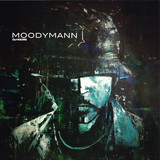
For the label’s next release, the team at Leng Records has decided to offer-up something a little bit different: a 12” compilation of little-known and hard-to-find Balearic gems selected by friend of the label Paul Beckett.
Plucked from the dusty corners of his collection, the five tracks on show are quietly colourful, tactile and musically rich excursions that effortlessly blur the boundaries between genres and sound terrific blasting from speakers on a humid Mediterranean or Adriatic afternoon.
First up is Ray & John’s languid, subtly disco-tinged ‘Day By Day (Instrumental)’, which originally featured on the flipside of the Italian duo’s sole single from 1984. Rich in rubbery bass guitar, sequenced synth-bass, sharp disco guitar licks, Fairlight stabs, dreamy chords and occasional chanted vocals, it sounds like Please-era Pet Shop Boys reclining at a Rimini pool party after copious amounts of happy pills.
It’s followed by Angel’o’s ‘Angelo’, a turn-of-the-80s gem picked from the band’s long-forgotten album, Dream Machine. Marked out by warming electric piano motifs, squelchy synth-bass and hazy lead vocals, the track successfully mixes krautrock and space rock sounds with the then fresh sound of synth-pop.
Next up is All Trouvee’s ‘Darling’, a thoroughly overlooked 1987 single whose minimalistic sleeve artwork lists each of the now-classic – and then cutting edge – synthesizers used to make the sun-soaked blend of mid-80s synth disco, AOR pop and sunset-ready jazz-funk piano solos.
Equally as impactful is Angel’s ‘Tomorrow Night’, a classic – if little-known – chunk of glossy, laidback synth-pop from 1980 that sounds like something you’d hear on AM radio stations in the early hours of the morning. Its’ sound – all delay-laden Linn drums, synth-horns, Nile Rodgers style guitar licks and echoing lead lines – was actually far sighted for the time but would become more familiar to listeners as synth-pop boomed in the mid 1980s. Those who buy the digital version of the EP will also have access to a longer, club-style mix as well as the short version featured on the 12”.
Rounding off a fine package is ‘Feeling Action’ by Eggs Time, a deliciously warm and woozy chunk of fretless bass-sporting Italian pop/West Coast jazz-rock fusion plucked from a real since of buried treasure: an Italian compilation called – for reasons that aren’t clear – Moby Dick. There’s certainly a tinge of both yacht rock and blue-eyed soul about the track’s gorgeous blend of FM synth sounds, eyes-closed jazz guitar solos, unfussy beats and sweet female lead vocals. It provides a fittingly horizontal finish to a collection packed to the rafters with long-overlooked, sun-baked treats.
Suche:ear dis
Picture yourself cruising around Tuscany in an Alfa Romeo, stopping off at the localpizza joint, spending the night playing snooker next to the swimming pool. PyschoWeazel take us straight back to the 80s with their vintage synths and hair spray hairstyle with the “BIANCO&ROSSO EPs”. Put on your nicest shirt, put your sunglasseson, get your pair of santiagos out, it’s your time to shine on the dancefloor!At the very edge of good taste, always with a pinch of fun and self-mockery, these sixtracks sound like the future of hedonist club music, 2022 style.These two EPs are a bit like both sides of the same coin. They include influencesthat shaped the duo’ssound: indie-Dance, Italo-disco, Cold Wave and EBM. PsychoWeazel used production techniques popular in the 80s: arpeggios, cowbells, snarerolls, re-claiming ear-catching melodies from that era and offering it with their freshand polished sound.
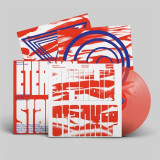
The second album from Wehrmacht, “Biermächt” saw the band maturing while still retaining their Thrashcore roots. Released in mid-1988, “Biermächt” featured a slightly cleaner production than the one found on their debut album. To some fans this rendered the album with much less intensity, but to our ears the sound was still very powerful. The massive reverb used on the first album made “Shark Attack” sound like a true shark attack and only added to the overall intensity. This time around the drums are more compressed and some blast beat parts tend to get lost in the overall blur of things. But on the same token, the guitars are much sharper sounding. Marco Zorich and John Duffy were truly evolving as guitar heroes. The thing that is really great and different compared to “Shark Attack” are the funny bit songs. We love them and enjoy them. A lot of the songs on “Biermächt” were leftovers from their demo days, including the phenomenal “Night Of Pain”, one of our all time favorite Thrash songs ever, but newer stuff like “Radical Dissection” and “Balance Of Opinion” showed the band handling a more mainstream Thrash sound somewhere in the middle of a Slayer/Kreator sound and Metallica/Megadeth. There is a certain progressiveness to those songs that hint to a more elaborate musical future. “Biermächt” is a very strong Crossover/Thrash album with a laid back party vibe to it. The sound, however, is very in-your-face. This is not a subtle album by any means. It’s not that they were the funniest bunch around (their side project Spazztic Blurr went a lot further). But Wehrmacht did have their own specific sound (mostly because of the vocals and guitars). Especially after all these years it becomes obvious all Crossover lovers and Thrashers from those days do in fact have this album and hold it dearly. The album has historic importance as well as huge sentimental value. Biermächt is a landmark in eighties Crossover Thrash and should be checked out immediately by all newbies.
"When Aniruddha Das (DSPSSSSD) and Gary ""Roy"" Stewart (Dubmorphology) met at Nottingham Trent Polytechnic in the mid-80s, they started on a life-long friendship and musical collaborative partnership that continues today.
While Das went on to acclaim as part of Asian Dub Foundation, Stewart is an artist and experimental sonic musician, producing projects featuring sound design and immersive works, for the likes of Tate Museum.
Together they perform as Dubnoiz Coalition, exploring the outer limits of improvised bass, noise and distortion, which has seen them perform across the globe.
In 1990 they took their first steps in a recording studio, mixing the early influences of Acid House with their interest in drone and sound effects, to create two pieces, Tilt and Fari 116.
Recorded as improvisational jams and dubbed live to the mixing desk, they were pressed as very limited white labels. Here Tilt is all bubbling acid and taut percussion, recorded to a 2” 16 track. Using samplers, drum machines, Roland TB303 and sync box, Ani arranged the drum and bass lines, as well as programming the 'counter melodies' with the TB303, with acid modulations and sometimes in odd time signatures, while Roy looked after the samples and drones.
Archival testaments but set apart from the burgeoning acid house scene and simply great music, here remastered and reissued some 30 years later by Platform 23.
"
Faze Action return with a classic original house track "Paradise" managing to seamlessly fuse Italo house with the New York sound of the late 80's early 90's. Finely mixing a cocktail of heavenly piano house riffs with dreamy vocals and dubby bass lines, topped off with some classic breakdown moments to tease the most discerning dancefloors into hysteria.
We have also included two tracks for the first time on vinyl, the classic Rudy's Midnight Machine - "Open to Your Love" and Faze Action's - "I Wanna Dancer" (Old School House Mix) plus we have the floor filling ST House Mix of "Freak for Your Love".
DJ Feedback
Jkriv:
"10/10 - Classic FA vibes! Love it, thanks guys."
Alan Dixon:
"10/10 - Quality, as always :-)"
Grant (Daddy G) Massive Attack:
"8/10 - Takes me back to the sound of Flying Records "
Andy Taylor (We are the Sunset):
"8/10 - Bouncy with plenty of piano power... thinking of Adriatic nights already. Thanks for sending."
John Le Visiteur:
"10/10 - Classic vibes all the way on this, love it and happy to support."
Phil Cooper Phil Cooper Nu Northern Soul Various Ibiza :
"8/10 - Full support. Lovely stuff. House music I understand and dig right here."
Guy Williams Flash Ibiza:
"8/10 - Nice retro bumpy - vibes will be supporting."
On their first official collaboration, Japanese noise pioneer Masami Akita aka Merzbow and Australian sound sculptor Lawrence English present a harrowing, surrealist portrait of nocturnal industrial activity, spawned by field recordings made in a sprawling factory complex seven hours north of English's home in Brisbane. He characterizes the area as "uneasy and unsettling," awash in the sickly glow of smelters and refinement machinery, somehow not of this world - a liminal quality vividly captured in Andrei Tarkovsky's sprawling purgatorial opus, Stalker, to which the title alludes. Akita, too, described early drafts of Eternal Stalker as feeling "like the soundtrack to a dystopian science fiction opera." A mood of mechanical dread and ruined futures permeates each of the album's seven potent compositions. Opener "The Long Dream" sets the stage with steady rain on sheet metal, punctured by thunder and metallic echoes, reverberating to the rafters in a collapsing warehouse. Quickly the tempest rises. "A Gate Of Light" and "Magnetic Traps" both convulse in churning furies of electric demolition and rattling chains, roaring and relentless. "The Visit" and "Black Thicket" operate more at a distance, surveying the topography of steam, rust, and liquid metal from above, their flickers of violence swallowed by blankets of darkness. This is noise at its most elemental and unknowable: brooding, bristling, and opaque, stalking forbidden peripheries of chaos and creation. Discussing Akita's music, English refers to its "intense substrata that is purely psychedelic; it consumes and confounds." The seasick swells of friction and fracture subsume the listener, forcing an auditory surrender: "this saturation of the senses can be a euphoria." Proof comes halfway through "The Golden Sphere," when the howling mayhem subtly recedes, revealing an eerie siren drone hovering in the void, like the resonance of a dead star galaxies away. Slowly a seething, venomous wall of volume returns, shredding the signal until its frequencies fray, whipping away into the eye of the storm. The combined effect merges obliteration and liberation, rapture and ravagement; it's the sound of dissolution as resolution, uprooted and unmoored, finally freed from form.
Incl. Schacke Remix
Having been extensively road-tested this past year by DJs including Daniel Avery, HAAi and Gerd Janson, Highdive arrives with tangible anticipation. The work of less-than-shadowy figures Gramrcy and John Loveless, the pair have passed lockdown and beyond remixing artists such as WH Lung, Discovery Zone and Ghost Culture. Debuting their first original material, closely following Gramrcy’s recent appearance on Loveless’s own Hot Concept imprint, Highdive is a long-anticipated explosion of energy.
Built around a sonic-boom breakdown, glossy rave chords and pounding post-punk drums, Highdive feels immediately at home on Phantasy. Having worked closely alongside founder Erol Alkan in recent years to shape the imprint's diverse output, Loveless' collaboration with the Peach Discs founder nods to the electro landscape of the label's earliest days. Having never left dance floors since, Gramrcy & John Loveless take a golden opportunity to plunge dancers into the sublime and the ridiculous.
While a stripped-down ‘Beats Mix’ sees the pair adopt a less-maximal approach, leave it to Schacke to stretch Highdive into hardcore rave heaven. The already-influential Copenhagen artist underscores his refreshing funk in the ‘fast-techno’ scene through which he has risen, turning the screws and upping the tempo with intense but elastic results.
The Howling is a collaborative project started by writer Ken Hollings and sound artist Howlround devoted exclusively to their shared love of text, audiotape and trash aesthetics. An intense collision of spoken word and analogue tape effects, the Howling's first performance took place at the Iklectik in September 2019 as part of a special programme to celebrate The Tapeworm's 10th anniversary.
Despite the pandemic, they have managed to continue working and conferring together since then, sharing sound files, texts and mixes online, which has resulted in All Hail Mega Force, their first full-length release for The Tapeworm. The two extended tracks contained on this audiocassette reflect their shared interest in Fluxus and how informal rules and permutations can be set up to work themselves out through loops and repetitions. A straight line connects Terry Riley's tape experiments in Paris from the early 60s with their experimental recordings in the Wimpy Bar on Streatham High Road, one of their favourite meeting places. 'The idea of instant, disposable one-off creations appealed to us a lot at the time,' The Howling explain, 'particularly as both pieces were conceived and developed during different phases of Covid lockdown in the UK.'
The title and source material are derived from the kid's adventure movie MegaForce, starring Barry Bostwik and Michael Beck. Designed to sell a range of Mattel hi-tech action toys, MegaForce tanked at the box office but lives on in the collective consciousness of those who share with The Howling a special love for Trash and Trash Aesthetics.
The two tracks also share similarities in approach and realization.
'All Hail Mega Force' was created by reading combinations of the words 'All Hail Mega Force' into a voice memo recorder, transferring it to tape, cutting the whole thing as a single long loop and then stretching it across three reel-to-reel machines simultaneously, using two pencils and a pint glass full of loose change to try and maintain sufficient playback tension. Over time the loop started to degrade, which accounts for the increasingly slurry and unpredictable playback, plus frequent ruptures caused by the tape becoming jammed and having to be tugged through the machine workings by hand. Twenty-four minutes later and the result was a completed new work and a slight backache.
The text for 'Are You Man Enough For Mega Force?' was recorded live in the Wimpy Bar on Streatham High Road, 28 November 2021. It was cut to tape and looped on 3 December 2021 at Warrior Studios, Loughborough Junction. Dragged by motor and then by hand across two tape machines with copious amounts of closed input feedback provided by a third rushing in to fill the gaps. One take with no effects or overdubs, but one tiny edit in the middle when something fell over.
"Worthy re-issue of obscure Trouble in Side, which is a one-off studio project entirely written, sung and arranged by Luigi Della Ragione. "Zulu Rap" represented a surprising alternative to the typical Italo-Disco sound perceived in Naples and around in the early 80s. This little-known production has some interesting arrangements, mostly in the short version, where the drum work out raised below, reminiscent of "Love Hangover" by Diana Ross. Actually at that time the Dance Music Report, in its 'Import' column wrote that the "intro" of the 'Alcoholic Version' was reminiscent of Madonna's "Holiday". while the 'Chinese Version' was inspired by a song from the Tears For Fears. Some of this news may pique the curiosity of DJs and collectors and provide enough motivation for the current reissue which faithfully reproduces the three 1984 versions as well as the original noteworthy cover artwork. If that wasn't enough: the B side of the original record had an extra track not listed, with the hand drums on a slower and unrelated "Zulu Rap" drum beat which is around 120 BPM, while the drums of the bonus track is about 113 BPM. A little more inside info... the beautiful Maria Chiara Perugini (aka Clio) is part of the choir vocals. She was part of the Airport label for the recording of her first solo song "Eyes". A historical re-release"
Noamm, the darkest entity on Planet Earth delivers an extraordinary album full of analog sequences and surgical drums. Haunting electro at its best! Warning: the content included in the track Necro Science maybe disturbing or traumatizing for some audiences. This track includes sounds and voices sampled directly from the autopsy room.
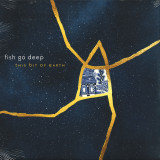
Greg Dowling and Shane Johnson return to the Go Deep label for their third album, ‘This Bit of Earth’. Beginning work in the relative normality of 2019 and finishing over the strange summer of 2020, the resulting music mirrors the thoughts that such upheaval brings out - our world and our place in it - while also functioning as a kind of travelogue of journeys past and planned, real and imaginary.
Mixing samples with modular synths, programmed drums with jazz loops, and quirky plugins with outboard gear, the album ranges far and wide while retaining a warm, natural core sound.
The title track opens proceedings on an ambiguous note. A simple double bass motif weaves around a misheard vocal sample, layers of piano and vibraphone take up the call, and the whole thing gradually spins off axis to a distorted, disjointed finish. ‘Suburban Key’ follows on a groove of busy drum work and deep sub bass, the stately piano and strings setting the stage for an undulating synth solo.
Further in, ‘Alice on Jupiter’ takes a deep breath and blends field recordings, gently swelling pads, modular bursts and a recurring picked melody.
‘Back Trace Dub’ strolls the imagined streets of Irish author Kevin Barry’s ‘City of Bohane’, noting the “taint of badness” in the air and revelling in the tense, dub-noir atmosphere. Later on, the spoken word intro of ‘I Could See’ expresses the dread of confinement and the relief and ecstasy of release, a theme the music reflects as it steadily builds to a joyful climax.
And closing the album on an optimistic note, the languid, emotional Culatra Ferry remembers better, beautiful days in the sun and looks hopefully forward to more.
“Highlights are the stunning sonics of Suburban Key, with its dusty groove and fast paced drums, stately piano, and cinematic strings reminiscent of a Four Hero orchestral masterpiece. High As Scaffold is full of warmth and soul and is yet another example of Fish Go Deep going even deeper into the dark blue waters of their brilliant musical minds.” Ban Ban Ton Ton review, Japan
“So good. Real beauty” Laurent Garnier, Radio FG, France
“Really liking this, would love to support on radio” Colleen 'Cosmo' Murphy, WorldwideFM, UK
“Lovely album” Osunlade, Yoruba Soul, US
“Very very nice album...love the new directions here” Charles Webster, Openlab, SA
“Absolutely beautiful piece of work” Darimont, RWAV, Germany
“A lovely LP of eclectic sounds” Jimpster, Freerange Records, UK
“Delightful album this. Very much appreciate the musicianship and we need that in the world right now as the commercial music world starts to fire up its nonsense for the new beginning” Vince Watson, Yoruba, Netherlands
“Such a fucking great body of work, and on par with ANY of the great albums I've listened to recently” Billy Scurry, Ireland
“There’s some REAL magic here. Possibly the deepest year from this duo” Charles Levine, Soul Clap, US
“A fabulous surprise. I'm sure if he were still alive Jose Padilla would have hailed this as his number one album of the year, it certainly is mine” Steve Miller, Afterlife, UK
“Great album... will play in next shows” Franck Roger, Real Tone, France
“Beautifully produced and great atmospherics” Ashley Beedle, Black Science Orchestra, UK
Radio and DJ support from Ron Trent, Hector Romero, Ame, Cian Ó Cíobháin, Bill Brewster, DJ Sprinkles, Harri, Honey Soundsystem, Alexkid, Moodymanc, Hifi Sean, Kassian, Freddie Garcia, 6th Borough Project, Stuart Patterson, Lars Behrenroth, Fred Everything, Mark Roberts, Cut n Shut, Will McGiven, Stefano Tucci, Tristan Jong, Matthias Schober, Trevor Fung, Ben Davis, Max P and more.
Zov Zov, a musical project formed by London-based duo Oliver Ho and Tommy Gillard, create a raw soundscape that is very appropriate for the era we are currently living in. The human race depends on destruction, the annihilation of our fellow man and the devastation of our environment, peace and coexistence is just a condition we experience between one war and the next. Songs of Blood And Earth is an EP based on experimentation and the development of intense textures. Blessed Are The Killers opens the A-side of the album with a minimalist first sequence involving only a kind of deep bursts and a tinkling sound that can remind us of hunger queues and the isolation suffered when the aggressor force sweeps over a vast territory. Musically, however, the track intensifies with heart-wrenching textures that hover above a haunting and disturbing vocal. On the next cut, The Maim, a constantly interrupting rhythmic structure reigns, which gives the feeling that at some point it will have a proper continuity, however, and although that continuity never comes, these pauses perfectly define the main idea which is that of the splitting of one or more body parts. The B-side of the EP is entirely religious in nature. Amen 2.5 is an updated version of the atrocities committed in the name of religion, a harsh sonic tale, in which a crushing roar subdues the listener to the point of collapsing his or her capacity for reasoning. The Holy Murder takes a more sinister turn, this time there is an incessant dominance with an unstoppable base that advances without changing its tempo or its form, in which everything that is built on it ends up yielding to its grandeur and ferocity. Godess Of The Hunt, the last track of the album, denotes an enormous cruelty, represented by the terrified screams of the victims who succumb to its exterminating atmosphere.
Sonor Music Editions present the first ever reissue of another Italian Library holy grail, fruit of the union between two of the most brilliant composers of Italian panorama: Alessandro Alessandroni and Rino De Filippi. "VACANZE" album (in English 'holidays'), was originally released in early/mid 70s on Sermi output, and is one of the most elusive records from the label out there. From refined Lounge music to stunning Jazz-Funk and groovy vibes, this album features an unbelievable set of the coolest themed music from the whole Library scene, with maestro Rino De Filippi's harpsichord on evidence in many tracks and soaring, loungy and dreamy moods throughout the entire album. A superlative recording, with an incredible sleeve design that has obssessed Library collectors for years, and for sure among the best releases from the gold Sermi label along with "Nel Mondo Del Lavoro" release just announced.
»Darkness & Abstract Art« is the debut single by Berlin based producer and songwriter Venetian Green. And what a debut it is. Two pop-pearls from a parallel universe, in which grand pop gestures of past decades live in harmony with the more bleak and disturbing emotional rollercoasters of recent times. The songs embrace a deep sense of nostalgia, while remaining firmly and confidently rooted within a contemporary pop context.
»Darkness« may be the most uplifting pop song ever that deals with mental health issues and depression. A topic that many can surely associate with after a challenging period of lockdowns and lack of perspective. The opening moments seem like a flirty exchange between an early Vince Clarke and Jake Shears but with a more bouncy and ›present-day‹ sound aesthetic. The bridge, »Was I ever in control, did my feelings just go rogue. Is it you or is it me, you’ve stolen my identity«, brings some major glam moments front and center and finally culminates in a heartbreaking auto-tuned chorus, an ode to the »Darkness« in all of our hearts.
In »Abstract Art«, we are jumping effortlessly between different musical eras. From late Roxy Music elegance to the plasticy melancholy of early Robyn all the way to the slow-rolling pop anthems of Christine and the Queens. A classic pop song about intimacy, trust, boundary issues and physical connection. Easy to imagine the line »You watch me dance with someone else, cause only you have me in strings and belts« on a sweaty recently re-opened dancefloor celebrating the return to a ›new normal‹.
Jackie Mittoo, organ and piano maestro, was not only a founding member of the legendary Jamaican Ska group The Skatalites, but through the course of Jamaican music’s long history has produced a body of work under his own name and of that with his various group incarnations, The Soul Brothers, Soul Vendors and the Sound Dimension. His distinctive organ and piano sound and musical arrangements have all played a major part in Jamaica's musical history.
Jackie Mittoo (born 1948, Kingston, Jamaica) began playing musical instruments at a very early age. Taught piano by his grandmother he was performing live by the age of 10 and recording by the age of 15. Two Kingston bands that he played with the Rivals and the Sheiks brought him to the attention of Studio 1's founder Coxsone Dodd. Who at the time was putting a group of musicians together to be his studio band. Impressed by his skills on both the organ and the piano, Jackie was asked to join in what would become Jamaica's foremost band The Skatalites. The fellow band members were Lloyd Brevett (bass), Lloyd Knibbs (drums), Don Drummond (trombone), Tommy McCook, Roland Alphonso and Lester Sterling (Sax), Johnny Moore (trumpet), Jah Jerry(guitar) and Mr Mittoo (piano). This line up ruled the Jamaican scene between 1964 - 1965 as well as inventing the Ska sound, they also performed the backing duties for the other top labels of the time including Duke Reid's Treasure Isle and Justin Yap's Top Deck label.
1965 saw The Skatalites disband, and Jackie Mittoo move on to his next musical project The Soul Brothers. Formed with fellow Skatalite Roland Alphonso,this band would back all the hits coming out of Studio 1 for the next three years with Jackie Mittoo working as band leader and musical arranger. Around this time Jackie also had his own single released, a Ska underground classic called 'Got My Bugaloo'. Rare, as it also features Jackie in the unusual role for him, as lead singer!!!!. 1966 saw the Ska sound evolve into Rocksteady, again with Jackie's band at the helm, and his first hit single the Rocksteady cut 'Ram Jam'. The success of which would lead to a solo career and album releases under his own name such as 'Now', 'Macka Fat', 'Evening Time', 'In London' and 'Keep on Dancing', to name but a few. In 1967 the hits at Studio 1 were still flowing when The Soul Brothers morphed into The Soul Venders and began backing such luminaries as Ken Boothe, Alton Ellis, Delroy Wilson, The Heptones, The Cables, The Wailers and many other of the label’s solo artists.
By 1968 Jamaican music was ready for another change and Rocksteady rolled into a slower groove soon to be called Reggae. Jackie Mittoo would be at the forefront with his latest band The Sound Dimension. A line-up that included Leroy Sibbles (bass),Roland Alphonso and Cedric Brooks (saxophone),Eric Frater and Ernest Ranglin (guitar) and Bunny Williams (drums). Being the house band at Studio 1 they backed all the leading names of the time, John Holt, Horace Andy and Alton Ellis, all of Studio 1's output carried his sound. Jackie Mittoo emigrated in the late 60's to Canada but travelled to Jamaica and London to record with many of the big new names, who were trying to redress Studio 1's supremacy and needed his magic touch. Such producers as Bunny Lee used Jackie Mittoo on many of his sessions,Sugar Minott among others were always glad of his services.
For this release we have put together a selection of some of his finest recordings done with legendary reggae producer Bunny Lee. 1970’s cuts that feature Jackie’s numerous talents, showing his ability to embellish tracks with a feel few could better. Musical arranger, band leader and all around studio ace.
We hope you enjoy this great set with Jackie Mittoo in fine style and his organ super powered indeed…
Out of the primordial chaos of pandemic and two years since their last full-length outing SUPERSAN, those sassy purveyors of World Dance of the highest calibre return with a bang. Duo's 3rd studio album soon to be released by Boom Selectah Records promises to turn heads and perk ears of the aficionados of Afro House but also has a potential to spill out from the niche and conquer the hearts of wider audiences.The album titled 'Little Dakar' is' the labour of love of two long time collaborators from Greece, Kostas and Valantis. This time their quest for musical purity and honesty is enriched and enhanced by stirring alliances. Scattered inside the audio-tapestry of this exotic wax flower you will find the vocals from 'the voice of Senegal' Jefree, and enchanting strumming from the fret of George Koltsiou. While rich traditions of Senegali music are particularly evident (and reflected in the album title), 'Little Dakar' goes far and beyond the sounds of a steamy Dakar Disco dancefloor. Finely tuned ear is in for a treat and could easily travel the distances between Senegal, Angola, Ghana, Uganda and Mali to name but a few. But you don't have to be an expert to fall in love with this album. The multidimensional colours of African musical heritage are easily accessible to a novice too as the references to better known House and Funk traditions could be heard loud and clear throughout the record.
When dubwise music really started to come into its own in the early to mid 70s, it made overnight stars of backroom boys who had hitherto worked behind a mixing desk to serve those who were beginning to hoist reggae to an international stardom that it had long deserved, but that it had only achieved on short and non-sustained bursts until Chris Blackwell decided to throw a lot of promotion and money at the work of Bob Marley and his fellow Wailers in 1972. Of those men, there was no bigger star than the late Osbourne Ruddock, the great King Tubby’s and the man who, from a tiny home-made studio in the Waterhouse district of Kingston, Jamaica, did more than most to reposition the boundaries that production and mixing of Jamaican recordings.
“This 45 marks the label's 100th 45 and what better way to celebrate it than with a 45 from arguably our most prominent artist, Durand Jones & The Indications. This mix of "Power To The People" was the first new recording by the band after their self-titled album had been released. I distinctly remember hearing it for the first time and just feeling like we were hearing the next phase for the guys. I was behind the counter at Plaid Room, with my laptop plugged into the speakers so we could listen. There was no one in the store, just Bob and I. And when it finished playing Bob said, "Where can I pre-order?" So what you're hearing on this 45 is the original demo mix that was sent to us, with little to no reverb on Durand's vocals, a marching band kick drum in the mix, and no synth. Something about the dry falsetto vocal of Durand's voice made it feel like he was right in your ear. Such a special recording to all us."
Superchunk’s Incidental Music: 1991-1995 is the band’s second compilation of singles, B-sides, and EPs, originally released in 1995 shortly after their landmark album Foolish. It collects fan favorites from soundtracks such as “Shallow End” and B- sides like “On the Mouth,” as well as covers of The Magnetic Fields, The Verlaines, The Chills, and even Motörhead. AllMusic’s Fred Thomas says it all: “Incidental Music is an essential piece of the Superchunk discography and a snapshot of the band as it transitioned from the scrubby radiance of its early days into the more nuanced songwriting machine it became throughout the mid-’90s.” Exclusively for Record Store Day 2022, the double LP makes its first reappearance on vinyl since its original release, with LP1 on opaque green and LP2 on opaque orange housed in a gatefold jacket.
- A5: French Film
- A10: Chairs Missing
- B2: Ignorance No Plea
- B5: Stepping Off Too Quick
- A1: Oh No Not So
- A2: Culture Vultures
- A3: It's The Motive
- A4: Love Ain't Polite
- A6: Underwater Experiences
- A7: Stalemate
- A8: Options R
- A9: Indirect Enquiries V1
- B1: Being Sucked In Again
- B3: Once Is Enough
- B4: The Other Window
- B6: On Returning
- B7: Former Airline
- B8: Two People In A Room
The original Not About To Die was an illegal bootleg, released at some point in the early 80s, by the dubiously named Amnesia Records. The album was made up of selections from demos recorded by the group for their second and third albums: Chairs Missing and 154. These demos had been recorded for EMI, with cassette copies circulated amongst record company employees. However, they were never intended for release. A typically shoddy cash-in, the songs on Not About To Die were taken from a second or possibly third generation cassette, with the album housed in a grainy green and red photo-copied sleeve. Compared with the high standards of production and design Wire have always been known for, it was something of an insult to band and fans alike. Now, in a classic act of Wire perversity, the group have decided to redress the balance and reclaim one of the shadier moments of its history, by giving Not About To Die its first official release on the bands own pinkflag imprint.. All the tracks have been properly remastered, with the relevant recording details in place. As for the sleeve artwork, whilst it strongly references the original, it is decidedly more artful in its execution. Not About To Die emerges as a fascinating snapshot of Wire in transition with embryonic versions of classic songs such as ‘French Film (Blurred)’, ‘Used To’ and ‘Being Sucked In Again’, that the group would develop considerably for their epochal 1978 album Chairs Missing. Later demos such as ‘Once Is Enough’, ‘On Returning’ and ‘Two People In A Room’ would surface in radically altered form on 1979’s 154. Some songs, such as ‘The Other Window’, are virtually unrecognisable from their later iterations but the biggest prizes here may well be the tracks that were omitted from Wire's later studio albums... Highlights include ‘Motive’, which has an undeniable power. Robert Grey’s drumming is crisp and minimal, and Graham Lewis’s bass runs are particularly ear-catching. Despite its distinctly un-Wire title, ‘Love Ain't Polite’ is also something of a gem. Meanwhile, the track which gives the album its title Not About To Die (officially known as ‘Stepping Off Too Quick’) possesses what Colin Newman half jokingly calls “The best intro to any song ever”. The intro is so good in fact, that it takes up a third of the song’s entire time frame. These properly mastered tracks have never been available on vinyl before, and they provide an opportunity to hear Wire at a point in their development when they were bursting with fresh ideas and a will to communicate them. This is post-punk at its very finest.
a A1 Oh No Not So [save The Bullet]
[e] A5 French Film [blurred]
[j] A10 Chairs Missing [used To]
[l] B2 Ignorance No Plea [i Should Have Known Better]
[o] B5 Stepping Off Too Quick [not About To Die]
Pauline Oliveros' The Wanderer is available on LP for the first time since it was originally released in 1984. Cut at Golden and pressed at RTI for maximum fidelity.
An utterly essential document of early American minimalism from this Pauline Oliveros. The Wanderer is the sister record to Accordion & Voice, also available on LP from Important Records.
The Wanderer is based on a single modal scale (B C# D D# E F# G#) and rhythmic modes based on a meter consisting of ¾ and ⅜. Part I, Song, is intended to explore the unique resonant qualities of accordion reeds through long sounds. Subtle variations come about from differences in tuning and air pressure. Part II, Dance, demonstrates the sharp accenting power of the accordion bellows in a mixture of cross-rhythms characteristic of jigs, reels, batucadas, Bulgars, klezmer forms, Cajun dances, and music of other diverse cultures.
The Wanderer was composed in November, 1982 especially for the Springfield Accordion Orchestra, directed by Sam Falcetti. This recording documents The Wanderer's world premiere, as it was performed 27 January, 1983 at Marymount Manhattan Theatre. The orchestra consists of twenty accordions, two bass accordions, and five percussionists, with Pauline Oliveros as soloist, Sam Falcetti conducting.
Horse Sings From Cloud, written in 1975, is one of Oliveros' best known works. Like most of her Sonic Meditations, it can be performed vocally and/or instrumentally, solo or in collaboration. A solo version of Horse Sings From Cloud has been recorded on Accordion & Voice. An early version of the score reads, “Sustain a tone or sound until any desire to change it disappears. When there is no longer any desire to change the tone or sound, then change it.” This time, Horse Sings From Cloud is performed in ensemble. Joining Pauline Oliveros on bandoneon are Heloise Gold on Harmonium, Julia Haines on accordion, and Linda Montano on concertina. This quartet version incorporates the microtonal differences in tuning of the selected instruments, creating shimmering reed sounds somewhat similar to the shimmering of a Balinese gamelan.
A unique talent with a remarkable voice, the German singer, composer
and lyricist Alma Naidu is an artist such as one rarely fnds, Jazzthing
magazine praised her "delicate, wonderfully clear voice with absolutely perfect intonation".
Renowned drummer and producer Wolfgang Haffner recognised her talent immediately; he discovered Alma for himself in 2019 and featured the Munich native on his album 'Kind of Tango'. "When I heard Alma for the first time at a jam session in early 2019, I was immediately inspired by her musicality and her way of performing on stage," says Haffner. " Alma is a very special talent with a strong
musical voice of her own."
With Alma now comes the promising debut on the Leopard Records label.
Recorded in Bonn during the pandemic (November 2020, March and April 2021) and produced by Haffner with guests Dominic Miller, Nils Landgren, Simon Oslender and others, this debut work of the 25-year old Naidu could just as well bear the title: A Star Is Born.
Following a 15-year hiatus from publishing, Neapolitan techno's founding imprint - Conform Records - made an emphatic resurgence in 2020 to resume its intrinsic role in the progression of electronic music, ensuring that the genres' virtuous roots and formative values remained instilled within its future. Having re-released its entire back-catalogue in digital format from its original DAT distribution in the 90s, label head Gaetano Parisio now shifts his focus to the modern audience, with contemporary records that serve to marry these two golden eras of dance music.
Showcasing his immense theoretical knowledge and authenticity, earned through decades of experience in the industry, Parisio's latest project - his 6 part "Fragments 2930" EP - honours the meditative euphoria of Conform's early releases. Militant and driving in their effect, each cut presents its own melodious theme; running parallel to the strong percussive undercurrent of high impact techno that can be heard across the extended player. "Fragments 2930" was initially conceived as a single sound block and later fragmented into these 6 single units. As represented in its title, "Fragments 2930" also includes the catalogue numbers 29 and 30, with the double vinyl characteristic of a 2-release miniseries.
Available to purchase on vinyl from May 27th and across digital platforms on June 10th, Gaetano's latest release is further proof that the label's discography now only grows to hold more future classics.
Matthew Bourne follows 2017's Isotach album, and recent collaborations with Keeley Forsyth and Nightports, with a collection of prepared piano pieces. Irrealis was recorded in a single session, each take played as live without any overdubs. Having taught himself the basics of prepared piano by throwing confectionary into his school's instrument, elements of these experimentations played a key role in Bourne's early performances. This culminated in an infamous performance piece which saw the explosive musical demolition of an upright piano with a sledgehammer. Far from the staid academic process the discipline is often approached with, Irrealis sees a restless improvisational musician explore the possibilities of his instrument with a box of nuts, bolts and Blu-Tak, and a sense of playfulness and spontaneity.
Vector Music by Suren Seneviratne is a true homage to the Yamaha TG33, a synth that he was hoping to keep forever, or at least a very long time until Covid-19 struck.
During the early months of 2020, Suren, like many other artists, went without work and was forced to sell surplus belongings to help subsidise food, rent and other necessities. Some sneakers and clothes went first but he avoided considering his music gear for as long as possible. As the pandemic continued to cause havoc throughout the year, selling gear was inevitable. The rare Yamaha TG-33 programmable synthesizer module was next.
By bittersweet chance, this was the perfect opportunity to make use of this unsung synthesizer one last time, and to make it count. The synth sold via Twitter and Suren suddenly had a deadline in which to make the most of it in the two days before it would be gone forever and so he decided to record a body of work using only the TG33, to shine a spotlight on its quirks and idiosyncrasies and give it the attention it deserved. This ultimatum proved to be really fruitful and resulted in the recordings that form the eight tracks on this album “Vector Music”; a raw and intimate portrayal of a forgotten digital instrument from the 1990s. The broader collective sentiment of loss, anxiety and seasonal depression during the thick of the pandemic mixed with feelings of uncertainty, distress and fear binded throughout the recording process and became sewn into the very fabric of the music.
The song titles are taken from various stages of sleep: the once instinctive process which, since 2020, was radically altered and experienced a new for millions of people around the globe due to the phenomena known as Pandemic Dreams.
Composed and produced by Suren Seneviratne
Mastered by Luca Sammartin
Original artwork and layout by Marco Ciceri
There are few rock guitarists on this planet who have had such a lasting influence on so many renowned musicians as Michael Schenker. With his outstandingly fluid style, inexhaustible wealth of ideas and instinctive feel for hooks and melodies, Michael Schenker is a living legend who, despite his longstanding and distinguished history, still impresses with his unflagging energy and drive. The blond axeman from Sarstedt began his international career in the early 1970s with the Scorpions, achieved worldwide fame after joining British rock group UFO and then seamlessly continued his exceptional global success story under his own name, as well as with acts such as Michael Schenker Group (MSG for short), Temple Of Rock and Michael Schenker Fest. Schenker and his career, which has spanned more than fifty years, are absolute exceptions in the otherwise short-lived music industry.
Paradise Garage pilgrims, Loveface, are back and it sounds like there’s something for everyone on this 4 track EP!
The A side continues their De-Mix series with another 80’s boogie refit of an early 90’s house classic vocal and an Italo House mix using a classic disco vocal getting strong support from Horse Meat Disco.
The B side has another 80’s inspired italo disco/proto house heater that has summertime written all over it and a deeper 80s fused house affair with a disco tinged vocal as the centrepiece.
4 tracks designed for every club, festival, boat and beach near you this summer...
DJ Feedback:
Louise Chen (NTS Radio / Rinse FM) – That Italo House mix is just TOO GOOD!
Severino Panzetta (Horse Meat Disco) – LOVE FANTASY for me
Jim Stanton (Horse Meat Disco) – I like these will be great in NYC sets
Damian Harris (Skint Records) Great…again. Consistently good and interesting series. Pablo’s Theme and Give It To You my favourites.
Gino Grasso – Topppp
Bill Brewster – Yeah like it
Alinka – Nice one
Patrick Vidal – Uplifting and happy, great dancefloor release
Carly Foxx – Loveface that you are is the one for me…
Joshua James – Dreamy
Ben Davis – FAB EP x
La Mano – Class
Nu Azeite - Lovely
- A1: Sudden Reverb - Sound Tlakotli (Deadbeat Remix)
- A2: Pitch Black - Transient Transmission (Adrian Sherwood's Delta B(0)=B Remix)
- A3: The Orb - Say Cheese (Gaudi's Dubble Mozzarella Mix)
- A4: David Harrow - In My Head (Inside My Head Mix)
- B1: Subset - The Astrogator (Sub Signals Mix)
- B2: 3Head - Afnaz (Dennis Bovell Dub Mix)
- B3: Groove Armada - Oh Tweak To Me (Gaudi Remix)
- B4: Shpongle - How The Jellyfish Jumped Up The Mountain (Cosmic Trigger Remix)
- C1: Aux25 - Passing Through
- C2: Simm Feat Phelimuncasi - Cracks
- C3: Alpha Steppa - Colour
- C4: Radikal Guru - Badman Skank
- C5: Paolo Baldini Dubfiles - Ethiolò Dub
- D1: African Head Charge - Disciplined And Dignified
- D2: Gaudi Feat Steel Pulse - Cry Dubber
- D3: 100Th Monkey - Fly Higher Dub
- D4: Dub Fx - Dub Everyday (Gaudi's Sub Signals Remix)
- D5: Phonolab Feat Bill Laswell - Where Do Comets Come From
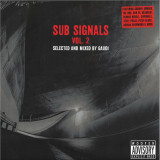
Sub Signals Vol.2 is a deep dive into underground bass, guided by artist and producer Gaudi. Featuring predominantly unreleased originals and versions by some of the biggest names in the worldwide dub collective, it intricately combines analogue elements with digital grooves to stunning effect.
Much more than just a compilation, the Sub Signals series is a celebration of the evolution of the sound of dub, from its original roots in reggae to its fusion with a much wider spectrum of sounds and influences. Gaudi curated the first volume back in 2006 for the cult Canadian label Interchill, sourcing tracks and dubs from High Tone, Zion Train, Manasseh, Almamegretta, Noiseshaper, Creation Rebel, Greg Hunter, Dubadelic and more.
15 years on, Gaudi has created the second volume, blending contributions by established reggae names Steel Pulse, Dennis Bovell and African Head Charge with next generation dub producers Alpha Steppa, Radikal Guru and Paolo Baldini Dubfiles, headline acts Groove Armada, Dub FX and The Orb with underground artists Deadbeat, Pitch Black and SUBSET, to create a seamless 75 minute mix.
“With Volume 2, I wanted to create a deep vibrational experience by shaping an aural trajectory that encompassed the many aspects of dub and its related sub-frequencies. To achieve my goal, I reached out to the artists I regularly work with to ask for contributions, in some cases digging in their archives to find what I was looking for.”
As a solo artist, Gaudi has recorded over 20 albums, while as a producer he has hundreds of productions under his belt. He has worked with legends of the reggae and electronic music worlds including Lee "Scratch" Perry, Horace Andy, Dub Pistols, Hollie Cook, Youth, Mad Professor, Prince Fatty, Lamb, Trentemøller and Nusrat Fateh Ali Khan.
Dedicated to the sound of dub in its many forms, Gaudi’s latest excursion of his Sub Signals series is pure bass therapy, designed to excite your eardrums and worry your woofers.
This is a very serene, almost entracing record that seems to inhabit its very own space, between "classical" ambient music (Eno, Budd), "systems music" (Reich, Glass, Riley, Hassell), japanese kankyo ongaku (Hiroshi Yoshimura, Takashi Kokubo), even hinting at what would become 90's ambient electronica (B12, Nuron, SAWII-era Aphex Twin or the Fax +49-69/40464 label). Actually, Lech would be one of the few artists to perform at the first-ever Sonar Festival (Barcelona) back in 1994 (together with Suso Saiz, Esplendor Geometrico, Mixmaster Morris or Laurent Garnier).
A key early effort from this musician and A/V artist whose career spans well over thirty years and a miriad of works, performances and instalations: Art Futura, Sonar, ISEA, Ars Electrónica (Austria), Festival Videoformes (France), Festival de Nuevas Músicas (Madrid & Sevilla), Ciclo Experimental LEM (Barcelona), Knitting Factory (New York), The Korner (Taipei), Festival Pop Komm (Cologne-Germany), Festival Experimenta (Madrid), Festival DAFT @ Taipei (Taiwan), ART BEIJING, Festival EXIS @ Seúl (South Korea), JMAF (Tokio, Japan) or Artefact:Chernobil 33 (Kiev-Ukraine).
The Wah Wah edition has been mastered from the original tapes, reproduces the original sleeve artwork and and features an insert with photos and info.
It is a strictly limited edition of 500 copies only.
Giacomo “Mino” di Martino started his musical career in several early 1960s Italian beat bands. By 1968 he had found enormous success with pop superstars I Giganti. After a brief split in 1970 –during which Mino formed Il Supergruppo with Ricky Gianco and other greats of the Italian scene– he came back to I Giganti in 1971. With them and with new advanced ideas that set the band pretty far away from the sophisticated pop and beat sounds they had been so successful with, they would record the amazing Terra in Bocca conceptual LP, an adventurous experimental album that explored the obscure connections between the Italian state and the mafia. A delicate topic full of political criticism which also found them having to fight censorship –it was played only once in the radio. This fact, along with the advanced new sound probably being too far ahead from the mainstream audience’s taste, turned the record into a commercial flop. Nowadays Terra in Bocca is a highly regarded album among critics, afficionados and collectors, and a pretty seminal one for the Italian scene of the seventies, since it can even be seen as a precursor to the works on the Cramps label. Gianni Sassi, producer and photographer who founded Cramps was involved in the release of Terra in Bocca –his is the amazing cover concept.
After the Terra in Bocca experience, Mino’s will was to keep exploring new musical paths and free his mind to experimentation. Along with his wife, actress and singer Edda “Terra” di Benedetto, they formed the Albergo Intergalattico Spaziale, just after the brief post-Giganti project Telaio Magnetico (with Franco Batiatto, among others) was over. The Albergo was a venue where artists from diverse disciplines, mainly musica and theatre, could meet and create works together.
On the musical side of the community, Mino and Terra explored the cosmic sonorities that were coming from Germany and mixed them with the Italian experimental scene of names like Franco Battiato, Luciano Berio or Roberto Cacciapaglia. It is from the sessions that took place in the Albergo from 1974 onwards that the Albergo Intergalattico Spaziale LP came out. Originally released in 1978 the compositions had been made during those years of exploration, the goal not being the release of an album but the aim to explore new sounds and experiment with music. Eventually it was decided to present a sample of all that work, and a few copies of the Albergo Intergalattico Spaziale LP were privately pressed.
The record sleeve and notes on the insert reivindicate the fight against nuclear power. The music is dominated by Mino’s keyboards, creating amazing space sounds reminiscent of those from 1950s and 1960s science fiction B movies brought to the most avantgardist experimentation of the moment, exploring new sounds with the newest keyboards available. This intriguing background sets the athmosphere for Terra’s voice to improvise all over.
- A1: Seventh Mirror
- A2: Ionization
- A3: Cloud Chamber
- A4: Harmonic Oscillator
- A5: Transfiguration
- A6: Urzeit
- A7: Cybernetic Dreams
- B1: Interference
- B2: Computer Garden
- B3: Pyramid
- B4: Halide Crystals
- B5: Integratron
- B6: Imaginary Forces
- B7: Phantom Lfo
- B8: Opticks
- C1: Mannequin
- C2: Mind In Light
- C3: Palantir
- C4: Vertigo Of Flaws
- C5: Exit Syndrome
- C6: Stasi
- D1: Atomic Voyage
- D2: Ultraviolet
- D3: Violence Cascades
- D4: Traumsprache
- D5: Zeitgeber
- D6: Prism
- D7: Threnody
- D8: Mind Oscillation
Trees Speak are back!
Speak’s new album, “Vertigo of Flaws: Emancipation of the Dissonance and Temperaments in
Irrational Waveforms” comes as a double-vinyl edition, single CD and digital release. The limitededition first pressing only of the vinyl includes a bonus 45 enclosed in an 8-page 7”x7” booklet
insert housed within the gatefold sleeve with cover artwork created by Soviet Union propaganda
artist Lazar Markovich Lissitzky in 1911.
Trees Speak are back!
This new release is a vast leap into an ocean of space and sound, a quantum leap into cybernetics, biology, anti-gravity,
time travel, dream speech and transfiguration. A seriously next step release!
Showing no signs of slowing down their rapid creative pace – incredibly this is their fourth album in the space of just over
one year – ‘Vertigo of Flaws’ is a mighty 29 tracks, one and a half hours of music across one double album that is surely
going to be a defining point in their musical career, a giant leap into the sonic unknown, an epic exploration of intensity
and sound.
Alongside their now trademark German krautrock motoric-beat rhythms, angular New York post-punk attitude, tripped-out
60s spy soundtrack, psyche-rock, and 70s synthesizers and vocoders, here you will also hear a new cosmic spacial
awareness (both personal inner space and galactic outer space) and a truly wilful pushing of sonic boundaries - as police
sirens, static noise, alarms, radio signals, avant-garde voices, and orchestral string quartets, all collide to add beautiful
dissonance to uber-powerful, intense, addictive and propulsive rhythms - in the process creating a truly unique
soundscape that Trees Speak have made wholly their own.
If you ever wanted to hear Can, Hawkwind, Destroy All Monsters, Pere Ubu, electric eels, John Cage, Liquid Liquid,
Tangerine Dream, Suicide, Neu!, Laurie Spiegel, Art Ensemble of Chicago, John Barry, Mother Mallard’s Portable
Masterpiece Company, Sun Ra, Stockhausen, John Carpenter, Electro-Acoustic and Musique Concrete and Mars in one
band - then this is it!
Trees Speak are Daniel Martin Diaz and Damian Diaz from Tucson, Arizona and their music often draws on the cosmic nighttime magic of Arizona’s natural desert landscapes. ‘Trees Speak’ relates to the idea of future technologies storing
information and data in trees and plants - using them as hard drives - and the idea that Trees communicate collectively.
Special guests from the hyper-creative hub of the Tucson music scene on this release are Gabriel Sullivan, Ben Nisbet, Saul
Millan, Stephani Guilmette, and Davis Jones.
The album Vertigo of Flaws was recorded in Brooklyn, New York, and Tucson, Arizona during the plague of 2021.
Extract from Vertigo of Flaws sleevenotes:
‘As we travel through space and time, avoiding the discarded remains of the industrial period, the
deconstruction of social norms through the expression of art, music, and philosophy guide the human
experience towards the unknown.
All that remains are musical echoes scattered throughout the universe, like ancient vibrations that now
populate the cosmos. These waves now show signs of decay. Melody, beauty, tonality have all but fallen
away as dissonance blossoms. As John Cage wrote in 1937,
“Whereas, in the past, the point of disagreement has been between dissonance and consonance, it will be,
in the immediate future, between noise and so-called musical sounds. New methods will be discovered,
bearing a definite relation to Schoenberg’s twelve-tone system and present methods of writing percussion
music and any other methods which are
free from the concept of a fundamental tone”.
Similarly, George Van Tassel claimed the Integratron as capable of
rejuvenation, anti-gravity, and time travel. So, what remains of the
“people”? We have adopted from them our own Zeitgeber: their pulses
now guide our sun, our planets, our earths, and are the new circadian,
diurnal, and ultradian rhythms of the galaxy. Traumsprache, dream
speech, is now the internal language of trees.
Decaying metal and machines liberated the note unto nature’s table,
and we sip the delicious nectar of music once more irrational, elaborate,
violent, vast. The past is the future, musical disintegration its own rebirth.
We are nature, once more the computer of the Universe.’
Coral City return early in 2022 with an excellent release. N&W are on duty again, here with three stand-out tracks.
Rave on the A-Side does exactly what it says on the tin. It's 808 State meets Larry Heard with a touch of Inner City. Stripped down and four to floor. Classic Roland 909 drums are met with a hook that shakes any dancefloor. Expect early support on this.
Speed is a killer Nu-Disco / Boogie affair with a nod to the seedy underworld of the '80s. Picture Michelle Pfeiffer throwing shapes on the dancefloor in Scarface.
Finally, Cherry is an all-out Italo / Hi-NRG workout, the linndrums, the driving arpeggio bassline and overall melancholy feel, is reminiscent of Bobby Orlando.
DJ Feedback
Gerd Janson:
"Tip top super record!"
Jim Stanton / Horse Meat Disco:
"Great things again all three are sterling stuff x"
Justin Robertson:
"Very nice stuff cheers."
Luigi Di Venere (CockTail D'Amore/Philoxenia):
"Good times!"
Marco Passarani:
"Will def play cherry and rave. Loving it."
Vincent Neumann (Distillery / Leipzig):
"Another cute package from N&W! Thx"
Gap/ Void is the first collaborative full-length album by Automatisme (the Canadian musician and conceptual artist William Jourdain) and Swiss field recordist, ambient musician, visual artist and writer/academic Stefan Paulus. Jourdain and Paulus first met through shared projects with Mille Plateaux/Force Inc, each contributing to the Ultrablack Of Music anthology and Paulus going on to make several videos for Automatisme tracks issued by the two labels. In early 2021, Paulus approached Jourdain with a proposal based on his field recordings made during numerous mountain expeditions in the Swiss Alps, the Caucasus, and north of the Arctic Circle _ documenting stormy weather, high alpine winds, avalanches, and sounds emanating from glaciers and from the insides of crevices and caves. Paulus created ambient noisescapes from these recordings by splicing and folding them into hundreds of layers of sound: an analog to the geological strata of their geographic sources. The resulting audio mixes, compounding a multiplicity of spatio-temporal excursions, were then further encased in drones using the natural tone series (the traditional zäuerli or wordless yodels of northeastern Switzerland), the monotonic standing drone of Lamonte Young's Dream Syndicate, and the mass chords of early 1970s Kosmische Musik as points of reference. Paulus sent these extended ambient/noise pieces to Jourdain as source material for the latter's bespoke Automatisme techniques, where variable tempo and glitch systems forge more overt minimal techno/IDM works. Gap/Void leads with five rhythmic tracks (cut to 33rpm LP) that feature Automatisme's trademark interstitial digital synthesis and elastic/erratic signal processing, in combination with his own crate-digging `expeditions' through obscure 1970s-80s disco 12-inches, deconstructing their scores and structures to bring these microsamples and sensibilities back to bear on Paulus' deterritorialized sedimental source material…
If you’re looking for a raw, sugary blast of distorted pop, look no further than
‘Weird Nightmare’. The debut album from METZ guitarist and vocalist Alex
Edkins contains all of his main band’s bite with an unexpected, yet totally
satisfying, sweetness. Imagine The Amps covering Big Star, or the gloriously
hissy miniature epics of classic-era Guided by Voices combined with the
bombast of ‘Copper Blue’- era Sugar - just tons of red-line distortion cut with the
type of tunecraft that thrills the moment it hits your ears.
These ten songs showcase a new side of Edkins’ already-established
songwriting, but even though the bulk of ‘Weird Nightmare’ was recorded during
the COVID-19 pandemic, some of its tunes date back to 2013 in demo form.
“Hooks and melody have always been a big part of my writing, but they really
became the main focus this time” he explains. “It was about doing what felt
natural.”
To be clear: Weird Nightmare is not a ‘pandemic album’, but an album - some of
which had been gestating for quite a while - that just so happened to be recorded
during the pandemic. “I had always planned on finishing these songs, but being
unable to tour with METZ, and forced to lock down, really gave me a push.” After
days spent homeschooling his son, Edkins would drive to the METZ rehearsal
room and tinker deep into the night on these songs’ deceptively simple structures
and rich, static-laden textures. “It was a godsend for me,” he states about the
creative process. “The hours would disappear and I would get lost in the music
and record. It was a beautiful escape.”
‘Weird Nightmare’ is, in its own way, a study in extremes: Edkins’ melodic
instincts and penchant for dissonance are both turned up to the max throughout,
the latter reflecting not only the barn-burning tendencies of METZ, but Alex’s own
sonic predilections. “It doesn’t sound right to my ears until it’s pushed over the
edge.” He also cites other artists who are masterful at mixing the sublime and the
punishing - Kim Deal and Scout Niblett among them - as influences on his own
songwriting. “My favorite songs are the simple ones,” he explains. “I’ve never
been attracted to virtuosity or technicality. Certain songs have the power to lift
your spirits like nothing else can. I wanted to create that type of song.”
A few guests pitch in on Weird Nightmare: Canadian alt-pop genius Chad
VanGaalen adds his unmistakable touch to the ever-escalating ‘Oh No’, while
Alicia Bognanno of Bully lends her distinctive pipes to the thrashing ‘Wrecked’, a
collaboration that effectively saved the song. “I almost didn’t put it on the album
because I thought it was missing something,” Edkins explains. “I sent it to Alicia
and she lifted it way up.”
And taking risks and reaching out of Edkins’ comfort zone was the name of the
game when it came to making ‘Weird Nightmare’. “I found myself doing new
things I didn’t have the guts to do before, recording everything by myself and
trusting all of my musical instincts,” he states. “I think when music manifests
quickly, a certain amount of honesty automatically comes along with it. When it is
a purely instinctual creation, there is no opportunity to obscure the truth.”
Loser Edition LP pressed on Coke Bottle Green transparent vinyl.
If you’re looking for a raw, sugary blast of distorted pop, look no further than
‘Weird Nightmare’. The debut album from METZ guitarist and vocalist Alex
Edkins contains all of his main band’s bite with an unexpected, yet totally
satisfying, sweetness. Imagine The Amps covering Big Star, or the gloriously
hissy miniature epics of classic-era Guided by Voices combined with the
bombast of ‘Copper Blue’- era Sugar - just tons of red-line distortion cut with the
type of tunecraft that thrills the moment it hits your ears.
These ten songs showcase a new side of Edkins’ already-established
songwriting, but even though the bulk of ‘Weird Nightmare’ was recorded during
the COVID-19 pandemic, some of its tunes date back to 2013 in demo form.
“Hooks and melody have always been a big part of my writing, but they really
became the main focus this time” he explains. “It was about doing what felt
natural.”
To be clear: Weird Nightmare is not a ‘pandemic album’, but an album - some of
which had been gestating for quite a while - that just so happened to be recorded
during the pandemic. “I had always planned on finishing these songs, but being
unable to tour with METZ, and forced to lock down, really gave me a push.” After
days spent homeschooling his son, Edkins would drive to the METZ rehearsal
room and tinker deep into the night on these songs’ deceptively simple structures
and rich, static-laden textures. “It was a godsend for me,” he states about the
creative process. “The hours would disappear and I would get lost in the music
and record. It was a beautiful escape.”
‘Weird Nightmare’ is, in its own way, a study in extremes: Edkins’ melodic
instincts and penchant for dissonance are both turned up to the max throughout,
the latter reflecting not only the barn-burning tendencies of METZ, but Alex’s own
sonic predilections. “It doesn’t sound right to my ears until it’s pushed over the
edge.” He also cites other artists who are masterful at mixing the sublime and the
punishing - Kim Deal and Scout Niblett among them - as influences on his own
songwriting. “My favorite songs are the simple ones,” he explains. “I’ve never
been attracted to virtuosity or technicality. Certain songs have the power to lift
your spirits like nothing else can. I wanted to create that type of song.”
A few guests pitch in on Weird Nightmare: Canadian alt-pop genius Chad
VanGaalen adds his unmistakable touch to the ever-escalating ‘Oh No’, while
Alicia Bognanno of Bully lends her distinctive pipes to the thrashing ‘Wrecked’, a
collaboration that effectively saved the song. “I almost didn’t put it on the album
because I thought it was missing something,” Edkins explains. “I sent it to Alicia
and she lifted it way up.”
And taking risks and reaching out of Edkins’ comfort zone was the name of the
game when it came to making ‘Weird Nightmare’. “I found myself doing new
things I didn’t have the guts to do before, recording everything by myself and
trusting all of my musical instincts,” he states. “I think when music manifests
quickly, a certain amount of honesty automatically comes along with it. When it is
a purely instinctual creation, there is no opportunity to obscure the truth.”
Loser Edition LP pressed on Coke Bottle Green transparent vinyl.
Sam Gendel and Antonia Cytrynowicz didn't set out to make a record – it just happened. LIVE A LITTLE, a collection of songs resulting from one late summer afternoon in Gendel's Los Angeles home, is less an album and more a moment. The ten tracks here were recorded mostly in one sitting, fully improvised, in the order in which they appear. It was the first and last time the songs have been played – a snapshot of an idea, an artifact of inspiration, at once both a beginning and an end. At the time of recording, Cytrynowicz was only eleven years old. The younger sister of Gendel's significant other and creative partner Marcella, Cytrynowicz is an artist in her own way. She has no formal musical training, but is the product of a creative family and is someone who makes art the way many kids do – in the purest way, simply because they are moved to. On LIVE A LITTLE, she spontaneously crafted all the melodies and lyrics on the spot as Gendel played alongside her. Cytrynowicz's musicality is sophisticated, strange, and other-worldly, and the resulting record is experimental jazz colliding with some sort of fantasy universe. Because of that, LIVE A LITTLE is a stand-out amidst Gendel's extensive and varied catalog. Over the years, the multi-instrumentalist has been known for his prolific musical output as both a sought-after collaborator and as a solo artist. During 2021 alone he collaborated with Vampire Weekend, Maggie Rogers, Moses Sumney, Laurie Anderson, and Mach Hommy, as well as released Notes With Attachments with Blake Mills & legendary bassist Pino Palladino. In the same year he also released the 52-track Fresh Bread, as well as the follow-up to the acclaimed Music for Saxophone & Bass Guitar with Sam Wilkes. Then Mouthfeel / Serene, AE-30, Valley Fever Original Score, and singles "Isfahan" and "Neon Blue." LIVE A LITTLE, though, exists on its own island. For one, the majority of Gendel's work under his own name skews instrumental, but here the playfulness of his saxophone and nylon-string guitar work alongside the twinkle of Cytrynowicz's voice. It’s the sound of unapologetic imagination running amok – and really, more than anything, the sound of having fun. Cytrynowicz is the ideal collaborator for Gendel, who throughout his career has remained largely unconcerned with the pageantry and presentation of the music business, instead focused solely on the music-making itself. Here, he found the purest sort of writing partner – he admires Cytrynowicz' "supreme openness," explaining: "Whatever is happening, she's there with you. We really meet right where we are. She's all ears, I'm all ears. I don't even know how to explain what it is. It just works out somehow." LIVE A LITTLE is a series of "what ifs" cascading into one another, off-kilter and experimental, a kaleidoscope of spontaneity and imagination. It's a sweet distillation of the musical present, of daring to follow through on an impulse – what happens when a project is helmed by someone who doesn't have time for second thoughts or self-doubt. The moment is the thing, and LIVE A LITTLE just happens to capture it.
Recorded back in 1999, 'Half a Dove in New York, Half a Dove in Buenos Aires' is the recorded debut of a NetCast improv between deep listening pioneer Pauline Oliveros and Argentinian free music trio Reynols >> a fascinating early example of the internet’s capacity to foster remote creativity in-the-moment that deploys the slowest electronics, accordion, voice, trombone and computer sounds on a next level ritual drone incantation recorded in another era, but made for our time.
As the story goes, Oliveros first met Reynols in the mid ‘90s at a Deep Listening workshop she held in their home city, Buenos Aires, where they impressed her with an improvised brass serenade. Years later, in 1999, they met again via NetCast - a series of very early online live improvisations - to explore the Internet’s potential for collaborations between artists thousands of miles apart. Finally mixed down in 2021 and mastered by Helge Sten (aka Deathprod) after marinating in the archive for 22 years, the album resonates with the late, great Oliveros’ legendary work in exploring alternate tunings, spatial dynamics and methods of intuitive performance - a remarkable slab of omnidirectional drone bearing traces of Miguel Tomasin's vox and Oliveros’ just-intoned accordion embedded in its cosmic roil.
Broadcasting from fabled record shop The Thing in NYC, with Oliveros (Accordion) joined by Jennifer McCoy (ICR), Kevin McCoy (Computer processing), and Monique Buzzarté (Trombone), and Reynols revolving Miguel Tomasin (Electronics, subliminal voice & Alclorse drums), Rob Conlazo electronics, leather gloves & e-gtr), and Anla Courtis (electronics, rubber foot & e-gtr) and dialling-in from Florida 943 in Buenos Aires, the results are an incredibly absorbing and consistently surprising testament to vanguard, experimental spirits prizing the internet’s nascent, unprecedented ability to connect minds and art across continents, language barriers, and modalities.
The album's first side, titled 'Micro Macro Wind Dance', puts Oliveros' accordion under a microscope, enhancing it with lower case rumble and noise from Reynolds' arsenal. Shifting glacially over 22-minutes, Oliveros plays subtly and slowly at first, letting the accordion breathe in-and-out like a sleeping mythical beast, before she transitions to fluttering bird-like phrases by the end of the side.
'Astral Netcast Pigeon' expands the dissonant drones to widescreen, submerging Oliveros' trills and drones beneath layers of dirt and grit. It's time-altering music that dissasembles yr head before you've completely worked out what's happening >> basically the perfect mid-point between Oliveros' deep listening practices and Reynols' wildly inspirational free-noise-drone freakouts.
I don’t want to blow, I want to grow! The first Dis-clone? We don't know about that, but these are some early rumblings of Dis-mania, direct from the Merseyside in 1986. For every man, woman or child there is no escape from the dark war horse of This Attack! Disattack. 6 raw bursts of sonic bloodbath that will leave your ears bleeding in a ditch. The fear of doom dawning when the whole world will be bathed in Blood! The 4 song demo is complemented by 2 additional rehearsal songs and a 28 page booklet of archival material, hand-outs and photos. For those who worship Discharge, Anti Cimex and Sacrilege!
Clear Vinyl
Bartosz Kruczynski - the sometimes-ambient producer also known by his more club-ready moniker, Earth Trax - returns to the Shall Not Fade catalogue with his third full-length album. The Sensual World LP draws from both the moody, industrial soundscape of the cold wave-inspired LP1; and the warmer, more ethereal undertones of its successor. Whilst lending stylistic aspects from both, his latest release maintains their mercuriality and textural complexity whilst at the same time resembling something distinctly new. This 13-tracker sees the Warsaw producer continue to prove himself as one of the most versatile and consistent producers in the game.
Composed and produced during the 2020 pandemic, The Sensual World contemplates eco/environmental aesthetics and recontextualizes the genres that Kruczynski took as a springboard for the inception of his musical career. The aptly-named "Dream Pop" and "Fireflies" use arpeggiated melodies, vocal chops and luscious pads to capture the transportive allure by which early Earth Trax releases have been recognised; whilst later in the record, "Pearl" and "Splash" pair these tropes with those of industrial techno to create two pulsating dancefloor heaters. Elsewhere, the focus is on sound design and rhythmic complexity, with sharp, crystalline acid melodies ("Metal") and "Dreams Made Flesh's" broken drill beats and epic synths. Whilst other tracks see Kruczynski tap into the "bittersweet dance floor moments" for which he has become renowned over the course of his illustrious career ("Nowhere"), The Sensual World also offers its listeners sonic respite with some stripped-back, down-tempo slow burners "Nowhere" and "Everlong".
A protean producer who nonetheless has succeeded in helming a truly inimitable and idiosyncratic sound, The Sensual World LP sees Kruczynski cater for everyone - from the emotional ravers to the more hard-faced warehouse dwellers.
AN ISLE ATE HER don’t have the typical story that most bands in metal music do. They were an artistic mathematical monster that took over Atlanta, Georgia in the early 2000’s, but it’s members had taken some very unexpected turns in artistic direction as solo artists after they disbanded.
Absolutely manic breakneck tech grindcore that was as mind-bending to listen to as it was to see live. Formed initially in July 2007, Vocalist Chaz Bell, guitarist Collin Hutchinson, drummer Matt Cooper, and various other members performed under various names, playing countless shows and tours while constantly building their musical skills.
500 PRESSED WORLDWIDE . For Fans of: Daughters, Dillinger Escape Plan, The Red Chord, PIg Destryer
These words by legendary bassist/composer Charles Mingus are a touchstone for Little Big, the quartet led by pianist Aaron Parks. The band’s new recording, Little Big II: Dreams of a Mechanical Man, communicates with a clarity and simplicity that belies its ultimate depth. “I want to cast a spell,” explains Parks, “to lull you into a trance where you think you know where you’re going, and then take you somewhere unexpected, almost without realizing how you got there.”
This new music continues the band’s cultivation of a musical language that marries creative improvised music to more groove-centered music—electronica, indie-rock, hip-hop, and psychedelia—but without a trace of mannered “fusion” or a sense that the music is cobbled together from disparate styles. Rather, it feels seamlessly integrated, whole in and of itself.
Dreams of a Mechanical Man is Little Big’s second release on Ropeadope Records, recorded after more than two years of touring for Parks, guitarist Greg Tuohey, bassist David “DJ” Ginyard, and drummer Tommy Crane. One primary distinction of this new album, according to Parks, is that “today, the band operates as a single organism. The first record was about the tunes and the aesthetic. This album keeps that focus and also captures the chemistry we’ve developed on the road, the way this band feels as it makes music in the moment.”
With their duo debut, Dean Spunt and John Wiese invite you to experience
the frenzy of percussive space and discreet sound found inside ‘The Echoing
Shell’.
This is the first official collaboration between the two veteran music-makers,
though their connection goes back to 1999. As John recalls, “Dean was in a
high school arts program at CalArts. A friend and I were recording the first
Sissy Spacek demo in the design studios there, and taking a tape to my car
over and over again to check the mix. Dean was walking through the parking
lot with a Locust shirt on, we said hello, and he immediately got into a car
with two strangers to ‘listen to a tape’.”
The tape-listening ended well, apparently. Dean and John became friends
and fellow travellers in LA circles and beyond: in 2005, John did a remix for
Dean’s first band, Wives; in 2007, Dean played percussion with Sissy
Spacek’s 13-Tet Los Angeles; John toured with No Age several times and
collaborated live with them in 2010.
Under the Sissy Spacek name as well as his own, John’s recordings for his
own Helicopter label and many others kicked things off for him around the
end of the century; since then, he’s been constantly engaged in solos and
collaborations on record, performances, and installations around the world.
In addition to Dean’s ever-growing discography with No Age, he curates his
own label, Post Present Medium. In 2018, Radical Documents released
Dean’s solo debut ‘EE Head’, which explored concrète and experimental
techniques in a four-part, album length piece.
‘The Echoing Shell’ is born of Dean and John’s shared understanding, using
John’s process common to Sissy Spacek: elaborate sound-collage works
using source material originating from punk, hardcore and improvised music.
A series of impositions, tape manipulation and edits recompose the material,
cracking open the crust of the source, freeing its implied guts to steam forth
in gushes of extreme noise. On ‘The Echoing Shell’, this is as often noise as
it is extreme intimacy, seeming at times to be sourced from within Dean’s
drumkit, at other times appearing to emanate from the capsules of
microphones and the circuits of the signal path itself.
One may read these collaged sounds as abstraction, but there is a unique
language conveyed in their assembly, forming something like word-shapes
and meaning. And intention: the two side-long pieces, comprised of many
short sections, form a linear whole, creating alternately ripping and
discriminating music - and meaning - in the process.
‘The Echoing Shell’ is a fantastic conception in contemporary musique
concrète, combining incendiary post-rock power, dry humour and astonishing
depth of field. Whether projecting the sound through headphones, ear buds,
bookshelf speakers or your own personal amp stack, crank up ‘The Echoing
Shell’.
Just as one can smell a storm swelling on the horizon, the cataclysmic tremor that is IMMOLATION approaches to unleash its latest, immense creation: ACTS OF GOD. Due to be released in winter of 2022, this 11th studio album serves as the next chapter of IMMOLATION’S Death Metal epic. With 5 long years passed since the most recent studio album, ATONEMENT, ACTS OF GOD vigorously showcases IMMOLATION’s ability to consistently create fascinating sounds, while still keeping their feet firmly rooted in the old school, New York Death Metal for which they are renowned.
Emblazoned with a haunting new masterpiece by artist Eliran Kantor, ACTS OF GOD displays a trifecta of angelic beings desperately trying to prevent one another’s flesh from melting in a blackened light from above. The muted colors and ethereal images will ring familiar to fans of IMMOLATION’s previous album covers. “We wanted this cover to feel much darker; more melancholy and hopeless. The music has always been very dark, and a lot of Kantor’s work had the feeling that we were going for; the semi-surreal colliding with a classic, almost renaissance feel,” explains founder and vocalist/bassist Ross Dolan. “It’s unnerving. It really reflects the music perfectly,” agrees founder and guitarist Robert Vigna.
The album’s third track “The Age Of No Light” is a powerful, hard hitting song with an extreme yet catchy melody. “It’s quick, hits hard, and gets straight to the point” explians Vigna. Consistently changing speeds and patterns throughout, the song is short but remains both dynamic and memorable.
“Blooded” has all the usual IMMOLATION elements: the slow, the fast, the explosive, the big overlaid sections of groovy harmony eventually dropping into evil, ripping guitar work. “It’s a little powerhouse,” describes Vigna, “it’s straightforward, and it has all the elements you would expect from us in a nice, neat package.”
A song like “Immoral Stain” is a slightly mid-paced track with an intense, creepy atmosphere. Equipped with plenty of unusual moments, the beat is catchy, dark, and echoing. Searing guitar starts to recite a story and then quickly begins a conversation with thunderous vocals and a vociferous beat. “That whole section of build up just needed to be done exactly as it is. That’s what makes it sound different and interesting,” describes Vigna. Much like the rest of the album, while the lyrics cover the usual, general topics of genuine evil and the great deception of religion, the specifics are most certainly left to the listener’s interpretation. Fortunately for IMMOLATION fans, there is no shortage of corruption and catastrophe in this world.
Fittingly, the concluding track “Apostle” was the last song written for the album. “Some of those chorus sections have a weird almost dream-like quality,” describes Dolan. Its steadily growing momentum discharges rounds of guitar solos and relentless vocals which eventually lead way to an explosive finale to the album.
The creative journey for ACTS OF GOD began with years of notes, and an abundance of inspiration. With Vigna at the helm of the structural writing as usual, further composing and concepts were tossed back and forth amongst all 4 members. Eventually, they began to skeletonize the beginning of what would become a full length, studio album. While the recording process and entering the studio can be a very sterile experience for some musicians, the ferocity of the demos combined with the expertise of long time friend and recording counterpart Paul Orofino of Millbrook Studios (BLUE OYSTER CULT, BAD CO, GOLDEN EARRING), assured that this would not be an issue for IMMOLATION. “Having such a level of comfort is key,” remarks Dolan. Final touches were brought about on the mixing and mastering by Zack Ohren of Castle Ultimate Studios.
Firmly aligned with Nuclear Blast Records, the often coveted sound of IMMOLATION has reemerged from the depths of a cursed and cruel world to illuminate our minds and ears with exquisite, sonic destruction.
“Modern Primitive” is the new album by SEPTICFLESH who present a stunning combination of symphonic and cinematic music with aggressive yet catchy Death Metal. Picking up on the group’s sonic evolution in the past decades, “Modern Primitive” proves to be more emotional, epic and heavy than ever.
SEPTICFLESH was formed as “Septic Flesh” in Greece in the early '90s by Spyridon Antoniou (a.k.a. Seth Siro Anton): vocals/bass, Christos Antoniou: guitar and Sotirios Vagenas (a.k.a. Sotiris Anunnaki V.): guitar/ clean vocals. A debut Ep was released in 1991, entitled "Temple of The Lost Race". Their first full-length album "Mystic Places of Dawn" was released in 1994, followed by "EΣΟΠΤΡΟΝ" that was released in 1995. With the release of "Ophidian Wheel" in 1997, a female soprano vocalist (Natalie Rassoulis) was introduced, as the band moved towards a more symphonic style. "A Fallen Temple" (1998) continued in the same musical direction. In 1999, "Revolution DNA" was released, followed by “Sumerian Daemons” in 2003, both albums produced by Fredrik Nordström (At The Gates, Opeth, In Flames). Although the band's popularity was growing, the band members decided to disband, in order to focus on other personal projects and goals. But that was not the end of the story... After a reunion, the band returned with the album "Communion" in 2008, again with Fredrik Nordström at the helm of production. From that point onwards, the symphonic element (composed by Christos Antoniou, that has a Master Degree in Concert Music) was fully implemented in the structure of the songs, with the collaboration of Filmharmonic Orchestra of Prague. “The Great Mass” (2011) followed with Peter Tägtgren (Hypocrisy, Pain) producing, "Titan" (2014) with Logan Mader (ex-Machine Head) as producer and "Codex Omega" (2017) which started the group’s collaboration with Jens Bogren that continues to the very day. In 2020, the recording of the epic and fully orchestrated Live in Mexico entitled "Infernus Sinfonica MMXIX", was released on CD/LP/DVD/Blu-Ray.
Now, SEPTICFLESH has joined forces with Nuclear Blast Records and initiates the next phase in the band’s history, with a new album to be released in May 2022. Once again Jens Bogren is responsible for the bombastic mix and sound whereas Seth Siro Anton - who is also in charge for the visual aesthetics of the band and worked for artists like Nile, Paradise Lost or Moonspell - has crafted a really intense cover and over-the-top artwork for this release. The new songs impress with many layers, gloomy and empowering atmosphere while being heavy and memorable. Besides the continuous collaboration with the Filmharmonic Orchestra of Prague, the band used a full adult choir, a full children choir and a variety of ethnic instruments.
The music of Dewey Mahood is steadfast in its pursuit of transcendence. For the past two decades as Plankton Wat, Mahood has contoured his melodic guitar playing into wholly transfiguring pieces. His fluid compositions apply ethereal, elastic textures to grounded rhythmic grooves that recall the cosmic and the earthly in equal measure. Hidden Path is an album built on reflection and discovery, turning the thrill of exploring obscured passages into inward revelations. Originally presented as a limited cassette in 2017, and now presented on vinyl for the first time, remastered by Amy Dragon, Hidden Path is a distillation of Mahood's musical practice as a way of life, a patient celebration of the unexpected, unhurried and exhilarating.
Deluxe orange LP edition is limited to 500, jacket artwork features drawing by Dewey Mahood.
- 1: White Over
- 2: Time To Drink
- 3: Rites Of Spring
- 4: Interlude
- 5: I Think, I Think
- 6: Litres Into Metres/Susurrus
- 7: Ghost Story (Flexidisc - Bonus)
Repress[24,16 €]
This is the second Haress album, a five piece from Shropshire. They channel the sounds of Fairport Convention, Lungfish, Papa M, Earth, Robert Wyatt, John Fahey, and Talk Talk. Taking influence and making it their own. The first vinyl press comes with a bonus flexi disc telling the story of the week the band spent recording the album, the weirdness, the positively supernatural happenings. On this album the core duo of Elizabeth Still and David Hand are joined by David Smyth (Mind Mountain, Kling Klang) on drums, Chris Summerlin (Hey Colossus, Kogumaza) on guitar, Thomas House (Sweet Williams, Charlottefield) on vocals and Nathan Bell (Lungfish, Human Bell) on trumpet. In early 2020 the group travelled to a disused water mill in North Wales for a week to record with engineer Phil Booth (JT Soar) and his mobile studio. The stories of what occurred are told on the flexi disc that accompanies the LP but the group’s plans for a relaxing break in the country were scuppered by events that were either highly unusual, or positively supernatural (depending on your own beliefs in such things). Well-made plans were abandoned and the recording was forced to develop according to the location it was being made in. Chance and accident were welcomed as a collaborator rather than a saboteur and the group exited the sessions extremely freaked-out but with the makings of an album. Ghosts is an incredible piece of work and posits Haress on their own when it comes to developing new approaches to traditional musical forms. The music contains many moments of immediate joy - the relative pop of House’s vocals on White Over, the wild horns of I Think I Think, the rush of warmth as Time To Drink morphs into focus. But it also stretches the sound Haress have carefully developed almost to breaking point with sections of music that feel like somebody - something - else is steering the ship. The 2 final songs – Litres Into Metres and Sussurus – are joined together by a collage of site-specific sound. It was decided to add the output from a detuned long wave radio to this section on the final night of recording. Static hissed from the device but as soon as the record light illuminated, a rich male baritone voice sang loud and clear from the radio, taking a solo right where it was needed and then disappearing into space forever like the Ghosts of the title.
Black vinyl available again, limited pressing. Born in 1981 in Detroit, MI, Negative Approach were the undisputed champs of Midwestern hardcore in the early to mid-'80s. Led by John Brannon's hoarse wail, with OP Moore on drums and brothers Rob and Graham McCulloch playing guitar and bass respectively, the band concocted an extreme sound devoid of frills. This was first documented on their 10 Song 7" released on Touch and Go Records in 1982. The band released the more metallic-sounding Tied Down in 1983. After disbanding Negative Approach in 1985, John Brannon went on to form Laughing Hyenas. For over three decades, Negative Approach's minimalist and aggressive brand of punk has inspired countless hardcore bands around the globe. Their classic LP, Tied Down, is still considered paramount by most hardcore fans new and old
Athens’ CHAIN CULT return with their first full length following a great Demo and 7” from last year. Recorded at Ignite Music by George Christoforidis during May and July of 2019, Shallow Grave shows the progression of a band who have played non-stop for two years, covering pretty much all of Europe. CHAIN CULT’s post punk is anthemic, militant and idealistic, putting music to a very dark and bleak time and place. You can hear echoes of early THE CURE, THE SOUND, Second Empire Justice era BLITZ or WIPERS in their music but also the passion and conviction of locals METRO DECAY, STRESS or ANTI… Very much a perfect reflection of what springs to mind thinking about the current Athens scene. Shallow Grave comes housed in a reverse board sleeve including a printed inner sleeve with lyrics, all designed by CHAIN CULT’s collaborator Aris Panagopoulos of A.D.
Following releases with YAM, Tiff’s Joints, Dr Banana and Touching Bass, artist Romaal Kultan (Ollie Malin) now inaugurates his own record label, Personal Discs.
No Time Like The Future showcases Romaal Kultan’s finest productions, charting a distinct personal trajectory between hiphop, house and broken beat. Opener One Moment Please is a sassy boom bap affair, with an unexpected nod towards jungle. Music Room, made in collaboration with producer Cypriano, is a patient, moody chugger — a tapestry of piano, organic percussion and crackly vinyl samples laced with acid.
On the B-side, Personal Effects delivers a unique, hypnotic broken beat groove, where swelling synths and a twinkling Rhodes meditate together in careful arrangement. Finally, the intimate title track No Time Like the Future stomps off into the sunrise, carried along by a rolling, yearning dreaminess.
Each one of these tracks represents a special, all-too-rare moment of ecstasy in the studio. I hope that this feeling lives on in the music.
So far the record has received support from Alexander Nut, Mr Scruff, Lefto, Kai Alcé, Bradley Zero, Mary Anne Hobbes, K15, Dr Banana, Alex Attias, EVM128, Zakia, Shy One, Tereza, Alia, Earl Jeffers, Footshooter, K-Lone, Poison Zcora, Dean Chew, Marcia Carr, Leanne Wright, Dead Man’s Chest and more.
- A1: Yaw - Where Will You Be
- A2: Flying Lotus Feat. Andreya Triana - Tea Leaf Dancers**
- A3: Les Sins - Grind**
- B1: Noir & Haze - Around (Solomun Vox)**
- B2: Julien Dyne Feat. Mara Tk - Stained Glass Fresh Frozen
- B3: Jitwam - Keepyourbusinesstoyourself
- C1: Dopehead - Guttah Guttah
- C2: Talc - Robot's Return (Modern Sleepover Part 2)**
- C3: Peter Digital Orchestra - Jeux De Langues**
- C4: Jai Paul - Btstu**
- D1: Beady Belle - When My Anger Starts To Cry**
- D2: Daniel Bortz - Cuz You're The One**
- D3: Joeski Feat. Jesánte - How Do I Go On**
- E1: Nightmares On Wax - Les Nuits
- E2: Slf & Merkin - Tag Team Triangle**
- E3: Lady Alma - It's House Music ** Moodymann Edit
- F1: Tirogo - Disco Maniac
- F2: Kings Of Tomorrow Feat. April - Fall For You (Sandy Rivera's Classic Mix)**
- F3: Soulful Session, Lynn Lockamy - Hostile Takeover
NO.2 on the groove charts!
Following a year that saw the 50th entry in the long-running series released to wide acclaim, DJ-Kicks returns in 2016 another landmark edition. Iconic Detroit DJ and producer Moodymann is at the helm for his first ever multi-artist DJ mix compilation. Born Kenny Dixon Jr., Moodymann is a one-of-a-kind electronic music icon, hailing from, and wholly synonymous with the Motor City. He is an outspoken, impossibly charismatic artist who has been putting a distinctive and soulful stamp on house and techno since the early 90s. Melting together jazz, funk, soul, blues and rock in captivating ways, he is responsible for some of electronic music's most definitive tracks, EPs and LPs on labels like Planet E, Peacefrog and his own KDJ and Mahogani Music imprints. As able to serve up the sweetest and most sensual sounds as he is the darkest and most depraved grooves, his own unique voice and stream of conscious musings infuse expertly sought-out samples for music that is decisively alive and authentic.
Across 75 minutes and 30 tracks, Moodymann does not disappoint: despite being a notorious vinyl fetishist, Dixon's aim is to present music of quality, not to one-up fellow collectors. Rather than serving up ridiculously rare or hard-to-find records, he instead focuses on creating a libidinous, blues-drenched mood that takes in heart-breaking soul, gorgeous hip-hop and love-fuelled house. In addition to cuts from his own creative circle, the mix features 11 exclusive Moodymann edits. Like everything Kenny Dixon Jr. touches, DJ-Kicks showcases the taste, skill, and soul of a dance music original.
Touch Sensitive is honoured to dig into the vaults of legendary cult French group Vox Populi! with a collection primarily pulling from their creative highpoint of 1986-1990. The vast majority of the works are unreleased and all make their first appearance on vinyl. The recordings have been licensed from the group's extensive archive, mastered by Rupert Clervaux and cut by Andreas Kauffelt at Schnitstelle. The release is completed by liner notes focusing on Vox Populi!'s creative process and prolific output. Springing from the rip it up restart of post-punk in 1980 and primarily active throughout that decade, Vox Populi!'s discography is a perfect showcase of an almost unclassifiable group. The often-used 'ethno-industrial' tag - even if not approved by the group - goes some way to describing a melting pot of primarily self-taught techniques and vast cultural influences. Founding member Axel Kyrou's parents were avant-garde musicians and filmmakers resulting in a heavy cultural immersion from a young age. His partner and bandmate Mitra moved from Iran to Paris in 1978 - followed a few years later by her virtuoso brother Arash who joined the group at the age of 14. Based in their 14th arronidissement studio - previously Axel and his brother's family playroom - Vox Populi! quickly became a lynchpin in the Parisian experimental scene and beyond through the burgeoning mail-art scene. The group contributed work to a huge number of independent labels. Their music and approach quickly progressed from rudimentary experiments to harness transcendental spiritual qualities and moments of intense beauty. In this collection, we can feel the vibrations of Don Cherry's Organic Music Society, Faust's communal explorations and King Tubby's forward-thinking studio experimentation. "We recorded everything - every idea. We would always have a cassette or a reel running. We made such different styles - freaky, alternative, experimental, industrial etc. We had no rules and no plans - our main motives were play and pleasure. I think that many people can feel that in the music." Three tracks recorded in 2017 by a reconfigured Vox Populi! sit perfectly with music from 30 years previous - "We were never defined by fashion or the zeitgeist. So we remained ourselves. Our sound is still natural. We had to be turned on by our own music and we wanted the music to have an impact on consciousness. We were the subjects of our own experiments and there was also a kind of mystery - even for us." The Psyko Tropix collection is another magical and mysterious addition to the open-hearted and open-eared world of Vox Populi! "The music of Vox Populi! found me several years ago and it was one of my record digging highlights. Their stark contrast of dark and light paints a beautiful picture of the physical and mental world we all live in. This new album doesn't miss a step in exploring further in both directions" Cut Chemist
Ramos, Supreme & Sunset Regime are names better known for making hardcore of all types throughout the 90s, but as so many did, they also made some epic jungle tracks, and here we have a couple of their sublime but never before released dubplate tracks. Morning Glory is a more traditional jungle track, with subtle hardcore influences. It has a pace and a feel that will put a smile on your face and make any morning feel glorious. Menawhile, Alien in the Jungle draws more on the early days of hardcore rave, mixing it with the jungle beats but keeping the aural soundscape that the early RSR tracks had. It is a journey of discovery and fulfilment.
Emotional Rescue looks back again with a 2022 repress, digging deep in to the early 80s Bristol post punk scene of Pig Pag, the Wild Bunch and the Dug Out club. A short lived project of just 3 releases, Mouth trail-blazed leftfield percussive jams in the rich vain of Liquid Liquid and ESG but in their own jazz-infused way.
Centered round the cultural melting post of the St Paul's district, it's pubs, clubs and blues parties threw together young and old to the sounds of dub, funk, jazz and soul and took the spark lit by punk rock and new wave and spawned music that still resonates today.
Consisting of a floating line up based around main members Andy Guy and Rob Merrill, alumina included a young Nellie Hooper before he would go on to be a founding member of the Wild Bunch and on to produce the likes of Bjork, U2 and Madonna.
Based around a hard tribal drumming, mixing guitar, trumpet, shouted vocals and effects, the thrown in the mix nature was inspired as much by avant-jazz than punk's do it yourself attitude.
Here then, on one EP are their complete recordings, including as the title cut, their best and deepest, Voyage To The Bottom Of The Sea. Featured on a compilation LP from the legendary Y Records, its bottom heavy dub sound is augmented by female and toasted vocals riding a top a heavy stepper style riddim.
This is followed by an increasingly dizzy array of percussion jams. Acab (Part 2) is all skips and trumpets, while the versions of Take Your Coat Off perfect skat vocal / tom interplay, before the finale busts out the rockabilly influences in full effect with jagged guitar, skipping hats meets double bass punk style.
Funny to think there was a time not so long ago when Stiff Richards was a name that required explanation - but not to you, of course, o punk connoisseur. This is your territory, after all. Music is your oxygen and the sound of the underground is your clarion call. You can explain the distinction between ‘Know Your Product’ and ‘No, You’re Product’. Hey, you’re probably pretty good-looking too. You know your shit, either way. So no wonder you’re drawn to this relative holy grail of modern garage rock - the 2017 self-titled debut album by the aforementioned Stiff Richards. Originally released on their own Stiff Records (and again by Legless in 2020), it lays down all the elements that made last year’s mighty ‘State of Mind’ LP such an instant classic. OK, we’ve established you know the drill, but let’s recap: scintillating Aus-punk that recalls the heroic high-speed riffs of their countrymen The Saints and Radio Birdman. It sounds like Royal Headache covering Motörhead, or maybe the other way around. It’s a full-on riot in 30 minutes - the rawest of rock’n’roll bleeding into the grimiest of power chords with hooks for days. You already know you’re gonna love it. Whether going full-throttle and aiming straight for the nerve receptors that get your head a-nodding and your toes a-tapping - like on sub-three-minute highlight ‘Strung Out’ - or sludgin’ their way through groovier cuts like ‘Bustin’ Out’, they’re never less than a treat that’s guaranteed to get your serotonin flowing and your speakers up to 11 (or beyond). As a certain similarly-named record label once said, if it ain’t Stiff, it ain’t worth a fuck. Frightfully rude, but that’s rock music for you, I suppose. Get it in your ears.
French finest synth-pop band Bon Voyage Organisation release his second opus after a feature on Cocktail d'Amore 10 Years compilation.
"La Course" is a cinematic, synthesized and library-esque journey that could be a mixed-up between Italian early 80's productions and french 00's disco.
"This record marks the beginning of a new attitude towards recording," says Bon Voyage Organisation's Adrien Durand. "Switching from a busy studio that I shared to having my own very quiet cabin in the North West of Paris has inspired me to adopt a more meditative approach."
Whilst it's fair to say Durand has been constantly on the move for some time - be it touring or producing records for the likes of Amadou & Mariam, Papooz and Bagarre - there's a sense of new momentum, as well as stillness, that hangs over this record. One that's fully instrumental and as he describes being more free.
The band's trademark glistening production, disco flair, shimmering electronics and incandescent melodies still remain but a more intuitive and striped back approach was favoured this time around. Some of this attitude stemming from an evening opening for Kamasi Washington. "Because of the constraints of being an opening act we played as an instrumental quintet instead of our usual 9-piece band," says Durand. "We rehearsed the day before, our set opened with John Coltrane's 'Naïma' followed by a hard-bop ish version of Kraftwerk's 'Trans Europe Express'. It felt so good to perform that repertoire in that configuration that I had the vision of bringing this aspect of the band in the studio."
There was also a removed sense of pressure with this record - no major label expectation of a radio friendly record, combined with a deconstructed approach to songwriting. "Since 2014 I've been working mostly on projects involving a lot of conventional songwriting," Durand says. "I was keen on producing a record based on performance and atmospheres more than repertoire." He also sought inspiration from a perhaps unlikely source: The Arctic Monkeys. "I was really encouraged by them going out of their comfort zone on their last album - it really caught my attention in a Bowie / Berlin period way."
The result of the album is one that oozes the natural momentum of experimentation, texture, mood and intuition while managing to retain a sonic coherence. In a none-obvious and zeitgeist clichéd way, there is perhaps a more jazz-leaning approach to the record that weaves between soft subtle moments to the more atonal and experimental, all underpinned by sweeping, engulfing soundscapes and the usual touch of non-Western musical flourishes. This vibe came from a distinct lack of editing, says Durand. "In the studio we had everyone sitting in the same room - sometimes up to 6 players - and I never edited the playing. I just went on to record some additional synth and percussion, insert the soundscapes, and mix the record."
This less is more approach, avoiding indulgence and superfluousness, is something Durand can't help but feel is an artistic response to the pace of modern life. "There is a frenetic approach to everything," he says. "People want to binge on everything, expect ultra fast changes on any political cause etc. The response is a big comeback of things like the practice of meditation, yoga and ambient music." There are times when this record falls into the territory of meditative ambience, as on the immersive plunge one takes swimming through the beautiful 'Un Am Ricain En Danger'. It's an album to bathe in and to be carried along by, it's gripping by being so rather than fighting for your attention
Ultimately the record is one that feels it's been allowed room to breath, a sonic sphere in which musicians have been allowed to roam as freely and thoughtfully as the listener. "This record is about welcoming the music and being able to let each musician express themselves during the recording process," says Durand. "This is a valuable trade that takes time."
- A1: Popsicles
- A2: Whistleblower
- A3: Jolly Tumbleweed
- A4: Pockets (Feat Olivier St Louis)
- B1: Deep Color Jam
- B2: Ndidi (Feat Nneka)
- B3: Moonshine
- B4: Albatross (Feat Lui Hill)
- C1: He's Coming
- C2: The Center (Feat J Lamotta)
- C3: Pho Tang Clan
- C4: Wasting All Your Lovin' (Feat Bowie)
- D1: Rauschgift (Part Ii)
- D2: Rainbow Runners (Feat Flo Mega)
- D3: Abstract Light
Created in the middle of the pandemic this album celebrates the magic that happens when 4 very uniquely gifted, but very complementary, instrumentalists come together for a jam session. From hazy guitars & warm keys over to funky beats & psychedelic grooves to ease you into an album that circumnavigates 360 degrees of soulful music.
Adding some garnish to this rhythmic stew are an impressive
collection of special guests: Olivier St. Louis, Nneka, Lui Hill,
J.Lamotta, Bowie & Flo Mega.
The KBCS represent the musical coming together of four very uniquely gifted, but very complementary, instrumentalists from Hamburg, Germany. Color Box, their sophomore LP, happened almost by accident, born as it was out of a series of freestyle jams.
The album kicks off with three instrumental openers - the first of which, Popsicles, is best described by the band them- selves as “a late summer teenage adventure”. Hazy guitars and warm keys playfully amuse each other over a solid, funky beat on what is an evocative and vivid introduction to this talented foursome. It’s followed by Whistleblowers, a sweet and somewhat whimsical piece where another sturdy bottom end allows keys and strings to enjoy some lively interplay, and Jolly Tumbleweed which, with its optimistic yet melancholic feel, completes the trio of warm, hazy psychedelic grooves to ease you into an album that circumnavigates 360
degrees of soulful music.
Adding some garnish to this rhythmic stew are an impressive collection of special guests. Berlin based, and internationally adored vocalist Olivier St.
Louis sprinkles a little Cali sweetness with the head nodding Pockets - one of the most immediate and soulful cuts on the album. A guaranteed ear worm, bringing a little sunshine to the winter months to come.
Elsewhere, multi-talented Nigerian singer Nneka lends her distinctive voice to the very succinct but powerful Afro-soul of Ndidi; the enigmatic Lui Hill lays his soul bare with honesty and candor on the alluring Albatross; Tel Aviv born J. Lamotta gives The Center a somewhat delicate and fragile dimension that plays perfectly alongside graceful guitars and contrasts with a sturdy backbeat of bass and drum; and Viviane Ann, AKA Bowie, smooths out the rough edges on the very radio friendly Wasting All Your Lovin’.
This is indeed music from the heart; a document of their coming together; and music that needs to be heard live!
The dance floor as devotional is a trope as old as the club itself. But, with her new album, Jesus Was An Alien, Perel subverts the stakes of our collective communion: Who are our arms raised to? Who are we seeking salvation from?
“Jesus Was An Alien is a discourse about whether Jesus was an actual alien,” she explains, “but also a social debate about what is and implies religion today.” She offers up her provocative second record – her first on Kompakt – as a soundtrack for the listener’s own journey through the intricacies and ironies of modern belief.
Picking up on the themes she brought to her debut, the 2018’s LP Hermetica on DFA, Perel has created ten tracks rich with spirit and allusion. Her influences are myriad, from the indie dance hitmakers of the early 2000s – Hot Chip, Simian Mobile Disco, Justice – to rave compilations that predate her ascent to the DJ booth, to more abstract inputs. Living with synesthesia, she says, “I feel emotions and colors piling up inside me, then there’s a triggering sound or event that opens a valve. My tracks are color streams that tell a story.”
Jesus Was An Alien is not just multicolored – it’s multi-lingual too, slipping in and out of tongues in a single track, sometimes dispensing with words altogether (the ecstatic breakdown of “The Principle of Vibration”). The album features Perel’s voice almost entirely but for her special collaboration with Canadian songwriter Marie Davidson on the title track.
“Jesus Was An Alien” stirs like a late-night revelation, a heady discovery awakened in the dark. Perel lays out a fiercely disciplined electro pulse, with Davidson’s proclamations growing more fervent over the song’s sensual stride. “I already said everything with my synthesizers and the melodies I created,” Perel explains of the collaboration, but “somehow she gave the song a voice I couldn’t.”
Perel drives further not only spiritually but sonically across the ten tracks, taking thrilling production risks: standouts include her breathy vocals atop a melodic piano strut on “Matrix;” the delirious blur of ghostly chimes and disembodied voices of “Religion;” and the retro radiance of “The Principle of Vibration,” in which Perel exhorts us to “come on and vibe” over an athletic riff and shuffling percussion.
“Kill The System,” meanwhile, hits the listener with tense acid pulses, building to only an imagined release and calls out the end of patriarchy. Album closer “Am Kanal” starts as a pensive cloud of a track, finally breaking into a rich textural rain of synths and stabs.
The variety throughout Jesus Was An Alien underlines Perel’s purpose in this latest project; she’s experimenting her way to answers – or maybe just more questions. After all, she says, “questions are the beginning of something new.”
After the Bend is the second album from Louisville based Flanger Magazine, and the follow up to FM’s 2018 debut, Breslin. Whereas Breslin was the solo creation of Christopher Bush, an album noted for “an astute synthesis of ‘library music’ and solo acoustic guitar,” and “a seamless blend into the uncluttered and airier side of classic 1970’s giallo,” After the Bend is an ensemble affair. An ecosystem, a perfect mutualism bodies forth—of strings, outdoor recordings, electronics, reeds, and percussion—featuring new FM players Anna Krippenstapel (Frekons (Freakwater + Mekons), The Other Years), Jim Marlowe (Equipment Pointed Ankh, Tropical Trash, Sapat), Eric Lanham and Benjamin Zoeller (both from Caboladies). The various combos perform with both a distinguished efficacy and unhurried Sunday drift—charged and beautiful, pulsating and pleasing. The production is subtle and tasteful. Mutating past the old saws of bounded individualism, a strange form of tentacular life accrues, cyborgian-fungral-tangles of the more-than-human variety.
Robert Beatty’s cover art of otherworldly and interconnected river-scape gradients, coupled with song titles like “Reservoir,” “Falls Fountain Removed,” and “Sympathies for the River,” cue and clue the listener toward a river as a singular multitude analogue for the album. Interstitial gaps, clearings and openings give rise and merge into an accumulated flow from the tributaries of spirited improvisational performance, palimpsestic song cycles, and high fidelity studio production. The composite sound-image of After the Bend refuses to put both oars down into any one of the eddies of the folk, sound, chamber, electronic, or jazz idioms, and instead glides along the currents found within the slipstreams between.
Gathering samples, a River Doctor Limnologist inspecting the properties of After the Bend might note the specter of Leroy Jenkin’s free-violin heat-light deepin the water’s thermal stratification. Or mortgage the late-Maestro’s time with Gruppo di Improvvisazione Nuova Consonanza to pay down the growing river heat budget. Or take one’s dirty buckets to the banks of the 19th laundromat where Walt Dickerson plays his vibraphone parts from Divine Gemini with dowsing rods. Or excavate the bedrock in the drainage basin, noting skeletal remains of a Shostakovich string quartet attempting to tune up a Kentucky Fiddle’s subsequent influence on the chemical composition of the water. Or consult the historical revisionist reenactment troupe’s episode of Fishing with John (Fahey) in which Codona, The Sea Ensemble and Nuno Canavarro guest host as their fleet of paddle boats churn river water into a regal lager, and all the fish get drunk in their quest for the leaner enamel Hosianna Mantra GPS coordinates of the Fattened Herb.
Bush and Marlowe recorded and produced the album at End of an Ear Studios, located in the Portland neighborhood, in the west end of the city of Louisville, bordering the Ohio River, between Kentucky’s Upper South and the Indiana’s Midwest, during the first year of the global pandemic, amidst the planet’s sixth great extinction event. As good a time to be alive as any other. (by Kris Abplanalp)
Sugar Ray became widely known through their infectious pop single “Fly”, and a consequent lighter musical direction displayed by songs like “Every Morning”, “Someday”, and “When It's Over”. However, at Sugar Ray's earliest conception, they were a rock/metal band at heart, with enough goofy energy to land them a deal with Atlantic and a debut record produced by DJ Lethal, known as member of House of Pain and Limp Bizkit. This debut album titled Lemonade and Brownies was originally released in 1995 and showcases Sugar Ray in their most youthful and idealistic phase. It's a competent set of alternative funk and metal, with a few punk anthems to boot.
Part of IF Music founder Jean-Claude’s ever expanding ‘YOU NEED THIS!’ series of compilation albums, the London record shop impresario and DJ takes us on another scintillating musical journey, this time exploring the catalogue of German jazz imprint, Enja Records. Like Jean-Claude’s ‘Journey Into Deep Jazz’ series on BBE Music and his 2017 exploration of Black Saint & Soul Note Records before it, ‘IF MUSIC PRESENTS YOU NEED THIS!: AN INTRODUCTION TO ENJA RECORDS’ provides another impeccably curated and programmed selection of music, assembled by simply one of the most knowledgeable and passionate vinyl specialists in the business. Featuring performances by John Stubblefield, Bobby Hutcherson, Harold Land, Don Cherry, Cecil McBee and Pharoah Sanders collaborator Marvin Hannibal Peterson to name but a few, this collection provides a great jumping-off point for Enja’s rich and diverse back catalogue. Founded in 1971 by Munich natives and jazz obsessives Matthias Winckelmann and Horst Weber, in its heyday Enja released albums by Eric Dolphy, Charles Mingus, Tommy Flanagan and John Scofield, as well as Kenny Barron, Chet Baker, Abbey Lincoln, Bea Benjamin, Freddie Hubbard, to name but a few. Having firmly established itself as “a bastion of all things deep in jazz” as Jean-Claude neatly sums up, Enja also went on to issue early World Music projects from Abdullah Ibrahim, Rabih Abou-Khalil, Mahmoud Turkmani and many others, and it remains active to this day. “There is no doubt that to the uninitiated, a compilation introducing such an esteemed archive is well overdue” says Jean-Claude. “As with previous albums curated by us, this is just a soupçon of this label’s vast back catalogue, which we hope will lead the listener to discover new music and to search out more from this criminally underrated, class act.”
Tracklisting
Classic 1987 album is one of the band’s most beloved releases. Includes a cover of Crime’s “Hot Wire My Heart”. “Let’s get something straight. There is no album in the entire corpus of indie rock not Loveless, not Surfer Rosa, not Psychocandy that reaches the heights of invention, joy, and magic of Sonic Youth’s sublime fifth album.... The haunted reveries of Sister remain with you for years, even if you only hear them once” Stereogum // 1987’s Sister was another notch in the band's move away from No Wave, yet still maintained their experimental approach. Gordon, Moore, Ranaldo and Shelley were coming into their own at this point, combining elements of noise, punk and pop. They had also become better songwriters since their previous album, providing better context for their noisier elements and incorporating the dissonance of their earlier releases into more traditional song structures. To quote Stereogum once again, “Sister is the sonic manifestation of refracted light. It’s a record that changes you.”
Stunning debut release from RAFRAM aka Irdial legend Ramjac Corporation and the Toronto legend (& honorary Glaswegian) Raf Reza.
300 copies only, full printed sleeves plus riso insert.
Orphic Apparition is a new label born out of a transatlantic meeting of minds. Facilitated by a long, hedonistic party in one of present-day London’s ‘meanwhile use’ venues Grow Tottenham, Canadian producer Raf Reza and British acid house luminary Paul Chivers spent a precious day in the studio to record a 3 hour straight to DAT session before Reza's return to Canada. The result of this spontaneous yet intuitive collaboration blurs the lines between Chiver’s long-standing Ramjac Corporation alias and Reza’s genre-spanning approach to dub, breaks and house styles. Part of the early 90s rave scene and an important member of the blueprint-setting Irdial label, Ramjac locks heads with the self-professed ‘lazy music guy from Toronto’ to adapt their studio session into five separate mixdowns.
‘In The Grow’ begins with a bouncy, cut-up sounding Errorsmith-esque rhythm, the recurring fright night melody that distinguishes the record coming in all quick and powerful. The A2 ‘Rotten Mix’ offers a more traditional house approach in its composition, with dub FX and a nice DJ friendly outro. On the final uptempo choice the pair opt for a head-scrambling electro take. Choose your fighter! The ‘Swampy Dub’ on the flip really dismantles everything we’ve heard prior, slo-mo drums allowing a much different DJ experience and altering the freaky synthetic propulsion into an almost modern classical sound. A little like Paul Dresher’s eternal ‘Channels Passing’ (tip). Combined with the other edits this version almost becomes a totally different track. The final ‘Rootless Dub’ gives its clues in the title, removing all the tough drum sounds and allowing for an ambient decompression.
Orphic Apparition will return soon.
Comprising Marco Simioni, Mattero Mazreku, and Francesco Pio Nitti, Qualia are a group of Italian producers who have never met in person. Due to the covid pandemic, they had to colaborate in the cloud, yet the results are impressively coherent.
Having previously released records on Detroit Underground and fellow Utrecht label 030303 between them, they arrive on U-Trax in April 2022 with their eponymous EP of four deep tracks taking influence from a range of genres, including acid-techno, ambient, noise, and beyond.
Leading the release, 'Perception' brings beautiful strings, funky 808 drums and acid tones for a deep and moving opener. The track clearly reveals the inspiration Qualia got for this release from the early Gescom releases. Stretched across the A2 is the ambient bliss of 'VV Cephei A', which brings Boards of Canada-esque drones and tones.
On the flip, the title track 'Qualia' brings a headsy dose of braindance to the mix, recalling the early experiments of Aphex Twin with merciless 303 squelches and distant reverberations. Closing track 'Until I Break Apart' leads with dark, moody strings before a pounding kick introduces a stark tempo shift before deep ambient atmospheres engulf the final minutes.
“Nice EP. Need a proper listen in a dark room with only the speakers and me ;)”
Minus Magnus — Mhost Likely
“Beautiful Ambient soundscapes!”
IDA — Ectotherm, Boiler Room Glasgow
“Excellent release from U-Trax. Perception and Until I break apart are my fav's.”
Drox — Nightimedrama, Crobot Muzik, Analog Cabin, Southern Outpost
“Interview & Premiere”
— Parkett Channel
“The best part is “VV Cephei A”, where a floral intro leads to colliding drone pulses.”
— Terminal 313
Having embraced the wide wired world of modular synthesis, Prince of Queens aka Felipe Quiroz has already proved fit and formidable in dialing in the necessary sonic component of his current stargazing outfit Combo Chimbita. His first two solo records on NYCT have only added to an already wide-ranging electronic fluency, yet have also brought a flare and understanding of dance music foundation that in combination is rarely matched.
For his next release, Prince of Queens teams up with the voice of El Julius, his Colombian countryman and New York neighbor. As a seasoned member of Names You Can Trust alumni, Bulla En El Barrio, El Julius helps to bridge the classic with the contemporary. "Rompe Cadenas" is a traditional arrangement with poignant lyrics, but it's still funneled through the unpredictability of POQ's machinery. It's a modern day reinterpretation of sound system cumbia at its heart, and just a further example of the breadth of POQ's production possibilities. Much of that potential is realized on the second track of this double-sided release, "Acidosa." Like his earlier releases, POQ's quintessential future leanings are on display here with all of his remarkable synthesis. It's worth the trip alone. Just imagine a wild and hypnotic meeting of cumbia and pitched-down acid and off we go.
- A1: 日が昇る / Higa Noboru / The Sun Rises (2022 Remaster) 04 39
- A2: ひこうき / Hikoki / Airplane (2022 Remaster) 08 12
- A3: 空気の底 / Kuki No Soko / The Bottom Of The Air (2022 Remaster) 04 29
- A4: パパイヤ / Papaya (2022 Remaster) 04 42
- A5: さっぽろんどん / Sappolondon (2022 Remaster) 03 57
- A6: ニュー・シーズンズ・デッド / New Seasons Dead (2022 Remaster) 05 15
- B1: ポー・フローデン / På Floden / On The River (2022 Remaster) 03 27
- B2: 砂漠 / Sabaku / Desert (2022 Remaster) 06 00
- B3: 誕生日の予感 / Tanjobi No Yokan / Expectation Of Birth (2022 Remaster) 04 10
- B4: 濁る空気わるくない / Nigor / Cloudy Air Is Not So Bad (2022 Remaster) 02 11
- B5: Come Maddalena (2022 Remaster) 05 17
- B6: ルーティー・ルーティー / Lutie Lutie (2022 Remaster) 04 17
Just over a decade ago, Japanese indie-pop duo Tenniscoats recorded »Papa's Ear« (2012) and »Tan-Tan Therapy« (2007), two albums made with musical and production help from Swedish post-rock/folk trio Tape. Originally released on Häpna, they are beautiful documents of the exploratory music made by a close-knit collective of musicians, fully at ease with each other, playing songs written by Tenniscoats and arranging them in gentle and generous ways. Released during a particularly productive time for Tenniscoats – during the late ‘00s and early ‘10s, they would also collaborate with Jad Fair, The Pastels, Secai and Pastacas – they have, however, never been available on vinyl. In collaboration with Alien Transistor, Morr Music is now reissuing these albums both digitally and on double vinyl, with extra tracks.
This reissue mini-series starts with »Papa’s Ear«. The second album from this expanded line-up of Tenniscoats, you can hear the musicians are immediately comfortable in each other’s presence, and they’ve almost intuitively understood what they can offer to one another. Saya and Ueno of Tenniscoats bring their magical, gentle folk-pop sensibility, and their winning way with straightforward, yet lush melodies. Johan Berthling, along with fellow Tape member Tomas Hallonsten, plus guests Fredrik Ljungkvist, Lars Skoglund, Andreas Söderstrom and Andreas Werlin, all generous and creative presences in the Swedish jazz underground, shades in the songs with endlessly inventive arrangements, highlighting the warmth and curiosity at the core of the Tenniscoats’ aesthetic – sometimes taking the songs in unexpected directions, other times pillowing the melodies with the softest of brushstrokes and the kindest of tones.
»Papa’s Ear« includes some of Tenniscoats’ most memorable songs. »Papaya« is a lustrous dreamland of a song, with the Swedish musicians singing ‘pa-pa-ya’ as an enchanted tattoo, while Saya’s piano and melodica clank and huff out, further expanding the song’s horizon. It’s followed by the spindly and mysterious »Sappolondon«, where drums and double-bass shuffle and pulse under weeping accordion and bittersweet clarinet. Saya’s voice sighs into the frame while the musicians breathe lungfuls of sweet drones and flick glittering countermelodies across the song’s surface. It reminds a little of the wild kindness of Movietone, or the regal charm of Carla Bley’s compositions.
Elsewhere, you can hear Tape and their friends embracing the freedom offered by the songs of Tenniscoats: see, for example, the glistening electronics in »På floden«, like a keyboard conducting a music box on a distant planet; or the descending phrase for winds on »Sabaku«, dovetailing beautifully into a creek of moon-lit texturology. The double-LP ends with two extra tracks, drawn from the 2008 Tenniscoats/Tape split single, also released by Häpna., »Lutie Lutie« is a sweet delight, driven by a clacking drum machine, the Tenniscoats duo joined by Hallonsten on glockenspiel and synthesizer, and special guest, Japanese indie-pop legend Kazumi Nikaido, as choir. »Come Maddalena« rounds off the set, a brooding cover of an Ennio Morricone tune, the music by Tape, the vocals by Tenniscoats and Nikaido. Open-hearted and full of puckish spirit, »Papa’s Ear« is an album of great tenderness and warm friendship.
- A1: Weakness Within
- A2: Desolation Of My Mind
- A3: Mentally Numb
- A4: Death Throes
- A5: Sigh
- A6: Mentally Numb
- A7: Desolation Of My Mind
- B1: The Knell
- B2: Desolation
- B3: Taste Defeat
- B4: The Zombie Terror
- C1: Suicidogenic
- C2: Schizo
- C3: Carnage
- C4: The Seven Gates Of Hell
- C5: Black Metal
- C6: The Shadowking
- D1: Black Metal
- D2: The Seven Gates Of Hell
- D3: Schizo
- D4: Welcome To Hell
- D5: Poison
- D6: Witching Hour
EXTENSIVE COLLECTION OF SIGH'S EARLY DEMOS, EP's & RARITIES,
PRESENTED ON DOUBLE CD FORMAT - INCLUDES INTERVIEW & LINER
NOTES COURTESY OF MAINMAN MIRAI KAWASHIMA ON THE
FORMATIVE YEARS OF THE JAPANESE LEGENDS.Cult Japanese black
metal legends Sigh formed in 1989/90, featuring mainman Mirai
Kawashima, Satoshi Fujinami & Kazuki Ozeki
Following initial demos, Shinichi Ishikawa was brought into the band, & Kazuki
removed from the line- up. It was following this shift that the band set about
recording the masterpiece debut 'Scorn Defeat' for Euronymous' Deathlike Silence
Productions, going on to become one of the country's greatest & most revered
metal exports. With a journey through the strange & the psychedelic,
incorporating a whole eclectic mix of genre styles & experimentation throughout
their career, Sigh has remained a vital creative force in the avantgarde field.
However, at its core, Sigh has always remained true to its roots of old school
metal. 'Eastern Darkness' contains a comprehensive collection of Sigh's early rare
works showing their swift musical evolution as well as the strong utilisation of
keyboards in their compositional process throughout. The collection includes the
band's legendary demo tapes, 'Desolation', & 'Tragedies', plus their EP's & rarities,
as well as contributions to various compilation releases in the mid 1990's.
Considering Sigh's well- known regard for UK legends Venom throughout their
career, 'Eastern Darkness' also contains the band's own tribute to the 1980's black
metal pioneers, in the form of tribute 'To Hell & Back', originally released on tape
in 1995.
This edition of 'Eastern Darkness' is presented on double disc CD format &
includes a 12- page booklet featuring an interview with Mirai Kawashima about
the early years of the band, along with his recollections of the origins of each title
contained within the release, three decades on from Sigh's formation.
Melodies International are glad to be back, starting off 2022 with their new reissue 12” comprising two big big club soul/disco classic versions of “I’ve Got My Second Wind”. Out late March/early April, vinyl only!
Lead singer Al Johnson and Tom Fauntleroy, two US soul & R&B greats who founded their first band at University in Washington D.C. originally wrote and released the song on Johnson’s first solo independent album “Peaceful” in 1978. They’d later go on to rerecord the track for Johnson’s follow up album on major label CBS “Back For More” which introduced the song to a wider audience and is the version featured here on this 12”
Tata Vega, American singer from New York would go on to cover the track that same year. Starting her career in the 60s featuring in musicals and performing with various groups, she got signed to Motown by Berry Gordy on the spot who was in the audience at a concert one of Vega’s groups was performing at. Tata Vega’s version of “I’ve Got My Second Wind”, in duet with soul singer George Curtis Cameron was originally released on her fourth solo album on Motown, “Givin’ All My Love”. Reissued and now available on loud 12” for the first time!
Remastered from the tapes by the great Matt Colton, pressed in Italy at Mother Tongue, comes in printed inner and outer sleeves, out late March / early April, play loud!
Until recently, it was thought that we had heard all there was to hear from Saâda Bonaire. The German studio project's 1980s recordings had been compiled on the now cult-classic double LP Saâda Bonaire, released by Captured Tracks in 2013. Though the group had continued working until 1994, founder Ralph "von" Richtoven had firmly stated that all of their post-1986 work was lost. Released now for the first time ever, 1992 compiles the band's long-lost early nineties material. Produced between Bremen and New York City, the 12 songs presented here capture the group's attempts at steering their trademark fusion sound (reggae, afro-funk, Eastern music, and sultry German female vocals) into uncharted nu jazz, trip-hop, and house territories. It's no surprise, given both the time lapse and the fluid nature of the project, that these recordings differ sonically from the 1980s material. 1992 finds Saâda Bonaire folding new influences from the time (house, hip-hop, rap) into their eclectic sonic universe. Vocalist Andrea Ebert's soulful voice -the result of a church choir background and an early love of American soul and jazz music- offset Stephanie Lange's laid-back, more German-sounding vocals. This unique interplay bolstered the band's new direction - evident in their inspired takes on James Brown's "Woman" and Syreeta Wright and Stevie Wonder's "To Know You Is To Love You". The American influence was also made literal via contributions by renowned DJ Matthias Heillbronn and rapper Jimmy Lee Patterson, both of whom lent some stardust to the tracks at François Kevorkian's Axis Studios in NYC. Unfortunately, the demo recordings were considered too bizarre for 1990s record label standards, and as a result were never published. As with all things Saâda Bonaire, the discovery of these discarded recordings feels like a sort of magical impossibility. It's been nearly ten years since the release of the last compilation, and thirty since the recordings were originally captured. That they still manage to sound fresh and avant garde is a testament to Saâda Bonaire's flair for creating pop music for past, present, and future outsiders.
The rerelease of Je Dis Oui on vinyl from Pink Martini. The album features 15 new tracks and includes guest appearances from ARI SHAPIRO, IKRAM GOLDMAN, KATHLEEN SAADAT AND RUFUS WAINWRIGHT “Pink Martini is a rollicking around the world music adventure…if the United Nations had a house band in 1962, hopefully we’d be that band.”—Thomas M. Lauderdale, The album features bandleader Thomas Lauderdale and his “little orchestra,” as well as lead singers China Forbes and Storm Large. “Je dis oui!” is Pink Martini’s ninth studio album; the album features three original songs co--‐written by Thomas Lauderdale. The album also features a stunning version of the classic “Blue Moon” by Rufus Wainwright, “Finnisma Di”, a new Arabic version of the band’s early hit “La soledad” sung by NPR’s Ari Shapiro, and songs in English, French, Arabic, Farsi, Portuguese, Turkish, and the band’s first forays into Armenian and Xhosa. Pink Martini have now sold over 3 million albums worldwide.
Remember Rainbow Bridge', the new album by Croatian Amor, is a homage to youth and the delicate metamorphosis that occurs as childhood trips into maturity. Focused on this tender flux, the songs on 'Remember Rainbow Bridge' are infused with the restless energy of adolescence and a dawning sense of mortality. From the sun-kissed title track, to the night burn and wet pavement of 'Paper Birds', monumental highs are shuffled with great lows that we perhaps feel most clearly and earnestly in those formative years. Since the earliest collages committed to tape under the name of Croatian Amor, Loke Rahbek's alias has at every step gravitated towards constant discovery and experimentation. The sound collages are still present while the unity of each song's construction now often conceals the juxtapositions and overlapping edges. Employing a medley of diffuse electronic music traditions, fantastical synthetic worlds are evoked and while 'Remember Rainbow Bridge' heavily relies on rhythmic structures to propel the compositions, Croatian Amor continues to tend a highly textured field in his own inimitable way. 'Remember Rainbow Bridge' is a celebration of the liminal space between phases of life, the chrysalis of youth. It is a record about coming to terms with our ever-changing place in the world, its title urging us to see the world with a child's eye, to never forget the miraculous at play only an arm's-length away. "This world as we see it is passing away"
The Diva Faïrouz.
Her real name Nouhad Haddad, she was born in the Zokak el Blat district of Beirut. The eldest of a modest Maronite family, she developed a passion for singing very early on. Her parents are too poor to afford the luxury of a radio, so she spends most of her time listening, her ear glued to the wall, to the neighbors. Nouhad quickly memorizes the songs she hears and gives a few samples at parties organized by her school. It was there that she seduced her comrades with her vocal abilities and that she was noticed in 1947 by the composer Mohammed Fleyfel.
The echo of his velvety voice reaches Halim el Roumi, talent scout, renowned singer-songwriter and director of Lebanese Radio, who asks to audition him immediately. Literally fascinated, el Roumi introduced him to the choir of Radio Beirut, baptized it with the name of Faïrouz and became its appointed composer. Then, he introduces her to Assi el Rahbani, a young avant-garde composer who, in the company of his brother Mansour, wishes to renew a Lebanese song under profound Egyptian influence.
The teenager Faïrouz succumbed to the personal charm of Assi, whom she married in 1954, and to that of his compositions (the model couple of Arab song would be separated by the death of their husband in 1986). The heavenly trio causes, from the publication of its first titles, a real musical revolution. Traditionalists howl at sacrilege and distortion while sympathizers of the rejuvenation and modernization of Lebanese folklore, weary of insipid refrains and pale copies, show their enthusiasm.
In 1957, Faïrouz opened the International Festival of Baalbek (a locality mentioned in one of his flagship titles) and sang in the middle of the six columns of the Roman temple. This initial encounter with his audience, who warmly welcomed him, earned him the nickname "seventh column". Faced with this fabulous galloping success, the Rahbanis are stepping up their offensive and courageously playing the card of constant innovation. They wrote for Faïrouz musical sketches, operettas and, from 1962 to 1976, about fifteen sung plays in which she plays the role of a woman in love with Love, the true, the pure, the innocent. , and that of hope. She also appears in a few films but she quickly interrupts her cinematic odyssey.
It is still and always one of the major references of Arabic song and many of its titles, such as "Bint el Chalabia", are hummed as much by the new generation as by the old.
Origu teams up with HiPNOTT and 2 Hungry Bros once more for two slices of dope Hip Hop vinyl!
Deep of Deep Breez returns under the 2 Hungry Bros banner, with a nasty piece of boom bap and MC Likwuid brings her surgically sharp lyricism, to collaborate on "IllFayted". Likwuid's commanding presence is inescapable as she delivers powerful messages between her similes, commonplace catchphrases, and cynicism. Dj Evil Dee of Da Beatminerz layers "IllFayted" with some signature cuts to engage your Hip Hop senses! Though, don't be too distracted by those cuts and the hot 2 Hungry Bros beat, because Likwuid's rhymes are so precisely interwoven you might miss an comedic analogy or sociopolitical statement. illFayted is for the true lover of Hip Hop that appreciates all the fresh elements that make it classic and undying.
In the spirit of letting go of negative energy, toxic relationships and flakey individuals, "Hold That (Faybles)" offers an escape plan for folks who are just ready to move forward in 2017. Tired of being outcasted, misinterpreted or just shut out by your peers? Then here is the gateway to redirecting that energy back to the source...hold that! Deep of 2 Hungry Bros lends his magic by providing a melodic canvas with signature heavy alternating drums and sinister deep loops and chops. The song features Donwill of Tanya Morgan and Hipnott's P.so the Earthtone King.
- A1: Wham! - Wake Me Up Before You Go-Go
- A2: Huey Lewis And The News - Stuck With You
- A3: Bryan Ferry - Slave To Love
- A4: Frankie Goes To Hollywood - Relax
- A5: Pat Benatar - Love Is A Battlefield
- A6: China Crisis - Wishful Thinking
- B1: Duran Duran - Hungry Like The Wolf
- B2: Orchestral Manoeuvres In The Dark - (Forever) Live And Die
- B3: Thompson Twins - Hold Me Now
- B4: Nik Kershaw - I Won’t Let The Sun Go Down On Me
- B5: Level 42 - Take A Look
- B6: A-Ha - The Sun Always Shines On Tv
- C1: Simple Minds - Sanctify Yourself
- C2: Culture Club - The War Song
- C3: Propaganda - P: Machinery
- C4: Robert Palmer - Pride
- C5: Paul Young - Tomb Of Memories
- C6: The Christians - Forgotten Town
- D1: The Cure - In Between Days
- D2: Julian Lennon - Too Late For Goodbyes
- D3: Abc - When Smokey Sings
- D4: The Human League - (Keep Feeling) Fascination
- D5: Ub40 - If It Happens Again
- D6: Karel Fialka - Hey Matthew
- D7: Curiosity Killed The Cat - Down To Earth
The Decades Collected compilations are part of the new Collected compilation series, which is a collaboration between Universal Music and Music On Vinyl. The compilations bring together the biggest names of each decade, combined with forgotten hits and less discovered gems, giving the listener an experience of listening to their favourite tunes while uncovering new musical grounds at the same time.
Various Artists - Eighties Collected features original hits like Wham! “Wake Me Up Before You Go-Go”, Duran Duran “Hungry Like A Wolf”, A-HA “The Sun Always Shines On TV”, The Cure “In Between Days”, Pat Benatar “Love Is A Batteflield”, Culture Club “The War Song”, Robert Palmer “Pride”, Frankie Goes To Hollywood “Relax”, Simple Minds “Sanctify Yourself”, ABC “When Smokey Sings”, The Human League “(Keep Feeling) Fascination”, UB40 “If It Happens Again” and many more.
THE DEBUT STUDIO ALBUM OF EERIE DEATH/DOOM METAL DEPRAVITY
FROM GREG WILKINSON & CHRIS REIFERT OF US GORELORDS,
AUTOPSY
Static Abyss is the new mouthpiece for a rotten age consisting of the duo of Greg
Wilkinson (Guitars/ bass) & Chris Reifert (drums/ vocals), both members of
legendary American masters of sickness Autopsy, with Greg (also of cult act
Deathgrave) recently welcomed as new bass player for the long-running US act's
next studio opus & beyond.
Static Abyss' debut studio album, 'Labyrinth of Veins', presents an unnerving,
multi-layered eerie concoction of dirty doom & death, including themes exploring
the echoes of insanity manifested through human existence. The result, a sinister
onslaught of at times slow & bludgeoning brutal metal whilst at others whipped
into a storm of chaotic vile hysterics. The spirit of Autopsy is at times present in
the truly titanic riffs swathed in chilling atmospheric guitar leads, whilst Chris'
seemingly bottomless pit of morbid inspiration from the dark & twisted corners of
life permeate the release with his highly distinguishable delivery to further the
descent into madness.
'Labyrinth of Veins' was recorded at Earhammer Studios in Oakland, CA, & Great
American Music Hall, with engineering, mixing & mastering overseen by Greg
himself. Cover art appears courtesy of All Things Rotten.
Famed free jazz concert registration of an early New Direction for the Art performance. Recorded in 1971. Old-style Gatefold LP, with rare photographs & extensive liner notes by Alan Cummings.
The performance by Takayanagi Masayuki New Direction for the Art at the Gen’yasai festival on August 14, 1971 was an intense, bruising collision between the radical, anti-establishment politics of the period in Japan and the febrile avant-garde music that had begun to emerge a few years before. The ferocious performance that you can hear here was received with outright hostility by the audience, who responded first with catcalls and later with showers of debris that were hurled at the performers. Takayanagi though described the group’s performance to jazz magazine Swing Journal as a success, “an authentic and realistic depiction of the situation”.
In 1962, Takayanagi, bassist Kanai Hideto and painter Kageyama Isamu went on to form an AACM-style musicians’ collective called the New Century Music Research Institute. Every Friday, members gathered at Gin-Paris, a chanson bar in the fashionable Ginza district of Tokyo, to push the outer limits of jazz creativity.
But the pivotal moment for his music was the creation a new trio version of his New Directions group in August 1969, with the free bassist Yoshizawa Motoharu and a young drummer Toyozumi (Sabu) Yoshisaburō. Experiments eventually led to the creation of two basic frameworks for improvisation that Takayagi referred to as Mass Projection and Gradually Projection.
“La Grima” (tears), the piece that was played at the Gen’yasai festival, is a mass projection and listening to it, you can get a clear sense of what Takayanagi was aiming at. Mass projection involves a dense, speedy and chaotic colouring in of space that destroys the listener’s perception of time, and thus of musical development.
The ferocity of the performance of “La Grima” at the Gen’yasai Festival in Sanrizuka on August 14, 1971 was consciously grounded by Takayanagi in a particular historical moment, ripe with conflict and violence. A month after the festival, on September 16, three policemen would die during struggles at the site. This was the context that the three-day Gen’yasai Festival existed within. The line-up reflected the radical politics of the movement, with leading free jazz musicians like Takayanagi, Abe Kaoru, and Takagi Mototeru appearing alongside radical ur-punkers Zuno Keisatsu, heavy electric blues bands like Blues Creation, and Haino Keiji’s scream-jazz unit Lost Aaraaff.
New Direction for the Arts trio topped the bill on the opening day, playing an aggressive, uncompromising “mass projection” set of polyphonic improvisation. Alongside drummer Hiroshi Yamazaki and saxophonist Kenji Mori, Takayanagi soloed hard and continuously for forty minutes. This was performance as precisely calibrated metaphor: three musicians responding to the demands of the moment with instinctive force and fury, untethered by rules, leaderless yet not rudderless (the direction part of the group’s name was no accident). The piece was entitled La Grima – tears - and the fusion between the palpable anger of the performance and hopeless sadness of its title were also perfectly apt for the situation. This was a fight that the state was always going to win. Yet, by all accounts, the band’s set went down like a fart at a funeral. The band were showered with catcalls and debris throughout, and by chants of “go home” when the music finally came to an end.
However, looking back at the event in the year-end issue of Japan’s leading jazz magazine, Swing Journal, Takayanagi was surprisingly upbeat: New Directions brought a solid political consciousness to our performance and succeeded in an authentic and realistic depiction of the situation. But journalism revealed its superficiality in its inability to penetrate the core of the music. I don’t know much about anyone else, but we at least left behind a competent record.
It’s a fascinating statement in many ways. Perhaps on one-hand it can be read as stubborn, solipsistic and self-justifying, yet in conjunction with his statement in 1971 there are points that guide us towards an understanding of just what Takayanagi intended with his performance at the festival. As Kitazato Yoshiyuki has argued, it becomes an almost religious act, directed at the earth deities of the land. A union of anger, sorrow and malevolence that can be placed nowhere effective, all it can do is find expression and channeling. The forcible land seizures at Narita, the eviction of farmers from land that had been in families for generations, the destruction of communities: none of this can be prevented, not least by an artistic action. All that can be done is an attempt to mark the land itself, to soak it with the combined force of emotions and the volume of the performances, to bury something there that cannot be drowned out, even by the coming roar of jet engines.
T. Gowdy has kept up a productive albeit mostly virtual pace since the release of Therapy With Colour (his third full-length album and first for Constellation) which dropped just as things were locking down back in spring 2020: performances at numerous festivals including MUTEK Montréal, Node Festival and NEW NOW; audiovisual pieces exhibited at various European galleries and events; a track and video for Constellation's Corona Borealis Longplay Singles Series; sound design for the documentary Atalaya by filmmaker Emma Roufs. Gowdy now returns with Miracles, his second full-length for Constellation, which draws on source materials originally performed in 2018 for an unreleased audio/visual project based around surveillance footage_a precursor to videocapped, monitor-based horizons that soon took on new meanings. Re-immersing himself in those recordings, Gowdy disassembles and deploys them as raw source material for new experiments with vactrols, noise gates and analog-to-digital triggering and aliasing, the original recordings juxtaposed anew amidst their successive textural and rhythmic treatments. Gowdy keeps this re-composition process stripped down, elemental and purposive, guided by an ascetic Aufhebung: synthesis as sublation_subjecting a temporal material/theme to analysis and transformation, reintegrating to form a whole that overcomes what it preserves without erasure, reshaping and intrinsically carrying its origins forward. Where Therapy With Colour was strictly and rigorously a set of stereo live performances, Miracles fuses iterative_though still spartan_layers of performance. "Therapy With Colour was about healing through self-hypnosis; Miracles is about forging a future with memory through subjection to trigger mechanisms" notes Gowdy. The result is a captivating collection of minimal IDM and oscillated electronics from the Montréal/Berlin producer, working primarily in a 120-140 BPM zone of tonal percussion and corrugated pulse. Gowdy's sensibility and sound palette gets deeper and dirtier, summoning new pathways of alluvial flicker and abraded euphoria. As the album progresses, low-pass gate vactrols coalesce into a clear and vital theme, conveying immanence through woody timbres at times reminiscent of the Shinrin-yoku aesthetic (Japanese `forest bathing'), though always with a grainy transcendence rather than invoking any clean pure sheen. Gowdy consistently heats and heightens the presence of each component in the mix, balancing different elements in democratic compression/distortion, attaining an unornamental and earnest form of mantric-industrial majesty. Miracles is live, corporeal, activated electronic music of the highest caliber, deployed with monastic and meditative focus.
Batov Records presents a full-length foray into the musical world of Italian producer and multi-instrumentalist Ayala, with particular emphasis on his love of African music, from Afrobeat to disco. Whilst earning the support of leading DJs such as Colleen Cosmo Murphy, Dave Lee, Danny Tenaglia, J-Kriv, and DJ Rocco, Ayala has built an increasingly visible profile producing and DJ, with releases across a wide range of prolific labels, such as Compost, Hector Romero's Latin freestyle label, Orianna, and leading Italian label, Rebirth, early supporters of the likes of Tensnake, Motor City DrumEnsemble, Soul Clap, Jimmy Edgar, and Deetron.
It is widely accepted that the recorded musical output of Indian-born British guitarist Amancio D'Silva came to a premature closure with the landmark 1972 albums,Cosmic Eyeand the unreleased masterpieceKonkan Dance.The Roundtable are here to prove otherwise, announcing the discovery of an extraordinary lost recording. Forty years after it was recorded we proudly presentSapana, the forgotten piece of a remarkable musical legacy, the final recording from one the most singular artists to emerge from the British Jazz scene of the 1960s/70s. Recorded in 1983 and released here for the first time,Sapanais thematically akin toCosmic Eye,a further musical impressions of the subconscious (Dream Sequences), vividly imagined with traditional Hindustani and western improvisation. A spellbinding fusion of Indian raga and New-Age jazz.
Celebrated as a pioneer of the 'Indo-Jazz' movement of the 1960s, D'Silva's adventurous synthesis of modal jazz and Indian classical music defined the seminal 1969 Lansdowne jazz recordingsHum DonoandIntegration. Here we find D'Silva fifteen years later, removed from the jazz scene and musically in place of deep introspection and meditative tranquility. The recording features Sitarist Clem Alford, a collaborator from theKonkan Dancesessions plus renowned Tabla player, Jahlib Millar and Saxophonist/Flautist Lyn Dobson, a musician who had previously worked with Soft Machine, Third Ear Band, and Henry Lowther. Together the quartet construct a deeply evocative set transcending the realm of both jazz and Indian music. Pressed on 180g vinyl and packaged in a custom flip-back sleeve.
Architect by day and musician by night, Jaime Tellado picks up as Skygaze, and returns to the fold of Flumo Recordings with his brand new 12”, the ‘Astral Trip’ EP; combining his knowledge of architecture with a love for sound to construct and merge acid house, broken beat and atmospheric melodicism.
The 'Astral Trip' EP follows releases on Guayaba records, Riverette and Thirty Three Circular. And remixes for Ed is Dead and Contours & Yadava, earning support/plaudits from the likes of Mr. Scruff, Simbad, k15, Andrew Jervis, Gilles Peterson, amongst others.
The common denominator throughout the release is the balance and combination of various elements, exploring a multifaceted contemporary dance sound whilst paying homage to the foundations of the sounds that we listen to today.
‘Minor Mood’ pays tribute to Chicago and Detroit with its high paced house rhythm, acid synths, and piano lines, whilst ‘City Cathedratics’ slows the tempo down to lay the groundwork for a dreamy synth-laden soundscape.
Whilst the majority of the project is a solo exploration in dance music and its multi-layered context and history, the contributions of vocalist Ruben Ondina lift the high-paced, synth house grooves of ‘Gimme Five’ to another level. Meanwhile, the broken beat influence of London is keenly felt on ‘Nigh Heat’ and ‘Wagwan’, their rhythms emphasised further by harmonic and melodic exploration via atmospheric synths, melodic improvisation and irresistible synth bass lines.
Skygaze reconstructs the rhythms and synths into his own fresh and unique package to paint a picture of spiritual wonder, richness and excitement.
DJ Support:
Severino / Horse Meat Disco
Ashley Beedle
Fouk
Just Her
John Digweed
Oliver Dollar
DJ Feedback:
Ashley Beedle - Fantastic EP and difficult to pick one track! 'Wagwan' will be ft. on my April 'Heavy Disco Spectacular' radio show on Worldwide FM.
Michel De Hey - Very nice release
Diynamic / Connaisseur - Very nice cosmic vibes!
Xinobi - serious knowledge of groove on this release.
Lex Ludlow - Super nice!!!
Joshua James - Groove on this...
Just Her - Gimme five is really nice
Fouk - Loving this!
Tom Simpson - some good stuff ....summer is coming.
Junior Simba - peng !
Willie Rosado - nice soulful sound
Partnering with French label Heavenly Sweetness, Razor-N-Tape delivers the first in a series of EPs by the Brooklyn band Underground System. Showcasing the group’s dynamic global sound, the three original songs of the ‘Into The Fire EP’ range from the Afrobeat-meets-indie-disco vibe of the title track, to the raucous and instant earworm bounce of He Said, She Said, and the smolderingly sultry Desnuda.
On the B side the original material gets some heavy DJ-friendly reimagining by Detroit legend Andrés, and French don Yuksek, making this 12” both a proud musical manifesto of the new artist-centered direction of RNT, as well as a knowing nod to the label’s devoted fans on the dancefloor.
Random orange or black vinyl :).
High Fashion Music enlist an All-Star A Team of world-renowned remixers that includes; Ben Liebrand, Dave Lee, Michael Gray & Luca Moplen. Each step up to the controls and lay down four salacious new grooves on Firefly’s ItaloFunk Disco stomper from the early 80’s – ’Love’ (Is Gonna Be On Your Side).
Each remix brings a new vibe and a fresh wax coating. Ben Liebrand adds his own imitable production values as he brilliantly beefs up the original vibe with sass and verve. Dave Lee brings his encyclopaedic disco know how to proceedings with a classic sounding, Chic like journey, whilst Michael Gray’s version has a stylish new four-to-the-floor drums sound, he keeps the funky instrumentation firing whilst still managing to hark back to the days of hanging out in salubrious NYC nightclubs. Finally, Luca Moplen delivers a dance floor delight, an up to date production with real a get down and boogie retro twist. One can just imagine his mix being played back to back on syndicated radio stations across the USA and Europe!
A 12” filled to the brim with talent, Schrödinger’s Box have collected three juggernauts of wave tainted electronics for the latest. Dmitry Distant teams up with Norwell for a partnership of serious intent. The pair deliver a trio of blackened tracks, opening with the ghoulish caverns of “Transient State” before the long shadows, acid stains and painful echoes of “Visionary.” The duo venture into brighter territory with the computer funk of “On A Verge of Veil”, crisp beats and bubbling melodies changing the tone. Following Beyond the War, Cute Heels returns to occupy the flip. The Colombian is immediately on it with the swirling mirrors of “Kuriyaki Horizons,” a kick drum offering solid footing in this entrancing piece. An aloof, yet alluring, disco hook takes hold for “Litua”, a low thump keeping time. The finale arrives with the clipped industrial gait of “Determinated In Order.” Marching to a military beat, this work is industrial inspired with Cute Heels keeping a close ear to the pressure release gauge.
Nach dem Durchbruch ihres ersten Albums Moving Backwards sowie den beiden EPs The Path und The Divide veröffentlichen Wheel nun ihr neues Album Resident Human als Doppelvinyl mit Etching und Digipack.
Die sieben (teilweise bis zu 12 Minuten langen) Progressive Metal Songs handeln vom symbolischen Rückbau der Menschheit und sind teilweise vom Science Fiction Roman Hyperion Cantos von Dan Simmons inspiriert. Der rote Faden aller Songs liegt darin, was es bedeutet, ein Mensch zu sein - in unserem ganzen Glanz und unserer ganzen Hässlichkeit. Mit Resident Human beschreiben Wheel die Asche, die wir in 2020 fallen sehen haben und geben unserer fehlbaren Natur damit eine Stimme.
A new album by legendary Estonian pianist Tõnu Naissoo, accompanied by his new group Tõnu Naissoo Electric Trio !
Accompanied by his synthesizers and two of the best Estonian jazz musicians, bassist Mihkel Mälgand and drummer Ahto Abner, Tõnu Naissoo began recording his album “Different Directions” in the autumn of 2019 at the legendary Linnahall studio that he had booked for that purpose several years in advance. The new tracks he composed for the album flow from jazz-rock to smooth jazz, lingering briefly on the frequency of free jazz.
The popular Estonian jazz pianist Tõnu Naissoo was born in Tallinn, Estonia in 1951. His father Uno Naissoo was a renowned composer and an organizer of jazz festivals, who encouraged Tõnu to take an interest in jazz and improvisation. By the age of 15 he had already begun participating in local jazz orchestra. He performed first time with his trio and presented his jazz music compositions at the international Tallinn Jazz Festival of 1967 in Tallinn. The next year he was given an opportunity to record his own album. Since then he has dedicated himself to jazz music and recorded around 30 albums that have been released in Estonia, Japan and Russia. Most of his earliest recordings have been reissued in recent years.
“Different Directions” feels like Tõnu Naissoo’s ’missing piece’ album from the 1980s. It will be a worthy addition to Tõnu Naissoo’s and Frotee’s discography.
- A1: Three King Fishers
- A2: Love Is Blue
- A3: Theme From Valley Of The Dolls
- A4: Bacchanal
- A5: Sunshine Superman
- B1: Some Velvet Morning
- B2: The Look Of Love
- B3: Divided City
- B4: Theme From Valley Of The Dolls (Single Version)
- B5: Sunshine Superman (Single Version)
- B6: The Look Of Love (Single Version)
- B7: Bacchanal (Single Version)
The long-awaited reissue of this rare Eastern and psychedelic Jazz LP by the famous Hungarian guitarist, originally
released in 1968. For the first time and as extended Edition with four bonus tracks: radio version from 1968/69 7”
singles 7”. Deluxe 6-sided Digipak CD with 20 page booklet and Gatefold Vinyl comes with long, exclusively written
inner notes by the famous researcher and biographer Douglas Payne.
“The performances on this LP have a restrained, introspective quality. Szabo’s work is lyrical, rather economical, and
somewhat angular, and his tone is warm and glowing.” – Harvey Pekar, DownBeat
“Gabor Szabo is at the musical zenith of his career. This album could rank as his best to date.” - Billboard
“But for sheer lyrical beauty, few players are in Szabo’s class. His startling use of dissonance is a delight, too, and
time and again he will alter a final phrase just slightly, totally reorienting a familiar tune.” – Alan Heineman, DownBeat
“This is definitely one of my ‘go to’ Gabor albums.” Mike Stax, Ugly Things
"Gabor Szabo’s Bacchanal documents one of the earliest and finest examples of what was then known as “jazz rock.”
Years before this new jazz style evolved – or devolved, according to some – into “fusion,” jazz rock was mostly
fashioned by younger jazz players whose ears were open to the emerging sounds coming out of rock and roll,
especially those of the Beatles and, later, Jimi Hendrix. " - Douglas Payne
After recording four albums for Impulse in 1967, the distinctive guitarist Gabor Szabo cut three strongest records for
the Skye label in 1968-1969: "1969", "Dreams" and "Bacchanal" all of them became a legendary classic. This time
EBALUNGA!!! are rediscovers "Bacchanal". Szabo's regular group of the era is heard on record for the last time:
guitarist Jimmy Stewart, bassist Louis Kabok, drummer Jim Keltner and percussionist Hal Gordon. With the exception
of two Szabo originals, the material is comprised of current pop tunes including two songs by Donovan, "Love Is Blue,"
"The Look of Love" and "Theme from the Valley of the Dolls."
Gabor Szabo was one of the most original guitarists to emerge in the 1960s, mixing his Hungarian folk music heritage
with a deep love of jazz and creating a distinctive, largely self-taught sound.
Born in Budapest, on March 8, 1936, Szabo was inspired by a Roy Rogers cowboy movie to begin playing guitar when
he was 14 and often played in dinner clubs and covert jam sessions while still living in his hometown. He escaped
from his country at age 20 on the eve of the Communist uprising and eventually made his way to America, settling
with his family in California.
He attended Berklee College (1958-1960) and in 1961 joined Chico Hamilton's innovative quintet featuring Charles
Lloyd. Urged by Hamilton, Szabo crafted a most distinctive sound; as agile on intricate, nearly-free runs as he was
able to sound inspired during melodic passages. Szabo left the Hamilton group in 1965 to leave his mark on the popjazz of the Gary McFarland quintet and the energy music of Charles Lloyd's fiery and underrated quartet featuring Ron
Carter and Tony Williams.Szabo initiated a solo career in 1966, recording the exceptional album, Spellbinder, which yielded many inspired
moments and "Gypsy Queen," the song Santana turned into a huge hit in 1970. Szabo formed an innovative quintet
(1967-1969) featuring the brilliant, classically trained guitarist Jimmy Stewart and recorded many notable albums
during the late '60s. The emergence of rock music (especially George Harrison, Eric Clapton, and Jimi Hendrix) found
Szabo experimenting with feedback and more commercially oriented forms of jazz.
During the '70s, Szabo regularly performed along the West Coast, hypnotizing audiences with his enchanting,
spellbinding style. From 1970, he locked into a commercial groove, even though records like Mizrab occasionally
revealed his seamless jazz, pop, Gypsy, Indian, and Asian fusions. Szabo had revisited his homeland several times
during the '70s, finding opportunities to perform brilliantly with native talents. He was hospitalized during his final visit
and died in 1982, just short of his 46th birthday.
- A1: Guillermo Cazenave - Mandala Fiel
- A2: Adalberto Cevasco - Comparsa Color De Leon
- A3: Litto Nebbia & Mirtha Defilpo - En La Tierra El Sol
- A4: Comedia - Los Dias Antes A Melina
- A5: Cesar Franov - Puma
- A6: Los Musicos Del Centro - Sombras De Ecuador (Feat Daniel Homer)
- B1: Jose Sarten Luis Asaresi - Lluvia De Invierno
- B2: Mate De Luna - Te Conozco De Algun Lado
- B3: Alfombra Magica - Pequeno Y Primitivo
- B4: El Molino - Moliendo Parches
- B5: Quique Sinesi & Cesar Franov - Sudan
HIGHLIGHTS: Let yourself go with the overwhelming musical output of Argentina's very own Melopea Discos, in a selection of songs that explore fusion with an air of mystery and a side of exquisite sensitivity across 11 carefully curated leftfield synth pop, experimental folk and ambient tracks. "Viento Sur" has been compiled by Argentine DJs and collectors Bárbara Salazar and Alejandro Cohen (dublab) based in Buenos Aires and Los Angeles respectively. Most of the songs are reissued here for the first time and many of them were previously unavailable on vinyl. Includes a 4-page insert with liner notes and photos. Remastered sound. Further Info: Viento Sur. Experimental Music & Fusion Music from Argentina. A Retrospective from Melopea Discos. Following the success of our 2020 release "América Invertida" (VAMPI 205), a fascinating survey of Uruguay's lesser-covered '80s endeavours in new wave pop, jazz-fusion, ambient folk and electronics, it's now time to cross to the other side of Rio de la Plata and let yourself go with the overwhelming musical output of Argentina's very own Melopea Discos. Born partly out of necessity and partly by a twist of fate, Melopea is a record label from Argentina created at the end of the 80s as a vehicle for the creative curiosity of its founder, Litto Nebbia, to document music not supported by the music industry. The songs that form "Viento Sur" do not provide a comprehensive vision of the different styles of the label but rather an approach to its more experimental side. This compilation puts together a selection of songs that explore fusion with an air of mystery and a side of exquisite sensitivity across 11 carefully curated tracks. From the southernmost latitudes of the American continent, "Viento Sur" brings soft and warm atmospheres that intermingle with more earthly pulses; sounds that reflect the beauty and richness of Argentina, from the jungle to the pampas, the subtlety of the forest, and the effervescence of the Río de la Plata and its neighboring candombe. "Viento Sur" has been compiled by Argentine DJs and collectors Bárbara Salazar and Alejandro Cohen (dublab) based in Buenos Aires and Los Angeles respectively. This release is presented with obi strip and a 4-page insert including liner notes and photos. Most of the tracks are reissued here for the first time and many of them were previously unavailable on vinyl. Remastered sound.
For the twelfth release on the main catalogue and first record of 2022 Haven are proud to present the first full EP on the imprint from label boss Keepsakes for two years. Following on from releases in recent years on South London Analogue Material, Perc Trax, and more, Keepsakes brings the dancefloor heat in this 4-track collection of 4-4 killers.
The A1 kicks things off with "Peak Egotist" - where rolling tribalistic drums, playful vocal samples and 80s industrial-inspired synth stabs interplay in a confronting track of driving techno. This is followed by "Malignant Motion" on the A2, with its swung rhythms and discordant rave synthesiser keeping the club energy high for concrete dancefloors.
"Mr. Shakedown" launches the flip on the B1 with its fast-house-gone-crunchy stylings, where a rolling 16th note synth pattern works with heavy drum patterns and ear-worm vocal shouts to set feet on fire. The B2 closes out the record with "No Acceptance Uptown" - a tried-and-tested frisky club banger with mischievous "yo" vocals and a lively acid-like sequence closing out the latest offering from Haven.
- 1: Little Wing (Lp: Hawks & Doves)
- 2: The Old Homestead
- 3: Lost In Space
- 4: Captain Kennedy
- 5: Stayin' Power
- 6: Coastline
- 7: Union Man
- 8: Comin' Apart At Every Nail
- 9: Hawks & Doves
- 10: Opera Star (Lp2: Re Ac Tor)
- 11: Surfer Joe & Moe The Sleaze
- 12: T-Bone
- 13: Get Back On It
- 14: Southern Pacific
- 15: Motor City
- 16: Rapid Transit
- 17: Shots
- 18: Ten Men Workin' (Lp3: This Note's For You)
- 19: This Note's For You
- 20: Coupe De Ville
- 21: Life In The City
- 22: Twilight
- 23: Married Man
- 24: Sunny Inside
- 25: Can't Believe Your Lyin
- 26: Hey Hey
- 27: One Thing
- 28: Cocaine Eyes (Lp4: Eldorado)
- 29: Don't Cry
- 30: Heavy Love
- 31: On Broadway
- 32: Eldorado
Neil Young announces the release of the fourth installment in his Official Release Series (ORS): a box set that includes his classic ‘80s records Hawks & Doves, Re•ac•tor, and This Note’s for You, as well as his Eldorado EP, previously released only in Japan and Australia. Both vinyl and CD box sets will be available for pre-order today and out on April 29th.
The ORS Vol 4 collects an eclectic set of decade-spanning sounds. Hawks & Doves (1980) revisits his folk roots and explores some of his most country-leaning offerings; the blistering Re•ac•tor (1981) showcases a stomping set of heavy, overdriven rock with Crazy Horse; and This Note’s for You (1988) casts Young as a big band leader, belting out intricately arranged blues. The Eldorado EP (1989) is full of feral distortion and earthy crunch featuring Young backed by The Restless (Chad Cromwell and Rick Rosas). It includes two thundering tracks — “Cocaine Eyes” and “Heavy Love”— not available on any other album.
ORS Vol 4 collects a large swath of his diverse and compelling ‘80s work, testifying to the legendary songwriter’s gift for sonic shape-shifting.
“‘Delilah’ is one of the best singles of the year: its combination of urgency, dissonance, vocal phrasing, lyrical empathy and a formidable rhythm section add up to something that’s incredibly powerful and instantly addictive.” - The Sunday Times (Breaking Act)
“Anorak Patch and fellow female-fronted acts such as Wet Leg are here to shake up the maledominated post-punk scene” - The Independent
Aged between just 15 and 18, Anorak Patch have been quick to grab the attention of tastemakers across the UK, and now they finally announce their debut EP, ‘By Cousin Sam’, released via Nice
Swan Records.
‘Cousin Sam’ is about burying your cousin at a funeral - a bleak topic that isn’t a reference to anything, set to an almost psych slow tempo with haunting vocals that end up erupting together. Effie’s vocals have been compared to that of The Pretenders, Blondie and even early Bloc Party.
Italy’s up and coming power rock trio Cripta Blue were
formed in 2019 by members of bands like Desert
Wizard, Rising Dark and Talismanstone.
Being no strangers to the heavy music scene, the trio
skilfully play an enthralling and vibrant blend of dark
though funky and fuzzy psych rock, jamming heavy
power blues and a remarkable primordial sound of
NWOBHM doom.
Cripta Blues‘ debut full-album has the psychedelic
mood you can’t help but to dive into, with gloomy lyrics
and the hint of a cult horror classic. The baritone
vocals of frontman and bassist Andrea Giuliani are
shrouded by acid and fuzz rock soundscapes, full of
power blues and with the soul of doom.
Andrea Giuliani says: “Our dark creature is finally
alive. Our personal blend of doom and psych rock
looks back on the past. On the exciting wild end 60’s
and the dark early 70’s with their proto type of heavy
rock and doom metal. We use no occult lyrics, but
instead distorted and horrible metaphors of what it
means to taste life and to live it sinking deep,
surrounded by the living dead.”
‘Tombstone’ features Witchwood-vocalist Ricky Dal
Pane.
For fans of Blue Cheer, Witchfinder General, Budgie,
Cream, The Stooges, Saint Vitus, Black Sabbath,
MC5, Iron Claw, Motorhead, Vanilla Fudge, May Blitz,
Mountain, Pentagram, The Obsessed.
LP pressed on red vinyl
- 1: What Did You Do In The War
- 2: Dark And Bloody Ground
- 3: Homestead
- 4: Chain Smokin
- 5: Never Be Enough Time
- 6: Comin' Down Maria
- 7: Talk Show
- 8: American Babylon
- 9: No Strings Attached
- 10: Labor Of Love
- 11: Chain Smokin' (W/ Bruce Springsteen) (Live)
- 12: Billy's Waltz
- 13: Only Lovers Left Alive
- 14: American Babylon (W/ Bruce Springsteen) (Live)
- 15: Only Lovers Left Alive (Live)
- 16: Light Of Day (W/ Bruce Springsteen) (Live)
- 17: Keep Knockin' (W/ Bruce Springsteen) (Live)
- 18: Bruce Springsteen Intro (Live)
- 19: What Did You Do In The War (W/ Bruce Springsteen) (Live)
25TH DELUXE ANNIVERSARY EDITION OF AMERICAN BABYLON FEATURING LIVE TRACKS WITH BRUCE SPRINGSTEEN Grushecky and his band had been a club fixture in the Northeast for nearly 25 years when they released American Babylon in 1995. The Pittsburgh band had proven themselves to be the consummate bar band with occasional flirtations with national success. American Babylon found them teaming up with Bruce Springsteen, who handles production, plays on several tracks, and wrote two songs for the album. The title track is an uptempo rocker detailing the disintegration of societal mores. There are plenty of songs outlining love gone wrong and the struggles of common folk, all delivered in Grushecky’s warm, well-worn voice over a barroom mixture of blues-based traditional rock. However, delivered with such earnestness and spirit makes American Babylon a worthy contender and an enjoyable listen for fans of Mellencamp, Seger, and, especially, Springsteen. The 25th anniversary deluxe reissue edition will include LIVE tracks from the Houserockers’ legendary October Assault Tour recorded at an enthusiastic hometown show that same year. “American Babylon is an impassioned, sharply-etched portrait of working-stiff triumphs and travails.” -Rick Reger, Chicago Tribune “As the leader of the Pittsburgh-based Iron City Houserockers, Joe Grushecky hammered out four heartland rock albums in the late 70s and early 1980s. These won over more critics than fans, so he became a special education teacher to support his family. Still, he maintained a close relationship with Bruce Springsteen, and in 1995, they teamed up for American Babylon. The two remain tight and play together at least once a year, but this album remains their greatest joint accomplishment.” -Rolling Stone “At a time when rock had splintered into grunge, industrial, alternative, and more, Joe Grushecky planted a defiant flag in the soul of rock and roll with American Babylon--one of the very best and undeservedly overlooked albums of the 1990s, and one that sounds just as fresh, vibrant, and relevant 25 years later. Bruce Springsteen may have helped bring the album to life, but his contributions only elevate a collection of songs that in another time would have been radio classics on their own.” -Ken Rosen, E Street Shuffle
On their third album »Constant Connection«, West Australian-based Erasers create hypnotic compositions of synth, guitar and voice, evoking the vast expanse of their native landscape and the shrouded emotions behind the senses. Comprising of vocalist, synth player Rebecca Orchard and Rupert Thomas on guitar and synths, Erasers have developed their earthly kosmische music into an open language based on drone, variation in repetition and minimal song structures. Based in Perth, regarded one of the most isolated cities in the world, Orchard and Thomas’s music has brewed in the city’s vibrant DIY/Outsider community and evolved into a meditation on landscape, power, the shadow-world of human emotions and stream of consciousness. »Constant Connection«, with its waves of sound and chant-like vocals evokes a trance that suggests an infinity just beyond the senses.
At the heart of each Erasers composition is the interplay between the instrumentation, played with stoic restraint and recorded directly with minimal effects and the transcendental states induced in the listener. It’s a magic that is performed in plain sight and all the more powerful for it. The recognisable vibrato of Fender Rhodes keyboards and simple drum machine loops, the subtle strands of analog synth melodies that snake in and out of the ear, above all the towering encantations of Rebecca Orchard’s undeniably Australian-accented hymns; all of this is presented with minimal ostentation and yet it instantly engenders a dream state, hints at an infinity beyond the material.
Shades of John Cale’s 70s work with Nico, early 70s German synthesists Kluster and even fellow Australians Fabulous Diamonds can be seen as stylistic touchstones for Constant Connection. Where Nico hinted at the macabre and gothic, Rebecca Orchard’s similarly gliding vocal is more zoned in to a kind of oceanic openness, with words becoming chants and spells that suggested themselves to the singer during recording sessions. It’s this hidden hand of improvisatory, automatic writing that lends a sense of expanse to the music. On opener I Understand, while the lyrics might hint at discontent the emotional spectrum it opens up is far more rich and complex, as layered as the waves of droning chords that are the bedrock of each Erasers track. The title track talks of flow, continuum and balance, the protagonist in the song seemingly weightless, gently pulled through a walking reality that borders on dream. In Erasers’ world, it seems, the borders between reality and dream, consciousness and sub-consciousness are blurred and eroded.
On Constant Connection, Erasers’ music might be deeply evocative of landscape but it’s never clear which one. The vast, open terrain that surrounds Perth is dusty, burned by the sun into desert and Constant Connection feels like the product of the heat and relative isolation, the altered states these elements can create. But it’s these altered states of mind that appear to be the real landscape described by Erasers. It’s a landscape that’s hazy, in-and-out of focus, with emotional undertows pushing and pulling you into a weightlessness. On album closer Easy To See the band dispense with percussion all together, field recordings of the water at the edge of their native city ushering in two duetting synths. Orchard’s vocal undulates with the flow, viewing both the geographical and psychological landscape from the perspective of a consciousness not bound by bodies and from a timescale measured in millennia. The album ends as it begins, with field recordings of the real world that the music seeps out from, temporarily, before regressing back into the other realm it feels like it belongs to.
Between these two recorded hints of reality, Erasers manifest a deeply sensual dreamscape that constantly feels like it’s dissolving at its seams. A desert psychedelia emanating from a real world that might not be that real in the first place.
repressed !
Emotional Rescue reissue 'Into Dark Water', the second album from UK post-industrial ambient pioneers O Yuki Conjugate (OYC).
The willfully obscure OYC formed in Nottingham in 1982 and have had a sporadic career on the outskirts of musical culture ever since. Initially associated with the early 80s post-industrial scene - along with Soviet France and Muslimgauze - OYC quietly forged their own brand of ambient music at a time when it was distinctly unfashionable to do so.
Always reluctant to categorise their sounds, OYC have been variously described as post-industrial, ambient, darkwave, tribal ambient, chill out, electronica and Fourth World. Take your pick.
'Into Dark Water' was recorded in 1986 over four days in an eight-track garage studio in Nottingham. Produced and engineered by John Kaukis, the result was a blend of flutes, percussion, electronics and loops that focused their sound and became for many the definitive OYC album.
Originally released in 1987 on the Leeds-based Final Image label, 'Into Dark Water' quickly sold out and has been highly sought after ever since. The re-issue, featuring a lovingly recreated sleeve, makes a vinyl version of this classic available again for the first time in over 30 years.
Linda Fredriksson (they/them) shares their debut solo album "Juniper" on We Jazz Records, 29 Oct 2021. Linda (of Mopo and Superposition) has been working on the compositions heard on the album for several years, composing them mostly on guitar, keys and by singing. Only later have they been arranged for the band heard on the album, including Fredriksson on saxes and various instruments, Tuomo Prättälä (of ilmiliekki Quartet) on rhodes, moog and piano, Minna Koivisto on modular synth, moog and OP, Olavi Louhivuori (of Superposition) on drums, and Mikael Saastamoinen (of OK:KO and Superposition) on bass, plus featuring the Swedish artist Matti Bye on piano.
At heart, "Juniper" is a "singer-songwriter album", performed by an instrumental jazz band. The end result is unique, personal, and as Linda themself puts it "quiet and introspective". The first single from the album is "Neon Light and the sky was trans", "a song from the shining streets – the beginning of something new", featuring field recordings of rain falling down behind the window of Linda's Helsinki working space.
It's a fitting introduction to an album full on wonders and carefully crafted secrets ready to be discovered. "Juniper" is a world unto itself, and Fredriksson describes the process as one of isolation and of learning slowly to do new things. After the demo stage, the songs were taken to the full band, but what's on the record often stays true to the minimal nature of the early demos. Linda credits their co-producer Minna Koivisto as a key ally in the process of maintaining the demo sessions' fragile beauty on the actual finished record.
With regards to instrumentation, those who have heard Linda Fredriksson in Mopo and Superposition are likely to be surprised by their credit listing including not only alto and baritone saxophones, plus bass clarinet, but also guitar, Rhythmic8 synths, ambience recordings and drum programming. Linda describes the way of finding new sounds through their beloved old guitar as follows: "It's an old acoustic guitar that has been hit by a car and is literally full of holes, but that makes the sound just perfect for this album and you can hear the instrument on 'Pinetree song' and 'Lempilauluni' (Finnish for 'My Loved Song')."
In fact, Linda began their music-making with guitar and vocals, and the debut of the hole-filled vintage acoustic guitar makes perfect sense here, while also describing the album's immediate sound perhaps better than any other individual instrument used. The influence list for the album name checks the likes of Feist, Neil Young, Susanne Sundfør, Alice Coltrane, Pharoah Sanders, Eric Dolphy and Fever Ray, yet the number one inspiration for Fredriksson prior to making the album was "Carrie and Lowell", the 2017 album by Sufjan Stevens. Different as the albums are in terms of instrumentation and general scope, it's fascinating to draw parallels between them by listening to the quietness and immediacy of the music. "Nana – Tepalle" also relates to the world of "Carrie and Lowell" in being a dedication to a lost family member, Linda's grandmother (she is featured in the digital single artwork).
Throughout the album, Linda plays their saxophones in a way that is serving music first and foremost. The musician's ego, so often at the forefront in jazz, takes a backseat, and the songs themselves remain. Linda thinks as a composer, utilising their instrument where and how necessary, not presenting "chops". "It's sometimes hard to play simple," they say, "but I tried to follow my instinct about what the songs need. The mood rules here, any solos or improvisations happen around that at all times."
"Juniper" can still be heard as a jazz album, but perhaps one reminding that the word doesn't need to mean any one thing in particular. At its best, jazz music is highly personal and "of the moment", both true on "Juniper". The album has been made in two different studios, three homes, two summer cottages and four working spaces. It was recorded with professional studio equipment but also with an iPhone and on a basic built-in laptop speaker. With that, "Juniper" stands as a remarkable musical diary of a creative musician and composer during the early 2020's.
Rising transatlantic duo PVBLIC XCESS are preparing for a heavy summer season in Ibiza as they drop their debut EP Wale Wale. The track is a roof-raising single tailor-made for Pacha, Ushuaïa, Amnesia or any other superclub packed to the rafters with mesmerised revellers.
Made up of French-American dance honcho Chloé Caillet and emerging London artist Josh Ludlow, PVBLIC XCESS’ debut EP features Beninese-Nigerian afrobeat veteran Kaleta and revered French-Cameroonian afro-disco and soul musician Pat Kalla.
Early support from Pete Tong, David Penn, Mano le Tough
- A1: Gary's Gang - Keep On Dancin' (Dr Packer Rework)
- A2: Lucy Hawkins - Gotta Get Out Of Here (Dorothy’s Fortress Remix)
- B1: John Davis & The Monster Orchestra - Up Jumped The Devil (Moodena Remix)
- B2: Komiko - Feel Alright (Dr Packer & Michael Gray Remix)
- C1: Bbcs & A - Rock Shock (Dr Packer Remix)
- C2: Steve Shelto - Don't Give Your Love Away (Patchouli Brothers Edit)
- D1: K.i.d. - It's Hot (Take It To The Top) (Mark Lower Remix)
- D2: John Davis & The Monster Orchestra - Bourgie Bourgie (Jkriv Errybody Rework)
SAM Records was one of the labels at the forefront of the Disco Genre when the format was at its creative peak. This was the late 70’s and early 80’s, when the producers and artists involved were all using top notch professional recording studios with live instrumentation and their focus was on songs and rhythms that would make the dance floor move. Sam Weiss the founder of SAM was involved with various aspects of the music industry in addition to his role running the label, but the Sam Records imprint was his greatest passion, and that energy comes through in the songs that make up the catalogue. In this compilation we have engaged some of the world’s premier producers of the current disco inspired sounds that are blowing dance floors worldwide. They have used their talents and appreciation of the genre to mix, edit and master these classic jams into disco inspired productions that are fully equipped to ignite DJ sets and dancefloors worldwide.
There is a tendency within modern electronica to pigeonhole and categorise, to package music into easily digestible formulae. In direct revolt comes Dutch artist Satori and his new album Dreamin’ Colours, released globally April 22nd, 2022, on renowned imprint Crosstown Rebels. Recorded at the esteemed Sonic Vista Studios in Ibiza, the nine-track LP has been greatly anticipated off the back of its proceeding’s singles: Yellow Blue Bus ft. Laska, Lalai ft. Ariana Vafadari and most recently Gin Song.
An ethereal, swirling body of work, Dreamin’ Colours is rich in texture, colour and imagination. Satori stretches himself out through languorous, mystical explorations of both the digital and the analogue elements of music, the result a beautifully conspired collection of world music, steeped in electronic and Balkan roots, and straddling a multitude of genres from blues and indie electronic to opera, folk and beyond.
Colourful Dream begins proceedings, taking the form of a gently-building opener. From the pluck of a guitar string to hypnotic flute-like elements, we soon arrive at the enchanting world of Lalai ft. Ariana Vafadari. Recorded in a four-hundred-year-old water well, it showcases the transcendent sound with which Satori has become best known, meandering through rustling hats and tribal-like drum patterns whilst the dulcet tones of Ariana shimmer softly throughout.
Tuti ft. Kalima takes on a harder edge, with gritty drum patterns opening into melancholic chords early on. Kalima’s vocals add an emotive touch to the piece, paving the way for Moj Dilbere: a euphoric cut that feels tribal and reflective in one.
We land at a similarly ethereal soundscape on The Gin Song ft. Mybaby, as star-like synths pulse alongside punchy percussion before Yellow Blue Bus ft. Laska takes its place. It begins with real-life ambience, made up of sounds recorded live in Ibiza as a bus passes and birds chirp merrily in the background. This swiftly gives way to a guitar-flecked bassline, opening neatly into the vocal offerings of both Satori and Laska.
Troublemaker ft. El Mundo retains an inherent melodic quality, progressing through poignant strings and whispering kick-hat combos. Powerful and poignant, the mesmeric sounds of Ora Dea and Moshe meander subtly into Lonely Boy (Redux) ft. Hugo Oak. The closing saga brings things to a wonderfully subdued finish, rounding off the album on a wholeheartedly calming note.
Although raised in the Netherlands, where commercial electronic music is of course king, on Dreamin’ Colours it is undeniably Satori’s Balkan heritage that layers his production with dreamy, ethereal, Eastern European influences. The album’s overriding voice lies in his exultant celebration of Eastern European music, weaving vibrant threads of its earthy, melodic, rhythmic sounds into his thick musical tapestry. Written during the pandemic and driven by the ache of separated love, the album is, Satori says, his most personal yet.
From holding down an eighteen-month residency at Heart, Ibiza to having nearly four-hundred-thousand listeners on Spotify each month, Satori is a truly worldwide artist in today’s electronic music scene. Having been championed by Damian Lazarus early on in his career, he has emerged as a must-see live act for fans from all corners of the globe. November 2021 marked the start of his USA tour, where his Maktub concept adorned some of the country’s most iconic clubbing institutions, whilst his discography speaks for itself, with a plethora of acclaimed releases on labels including Crosstown Rebels, Sol Selectas and DGTL Records to name a few. As Dreamin’ Colours introduces him to an ever-growing audience, Satori remains one of the most exhilarating, untamed and truly authentic forces in music.
Sophie Lloyd returns to Classic Music Company for another stunning soulful delivery, this time teaming up with Faithless vocalist Pauline Taylor on ‘Angels By My Side’. Much like Sophie’s previous works on Luke Solomon’s imprint, this record brims with the same joyous energy sure to uplift, as live recorded strings, horns and keys give an added richness to the release. With Sophie’s Classic debut ‘Calling Out’ a modern day dancefloor anthem with 10 million streams and counting, and her latest offering garnering early support from the likes of NYC legend Danny Krivit, there is no doubt ‘Angels By My Side’ will follow suit as an essential record for discerning selectors.
- A1: Intro / Pathos, Pathos
- A2: Manchester
- A3: Bright Whites
- A4: It All Began With A Burst
- A5: Wonder Woman, Wonder Me
- A6: Chester's Burst Over The Hamptons
- A7: Atticus, In The Desert
- A8: I Am The Antichrist To You
- A9: Beat The Bright Out Of Me
- B1: Intro / Pathos, Pathos (Demo-Arigato Version)
- B2: Manchester (Demo-Arigato Version)
- B3: Bright Whites (Demo-Arigato Version)
- B4: It All Began With A Burst (Demo-Arigato Version)
- B5: Wonder Woman, Wonder Me (Demo-Arigato Version)
- B6: Unicorns Die When You Leave (Demo-Arigato Version)
- B7: Chester’s Burst Over The Hamptons (Demo-Arigato Version)
- B8: Atticus, In The Desert (Demo-Arigato Version)
- B9: I Am The Antichrist To You (Demo-Arigato Version)
- B10: Beat The Bright Out Of Me (Demo-Arigato Version)
- B11: Winter From Shiki (Demo-Arigato Version)
Note vinyl rel date is later. 10 Year Anniversary Reissue. 2LP / 2CD featuring the album proper & demos of each song + rarities. Colored clear vinyl, includes digital download. Recommended If You Like: The original ‘151a’ release, of Montreal, Regina Spektor, Andrew Bird. They say that you spend your entire life writing your first album, piecing every formative moment, scribbled turn of phrase, and thematic epiphany into a fantastical collage. Multi-instrumentalist K. Ishibashi (aka Kishi Bashi) disproves that old adage. The title of Kishi Bashi’s 2011 debut album,‑151a, is a riff on the Japanese phrase‑“ichi-go ichi-e,” roughly translating to “one time, one place.” That’s exactly what this debut is: A singular time, an inimitable place, a launchpad for bigger and better things to come. “It’s a play on words that translates as a performance aesthetic of having a unique performance in time, with imperfections, and enjoying it while you can,” Ishibashi‑told NPR at the time of the album’s release. “The saying reminds me to embrace my mistakes and move forward.” From the deconstructed Beach Boys-esque doo-wop of “Wonder Woman” to the menacing marriage of Eastern Hues and Western operatics of “Beat the Bright out of Me,”‑151a‑is a mediation between opposing drives, offering possible reconciliation but never promising it. The album’s emotional wellspring, “I Am The Antichrist To You” was reimagined in 2021 when it was featured on the animated sci-fi sitcom‑Rick and Morty, introducing Kishi Bashi to a new generation of awestruck fans. Kishi Bashi uses‑151a‑as a vehicle to explore his cultural background. Using Japanese refrains as a compositional and textural device (the polyrhythmic grandeur of “Bright Whites”; the gleeful surrealism of “It All Began With a Burst”), Kishi Bashi celebrates his heritage with earnestness. Japanese phrases and couplets are sung as the response to Kishi Bashi’s resplendent calls, offering listeners a conversation that dovetails with the album’s themes of love, sentimentality, and self-discovery. Today, the “one time” and “one place” that151a‑inhabited seems further than ever, almost broaching celestial realms of time and space. But, rest assured, with each listen, the world that Kishi Bashi built springs back to life. The world of‑151a‑never left—it was just waiting to be rediscovered.
- A1: The Ghetto
- A2: I Feel The Earth Move
- A3: Love And Happiness
- A4: Give Me All Your Love
- A5: People Make The World Go Round
- A6: You Got Me Runnin
- B1: Yes, I'm Ready
- B2: Oh How It Hurts
- B3: From His Woman To You
- B4: Don't Take Your Love Away
- B5: Shackin' Up
- B6: If Lovin' You Is Wrong (I Don't Want To Be Right)
Equally renowned for her song writing as much as her amazingly sultry soul vocals, Barbara Mason was widely known for her early solo ‘60s hits as well as her ‘70s collabs with the likes of Curtis Mayfield before her late ‘70s/early ‘80s disco/boogie dancefloor phase…but the heads at Selector series have unearthed a never released LP of classic cover gems from this evergreen diva of Soul. Limited press.
Kenny Lynch was a popular singer, songwriter, actor and all-round entertainer. A self-styled “black cockney”, Kenny was one of the few people of Caribbean origin prominent in the British entertainment industry during the ‘60s and ‘70s.
During his musical career, Kenny released a number of Top 10 singles, including a version of ‘Up on the Roof’ (1962), competing with the original by the Drifters. He composed and co-wrote songs recorded by Dusty Springfield, Cilla Black, the Drifters and the Everly Brothers. He also worked briefly as a songwriter at the Brill Building in New York.
Whilst probably best known as a prolific Pop Crooner during the earlier part of his acting and musical career, we must not forget his stomping disco success of the early eighties, released under British-borne Satril Records. “Half The Day’s Gone, and We Haven’t Earne’d a Penny” was a milestone moment for British Disco. Produced by Kenny himself at Satril Studios, London 1983, this record still encompasses that organic late-70s disco sound, with true instrumentation and minimalist electronic synth elements.
This is the album’s first ever repress since 1983 and has been remastered in high-definition from the original analogue tapes. Pressed on heavyweight 180g vinyl, this is one not to be missed. Limited to 500 copies only.
VINTAGE CROP serve to serve again. Over the last four years the Geelong group have become a burgeoning force in the Australian punk scene. Their burly, brusque yet supple songs have evolved from the garage rock of 2017’s ‘TV Organs’ album into the post-punk panic attack of last year’s ‘Company Man’ EP. Now they’ve sculpted their sound further, the barrage now offset with robust songwriting, their full-pelt bounce tempered with flailing guitar lines and sardonic commentary. Bringing to mind Wire tackling tracks from early 7”s by The Yummy Fur, it’s an inspired approach, both striking and effortlessly mirthful. Vintage Crop still dish-up plenty of commanding stomp, their lyrics remain as keen-eyed as ever, but now they’re unafraid to mess with the tempo and drive their point home.
‘Serve To Serve Again’ is Vintage Crop’s third full-length album. It was recorded by Mikey Young after a year of playing solid shows, including tours in Europe and the UK alongside Louder Than Death and URSA and some of the band’s biggest shows to date in Australia with Amyl & The Sniffers, R.M.F.C. and The Stroppies. This allowed Vintage Crop to nail the songs live before committing them to tape, pulling and pushing ideas, stretching them into new-found territories. ‘First In Line’ races off the blocks with its sawtooth riff and splintered beat, all jagged edges and ragged vocals. Quickly follow a pair of totemic bruisers in the guise of ‘The Ladder’ and ‘The North’, both brimming with a nigh anthemic quality, confident in their faculty to rouse the rabble. ‘Jack’s Casino’ is a lurching romp about gambling, ‘Streetview’ is similarly propellent, only choosing to meander and divert itself with cryptic trips around the neighbourhood: “He only moved to that side of town because the postcode is worth it’s weight in gold”.
There’s no better poised nod to frustration than ‘Gridlock’ - “the hustle and bustle of inner-city traffic is driving me nuts because the radios on static”. Guitar lines entwine and wriggle wildly free from the song’s pouncing rhythm and potent vocal, making for the most vigorous of rackets. ‘Just My Luck’ prowls with a shared thrumming verve, whilst ‘Everyday Heroes’ closes out the album with measured flair. Skewed and fervent, rangy at times yet always assured in its intent ‘Serve To Serve Again’ is long-legged leap for Vintage Crop into the delirious now. These songs strive to make sense of futility, they criticise the chain of command, question privilege and most importantly make us want more from life. Now all we have to do is turn up the volume!
“They were so solid. They meant what they said, they did what they did… here’s two guys, a guitar player and a harmonica player, and they could make it sound like a whole orchestra.” – Taj Mahal
“It was perfect. What else can you say?” – Ry Cooder
Nearly sixty years after they first played together, Ry Cooder and Taj Mahal, longtime friends and collaborators, reunite with an album of music from two Piedmont blues masters who have inspired them all their lives: GET ON BOARD: THE SONGS OF SONNY TERRY & BROWNIE MCGHEE, on Nonesuch Records.
With Taj Mahal on vocals, harmonica, guitar, and piano and Cooder on vocals, guitar, mandolin, and banjo – joined by Joachim Cooder on drums and bass – the duo recorded eleven songs drawn from recordings and live performances by Terry and McGhee, who they both first heard as teenagers in California.
Explaining where Terry and McGhee took him musically, Cooder says, “Down the road, away from Santa Monica. Where everything was good. ‘I have got to get out of here,’ was all I could think. What do you do, fourteen, eighteen years old? I was trapped. But that first record, Get on Board, the 10” on Folkways, was so wonderful, I could understand the guitar playing.”
Taj Mahal adds, “I started hearing them when I was about nineteen, and I wanted to go to these coffee houses, ‘cause I heard that these old guys were playing. I knew that there was a river out there somewhere that I could get into, and once I got in it, I’d be all right. They brought the whole package for me.”
Taj Mahal and Ry Cooder originally joined forces in 1965, forming The Rising Sons when Cooder was just seventeen. The band was signed to Columbia Records but an album was not released and the group disbanded a year later. The 1960s recording sessions, widely bootlegged, were finally issued officially in 1992. GET ON BOARD is Taj Mahal and Ry Cooder’s first recording together since then.
Harmonica player Sonny Terry and guitarist Brownie McGhee, both originally from the southeastern United States, had active solo careers as well as collaborating with some of the most celebrated musicians of their time. But they were best known for their forty-five-year partnership, which began in 1939 and included mesmerising live performances around the world and numerous acclaimed recordings.
Their Piedmont blues style became popular during the folk music revival of the 1940s and ’50s, centered in New York City’s flourishing club scene for jazz, boogie-woogie, blues and folk music. Terry and McGhee traveled in the same circles as Woody Guthrie, Pete Seeger, Leadbelly, and Josh White, among others in a rich mix of writers, actors and musicians. As a new generation emerging in the 1960’s drew inspiration from folk and blues, Terry and McGhee toured the world as the foremost exponents of the acoustic music of the Piedmont. They were named National Heritage Fellows in 1982 in recognition of their distinctive musical contributions and accomplishments.
“You got the south on steroids, when you got the music of the south, the culture of the south, the beauty of the south, through Brownie and Sonny,” Taj Mahal says. He describes McGhee as a “solid rhythm player. To really play behind the harp like that. He would set stuff up. He wasn’t making many notes. Sonny had all the notes, running around. But Brownie, he laid it down.” Cooder adds: “This thing of squeezing the thumb and first finger and a little bit of the second finger, which I still do. I’d forgotten where it came from. That’s what Brownie did. I saw him do that and said, ‘I think I can do that.’”
Taj Mahal calls Terry “a wizard harmonica player”. Cooder says, “Sonny had incredible rhythm for one thing. Making sounds with his voice and the harmonica so you couldn’t tell quite which was which. He was good at that.”
“We’ve been doing this a while,” Cooder says. “Perhaps we’ve earned the right to bring it back. Taj Mahal concludes. “We’re now the guys that we aspired toward when we were starting out. Here we are now… old timers. What a great opportunity, to really come full circle.”
Clear Vinyl
Written and conceived by Stephan Crasneanscki, ‘LOVOTIC’ is a concept album by Soundwalk Collective, composed in collaboration with lauded actress and singer/songwriter Charlotte Gainsbourg. Featuring veteran techno stalwart AtomTM, rising singer/composer/performance artist Lyra Pramuk, celebrated actor Willem Dafoe, and writer/philosopher Paul B. Preciado, the album is released by the new Berlin-based Analogue Foundation.
Inspired by a relatively new field of research that seeks to explore and develop the possibilities of sexual and emotional relationships – and even love – between humans and robots, ‘LOVOTIC’ interrogates the impulses, ideas, and needs underlying this phenomenon. The project ventures into a future where sex, intimacy and desire are reformulated through the connection of humans, robotics, and artificial intelligence.
In an age of such hybrid entanglement with the machine, human identity requires the construction of new forms of intimacy, gender, and sexuality. At present, however, such technologies are primarily used to produce programs of limited sexual iterations that do not question the preformatted categories of gender and sexual orientation. In contrast, on ‘LOVOTIC’, Soundwalk Collective ask whether the future of sex and sexuality could instead be an exponentially expanding kaleidoscope. Where does the impulse of preference come from? What sets of words from our vocabulary can be communicated to the AI mind to generate a new identity for desire? Could the machine be another technology that brings us closer together?
Sonically ‘LOVOTIC’ is unidentifiable, artificial, and genuinely futuristic, occupying an amorphous androgynous netherworld at the borderlands between biotic and android. Traditional musical signposts are virtually non-existent, instead offering a mercurial, formless sound which mirrors the flourishing of gender fluidity it suggests could be on the horizon.
The production tangibly evokes the odd, rubbery textures of faux flesh, the slick virtual glide or glitchy mishaps of software, and the sleek shine of hardware. Gleaming sound design creates shard-like surfaces redolent of Alva Noto and Ryuichi Sakamoto’s ‘Glass’, the slippery stretched sonics Gabor Lazar, and the unsettling dark ambience of TOWERS and Hallmark ‘87.
At turns intimate and inviting, with whispering-in-your-ears ASMR vocals evoking blissful, heightened sexual states, within ‘LOVOTIC’ there’s optimism, but also unease; As well as the positive, it implies the negative ramifications of technology. At points a synthetic siren’s call appears to lure the listener to a darker place, with audio malfunctions suggesting dystopian science. Voices morph from gentle to distorted – a glitch in the system causing the mask to slip, like virtual lizards – ‘They Live’ or ‘V’ (?), for the metaverse age.
Here, Charlotte Gainsbourg invokes a being of unknown identity – an artificial eve, the oracle and the portal – speaking from an unspecified time in the future. The voices of AtomTM, Lyra Pramuk and Willem Dafoe weave in and out of Charlotte’s, often overlapping, merging into one another, expressing the entity of a being that’s ephemeral and in constant flux, oscillating between the natural and artificial. The record’s other bonafide singer, Lyra Pramuk’s delivery alternates between spoken word, operatics and partially- unintelligible language.
A multi-media project, ‘LOVOTIC’ also features the work of writer, philosopher and curator Paul B. Preciado – a leading thinker in the study of gender and body politics. Paul contributes a post-apocalyptic, quasi scientific and fictional text, which adds further fantasy, artistic and intellectual depth, augmenting the listener’s experience. Like all the best Sci Fi, his words seem prescient, describing what could become a likely reality in the future. Paul performs his written texts on the opening and closing tracks of the album; ‘The Age Of Mutation’ (in Spanish) and ‘Primate Love’ (in English).
Soundwalk Collective is an experimental sound collective helmed by Stephan Crasneanscki in collaboration with Simone Merli, which operates in a continuously rotating constellation of sound artists and musicians. The Collective’s approach to composition combines anthropology, ethnography, non-linear narrative, psycho- geography, the observation of nature, and explorations in recording and synthesis.
- 1: One
- 2: Music Music
- 3: Birth Of A Fish
- 4: Powdered Water Too (1)
- 5: Powdered Water Too (2)
- 6: Color My World Mine
- 7: Liquid Sovereignty
- 8: A Murder Of Memories
- 9: Blindly Firing
- 10: Big Shots
- 11: Void (Internal Theory)
- 12: The Dive (1)
- 13: The Dive (2)
- 14: Well Being
- 15: Eyes Of Today
- 16: Read Wiped In Blue
- 17: Void (External Theory)
- 18: On This I Stand
Micheal “Eyedea” Larsen and Gregory “DJ Abilities” Keltgen first met in the mid-90s and soon began a working relationship that would play a prominent role in the burgeoning Indie-Rap movement of the time. After numerous successes across nearly every notable MC or DJ battle of the late ‘90s and early ‘00s, including HBO’s Blaze Battle, the Rocksteady Anniversary, Scribble Jam, the DMC’s and more, they had already cemented their legacies both as individuals in the battle scene and as the dynamic duo, Eyedea & Abilities, for their live performances and showmanship. However, determined not to be dismissed as one-dimensional, they set out to prove they were to be taken just as seriously at writing and recording. Together, they developed a near symbiotic creative union that produced three albums—First Born; E&A; and By The Throat—before Eyedea tragically passed away in 2010, at the age of 28.
The release of their debut album, First Born, had revealed their talents to be much more versatile and expansive than previously expected. The boastful arrogance and punchlines that had become synonymous with battling were notably scarce on the album. Eyedea chose to tackle subjects that were more conceptual and philosophical in nature, focusing on matters of reality and altered states of perception while pushing his urgent, dense delivery into darker, more abstract terrain. Meanwhile, DJ Abilities was able to craft worlds of depth and emotion, pairing hauntingly suspenseful beats with meticulous turntablism. The resulting album was rich in ambition, ideas and humanity. First Born came at the forefront of an exciting new era of underground hip-hop, delivering messages that emphasized questions over answers, ambiguity over certainty, and self-expression over exploitation, to an audience that was eager to expand their horizons beyond the commercial programming and clichés of the time.
Chris Korda is an internationally renowned multimedia artist, whose work spans thirty years and includes electronic music, digital and video art, performance and conceptual art, and culture jamming. Chris pioneered the use of complex polymeter in electronic dance music, and invented a unique MIDI sequencer in order to explore polymeter composition techniques. Chris composes and performs music in a variety of genres, and has released many albums on labels such as Perlon, Mental Groove, and Gigolo Records. Chris also worked as a computer programmer for thirty-five years.
Her new album "Passion For Numbers" is one of the very few album in the world entirely composed in complex polymeter, meaning that each pieces of music uses several prime meters simultaneously. A unique way to compose music with a new generation of musical algorithmic, inside which Korda injects the DNA of neo classical, ambient and jazz music.
This refreshing album will please you whether you are into complex musical composition, experimental music or just seeking for a beautiful, emotional and accessible musical moment. This is a "In your hearts not the charts" album, as Irdial Discs once said.
Pleases read an extract of Chris Korda's letter about Passion For Numbers, included as insert in its entirety in this vinyl release:
This is an album of piano music, but I wrote it without a piano. Not having a piano turned out to be constructive, because I had to rely on my brain instead of my fingers, and particularly on my imagination and inner hearing. The album belongs to a category called phase music, and it’s also algorithmic, or more precisely rules-based generative music.
I don’t write music in the usual sense of the word “write.” I build kinetic sculptures, and the sculptures generate my music. My sculptures are virtual, meaning they’re invisible machines that exist only as data within my home-grown software.
My process is related to the work of a relatively obscure early 20th century artist named Thomas Wilfred. Like me, Wilfred was an engineer-artist, and built machines that generated art from phase shift.
My music is in complex polymeter, meaning it’s not just in odd time, but in multiple odd time signatures, and not one odd time signature after another sequentially, but all of them running concurrently. Most music isn’t constructed this way, which is why I needed to develop custom software in order to compose my music. My software is called The Polymeter MIDI Sequencer, and you can easily find it on the Internet. I also use music set theory, change-ringing and gray code, explanations of which can be found in Wikipedia.
Chris Korda
- 01: Mister Don Cherry Comprit Que Leur Esprit Etait Abattu Et Repeta Dune Voix Musicale Quelques Blagues Reservees Pour Les Temps De Detresse
- 02: Sunny, Archie, Clifford, Meme Combat
- 03: Que 100 Fleurs Sepanouissent
- 04: La Revolution Est Une Transfusion Sanguine Voila La Mer, Voila La Vie
- 05: La Bourgeoisie Perira Noyee Dans Les Eaux Glacees Du Calcul Egoiste
- 06: Liberez Michel Le Bris_
- 07: Vie Et Mort De Lalexandrin
To avoid the “Quésaco?” on the sleeve of Piano Dazibao, François Tusques explains everything: A wall mural on which the Red Guard expressed their opinions during the Chinese proletarian cultural revolution. So much for the “Dazibao”, very good; but the piano in all that?
The piano, François Tusques was self-taught and his work was influenced by Jelly Roll Morton and Earl Hines before discovering Thelonious Monk, Bud Powell and then... free jazz. In Paris in 1965, Tusques mixed with Michel Portal, François Jeanneau, Jean-François Jenny-Clark, Aldo Romano or Jacques Thollot. He also met Don Cherry and above all recorded, with other like-minded Frenchmen (Portal and Jeanneau alongside Bernard Vitet, Beb Guérin and Charles Saudrais), the first album of free jazz in France, named... Free Jazz.
In 1967, Tusques again served up Le Nouveau Jazz, this time in the company of Barney Wilen (and Guérin, Jenny-Clark, Romano). Three years later his thirst for freedom led him to isolation; between May and September 1970, the pianist recorded, at his home, the first of two albums that he would release on Futura Records: Piano Dazibao and Dazibao N°2.
Under the influence of Mao and Lewis Carroll, the free spirit roamed and composed seven tracks which are not so much free as libertarian. As an homage to some friends (Don Cherry, Sunny Murray, Archie Shepp, Clifford Thornton but also Colette Magny, Michel Le Bris or the Théâtre du Chêne Noir), the pianist played cascading bouquets of notes, free-form wanderings, blues-ambushed dances, growls, discords, a fatal requiem... A cherished freedom, songs of hope and demands, François Tusques offers the most unrelenting of independent records.
Between May and September 1970, pianist François Tusques recorded »Piano Dazibao«, an album on which he multiplied joyful escapades as a critical iconoclast. The following year Tusques recorded »Dazibao N°2«, which shows him as an incisive commentator of his times. Following in the footsteps of Don Cherry, who he had met a few years earlier in Paris, Tusques made a plea for “friendship between all the peoples of the world” to the sound of Universalist hymns which transported us from Africa to Asia. But it is really a song to America, evoking the assassination of the activist George Jackson and the mutiny in Attica prison, before covering “Seize the Time” by Elaine Brown – three years after the release of Dazibao N°2, she became the first (and only) woman to lead the Black Panther Party.
The turmoil of Piano Dazibao, was opposed, on Dazibao N°2, by long, labyrinthine tracks with alternating discords and repetitions. Often using prepared piano, Tusques was more percussive (even heady) than ever, exposing a melody with solid hammer strikes or painting an image which radiated peace in spite of the storms. Piano Dazibao and Dazibao N°2 thus form the two sides of one coin, which displays the effigy of François Tusques, an international national monument.
- A1: Omar Aramayo - Nocturno 1
- A2: Manongo Mujica - Invocacion
- A3: Corina Bartra - Jungle
- A4: Julio Algendones Chocolate - Eleegua
- A5: Ave Acustica - Llegue A Lima Al Atardecer
- A6: Espiritus - Bosques Girando Al Ritmo Del Sol
- A7: Miguel Flores - Indio De La Ciudad
- A8: Luis David Aguilar - La Tarkeada
- A9: Arturo Ruiz Del Pozo - Retorno
VARIOUS - TERRITORIO DEL ECO:EXPERIMENTALISMOS...PER· ( HIGHLIGHTS
First compilation brings together the Peruvian experimental scene from 1975 to 1988, a period was the most prolific for a generation of Peruvian artists who, based on musical conceptions derived from modern jazz and techniques inherited from avant-garde music. Collect unpublished and loss pieces from artists such as Omar Aramayo, Manongo Mujica, Arturo Ruiz del Pozo, Miguel Flores (Ave Acústica), Douglas Tarnawiecki (Espíritus), Luis David Aguilar, Chocolate Algendones and Corina Bartra. Rescued from private archives and limited editions on cassette. DESCRIPTION First compilation brings together the Peruvian experimental scene from 1975 to 1988, a period was the most prolific for a generation of Peruvian artists who, based on musical conceptions derived from modern jazz and techniques inherited from avant-garde music, sought to integrate the sounds of Andean, Afro-Peruvian and Amazonian cultures in search of a new musical universe. Native instruments and folk melodies were used in compositions that demanded modern recording techniques and electronic sounds. This generation was articulated in Lima and was made up of musicians such as Omar Aramayo, Manongo Mujica, Arturo Ruiz del Pozo, Miguel Flores (Ave Acústica), Douglas Tarnawiecki (Espíritus), Luis David Aguilar, Chocolate Algendones and Corina Bartra. But more than a movement, it was a set of individuals from dissimilar origins, who came from rock, jazz, contemporary classical and popular music, but also from the visual arts and poetry, and who had in common the cultural climate of the late seventies and early eighties in a country marked by a series of social and economic transformations, as well as the emergence of new visions and insertions of Andean culture and folklore in the city. The appearance of a mythical substrate connected the work of these musicians and defined an aesthetic, based on the deconstruction of folklore and the exploration of the possibilities that indigenous instruments offered. From there, these musicians immersed themselves in abstract, but also symbolic and conceptual forms. In many cases, they were strongly influenced by jazz and were keen to explore the possibilities of the recording studio. Territorio del eco: experimentalismos y visiones de lo ancestral en el Perú (1975-1989) - The Land of Echo: Experimentalisms and Visions of the Ancestral in Peru (1975-1989) - is a compilation that offers an overview of what was one of the moments of greatest creative intensity for experimental music in Peru in its encounter with indigenous sounds. Collect unpublished and loss pieces, rescued from private archives and limited editions on cassette, these pieces are reissued for the first time in vinyl LP format. The album includes 8 pages booklet with extensive notes written by Luis Alvarado, author of the compilation, as well as much visual documentation. Cover art by Paloma Pizarro. Limited to 300 copies. Beneficiary project of the Economic Stimuli for Culture of the Ministry of Culture of Peru.
In 2022, Soom T is back with her new studio album "Good" entirely self-produced through her own label Renegade Masters.
In this new reggae-dub album, the result of ten years of writing, composition and production, the Scottish MC blends the studio recordings of her musicians, The Stone Monks, with digital productions from various composers. From this multitude of musicians and producers, an original sound is born at the crossroads of reggae, dub and jazz, even sometimes pop.
The tracks "Big Bad World", "Yes My People", "Born Free", "My Struggle", "Your Time" and "My Shelter" composed by the French producer Kiko, bring a distinctive digital sound to an important part of the album. While "Don't Stand for Dis" and "Steps" are signed by London dub legend Gaudi and pay homage to the early hours of dub music with great echoes and reverberations in the purest tradition of the style . "One Real Friend" composed by Alex Dupuis of Flash Hit Records brings a welcome swing and jazz touch.
“World We Live In”, “Our Day”, “I Wanna Live”, “Get the Fruit” and “One More Tune” were composed and recorded in Paris over several years with The Stone Monks, under the supervision of Xavier Waks. He also mixed the entire album in his 31DB studio before passing it on to Simon Capony for mastering at Basalte Studio.
As usual, Soom T continues to denounce nowadays political and social issues, all with a spiritual approach, an inimitable style and an incisive flow of her own. If she deplores the dark sides of our time in songs like "Big Bad World", she also tries to find a ray of hope with tracks carrying positive messages, sometimes very melodic, such as "Don't Stand for Dis ”, or catchy, like“ Yes My People ”. "I Wanna Live" and its heady guitar riff, "Our Day" with its bright major chords or even "Amazing Graces" pour a flood of optimism amidst much heavier themes.
On the cover of "Good" we find a portrait of Soom T, a microphone in her hand, designed by the French street artist specialized in 3D, Nikita.
Get ready for a unique musical journey in search of all that is good in this world with "Good", the long awaited new album from Soom T aka the “The Raggamuffin Queen”!
achyon Audio partner and artist Paradaux brings you the label’s eighth installment TAC008 the Fleeting Glory EP. The four-track release presents some hard-hitting functional and engaging beats with strong support from Los Angeles USA techno powerhouse Drumcell who contributes a scintillating remix of the records title track.
Side A begins with another of Paradaux’s gems in Fleeting Glory (A1). This title track is impeccably orchestrated and strikes a hard-to-find balance between being dancefloor-friendly driving and creative and heady with its synth work.
Drumcell brings his distinct sound and mesmerizing groove to the EP in Fleeting Glory (Drumcell Mutation) (A2). Engaging and unique drum patterns guide the listener through an expansive soundscape that tweaks the ears and pointedly reforms the core elements of the original retaining the strong mood.
Side B Mover (B1) continues the glory immediately with a strong trippy 303-oriented dive into the realm of drum-driven sci-fi techno. Leave no interstellar prisoners.
The last full track on the EP Pulsar (B2) finishes the record with Paradaux's strong and distinct desert techno acid vibe as it envelopes the listener with grimy and building synth work and broken and loopy percussive elements and noise manipulation.
The record is capped off with a vinyl locked groove from the National Aeronautics and Space Administration’s (NASA) audio collection Haquindar (B3) capturing a mission control audio test countdown from the Apollo moon mission’s Capsule Communicator.
Kailus Echo and IGC for life.
Constructed in the initial chaos of the pandemic, Baby Blue’s dystopian debut LP “End Of Sleep” finds solace in the unearthly home of Planet Euphorique. 7 offerings from the Canadian artiste dive deep into a heightened reflective state; an amalgamation of memories stitched together via looped dissonance and destruction. A contrast of lightness and dark constantly working against each other and at times in harmony; a familiar connection that can be found in complex electronic music and mental states alike. Strap in and be guided through a wormhole of cyber analog journeys, thematic explorations and catastrophic calls to celestial beings.
Ethereal echoes of LSG break in the opening of the record, fleeting cries nodding to ancestry; yet A Rainy Trip To Netherworld Sequence embraces the storm. Knee jerk kick distortions disrupt the angelic hypnosis; reality rolling through the clouds. The sequential energy continues through A2 and A3, driving and rolling viciously with heavy contorted noise infiltrating the low end whilst flickers of melodious song sail unbothered, thriving amongst the destruction. The Spring Is Coming feels like a seasonal change, a melting and defrosting; thawed harmony shining through; textural and flowing with movement, a perfect bridge.
An arguably more delicate chaos emerges on the B side, elongated pads stream endlessly whilst drums cultivate and expand into sudden frisson. Fragile voices begin to gate and sweep in Equal Parts Damaged, lingering and ringing through ear drums whilst glued in rhythmic unison to induce a state of floating, a game of elevated push and pull. Syncopated howls of distortion leads the closing track, Violet summarizing the brilliantly confronting conversations pulsating through the record.
PE016 urges you to join the otherworldly personal journey and sufferings of Baby Blue, a moment to connect with her meditative dreams and struggles; sonic synergy expanding to anyone with the invitation to surrender.
The debut LP from duo Sunflower Aquarium offers a full spectrum bloom into the electronic ecosystem. Dylan Batelic (Paper-Cuts) and Thomas Martin (Furious Frank) fuse together for a 7 track collection of low-slung immersive deepness, embodying a cycle of life via the ebbs and flows of sonic seasonal evolution. A collaboration of cyber synthesis; written simultaneously Melbourne through Adelaide during late 2021, the result a refined yet spontaneous take on dubbed downtempo through to driving dance deviance.
Beginning with a birth, the stand alone Intro’s saturated glow cultivates a vivid timbre and sun kissed sub-stratosphere. Sprouting melodic constructions continue to blossom throughout the record and growing pains are welcomed with open arms, a mature moodiness brooding delicately through assured drums and fleeting Janet vocal fragments. Broken beat patterns group together and tessellate, the woven sunken bass leaves space for flickering hi hat fissure in SA-124, this groove based atmospheric momentum evolving cohesively track after track. Bright, refined concepts that linger and dissolve in your subconscious for weeks. The B Side preserves the introspective tip but dives deeper, faster; Birds Of Paradise melting organic field recordings into blissful synth voices and ricochet breaks. Bubble (Contagious Mix) feels like a midnight highway dub drive, shooting and gliding fluently; coloured lights iridescently blurred as if it was all a dream... then the closing track, which induces a sharp sense of hypnosis. Traditional techno expressions flirt with your ears, layers of repetition locked and loaded, dwindling into the abyss; conclusion of the cycle.
Introducing Josh Caffe’s second single on Phantasy, ‘Do You Wanna Take Me Home?’ is a sensual yet gritty return, a keen document of just one of the many stories of desire always occurring in the shadows, just beyond the strobes. Produced in collaboration with Quinn Whalley, one half of Paranoid London, ‘Do You Wanna Take Me Home?’ also features a headsy interpretation from Steffi & Virginia, marking their first ever collaborative remix.
Inspired by the rawest shades of early Chicago house music, ‘Do You Wanna Take Me Home?’ finds Caffe in thirsty pursuit of pleasure and recognition, eyes locked on an unidentified but all-too enticing individual in the club. Whereas previous single ‘According To Jacqueline’ turned the heads of dancers with it’s outrageous sexuality, Caffe’s follow-up finds him switched by a different strain of lust, head down in a blend of analogue jack and vocal vulnerability.
Steffi & Virginia have long since established themselves as distinct individual forces in contemporary dance music. Here, reunited in the studio together in the first instance since 2019’s ‘Work A Change’ EP on Ostgut Ton, the duo transplant Caffe’s yearning invitation into a sensuous reverie that touches on the deeper, tripper ends of their house and techno heritage. Driven by creeping organ chords and a powerful shuffling bassline, the result is a sophisticated reimagining primed for the heat of the function.
- A1: Careful What You Wish For
- A2: Ayor
- A3: Nature Is A Language
- B1: Fire Of The Green Dragon
- B2: Algerian Basses
- B3: Copacaballa
- C1: Paint Me As A Dead Soul
- C2: Backwards
- C3: Princess Margaret's Man In The D'jamalfna
- D1: Ayor (Live Pornmod)
- D2: Ambient Basses (Hijack Mix 1)
- D3: Wur Click Wur Ruff 1994
- E1: Backwards Dist Vox
- E2: Drone Geff Master
- E3: Carny Master
- F1: Drone Skellies
- F2: Choir Droney Skellies
- F3: Backwards (Live Wip)
"“The New Backwards” was conceived by Peter “Sleazy” Christopherson in 2007, revisiting stray tracks which hadn’t seemed to gel with the material he had chosen for the more somber “Ape of Naples” from 2005, COIL’s initial posthumous release, a sort of requiem and a kiss-goodbye to his then recently deceased partner John Balance.
Significantly different to its sister release, this album collects the brilliantly chaotic and outrageously rhythmic material from the original sessions for the album that was begun as early as 1993 and had originally been conceptualised as the follow-up to “Love’s Secret Domain”. These songs are as diverse and wild as the places they originated from, partly infamously spawned in Sharon Tate’s former home in the Hollywood Hills, the Nine Inch Nails home base in New Orleans and London’s Swanyard, remixed and restructured with the help of long-term friend Danny Hyde in Thailand, this collection has its own unique flow and an atmosphere not found on any other COIL release.
Both “AYOR” and “Backwards” had by the time the album was first released already become favourites in COIL’s manic live performances. Some of the other tracks had only leaked in demo versions and are here presented updated and polished as Christopherson and Hyde intended them to be heard. It is interesting to consider Balance’s vocal contributions, too. Whilst on the albums COIL did release at the time this material was first put aside (“Black Light District” and “ElpH”) his voice is all but absent, his vocal performances and his lyric writing here are arguably more closely indebted to the previous “Love’s Secret Domain” era, especially the epic “Copacaballa” is noteworthy in that respect.
The New Backwards” effectively became the final official COIL studio release of all new material whilst Peter was still alive and is here presented for the first time fully supervised by Danny Hyde, its co-creator.
The stunning cover uses a detail from artist Ian Johnstone’s “Cubic Raven” painting, licensed from the estate of IJ..
It is high time to rediscover this timeless album with the Infinite Fog release boasting eight further tracks of previously unheard material from the same sessions, rough working stages and surprising remixes which will surely delight the dedicated COIL archaeologists, as they shine yet another light on the creative process and on what could have been.
Recorded at Swanyard, London and at Nothing Studios, New Orleans, 1996.
Thanks to everyone there, especially Trent Reznor who made it all possible.
Written & Produced by Coil & Danny Hyde.
Remixed by Peter Christopherson & Danny Hyde, Bangkok 2007.
For that session Coil were: Peter Christopherson, Jhonn Balance & Drew McDowall.
Mastered by Jessica Thompson.
Front artwork by Ian Johnstone.
Artwork licensed from The Estate of Ian Johnstone.
Layout Cold Graves and Oleg Galay."
For his first solo album since the early 1990s, Steven Brown,
Tuxedomoon's joint-front man, delivers a hypnotic collection of songs
which draws from his life in Mexico, where he's been living for many
years
'El Hombre Invisible' is centred around his emblematic vocals, melodies and lyrics, set in an intimate environment, with sparse elegant, arrangements for guitar, bass, occasional horns, and his own trademark piano and saxophone playing.The atmosphere and lyrics of the songs reflect some of the experiences and impressions he has gathered including earthquakes, a kidnapping, rubbing shoulders with the Zapatistas in Chiapas, and being confronted with the still omnipresent traces of the Spanish conquest five centuries. Other influences are Steven's years of working as a cultural activist, and his enduring love for the beauty of the natural world and the people of his hometown of Oaxaca. El Hombre Invisible was recorded in Oaxaca with local musicians, including Lila Downs, who duets with him on the song Familias Ricas plus special guests:
Tuxedomoon's Luc van Lieshout on trumpet and Chris Haskett (ex-Rollins Band) on guitar.
Nothing is explained in the mysteries around us, but some art touches their soul: last year, Justin Tripp, one half of the US-American impro electronic duo Georgia and London-based electronic artist Zaheer Gulamhusein man behind projects like Waswaas and XVARR -joined forces as STRING. Together they went on a virtual vacation and never came back. As the virtual is fully real due to its virtuality, they created a truly authentic aural hardware journey, hauntingly adventurous, calm, and surprising.
Without defining the scope, STRING tumbled through a dark musical zone that stretched to the horizon, letting the sound shape itself while falling discreet into an appealing abstract space. Hovering clockwise shortly above the ground, they formed impossible geometric musical figures - weightless, fluid clouds, made up of relations between asymmetrical elements. Like in nature, their collaborative work avoids identical characteristics. In an expression of respectful admiration, they softly celebrate the irregularities between their specific genetic musical fingerprints, creating eight light binding clouds of dawn. A meditative musical voyage that transports cosmic particles of idealistic Berlin school ambient right into the heart of their electronic machines. All tunes swing calm but constitutive, dancing around synthesized surfaces that form obsessed flaming orbs of fear and hope, of matter and antimatter.
A shared love for hardware and the ethos of improvisation guided STRING into an experimentation, in which each party aligns closely to the core ideas of co-operative, in-the-moment electronic music, tied across the eight tracks in a sequence.
Finding a home with the highly esteemed Hamburg based label V I S, STRING’s debut “Last Index Of...“ will enter the earth in double vinyl and cassette format, plus tripping on at the digital platforms.
- A1: The Art Attacks - I Am A Dalek
- A2: The Drive - Jerkin
- A3: Johnny & The Self Abusers - Saints & Sinners
- A4: Trash - Priorities
- A5: The Carpettes - Help I'm Trapped
- B1: Stormtrooper - I'm A Mess
- B2: The Electric Chairs - So Many Ways
- B3: Social Security - I Don't Want My Heart To Rule My Head
- B4: Neon Hearts - Venus Eccentric
- C1: The Cybermen - Cybernetic Surgery
- C2: The Killjoys - Naive
- C3: The Reducers - Things Go Wrong
- C4: Johnny Moped - No One
- C5: Neon - Bottles
- D1: V2 - Speed Freak
- D2: The Exile - Fascist Dj
- D3: Lucy - Feel So Good
- D4: Machines - True Life
- D5: Dansette Damage - Nme
Soul Jazz Records are releasing PUNK 45: I’m A Mess, a new collection of punk and D-I-Y rare 45s from the UK, as a one-off pressing limited-edition double album with a bonus 45 exclusive
for Record Store Day 2022.
Soul Jazz Records’ long-lasting Punk 45 series are high-quality editions of early punk 45s. While previous editions have focussed on the early days of punk in Los Angeles, Cleveland, Akron, France, and proto-punk, this new edition focusses on mainly do-it-yourself, or self-released 45s, all made in the UK in the early days of punk.
While only a handful of Punk 45s were released in 1976, the following two years produced an avalanche of them. Aside from the few punk bands who signed to major labels, many of these singles were self-released private press 45s or independent label 45s. With limited distribution and access to the media, many of these sunk without trace and were lost in history. This album features many of these independent punk 45 gems, lost nuggets of gold from the sea of time!
The bands featured here come from all across the United Kingdom. Here you will find The Drive, Scotlands’ answer to the New York Dolls, Dansette Damage from Newcastle, Stormtrooper, from the Isle of Wight and many more - a snapshot of some of the finest private-press 45s ever made.
Other bands include Cybermen, The Exile, Neon as well as the early punk incarnations Johnny and The Self-Abusers (who later became Simple Minds) and The Killjoys (with vocals by Kevin Rowland who later formed Dexy’s Midnight Runners).
These are all one-off and super rare releases from bands that you have probably never heard of! – totally hidden gems from the wastelands of the early days of punk. Totally in keeping with the
spirit of the time, this is high-octane, righteously-independent - DIY or die!
The RSD special edition comes with an exclusive 45 of Stormtrooper ‘I’m A Mess’/’It’s Not Me’.
- A1: Alcohall (Remixed By John Mcentire)
- A2: Your New Rod (Remixed By Rick Brown
- A3: Cobwebbed (Remixed By Casey Rice)
- A4: The Match Incident (Remixed By Steve Albini)
- B1: Tin Cans (The Puerto Rican Mix) (Remixed By Brad Wood)
- B2: Not Quite East Of The Ryan (Remixed By Bundy K. Brown
- B3: Initial Gesture Protraction (Remixed By Jim O'rourke)
- B5: Cornpone Brunch (Remixed By Mike Watt)
Yellow Vinyl[27,10 €]
Tortoise has spent nearly 30 years making music that defies description. While the Chicago-based instrumental quintet has nodded to dub, rock, jazz, electronica and minimalism throughout its revered and influential discography, the resulting sounds have always been distinctly, even stubbornly, their own. One of the throughlines that create that distinctive sound is what might be called a pervasive element of group play, or ensemble-mindedness, as opposed to emphasis on a virtuoso soloist or frontman. Rhythms, Resolutions and Clusters follows in this line as Tortoise turned their iconic early songs over to their friends to play with. The remixes by other legends including Bundy K. Brown, Steve Albini, Jim O'Rourke, Brad Wood (Liz Phair), Casey Rice, Mike Watt (Minute Men), and Rick Brown (75 Dollar Bill) create a sense of community, and unlimited creativity. It's been out of print since 1995. Tortoise...have spent the past 25 years and seven albums fusing dub, jazz, prog, and indie into an instantly recognizable and much-loved trademark sound. - Pitchfork As with the best of Tortoise, these tracks can be enjoyed on many levels, but when listened to carefully, they reveal seemingly infinite sonic treasures. - Pitchfork
- A1: Alcohall (Remixed By John Mcentire)
- A2: Your New Rod (Remixed By Rick Brown
- A3: Cobwebbed (Remixed By Casey Rice)
- A4: The Match Incident (Remixed By Steve Albini)
- B1: Tin Cans (The Puerto Rican Mix) (Remixed By Brad Wood)
- B2: Not Quite East Of The Ryan (Remixed By Bundy K. Brown
- B3: Initial Gesture Protraction (Remixed By Jim O'rourke)
- B5: Cornpone Brunch (Remixed By Mike Watt)
Black Vinyl[25,84 €]
Tortoise has spent nearly 30 years making music that defies description. While the Chicago-based instrumental quintet has nodded to dub, rock, jazz, electronica and minimalism throughout its revered and influential discography, the resulting sounds have always been distinctly, even stubbornly, their own. One of the throughlines that create that distinctive sound is what might be called a pervasive element of group play, or ensemble-mindedness, as opposed to emphasis on a virtuoso soloist or frontman. Rhythms, Resolutions and Clusters follows in this line as Tortoise turned their iconic early songs over to their friends to play with. The remixes by other legends including Bundy K. Brown, Steve Albini, Jim O'Rourke, Brad Wood (Liz Phair), Casey Rice, Mike Watt (Minute Men), and Rick Brown (75 Dollar Bill) create a sense of community, and unlimited creativity. It's been out of print since 1995. Tortoise...have spent the past 25 years and seven albums fusing dub, jazz, prog, and indie into an instantly recognizable and much-loved trademark sound. - Pitchfork As with the best of Tortoise, these tracks can be enjoyed on many levels, but when listened to carefully, they reveal seemingly infinite sonic treasures. - Pitchfork
DJ Stingray 313's highly-praised FTNWO LP returns to heed its sonic warnings and powerful messages on his own label, Micron Audio. Originally released on WeMe Records in 2012, FTNWO displays the high-tempo, ever forward production DJ Stingray 313 is known world around for. DJ Stingray 313 says "FTNWO was conceptually centered on conspiracy theory, science, prepper doomsday preparation / survivalism and social commentary," and the foreboding introduction of "Evil Agenda" sonically explains just what lies ahead for the listener. The stark warning leads into DJ Stingray 313's stomping "Dark Arts", beginning the FTNWO experience. "Room Clearance" gets straight to business with raw, gritty and true-to-the-art Detroit electro sounds, along with a heavy, quivering lead to piece the track together.
FTNWO's cyber-explorations continue with "Denial Of Service". "I NEED a computer!" shouts a destitute voice throughout the track, as a hypnotic siren lead weaves through pounding 808s. The uptempo onslaught continues with "Interest Rate" - pads that give a feeling of falling accompany samples lamenting the realities of debt in modern society. These statements in the samples permeating the aptly titled track eerily foretell many present-day situations in 2022, as well as prove testament to DJ Stingray 313's ahead-of-the-curve production techniques. "No Knock" also carries on with arpeggiated square waves and dissonant FM stabs laced intricately over thundering drums. "Outsourced" has a call and response feel, with lush, bright tiny synths talking with each other over a thundering rhythm akin to a drum & bass arrangement.
DJ Stingray 313's sound also stretches to more melodic planes, as "Reverse Engineering" displays. Brooding pads and icy percussion engage in a sonic dance. In the same on "Image Search", cold drums and riffs intertwine the warmer layering pads and leads. Both create two powerful compositions on FTNWO that move unlike any other. "Remote Viewing" only moves lower in tempo compared to the rest of FTNWO, DJ Stingray 313's keen ear to melody still burning brightly. F.T.N.W.O. remains an ageless album - an ominous piece from a near-distant past, back again as part of the Micron Audio catalog to soundtrack the new and uncertain times we live in.
7 years after debut album “Universes” on Ninja Tune, Seven Davis Jr. returns with the official follow up titled “I See The Future” on his own Secret Angels imprint.
The 11 song adventure provides a fun concentrated blend of deep house, soul, disco, funk, electronica and underground textures. The album brings together Sev’s different flavors into a finely aged familiar yet new atmosphere.
First two tracks “Records” featuring L3ni (member of Natasha Diggs Soul In The Horn collective in New York) and “U Already Know” featuring bassist Neil White (half of Canadian Rock duo The Carps), were originally produced in London early 2016 at a studio provided to Jr. by Domino Publishing located in the basement of a run down home rumored to formerly belong to The Rolling Stones.
Title track “I See The Future” was produced in Houston Texas early 2017 and features fellow Texan Oye Manny (Sure Shot, Secret Angels), who co-produced the track. “Figure It Out” featuring LA soulful house DJ Juliet Mendoza (Dusk Recordings), was recorded early 2021 post-lockdown. While “Escape The Matrix” was a demo produced around 2013 then reworked in 2020.
“Share Your Toys” featuring Toribio (front man of NYC live band Conclave), “Boys & Girls” and “N’Joy” were all produced in Los Angeles late 2019 pre-covid. “Mission Completed” was produced during 2020 in Seattle Washington, where Sev spent lockdown. “Let’s Travel...” the most recent of the recordings, was produced in Houston Texas over the summer of 2021 in a hotel room during a road trip.
Closing track “New Life, Who Dis” was produced in early 2019 and has a different origin. The moody instrumental was first made for a celebrity that Sev had been invited to ghost produce for. We cannot mention said celeb (because, NDA). After many sessions it became clear the celeb only wanted criminally watered down and copy cat ideas. So Sev respectfully declined the invitation and decided to save this track for something special.
All vocals were recorded between 2020 and 2021 after Sev recovered from Covid, gratefully with no long term damage. A situation that caused him to retrain his vocals and breathing skills. An experience that he considers to have had a rejuvenating effect on his life.
Cover art by Carlos Parra (a.k.a Kako, Sure Shot, Secret Angels)
“The album’s called *I See The Future* because it’s mostly a collection of songs I’d been keeping in my vault for whatever reason. Instrumentals I’d been really sitting on, letting cook longer than usual. Songs that needed more time, in this case years, to form. Usually it hasn’t taken too long to get ideas out but for this project I wanted different results. Plus so much happened in the world it’s made me become a different person/artist. So my process is different. All in all it’s fun uplifting vibes about enjoying life and moving on to better, hope people pick up on that. ” - Sev
Having been previously released digitally and on CD back in 2009. We decided RSD 2022 was a great opportunity to release this seminal album on Red Transparent vinyl for the first time.
‘Don’t You Remember The Future’ is the debut artist album from Jamie Jones, peering into the coming apocalypse with a body-shaking, teeth-grinding, tripped out fusion of sound on Crosstown Rebels.
There are some talents that remain inconspicuous and then there are some you can’t ignore. Jamie Jones is the latter, quickly rising to superstar status in underground dance circles over recent years. Releases on Crosstown Rebels Hot Creations, Defected, Cocoon, Get Physical and BPitch have catapulted him to become a cult figure and he is widely admired for his true originality. From his debut single ‘Amazon’, to his albums' anthem ‘Summertime’, his unique sound has won him worldwide audiences and this album has been widely anticipated as one to change the face of current house music.
With ‘Don’t You Remember The Future’ Jamie Jones delivers an album of “intergalactic techno house, where old school prince meets cybertron.” A seamlessly blended up-tempo mix filled with eerie and energetic moments. Featuring ten brand new tracks from Jamie Jones, alongside this years dance floor anthem ‘Summertime’ and the current ‘Galactic Space Bar’ - which features the vocals of Egyptian Lover - the album’s twelve tracks are stitched together in an entangled web of beats and bleeps, available digitally as separate edits.
Cosmic cuts such as ‘Mars’ and ‘Deep In The Ghetto’ create a new dimension through soaring synths and idiosyncratic samples while the sonic dance floor weapons ‘Half Human’ and ‘This Is How’ release the lethal disco master within Jamie Jones. The jacking, peak time moments of ‘Summertime’ and ‘Sand Dunes’ produce a current take on the early acid house sound and each step of this peculiar story solidifies the strange notion of being within an undiscovered time and place. ‘Don’t You Remember The Future’ features the guest vocals of a variety of musical souls, checking off some of Jones’ remote influences and revealing the greater versatility of this skillful artist. Norwegian oddball duo Ost & Kjex feature on the anthem, ‘Summertime’.
The seductively charged ‘Absolute Zero’ unmasks the talent of London based DJ, producer and vocalist Alison Mars (AKA Alison Marks), resulting in a beautifully epic and mysterious after hours track, and the toxic ‘Galactic Space Bar’ features live vocals from one of the creators of the electro scene, The Egyptian Lover, an old hero to Jamie Jones through early rap cuts like ‘Egypt, Egypt’ and ‘I Need a Freak .’ ‘Don’t You Remember The Future’ vinyl release is the album that brought the future into the present."
New York-based Synthwave/Italo disco duo, Bunny X, will release their highly anticipated first full-length album, ‘Young & In Love’, on October 5, 2021 through Aztec Records.
Taking inspiration directly from 1980s John Hughes classics such as The Breakfast Club and Sixteen Candles, Bunny X (Abigail Gordon and Mary Hanley) created ‘Young & In Love’ as a concept record oozing with nostalgic and youthful themes such as young love, first crushes, teen angst and anxiety.
“We wanted to take our listeners back to a time when music connected with us in a passionate and relatable way,” says Abigail. “These tracks pay tribute to what made 80s music so special — the fact that it was delivered in an earnest and unironic way.”
The Retrowave 10-track list of “Young & In Love” brings Bunny X together with Synthwave stalwarts Sellorekt/LA Dreams and Don Dellpiero, NYC-based producer Gosteffects and GRAMMY Award-winning engineer, Tony Lake.
Bunny X has been electrifying stages with their live performances in NYC and beyond for nearly a decade. The duo have released Italo disco and 80s-inspired music throughout their career, including two EPs and numerous singles. This is their first LP-length collection.
The Ricardo Villalobos / Samuel Rohrer partnership has yielded increasingly interesting results over the past few years, with the former’s remixes of the latter’s trio Ambiq being supplemented by further reinterpretations of Rohrer’s solo work and live meetings at select events like Berlin’s Funkhaus and Radialsystem V. As should be the case with any strong collaboration, this partnership has been based on mutual challenge rather than compromise,
seeing each participant shuttle key technical and emotive aspects of the other’s work to previously unexpected places.
Those who have been closely following this relationship will notice a definite sense of continuity between previous outings and the new collaborative release entitled MICROGESTURES. As with those earlier Villalobos / Rohrer pairings, these four new pieces are defined by a special quality of being many things that once: that is to say, depending on the listener’s own level of focus, these can feel very tightly constructed and disciplined, or playful and freely wandering. That the tracks are equally engaging regardless of one’s chosen listening “mode” is a testament to the level of thought put into them; you could almost imagining the creators poring over some elaborate sketched set of architectural blueprints rather than coolly monitoring the usual multi-track editing software.
Altogether the music here is firmly a-melodic and percussive, but within these deliberate limitations there is still a greater variety of individual sounds than most would bother with. Each track is its own observatory of microgestures clustering together into a dense communicative fog or a sort of robotic sound swarm. Yet while all
these tracks are variations on that theme, each one has its own character and, consequently, its own rewards in terms of the exact sectors of the imagination that it activates.
Take for example “Cochlea” and its twin “Helix,” on which the magnetizing, busy layers of percussion are tempered with mischievously disruptive blossomings of digital noise, as well as sampled radio communications (which again bring us back to the idea of listeners’ attentiveness changing the meaning of this music - these
curious transmissions can either be taken as a purely aesthetic element or as something to be actively decoded).
Club-oriented elements are also not absent from this suite, particularly on “Incus” with its traditional sequenced baseline, crisp synthetic trap and hats, and dizzily sliding set of bell-like tones laid on top.?
Yet this track, too, is powered as much by its restless desire to deviate as by its rhythmic consistency: throughout the eleven-minute running time, a mass of ambiguous and restless machine sounds build a parallel narrative, and will maybe prompt the occasional glance over the shoulder as they seem to be taking on their own life. “Lobule” rounds out the program with the most rhythmically eventful sound set off the five.
What this all adds up to is a confident music which builds that quality from its faith in possibilities rather than firm conclusions: it’s an inspiring addition to both the musical landscape and reality in general
- A1: Please The Nation
- A2: Angel Face
- A3: I Am Selfish
- A4: Eniweth
- A5: No More Crying
- A6: Making Life Out Of Music
- B1: Walking Down The Street
- B2: Rock & Roll Soul
- B3: Lovely Lady
- B4: Widow
- B5: Worthless Woman
- B6: Looking For The Day
- C1: Lonely
- C2: No More Crying
- C3: Beginning
- C4: Good Turning Bad
- D1: I Am Selfish
- D2: Dancing
- D3: Are You Satisfied
- D4: Worthless Woman
- D5: Rock & Roll Soul
- D6: Waiting For The Chance
The Effect Of Heavy Music: Rock Music And Revolution In 70s Zimbabwe. Eye Q’s music has never been collated and issued outside of its country of origin. Now, as part of the Now-Again Reserve series, their rare singles and even rarer album are presented in full. Just as the hippie era came to an end in America, a second 60s was beginning: in what is now Zimbabwe, young people created a rock and roll counterculture that drew inspiration from hippie ideals and the sounds of Hendrix and Deep Purple. The kids in the scene called their music “heavy,” because they could feel its impact, and it resonated from Zambia to Nigeria. At its peak in the mid-70s, the heavy rock scene united tens of thousands of young progressives of all racial and social backgrounds. The country was called Rhodesia then, one of the last bastions of White rule in Africa, and heavy rockers defied segregation laws and secret police to make a stand for democratic change. Eye Q is one of the greatest bands of the scene: their rock stands on par with the early Zamrock of WITCH and Ngozi Family. Please The Nation encapsulated Eye Q’s desire to forge forth, in a new, free country, and this set collates their 7” singles, ultra-rare album and songs from master tape and presents their music for the first time outside of Zimbabwe. In the accompanying oversized booklet, a trio of authors collaborate to tell the Eye Q story, and to investigate the genesis of the heavy rock scene under Ian Smith’s racist, oppressive government, and its dissipation after Zimbabwe’s liberation. The set also includes a download card for WAV files for all vinyl tracks, as well as bonus tracks.
Emerging when humanity needs him most, and currently adopting the body of a 60 odd-year old carpenter with a penchant for animation and Red Stripe; Terry Perace teams up with Red Laser's own Pharaoh Brunson to form a new perpetual EP series.
The Peraceamid project begins with EP 1. 4 x Hyper-ancient, super-hi-tek audio tools for us Earth dwellers to utilise, corrupting RL's standard "Manctalo" vigour with abandan.
(A1 - Terry Perace - Trip Pop 2020)
Perace himself, ditching the Carpenter attire and hardwiring himself straight into basic circuitry, conjures up skeletal, repetitive reduxes, born outta the oldest primordial gloop, churning together into embryonic life form rhythms that have now existed since the earliest signals of dual-cell organisms on our planet.
(A2 - Kid Machine S.D.M (Terry Perace's InSlaved mix)
Terry sparkles his Martian magic across Kid Machine's S.D.M from the 2020 'Magico' LP. An already high Manctalo watermark now given further accreditation by the highest Elders of Ancient Egypt which Terry confers with on the regular. Welcome to the top of the pyramid gee!
(B1 - Marcus Paulson - Wrecked in Utrecht)
The elusive Marcus Paulson we so far know very little about other than that he's an unconfirmed UFO enthusiast from Warrington...Terry received 'Wrecked In Utrecht' when he accidentally plugged a random USB drive into his earhole (he's not that up on our basic tech yet) in Pharaoh's studio at Hidden. An otherworldly Manctalo vortex and a holographic, plasma-soaked acid track designed to provide a cross-planetary bridge to raves and free parties on Cygnus.
(B2 - Ste Spandex - Examples of You)
Terry's been warmly applying his cosmic voodoo on Red Laser veteran Ste Spandex, nudging him further into the inter dimensional discipline of sonic energy manipulation, the fruits of which are a hyper-driven re-vamp of a '98, Earth-based club classic which he blasts into 5D thru the galvanised circuitry of his palladium-boosted studio.
Licensed and published by Red Laser Records here on Earth. First volume in a perpetual series...
The Hill District were a group of working musicians assembled by bassist Walter “Sonny” Hughes who following one afternoon rehearsal session together the very same evening recorded their only ever 45 outing the somewhat elusive and now sort after amongst group harmony collectors “Your Scared Of Falling In Love”. The other group members were Sonny’s brother Richard Hughes (Lead Guitar), Anthony Law (Keyboards), William M. Standard Jr (Piano), Mark Smith (Drums) and Daniel S. Lee Jr (Lead Vocals). The groups name was taken from a grouping of African American neighbourhoods in the city of Pittsburgh P.A. locally referred to as ‘The Hill’. The recording session was held under the direction of record producer and song writer James Richard Calloway (A.K.A) Rich Calloway. Calloway would go on to release “Your Scared Of Falling In Love” on his own ‘C-Way Records’ label featuring a instrumental version on the flipside. Rich Calloway hailed from Uniontown P.A. with Uniontown being known affectionately by the local black community as ‘Oniontown’ the name which Calloway adopted for his publishing company. Unfortunately for the Hill District the final mastering of their song left something be desired (a scenario we’ve now rectified with our release) and as a result local Pittsburgh Disc jockeys refused to plug their song leaving their one and only 45 outing to fade into obscurity with the group members going their own separate ways to continue their careers as session musicians with other ensembles. Producer and lyricist Rich Calloway also continued with his own C-way Productions company later composing both sides of The Cleveland Ohio group ‘The Entertains’1975 outing for Steel Town records “Love Will Turn It Around/Why Couldn’t I Believe Them”. Calloway was no stranger to Cleveland having been earlier employed by Way Out Records owner Lester Johnson to compose the lyrics to Jesse Fisher’s “Your Not Loving A Beginner”, the songs arrangement’s being originally laid down by members of the Way Out group The Soul Notes, William Bell (A.K.A Bill Spoon), John Washington and Ricki Dannison under the working title of “I’ve Been Waiting For Your Love”. Prior to the Hill’s District release Rich Calloway had penned and released a 45 single on another local Pittsburgh artist Richie Merrett. The 1973 outing You’ll Always Have Yesterday Standing By” b/w “I Gave It Up” (C-Way 103). Merritt a professional singer who performed with several groups including The Electron’s on their 1968 outing “Turn On Your Lovelight (Shock 209) recorded his first solo outing on the Nashville Deltron label “Can I Get A Rebate/It’s Never Too Late” which he later released again on his own R.A.M label followed by two early 90’s outings, the modern soul favourite’s “Where Did I Go Wrong” and “You Got Problems”. Richie still performs today doing one off shows in between his solo performances aboard 7 Day Cruise ships travelling between Los Angeles and Sant Cabos, Mexico. “You’ll Always Have Yesterday Standing By” was later produced by Walt Maddox under the shortened title of “Yesterday’s Standing By” on his own group ‘These Gents’.
Therefore Soul Junction brings you two 70’s soul/Lowrider in demanders back to back for your delectation.
Bedouin Records Selected Discography 2014-2018: 2X Box Sets containing 11X Rare Out of Print Vinyl Editions & A1 Anniversary Poster - Extremely Limited Hand-Numbered Boxes
Diskotopia is ecstatic to launch our 11th year with a bombastic new LP from label co-founder BD1982. Initiation Insight follows 2021's seminal Distance Vision LP - which garnered inclusion in Bandcamp's Best Electronic Music, JunoDaily's Best New Albums, and coverage in The Wire, RA, and Louder Than War - surveying the previously-plotted sonic ley lines and expanding upon them in drastically robust and kaleidoscopic directions.
Musically, the tracks across Initiation Insight have been composed with an ear towards ritualistic structures, with the album's themes touching upon spirituality, hermetic philosophy, dreams, and human evolution in the face of impending natural destruction.
On this release, BD1982 favors stylistically nomadic production and a drive for emotion over genre constraints to explore further depths of songwriting and structures not yet heard in his previous material. Tribal-informed industrial and molten-electro styles coalesce with both future-facing and ancient-rooted textures – spread across an underlying current of soundsystem-savvy sonics.
Initiation Insight proves to be another major step in the evolution of BD1982's sound, a caustic yet covalent natural mutation that will appeal to fans of Killing Joke, My Bloody Valentine, PJ Harvey, Cabaret Voltaire, Samhain, and Tricky alike.
Mastered by Dominic Clare at Declared Sound.
Available as a limited-edition cassette.
Tubby did three original dub albums, “Dub From The Roots, “The Roots Of Dub” and the third is “Brass Rockers” with Tommy McCook ’pon the flying cymbals. Where he mixed it with the horn going in and out in a dub way and one named “Shalom Dub” you can call Tubby’s too because he mixed the versions as they were off the forty fives.
King Tubby and Producer Bunny “Striker” Lee are intertwined in the birth of Dub Music. After discovering a mistake that made a “serious joke” (more of which later…) they went on to release the first pressings of this new musical genre namely “Dub Music”. Tubby’s vast knowledge of electronics and Bunny’s vast catalogue of rhythms would lay the foundations of what today is taken as a standard…. The Remix / Version cuts to an existing vocal tune.
Osborne “King Tubby” Ruddock was born in Kingston, Jamaican the 28th January 1941 and grew up in the High Holborn Street area of downtown Kingston. He studied electronics at Kingston’s National Technical College and also on two correspondence courses from the USA. When he had qualified, Tubby began repairing radios and other electrical appliances in a shack in the back yard of his mother’s home. His work in the early days included winding transformers and building amplifiers for Kingston’s Sound Systems. Tubby built his first Sound System in 1957 playing jazz and Rhythm and Blues at local weddings and birthday parties His reputation as a man who knew and understood both electronics and music grew steadily and as the sixties drew to a close. Tubby purchased his own basic two track equipment. He installed this alongside his dub cutting machine, a homemade mixing console and his impressive collection of Jazz albums in the back bedroom of his home at 18 Dromilly Avenue which he christened his music room.
Dynamic Sounds upgraded to sixteen track recording in 1972 and Tubby purchased, again with the help of a deal brokered by Bunny Lee. The old four track equipment and the MCI console from their Studio B. The four tracks now gave him far wider scope to work with and he began to create a new musical form where the bass and drum parts were brought up while the faders allowed Tubby to ease the vocal and rhythm in and out of the mix. It was only a matter of time before Tubby’s dub plate experiments began to make it on to vinyl and the first ever long playing King Tubby releases would feature a collection of his mixes to a selection of Striker’s rhythms. So please sit back and enjoy this historic set of sounds. Lovingly restored and with a few extra gems added to the CD editions. These releases were the first to carry the name of King Tubby and the first to credit the great musicians that contributed so much to the rhythms that made these albums possible.
Hope you enjoy the set……
Augustus Pablo's unique sound which was created around playing what could best be described asa child's musical toy, the melodica. It made him a very popular session player in the late 1970's and early 80's.It was not only his unique talent of playing the instrument but also his talents on a piano and the keyboard.
Pablo worked on a varied amount of sessions for all the top Jamaican producers but especially for King Tubby at hi studio in the heart of the Waterhouse district of Kingston Jamaica.
We have compiled a set of rhythms that have King Tubby and Phillip Smart at the controls and Augustus Pablo adding his musical flavour to the mix to make what we believe to be a great album...
Hope you enjoy the set....
Historically informed violin player, prize-winning street musician, new age experimentalist, chamber ensemble performer and conservatoire deviant. The career of Valentina Goncharova (b. Kyiv 1953) shares parallels with those associated with the broader new music movement of the 20th century and the dissemination of home recording technologies.
Valentina’s was a youth spent immersed in the world of classical music study under soviet rule, first in Kyiv- later in Leningrad & now St. Petersburg, from the age of 16. With the supervision of professors M. Vayman and B. Gutnikov she learned concert violin and developed alternate playing styles alongside skilled pianists. A student of the Leningrad conservatoire during the years 1969 - 1983, her repertoire included music for violin and later expanded to contemporary music composition.
The improvisatory nature of free jazz and then-budding experimental rock circles also intrigued Valentina during this period in Leningrad. Departing from the rules of the conservatoire, she briefly performed in underground rock clubs alongside future members of the industrial group Pop- Mechanika (Popular Mechanics). This perpetual state of flux is central to the variety found within ‘Recordings Vol. 1’, though as opposed to any degree of uncertainty Valentina’s practice is one
in flux by way of earnest curiosity.
Pushing further into an exploration of solo electro-acoustic sounds, she took to home taping on a modified Olimp reel to reel recorder. Intrigued by the manipulability of dubbing and the fresh sounds of DIY effects chains, Goncharova developed pickups alongside her husband Igor Zubkov. Her infatuation with the music of Stockhausen, Xenakis, Ganelin Trio and Pierre Boulez channels through considerations of space and erratic sound design, the 3 movements of ‘Metamorphoses’ embodying this textural approach to musique concrete.
The compositional skills developed in Leningrad unfold in the romantic gestures of ‘Higher Frequencies’, whilst manipulated cello combines with synthesise keys across ‘Passageway To Eternity’.
The slow, pulsating drone soundscapes recall the likes of Robert Rutman’s US Steel Cello Ensemble or even deep listening pioneer Pauline Oliveros.
The juxtaposition of written notation and improvisatory flare is central to Goncharova’s sound world. This period of home recording documents a confluence of minimalism, free form and flirtations
with new age tropes (inc. bell chimes and cavernous vocal mantras).
Experimenting with unusual performance techniques, such as shouting into amplified cello strings, Valentina’s home studio functioned as a place to foster full artistic and creative freedom
away from any academic strictures.
Relocating to Estonia in 1984, and in parallel to the deeply personal music of ‘Recordings Vol. 1’, Valentina performed at jazz festivals and gave classical concerts across Eastern Europe. In a sense, the recordings on these discs offer only a glimpse into her lifelong body of work. Over the past few decades she has taught at Tallinn Music College, expanded and updated post- Soviet popular music repertoire, collaborated with the Russian Philharmonic Society of Estonia and given concerts and charity events alongside the Catholic Church.
Hers is a life dedicated to the exploration of sound, a career forged through careful study and ceaseless intrigue. In a time where technological interconnectedness has allowed for music of the pas
to be continually mined and evaluated through new lenses, Shukai present an artist whose tendency for private home-taping had allowed recordings to go unheard for thirty years.
In March 2020, Tahiti 80 had a plan to start recording their new album in the studio. That plan, of course, along with everything else in the world, got derailed. But the five-piece group was resilient and resourceful. They quickly shifted to a socially distanced plan B that included file swapping and virtual sessions, all refereed by producer Julien Vignon. The result, due for release in March 2022, is the buoyant Here With You, a collection of eleven upbeat songs that unfold like a prescription for a post-pandemic panacea.
“When lockdown in France happened, we said, 'We're not going to stay at home not doing anything,'” says singer-guitarist Xavier Boyer. “And our new plan became a hopeful thing, waking up every morning and seeing what the other guys had worked on. It wasn't always easy, but this new method allowed a freer approach where we could really go all the way with an idea without being influenced by each other’s suggestions. It must've been overwhelming for Julien, who ended up selecting all our arrangements. But he stayed positive all the way through.”
To help stay inspired and focused during their time in isolation, the band created a mood board, with the centerpiece a photo of an early '90s rave in the UK.
Boyer says, “Whenever you see pictures from this era, people seem very innocent. There are no cell phones and everybody is in to what they are experiencing. We kept that picture in mind as a kind of mantra that would help everyone feel connected to this idea of people celebrating, gathering and just having fun. We were missing the connection with people, and thought it would be great if we could create music that would inspire that kind of emotion.”
Indeed, the songs on Here With You are brimming the feeling of communion that we've all been missing over the past two years. It's there in the catchy opener Lost in the Sound, which walks the walk with Chic guitar flicks, urban nightfall sparkles and an inviting chorus (“Your heart grooves like a thousand 808s on the right time”). It's there in the Jackson 5-style syncopated bounce of “Vintage Creem,” the lush, dreamy “Breakfast in L.A.” and the panoramic sweep of “UFO.” And it's there in the first single “Hot,” which matches an irresistible groove with a neon-lit, percolating arrangement that evokes the disco clubs of 1979.
What's remarkable is that though Tahiti 80 displays a clear affection for sounds of the past, from bubble gum to '70s soul, they never trade in mere pastiche. Their take is more a slightly warped and playful carnival mirror mash-up of classic pop styles, given depth through Boyer's hang-gliding, coolly emotive vocals and lyrics that often rub against the euphoric grain of the music.
“I like to think of songs as a three-minute drama,” says Boyer. “This concept of drama definitely adds different levels to our music. There's the melody, the lyrics, then the production that can maybe emphasize or counterbalance the interaction between the yin and yang in a song.
“There's a difference between the very upbeat, sunshine-y soft rock and the lyrics, even on our past albums,” he continues. “Not dark, but a little more melancholy, and also looking for some kind of motivation, talking to yourself. Like with a lot of Motown songs, you get that feeling where you body’s dancing while your mind’s reflecting, reminiscing.”
That alluring blend of happy-sad has been a signature part of the Tahiti 80 sound from the time Boyer and bassist Pedro Resende formed the group in 1993, as students at the University of Rouen. Taking their name from a souvenir t-shirt given to Boyer's father in 1980, the duo recruited guitarist Mederic Gontier in 1994, and with the addition of drummer Sylvain Marchand a year later, the lineup was complete. The foursome released a self-produced and self-financed EP, 20 Minutes, in 1996, which resulted a record deal with French label Atmospheriques in 1998. Their full-length debut Puzzle, produced with Ivy's Andy Chase and mixed by Tore Johansson, went gold and featured the international hit “Heartbeat” that established the band throughout Europe and Asia.
In the years since, Tahiti 80 – with the additions of Raphaël Léger on drums and Hadrien Grange on keys - has released eight acclaimed albums. The band has fused what MOJO called a “glorious entente of old and new technology” (including singles like “Yellow Butterfly,” “1000 Times,” “Sound Museum,” “Crush!” and “Big Day,” which was featured on a FIFA video game soundtrack), while collaborating with such producers and arrangers as Richard Swift, Tony Lash and Richard Anthony Hewson, who famously arranged The Beatles' “Long and Winding Road.” Boyer has also put out two solo albums, the first under the anagram Axe Riverboy and the second under his name. In 2019, the band released Fear of an Acoustic Planet, a stripped-down reimagining of some of their best-loved tracks from the previous twenty years. It served not only as a look back but a reminder of their formidable songwriting skills.
Boyer is definitely a student of the timeless three-minute pop song format pioneered by '60s artists like The Beatles and The Beach Boys. He says, “I see it as kind of a frame for a painting. Most of the songs on this album, I wrote a verse, pre-chorus and chorus. There aren't many middle eights. I wanted it to be very concise. I feel like people have less attention. There's so much music. It's too easy to switch off or skip to another track, so I want to hook the listener. The three-minute song is kind of an easy code to crack, but at the same time you have to figure out a new way to tell the stories that we've heard before.”
And the stories on Here With You are very much about the longing for connection. Of the album title, Boyer says, “In the world right now, that can mean a lot of different things. Like missing our fans, missing going to concerts. In a way, it can be a statement of what happened last year, and a wish of 'I want to be here with you again.' It's our ninth album. We've had some had some very open, conceptual titles like Puzzle, Activity Center. Sometimes they were more specific like Fosbury orWallpaper for the Soul. Here with You, seems more personal, more engaging in terms of relationships. When I suggested that title, everyone in the band said, 'Yeah, that's it.'”
Until Tahiti 80 can resume a full tour schedule, Boyer says he hopes the new record will make that personal connection. “If I see from the point of view as a music fan, sometimes I see albums I like as companions throughout my life. So if we can be a part of people's existence, even if it's a song that reminds them of the time they were driving with the windows open and it was sunny. Or a sad song that resonates with them after a breakup. That's what we're all looking for when we're making music. You do this very personal thing and you want it to touch as many people as possible.”
2023 Repress
"banging piece of sound art" - The Observer
"...a fascinating piece of Brutalist techno that pivots between crisp machine-like minimalism and granulated noise." - Clash
"A piece of immediately engaging techno it reveals more of itself with each listen." - CMU Daily
Nik Colk Void is well established with her work as one half of Factory Floor, one third of Carter Tutti Void (alongside Chris Carter and Cosey Fanni Tutti) and with the late Peter Rehberg as NPVR, but perhaps surprisingly, "Bucked up Space" is her first solo album release.
Void explains, "When Peter Rehberg initially asked me to produce a record for Editions Mego, I didn't feel quite ready and asked if we could make a record together instead. Collaboration is so ingrained into what I do, I only felt ready to make this album after working through ideas live, using the audience in place of the collaborator."
Bucked Up Space combines Void's love of improvisation with the driving force of beat-driven music absorbed from performing in galleries, residencies and clubs across the UK and Europe. She goes on to say, "You find out more about yourself when you explain your ideas to others, and that's how I felt the live performance worked for me."
The process steadily teased out a language and Void employed a variety of tactics in the recording process including a methodical approach of collecting data at her home studio in a manner not dissimilar to keeping a diary. Her microscopic focus on raw instrumental noise, layered and reformulated, resulted in a sound catalogue that Void divided into groups for their tone, density and texture.
These initial pieces were taken to a studio in Margate to put them into a more cohesive compositional context. Something that pragmatically started as cold and detached was given warmth, unity and emotion in the studio. Via improvised repetition co-existing alongside organised production, Void conjures new sonic muscle with tracks such as 'Interruption Is Good' and 'FlatTime'. Initial recordings are rendered into sequences initiating the organic rhythms, triggering awkward jerks of high hats and percussion, or used to activate the margins of post effects detectable in the tracks like 'Demna', 'Big Breather' and 'Oversized'.
Void explains: "It was important to me that the simplicity in the work disguised a lot of complexity, I want this work to be absorbed instinctively."
The sleeve image, a still from We Are City by Brazilian artist Maria de Lima, was chosen to illustrate Bucked Up Space, which Void describes as "a distorted reality, the space that lives at start of an idea, then floats in public view, before returning to inform my understanding of the idea. Once the idea is out in the world, it moves and morphs into something else entirely."
Written, performed and produced by Nik Colk Void, the album was engineered by James Greenwood, mastered by Rashad Becker and tracks 1, 4, 5, 7 and 9 were mixed by Marta Salogni.
Bucked up Space is the result of the ideas and resulting sounds of free exploration morphing into a personal structured album that fearlessly moulds patience, listening and restraint. It's a sharp focussed work embracing collective action through the lens of the self. All this, and also one of the best abstract dance records you will hear in some time!
Growing up in the Californian sprawl and the vast suburbs of Phoenix, Arizona, Caleb Dailey largely dismissed the country and western music that surrounded him. Instead, he was drawn to independent rock, experimental zones, and other genre-defying forms, which led him to create skewed rock music with Bear State and establish the “minimal art label” Moone Records with his brother Micah Dailey in 2013. But in the early half of the 2010s, Dailey began to hear things differently. Drawn into the left-of-center works of artists like Gram Parsons and Blaze Foley, a more idiosyncratic take on country, folk, and roots music began to swirl in his imagination.
Wandering into the form’s cowboy chords and lonesome scenes, Dailey found himself wondering what his own country album might sound like. The result is his debut solo album, a collection of covers called Warm Evenings, Pale Mornings; Beside You Then. Produced by John Dieterich of Deerhoof, Keiko Beers, and Dailey himself, it’s a melancholy charmer, rooted in traditional ideas but free roaming in its scope. Laced with synths, pedal steel, acoustic guitars, and commanded by Dailey’s full and woozy voice, it owes as much to the busted waltzes of Lambchop and the homespun lo-fi folk of Little Wings (whose Kyle Field appears on the album via a spoken intermission) as it does to the songwriters and performers who provide its source material, which include Parsons, Foley, Elvis Presley associate Chips Moman, steel guitarist Buddy Emmons, and others.
“The subversive nature of country music isn’t as much at the surface as some other genres,” Dailey says. “But the deeper down the ‘country hole’ I went, the more I wanted to be part of it. It is truly a strange world.”
The hands of Dailey and his collaborators, which includes a wide roster of DIY experimentalists like James Fella of art punks Soft Shoulder, Jay Hufman (Gene Tripp), Lonna Kelley of Giant Sand, Japanese DIY hero’s Koji Shibuya and Tori Kudo, Nicholas Krgovich, Markus Acher of The Notwist, and more, that strangeness is accentuated. Dailey doesn't aspire to retro Nashville fetishism or sanctioned notions of “realness” so much as a genuine outsider authenticity. Take his version of Gordon Lightfoot’s “If You Could Read My Mind” for example: a highlight of the record, it pairs familiar genre signifiers like pedal steel and guitar strums with warbled synths. Then there’s his read of “Dreaming My Dreams,” originally made famous by Waylon Jennings (who also did time in the Arizona desert), which morphs from a mournful ballad into a wash of far-off sonic noise.
The attention here is on the songcraft itself, with Dailey inhabiting these songs and turning them inside out to reveal unexpected tenderness and playfulness.
Recorded at home with an acoustic guitar and 4-track, Dailey began open correspondences with his collaborators, who fleshed out ideas and added touches, often working with skeletal frames before Dieterich and Dailey shaped it into a cohesive whole. “John is the reason this album exists,” Dailey says. “He sculpted all these parts together in such an otherworldly way. He is truly a magician.” Deeply allergic to insincerity, Dailey avoids any trace of irony. He’s created a cohesive gem out of disparate parts, uniting Americana songcraft with experimental disassemblage. From this bric-à-brac, he’s made something touching and beautifully strange.
The idiosyncratic musical style and production practices by Sheldon, Sidney Thompson (aka Sid Le Rock) are shaped by the DIY electronic-music movement that has encouraged his creativity to develop and thrive since the late ’90s. This is a contributing factor to his impressive discography that currently stands at twelve albums under his various aliases, including Sid’s collaborations with artists from various fields and musical genres such as Depeche Mode, DJ Koze, Placebo, and persistent impressions of the journeys he has made throughout the world as a result of his live music performances.
These invaluable experiences are the supplements for his next important leap forward as follows: As a tribal member of the Algonquin First Nations, Sid seeks to explore his ancestral heritage to uncover the traditional, ceremonial soundscapes of the Native American indigenous peoples as an integral component for his new solo album project – Invisible Nation. It is his respectful endeavour to bind this seamlessly together through his knowledge of music theory and his own distinctive production sound. Sid Le Rock’s current album concept is a fusion of traditional music and organic elements utilised by the Aboriginal peoples of Canada, combined with the modernisation of electronic-based music. Mixing of both sound styles achieve balance with a shared importance to rhythm as a source of impulse and functionality. It is his equitable attempt to produce and deliver a complementary synthesis of sonic peculiarities, modern electronic methods and the repurposed use of ceremonial music, to showcase a profound pride and pay homage to his forebears.
The Algonquin First Nations otherwise referred to as Anishinaabe, are a group of indigenous peoples present in the Great Lakes region of Canada. They consider music and dance to be sacred and an integral part of their lives. It is a culture in which it heavily relies on rich oral traditions to pass on its stories, teachings, history, and cultivates their verbal language. Membranophone, idiophone, aerophone, and chanting are traditionally essential components to our sacred sound, "Drumming is the heartbeat of Mother Earth, chanting is the heart”. This musical connection produces a narrative depth that can transport an effective atmosphere to dance-floors, bridged by the unconventional virtues, to which electronic music permits limitless possibilities. Sid Le Rock’s latest release, marks his eighth studio album – Invisible Nation, is an exploration into his cultural roots, combining myth and musical expression to bring forth a prideful nation.
Renowned agent and jazz pioneer Wim Wigt founded Timeless Records in 1975. This Dutch record label has specialized in bebop, although it also did a sub-series of releases of Dixieland, Swing and Classical recordings. As of today, Timeless Records has, together with its three sub-labels, released over 900 albums. Notable releases include Dizzy Gillespie Meets Phil Woods Quintet, McCoy Tyner's Bon Voyage, Lou Donaldson's Forgotten Man, Eastern Rebellion and albums by the George Adams-Don Pullen Quartet, Chet Baker, Bill Evans, Art Blakey's Jazz Messengers and many more.
To celebrate the legacy of Wim Wigt's Timeless Records, Music On Vinyl is releasing a 45th anniversary jazz series. The series features albums that are part of the Timeless Records legacy and will be released throughout 2021/2022. To kick off this series, Pharoah Sanders' Africa is released on the 19th of November 2021.
Pharoah Sanders possesses one of the most distinctive tenor saxophone sounds in jazz, which has earned him royal status amongst free jazz players, critics and collectors. Harmonically rich and heavy with overtones, his sound can be as raw and abrasive as it is possible for a saxophonist to produce. His 1987 album Africa is soulful but also searching for a strong groove at the same time. The album is recorded with John Hicks, Curtis Lundy and Idris Muhammad and was an explicit tribute to his late mentor John Coltrane, another giant of jazz.
Africa by Pharoah Sanders is available on black vinyl. The album includes an insert with upcoming Timeless Records titles from the Timeless Records 45th Anniversary Jazz series. The sleeve contains liner notes by Kevin Whitehead.
In literature an unreliable narrator is a narrator that can't be fully trusted, a
character whose credibility for some reason or another has been
compromised
When I chose to use the expression as the title for my new album, I did so
because I felt it resonated with me on a number of different levels.First of all, it
serves as an accurate way of describing my own lyrical universe, which has
always been a mash- up of real- life events and fiction. No one can tell for sure
what is real and what is made up. At times, even I find there can be a fluid
transition between the two poetic worlds. When I look back on my work, it is often
hard to tell where reality and fiction overlap.
Another factor that undoubtably and unavoidably bled into my writing this time,
was that I finished most of the new lyrics in the weeks and days leading up to the
2020 US Presidential election.
More than any time before, we witnessed a toxic political campaign that
consciously sought to mislead people. And any attempt at raising critical
questions and points of view were brutally brushed off and dismissed as fake
news. Several political narratives played out at the same time, all claiming they
exclusively owned THE TRUTH. A game of smoke and mirrors that for a lot of
people made it hard to decide who to believe. Who was the truthful and who was
the unreliable narrator of the political game?
- A1: Janai̚na Cesar Da Silva Reads Fernando Anto̚nio Nogueira Pessoa - Nuvens (Part One)
- A2: Sergio Fernandez Pan, Lebison, Aznar - Si Conociera Brasil
- A3: Faraualla - Masciare (Eraldo Bernocchi Mix)
- A4: Dj Pippi Ft. Antonio Jimenez Mun╠Âoz - Ibiza World Inspiration (Dub Version)
- B1: Infradisco Ft. Giovanni Santucci - Mother Earth
- B2: Djale - World Tour (O Mundo Inteiro)
- B3: Jose̚ Soberanes - Espo̚ra
Sounds move across the limits of space and time to leave imprinted in the mind an album of memories full of colors and emotions, a travel journal that from the farthest corners of the world burns every kind of distance and returns through warm and strongly evocative sounds the colors, scents, rhythms, the atmospheres of distant lands. The result is a rich and evocative soundscape, where images become sounds and sounds images, where the elements of nature echo voices of different places and cultures, distant in space but deeply similar and intimately connected.
Imaginária Records has commissioned the refined experience of Giovanni Santucci and LucaEffeSunset a journey through the sounds of the world, which from the enveloping wave motion of the warm Iberian beaches carry us to the crystalline dripping of waters and voices of the Mexican jungle, crossing Balearic rhythms and Brazilian brilliance, letting ourselves be captured by the persuasive voices and the chasing rhythm of the magical formulas of the masciare, ancient mysterious witches of southern Italy. In this journey, which represents the first stage of a wide-ranging project (a trilogy that will take the shape of new musical experiences gathered around the themes of the places first and then of the return), an exciting centrifugal movement that attracts towards a single center: the beating heart of a single Mother Earth; voices, suggestions, rhythms, emotions from the far/near, in order to confirm, together with Raymond Murray Schafer, that in the end "the whole world is sound".
The next release on Cultivated Electronics Ltd shines a light on some of the fresh talent emerging from within the Electro scene across this double-vinyl 12" which will be pressed on balck and colour vinyl editions. IMOGEN has enjoyed a whirlwind rise, and her reputation as one of the most talented newcomers is well recognised. Her discography includes releases on Earwiggle, Shared Meanings and fabric where she is also a resident DJ, and presents a monthly radio show on NTS. She opens the compilation with the tough beats and twisted melodies of 'Anatta'. ARMEC (Robbie Mecrow) is an Electro and Acid producer from Manchester who has already impressed with releases on Nebulae, Echocentric, Further Electronix and most notably 20/20 Vision. His beat-led track 'Acute' delivers a serious punch with plenty of sub-bass. Russia's SERGEY TIMOSHOV is the promoter and resident DJ at Warehouse, held weekly at the Propaganda club in Moscow. Here he utilises that experience in fine style for his club-ready 'Electro Beats 1'. UK artists OBSERV and CYPHON collaborated on their debut EP for Gunfinger Food last year, but here they deliver 1 track apiece. Obzerv brings pure destruction on his tumultuous track 'Octro'. While Cyphon, known for his live hardware sets, supporting artists like Assembler Code, Radioactive Man and Afrodeutsche, plus releases on International Chrome and Blind Allies brings dark phunk to 'Nightmare'. KHALILIAN is probably best known as one half of US duo Joonam (with Elon Admony) who have been self-releasing on their Balagan label for the last few years. 'Valda' pitches things down with Detroit-esque chords and a deep, subterranean atmosphere. TOM FAZAK is a 21 year old DJ/Producer from Cardiff now based in Bristol. Better known as a DJ, he's spent the past 9 year collecting records and garnering inspiration from all aspects of dance music. For the last 3 years he's focused on production and draws on cosmic influences for his contribution, 'Weightless'. LINDSAY GREEN is one half of Co-Accused, long-standing residents of Glasgow's prolific underground club scene via their club nights in Paisley's Club 69 and the launch of their Co-Accused Records label in 2021. Going solo for the closing track, 'Creepin' bridges to gaps between Electro, Techno and Acid.
- A1: Hidden Portal
- A2: Early Waves
- A3: Sensitive (Feat Jerome Thomas)
- A4: Nacre
- A5: Skybox (Feat Blue Lab Beats)
- A6: Monkeyflower (Interlude)
- A7: One4Dumile
- A8: Dust On A Curb (Feat Summers Sons & C Tappin)
- B1: Levada (Feat Dal)
- B2: Orbit Sundog
- B3: Mount Rakko
- B4: Seaside Dreams (Feat Hunter Rose)
- B5: Uteki (Feat Alfa Mist)
- B6: Warplude
- B7: Half Nine (Feat Keepvibesnear)
- B8: Ajar
New album by pioneering German beatmaker FloFilz. On Close Distance, the lofiturned-hifi producer blends hip-hop inspired beats with contemporary jazz, alt r&b and a little rap. Featuring Alfa Mist, Blue Lab Beats, Jerome Thomas,
KeepVibesNear, Summers Sons & C.Tappin, Dal & Hunter Rose. Close Distance is his fourth album for Melting Pot Music. Since 2013, the self-taught bedroom producer and classically trained violinist has sold more than 10k LPs and gained 200 million streams.
Close Distance literally means “near in space or time” (or “nah dran”, as we say in German). The 16 songs on Close Distance came to life over the past two years. Many sketches were birthed at FloFilz's old home studio in Aachen. Some songs were made from scratch in London, where Flo did sessions with UK jazz supremos Alfa Mist and Blue Lab Beats at their studios. One was recorded in a kitchen in Streatham, where rap duo Summers Sons and pianist C.Tappin reside.

More sessions were already in planning when lockdown kicked in and travelling was no longer an option. Around the same time, Flo was about to move from Aachen to Berlin which he eventually did in November 2020. Once installed, he started sharing beats and files out of his makeshift studio in Moabit. Beat folders were sent to
London where two of our favourite new alt R&B vocalists – Jerome Thomas and KeepVibesNear – live. Another one went to Dartmoor where the jazz/hip-hop trio Dal added their magic touch while Hunter Rose processed her sultry vocals in Cape Town - 12 flying hours away from Berlin.
The album artwork has been created by Indonesian illustrator Fatchurofi, who caught FloFilz's attention through his work for everybody’s favourite band Khruangbin. Taking influences from Japanese Ukiyo-e art, Fatchurofi is adding a zen-like clarity (and tranquility) that resonates very well with the album.
It is no exaggeration to say that FloFilz has not only created another inspiring album with Close Distance but one that demonstrates how music can close the distance which we all have experienced (and still do) in a beautiful way.
Planet Mu presents ‘ADDLE’ – Bogdan Raczynski’s first album of new music in 15 years. Marking a change from the high-octane jungle tekno braindance for which he is most commonly known, here we find the Polish American musician in a more melodic and zen-like place of peace, which is ergonomic and decluttered, whilst also bittersweet and tinged with melancholy. ‘ADDLE’ is closest in spirit to 2001’s tender ‘myloveilove’, or the light-hearted ditties of this year’s ‘BANANS’ EP, but is also a markedly new milestone. A robust and bottom-heavy rhythm section juxtaposes with sad electronic tear jerkers, at points laced with the soft cooing wail of his vocals, which are loaded with a haunting, heavy and almost wounded emotion. Bogdan comments “Calm is great. You need to take a breather in the eye of the storm now and then. But the real growth happens in turbulence, when your feelings oscillate in and out of sync. It’s not dry land you’re after. You’re trying to build a new island while on a piddly raft. Beleaguered and weary you lay the foundation with your bare hands while the rain lashes your back; a new place for you and yours to moor yourself to until the next storm hits. ‘ADDLE’ is about that storm, its adjacent periphery, and what you look like, in and out, when you set foot. As space and time push against you, that process of adapting becomes an anchor. Among that state of being addled, out of flow, seemingly untethered, there is beauty.”
Although less unhinged and riotous than some of his previous work, ‘ADDLE’ is no less impactful. Lean, punchy and purposeful, this seemingly simple combination of beats and melody belies a razor sharp skill, which bursts with verve and virtuosity. Across its eight unique and moving tracks the listener experiences tenderness, feelings somewhere between unease and comfort, and a sense of reflection, with Bogdan seemingly gazing at twinkling stars, but with his view distorted by welling-up. Sonically, spaces range from razor-sharp choppage, juddering heavyweight head-nodders, bit-crushed siren squall and something akin to Philip Glass’ ‘Candyman’ score played through a high-tech-fairy-tale music box. There’s also a warming, life-affirming moment as close to deep house as Bogdan will ever comfortably get, neck-snapping metallic percussion, Casiotone on steroids and reverberant warehouse throb. Booming drum machines are a prominent factor too – reminiscent of early hip hop instrumentals – but spirited off somewhere, lost in purgatory. Bogdan Raczynski (born 1977) is a Polish-American electronic musician. Raczynski’s work draws inspiration from the chaotic breakbeats of jungle and hardcore rave as well as traditional Polish music and other sources. He has collaborated with Bjork, remixed Autechre, CLPNG and Jonsi from Sigur Ross, and toured with Aphex Twin, who commented how “his records are so underrated.” Bogdan was also a roster mainstay of Richard James’s seminal Rephlex label, with additional releases on Warp, Ghostly, Disciples and Unknown to the Unknown. A keen proponent of tech, he created a sample pack using pollution and recently collaborated with Polyend on a custom made banana-themed tracker.
In the vast musical archive that is Roman Flügel’s discography, Ro70 holds a special place. Written, performed and produced between January and July 1995, it is his debut album as a full-fledged solo artist. Enquired and inspired by a certain David Moufang from Heidelberg, who used to share a classroom with Jörn Elling Wuttke at the SAE Institute and revealed himself to be an Acid Jesus fan and also of the Roman IV 12“ project, it seemed like a good fit for his (and Jonas Grossmann’s) Source Records label.
In the days before file sharing that meant going back and forth with various DATs in his mom’s Volkswagen Polo Fox for actual listening sessions between Darmstadt and Heidelberg. The time was as special and idiosyncratic one as was the sound of Source Records and of course Ro 70 itself. While the rave-olution was ready to eat its kids with the commercial outlook of former underground phenomena looked bright and the scene’s prophecy seemed grim, enterprises like Source and artist like Roman Flügel were defying any competition out of those corners with their own means.
Listening back to the ten tracks of Ro 70, it proves them, their taste and artistic vision right. Probably still being put into the ambient, downtempo, electronica or chill out sections of most record shops, this music could have been made, relished and cherished anytime between 1995 and now. Made in Roman’s home studio in his parent’s house or in the Klangfabrik studio in Egelsbach, this was made for before or after the rave – or for people who din’t want to have to do anything with it at all. His signature is all over it. Well balanced soundscapes with an almost uncanny presence and clarity. Bittersweet symphonies that doesn’t seem to be in an inferior position to modern classical or electronic studies.
It is also a very personal testament to a time in the artists’s life that was ready to get caught in the maelstrom of the oscillating techno city called Frankfurt am Main and its halcyon days between the Delirium record shop, Sven Väth’s marathon sets, the early days of the label triumvirate Playhouse, Klang & Ongaku. In a musical journal without lyrics, those memories will have to stay pantomimic and private. All for the better, that we can at least still listen to them.
- A1: A Military Alphabet (Five Eyes All Blind) (4521.0Khz 6730.0Khz 4109.09Khz)/Job's Lament/First Of The Last Glaciers/Where We Break How We Shine (Rockets For Mary) (Five Eyes All Blind)
- B1: Fire At Static Valley
- C1: Government Came (9980.0Khz 3617.1Khz 4521.0 Khz)/Cliffs Gaze/Cliffs' Gaze At Empty Waters' Rise/Ashes To Sea Or Nearer To Thee
- D1: Our Side Has To Win (For Dh) (For Dh)
180g LP + 10" im Gatefold mit Thermographie, bedruckten Innenhüllen und Download Coupon. GY!BE kehrt mit einem weiteren Soundtrack für unsere Zeit zurück, wie ihn nur dieses unnachahmliche und ehrwürdige Ensemble schmieden kann. Das neue Album besteht aus zwei fesselnden, 20-minütigen, LP-Seiten füllenden Epen aus lärmgetränktem Breitwand-Post-Rock, während die beiden begleitenden 6-minütigen Stücke der 10" die Band aus Kanada in ihrer verheerendsten, eindringlichsten und elegischsten Form zeigen. Unerbittliches Tuckern blüht auf, während einige der hochfliegenden, brennenden Melodien der Band inmitten von Geigen- und Basskontrapunkt abprallen und zusammenlaufen. Field Recordings und aufgewühlte, halb-improvisierte Passagen umrahmen diese inbrünstigen Epen. Ergreifende Atmosphären, geräuschhafte Orchestrierung, Drone, hypnotische Swingtime-Crescendos, unaufhaltsam geschichtete Türme aus verzerrtem Klargesang: STATE'S END verkörpert jede geliebte Facette der Band. Fünfundzwanzig Jahre später ist dieses neue Album so vital, mitreißend, zeitgemäß und unerbittlich wie jedes andere in der geschichtsträchtigen Diskographie von Godspeed You! Black Emperor. So wie STATE'S END die ganze Bandbreite der klanglichen Trademarks von Godspeed vereint, so umspannt auch das Album-Artwork die gesamte visuelle Geschichte der Band: die körnige, monochromatische Fotografie der letzten Veröffentlichungen findet ihren Weg auf die Innenhüllen, während das Klappcover auf die ikonischen Grafiken früherer Klassiker wie Slow Riot For New Zero Kanada und Lift Your Skinny Fists Like Antennas To Heaven zurückgreift. STATE'S END ist mit Illustrationen von William Schmiechen versehen, wobei die Taijitu-Blumen auf der Vorderseite und die Tränengaskanister auf der Rückseite des Covers in erhabener, thermografischer, schwarzer Tinte auf dem Doppelvinyl-Albumcover abgebildet sind. Das leuchtende Kreuz von Godspeeds Debütalbum F#A#INFINITY taucht auch auf der Innenseite des Klappdeckels wieder auf, als wiederkehrende Hommage an das elektrifizierte Hügelkreuz in der Heimatstadt der Band in Montreal. STATE'S END wurde im Oktober 2020 in Montreal im Homebase-Studio der Gruppe, Thee Mighty Hotel2Tango, von Jace Lasek aufgenommen und abgemischt, dem altgedienten und preisgekrönten Indie-Produzenten (und Mitbegründer von The Besnard Lakes), der mit Godspeed bei dieser Aufnahme zum ersten Mal zusammenarbeitet. Danke fürs Zuhören. UNSERE SEITE MUSS GEWINNEN. (R.I.P. D.H.) ENG audiophile 180gLP + 10" in gatefold jacket with thermography, colour flood interior, artworked inners, DL card. GYBE returns with another soundtrack for our times, like only this inimitable and venerable ensemble can forge. As the heretical impudence of the anarcho-punk title implies, Godspeed harnesses some particularly raw power, spittle and grit across two riveting 20-minute side-length trajectories of noise-drenched widescreen post-rock: inexorable chug blossoms into blown-out twang, as some of the band's most soaring, searing melodies ricochet and converge amidst violin and bassline counterpoint. Field recordings and roiling semi-improvised passages frame these fervent epics, and two shorter self-contained 6-minute pieces find the band at its most devastatingly beautiful, haunting and elegiac. Poignant atmospherics, noisedrenched orchestration, drone, hypnotic swingtime crescendos, inexorably-layered towers of distorted clarion sound: STATE'S END encapsulates every beloved facet of the band. Twenty-five years on, this new album is as vital, stirring, timely and implacable as any in Godspeed You! Black Emperor's storied discography. Just as STATE'S END summons the gamut of Godspeed's constituent sonic trademarks, so the album artwork spans the entirety of the band's visual history: the grainy monochromatic photography of recent releases finds its way onto the inner sleeves, while the gatefold cover art harkens back to the iconic graphics of earlier classic records like Slow Riot For New Zero Kanada and Lift Your Skinny Fists Like Antennas To Heaven. STATE'S END features illustrations by William Schmiechen, with the front cover taijitu flowers and back cover tear gas canisters rendered in raised thermographic black ink on the double-vinyl album jacket. The illuminated cross from Godspeed's debut F#A#8 also makes a reappearance on the inside gatefold drawing, in recurrent homage to the electrified hilltop landmark crucifix of the band's Montreal hometown. STATE'S END was recorded and mixed in Montreal in October 2020 at the group's homebase studio Thee Mighty Hotel2Tango by Jace Lasek, the veteran awardwinning indie producer (and co-founder of The Besnard Lakes) who works with Godspeed for the first time on this recording. Thanks for listening. OUR SIDE HAS TO WIN. (R.I.P. D.H.)
The legendary Disk Union Japan and 180g present the best of today's Brazilian music!
A completely unique and beautiful album from contemporary Brazil blending soft pop, indie folk, sixties psychedelia, lo-fi and flavors of the brazilian Clube da Esquina!
- First ever vinyl release of this top album out of contemporary Brazil
- Essential solo effort from former member of Brazilian underground leaders Diesel, Udora and Transmissor
- Analog recording process
- 180g heavy vinyl, comes with download card
---
Leonardo Marques makes a kind of music that creates bucolic and romantic scenarios whose sound goes among indie folk, sixties psychedelia, lo-fi and the brazilian Clube da Esquina.
As Chicago's Dusty Groove tell us about the album:
"A really beautiful album from contemporary Brazil – but one that resonates with some of the best soft pop elements of the late 60s and early 70s! Vocals are in English and Portuguese, and the instrumentation is this fantastic blend of light elements given a really airy spin – almost as if Nick DeCaro and Sean O'Hagan got together in the studio to work on a set that has slight bossa inspirations – but is something completely unique! This is the first we've ever heard of Leonardo Marques, but we'll sure be watching out for him in the future – as he's got this way of embracing so many elements of things we love, yet never stays slavishly in their own territory – wending his way beautifully through songs that include "Ainda E Cedo", "All The Hearts", "Nao Te Escuto", "The Girl From Bainema", "Um Sopro", "In Your Arms", and "So Que Me Enfeita"."
Vinyl Edition of 300 copies
Aesthetical in collaboration with Sync presents "Detect" by Marco Monfardini.
Originally developed as an audio/video live performance, Marco Monfardini based his research for Detect on the decoding of inaudible sounds, sound generated by electromagnetic emissions left from electronic devices and inaudible to the human ear. By using various electro-smog detectors Marco Monfardini creates a sort of detection mapping where electromagnetic emissions are the starting point for the sonorous development of each single composition.
A path that creates a parallel with our lives by questioning how much these emissions affect unconsciously our choices, tastes and perceptions, seeking a relationship between the massive use of technology in everyday life and our emotional state.
The album Detect is developed in 15 tracks in continuous play, an imperfect, faulty mosaic inhabited by invisible beings manifesting themselves in the form of sound streams, mutable entities that find a definitive form in the pattern of the compositional structure.
The album opens with “aR1 detection", sounds of pure detection place themselves in the sound space giving the initial coordinates for the exploration of unconscious parallel areas. The boundaries transform and gradually expand until they flow into the structure of "kernel variations", a growing rhythmic pattern decodes the impulses projecting a perspective that dissolves in the unstable and fluctuating electromagnetic emissions of the subsequent "[a]3020t detection", "binary defect "and "core[2] ". “[A.box]emission” confronts the use of sound downloaded random from internet sample banks and the emissions generated during the download itself, micro sound fragments arrange themselves in an organized and regular pattern, shaping a rhythmic structure. The first part ends with the short “[sa]6030” and “[det]x1a”, absence and presence provide an alternation of movements, inaudible and elusive signals all trying to establish a contact with our perception. “det : scan” opens the second part of Detect, a sort of scanning, leaving EMF (electromagnetic field) textures, a static multilayer that progressively expands until it dissolves into the rhythmic emissions of a common smartphone “[4s]detection”.The track “[rs]zone” " is pushing itself deeper, two minutes of sound speleology that reveal the existence of sound artifacts that seem to vanish getting in contact with the light accented by the bass drum of "[det] 0100+" a constant, rhythmic pumping, a luminous pulsation that reveals an apparent void, which seems to subside entering in the winding and waving atmosphere of "conductive [area]" and "[s3] microfunktion". Detect comes to the end with “[emf]terminal” a mirror of the unarrestable technological acceleration intercepting the flow of data that feeds the system of communication , digital micro waste suffocates the living space by centering up the invisible in an unconscious map.
[a] A1
[c] A3
[e] A5 core[2]
[f] A6 [A.box]emission (2)
[g] A7
[i] B2 [4s]detection
[j] B3
[k] B4 [det]0100+
[l] B5 conductive[area]
[m] B6 [s3]microfunktion
[n] B7 [emf]terminal
- A1: Opening (0:21)
- A2: Long Distance (1:26)
- A3: The Shinobi (2:43)
- A4: Terrible Beat (1:27)
- A5: Sunrise Blvd. (1:41)
- A6: Make Me Dance (2:58)
- A7: Like A Wind (1:32)
- A8: Run Or Die (1:53)
- A9: Round Clear (0:06)
- B1: Ninja Step (1:40)
- B2: The Dark City (1:17)
- B3: China Town (2:44)
- B4: Over The Bay (2:11)
- B5: Labyrinth (0:48)
- B6: The Ninja Master (1:09)
- B7: Silence Night (0:45)
- B8: My Lover (2:08)
- B9: Failure (0:05)
- B10: Game Over (0:09)
Collaborating once again with legendary composer Yuzo Koshiro, Data Discs is thrilled to present one of the most revered and timeless soundtracks of the 16bit era: The Revenge of Shinobi. Composed in 1989, the music for the Mega Drive game (known as The Super Shinobi in Japan) blended Western dance music with Japanese overtones, to create something truly unlike anything else before. The soundtrack was Koshiro's first commissioned work for SEGA and served as a forerunner to his seminal Streets of Rage trilogy, where the concepts and styles he founded with Shinobi would be expanded upon to astonishing effect. Koshiro's work on The Revenge of Shinobi remains a testament to the ingenuity of early game composers who, when given enough creative freedom, found the means of drawing new and unexpected sounds from extremely limited hardware.
The Revenge of Shinobi is presented as a 180g bone coloured LP, cut at 45rpm and packaged in a 425gsm outer sleeve, with heavyweight inner sleeve and double-sided lithographic print, featuring original artwork sourced from the SEGA archives in Japan. The release also includes exclusive liner notes written by Koshiro himself.
Lauded London 6-piece Melt Yourself Down are back armed with a new approach for their fourth studio album Pray For Me I Don’t Fit In. Created for misfits, by misfits, Pray For Me I Don’t Fit In sees Melt Yourself Down embrace a celebratory punk agenda. Having realised they are never going to fit the mould, the group deliberately draw on their myriad influences, speaking all languages musically and lyrically. Led by the potent sounds of Sax pioneer Pete Wareham, the punchy sax hooks pay homage to the traditional horn sections of late 60’s early 70’s era of Jazz, Soul and Rock n Roll, while showcasing African pentatonic scales and dance-inducing rhythms with raw 70’s rock and punk. This album sees vocalist Kushal Gaya celebrate his diversity - tonally, texturally, and emotionally while embracing lyrical depth. Recorded and produced by band favourite Ben Hillier (Blur, Depeche Mode & Nadine Shah), delivering his distinct musical depth, resonance, and dark drive so essential to Melt Yourself Down’s sound. This album is the band’s most cohesive work to date.
With Plum, the songwriting partnership rooted in the creative rapport between bandleader Molly Hamilton and guitarist Robert Earl Thomas continues to expand on shared visions, delving deeper into what was always there: dusty guitars, ear-worm melodies, warm expansive arrangements. Each entry to their catalog has marked a subtle reimagining of Widowspeak's sound, though perennial points of reference remain the same: 90's dream pop, 60's psych rock, a certain unshakeable Pacific-Northwestness. Speaking to the timeless feeling of each, the albums continue to be discovered well beyond their respective PR cycles, made beloved by new listeners through word of mouth. The band's fifth album feels comfortable and lived-in: humble in structure, heavy on mood. Perhaps that came taking time off from the touring grind, instead working full-time jobs and settling into the rhythm of daily life in a small upstate New York town. Plum was recorded over a handful of weekends last winter by Sam Evian (Cass McCombs, Kazu Makino, Hannah Cohen) at his Flying Cloud studio in the Catskills, and was mixed by Ali Chant (PJ Harvey, Aldous Harding, Perfume Genius). In addition to Hamilton (vocals, guitar) and Thomas (guitars, bass, synth), it features instrumental contributions by Andy Weaver (drums), Michael Hess (piano), and Sam himself (bass, synth). Plum nestles into the band's canon like it was always there, but with new textures coming to the fore, like the polyrhythmic pulse of "Amy" and "The Good Ones", or the watery, Terry Riley-influenced track "Jeanie" Plum navigates the spaces between the lesser emotions of modern life. Hamilton's lyrics speak to the unique turmoil of anyone who creates as their work, who must somehow survive off such "fruits of their labor." Yet, Widowspeak have always made a bitter pill much easier to swallow. The majestic "Breadwinner", the luminous "Even True Love" - these songs here were made to be listened to, enjoyed. "Money" is particularly hypnotic, built around a repeating, cyclical motif that serves as both skeleton and body. "Will you get back what you put in?" Hamilton asks over an insistent guitar riff. The line is delivered with a knowingness that transcends its surface critiques of late-stage capitalism, asking both herself and the listener whether this is, in fact, the world we want to live in. Through Plum, Widowspeak have brought something into the world that seems to know its own worth, even as it wonders aloud about what is to come. What value and meaning do we assign ourselves, our time, and how do we spend it?
- A1: Kurtis Blow - The Breaks
- A2: Grandmaster Flash & The Furious Five - The Message
- A3: Whodini - Freaks Come Out At Night
- A4: Beastie Boys - She's On It
- A5: Kool Moe Dee - Go See The Doctor
- A6: Run-Dmc - It's Tricky
- B1: Eric B & Rakim - Paid In Full (Mini Madness - The Coldcut Remix)
- B2: Ice T - 6 'N The Mornin
- B3: Epmd - Strictly Business
- B4: Slick Rick - Children's Story
- B5: Rob Base & Dj E-Z Rock - Get On The Dancefloor
- B6: Ll Cool J - Mama Said Knock You Out
- C1: Tone Loc - Wild Thing
- C2: Kid Frost - La Raza
- C3: A Tribe Called Quest - Can I Kick It?
- C4: Fu Schnickens - Ring The Alarm
- C5: Mc Lyte - Poor Georgie
- C6: Wu Tang Clan - Cream
- C7: Warren G & Nate Dogg - Regulate (Jamming Mix)
- D1: Nas - Ny State Of Mind
- D2: Luniz - I Got 5 On It
- D3: Mobb Deep - Shook Ones (Part Ii)
- D4: Das Efx - Real Hip Hop
- D5: Busta Rhymes - Woo-Hah!! Got You All In Check
- D6: Gang Starr - Full Clip
Black[39,71 €]
Hip Hop Collected will take you on a musical journey through the history of hip hop. This 2LP covers the first 20 years of the genre, showcasing 25 early pioneers who participated in the rise of hip hop. This compilation features music from the new labels that started to rise from the underground scene, like Sugar Hill Records, Profile and of course Def Jam. Including artists that defined a genre, a lifestyle and most of all, artists that inspired millions of young kids with both socially critical lyrics as well as classic party anthems.
This hip hop compilation album is part of the new Collected compilation series, which is a collaboration between Universal Music and Music On Vinyl. The compilations bring together the biggest and best names of its genre, combined with forgotten hits and less discovered gems, giving the listener an experience of both nostalgia and uncovering new musical grounds at the same time.
The 2LP features Kurtis Blow “The Breaks”, Grand Master Flash & The Furious Five “The Message”, Beastie Boys “She’s On It”, Rob Base & DJ E-Z Rock “Get On The Dancefloor”, and Eric B. & Rakim “Paid In Full” amongst many others.
Hip Hop Collected is available as a limited edition of 5000 individually numbered copies on red (LP1) and white (LP2) coloured vinyl. The album includes an insert with liner notes, photos and credits.
- A1: Steady Eddie Steady
- A2: Killing Time
- A3: Citinite
- A4: Wastelife
- A5: Silver Blades
- B1: Silver Blades A Deeper Cut
- B2: Sodium Pentathol Negative
- B3: (The) Innocent (The)
- B4: Red, Green & Gold
- B5: Fiction Factory
- C1: Do It In The Dark
- C2: Steady Eddie Steady
- C3: Emotional Blackmail
- C4: Bad Move
- C5: Let Go
- D1: Don't Take Drugs, I Don't Tell Lies
- D2: We're The Fashion
- D3: Small People
- D4: Bike Boys
- D5: The Naff All Tango
- D6: Killing Time
During 1978 to 1980, Fashion released one album and a handful of indie club hit singles mixing Punk & Reggae vibes. They toured the US extensively supporting The Police in 1979. Limited Edition of 800 copies 2LP set with printed inner bags. All tracks completely remastered. Contains every studio recording of the first lineup of Fashion including US singles. Includes unreleased tracks. Liner notes from lead singer & Guitarist Luke Sky. Fashion went through several line-up overhauls during its initial existence between 1978 and 1984. John Mulligan (synthesiser, bass) and Dik Davis' (drums) were constants, but the band's frontman changed with each of the band's three albums. Post-punk years: Fàshiön Music Fashion was formed originally as Fàshiön Music, in Birmingham, England, in 1978, and consisted of John Mulligan (bass, synthesizer), Dik Davis (drums), and Al James (vocals, guitar). James became known as Luke Sky, or simply Luke or Lûke (short for "Luke Skyscraper" - a reference to the Star Wars character Luke Skywalker and the fact that James was tall and thin), while John Mulligan was known simply as Mulligan and Dik Davis simply as Dïk (or "Dik Mamba" on their debut single). In 1978, they also founded their own Fàshiön Music label; from this point forward, the band was generally (though not completely consistently) identified as Fashion, as distinct from the name of their self-owned label. Fashion released their first two singles ("Steady Eddie Steady" and "Citinite") as independent issues on the UK in November 1978 and June 1979 respectively. The group was quickly picked up by I.R.S., who put out a third single in the US in September 1979, "The Innocent". Their sound was varied, playing punk, post-punk and indie repertoire, although Mulligan at that time also had a synthesizer which later characterized the future synthpop years of the band. Still signed to I.R.S., in 1979 they recorded and released their first album, Product Perfect. All three members were credited as having written the songs collectively. Between 1978 and 1980, Fashion played shows with performers such as Toyah Willcox, UB40, Hazel O'Connor, & Billy Idol, who later became well known. A then-recently formed Duran Duran opened their shows; they toured the UK with U2, both the UK and US with The Police, and opened for The B-52's on their first British tour. In March 1980, no longer associated with I.R.S., Fashion released their "Silver Blades" single, again on their own Fàshiön Music label. Later in 1980 they also released one more song, "Let Go", on a Birmingham bands compilation called Bouncing in the Red (EMI). In June 1980, after a last gig in London with U2, Luke James left the band, and later moved to the United States.
Possessing one of the most distinctive and recognizable voices on the planet, former Men at Work frontman Colin Hay faces down struggle, loss and the existential questions about mortality on 'Now And Evermore', his first collection of new material since the 2016 release of Fierce Mercy
Written and recorded in Hay's adopted hometown of Los Angeles and at Compass Sound Studio in Nashville, the collection is a defiantly joyful celebration of life and love, one that insists on finding silver linings and reasons to smile through the challenges of recent times. That's not to say the record deludes itself about the realities of our modern world, but rather that it consistently chooses to respond to pain with beauty and doubt with wonder. The music on the new album
brims with fanciful melodies and lush orchestration. Hay's performances are likewise animated and full of life, drawing on vintage pop charm, pub rock muscle, and folk sincerity to forge a sound that's at once playful and profound, clever and compassionate, whimsical and earnest.
Single LP w/ printed inner sleeve + DL. Sophomore solo album from Emma Ruth Rundle, (Marriages (Lead Vocals/Guitar) and Red Sparowes (Guitar)). “…a sophomore effort of Cat Power-like tenderness and PJ Harvey-level intensity” The Fader / "...a sort of old-souled wisdom, conjuring the vastness of a sea." – Pitchfork // Emma Ruth Rundle’s 2nd solo album, Marked for Death, mines feelings of loss, defeat, heartache and self-destructiveness to emerge with the most honest and compelling accomplishment of an already prolific career. She shapes vast, evocative landscapes of sound, combining them with lyrics of devastating candor. Self-determination and resiliency, disguised in this case as coming to terms with overwhelming defeat, are key aspects of her personality. Transforming pain into works of great beauty makes her the compelling artist she is. A more adventurous production than her solo debut Some Heavy Ocean (2014, Sargent House), the eight compositions on Marked for Death, helmed by engineer/co-producer Sonny DiPerri, emphasize dynamics and vocal melodies, variable tuning, and a dense layering and texturing of guitars. Nevertheless, fear and self-doubt linger in the shadows of Rundle’s mind, providing an incessant counterpoint to her ambitious talent and sultry, albeit de-emphasized, allure. Exemplified by the candid, unglamorous cover portrait, Marked For Death takes a persuasive argument for its creator’s utter helplessness in the shadow of defeat. And through a potent dose of dark, hypnotic rock every bit as satisfying as her work with Marriages and Red Sparowes, Marked for Death’s most resonant element is Emma Ruth Rundle herself, settling in to her role as singer/songwriter. Her rich voice, alternately jostled and cradled by the sounds conjured from her guitar, feels more present, perhaps even more deliberate, than ever before. // UK publicity Silver PR - Early press support/features already confirmed with Pitchfork, The Fader, The Independent, Interview, VISIONS, Music Radar, New Noise, BBC and MUCH more tbc.
It begins with a rustle of noise, equally reminiscent of distorted factory noise and a cassette recording of cathedral bells unspooling, before a near-robotic beat and stuttering bassline enter the fray. Initially, you could be forgiven for thinking you’ve stumbled across the lost tapes of Joy Division’s early Warsaw incarnation, but the atonal blast of strafing guitars fading in and out soon make you realise this is a very different proposition. This is The Drin, and ‘Engines Sing for the Pale Moon’ is their debut album. It’s also one of the best things you’ll hear all year. Helmed by Dylan McCartney, drummer of the rock band Vacation, The Drin originally released this album as a hyper-limited cassette via Future Shock. It’s as much of a departure from McCartney’s usual output as it is for Drunken Sailor Records; songs don’t so much explode out of the gate as drift towards you like a creeping fog that turns your skin inside-out and leaves you sloshing organs all across the carpet. Second track ‘Guillotine Blade’ shows the pieces all coming together, a dubbed-out riot of claustrophobic noise that feels like Pere Ubu trapped in a cupboard one minute, and ‘Warm Jets’-era Eno trying on Bauhaus’ trenchcoats the next. Meanwhile, ‘Down Her Cheek A Party Tear’ unfolds across jittering, skittering rustles of drums and an undulating bassline, making you wonder why post-millennial post-punk so often settles for dickheads shouting non-sequiturs over landfill indie, when it could be entering these dark, unsettling territories instead. The Drin like to get weird. The Drin like to get wild. The Drin rarely cut loose, but that’s because the trip is already intense and haunting enough without things getting raucous in here as well. Hey kids, turn off those shite band name redacted records and get into this; you deserve so much better, and better’s right here. Fall into it, immerse yourself and step forward into a brave new world. I love this record
Straight from the melting pot of Berlin, Luca Musto serves up a solid and fresh house dish in his first album on Moodfamily.
The songs stretch the imagination and touch the borders of hip hop and electronic beats. He intertwines his own musical journey with the sounds of his hometown. It is also the attempt at a new genre by blending hip hop elements with electronic music to create something unique.
This funky fusion expresses itself in three original tracks. “What We Witness” introduces us into the rhythmic exploration of the record. It adds some spicy P-Funk vibes and blurs your senses with drowsy horns, served on a velvet platter. "Toledo" - the first single of the EP - gives a thrilling continuation to the EP. This one is sure to cause a ruckus on the dance floor. Finally, “Keep Rollin” further defines the genre-blending character of this project, and gives a slight nod to the West coast of the US.
Xinobi (Lisbon, Portugal / Discotexas) and Mosley Jr. (Gent, Belgium / Moodfamily) deliver some exciting remixes to the EP, both with their unique signature spin.
- “This shit’s gonna break the rules.
Early support from Support Super Flu, Audiofly, Acid Pauli, Florian Rietze, Maxim Lany, Be Svendsen, Maga, Iorie, Stavroz, Paco Osuna, …