DESCRIPTION
Looming above Hastings on the South Coast of the UK, carved into East Hill, three black shapes are visible from a distance. Mysterious and ominous, they assume the aspect of the entrance to a church or a portal to dimensions unknown. Closer inspection however reveals them to be no more than mere follies carved and painted into the rock, as hoaxster John Coussens sought to convince visitors that an elaborate subterranean kingdom lurked within. Centuries later, this coastal town remains a place that serves as a magnet to the wyrd and the mischievous. And it’s here that the meeting of minds took place that led to 'Folly' - the second release for Rocket’s Black Hole series - an imprint focused on the unorthodox, otherworldly and esoteric. The journey that led to ‘Folly’ began in the dingy cellar of a wine bar in the town. Black Arches formed around a regular local experimental night in such environs aptly named Weird Shit, initially as a freeform musical outlet for author and musician Gareth E. Rees’ later incorporating Matt Frost from his garage rock troupe The Dirty Contacts, and frequent collaborator James Weaver, to form a vehicle for wild experimentation and psychic abandon. Given he was also a regular attendee, it was no surprise when Sexton Ming, arch maverick outsider artist and uncompromising iconoclast of over four decades standing, entered the picture. Soon after a perplexing but serendipitous chain of events took place, with demons conjured up via improvised sessions, poetic licence taken, dystopias chronicled, audio files gone awry, vocals overdubbed and laptops lost, Somehow amidst the sturm-und-drang ‘Folly’ was summoned in all its murky glory. As we embark on the second quarter of an uncertain century, just maybe this psychic travelogue is a dark prism to make sense of the chaos we confront. Whichever, it remains a spectacle as compelling as that by which Black Arches were named
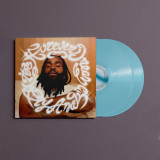
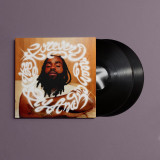
Fly Anakin is a rapper and producer who approaches his craft in a way few contemporaries can. Vigilant yet unorthodox, DIY-minded yet prolific, the Richmond, Virginia multihyphenate’s razor-sharp lyrics, ear for soulful production, and collaborative synergy are the result of over a decade of fundamental mastery. Described by Madlib as “one of the illest MCs,” the Mutant Academy cofounder was in his pocket well ahead of his acclaimed solo debut, Frank (2022). After years of consistent releases with his collective, Anakin broke major ground in 2020 with his and Pink Siifu’s joint project FlySiifu’s, followed by their $mokebreak EP in 2021. A student of the East Coast’s golden age, Anakin transmutes its spirit into music that’s both classicist and pioneering, having worked with the likes of Freddie Gibbs, redveil, BbyMutha, and MAVI. With the release of a Mutant Academy debut album completed, and his solo album (The) Forever Dream imminent, Anakin has cemented his place as a leader in rap’s underground Renaissance.(The) Forever Dream commemorates a new era of freedom for Anakin, who rarely approaches bodies of work without a preconceived concept. Executive produced by Quelle Chris, the project, which features the likes of Denmark Vessey, The Alchemist, BbyMutha, and Pink Siifu, includes songs that Anakin believes are some of his most experimental and ambitious. “The album is me and Quelle kicking it, smoking, learning each other, and playing video games,” he says of the project’s inspiration and recording process. “It was time to make some mindless music, to tackle production I would’ve otherwise picked up.” The long anticipated project comes after years of Anakin and Quelle developing a strong rapport, stemming back to 2019. “Quelle is one of the best collaborators ever—he’s not biased but he knows what he likes, open minded but stubborn at the right times,” Anakin says of his collaborative relationship with the Grammy nominated producer. “On the low we just alike but polar opposites, we can do no wrong together.”
Fly Anakin is a rapper and producer who approaches his craft in a way few contemporaries can. Vigilant yet unorthodox, DIY-minded yet prolific, the Richmond, Virginia multihyphenate’s razor-sharp lyrics, ear for soulful production, and collaborative synergy are the result of over a decade of fundamental mastery. Described by Madlib as “one of the illest MCs,” the Mutant Academy cofounder was in his pocket well ahead of his acclaimed solo debut, Frank (2022). After years of consistent releases with his collective, Anakin broke major ground in 2020 with his and Pink Siifu’s joint project FlySiifu’s, followed by their $mokebreak EP in 2021. A student of the East Coast’s golden age, Anakin transmutes its spirit into music that’s both classicist and pioneering, having worked with the likes of Freddie Gibbs, redveil, BbyMutha, and MAVI. With the release of a Mutant Academy debut album completed, and his solo album (The) Forever Dream imminent, Anakin has cemented his place as a leader in rap’s underground Renaissance.(The) Forever Dream commemorates a new era of freedom for Anakin, who rarely approaches bodies of work without a preconceived concept. Executive produced by Quelle Chris, the project, which features the likes of Denmark Vessey, The Alchemist, BbyMutha, and Pink Siifu, includes songs that Anakin believes are some of his most experimental and ambitious. “The album is me and Quelle kicking it, smoking, learning each other, and playing video games,” he says of the project’s inspiration and recording process. “It was time to make some mindless music, to tackle production I would’ve otherwise picked up.” The long anticipated project comes after years of Anakin and Quelle developing a strong rapport, stemming back to 2019. “Quelle is one of the best collaborators ever—he’s not biased but he knows what he likes, open minded but stubborn at the right times,” Anakin says of his collaborative relationship with the Grammy nominated producer. “On the low we just alike but polar opposites, we can do no wrong together.”
Fly Anakin is a rapper and producer who approaches his craft in a way few contemporaries can. Vigilant yet unorthodox, DIY-minded yet prolific, the Richmond, Virginia multihyphenate’s razor-sharp lyrics, ear for soulful production, and collaborative synergy are the result of over a decade of fundamental mastery. Described by Madlib as “one of the illest MCs,” the Mutant Academy cofounder was in his pocket well ahead of his acclaimed solo debut, Frank (2022). After years of consistent releases with his collective, Anakin broke major ground in 2020 with his and Pink Siifu’s joint project FlySiifu’s, followed by their $mokebreak EP in 2021. A student of the East Coast’s golden age, Anakin transmutes its spirit into music that’s both classicist and pioneering, having worked with the likes of Freddie Gibbs, redveil, BbyMutha, and MAVI. With the release of a Mutant Academy debut album completed, and his solo album (The) Forever Dream imminent, Anakin has cemented his place as a leader in rap’s underground Renaissance.(The) Forever Dream commemorates a new era of freedom for Anakin, who rarely approaches bodies of work without a preconceived concept. Executive produced by Quelle Chris, the project, which features the likes of Denmark Vessey, The Alchemist, BbyMutha, and Pink Siifu, includes songs that Anakin believes are some of his most experimental and ambitious. “The album is me and Quelle kicking it, smoking, learning each other, and playing video games,” he says of the project’s inspiration and recording process. “It was time to make some mindless music, to tackle production I would’ve otherwise picked up.” The long anticipated project comes after years of Anakin and Quelle developing a strong rapport, stemming back to 2019. “Quelle is one of the best collaborators ever—he’s not biased but he knows what he likes, open minded but stubborn at the right times,” Anakin says of his collaborative relationship with the Grammy nominated producer. “On the low we just alike but polar opposites, we can do no wrong together.”
'Gone Down Meadowland' is the much-anticipated debut album release from Norwich, UK psych outfit Floral Image, releasing 25th April 2025 on the renowned Fuzz Club. More than ever, the band wanted to produce a brand of East-Coast psychedelia that reflected the natural lusciousness and glorious solitude of the immediate world around them. Over 30 songs were conjured, considered and arranged before being whittled down to a final 10 that epitomise what they do best - ten tracks of vivid hue, harnessed live power, all laced together in fluid lyrical harmonies. Taking inspiration from band favourites Woods, KGLW, Stereolab, among many others, a string of at-home recording sessions commenced over a 6-week period across the summer of 2024. Side A is a sun-drenched journey through their whimsical Norfolk countryside, narrated with a surreal sense of lyricism which focuses on the undulating flow of the human psyche and the shape of relationships that can decide its fate. 'Burning 305' follows the mould of the band’s earlier creations with white-knuckled rhythms layered with dashing production and gritty guitars. 'The Score' summarises their love of Revolver-era Beatles and infuses it with a hint of 90's dance grooves. Side B is where the trip takes a heavier turn, the un-hinged night-time of the record. It is where the band best shows the force with which their live reputation has been built on. 'Tiergarten' - a motorik course through consciousness and 'Howling Dog Song' - all raucous, scuzzy-garage riffing. The album concludes with the 7-minute epic 'Sun For Hire'. Born out of a 30-minute live improvisation, it is the earliest written of all songs on GDM and a strong fan favorite for the audiences of the last 2 years. "A lot of themes are anti-establishment commentaries on the state of the modern world. It can feel isolating being bystanders of global concern in sleepy Norfolk, even though it’s easy to slip into a false comfort when you’re surrounded by vast space, natural beauty and friendly folks down the market. Gone Down Meadowland is that egoless escapist fantasy that still can't escape the world caving in on itself; Norfolk isolationism." Produced by the band themselves, mixed by Hugh Fothergill of Volleyball, and mastered by Joseph Carra at Crystal Mastering of KGLW fame, Gone Down Meadowland is Floral Image’s first full flourish. They take the record on the road across Europe and the UK throughout April & May 2025.
Googling “paradise house”, the first results to pop up are an endless list of European b&b’s with whitewashed lime façades, all of them promising “…an unmatched travel experience a few steps from the sea”. Next, a little further down, are the institutional websites of a few select semi-luxury retirement homes (no photos shown, but lots of stock images of smiling nurses with reassuring looks). To find the “paradise house” we’re after, we have to scroll even further down. Much further down.
It feels like yesterday, and at the same time it seems like a million years ago. The Eighties had just ended, and it was still unclear what to expect from the Nineties. Mobile phones that were not the size of a briefcase and did not cost as much as a car? A frightening economic crisis? The guitar-rock revival?! Certainly, the best place to observe that moment of transition was the dancefloor. Truly epochal transformations were happening there. From America, within a short distance one from the other, two revolutionary new musical styles had arrived: the first one sounded a bit like an “on a budget” version of the best Seventies disco-music – Philly sound made with a set of piano-bar keyboards! – the other was even more sparse, futuristic and extraterrestrial. It was a music with a quite distinct “physical” component, which at the same time, to be fully grasped, seemed to call for the knotty theories of certain French post-modern philosophers: Gilles Deleuze, Félix Guattari, Paul Virilio... Both those genres – we would learn shortly after – were born in the black communities of Chicago and Detroit, although listening to those vinyl 12” (often wrapped in generic white covers, and with little indication in the label) you could not easily guess whether behind them there was a black boy from somewhere in the Usa, or a girl from Berlin, or a pale kid from a Cornish coastal town.
Quickly, similar sounds began to show up from all corners of Europe. A thousand variations of the same intuition: leaner, less lean, happier, slightly less intoxicated, more broken, slower, faster, much faster... Boom! From the dancefloors – the London ones at least, whose chronicles we eagerly read every month in the pages of The Face and i-D – came tales of a new generation of clubbers who had completely stopped “dressing up” to go dancing; of hot tempered hooligans bursting into tears and hugging everyone under the strobe lights as the notes of Strings of Life rose up through the fumes of dry ice (certain “smiling” pills were also involved, sure). At this point, however, we must move on to Switzerland.
In Switzerland, in the quiet and diligent town of Lugano, between the 1980s and 1990s there was a club called “Morandi”. Its hot night was on Wednesdays, when the audience also came from Milan, Como, Varese and Zurich. Legend goes that, one night, none less than Prince and Sheila E were spotted hiding among the sofas, on a day-off of the Italian dates of the Nude Tour… The Wednesday resident and superstar was an Italian dj with an exotic name: Don Carlos. The soundtrack he devised was a mixture of Chicago, Detroit, the most progressive R&B and certain forgotten classics of old disco music: practically, what the Paradise Garage in New York might have sounded like had it not closed in 1987. In between, Don Carlos also managed to squeeze in some tracks he had worked on in his studio on Lago Maggiore. One in particular: a track that was rather slow compared to the BPM in fashion at the time, but which was a perfect bridge between house and R&B. The title was Alone: Don Carlos would explain years later that it had to be intended both in the English meaning of “by itself” and like the Italian word meaning “halo”. That wasn’t the only double entendre about the song, anyway. Its own very deep nature was, indeed, double. On the one hand, Alone was built around an angelic keyboard pattern and a romantic piano riff that took you straight to heaven; on the other, it showcased enough electronic squelches (plus a sax part that sounded like it had been dissolved by acid rain) to pigeonhole the tune into the “junk modernity” section, aka the hallmark of all the most innovative sounds of the time: music that sounded like it was hand-crafted from the scraps of glittering overground pop.
No one knows who was the first to call it “paradise house”, nor when it happened. Alternative definitions on the same topic one happened to hear included “ambient house”, “dream house”, “Mediterranean progressive”… but of course none were as good (and alluring) as “paradise house”. What is certain is that such inclination for sounds that were in equal measure angelic and neurotic, romantic and unaffective, quickly became the trademark of the second generation of Italian house. Music that seemed shyly equidistant from all the rhythmic and electronic revolutions that had happened up to that moment (“Music perfectly adept at going nowhere slowly” as noted by English journalist Craig McLean in a legendary field report for Blah Blah Blah magazine). Music that to a inattentive ear might have sounded as anonymous as a snapshot of a random group of passers-by at 10AM in the centre of any major city, but perfectly described the (slow) awakening in the real world after the universal love binge of the so-called Second Summer of Love.
For a brief but unforgettable season, in Italy “paradise house” was the official soundtrack of interminable weekends spent inside the car, darting from one club to another, cutting the peninsula from North to centre, from East to West coast in pursuit of the latest after-hours disco, trading kilometres per hour with beats per minute: practically, a new New Year’s Eve every Friday and Saturday night. This too was no small transformation, as well as a shock for an adult Italy that was encountering for the first time – thanks to its sons and daughters – the wild side of industrial modernity. The clubbers of the so-called “fuoriorario” scene were the balls gone mad in the pinball machine most feared by newspapers, magazines and TV pundits. What they did each and every weekend, apart from going crazy to the sound of the current white labels, was linking distant geographical points and non-places (thank you Marc Augé!) – old dance halls, farmhouses and business centres – transformed for one night into house music heaven. As Marco D’Eramo wrote in his 1995 essay on Chicago, Il maiale e il grattacielo: “Four-wheeled capitalism distorts our age-old image of the city, it allows the suburbs to be connected to each other, whereas before they were connected only by the centre (…) It makes possible a metropolitan area without a metropolis, without a city centre, without downtown. The periphery is no longer a periphery of any centre, but is self-centred”.
“Paradise house” perfectly understood all of this and turned it into a sort of cyber-blues that didn’t even need words, and unexpectedly brought back a drop of melancholic (post?)-humanity within a world that by then – as we would wholly realise in the decades to come – was fully inhuman and heartless. A world where we were all alone, and surrounded by a sinister yellowish halo, like a neon at the end of its life cycle. But, for one night at least, happy."
nicht am Lager
Zuletzt vor 3 Monaten geliefert unverbindlich nachbestellbar
White LP. Born out of the early 1980's Austin noise punk scene, Scratch Acid deliberately eschewed the loud, fast rules of hardcore as everything they didn't want to be and embraced a weirder, artier sound. Prior to the release of their 1984 debut S/T EP, someone gave Touch and Go Records owner Corey Rusk a cassette of the recording, and he was instantly a huge fan. Rusk was immediately interested in releasing the EP and contacted the band to express his admiration. At the time, Scratch Acid had already committed to working with Rabid Cat Records, who released the band's debut release S/T EP (1984) and their only full-length album, Just Keep Eating (1986). The group quickly developed a riveting performance aesthetic, and, as the debut S/T EP made its way around the country via fanzines, college radio, and word-of-mouth, the band mounted short tours to the Midwest and the East Coast. After playing a total of 146 shows, Scratch Acid broke up after the long tour that followed the release of the Berserker EP (Touch and Go Records, 1987). Since that time, the band have had many imitators, and many alternative bands have cited Scratch Acid as one of their influences.
Born out of the early 1980's Austin noise punk scene, Scratch Acid deliberately eschewed the loud, fast rules of hardcore as everything they didn't want to be and embraced a weirder, artier sound. Prior to the release of their 1984 debut S/T EP, someone gave Touch and Go Records owner Corey Rusk a cassette of the recording, and he was instantly a huge fan. Rusk was immediately interested in releasing the EP and contacted the band to express his admiration. At the time, Scratch Acid had already committed to working with Rabid Cat Records. The group quickly developed a riveting performance aesthetic, and, as the debut S/T EP made its way around the country via fanzines, college radio, and word-of-mouth, the band mounted short tours to the Midwest and the East Coast. While he was not able to work with Scratch Acid directly through Touch and Go, Rusk had begun booking shows with Scratch Acid in Detroit, so he could see them live and meet them. A friendship formed, and Touch and Go Records would eventually release the band's second EP, Berserker, in 1987.
On her forthcoming record, Rose Cousins holds our hands as she guides us on a journey through the "conditions of love." Ever the emotional explorer, the acclaimed, Nova-Scotia-based folk artist seeks truth, in all its imperfection, in the depths of our most complicated of emotions: love. Co-produced with trusted friend and longtime bandmate Joshua Van Tassel, this new collection of songs sees Rose return to her first love, the piano. “Piano is where I feel the most connected. It’s the best partner in expressing the emotion I’m mining,” she shares. Rose’s work as garnered her two JUNO Awards (2013’s We Have Made a Spark & 2021’s Bravado), two Canadian Folk Music Awards, eleven East Coast Music Awards and one Grammy nomination (2018’s Natural Conclusion), along with praise from the likes of the CBC, No Depression, LA Times, Billboard, Folk Alley, and NPR, who raved “Cousins’ disarmingly fluid vocal tone has the ability to convey the most internalized feelings without an ounce of fuss.” Over the years, she has shared stages with Patty Griffin, Mary Chapin Carpenter, Jann Arden, Bruce Cockburn, Josh Ritter, Kathleen Edwards, Joe Henry, Aoife O’Donovan and Anais Mitchell, and her music has fittingly underscored scenes from notable TV shows including Grey’s Anatomy, Fire Country, Station 19, and Batwoman, along with several independent films.
“Ticket to Ride” marks the solo debut of Dandolo, member of the duo Maurizio & Dandolo. This time, Dandolo wins a lottery ticket and flies solo, away from his Adriatic coast, to Thailand where lust, love and broken hearts await him.
The single’s exotic flavour is highlighted in the B-side, the dub version by Cosmo Dance. The track is a total floorfiller, a DJ essential and dancers’ delight that nods in its production to the Eastern influences of the golden age of Italo Disco.
With “Ticket to Ride” ends the Italo Disco trilogy of Maurizio & Dandolo, started with “Natale in tangenziale” and continued with “Demin”. The track confirms Mirella Records’ commitment to craft exquisite Italo Disco instant classics, with a distinctive and authentic 1980s flavour, which echoes in the cheekiness of the lyrics and themes narrated.
nicht am Lager
Zuletzt vor 8 Monaten geliefert unverbindlich nachbestellbar
Carrying the torch of psychedelic cumbia, with a healthy dose
of surf guitar and Amazonian dancefloor flourishes from Peru
and Brazil alike, Fiesta en la Jungla by Los Dexter’s de Uchiza
is the first release from the newly formed London-label Ritmo
del Barrio. Originally released in 1982, it captures the finest
cumbia being made in Peru at the time, decked out with
frenetic surf-rock guitar riffs, rhythms floating on crisp
cumbia percussion and occasionally punctuated by carimbó
breakdowns native to the Pará region of north-eastern Brazil.
The album is filled with energy, a gem that was always
intended to animate any dancefloor. Peruvian cumbia came to national attention in the late 60s
through the recordings of Juaneco y su Combo, Los Destellos
and Los Wembler’s de Iquitos, but it’s had many revivals, and
Fiesta en la Jungla arrived when the style was going through a
major transition. In 1977, a passenger plane carrying most of
the members of Juaneco y su Combo crashed, killing everyone
on board. In 1980, Los Destellos retired, and Los Wembler’s
released their tenth and final record, they were ready for a
break. This left a big void in Peruvian music. Wasting no time,
Los Dexter’s Emerson Ruiz Mosquera took the opportunity and
gave his band new life, filling the band’s ranks with young and
energetic musicians who were hungry for success. He built the
new band around a solid base of dexterous guitars, a dynamite
rhythm section, and added oodles of percussion and an electric
organ, giving them a powerful psychedelic sound that called
back to the sounds of the original chichamasters, but added a
new sheen. Along with bands like Los Shapis and Los Walkers
de Huánuco, Peruvian cumbia was reborn as chicha in the
1980s, and was now the sound of Peru’s barrios up and down
the country.
Based in the city of Uchiza, on the edges of the Amazon basin,
Los Dexter’s were uniquely located in central Peru, closer to the
largest urban centres of the country than Amazonian outposts
like Pucallpa or Iquitos, and therefore better positioned to
travel to the furthest reaches of the country with ease. In a
sense, Los Dexter’s were a bridge between the Amazon and the
rest of Peru, a bridge over which the sounds of Amazonian
cumbia could travel to the rest of the country on their way to
becoming one of the most ubiquitous elements of Peru’s musical
identity. Fiesta en la Jungla represents Los Dexter’s in their third
iteration. Led by Emerson Ruiz Mosquera, who was just a
young boy in 1970 when his older brother founded the group
with four of his friends, the ensemble by the time of Fiesta en la
Jungla included Orlando Abad on the timbales and lead vocals,
Lucho Bendezú on lead guitar, Javier Quiroz as second
guitarist, Alejandro Almeira on bass, Rufino Bustamante on
keyboard, Ramon Siu on bongos and bells, Ivan Rios on conga,
and Emerson as musical director and composer. Remarkably,
most of the group’s members helped to write at least one
track, Los Dexter’s were a collective endeavour.
Reissued on vinyl for the first time by Ritmo del Barrio, this
record is essential for any collector of Peruvian cumbia.
Showcasing the unique sound of Los Dexter’s, it carries hits
like “Fuga en la Selva” and “El Shiringuero”, which are sure to
set any dancefloor on fire, combined with slower, carimbó-
infused cumbias like “Fiesta en la Jungla,”and “Agua de
Cachilde.” Its closing track, “Tragedia en Uchiza'', is a key
piece of local history and tells of the flooding of the
Chontayacu River in 1982, a mortal tragedy that affected
thousands of people. Despite the subject matter, the album
maintains a joyful vibe throughout, with high energy riffs and
irresistible rhythms, contrasted with terse love ballads, like “A
Jhenny.” It is both a piece of musical history, and a sure-fire
tool for the dance floor.
Los Dexter’s became a fixture of festivals and celebrations in
the provinces of San Martin and Huánuco, and from expanded
across the country, taking Amazonian cumbia from the
Peruvian Amazon, to the heights of the Peruvian sierra, the
coastal plains, and the capital city of Lima.
Low Fidelity was commissioned by Anna Koch / Weld with support from the Swedish Arts Council for the performance Insisting On. Sneak premiere for Issue Project Room, Saint Vitus Bar, Brooklyn, USA in December 2015. First performance at Weld, Stockholm, Sweden in February 2016.
Invocation I is an excerpt from a live recording at Inter Arts Center, Malmö, Sweden, January 2017 based on Lindström’s ‘giant electronic feedback set-up. The True Laptop Quartet is named after a set of instruments built on electromagnetic feedback principles. Both the instruments and the piece were commissioned by Bergen Assembly 2016 for Tarek Atoui’s Within project. Track recorded at Sentralbadet, Bergen, Norway, June 2016 with September 1st 2016 with Tarek Atoui, Espen Sommer Eide, Mats Lindström and Kaya Molsen as the musicians. Light Vessel 21 was a collaboration with Anna Koch and presented as an A/V installation on board the historic LV21 vessel. LV21 saw most of her service off the Kent coast on the Varne and East Goodwin stations. The piece was commissioned by Töne Festival, Kent, England. World premiere: June 20th 2014. Sotto il Ponte was recorded live, with Alba G. Corall on live video, at Huset Under Bron, Stockholm, Sweden in February 2014. Shadow of the Dutchman was an overture to the Wagner opera in a version for three pianos and live electronics. The piece was commissioned by Folkoperan, Stockholm, Sweden. Its debut performance was in February 2013.
Amsterdam-based keyboardist, producer, arranger and DJ Soul Supreme reached out to NYC drummer Jay Mumford in 2021 to lay the down groove on his re-imagining of Q-Tip and J-Dilla's "Let's Ride". That paved the way for future collaborations: a cover of A Tribe Called Quest's "Award Tour (We Gettin' Down)" and two tunes on Soul Supreme's Poetic Justice LP. But when the pair began doing brief covers of their favorite funk, jazz and hip-hop tunes on Instagram just for fun, followers of both musicians - and often, the covered artists themselves - began to take note. Two of those 20+ covers were particularly well-received, and the duo decided to answer the peoples' call for a 7" release with the songs pushed to their full potential. Similar to "Award Tour" and "Let's Ride", a hip-hop classic and a fan favorite are pushed to their full potential here. This installment goes coast to coast and explores Digable Planets' "9th Wonder" (the "East" side) and People Under the Stairs' (PUTS) "Crown Ones" (the "West" side).
The iconic synth intro of "9th Wonder" makes way for Jay's thunderous ode to a slowed down Clyde Stubblefield groove. Sure to be a favorite with DJs, Jay eventually detours into a syncopated New Orleans funk break, before getting back to the groove for Soul Supreme's funky wah wah clavinet work. Throughout, the arrangement expands beyond both that of the original and all of its DNA. The addition of cascading horns (featuring a trumpet solo by Lourens van der Zwaag) and a second, more aggressive break from Jay bring it back full circle, completing a modern update of a classic that manages to pay homage to '70s jazz-funk, breakbeats and '90s hip-hop - all while staying both modern and raw.
Diehard PUTS fans will recognize Soul Supreme's catchy Rhodes line as soon as the needle drops, but Jay's heavy funk groove quickly separates it from the original and takes it from hip-hop cover to heavy funk tune. Soul Supreme's Rhodes solo pushes it far beyond the confines of instrumental funk as the groove intensifies, while his chops as an arranger are on full display: his horn parts - featuring van der Zwaag, trombonist Olav Schloorlemmer and Job Chajes' Contra-Alto Clarinet that channels The Headhunters - counter his synth melodies in a discussion that completes the record as a heavy slice of uncut jazz-funk.
Born as a culture and art movement that began in the Bronx in New York city in 1973, Hip Hop emerged from neigh- borhood block parties thrown by the Black Spades, an African-American group that at the time was describes a being a gang, a club, and a music group. Since then, and for the last fifty years, Hip hop culture has spread to both urban and suburban communities throughout the United States and subsequently the world, Furthermore, it has become a phenomenon that influenced music, fashion and pop culture as a whole. An album that features many of the most influential artists of the genre, including Run DMC, LL Cool J, Grandmaster Melle Mel, Ice-T, Slick Rick, Eric B, & Rakim, Naughty By Nature and Big Daddy Kane among many others. It also includes a curated selection extrac- ted from the Rap Mania: The Roots Of Rap event, which was a bi-coastal simulcast concert that brought together some of the most popular Hip Hop artists of that era for a one-time-only show. East Coast Hip Hop meets West Coast Hip Hop before the gangsta craze and east vs west rivalry really got started. The show was a celebration of the 15th Anniversary of Hip Hop and took place simultaneously at the Apollo Theater in New York City and The Palace Theater in Hollywood. With fantastic artwork and remastered sound, this is essential collection, that any hip hop fan will treasure and that will help as an introduction to those interested in knowing more about a movement that changed the course of pop culture. Also, remember that this is not available on streaming platforms.
Volume 1 of this expertly curated project of 90s Italian House - put together by Don Carlos.
If Paradise was half as nice… by Fabio De Luca.
Googling “paradise house”, the first results to pop up are an endless list of European b&b’s with whitewashed lime façades, all of them promising “…an unmatched travel experience a few steps from the sea”. Next, a little further down, are the institutional websites of a few select semi-luxury retirement homes (no photos shown, but lots of stock images of smiling nurses with reassuring looks). To find the “paradise house” we’re after, we have to scroll even further down. Much further down.
It feels like yesterday, and at the same time it seems like a million years ago. The Eighties had just ended, and it was still unclear what to expect from the Nineties. Mobile phones that were not the size of a briefcase and did not cost as much as a car? A frightening economic crisis? The guitar-rock revival?! Certainly, the best place to observe that moment of transition was the dancefloor. Truly epochal transformations were happening there. From America, within a short distance one from the other, two revolutionary new musical styles had arrived: the first one sounded a bit like an “on a budget” version of the best Seventies disco-music – Philly sound made with a set of piano-bar keyboards! – the other was even more sparse, futuristic and extraterrestrial. It was a music with a quite distinct “physical” component, which at the same time, to be fully grasped, seemed to call for the knotty theories of certain French post-modern philosophers: Gilles Deleuze, Félix Guattari, Paul Virilio... Both those genres – we would learn shortly after – were born in the black communities of Chicago and Detroit, although listening to those vinyl 12” (often wrapped in generic white covers, and with little indication in the label) you could not easily guess whether behind them there was a black boy from somewhere in the Usa, or a girl from Berlin, or a pale kid from a Cornish coastal town.
Quickly, similar sounds began to show up from all corners of Europe. A thousand variations of the same intuition: leaner, less lean, happier, slightly less intoxicated, more broken, slower, faster, much faster... Boom! From the dancefloors – the London ones at least, whose chronicles we eagerly read every month in the pages of The Face and i-D – came tales of a new generation of clubbers who had completely stopped “dressing up” to go dancing; of hot tempered hooligans bursting into tears and hugging everyone under the strobe lights as the notes of Strings of Life rose up through the fumes of dry ice (certain “smiling” pills were also involved, sure). At this point, however, we must move on to Switzerland.
In Switzerland, in the quiet and diligent town of Lugano, between the 1980s and 1990s there was a club called “Morandi”. Its hot night was on Wednesdays, when the audience also came from Milan, Como, Varese and Zurich. Legend goes that, one night, none less than Prince and Sheila E were spotted hiding among the sofas, on a day-off of the Italian dates of the Nude Tour… The Wednesday resident and superstar was an Italian dj with an exotic name: Don Carlos. The soundtrack he devised was a mixture of Chicago, Detroit, the most progressive R&B and certain forgotten classics of old disco music: practically, what the Paradise Garage in New York might have sounded like had it not closed in 1987. In between, Don Carlos also managed to squeeze in some tracks he had worked on in his studio on Lago Maggiore. One in particular: a track that was rather slow compared to the BPM in fashion at the time, but which was a perfect bridge between house and R&B. The title was Alone: Don Carlos would explain years later that it had to be intended both in the English meaning of “by itself” and like the Italian word meaning “halo”. That wasn’t the only double entendre about the song, anyway. Its own very deep nature was, indeed, double. On the one hand, Alone was built around an angelic keyboard pattern and a romantic piano riff that took you straight to heaven; on the other, it showcased enough electronic squelches (plus a sax part that sounded like it had been dissolved by acid rain) to pigeonhole the tune into the “junk modernity” section, aka the hallmark of all the most innovative sounds of the time: music that sounded like it was hand-crafted from the scraps of glittering overground pop.
No one knows who was the first to call it “paradise house”, nor when it happened. Alternative definitions on the same topic one happened to hear included “ambient house”, “dream house”, “Mediterranean progressive”… but of course none were as good (and alluring) as “paradise house”. What is certain is that such inclination for sounds that were in equal measure angelic and neurotic, romantic and unaffective, quickly became the trademark of the second generation of Italian house. Music that seemed shyly equidistant from all the rhythmic and electronic revolutions that had happened up to that moment (“Music perfectly adept at going nowhere slowly” as noted by English journalist Craig McLean in a legendary field report for Blah Blah Blah magazine). Music that to a inattentive ear might have sounded as anonymous as a snapshot of a random group of passers-by at 10AM in the centre of any major city, but perfectly described the (slow) awakening in the real world after the universal love binge of the so-called Second Summer of Love.
For a brief but unforgettable season, in Italy “paradise house” was the official soundtrack of interminable weekends spent inside the car, darting from one club to another, cutting the peninsula from North to centre, from East to West coast in pursuit of the latest after-hours disco, trading kilometres per hour with beats per minute: practically, a new New Year’s Eve every Friday and Saturday night. This too was no small transformation, as well as a shock for an adult Italy that was encountering for the first time – thanks to its sons and daughters – the wild side of industrial modernity. The clubbers of the so-called “fuoriorario” scene were the balls gone mad in the pinball machine most feared by newspapers, magazines and TV pundits. What they did each and every weekend, apart from going crazy to the sound of the current white labels, was linking distant geographical points and non-places (thank you Marc Augé!) – old dance halls, farmhouses and business centres – transformed for one night into house music heaven. As Marco D’Eramo wrote in his 1995 essay on Chicago, Il maiale e il grattacielo: “Four-wheeled capitalism distorts our age-old image of the city, it allows the suburbs to be connected to each other, whereas before they were connected only by the centre (…) It makes possible a metropolitan area without a metropolis, without a city centre, without downtown. The periphery is no longer a periphery of any centre, but is self-centred”.
“Paradise house” perfectly understood all of this and turned it into a sort of cyber-blues that didn’t even need words, and unexpectedly brought back a drop of melancholic (post?)-humanity within a world that by then – as we would wholly realise in the decades to come – was fully inhuman and heartless. A world where we were all alone, and surrounded by a sinister yellowish halo, like a neon at the end of its life cycle. But, for one night at least, happy.
nicht am Lager
Zuletzt vor 82 Tagen geliefert unverbindlich nachbestellbar
"I'll Be Your Rainbow is the only recorded album by classic soul singer Bobby Wilson. Originally released in 1975, the album is a perfect blend of the styles of soul that were running through the east coast underground of the early 70s. It includes elements of the burgeoning club scene on the more up-tempo songs, and sweet warm vocals on the strong mellow cuts. The album was recorded in Detroit, Philadelphia and Miami, produced by Vernon Bullock and orchestrated by Paul Riser. It features the UK soul scene hit ""Deeper and Deeper"". I'll Be Your Rainbow is available as a 50th anniversary edition of 500 copies on light green coloured vinyl and includes an insert. It is the first time the record is pressed on coloured vinyl and the first repress since its original release in 1975."
“My introduction to “noise” came from a record shop in Lake Worth, Florida ran by a musician named Kenny 5. Kenny had left Detroit sometime in the mid nineties and had begun selling used records and CD’s from the downtown strip of this tiny southern Florida city in a humble shop sandwiched between a deli and a dog grooming business. Kenny previously was on labels like Amphetamine Reptile and timeSTEREO, and the records and videotapes that would be on repeat at his shop were a vast sonic expanse that spoke to the eclecticism of his experience as a touring musician participating and adjacent to American noise culture through the early to late 90’s. In 1998, I was eleven years old and I would order a pizza with him and watch VHS tapes of Japanese noise and deathmatch bootlegs, as well as any other sonic and subcultural rarities that far outstripped my age to comprehend (notably the RRR “Journey Into Pain” compilation and various Vanilla Tapes videos). This widecast net of information formed an introduction to a reality that did not fall deaf on me, but it took many years later for me to reorient the specific freedoms of what this dense and cathartic sound culture had imparted on my life and would continue onward to.
What does this have to do with this selection of choice recordings from the Secret Boyfriend catalog for the enmossed label? For the uninitiated, Secret Boyfriend is the long running moniker of Ryan Martin, North Carolina musician and label proprietor of the Hot Releases imprint. For over a decade from this writing I have watched Secret Boyfriend, and Hot Releases by extension as a curatorial and archival effort, embodying the multiplanal capacity that noise loosely functions from as an umbrella ideology and formalist avenue for sound creation. For anecdotal purposes, from (before) 2006 until roughly 2023 the East Coast of the United States showcased a vibrant network of eclectic regional festivals that saw wide swaths of artists addressing and negotiating the notion of what qualified “noise” from a conceptual and ideological perspective. Some festivals honed in on particularities in aesthetics and tropes, and others had a kind of “catch-all” implementation that allowed for a salvation of the sort of alienated and singular artistry that was amassing throughout these territories. While clear guidelines had been set from regional predecessors as to how noise with a capital “N” should maneuver, Secret Boyfriend is emblematic in the spirit of fluidity that was either implicitly coupled to the notion of the genre, or grew to evolve towards or devolve from.
Within Secret Boyfriend performances, I have seen and admired a mirroring from a ravenous appreciator of this culture at large back towards itself. Typical of a Secret Boyfriend set is an interchangeable narrative arc wherein blistering feedback laden scrap metal improvisations are forayed into naive ambient or “pop” songs, or skipping CDs, or mixer feedback play, or delayed Roland 707 drum workouts all at once and in a unique hegemony. Secret Boyfriend's stylistic mastery of each endeavor is at once an homage to a history of loving listening and enacting, while a brave step into the realm of actualizing the unique fluidity of his own practice. In performance and the action of network engagement, Secret Boyfriend operates a survey of that which he sought to hear and that which he cultivates around his work. His operations are mirrors, and the project (alongside his other peers) is a reflection on the ethos of his time.
Conversely his recording practice narrows in on these moments and allows for a different kind of intimacy or alienation for the non live listener. This record of selected “pop songs” (let's call them that) is particularly poignant at a time when the culture Martin mirrors is at a strange crossroads with itself. The aforementioned festival networks necessarily change and shift. The onlookers become the artists, the artists find new horizons, and the spaces for these cycles fade into locales of a distant memory. It seems, from my perspective, that audiences currently yearn for a more bottlenecked experience, searching for some ontologically vetted manifestation of an idea, of a sound and less for an experience that functions in opposition to our collective banalities. This makes sense in the face of general global catastrophism that plagues us. We need certainty of what something is somewhere, don’t we? Noise as an idea has expanded and contracted to so many iterations of itself it is hard to tell what it even is, and it is particularly difficult to identify in the absence of solid network activations a moment to reflect on its own complexities and nuances. In the face of so much change, I argue that the language of noise culture at large has on one hand become increasingly didactic and predictable, and laughably inclusive and non linear on the other. Probably has always been this way, but now we are in the midst of a moment of extreme access and indexicality, which somehow cauterizes expansion and naivety and chance.
This record highlights the Secret Boyfriend that obscures didacticism by highlighting output that opens up for more challenging catharsis and emotive signal processing. It provides an entry to the materialism of a cultural field full of ecstatic complexity and beautiful inconsistency. In these muted moments Secret Boyfriend has given us over his career we have an argument for evolving languages that further challenge our notions of what is supposed to happen and how it is supposed to be presented. In his more song oriented expansiveness, we can punctuate the ability to think in new modalities. Listening to these recordings reminds me of the polarity of sitting in the record store as a kid and understanding that His Name Is Alive is on 4AD and (gasp!) timeSTEREO. This trite early impression that nothing is really as different as our imaginations might want them to be, and that we can do whatever we want mostly within the creative realms we work through is an important filter to look through Secret Boyfriend as a project and a vessel. If we can achieve abandon and vulnerability through our artistic endeavors, then we have a sound model for, maybe, new potentialities. If that’s too much projection, or just complete liberal bullshit, I am fine with that. Secret Boyfriend's oeuvre at best offers us moments of reprieve to ponder these complexities, or at least a moment to zone out on a drive through North Carolina Highway 54.
You have one pocket of life that you must do whatever you want to inside of. Secret Boyfriend does it affectionately, in a variety of forms, and always with deep sentimentality. These recordings are a wonderful set of songs to begin further investigation from. Thank you Ryan for allowing as many avenues as possible to continue a broad cultural exchange and conversation that intersect and refract while being the kind of artist that is brave enough to not phone in the effort.”
This album is a gritty yet sophisticated journey through life’s harsh realities and ultimate triumphs. Hailing from two vastly different worlds, Fashawn and Little Vic bring unique stories and sounds that blend the raw with the refined. Fashawn, raised amidst the gangs and struggles of Fresno, California, brings an unapologetic realism to his verses, detailing the roads that took him from survival to success. Meanwhile, Little Vic’s roots trace back to Long Island, New York, where he grew up with the influence of the Orena family’s notorious reputation. Known for his lyricism and mastery of the MPC, Vic’s production is the perfect companion to Fashawn’s storytelling, layering gritty boom bap beats with live instruments that add richness and texture.
The theme of the album is like a fine dining experience—a nod to elegance—while peeling back the layers to reveal the raw, often darker realities simmering behind the scenes. Little Vic’s production flexes between hard-hitting rhythms and delicate, soulful sounds, creating a soundscape that mirrors the rags-to-riches journey both artists represent.
Brought together on the East Coast by executive producer Ricky Grey, Fashawn and Little Vic spent an intense week creating this project, crafting a work that feels as alive and textured as the streets that shaped them. Each track is an experience, serving up an unfiltered taste of both struggle and success, designed to leave listeners both stirred and inspired.
Roddyrod is a key player in contemporary hip-hop who gained recognition alongside East Coast pioneers like Kev Brown and Oddisee as part of The Low Budget Crew. His new release on Dirty Tech is a fine testament to his genre-blending skills as he combines hip-hop, broken beat, deep house and soul with real studio finesse. The standout track for us is 'Servant Royal' with unquantized drums and a jazz-inspired piano riff that will capture the attention of house heads everywhere. 'Fendi Foot' expands on his earlier work, while 'Skin Pride Deep' features Grammy-nominated Wayna and offers a powerful exploration of self-love and empowerment to add depth to the EP's overall sound.
nicht am Lager
Zuletzt vor 21 Monaten geliefert unverbindlich nachbestellbar
Rome’s very own Electro-Psych outfit, Big Mountain County, is set to release their third LP ‘Deep Drives’ on November 29th via Sister 9 Recordings. After unveiling their latest EP, ‘Klaus’, at the New Colossus Festival in New York and SXSW in Austin, the band took a year-long studio break, honing and redefining a distinctive sound that bridges primitive Garage Rock and Neopsychedelia with Electroclash, Kraut and Disco. Stay tuned for updates as we’ll reveal more details and the release date in the coming weeks. Big Mountain County was formed in Rome in 2013 after four southern boys, two from the slopes of Mount Etna and two from the Adriatic Coast, came together. They instantly bonded over their mutual love for The Stooges, MC5, The Velvet Underground, and Joe Spencer, leading to the release of a 7-inch record brimming with raw Garage Rock & Roll. This debut propelled them into an exciting tour across Eastern Europe, hitting countries such as Hungary, Serbia, Croatia, and Bosnia-Herzegovina. They soon moved beyond Garage Rock to immerse themselves in the European Neopsychedelic resurgence and spent the following years carving out a reputation in the vibrant continental live scene. They dropped two LPs—Breaking Sound (Gas Vintage Records, 2015) and Somewhere Else (Porto Records, 2020)—along with two live albums. After relentlessly touring across Europe and the UK and opening the Italian tour for the U.S. band Cloud Nothings in 2019, they finally hit the US in 2023, gracing six different venues at SXSW and sharing stages with Osees and Os Mutantes. By the time they returned to Italy, they had secured summer opening slots for the likes of Brian Jonestown Massacre and La Femme. That year’s EP ‘Klaus’ marked a bold new chapter, showcasing a thrilling shift, diving into a more dance-driven and electronic sound. Featuring collaborations with electronic psych producer and LEVITATION DJ in residence Al Lover, along with the distinguished Roman producer Hugo Sanchez, the making of ‘Klaus’ provided the band with a revitalizing spark, steering them into a new musical direction
Just as his basslines never stay within the limits of the obvious, so Joe Sanders" life as a bassist, composer, band-leader and educator has never followed the single, most discernible pathway. A Midwest native, he"s studied and played jazz on the opposite coasts of California and New York: a master of the acoustic bass, he"s equally at home producing in the digital realm; embedded deep in the living tradition of American jazz; and living, teaching and creating in Europe. All these separate strands come together on his third headline release, "Parallels". The album presents a set of live recordings from a dream line-up that matches the leader"s full-bodied acoustic bass presence with Seamus Blake, Logan Richardson and Gregory Hutchinson in performances that capture all the daring and drive of the East coast scene. Alongside them is a set of studio self-productions with guests Jure Pukl and Taylor Eigisti that capture the laid-back dreamy adventurousness of the West Coast.
Now celebrating its 30th anniversary, and arriving as a specially expanded edition to mark the occasion, the Murder Was The Case soundtrack remains an iconic work in hip-hop history. Originally accompanying the short film directed by Dr. Dre and Fab Five Freddy, this album embodies the essence of West Coast gangsta rap of the 90s. Featuring tracks from legends of the game like Snoop Dogg, Tha Dogg Pound, and more, it captures the gritty realities of street life with raw lyricism and infectious beats. From the haunting title track to the catchy grooves of 'Natural Born Killaz,' each song immerses you in the vivid world of the film and the era's burgeoning rap scene.
nicht am Lager
Zuletzt vor 19 Monaten geliefert unverbindlich nachbestellbar
With a voice of pure gold and a startling sensitivity for heartfelt pop songwriting, on No Reino Dos Afetos (In the Realm of Affections), Berle firmly embraces earnestness, through starry-eyed Brazilian love songs, ambient vignettes, warm, home-cooked beats and gentle strokes of MPB genius.
Maceió, the capital of Brazil’s Alagoas state on its sprawling east-coast, is home to pastel coloured colonial houses, white sand beaches and a brilliant young composer, poet and multi-instrumentalist named Bruno Berle.
With a voice of pure gold and a startling sensitivity for heartfelt pop songwriting, on No Reino Dos Afetos (In the Realm of Affections), Berle firmly embraces earnestness, through starry-eyed Brazilian love songs, ambient vignettes, warm, home-cooked beats and gentle strokes of MPB genius.
“It’s an album that was built from my desire to find beauty”, Berle explains - his simple, graceful words mirroring the graceful simplicity in his music. But amongst the simplicity, the compositions, arrangements and productions on No Reino Dos Afetos tingle with nuance and detail.
On the contemporary R&B inspired lead single “Quero Dizer” - produced by Berle and longtime friend and collaborator Batata Boy - the swirling, lo-fi, kalimba and guitar-fronted beat is turned into a feel-good hit by the ingenuity of Berle’s honey-soaked vocal melody.
Powerfully intimate, “O Nome Do Meu Amor” (My Love’s Name) is a guaranteed tearjerker, with Berle’s stunning voice soaring over gently plucked acoustic guitar and the textural flutter of soft movement, as if we hear him writing the song in the moment.
Drawing upon a close-knit, collaborative scene of Maceió artists and musicians, (of which Berle and Batata Boy are vital members), Berle also recorded some of his friends songs on the album, including João Menezes’ “Até Meu Violao”, the album’s beautifully laid back sunshine soul opener, which has all the charm of early-70s João Donato.
Having cut his teeth in soft-rock group Troco em Bala, and more recently finding himself embedded in both Rio and Sao Paulo’s contemporary music scenes - collaborating with the likes of Ana Frango Eletrico, who took the photo for the album cover - No Reino Dos Afetos is as musically diverse as Bruno himself. It’s hazy indie rock (“É Preciso Ter Amor”), calming ambient and field recording (“Virginia Talk”) as well as Berle’s own take on West African High Life (“Som Nyame”).
Instantly recognisable as a truly special artist, Berle’s character fills every corner of the sound, which is unsurprising considering he played most of the instruments.
nicht am Lager
Zuletzt vor 23 Monaten geliefert unverbindlich nachbestellbar
Seth Troxler’s Slacker 85 imprint prepares to expand its repertoire of ne’er do wells and inspired outsiders, with two new singles shining a flashlight on talent at the characteristically esoteric producers on the fringes of Troxler’s always increasing circles.
American-Ecuadorian sound engineer and musician Andre Salmon has already left his fingerprints on underground dance music’s global scene, developing the current iteration of Inner City with Kevin Saunderson, as well as collaborating with house icons Paul Johnson and K’Alexi Shelby. Having already made a fixture of his supremely effective ‘Heartless’ mashup of Saint Etienne’s classic ‘Only Love Can Break Your Heart’, Slacker now welcomes Salmon to the family to exercise his studio technique and ‘sacred resonance’ deepness. The result is ‘La Mano de Dios’, a voluminous dance on the edge of house and techno, as smooth and impressive as the jets descending above the Terrace at DC10.
From Detroit to the East Coast, TB-203 delivers a contrasting energy on ‘Movin’. A fresh alias of NYC DJ, producer & label owner Tommy Bones, this bubbling, raw acid workout finds fresh heat at the intersection of jackin’ hip house and latin freestyle, driven by loose and lively vocals from DannyP. Underscoring Slacker 85’s commitment to party over posture, ‘Movin’ has been tried and tested to deliver on its old-school promise.
nicht am Lager
Zuletzt vor 19 Monaten geliefert unverbindlich nachbestellbar
Pia Isa is the solo project of bassist, guitarist and vocalist Pia Isaksen from Norwegian heavy psych/doom rock-band Superlynx. As much as she loves playing with Superlynx (already formed in 2013) and other people, Pia’s ideas for her solo-albums seemed more right to work through on her own mostly. Pia´s music is rooted in slow heavy drones, but also has a lighter, dreamy and hopeful side. She is inspired by massive soundscapes, heavy psych, meditative moods, desert vibes and Eastern scales as well as her Nordic coastal surroundings. Superlynx-listeners may recognize her slow, heavy and minimalistic riffs, and haunting sometimes chanting voice. Pia has an open mind to a lot of different music. Not caring about fitting to any genres but channeling honest and heartfelt music in her own way. The lyrics are deeply personal and stretches from the very inner self and throughout nature. On her new album Pia has worked more with layers of vocal harmonies and has given an old dark sounding nylon acoustic guitar more space in her massive distorted soundscape.
Super7 continues to pay homage to the one and only The Notorious B.I.G. with the new 7” scale, articulated Deluxe action figure. Inspired by the legendary hip-hop storyteller’s iconic east coast style, this figure features intricate sculpt and premium paint detailing, comes with sunglasses, microphone, gold chain accessories, all packaged on a blister cardback. If you don't know, now you know- this Notorious B.I.G. Deluxe figure is a must-have for any hip-hop collection!
lp wiBola’s music melds sheer force of spirit with a sound not often heard by ears outside the remote Upper East Region of Ghana. This man who grew up herding livestock in the savannah, far away from the tropical coast and cosmopolitan cities of Accra and Kumasi, has aligned himself with national and international means of expression to transform his hometown sound into something downright avant-garde. His bold fury stems from the kologo—a two-stringed lute with a calabash gourd resonator—and Frafra language vocals, emitted in raspy bursts.
Traditionally, kologo performances occur at pito (local beer made from fermented millet or sorghum) bars, weddings, funerals, festivals or spontaneous jams on the street, which are the environments where Bola honed his craft as a solo musician. In recent years, he came into contact with people like his mentor Guy One who helped him get into the studio to document what is some of the most dynamic music to come out of Ghana since the emergence of hiplife in the mid-'90s.
Volume 7, which came out in 2009, is just one entry in a brilliant series of recordings Bola has released on CD and cassette. Although he employs a traditional instrument and the age-old mode of griot story-telling, Bola embraces elements of up-to-the-minute mainstream Ghanaian music—drum machines, synths, bone-shaking bass. Inspired by pioneering kologo greats like King Ayisoba, Bola has taken a dynamic instrument used by traditional healers and herbalists to sing to god in search of advice and taken it to futuristic heights.
Timeless soul, 'Cool Cool' is the standout title track from James Alexander Bright's recent album. It's an immediately enchanting gem, with tendermusicianship and a stripped back production highlighting James' voice, pitchedsomewhere between Eddie Chacon, Beck and Michael McDonald. Athens of theNorth's in-house band East Coast Love Affair add a delightfully psychedelic Balearicpiquancy with an beautiful dub version on the flip.
'Cool Cool' has been enjoying a plethora of worldwide support; seeing James insession for Gilles Peterson, suppling a Block Party mix for Huey Morgan, interviewedby Bandcamp Weekly, and played across tastemaker shows on stations includingBBC 6 Music, FIP, Jazz FM, KCRW, KEXP, Les Inrocks, NTS, Soho Radio, Triple R,WDET, WNXP.
The past six years has seen James release a veritable treasure trove of music:'Mallorca' and 'Strange Folk' EPs, debut album 'Headroom', joyous second 'Float', analbum of collaborations and reworks with cosmic Americana-disco DJ/producer duoFlying Mojito Bros, and a new project with Groove Armada's Tom Findlay as Bright &Findlay. 'Cool Cool', his third solo album since 2020, was released on 26th July 2024.
nicht am Lager
Zuletzt vor 19 Monaten geliefert unverbindlich nachbestellbar
Dawn Richard and Spencer Zahn share a common collaborative ethos, a genuine sense of musical curiosity, and a cosmopolitan eagerness to escape the conventions of genre. That shared vision first brought them together on 2022's Pigments_icy and warm, stripped-down and grand, familiar and otherworldly_and now it has reunited them for Quiet in a World Full of Noise. By turns intimate, soul-baring, spectral, and startling, Quiet in a World Full of Noise blends atmospheric and orchestral soundscapes with mellifluous soul, jazz, and journalistic vocalizing_driving it all home with stark, confessional lyricism. The new album finds Richard at her most raw and exposed. This year, Richard's musician father experienced mini strokes while being diagnosed with cancer; and last year, her cousin Cisco was fatally shot seven times in New Orleans. Richard channels the emotional impact of these traumatic experiences of loss into her lyrics and vocal performances, which are left bare and human here, raw and unprocessed across the album. Quiet expands the definitions of what constitutes progressive, avant-garde R&B by rewriting them altogether. On paper, Richard and Zahn's audacious, impressionistic musical collaborations feel like a surprising match. Richard, a New Orleans-reared visionary, has had an improbable journey from late 2000s reality television and mainstream pop with girl group Danity Kane to become one of the most prolific, experimental, and visible indie R&B singer-songwriters of the last decade and a half, with seven solo albums under her belt. Zahn is an East Coast-raised multi-instrumentalist and composer working at the intersections of jazz, Americana, classical, and ambient pop. His growing solo discography includes People of the Dawn, Sunday Painter, Pale Horizon, and Statues I & II, as well as the duo's first release, Pigments. "Pigments was one of the best projects I've ever made," Richard says, "and the furthest I've ever been pushed as an artist." The album was a critical hit, hailed as Best New Music by Pitchfork and receiving praise from Stereogum as Album of the Week, NPR Music, Bandcamp Daily, The Fader, Bitter Southerner, and Edition, among many other publications. The making of its follow-up, Quiet in a World Full of Noise, began in 2023 in upstate New York. Fresh from a break-up, Zahn sat at his piano and poured himself into writing and recording instrumental compositions. "I wrote all these stream-of-consciousness pieces on piano, and they were eerie, spacious piano tracks," he said. He used a piano that had been unconventionally tuned to the room rather than to standard pitch. These oddly-tuned, eerie instrumental recordings were never intended to be an album. Six months later, he listened to the recordings again and sent them to Richard who immediately recognized their potential and said, "Oh, this is the next album." Richard went into the studio the next day and wrote and recorded melodies and lyrics to Zahn's piano recordings. Zahn brought in gifted musicians like Bryan Senti on strings (violin, viola, and violoncello da spalla) and CJ Camerieri on brass (French horn, flugelhorn, and trumpet). In some cases, like on the track "Life in Numbers," Zahn used only the original first-take piano recording and scratch vocal, resulting in an intimate close-up of both Richard and Zahn.
The sophomore effort from Gray/Smith refines their petroleum-based, hard-lullaby sound with a decidedly dusty precision. To call this pair's brand of country-rock détournement "cosmic" would be too breezy: L. Gray and Rob Smith prefer to stare into sunken depths, channeling their recondite affections for lay-by mauve zones and red-dirt guitar wanderings. Formed in the outer-edges of Kings and Richmond counties circa 2020, Gray/Smith is something of an East-Coast involution. L. Gray (guitar and vocals) and Rob Smith (drums, guitar and vocals) are both trusty veterans of "band's bands" like Pigeons (Soft Abuse), No-Neck Blues Band (Revenant, Locust), Rhyton (Thrill Jockey), and The Suntanama (Drag City), freewheeling groups known for mining from polyglot sources: rough-hewn folk and the spiritual avant-garde, bargain-bin hard rock and and collector's-choice psychedelia alike. On their first, self-released LP Gray/Smith, serendipitously recorded at Gary's Electric at the top of 2021, the pair trained their assured chops onto the great American song-form, honing a murky but tight approach that variously cribs "urban cowboy" and finger-picked primitivism. A string of cryptic appearances soon followed, including a short-lived residency at a now-shuttered vodka dive; a micro-tour with Coloradan songstress Josephine Foster; and a series of backyard and barroom gigs sharing stages with compatriots like Stella Kola, Blues Ambush, Samara Lubelski, and Wednesday Knudsen. Heels in the Aisle is the slipshod, burnt-out, mid-'70s unter-prog comedown to their debut's backwoods, bushy-tailed, early-'70s, country-rock meanderings_expect more unrestrained riffs, artful studio wizardry, and worn-down introspection. Joining the ranks of bloodshot-eyed, blues-rock medleys à la Canned Heat's "Parthenogenesis" and Grand Funk's "Into The Sun," "The SDSPS" is the nearly side-length opening cut, an expanded song-cycle condensing and riffing on the themes of their debut. "Help Me" ventriloquizes Pomona College outlaw Kris Kristofferson's slow-roaring ballad of libidinal woe. On the flip side, "Verrazano Tile" and the title track pay heed to lower bays of Staten Island, while their arrangement of the traditional Zimbabwean tune "Guabi Guabi" is a bright Dead/Feat-like jaunt with blissed-out wah-wah pay-off. "Gaslight Boulevard" is lean, mean, and eight-beers-in space rock, and the closing track "Kekule's Ring" is a slack-jawed, wistful crash back down to earth. All this, packaged in a luxe, expertly-printed sleeve photographed by downtown artist Lary 7 and designed by Eric Wrenn (Sophie's Oil of Every Pearl's Un-Insides).
Blending a mix of street intellect into pop music, Naughty by Nature delivered raw-edge but accessible East Coast rap and created some of the biggest and most contagious hits of the 90s. Naughty By Nature's brand new greatest hits compilation The Naughtiest, which has not been produced physically in over 20 years, contains the groups best known songs including "O.P.P" which hit #1 on the Billboard Rap Charts & #6 on the Hot 100, "Uptown Anthem" "Pin the Tail on the Donkey" from their self-titled album, along with "Feel Me Flow" & "Craziest" from Poverty's Paradise. And of course, select tracks from 19 Naughty III including "Hip Hop Hooray" which hit #1 in several countries and has become a defining anthem for hip hop music.
Debut album from Los Angeles duo Los Yesterdays, Sweet Soul music meets Mexican Folklorico "Sweet soul music also known as lowrider oldies on the West Coast, rolas and souldies are typically early 60s-style tunes that emphasize vocal harmonies. Most songs are slow-to-midtempo, many are ballads, and the sub-genre is generally stripped down compared to the highly produced Motown hits of the time....there is a generations-long appreciation for sweet soul music among California’s Latino communities. Eastern Los Angeles teens.... helped foster a love of sweet soul in the early 60s by covering soulful ballads by artists like James Brown... Those sounds... were kept alive by record collectors and people who spent evenings cruising along East Los boulevards." BILLBOARD // Los Yesterdays are a Chicano soul band from Los Angeles based around the creative collaboration between Gabriel Rowland and Victor Benavides. They began working together when Rowland a drummer by trade, then creaky and exhausted from waking up at dawn to work construction decided to channel those struggles into song. He contacted Benavides, a former bandmate of Rowland’s deceased brother, to record the soul ballads that Southland Chicanos call “oldies.” Los Yesterdays filter love-struck R&B crooning through guitar-strumming Mexican balladeering; the result is something that sounds like the Los Angeles of yesterday and today the indelible, immovable Los Angeles of cruising Whittier Boulevard, of cold drinks on the porch on blazing summer nights, of watching a blue-orange toxic sunset and wondering if they are thinking about you. Los Angeles changes; Los Angeles stays the same. Los Yesterdays have changed, outgrown their childhood barrios and the bands of their early 20s and their private garage hermitude; Los Yesterdays are Frozen In Time. Tracks: A1. Nobody’s Clown A2. Frozen In Time A3. Something Happened A4. I Can’t Feel A5. Brown Boy B1. Last Request B2. I Want You To Stay B3. But You Did B4. Name On Me B5. Love Is A Game For Fools
Dawn Richard and Spencer Zahn share a common collaborative ethos, a genuine sense of musical curiosity, and a cosmopolitan eagerness to escape the conventions of genre. That shared vision first brought them together on 2022’s Pigments icy and warm, stripped-down and grand, familiar and otherworldly and now it has reunited them for Quiet in a World Full of Noise. By turns intimate, soul-baring, spectral, and startling, Quiet in a World Full of Noise blends atmospheric and orchestral soundscapes with mellifluous soul, jazz, and journalistic vocalizing driving it all home with stark, confessional lyricism. The new album finds Richard at her most raw and exposed. This year, Richard’s musician father experienced mini strokes while being diagnosed with cancer; and last year, her cousin Cisco was fatally shot seven times in New Orleans. Richard channels the emotional impact of these traumatic experiences of loss into her lyrics and vocal performances, which are left bare and human here, raw and unprocessed across the album. Quiet expands the definitions of what constitutes progressive, avant-garde R&B by rewriting them altogether. On paper, Richard and Zahn’s audacious, impressionistic musical collaborations feel like a surprising match. Richard, a New Orleans–reared visionary, has had an improbable journey from late 2000s reality television and mainstream pop with girl group Danity Kane to become one of the most prolific, experimental, and visible indie R&B singer-songwriters of the last decade and a half, with seven solo albums under her belt. Zahn is an East Coast–raised multi-instrumentalist and composer working at the intersections of jazz, Americana, classical, and ambient pop. His growing solo discography includes People of the Dawn, Sunday Painter, Pale Horizon, and Statues I & II, as well as the duo’s first release, Pigments. “Pigments was one of the best projects I’ve ever made,” Richard says, “and the furthest I’ve ever been pushed as an artist.” The album was a critical hit, hailed as Best New Music by Pitchfork and receiving praise from Stereogum as Album of the Week, NPR Music, Bandcamp Daily, The Fader, Bitter Southerner, and Edition, among many other publications. The making of its follow-up, Quiet in a World Full of Noise, began in 2023 in upstate New York. Fresh from a break-up, Zahn sat at his piano and poured himself into writing and recording instrumental compositions. “I wrote all these stream-of-consciousness pieces on piano, and they were eerie, spacious piano tracks,” he said. He used a piano that had been unconventionally tuned to the room rather than to standard pitch. These oddly-tuned, eerie instrumental recordings were never intended to be an album. Six months later, he listened to the recordings again and sent them to Richard who immediately recognized their potential and said, “Oh, this is the next album.” Richard went into the studio the next day and wrote and recorded melodies and lyrics to Zahn’s piano recordings. Zahn brought in gifted musicians like Bryan Senti on strings (violin, viola, and violoncello da spalla) and CJ Camerieri on brass (French horn, flugelhorn, and trumpet). In some cases, like on the track “Life in Numbers,” Zahn used only the original first-take piano recording and scratch vocal, resulting in an intimate close-up of both Richard and Zahn.
It took four years for The Lumineers to follow up their platinum-plus, multi-Grammy-nominated, self-titled debut. Cleopatra proves Schultz and Fraites - along with cellist/vocalist Neyla Pekarek- are neither taking their good fortune for granted, nor sitting back on their laurels. With the help of producer Simone Felice (The Felice Brothers, The Avett Brothers), the man Wesley calls "our shaman," the band ensconced themselves in Clubhouse, a recording studio high atop a hill in rural Rhinebeck, N.Y., not far from Woodstock. The Lumineers then set about trying to make musical sense of their three-year-plus roller coaster ride. Their skill at setting a visual story to music comes through amidst the delicate, deceptively simple acoustic soundscapes. This time, though, bassist Byron Isaac provides a firm, low-end on the apocalyptic opener "Sleep on the Floor," a ghostly tune about getting out of town before the "subways flood and the bridges break." It's a densely packed, cinematic song that echoes Bruce Springsteen's "Atlantic City" and John Steinbeck's East of Eden. Cleopatra also deals with what Wesley terms "the elephant in the room," the band's success and the way it can sometimes put a target on your back. The syncopated piano rolls in "Ophelia" , the organic sound of fingers squeaking on guitar strings in "Angela" and the Faustian bargain described in "My Eyes" consider the perils of getting what you wish for, with everyone knowing your name, and your songs. The band had total artistic freedom in writing and recording the album, so Wesley and Jer pushed the envelope. "We continue to make the kind of records we want to," says Wesley. "We believe in this music. It's a true labor of love. We just want to keep reaching more people with our songs." Given the evidence on The Lumineers' sophomore album Cleopatra, that shouldn't be a problem.
It took four years for The Lumineers to follow up their platinum-plus, multi-Grammy-nominated, self-titled debut. Cleopatra proves Schultz and Fraites - along with cellist/vocalist Neyla Pekarek- are neither taking their good fortune for granted, nor sitting back on their laurels. With the help of producer Simone Felice (The Felice Brothers, The Avett Brothers), the man Wesley calls "our shaman," the band ensconced themselves in Clubhouse, a recording studio high atop a hill in rural Rhinebeck, N.Y., not far from Woodstock. The Lumineers then set about trying to make musical sense of their three-year-plus roller coaster ride. Their skill at setting a visual story to music comes through amidst the delicate, deceptively simple acoustic soundscapes. This time, though, bassist Byron Isaac provides a firm, low-end on the apocalyptic opener "Sleep on the Floor," a ghostly tune about getting out of town before the "subways flood and the bridges break." It's a densely packed, cinematic song that echoes Bruce Springsteen's "Atlantic City" and John Steinbeck's East of Eden. Cleopatra also deals with what Wesley terms "the elephant in the room," the band's success and the way it can sometimes put a target on your back. The syncopated piano rolls in "Ophelia" , the organic sound of fingers squeaking on guitar strings in "Angela" and the Faustian bargain described in "My Eyes" consider the perils of getting what you wish for, with everyone knowing your name, and your songs. The band had total artistic freedom in writing and recording the album, so Wesley and Jer pushed the envelope. "We continue to make the kind of records we want to," says Wesley. "We believe in this music. It's a true labor of love. We just want to keep reaching more people with our songs." Given the evidence on The Lumineers' sophomore album Cleopatra, that shouldn't be a problem.
Im Jahr 2023 wurden BIG BIG TRAIN vom Publikum in ganz Großbritannien und Europa begeistert aufgenommen und krönten ihre Tournee mit zwei triumphalen Auftritten in der Londoner Cadogan Hall. "A Flare On The Lens" zeigt die komplette Show der Band in der Cadogan Hall vom zweiten ihrer beiden Auftritte im vergangenen Jahr und enthält außerdem sieben Songs, die nur am ersten Abend gespielt wurden. Der Blu-ray-Film dauert etwa 3 Stunden und enthält nicht weniger als 17 Songs plus ein Akustik-Medley mit 3 Liedern, darunter Favoriten aus dem Backkatalog wie "East Coast Racer", "Hedgerow", "Folklore", "Judas Unrepentant", "Curator Of Butterflies" und "Victorian Brickwork", die instrumentale Live-Tour de Force "Apollo" und die zukünftigen Klassiker "Love Is The Light" und "Oblivion". Die beiden letztgenannten Songs sind auf dem hochgelobten Studioalbum "The Likes Of Us" zu hören, das im März dieses Jahres veröffentlicht wurde. "A Flare On The Lens" ist der Beweis dafür, dass BIG BIG TRAIN auf dem Weg nach oben sind und sich als eine der überzeugendsten Live-Bands der Rockmusikszene etabliert haben. Erhältlich als limitiertes 3CD+Blu-ray Digipak im Schuber (die Blu-ray enthält 5.1 Surround Sound & High Resolution Stereo Mixes) sowie als Gatefold 180g 2LP Edition (mit einer Auswahl von 10 Tracks aus dem Live-Set), sowie als Digitales Album.
Debut album from Los Angeles duo Los Yesterdays - Sweet Soul music meets Mexican Folklorico
"Sweet soul music - also known as lowrider oldies on the West Coast, rolas and souldies - are typically early 60s-style tunes that emphasize vocal harmonies. Most songs are slow-to-midtempo, many are ballads, and the sub-genre is generally stripped down compared to the highly produced Motown hits of the time....there is a generations-long appreciation for sweet soul music among California’s Latino communities. Eastern Los Angeles teens.... helped foster a love of sweet soul in the early 60s by covering soulful ballads by artists like James Brown... Those sounds....were kept alive by record collectors and people who spent evenings cruising along East Los boulevards." - Los Yesterdays are a Chicano soul band from Los Angeles based around the creative collaboration between Gabriel Rowland and Victor Benavides. They began working together when Rowland - a drummer by trade, then creaky and exhausted from waking up at dawn to work construction - decided to channel those struggles into song. He contacted Benavides, a former bandmate of Rowland’s deceased brother, to record the soul ballads that Southland Chicanos call “oldies.” Los Yesterdays filter love-struck R&B crooning through guitar-strumming Mexican balladeering; the result is something that sounds like the Los Angeles of yesterday and today - the indelible, immovable Los Angeles of cruising Whittier Boulevard, of cold drinks on the porch on blazing summer nights, of watching a blue-orange toxic sunset and wondering if they are thinking about you. Los Angeles changes; Los Angeles stays the same. Los Yesterdays have changed, outgrown their childhood barrios and the bands of their early 20s and their private garage hermitude; Los Yesterdays are Frozen In Time.
The Petersons’ were a vocal trio from Waycross, GA, their performing name came from their founder, lead vocalist and drummer Kenneth Peterson, along with Keyboard player Salem Chatman and vocalist/bassist Johnny Members. The trio regularly performed shows along America’s East Coast, and it was while working in Philadelphia during early 1973 that the group answered an advertisement in Billboard Magazine quote “Masters Turned Down? We Are Looking for New Acts to Sign, Contact Omega Sound Productions, Philadelphia, PA”.
Omega Sound was a fledgling independent Recording Company formed by Frank Fioravanti a budding songwriter and former Encyclopedia Britannica Salesman for the initial purpose of find some extra work for the musicians of The Philadelphia Orchestra who were looking to earn some side money. As a result of answering the Billboard advertisement ‘The Petersons’ found themselves booked into Frank Virtue’s recording studio to record two Fioravanti and the late Alan Felder penned songs, the up-tempo “What’s It Gonna Be” backed by the melodic “Just What I’ve Been Looking For” Mel Omega (1833). With the release failing to make much noise, The Petersons returned to their native Georgia where they continuing to perform and record but under the group name of ‘Toll Darkness’. Fast forward circa 30 years and a couple of copies of this obscure Mel Omega 45 was introduced into the UK by Soul Bowl’s John Anderson where they gained belated recognition initially at the Soul Essence Weekenders through resident DJ Steve Guarnori with “Just What I’ve Been Looking For” being his chosen side. These initial copies had a paper sticker on them crediting the Artist as ‘Toll Darkness’ but the subsequent find of further copies with no sticker coverings, revealed the real artist to be ‘The Petersons’, intriguing? The reason behind the differing artist names is reputedly assumed to be that Ken Peterson took some copies of the Mel Omega 45 back to Georgia and pasted the ‘Toll Darkness’ group name stickers over the Petersons label credits to enable him to sell them at shows with his other ‘Toll Darkness’ 45 “Party/Love Makes Me Do Foolish Things on Alpha Records. The up-tempo backing track of The Peterson’s “What’s It Gonna Be” was a Frank Virtue arrangement that he had great faith in, hence it’s usage on plethora of other Philly artists recordings, i.e. Fred Mark, Liza Mae, Michael Christian, Cody Michaels etc over different record labels, Melomega, Concept, Fox Century Plaza and Merben.
Frank Fioravanti also founded the Sound Gems label which brought us the timeless classic “Your My Main Squeeze” recorded on the New Beford, MA group ‘Crystal Motion’. Omega Sound’s most notable achievement would be William DeVaughn’s 1974 hit “Be Thankful For What You Got”.
nicht am Lager
Zuletzt vor 3 Jahren geliefert unverbindlich nachbestellbar
"My Lover The Killer" is the latest collaboration between Lydia Lunch and Marc Hurtado. They first worked together on the 'Sexodrone' track of the Etant Donnés's album "Re-Up" in 1999. Featuring Terry Edwards (Gallon Drunk), Ian White (Gallon Drunk), Mark Cunningham, We Are Birds of Paradise, David Lackner. "My Lover The Killer" is a collaborative project with Marc Hurtado. What began as a loose musical concept in the summer of 2012 became a prophecy written in blood by November of the same year. "My Lover The Killer" is a late night noir confessional. Sinister, sexy and mysterious, the music slithers, erupts and caresses the seductive vocals as they relay twisted tales rife with innuendo, promises and threats. The text is based on the murder/suicide of an ex-lover whom I had recently contacted for the first time in over a decade. Caught in the early fall hurricane which leveled the East Coast of America while enroute to Los Angeles, I had sent an invitation proposing that we meet for drinks. Two days later, during a alcohol fueled fight with his girlfriend about whether or not he should come to see me, he shot and killed her, called the police, turned the gun on himself, and died the next day on his 55th birthday. A tragic event, which "My Lover The Killer" attempts to make sense of. Each song is a rumination on the frightening effects of a mad love spun out of control and the haunting remnants of a lover who still stalks from beyond the grave.