Label head Len Faki joins forces with Icelandic dub techno pioneer Exos for Infinity In Loop, a joint exploration into cavernous depths and shifting tonal landscapes.
Two versions of the title track fill the entire A-side, each unfolding with patient intent. Drifting across icy atmospheres and static hums, Infinity In Loop’s first incarnation slowly builds into a mesmerizing, minimalistic loop—punctuated by delicate percussion and a faint, comforting sprinkle of melodic warmth amidst the arctic chill. The second iteration leans more into a classic 90s dub techno framework, launching straight into a steady pulse anchored by echoing chord pairs and crisp, high-energy percussion.
On the B-side, the duo shifts towards raw, dancefloor-driven territory. Aurora delivers impressive tension with dry, jacking rhythms, snappy percussion, and haunting vocal fragments cut up to drive the groove forward. Closing out the EP, Circuit Flux pairs sub-heavy low-end with unpredictable rave energy. Nostalgic 90s vocal cues, pitched-up hooks, and fidgety FX swell and recede over staunch synths—creating a dynamic, deeply layered track that constantly shifts between space and peak-time momentum.
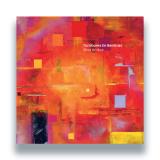
In Gianfranco Rosi’s portrait of Naples, Sotto le Nuvole, the ground shakes periodically. Between Mount Vesuvius and the Tyrrhenian Sea, the fumaroles of the Phlegraean Fields hiss volcanic gas and steam. Below the sleeping volcano, modern day Naples emerges in black and white and fills with voices, with lives. From the traces of history and the concerns of the present, Rosi documents a city immersed in its continuous past, with Daniel Blumberg’s minimal soundscape hovering in a sonic space between liquid and air.
Tasked with creating a soundscape that would suspend space within Rosi’s film, Blumberg called upon the extended technique of saxophonists Seymour Wright and John Butcher to create a gossamer fabric of traces and sounds abstracted from their instruments. Having transitioned from theoretical physics to the saxophone, John Butcher has always deeply considered space in the context of his playing. His concerns are with flow, density and how the saxophone is situated in the living world. Zeroing in on the core sonic properties of the mechanical and acoustic components of the saxophone, Seymour Wright has integrated its every breath, reed vibration, keypad clatter and hissed microtone of his alto into his own, unique improvisational language. In his work with these two seminal players, Blumberg makes his most concentrated soundtrack to date - reinforcing the film's sense of overlapping time and space, and pushing at the limits of experimentation.
Initially recorded in Daniel’s flat in London, Butcher and Wright centre themselves around long, consistent tones, so soft that it seems breath is being gently pulled from the saxophone's bell by an invisible hand. Blumberg himself adds haunting bass harmonica, and recordings of Wright’s launeddas - a traditional and ancient triple pipe polyphonic reed instrument from Sardinia, Italy. Blumberg then travelled to the volcanic region of Baia, next to Pompeii. Once a flourishing classical Roman city loved by Nero, Baia slowly sank under hydrothermal pressure, leaving the city in a kind of geological purgatory. Using specialised geophones and hydrophones, Blumberg took those initial recordings and amplified them underwater, sending them calling out across the ruins of Baia’s mosaics, Nymphaeum statues and villas.
“It was important to me that the music was whispered in the same landscape that Gianfranco has worked for the past three years, so that you can hear the volcanic air gulping, the lapping of the waves, the steam and bubbles popping against John and Seymour’s saxophone breaths – an echo from a suspended time.”
What emerges is deeply melancholic, tender, subtle and right at the edges of audio technology. Submerged in an aquarian mausoleum, the mysterious vibrations of the saxophone and its bell become an echo of an echo, wading from the future into the past. ‘Sotto le Nuvole’ is less a soundtrack than a process of aeration - a sonic puncture in the material of the film which allows its central message to breathe, and a remarkable experiment at the limits of the saxophone’s possibility.
Manchester-based producer Lily Mumby, the creative force behind Lapalace, has chosen Lavender as her botanical muse for this sixth instalment. Like the aromatic herb that grows from tiny seeds to fragrant purple stalks, her compositions unfold with a similar patience and elegance. Her synthesisers breathe with a natural rhythm, creating textures that emerge and recede like morning dew on lavender buds waiting to bloom.
The standout track ‘new age night’ – a stunning love child of William Basinski's decaying tape loops and Aphex Twin's intricate programming—carries subtle lavender-inspired tones, balancing the plant's calming essence with hypnotic rhythms. Just as lavender requires thoughtful tending before rewarding the gardener with its distinctive aroma, Lapalace's landscapes reveal deeper complexities with each listen.
Much like gardening itself, Mumby demonstrates an innate understanding of when to intervene and when to allow natural development. This approach echoes throughout her career, from her debut EP "Ephemera" which caught the attention of Insult to Injury Records' Timothy Clerkin, through to her contributions to Chez De Milo's "So It Goes" Remix EP and Manchester label Skiptrace's various artists compilation.
Her work across BBC Introducing and fossil.radio reflects this same philosophy – creating environments where sound, space, and organic movement find their natural harmony. But this composition really feels that Mumby has come of age. "Music To Watch Seeds Grow By Vol. 6" represents the continued cultivation of Lapalace's distinctive sound and demonstrates the maturity of an artist way beyond her years. This music stands as a lighthouse through a thick fog of nostalgia, much like lavender standing tall amidst an English cottage garden.
Early DJ support including - Auntie Flo, Ruf Dug, Courtesy, Vladimir Ivkovic.
Nearly two years after "Superpaesaggio," Futureslowdubdisco rematerializes with a new album rooted in deconstructed rhythms, suspended atmospheres, minimalism, emotional tension, and ethnic echoes. Simone Ticconi and Francesco Colagrande, true explorers of sound, first delve into dark and shadowy ravines ("Shaman"), then descend into ocean depths ("Wendigo"), and make their way through impenetrable forests ("Natureconnection"), finally reaching the slopes of an active volcano ("Manitou").
The adventurous journey is rounded out with two more danceable remixes by Virtual Reality and Adelmo.
The crowning achievement is the artwork created by Awer, which pairs with the previous work by Flavia Mastrella.
Postmodern library music of great pathos. Giosue' Impellizzeri.
FUTURESLOWDUBDISCO is a project born from the meeting of producers Simone Ticconi and Francesco Colagrande. The duo explores sonic territories that combine downtempo, minimal techno, and dub. A blend of deep and hypnotic atmospheres, capable of moving between the contemplative dimension of listening and the pulsating energy of club culture, for an unforgettable rhythmic, ethereal, and psychedelic journey.
Recorded spontaneously in Brooklyn and created entirely without written compositions, this album is an essential release for fans of ambient music, spiritual jazz, meditation, and deep listening. Features Isaiah Collier on drums and tenor sax and produced by Sonny Daze.
=============================
A spontaneous musical transmission exploring healing, unity, laughter, and limitless possibility.
Recorded in Brooklyn, New York in 2025, Openness is a fully improvised full-length album from legendary ambient pioneer and sonic mystic Laraaji. Created without pre-written compositions or arrangements, the recording captures a rare moment of collective presence, where every sound emerges from intuition, listening, and trust in the unknown.
Guided by what Laraaji describes as a state of openness, the album unfolds as a meditation on timelessness, inexhaustible supply, right guidance, seamless unity, prosperity, healing, gratitude, understanding, relationship, and transformation. Moving fluidly between meditative vocals, Fender Rhodes, Moog synthesizer, zither, gong, and piano, Laraaji channels a deeply personal yet universal musical language intended for a global audience seeking connection, renewal, and inspiration.
A defining element of the recording is Laraaji's celebrated Laughter Meditation, woven throughout the performance as both a musical and spiritual practice. His joyful vocal expressions become an instrument unto themselves, creating moments of release, playfulness, healing, and communal connection. The laughter serves as a reminder that openness is not only a path toward deeper awareness, but also toward celebration, recreation, gratitude, and collective well-being.
The session features acclaimed saxophonist and composer Isaiah Collier on drums and tenor saxophone, bringing a responsive, exploratory energy to the recording. Producer Sonny Daze opens the album with a spoken invocation and shapes its expansive atmosphere throughout with the legendary Roland Space Echo RE-201, adding warmth, depth, and cosmic texture to the music's unfolding journey.
Described by Laraaji as a "vital music transmission," Openness was revealed spontaneously in the studio while remaining fully present to each new moment. The result is an immersive listening experience that feels both ancient and immediate—a celebration of right community, right recreation, right medicine, and the transformative power of creative freedom.
"This music is revealed and recorded spontaneously in Brooklyn, NY, with the attending presence of dear Sonny Daze and dear Isaiah Collier. Being totally in the new moment and allowing fresh communication to arrive, I remained open while touching various studio instruments. Being in channeling mode throughout the recording session, I sensed the world audience for whom this vital music transmission is intended."
Seven years after the haunting resonance of Voids, electronic pioneer Martyn returns to the album format with Music For Existing. Arriving on 15 May 2026, the record is more than a collection of tracks; it is a profound exploration of what it means to remain devoted to a craft in an era of relentless noise.
The album’s announcement is heralded by the lead single "Heavy Sound." The track serves as the perfect bridge between Martyn’s past and present - a masterclass in tension and release that previews the album’s dialogue between the producer, the musicians, and the audience. We live inside a culture that has prioritised and monetised restlessness. The modern apparatus runs on the continuous production of "next," driven by algorithms that value novelty over depth.
Music For Existing serves as a love letter to the communal act of making music - something that is both healing and inherently defiant. For Martyn, a musician often finds solace in musical conversation with others; in the moment we press record, we simply exist together. This record is an invitation to build human infrastructure around what we love, leaning into the fluid nature of community and seeing exactly where the music takes us when we choose to listen.
The album is a sprawling, "off-the-grid" tapestry that echoes Martyn’s profound appreciation for jazz - free, instinctive, and bursting in every sonic direction. This collection features an expansive cast of collaborators, including Duval Timothy, Dan Only, Lucinda Chua, and Mark Cisneros. The record is further elevated by the contributions of jazz talents Mischa Porte and Cees Bruinsma, alongside the evocative words of writer and poet Musa Okwonga.
While the acoustic textures and improvisational spirit of this record may feel like a departure, they represent a homecoming. Jazz has always been ingrained in Martyn’s work; even in his most stripped-back club tracks, the DNA of swing, syncopation, and free-form structure was always present, if not always visible.
Music For Existing marks the beginning of an exciting journey that will continue from the studio to the stage, celebrating the radical act of existing in the moment.
On his new album Chott, German-Tunisian producer and composer Taroug confronts his origins. Named after the Chott El Djerid, a vast salt lake in southern Tunisia, the ten-track album revolves around personal history and the search for identity. Chott is a conceptual work shaped by contrasting atmospheres, from minimalistic melancholy to raw, bass-heavy intensity. It blends traditional instruments with contemporary electronic text- ures, drawing lines between past and present.
Personal materials—such as vocal samples from family members—add layers of intimacy and cultural depth, most notably on the title track, featuring an original Arabic poem spoken by Taroug’s father, and on 1995,
a song reflecting on early childhood memories in Tunisia. Beyond these intimate dimensions, he works with sonic imagery that captures the sensory experience of heat and landscape in pieces like Saraab and Sirocco. In Nakhla, recordings of palm trees transformed into repetitive movements evoke scenes of southern Tunisia’s palm plantations, where organic and mechanical sounds converge.
For the artwork, Taroug once again collaborated with architect and designer Marie Brosius, assembling an experimental collage from old personal photographs of Tunisia that visually echoes the album’s themes of heritage and remembrance.
If you dig deep enough into the internet's lower depths, you'll find a shaky video shot on a camcorder. In 43 seconds, we see a makeshift drum kit built out of backyard Ostbahnhof trash, hear distorted vocals, and feel the anarchic energy of band and ravers dissolving into each other. It's now been twenty years since Bonaparte played their very first show at the legendary Bar25 on Berlin's Spree river. The ringmaster of this unhinged musical theater was Tobias Jundt then, and it's Jundt again now bringing the Bonaparte extravaganza back to the stage. New and nostalgic sit close together when the party's been going this long. Or, as they put it: "PARADISE IF YOU CAN STAND IT."
From late October through mid-November, Bonaparte will tour Germany, Austria, and Jundt's native Switzerland at full intensity, the full lineup - band to burlesque. Since their 2006 debut through their supposed farewell in 2019, Bonaparte played over 800 shows in 28 countries. Bottom line: "Too Much" isn't enough to properly celebrate a body of work like this. And the new songs from "PARADISE IF YOU CAN STAND IT" are far too significant not to bring to the stage. The lo-fi trash-punk of Bonaparte's earliest records has been built out with added layers, in production (largely alongside British avant-garde electronic artist HELiX) and in the songwriting itself.
The world certainly hasn't gotten any simpler since 2006. Tracks like "EVERYBODY PRESiDENT," loosely riffing on Zoe Leonard's poem "I Want A Dyke For President," and the corrosive "BRAiN ROT" mirror the social chaos we find ourselves in 2026. "OBEY (THERE iS STiLL A RiOT GOiNG ON)" is just as furious, though here the principle of hope still holds, as a multigenerational choir concludes "everything will be okay." Jundt speaks across generations again on "i LOVE YOU (MORE LATER)," dedicated in equal measure to his parents and his daughters: "Let the echo chamber bleed - from here into eternity."
The reconciliation and hope Bonaparte allows for and tends to, amid violence and all that noise, make "PARADISE IF YOU CAN STAND IT" a singular document of an artist grown wiser. Separation and grief don't cancel out love and vitality - they depend on each other. Ultimately, the album is a record of searching for and finding a home. To arrive, you have to let go.
And what better place to let go than in step with Bonaparte's wild, hedonistic party circus, finally back to gently terrorize our cities?
Donato Basile AKA DJ Plant Texture always wants his music to tell a story, and with his debut EP on Tresor Records, entitled Life, he’s now trying to tell the biggest story there is. According to the artist, “Life is about the fear of growing up”; both the anxiety itself and acknowledging and moving past it.
This narrative seems to have struck a chord with those who have heard the track, “People want to reflect themselves in the music; something personal. Lots of people have been in touch after hearing it; I guess they feel something melancholic in it. Personally, I imagine the track is like the life of a person; going from being born through childhood and youth and onwards, so perhaps they hear this?”
Having used an MPC since the early 2000s, Basile feels an intuitive connection to the hardware he uses, and so the creative process is very spontaneous: “I know where everything is so the music is made immediately. I make everything in the first ten minutes; after that if it’s not right then I just abandon it and start something else.” This immediacy, and familiarity with his equipment is apparent on the A-side, where Basile’s previous life as a drummer comes to the fore and tracks like Cycles and Ripetivo display his native understanding of groove but also how to stir things up - the three A-side tracks find classic techno rhythms seemingly falling apart only to snap back into place even stronger. The B-side finds Donato exploring more of his melodic side with WTT and the aforementioned title track showing Plant Texture’s love of breakbeat and classic techno.
The three digital bonus tracks continue this exploration of melody and syncopated beats - The EXP Days echos the wistful feeling of Life, as Basile meditates on the times spent at EXP, his record shop in Bari, which functioned as a meeting place for electronic producers in the area.
This album was born from a long-held, quiet ambition. I always wanted to navigate the entire journey of a record – from the first written note to the final mix. Winterglare is the result of finally stepping into that journey. Recorded in my home, the process was inextricably linked to the life happening just outside the door. Being surrounded by the daily routine and family created a unique tension; time felt precious, limited, and often fleeting. At first, finding mental stillness felt impossible. Yet as the winter deepened, a shift occurred. I found a place of unexpected calmness, where the music began to float, and the domestic noises around me became an accompaniment rather than an interruption. What began as an idea for a piano album expanded to include the Wurlitzer electric piano and the Gigster vibraphone. Some pieces evolved into experiments with percussion, accordion, and finally, the Roland tape echo and field recordings. Throughout this growth, the vision remained: to preserve a sense of space and time, allowing the true ambience of the moment to breathe. My hope is that these compositions find a place in your own quiet moments. I hope they offer your mind and soul the same sense of peace they eventually granted me during those cold months.— Volodja Brodsky
For the second installment of its renewed imprint, Fuse's own in-house resident and one of Belgium's proudest exports Phara takes the reins for a deep dive into thick percussion and vibrant club landscapes. 'The Wall' puts current dance music under a microscope with a brush of truly vintage spontaneity, merging techno's confrontational nature with house's harmonic genuineness. This duality is reflected through Phara's own relationship with his home base Fuse and the complementary contrast between its two rooms.
The EP's title track serves as a hypnotic introduction for the A1, imposing a bass-heavy rhythm and a persistently oscillating synthline. A dense production full of energy, 'The Wall' inspires intrigue throughout its duration, revealing its true intentions through a capable sound system. Sharing the first side of the press is 'Blaes 208', a name that Fuse club goers will likely recognise, that guides the listener from effect into embrace. With lush keys echoing past a comforting drum sequence fit for a close-eyed dancefloor experience, Phara's impactful tendencies meet his affinity for the melodic through a blissful six minutes of crowd to selector connection. Switching sides, a return to a cold cold aesthetic is quickly apparent through 'Hush Now 206'. A pummeling, saturated bass competes with a kick of equal effect, rolling through a storm of metallic stabs. Mastering the message of urgency, Phara presents a lightshow of resonating percussive work, defining his space just to cut right through it. To close out with a lasting impression, the producer mutes the acoustics of his work through razor-sharp sound design dotting along playful snares, a duality reminiscent of the dynamism of Detroit electro. 'Motion Steps', referring to the stairs that ascend from Fuse's main room to its more left-field counterpart, captures the atmosphere of the almost shimmering music that can be expected to be played there; a place where Phara and many others have been known to explore the extremities of their music. He swiftly throws in melodic elements to recontextualize an otherwise pressing composition, and after three chapters of considerable weight, he concludes his record with infectious groove that flaunts technical ability.
YARN welcomes René Audiard for its tenth release with "Makes Me Feel", a four-track EP from one of underground electronic music’s most singular voices.
Across years of dub techno, minimal and leftfield electronic experimentation, René has developed an approach to stripped-down music that feels anything but limited. Where minimalism can often become an exercise in taking things away, his work finds possibility in what remains. "Makes Me Feel" is a particularly fitting example: immersive, at times strange, but always full of feeling.
‘Lovin’ opens the EP in familiar Audiard territory: murky low-end, locomotive groove, reduced rhythmic compositions and an understated framework swimming in a pool of detail. 'Possession' lets in more light. Vocal echoes, persistent rhythms and occasional string phrases give it a cinematic quality, while a groove that seems to circle endlessly takes on an almost shamanistic pull. The EP’s 11-minute behemoth, 'Flesh', fills most of the release’s B-side while making a convincing case for patience and sophistication. There are echoes of minimal’s golden age here, but Audiard never mistakes repetition for standing still. Tiny rhythmic fragments sit alongside expansive orchestral gestures, with samples working at every scale of the arrangement. Warmth and cinematic drama run through the track, but it's the playful programming underneath that keeps it moving. 'Night' closes the record on a different note, recalling Audiard’s work with Ali Çakır in Düve. Percussive samples, accordion and Middle Eastern guitar phrases bring a more acoustic character to his reduced 808-infused broken beats, making for a playful, occasionally melancholic ending with a distinctly microtonal feel.
What makes René Audiard’s music so rewarding is how readily you recognize his hand in it. There is a particular grain to the sounds, a way of placing details within a groove, and a willingness to follow an idea wherever it leads. Across “Makes Me Feel”, those instincts give four quite different tracks a shared identity. Even when working within familiar forms, Audiard makes them sound entirely his own. It’s the holy grail of music production: a personal sound signature. And a thoughtful addition to YARN’s growing repertoire of reduced, sophisticated dancefloor music.
Mining the rich seam between transcendental escapism and crushing physical pressure, Sciama delivers his first album for Samurai Music. Exploring an energetic pitch between half-time and full-tilt 170, the London-based producer sculpts brooding soundscapes of sheer peaks and deep pits, driven by unrelenting but light-footed forward motion and an imposing strain of sound design. As Sciama, Michael Watters has been marking out his exacting sound since 2019 with an assured run of albums on ASC's Auxiliary label. His second EP for Samurai — the Wave Interaction 12" released earlier this year — pointed to his current area of focus inspired by the teachings of electronic music pioneer Daphne Oram. Contemplating the relationship between precise electronic frequencies and human perception, Celetal Form now delivers the full findings of his exploration. Oram coined the term 'celetal' in her 1972 book An Individual Note of Music, Sound and Electronics, trying to sum up a connection between the celestial and electrical. It's this spiritual dimension contained within sound waves Watters is concerned with, and the shape of the music on Celetal Form follows suit. In an opening statement of abyssal ambience, 'Overload Into Silence' establishes an atmosphere that endures throughout the album. Caught between steely textures, vaporous reverb tails and subtle harmonic interactions, the glacial shift of the many layers under Watters' control reveals an intense amount of detail at play even before drums and bass come into play. From there on in, the intensity ramps up from one heavyweight stepper to the next. There is agile, brittle top-end percussion at work on the likes of 'Induced Resonance' and 'Consuming Pulse', perhaps the most closely connected to D&B, while 'Rational Echoes' and 'Scanning Waveband' deal in urgency and techno-coded tension. A half-time roll guides the huge kick drum undulations of 'No Panacea', and 'Celetal Emergence' opens up into more spacious surroundings to let the subtle microtonal inflections of the synth tones set a curious mood. The two 'Intermodulation' tracks bring Watters' exacting approach into sharp focus, pushing the drums back and foregrounding alien frequencies that coalesce into unfamiliar yet strangely uplifting forms. Throughout Celetal Form this uncanny sensation charges the music with a power that reaches beyond its immediate, surface level impact. This intentional reflection on Oram's visionary thinking charges the current sound of Sciama with energetic intrigue that stands apart and invites a mindful, maybe even spiritual, engagement.
The Five Green Moons present Moon 3. The third sphere to find its way into orbit. On its surface the evolution of a many faceted creature has taken place. Now with long, long tentacles and a million mouths the creature dances and sings. Its voice is the sound of the ghost dub ritual. The echo of spirits passing through the translucent veil. The chants of souls lost in the vampire woods. The clap, clap of its limbs colliding is the sound of frequencies being bent into fascinating new shapes by machine/ human hybrids. Post punk dubwise angular electro folk, Pastoral dub, whatever name you give to this music is of no consequence. It is alive and spinning in orbit.
The third Five Green Moons album sees Justin Robertson's sonic pallet blossoming into new exciting shapes. These 11 tracks offer a wide vista of across the frequencies including a truly remarkable and uncanny tale from celebrated author David Keenan on ' To Haunt of the Dark Earth A Spot' that brings to mind a vision of M.R. James merging with African Headcharge. Another refreshing collaboration can be found on 'Message from the Tone Generator' where underground electronic producer Nickelle adds her magical poetry to the psychedelic swirl. This is a bold and magical offering in a time of pastiche where new shapes are drawn from the sketches of the past.
If you need a sonic shorthand imagine Public Image Limited meeting the haunting chants of a new age Incredible String Band. The spiritual tones of late 70's Don Cherry. The whispering psych swooshes from Planet Gong and most importantly a solid bass foundation straight out of King Tubby's studio.
The annual Bonkers Music compilation is back with another dose of high-energy bangers. For its seventh anniversary, the series takes a fresh step forward, exploring a slightly evolved musical direction while keeping the distinctive sound that defines it. “Year VII” lands on 12” vinyl.
A1 David Meyer & Ludviq – Mandanga 2.0 (Feat Nick Hanzo)
The collaboration between Ludviq and David Meyer strikes a compelling balance between tension and movement. Drawing from underground electronic influences, Mandanga 2.0 evolves through hypnotic layers, acid-driven momentum, and a powerful groove, resulting in a distinctive cut that feels both immersive and uncompromising. Mandanga 2.0 is a dark, hypnotic electronic track built around squelching acid sequences, deep rolling grooves, and haunting vocal elements from Nick Hanzo. Atmospheric textures and a relentless rhythmic drive create a tense, immersive journey through shadowy soundscapes, blending raw energy with a refined sense of space.
A2 Neskeh – Liquid Sky
A raw trip built entirely around samples from Liquid Sky, Neskeh’s one of all-time favorite films. Crunchy saturated highs, basement-shaking low end, heroin-soaked wonky vocals, and freaky alien leads drifting through the mix. A warped tribute to an iconic soundtrack. Welcome to the space trippy club
A3 Your Reference – Afterparty
Julia Konor aka “Your Reference” one of the hidden gems of Barcelona’s underground scene, lands for the first time on the label with “Afterparty”
”Afterparty” draws inspiration from abandoned industrial spaces, empty warehouses, and nights where the only thing that mattered was the music. No rules, no expectations. Just raw energy, dusty air, concrete, and people completely immersed in the moment. The track is a personal postcard from that world.
B1 Lebollet & Mar Bravo – Aleta
“Aleta” is one of those Colombian words that somehow made its way into our shared language. We use it for raw, intense, dark tracks. Hard to translate. Makes sense when you feel it.
B2 Funboys – Skin In The Game
“Against the persistent ebb and flow of a breaking heart’s pulse, echoes of half-faded memories tease your attention… On the edge of forgetting, you can almost remember. And then it hits you – the coalescence of feeling into colour and form, warm in its familiarity, powerful in its simplicity. Uncanny, because it was right there all along. Don’t hold your breath… Listen!”
B3 Milla Campollo – Brote Psicodélico
“Brote Psicodélico” emerges from a hypnotic intersection of acid rhythms, psychedelic textures and raw downtempo energy. The track slowly unfolds through repetition and movement, creating a constantly evolving state between tension and release. Dark, trippy and physical, it is built around a groove that pulls you deeper with every layer. Distorted elements and acidic patterns weave in and out of the rhythm, giving the track an organic yet alien character. A journey designed for listening, less about following a linear narrative and more about entering a state of mind, where the boundaries between rhythm, body and psychedelia begin to blur.
Faitiche presents the debut solo album by cellist, sound artist, and composer Topu Lyo: “quiet scenes from tokyo” brings together sixteen miniatures for solo cello and tape echo that oscillate between abstracts drones and rhythmic pizzicato sketches – all recorded at Topu’s Tokyo apartment. The constant traffic noise from a nearby highway has become an accompanying soundtrack for his compositions and can be heard on the recordings. Topu’s playing is marked by a distinctive idiom oriented more towards abstract electronic studio effects than classical technique.
The artist spoke to Jan Jelinek about his work:
JJ: A solo cello album may seem like an odd fit for a label that has to date released only music that is electronic in the broadest sense. But I think “quiet scenes from tokyo” complements the Faitiche repertoire exceptionally well. Its sixteen miniatures showcase the cello in all its complexity: the bowed passages sometimes recall a tape feedback drone; the pizzicato playing conjures up the percussion recordings of Moondog; and the abstract textures might be mistaken for the product of a granular sampler rather than rapid finger work on the cello. I’m constantly surprised by just how rich and varied this album is – without ever losing the charm of its sketch-like quality. Could you say a few words about the making of your album – first of all, from a rather technical perspective: what production tools did you use, and why?
TL: My production tools were very sparse. Just a solo cello and my Roland 301 Space Echo, which I only used at the end, running everything through it during mixing, tape only. After years of working with electronics, pedals, and synthesizers, moving to Tokyo pushed me toward minimizing my setup. But my aesthetics shifted too, toward simplicity. I wanted to strip everything back to just the acoustic cello and see how far I could push it — replicating some of my favorite electronic effects through extended technique: slow portamento, LFOs, filters, detune, noise. I’d also been listening to a cassette of ocean sounds for years. When I moved to Tokyo I was horrified to find myself living directly across from a freeway. Eventually the freeway started sounding almost identical to the ocean — and that ended up playing a prominent part in the recording.
JJ: That’s super interesting: mimicking electronic production as a compositional idea for the cello! You say the sound of the freeway is crucial to the album: I, too, tend to interpret steady traffic noise as a positive soundscape – do we hear the freeway on the album? I can also hear other field recordings, for example on “a street car with announcements”. Can you say a bit about how these field recordings influence your playing?
TL: Yes, you can hear the freeway on the album! The freeway is most prominent in “old trees in lonely spring”, “yuyake koyake”, and “the moon” (you can clearly hear individual cars). When I first began recording I had my balcony door shut tightly, but after a while I began leaning into the highway sound and slowly opening the door little by little to control the amount of noise. “streetcar with announcements” was a moment I was recording and a car passed by making announcements in the background. I loved how it sounded! Same thing with “yuyake koyake”, and later I realized that every day at 5pm the same song plays to mark sunset, telling children it’s time to go home. Having this bedrock of sound puts less pressure on me to put music on top or to play more notes.
JJ: It’s astonishing how much this differs from what I’d imagined: I’d been picturing peaceful landscape recordings, but had never thought of a freeway. Which goes to show how open to interpretation traffic noises are. So the room by the freeway had a major influence on the album – how are you going to perform it live?
TL: The contrast between the freeway and the beautiful landscape in my head couldn’t have been starker. I too was imagining a beautiful landscape in which to create the album, but somehow it still worked out. I've been going back and forth a lot on live shows and I think the most honest way is to have it the most stripped down. I was thinking of using traffic samples etc., but I think the duet really comes from the background sounds from every unique venue/environment. So as it stands, I’ll just be doing acoustic solo cello.
Nashville’s Jess Kerber focuses on the profound resonances of simple moments, pairing delicate acoustic guitar lines with her rich and captivating tenor. The World Is Dark, but I Want It to Be Funny, her second LP for Felte, is a deeply affecting collection of homespun poetry and natural artistry that finds the artists reflecting on personal history, the emotional intricacies of relationships, and the value of cosmic perspective. She explains,“These songs come from a space of feeling a little left behind, so a lot of the album is about realizing and accepting impermanence, and learning how to be good to yourself and to others.”
Opening with “Familiar Strangers”, Kerber gets to the heart of her greatest talents: fluid fingerpicking, emotive vocal cadences, feather-light touches of piano, and subtle harmonies. “Louisiana Song” positions a lyrical chain of childhood recollections up against the literal rising waters that will one day submerge a cherished place: “I think about being southern / and the sand on the gulf coast / When I think about returning / I am wading in a graveyard”.
Throughout The World Is Dark, Kerber navigates an emotional tightrope, fully aware of the ills of the world while trying to find connections and peaceful corners. Even with all their nuances and challenges, she suggests, our relationships are essential to staying grounded, even when we lose them. “Much of my writing is about facing the struggles head-on, balancing what you need to do to survive while remaining true to yourself,” she says. There are echoes of influences like Joni Mitchell, Gillian Welch, and Lomelda, though Kerber injects her own unique wit, wonder, and humility into every passage, allowing the listener into her head for a spell while quietly taking up residence in theirs.
Pablo Sánchez´s new solo album “Archipiélago” is out now. The new long player, a follow-up to his “Nocturnal” album as Basic Need will be released on Sisternoise Records and is a 42 minute voyage sailing through uncharted waters.
Every archipelago is a constellation of islands, distinct yet bound by invisible tides. Archipiélago, the latest work from Pablo Sánchez, follows this same geography of sound and memory. Its islands are not of sand and rock, but of places which inspired the artist throughout his life; Buenos Aires, Caracas, Puerto Rico, New York, Madrid, Berlin, and Barcelona. Each city has left a trace, a shoreline carved into Sánchez’s musical journey and left a distinctive musical mark.
The ten songs gathered here are like sovereign entities, each with its own character, its own rhythm, its own language. Together they form a single territory, a map drawn by musical experience, longing, and imagination. They are ports of call, but also fragments of a larger voyage, where tradition and experimentation, nostalgia and discovery, coexist to create a common territory. Along the way guest magicians Animal Feelings and Salomeya add their vocal sparks to the voyage.
Archipiélago is not a destination but a map of crossings, a territory of sound where the journey itself becomes home.
Other Plans is the fifth full-length album by Swedish composer, producer, and vocalist Daniella Ljungsberg, and her third release on ORTHODOX. Returning to her early training in Baroque and Renaissance music, Ljungsberg reimagines these formative influences through the electroacoustic language she has developed over the years. Across seven tracks, harpsichord, double bass, bassoon, and trombone intertwine with modular synthesis, field recordings, and digital processing, moving between intimate songwriting and minimalist composition. Swedish folk echoes, Baroque sensibilities, and meticulous sound design dissolve into a singular musical landscape shaped by memory, nostalgia, and imagination. Created in a time of uncertainty and disorientation, Other Plans carries a delicate tension between melancholy and hope, transforming the act of looking back into a means of moving forward.
Australian psychedelic rock band Druid Fluids return with Pareidolia, an ambitious second album exploring perception, superstition and the human instinct to find meaning in patterns, whether real or imagined.
Written and recorded in Adelaide at songwriter and producer Jamie Andrew’s home studio, Pareidolia unfolds across ten expansive and immersive tracks that push the possibilities of psychedelic music. Released by Australia's Third Eye Stimuli Records, the album arrives as a 2LP vinyl exclusive that includes a D-Side with bonus tracks taken from the recording sessions.
Psych-rock and melodic pop collide with krautrock rhythms, cinematic dreamscapes, classically inspired arrangements and experimental production. No two songs inhabit quite the same world, and the album never lingers in one room for long.
Influenced by the inventive songwriting of The Beatles, The Beach Boys and Frank Zappa, the atmospheric sophistication of AIR and contemporary psychedelia from Tame Impala, King Gizzard and Melody’s Echo Chamber, Druid Fluids balance vintage warmth with a distinctly modern sense of possibility.
Pareidolia is hypnotic, intimate and surreal. Melodies twist and reform, rhythms circle back upon themselves and subtle motifs appear like half-recognised symbols. Its labyrinthine passages and dream-logic imagery invite listeners into an immersive space where clarity and confusion remain in constant negotiation.
Pareidolia follows the band’s acclaimed 2023 debut, Then, Now, Again & Again, whose first vinyl pressing sold out worldwide. Since then, Druid Fluids have toured Europe and shared stages with The Brian Jonestown Massacre, Wolfmother, Psychedelic Porn Crumpets, The Murlocs and Amyl and the Sniffers.
Immersive, melodic and wonderfully unpredictable, Pareidolia is a psychedelic masterpiece that rewards repeat listening, revealing new details and hidden connections with every spin.
Y-3, the pioneering sports-fashion collaboration between adidas and Yohji Yamamoto, has for three decades dwelled calmly within the ''tensions of existence''. In conceiving the brand's long-awaited return to runway format at Paris Fashion Week, these codes laid the groundwork leading up to the Spring/Summer 2025 season. Whilst the focus for runway is traditionally placed on garments, models, styling, environment, and the pageantry in between, it was crucial that music play an integral role in the conversation. Three seasons later, sound has informed creative direction from the very earliest phases of ideation. Commissioning all-original compositions has become a natural part of this ideology. The return to runway has invited the opportunity to define a new sonic palette for the brand, and beyond that, to usher in a new era of sound for Y-3 that echoes across music & culture. Following this ethos, and with a mandate to support obscure talent, Montreal duo Solitary Dancer have emerged as the first collaborators in shaping the intimate brand architecture of noise & feeling. With a body of work now spanning over a trilogy of seasons, the genre-defying Y-3000 imprint provides an outlet to disseminate & recontexualize the original compositions beyond the traditional runway. The label embodies Y-3's enduring commitment to explore innovation within opposing cultural forces. The works, originally released on Y-3000 as a series of white labels, are now being featured as a 6x 12'' vinyl compilation. Designed by Trevor Jackson and limited to just 99 examples, the recordings will also be made available both digitally and on streaming services for the very first time.
San Francisco’s 21 st century take on disco has long tended towards the cosmic and
psychedelic, a reflection of the Bay Area’s long association with trippy, mind-altering music.
Over the years, Leng Records has periodically dived into these fertile waters, delivering
inspired slabs of cosmic-minded and dub-flecked excellence from 40 Thieves and, more
recently, Marshall Watson and Cole Odin.
It’s to Watson, a long-serving producer and sound designer whose work has previously
appeared on labels including Sprechen, Shades of Sound, Seven Villas, Italians Do It Better, Highpoint Lowlife and NuNorthern Soul, that Leng has turned this time around. It marks his first solo appearance on the imprint and lands two years on from his inspired Odin collaboration, Voyager. ‘Little Monster’ is Watson at his most potent, club-focused best. Built around rock-solid
disco drums and a deliciously dubby, low-slung bassline, the track slowly builds via waves of intergalactic electronics, spaced-out and echoing vocal samples, audible nods to cosmic rock and bursts of starry synth melodies. Thickening and increasing in effects-laden intoxication as it progresses, ‘Little Monster’ not only lives up to its name but also cements Watson’s growing reputation as one of 21st century cosmic disco’s most distinctive talents.
Fittingly, the accompanying remix comes from Leng regulars and fellow San Francisco
residents 40 Thieves. Delivering a genuinely epic, near nine-minute excursion, the veteran
collective drag Watson’s inspired original mix further towards Daniele Baldelli style dub
disco-meets-Afro-cosmic territory. Expect bolder, funkier bass, echoing synth motifs, eyes-
closed electric guitar solos, echoing synth snippets and wild, sustained organ chords. It’s
cosmic disco in dub… and the perfect accompaniment to Watson’s future cosmic disco
classic.
or its first release, CRVSH introduces the new 6-track EP by Zaatar, co-founder of the label, entitled First Crush. Zaatar unveils a collection of new anthems that reflect her distinctive sound, standing between club music and live performance energy. Throughout the EP, she blends diverse cultural influences that echo across each track.
With First Crush, Zaatar develops a musical language of her own, where her North African roots meet the rawest forms of electronic music. Percussions borrow from rock’s intensity, while dissonant synths crackle like guitar riffs, all driven by the power of deep bass frequencies.
The voice takes a central role throughout the EP, shifting from a sensual whisper to a mechanical and robotic texture. It creates a constant tension between human and machine, between organic warmth and mechanical coldness.
Born in West Palm Beach, Florida, to a mother of Indian and Congolese heritage and a father of Slovak and Belgian descent, Siân grew up between Belgium and New York before finally letting her travelling wings come to rest in Paris. What could have become a story of fragmentation instead became a source of creative strength. Singer, songwriter, composer and photographer, Siân has always turned borders into bridges.
She first honed her voice in the jazz clubs of Paris and New York, performing alongside renowned artists such as Richard Bona, Jon Batiste and Mike Stern. Yet her path has always extended far beyond the stage. For nearly a decade, she led cultural initiatives with women and children living through exile, violence and poverty across India and Southern Africa, weaving together music, photography and artistic transmission as tools for dialogue and empowerment.
The true turning point came when she discovered the kamele ngoni, the West African harp whose ethereal sound seemed to echo something long buried within her. The instrument became her musical alter ego—the invisible thread binding together her many inheritances. Guided by Malian master Abou Diarra, Siân embarked on an inward journey towards her African roots. Yet this return to her origins was never an act of retreat into identity. Instead, it gave rise to a body of work that remains profoundly open to the world, where Africa enters into conversation with jazz, folk, soul, alternative pop and the rhythms of Brazil.
Along the way, she has crossed paths with remarkable artists including Rogê, Chico César, Fatoumata Diawara, Lokua Kanza, Flavia Coelho, Thomas de Pourquery and Philippe Baden Powell. On stage and in the studio, Siân continues to shape a musical universe that refuses labels. Like artists such as Björk, Joni Mitchell and Laura Mvula, she moves forward as an explorer, guided not by genre but by intuition.
Today, Siân stands as one of the most distinctive voices of the new Francophone music scene an artist capable of uniting musical sophistication with emotional power, introspection with collective celebration, depth with an irresistible urge to dance.
Animal — The New Album
With Animal, produced by British musician Tom Excell (Nubiyan Twist, Africa Express...), Siân delivers her most intimate and assured work to date. Every song feels like a shedding of skin, a quiet metamorphosis, exploring self-acceptance, femininity, the freedom to be oneself, cultural heritage, and the reconciliation of one's own imperfections.
From Stereotype, a fearless manifesto against the expectations imposed on women, to the title track Animal, an anthem celebrating the beauty of imperfection ("I've turned my cracks into a crown"), the album gives a voice to everyone who refuses to fit into predefined boxes. In Terre, je danse sur toi, featuring Fatoumata Diawara, Siân pays tribute to Mother Earth and to the roots that unite us all. Oh! Congo, recorded with Lokua Kanza, reconciles her cultural heritage with an ancestral homeland that feels both distant and intimately familiar. En équilibre, with Flavia Coelho, embraces the exhilaration of risk and the courage to leap, while Put a Mask and I Could Kill confront hidden wounds and the invisible violences that quietly shape who we become.
In ADé, Siân addresses Adenomyosis as though speaking to an unwanted housemate. "My body is your battlefield," she sings, giving voice to an intimate shadow lodged deep within herself. This bittersweet lullaby transforms a pain so often left unspoken into an act of profound tenderness towards oneself.
The album also holds a rare treasure: Reste tel(le), an unpublished text by Pierre Barouh, the founder of the Saravah label. Never before set to music or performed, this elusive poem of free love finds new life through Siân's voice, becoming a dialogue across time between two artists united by the same devotion to freedom, métissage and openness to the world.
Driven by Tom Excell's vibrant Afro-pop pulse, the spiritual breath of the kamele ngoni, organic arrangements and deeply personal songwriting, Animal is an album of liberation. It invites us to lay down our masks, embrace our contradictions and reconnect with the free, instinctive and powerful animal that lies dormant within us all. More than a collection of songs, it is a radiant manifesto for the richness of identity, the passing on of memory, and reconciliation with oneself.
Animal is not simply the title of an album, it is a declaration of independence. An invitation to live fully, unapologetically, and without instructions.
A citizen of the world, travelling freely between continents, languages and memories, Siân Pottok delivers with Animal her most personal, and perhaps her most universal work to date: an album that reminds us that our fragilities, our roots and our differences are, beyond doubt, our greatest strength.
— Christophe Tison
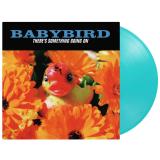
There's Something Going On is the second studio album by Babybird, originally released in 1998.
The album is almost unrelentingly dark and mysterious, in much the same manner as his earlier lo-fi productions. Indeed, two of the tracks here, "You Will Always Love Me" and "There's Something Going On," were recorded straight to four-track. Jones' voice echoes out of lyrical valleys. "Take Me Back" is a horrific tale of an obsessive relationship, with lyrics about eyeballs scratched with rusty nails and a creepy chant of "dead, dead, dead" ad infinitum. It's a conceit that starts with the very first track, "Bad Old Man," where Jones sings of wife-beaters and a drowning in a duck pond. Musically, the album is more of a lean toward the baroque than Ugly Beautiful. One might describe it as stark, disturbed chamber pop. Beautiful melodies appear quite majestically out of Jones' psychological studies. "It's Not Funny Anymore" is bittersweet and touching, with Jones reaching for the album's emotional core over weeping, organic keyboards.
"There's Something Going On" is the tender conclusion, suggesting that Jones knows there's a better way of life than obsession and self-torture. There's Something Going On is definitely Baby Bird's most subtle album, and it's a fascinating listen from start to finish.
There's Something Going On is available as a limited numbered edition of 750 copies on turquoise vinyl and contains an insert.
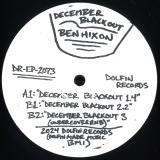
Dallas-raised, Atlanta-based Ben Hixon is a musical connector. As a producer, DJ, and Dolphin label head, he brings together various different musical worlds from hip-hop to house and techno. Here, returning to his label, he kicks off with the slow-motion beatdown throb of 'December Blackout 1 4' with suggestive, erotic vocalisations panning through the mix. The claps are raw and the chords echo the 80s aesthetics of Omar S at his most tender. 'December Blackout 2 2' has a more grinding groove and mechanical snare patterns with molten electronics dripping over the face of the rhythm. 'December Blackout 3 (Undercoverrnb)' is hunched over and muggy deep house for the sweaty back room.
Three years on from the release of his critically acclaimed second album as Tambores En Benirras, Graham Newby returns with album number two, a glorious celebration of the mystical, magical and life-affirming musical meditation on stretched-out sunrises and the breathtaking beauty of dawn.
Newby has more reason that most to cherish picturesque and soul-enriching sun-up moments. During the process of making second set Onda Horizontales, the long-serving Cumbrian DJ, crate-digger, beat-maker and producer’s sight deteriorated to such a degree that he was certified ‘registered blind’. As a result, new working methods were found, with Newby delivering widescreen Balearic visions as much from muscle memory and feel as the visual environmental cues that once fired his imagination.
Third album Alba Amba – ‘amber dawn’ in English – finds Newby in dawn-ready mode, serving up music to soundtrack stunning sunrises and those clear early morning moments where anything seems possible. It’s a simple idea, beautifully executed, with the artist once known as Gripper conjuring up a meditative and mesmerising mix of slow-burn aural colours, tactile textures, gradually unfurling chords, and heady melodic motifs.
Newby sets his stall out with the smouldering, pre-dawn bliss of the jaw-dropping title track, where reverb-laden female vocalisations and twinkling electronics usher in a golden dawn, before reaching for shimmering, sun-bright melodies, heart-stirring chords and undulating TB-303 lines on the ambient acid chug of ‘Bucanero Acido’.
Newby’s instinctive grasp of mood and texture comes to the fore on the drifting, soft-focus ambient dub head-nod of ‘No Se Me Pasa’, where strummed acoustic guitars, echoing vocal samples and weighty low-end warmth catch the ear, while his history of dusty downtempo beat-making – originally explored on his early 2000s releases for Grand Central Records – informed the dancehall-meets-trip-hop fusion of ‘Batalla De Etiquettas’.
With its epic, head-turning ambient intro, raw electronic bass, effects-laden hand percussion and slow, restless build, this triumphant closing cut signals the moment the sun has well and truly arrived above the horizon. It’s a genuinely stunning conclusion to a soul-stirring set.
With Sunrise and the Life We Live, John Beltran returns to his ambient techno roots, the sound that garnered him global appeal in the 1990s.
Through ten tracks, the album journeys through lush, aerated textures and beatless expanse. Hypnotic grooves deepen and bloom in a flow of shapes and colors, creating a sound that is both meditative and full of life.
Thirty years after the release of his seminal Ten Days of Blue, Beltran's musicianship, vision and desire to produce remain at a fever pitch. With Sunrise and the Life We Live his gift of extracting emotion from the universe and turning it into
a unique musical experience puts him in a class of his own.
“IRIE” is where the Paris-based artist Yasmin Regisford's next era begins. Built on echoes of reggae vocals, warm low-end pressure and slow-building psychedelic tension, the track blurs nostalgia and euphoria until they become impossible to tell apart. More than a collision of genres, “IRIE” is about coexistence: different influences and origins moving together without losing themselves. It mirrors Regisford’s own relationship to cultural hybridity — existing between worlds, and feeling fully at home inside the blend. The single sets the tone for Zentraï, a four-track EP that unfolds like a shifting ritual — morphing between groove-led hypnosis, psy-infused tension and percussion rooted in movement and memory. Across the EP, Yasmin Regisford maps a world where rhythms, textures and identities intertwine: fluid, layered and constantly evolving.
Half a century after its original release, legendary Lebanese musician and singer Marcel Khalife—renowned oud player and global icon of both music and activism—returns with a new recording. On this album, he reinterprets four of the five tracks from his debut, Promises of the Storm. A bold defiance of time and history.
Why revisit the same album, 50 years later? The reasons are many, but one stands above the rest: history itself seems to be repeating. The narrative unfolds once more in the same dire circumstances as half a century ago, as if time has folded in on itself, returning everything to its starting point. The urgency, the necessity—it all remains, pressing and inescapable. We must begin again.
In 1976, a young Marcel Khalife found himself exiled in Paris, fleeing the Lebanese Civil War and his family’s Christian village, where his progressive, left-wing ideas had placed him under a kind of house arrest. He was one of the few to openly and unwaveringly champion the Palestinian cause. The situation quickly became untenable, especially since, just a month before the war began in March 1975, Khalife—fresh out of the conservatory—had given his first public concert to great acclaim. Then, everything collapsed. What does one do when trapped at home? Read books, play the oud, and turn those readings into songs. In his family’s de facto prison, Khalife began setting the poetry of the great Palestinian poet Mahmoud Darwish to music. These songs, born of confinement, he carried with him into exile, driving to Paris where a producer offered him the chance to record an album. Naturally, the tracks were the ones he had been improvising at home from Darwish’s poems. The album’s title, Promises of the Storm, echoed the war that was just beginning. Khalife recalls that the album became a hit after a concert at the Fête de l’Huma, where 500 copies were sold in a single day. “Everything started there, and it never stopped,” he remembers. He would meet Mahmoud Darwish shortly after, at a dinner organized by mutual friends. From that moment, a deep friendship blossomed between the two men.
With Darwish’s words and Khalife’s music, the songs of Promises of the Storm are imbued with a powerful evocative force—melancholy, tenderness, and poetic resistance in the face of violence. The album catapulted Khalife to international stardom, leading to endless tours and recordings, yet he never abandoned his commitments.
Now, 50 years later, Promises of the Storm returns in a fresh recording, because history is repeating itself. After the Israeli bombings in Lebanon at the end of 2024, Khalife, who was on tour, found himself stranded in Paris. He remembered a recurring request from his son, musician Bachar Mar-Khalife, who had often urged him to re-record his now-classic debut album. One morning, oud in hand, Marcel knocked on his son’s door and said, “Shall we? I’m ready to record.”
These new versions are stripped down, raw, and intimate—just the solitary strings of the oud. Khalife sings as never before, his voice no longer marked by the fragility of youth but imbued with something deeper, freer, unshackled. It soars high yet resonates low, always clear, as if to escape sadness, to evoke love and violence, desire and exile. In just four songs, Khalife encapsulates a lifetime, and a philosophy of life. Rita tells of a love of Darwish’s, with the haunting line (translated from Arabic): “Between Rita’s eyes and mine, a rifle.” Oummi invokes the figure of the mother as a metaphor for the lost land. Promises of the Storm is a meditation on revolution, the hope for change, the melancholy of defeat, and the power of thought. Passport captures, through poetry, the feeling of being stateless—a citizen of everywhere and nowhere.
Time has only strengthened these texts and this music. History never repeats itself without a valid, indispensable reason for the present. That reason is fully contained in Marcel Khalife’s new interpretations, which have never sounded so clear, so right, so essential.
Truths and secrets often reveal themselves at night, under the freedom of shadowy darkness, away from prying eyes. In creating Given to the Night, sisters Valentine and Clementine Nixon have crafted a world that drifts through the in-between: between dream and reality, between day and night and the undefined, and ultimately a world that embraces the discomfort of being untethered. A process that follows simplicity and intuition rather than pre-determined narratives. “We recorded songs as they appeared, which sometimes felt like catching light. Before we realised it we had a record”, the duo explain.
While making the record Valentine and Clementine gently pushed away from the world- deleted social media, retreated into the trees of their native New Zealand - and only invited a couple of people in during the recording process. From that space, the album came together in an eerily easeful way.
There is a dream-like drift and sonic timelessness to the the record, as reflected in its nocturnal title, which can be read in two ways:
“Being taken by, or being inclined towards nighttime, preferring its blurry cloak of shadows to the harsh light of day; or giving oneself up to night, in sacrifice, letting go of fear and melting into the darkness.”
Written during a time of personal transition there was “a sense of finding the light in the shadow” they add. Guitar lines float, synth lines entwine, tapes hiss and vocals stream creating a kaleidoscopic montage of transient memories and emotions. A spectrum of feelings arise - isolation and joy, insomnia and manic highs, confusion and fleeting clarity, grief and healings. In the record, these feelings all merge and fade into one another in a nonlinear manner, as life tends to do; creating something deeply human that simultaneously gestures towards the transcendental.
GERDie Chopi Timbila zählt zu den großen Orchestertraditionen Afrikas und ist tief in der Kultur der Chopi im mosambikanischen Distrikt Zavala verwurzelt. Ihre charakteristischen Mwenje-Holzxylophone sind in sieben gleichmäßigen Tonabständen gestimmt und erzeugen eine mikrotonale Klangwelt, die sich deutlich von westlichen Tonsystemen unterscheidet. Die Ensembles vereinen Musiker verschiedener Generationen und Erfahrungsstufen, während jährlich neue Kompositionen entstehen, die Gemeinschaft, Geschichte und das Leben der Vatxopi widerspiegeln. 2008 wurde die Tradition von der UNESCO als Immaterielles Kulturerbe anerkannt und gilt bis heute als eine der komplexesten und schönsten musikalischen Ausdrucksformen Mosambiks. Mit Ecos Do Legado (Echoes Of The Legacy) ehren die Brüder von Timbila Ta Venancio, allesamt Söhne des legendären Timbila-Meisters Venancio Mbande, das Lebenswerk ihres Vaters und die kulturelle Bedeutung der Chopi-Musik. Die 2026 im Studio Bom Dia in der Provinz Inhambane entstandene Aufnahme interpretiert Mbandes Erbe neu und bewahrt zugleich dessen Geist und Tradition. Die zehn Stücke folgen der überlieferten Reihenfolge einer klassischen Timbila-Aufführung und entfalten eine zusammenhängende musikalische Erzählung. Ecos Do Legado ist damit zugleich Hommage, kulturelles Dokument und eindrucksvoller Beweis für die lebendige Zukunft dieser einzigartigen Tradition.[ENG]The Chopi Timbila is one of Africa's great orchestral traditions, deeply rooted in the culture of the Chopi people of Zavala, Mozambique. Its distinctive mwenje wood xylophones are tuned in seven equidistant pitches, creating a microtonal sound world markedly different from Western musical systems. Timbila ensembles bring together performers of different ages and skill levels, with new compositions created each year to reflect community life, history, and tradition. Recognized by UNESCO as Intangible Cultural Heritage in 2008, the tradition remains one of Mozambique's most celebrated and sophisticated musical forms. On Ecos Do Legado (Echoes Of The Legacy), Timbila Ta Venancio honors the legacy of revered timbila master Venancio Mbande through the work of his sons, who perform and reinterpret his enduring musical vision. Recorded in 2026 at Studio Bom Dia in Inhambane Province, the album serves as both a tribute to Mbande and a celebration of Chopi cultural heritage. The ten pieces follow the traditional sequence of a timbila performance, unfolding as an interconnected musical narrative. Ecos Do Legado stands as a powerful testament to a living tradition whose cultural significance continues to resonate across generations.
Die Chopi Timbila zählt zu den großen Orchestertraditionen Afrikas und ist tief in der Kultur der Chopi im mosambikanischen Distrikt Zavala verwurzelt. Ihre charakteristischen Mwenje-Holzxylophone sind in sieben gleichmäßigen Tonabständen gestimmt und erzeugen eine mikrotonale Klangwelt, die sich deutlich von westlichen Tonsystemen unterscheidet. Die Ensembles vereinen Musiker verschiedener Generationen und Erfahrungsstufen, während jährlich neue Kompositionen entstehen, die Gemeinschaft, Geschichte und das Leben der Vatxopi widerspiegeln. 2008 wurde die Tradition von der UNESCO als Immaterielles Kulturerbe anerkannt und gilt bis heute als eine der komplexesten und schönsten musikalischen Ausdrucksformen Mosambiks. Mit Ecos Do Legado (Echoes Of The Legacy) ehren die Brüder von Timbila Ta Venancio, allesamt Söhne des legendären Timbila-Meisters Venancio Mbande, das Lebenswerk ihres Vaters und die kulturelle Bedeutung der Chopi-Musik. Die 2026 im Studio Bom Dia in der Provinz Inhambane entstandene Aufnahme interpretiert Mbandes Erbe neu und bewahrt zugleich dessen Geist und Tradition. Die zehn Stücke folgen der überlieferten Reihenfolge einer klassischen Timbila-Aufführung und entfalten eine zusammenhängende musikalische Erzählung. Ecos Do Legado ist damit zugleich Hommage, kulturelles Dokument und eindrucksvoller Beweis für die lebendige Zukunft dieser einzigartigen Tradition. ENGThe Chopi Timbila is one of Africa's great orchestral traditions, deeply rooted in the culture of the Chopi people of Zavala, Mozambique. Its distinctive mwenje wood xylophones are tuned in seven equidistant pitches, creating a microtonal sound world markedly different from Western musical systems. Timbila ensembles bring together performers of different ages and skill levels, with new compositions created each year to reflect community life, history, and tradition. Recognized by UNESCO as Intangible Cultural Heritage in 2008, the tradition remains one of Mozambique's most celebrated and sophisticated musical forms. On Ecos Do Legado (Echoes Of The Legacy), Timbila Ta Venancio honors the legacy of revered timbila master Venancio Mbande through the work of his sons, who perform and reinterpret his enduring musical vision. Recorded in 2026 at Studio Bom Dia in Inhambane Province, the album serves as both a tribute to Mbande and a celebration of Chopi cultural heritage. The ten pieces follow the traditional sequence of a timbila performance, unfolding as an interconnected musical narrative. Ecos Do Legado stands as a powerful testament to a living tradition whose cultural significance continues to resonate across generations.
“One foot out the door, another in the otherworld…”
So begins Hannah Lew’s debut, self-titled solo record, soaked in imperious, wide-eyed pop songwriting and a girl-group/post punk aesthetic that belies the artist’s history in the U.S. underground. A towering, hook-laden album, it’s infused with an optimism and surrealism that conversely deals with the times we find ourselves in.
Recorded at home in Richmond, CA and in The Best House studio with Maryam Qudus in Oakland CA, with the assistance of a crack team of West Coast musicians, this album sees Hannah Lew stepping out from behind the legacy of her two groups Grass Widow and Cold Beat. While musically bearing similarities with her previous work, “Hannah Lew” is a bold leap into direct pop territory, making ample use of a vocal style that teases out the inherent melancholy in her melodies. Mastered by Sarah Register, each song is a perfectly honed nugget that frequently pulls the heart in two directions at once.
Themes of change, breaking up, shattering old ways of being are shot through the record. For the front cover, a photograph of the artist’s face was printed, ripped up and re-assembled, resembling the creative process embarked upon by Lew for her first “solo” material. The album feels instinctual, almost dream-like in its assemblage of sweeping synths and pulsating, propulsive drum machine beat patterns with Lew’s vocal performances sensitive and caressing over the top. Increasingly relying on the subconscious and dreams to guide her creative process, Hannah Lew frequently abandons literal interpretations or linear narratives, the songs seeming to exist in a swooning, effortless flow-state while remaining emotionally hard hitting.
On an album where every song could be a single, there are kaleidoscopic shades and varying emotional tones in abundance. First single Another Twilight is carried along a pumping, Italo-disco-style 4/4 beat and mono-synth bass line, the low end pulling at the heart and body. Lew’s vocal melody teases the track before swan-diving into a gorgeous chorus as she sings “it’s all over baby and I don’t mind… in decline, I take my time…” The album is suffused with moments like this. On slow builder Damaged Melody, an arpeggiated synth elongates the verse before a cascading synth showers down melodic glitter. The stunning Replica uses dual swirling synth patterns before a driving, synthpop chorus for the ages carries Hannah Lew’s vocal into the stereo field, sailing in on a high register singed with the embers of a break up.
In a departure from previous groups, her solo songs are guided by dreams and free association inspired by Dada and the Surrealist movement and sculpted afterwards. As such, the songs reveal themselves on repeated listens, revealing traces of heartbreak inspired by both personal and global elements - Hannah Lew regards the album “a wartime album.” On Move In Silence, Lew intones “there’s a war outside, just out of view,” revealing the dichotomy at play throughout. With the songs evolving naturally and in a flow state, the pressures and sadnesses of the modern age bleed through, mixed in with Lew’s inherent love, sensitivity and fractured-but-intact optimism. On the swooning, sublime Sunday layers of Numanoid synths open up for the commanding vocal performance pontificating on grief, love, pain as she “feels the ache on Sunday…” As the chorus builds and Lew’s call-and-response vocal adds to the emotional tension, it almost feels like too much to take.
Elsewhere, there are echoes of Hannah Lew’s previous work. On Time Wasted a bass guitar comes in with a heavy, punk attack before the synths and vocal harmonies reminiscent of later Cold Beat elevate everything. The glassy, sweetly resigned closer The Clock sounds like so classic it could be cover, a sweetened Jesus & Mary Chain tune perhaps, before it erupts into volcanic chorus that could only come from Hannah Lew in 2026.
A long-time figure at the heart of Samurai Music, Last Life makes his first appearance on SAIBAI trading his signature snarl for shadowy psychedelia and snaking beatdowns. Since 2015 Mauro Picciau has been cultivating a sound that maximises on the space that opens up around half-time 170, finding plenty of power while stretching out his rhythms. On this new release he pivots towards subtler tones and textures, and plugs directly into the wave of innovative artistry occurring at the intersection of D&B and deep techno. Writhing, taut sound design spells out the mood on opening track 'Gear Cutter', as Picciau gets expressive with metallic feedback tones that elegantly contort across the front of the mix. There's a strong sense of narrative that brings the track's dynamic movement to the fore, holding back energetic shifts with a measured intent to ramp up the tension. 'Norma' has a more ceremonial feel, locking into a steady pulse and letting distant clouds of melodic ambience create a bewitching atmosphere around the percussive mantras. 'Radian' speaks its own minimalist, techno-spirited language, drawing on alien murmurs and steely drones to strike a lighter note without breaking the mysterious fog that hovers over the EP. 'The Moat' leads on a heavier set of drums to close the record out, shaping space with skilful reverb and a tightly controlled synth pulse. Within this echo chamber, and across the whole release, Picciau has capitalised on this patient approach to bed infinitesimal ripples into the mix, rewarding the active listener and instilling his creations with a kinetic vitality that can always be felt, no matter how slight the sound is.
The Armenian electronic underground has been quietly brewing something visceral. After years navigating the labyrinth of electronic production from his Yerevan studio, Dave N.A. strips away the excess to reveal six raw, uncompromising cuts that pulse with quiet intensity. Not the manufactured urgency of algorithmic dance floors, but the honest tension of someone who’s spent years refining his craft while the scene evolved around him.
Following his debut ‘Altura EP’ on no•id, where collaborations with freq444 showcased his ability to merge Armenia’s electronic scene with Brussels’ underground pulse, Dave N.A. returns with ‘Echoes EP’ after the label’s necessary creative hibernation. This isn’t about comebacks or grand statements. It’s about persistence. About the kind of restless creativity that emerges when you’ve been grinding in relative obscurity, releasing on labels like Uppers and Downers, Typeless, and Elicit Records, slowly building a sound that refuses easy categorization.
The EP opens hard and unexpectedly with “BLINK,” delivering a throat-cutting and all-consuming bassline. “ECHOES” builds around atmospheric sounds and percussive elements, driven by a straightforward yet effective drum sequence. “SHADO” ventures into darker and faster territory with sparse drum programming and heavy sub-bass emphasis. Both “RUSH” and “ORB” unleash torrents of unrelenting breaks, each percussive hit landing with surgical precision as sub-bass currents pull everything forward into hypnotic repetition. “HUNTER” closes the journey, stalking into frame with predatory low-end and razor-sharp hi-hats slicing through dense atmospheric fog.
The no•id ship continues to chart its course through Brussels’ underground, prioritizing artists who value craft over hype. With Dave N.A.’s return, the label reinforces its commitment to electronic music that functions on multiple levels: cerebral yet visceral, local yet universal.
Looking back on her career in the early 90s, Stevie Nicks described the first track of Rock a Little as “the most exciting song that I had ever heard.” This coming from a superstar who was already closely affiliated with several bajillion-selling Fleetwood Mac albums — to say nothing of her own benchmark solo debut. Her remarks attest to the enthusiasm and effort she invested in her third record, a 1985 work that quickly furthered Nicks’ profile and cemented itself as a piece of 80s pop lore.
Mastered at MoFi’s California studio, pressed at Fidelity Record Pressing in California, strictly limited to 4,000 numbered copies, and housed in a Stoughton gatefold jacket, Mobile Fidelity’s 180g 45RPM 2LP set presents Rock a Little in audiophile sound for its 40th anniversary. Helmed by a cadre of producers and engineers, and recorded for a reported one million dollars, the platinum-certified album teems with a head-spinning array of colors, tones, dreamscapes, and accents. This reference-grade reissue marks the first time they are all brought to light and conveyed with proper balance, dimensionality, and positioning.
Though Rock a Little doubtlessly has period characteristics of a mid-80s LP, Nicks and company spare no expense when it comes to distinguishing the music with expansive sonics distinguished with lush melodies, high-tech percussion, echoing vocals, sampled keyboards, and layers of sophisticated accents. The degrees of spaciousness, headroom, and dynamics are nothing less than inspiring, while the newly enhanced detail, texture, and clarity make the songs sing like never before. As for Nicks’ voice? Wait ’til you experience the transparency and depth.
Those advantages extend, of course, to the aforementioned “I Can’t Wait,” a statement-making opener shot through with modulating synthesizers, splashy drums, metallic guitars, and serious drama. Holed up in a massive studio, Nicks required just one take to nail her part, which she called “magic and simply not able to beat.” The singer-songwriter also distilled the reverberating emotional essence of the Top 20 tune, stating “when I hear it on the radio, this incredible feeling comes over me, like something really incredible is about to happen.”
The same can be said for nearly all of Rock a Little. Crafted by the likes of Songwriters Hall of Fame multi-instrumentalist/producer Rick Nowels, Heartbreakers organist Benmont Tench, bassist Bob Glaub, jack-of-all-trades Greg Phillinganes, and session-pro guitarists Waddy Watchel, Les Dudek, and Danny Kortchmar — along with another two dozen or so participants — the record spills with diverse ideas, shapes, and moods. Everything is in the right place, as evidenced by the swirling glide and sensual undertow of the slightly funky title track to the snapping rhythmic pace and big hooks of “Imperial Hotel,” one of Nicks’ standout moments.
“What was it she wanted?” Nicks queries on “No Spoken Word,” continuing a theme of contemplation that runs through the narratives. Nicks never lands on a definite answer, but hearing her explore loneliness, love, and the secrets we keep to ourselves proves continuously rewarding. Take her passionate performance on a cover of Chas Sanford’s “Talk to Me,” a Top 5 smash furthered by tasteful saxophone lines and understated folk elements. Immersive yourself in the grand sonic corridors of “If I Were You,” laden with Nicks’ signature mysticism.
Moreover, surrender to the gravitas of the closing “Has Anyone Ever Written Anything for You,” a piano ballad composed about the death of Joe Walsh’s three-year-old daughter. As Nicks asserts earlier on the album, she sings for things money can’t buy.
So, rock a little, yes, but dare to feel even more.
There was nothing in contemporary music like Chris Isaak’s Heart Shaped World when it hit shelves in June 1989. More than three decades later, the singer-songwriter’s third album still sounds unique — and claims a backstory nearly as fascinating as the retro-leaning material and standout performances that propelled it to sales of more than 2.5 million copies. Home to the Top 10 smash “Wicked Game,” the set remains a masterful mood piece that invites you to pour a late-night drink, sit in a dimmed room, and relish Isaak’s elegant albeit raw ruminations on love, relationships, and questionable decisions.
Sourced from the original master tapes, pressed at Fidelity Record Pressing, strictly limited to 3,000 numbered copies, and featuring the bonus track “Diddley Daddy,” Mobile Fidelity's UltraDisc One-Step 180g 45RPM 2LP box set of Heart Shaped World unearths the staggering inner details, saturated tones, and brilliant atmospherics of the crisp production. It brings you up close and personal with Isaak’s spectacular singing — impeccably controlled, tense, brooding, steamy, smoldering, haunted — situated amidst stripped-down backdrops that allow every note to fully bloom and decay.
While Isaak’s ever-steady baritone remains the anchor, the contributions of his trusty backing band, the aptly named Silvertone, come across with just as much cool, command, and realism. The indispensable playing of guitarist James Calvin Wilsey particularly emerges with superb clarity and dimensionality. The character of his 1965 Fender Stratocaster, shivering twang of his spring-coiled fills, and his signature use of reverb, delay, and vibrato seamlessly match Isaak's patient deliveries and the band’s unhurried rhythms. Experienced on UD1S with ultra-black backgrounds and a nearly invisible noise floor, Heart Shaped World is in every regard a demonstration disc.
The premium packaging of this UD1S pressing befits its elevated status. Housed in a deluxe slipcase, it features foil-stamped jackets and faithful-to-the-original graphics. Aurally and visually, this reissue is for discerning listeners who desire to immerse themselves in everything involved with the album, not the least of which is the cover art depicting a lost-in-thought Isaak staring ahead and sitting in what appears to be an efficiency apartment. The image epitomizes the record’s lonesome temperaments and pensive themes.
Of course, if not for director David Lynch hand-picking two cuts from Heart Shaped World for his 1990 film Wild at Heart, the record would’ve probably suffered the same fate as Isaak’s prior efforts and gone unnoticed by the mainstream. Despite receiving raves from outlets such as NME, Chicago Tribune, and Rolling Stone upon its original release, the album stalled in the lower quadrants of the Billboard charts and, after a few weeks, dropped off.
Cue the ear of Lee Chesnut. Then the music director for a large Atlanta radio station, Chesnut heard the instrumental version of “Wicked Game” on Lynch’s soundtrack and started airing the album rendition at all hours of the day. Aided by a sensual video featuring Isaak and supermodel Helena Christensen, the song found its way into the public consciousness by early ‘91 and helped make Isaak a most unlikely mainstream star in an era where his techniques had little to nothing in common with popular tastes.
Despite its vintage vibes and shared DNA with legends such as Roy Orbison, Chet Baker, and Glen Campbell, Heart Shaped World transcends nostalgia, rockabilly, and throwback tropes. For all the melodrama and sadness at hand, Isaak’s gorgeously transparent singing dives deep underneath emotional surfaces. He mines subtleties that indicate his feelings go beyond heartbreak and anguish, and occasionally suggest frustration, menace, and anger. You can hear it in his quivering falsetto, and the slow and methodical ways he allows delicate whispers to break into shadowy phrasing that crosses over to the darker sides of romance and desire.
That approach bolsters the title track, which suggests calm yet moves on ominous currents — its simmering pace and snare-drum snappiness foreshadowing Isaak raising the volume and urgency during the coda. The southwestern-tinged “Wrong to Love You” plays with similar concepts of hesitation, unease, and discord, Isaak careful never to fully erupt and give anything away. His poised deliveries offer a master class in the art of insinuation and hurt on “Nothing’s Changed,” sent up with a wordless backing chorus and crackling guitar lines straight out of a Memphis blues joint.
Heart Shaped World further boosts its merit via its abundant stylistic variations, from the upbeat country-and-western trot of “I’m Not Waiting” and Spanish acoustic shimmer of the jazz-based ballad “Blue Spanish Sky” to the swinging horn-accompanied grooves of “Don’t Make Me Love You” and desert smokiness of the understated “Kings of the Highway.” On the latter, Isaak comes across as resigned and absolute. His singing and pain worm their way into your soul, and echo akin to the way the music prepares to strike when you least expect.
“Trouble going 'round,” Isaak croons right as the album begins. “Trouble going down.” Damn straight.