Since the first release 5 years ago, Jazz Room Records has released an eclectic and interesting selection of releases.
From the Jazzy commercialism of the Take Vibe version of The Stranglers "Golden Brown" (5,000 vinyl single sales) to the 1960's Headshop Sounds of West Coast Fluteman Eric Ghost.
Other notable releases on Jazz Room include the critically lauded album by Vibraphonist Khan Jamal "Infinity", a compilation of Japanese tough funk fusionists indigo jam unit put together by DJ Colin Curtis, Nuyorican Latin House from Tata Vasquez, Jazz Dance Madchester Rave from Cruisic and some South African Holy Grail grooves from Abacothozi! The latest release is the Underground Latin J-Jazz of Copa Salvo, first introduced to London by DJ & Music Legend Jean-Claude.
Next up is an in demand Jazz Funk Obscurity from Educator and Trumpet Player John Lamkin whose self released album "Hot" saw the light of day in 1984 then disappeared into the Rare Jazz ether.
Currently changing hands for €300 and upwards it's again about to see the light of day in 2025!
This is an album that is aptly named with all the elements we love: Latin, Funk, Soul, Jazz and all round Double Hipness. What a Hot item it is too. From the Funky as it gets opening bars of "Ticket" through the Rio bound flight "722", taking in a visit to Wonderland with some Soul Jazz Vocal stylings on "Flower Power" and the Funkiest 17 minute Journey to Trumpet Enlightenment in the Title track "Hot" which is, true to its name, Scorching by the finish line is reached.
Already getting Big Ups on UK Jazz Funk Scene Founder Colin Curtis's Cult Radio Show "Jazz Dance Fusion" it's gonna be getting plenty of plays worldwide at the "Hottest" radio stations and funkiest jazz dance nights near you soon!
Ross Allen: It's brilliant!! Perry Louis: Massive! Dr Bob Jones:I Love Big Time!Colin Curtis: Killer!
Buscar:el mal
Taking inspiration from late 70’s / early 80’s French library music and electronically inclined composers like J.P Decerf, Sauveur Mallia and Yan Tregger, Andrei Nikolsky conjures up cosmic vibrations of some long-lost Tele Music library, filled with squeaky synths, shimmering solinas and funky clavs, with help from Kanpai Quartet members Charlie Searle on bass and Euan McGinty on guitar.
The third internatonal release by the legendary Malian singer and guitarist is many fan's favourite. 'The Source' established Ali Farka Touré on the internatonal stage and paved the way for his legendary collaboraton with Ry Cooder on the GRAMMY award winning album 'Talking Timbuktu'.
Available for the frst tme on vinyl, the album has been re-mixed from the original master tapes and includes a previously unreleased track from the same sessions.
The album is presented in a gatefold sleeve containing double 180g vinyl and large format 28 page booklet with lyrics.
'The Source' features Farka Touré's frst recordings with his home town band Group Asco, with vocalist Afel Bocoum and percussionists Hamma Sankare (calabash) and Oumar Touré (congas). Touré's trademark acoustc and electric guitar (as well his njarka violin) playing are highlighted on some of his best loved and most sophistcated compositons.
The father of the desert blues unleashes a set of driving small group performances, intmate love songs, mesmerising guitar solos and two unique duets with the great American bluesman Taj Mahal.
NEW LP PRESSING on Opaque Yellow Wax
Released in September 1978, a mere two months before YMO’s debut, Cochin Moon is a clear precursor to the groundbreaking synth and sequencer-dominated sounds that would come to define the iconic trio. Huge tip!
Credited to Hosono and Pop Art legend Tadanori Yokoo (who created the cover art), Cochin Moon is a fictional soundtrack to a journey into unknown worlds, inspired by Hosono and Yokoo’s trip to India.
The unbelievably prolific Haruomi Hosono is one of the major architects of modern Japanese pop music. With his encyclopedic knowledge of music and boundless curiosity for new sounds, Hosono is the auteur of his own idiosyncratic musical world, putting his unmistakable stamp on hundreds of recordings as an artist, session player, songwriter and producer. Born and raised in central Tokyo, his adolescent obsession with American pop culture informed his early forays into country music, which he would revisit later in his career. Hosono made his professional debut in 1969 as a member of Apryl Fool, whose heavy psychedelia was somewhat at odds with his influences, which leaned towards the rootsy sounds of Moby Grape and Buffalo Springfield. The latter was one of the main inspirations for his next group, Happy End, whose unique blend of West Coast sounds with Japanese lyrics proved to be highly influential over the course of three albums. After the band’s amicable break up in 1973, Hosono began his solo career with Hosono House, an intimate slice of Japanese Americana recorded inside a rented house with recording gear squeezed into its tiny bedroom. Hosono’s solo career would take many twists and turns from this point forward, with forays into exotica, electronic, ambient, and techno, culminating in the massive success of techno pop group Yellow Magic Orchestra (YMO).
Released in September 1978, a mere two months before YMO’s debut, Cochin Moon is a clear precursor to the groundbreaking synth and sequencer-dominated sounds that would come to define the iconic trio. Credited to Hosono and Pop Art legend Tadanori Yokoo (who created the cover art), Cochin Moon is a fictional soundtrack to a journey into unknown worlds, inspired by Hosono and Yokoo’s trip to India. Initially the album was to be a kind of ethnographic musical document, using found sounds and field recordings made by Hosono himself. Instead, after Yokoo introduced Hosono to the sounds of Kraftwerk and krautrock during the trip, Cochin Moon became something much stranger. Created almost entirely on synthesizers and sequencers with the help of future YMO collaborators Ryuichi Sakamoto and Hideki Matsutake, the music on the album is the perfect encapsulation of Hosono’s concept of “sightseeing music,” transporting the listener to an exotic place that may or may not exist. This highly sought-after album sees its first-ever official release outside of Japan.
From an artist in their seventies, you probably wouldn’t expect to hear an album like this. But Brazilian drumming legend Ivan ‘Mamão’ Conti has been experimenting and innovating for the last half a century. As one third of cult Rio jazz-funk trio Azymuth, Mamão was at the root of the group’s ‘samba doido’ (crazy samba) philosophy, which warped the traditional samba compass with jazz influences and space age electronics. Even with his lesser known jovem guardua group The Youngsters, Mamão was experimenting with tapes and delays to create unique, ahead-of-its-time sounds, way back in the sixties. More recently Mamão recorded an album with hip-hop royalty Madlib under the shared moniker ‘Jackson Conti’.
With his first album in over twenty years, and the first to be released on vinyl since his 1984 classic The Human Factor, Mamão shares his zany carioca character across eleven tracks of rootsy electronic samba and tripped out jazz, beats and dance music. Featuring Alex Malheiros and Kiko Continentino on a number of tracks, the Azymuth lifeblood runs deep, but venturing into the modern discotheque (as Mamão would call it), Poison Fruit also experiments with sounds more commonly associated with house and techno, with the help of London based producer Daniel Maunick (aka Dokta Venom).
Take a bite of Mamão’s psychoactive Papaya and join the maestro on a weird and wonderful stroll through the Brazilian jungle.
United by a love for the music of Mamão and Azymuth, the CD and digital edition also feature the previously released remixes and dubs from some of today’s most forward-thinking producers with a penchant for percussion, including IG Culture, the 22a crew, Max Graef and Glenn Astro.
Since launching her own club night, “Motivation,” back in 2018, B.AI has played a key role in bringing the underground’s club sounds to her home country, China. While introducing some of the scene's most exciting artists to her local audiences, she emerged as one to look out for as well: first as a DJ and quickly thereafter as a producer. Her original takes – a sensitive, highly personal approach to melody and a knack for playing with expectations – crystallized in a slew of A+ releases and a couple of international tours. This trajectory, shaped by taking matters into her own hands and self-empowerment, now sees a logical next step, with the inception of a label that will also operate under the “Motivation” banner and features her own “Hope” EP as its first release.
Sparkling mallets, with synth-pop quality catchiness, open the title track. Rather than further evolving, their two-bar arrangement gets looped over and again, serving as the foundation for a slick FM bass rhythm and a variety of hooks. Although these incline to the bright, the overall vibe is melancholic. In vintage B.AI style, the aptly titled “Hope” is more ambiguous than its patches suggest. Similarly, the vocal this type of palette would call for ultimately comes in the form of aloof, covert musings. A bit buried in the mix, they are most efficient – just like the tension that keeps brooding underneath the surface.
“Murderbot Diaries 1991” turbocharges four-to-the-floor synthetic drums with an arpeggiated rolling bass. The blue note melody on top feels sequenced via a pocket calculator, and the dissonant, electroclash-reminiscent stabs that follow might sound even more angular. The tune is frantic, sinister – and perhaps above all tongue in cheek. It reaches fever pitch with the arrival of a tubular bell theme between the two breaks.
“Once”’s slomo cutoff modulation on the 16th note mid-bass instantly creates a sultry atmosphere that meshes greatly with the pastel cool of the gently delayed DX7 leads. The energy drifts between effortless control and uncertain outcome. These contrasts are amplified as the drums alternate amidst moderation and beat-repeat rendered havoc.
On “Only We Know,” a progressive sine lead lays out the central motif. Yet as briskly as it appears, it makes way for detuned, gliding square waves taking on the same theme. This outlines the track’s structure: as slightly morphed repetitions keep getting introduced almost haphazardly, a dreamlike, mesmerizing ambience unfolds. Techy drum rhythms and a 101-type bass make sure everything stays fuelled. Within the ingenious tapestry of melodies and new twists, it never loses touch with the dance floor. It illustrates B.AI’s club savvy neatly and is therefore a perfect closer for this EP.
To Celebrate its 60th release, Syncrophone proudly presents 'The Syncrophone Remixes Vol. 1' by Rolando. Featuring electrifying reworks of Derrick Thompson, Zadig, and Malvito, this collection brings a powerful, Detroit-inspired sound that echoes the future of techno. Available soon—don’t miss these exclusive remixes. Vol. 2 is just around the corner, promising even more groundbreaking surprises.
Círculo Cerrado welcomes its first sub-label, E.T.D.G., where sound becomes a story.
Aniano invites you to an immersive auditory experience with Una Serie de Crímenes Sonoros. This first concept EP, weaving between fiction and reality, is predominantly driven by Techno, following the sonic direction previously explored in El Terror De Gáldar on Time To Panic. Naturally, it also features the hints of Electro and Minimal that have become hallmarks of Aniano’s music.
The record’s mysterious and spatial atmospheres draw heavily from 1980s sci-fi cinema and retro video game aesthetics. Rhythms from the iconic TR-909 and intricate synth work from the Nord Lead 2 crown this 12-inch release.
More than just a collection of tracks, Una Serie de Crímenes Sonoros is an exploration of human darkness through electronic soundscapes—a must-have for collectors of conceptual and boundary-pushing music.
Oslo’s Sex Judas feat. Ricky announces 2 x LP for Norway’s Snick Snack Music
The band’s varied concept album portrays a break-up of epic proportions and releases Jabnuary 2025
Digital Release Date: 3rd May 2024
Vinyl Release Date: Jan 2025
“Are you ready for the big disaster? The moment when everything unravels?
On their third album, Sex Judas feat. Ricky portrays a break-up of astronomical proportions. The band's mascots, Sex Judas and Ricky, embodied by artist Sindre Goksøyr, find themselves in the midst of a separation, and their feelings are sprayed all over the big screen.
But what is actually going on? Sex Judas feat. Ricky consists of the musicians Tore Gjedrem (Ost & Kjex), Sidiki Camara, Ivar Winther, Tracee Meyn, Tore Brevik, Kristian Edvardsen and Linn Nystadnes, a stellar team part of Oslo's musical underground. Together, they play a mixture of funk, disco, post-punk, traditional music from Mali and electronica that always moves the dance floor, with two previous critically acclaimed albums on the Scottish Optimo Music and a Norwegian Grammy to show.
Sex Judas’ third album, ‘The Book Of Dreams / After Sex’, is a double disc and a two-part musical affair. In the first part, Sex Judas' version of the breakup is depicted in a band format, with music inspired by the alternative 80s. Think Grace Jones, Tom Tom Club, DAF, No Wave, and the Compass Point Studio backing band in a blissful cocktail.
In part two, depicting Ricky’s breakdown, the band has created their most experimental music to date in close collaboration with contemporary composer Ole-Henrik Moe. The songs influenced by Ole-Henrik's tones are fluid and beautifully ambient, with inspiration ranging from 30s and 40s film music, Norwegian folk, contemporary electronica and IDM topped with Moe’s modern string arrangements.” - Snick Snack Music
Wewantsounds is delighted to announce the reissue of Ammar El Sherei's sought-after instrumental album " Music From The East" from 1976. Here, the iconic Egyptian musician and composer revisits seven classic compositions by another Egyptian legend, Mohamed Abdel Wahab, in his own hypnotic way. Mixing Arabic music with funky arrangements and electric keyboard experimentations, the album is a perfect showcase for El Sherei's artistry. Curated and annotated by Lebanese-born Arabic music expert Mario Choueiry from Institut du Monde Arabe in Paris, this reissue has been newly remastered and comes with original Soutelphan artwork.
- A1: Vajolet (Feat Lukas Lauermann, Wolfgang Pfistermüller & Flip Philipp)
- A2: Autostrada Del Brennero (Feat Diggory Kenrick)
- A3: Latzfonser Kreuz (Feat Mamadou Diabate & Hamidou Koita)
- A4: Lago Di Garda (Feat Roger Robinson)
- A5: Alfa Romeo 145 (Feat Kwame Yeboah)
- A6: Feltuner Hütte (Feat Osman Murat Ertel)
- A7: Avrupa Köprüsü (Feat Osman Murat Ertel)
- A8: Europabrücke (Feat Susanna Gartmayer)
- B1: Ancient Atoll (Feat Reinhilde Gamper, Martin Mallaun & Flip Philipp)
- B2: Latemar (Feat Reinhilde Gamper & Martin Mallaun)
- B3: Brennerautobahn (Feat Taka Noda)
- B4: Echoes Part I (Feat Flip Philipp)
- B5: Echoes Part Ii (Feat Flip Philipp)
- B6: Transit Tribe (Feat Didi Kern)
- B7: Latemar (Reprise)
12"[23,49 €]
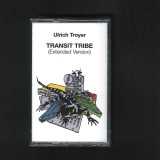
Ulrich Troyer has been producing music now solidly for over twenty years within a largely genre free framework, but whilst navigating forms such as avant-garde, techno, leftfield, field recording, electronica, glitch and ambient it is the aesthetics of dub that guide his creative direction. Not really recognisable in an orthodox form as remixed versions of roots reggae songs but in the way sonics are manipulated with space, the application and layering of delay, reverb and echo that fixes his output well within the scope of what might be called futurist dub.
The nearest comparisons to his new album TRANSIT TRIBE can only be established by a synthesis of some of the more adventurous explorations in modern music such as African Head Charge, Jon Hassell, Pole (Stefan Betke), Bill Laswell or even Miles Davis; featuring a diverse selection of artists and friends not only from Vienna and environs but also from around the world, sounds are not so much fused but allowed to float along the continuous flowing tide of warm waves of bass.
Rather than to allow the names of Ulrich Troyer's collaborators be merely listed in the album credits, what they bring to this joyful affair needs to be outlined, albeit briefly: Co-producer credits go to Osman Murat Ertel from Istanbul, who employed a variation on the old foolproof Nick Lowe method for checking out the impact quality of his own sound productions by playing tracks through his car sound system speakers!
Murat is a member of the electro-psych-folk group Baba Zula where he plays electric saz, oscillators and theremin and played a key part in the creative development of the album. Mamadou Diabate, the balafon master originally from Burkina Faso and now resident in Vienna, has developed his own unique technique of playing solos that replicate the sound of three instruments playing in unison; however the multi-talented Mamadou is engaged here on singing and playing the talking drum. From South Tyrol Reinhilde Gamper is a member of the experimental trio Greifer who are bringing the sound of the zither into the twenty-first century using new playing techniques and electronic gadgets. Susanna Gartmayer is an Austrian composer and bass clarinetist specialising in improv and multimedia sound research. Diggory Kenrick has been engaged with creating new dub fusions and also re-energising classic rocksteady and roots reggae classics, renowned for his interventions on flute. Didi Kern is an electronic dance musician and drummer from Vienna with a focus on free improvised music. Hamidou Koita, a singer and multi-instrumentalist, is from a traditional Griot family in Burkina Faso but now resident in Vienna and a regular musical partner of Mamadou Diabate playing drums and calabash. Austrian Lukas Lauermann is both a studio and live musician playing cello, also working on electronic sound design and writing string arrangements. He has recorded extensively and appeared on stage with both Mark Lanegan and Hans-Joachim Roedelius. Martin Mallaun is a Tyrol-born specialist in both the development of the zither in modern music and also as a researcher in the effects of climate change on the vegetation of Alpine ecosystems. Mystica Tribe is the musical alias of Tokyo-based dub/techno producer Taka (Takafumi) Noda. He collaborated with Vienna's own Vegetable Orchestra on 2020's "Transplants (Mystica Tribe Version)". After studying classical percussion Flip Philipp is now a jazz vibraphone player and member of the Vienna Symphony Orchestra. Wolfgang Pfistermüller is a member of the Vienna Trombone Quartet and the developer of the incredible bass-trombone Aurora with its uniquely warm and resonant sound. Roger Robinson is a renowned British poet, winner of many contemporary poetry prizes and member of the experimental music group King Midas Sound. Kwame Yeboah is a Ghanaian born UK based keyboard wizard who tours regularly with Yusuf / Cat Stevens, Ms. Dynamite and Pat Thomas.
So contained on the album is an astonishing mix of musicians and instruments: sounds of cowbells recorded in the South Tyrolean alps processed by modular synthesizers and heavy analogue bass synths combined with instruments such as zither, bass-zither, electro saz, flute, talking drum, trombone, cello, vibraphone, marimba, djembe, contra-alto clarinet, melodica, Farfisa - all bound together by organic live-drums and dub effects.
Liner notes by Steve Barker
RIYL: Sufjan Stevens, Pearls Before Swine, Richard Dawson, Incredible String Band, Scott Walker. When Dominic Harris started work on the follow up to 2017’s “Rural Tonic”, he had a different kind of landscape in mind than the bucolic inspiration he’d mined for that album and its predecessor (2013’s “Woodland Casual”). Instead it was nostalgia for winters of a youth (mis)spent in 90’s Berlin.
With a lucky find of a Hohner Guitaret, (a 1960s electric thumb piano), Harris began writing lyrics around its sparse and austere accompaniment. And after reconnecting with an old friend from Edinburgh, Ricky White, now living in the USA, the plan became clearer: a winter-journey to the rural Mid-West to write and record an LP. Convening in White’s new hometown of Bloomington IN, Harris would work each morning in the county library, the pair then venturing out on long, aimless drives down country roads before returning to put their ideas and conversation into music. With songs written over two weeks, Harris and White headed to a small studio space in a derelict strip mall in Indianapolis, to capture the album in as minimalistic a form as was fitting to the wintry feel of much of the music; glimmers of pedal steel and recorder shining out amid the dual acoustic guitars and piano arrangements. After the pandemic cut its swathe through all plans, the recording sessions decamped to Scotland.
By then Harris’s longtime collaborator Robert McFall had written string arrangements for each song, effortlessly capturing the spirit of the original vision whilst elevating each song towards the universal. Still there were the frosty hedgerows and abandoned factories of the rural Rust Belt. But also now the sandstone architecture and cobwebs of Edinburgh, and the cold grey of the Firth of Forth. Diminuet, the cover artwork showing a catheter transformed into a flower, captures that fragile moment where the world seems forever frozen in time, even as the Spring prepares to transform us all once again
the debut release of women’s brightest hope “polygonia” on mule musiq.
our friend&label artist “simone de kunovich” introduced her and she sent us
an excellent unique house music.
she sung,wrote the lyric, playing violin and flute.
a1 “upside down” reminds us bit early herbert style.unique melody and vocal.
a2 “eyes between letters” is kind of excentric afro brazilian deep house.we love this deep house.
b1 “beyond light and shade is like electronic version of midori takada or mkwaju ensemble.
it reminds us japanese 80’s kankyo ongaku.
b2 “complementary senses” is highlight of the release.very playful organic psychedelic mini-mal deep house.we think this kind of music is very rare these days.
so polygonia´s new 12nch is definitely on of the highlights on mule musiq in this year.
we love it so much!
- A1: A L’ombra D’una Olivera (U I Dos), Ft. Noelia Llorens “Titana”
- A2: Jota De La Fira De Tots Sants
- A3: Ens Devem A La Faena (Cant De Batre), Ft. Noelia Llorens “Titana”
- A4: Tant Com L’enyor De La Terra (Cant De Batre), Ft. Carles Dénia
- A5: Al-Azraq
- B1: Malaguenya Del Carrer Calvari, Ft. Noelia Llorens “Titana”
- B2: Quan Caiga La Nit
- B3: Esta Casa Sí Que És Casa (Cant De Batre), Ft. Josep Aparicio “Apa”
- B4: Cv-500
‘FAIXA’ is the eponymous debut LP from rural Valencian group FAIXA, emerging from a desire to fuse their curiosity for electronic sounds with experiences of living immersed in the folklore that resonates through the Valencian regions of l’Alcoià and el Comtat.
This atmospheric album speaks to a sound not often heard in the wider Spanish electronic music scene, but reminiscent of other modern revivals of traditional music fused with electronic sounds across Spain right now.
The sound of the album is a constant dialogue between the roots and the future of Valencian generations; traditional vocalists play an essential role in connecting oral traditions such as the “cant de batre” and marches of the “moros i cristians” with leftfield electronic, influenced by sounds typical of dubstep, jungle, or footwork. This historical quality resonates profoundly through songs where vocalists Noelia Llorens “Titana”, Carles Dénia, and Josep Aparicio “Apa” act as channels to a new sonic dimension of traditional music, where the classical and the modern intertwine.
Receiving great feedback across the country in a short period of time, FAIXA’s unique approach to electronic music has gained them mentions and interviews on national and local radio & TV.
“The music by Ludvig Forssell and El Michels Affair provides suitably thumping accompaniment.”
Soundtrack performed by El Michels Affair, an American cinematic soul group led by musician and producer Leon Michels.
* Leon has worked with a who’s who of talented musicians, including a brief spell as part of Wu-Tang’s touring band, he started making music under his own steam with the express intention that it be sampled by hip-hop producers. Jay Z, Beyoncé, Travis Scott and Don Toliver all used his work for their songs.
Bill Skarsgård stars as "Boy" who vows revenge after his family is murdered by Hilda Van Der Koy (Famke Janssen), the deranged matriarch of a corrupt post-apocalyptic dynasty that left the boy orphaned, deaf and voiceless. Driven by his inner voice, one which he co-opted from his favorite childhood video game, Boy trains with a mysterious shaman (Yayan Ruhian) to become an instrument of death and is set loose on the eve of the annual culling of dissidents. Bedlam ensues as Boy commits bloody martial arts mayhem, inciting a wrath of carnage and blood-letting. As he tries to get his bearings in this delirious realm, Boy soon falls in with a desperate resistance group, all the while bickering with the apparent ghost of his rebellious little sister.
- A1: Vajolet Feat Lukas Lauermann, Wolfgang Pfistermüller & Flip Philipp
- A2: Autostrada Del Brennero Feat Diggory Kenrick
- A3: Latzfonser Kreuz Feat Mamadou Diabate & Hamidou Koita
- A4: Lago Di Garda Feat Roger Robinson
- A5: Alfa Romeo 145 Feat Kwame Yeboah
- B1: Feltuner Hütte Feat Osman Murat Ertel
- B2: Avrupa Köprüsü Feat Osman Murat Ertel
- B3: Europabrücke Feat Susanna Gartmayer
- B4: Ancient Atoll Feat Reinhilde Gamper, Martin Mallaun & Flip Philipp
Cassette[14,92 €]
Ulrich Troyer has been producing music now solidly for over twenty years within a largely genre free framework, but whilst navigating forms such as avant-garde, techno, leftfield, field recording, electronica, glitch and ambient it is the aesthetics of dub that guide his creative direction. Not really recognisable in an orthodox form as remixed versions of roots reggae songs but in the way sonics are manipulated with space, the application and layering of delay, reverb and echo that fixes his output well within the scope of what might be called futurist dub.
The nearest comparisons to his new album TRANSIT TRIBE can only be established by a synthesis of some of the more adventurous explorations in modern music such as African Head Charge, Jon Hassell, Pole (Stefan Betke), Bill Laswell or even Miles Davis; featuring a diverse selection of artists and friends not only from Vienna and environs but also from around the world, sounds are not so much fused but allowed to float along the continuous flowing tide of warm waves of bass.
Rather than to allow the names of Ulrich Troyer's collaborators be merely listed in the album credits, what they bring to this joyful affair needs to be outlined, albeit briefly: Co-producer credits go to Osman Murat Ertel from Istanbul, who employed a variation on the old foolproof Nick Lowe method for checking out the impact quality of his own sound productions by playing tracks through his car sound system speakers!
Murat is a member of the electro-psych-folk group Baba Zula where he plays electric saz, oscillators and theremin and played a key part in the creative development of the album. Mamadou Diabate, the balafon master originally from Burkina Faso and now resident in Vienna, has developed his own unique technique of playing solos that replicate the sound of three instruments playing in unison; however the multi-talented Mamadou is engaged here on singing and playing the talking drum. From South Tyrol Reinhilde Gamper is a member of the experimental trio Greifer who are bringing the sound of the zither into the twenty-first century using new playing techniques and electronic gadgets. Susanna Gartmayer is an Austrian composer and bass clarinetist specialising in improv and multimedia sound research. Diggory Kenrick has been engaged with creating new dub fusions and also re-energising classic rocksteady and roots reggae classics, renowned for his interventions on flute. Didi Kern is an electronic dance musician and drummer from Vienna with a focus on free improvised music. Hamidou Koita, a singer and multi-instrumentalist, is from a traditional Griot family in Burkina Faso but now resident in Vienna and a regular musical partner of Mamadou Diabate playing drums and calabash. Austrian Lukas Lauermann is both a studio and live musician playing cello, also working on electronic sound design and writing string arrangements. He has recorded extensively and appeared on stage with both Mark Lanegan and Hans-Joachim Roedelius. Martin Mallaun is a Tyrol-born specialist in both the development of the zither in modern music and also as a researcher in the effects of climate change on the vegetation of Alpine ecosystems. After studying classical percussion Flip Philipp is now a jazz vibraphone player and member of the Vienna Symphony Orchestra. Wolfgang Pfistermüller is a member of the Vienna Trombone Quartet and the developer of the incredible bass-trombone Aurora with its uniquely warm and resonant sound. Roger Robinson is a renowned British poet, winner of many contemporary poetry prizes and member of the experimental music group King Midas Sound. Kwame Yeboah is a Ghanaian born UK based keyboard wizard who tours regularly with Yusuf / Cat Stevens, Ms. Dynamite and Pat Thomas.
So contained on the album is an astonishing mix of musicians and instruments: sounds of cowbells recorded in the South Tyrolean alps processed by modular synthesizers and heavy analogue bass synths combined with instruments such as zither, bass-zither, electro saz, flute, talking drum, trombone, cello, marimba, djembe, contra-alto clarinet, Farfisa - all bound together by organic live-drums and dub effects.
The busiest beavers in the edits game, the Patchouli Brothers sink their teeth in to some novel material for their second outing on RNT’s lauded white label series. The Brothers’ usual disco fodder gives way to some masterful reworking of 90s house, 80s electro boogie, Euro dance, and Freestyle on this 4 tracker that shows their crates run even deeper than we knew. From the opening chords of Male Dans La Peau, to the arpeggiated soulful pulse of See You Tonight, the over-the-top cheekiness of Mista Hasta La Vista, or the earworm vocal refrain of All Nite, this is a special record from beginning to end and an unexpected surprise from Toronto’s finest edit practitioners.
LP + insert with extended liner notes and download code including extra bonus track 'Movements of The Mind'.For his second album on the Belgian leftfield imprint Cortizona, Devin Brahja Waldman gathered a group of insanely gifted and talented musicians to start a new and highly moving musical chapter titled 'Nebulizer'.
From the first moment the pulsating tone of Devin's synth blends with the whispering voices of Earth, Wind and Choir and the menacing bells Naima Karlsson set in motion this record you just know and feel immediately 'Nebulizer' will be a soul-searching journey, soaking you deep into an unknown and very personal musical world.
Devin Brahja Waldman is a New York saxophonist, drummer, synthesizer player and composer who leads the group BRAHJA. He has performed with Patti Smith, William Parker, Nadah El Shazly, Malcolm Mooney, Thurston Moore, Godspeed! You Black Emperor, Charles Hayward, Luke Stewart and Yoshiko Chuma. Waldman is also a member of NYC's Heroes Are Gang Leaders (led by poet Thomas Sayers Ellis and saxophonist James Brandon Lewis), of Sam Shalabi's Land of Kush, and of the Norwegian hardcore group MoE.
In 2022 BRAHJA released the critically acclaimed album 'Watermelancholia' on the Belgian leftfield imprint Cortizona. For his second album on the same Cortizona label, Devin Brahja Waldman gathered a group of insanely gifted and talented musicians to start a new and highly moving musical chapter titled 'Nebulizer'.
Together with Adam Kinner, Georgia Wartel Collins, Earth, Wind and Choir, Luke Stewart, Kenichi Iwasa, Naima Karlsson, Alexis Mercelo, Janice Lowe, Watson and Damon Hankoff, Devin forms a slow-burning fireball unity.
A devotional séance channelling unknown powers proving music is a healing force of the universe.
Rejoicing the Holy Jazz Spirit.
Ready to nebulize the world and bring light out from the darkness. Head cleaning the world in 4 musical parts: Geological Drum, Nebulizer, Bushido and Movements of The Mind. Nebulizer is an elevating meditation on our estrangement of nature.
Interstellar sonic stardust from a mindblowing collective that will leave you flabbergasted.
Be prepared and hear it to believe it.
For fans of: Art Ensemble of Chicago, Archie Shepp, Pharoah Sanders, John & Alice Coltrane, Kamasi Washington, Shabaka Hutchings, SAULT, Ill Considered, Jamie Branche, Angel Bat Dawid, Mackaya Craven, Matana Roberts, Sun Ra and other good music.
The enigmatic Ukrainian label Jerelo presents a 4-track vinyl-only EP by the talented Greek producer Cirkel Square. Each track on the release is like an antique sculpture — exquisite, graceful, and made with attention to every small detail. This comparison is not accidental, as Cirkel Square dedicated each of the four “sinister harmonies” to one of the gods of ancient Greek mythology. The opening track, “Kronos Reckoning”, with its new-age melodies bristling with pathos, carries the spirit of the greatness of the age of Titans, frozen between the dense bricks of a micro-house beat. “Hades Symphony” and "Persephone's Whisper" are inspired by existential reflections, while “Ares Beat” surprises with an inventive pseudo-acid drop.
The Malevolent Harmonies EP features tracks perfect for the dance floor, especially when played on a high-quality PA system. Despite each track's unique style, the EP as a whole is surprisingly cohesive. Just as the mentioned gods in the EP are related to each other, the
tracks share common elements, showcasing the high skill level of the rodub / rominimal producer from Stockholm.
- A1: Are We There Yet (Ft West Felton , Howard Wazeerud-Din Ii, Malik Alston)
- A2: Boom Bap Jazz 7 (Ft Dave Mcmurry , Takashi Iio, Malik Alston)
- A3: We Have Been Assimilated(Malik's Linwood Mix)Ft Malik Alston, Dave Mcmurry & The Black Light Collective
- B1: Vampires (Ft Elmus,Allan Barnes, Cen Dervin, Craig Huckaby)(Malik's Afro Remix)
- B2: Shine(Instrumental)
- B3: The Doctor (Ft Zacland)
- B4: Soul Guitar Love (Ft Gabe Gonzalez & Bubz Fiddler & Malik Alston)
- B5: We Can Make It Through (Ft Doc Link, Laronn Dolley, Malik Alston)
Truth Manifest Records is proud and excited to release Beyond Jazz Volume 2, the second volume in this wonderful, futuristic four-part series!
This stellar vinyl release on Truth Manifest Records is from executive producer Malik Alston, with distribution from Mother Tongue. As we travel to the edge of our senses with Beyond Jazz Volume 2, it is immersed in poetry pulling on the heartstrings of urban reality. This is where live meets a hip-hop foundation, sped up and transformed into a dance jazz Afro-Cuban up-tempo banger, to tell the story of the groove. Put Volume 2 to a funky jazz lick phrase, reminding us that through the struggle, there is victory. Let your spirit shine as you feel the essence of boom bap jazz.
This powerful collection has special new remixes and edits based on Malik’s current radio show, Beyond Jazz
Since its founding back in 2014, Blume has carved a unique place in cultural landscape, issuing free-standing works, spanning the historical and contemporary, that represent singular gestures of creativity within the field of experimental sound. Joining their broad efforts in building networks of context and understanding that already includes the works by Werner Durand, Sarah Hennies, Bruce Nauman, John Butcher, Jocy de Oliveira, Mary Jane Leach, Valentina Magaletti, Alvin Curran, Julius Eastman, Alvin Lucier, and others, Blume return with the first ever vinyl release to attend to James Tenney’s legendary “Postal Pieces”, Marking the first ever appearance of five of the suite’s works - “Maximusic, for Max Neuhaus” (1965), “Having Never Written a Note for Percussion, for John Bergamo” (1971), “FFor Percussion Perhaps, or... Night, for Harold Budd” (1971), “Cellogram, for Joel Krosnick” (1971), and “Beast, for Buell Neidlinger” (1971) - on vinyl, drawing upon recordings made in 2003, by the Amsterdam based ensemble, The Barton Workshop, under the direction of James Fulkerson. Among the most important and highly regarded efforts in Tenney’s canon of compositions, as well as within the history of 20th Century music, these five pieces represent a crucial bridge between Fluxus-oriented conceptualism, minimalism, and the microtonal complexities that would emerge in their wakes. Issued in a highly limited vinyl edition of 300 copies, it includes exact replicas of the original postcard graphic scores, and features newly commissioned liner notes by Bradford Bailey, Blume’s brand new edition takes great steps to centring Tenney at the eye the storm during some of experimental music’s most important years.
A student of composition under Carl Ruggles, John Cage, Harry Partch, and Edgard Varèse - remaining close to all of them, and later performing in both Cage and Partch’s ensembles - as well as acoustics, information theory, and tape music composition under Lejaren Hiller, James Tenney carved a wide path within the contexts of experimental and avant-garde music during the second half of the 20th Century. Not only was he a tangible bridge between the generations of composer’s who laid much of the groundwork and the later movements of Fluxus, Minimalism, and the broader practices of experimental music, but Tenney is credited as having contributed one of the earliest applications of gestalt theory and cognitive science to music in 1961, before helping to pioneer the field of computer music at Bell Labs, during the following years.
Over the course of his career, Tenney produced music of such complexity and sophistication - paying little mind to the seductions of taste or dominant tropes of its own moment - that his work and legacy have largely remained under-recognised by the broader publics that have attended to most of his peers. Perhaps more pertinently, the body of work he produced can be perceived as too varied and complex to fit neatly within standard creative histories or critical frameworks, comprising harmonically complex works for acoustic instrumentation, musique concrète, the groundbreaking 1961 “plunderphonic” composition, “Collage No.1 (Blue Suede) (for tape)” - sampling and manipulating a recording of Elvis Presley - as well as algorithmic and computer synthesized music. Even here, within this single decade, a clear image of Tenney’s endeavours remains elusive. In addition to penning important theoretical texts, he collaborated and / or played with Max Neuhaus, La Monte Young, Steve Reich, Philip Glass, Michael Snow, Terry Riley, and numerous others; was an active member of Fluxus; starred in and composed music for Stan Brackage’s films; regularly worked with the Judson Dance Theater; co-founded and played in the ensemble, Tone Roads, with Malcolm Goldstein and Philip Corner; was a vocal advocate of the works of Conlon Nancarrow and Charles Ives, playing a significant part in the revival of both of their legacies; and regularly collaborated as a composer, musician, and actor with his then-partner, the artist Carolee Schneemann, notably co-starring in her film, “Fuses” (1965) and her legendary 1964 performance, “Meat Joy”, as well as creating sound collages for her films “Viet Flakes” (1965) and “Snows” (1970). Curiously, for a relatively absent figure in the historical and critical narratives, Tenney seems to have been the thread that bound multiple generations and disciplines of avant-garde practice in New York during this period.
Tenney was deeply invested in the quality and perception of sound. By 1970, this led him back to composing exclusively for acoustic instrumentation (though sometimes processed with tape delay) - in most cases utilising non-well tempered tuning systems to explore harmonic perception - a practice that he would remain steadfast to for the remainder of his life. This development roughly corresponded with his relocation to California, at the outset of the 1970s, following an invitation to teach at the newly founded music department at California Institute of the Arts (CalArts) in Valencia. Finding himself in regular contact with the harpist Susan Allen and the artist Allison Knowles, as well as at a great distance from many of his friends, in 1971 he completed (with the assistance of Knowles and Marie McRoy) “The Postal Pieces”, a project he had begun in 1965.
A suite of eleven compositions, “The Postal Pieces”, stands among Tenney’s well known and celebrated compositions, and illuminates the dualities embraced by the composer, notably his use of sound to develop consciousness in and of others, and his willingness to draw on elements and observations of everyday life; citing his strong dislike of writing letters as being the primary inspiration for their inception. In lieu, he conceived to send his friends - John Bergamo, Allison Knowles, Pauline Oliveros, La Monte Young, Harold Budd, Philip Corner, Joel Krosnick, Buell Neidlinger, Susan Allen, Max Neuhaus, and Malcolm Goldstein - short scores on the back of postcards. The suite is composed around three themes: Tenney’s concept of swell form (utilizing repetition and progressing through a structurally symmetrical arch), intonation, and the desire to produce “meditative perceptual states”.
A hugely important addition to Blume’s ever expanding efforts in context building and networks of creative practice, James Tenney’s “Post Pieces” is issued in a highly limited vinyl edition of 300 copies, which includes a exact replicas of the original postcard graphic scores, and features newly commissioned liner notes by Bradford Bailey.
- A1: Caravana (Caravan)
- A2: Noche En Tunisia (A Night In Tunisia)
- A3: Andalucia
- A4: Orfeo En Los Tambores
- A5: Donde Esta Mi Chica
- A6: El Hombre Del Brazo De Oro (Man With The Golden Arm)" (Bonus Track)
- B1: Taboo
- B2: Poinciana
- B3: La Malaguena
- B4: Conversacion
- B5: Perico Blues
- B6: What Is This Thing Called Love?" (Bonus Track)
In July 2019, eleven years after Jay-Z became the first hip-hop artist to headline Glastonbury, Stormzy became the first English rapper to follow suit. Wearing a customised stab-proof vest designed by Banksy, the South London rapper delivered an explosive performance and finished by thanking the “legends for paving the way,” name-checking Wiley, Dizzee Rascal, and Giggs. Despite how unlikely it seemed for decades, UK rap was now firmly a part of pop music and the greater hip-hop canon.
Rich, nuanced, and often misunderstood, the history of UK rap is a story of music that refused to stand still. Factoring in socioeconomics, gender, identity, music industry disruption, and innovation, What Do You Call It? charts the artform’s first four decades, beginning when rap landed on our island in the early 1980s. Shaped by sound system culture, inspired by punk, and accelerated by rave, it has evolved from Britcore, UK hip-hop, and trip-hop of the late twentieth century to garage, grime, and drill.
Through cultural theory, historical research, and original interviews with key figures and collaborators in the UK rap scene, from pioneers like Malcolm McLaren, Soul II Soul, Tricky, Roots Manuva, and Roll Deep to modern artists like Dave, CASISDEAD, Little Simz, Loyle Carner, and Skengdo x AM, adds a rich human dimension to the UK rap story — one that helped change British music and culture forever.
“A long overdue exploration of rap music in the UK and its longstanding – albeit overlooked – legacy and influence. In an era when UK rappers dominate the charts, star in major movies and TV shows and front huge advertising campaigns for multi-national corporations, Kane traces back the arduous journey from maligned sub-culture to celebrated mascot of neoliberal capitalism.” Jehst
“David Kane writes with a deft touch and possesses a disarming and deeply insightful interview style. Sparking life, humour, and sorrow across every page of more than three decades of UK rap history.” Charlie Dark MBE
“Kane builds bridges in a rich musical universe full of heroes and villains—and plot twists. With an inimitable style, he merges culture high and low to bring new meaning to the music. What Do You Call It? is a landmark tome for UK rap music.” Brian DiGenti, Wax Poetics
“A mind rich in ideas” Stanley Ledbetter, The New Yorker
- A1: Linda Waterfall - Clarity
- A2: Sebastian - Follow My Heart
- A3: Frank E Jeffries Jr - Did It Have To Be Me
- B1: El Pedro - La Luna
- B2: Novidade - Masingita
- B3: Dieta Berliner Feat Jean Baptiste - Paula & Kaspar (Club Mix)
- C1: Angelo Mallia - Hideaway
- C2: Zardoz - Brasilia Drums
- C3: Gert Thrue - I Play The Body Electronic
- D1: In Trance 95 - Warm Nights Driving On Wet Streets
- D2: Flayer - Wanna Get Back Your Love
- D3: Jeancky - Variations Sur Protestation
Love International and Test Pressing commemorate yet another cracking festival with the latest instalment in their collaborative compilation series for their LIXTP label. For The Sound Of Love International #006 they’ve chosen Jay Donaldson aka Palms Trax as their selector. He’s a regular at Love International.
The Berlin-based DJ, known for his eclectic sets and long-running NTS show "Cooking With Palms Trax," delivers a diverse selection of tracks gathered from his global journeys.
The majority of the tracks included were self-released / privately pressed and in many cases the often mysterious artists’ only recorded outings. So, in putting this together Palms Trax has unearthed hidden gems, creating a magical, floor-filling journey through music.
Theme: collaboration. Or how to remain creative in the modern world. Nanocluster started as a bespoke one off pop up gig that turned into an album series. Built around Colin Newman from acclaimed UK post-punk band Wire and his partner in life and sound Malka Spigel from Minimal Compact with various guests, they define collaboration. Colin met Malka when he produced her band in 1985.The collaboration started there. They became a couple and created their own projects like the instrumental electronic duo Immersion in 1994 and Githead in 2004 - spaces where they both 'feel really comfortable.' Growing out of Immersion, Nanocluster was birthed as a series of one-off gigs at the Rosehill in their new hometown of Brighton in 2017 with an added cast of influential and cutting edge musicians. These were not ad hoc jams. The songs had been written and rehearsed prior to each performance. This adventure led to a debut album, Nanocluster Vol 1, released in 2021 with Stereolab singer/guitarist Laetitia Sadier, German post-rock duo Tarwater, electronic musician Ulrich Schnauss and experimental artist Robin Rimbaud (Scanner). Released again as double 10 inch with each collaboration taking up each disc, the new album Nanocluster Vol 2 has further developed this idea with a stark beauty that sounds like a future pop with sleek lines and unexpected great melodies. Disc one is built around Thor Harris, the charismatic percussion player from Swans and many other projects, who they met and performed with at South By South West in Austin, Texas in 2023. Thor adds ideas, his tuned percussion instruments, clarinet and trumpet to the sessions. Disc two is built around Cubzoa (Jack Wolter from the band Penelope Isles) who brings his musical craft, beguiling voice, guitar and much more. Meanwhile Matt Schulz from Holy Fuck plays drums across both combinations helping the resulting music become a third entity. What results is a true collaboration that, enhanced via Immersion's production, merges its elements to develop a new harmony. Key to the process is Colin and Malka's radio show for Slack City radio, 'Swimming In Sound' with its entertainingly diverse playlist that has widened their horizons. It's also helped build relationships not only with these collaborators but also musicians like ambient country masters SUSS, with whom they plan an extended Nanocluster tour in the USA with in 2025 and Brighton via Falmouth's "jangly pop punk" Holiday Ghosts with whom they will perform the next Nanocluster event in their hometown, as well as many more in the pipeline. Malka: 'Nanocluster is collaboration but in a very specific form. We don't have rules. It's a series of creative snapshots. We start as the gig with our collaborators with tracks that we rehearse because this is not a jam and where it stops is an album.' Colin: 'It's chemistry & music. Malka & I operate as a team and now we've taken it to another level. Malka comes from a band where they would stand in a room together and work out the material. In Wire, I would present the songs, so when Malka and I first started working together, we had to find a third path, and that was the concept behind our collaboration.' Nanocluster Volume 2 is a 21st century collusion of shared ideas, creating a momentary extended musical family. It's about musical and personal relationships and the meeting place in the middle. A temporary band of house guests. The place where Immersion happens.
Matching breezy, Bossa nova-tinged sophistication with softly spiralling psychedelia, Testbild! arrive in the Quindi lounge as though they've always been there. On their 12th album, Bed Stilt, the Swedish collective cast their attention back to the earlier days of their 25-year trip through sweetly mysterious pop-not-pop rendered in warm tones and shot through with surrealism. It's tricky to get a precise fix on the story and structure of Testbild! The project was spearheaded by Petter Herbertsson in his hometown of Malmö in the late 90s, although the story on their website credits the inspiration and source material to a chance meeting and unpublished manuscript from a retiring scientist. The collective's evolution since then is a tangled web of facts and fiction spun by a revolving cast of collaborators including Siri af Burén, Katja Ekman, Rikard Heberling, Douglas Holmquist, Mattias Nihlén and Petter Samuelsson. Along the way, their music has touched on chamber pop, post-punk and modern jazz with the elaborate harmonies and catchy songwriting charm of the Canterbury scene. The tracks which make up Bed Stilt were in fact track recorded in Malmö back in the mid- 00s, lying in wait for the right opportunity to be brought to light with some delicate overdubs and finishing flourishes in the here and now. The core musicians working on the record were Herbertsson and Douglas Holmquist on a similarly expansive list of vocals, guitars, bass, synths and keys, Siri af Burén on lead vocals and Mattias Nihlén on synths and additional mixing. Meanwhile Tomas Bodén - better known as Civilistjavel - lent some additional synth work as well as mastering the record. Musically, Testbild! stay true to their idiosyncratic approach on Bed Stilt with six immaculately rendered sojourns through lilting harmonies and brushed rhythms, feeling nostalgic but beguiling in equal measure. Theirs is a luxurious sound, not least on the opening strains of 'The First New Years Eve,' which purrs to life draped in silky Rhodes and chiming vibes. Behind this comfortable veneer the enigmatic lyrical themes unfurl through Herbertsson, Holmquist and af Burén's vocal harmonies like fractalized puzzles waiting to be solved. The finger-picking delicacy and languid harmonica of 'Streams' strike a pastoral mood neatly countered by the elegant slide into dislocated ambience for the track's final stretch. By contrast, 'And Her Eyes Are Red' surges with a big beat urgency which plays beautifully with the mellow jazziness of the chord sequences, boldly toying with song structure to dart down curious tangents without losing the immediate impulse of a great pop record. Somewhere in this tension between clarity and chaos we can understand the addictive charm of Testbild! - a band steeped in the considerable craft of making accomplished and unconventional music so very easy to sink into. If that doesn't make for a perfect addition to the Quindi catalogue, we don't know what does.
Welcome to Aqualaxy, a collaborative project where Warning joins forces with art historian C.C. McKee from Philadelphia and international queer activist dia_shi from Berlin. Accompanying McKee’s book on the debut album by late-90s electronic pop band Aqua, Aqualaxy is a compilation of contemporary queer artists from North America and Europe commissioned to create their own takes on songs from Aqua's debut album. The result is an expansive blossoming variety of music, from sizzling trance pop, to eerie darkwave atmospheres, to cheeky dancefloor weapons.
With Aqualaxy, Warning presents a release that playfully deviates from the label's usual tracks, highlights trans musicians, and offers fresh takes on nostalgic favourites to the community. Embrace Aqualaxy’s endless fluidity, a space where everything becomes possible, where some changes aren’t even a second thought. Did you know that when the kobudai reef fish reaches a certain size she changes her sex from female to male? Did you know that when the largest female in a school of Clownfish dies the male swaps sex to take her place? Protogyny, protandry, it all just seems like fun; not to mention the host of genders and ways of fucking we don’t even have words for as humans! In Aqualaxy, everything is possible under the water. Imagination, life is your creation!
- A1: Vertigogo
- A2: Junglero
- A3: Four Rooms Swing
- A4: Bewitched
- A5: Tea & Eva In The Elevator
- A6: Invocation
- A7: Breakfast At Denny's
- A8: Strange Brew
- A9: Coven Of Witches
- A10: The Earthly Diana
- A11: Eva Seduces Ted
- B1: Hallway Ted
- B2: Headshake Rhumba
- B3: Skippen, Pukin, Sigfried
- B4: Angela
- B5: Punch Drunk
- B6: Male Bonding
- C1: Mariachi
- C2: Antes De Medianoche
- C3: Sentimental Journey
- C4: Kids Watch Tv
- C5: Champagne & Needles
- C6: Bullseye
- C7: Harlem Nocturne
- D4: Torchy
- C8: The Millionaire's Holiday
- D1: Ted-O-Vater
- D2: Vertigogo
- D3: D In The Hallway
Influenced by ‘50s/’60s cocktail culture, the exotica of Martin Denny and a passel of other mid-century thrift-store denizens, Combustible Edison’s music already seemed like the lost soundtrack to some early-’60s Hollywood farce. With its woozy beatnik jazz and seductive bongo beat, this hip-swiveling score gets a first ever vinyl release!
** Includes fold out colour poster (40cm * 20cm), replicating the insert included in the original '76 release **
Only a decade ago Leong Lau remained a well-hidden Malaysian-Australian treasure, known only to small circles of Australian record collectors. In 2013 we met Leong in person at the Brisbane state library, where after a long and somewhat transcendental ‘conversation’, received his blessings to re-release his music.
In 2014, we reissued his sophomore album ‘That Rongeng Sound’ and later in 2021, his sole single ‘late Night Flyer. In 2024, we are going back to finish the triangle of Leong releases, with a repress of his debut 1976 album ‘Dragon Man’. A raw and electrifying album that continues to stand the test of time.
Dragon Man might best be described musically as psyc/rock, however the significant use of soul/funk and jazz melodies adds a unique musical depth that makes it hard to categorise. However, what truly sets Leong apart is his distinct vocal style, delivering half sung/half spoken lyrics in a stereotypical Aussie accent that comes across more like a sermon than what might be conceived as ‘traditional’ songs.
Moreover, in a time where the Australian music industry and its performers’ musical styles were dictated by major labels, Leong began to break down those barriers by self-releasing his music. This rewarded Leong creative control, where he was able to dictate the musical and cultural themes, with songs like ‘Dragon Man’ and ‘Deep In The Jungle’ that both pay homage to his unique Chinese/Malay heritage. That said, Dragon Man is both a significant musical and cultural statement that’s just as poignant today as it was then.
- A1: Cabo Verde Band - Bo Terra Cabo Verde
- A2: Americo Brito & Djarama - Rapaz Novo E Malandro
- A3: Cabo Verde Show - Terra Longe
- B1: Elisio Vieira - Tchon Di Somada
- B2: Vlu - Rua D'lisboa
- B3: Galaxia 2000 - Coracao Dum Criola
- C1: Mendes & Mendes - Mitamiyo
- C2: Danny Carvalho - Roncanbai
- C3: Mendes & Mendes - Walkman
- D1: Jose Casimiro - La Mamai Ta Bem
- D2: Elisio Vieira - Bem Di Fora
- D3: Zeca & Zeze Di Nha Reinalda - Mocinhos
Arp Frique returns with a brand new release on his imprint Colorful World Records in collaboration with Rush Hour. A compilation of 12 Cape Verdean gems assembled with the help and knowledge of Americo Brito, there is a very special story behind it. Americo Brito, who features on Arp Frique’s original Nos Magia, is a proud and important member of the Cape Verdean community in Rotterdam. His story reveals the historical connections between radio, vinyl, Cabo Verde and Rotterdam’s international music scene in the 70s and 80s. Cape Verdean insiders say “we export all they have to other countries, only to import it back again”. Cape Verdeans have migrated all over the world, mainly to cities with big harbours, like New York, Boston and Rotterdam (Holland). Rotterdam became one of the main destinations (next to Portugal) on the European mainland. When Americo, like many of his friends and relatives moved to Rotterdam, he quickly became infected with the music virus. Surrounded on a daily basis by Cape Verdean music in Portuguese pensions and small hotels, this was where sailors ingested a dose of “sodade” through the interpretations of their beloved music by the local Cape Verdean artists. Americo took to the stage with his band Djarama in the 70s and 80s. The live music scene was buzzing and the Cape Verdean community had their own infrastructure for arranging shows, often in nightclubs where the band had to bring their own soundsystem. Interestingly, Americo didn’t stick to performing and recording music. He found another way to help spread the Cape Verdean magical secret of music across Rotterdam, Holland and beyond: “There was this spot in Rotterdam where all foreign radio stations were housed, all these different nationalities together, Surinam, Cape Verdean, Hindustani…Guy Ramos and some of my other friends made radio in the 80s there. I got involved in their radio activities. Later on I started to work as a technician and eventually as producer and radio DJ for “Radio Voz De Cabo Verde”. Radio became bigger and there were around 4 different Cape Verdean stations active at one point in Rotterdam. instrumental in the development of this was the attic of a Dutch friend, where “Radio Babalu” came to life. Radio has always held a special place in my heart.” Americo’s music collection stems from this era, also aided by his many travels across Europe to cities with Cape Verdean communities. Alongside Rotterdam local, Arp Frique, Americo unveils some of these songs: dancefloor hits and beloved radio gems known in the Cape Verdean scene by younger and older generations alike, and so far undiscovered by a “bigger” audience. The compilation showcases the worldly view of Cape Verdean music, incorporating knowledge from their travels in their compositions. It ranges from the obvious funana and coladeira, to the more unexpected influences of deep disco, new wave, uptempo reggae, jazz-funk and Brazilian pop music; demonstrating just the tip of the iceberg, but what an amazing t(r)ip it is!
Cobra & The Brotherhood of the Grape is a celebration of friends making music together for many years. An album conceived in the Clot neighbourhood and recorded in Barcelona, Mallorca and Buenos Aires. An "All Stars" occasion where many of the musicians who have played in STA over 20 years have come together to contribute.
The album features digital dub, dark roots and other sunny and bright tracks. Experimental and electronic, but also analog and dense in textures, and delicate in showing it.
After 20 years of the first CD, STA follows their personal path to make Dub. A special mention deserves the album's art by Tomás Spicolli, an old friend and collaborator of STA. Cobra & The Brotherhood of the Grape is the sixth LP in vinyl format within a production that also has several CDs, 7'' and cassettes.
A completely self-produced album. All original riddims. Dub for adults.
Technics' SL-1200 turntable is back! This beautiful, matte black MK7 version is a direct-drive turntable with a 'coreless' motor that is lighter and more powerful than before. Thanks to its design, not only is it extremely reliable, but cogging issues should now be a thing of past. That means you can concentrate fully on doing what you do best.
SL-1210 MK7: Classic turntable with a modern look
Apart from its colour, the MK7 SL-1210 may look familiar, but it has a few new additions on board. This includes a microchip that comes from Blu-Ray technology and makes the turntable more accurate, also when scratching. It's possible to adjust the power as well as the braking time of the motor and, if you have a stylus that supports it, you can make use of 'reverse platter play'. Another change is the use of removable cables instead of fixed ones.
Die Technics 1200-Serie
Der originale SL-1200 wurde im Jahr 1972 als direktgetriebener Plattenspieler vorgestellt und erfreute sich sehr schnell einer außerordentlichen Beliebtheit. Er wurde weltweit ungefähr 3,5 Millionen Mal verkauft. Charakteristisch waren von Anfang an das hohe Antriebsmoment, die einfache Bedienung und die hohe Langlebigkeit. Er wurde sowohl von Audio-Enthusiasten als auch von DJs hochgeschätzt. Letztere verhalfen dem SL-1210 zum Kultstatus, gerade im Bereich der elektronischen Dance Music. Auch heute noch wird diese Modellreihe von DJs in aller Welt außerordentlich geschätzt.
Höchste Klangqualität getreu den Maßstäben der Technics Philosophie
Eisenkernloser Direktantriebsmotor für eine stabile Rotation und kräftiges Antriebsmoment
In einem direktangetriebenen Plattenspieler wird ein langsam rotierender Motor verwendet, der direkt mit dem Plattenteller verbunden ist und die Bewegung unmittelbar an diesen weitergibt. Das bringt zahlreiche Vorteile mit sich: Das Gerät erreicht eine beeindruckende Umdrehungspräzision, ein extrem kraftvolles Antriebsmoment, eine hohe Zuverlässigkeit über die gesamte Lebensdauer und ist wartungsfrei. Lange Zeit wurden dem Direktantrieb kleine Unregelmäßigkeiten in der Rotation durch das sogenannte Rastmoment nachgesagt. Für den neuen SL-1210MK7 wurde daher ein neuer Direktantriebsmotor entwickelt, der mit einem eisenkernlosen Stator arbeitet und damit die Ursache für das Rastmoment vollständig behebt. Gleichzeitig erreicht die Antriebskraft der Rotormagnete im SL-1210MK7 ihr Optimum. Der Spalt zwischen dem eisenkernlosen Stator und den Rotormagneten wurde so verbessert, dass es dem Drehmoment des früheren Modells SL-1200MK5 ähnelt. Das gleichmäßige Rotationsverhalten und kräftige Antriebsmoment ermöglichen eine präzise und originalgetreue Klangqualität bei allen Schallplatten.
Der empfindliche Tonarm sorgt für eine hochpräzise Abtastung des Schallplattensignals
Der Tonarm, der die in der Schallplattenrille enthaltenen Musikinformation ausliest, ist eine statisch ausbalancierte Konstruktion in S-Form – typisch für Technics Modelle. Das Tonarmrohr besteht aus leichtem, hochfestem Aluminium, während die Lagersektion der kardanischen Aufhängung über ein gefrästes Gehäuse sowie hochpräzise Lagerelemente verfügt. Dies sorgt für einen hervorragenden Abtastvorgang mit einem Minimum an unerwünschten Nadelbewegungen selbst unter rauen Bedingungen, wie z.B. beim Scratching.
Zweischichtiger Plattentelleraufbau mit verbesserter Vibrationsdämpfung
Der Plattenteller des SL-1210MK7 besteht aus einer zweischichtigen Konstruktion. Vibrationsabsorbierender Kautschuk überzieht die gesamte Unterseite des Tellers, der aus einem Aluminium-Spritzguss gefertigt ist. Diese Verbundkonstruktion verhindert unerwünschte Resonanzen und bietet hohe Stabilität bei überragender Vibrationsdämpfung, wodurch die Schallplatte vor schädlichen Vibrationen gestützt wird. Das Ergebnis ist ein ungestörter, authentischer Klang.
Hochstabiles Gehäuse und effektive Dämpfungsfüße für umfassenden Vibrationsschutz
Das Chassis des SL-1210MK7 besteht aus einem sehr stabilen, extrem vibrationsarmen Gehäuse. Das Aluminium-Spritzguss-Chassis ist fest an einer Konstruktion aus ABS(Acrylnitril-Butadien-Styrol-Copolymer)-Kunststoff befestigt, das mit Glasfasern verstärkt ist. Die somit erreichte Zweischichtkonstruktion bietet eine Festigkeit und Vibrationsdämpfung auf höchstem Niveau und garantiert somit eine originalgetreue, dynamische Soundreproduktion.
Für eine optimale Dämpfung sorgen die Dämpfungsfüße aus einer Feder-Gummi-Konstruktion. Der hohen vertikalen Dämpfung steht ein sehr steifes Verhalten in der horizontalen Bewegung gegenüber. Diese Kombination sorgt für eine unkomplizierte Handhabung besonders beim Scratchen und für eine sehr gute Störfestigkeit – auch bei sehr hohen Schallpegeln.
Abnehmbares Netz- und Signalkabel für höhere Flexibilität
Die Netz- und Phonokabel des SL-1210MK7 sind abnehmbar, sodass sie, z.B. im Falle eines Defektes, schnell ausgetauscht werden können. Die vergoldeten Phono-Anschlussbuchsen sichern dabei beste Klangqualität und Kontakteigenschaften.
Hoher Bedienkomfort trifft auf innovative Funktionen
Anpassung des Start-/Abbremsmoments
Der SL-1210MK7 überzeugt mit innovativen Motorregelungstechnologien, die vor allem bei der neuesten Generation von Blu-ray-Spielern eingesetzt und perfektioniert wurden. Durch einen Microcomputer hält der Regler sowohl dem normalen Abspielvorgang als auch anspruchsvolleren DJ-Anwendungen wie z.B. dem Scratching problemlos stand. Zudem kann der Nutzer das Startmoment und die Abbremsgeschwindigkeit an seine individuellen Vorlieben anpassen.
Pitch-Funktion für eine präzise und stabile Feinregulierung der Geschwindigkeit
Die Umdrehungsgeschwindigkeit des SL-1210MK7 kann auf 33-1/3, 45 oder 78 U/min eingestellt werden.* Der Pitch-Einstellbereich liegt bei ±8%/±16%. Dies ermöglicht eine hochpräzise und stabile Feinanpassung der Geschwindigkeit sowie das perfekte Matchen z.B. zweier SL-1210MK7 Einheiten im DJ-Betrieb.
* Die Verwendung von 78 U/min wird über den Haupt-Ein-/Ausschalter aktiviert.
„Reverse Play” für maximale Kreativität
Werden die Geschwindigkeitstaste und die Start-/Stop-Taste gleichzeitig gedrückt, dreht sich der Plattenteller in die Gegenrichtung. Die Reverse Play-Funktion wird über den Haupt-Ein-/Ausschalter aktiviert. Dies eröffnet dem DJ neue, kreative Möglichkeiten. Dafür muss das Tonabnehmersystem allerdings für den Scratch-Betrieb ausgelegt sein.
Traditionelles Design – perfekt für den DJ-Einsatz
Nadelbeleuchtung dank heller, langlebiger LED
Bei der Teleskop-Nadelbeleuchtung kommen ein neuer Druckmechanismus sowie eine helle, langlebige weiße LED zum Einsatz. Zudem wurden der Beleuchtungsbereich sowie die Belichtungsintensität angepasst. Verglichen mit den Vorgängermodellen ist somit eine bessere Sichtbarkeit der Nadel gewährleistet – selbst in sehr dunklen Umgebungen.
Durchgängig schwarzes Design
Die Bedienelemente sowie der Tonarm des SL-1210MK7 sind in Schwarz gehalten. Gleichzeitig wurde die Form der Bedienelemente der früheren Modelle beibehalten. In Kombination mit der matten Textur des schwarzen Gehäuses strahlt der Plattenspieler einen coolen Chic aus. Die LED-Tastenhinterleuchtung kann individuell in blau oder rot angepasst werden.
Technische Daten SL-1210MK7:
Technologie zur Umdrehungskonstanz
Eisenkernloser Direktantriebsmotor
Hochpräzise Motorregelung
Konstruktion zur Vibrationsentkopplung
Vibrationsdämpfender Plattenteller
Steife Gehäusekonstruktion
Dämpfungsfüße mit Feder-Gummi-Verbund
Hochwertige Bauteile
Tonarm hoher Empfindlichkeit
Vergoldete Anschlussbuchsen
Technics Definitive Design
Aus der SL-1200 Serie entwickelt
Plattenlaufwerks-Sektion
Typ: Direktgetriebener Plattenteller
Umdrehungsgeschwindigkeiten: 33 1/3, 45, 78 U/min
Pitchbereich: ±8%, ±16%
Anlauf-Drehmoment: 2.2 kg・cm
Anlaufzeit: 0.7 s. aus dem Stand auf 33 1/3 U/min
Gleichlaufschwankungen: 0.025% W.R.M.S.
Rumpeln: 78dB (IEC 98A-bewertet)
Plattenteller: Aluminium-Druckguss
Durchmesser:332mm
Gewicht:ca. 1,5 kg (inkl. Gummi-Auflagematte)
Tonarm-Sektion
Typ: Universell, statisch ausbalanciert
Effektive Länge: 230mm
Überhang: 15mm
Spurfehlwinkel:
Innerhalb 2° 32' (an der äußeren Rille einer Langspielplatte (30cm/12")
Innerhalb 0° 32' (an der inneren Rille einer Langspielplatte (30cm/12")
Kröpfungswinkel: 22°
Tonarm-Höhenverstellung: 0 - 6mm
Bereich der Auflagekraft: 0 - 4g (Direkte Abtastung)
Gewicht des Headshells: Ca. 7.6g
Tonabnehmer-Gewichtsbereich:
ohne Zusatzgewicht 5.6 - 12.0g (14.3 - 20.7g (einschließlich Headshell))
mit Zusatzgewicht 10.0 - 16.4g (18.7 - 25.1g (einschließlich Headshell))
Bohrungsabstand der Tonabnehmermontage: JIS 12.7mm
Headshell-Kabelanschlüsse: 1.2mmφ 4-Pin
Anschlüsse
PHONO (RCA) x 1, Erdungs-Schraubklemme x 1
Allgemein
Netzspannung: AC230 V, 50 Hz
Leistungsaufnahme: 11 W (Ca. 0.2W Standby)
Abmessungen (B x H x T): 453 x 173 x 372 mm
Gewicht: Ca. 11.2kg
Zubehör:
Plattenteller, Gummi-Auflagematte, Staubschutzhaube, Single-Adapter, Gegengewicht, Hilfsgewicht, Headshell, Überhangschablone, Schraubensatz f. Tonabnehmer-Befestigung, Phono-Anschlusskabel, Erdungskabel, Netzkabel, Bedienungsanleitung
Two producers Adria & Torrent are gathered together from their musical hub in sunny city Barcelona to present us the new release. The tale of friendship and the pursuit of them nonstandard sounds have resulted in this body of work under the name “Cicatrices De La Noche”. To translate it in English, it means scars of the night. On A side we can witness theirs solo works and their unique approach to sound design. While on the B side the maestros have gathered together in a collaborative volcano of production.
Warriors Of The Dystotheque begann als Onlineprojekt des irischen DJs Jonny Mac gestartet und ist nun zur vollständigen Band gereift, die sich zum ersten Mal im wirklichen Leben traf und ein Album mit kontrastierenden Sounds, Ideen und Einflüssen aufnahm. Aufwachsen in Nordirland, die 90er Rave-Tage, Leben im sonnigen Florida, ein Mashup aus Live- und elektronischer Musik, Freundschaft und Verlust, Ibizas Sonnenlicht und dunkle Wolkennächte, Verzweiflung und Erleuchtung, die Kraft der Musik, sich aufzurichten und Freude und Harmonie zu schaffen. Jonny Mac: "Es fühlt sich an, als hätten wir die Punkte auf diesem Album verbunden, es klingt mehr nach einem Zusammenkommen der Band als nach einem Onlineprojekt. It's a beautiful thing." Lp mit 12x12" Artprint.
The various artists alternative sound concept (UDE001) is the first reference, presenting a variety of styles and sounds which represents a sound personality from a listening point.
These artists residing in Malaga, Madrid and Barcelona have participated with the first project to give the presentation.
-Caradusanto, multidisciplinary artist includes “Semillas” made with analog modular and ramdomized sequences.
-Dark Vektor, a pioneer in the electro scene, surprises us with “En Mitg De L’Espai”, sounds that are unusual for him and keeping the same relationship with his clarity when hearing it, sung with his native linguistics and message inside.
-Intervalo, shows us a B side where the broken rhythm predominates, its harmonic essence and melody continues to be its identification, we talk about “Solitude”.
-Guillermo Garate, innovates with electro sounds achieving the same thing, another B side of this artist “Larga”.
-Tio solo by habit in its production slides on synthesizers and analog drum machines, thus achieving “Dark Fluid” an accelerated drum & Bass rhythm differentiated from it with atmospheric and acid pads.
A veteran of the great Malian orchestra, the Super Biton de Ségou, Mama Sissoko is an accomplished musician. His music traverses Mandingo, Bambara, Sarakolé, Songhai, Bobo, Peul, Malinke and Bozo traditions, all while flirting with jazz. On stage, Mama Sissoko is a purist who engages with the audience bringing his energy, urgent vocals and truly inspired guitar solos throughout the concert. ‘Live' brings together recordings from a concert given in Paris at La Villette in 1998 and takes us back to a high point in Mama Sissoko's career.
In ‘Live’, we find tracks from Mama Sissoko's second solo album 'Soleil de Minuit', which was released in 1999 by Buda Music. As on the album, the different guitars overlap without compromising the unity of the music, rendering an earthy atmosphere despite being very complex. The recording of this concert was superb. We can hear every note, every nuance, every instrument and voice in the many-layered compositions.
As on the album ‘Soleil de Minuit’, this live recording opens the session with ‘Diarabi’, followed by ‘Safiatou’. Both are up-tempo love songs in which Mama Sissoko's powerful voice sings with all of the passion that such love songs deserve over a clean rhythm driven by the percussion of several guitars. The heavy bassline of ‘Safiatou’ adds to the urgency of the song. After these two beautiful renditions, the energy continues with the guitar-driven ’Fisiriwale’ and then a surprisingly original version of Super Biton’s famous song, ‘Iri’. We are then treated to a lively version of his ‘Soleil de Minuit’, called out by the artist as a ‘salsa Africana’ with a shout out given to Cuban salsa mid-way through when he calls the song ‘El Sol de Medianoche’ in perfect Spanish.
Throughout this concert, Mama Sissoko’s deep and melodic voice seems to emanate effortlessly from his body and soul. Multiple guitars back up his signature solos adding depth to the music that harkens back to the traditional music of Mali. Perfect examples of this are given in the songs ‘Douga’, ‘Manssane’ and ‘Hommage a K’. The last song, before a rousing second version of ‘Soleil de Minuit’, is ‘Boma Ma’, a truly modern rendition of a traditional Malian hunters’ song with multiple guitars, shakers, lively djembe and an outstanding vocal duet with Toussaint Sainé, Mama Sissoko’s long time musical collaborator.
Accompanied by incredible musicians, including Toussaint Sainé, his partner in the Super Biton orchestra, "Live" plays in the timeless way of Malian music. What's more, it gives us the gift of its most direct and powerful dimension, that of live music, as if 20 years hadn't passed.
High Roller Records, black vinyl, ltd 300, insert, download code, 425gsm heavy cardboard cover, Cloven Hoof aus den Midlands gehören wohl zu den legendärsten Bands der gesamten New Wave Of British Heavy Metal Bewegung. Die Ursprünge der Gruppe gehen auf das Jahr 1979 zurück, als sie sich zunächst unter dem Namen Nightstalker formierte. Im Jahr 1981 wechselte die Band jedoch zu ihrem neuen Namen: Cloven Hoof. Der ursprüngliche Sänger David Potter, der Gitarrist Steve Rounds, der Schlagzeuger Kevin Poutney und der Hauptdarsteller Lee Payne am Bass nahmen die Bühnencharaktere 'Earth', 'Fire', 'Water' und 'Air' an. Nachdem sie Demo-Versionen von Songs wie "Return Of The Passover" und "Nightstalker" aufgenommen hatten, veröffentlichten Cloven Hoof 1982 ihre erste 12"-Vinyl-EP "The Opening Ritual" auf Elemental Music. 1984 wurde das selbstbetitelte Cloven Hoof-Album veröffentlicht, gefolgt von "Fighting Back" (1986), "Dominator" (1988) und "A Sultan's Ransom" (1989). Nach der Trennung in den 1990er Jahren kehrten Cloven Hoof 2006 in neuer Besetzung und mit einem neuen Album namens "Eye Of The Sun" zurück. Im Jahr 2014 wurde "Resist Or Serve" aufgenommen, gefolgt von "Who Mourns For The Morning Star?" (2017), beide auf High Roller Records. Das Album war eine Art Wendepunkt für die Band, da sie damit zum ersten Mal in ihrer Karriere in Nordamerika auf Tour gehen konnte. Seitdem haben Cloven Hoof zwei weitere Studioalben veröffentlicht, "Age Of Steel" auf Pure Steel Records im Jahr 2020 und "Time Assassins" auf FM Revolver zwei Jahre später.
Mit Songs wie "Do What Thou Wilt", "Sabbat Stones" und "The Summoning" markiert ihr brandneues Album "Heathen Cross" die Rückkehr zu High Roller Records. "Wir sind jetzt wieder da, wo wir hingehören", schmunzelt Lee Payne. "Heathen Cross" ist Cloven Hoofs bisher düsterstes und schwerstes Album! Es hat die satanischen Untertöne unseres Debütalbums, aber mit dem besten Sänger, den die Gruppe je hatte. Für mich persönlich ist es mit Abstand mein liebstes Cloven Hoof-Album. Wir wollten den Geist und die übernatürliche Majestät des Debütalbums wieder einfangen. Wir haben mit den Fans gesprochen und ihnen das gegeben, was sie am meisten wollten: eine Rückkehr zu den Wurzeln der NWOBHM. Sie werden es lieben!" Der Bassist ist in der Tat voll des Lobes für den neuen Sänger der Band, der ausgerechnet einen gewissen Harry "The Tyrant" Conklin verpflichtet hat: "Harry Conklin ist ein Weltklasse-Sänger. Er ist super engagiert und hochprofessionell und wir wussten, dass er nahtlos in die Band passen würde. Seine stimmliche Leistung auf dem neuen Album hebt die Band in neue Höhen, und ich kann es kaum erwarten, dass die Fans ihn hören. Harry ist ein erstaunlicher Sänger, er ist so vielseitig. Er kann hoch, tief und immer mit Kraft und Leidenschaft singen. Er weiß, wie man einen Song lebt und verkauft. Harry ist wie ein Schauspieler, der eine Geschichte erzählt, niemand interpretiert meine Texte so wie Mr. Conklin. Ich kann ihn nicht genug loben. Wir hätten schon vor Jahren zusammenarbeiten sollen."
Lee Payne - Bass Guitar, Harry (The Tyrant) Conklin - Lead Vocals, Luke Hatton - Lead Guitar, Chris Coss - Lead Guitar, Ash Baker Drums / Backing Vocals, Chris Dando - Keyboards / Backing Vocals
High Roller Records, black vinyl, ltd 300, insert, download code, 425gsm heavy cardboard cover, Cloven Hoof aus den Midlands gehören wohl zu den legendärsten Bands der gesamten New Wave Of British Heavy Metal Bewegung. Die Ursprünge der Gruppe gehen auf das Jahr 1979 zurück, als sie sich zunächst unter dem Namen Nightstalker formierte. Im Jahr 1981 wechselte die Band jedoch zu ihrem neuen Namen: Cloven Hoof. Der ursprüngliche Sänger David Potter, der Gitarrist Steve Rounds, der Schlagzeuger Kevin Poutney und der Hauptdarsteller Lee Payne am Bass nahmen die Bühnencharaktere 'Earth', 'Fire', 'Water' und 'Air' an. Nachdem sie Demo-Versionen von Songs wie "Return Of The Passover" und "Nightstalker" aufgenommen hatten, veröffentlichten Cloven Hoof 1982 ihre erste 12"-Vinyl-EP "The Opening Ritual" auf Elemental Music. 1984 wurde das selbstbetitelte Cloven Hoof-Album veröffentlicht, gefolgt von "Fighting Back" (1986), "Dominator" (1988) und "A Sultan's Ransom" (1989). Nach der Trennung in den 1990er Jahren kehrten Cloven Hoof 2006 in neuer Besetzung und mit einem neuen Album namens "Eye Of The Sun" zurück. Im Jahr 2014 wurde "Resist Or Serve" aufgenommen, gefolgt von "Who Mourns For The Morning Star?" (2017), beide auf High Roller Records. Das Album war eine Art Wendepunkt für die Band, da sie damit zum ersten Mal in ihrer Karriere in Nordamerika auf Tour gehen konnte. Seitdem haben Cloven Hoof zwei weitere Studioalben veröffentlicht, "Age Of Steel" auf Pure Steel Records im Jahr 2020 und "Time Assassins" auf FM Revolver zwei Jahre später.
Mit Songs wie "Do What Thou Wilt", "Sabbat Stones" und "The Summoning" markiert ihr brandneues Album "Heathen Cross" die Rückkehr zu High Roller Records. "Wir sind jetzt wieder da, wo wir hingehören", schmunzelt Lee Payne. "Heathen Cross" ist Cloven Hoofs bisher düsterstes und schwerstes Album! Es hat die satanischen Untertöne unseres Debütalbums, aber mit dem besten Sänger, den die Gruppe je hatte. Für mich persönlich ist es mit Abstand mein liebstes Cloven Hoof-Album. Wir wollten den Geist und die übernatürliche Majestät des Debütalbums wieder einfangen. Wir haben mit den Fans gesprochen und ihnen das gegeben, was sie am meisten wollten: eine Rückkehr zu den Wurzeln der NWOBHM. Sie werden es lieben!" Der Bassist ist in der Tat voll des Lobes für den neuen Sänger der Band, der ausgerechnet einen gewissen Harry "The Tyrant" Conklin verpflichtet hat: "Harry Conklin ist ein Weltklasse-Sänger. Er ist super engagiert und hochprofessionell und wir wussten, dass er nahtlos in die Band passen würde. Seine stimmliche Leistung auf dem neuen Album hebt die Band in neue Höhen, und ich kann es kaum erwarten, dass die Fans ihn hören. Harry ist ein erstaunlicher Sänger, er ist so vielseitig. Er kann hoch, tief und immer mit Kraft und Leidenschaft singen. Er weiß, wie man einen Song lebt und verkauft. Harry ist wie ein Schauspieler, der eine Geschichte erzählt, niemand interpretiert meine Texte so wie Mr. Conklin. Ich kann ihn nicht genug loben. Wir hätten schon vor Jahren zusammenarbeiten sollen."
Lee Payne - Bass Guitar, Harry (The Tyrant) Conklin - Lead Vocals, Luke Hatton - Lead Guitar, Chris Coss - Lead Guitar, Ash Baker Drums / Backing Vocals, Chris Dando - Keyboards / Backing Vocals
Double A-side pressure! With his fast paced and beautifully organic approach to Techno we excitedly bring you a four track vinyl EP from true rising star Human Safari. Hailing from the Mediterranean Techno stronghold Malta, Human Safari perfectly blends the energy of Techno with earthiness tribal sounds to maximum effect throughout this powerfully electric release on EarToGround Records.
- A1: Just A Child Feat Chiara Castello
- A2: Assai Giassai
- A3: No Fun Feat Daniel Richards
- A4: On And On Feat Egeeno And Elea
- A5: Nun Tengo Chiù A Te Feat Maricaclemente
- A6: Melancolia
- A7: Fior Di Veleno Feat Egeeno
- B1: La Verità Feat Toco
- B2: Common Questions
- B3: Genova Nervi
- B4: Stone (My Heart) Feat Chiaracastello
- B5: Eclisse
- B6: A Song To Make Love To
“Songs to Make Love To” is the 10th studio album by The Dining Rooms (Stefano Ghittoni and Cesare Malfatti), extending the Milanese duo’s classic sound legacy among psychedelic folk, cinematic atmospheres and hip hop-inspired downtempo rhythms. As always divided into instrumental and vocal tracks, it is entirely played and produced by Stefano and Cesare and features guest appearances on vocals by Chiara Castello (I’m Not a Blonde), Egeeno (of the Roman collective Tropicantesimo) and labelmate Tomaz Di Cunto aka Toco. “Songs To Make Love To” talks about love and relationship dynamics in every aspect, but also explores anthropological and ethnomusicological themes by making use of field recordings. “Songs To Make Love To” talks about love and relationship dynamics in every aspect, but also explores anthropological and ethnomusicological themes by making use of field recordings. “Songs To Make Love To”, whose artwork was made with works by artist Tatjana Zonca, talks about love and the explicit act of loving each other, but also and especially about the construction of love, the dynamics of love relationships inside and outside the couple, free and liberated love, without constraints and outside the concept of possession. A further peculiarity that contributes to the uniqueness of “Songs To...” is the in-depth exploration of anthropological and ethnomusicological themes, particularly dear to Alan Lomax: the classic TDR sound therefore blends, especially in the instrumental tracks, with classic field recordings of sounds from the Genoese carruggi, the Milanese dockyard, the Spanish quarters of Naples and cities such as Istanbul and São Paulo.
- A1: Sungu Lubuka - Petelo Vicka Et Son Nzazi
- A2: Mfuur Ma - Groupe Minzoto Ya Zaïre
- A3: M.b.t's Sound - M.b.t's
- A4: Musique Tshiluba - Abeti Et Les Redoutables
- B1: Lalia - Trio Bydoli
- B2: Adeito - Tabu Ley Et L'orchestre Afrisa
- B3: Ngantsie Soul - Les Bantous De La Capitale
- C1: Nganga - Les Frères Soki Et L'orchestre Bella-Bella
- C2: Tembe Na Tembe Ya Nini - Orchestre Celi Bitshou
- C3: Lolo Soulfire - Lolo Et L'orchestre O.k. Jazz
- D1: Femme Ne Pleure Pas - Zaiko Langa Langa
- D2: Kiwita Kumunani - Orchestre O.k. Jazz
- D3: Fiancée Laya - G.o. Malebo
- D4: Ah! Congo - Orchestre National Du Congo
The making of Congo Funk!, our long-awaited journey to the musical heart of the African continent, took the Analog Africa Team on two journeys to Kinshasa and one to Brazzaville. Selected meticulously from around 2000 songs and boiled down to 14, this compilation aims to showcase the many facets of the funky, hypnotic and schizophrenic tunes emanating from the two Congolese capitals nestled on the banks of the Congo River.
On its south shore, the city of Kinshasa – capital of Democratic Republic of the Congo, the country formerly known as Zaïre – is often seen as Africa’s musical Mecca, the city that spawned such immortal bands as African Jazz, O.K. Jazz and African Fiesta, and the place to which aspiring musicians from throughout the continent would go to make a name for themselves.
But the city of Brazzaville on the north shore of the river – capital of the Congo Republic – played an equally important role in spreading Congolese sounds continentally. In addition to producing legendary bands such as Les Bantous de la Capital, it was the powerful transmitters of Radio Brazzaville that allowed the unmistakable groove of Congolese Rumba to be heard as far away as Nairobi, Yaoundé, Luanda and Lusaka thus turning the electric guitar into the continent’s most important instrument!
Although the musical landscape of these cities had been defined by a core group of bands in the late 1950s, the modernisation of Congolese music has been steadily evolving until the events surrounding the Muhammad Ali vs George Foreman boxing match marked a turning point. The promoter of that event known as “Rumble In The Jungle” was none other than the notorious Don King who needed 10 millions dollars to get Ali and Foreman into a boxing ring. The only candidate willing to put this kind of cash on the table was Mobutu Sese Seko, President of the Democratic Republic of the Congo.
Mobutu - the megalomaniac dictator who got to power with the support of the United States and Belgium in exchange for unlimited and affordable access to the riches of the country - had a soft spot for music and it doesn’t come as a surprise that he agreed to a three-day live music festival being organised prior to the “Rumble”. Zaïre 74 - as the festival was dubbed - was meant to hype the boxing match and many stars were invited.
Although a myriads of artists flocked in for the occasion, it was the performance of James Brown on Zairian soil that caused havoc among the younger generation, inspiring hundreds of would-be musicians to take up their electric guitars and reverbs cranked to the max in search of a new sound in which hyperactive Rumba was blended with elements of psych and funk. While the results were very different from the popular music of the three Musketeers - as Tabu Ley, Franco and Verckys were known - they weren’t a complete break with tradition.
These new sounds emerged at a time when the Congolese record industry – previously dominated by European major labels – was experiencing a period of decline due to rising production costs and needed a radical change. The void was filled by dozens of entrepreneurs willing to take chances on smaller scale releases. It was the beginning of a golden age for Congolese independent record labels, and the best of them – Cover N°1, Mondenge, Editions Moninga, Super Contact – preserved the work of some of the region’s finest artists, while launching a generation of younger musicians into the spotlight.
The movement was greatly helped by legendary radio shows but it was the dynamic productions of Télé-Zaïre that set the dynamite on fire. Legend has it that TV shows were so huge that president Mobutu himself ordered RTV du Zaïre to put on daily concerts since it halted criminal activities for the duration of the evening.
Congo Funk! is the story of these sounds and labels, but most of all it is the story of two cities, separated by water but united by an indestructible groove. The fourteen songs on this double LP showcase the many facets of the Congolese capitals, and highlight the bands and artists, famous and obscure, who pushed Rumba to new heights and ultimately influenced the musical landscape of the entire continent and beyond.
Warehouse Find!
Following the sold out Theo Parrish remix of Marcos Valle's '1985', here's the second in Far Out's Brazilika 12" with three scorching remixes from UK dance veteran Ashley Beedle. Three peak time excursions into percussive, soulful house on a stylish, cosmic Brazilian party tip.
Following the sold out Theo Parrish remix of Marcos Valle's '1985' back in April, the second release in Far Out's Brazilika 12' series features a highlight from Sabrina Malheiros' 2011 album 'Dreaming': the blissed-out, sun soaked samba classic 'Opara', which gets three scorching remixes from UK dance veteran Ashley Beedle.
Currently celebrating a decade since the release of her critically acclaimed debut album 'Equilibria', Sabrina Malheiros has remained at the forefront of modern, soul-infused Brazilian music. Growing up in Rio, the daughter of Alex Malheiros, bassist of Jazz-funk pioneers Azymuth, Sabrina has taken the legacy of samba and bossa nova and forged her own forward-thinking path, taking with her all the style and substance of the early days.
Produced under his Afrikanz On Marz moniker, Beedle's remix brings all the right elements of the original to the fore. The result is three peak time excursions into percussive, soulful house on a stylish, cosmic Brazilian party tip, infused with rich, warm rhodes, synth and flute throughout.
The vocal mix on the A side provides a spacious backdrop of twinkling keys and buoyant percussion to Malheiros' gently floating strains. The other mixes offer similarly floor-focused variations: the aptly titled 'Galactic Flute Remix' on the flip pairs the titular wind instrument with a deeper groove that retains the loose-limbed appeal of the original, plus a bonus instrumental to boot. A sure fire heat bringer and certainly one of the most colourful dance 12's we've heard this year.
The Brazilika 12' series is the new vinyl home to the previously unreleased dance exclusives taken from the Spiritual South mix on CD2 of Far Out's 20th anniversary double compilation, released in May 2015.
Early DJ Support: Marco Carola, Jamie Jones, Chris Stussy, Seth Troxler, Brawther, Raresh, Joseph Capriati, Laurent Garnier, Samuel Deep, Saoirse, Janeret, Richy Ahmed
UK talent ADMNTi makes his FUSE debut and opens the label’s 2024 schedule with ‘Vibrations’, featuring a remix from Vigenere boss Malin Genie. Whether serving up his take on minimal-leaning house across a wealth of the capital’s key venues, or front-left on the dancefloor himself, London’s ADMNTi has been shaping a sound and curating his ear for years to become one of the city’s most well respected emerging tastemakers. A regular at FUSE over the years, with his sound palette harnessing his roots within the city, his releases on Dansu Discs, Beeyou Records and Caposile Music have seen him rack up love from the likes of Petre Inspirescu, Raresh and Voigtmann alongside mentor Enzo Siragusa. And it’s Siragusa who now welcomes him to his iconic FUSE imprint for the very first time as he makes his longawaited label debut to open the 2024 schedule with four originals across his ‘Vibrations’ EP - with Mandar favourite Malin Genie also joining the package on remix duties. Skippy and armed with a menacing bassline at its core, ‘Vibrations’ brings the heat from the off as slinking percussion warps around hazy pads for a lively opener, while ‘Infinite Function’ brings a paired-back and tumbling groove full of squelchy interludes, bright electronics, resonant organ melodies and subtle chords. On the flip, B1 ‘Original Sin’ is a spacey and cosmic trip into acid-tinged soundscapes, before Malin Genie’s remix of the title cut brings a funk-fuelled and deep dive into the early morning hours as he crafts a slinking groove that captures the imagination instantly.
Issued on his crescive Afroterraneo imprint, Kiko Navarro reunites with longtime collaborator and friend, Latin-Grammy award winning vocalist Buika, for new single ‘El Silencio’.
First meeting back in 1997 on their native island of Mallorca, Navarro and Buika most recently worked together for the heart-rending Latin House song ‘Lo Siento’, one of the highlights of Navarro’s 2017 album ‘Everything Happens For a Reason’, as well the 2006’s ‘Soñando Contigo’ on Pacha Recordings, which remains an enduring classic.
Originally written in 2010 but never released at that time, ‘El Silencio’ comes complete with a brand new club version, for which Buika has recorded fresh vocals. When the pair returned to the studio in September 2023, it was as if they’d never been apart. “It was like the time didn’t really pass” says Kiko. “We have this connection that doesn’t go anywhere. We know each other so well, and we know what we want. Working with her has brought me many good things, and I’m so excited to share the new music we’ve made together with the World.”
‘El Silencio’ (‘The Silence’) is a slinky, mid tempo groover with subtle jazz-funk touches, accompanying a universal song about love. “It’s about a couple who have loved each other through hard times, and a desire to be together still. There’s a message of hope here, saying ‘let’s try’. No drama, no anger, just love” says Kiko.
Issued on his crescive Afroterraneo imprint, Kiko Navarro reunites with longtime collaborator and friend, Latin-Grammy award winning vocalist Buika, for new single ‘El Silencio’.
First meeting back in 1997 on their native island of Mallorca, Navarro and Buika most recently worked together for the heart-rending Latin House song ‘Lo Siento’, one of the highlights of Navarro’s 2017 album ‘Everything Happens For a Reason’, as well the 2006’s ‘Soñando Contigo’ on Pacha Recordings, which remains an enduring classic.
Originally written in 2010 but never released at that time, ‘El Silencio’ comes complete with a brand new club version, for which Buika has recorded fresh vocals. When the pair returned to the studio in September 2023, it was as if they’d never been apart. “It was like the time didn’t really pass” says Kiko. “We have this connection that doesn’t go anywhere. We know each other so well, and we know what we want. Working with her has brought me many good things, and I’m so excited to share the new music we’ve made together with the World.”
‘El Silencio’ (‘The Silence’) is a slinky, mid tempo groover with subtle jazz-funk touches, accompanying a universal song about love. “It’s about a couple who have loved each other through hard times, and a desire to be together still. There’s a message of hope here, saying ‘let’s try’. No drama, no anger, just love” says Kiko.
For 20 years the Tuareg culture and music has fascinated the world. Their quasi-sacred poetic songs inspire western songwriters like KURT VILE or JOSÉ GONZALEZ, while the virtuosity of their guitar playing fascinates guitar heroes like JIMMY PAGE, and finally the spirituality and meditative hypnotism impresses electronic music producers like FOUR TET.With two albums, IMARHAN has become an emblem of the new Tuareg generation, breathing new life into “Assouf”, the desert blues.
While most of current Tuareg productions are exiled to the United States, the group, led by Sadam, is part of their culture and their city, the capital of the Tuareg people, with an open door to the desert. By building their own studio in Tamanrasset Aboogi, Imarhan become the spokesmen of the young Tuareg lost generation (forgotten by Algerian, Nigerian and Malian governments).With their new album Aboogi, Imarhan manipulate the rights and ancestry of the Tuareg. By inviting the legendary Mohamed At Itlale aka Japonais (who has since, sadly, passed away) and the genius musician Abdallah Ag Alhousseyni, IMARHAN follows the heritage of TINARIWEN, the godfathers of Assouf. When they recorded with GRUFF RHYS of the SUPER FURRY ANIMALS, their brilliant and universal songwriting takes on every sense of the word. Finally, by inviting the Sudanese singer Sulafa Elyas, we understand that IMARHAN is open to all of Africa, defenders of the Tuaregs but above all spokesperson for the new African generation.
For their next release, Futuribile looks to the work of Salerno star Carlo Fontana, presenting a set of hard-to-find & unreleased treasures titled ‘La Musica Del Sud.’
Carefully remastered at the West Hill Studio, the collection of tracks — which features contributing arrangements from Tullio De Piscopo — forms a moody pop funk paradise, with jazz horns and soul brass layered together, and amorous vocals crooning, supported by lush harmonizations and greasy gliding bass. Disco beats and exotic drums dance, prismatic pads and soft synths seek the stars, piano and guitar sing a spaced out blues, and amidst the moving grooves and deep swinging jams, moments of beautiful balladry emerge to touch the spirit.
Carlo Fontana's work is further testimony to a courtly and sophisticated musical aesthetic in vogue in Naples (and surrounding areas) between the 70s and 80s which had as its main proponents and protagonists exceptional musicians such as Joe Amoruso, Tony Esposito, Pino Daniele, Elio D'Anna, Enzo Cervo and many others.
Over the past decade, Be.lanuit has made a name for himself in Ibiza, both as a DJ, artist and fashion designer. Across disciplines he radiates a deep-rooted bohemian spirit harkening back to the philosophy on which the Ibiza-scene was originally founded. This creative hearth of soulful hedonism has now borne a full-length album, one that reveals a sprawling composing talent and complete mastery of the melodic downtempo terrain.
Be.lanuit says:
“Hippie Picasso is an album inspired by the life of a hypothetical Pablo Picasso with a hippie soul. I have a deep interest in Picasso that sparked when a work by him caught my eye at the Louisiana in Denmark, incidentally on a trip with Kenneth Bager who runs Music For Dreams. Since then, reading his biographies and visiting Malaga where he was born, where the Mediterranean culture, especially through music, spreads out to the world.
The tracks revolve around Picasso’s artworks and moments in his life, all from the point of view of a dream of an imagined life on the island of Ibiza. The melodies are all reminiscent of the Mediterranean with flamenco airs, sometimes melancholic. Jazz has a subtle presence alongside the electronics. The Spanish classical guitar as well, one of his favorite instruments.”
The album features a range of artists from around the world such as the legendary multi-instrumentalist Tupac Peralta, DJ Pippi, Melón Jimenez, Lara Wong, The Swan and The Lake, Jonas Krag, WALTHER and OliO.
Mood Child label owners Sirus Hood and Manda Moor curate a sonic journey featuring global talent as they proudly present their latest compilation, ‘Various Moods’. A kaleidoscope of experiences, the release showcases six tracks from diverse artists, each contributing their unique vibe to this eclectic musical package.
Hailing from Brazil, Wayne Le’s ‘This is How’ pays homage to the origins of electronic music with a rolling bassline and a vocal tribute to classic Roland machines, the 808 and the 303. The track’s energy crescendos, making it a highly sought-after ID. Spanish duo Fourth Phase brings ‘WTF’ to the compilation, a groovy masterpiece characterized by 909 drums, a massive bassline, and a playful vocal, reminiscent of the 90s. From Curitiba, Brazil, guerrA. presents ‘Storno’, a fast-paced old-school beat that weaves chopped vocals from a rap DJ tool into a groove enriched with analog drums and a powerful bass sound.
A fusion of French and Taiwanese influences, Nathan Alzon’s ‘Flashback’ captures the essence of a new beginning. The track features a vocal saying “take me away”, blending seamlessly with the groovy sound characteristic of Alzon’s productions. Representing Mexico, Gama delivers ‘Tatata’, an explosion of Latin percussive elements blended with a hypnotizing groove. Inspired by his hometown Cancún, Gama experiments with new rhythms and sounds, infusing a significant Latin influence into the track. Marseille’s Malikk, known for his releases on Hot Creations and Hottrax, collaborates with Palermo-based Side B. The duo draws inspiration from '80s disco, funky, soul, and retro movies, crafting ‘How I Feel’ with punchy drums, a heavy bassline, and unique grooves.
Francesco Sancricca aka Sancra is a new coming very productive Italian artist. Based in Rome he’s recently releasing his music on independent labels or on his imprint Ipso Facto while playing for local and international venues like, The Magick Bar, Coropuna or Starlane in London. Very emotional and complex when both producing and djing for this release he showcases his ability to blend dark and appealing sounds being never boring but always mental and uplifting like for the A1, a masterpiece ready to smash every dance floor with that endless bassline closing perfectly on the straight 4/4 beat with techno electro influences. The A2 powerful and more techno it’s a 90s echo of warehouse parties together with the malefic melody of the B1 while “closing” the ep with a more breaky B2.
Eternal Return is a must-have for fans of techno, electro, new wave driving music and anyone looking for a unique and innovative take on techno. With its mental sound and high-quality production, this EP is sure to become a classic in the world of electronic music.
Mastered in UK at The Fish Tank Studios pressed and distributed by Vinylfuture.
Seoul duo Salamanda arrive on Wisdom Teeth with their latest and most focused LP yet: 'In Parallel' - a vividly textural and immersive record that brings a new level of clarity to their typically psychedelic, expansive approach. Since arriving in 2019, the pair - comprised of friends Uman Therma (aka Sala) and Yetsuby (aka Manda) - have been fast at work mapping out their elaborate, dream-state sonic world - prolifically honing their sound across four albums and over a dozen singles to date. Across their already-extensive discography the pair have established a few key calling cards. Mallet instruments and tuned drums play out playful music-box melodies. Thick washes of gaseous ambience invoke otherworldly or ancient soundscapes. And buried fragments of found sound and manipulated vocal give their otherwise synthetic compositions a warm sense of first-person narrative. Ambient and Reich-school minimalism are the music’s most obvious sonic touchstones - yet the pulse of contemporary club and pop music have never been totally out of earshot. All of these themes come in to play here - but 'In Parallel' signals a step well beyond Salamanda’s work to date. Since 2022’s 'ashbalkum' (released on Wisdom Teeth alumni Tristan Arp’s label, Human Pitch), the duo have toured extensively: at classical institutions like London’s Kings Place as well as DIY club dens like Manchester’s White Hotel, all via a series of globally renowned festivals like Mutek, Nachti and Dekmantel. Their creative set-up has grown steadily alongside to incorporate a whole suite of new machines, processes and perspectives, taking their music in bold new directions in the process. The clearest development here is in the duo’s use of vocals - a shift that has been slowly taking place over their last few records, but that comes to a head on In Parallel. The album’s lead single 'Homemade Jam' is the closest the duo have come to writing an all-out pop track: its buoyant beat and autotuned vocals sounding like something SOPHIE and Charli XCX could have written after a particularly potent batch of mushroom tea. It’s a razor-sharp slice of alt-pop that offers a mouthwatering first look at what happens when Salamanda’s sprawling, unbridled creative energy is distilled right down into something concentrated and polished. At other points their sonic explorations lead them to embrace a more upfront approach to rhythm, skirting closer than ever before to the dancefloor in the process. The meandering drums and vocal chops on 'Paper Labyrinth' are underpinned by a firm 4x4 pulse, while the dembow groove of 'Tonal, Fluid' would feel right at home in a Nick León or DJ Plead set. 'In Parallel' is a record about connection, and the warmth and nostalgic simplicity of friendship is felt vividly throughout. Its title refers to the harmony the duo have found between them as friends and collaborators - and sonic parallels are traced throughout the record as testament to this. Motifs come and go before reappearing at later points: take, for example, the melody underpinning ‘Sun Tickles’, which returns in a different key and tempo on album closer ‘Mysterious Wedding’. Parallel lines are traced between each artist and through their music, linking back to their past and pointing ahead to the future. Only Salamanda know where these will take us next.
'Tema di Susie' is one of the main themes from the soundtrack composed by Alessandro Alessandroni for the 1976 Italian noir Sangue di sbirro, known in English as Blood and Bullets, as well as Knell, Bloody Avenger (the Susie in the original title refers to the female love interest of the film's hero, who is on a mission to seek revenge for the gangland murder of his policeman father).
At once sweet and sentimental, haunting and melancholic, 'Tema di Susie' stands out from the other tracks in the film, which are more action oriented. Like the rest of the score, however, it exemplifies the way in which, during the '70s, Italian film composers created their own version of the sound of American blaxploitation cinema, with its groovy blend of funk, jazz, and soul. It is no coincidence that the film's director, B-movie specialist Alfonso Brescia, specifically requested music in the style of Shaft, the iconic film that defined that sound in 1971.
Though seemingly simple, 'Tema di Susie' is a perfect example of Alessandroni's style – in particular his unique ability to effortlessly blend groove and melody, funk and feeling, into one musical piece. So, we invited different artists with different backgrounds, influences and approaches to bring their individual take on this elegant and now timeless tune.
Neapolitan duo Fratelli Malibu have taken Alessandroni's melodic theme and woven it into a mesmerizing tapestry of rhythmic beats, world percussion and ethereal atmospheres. Drawing inspiration from funk/Afrobeat, synth-pop and Italo-disco, they've conjured a psychedelic-tinged, afro-cosmic groove that's bound to transport you to another dimension.
As the music unfolds, you'll feel like you've stepped into a vibrant, fantasy world. The breaks, outro, and intro are woven with a psychedelic thread that leaves you yearning to return once the final note fades away. And that's not all – they've injected an irresistible pop sensibility into the track with the use of drum machines and synths. The result? A rework that not only amplifies the dreaminess of the original but also seamlessly marries the past with the future.
We love the track so much that we decided to double the fun with a vocal retouch version, courtesy of the Italian funk/soul collective Banda Maje. Their vocalists, Chiara Della Monica and Cristina Cafiero, elegantly infuse cinematic and Balearic vibes into the mix, paying a wonderful homage to Fratelli Malibu's exquisite arrangement.
Keith Farrugia aka The Maltese Magician aka Sound Synthesis has been changing the face of the electro/techno community for many years now with his deep audioscapes. Taking you on a musical journey that’s deeper than Atlantis!
With previous releases on Ralph Lawson’s 20/20 Vision, Nocta Numerica, Gated Recordings, Planet 17 and Exalt to name but a few, Keith is a producer in high demand and we are grateful that he graced AmenTec with two incredible tunes that take the listener on a journey of musical imagination.
On the flipside, Amen Brother supplies the remixers for this release. Firstly, we have Cridge & Powder, two Bristol old school dons and royalty of the hardcore and jungle scene. Cridge is a member of the Bristol band Up, Bustle & Out and label boss of Tribe Recordings. Powder is part of the old skool hardcore group Fruit & Veg, who have been repressing their music on Vinyl Fanatiks recently. The guys turn in a rolling hardcore joint.
Next up on the remix are the Moving Shadow legends that are Tone Def, straight outta Bournemouth Town. The guys ease of the BPM a little and add an addictive vocal hook to their mix, showcasing the broad spectrum of the hardcore rave community. Rog from Tone Def is also the owner and creator of the Void soundsystems!
An EP with many layers!
c b1. Electrical Synapses Cridge & Powder 'Fruit & Veg' Mix
Tone Def Remix
How do you define an artist who has never performed live, nor DJ’ed, nor ever had his photograph published and has never partaken in an interview? By the music of course. Jürgen Paape has proven this time and time again. How? Listen. Here. Right. Now. Co-owner of Kompakt. The house’s most elusive member remains the uncompromised, untainted shining star. He, who has launched the label with its very first release “Triumph“, Jürgen Paape has left a legacy of music that is a true core of the sound which Kompakt’s foundation is built on.
We celebrate Jürgen Paape with “Kompilation”. A well deserved opportunity to hear Jürgen Paape for fans and newcomers – revived and remastered and for the very first time on double vinyl – in a way that it plays through like a full length album. Some of the biggest moments of Kompakt over a three decade history are here; the chorus of “So Weit Wie Noch Nie” remains timeless – there to send shivers of pleasure down your spine as we feel at the end of exhaustive end of a night. “Take That” is an anthem for the still to be built rock stadiums of tomorrow. It’s a bonafide hit that put him in the charts in Australia and Italy. – “Come Into My Life” remains undeniably one of Kompakt’s catchiest pop tracks ever. “So Wird Die Zeit Gemacht” – builds on Paape’s signature sound with the spirit and vitality of classic house and a truly demented vocal hook. Then there’s the unique Schaffel quirkiness of “Ofterschwang” and so many other hits Jürgen Paape has delivered over the years. Well, it’s Paape!
Wie definiert man einen Künstler, der noch nie live aufgetreten ist, der noch nie als DJ aufgelegt hat, der noch nie ein Foto von sich veröffentlicht hat und der noch nie an einem Interview teilgenommen hat? Natürlich über die Musik. Jürgen Paape hat das immer wieder bewiesen. Und wie? Hört selbst. Hier. Genau. Jetzt. Er ist Miteigentümer von Kompakt. Das am schwersten fassbare Mitglied des Hauses bleibt sein kompromissloser, ungetrübter leuchtender Stern. Er, der das Label mit seiner allerersten Veröffentlichung “Triumph” aus der Taufe hob, hat ein musikalisches Vermächtnis hinterlassen, das der wahre Kern des Sounds ist, auf dem Kompakts Fundament aufgebaut ist.
Wir feiern Jürgen Paape mit “Kompilation”. Eine wohlverdiente Gelegenheit, Jürgen Paape für Fans und Neueinsteiger wieder zu entdecken – aufgefrischt, remastered und zum ersten Mal auf Doppel-Vinyl. Einige der größten Momente in der drei Jahrzehnte währenden Geschichte von Kompakt sind hier zu hören; der Refrain von “So Weit Wie Noch Nie” bleibt zeitlos – er lässt einem noch immer Schauer der Freude über den Rücken laufen, als würden wir nach durchtanzter Nacht morgens aus dem Club taumeln. “Take That” ist eine Hymne für die noch zu bauenden Rockstadien von morgen. Es ist ein echter Hit, der ihn sogar in Australien und Italien in die Charts brachte. “Come Into My Life” bleibt unbestreitbar einer der eingängigsten Popsongs von Kompakt überhaupt. “So Wird Die Zeit Gemacht” baut auf Paapes charakteristischem Sound auf, mit dem Geist und der Vitalität von klassischem House und einem wahrhaft verrückten Vocal-Hook. Und dann ist da noch die einzigartige Schaffel-Schrägheit von “Ofterschwang” und so viele andere Hits, die Jürgen Paape im Laufe der Jahre abgeliefert hat. Well, it’s Paape!
“Maledetta Quella Notte” is the first EP by Il Mago del Gelato, a new band from Milan (IT) with a strong Mediterranean imprint.
This first release runs through funk, afrobeat and jazz, where all the different souls that make up the project converge and blend in a perfect balance.
The EP ranges between more energetic moments, strongly characterized by Afro-beat and Funk influences to introspective atmospheres, where the reminiscence of a warm, sensual jazz rings out loud.
All held together by a full sound, the unique and recognizable mark of the Il Mago del Gelato: vocoder, percussion, 80's synthesizers, roots guitars and a rhythmic section of drum and bass which drags you in a wild and sweaty dance.
Before being a record product, Maledetta Quella Notte is a project human, in which the concept of union, exchange, positive vibes is summarized in six tracks with taste of your favorite ice cream.
Sept duos pour guitar acoustique et piano préparé is the second duo recording from Stephen O'Malley and Anthony Pateras. Their first together, Rêve Noir (2018), took an electro-acoustic scalpel to a 2011 duo concert for electric guitar and piano, using Revox and digital treatments to twist and smear gig documentation into ghostly echoes and fractured drones. Here, in contrast, the music is entirely acoustic and presented as it was performed, without overdubs. Both players’ choices of instruments are notable: this is O'Malley’s most extensive recording on steel string acoustic guitar (playing an instrument whose previous owners include Marissa Nadler and Glenn Jones) and Pateras return to the prepared piano, which he has rarely employed in recent years, after spending much of the first decade of the 21st century exploring its possibilities.
Recorded during O'Malley’s residency at La Becque on Lake Geneva in the summer of 2021, from the first moments of the opening ‘déjà revé’ the music immediately establishes the distinctive landscape of chiming tones and hovering clouds of resonance explored throughout its one-hour running time. Pateras’ preparations create tolling bell-like tones alive with complex overtones, alongside which O'Malley’s open strings and natural harmonics add a sparkling clarity. While Pateras’ music often uses a densely chromatic harmonic language, these duos are remarkable for their modal simplicity. However, the interaction between the pure intervals of O'Malley’s just-intoned strings and the unstable harmonies created by the piano preparations suspends the music in an oneiric state of hazy ambiguity. Without obvious reference to tempo or meter, the music floats in what the composer Ernstalbrecht Stiebler has called a ‘bottomless sound space’, the temporal placement of events determined by bodily rhythms and the performers’ own listening to (and enjoyment of) the sounds being made.
Heard one way, this music can seem striking in its consistency, almost environmental. Attending more carefully, the listener hears the pitch sets and tunings changing throughout the album’s length. Each piece has its own character, subtly distinguished from the others through mood, pacing, and timbre. On ‘déjà voulu’, for instance, O'Malley makes prominent use of slide, the woozy, bending pitches weaving through a series of lush arpeggiated chords from the piano. ‘Déjà senti’, on the other hand, is particularly spare, the gestures spaced out to the extent that they often float in isolation against the background of fading resonance. Much of ‘déjà su’ is built around a slowly pulsing single prepared piano tone, creating an almost ominous tension, whereas the sparkling guitar harmonics and arpeggios of the closing ‘déjà raconté’ have a gently triumphal air. While the music’s calm, rippling surface is immediately entrancing, these seven duos – in the tradition of the best improvised music – also reward close listening, which reveals sonic details and focuses the listener’s attention on how the music unfolds spontaneously from decision to decision, from gesture to gesture.
Recorded during a period when O'Malley and Pateras were grieving the loss of recently departed friends and collaborators, these seven duos possess a reflective, at times almost mournful quality. More importantly, though, they are imbued with other qualities that can arise from personal loss: a clarity that allows one to clear away the inessential, to begin again, to renew one’s faith in friendship and music.
Ed Sheeran’s brand-new album Autumn Variations will be available for pre-order on the 24th August at 5pm before a worldwide release on the 29th September. It will be available to stream on all platforms as well as purchase physically as a CD or various limited Vinyl editions.
Ed Sheeran is an era-defining artist who has sold over 52 million albums and 150 million singles across the world. Through his fusion of thought-provoking songwriting, universal pop and multi-genre influence, his rich tapestry is not only perfectly suited to his audience but it’s something that transcends generations.
Since surfacing on the UK circuit in 2010 with his ‘No.5 Collaborations Project’ – an eight-track EP featuring his favourite grime artists of the time – the Suffolk-raised recording artist has resonated with fans across the world through his peerless songcraft and versatility. And now, with six consecutive UK No.1 albums to his name – ‘+’ (2011), ‘x’ (2014), ‘÷’ (2017), ‘No.6 Collaborations Project’ (2019), ‘=’ (2021) and ‘-‘ (2023) – Sheeran continues to reaffirm his status as one of the most in-demand pop stars on the planet.
Prior to the release of ‘=’ (October 2021) – an album that’s now surpassed five million global sales - Sheeran secured two UK No.1 singles in the UK with ‘Bad Habits’ and ‘Shivers’, which sat atop the UK’s Official Singles Chart for a combined total of 15 weeks. Moreover, the LP saw him take home 2 x EMA’s for ‘Best Artist’ and ‘Best Song’; an American Music Award for ‘Favourite Male Pop Artist’; British GQ’s ‘Solo Artist of the Year’; 4 x Los40 Awards; a BRIT Award for ‘Songwriter of the Year’ alongside a nomination for ‘Song of the Year’ at the 2022 GRAMMY’s.
Sheeran’s most recent album, Subtract, secured Ed his sixth No.1 album. Produced by Aaron Dessner, the album was anchored in his love of singer/songwriter compositions and written against a backdrop of personal grief and hope. Ed’s most critically-acclaimed album to date, it housed the heart wrenching UK No.1 single ‘Eyes Closed’ – a song about his late friend, Jamal Edwards.
But it’s not just his recorded music that’s seen the former Glastonbury headliner become one of the sought-after artists of the 21st century. Possessing a mystical ability to turn 90,000 capacity venues into the pub back-rooms that he first started playing in, Ed made history in 2015 after becoming the first-ever artist to play Wembley Stadium solo - without a band, just with his guitar and loop pedal - over three, consecutive sold out nights. Move forward to the summer of 2019 and Ed would re-enter history books after the completion of his mammoth two-year Divide tour, officially becoming the most-attended tour of all time after it culminated with special homecoming shows in Ipswich, Suffolk. Beginning last summer, Ed is currently travelling the world on his ‘+ - = ÷ x Tour’ (pronounced ‘The Mathematics Tour’), which saw him return to Wembley Stadium for a five-night run last June.
Ed Sheeran, who was awarded an MBE for his services to music and charity in 2017, is the proud recipient of 1 x IFPI Award (best-selling global artist of 2017); 4 x Grammys; 4 x Ivor Novello’s; 7 x BRIT Awards (including two consecutive wins for ‘Global Success’ in 2018 and 2019); 7 x Billboard Awards + more. Moreover, to this day, his blockbusting third studio album ‘÷’ remains the fastest-selling album, ever, by a male artist in the UK, while the LP’s lead single, ‘Shape of You’, maintains its status as the most-streamed song in Spotify’s history.
At the end of 2019, Sheeran was presented with the Official Chart Company’s first-ever ‘No.1 Artist of the Decade’ award following a host of accomplishments in his native UK including the most No.1’s across the UK’s Official Singles and Albums chart from the years 2010-2019. Most recently, Ed scored two more feats with the OCC after becoming the first British Solo Artist to claim 52 weeks – an entire year – at No.1 on the Official UK Singles Chart, with only Elvis Presley and The Beatles achieving more overall weeks at the top, as well as becoming the first-ever artist with four albums spending an entire year or more in the UK Top 10.
La referencia X007 en vinilo de X Erie viene firmada por dos veteranos del techno como Frank Biazzi y Uncertain, acompañando al capo del sello, Horacio Cruz.
4 tracks de techno pistero, hacen de este lanzamiento una herramienta letal para tu maleta y para el dancefloor.
En la cara A, tintes Detroit, vocal, y potente base de Frank Biazzi, y el groove de Uncertain, hace años conocido como Boriqua Tribez.
En la cara B, tenemos por fin en formato vinilo el aclamado tema "Despiertos", además de Televillanos, ambos de Horacio Cruz.
Afroterraneo Music founder Kiko Navarro joins forces with old friends and fellow Balearic heroes DJ Pippi and Willie Graff for the 'Tempistica Mistica EP', comprising two percussive, Afro-Latin flavoured prime cuts of dancefloor-ready House music.
Kiko Navarro met DJ Pippi and Willie Graff in the early 2000's, when he was resident at Pacha Mallorca. Making a pilgrimage to Pacha's Ibizan mothership to make sure two venues were musically aligned, he quickly became friends with Pippi, who was resident at the club, and Graff, who was hosting the Funky Room upstairs. Unbelievably, the three had never collaborated together before until December 2022, when Graff and Pippi finally visited Kiko's Mallorca studio and 'Tempistica Mistica' was born.
Heavily inspired by Cuban conga rhythms, opening track 'N'Fumbei' deftly blends live percussion, horns and vocals with pristine rhythmic synths and warm electronic touches to summon up a cosmic carnival taking place somewhere between the past and the future...
The floaty, piano-led 'Esanah' raises the tempo into timeless Latin House territory, paying homage to the fusion sounds pioneered by the likes of Julien Jabre & Dj Gregory in the late 90s, while updating the sonics and arrangements to sound completely fresh.
Finally, 'N'Fumbeats' strips 'N'Fumbei' down to bare bones and lets the percussion ride out, making an essential DJ weapon for those serious dancers.
Chansons for the replicates. Hymns for the algorythmed. Operatic minimal wave. Spoken words. Otherworldly electronica. Oh pop, Oh techno. Oh Pose Dia. Now on R.i.O. simulating herself on an album full of weeping synthlines, melding melodies, unreeling theatre between the notes, camouflaging in fashion and rhyme. Impulsive, destructive, yet so perceptive, gently repetitive. “Simulate Yourself” is her second album since “Front View,” released in 2020 on Bureau B.
Now the Hamburg-based filmmaker, DJ and musician Helena Ratka, aka Pose Dia, brings a notion of digital archeology. Nine otherworldly chanting cold blooded Lieder and tracks, manic, longing for the real in the un- real. The matter of her poetic-abstract lyrics is rhizomatic, linking psychological “Suspiria” fantasy with sociology, media theory and all that never obsolete post-structuralism. Hyperreality for the hyped. Fully illusionistic. Wrapped in touching airs, drilling into cold waving Risiko spheres. X-mal rotating towards novel corners, shading light on old ones. Track make-up transforms into lacquered songs. Fog and fire. Night and light. Hairspray and cigarettes. Pose Dia transfers fine-tuned dissatisfaction to all those fully satisfied. Welcome to the other side of the Ocean.
Red hot Italian DJ and production collective Aura Safari is back with a second full-length album, Island Dreams. It lands on Hell Yeah Recordings on September 15th and is another live and sun-kissed odyssey through balmy Mediterranean evenings, gorgeous sundown sessions and funky analogue grooves.
Andrea Moretti, Lorenzo Lavoratori, Daniele Melloni, Nicholas Iammatteo, Lorenzo Francioli, Ruggero Bonucci and Nicola Pitassio are Aura Safari, and between them they play drums, percussion, bass, keys, and guitar. They contributed to the first volume of the Buena Onda compilation in 2020 on this label, a year after serving up a debut album on London's Church Records. Since then they have become ever more entrenched in their local scene in Perugia, playing summer sets at the Umbria Jazz Festival, winter warmers at the legendary Red Zone Club and host their own Tropical Climax parties each month in the town centre.
Aura Safari are also deep-digging music collectors who have extensive and far-reaching tastes. When cooking up their sounds they draw on everything from Afro to Italo, house to disco, 80s boogie to world music, jazz and Balearic beats. This new album shows that once more across four sides of vinyl that sweep you up and transport you to somewhere idyllic.
The title track kicks off with steamy Mediterranean grooves embellished with lush Rhodes chords and sprinkles of cosmic magic. 'Sur Mon Balconnet' then slips into dubbed-out disco territory with 80s synths and leggy drums while 'Riserva Naturale' is a new-age jazz house sound with majestic lead synths and heart-melting chords that speak of a sunset dance on the beach. 'Onda' has squelchy boogie bass with hip-swinging drums, 'Wave Riding' is a lo-fi funk excursion with hints of West Coast Californian swagger and 'Magic Malbe' is loose-limbed Balearica with clear blue skies and blissed-out chords.
'Dancing in the Moonlight' feat. Zeke Manyika has all the vibrant feelings of bubblegum pop with Afro vocals and steel drum sounds next to rich xylophone sounds. There is plenty of heat and exotic charm to the proto-Afro house of 'Tropical Climax' and as well as dub versions of 'Sur Mon Balconnet' and 'Dancing in the Moonlight' come the scuffed-up Dam-Funk style beats and boogie of 'Disco Mantra' before closer 'Patagonia' shuts down with elastic drums and bass and playful synth leads that send you home wanting more.
Island Dreams is a tropical escape to a rich world of fusion sounds that look back to go forwards. It's a feel-good record to accompany hot nights and lazy afternoons, cocktails at dusk and dancing till dawn.
Composed, produced and arranged by Evangelia VS, the artist behind Abyss X, Freedom Doll is the culmination of a year of emotional unloading through songwriting, offering an introspective journey into the ocean of her mind. Produced and recorded between an artist residency near the Mayan jungle in Mexico and her Berlin home, the album chronicles transformations the performer tackled mentally during the writing process, tracing the rollercoaster of falling in love during the pandemic, as well as the pleasures and tribulations of womanhood.
Freedom Doll encapsulates the romantic escapade between her voice and the guitar. The amalgamation of seduction, sexual tension, vulnerability and assertiveness pulses throughout the entirety of the album, spiralling out of the cracks spawned from her vocal chords. From the twirling dance between her lush harmonies and the progressions of the acoustic guitar in tracks such as Ascend and From Hot to Cold, to the explosive confrontation between the metallic and operatic qualities of her voice, the searing sound of the electric guitar in industrial rock / psychedelic anthems such as Torture Grove and Banyana and the cathartic momentum found in the gospel inclined chants in A CHEW - Freedom Doll untethers the dramatics and theatricality that defines Abyss X’s vocal performance and music production, while maintaining the sensual vibrations of her creative essence.
Freedom Doll is the encapsulation of the Minoan woman, the elusive harlequin tiptoeing her way through the “circus of terror” that is living and loving her way through womanhood. With this visual reference, Abyss X pays tribute to her ancestors and their groundbreaking ancient artistry. The back cover of the vinyl features a reiteration of depictions of bulls leaping found in Minoan frescoes; an inherently male cultural act that in the ancient Minoan times presumably gave expression to a tension that underlies man's somewhat tenuous mastery of nature. Freedom Doll’s artwork challenges this preconceived notion through an eco-feminist approach, bringing the Minoan woman slash Gaia in the seat of the bull leaper, taming the unhinged and predominantly male earth - threatening human force.
‘The Nature of Nature’ is the debut LP by Hanegi Koen, the Japan-based creative duo composed of British ¦lmmaker Sam King and Canadian label head Sean Mallion (ADSR Collective). Picking up where they left off with their 2021 EP ‘Well Worth A Visit’, this album continues the legacy of spaced-out ambient guitars and driving analog beats the band nicely cued up for us. It has continuity from their previous work, going even deeper this time, further de¦ning the contours of their sound. As the title suggests, Nature was a big influence on the record. Many of the track titles are from the season they were recorded in – for example, ‘Hanafubuki’, when the cherry blossoms fall, ‘Tsuyu’, the rainy season, or ‘Kaminari’ which was written during a crazy thunderstorm. The sights and sounds of those times are reflected in the tracks, with ¦eld recordings helping to supplement the atmosphere. Hanegi’s founding ethos of only using analog instruments and drum machines to compose and perform, minimizing the need for the computer as an interface, is alive and well in this album. The tracks got tested in front of an audience and improved on, based on feedback from playing them live, leading to a psychedelic, synth-rich, analog journey. “We like all things analog. We both use computers and digital screens a fair amount in our day job, so it’s nice to give our eyes a rest from that and allow the music to be created from everything we have on the table.
Similarly vinyl records, ¦lm photography, and simply walking around outside in the forest – all these things are a way of slowing down and escaping the digital world.”
Greatly influenced by the wild contrasting outdoors of their home in Japan, the mountains, forests, and ocean, ‘The Nature of Nature’ is an open invitation to unplug to reconnect, a feeling that Hanegi Koen want to share with you. Released on August 18th, on vinyl and digital via Subtempo. Credits: Written and composed by Sean Mallion and Sam King Mixed by Aoki Takamasa Mastering by Manmade Mastering Album art by Laine Butler Design by Rocco Tyndale
- A1: The Goat (Intro)
- A2: Massacre
- A3: Who Told You (Feat Drake)
- A4: Millterian (Feat Naira Marley)
- A5: Palm Tree
- B1: Nice Body (Feat Jorja Smith)
- B2: Masculine (Feat Burna Boy)
- B3: Come Look
- B4: Cream (Feat Cb)
- C1: Comeback (Feat Villz)
- C2: Alien Girl
- C3: Fresh Water/Safa Kara
- C4: My Baby
- C5: Problem Fixer
- D1: Killy (Feat Popcaan)
- D2: It's Crazy
- D3: Bim Bim
- D4: Come Cully Bun (Gambian President) (Gambian President)
- D5: Playing Chess
Coconut color Vinyl[52,90 €]
J Hus is back with his highly anticipated third album ‘Beautiful And Brutal Yard’, preceded by the raucous street track ‘It’s Crazy’ which charted Top 15 and ‘Who Told You’ (featuring Drake) which debuted at #2 with the 3rd highest UK week 1 singles sales of the year and Hus’ highest single chart to date.
‘B.A.B.Y.’ is the follow-up to his chart-topping album ‘Big Conspiracy’ which earned him the Best Male Award at the Brits and his Top 10 platinum debut ‘Common Sense’ which won an NME award and was nominated for the Mercury Music Prize and Best Album at the Brits.
Fans have come to expect a range of influences and musical styles from Hus’ albums and they will not be disappointed. Across ‘B.A.B.Y’ Hus incorporates elements of afrobeats, drill, R&B and bashment, all delivered in his inimitable lyrical style. The album includes features from Drake, Burna Boy, Jorja Smith, Popcaan and Naira Marley as well as from UK up and comers CB, Villz and Boss Belly.
Having not played his own live shows since 2017 J Hus is announcing a UK Arena tour on Thursday 29th June.
As it celebrates its 50th anniversary, Bill Withers' Still Bill remains true to its title – and stands as the greatest male-fronted soul album not made by a singer named Marvin, Al, Sam, James, or Ray. Though the saying "keeping it real" did not exist in popular parlance when Withers released his sophomore effort on Sussex Records, no words better capture the music's approach, mindset, and value. Every facet of Still Bill radiates honesty, truth, and emotion.
These characteristics – along with Withers' strong singing, hybrid arrangements, and deceptively simple songwriting – have allowed the album to endure to the point where it sounds as fresh today as in 1972.
After rising into the Top 5 of the Billboard Album charts and attaining gold status within a year of release, Still Bill has long been evaluated not by sales – but according to its merit, spirit, and agelessness. Included by The Guardian on its "1,000 Albums to Hear Before You Die" list (2007) as well as in Tom Moon's 1,000 Recordings to Hear Before You Die book (2008), its contemporary standing as one of history's most venerated soul efforts eclipses the positive reception it enjoyed in the early ‘70s.
Still Bill walks the same hallowed ground as What's Going On, Call Me, Night Beat, and Genius + Soul = Jazz. Like those landmarks, Still Bill plays with a mix of consistency, effortlessness, and complexity that rewards repeat listening and transcends categorization.
In combining four of the era's predominant styles – Philly soul, sweaty funk, Southern-reared blues, acoustic-based folk – and melding them with standout production borrowed from both minimalist affairs and sophisticated singer-songwriter albums, Still Bill occupies a distinct universe.
Its rhythmic fare is equally laidback and invigorating; relaxing and rollicking; eloquent and muscular; soft and tough. Withers' calm, self-assured voice hovers above it all, doubling as a warm blanket that adds comfort and grace to lyrics steeped in maturity, perspective, and compassion.
Withers' balanced outlook on human desires, needs, and situations stem from his own existence as a former blue-collar employee who believed his time as a musician would soon end. That grounding forever separates Withers from other contemporary soul greats – and stamps Still Bill with a conversational nature and egoless approachability.
"I mean look, I'm really a factory worker," said Withers in 1972. "That's a real job." There's that word again: real. The songs on Still Bill are tethered to modesty and actuality, wedded to a belief in simplicity, and connected to universal truths that link us all – independent of our economic or social standing. No track better exemplifies those principles than "Lean on Me," a feel-good paean to brotherhood and community that hit No. 1 on the pop and R&B charts en route to becoming a mainstream staple.
Withers approaches the plainspoken insight on "Lonely Town, Lonely Street" and heartbreaking vulnerability of "I Don't Want You on My Mind" with similar sincerity and straightforwardness. His proclivity for authenticity extends to the record's other big hit: the sexual, funk-laden "Use Me," which reached No. 2 and reflects the singer's everyman persona. It's an identity couched in keeping it real, the very inclination that ultimately led Withers to retire in the mid-'80s rather than bend to industry pressures or risk credibility.
That commitment to truthfulness and realism helps make Still Bill feel as unaffected as the air we breathe. Looking back on "Lean on Me" years later, Withers said it seemed like "something that was there before I got here" – the kind of song that could be 100 or 10 years old, or one we encounter anew 10 years into the future. The same can be said for every note on Still Bill.
Two mavericks, out on the weekend, trying to make it pay...
"Maverick was the word that came to mind when I listened to this music. A slightly wayward independence of spirit and outlook. The word originally referred to an unbranded male calf that had become separated from the herd (because Texan rancher Sam Maverick was so negligent in his branding - ‘if it ain’t branded, it’s a Maverick’). But Sam’s grandson Maury Maverick gave it a different twist in his short but stormy Congressional career as the only liberal member of the Southern Democratic caucus. Maury was so out of step with his own folks that he not only voted in 1937 to make lynching a federal crime, he even addressed the House to condemn the practice as barbaric. His attempt to ban racist mob murder sadly failed, but it’s that refusal to march in step which distinguishes the two ‘mavericks’ who made this record.
Who would attempt to combine cunning ethnological forgery, Scottish folk songs, claw-hammer guitar, untutored horn-tootling, elastically relaxed drumming and garage electronic fuckery? Only Greg and Stefan, high on sea, sunshine and mis-judged micro-dosing – that’s who. ‘Don’t drown’ was offered as practical advice during the self-described ‘Yellow Submarine’ phase of making this record. And while they managed to avoid literally doing so (phew), they sound here like they got pretty ‘deep in’ to an Octopus’s sound world all their own. This surprisingly clear analogue recording has just enough Bikini Bottom grit to ensure traction. The tunes are inviting, and the sonic disruptions are too good-natured and goofy to upset even the most delicate digestion.
The sessions have had a couple of years to marinate, courtesy of some pandemic, and are here offered in that most Archducal of vinyl formats, the double ten inch. What are you waiting for, a side of Crabby Patties? Get your water-wings and dive in (unless you’re tripping)!" - Bruce Russell (The Dead C)
Pumice is the long-running, endlessly inventive project of New Zealand native Stefan Neville (1974), whose shambolic music is equally reminiscent of Kiwi pop groups such as The Clean and Tall Dwarfs as well as the country's experimental noise-rock bands like the Dead C. Largely recorded solo by himself on junky equipment, his songs typically feature blown-out guitars, wheezing chord organs, and vocals disguised by tape hiss and static.
Greg Malcolm (1965) is a guitarist from New Zealand who has played everywhere on the globe and with all most everyone, including Rosy Parlane, Toshimaru Nakamura, Tetuzi Akiyama and Bruce Russell, as well as solo releases on his own label, Corpus Hermeticum, Kraak and Celebrate Psi Phenomenon.
Manda Moor steps out on Mood Child for the first time as the label co-founder links with mysterious talent Trangaz for four fresh productions on their collaborative ‘Peligro’ EP.
Ever since dropping her debut release in 2020, Danish-Filipino talent Manda Moor has been on an impressive upwards curve and one that doesn’t seem to be slowing anytime soon.
Having dropped back-to-back releases on Jamie Jones and Lee Foss’ iconic Hot Creations imprint, the hotly-tipped DJ/producer and label founder heads to her Mood Child label for the first time. Founded and created alongside Sirus Hood, the label serves as an artistic platform, a community-focused label, and an events series that delivers quality music via digital and physical formats, plus NFTs, unique experiences, and more. An ‘invitation to a journey that blends feelings, emotions and desires’, with takeovers at Hï Ibiza, Café Mambo, Lovefest, Fabrik and more, the first release saw Sirus partner with fellow Frenchman Malikk, and now the second arrives in perfect time for the peak summer months as Manda combines with Boogeyman and Pakate signee Trangaz.
New York City born-and-raised, he draws lines between primitive and futuristic sounds and rhythms influenced by world travel and different cultures, and the two reunite for their four-track ‘Peligro’ EP.
Crafted together in Ibiza, the EP showcases sonics capturing the island’s unique magic. Lead cut ‘El Peligro (Ibiza Mix)’ is a production made after a special day at the coves and hidden treasures of Atlantis, under full moonlight near Talamanca, with the rolling organic drums grooves, playful vocal murmurs and vibrant melodies journeying deep into the night.
Next, ‘Tagalog’ keeps the energy bubbling with another percussive workout sprinkled with vocal interjections and spoken words in the native Filipino language it is named after, while B1 ‘Chatita’ is a slinking production as wonky stabs meet and snaking low-end grooves. Closing the EP, the pair deliver the most stripped-back track with ‘Buena Vibra’ as a killer groove guides vocal chants to wrap things up in fine fashion.
Manda Moor & Trangaz ‘Peligro’ EP drops via Mood Child in July 2023.
Nach einem Jahrzehnt der Abwesenheit erwachen The Mars Volta aus ihrer langjährigen Auszeit mit einem gleichnamigen Album, das ihr Selbst-verständnis radikal reformiert.
The Mars Volta wurden 2001 von Gitarrist/Komponist Omar Rodríguez-López und Sänger/Texter Cedric Bixler-Zavala gegründet und gingen aus der Punk-Rock-Band At The Drive-In aus El Paso hervor. Mit dem Ziel, "unsere Wurzeln und unsere Toten zu ehren", schufen The Mars Volta Musik, die die lateinamerikanischen Klänge, mit denen Rodríguez-López aufwuchs, mit dem Punk und Underground-Lärm, in den er und Bixler-Zavala jahrelang eingetaucht waren, und den futuristischen Visionen, die sie verfolgten, fusionierte.
Die folgenden Alben waren einzigartige Meisterwerke, deren Songs von atemberaubender Komplexität und zugleich von kraftvoller emotionaler Unmittelbarkeit geprägt waren.
Nachdem die Gruppe verstummt war, hielt eine Vielzahl von Fans (darunter Kanye West) die Trommel für ihre Rückkehr aufrecht. Das neue Album schüttelt einige der langjährigen Traditionen von The Mars Volta ab: Nur zwei Stücke sind länger als vier Minuten, und der
schwindelerregende, abrasive Prog-Stil der früheren Alben ist nicht vertreten. Stattdessen pulsiert "The Mars Volta" mit subtiler Brillanz, karibische Rhythmen untermauern die ausgefeilte, turbulente Songkunst.
Das ist The Mars Volta in ihrer reifsten, prägnantesten
und konzentriertesten Form.
12" + 7" !
Mind Maze is, amazingly, Trees Speak’s fifth album to be released on Soul Jazz Records in the space of little over two years– an output matched only by the intensity of their music created during this short time.
The first pressing only of the album comes with a bonus seven-inch single containing two tracks that are not available on vinyl anywhere else.
As with all their previous releases, ‘Mind Maze’ is a mind-boggling tightrope walk across an array of musical influences that seamlessly create the unique present-day world of Trees Speak.
The band’s sound is characterized by a combination of German krautrock motoric-beat rhythms, angular New York post-punk attitude, 60s spy soundtracks, psych, rock, jazz, and 70s synthesizers and vocoders. There is also a cosmic spatial awareness to their sound; both personal inner space and galactic outer space, as well as a wilful pushing of sonic boundaries.
Trees Speak are a musical duo based in Tucson, Arizona, composed of Daniel Martin Diaz and Damian Diaz. Their music is heavily influenced by the cosmic magic of the natural desert landscapes of Arizona, creating a unique and captivating sound that is both experimental and innovative.
Here you will find the myriad sounds of 1970s German electronic music (everything from Can to Cluster, Popul Vuh to Tangerine Dream); 1980s New York post-punk and synthcore (from No Wave to Suicide); John Barry’s 1960s movies, John Carpenter’s 1970s horror. You will also hear the influences of French and Italian progressive rock (Magma, Goblin) as well as cosmic, new age and experimental space soundscapes …. an almost endless list of diverse influences that ebb and flow like an ocean of sound, in the process creating a truly unique soundscape that Trees Speak have made wholly their own.
The name Trees Speak reflects their interest in the concept of using future technologies to store information and data in trees and plants, with the idea that trees communicate collectively. This interest in nature and technology, combined with their passion for experimentation, has led Trees Speak to create a truly one-of-a-kind listening experience that is both unique and engaging.
If you ever wanted to hear Can, Neu!, Destroy All Monsters, Pere Ubu, electric eels, John Cage, Liquid Liquid, Tangerine Dream, Suicide, Laurie Spiegel, Art Ensemble of Chicago, John Barry, Mother Mallard’s Portable Masterpiece Company, Sun Ra, Stockhausen, John Carpenter, Electro-Acoustic and Musique Concrete and Mars in one band - then this is it! Trees Speak are a band that defies categorization and offer an eclectic listening experience, both exciting and memorable.
The two bonus tracks (‘Seraphim’ and ‘Orpheus’) included with the album give us a further window into the complex mind maze of the group - two stunning acoustic tracks that explore a distinct early 70s sound of Yes, Argent and other progressive rock accolytes.
Anyone who has followed Kniteforce and KFA for any length of time will know of Empyreal. His music is unlike anyone else's, being totally unique in sound and style.
Blending classical elements and unusual structure with a wide variety of old skool and banging kick drums, this is his first EP on vinyl, and it absolutely smashes it. A refined taste? Maybe. But there is nothing like this on the planet.
8 years almost to the day after releasing his unique re-interpretation album of his field recordings made in the late 90's in Tanzania, Kink Gong is back with another volume of bushmen madness. Here’s what Kink Gong aka Laurent Jean-neau has to say about his end of millennium trip:
‘’My experience in Tanzania is now over 20 years and most of the so called remix was started in Tanzania and left un-finished, then eventually retouched in Vienna, Paris, Shanghai, Kunming, Dali or Vientiane. 20 years later I searched my Tanzanian files and rediscovered unfinished tracks which are being now refreshed on this new record.
Back to the early days of the XXI century, when I lost my health trying to survive with the HADZAs, the last bushmen in northern Tanzania. In 1999 James Stephenson from NYC invited me to join his Hadzas friends. I would leave the bush to rest in a place with enough food and electricity and start to edit, loop and work on the original recordings, to trans-form them into organic abstract compositions, the only instrument I had recorded a lot with the Hadzas was the malimba and I bought different malimbas in Arusha to take back with me to Europe, I used either the original record-ings or me playing malimbas on some tracks and applied some electronic treatment to it, at that time I used Roland synths for some tracks.
The original recordings are related to scenes at night by the fire with the Hadzas, but also 3 different types of celebra-tions, Epeme Men was recorded on a moonless night with men and women singing and dancing in complete dark-ness in Mangola, an Hadza camp. Irawk Drum Under the Rain was recorded during daytime at a Multi ethnic gathering at the Franciscan Spanish catholic mission with a crowd dancing and singing under heavy rain while an IRAWK large (and wet) drum was being played, Northern Tanzania. Makonde Island was recorded in southern Tanzania at the boarder with Mozambique and is a pure scene of trance taking place on an island where the MAKONDE fishermen off the coast of Mtwara, get wild, hitting plastic containers for the sound, drunk and stoned men and women are hysterical-ly jumping and falling on each other, ending up with a few wounded.
Once again I'm responsible for this act of multicultural sabotage, but don’t forget that you can always listen to the origi-nal recordings on the Kink Gong recs collection. ‘’
Laurent Jeanneau, Berlin 2023
In both friendship and music, Bart Skils and Weska are an inspired combination. Their third EP on Drumcode ‘Something More’ continues their collaborative purple patch.
A transatlantic connection that’s so far birthed the excellent ‘Polarize’ and ‘Shades of Summer’ EPs, plus a remix of the Sven Väth classic ‘Spectrum’ under his Metal Master alias on Cocoon, Bart Skils and Weska are gradually developing into one of techno’s most exciting partnerships.
‘Something More’ continues their on-point production flow. The title track is destined for festival stages, mixing up sharp drumlines, celestial pads and a soaring male vocal that balances the wistful and euphoric on a knife’s edge. Meanwhile, ‘Palm Strings’ is a sleek beast, as rolling percussive loops rub shoulders with an atmospheric melody line before a powerful bass riff takes the energy up to eleven.
Repress!
One of the gems on the smash hit album 'Soulmatic', Purple Disco Machine & Boris D'Lugosch's, 'Love For Days' gets the remix treatment three ways.
First up the master Kenny Dope - crisping up that shuffling rhythm with some added percussion and synthesiser arps to turn what was already a peak time soulful anthem, into a close to 8 minute extended journey drawing you in more and more with each build up and breakdown. Next up the PDM offers up an extended mix of the original, a welcome sight for those DJs on the club scene who have been rinsing this since the album dropped last year.
Finally, Motez takes you into raunchy, r&b tinged, garage territory, really honing in on Karen Harding's incredible vocals whilst incorporating brooding pads and sweeping fx's to create a special twist on the original.
DJ Support:
Aeroplane (Aeropop / Eskimo Recordings), Klingande / Kungs / Michael Calfan c/o (Unity Group Promo Sorter), Autograf (Counter Records), Treasure Fingers (Psycho Disco! / Fool's Gold), Malente (Southern Fried Records), Satin Jackets c/o (Eskimo Recordings / N.E.W.S.), Eric Sharp (9G Records), Gregor Salto c/o (Spinnin' Records), DJ Blake Jarrell (Armada Music), Jerome Price (Throne Room Records), DJ Licious (Spinnin' Records), Travis Emmons (Weapons Music), Electronic Youth (KMS), Solidisco (Fool's Gold / Ultra) :: Mark Knight c/o (Toolroom Knights), Mike Mago (Boemklatsch), Muzzaik (Spinnin' / Toolroom), The Disco Boys (We Play Music), Trevor Mac (Jalapeno Sound System), Ferdinand Weber (Spinnin' Deep), LCAW (Ultra), Plastic Plates (Sweat it Out), Mark Lower (Nurvous), Don Diablo c/o (Axtone / Spinnin' Records), Eton Messy, Après (Love & Other Records), Spada (Ego Music / Hysterical), Eelke Kleijn (Spinnin' / Suara), Horsemeat Disco (Strut Records / K7! Records), Horsemeat Disco (Strut Records / K7! Records), Adriana Lucia (Get Physical), Broc Roc (Dj B-Roc of The Knocks), Chordashian (Mullet Records), Hector Romero (Saw Recordings), Just Kiddin (Nervous Records)
Idris Elba c/o (Connaisseur Records / 7Wallace), Klingande / Kungs / Michael Calfan c/o (Unity Group Promo Sorter), Shiba San c/o (Suara / CUFF), Malente (Southern Fried Records), Rudimental (Asylum / Big Beat), Sirus Hood (Under No Illusion / Dirtybird), Marc Spence (This Ain't Bristol / Skint), Martin Solveig c/o (Spinnin' Records), Horsemeat Disco (Strut Records / K7! Records), Riva Starr c/o (Hot Creations), Mike Mago (Boemklatsch), Kokiri (Love & Other), Fred Falke (Work It Baby Records), Claptone c/o (Exploited), Roger Sanchez (Stealth Records / Astrx), Don Diablo c/o (Axtone / Spinnin' Records), Icarus (FFRR / SubSoul), Pezzner (Dirtybird), Jourdan Bordes (Phonetic Recordings), Mahalo (Toolroom / Bunny Tiger), AC Slater (Night Bass), Chordashian / Felix Feygin (Mullet Records), Fei-Fei Wang, Kristina Sky (Ultra / Armada), Thee Cool Cats (Toolroom / Bunny Tiger), Solidisco (Fool's Gold / Ultra), Infected Mushroom c/o (HOMmega Productions), DJ Blake Jarrell (Armada Music),Travis Emmons (Weapons Music), Human Life (LIFEX / Exploited), Treasure Fingers (Psycho Disco! / Fool's Gold), Hector Romero (Saw Recordings), and Danny Howard (BBC Radio 1 / Nothing Else Matters)
After three so elegant, as well as successful EPs on the mother ship, you can sometimes get cocky. Jonathan Kaspar invites himself to the Speicher Party and really lets his hair down. “Topper” may or may not refer to Charlie Sheen’s epic performance in ‘Hot Shots’. It certainly takes no prisoners either. The track rattles and squeaks like an old feather bed while… oh, let’s leave that to your imagination. After such an exhilarating burst of exuberance, comes “FEZ” to smooth the waters. An arpeggio that seems quite serious at first glance doesn’t quite manage to get past Jonathan’s riotous mood unscathed. Half he pulled it, half it sank into him. Nobody gets out of here without a hangover.
Nach drei so eleganten, wie auch erfolgreichen EPs auf dem Mutterschiff, kann man schon mal frech werden. Jonathan Kaspar lädt sich nun selbst zur Speicher Party ein und lässt so richtig schön die Sau raus. “Topper” nimmt vielleicht Bezug auf Charlie Sheen’s epische Schauspielkunst in den ‘Hot Shots’ Filmen. Er nimmt jedenfalls auch keine Gefangenen. Der Track rattert und quietscht wie ein altes Federbett beim… ach, überlassen wir das Eurer Fantasie. Nach einem derart erquicklichen Ausbruch von Übermut, kommt “FEZ” um die Wogen zu glätten. Einem auf den ersten Blick recht seriöses Arpeggio gelingt es nicht ganz, ungeschoren an Jonathans Krawall-Laune vorbeizukommen. Halb zog er es, halb sank es in ihn hinein. Ohne Kater kommt hier keiner raus.
Repress!
Purple Disco Machine unleashes ‘playbox’ the thrilling next chapter of his disco-house odyssey.
The Dresden based disco megastar leads a rallying call to his disco army of super fans across the globe, with the release of his new single ‘Playbox’, a vibrant, high energy, disco-house treat that marks yet another exciting chapter of his sophomore album release.
With three extraordinary singles having made their way into the ether, Purple Disco Machine has kept his fans grooving throughout this past year - providing a huge ray of sunshine as we need it most. Already a globally renowned producer, Purple Disco Machine has quickly become a household name with the success of his international hit singles ‘Hypnotized feat. Sophie and the Giants’ (an anthem the world over having been streamed over 250 million times) and more recently ‘Fireworks feat. Moss Kena & The Knocks’ (with over 35 million streams to date).
‘Playbox’ is accompanied by an extraordinary video illustrated and animated by Juppi Juppsen, and Mathias Lemaitre Sgard, who created a vibrant homage to classic science-fiction, cyberpunk, retro-futurism spiced up with disco influences for ‘Playbox’. In the clip, Tino, in the form of a space superhero, and his female droid search for an ancient artefact which is said to hold the essence of music and, therefore, possess unimaginable power.
With just shy of 900 million streams across his catalogue to date, and over 9 million monthly listeners on Spotify, Purple Disco Machine continues to live up to the hype of #2 Beatport Artist of All Time. With a succession of notable remixes for Dua Lipa, Mark Ronson, Foals, Calvin Harris, Fatboy Slim, Sir Elton John, Royal Blood, Lady Gaga & Ariana Grande, Duke Dumont, and Diplo & SIDEPIECE, coupled with his own dominating originals ‘Body Funk’, ‘Dished (Male Stripper)’, and ‘Devil In Me feat Duane Harden & Joe Killington’ from his debut album Soulmatic, Purple Disco Machine continues to innovate and elevate at every turn.
Formed in 2016 by transatlantic buds Nick Mitchell Maiato and James
Toth, One Eleven Heavy is a band designed as a Venn diagram of the
pair's shared musical loves Crazy Horse, Grateful Dead, and Dylan come to the fore when listening to their joyful third album, Poolside, but the influences go much deeper.
Toth says, We were lucky to have our touring drummer, Jake Morris (Stephen Malkmus & The Jicks) at the ready to play drums. Nick's pal, the fantastic Guy Fowler, plays bass on the record.
Guided by mysterious producer Colin Sick, One Eleven Heavy spent
a year writing and recording the tracks that form Poolside, an album that feels like a gothic western romp through cartoon dreams of escaped criminal ciphers ( Tyrant King ), rebound coke binge recollections ( Rizzo In The Wig ), and tales of sasquatches crossing state lines ( Bama Yeti ).
Endplate is back after his excellent Gemini EP from 2020. The andalusian expert gives us four exercises of proper driving techno with an excellent sonic craft.
Unreal opens this slice of plastic with a repetitive and elastic line grooving across the precise beat. The main synth line changes in intensity along the development of the track playing wisely with the percussive elements to create the required feeling.
On PMMM the rhythm goes dirty and pulsating, gummy sequences come along a n intense drum pattern heavily reverberated and processed.
The flip side opens with, No Success Street, starting with a voice-like sound, obsessive and intense with an opaque bass drum as foundation. Sibilant drones add tension to the formula, increasing the adrenaline levels as the track goes into total madness.
Malenia closes the physical edition with echoed drums and loads of reverb. The drums go solo for the first bars, being filtered and processed constantly. A superb tool to add tension to a busy set.
As the first bonus digital track, Animal Noise, dirty and screamy, a dystopic hymn for the proper morning routine at Berghain for example.
To end the digital version, Green Eye, direct and punchy, with the right dose of drum pressure on a 90% rhythmic track, again a tool for those to know how to use them.
Techno with no jokes inside, from the makers to the real players.
Edition of 500 copies. Comes with download code and insert.
' Funkadelic touring the vast Caribbean coastline of Venezuela, together with Afrosound and Grupo Bota, with endless supplies of Aguardiente and other substances, in a “Back to the future” setting. ' ....?
Lola's Dice's debut album is the result of a radical musical transmutation, marked by the phenomenon of massive Venezuelan emigration. The songs contained in "Pura maldad" expose the current point of that process with amazing detail. Rhythms that were considered exclusively "traditional" and almost untouchable back home (Tamborera, Gaita) get twisted, stretched and pushed beyond any imaginary limit, while being combined with healthy doses of Disco, Funk, Electro, Techno and their Caribbean counterparts, Merengue, Salsa and Compass.
Having taken their first steps in the key of Funk-Rock, things first took a turn after the leader Javier Bohorquez met Venezuelan producer Alex Figueira (Fumaça Preta, Conjunto Papa Upa, etc) at a show and he handed him a business card. The tropical psychedelic sound Figueira was specialized on spoke immediately to Javier, as it did combine many of the crazy and groovy elements he loved from the most "out there" Funk (a la Funkadelic), with the countless Caribbean rhythms he had been exposed to, having grown up in Venezuela.
After the first EP "Viaje al centro del ritmo", where everything acquired a decisive tropical tone, a further eccentric exploration of the music of their homeland became inevitable. The subsequent single "Cacri 'e Playa / Sr Cartujo" clearly showed where things were moving towards.
“Pura Maldad” is a true tropical lysergic trip, and while you see vibrant colors and things move in very strange ways, the sun never seizes to shine. Despite its profoundly experimental character, the album proves very useful to anyone in need of getting a party started, maintained or fully blown up, depending at what point of the evening it’s played.
Artwork by Colombian artist Kevin Simón Mancera.
Produced by Alex Figueira at Heat Too Hot, Amsterdam.
CALAMITA = KARKHANA members TONY ELIEH, SHARIF SEHNAOUI and Lebanese drummer MALEK RIZKALLAH join forces with the Egyptian singer AYA METWALLI - the result is the improbable meeting between free jazz / improv, punk rock & Oum Kalthoum!
CALAMITA is the "rock project" of SHARIF SEHNAOUI and TONY ELIEH, two of the most active musicians on the Lebanese experimental scene (among others projects, both are members of the "free Middle Eastern music" collective KARKHANA). SEHNAOUI comes from a jazz and improv music background, ELIEH is primarily a rock musician and founding member of the Lebanese post-punk band THE SCRAMBLED EGGS whose work in the last decade has covered many directions from pop-rock to plain experimental. They are joined by Lebanese drummer MALEK RIZKALLAH (WHO KILLED BRUCE LEE, ex THE SCRAMBLED EGGS). As trio they develop instrumental pieces that draw their inspiration from artists as diverse as Tony Conrad, Last Exit or Oum Kalthoum.
AYA METWALLI is an Egyptian singer/songwriter, composer and sound artist currently based in Beirut. Grown up in Cairo, her father would play non-stop Oum Kalthoum songs on road trips to the beach and Aya's mother; known to have the most beautiful voice in the family, she always sang at home and at family gatherings, so long before Aya was able to form her own music taste, immense amounts of Arabic classic songs and melodies already settled in her subconsciousness …
After her first EP "Beitak" in 2016, Metwalli (named "a musical enigma" by The Guardian) started to integrate more experimental and eerie sonic excursions into her avant-pop, so the collaboration with CALAMITA feels like a natural or logic step.
The roots for "Al Saher" ("stay awake") were laid when SEHNAOUI and METWALLI first worked together in "Night", a dance piece by ALI CHAHROUR which included a wide collection of Arabic songs and ancient poems, later Sehnaoui invited her to work with CALAMITA. The four met in a recording studio in Beirut, using songs by "The Voice of Egypt" Oum Kalthoum as starting point.Together they aim to fully revisit the song format and explore the possibilities of classical Tarab songs, extracted from their origins and reframed within the music of the twenty-first century. The result is a mix of various styles and influences that often seek to stretch the contrasts to towering extremes - animprobable blend between free jazz & improv, punk rock & Oum Kalthoum!
"Drums from heaven, keys from Mars, a bass made from mother earth's soil and guitars from a guy who's time-traveling from German Kraut in the last 60ies into the next 60ies and who happens to gift us today with this funky, dirty, pulsating, delicious music that's everything which music is supposed to be: ALIVE! (Note to self: Always keep a copy of this record in your suitcase!)." (Malakoff Kowalski)
"Afrokraut" is a stylistic expression of Krautrock, primarily associated with Can, and their creative use of time and space in music. "A Guide To Afrokraut III" is David Nesselhauf´s third and last contribution to the dusty shrine of this long forgotten style.
Next to "Afrokraut" (2016) and "Afrokraut II: The Lowbrow Manifesto" (2018), this album completes a humble sonic Trypticon in honour of David Nesselhauf's musical heroes. Experimentation was key in the immersive process of producing this album, which encompasses elements of Funk, Afrobeat and Krautrock as well as otherworldly Drones, early Elektronische Musik and even field recordings.
Inspired by the unfinished manuscript 'History Deletes Itself' by the late science fiction author Joseph Sabiers, Nesselhauf decided to produce a b-movie soundtrack to the original plot, ignoring the fact that there will likely never be a movie to this music.
In the original script, a virus has infected history, the resulting changes of historical facts leading to an unpredictable present and future for mankind. Every attempt to solve the problem – including time travelling – only worsens the situation. But three planets at the end of the known universe seem to be unaffected by the phenomenon, they become a sanctuary known as 'Afrokraut III'. Three brothers arrive there to start new lives. They are introduced to The Guide, their mysterious advisor...
The striking parallels to today's uncertainties, a strong feeling of hope and the idea to never stop exploring (come what may) certainly have encouraged the making of this album, which sees a belated release due to the obstacles everyone faces right now.
David Nesselhauf lives in Hamburg/Germany and appears as a bass player/songwriter in bands like Hamburg Spinners, The Drawbars, Diazpora, and Angels Of Libra.
For more than twenty years, Roel Funcken has been a cornerstone in electronic experimentation. Alongside his brother Don, this Dutch sound sculptor melted hip-hop, industrial and soundscapes under monikers like Funckarma and Shadow Huntaz. A prolific solo musician and collaborator as well, Funcken teams up with Cor Bolten to revive the Legiac project with the eight tracks of Banisteriopsis Caapi. Keys appear through a sorrowful haze in "Mimosa Hostilis", this machined mist difussing as distorted strings penetrate before a dawning of icy brightness. Modulated forms and shapes billow in the bubble and trill of "Pyschotria Viridis" before the orbiting interference and introspection of "Epicatechine." Percussion is reduced to a texture, the duo finding structure in droplets of water, the stretch of steel and a litany of field recordings. The partnership dive deep into their chosen sounds, elongating and expanding tones to find harmony in the absence and isolation that is their focus. Pieces like "Solanaceae" bristle with an understated elegance, like starlight piercing a brooding night sky, while "Banisteriopsis Caapi" finds an eerie solace in its repurposing of voice as an undulating elegy. Legiac achieve a distant intimacy with their listener, a relationship forged through complex compositions, gentle movements and subtle shifts.
Guy J is one of the leading artists in the world of underground dance music. However, his artistic appetites are far more diverse. His Malta-based label is a platform for cutting-edge producers, but Guy J rarely releases his production on the label. He has released only one of his musical pieces on Armadillo, an opening track (Aurora AM Mix) on a V.A. Fields Vol.2, until now.
94 Blossom is his twelve-minute showpiece, revealing his skill in the context of the finest electronica. The material is a sonic expedition based on contrasts of a hypnotic arrangement taking a conceptual journey from darkness to light. Guy J fuses arpeggio soundscapes and electronic percussions with improvised elements enabling the balance of mathematical structure and freestyle. The most memorable part of the journey is the Balearic-influenced end theme, thoroughly sticking the landing. Will electronic music be the classical music of the future? J is one of the artists who could make that possibility come true.
It's fair to say Malta's Sound Synthesis is associated with spacey, acid-flecked electro. But here, on his first album for Gated, a deep vein of old-school influenced breaks comes to the fore.
The infectious acid lines are ever-present - the hands-in-the-air breakdowns, the rolling basslines - but this is a different side to Keith Farrugia's prolific output that brings in influences from ambient to downtempo to bassbin-worrying bangers.
Take opener Ambient Talk, which kicks into life with skittish drums, or the woozy vocal-led All Night, which makes sharp use of the Amen break, as does album highlight 90s Chords.
Yes there are classic Sound Synthesis melodies throughout these nine tracks, but there's also a darker side, exemplified by the aptly-named 140BPMadness, which showcases Farrugia at his most ferocious.
- A1: Nandele & A-Tweed - Deserto 05 20
- A2: Nadia Struiwigh – Lovessong 04 38
- B1: E-Saggila - Pr1Nt 04 18
- B2: Nvst - Heatstress (Tunnel Edition) 05 36
- C1: Ryan James Ford - Totes (Bath Mix) 04 42
- C2: Viikatory – Cinema 03 56
- D1: Jean Redondo – Hypersonic 03 52
- D2: Significant Other - Cellar One 04 30
- D3: Willis Anne - Späti System 03 28
- E1: Dj Sotofett Meets Kavadi - Kandhan Karunai 05 10
- E2: Ireen Amnes – No Longer Human 05 12
- F1: Solid Blake – Hexaghost 05 33
- F2: Nit. - Cirrus Virga 06 00
yet is a slippery word in English. Amorphous, these three letters in dierent contexts can define contrast or emphasis, set a place in time, show an expectation that something will occur or, paradoxically, that it is likely to stop.
It is this mercurial nature that makes yet the perfect title for Tresor’s latest compilation: the label follows on from the more explorative sections of 2021’s landmark Tresor 30 boxed set with a compilation, featuring 13 artists making music that resists easy definition.
Every track hints at and borrows from the familiar yet none follow the expected path: halfway through Deserto, Nandele & A-Tweed dramatically reveal a very dierent sonic landscape that was initially suggested; DJ Sotofett collaborates with Sri Lankan artist Kavadi with results that are unlike anything in the Norwegian producer’s catalogue as yet.
Further invention can be found as Jean Redondo’s Hypersonic moves across spaces inhabited by digital hardcore and hyperpop before swerving o-road and into a futuristic hip-hop section; on No Longer Human, Ireen Amnes takes a dierent path at the crossroads melding hyperpop, trance, and sci-fi soundtrack atmospherics, Significant Other heads towards UK Bass and Dubstep, and France’s Willis Anne skims by the outskirts of footwork with a piece that is almost completely uncategorisable.
Yet more sonic experimentation comes from E-Saggila, Nadia Struiwigh, NVST, Solid Blake, and Viikatory who oer unique takes on the well-established electro blueprint, while Ryan James Ford, and Nit. both find ways to blend elements normally found in ambient pieces with those heard on a dancefloor.
The feel of the compilation is yet again reflected in the enigmatic artwork by Malik Arbab, where shapes and colours suggest animals and plants but in a world that appears to be transient and constantly evolving.
“Preparing Singularity” is the debut album by Berlin-based EBM act Transhuman Rebirth, currently a one-man side project of renowned German synth-punk artist Ben Bloodygrave.
Already instantly recognizable on the European synth/wave scene and touring circuit with his high octane aggressive minimal synth, Bloodygrave started this new project over the past few years focusing more on classic, first-wave EBM, moulding the nine tracks on “Preparing Singularity” into a sound that’s recognizable to fans of the starting foundations of the genre. While retaining a sound that’s unique and solely its own, elements of minimal wave and synth-punk are fused in these propulsive tracks, with nods to old idols such as Deutsch Amerikanische Freundschaft, Front 242 and Absolute Body Control.
Transhuman Rebirth is subjectually futuristic to dystopian, interspersed with political statements. The lyrics focus on topics that are current and modern, including science, technology, surveillance and artificial intelligence — all delivered through Bloodygrave’s well-known vocal style with a sound that is much rougher and with compositions and sound designs that are more complex than his main Ben Bloodygrave persona.
MOOD CHILD is the new artistic platform of DJ/Producers, SIRUS HOOD & MANDA MOOR.
Evolving from a collective idea during our difficult pandemic period, MOOD CHILD is, at its centre, about community, collaboration, friends and family. Working together, feeding each others creativity and forging fresh and exciting new sounds and projects.
MOOD CHILD is an invitation to a journey that blends different feelings, emotions and desires. To activate your inner child. Reinvigorate the wild, primitive and unfiltered state of being and create an almost divine sense of unity. All through the power of music and art.
Their collective sensibility is nurtured upon the dancefloor and last summer they were blessed to have presented a first MOOD CHILD experience in collaboration with Hï and Café Mambo in Ibiza. The mood then took them to Bagatelle in Zürich and Lovefest in Serbia and they now prepare to launch their 2023 campaign alongside the elrow family for a sold out event in Andorra 1st of April.
However, what is a party without its soundtrack? Their first release, as its title suggests, brilliantly displays the labels primal perception… ‘Homo Sapiens’ is the mood child of Sirus Hood and Malikk. Four carnal creations, all guaranteed to ignite a rabid dancefloor response.
‘Booty Side’ uses its compass to expertly navigate its way through bubbling acid and rolling snares as we go in search of Jack, while the title track will have us going ape to its chest-beating bump and knuckle-dragging groove.
Silverback beats swing low on the flip too as ‘King MTF Kong’ bites hard with its heavy Chicago hustle and detuned synth, while the feral Juke-infused finale, ‘Gorilla Walk’, is a break-neck bass-driven and bruising encounter that is more Jersey club than Empire State building.
The ‘Home Sapiens’ EP is released on the 14th April and will be available on vinyl and digital formats, alongside a series of exclusive NFTs.
MOOD CHILD’s official online store will launch soon and feature not only the music and digital art projects, but also an official clothing brand, sample packs and exclusive content from their artists.
It’s time to connect with your MOOD CHILD.
12" + 7" !
Mind Maze is, amazingly, Trees Speak’s fifth album to be released on Soul Jazz Records in the space of little over two years– an output matched only by the intensity of their music created during this short time.
The first pressing only of the album comes with a bonus seven-inch single containing two tracks that are not available on vinyl anywhere else.
As with all their previous releases, ‘Mind Maze’ is a mind-boggling tightrope walk across an array of musical influences that seamlessly create the unique present-day world of Trees Speak.
The band’s sound is characterized by a combination of German krautrock motoric-beat rhythms, angular New York post-punk attitude, 60s spy soundtracks, psych, rock, jazz, and 70s synthesizers and vocoders. There is also a cosmic spatial awareness to their sound; both personal inner space and galactic outer space, as well as a wilful pushing of sonic boundaries.
Trees Speak are a musical duo based in Tucson, Arizona, composed of Daniel Martin Diaz and Damian Diaz. Their music is heavily influenced by the cosmic magic of the natural desert landscapes of Arizona, creating a unique and captivating sound that is both experimental and innovative.
Here you will find the myriad sounds of 1970s German electronic music (everything from Can to Cluster, Popul Vuh to Tangerine Dream); 1980s New York post-punk and synthcore (from No Wave to Suicide); John Barry’s 1960s movies, John Carpenter’s 1970s horror. You will also hear the influences of French and Italian progressive rock (Magma, Goblin) as well as cosmic, new age and experimental space soundscapes …. an almost endless list of diverse influences that ebb and flow like an ocean of sound, in the process creating a truly unique soundscape that Trees Speak have made wholly their own.
The name Trees Speak reflects their interest in the concept of using future technologies to store information and data in trees and plants, with the idea that trees communicate collectively. This interest in nature and technology, combined with their passion for experimentation, has led Trees Speak to create a truly one-of-a-kind listening experience that is both unique and engaging.
If you ever wanted to hear Can, Neu!, Destroy All Monsters, Pere Ubu, electric eels, John Cage, Liquid Liquid, Tangerine Dream, Suicide, Laurie Spiegel, Art Ensemble of Chicago, John Barry, Mother Mallard’s Portable Masterpiece Company, Sun Ra, Stockhausen, John Carpenter, Electro-Acoustic and Musique Concrete and Mars in one band - then this is it! Trees Speak are a band that defies categorization and offer an eclectic listening experience, both exciting and memorable.
The two bonus tracks (‘Seraphim’ and ‘Orpheus’) included with the album give us a further window into the complex mind maze of the group - two stunning acoustic tracks that explore a distinct early 70s sound of Yes, Argent and other progressive rock accolytes.
CHRIS CLARK
Ms. Clark is often cited as the Dusty Springfield of Motown, a white soul singer with a black Southern voice. And she is no stranger to the Northern Soul scene with songs like “Love’s Gone Bad”, her version of Frank Wilson’s “Do I Love You” and the unreleased “Something’s Wrong”. But Clark’s Motown legacy continues surprise with the 2018 discovery – “Whenever I’m Without You” – originally recorded in 1968. Finally making its vinyl debut 55 years on!
THE TEMPTATIONS
The Temps need no introduction, they were, of course, Motown’s most successul male vocal group scoring 18 No.1 R&B/Hot 100 singles and 3 Grammy’s. “All I Need Is You Love To Me” is another 1968 recording that eluded release at the time and is one their best, how could this slice of Motown magic escape. Finally making its vinyl debut 55 years on!
Orange Vinyl
»Love As Projection« is the new album by Frankie Rose, her fifth studio LP and second for Night School following the reissue of her interpretation of The Cure’s »Seventeen Seconds«. Frankie Rose has forged an enviable musical legacy, from playing with bands like Crystal Stilts and The Vivian Girls but on »Love As Projection« she takes a bold step into electronic pop production. A sumptuous recorded statement, it dances in ecstasy and broods on the tumult of the western world’s decay in equal proportion. At the heart of the album is glowing, confident songwriting, resplendent in hooks and choruses but still touched with an optimism undimmed.
After spending nearly two decades establishing herself across New York and Los Angeles independent music circles, Rose re-emerges after six years with a fresh form, aesthetic, and ethos. Celebrated over the years for her expansive approach to songwriting, lush atmospherics, and transcendent vocal melodies and harmonies, »Love As Projection« is a reintroduction of her established style through the lens of contemporary electronic pop. Recorded with producer Brandt Gassman and mixed with long-term collaborator Jorge Elbrecht this is the album Frankie Rose has been building up to her entire career.
More than a rebirth, a refinement, a resurgence, »Love As Projection« boasts a widescreen scope: a long- form project heavily considered for half of a decade, culminating in the most personal and accessible collection of art-pop that Frankie has ever written. When Rose aims for the pop jugular as in first lead track »Anything«, the result is unstoppable. A majestic pop song built for radio, it erupts into an irresistible chorus that marries classic epic 80s American pop with the cult effervescence of Strawberry Switchblade »It’s like a prom scene in a John Hughes movie. It’s a hopeful song about abandoning fear even if the world is quite literally on fire.. In the end, at least we have each other,« says Rose. »Sixteen Ways« further boasts a propulsive, massive chorus, though tempered by a cynicism built in global post-truth, global malaise. »It’s about getting your hopes up, but simultaneously making lists in your head about how it will never work out in your favour.«
The big anthems don’t let up there. On »DOA« some massive, rolling drums lathered in big mid-80s gated reverb dovetail with a syncopated baseline for the ages as Rose’s vocal sails effortlessly above. The effect isn’t unlike ethereal vocalists Clannad circa Howard’s Way or Enya jamming with Simple Minds in their stadium-conquering heyday. Rose tempers the adrenalin with heart-tugging bittersweet tones and there are plenty of them. »Sleeping Night And Day« takes its time with an off-the-cuff chorus, swirling around in harmony and chorus-bass. »Saltwater Girl« picks up the balladeering baton with another nod to album track-mode Switchblade, deep space opening up in the mid-tempo drum track and soupy, digital atmospherics. Album closer »Song For A Horse«, reimagines modern Pop production a-la-PC Music but shorn of the meta-atmosphere. Pianos, swelling synths, minor keys cut through with major. These moments, also seen in Feel Light offer ballast to the soaring pop choruses. Moments like these are big oceans of emotion to fall into before being led out by Rose into a bright new day.
»Love As Projection« is released in the USA by Slumberland.
- A1: Psalm 34 4
- A2: Metatron, Archangel Of Kether
- A3: Raziel, Archangel Of Chokmah
- A4: Tzadkiel, Archangel Of Chesed
- A5: Tzaphkiel, Archangel Of Binah
- A6: Kamael, Archangel Of Geburah
- A7: Gabriel, Archangel Of Yesod
- A8: Michael, Archangel Of Hod
- B1: Raphael, Archangel Of Tiphareth
- B2: Haniel, Archangel Of Netzach
- B3: The Sun
- B4: Sandalphon, Archangel Of Malkuth
- B5: Anu/Enlil/Enki (The Way Of Anu) (The Way Of Anu)
John Bence can be described as a Savant in the world of Avant-Garde classical composition, and puts his mastery on full display in his newest release with Thrill Jockey. Archangels is a deep dive into the world and soundscape that Bence carefully crafts to offer a glimpse of the divine. Raised in Bristol"s burgeoning underground electronic music scene and a graduate of the Royal Birmingham Conservatoire, John Bence manages to employ compositional complexity to manifest potent emotions. Bence"s acclaimed early works focused on the human experience, charting the composer"s own experiences with addiction and alcoholism in both stark minimalism and caustic noise eruptions. Having written Archangels two years into his recovery, Bence deftly threads together gauzy electronic atmospheres, brooding orchestral passages, and minimalist piano meditations Throughout his work, he manages to finely sew together Gregorian chant, orchestral arrangements, rippling synthesizers, and field recordings to reveal new surprises at every turn. Archangels is a compelling addition to contemporary composition by an artist unbound by classical traditions.
DJ Girl is a DJ and producer who was raised in Detroit, but since the pandemic has been based in Austin, Texas. She's the co-founder of the up and coming Eat Dis Records and her recent releases have been generating excitement in all the right places.
In some ways, 'Hellworld' feels like a direct relation to a lot of early 2000s Planet Mu releases. It could sit neatly alongside Hellfish or Neil Landstrumm, with a similar anything-goes, gleeful attitude, but instead DJ Girl mashes together a driving sound that is founded upon Detroit techno and electro, Chicago juke and Miami bass, with an old school/new school production style that's finessed with distortion and sparse IDM production.
It's a midwest USA style that takes a leaf from DJs and producers such as the wild-style hard techno of Lenny Dee, the tough midwest acid of Woody McBride and the system wrecking electro of Dynamix II, with a joyful, take-no-prisoners bounce.
'Hellworld' kicks off with the industrial juke of 'Get Down', followed by the powerful electro of 'Opp Pack Hittin' (the first of two tracks to feature MC Malik McFly).
'Technician' is a chirpy old school electro track that gets crazier as it progresses, while 'Lucky' mashes together samples and rough beats like an electro version of breakcore.
'Gallery' again features Malick McFly and switches between footwork beats, pumping techno and electro.
'So Hot' is hard 8-bar electro while 'When U Touch Me featuring Irish producer Lighght feels like a very manic take on hyperpop.
The album ends with the tough, spiralling acid of 'Groover' which wouldn't be out of place on a late nineties Jeff Mills mix. The fun is infectious on this one.
- A1: Approach 1' 52
- A2: Omaggio A Fellini 1' 50
- A3: Pipes 4' 05
- A4: Orgal 3' 38
- A5: Babbel 3' 54
- A6: Yaya 4' 21
- B1: Ba Loon 3' 17
- B2: Clocking 3' 37
- B3: Wail 8' 34
- B4: Bottom 3' 34
- B5: Feeder 1' 36
- C1: Spindrift 3' 35
- C2: Surfer 4' 00
- C3: Low Roller 3' 24
- C4: Still 4' 56
- C5: Beating 3' 51
- D1: Picolo 5' 41
- D2: Wire 2' 07
- D3: Knock 6' 21
- D4: Wah 3' 02
- D5: Aah 1' 40
Tod Dockstader's Aerial series, an electronic/drone masterpiece, is cherished among fans of the artist's work and this second volume is available in an audiophile quality double LP edition.
Tod Dockstader's Aerial series is sourced from his life long passion for shortwave radio. Dockstader collected over 90 hours of recordings, made at night, and comprised of cross signals and fragments plucked from the atmosphere.
Opening with airwave drones, Dockstader gradually allows elements to slowly come and go, summoning an ominous atmosphere of ethereal cloud clouds. Malignant placidity continues, giving the feeling of eavesdropping upon late-night audio activity not unlike discovering number stations while sweeping the dials. These sounds pull you in as their density and rhythms come and go.
Backward voices, deep echoing choruses of conversations flowing under the surface, ocean sounds, pulsing electro-rhythms, all seem to be created via the collaging of many hours of source recordings. A masterwork of collage and juxtaposition by an overlooked pioneer of American electronic music.
Artwork by John Brien (Imprec) is inspired by the propagation of shortwave radio signals throughout the earth's atmosphere.
"This return of Dockstader is something to cherish, not just because his output has been so limited and scarce but because what we do have is so intriguing, persuasive and cliche-free; the music of an inspired explorer who trails in nobody's slipstream." The Wire
"One of the great figures of musique concrete composition." Dusted
The Aerial project
I've written before of my interest in shortwave radio, in the notes to the Quatermass CD. Also, in the notes to the Omniphony CD (which has my first "Aerial" mix, "Past Prelude," in it), I mentioned "The Aerial Etudes," which was my working title for what became the three CDs you have. And, at the end of an interview with Chris Cutler (which can be found in the "Unofficial TD Website"), the piece I mentioned I was starting to work on at the time became Aerial.) When I was very young, people got most of their entertainment from radio. They called it "playing the radio," as if it were a musical instrument. That's what I've tried to do in this piece. About this time, a few people encouraged me to look into using a computer for this work.
I'd never used one, but I saw it would allow me to keep my mixes digital - no more transfer losses. So, at the end of 2001, I got a computer and an editing program for it, and spent what seemed a long time learning it. I began selecting mixes and loading them into the computer in late March, 2002. Out of the 580, I selected 90 "best" mixes - eventually reduced to 59, the ones on the CDs. Finally, in assembling the CDs, I followed David Myers' suggestion to allow each piece to flow into the next - making a continuous journey to the end. Tod Dockstader, 14 september 2003
About Tod Dockstader: Dockstader moved to New York in 1958 and became a self-taught sound engineer and sound effects specialist and apprenticed as a recording engineer at Gotham Recording Studios. It was around this time that he started to use his off-work hours to experiment with mixing and manipulating sounds on magnetic tape (musique concrète). By 1960 he had amassed enough material to assemble his first record Eight Electronic Pieces which was released on the Folkways label in 1961 (this would later be used in the soundtrack of Fellini’s Satyricon). The last of the eight pieces was later re-worked into his first stereo piece. In 1961 he applied to use the facilities at the Columbia-Princeton Electronic Music Center and was denied access by Vladimir Ussachevsky. Ussachevsky’s official reason was the “overstrained” scheduling of the studios, although many suspect that Dockstader’s lack of academic training was a factor in the decision. He continued to create music throughout the first half of the 60s, working principally with tape manipulation effects. His last piece at Gotham was Four Telemetry Tapes in 1965, after which he left to work as an audio-visual designer on the Air Canada Pavillion at Montreal’s Expo ‘67. It was around this time in 1966 that some of Dockstader’s pieces were released on three Owl L.P.s, and his work became known to a larger audience. He achieved modest recognition and radio play alongside the likes of Karlheinz Stockhausen, Edgard Varèse, and John Cage.
Black Vinyl Repress!
For the first time, these exclusive extended versions of NJOI's seminal tracks are available as a 3 coloured disc vinyl-only release. Carefully lifted from their original early 90's live sets, these tracks have been re-crafted, extended and mastered to todays sonic standards and we're very proud to present 'Collected' on Food Music.
This project is much more than simply re-issuing the cream of NJOI's catalogue. As we enter 2022, we begin a year long journey with the duo, eventually unveiling 30 year old unreleased sought-after material for the first time ever, together with remixes from some of the todays finest electronic artists. It’s a privilege to complete the circle with NJOI and their timeless music.
(Produced, Arranged and Conducted by Claus Ogerman)
Not long after the dawn of her career, as a teenager in Rio de Janeiro, Joyce was declared “one of the greatest singers” by Antonio Carlos Jobim. Yet despite reputable accolades and the fact that she has since recorded over thirty acclaimed albums, Joyce never quite achieved the international recognition of the likes of Jobim, João Gilberto and Sergio Mendes, all of whom became global stars after releasing with major labels in the US.
There was a moment when it seemed she might be on the cusp of an international breakthrough. While living in New York, Joyce was approached by the great German producer Claus Ogerman. Ogerman had already played a pivotal role in the development and popularisation of Brazilian music in the 1960s, recording with some of the all-time greats like Jobim and João Gilberto, as well as North American idols like Frank Sinatra, Billie Holiday and Bill Evans.
"I met him in New York City, in 1977”, recalls Joyce. “I was living and playing there, and João Palma, Brazilian drummer who used to play with Jobim, introduced me to Claus. We had an audition, he liked what we were doing and decided to produce an album with us.”
Featuring fellow Brazilian musicians Mauricio Maestro (who wrote/co-wrote four of the songs), Nana Vasconcelos and Tutty Moreno, and some of the most in-demand stateside players including Michael Brecker, Joe Farrell and Buster Williams, the recordings for Natureza took place at Columbia Studios and Ogerman produced the album, provided the arrangements and conducted the orchestra.
But mysteriously, Natureza was never released, and what should have been Joyce’s big moment never happened. As Joyce remembers, “I returned home, but Claus and I remained in contact, by letters and phone calls. He was very enthusiastic about the album and tried to hook me up with Michael Franks. He wanted me to go back to NYC in order to re-record the vocals in English with new lyrics, which I actually wasn’t too happy about. But then I got pregnant with my third child and could not leave Brazil. And little by little our contact became rare, until I lost track of him completely. And that was it. I never heard from him again."
While Claus was known to be something of an elusive character, the album’s disappearance might also have been a result of timing. The Brazilian craze was coming to an end, making way for disco and new wave at the end of the seventies, and Ogerman struggled to find a major label interested in a new Brazilian sensation. Additionally, as Joyce mentions, it wasn’t quite finished. Ogerman wanted to add finishing touches to the mix and to record alternative English lyrics for the US and international markets - a critical artistic difference between Joyce and Ogerman.
As the military dictatorship’s grip on Brazil began to subside in the 1980s, Joyce had a handful of hits in her home county, including a tribute to her daughters ‘Clareana’, and the iconic ‘Feminina’ - an intergenerational conversation between mother and daughter about what it means to be a woman. But already a feminist pioneer, these successes were hard fought. Joyce had caused controversy as a nineteen-year-old when she became the first in Brazil to sing from the first-person feminine perspective, and the institutional sexism she faced was worsened by the dictatorship who would often censor her music. Even once the Junta was out of the way, Joyce found herself up against the male-dominated major record companies in Brazil, who sought to dictate her career and sexualise her image, before dropping her for refusing to play along.
A few years after the success of her albums Feminina and Agua E Luz in Brazil, Joyce’s music began to find its way to the UK, Europe and Japan, and “Feminina” and “Aldeia de Ogum” became classics on the underground jazz-dance scenes of the mid to late-eighties and early-nineties.
The full-length version of “Feminina” from the Natureza sessions was first heard on a Brazilian Jazz compilation in 1999 and “Descompassadamente” was licensed for a CD compiling the work of Claus Ogerman in 2002. Following these, word began to get out about an unreleased Joyce album with Claus Ogerman and the legend of Natureza grew.
Forty-five years since it was recorded, Natureza finally sees the light of day, as Joyce intended: with her own Portuguese lyrics and vocals. Featuring the fabled 11-minute version of ‘Feminina’, as well as the never before heard ‘Coração Sonhador’ composed and performed by Mauricio Maestro, Natureza’s release is a landmark in Brazilian music history and represents a triumphant, if overdue victory for Joyce as an outspoken female artist who has consistently refused to bow to patriarchal pressure.
***Disclaimer! While “Feminina” and “Descompassadamente'' were mixed by legendary engineer Al Schmitt and mastered from the original master tapes, the remaining five tracks are unmixed. Due to significant deterioration of the master-tapes, the best audio source for these tracks was an unmixed tape copy Joyce had kept of the recordings. The best care has been taken in the restoration and mastering of this release, but the sound quality may differ from other releases on Far Out Recordings. We advise listening to sound clips before buying where possible.
The moons of Saturn are the inspiration for this brooding, often soaring and searching odyssey of dark electronica.
The second largest planet in the solar system after Jupiter, and the sixth planet from the sun, Saturn is orbited by 53 confirmed moons, with another 29 that are unnamed and still being studied.
Saturnian is a suite of thirteen choral tracks taking their names from some of Saturn's known moons; Dione, Daphnis, Phoebe, Prometheus, Rhea, Janus, Titan, Enceladus, Tethys, Telesto, Mimas, Hyperion and Iapetus, all named after figures from Greek and Roman mythology, each loaded with their own turbulent back stories. It is the debut release by Holmes + atten Ash, written, recorded and produced remotely in Edinburgh and Bristol by the duo Simon Holmes and Paul Nash.
Their project began during the 2020 lockdown. For Simon, time was spent exploring the Pentland Hills south of Edinburgh. For Paul, the Mendip Hills, south of Bristol. Both would experience the darker side of our human impact on the environment. Simon observed the wilderness as a wasteland, finding discarded, rusting metal littering the Pentland Hills while Paul witnessed the decimation of the ancient woodland of the Mendips' King's Wood due to the destructive tree fungus ash dieback.
These field trips fuelled a desire to navigate not just the landscape, but the duo's emotional place within it. Their collaboration led to a concept album that explores the outer reaches of the solar system, while simultaneously grounding them in a specific place. Looking inwards as much as outwards, theycreated soundscapes based on deeply imagined and felt connections to their surroundings.
After Simon had created a choral piece to accompany Luke Jerram's enormous, world touring artwork Museum of the Moon, Saturnian was a natural progression. When Simon was sent an initial score for the ethereal track Enceladus, composed by Paul in Bristol, he added choral arrangements recorded in Edinburgh. Their shimmering, tense opus continued to evolve from there. Just as the discarded bed springs and abandoned car parts that Simon stumbled upon in the Pentland Hills seemed to him at once "horrible but also oddly beautiful", Saturnian melds together melancholy and levity, fusing moments of dark angst with a celestial calm.
Opening with the glistening, hopeful brightness of Dione, increasingly urgent rhythms give way to digital, otherworldly calls from what might be rainforest creatures chirping into life with robotic squawks and delicate keyboard lines on Phoebe, followed by slowed down, monastic song on Rhea. Tethys is a hypnotic blur of synthesiser and soft chanting, while Rhea is a mysterious, echoing chasm, lifted by melodic, gentle male vocals. Janus has a glowing, effervescent energy, swiftly followed by a sense of tension on Titan, which throbs with driving percussive unease.
The album artwork is a pencil drawing created by Edinburgh artist Simon Kirby. It was made by a robot drawing machine, using custom algorithms that bring to life recordings of the sound of magnetic waves near Saturn's icy moon, Enceladus. The lines in the centre of the drawing are distorted by sound captured by the Cassini spacecraft which studied Saturn for over a decade.
Much like Saturn and its frozen, rocky moons, this debut album from Holmes + atten Ash is mysterious and beguiling, with a hint of foreboding in the depths of its powerful beauty and epic scale.
2022 Repress
This new Acid Avengers EP is a diagonal trip from South-East to North-West of Europe. Malta-based producer Acidulant (Balkan Vinyl, Acidworx, Jack Trax) and Brittany-based producer Voiron (Nocta Numerica, Analogical Force, Rave or Die) join their forces and deliver a six-tracks EP combining UK rave, melancholic electro, catchy techno, oldschool breaks, and of course much TB-303. Rave on!
We call it EBM Electro Acid! The ND 005 is Dark and Groovy at the same time!
MAN2.0 is a DJ and producer from London and has graced the decks in Berlin, Edinburgh Manchester and recently at the closing party of London clubbing institution the Cause, playing on the same bill as Optimo, Kink and Ben Sims among others.
Mark (as he’s known to his friends), has also released on Nein, Wonder Stories, Hypnotic Connection amongst others and has remixed for numerous artists such as Zakmina, Ali X (of Azari & III fame) and DDM boss Black Light Smoke, he has also picked up plaudits over the years from artists like Rex the Dog, DJ Sundae and has had his music described as ‘Dark but Ultimately redemptive by the late great Andrew Weatherall.’
2022 Repress
Dear Friends,
25 years of KOMPAKT is no reason to get hysterical. Then again, it's a nice occasion to have a laid back look at the situation in electronic music today. Minimal techno in all it's varieties is now established as the worlds best dance music, as you may know. So far, so good. What's next Nothing. Dance on!
I've gain two essential insights with the passage of time. First off, that music which over the years only knew 'faster, better, stronger' and 'forwards ever - backwards never' can constantly repeat, quote and loop itself without killing itself. A music that suspends the meaning of time and eventually can set a parallel, better universe of fantasy against the twisted grimaces of reality. Again and again.
And secondly, that getting older living in/with this music is a quite relative term to which ideally a serenity of age can ring a bell. This shows that 25 years after 1993 so many protagonists, enthusiasts, DJs, musicians, relentlessly rave fighters - with all personal advancement - are still there and still celebrate, play or produce this/theirs music; and compete themselves and their music just with that.
Two such heroes of the neat and tidy bass drum culture are with no doubt T.RAUMSCHMIERE aka MARCO HAAS and REINHARD VOIGT. From day one, those two figureheads have given live-techno the glam of stage-diving rock 'n' roll, long before vodka and beer prevailed as alternative lube for ecstatic dancefloors.
Even better they both now raise the glass at the longest techno-bar in the world named KOMPAKT EXTRA/SPEICHER. With DREI MILLIONEN KO¨LSCH, Reinhard Voigt continues to establish his savvy 'way into sound', which he's pursued for a few years now on his many releases. He's turning genre cliche´s into a very personal take with his defiant mix of the deepness of a lonesome cowboy and his implicit faith in the dancefloor and gives the music a very personal touch of ennnoblement of the faith in itself. Technos dignity shall be inviolable.
For me, AUGEN ZU by T.RAUMSCHMIERE is one of the most beautiful masterpieces of bass-heavy 'Umta Umta' techno. A few strikingly brilliant vocal lines from the master himself, put through the machines and combined with a relentlessly sequencer that says it all. This cheers my heart and we will always need such tracks to remind us of ourselves. And to forget about ourselves. Smash hits of unreason! Or the prettiest declaration of love to a music which gets its magical moments from what's happening between the bass drum-beats. But only by this when the bassdrum remains linear and will do so forever. Both Marco Haas and Reinhard Voigt know that. Because after techno comes always techno.
Wolfgang Voigt - May, 2018 Wolfgang Voigt - May, 2018
25 Jahre KOMPAKT sind kein Grund sich aufzuregen. Aber dennoch ein schöner Anlass, einen gelassenen Blick auf die Lage der elektronischen Musik zu werfen. Denn der globale Minimal-Techno, in seinen unterschiedlichen Spielarten, hat sich bekanntlich längst als beste Tanzmusik der Welt etabliert. Recht so. Was nun Gar nichts. Weitertanzen.
Zwei essentielle Erkenntnisse haben sich bei mir im Laufe der Zeit durchgesetzt: Erstens - dass eine Musik, die über Jahre nur ein »Höher, Schneller, Weiter« oder ein »Forwards Ever - Backwards Never« kannte, sich ständig wiederholen, selbst zitieren und loopen kann, ohne daran zu ersticken. Die Bedeutung von Zeit und Vergänglichkeit im besten Sinne außer Kraft setzen und der hässlichen Fratze der Realität eine parallele, bessere Welt der Fantasie entgegensetzen kann. Immer wieder.
Und zweitens: dass »Altern in/mit dieser Musik« ein sehr relativer Begriff ist, dem bestenfalls Altersgelassenheit etwas sagt, Alter. Das zeigt sich immer wieder im schönsten Sinne, wenn 25 Jahre nach 1993 so viele Akteure, Enthusiasten, DJs, Musikanten, unkaputtbare Kampfraver, bei aller persönlichen Weiterentwicklung, immer noch da sind und immer noch diese/ihre Musik abfeiern, auflegen oder eben produzieren und sich und ihr Tun auch nur daran messen lassen müssen.
Zwei solche Recken der gepflegten Bassdrumkultur sind zweifelsohne T.RAUMSCHMIERE aka MARCO HAAS und REINHARD VOIGT. Zwei Rampensäue der ersten Stunde, die Live-Techno den Glam des Rock'n'Roll Stagedivings gegeben haben, lange bevor Vodka und Bier sich als alternative Gleitmittel eines ektatischen Dancefloors in der Breite durchgesetzt hatten.
Umso schöner, dass sich eben diese Beiden mal wieder an der längsten Techno-Theke der Welt, genannt KOMPAKT EXTRA/SPEICHER über die beiden Seiten einer Schallplatte hinweg musikalisch zuprosten. Mit dem Track DREI MILLIONEN KÖLSCH setzt REINHARD VOIGT seinen smarten »way into sound« fort, den er schon seit ein paar Jahren auf diversen Veröffentlichungen konsequent verfolgt. Mit einer trotzigen Mischung aus lonesome cowboyhafter Deepness und dem unbedingten Bekenntnis zum Dancefloor schafft er es, den Klischees des Techno eine sehr persönliche Note der Veredelung des Glaubens an sich selbst zu geben. Die Würde des Techno ist unantastbar.
Der Track AUGEN ZU von T.RAUMSCHMIERE ist für mich eines der schönsten Meisterstücke in der Tradition des oktavbassgeschwängerten Umta-Umta Techno. Einige wenige markant brilliante Textzeilen, vom Meister selbst in deutscher Sprache durch die Maschinen geschickt, gepaart mit einem Sequenzer der keine Gefangenen macht, lassen keine Fragen offen. Da geht mir Herz und Rucksack auf. Solche Tracks werden wir immer brauchen, um uns an uns selbst zu erinnern. Um uns immer wieder selbst zu vergessen. Smash-Hits der Unvernunft! Oder die schönste Liebeserklärung an eine Musik, die ihre magischsten Momente immer aus dem gezogen hat, was zwischen den Bassdrumschlägen passiert. Das funktioniert aber nur, wenn die Bassdrum gerade ist und es für immer bleibt. Und Marco Haas und Reinhard Voigt wissen das. Denn nach Techno kommt immer noch Techno.
Wolfgang Voigt, Mai 2018
After their monumental rise from mask-sporting weirdos to forefathers of a new generation of mainstream metal, many wondered how or if Slipknot would manage to top their blistering self-titled debut, and its malevolent follow-up, 'Iowa.'
Hindsight paints doubts in curious colours, as 'Vol 3: The Subliminal Verses' is now regarded as one of the nine's most expansive, dynamic, and universally acclaimed works.
From the caustic anthem, 'Duality' to the surprisingly accessible 'Before I Forget', the collective managed the impressive feat of honing their craft to appeal to a wider audience while sacrificing little of the unbridled angst of their earlier projects.
Hearing frontman Corey Taylor let his guard down for gentle and hypnotic cuts like 'Circle' and 'Vermillion, Pt. 2', offered entirely new insights into a group known for their brutal intensity and little else. There's still plenty of that on display, with the venomous ode to their fanbase, 'Pulse Of The Maggots', ringing true with its abrasive composition.
Finally reissued alongside its predecessors, there's never been a more ideal time to finally lock down this seminal trilogy that would introduce, shock and cement Slipknot as legends of their own kind for decades to come.
Through the alias Trascend∆nce, coined in 2021, Riccardo Buccirossi obtains an alchemical mixture of techno, electro and acid, which are precisely the strands from which he draws inspiration for the debut album of Havalon Records founded by Alessandro Di Fulvio and Jacopo. In "Formula", a title in line with the alchemical world, he unrolls a red-hot metal spiral on a soft and malleable beat that melts like butter under the desert sun. "Reaction" moves on similar coordinates through TB-303 barbed wire and bleepy squares in the background.
Finally, the left setting of "Creation" is followed by "Havok" which summarizes the Detroit lesson by intertwining it with vibrant and virtuous acid veins.
Estupendo is an alternative electronic band from Buenos Aires, Argentina, formed in 1993. San Antón presents newly remastered versions and bonus tracks from the pioneering album Bistró Málaga-originally released only on CD in 1994.
“San Antón” is a two-disc mind-bending collection of dystopian sci-fi electronica from the spaciest Buenos Aires-based legends Estupendo, reawakened and curated for the first time on vinyl by “The Pressure Company“. The record features a surreal tapestry of illuminated synthesizer layers, processed guitars, ample use of echo, blended watery pianos, and hypnotic soundscapes.
A perfect storm of catchy melodies along with a whole cosmos of ideas and dance-culture references packaged in a bundle of underground hits.
Estupendo is an alternative electronic band from Buenos Aires, Argentina, formed in 1993. San Antón presents newly remastered versions and bonus tracks from the pioneering album Bistró Málaga-originally released only on CD in 1994.
“San Antón” is a two-disc mind-bending collection of dystopian sci-fi electronica from the spaciest Buenos Aires-based legends Estupendo, reawakened and curated for the first time on vinyl by “The Pressure Company“. The record features a surreal tapestry of illuminated synthesizer layers, processed guitars, ample use of echo, blended watery pianos, and hypnotic soundscapes.
A perfect storm of catchy melodies along with a whole cosmos of ideas and dance-culture references packaged in a bundle of underground hits.
White Vinyl
Greyscale's most personal release and perhaps the most important for label owner grad_u aka Aleksandr Martinkevič. Earlier this year, Alex was diagnosed with cancer. Certainly a horrible thing to hear and there has definitely been some low moments in certain stages of the journey. At just 36 years old, many of us are shocked that such a young person can develop cancer. After some research he found out that younger and younger people are randomly getting cancer studies show. An alarming trend to learn about. However, there has also been a lot of other learning and different new levels of appreciation for the simple things in life as a new higher level of inspiration in making music has manifested. And this new release encapsulates that. Alex has also felt a duty to make things better for others. Focusing on what can be improved as he wants to highlight research, treatment and the overall communication of this disease to more people in the electronic music scene. Part of the proceeds from this new album will be donated to the National Cancer Institute in his homeland of Lithuania.
Alex wants everyone to know that catching these signs early and getting regular checkups are your best chance at beating cancer. Thankfully Alex did this also and his treatments have gone well. Alex plans still stay steadfast with his label and his life. Simplifying things with the love from his family and friends, focusing on his hobbies
along with making sure he makes his health his #1 personal priority.
The name for this full length release is titled 'T2NO'. grad_u's most introspective work yet features 8 emotional tracks overall. The honesty expressed in this album is blunt and to the point. These tracks take you on an audio journey thru grad_u as he expresses his feelings thru the entire process in each stage.
Beginning with two wonderful ambient tracks named 'Genetic Mutation' & 'Carcinogen'. In the opener, Chords rain over you as a beautiful ambient melody peeks out underneath it followed by a more stark and hazy field of interference. From the gentle opener to the more tension filled follower, the personal journey of grad_u is
developing before your ears. The b-side of 'Neoplasm' is a bit more somber but also has a ray of light in it.
Introspective as it can get, this is a true journey through an uncertain future. 'MRI scan' needs no explanation....
The second half of the album begins the understanding of what grad_u was going thru. 'Malignant Transformation' gives off that feeling of the human body working thru the science. Fight or flight becomes the theme for this track. 'Adenocarcinoma' almost gives off the sound of cells rebuilding themselves. Sci-fi meets real life in this epic battle. 'Resection' continues this scientific sounding reflection on the body healing with sounds of movement and time. As if the body is working itself out. Lastly and triumphantly comes the closing
track 'Waking up to a New Life'....
The emotional journey of this album isn't for the faint of heart. It leaves nothing to the imagination. It works thru all the emotions that can come with such and life changing event like having cancer. We want to thank grad_u for sharing his story with us. This story can happen to anyone...
"I would like to take this opportunity to express my great gratitude to doctors A. Dulskas, G. Jurevičienė, V. Sidorov and all staff in Abdominal Surgery and Oncology Department at NCI. Thank you for your expert care and for saving my life.
Also, big big thank you my family and closest friends for all their love and support during this difficult period of time and always being there for me."
Special thanks to Lithuanian Council for Culture, associations AGATA and LATGA for support of this special project.
Part of proceeds from the album will be donated to National Cancer Institute, Lithuania
All rise for Skeleton King. The Bristol based producer lines up his Lobster Theremin debut with Deep Into The Night four tracks that highlight the emotional nuances of the skeletal sound.
Skeleton King has a knack for the large; be it lairy, UKG basslines or lo-fi alternative pop there’s a quiet confidence in his ability to jump between genres so effortlessly. ‘Anxiety’ begins as a half-time, bass-driven stepper and finishes on some sort of ragga-dub tip, and those horns! Clearly inspired by the producer's time in Bristol it’s an instant rave starter.
‘Deep Into The Night’ combines the producer's love for breaks and garage on a wubbed-out, atmospheric 2-step before ‘Of Course, All The Time’ pursues the cinematic on a marching, ancestral rhythm.
We finish on ‘There’s Something About You Boy’; wriggling synths, malfunctioning electronics and wifey riddim pitched vocals creating a pop-driven euphoria amongst the UK energy. A massive EP from a super exciting UK emerger.
Nuovo Testamento is the Los Angeles & Bologna-based trio featuring members of Horror Vacui, Sheer Mag, Tørsö, Terremoto and Crimson Scarlet.
With the addition of Chelsey Crowley on vocals, synthesists Andrea Mantione & Giacomo Zatti found that their initial coldwave tracks, originally written for the male voice, took on an undeniable synthpop feel. While still recording these songs for the debut Exposure EP in 2019, the band leaned into this evolution and their shared love of Italo disco, beginning to write what would become the New Earth LP.
Recorded in isolation during a global pandemic, New Earth is a dark Italo record dappled with light. For eight new tracks, dancing synths perfectly balance the rich dream of a charmed life with melancholy. Guitars have taken a step back, allowing disco beats to flood the floor and joyful fun to prevail. The record anticipates a return to dance spaces, imagines shared experiences and celebrates personal power.
Produced by sound engineer Maurizio Baggio (The Soft Moon, Boy Harsher and many more), with vocal recording by Riki and featuring guest vocals from B. Sven Gustavson (Spectres, Nouveaux), New Earth reflects international influences from the goth club scene to Hi-NRG classics, reminiscent of Italian Baby Records, Mute Records and the spaces in between.
Kurtiss is a shadowy and enigmatic figure working on the boundaries of civilization. A sporadic figure on the House music scene with eccentric habits, Kurtiss’ music is a rarified sonic experience for those who seek it out. The Ameri-can artist is hard to pin down and his music is a tantalizing little secret only for adept diggers who appreciate the style of Hi-Def House music that the artist has cultivated. Although he’s a known Soundcloud fixture, he’s only put out a handful of digital singles as Curtis Vodka in the past, with Mutual Intentions facilitating his latest and immortalizing his music on their next set of releases. A nomadic artist, who’s worked on music ranging from Ghetto Tech to House, his music has spanned the known musical spectrum, forging uncanny relationships with everything from 50 Cent to Mall Grab. Under the pseudonym Kurtiss (or Curtis Vodka), he’s all about HIGH-Fi House, life, aliens, Jazz and no trends. It’s an attitude that he lays bare on this rare contribution to the physical, recorded format for Mutual Intentions on ‘The Curtis Vodka EP’. The EP weaves classic House music influences through a penchant for vintage sound machines and arrangements that evoke a solemn air. Elements of Gospel and New York’s deeper inclinations in House music seep through his sound as archived vocal samples and noisy machines give his work its defining character. Glistening keys and strings that slither through airy textures create dense aural experiences on ‘The Curtis Vodka EP’, calling to mind the musical masterpieces of House music’s golden era when the likes of Kerri Chandler and Mas-ters At Work were producing som
With „Time Machine EP“ Next Door launches a new motto vinyl record.
Dark, driving, Acid!
On the first track on “Eloi-side” you will find a completely astounded inhabitant of a far future world, who has no answers to the questions of a time-traveler. The second track takes place during a rapid trip - plunging into two worlds.
On the “Morlock-side” machines are working monotonically with the inhabitants in dark caves below the earth’s surface in a far future. Track two is a serious call for a wild dance in a driving ¾ beat.
Have you ever heard anything like it?
The Computer Controlled Minds deliver four remarkable tracks on vinyl. You must experience this!
Mit der Time Machine EP bringt Next Door eine weitere Mottoplatte an den Start.
Dunkel, treibend, Acid !
Auf der Eloi Seite findet Ihr im ersten Track eine völlig verblüffte Bewohnerin einer fernen Zukunft, die auf die Fragen des Zeitreisenden keinerlei Antworten hat. Der zweite Track spielt sich während der rasanten Reise beim Eintauchen zwischen den Welten ab.
Auf der Morlock Seite hingegen arbeiten im ersten Track die Maschinen monoton, in einer fernen Zukunft, unterhalb der Erdoberfläche in dunkeln Höhlen mit ihren Bewohnern. Track zwei dieser Seite ist ein eindringlicher Aufruf zum wilden Tanz im treibenden ¾ Takt!
Habt Ihr so etwas schon mal gehört?
The Computer Controlled Minds bringen hier vier vollkommen krasse Tracks auf Vinyl, das solltet Ihr euch unbedingt geben!
It’s 2020, the year Pop Ambient turns twenty-one years old, a spritely young adult waltzing out of its teenage joys and tears. Pop Ambient has always stood for a certain classicism and elegance, a kind of beatless music that’s diaphanous and hazy, gossamer and glittering. It’s a music that’s no less inviting for its slow pace and becalmed nature, with a different kind of tension bubbling under the surface. For twenty-one years, KOMPAKT co-founder Wolfgang Voigt has curated a series of peerless compilations that repeatedly find refreshing answers to a simple question – What happens when the dancefloor is empty, and everyone’s home to drift away?
As with many other Pop Ambient compilations, Pop Ambient 2021 offers a welcome platform to contributions from both old friends and new faces. It opens with the gorgeous, slo-mo drift of “Of A Vessel”, from new Kompakt signings Blank Gloss. Sending their music out into the world from their home in Sacramento, this duo makes music that’s featherlight and luscious, the muted chime of a guitar over here, the steady hum of a halatial drone over there; everything in its right place, and nothing overdone. The poise is all. Neozaïre (Tobias Sawitzki aka Noorden) and Seventh World (Juho Hietala aka Blamstrain) are our other two new voices, the latter closing (the CD version of) Pop Ambient 2021 with a long, lambent dreamsong, Neozaïre offering us two gaseous, morphing driftworks, “Vor den Toren Europas” and “In Verschwenderischer Fülle” (CD only), etched across with bell-like arpeggios.
Pop Ambient has always felt like a field for play for the KOMPAKT cognoscenti, and 2021 is no different, with Joachim Spieth collaborating with Pepo Galán on the sidereal visions of “Libration”, while Leandro Fresco teams up with Thore Pfeiffer on the lovely “Abejorro”. Pfeiffer also contributes two lovely solo miniatures of abstract longing. Yui Onodera calls in again, long distance, for their fourth Pop Ambient running, with the refracted, glinting lightscapes of “Cromo 5” and “Monochrome”, while there are also star turns from Max Würden, both solo and in Reich & Würden (with Luis Reichard), and Morgen Wurde, who drops by with the ‘ethereal drama’ of “Mittsommer”.
Pop Ambient gets the balance right: visions and soundscapes, long-distance communications and intimate asides, sweetness and light, drama and dreaming, all wrapped up in floral abstractions – a most beautiful distraction.
Wir schreiben das Jahr 2020, das Jahr, in dem Pop Ambient einundzwanzig Jahre alt wird – das entspricht etwa einem lebenshungrigen jungen Erwachsenen, der gerade aus den letzten Teenager-Freuden und Leiden herausgewachsen ist. Pop Ambient steht seit jeher für eine gewisse Klassik und Eleganz, beatfreie Musik, die, transparent und leicht verschwommen, zart und glitzernd leuchtet. Musik, die trotz ihrer Langsamkeit und ihrer sanften Natur unter Spannung steht, weil hier immer etwas unter der scheinbar ruhigen Oberfläche brodelt.
Einundzwanzig Jahre lang hat KOMPAKT-Mitbegründer Wolfgang Voigt diese einzigartige Compilation-Reihe kuratiert, die immer wieder neue Antworten auf eine einfache Frage findet: Wie füllt man die Leere nach dem Club?
Wie viele andere Pop Ambient-Compilations bietet auch Pop Ambient 2021 eine Plattform für die musikalischen Beiträge von alten Freunden und einigen neuen Gesichtern. Es beginnt mit dem wunderbaren Slo-Mo-Drift von "Of A Vessel" von Blank Gloss, einem neuen Kompakt Signing. Das Duo stammt aus Sacramento in Kalifornien und sendet von dort seine überaus leichte und sinnliche Musik in die Welt hinaus – ein zartes Zupfen an einer Gitarresaite hier, das gleichmäßige Dröhnen eines prunkvollen Soundscapes hier; alles ist hier am richtigen Platz und passiert ohne übertriebene Betonung. Gelassenheit ist alles. Neozaïre und Seventh World sind zwei weitere Neuzugänge. Hinter Seventh World steckt der finnische Produzent Juho Hietala aka Blamstrain, der (die CD Version von) Pop Ambient 2021 mit einem epischen, flackernden Traum names “Light The Waves Before Dawn“ beschließt, während Neozaïre, ein Seitenprojekt von Tobias Sawitzki aka Noorden, zwei gasförmige, sich immer wieder morphende und abdriftende Tracks abliefert: "In Verschwenderischer Fülle" (CD only) mit seinen glockenartigen Arpeggios und “Vor Den Toren Europas“.
Pop Ambient fühlte sich immer schon an wie ein Experimentierfeld für eingefleischte KOMPAKT-Künstler, und auch 2021 ist das nicht anders: zum Beispiel Joachim Spieth’s Kooperation mit Pepo Galán ("Libration") oder Leandro Fresco, der mit Thore Pfeiffer das liebevolle "Abejorro" produzierte. Pfeiffer steuert mit “Grape“ und “Center“ zwei weitere Solo-Miniaturen voller abstrakter Sehnsucht bei. Der japanische Klangkünstler Yui Onodera meldet sich mit den gebrochen-glitzernden Lichtlandschaften von "Cromo 5" und "Monochrome" bereits zum vierten Mal auf Pop Ambient zu Wort, während Max Würden sowohl solo, als auch als Teil von Reich & Würden (mit Luis Reichard) ebenso wie Morgen Wurde schon zu den Stars dieser Compilation gehört.
Following the release of a number of EPs on Swiss, German, British and Australian labels, Trinidad will release their debut album ‘Palm Trees & Thirty Degrees’ on October 16th 2020.
The album draws on the Swiss-based trio’s experience of sustaining the energy of festival and club shows, while also providing the perfect background to a relaxed summer evening with friends.
The project provides an opportunity for the trio to indulge in a range of musical influences, blending together a mix of synthesizers with the haunting tones of a church organ, the warmth of a string quartet and regality of an opera singer. The album grew organically, with inspiration taking hold beyond the confines of the studio: the bonus track recorded with a Jamaican reggae singer in the back of a VW bus in Greece. Soundscapes from Colombia to India were captured and embedded.
With "Palm Trees & Thirty Degrees" Trinidad guide listeners on a journey to a tropical paradise; to a wonderful, perhaps peculiar place of confidence, created and shaped by the mental theatre of the moment.
The soft kiss of a warm breeze hits you as you adjust to your new surroundings ("Desembarco"); leaving the static chatter of your thoughts behind in the "Lobby" (feat. MonoAbe) of your mind; you allow yourself to imagine what the evening holds in store (“Kopfkino”); But first, there’s a drink in the “Sunset Bar”, a refreshing cocktail "Luciola" that serves as a gateway for you to plunge into the night. A night of unlimited possibilities, the first instances a blur ("Sagrada"), as time starts to lose its meaning ("Tempus Fugit"); everything spins, everything is possible, everything is ("Elevate"). Suddenly, hours (or is it days?) have passed – it doesn’t matter; what matters is the first sign of dawn, the unmistakable warmth dissolving the darkness (“Alma”); the beat slows, and you feel the "Libération" of the new day; looking around you see the moments you’ve shared etched on the faces of your friends ("Fleeting" feat. Julia Portmann); It is not goodbye, it is only "Au Revoir".
The album was produced by Trinidad in their own studios in Bern and Zurich. It features collaborations with a number of artists: Cornelia Aeschbacher Firmin (Hang), MonoAbe (Mallets & Percussion), Jack Williams (text of "Fleeting"), Julia Portmann (vocals), Zenyth (vocals) and Michael Meier (electric bass). The songs were mixed by Marcel Schneider, mastered by Benjamin Fay. Raïssa Lara Lütolf was responsible for the graphic design.
2025 Repress
On his fourth album proper, Now Here No Where, Danish producer Kölsch (aka Rune Reilly Kölsch) is charting new terrain. Fans of his ‘years trilogy’ – 1977, 1983 and 1989, released on Kompakt over the past decade – were privy to a kind of sonic diary, an autobiography, tracking the artist’s early years through three albums of superior, meticulously rendered techno. Calling in collaborators where needed – most notably, the strings of Gregor Schwellenbach – there was still something deeply personal going down, not quite hermetic, but internally focused; the albums proved not only Kölsch’s mastery of his chosen form, but also his capacity to make techno personal, individual, and to trace histories of the self through music. But on Now Here No Where, Kölsch finds his feet firmly planted in the present. Reflecting on his new album, he notes, “It is fascinating to write about memories and feelings that have had years to manifest and develop, but how would I approach current emotions?” It’s a good question: our past coheres through the narratives we build around memories, but the moment we’re in, the newness of the now-ness, is harder to navigate; this story is as yet untold. For Kölsch, this makes Nowhere Now Here “an album about life in the year 2020. A time defined by confusion, misinformation and environmental challenges. It is an emotional interpretation of personal and mental challenges, observations and personal growth.” Kölsch does this with music that effortlessly balances emotional heft with the dancefloor’s brimming desires. It’s a space that Kölsch has navigated for a while now – one of techno’s breakthrough acts, an in-demand DJ across the globe and a prolific and restlessly creative producer, he’s also Kompakt’s biggest-selling act – but Now Here No Where ratchets up the lushness, making for a delirious drift across twelve tracks that are at once perfectly poised and deeply trippy. “Great Escape” is an elegant swoon, an opener that pivots on a sigh and a prayer; then “Shoulder Of Giants” bustles into view, subliminal clatter and an aching violin line giving way to a riff that glows with fluorescence and iridescence. “Remind You” combines an odd ECM jazziness with notes from a twenty-first century torch song; “Sleeper Must Awaken” mines huge buzzing synths and lets them float, in and out of sync, with reduced, ticking beats; “Traumfabrik” (dream factory – there’s a giveaway) is oddly lush, the tones malleable and plastic, morphing across a glitching undertow. There are sad, emotional washes of strings throughout the penultimate “While Waiting For Something To Care About”, while “Romtech User Manual”’s patterns twist and shape in the light. Throughout, Kölsch never keeps his eye off the dancefloor, and you can tell this is his still his home. “The amount of energy and joy I experience every time I perform, has a profound effect on me. It has inspired me so much of late and has become an integral part of my musicality.” “The way we join in expressing our hope for the future every weekend has given me so much,” Kölsch concludes. The club as a temporary autonomous zone, as a space both of freedom and of politics; somehow, that’s all here, Now Here No Where. “Most of all, it is an album about hope.”
Auf seinem vierten Album “Now Here No Where” betritt der dänische Produzent Kölsch (alias Rune Reilly Kölsch) neues Terrain. Seine Trilogie mit den Jahreszahlen 1977, 1983 und 1989, die in den letzten zehn Jahren bei Kompakt erschienen war, hatte seine Fans durch eine Art akustisches Tagebuch, eine Autobiografie geführt, die die frühen Jahre des Künstlers über die Länge von drei großartig produzierten Techno-Alben nachgezeichnet hatte. Wo es nötig war, wurden Kollaborateure hinzugezogen - allen voran für die Streicher, arrangiert von Gregor Schwellenbach -, dennoch zeichnete die Musik immer auch etwas zutiefst Persönliches aus, etwas nicht Hermetisches, auf eine bestimmte Art immer auch nach Innen fokussiert. Die Alben bewiesen nicht nur, wie sehr Kölsch die von ihm gewählte äußere Form beherrscht, sondern auch seine Fähigkeit, Techno zu etwas Persönlichem und Individuellem zu machen und der eigene Geschichte durch Musik näher zu kommen.
Auf “Now Here No Where” steht Kölsch nun mit beiden Beinen fest auf dem Boden der Gegenwart. Mit Blick auf sein neues Album stellt er fest: "Es ist faszinierend, über Erinnerungen und Gefühle zu schreiben, die Zeit hatten, sich zu manifestieren und zu entwickeln, aber wie nähere ich mich meinen aktuellen Emotionen?”. Eine gute Frage: Unsere Vergangenheit wird im Innersten zusammengehalten durch Geschichten, die aus Erinnerungen entstehen, aber der Moment, in dem wir uns befinden, die Neuheit des Neuen, ist schwieriger zu beschreiben; die Geschichte ist noch nicht erzählt. Für Kölsch ist “No Here Now Where” daher "ein Album über das Leben im Jahr 2020. Eine Zeit, die von Verwirrung, Desinformation und ökologischen Herausforderungen geprägt ist. Es geht dabei um die emotionale Interpretation von persönlichen und mentalen Herausforderungen, von Beobachtungen und der eigenen, individuellen Weiterentwicklung".
Kölsch tut dies mit Musik, die mühelos kleine Gefühlsausbrüche mit den großen Sehnsüchten der Tanzfläche in Einklang bringt. Es ist dieser Zwischenraum, in dem sich Kölsch schon seit einiger Zeit bewegt, als weltweit gefragter und gefeierter Live Act, DJ und so unermüdlicher wie kreativer Produzent (nicht umsonst ist Kölsch der “biggest-selling-artist” bei Kompakt), doch “Now Here No Where” treibt all das noch weiter auf die Spitze: ein enormer Sog entsteht, der uns über zwölf Tracks hinweg gefangen hält wie ein perfekt ausbalancierter Trip. Der Opener "Great Escape" ist pure Eleganz, ein Track, der irgendwo zwischen Seufzer und Gebet hin und her schwankt; dann drängt "Shoulder Of Giants" ins Blickfeld, ein unterschwelliges Geklapper, eine wehende Geige, schließlich ein schillernder Riff, der in der Dunkelheit zu leuchten und zu glühen scheint.
"Remind You" kombiniert seltsamen ECM-Jazz mit einem sentimentalen Liebeslied des 21. Jahrhunderts; "Sleeper Must Awaken" schürft im Bergwerk riesiger Synthesizer, mal im Takt, mal aus dem Takt ticken die minimalen Beats; "Traumfabrik" ist ungewöhnlich “lush”, die einzelnen Töne, geschmeidig und modelliert, zerfließen in einem glitzernden Abgrund. Das vorletzte Stück "While Waiting For Something To Care About" wird von traurigen, emotionalen Strings untermalt, während sich die Strukturen von "Romtech User Manual" im Licht drehen und immer wieder neu formieren. Die ganze Zeit über behält Kölsch die Tanzfläche im Auge, und man merkt ihm an, dass sie immer noch sein Zuhause ist: "Die Menge an Energie und Freude, die ich bei jedem Auftritt erlebe, hat eine tiefe Wirkung auf mich. Sie hat mich gerade in letzter Zeit stark inspiriert und ist zu einem integralen Bestandteil meiner Musik geworden.”
"Die Art und Weise, wie wir an jedem Wochenende gemeinsam unsere Hoffnung auf eine bessere Zukunft zum Ausdruck bringen, hat mir viel gegeben", so Kölsch abschließend. Die Vision des Clubs als eine temporäre autonome Zone, als ein Raum von großer Freiheit aber auch von politischen Ideen, das ist irgendwie alles hier drin, Now Here No Where. "Es ist vor allem ein Album über Hoffnung."
RE-RELEASE OF THE RECORD ORIGINALLY RELEASED ON 2016-11-18!
Oren Ambarchi's recent Editions Mego release Hubris gets the remix treatment courtesy of electronic music legend Ricardo Villalobos.
Villalobos expertly tranforms Ambarchi's layered web of countless sustained and pulsating palm-muted guitars into a funky, mesmerising and propulsive long-form piece.
key selling points:
- Electronic music legend Ricardo Villalobos remixes Oren Ambarchi
- Original track by Oren Ambarchi taken from the album HUBRIS (Editions Mego EMEGO 227)
-. Villalobos expertly tranforms Ambarchi's layered web of countless sustained and pulsating palm-muted guitars into a funky, mesmerising and propulsive long-form piece.
- Photograph by Estelle Hanania - Sculptures by Daniel Druet - Design by Stephen O'Malley
- Vinyl cut by Rashad Becker at Dubplates & Mastering
Melbourne based producer, DJ and co-founder of Sumac Records, Jon Watts delivers his Butter Sessions debut, Music for 3 CDJs. With over 10 years experimenting as an artist, Jon has an established history with the Australian underground scene. Music for 3 CDJs, showcases two contrasting sides, revealing his ability to seamlessly navigate manifold sounds.
The A-side presents three distinct tracks, thread together with restless percussion and a propulsive force. The introduction to the EP, Prohaasation, is a medley of techno and electro fabrics which progressively build before abruptly halting -- generating suspense for the track to follow. The feverish William gasps and screeches in tones that peak and fall, accompanied by audio maintained throughout; reminiscent of a malfunctioning fax machine. Now It's Done is a choppy and disjointed piece yet coherent in its structure that makes for a rewarding conclusion to the release's first chapter.
Subtlety and minimalism prevail for side B, as Jon gifts us with loops that swirl and churn. AMB 4 marks the first deviation from the narrative of Side A; sounding like hypnotic swelling from the bottom of a deep well. AMB 5 follows suit, divulging more of the picture. Carved out of a sound bed of field recordings, the nine and a half minute piece enchants with its repetitive arc, a spaciousness mirrored in the EP's farewell. The last track Piano 1, is an intricate study of a singular piano chord, examining the layers of the chord's sustain that are disclosed. A testament to Jon's unadorned restraint and confirmation of the old adage that less is really more.
Spanish producer Pedro Vian is dreaming of the sea on “Ibillorca”, his third studio album.
Vian, whose Modern Obscure Music label is at the heart of the Barcelona electronic scene, moved to Amsterdam in 2018. While the Dutch capital has embraced this inventive producer and DJ, Vian says the new album is inspired by a feelings of absence and longing for his Mediterranean home. “On this album I explore my feelings of missing the light,” he says. “Ibillorca is a journey to a utopian island, a journey to a new state of mind.”
You can hear this displaced utopia on songs like “Can Mortera”, a dreamy reflection on house music, recorded in Ibiza in summer 2019, that brings to mind Larry Heard at his most meditative; or “Medusa” (featuring artist Rosalie Wammes), which sounds like Tangerine Dream drifting over the sea.
The Quietus called Pedro Vian’s debut album “Beautiful Things You Left Us For Memories” “the soundtrack to walking around the city at night”, while his eponymous second album was both deeply personal and more suited for the dance floor. “Ibillorca” is his Mediterranean album. “I love the Mediterranean sea,” Vian explains. “I come from there and I miss the light, the sun and the smell of the sea, so I dedicated this album to this feeling.” Fittingly, “Ibillorca”’s enigmatic cover art, painted by Spanish artist Blanca Miró, depicts the Mediterranean islands of Ibiza & Mallorca
“Ibillorca” is also Vian’s most varied release to date: “The Destiny Manifest” nods to drum and bass - albeit a touchingly Iberian take on the genre - while “Western Snow” has a hint of Erik Satie’s piano minimalism. Vian’s new home in The Netherlands also played a role in shaping “Ibillorca” .Vian recorded the album during his residency at HetHEM, a new contemporary space in Zandaam, 30 minutes from Amsterdam. “I have my studio at the top of the building, from there I can see all the boats going up and down the river IJ,” Vian says. “The art space is located in an industrial area, everything is grey, also the sky.” All the better, then, for dreaming of the sea.
- A1: Parade Ground - The Lights Gone
- A2: Diseno Corbusier - La Esperanza Esta En Antena
- A3: Lena Platonos - Mia Gata Sas Perimenei Ste Gonia
- A4: Victrola - Luca (Instrumental)
- A5: Borghesia - Magla
- B1: Tom Ellard - Ga Duum Blitzfonika
- B2: X-Ray Pop - Corto Maltese
- B3: Second Decay - Lubeckerstrasse
- B4: From Nursery To Misery - Contentment
- B5: Cyrnai - Digital Grit Box (Demo)
Celebrating a Decade of Dark Entries with a compilation titled ‘Tens Across The Board’. We revisit our roster and chose 10 songs from 10 bands from 10 different countries spanning the years 1981-1993. The songs flow in chronological order and have never appeared on vinyl, with 7 of the songs previously unreleased.
The compilation begins in 1981 with Parade Ground from Belgium, the duo of brothers Pierre and Jean-Marc Pauly with help from Patrick Codenys and Jean-Luc of Front 242. “The Light’s Gone” was one of their earliest experiments and employs a stark minimalism with modular synthesizers, guitar reverb and tape delay. Next we venture to Granada, Spain in 1982 to meet the trio of Diseño Corbusier. Influenced by Cabaret Voltaire and Dadaism, “La Esperanza está en Antenas” was the band’s take on melancholic pop fueled by a robotic DR-55 bass-line. Sailing the Mediterranean Sea to Athens to meet Greek electronic goddess Lena Platonos who shares a demo from 1983. “Μια Γάτα Σασ Περιμένει Στη Γωνία” translates to “A Cat Is Waiting On The Corner” and is possibly the witchiest sounds we’ve shared yet, ending with a blood curdling scream. Frozen in 1983 we cross Ionian Sea to Messina, Italy and visit Victrola, the duo of Antonino “Eze” Cuscinà and Carlo Smeriglio. They’ve unearthed a melodic instrumental version of “Luca” fueled by a Korg Polysix and TB-303. Traveling across the Adriatic to Slovenia circa 1984, where Borghesia are working on their album ‘Ljubav Je Hladnija Od Smrti’. “Magla” translates to “Fog” fitting for the thick, somber electronics of Aldo Ivancic providing a dense atmosphere for the baritone vocals of Dario Seraval.
On Side B we go down under to Sydney and excavate a hidden Tom Ellard song recorded in 1984 under the alias Lord Metal, an anagram of his name for copyright reasons. “Ga Duum Blitzfonika” is a slow-motion, unadulterated dance groove originally released on the cassette compilation "Independent World”. Skipping ahead to 1986 in Tours, France we salute X-Ray Pop the minimum new wave duo of Didier "Doc" Pilot and Zouka Dzaza. They contribute the hypnotically fragile “Corto Maltese” that originally appeared on the cassette compilation ‘Plop’. Crossing the German boarder we arrive in Dortmund at the apartment of Andreas Sippel of Second Decay who recorded the instrumental demo “Lübeckerstrasse” in 1988 with partner Christian Purwien. Utilizing an TR-808, SH-101 and Arp Odyssey this cold slice of futurism was named after the street Andreas lived on. Traveling westward to England, specifically Basildon, Essex to the teenage bedroom of From Nursery To Misery, the trio of identical twin sister vocalists Gina and Tina Fear and keyboard player Lee Stevens. “Contentment” is an introspective, ethereal pop song with child-like vocals that originally appeared on the Belgian tape compilation ‘Heartbeat Vol.4’ in 1989. Finally, we return home to San Francisco and close out the compilation with Cyrnai the moniker of multi-instrumentalist Carolyn Fok. “Digital Grit Box (Demo)” was an outtake from the ‘Transfiguration’ album sessions recorded in 1993, utilizing dark dance drum beats made with MIDI sequencer programs Studio Vision and Sample Cell.
All songs have been remastered by George Horn at Fantasy Studios. The vinyl is housed in a custom designed jacket by Eloise Leigh featuring our label’s colors black-white-red with connect-the-dots pattern linking the 10 songs via maps/timeline/location, all relating to the reissue process, plus source images from San Francisco, our hometown. For this landmark release we've also printed a 2-sided fold-out wall poster that includes every artist we've released in our first 10 years 2009-2019 in black, red and silver metallic ink, plus an 8x11 insert with lyrics, notes and photos.
- A1: 20Th Century Fox Fanfare
- A2: Somebody To Love
- A3: Doing All Right... Revisited (Performed By Smile)
- A4: Keep Yourself Alive (Live At The Rainbow)
- A5: Killer Queen
- A6: Fat Bottomed Girls (Live In Paris)
- B1: Bohemian Rhapsody
- B2: Now I'm Here (Live At Hammersmith Odeon)
- B3: Crazy Little Thing Called Love
- B4: Love Of My Life (Rock In Rio)
- C1: We Will Rock You (Movie Mix)
- C2: Another One Bites The Dust
- C3: I Want To Break Free
- C4: Under Pressure (Performed By Queen & David Bowie)
- C5: Who Wants To Live Forever
- D1: Bohemian Rhapsody (Live Aid)
- D2: Radio Ga Ga (Live Aid)
- D3: Ay-Oh (Live Aid)
- D4: Hammer To Fall (Live Aid)
- D5: We Are The Champions (Live Aid)
- D6: Don't Stop Me Now... Revisited
- D7: The Show Must Go On
'Bohemian Rhapsody' Original Film Soundtrack
featuring previously unavailable QUEEN performances at Live Aid
and new versions of band classics heads for October 19 release.
Available on Virgin EMI (Universal) /Hollywood Records (USA)
For the first time ever audio tracks from Queen's legendary performance at Live Aid are being released as part of the soundtrack album to "Bohemian Rhapsody", 20th Century Fox and Regency Enterprises' forthcoming feature film celebrating the band, their music and their extraordinary lead singer Freddie Mercury. Recorded at the historic Wembley concert in July 1985, these Live Aid songs are among the rare gems and unheard versions from the band's rich catalogue.
Alongside the show-stopping Live Aid performances of Bohemian Rhapsody, Radio Ga Ga, Hammer To Fall and We Are The Champions, the album features other rare live tracks spanning Queen's entire career, new versions of old favourites, and a choice selection of the band's finest studio recordings. Among them are some of Queen's biggest hits, including eleven all-time anthems that reached Number One around the world. The track listing is being announced on 5 September 2018, which would have been Freddie's 72nd birthday.
"Bohemian Rhapsody" is scheduled to have its World Premiere in the UK on 23 October before opening across the world in early November. It stars Rami Malek as Freddie, Gwilym Lee as Brian May, Ben Hardy as Roger Taylor, Joe Mazzello as John Deacon, and Lucy Boynton as Freddie's lifelong companion Mary Austin. The soundtrack, featuring all-original Queen recordings and vocals, is released on CD and digital formats on 19 October.
We are excited to share with you the snippets of Ahaad 004. The fourth release on the Berlin based label, a sub label of Wex. These four tracks are from the Greek artist, Elastic.
A mix of balearic, downtempo and ambient electronica, these four tracks are perfect for home listening or after hour hang out sessions. We hope the sounds resonate with you. Pressed on 180 gram black vinyl, with photography from label head, Marco Malpeso.
Efficient Space is honoured to share the little-heard recordings of three Yolngu songmen from Northeast Arnhem Land - Bobby Bunnungurr, Jimmy Djamunba and Peter Milaynga (d. 2007) - working in collaboration with Victorian musician Peter Mumme. Yolngu are the indigenous peoples of Arnhem Land in Northern Territory, Australia; their clans are the Marangu and Malabirr, the languages Djinang and Gannalbingu. Their songs are of instruction, story and ceremony.
A connection first initiated by Yolngu actor David Gulpilil, Waak Waak Djungi's mid-90s recordings were preceded by years of respectful sharing of culture. Mumme explains that 'the aim was to produce something that is new, not in the sense of a breakthrough, but what emerges from the combining of existing ideas'. What developed was sonically unique - sprawling vocal/electronic soundscapes and field recordings that reimagine the traditional songs of black crows and white cockatoos, sharing, creation spirits and of leaving and returning home to country. Spacious and patiently durational, the songs resound in a big land with a big story to tell.
On the 1997 Waak Waak Djungi album Crow Fire Music, these interpretations were assembled with traditional recordings and additional material from Sebastian Jörgensen and Sally Grice. Falling short of generating public interest, it became well known in the Yolngu homeland. Nearly two decades later, a CD copy filed away in the 3RRR FM library would prompt a three year investigation to meet the people behind the music.
Waak Waak ga Min Min (Black Crow, White Cockatoo) combines the previously unreleased Gandi Bawong with five contemporary versions from the original album, with a new cover painting by Bobby Bunnungurr. Tracing 1997 back to many millennia ago, this is a captivating window into the richness of Aboriginal culture and collaboration.
Spoiled Drama reemerges exhibiting their darker side on "This is Our Mission", their debut on the label embodiment of Berlin's Fleisch collective. The five track EP exhibits a unique range and dexterity, blurring lines between the realms of techno, EBM, acid and electro with a touch of maladjusted pop and post-punk. From the anxious beat and shimmering tones of "Another Death Experience" to the ritualistic war drums and heavily distorted vocals of "Kisses Are Out of Fashion", expect to feel dizzied, unnerved, yet beckoned to move. The eponymous track closes out the EP in an undeniably Drexciyan fashion, low-pitched vocals emerging from watery depths in lush sweeping pads and dissonant melodies. A mission accomplished with style.
Nach zwei gemeinsamen Headliner-Tourneen in den letzten zehn Jahren setzen die Melvins ihre langjährige Tradition fort, mit einer anderen Band ein Album aufzunehmen. Als nächstes steht Napalm Death auf dem Programm. Es handelt sich hierbei nicht um eine Split-Veröffentlichung, bei der jede Band eine Seite für sich beansprucht. Savage Imperial Death March ist eine vollständige Zusammenarbeit, bei der Melvins und Napalm Death auf allen Tracks gemeinsam spielen. Diese Veröffentlichung erschien ursprünglich 2025 in streng limitierter Auflage auf CD und Vinyl über AmRep (nur auf Tour und im AmRep-Store). Es handelt sich um eine erweiterte Version mit zwei zusätzlichen Songs, brandneuem Artwork von Mackie Osborne, neuen Vinyl-Varianten und wird zum ersten Mal offiziell in Plattenläden, bei DSPs und anderen Händlern erhältlich sein. Napalm Death gelten als Pioniere des Grindcore-Genres, da sie Elemente des Crust Punk und Death Metal einfließen lassen. Selbst nachdem sie fast 40 Jahre lang einen unauslöschlichen Einfluss auf die gesamte Welt der Heavy-Musik ausgeübt haben, gibt es immer noch keine Band auf der Welt, die so klingt wie Napalm Death. Die Legenden aus Birmingham sind nicht nur Pioniere, sondern auch ein dauerhafter Maßstab für Erfindungsreichtum und Furchtlosigkeit in der Heavy- und Experimentalmusik aller Art und rasen immer noch mit voller Kraft voran. Die Melvins sind eine der einflussreichsten Bands der modernen Musik. Die 1983 gegründete Gruppe - bestehend aus Sänger/Gitarrist Buzz Osborne gegründet wurde und zu der ein Jahr später Schlagzeuger Dale Crover stieß, wird zugeschrieben, die Welten des Punkrock und der Heavy-Musik miteinander verschmolzen und ein ganz eigenes neues Subgenre geschaffen zu haben. Im Laufe ihrer über 40-jährigen Karriere haben sie mehr als 30 Originalalben, zahlreiche Live-Alben und unzählige Singles und Raritäten veröffentlicht.
- 1: Jumpscare
- 2: Star87
- 3: Misery
- 4: Blk Xmas Feat Bruiser Wolf
- 5: Waterproof Mascara
- 6: Counterclockwise
- 1: Corinthians Feat Despot
- 2: Pitchforks & Halos
- 3: All These Worlds Are Yours Feat Elucid
- 4: Maquiladoras Feat Al.divino
- 5: A Doll Fulla Pins Feat Yolanda Watson
- 1: Golgotha
- 2: Cold Sweat
- 3: Blk Zmby
- 4: Make No Mistake
- 1: Born Alone
- 2: Lead Paint Test Feat Elucid & Cavalier
- 3: Dislocated Feat Elucid
- 4: House In The Woods
Vinyl[39,71 €]
GOLLIWOG is billy woods' first album in two years, preceded by 2023's Maps, his second collaboration with producer Kenny Segal. That nimble travelogue has little in common with woods' newest work, despite the fact that Segal shows up a couple times in the credits. GOLLIWOG is a haunting collection that weaves horror, humor, surrealism and Afropessimism into a cinematic tapestry, aided and abetted by a murderer's row of producers. African zombies, time traveling trap cars, malevolent ragdolls and a dying Frantz Fanon are just a few of the revelers in woods' danse macabre. GOLLIWOG features production from The Alchemist, Kenny Segal, EL-P, Conductor Williams, Preservation, Messiah Musik, Sadhugold, Ant (Atmosphere), Shabaka Hutchings, Steel Tipped Dove, DJ Haram, Willie Green, Jeff Markey, Saint Abdullah, and LA-based experimental jazz trio Human Error Club. Meanwhile, woods is joined on the mic by Backwoodz labelmates ELUCID and Cavalier, along with rappers Bruiser Wolf, Despot, Al.Divino, and singer-songwriter Yolanda Watson. GOLLIWOG is another triumph in the woods oeuvre, as layered and compelling as anything he has ever done. A black carnival pitched in a muddy field overnight, empty rides whirring and clattering in the dark.
Nur wenige Tage, bevor der Altsaxofonist Cannonball Adderley mit Miles Davis, Art Blakey und anderen
Größen sein emblematisches und einziges Blue-Note-Album “Somethin’ Else” einspielte, ging er noch ein
letztes Mal mit seinem regulären Quintett ins Studio, um für das Label EmArcy “Cannonball’s Sharpshooters” aufzunehmen. Das Ensemble präsentierte zum Abschied ein kompaktes Programm mit Klassikern von
u. a. Tadd Dameron und Thelonious Monk sowie einer Eigenkomposition des Bandleaders.
- 1: Music Box Of Snakes
- 2: Goodnight Sweetheart
- 3: Shai-Hulud
- 4: If My Heart
- 5: Mark's Guitar Piece
- 6: Nc Bongo Buddy
- 7: Christian's Guitar Piece
Sonderausgabe auf türkisfarbenem Vinyl. Ursprünglich 2009 veröffentlicht und seit Jahren vergriffen. Seit ,Endless Summer" hat uns die Musik von Christian Fennesz fasziniert. Während viele Laptop-Künstler nicht über ein leeres elektronisches Rumpeln ohne Tiefe hinauskommen, schafft es Fennesz, eine Welt voller ungehörter und reichhaltiger neuer Klänge zu erschaffen. Christians Idee, mit Mark Linkous von Sparklehorse zusammenzuarbeiten, hat uns sofort begeistert. Die beiden Künstler waren schon ein paar Mal gemeinsam aufgetreten und hatten beide das Gefühl, dass in dieser Zusammenarbeit noch mehr Potenzial steckte. Nur zwei Tage im Dezember 2007 reichten aus, um über 40 Minuten der erhabenen Kombination aus Fennesz und Sparklehorse aufzunehmen. Vorbereitete Kuriositäten und jede Menge Inspiration machen diese Aufnahmen einzigartig in ihrem Stil und insbesondere in dieser Serie. Songs und Klanglandschaften von seltener Schönheit mit atemberaubender Atmosphäre, in denen abstrakte Klänge und gut ausgearbeitete traditionelle Songstrukturen aufeinandertreffen und akustische Instrumente und Elektronik ein herausragendes Ambiente schaffen.
- Death Cleaning
- Silver Plane, Now Boarding
- Entrance To The Afterlife
- Desert Under Bridge
- Heaven's Waiting Room
- Silver Tramway (In Snow)
- Honeyman-Scott
- Taxi To The Terminal Gate
- A Window In The Strings
- Golden Gate, Silver City
“The music on this record is a reflection of journeys and travel. The real world kind and the metaphorical ones as well. Having experienced the arrival of my children, the decline and departure of my parents, and the many years of venturing out and returning home in my own life, travel feels like the perfect tropology to consider the mysteries we inhabit. Travel and its impressions, rituals, superstitions—the possibilities and risk-all open up onto the landscape of our biggest questions, fear and wonder.
“Two songs established the spine of this music. Songs I’ve always loved, it seems even before I’d heard them. The first one, and the source of the title is ‘You Belong to Me’ by Jo Stafford. Colonial overtones unmissable to our modern ears aside, it’s also a beautiful mid century romance—and an ode to the threat of a shrinking world. The song represents the loneliness and the mystery of being alone and left behind. The singer is not asking their loved one to shut down horizons, merely reminding them to return when the traveling is done. To set aside The Silver Plane of transition, change and the in-between for the intimacy of solid earth.
“The second song is ‘Promised Land’ by Chuck Berry. Also about a journey and another one that moves easily between allegory and narrative. The singer is on the move across segregated America trying to get to the promised land of California. The song is both a tall tale that evokes Mark Twain, and an American epic that can keep good company with Herman Melville. When the hero finally makes it to California, his first instinct is to call home and reassure the Old World that he’s safely arrived in the new one.
“The songs on Fly the Ocean in a Silver Plane were recorded at home over the last couple years. I played electric guitar, rubber bridge acoustic guitar, Ableton Live and an Electron Digitone synth. My friend Mallory Linnehan aka Chelsea Bridge contributed beautiful violin and vocals to a couple of the songs. We recorded those performances on a summer afternoon in Chicago at the Not Not space with the windows open.
“The cover is a photo of my mom—one I never saw when she was alive. With the headscarf and that excited, nervous expression, she looks about to embark on a journey. Ready, finally, to cross the tarmac and board the Silver Plane. “Wishing safe travels to all.” — Mark N / Pan•American
b DEATH CLEANING listen
b DEATH CLEANING [listen]
[b] DEATH CLEANING [listen]
[b] DEATH CLEANING [listen]
Carlos Giffoni reconnects with Thurston Moore for two sides of loose-limbed axe noise, oscillator worship and hard-phased, Spacemen 3-style feedback.
Giffoni’s been on a roll recently. Since the No Fun founder returned to the scene with »Vain¡, a genius set of synth mutations that appeared in iDEAL back in 2018, he’s been slowly ramping up the activity, dropping the celestial »Dream Walker« on Stephen O’Malley’s Ideologic Organ in 2024 and following it with »Pendulum«, a bumper compendium of collaborations, just a few weeks back. For those who remember Giffoni’s first trip round the block, he was always able to hold his own chopping it up in person, not just by mail.
Just scrub through his early catalog and you’ll see collabs with Nels Cline and Chris Corsano, Merzbow, Jim O’Rourke and Lasse Marhaug, and of course, Thurston Moore. The two rekindle their thing on »IGUANA’« picking up where 2001’s fabled »4 Guitars Live« performance left off. Here, Giffoni straddles a tabletop synth and FX while Moore attacks his signature Jazzmaster with a drumstick and a screwdriver – vibes fully intact.
Moore is on blistering form, sounding as if he’s taken a step back to refresh his approach since the early ‘00s when he could be spotted moonlighting on any number of basement-adjacent noise sides. Sawing at his strings and turning the guitar into a shrieking resonator, he leaves only faint vapours of the classic Sonic Youth sound as opiating accents on his animalistic wails and rumbles. On the opening half, his whammy – assisted shreds are balanced out by Giffoni’s off-world whirrs and airlocked vibrations, building a dense wall of noise towards an unexpectedly elegiac conclusion. At some point, Giffoni’s rasping churr transforms into a simmering shudder and Moore’s into hymnal drones – squint a bit and you could almost call it pretty.
Of course, they ramp things up on the flip, dissolving the melancholia with smokey white noise and twangy, post-Derek Bailey chimes that Giffoni accompanies with aggy oscillations. Like every great taped noise set, the recording quality is crucial - »IGUANA« was captured from the pit by Guillermo Hernandez Avendano, the dad of Lia Miranda who provides the cover photo. It’s that kinda show.
A cocktail of rebellious queer vocal fragments, deceptive percussive granules and swaying hammered vibrations, upsammy and Valentina Magaletti's first collaboration trembles with suspense. The seeds of 'Seismo' were sown following a commission from Amsterdam's Rijksmuseum to soundtrack an exhibition of work from the Museum Boijmans van Beuningen in Rotterdam and the duo didn't want to approach their collaboration flippantly. So, wandering the museum's maze of rooms, they recorded various improvised percussive sounds with their arsenal of microphones, using the space to inform various rhythms and textures that were sculpted later into electroacoustic vignettes. This was just the starting point, though; as Magaletti and upsammy began performing together, the project evolved and 'Seismo' began to take shape. The duo had struck on a salient aesthetic concept, using mostly digital and acoustic mallet instruments to blur the boundary between their roles and create friction between the synthetic and the authentic. And the finished record is a phantasmagoric push-and-pull between its various conflicting elements: harmony and dissonance, randomness and predictability, openness and constraint. 'Seismo' isn't the first time that upsammy has studied her environment in search of revelation. On her acclaimed second album, 2024's 'Germ in a Population of Buildings', the Amsterdam-based DJ, producer and multidisciplinary artist erected her complex, unorthodox rhythms and eerie melodies around a modernist frame of field recordings collected in various cityscapes, countering heavyweight basslines with subtle, microscopic sounds. London-based Italian vanguard Magaletti, meanwhile, has applied her unique logic to innumerable projects at this point, working with everyone from batida icon Nídia and hardcore-dub outfit Moin to French writer Fanny Chiarello and British bass scientist Shackleton. For years she's approached the drums with criticism, attempting to challenge any preconceptions, something that's most visible on 2020's 'A Queer Anthology of Drums'. And both artists' thoughtful perspectives are welded together seamlessly on 'Seismo', a dizzying suite of eight eccentric statements that's fragile but never insecure, gauzy but not indistinct. An unnerving sense of space characterizes 'It Comes to an End' as Magaletti's in situ improvisations herald for upsammy's microscopic glitches and chiming pitch-bent melodies. It's almost unbalancing to witness the track's impossible dimensionality, the interplay between reverberant marimba hits and bone-dry synths, or percussion that's been recorded and processed in consciously different settings. A new architecture emerges in the sound itself that the two artists scan and explore meticulously, testing its boundaries with undulating hybridized rhythms on the invigorating 'Superimposed' and offsetting the powdery drums with liquified smacks and alien voices. The duo's vibrations are knotted with piano flourishes on 'Hyperlocalize', balanced with artificial clanks and clangs that disappear into the track's sonorous atmosphere, replaced by whispers and half-hallucinated insectoid chirps. 'Seismo' is an album that feeds off the energy generated by its juxtapositions: the tension and anticipation that's melted by rapid, hyperactive movement and the finely drawn rhythms disrupted by a layer of indistinct, barely perceptible microsounds. It's a collaboration that sounds like two minds challenging each other but not wrestling, each peering from their own distinct vantage point and imagining a third landscape shaped by optimistic, queer vibrations.
FELICIA ATKINSON & CHRISTINA VANTZOU
REFLECTIONS VOL. 3: WATER POEMS
Auf ,Reflections Vol. 3: Water Poems" bringen Félicia Atkinson und Christina Vantzou ihre Freundschaft und ihre atmosphärische Kunstfertigkeit in einem feierlichen Fokus zusammen. Gesprochene Worte und orchestrale Fantasie fließen wie Nebenflüsse in einen einheitlichen Strom und ergeben eine Sammlung traumhafter Lieder und Klanglandschaften, die im Meer, im Himmel und in den Steinen verankert sind. Mit elektroakustischen Instrumenten, Gesang und Umgebungsgeräuschen lädt Water Poems die Zuhörer in einen unbewussten Raum ein, irgendwo zwischen alltäglicher Intimität und dem Geheimnis des Ozeans, aus dem alles Leben entsteht. Atkinson und Vantzou haben sich 2009 kennengelernt und seitdem immer mal wieder zusammengearbeitet, aber ein Konzert 2019 in der Philharmonie in Paris hat dieses Projekt richtig in Gang gebracht. Da beide jetzt an der Küste leben (Félicia am Ärmelkanal, Christina am Mittelmeer), wurde das Meer natürlich zu ihrer Muse. ,Das Meer wurde nicht als monolithische Postkarte betrachtet", erklärt Atkinson, ,sondern eher als eine Person an sich; eine Energie, ein Geheimnis, ein komplexer Charakter, dem wir als Menschen, die am Meer leben, jeden Tag begegnen." Im Dialog mit dem Land und der Küste nahmen ihre Sprache und ihre Klänge einen sakramentalen Charakter an. ,Ein feierliches Gefühl, ein Gefühl des Dienens, zieht sich tief durch dieses Album", bemerkt Vantzou, ,ich habe das schon einmal gespürt, aber hier, in der Zusammenarbeit mit Félicia, ist es stärker." Stimme, Atem und wässrige Texturen prägen den Ton des maritimen Mysteriums von Water Poems. Neu in Vantzous Praxis und seit langem ein prägendes Merkmal von Atkinsons Werk, gewinnen ihre gesprochenen Worte hier an relationaler Intimität, indem sie sich gegenseitig und die Uferpromenade ansprechen. Die Texte wurden über zwei Jahre hinweg gemeinsam zusammengestellt. Mit radikaler Unschuld lenken sie das Bewusstsein auf die verborgene Auftriebskraft und die unbewussten Strömungen, die durch das Leben fließen: ,Wie kann ein Boot schwimmen? Wie kann ein Flugzeug fliegen? Wie kann ein Körper schwimmen? Wie kann ein Mensch träumen?" Was mit nah aufgenommenen Stimmen und Feldaufnahmen begann, wurde um Synthesizer, Gongs und Metallophone, Klavier, Vibraphon, Rhodes, Gitarren und Mellotron erweitert. Das Gezeitenklavier des Eröffnungstracks ,Film Still / The Sea" zieht uns in die unbewussten Gewässer des Albums. Enthalten sind Feldaufnahmen, die Vantzou in Delphi in der Nähe des legendären Orakels von Pythia aufgenommen hat - ihr griechisches Erbe verleiht diesem Ort der Vorfahren eine zusätzliche Dimension. Dieser Track und ,Water Poems" als Ganzes sind Ausdruck unseres geologischen Erbes und rufen zum Schutz der Küsten und zu einer Vertiefung unserer Beziehung zu unseren Küsten auf. Ein Teil der Einnahmen aus dem Album geht an Arion, ein gemeinnütziges Naturschutzprogramm für das griechische Mittelmeer. Der langjährige Freund und Mitstreiter John Also Bennett hat bei ,Scorpio Purple Skies", dem kosmischen Finale des Albums, mit E-Gitarre, Lap-Steel-Gitarre und Gesang mitgewirkt. Diese üppige Instrumentierung passt super zu den Science-Fiction-Visionen und der feierlichen Atmosphäre des Albums. Water Poems wurde in The Old Carpet Factory, einem Herrenhaus aus dem 18. Jahrhundert auf der griechischen Insel Hydra, in der Villa Medici aus dem 16. Jahrhundert in Rom und in Les Dunes, Atkinsons Heimstudio in der Normandie, aufgenommen. Mehr als das historische Prestige dieser Orte war es die spürbare Geschichte ihrer Landschaft, die die Musik geprägt hat. Atkinson sagt, dass sie sich zu ,Orten mit seltsamer Anziehungskraft" hingezogen fühlten. In der Villa Medici ,haben Steine und Mineralien das gesprochene Wort beeinflusst", bemerkt sie. ,Wir beide legen Wert auf Gefühl, Atmosphäre und Klang", fügt Vantzou hinzu, ,was er hervorruft und was er bewirkt. In unserem Fall konzentrieren wir uns auf die grundlegenden Elemente: Wasser, Luft, Fels, Kosmos - allesamt lebenswichtig.» Von der Insel Kreta aus arbeitete Vantzou den finalen Mix fertig und tauschte dabei Dateien mit Atkinson aus. Immer noch mit der Küste verbunden, verlief der Mixing-Prozess geduldig und wurde von wichtigen Pausen geprägt. Water Poems spiegelt wider, was die Meeresbiologin Rachel Carson uns in Erinnerung ruft: ,Am Rande des Meeres zu stehen bedeutet, Wissen über Dinge zu haben, die so nahezu ewig sind, wie es das irdische Leben nur sein kann." Es zelebriert rituell dieses ozeanische Gefühl als wichtige Quelle der Gelassenheit und Intelligenz. In einer Welt, die von hitzigen Meinungen und ökologischer Vernachlässigung geprägt ist, lenkt Water Poems unsere Aufmerksamkeit auf ,die Quellen der Quellen". Damit schafft es Raum, um uns wieder mit unseren elementaren, animalischen Instinkten zu verbinden und uns auf tiefere Strömungen einzustimmen. Water Poems von Félicia Atkinson und Christina Vantzou ist der dritte Band von Reflections, einer Reihe zeitgenössischer Kollaborationen von RVNG Intl..
UILTY RAZORS, BONA FIDE PUNKS.
Writings on the topic that go off in all directions, mind-numbing lectures given by academics, and testimonies, most of them heavily doctored, from those who “lived through that era”: so many people today fantasize about the early days of punk in our country… This blessed moment when no one had yet thought of flaunting a ridiculous green mohawk, taking Sid Vicious as a hero, or – even worse – making the so-called alternative scene both festive and boorish. There was no such thing in 1976 or 1977, when it wasn’t easy to get hold of the first 45s by the Pistols or the Clash. Few people were aware of what was happening on the fringes of the fringes at the time. Malcolm McLaren was virtually unknown, and having short hair made you seem strange. Who knew then that rock music, which had taken a very bad turn since the early 1970s, would once again become an essential element of liberation? That, thanks to short and fast songs, it would once again rediscover that primitive, social side that was so hated by older generations? Who knew that, besides a few loners who read the music press (it was even better if they read it in English) and frequented the right record stores? Many of these formed bands, because it was impossible to do otherwise. We quickly went from listening to the Velvet Underground to trying to play the Stooges’ intros. It’s a somewhat collective story, even though there weren’t many people to start it.
The Guilty Razors were among those who took part in this initial upheaval in Paris. They were far from being the worst. They had something special and even released a single that was well above the national average. They also had enough songs to fill an album, the one you’re holding. In everyone’s opinion, they were definitely not among the punk impostors that followed in their wake. They were, at least, genuine and credible.
Guilty Razors, Parisian punk band (1975-1978). To understand something about their somewhat linear but very energetic sound, we might need to talk about the context in which it was born and, more broadly, recall the boredom (a theme that would become capital in punk songs) coupled with the desire to blow everything off, which were the basis for the formation of bands playing a rejuvenated rock music ; about the passion for a few records by the Kinks or the early Who, by the Stooges, by the Velvet mostly, which set you apart from the crowd.
And of course, we should remember this new wave, which was promoted by a few articles in the specialized press and some cutting-edge record stores, coming from New York or London, whose small but powerful influence could be felt in Paris and in a handful of isolated places in the provinces, lulled to sleep by so many appalling things, from Tangerine Dream to President Giscard d’Estaing...
In 1975-76, French music was, as almost always, in a sorry state ; it was still dominated by Johnny Hallyday and Sylvie Vartan. Local rock music was also rather bleak, apart from Bijou and Little Bob who tried to revive this small scene with poorly sound-engineered gigs played to almost no one.
In the working class suburbs at the time, it was mainly hard rock music played to 11 that helped people forget about their gruelling shifts at the factory. Here and there, on the outskirts of major cities, you still could find a few rockers with sideburns wearing black armbands since the death of Gene Vincent, but it wasn’t a proper mass movement, just a source of real danger to anyone they came across who wasn't like them. In August 1976, a festival unlike any other took place in Mont-de-Marsan – the First European Punk Festival as the poster said – with almost as many people on stage as in the audience. Yet, on that day, a quasi historical event happened, when, under the blazing afternoon sun, a band of unknowns called The Damned made an unprecedented noise in the arena, reminiscent of the chaotic Stooges in their early adolescence. They were the first genuine punk band to perform in our country: from then on, anything was possible, almost anything seemed permissible.
It makes sense that the four+1 members of Guilty Razors, who initially amplified acoustic guitars with crappy tape recorder microphones, would adopt punk music (pronounced paink in French) naturally and instinctively, since it combines liberating noise with speed of execution and – crucially – a very healthy sense of rebellion (the protesters of May 1968 proclaimed, and it was even a slogan, that they weren’t against old people, but against what had made them grow old. In the mid-1970s, it seemed normal and obvious that old people should now ALSO be targeted!!!).
At the time, the desire to fight back, and break down authority and apathy, was either red or black, often taking the form of leafleting, tumultuous general assemblies in the schoolyard, and massive or shabby demonstrations, most of the time overflowing with an exciting vitality that sometimes turned into fights with the riot police. Indeed, soon after the end of the Vietnam War and following Pinochet’s coup in Chile, all over France, Trotskyist and anarcho-libertarian fervour was firmly entrenched among parts of the educated youth population, who were equally rebellious and troublemakers whenever they had the chance. It should also be noted that when the single "Anarchy in the UK" was first heard, even though not many of us had access to it, both the title and its explosive sound immediately resonated with some of those troublemakers crying out for ANARCHY!!! Meanwhile, the left-wing majority still equated punks with reckless young neo-Nazis. Of course, the widely circulated photos in the mainstream press of Siouxsie Sioux with her swastikas didn’t necessarily help to win over the theorists of the Great Revolution. It took Joe Strummer to introduce The Clash as an anti-racist, anti-fascist and anti-ignorance band for the rejection of old-school revolutionaries to fade a little.
The Lycée Jean-Baptiste Say at Porte d’Auteuil, despite being located in the very posh and very exclusive 16th arrondissement of Paris, didn’t escape these "committed" upheavals, which doubled as the perfect outlet for the less timid members of this generation.
“Back then, politics were fun,” says Tristam Nada, who studied there and went on to become Guilty Razors’ frontman. “Jean-Baptiste was the leftist high-school in the neighbourhood. When the far right guys from the GUD came down there, the Communist League guys from elsewhere helped us fight them off.”
Anything that could challenge authority was fair game and of course, strikes for just about any reason would lead to increasingly frequent truancy (with a definitive farewell to education that would soon follow). Tristam Nada spent his 10th and 11th unfinished grades with José Perez, who had come from Spain, where his father, a janitor, had been sentenced to death by Franco. “José steered my tastes towards solid acts such as The Who. Like most teenagers, I had previously absorbed just about everything that came my way, from Yes to Led Zeppelin to Genesis. I was exploring… And then one day, he told me that he and his brother Carlos wanted to start a rock band.” The Perez brothers already played guitar. “Of course, they were Spanish!”, jokes their singer. “Then, somewhat reluctantly, José took up the bass and we were soon joined by Jano – who called himself Jano Homicid – who took up the rhythm guitar.” Several drummers would later join this core of not easily intimidated young guys who didn’t let adversity get the better of them.
The first rehearsals of the newly named Guilty Razors took place in the bedroom of a Perez aunt. There, the three rookies tried to cover a few standards, songs that often were an integral part of their lives. During a first, short gig, in front of a bewildered audience of tough old-school rockers, they launched into a clunky version of the Velvet Underground's “Heroin”. Challenge or recklessness? A bit of both, probably… And then, step by step, their limited repertoire expanded as they decided to write their own songs, sung in a not always very accurate or academic English, but who cared about proper grammar or the right vocabulary, since what truly mattered was to make the words sound as good as possible while playing very, very fast music? And spitting out those words in a language that left no doubt as to what it conveyed mattered as well.
Trying their hand a the kind of rock music disliked by most of the neighbourhood, making noise, being fiercely provocative: they still belonged to a tiny clique who, at this very moment, had chosen to impose this difference. And there were very few places in France or elsewhere, where one could witness the first stirrings of something that wasn’t a trend yet, let alone a movement.
In the provinces, in late 1976 or early 1977, there couldn’t be more than thirty record stores that were a bit more discerning than average, where you could hear this new kind of short-haired rock music called “punk”. The old clientele, who previously had no problem coming in to buy the latest McCartney or Aerosmith LP, now felt a little less comfortable there…
In Paris, these enlightened places were quite rare and often located nex to what would become the Forum des Halles, a big shopping mall. Between three aging sex workers, a couple of second-hand clothes shops, sellers of hippie paraphernalia and small fashion designers, the good word was loudly spread in two pioneering places – propagators of what was still only a new underground movement. Historically, the first one was the Open Market, a kind of poorly, but tastefully stocked cave. Speakers blasted out the sound of sixties garage bands from the Nuggets compilation (a crucial reference for José Perez) or the badly dressed English kids of Eddie and the Hot Rods. This black-painted den was opened a few years earlier by Marc Zermati, a character who wasn’t always in a sunny disposition, but always quite radical in his (good) choices and his opinions. He founded the independent label Skydog and was one of the promoters of the Mont-de-Marsan punk festivals. Not far from there was Harry Cover, another store more in tune with the new New York scene, which was amply covered in the house fanzine, Rock News (even though it was in it that the photos of the Sex Pistols were first published in France).
It was a favorite hang-out of the Perez brothers and Tristam Nada, as the latter explained. “It’s at Harry Cover’s that we first heard the Pistols and Clash’s 45s, and after that, we decided to start writing our first songs. If they could do it, so could we!”
The sonic shocks that were “Anarchy in the UK”, “White Riot” or the Buzzcocks’s EP, “Spiral Scratch” – which Guilty Razors' sound is reminiscent of – were soon to be amplified by an unparalleled visual shock. In April 1977, right after the release of their first LP, The Clash performed at the Palais des Glaces in Paris, during a punk night organised by Marc Zermati. For many who were there, it was the gig of a lifetime…
Of course, Guilty Razors and Tristam were in the audience: “That concert was fabulous… We Parisian punks were almost all dressed in black and white, with white shirts, skinny leather ties, bikers jackets or light jackets, etc. The Clash, on the other hand, wore colourful clothes. Well, the next day, at the Gibus, you’d spot everyone who had been at this concert, but they weren’t wearing anything black, they were all wearing colours.”
It makes sense to mention the Gibus club, as Guilty Razors often played there (sometimes in front of a hostile audience). It was also the only place in Paris that regularly scheduled new Parisian or Anglo-Saxon acts, such as Generation X, Siouxsie and the Banshees, the Slits, and Johnny Thunders who would become a kind of messed-up mascot for the venue. A little later, in 1978, the Rose Bonbon – formerly the Nashville – also attracted nightly owls in search of electric thrills… In 1977, the iconic but not necessarily excellent Asphalt Jungle often played at the Gibus, sometimes sharing the bill with Metal Urbain, the only band whose aura would later transcend the French borders (“I saw them as the French Sex Pistols,” said Geoff Travis, head of their British label Rough Trade). Already established in this small scene, Metal Urbain helped the young and restless Guilty Razors who had just arrived. Guitarist for Metal Urbain Hermann Schwartz remembers it: “They were younger than us, we were a bit like their mentors even if it’s too strong a word… At least they were credible. We thought they were good, and they had good songs which reminded of the Buzzcocks that I liked a lot. But at some point, they started hanging out with the Hells Angels. That’s when we stopped following them.”
The break-up was mutual, since, Guilty Razors, for their part, were shocked when they saw a fringe element of the audience at Metal Urbain concerts who repeatedly shouted “Sieg Heil” and gave Nazi salutes. These provocations, even still minor (the bulk of the skinhead crowd would later make their presence felt during concerts), weren’t really to the liking of the Perez brothers, whose anti-fascist convictions were firmly rooted. Some things are non-negotiable.
A few months earlier (in July 1978), Guilty Razors had nevertheless opened very successfully for Metal Urbain at the Bus Palladium, a more traditonally old-school rock night-club. But, as was sometimes the case back then, the night turned into a mass brawl when suburban rockers came to “beat up punks”.
Back then, Parisian nights weren’t always sweet and serene.
So, after opening as best as they could for The Jam (their sound having been ruined by the PA system), our local heroes were – once again – met outside by a horde of greasers out to get them. “Thankfully,” says Tristam, “we were with our roadies, motorless bikers who acted as a protective barrier. We were chased in the neighbouring streets and the whole thing ended in front of a bar, with the owner coming out with a rifle…”
Although Tristam and the Perez brothers narrowly escaped various, potentially bloody, incidents, they weren’t completely innocent of wrongdoing either. They still find amusing their mugging of two strangers in the street for example (“We were broke and we simply wanted to buy tickets for the Heartbreakers concert that night,” says Tristam). It so happened that their victims were two key figures in the rock business at the time: radio presenter Alain Manneval and music publisher Philippe Constantin. They filed a complaint and sought monetary compensation, but somehow the band’s manager, the skilful but very controversial Alexis, managed to get the complaint withdrawn and Guilty Razors ended up signing with Constantin with a substantial advance.
They also signed with Polydor and the label released in 1978 their only three-track 45, featuring “I Don't Wanna be A Rich”, “Hurts and Noises” and “Provocate” (songs that exuded perpetual rebellion and an unquenchable desire for “class” confrontation). It was a very good record, but due to a lack of promotion (radio stations didn’t play French artists singing in English), it didn’t sell very well. Only 800 copies were allegedly sold and the rest of the stock was pulped… Initially, the three tracks were to be included on a LP that never came to be, since they were dropped by Polydor (“Let’s say we sometimes caused a ruckus in their offices!” laughs Tristam.) In order to perfect the long-awaited LP, the band recorded demos of other tracks. There was a cover of Pink Floyd's “Lucifer Sam” from the Syd Barrett era – proof of an enduring love for the sixties’ greats –, “Wake Up” a hangover tale and “Bad Heart” about the Baader-Meinhof gang, whose actions had a profound impact on the era and on a generation seeking extreme dissent... On the album you’re now discovering, you can also hear five previously unreleased tracks recorded a bit later during an extended and freezing stay in Madrid, in a makeshift studio with the invaluable help of a drummer also acting as sound engineer. He was both an enthusiastic old hippie and a proper whizz at sound engineering. Here too, certain influences from the fifties and sixties (Link Wray, the Troggs) are more than obvious in the band’s music.
Shortly after a final stormy and rather barbaric (on the audience’s side) “Punk night” at the Olympia in June 1978, Tristam left the band ; his bandmates continued without him for a short while.
But like most pioneering punk bands of the era, Guilty Razors eventually split up for good after three years (besides once in Spain, they’d only played in Paris). The reason for ceasing business activities were more or less the same for everyone: there were no venues outside one’s small circuit to play this kind of rock music, which was still frightening, unknown, or of little interest to most people. The chances of recording an LP were virtually null, since major labels were only signing unoriginal but reassuring sub-Téléphone clones, and the smaller ones were only interested in progressive rock or French chanson for youth clubs. And what about self-production? No one in our small safety-pinned world had thought about it yet. There wasn’t enough money to embark on that sort of venture anyway.
So yes, the early days of punk in France were truly No Future!
Coming in hot on Berlin's Toy Tonics label: a new EP by the talented duo ALMA NEGRA!
Founded in 2013, Alma Negra is a Swiss collective centered around the brother duo Dersu and Diego Figueira, whose diverse roots in Switzerland and Cape Verde inform their sound. The project was launched with the ambitious vision to explore the world's diverse rhythms and drive musical innovation by mixing different styles. Their work is anchored in a process of digging and sampling, skillfully blending traditional sounds-from Fela Kuti-influenced Nigerian afrobeat and Angolan Lamento to Caribbean Zouk and the Maloya sound of Réunion-into a contemporary dance music context.
The Figueira brothers' eclectic DJ sets embody this ethos, peppering disco and house with salsa, samba, jazz, and Afro-Caribbean carnival rhythms, all under their guiding motto: "As long as it's Funky."
Since 2014, Alma Negra has made an important contribution to intercultural exchange in their hometown of Basel. Their international presence began in 2015 with their first shows abroad in countries like France, the Netherlands, and Portugal. From 2016 to 2019, their reach expanded significantly, with performances in major hubs like London, Paris, and Berlin, as well as Istanbul, Tel Aviv, and Tunisia. Highlights from this period include sets at the Montreux Jazz Festival, Dimensions Croatia, and Fuse Club in Brussels. Their standing is further cemented by releases on respected labels like Heist Recordings, Sofrito, and Basic Fingers, alongside remixes from an elite group of peers, including Soulphiction, Kuniyuki, and Yuksek.
Parallel to their studio and DJ work, the project expanded into the Alma Negra Live Band, formed with jazz musicians from Basel. While the band is currently on hiatus, this collaboration made live instrumentation increasingly central to their productions, creating a dynamic they feel is essential for any dancefloor. The live band has performed in cities like London and Hamburg and has led to collaborations with artists such as French singer Pat Kalla and jazz trumpeter Bodo Maier.
- A1: Amidinim Ehaf Solan (3 20)
- A2: Imidiwan Takyadam (Feat Jose Gonzalez) (4 10)
- A3: Erghad Afewo (3 32)
- A4: Tad Adounya (6 21)
- A5: Asstaghfero Allah (3 19)
- B1: Sagherat Assani (Feat Sulafa Elyas) (3 37)
- B2: N'ak Tenere Iyat (4 11)
- B3: Amidinin Wadar Nohar (3 09)
- B4: Khay Erilan (4 50)
- B5: Dounia Tau Ray (3 57)
- B6: Aba Malik (3 45)
- Ripples
- Driving To Austin
- Rewind
- Waiting For Sleep
- Fancy Free
- Water Montage
- Wake / The City / Sleep
- On Glass Ii
- In Motion
- Fancy Finish
- A Late Start
- Leaving Again
- Dazzling Showroom / Future City
- Winter Wave
- Swarm
- On Glass I
- Dap
- Ice Planet (Alt)
- Song From A Bedroom In Podunk Indiana
- Exiting
- Hi And Lo
- Sea Level
- Sequencer Sway
- Moonplay
- Aquarium
Connecters Vol. 1: Original Recordings, 1992-1999 ist die erste Veröffentlichung von Larrison, dem Pseudonym des bildenden Künstlers und Musikers Larrison Seidle aus dem Mittleren Westen. Larrison komponierte, programmierte und nahm alles komplett auf einem Casio CZ-5000 auf, während der guten alten Zeit der selbstgemachten Experimente und Entdeckungen in den frühen 90ern. Er lebte in einer Traumwelt, die er selbst erfunden hatte, mit Soundtracks aus Space-Age-Pop-Vignetten, gespickt mit hypnotischen, überschwänglichen, vielschichtigen Synthesizer-Melodien. Mit 26 Tracks, die alle neu restauriert und aus den Originalquellen gemastert wurden, erfindet sich Connecters Vol. 1 Song für Song neu, überwindet die Zeit und trotzt der vorbestimmten Vergessenheit dieser brillanten, diskreten Musik, die vor drei Jahrzehnten entstanden ist. Larrison Seidle wuchs in den 70er und 80er Jahren in Greenwood, Indiana, einem Arbeitervorort von Indianapolis, auf. Er stammte nicht aus einer Musikerfamilie, aber aus einem Haushalt, in dem Musikalität gefördert wurde. Sein Vater kaufte eine elektrische Orgel, in der Hoffnung, dass Larrison und sein älterer Bruder das Instrument lernen würden. ,Am Ende saß mein Vater einige Abende an der Orgel, improvisierte und spielte immer wieder dieses eine Lied, von dem ich mich noch an die ersten Takte erinnern kann", erinnert sich Larrison. Möglicherweise war es in diesem Moment, in dem es zwar keine formale Ausbildung gab, aber viel Ermutigung und Entdeckungsfreude, dass der Künstler seine ersten musikalischen Experimente machte. Diese Erlaubnis, sich auszuprobieren, sollte seine kreative Arbeit in den folgenden Jahren deutlich prägen. Während in Larrisons Elternhaus klassische Rockplatten leicht zugänglich waren, lieh sich sein Vater 35-mm-Dokumentarfilme aus der Bibliothek aus, um sie im Wohnzimmer zu zeigen, die alle mit skurrilen Instrumentalstücken unterlegt waren. Als Teenager nahm er John Carpenters und Alan Howarths Endthema aus ,Die Klapperschlange" mit einem kleinen Kassettenrekorder neben dem Fernsehlautsprecher auf und liebte Tangerine Dreams Beiträge zu Ridley Scotts düsterer Fantasy ,Legend". Seine Faszination für diese weitgehend textlosen, synthesizerbasierten Kompositionen führte zu einem eigenwilligen Verständnis davon, wie Musik nicht nur das ergänzt, was wir vor uns sehen, sondern auch das, was wir in den Tiefen unseres Bewusstseins erleben. 1985, als er dreizehn Jahre alt war, überzeugte Larrison seinen Vater, ihm ein Casio CZ-5000-Keyboard zu kaufen. Wie zuvor die Orgel war auch dieses Instrument eine Neuheit im Haushalt der Seidles. Erst nach seinem Highschool-Abschluss 1991 und dem Beginn seines Studiums an der Herron School of Art in Indianapolis entdeckte er den in das Casio integrierten Sequenzer und begann, seine Kompositionen auf Band aufzunehmen. ,Das CZ-5000 und sein 8-Spur-Sequenzer sind die einzigen Musikinstrumente, die ich benutzt habe. Es hat eine fast unbegrenzte Funktion zur Erzeugung neuer Klänge", erklärte Seidle. Während seiner Zeit an der Herron School of Art freundete sich Larrison mit seinem Kommilitonen und Klangkünstler Michael Northam an, den er bei einem Konzert auf dem Campus kennengelernt hatte. Nachdem Northam Larrison für die Musik von Severed Heads, Throbbing Gristle und Roger Doyle begeistert und damit seine Zuneigung und sein Vertrauen gewonnen hatte, überredete er ihn, nach Austin, Texas, zu ziehen, das in den frühen 90er Jahren für seine lebendige Kunst- und Musikszene bekannt war. Die beiden wohnten zunächst bei Northams Freund Daniel Plunkett, dem Herausgeber und Verleger von ND, einem einflussreichen Magazin, das sich von 1982 bis 1999 mit DIY-Musik und Tape-Trading beschäftigte. In seiner Blütezeit hatte ND Tausende von Lesern, und Plunkett verschickte die Ausgaben weltweit. In den letzten Monaten des Jahres 1993 und Anfang 1994 schrieb und nahm Larrison mit begrenzten Mitteln und grenzenloser Intuition eine Reihe von Songs mit seinem CZ-5000 in einer kleinen Wohnung nördlich der Innenstadt von Austin auf, bastelte eine farbenfrohe, illustrierte Beilage, in der einige Songtitel durch Linien oder Pfeile dargestellt waren, und gab sie an Plunkett weiter, damit er sie für ND rezensieren konnte. Diese einzelne Kassette mit dem Titel Connecters sic war eine von 1200, die im Laufe des Bestehens der Publikation bei ND eingereicht wurden und die Jed Bindeman, Mitbegründer von Freedom To Spend, 2020 erworben und fast wie durch ein Wunder entdeckt hat. ,Ich hatte große Schwierigkeiten, mir die Kassetten in dieser Sammlung anzuhören", gibt Bindeman zu. ,Aber dann legte ich Larrisons Connecters ein und dachte sofort: ,Wow! Was höre ich da?' Die Kassette war von Anfang bis Ende einfach fantastisch." Mit Musik von genau dieser Kassette und anderen Aufnahmen aus Larrisons Experimenten in den 90er Jahren ist Connecters eine Übersicht über Instrumentalmusik, die sowohl durch vielfältige konzeptionelle Strategien als auch durch spielerische Neugierde geprägt ist. Seidle arbeitete unter Bedingungen, die viele Musiker als Einschränkung empfinden würden, und entwickelte technisch innovative Ansätze, um die Klänge und integrierten Effekte des CZ-5000 zu modifizieren. Das Gerät ermöglichte es ihm, die Wellenform, die Hüllkurve und die Tonart von Klängen mithilfe der Phasenverzerrungssynthese zu verändern und so im Grunde genommen Instrumente zu schaffen, während er Songs komponierte. Die Tracks zeichnen sich durch eine durchdachte impressionistische Vielfalt aus, die mal lo-fi, mal symphonisch klingt. Inmitten der Zerlegung und Verstärkung der Fähigkeiten des CZ-5000 gibt es auch einen geschmackvollen Rückgriff auf eine kindliche Interaktion und Erfahrung von Klang. Vielleicht ist es diese Erfahrungsqualität, die es so schwierig macht, Larrisons Projekt einfach als Ambient oder Elektronik zu verstehen. Sein Wille, die ihm zur Verfügung stehenden Werkzeuge zu transformieren, hebt die daraus resultierenden Kompositionen auf eine persönliche Ebene und verleiht der Musik einen bezaubernden Sinn für Mystik. Connecters ist ein Beweis für eine künstlerische Vision, die sich nicht durch Grenzen einschränken lässt und keine Angst vor Informalität hat. Diese Aufnahmen, die dreißig Jahre nach ihrer Dokumentation auf magische Weise an die Oberfläche kommen, zeigen, wie personalisierte Produktionsmittel die Zeit ausdehnen und verkürzen können. Larrison lädt die Zuhörer ein, sich auf die Wunder der auditiven Vorstellungskraft einzulassen - eine Brücke zwischen visueller Erinnerung, emotionaler Resonanz und der grenzenlosen Möglichkeit, mit den uns zur Verfügung stehenden Mitteln Musik zu machen. Larrison's Connecters Vol. 1: Original Recordings, 1992-1999 wird am 3. April 2026 von Freedom To Spend als Vinyl- und Digitalausgabe veröffentlicht.
- Around
- Missing
- Dogs
- Ten Cent Piece
- Letting Down
- Letting Go
- Name
- False Cut
- Blood Nose
- All
- Close
- Last
Jnbo ist der Künstlername von Henry Jenkins, einem Komponisten, Produzenten/Toningenieur und Bassisten aus Melbourne/Naarm. Jenkins ist den meisten als Produzent/Toningenieur hinter Surprise Chef, Karate Boogaloo und der für den Grammy nominierten Frollen Music Library bekannt. Als hauseigener Toningenieur für Aufnahmen und Abmischungen bei College In-House-Aufnahme- und Mix-Ingenieur bei Knowledge Records hat Jenkins die klangliche Grundlage für die instrumentale Cinematic-Soul-Bewegung von Melbourne/Naarm geschaffen. Auf ,& Friends" setzt Jenkins seine Fähigkeiten für seine eigenen brillanten Kompositionen ein. Das Album umfasst 12 introspektive Instrumentalstücke - tiefe, cineastische Odysseen, die von Romantik und Aufrichtigkeit durchdrungen sind und jenen unverkennbaren ,Freak Funk Bump" haben. Jenkins erklärt die Konzeption von ,& Friends": ,Ich wollte ein Album schreiben, auf dessen Aufnahme ich mich mit meinen Freunden freuen würde. Die Musik, die ich schrieb, hatte eine Funk-Sensibilität in Bass und Schlagzeug, kontrastiert durch einen eher cineastischen Ansatz in Bezug auf Harmonie und Melodie, mit Gitarren, die sich dazwischen schlängeln und gleiten. Ich habe versucht, diesen Kontrast zum Charakter des Albums zu machen. Ich fand, dass jeder Song die gleiche Instrumentierung und die gleichen Musiker haben sollte. Das wurde zu einer angenehmen kreativen Herausforderung: Wie viel Variation konnte ich im Laufe des Albums aus denselben acht Instrumenten herausholen? Ich wollte innerhalb dieser engen Grenzen so viel Vielfalt wie möglich finden." Jenkins hat diese Prinzipien bei den Aufnahmen zu ,& Friends" angewendet und langjährige Musikpartner wie Hudson Whitlock, Darvid Thor und Callum Riley (Karate Boogaloo), Lachlan Stuckey und Jethro Curtin (Surprise Chef), Lewis Coleman und Lena Douglas (The Cactus Channel) zusammen, um unkonventionelle Arrangements für drei Gitarren, Klavier, Streichersynthesizer, Hammondorgel, Schlagzeug und Bass zu verwirklichen, wobei Jenkins selbst den Bass und die Produktion übernahm. Das Ergebnis ist ein auffallend einzigartiges Album: Mal gibt's malerische Stimmungen, mal funkige Rhythmen, die zum Mitwippen einladen, wobei die drei Gitarren und drei Keyboards genau im Stereofeld angeordnet sind. Das Album zeigt die Einflüsse des Filmkomponisten Bernard Herrmann, des Lounge-Pioniers Les Baxter und Lamont Dozier von Motown, zusammen mit den exzentrischen Eigenheiten von JNBO. Für Fans von Surprise Chef, El Michels Affair, Menahan Street Band, Les Baxter, Bernard Herrmann.
The album opens with the ominous guitar-driven Hollow Sky, accompanied by its haunting music video's verdant vistas. The song, with Iceglass ghostly vocals, shimmers with that sounds like an Omnichord flittering like sonic firefly lights and brooding bass. This perfectly scores the less traveled wanderings through the dark wooden path of Dante's perdition, leading to the titular well that graces the album cover. The Crater opens with an unsettling riff and bass, with low, repetitive frequencies on the synth create a sense of unease. Here, Iceglass recounts a fatalistic requiem for the king of romance that is cataclysmic and leaves a scar upon the earth. With Fall Industrial Wall, once again, Iceglass channels a silky and Nico-like emotive deadpan; against a dirgelike melody backed by minimal synth, bass, and drum. Almost medieval and plaintive, with its folk droning horns, deep and shallow in their resonance. This song is anachronistic, setting the scene of ruins centuries-old with crumbling edifices strewn about like memories lost in time. With the poetic lyrics of The Chamber do we find the eponymous abyss. Here, dualities are laid bare; besides love, there is heartbreak, and without this sorrow, what meaning would there be to love if one knows not what it is to lose? This song encapsulates the idea that love is heartbreak, and love lost is reaching the deepest chamber of the heart. This is carried through a sombre horn, minimalist drum machine, and deliberate bassline overlaid with Iceglass german and english lyrics. The Well is led in with a softly distorted bassline overlaid with eerie banshee howls give way to Iceglass otherworld vocal refrain, echoing through time as if emanating from a hole in the ground, and encircling that hole is a garden of woe and despair. The sinfully seductive song The Moor features a captivating SAX SOLO courtesy of Perseas; a welcome shift in tone, juxtaposed well with the intensity of Iceglass tenebrous vocal purr. This hitherto unexplored foray into dark sensuality takes the song into sordid mid 80s territory, bringing to mind a dusky drive along a serpentine road, with equally haunting instrumentations straddling time with icy fire. Broken Characters is an acoustic folk interlude featuring Selofan's Dimitris Pavlidis on guitar. Here we find a more gentle approach with its earnest and romantic lyrics. The song's melodic hook is a soft caress along with the forlorn horn elements highlighting Iceglass at her most Nico-sounding vocal yet, singing the sorrowful truth that most artists are indeed broken characters. Chimerical opens with dirgelike synth organs. The chill of winter has befallen the lamentations sung by Iceglass carried by haunting chord progressions and minimal percussion, plaintively beseeching the song's subject to remain elusive, idealistic, and a dreamer. After an album highlighting more Jill than Jack, our male protagonist finally makes his ascent in the sonorous and breathtaking Dark Hill, a masterful march of sweeping synth horns, and trepidatious drum machine with William Maybelline's bellowing voice cracking like thunder, rattling the atmosphere like his heart against his ribs. Spirals swirls in a cautionary knell of cathedral-esque droning synth dirge, with Icarian lyrics shining like a sombre ray of hope; like the sun's rays creeping into the darkest of places. The song, minimalist in its tight percussion, echoes with the solace of Larissa Iceglass vocal litany; invoking elements of the supernatural, almost like a Casio preset sequenced to the beating of an angel's wings.
Heavyweight psychedelic improvisers EarthBall are back with their third and most monstrous record to date: ‘Outside Over There’, released on Upset The Rhythm (Nov 7th). Born from the haunted basements of Nanaimo, Canada, the quintet thrives on spontaneity, shaping improvisation into jagged hallucinations and ecstatic eruptions.
Recorded live-off-the-floor in 2024 in Jeremy, Izzy, and Kellen’s basement, and mixed by drummer John Brennan, ‘Outside Over There’ is an album that feels both summoned and inevitable. Each track lands with uncanny purpose, as if uncovered rather than written.
The opener, 100%, features a cameo from comedian and English icon Stewart Lee, who lent his blessing for the band to use a fragment of his stand-up. The album was mastered by John Dieterich (Deerhoof), with liner text contributed by longtime comrade John Olson (Wolf Eyes). Olson describes the album in his unmistakable style:
“This eight-track odyssey unfolds like a dreamscape, where whispered incantations brush against the shadowy fringes of the cosmos, and wild, Cézanne-inspired rock anthems erupt like geysers of color in the midst of a western warm and wet rain storm… culminating in the sprawling eleven minute masterpiece, ‘And The Music Shall Untune The Sky,’ aptly dubbed the Earth Crusher. A creation so utterly deconstructed and intertwined with the pulse of nature itself that if AI was called upon to conceive ‘Outside Over There’ anew, it would just spit back, “F.U. in Tree Font”. An enchanting invitation for even the flat-earthers to join the circle, if only just a little.”
EarthBall’s trajectory has been relentless. Their 2024 album ‘It’s Yours’ was praised by The Quietus as “fully aggressive and fully life-affirming,” and by The Wire as "a boisterous mind-melting album”. The band’s live double set LP ‘Actual Earth Music Vol. 1 & 2’ (2025) captured blistering performances: a performance opening for Wolf Eyes at the Fox Cabaret, and a Café OTO improvised throw-down featuring Chris Corsano and Steve Beresford. These releases on their own confirm them as one of Canada’s most vital experimental exports, not to mention the impressive self-released discography on their Bandcamp. The band’s reach has stretched far beyond their west coast roots with a UK tour May 2024, plus this past June, EarthBall closed Montreal’s Suoni Per Il Popolo Festival alongside Pulitzer Prize-winning composer Raven Chacon. This November they will perform at Le Guess Who? Festival in Utrecht, with a European tour to follow (tour dates below). Outside of EarthBall, each member carries their own torch. Jeremy Van Wyck, founding member of the legendary Shearing Pinx, has toured extensively, released over 100 records, and has been a vital force in the Vancouver and West Coast underground for the past 25 years. He and Isabel Ford (Izzy) play together not only in EarthBall, but also in Psychedelic Dirt, Shearing Pinx, Behaviours, and Crotch.
John Brennan collaborates widely, including recently with Endlings (Raven Chacon and John Dieterich), Evichen (Victoria Shen), Francesco Fonassi, Plan Your Future (with Greg Saunier of Deerhoof), Brennan/Corsano duo and Physics with John Dieterich. Kellen Maclaughlin performs with KVMP and Ora Corgan, while saxophonist Liam Murphy is a west coast staple, playing with the best across Vancouver Island and the mainland. On three of the tracks of ‘Outside Over There’, the band is joined by their comrade Justin Patterson, who also plays with Brennan in the duo Modale. This cross-pollination fuels EarthBall’s sound - a collective improvisation, psychically overdriven, and grinding into bloom.
Outside Over There’ is more than an album though, it is a ritual, a gathering of sound at the forest’s edge; where feedback, saxophone screams, and ecstatic vocals dissolve the boundary between chaos and clarity. EarthBall invite you into their circle, to share in the joyful terror of spontaneous creation. ‘Outside Over There’ will be released on November 7th through Upset The Rhythm digitally and as a limited blue-in-black vinyl LP.
Heavyweight psychedelic improvisers EarthBall are back with their third and most monstrous record to date: ‘Outside Over There’, released on Upset The Rhythm (Nov 7th). Born from the haunted basements of Nanaimo, Canada, the quintet thrives on spontaneity, shaping improvisation into jagged hallucinations and ecstatic eruptions.
Recorded live-off-the-floor in 2024 in Jeremy, Izzy, and Kellen’s basement, and mixed by drummer John Brennan, ‘Outside Over There’ is an album that feels both summoned and inevitable. Each track lands with uncanny purpose, as if uncovered rather than written.
The opener, 100%, features a cameo from comedian and English icon Stewart Lee, who lent his blessing for the band to use a fragment of his stand-up. The album was mastered by John Dieterich (Deerhoof), with liner text contributed by longtime comrade John Olson (Wolf Eyes). Olson describes the album in his unmistakable style:
“This eight-track odyssey unfolds like a dreamscape, where whispered incantations brush against the shadowy fringes of the cosmos, and wild, Cézanne-inspired rock anthems erupt like geysers of color in the midst of a western warm and wet rain storm… culminating in the sprawling eleven minute masterpiece, ‘And The Music Shall Untune The Sky,’ aptly dubbed the Earth Crusher. A creation so utterly deconstructed and intertwined with the pulse of nature itself that if AI was called upon to conceive ‘Outside Over There’ anew, it would just spit back, “F.U. in Tree Font”. An enchanting invitation for even the flat-earthers to join the circle, if only just a little.”
EarthBall’s trajectory has been relentless. Their 2024 album ‘It’s Yours’ was praised by The Quietus as “fully aggressive and fully life-affirming,” and by The Wire as "a boisterous mind-melting album”. The band’s live double set LP ‘Actual Earth Music Vol. 1 & 2’ (2025) captured blistering performances: a performance opening for Wolf Eyes at the Fox Cabaret, and a Café OTO improvised throw-down featuring Chris Corsano and Steve Beresford. These releases on their own confirm them as one of Canada’s most vital experimental exports, not to mention the impressive self-released discography on their Bandcamp. The band’s reach has stretched far beyond their west coast roots with a UK tour May 2024, plus this past June, EarthBall closed Montreal’s Suoni Per Il Popolo Festival alongside Pulitzer Prize-winning composer Raven Chacon. This November they will perform at Le Guess Who? Festival in Utrecht, with a European tour to follow (tour dates below). Outside of EarthBall, each member carries their own torch. Jeremy Van Wyck, founding member of the legendary Shearing Pinx, has toured extensively, released over 100 records, and has been a vital force in the Vancouver and West Coast underground for the past 25 years. He and Isabel Ford (Izzy) play together not only in EarthBall, but also in Psychedelic Dirt, Shearing Pinx, Behaviours, and Crotch.
John Brennan collaborates widely, including recently with Endlings (Raven Chacon and John Dieterich), Evichen (Victoria Shen), Francesco Fonassi, Plan Your Future (with Greg Saunier of Deerhoof), Brennan/Corsano duo and Physics with John Dieterich. Kellen Maclaughlin performs with KVMP and Ora Corgan, while saxophonist Liam Murphy is a west coast staple, playing with the best across Vancouver Island and the mainland. On three of the tracks of ‘Outside Over There’, the band is joined by their comrade Justin Patterson, who also plays with Brennan in the duo Modale. This cross-pollination fuels EarthBall’s sound - a collective improvisation, psychically overdriven, and grinding into bloom.
Outside Over There’ is more than an album though, it is a ritual, a gathering of sound at the forest’s edge; where feedback, saxophone screams, and ecstatic vocals dissolve the boundary between chaos and clarity. EarthBall invite you into their circle, to share in the joyful terror of spontaneous creation. ‘Outside Over There’ will be released on November 7th through Upset The Rhythm digitally and as a limited blue-in-black vinyl LP.
- A.m
- The Fires At Night
- Remains
- Hallucination Ii
- Microfauna
- Communication
- Virga Iii
- Sore
Virga III ist der dritte Teil von Eluviums inspirierter Experimentalserie - und der erste seit fast fünf Jahren. Im unverkennbaren Gegensatz zu der dichten, bedrohlichen Ausdehnung von Virga II bieten die Werke, aus denen Virga III besteht, eine fast göttliche Atempause. Die nervöse Spannung, der Kontrollverlust und die geduldige Rekontextualisierung, die jeden Teil der Virga-Serie inspirieren, zeigen sich auf einzigartige Weise. Die Songs auf Virga III wurden wie immer von Cooper komponiert und gespielt, aber im Virga-Universum empfindet er im Grunde genommen eine einzigartige Zusammenarbeit mit sich selbst. Wie Cooper erklärt: ,Die Virga-Reihe gibt mir die Möglichkeit, zu einer älteren Version meiner selbst zurückzukehren, aber mit einem neuen Verständnis. Ich übe mich in mehr Geduld im Umgang mit diesen konstruierten musikalischen Systemen und Aufnahmen und duettiere zögerlich mit meinem früheren Ich in einer neuen Performance oder manipulativen Ebene, aber erst, nachdem ich die erste so lange wie möglich verdaut habe, bis sie neue und unbekannte Gefühle hervorruft, in der Hoffnung, ein Gefühl von therapeutischer Selbstwahrnehmung und Entdeckung zu entwickeln. Eine Mischung aus der explorativen Denkweise und einer malerischen emotionalen Resonanz, die sich allmählich zu sich selbst entfaltet."
- Sounds Of The Beach
- Le Leader Negatif
- Beats For Katie S. Rap Song
- Selection From First Techno Mix
- Love Theme
- Rubber Band Improvisation
- My Days Are Not Over For Me
- Experimental Jazz Piano B Latin (Improvisation)
- A Mixture Of Musical Styles
- The Five Louises (Experimental Opera)
- Dreams Of Being Viola
- Acid Rain
- Distribution
- Instrumental Extension Of Marching To War (Act 1)
- War Of The Martian Ghosts
- Dance In Homage To The Stars Shining At Night
- Foggy, Cloudy And A Little Windy
- Second Movement Of "Jazz Sonata
- Underscore Music Before Dissolution Of Being (Act 2) Instrumental
- Dissolution Of Being - Orchestral Version
- Recapitulation
- Butterfly Study In F# Minor
- Final Descent
- An Unusual Welcoming Parade
- Council Of Elders
- March To War
- War Of The Martian Ghosts
- The Aftermath
- Restoration
- Flourishing Cities Of Undead
- Recapitulation
- Dissonance Of Being
"Collected Works and War of the Martian Ghosts" ist die ultimative Sammlung von Aufnahmen der lebenden Chicagoer DIY-Legende Dr. Charles Joseph Smith. Es ist auch die erste Archivveröffentlichung von Sooper Records aus Chicago. Die Musik hier ist zum ersten Mal überhaupt für alle zugänglich. Diese 90-minütige Sammlung umfasst 30 Jahre von Charles' selbstveröffentlichter Musik, darunter Konzertklavier, elektroakustische Experimente, elektronische Beats, freie Improvisation und zwei Instrumentalversionen seiner sich weiterentwickelnden Science-Fiction-Oper "War of the Martian Ghosts" (eine elektronische Version von 2023 und eine Klavierversion von 2018). Diese Doppel-Vinyl-/Dreifach-CD-Sammleredition enthält ein umfangreiches Booklet mit 9000 Wörtern über das Leben und Werk des Künstlers sowie Gedichten, Interviews, Zitaten und 30 Archivfotos. Dies ist ein Stück Musikgeschichte Chicagos. Die bemerkenswerte Geschichte von Dr. Charles Joseph Smith beginnt mit der musikalischen Begabung eines stummen Kindes und der zielstrebigen Art und Weise, wie er dieses Talent förderte, um es zu seiner Lebensaufgabe und Daseinsberechtigung zu machen. Charles erzählt von dieser künstlerischen Reise in seiner Autobiografie ,The 88 Keys that Opened Doors", einem selbst veröffentlichten Buch, das ein Leben beschreibt, in dem Musik der wichtigste Schlüssel war (und immer noch ist), um die großen Herausforderungen durch Autismus-Spektrum-Störungen (ASD) zu meistern. Seine Karriere als Musiker startet in der Kirche, führt ihn in die internationale Konzertszene und endet schließlich in Chicagos experimenteller Underground-Szene, wo sie seltsame Früchte trägt. Auf diesem Weg hat Charles Joseph Smiths kompositorische Stimme populäre Musik von Pop bis Jazz, den Gospel der Kirche, den Kanon des klassischen Konservatoriums, moderne Tanzmusik und den regelbrechenden Experimentalismus der DIY-Subkultur seiner Stadt, in der er seit über 30 Jahren eine tragende Rolle spielt, aufgenommen und verarbeitet. Seit Mitte der 1990er Jahre tritt Charles auf, tanzt und verkauft seine selbst veröffentlichten Musik- und Schriftwerke persönlich, oft bei lokalen Shows, die er regelmäßig besucht. In Chicago ist er als lebendes Symbol für die Kraft der Musik und den beliebten Gemeinschaftsgeist im Herzen der DIY-Szene bekannt. Dies ist die definitive Sammlung seiner Originalaufnahmen - auch wenn es unmöglich wäre, die ganze Bandbreite der Musik, Poesie und Prosa des produktiven Dr. Charles Joseph Smith zu erfassen.
- A1: Nu Male Uno
- A2: Peebles 'N' Stones
- A3: Tem
- A4: Fone
- A5: Can Tangle
- B1: Persurverance
- B2: Furahai
- B3: Ecstatic Guataca
- B4: A Trance Delay
- C1: Midpoint
- C2: Elegy (For Olaibi)
- C3: Felt Like Floating
In den letzten fünf Jahren hat sich Joe Westerlund intensiv mit der Clave beschäftigt, dem metrischen Muster, das zunächst die afro-kubanische und lateinamerikanische Musik geprägt hat und dann in fast alle Bereiche des Jazz und Rock Einzug gehalten hat. Was bedeutete es, dass eine Idee so flexibel war, dass sie so viele Formen annehmen konnte und dabei doch ihre eigene Essenz behielt? Das Ergebnis ist für Westerlund ein Sprung ins Unbekannte: Curiosities from the Shift, ein 12-Track-Spielplatz mit endlos verwobenen Beats und Melodien, auf dem Westerlunds Begeisterung für die Clave auf seinen experimentellen Umgang mit Texturen trifft und seine rhythmische Symphonie mit Freunden Hand in Hand geht, die diesen Raum gemeinsam mit ihm gestalten. Die dreiteilige Suite, die die erste Hälfte von Curiosities ausmacht, beginnt mit den Schrottplatz-Percussions und den entzückenden Bass-Splashes, die ,Tem" umrahmen, und endet mit dem surrealistischen Boom-Bap von Daumenklavieren und Shakers auf ,Can Tangle". Diese Stücke strahlen eine hart erkämpfte Freude aus, als würde Westerlund sich in Echtzeit daran erfreuen, eine potenzielle Sackgasse zu entdecken, aber trotzdem seinen eigenen Weg nach vorne zu finden. Diese Songs wurden zu einer Art Arbeitsplan für das Terrain, das Westerlund auf Curiosities erkundet, vom glorreichen Call-and-Response-Opener ,Nu Male Uno" bis zum unheimlich amorphen Schlussstück ,Felt Like Floating". Alle diese Songs zeichnen sich durch einen erkennbaren Rhythmus aus, wie den galoppierenden Gang in der Mitte von ,Midpoint" und den kopfnickenden Puls, der sich durch ,Persurverance" schlängelt, dessen Name augenzwinkernd falsch geschrieben ist, um seiner Aussprache aus North Carolina via Wisconsin zu entsprechen. Aber das sind nur Sprungbretter für andere Texturen, Stimmungen und Ideen, wie die New-Age-Anklänge - schimmernde Metallophone, zwitschernde Vögel, zurückhaltende Flöten -, die ,Midpoint" durchziehen, oder die Dub-artigen Delays und Gamelan-Hymnen, die ,Persurverance" durchziehen. Dies ist zutiefst vielschichtige Musik, deren treibender Kern durch eine Reihe überraschender Entscheidungen ausgeglichen wird. Bittersüße und Freude, Trauer und Befreiung, Seufzer und Lächeln: All das ist hier vorhanden und verflechten sich bis ins Unendliche. In den Monaten nach den ersten Sessions wandte sich Westerlund an Freunde - darunter Tim Rutilli von Califone, den Saxophonisten Sam Gendel, den Trompeter Trever Hagen und die Violinisten Libby Rodenbough und Chris Jusell. Es waren seine am gründlichsten komponierten und präzisesten Werke, aber er wollte hören, was passierte, wenn seine Freunde in Echtzeit darauf reagierten. Sie lieferten Anmut, Tiefe und Gefühl, wobei ihre Parts den Vorhang zu verborgenen Winkeln rhythmischer Welten öffneten. Westerlund gibt bereitwillig zu, dass er von der Betonung des Grooves und des Metrums des Albums überrascht ist, die sich von abstrakten Klängen abhebt. Nachdem er so lange mit Bands gelebt und gearbeitet hatte, ging er davon aus, dass er mit grundlegenden Metren fertig war. Diese 12 Songs verschmelzen so viele von Westerlunds Leidenschaften zu endlos faszinierenden Stücken, die mit vertrauten Elementen seine Abenteuer ins Unbekannte übertragen. Verspielt, aber zart, wehmütig, aber wundersam, von Beats angetrieben, aber nicht an sie gebunden - dies ist Westerlunds bisheriges Vermächtnis, das Soloalbum, das einen Blick auf eine musikalische und emotionale Landschaft eröffnet, die vielleicht sogar noch reichhaltiger ist, als er es sich jemals hätte vorstellen können.
- Sumba Ale
- La Luna
- Malvada
- Mi Bombo
- La Vida Es Un Baile
- La Memoria De Justino
- Si Yo Fuera
- Todo En Vida
- Ojunjo
Nuevos Ríos ist das neue Projekt, das aus der Zusammenarbeit zwischen der legendären kolumbianischen Band Canalón de Timbiquí, angeführt von der unverwechselbaren Stimme von Nidia Góngora (Quantic, Ondatrópica, The Bongo Hop), und dem in Toulouse ansässigen Trio Reco Reco entstanden ist, das für seine Erkundungen tranceartigen Rhythmen aus Südamerika und darüber hinaus bekannt ist. Als neueste Kreation der pulsierenden kolumbianischen Szene, die sich durch vielfältige Hybridisierungen auszeichnet, bietet Nuevos Ríos einen atemberaubenden Einblick in die afro-kolumbianischen Traditionen der kolumbianischen Pazifikküste, ergänzt durch elektronische und verstärkte Elemente. Das Ergebnis ist beeindruckend: eine Odyssee, die nie von ihrem Kurs abweicht, Grenzen überschreitet und die Zuhörer auf die Entdeckung eines neuen Flusses voller gewundener Pfade mitnimmt. In dieser Musik spüren wir tropische Hitze, die verkörperte Kraft musikalischer Traditionen und den Schweiß europäischer Tanzflächen in einem einzigartigen Cocktail - sofort süchtig machend, manchmal introspektiv und immer unwiderstehlich tanzbar. Das Projekt entstand an den Ufern des Flusses Timbiquí und nahm durch die Begegnung zwischen Canalón de Timbiquí - der Gruppe, die von Maestra Nidia Góngora gegründet wurde, deren faszinierende und sofort erkennbare Stimme Projekte wie Quantic, Ondatrópica und The Bongo Hop geprägt hat - und Reco Reco, leidenschaftlichen Entdeckern tranceartiger Musik, insbesondere aus Südamerika, Gestalt an. Weit abseits der ausgetretenen Pfade, im Herzen der kolumbianischen Pazifikregion, fanden die beiden Gruppen auf natürliche Weise im Dorf Timbiquí zusammen, dem Ursprung der Musik von Canalón und von Nidia Góngora selbst. Durch eine Reihe von improvisierten Jam-Sessions im Erdgeschoss von Nidias Haus wurde die Verschmelzung ihrer Musik zu einem offensichtlichen Weg - geboren aus dem gemeinsamen Wunsch, aufmerksamen Zuhörern die Kraft dieser menschlichen und musikalischen Begegnung zu offenbaren. Dieses erste Kapitel, veröffentlicht bei ZZK Records - einem Label, das dafür bekannt ist, südamerikanische Juwelen zu entdecken (Son Rompe Pera, Nicola Cruz, La Yegros_) - wird von der einzigartigen Komposition und Klangfarbe von Nidia Góngora getragen. In den Tracks findet jedes Element des Ensembles seinen richtigen Platz: Die Kraft der kolumbianischen Pazifik-Percussion und die Poesie der Marimba de Chonta fesseln uns mit einem würzigen Gitarrenriff, das nie weit von Westafrika entfernt ist; die Stärke der Stimmen wird durch elektronische Texturen noch verstärkt, während sich Schlagzeug und Bass zu einem doppelten Motor für das gleichnamige Schiff Nuevos Ríos verbinden. Die Texte erzählen vom Alltag in enger Verbindung mit der Natur, rund um einen Fluss, der sowohl eine zentrale Verkehrsader als auch ein Kanal des Austauschs ist - ohne die harten Realitäten einer Region zu verschleiern, die von den internen Konflikten Kolumbiens gezeichnet ist. Und vielleicht ist diese Musik bereits eine erste Antwort auf einige dieser Wunden, in Form eines Rituals der kollektiven Feier. Das selbstbetitelte Debütalbum bietet eine einzigartige Perspektive auf das afro-stämmige Erbe der kolumbianischen Pazifikküste - ergänzt durch die Kraft verstärkter und elektronischer Musik. Man spürt die Wärme der Tropen, die Kraft der perkussiven und vokalen Traditionen und den Schweiß europäischer Tanzflächen, was zu einem unwiderstehlich hypnotischen und zum Tanzen animierenden Ergebnis führt.
- Halleluja
- Egoist
- Kompass
- Ganz Normal
- 2: +=5
- Asoziale Leute
- Elon Musk (Zahl Einfach Deine Steuern!)
- Der Kleine Prinz
- Richtig Gut
- Keine Angst
- Termine
- Mehr Musik
- Bessere Welt
- Geöffnete Fenster
Um Jesus geht es auf KOMPASS, dem neuen Album von Prinzen-Frontmann Sebastian Krumbiegel, mal wieder nicht. Dafür etwa um Elon Musks Steuererklärung, den kleinen Prinzen, dass 2+2= 5 ist, warum man trotz allem keine Angst haben und lieber von einer besseren Welt träumen sollte, und es geht um Musik. Um mehr Musik. Knapp 70 Auftritte spielte Sebastian Krumbiegel in den letzten 12 Monaten, knapp 70 Songs schrieb er in der gleichen Zeit. Er testete die Lieder auf Herz und Nieren, arrangierte um, verwarf, erschuf. Das Ergebnis: Sein neues Album KOMPASS. Wie man sieht, liebt es Sebastian Krumbiegel, Songs zu schreiben und live zu spielen. Und er liebt es, vor, während und nach den Auftritten sein Publikum nicht nur zu unterhalten, sondern sich auch mit seinem Publikum zu unterhalten. Und nach und nach kristallisierte sich in seinen Gesprächen heraus, dass eben jenes Publikum in unseren schweren Zeiten nach positiven Liedern verlangte. KOMPASS enthält 14 Songs, in denen das Glas grundsätzlich halbvoll, das Gras grundsätzlich grün und das Licht am Ende des Tunnels grundsätzlich nicht von einer entgegenkommenden Lokomotive ist. Krumbiegel selber hatte, wie er sagt, keinen Bock auf traurige Lieder. Wer jetzt allerdings denkt, der Künstler würde in seichte Gefilde abdriften, irrt: Krumbiegel gelingt, wie wenigen sonst, der Spagat zwischen Unterhaltung und Reflexion, zwischen Kritik und Optimismus. Sebastian Krumbiegel ist einer, der glaubt. Er glaubt an die Kraft der Kunst, an die Möglichkeit der Veränderung zum Besseren, und seine Songs handeln genau von diesem Glauben. Er erinnert daran, den Traum von einer anderen, harmonischeren Welt nicht zu vergessen. Und das gelingt ihm ohne Kitsch. Dafür mit Humor, viel Humor. Auch musikalisch ist KOMPASS ein optimistisches Album, ein optimistisches Album, aber ohne Augenwischerei.
- Fire Back About Your New Baby's Sex
- The Peter Criss Jazz
- Haven't Lived
- Afro Pop
- You Drink A Lot Of Coffee For A Teenager
- Ones All Over The Place
- I Never Liked You
- Details On How To Get Iceman On Your License Plate
- A Lot Of People Tell Me I Have A Fake British Accent
- Lets Face It Pal, You Didn't Need That Eye Surgery
- Fire Back About Your New Baby's Sex
- Haven't Lived
- Afro Pop
- The Peter Criss Jazz
- Ones All Over The Place
- I Never Liked You
- Details On How To Get Iceman On Your License Plate
- Let's Face It Pal, You Didn't Need That Eye Surgery
Maui Blue & Orchid Vinyl. Nachdem wir American Don mit (Steve) Albini fertiggestellt hatten, waren wir kurz davor, dass die Spannungen zwischen uns so groß wurden, dass wir uns trennen mussten. Ich (Eric) war überzeugt, dass wir bei den Aufnahmen die wahre Essenz der Songs verloren hatten. Es war keine einstimmige Entscheidung, mit Steve aufzunehmen. Wir haben das Album komplett mit Gitarrenloops geschrieben, und Team Storm & Stress wollte im Studio mit Pro Tools weitermachen, was sowohl zu dem passte, was wir machten, als auch zu dem, was wir erreichen wollten. Steve hatte gerade den großartigen A-Raum bei Electrical fertiggestellt, und Damon bestand darauf, dass wir dort die Drums aufnehmen würden. Er gab in dieser Frage nicht nach. Sobald wir dort ankamen, wurde uns klar, dass alle Songs, die wir mit unseren Pedalen in mehreren Overdubs geschrieben hatten, nur Mono-Gitarrenaufnahmen zuließen. Wir haben das Problem gelöst, indem wir die Songs zu einem einzigen Loop gespielt und alle Gitarren später überlagert haben, sodass ein volles Stereofeld entstand, das zu den grandiosen Drum-Aufnahmen von Steve passte. Dieser Ansatz hat unsere Spielweise total verändert. Das hat zwar magische Momente der Improvisation ermöglicht (Peter Criss Intro), aber als das Album fertig war, klang es aufgebläht und die Darbietungen waren träge. Ich war mir immer sicherer, dass der Sound des Akai Headrush und die Tempi, die er für Damon vorgab, das Herzstück dieser Songs waren. Ian stimmte mir zu. In einem gewagten letzten Versuch hatte ich die Idee, Greg Norman (der für Steve arbeitete!) anzurufen und ihn zu fragen, ob wir nach unseren nächsten Shows heimlich in sein Studio in S. Chicago kommen und das Album LIVE neu aufnehmen könnten. Es war ein riesiger Schritt, der niemals hätte funktionieren können, aber wie durch ein Wunder waren alle einverstanden, und wir versuchten es. Greg hat uns persönlich und professionell in unserer heißesten Phase eingefangen. Die Tempi sind schneller, und niemand hält sich zurück. Diese echten Live-Bänder zeigen die Songs genau so, wie wir sie auf Tour gespielt haben, wo sie zwischen Juni 1999 und Juli 2000 entstanden sind. Jetzt, 25 Jahre später, wurden die Greg-Norman-Aufnahmen entstaubt und digitalisiert. Mit Hilfe moderner Restaurierungswerkzeuge und dem Fachwissen von Sir Bob Weston konnten wir diese Aufnahmen zum ersten Mal neu abmischen und mastern. - Eric Emm, Bassist
- 1: Heroes Of A Hundred Fields
- 2: Echoes In The After
- 3: A Hollow Existence
- 4: Perdition's Flame
- 5: The Unyielding Season
- 6: Unspoken Elegy
- 7: In Ashen Wake
- 8: Towards Elysium
- 9: Where Dreams Once Grew
- 10: Enchantment
The UK’s Black Metal forerunners, WINTERFYLLETH make a stand with The Unyielding Season, coming March 27, 2026 via Napalm Records. Their ninth album is a social commentary wrapped in meticulously crafted poetry and prose. Where the preceding album, The Imperious Horizon (2024), described an ominous, malevolent force, lurking in the distance, The Unyielding Season now explores said threat becoming a reality. The raging wildfire to its predecessor’s calculating, icy cold, WINTERFYLLETH’s first offering for their new record label is a reflection and a rebellion against the turmoils tearing individuals apart. It is a cry against the unsustainable weight of fear and pressure being pushed into the world, by the agents of a unresting, and unyielding force for evil.
Mercury Studios freut sich, die Veröffentlichung einer aufwendigen Neuauflage zum 20-jährigen Jubiläum
von Therapy?s beliebtem elften Studioalbum „One Cure Fits All“ bekannt zu geben, das am 27. März
erscheint. Das Album wurde unter der Aufsicht der Band neu gemastert und wird als Deluxe-Doppel-CDEdition erhältlich sein, die eine exklusive zweite CD mit seltenen B-Seiten und Demos zu jedem Song des
Albums enthält.
Darüber hinaus wird „One Cure Fits All“ zum ersten Mal auf Vinyl veröffentlicht, gepresst auf schwarzem
Vinyl und einer roten Variante.
Lange Zeit nicht auf Streaming-Plattformen verfügbar, wird diese neu gemasterte Ausgabe das Album
endlich weltweit auf Streaming-Diensten verfügbar machen.
- A1: From A Drop, A Flame
- A2: Korunim
- A3: One Drop Remained
- A4: The Veiled Sea
- A5: Unpredictable And Joyous
- B1: Swimming In The Sky
- B2: The Lost Grotto
- B3: Ghost Warriors
- C1: Shadow Tundra
- C2: Dreaming Of Vengeance
- C3: A City Where None Live
- D1: Sacred River
- D2: The Perfect Wave
- D3: Sword Of The Sea
Austin Wintory's third collaboration with Giant Squid and creative director Matt Nava, Sword of the Sea, sees it's soundtrack surfing onto vinyl.
The music has been specially mastered for vinyl and is pressed to heavyweight discs, all housed in a deluxe gatefold sleeve. Illustrator Elaine Lee has created original artwork that flows from the front cover to the back.
Nominated for Best Score Soundtrack for Video Games and Other Interactive Media at the 68th GRAMMY Awards, Sword of the Sea is an aesthetic successor to thatgamecompany's Journey and Giant Squid's ABZÛ and The Pathless. The album is a mellifluous musical adventure, resonating immaculately with the game's sense of flow and beauty. Piano, synthesisers, strings, wind, and choral elements collaborate with, and cascade over one another, always with a purposeful momentum. Harmonically, pieces carry the listener along a gently undulating path, punctuated by unexpected chord changes - jagged little musical surprises that hint at the game's deeper mysteries.
Soloists Kristin 'Field of Reeds' Naigus, Tina Guo, Malukah, Paul Cartwright and Tom Strahle elevate the score with soaring performances, while ensembles including London Voices and the Phoenix Boys Choir enrich the texture of the enveloping compositions.
Veränderung, so sagt man, ist das Einzige, was im Leben immer gleich bleibt. Passenderweise fühlt sich die vielseitige Musikerin Avalon Emerson wohl dabei, den ständigen Wandel ihres Lebens in ,Written into Changes" zu verarbeiten, ihrem zweiten Album, das sie unter dem Namen Avalon Emerson & the Charm rausgebracht hat. Das Album ist das Ergebnis intensiver kreativer Arbeit und Überarbeitungen. Die Themen des Albums, persönliche Entwicklung und die Entwicklung von Beziehungen, ,wurden erst klar, als alles fertig war", so Emerson. Die Entstehung von ,Changes" war, wie es sich gehört, ganz anders als die von ,& the Charm". Während dieses Album, wie Emerson sagt, ,sanft und intim" war, ist es diesmal energiegeladener, weil Emerson genau überlegt hat, wie das Material live rüberkommen würde. Das Ergebnis ist ein bandorientiertes, aber grooviges und tanzbares Werk. Der von Breakbeats untermalte Titel ,Eden" hat einen ,baggy" Sound, der an Dance-Rock-Hybride der späten 80er und frühen 90er Jahre erinnert. Der witzige Titel ,How Dare This Beer" wurde als liebevolle Hommage an die Magnetic Fields geschrieben. ,Die Jahre 1987 bis 1994 sind für mich die beste Ära der Musik", sagt Emerson. ,Und mit Nathan überschneiden sich unsere musikalischen Vorlieben ziemlich stark." Nathan ist Nathan Jenkins, alias Bullion, der ,& the Charm" mitproduziert hat und nun zurückgekehrt ist, um den Großteil des Nachfolgealbums zu übernehmen. Ein Großteil der Aufnahmen fand im Winter und Frühjahr 2024 in Braintree, England, statt. Die beiden mit Rostam Batmanglij koproduzierten Tracks (,Jupiter & Mars" und ,Earth Alive") wurden in Los Angeles aufgenommen. Synth-Elemente wurden in der Synth Cabin bei Rosen Sound in Glendale, Kalifornien, hinzugefügt. Obwohl sich die gemeinsame Arbeit an ,Written into Changes" ziemlich von Emersons Solo-Produktionen für die Tanzfläche unterscheidet, ist der Einfluss von Dance-Musik überall zu spüren. Emerson hat sich bei der Arbeit an ihrer Musik besonders auf die tiefen Töne konzentriert. ,Der Bass hatte definitiv Priorität", sagt sie. Emerson schrieb die Melodien und Texte für ,Written into Changes", wobei letztere größtenteils aus ihrem persönlichen Leben stammen. ,Dieses Mal war es mein Ziel, mit meinen Texten etwas direkter zu sein", sagt sie. Der Titelsong, einer der Favoriten der Künstlerin, handelt von ihrem Umzug von Berlin nach Los Angeles im Jahr 2020. Das frenetische ,Happy Birthday" hat eine sonnige Stimmung, die durch sanft-verheerende Texte wie die des Refrains untermalt wird: ,Too young to die / Too old to break through" (Zu jung, um zu sterben / Zu alt, um durchzubrechen). Der Track wurde bereits in Clubs getestet - Emerson hat ihn schon in ihre Sets in Clubs wie der Panorama Bar im Berliner Berghain und im Nowadays in Brooklyn eingebaut. Sowohl ,Eden" als auch ,Country Mouse" sind Oden an Emersons Beziehung zu ihrer Frau Hunter, während ,I Don't Want to Fight" und ,Earth Alive" davon handeln, ,zu erkennen, dass man Menschen nicht ändern kann und versuchen muss, sie so zu akzeptieren, wie sie sind, und manchmal bedeutet das, sie aus der Ferne zu lieben", sagt sie. Written into Changes ist ein Album, das nicht nur davon handelt, Veränderungen zu akzeptieren, sondern sie mit offenen Armen zu empfangen. Fortschritt ist sowohl auf dem Album als auch hinter den Kulissen ein Thema, sodass ,written into changes" eine bewusste Herangehensweise an den Ausdruck und das Leben selbst beschreibt.
The West African band and new sensation LAGOS IN PARIS make their striking debut with the release of their first and bold, EP « WE ARE LAGOS IN PARIS ».
After gaining support on their two first singles « Mali Spirit » and « Afro G Western » from Colors Studio, Trace or even Rollingstone and being broadcasted on BBC Radio 1Xtra the collective continues to expand and spread what they call the AFRAW sound : a mix of traditional African music with modern electronic styles resulting in a raw, powerful, and unique sound.
Recorded in different places across West Africa and Europe, every track on « WE ARE LAGOS IN PARIS » is shaped by the artists, musicians, and cultures they encountered along the way.
Blending heady blues loops in « Afro G Western », or groovy electronic basslines in « Faya », always with pure vibrant vocals, LAGOS IN PARIS offers trough this project a visceral and authentic experience speaking directly to the soul.
The listening experience also extends to the visual with the single « Faya », which will be accompanied by a video shot in Ghana, capturing the energy and aesthetic of the song.
- A1: Farinha Do Desprezo
- A2: A. Vapor Barato
- A2: B. Revendo Amigos (Volto Prá Curtir)
- A3: Mal Secreto
- A4: 78 Rotações
- B1: Movimento Dos Barcos
- B2: Meu Amor Me Agarra E Geme E Treme E Chora E Mata
- B3: Let's Play That
- B4: A. Farrapo Humano
- B4: B. A Morte
- B5: Hotel Das Estrelas
Jards Macalé’s biography is a testament to the electrifying energy of music and the unwavering spirit of artistic rebellion. Macalé has remained true to his vision, unapologetically embracing the unconventional and challenging the status quo. His music, a conduit of emotion and a mirror to society, continues to weave a sonic tapestry that resonates with the souls of listeners.
In 2022, Macalé celebrated the momentous 50th anniversary of his debut solo album, a groundbreaking masterpiece released by Philips in 1972. This iconic record gifted us timeless tracks such as “Vapor Barato”, “Mal Secreto”, “Farinha do Desprezo”, “Revendo Amigos”, and “Hotel das Estrelas”. Its sheer brilliance united the realms of Brazilian music, infusing samba and bossa nova with the fiery essence of rock, classical harmonies, and the improvisational spirit of jazz. As the years passed, a new generation of musicians and fans discovered this gem, fueling its resurgent popularity and inspiring fresh collaborations.
Last year, Jards Macalé assembled a formidable new band, igniting stages across Brazil with a tour that now sets its sights on Europe. Together with Gui Held on guitar, the Paulo Emmery on bass, and Thomas Harres on drums, Macalé conjures an exhilarating homage to his illustrious body of work. This live performance embodies the untamed spirit and boundless musical freedom that define this visionary artist, transporting audiences to a realm where the past intertwines with the present in a breathtaking display of artistic prowess.
By popular demand, Far Out are delighted to present Estatica- remastered edition of the classic 2010 album from the original Rio beach boy Marcos Valle
Evoking his Carioca sound - where expansive orchestral sweep meets beautiful melody and complex harmony - Valle mixes perfect romantic bossa-pop with cinematic brass and strings. This recording explores a six decade career that has swung between pop, bossa nova, delicate psychedelia, jazz, and funk. Responsible for bossa classic 'Summer Samba (So Nice)' Valle has collaborated with Leon Ware, Sarah Vaughan, & Chicago, seen his track 'Ele E Ela' sampled by Jay Z for Blueprint 3, and his songs recorded by the likes of Frank Sinatra and Bebel Gilberto.
- I Want Candy
- Go Wild In The Country
- Do You Wanna Hold Me?
- Cowboy
- Aphrodisiac
- Chihuahua
- Baby, Oh No
- The Man Mountain
- Lonesome Tonight
- Love, Peace And Harmony
- See Jungle! (Jungle Boy)
- Rikki Dee
- (I'm A) Tv Savage
- Elimination Dancing
- Mile High Club
- Prince Of Darkness (Sinner, Sinner)
"Love, Peace & Harmony - The Best of Bow Wow Wow is a compilation of the iconic new wave group Bow Wow Wow, released in 2008. The band was formed by Malcolm McLaren, the manager of the Sex Pistols. McLaren recruited members of Adam and the Ants to form the band, featuring 13-year-old Annabella Lwin on lead vocals. Over the next four years, the band dominated the British charts, with nine singles entering the UK Top 100. ""Go Wild in the Country"" and ""I Want Candy"" even made it into the top 10. Their success didn't stop in the UK; they also enjoyed success in Australia, the US and the rest of Europe. This version of the compilation includes the song “The Man Mountain”, which reached the top 10 in Belgium and the Netherlands. Love, Peace & Harmony - The Best of Bow Wow Wow is available as a limited edition of 1000 individually numbered copies on slightly gold coloured vinyl. "
In a sharp-angled, fiercely inventive reflection on the nature of club culture and digital fatigue, Simo Cell and Abdullah Miniawy reunite to deliver their new album, Dying is the internet, to Dekmantel's UFO series.
French producer Simo Cell has blazed a singular path from his dubstep-influenced origins to become a leading light in contemporary leftfield club music, twisting up adventurous rhythms and flamboyant production in pursuit of a perpetual freshness for the floor. Egyptian singer, poet, producer and composer Abdullah Miniawy has become equally omnipresent in the past 10 years, straddling the arts world and leading with his piercing Arabic lyricism while maintaining an eternally curious spirit that leads into open-ended, experimental music from the abstract to the propulsive.
Following up on their 2020 EP for BFDM, Kill Me Or Negotiate, Miniawy describes their sharply focused new album as "a playful prophecy about the triggers of a new global revolution." Cell considers the title, Dying is the internet, to be a mantra about "how the internet lost its soul," becoming "less about sharing ideas and more about surviving in a digital business ecosystem." Deliberately at odds with the reel-ready two-minute attention span of the average social media surfer (i.e. everyone), the pair set out to make an album that takes its time to reveal nuanced ideas and expressions. Rather than one-note despair for the modern malaise, Cell and Miniawy offer a philosophical reminder that this present moment in the human experience is a temporary phase, no matter how overwhelming it feels.
Dying is the internet finds Miniawy experimenting with auto-tune across the record, while Cell has developed his voice design chops and compositional instincts, moving closer to fully realised song structures without losing the fundamental 'clubbiness' of each track. The result is a cohesive, wildly original kind of heavyweight dance music that slings out hooks left right and centre, from Miniawy's laconic trumpet looming through low-slung 'Reels in 360' and 'Travelling In BCC' to the persistent handclaps that bring 'Living Emojis' to life. Miniawy's poetry explores the power of insistent, repeated phrases in a break from his more typically structured form.
Kenyan powerhouse Lord Spikeheart adds extra snarl to stripped-back, slow-burn opener 'I See The Stadium', but otherwise Dying is the internet is purely the work of Miniawy and Cell casting their considerable chops out into unexplored territory. The results are electric, bound together by a consistent economy of sound that burrows into a shroud of bass-heavy minimalism barely masking Cell's incredibly detailed studio flex. Even the beatless flourish of the Miniawy-produced 'Tear Chime' comes loaded with physicality — a sensory rush at the mid-section of the album bookended by some of the most idiosyncratic club music in recent memory.
Both Simo Cell and Abdullah Miniawy have already proved themselves as fearless innovators across different fields. The strength of their partnership lies in their ability to make space for each other while letting their distinctive sonic identities ring loud and true. Dying is the internet has immediacy and physicality to translate over a soundsystem, but its intricacies are purpose-built for repeat visits and contemplation, unveiling hidden dimensions the deeper you dive into it.
As the world sinks deeper into screens and algorithms blur the line between creation and imitation, Nubiyan Twist return with Chasing Shadows, a record that reclaims the pulse, warmth and spontaneity of human connection.
The band’s fifth studio album is a rich and restless blend of jazz, afrobeat, hip hop and electronic textures, exploring the space between the organic and the digital. It’s music that moves, sweats, and breathes, made by real people in real rooms with heavyweight features bringing together varied voices from the music community which they inhabit.
Bandleader and producer Tom Excel explains: “We wanted to make something that felt joyous and defiantly human — something that couldn’t exist without that connection between people. You can get an AI to write a fugue in seconds, but it can’t capture the chemistry and chaos that happens when musicians lock in together. Chasing Shadows is our way of holding onto that.”
Folowing 2024’s acclaimed Find Your Flame, praised by Roling Stone, Jazzwise, NPR and more, Chasing Shadows pushes the band’s sound further into new soulful territory under Exce l’s expert guidance, featuring bright new vocalist Eniola and a glowing cast of icons and innovators. Malian star Fatoumata Diawara lights up the title track on a powerful slice of Afrobeat, Joe Armon Jones leads the dub workout ‘Rhythm Of You’ and the band take it back to their hip hop roots on great colabs with The Pharcyde’s Booty Brown, Ghanaian MC M.anifest and London dancehal favourite, Mr Wi liamz.
On Chasing Shadows, Nubiyan Twist continue to look outwards with their music but keep the focus firmly on humanity and positivity. It is an album which crosses continents and which shamelessly celebrates our co lective strength.
Fifth album from UK-based co lective Nubiyan Twist led by bandleader & producer Tom Excel (Africa Express, Onipa)
Featuring Booty Brown, Fatoumata Diawara, M.Anifest, Mr Wi liamz and Joe Armon Jones.
Pressed on Yelow Vinyl LP, or Green & Yelow splatter Vinyl LP (exclusively for UK indies).
ESCAPE-ISM — the found-sound dreamdrama— are back in action & out in front. And this time, they’re leading a “Charge of the Love Brigade. ”This “charge” isn’t the traditional scramble across a muddy, bloody field though, like in the days of yore. This one is a furtive insinuation into the senses of the tuned-in listener.
Their fifth record, and fourth “sound” record — (the third one was “A Protest Against Sound”- an entirely silent LP) — “Charge of the Love Brigade” is revolutionary in its own right. Besides being packed with tunes — super-hits such as “Black Gold,” “Last Of The Sellouts,” “The Rebel Outlaw,” & “Fire in Malibu,” for exam- ple, Charge of the Love Brigade proposes a reformation of the traditional notes and scales; an entire new sound alphabet!
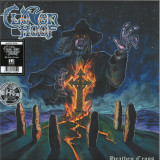
That’s right, ESCAPE-ISM —the “act of musical vandalism”— famous for their development of new prototypes for stomping & smashing, are reforming the scales, chords, & notes (e.g. A, B, F#, etc) that comprise musical literacy to achieve the group’s primary aim: the repurposing of music as we know it. Though many musicians of note have operated their instruments with "alternative tunings," up until now no one has obliterated tuning absolutely or abolished letter-notes for the destruction of bourgeois society.
According to ESCAPE-ISM, this will have a very profound effect: “Music will no longer be cordoned off from the rest of experience as a commodified, specialty freak show, but instead be a pastime which can be prac- ticed and enjoyed –not only by non-musicians and amateurs– but also by plant life, wild animals, and even inanimate objects such as rocks.
“The violent overthrow of musical conventions will lead to the reintegration of humanity into the natural order, the reordering of life itself into a cosmic congruity. This means the convention of time itself will be ended.” Like so-called nature itself, the ESCAPE-ISM group is also on a “loop.”
Play “Charge of the Love Brigade” and listen as ESCAPE-ISM go “over the top” against the note-letters of accepted musicality in a world premiere of a new upside-down antiscale.
London-based sonic champion Shy One releases her long-awaited second album Mali on Errol and Alex Rita"s Touching Bass. So-called after her given name, Mali is a confident, future-facing ode to Black British electronic music and diasporic lineage. Informed by the full spectrum of London sound that she was raised on - with a vital cast of Black British collaborators including George Riley, Steve Spacek, James Massiah and Private Joy.
Kalipo kündigt sein fünftes Solo-Album mit Titelsong ‚Alles' auf Iptamenos Discos an!
Der in Berlin-ansässige Multinstrumentalist Jakob Häglsperger ist seit fast zwei Jahrzehnten einer der umtriebigsten deutschen Produzenten. Neben unzähligen Hits, sechs Alben mit seiner Band Frittenbude und vier von der Presse gefeierten Solo-Alben als Kalipo gründete er nebenbei 2020 - gemeinsam mit Local Suicide - die Band Dina Summer, ein weiteres Nebenprojekt welches seit dem international Wellen macht.
Mit über 30 Millionen Streams und weltweitem Radio-Airplay, verbindet sein Soloprojekt elektronische Intensität mit emotionaler Tiefe irgendwo zwischen Clubkultur und Indie-Ästhetik. Geradlinige, treibende, im Krautrock verwurzelte Beats treffen auf markante, von Electroclash, House und Techno der 2000er und 2010er Jahre inspirierte Melodien.
Mit fünf Soloalben und einem breiten Katalog von Remixen und Singles auf renommierten Labels wie Ki Records, Get Physical, Audiolith Records, Iptamenos Discos und Heimlich hat sich Kalipo einen festen Platz in der Szene erarbeitet. Seine Veröffentlichungen wurden unter anderem von Medien wie TAZ, Spiegel Online, Rolling Stone, Musikexpress, DJ Mag, Mixmag, Tsugi und Resident Advisor gelobt.
Das neue Album kommt mit einer ordentlichen Portion Darkness, schwebenden Gitarren und einem stampfenden Beat daher. Darüber singt Kalipo mal auf deutsch mal auf englisch lässig über das Loslassen von inneren Ängsten, Beziehungen und alltägliche Lasten. Ohne seine Fans zu verschrecken schafft er auch auf ‚Alles' wieder einen stimmigen Spagat zwischen Clubmusik und klassischen Songstrukturen.
- 1: Skull Chamber
- 2: The Venus And The Sorcerer
- 3: Panel Of The Lions
- 4: Hillaire Chamber
- 5: Candle Gallery
- 6: Chamber Of The Bear Hollows (North)
- 7: Chamber Of The Bear Hollows (South) & Brunel Chamber
- 8: Entrance Chamber
Demetrio Castellucci and Massimo Pupillo present the music of Sleep Technique, a performance by Dewey Dell inspired by the Chauvet cave and its ancient cave paintings.
The music comes to life anew on record, an immersion into the depths of sonic particles, moist electroacoustic rhythms, the repeated forms of speleothems, and the electric bass that scrapes the walls, shaping them into concave or convex surfaces. A voice that moves incredibly slowly, yet is in constant motion, like the millennia-old, unceasing erosion of water.
The album’s journey follows the geography of the cave in reverse, moving from its deepest chamber back to the entrance.
Demetrio Castellucci is a composer and sound designer who has been involved in theater productions, choreography, and film since 2004. Around the same time, he began performing as a DJ, favoring an omnitemporal approach geared toward dance that transcends musical genres. Since 2006, he has been a member of the dance company Dewey Dell, and since 2007, he has been active as Black Fanfare, a maximalist electroacoustic project. He has collaborated on performances by Andreco and Enrico Ticconi/Ginevra Panzetti, as well as on films by Ahmed Ben Nessib, Beatrice Pucci, and Ilaria di Carlo. After living in London and Berlin, he settled in Vilnius, where in 2018 he founded Unarcheology, a digital platform that publishes music and radio programs. He is also active as Airport Gad, an ambient project which, together with Unarcheology, launched its own “Airline Company”: concerts in a flight simulator built from cardboard, where the pilots are also the musicians.
Massimo Pupillo is best known as a founding member of the band Zu, with whom he has released 18 albums and performed over 2,000 live shows worldwide. He has maintained a highly open and multidisciplinary approach that has led him to work with some of the most acclaimed figures in the contemporary art world: South African photographer Roger Ballen, actors Malcolm McDowell and Marton Csokas, Romeo Castellucci and Chiara Guidi of Societas Raffaello Sanzio, American choreographer Meg Stuart, poet Anne Waldman, and Italian poet Gabriele Tinti, among others. He has collaborated live and in the studio with avant-garde musicians and composers such as Alvin Curran, piano duo Katia & Marielle Labèque, and classical virtuosos like Viktoria Mullova and Giovanni Sollima. He has also worked with some of the most influential names in the international rock scene, including Mike Patton, Thurston Moore, Jim O’Rourke (Sonic Youth), Guy Picciotto & Joe Lally (Fugazi), Buzz Osborne (Melvins), and Damo Suzuki (CAN).
In the field of improvised music, he has collaborated with Peter Brötzmann, Toshinori Kondo, Mats Gustafsson, Ken Vandermark, and Tony Buck, among others. Within the experimental music scene, his collaborations include Oren Ambarchi, David Tibet (Current 93), Thighpaulsandra (Coil), Stephen O’Malley (Sunn O))), Abul Mogard, Mick Harris (Scorn), Gordon Sharp (This Mortal Coil), FM Einheit (Einstürzende Neubauten), and many more. In cinema, he composed the score for Kirill Serebrennikov’s film LIMONOV, presented at Festival de Cannes in 2024.
- A1: Housebroken
- A2: Baby Babee
- A3: Best Thing
- A4: Holy Water
- A5: There She Was
- A6: Cremation
- A7: Glad It's Night
- A8 64: Malibu
- A9: Stay With Free
- A10: Mojave Desert Romance
- A11: Otto
- A12: Hellz Bellz
- A13: Pain Is The Name Of Your Game
- A14: A Bird In Hand
- B1: Popping Trunk
- B2: Cosmic Unconsciousness
- B3: Supreme Cremee
- B4: Blangg
- B5: Where I'm Coming From
- B6: Soo Sweet
- B7: Believe (In Me)
- B8: Traffic Lights
- B9: Dreamin
- B10: The Whole Thing
- B11 75: Eldorado
- B12: Lite's Out
- B13: Hunger Strike
- B14: Somewhere Over There
- B15: Left Hanging
- B16: The Repo Code
Following in the steps of last year's mysterious "Beyond the Garage" 12 inch, L.I.E.S. throws another curveball with a 30 track continuous LP from veteran West Coast producers, Vinny+Charlie. Each side running 20 minutes, this can best be described as a smoked out, haze filled afterparty beat tape on wax. Obscure samples, dusty sp-12 crushed beats, head nodding loops, sweet low rider soul..chopped, sped up, slowed down and ready to wreck your system. Limited edition white label housed in a lp jacket with custom art by LA artist SOB STORY. 300 copies worldwide.
Narthex means railed-off western portico or ante-nave in earty Christian churches for women, penitents and catechumens.
Narthex is also a trio featuring (at the beginning) Daniel Denis (Universe Zero, Art Zoyd), Alain Neffe (Pseudocode, Human Flesh, Bene Gesserit) and Nicolas de Villemarqué (Nuwage Music). They had a very different musical background, mostly electric-electronic rock, and decided to work in the field of acoustic music recorded live (two microphones + portable DAT) in churches of their area. After several recording sessions, Nicolas de Villemarqué decides to leave the group. ln order to complete the trio, Daniel Denis and Alain Neffe ask the participation of some of their friends. Anna Homler, Michel Berckmans and Daniel Malempré have accepted the challenge and succeed to fit into their musical universe.
The instruments Church organ, harmonium, sitar, saxophone, oboe, bassoon, zither, valiha, senzas, tarang, voice, percussions, metal clarinet, classical guitar, mew's harp, ongolok, violin, dulcimer, mouth organ, etc.
The music Often dark, sometimes repetitive or experimental, sometimes rhythmical and exotic, always based on emotion inducted by the sound. One could define it as dark age music (as opposite to new age music), a sort of minimal come back to the roots and purity of acoustic sound without the cultural background linked to the 'academic' use of some instruments (for example African senzas are transformed and tuned to sound like Indonesian instruments, sitar or harmonium are used as rhythmical instruments, vahilla is played with a bow).
The places Churches located in an area of 20 kms in the region where Daniel Denis and Alain Neffe live for years and where they feel at home (and feel the vibrations. Every church, place emotionally loaded, has its own specific resonance and sound structure. Every church gave to the musicians a particular inspiration and fill the sound of the instruments with a natural reverberation/echo. The place but also the moment is important. They had the privilege to be allowed to record in the Ecaussines church at night lightened only by candles. lt was one of their most productive recording sessions.