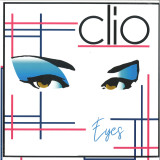
In the quiet surrounding the pandemic, Madeline Kenney made sonic sketches in the basement studio she shared with her then-partner. She arranged phrases that called her—the sharp knife of a synth cutting a path along a blooming arpeggio, drums stuttering firm and tight. Working this way, she amassed a collection of songs she had no particular aims for. Some formed her 2021 EP Summer Quarter, others languished.
But in 2022, Kenney’s partner left suddenly and without warning, plunging her into the solitary act of untangling what happened. In the wake of her ensuing depression, she revisited these songs and found in them something prescient. She’d already laid the foundation for A New Reality Mind.
That her relationship’s end came without warning is only half true, though. The warnings were in the feelings and fears that inspired Kenney’s critically-acclaimed third album, Sucker’s Lunch (2020), which was co-produced by Jenn Wasner (Flock of Dimes) and centered around the idea of flinging oneself freely into the seemingly-assured destruction of new love, come what may.
If sonically Sucker’s Lunch was letting yourself be pulled into the warm bath of a good story, A New Reality Mind reflects the harsh light of truth coming to break the spell. But as sobering as morning light can be, there’s brilliance to it, too. To see in the clarity of day is a gift. A revolution. Rather than reckoning with love lost, the songs on A New Reality Mind grapple with the self that chose to fall. “I guess I only needed to look twice / Reflected in my attitude, my constant compromise,” Kenney sings on “Red Emotion,” the musical landscape screeching and gasping around her observations of how she made herself small to keep the dream of love alive.
These notions of sight and vision pervade the record as Kenney stands before the infinity mirror of selves she’s been to preserve bonds in her life. On “I Drew a Line,” Kenney contends with the stories she’s told herself to keep plodding along, and the way those stories shape her perceived reality. She invokes John Berger’s Ways of Seeing—“Everything around the image is part of its meaning,” we hear him say. “Everything around it confirms and consolidates its meaning.” Here, Kenney isn’t interested in shaming herself for being carried away by the fantasies of the heart, but rather in investigating the unavoidably human propensity to do so. “I, like everyone else, am muddling through my most ordinary disaster of a life,” she acknowledges, a sentiment which reverberates through album opener “Plain Boring Disaster.” “I don’t need to start again,” she sings at the song’s close. “But I can change when it ends.” We may all be doomed to repetitive, ordinary heartbreaks, Kenney realizes, but at least we can cultivate a capacity to witness our missteps and build new realities for ourselves.
This is Kenney’s most expansive work, while also her most solitary. Produced and recorded alone in her basement, these songs are manifestations of what it feels like to be transformed by pain. Textures collide and collude; sonic ornaments emerge and dissipate capriciously; saxophones soar untamed, as on the 80s pop elegy to self-sacrifice, “Reality Mind”. These songs beg you to dance, then pull the rug out from under you once you’ve caught the beat, leaving you dizzy like the whiplash of love’s end.
But in the propulsive power of A New Reality Mind, there’s also acceptance, self-forgiveness, and a willingness to move forward into life, with all its ways of making a sucker of you. “That way of living, I’m over it,” Kenney declares of the habits that hold her back on “Superficial Conversation”. “I do not need to be reminded of what I did,” she assures, the song opening wide and beaming, like a smile expanding to taste a new breath of air.
Buscar:el sam
Just in time for the summer R&C Records is back, delivering a new edition of fresh reworks from the Italo and 80s scene.
Logo side sees a cool re-imagination of “Starter” (which never made on a vinyl before); Lucio’s voice gets a Balearic treatment
through Italo synths and space-disco harmonics sounds!
On the flip side an addictive Electro-Boogie retouch of a well-known anthem from the Synth Pop era.
Limited sampler - Vinyl Only !!
Originally released back in 1999 via Mindfood Records, Tiny Elvis ‘Desire’ EP gets a much-needed reissue on Cosmocities, topped off by two incredible remixes from Bushwacka! and Max in the World.
A smoother-than-smooth introduction into Tiny Elvis’ deep and progressive headspace, ‘Desire’ blazes with a modern soul and timeless fire at heart. While there’s no denying the time and era emanating from the grooves, the record prefigures a lot of the mind-expanding house music that’s come to fill the shelves and crates of vinyl shops two decades on. A distinctive blend of pumped-up, 303-brined jazz and abstract-leaning vocal loops ushering us into a pulsating heart of LSD-fuelled visions and climax-seeking energies.
Adding his invariably genius spin to ‘Desire’, UK house maestro Bushwacka! tweaks the original’s trademark wonkiness into that of a floor focused weapon, geared up for deep boogie action down the basement but lacking none of that prominently silken, loungey magnetism either.
On the flip side, ‘Howze The Music’ cuts a path of squelchy, strings-driven hypnosis, beautifully combining the liquid-like essence of acid with a neo-classical sense of evolutive emotion, injecting it with a tang of trancey tribalism for good measure.
New York's Max in the World gives a further dreamy, cinematic twist to proceedings, taking us on a lush ride across flickering landscapes flush with honey-dipped synth stabs, a-propos sampling and blissful strings stirring all kind of emotional flows with unrelenting verve.
Hand the king of re-edits Late Nite Tuff Guy the keys to an unreleased Silk recording from the ‘70s hey days and you’ve got yourself a recipe for greatness. A’s and Bees line up their second heavyweight 12 inch pressing, with two exhilarating edits from LNTG alongside the first ever release of the original recording. As ever 50% of the profits from this release will be donated towards the British Beekeepers Association.
It's rare to crack the vaults on a recording that’s as good as this, that never saw the light of day. Courtesy of ‘70s Philly International wonders Silk, most famed for their soul sensation ‘I Can't Stop (Turning You On)’ that was sampled by LF System for their 8 week strong number 1 release, ‘Somethin' 'Bout The Way’ has all the elements of a smash hit. As catchy as they come, singalong sensibilities and musicianship of the highest order with vocal harmonies to match, it’s genuinely astonishing that this never got released. Who better to tweak this into an all-out disco stomper, than re-edit royalty Late Nite Tuff Guy. His Disco Dub teases in, loops up and adds extra punch to all the elements that make the original such a standout track, before letting loose those joyous vocals. Big room, full body, DJ friendly business this!
On the B side, the original mix gets it’s first ever release, with LNTG providing a shorter edit of his full throttle re-work to round off the package.
Freestyle Records are proud to reissue Ambiance II Fusion's mid-80s fusion rarity "Come Touch Tomorrow" - originally recorded in Hollywood CA October/November 1984 and released in 1985.
Following a yearly run of 4 albums self-released between 1979 and 1982, Nigerian-born saxophonist, flutist, and clarinettist Daoud Abubakar Balewa then took a few years off before returning with 1985's "Come Touch Tomorrow", the first of two albums issued under the updated name of Ambiance II Fusion. Combining the afro-spiritual jazz & be-bop inflected fusion of his earlier work as Ambiance, this record took the project into more modern & distinctly cosmic planes with the introduction of spacey pads and drum machines working alongside somewhat tighter arrangements and solid rhythm sectons. Of particular note here is the B1 track "Boy What a Joy" on which a sublimely funky synth & drum machine throwdown is presented in prophetically lo-fi fashion - recalling recent stylistic approaches from the likes of Dâm-Funk among others.
Participating Musicians:
"AMBIANCE II FUSION"
Stanley Dominguez - Guitars
Dr. Isacc Ford - Drums/Electric Drums
Ralph Rodriguez - Percussion
Juliian Breeton - Bass
Jardin Wilson - Bass
Lee Williams - Keyboards/Syntheziers
Daoud Abubakar Balewa - Alto & Tenor Saxophone/Percussion
Larry Dominguez - Alto Saxophone
Suzanne Daniels - Vocal Sounds
"AMBIANCE II FUSION ENSEMBLE"
James "Kino" Cornwell - Keyboards
Randy Landis - Basses
Rick Smith - Percussion
Jim Lum - Guitars
Arnold Ramsey - Drums
Daoud Abubakar Balewa - Soprano Saxophone/Percussion
Recorded at Sound Images Recording Studios - Sound Images Entertainment Complex - North Hollywood, CA & Classic Sound Studios - Hollywood, CA. October/November 1984.
- A1: Drawing Future Life - 1969
- A2: Ruutu Poiss - Ihatsin
- A3: Digital Distortion - Mellow Bug
- B1: French Audacity - The Final One (Feat. Valerie)
- B2: Dj Spike - Gaps In Space
- B3: Interdance - Kurz
- C1: Bad Behaviour - Living On Smoke (Edgware Mx)
- C2: Frequency - Systematic Input
- C3: Diffusion - Lushes
- D1: M.f.a. - Blue To Be Happy
- D2: R.i.p. - E.o.pan
- D3: Mad Professor - Oh Hell
Orpheu the Wizard has a magic touch at finding records that fall between the gaps in music - oddities, curios, the weird, the wonderful. But that's just half the trick. It takes a sensitive and selective ear to construct a coherent, accessible narrative from them. So you get DJs who can play for the crowd and "selectors" adept at mining the black gold. In Orpheu, you've got yourself someone who can do both. On a festival main stage, he can keep it weird enough for the heads. In an audiophile setting, he'll keep the flow.
These skill sets come into play on the fifth The Sound of Love International compilation. Jumping between genres, decades, continents, the truly rare, and many B-side cuts that passed you by. But never eclecticism for its own sake; this collection makes sense. Orpheu never loses sight of the listener - he's a friendly and knowledgeable guide to the cosmic outer reaches.
He opens his account with the warm, psychedelic electronics of Drawing Future Life, with ‘1969’. Tucked away on the B-side of an LP of ambient/trance hailing from Fukuoka, this is a very pretty piece of music on a truly rare piece of wax. Then, leapfrogging a couple of decades and timezones, we have Rutuu Poiss' "IHATSIN." Off-kilter, experimental sounds with an endearing melodic hook, followed up by the with lethargic ambient breakbeat of Digital Distortion's "Mellow Bug".
On the B-side, things start to get lively. French Audacity featuring Valerie's "That Fine One" is Gallic garage that has simultaneously got it hugely wrong and massively right. Owing as much to new wave as New York house, this is propulsive and quirky dance music at its finest. Next, we're on a ferry over the channel for DJ Spike and "Gaps In Space." Up-tempo electro with a fondness for sampled vocal cut-ups, like its predecessor.
lnterdance's "Kurz" (another B-side) is the perfect segway - house from 1990 with that sweet, slightly goofy naivete. Things move toward the gnarly with Bad Behaviour and "Living on Smoke," a lesser-known cut on the legendary Atmosphere records. The tempo edges upward on "Systematic Input" by Frequency, hectic hardcore techno that still retains a lightness of touch.
"Lushes" by Diffusion spins us off into space, filigree techno with an emotive trance edge. The chiming intro of "Blue to Be Happy" by MFA lulls us into a sense of false security before massively putting the boot in with a pounding kick drum, bassline, and arpeggiation. From there, it's a sharp left turn into the urban psychedelic dub of R.I.P's "E.O Pan" on cult label Digi Dub.
Sticking with UK sound system music but taking it down a notch, Orpheu closes proceedings with a leftfield reggae excursion from the master of the mixing desk, Mad Professor’s"Oh Hell".
It's a compilation as varied as the many moods and grooves of Love International itself - from sun-dappled olive groves to moments deep in the strobes. This is serious music for party freaks or party music for serious freaks. Tisno is calling.
- Asking Is There Anything You Believe That You Would Be Willing To Die For, And The Difference Between The Way That Most Beliefs Have Been Accepted/Tolerated And
- A1: Broken And Beaten In 5/8 Time Part 1. Beaten 6:34
- 2: What's It All For?10:39
- 3: Broken And Beaten In 5/8 Time Part 2. Broken 7:6
- 4: Mass Exodus (A Hymn)
- Acceptance Is Not Respect Part One: The Revolution Of Defiance(23:19)
- 1: Anthem For A New Beginning
- 2: Slide Down To Power Off
- 3: What Failure Looks Like
- 4: And So We Rise Again Part Two: Three Martyrs: Pressing, Stoning And Saltire 1/St. Stephen 6:29
- 2: St. Andrew 7:7
- 3: St. Margaret 7:50
In August 2020, following some typical delays at the plant, Fourth Dimension Records released the limited edition 2LP (and now sold out) set of Kleistwahr's This World Is Not My Home and Over Your Heads Forever albums, originally released by the same label in 2014 and 2016 respectively. Packaged together in a single sleeve with printed inners reproducing all the artwork found on the original CDs, the 2LP was always designed to represent the first volume in a series of them. This next volume gathers everything on the next two albums, Down But Defiant Yet and Acceptance is Not Respect, both also initially released on CD in, respectively, 2017 and 2018, and presented in the exact same way. 2017's long sold out at source album, Down But Defiant Yet, collects four lengthy cuts which catch Gary Mundy (also known for Ramleh, Breathless and Broken Flag Records) furrowing his distinct and recognisable take on a kinda contemporary psychedelia with dystopian leanings. Each piece nods towards the fug generated by certain ‘krautrock’ groups whilst retaining threads of those uncompromising power-noise surges he built his reputation on, this is music guaranteed to take you to new spaces before forcing you to nervously look over your shoulder. 2018's Acceptance is Not Respect collects two lengthy pieces themselves broken down into seven parts often tempered to the point restraint assumes new, often disturbed (and disturbing) psychedelic or even filmic, properties, this music arrives like a spitting and foaming scream into the insanity of the void and the myriad challenges and questions it inexorably keeps hurling at us. Whereas Ramleh captures the sound of at least two people dealing as best they know how with the constantly rising rivers of shit around us, Kleistwahr is akin to one man having scaled a great height poking out of an infinite chasm and wondering why he bothered. This is uneasy listening sometimes renderedvirtually elegiac by dint of a prowess rarely found in such realms. Of this, Gary himself quite prophetically, in light of how events have shaped the world since said, “I was trying to make the music more spiritual sounding this time as the album is about belief. The first half is about personal and political belief and the second half about religious belief. I was wondering about whether in the 21st Century, you can seriously get anyone to completely change their beliefs and [am] asking is there anything you believe that you would be willing to die for, and the difference between the way that most beliefs have been accepted/tolerated and [are] supposedly respected in recent times in [the UK]. Now our society is starting to break down, it becomes clear that that acceptance tends not to actually be the same thing as respect at all.”
"Another Love Song - The Frames are an Irish indie rock band formed in Dublin in 1990. The band is known for their passionate and emotive sound, which blends elements of rock, folk, and traditional Irish music. Over the years, they have released several critically acclaimed albums, including ""Another Love Song,"" which is widely regarded as one of their most influential works.
""Another Love Song"" was released in 1991 and marked a turning point in the band's career. The album featured a raw, stripped-down sound that was a departure from their earlier, more polished work. The songs on the album were deeply personal and introspective, exploring themes of love, loss, and the complexities of human relationships. The album's title track, ""Another Love Song,"" became an instant classic, showcasing the band's signature sound with its driving rhythms and soaring vocals. The song's bittersweet lyrics and haunting melody struck a chord with listeners and quickly became a fan favourite.
In addition to ""Another Love Song,"" the album features several other standout tracks, including ""Say It to Me Now,"" ""The Dancer,"" and ""Downhill."" Each song on the album showcases the band's dynamic musicianship and poetic lyricism, earning the album a reputation as a seminal work in the Irish indie rock scene. Over the years, The Frames have continued to evolve and innovate, releasing several more critically acclaimed albums and earning a dedicated following of fans around the world. With their unique blend of raw emotion and musical artistry, The Frames continue to inspire and captivate audiences with their powerful, soulful music.
Fitzcarraldo - ""Fitzcarraldo"" is the sixth studio album by the Irish rock band The Frames, released in 1995. The album marked a significant departure from the band's earlier work, with a more experimental sound that blended rock, folk, and experimental elements.
The album takes its name from the Werner Herzog film of the same name, which tells the story of a man who attempts to build an opera house in the Amazon jungle. This theme of ambition and perseverance in the face of adversity runs throughout the album, as frontman Glen Hansard explores themes of love, loss, and the human experience. The album opens with the hauntingly beautiful track ""Revelate,"" which sets the tone for the rest of the album with its soaring vocals and intricate guitar work. From there, the album takes the listener on a journey through a diverse range of sounds and emotions, from the upbeat rock of ""What Happens When the Heart Just Stops"" to the melancholic balladry of ""Fitzcarraldo.""
One of the standout tracks on the album is ""Lay Me Down,"" a tender and heartfelt ballad that showcases Hansard's powerful vocals and poetic lyricism. The song has become a fan favourite and is often performed live by the band. Another highlight of the album is the epic nine-minute track ""Fitzcarraldo,"" which features lush instrumentation and intricate guitar work. The song is a tribute to the film of the same name and explores themes of ambition and determination in the face of seemingly insurmountable obstacles.
Overall, ""Fitzcarraldo"" is a powerful and deeply personal album that showcases The Frames at their most ambitious and experimental. With its diverse range of sounds and emotions, the album remains a fan favourite and a landmark in the Irish rock canon.
Dance the Devil
Dance the Devil is the fourth studio album by the Irish rock band, The Frames. Released in 1999, it marked a significant departure from the band's earlier sound and was a critical and commercial success.
The album features 10 tracks, including the hit single ""Pavement Tune,"" which received extensive radio play and helped to propel The Frames to greater prominence in the music industry. Dance the Devil showcases the band's versatility and musical prowess, blending elements of rock, folk, and pop to create a unique and compelling sound. The lyrics are introspective and poetic, exploring themes of love, loss, and self-discovery.
Produced by Steve Albini, the album was recorded in just five days, giving it a raw and unpolished feel that perfectly captures the energy and passion of The Frames' live performances.
Dance the Devil remains a beloved album among fans of Irish music and continues to inspire new generations of musicians. Its enduring popularity is a testament to the artistry and vision of The Frames and their commitment to pushing the boundaries of what is possible in rock music.
"
"Another Love Song - The Frames are an Irish indie rock band formed in Dublin in 1990. The band is known for their passionate and emotive sound, which blends elements of rock, folk, and traditional Irish music. Over the years, they have released several critically acclaimed albums, including ""Another Love Song,"" which is widely regarded as one of their most influential works.
""Another Love Song"" was released in 1991 and marked a turning point in the band's career. The album featured a raw, stripped-down sound that was a departure from their earlier, more polished work. The songs on the album were deeply personal and introspective, exploring themes of love, loss, and the complexities of human relationships. The album's title track, ""Another Love Song,"" became an instant classic, showcasing the band's signature sound with its driving rhythms and soaring vocals. The song's bittersweet lyrics and haunting melody struck a chord with listeners and quickly became a fan favourite.
In addition to ""Another Love Song,"" the album features several other standout tracks, including ""Say It to Me Now,"" ""The Dancer,"" and ""Downhill."" Each song on the album showcases the band's dynamic musicianship and poetic lyricism, earning the album a reputation as a seminal work in the Irish indie rock scene. Over the years, The Frames have continued to evolve and innovate, releasing several more critically acclaimed albums and earning a dedicated following of fans around the world. With their unique blend of raw emotion and musical artistry, The Frames continue to inspire and captivate audiences with their powerful, soulful music.
Fitzcarraldo - ""Fitzcarraldo"" is the sixth studio album by the Irish rock band The Frames, released in 1995. The album marked a significant departure from the band's earlier work, with a more experimental sound that blended rock, folk, and experimental elements.
The album takes its name from the Werner Herzog film of the same name, which tells the story of a man who attempts to build an opera house in the Amazon jungle. This theme of ambition and perseverance in the face of adversity runs throughout the album, as frontman Glen Hansard explores themes of love, loss, and the human experience. The album opens with the hauntingly beautiful track ""Revelate,"" which sets the tone for the rest of the album with its soaring vocals and intricate guitar work. From there, the album takes the listener on a journey through a diverse range of sounds and emotions, from the upbeat rock of ""What Happens When the Heart Just Stops"" to the melancholic balladry of ""Fitzcarraldo.""
One of the standout tracks on the album is ""Lay Me Down,"" a tender and heartfelt ballad that showcases Hansard's powerful vocals and poetic lyricism. The song has become a fan favourite and is often performed live by the band. Another highlight of the album is the epic nine-minute track ""Fitzcarraldo,"" which features lush instrumentation and intricate guitar work. The song is a tribute to the film of the same name and explores themes of ambition and determination in the face of seemingly insurmountable obstacles.
Overall, ""Fitzcarraldo"" is a powerful and deeply personal album that showcases The Frames at their most ambitious and experimental. With its diverse range of sounds and emotions, the album remains a fan favourite and a landmark in the Irish rock canon.
Dance the Devil
Dance the Devil is the fourth studio album by the Irish rock band, The Frames. Released in 1999, it marked a significant departure from the band's earlier sound and was a critical and commercial success.
The album features 10 tracks, including the hit single ""Pavement Tune,"" which received extensive radio play and helped to propel The Frames to greater prominence in the music industry. Dance the Devil showcases the band's versatility and musical prowess, blending elements of rock, folk, and pop to create a unique and compelling sound. The lyrics are introspective and poetic, exploring themes of love, loss, and self-discovery.
Produced by Steve Albini, the album was recorded in just five days, giving it a raw and unpolished feel that perfectly captures the energy and passion of The Frames' live performances.
Dance the Devil remains a beloved album among fans of Irish music and continues to inspire new generations of musicians. Its enduring popularity is a testament to the artistry and vision of The Frames and their commitment to pushing the boundaries of what is possible in rock music.
"
In collaboration with Timmion Records, Daptone is proud to present My Echo, Shadow and Me, the debut album from the soulful Chicano brother, Johnny Benavidez. Hailing from San Diego (via El Paso, TX), Johnny's desire to sing was influenced by his grandfather, John Lorenzo Guzman, who as a teen in the early sixties spent some time harmonising with groups in El Paso, most notably Sonny Powell and the Night Dreamers. When he was 13, Johnny was given a record player and a box filled with R&B, Doo-Wop, and Soul 45s that he studied obsessively, employing the harmonies and melodies therein to cultivatehis own unique voice. After a chance encounter with the legendary Dimas Garza, Johnny's career began to blossom and soon he would find himself singing alongside stars like Eugene Pitt and Archie Bell, garnering the interest of Timmion Records..
Backed by the incomparable Cold Diamond & Mink (Bobby Oroza, Pratt & Moody) two incredibly successful singles were cut and plans for a full length were struck, culminating in 11 original songs penned by Benavidez. From the uplifting bounce of the title track, the doo-wop dinged "Dedicated to You", the Latin flare of "Uncle Sam," to the Sweet Soul masterpiece "Somebody Cares" (licensed and released on a Penrose Records 45), My Echo, Shadow and Me is not only an aweinspiring display of Jonny's versatility as an artist but also serves as a window into the eclectic array of soulful sounds that inspired him to fall in love with music and become a singer. A must have for fans of Daptone, Timmion, Penrose, et al.
- A1: Crossroads
- A2: Bell Bottom Blues **
- A3: Lay Down Sally
- B1: Holy Mother
- B2: I Shot The Sheriff
- B3: Hard Times **
- B4: White Room
- C1: Can’t Find My Way Home (Feat. Nathan East On Lead Vocals)
- C2: Edge Of Darkness**
- C3: Old Love
- D1: Wonderful Tonight
- D2: Layla
- E1: Concerto For Electric Guitar Part 1
- F1: Concerto For Electric Guitar Part 2
In 1990, Eric Clapton performed 18 nights at one of his favorite venues - the famous Royal Albert Hall in London. During the 18 run of shows Clapton performed with three different line-ups: a rock band, a blues band, and an orchestra. Eric returned to the same venue in 1991 with the same three line -ups and played a further 24 shows. The huge undertaking of rehearsing for performances of three distinctly different genres was made even more challenging by the line-up for the rock shows varying from 4, 9 or 13 band members.
Clapton has always played with superlative musicians, and these shows were no exception. The bands included Johnnie Johnson, Jimmie Vaughan, Chuck Leavell, Nathan East, Greg Phillinganes, Steve Ferrone, Ray Cooper, and Jerry Portnoy. Additionally, legendary special guests joined Clapton on stage: Phil Collins in the rock ensemble; Robert Cray, Buddy Guy and Albert Collins for the blues shows.
The Orchestral performances were arranged and conducted by Michael Kamen the highly regarded and successful composer who had worked with Clapton previously (Lethal Weapon, Edge Of Darkness). The set list included the epic 30 minute ‘Concerto For Guitar’ that Kamen composed especially for Clapton - released now for the first time.
Many of the performances in both years were filmed and recorded. The huge volume of audio and film material from the archive has been painstakingly restored and upgraded by Clapton’s team of Simon Climie (audio production and mixing), producer Peter Worsley (Slowhand at 70 and The Lady In The Balcony), and director David Barnard (The Lady In The Balcony).
This remarkable series of shows will finally be given the release that they deserve. A full concert of each genre (Rock, Blues, Orchestral) has been assembled from the hours of material available and will be released on audio (CD, LP, digital) and with an accompanying film on Blu-ray and DVD.
Orchestral show features a stunning version of ‘ Layla’, plus stand-out highlights of ‘Bell Bottom Blues’, ‘Edge Of Darkness’ and ‘Sunshine of Your Love’. Great covers of ‘Cocaine’, ‘I Shot the Sheriff’ and ‘Knockin’ on Heaven’s Door’ also feature.
- A1: Pretending**
- A2: Running On Faith**
- A3: Breaking Point
- B1: I Shot The Sheriff (Feat Phil Collins On Drums
- B2: White Room**
- B3: Can’t Find My Way Home (Feat Nathan East On Lead Vocals
- C1: Bad Love **
- C2: Before You Accuse Me
- C3: Lay Down Sally
- D1: Knocking On Heaven’s Door (Feat Phil Collins On Drums)
- D2: Old Love
- D3: No Alibis (This Version Was Released As A B-Side Of The Single ‘Wonderful Tonight’
- E1: Tearing Us Apart
- E2: Cocaine
- E3: Wonderful Tonight**
- F1: 1. Layla
- F2: Crossroads
- F3: Sunshine Of Your Love
- G1: Key To The Highway
- G2: Worried Life Blues **
- G3: Watch Yourself **
- G4: Have You Ever Loved A Woman**
- H1: Everything’s Gonna Be Alright
- H2: Something On Your Mind
- H3: All Your Love (I Miss Loving)
- H4: Johnnie’s Boogie
- I1: Black Cat Bonei
- I2: Reconsider Baby
- I3: My Time After A While
- J1: Sweet Home Chicago
- J2: Watch Yourself (Reprise)
- Orchestral Show
- Side One
- 1: Crossroads
- 2: Bell Bottom Blues **
- 3: Lay Down Sally
- Side Two
- 1: Holy Mother
- 2: I Shot The Sheriff
- 3: Hard Times **
- 4: White Room
- Side Three
- 1: Can’t Find My Way Home (Feat. Nathan East On Lead Vocals)
- 2: Edge Of Darkness**
- 3: Old Love
- Side Four
- 1: Wonderful Tonight
- 2: Layla
- Side Five
- 1: Concerto For Electric Guitar Part
- Side Six
- 1: Concerto For Electric Guitar Part 2
In 1990, Eric Clapton performed 18 nights at one of his favorite venues - the famous Royal Albert Hall in London. During the 18 run of shows Clapton performed with three different line-ups: a rock band, a blues band, and an orchestra. Eric returned to the same venue in 1991 with the same three line -ups and played a further 24 shows. The huge undertaking of rehearsing for performances of three distinctly different genres was made even more challenging by the line-up for the rock shows varying from 4, 9 or 13 band members.
Clapton has always played with superlative musicians, and these shows were no exception. The bands included Johnnie Johnson, Jimmie Vaughan, Chuck Leavell, Nathan East, Greg Phillinganes, Steve Ferrone, Ray Cooper, and Jerry Portnoy. Additionally, legendary special guests joined Clapton on stage: Phil Collins in the rock ensemble; Robert Cray, Buddy Guy and Albert Collins for the blues shows.
The Orchestral performances were arranged and conducted by Michael Kamen the highly regarded and successful composer who had worked with Clapton previously (Lethal Weapon, Edge Of Darkness). The set list included the epic 30 minute ‘Concerto For Guitar’ that Kamen composed especially for Clapton - released now for the first time.
Many of the performances in both years were filmed and recorded. The huge volume of audio and film material from the archive has been painstakingly restored and upgraded by Clapton’s team of Simon Climie (audio production and mixing), producer Peter Worsley (Slowhand at 70 and The Lady In The Balcony), and director David Barnard (The Lady In The Balcony).
This remarkable series of shows will finally be given the release that they deserve. A full concert of each genre (Rock, Blues, Orchestral) has been assembled from the hours of material available and will be released on audio (CD, LP, digital) and with an accompanying film on Blu-ray and DVD.
The Clapton classics performed with the rock band include ‘White Room’, ‘Lay Down Sally’, ‘Wonderful Tonight’, ‘Pretending’ and ‘Layla’. The Orchestral show features a stunning version of ‘ Layla’, plus stand-out highlights of ‘Bell Bottom Blues’, ‘Edge Of Darkness’ and ‘Sunshine of Your Love’. Great covers of ‘Cocaine’, ‘I Shot the Sheriff’ and ‘Knockin’ on Heaven’s Door’ also feature. The 14-song Blues set includes standards such as ‘Sweet Home Chicago, ‘Have You Ever Loved A Woman’, and ‘Key To The Highway’.
The limited-edition ‘Definitive 24 Nights’ deluxe box sets include 47 songs and almost 6 hours of music on 6 CDs or 8 LPs and 3 Blu-ray’s.
- 1: The Wild Horses Of The Revolution Have Arrived Without A Knight
- 2: Central Crisis Management Cell
- 3: Painful Memories From The Past Need To Be Acknowledged
- 4: Dancing On The Head Of An Eagle
- 5: He Worked With His Eyes Lowered
- 6: Starting Something You’re Not Able To Finish
- 7: Diplomatic Cocktail Circuit
Repress!
N0!zy blighter Russell Haswell returns to Diagonal 5 years after his label debut with a spontaneously combusting follow-up to ’37 Minute Workout’ generated again from a mix of analog/digital synths and modular systems edited on a computer. It was inspired by a visit to CERN, The European Organisation for Nuclear Research, in Geneva; and dinner with Ted Nelson, whose theories of interwingularity and transclusion chimed with the direction recordings took.There are few artists who can genuinely make music that sounds like your needle and/or record is melting, but Russell Haswell is one of them. His 2nd volume of extremely kinky calisthenics is a potent example of daring to be different in a world where exponentially increasing production options are leading producers of all stripes to the exact same conclusions. But, with thanks to Russell’s iconoclastic intent, restless nature and ascetic aesthetics, he still sounds quite like nobody else, and, even better yet, doesn’t give a shit if you like it or not. For the record (this one in particular), we’re all over it like a hot rash.
Since reincorporating his early love of freestyle electro and Industrial dance music into his patented n0!ze matrices circa the 1st volume of ’37 Minute Workout’, Russell has steered that rhythm-driven style into a string of fizzy bangers for Diagonal and even applied it to his production for Consumer Electronics with typically radical results. Russell’s 2nd volume of ’37 Minute Workout’ is cut from similarly (but never the same) ragged material as the first batch, and spits, kicks and claws with equal amounts of eething, pent energy and rambunctiousness ready to jab the ‘floor in the eye or dissolve a party where needed.
Crowbarring cues ranging from the Latin Rascals to Incapacitants and Jeff Mills into 7 wickedly awkward designs, Haswell keeps his avant aerobics radically irregular as he hops from the tendon-twitching angularity of ‘The Wild Horses of the Revolution have arrived Without Knight’ to steel-hoofed clatter in ‘Central Crisis Management Cell’ and the lacquer-eating dynamics of ‘Painful
Memories From The Past Need To Be Acknowledged’, before toning a proper nasty acid special in the UR inversion ‘Dancing on the Head of an Eagle’, and seemingly sucking your brain out thru a straw with ‘Starting Something You’re Not Able To Finish’, with the dry witted, skeletal jazz-funk squirm of ‘Diplomatic Cocktail Circuit’ closing the party down in style.
Wye Oak, das Duo bestehend aus Jenn Wasner und Andy Stack, veröffentlicht mit Every Day Like The Last eine Sammlung brandneuer Songs und bereits veröffentlichter Singles, mit der die Band neue Wege beschreitet. Die neun Songs auf Every Day Like The Last stammen aus einer Zeit, in der sich Wye Oak nach mehr als einem Jahrzehnt kontinuierlicher Albumveröffentlichungen und Tourneen im Umbruch befanden. Die musikalische Partnerschaft von Jenn Wasner und Andy Stack erblühte in der Ungewissheit dieser Zeit, wann immer sie spürten, dass Wye Oak etwas zu sagen hatten. Sie gingen dazu über, schnell EPs und Singles zu schreiben, aufzunehmen und digital zu veröffentlichen. Klanglich kehrten Wasner und Stack zu den Grundlagen zurück. Sie balancierten das Organische und das Künstliche aus und nutzen Elektronik und Programmierung, um neue Texturen hinzuzufügen. Für Stack gibt es einen roten Faden, der sich durch das scheinbare Chaos zieht: "Freude im Untergang der Welt zu finden". Every Day Like The Last tut genau das, indem es den Hörer an die neuen Höhen erinnert, die Wye Oak seit 2018's The Louder I Call, The Faster It Runs erreicht haben, während es einen Blick ins Ungewisse wirft, was vor uns liegt. Der Titel dieser Sammlung erkennt diese Dualität an, indem er sie wie eine Frage stellt: "Jeder Tag wie der Tag davor" oder "Jeder Tag wie der letzte Tag auf der Erde"? "Beide Bedeutungen treffen zu", sagt Wasner. Es gibt keine einfachen Antworten.
Did you know that if we go back 10 generations, we could count for each of us some 2,046 ancestors, going back 20 generations there would be 2.097.150 ancestors and going back 40 generations each of us would have more than a trillion ancestors, which is more than all the people who have ever lived on earth?
This complicated paradox, known as the Pedigree Collapse, however, leads to the simple conclusion that we all share at least one ancestor with each other.
Inspired by this reflection, "How many ancestors do we have?" is the latest EP by Woxow, sound mixologist and mastermind of Little Beat More, translating the concept into a profound journey in search of the roots of music, to find that ancestral vibration that has resonated in every human being since the dawn of time.
Jazz atmospheres, refined hip hop beats, world music overtones, dub rhythms and reggae reminiscences, all enriched by the dense and meaningful voices of London's Reggae RoastMC Natty Campbell, the eclectic and electric Raashan Ahmad and the legendary rapper and
performance poet Azeem, bringing to light the infinite connections that unite all humanity.
The album is further enriched by the precious remixes of underground legend Koralle, electronic shaman Deela, dub master Paolo Baldini Dubfiles, and gifted hip-hop head Luke Beats, who hybridise Woxow's ancestral vision with their skillful artistry, giving a new dimension to the tracks.
The artwork by visual artist and filmmaker Simone Brillarelli captures the essence of the album in a vibrant bloom of colourful flowers sharing the same soil, and ultimately the same planet, reiterating the message of shared family and unity that is celebrated in the music.
The EP is available both as a gatefold with two 7-inch vinyls and as a single 12-inch vinyl, as well as digital. Join the family now.
Did you know that if we go back 10 generations, we could count for each of us some 2,046 ancestors, going back 20 generations there would be 2.097.150 ancestors and going back 40 generations each of us would have more than a trillion ancestors, which is more than all the people who have ever lived on earth?
This complicated paradox, known as the Pedigree Collapse, however, leads to the simple conclusion that we all share at least one ancestor with each other.
Inspired by this reflection, "How many ancestors do we have?" is the latest EP by Woxow, sound mixologist and mastermind of Little Beat More, translating the concept into a profound journey in search of the roots of music, to find that ancestral vibration that has resonated in every human being since the dawn of time.
Jazz atmospheres, refined hip hop beats, world music overtones, dub rhythms and reggae reminiscences, all enriched by the dense and meaningful voices of London's Reggae RoastMC Natty Campbell, the eclectic and electric Raashan Ahmad and the legendary rapper and
performance poet Azeem, bringing to light the infinite connections that unite all humanity.
The album is further enriched by the precious remixes of underground legend Koralle, electronic shaman Deela, dub master Paolo Baldini Dubfiles, and gifted hip-hop head Luke Beats, who hybridise Woxow's ancestral vision with their skillful artistry, giving a new dimension to the tracks.
The artwork by visual artist and filmmaker Simone Brillarelli captures the essence of the album in a vibrant bloom of colourful flowers sharing the same soil, and ultimately the same planet, reiterating the message of shared family and unity that is celebrated in the music.
The EP is available both as a gatefold with two 7-inch vinyls and as a single 12-inch vinyl, as well as digital. Join the family now.
- A1: Solid As A Rock Feat Natty Campbell
- A2: Blueprint Feat Raashan Ahmad
- A3: Enough Is Enough Feat Azeem
- B1: Blueprint Feat Raashan Ahmad (Koralle Remix)
- B2: Enough Is Enough Feat Azeem (Deela Remix)
- B3: Solid As A Rock Feat Natty Campbell (Paolo Baldini Dubfiles Remix)
- B4: Enough Is Enough Feat Azeem (Luke Beats Remix)
Did you know that if we go back 10 generations, we could count for each of us some 2,046 ancestors, going back 20 generations there would be 2.097.150 ancestors and going back 40 generations each of us would have more than a trillion ancestors, which is more than all the people who have ever lived on earth?
This complicated paradox, known as the Pedigree Collapse, however, leads to the simple conclusion that we all share at least one ancestor with each other.
Inspired by this reflection, "How many ancestors do we have?" is the latest EP by Woxow, sound mixologist and mastermind of Little Beat More, translating the concept into a profound journey in search of the roots of music, to find that ancestral vibration that has resonated in every human being since the dawn of time.
Jazz atmospheres, refined hip hop beats, world music overtones, dub rhythms and reggae reminiscences, all enriched by the dense and meaningful voices of London's Reggae RoastMC Natty Campbell, the eclectic and electric Raashan Ahmad and the legendary rapper and
performance poet Azeem, bringing to light the infinite connections that unite all humanity.
The album is further enriched by the precious remixes of underground legend Koralle, electronic shaman Deela, dub master Paolo Baldini Dubfiles, and gifted hip-hop head Luke Beats, who hybridise Woxow's ancestral vision with their skillful artistry, giving a new dimension to the tracks.
The artwork by visual artist and filmmaker Simone Brillarelli captures the essence of the album in a vibrant bloom of colourful flowers sharing the same soil, and ultimately the same planet, reiterating the message of shared family and unity that is celebrated in the music.
The EP is available both as a gatefold with two 7-inch vinyls and as a single 12-inch vinyl, as well as digital. Join the family now.
Mike Parker is one of underground Techno's most vital luminaires. His hypnotic aqua-pulsing, live hardware approach has undeniably influenced the direction of Techno since the late 90's and spurned some of the genre's definitive tracks.
Sabre-Tooth sees Mike Parker arrive on Samurai with 4 tracks that follow on from his essential Devils Curators series for Donato Dozzy & Neel's Spazio Disponible label where he unveiled his initial experiments with the 85/170 BPM tempo.
Sabre-Tooth is a stylistic re-calibration of Mikes's machine funk hinted at with his remix of Presha's Mainliner in 2022 but previously unheard in stand-alone tracks.
Steadfast cyber-rhythms, precision percussion, and trademark oscillating analogue waves are the magic ingredients on each track. Sparse elements honed to maximum effect, the Mike Parker science.
Repress!
Japanese crustpunk and grindcore icon Eri Fuzz-Kristiansen, aka Gallhammer’s Viviankrist, keeps
the curveballs coming on Diagonal with a bloodied mastication of charred noise and and rhythmic
electronics, following up the label’s acclaimed sides by Sote and Not Waving/Jim O’Rourke
Co-released with the metal-minded Ritual Productions label, ‘Cross-Modulation’ is a brutal
testament to the acridly personalised sound that Viviankrist has explored solo since 1995 in Tokyo,
when she performing vocals, sax and SP-202 sampler in her first industrial/noise unit. 23 years
later her music is still sorely raw, yet riddled with a new found poignance and atmospheric unease
that places her music sometimes as close to Kali Malone’s see-sawing dissonance as the power
electronics of Pan Sonic or the possessed pulses of Conrad Schnitzler and Merzbow.
Since the demise of Eri’s main project Gallhammer at the start of this decade, when she moved
from Tokyo to Oslo (home of her husband and bandmate in Sehnsucht, Maniac - also former
vocalist for BM legends Mayhem), she returned to her early Viviankrist alias from 2017 as a place
to express her primitivist-futurist urges, resulting a trio of CDs including the vicious solo strike
of ‘Morgenrøde’ for Cold Spring. Now on ‘Cross-Modulation’ she intuitively tempers that album’s
phosphorous burn with a deadly incisive application of what Black Metal/Techno pioneer Black
Mecha terms “mentation electronics.”
Alloying avant-metal with rhythmic noise, ambient techno and mind-bending drone to a
metallurgic tang, ‘Cross-Modulation’ serves a dense flux of energies in seven parts, piercing a path
thru maelstrom electronics in ‘Eleventh’ to churn up grizzled Vainio-esque rhythms in ‘Blue Iron’,
while the tenderly bruised ambience of ‘Midnight Sun’ provides a bittersweet palette cleanser for
the tart technoid prang of ‘Insects’, a bout of slow gripping psychedelia in ‘Out of Body’, and the
rugged North European pastoralism of ‘Behind Mirror.’
- A1: Carlycore - La Showcera
- A2: Moro - Xbow
- A3: Pv5000 - Piloto De Fuga
- A4: Chassseur666 - Gade Douvan
- B1: Fiesta En El Vacío - Ay Ay
- B2: Tayhana - Rafagas De Poppers En El Dj Booth
- B3: Anita Kirppis - No Es Vivir
- C1: Caona X Dj Lxn - Metamorfosis
- C2: Eslabrava - Si Tu Eres
- C3: Ven3Mo - Tormenta Silenciosa
- C4: Parzubanil - Enciende
- D1: Vica Pacheco - Cerrito
- D2: Abssys - Peróxido
- D3: Hada Muerta - Quiero Regalarle
Latincore is a musical journey that begins with this compilation. latincore is a virtual club. latincore is an attempt to reflect with artists whose origins share the same soil.
This compilation brings together 14 sound propositions, offering a snapshot of a latinx, political, migrant and diasporic underground scene. Curated by Marion Stucky Callañaupa and Juan José Moreno Izquierdo.
Das Album "12" von Komponisten-Legende, Produzent und Pianist Ryuichi Sakamoto ist eine Sammlung von 12 Kompositionen für Synthesizer und Piano. Die Stücke hat der Grammy-, Oscar- und Golden Globe-Gewinner aus musikalischen Skizzen ausgewählt, die er während seines zweieinhalbjährigen Kampfes gegen den Krebs wie ein Tontagebuch aufgenommen hat. Jedes Stück ist eine intime Momentaufnahme aus dieser schweren Periode seines Lebens und trägt als Titel das jeweilige Entstehungsdatum. "12" ist das erste Solo-Album des mit seinen elektronisch-akustischen Genre-Überschreitungen weltweit stilprägenden Komponisten seit dem 2017 erschienenen Album "async".Über das Album sagt Ryuichi Sakamoto:"Nachdem ich nach einer großen Operation endlich in meine neue vorübergehende Unterkunft 'heimgekommen' war, griff ich zum Synthesizer. Ich hatte nicht die Absicht, etwas zu komponieren; ich wollte einfach nur von Klängen überflutet werden. Wahrscheinlich werde ich diese Art von 'Tagebuch' auch weiterhin führen."
Black Truffle is pleased to announce Symphony No. 107 –The Bard, a previously unheard archival recording of the legendary improvising ensemble MEV (Musica Elettronica Viva), captured in concert at Bard College, New York in 2012. Formed by a group of American expat composers in Rome in 1966, the MEV ensemble played an important role in the development of free improvisation, bridging the live electronics tradition begun by Cage and Tudor and the high-energy squall of free jazz. Early recordings like Spacecraft or The Sound Pool unleash volleys of metal and glass amplified with contact microphones, howling winds, primitive synthesizer bleep and raucous audience participation, the intensity of which puts much later ‘noise’ to shame. In later decades, the ensemble would go through many iterations, often including legendary free players like Steve Lacy and George Lewis. In its final years, MEV settled into the core trio of founding members heard here: Alvin Curran, Frederic Rzewski, and Richard Teitelbaum, using piano, electronics, and small instruments.
Curran, Rzewski, and Teitelbaum were life-long friends blessed, as Curran says, with ‘incompatible personalities’: major figures in the post-Cagean experimental tradition, they explored countless divergent and even contradictory paths as composers and performers, from agitprop songs to brainwave-controlled synthesis. MEV is the sound of these three personalities coming together, their contributions radically individual yet attaining a state of ‘fundamental unity’ that Rzewski, in a text written in the collective’s earliest years, defined as the ‘final goal of improvisation’. Of course, listeners familiar with aspect of the trio’s individual works might hazard some guesses about who is doing what: the crisp piano figures are probably Rzewski’s, the cut-up hip-hop samples most likely Curran’s, the sliding, squelching synth possibly Teitelbaum’s. But often these identities are dissolved in a constantly shifting hall of mirrors, the listener unable to tell which of these pianos is live and which is a sample of a past virtuoso, or whether a horn blast derives from ethnographic documentation or Curran cutting loose on Shofar. The two side-long sets here occupy a similar terrain of constantly shifting texture and instrumentation, unexpected interruptions, and moments of sudden beauty. The first set is sparser, at times almost ominous, as a bell repeatedly sounds across wheezing harmonica, seasick orchestral textures, and creaking wood, making room for episodes of yodelling and delicate prepared piano before exploding into a storm of buzzing synth and piano fragments. The second set is more frenetic, moving rapidly across centuries and continents: cars crash into post-serial piano pointillism, wailing voices collide with chopped and screwed hip-hop samples, Hollywood strings are buried under layers of electronic gurgles. The performance slows in its final moments, making way for a sampled voice repeating the phrase ‘protest and the good of the world’, reminding us that MEV’s idea of freedom was always more than musical. Symphony No. 107 –The Bard is a beautifully recorded example of the endlessly multi-layered later MEV sound, accompanied by new liner notes by Alvin Curran (now the only surviving member of the group) and a selection of previously unseen photographs from across the many decades of the group’s activity. Arriving in an elegant sleeve bearing a beautiful photograph by Francis Zhou of the Olin Hall at Bard College where the concert was recorded, this is an essential document from a major group in the history of experimental music. As Rzewski wrote, this music is ‘like life, unpredictable, sometimes making sense, mostly not’.
Robin Saville - one half of the influential duo ISAN - returns to Morr Music with »Lore«, his fourth solo album to date. After 2020’s »Build A Diorama«, the British musician takes his love for field recordings, whirring pads, hovering bells and subtle electronics further, adding extra depth to both his sonic palette and his storytelling, focussing on biological diversity and its implications for human life.
For many years now, ›look and listen‹ has been Robin Saville's motto on his regular environmental explorations. The avid ambler does not just enjoy being out and about in nature; it is an important inspiration for his creative work as well. Sounds, smells, colours and even soil properties add to the experience. Equipped with a microphone and a recording device, Saville documents his strolls, using these recordings as a base for his compositions. »The field recordings on the album were made very locally this time, for obvious reasons,« he says. Welcome to the sonic landscape of the UK's East Anglia.
»Judith Avenue«, the opening track, is a great example of how Saville evolved his perspective on the sounds of nature: »It is a residential street, fading into a scrubby, wild landscape. There, I made a recording of nightingales at dusk. Such romantic birds! The males fly here from Africa a couple of weeks ahead of the females. They find a good territory, and at dusk, when all the other birds are going quiet, they start to sing to tempt the females down from their migratory flight paths. This has happened for thousands of years. However, the patch of ground where I made the recordings is earmarked for development and I don't suppose it'll happen there again. The recordings therefore become part of the history of that place, the lore.«
Recording the sounds of nature and enriching them with electronic sorcery, Saville is not only a documenting preservationist; he also translates these recordings into meaningful musical miniatures. Building on the soundscapes that marked his previous LP »Build A Diorama«, »Lore« is dominated by both open-hearted melancholy and more upbeat rhythms. But even when the music sounds quirky and loose, there is always deeper meaning. The album is characterised by an ever present melancholy about the threatening loss of living spaces, and a celebration of their beauty. This simultaneity turns the tracks into existential meditations about our human habitat. Saville enriches our lives musically by addressing the very issues we often ignore. At the same time, he becomes an agent of hope and change. Moving between light and dark, »Lore« is a musical allegory of where we stand today.
»The album is a document of places and times and while it is certainly a celebration of those things, it is also a record of things we are losing. That's how interaction with nature feels to me nowadays: something precious and amazing, but with an underlying sadness about the destructive relationship that humanity seems inevitably to have with the world around it.«
Let's not lose any more things.
- 1: The Good Witch
- 2: Coming Of Age
- 3: Watch
- 4: Body Better
- 5: Want You Back
- 6: The Band And I
- 7: You’re Just A Boy (And I’m Kinda The Man)
- 8: Lost The Breakup
- 9: Wendy
- 10: Run
- 11: Two Weeks Ago
- 12: Bsc
- 13: Therapy
- 14: There It Goes
- 15: History Of Man
White[27,69 €]
After a year of scheming and crafting, building and destroying, Maisie Peters is ready to share what she’s been conjuring up – her brand new album ‘The Good Witch’, arriving via Gingerbread Man Records/Asylum on June 16th.
Recently heralded by vulnerable lead single, ‘Body Better’, Maisie’s second studio album ‘The Good Witch’, is the official follow-up to her No. 2 BRIT Breakthrough certified debut, ‘You Signed Up For This’, and in many ways the older, wise and scorned counterpart.
Exhibiting a newfound confidence, sharper storytelling and greater artistic ambition, Maisie created ‘The Good Witch’ across London, Suffolk, Stockholm, Bergen and LA, alongside the likes of, Oscar Görres (Taylor Swift, Troye Sivan), Two Inch Punch (Sam Smith, Jessie Ware), Matias Tellez (girl in red), Brad Ellis (Jorja Smith, Little Mix), Joe Rubel (Ed Sheeran, Tom Grennan) and Elvira Anderfjärd (Tove Lo, Katy Perry).
Dread Recordings have made another return with a fiery new release from Dread regulars Ray Keith and Dark Soldier. The vibrant joint consists of two unmissable tracks dubbed ‘Chopper’ and ‘Back To Me’. Opening with a lively VIP remixfrom Dilligent Fingers, “Chopper” encompasses a lively atmosphere upon its rapid bassline and fluctuating drum patterns. Each element fuses together to manufacture a stylish VIP mix perfectly produced to bless up the dancefloor.
Following on from the opener, the two-parter fades into a lively production courtesy of Dark Soldier. Opening with a sampled version of the iconic riff from Nirvana “Smells Like Teen Spirit” the track explodes into a controlled drop incorporating nostalgic jungle-esque soundscapes and a harmonic vocal. Both tracks hold their own as memorable productions. Each offering flexes the prowess of both producers seamlessly; adding further layers to their credible discographies
- A1: Samba Per Un Amore
- A2: Non Chiedermi Più
- A3: Il Tuo Volto
- A4: Stasera Resta Qui
- A5: Fino All'ultimo Minuto
- A6: E Dai
- A7: Primavera A Roma
- B1: Ti Ho Sognato
- B2: L'angelo
- B3: Quando Il Giorno Tornerà
- B4: In Una Strada Qualunque
- B5: Qualcuno Tornerà
- B6: Hai Lasciato A Casa Il Tuo Sorriso
- B7: Sono Stanca
- B8: Non Chiedermi Più (Duetto Con Piero Ciampi)
The story of Lucia Rango, an Apulian singer who was active for a short period during the Sixties, rightfully belongs to that category and meets all requirements for becoming a legend. In 1967, when she was almost unknown, she recorded Lucia Rango Show, an entire album made of songs taken from the repertoire of her friend Piero Ciampi, who worked closely with her on their selection and arrangements. Being one of the most maudit and personal authors of national songwriting, Ciampi had always been a perfect outsider: blunt, shy, extremely talented, and unable to adapt to the rules of the music business. But above all, the Leghorn-born singer was a superb songwriter. The match between his songs and Rango's classical voice and ethereal beauty looked like a very promising one, but never brought any success.
Arranged and orchestrated by Maestro Elvio Monti, and embellished by the participation of Alessandro Alessandroni's I Cantori Moderni, the record is a perfect child of the Sixties, featuring beat tunes and “yè-yès”, Italian canzone, intense ballads, Brigitte Fontaine-like atmospheres and a rediscovered duet of Lucia with her friend Piero, Non chiedermi più, whose recording was known among insiders at the time but sadly appeared to be lost forever. Ciampi's voice lives again in a song that has remained unreleased for more than 50 years within this new expanded version of Lucia Rango Show, thanks to the long research of journalist Lucilla Chiodi (Musica Jazz). Needless to say, the album is an enormously valuable historical document for all fans of Ciampi's output and Italian music in general: along with classics such as Fino all'ultimo minuto, Quando il giorno tornerà and Hai lasciato a casa il tuo sorriso – all originally included in Ciampi's first LP released under the alias Piero Litaliano in 1963 – Lucia Rango's voice consigns to history as many as six songs conceived and written specifically for her recording debut by Ciampi along with Elvio Monti. To date, Rango's invaluable interpretations are the only versions ever recorded of Samba per un amore, Il tuo volto, Stasera resta qui, Primavera a Roma, Ti ho sognato and Sono stanca.
Naarm alchemists Sleep D's revelatory new synthetic 'Electronic Arts' is ready for circulation.
Having released 4 EPs of mind-altering club tackle since 2019's 'Rebel Force', the duo overcome second album syndrome, boiling down their chaos with a more developed sense of songwriting. Never banging one drum, 'Electronic Arts' mirrors the anything goes mania of their DJ sets, tactfully shifting through different sounds and styles. Tempos intensify and decelerate, at times pushing the threshold to 150 bpm from docile canine dreamscapes to full tilt Space Invaders in AR mind games.
Largely built on road tested material from their live performances, the album is a tangible Butter Sessions gathering, busting out the gate with Martian rave initiation Planet Waves, Outdoor System's polyrhythmic beatdown and the Orb-like hero dose affirmations of Sunrise In The Crater (I Exist). While 'Electronic Arts' is otherwise a self-dependent effort, Punch Drunk is brewed ever more potent by the hypnagogic vocals and lucid trumpet cycles of former futsal team member YL Hooi. Their unified energy incidentally manifests a profound matrix of ambient techno, motorik, Don Cherry and Everything But the Girl.
Also touching on apocalyptic doof and minimal, the album is not exclusively peak time with Maryos Syawish and Corey Kikos' specialty curveballs also playing their part. From Village To Empire finds the duo rooting down in Syawish's heritage with a tapestry of purposefully deployed Iraqi and Syrian ethnographic samples and field recordings, dubbed within range of Muslimgauze and On-U Sound. As minimal techno finale Textile trails off into footsteps wandering back to base camp with a satisfied exhale, one wonders where Sleep D's existential pathfinding could possibly take us next?
Metroplex dont need an introduction, arguably worlds first and longest running Techno label. OCb aka Driss Bennis is a new face at Metroplex. Since starting his own label Casa Voyager in 2017, the Moroccan artist has gained a reputation for being as versatile an A&R as a producer. Hie debuts his OCB project on Metroplex with ,,The Sequel", an expansive five-tracker, covering a wide range of musical territory from funk-infused breakbeats, fast-paced electro bass, chilled downbeats to focused techno. The astral pads in the opening track ,,THX (The Sequel)" give way to lush electro beats, a funky bass line and warm chords before a vocoded voice exclaims ,,trans human express". Despite its slightly menacing title, ,,Global Warning" has the same ethereal star-gazing vibe, driven by breakbeats and accentuated by dreamy piano chords. On the flip side, the fast-paced electro of ,,Syntax Error" does its title justice with highly-processed fragments of a robotic voice propel the track forward. ,,Translate" is classic Motor City techno - Metroplex style. ,,The Sequel" rounds off with a short, chilled downtempo track, that once again underscores Bennis' musicality. Metroplex is back!!
U.S legendary producer Debonaire returns to Fdb Records to deliver his third EP to date!!! Thirteen years after “The Rise Of The Bass Planet” on French imprint run by Vstee, one of the Miami Bass pioneers, Claudio Barrella introduces “Badass”, a future classic EP taken from his eponymous album published in 2022 on Debonaire Records Inc.
Fulfilled with timeless electro references, this collection of four untouchable joints pushes once again the boundaries of old-school sound to the next-level. Ode to the glorious days of electrofunk, relentless “He Is The Master” on A side serves up a brilliantly dancefloor Hip-Hop/Electro monster enhanced by a nice flow of cut’n’paste samples featuring Newcleus, Schooly D, Dynamix II, Man Parrish, Cybotron and thousands of other unmissable classics. Here comes an outstanding Time Machine that will definitely break out your linoleum.
Second tune of the opus, slow “Badass Reprise (Wax Version)” signs a hip-rock masterpiece a la Rage Against The Machines characterized by a dirty Californian spirit. Fat!On the flipside, robotic “Computer Program”, written along with his partner in crime DJX aka Maggotron, offers a cutting-edge mayhem bas(s)ed upon crystal clear sororities, some heading vocoder robot lyrics fusing with Sci-Fi tones in the background. Ace!
The Absolute climax of the 12’’, “You Feel Me Now” brings a massive cocktail of beats and low frequencies, injecting serious 80's vibes over frantic scratches and sharp 808 programming.
Packed in a beautiful white sleeve and brilliantly illustrated by DJ and Plastic designer Julien Dumaine, this collectible wax will provide intense cyber vocals and retro flavored electro to your subwoofers! Must have!
Gladio Operations inaugurates 2023 with its seventh release titled “Split Machine”, a new series of shared EPs, where in this first episode the producers Jauzas The Shining and Cycloplex go halves on the EP.
The French producer returns to Gladio with three cuts which possess his peculiar and characteristic rugged sound. The EP launches with “Business Machines” and “Isla De Encanto”, two powerful cuts with aggressive and noticeable basslines filled-up with dark textures. Jauzas gifts us a last cut titled “Equation”, a nod to the EBM sound, where he preserves the same darkness as in the previous cuts.
On side B we encounter the Spanish producer Francisco Aguado, who has recently released his first work under the “Cultivated Electronics” label under his new electro alias, Cycloplex. With two cuts titled “Intercepted” and “Acid Machine”, Cycloplex reveals his particular minimalist vision of electro sound in an abstract journey of excellent monotonous rhythms.
Green Vinyl
For its fifth release, french label The Bass Academy goes back into time!!! Originally written by legendary Man Parrish, "Boogie Down Bronx", a cult classic from 1984, sees a mighty resurrection with a "fresh mix" rework from UK Electro veteran Bass Junkie. Not the first time Phil Klein (Battle Trax, Breakin' Records) remixes Man Parrish as he committed in 2002 the heavy “Bass Junkie's Boogie Down Bass Mix” of “Hip Hop Re Bop”. Today, he serves up an uncompromising electro funk mayhem made of old schoolish samples, vintage synth melodies, retro congas, relentless scratches and pounding 808 beats. This brand new Sci-Fi anthem, enhanced with the legitimate legacy from the past, will invite you for some irresistible B-Boy breakdancing movements on the linoleum!!! Tuuuuuunnne! On the flipside, Phil teams up once again with long time partner in crime Simon “The Dexorcist” Brown. Together, as Gods Of Technology, (Battle Trax), they revisit another untouchable song, “Future Computer”, an exclusive to TBA track written by Jamie Jupitor and published in 2017 (TBA02). Metallic sororities melt with nasty vocoder sequences and imparable whispers turn the cut into an ode to the dancefloor thanks to harsh and hammering beats. What a timeless monster in pure West Coast tradition! With abrasive outings to appear on the forthcoming months including an incredible album with Matt Whitehead on Dominance Electricity, Phil Klein definitively returns to studios stronger than ever, putting a end to a short blackout. Rush in this hypnotizing collector 12”, limited as usual to 150 copies as it marks one of Phil Klein’s best releases to date!
In collaboration with Croatian label Sareni Ducan, Discom proudly presents an official reissue of a very rare self-titled album of Yugoslavian 80’s funk band Boom Selekcija.
Boom Selekcija was a short-living group of musicians from Belgrade, active from 1979 to 1983. They recorded their debut and only album for the label Diskos in 1983 and after that disbanded. The line-up included musicians from Boban Petrovic’s backing band and Silva Delovska from Kim Band on vocals. The quality of recorded material and the complete lack of information about the band set them as a cult act among DJs and crate diggers. This is one of the albums which makes you ask ”What is this?” when you hear it, but nobody around could tell you an honest answer.
A side of the record begins with a track called Moje Cake (eng. My Tricks). It is a groovy theme with mellow vocals-a story of the poser who thinks he is very interesting. The same groove continues in the song Rokenrol Štipaljke (Rock And Roll Easy Girls) where friends are preparing for a crazy go out in a discotheque. It ends in a Balearic atmosphere in the songs Studentski San ( eng. A Student’s Dream)- a song about dreaming luxurious life on the Adriatic coastline) and Vladina Gitara (eng. Vlad’s guitar)-a nice dreamy guitar instrumental in the 70’s Yugoslavian style.
Equally groovy and interesting B side portrays naive and charming 80’s Belgrade: discotheques, parties, girls, tough guys, urban stories about real-common people and their destinies … all packed with such style and grace like you are in New York City suburbs in the late ’70s and enjoy perfect funk/soul musicianship. In this sense, you can hear: amazing slap bass by Vladan Mracic in the song Zuljas Me ( eng. You Are Going To My Nerves); cool funky guitar licks by Aleksandar Stefanovic in the song Bora Klej; authentic soul singing style of Mile Perisic and beautiful electric piano solo of Oliver Polak in song Frizerka Nada (eng. Nada, The Hairdresser) and convincing funk rhythm drumming by Zoran SImovski all way through.
This record will remain a significant point for investigating Yugoslavian funk history and it will be welcomed on every dance floor in the world that favors lesser-known grooves. We hope that we will manage to bring it closer to the younger audience and show how people used to live and have a good time in Belgrade and Yugoslavia.
Twoonky, the brothers duo from Brescia (Italy) formed by Michele and Simone Bornati, is back on Macadam Mambo for a second album. After their brillantissimo ‘Dezzo’ from 2019, which was well noticed by the underground scene, the new opus ‘Ottico’ won’t leave you static. This is the kind of masterpiece that the more you listen, the more you love.
At the opposite of grandiloquent music that would have immediate effect, ‘Ottico’ is much more subtile, surfing on a cool wave of styles, a collage of vibes going from 70’s Kraut to 90’s Trip-Hop, where the analog sounds of guitars, synths, distorded voices, saxo, samples and electronics FX match so well, creating an ensemble in the unique mutant flow of the Twoonky’s that makes it so intemporal and so modern in the meanwile. It’s not about being curious, it’s about being open on crossing boundaries, like they are used to do with their unique place called Spettro in Brescia, where all the avant-garde of the electronic scene is coming to perform.
‘Ottico’ could be a kind of representation of the spirit of Spettro, and possibly one of the most interesting release of 2023. We don’t know why, but it’s true, Italians do it better
Bruce Falkian is a world famous contemporary artist who exhibits at the world's most prestigious art galleries and fairs. Bruce Falkian moonlights as an agent of espionage against the Terrorism Industrial Complex. Wait... what?
To understand Bruce Falkian we first must understand the link between image and war. In the late 1800s the precursor to the video camera was invented. It was directly inspired by guns, specifically, Samuel Colt's Revolver. It borrowed not only its barrel mechanics, swapping bullets for exposures, but its terminology too. Load, point, scope, aim, shoot, flash. The camera and the gun, united by cordite, would go on to prove the most efficacious tools in shaping the modern world.
The 20th century was a laboratory when it comes to killing and image making, glorified through Hollywood and the Western genre. Propaganda would prove highly effective in creating and sustaining support for militaries fighting for ideological global control. Devised first in the aptly title 'Propaganda' (1928) by Edward Bernays, a nephew of Sigmund Freud, Advertising and Public Relations became the leading media industries, learning how to control the population through images, usually just to buy random crap they didn't need, but other times to overthrow democratically elected politicians in foreign countries. Eventually Western Liberal Democracy assumed domination, built of course on the enslavement of all peoples and nations who didn't fall in line with its specific ideas of living. The Red Scare inspired countless anti-leftist, anti-communist works of art throughout the Cold War, notably and most bizarre, funding the abstract expressionist movement as a non-ideological alternative to socialist realism art. When the Soviet Union fell, Western Liberal Democracy was able to promulgate its unhindered views around the world through its various media empires and actor states. Is it a coincidence that a third of the almost $85 billion dollar global camera equipment market is represented by the greatest propaganda beast the world has ever seen, the USA?
Guns are dangerous because of the obvious. Images are dangerous because we are bad at perceiving what is real (as any jump scare, deepfake, newsreel will attest to.) Videos aren't technically real, they are only a collection of rapidly changing static images which give the illusion of movement. It's easy for us to collectively decide that a video is real, because that's the way our brains perceive reality. People who lead the world of media understand this, which is how they are able to control us, make us invade foreign countries, vote for specific politicians, feel ugly or fat etc. However, ubiquitous as they are, it seems that the image is in crisis. It seems that we've run out of them. Or perhaps our understanding of an image is changing, with the aid of near instantaneous text-to-image AI technology. So what does this mean for guns? What does this mean for war? How will images be used as an aid to war in the 21st century? It remains to be seen, but Bruce Falkian will be a useful agent.
Brazilian soul, psych, bossa and jazz, reimagined from Berlin, via the Dead Sea, on Moriah Plaza’s dreamy first album for Batov Records.
Moriah Plaza co-founders Tamir Chen and Moosh Lahav first encountered and fell in love with the beautiful and hypnotic sounds of Brazilian bossa nova and samba as children in Tel Aviv in the nineties, via the many local bands and tribute groups that had sprung up since the first wave of bossa had hit swept across the world. Likewise
they developed a fascination with elevator muzak, film soundtracks, and even the hotel pianist performing day-by-day in the lobby of the Sheraton Moriah where Tamir’s mother worked, overlooking the Dead Sea.
Relocating years later to the vastly different environment of Berlin, capital of a country that enjoyed its own Brazilian moment, Tamir and Moosh’s shared passion for Brazilian music would encourage them to create their own songs inspired by the warm pulse of Brazil, albeit a world apart, through a vastly different lens.
Whilst the initial inspiration for Moriah Plaza can be traced back to Tel Aviv and the Dead Sea, the band itself was conceived by Tamir and Moosh in Solarium Studio, Berlin, from the broken fragments of their former shoegaze band, Soda Fabric, who had the honour of backing outsider legend Daniel Johnston. They would go on to write and record their debut album in close collaboration with two Brazilians and fellow Berlin residents,, poet and singer Cecília Erisman, and singer, songwriter, synth operator and Tropical Disco Club founder Flavia Annechini.
The album opens with “Desendereçada”. Dirty drum machine beats thud away under flutes and extraneous noises and a spoken word commentary. The oddness and allure of the intro is a perfect introduction to the world of Moriah Plaza.
The pace picks up on “Mais Amor”. A beautiful Brazilian soul jazz number with a sublime vocal from Flavia Annechini that will surely appeal to the global dancefloor jazz scene. “Te Peço” daws us in deeper with sweetest jazz vocal over an irresistible bassline and bossa drums that transforms halfway through into a modern soul rhythm crowned by flute and horns. A flute solo from Moosh Lahav leads us into the final uplifting refrain.
The Pharoah Sanders meets Ravi Shankar in Rio grooves of “Estelar”
have that fresh feeling that will certainly appeal to fans of modern favourites Rebecca Vasment and Ruby Rushton. Next up, the mysterious “Lagoon de Merim” is practically two songs in one, the first half an atmospheric string-topped number somewhere between Arthur Verocai and Cinematic Orchestra, before snappy drums beats and playful organ chords introduce a slow brassy samba that fills the whole sonic room.
“Teu Porto” is a must for all DJs, mixing calypso, highlife and house, lilting guitars and smooth vocals by Cecilia Erismann.. The deep samba house grooves of “Samba Moosh” close us out. The rich blend of sweet vocals, soaring flute and gritty synths carry us off into the sunset.
Moriah Plaza’s self-titled debut album is a major addition to the global soul and jazz scene. providing the perfect summer soundtrack for music lovers around the world.
In the five years since Creep Show’s acclaimed Mr Dynamite album was released it’s fair to say that we’ve all been through a fair bit. Sitting here, in 2023, things don’t seem to be getting any better. There’s the cost of living crisis and political meltdowns; we're in deep water with global warming and to top it all there’s a war on our doorstep.
Back in 2018 everything seemed less complicated. Sure, there was stuff to get riled about, but we knew nothing about what was to come. Mr Dynamite was a fairground ride into the dark corners of a world that was on the brink of being blitzed in a blender. It was a record teetering on the edge. Five years down the line you’d expect the follow-up, Yawning Abyss, would double-down and bring the white-knuckled, teeth-gritted fury of the last five years to the boil. And yet….
A quick recap? No problem. Wrangler + John Grant = Creep Show. And Creep Show? “A band of musical misfits who have found a voice or two”, says Wrangler’s Ben “Benge” Edwards, whose Bond villain studio on the edge of a moorland is Creep Show Grand Central as well as home to an analogue synth arsenal that could sink ships.
Wrangler have known each other for a while. Tunng’s electronics wizard Phil Winter and Cabaret Voltaire’s trailblazing, pioneering frontman Stephen Mallinder go way back, while Phil and Benge crossed paths in the 21st century when they seemed to be increasingly in the same venues at the same times. Meanwhile, Mal had been living in Australia since the mid-90s and when, in 2007, he returned to the UK his old pal Phil suggested he meet Benge and the three of them immediately began working together.
Wrangler collectively bumped into Grant at their soundcheck for Sheffield’s Sensoria Festival in 2014 where they were playing with Carter Tutti. A friendship blossomed and when they were invited to perform together for Rough Trade’s 40th anniversary show at London’s Barbican in 2016, well, they jumped at the chance... and Creep Show was born.
Let’s talk about the new album... What is the ‘Yawning Abyss’? You might well ask. According to Mal, it’s “a cosmic event horizon that I can see from my attic window when stand on a chair”. Yeah. Thanks.
“On this album”, offers Benge, feet firmly on the floor, “Wrangler wrangled some vintage synths, mostly Roland, Moog, and the ‘Crystal Machine’ - then John Grant joined in the fun at Memetune Studios where lots of musical experiments were carried out. Then Mal and John ran off to Iceland with the master tapes and recorded a load of madcap vocals. Back at Memetune, me and Phil were left to try and make sense of it all. Which wasn’t hard because what they did in Iceland was totally magnificent.”
Which kind of brings us back to where we began. You’d imagine ‘Yawning Abyss’ would be blowing steam out of its furious ears. Mr Dynamite but kicking a wasps nest. Repeatedly. And yet…
Opener ‘The Bellows’ comes on like a modular ‘Radio Ga Ga’, the singalong ‘Moneyback’ (“You want your money back? / I didn’t think so”) sounds like Godley & Creme’s ‘Snack Attack’ meets Prince Charles And The City Beat Band (“Pennies, pounds, dollar bills, signed agreements, death wills”). ‘Yahtzee!’ is an unhinged electro breakdance party in four minutes and nine seconds.
Where Mr Dynamite was menace, a mélange of mangled voices, with Grant and Mallinder being heavily treated, pitched up or down, rendering their contributions largely indistinguishable, Yawning Abyss takes a more direct approach. You hesitate to say feelgood, but there’s a skip in the step here for sure.
The title track plays John Grant’s vocal straight. Completely. It’s good, so very good. Like ‘Axel F’ covered by Vangelis. The delicious shimmering synths of ‘Bungalow’ also plays those Grant pipes with a straight bat. ‘Matinee’ delves into darker, very funky territory. With Mal upfront it comes on like ‘The Crackdown’. Choice lyric: “You are starting to breakdown / And it’s so fun for me to see / You should have thought of that / You should have come prepared / You can see what’s happening and you look a little scared”.
So, you know, not all feelgood. But it does feel good. It’s probably best to draw your own conclusions... This is Creep Show after all.
Eindringliche Melodien durchziehen Pendant World, das mit Spannung erwartete zweite Deutsche GrammophonAlbum der texanischen Band Balmorhea. Die 13 Tracks offenbaren ein breites Spektrum an Stilen, Texturen, Rhythmen und Farben und lösen Genregrenzen auf. Gefundene Sounds, Samples, Vinylaufnahmen, Synthesizer, Blechbläser und Flöten ergänzen Balmorheas reguläre „Stimmen“ aus Klavier, Akustikgitarren und Streichern. Zusätzlich gesellen sich zu Rob Lowe und Michael A. Muller auf Pendant World auch die Geigerin/Sängerin Aisha Burns, die Cellistin Clarice Jensen sowie eine ebenso herausragende Besetzung anderer Gastkünstler: der experimentelle Jazzsaxophonist Sam Gendel, Joseph Shabason an Tenorsaxophon und Flöte, Klarinettist Jonathan Sielaff, Schlagzeuger Jason Treuting, die Sängerinnen Steph Jenkins und
Lisa Morgenstern. Produziert wird das Album vom Grammy-Gewinner und Produzenten Jonathan Low, der auch noch Synthesizer und Schlaginstrumente einarbeitet. Pendant World erscheint digital, auf CD und auf Vinyl.
The next chapter of the Natural Information Society is here. Since Time Is Gravity, credited to Natural Information Society Community Ensemble with Ari Brown, presents a newly expanded manifestation of acclaimed composer & multi-instrumentalist Joshua Abrams nearly 15 year, 7 albums &-counting flagship ensemble. Joining the core NIS of Abrams (guimbri & bass), Lisa Alvarado (harmonium) Mikel Patrick Avery (drums) & Jason Stein (bass clarinet) are Hamid Drake (percussion), Josh Berman & Ben Lamar Gay (cornets), Nick Mazzarella & Mai Sugimoto (alto saxophones & flute), Kara Bershad (harp) & Chicago living legend of the tenor saxophone Ari Brown. Recorded live to tape at Electrical Audio & The Graham Foundation, cover painting Vibratory Cartography: Nepantla, by Lisa Alvarado. 2xLP on Eremite USA, 2xLP & CD on Aguirre/Eremite Europe. Out 14-04.
Since first developing Natural Information Society in 2010, Joshua Abrams has been gradually expanding the group’s conceptual underpinnings, its musical references & the sheer number of the group’s members. Its music is, in a sense, an expansive form of minimalism, based in repeated & overlaid rhythmic patterns, ostinatos & modality. Its roots, its scale & its meaning become clearer in time. If time is gravity, it also allows us to carry more. Having begun as fundamentally a rhythm section with Abrams’ guimbri at its core, the version here can stretch to a tentet, including six horns.
Abrams has been expanding his minimalism gradually, but he has long understood a key to minimalism’s potential: the breadth of its roots in the late 1950s & early 1960s, ranging from the dissatisfaction of young European-stream composers with the limitations of serialism to the simultaneous dissatisfaction of jazz musicians with the dense harmonic vocabulary of bop & hard bop. The former began exploring rhythmic complexity & narrow tonal palates in place of harmonic abstraction (Steve Reich’s Drumming, Philip Glass’ Music with Changing Parts; perhaps above all Terry Riley’s In C & his late ‘60s all-night organ & loop concerts); the later reduced dense chord changes to scales (signally with Miles Davis' Kind of Blue, but rapidly expanding with John Coltrane’s vast project). In the 1950s the LP record opened the world with documentation of Asian & African musics, key influences on both minimalists & jazz musicians. If John Coltrane’s soprano saxophone suggested the keening shehnai of Bismillah Khan, the instrument was rapidly taken up by two key minimalists, LaMonte Young & Riley, similarly appreciative of its flexible intonation, the same thing that kept it out of big bands.
If the guimbri, the North African hide-covered lute that Abrams plays with NIS, involves a rich tradition of hypnotic healing music associated with the Gnawa people, Abrams’ music also touches on other musics as well — other depths, memories & healings, different drones, rhythms & modes. As the group expands on Since Time Is Gravity, he has made certain jazz traditions in the same stream more explicit as well. If there is a mystical & elastic quality involved in the experience of time, both in direction & duration, you will catch it here. The parts for the choir of winds expand on the roles of Abrams’ guimbri, Mikel Patrick Avery & Hamid Drake’s percussion & Lisa Alvarado’s harmonium: at times, the winds are almost looping in the tentet version, each hitting a repeating note in turn, at once drone & distinct inflection on temporal sequence. The brilliance of the work resides in Abrams’ compositions, the NIS’ intuitive execution & in Ari Brown’s singular embodiment of the great tenor saxophone tradition, including the oracular genius of Eddie “Lockjaw” Davis, & Yusef Lateef. The three pieces by the expanded NIS featuring Brown —the opening “Moontide Chorus” & “Is” & the ultimate “Gravity”— have an immediate impact, & togther might be considered a kind of concerto for tenor saxophone. Here Brown presses almost indistinguishably from composed melody to improvised speech, getting so close to language that he might have a text. Everything here is a sign. Note the tap of the Rhythm Ace that links “Moontide Chorus” to “Is”, the attentive heart always present, even when signed by a machine. There’s a link here to the methodologies & meanings of dub music & the linear & vertical collage of beats, textures & tongues: treated with reverence, a sample of a beat-box can be as soulful, as hypnotic, as a mbira or a tamboura. If those pieces with Brown are heard as a suspended concerto, the three embrace & enfold the other works, like the sepals of a flower. That placement will also touch on the mysteries of our perception of time.
Particularly in “Is”, but elsewhere as well, a phenomenon of transcendence arises in which time appears to be tripartite, at once moving backwards & forwards & standing still. This is an act of technical brilliance certainly, but also an illumination of music’s ability to represent temporal consciousness through polymetrics. This particular listener has only heard it before in a few places, including the horn shouts & bowed basses of Coltrane’s Africa, in moments of Charles Mingus’ The Black Saint & the Sinner Lady, in certain pieces where tapes were literally running backwards, & earlier still in Dizzy Gillespie’s Cubana Be, Cubana Bop, in which the composer George Russell & conguero Chano Pozo found a music that spoke at once in the voices of Stravinsky’s Rite of Spring & the vestigial rites, rhythms & songs of the Yoruba language & Santeria religion of inland Cuba.
In Joshua Abrams’ compositions & the realization of them by the NIS, in the time of one’s close listening & memory thereof, distinctions between the “natural” & the “social”, the “quotidian” & the “transcendent” are erased, suspended or perhaps irrelevant. Consider two of the ensemble pieces, one named for nature, the other social science. In “Murmuration” the repeated wind figures of flute & alto saxophone combine with the interlocking patterns of harp, guimbri & frame drum (tar) to create a perfect moving stillness, not an imitation but a witness to the miracle of the starlings’ astonishing collective art, a surfeit of beauty that might be the ultimate defense tactic.
“Stigmergy” takes its name & concept from the Occupy movement’s Heather Marsh, who proposes a social system based on a cooperative rather than competitive models, one in which ideas are freely contributed & developed as ideas rather than an individual’s property. In its form, Abrams’ “Stigmergy” is the closes thing to traditional jazz, a series of accompanied solos by each of the wind players. However, the composed accompaniment is a radically collectivist notion: a repeated rhythmic figure, call it ostinato or riff, in which the different winds each play only a note or two of the figure, a concept both more collectivist & individualistic in its conception than any typical unison figure. It suggests another of the underlying recognitions that propel the Natural Information Society, the group as social organism, the teleology of hypnotic anarchy, all parts in place, functioning systematically, evolving & expressing itself, its nature & society, as a transformative organism.
George Lewis has described music as “a space for reflection on the human condition”. This suggests that, rather than a “distraction”, at least some music might serve as a distraction from distraction. It’s a focus, a clarity, a awareness, an external invitation to interiority, as if music itself is a model for form & contemplation, an organism contemplating for us or as us. If that is a possibility, & I am sure I have heard such musics, than this music is among them. How many of our rhythms, melodies & harmonies (cultural, historical, biological, psychic) might such music carry, translate & transform in the particulate ecstasy of our own murmuration? (Stuart Broomer, April 2022)
After the acclaimed ΠΟΛΙΣ, Subheim returns with RAEON; a collection of eight new tracks for lonely evenings and long night drives. With RAEON, Subheim continues to expand into the sonic territory he has steadily been exploring since 2015’s Foray, the album that marked the project’s shift towards moodier, highly textured, lofi compositions through the use of sampling and heavy audio manipulation. While this EP feels like a natural continuation of the producer’s most recent work, it is intentionally stripped of any percussive elements, with the focus being entirely placed on space and melody.
Each composition feels like a distant, fading memory that unfolds faster than you expect it to and dissolves into an echoing nothingness before you’re able to hold on to it for more than a few seconds. Much like a long-distance train passing by or perhaps like a song you might hear in your sleep.
Every piece serves as a different chapter of the same open-ended narrative; one where stillness, grief and hope simultaneously coexist in perfect harmony. Intentionally imperfect, naturally gritty, spacious as ever, this new record balances between fragility and conviction, and once more illustrates the deeply human side of its creator.
In contrast to some of the producer’s darker work, RAEON is filled with an undertone of bittersweet hopefulness and a strong desire for new life. With the juxtaposition of nostalgic, synthesized, analog sounds and neoclassical elements, Subheim strikes the perfect balance between past and future, between melancholy and hope. And while the closing track is almost ironically called “Forget”, its ending will leave you longing for more and wondering what else is there.
*The product of a move from South Carolina to Berkeley, CA and the subsequent extended separation from loved ones, Toro Y Moi's third full-length, Anything in Return, puts Chaz Bundick right in the middle of the producer/songwriter dichotomy that his first two albums established.
*There's a pervasive sense of peace with his tendency to dabble in both sides of the modern music-making spectrum, and he sounds comfortable engaging in intuitive pop production and putting forth the impression of unmediated id.
*The producer's hand is prominent- not least in the sampled "yeah"s and "uh"s that give the album a hip-hop-indebted confidence- and many of the songs feature the 4/4 beats and deftly employed effects usually associated with house music. Tracks like "High Living" and "Day One" show a considerably Californian influence, their languid funk redolent of a West Coast temperament, and elsewhere- not least on lead single, "So Many Details"- the record plays with darker atmospheres than we're used to hearing from Toro Y Moi. Sounding quite assured in what some may call this songwriter's return to producer-hood, Anything in Return is Bundick uninhibited by issues of genre, an album that feels like the artist's essence.
*Born and raised in Columbia, South Carolina, Chaz Bundick has been toying with various musical projects since early adolescence. Having spent his formative years playing in punk and indie rock acts, his protean Toro Y Moi project has been his vessel for further musical exploration since 2001. During his time spent studying graphic design at the University of South Carolina, Chaz became increasingly focused on his solo work, incorporating electronics and allowing a wider range of influences- French house, Brian Wilson's pop, 80s R&B, and Stones Throw hip-hop- to show up in his music. By the time he graduated in spring 2009, Chaz had refined his sound to something all his own. Music journals across the board touted his hazy recordings as the sound of the summer, and he released his debut album, Causers of This in early 2010.
*Since then, Bundick has proven himself to be not just a prolific musician, but a diverse one as well, letting each successive release broaden the scope of the Toro Y Moi oeuvre. The funky psych-pop of 2011's Underneath the Pine evinced an artist who could create similar atmospheres even without the aid of source material and drum machines. His Freaking Out EP, a handful of singles and remixes, and a retrospective box-set plot points all along the producer/songwriter spectrum in which he's worked since his debut, and Anything In Return is another exciting offering that shows he's still not ready to settle into any one genre.
‘Y Dydd Olaf’, which is sung entirely in Welsh,
apart from one song penned in Cornish, draws
inspiration from Owain Owain’s 1976 novel of the
same name. The book is set in a dystopian future
where robots enslave the human race through the
use of medication, while Gwenno’s album covers
such themes as patriarchal society, governmentfunded media propaganda, cultural control,
technology, isolation and the importance of
minority languages.
‘Y Dydd Olaf’ was initially released by Peski
Records in October 2014, before being released
worldwide in 2015 by Heavenly Recordings.
Now available on crystal clear vinyl. Includes
digital download of ‘Y Dydd Olad’ plus nine bonus
tracks of remixes and rarities.
“This record demands what’s left of your time.” - Q
(★★★★)
“Blissful, dreamy psychedelia, full of twinkling
electronics and metronomic drums.” - Evening
Standard (★★★★)
“Language as a metaphor for political defiance…
floats beautifully over the krautrock/space-rock
soundscape, a Goldfrappian album you should
hear.” - The Sunday Times (★★★★)
Boheme is the second studio album of the French duo Deep Forest. The album combines samples of Eastern European gypsy songs with electronic music. It became the duo's most successful album, selling over 4 million copies, achieving Platinum, Gold, and Silver certifications in multiple countries and winning the Grammy Award for Best World Music Album in 1996.
Please take the five stars not as a statement that this is the best record of 2013, but as a delighted endorsement of a genre classic. With his fifth record (3 with Harpoons, and 2 solo) Ezra Furman has made an album of classicist rock'n'roll that never feels like an exercise, but a living, breathing piece of self-expression. The foundations are obvious, but the simple touches that adorn them are what elevates Day of the Dog. Been So Strange, for example, is the Velvet Underground's chugging R&B reincarnated, but with the delicious addition of a horn section. It leaves you wondering why Lou Reed never thought to do the same, so well does it work. Slacker/Adria is nervy, jittery powerpop until two minutes in, when the bottom drops out of the song and it turns into a doomy riff over which Furman appears to be telling us his nightmares: "I see white crosses burning across a dark landscape." He's seen his critics coming, too: the liner notes contain an index so you can check off the references. Clever, funny, sharp and tuneful – a great rock'n'roll record.” Michael Hann (The Guardian).
Jay - Jay Johanson 's 14th album is one of the most refreshing of his discography. After an introspective and intimate trilogy (“Bury the hatchet” (2017), “Kings Cross” (2019) “Rorschach Test” (2021), FETISH open a new era for the iconic Swedish artist. With this new album Jay - Jay Johanson explore the melancholic, aerial atmosphere that makes the DNA of his music with a cinematographic view. On the other side he offers songs made for the most elegant dancefloors with "Stars Aligns" and "Jeopardize" with their electronic hypnotic melodies. The new Album will drive you from intimate and lounge atmosphere to the dancefloor. An epic journey on the line of the most popular album of the artist. The opening track "Seine" is inspired by the one who disappeared in the water of the Seine in Paris in the 19th Century. It opens with all the romantism of Jay - Jay. "Finally“ sounds like a new classic, sampling the famous 3rd Symphony by Brahms, it reminds all the movies of the 50's calling the phantom of Chet Baker, one of his inspirations. The First part of the album is based on quartet of modern Jazz mixed with Jay - jay's Touch like in Puppet on a String. With the Uptempos "Jeopardize", "The Stars Align", "Summer Night of Love", he brings us from the NY voguing scene to the decadent Berlin clubs. Flesh For Frankenstein offers a rendition of the piano melody by Andy Wharol. One of the icon of the artist. The Album close on Happy Birthday, a smooth and shiny song, with his crooner and lovely voice that will ravish all the lovers. After 27 years of career, the prolific artist continue to deliver an ambitious and marvellous album that would be appreciate by the fans of the first area and the new ones who discovers him this last decade and with his live performances
Audio Soul Project is back with their latest vinyl-only EP, Simurgh. With a title inspired by the mythical Persian bird, these four tracks fuse elements of house, R&B, dub, and drum & bass to create an ecstatic and hypnotic experience.
The EP kicks off with "Deliver Me," a dreamy house track with warm filtered chords and bouncing synth bass. R&B female vocal ad libs pepper the groove and the refrain "Deliver Me" adds a sense of yearning. The percussion, including morphing 4x4 and breakbeat drums, piano and synth stabs, nod to the cerebral Detroit and Chicago house compositions of the mid 90s.
"Azizam Dub" takes a more stripped-down approach with a subsonic bass line bump and Juno 106 stabs. Frantic percussion and deftly cut vocal samples accent the ebbs and flows of the arrangement, making for a dynamic and engaging dance.
The B-side of the record starts with "Internal Vybrations," a bass-heavy drum & bass track that winds and jumps with multiple layers of deep, fluttering bass and ambient pads and strings. Percussion layers like hi-hats, shakers, and maracas lift and relax the rhythm in parallel to the rest of the composition, making for a hypnotic and trance-inducing vibe.
The B2 track on the EP, "Celebration Dub," is a bass-heavy swinging house track with ecstatic diva "Whooo" samples that punctuate the ups and downs of the groove's energy. Classic reggae and dub-influenced vocal samples and heavy tape delay on certain key instruments add to the joyful and uplifting vibe of the track. The keyboard
and string section can transport a dancer to other realms of consciousness if they let themselves go to the groove.
Simurgh is a masterful fusion of various genres that showcases Audio Soul Project's production prowess and ability to create an entrancing sonic journey.
TL;DR: Audio Soul Project's Simurgh EP features 4 tracks of dub-infused house music. Deliver Me has dreamy chords and female R&B adlibs, Azizam Dub is stripped down with subsonic bass and vocal samples, Internal Vybrations is a bass-heavy drum & bass track, and Celebration Dub is a swinging house track with reggae and dub vocal samples.
- A1: Jpye & E11E - Freedom Ain't Free
- A2: Jpye & Da Roc - You Freak Out
- A3: Jpye & E11E - Shiver
- B1: Jpye & Da Roc - Xcuse My French
- B2: Jpye & Renato - Va La-Bas (Feat Michael T)
- B3: Jpye & Renato - Tutto Ok
- C1: Jpye & Leonidas - Lazyjack
- C2: Jpye & Renato - Take Off
- C3: Jpye & Da Roc - Spinnaker
- D1: Jpye & Iamrobd - Fingers Crossed
- D2: Jpye - Freedom Ain't Free (Instrumental)
- D3: Jpye & Da Roc - Spinnaker (Instrumental)
Jean-Philippe Altier’s first full-length excursion as Jpye, 2021’s Samba With You, was heralded a contemporary Balearic pop gem – a superbly summery, sun-kissed set full of atmospheric instrumentation, colourful synth sounds, strong songs and star turns from a wide variety of musical friends and guest performers.
Bleu Your Mind, his hotly anticipated follow-up, takes a similar sonic approach to its predecessor, with Altier being joined in the studio by friends old (vocalist e11e, keyboardist Michael T and fellow Twonk members Leonidas and Renato Tonini all reprise their roles from ‘Samba With You’) and new (Da Roc and Iamrobd) on a set that effortlessly mixes and matches elements of nu-disco, jazz-funk, laidback synth-pop, Italo-disco and Balearic beats.
Those who savoured ‘Samba With You’ will feel at home right away, as e11e sings softly and sweetly atop the gentle Latin infused shuffle, dusk-ready instrumentation and chiming vibraphone solos of ‘Freedom Ain’t Free’. French composer and keyboardist Da Roc make’s his first appearance on the following track, the duelling electric pianos and synths of sun-splashed instrumental Balearic pop gem ‘You Freak Out’, before e11e returns on the throbbing and suspenseful ‘Shiver’– a re-imagined and genuinely glassy-eyed cover of Marie Laure Sachs’ sleazy 1978 Italian disco jam of the same name. So, it continues, with Altier and his collaborators painting scintillating sonic pictures in kaleidoscopic colours.
Impeccable arrangements and pin-sharp instrumentation work in perfect harmony with seductive grooves that pack plenty of subtle swing. Even more impressively, ‘Bleu Your Mind’ is an album that genuinely rewards repeat listens, with each successive spin revealing more musical touches and cannily crafted melodic motifs. As a result, highlights come thick and fast throughout, from the delay-laden jazz-funk-goes-electrofunk fizz of ‘Xcuse My French’ (with Da Roc), and the humid afternoon heat of ‘Va Là-Bas’ – a gorgeous and immersive, sunset-ready affair produced alongside Renato and featuring dazzling kets from Michael T) – to the slow-motion Gallic/Italian reggae-pop of ‘Tutto OK’ (a nod to the tropical-tinged reggae sounds created in France during the 1980s), and the slap-bass sporting, smoothed-out (but low-down) grooves of Renato hook-up ‘Take Off’.
As ‘Bleu Your Mind’ progresses, the musical details become more refined, the grooves drowsier and the mood more horizontal. This subtle shift can be heard in Leonidas co-production ‘Lazyjack’ – all chiming lead lines, languid bass guitar, snappy drum machine beats and glistening guitar motifs – the vocoder-sporting stoner funk of ‘Spinnaker’, and the yearning brilliance of ‘Fingers Crossed’. The album’s most emotive and immersive moment by some distance, ‘Fingers Crossed’ sees Altier and collaborator Iamrobd (also a fellow Twonk member) tease out a slow-motion groove in combination with lilting Spanish guitar solos, ultra-dreamy chords, twinkling pianos and delay-laden drum machine hits. Bittersweet and brilliant, it’s a track guaranteed to send shivers down your spine. By the time it fades out, via a sustained piano chord, you’ll be sat or stood in wide-eyed, open-mouthed wonder.
Damian Lazarus’ Secret Teachings imprint welcomes a unique project from Malian and French pairing Siraba, unveiling their debut single ‘Ngana Fôlly’ alongside remixes from Philou Louzolo and Peaking Lights. Meaning ‘The Great Path’ in Bambara, Siraba - the duo consisting of Malian hunter Boubacar Samake and Damien Vandesande, one half of French electronic band dOP - are on a path of bringing the traditional sound of the Wassoulou to the world. They met in 2003 when Damien visited Mali to work with local artists and met Boubacar’s father - the legendary Sibiri Samake. Working together on multiple occasions, the two promised to work with one another and Boubacar on a project one day, and 17 years later, the two connected to begin to develop their unique sound and showcase their shared universe.
Inspired by the music of the master hunters from across Mali, the ‘Dozo’, the project transmits values based on justice and righteousness, love and respect for others, moral and spiritual rectitude and protection for everyone. Debuting on Damian Lazarus’ Secret Teachings imprint, an outlet for the Crosstown Rebels boss to delve deeper into musical realms outside of the norm and away from the dance floor, the pair will release their debut album in September, with a series of live performances set to be announced. Their first single arrives in early June with ‘Ngana Fôlly’
A spiritual and hypnotic production rooted within Dozo musical tradition, featuring Boubacar playing the Ngoni while singing in Bambara, ‘Ngana Fôlly’ is a resonant and rich production combining organic textures with warping synths, rich bass and sweeping electronics, capturing the magical essence of Mali across a fascinating journey. Providing the first remix on the package, Dutch DJ/producer and DJ Mag ‘Artist To Watch for 2023’ Philou Louzolo harnesses Boubacar’s vocal and places it at the heart of his soaring remix as stripped-back percussion and a commanding low-ends guide sweeping synths, before handing over to San Francisco husband-and-wife pairing and Dekmantel signees Peaking Lights who tip things down a bright and blissful rabbit hole of soundscapes as vibrant guitar riffs and twisting leads work amongst off-kilter melodies and acid flecked tones for an eight-minute trip.
2025 Repress
Beste Modus, we_r_house and Unison Wax co-founder Cinthie launches her new imprint Crystalgrooves this October with three raw House cuts.
Berlin's Cinthie has long been a respected figure in the underground electronic music scene of Berlin and further afield, heading up the Beste Modus and we_r_house imprints, as well as Unison Wax alongside Diego Krause amongst holding a residency at the infamous Watergate club in her hometown and recently opening her new record store in Friedrichshain, Elevate. It's clear to see electronic music scene plays a huge part in Cinthie's life and here we see her adding another label to her already impressive coterie of imprints, namely 803 Crystalgrooves, a platform for her own material edging towards more classic, raw House sounds in contrast to the deeper more stripped back sounds heard across the other labels. Leading on the package is the anthemic heavy hitter 'Together', a heady House groove fuelled by a filtered, funk-infused bass line, bright organ chords and bumpy 909 drums, the result is an emotive slice of peak-time house to kick start the EP.x 'Ada Lovelace' follows and tips the focus over to dusty, swinging drum sounds and an amalgamation of choppy disco string and vocal samples all intricately programmed to create a dynamic dance floor workout. 'No Need To Worry' then rounds out the package with murky bass tones, wandering stab sequences and stripped-back shuffled percussion to close the package on a more dark and brooding tip.
- A1: Gather Up
- A2: Devil Inside Me
- A3: Fallen Angel
- A4: Medicine
- A5: Wolf Quartet
- A6: Solstice
- B1: October Sun
- B2: The Signs
- B3: Knock Knock
- B4: Bonfire
- B5: Village Dance
- B6: Farewell Summer Sun
- C1: The Dawn
- C2: Devil Inside Me (Walk With Samuel) (Walk With Samuel)
- C3: Fire Chant (Alternate Version)
- C4: You That I See (Early Demo)
- C5: Early Knock
- C6: To The Floor (Demo)
- C7: Wolf Quartet
- D1: Ukenwhistle
- D2: Venison Sketch
- D3: On A High
- D4: October Outtake
- D5: Honky Knock
- D8: Sea Chant
- D6: An Electric Hero
- D7: Food Chain Blues
Matt Berry’s second album for Acid Jazz was the astounding ‘Kill The Wolf’. Building on and expanding on the sound of his label debut, it mixed baroque folk with psychedelia.
Containing the well-received single ‘Medicine’, the ruralistic ‘Gather Up’, as featured in ‘What We Do In The Shadows’, and the nine minute ‘Solstice’, as championed by BBC Radio 6 Music.
Zuerst veröffentlicht im Jahr 2013 feiert 'Kill The Wolf' seinen 10. Geburstag. Auf seinem zweiten Album führt Matt Berry seine progressive Musik mit 70-Jahre-Pop und psychedelischen Experimente fort und etabliert sich mit einem von der Kritik gefeierten Werk weiter als Musiker.
Anlässlich des zehnjährigen Jubiläums des Albums sind Deluxeversionen von Tracks erhältlich - in einigen Formaten zum allerersten Mal. Die Doppel-LP im Gatefold-Format enthält das Originalalbum auf der LP und das gesamte exklusive Material auf einer zweiten LP.
Following on from the Bergisch-Brandenburgisches Quartett’s anarchic Live ’82 (BT095), Black Truffle continues its deep dive into the archives of legendary drummer/accordionist/photographer/composer/conceptual prankster Sven-Åke Johansson with Scheisse ’71. Recorded in November 1971 during the Berliner Jazztage at a heavy-hitting concert that also included the Spontaneous Music Ensemble and groups led by Peter Brötzmann, Manfred Schoof, and Masahiko Sato, Scheisse ’71 is the only document of a wild, otherwise unrecorded quintet featuring Johansson on drums, accordion and oboe d’amore, legendary free jazz vocalist Jeanne Lee, her husband Gunter Hampel on vibes, flute and bass clarinet, live electronics pioneer Michael Waisvisz on modified Putney (VCS 3) synthesizer, and the unknown Freddy Gosseye on electric bass. Part of a festival centred on giants of jazz like Duke Ellignton and Dizzy Gillespie, the radical performance shocked its audience, who can be heard heckling and yelling abuse at points, including the titular exclamation of ‘Scheiße!’ Clocking at just over half an hour and recorded in raw but detailed stereo by Johansson himself, the music burns with intensity while also making room for spacious passages and frequent dynamic movement. Beginning with Lee’s voice, Hampel on flute and Johansson on oboe d’amore in a bird-like game of call and response, the unexpected entry of Waisvisz’s tortured, squelching synth bursts prompts the first of many changes in energy and instrumentation, as Gosseye’s busy, roving bass enters and Johansson moves to the kit, his swinging cymbal work and juddering toms extending the approach of Sunny Murray or early Milford Graves. The presence of synthesizer, electric bass, and Lee’s highly amplified voice moves the quintet away from conventional free jazz textures, at times pushing into zones of abstract free sound reminiscent of what groups like MEV, AMM or Johansson’s MND were exploring in the same years. But the energy and joyful melodicism of the music keep it rooted in the tradition of American fire music and its European inheritors. Capable of changing gears in an instant from ferocious blow outs to fragile tapestries of chiming vibes and fizzing synth, the music finds space for Lee’s post-bop free scat (which integrates shrieks and howls just as a post-Ayler saxophonist might), Gosseye’s virtuosic bass runs (a rare attempt to apply the classic free jazz style of players like Alan Silva or Henry Grimes to the electric instrument), Johansson’s folkish accordion interjections, and even a sustained passage of unison bass clarinet and electric bass riffing in its second half. Special mention should be made of Waisvisz’s Putney performance, one of the earliest documents of this under-recorded instrument inventor and player, here playing a major role in giving the music its wildly exploratory, primordial air, his buzzing glissandi and bubbling filter sweeps at times howling like a distressed monkey. Arriving in an austerely stylish sleeve with beautiful black and white photographs by Johansson, Scheisse ’71 is an essential recording that adds yet another layer to our appreciation of this golden era of radical free music.
We are delighted to welcome from the Finnish electronic music underground the artists MESAK to the n s y d e family. Mesak's dedication to experimentation and sonic exploration always excited us. With an extraordinary sense of futuristic sound designs, these tracks are a perfect example of finding the sweet spots between established and new techniques. The First track "Katosi" shows impressively how a contemporary dertroitish sound design is still able to transport ancient human feelings like hope and melancholia at the same time.
The acidic grounded "Narina" creates a dungeon space constantly hitting the whiplash snare drum, while "Post Sweat" is pouring golden Larry Heard-like warm Deep House neutrons upon you.
For the Remix, he has invited one of the most interesting artists in the field of electronic experimentation coming out of France, Poborsk, also known under his Bill Vortex moniker.
Mesak's music invites listeners to explore a range of emotions and moods, from the contemplative to the ecstatic, with a sense of sincerity and authenticity that is extraordinarily rare.
House Nation is still under one Groove.
Bristol’s Remotif makes his highly-awaited debut on space•lab with his wormhole of a new EP, ‘Substation Fever’. Kicking things off on the A side, the title track enters the scene with spacious, organic drums, building in energy as we tunnel through its course; travelling from the cool, oxygenated air of a forest-scape into dazzling, far-reaching intergalactic realms.
Next up, ‘Substation Fever’ gets a dreamy reimagining courtesy of Leeds legend and space•lab regular, Adam Pits. Channelling the energy of Remotif’s original into a hazy, blissed-out cloudscape, this track was made for accompanying early morning sunrises where orange-hued dashes of light reflect off the surface of gently rippling water.
On the flip side, ‘Hi Tek Lo Life’, crackles with the fluctuating electrical impulses of a TV without signal or a radio between channels. Flecked with corroded vocal samples and billowing synthlines, this is a track that explores the inbetween - the moment when connection is almost lost, but not quite. There is a beauty in the roughened-edges of these partially obscured details.
The final track of the EP, ‘The Signal Prevails’ is perhaps an answer to its precursor. Opening out onto trip-hop-esque terrain, this track follows the path set out by a blurred-out, echoing vocal as it deftly works its way through narrow, winding pathways of powerful 90s-style breaks.
A much-loved DJ regularly making an appearance on space•lab’s lineups, we are delighted to now showcase Remotif’s skill in the studio with this mind-opening new EP.
Hatıralar was Anadol's second album, originally composed between Berlin and Istanbul around 2012 and released years later only in digital form on the Istanbul based label Inverted Spectrum. The title Hatıralar ("Memories") turns out to be a self-fulfilling prophecy. Anadol recalled and revisited the music in 2023, gently editing and mixing the compositions for the newly mastered LP format in which they now see the light of day. Hatıralar represents an early version of the melodic, instrumental synth-pop that Anadol refined on her album Uzun Havalar (2019) before exploring the more free, krautrock-inspired musique concrète of her last album Felicita (2021). Here is the text that accompanied the original 2017 release:
Anadol, named after an old-fashioned Turkish automobile brand, is an instrumental synth-pop project by Gözen Atila, an artist, dj and keyboard player. She records with mini organs manufactured during the 70s and 80s, the built-in rhythms and arpeggios of these machines provide the backbone of her sound, and her melodies are influenced by pop music and soundtracks from France, Italy and Turkey from the same period. The music is awash with allusions to the moods of old Turkish and European cinema, from the erotic to the melodramatic, and with a reminiscence of the sound and spirit of so-called "tavern music" popular in Turkey's urban nightlife in the 1980s, a flexible pop style usually performed by a solo keyboardist-singer. Anadol is a continuation of the tradition of lone synth experimentalists like Bruce Haack and The Space Lady with their childlike curiosity for electronic sounds, and of the keyboardists pushing the boundaries of minimal equipment to entertain middle aged drunk couples in pubs and wedding parties of Istanbul.
The decade of the 80s is revived through recordings like "Eyes" that allow you to travel through the music and trigger those old emotions of innocence, joy and adventure. It's possible you don't understand a word of what they're singing in the chorus, but the song is very catchy! Maybe not even Maria Chiara Perugini knows what she sings about, but she makes you hang on to every word of her like a nursery rhyme of synths, beach and bubblegum. "Eyes" is so amazing, so mesmerizing and more and more people are discovering this italo-disco masterpiece that usually satisfies and makes fun of you at the same time. If you try playing it at 75% speed gives a hypnotic vapor wave vibe! And even more, the song would have fit well in the dance club scenes from Scarface. Beyond the words - difficult to find a text that makes sense, sometimes out of context, unundestandable even for a French listener - the piece is so surprisingly likeable for the unique tone of Clio's voice, a strange cross between teenager and adult, and the part where she spoke another language, with some really cool synthesizers, are people's favorite parts. 0:31 "Je suis bien heureuse" , 0:47 "La nuit a ses merveilles", 0:57 "Il y a de quoi y perdre la tete, pour toi, sha, pour toi", 1:36 "Je n'ai plus de bulles", 1:52 "Je vous prie applaudissement". "Eyes" by Clio contains all the emotions that a dance-pop song should contain plus the essential element of mystery, a kind of magic that takes place between the chorus and the bass line, a shot in the dark drizzly night of the Italo-Disco. made by Roberto Ferrante, a guarantee for the perfect productions of the 80s, when he was only 20 years old.
Avishag Cohen Rodrigues is an artist and musician based in New York. She broke out to the Tel-Aviv underground scene at age 18 with the guitar drum duo Laila. Since then she has been playing electric guitar with Ryskinder, Sloppy Jane, Cumgirl8. She has a forthcoming solo project where she plays too many of the instruments. She is currently an MFA candidate at Columbia University in the Sound Art Department.
In 2019 she released her first EP “One Winter One Hunter” with Baby Satan Records (Berlin). She has opened for major acts such as Dirty Beaches, Better Oblivion Community Center, Mac DeMarco, Psychic Ills, Deerhoof, Cloud Nothing, Night Beats, Wire, The Shivers.
‘Deep Blue Dreams’ ist das Debütalbum des in Berlin lebenden, 26jährigen Musikers, Sängers und Produzenten Lucas Herweg alias LLUCID. Inspiriert von Vorbildern wie Kendrick Lamar, J. Cole, Frank Ocean oder Ty Dolla $ign, lässt LLUCID jegliche Grenzen zwischen Rap und R&B konsequent verwischen. Die 12 Songs stehen fernab aller Stil- und Genreschubladen und liefern Banger zwischen Rap und Trap, sanfte Soundwellen mit exquisiten Beats und traurigem Autotune, hymnisch-sakralen Hip-Hop und ein ungewöhnliches Duo mit der britischen Sängerin Kimbra, die mit ‘A Reckoning‘ bereits eines der Alben des Jahres veröffentlichte. Nach Kollaborationen mit Samy Deluxe, Hundreds und Wallis Bird und der ersten 6-Track-EP ‘Getting In Touch’ im Frühjahr 2022 auf Grönland pusht LLUCID jetzt konsequent sein Solowerk.
- A1: The Good Vibes Intro
- A2: Penthouse Elevators
- A3: Nature At Work
- A4: Jungle Developments
- A5: Ice Cold Coolers
- A6: Bounce Keepers
- A7: Another Two4
- A8: Smoked Cookouts
- A9: Bands Jukes
- B1: The Bad Vibes Intro
- B2: Intended Mayhem
- B3: Leeches
- B4: Dgf
- B5: Short Tempers
- B6: Problems And Solvers
- B7: Dead Ringers
- B8: Angry Cosmos
- B9: Unbeautiful
Following in the footsteps of his famed brother Madlib, Oh No has become one of the most celebrated independent hip-hop artists of the 21st century. His storied career has included not only rap success but an impressive resume behind the boards, with production credits for Mos Def, Freddie Gibbs, De La Soul, Action Bronson, Talib Kweli, Ab-Soul, and more. An innovator in the art of sampling with a history of exploring diverse source material, Oh No is now back with Good Vibes / Bad Vibes, a new instrumental album deconstructing the work of iconic vibraphonist Roy Ayers. A split collection with two thematically distinct halves, the album is entirely constructed from the early, jazz-centric realm of the Ayers archive. Good Vibes is "light and vibrant, with colorful layers radiating under the sun shine,” Oh No explains, while Bad Vibes contains “dark murky atmospheric tones for the angry moments, those times when it’s necessary to step in the mud.”
Donovan Woods’ album is a study in contrasts, as one would expect from its name: Both Ways. That push-and-pull, especially in relationships, has long been Woods’ stock in trade. As the lead track of Both Ways, “Good Lover” unfolds with acoustic instruments and Woods’ quietly compelling delivery -- not what a listener might expect from the title alone. That masterful perspective has led to nominations for the Polaris Prize and the Juno Awards. In addition, his single “What Kind of Love Is That?” climbed to No. 1 on the CBC Top 20 Chart, while his catalog has accrued over 45 million streams. Woods is also a notable songwriter in Nashville with credits by Billy Currington, Charles Kelley, Tim McGraw and Charlie Worsham. NPR Music stated, "There are very few writers who can make you laugh and break your heart in the same song.” No Depression noted that Woods’ style is “as fresh and captivating as any out there.” Asked if he writes differently for himself than he does for other artists, Woods replies, “I used to think that there was a difference. I know now there's no difference. You just try to write the best thing. Everything I wrote where I said, ‘This is mine and I’m going to put it out’ – every song like that gets recorded by somebody else. I know now that I just try and write a song that I would want to do.”
Fredfades is finally ready with his second album as a solo artist. The producer and DJ and has remained active as a musician ever since his debut single in 2008. Since he released his debut solo album 'Warmth' six years ago he's ben diving into a bunch of different genres and cross-ing musical landscapes such as ambient, hip-hop and house, which has led to releases and productions across labels like his own Mutual Inten-tions imprint, as well as bigger labels like Stones Throw, Fresh Selects and Jakarta Records. This sonic voyage has resulted in ‘Caviar’ - an album that tells the story of a producer who's ready to let go of his youthful love and indulge himself to electronic music.
Fredfades name is more often seen on foreign club posters than back home in Norway. This has colored the musical expression of the Oslo-born multi-artist, and on ‘Caviar’ he is gathering inspiration from every corner of the world where he has traveled. You can clearly hear the inspi-rations from the sounds of Rome, Manchester, South-Africa, Detroit, New York, Berlin, Paris and the Balearic ocean, which are all well repre-sented throughout the album's eight tracks. If you close your eyes and put your ears close to the speakers you will hear loons, running water, African percussion instruments, roaring saxophones, bit-crushed samples, moaning women, TB 303’s, bottom-heavy basslines and recordings of whales communicating at the bottom of the ocean. Everything seamlessly put together for Fredfades’ own sonic world view. The album features a bunch of talented friends of Fred, such as Telephones or the vocalists MoRuf and Kristian Hamilton.
Despite being known as more of a progressive and edgy DJ that haunts down a lot of indie and private press electronic music, Fredfades has cultivated a more elegant and controversial output in his own music. His progressions often consist of dwelling jazz chords from electric pianos or mellow sub-filtered synth patches that creates space where he can unleash rowdy basslines, rhythm sections and leads just as confident and captivating as the man himself. On the jazzy ‘Tenerife 1994’ you can hear a tribute to one of Fred’s greatest heroes in music: Pharoah Sanders, while on ‘My Heart Is On The Edge’ and ‘Summer of Love’ the energy and euphoria is boiling over and directs your mind towards the summer raves which Fredfades is known to throw down in Oslo.
On the LP covers backside Fredfades is posing with a Korg Wavestation in front of the block where he grew up in the suburbs outside Oslo, while the front cover is showing an airbrushed illustration of Caviar from sturgeon - ‘From block to Beluga’. The black vinyl contains magic grooves created by an electronic musical convertite, with the power to transport the listener from a perpetual winter to the 90s warm dance floors and the 'Second Summer of Love’.
Myriad Path takes us down JUNO's many roads of style, texture, and mercurial sonic (r)evolution, where catchy chaos meets elaborate compositions in the band's trademark uncompromising style. The record is a biting and fiercer sequel to the debut album “Young Star” (Jazzland Recordings, 2020), with the band becoming more conceptual and showing a darker side of JUNO than we have heard before.
The album ranges from dissonant sounds in the face of fierce drum grooves and explosive rap to big, dreamy pop choruses, floating improvisation, and beautiful harmonies. Surrealism, caricatured over-the-top scenarios, vulnerability and inner turmoil create a zig-zag pattern of textual and musical revelation, which integrates the listener into JUNO's multifaceted reality.
On Myriad Path, the band members' individual voices are displayed more clearly than ever before, and the music takes inspiration from, among others, the experimental and progressive Rock in Opposition scene, pop stars Charli XCX and Caroline Polacheck, hip-hop legends such as The Notorious B.I.G. and Kendrick Lamar, as well as the groundbreaking poet and musician Moor Mother.
When JUNO debuted with the single "Mike" in 2020, they were already one of the country's most sought-after live bands, and since their inception they have played over a hundred concerts at festivals and venues across Europe. The band made waves at both By:Larm and Trondheim Calling, and was also selected to represent Norway in the showcase festival Nordic Jazz Comets in 2022. The unusual line-up with two vocalists, tenor saxophone, double bass and drums gives the music an unmistakable and immediately identifiable sound.
The debut album "Young Star" (Jazzland Recordings, 2020) received uniformly excellent reviews from the Norwegian and foreign press. In the same year, they also received the Subjekt award for "Artist of the Year".
- 1: Elevator Up
- 2: Delta 5
- 3: Gorellas
- 4: Double Xx
- 5: Knc
- 6: Heavy Defication
- 7: I Get
- 8: Clap Your Hands
- 9: Tons Of Drums
- 10 2: Minutes Left
- 11: King Brain
- 12: Trash Out
- 13: Rolls Royce White
- 14: Hip Hop And R&B Broke Up
- 15: Get Down With Me
- 16: A Pllace
- 17: Delta 6
- 18: Hard Future
- 19 12: 5Th Street
- 20: Give Me Frequencies
- 21: The Rap-Up
»Ced Gee X Kool Keith«, beide Mitglieder der legendären Ultramagnetic MC's, haben sich für eine neue Ultramagnetic MC's-Platte zusammengefunden. Das Wiederaufleben des klassischen Hip-Hop wird im Jahr 2022 mit der neuen Veröffentlichung von Ultramagnetic MC's »Kool Keith x Ced Gee« fortgesetzt Die Ultramagnetics Kool Keith, Ced Gee und DJ Moe Love, die Mitte der 80er Jahre in der Boogie Down Bronx als weit verstreutes Hip-Hop-Trio mit einem Haufen neuer Ideen auftraten, nehmen so etwas wie einen einzigartigen Platz im Pantheon der alten Schule ein.
Die Ultramagnetic MCs kombinieren funkige Songs mit rockigen Beats und obskuren lyrischen Anspielungen und können auf eine Reihe von Premieren verweisen: Sie waren die erste Rap-Gruppe, die einen Sampler als Instrument einsetzte, die erste, die ausgiebig mit Live-Instrumenten arbeitete und die erste, die einen ehemaligen Psychiatriepatienten (Kool Keith) am Mikrofon hatte.
Frühe Singles wie »Something Else« und »Space Groove« wurden zum festen Bestandteil von Blockpartys und schlugen Wellen im Underground, so dass die Gruppe schließlich bei dem von Disco dominierten Label Next Plateau landete, wo sie ihr unterschätztes Debüt veröffentlichte. In den folgenden Jahren wechselte die Gruppe von Label zu Label und veröffentlichte Alben auf Mercury und Wild Pitch, bevor sie sich trennte, um verschiedene Projekte zu verfolgen. Bei dieser besonderen Veranstaltung werden Kool Keith und Ced Gee klassische Ultramagnetic MCs-Songs vortragen und Geschichten über die Entstehung ihres ikonoklastischen Katalogs erzählen.
Limited to 100 copies only. A Harbour Cove is a place of refuge from a storm. A place of peace and calm; where people gather to findprotection and safety from storms out in the open water.The music on this EP was produced from samples and concepts that took shape between 2018-2021. The music is longer form, hypnotic, and with melodic elements that bring warmth and positive energy.I hope you find something that inspires you in this music.Much love and respect.-Jordan Sauer aka Segue
Repress!
It can take a while for an artist to find their musical voice. For Alex Andrikopoulos, it’s been a journey that’s taken the best part of two decades. Now he’s set to mark a major milestone in his transition from record store owner, label co-founder and DJ to producer with the release of his long-promised first solo album for Leng, Waving. The Greek artist first joined the Leng Records roster in the autumn of 2020 and has since gone in to release the acclaimed ‘Punta Allen’ EP for the imprint. Before that, he spent the first decade of the century running the popular Radical Sounds record shop in Athens, before refocusing on running Quantized Music with fellow DJ/producer Tolis Q and developing his DJ career, where his unique blends of disco, house and techno tracks earned him bookings at some of Europe’s most storied clubs.
Waving, which appears on the back of a handful of fine EPs for a variety of labels, is his boldest and strongest statement yet as a musician and producer. Created with a little help from guest musicians and collaborators including keyboardist Artis Boriss, bassist Brotha Gilla, percussionists Ilario Arnel and Harold Perez, pianist Luciano Ledesma and guitarist Alex Searle, the album brilliantly blurs the boundary between 21st century disco, afternoon-ready downtempo grooves, and the kind of dancefloor-minded Balearic fare that’s devilishly difficult to pigeonhole.
Fittingly, the set begins with previous single ‘Punta Allen’, an eight-minute chunk of organic dancefloor goodness which slowly unfurls before rising towards and gorgeous and joyous conclusion, and ends with the squelchy, slo-mo cosmic funk of ‘Patrol Di Caribe’, where trippy synthesizer lines, layered percussion and more tuneful style pan style lead ins catch the ear.
In between, highlights are plentiful, from the driving, piano solo-laden dub disco brilliance of ‘Down My Soul’ and the languid, sun-kissed, beach-ready downtempo grooves of ‘The Jamail Pass’, to the rubbery, pitched-down electrofunk of ‘Window Spells’ (featuring a fine lead vocal from Max Giovara, the flash-friend, dubwise Balearic funk of ‘Waving’, and the throbbing brilliance of ‘La Di Da Di’, whose crunchy Clavinet lines, fluid electric piano solos, snappy drums and pulsating, arpeggio-style bass encapsulate all that is good about the album.
The digital edition of the album also comes bundled with eight more tracks not featured on the double-vinyl LP. Featuring the same blend of expansive musicality, organic drums and dancefloor nous, this octet effectively extends the album via a string of similarly playable, club-ready and sofa-friendly tracks. Standouts include the non-stop, nu-disco-meets-house excellence of ‘Large Stacks’, Hammond-laced head-nodder ‘Take The High Road’, horizontal Balearic funk shuffler ‘Prezend’ and hazy, vocal-sporting dub disco roller ‘Angels of Rhythm’, which previously appeared on the flipside of Lex’s ‘Punta Allen’ 12”.
Following on from Melodic Motion, Martin Matiske returns to Bordello A Parigi with a track that first appeared over a decade ago. Released on his first album on Stilleben, “Dimension Phantasy” has been dusted down and given a new lease of life.
This extended version bubbles with the same energy as the original. Steady kicks give way to scaling chords as a racing piece of future gazing brilliance takes hold.
Melodies are addictive, yet cold, with a common ground between disco and electro being forged. Sharing the 12” real estate are two good friends, each offering their own remix. Captain Mustache is a musician who can turn his hand to any style.
Here the French producer remains true to the Matiske’s version, adding layers of warmth while maintaining the Springtime coolness of beats and harmonies. The flip is given over to Play Paul, a trailblazing figure in electronics. BPMs are reduced as sweetened lines take flight in the “Oh Lord! Remix”. Arpeggiators rumble before bold keys and heartfelt vocals enter in this emotive reinterpretation. The finale strips back lyrics to focus on those succulent synthesizer sounds. A celebration of past, present and future on one very special release.
"As long as you come to my garden", the sixth release in the cherished Die Schachtel’s series “Decay Music” as well as the debut of the duo Damāvand (Gianluca Ceccarini and Alessandro CIccarelli) on the prestigious Italian label, is a tribute to the Armenian troubadour Sayat Nova, through his lyrics and freely inspired by the cult movie about his life The Color of the Pomegranates (Nřan guynə, 1968, USSR) directed by Sergei Parajanov. The feature film tells the life of the poet, who lived in the 17th Century, from childhood in the royal court, to retirement until his death in the monastery of Haghpat, through a series of episodes, static like paintings that do not tell but show, evoke, they suggest through metaphors, analogies, surrealist flair, dreamlike landscapes, liturgical pauses.
The six tracks are inspired by the dreamlike imagery contained in the movie, weaving sound textures ranging from ambient to noise, to references to the musical tradition of the Middle East.
Gianluca Ceccarini and Alessandro Ciccarelli alternate, without fixed roles, with analog synths, drones, amplified common objects, generative music, audio samples from the film and acoustic instruments such as the tar - a stringed instrument of Persian origin, the trombone and the cornet. In addition, two of the songs on the album contain Sayat Nova’s poems recited in Persian by Nahid Rezashateri.
The sound materials are revealed gradually like episodes, evoking the visual suggestions staged by Parajanov in the movie. As long as you come to my garden is intended as an imaginative journey to distant spaces and indefinite archaic times.
DAMĀVAND is a musical project by Gianluca Ceccarini (electronics, electroacoustic objects, tar) and Alessandro Ciccarelli (electronics, electroacoustic objects, trombone, cornet)
Gianluca Ceccarini, guitarist, electroacoustic experimenter, luthier specialized in the restoration and construction of plucked musical instruments for early music. In 2021 his first album Starving Night was released for the netlabel Laverna and in 2022 the Sarab Label published a CD version. He also works in photographic research, video-art, graphics and independent publishing with the Sarab collective.
Alessandro Ciccarelli is an author who ranges between different languages: photography, video, sound. He is involved in several collective research projects in the musical and theatrical fields. His solo records are released under the nom de plume Elnath Project. The latest work, after six years of silence, from Italian berlin-based composer, performer and publisher (Black Letter Press) Claudio Rocchetti, and a welcomed return on the Die Schachtel imprint after the brilliant Another Piece of teenage wildlife (2008), Labirinto verticale (Vertical Maze) takes its origin from the four years long collaboration of Rocchetti with the Parma-based Fondazione Lenz, a contemporary theatre research collective/organization.
Boudica is a platform founded and curated by DJ and producer Samantha Togni, that aims to give visibility to women, trans* and non-binary artists. It was launched in 2019 and has since evolved into a series of club events in London at The Pickle Factory, FOLD and E1, a radio show, a music conference and a record label.
Their mission is to promote greater gender equality within the music industry. By showcasing diverse role models from marginalised communities, they aim to inspire the new generations of artists from all backgrounds to pursue their talents.
Their second vinyl is the reflection of the continuous evolution of Boudica throughout the years and its commitment to pioneering uniqueness in the electronic music industry with a forward-thinking vision.
Following the previous vinyl artwork cover, they showcased another member of the Boudica LGBTQIA+ community, bringing the vinyl to life and fully capturing the essence of what the Boudica project represents.
The second vinyl opens up with a song by Infinity Division, which title "Dreams That I Can't Quite Remember" inspired the name of the VA itself. The track opens up with pulsating percussions and a rave infused melody, the two marry together perfectly into an hypnotic journey.
"Love Q", the second track of the project, is an uplifting and dreamy adventure by Copenhagen based artist Peachlyfe. In the artist's words "I made this track as a declaration of love to someone very special to me and played it for her on her birthday on a big sound system. It's an over-the-top, melt-where-you-stand, dance-your-heart-out, unapologetic love song!"
Side two opens up with a fast paced journey by Sentimental Rave, the song is called "Miles Away". The vocal snippet in the track guides the listener on a march led by distinctive Hardcore kicks and a fierce groove that the artist is a master at creating. Guided by the vocal snippet, the listener is led on a march by the artist's mastery in creating fierce grooves accompanied by their unique kicks.
Yazzus delivers a phenomenal end to the vinyl, with a track that's already a psychedelic anthem. "Grand Theft Audio" constantly evolves but never drops momentum, instead it demands a non-stop feet mover from the listener. This mind-blowing uncompromising Electronic track is due to be an unmissable gem in everyone's playlist.
Die neue Death Thrash Macht mit Metal-Größen David Ellefson (ex-Megadeth), Guilherme Miranda (exEntombed A.D.) und Michał Łysejko (ex-Decapitated).
Bereits 2022 versetzten DIETH die Metal-Szene in Aufruhr, als die neu formierte Band Mitte des Jahres ihre Debütsingle „In The Hall of the Hanging Serpents” veröffentlichte. Nachdem es einige Zeit ruhig um
die einzelnen Musiker war, bündelten der mit dem Grammy Award ausgezeichnete Bassist David Ellefson (ex-Megadeth), Schlagzeuger Michał Łysejko (ex-Decapitated) und der für den schwedischen Grammy nominierte Gitarrist und Sänger Guilherme Miranda (ex-Entombed A.D.) ihre Kräfte zu einer Death Thrash Allianz, die es in sich hat, und begeisterten mit dieser Überraschung Fans und Medien gleichermaßen.
Am 02.06.2023 erscheint mit To Hell And Back nun endlich das heiß ersehnte Debutalbum über Napalm Records. To Hell And Back steht für einen Neuanfang in sämtlichen Belangen – textlich, musikalisch
und natürlich nicht zuletzt persönlich, für die Musiker selbst. In Eigenregie produzeiert und gemischt und gemastert von Tomasz Zed Zalewski in den Zed Studios in Chechło, Polen, haben DIETH die früheren Genre-Stereotype hinter sich gelassen und setzen nun neue, ganz eigene Akzente. Unerbittlicher Death Metal mit Tech-Anteilen trifft auf rasante Thrash-Attacken und präsentiert ganz nebenbei Ellefsons Debut als Lead-Sänger auf einem der zehn Tracks.
German neo-classical techno trio Brandt Brauer Frick is back with “Multi Faith Prayer Room” their fifth album and probably their mots ambitious to date . Recorded over the past two years, it includes collaborations with Mykki Blanco, Azekel, Marina Herlop, Kom_I, Sophie Hunger and Duane Harden. Their new album is a great example of their modern and hybrid approach to electronic music. The band still combines acoustic drumming and drums machines, syncopated layered bass and hectic Steve Reich-inspired piano to create simultaneously analogic and synthetic techno tracks.
The album comes hand-in-hand with an audio visual art installation by the same name which will be debuted at Art Basel Miami on December 1st . The band will be presenting the album live starting February 2023 with an extensive European tour, and more dates to follow.
- A1: Short Term Agreement
- A2: Slump (Feat Freddie Dredd)
- A3: Grub (Feat Jeshi)
- A4: No Witness (Feat Apoc Krysis)
- A5: 9873465923846637282385
- A6: Theroom
- A7: External Memories
- A8: Saint-Laurent (Feat 8Ruki)
- A9: Focus Point
- A10: Syntheticcigarette Interlude
- B1: Find The Bag (Feat Baby.com & Lord Pusswhip)
- B2: Hollowhunt
- B3: Panic!
- B4: Everyday Further From You Is A Better Day (Feat Arthrn)
- B5: Mosh O’clock (Feat Chlobocop)
- B6: Tell Me (Feat Pollari)
- B7: Alone (Feat Bitsu)
- B8: Head! Shot!
- B9: Short Terme Agreement Pt 2
The name NxxxxxS (pronounced "N-Five X-S”) sounds like it could be an equation, or a mystery. But to begin to unravel the identity of the French producer who just signed to Because Music and Mad Decent (the label founded by Diplo), you first have to look for clues on YouTube and Soundcloud, where so many underground artists have found a place to hone their craft. In the ten years preceding the release of his second album Short Term Agreement in 2023, NxxxxxS built up a solid reputation for himself in the international vaporwave, vaportrap & phonk scenes. This is no small feat considering he didn’t have any real knowledge of production or composition before deciding to take on these classic genres of “Internet music”.
The Paris native first gained exposure when he started making beats on YouTube, taking his inspiration from American rappers of the blog era - when artists, especially in hip hop, used digital technology to break away from traditional distribution models - like Mac Miller or Odd Future. Building on this initial success, NxxxxxS turned to Soundcloud, an essential platform for music enthusiasts, tastemakers or anyone on the lookout for the sounds of tomorrow.
Following in the footsteps of The Alchemist and other producers of the same ilk, NxxxxxS soon became one of the pioneers of vaporwave and vaportrap music. Featured prominently in modern productions, these styles originated on social media platforms such as Reddit or Tumbler in the 2010’s and are recognisable by their frequent use of commercial samples ranging from the 70’s to the 2000’s (taken from jingles, lounge, jazz or elevator music). Altered, chopped up and slowed down to around 60 to 70 BPM to match hip-hop standards, the music offered a critique or satire of capitalism, consumer society and any culture that grew out of it, most notably yuppies from the 80’s.
NxxxxxS put his own spin on the recipe by creating a new world filled with soaring melodies and countless references to movies and horror scenes, and eventually released his debut album Fujita Scale (a scale used to measure the damage inflicted by tornadoes) in 2014. The album reached a worldwide audience because of its composer’s story and of the secrecy around his French nationality, and even won over unexpected fanbases such as the highly closed off Chinese market. Fujita Scale landed on one of China's streaming platforms, making NxxxxxS an identifiable artist in Asia who went on to tour his album three times across the continent.
NxxxxxS kept the ball rolling, collaborating on a new series of more accessible projects, which aimed to be less niche in terms of the references or sub-genres they tapped into, so he could find a new audience. This led to his first hits, “Synthetic Corporation” - which would also become the name of his label - “Remember Last Summer” and “Formatted Excess”, as well as his most popular track to date, “Playa Shit”, with over 11M streams on Spotify. The upcoming album’s title, Short Term Agreement, is a playful reference to his unyielding desire for independence and productivity, and his eagerness to preserve the personal freedom he turned into strength.
Yet NxxxxxS is never one to refuse support, and he has now joined forces with Because Music & Mad Decent to further establish himself as a producer at the international level - alongside Diplo especially, who is a case in point - so that this understated and ever prolific artist can meet his ambitions of widening his audience and have his name known by all.
And so the tracks on Short Term Agreement serve as the foundation for NxxxxxS' new identity, featuring a rich and diverse array of sounds thanks to the numerous guests involved: London rapper Jeshi - a new British rap phenomenon also freshly signed to Because Music, French rappers 8ruki & Bitsu, Canadian Freddie Dredd and American underground talents Pollari . Avoiding the pitfalls of a compilation-like producer album, NxxxxxS has once again carved out his own style from the modern hip hop rule book.
In other words, NxxxxxS’ constant evolution has brought us this much closer to solving the mystery that is his name.
- A1 16: Feat. Raphael Weinroth-Browne 7:44
- A2: Remember Me 5:39
- A3: A Beautiful Life 4:35
- B1: Where All The Twigs Broke Feat. Star Of Ash 6:14
- B2: Metacognitive 5:13
- B3: Home Feat. Ben Levin 4:10
- C1: Blue Light Feat. Asger Mygind 6:54
- C2: Einar Solbergk Grotto Feat. Magnus Børmar 4:57
- C3: Splitting The Soul Feat. Ihsahn 6:22
- D1: Over The Top 6:54
- D2: The Glass Is Empty Feat. Tóti Guðnason 11:08
- Das erste Soloalbum von LeprousFrontmann Einar Solberg!- Enthält
Kollaborationen mit beeindruckenden Musikern, darunter: Ihsahn, Ben Levin (ex-Bent Knee), Tóti Guðnason (Agent Fresco), Asger Mygind (Vola), Starofash
Im Jahr 2023 beginnt Einar Solberg (Leprous) seine Solokarriere mit der Veröffentlichung von "16" - einer Sammlung von intimen, aber extravaganten Kollaborationen mit einer beeindruckenden Reihe von gleichgesinnten Songwritern und Komponisten und einer großen Anzahl von Musikern, die ihm bei der Realisierung dieses sehr ehrgeizigen Albums helfen. Wild und vielfältig, aber dennoch geistig fest verwurzelt in Einars etablierter musikalischer Welt, ist "16" ein Album voller Überraschungsmomente. Er arbeitet mit unterschiedlichsten Musikern zusammen - von modernen Prog-Zeitgenossen wie Ben Levin von Bent Knee und Toti Gudnason von Agent Fresco bis hin zum experimentellen Cellisten (und regelmäßigen Leprous-Livemusiker) Raphael Weinroth-Browne und Magnus Børmark, der vor allem als Mitglied der norwegischen Alt-Folk-Truppe Gåte bekannt ist. Außerdem arbeitet er wieder mit Ihsahn und Starofash zusammen. 16" ist der Sound eines rastlosen Geistes in seinem absoluten Element und ein außergewöhnlicher erster Ausflug in Sologewässer für Einar Solberg.
Black Light Smoke is the electronic music moniker of Jordan Lieb - producer, songwriter, and award winning film and TV composer. A Chicago native, Jordan transplanted to New York City in 2001, where his career as a multi-disciplined musician has taken flight in many forms.
Currently residing in upstate New York, Black Light Smoke returns to Scissor and Thread for his first full length debut-album: Ghosts.
The 12 tracks (plus three digital bonus tracks) span everything from 90s house, smooth and deep soulful beats, dusty grooves and thoughtful treaties on the state of creativity, capitalism and identity.
It’s a collection that sits together as a listening experience perfectly, building peaks and sliding into serene troughs, all with a strong sense of radical thought and creative experimentation. Tracks bend and warp in unexpected directions, while gritty, distortion and overdrive counterpoint classic rave stabs and vocal samples. Taken as a whole, the album could be the soundtrack to a night drive through the city, as much as certain tracks will no doubt find themselves woven into the sets of the more leftfield and genre pushing DJs. Either way, it’s an essential release from one of the most exciting and vital producers out there and the first artist signed to Scissor and Thread back in 2011.
The album title, Ghosts, tells two stories. One is personal - an artist embracing the shadows of his past in order to move forward and complete a body of work. The second story is a search for the original meaning of house music - not just the usual sample, appropriation or casual nod to the originators of house - but a meditation on the living story of Black America in which house music is an inseparable chapter. Both stories are a reflection on grief and the transformation of trauma into celebration.
100% of Jordan Lieb’s personal proceeds from this record will go to Little Bit Foundation, empowering students living in poverty to achieve their academic goals.
- A1: The Scene Is Now - Words
- A2: Howe Gelb - Wolf Pup
- A3: Mark Mulcahy - Elephantine
- A4: Sigmatropic Featuring Edith Frost - Haiku 4 (Alt)
- A5: Mark Eitzel - Bought A Book
- A6: The Real Tuesday Weld Featuring Sephine Lo - Dreaming Of You
- B1: For The Working Class - In Defense Of Abstractions
- B2: Nina Nastasia - I Will Never Marry
- B3: David Grubbs- Aging Young Lovers
- B4: Brokeback With Chicago Underground Duo- Chomsk, Live!
- B5: Blanche -Never Again (Demo)
- B6: Songs: Ohia - Untitled
- C1: The American Analog Set - Everything Ends In Spring (Edit)
- D1: Low - Walk Into The Sea (Acoustic Version)
Various Artists - A Giant Has Nowhere To Go: Tongue Master Records Presents Selections From Comes With A Smile (2000-2006) LP + 7' + 4 page booklet insert describing the legacy of the magazine, 500 only pressed. A vinyl only release. "A Giant Has Nowhere To Go: Tongue Master Records Presents Selections From Comes With A Smile (2000-2006)" is a celebratory vinyl-only release drawn from the magazine's sixteen cover-mounted compilation CDs. Across some 300 tracks, the magazine presented previously unheard tracks from its eclectic array of interviewees drawn from the worlds of the Singer Songwriter, Americana, Post-Rock, Electronica, and all things Indie. Comes With A Smile's designer/editor Matt Dornan's association with Tongue Master Records began with the first TM 7" and has continued to the present day. In some ways the association has come full circle with this curated release. The selections on this album represent the place where the worlds of Tongue Master and CWAS converge. Most remain exclusive to the magazine, and all appear on vinyl for the first time. Side one features artists who appear in the Tongue Master discography - from established masters Mark Eitzel, Mark Mulcahy and Howe Gelb to the equally idiosyncratic stylings of New York's The Scene Is Now, Athens' Sigmatropic (featuring Edith Frost) and London's cinematic The Real Tuesday Weld. The latter revisits a CWAS favourite, featuring a newly recorded vocal by Sephine Llo, exclusive to this release. Other contributions include intimate demos from Eitzel and Gelb (better known in embellished form by American Music Club and Giant Sand respectively), to standalone gems like Mulcahy's "Elephantine" (which gives this collection its title) and the bruised avant-garde blues of The Scene Is Now's "The Word". The tracks on side two and the accompanying 7" are a diverse selection drawn from the 16 CDs CWAS issued between 2000 and 2006 that reflect and complement the oeuvre of Tongue Master Records. Here you will find the dense literature-infused art-folk of Lullaby For The Working Class, the sparse acoustic balladry of Nina Nastasia and the curious Matmos-enhanced stylings of veteran polymath and fellow New Yorker David Grubbs. In their wake comes an epic jazz-tinged duel between Douglas McCombs's Brokeback and sometime labelmates Chicago Underground Duo, and the raw gothic Americana of Blanche. The LP concludes with a haunting lo-fi lament by the sorely missed Jason Molina in his Songs: Ohia guise. The 7" presents two further gems: a concise edit of the lengthy title track from a 2005 12" tour EP from CWAS regulars The American Analog Set, and an acoustic rendition of a track from the album 'The Great Destroyer' by shapeshifting veterans Low from the same year. Together the 14 tracks hint at the breadth of the CWAS archive, a treasure trove from a not-too-distant musical past. With full lyrics, a special four page insert tracing the history of the magazine, and an Alex Wharton Abbey Road cut, this quality release is a testament to the legacy of CWAS. 'Probably the best independent music magazine in the world '- ESQUIRE // Tracks: SIDE ONE: 1 The Scene Is Now - 'Words' (3:10) 2 Howe Gelb - 'Wolf Pup' (4:42) 3 Mark Mulcahy - 'Elephantine' (4:12) 4 Sigmatropic featuring Edith Frost - 'Haiku 4 (Alt)' (2:31) 5 Mark Eitzel - 'Bought A Book' (3:36) 6 The Real Tuesday Weld featuring Sephine Lo - 'Dreaming of You' (3:47). SIDE TWO: 7 Lullaby For The Working Class - 'In Defense Of Abstractions' (3:18) 8 Nina Nastasia - 'I Will Never Marry' (3:29) 9 David Grubbs- 'Aging Young Lovers' (2:53) 10 Brokeback With Chicago Underground Duo- 'Chomsk, Live!' (7:08) 11 Blanche -'Never Again (Demo)' (3:26) 12 Songs: Ohia - 'Untitled' (3:01). 7" SIDE 3: The American Analog Set - 'Everything Ends In Spring (Edit)' (4:41). SIDE 4: Low - 'Walk Into The Sea (acoustic version)' (3:07) For indie stores only!
Originally released as part of Perc's Greed Dance 12" in late 2021 Resistor has since taken on a life of it's own, receiving plays & support from I Hate Models, Randomer, Somniac One, Cera Khin, Umwelt, New Frames, Cassie Raptor, Ghost In The Machine and of course Perc himself. Now Resistor returns with three brand new remixes, each taking the original mix to entirely new places.
First up is UK underground hero and Skuxx Records main man Tassid delivering a festival slaying slice of sub heavy UK techno which has been Perc's closing track at his gigs, including at Awakenings in April, from the moment he heard it. Next Jensen Interceptor takes a completely differed approach dropping subtle elements of the original mix of 'Resistor' and a sprinkling of science fiction samples over a hard jackin' groove sitting perfectly between techno and electro.
Finally Berlin based Wallis, shows why she is leading the new school of French producers with a gritty industrial groove, with just the slightest hint of 'Resistor's infamous lead lines breaking through the dirt, to round off a diverse, yet satisfying remix collection.
- 1: Secretly Bad 03:08
- 2: I Like To Pretend 0:53
- 3: Rude Body 02:57
- 4: If I Ask Her 02:18
- 5: Stripey Horsey 03
- 6: Lean 03:2
- 7: I Have A Lot To Say 03:09
- 8: Born To Care 03:00
- 9: Done With The Day 03:30
- 10: Lighter Better 03:12
- 11: Wakey Wakey 01:57
PURPLE VINYL[22,65 €]
In a world of endless, bottomless content, to find something that stands out from the crowd is a rare thing. But it’s something that 7ebra manage without breaking a sweat. Based in Malmö, twin sisters Inez and Ella Johansson deal in sparkling indie-rock that’s pretty without being soft, sweet without losing its edge and catchy without being cheap. With Inez on guitar and vocals and Ella on keys, organ and Mellotron, their minimal set-up makes a virtue of simplicity – with a sliver of guitar fuzz, and organ lines snaking around stark, striking vocals, augmented by shivering harmonies, they don’t need a lot to make music that’s colourful, kaleidoscopic, and effortlessly original.
7ebra debuted in 2022 with the double-single “I Have A Lot To Say”/ “If I Ask Her”, two helpings of psych-tinged, street-smart rock and roll, and the music scene around them wasn’t slow to notice. They opened for the Future Islands and the Dandy Warhols, were picked out by Apple Music’s Matt Wilkinson as a Hidden Gem of 2022 and were booked for prestigious showcases SXSW and Eurosonic. With a packed schedule of shows across Europe and the UK already planned for 2023, their world looks set to get a lot bigger – something that their debut album Bird Hour makes certain. The record is a warm, elegant introduction to the sound 7ebra have crafted. The songs are full of personality and character, but also retain a little bit of enigma, a sense of keeping something secret to themselves. To unwrap that elusiveness is a daunting task, but one the listener can’t resist leaping into.
Ella and Inez’s parents played in bands as they were growing up, so picking up music was a natural thing for them. The origins of 7ebra start with Inez whiling away the hours playing guitar in her bedroom. “I learned by playing covers by myself in my room”, she says. “Ella didn’t do that as much, but we sometimes played and sang together, country songs”. Eventually she would start writing her own. Ella wasn’t involved originally (“we did play together a few times”, she says, “and it just went to shit laughs. We fought a lot”), and Inez was originally reluctant: “I was a bit unsure whether I wanted to be in a band with my sister. Because you get clumped together all the time, when you’re twins”. But Ella was keen to join, and eventually persuaded Inez to let her join for a show. It went – so well that producer Tore Johansson (The Cardigans, Franz Ferdinand), saw it and asked if they’d like to record with him. That changed things, says Ella: “It made us think there might be something in this music”. As a duo, 7ebra were in flight. “In the end, it’s kind of a nice thing too being sisters in a band”, Inez says. “It doesn’t bother me anymore. It just made sense to play together”.
On the album that they eventually came up with, the talent that caught Johansson’s eye is immediately obvious. Opener “Secretly Bad” has a way of walking along your nerves, an eerie echo of a hymn in Inez’s vocal backed by a swirl of woozy blend of guitars and organ. That’s followed up by “I Like To Pretend”, an easily charming song that has a sleepy brightness about it, like morning sunlight breaking through a window. They take a couple of different genres for a whirl on Bird Hour – they’re tense and snappy on “If I Ask Her”, breezy and cocky on “Lighter Better”, and there’s even a couple of droplets of blues and folk in the mix, in the raw intensity of the emotions in the slower songs, the vulnerability and aching of songs like “Lean” and “Stripey Horsey”. The record has a way of sweeping you along in its mood and tones, fuelled in part by the band’s use of repetition, sometimes fast and fevered, sometimes crawling and hypnotic. The duo’s musical input blends perfectly, with Inez’s guitar and vocals forming the core, and Ella drawing in the detail with keys, organ, and harmonies, to really bring out the vivid nature of the songs. Indie rock that’s melodic and sweet, but with enough shadow mixed in to make it really compelling.
On Bird Hour, what strikes you first about 7ebra’s sound is how fully formed it is, how much they’ve carved out their own sonic territory, perfected by trial and error in the studio with Johansson. “Tore wanted us to try everything possible”, says Ella. “We had moments where things weren’t working. But that was necessary in order to find the good stuff”. 7ebra’s signature might be found in the deft way they deal with emotion – unafraid of being open, but a little too clever to make things too clear cut: “You can’t take yourself that seriously. It’s too emotional to take it seriously, to start hating yourself. But at the same time, it is quite serious”, says Ella. Another trademark is the simplicity – a 7ebra song has just enough to make it work, and nothing more. “I think it was important for me that our voices were at the centre of the songs”, says Inez, “that all the little melodies have their place, and don’t get overwhelmed. With lyrics, I sometimes come up with something, and just feel ‘there’s no need to add more to this’. Sometimes a line works by itself. You don’t have to add a bunch of lyrics”. Finally, the album’s themes are ones that will resonate with most people that have set foot on this planet. “I guess it’s about trying to understand yourself, in relation to others. Just life. ‘Why am I not good at this, why is this thing happening to me, why is this thing so hard, why am I so stupid?’”, laughs Ella.
7ebra haven’t been around for very long – but a handful of songs and their fizzing live shows have stirred up the biggest buzz in Scandinavian music in quite a while. Their debut album justifies it all. It showcases the magic they’re capable of conjuring up, and hints at even more to come in the future. But from where they are right now, they’ve made something very special. Bird Hour takes all that promise and turns it into something concrete, in the form of one of the year’s best rock debuts.
Jack Vegas is the sixth album by Swedish electro/post punk outfit Agent Side Grinder. It marks the band’s first exploration of American culture, drawing heavily on the beatnik-era works of Jack Kerouac and William S. Burroughs, as well as the proto-punk and avantgarde movements — while maintaining a contemporary storytelling perspective.
The American dream becomes a symbol for escape from a Europe ravaged by pandemics, war and financial instability. Lyrical themes revolve around boredom, resilience, government and corporate intrusion, and mental health — with the occasional glimmer of light. It’s a drum machine-driven road movie, plotting its course through the desperate heart of rural Sweden.
The name Jack Vegas’ is derived from a Swedish chain of low-stakes slot machines.
The album has been produced by former ASG member Henrik Sunbring, and recorded in Stockholm during 2022.
Genre-wise Agent Side Grinder has always existed in some kind of twilight zone. Deeply rooted in early electronic and industrial music as well as proto- and post punk, their sound is driven by iterative, suggestive beats and sudden bursts of untamed ferocity, built on equal parts dissonant samples and elegant melodies.
In a world of endless, bottomless content, to find something that stands out from the crowd is a rare thing. But it’s something that 7ebra manage without breaking a sweat. Based in Malmö, twin sisters Inez and Ella Johansson deal in sparkling indie-rock that’s pretty without being soft, sweet without losing its edge and catchy without being cheap. With Inez on guitar and vocals and Ella on keys, organ and Mellotron, their minimal set-up makes a virtue of simplicity – with a sliver of guitar fuzz, and organ lines snaking around stark, striking vocals, augmented by shivering harmonies, they don’t need a lot to make music that’s colourful, kaleidoscopic, and effortlessly original.
7ebra debuted in 2022 with the double-single “I Have A Lot To Say”/ “If I Ask Her”, two helpings of psych-tinged, street-smart rock and roll, and the music scene around them wasn’t slow to notice. They opened for the Future Islands and the Dandy Warhols, were picked out by Apple Music’s Matt Wilkinson as a Hidden Gem of 2022 and were booked for prestigious showcases SXSW and Eurosonic. With a packed schedule of shows across Europe and the UK already planned for 2023, their world looks set to get a lot bigger – something that their debut album Bird Hour makes certain. The record is a warm, elegant introduction to the sound 7ebra have crafted. The songs are full of personality and character, but also retain a little bit of enigma, a sense of keeping something secret to themselves. To unwrap that elusiveness is a daunting task, but one the listener can’t resist leaping into.
Ella and Inez’s parents played in bands as they were growing up, so picking up music was a natural thing for them. The origins of 7ebra start with Inez whiling away the hours playing guitar in her bedroom. “I learned by playing covers by myself in my room”, she says. “Ella didn’t do that as much, but we sometimes played and sang together, country songs”. Eventually she would start writing her own. Ella wasn’t involved originally (“we did play together a few times”, she says, “and it just went to shit laughs. We fought a lot”), and Inez was originally reluctant: “I was a bit unsure whether I wanted to be in a band with my sister. Because you get clumped together all the time, when you’re twins”. But Ella was keen to join, and eventually persuaded Inez to let her join for a show. It went – so well that producer Tore Johansson (The Cardigans, Franz Ferdinand), saw it and asked if they’d like to record with him. That changed things, says Ella: “It made us think there might be something in this music”. As a duo, 7ebra were in flight. “In the end, it’s kind of a nice thing too being sisters in a band”, Inez says. “It doesn’t bother me anymore. It just made sense to play together”.
On the album that they eventually came up with, the talent that caught Johansson’s eye is immediately obvious. Opener “Secretly Bad” has a way of walking along your nerves, an eerie echo of a hymn in Inez’s vocal backed by a swirl of woozy blend of guitars and organ. That’s followed up by “I Like To Pretend”, an easily charming song that has a sleepy brightness about it, like morning sunlight breaking through a window. They take a couple of different genres for a whirl on Bird Hour – they’re tense and snappy on “If I Ask Her”, breezy and cocky on “Lighter Better”, and there’s even a couple of droplets of blues and folk in the mix, in the raw intensity of the emotions in the slower songs, the vulnerability and aching of songs like “Lean” and “Stripey Horsey”. The record has a way of sweeping you along in its mood and tones, fuelled in part by the band’s use of repetition, sometimes fast and fevered, sometimes crawling and hypnotic. The duo’s musical input blends perfectly, with Inez’s guitar and vocals forming the core, and Ella drawing in the detail with keys, organ, and harmonies, to really bring out the vivid nature of the songs. Indie rock that’s melodic and sweet, but with enough shadow mixed in to make it really compelling.
On Bird Hour, what strikes you first about 7ebra’s sound is how fully formed it is, how much they’ve carved out their own sonic territory, perfected by trial and error in the studio with Johansson. “Tore wanted us to try everything possible”, says Ella. “We had moments where things weren’t working. But that was necessary in order to find the good stuff”. 7ebra’s signature might be found in the deft way they deal with emotion – unafraid of being open, but a little too clever to make things too clear cut: “You can’t take yourself that seriously. It’s too emotional to take it seriously, to start hating yourself. But at the same time, it is quite serious”, says Ella. Another trademark is the simplicity – a 7ebra song has just enough to make it work, and nothing more. “I think it was important for me that our voices were at the centre of the songs”, says Inez, “that all the little melodies have their place, and don’t get overwhelmed. With lyrics, I sometimes come up with something, and just feel ‘there’s no need to add more to this’. Sometimes a line works by itself. You don’t have to add a bunch of lyrics”. Finally, the album’s themes are ones that will resonate with most people that have set foot on this planet. “I guess it’s about trying to understand yourself, in relation to others. Just life. ‘Why am I not good at this, why is this thing happening to me, why is this thing so hard, why am I so stupid?’”, laughs Ella.
7ebra haven’t been around for very long – but a handful of songs and their fizzing live shows have stirred up the biggest buzz in Scandinavian music in quite a while. Their debut album justifies it all. It showcases the magic they’re capable of conjuring up, and hints at even more to come in the future. But from where they are right now, they’ve made something very special. Bird Hour takes all that promise and turns it into something concrete, in the form of one of the year’s best rock debuts.
Back in 2019, Leng Records offered a debut to a previously unheralded producer, Takovoi. Three years on, the Russian nu-disco specialist returns to the label with a five-track EP that displays the depth and quality of his rapidly evolving trademark sound.
The Perfect Match EP delivers a range of grooves and stylistic approaches while showcasing the producer’s love of dreamy Balearic chords, soft-touch synth sounds and colourful melodies.
He sets the tone with the EP-opening title track, ‘Perfect Match’ where sustained, sun-down chords, yearning lead lines, cascading piano motifs and twinkling electronics ride a shuffling, post-electro beat and a warm, undulating bassline. ‘Homesickness’ sees Takovoi wrap waves of rising and falling synth sounds and melancholic melodies around a deep, hypnotic nu-disco groove, while the slow-motion sensation that is ‘Dreams’ brings throbbing analogue bass, sustained piano chords, sparkling electronics and the gentlest of beats.
Takovoi’s dancefloor credentials come to the fore with ‘Bubbles’, a slowly building Balearic nu-disco gem that layers up echo-laden percussion hits, eyes-closed melodies, and drowsy synth sounds over a bustling beat that sits somewhere between deep house and TR-808-driven broken beat.
This off-kilter approach to beat programming continues on the EP’s inspired closing cut, ‘Another The Same’, where hazy female vocal samples, immersive chords and reverb-heavy musical motifs gingerly dance on a bouncy and densely layered 4/4 beat. When the main melody makes its presence felt midway through, the track is elevated to a whole new level altogether. It’s a fittingly impressive end to Takovoi’s new EP for Leng.
ugne&maria is the duo project of Ugne Vyliaudaite and Marija Rasa Kudabaite, both based in Brussels. Their music is made from a mosaic of samples and carefully triggered field recordings, in dialogue with Vyliaudaite's violin. Intricate and calming but far from ambient, in that where ambient music recedes ugne&maria's music sounds always close to the skin. The compositions are subtle and precise, setting up a logic and then gently manipulating it or letting it hover for several minutes. Elements move seamlessly from background to foreground and then return. Snatches of text or recognisable samples serve as textures rather than as location markers or figures to which one could reliably ascribe meaning. (Henry Andersen)
Miles in the Sky reflects the intriguing curiosities and rainbow possibilities suggested by the album cover. Miles Davis' fifth and final album with his classic second quintet is kaleidoscopic in sound, forward-looking in structure, and contextually grounded in approach. As the legendary leader's first venture into what would become fusion, it's historical for containing the premier appearances of electric piano, bass, and guitar on a Davis effort.
The album's wide-open soundscapes soar. As do the fluid contributions of Davis' mates. Tony Williams' percussion, central to every composition here, transpires before your eyes. Herbie Hancock's piano hovers and fades with sublime purity. And George Benson, who sits on "Paraphernalia," blows the equivalent of smoke rings with his bluesy guitar, which here takes on brilliant tonality and definition. The acoustic material that occupies the second half of the record is equally transparent and full-bodied.
Granted enhanced production and a greater field of audible information, Miles in the Sky can finally be perceived as belonging to the same upper echelon as Davis' ubiquitously acclaimed Nefertiti and Filles de Kilimanjaro – the albums that precede and follow, respectively, this watershed title. Commonly branded a "transitional" work, Miles in the Sky showcases Davis already at ease with electric instruments and eager to venture into uncharted territories. Doubling as organized jams and bridges between jazz and rock, both the rhythmically challenging "Stuff" and frisky "Paraphernalia" glancing toward the future while keeping solid footing in the past.
Similarly, so do "Country Son" and "Black Comedy." In his original review for jazz authority Down-Beat, Larry Kart observes: "Davis takes material from his earlier days and darkens its emotional tone. His opening phrase on 'Country Son' recalls a fragment from his 'Summertime' solo on the Porgy and Bess album, but here it is delivered with a vehemence that rejects the poignancy of the earlier performance. Even on 'Black Comedy,' his most straight-ahead solo here, the orderly pattern of the past is displaced and fragmented."
Flavoured with humuor, bossa nova, country, and even ballroom phrases, the compositions on Miles in the Sky explode with creativity, purpose, and color.
Erik K Skodvin's alter persona “Svarte Greiner” re-appears with another chapter in his “zen music for disturbed souls” series, channeling both spiritual distress and meditation in a live recording from the bunkers of a bombed out brewery.
The first piece, entitled “Devolving Trust” is recorded live in the bunkers of Schneider Brewery in Berlin, 2018. Erik explains : “I was invited to use the vast old cellars located underneath the site for a performance / installation. Wet and hollow with a dark past and long reverb, it was a perfect location to channel a cello and electro-acoustic improvisation in the spirit of my two long-form, meditative albums Black Tie & Moss Garden. As a 30 minute piece, it was left looping in the room for hours after it ended as an echo of the performance, allowing people to walk around and soak up the sounds and empty hallways alone.
I am usually not into the idea of releasing a live recording, as there are so many factors that are lost in the translation from being present and listening to it in another space. The eyes, ears and body can often see beyond small mistakes once a live performance unfolds in front of you. The details are usually lost in translating it to a pure recording. I made an exception for this as I feel it translates the live feeling in a way I like. Very personal and full of small mistakes it creates its own life. Also, as an improvisation, I am very happy with it, and have been listening to it on and off since a few years. With this in mind I decided I want it to be another document in my ongoing series of longform, atmospheric pieces following the aforementioned two albums.
The second track simply called “Devolve” is mostly constructed out of fragments from the performance as a sort of minimal, reversed echo, further tunnelling into the unknown. These pieces has given me calmness, reflection and escape from the madness escalating outside of our doors. I hope it can do the same for you”.
Vladislav Delay presents the third EP in his "Hide Behind The Silence" series with five 10" releases coming throughout 2023. Intuitive and raw music, momentary and reflective, released on Ripatti's own label "Rajaton".
--
Stillness is a myth. Consider concepts such as ”still water”, or ”still air” for that matter. Go to a restaurant, ask them for a glass of still water, hold it against the light and see where we’re at. Even though the water itself has been captured and imprisoned in the glass, it never stops breathing. It’s filled with tiny particles, dancing. Everything can be explained on a molecular level, but since we’re not scientists – and even if you happen to be – it’s the natural world of perception that moves me.
Still air is very similar. A hot summer’s day with zero wind feels completely still. It’s the closest I have felt to complete stillness. Or for a more urban adaptation, imagine the same vibe inside a normal apartment. In those moments, revelations and mind- blowing experiences can be had with experiments in stillness.
Try this: Just sit down for a minute on a sunny day, making sure there’s enough natural light. Do absolutely nothing. Try not to breathe for a bit. (If you need a mental anchor, you can play Cage’s 4’33” in your head but nothing else.) Watch the tiny dots of dust dancing :..’ ̈.:; ́ ́*°.,’:,. ̈ ̈ ̈ ̈:,.’
The movement is crazy, but the feeling of stillness comes from witnessing how subtle it is. In (perceived) complete stillness, every act of microscopic mobility seems to speak volumes. Yet, it feels both reassuring and oddly threatening that the stillness is never complete. What if we would need absolute stillness? Or is it just enough that we can perceive something as such? Extremes attract, so for both water and air, extraordinary movement is equally fascinating. That is also a luxury item of sorts. For us to enjoy a very ”loud” body of water or air, we need to be safe, in enough control of the situation. So when you are, it’s worthwhile to pay attention and take it all in.
A rapid flowing free with extreme strength and just barely in control. Look at that water go! No still water on this one, only ”sparkling”. A windy day when birds seem surprised how hard it is to fly, but in the end they make it. Trees bend but don’t break. The wind shows you its movement but doesn’t hurt you. It feels friendly, like a big clumsy dog that doesn’t quite understand its size.
It’s beautiful to be a guest of the elements, but not at the mercy of them. A new kind of dialogue forms.
- A1: Waves On Every Chain
- A2: Wonderful Wayne/Jackie Boy (Feat Lil Druk)
- A3: Rap Politics
- A4: Nice Guy
- A5: Brand New Benz
- B1: Vonnie Skit
- B2: Vonnie Song
- B3: Spend It (Feat Blxst & Nija)
- B4: Bitch Wyd?
- B5: Crazy World
- C1: Massacre
- C2: Masterpiece
- C3: Wavy Gang Immortal (Feat Samuel Shabazz & King Hendricks)
- C4: Code + Love Me Some More
- D1: Spill My Cup
- D2: Corner Suite
- D3: Hallelujah (Feat Gmo Stax)
- D4: Famous
Back with his second full-length release of 2022 and follow-up to the wildly successful album, “FACE,” Babyface Ray gifts fans with “MOB,” an 18-track album featuring tightly selected appearances by Lil Durk, Blxst, Ninja, Doe Boy, Samuel Shabazz,King Hendrick$ & GMO Stax. 2022 was a banner year for Ray, with him being named to XXLs Freshmen class of 2022, as well as being elected to be part of the 2022 class for YouTube Music’s Black Voices Fund. He also embarked on his first sold out nationwide headlining tour, and appeared at several notable festivals, including Rolling Loud, Lyrical Lemonade's Summer Smash, Made In America, Wireless Fest, Broccoli City and others. After making a late night appearance on Jimmy Fallon, Ray announced his second headline tour slated for 2023, entitled “Courtesy of the MOB.” If one thing is clear, it’s that Babyface Ray is a force to stay for years to come.
‘Before the Odysee, there was the Iliad; a tale of the golden age of heroes and warriors.'
The idea behind the new Iliads series is to return to the sound of the golden age of Jungle/Drum & Bass, and more specifically the original ‘heroes’ of the Odysee label.
This first in the series pays homage to the style of music heard in the Oblivion releases that Source Direct delivered through Bassment Phil’s Street Beats imprint between 1995 & 1996.
Forbidden Affections is a classic Deep Amen track, made with tracks like Sands Of Time and Secret Liaison very much in mind. Right from the onset where the pads are given plenty of time and space to draw you in, it is completely faithful to that mid-90’s SD style. All the trademark break switches and deep 909 sub lines are present, and the palette of sounds are all drawn from those same sources that first inspired the SD sound (as such it is Atmospheric Jungle with a strong Techno persuasion). The finishing touches come from the achingly gorgeous female vocal ad-libs that were also such a trademark of the early, more atmospheric SD tracks.
Hidden Rooms is perhaps even more authentically SD, especially with its focus on arrangement, and the way it uses the selection of samples that are once more drawn from those same Deep Techno sources. The interaction between the rolling curls and cuts of the Apache at the start, and the crisp injection of the Think breaks at the drop comes straight out of the early SD portfolio. The bass drops down super deep underneath the drum work, punctuated by exposed electro hits and well-chosen samples. It is the haunting keys nearly 4 minutes in however that give this track the authentic SD twist more than anything, calling tracks like Fabric Of Space and Made Up Sound very much to mind.
Drifting Through is the final track of the E.P. with its beautifully sharp rolling Hotpants/Worm combination. This track leaves plenty of space; dubbed out to just breaks and bass for much of the duration, with the occasional injection of an obscure electronic sample, or the sweet vocal ad- libs to hold the tune together. Further down the track there is a touch of the Jazz influence as the Rhodes chords add an extra level of harmonic warmth.
Look out for Volume II where we will be returning to the distinctive flavours of the original Mirage releases on Odysee!
Like a winding system of trails and paths cutting through a digital forest-scape, M. Sage's Paradise Crick is shaped by time. Full of wonder and charm, designed patiently and from a rich, curious mulch of synthesized and acoustic sound, the versatile American artist and magic realist's new suite of music is an imaginary destination and a pastoral fantasy that envisions the natural and fabricated worlds as one. Matthew Sage is a musician, intermedia artist, recording engineer and producer, publisher, teacher, partner, and parent. Assembling a sprawling and idiosyncratic catalog of experimental studio music between Colorado and Chicago since the early 2010s, recent highlights include The Wind of Things (Geographic North, 2021), an ensemble-recorded expression of bow-splashed nostalgia, and the four seasonal albums of Fuubutsushi, the improvisatory ambient jazz quartet he formed with friends from afar in 2020. Sage renders projects with nuanced velocity and a completist sensibility _ when it's finished, it's done _ which is what makes Paradise Crick, his debut for RVNG Intl., a compelling outlier. Sage first staked his tent in Crick's conceptual campground five years ago from his home studio in Chicago (he's since returned to Colorado, home to the mountains and prairies often personified in his work). He had just read Richard Brautigan's Trout Fishing in America, a kaleidoscopic reflection of pastoral America's shifting identity by way of magical fishing sojourns. Inspired by that feeling, of getting lost but finding oneself in through the outdoors, he amassed over seventy demos documenting a fictional soundtrack for camping. Pull up to this park, and the sign might read, "Welcome to Paradise Crick. Fire Danger Is Low." The sequence, pruned down to thirteen tracks, courses the dewy mornings, afternoon hikes, and firelit nights of a weekend expedition. While Sage is not a filmmaker, he views the method of making this album as a similar form of world-building via structure, narrative, formal elements, and editorial refinement. Contrasted with his collaborative craft, here he is a sole auteur reclined in total autonomy, able to improvise scenes and implement special effects at will. A parallel precedent for such unchecked imagination in the M. Sage canon is A Singular Continent, his 2014 album that tilted its compass to a faraway land. Where Continent built its world layering samples as composition, Paradise Crick deploys a balance of accessible song structures with experimental instrumentation and sound design. Speckled with harmonica, autoharp, chimes, penny whistle, voice, hand percussion, and other mysteries, Crick's texture is treated as a sensorial adventure; the swamps gurgle, the lakes glisten, and the valleys breathe in robust HD. The rhythms are loose and buoyant, bursting with a few `kick and snare' moments shaped by Sage's lifelong love for drumming and headphone prone electronic music. Crick bumps more than most anything he's done before; crackling static pulses and lush vibrations reveal an intrinsic groove, a hidden beat map. In the landscapes of Paradise Crick, science and magic co-exist, 5k boulders and midi frogs share the frame with real-life memories of Midwest camping trips and the desire to feel extra human in a digitized space. Sage strived for "nature in the holodeck" but couldn't help leaving fingerprints in the simulation, and it's these traces of spirit and character that give Paradise Crick its strange allure. The album's bubbling sense of play, melody, and timbre takes cues from left-field electronic lineage; synth pioneers like Tomita and Raymond Scott up through the more expressive pop tendencies of Woo, Stereolab and the Cocteau Twins, and into contemporary composers like Sam Prekop. The album's vocabulary is uncomplicated; the gestures are sweet and inviting, intended to lull the listener. As much as Sage continues to be an experimentalist by nature in his work, with Paradise Crick, he spins a narrative. Not necessarily a concept album, but rather an invitation to take off for a weekend. That's the modus operandi down here in the Crick, we stretch out. M. Sage's Paradise Crick will be released May 26, 2023 in LP, CD, and digital editions. A portion of the proceeds from this release will benefit Earthjustice, the premier nonprofit public interest environmental law organization.
We complete 2019 with the "Sky, Horse and Catch EP" by label boss Noema himself.
On his quest to 'Bring the Jams', the world traveling DJ delivers two stunning tunes, streaked with percussion that he recorded on a trip to Sao Paulo.
Last but not least, Noema's EP comes along with a mind-bending remix by our favourite Romanians Khidja.
The title track translates a 90's Detroit House Groove to the present day and adds Cuica, Berimbau and several other Brazilian drums on top. Riding the complex groove, you encounter eccentric synths, mysterious soundscapes and of course the horse, on this 11 minute long hack.
'Minhocao' trades the horse for a racing car and takes you on a cruise on the same-named elevated highway that leads through the city of Sao Paulo. Surrounded by driving beats, guitar single-notes, massive synth-bass howls and a gritty Moog theme, this jam is a hell of a joyride!
Khidja strips down the original title track to its core and creates a solely percussive version in a half-time groove. By adding a virtuoso Qanon/Saz-like sound the tune develops an arabesque flavour with a dubby bass as the cherry on the top.
What a record! The outstanding Solar Plexus, the much-loved third album from Ian Carr and Nucleus, was first released on Vertigo in 1971. Inevitably, original copies are now very tricky to score and, like all the Nucleus records, it’s aged ridiculously well. This Be With re-issue, re-mastered from the original analogue tapes, shows off just why this deserves to be back in press.
Genius trumpeter and visionary composer Ian Carr was one of the most respected British musicians of his era. He was a true pioneer and saw the potential in fusing the worlds of jazz with rock, just as Miles Davis and The Tony Williams Lifetime did in the US. In late 1969, following the demise of the Rendell-Carr quintet, and tiring of British jazz, Carr assembled the legendary Nucleus. Regarding music as a continuous process, Nucleus refused to “recognise rigid boundaries” and worked on delivering what they saw as a “total musical experience”. We can get behind that.
Under bandleader Carr, Nucleus existed as a fluid line-up of inventive, skilled musicians. This constant evolution and revolution was all part of the continuous musical exploration and discovery that took jazz to new levels. And the music has kept relevant. To steal a line from a review of our re-issue of Roots, when it comes to anything Nucleus “it’s basically already hip-hop”.
We'll let Ian describe this one: "I wrote Solar Plexus' last year with the help of an Arts Council grant. It is based on two short themes which are stated at the beginning (Elements I & I1). The first theme is angular and has a slow, crab-like movement: the second theme is direct, simple and diatonic. CHANGING TIME and SPIRIT LEVEL explore the first theme and BEDROCK DEADLOCK and TORSO explore the second one. SNAKEHIPS DREAM tries to fuse both themes. (The title is a reference to the famous dancer 'Snakehips' Johnson)."
Solar Plexus features the same lineup as Elastic Rock and We'll Talk About It Later, but they're augmented by six guests, three of which play brass. Carr himself had almost full control of the writing and it does feel very different to the previous albums. It's more of a jazz record loosely based on a rock foundation rather than jazz fusion jamming.
The haunting synth-and-bass soundscape "Elements I and II" opens the album in dramatic, experimental fashion. It gives way to the bright, funky feel-good jazz of "Changing Times". An elegant onslaught of horns, courtesy of guests Kenny Wheeler and Harry Beckett, ride a solid groove for the duration. How the brass refrains have eluded samplers is beyond us. The melancholic "Bedrock Deadlock" features the brooding majesty of Jenkins' oboe and Clyne's mournful, skittering double bass. Wah wah guitar, drums and funky percussion then take over before the horns ride us out over frenetic beats. The dark, angular "Spirit Level" is a real highlight, by turns harmonic and beautiful then dissonant and wayward. Wonky jazz with no apparent structure or melodic bones. Regardless, it represents a great showcase for each virtuoso performer.
The breezy soul of "Torso" feels like a breath of fresh air, skipping along in the uptempo style with guitar, horns, drums and bass. A track which truly sounds scintillating, featuring sax solos, fantastic propulsive interplay from all the group around the halfway stage before Marshall gets his chance to really shine in closing out with a polyrhythmic drum solo. Final track "Snakehips' Dream" stretches cooly out over 15 minutes to round out a spellbinding album. An epic, suave groove, it's a relaxing piece with warm electric keys, laconic guitar and languorous horns. Truly sophisticated soulful jazz. An absolute masterclass. We could easily listen to this all day long.
This Be With edition of Solar Plexus has been re-mastered from the original Vertigo master tapes, Simon Francis’ mastering working together with Cicely Balston's cut at AIR Studios to weave their usual magic with these wonderful recordings. The stunning gatefold sleeve has been restored to complete this sensational package.
* In Katta's music, ancient and modern worlds come together, the sacred meets the profane, and technological chasms are crossed: you might hear her play on some of the world's most treasured pipe organs in churches and cathedrals, or on her state-of-the-art, custom-built electric touring organ - and whether the ambience is provided by the dreamy acoustics of vaulted sacred spaces, or electronic soundscapes weaving in and out of her organ lines, the spirit of her music is unmistakable: ethereal, experimental, arresting.
* Katta first came to international prominence as a classical organist and harpsichordist, performing with orchestras such as Anima Eterna (with Jos van Immerseel), Zurich Chamber Orchestra (with Sir Roger Norrington), the Royal Flemish Philharmonic, and the Prague Symphony Orchestra - but it was when she started writing and performing her own music that her artistic identity truly asserted itself. 2016's 'Veni Sancte Spiritus' album was the first to showcase her compositions – other-worldly, spiritual works featuring distinctive vocals and tinkling, percussive bells: by turns lyrical and jarring, they seemed to come from a distant and mysterious past, and yet to belong entirely to the present. Katta’s original vocal/instrumental project Vox Organi won a prize at 2018 Classic Prague Awards.
* Katta also finds inspiration in collaborating with other artists, from British violinist Daniel Hope to American organ sensation Cameron Carpenter. This year she performed at Olavsfest in Norway, taking the stage right after a set from Björk. Her new album 'Vox Organi' will be released soon on Berlin label Emika Records, and Katta has been performing material from the album on her recent tour of the same name.
Bristol multi-instrumentalist, producer and nature freak Will Yates offers a new record from his Memotone alias, an expansive, hypothetical revue titled How Was Your Life?
Launching from terrains recognizable to fans of Will’s extensive, restless discography, How Was Your Life? packs up his penchant for baroque druid folk, homespun electronics and weightless woodwinds and explodes them into glistening, fractal star dust.
Instigated by the purchase of an antiquated Y2K era guitar synthesizer, the record was produced over the first half of 2022, in a large part a result of in-studio improvisation and carved by equipment that offered both possibilities and parameters that Will relished and explored to the nth degree. The Roland GR33 not only provided sublime guitar sounds but also empowered the guitar to convincingly mimic fretless bass, tabla and a vast percussive array, also summoning an artillery of uniquely outre atmospheres over the course of the record. The resulting concoction sounds familiar yet subtly, unshakeably otherworldly, shaping up as perhaps the most honed, energized and beatific Memotone album to date.
Paradise Drips gently lifts off with wobbly guitar, randomized sequences and unidentifiable percussive elements situating us somewhere in an unearthly realm, before Open World zaps the serotonin receptors and gushes with ecstatic warmth, it’s quietly insistent soft disco shuffle and levitational fretless driving towards a totally blissed and very soft “drop”. Forest Zone sees Memotone deep in the green, with a loose, propulsive groove and dancing flutes stumbling into a medieval ritual in the clearing halfway through, and Glow In The Dark deftly bounces between spacey ambience and an undulating no wave vamp. Carved By The Moon is a delightfully melted classical cut, while Canteen Sandwich offers the record’s most explicitly nod to modernity in the form of a nimble drum workout with samurai synths and melodic percussion that heaves towards a genuine peak. Lonehead immediately backs right off, viscerally melancholic clarinet and bubbling fx making for the records most hefty introspective moment, before Walking Backwards simmers all the way down on an wistful arpeggio, rooting back in earthly reality with charmed rhythms and jazzy tunings. Catharsis complete, Memotone is onto the next incarnation.
Will Yates has been making music as Memotone since 2010, releasing music on labels like Black Acre, Disktopia and Accidental Meetings, also releasing music as O.G. Jigg and Half Nelson. He’s worked as a producer, session musician and live performer on a broad spectrum of projects, and recently provided source sounds that made up Batu’s “Opal” on Timedance.
How Was Your Life? was written, produced and mixed by Will Yates. It was mastered by Chris Wang. Art and design by Hugo Bernier.
- A1: Bowery Electric - Things'll Never Be The Same
- A2: Asteroid #4 - Losing Touch With My Mind
- A3: Mogwai - Honey
- B1: Flowchart - Ode To Secret Hassle
- B2: Fuxa - Amen
- B3: Accelera Deck - I Believe It
- B4: Arab Strap - Revolution
- C1: Bardo Pond - Call The Doctor
- C2: Frontier - Hey Man
- C3: Low - Lord Can You Hear Me?
- D1: Amp - So Hot (Wash Away All Of My Tears) (Wash Away All Of My Tears)
- D2: Piano Magic - How Does It Feel?
- D3: Transient Waves - Billy Whizz
First repress since its original release in May 1998
Celebrating twenty-five years since its release as rgirl2 – the label’s first LP – Rocket Girl is reissuing its seminal compilation A Tribute to Spacemen 3 on double vinyl with spot varnish sleeve in May 2023.
Widely acclaimed at the time of its release (garnering rave reviews in the UK, US, Canadian and European music weeklies and monthlies), the collection sounds as fresh and inventive as it did three decades ago. Launched at a time when tribute albums were prevalent, A Tribute to Spacemen 3 stands apart from other covers albums in that it not only redecorates S3’s songs in a bold new palette of colours, but also acts as a time capsule documenting a very specific wave of 90s US and UK bands that shared many sensibilities – ‘post-rock’ might be the catch-all genre, but their music also encompassed psych, slowcore, analogue electronica, dream pop and space rock to varying degrees – and many of whom (Mogwai, Low, Arab Strap, Bardo Pond) have gone on to reap major critical and commercial success, and are still thriving today. In 1998 the LP was a gateway for fans of Spacemen 3 to discover these relatively unknown experimental artists operating on small independent labels either side of the Atlantic – today it is a celebration of the timeless innovation and longevity of that scene.
As author Richard Milward states in Rocket Girl 20, the 2019 book illuminating the history of the label: ‘In no way is the LP a collection of imitators simply regurgitating Spacemen 3’s songs sound-for-sound – rather, the compilation celebrates the purity and bravery of Pierce’s and Kember’s song writing (themselves never averse to a transformative cover version) while showcasing the originality and diversity of those bands they have inspired.’ It is the simultaneous simplicity and otherworldliness of S3’s songs that make them perfect fodder for reinterpretation, the band’s ‘three chords good, two chords better, one chord best’ mantra providing a solid, tantalising foundation for these bands to experiment with freely. Throbbing and humming with equal parts euphoria and melancholia, over the course of the album’s 69 minutes the tracks slide from slithering stoner psych (Asteroid #4’s ‘Losing Touch With My Mind’) to hymnal delicacy (Amp’s ‘So Hot (Wash Away All of My Tears)’ and Mogwai’s crisp, glockenspiel-chiming ‘Honey’) to zero-gravity lounge jazz (Transient Waves’ closer, ‘Billy Whizz’). There are radical reworkings: the oozing fuzztone lava of Bardo Pond’s ‘Call the Doctor’, and not least Arab Strap’s startling take on S3 live mainstay ‘Revolution’, replete with aggressive, crunching drum machine and the lyrics delivered down the telephone in Aidan Moffatt’s laconic Falkirk drawl – ‘a change, a solution, a wee… a wee revolution’ – before its explosive climax.
Sergio Fazio has been the driving force behind a string of early 90s high octane releases sitting somewhere between breaky rave indulgences and early progressive trancey sounds.
Starting with “The Factory” project which we had the pleasure of releasing last year, we continue this relationship with an unreleased EP from the same time, finally allowing it to see the day of light 30 years after it was produced. To compliment the occasion we bring Berlin's specialist Trent to cook a new remixed version in his studio - Italy at it's best.
Heavy percussive elements flowing in and out of driving bass line patterns, hearing is believing, can't go wrong. Remastered and with full cover artwork.
- A1: The Loop Digga: Sounds Of The Studio - Prelude
- A2: The Professionals - Madlib & Oh No: Hold Up
- A3: The Loop Digga: Handmade Hustle (Instrumental)
- A4: The Professionals: Start Sumthin' - 93033 (Feat. Roc C)
- A5: Guilty Simpson: Thoughs Of An Old Flame •
- A6: The Loop Digga: Minze - Come Closer
- A7: Madlib: Louder - Blast Your Radio Theme
- B1: The Loop Digga: The Ride - Nightcoastin' (Instrumental)
- B2: A.g.: O.g. Pt. 1 (Whirlwind Mix)
- B3: Oh No: O.g. Pt. 2 (Underwater Mix)
- B4: Frank Nitt: Stageridin' (First Demo Double Image Mix)
- B5: The Loop Digga: Love/Hate (Instrumental)
- B6: Strong Arm Steady: Loose Girl (Electronic Drunk Demon Version)
- C1: The Loop Digga: Smoke Break - Whodat?
- C2: Supreme Team - Madlib & Karriem Riggins: Interview #4080
- C3: The Loop Digga: Embryo Thought (Instrumental)
- C4: The Loop Digga: The Adventures Of Soul Bra And Docta Dic'em Pts. 1 And 2 C5. Med & Poke: Cheaters - Episode #3
- D1: The Loop Digga: Interliberation Interlude
- D2: The Loop Digga: Mic Check - Smoke Break Ii
- D3: Lmd: Real Talk
- D4: The Loop Digga: The Sound Of Champions (Instrumental)
- D5: Strong Arm Steady: Charlie Hustle
- D6: The Loop Digga: Girls - Prelude
- D7: The Loop Digga: Same •
- D8: Med: Snakes 101
- D9: J Rocc: Girls
- D10: J Rocc: Uh - Outro
Reissue! In 2010, Madlib launched an ambitious series of releases known as the Madlib Medicine Show, which allowed the prolific producer to release new material on a monthly basis. The series touched on all the genres Madlib digs, and that’s just about any genre you can consider - from Jazz to Rock, Soul to Disco, myriad African musics, Brazilian and Reggae. On the 11th installment in series Madlib returned to his hip hop roots with Low Budget High-Fi Music. Featuring a run-down of regular Madlib collaborators who provide the Beat Konducta’s foil, it also included a hint of what was meant to come on the never-realized second Jaylib album, with a previously unreleased J Dilla collaboration.
- 01: Begin The Ceremony - Dionysus Disciplined
- 02: Ascensus Christi Ad Inferos
- 03: Taboo And Exogamy
- 04: The Waiver Of The Flesh
- 05: The Impossibility Of Transcendence In The Eyes Of An Operating Thetan Lviii
- 06: Salix Babylonica
- 07: Repentless
- 08: Expulsion At Old Calabar
- 09: The Cry Of The Curlew
- 10: Existential Dreg
- 11: Romance Llc
This is a Double LP Gatefold Silver plate !
Bacchus Harsh is the alias of Melbourne based multi-disciplinary artist Christian Bishop. Predominantly known in international music circles as Australian breakcore pioneer Xian, Bishop has expanded his already widescreen musical horizons to embrace an even broader creative cosmos under this new alias. Bacchus Harsh is the sonic embodiment of occult-themed electronics and deconstructed club music. De-territorializing exotica, occult psychedelia and industrial techno with polyrhythms and distorted blast beats, Bacchus Harsh confuses the dance floor.
Caveat Tumultum is an expansive double LP of icy post-breakcore industrial heaviness, where hallucinogenic cinematic atmospheres collide with sample-driven mania and complex mechanical rhythms. The resulting album is a 60-minute masterclass in foreboding electronic production, dystopian sonic manipulation and the thrillingly visceral experience of true underground party music.
The Last Kingdom is a British historical fiction TV series based on novels called The Saxon Stories by author Bernard Cornwell (originally aired on BBC 2 & BBC America). John Lunn's music possesses a unique voice that spans a wide spectrum of musical styles. Classically trained, yet contemporary in attitude, he combines a highly intelligent and sensitive approach with a sound that always hits at the emotional heart of a piece. He is probably best known for scoring the hugely successfuldrama Downton Abbey, for which he has received two Primetime Emmy Awards, as well as a BAFTA nomination.
Eivør often envisions the dramatic landscape of her Nordic homeland, a remote archipelago known as the Faroe Islands. “It can be very harsh and very gentle at the same time, and when I sing, I see that wildness and softness blended together”. Now based in Copenhagen, Eivør brings that stark contrast to a darkly textured, yet brightly melodic sound centred on her captivating vocals. While her origins lie in Faroese folk singing, Eivør's most recent output reveals her fascination with the infinite possibilities of electronic music. Along with earning comparisons to Kate Bush in the pages of MOJO, Eivør's otherworldly ingenuity has led to her role in co-composing the soundtrack to the BBC/Netflix flagship series The Last Kingdom.
Altered Circuits dives deeper in the world of playful and versatile club music with roots in the early 90's! There's an obvious parallel between Ildec's DJ performances and his own music.
Part of a scene with a focus on extended, broad-minded sets, the Ibiza-based artist lets his yearning to unearth and play obscure gems flood into his production process. The "Ahora Si EP" is testament to this adventurous spirit as it tackles a wide array of tempos, styles and moods.
Opener "El Principio" and closer "Grt Plschr" display Ildec's fondness of hazy, recondite atmospherics. With its sustained ambient chord, delay-washed newsreader samples and manipulated themes, the former sounds like a fever dream radio bulletin.
On the latter, a broody motif meanders alongside loosely played drums, while a buried bass guitar occasionally reveals itself. "El Break Del Dia" furtherly explores some of these elements, but this time with the dance floor front of mind.
Languidly morphing bass sequences and staccato synth salvos build up anticipation. When a slowly emerging, ceaselessly arpeggiating organ lead finally materialises, the track explodes. Natural flow is partly traded for sturdier form on the remainder of the EP. "El Break De La Noche" lets an ever-modulating lead groove alongside rigid, dry drum beats.
Descending tom fills, truncated squeaks and a top layer LFO gone haywire complete this sparse yet exciting cut. "La Nueva Version" has a similarly efficient bassline as its bedrock. An interplay of zaps, risers, transposed percussion, and other dusty cartridge samples pulls it left and right while subtle disorienting hints of speech thicken the mix.
On "Modificacion", Ildec moulds his take on progressive and tech house into its toughest shape. A druggy, bleepy lead twirls in and out of the track, carried by the road-tested combo of a taut drum pattern and a piercing backbeat bass. Ominous chords and equally menacing vocals mark its aim: to create tension in the club. It is a standout on a diverse, daring EP we are delighted to present as the fifth release on our label.
Tangerine Dream haben die elektronische Musik grundlegend beeinflusst, seit Edgar Froese die Band 1967 in West-Berlin gründete. Sie legten den Grundstein für mehrere elektronische Musikgenres wie Ambient und Electronica, inspirierten Musiker und andere Kunstformen und wurden für sieben Grammys nominiert. In den letzten Jahren wurde ihre Musik in beliebten Fernsehserien wie "Stranger Things" und Videospielen wie "Grand Theft Auto" verwendet.
Nach dem Tod von Froese im Jahr 2015 halfen die verbleibenden Bandmitglieder Thorsten Quaeschning, Ulrich Schnauss und Hoshiko Yamane bei der Umsetzung von Edgars Vision eines Konzeptalbums, das versucht, Quantenphysik und -philosophie in Musik zu übersetzen: "Quantum Gate" wurde 2017 unter großem Beifall der Kritiker veröffentlicht.
In neuer Besetzung haben sich Thorsten & Hoshiko mit dem in Berlin lebenden Keyboard-Virtuosen Paul Frick verstärkt. Das Trio hat das Jahr 2021 in seinem Berliner Studio mit der Arbeit an "Probe 6 - 8" verbracht, einem ersten Vorgeschmack auf das kommende komplette Tangerine Dream-Studioalbum, das Anfang 2022 erscheinen soll.
Probe 6 - 8" sieht die klassischen Studioproduktionen und nächtlichen Echtzeit-Kompositionen der Gruppe als Blaupause für sich langsam entwickelnde Ambient-Strukturen, wobei der Sequenzer-getriebene Sound der Band an die frühen 1970er Jahre erinnert und sich mit einer üppigen, kristallinen Glückseligkeit der 1980er Jahre verbindet. Das Trio komponierte und produzierte 'Probe 6 - 8' mit vollem Zugriff auf Edgar Froeses Cubase Arrangements und Otari Tape Archive mit Aufnahmen aus den Jahren 1977 - 2013.
Der erste Track 'Raum' ist eine Anspielung auf die frühen Live-Studio-Performances 'Zeit' und 'Phaedra' der Band, wobei ein markanter schwerer Moog-Bass den Anfang und das Ende dieses 15-minütigen Einführungsstücks markiert. Diese neuen Aufnahmen enthalten auch zwei Remixe - die in Berlin lebende Komponistin und Produzentin Grand River (Aimée Portioli) hat "Raum" ihren unverwechselbaren Sound verliehen und "Continuum" wurde von Berghain Resident und Leisure System Mitbegründer Sam Barker neu abgemischt.
Underdog Recordings fills a 25 year old gap in its catalogue with "The Original Jungle EP" by Darkdean & Hankinson featuring MC Stevie A on 3 tracks and introducing Carmen Naida on the 4th. There never was an Underdog 13, until now, 4 banging brand new old skool jungle style tracks made in 2019 on this limited edition EP. Dark Dean & Stevie A have been residents at one of the South Coasts biggest raves- Destiny, from the mid nineties to the present day and team up with new gun- Hankinson to encapsulate the vibe of the legendary nights at the Manor at Matchams, on vinyl.
Bournemouth foundation Jungle Label -Underdog Recordings (est 1993) brings you the "Ghosts of Future Past" EP from unknown quantity Ghost Unit.
2x 170Bpm Jungle tunes on side A are complimented by 2x 130bpm breakbeat hardcore influenced tracks re-visitng some of the most well known vocal samples from the Rave Era repackaged for 2021 but still in the authentic Old Skool style
Released on a limited run of 300 electronic blue 12" vinyl.
Marvin Gaye at his very best! Two classics from Gaye’s esteemed catalogue, ‘I Wanna Be Where You Are’ and ‘I Want You’ with alternative mixes that have never been on 12 inch before. Plucked from the Deluxe Edition of the spellbinding ‘I Want You’ album that was mixed Kevin Reeves & remastered by Ellen Fitton, these two cuts have always called out for loud and proud pressing on either side of a 12.
Up first, ‘I Wanna Be Where You Are’ written by the magical pairing of Leon Ware and Arthur 'T-Boy' Ross with Ware also behind the production controls. An abbreviated cover of Michael Jackson’s hit, it sees Gaye take a brief respite from his usual steamy and sensual swooning to express his love for his family. Jackson would then return the favour, taking influence from Marvin’s 1977 hit ‘Got to Give it Up’ to make ‘Don’t Stop ‘Til You Get Enough’.
Originally a 1:17 minute segue on the album, the Unedited version clocks in at over 6 minutes, turning it from a transitionary passage to a standalone gem. Extending those delectable grooves, building and breaking with a sun-kissed, funk channelling feeling that washes over like a warm wave. With the 7 inch release trading hands for over £75 on Discogs this ain’t one to miss.
On the flip, ‘I Want You’ written by the same duo as the A, with Leon Ware once again on the production and released as part of the same ’76 album. It was an LP that introduced a change in musical styles for Gaye, songs such as this giving him a disco audience thanks to Leon Ware. The Jam-Alternate version leaves Gaye’s vocals till the final section, letting that sweet soaring soundtrack sing to its absolute emotive peak. Sunrise or sunset, this one is not to be used lightly - tears of joy on the dancefloor guaranteed.
Mysticisms continues its global search for amazing music, hitting gold again with an EP of four previously unreleased house meets IDM with a dreamy edges by Romania's HAN aka Dan Handrabur, culled from early studio recordings between 1991-95.
After getting into record store culture he began building a studio and eventually gave up studying in favour of production, relocated to Vancouver, Canada, where his debut release (as X Drone with Adham Shaikh in 1993) began to establish Handrabur's role as an integral part its electronic scene. Appearances with Harthouse, Exist Dance, Eye Q Records and many more followed, plus collaborations with the legendary Phil Western. The four tracks here haven't aged at all, with nimble beats, action-packed arrangements and dreamy atmospheres, 'Give In & Resist' coming on like Rising High-era Mixmaster Morris crossed with the playfulness of Air Liquide, and 'Phantasme' revelling in the same cross-rhythmic fun that informed The Black Dog's classics.
Foghornia is the sequel to Tapani Rinne's previous album Radioton, which was received well by both critics and fans last year. It will be the second album to be released on the Signature Dark label, first digitally and later on vinyl.
The musical basis of the new album remains the same as earlier, consisting mainly of bass clarinet and electronic soundscapes. However, this time Tapani Rinne dives deeper into melancholic waves all the way to the depths of dark ambient.
The current state of the world has influenced the music of Rinne as well, while some of the songs are based merely on personal experiences and memories. The track Kirjurinluoto for example could be heard as the soundtrack of Tapani’s childhood hometown Pori, known both from its industrial nature as well as the home turf of internationally acknowledged Pori Jazz Festival. Tapani says ”The song is dedicated most of all to the festival and its two founders, Tapani Kontula and Jyrki Kangas, who both deceased during the last years. Without their influence i would had never made this particular album neither.” Another track, Confirmation, was originally composed for the confirmation ceremony of Tapani’s nephew. As often within art that makes strong impression, private things mold into public and vice versa. "Music is not a separate island of its own but a part of everyday life", Rinne describes.
Get ready for the return of The Noise of Art, with their highly anticipated new album 'The Retrospective.' This concept album features 12 brand new tracks from legendary Suburban Base illustrator, Dave Nodz, under his Noise of Art pseudonym. As the man responsible for so many iconic record sleeves and imagery that built Rave to DnB, Nodz is a true pioneer of the electronic music scene.
To give fans a taste of what's to come, we're excited to present a special four-track album sampler, available on a very limited vinyl release. These tracks showcase Nodz's unparalleled creativity and skill, and provide the perfect introduction to an album that crosses styles and eras, taking listeners on an unforgettable journey through music.
With 'The Retrospective,' The Noise of Art has once again pushed the boundaries of what's possible in electronic music. Keep an eye out for the album, forthcoming on the Subbase Progression label, and be prepared for a truly unforgettable experience.
While the full album will be digital-only this limited EP is your only opportunity to experience these tracks on vinyl. Don't miss out on this unique and collectible release from one of electronic music's true artists and pioneers.
- A1: Afrocult Foundation - The Quest (Version Piano Solo)
- A2: Orchestre Lipua-Lipua - Distingue (Edit)
- A3: B G. And Fibre - (G#) Thanks And Praises
- A4: Akwassa - I Don`t Want No-Body (To Tell Me)
- A5: Aura - I Got To Make It
- B1: Akofa Akoussah - Ramer Sans Rame
- B2: Francis Bebey - La Condition Masculine
- B3: Benis Cletin - Jungle Magic
- B4: Sorry Bamba - M&Bife Je T`aime
- B5: Gregoire Lawani - Elle M` Mordu La Langue
After "Afro Exotique - Adventures In The Leftfield, Africa 1972-88" was enthusiastically embraced by heads, collectors and core Africa Seven enthusiasts alike, we dived back down into the vaults, and hope we've come up with another volume of listenable esoterica from roughly the same period.
"The Quest", courtesy of fleeting 1978 leftfield supergroup Afro Cult Foundation (featuring Joni Haastrup, Remi Kabaka and friends) sets the tone-bar high and sideways, with 4.50 mins of atmospheric, effected solo piano drift to get things started.
Congolese ensemble band "Orchestre Lipua Lipua" introduces gently lilting Soukous with 1977's, "Distingue", before BG and Fibre's "Thanks and Praises" introduces some wobbly, Moog tinged Lagos reggae shuffle to proceedings.
Akwassa's 1974 funker "I Don't Want Nobody" peels off into a Hammond / wah wah / moog mini odyssey half way through, before Tongolese chanteuse Akofa Akoussah's stirring "Ramer San Rame" introduces emotional charge into proceedings.
Francis Bebey's "La Condition Masculine" (1976) is a centre piece of the album, with it's skippy drum machine rhythm and spoken world vocal, but we'll admit, we probably wouldn't have used it if we'd read a translation of that vocal first.
Benis Cletin's "Jungle Magic" (1979) acid funk intro then gives way to a blatant, and at times slightly unhinged homage to the all conquering (at the time) "I Feel Love", Sorry Bamba's "M'Bife Je T'Aime" keeps the leftfield funk groove rolling, before the mournful, immersive croon of Gregoire Lawani's "Elle M'a Mordu La Langue" brings proceedings to a reflective close.
Aptly titled, ‘Welcome’ is the debut album from Don Glori. A kaleidoscopic free dive into his world, featuring 8 recordings of revolving jazz, Brazilian, soul and funk inspired compositions spinning together and blurring into a genre bending slew of new music.
There is an intangible element of joy and connection sitting just outside the grasp of description or definition that can be felt throughout this album. Each song on this album captures the spirit and irrepressible energy that underpins the core of the Don Glori project.
Imperfections are captured along with the moments of transcendence. Layers of vocal harmonies oscillate next to pulsating samba rhythms while spiritual overtones permeate throughout. Congas and percussion form a holy union with the drum kit, co-piloted by Don Glori’s own bass lines.
Saxophones, horns and flutes flutter in between the musical canyons carved out by the piano and vibraphone. When you press all of these forces together you can start to feel the intangible; the intrinsic human elements existing in the creases. The sweat, excitement and willingness of each musician to dedicate their spirit and take risks on every track of this album.
It’s clear from the outset that this is an expansive body of work, from the spiritual jazz opener ‘Maiden Waters’ to the bubbling street party that is ‘Dlareme’, and ending on the unashamedly seductive ‘Commodore’. This is the kind of record that will translate equally well to both the dance floor and the lounge room rug.
Ten years ago, Parish Bracha anonymously released his Disconscious album Hologram Plaza, significantly influencing the still nascent Vaporwave scene. He continued producing a number of disparate anonymous projects until Cascade II was released in 2020 on Arca's Mutant Mixtape.
Cascades of Refinement, which includes the single Cascade II, is Parish's debut album released under his own name and his focus on the dialogue between the digital and the organic continues. The techniques that defined his influential early sound have been refined into a flawless hybrid of analog and digital textures which give his post-minimalist compositions an unmistakably personal expressivity.
Classical instruments are mutilated and transmuted into razor-sharp shards of glass suspended on piano wire above warped opalescent metal while never losing sight of their tonal integrity. Much like the impartial juxtaposition Parish employs in his timbral exploration, each composition explores the concepts of beauty and gentleness through and with extremity, violence, and chaos as equal counterparts, with each successive piece refining and relieving the artificial tension between these states. Employing use of the Una Corda, prepared piano, bowed piano, plucked piano, harpsichord, church organ, untuned violin, voice, synthesizers, and resampled field recordings, Cascades of Refinement lies somewhere in the indefinite space between acoustic and electronic and is beholden to neither.
Parish's initial electroacoustic experiments with piano and strings were interrupted by the pandemic lockdown when he was limited to sampled instrumentation and digital processing available on a computer. Out of this necessity evolved an appreciation for the incidental nature of digitally sampled acoustic instrumentation and the unpredictability of its interaction with digital signal processing.
As work on Cascades of Refinement continued and acoustic recording was reintroduced, the focus turned to the tension between recorded and sampled instrumentation, with the goal of integrating the two into a singular indistinguishable material to be warped and shaped together. Each of the four pieces of the Cascade series explore this tension, successively integrating and collapsing their distinction with each piece.
The subtle artifacts of digital processing and incidental mechanical sounds of the acoustic are amplified and given presence alongside the tonal elements of each piece until a point of indivisibility is reached. The sound of a bow scraping along a string or a granular buffer freezing are neither discarded nor hidden, but selected as the ripest material to accompany and structure each composition. Cascades of Refinement is a dialogue between organic and digital, between the mercurial and infinitely reproducible, not as opposites, but as mereologically cohabiting counterparts with equal expressivity.
- A1: When Tony Met Sosa
- A2: Overall (Feat. Chinx)
- A3: Plug Talk (Feat. 2 Chainz)
- A4: Live By It
- A5: Talkin' Back (Feat. Fat Joe)
- B1: No Instructions
- B2: Longevity (Feat. French Montana & Jim Jones)
- B3: Survivor's Remorse (Feat. Rick Hyde)
- B4: Thanksgiving Features 2 Chainz, Fat Joe, French Montana, Jim Jones, Chinx And Rick Hyde
BENNY THE BUTCHER THE PLUGS I MET 2 THE PLUGS I MET 2 IS NOW AVAILABLE IN A LIMITED EDITION BURGUNDY PRESSING
Mere months after releasing an undisputed AOTY contender for 2020 with Burden Of Proof and only three months after being shot, Benny got back on his feet (way ahead of schedule) and re-immersed in his element “back to that little pot, that little flame.” While he has separated himself from his peers, Benny from Montana Ave knows the game is to be sold and never told and he has put all of these accolades in his rearview mirror to focus on his next lick; The Plugs I Met 2. The Plugs I Met 2 is the coronation of a true G going from worker to the PLUG---and never looking back. “I came in as an underdog, to filling out my position as one of the elite rhymers in the industry. Plugs 2 expands upon that mindset; the same confidence, same attitude, cocky, but I still have something to prove” Benny asserts. Produced entirely by Harry Fraud, the Brooklyn bred producer describes The Plugs I Met 2 as “the story of a hustler who’s realized success but understands how fragile it is. Lyrically the album shows Benny reflecting on what he’s sacrificed to get here and what he’ll need to do to continue his rise to the top. With this project we set out to transport the listener into a world that was lush but still gritty, triumphant but still emotional and sonically diverse across the board.”
LIMITIERTE VINLY-EDITION DES GLEICHNAMIGEN ALBUMS ZUM ERSTEN MAL AUF VINYL.
"Kunst ist Krieg". Und vor allem Musik ist Krieg - der NACHTMAHR unserer westlichen Zivilisation. Wie eine bassdröhnende Lawine rollen die elektro-industrial-inspirierten Sperrfeuerbeats des neuen Soloprojekts von Thomas Rainer (L'AME IMMORTELLE) mit dem beängstigenden Namen auf die schwarzen Tanztempel zu, begleitet von elementaren Textfetzen, die keine Deckung zulassen: "Feuer frei!"
NACHTMAHR erscheint als "Deus ex machina", entfesselt im sadomasochistischsten Sinne "Ein Spiel" oder gibt sich schlicht elementar: "BoomBoomBoom" lässt den Titel Programm werden - "Ich habe nur ein einziges Interesse. Ob ihr lebt oder krepiert ist mir egal. Ich will Euch tanzen seh'n!" Peitschende Beatstrukturen, Elektro-Industrial im Stile von COMBICHRIST, SUICIDE COMMANDO oder FEINDFLUG und provokative Samples schlagen einen ebenso apokalyptisch-kriegerischen wie unwiderstehlichen Ton an. "Feuer frei!"
- Schwarzes, 180 Gramm schweres 12" Vinyl
- Extra audiophiler Tonträger von hoher Qualität - deutsche Pressung!
- Stabile Kastentasche
- Bedruckte Innenhülle
- Bedruckte Vinyletiketten
- Handnummeriert
- Limitiert auf 500 Exemplare
buen clima is the solo project of producer, composer and DJ Felipe Castro (Santiago, 1993). Under that alias, he makes a sometimes clean, sometimes dirty mix of techno, house and electro, among other styles, with a soft spot for high BPMs, big, glossy pad sounds and interlocking rhythms. With a background in classical music and free improvisation, his productions and live performances often bring into them unexpected moments of noise, unusual influences and, above all, humour.
« This EP is comprised of five tracks written between 2020 and 2022, and it's got quite a bit of contrast among them, as well as some common threads. Some are gritty and noisy, some are a bit more amiable. However, they all show signs of recurring obsessions with certain rhythms, certain synth sounds, and share a sense of fun and humour. Each is an exploration of different production and synthesis techniques.
Big Butibit Chess Master Pro v.3.5 is on the lighter side, with some big warm pads and jazzy drum sound. It's kind of a sunny ghettotech cut, if that makes any sense. The synth part has a spontaneous feel, it was recorded pretty much in one take.
>:) Is a heavier club track, made to go a little evil, a little mischievous. It's full of squelchy sounds and has a drum part that sounds like a never ending Street Fighter combo, or a bunch of beer bottles being opened one after the other.
Forma/Contenido is also on the darker side, with a droning, oppressive mass of sound that accumulates and evolves all throughout the track. It's very much inspired by the piece "I am sitting in a room" by Alvin Lucier, and is, in fact, a sort of live version of the same premise, a long feedback loop of the voice and the beat recorded and played in the studio.
Arturito is how we call R2D2 in Latin America (or at least in Chile), and it's also my father's name. We both love the original Star Wars and this is a little tribute to that. I had a lot of fun making this track, using only Ableton's Operator synth to make 90% of the sounds. It's a bouncy, evolving electro cut with a lot of quirky bleeps and bloops.
Pequeña midi is definitely the heart of the EP, a slower track made for my cat, who's sitting in my lap as I'm writing this. The rhythms and the sounds are a musical representation of how I imagine her life is like, and of her little games, running around the house. In terms of style I feel like this is what it would sound like if Yellow Magic Orchestra did a slowed down footwork track (play it at 160 BPM if you don't believe me!). »
Mo H. Zareei (mHz) returns to Imprec/Cassauna with Proof Of Identity, an album of pulsating, pattern-based electronic pieces that evolve in ways reminiscent of Steve Reich's early work or Philip Glass' Music In 12 Parts. With Proof Of Identity, Zareei confronts issues surrounding identity and authorship in composition specifically when created by non-Western musicians. He simultaneously tackles orientalism and the normative take on identity politics.
Artist's Statement:
More than a decade ago, I made a piece of beat-based electronic music and titled it "Middle Eastern IDM" for a course assignment. After listening to it in class, my professor asked what was Middle Eastern about it. It was only a year after I had left Iran to study in the US, and I didn't know that I could say "I am. I made the piece". So I went back and superimposed a sample of Egyptian protest chants on top of the piece, to make it "sufficiently Middle Eastern".
What prejudiced conservatism and performative liberalism share is gatekeeping practices that box one in a preconceived state of otherness. While the former overtly regards that otherness as inferior, the latter exoticises it through patronising paternalism. To me, it is especially troubling when exclusionary practices are driven by some form of overzealous "diversity and inclusion" agenda. If you don't fit the diversity box they've made for you, too bad. It's your fault for being "insufficiently diverse". "Poor thing, you've been colonised!", they tell you, as they claim ownership over a collection of frequencies and rhythms. When you look at who gets to decide if something's indigenous enough, you see how decolonisation itself has been colonised.
When you listen to this piece, I'm very happy for you to keep in mind that it was made by someone from Iran. But I might need to clarify that this piece has nothing to do with sufism and the whirling dervishes, the interweaving patterns of the Persian carpet, the poetry of Rumi, or Islamic architecture. And if you hear those moments of "non-western" sonorities, that is because I have constructed this piece from samples of a piece of Iranian traditional music – an overplayed piece that was all over TV and radio while I was growing up Iran, one that I never found particularly inspiring or interesting. Here, I have tried to make it more interesting by completely taking it apart and reconstructing it through my personal compositional techniques, aesthetic preferences, and a wide range of musical influences. So in short, while this piece might not sound like your archetypical Iranian music, I assure you that it is Iranian enough.
Jammy Fader Breaks by JFB. JFB needs no introduction, an absolute MONSTER on the turntables and 3 times DMC World Champion, he has nothing left to prove on the battle scene or club circuit.
However, Woodwurk are very proud to bring you a first from this legend in the game, JFB’s first ever battle break record - JAMMY FADER BREAKS!
Side A contains a huge library of JFB’s personal scratch sample collection including original and hilarious vocals from beatbox innovator Beardyman.
There are 9 skip-proof vocal phrases perfect for scratch jams, practice and battle sets plus a large selection skip-proof beats and drum phrases ideal for beat-juggle and drumming practice. The side ends with a never ending locked groove electro beat for scratch sessions.
Side B contains another 2 huge sections of scratch samples from the JFB volts plus a selection of beats and sounds from some of JFB’s World conquering routines, allowing you to try them out for yourself or create something new. This side again finishes with an electro beat lock groove to jam over.
Buy 2 copies for twice the fun, this record is a must for beat jugglers and scratchers alike! Much like the man himself, Jammy Fader Breaks is a beast with something for everyone!
Artwork comes courtesy of Woodwurk Records head honcho DJ Woody, bringing to life some of the suggestions made by JFB fans as to what the letters of his name really stand for.
• Produced by 3x World DMC Champion turntablist JFB.
• Skip-proof scratch phrases, drumming phrases, 133.33bpm juggle beats, full sentences, instrumentals, routines and lock grooves.
• Features hundreds of unique battle samples from JFB’s own collection, including vocals by Beardyman.
• Perfect for battle routines, freestyle scratching and juggle practice.
• Artwork by DJ Woody
• Black vinyl
Manchester's Avant-Jazzy-Funk outfit Swamp Children were enviably eclectic and Taste What's Rhythm is their mini masterpiece. Flitting gracefully through a feast of genres with consummate ease, the band were almost indefinable and, accordingly, nigh-on impossible to market. So whilst this cult EP, originally out in 1982 on Factory Benelux, remains in demand for those in the know, it has also glided under the radar of many otherwise clued-up heads for over 40 years. If you don't know, get to know...
The Taste Whats Rhythm EP was originally released in 1982 on Factory Benelux (an informal partnership between the legendary Manchester-based Factory Records and Belgium-based Les Disques du Crépuscule). With it's kaleidoscopic brightness, silky panache and superb execution, it remains one of the most startling documents of a remarkable time and place.
The EP opens with the oh-so-Balearic title track. "Taste Whats Rhythm" gently unfolds with a Spanish guitar, hazy, drifting vocals and sun-bleached Latin percussion. After this most sumptuous of intros, the tempo is raised, the rhythms grow in complexity as horns jostle amidst the restrained chaos quite wonderfully. And then it winds down again. Proper fluctuating rhythms and tempos throughout. I guess that was the point - taste the variety!
“You’ve Got Me Beat” is a *perfect* piece of post-punk pop-jazz. A mysterious, after dark jazz-dancer, the aching vocals serve as a touching, tender resignation to love. A guitar hook which seems to elegantly reference The Blackbyrds' "Rock Creek Park" and a flowing pulse from New York's No Wave scene. It still sounds so fresh all the years later.
Closing out this most perfect of EPs, the twisted synths and nimble rhythms of bass-heavy roller "Softly Saying Goodbye" combine to create a super-slinky gem; Brit-Funk of the highest order.
Swamp Children formed in Manchester in 1980, around core members Ann Quigley (vocals), Tony Quigley (bass, metalaphone, percussion), John Kirkham (electric & acoustic guitars, metalaphone, percussion), Ceri Evans (keyboards, bass, percussion, background vocals), Cliff Saffer (saxaphone, clarine) and Martin Moscrop (drums, percussion, trumpet). They initially practised at a rehearsal space shared with fellow post-punk funkers A Certain Ratio and Joy Division/New Order. Young and relatively inexperienced upon getting together, the ages of Swamp Children's members ranged from just 16 to 19. Talk about the brilliance of youth.
From the outset, Swamp Children shared DNA with A Certain Ratio. Martin Moscrop was a founder member of Ratio, while Ann provided artwork for them. Although the close association with ACR led some to assume that Swamp Children were simply a splinter group, the new band pursued a more overt latin and jazz tinged direction, at the same time adopting a post-punk attitude towards making music, influenced by the records they were listening to at the time: Miles Davis, Brazilian jazz fusion and heavy funk dancefloor sides.
The band made their live debut at Manchester's infamous Beach Club in May 1980. Thanks to a double-booking blunder another support band turned up and were turned away, having travelled all the way from Dublin for a string of British dates. The name of the unlucky band was U2...
With arrangements that emphasised Tony Quigley’s darkly-coloured basslines (and Ann Quigley’s impressionistic vocals as another instrument in the mix) Swamp Children possessed an easygoing grace and a bubbling energy which indicated that the band's true strength was as an ensemble. The band’s musical sophistication (a fusion of funk, jazz, and bossa nova) would prove to be a strong influence on later UK acts like Sade. Indeed, Swamp Children themselves later mutated into the more known and acclaimed latin jazz outfit Kalima.
Working directly with James Nice, custodian of Factory Benelux, means that the audio for this re-issue of the classic EP comes from the original tapes. Cut at 45 RPM and released in the house Be With disco sleeve, we’ve made sure this record is well up to the job of having a permanent place in every DJ’s bag. As far as we’re concerned, this is essential stuff.
- A1: Vromm - Red Tuna
- A2: Hyphen - Winter Sky
- B1: Saytek - Iyndub01 (Live)
- B2: Pascal Nuzzo – Hold On
- B3: Nphonix & Matrika - Rumble Around
- C1: Acidulant - Make Love To A Machine
- C2: Insider - Something Flash
- D1: Dharma - Structured Chaos
- D2: Som.1 – Ultimatum
- E1: Dino Lenny – Did This
- E2: Adam Antine - Sortavala
- E3: Paul Roux – Bapteme
- F1: Underworld – Appleshine (Film Edit)
- F2: Subject 13, Conscious Route – Dripping Sauce
First released back in the fall of 1989, the In Order To Dance album was a compilation LP that pulled together tracks from a
select band of electronic producers, pushing the boundaries of the house and electronic music that was in its infancy stage.
Released on the R&S Records label, the IOTD series would become pivotal in the development of the electronic music scene
at large.
The world of music is a constant shape shifting, trend moving behemoth. Style may come and go (and come back around
again), stars are made, stars can fall. But the ethos behind In Order To Dance remains the same as it ever has, with a fierce
independent spirit, and a pledge to bring forward the next generation of young artists and their music. And so, here we arrive
at a new collection, fresh for 2023, and just in time for the labels 40th anniversary year, and with the ardent A&R’ing of label
founder Renaat Vandepapeliere, a selection of new tunes is assembled to reinforce the strength and power to be found within
music.
Across thirteen tracks, a squad of refreshingly contemporary producers from around the globe are brought together under the
In Order To Dance banner. Ushering the series into a new era, new variations on the electronic genre and fresh ideas are
fused into a delightfully engaging collection of tracks. There’s deep breakbeats courtesy of UK producer Dharma, smooth and
dubby live action from Saytek and complex bass heavy rhythms from Vromm. There’s esoteric electronics from Hyphen, epic
piano driven deep house from Dino Lenny and swinging jazzy breaks from Nphonix & Matrika. Paul Roux’s melancholic
‘Bapteme’ unfurls waves of deft pianos and guitar swirls over taunt beats, and a driving electro tone is set on Acidulant’s
contribution. Intoxicating rave tropes and hefty breaks come courtesy of Pascal Nuzzo and Adam Antine delivers a wall of
sound anchored by shuffling, funky beats on ‘Sortavala’.
And to accompany the new wave of In Order To Dance, a series of music videos have been produced. Acclaimed artists and
video directors, including Alessandro Amaducci, Ben Marlowe and Gala Mirissa, have all stamped their digital artistic
visions onto these stunning compositions, synching audio and visual for a multi-sensory experience!
‘In Order To Dance 4.0’ by Various Artists is available on R&S Records from 14th April 2023 on 3LP vinyl, download &
streaming services.
The final installment in the planet love trilogy unveils yet another three DAT-retrieved compositions, conceived by Marco Repetto at axodya between 91 & 92.
D.o.c. e.p. drips heavily from melancholy. The wayward blend of joyous piano-arrangements, bittersweet pads, bleep, organ, groovy basslines, samples and 909, demonstrates the young producer’s more elate side, and underlines his inordinate ability to diversify.
It is with great pleasure that return_backspace resurrects some of Repetto’s most treasured compositions, and presents to the world the unadulterated future sound from the golden age of electronic music.
- A1: Feel Again (Feat. Wrabel)
- A2: Oumuamua
- A3: No Fun (With The Stickmen Project)
- A4: Human Touch (Feat. Sam Gray)
- B1: Come Around Again (With Billen Ted Feat. Jc Stewart)
- B2: Let You Down
- B3: Start Again (Feat. Jesse Fink)
- B4: Pas De Bourree (Feat. Lucky Lou)
- B5: Love We Lost (With R3Hab Feat. Simon Ward)
- B6: Offshore (With Avira Vs Chicane)
- C1: One More Time (Feat. Maia Wright)
- C2: Superman (With Blasterjaxx Feat. 24H)
- C3: Forever & Always (With & Gareth Emery Feat. Owl City)
- C4: Roll The Dice (Feat. Philip Strand)
- C5: I’m Sorry (Feat. Scott Abbot)
- D1: Computers Take Over The World
- D2: Clap
- D3: Hey (I Miss You) (Feat. Simon Ward)
- D4: Something Beautiful
- D5: Live On Love (With Diane Warren Feat. My Marianne)
- D6: Shot At Love
- E1: Tocando El Sol (With Azteck)
- E2: Typically Dutch (With Wildstylez Feat. Pollyanna)
- E3: Easy To Love (With Matoma Feat. Teddy Swims)
- E4: Dayglow (Feat. Stuart Crichton)
- E5: La Bomba (With Blasterjaxx)
- E6: Do Right (Feat. Zoi)
- E7: On & On (With Punctual Feat. Alika)
- F1: Vulnerable (Feat. Vanessa Campagna)
- F2: Letting Go (Feat. Matluck)
- F3: Reflexion (Asot 2023 Anthem) (With Cosmic Gate)
- F4: State Of Mind (Feat. Alba)
- F5: Rhythm Inside (With Ahmed Helmy)
- F6: Feel Again (Reprise) (Feat. Wrabel)
One day, you wake up with a cloud in your head. You feel out of place and uninspired, and juggle so many worries the balance is skewed. That was Armin van Buuren three years ago. He put so much love and passion into his work and found it hard to cope with the fact that not everyone can be pleased. Something needed to change. So, he reformed his life routines, took up meditation to calm the storm and did everything he could to negate the numbness. And what he ended up with was a newfound love for music and an incredible three-part album: Feel Again.
From "No Fun" and "Computers Take Over The World" to "One More Time", "Come Around Again" and "Roll The Dice", the Feel Again album sonically represents the journey of an artist extraordinaire radically looking for harmony within himself. Its 34 tracks may be different in terms of sound, but together, they reflect an equilibrium that could only come from a man in balance.
From reconnecting to friends, family, and fans to finding inner peace, Feel Again means acknowledging harsh truths, finding out what really matters and letting that power a new step forward. Because in the evergreen words of Armin van Buuren himself, “we're still learning and will never stop learning till the day we die”.
Feel Again is available as a deluxe limited edition box set, including 3 LP's, which are housed in printed innersleeves. The set also includes 5 exclusive Armin van Buuren lithos. This deluxe boxset is limited to 3000 individually numbered copies on turquoise marbled (LP1), white marbled (LP2), and orange marbled (LP3) vinyl.
End of Everything is the intrepid seventh album from Mega Bog, a nightmarish experimental pop ensemble led by Erin Elizabeth Birgy. In 2020, Birgy was surrounded by seemingly endless turmoil: mass death, a burning planet, and a personal reckoning when past traumas met fresh ones. Living in Los Angeles, against the backdrop of brilliantly horrifying forest fires, she questioned what perspective to use moving forward in such dumbfounded awe. Deciding to seize something tangible, she produced a record that spoke of surrender, of mourning, and support in the face of tumultuous self-reflection. Writing on piano and synthesizer, instead of the familiar guitar, Birgy explored a spectrum of new sounds to illuminate a state of volatility and flux that was both universal and personal. Speaking of this transition, she describes the need “to feel… instantly. I didn’t want to dig into secret codes. I no longer wanted to hide behind difficult music. I was curious to give others the same with the music I create; to make music someone could use to explore drama, playfulness, and dancing, to shake the trauma loose.” Heavy grooves, metal guitar squeals, Italo disco bass lines, rhapsodic synth layers, and huge choruses stomp around the delightfully sanguine pop drama. Where previous records stretched out into the abstract and ethereal, End of Everything delivers a hit straight to collective awareness and healing. A seemingly disparate jukebox of sounds – ranging from Thin Lizzy, Bronski Beat, Franco Battiato and Ozzy Osbourne to 90’s house classics like Haddaway’s ‘What is Love’ and Corona's ‘Rhythm of the Night’ - foregrounded a new punchy theatricality in Birgy’s music. The songs she was creating at home followed suit with bolder hooks and more dancefloor energy than she’d ever dared before.
- A1: Forget Me
- A2: Wish You The Best
- A3: Pointless
- A4: Heavenly Kind Of State Of Mind
- A5: Haven’t You Ever Been In Love Before?
- A6: Love The Hell Out Of You
- B1: Burning
- B2: Any Kind Of Life
- B3: The Pretender
- B4: Leave Me Slowly
- B5: How This Ends
- B6: How I’m Feeling Now
Schottlands hottest Superstar Lewis Capaldi meldet sich mit seinem langersehnten 2. Album zurück - nachdem er mit seinem Überhit ”Someone You Loved” 2019 alle UK Rekorde knackte und sein Debüt ”Divinely Uninspired To A Hellish Extent” weltweit wie heißeste Semmeln über die Ladentheken ging (7fach Platin in UK, Gold in DE und aktuell wieder #4 in den UK Albumcharts).
”Broken By Desire To Be Heavenly Sent” enthält neben der Uptempo Single ”Forget Me” auch die aktuelle Ballade ”Wish You The Best”, die Lewis zum mittlerweile das fünfte Mal auf den UK Singlechart Thron
katapultierte.
Nahezu täglich nimmt er seine über 6,5 Millionen Instagram Follower auf unterhaltsamste Art und Weise mit auf seine Reise und beherrschte zuletzt sogar wochenlang die #1 der UK Netflix Charts mit seiner sehr berührenden mental health Doku ”How I’m Feeling Now”.
Niemand vereint herzzerreißende Songs, eine einzigartige Stimme, Humor und die Zerbrechlichkeit aufgrund andauernder mental health und Tourette Erkrankungen wie der 26-Jährige. Trotz aller Widrigkeiten spielt er weltweit in den größten Hallen und mit befreundeten Kollegen wie Niall Horan, Sam Smith, Jonas Brothers und zählt u.a. Elton John und Harry Styles zu seinen Fans.
2x12"[39,45 €]
Packed full of bonus content, the album has had a fresh 2023 Stereo Remix by Mike Hunter, liner notes by Rich Wilson, and brand-new artwork. Originally released in 1989, Seasons End was Marillion’s fifth studio album and first with Steve Hogarth fronting the band, following the departure of former frontman Fish, spanning three singles; Hooks In You, The Uninvited Guest and Easter which all went on to chart in the UK. As well as a change in vocals, Seasons End also marked a change in visual identity with the band, which has been reflected in the 2023 deluxe edition of the album. At the time there was a desire for a change of direc-tion from the more illustrative style of Mark Wilkinson’s artwork & logo, replacing that with a more photo-graphic graphic style provided by Bill Smith Studio & Carl Glover who went on to work with the band over the coming years. A new direction began, with Steve Hogarth now fronting the band, and with this first release of Seasons End there was a need to retain some familiar elements for existing fans of the band, so a decision was made to carry through the original logo & some nods to previous artworks. The 2023 Deluxe Edition has taken on another new approach, which took some of the original artwork ele-ments without the need for older logos and imagery - presented in a slightly different form. Based around the four main elements of Earth, Air, Fire & Water, from the original cover concept, the rectangular panels became triangular as these elements are often depicted in symbology. The panels are sat in a background with an ab-stract representation of the space out of which these elements are born, giving it all a more universal feel. A whole range of new images were then created for each of the ten tracks using the same abstract painted col-lage style to tie it all together as content for these extended art books that accompany the 2023 releases.
Vinyl release compiling both Nukuluk EPs on one LP. Curating their own unique sound and captivating crowds with their refreshing approach to hip-hop, electronica and indie, Nukuluk return with their new EP ‘SUPERGLUE’ on 21 April. The writing and recording process has never been executed in a conventional style for the group, a series of laptops and bedrooms manifesting the groups’ studio, aspiring to a fundamentally collaborative process as they piece their separate parts together in ever surprising ways. Respective members lead through a variety of formats, bringing a demo, a motif or concept in what can be a deeply stimulating process, ensuring the sound is ever-evolving. The EP acted as an educational vehicle that held the group together as they learned how to overcome certain challenges, and hold it together as one, hence the title SUPERGLUE. It presents a fractured journey and chaotic growth of five individuals trying to create the new together; honest vulnerable expression married with complex soundscapes, pulling from whatever genre feels natural and trying new combinations of internal collaborations in the group. The release spans genres from hip-hop to alternative rock, ambient to metal, dance music to r’n’b in what the band note as: “a kaleidoscope of sonics, songs, beats, noises and stories lurching between vulnerability and bravado, as a body of work growing in all directions at the same time.” Their latest single ‘I Just Wanna Luv U’, the follow up to the high octane ‘Covered In Gold’, marks a charged change of pace; an introspective, meditative trip-hop piece, with creeping synths, electronic drums and gruff vocals transitioning into acoustic guitars, live drums and rap verses. It tells the story of wrestling with childhood trauma, isolation and self-acceptance. Vocalist/producer Syd Nuku explores an eerie modern condition before conversing with an inner child’s trauma and memory - “be slow kid, go and take a place below the ceiling where it won’t fall”. The accompanying video was co-directed by Luke Kulukundis (Syd Nuku) and Iso Attrill, and takes reference from the likes of Michel Gondry, Charlie Kaufman and David Lynch. Nukuluk are Monika, Syd, Mateo, Louis and olivia. Entirely self made the collective successfully blend genres and styles to reach new spaces through a broad range of influences (including JPEGMAFIA, Jockstrap, SOPHIE, Wu-Lu and Yves Tumor as well as esteemed groups like Massive Attack, Portishead and Gorillaz). Formed in the midst of lockdown, the collective played their first show in July 2021 before releasing their debut EP DISASTER POP to critical acclaim in November, which subsequently led to multiple festival appearances and a 3-night sold out residency at Bermondsey Social Club in 2022. Their release campaign was littered with videos and creative visuals that were constructed by the collective and its extended family of artists - this multifaceted creative output of the group making them a unique prospect; directing and producing their own videos, exploring many avenues of creation and trying to exist in a unique contemporary DIY space. With nods across the spectrum of the music media – including The Quietus, CLASH, NME, Ransom Note, DIY, DORK, So Young and many more – Nukuluk are steadily carving out their own space in the British leftfield.
5x12"[127,69 €]
Packed full of bonus content, the album has had a fresh 2023 Stereo Remix by Mike Hunter, liner notes by Rich Wilson, and brand-new artwork. Originally released in 1989, Seasons End was Marillion’s fifth studio album and first with Steve Hogarth fronting the band, following the departure of former frontman Fish, spanning three singles; Hooks In You, The Uninvited Guest and Easter which all went on to chart in the UK. As well as a change in vocals, Seasons End also marked a change in visual identity with the band, which has been reflected in the 2023 deluxe edition of the album. At the time there was a desire for a change of direc-tion from the more illustrative style of Mark Wilkinson’s artwork & logo, replacing that with a more photo-graphic graphic style provided by Bill Smith Studio & Carl Glover who went on to work with the band over the coming years. A new direction began, with Steve Hogarth now fronting the band, and with this first release of Seasons End there was a need to retain some familiar elements for existing fans of the band, so a decision was made to carry through the original logo & some nods to previous artworks. The 2023 Deluxe Edition has taken on another new approach, which took some of the original artwork ele-ments without the need for older logos and imagery - presented in a slightly different form. Based around the four main elements of Earth, Air, Fire & Water, from the original cover concept, the rectangular panels became triangular as these elements are often depicted in symbology. The panels are sat in a background with an ab-stract representation of the space out of which these elements are born, giving it all a more universal feel. A whole range of new images were then created for each of the ten tracks using the same abstract painted col-lage style to tie it all together as content for these extended art books that accompany the 2023 releases.
2023 wird für viele Dinge bekannt sein. Und unter all diesen Dingen wird das kleine "Detail", das Chronicle's drittesFull-Length-Album "Where Chaos Thrives" sein wird, die Fans des melodischen/technischen Death Metals wahrscheinlich in helle Aufregung versetzen. Die Platte hebt den Sound der jungen Dänen auf eine neue Ebene der Brutalität und Technik, die durch die hervorragende Produktion, das Mixing undMastering von TueMadsen
(Meshuggah, The Haunted, The Black Dahlia Murder) noch verstärkt wird. Mit dem Artwork von Samuel Nelson (Allegaeon, FirstFragment, Vale Of Pnath) hat "Where Chaos Thrives" alle richtigen Zutaten in der richtigen Menge, um ein reiner DeathMetal-Ansturm zu werden.
Der Sound von Chronicle ist eine grausame Kombination aus melodischem DeathMeta! und technischen Thrash-Elementen. Blitzschnelle Drums, rauschende Soli und eingängige Gitarrenharmonien sind die Hauptzutaten in diesem Cocktail der Härte. Die Band besteht aus kompetentenMusikern, die alle über langjährigeErfahrung mit Auftritten vor großen und kleinen Menschenmengen verfügen. Die energiegeladenen Liveshows der Band zeugen von einer wahrenLeidenschaft für dasAuftreten und jedes Bandmitglied ist entschlossen, jedenAuftritt einzigartig und energiegeladen zu gestalten.
Chronicle haben in ganz Dänemark gespielt, darunter auf einigen der bestenMetal-Events und -Festivals des Landes, und haben sich auch
auf deutsches Gebiet gewagt.
Bereiten Sie sich auf den Death Metal-Wind von "Where Chaos Thrives" vor, ein wahres Extrem-Metal-Meisterwerk, an das man sich noch Jahre später erinnern wird.
A digital twin is a computer system programmed in such a way that, receiving the same inputs as the physical object or process it is a twin of, it provides the same outputs.
Characteristics of digital twin technology
1 Connectivity
2 Homogenization
3 Reprogrammable and intelligent
4 digital traces
«There is no light without shadows and no fullness of mind without imperfections. Life requires for its realization, not perfection, but fullness. Without imperfection, there is no progress or growth.»
The Mellophonia label offshoot Fusion Sequence won us over with its well-presented and great-sounding first EP, and now a quick follow-up does the same. This one is another various artists affair that starts with some nice futuristic robot disco from Vanity Project. There is more organic and lush Balearic from Bobby Bricks and Pacific Coliseum follows that spine-tingling Ibiza sunset vibe. On the flip side, there is everything from late-night electronic house to lazy disco via Sorcerer's blissed out 'Just For Love' which would entrance any dance floor. There's as much quality as there is variation on this one, which makes it a useful EP indeed.
180 Gram Vinyl Following the success of the 2021 reissue of Ambient Warrior’s cult classic Dub Journey's (1995), Isle of Jura is pleased to present their unreleased second album, II. Born from the same oceanside fusion of instrumental dub, reggae, bossa nova and tango music that made Dub Journey's so distinctive and memorable, II is an equally sublime collection of eleven unheard tracks from the brilliant minds of Ronnie Lion and Andrea Terrano.
Evoking the delights of white sands, palm trees and sunsets, all set against clear waters and endless blue skies, Dub Journey’s and II document the golden moment when Ambient Warrior came together during the mid-90s to create some of the most Balearic Dub ever made. “Music is the greatest traveler, isn’t it?” says Ronnie. “It gets to places the actual artists can’t even get to really.”
The son of an orphaned Jamaican jazz trumpet player and professional boxer who enlisted in the military after stowing away on a boat to London, Ronnie grew up between Germany, Singapore and the UK before becoming a working musician in his mid-teens. A bass player by trade, he honed his skills playing in a series of soul, jazz-funk, blues, rock and reggae bands that performed throughout the UK.
By the time Ambient Warrior released Dub Journey’s, Ronnie and his business partner Ras Joseph were running the Lion Inc. recording studio and record label in Brixton, London. Having set up distribution arrangements with Roots Records (UK) and Semaphore (DEU/NL), they recorded and released a series of singles, compilations and solo albums from a who’s who of roots reggae artists, including Twinkle Brothers, Delroy Washington, Michael Prophet, Alton Ellis, Little Roy, and Ronnie’s own band The Amharic. “Lion was a regular port of call for visiting Jamaican artists,” reflects Ronnie. “When you were in London, it was on the route.”
An accomplished guitarist, producer and recording engineer from Trieste, Italy, Andrea grew up listening to Russian folk, Klezmer and the Italian harmony tradition in a Sicilian-Ukrainian family. After completing compulsory Italian military service, he moved to London to continue studying music. One night, he turned up at Lion Inc. and approached them about running audio engineering classes from the studio.
In Andrea, Ronnie found a collaborator who shared his desire to create borderless music that reflected the diversity of their backgrounds. “I wanted to do something that had no boundaries,” Ronnie explains. “If you’re working on a roots album, it has to sound a certain way, but with Ambient, especially in the nineties, it was just a license to let off. You could do whatever you wanted to do.” “It was a melting pot of influences like London itself,” adds Andrea.
Although they wrote most of II at the same time as they were recording Dub Journey’s, it took them several years to finish off the album. “Things never got done quickly,” Ronnie remembers. By the time it was complete, Roots Records had gone out of business, leaving Lion Inc. without UK distribution. Not long after, their Brixton studio flooded, bringing the label to a close.
These days, Andrea continues to work as a session guitarist, recording engineer and producer in London. Over the last two decades, he has collaborated regularly with Basement Jaxx and released several solo albums. Ronnie, on the other hand, lives on a boat equipped with an onboard studio, where he has recorded a series of oceanic dub albums off the British coast. Twenty-eight years after the release of Dub Journey’s, he recently started working on demos for a third Ambient Warrior album he hopes to record with Andrea in the not-so-distant future.
Artwork By Bradley Pinkerton.
For twenty years, Dynarec has been pushing the boundaries of electro on some of the best known labels. Little will his listeners know, there is another side to this prolific French producer’s machines. Speakwave is a lesser known, and heard, moniker of this analogue artist and the debut vinyl release of this nom de plume is set for release on Bordello A Parigi.
Fans of the Dynarec sound are treated to the same wonderous compositions and melodic structures with something else added.
“Cartographic Venture” is a ten minute introduction to this new style. Crisp drum patterns support cold flourishes and stabbing synthlines before distant vocals arrive. The track balances the frostier edges of electronics and wave to create a lonesome and longing synth pop ballad. “Coming On Monday” has a different energy. The pop element of the predecessor remains, lyrics are vocoder dipped while confident key shifts are countered by strong rhythm patterns. The closer, like the 12”, defies definition. Burbling notes and sharp snares give an edge to
“Exposition to Revolution”, but there is also a more inviting nurturing side coming through in the spiralling skyward melody. A release that shows another fascinating side of this multifaceted musician.
- A1: Ghosts Of Decay (Album Mix)
- A2: Let's All Make Brutalism (Album Mix)
- A3: You've Heard This One Before (Album Mix)
- A4: (B) Owls In Tesco Bags (Album Mix)
- B1: Open Your Head (Album Mix)
- B2: Harder Times (Album Mix)
- B3: (B) We Never Wanted You (Album Mix)
- B4: 98 Russell Street (Album Mix)
- C1: (We Never Needed This) Fascist Groove Thang (Album Mix)
- C2: Thee Difference Ov Girls (Album Mix)
- C3: Empire Statement Humanoid (Album Mix)
- C4: Circus Ov Daath (Album Mix)
- C5: (B) Let Me Dada (Album Mix)
- D1: This Is Phil Talking (Album Mix)
- D2: Sound Ov Thee Crowd (Album Mix)
- D3: I Dare You (Album Mix)
- D4: Borstal Communications (Album Mix)
Sometimes, things "just happen". For months, we’d been working away on various projects and then, without really thinking about it, The Black EP just happened. It seemingly appeared from nowhere.
We’d been talking about the old days; making music with friends and dodgy kit, renting small practice rooms and using makeshift recording studios. It was such a common thing back then, you could pick a dusty space in a half-derelict building for as little as £25 a month. In those days, the Cabs and Human League had studios with posh-sounding names, but in reality, they were the same old workspaces long abandoned by the industries they were built for. Nevertheless, the grand names made them sound magical.
Sheffield had thousands of these spaces, and some still exist today, but their abundance and low-cost made Sheffield a very active place. Someone was always doing something. They’d exploded onto the scene in a flurry of excitement before disappearing just as quickly.
There’s something about these little mesters (workshops) that we believe lives in the very consciousness of Sheffield. It’s one of the reasons we never really had big scenes like Manchester or Leeds. The Hacienda would've never been built here.
We don’t really do big gangs or have that kind of mentality. We tend to exist in little pockets, often leaving each other alone. It would be 30 years before any member of The Black Dog talked to Cabaret Voltaire. Sure, we’d stood outside their practice room as kids, trying to listen in, but never felt any reason to approach. Sheffield is like that.
Once we had the first two tracks of the Black EP, we set off to see Jon at Do It Theesen, where he manually cut the tracks to an extremely limited set of 7" singles using a vinyl lathe. It just felt right to go back to the old ways; a small gang creating something special in workshops and sheds. There’s something very satisfying about it, a perfect circle, if you will.
We pushed further by adopting old practices, working with one synth per person and limiting the use of our computers. We only stopped short of putting everything on beer crates. It seems like madness these days, but there is raw creativity within these confines. Pretty much every band started this way. Depeche Mode travelled to the studio on the London Underground for their first appearance on Top Of The Pops, all lugging a synth each. That's how we approached the creation of this album; stripped back, raw and minimal - it just felt so right.
And then there’s the competitive element that was influenced when the original Human League split and became Human League MK II and Heaven 17. Both continued to use the same studio to write what became the albums "Dare" and "Penthouse and Pavement". There is something about that drive that is very Sheffield, just making stuff and hoping everything falls into place.
In Sheffield, we do things differently, because that’s how we are built. away on various projects and then, without really thinking about it, The Black EP just happened. It seemingly appeared from nowhere.
- 1: Intro (Looped Rolo)
- 2: Changer Loop
- 3: Sa-Loon Loop
- 4: Heavy Smoke
- 5: Lost In Loop
- 6: Mango Punch Loop
- 7: Loops Are Forever
- 8: Rare Gemz Loop
- 9: Hong Kong Loop
- 10: Bossa Loop
- 11: Boog Vs Synth Loop
- 12: Out Of Stylee Loop
- 13: Mind Alterd Loop
- 14: Birds And Trees Loop
- 15: Loner Loops
- 16: No Label Loop, Hi Voltage Loop
Head of the Lo-Fi movement with the SP-404
-In 2006 he dropped the first SP404 kung fu inspired beat tape under the alias 5 ELEMENT NINJA Beatjitzu vol 1. Since then he has garnered a cult following of SP404 kung fu inspired producers and sparked a genre. He is the forefather of said style and has numerous beat tapes under various aliases such as 5 Element Ninja, Lords of da LO FI, GODZ of WuTang, MAZINGA Z, JIM KELLY and of course Bruce Li. -He has worked with Killarmy featuring Cappadonna of the WU TANG CLAN and others. He has complete production credit on albums with LONE NINJA, Recognize Ali and Verbal Kent(Dueling Experts) and lastly CLEVER 1 of DA BUZE BRUVAZ. -Also he has appeared on albums with credits alongside Hop hop royalty RZA, True Master, 4th Disciple and legendary PETE ROCK. Lord Beatjitzu presents 420, a densely packed album that captures the same sense of euphoria and paranoia one can gain from an extensive and smoky 4/20 celebration. He has crafted a soundtrack with loops upon loops of smoked-out loops. Sort of like the smoke rings that used to emanate from Cheech and Chong having one of their notorious sessions. Adding on to his varied discography, this fits more in line with the varied sample chops of his celebrated Mazinga moniker. Intricately woven to provide the perfect soundtrack for 4/20 and any other day or night that you have a moment to kick back and enter another zone. Lord Beatjitzu is a beatmaker originally from Mexico City D.F. who stays studying and constantly honing his craft. Extremely reclusive and low key, he is known strictly through sparse collaborations and various beat tapes which he has put out starting in 2006. He has put out over 100 beat tapes and collaborations under an innumerable amount of known and unknown aliases.
Gatefold Green Vinyl Double LP with design by Dian Vandermeulen, the popular Canadian visual artist
(limited edition cassette version will be released by Not Not Fun).
Between December 2018 and 2019, Stefana Fratila embarked on a series of research trips across North America (including to NASA Jet Propulsion Laboratory and NASA Goddard Space Centre), meeting with astronomers and scientists in order to address a complex question: “If each planet in our solar system were a different room, what would each room sound like?”
Her ongoing creative research culminated in Sononaut, eight open-source VST plug-ins created for digital audio workstations (DAWs) that emulate the atmospheric conditions of the planets in our solar system (made in collaboration with artist and coder Jen Kutler, using calculations by NASA astronomer and planetary scientist Dr. Conor Nixon).
Her forthcoming album I want to leave this Earth behind is the sonic extension of her creative research.
In her own words: “The album is conceptual, in that it centres on outer space exploration and my understanding of 'Crip futurity'. My vision is for the album to engage listeners in an exercise of imagining the sounds of interplanetary atmospheres– conditions which are inherently unlivable, unbreathable, converting all human body-minds into disabled-bodied-ness. Since I identify as Crip, or disabled, this idea deeply resonates with me. I am the first artist (a disabled producer/musician, no less) to have worked with NASA researchers on a sonic imagining of the solar system’s atmospheres that incorporates real scientific data. If we are all 'disabled' in (or by) outer space, my music is concerned with propelling all listeners into space, leaving Earth behind them, through my music.”
The solar system’s planetary bodies are inherently prohibitive even in regards to Earth’s most ‘able-bodied’ subjects. Her project seizes upon a form of radical agency and science-fictive ambition, placing all human subjects within new worlds, into the interplanetary bodies of our solar system, through her own sonic imaginings.
The album will be released by Toronto-based label Halocline Trance (Casey MQ, myst milano, ACT!).
During a 2019 residency at CMMAS (Centro Mexicano para la Música y las Artes Sonoras) in Morelia, Mexico, Fratila began writing the album on an octophonic sound system (8 planets = 8 speakers).
Afterwards, from her home studio in Toronto, she recorded additional synthesizer parts, finalized arrangements, and incorporated Sononaut (her 8 solar system VST plug-ins) into the album’s production. The album was recorded, written, and produced by Fratila. She worked with mixing engineer Jeremy Greenspan (Jessy Lanza, Caribou, Junior Boys), as well as mixing engineer Lisa Conway and mastering engineer Sage Kim.
Underlining each track is a five-minute soundscape representing the weather on that planet, based on Fratila’s research at NASA. The weather patterns are interwoven with layers of synths and time-stretched samples.
There are very few disabled femme electronic artists gaining exposure in Canada today.
- A1: Slow It Down
- A2: Still Dreaming
- A3: On Point (Feat. Predominance, Cuts By Phoniks)
- A4: Keep It Jazzy (Feat. Vsteeze)
- A5: Wonderful Thing (Feat. Tab One)
- A6: Young Dreamers (Interlude)
- B1: Sempre Sonhando (Feat. Kamau)
- B2: Flowers (Feat. Awon)
- B3: Beautiful Day
- B4: Chill & Relax (Feat. Rain Bisou)
- B5: Humanity
- B6: Believe (Feat. Hvmble)
New album by Los Angeles MC Kid Abstrakt produced by Leo Low
Pass from Amsterdam inspired by the golden era greats like A Tribe
Called Quest, De La Soul or The Pharcyde!
Now here's a funky introduction of how nice Kid Abstrakt is!
The young MC from Los Angeles, CA represents the jazzy 90s rap sound like no one else in 2023. Not only on the Westcoast but internationally. Kid Abstrakt is keeping the legacy of A Tribe Called Quest, De La Soul & The Pharcyde alive and relevant by using it as a source of inspiration to tell his own story.
Kid Abstrakt started out as part of local trio Revolutionary Rhythm before releasing his first album “Daydreaming” in 2017, produced by The Deli from Austin, Texas. With a growing fanbase overseas Kid Abstrakt started working with producers and bands like Cap Kendricks (Germany), Emapea (Poland) and Jazzbois (Hungary).
“Still Dreaming” - his new album for Melting Pot Music - is entirely
produced by Leo Low Pass from Amsterdam. Leo's signature sound of jazzy boom-bap and Lofi beats provides the perfect backdrop for Abs positive and skillful rhymes. One could easily dismiss “Still Dreaming” as a throwback album with a sound that is somehow stuck in the past. Kid Abstrakt’s love for that jazzy boom-bap is all over the place. He even raps about it - with the same passion and humbleness that he raps about his life, his family and the world we are living in today.
That's why we rather call “Still Dreaming” feelgood music that doesn't suck. Feature artists include Vsteeze, Tab One, Kamau, Awon, Rain Bisou and Hvmble. Artwork by Gizem Winter.
One of Yusef Lateef’s best albums from one of the
finest periods of his esteemed career, the 1964 LP
Live at Pep’s showcases the reedman backed by
trumpeter Richard Williams, pianist Mike Nock,
bassist Ernie Farrow, and drummer James Black.
Taped at a live performance at Pep’s Lounge in
Philadelphia, Pennsylvania, the album was so
successful that a full second LP was culled from
the same sets. The program alternates between
hard bop originals and covers of jazz classics such
as Leonard Feather’s “Twelve Tone Blues” and
an unorthodox version of Ma Rainey’s “See See
Rider”. On “Sister Mamie”, “Number 7”, and “The
Magnolia Triangle”, Lateef moves away from strict
jazz, although he retains his improvisational flair. Live
at Pep’s received the maximum five-star rating on
AllMusic, with critic Ron Wynn stating that: “This was
a pivotal date in Lateef’s career, and those unaware
of it will get a treat with this disc”. 180-gram VIRGIN
VINYL LIMITED GATEFOLD EDITION.
- A1: Hasta La Cumbia
- A2: Carnaval Arco Iris (Feat Veronica Ferriani)
- A3: Vem Desacatar (Feat Lucas Santtana)
- A4: Cade Renan
- A5: Eu Te Conheco (Feat Suzana Salles)
- A6: Cheia De Manias
- B1: O Capitao Do Sax (Feat Jucara Marcal)
- B2: Cara Do Apetite (Feat Tulipa Ruiz)
- B3: Shabab'la
- B4: O Trombonista
- B5: Hino Da Charanguinha (Feat Veronica Ferriani)
- B6: Nao Para (Don't Stop'till You Get Enough) (Don't Stop'till You Get Enough)
- B7: Oba Ina
São Paulo-based carnival collective and brass band combine retro horns with cumbia, baile funk, jazz, Michael Jackson & more
A Espetacular Charanga do França started as a political act, part of a recent movement which has seen the people of São Paulo reclaim their streets, turning their city into a revelation of Brazilian carnival. The group takes equal inspiration from the powerful charanga horn and percussion bands that stir the crowds at Brazilian football matches, and the expertly-arranged sounds of 60s
samba, finding that sweet spot between musicianship and music that makes you lose your shit. And they do it with humour, clear as day in their covers of Michael Jackson and pagode pop hits, and the baile funk and Balkan rhythms that sneak their way in to the tunes.
Since forming in 2013 the group have become an iconic staple of São Paulo’s revived carnival, generating crowds 15,000 strong. Though COVID-19 put a stop to them hitting the streets this year, in 2020 they made their way to carnival with over 60 brass players and 30 percussionists, declaring their bloco an anti-fascist zone, their reply to a political climate in Brazil that is suffocating human rights, culture and any hope for equality.
“I like to think that Charanga is an oasis in the middle of all the shit that we live, where you don't have to be worried about who you are, what are your preferences, whether you can be comfortable. If you want to parade with us wearing a tea towel you can, you won't be harassed. And it's also about music, it's about listening to music. We do this thing the whole year, we rehearse all year, we do too much so that people can just get crazy and not care about the music.” Thiago França
The group is the brainchild of saxophonist Thiago França, best known as a founding member of Afro-punk explorers Metá-Metá, and one of São Paulo’s most in-demand horn men, with credits on influential albums by Criolo, Elza Soares, Céu and Lucas Santtana. A
The »Icol Diston« compilation, released in 2002 on DIN, comprised the three first EPs released by Uwe Zahn under his Arovane moniker. Following up on vinyl reissues of his path-breaking debut album »Atol Scrap« as well as 2000’s »Tides,« the German Keplar label finally makes »Icol Diston« available in its entirety on vinyl for the first time in a remastered version with new artwork. This expansive reissue sheds a new light on Zahn’s first two outings as a producer on the »I.O.« and »Icol Diston« EPs on Torsten ›T++‹ Pröfrock’s legendary label as well as highlighting his radical inventiveness as a remixer with the two renditions of Pröfrock-produced material offered on »AMX.« Taken together, these musically complex and emotionally rich electronic compositions form the prologue to an artistic story like none other while also documenting a very specific era in cultural history.
The energy running through Berlin and its boundaryless electronic music scene at the end of the 1990s is reflected by and refined through these eleven tracks. »There was an overwhelming dynamic of liberation reverberating through the city—through the clubs, the arts, the people,« says Zahn today. At this early stage in his career, he had a head full of ideas and slowly started filling up his studio with samplers, synthesizers, and sequencers to put them into practice. »I would compose percussive structures in my mind during long metro rides and record them once I was back at the studio as well as composing melodies spontaneously on my sequencer.« The Yamaha QY700 would become his sketchbook that allowed him to experiment with different patterns, creating polymetric figures out of discrete musical elements.
Zahn’s sessions, recorded live in stereo and straight to DAT, resulted in two very different EPs of original material. His debut »I.O.« showcases a playful and gentle, albeit dubby and at times moody aesthetic. The four tracks are exercises in sonic worldbuilding, creating vast spaces and filling them with a plethora of intertwining melodies and rhythms. Its successor »Icol Diston« drew on similar parameters, but painted a very different picture in terms of atmosphere and mood. »Berlin’s history felt still so tangible and yet somewhat ghostly during the 1990s, and it is a reflection of all that,« explains Zahn. »The weight of its past, starting with World War II up to the end of the GDR, clashed with an atmosphere of departure, a new zest for life among the people in the city.« It is perhaps no surprise then that the five tracks put a firmer focus on beats, at times even approximating techno or electro grooves despite never eschewing the complexity that is so central to Zahn’s work.
The »AMX« EP features two remixes of tracks originally produced by Pröfrock under two different guises. »Außen vor« had been released under his Dynamo moniker and was reworked by Zahn after having been introduced to his label owner’s Studio 440 sampler, sequencer and drum machine. By leaving the groove at the core of the original track mostly intact but infusing it with more dub as well as anthemic synth drones, Zahn gave it more depth both sonically and emotionally. With his remix of »No. 8,« released under Pröfrock’s tongue-in-cheek pseudonym Various Artists, Zahn followed a more radical approach which led him even deeper into dub territory. »I used a relatively short sample as the tonal foundation and then added an incredibly deep bass and percussive elements,« he explains. Widely different from the original version, it perfectly translated the spirit of this singular masterpiece into another stylistic idiom.
The »Icol Diston« compilation is imbued with a forward-thinking spirit that remains exhilarating until today. It captures the sound of one unique artist, but also electronic music during that time more broadly. This is the sound of opening a new chapter, the willingness to venture into the unknown.
All tracks composed and recorded by Uwe Zahn in 1998/99.
D1 is a remix based on the track by Dynamo. D2 is a remix based on the track by Various Artists.
Originally released on three 12inches by DIN in 1998/99 and on CD in 2002.
Remaster and cut by Kassian Troyer @ D&M.
Cover art by Jim Kühnel based on a photograph by Uwe Zahn.
Text by Kristoffer Cornils.
3 years on from his debut album Second Language, Minor Science returns in a giddy rush of beats, bass and pitched-up samples.
064 is a cheap thrill ride through a world consumed by work. Inspired by several years of hard hustle, "Workahol" and "Casheine" mash up hardcore, bassline, electro and booty bass to offer (over)stimulation for crisis-era dancefloors. "If you want my lovin' you've gotta work harder..."
- A1: No Silence (With Vok)
- A2: Speed Of Light (With Dave Thomas Junior)
- A3: Take Me Home (With Mor & Grandfather Machine)
- B1: American Boy (With Asbjorn)
- B2: Chaos (With Run Rivers)
- B3: Matriarch (With Red Dragons)
- B4: Under Pressure (With Olan)
- C1: 4/15/10 11:15 Am - Volcano
- C2: Thank You For Being With Us
- C3: Equal (With Asbjorn)
- C4: Midnight (With Alison May)
- D1: Dna (With Run Rivers)
- D2: Greater Chances (With Olan)
- D3: On Tape
- E1: I Would (With Alison May & Grandfather Machine)
- E2: Break The Rules (With Kaleena Zanders)
- E3: Let Go
- F1: What Is Real (With Vok)
- F2: If You Loop It, They Will Come
- F3: Pulse (With Olan)
Introducing ‘Duality’, the new double album from Andrew Bayer. Two musical threads weave through the collected works of Andrew Bayer. One thread gave us the downtempo masterclass of 2013’s ‘If It Were You We’d Never Leave’ and the brilliant 'In My Last Life' LP. The other thread produced arena-sized anthems like 2014’s ‘Once Lydian’, his epic 'Super Human' with Asbjørn and the club remix project 'In My Next Life'. From the introspective to the explosive, these records are our community’s shared soundtrack: we’ve all got a favourite Andrew Bayer record. But they have come in so many forms and styles. It leaves us asking the question, who exactly is Andrew Bayer? It’s a question he’s asked himself. “Since day one, I have always struggled with how to present myself. I love making these experimental home listening albums of electronica and indie sounds, but I also love DJing and making trance bangers. On my last album I had to remix the album in full after it was released to make the worlds fit. This time around I wanted to capture all the breadth, depth and tension within that duality under one single project” - Andrew Bayer ‘Duality’ brings these two creative threads together under one album for the first time since his debut album 'It's Artificial'. Crafted over three years, Bayer is joined by an eclectic cast of collaborators old and new. ‘Duality’ pt. 1 explores Bayer’s passion for downtempo and indie-pop, while ‘Duality’ pt. 2 takes on his forward-thinking trance and progressive sond. Both are tied by Bayer's unique vision, a shared sensibility and same group of collaborators. Today, you can hear a sample from each side: ‘Equal’ (with Asbjørn), and ‘Midnight’ (with Alison May). ‘Duality’ is the true follow up to my first album ‘It’s Artificial’. It is by far my most raw and honest work, and I can’t wait to celebrate the album around the world with you all on tour” - Andrew Bayer
Scanone is a producer who has proven his versatility and so it's no wonder he's been tapped up for some killer tunes by the Reposition label. This blistering electro EP features three originals that mix up industrial textures with caustic drums and star-gazing synth work. 'Vivre' is an eye-watering opener with sheet metal sounds and frosty pads, 'Kraft' is then a slower more pensive electro soundscape and 'Vertabre' has a truly brutal groove that will rattle the walls of any club space, as well as dislodge brain cells. Sync 24 rounds things out with a remix of the same cut that becomes a sonic blizzard.
Without a doubt, Kiriku is the hottest upcoming producer of contemporary Balearic Beat music of this year.
Kiriku lives between London and Ibiza, two poles which are well audible in his versatile style, ranging from
groovy Downtempo to clubby House. Uplifting Balearic atmospheres meet jazzy club vibes, featuring loose
drum programming, jazzy chords, bouncy basses, laid back vocals and sophisticated sampling. From song
structures to straight up club track, his tunes always combine electronic and acoustic instruments, which
results in a throughout warm and organic feel.
His new EP for The Magic Movement is co-produced and mixed by The Magic Movement' label head
honcho Noema, who gave "Washingtonia" an extended balearic club treatment. If you liked Dj Gregory's
"Elle" back in the days, this will be right up your alley. "Santa Rita" features the vocalists Monblume , Yalisaxx on Saxophone and comes with an bouncy uptempo club version of Brazil' own Kurup. "Jacaranda" features Hallyx on Vocals and is accompanied by a remix by no one else then legendary Balearic Beat DJ, poducer and label owner Chris Coco, who gave the track a dubby and extended chill-out sunset-sound treatment. Smell the sea, and feel the sky. Let your soul and spirit fly!
Clear Vinyl
* Eomac has injected a new level of consciousness into beat making by recording water drips and drops. This edge of real life and water frequencies feels like opening a door in your mind and taking a rhythmic sound shower, finding tiny minimal melodies within the water itself.
*Distorting reality, in the most beautifully crafted and playful manner, Eomac’s Water Tracks are made with natural sounds of water and they not only make your body want to dance, they are a joy for the minds ear; sound design full of life and character, refreshing for the soul too. If hyper-real Techno was a genre - perhaps Eomac has invented it here - the idea to use micro melodies found in drips, drops and sploshes of water feels clever and inventive, Swimming up-stream against the standardized sound of Techno’s machine-made Electronic presets.
* Eomac is a project from Irish composer and producer Ian McDonnell, releasing genre-spanning electronic music via Planet Mu, The Trilogy Tapes, Bedouin Records, Killekill, Phantom Limb, Emika Records and more. Eomac’s sound draws from obscure samples and raw sound design in a continuing exploration of the furthest reaches of intense, visceral music for body and soul. He digs deep into light and dark mysticism for the dancefloor, as experienced in numerous performances at festivals and clubs across the globe.
Distorting reality, in the most beautifully crafted and playful manner, Eomac’s Water Tracks are made with natural sounds of water and they not only make your body want to dance, they are a joy for the minds ear; sound design full of life and character, refreshing for the soul too. If hyper-real Techno was a genre - perhaps Eomac has invented it here - the idea to use micro melodies found in drips, drops and sploshes of water feels clever and inventive, Swimming up-stream against the standardized sound of Techno’s machine-made Electronic presets.
Unreleased but perfectly formed "hidden" album, recorded in 1989-90 by Nuno Rebelo on the wake of his "Sagração Do Mês De Maio" double LP (composed in 1988 as soundtrack to the third Manobras de Maio fashion event in Lisbon). The tracks convey a sense of investigative curiosity regarding computer composition and they sound wonderfully artificial. Titles as "Moon OK", "Tiny Space Ships" or "Dança Das Creaturas Elásticas" ("Elastic Creatures Dance") embody this idea of otherworldness, a kind of music actually coming from another place, composed and played by elastic creatures. It displays the functional qualities of Library Music, illustrating playful as much as moody and dense moments. In this way the album comes across as a soundtrack for moving images, sure, but with unusual framing and sharp angles. A unique object in the Portuguese avantgarde, keeping its distance from Academia but also from contemporary independent releases ("Plux Quba" by Nuno Canavarro comes to mind). António Duarte's 2019 mastering enhances this collection of music liberated from the archives of one of the most brilliant, active and challenging musicians of his generation.
Nuno Rebelo was born in 1960, graduated in Architecture, founded Street Kids and Mler Ife Dada, played in the "transitional" line up of GNR in 1982. His creativity expanded into improvised music. Performances and recordings with other musicians multiplied. He composed music for theatre, dance, jingles and, on an almost contradictory scale to his underground credentials, soundtracks for the Expo 98 and Porto 2001 mega events.
“Improvisações Cristalizadas” by Nuno Rebelo:
Short electronic pieces composed in 1989-90 using the Atari 1040ST computer with Steinberg Pro24 Software, Two Yamaha Sound Modules (TX81ZX and TG55) and Ensoniq Mirage Sampler with keyboard. The composition method for each piece evolved from a short improvisation on the Mirage keyboard, recorded in MIDI to the computer. Counterpoint permutations (inversion, reversion, inverted reversion, transpositions) were then applied through the software, distributing the variations of the initial improvisation by other timbres. No other musical material was used.
- A1: S O.n.s - & Go Dam - Force Of Will
- A2: Volodymyr Gnatenko - Subra
- B1: Rds - & Eversines - Plooooooink
- B2: Ray Castoldi - 1991
- B3: Maara - & Priori - C'mon
- C1: Big Zen - Really Bad Habit
- C2: Furious Frank - Red Herring
- D1: Sansibar - Between Two Circles
- D2: Roza Terenzi - Beat Pig
- E1: Adam Pits - Spreadable
- E2: Sound Mercenary - Float Downstream
- F1: Syzygy - Can I Dream?
- F2: Sohrab - Silk Road
- G1: D Tiffany - Ghost Filter
- G2: Maara - Floating In The Swamp
- H1: Oma Totem - Sardana Sardana
- H2: Sw - Bixsixstreetlicks
- H3: Eversines - Onigi (Ambient Version)
Six years, more than fifty releases, countless artists and multiple subsidiaries; the Oyster Cult’s reach extends far beyond what sceptics once thought possible. It’s only fitting, then, that we gather some of our finest under the Kalahari banner in celebration.
The anniversary release is upon us. Six whole years since Jacy helped inaugurate the label with a spin on Midwestern house, OYSTER40 signals a landmark occasion. 18 tracks, quadruple vinyl boxset action, and in true Oyster Cult tradition, it comes bearing pearls.
Dancefloor squarely in focus, the Cult assembles on a compilation spanning alumni and new inductees alike. It’s an assemblage of the fractal, explorative and ritual-ready; at once a focused distillation of the Kalahari sound and celebration of its many acolytes. Big on atmosphere, heavy on groove, we delve deeply into the musical DNA shared by all who grace the label.
Tough, direct cuts (Sansibar, Roza Terenzi, Big Zen, Maara & Priori) to the pristine and widescreen (S.O.N.S., Volodymyr Gnatenko, Adam Pits), this is all quintessentially Kalahari. Elsewhere though, the likes of D. Tiffany and SW. journey further into realms of abstraction: the former opting for hi-tech, dreamstate IDM, while the SUED co-founder dissolves a house template into dubby introspection.
Calling upon contemporary talents for the most part, there are also exceptions. Raymond Castoldi - the one-time house producer best known as Madison Square Garden’s music director - returns with an unreleased nugget from ’91, while an ‘Aliens’-sampling track from Detroit-indebted techno outfit Syzygy gets the reissue treatment.
Ghost Producer aka Badawi (aka Raz Mesinai aka Bilal ibn Yakub al-Badawi) is a prolific producer and artist who has been on the forefront of underground experimental jazz and electronic music scenes around the world for over thirty years, with a catalog of albums on labels as ROIR, Asphodel and Tzadik under various monikers dating back to the late 1980s.
Ghost Producer released his first albums starting in the late 80’s under the monikers Psy Co. and Ruff Riddim Productions, selling his cassette tapes in NYC. He produced, on average, at least one album per week since 1988 until today. One of the twenty or so monikers was Badawi, later being signed to ROIR Records and releasing the seminal experimental dub, punk albums »Bedouin Sound Clash« and later »The Heretic of Ether« on Asphodel. Spending time as a child between Occupied Jerusalem, the West Bank (Balata) and New York City (Rock Steady Park) during the height of the B-Boy era in the 70s and 80s informed Ghost Producer’s singular sound of heavy driving Sufi rhythms, sonic experiments, percussion, piano playing and sound design which has connected him to a wide variety of artists ranging from Maryanne Amacher to John Zorn, to added elements of darkness to music by such artists as Hanz Zimmer (Black Hawk Down) and rappers Danny Brown (Pneumonia) and Skepta and Double D (Don) among many others.
At age 14, Ghost Producer was discovered by visionary jazz and rock musician, Juma Sultan (Jimi Hendrix) whom later trusted Ghost Producer with producing the archive of over 2000 hours from recordings from »Studio We« and the Free Jazz Loft Movement in NYC in the 60s and 70s. As a composer, he has worked with Kronos Quartet and has had premiers at Carnegie Hall (Cross Fader, The Echo of Decay) and Lincoln Center (String Quartet For Four Turntables). In addition, Ghost Producer has released several albums on John Zorn’s Tzadik label, where he explored producing to the books of Franz Kafka (Before The Law, Resurrections for Goat Skin, Cyborg Acoustics)
As a composer for film, he coined the term »score design» to describe his work in conceiving and producing scores for films with particularly demanding needs, working on such films as A Late Quartet (director Yaron Zilberman composer: Angelo Badalamenti), The Fountain, Black Swan and The Wrestler (Darren Aronofsky/Clint Mansel), Black Hawk Down (Ridley Scott/Hans Zimmer) and many more. In 2014, he was awarded as a fellow in the Sundance Composers Lab.
In 2015, Ghost Producer formed the Underground Producers Alliance, a unique program for developing producers, performers and composers, with co-founders Scotty Hard (Wu Tang Clan, Medeski Martin and Wood, De La Soul), HPrizm aka High Priest (Anti Pop Consortium), Honeychild Coleman (the 1865, The Slits) and Prince Paul (Jungle Brothers, De La Soul), where Ghost Producer produces entire albums with student participation in his master course.
This album, »The Book of Jinn«, is one of many productions done within the course, featuring players/mentors Juma Sultan (percussion), Chandenie (voice) and Shahzad Ismaily (electric bass), with additional student participation from Adam Culbert and Jonah Sollins (aka Goodnight 1500) on synths and percussion as well, then all remixed and rearranged by Badawi into what you hear here, The Book of Jinn.
Erland Cooper, der schottische Komponist, Produzent und Multiinstrumentalist, stellt nun sein innovatives viertes Studioalbum „Folded Landscapes“ vor. Bekannt dafür, moderne klassisch-elektronische Musik mit eindrucksvollem Geschichtenerzählen und Konzeptkunst zu verschmelzen, teilt Erland seine eindringliche
Beobachtung zu Klimawandel, Temperatur und Zeit. Dieses ergreifende Werk taut sowohl bildlich als auch buchstäblich über sieben Sätze hinweg auf und gibt den Blick frei auf Elektronik, Poesie, Sopran, Klavier, Cembalo, Field Recordings und Samples. Der kreative Prozess ahmte die ansteigende Temperatur des Stücks von eiskalt zu einem drohenden Brand nach – Musiker wurden bei Minusgraden aufgenommen und das Audio-Masterband wurde am heißesten Tag in der Geschichte Großbritanniens von der Sonne verbrannt.
Hitze, Feuchtigkeit, Salz und Sonnenlicht haben sich in den Stoff des Tapes eingearbeitet, das in die fertige Arbeit integriert wurde, und unterstreichen die Arbeit mit einem beunruhigenden Brennen, das knistert und knackt. Ergänzend finden sich die Stimmen des britischen Poeten Laureate Simon und der Aktivistin Greta Thunberg sowie einige weitere auf dem Album.
Wiederveröffentlichung des 2018er Albums!
Umse ist ein Kind des Ruhrpotts – und ewig Reisender. Ein Malocher-MC mit langem Atem, der sich endlich auszahlt. Der Top-20-Künstler chartete mit seinen letzten beiden Alben „Kunst für sich“ (#36) und „Haiwanischer Schnee“ (#16), die über die Indie-Institution Jakarta Records erschienen. Für sein neues Album nahm er sich zwei Jahre Zeit, musste Tiefschläge überwinden, um „Durch die Wolkendecke“ gehen zu können. Heute präsentiert er mit „Bescheid“ das erste Video zu seinem neuen Album, das am 28. September erscheint.
In zwei Jahren hat sich einiges angestaut: an Texten und Erfahrungen. So veröffentlichte Umse erst im Mai die 6-Track starke „Flammenwerfer“-EP und nun bereits Ende September ein neues Album. Der Ruhrpott-Rapper, der in einer Tugend-Tradition mit den lokalen Legenden RAGund Too Strong steht und doch nach State of the Art klingt, tourte jahrelang durchs Land und erspielte sich von Konstanz bis Kiel einen exzellenten Ruf als Live-MC.
Über die Jahre hat sich Umse eine loyale Fanbase aufgebaut, die ihn für seine Bodenständigkeit schätzt. Er verkörpert die Werte der alten Schule, vereint Technik und Tiefgang und befriedet mit seinem Neo-Boombap-Entwurf die Rap-Generationen. „Durch Die Wolkendecke“ setzt diesen Weg konsequent fort und zeigt dabei neue Impulse und Perspektiven auf. Der Titel deutet bereits an, dass es düsterer und nachdenklicher zugeht; er steht aber auch sinnbildlich für: „Sky is the limit“.
Dieses Limit ist für den Grown-Man-Rapper noch lange nicht erreicht: Er ist weder hängengebliebener Oldschooler noch gesichtstätowierter Mumble-Rapper, und doch fruchtet sein Scheuklappen-freier, samplelastiger Trademark-Sound im Hier und Jetzt. Mal erinnern die Sing-Sang-Hooks an den frühen 50 Cent, mal an die Crowd-Control-Choruse der Dilated Peoples.
Das Regionale und das Reisen sind zwei Konstanten und Extreme, die sich durch die Karriere von Umse zu ziehen scheinen. Nachdem er sich mit Hofproduzent Deckah für die Produktion von „Hawaianischer Schnee“ in einem Landhaus in der niederländischen Provinz einmietete, flogen sie für „Durch Die Wolkendecke“ bis nach Colorado und Teneriffa. Der Track „Wenn Die Ferne Ruft“ thematisiert dieses Fernweh, das für Umbeck so inspirierend wirkt, mit markanten Lines: „Man tut es wieder, wenn man merkt, das Reisen Wunder bewirkt.“
Der Opener „Bescheid“ ist nur vordergründig ein Representer und offenbart bei genauerem Hinhören reife Reflexionen eines Mittdreißigers. Auf „Mach Das Kleine Groß“ zeigt Umse dialektisches Talent, schließt von dem Großen auf das Kleine, vom Lokalen aufs Globale, von sich als Individuum auf die Gesellschaft und Szene. Das rührende Outro „Jederzeit“ klingt wie eine Art Testament, mit der sich Umse endgültig in den Real-Rap-Analen als eine der wichtigsten Stimmen seiner Generation verewigt.
Umse sagte einmal sinngemäß über die Langlebigkeit von Alben: „Es interessiert keine Sau, wie lange du daran gearbeitet hast, es zählt, wie lange sie rotiert.“ Und eine lange Haltwertszeit hat dieses zeitlose, detailverliebte Werk ganz sicherlich.
Nearly two years after the release of his last full-length offering California Poppy 2, Rexx Life Raj, returns with his latest album The Blue Hour. The 12-track project includes “Save Yourself,” “Jerry Curl,” “Beauty in the Madness,” and “Balance.” Guest appearances include Wale, Larry June, Russ, and Fireboy DML. According to the artist, “This album is about transition. This album is about grief. This album is about experiencing every emotion and not running from them. This past year and a half have been so insane that I could make another 20 albums about it. From losing my parents, to moving out of places I grew up in and made me who I am, all while trying to maintain some type of balance and sanity. I tried to be as honest and intentional with this project as possible. Creating it helped me in ways I can’t even explain. I pray it does the same for someone else.”
Elza Soares’ 34th studio album and her first to feature previously unrecorded material exclusively composed for her. Over a sprawl of distorted guitars, squalling horns, taught strings and electronic shards, samba is savaged by rock ‘n’ roll, free-jazz, noise and other experimental music forms as Elza tackles the burning issues of 21st century Brazil: racism, domestic violence, sex and drug addiction.
A true legend of Brazilian music Elza has an incredible musical oeuvre that stretches back over seven decades mixing samba with jazz, soul, funk, hip hop and electronica. Her life-story is a rags-to-riches-to-rags rollercoaster of triumphs and tragedies that has made her a voice for Brazil’s repressed female, black, gay and working-class populations.
RED VINYL EDITION On the 15th anniversary of its original release, Mais Um revisit a lost classic fromthe catalogue of one of Brazil's most regarded and influential contemporarysongwriters, Lucas Santtana. Presented on vinyl and on streaming platforms forthe first time ever (remastered by German dub shaman, Stefan Betke/Pole) andfeaturing Tom Zé and manguebeat pioneer, Gilmar Bola 8, Lucas Santtana's 3Sessions In A Greenhouse fused psyched-out samba and baile funk with originalBlack Ark-style studio distortion and spiritual dub dread, laying the foundationsfor his seminal Sem Nostalgia LP five years later, and in the process,establishing Santtana as an elemental force of Brazil's current new wave.
Tom Zé and Faust collide in Domenico Lancellotti's "machine samba"
Domenico Lancellotti's SRAMBA reaches back to the roots of samba whilst completely revamping its blueprint, indoctrinating guitar and percussion-led rhythms with analogue synthesisers, courtesy of album producer Ricardo Dias Gomes.
The majority of SRAMBA was recorded over two months in The Cave - Domenico's home studio in Lisbon, the city both Brazilian ex-pats reside in, where the arrival of a couple of Russian-designed synths purchased by Ricardo influenced the direction of their initial experimentation: "Ricardo had these instruments, modular machines" remembers Domenico, "and I had my guitar, some percussion instruments. On the first day we started making sounds and recording them, and songs started to appear, sambas started to appear."
The son of a renowned samba songwriter, at home Domenico would watch his father play and compose. At parties, the adults would hand his father a tamborim (a small tambourine) and ask him to play along. "I grew up inside samba, it's my roots", he says. "For me, everything is samba, I bring it into whatever style of music I am making".
Domenico and Ricardo instantly saw how the synthesisers were not at odds with the sambas they were playing, instead they had a similar sound to its typical percussion instruments (ganza, repinique, surdo, tarol). What's more, they saw a connection with roots samba, the samba that existed before bossa nova and samba jazz came along. This was rhythmic samba, with grooves that could go on ad infinitum. "It's samba de clave, geometrically structured" says Domenico. "It's ostinato samba", adds Ricardo.
"Diga" is a great example of what their proposal is capable of, as what begins as a glitchy machine whirring into action soon turns into a glorious samba in which the gurgles and scratchy beats coming from the analogue equipment only add to the arrangement. Likewise, on "Tá Brabo" it's an aching melody from one of the synths that gives the guitar rhythm its needed counterpoint, and shows how the duo's greatest accomplishment is not in invention alone, but in creating a great samba album. It's an album that can go from the opening track "Ere" with its reverberant bass thud, mantra-like vocals and staccato rhythms to the string-accompanied "Nada Sera de Outra Maneira", a swooning samba that pays tribute to the Brazilian ensemble Tamba Trio, who along with Tom Zé's Estudando O Samba, Domenico names as the biggest influence on their treatment of samba.
Other important reference points are made clear on "Um Abraço No Faust". One of three instrumentals on the album its title riffs off a JoãoGilberto song, "Um Abraço no Bonfá", but whereas JoãoGilberto was giving a hug (um abraço) to bossa nova guitarist Luiz Bonfá, Domenico and Ricardo are giving theirs to the German avant-gardists Faust. "Quem Samba", with its horn section and dramatic melody give a whiff of Domenico's Italian ancestry, while "Descomunal" is devoid of rhythm whatsoever, guest vocalist Tori singing over a bed of electronic drums, cello and swirling synths, that highlights the duo's unwillingness to stick to a particular formula.
Both Domenico Lancellotti and Ricardo Dias Gomes are revered names within Brazilian music over the past 20 years. As a member of the +2's, with Moreno Veloso and Kassin, Domenico released a trio of albums on Luaka Bop in the early 00s that pioneered a new Rio samba sound with elements of funk and psychedelia. With Veloso and Kassin he would later form Orquestra Imperial, a big band intent on reviving ballroom (gafieira) samba, and that has worked with guest vocalists such as Seu Jorge, Elza Soares and Ed Motta. SRAMBA is his fourth solo album. Multi-instrumentalist Ricardo Dias Gomes first came to notice as a member of Caetano Veloso's band Cê which helped reinvigorate Caetano's career with a sound influenced by British new wave. As well as collaborations with Lucas Santtana, Negro Leo and Thiago Nassif, and work with his own group Do Amor, he has released a series of acclaimed solo albums that reveal a restless music-maker.
SRAMBA is a glorious showcase of the duo's style, uniting Domenico's playful lyrics and rhythmic, samba-rooted songs with with Ricardo's assured accompaniment of unorthodox textures and instrumentations. It may be a new language for samba, machine samba (samba de máquina), but as Domenico says, "samba da máquina is samba".
Fresh off his explosive Boiler Room performance in Liverpool, the dust is yet to settle from the electronic eruptions caused by GTOWN head-honcho and energy inducer, KETTAMA. Namely, the damage caused by his latest armoured artillery; ‘GTOWN004’, a radioactive EP with devastatingly euphoric consequences.
‘Samba Soccer 2001’ is the track that opens the door to ‘GTOWN004’, as we’re welcomed by an anonymous voice that insults the listener; a perfect introduction to a project that is wildly unapologetic in its character, and utterly ruthless in its delivery. Released as the first single from the ‘GTOWN004’ EP, ‘Samba Soccer 2001’ has already been greatly received by the GTOWN faithful, and sets the tone for what is arguably KETTAMA’s most complete, and anticipated project yet.
The EP starts as it means to go on, as KETTAMA drops another bombshell with ‘Blitz Zuruck.’ With a euphoric soundscape which the producer partners with a punishing bassline, this track is deeply nostalgic, embodying a time-capsule in the thick of a modern rave-renaissance. Further elements of revamped rave-nostalgia are seen in ‘Slaap Lekker’, before we’re taken deep into the belly of the Galway beast with the atomic ‘GTOWN IN EFFEKT’, and finally killed off with the ‘Rock Da Cliffe Mix’ of ‘Blitz Zuruck.’
‘GTOWN004’ features an ungodly blend of sounds, and in the process, creates an atmosphere that is both ecstatic enough for heaven, and sinister enough for hell. Purpose built for dance-floor destruction, KETTAMA’s infusion of stomach-churning bass, hypnagogic synthesisers, soulful vocals and contagious drum patterns result in an utterly pure, addictive sound.
From Galway to Vienna, Liverpool to New York, the track will be road tested amongst an armoured artillery of records, with dance-floor devastation an inevitable outcome. With his name boldly imprinted on the lineups for the likes of AVA Festival in Belfast, CRSSD in Miami, 121 Festival in New Zealand and Terminal V Festival in Edinburgh, KETTAMA’s worldwide domination of sound-systems continues.
Never one to pull inventive punches, Left Coast electronic music producer Dave Aju reassembled this notorious cast of characters for a remarkably fitting album package made during one of the most strange times our world has ever faced in the throes of the COVID-19 pandemic. While things were essentially shutdown, reopened, cycle-repeat worldwide, and every other species in mother nature's kingdom temporarily rejoiced while humans remained still in their caves, Aju and The Invisible Art Trio, his formidable if not-seen-in-a-minute musical team behind such underground anthems as "Be Like the Sun", went to work in the final days of the glorious G-Son studios in Atwater Village LA to record this LP.
Indeed, the same four/five walls and vocal booth that saw the Beastie's iconic Check Your Head and Hello Nasty come to life, became the birthplace of Glossolalia, Aju's fifth studio album and appropriately impressive seven-song set. As always, myriad musical styles and influences are strung together and boldly combined here, to the degree that drawing comparisons or attempting genre references feels futile. There are, however, clear visceral expressions of political provocation, hope and anger, fear and joy laid over twisted yet dedicated grooves in a lockdown era where Aju's imaginary collective dance floor feels in the temporary absence thereof and bizarro sixth-world unification strategy of recording every song's lyrics in complete non-languages aka total gibberish, feels right at home. Even the vocal guests join in the literal chant here, granting us diverse spell-casting and sensual nonsensical lyrical lines over tech-funk mother lodes, before closing the otherworldly proceedings with a powerful grand finale tribute to the US of A's proud boys-in-blue in the wake of George Floyd's very public assassination.
Equal parts timely anti-establishment and uplifting call-to-action, Glossolalia serves as a decidedly coarse yet crucial reminder of the possibilities in collaborative and devoted noise-making, booty-shaking, and alternative world-building during greater global disarray - beyond stylistic, nationalistic, and linguistic dividing lines. An overtly universal and unifying message liberating us from any fixed cultural identities and thus differences, to instead just focus on how the music delivers and we physically respond, together, as the foundation. Perhaps also an inspired response to the talking heads in every corner of the world's media, spewing useless and politically-tainted mouth data at us amidst these turbulent times.
Remix EP 1 (incl. Remixes by Acid Pauli, Coldcut, DMX Krew, Shahrokh Dini, Frivolous)
After the release of Felix Laband’s highly acclaimed 5th album “The Soft White Hand” in November 2022, it’s about time to give it some extra class remix treatment. So here comes a massive package with remixes by living legends Coldcut, Acid Pauli, DMX Krew, Frivolous and Shahrokh Dini.
Felix Laband’s The Soft White Hand is the masterwork of an artist who expresses himself through musical and artistic collage acting together to reinterpret his sources and to express significant elements of his own personal story.
Released by Munich-based Compost Records, the 14-track album is Laband’s first full-length offering since the critically acclaimed Deaf Safari in 2015. It is heralded by the single “Derek and Me”, and is being pressed on vinyl for distribution globally.
In The Soft White Hand Laband works with source materials that will be familiar to those who know his previous four records – Thin Shoes in June (2001), 4/4 Down the Stairs (2002), Dark Days Exit (2005) and especially Deaf Safari which reached deep into the South Africa scene and its political culture to inspire its vocal and music sampling. However, the disengagement he felt from his homeland during his latest album’s creation – an abiding sense of untethered-ness to place and space, exquisitely rendered in tracks like “Death of a Migrant” – is perceptible in Laband’s desire to illuminate instead aspects of his own life.
Dimitri From Paris remixes Space Talk! Naya Beat is proud to announce a historic Asha Puthli 12” disco single, "Space Talk: With Remixes By Dimitri From Paris", the first in a series of Naya Beat remixes and retrospective releases featuring the legendary Asha Puthli. Working with the original Space Talk stems and studio recordings, Dimitri From Paris does the impossible – delivering not one but two stellar versions of the original masterpiece. Two remixes that are destined to be classics in their own right.
Be it the world of disco, rare groove or hip hop, Space Talk is one of those rare tracks that transcends time, genre and place. A track equally at home in David Mancuso’s The Loft as in the hands of afro cosmic pioneers Beppe Loda and Daniele Baldelli. A track that has been sampled by The Notorious B.I.G and P Diddy, 50 Cent, and Redman. A track that has seen countless bootleg disco edits but that until now has never been remixed. No stranger to working with iconic music, Dimitri’s two stand apart remixes deliver his trademark sound and more. This is Dimitri at his best. Beautifully dubbed out and magically lush production (with plenty of laser sounds to boot) builds on the original’s interplanetary excursions. While the remixes are quintessentially Dimitri, they also pay homage to greats like Tom Moulton, Patrick Adams and Larry Levan. Exclusive to this release (along with "Dimitri From Paris Spacer Dub") are a "2023 Mix" and "Extended Mix" of the original, lovingly mixed for the discerning DJ by Naya Beat cofounders Turbotito & Ragz using the original studio recordings.
Their very existence the stuff of rumour and legend, Naya Beat and Asha have tracked down the original stems and studio recordings from her most seminal albums, including "The Devil is Loose". "Space Talk" is the precursor to a full length LP coming out in September 2023 featuring remixes by legends like Maurice Fulton, Yuksek, Kon, Psychemagik, JKriv and Black Devil Disco Club to name a few. This is a once in a lifetime opportunity for producers inspired by her music to honour Asha’s influence and legacy.
This is Naya Beat’s third release in a series of reissues, reworks, remixes and compilations dedicated to uncovering electronic and dance music from the subcontinent and South Asian diaspora.
Born from the party of the same name held at Manchester’s storied White Hotel, the increasingly essential Bakk Heia label has consistently put out thrilling 12”s from co-founders schuttle and low-key cult favourit Jorg Kuning since 2019.
Stepping up for the imprint’s sixth release, schuttle brings four tripped-out cuts of contemporary dance music, showcasing his production chops across four stellar tracks, already getting an airing from Ben UFO on the Hessle Audio Rinse FM show, as well as support from Joe Delon, Kiernan Laveaux, Om Unit, K Means, Barker, Pariah & Terry Francis.
“schuttle’s latest offering begins with ‘Shadout’. Fractured celestial voices materialize from a mist of frosted percussion while a merciful kickdrum splutters above the surface, bringing with it the viscous, swampy murk. ‘Souvlaki’ follows with playful impish chatter that stumbles over the moss-covered bassline, whilst cascading snare hits tumble down abandoned wells, a gentle guiding presence through the forest.
‘Swords Dance’ is a 10-minute display of cosmic glory, where conventional momentum is abandoned in favour of complete ecstatic, unbridled chaos. After the dust settles on this fiendish bacchanalia, ‘Junkman’ creeps into the fore. Caustic mire oozes into focus, mist rising sluggishly from the reeds while an elemental pad sweeps across the terrain.”
"Morphing Chinese traditional music with bass, Chicago footwork and AI-manipulated birdsong. It's quite a feat to sound this ancient and futuristic simultaneously." The Guardian
"The album presents a world where flute and guanzi find common ground with choral vocals, ambient and AI- manipulated birdsongs." Vinyl Factory
"There has never been a record that sounds like this. And, very possibly, never will be again" Bandcamp
'At once fine-grained and expansive, Lee's work combines traditional Chinese music and historical references with wild electronic experimentation" Pitchfork, 7.6
'Island Birdy' samples Bollywood vocals, 'Foreign Flowers' has hints of warped drum & bass and 'Feather Signifier' is steeped in jazz fusion....Lee's most organic work has plenty of diverse influences" Resident Advisor, Album Of The Day
Swirling layers of OST-style sound design, dreamy choir vocals and traditional Chinese folk combine across eight dynamic and transportive tracks on Birdy Island, the latest album by Beijing-based producer/artist, Howie Lee.
On Birdy Island Lee's intricate brand of traditional pan-asian exploration meets experimental bass weight sound via stripped-back UK Grime sonics and ceremonial taoist music.
- Introduction By David Kapralik / My Name Is Barbra
- Much More
- Napoleon
- I Hate Music
- Right As The Rain
- Cry Me A River
- Value
- Lover, Come Back To Me
- Band Introductions
- Soon It's Gonna Rain
- Come To The Supermarket (In Old Peking)
- When The Sun Comes Out
- Happy Days Are Here Again
- Keepin' Out Of Mischief Now
- A Sleepin' Bee
- I Had Myself A True Love
- Bewitched, Bothered And Bewildered
- Who's Afraid Of The Big Bad Wolf?
- I'll Tell The Man In The Street
- A Taste Of Honey
- Never Will I Marry
- Nobody's Heart Belongs To Me
- My Honey's Lovin' Arms
- I Stayed Too Long At The Fair
Every Aspect of the Production Personally Supervised by Barbra Streisand
Mixed by Jochem van der Saag from the Original Analogue Session Tapes & Mastered in 24 bit/96 kHz by Paul Blakemore
Lacquer Pressing Master Created by Bernie Grundman
Pressed at RTI
Tip-On Gatefold Jacket
Deluxe 12-Page Booklet Featuring Barbra's Recollections, the Recording's History & Production, and Performance Photos
The Premiere New York City Nightclub Event of 1962! The Most Anticipated Live Album of 2022!
In the fall of 1960, New York City wasn't the same urban mecca it is today. Neither was eighteen-year old Barbra Streisand, who emerged on the Greenwich Village club scene at a small, cozy venue on West 8th Street called the Bon Soir, where she received rave reviews and wooed the crowd with her incredible performances. Within two years Streisand, whose magnificent interpretations of both standards and quirky, obscure cabaret tunes was a nationwide sensation, was knocking audiences dead with her nightly performance as Miss Marmelstein in David Merrick's I Can Get It For You Wholesale on Broadway.
Sixty years, multiple Grammy, Emmy, Oscar, Tony and Golden Globe awards and nearly two hundred million record sales later, Barbra has for the first time authorized the release of a major portion of her Bon Soir performances, as captured in 1962 by Columbia Records. IMPEX Records - in conjunction with Sony Music Entertainment - is proud to present the audiophile 180-gram vinyl LP and SACD editions of the most sought-after recordings in Barbra's legendary career: Live at the Bon Soir: Greenwich Village, NY - November 1962. This gorgeous album features twenty-four brilliant performances personally selected by Barbra Streisand from the original Bon Soir master tapes and expertly mixed and mastered by Paul Blakemore and Jochem van der Saag, under the supervision of producers Barbra Streisand, Martin Erlichman and Jay Landers.
IMPEX RECORDS has created two versions of this noteworthy release: a two-LP vinyl edition and a 24 bit / 96 kHz SACD. To achieve the best fidelity possible, engineer Paul Blakemore transferred the original three-track session tapes to high-resolution 96/24-bit digital files, which were then mixed by Jochem van der Saag. For mastering, Blakemore used an all-analog signal-processing chain in order to maintain the warmth of the original analogue recordings. To master the vinyl LP edition, IMPEX engaged Bernie Grundman, who has mastered many of Barbra's albums over the last sixty years, to create the lacquer pressing master.
Rich with the club's atmosphere, these historic, essential recordings present a warm, charming portrait of a truly important moment in New York City history and American pop culture. Several years removed from Manhattan's flourishing jazz nightclub scene, tiny clubs such as the Bon Soir began popping up, and served as both a forum and launching pad for some of the finest vocalists and musicians the east coast had to offer.
Because of Barbra's success there, Columbia Records A&R rep David Kapralik decided that the first album from his newly-signed artist would emanate from a setting in which she had become most comfortable: the small stage at the Bon Soir. Producer Mike Berniker and recording engineers Roy Halee and Adjutor "Pappy" Theroux set up the mics and recorders, and for three nights harnessed the electrifying show that Barbra had crafted.
"The recordings we did at the Bon Soir were so authentically 'Barbra.' I produced her first three albums at Columbia, and while they were wonderful accomplishments, I thought that what she did each night at the Bon Soir transcended anything we ever did in the studio." - Mike Berniker
Columbia ultimately decided to bring Barbra into the studio to record her first album, and except for the inclusion of several tracks on compilations through the years, the Bon Soir tapes laid dormant in the vault. Now, through this extraordinary release, everyone can at last enjoy the early sound and style of an icon in-the-making: the same brilliant artist whose performances at the Bon Soir were lauded by everyone from actress Helen Hayes to lyricists Alan and Marilyn Bergman. We invite you to join us for an evening at the fabled Bon Soir. Take a seat, order a drink and revel in the magic that is Barbra. You will not be disappointed!
Recorded with a who's who of fusion titans including trumpeter Eddie Henderson, bassist Stanley Clarke, and keyboardist Herbie Hancock, Dance of Magic channels the lessons drummer Norman Connors learned in the employ of Pharoah Sanders, Sam Rivers, and Sun Ra, marshalling Latin rhythms, electronic textures, and cosmic mysticism to create non-denominational yet deeply spiritual funk-jazz. The sprawling 21-minute title cut spans the entirety of the record's first half, capturing a monumental jam session that explores the outer edges of free improvisation but never steps past the point of no return.
Connors' furious drumming is like a trail of bread crumbs that leads his collaborators back home. The remaining three tracks are smaller in scale but no less epic in scope, culminating with the blistering "Give the Drummer Some." by Jason Ankeny
Der nicht zuletzt von Iggy Pop und Grace Jones geadelte Kopf und Namensgeber der One-Man-Band Skinny Pelembe hat mit 'Hardly The Same Snake', nach 'Dreaming Is Dead Now' (2019) das zweite Album des in Johannesburg geborenen und in Doncaster aufgewachsenen Künstlers, endlich seine Stimme gefunden.
Entschlossen, die Sammlung nicht wie ein Bandalbum klingen zu lassen, aber auch nicht zu sehr "button push-y”, erfand Skinny seine Songs neu, indem er die ursprünglich live aufgenommenen Instrumente sampelte und neu zusammensetzte, einschließlich der zerhackt-komplexen Beats, die der brillante Malcolm Catto (The Heliocentrics) beigesteuert hatte. Ein mühsamer Prozess, aber ein lohnender, an dessen Ende ein Album stand, das seinen verheißungsvollen Vorgänger hinter sich lässt und die kreative Entwicklung von Skinny als Häutung schon im Titel widerspiegelt; eine trotzig nach außen blickende Platte, die sich mit Familie, Religion und den wichtigsten Wendepunkten im Leben - von der Elternschaft bis zum Tod - auseinandersetzt.
Dass er die Schwere seiner Themen dabei immer wieder mit einem gesunden Humor und dem Hang zu einer gewissen Selbstironie zu brechen imstande ist, macht Skinny Pelembe zu einer der vielleicht furchtlosesten und originellsten künstlerischen Stimmen des zeitgenössischen Großbritanniens.
Der nicht zuletzt von Iggy Pop und Grace Jones geadelte Kopf und Namensgeber der One-Man-Band Skinny Pelembe hat mit 'Hardly The Same Snake', nach 'Dreaming Is Dead Now' (2019) das zweite Album des in Johannesburg geborenen und in Doncaster aufgewachsenen Künstlers, endlich seine Stimme gefunden.
Entschlossen, die Sammlung nicht wie ein Bandalbum klingen zu lassen, aber auch nicht zu sehr "button push-y”, erfand Skinny seine Songs neu, indem er die ursprünglich live aufgenommenen Instrumente sampelte und neu zusammensetzte, einschließlich der zerhackt-komplexen Beats, die der brillante Malcolm Catto (The Heliocentrics) beigesteuert hatte. Ein mühsamer Prozess, aber ein lohnender, an dessen Ende ein Album stand, das seinen verheißungsvollen Vorgänger hinter sich lässt und die kreative Entwicklung von Skinny als Häutung schon im Titel widerspiegelt; eine trotzig nach außen blickende Platte, die sich mit Familie, Religion und den wichtigsten Wendepunkten im Leben - von der Elternschaft bis zum Tod - auseinandersetzt.
Dass er die Schwere seiner Themen dabei immer wieder mit einem gesunden Humor und dem Hang zu einer gewissen Selbstironie zu brechen imstande ist, macht Skinny Pelembe zu einer der vielleicht furchtlosesten und originellsten künstlerischen Stimmen des zeitgenössischen Großbritanniens.
- 1: Doc's Guitar / Black Mountain Rag Featuring Billy Strings
- 2: White Freight Liner Blues Featuring Molly Tuttle
- 3: Daddy Frank (The Guitar Man) Featuring Jamey Johnson,Jimmie Fadden & Bill Payne
- 4: Precious Time Featuring Sierra Hull
- 5: Cajun Girl Featuring Little Feat & Sam Bush
- 6: Another Man Done A Full Go Round Featuring Jorma Kaukonen
- 7: Son Of A Gun Featuring Richard Smith
- 8: Someone Like You Featuring Michael Mcdonald
- 9: Mombasa Featuring Yasmin Williams
- 10: Everybody Loves You Featuring Larry Campbell & Teresa Williams
- 11: Mama Knows Featuring Jerry Douglas & Don Harper
- 12: Sweet Temptation Featuring The Del Mccoury Band
- 13: Yeller Rose Of Texas Featuring Sam Bush
- 14: Tennessee Stud Featuring Nitty Gritty Dirt Band
- 15: Seven Come Eleven Featuring David Grisman
- 16: Far Away Places Featuring Raul Malo
Tommy Emmanuel ist ein australischer Gitarrist, Schlagzeuger, Bassist und Songwriter. Er wurde bisher zweimal für den Grammy nominiert und gilt als einer der weltbesten Vertreter des sogenannten Fingerstyle, einer speziellen Spieltechnik insbesondere für akustische
Gitarre.
Tommy Emmanuels Duett-Album "Accomplice Two" bietet eine erstaunliche Vielfalt an Künstlern und Stilen. Es gibt Songs mit den Rocklegenden Michael McDonald, Jorma Kaukonen und Little Feat; lassen Sie sich von Bluegrass-Superstars wie Billy Strings, Molly Tuttle, The Del McCoury Band, Sam Bush, Jerry Douglas, Sierra Hull
und David Grisman überraschen. Außerdem sind die Country-Ikonen Nitty Gritty Dirt Band, Jamey Johnson und Raul Malo sowie die Gitarren-Schwergewichte Yasmin Williams, Larry Campbell und Richard Smith mit dabei.
Das vierte Album des elektronischen Ensembles Snow Ghosts ist eine Sammlung alter Folksongs, die nie geschrieben wurden, vielschichtig arrangiert mit Vintage-Instrumenten und Synthesizern. Der gemeinsame Einfluss schattenhafter Folklore-Elemente, die härtere Seite des experimentellen Noise, eine disparate Reihe von Bezugspunkten und das umfangreiche Instrumentarium verbinden sich zu dem bezaubernden und oft berauschenden Sound.
Heralding 2023 from way out west, Monde UFO land on Quindi with a distinctive album of dream pop vignettes and outer rim punk exotica.
Hailing from the same Californian heat haze as recent Quindi signings Bondo, Monde UFO have manifested in the past four years through a series of DIY releases including their 2021 album 7171 and last year's set of Fugazi covers, 4 Songs. The loose fit project centres around the singing, playing and songwriting of Ray Monde and Kris Chau and features Kern Haug on drums. The resulting sound arrives as a resourceful analog of plush 60s pop captured through the modest means of a truly independent musical endeavour.
The sound rendered on Vandalized Statue touches on dubby atmospherics, the lilting breeze of bossa nova and the introverted muse of US indie rock, but the end result is a natural, cohesive whole centered around the songwriting. Imagine the girl from Ipanema sat toking in a comfortable spot in the corner of the dive bar while someone weaves her a tall tale or two, and you might be somewhere in the right direction. The stories in the lyrics unfurl as meandering narratives taking you through everyday exchanges and far-fetched, cosmic scenarios alike. At every turn the cosy musicality gives everything a relatable, homespun charm, even as the mixing desk becomes a mess and the lo-fi FX crash into each other.
The album will be fronted by three singles which reflect the wide reach of Monde UFO's sound. 'Visions of Fatima' is one of the more melancholic pieces on the album, fronted by laconic organ and centring on cracked vocals with an off key charm that indirectly evokes Jeffrey Lee Pierce. 'Government Employee' is a sun-kissed trip of low-key lounge surrealism, bizarro storytelling and shuffling exotica splendour which broadly defines the woozy mood of Vandalized Statue. 'Garden Of Agony' is a more delicate but no less dreamy piece matching electric tremolo with acoustic fingerpicking balladry which hides its considerable depths behind a seemingly simple arrangement.
At once intimate and projected into the cosmos, Monde UFO add to the particular path Quindi is taking through hidden corners of independent music with a romantic, restless spirit.
Tape
The music of Melati ESP aka Melati Malay is a euphoric vision of megacity rhythm and rainforest escape, club breaks and weightless pop, mapping new dreams from the sound of futures passed: hipernatural.
Drawing on the music era of her teenage years growing up in Jakarta – Javanese radio Dangdut, gamelan cassettes, Moving Shadow-era liquid jungle, Japanese chill-out, etc. – as well as her current work in progressive percussion trio Asa Tone, Malay’s solo debut is boldly borderless, bridging worlds and wavelengths into a richly imagined hybrid synthetic utopia.
hipernatural is momentous linguistically, too, as Malay’s first foray into singing in Indonesian, the language of her youth. She characterizes her lyrical mode as “abstract, and a bit broken,” an intuitive collage of diaristic emotion and oblique poetry (“plant me in fleeting twilight / missing home, where is home? / I am another you”). Her voice serves as its own versatile instrument, alternately intimate and alien, sensual and sacred, shaded with the haze of hidden heavens.
Co-produced with long-time collaborator Kaazi (100% Silk, Asa Tone), the album’s 12 tracks are cohesive but eclectic, threading through temple bass music, cyber siren techno, Stereolab drum n bass, new age downtempo, and dial-up rave reveries, flecked with tactile fragments of offworld dialogue, computer hum, bubbling water, and beyond.
Malay’s technique of sampling and processing her voice into an electronic palette which she then performs on generative instruments gives the songs a bewitching artificial intelligence elegance, exquisite but uncanny. Hers is a hybridity both organic and hypermodern, deeply personal yet globally sourced – YouTube rips, nature tapes, cheap sample packs, club bootlegs. hipernatural champions a dynamic new language at the axis of then and now, of east and west
White Vinyl
Gost Zvuk prepare for a busy 2023 with an enthralling double LP's worth of futurist sound design from Flaty. In the game for more than a decade now, the producer, mastering engineer and all-round visionary artist has delivered an impressive range of music across both his own ANWO imprint as well as for West Mineral ltd., 12th Isle, Firecracker and more.
Always content to subvert expectations and blur stylistic lines, on Intuitive Word there is a clear fascination with a spectral, whittled-down-to-its-core type of avant-pop/RNB hybrid. Digital strings, dubbed beyond recognition semantic snatches, re-imagined new age style synthesis and even flourishes of MMORPG computer game soundtracks all combine into something that feels uniquely Flaty. In a sense, Intuitive Word marries ambient sound collage and hyperreal, narrative-style vocal processing. However, glimmers of shoegaze and old 'ethereal' bands (think Harold Budd & Cocteau Twins) crop up on tracks like 'Tree' and 'Nepal Lit', a testament to Flaty's skill for world-building and atmospherics.
Across the 19 cuts there is a recurring theme of choral style, computer generated elegies. A kind of 'cristal trance', in their words. 'Mint' combines these with overtly RNB style vocal samples, whereas darker, more broken beat soundscapes can be heard on the Madteo collab 'Observer'. With plenty of sombre and cinematic style ventures such as 'NEWS' breaking up the album and eschewing this focus on vocals, we find one of the most consistent producers in the current Russian scene delivering what may well be his most accomplished collection yet.