2022 reissue of »Black Sea«, originally released in 2008. Fennesz uses guitar and computer to create shimmering, swirling electronic sound of enormous range and complex musicality. "Imagine the electric guitar severed from cliche and all of its physical limitations, shaping a bold new musical language." - (City Newspaper, USA). His lush and luminant compositions are anything but sterile computer experiments. They resemble sensitive, telescopic recordings of rainforest insect life or natural atmospheric occurrences, an inherent naturalism permeating each piece.
Buscar:electric 6
LP on Black Vinyl. First new album 2018’s Romance. Mastered by Alan Douches. Recommended If You Like: Can, Tortoise, OOIOO, Sonic Youth, Ty Segall, King Gizzard & the Lizard Wizard, Bitchin Bajas, The Cars, Liars. Experimental psych-punk institution Onedia returns with Success, the band’s most guitar-centric, rocking album in decades. Long straddling the gray area between the NYC punk/psych/rock community and the art/experimental world, the music of Oneida is celebrated for its mix of abstract, atmospheric sounds and pulsing, hammering anthems. Success finds the band getting to the core of what makes minimal rock music so good - songs pared back to beat and melody with a limited number of guitar chords. If a song or two gets ripped in half later by a corrosive guitar solo, well, what did you expect? This is Oneida. “Oneida are the rare experimentalists who can hammer away at a riff or idea incessantly and somehow make it really last.”
Trapped Animal Records are proud to present for the first time on vinyl, Stars and Rabbit's 2020 smasher 'Rainbow Aisle'. Remastered at Metropolis to lacquer and cut to 300 Purple Stripe 180GSM 12"s this is a very special package from Indonesian household names, Stars and Rabbit! // Press quotes : Alternative Fruit, UK - This fun and catchy album is laid back to back with classic numbers which each have a soul of their own. A friendly rock 'n' roll delivery mixed with classical melodies and homely closeness allows us to hear this band in person from wherever we happen to be. // Analogue Trash, UK - Reviewed (Little Mischievous) There’s a joy and innocence at the heart of Little Mischievous that is delightful and infectious, in large part down to the fun, rollercoaster vocals of Elda Suryani. Sounding like a cross between Nina Persson and Björk, her livewire performance is the perfect foil for Didit Saad’s equally electric lead guitar melody and the briskly bouncing arrangement. // Reviewed Naked King - They make up the central core of the song, as soft synths and lush strings wash in and out of perception, combining to confect a sweet sense of serenity. Though contemplative, Naked King looks outward and also seeks to engage the listener: the children’s choir and assertive guitar solo bringing the song to a euphoric crescendo, with Elda Suryani’s performance directing the song to ever greater heights. // Antenna, Japan - Stars and Rabbit were captivated by a variety of songs that sublimated 90s introspective alternative rock, mainly in Europe, such as Sigur Rós, Radiohead and Portishead. On one occasion, listeners like "Little Mischievous" show light guitar pops that can sing a long, and "Attic No.7" shows a jazzy, dark side like a trip hop. // Atwood Magazine, UK - Elda Suryani and Didit Saad make up the group and both employ signature rhythms and harmonies onto each song of theirs, and “Little Mischievous” is no exception with its slick guitar riffs and tantalizing vocal performance. // Beehive Candy, UK - Their new LP, Rainbow Aisle, a full spectrum of colors, showcasing their knack for groovy electro rock as well as intimate acoustic confessions. // Big Takeover, US - Wow, such a vocally and lyrically intriguing number! Yet again, there’s the ’90s alt-rock feeling, but the vocals are yes, mischievously impish; a teeny-tiny bit like SOAK vocally, but with a grainier, deeper timbre.
Sympathetic Magic is an ecstatic, delirious, and deeply touching piece of music; a towering new work in Kim Myhr’s increasingly substantial output as an artist and composer. Sympathetic Magic is the follow-up to Kim Myhr’s 2017 album You | me, which was widely praised and received an honorary mention at the 2018 Nordic Music Prize. While the immersive warmth of You | me is still present, Sympathetic Magic is more expansive than its predecessor. A band of eight musicians playing a wide variety of instruments including electric 12-string guitars, drum machines, vocals, synthesizers, organs and lots of drums and percussion, has created a work of a grander scale. The shimmering, oceanic waves of You | me has been traded for cosmic currents in Sympathetic Magic. Put simply, Sympathetic Magic is a collection of song-like structures that has expanded into symphonic proportions. “With You | me, I wanted to create an ocean of sound, where the listener is surrounded by a myriad of elements that has equal importance in the music. I wanted to challenge this a bit, to push certain elements forward. The result is a more song-like kind of music than what I’ve done before.” – Kim Myhr Just before starting working on Sympathetic Magic, Kim bought an old 70s Yamaha organ (the YC45d), after falling in love with the sound of it on different recordings. At first, he thought the organ would be a subtle element on the new record, but it ended up becoming a focal point: “It’s a brilliant in-your-face sound that brought an ecstatic quality to the music. Playing around with this instrument, along with an 80s Roland Juno synth and a new drum machine took the music in new directions.” – Kim Myhr. Thematically, Sympathetic Magic circles around a longing for collectivity and togetherness. While the world was locked down in 2021, thanks to a commission from Oslo Jazz Festival, Kim had the opportunity to delve deeply into this project, working with the members of the band, one at a time: “The music created a situation of unexpected positivity. It felt like a social project even if I spent most of the time on it alone. And all this positive, joyful energy felt quite magical, arriving like out of thin air in this otherwise grim situation. It all felt like a hallucination, which fed back into the music. Sympathetic Magic is like a dream within a dream.” – Kim Myhr The title of the record is a term coined by James Frazer in The Golden Bough. He writes: “things which have once been in contact with each other continue to act on each other at a distance after the physical contact has been severed”. “In a closed down world where all our connections with the outside suddenly are remote or absent, the line between the real and imaginary is blurred. I felt that the term perfectly summed up the thoughts, processes and sentiments that went into the making of this record”, says Myhr. “Kim Myhr is a master of slow-morphing rhythms and sun-dappled textures that seem to glow from the inside”. The Guardian 1/And I Thought These Are My People 2/Gifting Senselessly In Endless Lavishness 3/Move The Rolling Sky 4/Iridescent 5/Up To The Sun Shall Go Your Heartache 6/I Wonder If I Shall Fall Right Through The Earth 7/Heart Streams
1000 new edition on blue vinyl, the RSD version is long sold out. Packaged in tri-fold sleeve that replicates the original 1971 release and featuring an extra disc of live BBC recordings from the same era. 50-year anniversary vinyl release of the original power trio’s second incarnation, now expanded with BBC In Concert versions of the album’s key tracks. An epic milestone and key prog rock definer, fusing their blues rock roots and their finely honed electric sound of the early ‘70s. This limited release replicated the original 1971 packaging, with a tri-fold sleeve, an absolute essential for fans of this seminal act.
Aidan Baker is a classically-trained multi-instrumentalist using the electric guitar as his primary instrument. Using prepared and alternate methods of playing the guitar, along with various electronic effects, Baker creates music which generally falls within the ambient/experimental genre but draws on influences from rock, electronic, classical, and jazz. A highly prolific artist, Baker has released numerous recorded works, both solo and with various group projects - most notably the duo Nadja - on such independent labels as Karlrecords, Important Records, Southern Lord, and his own imprint, Broken Spine Productions. Baker is also the author of several books of poetry. A regular live performer, Baker has toured extensively around the world, including appearances at such international festivals as FIMAV, SXSW, Incubate, Unsound, and Mutek, among others. Originally from Toronto, Canada, Baker currently resides in Berlin, Germany. Recorded mid-pandemic, Songs of Undoing cannot help but have a sort of mid- or post-apocalyptic overlying concept, lyrically dealing with themes of exodus and travel / wandering, self-reliance, the weight of history...with pointed references to two post-apocalyptic, societal / environmental collapse novels, Octavia Butler's "Parables of The Sower" and Kate Wilhelm's "Where Late The Sweet Birds Sang." Musically, the songs move between minimal slowcore and a sort of textural noise-rock or what might be called deconstructed grunge, taking influence from artists like Lungfish, American Analog Set, PJ Harvey, and Stina Nordenstam.
Eric Dolphy's final studio album is hailed as one of the finest examples of mid-'60s post bop. Its reputation is purely one of backwards significance. Dolphy, having recorded the album in February 1964, was in Europe less than six weeks later and his all-too-brief life ended less than two months after that. Though likely he never held a copy in his hands or heard any critical opinion of it, it marked his last flurry of original compositions and is considered his apex. It is fascinating to consider whether he would had moved past or away from the album in 1965, had he lived.
Though Dolphy should not be considered an avant-garde musician by the term's most common definitions, most interpretations of Out To Lunch have been done by players working squarely in that area. So it is with this album, the most ambitious in its recreation of the five-tune disc (with one original added to the final "Straight Up and Down, extending the piece to almost thirty minutes). All five compositions from the original quintet LP are revisited in the same order, the record sleeve even duplicates the old album jacket, down to the typeface and black-and-blue color scheme, although a photo taken by Daidō Moriyama inside Tokyo's massive (and massively busy) Shinjuku railway station replaces the Dolphy's album's enigmatic "Will Be Back" sign, whose clock hands indicated no conventional time of expected return.
Otomo Yoshihide first came to international prominence in the 1990s as the leader of the experimental rock group Ground Zero, and has since worked in a variety of contexts, ranging from free improvisation to noise, jazz, avant-garde and contemporary classical. The always surprising and sometimes confounding turntablist, sound artist, onkyo improviser and now avant jazzer heading up a 15-piece aggregation of Japanese and European experimentalists. Who better to grapple with Dolphy's legacy -- so idiosyncratic in its day and yet so influential to creative improvisers who followed -- than a musician with his own singular take on how sounds can be organized in the jazz realm over 40 years later and half a world away? In other words don't expect the conventional from Otomo any more than you would from Dolphy himself. That's not to say that recognizable themes ("Hat and Beard," "Out to Lunch," "Straight Up and Down") don't appear, or that individual players -- including Alfred Harth on bass clarinet bursting into the mix and leaping across the instrument's tonal range in a way that recalls the master himself -- don't carry forward echoes from the past in the spirit of a sincere and heartfelt homage.
However, a good deal of the time all bets are off; in addition to the usual brass, reeds, bass, and drums (and of course a bit of vibraphone, here played by Takara Kumiko in far less prominent role than that of Bobby Hutcherson) are such sonic paraphernalia as sine waves, contact mike, no-input mixing board, and, of course, "computer." (Otomo himself plays skronky electric guitar.) From composition to composition and even during episodes within compositions, the band takes radically different approaches. There are blasts of free jazz energy not too far removed from the Peter Brötzmann Tentet, an impression reinforced by the presence of spluttering wildman Mats Gustafsson on baritone sax. Not surprisingly and often in contrast with the Dolphy original, the music is dense and filled to overflowing with sounds -- sometimes due to fundamental reworkings in structure rather than just the larger size of the ensemble. The middle section of "Something Sweet, Something Tender" somewhat belies the original's title with elongated howls and cries from the horns over slo-mo bass, drums, and electronic noise poised somewhere between dirge and drone, and the sudden explosion of punk-ish rock energy in the following "Gazzelloni" is a startling contrast.
At times, the feeling is that of listening to the original Out To Lunch while a séance is going on to contact Dolphy's ghost, with supernatural sounds swirling around the stereo. The effect is disconcerting, as is the post-apocalyptic cloud hanging over the arrangements, but it makes the effort more than an unnecessary tribute album. Instead, Dolphy is transported into the 21st Century and allowed to romp through modern developments in music. An inspiring concept and an album that will stretch the boundaries of anyone who comes into contact with it.
- A1: Alexander 'Skip' Spence - "Broken Heart
- A2: Fred Neil - "I've Got A Secret (Didn't We Shake Sugaree)
- A3: John Fahey - "Jesus Is A Dying Bedmaker
- A4: Bert Jansch - "Bert Jansch
- B1: Roedelius - "Balsam
- B2: Shuggie Otis - "Jennie Lee
- B3: Captain Beefheart & His Magic Band - "Observatory Crest
- B4: Kevin Ayres - "May I?
- B5: The Electric Prunes - "Holy Are You
- C1: Eden Ahbez - "Eden's Island
- C2: Nina Simone - "Come Ye
- C3: Damon - "The Night
- C4: Lonnie Liston Smith & The Cosmic Echoes - "Sais (Egypt)
- D1: Kathy Smith - "It's Taking So Long
- D2: Tim Buckley - "Buzzin' Fly
- D3: Bill Fay - "I Hear You Calling
- D4: Gene Clark - "With Tomorrow
- D5: Willie Nelson - "Blue Eyes Crying In The Rain
Purple vinyl[27,31 €]
- A1: Alexander 'Skip' Spence - "Broken Heart
- A2: Fred Neil - "I've Got A Secret (Didn't We Shake Sugaree)
- A3: John Fahey - "Jesus Is A Dying Bedmaker
- A4: Bert Jansch - "Bert Jansch
- B1: Roedelius - "Balsam
- B2: Shuggie Otis - "Jennie Lee
- B3: Captain Beefheart & His Magic Band - "Observatory Crest
- B4: Kevin Ayres - "May I?
- B5: The Electric Prunes - "Holy Are You
- C1: Eden Ahbez - "Eden's Island
- C2: Nina Simone - "Come Ye
- C3: Damon - "The Night
- C4: Lonnie Liston Smith & The Cosmic Echoes - "Sais (Egypt)
- D1: Kathy Smith - "It's Taking So Long
- D2: Tim Buckley - "Buzzin' Fly
- D3: Bill Fay - "I Hear You Calling
- D4: Gene Clark - "With Tomorrow
- D5: Willie Nelson - "Blue Eyes Crying In The Rain
Black vinyl[27,31 €]
Clear Vinyl[23,49 €]
Ghent based psych jazz collective Compro Oro, are set to release new album 'Buy The Dip' on the 2nd September via the groove-obsessed Sdban Ultra label. Having received critical acclaim for their 2020 album 'Simurg' - a collaboration with Murat Ertel, co-founder and frontman of Istanbul's cult psychedelic folk band BaBa ZuLa and his singer partner Esma Ertel - the band's fifth album is less ethno- and more techno-logy, both on a musical and conceptual level.
With tastemaker fans including BBC 6 Music's Gilles Peterson and Stuart Maconie alongside Jazz FM's Jez Nelson, the band's spontaneous quest for psychedelic sounds and jazz grooves has not stopped expanding since their formation in 2014.
After imaginative musical trips to Havana, Mogadishu and Istanbul for previous releases, Compro Oro went looking for sounds and inspirations from other corners of the globe for 'Buy The Dip'. Synthesizers and electronic effects spice up Compro Oro's distinctive musical marriage of vibraphones, electric guitars, jazzfunk rhythms, exotic percussions and dubby bass patterns. Band leader and composer Wim Segers created these new compositions often on piano or vibes in a more analogue way, leaving enough room for his band mates to colour each track when fine tuning the song.
Segers was inspired by the world of crypto markets and the specific concept of 'buying the dip': bitcoin diggers who play the markets at specific 'low' moments to gain higher profits when prices go up again. Are we all reduced to consuming creatures, seeking for nothing more than the thrill of pointless spending and endless profits? It's a fairly philosophical question - especially for an instrumental album - but it's key for the punchy and eclectic sounds on 'Ben Hur' and 'Bitcoins'.
Apart from those synths and fx, a fair bunch of neo-noir western vibes sprout up on this album as well - think detuned piano's, flamenco-like guitars, rattling snare drums, and imminent whistles. Add to that some laid back sunny pop sounds ('Kayak'), off-hook and swaying Turkish psychedelica ('Karsilama') and even some haunted, kraut-ish vocal parts ('Dungeon'), it's evident Compro Oro has a musical voice without any equal in Belgium and beyond.
Compro Oro released their first album 'Transatlantic' in 2015, an ode to jazz vibraphonist Cal Tjader, an icon of the 1950's Latin jazz movement. The release received critical acclaim back home, lauded in the press as a drunken mix of Buena Vista Social Club and guitarist Marc Ribot's, Cubanos Postizos. Subsequent live shows have been called a celebration for the hips, the ear and the soul.
2017 saw the release of 'Bombarda', a bold EP that sailed South and East of Cuba, incorporating different ethnic rhythms and melodies in elaborate jams. No palm trees and cocktails in Havana this time, but instead dingy basements and LSD in West African cities. The critically acclaimed 'Suburban Exotica' followed in 2019 with 'Simurg', released in 2020, earning the band global success.
Deluxe 180gram vinyl edition comes in a foil-embossed and die-cut cardstock jacket with printed inner sleeve and additional 12x12 art cards featuring the collages of Maciek Szczerbowski. All the art interacts with the die-cut jacket framing. Edition of 300. Rooted in a distinct and immediately identifiable sound_with the cello of Rebecca Foon (Saltland, Set Fire To Flames, Thee Silver Mt Zion) and the marimba of ex-Godspeed You! Black Emperor percussionist Bruce Cawdron at its core_Esmerine has long embroidered emotive chamber works using threads of post-classical, post-rock, Minimalism, neo-Baroque, jazz, pop and a wide array of folk traditions. Multi-instrumentalist Brian Sanderson, who joined the group in 2012, has furthered Esmerine's melodic and ethnomusicological sensibility ever since, expanding the ensemble's palette as its third core member with guitars, ngoni, ekonting, hulusi, brass horns of all sorts, and more. Since 2003, six stately and filmic instrumental albums have inscribed compositional landscapes through epigrammatic miniatures, longform multi-movement chronicles, and all manner of evocative musical prosody between. Marked by an inimitably turbid yet tempered pastoralism, alternately lit by dappled dawn and disquieted dusk, Esmerine's musical narratives balance asceticism and romanticism, melancholy and hope, stillness and wanderlust. Esmerine now shares Everything Was Forever Until It Was No More, its seventh full-length album and first in five years. The band surprise-dropped the full album digitally on 06 May 2022, with the CD and Deluxe 180gram LP editions hitting stores on official release date 26 August 2022. Following an acclaimed run of mid-career records on Constellation through the 2010s_the last three of which have all been finalists or winners of Juno Awards for Instrumental Album of the Year and/or Album Packaging of the Year_Esmerine began working on new music at decade's end. Under the auspices of a grant from the Canada Council for the Arts, and a summer 2019 residency at Le Château de Monthelon (an artist commune in France where the band has cherished long-standing spiritual, creative, and personal connections), compositional seeds were planted_and then pandemic rooted everyone in place. In between lockdown waves, at the respective rural Québec homesteads of Cawdron and Foon, longtime co-producer Jace Lasek (The Bernard Lakes) began capturing the band in various stripped-down configurations with spartan remote equipment. More fulsome arrangement and overdub sessions at Foon's converted barn during the summer of 2021 brought the album to full fruition_where a notable increase in the use of acoustic piano also poured forth, with just about every band member having a go. The record also signals the definitive integration of bassist Philippe Charbonneau_having joined Esmerine as a touring member pre-pandemic, he plays throughout the album on upright and electric bass, with turns on piano and synth, as well as sound design contributions via tape echo and other processing. Everything Was Forever Until It Was No More grapples with the existential tensions between atmosphere and airlessness, seclusion and claustrophobia, forbearance and coalescence. In many ways it is one of Esmerine's most restrained records. Only a few passages are driven by full percussion. There is palpably less Sturm and Drang or overt crescendos compared to its recent predecessors. The new album roils with a different sort of dynamic intensity, where instrumental densities ebb and flow within an overtonal centre, melding into each other with gauzy timbral warmth, sometimes tracing fleeting tendrils outwards, but always rotating around a saturnine gravitational force. Everything Was Forever Until It Was No More is like a dark forest lit by a closely-orbiting opalescent planet; it could be the alternate score to Von Trier's Melancholia or Cormac McCarthy's The Road.
FIRST PRESSING ON WHITE VINYL*Regenerator is the fifth full-length from the Rochester, New York-based trio King Buffalo.
Written and recorded by the band with mixing and engineering by guitarist/vocalist Sean McVay and mastering by Bernie Matthews, the seven-song outing is the third in King Buffalo’s stated ‘pandemic trilogy,’ following 2021’s The Burden of Restlessness and
Acheron.
Both of those albums – like 2018’s Longing to Be the Mountain, 2016’s
debut, Orion, and the various EPs and other offerings they’ve made over the last eight years – made bold declarations about who King Buffalo are as a band, and Regenerator is no different. As McVay, bassist/synthesist Dan Reynolds and drummer Scott Donaldson continue to explore the outer reaches of modern psychedelic
music, melding progressive rhythms, drifting atmospheres and
accompanying surges of electricity, this new collection only further establishes them as one of the brightest lights shining in underground rock today.
As the third of three, Regenerator inherently ties together the previous two LPs, and as the band unfold the leadoff title-track across nine and halfminutes, it becomes clear just how truly they have marked out their own sonic presence.
The later melodic highlight “Mammoth” – with McVay’s most confident vocal performance yet – shimmers with hope that somehow doesn’t come across as desperate; on “Hours”, the group engages classic space rock, and the closing “Firmament” acts as a summary
for all three albums, marking the final installment of this trilogy as the
essential cornerstone of King Buffalo's work to date.
Regenerator is available on 180.gr white vinyl (including download) and CD.
After 11 years of existence, Gratitude Trio releases on September 2nd, 2022 its 4th album " Birth" on the remarkable Belgian label W.E.R.F. RECORDS in partnership with Mercury and Collectif Koa from Montpellier, France.
Protagonists Jeroen Van Herzeele (sax, analog synths), Alfred Vilayleck (electric bass, fx) and Louis Favre (drums, fx) worked for more than a year on this new album, continuing to develop the musical framework of the previous album: a blend of sensitivity and groove, contemplative vocals and raging solos.
Mixing acoustic and electronic sounds, the compositions of reflecting realities that inhabit them: to let oneself be touched by the beauty and the dark sides of life, to be amazed by nature, to accept what we cannot change, to create bonds, to commit ourselves to fulfill ourselves.
Music that is both sophisticated and organic, with an energy and boldness that characterize them.
Gratitude Trio is a Belgian/French band based in Brussels known for their strength and sensitivity that open people's hearts. The music of this power trio is tinged with spacy sounds, African rhythms, sexy grooves, endless trances, sensitive ballads, crazy free jazz, and a large dose of unpredictability. Gratitude exists since 2010 and has performed in prestigious venues in Europe. Their two first albums «Gratitude» and «alive» released in 2012 and 2015 under the label El Negocito Records have been very well received by the critics and the enthusiastic audience. The 3rd album «Gratitude III» was released in April 2018: new sound, new approach, but same soul. Gratitude Trio impressed! Indeed, voices and EWI (Electronic Wind Instrument) enrich the sound palette while the musicians have developed a new way to create together.
The brand new 4th album "Birth" is an absolute masterpiece, a synthesis of a decade of adventurous musical explorations.
ORANGE W/ BLACK SPLATTER Vinyl[31,72 €]
Vinyl Packaging: Gatefold LP + download card. Indie Exclusive Transparent Orange vinyl in gatefold jacket Limited to 1000. CD 6 panel Digipak. Gnosis is the highly anticipated 8th full length from Russian Circles. Across the span of their previous seven studio albums, Chicago-based instrumental trio Russian Circles traversed a diverse topography of sounds, moods, and approaches with their limited armory of drums, bass, and guitar. It’s difficult to chart an evolution in their sound when their records have always felt like well-curated playlists. It wasn’t uncommon to hear drone-heavy meditations, dazzling prog exercises, knuckle-dragging riff-fests, haunting folk ballads, and tension-baiting noise rock all within the span of one album. Still, it’s difficult to ignore the progression from the pensive and intricate melodies of Enter (2006) to the layered distorted dirges of Blood Year (2019). It’s been a gradual sonic shift owing to the band’s rigorous tour schedule and a predilection towards playing their more authoritative material on stage. But with their latest album, Gnosis, Russian Circles eschew the varied terrain of their past work and bulldoze a path through the most tumultuous and harrowing territory of their sound. As was the case for so many artists in the age of COVID, the obstacles of geography and isolation forced Russian Circles to reevaluate their writing process. Rather than crafting songs out of fragmented ideas in the practice room, full songs were written and recorded independently before being shared with other members, so that their initial vision was retained. While these demos spanned the full breadth of the band’s varied styles, the more cinematic compositions were ultimately excised in favor of the physically cathartic pieces. Gnosis was engineered and mixed by Kurt Ballou. Drums and bass were tracked at Electrical Audio in Chicago to maximize the natural room sounds of the rhythm section. Guitar and synth overdubs were conducted at God City in Salem, MA to take advantage of Ballou’s vast inventory of amps and effects pedals. Despite the entirety of the album being written remotely, the songs were recorded with the full band playing together to retain the live feel of the material. Owing to the climate of the times and a new writing method, Russian Circles created their most fuming and focused work to date—an album that favors the exorcism of two years’ worth of tension over the melancholy and restraint that often colored their past endeavors. European Co-Headline tour with Cult of Luna slated for Marc 2023 (Dates TBA). Russian Circles have received coverage from most notable press including Pitchfork, Rolling Stone, Stereogum, FADER, AV Club, Consequence, Decibel, Revolver and much more.
Oli Stewart is Casbah 73. American-born, Madrid-based DJ, producer, vinyl collector and selector extraordinaire with several decades of experience under his belt.
Classic soul, funk and disco at its finest, with releases on mainstay outlets such as Glitterbox and Lovemonk, we're extremely proud to have him in the Boogie Angst record bins.
Casbah 73's Boogie Angst debut is a two-sided live band funk workout reminiscent of early 70's acts and labels such as 24 Carat Black, Black Heat and Strata East, but also connects to the current sounds of Black Jazz Chronicles, Sault and Nu Genea.
Let's Invade the Amazon is a highly grooved piece of live musical wizardry, with vocal performances to match. Beautifully extended and ongoing, the steady backbone interplay with funky electric pianos, with the occasional synth riff popping up for a breath of fresh air. And in the words of Casbah himself: "Quite possibly - no, definitely, the only soul-disco track ever to be inspired by Michael Mann's book "The New Climate War", The Clash, Sun Ra... and Dr Seuss".
On the B-side we find Pale Splash of Blue; some top shelf live Moog-, Rhodes- and Hammond featuring jazz funk. Punchy organs stab away alongside Casbah 73's signature electric piano sprinkles, bouncing around his unique rhythmic groove. All resulting in a driving pace and attractive up-tempo moment; more than worthy of that evening beach club get-together.
Casbah 73's sound is a clear amalgamation of his broad range of influences, and the two songs on this release are a definite showcase of his love for funk, soul and disco.
With some excellent remixes on their way, keep an eye out for the upcoming limited edition vinyl release.
'Casbah 73 – Let's Invade the Amazon' is out on all digital portals on May 20, 2022, via Boogie Angst
Standout favorites of RidingEasy Records’ Brown Acid compilation series, White Lightning’s stellar discography of rare and under-appreciated heavy psych, proto-metal rock gets a vital revival for new generations to learn how swinging, swaggering and often blazingly fast rock’n’roll is done.White Lightning was formed in Minneapolis, MN in 1968 by guitarist Tom “Zippy” Caplan and bassist Woody Woodrich after leaving garage psych band The Litter (themselves popular standouts from the Nuggets and Pebbles series of garage rock rarities.) Originally a power trio, the band later expanded to a 5-piece in 1969 while shortening its name to Lightning. The quintet’s brilliant and rare 1970 self-titled album on Pickwick International’s P.I.P. imprint provides 6 of the 10 tracks on Thunderbolts of Fuzz.The original White Lightning trio only released one 45-rpm single “Of Paupers and Poets” during their existence (on local Hexagon label in 1968, later reissued by major label ATCO Records in 1969.) A long out-of-print posthumous album released in 1995 gathered unreleased recordings, 3 of which are found here. This rounds out this collection of recorded highlights from the band’s rocky history.
Taking their name from a particularly potent type of LSD, White Lightning laid out from the start that it was not cute and cuddly 70s rock. In fact, the band’s aggressive tempos are like punk rock way before punk. However, their dirty blues groove and musical prowess shows the band was more than unrefined ne’er-do-wells, they had true versatility.
Drummer/lead vocalist Mick Stanhope later relinquished his drum throne to take center stage as lead singer of the expanded lineup. Throughout its initial 1968-1974 run, the band had 10 different lineups, with Caplan, Woodrich and Stanhope the most consistent members — though the band points out that no one member has played in all 11 incarnations of the group. For more facts and information visit thelitter-lightning.
Album opener “Prelude to Opus IV” is a wailing rocker with blazing double-kick drum, sizzling melodic riffs and Jim Dandy howls jam packed into an epic 4 minutes that serves enough testament to the band’s greatness, nothing more need be heard or said. However, the would-be hits keep coming as the Led Zeppelin meets Black Oak Arkansas thwack of “Hideaway” and “Born Too Rich” come screaming out of the speakers. “When A Man Could Be Free” shows the band could also reign in the fury, at least a little bit, for a warm Southern rock style ballad. “Borrowed and Blue” echoes the stately poetry of Electric Ladyland-era Hendrix with a dash of The Who’s rollicking psychedelia. “1930” is, quite simply, insane. Searing twin guitars with incredible fuzz-drenched tone, a warm and buzzing bass line bounce atop drummer Bernie Pershey’s unrelenting bass drum triplets while Stanhope ravages his lungs with soulful abandon. The album closes with the aptly titled “Before My Time” a barnstorming boogie rock instrumental the proves the band vanished long before receiving their due.
With arrangements and piano by Alfredo Linares, this is a thrilling double-sider sought after by collectors and DJs because of the funky dancefloor cuts 'Enyere Kumbara' (covered by Quantic a few years back) and 'INS-Rock'. Proper Afroantillano party business melting Cuban, Nuyorican and Colombian tropical traditions. First time reissue on 7" vinyl. Julián y su Combo was founded in 1962 by left-handed guitarist Julián Angulo Ponce, who was originally from Guapi, Cauca, Colombia and made his name in Cali and Buenaventura, signing initially with Bogotá's Sello Vergara in 1966. During a 20-year period Julián y su Combo released eight records (with several band name variations). Angulo was part of the first generation of artists from the Colombian Pacific who migrated to Bogotá in the 1970s, and his combo enjoyed popularity in his adopted city as well as in Medellín and Mexico. The band also travelled to Venezuela and the US. Angulo described his sound as Afroantillano, combining Cuban, New York Latin and Puerto Rican elements with Colombia's own tropical traditions. The combo's arrangements were distinguished by the bandleader's funky, jazzy electric guitar work (Angulo played without changing the order of the strings), a hot rhythm section and the potent brass line-up of two saxophones and a trumpet (much like Cortijo y su Combo). At that time Alfredo Linares was musical director at INS and this album -the first one Julián Angulo recorded for the label- bears his influence in the funky 'Mambo Rock' sections (breaks and handclaps galore!) and hot Cuban and Latin jazz piano styles that also graced his own records.
Bay Area hip-hop luminary Lyrics Born unites with the high-energy funk band, Con Brio for a dynamic 7” packed to the gills with two standout singles taken from LB’s recently released full length LP, Mobile Homies Season 1.
Side A boasts the cathartic yet lively single, “Mistakes” first recorded at Con Brio’s West Oakland rehearsal space. “In the studio, I felt like I understood them instantly, and it was effortless,” LB says about the exhilarating group. When asked about the inspiration behind the track, LB adds, “Love and loss ain’t always easy but we live and learn. Everybody makes mistakes. This collab however, is def not one,” he concludes.
This same studio session proved to be invaluable, as this spirited alliance also recorded the flip side, “Sundown,” an intoxicating dance party-starter coupled with psychotropic electric guitar work and powerful lyrics. Led by vocalist Ziek McCarter, the talented songwriter explains to the San Francisco Examiner in a recent interview, ”I really studied his wordplay and how he’s able to paint a picture with words,” when speaking of Born.
Quiet Signs is the journey of an artist stepping out of the darkened wings, growing comfortable as a solitary figure on a sprawling stage.
Jessica Pratt is not a loud performer. She does not have to be. In a club of a few hundred, even the bar staff are known to go quiet while she's on stage. Her third album, Quiet Signs, feels like a distillation of this power. The album leads off with 'Opening Night', a nod to Gena Rowlands' harrowing, brilliant performance in the John Cassavetes film of the same name, as well as to where this spare, beautiful collection of songs falls within the course of the California artist's career. Quiet Signs is also Pratt's first album fully recorded in a professional studio setting, her songs and guitar arrangements have been pared back to include only what is essential, while the home recorded haze of previous efforts parts to reveal the full scope of her vision. On the first single, 'This Time Around', Pratt hits on a profound, late-night clarity over just a couple of deep chords, evoking Caetano Veloso's casual coastal brilliance.
The album was written in Los Angeles and recorded at Gary's Electric in Brooklyn, NY over 2017/2018.
PRESSED ON OPAQUE YELLOW VINYL WITH JAPANESE STYLIZED INSERT AND DELUXE OBI STRIP
Remastered From The Original Analog Tapes
The first live Miles Davis electric band release since 1977’s very dark and heavy Dark Magus. The album features live performances from shows at Boston’s Kix Club. The double vinyl release contains reimagined versions of songs from The Man With the Horn (1981), tunes from the pre-electric Gil Evans collaboration Porgy and Bess (1959), and a dedication to the Boston venue called Kix. While this was one of the first live Miles Davis performances in over half a decade it certainly did not show!!! This album features R&B legend Marcus Miller on bass, Mike Stern on guitar, Bill Evans on saxophone, Mino Cinelu on percussion, and electric band alumni Al Foster on drums. Produced and edited by long time Miles collaborator Teo Macero.
The third release from Night Dreamer’s essential “Direct-to-Disc” sessions sees an incredible meeting between legendary US saxophonist Gary Bartz and leading UK spiritual jazz ensemble, Maisha, featuring two Bartz classics and three brand new joint songs written by both Bartz & Maisha in close collaboration.
Having cut his teeth playing with the likes of Charles Mingus, Max Roach, Art Blakey and finally in 1970, Miles Davis at the peak of his electric period, Gary Bartz became a leading figure of the early-to-mid 70s spiritual jazz movement, releasing a string of ground-breaking albums on legendary NYC jazz label Prestige Records with his NTU Troop, featuring classics such as “Celestial Blues”, “Uhuru Dance” and “I’ve Known Rivers”, before collaborating on Blue Note Records with the Mizell Brothers on the anthemic jazz funk of “Music Is My Sanctuary”. An oeuvre much loved by soul jazzers and hip hop fans alike.
Led by drummer Jake Long, Maisha have been central to the UK’s jazz explosion, and have fast become the UK’s most exciting and in-demand young spiritual jazz ensemble, from steller shows at Jazz re:freshed, Total Refreshment Centre & Church of Sound and supporting the Sun Ra Arkestra, to releasing their critically acclaimed debut LP, “There Is A Place” on Gilles Peterson’s Brownswood Recordings in 2018. Theirs is an organic & explosive sound that blends influences from afrobeat and broken beat to Persian music, with a deep love and understanding of jazz, particularly the heritage of spiritual jazz led by titans such as Pharoah Sanders, Alice Coltrane and of course, Gary Bartz.
Which makes this collaboration even more special. Bartz was first invited to share a stage with Maisha by Gilles Peterson to headline the inaugural We Out Here festival. Their chemistry was rich and instantaneous, certainly a two-way street, with the young musicians reinvigorating the legend’s performance and wowing the intergenerational festival audience. A European tour followed, including a London Jazz Festival highlight at the Royal Festival Hall, celebrating the 50th anniversary of his album “Another Earth”, originally featuring fellow legends, Pharoah Sanders, Charles Tolliver, Stanley Cowell, and John Coltrane’s own bassist, Reggie Workman.
Now the relationship has evolved into a special straight-to-disc recording for Night Dreamer Records, that captures the vitality of their collaboration. Whilst Bartz and Maisha reinvent classic Bartz compositions “Uhuru Sasa” and “Dr Follows Dance”, extending the pieces into long piece improvised grooves, their recording session gave birth to three brand new joint compositions, written the very same day. These include the propulsive “Leta’s Dance” that magically combines the Bartz’ soulful musical lyricism with Maisha’s African-jazz influences, and the organic jazz
funk of “Harlem to Haarlem”, featuring a hot solo from guest trumpeter Axel Kaner-Lidstrom of Cykada & Levitation Orchestra fame.
Like previous Night Dreamer efforts from afrobeat star Seun Kuti & Egypt 80, and the beautiful collaboration between Brazilian stars Seu Jorge & Rogê, the album was recorded in Haarlem’s Artone Studio, a stones throw from Amsterdam, in just one-take, straight-to-disc, avoiding post-production embellishments and retaining the purity of the performance lost in modern recording techniques.
This record really is an event, in and of itself, a meeting of talents, minds, generations and zeitgeist moments, captured in a unique and pure manner. The music does not disappoint, as Maisha have been inspired to reach new heights whilst we find Bartz truly reinvigorated, and both artists in tune to the spirit of the other.
Recorded direct-to-disc @ Artone Studio, Haarlem, The Netherlands on Tuesday 29th Wednesday 30th October 2019
Properly transcendent deep-dream jazz fantasy from prolific trumpet virtuoso Arve Henriksen (Supersilent) and Norwegian pianist Kjetil Husebø, together shaping an album that’s much, much more than the not so inconsiderable sum of its parts. Like a fever-dream comedown, it takes us from insanely rich sounding 4th world topographies to fizzing, electric ambience and fluttering prepared piano, perfectly soundtracking the humid un-reality we’re living through. read on / listen
Black Truffle is thrilled to continue its program of archival releases from Arnold Dreyblatt with a recently unearthed concert recording from Dreyblatt and Paul Panhuysen’s "Duo Geloso". While isolated examples of Dreyblatt’s collaboration with the legendary Dutch multi-media artist appeared on the CD reissue of Propellers in Love and Black Truffle’s wide-ranging archival Second Selection, this is the first release to document the variety and playfulness of the concerts that Duo Geloso performed throughout Europe in 1987-88. Both working across sonic and visual forms, fascinated by numerical relationship and the infinite complexity of string harmonics, Dreyblatt and Panhuysen had a natural affinity for each other’s work, strengthened through Dreyblatt’s many visits to Het Apollohuis, the important experimental art space Panhuysen helped to found in Eindhoven. However, as René van Peer suggests in the liner notes enclosed within this release, Dreyblatt and Panhuysen took very different approaches to these shared interests; the wonderful energy of these Duo Geloso performances results from the meeting of Dreyblatt’s more austere, compositional process with Panhuysen’s spontaneity.
Recorded at a concert at Het Apollohuis in December 1987 (a series of beautiful photographs of which adorn the LP’s packaging), each of the six pieces presented here is distinctive in terms of instrumentation and performance approach. Using electric guitar and bass tuned by Dreyblatt and played using E-Bow and Panhuysen’s motorised plectrums, the opening ‘Razorburg’ moves slowly through a long series of held notes with a madly insistent tremolo that crosses Dick Dale with a mechanised take on the layered guitars of Günter Schickert. The same pair of instruments returns on ‘Duo for Guitars’, where the mechanised attacks dissolve into a harmonic wash, reminiscent of the machine guitar work of fellow Het Apollohuis alumni Remko Scha. On ‘Love Call’, the guitars and bass are accompanied by Panhuysen’s distant warbled vocals, familiar to Maciunas Ensemble listeners. On the remarkable ‘Synsonic Batterie’, Panhuysen begins proceedings with a solo barrage of electronic percussion on the Synsonics Drum Machine (a simple drum synthesiser produced by the toy manufacturer Mattell), joined eventually by Dreyblatt performing his signature percussive natural harmonics on pedal steel guitar. When Panhuysen adds his bird whistle to the mix, the performance becomes the perfect exemplar of the Duo Geloso’s unique mix of studious close listening and subtle absurdity.
Presented in a gatefold sleeve with archival photos and illuminating liner notes from René van Peer.
incl. mp3
A deepening sense of life, love, health, loss, and luck shaped the outlines of Tuttle’s fifth, and most collaborative album to date. Following a surprising exhilaration and exhaustion from the hitherto most innocuous of moments in mid-2020 - a half-hour drive to collect an online order, the furthest distance he’d traveled in months; Tuttle commenced working on new musical ideas loosely based around navigating the aftermaths and interregnums of a restless era. “I was thinking about what’s going on in the world and how localised it has become for so many of my friends in different places,” Tuttle explains. “Not in a negative way but more so focusing on how lovely it is when things are good.”
Thinking of musician friends and peers around the world – each confined to their own immediate surroundings – Tuttle’s generative and collaborative musical practice became a silvery through-line, connecting American innovators Steve Gunn, Chuck Johnson, Luke Schneider and Michael A. Muller (Balmorhea), to French/Swedish violinist Aurelie Ferriere and Spanish guitarist Conrado Isasa, back to Australian friends such as Voltfruit (aka Flora Wong and Luke Cuerel) and Darren Cross (Gerling) – among many others – each fitting seamlessly into Tuttle’s vibrant musical world.
Whilst previously a feature of Tuttle’s music, the exploration of space and texture found within Fleeting Adventure feels particularly vast and generous. The involvement of Chuck Johnson and Lawrence English mixing and mastering the album respectively, as with their work on Tuttle’s previous and breakthrough album Alexandra (Room40, 2020), inspired Andrew to develop songs that are as serene and patient as he’s ever sounded. Stripping elements back, the idea of pulling the songs apart somewhat, was just as important as adding the work of Andrew’s collaborators. “It is spacious through intent, process and assistance,” he confirms. "I thought carefully about what instruments - both what I played and what I asked others to provide based on my unadorned banjo track - would best work with what I was wanting to create.”
The road to Fleeting Adventure has been both long and short, but it sits as a tender and perhaps even vital reflection of an era in progress, in retrospect and in anticipation. A poignant contemplation on the many bonds that make up our lives from friends and family to the myriad places we inhabit and pass through along the way. The idea that an adventure doesn’t necessarily have to be a grand statement Andrew Tuttle has gathered up a number of his contemporaries and crafted something quietly spectacular, a new beginning to familiar habits.
“Tuttle’s plaintive banjo is encircled by an array of majestic sounds: serpentine electric guitar from Steve Gunn, enveloping electronics courtesy of Balmorhea’s Michael A Muller, violin swirls from Aurelie Ferriere , and the gentle saxophone of Joe Saxby. The result is a lush and unabashedly beautiful sonic landscape.’’ 8/10 UNCUT LEAD REVIEW
Andrew Tuttle's new single New Breakfast Habit is the perfect sonic condiment for the most important meal of the day. A banjo flecked ambient/cosmic journey with a psychedelic video courtesy of Matmos
His new album 'Fleeting Adventure' is the soundtrack of the world re-emerging and getting a release on Basin Rock (Julie Byrne, Aoife Nessa Frances, Johanna Samuels) this summer.
‘Reich’s music expands from minimalist austerity to more full-bodied passages and back again. Reminiscent of his earliest work, it is very beautiful.’ – Financial Times
‘The music has tender energy, and an undercurrent of melancholy. Its droning tones sometimes seem to be pulling apart – like taffy, or like Richter’s stretching spaghetti stripes of color.’ – New York Times
Nonesuch Records releases the first recording of Steve Reich’s Reich/Richter, performed by Ensemble intercontemporain and conducted by George Jackson. The composition was originally written to be performed with German visual artist Gerhard Richter and Corinna Belz’s film Moving Picture (946-3).
Reich describes Richter’s book Patterns, which served as source material for the film: “It starts with one of his abstract paintings from the ’90s. He scanned a photo of the painting into a computer and then cut the scan in half and took each half, cut that in half and two of the four quarters he reversed into mirror images. He then repeated this process of ‘divide, mirror, repeat’ from half to quarter, eighth, sixteenth, thirty-second, all the way up to 4096th. The net effect is to go from an abstract painting to a series of gradually smaller anthropomorphic ‘creatures’ (since the mirroring produces bilateral symmetry) to still smaller very fine stripes.
“Belz described the film in terms of ‘pixels’. It begins with two-‘pixel’ stripes and the music begins with a two-sixteenth note oscillating pattern. When the film moves to four ‘pixels’, the music moves to a four-sixteenth note pattern, then to eight, and sixteen,” the composer continues. “After that, I began introducing longer note values – initially eighth notes, and later to quarter notes. By the middle of the film, when the images move from 512 to 1064 pixels, the music really slows to dotted half notes. Finally, as the ‘pixel’ count begins to diminish, the music moves back into more rapid eighths and then ending with the most intense rapid sixteenth movement.”
After more than one hundred performances of Reich/Richter at The Shed in New York in 2019, it was performed in London at the Barbican by the Britten Sinfonia conducted by Colin Currie and then in Paris at the Philharmonie, where this recording was made. The Austrian ensemble Windkraft Tirol, led by Kasper de Roo, will perform Reich/Richter on September 8 at Szentrum, Silbersaal in Schwaz, and the LA Phil New Music Group, led by Brad Lubman, performs the piece, accompanied by Richter and Belz’s film, at Walt Disney Concert Hall in Los Angeles on April 1, 2023.
Nonesuch has recorded every new piece of music by Steve Reich since 1985, beginning with The Desert Music and continuing through 2018’s Pulse/Quartet, resulting in twenty-two albums and the two box sets Phases in 2006 and Works: 1965-1995 in 1997. The label will put out a collection of his complete works in 2023.
Reich released a book last month, Conversations, that includes dialogues with past collaborators, fellow composers, musicians, and visual artists who have been influenced by his work, including: David Lang, Brian Eno, Richard Serra, Michael Gordon, Michael Tilson Thomas, Russell Hartenberger, Robert Hurwitz, Stephen Sondheim, Jonny Greenwood, David Harrington, Elizabeth Lim-Dutton, David Robertson, Micaela Haslam, Anne Teresa de Keersmaeker, Julia Wolfe, Nico Muhly, Beryl Korot, Colin Currie, and Brad Lubman. Booklist said in its review, ‘Iconoclastic American composer Steve Reich is singular in his own right, and when he is in conversation with other equally iconoclastic composers, conductors, sculptors, musicians, percussionists, and video artists, sparks not only fly, they sparkle. Reich and his colleagues conduct lovely give-and-takes during which they share stories, creative approaches, and viewpoints. Reich's Conversations is the best kind of eavesdropping.’
Steve Reich has been called ‘America’s greatest living composer’ (Village Voice), ‘the most original musical thinker of our time’ (New Yorker), and ‘among the great composers of the century’ (New York Times). His music has influenced composers and mainstream musicians all over the world. Music for 18 Musicians and Different Trains have earned him two Grammy Awards, and in 2009, his Double Sextet won the Pulitzer Prize. Reich’s documentary video opera works – The Cave and Three Tales, done in collaboration with video artist Beryl Korot – have been performed on four continents. His recent work Quartet, for percussionist Colin Currie, sold out two consecutive concerts at Queen Elizabeth Hall in London shortly after tens of thousands at the Glastonbury Festival heard Jonny Greenwood (of Radiohead) perform Electric Counterpoint followed by the London Sinfonietta performing his Music for 18 Musicians.
In 2012, Reich was awarded the Gold Medal in Music by the American Academy of Arts and Letters. He has additionally received the Praemium Imperiale in Tokyo, the Polar Music Prize in Stockholm, the BBVA Award in Madrid, and the Golden Lion at the Venice Biennale. He has been named Commandeur de l’Ordre des Arts et des Lettres and has been awarded honorary doctorates by the Royal College of Music in London, The Juilliard School, and the Liszt Academy in Budapest, among others. ‘There’s just a handful of living composers who can legitimately claim to have altered the direction of musical history and Steve Reich is one of them’, states the Guardian.
Pierre Boulez founded the Ensemble intercontemporain in 1976 with the support of Michel Guy (who was France’s Minister of Culture at the time) and the collaboration of Nicholas Snowman. The Ensemble’s thirty-one soloists share a passion for twentieth and twenty-first century music. Under the artistic direction of Matthias Pintscher, the musicians work in close collaboration with composers, exploring instrumental techniques and developing projects that interweave music, dance, theater, film, video and visual arts. In collaboration with IRCAM (Institut de Recherche et Coordination Acoustique/Musique), the Ensemble intercontemporain is also active in the field of synthetic sound generation. New pieces are commissioned and performed on a regular basis. Resident of the Cité de la musique – Philharmonie de Paris, the Ensemble performs and records in France and abroad, taking part in major festivals worldwide.
George Jackson, winner of the 2015 Aspen Conducting Prize, came to attention after stepping in at short notice with Orchestre de Paris, where he stepped in for Daniel Harding. Recent highlights include leading Ensemble intercontemporain at Festival Romaeuropa, the Rainy Days Festival in Luxembourg, and Festival D’Automne in Paris, as well as conducting the RTÉ National Symphony Orchestra, the orchestra of Opéra de Rouen and the world premiere of Tscho Theissing’s Genia with Theater an der Wien. His varied operatic experience includes performances at Opera North, Hamburg State Opera and Opera Holland Park, as well as conducting a new production of Hänsel und Gretel at Grange Park Opera.
Dream Like A Dogwood Wild Boy is Binker Golding's sophomore album under his own name and represents a sonic evolution, bringing a distinct blend of electric blues and country to his jazz core. The album is a personal and ultimately uplifting reflection on the trials and tribulations of the journey to manhood. Binker Golding is one of the leading artists of the London jazz scene, having collaborated with the likes of Moses Boyd, Zara McFarlane, Emma Jean-Thakray, Evan Parker and Sarathy Korwar. A virtuosic and busy musician, composer, arranger and educator, Golding tutors at the unrivalled Tomorrow's Warriors organisation, has conducted the Nu Civilisation Orchestra, and has released albums that stretch between free jazz, 70s fusion jazz, and experimental electronic, proving himself always unpredictably ahead of the curve.
Millions Now Living Will Never Die is the second full-length offering from Tortoise. The majority of the material was first conceived during an idyllic 10-day retreat in Northern Vermont, where the group were able to explore their ideas in a setting that fostered introspection and inspiration: the results are clearly evident in the washes of Klangfärben (tone color) and rhythm that permeate the album. The sounds and ideas contained therein can be viewed as a logical extension of those found their first (eponymous) LP on Thrill Jockey where the group outlined an agenda exploring texture, space, and mood. MNLWND, however, offers not only an expansion of those ideas but also the introduction of several new elements into the musical equation. New instrumental textures (marimbas and other mallet percussion on "Djed" (pronounced "jed"); conventional electric guitar on "Glass Museum"; analog synthesis/sequencing and found sound on "Dear Grandma and Grandpa") and structural ideas (the extended formal procedures of "Djed"; the non-narrative song "Along the Banks of Rivers") represent clear developments and redefinition's of the group's sound.
Rocksteady Disco returns with a remix record for the first time since 2018, with new versions from Igor B, Blair French, Dazzle Drums, and Eddie Logix. The whole EP takes heavy inspiration from Pan-African sounds, with Ontario-based Igor B leading the release with a drum and sub bass heavy dance floor reimagining of Moonlighter’s iconic “Give Us Rain (Ah Mila)”. Blair French picks up where Igor left off, channeling his inner King Sunny Ade for his remix of Sol Power All-Star’s “Every Time You Move”. He taps in Jazzanova’s Paul Randolph for electric bass duties, dubs out Frank Martin’s (Elcados, Shina Peters, Tyna Onwudiwem, and many more) guitar, and extends DC-based Besufekad Tadesse’s baritone sax solo for afro dance floor bliss. The flip side goes even deeper, with Tokyo-based Dazzle Drums giving Eddie Logix’s “Sunday Palaver” the hi-fi Afro Tech treatment, perfect for those dingy after hours parties. The release closes with Eddie Logix’s reinterpretation of Nois Land’s cult classic “Big Kahuna”, reimagining it in a balearic-esque disco-not-disco mid-tempo stomper that highlights Peter Croce’s electric guitar performance.
- A1: Stephen Brown – Level Steps
- B1: Claude Vonstroke – Moody Fuse
- C1: Denis Horvat – Monomono
- D1: Daniel Avery – Your Future Looks Different In The Light
- E1: Jeroen Search – Subversive Elements
- F1: Marco Bailey – Kanai
- G1: Damiano Von Erckert – 500 People, 500 Hearts, 1 Love
- H1: Yokto – Vision99
- I1: Jonathan Kaspar – Ccc
- J1: The Emperor Machine – The Art Of Electronics
- K1: Carl Finlow – Surface Control
- L1: Defekt – Terraform
Cocoon Recordings presents: Cocoon Compilation T
Limited Vinyl Box Set including 6x blue vinyl & download code
Another year, another expertly curated compilation touches down courtesy of Cocoon Recordings. Somehow, the world keeps turning and with it the Cocoon universe keeps expanding, causing subtle yet persuasive shifts in the sonic soundscape that continue to
capture and captivate the imagination. In time-honored tradition the old guard and the new combine with devastating effect, to define the current state of play…
Veteran Techno producer Stephen Brown makes it clear the compilation series is back with a bang, opening things up in epic fashion with the lucid dreamscape ‘Level Steps’ - a true work of art. Another heavy-weight hitter steps straight up in the form of Claude von Stroke, who adds his own unique swagger to proceedings with those trademark shuffling beats and freaky, hypnotic bleeps scuffling for dominance on ‘Moody Fuse’. Denis Horvat then slows things down on ‘Monomono’, with post-raveNew Release Information
abstractions and disobedient synth-patches causing mayhem before the track finally unfolds in all its terrifying beauty.
Motoring on, the collection wastes no time reaching that familiar tipping point as we enter the techno phase of the journey. A very special appearance from Daniel Avery makes it all the more worthwhile amid a dense forest of chiming melodies and blistering electrical surges on ‘Your Future Looks Different In The Light’, before Jeroen Search’s aptly titled ‘Subversive Elements’ lead us deeper and
deeper, into the matrix.
Marco Bailey then kicks off a triptych of trance with some massive filtered piano action on ‘Kanai’ that’s destined to trigger a serotonin smile with everyone it touches. Revisiting the huge,
ever-growing pulsating brain of planet Orb, Damiano van Erckert continues the loved-up vibe on the gorgeously titled ‘500 People 500 Hearts 1 Love’, expertly complimenting the classic ambience with
some slick 909 snare and cymbal interplay. The melodic pull of ‘Vision99’ then signifies that the party is peaking at just the right moment as YOKTO concocts a glistening, psychedelic groove. The
emotional resonance climbs ever higher with brittle melodies endlessly circling a lush, throbbing bass drone to create the sense of something stirring out of reach.
Just when you think the acid sound is done and dusted, up pops a track like Jonathan Kaspar’s ‘CCC’ that somehow manages to offer an entirely new perspective. Riding in on a wave of expectant
arpeggios, the squelching bass and noise filter go toe to toe before Kaspar gets busy with a freaky tempo excursion that’ll be destroying dance floors all year long. ‘The Art of Electronics’ is, as the title
suggests, another superlative example of pure analogue fire, served up by UK legend, Andrew Meecham aka The Emperor Machine. The funk starts to flow as the bass drops, the machines cut loose and a swarm of cascading bleeps ride the trans-europa express to oblivion.
Electro overlord Carl Finlow, has come to define the UK take on the genre over the last couple of decades. Here, he makes his long overdue label debut, taking us into the closing straight with a
nervous sliver of dystopian futurism, complete with molten basslines and a fuzzy logic that underpins the tight, laser-guided groove on ‘Surface Control’. DeFeKT then draws this great adventure to a close
with the deliciously dark robo-disco overtones of ‘Terraform’ creating a dusky landscape that skillfully seduces the listener before the tension finally breaks in a wash of ecstatic chords.
All in all, it’s a supremely ambitious collection of tracks, generously featuring some of the most inspirational and durable artists of their respective generations. In fact, is this perhaps the best Cocoon
Compilation to date
John Ondolo spent his life traveling between Tanzania, where he was born, and Kenya, where he recorded a string of singles for independent labels in the late 1950s and early 60s. Unlike most guitarists from the region, Ondolo used open tuning (a favorite of American blues guitarists), creating a hypnotic drone over which he laid down endless rhythmic variations on his main themes. Inspired by the exploding pop music scene in Nairobi, the newest rock and roll imports from the US, and the Abakuria tribal music of his youth, Ondolo transposed traditional instruments and rhythms to his guitar, playing it more like a traditional harp at times, and inventing a sound totally unique in the recorded history of African guitar. This album brings together John Ondolo's rare early 78rpm recordings in the first-ever overview of this innovative but overlooked artist. The music traces Ondolo's creative output, from the resonant acoustic guitar masterpiece Tumshukuru Mungu to the relentless guitar and flute (!) interplay of Kenya Style to his later electric guitar, bass, and drum recordings with the Jolly Trio, all tied together by Ondolo's unique rhythmic sense and vocal style. The breadth and variety of Ondolo's recordings may be a result of his sporadic recording history. Unlike more famous artists, Ondolo wasn't sucked into the Nairobi nightlife scene of the early 60s, instead traveling from his farm in the foothills of Kilimanjaro on occasion to record. An outsider and devout Catholic whose music was sometimes at odds with the style of the times, he later left music entirely, shifting to film and driving a mobile cinema van for the Tanzanian government, introducing socialist and Pan-African films to the countryside. An accident in his mobile cinema led to the loss of his left arm, though he continued his travels. He died in 2008 in Dar Es Salaam, leaving behind two wives and 11 children. Over a decade in the works, Hypnotic Guitar of_ includes an insert with lyrics and translations, as well as notes by Tanzanian musician and historian John Kitime. Expertly restored and mastered by Michael Keiffer and pressed on 160gm black vinyl at Smashed Plastic in Chicago. Licensed from the Ondolo family in Tanzania.
Electro pop, the songs of Juan d'Oultremont (author of Philippe Lafontaine's famous song coeur de loup) unfold on an electric tempo, with this improbable phrasing and dark, funny and precise texts. If Daniel Johnston had taken Byrne's place among the talking heads, it would probably sound like this.
Hailing from Ancaster, Ontario, Carl Didur has been an enigmatic fixture of Toronto’s underground music community for close to two decades. Originally traversing the Golden Horseshoe with The Battleship, Ethel, a band which sprung from his first outfit CEDRUMATIC, Didur soon moved to Toronto. Throughout the mid-2000’s he could be spotted playing his trademark ace-tone organ as a member of No Dynamics and Rozasia in the city’s crammed rogue venues, such as The Bagel and the infamous and transient Extermination Music Night. During these years The Battleship, Ethel continued to tour, often performing as backup band for Damo Suzuki, while at other shows inviting Dave Byers (Simply Saucer) and Bob Bryden (Spirit Of Christmas) to perform alongside the band. Perhaps the most enduring legacy of "The Battleship, Ethel", which dissolved in 2009, is that it laid the creative foundation for Carl and bandmate Michael McLean's next project, the prolific, studio focused, Zacht Automaat. As Zacht Automaat released music at a frantic pace, Carl continued to collaborate with members of a tight-knit group of Toronto’s downtown scene including touring with U.S. Girls and Slim Twig, performing and recording with Colin Fisher as Fake Humans, guesting on Absolutely Free’s Currency EP and producing New Fries’ most recent album The Idea of Us. Throughout the last decade Didur’s purely solo output has served to document his unimpeachably singular approach to music making. I Cannot See You Too Well (2011), Nothing is the Secret to Anything (2014) and Is It Yesterday? (2020) all released on cassette were followed by a digital album of gentle minimalism called Natural Feelings Vol I (2020). His solo shows consist of multiple tape machines running loops through various analog devices (a Certified Electronics Technician Didur now spends his non-piano playing hours of the day repairing all manner of tape echoes and synthesizers) or solo Wurlitzer electric piano improvisations, his performances gracing both stage and gallery. With his latest release Maybe Next Time, Didur further establishes himself as a singular artist with a unique methodology honed from years of music-making and listening. The album’s compositions swing from lush Axelrod-ish affairs filled with Mellotron strings to the album’s spiritual jazz influenced centerpiece The River Meets The Sea. “I was inspired by Eno's Here Come the Warm Jets, Crazy Horse but only when they are sad, Alice Coltrane, Jessica Pratt, McDonald and Giles, and so many others…” states Didur. Infused with a melancholic tone throughout, tracks such as Close My Eyes and Autumn’s Here invoke cinematic memories with tape echo and reverb applying a softened focus to the proceedings. Carl explains the context for the tone and the setting for the record’s gestation: “Maybe Next Time is a record I made after the world lost a sweet person that many in our community loved. Unlike most of my albums this one never seeks to shock or surprise you. It is about sadness, confusion, dissolution, transformation and ultimately a deeply forgiving sense of love. It is a concept record about being a human being!”
New version on Solar Orange Vinyl. RIYL: Slowdive, DIIV, Electric Youth, The Cure, My Bloody Valentine. Solo project of Los Angeles based Matthew Doty (ex-Saxon Shore). For Matthew Doty, Deserta has always been about exploring a sonic universe that allows him to express a kaleidoscope of emotions, without having to say much at all. Through a patchwork of reverb-tinged textures – drone guitars, lingering synths and driving percussion – the Los Angeles-based singer/songwriter and multi-instrumentalist weaves together stories of care, frustration and catharsis that ultimately stretch to a gentle resolve. On new album Every Moment, Everything You Need, Doty chronicles the kind of year we all fear, full of uncertainty, tension and sustained pressure, and transforms it into a celebration of perseverance. It’s an essential reminder that we have the power to shape the stories we tell. The pandemic meant that Doty had to give up his studio and downsize a lot of his gear and instead, carve out a space in his two-bedroom apartment to craft the next chapter of Deserta. Sharing the space with his wife and son, Doty and his partner are also essential healthcare workers, which meant the couple would often have to tag-team childcare, along with 13-hour shifts in PPE and people constantly calling with questions about the ever changing guidelines and protocols. Once the blueprint for Every Moment, Everything You Need was set, Doty reached out to a number of collaborators to stitch together his vision for the sonic landscape. James McAlister (Sufjan Stevens, The National, Taylor Swift) came onboard to perform and record drums, while Caroline Lufkin (Mice Parade) wrote and performed vocals on the ethereal “Where Did You Go.” Elsewhere, the LP was mixed by Dave Fridmann (Tame Impala, Mogwai, Interpol), with Beach House and Slowdive producer Chris Coady engineering and co-producing, making this the first time Fridmann and Coady had worked together on a project. While the vocals are more prominent than Deserta’s previous albums, it’s their amalgamation with the instrumental aspects that secures Every Moment, Everything You Need as Deserta’s most confident and assured release to date. An affecting emotional candor teamed with persistent riffs and tenacious rhythms sees Doty unafraid to dive deeper; an unrestrained approach that ushers in a lustrous purging of agitation and anxiety. Showcasing those dark, exhaustive thoughts through crucial swells and looped, electronic soundscapes, it’s an LP that’s infinitely layered, with something new to discover with each and every enchanting listen.
- A1: Honey Hush
- A2: The Train Kept A Rollin
- A3: Rock Billy Boogie
- A4: Drinking Wine Spo-Dee-O-Dee
- A5: You're Undecided
- A6: Sweet Baby Doll
- A7: Rock Therapy
- A8: All By Myself
- B1: Tear It Up
- B2: Oh Baby Babe
- B3: Lonesome Train (On A Lonesome Track)
- B4: Eager Beaver Baby
- B5: Sweet Love On My Mind
- B6: Touch Me
- B7: Your Baby Blue Eyes
- B8: If You Want It Enough
Johnny was born in 1934 in Memphis, the city where Rock’n'Roll began. A career in boxing
seemed most likely tfor the Burnette brothers before meeting Burlison, who’d graduated from
High School two years before Elvis Presley. Burlison had backed Blues giant Howlin’ Wolf on
radio appearances and worked at Crown Electrics with Dorsey, with Elvis later becoming a
workmate. They had also taken to rehearsing in the basement of one of the apartment blocks
in Lauderdale Court. With the apartment above rented by the Presley family, who had not long
arrived from Tupelo. Legend has it that, Elvis would slip downstairs and sit quietly in a corner,
listening to them rehearse. And it was after seeing Elvis on television in January 1956, that
sent the Rock'n’Roll Trio to New York where their appearances on Ted Mack’s Amateur Hour
saw them sign to the Coral Label. The three-time talent show winners immediately set about
recording a repertoire based equally on R&B and Country & Western material. The Rockabilly
they cut for Coral, some 25 tracks, was later described by genre expert Bill Millar as 'unrivalled
for unsubtle power and wild intensity’. Joe Turner’s Honey Hush, and the self-penned Tear It
Up have been constantly recycled by acts. The originals are included in this LP along with
other material such as Rock Therapy, Lonesome Train and Touch me
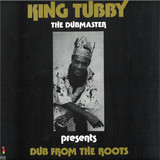
King Tubby and Producer Bunny ‘Striker’ Lee are intertwined in the birth of Dub Music. After discovering a mistake that made a ‘serious joke’ (more of which later...) they went on to release the first pressings of this new musical genre namely ‘Dub Music’. Tubby’s vast knowledge of electronics and Bunny’s vast catalogue of rhythms would lay the foundations of what today is taken as a standard... the Remix / Version cuts to an existing vocal tune.
Osbourne ‘King Tubby’ Ruddock was born in Kingston, Jamaica on 28th January 1941 and grew up in the High Holborn Street area of downtown Kingston. He studied electronics at Kingston’s National Technical College and also on two correspondence courses from the U.S.A... When he had qualified Tubby began repairing radios and other electrical appliances in a shack in the back yard of his mother’s home. His work in the early days included winding transformers and building amplifiers for Kingston’s Sound Systems. Tubby built his first Sound System in 1957 playing jazz and Rhythm & Blues at local weddings and birthday parties. His reputation as a man who knew and understood both electronics and music grew steadily and as the sixties drew to a close. Tubby purchased his own basic two track equipment. He installed this alongside his dub cutting machine, a homemade mixing console and his impressive collection of Jazz albums in the back bedroom of his home at 18 Dromilly Avenue which he christened his music room.
Tubby and Striker were at Treasure Isle Studio’s one day while Ruddy from Spanish Town was working with the engineer Byron Smith....
“Tubby and myself was talking when Ruddy was cutting some dub but Smithy (engineer) made a mistake through we were talking and forgot to put in the voice. It was two track recording in those days. Ruddy said ‘No Man! Make it stay! and so they cut the rhythm. When I went over to Ruddy’s that Saturday night a dance was in progress and when they played the vocal to the tune... then he said we’re going to play ‘Part Two’. They never called it ‘Version’..and then he played the rhythm track. The song was a catchy song and everybody started to sing along and the deejay started to toast so everything went down well. On Monday morning I went up and I said ‘Tubbs the mistake we made was a serious joke. It mash up Spanish Town! The people went wild. So you have to start to do that now ‘cause when the man put on the ‘Part Two’ everyone start singing this song. It played about twenty times. I said you try Tubbs!’...Well the next Saturday night now when Tubby strung up down the farm U Roy said he’s going to play ‘Part Two’ but Tubby did it different now. He started with the voice then dropped it out and let the rhythm run and then he brought in the voice in the middle and from there Tubby started to get really popular.’’
Bunny ‘Striker’ Lee
Dynamic Sounds upgraded to sixteen track recording in 1972 and Tubby purchased, again with the help of a deal brokered by Bunny Lee. The old four track equipment and the MCI console from their Studio B. The four tracks now gave him far wider scope to work with and he began to create a new musical form where the bass and drum parts were brought up while the faders allowed Tubby to ease the vocal and rhythm in and out of the mix. It was only a matter of time before Tubby’s dub plate experiments began to make it on to vinyl and the first ever long-playing King Tubby releases would feature a collection of his mixes to a selection of Strikers rhythms. So please sit back and enjoy this historic set of sounds, mixed by King Tubby and Mr Prince Phillip Smart and another set of scorcher Bunny Lee rhythms.
Finnish Death Doom spearhead Kuolemanlaakso, starring vocalist Mikko Kotamäki, are about to release their first album in eight years. The new album Kuusumu was produced by V. Santura, who also took responsibility for producing the band’s previous records. In addition to his studio works, Santura is known as the guitarist of Triptykon and Dark Fortress. Kuusumu is the band’s fourth full-length album, and it will be out in 2022 via Svart Records. “The recording pause got unnecessarily long, but there’s no rush in doom. It was great to get back to work with the folks and catch up with some good friends as well. Kuusumu’s keyboards were played by Aleksi Munter (Swallow the Sun, Insomnium, Ghost Brigade) and Lotta Ruutiainen (Luna Kills) performed female vocals on the album. In my opinion we took many steps forward on Kuusumu”, guitarist-songwriter Laakso says. Kuusumu's texts are loosely based on the sudden global cooling that began in 535, leading to a 10-year winter, loss of crops, mass deaths of cattle and other animals, and famine. Climate change was most likely caused by massive volcanic eruptions, the fog of which darkened the sun for one and a half years, causing intolerable cold. Moreover, the plague pandemic that began in the Byzantine Empire in 541 swept across Europe, killing tens of millions of people during the climate crisis. “Our previous releases are autumn albums, so this time we decided to make a winter album. I came across the literature about those catastrophic events by chance, and got thoroughly inspired - especially by contemporary stories. It wasn’t long until the album material was there already. It’s spine-chilling to think that deadly climate change and a pandemic also raged 1,500 years ago when medicine, information flow and living conditions were in their infancy. There was no knowledge about electricity, for example. People imagined that the gods are angry and the darkness is eternal. One way or another, the power of nature should still not be underestimated,” says the band's artistic director Laakso. On Kuusumu, Kuolemanlaakso stretch their artistic boundaries even further. The album contains the familiar slow heaviness, but also more epic, faster and more polished material. The first single Katkeruuden malja, featuring Lotta Ruutiainen, represents the catchier and lighter side of the album. “Katkeruuden malja draws its inspiration from grief and misery. Musically it trips almost in the landscapes of Tribulation, but with longing, Kalevala-infused and, in my opinion, very Finnish melodies. Regarding singing, Kotamäki introduces new winds, and Lotta's parts really top it all off. The music video is like a visual extension of the cover art and the album’s lyrical themes, ” Laakso comments. The previous Kuolemanlaakso record Tulijoutsen (2014), reached the 10th place on Finland's official album list and was selected as one of the best records of the year on Soundi, Rumba, Kaaoszine and Imperiumi, among others.
In association with DJ Amir’s 180 Proof Records, BBE Music continues its exploration of rare gems from the Strata Records catalogue, with previously unreleased Sam Sanders album ‘Mirror Mirror’. A collector’s dream come true, this is musical treasure is so rare that the recordings on this album have never before seen a proper release and even the cover art had to be created from scratch. An almost unbelievable fact, given that it ranks as one of the strongest releases in the already air-tight era of Strata’s Detroit. Although he’s been compared to John Coltrane, Ornette Coleman and Joe Henderson, saxophonist Sam Sanders stands out as one of the most unique phenomena to come from the Motor City. Sanders’ approach to life was so 'out there' that one might say his relative obscurity was a personal choice. Sanders caught glimpses of fame early on performing with several internationally known acts and subsequently, he also learned a bit about what the Record Industry’s primary goals were. Realizing that he did not share them, Sanders chose instead to walk his own path. This drive for artistic freedom turned out to be a double-edged sword: while it allowed Sanders to produce some of the most electric jazz, funk, and soul to come from Detroit, it also meant that most of his recordings were never widely released, if they were released at all. Drawing on his experience with Motown acts like Stevie Wonder and Smokey Robinson, Sanders incorporated a fresh soul sound into recordings that would have otherwise been categorised as jazz. As such, 'Mirror Mirror' moves seamlessly between spirit and style: The album starts on the street with “Inner City Player,” a superfly breakdown of a Detroit hustler’s life, before moving into distinctly abstract territory with the melancholy “Face At My Window.” The experience is held together by a no-nonsense rhythm section featuring the aggressive drumming of Jimmy Allen and the intensely focused bass playing of Ed Pickens. Perhaps the most straightforward jazz song on the album, “Lover’s Gain” showcases Sanders at his freewheelin’ best. And if there was to be any doubt that 'Mirror Mirror' can get funky as hell, look no further than the wah-wah guitar and early synth sounds of “Funk’ed Up,” easily the greasiest cut on the album. 'Mirror Mirror' is remastered from the original reel to reel master tapes.
A new EP by UK DJ / producer, Controlled Weirdness lands on Cultivated Electronics Ltd (CE's vinyl only sister label) in July. Heads will know Controlled Weirdness (real name Neil Keating) from his monthly radio show on Threads, his Presence Unknown label and Electric Sweat events. But he's actually been rocking the decks since the mid-'80s when as a youngster, Electro and early '80s pirate radio started his obsession with electronic music and he played his first gig at "The House of Dolls" in Farringdon where he soon became resident. After a stint in New York from 1989 he met Joel Bevacqua aka DJ Deadly Buda, who after returning to his hometown of Pittsburgh invited Neil to play at the first ever rave there in 1991, leading to a 6-month stint of events. Neil eventually returned to London in 1992 and started a radio show on pirate station Chillin FM alongside his sister, Stacey (later known as NoYeahNo). Many more events followed until in 1996 he formed Unearthly Records. Since then, he has played worldwide from plush clubs to dirty warehouses and has appeared on a variety of labels including Audio Illusion, Control Tower, Praxis, Zhark, Dirty Needles, Fdb and Still Raven. On 'In The Shadows' he delivers 4 earthy and raw Electro cuts with exciting electronics, tough beats and wonky acid.
Ending a break of twelve years, The Villains Inc. returns from the past to deliver four lost tracks from the label mastermind himself! Author of a short yet remarkable discography on Dominance Electricity, Electro Empire, and Drivecom just to name, Italian don Gab.Gato takes this opportunity to revisit some of his classics by a quatuor of undisputed electro heavyweights.
UK veteran Phil Klein opens hostilities on A side with his outstanding remix of "Electro Empire". Originally released on German Electrocord back in 2003, Gab.Gato's version sees a luminous electro-funk treatment in pure Bass Junkie style. Needless to say this electro banger will hit you hard with its untouchable sub bass, oldschoolish tones, hammering drums and retrofuturistic atmosphere!
Italian techno / electro legend Max Durante, coming next, propels "The Villains Inc" cut to another dimension. Taken from the "No Light Or Shadow EP" (ATVS002 in 2008), the track mutes into a milestone of an experimental slaughter tinted with industrial sororities. Following a catchy Speak n' Spell overture, the song introduces some hot and sexy female orgasms, while a heading acid line enhanced by a straight to the point rhythm will drive you on the dancefloor.
US DJ / Producer Sinistarr on the flip goes deeper into the realm with his "Couterterrorism" rework of "A Scanner Darkly". Published on Boris Divider's Drivecom in 2007, the tune evolves into a completely fresh and transformed version. A frantic bassline carries you away on a fast inducing grimey dancefloor boogie combined with hi tones and no nonsense electro beat!
Last but not the least, Drexciyan Dj Stingray closes the EP with its groovy "313 Psycotropic mix" of "S.N.A", a tune written by Gab.Gato and Matteo Merlo in 2007 on "The Systematik Network Attack EP" (ATVS001). Stingray's mix sounds like a sonic, ethereal and thought after assault based upon cutting-edge sororities over playful vocals.
Craftily written and designed (artwork project by Gab.Gato, and illustrated by Simonloop aka Urbanmagic, in 2009 was prophetic on his own: clones programmed to reappear from the past), nasty "Reprogrammed EP" features the almighty ATVS signature we all know, a dark, magnetic and rough sound ranging from breakbeat acid-tinged to Detroit-influenced electro and techno style. Should we mention that this limited 12" (no digital) is expected to sell fast and earn the status of collectible masterpiece, just like the previous releases on the label!
Emerging Netherlands-based pairing Parallells will land on Damian Lazarus’ Crosstown Rebels imprint for the first time next month. Gifting us an emotive offering in Ashes of Snow (The Rebirth Of The Phoenix), it acts as a tribute to their favourite Portuguese beach club, Yamba, which was tragically destroyed by a fire last year.
The title track hits a wonderful sweet spot between electronic elements and organic instrumentals. It feels raw and authentic, blending saxophone segments, electric guitar tones and a jazzy-like backbone to form a cut that feels ripe for both sunrise or sunset. On The Banks of The River comes next, manifesting as a more toughened dance music number thanks to deep bass components whilst still retaining the boys’ natural sound. Rounding off proceedings is Clive Henry, who’s remix of Ashes of Snow flies the flag for contemporary minimal. Weighty kicks reside next to delicate hats before ethereal synths are brought in, creating a romanian-inspired piece that you can’t help but dance to.
Parallells are two Amsterdam-based brothers hailing from the south of France. Multi-instrumentalists, composers, producers and label owners (Klassified), their music cuts across electronica, electro-jazz and underground dance music. Their live, hybrid and DJ sets have graced some of the world’s most esteemed stages, including DGTL, Robot Heart, Mayan Warrior, The Gardens of Babylon, Wonderfruit and many more besides. Their music is also heavily influenced by world culture, a feat that led them to launch their video series concept A Day In. Through this, they immerse in diverse cultures around the world, capturing sounds from their day-to-day life and unfold the story through the medium of music. Clive Henry is a linchpin of house music as we know it today. Cutting his teeth as one half of the tribal house duo Peace Division, he has held a long-term residency at Circoloco, Ibiza and has racked up bookings at standout venues and festivals including Printworks and Houghton to name a few.
- 1: Awaiting The Vultures
- 2: Of The Sleep Of Ishtar
- 3: Luring The Doom Serpent
- 4: Contemplations Of The Endless Abyss
- 5: The Elder God Shrine
- 6: Temple Of Lunar Ascension
- 7: Dreaming Through The Eyes Of Serpents
- 8: Whence No Traveler Returns
- 9: The Forbidden Path Across The Chasm Of Self-Realization
- 10: Beckon The Sick Winds Of Pestilence
Nearly 20 years ago, Karl Sanders – the founder, principal songwriter, and driving creative force behind the exotic, devastatingly heavy stylings of American extreme death metal icons Nile – forayed from his metallic leanings to serve listeners with a transfixing dose of the cinematic, meditative, world music-driven Saurian Meditation (2004). The album explores highly original compositions of hypnotizing, primarily Middle Eastern inspired music, featuring the unique inclusion of instruments such as the balagma saz (Turkish lute) and Glissentar, often blended with dark electronic ambience and deft electric guitar work. Saurian Meditation marked the beginning of Sanders’ Saurian journey, being the first of now three Saurian releases. From the haunting first notes of “Awaiting the Vultures”, which dreamily conjures images of traversing through the dark, mysterious halls of an abandoned ancient temple, to the slithering, percussion-driven pulses and searing electric solos on the ominous album closer “Beckon the Sick Winds of Pestilence” – Saurian Meditation provides a diverse escape for both fans of Nile and the outer realms beyond. Thematically centered around its acoustically-driven, spellbinding seventh track, “Dreaming Through the Eyes of Serpents”, the album ebbs and flows from a higher, rhythmic consciousness to a darker, hypnotic inner balance, achieving a Reptilian Theta State of deep meditation. Saurian Meditation launches the multi-dimensional Saurian universe – witness the very first, transcendental solo output by Karl Sanders, available for the very first time on vinyl, as well as in CD and digital formats, via Napalm Records!
Very limited pressing of 300 units only. Following on from the two sold out records together, Freschard and Stanley Brinks come together for 12 brand new tracks. Lion Heart is an irresistibly charming collection of late night tales, woozy ballads and uptempo sing-alongs. Clemence Freschard’s beautiful vocal tones lend this a rich, French indiepop/chanteuse vibe, complemented by Stan’s wistful timbre and characteristic warm instrumentation. Stanley Brinks is renowned for his unique anti-folk style: both playful and suggestive, insightful and entertaining. Brinks was born in Paris, France, in 1973. He studied a bit of biology and worked as a nurse for a while. Half Swedish, half Moroccan, strongly inclined to travel the world, he soon began spending most of his life on the road and developed a strong relationship with New York. By the late 90s he’d become a full time singer-songwriter – André Herman Düne – as part of three piece indie-rock band, Herman Düne. Several albums and Peel sessions later and after a decade of touring Europe, mostly with American songwriters such as Jeffrey Lewis, Calvin Johnson and early Arcade Fire he settled in Berlin. The early carnival music of Trinidad became a passion, and in the early 21st century he became the unquestioned master of European calypso, changing his name to Stanley Brinks. Under this moniker he has recorded more than 100 albums, collaborated with the New York Antifolk scene on several occasions, recorded and toured with traditional Norwegian musicians, and played a lot with The Wave Pictures. Freschard grew up in a farm in French Burgundy. Aged 18 she moved to Paris, where she baked pies and cakes in a cafe. There, a local musician and regular customer called Stanley Brinks wrote a few songs for her to sing. Homeless in Paris, she saved up just enough money to get herself a ticket to New York. There she found an old electric guitar and started writing her own songs. In 2004 she moved to Berlin, where she recorded her first LP, "Alien Duck". Her second album, "Click Click", recorded in 2006, features electric guitar by Stanley Brinks. On her third album, she plays the drums herself. On her fourth “Shh...” she also plays the flute, and she breaks out the washboard on her fifth “Boom Biddy Boom”. On Midnight Tequila, Freschard brings it back to just drums and vocals // “an absolute joy.” Q // “...a set that’s as wistful and charming as it is playful and self-concious.” Uncut // “quietly charming” Pitchfork
- A1: The Plastik Beatniks Feat. Angel Bat Dawid - The Sun Is A Negro
- A2: The Plastik Beatniks Feat. Doseone - Hollywood Beat
- A3: The Plastik Beatniks Feat. Allen Ginsberg - What He Looks Like_
- A4: The Plastik Beatniks Feat. Angel Bat Dawid - Westcoast Sound 1956
- A5: All Those Streets I Must Find Cities For
- A6: The Plastik Beatniks Feat. Angel Bat Dawid - Bagelshop Jazz
- B1: The Plastik Beatniks Feat. Moor Mother - War Memoir
- B2: The Plastik Beatniks Feat. Angel Bat Dawid - Harwood Alley Song
- B3: The Plastik Beatniks Feat. Patti Smith - Ginsberg (For Allen)
- B4: Would You Wear My Eyes
- B5: A Particular Police Officer
- B6: The Plastik Beatniks Feat. Angel Bat Dawid - The End Always Comes Last
Sounds like supergroup. Rarely have outstanding figures of such a variety of musical styles collaborated on one album to pay homage to a nearly forgotten artist, one of the few black Beatnik poets, Bob Kaufman.
"All Those Streets I Must Find Cities For" by The Plastik Beatniks is an attempt to acoustically reanimate Bob Kaufman, to return the Beat to him in a transatlantic collaboration. It is a shimmering psychedelic, at times jazzy concept album, sometimes reminiscent of Krautrock or hip hop, about a Beat-era poet who was as great as he was forgotten. It takes spoken word to a new level, as a transatlantic showcase of musical avant-gardes and a joyful "sound archaeology" of modernity, in which the tracks of the "Plastik Beatniks" meet the best voices of America.
The 12 wildly different songs and audi collages, on the transatlantically-produced album, "All the Streets I Must Find Cities For," is based on lyrics by Beat author Bob Kaufman. They were originally part of the radio play "Thank God for Beatniks," for which author Andreas Ammer ("Ammer & Einheit"), Notwist‘s Markus Acher and Micha Acher and loop maker Leo Hopfinger ("LeRoy") formed "The Plastik Beatniks." On the eastern side of the Atlantic they composed music and crafted soundscapes. On the west side of the ocean, they asked three of the most renowned singers, activists and producers in the U.S. to recite or sing Bob Kaufman's poetry.
Punk-pop icon Patti Smith immediately signed on to read Kaufman's poem "Ginsberg (For Allen)". Free jazz vocalist Moor Mother passionately performed Bob Kaufman's "War Memoir". American jazz clarinetist, composer, singer and “International Anthem” labelmate Angel Bat Dawid, a legitimate successor to Sun Ra, polyphonically read and sang such poems as "The Sun is a Negroe" and "West Coast Sound 1956" and included some clarinet solos on top. Also on the album, Bob Kaufman himself recites his previously unknown poems "Hollywood Beat", "Would You Wear My Eyes", and the "Jail Poem" "All Those Streets I Must Find Cities For". Beat chronicler Raymond Foye, who still lives at the Chelsea Hotel in New York, contributed an interview he conducted with late beatnik Allen Ginsberg about Bob Kaufman. Completing the circle was hip-hop artist Adam "DoseOne" ("13&God"), who once gave Markus Acher a well-thumbed volume of Bob Kaufman, whom he admired. He contributed some raps. Thus 12 tracks emerged, as diverse as the artists, poets and musicians who contributed to it. More than an album. An epitaph. A work for the eternity of Beat.
Regarding Bob Kaufman - of course the FBI kept a file on him – first as a sailor, then a communist, and finally a Beat poet. As one of the mainstays of the movement, he edited the literary magazine "Beatitude" in San Francisco and defined "Beatnik" to Allen Ginsberg: half rhythm, half sputnik. Bob recited his poetry loudly on the streets (when he wasn't sunk into years of silence in protest of the Vietnam War) and in the bars and bagel shops of North Beach. Once, he almost landed a pop hit ("Green Green Rocky Road"), which then made Dylan's companion Dave van Ronk famous. That Kaufman is today less known than his friend Allen Ginsberg may be because he was a black Beat poet, and also a Jew. This was not compatible with fame in the US of the 1950s. Though Kaufman had the same publisher, City Lights, as Ginsberg, he was frequently arrested and jailed, and was treated with electric shocks until he developed serious mental heath issues. There he wrote his "Jail Poems". The seventh of these lent this album its name:
"Someone whom I am is no one / Something I have done is nothing Someplace I have been is nowhere / I am not me What of the answers / I must find questions for? All these strange streets I must find cities for, Thank god for beatniks."
Tape
Statique is the fifth full length album on Mille Plateaux and Force Inc. labels by Automatisme (the Canadian musician and conceptual artist William Jourdain active since 2011). Jourdain met the label owner Achim Szepanski in 2019 and did an album in solo (Alter-, Mille Plateaux, 2020) plus four others in collaborations (with iadema, Beyond Humans, Stefan Paulus and Viatorism in duo with Pheek). Automatisme now returns as a solo act on that label. The results are, on one side, an expanded vision of fast rhythmic clicks and cuts, like we heard on his Alter-Rate tracks and that are entitled Ultra-Rate on the Statique album. On the other side, it is the multiple Ultra-Scape tracks that are an augmented version of the granulized ambient dub techno he developed since the beginning of the Viatorism moniker. Jourdain adds elements of chaos and perturbation into algorithmic electronic music like static electricity is the presence of a disturbing body in a circuit.
Tossing down straight acoustic shots with electric guitar back, Hello, Hi rides through the valley of yer ol' Canyon legends, finding an isolated place to unspool Ty's copious reserves of nervous energy beneath an open sky. Swarms of harmony vocals caper among the clouds, but there's a rider on the horizon behind, with crossbow trained on his very own heart - the engine driving all the relationships of life, whether down Broadway or over the cliffs at night! Whatever doesn't get killed is getting stronger all the time. A lean, mean deal, baked in saltwater and sunlight, compassion pouring out it's beautiful blue eyes.
Following the release of Bartees Strange’s stunning debut Live Forever, Bartees and his band took a trip to Conshohocken PA to record an electric set of album tracks and other songs from his catalog with Producer Will Yip (Title Fight, Tigers Jaw). The performance has been pressed on limited color vinyl and offers a new look at one of the most exciting songwriters in the game today.
The performance covers most of Bartees Strange’s 2020 LP, an album of the year for that year from Rolling Stone, Pitchfork, The New Yorker, Stereogum and more. Tracked only months after that record’s release, this live set perfectly encapsulates what those outlets found so intriguing about Strange - tying a “dizzying blend of genre work” together as Stereogum said into an album that celebrates it’s myriad influences.
Tossing down straight acoustic shots with electric guitar back, Hello, Hi rides through the valley of yer ol' Canyon legends, finding an isolated place to unspool Ty's copious reserves of nervous energy beneath an open sky. Swarms of harmony vocals caper among the clouds, but there's a rider on the horizon behind, with crossbow trained on his very own heart - the engine driving all the relationships of life, whether down Broadway or over the cliffs at night! Whatever doesn't get killed is getting stronger all the time. A lean, mean deal, baked in saltwater and sunlight, compassion pouring out it's beautiful blue eyes.
First ever retrospective of Phương Tâm, the groundbreaking Saigon teenager who became one of the first singers to perform and record rock and roll (known in Vietnam as nhạc kích động, or, action music) | 25 tracks spanning Phương Tâm’s recording career: early rock and roll, surf, twist, soul, blues and jazz ballads recorded in Saigon between 1964-1966, featuring electric guitars, contrabass, lush brass, saxophone, drums and organ, and rich backing vocal arrangements. | Produced by Mark Gergis (compiler of Sublime Frequencies’ 2010 compilation Saigon Rock and Soul) and Hannah Hà (daughter of Phương Tâm). | Audio restored and remastered from original records and reel tapes. | A family story – as told by Hannah Hà, whose dedication to discovering and sharing her mother’s musical legacy, is helping to put Phương Tâm back on center stage after 55 years | Adds critical context to the fragmented understanding of Vietnamese popular culture at the time.
Guitarist, composer and producer Nick Zinner (Yeah Yeah Yeahs, 13
million year old ghost) and Chaikin Records proudly present 41 Strings, a
song cycle for string orchestra, electric guitars and expanded rhythm
section
This four-movement composition was originally commissioned for a large-scale
Earth Day event and draws inspiration from and pays tribute to the four seasons.
Notable performances over the years include those at Sydney Opera House,
London's Royal Festival Hall and NYC's Rockefeller Center. Each performance of
the piece features stellar special guests; previous guests have included Lenny
Kaye (Patti Smith), Paul Banks (Interpol), Sarah Lipstate (Noveller, Iggy Pop)
among many more. The rhythm section features members of Yeah Yeah Yeahs,
TV on the Radio and Boredoms. 41 Strings's compositional style is purposefully
simple, lyrical and minimal; each of the four season's is treated as its own distinct
'character' to conjure a sentimental link of association, experience and
environment.
Joining the dots between Brazilian musical culture and the sonic melting pot that is New York City, Saidera are a trio on the rise. They’ve already released a pair of critically acclaimed, carnival-ready singles on Brooklyn’s Let’s Play House label and are now ready to make their debut on Leng Records.
The band’s roots can be traced back to a trip that Lemonade band member Alex Pasternak made to Brazil in 2014. While DJing at a house party in the bohemian Rio de Janeiro neighbourhood of Sta Teresa, Pasternak was left gobsmacked when a mysterious local singer/sambista Vadinho Freire, grabbed the mic and started freestyling lyrics and melodies over his set. Realising their instinctive musical connection, Pasternak and Freire decided to work together on some music, with New Yorker Le Chev joining them to complete the Saidera trio.
Now based in Rio and California, the group’s sun-soaked sound – which they describe as “samba disco-Afro melody” – is a cross-cultural stew in which infectious Brazilian percussion, colourful synth sounds, glistening guitars and celebratory vocals combine to create magical, life-affirming musical moments.
‘Luzes Da Cidade’, their first outing on Leng, encapsulates all that’s good about the Saidera sound and the trio’s approach to music. The song is about identity and connection and in its original form is languid, loved-up and joyous, with acoustic and electric guitars, Portuguese vocals and Korey Riker’s gently breezy flute solos rising above a squelchy synth bassline and energetic, sweat-soaked samba drums.
The song’s main mix comes accompanied by a wonderful instrumental pass featuring more extensive solos by Riker, and Saidera’s own remix of ‘Luzes Da Cidade’ – an extra-percussive, breakbeat-tinged fusion of hazy deep house, energetic samba and sunset-ready synth-disco that will delight DJs and dancers alike.
To round off the EP, Saidera has delivered a brand new “Uprockin Dub” of debut single ‘Deixa Tudo Fluir’, this time with female vocals from Irina Bertolucci taking the lead. Brilliantly kaleidoscopic sonically, with dub delay-laden vocals, guitars and flutes, it’s a superb, life-affirming Balearic reggae interpretation of a now familiar favourite. If you’re not singing along with the chorus after your first listen, we’d be very surprised.
Legendary American musician Brian Jackson announces his first solo album in over 20 years,
‘This Is Brian Jackson’, produced by Phenomenal Handclap Band founder Daniel Collás and
released on BBE Music.
Brian Jackson earned mythic status among music fans thanks to his pioneering work with Gil
Scott-Heron in the 70’s, where his flute and electric piano performances on ‘Pieces of a Man’
and ‘Winter In America’ virtually defined the sound of an era. From the 80s onwards he went
on to record with Kool & The Gang, Will Downing (whose debut album he produced), Roy
Ayers and Gwen Guthrie among many others, and while many veteran musicians tend to
stick with the sounds they know best at some point in their careers, Jackson remains an
unusually adventurous, vital and broad-minded artist to this day.
When the Phenomenal Handclap Band’s Daniel Collás first met Brian Jackson at a
performance in New York, right off the bat he said “I think I could produce you”. “I wasn’t
sure why he thought that,” says Jackson “but I considered it a challenge to find out. Turns
out that he was right.”
Early on in their friendship, Brian mentioned that he’d embarked on a solo project right
around the time he recorded ‘Bridges’ with Gil Scott-Heron in 1976. There were even some
unfinished demos, but the album had never materialised. Daniel leapt on the idea, asking
“what would a Brian Jackson album sound like if the 21st century Brian were to complete
that 1976 album today?” Completed in a series of twice weekly sessions over 11 months in
Daniel’s Williamsburg studio, ‘This Is Brian Jackson’ provides the answer.
“We sketched out musical ideas, drank way too much coffee, consumed way too many
tacos and sampled perhaps a few too many exotic whiskeys while talking about things that
were important to both of us personally. The lyrics for the songs are a result of those
conversations” says Jackson.
Contributors to the album range from Jackson’s guitarist, bassist and longtime friend Binky
Brice (Billy Ocean, Evelyn Champagne King, Roy Ayers), Collás’s occasional writing partner
Morgan Phalen, Latin Grammy-winning flautist Domenica Fossati, drummers Moussa Fadera
and Caito Sanchez, and Phenomenal Handclap Bandmates Juliet Swango and Monika
Heidemann.
And the music? Vintage, soul-stirring Brian Jackson, with the great man’s warm vocals,
distinctive flute and lyrical keys taking centre stage. The songwriting feels timeless, the
arrangement effortless, the production human and analogue. From golden-era soul-funk
opener ‘All Talk’, through soaring Afrobeat-inspired dreamscape ‘Mami Wata’ to compact
groover ‘Little Orphan Boy’ which closes the album, ‘This Is Brian Jackson’ is simply some of
the veteran artist’s best work yet, subtly and lovingly framed by Daniel Collás.
Tape
Mexican sound artist Concepción Huerta is also a skilled photographer and video artist, and all of these aptitudes come together in the kinematic elements of her musical thesis. Her narrative seems to be an uninterrupted communication with movement as an axis: it pauses and falls with cadence at some moments; it agitates in disturbance at some others. But one movement perpetually crosses the other, even if sometimes imperceptibly.
Her sound work evokes displacements similar to what we could understand as a force of zero gravity. Taking this criterion as a backbone of her most recent work, the idea behind Harmonies from Betelgeuse focuses on the transmission of electricity between body and machine, between the organic and the inorganic. ––Strong loads of sound pulses move away from Earth's gravity through tape-manipulation. Betelgeuse is a star that belongs to the Orion constellation, but, since it has been expelled from its stellar association, it is considered a fugitive ––An exile. Harmonies from Betelgeuse is composed of eight pieces built as a whole, accompanying and destroying each other like theatrical parts of a cosmic tragedy. A beautiful analogy about impending extinction and exile.
Mastered by Rafael Anton Irisarri
Photos by Mateo Barbuzzi, design by Daniel Castrejón
* 25th anniversary of DCLXVI To Ride Shoot Straight and Speak The Truth
* Finally reissued/released packaged as the band originally intended it.
* Vinyl comes in Gatefold sleeve.
* CD version has the classic poster booklet.
* Newly remastered by Magnus Lindberg at Redmount Studios (Hellacopters, Alcest, Cult of Luna, Imperial State Electric, Misery loves Co, Lucifer, Dool, Refused and more…)
* Swedish Music Hall Of Fame inductees
* Long time out of print, now available again
* High class re-release that the fans waited for!
* Entombed are one of the originators of Scandinavian death metal
Limited to 500 copies worldwide.
Heavy as f-ck and deep as hell, this devastating split album gleefully corrupts and corrodes Dub’s sunshine reflections. Celebrating rhythm & noise in its dank echo chamber, these demolition dub tracks are built from obsessive studies in distortion, overdrive and seriously ruff textures, amongst an absolutely insane amount of sub-bass level.
‘Disintegration Dubs’ is a three way low end collision, between G36 (The Bug aka Kevin Martin/Gorgonn’s rig torturing beat project) and JK Flesh (Justin Broadrick of Godflesh/Jesu etc…). As the album title suggests, this instrumental pile up of floor crawling, sound system crushers, is a clearer sign than ever, that these three producers crave their dub cuts to be mutant and heavyweight, totally damaged and completely atomised. Dub as sonic obliteration
Anyone previously smitten by Techno Animal’s deeply psychedelic face off with Porter Ricks, on the long out of print ’Symbiotics’, or who worshipped Zonal’s recent rhythmic wreckage via Relapse records, will surely gorge greedily on Disintegration Dubs’. Likewise, newbies, who have snapped up this year’s ‘Fire’ by The Bug or ‘New flesh in dub’ by Godflesh, will find endless pleasure within these dread-tech, annihilated dubs and Industrial strength steppas rhythms. Echoes of Basic Channel, early Iration Steppas, Public Image Limited or even Andy Stott can be heard within this collection’s haunted atmospherics and bulldozing rumble. Yet, these three individual producers have obviously found their own recognisably original sound, within these monolithic grooves, and what makes this album so utterly refreshing, is just how well the three disparate sound manipulators complement each other fully, as they collectively set their sights on some shared, relentlessly futuristic sci-fi vision, for a new form of dub.
Obviously, Martin as The Bug, and Broadrick with his colossal dubs of Godflesh and his filthy back catalogue of JK Flesh releases, have both long since subscribed to the genre, aesthetic and fragmentation of Dub. Meanwhile relative newcomer, Gorgonn, is The Bug’s long time, live soundman, and former bandmate with DJ Scotch Egg in Devil Man, as well as having formed Dokkebi Q with Kiki Hitomi (ex-King Midas Sound), so he is no stranger to the art of deviant dubs either…
G36 dropped their appropriately titled debut EP ’Floor Weapons’, in 2018, on PRESSURE, as well as providing the backing riddim for the first ever release from Jamaican MC phenomena Nazamba, with his startling debut, ’Vexed’. Alternately, Justin has previously released seven albums solo, as JK Flesh, that systematically contorted, distorted and completely bastardised techno for labels such as Hospital Productions, Downwards and Speedy J’s Electric Deluxe… (Next year will also see a full JK Flesh album on PRESSURE too…!)
This album is Mastered by Stefan Betke aka POLE, at Scape Mastering.
- A4: Eclipse A (Beginnings)
- A5: Eclipse B (First Movement)
- B1: Eclipse C (Hustle Bustle)
- B2: Eclipse D (Funky Side Of Town)
- B3: Eclipse E (Midnight)
- B4: Eclipse F (First Movement Continued)
- B5: Eclipse G (Home)
- A1: Think Positive (Feat Steve Garcia, Edward Garcia & John Ortega - Live)
- A2: Jennifer (Feat Steve Garcia, Edward Garcia, Vincent Anderson & John Ortega - Live)
- A3: Try It All Again (Feat Vincent Anderson, John Ortega, Edward Garcia & Steve Garcia - Live)
First ever repress of the sought after psychedelic tinged funk rock private press album 'Eclipse of the City' from 1980 New York. Originally recorded between 1975 and 1977 in Manhattan's garment district. Eclipse of the City lay dormant on a reel to reel player whilst frontman Carlos Fire Aguasvivas muddled through life working as a data entry clerk away from his fellow band members. It wasn't till he rediscovered the tapes that a sudden life affirming moment drove him to get the music pressed. Putting pen to paper Carlos created the artwork as a homage to his love of comic art and brought the band to life on the reverse with his spindly characters engrossed in the jam. Only 300 copies were pressed at the time leading to eye-watering prices for a copy. with a recent digital re-release from Indian Summer's Anthology Records, Sticky Buttons stepped up to repress the record with a limited run of 500, lovingly manufactured in the UK in all its vinyl glory.
Arriving in the Bronx from the civil unrest of Santo Domingo in the early 60's Aguasvivas was surrounded by the raucous sounds of rock, jazz and prog. Absorbing the humdrum atmosphere of life in New York, Eclipse of the City came from the minds of close friends Carlos Aguasvivas, Steve Garcia and Eddy Garcia. Meeting at Monroe High School the three of them quickly formed a strong bond over their shared interest in music. It wasn't long after that they began rehearsing in a basement under a neighbourhood cleaners and in the attic of Steve and Eddy's family home piecing together their extended sessions of tripped out cinematic psychedelia.
Recording got off to a rocky start as a car accident left the three band members in A&E after taking an early morning cab ride through Manhattan to watch the sunrise on their way into the studio (a theatrical artistic statement of intent conceived by Steve Garcia) - as Eddy mentioned "Eclipse was forged from a lot of pain". Their recording sessions were postponed but a few weeks later they were back and with the added energy of John Ortega on Bass and Vincent Anderson on electric piano and organ - with just a few microphones and a reel to reel recorder, Eclipse of the City was laid down as the stark bold homage to New York's downtown.
Influences ranged from the cinematic behemoth Jaws to the UK prog rock bands of Genesis, Yes and Emerson Lake & Palmer but only could Eclipse of the City take its unique form in the attics and basements of New York with the full band adding their Puerto Rican and Dominican slanted New York energy. Side one includes 3 fully formed tracks breaking out into eerie moments of calm before diving into well timed jolts of reprise as each element weaves over the top of one another whilst side two presents a 30 minute narrative work following the night adventures of a young group of friends exploring the vibrant nightlife of downtown New York. A rumbling half hour of wobbling guitar, tight drumming and synth organ licks jutting out from the glistening lights of the night before the sun rises down Manhattan's East-West axis as the lilt changes and the organ lulls the friends back home. A truly idiosyncratic take on the heady world of New York in the 70's and one that still resonates with our urban landscapes and love for the nights they bring today.
a 01: Think Positive (Live) feat. Steve Garcia, Edward Garcia & John Ortega
b 02: Jennifer (Live) feat. Steve Garcia, Edward Garcia, Vincent Anderson & John Ortega
c 03: Try It All Again (Live) [feat. Vincent Anderson, John Ortega, Edward Garcia & Steve Garcia]
[d] 04: Eclipse A (Beginnings) [Live] [feat. Vincent Anderson, John Ortega, Edward Garcia & Steve Garcia]
[e] 05: Eclipse B (First Movement) [Live] [feat. John Ortega, Steve Garcia & Edward Garcia]
[f] 06: Eclipse C (Hustle Bustle) [Live] [feat. Vincent Anderson, John Ortega, Steve Garcia & Edward Garcia]
[g] 07: Eclipse D (Funky Side of Town) [Live] [feat. Vincent Anderson, John Ortega, Steve Garcia & Edward Garcia]
[h] 08: Eclipse E (Midnight) [Live] [feat. John Ortega, Steve Garcia & Edward Garcia]
[i] 09: Eclipse F (First Movement Continued) [Live] [feat. Vincent Anderson, John Ortega, Steve Garcia & Edward Garcia]
[j] 10: Eclipse G (Home) [Live] [feat. Vincent Anderson, John Ortega, Steve Garcia & Edward Garcia]
Since the initial release in 2003, Kurt Rosenwinkel’s Heartcore has been lauded by listeners and musicians alike for its forward-thinking vision and conception and seamless integration of electronic elements with acoustic jazz interplay
The album features Kurt Rosenwinkel on guitar, electric bass, voice, and synthesizer, Mark Turner on saxophone, Jeff Ballard on drums, Ethan Iverson on piano, and was produced by Q- Tip of A Tribe Called Quest. Much has changed since the early 2000’s- all of the musicians involved with Heartcore have since risen to the forefront of the global contemporary music scene, and the album itself has gained the status of a ‘cult classic’ in many circles. Now, Rosenwinkel and Heartcore Records are releasing an updated version of Heartcore, remixed, remastered and including a bonus track from the original sessions.
This new version of Heartcore promises to be even more spellbinding than the first iteration, and is now released as a top quality Double Vinyl LP in limited production.
Under the name Delicate Steve, guitarist extrodinaire Steve Marion has
spent the better part of the last decade establishing himself as one of the
most wildly innovative and widely revered players in the game.He's
recorded with Paul Simon, been sampled by Kanye West, toured in the
Black Keys, and released four critically acclaimed albums of genrebending instrumental music
He's your favorite musician's favorite musician, a virtuoso songwriter, producer,
and performer who occupies a lane entirely his own in the modern indie
landscape, but he's never liked the sound of the electric guitar? "I've tried
everything under the sun to get away from it," he explains. "Until now."Written and
recorded on a white 1966 Fender Stratocaster that reignited his love for the
instrument, Delicate Steve's warm and captivating new album, After Hours, marks
a first for Marion, an earnest, easygoing collection that revels in the simple joys of
plugging in and playing. The songs are sweet and breezy here, pairing vintage
soul grooves with mesmerizing, wordless melodies, and Marion's production work
is subtle and restrained, stepping back in all the right places to let the album's
masterful performances speak for themselves. In another first, Marion teamed up
with outside musicians on the record, bringing in renowned bassist Shahzad
Ismaily (Yoko Ono, Marc Ribot) and famed Brazilian percussionist Mauro Refosco
(David Byrne, Atoms For Peace) to help flesh out the arrangements and stretch
his sonic boundaries.
The result is a dreamy, introspective album built for late night comedowns and
deep dive soul searching, a cinematic, escapist fantasy for the wee hours of the
morning that draws on everything from Bill Withers and Sly Stone to Pharoah
Sanders and Salvador Dali as it explores memory and nostalgia, instinct and
intuition, serenity and transcendence.
- A1: Stay
- A2: Underwear
- A3: La Noix
- A4: Cuts
- A5: Candy Love
- A6: Trumpet Song
- B1: Cream Over Moon
- B2: Allies
- B3: Ain't Got Time
- B4: Electric Nights
- B5: Counting The Days
- C1: Open Your Eyes (Calcia Mix)
- C2: Maria (D&B Smooth Mix)
- C3: 360 Aliendrop (Kaleve Mix)
- C4: Don't You Turn Your Back On Me (Frozen Mix)
- D1: Big In Japan (Space Jazz Dubmen Mix)
- D2: Dodel Up (Kukliczi Mix)
- D3: Plastic Mouth (G Ball & Kaa Mix)
- D4: Pretty In Storm (G Ball & Kaa Mix)
- A1: Whole Lotta Shakin
- A2: Down & Down
- A3: Run Run Rudolph
- A4: Open All Night
- A5: Don't Pass Me By
- A6: Nights Of Mystery
- A7: Battleship Chains
- A8: Mon Cheri
- A9: White Lightnin
- A10: I Go To Pieces
- A11: Shake Your Hips
- A12: Games People Play
- A13: Can't Stand The Pain
- A14: Keep Your Hands To Yourself/It's Only Rock N Roll
- A15: Sheila
- A16: Hippy Hippy Shake
- A17: Railroad Steel
- A18: I Wanna Be Sedated/Shake Rattle & Roll
Red & Black Smoke Vinyl[23,95 €]
First Ever LIVE Release! “Even 33 plus years later, it hasn’t lost any of its charm, intensity, or unvarnished power.” – American Songwriter “Vocalist/rhythm guitarist Dan Baird and lead man Rick Richards let the slippery riffs fly.” – Vintage Guitar Magazine “You can really hear the bar-band roots of this band listening to this show . . . There’s a real magic to the chemistry they all had as a group.” – Ultimate Classic Rock “. . . the live album sounds wonderful and captures their exciting show nicely.” – Goldmine “. . . offers fans a chance to travel back through time and experience a singular night of all-out rock and roll as only the Georgia Satellites could provide. The title of the album is absolutely accurate.” – Exclusive Magazine “. . . captures the the sweaty excitement and spontaneity . . . of that special night 33 years ago.” – The Music Universe In 1988, the Georgia Satellites rolled into Cleveland, Ohio for a blistering Monday night at local watering hole Peabody’s, formerly the punk haven Pirates Cove. With Open All Night giving the band a second album to draw on, their salty, wide-open Chuck Berry riff’n’roll was full swagger – whether drawing on their reprise of the Swinging Blue Jeans’ “Hippy Hippy Shake” from the Tom Cruise film “Cocktail,”Joe South’s swerving “Games People Play,” George Jones’ “White Lightnin’”or Jerry Lee Lewis’ all-out “Whole Lotta Shakin’.” Just as importantly, gap-toothed guitarist/lead singer Dan Baird and combustive lead guitarist Rick Richards set the pummeling groove of drummer Mauro Magellan and bassist Rick Price ablaze. Delivering an 18-song masterclass in roots, rock and raunch, the Satellites not only incinerated “Battleship Chains,” “Railroad Steel” and “Can’t Stand The Pain,” they led the beyond SRO crowd through a shout-along of “Keep Your Hands To Yourself” threaded with a brazen stripper grind on the Rolling Stones’ “It’s Only Rock & Roll.” Fans of reverb, thrashing drums, the rush of rock & roll momentum and all manners of electric guitars giving it over to basic 3 chord rock & roll, Lightin’ in a Bottle retires the jersey. As the southern equivalent of the Replacements, the Ramones hillbilly (redneck) little brothers, no band delivered as much balls as the Satellites, who’ve never had an official live record. For a band who leaves it all onstage, that seems wrong. Leave it to Cleveland International to unearth this blistering recording, wipe off the sweat and somehow figure out how to get it all in one double disc package captured in the Rock & Roll Capital of the World. -Holly Gleason
- A1: Whole Lotta Shakin
- A2: Down & Down
- A3: Run Run Rudolph
- A4: Open All Night
- A5: Don't Pass Me By
- A6: Nights Of Mystery
- A7: Battleship Chains
- A8: Mon Cheri
- A9: White Lightnin
- A10: I Go To Pieces
- A11: Shake Your Hips
- A12: Games People Play
- A13: Can't Stand The Pain
- A14: Keep Your Hands To Yourself/It's Only Rock N Roll
- A15: Sheila
- A16: Hippy Hippy Shake
- A17: Railroad Steel
- A18: I Wanna Be Sedated/Shake Rattle & Roll
Black Vinyl[23,95 €]
First Ever LIVE Release! “Even 33 plus years later, it hasn’t lost any of its charm, intensity, or unvarnished power.” – American Songwriter “Vocalist/rhythm guitarist Dan Baird and lead man Rick Richards let the slippery riffs fly.” – Vintage Guitar Magazine “You can really hear the bar-band roots of this band listening to this show . . . There’s a real magic to the chemistry they all had as a group.” – Ultimate Classic Rock “. . . the live album sounds wonderful and captures their exciting show nicely.” – Goldmine “. . . offers fans a chance to travel back through time and experience a singular night of all-out rock and roll as only the Georgia Satellites could provide. The title of the album is absolutely accurate.” – Exclusive Magazine “. . . captures the the sweaty excitement and spontaneity . . . of that special night 33 years ago.” – The Music Universe In 1988, the Georgia Satellites rolled into Cleveland, Ohio for a blistering Monday night at local watering hole Peabody’s, formerly the punk haven Pirates Cove. With Open All Night giving the band a second album to draw on, their salty, wide-open Chuck Berry riff’n’roll was full swagger – whether drawing on their reprise of the Swinging Blue Jeans’ “Hippy Hippy Shake” from the Tom Cruise film “Cocktail,”Joe South’s swerving “Games People Play,” George Jones’ “White Lightnin’”or Jerry Lee Lewis’ all-out “Whole Lotta Shakin’.” Just as importantly, gap-toothed guitarist/lead singer Dan Baird and combustive lead guitarist Rick Richards set the pummeling groove of drummer Mauro Magellan and bassist Rick Price ablaze. Delivering an 18-song masterclass in roots, rock and raunch, the Satellites not only incinerated “Battleship Chains,” “Railroad Steel” and “Can’t Stand The Pain,” they led the beyond SRO crowd through a shout-along of “Keep Your Hands To Yourself” threaded with a brazen stripper grind on the Rolling Stones’ “It’s Only Rock & Roll.” Fans of reverb, thrashing drums, the rush of rock & roll momentum and all manners of electric guitars giving it over to basic 3 chord rock & roll, Lightin’ in a Bottle retires the jersey. As the southern equivalent of the Replacements, the Ramones hillbilly (redneck) little brothers, no band delivered as much balls as the Satellites, who’ve never had an official live record. For a band who leaves it all onstage, that seems wrong. Leave it to Cleveland International to unearth this blistering recording, wipe off the sweat and somehow figure out how to get it all in one double disc package captured in the Rock & Roll Capital of the World. -Holly Gleason
Limited Edition 100 Only Red Vinyl LP - Hand Signed and Numbered / Quantity: 100 - Beth Blade and The Beautiful Disasters are a melodic Hard Rock band based out of Cardiff, South Wales. The four-piece provide monster riffs, huge choruses and a dose of old school rock and roll attitude. With aggressive muscle and melodic sensitivity, this band is reigniting the flame of British Hard Rock. They have an unmistakable modern presence whilst keeping the spirit of old school rock and roll alive. The band have been a non-stop force to be reckoned with, building a strong pedigree touring with Marco Mendoza and The Electric Boys, and have supported old and new legends such as Kee Marcello, Y and T, Dan Reed and Danny Vaughan, Ricky Warick and Damon Johnson, Massive Wagons, Those Damn Crows, Tyketto and Graham Bonnett. They are no strangers to festivals either having performed at Hard Rock Hell, Planet Rockstock, Monsterfest and most notably with KISS on the globally renowned KISS Kruise in the US. The band's first two albums received glowing reviews across the rock press and resulted in international radio airplay including heavy rotation on major networks in the UK. Beth herself has sung backing vocals on the last two Thunder albums with the latter reaching number 3 in the U.K. Top 40 Album Chart and number 1 in the U.K Rock Chart in March 2021. The band are currently working on album number 3 and have a number of live shows and festivals already booked alongside The Treatment, Mason Hill, Collateral and will be hitting the road again on a UK tour with Swedish Rockers Thunder Mother. The band is fiercely determined and has the grit to surpass their previous accomplishments through intense live performances and a passion for rock and roll that is unrivalled.'
Owing to a focused period of growth as a home recordist and producer,
there is a distinct, refreshing current that charges outtakes from 'bad
summer', the latest full-length album from Philly-via-Portland's cool
original (FKA cool american)
What under other circumstances might have been a string of homespun indie
rock songs is instead an energized pop- focused collection of tracks born from
what Nathan Tucker describes as 'the contrast between total formlessness and
rigid claustrophobia'. As heard almost immediately on album opener 'monad, no
windows', an electric atmosphere envelops outtakes from 'bad summer'. Pitchshifted vocal samples and previously- scrapped drum recordings fill out the
overture, setting the table for a patchwork of repurposed, resampled ideas
shaped into songs that rarely end up in the same place they started. The
unhurried and sentimental 'i just need a second' boasts the full spectrum of cool
original's songwriting prowess: foregrounded, infectious melody over subtly
chopped and screwed drums comprise the foundation for Tucker's own take on a
classic road song'a marked contrast to 'breaking my own rules', an experimental
pop number unlike any previous cool original work. Similar contrasts abound
throughout outtakes, making for a listening experience that's equal parts
rejuvenating and unpredictable.
ANZOLA is a recording artist whose loop-based neo-psychedelic music incorporates elements of Instrumental Hip Hop, Electronic, Jazz and Latin influences. The multi-instrumentalist creates a groove-heavy and laid back landscape utilizing samplers, classic synths, drum machines and live instrumentation. His new EP Caracas finds him in a reflective mood, looking back at his youth spent growing up in the city of Caracas, and his experience immigrating to Canada. Entirely self-produced, these six tracks transport us into ANZOLA's kaleidoscopic vision of his youth: a world of heat and haze, colour and texture, of lazy afternoons and late-night dances, languid jungles and chaotic streets. All created instrumentally utilizing drum machines, bass, synths, electric pianos and samplers. "I've always been better at communicating through chords and rhythm than with words. On this record, I followed my feelings and memories to return home."
Repress!
Leeward, released in 1978 on Union record, is the second album by tenor and soprano saxophonist Mabumi Yamaguchi. Here the quartet comprises of Ikuo Sakurai on bass, Hideo Sekine on drums and Ichiro Doi on piano and electric piano.
Leeward opens with “Dawn” a long and slow piece led by a Fender Rhodes played in flanger mode, on which Mabumi Yamaguchi expresses a certain melancholy, which we also find on “Dewdrop”, a duet piece with Ichiro Doi at the piano. The rhythm picks up on “Distant thunder”, a kind of jazz-funk samba in which Mabumi Yamaguchi lets each of his musicians take a long chorus before ending by taking up the haunting theme of this superb piece.
The beautiful “Leeward” closes the album in a slightly more traditional but equally mastered style. It is not known if the cover of this album contributed to its lack of success when it was released, but it is almost impossible today to find an original pressing of this record.
It should be noted that Mabumi Yamaguchi is still active and that he continues to release records and perform in concert in Tokyo (dates to be found on his website mabumi).
Coming hot on the heels of his debut on Distant Horizons, London breaks-master Yosh joins the core label family with a killer 4-tracker on Lobster Theremin.
As one of the most recognisable names from the emerging UKG re-rise (it never went away, y’know), Yosh has developed a reputation for dutty 2-steppers and screw-face breakbeats designed to delight and devastate the rave.
‘My Fire’ is a jungle-influenced cut of broken breaks - malfunctioning, soulful and electric - the perfect accompaniment as day turns to night, the atmosphere loosening as it does. A sun-setting stepper brimming with v i b e s.
‘Hold On’ sees Yosh venture towards his traditional garage territory - low-swung percussion, wubby stabs and ambient dreamscape aesthetics spraying contemplative thought patterns into the air as we sway from side-to-side, before ‘I Feel’ reignites the junglist inspiration with its rumbling bassline, bouncing breaks and underground energy.
We reach our climax with the most ‘heads down’ cut on the record; ‘Outa Sight’ maintains that light and dark sensibility that has become such a staple of Yosh’s productions, simultaneously taking us from moments of sweaty intenseness to moments of blissed-out ecstasy.
Bliue Vinyl
Yamila reveals her most intimate catharsis in Visions, an album that brings together and provokes the hallucinatory powers of music. Like an ancient herald, she announces the profound feminine mystique while crossing epic melodies full of pleasure and pain. This album is a journey that prodigiously unites baroque accents, Spanish folklore – such as flamenco – and contemporary electronic music.
Her voice and music – sometimes torn and others buoyant – could resemble the score for a biblical passage (ie. visions of the Apocalypse), for they are overflowing with physical ecstasy and sounds that one can touch. Visions is composed of different forms and rhythms. Pieces like "Visions V" evolve intensely with sharp and systematized hits –– powerful layers that bring us closer to Alessando Cortini's Forse era. "Visions II", for its part, shares intensity and power with flamenco ritual patterns, as if it were an old Andalusian scene dripping with oscillations and electric shocks. Yet there are luminous vocal pieces such as "Visions I" (featuring Rafael Anton Irisarri), inspired by Manuel de Falla's Suite Española composed in 1922. Here, an aural chiaroscuro with beautiful voices and choirs is deeply fused with daring drones. And it is in the ensemble of moments of Visions where Yamila's conceptual axis is rendered solid. Pain and glory, lacerating religiosity, feminism cauterized by power, and hallucinations as a source (or pretext/tool) to be heard.
Yamila exhibits a profuse aesthetic with her music that calls for a look at the far-past with romanticism and nostalgia. Visions is radiant, intense. A unique album.
All songs written and performed by Yamila Ríos (Spain), except “Visions I”, which features Rafael Anton Irisarri. Recorded between the Swedish winter and the Belgian countryside. Additional musicians: Simbad guitar on V-IV and V-I, Vera Cavallin harp on VIV. Mastered by Rafael Anton Irisarri at Black Knoll Studio. NY. Photos by Virginia Rota in Madrid. Design by Daniel Castrejón in Mexico City.
Oslo-based American-Norwegian trio Buster Sledge releases their first
studio album Call Home in May 2022, following up on their self-recorded
and self-released debut Spirit (2020)
Fiddle, banjo, guitar and three voices are the vehicle for lyrical storytelling against
an orchestral background anchored in the acoustic music traditions of the United
States. Hailing from northern California, lead vocalist and songwriter Michael
Barrett Donovan mixes themes from personal experience with folk and country
music archetypes to breathe new life into time-tested song structures. Banjoist
Mikael Jonassen and guitarist Jakob Folke Ossum both share a thorough
appreciation for the fundamentals of bluegrass music, clear melodies and
harmony- singing through the lens of being trained jazz musicians. In eleven
tracks, Call Home tips its hat to artists such as Norman Blake, The Punch
Brothers, Tim O'Brien and John Hartford. Buster Sledge was the first group to
record in the recently relocated Globus Studio of Sjur Lyseid (Little Hands of
Asphalt) and his influence from behind the mixing board pushed the band into a
slightly-augmented acoustic sound with more streamlined arrangements which is
a suiting duet with the album art by William Hay that realizes a scene of a rider
overlooking a large river-valley in impressionistic swaths of color.
Banjoist Mikael Jonassen, from Bodo in the far north, is Norway's first and only
higher-education certified banjo player. Despite beginning with an electric banjo
and playing exclusively fusion jazz, Jonassen currently focuses his efforts on
Scrugg's style acoustic banjo and the playing of Bela Fleck and has taken several
trips to the US to learn from the masters. Jakob Folke Ossum, jazz- guitarist
turned flat- picking aficionado, discovered the sound of acoustic flat- picking
through Tony Rice and Bryan Sutton and meticulously taught himself from
records and videos. Fiddler Michael Barrett Donovan made a living as a musician
in New York City doing a master's in classical composition while touring with a
Grateful Dead tribute band. The three met in a comment section on a bluegrass
forum after Donovan moved to Norway in 2019. The rest of the story you'll have
to ask them at a show sometime. Buster Sledge has been on stage in many small
venues in southern Norway, don't miss them the next time they come to town!
The complete aural presence that is Oshkosh, Wisonsin's Cavernlight
returns with "As I Cast Ruin Upon the Lens That Reveals My Every Flaw ",
an all-encompassing journey that could very well be one of the best postmetal / sludge releases of the last 5 years
Recorded at Electrical Audio in Chicago and mixed Scott Evans (Kowloon Walled
City, Yautja, East of the Wall) and features the artwork of vocalist / guitarist Scott
Burns.
Shadow Kingdom Records is proud to present Savage Master's highly
anticipated fourth album, 'Those Who Hunt at Night' on CD and Red &
Black Tears colored vinyl'.One of the most exciting and electrifying bands
in today's occult heavy metal scene, during the first six years, Savage
Master swiftly built an impressive canon of work
Now Savage Master stands taller than ever and surveys those they leave in the
dust with their fourth full-length, 'Those Who Hunt at Night'. All too perfectly titled,
'Those Who Hunt at Night' sees Savage Master going in for the kill, keeping their
unyielding-as-steel sound whilst sharpening it yet further with their clearest and
most powerful production to date. In fact, that palpable professionalism
profoundly impacts that sound - timeless electricity, eternal glory, boundless
energy, authentically ancient but no tired ""retro"" retread, with the immediately
recognizable vocals of Stacey Savage leading the charge - so much so, one could
put the album alongside such early/mid '80s stunners as Judas Priest's Point of
Entry (moody and dynamic) or Jag Panzer's Ample Destruction (locomotion and
drama). Which is to say nothing of the subtle- but- crucial placement of vintage
synths across the 36- minute album, giving all nine songs a unique twist that
altogether make the record a unified experience. Still, from the impeccably
constructed hooks to the broader range of tempos they explore, Savage Master's
creativity here seems to know no bounds whilst keeping their core intact.
Part of The Optic Sevens 4.0 Reissue Series.
Limited to 800 copies worldwide. Please check your allocation with your sales rep.
Pressed on White Vinyl.
Includes postcard and poster. Non-Returnable.
Colin Vearncombe may be forever associated with the worldwide hit ‘Wonderful Life’ but 6 years earlier Black released this incredible single.
Evocative of The Smiths (although this was released years earlier) it contains all the elements of a classic indie single.
After an extended interval between releases, Data Arts Group owner/operator Document Swell (real name Simon Cotter), presents his first full length LP "Hybrid Emotion". Document Swell's first musical contribution to Data Arts Group is also the first vinyl release for the label and brings DAG into the new world of 2022 and beyond. Song-writing, and sound sketches for "Hybrid Emotion" took place over a time span of approximately 5 years in various bedroom studios and life-phases throughout northern Melbourne/Naarm, as well as small setups in the Berlin localities of Templehof and Schöneberg. Arranging and mixing was completed in Northcote, throughout that period of ample time in Melbourne's Covid-19 lockdowns. The album spans a rich tapestry of ideas and moods which can be perceived as something between Document Swell's classic playful dance floor style to a more reflective and brooding tone.
The opening track "River Heart", is built of rudimentary pitched percussion, warm Juno pads and randomised Blofeld synthesis to construct an electronic impression and nostalgic sense of life by the river. The title track "Hybrid Emotion" brings the album closer to the realm of the club with relaxed house grooves and moody but spirited melodies, along with hybridised vocal samples."Why Then Here" pushes the album's character towards something less human, with a more synthetic affection portrayed by repetitive vocal samples and individualistic synth tangents. "Now and Then" realigns the trajectory to a warmer and more predictable landscape with chugging Balearic rhythms, glassy synths and jottings of lush electric guitar. On the flip side, "Day of Thunder" drops things down into an animated variety of industrial darkness, with heavy weight kick drums, metallic percussion and bleak vocal messaging. "Little G", an ode to a well loved cat, lightens things up instantly with playful synth noodlings, disco beats and clatter from pots and pans. "Vergangenheit" exhibits Simon's explorations into the acid world, with 303 squawks, cassette crunched drums and shadowy synth pads. The closing track "Epic Sands" ends the album, not with an end note, but a sense of ongoing possibilities.
He may not have known it before, but Toronto-born, New York-based
guitarist Matthew Stevens, prized for his forceful, distinctive electric
sound was an ideal candidate to make an album fully devoted to solo
acoustic guitar: the intimate, unadorned, straightforwardly titled
'Pittsburgh'
September 2020, Stevens was hunkering down in his wife's family's hometown of
Pittsburgh, while navigating his way through the crisis. He had with him a vintage
Martin 00-17, a small- body mahogany guitar. Practicing daily on the Martin, he
began generating a series of short song "starts" - ideas and sketches he thought
might lead somewhere. Then one rainy Pittsburgh day, Stevens' bike slid out from
under him and he broke his right elbow. Rather than getting derailed musically, he
became immersed in a creative process that led straight to 'Pittsburgh': a
document of those short song "starts" from the notebook, now hatched as
completed compositions. "Playing this music became a big part of my rehab,"
Stevens recalls.
As the album took shape, it became clear to Stevens that he was headed in the
direction of a wholly unaccompanied recital, with no overdubs or sound layering
of any kind. Just him and this special Martin, two Neumann U89 mics and enough
peace of mind across two separate sessions to make 'Pittsburgh' the triumph that
it is.
In addition to his extensive high-profile work with Esperanza Spalding (serving as
co- producer on 'Exposure' and '12 Little Spells'), Stevens is also a member,
songwriter and co-producer of Terri Lyne Carrington's GRAMMY-nominated Social
Science band. He has made vital contributions to groups led by Dave Douglas,
Linda May Han Oh, Christian Scott aTunde Adjuah, Ben Williams and more. With
tenor saxophonist Walter Smith III he co-leads the In Common collective. Stevens
has also amassed many credits beyond the jazz world, collaborating on
forthcoming releases by Anna B Savage, Jamila Woods, Tyler Armes
(Murdagang) and Berlin-based electronic artist Robag Wruhme.
Sweetness and noise, light and dark, soul and body - KICK are back with
the new album Light Figures
KICK are Chiara Amalia Bernardini (vocals, bass) and Nicola Mora (guitars,
electric piano, synths, samplers), from Brescia. Their sound combines rough
elements and others more dreamy in a sound that could ideally be defined "sweet
noise", a style on their own melting the noise with the softness of the
atmosphere, without any limits of genre. The production of Light Figures,
composed between 2019 and 2020, was curated together with Marco Fasolo
(Jennifer Gentle, I Hate My Village), known for the international reach of his
works.
- A1: Number One In Hell
- A2: Clocklords
- A3: But I Don't Believe You
- A4: Labor Board
- A5: Radical Document
- B1: Babbling Brook
- B2: Log Me Out
- B3: Old Skin
- B4: Fall On The Floor
- B5: Ice Cream Sandwich
Baby? are Erin Allen (Violence Creeps, High
Castle) and Max Nordile (Preening, Violence
Creeps, Uzi Rash).
This collaboration sprang from a singular epic
recording session. “Even though we hang 11 times
weekly, shouldn’t we remotely pile on overdubs ad
infinitum for havoc injection?” Did they really say
that? Did they really do all this on purpose?
For fans of Wild Man Fischer, Minutemen, Electric
Miles, Contortions, The Fugs, Preening.
Punked-up no-wave improv skronk to get you
going all night.
Includes poster insert.
Katy J Pearson shares details of her stunning new album,
‘Sound of the Morning’, released on Heavenly Recordings.
Written and recorded in late 2021, Katy’s latest effort is coproduced by Ali Chant (Yard Act and the helm of Katy’s debut,
‘Return’) and Speedy Wunderground head-honcho Dan Carey
(Fontaines D.C.).
Katy’s recent extracurricular activities have shown that she can
dip a toe into a multitude of genres - providing guest vocals on
Orlando Weeks’ recent album ‘Hop Up’; popping up with Yard
Act for a collaboration at End of the Road festival; singing on
trad-folk collective Broadside Hacks’ 2021 project ‘Songs
Without Authors’. ‘Sound of the Morning’ takes that spirit and
runs with it.
‘Sound of the Morning’ is an album that’s as comfortable
revelling in the more laid-back, Real Estate-esque melodies of
lead single ‘Talk Over Town’ - a track that attempts to make
sense of her recent experiences, of “being Katy from
Gloucester, but then being Katy J Pearson who’s this buzzy
new artist” - as it is basking in the American indie pop of ‘Float’,
penned with long-time pal Oliver Wilde of Pet Shimmers, or
experimenting with the buoyant brass of ‘Howl’, in which
Orlando repays the favour with a vocal guest spot.
‘Sound of the Morning’ is available on CD and on clear vinyl in
‘Tip on’ sleeve with folded poster insert and digital download
code. (Once the above vinyl format has sold out, a standard
black vinyl version - HVNLP204 - will be made available.)
Katy heads out in September for a headline UK tour, before
which she plays a number of summer festivals across the
country.
Tourdates - August 19 Green Man, 21 Beautiful Days Devon,
September 8 Trinity Bristol, 9 Cornish Bank Falmouth, 10 Cavern
Exeter, 11 Joiners Southampton, 13 Chalk Brighton, 14 Olby’s
Margate, 15 Electric Ballroom London, 17 Brudenell Social Club
Leeds, 18 The Cluny Newcastle, 20 Voodoo Rooms Edinburgh, 21
Mono Glasgow, 22 Gorilla Manchester, 24 Float Along Sheffield, 25
Rescue Rooms Nottingham, 27 Clwb Ifor Bach Cardiff, 28 Hare &
Hounds Birmingham, 30 The Bullingdon Oxford.
»Tableau« is Rolf Hansen's second full-length album under his given name and acts as a sequel to his solo debut »Elektrisk Guitar«, released in 2019 through Karaoke Kalk. On the 14 new pieces, the Copenhagen-based composer and musician further explores the sonic possibilities of the electric guitar by opting for a radically different approach and putting great limitations on himself as a performer. »Tableau« is an experimental record in the truest sense of the word, eschewing conventional modes of playing the instrument and instead turning the guitar into a sound source for compositions that are at once abstract and concrete.
Already on his last album, Hansen had found a different approach to playing and composing, but this time went even further and created a set-up in which the electric guitar becomes a different instrument altogether. This is also expressed in its title: a tableau is, broadly understood, an image-forming momentary bodily pause in a dramaturgical or narrative process. In the context of the album, tableau is the form and sound that emerge when the musician’s usual approach to playing and the compositional practice is halted and transformed. To achieve this, the guitar is placed on a table with microphones installed around it and tuned in a static microtonal modality thanks to wooden replacement frets that have been inserted under the strings. This alters how the sounds are being generated with the instrument, which is now played from above, occasionally strummed or stroked with a tool.
The opener »Begyndelse« already sets the tone by punctuating dense layers of sound with a one-note melody that provides a rough rhythmic structure and harmonic anchor for the track that still seems to mutate wildly the further it progresses. Even in moments in which Hansen opts for a more directly accessible approach like on the following »Over Grænsen« or »Tid«, the pieces’ emotional qualities are greatly amplified by their sonic idiosyncrasies. This is best exemplified by the first track on the second side of the LP, »Højre hånd«. Using high microphone gain to magnify the high-frequency acoustic sounds of the electric guitar, Hansen captured a rich near-symphonic changing spectrum of overtones. This is typical for the attention to detail put into the overall record whose approach maximises the music’s affective impact by focusing on minute nuances.
»Tableau« is full of moments marked by almost unnoticeable shifts and changes, offering a wealth of sounds that are as evocative as they come unexpectedly. Despite their aesthetic differences, the kinship between its predecessor »Elektrisk Guitar« and these 14 compositions is undeniable. Both are based on self-imposed constraints, a radical form of reduction that made it possible for Hansen to broaden his sonic palette and compositional approach. Though mostly short, concise, and abstract-sounding, the pieces on »Tableau« speak a clear, varied and simple language.
Since slipping out a decade ago, Fürsattl’s sole 12” on Claremont 56 has become an in-demand item, thanks to a mixture of its’ undeniable quality and the patronage of several high-profile, well-regarded DJs. Because of this, the label has responded to demand for a reissue of those two tracks and announced the release of a double-album of the krautrock-inspired trio’s works for the label.
Presented in a gatefold sleeve sporting Mark Warrington’s original 2012 artwork and limited to 400 copies, the 2022 album edition of Rheinlust not only tells the tale of the band’s now decade-long association with Claremont 56, but also features a previously unreleased track from the archives, ‘Für Paul’. Tucked away at the end of the LP, the track is amongst the most atmospheric in their catalogue – a slowly building number in which celestial synthesizer chords, ambient textures, echo-laden electric piano chords and lilting synth strings rise above a rubbery bassline and Jaki Liebezeit style drums.
It provides a superb conclusion to a genuinely evocative album of music you can get lost in, but it’s by no means the only highlight. Fittingly, the album’s first slab of wax boasts both tracks from Fürsattl’s hard-to-find debut 12”: title track ‘Rheinlust’, a driving but deep and hypnotic krautrock masterpiece full of elongated chords, restless bass, twinkling motifs and cascading electronic melodies, and the wonderfully epic ‘Links Der Pegnitz’. Clocking in at just under 15 minutes, this sublime excursion features band members trading glistening guitar and colourful synthesizer solos over a funky but laidback groove that sits somewhere between krautrock and cosmic funk.
The album’s second slab of wax showcases Fürsattl’s lesser-known tracks for Claremont 56, alongside the previously mentioned unreleased cut. These two workouts were originally featured on the label’s Claremont Editions compilations and further expand on their now trademark krautrock sound. There’s ‘Leerlauf’, a breathlessly up-tempo, weighty and immersive chunk of low-slung dancefloor creepiness that you’ll want to get lost in time and again, and the twangy and buzzing ‘Haru’, a birdsong-splattered affair that sounds like their tribute to krautrock originals Neu! and Harmonium. Like the rest of the album, these are seriously seductive outings that slowly build towards impactful, emotive conclusions.
“Sounds Like Freedom” is the second release from LA-based record label, Domanda Music. It was recorded in September 2021 in Verona, Italy and conceived by bass player Rosa Brunello with notable contributions from UK Jazz star Yazz Ahmed, Arabic experimental music pioneer Maurice Louca and Italian drumming sensation Marco Frattini. Each track is the result of spontaneous improvisations, which have been lovingly post-produced by Rosa Brunello herself and label founder Tommaso Cappellato.
Rosa Brunello is an Italian bass player and composer whose skills range from free radical improvisations to electric rock, dub and modern mainstream. She loves to blend acoustic and electronic sounds in order to challenge the boundaries between genres and live up to her motto of music without borders.
A.B. Crentsil is a heavyweight of Highlife music and the main vocalist of Sweet Talks, one of the most popular Ghanaian bands of the 1970’s. In 1992, musician Charles Amoah and producer Richie Osei Kuffour offered him the opportunity to explore a new popular sound: Bürger Highlife. Little did he know these studio sessions would give birth to the biggest song of his career.
Charles Amoah, who had released his Sweet Vibrations LP in 1984 to great acclaim, extensively toured in Europe with bands such as Black Earth and Saraba, was eager to bring a new sound to Crentsil, an artist he had admired for years. Throughout the 1980’s, Highlife had been changing pretty radically, following the same evolution as Congolese Soukous, Caribbean Zouk and most popular black music
genres of that era: Heavy use of drum machines, synths and digital technology was conveniently replacing big bands and expensive
analog studios and equipments. Mostly recorded, produced or mixed in Germany, this new breed of electric Highlife dubbed ‘Bürger Highlife’ could be defined as a fusion of Disco, Jazz, Funk and Pop with the popular Highlife beats, rhythms and lyrics.
According to A.B. Crentsil, the name was a reference to the ever present American cultural influence on Ghanaian musicians. Charles
Amoah has his own take: “I initially called this particular kind of Highlife ‘Ethno Pop’. Bürger is the German word for citizen, and that’s how Ghanaian musicians living and working in Germany were calling each other”.
The music for both “Obi Baa Wiase'' and “Sika Be Ba” was entirely composed and played by Charles Amoah, using minimal equipment: a
DX7 synth, a Korg M1, a Yamaha RX5 drum machine, and an Akai 1000 sampler. A.B. Crentsil provided the lyrics for both tunes on the spot. Obi Ba Wiase’s message is one of gratitude and faith: it says we should appreciate our life way more and follow the example of people who have a lot less but still praise God all day.
Charles remembers fondly Crentsil’s larger than life personality: "A.B. slept a lot, he really loved sleeping. His lack of punctuality was easily dismissed by his wonderful sense of humour and it wasn't uncommon to find musicians rolling with laughter on the studio floor."
Charles also remembers vividly the "Obi Baa Wiase" session: he could feel the magic in the air while working on the soon to be hit, and
knew something special was happening. A.B. asked for a break in the middle of the session, which Charles adamantly refused until the song was finished and the magic fully captured.
Success was not immediate, and Charles was first a little concerned by the lack of buzz following the immediate release of the Gyae Me
Life Ma Me album. But a few months down the line, the situation took a new turn. "Obi Baa Wiase" was making its way into radio playlists,
weddings and festive celebrations. It was covered by local bands, and soon most of Ghana and its European and American diasporas were hooked. It became A.B. Crentsil’s most requested song at live events for the following decades.
As producer Richie Moore wrote on the album back cover : "A perfect integration of two musical geniuses, the result of which are the
scintillating tracks of music on this record… so all you party fans go onto the floor and dance the body music"
For fans of Turkish Psychedelic Funk and Anatolian Rock. Alexander Korostinsky (Whatitdo Archive Group and The Sextones) marks his solo debut with two heavy psychedelic tracks. 7" vinyl is limited to 300 copies.
Record Kicks busts down the doors with yet another 7" heater– this time by Alexander Korostinsky (The Sextones, Whatitdo Archive Group), an accomplished songwriter/producer making his debut as a solo artist with a heavy psychedelic 7" available at selected stores next June 17th and limited to 300 copies worldwide. Korostinsky gives a loving nod to the sound of 60s and 70s Anatolian Psych Rock all while staying true to his unique songwriting style and recording approach. On the A side is "Bones of God", a psychedelic Turkish-infused cut featuring an electric saz and sitar dancing across tape-y drums and his distinctive bass playing. On the flip side, "Altin Maske'', a hypnotic exploration into Korostinsky's mind as a solo artist– think a Turkish David Axelrod and you'll be set. "Altin Maske's" twists and turns guide the phased out drums and electric saz into a beautifully psychotic meltdown.
Meticulously recorded and produced entirely on a Tascam 388 by Korostinsky at his own Archive Group Studios,this 45 is imbued with Korostinsky's love of analog recording production and vintage records. One listen and you'll notice thatthese songs are begging to be sampled and are a must have for any serious crate-digger. If this first release is any indication of what we can expect from Korostinsky in the future, then we are excited to see where he takes us next.
The 7" vinyl is limited to 300 copies worldwide which makes it an instant collector's item.
Swedish duo Thunder Tillman come together again in healing harmony to produce a much needed LP for troubled times. Thunder and his life coach Pony bring their spirits in sync for 40 minutes of improvised soundtracks for mental and physical wellbeing.
Recorded on Stockholm’s Wind Island, the pair have carefully selected specimens from their collection of vintage musical paraphernalia to channel these specific vibrations for maximum healing power.
Side one is a gentle wake up call for the soul, with pipes and chimes that gently give way to mind-expanding synths and feedback echoes that sound like sun glistening off a mountain river. Those sounds lead into an electric piano and life affirming synth figure, before disintegrating into santoor strings and chants with a slight Indian flavor. It’s a cosmic combination that invites relaxation and meditation, and the kind of deep breathing exercises that could turn back the clock on a host of bodily ailments. An electric piano comes back to the foreground with a bass and synth combination that drives forward with healing hands, before parting the frequencies for ear-tickling pads and voices. Rounding out the side is a chiming synth and santoor figure that brings the wandering spirit home and to rest.
Side two starts up with Cosmic Osmosis - a motorik drum machine beat and bass line that briefly brings to mind some of their more krautrock inspired modes across their three previous Eps, but soon collapses back into visceral synth twinkles and relaxing washes of analogue tones. It’s a dynamic that drives the whole record, sounds that excite the soul perhaps even the body on an atomic level, before bringing that energy down to a calming, relaxing home. There’s a craftsmanship to their synthesized tones that goes beyond mere artistry, and the interplay between sounds and frequencies is especially inspired, to the point where the music practically sparkles out of the speakers. Side two closes out with harmonic chimes that could put you on a Himalayan mountain side, and succeeds in raising the spirit, mind and body to higher plains of cosmic consciousness.
The Aural Healing Program is accompanied by a 40 minutes Visual Healing Program that will be unveiled in conjunction with the vinyl release. The first visual healing session featuring side B opener Cosmic Osmosis, is already available for all to partake. So just relax, let go and let the frequencies guide you.
The only album by Austrian trio Cultural Noise is a an electronic marvel. Band members were Gerhard Lisy, Walter Heinisch and Karl Kronfeld, and instruments used included an ARP Sequencer, an ARP 2600, a VCS 3, an EMS Digital Sequencer, a Mellotron M400, a Micro Moog, a Roland Studiosystem 700, a Roland Analogue Sequenzer and an electric guitar. With these weapons and a strong influence from the Berlin school Cultural Noise created a rich electronic tapestry which expanded through the two pieces of this record, one per side, being compared by reviewers to works by Zanov or Anna Själv Tredge. Mentions of Tangerine Dream are also present on reviews, although Cultural Noise have a pretty unique personality on their own and besides sharing the use of Mellotron, sequencers and analog synths we have a totally personal concept here which sets them aside from all TD impersonators of the era.
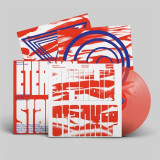
The album was originally released in 1980 on CBS and later repressed in 1981 which came in a B&W version of the sleeve that some sources list as a self release private pressing done by the band themselves - this has been denied by members of Cultural Noise.
500 copies only reissue, housed in its original full colour version artwork.
Mind Eclipse completes Deetron’s triptych for Running Back. After Body Electric and Ego Rave, it’s the missing part in a tale of youthful exuberance told by a seasoned raver and transported into the here and now. Taking the essence of the carefree energy of those days, its warehouses and fields minus the (sometimes!) aural clumsiness, Deetron delivers four studies in the transformation of said emotional states.
Mind Eclipse aka Trancehouzztool does exactly what it says on the tin: big synths, swirl and twirl during an extra long break down for an uproar – serotonin shower included. HG acts like an umbrella to that. Almost melancholic in its presence and meandering between highs and lows, it’s the perfect counterpoint and offset.
On the other side, Phoenix sounds like a lost Border Community hymn that found its way near a Roland 909 for peak time purposes, before The Shore closes the book in a hybrid state between electro and disco or the soundtrack to IDM supporters in a gym workout (also available in an alternative version digitally for those who like their beats straight).
It won’t eclipse your mind though that Deetron knows what he does in the studio, so expect finest artistry, crafty tricks and technical expertise. „’Til the sweatshirts are falling down of us…“
The Girl With The Gun for the first time on Ltd 7" Vinyl
Another dream come true! The first 7" ever to contain the three grooviest and most danceable tracks from the legendary soundtrack to La ragazza con la pistola, Mario Monicelli's 1968 cult film depicting the mod subculture of 60s Swinging London and starring Monica Vitti in one of her most iconic roles. (In the mid-90s two of the tracks were compiled in the seminal compilation Easy Tempo Vol. 2.)
Starting the party is Girl With The Gun, a mod-generation classic featuring a psych-funk rhythm section and an exotic-sounding theme played by a sitar. Next on Side A we find the danceable lushness of Shake Balera, a shake number clearly influenced by the London moods portrayed a couple of years earlier by Michelangelo Antonioni in Blow Up, with Antonello Vannucchi on Hammond and Carlo Pes on guitar (the piece was later covered by Calibro35 in their first album). Last but not least, on the flip is the super intriguing Rapimento in Sicilia, which opens with a spy-movie vibe before switching to a hectic dance of sitar, electric bass and wild percussion.
All tracks were written by Peppino De Luca and performed by his trusted and recurring musicians, the legendary super-group of Italian session players I Marc 4, who bring in their signature psycho-beat sound.
Highly recommended for diggers and DJs.
- A1: Hungry & Ready (Feat Melvin Taylor)
- A2: Can't Take No More (Feat Marcus King)
- A3: I'm As Good As Gone (Feat Buddy Miller)
- A4: Got To Find A Better Way (Feat Scarlet Rivera)
- A5: One Special Lady (Feat Jake Shimabukuro)
- B1: Chills & Thrills (Feat Mike Campbell)
- B2: A Quitter Never Wins
- B3: Deep Blues Sea (Feat Scarlet Rivera)
- B4: Driving Wheel (Feat Melvin Taylor)
- B5: The Sun Is Shining Down (Feat Carolyn Wonderland)
On his latest album, 'The Sun is Shining Down', Blues legend John Mayall
teams up with a stellar cast to deliver a funky soulful affair punctuated by
brass, violins, harmonica and electric ukulele
Special guests include, The Heartbreakers' Mike Campbell, fast rising roots rocker
Marcus King, Americana icon Buddy Miller, Scarlet Rivera of Bob Dylan's Rolling
Thunder Review, Chicago blues guitar mainstay Melvin Taylor and Hawaiian
ukulele star Jake Shimabukuro. Also on hand are Mayall's longtime dynamic
Chicago rhythm section of Greg Rzab on bass guitar and Jay Davenport on drums
with Austin's multi-talented and charismatic Carolyn Wonderland on guitar.
Recorded at Robby Krieger's (The Doors) Horse Latitudes studio with Grammy
nominated Producer Eric Corne, 'The Sun is Shining Down' is Mayall's 5th studio
album for Forty Below Records, a fruitful partnership that began with 2014's A
Special Life.
"I couldn't be happier with the new record," exclaims Mayall. "I can't wait to share
it with my fans. Each one of these special guests brings something unique to the
album and our team works so well together. I think you can hear that chemistry in
the music," raves Mayall.
The album explores a range of styles and eclectic instruments with guests
Scarlet Rivera's violin, Jake Shimabukaro's electric ukulele and Mike Campbell,
Marcus King, Buddy Miller and Melvin Taylor on guitars. As significant as each of
these guest turns is, however, they can't overshadow Mayall's own spirited vocals,
iconic harmonica and lyrical keyboard work.
Tape
The trio Susana Santos Silva / Torbjörn Zetterberg / Hampus Lindwall emerged in 2015 with their first album, which was received with critical acclaim. The unique conceptual approach to composition & improvisation rooted in both free jazz and contemporary classical music was described as “guaranteed a unique listening experience” (JazzIn), “It is art!” (Gapplegate Music Review) and “unique sound and style” (New York City Jazz Record). On their new album »Hi, who are you?«, they have taken the musical creation a step further by adding live electronics for real time sound treatment. Different techniques from experimental electronic music is juxtaposed with simple use of electric guitar effects to obtain tight and highly emotional sound.
Susana Santos Silva - trumpet Torbjörn Zetterberg - double bass, and electric noise on track 5 and 10 Hampus Lindwall - pipe organ and live electronics
The movements of KUNZITE’s Mike Stroud and Agustin White have seen them orbiting around each other, occasionally crossing paths yet consistently admiring each other’s work. The pair traversed the globe separately with their different projects and personal adventures -- Mike touring with his band Ratatat and Agustin on a spiritual journey exploring yoga, meditation and psychedelics -- while looking to one day do something together. The formation of KUNZITE saw them finally able to merge their minds and mission, with a sound that blends psychedelia with electronic, beat-heavy production and live instrumentation. Most of the recording process for their new album, VISUALS, started while at Agustin’s stripped back studio in Hawaii, and finished at Mike’s barn studio in upstate New York, with instrumentation including acoustic, electric and lap steel guitars, organ, synthesizers and the charango.
Vinyl now gone back to June. RIYL: Slowdive, DIIV, Electric Youth, The Cure, My Bloody Valentine. Solo project of Los Angeles based Matthew Doty (ex-Saxon Shore). For Matthew Doty, Deserta has always been about exploring a sonic universe that allows him to express a kaleidoscope of emotions, without having to say much at all. Through a patchwork of reverb-tinged textures – drone guitars, lingering synths and driving percussion – the Los Angeles-based singer/songwriter and multi-instrumentalist weaves together stories of care, frustration and catharsis that ultimately stretch to a gentle resolve. On new album Every Moment, Everything You Need, Doty chronicles the kind of year we all fear, full of uncertainty, tension and sustained pressure, and transforms it into a celebration of perseverance. It’s an essential reminder that we have the power to shape the stories we tell. The pandemic meant that Doty had to give up his studio and downsize a lot of his gear and instead, carve out a space in his two-bedroom apartment to craft the next chapter of Deserta. Sharing the space with his wife and son, Doty and his partner are also essential healthcare workers, which meant the couple would often have to tag-team childcare, along with 13-hour shifts in PPE and people constantly calling with questions about the ever changing guidelines and protocols. Once the blueprint for Every Moment, Everything You Need was set, Doty reached out to a number of collaborators to stitch together his vision for the sonic landscape. James McAlister (Sufjan Stevens, The National, Taylor Swift) came onboard to perform and record drums, while Caroline Lufkin (Mice Parade) wrote and performed vocals on the ethereal “Where Did You Go.” Elsewhere, the LP was mixed by Dave Fridmann (Tame Impala, Mogwai, Interpol), with Beach House and Slowdive producer Chris Coady engineering and co-producing, making this the first time Fridmann and Coady had worked together on a project. While the vocals are more prominent than Deserta’s previous albums, it’s their amalgamation with the instrumental aspects that secures Every Moment, Everything You Need as Deserta’s most confident and assured release to date. An affecting emotional candor teamed with persistent riffs and tenacious rhythms sees Doty unafraid to dive deeper; an unrestrained approach that ushers in a lustrous purging of agitation and anxiety. Showcasing those dark, exhaustive thoughts through crucial swells and looped, electronic soundscapes, it’s an LP that’s infinitely layered, with something new to discover with each and every enchanting listen.
140g Black vinyl LP – Printed inner sleeve – Sealed plastic sleeve
In Trux We Pux is an editorial project organized by the Porto based label and collective Favela Discos. Focusing on the city’s thriving experimental and improvised music scene, it sets out to portrait in a series of four volumes some of the characteristic sounds and collaborative practices that have been in development in Porto during the last few years.
In Trux We Pux 02 contains the first of Favela Discos’ collective pieces to be published, and it was chosen to represent a long series of site-specic pieces developed by the collective since its formation. Most of the time these pieces remain lost in time or in the label’s archives.
Desilusão Óptica is an audiovisual piece developed for the festival Serralves em Festa 2017 and was recorded between the concert and rehearsals. The piece is influenced by the book Musicophilia by Oliver Sacks, and tries to explore the notion of auditory hallucination, in this case based on the idea of a phantom sound unconnected to its object.
Starting quietly with a single flute note, Desilusão Óptica slowly grows fuller but more uncomfortable as the pitch rises gradually in a hypnotic effect. The sound we hear is a mix of the sound produced live, its manipulation and repetition, thus the piece exists between the time when it happens, its immediate repetition and ghosts of past sounds.
The flute, delayed and sampled, embodies both the sounds it produces and memories of past sounds, creating a confusion between objecto and sound. The sound is produced by an object but is at the same time separated from it, like in Mulholland Drive when we watch a singer emotionally dedicated to a performance and whose voice keeps on singing even when her body collapses.
Like in Dub Music, the musicians are divided into two groups: those who play, in this case divided by winds, percussion and electric guitars, and the dub master / sound manipulators who launch samples of previous recordings and manipulate the sound that is produced live, through loopers and delay pedals.
EALZ! Records & brand new label A.D.S team up to pay tribute to the mysterious bluesman and producer : Cleo Page.
Born in Louisiana, this L.A.-based musician worked with the great Johnny Otis, hang out on Central Avenue’s clubs and possibly jammed with top West Coast bluesmen like Jessie Allen, Pete “guitar” Lewis, Jimmy Nolen, Lafayette Thomas.
Curley Page for some, Sly Williams for others, difficult to follow his career and in definitive, little is known about him despite his “big deal” recently approved by blues specialists : Cleo Page IS the man who wrote and recorded the original Boot Hill, a blues classic covered many times up until now.
Cleo Page who lived in California since 14 years-old has been crossing Blues, Rhythm & Blues and proto-Rock'n'Roll in a personal way. He will run his own labels in the heart of Watts just after the 1965 riots. Those tragic events deeply influenced his laid-back groovy sounds, powerful guitar playing, organ-driven garage Blues with strong political and social messages. Somewhere between the first electric recordings of Howlin' Wolf and… Black Diamond Heavies!
You're about to discover 12 rare tracks probably recorded between late ‘60s and early ‘70s. This brand new release includes the ultra-rare track "Black Man part. 1 & 2".
Material reissued here for the first time in an arty/artisanal trifold Vinyl LP and a bonus Vinyl 7inch
After a parentship hiatus, Richard Zepezauer´s n s y d e imprint is back to push new boundaries and save some souls.
N s y d e proudly presents a next release by Skymark. It's his second full EP on the Berlin based imprint.
His Easy Saturday Night EP includes two excellent deep house jams backed with remixes by Kevin Reynolds and Mike Huckaby. The latter was previously released as a single sided limited edition.Skymark brings a bright and sun tinged house anthem on the Instrumental version of Easy Saturday Night on the A1.
The remix is in our opinion amongst Mike Huckaby's best productions. It touches the classic soulfulness of Larry Heard-style piano chords and blissful vocals combined with clear hints of Basic Channel's eternal electrifying waves. It's a perfect testament to Mike's unparalleled knowledge and wide musical range, Not only those who knew him will feel his presence while listening to this beauty.
On Insomnia, Skymark goes even deeper into deep soul territories. Pure vibes. Reworked by Detroit DJ and producer Kevin Reynolds. Made his frst appearance on nsyde back in 2011 and here he twists the original into N s y d e was founded 2011 by Richard Zepezauer.
N S Y D E will continue to bring back the family by unifying diverse artists from all angles of the electronic music familytree. N S Y D E believes in the political power of art, it brings together people.
N S Y D E does not believe in the power of political marketing of art, it divides people from each other. House Nation still under one Groove.
Early DJ support by : Antal (Rushhour), XDB, Laurent Garnier, Steffi (Ostgut), Electric Indigo, Dan Curtin etc.
Connecting Wasulu hunter music, griot praises, pastoral Senufo dances, Fula and Mandingo repertoire with western psychedelia, blues, and Nigerian afro-beat, Zani Diabaté's Super Djata Band was among Mali's top orchestras. Tracked live inside Radio Mali's cozy environs in January 1982, En Super Forme was briefly available via Côte d'Ivoire's Musique Mondiale imprint. The album centers around Diabaté and his electric guitar's pyrotechnics, a relentless shredder that stands shoulder to shoulder with Mali's fingerstyle gods Ali Farka Touré and Djelimady Tounkara.
The music world is most fortunate that the past two decades have witnessed the rediscovery of mind-opening music that went under-recognized when originally released, and the wellspring of musical content produced by a generation of brilliant musicians. One such musician was the late great drummer Steve Reid, whose reissued eclectic recordings on his own Mustevic Sound label gave his career a second wind.
Though teased on a well-received compilation, one Mustevic release never saw reissue: New Life Trio’s Visions Of The Third Eye, a tremendous collaborative effort between Reid, guitarist Brandon Ross and bassist David Wertman.
Due to overwhelming demand, Early Future Records and Finders Keepers Records are proud to announce a second limited edition pressing of the classic and final Mustevic recording. The release also includes a 20-page written zine featuring an in-depth testimonial and interview with Brandon Ross, and an explorative essay by Finders Keepers’ Andy Votel, as well as a wealth of archival photos, scores and reviews.
Reid’s long and varied career began in his native New York City, where he was involved early on as a member of the Apollo Theater House Band and the R&B scene of the 1960s, including recordings with Martha Reeves and James Brown. In the late 1960s, Reid spent three years in West Africa absorbing musical traditions and experimenting with artists such as Fela Kuti, Guy Warren and Randy Weston. After a stint in prison for dodging the draft as a conscientious objector, the drummer came out swinging in the 1970s. He worked regularly as a session and Broadway musician even while immersing himself into the jazz world, from the straight-ahead styles of Freddie Hubbard and Horace Silver to the otherworldly sounds of Sun Ra and Charles Tyler.
The do-it-yourself ethos of the New York Loft Scene inspired Reid to create his own label, Mustevic Sound, on which he began releasing his own recordings and those of a couple of friends. One of these trusted friends was David Wertman, a young bassist from New York who released his own Kara Suite on Mustevic in 1976.
New Life Trio’s story began when Wertman moved from New York to the more sedate but creatively vibrant town of Northampton, Massachusetts. Here Wertman met Brandon Ross, a young guitarist from New Jersey who had relocated there with his brother to join a coterie of New York expats who had found a comfortable, collaborative environment amidst the liberal college towns in the area, including avant-garde legends Archie Shepp and Marion Brown. Wertman and Ross became friends and began to perform together regularly, both formally and informally.
A string trio of Wertman, Ross and violinist Terry Jenoure was set to record, but Jenoure dropped out just prior to the date. This led Wertman to call his friend Steve Reid to come join the two at the Tin Pan Hollow Studios in Vermont to record what would become Visions Of The Third Eye on December 6, 1978. Originally conceived as an all-acoustic date, the recording would morph slightly when Ross added electric guitar muscle on a number of pieces. Reid would then take the helm and release the recording in 1980, giving a very auspicious birth to what has now become a classic spiritual jazz recording.
Fast forward to 1995…..New Life Trio gets a belated second wind from Stuart Baker’s inclusion of the Ross-voiced “Empty Streets” on his Universal Sounds of America compilation. The brief, haunting lead track just hinted at what the full Visions Of The Third Eye album had to offer. Audience awareness resulted in the pursuit of out-of-print original LPs, thus the rarity of Visions Of The Third Eye led to it becoming a kind of “holy grail” record for collectors of jazz and creative music. The album’s cover image was even incorporated into the cover of Freedom, Rhythm & Sound (SJB, 2009), a wonderful coffee table book presenting album covers from those revolutionary decades in Black creative music. The recording’s legend was cemented.
New Life Trio’s legend continues to grow partly due to the brevity of its existence. The triumvirate of Reid, Ross and Wertman would never work together again. Each member would continue along his own path, finding success in numerous projects. Reid’s career was reinvigorated with the reissue of the bulk of his Mustevic Sound recordings in the early 2000s, which led him to a rewarding partnership with Four Tet’s Kieran Hebden until Reid’s untimely passing in 2010. Wertman balanced life between Florida and Massachusetts as a regular in the local jazz scene, recording numerous projects with his wife, Lynne Meryl, before passing away in 2013. The fantastically creative Ross has remained active in the New York creative music scene with a number of projects, most notably with Henry Threadgill, Cassandra Wilson and Harriet Tubman, a wildly eclectic co-led band with underpinnings of rock, dub and free jazz.
12 years after their self-title debut this is the "lost" second album from Coconuts (the NYC duo of Tim Evans and Jordan Redaelli). "Coconuts, as I have known them, cracking bunk PAs in NYC hovels, is simply inertia; steam-propelled on the hot guts of rock's past. They mainline into a legacy of pop obfuscation, in which sheer sonics and the sensuality of the guitar-as-tractor-beam blinds any sort of lyrical message or rock narrative. The sound is dire and low and vaguely menacing, like the pulse of an opiated Ritchie Valens slow dancing with the Dead C or the saucer-eyed paens of Japanese mopers The Jacks. And though the 'Nuts are lauded for their no-mind electric antic, their craft reveals a collective instinct honed over countless late nights of bleary deep listenings." - Daniel Lopatin / Oneohtrix Point Never // Also Available From Coconuts:
Single sleeve, 12” 45rpm EP. 'Avocet Revisited' is a four track EP, commissioned by Earth recordings as a companion piece to Bert Jansch’s 1979 avian-themed masterstroke ‘Avocet’. Again drawing inspiration from the resplendence of birds native to British waters (Bert himself was a keen ornithologist), Earth invited this quartet of artists to each choose a species that particularly speaks to them, and base a track around it. The results have been universally graceful, evocative, and majestic - much like the creatures themselves. Fulmar - Drifting low and gliding high, the flight patterns of this gull-like creature are echoed in Edwyn Collins and Carwyn Ellis’s paean to the bird that spends most of its life airborne. Part waltz, part lullaby, ‘Fulmar’ is exquisite in its simplicity, with Carwyn’s elegant arrangements providing the perfect foil for Edwyn’s unmistakeable intonation. // Curlew - The opening of Modern Studies’ track - the call of the Curlew itself - is as recognisable as the looping feathered frame of its namesake. Perfectly showcasing the handsome orchestral arrangements that have become the group’s signature style, there is a lightness of touch here that evokes Virginia Astley’s ‘From Gardens Where We Feel Secure’. // Goosander - Another Scottish resident, both artist and avian. Unmistakably Alasdair Roberts, ‘Goosander’ is at once refined and somewhat feral; Alasdair’s picking supplemented by sighing organ drones and spartan electric guitar. // Golden Plover - Playing us out, Trembling Bells’ contribution has a Harvest feel - the last days of summer invoked by the warm refrain and gentle orchestration found on 'Golden Plover’. In another lifetime, this song - infused with the sounds of yesteryear - could very easily have made it onto the Wicker Man soundtrack… which should tell you all you need to know. A pagan hymn reimagined for the Scarfolk era! The band is joined by Callum Calderwood (violin), Rory Haye (vocals), Andrew Pattie (vocals) and Belle & Sebastian’s Stevie Jackson (12 string guitar). // Notes come courtesy of musician and keen twitcher, Karine Polwart, whose lyrical, prosaic turn of phrase brings the creatures here to life, as effortlessly as the songs themselves. Artwork again comes from Earth collaborator Hannah Alice (recently nominated for the Art Vinyl 2016) who has gifted each bird magnificent new plumage in her unique style.
Having initially met more than a decade ago at a local community radio station, sometimes doing guest slots on each other’s live, improvised noise shows, Cormac Culkeen and Dave Grenon knew they had a mutual interest in working with sonic textures. They listened to each other’s bands for a handful of years, and in 2017, “made good on a threat” that they’d been making for quite a long time: to start a band. At Cormac’s gentle but clear urging—declaring that they’d gone ahead and booked a space in which to record a video—the two wrote their first song, “Sebaldus,” an ambitious 12-minute trip, which also serves as the fireworks finale to their self-titled debut album. With surges of pathos that smooth out into something more soothing in turn, Cormac goes: “The hunter, you’ve seen him / The archer, his arrows are strong / And hunger, you’ve known her / I know the winter is long.” The track is as much about enduring a Canadian winter as it is about the eponymous 8th century hermit, shot through with sublimated desire. As Cormac put it, Joyful Joyful’s songs are “a little bit outside of time.” But while the lyrics beg close, oblique reading unto themselves, there’s also a distinct sense that they’re only one of many more ways that the duo shapes sound. Cormac, whose voice is like a sea with irregular tides, lights up about an idea in traditional sean-nós Irish music that songs already exist and are out there; it’s up to the singer to become the conduit. This belief in music as something to be channelled, and something more than sound, resonates with the singer’s fundamentalist religious past. To paraphrase: lots of group singing, harmonies, no instrumentation, totally unmediated, no priest, congregational—not choral, not a performance, not about talent, the spirit moves through people. “Of course that informs how I think about singing,” Cormac says. So, when they were exiled from the church because of their queerness, they took the music with them, dislocating it from its dogmatic bounds but not from its transcendent potential. This record might be thought of, then, as a kind of queering of sacred, devotional traditions—or at the very least, a space where all of these things can be held at once. Perhaps perceivable by some as contradictions, these intersecting influences create the conditions for an incredibly singular sound. Dave is steady and exploratory in his handling of this multiplicity, arranging sounds as they’re revealed, corralling them, coaxing them into form. “Because Dave is there,” Cormac says, “I get to sing three times higher, and three times lower, and faster, and backwards, and all of these sounds! That are there. They’re all there.” When asked about early musical memories, Cormac recalled an immediate fascination with harmony: from demanding that the first person they ever heard singing it explain what they were doing, to always (still, to this day) singing in harmony with their twin sister around the house, to being part of a children’s choir that sang soprano in Handel’s Messiah—not realizing until they entered the room with all the other ranges that their learned melody was but one part of the whole. Just as tellingly, Dave reflects on his early attraction to “abstraction and becoming abstract,” describing childhood afternoons messing with microphone and speaker feedback loops, producing long, enduring sounds with almost undetectable variations. In a way unique to the coalescing of these two listeners, notions of harmony are central to their output. Dave samples field recordings, old keyboards and synths, and vocal drones, running the live singing through four or five parallel effects chains, sampling and treating everything again in the moment. “Another way to put it is that Cormac’s voice comes into the board and then comes back out shifted, delayed, and shattered; Cormac and I hear it, live with it, and respond,” Dave says. This work is contingent not only on a deep intuition (neither of them read sheet music) of polyphony and due proportion (something St Thomas Aquinas famously listed as an attribute of beauty) but also on their connection to each other and ability to read subtle cues. Dave says they’d hold each other’s hands while performing if it was more convenient to do so, riffing on something else Cormac mentioned about traditional Irish singing: that someone would always hold the singer’s hand, for fear that without a tether to the ground they might find themselves utterly lost, unsure how to return. Joyful Joyful doesn’t shy away from offering such experiences of departure; they’re willing to unsettle their audiences because they themselves are unsettled. Their shared penchant for spooky, heavy music, and self-described “omnivorous” listening practices equip them with an array of sonic concepts that support this effort; Diamanda Galás, The Rankin Family, Pan Sonic, Pauline Oliveros, Keith Fullerton Whitman, Yma Sumac, and Catholic hymnody were just a few that came up. Observing their audience gives them insight about the effect of each song—something they considered while arranging the album. Its arc is marked by soft, sometimes sudden oscillations between cacophony and euphony, day and night (listen for insects), and from sexual, visceral entanglements to more ephemeral, celestial ones. Front to back, it arouses expansion, unraveling. Of lightning, Vicki Kirby writes: “quite curious initiation rites precede these electrical encounters. An intriguing communication, a sort of stuttering chatter between the ground and the sky, appears to anticipate the actual stroke.” By all accounts, something similar seems to happen at Joyful Joyful shows, between those on the stage and those off it, between what’s earthly and what’s beyond. “A lightning bolt is not a straightforward resolution of the buildup of a charge difference between the earth and a cloud … there is, as it were, some kind of nonlocal communication effected between the two,” writes Karen Barad, extrapolating on Kirby’s thought. Cormac acknowledges that while they and Dave play a role in this mysterious charge that comes about, they’re not solely responsible. However ineffable it may be, it’s undoubtedly a form of communion—and a sensuously shocking one at that
For the label’s next release, the team at Leng Records has decided to offer-up something a little bit different: a 12” compilation of little-known and hard-to-find Balearic gems selected by friend of the label Paul Beckett.
Plucked from the dusty corners of his collection, the five tracks on show are quietly colourful, tactile and musically rich excursions that effortlessly blur the boundaries between genres and sound terrific blasting from speakers on a humid Mediterranean or Adriatic afternoon.
First up is Ray & John’s languid, subtly disco-tinged ‘Day By Day (Instrumental)’, which originally featured on the flipside of the Italian duo’s sole single from 1984. Rich in rubbery bass guitar, sequenced synth-bass, sharp disco guitar licks, Fairlight stabs, dreamy chords and occasional chanted vocals, it sounds like Please-era Pet Shop Boys reclining at a Rimini pool party after copious amounts of happy pills.
It’s followed by Angel’o’s ‘Angelo’, a turn-of-the-80s gem picked from the band’s long-forgotten album, Dream Machine. Marked out by warming electric piano motifs, squelchy synth-bass and hazy lead vocals, the track successfully mixes krautrock and space rock sounds with the then fresh sound of synth-pop.
Next up is All Trouvee’s ‘Darling’, a thoroughly overlooked 1987 single whose minimalistic sleeve artwork lists each of the now-classic – and then cutting edge – synthesizers used to make the sun-soaked blend of mid-80s synth disco, AOR pop and sunset-ready jazz-funk piano solos.
Equally as impactful is Angel’s ‘Tomorrow Night’, a classic – if little-known – chunk of glossy, laidback synth-pop from 1980 that sounds like something you’d hear on AM radio stations in the early hours of the morning. Its’ sound – all delay-laden Linn drums, synth-horns, Nile Rodgers style guitar licks and echoing lead lines – was actually far sighted for the time but would become more familiar to listeners as synth-pop boomed in the mid 1980s. Those who buy the digital version of the EP will also have access to a longer, club-style mix as well as the short version featured on the 12”.
Rounding off a fine package is ‘Feeling Action’ by Eggs Time, a deliciously warm and woozy chunk of fretless bass-sporting Italian pop/West Coast jazz-rock fusion plucked from a real since of buried treasure: an Italian compilation called – for reasons that aren’t clear – Moby Dick. There’s certainly a tinge of both yacht rock and blue-eyed soul about the track’s gorgeous blend of FM synth sounds, eyes-closed jazz guitar solos, unfussy beats and sweet female lead vocals. It provides a fittingly horizontal finish to a collection packed to the rafters with long-overlooked, sun-baked treats.
Man muss sich nur kurz mit dem Indie-Rock-Trio unterhalten, um die innige Wärme ihrer starken Verbundenheit zu spüren, die drei jungen Musikerinnen sind beste Freunde. Diese persönliche Nähe schimmert auch auf ihrem Debütalbum "Versions of Modern Performance" durch. Penelope Lowenstein (Gitarre, Gesang), Nora Cheng (Gitarre, Gesang) und Gigi Reece (Schlagzeug) machen alles gemeinsam, vom Songwriting über den wechselnden Gesang und den Tausch von Instrumenten bis hin zum Sound- und Visual Art-Design. "Versions of Modern Performance" wurde mit John Agnello (Kurt Vile, The Breeders, Dinosaur Jr.) im Electrical Audio-Studio aufgenommen. "Es ist unser erstes Album. Wir hatten bei Agnello sofort das Gefühl, dass er wirklich respektiert, was wir zu tun versuchten", sagt die Band. Horsegirl spielen auf dem Album gekonnt mit Texturen, Formen und Schattierungen und zeigen ihre Vorliebe für Improvisationen und Experimente. Der Opener "Anti-glory" ist schillernder Post-Punk-Song. "Dirtbag Transformation (Still Dirty)" und "World of Pots and Pans" haben einen rauen Pop-Charme. "The Fall of Horsegirl" besticht wiederum durch seine scharfen Konturen und einem kantigen Sound. Man kann in ihrer Musik Elemente der Independent-Musik der 80er und 90er Jahre hören, die Sounds die Horsegirl so sehr lieben - die schraddelige Melodik dessen, was man früher "College-Rock" nannte, den kühlen und sprudelnden Space-Age-Glanz der 90er-Jahre, das laute Dröhnen von Shoegaze, die sparsamen Hooks und Rhythmen von Post-Punk. Sogar ein bisschen No-Wave ist mit dabei. Horsegirl vermischen die Einflüsse zu einem Sound einer neuen Generation, für die die 90er-Jahre Lichtjahre entfernt zurückliegen und gleichzeitig doch so nah sind.
On their first official collaboration, Japanese noise pioneer Masami Akita aka Merzbow and Australian sound sculptor Lawrence English present a harrowing, surrealist portrait of nocturnal industrial activity, spawned by field recordings made in a sprawling factory complex seven hours north of English's home in Brisbane. He characterizes the area as "uneasy and unsettling," awash in the sickly glow of smelters and refinement machinery, somehow not of this world - a liminal quality vividly captured in Andrei Tarkovsky's sprawling purgatorial opus, Stalker, to which the title alludes. Akita, too, described early drafts of Eternal Stalker as feeling "like the soundtrack to a dystopian science fiction opera." A mood of mechanical dread and ruined futures permeates each of the album's seven potent compositions. Opener "The Long Dream" sets the stage with steady rain on sheet metal, punctured by thunder and metallic echoes, reverberating to the rafters in a collapsing warehouse. Quickly the tempest rises. "A Gate Of Light" and "Magnetic Traps" both convulse in churning furies of electric demolition and rattling chains, roaring and relentless. "The Visit" and "Black Thicket" operate more at a distance, surveying the topography of steam, rust, and liquid metal from above, their flickers of violence swallowed by blankets of darkness. This is noise at its most elemental and unknowable: brooding, bristling, and opaque, stalking forbidden peripheries of chaos and creation. Discussing Akita's music, English refers to its "intense substrata that is purely psychedelic; it consumes and confounds." The seasick swells of friction and fracture subsume the listener, forcing an auditory surrender: "this saturation of the senses can be a euphoria." Proof comes halfway through "The Golden Sphere," when the howling mayhem subtly recedes, revealing an eerie siren drone hovering in the void, like the resonance of a dead star galaxies away. Slowly a seething, venomous wall of volume returns, shredding the signal until its frequencies fray, whipping away into the eye of the storm. The combined effect merges obliteration and liberation, rapture and ravagement; it's the sound of dissolution as resolution, uprooted and unmoored, finally freed from form.
Gondwana Records sign LA bassist and composer Seth Ford-Young's Phi-Psonics project and announce a remastered deluxe-edition of The Cradle featuring bonus material
Phi-Psonics is a meditative, immersive instrumental group from Los Angeles, led by bassist Seth Ford-Young and featuring Sylvain Carton on woodwinds, Mitchell Yoshida on electric piano, and Josh Collazo on drums. Their deeply soulfulmusic draws on jazz and classical influences together with Ford-Young's own musical experiences, relationships, and his introduction to spirituality, yoga and philosophy at a young age, to create something uniquely its own. Phi-Psonics' name and ultimate aim is to find 'Phi' – the golden mean – in art, nature and self. Ford-Young explains:
"It's a bit of a cliché, but music saved my life many times and instilled in me a belief in the great power of healing through art. It is my hope and intention that this music provides healing to someone somewhere."
Originally from Washington DC area, Ford-Young moved to California in the early 90s and fell in love with the deep sounds of the upright bass and the music of Charles Mingus, John and Alice Coltrane, and Duke Ellington along with Bach, Chopin, Pärt, and Satie. He immersed himself deeply in music and keen to learn combinedintense personal study with collaborations, tours, and recordings with artists such as Tom Waits, Beats Antique, and John Vanderslice. In 2010 he moved from the San-Francisco Bay area to the Los Angeles hills and continued his explorations. But great music is rarely just about music and Ford-Young's meditative, soulful music draws on more than just the twin wellsprings of jazz and classical music:
"My mother was a yoga teacher from the early 70's until recently and taught me yoga and meditation at an early age, my stepfather is an Aikido instructor and student of the teachings of Gurdjieff. Those were all early areas of study that I came back to many times throughout my life. Phi-Psonics has been a project that unapologetically synthesizes some of these ideas into our music".
It's this mixture of influences, musical and extramusical, that gives the music of Phi-Psonics it's immersive quality and quiet power. Revealingly the music that would becomeThe Cradle, wasn't written specifically for an album, originally Ford-Young was just writing down what was coming through. As time went by and the album began to take shape, the world situation seemed to be getting darker and his compositions aim to offer hope as a response to the negative influences that abound today. Remarkably for such a beautiful sounding record, it was recorded at the composer's home, rather than in a studio, but the relaxed nature of this process gives the music an airy lightness that propels the music to some magical spaces.
Originally self-released on vinyl in a limited run just as the world went into lockdown, The Cradle reached Matthew Halsall (founder of Gondwana Records) when he aws looking for music for his Worldwide FM show and he was blown away, hearing a kindred spirit at work. Halsall explains:
"Phi-Psonics make beautiful, humble and honest music, it's not showy, but it has a deep vibe that will elevate your mind and soul if you let it. When we heard The Cradle we reached out and are really super delighted to welcome Seth and his band to our label". Whereas for Ford Young: "Connecting with Matthew and the Gondwana records family has been a light in the darkness of the last years - to have my music make connections even as we are more isolated."
Ford-Young is currently putting the finishing touches to the second Phi-Psonics record, but aware that only a select few had heard The Cradle, let alone had the chance to buy a copy, and entranced by its deceptive simplicity and elevating energy, Halsall suggested that Gondwana present the album as a remastered 'deluxe edition' with an extended running time featuring extra tracks and new artwork from Daniel Halsall.
The Cradle starts with First Step, perfectly setting the tone for the whole album, it is a beautiful, soulful slice of musical calm gently propelled by Ford-Young's resonant bass and elevated by sublime flute and Wurlitzer electric piano solos. The seductive title track The Cradle was written way back in 2011 during a time of great personal change that led the composer to a feeling of newness and nurture. The magical, winsome Desert Ride is inspired by many rides through the grandly cinematic Mojave Desert. You can experience how incredibly full of life it's harsh landscape is if you slow down to its tempo. The gentle, sublime Mama is a tribute to mothers of all kinds, beautiful and heroic. Drum Talk was largely improvised, Ford-Young and the band agreed on a topic and recorded their conversation. Choosing their notes based on how Josh's drums were tuned. Like Glass is named for the special properties of Glass. Like some music, glass is delicate, yet has structure. The first of the two bonus tracks Still Dancing was written during the early days of 2020 in response to the challenges we all were facing then. It's a reminder that the figurative dance continues and that real dancing is essential. And the second, The Searcher, also written as a response to 2020, is a gently hypnotic song about the introspection and growth that can spring from a difficult situation.
This then is The Cradle, a quiet self-contained masterpiece, life-affirming and elevating in equal measure and the first offering from a wonderful new voice in spiritual jazz and the latest members of the global Gondwana Records family.
This Ep is Out Of Romford's homage to the original Shakedown FM crew. The A side has two brand new jungle tracks that have been made with authenticity in mind. Locked In is an atmospheric jungle track that just sends people in to mad rushes when its dropped. Electric Highway is more fast paced and something to get the crowd hyped! The B side is something truly special because these are original unreleased tracks from 1994! Both are obscenely good and intense slices of proper jungle that for one reason or another were never released back in the day. Still, 1994s loss is our gain and that means we get to unleash these slices of history for you today.
Jay Cunning, Billy Bunter, the Fat Controller, Liquid, Hyper On Experience, Glowkid, Slipmatt, Dj Jedi, Dj Luna-C, Dj Brisk, Paul Bradley, Jimni Cricket, Bustin, Jimmy J, Doughboy, Lowercase, Dave Skywalker, Ponder and many others
Black Truffle is pleased to announce World in World, the latest solo offering from prolific Berlin-based guitarist-composer Julia Reidy. Where the recent trilogy of LP releases – brace, brace (Slip, 2019), In Real Life (Black Truffle, 2019), and Vanish (Editions Mego, 2020) – focussed on increasingly lush electronic settings for Reidy’s propulsive fingerpicking and auto-tuned vocals, arranged into wide-ranging side-long epics, World in World finds Reidy refocusing on the core elements of their approach while simultaneously pushing into challenging new areas. Comprising nine pieces ranging between two and seven minutes in length, the album’s opening title track promptly introduces the distinctive palette of just-intoned electric guitars, subtle electronic processing, and voice that is rigorously explored throughout. Where much of Reidy’s guitar work on previous recordings explored rapidly pulsed cycling figures, here notes often hang in the air in a more spacious, lyrical fashion. The elasticity of rhythm and non-linear repetition of pitches initially suggests improvisation until the listener becomes aware of the precise arrangements of spatialised lines. At times, World in World suggests classic bedroom electric guitar works of the 1990s such as Loren Connors’ Airs or Roy Montgomery’s Scenes from the South Island; like those works, Reidy’s possesses a wonderfully live ambience, with frequent pedal clicks adding to the music’s powerful sense of intimacy. In Reidy’s case, however, the yearning, melancholic mood of Connors or Montgomery is tempered by the unorthodox guitar tuning, which at points produces a unique and uncomfortable effect somewhere between the hyper-precision of Harry Partch or Lou Harrison and Jandek’s slack-stringed descent into the void. While World in World plots out its terrain with a bold single-mindedness that allows some pieces to appear almost as variations on a common theme, subtle changes in emphasis distinguish each track. Tactile percussive interjections skitter across the tremolo tones of ‘Paradise in Unrecognisable Colours’, while ‘Ajar’ ramps up the role played by the electronics, with glitching pitch-shifted and back-masked textures threaded through the guitars and thickly harmonised vocal layers. Ranging from autotuned melodic lines to buried murmurs, Reidy’s voice is a frequent presence throughout these nine pieces, at times creating the impression that a more conventional series of songs lurks underneath the chiming microtonal guitars. On the stunning ‘Poised’, whispers and distant, ghostly wails surround the layers of guitars, at times suggesting the foggiest outer reaches of Liz Harris’ Grouper. Both rigorously experimental and emotive, World in World is undoubtedly Julia Reidy’s finest work yet.
Ty Segall meets a new non-rock challenge head-on; soundtrack music for
Matt Yoka’s compelling documentary film ‘Whirlybird’. A variety of synth
sounds, electric keyboards, drums, percussion and saxophone (and yeah, a
few guitars) form a shifting impressionist counterpart, instrumental music that
dialogues with and serves to frame the film’s compulsive themes and
images.
Released to great acclaim in Summer 2021, ‘Whirlybird’ tells the story of
Zoey Tur and Marika Gerrard, former partners and founders of the Los
Angeles News Service, and deftly tracks their extraordinary and oftenreckless pursuit of breaking news throughout the 80s and 90s - a time in
which they pioneered the use of a helicopter to report on Los Angeles at its
most chaotic, capturing historical moments like the 1992 riots and the OJ
Simpson slow speed pursuit.
Through striking interviews and one-of-a-kind archival footage, Yoka’s
documentary expertly tells the story of Zoey and Marika’s unravelling
marriage as they singlehandedly changed broadcast news forever. These
two arcs intertwine to create an electric view of the encroaching intensities of
that era, when the 24-hour news cycle first rose to dominate our national
consciousness.
Ty Segall has previously scored scenes and interstitial bits for film and video
things here and there - but this is his first full-on feature film score, a work
done in collaboration with the director, whose friendship and creative
partnership with Ty has grown over a decade-plus of music videos and other
projects. Working off notes and feels from Matt and responding to the images
and story on screen, Ty crafted some of his most creative arrangements to
date, using synth, drum machine, Wurlitzer keyboard, guitars, drums and
percussion (plus saxes played by Mikal Cronin, who also cowrote the title
track with Ty) to articulate a multitude of tones running through the film.
For a shape-shifter like Ty, this apex of tone colour is no mean feat, an
achievement further highlighted by the full set of pieces. Rather than simply
throw a bunch of songs-with-singing at the project, Ty’s score perfectly
epitomizes the film’s ethos, providing an instrumental counterpart that
dialogues with and helps frame the film’s provocative themes and images.
As both Matt and Ty are natives to the Southern Californian milieu,
particularly the era ‘Whirlybird’ depicts, their collaboration involved a journey
through their past. In realizing the music, they revisited their own Los
Angeles awakenings, adding another personal layer to the deeply felt
meditations and elegies sighted by the remarkable ‘Whirlybird’ - now an
equally thrilling counterpart to be experienced through the original
soundtrack.
We’ve come to expect big things from Liam Gallagher, but today he reveals plans for 2022 that are biblical even by his colossal standards. He is set to release his new album ‘C’MON YOU KNOW’ on May 27th as he looks to score a fourth consecutive #1 UK record. He also celebrates the 25th anniversary of Oasis’ era-defining gigs at Knebworth Park with the news that he’ll return there to play the biggest show of his solo career to date on June 4th.
‘C’MON YOU KNOW’ follows the huge success of Liam’s previous studio albums ‘As You Were’ (2017) and ‘Why Me? Why Not.’ (2019), which established his iconic status for a whole new generation. His ‘MTV Unplugged’ also went straight to #1 on the Official Album Chart. Between his triumphs as a solo artist and his phenomenal success with Oasis, Liam has spent a combined total of almost six months at #1 across eleven chart-topping albums. More details regarding ‘C’MON YOU KNOW’ will follow.
The Knebworth Park show will see Liam return to the site where Oasis famously played two unforgettable nights there in 1996. The 25th anniversary of the shows was marked with the release of the feature-length documentary ‘Oasis Knebworth 1996’, which NME described as “an era-defining gig that will live forever.” The Knebworth Park gig will be the biggest show of Liam’s solo career to date. It follows his triumphant return to touring this summer with headline sets at Reading, Leeds and TRNSMT alongside a free gig for NHS staff at The O2.
Liam says, "I'm absolutely buzzing to announce that on 4th June 2022 I'll be playing Knebworth Park. It's gonna be biblical. C'mon You Know. LG x"
Liam Gallagher is not the kind of artist who was going to be stopped by the sizeable problem of not being able to play to an audience during lockdown. So when the idea of playing a playing and filming a live stream show came up, he looked at the precedent set by the Sex Pistols and The Clash and decided to hit the River Thames, armed with a boatload of attitude, a phenomenal live band (including Bonehead) and an arsenal of classic songs.
The show has been captured in full on the new live album ‘Down By The River Thames’, which will be released on May 27th via Warner Records.
Originally streamed on December 5th 2020, the show became one of the most memorable performances of the lockdown era. From iconic Oasis favourites (‘Supersonic’, ‘Cigarettes & Alcohol’) to big hitters from his two all-conquering #1 solo albums (‘Wall of Glass’, ‘Once’), Liam’s inimitable snarl boomed across the Thames and dominated London’s gloomy winter skyline. There were plenty of welcome surprises too: debut solo performances of the Oasis songs ‘Hello’, ‘Fade Away’ and ‘Headshrinker’, and the first live version of ‘All You’re Dreaming Of’. Liam’s voice is absolutely on point throughout, with a full-throttle snarl of anger and attitude that doesn’t compromise any of the finesse of the studio recordings.
Liam commented, “So here it is, the gig they said we could never pull off! As we were in lockdown, bored and depressed, rock ‘n’ roll came to save the day once again. It was a top night and a top gig and it’s captured here on record for you to all enjoy.”
‘Down By The River Thames’ is now available to pre-order now. It will be released on orange double-vinyl, CD and digital formats. The CD and download formats will be available at a special price of £5.
‘Down By The River Thomas’ provides a timely reminder of Liam’s live experience, which returns this month when he headlines a Royal Albert Hall show for the Teenage Cancer Trust. It will be followed by his summer UK headline tour, which includes two nights at Knebworth Park – all 160,000 tickets sold-out in a matter of moments – as well as other mammoth outdoor shows in Manchester, Belfast, Glasgow and Dublin. Please see his website for a full list of his international tour dates.
Liam will also release his eagerly anticipated third studio album ‘C’MON YOU KNOW’ on May 27th. Previewed by ‘Everything’s Electric’, the biggest solo hit of his career so far after hitting the Top 20, the album is available to pre-order now.
Purple Vinyl[21,43 €]
Red Vinyl[21,43 €]
- A1: Ar & Machines - Globus/Im Selben Boot
- A2: Can - Halleluwah
- A3: Roedelius - Le Jardin
- A4: Michael Rother - Karussell
- B1: Michael Hoenig - Sun And Moon
- B2: Agitation Free - You Play For Us Today
- B3: Daf - Co Co Pino
- C1: Harald Grosskopf - Emphasis
- C2: Amon Duul Ii - A Morning Excuse
- C3: Conrad Schnitzler - Fata Morgana
- C4: Broselmaschine - Nossa Bova
- D1: Eno, Moebius & Roedelius - Base & Apex
- D2: Gila - In A Sacred Manner
- D3: Wolfgang Riechmann - Himmelblau
- E1: Ar & Machines - Als Hatte Ich Das Alles Schon Mal Gesehen
- E2: Gila - Sundance Chant
- E3: Neu! - Isi
- E4: Pyrolator - Danger Cruising
- F1: Sergius Golowin - Die Weisse Alm
- F2: You - Electric Day
- F3: Niagara - Gibli
- G1: Rolf Trostel - Der Prophet
- G2: Electric Sandwich - China
- H1: Asmus Tietchens - Zeebrugge
- H2: Faust - Krautrock
This album is the rarest of Soul Jazz’s Deutsche Elektronische Musik series!
- A1: Good Grief
- A2: Deeper Shade Of Soul
- A3: Ego
- A4: Demagogue
- A5: Happy Go Fucked Up
- B1: Grand Black Citizen
- B2: Alienated
- B3: Fast Lane
- B4: Temporarily Expandable
- B5: No Kid (Electric Version)
- C1: Bureaucrat Of Flaccostreet
- C2: Dresscode
- C3: Routine
- C4: Fearless
- D1: Harvey Quinnt
- D2: Craftmatic Adjustable Girl
- D3: Carbon Copy
- D4: Candy Strip Experience
- D5: No Kid (Acoustic Version)
The Urban Dance Squad was a Dutch noise-rap group led by rap phenomenon Rudeboy. They got together in 1986 with the original intention of creating a one-time jam-session for a festival in Utrecht, The Netherlands. Eventually, after receiving lyrical reviews, the group decided to continue and became one of the most successful Dutch bands of the Nineties, releasing five studio albums in total.
This essential Urban Dance Squad compilation showcases all of the Urban Dance Squad’s hits and noteworthy tracks from their debut Mental Floss For The Globe right up until 1999’s Artantica. This career spanning 2LP includes “Deeper Shade Of Soul”, “Fast Lane”, “Good Grief”, “Demagogue”, “Temporarily Expendable” and “Happy Go Fucked Up” amongst others.
Singles Collection by the Urban Dance Squad is available as a limited edition of 750 individually numbered copies on translucent red coloured vinyl and contains printed innersleeves.
After moving to California, he was introduced to the Serge Modular Synthesizer through Eliane Radigue and registered for classes in all the colleges of the Bay where there was an Electronic Music Department so that he could use their various electronic instruments. At first, he often plugged in his electric guitar into these monsters rather than use the rather rigid sequencers, but through tape recorders and the delay techniques used by Terry Riley, he was able to quickly combine these “sound producing devices” to create his own music.
He eventually released his first “official” album named simply Music by Xolotl in 1977. Originally issued only in cassette, Wah Wah offers the chance of listening to these works on vinyl format for the first time ever on an LP + bonus 7" edition to fit all the sounds from the cassette.
A strictly limited edition of only 500 and with new artwork featuring one of Xolotl's cosmic paintings and an insert with photos and liner notes.
- A1: Seventh Mirror
- A2: Ionization
- A3: Cloud Chamber
- A4: Harmonic Oscillator
- A5: Transfiguration
- A6: Urzeit
- A7: Cybernetic Dreams
- B1: Interference
- B2: Computer Garden
- B3: Pyramid
- B4: Halide Crystals
- B5: Integratron
- B6: Imaginary Forces
- B7: Phantom Lfo
- B8: Opticks
- C1: Mannequin
- C2: Mind In Light
- C3: Palantir
- C4: Vertigo Of Flaws
- C5: Exit Syndrome
- C6: Stasi
- D1: Atomic Voyage
- D2: Ultraviolet
- D3: Violence Cascades
- D4: Traumsprache
- D5: Zeitgeber
- D6: Prism
- D7: Threnody
- D8: Mind Oscillation
Trees Speak are back!
Speak’s new album, “Vertigo of Flaws: Emancipation of the Dissonance and Temperaments in
Irrational Waveforms” comes as a double-vinyl edition, single CD and digital release. The limitededition first pressing only of the vinyl includes a bonus 45 enclosed in an 8-page 7”x7” booklet
insert housed within the gatefold sleeve with cover artwork created by Soviet Union propaganda
artist Lazar Markovich Lissitzky in 1911.
Trees Speak are back!
This new release is a vast leap into an ocean of space and sound, a quantum leap into cybernetics, biology, anti-gravity,
time travel, dream speech and transfiguration. A seriously next step release!
Showing no signs of slowing down their rapid creative pace – incredibly this is their fourth album in the space of just over
one year – ‘Vertigo of Flaws’ is a mighty 29 tracks, one and a half hours of music across one double album that is surely
going to be a defining point in their musical career, a giant leap into the sonic unknown, an epic exploration of intensity
and sound.
Alongside their now trademark German krautrock motoric-beat rhythms, angular New York post-punk attitude, tripped-out
60s spy soundtrack, psyche-rock, and 70s synthesizers and vocoders, here you will also hear a new cosmic spacial
awareness (both personal inner space and galactic outer space) and a truly wilful pushing of sonic boundaries - as police
sirens, static noise, alarms, radio signals, avant-garde voices, and orchestral string quartets, all collide to add beautiful
dissonance to uber-powerful, intense, addictive and propulsive rhythms - in the process creating a truly unique
soundscape that Trees Speak have made wholly their own.
If you ever wanted to hear Can, Hawkwind, Destroy All Monsters, Pere Ubu, electric eels, John Cage, Liquid Liquid,
Tangerine Dream, Suicide, Neu!, Laurie Spiegel, Art Ensemble of Chicago, John Barry, Mother Mallard’s Portable
Masterpiece Company, Sun Ra, Stockhausen, John Carpenter, Electro-Acoustic and Musique Concrete and Mars in one
band - then this is it!
Trees Speak are Daniel Martin Diaz and Damian Diaz from Tucson, Arizona and their music often draws on the cosmic nighttime magic of Arizona’s natural desert landscapes. ‘Trees Speak’ relates to the idea of future technologies storing
information and data in trees and plants - using them as hard drives - and the idea that Trees communicate collectively.
Special guests from the hyper-creative hub of the Tucson music scene on this release are Gabriel Sullivan, Ben Nisbet, Saul
Millan, Stephani Guilmette, and Davis Jones.
The album Vertigo of Flaws was recorded in Brooklyn, New York, and Tucson, Arizona during the plague of 2021.
Extract from Vertigo of Flaws sleevenotes:
‘As we travel through space and time, avoiding the discarded remains of the industrial period, the
deconstruction of social norms through the expression of art, music, and philosophy guide the human
experience towards the unknown.
All that remains are musical echoes scattered throughout the universe, like ancient vibrations that now
populate the cosmos. These waves now show signs of decay. Melody, beauty, tonality have all but fallen
away as dissonance blossoms. As John Cage wrote in 1937,
“Whereas, in the past, the point of disagreement has been between dissonance and consonance, it will be,
in the immediate future, between noise and so-called musical sounds. New methods will be discovered,
bearing a definite relation to Schoenberg’s twelve-tone system and present methods of writing percussion
music and any other methods which are
free from the concept of a fundamental tone”.
Similarly, George Van Tassel claimed the Integratron as capable of
rejuvenation, anti-gravity, and time travel. So, what remains of the
“people”? We have adopted from them our own Zeitgeber: their pulses
now guide our sun, our planets, our earths, and are the new circadian,
diurnal, and ultradian rhythms of the galaxy. Traumsprache, dream
speech, is now the internal language of trees.
Decaying metal and machines liberated the note unto nature’s table,
and we sip the delicious nectar of music once more irrational, elaborate,
violent, vast. The past is the future, musical disintegration its own rebirth.
We are nature, once more the computer of the Universe.’
Modes continues the forward thinking soundscapes explored on Dyne’s recent album Teal, which garnered acclaim from peers and fans alike -including Late Night Tales, Toddla T, Ransom Note, and BBC6 Music presenters - and sold out quickly on vinyl.
Lush synths and dreamy vocals are paired with up-tempo afro-inspired house, with tinges of percussive jazz and future soul. Dyne's trademark slick production can be relied upon once more, as well as the music's insistent rhythmic drive and intensity.
Modes employs some of New Zealand's most well known and iconic vocalists, in addition to many new rising stars. Frequent collaborators Lord Echo, Ladi 6 and Mara TK (Electric Wire Hustle) return, alongside soul legends Dallas Tamaira aka Joe Dukie (Fat Freddys Drop), Che Fu and Troy Kingi.
- A1: Intro To The Underpool: The Path, The Gate, The Field, The Well
- A2: Keening Into Ffynnon Llanllawer
- A3: In The Cave Of The Cailleach's Death-Birth
- A4: Gathering Around Pair Dadeni
- A5: Brigid Wakes To Find Her Voice Anew The Little Flowers & Birds Show Themselves
- B1: Imbolc Dawn Atop Ynys Wydryn Ice Melts As The First Resplendent Rays Of Spring Pour Over The Horizon
- B2: The Tempest On Trefasser
- B3: Don Danann Dana Danu Ana
- B4: Standing Stones Singing/Cellphone Towers Ringing Up To The Darkening Sky
- B5: In Sadness For Our Dying World (Here Come The Christians) (Here Come The Christians)
Consequence and more. Emma Ruth Rundle's second instalment in her Electric Guitar series, EG2: Dowsing Voice, is almost like the soundtrack to a film that hasn't been made. The mostly instrumental record follows her on a trip to the Welsh coast and down a magical well into the waters of nature, myth and the Old Golds - by way of her improvised music. The 40 plus minute album was sewn together from recordings channeled during her month-long solo journey in the early days of 2020 and completed before 2021's critically lauded album Engine of Hell was even written. Unlike Electric Guitar One, EG2: Dowsing Voice features vocal improvisation, unconventional singing and extended vocal techniques free from lyrics - like the throat singing on "In the Cave_" which is meant to be the voices of crones gathering in a rhythmic and physical ritual. Rundle was led to these voices by unseen forces along with the immense impact of the Welsh water: ocean, rivers springs and wells that gave the album its extended title Dowsing Voice. While there is some focus on vocal and story here, her textural and even bombastic guitar improvisations are featured throughout the album. For Rundle, the Electric Guitar series will always be about inspired, unplanned moments like this at its core.
First album by this duo, known separately for their work in Mouse on Mars
and Gastr del Sol.
Two long-form pieces, utterly different from one another: one hyper-detailed
electronic music and sound poetry, and the other live-in-the-studio electric
guitar and laptop paint-peeling.
The exciting first chapter in a long-anticipated collaboration
David Grubbs and Jan St. Werner met in the mid-1990s when Grubbs was
playing with Gastr del Sol and The Red Krayola and St. Werner in Mouse on
Mars and Microstoria. After years of exchanging ideas, ‘Translation from
Unspecified’ marks their first time locking horns as a duo, and it’s clear this
deck-clearing collaboration was long overdue.
In January 2020 Grubbs arrived at Mouse on Mars’ Berlin studio Paraverse
with a guitar and ‘Translation from Unspecified’, an open-ended, seemingly
self-generating poem suggesting AI, one of the themes in St. Werner’s recent
work. This became the side-length title track, a winding corridor of electronic
fanfares and spontaneous musical miniatures urging Grubbs’s slow and
steady recitation to grow wings and graduate into song.
Who knows where this idiosyncratic mise-en-scène - day-glo, extrovert
electronics and task-oriented human - came from? Reference points - distant
ones - might include Robert Ashley and Paul De Marinis’s ‘In Sara, Mencken,
Christ and Beethoven...’ and the sound poetry of Anton Bruhin.
Flip the record and you have ‘Soixante Ooze’, a live-in-the-studio duo for
guitar and computer more recognizably St. Wernerian and Grubbs-like that
reconfigures elements of the title track before finally morphing into needlepinning monoliths of sound.
David Grubbs has released fourteen solo albums and appeared on more
than 200 releases. He was a member of the groups Gastr del Sol, Bastro,
and Squirrel Bait and has performed with Tony Conrad, Pauline Oliveros,
Luc Ferrari, Will Oldham, Loren Connors, the Red Krayola, Royal Trux, and
many others. His newest book is ‘Good night the pleasure was ours’ (Duke
University Press, 2022).
Jan St. Werner is an artist and electronic music composer best known as
one half of the group Mouse on Mars. He has collaborated with Oval’s
Markus Popp as Microstoria and written music for installations and films by
visual artist Rosa Barba. In 2013, St. Werner released ‘Blaze Colour Burn’,
the first of a series of experimental recordings called ‘the Fiepblatter
Catalogue’. Recently his work has prioritized installation and interventions
with spatialized sound, including a number of collaborations under the name
Dynamische Akustische Forschung (DAF).
Oops, Four Flies did it again! Like other rare Italian gems, Berto Pisano's La Novizia was long thought lost before the FF team rescued, restored and remastered it from the original tapes. And wow, it's just one of the best things, if not the best thing, about the 1975 film it was written for – an erotic comedy with melodramatic overtones directed by Pisano's long-time collaborator Giuliano Biagetti (they previously worked together on Interrabang and La Svergognata) and starring a young and mesmerizing Gloria Guida.
The film's low budget meant that Pisano had to make a virtue out of necessity. Rather than using a big orchestra and strings (as is well known, he was a brilliant conductor and string arranger), he relied on a smaller ensemble – almost a chamber ensemble, but with a jazz-like rhythm section – to create sensual late-night soundscapes that exude a downtempo ambience. In a nutshell: smooth, warm, velvety music. The epitome of the lounge sound.
At times, whispered, sexy vocals by (the then ubiquitous) Edda Dell'Orso float dreamily over brushed drums, bass, guitars and electric pianos. At others, we find Italian library heavyweights like Alessandro Alessandroni (whose unmistakable whistle can be heard in "Canto Notturno") and even psychedelic rock influences, as in the acid distorted guitars, furious drums and crazy synths of "Free Dimension". At yet other times, we're taken into more easy-listening territory – "Fiore Rosso", for instance, offers a wonderfully cinematic example of Mediterranean, rather than Brazilian, bossa nova (did they ever thought of using a spinet in Brazil??).
The secret to the charm of La Novizia is that it encapsulates the Italian erotic sound of the 70s in all of its nuances, from the morbid, to the prudish, to the naïve. Because yes, this is a record of nuance and musicianship. And while the themes are in themselves simple, the fantastic quality of the writing, arrangement and production is a testament to Berto Pisano's superb talent, style and professionalism.
Finally back to life after decades of obscurity, La Novizia is a thing of beauty – which, as a pretty bright fellow once said, is a joy forever. Don't miss out on joy.
Comes on vinyl, CD and Digi with original artwork by Eric Adrian Lee and exclusive liner notes by the Pisano family. All tracks are previously unreleased in any format.
- 1: Summer Piano Solo (Summer '76 The Piano Sessions)
- 2: Pale Blue Eyes (Summer '76 The Piano Sessions)
- 3: Pale Blue Eyes (China)
- 4: Cry
- 5: I Can Feel It
- 6: Leather Jacket
- 7: Look At You
- 8: Son Of Sam (Crazy Like You) (Crazy Like You)
- 9: Cry
- 10: 3E
- 11: Plane Separation
- 12: Cats
- 13: Don't Be So Sensitive
- 14: 11000 Volts I
- 15: 11000 Volts Ii
- 16: Cats
- 17: 3E Ii
- 18: 11000 Volts Jam
- 19: Helen Forsdale (Lp Take Rough Mix)
- 20: Helen Forsdale (Alt Take)
- 21: Puerto Rican Ghost
- 22: Puerto Rican Ghost (Alt Take)
- 23: Puerto Rican Ghost (Lp Take Rough Mix)
- 24: Hairwaves (Alt Take 1)
- 27: Tunnel (Alt Take)
- 28: Rtmt
- 29: Cairo I
- 30: Cairo Ii
- 31: Scorn
- 32: Tunnel
- 33: Hairwaves
- 34: Outside Africa
- 35: Untitled Mystery (Tape Cuts Off)
- 36: Nn End
- 37: Scorn
- 38: Monopoly
- 39: Mummy Talk Pause
- 40: Monopoly Ii
- 41: Immediate Stages Of The Erotic
- 25: Hairwaves (Alt Take 2)
- 26: Hairwaves (Alt Take 3)
Before No Wave there was China and after China there was MARS. For the first time on vinyl the complete 'Rehearsal Tapes and Alt - Takes NYC 1976 - 1978', an incredible document from this era. The rehearsal tapes are a chronological record of the 3 years of Mars' existence, the first year of which was spent forming their sound and musical identity, starting out with a lineup of upright piano, bass, acoustic guitar and percussion before going electric with guitars, bass and drums. This 3XLP includes the complete: Summer '76 - Piano Sessions, June '77 - China To Mars, December '77 - 11000 Volts, No New York Alt. Takes, July '78 – Scorn, November '78
Heavy cumbia guitar rock from 1960s Colombia. Formed in 1961 by the legendary brothers Pedro Jairo and Guillermo Leon Garces, LOS GOLDEN BOYS rose quickly to the top of the Colombian "musica tripical" scene by combining popular rock influences with cumbia, gaita, porro and other local styles. The band recorded several hit singles and albums for the Dsco Fuentes label until the tragic death of brilliant electric guitarist Pedro Jairo in 1972 laid the original LOS GOLDEN BOYS to rest. Cumbia De Juventud is a newly remastered collection of 12 of the heaviest sogs from their golden era!
The British composer, musician and audio engineer Daphne Oram was a pioneering figure in the use of electronic music. Coming to prominence through her work with the BBC Radiophonic Workshop, which she co-founded, Oram was one of the first British composers to feature electronic instruments in her work and has been rightly hailed as helping musique concrete to become accepted in Britain. Born in 1925 and raised in rural Wiltshire, close to Stonehenge and the ancient stone circle at Avebury, Oram eschewed a place at the prestigious Royal College of Music to take a junior engineering role at the BBC in 1942, she was often tasked with creating sound effects, leading to cut-up experiments with tape recorders and the development of synthetic sound; her composition Still Point, involving two orchestras, two turntables and five microphones, was deemed too radical by the BBC, though she was promoted to studio manager in 1950, leading to the gradual introduction of electronic music and musique concrete techniques on BBC soundtracks. In 1957, she composed the music for the play Amphitryon 38, using a sine wave oscillator and homemade filters, and this and other subsequent works led to the establishment of the BBC Radiophonic Workshop the following year, but Oram soon tired of the conservative constraints of the BBC, leading to her resignation in 1959 to pursue her own vision at the Oramics Studios for Electronic Composition, located in Tower Folly, a former hop kiln located at Fairseat, near the village of Wrotham in rural Kent. Oramics was a radical sound composition technique that sought to transform images to music, enacted by drawing onto 35mm film, which would then be read by photo-electric cells; in addition to its use in Radiophonic Workshop material, Oramics was also employed for sound installations, theatre productions and feature films, such as The Innocents, though financial pressures forced Oram to seek a range of commercial engagements in addition to creating her own artistic works. The Listen Move And Dance series of BBC programmes were devised as a radical new technique to help British schoolchildren learn how to dance; on the LP releases, Vera Gray arranged short adaptations of classical pieces by Bartok, Stravinsky, Shostakovich and others, designed for “stamping, punching, kicking and jumping” movements, as well as “running lightly, dancing on toes” and “shaking all about,” which contrasted sharply with Oram’s electronic abstractions, which seemed to have been beamed in from outer space.
Red Vinyl
Time has come for Futurepast to release a long format album: Alarm Phase Red - catalogue number FPLP01 - will be the first full-length work from Futurepast founder Davy Vandegaer, appearing here under a new name: Brainwashed Today.
Rooted in a conceptual approach of electronic music, this double LP ranges from industrial ambient to experimental techno. Like an antidote to a twisted reality of controlled screens and mental isolation, Alarm Phase Red uses the raw language of electricity
to reach the core of the machine and sabotage it, reverse its effects by mirroring them. Fighting fire with fire, deflecting the pressure and strain of a world driven by fear and anger, the music of Brainwashed Today acts like a cathartic escape from technological enslavement.
With the purchase of the vinyl comes a batch of three digital bonus tracks pursuing further the sound research of the album.
In a generation of musicians that came of age in postwar Japan, Kazuki Tomokawa stands as a pioneer of radical individualism, with a sound marked by shocking intimacy and blistering honesty. In his third album, A String of Paper Cranes Clenched between My Teeth, released by Harvest Records in 1977, Tomokawa creeps "ever more inward," as Kiichi Takahara writes in the record's original introductory text-embracing an attitude pervasive amongst musicians of the time who interrogated the prosaic and the profound alike, eschewing politics and society in favor of an "attitude of total self-containment." Tomokawa recorded the album over the course of a month-from August 24 to September 25, 1977-at Tokyo's famed Onkio Haus studio in the bustling Ginza district. The arrangements, accordingly, are amped up: paired with the Black Panther Orchestra, Tomokawa's "screaming philosopher" vocals find their match with the orchestra's electric guitar, bass, piano, tuba, and ground-thumping drums played by the Brain Police's Toshi Ishizuka-who appears on Tomokawa's first three records and remains his collaborator to this day. "This is Kazuki Tomokawa in the flesh," concludes Takahara. A String of Paper Cranes Clenched between My Teeth is, in Tomokawa's uncanny way, able to cut through facade and artifice in pursuit of truth. "You call that life?" he heckles, exhausted by the melodrama and nihilism of youth counterculture, "try saying you're alive!"
Available on vinyl for the first time! -Limited to just 500 records worldwide, this 2XLP is a must have production tool for producers and deejays. -Included are one shot drum tools, loops, song starters, guitar chords, and melodic chops.
DJ Nu-Mark is pleased to present his Creme De La Crate sample pack on vinyl for the first time. This dynamic collection offers the rusty grit and groove of classic funk and soul records at your fingertips without the sticky licensing issues.
The featured drum breaks and one shots were captured through Nu-Mark’s array of vintage ‘60s preamps, compressors and microphones. There’s also complete drum loops and fills provided by J-Zone, Aaron Steele and Jon Radford, as well as an abundance of melodic content thrown into the mix. From Nu-Mark’s own inspiring ‘Song Starters’ to guitar chords, bass guitar lines, tonewheel organ licks and electric piano recorded by Dan Ubick.
Whether you’re looking to create some classic hip-hop, or add some additional energy to your production arsenal regardless of your preferred genre, there’s endless creative paths locked away in this diverse pack. As Nu says; “Enjoy and stretch out! Remember, nobody can replicate you so unlock and reveal your core since ultimately your art will live in perpetuity.”
Towards The SeaVery Limited new pressing on Orange/White Galaxy vinyl. This is for Indies only. Chelsea Wolfe's sound is best described with broad strokes: elemental, intense, radiant, ancient yet modern, intimate yet expansive, dark and sparkling. Hues of black metal and deep blues inform her ever-evolving electric folk—a warm force that wraps itself around the listener, encouraging uplift, seeking triumph. Her voice similarly haunts and soothes, with words that illuminate life's darker corners in order to reveal the unlikely truth and beauty hidden within. Originally hailing from Northern California, Wolfe's formative years were spent tinkering in her country musician father's home studio, however, she long lacked the confidence to share her work. Then, in 2009, an overseas excursion as part of a nomadic performance troupe ignited her passion for performing and initiated a renewed interest in writing and recording. After performing in cathedrals, basements and old nuclear plants to whoever would listen, she returned home with a new drive. She began toting around an 8-track and recording as the mood hit, eventually editing her findings into a breathtaking debut album, 2010's The Grime & the Glow. Marrying the gentle intimacy of folk, the atmospheric voodoo of death rock, and the bleak, sullen nihilism of black metal, Wolfe's sound effectively cast a genre all her own: a cavernous rumble, marked by stuttering drums, ethereal synths, and a wash of guitar, all very much in the service of one of the most hypnotic, celestial voices in modern music. Described as both healing and harrowing, enchanting and narcotic, the album established Wolfe as a force on the rise. Inspired, Wolfe then relocated to Los Angeles and recorded her second album, 2011's Apokalypsis, which found her in an actual studio with her live band. The songs captured therein maintained the strikingly visceral elements of her debut, further showcase Wolfe’s unique songwriting ability, while adding a serious heaviness of sound that balanced eloquently with her transcendent voice. Its release was subsequently met with critical adoration, and rightly landed on numerous best of 2011 lists.
Stunning second album from Royal Headache and 2015's underground pop sensation. Royal Headache's follow-up, retains that swagger, pop hooks and grace but adds extra romance and instant appeal. The amount of emotion and range of Shogun's vocals and the whip-smart counterpoint provided by the band - drummer Shortty, guitarist Law, and bassist Joe - present a dash through decades of pop history, recombining not just the music but all of the feelings of pain and joy elicited from audiences, supercharged and ready to explode once more. Shogun's voice and lyrics aren't so much a secret weapon in Royal Headache's arsenal as they are the front line, happiness and hurt soaring above the songs, driving home all the feelings within. For fans of the Buzzcocks, The Strokes first album, Marked Men and The Undertones.
Strut present the first ever reissue of an essential lost classic from the Black Fire catalogue, Wayne Davis’ powerful self-titled gospel-soul album from 1976.
An accomplished vocalist and keyboard player, Davis had studied in Washington D.C. and had worked with Roberta Flack and she subsequently secured him a recording deal with Atlantic Records; he released the 'A View From Another Place' album in 1973 and Roberta contributed electric piano to one of the tracks. Davis was the dropped from the label and his subsequent album was released by Jimmy Gray on Black Fire. Produced by Jimmy Watkins and Bias Studios manager, Bob Dawson, the album line-up featured the celebrated poet and flautist Wanda Robinson and the horn section from legendary D.C. go-go pioneers Experience Unlimited. Wayne later returned the favour, appearing as a vocalist on Experience Unlimited’s seminal 'Free Yourself' album.
This first international reissue of the album features new sleeve notes including band member interviews and original illustrated artwork by Muzi Branch. Audio was transferred from the original tapes by the album’s engineer, Bob Dawson, and was remastered by The Carvery.
• First international reissue of Wayne Davis’ album from 1976
Brand new studio album by The William Loveday Intention as part of their “career in a year”! “The cover pic is from a visit I made with my son and friends to the artist Giovanni Segantini's hut in the High Alps sometime around 2016. Segantini (1858-1899), was an illiterate and stateless artist famous for his paintings made in the Engadin. The title track is about living your life through someone else's YouTube channel: a blow by blow account of how their life in the frozen north is more, picturesque, sensitive, fun, enlightened and artistic than yours could ever be. 'Stood Upon a Chair' is about the villain Jessie James, but without the romance part that is usually added to such tales. 'You Gotta Move', a Mississippi Fred McDowell cover, is one of the best recordings we've ever made. Here I’m accompanied by my wife Julie and my friend Dave Tattersall who plays electric slide guitar. A true gem which should make someone, somewhere, rich and famous. (Or at least make Mick Jagger blush with shame.) Topping it all off we hit a couple of old Headcoats numbers with added verses that reveal the hidden depth behind those impeccable pop songs.” - WILLIAM LOVEDAY 2022
South London based producer and multi-instrumentalist Neue Grafik announces his new EP 'Foulden Road Part II' from his Neue Grafik Ensemble band, released 25th March on Total Refreshment Centre. The sequel to their impressive 2019 release 'Foulden Road', Neue Grafik continues to incorporate 100% live takes with the ensemble, as well as solo productions that reflect Neue Grafik's past work with both the Rhythm Section and 22a labels.
Neue Grafik explains, "This EP is a reflection of the social context which surrounds me" – created in a year of much social isolation as well as political unrest, 'Foulden Road II' explores the complex feelings that he found himself battling. He adds "In 2019, we released 'Foulden Road Part I', which was a transitional album, exploring a new culture and navigating between two worlds: Paris and London. 'Part II' is a bit darker, closer to realness with a sprinkle of hope. I couldn't have predicted that I'd finish it encased in my flat, between four walls, in December 2020 after a year of lockdown, Brexit, George Floyd protests, and without London's brilliant culture mesmerising my mind. Everything was sad and closed. Hills were difficult to climb. But it also gave me the time to work hard and deliver this second part of Foulden Road, pushing it forward".
Combining an array of influences — from London, to Paris via New York, Nigeria and Cameroon — with well-measured confidence, ' Foulden Road II' allows you to reflect on the complexities of the last year, whilst braced with energy and hope to move forward positively. Heavy horns and hypnotic poetry form the backbone record, which will ignite any room. 'Foulden Road II' begins with the grounding poetry of MA.MOYO on 'Black Bodies'. The EP is dedicated to Adama Traoré, a black man who died in police custody in Paris. Neue Grafik explains "His name is not well known outside of France. I was shocked, devastated even, to learn that his story didn't cross the Channel". 'Queen Assa' is a heavily percussive dancefloor-hitter which honours French activist Assa Traoré, (Adama's sister) her family, and her struggle to support all families hurt by police brutality. Broken beat elements flow through the horn accompanied 'Officer, Let Me Go To School', while West London rapper Lord Apex offers an unapologetic and poignantly personal perspective on 'Step To It'.
Released on the Total Refreshment Centre label, based out of Stoke Newington's Foulden Road, the EP is a testament to his versatility as an ever-shifting figurehead. Engineered by Capitol K, recorded at Total Refreshment Centre, mixed by Marcus Linon at Greasy Records and mastered by Guy Davie at Electric Mastering – a significant pillar in Neue Grafik's musical career. Having played a DJ set there in 2017, he was convinced by TRC founder Lex Blondin to start a band after he was heard playing some compositions on the communal piano. After spending a couple of sleepless nights on the living room couch, his first gig was booked in the venue space downstairs a week later. The ensemble was established and he has remained in London ever since.
Neue Grafik Ensemble's musicians include; Matt Gedrych, Benjamin 'The Chief' Appiah, Jack Banjo Courtney, Chelsea Carmichael, Dougal Taylor, Yahael Camara-Onono, Xvngo, Rebekah Reid, Dan-Iulian Drutac, Jamie-lee Glinsman and Zara Hudson-Kozdój.
Neue Grafik hosts The Orii Jam Sessions, an energising weekly jam night at Hackney Wick's Colour Factory, which has become a pivotal weekly gathering, inspired by the likes of Unit 31 and Steam Down.
- A1: Desert Song
- A2: Fractured Love
- A3: Action! No Words
- A4: Two Steps Behind (Acoustic Version)
- B1: She's Too Tough
- B2: Miss You In A Heartbreak
- B3: Only After Dark
- B4: Ride Into The Sun
- C1: From The Inside
- C2: Ring Of Fire
- C3: I Wanna Be Your Hero
- D1: Miss You In A Heartbeat (Electric Version)
- D2: Two Steps Behind (Electric Version)
- D3: Miss You In A Heartbeat (Piano Version)
Tibor Szemző's new LP features two composition, »The Other Shore« & »CUBA«. As the album title implies, »Snap #2« can be considered a sequel to his cult album »Snapshot from the Island« (released in 1987). Back then the island was a metaphor for isolation, while »Snap #2« offers Szemző’s reflections of his visits to real islands, Cuba (1988-1990) and Japan (1992-1994). As usual, Tibor Szemző processed the themes both visually and musically and has presented them many times live as cinematographic performances.
A previous version of »The Other Shore« was released in 1999 on CD. On this album, the original recording from 1997 is used; it has been recomposed, remixed and remastered and some additional recordings have been included. The core of Szemző’s Gordian Knot ensemble of the mid-nineties (Tibor Szemző on bass flute, Péter Magyar on drums and Tamás Tóth on bass guitar) has been enlarged by a string section and additional percussionists. The Other Shore composition has a multilayered texture; it starts with strings and is followed by prerecorded voices reciting the Sutra of the Lotus Flower of the Wonderful Law (Myôhô-Renge-Kyô in Japanese), the most important sutra of Mahayana Buddhism. Then percussion introduces the basic beat of the piece and the voice of the 102 year-old Buddhist priest Ônishi Ryôkei giving a lecture on Kannon sutra is heard. The following uneven entries of drums and bass guitar are like paint brush strokes in Zen calligraphy. The long tones of Szemző’s bass flute enters the piece as the last element suggesting itself as a connecting thread through all previous layers.
When Tibor Szemző first visited Cuba in 1988, he had just started shooting film on 8mm, something of a personal diary. When he met Jonas Mekas in Budapest a few years later, he realized that this footage could be screened publicly and also be an integral part of live performances. »CUBA« is the recording from 2000 of one such performance and was remixed by the author in 2021. It is as similar to and yet different from »The Other Shore«. The Gordian Knot band seemingly structures the piece in the same way, but the resulting sound is much heavier especially thanks to drummer Péter Magyar. Nevertheless, the contributions of Szemző on bass flute, Mihály Huszár on electric bass and T. Bali on prepared electric guitar also inject the proper rock sting. Incorporated Havanna street sounds and local radio broadcasts recorded by the author provide even more steamy roughness to the sound of Szemző’s »CUBA«.
The cover design of the »Snap #2« with photo reproductions from Szemző’s films reflects the aesthetics of the Snapshot from the Island album. This vinyl LP runs at 45 RPM for better sound quality.
Black vinyl with download. Bio Ritmo is recognized around the world as one of the most intriguing and influential indie “salsa dura” orchestras of the last three decades. Their music is rooted in Afro-Caribbean rhythms mixed with retro big-band jazz, a little funk, and all things 1970s. The 10-piece powerhouse began in 1991 as an experimental percussion ensemble that grew out of the diverse local music scene of Richmond, VA, which also gave birth to GWAR, Honor Role, Sparklehorse, and Lamb of God, among many others. Bio Ritmo has received global acclaim, with critics heralding them as “Latin music visionaries” and “one of the most innovative salsa bands of the 21st century.” To commemorate the group’s 30-year anniversary, Merge and Electric Cowbell Records are reissuing Bio Ritmo’s 7-inch single “Piragüero” b/w “Asia Minor,” originally released on Merge in 1996. A-side “Piragüero” is an original track that features the soaring, soulful vocals of Rei Alvarez. The flipside is a mambo classic from the ’50s popularized by the great Cuban bandleader Machito, whom Bio Ritmo regarded as a major influence in its conception. This record is a snapshot of the raw essence of Bio Ritmo in its early years that laid the foundation for the band’s evolution and endurance.
In the past few years, Clarice Jensen has forged her own path. Recently, her focus has shifted to film scoring, successfully recording work for three feature films between 2020 and 2021. At the same time, Clarice continues to serve as artistic director of the American Contemporary Music Ensemble, while continually collaborating with an impressive array of musicians, such as Max Richter, Björk and Stars of the Lid, to name a few.
That being said, it was her 2019 tape release on Geographic North, »Drone Studies«, that initially caught the attention of a wider audience, with the work showcasing a compelling assembly of deeply immersive drones, and elegantly orchestrated compositions, in which neoclassical elements collide with electric density.
Three years later, the work has lost none of its innovative character and appeal. It also documents a turning point in Clarice's career, one where her classically trained background started to converged and overlap with her interests in improvisational electronics and drone music. As a result, the aptly titled »Drone Studies« shows Clarice at her most exploratory, introspective, and daring, channeling her areas of interest into a collage of richly textured timbers and cello movements of sublime tension.
Now for the first time, the original album can be experienced through an expanded vinyl reissue, mastered by Rafael Anton Irisarri, and carefully adjusted for vinyl by Ian Hawgood. The new reissue also features an additional track by Clarice called »Platonic Solids 2«, which was originally conceived around the same time as »Drone Studies«, and which has now been made available exclusively for the vinyl edition.
We hope that this new reissue will aid in introducing Clarice's groundbreaking »Drone Studies« to a new crowd of listeners through this expanded edition.
Famed free jazz concert registration of an early New Direction for the Art performance. Recorded in 1971. Old-style Gatefold LP, with rare photographs & extensive liner notes by Alan Cummings.
The performance by Takayanagi Masayuki New Direction for the Art at the Gen’yasai festival on August 14, 1971 was an intense, bruising collision between the radical, anti-establishment politics of the period in Japan and the febrile avant-garde music that had begun to emerge a few years before. The ferocious performance that you can hear here was received with outright hostility by the audience, who responded first with catcalls and later with showers of debris that were hurled at the performers. Takayanagi though described the group’s performance to jazz magazine Swing Journal as a success, “an authentic and realistic depiction of the situation”.
In 1962, Takayanagi, bassist Kanai Hideto and painter Kageyama Isamu went on to form an AACM-style musicians’ collective called the New Century Music Research Institute. Every Friday, members gathered at Gin-Paris, a chanson bar in the fashionable Ginza district of Tokyo, to push the outer limits of jazz creativity.
But the pivotal moment for his music was the creation a new trio version of his New Directions group in August 1969, with the free bassist Yoshizawa Motoharu and a young drummer Toyozumi (Sabu) Yoshisaburō. Experiments eventually led to the creation of two basic frameworks for improvisation that Takayagi referred to as Mass Projection and Gradually Projection.
“La Grima” (tears), the piece that was played at the Gen’yasai festival, is a mass projection and listening to it, you can get a clear sense of what Takayanagi was aiming at. Mass projection involves a dense, speedy and chaotic colouring in of space that destroys the listener’s perception of time, and thus of musical development.
The ferocity of the performance of “La Grima” at the Gen’yasai Festival in Sanrizuka on August 14, 1971 was consciously grounded by Takayanagi in a particular historical moment, ripe with conflict and violence. A month after the festival, on September 16, three policemen would die during struggles at the site. This was the context that the three-day Gen’yasai Festival existed within. The line-up reflected the radical politics of the movement, with leading free jazz musicians like Takayanagi, Abe Kaoru, and Takagi Mototeru appearing alongside radical ur-punkers Zuno Keisatsu, heavy electric blues bands like Blues Creation, and Haino Keiji’s scream-jazz unit Lost Aaraaff.
New Direction for the Arts trio topped the bill on the opening day, playing an aggressive, uncompromising “mass projection” set of polyphonic improvisation. Alongside drummer Hiroshi Yamazaki and saxophonist Kenji Mori, Takayanagi soloed hard and continuously for forty minutes. This was performance as precisely calibrated metaphor: three musicians responding to the demands of the moment with instinctive force and fury, untethered by rules, leaderless yet not rudderless (the direction part of the group’s name was no accident). The piece was entitled La Grima – tears - and the fusion between the palpable anger of the performance and hopeless sadness of its title were also perfectly apt for the situation. This was a fight that the state was always going to win. Yet, by all accounts, the band’s set went down like a fart at a funeral. The band were showered with catcalls and debris throughout, and by chants of “go home” when the music finally came to an end.
However, looking back at the event in the year-end issue of Japan’s leading jazz magazine, Swing Journal, Takayanagi was surprisingly upbeat: New Directions brought a solid political consciousness to our performance and succeeded in an authentic and realistic depiction of the situation. But journalism revealed its superficiality in its inability to penetrate the core of the music. I don’t know much about anyone else, but we at least left behind a competent record.
It’s a fascinating statement in many ways. Perhaps on one-hand it can be read as stubborn, solipsistic and self-justifying, yet in conjunction with his statement in 1971 there are points that guide us towards an understanding of just what Takayanagi intended with his performance at the festival. As Kitazato Yoshiyuki has argued, it becomes an almost religious act, directed at the earth deities of the land. A union of anger, sorrow and malevolence that can be placed nowhere effective, all it can do is find expression and channeling. The forcible land seizures at Narita, the eviction of farmers from land that had been in families for generations, the destruction of communities: none of this can be prevented, not least by an artistic action. All that can be done is an attempt to mark the land itself, to soak it with the combined force of emotions and the volume of the performances, to bury something there that cannot be drowned out, even by the coming roar of jet engines.
Tony Rolando's debut »Breakin' Is A Memory« could be your soundtrack. This worldbuilding album of electronic music leaves room for the listener to make big personal connections through subtly complex music resembling a sonic mobile which, as it spins, reveals new forms and colors. This is a collection of very human music with a deceptive simplicity and relaxed intensity. RIYL early OPN, Alessandro Cortini, Caterina Barbieri, Tangerine Dream.
These is cleverly assembled music that you want to flip over and play again, like Rolando's recent cassette on Imprec's Cassauna label. As with all Imprec vinyl releases, great care has been taken to ensure that this is a high quality pressing with low noise floor and loads of sonic detail.
On "Breakin' is a Memory" Tony Rolando invites the listener on tiny adventures questing insignificant treasures. Minimal percussion only suggests rhythm, allowing your mind to wander the crystalline lattices Tony weaves from handfuls of simple arpeggios. Soft analog bass frequencies make your travels more comfortable and the Strega instrument, a recurring recognizable character, is there to lead when you are too lost. The pace of "Breakin' is a Memory" oscillates from restless roadway motion to meditative exploration. The record closes with a celebratory decimation of the graphic memories of these tiny adventures. Play it again to rekindle them.
For more than a decade, Tony Rolando has composed electricity into musical instruments at Make Noise. When he collaborated with Alessandro Cortini in 2019 to create the Strega instrument, the experience rekindled Tony's love of composing and recording music. In 2021 he released "Old Cool Echoes" with IMPORTANT Records/ Cassauna. A third release of music composed entirely for the Shared System instrument he designed will follow later this year.
Muddy Monk was revealed alongside Parisian artists Myth Syzer, Ichon and Bonnie Banane on 'Le Code'. From his native Switzerland, he imposes a fine, synthetic universe that plays a major role in the renewal of French-language song. The journey began in 2018 with 'Longue Ride', a cathartic first album that he describes as 'a kind of therapy' and that was unanimously acclaimed by the critics. In 2020, he returns with 'Ultra Tape', a mixtape which, with the benefit of hindsight, is the first step towards his second album. We discover a more raw universe. Darker too. A superb launching pad for his second album.
With Ultra Dramatic Kid, Muddy Monk delivers a radical new piece, a bubble of just over thirty minutes in which he manages to work his magic and make us dance on the edge of his emotions. As if everything could change in an instant towards happiness or chaos. An electric album and a sublime dive into his universe, which draws equally from Daft Punk, Rage Against The Machine and Travis Scott. A project that takes the form of a global experience, both auditory and visual, since almost all the tracks on the tracklisting have been put into images by Felix de Givry, the whole forming a short film to be discovered with the release of the project. In the end, Ultra Dramatic Kid is an uncompromising album in which it is a pleasure to get lost. An album that further establishes the Swiss artist as one of the artists capable of redefining the contours of French-speaking music for many years to come.
Tsampikos Fronas aka June takes a departure from his dance orientated earlier work. Recorded between 2018 and 2020, Window of Time sees the Berlin-based producer explore sparser arrangements than his previous releases.
The record unravels like a dystopian cyberpunk novel, something akin to William Gibson’s Neuromancer. Both the title track and ‘Stratagem / Predator’ create an increasing tension that builds through repetitive sequences. The arpeggiated synths on ‘Year 2092’ evoke images of sprawling metropolitan city scapes, while the claustrophobic mood of ‘The Master of Electricity’, the first track written for the album, wouldn’t go amiss on a soundtrack to a sci-fi thriller like Blade Runner.
Created using modular synthesizers, analog sequencers and analog polyphonic synths, Window of Time eschews melody in favour of cold, pulsating rhythms. Combined with haunting choral toplines and minimalistic flourishes, such as those on album closer ‘Elegy’, June invites the listener on a free dive into their subconscious; to navigate boundless, unexplored territories.
Re-issue of 1968 album by British jazz guitarist (born January 2, 1933 in Doncaster, England). He played with Norman Burns, "Ray Ellington's Quartet", Benny Goodman (in tour in England, 1971), "Don Lusher's Big Band", and as a session man in the 1970s, 1980s and 1990s.
Judd uses varying permutations of the following instruments on various tracks. Twelve string guitar, electric Fender guitar, electric Gibson guitar (L4) with a Charlie Christian bar pick-up, and a Maton acoustic guitar.
The soundtrack to ‘Pig’ is now available on LP, pressed on pink vinyl and housed in a spined sleeve with double sided printed insert and
download card included.
The score reflects the mood of the lead character, played by Nicolas Cage, with the simple ‘folk’-like colours of the solo violin and acoustic guitars creating a richly mournful tone.
More modern, aggressive electric guitars, distorted colours and drums provide a strikingly ominous, propulsive backdrop to the character’s more intense moments.
Alexis Grapsas says this about the film’s score: “The score was born after lots of trial and error and experimentation under the guidance and vision of the filmmakers, where we tried very original acoustic and electric sounds. In the process of creating an environment that would capture the lead character’s emotional world, we landed on a very unique raw and gritty sound that remains true
to the story while being self-aware.”
The NEON film, written and directed by Michael Sarnoski, was released in theatres on July 16th.
Bloc Party return with their forthcoming sixth studio album Alpha Games, due 29 April 2022 via Infectious / BMG. Alpha Games is the band’s first studio album since 2016’s Hymns, and the first Bloc Party album written and recorded as this four piece; adding the musicality of Justin Harris (bass) and the unbridled energy and power of Louise Bartle on the drums to capture the spark of their live shows and to deliver the most exciting Bloc Party album yet.
Alpha Games, produced by Nick Launay & Adam Greenspan (Nick Cave, Yeah Yeah Yeahs, IDLES), includes new single Traps, which sees the band returning to the raucous, high-octane sound of their earliest work in an outburst of propulsive post-punk. The album’s 12 tracks veer from the intense and confrontational (Traps, Day Drinker) to melodic and introspective (If We Get Caught, By Any Means Necessary), and marks a new and important chapter in one of music’s most important voices in Kele Okereke and important bands in Bloc Party.
“Alpha Games was conceived on the road, playing in front of amazing crowds on our last tour and then brought to life with the fire and the frustrations of 2020,” says Kele Okereke on Bloc Party’s first new album in seven years.
“We wanted to can what was happening at those massive gigs in 2019, to showcase what Louise can do, what Russell is capable of and most importantly the electricity coming off the audience. We knew that Nick & Adam were the right choice of producers to do that and the result feels like fire in a bottle.”
- A1: Where's The One?
- A2: Resila
- A3: Kule Kule Redux
- A4: The Chief Enters Again
- A5: Château Rouge
- A6: Super Duper Rescue Allstars
- A7: Tita Tita
- A8: Doubt/Hope
- A9: Banza Banza
- A10: Kabongo Celeste
- B1: On The Road
- B2: Beyond The
- B3: Many Tongues In Our Band
- B4: For Augustin
- B5: Even The Boa Can't Swallow A Viper
- B6: Mama's Way/Above The Tree Line
- B7: Ambulayi Tshaniye
- B8: Bombo & Sifflets
- B9: Tshitua Fuila Mbuloba
- B10: Mulume/Change
- B11: Tandjolo's Greetings
A supergroup comprising Deerhoof + Juana Molina + Kasai Allstars + Konono No.1 + Skeletons + Wildbirds & Peacedrums. It all started when the music of Konono No.1 and Kasai Allstars was first released in the US and Europe, in the later part of the '00s. With its blend of ritual music, traditional percussion, thumb pianos, electric guitars, and makeshift instruments made from junkyard scrap, their out-of-this-world sound now also known as Congotronics, a word coined to title the series in which their albums appeared on Crammed Discs - deeply struck the imagination of musicians and fans worldwide. Leading rock media enthused about this newly rediscovered brand of "primal rock", while an impressive string of avant-rock, electronic & hip hop artists (from Dirty Projectors, Andrew Bird, Animal Collective and Deerhoof to Beck, Björk, Wilco, Radiohead, Saul Williams, Questlove and many more) repeatedly quoted the Congotronics bands as major sources of inspiration.
Unknown Pleasures Records, Industrial Complexx and Oráculo records co- release a tribute to one of the most legendary band of the all time darkwave-goth scene. New versions running away from the obvious classics by an amazing palette of brilliant acts such as Kill Shelter, A Wedding Anniversary, Swesor Bhrater, Years Of Denial or Chris Shape among others. This is expected to be an ultra searched vinyl collectible item.
You might know Bert Dockx from the inimitable alternative jazz-rock-trio Dans Dans; or from his moody, psychedelic rock formation Flying Horseman; or from his more intimate but equally special solo records. In 2019, the ever productive guitarist released an album with Ottla, a jazzy sextet blending different genres, textures and moods in wholly original ways, resulting in long, evocative pieces, brooding with tension and atmosphere. Recently, the band has transformed into a quartet, a tighter unit with a sparser and slightly more electric sound. This new Ottla is playing a mixture of reimagined tracks from the aforementioned album, and several brand new pieces. Ottla's music - like all music for which Dockx is responsible - is imaginative, intense and deeply felt.
In the spring of 2021, actor and writer Josse De Pauw contacted Bert with a question. He wanted to perform work of the Uruguayan writer Eduardo Galeano on stage, texts about the madness of colonialism and slavery, and about the beauty and mystery of the jungle, and asked Dockx to come up with a live soundtrack. Dockx invited two friends from his jazz band Ottla (Thomas Jillings and Louis Evrard) and a fourth musician (bass player Axel Gilain). He composed new material, adapted some existing Ottla pieces and could count on the improvisational talent of his fellow musicians for the rest of the soundtrack. In a handful of rehearsals, an impressive concert was put together that captivated the audience during a short run in August. This live EP contains two pieces recorded on one of these blistering evenings. Side A opens with the authoritarian voice of De Pauw, who recites the Song of the Fire, before making way for a scorching, almost apocalyptic version of 'Stofwolk'. On side B we hear Thomas Jillings perform an impressionist clarinet improvisation while De Pauw conjures up images of the unlimited sea and the winds, ships and slaves, heaven and hell.
Eritrean-born and Amsterdam-based singer-songwriter RIMON returns with her latest six-track effort, I Shine, U Shine. RIMON brings some rather high-profile friends along for the ride, tapping Denzel Curry for "Got My Back" and Darrell Cole for the title track. I Shine, U Shine showcases a dynamic range of sounds, from the emotional electric guitar solos on "The Morning" to the soulful saxophone backing on the Denzel-assisted "Got My Back."
The Psychedelic Freaks is a new alias of Horatio Luna's. The aptly titled debut LP 'Passing Through The Doorways Of Your Mind' is an introspective 70s fusion space odyssey.
An Afrobeat, Psychedelic jazz, funk fusion experience inspired by the Miles Davis's electric era.
Inspired by the genius of Fela Kuti, Miles Davis, Frank Zappa, Dave Holland, Paul Jackson, Carol Kaye, Jimmy Hendrix, James Brown, and Alice Coltrane.
Special thanks to Mandarin Dreams for putting a guitar in my hands and On-Ly for putting a wah pedal in front of it.
- A1: The Children Of Scorpio
- A2: The Road To The Hills
- A3: Path Through The Forest
- A4: Searching For June (Interlude)
- A5: June
- A6: Scorpio's Waltz
- A7: The Invitation (Interlude)
- B1: The Ritual '70
- B2: Scorpio's Garden
- B3: The Turning
- B4: Plan Your Escape
- B5: The Deserted Compound (Interlude)
- B6: Buried In The Woods
- B7: Closing Theme
Good things come to those who wait. The album 'The Children of Scorpio' by Project Gemini aka Paul Osborne is a result of his steeped 30-year musical journey that’s seen him dig deep, study his record collection and re-emerge to fine-tune his craft.
A cinematic musical journey that plays out like a long-lost soundtrack (think cult B-movies of the 60s and 70s); 'The Children of Scorpio’ was formed from Paul's love of a myriad of genres; from European library music, acid folk, psych-funk, vintage soundtracks and the contemporary breaks scene. The album draws on iconic classics such as the masterful cinematic funk of Lalo Schifrin's 'Dirty Harry', Ennio Morricone's 'Vergogna Schifosi’ and Luis Bacalov’s 'The Summertime Killer’, to name but a few. You can also hear the folk sounds of Mark Fry's iconic 'Dreaming With Alice', the Britsh folk-jazz of The Pentangle and the David Axelrod-produced 'Release Of An Oath' by The Electric Prunes, woven into the cultural tapestry of this gem. The influence of these vintage productions of the 60s and 70s is evident; however, it could be argued that there’s also echoes of the funkier psychedelic moments of bands such as The Stones Roses and The Charlatans, alongside contemporaries such as The Heliocentrics and Little Barrie, thus giving the album a broader crossover potential beyond the world of crate digging and vintage soundtracks.
A bass player and musician since the age of 16, the arrival of his first child in 2010 saw Paul move away from live performance and retreat to his home studio, recording a wealth of music that was destined to never be heard. One of the first tunes to be made was a demo entitled ‘The Children Of Scorpio’, inspired by his long-time obsession with Lalo Schifrin’s soundtrack to violent Clint Eastwood cop classic 'Dirty Harry'. Recorded for fun, the track was fated to sit in the archives untouched. However, like a phoenix rising from the ashes, connections to a wealth of inspirational musicians and labels would re-ignite Paul's musical fire and give him the impetus to develop his slept-on ideas into something more concrete. Firstly resulting in releasing two limited 7'' records on Delights Records and now the long-player for Mr Bongo.
Assisting in the recording of the record were several close friends that have helped spark Paul's musical creativity along the way, including well-renowned guitarist and Little Barrie frontman Barrie Cadogan (who contributes killer six-string guitar to four tracks), Delights Records head-honcho Markey Funk (who adds spooked out keyboards to ‘Path Through The Forest’), Kid Victrola, the chief songwriter and guitarist with French psych girl group Gloria who added wild 12-string to ‘Scorpio’s Garden’, Haifa-based multi-instrumentalist and producer Shuzin who brings the heat behind the drum kit, and Paul Isherwood, co-founder of Nottingham’s The Soundcarriers, who mixed the album on his wealth of vintage gear.
We are delighted to be releasing this slowly-brewed timeless classic that manages to achieve that rare feat of keeping one foot firmly in the past whilst still sounding totally contemporary.
Danish singer-songwriter Soren Munk releases his debut solo album Purr Show on 15 April 2022 via Navarino Records.Soren also travels the world as a cameraman for Channel 4 News, and the album was written and recorded in between trips to cover some of the major global events of recent times, from the war in Mali to the Taliban resurgence in Afghanistan
Soren also co- wrote the much- loved theme tune to the hit animated TV series Charlie and Lola – which is currently trending on TikTok with millions of views.Despite the nature of his news work, the songwriting on Purr Show has a more private focus, dealing in intimate but ambiguous moments of love and loss.
Melodic and intense, the album has elements of Dream Pop, Slowcore and classic songwriting, while the blend of electric guitars, analogue synths and vocals draws on the work of artists that combine restraint and power, such as Neil Young, Low, Big Star and Elliot Smith. Soren worked with Andy Ramsay from Stereolab to record the album, and Jimmie Robertson (Depeche Mode, Arctic Monkeys) during the mixing Soren explains, “I wanted to create slow pop songs. Romantic and melodic but with an edge of strangeness that makes them harder to pin down. That's the music I respond to – things that are assertive but fragile at the same time. Where every element counts.”Soren drew together a strong lineup of musicians and collaborators, including guitarists Garo Nahoulakian (Emiliana Torrini, Gaz Coombes, Piney Gir) and Nick 'Growler' Fowler (Gaz Coombes, Luke Haines); a Danish rhythm section of drummer Nikolaj Bjerre (Lamb) and bassist Andreas Jensen (Dub Pistols); and
pianist Tom Dyson (co-writer of the Charlie and Lola theme). Soren's vocals are often combined on the songs with the soft alto of backing singer Emma Faulkner, creating a sense of something confidential, like snatches of pillow talk.
Alga Marghen proudly presents "Water Angels", an LP with previously unreleased tracks by Katalin Ladik, following the monumental "Phonopoetics" from 2019. "Water Angel", the title track, is a side-long work from 1989. It began its life containing a plice of "O Fortuna" from Carl Orff's "Carmina Burana" and was first staged in an artificial fog on a lake at the 1989 Spoleto Festival in Italy. The texts include fragments of her own lyrics mixed with parts from James Joyce and Lewis Carroll in a kind of sonic-textual collage of processed sounds superimposed to environmental field recordings. one can also hear the composer Erno Király, her first husband, playing his self-built instrument called "Zitherphone", a 58-stringed huge engine of sounds assembling five zithers in a single body, with pick-ups placed on some of the strings. The first part of "Water Angel" was used as a starting point for "Three Orphans", another composition juxtaposing electronically modified voice with recordings of folk songs, this time Hungarian. It's a kind of "adaptation of a Hungarian folk ballad", utilizing recordings done in Transylvania in 1940, registered with a wax cylinder phonograph and gathered by Radio Novi Sad. Thanks to the collaboration with Boris Kovac, the sound engineer for this project, the quality of Katalin Ladik's screams, whispers, chants, laughter, giggles is now significantly improved, and in some ways the subtle nuances of her virtuoso interpretation find here their most powerful rendition. Also presented on this record are three and never before issued works created by Katalin Ladik in collaboration with the composer Svetlana Marasch at the electronic studio of Radio Belgrade in 2019, "Electric Bird", "White Bird" and "Ice Bird". combining extended vocal techniques, processing and modular synthesis, these tracks confirm the artist's radical temperaments that helped to define her work during the 60s and 70s, while pushing it further into new territories thus revealing an artist with almost no peer in the experimental landscape today.
Even in trying times, “there is no love without electricity.” Electricity is the fourth and most progressive album from Ibibio Sound Machine, and like all good Afrofuturist stories, it begins with an existential crisis. “It’s darker than anything we’ve done previously,” says Eno Williams, the group’s singer. “That’s because it grew out of the turbulence of the past year. It inhabits an edgier world.”
Electricity was produced by the Grammy Award and Mercury Prize nominated British synthpop group Hot Chip, a collaboration born out of mutual admiration watching each other on festival stages, as well as a shared love of Francis Bebey and Giorgio Moroder. The fruits of their labor reveal a gleaming, supercharged, Afrofuturist blinder. Electricity is the first album Ibibio Sound Machine have made with external producers since the group’s formation in London in 2013 by Williams and saxophonist Max Grunhard. True, 2017’s Uyai featured mixdown guests including Dan Leavers, aka Danalogue, the keyboard jedi in future-jazz trio The Comet Is Coming, but Hot Chip and Ibibio Sound Machine worked together more deeply throughout the process, collaborating fully. Along the way, the team conjured a kaleidoscope of delights that include resonances of Jonzun Crew, Grace Jones, William Onyeabor, Tom Tom Club, Kae Tempest, Keith LeBlanc, The J.B.’s, Jon Hassell’s “Fourth World,” and Bootsy Collins.
The hook of opener “Protection From Evil” has Williams wielding a massive synth line from Hot Chip’s Al Doyle like a spiritual shield against unspecified, malign forces unspecified because Williams is speaking in tongues. Her lyrics are onomatopoeic: their meaning is defined in her energetic delivery. As Electricity takes off, so do Williams’ words towards a brighter future, alternating between English and Ibibio, sometimes within verses, and propelled by Joseph Amoako’s unabating afrobeat. She digs into this sentiment further on single “All That You Want,” coolly assuring her romantic interest while also requesting reciprocity. Meanwhile, Scott Baylis’ playful Juno synth guides the listener’s feet along the dancefloor.
Electricity is a deep and seamless realization of Williams’ and Grunhard’s ambitious founding manifesto to combine the singularly rhythmic character of the Ibibio language which Williams spoke growing up in Nigeria with a range of traditional West African music and more modern electronic sounds. While the band enjoys veering further into electronic territory with the help of mutuals like Hot Chip, Grunhard emphasizes, “For us, it’s not just a matter of embracing new technology. What’s key is to keep the music grounded in African roots.” Ibibio Sound Machine best exemplify this on Electricity’s “Freedom.” That track was inspired by the water-drumming rhythms of Cameroon’s Baka women, which in turn fueled its lyrics, which in turn prompted Hot Chip and Ibibio Sound Machine to layer joyfully kinetic electronic counterparts on top in the studio. As the track culminates with the mantra of “rage, hope, cope, soul,” it’s clear that Ibibio Sound Machine have channelled, harnessed, and distilled these words as guiding principles, both for the album and for the turbulent world that awaits it.
FLAPAAaaam!!! the first snare roll leaves no doubt: this is a dub album, reminiscing the pioneers of the genre like King Tubby, Lee "Scratch" Perry and Scientist and of course, it's a tribute to the revolutionary music of Bob Marley and the Wailers. The original record from which these dubs derive - "Bob" by Kapelle So&So feat. Cpt. Yossarian - was recorded in 2020, the year of Bob Marley's 75th birthday. Due to the strict lockdown all the tracks were recorded separately - which perfectly qualifies them for a dub rework. The musicians involved took great care to dig deeply into the original music, absorbing every note of the Wailers' recordings and translating it to their own instrument. But at this point we leave common paths, because what would be Aston Barrett's electric bass turns out to be a tuba and his brother Carly's distinguished bassdrum sound resurges on an old leather suitcase. We are talking of a traditional bavarian folk band (trumpet, cornet, tuba, accordion, guitar, drums) playing Bob Marley's sacred music. Simultaneously seriously sticking to the original score and adding color to the music by the masterful use of their rather uncommon instruments. What sounds like an impossible -almost blasphemous- endeavour actually sounds pretty neat and leads to the next big venture: A dub album paying tribute to the music of Bob Marley and the Wailers. The dub versions naturally lead on the abstract that was introduced by the uncommon orchestration by muting or emphasizing single instruments and sending them into the sonic orbit. The melody itself is almost completely left out. Nevertheless one never loses one's orientation since the defining elements of the songs alternate skillfully, vanishing in clouds of reverb, losing themselves in echo feedbacks and then popping up again, guiding us through the song. Despite being focused mainly on bass and drums you will catch yourself singing along Marley's part more than once thereby proving the profound impact of this divine music on our souls and our common musical knowledge. Bob Marley in Dub is the abstract of an abstract and still manages to transport the heart and soul inherent of the music. With all due respect to the original, Cpt. Yossarian manages to illuminate nuances of the material yet unheard and takes us on a trip through his conception of this otherwise well known material. Following the tradition of the before mentioned mentors of dub music he uses his mixing desk, a couple of studio effects and whatever odd sounding kids toys to present us with his approach to a musical genre that defined so many styles of music that followed.
- A1: The Art Attacks - I Am A Dalek
- A2: The Drive - Jerkin
- A3: Johnny & The Self Abusers - Saints & Sinners
- A4: Trash - Priorities
- A5: The Carpettes - Help I'm Trapped
- B1: Stormtrooper - I'm A Mess
- B2: The Electric Chairs - So Many Ways
- B3: Social Security - I Don't Want My Heart To Rule My Head
- B4: Neon Hearts - Venus Eccentric
- C1: The Cybermen - Cybernetic Surgery
- C2: The Killjoys - Naive
- C3: The Reducers - Things Go Wrong
- C4: Johnny Moped - No One
- C5: Neon - Bottles
- D1: V2 - Speed Freak
- D2: The Exile - Fascist Dj
- D3: Lucy - Feel So Good
- D4: Machines - True Life
- D5: Dansette Damage - Nme
Soul Jazz Records are releasing PUNK 45: I’m A Mess, a new collection of punk and D-I-Y rare 45s from the UK, as a one-off pressing limited-edition double album with a bonus 45 exclusive
for Record Store Day 2022.
Soul Jazz Records’ long-lasting Punk 45 series are high-quality editions of early punk 45s. While previous editions have focussed on the early days of punk in Los Angeles, Cleveland, Akron, France, and proto-punk, this new edition focusses on mainly do-it-yourself, or self-released 45s, all made in the UK in the early days of punk.
While only a handful of Punk 45s were released in 1976, the following two years produced an avalanche of them. Aside from the few punk bands who signed to major labels, many of these singles were self-released private press 45s or independent label 45s. With limited distribution and access to the media, many of these sunk without trace and were lost in history. This album features many of these independent punk 45 gems, lost nuggets of gold from the sea of time!
The bands featured here come from all across the United Kingdom. Here you will find The Drive, Scotlands’ answer to the New York Dolls, Dansette Damage from Newcastle, Stormtrooper, from the Isle of Wight and many more - a snapshot of some of the finest private-press 45s ever made.
Other bands include Cybermen, The Exile, Neon as well as the early punk incarnations Johnny and The Self-Abusers (who later became Simple Minds) and The Killjoys (with vocals by Kevin Rowland who later formed Dexy’s Midnight Runners).
These are all one-off and super rare releases from bands that you have probably never heard of! – totally hidden gems from the wastelands of the early days of punk. Totally in keeping with the
spirit of the time, this is high-octane, righteously-independent - DIY or die!
The RSD special edition comes with an exclusive 45 of Stormtrooper ‘I’m A Mess’/’It’s Not Me’.
Rhythm Rhyme Revolution are back with another cracking double A side 45 - sounding even more seasoned than the trilogy of exemplary albums that they have released.
A side: ‘SupaDupaStank’ has the interweaving sax of Jake Telfson and the majestic mouth organ of multi-instrumentalist Gareth Tasker erupting through the layers of the groove ridden arrangement like consistent currents of electricity, highly charged and full of energy. Barrie Sharpe and Betty Steeles add their vocal interjections towards the end in a glorious kind of marginal coherence. It reminds me of the prime of Eric Burdon’s War.
B side: ‘Deal With It’ is an outstanding piece of music. Surprisingly Jazzy - rarely heard of within Sharpe’s musical repertoire. The slinky vocals of Betty Steeles add a sweeter dimension to the overall sound. This one is more hard-hitting and moody - with Gareth’s simmering bass over a slow burning groove. All tied together with Jakes jazz sax lick throughout the track. The words of Emrys Baird (Blues & Soul)
Sharpe and co are essentially reasserting how masterly group improvisation rooted in intent social commentary feels fresh and at times provocative. They consistently release subtle groove inflected dance music of the highest order and show no signs of letting up. (The words of Emrys Baird – ‘Blues & Soul’)
Tubby did three original dub albums, “Dub From The Roots, “The Roots Of Dub” and the third is “Brass Rockers” with Tommy McCook ’pon the flying cymbals. Where he mixed it with the horn going in and out in a dub way and one named “Shalom Dub” you can call Tubby’s too because he mixed the versions as they were off the forty fives.
King Tubby and Producer Bunny “Striker” Lee are intertwined in the birth of Dub Music. After discovering a mistake that made a “serious joke” (more of which later…) they went on to release the first pressings of this new musical genre namely “Dub Music”. Tubby’s vast knowledge of electronics and Bunny’s vast catalogue of rhythms would lay the foundations of what today is taken as a standard…. The Remix / Version cuts to an existing vocal tune.
Osborne “King Tubby” Ruddock was born in Kingston, Jamaican the 28th January 1941 and grew up in the High Holborn Street area of downtown Kingston. He studied electronics at Kingston’s National Technical College and also on two correspondence courses from the USA. When he had qualified, Tubby began repairing radios and other electrical appliances in a shack in the back yard of his mother’s home. His work in the early days included winding transformers and building amplifiers for Kingston’s Sound Systems. Tubby built his first Sound System in 1957 playing jazz and Rhythm and Blues at local weddings and birthday parties His reputation as a man who knew and understood both electronics and music grew steadily and as the sixties drew to a close. Tubby purchased his own basic two track equipment. He installed this alongside his dub cutting machine, a homemade mixing console and his impressive collection of Jazz albums in the back bedroom of his home at 18 Dromilly Avenue which he christened his music room.
Dynamic Sounds upgraded to sixteen track recording in 1972 and Tubby purchased, again with the help of a deal brokered by Bunny Lee. The old four track equipment and the MCI console from their Studio B. The four tracks now gave him far wider scope to work with and he began to create a new musical form where the bass and drum parts were brought up while the faders allowed Tubby to ease the vocal and rhythm in and out of the mix. It was only a matter of time before Tubby’s dub plate experiments began to make it on to vinyl and the first ever long playing King Tubby releases would feature a collection of his mixes to a selection of Striker’s rhythms. So please sit back and enjoy this historic set of sounds. Lovingly restored and with a few extra gems added to the CD editions. These releases were the first to carry the name of King Tubby and the first to credit the great musicians that contributed so much to the rhythms that made these albums possible.
Hope you enjoy the set……
- A1: Tie Me Up
- A2: The Craft
- A3: Sirène
- A4: All Nerve
- A5: Plastic Drama
- B1: Marinela2017
- B2: Aklr
- B3: Profile Anxiety
- B4: Truth
- B5: Truce
- C1: Sirène (Cut_ Remix)
- C2: The Craft (Old Joel Dilla (Wolf Alice) Remix)
- C3: Profile Anxiety (Crystal Fighters Remix) – Watch Here
- C4: Marinela2017 (Delaporte Remix)
- C5: Tie Me Up (Hinds Remix)
- C6: All Nerve (Las Tea Party Djs Remix)
- D1: Aklr (Bonnz Remix)
- D2: Plastic Drama (Yoann Intonti (The Vaccines) Remix)
- D3: Marinela2017 (Asier Bilbao Remix)
- D4: Profile Anxiety (Dream Wife Remix)
- D5: Sirène (Guarda Remix)
- D6: Aklr (Josu Ximun Remix)
Spain’s fastest-rising band, Belako are announcing a very specialedition of their 2020 album ‘Plastic Drama’. The new, deluxe double LP will be released on 8th April via BMG and includes exclusive remixes by the likes of Wolf Alice, The Vaccines, Hinds and Crystal Fighters.
Hailing from the small town of Mungia near Bilbao, Belako have been playing non-stop in Spain and beyond these past few years, building a dedicated fanbase in their native country, which has quickly been spilling out into other parts of Europe and the US.
2020’s ‘Plastic Drama’ was the band’s fourth record, but the first since signing a major international record deal, and certainly their most ambitious to date. Self-produced by the band, ‘Plastic Drama' searches for “the real meaning of things in a world that translates everything into assembly lines, manufacturing and the exploitation of living beings,” say the band. “It’s about the harsh reality our generation is facing and the only good use of new technology, which is the ability to spread the word and call for action. The title of the album has another message, as it also reminds us the first world issues we’ve come so keen to complain about. We can only hope for a more responsible human legacy”.
They were named best new band by Rolling Stone Magazine (ES) and ‘Plastic Drama’ picked up top UK support from the likes of 6 Music, Clash, DIY, Dork, The Line Of Best and NME who hailed the record as ‘a bold next step from a band who have never been afraid of the weird or the wonderful. Belako step up and earn their place among the major players of the scene’.
Relentless in their craft and a ferocious live act at their core, Belako were the first band to tour Europe in the summer of 2020, breathing new life into old forgotten Spanish cinema drive-ins across the country for their live shows. The ‘Belako Pandemic Tour’ documentary was premiered at the San Sebastian International Film Festival and will soon arrive on digital platforms.
Having supported the likes of DMA’s, QOTSA and Liam Gallagher at Finsbury Park, and played major international festivals such as Primavera, SXSW, Rock En Seine & Benicassim, Belako’s explosive live performances have excited crowds from small dive bars in their early days to huge international festivals. Their anything-can-happen stage attitude showcases the power, electricity and punk ethos of this exciting young band, which also lead to them being the first ever Spanish act to be booked for the main stage at Reading & Leeds Festival.
Fast forward to 2022, Belako reinvigorate ‘Plastic Drama’ with a 50-date world tour to be announced shortly, kickstarted with the release of their new deluxe edition album in April, featuring remixes by some of alternative music’s biggest names. The band will also celebrate the release with an album launch party on the rooftop of Madrid’s prestigious Riu Plaza on April 6th. Details for all UK dates this summer will be revealed in the coming weeks.
The start of the new "Live At Fabrik Hamburg" series on Jazzline in
cooperation with the legendary venue and NDR Kultur - is this previously
unreleased concert from jazz greats Freddie Hubbard and McCoy Tyner
from 1986
It will be released as a double CD in a three-part digipak and as a triple LP in a
triple gatefold cover that includes detailed Liner notes by Michael Laages. In the
Altonaer Fabrik in 1986, the master trumpeter Freddie Hubbard was a guest in the
trio of one of the most important pianists of contemporary jazz: McCoy Tyner,
whose extremely powerful attack always added percussive power of the most
energetic kind to his virtuoso playing.
McCoy Tyner died in March 2020, the recording from 1986 (he was 58 years old
at the time) show him at the height of the unmistakable jazz expression that
defined him. His piano and the enormous radiance of the Hubbard trumpet (born
in the same year as Tyner in 1938, but died in 2008) are the outstanding
protagonists. But the recording also features bassist Avery Sharpe, born in 1954
and with excellent acoustic and electrical credentials, as well as Louis Hayes, still
today the most indestructible of all modern drummers at well over 80 years of
age. Together they refine the nine titles of this two- hour concert on this truly
remarkable evening of music!
To a degree, all musicians are a product of their environment, the places they record and the venues they play. For proof, check out the alumni of the n-wave era CBGBs venue in New York, Cabaret Voltaire’s Western Works studio in Sheffield or more recently London’s Total Refreshment Centre.
We can now add to that list the Constellations Workshop in Colwick, Nottingham, a project that provides employment through making studio furniture, for out-of-work musicians. It was here, after-hours, that the music on Brown Fang’s impressive and ear-catching debut album took shape.
Both members of Brown Fang, bassist John Thompson and guitarist Henry Scott AKA Henry Claude, have a long association with the Constellations Workshop. Though their musical projects are manifold – Thompson having toured with the likes of The Nectarine No9 and The Selecter, with Scott being both a mainstay of Nottingham jazz circuit and recording ambient music as Fang Jr – the work provided by the community-minded project has kept their heads above water and allowed them a space to record in when the shutters go down and the bandsaws get switched off.
Yet the music showcased on Sherwood Pines is more morning-fresh and sun-kissed than industrial and sawdust-sprinkled. Combining the pair’s brilliant musicianship – think languid bass guitars and Pat Martino-esque jazz guitar licks – with saucer-eyed electronics, occasional downtempo drum machine rhythms and plenty of glistening special effects, the set’s eight tracks are as blissful and becalmed as an early morning saunter through Sherwood Forest on a misty autumn morning.
For proof, check epic opener ‘Tracing Paper’, a slow-build ambient soundscape in which bubbly electronic lead lines and colourful chords sashay around Scott’s sparkling, laidback guitars, and the beguiling ‘That’s All You Can Think’, a subtle tribute to Steve Reich masterpiece ‘Electric Counterpoint’ in which slow-burn, stretched out synthesizer sounds wave in and out of a gradually evolving cycle of delay-laden electric guitar motifs.
The band’s love of classic American minimalism – as well as a shared love of the Duratti Column and Robert Fripp – comes to the fore on ‘HDMI I Love You’, which boasts a deliciously dubby bassline, Tangerine Dream style synths and the deepest of ambient chords, while ‘I Nearly Married a Human’ and ‘Fridgewords’ balance bespoke electronics – languid, dewy eyed and comforting – with Scott’s gorgeously laidback, slow-release guitars.
Every great album needs a triumphant conclusion, and Sherwood Pines is no different. You can hear everything that makes Brown Fang great on ‘Goodbye Donkey Jacket’, from the pin sharp, effects laden jazziness of Scott’s guitars and the fluid dexterity of Thompson’s bass, to the pleasingly spacey pulse of the synths and the gentle rhythms of the soft-focus machine drums. It’s a confident, ear-catching conclusion to a debut album that’s been years in the making.
Gondwana Records sign LA bassist and composer Seth Ford-Young's Phi-Psonics project and announce a remastered deluxe-edition of The Cradle featuring bonus material
Phi-Psonics is a meditative, immersive instrumental group from Los Angeles, led by bassist Seth Ford-Young and featuring Sylvain Carton on woodwinds, Mitchell Yoshida on electric piano, and Josh Collazo on drums. Their deeply soulfulmusic draws on jazz and classical influences together with Ford-Young's own musical experiences, relationships, and his introduction to spirituality, yoga and philosophy at a young age, to create something uniquely its own. Phi-Psonics' name and ultimate aim is to find 'Phi' – the golden mean – in art, nature and self. Ford-Young explains:
"It's a bit of a cliché, but music saved my life many times and instilled in me a belief in the great power of healing through art. It is my hope and intention that this music provides healing to someone somewhere."
Originally from Washington DC area, Ford-Young moved to California in the early 90s and fell in love with the deep sounds of the upright bass and the music of Charles Mingus, John and Alice Coltrane, and Duke Ellington along with Bach, Chopin, Pärt, and Satie. He immersed himself deeply in music and keen to learn combinedintense personal study with collaborations, tours, and recordings with artists such as Tom Waits, Beats Antique, and John Vanderslice. In 2010 he moved from the San-Francisco Bay area to the Los Angeles hills and continued his explorations. But great music is rarely just about music and Ford-Young's meditative, soulful music draws on more than just the twin wellsprings of jazz and classical music:
"My mother was a yoga teacher from the early 70's until recently and taught me yoga and meditation at an early age, my stepfather is an Aikido instructor and student of the teachings of Gurdjieff. Those were all early areas of study that I came back to many times throughout my life. Phi-Psonics has been a project that unapologetically synthesizes some of these ideas into our music".
It's this mixture of influences, musical and extramusical, that gives the music of Phi-Psonics it's immersive quality and quiet power. Revealingly the music that would becomeThe Cradle, wasn't written specifically for an album, originally Ford-Young was just writing down what was coming through. As time went by and the album began to take shape, the world situation seemed to be getting darker and his compositions aim to offer hope as a response to the negative influences that abound today. Remarkably for such a beautiful sounding record, it was recorded at the composer's home, rather than in a studio, but the relaxed nature of this process gives the music an airy lightness that propels the music to some magical spaces.
Originally self-released on vinyl in a limited run just as the world went into lockdown, The Cradle reached Matthew Halsall (founder of Gondwana Records) when he aws looking for music for his Worldwide FM show and he was blown away, hearing a kindred spirit at work. Halsall explains:
"Phi-Psonics make beautiful, humble and honest music, it's not showy, but it has a deep vibe that will elevate your mind and soul if you let it. When we heard The Cradle we reached out and are really super delighted to welcome Seth and his band to our label". Whereas for Ford Young: "Connecting with Matthew and the Gondwana records family has been a light in the darkness of the last years - to have my music make connections even as we are more isolated."
Ford-Young is currently putting the finishing touches to the second Phi-Psonics record, but aware that only a select few had heard The Cradle, let alone had the chance to buy a copy, and entranced by its deceptive simplicity and elevating energy, Halsall suggested that Gondwana present the album as a remastered 'deluxe edition' with an extended running time featuring extra tracks and new artwork from Daniel Halsall.
The Cradle starts with First Step, perfectly setting the tone for the whole album, it is a beautiful, soulful slice of musical calm gently propelled by Ford-Young's resonant bass and elevated by sublime flute and Wurlitzer electric piano solos. The seductive title track The Cradle was written way back in 2011 during a time of great personal change that led the composer to a feeling of newness and nurture. The magical, winsome Desert Ride is inspired by many rides through the grandly cinematic Mojave Desert. You can experience how incredibly full of life it's harsh landscape is if you slow down to its tempo. The gentle, sublime Mama is a tribute to mothers of all kinds, beautiful and heroic. Drum Talk was largely improvised, Ford-Young and the band agreed on a topic and recorded their conversation. Choosing their notes based on how Josh's drums were tuned. Like Glass is named for the special properties of Glass. Like some music, glass is delicate, yet has structure. The first of the two bonus tracks Still Dancing was written during the early days of 2020 in response to the challenges we all were facing then. It's a reminder that the figurative dance continues and that real dancing is essential. And the second, The Searcher, also written as a response to 2020, is a gently hypnotic song about the introspection and growth that can spring from a difficult situation.
This then is The Cradle, a quiet self-contained masterpiece, life-affirming and elevating in equal measure and the first offering from a wonderful new voice in spiritual jazz and the latest members of the global Gondwana Records family.