“An Electric Storm” is the most renowned work of UK collective White Noise, an English experimental electronic music band consisting of virtuoso knob twiddlers and tape splicers. Although not very succes- sful on its initial release, the album is now considered an important and influential album in the develop- ment of electronic music. But beyond its historical importance, the harmonic progressions, among other things, are by no means taken for granted, and refer a lot to the Baroque and to classical composition in general. This album was obviously a labour of love, taking a whole year to complete seven amazing songs before sampling technology, synthesizers and digital equipment were readily available. There’s also chaotic humour at play on the feverish “Here Come the Fleas,” which contains more edits in its two minutes than the whole of Sgt. Pepper’s. Yet it’s the retro-futurist textures that still grab the ear most.
quête:electric noise
Death Is Not The End collaborate with Uzbek label Maqom Soul to deliver an LP counterpart to last year's mixtape of the same title, compiling specially picked & fully licensed individual belters from the ex-soviet studios of Central Asian republics between 1978 and 1989 - incl. Uzbek, Tajik, Kurdish & Uyghur artists pulling traditional folk motifs together with pop & rock and psych elements.
"These recordings do not form a smooth or coherent history. They feel more like a sequence of discoveries made at different moments and in different circumstances. Songs and instrumental pieces that once lived inside specific contexts radio broadcasts, philharmonic programs, touring routes now sit side by side, revealing hidden connections as well as clear fractures between them.
Nasiba Abdullaeva appears here as a voice from the end of an era. Trained within a conservatory system, she worked inside the format of the Soviet pop song while filling it with melodic logic that did not come from Moscow or Leningrad. Her voice is soft and sustained, shaped by Eastern melisma, and it never functions as decoration. Even in tightly structured songs there is a sense of resistance, an effort to preserve a musical language rooted in Uzbek tradition rather than fully adapted to an all Union standard.
The ensemble Sintez, later renamed Navo, represents a different path. Beginning as a student rock group, the band was gradually absorbed into the official VIA system with all its limitations and compromises. Yet it was precisely within those boundaries that Sintez and Navo developed a recognizable sound. Electric guitars and jazz rock harmonies do not overpower the folk material but remain in tension with it. Their recordings feel like negotiations between what the musicians wanted to play and what they were allowed to perform.
The Tajik ensemble Gulshan reflects an institutional approach carried to a high professional level. Formed under television and radio structures, the group treated folk material almost as a written score. Carefully constructed arrangements, close attention to orchestration, and restrained use of pop techniques define their sound. There is less spontaneity here, but a strong sense of discipline and structure, where national melody becomes part of a carefully controlled sonic framework.
Koma Wetan occupies a very different space. Formed in the 1970s, this Kurdish rock group approached poetry and folklore as tools of cultural assertion. Their psychedelic rock never feels like a stylistic borrowing. Instead it functions as a contemporary vessel for language and themes that might otherwise have remained unheard. Even today these recordings sound fragile and stubborn at the same time.
The Uyghur ensemble Yashlik, closely connected to a musical drama theatre, operated somewhere between stage performance and popular music. Their songs are built on folk melodies but shaped for wide audiences. What emerges is a constant attempt to preserve the recognizability of Uyghur musical identity without freezing it in a folkloric frame. Yashlik's music exists in a state of balance between representation and development.
Digging Central Asia does not attempt to establish hierarchies or offer a single wayof listening. Names and dates matter less than the sound itself. Tape noise, abrupt transitions, and unexpected timbres remain part of the material rather than flaws to be corrected. This music existed at the crossroads of multiple routes geographic, cultural, and ideological. Heard today in a new context, it no longer feels peripheral. Instead it stands as a reminder that the history of popular music is far more fragmented, layered, and polyphonic than it is usually allowed to be."
Between flesh and silicon. “Under My Skin” (2026) is the first album by IADI, released by Neo Life. A record like few
others, highly conceptual, cover art included. Its essence lies in the folds of the increasingly ambiguous relationship
between man and machine, where the former designs the latter and, perhaps without fully realizing it, is gradually
destined to adapt and be reprogrammed by it. Each track of “Under My Skin” is, in fact, a sort of interface, connector, or
any other imaginative point of contact between two creative phases, amid emotional impulses and binary calculations.
The sonic architecture oscillates between analog warmth and algorithmic coldness, constructing landscapes in which
pulsating synthesizers and mechanical rhythms seem to question each other. There's no linear narrative, but rather a
progressive immersion in a zone of near-friction, where the comfort of technology coexists with more than a faint
musical uneasiness, like a background noise that never ceases to remind you who's truly in charge. In “Under My Skin”,
the machine is neither an enemy nor a simple instrument: it's a real presence, intimate, even tactile, amplifying desires,
fears, and dreams of dawns beyond the digital realm. Intelligent dance music. Less noise, more sensations. Electronic,
but profoundly human.
The final result, then, is a music project that speaks to the present, yet sounds like an X-ray of the future, capturing that
fragile moment when humanity and technology stop observing each other from afar and begin to merge, track after
track. It's no coincidence that IADI's album opens with “Impulse”, an immediate expression of an electrical impulse, for
both humans and machines, which is also the language of the nervous system, as fast as it is vital—pure energy and
rhythm, a track as intense as it is irregular. And after this introduction, it's the turn of the equally erratic “Axon”, whose
title describes the neuron that transmits the signal over distance, telling the listener to sit back and relax for a new
journey through the notes toward the more melodic “Cortex”. The cerebral cortex, the ultimate seat of thought and
memory, becomes the source from which the musical flow of the first part of the work is drawn.
Then, suddenly, an automatic, or instinctive, response to the constant succession of impulses: “Reflex”, or zerotemperature techno, with a fragmented pace, featuring vocal samples, breaks, and restarts. In the producer's
imagination, the subsequent, and conversely placid, “Neuron” represents the emotional core of the second part of the
work, providing a kind of respite from the seething vibrations. While the neuron is the basic unit of the nervous system,
the synapse is the functional connection point between one neuron and another effector cell, essential for the
transmission of nerve impulses and communication in the nervous system, enabling functions such as learning and
movement. Likewise, a track like “Synapse” once again illuminates the path traced by IADI. The more experimental and
streamlined “Static” instead suggests true ordered chaos. “Dreamstate” is the conclusion suspended in the void, relating
to that dreamlike state between waking and sleeping, where consciousness fades toward infinity and visions begin. Pure
fading into the subconscious. Eternal return to where it all began. Dancing is a form of consciousness. Every beat is a
question. IADI, however, holds all the answers you need.
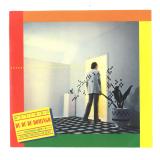
- A1: 月光慰問客
- A2: Gekko Imonkyaku (Moonlight Comforter)
- A3 1: W9 Bc (Sakyū Nite: At The Sand Dunes) 3:53
- A4 2: 迷子(Maigo: Lost Child) 2:33
- A5: From 月がでたので (Tsuki Ga Detanode: Because The Moon Has Come (1986)
- A6: Popsong's Factory
- A7 3: D'ameja 452
- A8: From My Pops / D'améja (1981)
- A9: Funeral Party
- A10 4: Double Platonic Suicide 5:47
- A11 5: Dream Of Embeyo (サンド・ノイズにまける子等)
- A12: (Sando Noizu Ni Makeru Kora: Kids Defeated By The Sand Noise) 7:06
- A13: From Dream Of Embryo (1986)
- B1: Anima
- B2 1: Logical Nation 2:38
- B3 2: Not Only One 4:16
- B4: From Cities (1983)
- B5: D.r.y. Project
- B6 3: Bizarre Tastes 3:44
- B7 4: Value Another 3:11
- B8 5: A Pompful Of Horses 3:23
- B9: From Bizarre Tastes (1986)
- B10: 東京ギョギョーム
- B11: Tōkyō Gyogyōmu (Tōkyō Fish-Oom)
- B12 6: ナンタラッタ・カンタッタ(Nantaratta Kantatta) 1:36
- B13 7: サイコ・レボリューション(Psycho Revolution) 2:16
- B14 8: 人面疽 (Jinmenso: The Human-Faced Sore) 2:48
- B15: From エレキのテロリスト(Electric Terrorist) (1988)
Vol.2[22,06 €]
From the depths of the most independent and revolutionary underground, a handful of tracks from the repertoires (often limited even to a single flexi disc) of some of the heroes who rode the wave, extracting from it—more for themselves and expressive necessity than for us—its most mystical and expressionist essence. New and No Wave, minimal and minimalist electronics, Avant Wave from the land where the sun still rises for now.
- 01: Arp Amp Chasm
- 02: Drift Vector
- 03: Modloop 138 Fragment
- 04: Foldsp4
- 05: Osc Hop (Slow Collapse)
- 06: Tweak 3 Driftmass
- 07: Blurform Dust
- 08: Wogglebug Remembered
- 09: Trippy135 Phase 0
- 10: Nachtgrain
- 11: Chronoroute Fank
- 12: Freeqwarp 2025 Redux
- 13 30: 3 Template Refract
- 14: Dln - Soft Ruin
- 15: Cr78 Mesh
- 16: Volca Signal 06
- 17: Ctrssalms (Cold Render)
- 18: Oceans Past And Present
- 19: Jt33Unstable Core
- 20: Modern Birds (Origin Edit)
Contemplating the role of the album format in an attention-deficient society, Speedy J presents Walkman -- a constantly shifting, 90-minute soundtrack to a journey of your choice. Jochem Paap's first solo album in over 20 years is a freewheeling, 20-track testament to his decades-deep studio skill and sonic versatility, running from skewed rhythmic rabbit holes to exploratory tonal abandon. For Paap, the traditional idea of the album had become obscured by listening habits and the non-stop information barrage of our digital lives. Having moved on from his breakthrough years releasing LPs and touring off the back of them, he was more inspired to develop his many-sided STOOR project and feed into a bigger artistic body of work than the temporary shelf-life of a single release. As is natural for any artist, his perspective shifted over time and he found himself drawn back to the idea of an album, realising he connected best with longer releases while he was on a walk, out for a run or generally in transit one way or another. With an endearing call back to the humble Walkman, he selected an hour and a half of material created during studio sessions at the beginning of 2025, perfectly sized to fit on two 45-minute sides of a cassette tape. As has long been the case for his studio practice, there were no fixed intentions when sitting down in the STOOR lab to start making noise -- just a wealth of experience and an expansive set of tools to start exploring with. From hours of jams Paap pulled together standout moments and moulded them into a mixtape-like narrative ranging from two-minute beat nuggets to full-tilt techno workouts and immersive ambient drops. Every sound is intentional, but the overall delivery is instinctive and curious, showing multiple new dimensions to Paap's sound and offering unpredictability at every turn. 'Arp Amp Chasm' opens the album up in a thick blanket of humming, harmonic waves with an electric emotional charge, while 'Ctrssalms17 (Cold Render)' journeys through evocative blooms of melancholic, gritty pads and rugged, half-submerged tech funk. 'Modern Birds (Origin Edit)' reaches skywards with grand sweeps of dynamic, brilliantly rendered synthesis. From the dexterous drum science of 'Drift Vector' to 'Osc Hop (Slow Collapse)'s lurching, beatless swamp of synths, on Walkman even the briefest snapshots leave an impression that lasts beyond the quick-scan cycle of the modern music experience. With his return to the album format, Paap's message is clear --put your headphones on, get outside and lose yourself in the sound of an artist constantly committed to moving forwards.
Tastemaker and cult figure among some, noise vendor among others… lurking somewhere in the shadows between London and Paris, the man known as Sheet Noise emerges out of the blue with his debut LP, Shostakovich's 5th Played Backwards in a Concrete Silo.
A direct shock to the system: equally beautiful and evil, abrasive yet uncomfortably calming. The feeling that something is about to happen at any minute—impending love or hatred blaring from the speakers at breakneck speeds. Heavy-duty, reactor-melted junglism; twisted samples buried under layers of dust and static; familiar voices in unfamiliar places.
This eight-track album is as intense as it can get. Don’t call it ambient. Don’t call it jungle. Don’t call it noise. Just strap yourself into the electric chair and get ready for the end.
A classic in the making.
For its sixth release, Rio de Janeiro’s Onda Boa label sees founder Joutro Mundo, step up once again - this time reviving and re-vibing Netinho’s independent 1980s bop, “Du Du Du Domingo”.
Netinho first made his mark in the 1960s as the drummer for Brazilian beat icons Os Incríveis, then again in the 1970s with the heavier, lysergic sounds of Casa das Máquinas. By the 1980s, he had turned toward a new vision, inspired by the spiritual group Amor e Caridade. Released on his own imprint, Manancial do Amor, 1982’s Apartamento 97 – Projeto Amor & Caridade Vol. 2 brought together heavyweights Zé Rodrix, Faísca, and Manito to expand on this funky, pop-rock chapter first introduced with 1980’s Amor & Caridade Vol. 1.
According to Netinho, a year passed in search of inspiration for the follow-up LP before he began receiving notes and poems through his medium, dictated to her by his “protector.” Following that divine intervention, the album’s songs were completed in just two days—including the standout track, “Du Du Du Domingo,” an ode to the beauty of a Sunday afternoon after the toils of the workweek.
Side A presents the original track, lovingly remastered, in all its stripped-down, idiosyncratic glory. A bubbling synth bass paired with a nimble electric bass line set the stage for the plunky synth melody that defines this anomalous yet infectious gem—before giving way to a samba break and a wafting crowd noise that instantly transports you to a sunny Sunday by the sea.
On the B-side, Joutro Mundo injects a new vitality into the track with crisp hi-hats, a thumping kick, and other subtle studio magic. The samba break is brought forward, while the electric bass line—previously bubbling beneath the surface—rises to center stage around the three-minute mark. True to form, Joutro Mundo avoids the obvious, drawing on his deep crates and production sorcery to conjure up yet another gem for the balearic heads and other lovers of left-field dancefloor deviance.
- A1: When I Sing, I Slip Into The Microphone. Into That Void, I Bring Comrade "Prayers", Then, Turning To Face The Outside, Together We Explode. Part I
- B1: When I Sing, I Slip Into The Microphone. Into That Void, I Bring Comrade "Prayers", Then, Turning To Face The Outside, Together We Explode. Part Ii
- C1: When I Sing, I Slip Into The Microphone. Into That Void, I Bring Comrade "Prayers", Then, Turning To Face The Outside, Together We Explode. Part Ii (Continued)
- D1: When I Sing, I Slip Into The Microphone. Into That Void, I Bring Comrade "Prayers", Then, Turning To Face The Outside, Together We Explode. Part Ii (Conclusion)
- D2: When I Sing, I Slip Into The Microphone. Into That Void, I Bring Comrade "Prayers", Then, Turning To Face The Outside, Together We Explode. Part Iii
Among the true Keiji Haino devotees, Nijiumu’s Era of Sad Wings (released on P.S.F. in 1993) has always held a special place in the pantheon. Operating for only a few years in the early 90s and apparently only performing a handful of shows, Nijiumu operated at the opposite end of the dynamic spectrum to Haino’s famed power trio Fushitsusha, dwelling in a hushed, meditative realm of mysterious droning sonorities and free-floating melodies that occasionally erupts into violence. Black Truffle is pleased to announce a new double-LP edition of a lesser-known 1994 Nijiumu recording, When I sing, I slip into the microphone. Into that void, I bring comrade “prayers”, then, turning to face the outside, together we explode. Here, Nijiumu is the trio of Haino, Tetuzi Akiyama and the obscure Takashi Matsuoka, the three performing on a wide variety of string, wind and percussion instruments, as well as electric guitar and bass, and Haino’s unmistakeable voice.
Like on the early solo Haino album that shares the group’s name (released on P.S.F. in 1993), the instrumentation swims in reverb (the use of which Akiyama recalls as ‘a kind of point of the band’), often obscuring the instrumental sources. On the short opening piece, a distant reed instrument arcs long buzzing melodies over a bed of cymbals and gongs, like a psychedelic take on Tibetan music. The epic second part, occupying almost 50 minutes, begins as a splayed, near-formless cloud of electric guitar and bass, shadowed by bowed and plucked strings, the three elements working through twisting atonal shapes. At various points in the recording, we hear what seems to be the sounds of musicians moving between instruments, their shuffling and bumps fitting seamlessly into this radically open music. Eventually, what sounds like electric guitar moves closer to the foreground, fixing on a repeated melodic cell around which hover mysterious clouds of long tones and a sporadic shaker. At the half-hour mark, the music begins to build to a violently emotive climax, Haino’s impassioned vocal cries punctuating a lumbering, bass-heavy murk, contrasted at points by what sounds like a tin whistle. Suddenly, the volume drops to a near-whisper, opening the way for the stunning final moments, which touch on the slow-motion balladry of Haino’s classic Affection, here given an eccentric twist by an occasional woodblock hit. The third piece opens with a hazy trio of rumbling bass, bowed strings and abstracted slide guitar, the latter calling to mind some of Akiyama’s later solo work. Eventually joined by Haino’s voice, its fragile, haunted tone might remind the listener of the man in black’s documented love of the madrigals of the murderous Count Gesualdo, before the recording abruptly breaks off mid-note. In this new edition, the Nijiumu trio recording is supplemented by a piece recorded solo by Haino in 1973, a bracing electronic blowout stretching almost half an hour. Using a homemade electronics setup to unleash a barrage of crunching distortion and shuddering harmonic fuzz, it takes its place in the canon of extreme live electronics next to Robert Ashley’s Wolfman and Walter Marchetti’s Osmanthus fragrans, looking forward to extreme noise years before Merzbow. Taken as a whole, these four sides of music are a stunning document of some of the lesser-known waystations of Haino’s singular creative path.
Shhh. The command to be quiet is not just part of the title of one of the two sprawling compositions on this pioneering album. It's also an apt metaphor for the relaxed hypnotism and spaced-out atmosphere that define In a Silent Way, a record that pushes the boundaries of studio possibilities, artist-producer relationships, and rock-jazz chasms. Recognized as Miles Davis' first full-on fusion effort and part of his "electric" era, the 1969 landmark claims a Who's Who line-up that sends the music into an ethereal stratosphere.
Mastered from the original master tapes and pressed at RTI, this unsurpassed 180g LP edition lifts the veil on the cutting-edge assembly process that created the pair of lengthy suites. Helmed by three electric instruments, the bevelled compositions melt away all preconceived notions of "jazz," ˜rock," and "ambience," following a loose theory Davis dubbed "New Directions."
Few albums are so delicately textured. And on Mobile Fidelity's meticulous reissue, such sulcate elements pour over ink-black backgrounds on a canyon-wide soundstage. In particular, Tony Williams' inventive percussive touch – he causes the cymbals to shimmer as a pieces of silver tend to do when exposed to sunlight – is broadcast with lifelike three-dimensional qualities, the panoramic view extending to Davis' nocturnal trumpet, Wayne Shorter's ribbon-unfurling saxophone, Dave Holland's extrapolative bass, and the mosaic of keys.
If the record's only accomplishment is its introduction of guitarist John McLaughlin to the world, it alone would be enough. Yet In a Silent Way continues to bedazzle, puzzle, and inspire for myriad reasons – not the least of which is the seemingly telepathic communicative methods employed by the group's members. The line-up is great on paper, but, if it's even possible, the octet sounds even better in practice, with the instruments and tonalities conjoining in avant-garde communion like hyper-sensitive tentacles exploring the stippled landscapes of an undiscovered planet.
Diverting from expectation, tubular grooves twist, turn, and spin, sometimes piling atop of each other, always shying away from structure and melody. Ellipsoidal solos provide hesitant guidance, ranging from Chick Corea's Fender Rhodes phrases to Davis' decorative spirals. And as colour is the primary unit of currency on Davis' Sketches of Spain, laid-back episodes, geometric spaces, and quiet sensuality reign here, with the set's maverick reputation attained via musings on solitude rather than explosions of noise.
Controversial for the period, the heavily edited production of In a Silent Way blew open the once-locked doors on what producer's could attempt – and how artists could assist them. Knitted together as one would construct a cross-hatched quilt, songs contain grafts of repeat passages that provide unifying structure and experimental continuity. What a statement.
- A1: Queen - Somebody To Love
- A2: Electric Light Orchestra - Livin' Thing
- A3: Fleetwood Mac – Say You Love Me
- A4: 10Cc - I'm Mandy Fly Me
- A5: Dr. Hook - A Little Bit More
- A6: Chicago – If You Leave Me Now
- A7: Eric Carmen - All By Myself
- B1: Frankie Valli & The Four Seasons – December, 1963 (Oh, What A Night)
- B2: Leo Sayer - You Make Me Feel Like Dancing
- B3: David Dundas - Jeans On
- B4: Bryan Ferry - Let's Stick Together
- B5: Sailor - A Glass Of Champagne
- B6: Smokie - I'll Meet You At Midnight
- B7: Slik - Forever And Ever
- B8: Showaddywaddy – Under The Moon Of Love
- B9: Brotherhood Of Man - Save Your Kisses For Me
- C1: Elton John & Kiki Dee - Don't Go Breaking My Heart
- C2: Cliff Richard – Devil Woman
- C3: Tina Charles - I Love To Love
- C4: The Real Thing - You To Me Are Everything
- C5: Billy Ocean - Love Really Hurts Without You
- C6: Dana - Fairytale
- C7: R & J Stone - We Do It
- C8: Gladys Knight & The Pips - Midnight Train To Georgia
- D1: Wings - Silly Love Songs
- D2: Neil Diamond - Beautiful Noise
- D3: Daryl Hall & John Oates – She’s Gone
- D4: Paul Simon - 50 Ways To Leave Your Lover
- D5: Thin Lizzy - The Boys Are Back In Town
- D6: The Who - Squeeze Box
- D7: John Miles - Music
- E1: Donna Summer - Love To Love You Baby
- E2: Andrea True Connection - More, More, More
- E3: Candi Staton – Young Hearts Run Free
- E4: Melba Moore - This Is It
- E5: Diana Ross - Love Hangover
- E6: Tavares - Heaven Must Be Missing An Angel (Part 1)
- E7: Barry White - You See The Trouble With Me
- E8: The Isley Brothers - Harvest For The World
- F1: Dolly Parton - Jolene
- F2: Pussycat - Mississippi
- F3: Bonnie Tyler - Lost In France
- F4: Demis Roussos - Forever And Ever
- F5: Guys N Dolls - You Don’t Have To Say You Love Me
- F6: Gallagher And Lyle - Heart On My Sleeve
- F7: Joan Armatrading - Love And Affection
- F8: Elton John - Sorry Seems To Be The Hardest Word
next instalment in our ongoing ‘Yearbook’ series – pressed in lovely-lime-green vinyl on a 3-LP set packed with 47 stellar tracks celebrating a brilliant year of pop singles. NOW – Yearbook 1976.
LP1: Kicking off in magnificent style with signature songs from legendary artists: A #2 in 1976, Queen’s ‘Somebody To Love’ is first up, followed by Electric Light Orchestra with ‘Livin’ Thing’, Fleetwood Mac with ‘Say You Love Me’, and 10cc with ‘I’m Mandy Fly Me’. Dr. Hook had a huge hit with ‘A Little Bit More’, and Chicago hit #1 with their all-time classic ballad ‘If You Leave Me Now’, while the side closes with Eric Carmen’s enduringly popular ‘All By Myself’. Flip the LP over for huge hits from the year – including 4 #1s: 14 years after making their UK chart debut, Frankie Valli & The Four Seasons enjoyed their first chart-topper with ‘December 1963 (Oh What a Night)’, whilst Leo Sayer reached #2 in the UK, and #1 in the US with ‘You Make Me Feel Like Dancing’. Pop gems follow from David Dundas, Bryan Ferry, Sailor, Smokie – and Slik, featuring a pre-Ultravox Midge Ure reached the top with ‘Forever And Ever’. Showaddywaddy celebrated their biggest hit and their first #1 with ‘Under The Moon Of Love’, and the UK won at Eurovision, with the winner ‘Save Your Kisses For Me’ by Brotherhood Of Man not only hitting the #1 spot but also becoming 1976’s biggest seller and bringing the first LP to a close.
LP2: Opening with a stellar run of pure-pop classics. Elton John celebrated his first UK #1 single, in a duet with Kiki Dee on ‘Don’t Go Breaking My Heart’, and Cliff Richard with ‘Devil Woman’, ahead of dance-floor favourites – and both #1s in ’76: Tina Charles with ‘I Love To Love’ and The Real Thing with ‘You To Me Are Everything’. More pop nuggets follow from Billy Ocean and Dana, before the side finishes with R&J Stone with ‘We Do It’ and the sublime ‘Midnight Train To Georgia’ from Gladys Knight & The Pips. Over on the second side, ‘Silly Love Songs’ gave Wings a UK #2 and became ‘76’s biggest seller in the US and opens a run of great vocalists; Neil Diamond, Daryl Hall & John Oates with ‘She’s Gone’, Paul Simon’s ’50 Ways To Leave Your Lover’ and a trio of the year’s classic rock smashes: ‘The Boys Are Back In Town’ from Thin Lizzy, ‘Squeeze Box’ from The Who, and closing with the epic ‘Music’ from John Miles.
LP3: Celebrating ‘76’s dancefloor with a stunning collection of disco and soul gold: First up, Donna Summer with her debut smash ‘Love To Love You Baby’ before ‘More More More’ from Andrea True Connection and Candi Staton’s timeless ‘Young Hearts Run Free’. Melba Moore with ‘This Is It’ comes ahead of Diana Ross with the genre-defining ‘Love Hangover’, and the side is completed with huge floor-fillers from Tavares and Barry White ahead of The Isley Brothers with the soul standard ‘Harvest For The World’ and over on the final side country music is represented with Dolly Parton making her UK singles chart debut with ‘Jolene’ three years after it was a hit in the US, but it was a Dutch band, Pussycat, who hit the top with their country-pop track ‘Mississippi’. Bonnie Tyler made her chart debut with ‘Lost In France’, and ‘Forever And Ever’ gave Demis Roussos a ’76 chart topper, and an easy-listening classic, whilst Guys N Dolls had a second Top 5 hit with their cover of ‘You Don’t Have To Say You Love Me’. The LP ends with a trio of the year’s most beautiful ballads: Gallagher And Lyle with ‘Heart On My Sleeve’, ‘Love And Affection’ the stunning singles chart debut for Joan Armatrading, and finishing with a second peerless single on this collection from Elton John with ‘Sorry Seems To Be The Hardest Word’.
NOW – Yearbook 1976 – a celebration of the diversity and wonderful creativity of a truly fabulous year in pop.
Written and recorded in singer-poet Karsyn Henderson, guitarist-banjoist Paul Lecours and percussionist Ryley Klima’s basement alongside bassist Chris Clegg, then mixed and mastered by longtime collaborator Noah Baxter, this self-produced introductory effort from the Montréal four-piece stylishly amalgamates elements from hardcore, punk, shoegaze, sludge, and folk.
Violence is a brazenly poetic homage to small town roots, a mashing of modern Western Canadian hardcore and folk. Extensive in scope, this debut full-length by Truck Violence takes the listener through wide-ranging dynamics, from solemn acoustic ballads to wrathful electric anthems. Deftly fractured rhythms and breakdowns, complex harmonic entanglements, emphatic screams of discontent, are met with hopeful, melodic tracks musing about the steady grip of a tight-knit community.
From somber, deceivingly happy banjo sequences to crashing noise and cries, Violence uses expression as a mirror, looking upon oneself with clarity, aiming to attain a sense of unadulterated truth of the matter. There is little modern music taking an honest look at the Western Canadian countryside, tackling themes such as addiction, abuse and dysfunction.
Truck Violence’s first album does just that, uniquely capturing this involuted setting through a wide lens to both contextualize and emphasize what it means to be overwhelmed, to feel shame, to struggle with self-destructive ways, to thrust oneself into art as an escape.
360 mcn white-white light cardboard paper / one side only hand plasticization / 2 separated parts prints / hand gluing / PVC outers / original artwork / gatefold sleeve / Bandcamp limited edition 30x60 cm insert with extended liner notes by Tony Higgins and Interview with Babs Robert and Sébastien Gorlé with exclusive pictures and self-portrait by Babs Robert himself printed on GF Smith "Takeo Tant Select" Canvas Paper tip-on left jacket panel / Exclusive never released Memorabilia from Babs Robert's vault.
Personnel:
Babs Robert - alt sax, tenor-sax, electric tenor-sax, Bin Recorder, Acme siren, Chinese-bell, sleigh-bells, maracas, tambourine,hand-rattle,claves)
John Van Rymenant - baritone-sax, fluegelhorn, Bala, tambourine, sleight-bells, cowbell, triangle, claves
Johnny Peret - vibes, bongo's, cowbell, maracas, castanets, rattle-snakes, tambourine, drums, woodclock, trinagle
Johnny Brouwers - piano, prepared-piano, triangle, cowbell, sleigh-bells, maracas, caves,hand-rattle, guiro, woodblock, tambourine
Paul Dubois - bass, triangle, cowbell, claves, rattlesnakes, hand-rattle, woodblock, tambourine
Michel Gobbe - bass,Chinese-bell, claves
Robert Pernet - drum, tambourine, seven-notes M'Bichi, guiro, alarm-siren, home-made metal xylophone, African telephone-drum, triangle, sleigh-bells, Siku
Notes:
Despite its modest role on the world stage, Belgium has produced a number of internationally renowned musicians and composers. There is the iconic gypsy jazz guitar maestro Django Reinhardt, whose position remains unassailable, and guitarist/harmonica player Toots Thielemans, who became an internationally renowned artist performing and recording with Bill Evans, Oscar Peterson, Ella Fitzgerald, Peggy Lee, Shirley Horn and Quincy Jones. The other key Belgian figure is composer/arranger Francy Boland, co-leader with US bebop drumming legend Kenny Clarke of Europe's leading big band of the 60s, the Clarke-Boland Big Band.
The Love Planet performed in the main clubs of Brussels, such as Blue Note, Pol's Jazz Place, and Smog as well as in major musical events throughout Belgium including to big festivals in 1969 - the Avant-Garde Festival in Ghent and the First International Jazz Event in Liege – where the Love Planet shared the bill with Miles Davis - and the Bilzen Jazz Festival in 1970. The contrast between the musical architecture of the themes and sonic freedom in the improvised playing perfectly illustrated the polymorphism – an order within disorder – which the Love Planet aimed for.
The initial original quartet line-up was Babs Robert (sax), Paul Dubois (bass), Johnny Brouwers (piano), and Johnny Peret / Robert Pernet (dru- ms). On the album session, the quartet was augmented with the addition of John Van Rjimenant (saxes) and Michel Gobbe (bass). As well as their main instruments, the band members also played an array of unusual instruments, principally percussion. This is the first official re-release
of the 'Babs Robert and the Love Planet'. Original copies of the album fetch many hundreds of Euros on the collecting circuit and it remains a curious and fascinating window into a moment in time that still resona- tes some fifty years later. Come with us to the Love Planet. (Tony Higgins)
Source of an all-time 'Breaks and Beats' classic, Mr Bongo reissue Herman Kelly’s timeless 1978 album Percussion Explosion!. Immortalised in hip-hop folklore, when the anthemic 'Dance To The Drummer's Beat’ was featured on the influential Ultimate Breaks & Beats compilation series in 1986.
Percussion Explosion! was the brainchild of drummer, percussionist, producer and arranger, Herman Kelly and his percussive disco-funk group from Miami, 'Life', that featured Aaron McCarthy, Oliver Well, John DeMonica, Michal Cordoza and Travis Biggs. The album houses a collection of disco, funk and Latin-inspired cuts that were destined for greatness. Nestled within the grooves is the B-Boy and B-Girl’s anthem, 'Dance To The Drummer's Beat’, which contains a now legendary break. A cursory glance at Whosampled will show that it has been sampled in over 125+ songs. These include Double Dee & Steinski on their groundbreaking 1985 production 'Lesson 3 (History Of Hip Hop Mix)', as well as by DJ Shadow, N.W.A, Masters At Work, Run D.M.C. and a whole host of heavyweights across hip-hop, dance and pop music.
When the album was released in 1978 it came out on two different labels, Alston Records and Electric Cat. Each label pressed different versions of 'Dance To The Drummer's Beat’, with the former featuring a 4:12 version and the latter a longer 5:09 version that has a different structure, crowd noise at the start and overdubbed percussion.
For this Mr Bongo reissue, we have chosen the classic 4:12 version from the Alston Records release, which would later find its way on to the illustrious Ultimate Breaks & Beats compilation. To make matters even more confusing the Alston version art on the back cover also states the track length as 5:09, whilst the centre label lists it correctly as 4:12.
Aside from the much celebrated 'Dance To The Drummer's Beat’, the album includes a range of other fantastic overlooked cuts. From the percussive soul stepper 'Share Your Love', to the beautiful Latin-flavoured 'A Refreshing Love' or the party disco-funk groover 'Who's The Funky D.J.?'.
This wonderful and inspirational record features an important piece of hip-hop heritage and deserves a place in every collection.
‘Subtle Bodies’ is the new album by US-based sound artist and composer Francis Morning, released on Ltd. cassette via Lo Recordings, which contemplates the concept of the non-physical, energetic layers of a person that exist alongside the physical body. Being the next installment of Lo Recordings' ongoing SPACIOUSNESS series, the album features 15 tracks that embrace the theme through hints of electric piano melodies buried under layers of tape hiss, meandering sine wave bass notes, and expansive ambient textures.
The compositions on ‘Subtle Bodies’ are meditations on impermanence, imperfection, and the natural process of decay, approached without judgment. They arise from moments of introspection, often inspired by the contemplation of inner channels, energies, mindfulness, breath, and other Tibetan Buddhist practices. Deliberately recorded using minimal equipment, each piece explores and pushes against the thresholds in an attempt to strike a balance of texture and noise. About Francis Morning:
Francis Morning is a US-based sound artist, musician, and composer known for crafting gently textured sonic environments using a simplified palette of musical hardware, including analog tapes and cassettes, field recordings, synths, pedals, pianos, and acoustic and electric guitars. His work embraces imperfection, human quality and touch, and the transient nature of life. The music began to take shape as simple, personal daybreak rituals with no audience or expectations. Each piece was recorded live in single takes, with the original elements eventually discarded or recorded over, as a statement and exercise in impermanence and letting go.
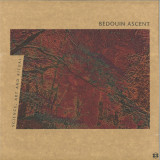
'Science, Art And Ritual' is a story of ‘process'. Growing up in Harrow (a then quiet suburb of London) in the 70’s and 80’s from the age of about 10, Kingsuk Biswas aka Bedouin Ascent's ears opened up to sound as he scanned the airwaves. The undeniable righteousness of 80’s dub via David Rodigan’s Roots Rockers shows was the first prominent influence he received, and with punk roots —and his burgeoning record collection— became exposed to the breathless post punk experimentation that followed in the early 80’s sweeping up free jazz, noise, dub and much more. Throughout though, he maintained his fascination with Indian Classical music which was a mainstay in his parent’s house and spoke with the same infinite space as Joy Division's 'Unknown Pleasures', and King Tubby’s Studio dispatches. Through those teens he assembled and de-assembled, knocking about with fellow travellers —punk bands, garage, space rock, noise. Something was happening. On-U Sound, ECM, Factory Records kept him plugged in and sane.
At that time Kingsuk's core studio setup revolved around his vintage Gretsch, Fender Jazz, Moog, TR-606 and rudimentary FX. He added congas, folk instruments, pipes, hand percussion, gongs, and jammed out shards of funk, noise, jazz fusion, electro and ambience into his hungry Tascam Portastudio. By 1987 these had morphed into what we’d now refer to broadly as techno, but the genre didn't exist beyond the reverberating walls of his bedsit, and he hadn’t yet plugged into the global conversation.
'Science, Art And Ritual' was released in 1994 by Rising High Records and was presented as Bedouin Ascent's debut album, although 'Music for Particles' (released in 1995, again on Rising High) was recorded even before —'SAR' sessions span from 1992-1993, whereas 'Music for Particles' were earlier from 1989-1992, with some older 4-track references from about 1986 too.
Weaved in throughout the album are subconscious references to music that Kingsuk heard in the past that still remained within sight as companions. The opening track "Ancient Ocean III", referencing the extinct ocean Tethis, unapologetically channels Tackhead, Colourbox, Mantronix and Lee Perry. The style was also deliberately juxtaposed to the prevailing sound in techno at the time, which had locked onto a rigid form of symmetrical kicks and light snare drums. Elsewhere 80’s soul and funk are frozen and captured in fragile glass lattices. Electric pianos resound throughout, such as in "He Is She", probably a half-memory of 70’s MOR radio from childhood sleepy night drives. A duel between kick drums from three generations of Roland drum machines —TR-808, TR-707 and R-8— is a central theme in "Transition-R", all in conversation, calling and responding. These were not just machines to Bedouin Ascent, but part of an extended family, with heart and soul.
Three decades after seeing the light, Lapsus is proud to present a special 30th anniversary reissue of this
left-field techno gem in a repackaged and redesigned edition. All pressed on a deluxe 3LP marbled vinyl and including a limited lithographic insert print of the original album cover. All tracks have been restored and remastered directly from the original DAT tapes, and the album also features previously unreleased tracks such as "In the Clouds" and "Thru Water" —regularly performed live at that time and produced in the same period as the album sessions in 1993.
'Science, Art And Ritual’ may refer to esoteric traditions in Indian philosophy, but equally embodies the collision of the science, the art and the ritual that is at the core of being immersed in a deep musical journey.
Members of Papir & Causa Sui travel through new musical realms. 3 musicians with their own compass: Martin Rude & Jakob Skøtt have shared a wide range of musical quests: from Causa Sui’s “Bitches Brew of Stoner Rock” crossing the folk meditations of Sun River and arriving most recently as members of the pre-fusion electric dealings of the London Odense Ensemble. Papir guitarist Nicklas Sørensen is not merely adding a new layer to an established duo, but his presence to the party have brought it into more meditative dwellings. These pieces move slowly, evolving like the slow growth underneath the ground. Whereas Causa Sui & Papir have always excelled at blistering panoramic and often sundrenched sounds, Edena Gardens take a dive inwards and downwards rather than outwards. But there’s also an electrically charged ecstatic rawness to the dealings. Like Æther, the 10 minute opener’s 2 guitars-and-a-drum kit improv, finding it’s way from tumbling drones into monolithic slow riffage. Elsewhere, we find trails of electronic vapors, misfiring bursts of noise and slow drones stretched out. Edena Gardens is a thing to be experienced first hand - it’s not for everyone, but those who decide to stay are greatly rewarded. It’s a debut unlike any other record on El Paraiso, perhaps unlike any you’ve ever heard. Welcome to Edena Gardens. Tracklist: 1. Aether 2. Sliding Under 3. The Canopy 4. Hidebound 5. Now Here Nowhere 6. Iod 7. An t-eilean Dubh
You can get 5 liters of record cleaner if you mix it with distilled water.
It reduces surface noises and removes static electricity.
without Alcohol !
Instruction for mixing:
200 ml with 5 liters water
40 ml with 1 liter water
Application:
Spray the record 5 to 6 times evenly from about 30 cm distance.
Then wipe gently with the cloth. Don´t spray on the label.
The record is now clean and free from dirt particles and static electricity
which results increased sound quality and noise distortion.
------
This is a concentrate.
Reduces surface noises.
Removes static electricity.
contains: 200 ml / 6.7 oz
Mix with distilled water:
- 200 ml (6.7oz) with 5 liters (1.3 gallons) water
- 40 ml (1.35 oz) with 1 liter (4.25 cups) water
- A1: Extrapolate 01 (Live)
- A2: Meep
- A3: Horn Please (Module)
- A4: Quango
- B1: E S.n
- B2: No Lines (Bodz Mix)
- B3: D R.m 32
- B4: Boot (Live)
- C1: Soaked
- C2: Skint / Soaked / Audio Forensic (Confused Machines Mix)
- C3: D R.m. 32 (Duff Mix)
- C4: Horn Again
- C5: Deep Water
- D1: Soaked (Black Lung Takes A Walk In The Peaceful Valley Mix)
- D2: Skint
- D3: Wasteman
- D4: Extrapolate 02 (Live)
Nice Coordinated Outfit is a journey through history to a time before the internet and social media and before inner city gentrification, when Fitzroy was the beating heart of Australia's avant-garde music and culture. Musically, it showcases the band's incredible range from deep minimal dub to bizarre electronica with elements of shoegaze and experimental noise.
Back then, High Pass Filter were the kings of the Fitzroy underground. Dark, weird improvisers who aimed for something new each performance. Whilst electric guitars and rock n roll dominated Australian airwaves and stages, High Pass Filter were pioneering a sonic revolution in the shadows. The band's indefinable sound saw them sharing lineups with artists from hardcore and punk luminaries like Fugazi and The Boredoms and to dub heavyweights such as Lee Scratch Perry and The Mad Professor.
"We entered the shadowy mouth of a new space, descending into a realm that precedes the underworld, the arcane, far from our time. We met beasts that gave us lessons about their language which we started learning without grammar."
'The animal world is a constant in the work of Milan improvisational duo Rosso Polare. If Cani Lenti was guided by the diaphanous birdsong integrated into their sparkling mix of folklore, ambiences and occasional humming, on Bocca D’ombra the themes go darker, textures are harder to pin down and the animal presence takes on new connotations.
Instead of an anonymous, patchworked outdoors we enter a cavernous space that invokes the collective unconscious with bestial and funereal undertones, as the animals take on the role of the psychopomps, ancient guides through the shadow realm.
The album is influenced by Timothy Morton’s Dark Ecology, a thinker who sees the constant exchange between the human and natural world as an ongoing dialogue, the two influencing each other, in a series of reverberating loops. This looping is also reflected in their compositions, where improvisations with traditional instruments like electric and acoustic guitars, monophonic synths, horns or flutes meet natural noise-making tools like branches, rocks or nuts that amount to lugubrious, often dissonant textures. Bocca D’ombra is built on a series of whispers, breaths, panting and rustling, creating a feeling of closeness sometimes verging on the claustrophobic, ingeniously set against sounds evoking space – fireworks crackling, crows echoing, church bells reverberating, indistinct cries from a children’s playground.
Distance and repetition are deeply ingrained in their own understanding of sound and their surroundings, becoming the building blocks of their practice. Just like Gregory Bateson in the ‘70s, the duo believes in a more romantic approach to ecology, seeking a porous border between self and environment, human and animal, internal monologue and external ambient hum.
If earlier releases were noisier and denser, Bocca D’ombra is tight and focused - every sound and melody is given room to breathe and develop on its own, enhancing the haunting, otherworldly aspect of the music. The result is heady, intoxicating mix which sublimates chaos into sparkling compositions of contemporary animism.'
After several releases on labels like Bar25, Microtonal, Dantze and Etui Records End Of Tape finally hit the box with their Tape Jam EP.
These guys don´t talk with each other, they just do music and that´s the best. The result of this gone wrong musician friendship (but tight producer team at the same time) you can celebrate with this EP.
This is no snow from yesterday, it´s the musical climatic change of tomorrow - without any opportunity. Played & supported by Paco Osuna, Anderson Noise, Lexy, Electric Rescue, Beatamines, Gabriel Ananda, Piemont, Carlo Lio, Markus Kavka and many more.
2025 Reissue.
Münchenbuchsee, a suburb of Bern, Switzerland. Stephan Eicher is the youngest of three children. His father, a radio and TV repairman, is also a jazz violinist and a sound tinkerer in his spare time. In the family home's converted fallout shelter turned studio, Mr. Eicher experiments with homemade sequencers, tortures handcrafted drum machines, and abuses reel-to-reel tape recorders—all under the fascinated gaze of young Stephan.
The boy quickly develops a musical curiosity, exploring sound through various experiments and wanderings. Alongside his younger brother Martin, Stephan crafts audio plays on a homemade multi-track recorder (essentially several cassette decks hooked together!), which they write, record, add sound effects to, and perform for family and friends. Just a couple of nice kids, really...
Then comes 1972, and Lou Reed's Transformer album changes everything for the Eicher kids. For 13-year-old Stephan, it's a revelation—especially "Vicious", the opening track, which he plays on repeat for months. He convinces his father to buy him an electric guitar. Not stopping there, his father also builds him a tube amp using an old radio.
Then comes adolescence. A rough one. Stephan leaves home at 16 and moves to Zurich. With obvious artistic talent, he persuades his art teacher to help him get into F+F, a radical, alternative art school—despite his young age. Accepted, he starts learning video techniques, determined to become a filmmaker.
At F+F, Stephan organizes Dada-style happenings and concerts with a group of friends known as the Noise Boys. Among them: one of his teachers on bass, Veit Stauffer on drums (who would later found ReR/Recommended Records), his girlfriend Sacha on vocals, and Stephan on guitar. In one of their early performances, they release a remote-controlled mouse covered in dull razor blades into the audience to create panic and chaos. Keeping with this aggressive, confrontational spirit, they once played a concert while wearing headphones blasting Tristan and Isolde, trying to perform their own songs simultaneously—to maximize the cacophony. The goal was always the same: clear the room.
Their “songs,” if you can call them that, followed suit. Take "Hungeriges Afrika", for instance—performed entirely with power drills and some drum feedback.
To make ends meet, Stephan returns to Bern on weekends to work as a waiter at the Spex Club, the city’s main punk venue. On September 16, 1980, during a show by proto-electro group Starter, the police raid the club and arrest everyone. Stephan, who manages to avoid arrest, seizes the opportunity to “borrow” Starter’s gear left behind. He suddenly finds himself in possession of a Roland Promars synth, a Korg MS20, and a gorgeous CR78 drum machine, which he runs through a Big Muff distortion pedal to get that perfect gritty sound.
He then sets out to reinterpret some Noise Boys tracks, reworking them during impromptu sessions recorded on a dictaphone (yes, a dictaphone—now the lo-fi sound makes more sense, doesn’t it?). He ironically titles the resulting cassette "Stephan Eicher spielt Noise Boys" ("Stephan Eicher plays Noise Boys"). This gem features seven tracks, which are the ones reissued here.
Back in Zurich, he visits his friends Andrew Moore and Robert Vogel, who have a DIY cassette duplication setup. They make 25 copies of Stephan Eicher spielt Noise Boys for Stephan and his friends. Robert encourages him to visit Urs Steiger of Off Course Records and play him the tape.
Without much hope, Stephan shows up at Urs’s office. But Urs is instantly hooked and suggests releasing a 7” single. Due to space constraints, they reluctantly drop two of the seven tracks ("Hungeriges Afrika" and "One Second"). As for the musical score featured on the cover—it was randomly chosen and remains a mystery to this day. Calling all music theory nerds!
The 7-inch is pressed in 750 copies and released in the first week of December 1980—a date Stephan remembers well, as it’s the same week John Lennon was killed. Smartly, Urs sends a promo copy to François Murner, Switzerland’s answer to John Peel, who hosts a show on alternative station Sounds. Murner falls in love with the record and starts giving it airtime. To Stephan’s surprise, sales follow—and people actually seem interested in his music.
Even this modest underground success scares Stephan a bit. He stops making music for a year and moves to Bologna, where he works as a programmer at Radio Città, a feminist radio station.
Meanwhile, Stephan’s younger brother Martin, who’s also involved in the punk scene, joins the band Glueams as a singer and guitarist. Glueams, named after the fanzine run by two of its members (drummer Marco Repetto and bassist GT), eventually rebrands as Grauzone. Stephan is invited to their shows to project hacked Super 8 visuals live on stage.
Urs Steiger, now working on a compilation titled Swiss Wave – The Album, asks Grauzone to contribute alongside bands like Liliput, Jack and the Rippers, The Sick, and Ladyshave (Fall 1980).
For the album, Martin tasks Stephan with producing their recording sessions. Under Stephan's artistic direction, two tracks emerge: "Raum" and "Eisbär". During "Eisbär", Martin plays a minimalist bass line borrowed from post-punk band The Feelies (just an open string). Drummer Marco Repetto struggles to keep time. Later that evening, unhappy with the takes, Stephan builds a four-bar drum loop from a ¼-inch tape and uses it instead of the flawed original. He then adds bleepy synths and wind sounds to complete the track’s icy vibe before handing it over to Urs.
The Swiss Wave – The Album compilation is released quietly at first, but things snowball thanks to "Eisbär", which eventually becomes a smash hit—selling over 600,000 singles.
Meanwhile, Stephan plays in a rockabilly band called SMUV (named after Switzerland’s social security agency) and begins producing artists, including the debut album of Starter (1981), which includes a more pop-oriented version of "Minijupe".
By early 1982, Stephan starts spending time with the post-punk girl band Liliput (formerly Kleenex). They’re older than him, and he happily drives them around in his Renault Major, acting as their roadie.
By 1983, Grauzone—signed to the major label EMI, which turned out to be a misstep—is falling apart. Stephan begins to pivot toward a more mainstream pop sound with his debut solo album Les Chansons Bleues.
But that... is already another story.
UILTY RAZORS, BONA FIDE PUNKS.
Writings on the topic that go off in all directions, mind-numbing lectures given by academics, and testimonies, most of them heavily doctored, from those who “lived through that era”: so many people today fantasize about the early days of punk in our country… This blessed moment when no one had yet thought of flaunting a ridiculous green mohawk, taking Sid Vicious as a hero, or – even worse – making the so-called alternative scene both festive and boorish. There was no such thing in 1976 or 1977, when it wasn’t easy to get hold of the first 45s by the Pistols or the Clash. Few people were aware of what was happening on the fringes of the fringes at the time. Malcolm McLaren was virtually unknown, and having short hair made you seem strange. Who knew then that rock music, which had taken a very bad turn since the early 1970s, would once again become an essential element of liberation? That, thanks to short and fast songs, it would once again rediscover that primitive, social side that was so hated by older generations? Who knew that, besides a few loners who read the music press (it was even better if they read it in English) and frequented the right record stores? Many of these formed bands, because it was impossible to do otherwise. We quickly went from listening to the Velvet Underground to trying to play the Stooges’ intros. It’s a somewhat collective story, even though there weren’t many people to start it.
The Guilty Razors were among those who took part in this initial upheaval in Paris. They were far from being the worst. They had something special and even released a single that was well above the national average. They also had enough songs to fill an album, the one you’re holding. In everyone’s opinion, they were definitely not among the punk impostors that followed in their wake. They were, at least, genuine and credible.
Guilty Razors, Parisian punk band (1975-1978). To understand something about their somewhat linear but very energetic sound, we might need to talk about the context in which it was born and, more broadly, recall the boredom (a theme that would become capital in punk songs) coupled with the desire to blow everything off, which were the basis for the formation of bands playing a rejuvenated rock music ; about the passion for a few records by the Kinks or the early Who, by the Stooges, by the Velvet mostly, which set you apart from the crowd.
And of course, we should remember this new wave, which was promoted by a few articles in the specialized press and some cutting-edge record stores, coming from New York or London, whose small but powerful influence could be felt in Paris and in a handful of isolated places in the provinces, lulled to sleep by so many appalling things, from Tangerine Dream to President Giscard d’Estaing...
In 1975-76, French music was, as almost always, in a sorry state ; it was still dominated by Johnny Hallyday and Sylvie Vartan. Local rock music was also rather bleak, apart from Bijou and Little Bob who tried to revive this small scene with poorly sound-engineered gigs played to almost no one.
In the working class suburbs at the time, it was mainly hard rock music played to 11 that helped people forget about their gruelling shifts at the factory. Here and there, on the outskirts of major cities, you still could find a few rockers with sideburns wearing black armbands since the death of Gene Vincent, but it wasn’t a proper mass movement, just a source of real danger to anyone they came across who wasn't like them. In August 1976, a festival unlike any other took place in Mont-de-Marsan – the First European Punk Festival as the poster said – with almost as many people on stage as in the audience. Yet, on that day, a quasi historical event happened, when, under the blazing afternoon sun, a band of unknowns called The Damned made an unprecedented noise in the arena, reminiscent of the chaotic Stooges in their early adolescence. They were the first genuine punk band to perform in our country: from then on, anything was possible, almost anything seemed permissible.
It makes sense that the four+1 members of Guilty Razors, who initially amplified acoustic guitars with crappy tape recorder microphones, would adopt punk music (pronounced paink in French) naturally and instinctively, since it combines liberating noise with speed of execution and – crucially – a very healthy sense of rebellion (the protesters of May 1968 proclaimed, and it was even a slogan, that they weren’t against old people, but against what had made them grow old. In the mid-1970s, it seemed normal and obvious that old people should now ALSO be targeted!!!).
At the time, the desire to fight back, and break down authority and apathy, was either red or black, often taking the form of leafleting, tumultuous general assemblies in the schoolyard, and massive or shabby demonstrations, most of the time overflowing with an exciting vitality that sometimes turned into fights with the riot police. Indeed, soon after the end of the Vietnam War and following Pinochet’s coup in Chile, all over France, Trotskyist and anarcho-libertarian fervour was firmly entrenched among parts of the educated youth population, who were equally rebellious and troublemakers whenever they had the chance. It should also be noted that when the single "Anarchy in the UK" was first heard, even though not many of us had access to it, both the title and its explosive sound immediately resonated with some of those troublemakers crying out for ANARCHY!!! Meanwhile, the left-wing majority still equated punks with reckless young neo-Nazis. Of course, the widely circulated photos in the mainstream press of Siouxsie Sioux with her swastikas didn’t necessarily help to win over the theorists of the Great Revolution. It took Joe Strummer to introduce The Clash as an anti-racist, anti-fascist and anti-ignorance band for the rejection of old-school revolutionaries to fade a little.
The Lycée Jean-Baptiste Say at Porte d’Auteuil, despite being located in the very posh and very exclusive 16th arrondissement of Paris, didn’t escape these "committed" upheavals, which doubled as the perfect outlet for the less timid members of this generation.
“Back then, politics were fun,” says Tristam Nada, who studied there and went on to become Guilty Razors’ frontman. “Jean-Baptiste was the leftist high-school in the neighbourhood. When the far right guys from the GUD came down there, the Communist League guys from elsewhere helped us fight them off.”
Anything that could challenge authority was fair game and of course, strikes for just about any reason would lead to increasingly frequent truancy (with a definitive farewell to education that would soon follow). Tristam Nada spent his 10th and 11th unfinished grades with José Perez, who had come from Spain, where his father, a janitor, had been sentenced to death by Franco. “José steered my tastes towards solid acts such as The Who. Like most teenagers, I had previously absorbed just about everything that came my way, from Yes to Led Zeppelin to Genesis. I was exploring… And then one day, he told me that he and his brother Carlos wanted to start a rock band.” The Perez brothers already played guitar. “Of course, they were Spanish!”, jokes their singer. “Then, somewhat reluctantly, José took up the bass and we were soon joined by Jano – who called himself Jano Homicid – who took up the rhythm guitar.” Several drummers would later join this core of not easily intimidated young guys who didn’t let adversity get the better of them.
The first rehearsals of the newly named Guilty Razors took place in the bedroom of a Perez aunt. There, the three rookies tried to cover a few standards, songs that often were an integral part of their lives. During a first, short gig, in front of a bewildered audience of tough old-school rockers, they launched into a clunky version of the Velvet Underground's “Heroin”. Challenge or recklessness? A bit of both, probably… And then, step by step, their limited repertoire expanded as they decided to write their own songs, sung in a not always very accurate or academic English, but who cared about proper grammar or the right vocabulary, since what truly mattered was to make the words sound as good as possible while playing very, very fast music? And spitting out those words in a language that left no doubt as to what it conveyed mattered as well.
Trying their hand a the kind of rock music disliked by most of the neighbourhood, making noise, being fiercely provocative: they still belonged to a tiny clique who, at this very moment, had chosen to impose this difference. And there were very few places in France or elsewhere, where one could witness the first stirrings of something that wasn’t a trend yet, let alone a movement.
In the provinces, in late 1976 or early 1977, there couldn’t be more than thirty record stores that were a bit more discerning than average, where you could hear this new kind of short-haired rock music called “punk”. The old clientele, who previously had no problem coming in to buy the latest McCartney or Aerosmith LP, now felt a little less comfortable there…
In Paris, these enlightened places were quite rare and often located nex to what would become the Forum des Halles, a big shopping mall. Between three aging sex workers, a couple of second-hand clothes shops, sellers of hippie paraphernalia and small fashion designers, the good word was loudly spread in two pioneering places – propagators of what was still only a new underground movement. Historically, the first one was the Open Market, a kind of poorly, but tastefully stocked cave. Speakers blasted out the sound of sixties garage bands from the Nuggets compilation (a crucial reference for José Perez) or the badly dressed English kids of Eddie and the Hot Rods. This black-painted den was opened a few years earlier by Marc Zermati, a character who wasn’t always in a sunny disposition, but always quite radical in his (good) choices and his opinions. He founded the independent label Skydog and was one of the promoters of the Mont-de-Marsan punk festivals. Not far from there was Harry Cover, another store more in tune with the new New York scene, which was amply covered in the house fanzine, Rock News (even though it was in it that the photos of the Sex Pistols were first published in France).
It was a favorite hang-out of the Perez brothers and Tristam Nada, as the latter explained. “It’s at Harry Cover’s that we first heard the Pistols and Clash’s 45s, and after that, we decided to start writing our first songs. If they could do it, so could we!”
The sonic shocks that were “Anarchy in the UK”, “White Riot” or the Buzzcocks’s EP, “Spiral Scratch” – which Guilty Razors' sound is reminiscent of – were soon to be amplified by an unparalleled visual shock. In April 1977, right after the release of their first LP, The Clash performed at the Palais des Glaces in Paris, during a punk night organised by Marc Zermati. For many who were there, it was the gig of a lifetime…
Of course, Guilty Razors and Tristam were in the audience: “That concert was fabulous… We Parisian punks were almost all dressed in black and white, with white shirts, skinny leather ties, bikers jackets or light jackets, etc. The Clash, on the other hand, wore colourful clothes. Well, the next day, at the Gibus, you’d spot everyone who had been at this concert, but they weren’t wearing anything black, they were all wearing colours.”
It makes sense to mention the Gibus club, as Guilty Razors often played there (sometimes in front of a hostile audience). It was also the only place in Paris that regularly scheduled new Parisian or Anglo-Saxon acts, such as Generation X, Siouxsie and the Banshees, the Slits, and Johnny Thunders who would become a kind of messed-up mascot for the venue. A little later, in 1978, the Rose Bonbon – formerly the Nashville – also attracted nightly owls in search of electric thrills… In 1977, the iconic but not necessarily excellent Asphalt Jungle often played at the Gibus, sometimes sharing the bill with Metal Urbain, the only band whose aura would later transcend the French borders (“I saw them as the French Sex Pistols,” said Geoff Travis, head of their British label Rough Trade). Already established in this small scene, Metal Urbain helped the young and restless Guilty Razors who had just arrived. Guitarist for Metal Urbain Hermann Schwartz remembers it: “They were younger than us, we were a bit like their mentors even if it’s too strong a word… At least they were credible. We thought they were good, and they had good songs which reminded of the Buzzcocks that I liked a lot. But at some point, they started hanging out with the Hells Angels. That’s when we stopped following them.”
The break-up was mutual, since, Guilty Razors, for their part, were shocked when they saw a fringe element of the audience at Metal Urbain concerts who repeatedly shouted “Sieg Heil” and gave Nazi salutes. These provocations, even still minor (the bulk of the skinhead crowd would later make their presence felt during concerts), weren’t really to the liking of the Perez brothers, whose anti-fascist convictions were firmly rooted. Some things are non-negotiable.
A few months earlier (in July 1978), Guilty Razors had nevertheless opened very successfully for Metal Urbain at the Bus Palladium, a more traditonally old-school rock night-club. But, as was sometimes the case back then, the night turned into a mass brawl when suburban rockers came to “beat up punks”.
Back then, Parisian nights weren’t always sweet and serene.
So, after opening as best as they could for The Jam (their sound having been ruined by the PA system), our local heroes were – once again – met outside by a horde of greasers out to get them. “Thankfully,” says Tristam, “we were with our roadies, motorless bikers who acted as a protective barrier. We were chased in the neighbouring streets and the whole thing ended in front of a bar, with the owner coming out with a rifle…”
Although Tristam and the Perez brothers narrowly escaped various, potentially bloody, incidents, they weren’t completely innocent of wrongdoing either. They still find amusing their mugging of two strangers in the street for example (“We were broke and we simply wanted to buy tickets for the Heartbreakers concert that night,” says Tristam). It so happened that their victims were two key figures in the rock business at the time: radio presenter Alain Manneval and music publisher Philippe Constantin. They filed a complaint and sought monetary compensation, but somehow the band’s manager, the skilful but very controversial Alexis, managed to get the complaint withdrawn and Guilty Razors ended up signing with Constantin with a substantial advance.
They also signed with Polydor and the label released in 1978 their only three-track 45, featuring “I Don't Wanna be A Rich”, “Hurts and Noises” and “Provocate” (songs that exuded perpetual rebellion and an unquenchable desire for “class” confrontation). It was a very good record, but due to a lack of promotion (radio stations didn’t play French artists singing in English), it didn’t sell very well. Only 800 copies were allegedly sold and the rest of the stock was pulped… Initially, the three tracks were to be included on a LP that never came to be, since they were dropped by Polydor (“Let’s say we sometimes caused a ruckus in their offices!” laughs Tristam.) In order to perfect the long-awaited LP, the band recorded demos of other tracks. There was a cover of Pink Floyd's “Lucifer Sam” from the Syd Barrett era – proof of an enduring love for the sixties’ greats –, “Wake Up” a hangover tale and “Bad Heart” about the Baader-Meinhof gang, whose actions had a profound impact on the era and on a generation seeking extreme dissent... On the album you’re now discovering, you can also hear five previously unreleased tracks recorded a bit later during an extended and freezing stay in Madrid, in a makeshift studio with the invaluable help of a drummer also acting as sound engineer. He was both an enthusiastic old hippie and a proper whizz at sound engineering. Here too, certain influences from the fifties and sixties (Link Wray, the Troggs) are more than obvious in the band’s music.
Shortly after a final stormy and rather barbaric (on the audience’s side) “Punk night” at the Olympia in June 1978, Tristam left the band ; his bandmates continued without him for a short while.
But like most pioneering punk bands of the era, Guilty Razors eventually split up for good after three years (besides once in Spain, they’d only played in Paris). The reason for ceasing business activities were more or less the same for everyone: there were no venues outside one’s small circuit to play this kind of rock music, which was still frightening, unknown, or of little interest to most people. The chances of recording an LP were virtually null, since major labels were only signing unoriginal but reassuring sub-Téléphone clones, and the smaller ones were only interested in progressive rock or French chanson for youth clubs. And what about self-production? No one in our small safety-pinned world had thought about it yet. There wasn’t enough money to embark on that sort of venture anyway.
So yes, the early days of punk in France were truly No Future!

Relapse presents a remastered reissue from the undisputed king of Japanese noise-MERZBOW. "Pulse Demon" is one of the most celebrated releases of Masami Akita's storied 4 decade long career. Composed entirely by live noise concrete and the use of a fuzz box, "Pulse Demon" eschews all overdubs and studio trickery, laying MERZBOW bare. What follows in these recordings is the pure essence of unfettered noise. The rawness in "Pulse Demon" is palpable; praised as "genuinely extreme, downright torturous sounds that are strangely compelling in their shredding intensity." (A.V. Club) upon its original release in 1996. Remastered by James Plotkin (ISIS, ELECTRIC WIZARD, FULL OF HELL, and more,) the "Pulse Demon" reissues features "Extract 1", a never-before released track that was recorded as part of the original "Pulse Demon" sessions.
- How To Exist
- Best Days
- Getaway Car
- La Dolce Vita
- Work In Progress
- The Actor
- Magnificent Seven
- The Double
- Well Well Wellness
- Through The Looking Glass
- True Romance
- The Entertainment
Formed in Galway City, Ireland James McGregor (vocals/ guitar), Sean Connelly (guitar) and Damian Greaney (drums) went to school together there and met Tom Freeman (bass) on the music scene. Relocating to London in 2019, the quartet signed to Alan McGee's new record label 'Creation23' almost overnight. They have since impressed audiences across Europe with live performances at festivals including Rock Werchter, Eurosonic and Electric Picnic, performing to a huge crowd at Sefton Park in Liverpool in support of Kings of Leon, as well as a head- turning televised appearance on Sky 1's Soccer AM. Media have been quick to show their support too plus previous singles, taken from their 2023 debut "Exit Strategy" received praise on BBC Radio 1's Annie Mac on her "New Names" showcase, BBC 6 Music's Steve Lamacq on his 'Recommends' show, received day-time radio play on RTE 2FM, and impressed the legendary Rodney Bingenheimer on Sirius XM.
The four-piece are drawn together by not only a mutual appreciation of music past and present but also a love of films and books, notably the ones on the more 'noir' side of the spectrum. You could say Arctic Monkeys got them into a band, The Strokes showed them how tightly you could distil it and Radiohead showed them how wide you could take it. But these days there not afraid to also put Billie Eilish and Charlie XCX into that mixture and films from director Fellini to "Drive". What matters is that from starting out playing acoustic folk, that turned into 3 minute (post-)punkish songs, they now have expanded a lot from there, taking in all the experience they have now recording and touring. Pushing the emotion by being authentic and creating what you really want despite the noise and haste around you.
INDUSTRIAS MEKANIKAS is back with the third instalment of the ANTIKHRIST VISIONS saga. This release is particularly symbolic: it’s the ninth in the catalogue, marked by the infernal numerology that runs right through the whole series. It’s a descent into a sonic underworld, where noise becomes ritual and pleasure is just pure agony.
The artist tasked with opening this new chapter of the saga is the mighty Óscar Mulero, an essential figure on the national electronic scene and one of our biggest international ambassadors, whose career has left a deep mark on contemporary music. Here, with Faceless, he delves into dark, precise, and devastating electro territory; a spiritual machine that dictates the pulse of chaos.
Next up, we’ve got Pressurized Modulator with Reddrum: hard, crunchy, industrial electro, absolutely buzzing with electrical tension and twisted sonic matter.
Closing out the A-side is Jacko Volvone (aka Hoax Believers) with Quieren Cerrar Las Fábricas: a track that expertly blends electro, techno, and post-punk echoes, resulting in a tense, distorted, and combative sound, like a working-class echo shouting from the abyss.
Flipping over, the B-side opens with Hanging Nuts (made up of Waje Martín, Fake Robotik, and Ruben Montesco). They unleash a murky descent of filthy, distorted, primal electro, slashed through with guitars and raw, guttural vocals: a genuine chant from beyond the grave. The second cut marks the debut of Techselektah & Phil Fork with Champagne No Potable: a raging street anthem packed with fury, energy, and social criticism, where Spanish vocals emerge amidst EBM structures that have that ‘80s spirit, reinterpreted with today’s raw edge. And the big finish is down to HBK1 alongside Rigor Mortis, with Instinto Caníbal: a full-on explosion of electro-industrial and EBM that awakens the body’s most primitive urges.
Antikhrist Visions Vol. III is a sonic summoning from the lands of Hades: ritualistic matter, organic sound, and primal force. A testament to pleasure and torment—Tormento do Gostar—etched into the vinyl as if it were molten iron.
Memento Mori.
Detroit's Big Strick for his 7 Days Entertainment label has assembled of collection of Motor City leaning sounds from local and international artists here across four vital sides of wax. Generation Next opens with taught, pinging kicks and tinny melodies on deep house gem 'Senza Via D'Uscita' then Flabaire from Paris brings more bleeping sci-fi synths to a churning and dubbed out low end. Big Strick himself layers in electrically charged, fizzing synths and ticking hi-hats to his raw and gritty 'Bang My Shit' and Ron Cook ups the pace with the blissed out bumps of heady hymn, 'Again And Again.' Pegasvs from London also stands out with his great drum programming on '808 Jazz'.
- こびと
- ハレルヤ:左?
- 孤独のハープ弾き
- パラダイス:真昼
- Black Hole
- 紫の夕べ
- 目の前の天使達
- Another Lonely Harpist
- They’ve Gone, They Will Come
- パラダイス
- 童話
- Spirit In My Hair
World Of Echo announces the reissue of two remastered albums by Japanese guitarist and songwriter Naoki Zushi, 1988’s Paradise, and 2005’s III. Two classics of Japanese psychedelia, both Paradise and III were originally released on Org Records, the imprint of Shinji Shibayama of acid-folk group Nagisa Ni Te, with whom Zushi has guested on second guitar for decades. Both intimate and expansive, rich with revelatory songwriting and blasted, sky-scouring guitar, these reissues return these albums to print for the first time since the 2000s. It’s the first time III has been officially released on vinyl, with an extra, previously unreleased track, “Under The June Moonlight.”
Recorded in Kyoto’s Townhouse Studios in mid 1987 and released in limited-to-500 vinyl pressing in 1988, Paradise emerged from a scene in Kansai, Japan that was embracing the idiosyncracies of 1970s singer-songwriters, the soaring solos of early seventies psychedelia, and the DIY impulse of 1980s post-punk. While Zushi’s musical history stretched back to the early eighties – he was a founding member of Jojo Hiroshige’s noise outfit Hijokaidan – he found his feet with groups like Hallelujahs, whose dream-pop collection Niku O Kuraite Chikai Wo Tateyo was recently reissued by Black Editions, and Idiot O’Clock.
Paradise appeared two years after that Hallelujahs album and share much the same membership – Zushi’s backing band on several of the songs includes Shibayama on drums and Ken-Ichi Takayama (aka Idiot) on electric guitar, though just as often, Zushi plays all the instruments himself. The coordinates here are wide-reaching – you can hear the volume and intensity of Neil Young & Crazy Horse (on “Hallelujah: Left Side” and “Paradise: Midday”), the slow-motion magic of Galaxie 500, the idiosyncratic spirit of The Only Ones, all mixed up with tender guitar miniatures and stumbling garage-psych-pop moves.
Seven years later, after the transitional album Phenomenal Luciferin, Zushi released III. Perhaps his masterpiece, it’s already been bootlegged on vinyl, but this reissue is the real deal. The album was recorded at Studio Nemu over seven years, and sees Zushi backed by Shibayama (bass) and Masako Takeda (drums), his erstwhile bandmates in Nagisa Ni Te. By this stage, Zushi had started to really stretch out, and many of the songs on III swoon languorously, taking their sweet time to say what they need to say. It’s rich with lovely, melancholy songs, in a similar realm to bandmates Nagisa Ni Te, of course, but you can also hear traces of everything from Syd Barrett’s The Madcap Laughs, through seventies private press loner folk, to the slow-burn meanderings of the likes of early Low or Damon & Naomi.
When interviewed by Shibayama in the mid-nineties, Zushi said of Paradise, “it was a sort of collection of songs that had meant something to me up to that point… it was my paradise. I wanted to create paradise.” That’s something Zushi achieves on both of these albums – visionary Japanese psychedelia, en route to paradise. - Jon Dale
"Nearly two decades after their 2007 debut and a 2010–2022 hiatus, Austin, TX’s Voxtrot return with Dreamers in Exile, a new LP that turns an underdog story into a true second act.
The band who quietly became cult heroes in the streaming era deliver a record that carries the electric rush longtime fans remember while speaking directly to the new era of youth who discovered them through playlists and word of mouth.
Musically, Dreamers in Exile folds Voxtrot’s classic DNA—C86 sparkle, Sarah Records romanticism, the pulse of The Velvet Underground, the elegance of Felt—into a sharper, more confident sound.
Guitars chime and sprint, rhythms push forward, and Ramesh Srivastava’s literate, heart-forward lyrics trace the distance between youth and maturity, exile and home, regret and renewal. Mixed by Dean Reid (Lana Del Rey, James Blake), it reads as both reintroduction and redemption.
For a band born of the 2000s blog wave alongside Vampire Weekend, The National, and Grizzly Bear, Dreamers in Exile is less nostalgia than proof of life. It’s the sound of a beloved group returning on their own terms and finding their songs resonating more widely than ever."
Allowing yourself to find meaning or beauty in the mundane is an act of generosity, Whether it’s seeing a smiling face in an electrical outlet socket, or discerning cosmic design amidst the forest floor detritus, it comes from a place of kindness to yourself and senses – and openness to hidden spirit of the world. These tracks came together during a period of intense personal change for adaa, rooted in a fruitful reflection on the connections between spirit and body, “feeling my flesh so I can feel and understand my spirit,” as adaa puts it. The sense of a crossover and clash of multiple connected realities – on-screens, on-line, on-earth, off-world, after-life – unites adaa’s multifaceted productions.
Ostensibly an assemblage of found sounds. scribbled thoughts and poems from diaries, and musial snippets, the album's scattered production reflects adaa’s own many mirror worlds. Field recording sit behind most tracks, alongside VST synths, guitars, and a variety of voices, from adaa’s own mangled vox to EVP samples taken from YouTube (recorded sounds believed to be spirits or paranormal activity), all processed to varying degrees.
While the music was mostly produced either in adaa’s studio in Providence, Rhode Island, or in bed, the field recordings bring the outside world in. The result of walks in the woods, hum of roads and highways, hiss of beaches, warmth of walks with friends and past lovers “around the East Coast”. It sits behind tracks like ‘sight’ where a lilting piano lin bobs atop a pond of rustling and distant whistles. Is that birdsong? Or ghosts? Saccharine hyperpop arpeggiation crossfades sharply into noise guitar squall. Angelic demon voices yawn into a hefty crescendo. Pure drones duet with gales of undefinable field sounds.
“Sometimes I feel like a seed in frosted soil,” says adaa. “If i choose to be optimistic.”
- A1: Atomic Rotary Grinding God ~ Quicksilver Machine Head (15:44)
- B1: Loved And Confused (17:03)
- C1: Phantom Of Galactic Magnum (18:57)
- D1: Atomic Rotary Grinding God ~ Blues For Black Bible (Live) (19:36)
We’ve purged the Acid Mothers Temple archives once again, resurrecting another classic album ‘Electric Heavyland’.
Originally released in 2002 on CD only (via Alien 8 Recordings), ‘Electric Heavyland’ is presented here for the first time on vinyl, remastered and with a whole bonus live side!
Housed in a beautiful gatefold sleeve with heavy use of the original black and metallic silver ink artwork
“Suddenly, my world explodes as the band pounces on the joint with some hell-blues, laced with sci-fi laser transmissions. Jesus H. Fuck, this is loud. There comes a point when heavy jamming and pure noise meet, and that point is tearing shit up at this very moment.” Pitchfork
Of key note for AMT diehards/collectors. Side D was recorded live at at the 2nd Acid Mothers Temple Festival December 13th 2003 with Yamazaki Maso (Masonna) as a guest.
Makoto says "we have played this song, Atomic Rotary Grinding God live only once, this is that recording"
Produced, engineered and mixed by Kawabata Makoto live recorded by Takayama Manabu (original source is VHS video tape)
LP, Opaque Pink Vinyl, w/ download card
Mexico City’s Sunset Images emerge with their most daring and immersive work to date, Oscilador, arriving January 23 on Dedstrange. Known for pushing the boundaries of noise rock and psychedelic experimentation, the band plunges deeper into their raw, unrelenting sound—crafting an album that thrives in chaos, distortion, and hypnotic repetition.
Oscilador captures Sunset Images at a new creative peak: jagged guitars dissolve into swirling feedback, fractured rhythms pulse like machinery on the brink, and vocals echo through layers of reverb as if channeled from another dimension. The record balances intensity and atmosphere, offering both catharsis and transcendence. It’s a sonic free fall that feels at once destructive and redemptive—like watching a city crumble only to find strange beauty in the ruins.
The album title reflects the band’s fascination with constant motion and instability, the oscillations of sound and life itself. Across the record, Sunset Images embrace the extremes: minimal passages expand into walls of noise, meditative drones are shattered by bursts of primal energy, and every song teeters on the edge of collapse. This restless spirit makes Oscilador not just a collection of songs, but a visceral experience—one that mirrors the tension and electricity of Mexico City’s underground scene.
Joining forces with Dedstrange, Sunset Images step onto a global stage while staying true to their uncompromising vision. For fans of A Place To Bury Strangers, Sonic Youth, or My Bloody Valentine, Oscilador delivers the thrill of pure immersion—music that doesn’t just demand to be heard, but to be felt in the chest, the bones, and the subconscious.
With Oscilador, Sunset Images invite listeners to lose themselves in noise, distortion, and dissonance—and to find clarity within the chaos.
- A1: Intro
- A2: The Wonders At Your Feet
- A3: The Treason Wall
- A4: Hedon
- A5: White Noise
- A6: Black Silence
- A7: Haven
- B1: Punish My Heaven
- B2: Monochromatic Stains
- B3: Undo Control
- B4: Indifferent Suns
- B5: Format C For Cortex
- C1: Insanity's Crescendo
- C2: Hours Passed In Exile
- C3: The Sun Fired Blanks
- C4: Damage Done
- C5: Lethe
- D1: Not Built To Last
- D2: Therein
- D3: Zodijackyl Light
- D4: Final Resistance
- D5: Outro - Ex Nihilo
Gold Vinyl[35,08 €]
It's taken over two decades, but at last, the wait is over: Sevan Mater has unleashed the first- ever vinyl pressing of Live Damage , the iconic live performance by DARK TRANQUILLITY, captured during their "Damage Done" era. Pressed on Gold and Black swirl vinyl, limited to just 500 copies, and housed in a stunning gatefold cover, this reissue is nothing short of melodic death metal heaven. Originally released in 2003 as a DVD, Live Damage immortalized one of DT 's most intense and electric live shows - recorded in Krakow, Poland. Now, for the first time ever, that raw energy, that iconic Swedish aggression, and that perfectly balanced blend of melody and brutality has been etched into vinyl grooves for audiophiles and collectors alike. From the soaring leads of The Treason Wall to the punishing drive of Final Resistance, every track explodes with clarity and presence on wax.
The vinyl mastering brings new warmth and immediacy to the performance, giving fans the closest thing to being there, without the sweat and flying beer. And the packaging? Absolutely elite. Sevan Mater delivers a luxurious gatefold, featuring rare tour photos, liner notes, and an aesthetic drenched in cold, melancholic elegance. If you're a fan of At The Gates, In Flames, or if Damage Done was the soundtrack to your early 2000s fury, this release is a must-own. More than just a live album - it's a time capsule of melodic death metal at its peak.
"Guerra Total Na Boca Do Lixo" is CAVEIRAS' new album, to be released on February 13, 2026. The album will include 12 brand new tracks, displaying the usual mix of punk aggression, batucada rhythms, industrial / noise bravado and bass music.
---------------------
CAVEIRAS deal in obsessive rhythms and low frequencies, infusing punk with Afro-Brazilian vibes. Their spiritual birth can be traced back to a visit to Favela Rocinha: while watching two young boys improvise a batucada with a bucket and a bin, band members became obsessed with the possibility of an occult alliance between Rio de Janeiro and Einstürzende Neubauten’s Berlin. Back home, Caveiras made a blood oath, vowing to channel the dark side of samba. Armed with an electric bass, scrap percussions and a machine-gunning sampler, they began to butcher Brazilian standards with a wild and iconoclastic attitude. Claves and rhythms of the Brazilian tradition are heavily treated through electro-acoustic techniques, dub-oriented bass lines strip melody down to the bone, while screams cross the line separating punk’s rants from Quimbanda’s curses.
- 1: Intro
- 2: The Wonders At Your Feet
- 3: The Treason Wall
- 4: Hedon
- 5: White Noise
- 6: Black Silence
- 7: Haven
- 8: Punish My Heaven
- 9: Monochromatic Stains
- 10: Undo Control
- 11: Indifferent Suns
- 12: Format C: For Cortex
- 13: Insanity's Crescendo
- 14: Hours Passed In Exile
- 15: The Sun Fired Blanks
- 16: Damage Done
- 17: Lethe
- 18: Not Built To Last
- 19: Therein
- 20: Zodijackyl Light
- 21: Final Resistance
- 22: Outro - Ex Nihilo
Black Vinyl[35,08 €]
It's taken over two decades, but at last, the wait is over: Sevan Mater has unleashed the first- ever vinyl pressing of Live Damage , the iconic live performance by DARK TRANQUILLITY, captured during their "Damage Done" era. Pressed on Gold and Black swirl vinyl, limited to just 500 copies, and housed in a stunning gatefold cover, this reissue is nothing short of melodic death metal heaven. Originally released in 2003 as a DVD, Live Damage immortalized one of DT 's most intense and electric live shows - recorded in Krakow, Poland. Now, for the first time ever, that raw energy, that iconic Swedish aggression, and that perfectly balanced blend of melody and brutality has been etched into vinyl grooves for audiophiles and collectors alike. From the soaring leads of The Treason Wall to the punishing drive of Final Resistance, every track explodes with clarity and presence on wax.
The vinyl mastering brings new warmth and immediacy to the performance, giving fans the closest thing to being there, without the sweat and flying beer. And the packaging? Absolutely elite. Sevan Mater delivers a luxurious gatefold, featuring rare tour photos, liner notes, and an aesthetic drenched in cold, melancholic elegance. If you're a fan of At The Gates, In Flames, or if Damage Done was the soundtrack to your early 2000s fury, this release is a must-own. More than just a live album - it's a time capsule of melodic death metal at its peak.
For his last solo record ‘Through a Room’, Bill Nace shifted his usual saturated guitar sound and added tapes, hurdy gurdy, doughnut pipe, bird calls and the mysterious Japanese taishōgoto. Setting up for the final night of his three day residency at OTO with only the taishōgoto soundchecked, Nace hoped that Parker would arrive with his small soprano as its opposite. “I’ve been interested in state change, you know, playing until there’s a shift in time.” Known for his development of multiphonics to produce a constantly shifting pattern, Evan Parker has evolved an instantly recognizable sound - his work the soprano most distinct. Happily, it was the soprano Evan brought with him and as soon as the two start to play they entwine - taking off in a double helix of keys and reed primed for endless reconfiguration. Space warps under the velocity of playing, the pitch rising unrelentingly. It felt like unending lift off in the room, sheer energy until the last note makes remember your feet have been on the floor the whole time. Total time bending shredding.
–
"They had never played together before. They had never even met each other before this springtime 2024 concert at London’s Café Oto.
Evan Parker, circular breathing maestro of the saxophone, a legend in the universe that is Free Improvisation since the late 1960s and Bill Nace, one of the most intriguing experimental “noise” guitarists of the 1990s/2000s underground scene.
For those of us who have been enamored by the live and documented work of both these gents, this Café Oto duo was a must-hear event. It could have gone anywhere musically and that would have been totally fine. Particularly with Evan having a history of being thrown into a variety of challenging collaborations throughout his career, employing the learned elegance of trust in his own sensitivity to listening, responding, leading, following, sparring, intertwining, dialoguing, creating in the instant and, essentially, dignifying the non-hierarchical grace of chance.
The aesthetics of socialist consideration in Evan Parker’s playing, in his community of expanded and personal technique, for a younger player such as Bill Nace, strikes an exemplary model. This notion of respect would be entirely the reason Nace, when offered a residency at the most critical “new music” room in England, would request to play in duo with Parker.
Bill Nace came to prominence mostly during the apex of experimental music activity in and around Western Massachusetts in the early days of the aughts, with a focus on visual art and free improvisation guitar action. He could be found in the daytime hours, his head hanging down over a notepad, penning fine-tuned illustrations and abstract line drawings, while in the evenings he’d be attending any number of basement noise gigs, many of which he’d be participating in. His guitar style came across as being informed as much as by the physicality of his writing utensils in friction to the page as it was to his hearing and redefining of radical recordings ranging anywhere from the Black Unity Group to Black Flag.
Utilizing various metal files and other small cylindrical objects Bill would allow his guitar and amplifier to be in tandem with the improvisatory movements of his body as the instrument balanced, intentionally and, at times, precariously, upon his lap. The performances came across thrilling and daring and they would be mostly in the context of venues nothing more than a low-ceilinged damp and dank New England basement, a clutch of people hanging onto rusty pipes or sitting up on dilapidated washer/dryer machines, the shards of Bill’s “file guitar” sounds ringing out like the most alive music on Earth.
By the time Bill reached Café Oto in early 2024 he had relocated to Philadelphia all the while releasing a succession of collaborative LPs on his Open Mouth label to present his developing progression of solo and collaborative work. He also would find himself considerably engaged with playing the electric taishōgoto, a keyboard-activated string instrument from Japan which can exist as a one, two, four, five, or six string oblong sound object. Bill’s approach to the taishōgoto would not be too unlike his approach to the traditional electric guitar, though no outboard implements such as files, sticks, and rocks are utilized. The similarity would lie wholly with Bill’s full immersion of high velocity action-playing where, with the taishōgoto, an electric drone beauty occurs. The flurry of sonics and resultant harmonics emanating from the amplifier (which Bill opts to dial into with borderline loud-as fuck volume settings) furthers the meta-mantra properties of the instrument in an astounding display of drone dynamism.
This sound world of Bill’s two-stringed taishōgoto on this Café Oto night worked beautifully with Evan Parker’s improvisatory saxophone conceptions. The duology achieved instant lift off at ground zero only to find it’s eventual finale as if it were organically ordained. Time seemingly morphed from its ancient human construct of control, rendered inconsequential to the torrential transcendence of the room wildly activated by the magic resonance of the multi-directional pan-spatial sonance of the music as if it were some beatific blessing. It was one of those nights where art as a liberating force of spirit gifted the listeners with an offering of exaltation and joy. It was entirely mystical and mind blowing. A night of Total Music."
Thurston Moore, London, 2025
- Invisible
- The Archaeoptimist - Part 1
- Electric Monk
- The Archaeoptimist - Part 2
- Afourthoughts
- Next Step
- St. Jerome In The Wilderness
"PROG-ROCK LEGENDS SPOCK’S BEARD ARRIVE ON MADFISH WITH NEW ALBUM THE ARCHAEOPTIMIST. GATEFOLD 2LP VERSION, PRESSED ON RED VINYL. “mad time signatures, impossible harmonies, intense arrangements…sensational”
THE PROG REPORT “a true heir of the legacy of bands as Yes, Gentle Giant, Pink Floyd & old Genesis…a truly fascinating voyage.” METAL TEMPLE If Spock’s Beard have taught us anything over their 30+ years in the business, it’s that they have no interest in becoming their own tribute act. The Archaeoptimist - their latest offering & first release on Madfish - is not a retreat into old habits, but a recalibration. Just when you think they’re settling in, they kick the walls out instead. At the centre of this particular storm is Ryo Okumoto, whose fingerprints are all over the album - not just as a performer, but as a driving creative force. Teaming up with co-writer Michael Whiteman (I Am the Manic Whale) & longstanding bandmembers Alan Morse & Ted Leonard, Ryo has helped shape an album that is undeniably Spock’s Beard with a characteristic wry smile to boot. The album was produced by Okumoto & recorded at each band member’s respective home studios. Esteemed producer Rich Mouser (Dream Theater/Weezer) takes up the mixing & mastering duties. Over more than 30 years, Spock’s Beard have established themselves as one of modern progressive music’s most exciting & consistent acts, with live shows as renowned as their studio work & tours that draw sold-out audiences across the globe. Their albums regularly chart worldwide, with 2018’s Noise Floor reaching #3 on the UK Official Rock & Metal Chart & #6 on the Official Progressive Albums Chart.
- 1: Vivere Distaccati
- 2: Trasmissione
- 3: Decadente
- 4: Tarantola
- 5: Non Passerò A Trovarti
- 6: Ho Paura
- 7: Chiang Mai
- 8: Nelle Vene
- 9: Lavoro Troppo
- 10: Festa Di Compleanno
Hailing from Raw Culture, Anna Funk Damage returns with his third release on the Roman label, delivering a record as fierce as it is intimate. Tarantola was born out of a winter suspended between contrasting emotions – melancholy, anger, love, confusion – distilled into a sound that transforms personal fragility into collective energy. There’s no pursuit of perfection here, but rather an urgency running through the veins, taking shape across supersonic punk, wave, ambient and industrial.
Each track is an emotional fragment, a bite that leaves its mark: from the electric tension of Vivere Distaccati to the feverish rush of Trasmissione, from the rawness of Decadente to the hypnotic title track Tarantola, which embodies the beating heart of the album. Side B unfolds into more nocturnal and intimate landscapes, from Chiang Mai to the disenchanted sincerity of Lavoro Troppo, closing with a party that carries the bittersweet taste of reality.
Tarantola is a journey into the chaos of human emotions, an album that doesn’t just narrate but pulls you deep into its sonic labyrinth, giving noise back its vulnerable yet powerful soul.
- A1: The Great Pan Is Dead
- A2: Pacing Around The Church
- A3: Confetti
- A4: Catacombs
- A5: Underworld Usa
- B1: Icons Of Summer
- B2: Alchemy And You
- B3: Burning Sage
- B4: Villains Of The Moon
Reissue auf kristallklarem Glitzervinyl: "Cherish The Light Years", das zweite Cold CaveStudioalbum 2011 bei Matador Records erschienen, ist ein mutiger Sprung in düsteren
Stadion-Pop, auf dem Post-Punk-Intensität auf melodischer Noise, Industrial-Beats, ItaloDance-Euphorie und Momente purer Pop-Glückseligkeit trifft. Aufgenommen in den
Plantain Studios von Electric Lady und DFA in New York City, kanalisiert die LP das Drama
von Siouxsie and The Banshees, den Puls der frühen Depeche Mode und die emotionale
Schwere von Liebe, Reue, Triumph und Versagen. Mit Tracks wie "Confetti", "The Great Pan
Is Dead", "Underworld USA" und "Villains Of The Moon"brillierten Cold Cave in einem
Moment ohne offensichtliche Szene und schufen einen ganz eigenen Sound und Raum.
World Of Echo announces the reissue of two remastered albums by Japanese guitarist and songwriter Naoki Zushi, 1988’s Paradise, and 2005’s III. Two classics of Japanese psychedelia, both Paradise and III were originally released on Org Records, the imprint of Shinji Shibayama of acid-folk group Nagisa Ni Te, with whom Zushi has guested on second guitar for decades. Both intimate and expansive, rich with revelatory songwriting and blasted, sky-scouring guitar, these reissues return these albums to print for the first time since the 2000s. It’s the first time III has been officially released on vinyl, with an extra, previously unreleased track, “Under The June Moonlight.”
Recorded in Kyoto’s Townhouse Studios in mid 1987 and released in limited-to-500 vinyl pressing in 1988, Paradise emerged from a scene in Kansai, Japan that was embracing the idiosyncracies of 1970s singer-songwriters, the soaring solos of early seventies psychedelia, and the DIY impulse of 1980s post-punk. While Zushi’s musical history stretched back to the early eighties – he was a founding member of Jojo Hiroshige’s noise outfit Hijokaidan – he found his feet with groups like Hallelujahs, whose dream-pop collection Niku O Kuraite Chikai Wo Tateyo was recently reissued by Black Editions, and Idiot O’Clock.
Paradise appeared two years after that Hallelujahs album and share much the same membership – Zushi’s backing band on several of the songs includes Shibayama on drums and Ken-Ichi Takayama (aka Idiot) on electric guitar, though just as often, Zushi plays all the instruments himself. The coordinates here are wide-reaching – you can hear the volume and intensity of Neil Young & Crazy Horse (on “Hallelujah: Left Side” and “Paradise: Midday”), the slow-motion magic of Galaxie 500, the idiosyncratic spirit of The Only Ones, all mixed up with tender guitar miniatures and stumbling garage-psych-pop moves.
Seven years later, after the transitional album Phenomenal Luciferin, Zushi released III. Perhaps his masterpiece, it’s already been bootlegged on vinyl, but this reissue is the real deal. The album was recorded at Studio Nemu over seven years, and sees Zushi backed by Shibayama (bass) and Masako Takeda (drums), his erstwhile bandmates in Nagisa Ni Te. By this stage, Zushi had started to really stretch out, and many of the songs on III swoon languorously, taking their sweet time to say what they need to say. It’s rich with lovely, melancholy songs, in a similar realm to bandmates Nagisa Ni Te, of course, but you can also hear traces of everything from Syd Barrett’s The Madcap Laughs, through seventies private press loner folk, to the slow-burn meanderings of the likes of early Low or Damon & Naomi.
When interviewed by Shibayama in the mid-nineties, Zushi said of Paradise, “it was a sort of collection of songs that had meant something to me up to that point… it was my paradise. I wanted to create paradise.” That’s something Zushi achieves on both of these albums – visionary Japanese psychedelia, en route to paradise. - Jon Dale
g Under The June Moonlight vinyl only bonus track
- A1: Familiar Unfamiliarity
- A2: Navigated Dialogues As Language Ciphers
- A3: Observing The Crux
- A4: The Elimination Of Compassion Through Naivety
- A5: Prophet In View
- B1: Where Evil Grows
- B2: Several Layers Shifting Form
- B3: Tumbling Until Awakened
- B4: Thee Oath
- B5: Energy Source Transmutation (Press Shift 3 Times)
Demdike Stare & Cherrystones unveil a long-in-the-making darkside fantasy weaving atmospheric and loose-limbed cuts recorded at labs in London and Manchester, brilliantly shaking a bush of ghostly trig points ranging from the Mars rehearsal tapes to Minimal Man, Randy Greif’s cut-ups, Conrad Schnitzler’s industrial prototypes and ‘70s ECM sides – with vocal contributions from Ssabae’s mesmerising Laura Lippie.
In dazed pursuit of styles heard on Cherrystones’ DDS tape ‘Peregrinations in SHQ (Super High Quality)’, the renowned London digger properly hexes sonic leylines with his label bosses on 10 wickedly grubby and hazed sound experiments. They tumble down the rabbit hole like some sixth sense-guided call-and-response, resulting in an exquisite unfolding of psychoacoustic spaces familiar to their mutually spirited sounds.
Honestly it's some of the dirtiest and most esoteric gear we've heard from Demdike; you can sense a lifetime of incessant digging drip through every loop and crack; grotty no-wave, industrial noise, DIY psych, proto-techno and gnarled concrète, further bolstered by Cherrystones’ perpendicular, equally insatiable and fathoms-deep areas of interest. With a focus on scrappy, feral cuts and hastily recorded edits, the trio roughly re-draw wordless chants and hyper-compressed knocks over a vortex of found sounds that curdle in rhythmic heat. Never staying sill for long, the trio get drowned by watery ambience, then shredded loops, Technoid shrapnel and electric bass prangs dancing into the aether.
The crankiest spirit perfuses the whole thing, evoking states of unravel and psychic distress as they pit a near-peerless collective knowledge into the void. Laura Lippie acts as human ligature to sanity, a fleeting constant found smudged into the hip hop chops of ‘Familiar Unfamiliarity’, spectral incantations of ‘Prophet in View’, or a channelling of Ozzy in ‘Thee Oath’, among more deranged tongues on ‘Observing the Crux’.
It’s the missing link between ECM, Earth and Dilloway we didn’t know we needed - up there with some of the most satisfyingly deep and frazzled gear this century.
- Gloam
- Aether
- Penumbra
- Dissever
- Lucent
- Antumbra
- Dawn
Pure Denim Vinyl[29,20 €]
Emptyset, James Ginzburg and Paul Purgas, explore both spatial and physical properties of sound; specifically the perceptible boundaries between it and noise. They have produced installations for Tate Britain and the Architecture Foundation in London. Emptyset"s new album Dissever continues their exploration of the histories of 20th century electronic sound and media. Dissever delves into the intertwined evolution of cosmic rock, minimalism and electronic music, viewed through their prospective dreams and overlapping technological ambitions. Premiered at Tate Modern as a live performance, Dissever was part of the exhibition Electric Dreams, a large-scale survey of the global history of art and technology. The resulting album is astoundingly sublime, rich with sonics that are as thrilling and immediate as they are singular and dense with complexity.
Black[28,53 €]
Emptyset, James Ginzburg and Paul Purgas, explore both spatial and physical properties of sound; specifically the perceptible boundaries between it and noise. They have produced installations for Tate Britain and the Architecture Foundation in London. Emptyset"s new album Dissever continues their exploration of the histories of 20th century electronic sound and media. Dissever delves into the intertwined evolution of cosmic rock, minimalism and electronic music, viewed through their prospective dreams and overlapping technological ambitions. Premiered at Tate Modern as a live performance, Dissever was part of the exhibition Electric Dreams, a large-scale survey of the global history of art and technology. The resulting album is astoundingly sublime, rich with sonics that are as thrilling and immediate as they are singular and dense with complexity.
For RSD 2025 the influential band will be releasing a new double LP edition of their Nine Sevens box set of 7" records first released in 2018. Combining the run of early singles with more obscure later period tracks underlines the strength in depth that Wire had. This is pop art as art/pop and an exploration of the blank canvas of pop culture and how far that canvas can be stretched going from three minute constructs to ambient washes. The 7" single was always the ultimate artefact and statement with the A side being the band momentarily paused in time and distilled and freeze-framed into the forever with less than three minutes of electric sound. These "sevens" released from 1977 to the end of that decade, signpost the band's remarkable development from their brilliantly monochromatic early phase to the textured complexity of the almost psychedelic unzipping of their sound and vision. In some ways the compilation of Nine Sevens onto a double album makes for quite a weird documentation of the band in this period. The first disc, to some extent, follows the script of a singles / greatest hits collection but the second one goes wildly off-piste and ends up somewhere quite far from where the collection started. A conventional Greatest Hits collection, besides being conceptually a bit naff would, if strictly based on charting singles, consist of only one song! A Best Of is subjective and somewhat pointless in the age of the Spotify playlist that anyone can make. The only thing really that these tracks have in common (besides being by Wire) is that they were released or destined to be released on 7" by Wire in the period 1977-1980. - Nine Sevens is both title & elevator pitch!' Wire always understood the language of pop and also the artfulness of playing with it, deconstructing it and reassembling it into new and thrilling shapes. Decades later, these adventures into sound are like slices of delicious, perfect pop/noise and hits from a parallel universe. Track list:Side A1 Mannequin 2 Feeling Called Love 3 12XU 4 I Am the Fly5 Ex-Lion Tamer 6 Dot Dash *7 Options R * Side B 8 Outdoor Miner (single version) * 9 Practice Makes Perfect 10 A Question Of Degree * 11 Former Airline *12 Map Ref. 41ºN 93ºW Side C 1 Go Ahead * 2 Our Swimmer * 3 Midnight Bahnhof Café * 4 Second Length (Our Swimmer) **5 Catapult 30 ** Side D (154 EP) 6 Song 1 * 7 Get Down 1 + 2 * 8 Let's Panic Later *9 Small Electric Piece * * previously unreleased on vinyl album ** recorded in 1980 but not released until 2014
"After a first appearance on the "Various 1" EP, Oshana now makes her full release debut on Altered Circuits. The "Origins EP" is, in the artist's words, a collection of old-meets-new four-to-the-floor club flavours. Originating from her live set practice, it's a proper representation of where she's currently at: making a push for the bigger and bolder. Her obvious talent for meticulously stacking textures doesn't stop her from shifting to the stripped-back and straightforward when needed. The constant throughout is a sensibility for the dancefloor, which never lets anything get in the way of groove and rhythm. "Above We Soar" drops right into the action with a menacing bassline and equally gloomy synthesizer layering. The cut's gothic-black palette works a charm merging palpable tension with restraint. It builds for 4 minutes towards a drop - and then a slamming acid line succeeds in cranking the energy even up another notch. "Space And Time Dimensions" is a loopy roller which, by the sound of its reverb levels and ambient noises, might have been recorded at a missile silo. The stretched vocal samples and ever-evolving drums propel it forward in a vintage, Chicago house type way. There's a moment of calm when those briefly fall away; one of its quirky basslines subsequently makes room for a slick little polyrhythm sine, and everything clicks even more. On the other side, "Girls In The Front" doesn't loosen the reins either, as hefty kicks and another sturdy bassline immediately set the tone. The air appears charged with static electricity, and Oshana's way of niftily adding and subtracting seamlessly draws the listener into a groovy trip. 5 minutes fly by, and then the lead still has to emerge. The one that eventually comes in is huge and hypnotic. Topped off with a selection of vocals that burst with impatience, the track hints at the anthemic. Closer "Origins" taps into a more progressive and trance side with its modulated formant bassline, jittery arpeggiator lead and heavily flanged flourishes. A gust of electronic flutes and sleek chords take a turn for the - almost - idyllic. Not for long: not uncharacteristically, it switches back to the main beat and back into more ambiguous yet familiar territory."
Looking behind the obvious, forming an orchestra out of everyday surroundings.
Finding the essence in the trivial, clarity in the complex, poetry in simplicity. All of this is part of the goal, meaning and character of Oh No Noh, the project of Leipzig-based guitarist, robot programmer, magnetic tape crumpler and composer Markus Rom. All of this floats and shines through "As Late As Possible", the third Oh No Noh album, which will be released on April 4th, 2025.
The focus of this album, as the title "As Late As Possible" suggests, was patience. A creative lingering, the selfimposed principle of letting ideas mature, consciously leaving them lying and looking at them again in order to discover and refine new things. Always looking for new ways of producing musical sounds, Markus Rom has been blurring the boundaries between LoFi, Indietronica, Postrock, Kraut and Pop with his solo project for several years. His main instruments for this are electric guitar, MIDI robots, tapes and samples. For “As Late As Possible”, Rom expands his setup with a new sound sources (acoustic guitar, banjo, organ) and musical guests: Damian Dalla Torre (Squama) on bass clarinet and Andi Haberl (the Notwist, Sun) on drums.
“As Late As Possible” continues the signature of past releases and adds new facets. Rom's distinctive looping in and over each other is particularly evident in the tracks “Missing the Point”, “Orb” and “Almost Everywhere”. With "Loot", a straightforward and folk-pop piece finds its way onto the album and coexists with math-trained tracks like "Dog Years" or "Dot", which conjure up associations with Weilheim bands like COUCH. The tracks "Bliss of Disconnect" and "Fawn" were created in collaboration with the featured guests Liz Kosack and KMRU. The confidently unplanned is one of the principles around which Oh No Noh itself is also continuously evolving. Part of this development: the radio series "Oh No Noh Radioh", which has so far consisted of over 40 parts, for which Rom invites a guest in each episode to research music together along roughly defined concepts, ideas and inspirations. Together with technology composer Hainbach, free jazz artist Limpe Fuchs and sound artist Elsa M’Bala, for example, encounters were created whose patient search and find and whose controlled coincidences also characterize “As Late As Possible” – but here concentrated, concise, and with all the love of sound and experimentation always committed to the song. With this will to create a song-like narrative, to move, to develop, “As Late As Possible” remains suspended and searching. Its concentration seems light-footed, its happy accidents well-placed, the melancholic beauty of outdated technologies, forgotten musical toys and broken noise sources always forward-looking. Music like the one that comes about when someone programs an entire robot band, which then becomes just a friendly part of the whole.
The artwork for “As Late As Possible” was created by Leipzig comic artist Anna Haifisch. The album was mixed by Adam Lenox and mastered by Frida Claeson Johannsson.
- Collection 001 - 001 A 23:46
- Collection 001 - 001 B 23:48
- Collection 002 - 002 A 18:12
- Collection 002 - 002 B 20:54
- Collection 003 - 003 A 22:14
- Collection 003 - 003 B1 09:33
- Collection 003 - 003 B2 05:25
- Collection 004 - 004 A 16:11
- Collection 004 - 004 B1 07:08
- Collection 004 - 004 B2 09:52
- Collection 005 - 005 A1 08:38
- Collection 005 - 005 A2 08:54
- Collection 005 - 005 B1 07:14
- Collection 005 - 005 B2 03:53
- Collection 005 - 005 B3 03:57
- Collection 005 - 005 B4 04:03
- Collection 006 - 006 A1 17:35
- Collection 006 - 006 A2 05:12
- Collection 006 - 006 B 23:12
- Collection 007 - Merzrock B1 + Dubbing 5 11:21
- Collection 007 - Merzrock A1 + Anemic Pop 1 02:00
- Collection 007 - Merzrock A1 + Anemic Pop 2 08:32
- Collection 007 - E-Study #3-1 + Merzsolo 1 15:49
- Collection 007 - E-Study #3-1 + Merzsolo 2 05:58
- Collection 008 - Concrete Tape Ph#1~ 05:19
- Collection 008 - E8 A1 + 006 A1 06:03
- Collection 008 - Merzsolo 10/6.81 A1 10:36
- Collection 008 - E8 B2/Concrete Tape Ph#1~ 06:28
- Collection 008 - Sans Titre Merz 1 + Tape Loops 04:54
- Collection 008 E6 A3 + Concrete Tape Ph#1~ 06:46
- Collection 008 - Merzsolo 10/6.81 A5 + Violin 03:21
- Collection 009 - N.a.m.4 + E-8 06:11
- Collection 009 - Telecom 1/3 + N.a.m.5 17:32
- Collection 009 - E-3-1-1 11:24
- Collection 009 - E-3-1-2 01:50
- Collection 009 - Tape Loop + Noise 1 (Concrete Tapes) 02:39
- Collection 009 - Tape Loop + Noise 2 (Concrete Tapes) 04:25
- Collection 010 - 007 B1 + Ah Corps 11:47
- Collection 010 - E3 B2 + Ah Corps 11:28
- Collection 010 - N.a.m.6 With Radio & Tapes 22:47
Carrying on their longstanding dedication to the seminal output of Merzbow, Urashima returns with what is unquestionably their most ambitious release to date: “Collection 001-010”, a deluxe, 10 LP vinyl box set limited to 299 copies, gathering together the entirety of the project’s first ten releases, originally released in 1981. Encountering the band in its early incarnation of the duo of Masami Akita and Kiyoshi Mizutani, raw, exposed and bristling with energy, foreshadowing numerous trajectories they would follow over the coming years, these astounding full lengths - the majority of which have never been released on vinyl - come housed in a beautifully produced, deluxe wooden box, with each LP in its own individual sleeve reproducing the original artwork, and a LP-sized 32-page book containing reproductions of artworls and collages by Masami Akita, an interview conducted by Jim O'Rourke, and liner notes penned by Lasse Marhaug, Thurston Moore, and Akita himself, amounting to what is unquestionably one of the most historically significant releases we’re likely to encounter in 2025.
Deluxe Edition of 299 copies, remastered from the original analog tapes by Masami Akita, each LP comes in its individual sleeve reproducing the original artwork, also includes a LP-sized 32-page book. ** Since its founding during the late 2000s, the Italian imprint, Urashima, has become a definitive voice in the landscape of noise. Bringing forth beautiful limited edition releases, they’ve sculpted a singular vision of one of the most vibrant and revolutionary bodies of experimental sound to have graced the globe. Among the many projects that they have supported over the decades, there has been an undeniable dedication to the output of the seminal Japanese noise outfit, Merzbow, making a significant amount of the project’s out of print back catalog available across a range of formats. Now they return with what is arguably their most stunning and ambitious release dedicated to the project to date: “Collection 001-010”, gathering the entirety of Merzbow’s first ten releases, largely privately released by the band on cassette across 1981, in a deluxe, 10 LP vinyl box set. Representing what is effectively ground zero in Japanese noise and collectively amounting to some of the most sought after releases ever produced within that movement, Urashima’s truly beautiful collection comes fully remastered by Masami Akita himself from the original tapes, presenting all but a small number in their first ever vinyl pressings, with each LP housed in its own individual sleeve reproducing the original artwork, alongside a LP-sized 32-page book containing reproductions of artworks and collages by Masami Akita, an interview conducted by Jim O'Rourke, and liner notes penned by Lasse Marhaug, Thurston Moore and Akita himself. Towering with energy and groundbreaking creative vision, within the realms of noise and experimental music, releases don’t get more monumental or historically important than this!
Merzbow came roaring onto the Tokyo scene in 1979, and remains, to this day, one of the most prolific and aggressively forward-thinking projects in experimental music. Eventually becoming the solo vehicle for the efforts of Masami Akita, in its earliest incarnation the project was the duo of Akita and Kiyoshi Mizutani, taking their name from German artist Kurt Schwitters' pre-war architectural assemblage, The Cathedral of Erotic Misery or Merzbau, and quickly set out to challenge entrenched notions of what music could be. Embracing technology and the machine, even in its earliest iterations, Merzbow pushed toward new territories of the extreme, arriving at a space of pure, unadulterated sonic onslaught that has continued, for over 40 years, to set the pace for the entire genre of noise, and has remained one of the movement’s most important, definitive voices, continuously laying the groundwork for countless artists who have followed in its wake.
When dealing with historical gestures, there’s an invertible aura surrounding original line-ups and early statements, and rightfully so. It is often within a band’s debut that we catch the purest glimpse of the raw energy and creative ferment that made them what they are. This is certainly the case when regarding the coveted early releases of Merzbow, capturing the emergence of the project in its form as the duo of Masami Akita and Kiyoshi Mizutani as they helped set the blue print from the then emerging movement of Japanese noise. Over the course of its nearly five decades of activity, Merzbow has always been noted for how prolific and ambitious the project is. This was no less the case in the very beginning. While they were active for roughly two years prior, in 1981 alone they issued ten self-released cassettes numerically titled “Collection 001-010”, albums which have both individually and collectively become holy grails in the realms of noise, with only two - “Collection 007” and “Collection 009” - ever receiving vinyl reissues prior to now.
As Lasse Marhaug deftly articulates in the newly commissioned liner notes for “Collection 001-010”, despite having been recorded in different location across a span of time, the sum total of Merzbow’s first ten releases might be best regarded as a single release to be listened to in the same, durational sitting, with the material standing well apart from what most came to expect from Merzbow, while foreshadowing numerous trajectories the project would take over the coming years. Not only do these recordings feature a vast array of instrumentation - tapes, acoustic and electric guitar, violin, drums, voice, recorder, organ, found sounds, clarinet, homemade and prepared instruments, a vast arsenal of effects and electronics, and piano, to only begin to scratch the surface - the majority of which would disappear from the project’s active sources of sound generation over the subsequent years, but there is a slow pacing and raw sense of openness and exposure that reveals strong connections to the avant-garde improvisations of groups like AMM, Musica Elettronica Viva, and Gruppo di Improvvisazione Nuova Consonanza, the psychedelia of groups like Taj Mahal Travellers and Flower Traveling band (both of whom Akita mentions having seen in youth within his interview with Jim O’Rourke), and rock in general - albeit in fully abstracted forms - unspooling as brittle, pointillistic, textural, raw and abrasive forms, that occasionally flirts with unexpected tonal sensibilities. As Marhaug describes it in his excellent liner notes: «Sonically, “Collection” sounds more sparse and stripped. It’s dry sounding, up-front, no reverb, and there’s less heavy low-end grime and thin on the signature frequency sweeps. Viewed in a 1981 context, musically, it’s more akin to what the LAFMS (Los Angeles Free Music Society) pool of artists were doing at that time than what was happening in industrial music... There’s a strong playfulness throughout, like the sound objects are being explored for the first time, without neither restraint nor hurry. Events are allowed to be fully examined before the music moves on, or simply cuts off. To a large degree, the music on “Collection” feels acoustic in nature, although a Electro-Harmonix ring-modulator features prominently throughout.»
Easily described as a rarely encountered revelation into the original and earlier documented studio sound of Merzbow, “Collection 001-010” collectively amounts to an engrossing sonic journey in its own right, while also allowing for important, often overlooked connections drawn from numerous other creative wellsprings, notably free jazz, underground rock, the output of European and Japanese avant-garde music, as well as Dada, Fluxus, and Mail Art, much of which, beyond the illumination made possible by the sounds, Jim O’Rourke’s fantastic interview with Akita, published in the booklet, further explores, offering great insights into the origins of Merzbow and the thinking behind the project, as well as aspects of the earliest days of Japanese noise.
- A1: Dj Warzone - Resonant Void
- A2: Dj Warzone - Microgravity Drift
- B1: Dj Warzone - Submerged Transmission
- B2: Dj Warzone X Florian Kupfer - Tactical Dissonance
- D1: Osiris - Starlight Scorpio (1989) - 7
- C1: Seemen - Floating Gently (1989) - 7
- 1: Crawl Of Time - Crossed Out - Tape
- 2: Exome - Solitude - Tape
- 3: Crave - Damages - Tape
- 4: Ineffable Slime - Lucifer-Under-Lordsburg - Tape
- 5: Mutant Joe Ft. Death Dealers Anonymous - Tank Bullets
- 6: Iggor Cavalera - Social Horror - Tape
- 7: Dj Sacred - Down With 18 - Tape
- 8: Apoc Krysis Ft. Dj Killa C - Ain’t No Warning
- 9: Primitive Knot - Hostile Architecture - Tape
- 10: Magnum Opus - Altergeist
- 11: Quiet Husband - Embryo - Tape
- 12: Mars89 - I Stole A Car - Tape
- 13: Pvssyheaven - Wicked City - Tape
- 14: Clay Teeth - Chapel Fire - Tape
- 15: Chaosy - Ortodetox - Tape
- 16: Dj Suhoy - Can Do Dark - Tape
- 17: Dalibor Cruz - Sub Volution - Tape
- 18: Costa - Cronos - Tape
- 21: Andre Uhl - One Eye On The Clock, One Foot In The Ditch - Tape
- 22: Electric Doom Synthesis - Dogs - Tape
- 19: Mt.borracho - Moxoxreoreyxia - Tape
- 20: Svartvit - Days At The Jetty - Tape
Boxset w/ 12" + 7" + Tape + Magazine, Posters
Embryo Issue 5 - Interviews and Mix series Exome
Quiet Husband
Jim KirkwoodSvartvit
Trenchfoot
Necropolis Festival White Centipede Noise Cryptworm Hyperdonitia
Crawl of Time
Night Terror Records Disengagement
Snet
Ineffable Slime
Marie Queau
Personal Hell
Natural Sciences Recs started in 2015 before mutating into the Embryo magazine series. Flesh Renewed marks ten years of the label with the fifth issue of Embryo. A light into the gutter of the fringe underground, through new tracks from the labels catalogue, 100 pages of interviews by labels and artists kicking against the grain and ties forged from the 80’s tape network. We invite you to witness the next stage of the evolution.
e A1. Osiris - Starlight Scorpio 1989 - 7"
f B1. SEEMEN - Floating Gently 1989 - 7"
- Web Of Unfolding Appearance
- Figure Of Reflected Light
- Trancher And The Inheritors
- True Dimension (From The Opaque-Spike)
Entering its 26th year of activity, the morphing, Los Angeles based experimental outfit, Sissy Spacek, joins Shelter Press with Entrance, among the project's most captivating outings to date. Encountering the duo of John Wiese and Charlie Mumma joined in various configurations by an incredible cast of collaborators - Tim Barnes, Marco Fusinato, Aaron Hemphill, Brad Laner, Katsura Mouri, Ralf Wehowsky, and C Spencer Yeh - collectively transformed into a series a deeply intimate and delicate gestures of musique concrète, Entrance radically repositions the possibilities presented by group improvisation outside of time and place. Founded at the end of the last millennium, the Los Angeles based project, Sissy Spacek, initially emerged from the knotted, fiery context 1990s American noise and grindcore, producing sheets of visceral sonority that quickly set the scene on its head. Going through numerous evolutions, before eventually settling as a duo of John Wiese and Charlie Mumma - joined by a rotating and often recurring cast collaborators - over the last 25 years the band has continuously entered states of evolution that have defied the expectations of its own context, seeding the sonic extremes noise with subtle and sophisticated approaches to free improvisation and musique concrète. Fiercely positioning its efforts within the outer reaches of contemporary experimental music, while resisting the constraints of a singular sound or proximity, Wiese regards Sissy Spacek as being primarily centred around the practice of musique concrète and the pursuit of extremes. From its earliest releases - collage treatments of material gathered from the band's full throttle practice sessions - the project's conceptual framework has continuously evolved within a deeply engaged process of experimentation, not only reworking tactical approaches, but also definitions and perception regarding the location and action of their work. In recent years, this has led to an increasingly varied and diverse output. Percolating within, is a thread marked by a striking sense of delicacy and intimacy, driving forward while doubling as an unexpected challenge, in real time, to perceptions connected to the band's past. Entrance is the most recent of these. Embarking upon the four compositions that comprise the finalized four sides of Entrance, Wiese and Mumma enlisted longstanding collaborators, Tim Barnes, Marco Fusinato, Aaron Hemphill, Brad Laner, Katsura Mouri, and C Spencer Yeh, as well as new initiate, Ralf Wehowsky (of the seminal German electronic noise collective P16.D4), requesting a contribution of sounds from each, determined by a general set guidelines that dictated certain qualities the given sonorities, while allowing for the expression of each player's distinct creative voice. The sets of resulting recordings were then chopped, harvested, manipulated, and reassembled as the four tape compositions that make up the album - Web Of Unfolding Appearance, Figure Of Reflected Light, Trancher And The Inheritors, True Dimension (From The Opaque - Spike) - each blurring the lines of authorship and clear creative proximity in remarkable ways. Where historical gestures of musique concrète tend to draw upon non-instrumental sound sources - regarding its sonorous material as raw elements, unburdened by inherent meaning or association, to be transformed and imbued with musicality - Sissy Spacek turns this position on its head. Entrance comprises works of musique concrète that not only draw upon instrumental sound sources, with all their possible meanings or associations, but also individual characters and personalities of their players, crediting each resulting piece to its respective configuration of contributors. As such, Entrance is an effort of sound collage defined by a rare sense of intimacy and humanity: four pieces that often take on the resemblance of group improvisation, but have, in fact, been assembled outside of time and place. Bent under the ever-present hand of Wiese's tape treatments and manipulation, each of the album's four compositions unfurl startling states of sonic abstraction and percolating texture, marked by a striking sense of hard-shifting structure, that culminate as tense, driven manifestations of ambient music: scrapes, squeals, rattles feedback, rolling drums, bouncing tones, whispers, bent electronics, electric artefacts, and seemingly everything else under the sun, configured into immersive, sublime mediations in sound from the most improbable events.
Bugge Wesseltoft has long been a shaper of his own jazz idioms, through his diverse solo albums, his group projects such as New Conception of Jazz, OKWorld! and RYMDEN, and collaborations with artists such as Sidsel Endresen, Henning Kraggerud or Henrik Schwarz.
"Am Are" features special constellations of superb musicians that spans both generations and styles, and is an exploration of sonic textures, dynamic contrasts of mood and style, and ranges from sparse arrangements through to complex layers of dubs and loops and improvisational interplay.
The album begins with Bugge alone on "How?" with layers of undulating atmospheric synth, brought into focus by Bugge's piano at the forefront, creating a minimalist miniature that is both emotive and serene. For "Villrein" Bugge is joined by Elias Tafjord on drums, beginning with a santur-like synth figure, floating over ominous formant sci-fi bass synths bubbling and pulsing, and overlaid by phrenetic piano that only stops to lock into the santur figure before relaunching on its own journeys, all underpinned by Elias Tafjord's expressive drumming. "Is Anyone Listening?" demonstrate's Bugge's songcraft, layering muted percussive piano behind Rohey's distinctive and beautiful vocals punctuated by Martin Myhre Olsen's tenor saxophone, creating a soulful mood tinged with desperation.
"BAG" presents the first classic piano trio of the album - Bugge on piano and synths, Arild Andersen on bass, and Gard Nilssen on drums - announcing itself with an insistent riff, chattering drums, breaking into a progressive rock-style passage of bass and piano in unison. "Reel", the second track from this trio, is a mellow soundscape that evolves to become hazy urban downbeat jazz.
The second piano trio of Bugge (Rhodes and Korg MS20 synth), Sveinung Hovensjø (Electric Bass), and Jon Christensen (Drums and Bells) offers a completely different perspective. The first track "Render" features Bugge's Zawinul-esque Rhodes and monosynth leads, Sveinung's fuzz bass in something of a leading role, all carried with chattering gusto by Jon Christensen's dynamic drumming that brings texture and space as well as rhythm to the piece. "Vender" begins as an atmospheric piece, with reed organ-like synth washes, and octave-processed bass with a somewhat sitar-like tone, meandering until the track breaks down into drums and bass weaving around an insistent drum machine loop, dripping with synth pads and monosynth lead.
"JazzBasill" introduces the third piano trio - featuring Bugge (Piano), Jens Mikkel Madsen (Acoustic Bass) and Øyunn (Drums) - and offers a classic piano trio style with urban sophistication, that is lyrical, and interspersed with staccato cadences, giving a feeling of broken swing, slightly staggered yet driving forwards. The title track "AM ARE" is late night jazz, with baroque whispers, and distinctly melodic.
The final track, "Think Ahead" features the non-standard trio of Bugge (Piano/Organ), Oddrun Lilja (Guitar) and Sanskriti Shrestha (Tablas/Harp). Beginning with a minimalist piano figure, table, and sustained guitar, the track breaks down to a noise surge and ambient windscape, with guitar birds and abstract grinding, before returning to minimalist melodicism.
The shifting personnel across the album, as well as the three different studios in which it was recorded - Village Recording in Copenhagen, Rainbow Studios in Oslo, and his own Buggesroom Studio - creates a feeling of dynamic change and musical variety that is unified by Bugge's piano and keyboards. His playing moves between foreground, where he allows the music to elevate him, and background, where he move gently like a beneficent presence, tending to the demands of the spirit of the musical moments he has captured. It is an album powered by restless exploration and shaped by distinctive musical personalities; it is a journey through different moods, illuminated and brought into focus by Bugge's measured approach and guiding hand.
LP in printed inner sleeve. The Joy of Coincidences is the debut album from the intriguing Barcelona-born and raised musician and singer-songwriter of British and German descent. The songs are stories and related feelings that reflect upon mankind observed through our eyes in different circumstances. This reflection is told through intimate music coming from folk-inspired pop.
The Joy of Coincidences is the debut album from the intriguing Barcelona-born and raised musician and singer-songwriter of British and German descent. Within the midst of movement, noise and chaos of the city, Bianca Steck searched for calmness and silence in order to write these twelve songs. Whether in a bar, on a tram, under a tree in a park, on a bench or on the balcony of her little apartment in Brussels overlooking the square, there must always be room for curiosity regarding the world we live in. Hence, this album was born through her compelling need for a conscious observation of our society and surroundings.
The songs are stories and related feelings that reflect upon mankind observed through our eyes in different circumstances and the consequent understanding of ourselves along this process. This reflection is told through intimate music coming from folk-inspired pop. Rooted in classical tradition, Bianca Steck chooses instruments such as harp, cello, double bass, upright piano, and flugelhorn and blends these warm sounds with synths, omnichord, drums, electric bass... in a very delicate way in order to create a dreamy landscape of sound. This carefully chosen music together with lyrics that tell real down to earth stories seen through the eyes of her imaginary world are the realm of this work.
BiancaSteck sees coincidences as small and playful interruptions of our everyday concerns, of life. We live in extremely uncertain times where many worries reign over our minds and there needs to be some kind of lightheartedness to move forward, to survive. Within all this complex spiral of thoughts, in the Joy of Coincidences the essential seed of simplicity prevails over the existential crisis.
The album is produced together with Catalan pianist and composer Nil Ciuró and features guest appearance Hania Rani with whom Bianca Steck toured as a support act across London, Paris, Berlin, Utrecht, Antwerp and other European cities and venues.
All demos were recorded in her apartment in Brussels with very simple means and were later on recorded in a studio in the mountains of Catalunya.
Trueno is the result of the exploration of two lovers of the unusual, the experimentation, and the noise. The product of the meetings between Martí and Oxo during various sessions recorded in 2024 in Oxo's private studio in Madrid.
Martí provided his modular synthesizer, and DIY sound generators and modifiers. A set of parts that transform electric signals into audio and deconstructs them to the smallest grains. Through synthesis processes, and the use of the sampler as an instrument, the sound is destroyed, constructed, and manipulated, generating complex sounds and structures, both rhythmic and stochastic.
Oxo is a sound engineer and experimental musician. He provided all the necessary machinery for recording and mixing and a constant creative suggestion, facilitating the process of capture, breakdown, editing, and mixing in real-time.
After twenty years of playing intensely as a recognized musician and sound artist, Martí has recorded his first reference, an LP that can never be performed, but can be listened to permanently.
Free jazz poetry by a spry, 85 year old Joe McPhee, adapting his renowned improvised practice to words - juxtaposed with Mats Gustafson’s sparing brass and electric gestures. It’s an utterly timeless and transfixing salvo, another shiny notch for Smalltown Supersound’s Le Jazz Non Series.
As a common ligature to the OG free jazz scene of ‘60s NYC, with formative binds to its European offshoots and the experimental avant garde, Joe McPhee is a true force of nature who has represented jazz at its freest over a remarkable lifetime. In duo with Swedish free jazz and noise standard bearer Mats Gustafson, he upends expectations with an astonishingly vivid and upfront example of his enduring contribution to freely improvised music. In 11 parts he variously reflects on everything from the neon sleaze and scuzz of NYC to contemporary US politicians and laugh out loud imitations of his previous sparring partners such as Peter Brötzmann, with a head-slapping immediacy that leaves you reeling, spellbound.
McPhee’s flow of rare, organic cadence, ranging from urgent to contemplative and dreamlike, is blessed with a unique turn-of-phrase that surely mirrors his decades of instrumental work. Gustafsson, meanwhile, dextrously takes up the mantle with a multi-instrumental spectrum of sounds, leaving McPhee unbound and able to float and sting on the mic. There’s obvious wisdom in his perceptively penetrative observations, as derived from a rich cultural life well spent, but also a playful naivety and levity in his ability to veer from almost melodic speech to explosive aggression and a knowing, bathetic wit. It’s perhaps hard to believe that McPhee only started incorporating and performing spoken word in his work in the past ten years, a half century since his declaration of “What Time Is It‽” announced his arrival on a legendary debut ‘Nation Time’ (1971), ushering in one of free jazz’s most singular characters in the process.
Oscillating between discordant reflections on life as a touring musician, set to Gustafsson’s skronk and culminating in a snort-worthy imitation of Peter Brötzmann’s gruff German accent, on ‘Short Pieces’ or the glowering growl and noise exhortations of ‘Guitar’, he evokes a more sweetly consonant calm in ‘When I Grow Up’ and eerie threat of ‘The Dreams Book’, and viscerality of ‘Disco Death’, where Gustafson’s tonal versatility comes into hugely mutable play, whilst McPhee’s extraordinary, unaffected voice is a constant. It’s perhaps McPhee’s balance of cool measuredness and wellspring of barbed energies that allows us, at least, to get the most out of this one; not stifling with mannered or manicured enunciation that can trigger certain icks; keeping close to the nature of spoken word in a way that avoids cliche and becomes inherently critical of it within his purposeful, non-hesitant clarity and unflinching approach.
- Barren Room
- Love And Lie
- Kingdom For A Second
- White Clouds
- Flavour
- Song For Ella
- Button Man
- Sparkling Lights
Einige werden diesen Moment kennen: Plötzlich ist alles klar. Als sich Lulu (Electric Moon) und Oli (ex-Urlaub in Polen) bei einem Konzert im legendären Vortex Surfer Musikclub in Siegen über den Weg laufen, wissen beide noch am selben Abend: Wir sind eine Band. Sie erzählen es Falko, der gerade mit seiner instrumentalen Post-Metal-Band Sarkh den Club verwüstet hat. Wenige Monate später entstehen bei den ersten Proben die ersten Songs - von Oli geschriebene Gedichtfragmente und Wortspiele, Melodielinien und Ideen, die von der Band aufgegriffen und an den jeweiligen Instrumenten verfeinert wurden. Das Debüt WHITE CLOUDS entstand in weniger als einem Jahr - aufgenommen, gemischt und gemastert in Falkos Underground-Tonstudio Institut Für Angewandten Krach. Während dieser Zeit besucht die Band eines der letzten Konzerte der wunderbaren Noise-Post-Math-Rock-Band Shellac in Amsterdam. Alle drei sind gleichermaßen tief beeindruckt und bewegt von dieser Show und lassen den Geist von Steve Albini in ihr Debüt einfließen, dass sie ihm schließlich widmen. Hinzu kommt ihr ganz eigener Drift - Schmerz und Hoffnung, der unbedingte Wille zum Rock'n'Roll, Tiefgang und Steilflug, hochdynamische, verspielte, hypnotisch treibende Passagen und immer wiederkehrende Melodien mit Nachhall sowie die Verbindung zwischen den drei Musikern versprechen ein Debüt und Live-Konzerte mit Yeah-Faktor.
- Dark Magus - Moja
- Dark Magus - Wili
- Dark Magus - Tatu
- Dark Magus - Nne
It’s safe to assume no one in the audience at Carnegie Hall on March 30, 1974 anticipated what Miles Davis would play at the concert documented on Dark Magus: Live at Carnegie Hall. Recorded near the tail end of his electric period, the double album remains the darkest, most ferocious statement of Davis’ career — a visionary effort that foresaw developments in jungle, noise-rock, funk, and drum ‘n’ bass.
Initially issued in Japan in 1977, Dark Magus waited two decades for U.S. release. Now, more than 50 years after Davis and his ensemble blew minds at the famous New York venue, it gets its first-ever domestic issue on vinyl — and on a definitive-sounding pressing at that.
Mastered at Mobile Fidelity's California studio, housed in a Stoughton gatefold jacket, and pressed at Fidelity Record Pressing, this numbered-edition 180g 33RPM 2LP set of Dark Magus invites you to pull up a seat and wrap your head around an exhilarating performance that simultaneously functions as an audition, experiment, release, and magnificent explosion of jazz-rock fusion. We hope your turntable and speakers are up to the challenge.
This collectible reissue presents the improvisational magic that unfolded onstage — the skronking tonalities, wah-wah-pedal bluster, acid-washed effects, furious drumming, run-the-voodoo-down grooves, menacing riffs, crashing cymbals —with incredible detail, color, and pace. It also captures the band’s unbelievable energy, rendering both instruments and on-the-fly changes with revealing depth, definition, and dynamics. At its core, MoFi’s audiophile set takes you deep into the boundless mystery, promise, and uncertainty of Davis and company’s efforts like never before.
The story behind Dark Magus is nearly as unbelievable as the spur-of-the-moment compositions that resulted when Davis brought drummer Al Foster, bassist Michael Henderson, percussionist James Mtume, horn virtuoso Dave Liebman, and guitarists Pete Cosey and Reggie Lucas together, and, in a new twist for the concert’s second half, added guitarist Dominique Gaumont and tenor saxophonist Azar Lawrence to mix. That the latter two instrumentalists had never seen each other until that night adds to Davis’ legend — and penchant for bold, unorthodox moves.
Ditto Davis’ own actions that spring evening, which reportedly included showing up to the show an hour late and taking the stage with his back facing the crowd. The strategy worked. Davis inspired the group to play in a bold manner that few, if any, had heard before. Dark Magus is a rhythmic bonanza. Rooted in Afro-centrist techniques, avante-garde sensibilities, and exploratory moods, the songs eschew set arrangements and solos, and, for the most part, melodic devices.
For Davis, Dark Magus represented a personal triumph amid a period marked by health issues, addictions, and critical decline. The latter slight would be corrected, but not until decades later when Dark Magus saw Stateside release in 1997 via a CD reissue. Of course, the free-form patterns, unpredictable passages, dense structures, and distorted blues that course through the songs — titled after Swahili numerals — are not for everyone. And certainly not for the fainthearted. Though Dark Magus contains majestic moments marked by quiet restraint and something on the level of balladry, its rich and radical concoction of tormented thwacks, thumps, cracks, clatters, wails, bleeps, burbles, stomps, and enigmatic beats remains its adventurous heart and soul.
Primal and enigmatic, fierce and jagged, forceful and revolutionary, jolting and terrifying, Dark Magus seemingly attacks from any and all directions. Turn it up loud and let the prophetic brilliance of this inimitable and relentlessly funky album wash over you.
LP limited to 500 LP copies. Nina Garcia ’s first solo record widely available via international distribution. Nina has collaborated with artists like Stephen O’Malley, Sophie Agnel, Fred Frith, Antoine Chessex, Louis Schild, Leila Bordreuil, and supported for bands like Sonic Youth, SUNN O))). After a decade of performing concerts under the Mariachi guise, Nina Garcia has finally unveiled her unique approach in Bye Bye Bird, her first album under her name. Bye Bye Bird is her second solo album. With no pretence or demonstration, the album is a captivating blend of chiaroscuro, melodies, and raw emotion. Nina Garcia’s album takes on an almost documentary-like quality by adopting a simple approach to gesture and sound recording. It offers a candid portrayal of a moment, a lack, a state, and a breathtaking energy. With ostinato as her only credo, Nina Garcia’s music is an experiment in freedom, where the peaks answer the abysses, and the power of movement and the emotion of sound serves as her compass. From very short (01:28) to never very long (07:34), the eight tracks that make up this set explore a moment, a space, a mechanism, an intention or a way of doing things. As a common feature of almost all these pieces (all but one, the last), Nina Garcia explores a new technique. She adds to her instrumentation, reduced to the essentials (a guitar, a pedal and an amp), an electromagnetic microphone which, when held in hand, makes it possible to listen in on the exact zones where the vibration of the string creates a sound amid vast spaces of silence. The guitar is unplugged, and the body/instrument relationship changes in dimension. In this series of variations, you can get caught up in masses of noise seen from very, very close up, evocations of melodies in the making, feedback on ridgelines, pulsations that hold their own, modulations weakened by exhaustion and harmonic bursts that hint at better days to come. Neither hopelessly chthonic nor beatifically ethereal, Bye Bye Bird is a sum of musical pieces that make a whole and give voice to echoes of what has been, the presence of what is and the hope of what will be, a record movement in the form of flight and salvation. Since 2015, Nina Garcia has been researching and creating around the electric guitar, halfway between improvised music and noise. On numerous stages in Europe and North America, she has played occasionally with Stephen O’Malley, Sophie Agnel, Fred Frith, Antoine Chessex, Louis Schild or with Luke Stewart and Leila Bordreuil’s Feedback Ensemble, in addition to more regular formations in which she participates, such as the ensemble Le Un, mamiedaragon, Autoreverse (with Arnaud Rivière), duets with trombonist Maria Bertel and percussionist Camille Émaille, and the installation piece De Haut En Bas, De Bas En Haut Et Latéralement (with Christophe Cardoen, Jennifer Caubet, Etienne Foyer, Anna Gaïotti and Romain Simon). “Nina Garcia has been actively moving the art of noise guitar into surprising and intriguing new spaces. She has been at it for some time now, a bit of a secret weapon all the while hiding in plain sight. As I listen to her music and ruminate upon seeing her perform it brings me to a realization which I have with very few musicians: the ego inherent in making art can be transcended through a purity of direct action. At least that’s the feeling I have when experiencing Nina’s music which comes across as serious and radical and wholly engaged in the moment of its creative impulse.
- A1: Heaven, Or Paradise; And Hell (Ft Adrien Soleiman)
- A2: Our Dead Can’t Rest (Old Jugha Flute Dance)
- A3: Miracle
- A4: The Crane Has Lost Its Way Across The Heaven
- A5: Unraveling (Interlude)
- B1: Zephyr
- B2: Far From The Eye, Far From The Heart
- B3: What Solace Can I Give (Ft Adrien Soleiman)
- B4: …Nothing Matters More Than Touching You Although I Haven’t Touched You Yet
Lara Sarkissian’s long-awaited debut full-length, ‘Remnants’ is an ornate patchwork of ancient and modern sonic shapes that uses the vernacular of electronic music to reformulate Armenian traditions and memories. Taking digitally modeled instruments (such as the kanun, a large zither, and the duduk, an ancient double reed woodwind instrument), vocals, davul and dhol drums, tenor saxophone (from acclaimed Paris-based player Adrien Soleiman) and myriad electronic elements and techniques, Sarkissian tangles the old and the new, creating an immersive, narrative-driven experience that’s powered by history, mythology and her own familial connection to the West Asian landscape. It’s an album that’s best absorbed like a film; only multiple encounters can reveal its layered themes and references to industrial music, noise, various club styles, ambient and traditional folk.
Born and raised in San Francisco and currently based in Los Angeles, Sarkissian has developed her unique approach to composition over years of relentless experimentation across various disciplines. Her interest in music production initially stemmed from her filmmaking and video editing work, when she began to sculpt her own sound collages and scores to accompany the visuals. Since then, she’s constantly blurred the boundary between dance and experimental music, DJing around the world, producing AV installations and scoring film and video projects that have been exhibited in Berlin’s Gropius Bau, Montréal’s Musée d’art contemporain, the Music Center Los Angeles and other prestigious institutions, and releasing music with labels such as Tresor, Knekelhuis, All Centre, Silva Electronics and CLUB CHAI, the label and event series she co-founded. In recent years, she’s also been able to advance the theory behind her art, publishing a conversation with ethnomusicologist Sylvia Alajaji in the Journal of the Society of Armenian Studies in 2021, and unveiling her methodology in Norient’s ‘This Track Contains Politics – The Culture of Sampling in Experimental Electronica’ a year later.
‘Remnants’ is a new stage in Sarkissian’s evolution as an artist; not only is it her first proper album, but it’s the inaugural release on her new platform btwn Earth+Sky. She sees the label as a place to encourage collaborations between musicians and producers and prioritize sound in visual arts realms, and ‘Remnants’ is the ideal proof of concept. It opens with ‘Heaven, or Paradise; and Hell’, a track that’s inspired by the layout of the Armenian sharakan (or hymn) ‘Aravot Luso’. Sarkissian imagines the original piece’s harmonies and melodies as parts of a dreamy electronic opera, using digital kanun sounds to punctuate her woozy, evocative synths. Soleimen joins on tenor sax in the third act, while Sarkissian repeats the chant and Jace Akira adds ghostly traces of electric guitar and bass. And on the rousing ‘Our Dead Can’t Rest (Old Jugha Flute Dance)’, Sarkissian chops urgent davul and dhol drum rhythms with spine-chilling shvi woodwind sounds lifted from a documentary about Old Jugha. The title is a reference to the moving of graves by Armenian families; the area initially housed over 10,000 elaborately carved khachkars (cross stones), one of which is pictured on the album’s cover, provided by historian Argam Aivazian’s archive.
On ‘Miracle’, Sarkissian samples atmospheres from the post-Soviet Armenian comedy film ‘Կիսանդրի’ (Kisandri). She takes this opportunity to lighten the mood a little, powdering her smudged samples with tightly edited breaks and bass thumps. It’s not until the album’s middle section that the duduk, perhaps Armenia’s best-known instrument, makes its appearance. Its familiar reedy tones, popularized by Djivan Gasparyan on his many Hollywood soundtrack appearances, emerge on ‘Unraveling (Interlude)’, weaving through the acidic ‘Zephyr’ and ‘Far from the eye far from the Heart’, a post-punk inspired stomper. Sarkissian mutates the instrument almost beyond recognition, pitching and layering it into a voice-like wail that creeps between her woody, dancefloor-primed percussion on the former, and turning it into a gentle, ghostly moan on the latter. And she brings ‘Remnants’ to a close with two of her most cryptic tracks, marrying digital kanun strings with Soleiman’s resonant tenor hums on ‘What Solace Can I Give’, and looping the same saxophone sounds until they dissolve into the air on the beatless closer ‘…nothing matters more than touching you although i haven’t touched you yet’.
It’s an album that ties up Sarkissian’s various interests and experiences, finding a romantic, poetic glimmer of light in history’s darkness. But most of all, ‘Remnants’ is about the optimism of starting anew, and rebuilding a life from the pieces of everything that’s been left behind.
- 01: Magnificent (She Says)
- 02: Gentle Storm
- 03: Trust The Sun
- 04: All Disco
- 05: Head For Supplies
- 06: Firebrand & Angel
- 07: K2
- 08: Montparnasse
- 09: Little Fictions
- 10: Kindling
elbow return with their seventh studio album on 3rd February 2017. 'Little Fictions' was recorded in Scotland and Manchester and sees the band collaborate with the string players of The Hallé Orchestra, the Hallé Ancoats Community Choir, members of London Contemporary Voices and session drummer Alex Reeves. As with the previous three elbow albums it was produced by Craig Potter.
'Little Fictions' is emphatically a band album. Having written individually for its chart-topping predecessor, 'The Take Off and Landing of Everything', sessions this time were collective affairs, with all four members gathered initially in a house in Scotland before moving to Guy's attic in Prestwich and finalising recordings in the familiar setting of Blueprint studios, Salford.
'Little Fictions' is an upbeat album. All the band talk of the sessions being 'joyful', Mark summarises it as 'the sound of four people who love what they do and each other', of an album that came into being naturally and, at times even unconsciously. Lead single 'Magnificent (She Says)' was embraced for the joyous, thrilling piece of music it is, positive and outward looking. Mark never even considered his audible switch towards electric guitars, most notable on the psychedelic lushness of 'All Disco', until the very end of the process.
The departure of drummer Richard Jupp prior to commencing the writing and recording process in earnest saw early sessions characterised by new approaches to rhythm, with the band utilising percussive noises, sampling and loops to build tracks. The grooves that run through much of the album, from the go-go beats of 'Gentle Storm' through the jagged trip hop of 'Kindling' to the soulful 'Firebrand & Angel' represent both the band's widest musical palette and a newfound sense of experimentation borne from both necessity and desire. That desire fuelled the title track, an eight minute piece that is epic without at any point feeling excessive. As a shorthand for the album it is perfect, crossing musical genres and experimenting with sound in ways that demonstrate the confidence and enthusiasm of the band throughout the recording process.
'Little Fictions' is, therefore, more than just yet another brilliant elbow album. In many ways it marks the start of a new chapter for the band, characterised by a rediscovery of shared purpose in doing the thing that has always brought them together, the place that Mark describes as 'the creative space where we all meet'.
Continuing our quest to get all of the classic early AMT albums released on vinyl, we turn to 2004’s 'Mantra Of Love’, and with the help of Makoto Kawabata’s studio wizardry, we’ve made it possible.
This latest instalment in the ‘Acid Mothers Temple Vinyl Archives - First Time On Vinyl’ series (as with the three previous SOLD OUT releases in the series) have all been meticulously put together with the help of Makoto Kawabata with the original CD artwork recreated for these vinyl editions from archive photos stored in the vaults at the Acid Mothers Temple in Osaka, Japan and the original audio remastered by James Plotkin.
Here’s what others had to say upon it’s original CD only release back in 2004 …
“Acid Mothers are strong folk. You'd think they'd tire quickly, all tucked away on their island, strewn about on tree roots while baking their lungs and throats to a knotty green tinge. But instead of waltzing through life like hippies, they manage to not only tour and put out records every year, but also to fill those albums with 30-minute jams and assorted freakouts. And while evil jam bands would fill that space with guitar work taken from the Classic Rock Manual of Clichés, Makoto Kawabata and company assault listeners with frighteningly dense walls of white noise, psychedelic swirl effects and, yes, even guitar solos-- albeit ones that are more Merzbow or Keiji Haino than Gary Rossington. Truly, AMT's endurance and threshold for cosmic lashings are both worthy of admiration.
But how much AMT can you take in one sitting? If there's anything this band has taught us-- via records such as 2002's Electric Heavyland and the ferocious Acid Mothers Temple & the Melting Paraiso U.F.O-- it's that they're not afraid to reach for the upper regions of consciousness. On Mantra of Love, they offer two titles over the course of one hour, never faltering along the way, and it's as if we listeners are just brief visitors passing through a never-ending, spontaneous group trip. For all I know, Kawabata has hundreds of hours of this stuff on his hard drive-- at any single moment, this record's sheer volume of sound is a clamor to behold. However, if you aren't dialed into that the particular space AMT inhabits (for me, it's the mystical fire-baptism standby), you might not hear their glorious noise for all the, well, glorious noise.
"La Le Lo" begins as a lengthy psychedelic ballad sung by Cotton Casino (who doubles on "beer & cigarettes"), who is accompanied by her own ghostly backing vocals. The band is playing a mantra as Casino waxes earth-mother stylings to the moon. The serenity is broken by a patented AMT rave led by Kawabata's electric sitar (!) solo. Ace rhythm section Tsuyama Atsushi ("monster bass") and Koizumi Hajime hold things together, as does the generally decent recording quality (not a given for these guys), but the real money is in effects-- lots and lots effects. Much like France's Richard Pinhas or AMT's countrymen in Les Rallizes Denudes and High Rise, the band understands the collaborative power of solo + overdriven Moog sirens and screams. And, also like those artists, Acid Mothers can go on all night if need be. About 25 minutes into this piece, any hell that hadn't already broken loose gets its due, and the band speeds to a fiery climax before winding down into glimmering astro-ambience.
The second track, "L'Ambition dans le Miroir", also begins as a minor ballad featuring Casino's haunting solo vocal. The Mothers set her up with a faux-blues drag and a thick buffer of synth-rays; when Casino actually enters, she fights for airtime with an array of falling stars and cosmic dust. However, this time there is no overwhelming solo to power the comedown. Casino intermittently coos in the background while droning horns keep the auxiliary pixie haze from evaporating. As they showed on In C and La Novia, AMT are more than adept at creating calmer storms-- listeners just have to catch them in the right light. Mantra of Love doesn't necessarily capture the most inspired moments in their canon but as usual with this band's records, it's rarely at a loss for moments of horror or grandeur.”
Acid Mothers Temple & The Melting Paraiso U.F.O. : Cotton Casino - Vocal, Beer & Cigarettes - Tsuyama Atsushi - Monster Bass, Vocal, Cosmic Joker - Higashi Hiroshi - Synthesizer, Dancin' King - Koizumi Hajime - Drums, Percussion, Sleeping Monk - Kawabata Makoto - Guitar, Bouzouki, Electric Sitar, Violin, Hammond Organ, Speed Guru
The seeds of composer Rafael Anton Irisarri’s latest LP were first planted during his 2016 tour in Italy, months before that Autumn’s unexpected presidential election. The linguistic glitch of an innocuous diner in Milan named “il Mito Americano” – meant as “The American Dream” but translated literally to English as “The American Myth” – sparked a series of ideas, both conceptual and musical.
Amid the chaos of 2020, while exploring the stark world of brutalist architecture and inspired by the false fronts of Potemkin villages, a vision started to take shape: FAÇADISMS. Composed over three years, it’s a late capitalist lament of simmering electric despondency.
Irisarri’s obsession with repeating motifs mirrors the cyclical nature of our tumultuous political history. The album’s eight tracks heave and storm like a tempest being drained of its rage. This is the sound of majestic dissipation, of morning afters, fashioned from a mournful haze with cavernous guitars and granular twilight. A euphony of a receding tide as one sifts through the remnants of what remains: dust, delusion, and memory.
Opening with the somber gauze of “Broken Intensification," FAÇADISMS moves fluidly between moments of absence and abandon. Ashen swaths of electronics billow above smoldering embers of melody, guitar, and scattered streaks of processed strings and voice, as on the rapturous doom of “Control Your Soul's Desire for Freedom,” featuring Julia Kent on cello and Hannah Elizabeth Cox on vocals. "The impoverished peoples of the Americas have known all along that 'freedom' is a cruel illusion crafted by the elites, akin to Potemkin's fake villages designed to impress Catherine the Great," Irisarri indicates. "FAÇADISMS illustrates a twisted inversion where the rulers deceive their subjects with illusions of safety, democracy, and free speech to create a grotesque mirage of control over their own lives.”
Elsewhere, Irisarri leans into passages of hushed oblivion (“Hollow,” “Dispersion of Belief”), while ragged drones rumble and disintegrate into wind-battered ambient wreckage. One has the sense that it’s all too late. The hour of fury has passed. The beauty has come and gone. Irisarri’s muse has become the crack in the façade of the unraveling myth.
The record closes with a climax of grand departure. Co-written with Kenyan sound artist KMRU, “Red Moon Tide” surges from flickering elegy to celestial disquiet, roiling waves of hymnal descent, and bristling noise. The effect is unsettling and unmooring: a soundtrack for the soul leaving the body, only to discover a void. It’s the sound of the center not holding, of shared illusions being dissolved in a tunnel of white light.
The cover photograph captures a profound sense of desolation. Taken in the historic shanty town of La Perla, Puerto Rico, where Irisarri spent his childhood, brutal colonial mysteries are lost to time. A skeletal concrete structure decays against an expansive blue horizon. Only the shadow of its shell ripples on the empty sea.
Has the American myth finally run its course?
The seeds of composer Rafael Anton Irisarri’s latest LP were first planted during his 2016 tour in Italy, months before that Autumn’s unexpected presidential election. The linguistic glitch of an innocuous diner in Milan named “il Mito Americano” – meant as “The American Dream” but translated literally to English as “The American Myth” – sparked a series of ideas, both conceptual and musical.
Amid the chaos of 2020, while exploring the stark world of brutalist architecture and inspired by the false fronts of Potemkin villages, a vision started to take shape: FAÇADISMS. Composed over three years, it’s a late capitalist lament of simmering electric despondency.
Irisarri’s obsession with repeating motifs mirrors the cyclical nature of our tumultuous political history. The album’s eight tracks heave and storm like a tempest being drained of its rage. This is the sound of majestic dissipation, of morning afters, fashioned from a mournful haze with cavernous guitars and granular twilight. A euphony of a receding tide as one sifts through the remnants of what remains: dust, delusion, and memory.
Opening with the somber gauze of “Broken Intensification," FAÇADISMS moves fluidly between moments of absence and abandon. Ashen swaths of electronics billow above smoldering embers of melody, guitar, and scattered streaks of processed strings and voice, as on the rapturous doom of “Control Your Soul's Desire for Freedom,” featuring Julia Kent on cello and Hannah Elizabeth Cox on vocals. "The impoverished peoples of the Americas have known all along that 'freedom' is a cruel illusion crafted by the elites, akin to Potemkin's fake villages designed to impress Catherine the Great," Irisarri indicates. "FAÇADISMS illustrates a twisted inversion where the rulers deceive their subjects with illusions of safety, democracy, and free speech to create a grotesque mirage of control over their own lives.”
Elsewhere, Irisarri leans into passages of hushed oblivion (“Hollow,” “Dispersion of Belief”), while ragged drones rumble and disintegrate into wind-battered ambient wreckage. One has the sense that it’s all too late. The hour of fury has passed. The beauty has come and gone. Irisarri’s muse has become the crack in the façade of the unraveling myth.
The record closes with a climax of grand departure. Co-written with Kenyan sound artist KMRU, “Red Moon Tide” surges from flickering elegy to celestial disquiet, roiling waves of hymnal descent, and bristling noise. The effect is unsettling and unmooring: a soundtrack for the soul leaving the body, only to discover a void. It’s the sound of the center not holding, of shared illusions being dissolved in a tunnel of white light.
The cover photograph captures a profound sense of desolation. Taken in the historic shanty town of La Perla, Puerto Rico, where Irisarri spent his childhood, brutal colonial mysteries are lost to time. A skeletal concrete structure decays against an expansive blue horizon. Only the shadow of its shell ripples on the empty sea.
Has the American myth finally run its course?
The seeds of composer Rafael Anton Irisarri’s latest LP were first planted during his 2016 tour in Italy, months before that Autumn’s unexpected presidential election. The linguistic glitch of an innocuous diner in Milan named “il Mito Americano” – meant as “The American Dream” but translated literally to English as “The American Myth” – sparked a series of ideas, both conceptual and musical.
Amid the chaos of 2020, while exploring the stark world of brutalist architecture and inspired by the false fronts of Potemkin villages, a vision started to take shape: FAÇADISMS. Composed over three years, it’s a late capitalist lament of simmering electric despondency.
Irisarri’s obsession with repeating motifs mirrors the cyclical nature of our tumultuous political history. The album’s eight tracks heave and storm like a tempest being drained of its rage. This is the sound of majestic dissipation, of morning afters, fashioned from a mournful haze with cavernous guitars and granular twilight. A euphony of a receding tide as one sifts through the remnants of what remains: dust, delusion, and memory.
Opening with the somber gauze of “Broken Intensification," FAÇADISMS moves fluidly between moments of absence and abandon. Ashen swaths of electronics billow above smoldering embers of melody, guitar, and scattered streaks of processed strings and voice, as on the rapturous doom of “Control Your Soul's Desire for Freedom,” featuring Julia Kent on cello and Hannah Elizabeth Cox on vocals. "The impoverished peoples of the Americas have known all along that 'freedom' is a cruel illusion crafted by the elites, akin to Potemkin's fake villages designed to impress Catherine the Great," Irisarri indicates. "FAÇADISMS illustrates a twisted inversion where the rulers deceive their subjects with illusions of safety, democracy, and free speech to create a grotesque mirage of control over their own lives.”
Elsewhere, Irisarri leans into passages of hushed oblivion (“Hollow,” “Dispersion of Belief”), while ragged drones rumble and disintegrate into wind-battered ambient wreckage. One has the sense that it’s all too late. The hour of fury has passed. The beauty has come and gone. Irisarri’s muse has become the crack in the façade of the unraveling myth.
The record closes with a climax of grand departure. Co-written with Kenyan sound artist KMRU, “Red Moon Tide” surges from flickering elegy to celestial disquiet, roiling waves of hymnal descent, and bristling noise. The effect is unsettling and unmooring: a soundtrack for the soul leaving the body, only to discover a void. It’s the sound of the center not holding, of shared illusions being dissolved in a tunnel of white light.
The cover photograph captures a profound sense of desolation. Taken in the historic shanty town of La Perla, Puerto Rico, where Irisarri spent his childhood, brutal colonial mysteries are lost to time. A skeletal concrete structure decays against an expansive blue horizon. Only the shadow of its shell ripples on the empty sea.
Has the American myth finally run its course?
The debut recording from the duo of multi-award-winning Scottish author David Keenan and Bruce Russell, the guitarist from the greatest underground rock band of the late 20th century, New Zealand’s The Dead C, was recorded live in Christchurch, NZ, as part of the WORD festival in August 2023. A series of live improvised settings that pair readings from Keenan’s monolithic and critically-acclaimed modernist masterpiece, Monument Maker (White Rabbit 2021), with guitar and electronics from Russell, the music takes off on the kind of post-VU fantasy of punk-primitive free music posited by Russell in projects like A Handful of Dust while expanding on Russell’s no-technique blues w/scalpel sharp riffs and aformal blats of pure electricity that match the religious eroto-mania of the text. Keenan reads w/shamanistic intensity and with a sonorous, incantatory rhythm, while Russell conjures the very ghost of the book straight out of the air. Think the early Patti Smith/Lenny Kaye spoken word/guitar jams informed by religious painting, Bach cantatas, Pierre Reverdy, Goya, Charles Olson, Arthur Doyle and Rudolph Grey. Features full colour photography by musician and artist Heather Leigh taken in-situ during the writing of Monument Maker in France in 2018. Bruce Russell is a practitioner in sound, who for forty years has been a member of The Dead C and A Handful of Dust. He mixes rock, electro-acoustics, noise and improvisation in equal measures. Also directed two of New Zealand’s vanguard independent labels, Xpressway and Corpus Hermeticum. His solo guitar practice reconfigures the blues as a form of improvisational auto-destruction. He is also a writer and his next book is titled ‘Rock’n’roll: my part in its downfall’. David Keenan is the author of six novels; This is Memorial Device (Faber & Faber) which won the London Magazine Prize for Debut Fiction and was shortlisted for the Gordon Burn Prize; For the Good Times (Faber & Faber), which won the Gordon Burn Prize and was shortlisted for the Encore Award for Second Novels; Xstabeth (White Rabbit), which was shortlisted for the Dublin Literary Prize; The Towers The Fields The Transmitters (White Rabbit); Monument Maker (White Rabbit), which was a Rough Trade Book of the Year; and Industry of Magic & Light (White Rabbit). Edna O’Brien has said of him “I sometimes think David Keenan dreams aloud. His prose has the effortless, enigmatic, unsettling quality of dreams… reading him feels like being cut open to the accompanying sound of ecstatic music.”
Forgetting You Is Like Breathing Water, the self-titled debut from the duo of trumpeter Will Evans and guitarist, synthesist, producer and multi-instrumentalist Theo Trump, arrives like a vault revelation. It feels like a decades-old yet newly unearthed masterwork of gorgeous ambient improvisation, the sort of thing scholars live to research and shepherd into deluxe reissue.
The patient, crystalline chords that swell and resonate like a series of confessions; the textured brass murmurs that suggest a ’60s or ’70s Fire Music master at their most poignant. Provocative found-sound experiments threading arcane religious recordings through dystopian soundscapes. Ear-shattering free-noise tumult. Where and when did this music come from? Who are these voices?
As it turns out, Forgetting You Is Like Breathing Water springs from an engrossing human story, though it isn’t necessarily the one you’d expect. This work of stunning maturity is in fact an entrance by two little-known explorers in their early 20s, who grew up together in Virginia, in the shadow of the Blue Ridge Mountains. It documents one of those perfect, sparkling moments in post-adolescence when big decisions and responsibilities are right around the corner, but for a spell, two young artists are able to create among the comforts and nostalgia of their shared past.
It also represents a reunion of sorts, as Evans and Trump connected as toddlers, became inseparable as boys, then pursued independent lives and creative paths as young adults. “Theo is my oldest friend,” Evans says, “and I feel like that’s what this band is — us meeting right in the middle of our interests.”
Now, having conjured this magic, they’ve detached once again: Evans, whose other works include the indie/avant-jazz unit Angelica X, is currently based in New York City. Trump recently moved to England, where he’d participated in his family’s theatre company, to go to school and further his solo ambient project. “This album didn’t start out as something super ambitious,” Evans explains. “It was more just an excuse to spend time together again and make music.”
***
In conversation, Evans and Trump are a delight, especially for cynics who might think that Gen-Z is only capable of doomscrolling. They come across as kindly young intellectuals who grew up using the internet as it was intended, for exposure to ideas and art across genres and generations. Trump points to indie-folk and the oracular post-rock of late Talk Talk, Bark Psychosis and Gastr del Sol. Pressed for his guitar heroes, he cites Bill Orcutt, Mary Halvorson and Marc Ribot, and mentions his devotion to alt-country. Heyday electro-industrial stuff like Skinny Puppy and Nine Inch Nails also meant a lot to him.
Evans is equally intrepid, though his background has a greater jazz focus. Ambrose Akinmusire, among today’s most thoughtfully commanding trumpeters, is a favorite. As for the soulful murmur he offers throughout Forgetting You, Pharoah Sanders’ wistful and lyrical contributions to Floating Points’ work is a touchstone.
The two grew up down the street from each other in the northern Piedmont town of Batesville, Virginia. Their families were friends, holidays were celebrated together and they became the most loyal of pals. As children they had a pretend band.
Then life unfolded, they attended different schools and their paths diverged. Evans discovered John Coltrane and became a jazz obsessive, as Trump found punk and hardcore and later began making ambient music. As a dedicated jazz trumpeter, Evans studied formally and widely; Trump was an autodidact, teaching himself guitar and absorbing synthesis and production techniques. The late teens and very early 20s brought moves away from home and back to home, as well as plenty of listening and learning. The Covid pandemic meant an opportunity to reconnect on long walks. Through it all, together and apart, they remained reverent of each other.
By early 2023, they found themselves living again among the Blue Ridge Mountains. In the evening, after giving trumpet lessons in Charlottesville, Evans would make the eerily beautiful trek “over the mountain” to Trump’s home in Staunton, Virginia. They’d talk and eat and begin to improvise, deep into the night. Evans played trumpet and sometimes drums. (Given the wee-hours recording schedule, the neighbors didn’t appreciate the latter.) Trump plugged a rickety, junk-store Telecaster-style guitar into a cheap solid-state amp and explored open tunings; he also layered on lap steel, electric bass, synths and electronics.
They locked in and relished each other’s gifts. In Trump, those include patience and intentionality and sonic decision-making; for Evans, a distinctive trumpet sound that both musicians think of as a singer’s voice. “Will’s playing is so thoughtful and well placed,” Trump says. “My goal from a producer’s mindset is that the trumpet will occupy the space that vocals would take.”
Often, they got lost in the best way. “The thing I look for most when I’m playing is that feeling of disappearing into what you’re doing,” Evans says. “Usually when that happens, the music is good.”
By the same token, they didn’t pursue free improvisation as an ethic, or as a pure process. Their goal was something closer to spontaneous composition. “We were trying to make good songs,” Evans says simply. Later, Trump did brilliant post-production work, expanding a modest setup into an enthralling soundworld. Under his judicious editorship, music that was wholly improvised sounds at times like a carefully composed new-music commission.
The results speak for themselves. “A Happy Death” summons up a swath of American desolation through the viewfinder of Wim Wenders. “Flesh of Lost Summers” and “Partings” are highlights from an essential ECM LP that never was. “A Collapse of Horses” infuses those seminal post-rock influences with the plod of doom metal or slowcore. The album’s final track, “The Mountains Are a Dream That Calls to Me,” was in fact the first thing the duo recorded, as an evocation of those twilit drives across the Blue Ridge Mountains. “Looking back at what we chose to name the songs,” Evans says, “and some of the sounds and how they make me feel, there is an air of impermanence and loss to this album.”
“I’m excited for everything that’s to come,” he adds, “but I recently thought, ‘Damn — that’s not going to happen again.’ It was a privilege for us to have that time together.”
Perhaps best described as a pioneer of the underground experimental scene, the signature of Jørgen Teller on the musical landscape of Denmark traces back to the late 1970’s. Sprung out of a whirlpool of post-punk and art school ideas, Teller has relentlessly been chiseling away on the constrictions of music in various bands, collaborations and solo projects ever since. Searching out its farthest outposts - be it free jazz, noise or acousmatic music - Teller has strived towards an approach to music without rules, often by way of improvisation and usually with the aid of electric guitar.
This album is based on a live performance held at the Inter Arts Center in Malmö in early 2022, where Teller performed a semi-improvised piece in homage to the poet Poul Borum, whom he had worked with in the mid-90’s closely before Borum’s death in 1996.
As a composer, Teller relies on a set of “basic choices” that becomes a “precise point of departure” - where he can then go against his “good knowing” of the science, trends and different schools of music and go straight into his own instincts as a performer. For this performance, he used pre- recorded material of three rhythm boxes (all out of sync), timbales and sessions on Erica synths.
In dialogue with the label, Teller has focused on extracting the recording of the rhythm boxes and timbales alone, emphasizing the tension between the rhythms. With minimalist drum sequences that could easily be placed in a proto-techno context, and the whooshing of what might be an ancient rhombus instrument, there is a feeling of a primitive presence to Teller’s rhythmic excursions. A throwback to the spiritual realms of a wordless society fighting the demons of chance.
Occasionally pierced by stark industrial drum crashes and rattling post-punk percussion, it also conjures echoes from the darker side of the 1980s. In citing Borum as its inspiration, Teller shares that he channels the poet’s energy and their shared love of “noisy stuff and darkness”.
But the pace can also go somewhere close to breakbeat on track B2, where a whirlwind of rhythmic elements clash into a deranged deconstructed club tune.
The album also features a remix by a fellow colleague of the acousmatic community; the composer Jacob Riis. On the closing track B3, Riis quietly manipulates and balances the elements of Teller’s recordings and gently releases them into a contemplative pool of static.
If there's one musician in the last decade that you may hear in wildly diverse musical contexts it is Belgian electric bassist and sound sculptor Farida Amadou. Not only can you enjoy the unerringly skillful command she has over her instrument but also the transformative power to reinterpret and expand her material in spontaneous and unconventional ways.
Amadou is self-taught and radically aware of her idiosyncratic relationship with the bass guitar. She neither emulates the virtuosos of the electric bass, nor does she use the instrument as a pure sound generator that merely emits humming and feedback. She takes a completely independent and unique approach. This freedom enables her to create an overwhelming wall of sound, as well as simple, clear structures that are rhythmically concise yielding a wide associative space that lands somewhere between free jazz and noise.
Her work is often concentrated and circular where motifs are established and developed outward. It is an organic sound in the literal sense of the word, constantly in motion, yet resting in itself. The three solo pieces she has recorded for Week-End Records emphasize her impressive ability to ignite ecstasy from tranquility, to fan out a whole range of moods from a few potent ideas.
These attributes make her a musician who enriches every group she plays in, because she is present with her assured and crystallized sound but refrains from being domineering. However, her strengths are even more apparent when she plays solo: the contrasts between the dark, heavy clouds of sound and the rhythmic passages, and the transitions between movements which always sound "logical" yet surprising.
Her new solo album, "When It Rains It Pours" presents Amadou as an inspired improviser who follows her musical intuition and acumen to create a truly unique soundworld. Rarely has improvised music sounded so succinct and compelling.
Wenn es in den letzten zehn Jahren eine Musikerin gegeben hat, die man in den unterschiedlichsten musikalischen Kontexten immer wieder hören will: nicht weil sie eine passable Mitspielerin wäre, sondern weil sie diese Kontexte jedes Mal bereichert und auf spontane, unkonventionelle Weise erweitert, umdeutet, in neue transformiert, dann ist es die belgische E-Bassistin und Klangskulpteurin Farida Amadou.
Sie ist Autodidaktin - und sie versteht diese Selbstaneignung des Instruments radikal. Weder eifert sie den Virtuosen des E-Basses nach, noch verwendet sie das Instrument als reinen Klangerzeuger, der bloß Brummen und Feedbacks von sich gibt. Sie geht von einem völlig eigenständigen Ansatz aus. Der ermöglicht es ihr, eine überwältigende Wall of Sound zu kreieren genauso wie einfache, klare Strukturen, die rhythmisch prägnant sind und einen weiten Assoziationsraum zwischen Free Jazz und Noise eröffnen.
Ihre Musik ist konzentriert, hat einen langen Atem, kreist um Motive, entwickelt daraus neue Linien, die Amadou im Spiel weiterverfolgt. Es ist ein im Wortsinne organischer Sound, ständig in Bewegung, dabei in sich ruhend. Die Stücke, die sie für Week-End Records aufgenommen hat, unterstreichen ihre beeindruckende Fähigkeit, aus der Ruhe die Ekstase zu entfachen, aus wenigen Ideen eine ganze Palette an Stimmungen aufzufächern.
Das macht sie zu einer Musikerin, die jede Gruppe, in der sie spielt, bereichert, weil sie präsent ist, ohne zu dominieren, weil ihr Sound so prägnant ist, ohne die anderen zu übertönen. Im Solo treten die Stärken ihres Spiels aber noch stärker hervor: die Kontraste zwischen zwischen dunklen, schweren Klangwolken und den rhythmischen Passagen, vor allem die Übergänge, die immer „logisch“ klingen, aber zunächst unerwartet kommen und ihren eigenen Weg einschlagen. Ihr neues Solo-Album, “When It Rains It Pours” zeigt sie als inspirierte Improvisatorin, die sich nie bloß ihren Einfällen hingibt, sondern die Ideen zu Ende denkt, oder besser: spielt. Selten klang improvisierte Musik so kompakt und zwingend.
Ltd Edition - 200 copies**
Canadian-currently-residing-in-Berlin and multi intstrumentalist Aidan Baker teamed up with Dutch demolition duo Dead Neanderthals late 2023 to work on the collaborative album entitled Cast Down and Hunted.
Cast Down and Hunted is an abstract affair. Angular and dark, droney and lush. Two lengthy tracks, Subterfuge and Paranoia, each fill one side of the LP, which will be released by the Dutch label Moving Furniture Records.
The artwork was made by Steven Kenny and the album layout was done by Rutger Zuydervelt (Machinefabriek).
The album was mixed and mastered by Marlon Wolterink at White Noise Studio.
ABOUT AIDEN BAKER
Aidan Baker is a classically-trained multi-instrumentalist focusing on the electric guitar as his primary instrument. Using prepared and alternate methods of playing the guitar, along with various electronic effects, Baker creates music which generally falls within the ambient/experimental genre but draws on influences from post-rock, shoegaze, electronica, neo-classical, and jazz.
A highly prolific artist, Baker has released numerous recorded works, both solo and with various group projects—most notably his dreamsludge duo, Nadja—and including collaborations with Tim Hecker, Carla Bozulich, Jussi Lehtisalo, and Andrea Belfi, among others—on such independent labels as Karlrecords, Gizeh Records, Important Records, and his own imprint, Broken Spine Productions. A frequent live performer, Baker has toured extensively around the world, including appearances at such international festivals as FIMAV, SXSW, Incubate, Unsound, Roadburn, and Mutek.
Originally from Toronto, Canada, Baker currently resides in Berlin, Germany.
ABOUT DEAD NEANDERTHALS
Dead Neanderthals have spent more than a decade putting together an eclectic and envious back catalogue that spans multiple genres – from free-jazz to grindcore to doom drone by way of psychedelia – and continuously throwing curve balls that defy expectations. You never know what you’ll get, but you know it’ll be heavy.
ABOUT MOVING FURNITURE RECORDS
Moving Furniture Records is a label based in Amsterdam, The Netherlands specialized in releasing experimental electronic music, run by Sietse van Erve, started in October 2008. We are mostly interested in drones, minimalist, microtonal and field-recordings music.
Moving Furniture Records has released music by both renowned, musicians such as Richard Chartier, BJNilsen, Jos Smolders, Gareth Davis & Merzbow and Machinefabriek, as (young) new talent such as Gagi Petrovic, Fani Konstantinidou, and Ryan van Haesendonck.
Aside from the regular releases Moving Furniture Records has two special series: Eliane Tapes: music inspired by and dedicated to the work of Éliane Radigue. Contemporary Series: contemporary music written for acoustic and electro-acoustic ensembles and solo artists.
Moving Furniture Records also organizes concerts in various venues in Amsterdam. For all our releases and more information
Typically, a band's big indie label debut doesn't come 15 albums into its career, but with Constant Smiles' Paragons, here we are. Primary songwriter and sole "constant" member Ben Jones_who considers Constant Smiles a collective_sees its impressive output as a way to document the group's evolution. Since its live debut as a noise duo on Ben's home of Martha's Vineyard in 2009, Constant Smiles has grown to include contributions from 50 other members, all of whom have personal connections to the group's extended family. And while the collective has indulged an array of musical whims along the way - including Ben's penchant for penning a new set's worth of material for each live performance - Constant Smiles' sound has tightened up considerably over their past couple of albums, in large part as a result of Ben's working relationship with Mike Mackey, who has become his main creative partner. This increased focus manifests on Paragons in the band's most cohesive batch of songs to date, ranging from shimmering psych-pop excursions to bittersweet, piano and string-accented strummers, and an execution that feels like a massive step forward for the band. Through its recent forays into dream pop and shoegaze (Control) and synth-pop (John Waters), Constant Smiles has learned how to incorporate its experimental inclinations more fluidly into the mix. Artists like Yo La Tengo, and the more recent Rat Columns, are good touchstones for Constant Smiles' musical approach - tethering to an indie-pop core while perennially mining genres, always finding new ways to intrigue listeners and pursue a unique vision. Paragons was produced and engineered by Ben Greenberg in the last two weeks of December 2020 at Gary's Electric, with additional recording done by Ben Jones at his home studio, The Void, and his Aunt Leanne's house. The album was mixed at Circular Ruin Studio and mastered by Josh Bonati. The band on Paragons consists of Jai Berger (who performed "Introduction"), Spike Currier (bass and synth), Matthew Addison (drums), Emma Conley (violin), Nicky Wetherell (cello), Adam Lipsky (piano), and Ben Greenberg (guitar and Mellotron).
The world of ENDON is one of constant evolution and revolution. The Tokyo-based ensemble of Taichi Nagura, Koki Miyabe, and Taro Aiko have made a name for themselves with their relentless exploration of sonic extremes in the vein of artists such as the Boredoms and Merzbow. The resulting music is a powerful emotional release for both artist and listener. Their commitment to evolution and dystopian noise as a playground for exploration and pure expression carried them through the recent departure of their drummer Shin Yokota and the tragic death of brother and band member Etsuo Nagura in 2020. Where some might have tried to replace members, ENDON"s core pressed forward with an autobiographical work exploring these changes and the shifts in their lives. Honest and raw emotions delivered with uncompromising sonic intensity, Fall of Spring is a thrilling tidal wave of sound and raw emotions born of the psyche of three individuals musically congregating into one tumultuous voice. Fall of Spring captures the electricity and unpredictability of ENDON"s live performances in vivid detail. The album harnesses the power of their storied performances through unpredictable movements, deft arrangements and an exhilarating textural palette. By imbuing their sound with raw feeling at every edge of obliteration, the trio are able to create what they call "organic music with inorganic material." For ENDON, those moments of suspense and surprise are the core of their music. As with their shows, Fall of Spring is a vessel for band and audience to share moments, to suspend time and move through grief and pain, and to bask in catharsis and resilience. ENDON continues to be a mercurial force in the world of extreme music.
Following a ten-part series of unannounced artist records and a spectacular high-concept album on Mask Records, label head ZentaSkai returns to the imprint for his next solo vinyl-only release, ‘Bob’.
The A1 sees the Berlin-based ZentaSkai combine a dusty, taped white noise feel with subtle, swirling dub chords as its high-end propels the track forward. It’s a stunning and evocative piece before the A2 continues with minimal drums and electric acid bleeps, a smooth organ lead completing its gorgeous soundscape.
On the B-side of the ‘Bob’ EP, ZentaSkai joins forces with long-time collaborator Sebastian Klenk. It follows their
‘Apeiron’ track on ZentaSkai’s 2023 ‘Architecture Of The Mind’ LP, among other joint work, and sees them deliver a near-twelve-minute track that is a true masterpiece. The track takes listeners through found-sound texture samples, intricate drum patterns, crunchy breakbeats, and more beautiful dub melodics.
‘Bob’ is another fantastic listening experience on Mask Records, already supported by Satoshi Tomiie, Raresh and Laurent Garnier.
"Miranda Winters, as the voice of Chicago’s much-loved noisemakers Melkbelly, has spent the past few years happily in her own shadow. While she has quietly written and occasionally released her own music for 15 years, Winters finally steps out into the bright light with the release of Lawn Girl, the debut album under her Mandy moniker.
The album, a combination of older songs and newer creations, feels positively and endearingly alive–like a freeing of pent-up energy, an intimate rebuilding of the self. While Winters recorded and produced a number of the songs herself, she worked with Taylor Hales at Electrical Audio to feed those songs back into the studio, where they were re-recorded with room mics and worked back into the original versions. “I see it like photocopying,” she says of the process. “I’ve always loved working with photocopying and related printing techniques in my visual art because of the way everything decays and falls apart. It was nice to honor that on the record.”
Performed by an all-women band–Linda Sherman (guitar), Lizz Smith (bass) and Wendy Zeldin (drums)–the songs on Lawn Girl suitably find Winters ruminating on the idea of femininity; about her mom (who graces the album cover) and being a mother herself; her female friends; and what it means and what is required to make art and music in a female space intentionally."
The legend continues. The pioneer cult band Esplendor Geométrico offers us their new album, Strepitus Rhythmicus, of machine-like and futuristic post-industrial music. The new album includes 9 tracks on a limited-edition vinyl LP and 11 tracks on the CD digipack version. After recording an album of the amazing new project ASA together with Uwe Schmidt/ATOM TM (Raster 2023), the pioneer cult band Esplendor Geométrico offers us their new album. Electric pulse of mechanical rhythms, hidden voices, and factory noises. E.G. reinvent themselves again and again without losing their unique essence. Based now in Islamabad and Rome, Arturo Lanz & Saverio Evangelista have not stopped their live performances all over the world in the last years with great success. Born in 1980 as a trio, and currently a duo formed by Arturo Lanz (founding member) and Saverio Evangelista (member since 1991), Esplendor Geométrico is an influential and international electronic cult band and also a rare case in the Spanish music scene, as they have developed their own independent path aside from tags, fashion or trends, in spite of being often classified as industrial music. Their career during this four decades hasn't had interruptions. They haven't stopped composing, releasing albums or playing live (with more intensity since the nineties), and they have continued for the simple pleasure of making music. Esplendor Geométrico has achieved a personal and distinct style that can be appreciated from their 80's albums, when they used analog synthesizers and primitive electronic percussion, to the present time with new digital tools. Their influence has marked many later artists, usually classified in the so-called industrial music or rhythm & noise, as well as artists from current techno and certain types of experimental noise music.
The title of the Lau Nau's 10th album, Aphrilis, derives from the Latin word aperire, meaning "to open." A fitting verb for the month of the year it is closely associated with — April. And while the images of plants and blossoms coming back to colorful life after a long, cold winter feels appropriate when listening to the rich and lustrous bloom of music on Aphrilis, another definition of open feels even more apt. For under the abundance lies the memory of times of austerity, the friction of hard choices, the acceptance that nothing is fixed and the future is unknown. This literal and metaphorical exploration of complexity and contradiction makes Aphrilis a multi-dimensional antidote for our troubled times, one that emphasizes the quiet and communal over noise and spectacle. Laura Naukkarinen, the Finnish artist behind this project, has long kept her mind and spirit open to whatever sounds and creative ideas felt appropriate for the moment. For the past six years that has meant primarily working with modular synthesis — learning how to build modules and releasing acclaimed work centered on its sounds like 5x4 (2023) or Puutarhassa (2022). Running parallel to this work, however, has been a continued exploration of acoustic instruments and group performances with her trio Lau Nau ja Seitsemäs Taivas. Aphrilis arrives then like fresh growth in a creative season cycle. A companion to her brilliant 2017 release Poseidon, the album, says Naukkarinen, "felt like a needed moment to embrace songs with lyrics again." And through the creation of this work, she remained open not only to her own creative muse, but also the input of her chosen collaborators. Each player on Aphrilis — Matti Bye on celesta and synths, Pekko Käppi on jouhikko, Hermanni Yli-Tepsa on violin and contrabass, Topias Tiheäsalo on electric guitar, Samuli Kosminen (Múm) on various instruments — was given free reign to arrange their own parts to accompany Naukkarinen's compositions. Kosminen’s lush fingerprint can also be heard in the mixing and production of the album, as with Poseidon six years ago. The moniker of this project may be taken from Naukkarinen’s own name, but Lau Nau feels more like a band than ever before. The delicacy and softness of the music is reflected in Naukkarinen’s lyrics. Each song is rife with imagery and creatures from the natural world. The spiders in the forest. The animals that keep a young woman company in her refuge in the woods. Wet grass. The feeling of the music is almost tactile, as if listening to the album will leave a bit of dew or sap on your fingers. The theme of this material, says Naukkarinen, runs even deeper. “The songs tell about cracks and changes of direction in different histories: personal, societal, planetary,” she says. “About moments when a yes can become a no and vice versa. The album wants to propose that at the moment of a crisis there is a possibility to influence the histories by our choices.” That may feel like a lot for such a fragile sounding collection of songs to bear. But Aphrilis is an album of surprising strength and resilience
Das dritte Album der britischen Jazz-Formation Emperor's New Clothes wurde 1996 von Trevor Jackson produziert, aber von Acid Jazz Records abgelehnt. Es blieb jahrezehntelang ungehört und erscheint jetzt, nach der Einigung alle Parteien, erstmals als Tonträger. SURREAL ESTATE, ein herrlich verdrehter Mix aus Jazz, Post-Rock, Dub, No Wave, Noise und abstrakten Beats, gespielt von einer fünfköpfigen Live-Band, klingt heute ebenso seltsam relevant, wie es 1996 seiner Zeit weit voraus war. Streng limitierte 180g Vinyl-Auflage im Gatefold, deren Gewinne an die Organisation mind.org.uk gespendet werden.
- Submerge
- Dead Molly
- Brand New Vein
- Off To One Side
- Bell
- William
- Sad Eyes
- Power Failure
- Orbit
- Fast Piss Blues(Bonus 7")
- I Got The Blues (Bonus 7")
1000 copies worldwide. Deluxe 30th anniversary re-issue of cult Boston band's 1992 debut. Featuring the intense guitar interplay of Thalia Zedek and Chris Brokaw. Acclaimed by Dinosaur Jr's J Mascis, Husker Du's Bob Mould and Kurt Cobain. An awe-inspiring collision of noise via American blues-rock with thunderous rhythms holding together every six-string duel. A cathartic and euphoric hail of noise that's succinctly tailored for maximum effect. An album that defined Zadek and Brokaw's songwriting partnerships as one of the most original bands of the 90s, tirelessly meshing their blues-infected ballads with feedback and epic instrumental breakdowns. "A uniquely sludgy, electric, and strong fusion of sounds and styles, combining extreme angst and commanding power." AllMusic // In addition, the nine original tracks are extended with the 'Fast Piss Blues' single and its flipside, a cover of The Rolling Stones' 'I Got the Blues'. The re-issue package also includes a download link to 'Live At Vermonstress Festival' recorded on the 10th on November 1992. "Like watching someone howl into a rainstorm."" Entertainment Weekly // "A suitably visceral live recording." Record Collector
Surface Noise, a brand new LP of well-turned guitar pop, complete with roaring chords and propulsive rhythms behind Dunlap's clever and cultured lyrics. Austin, Texas quartet Gentlemen Rogues celebrate aggressive guitar pop anthems _ bearing the influences of The Replacements, Superdrag, Jawbreaker, and similar visionaries _ and have been gaining momentum and increased attention. Since their debut in 2011, the band _ Danny Dunlap (guitar/vocals), Josh Power (drums), John Christoffel (guitar), and Dave Hawkins (bass, vocals) _ have honed their hooks over numerous singles, EPs, and the 2022 full-length collection, A History of Fatalism. Gentlemen Rogues have supported diverse acts like the Lemonheads, Smoking Popes, the Dandy Warhols, Mrs Magician, and Riverboat Gamblers on stages across the U.S. and the UK. In 2021 Gentlemen Rogues opened for both indie-punk icons Superchunk and Bob Mould, who personally selected the band to provide sole support on the Texas leg of his Distortion and Blue Hearts tour. Little Steve Van Zandt, Springsteen's steady side-kick, has been strong supporter, Pressed on Transparent Electric Blue vinyl! Includes hand-numbered obi-strip and download card.
Black Truffle is pleased to announce The Mountains Pass, a major new work from Olivia Block. A key player in Chicago’s vibrant experimental music scene since the late 1990s, Block has developed an extensive body of work grounded in a personalised, at times emotive approach to the studio-based practices of the musique concrète tradition, while also encompassing improvisation, orchestral pieces, sound installations, and a sustained engagement with the piano. On The Mountains Pass, recorded by Greg Norman at Steve Albini’s Electrical Audio and meticulously edited and constructed over the course of three years, Block pushes into new terrain, introducing her singing voice and drums played by Jon Mueller into flowing assemblages that move seamlessly from ruminative organ tones and fragmented piano airs to explosions of sizzling synths and thundering percussion. Like many of Block’s past works, which include, for example, a sculptural installation using the sound of oyster beds, The Mountains Pass draws inspiration from nature and the animal world. Time spent in a particular mountain range in Northern New Mexico informs this suite of pieces, whose lyrics and titles refer particularly to animal life in the area. Beginning with bursts of white noise and delicate synthetic pops and squeaks, opener ‘Northward’ very soon reveals the special direction the album will take, as lyrical piano lines are joined by Block’s fragile voice, singing words written from the perspective of f2754, an endangered Mexican gray wolf who wandered more than five hundred miles from Arizona to New Mexico in 2022. The fragment of song quickly breaks off, leaving us with a ghostly electronic hum. ‘The Hermit’s Peak’ follows, one of two epic pieces at the album’s core. Beginning with chiming, almost harpsichord-like tones, it moves through episodes of spacious, ruminative piano, Jon Mueller’s sparkling cymbals, stuttering cut-up piano sounds, and a climax of keening organ and trumpet tones (performed by Thomas Madeja). Continuing the exploration of vintage keyboard and synth tones heard on Block’s Innocent Passage in the Territorial Sea (Room 40, 2021), the music sometimes suggests the great outer-limits works of 70s Italian prog figures like Franco Battiato or Arturo Stalteri in the languorous drift of synthesizer, organ, and piano tones and the meticulous yet organic flow of its construction. ‘Violet-Green’ opens the second side with another epic journey, its lyrical content concerning ‘a mysterious bird die-off and a forest fire’. Block’s crystalline voice and rich piano chords at times call up the restrained chamber songs of Janet Sherbourne, but fragmented and threaded through passages of woozy pitch-bent keyboards, hypnotic distant thuds, tinkling bells, and searing distorted synth tones. On ‘f2754’, the freedom of the roaming wolf surges through dense layers of rapid keyboard attacks and long organ tones over a propulsive drum performance straight out of Animal Magnetism-era Arnold Dreyblatt. This distinctive sound world is then reencountered in a darkened mirror image in the uneasy, metallic shimmer of the closing ‘Ungulates’, named in reference to a heard of elk roaming through the mountains. Like Battiato’s Clic or Gastr del Sol’s Upgrade & Afterlife, The Mountains Pass inhabits the underexplored terrain where the beauty of song coexists with a radical formal openness, illuminating the deep musicality and warmth that have been present in Block’s work all along.
Daga Voladora's last album came out in 2016. To alleviate such a long wait, only a couple of celebrated singles. Now, finally, Cristina Plaza (identity gracefully hidden under the Daga Voladora name that was before Gran Aparato Eléctrico and also a quarter of Los Eterno and half of Clovis) releases an album and does it, for the first time, in vinyl format. "Los manantiales" is the title of the happy and long-awaited return of an artist that never completely left.
"Los manantiales" ("The Springs") refers to all those sources from which I drink to make my songs: Stereolab, Broadcast, Galaxie 500, Cate Le Bon... And also some of the flamenco language. Flamenco in my own way, of course," explains Plaza. "Los manantiales" will also bring echoes of acts that the artist has not practiced as much such as Esclarecidos, Vainica Doble, Ana D or Kikí d'Akí. Deep voices for songs with substance.
But there is also that other idea of the spring that gushes forth when it can no longer be contained. "It has taken me so many years to make this album because I had a prejudice related to the previous one "Primer segundo" in which there was a coherence. Not finding that concept or thinking that this or that wasn't Daga Voladora, I couldn't get into it. Until I decided that maybe I didn't have to impose such a rigid direction on myself..."
Sketched in a town bordering Ávila where Plaza decided to get lost in the summer of 2022 and then finished off in a basement in Madrid for several months, the nine songs of "Los manantiales" make up a short album, premeditatedly short ("I don't like the songs to be longer than 2:50") but, above all, varied. Because, as can be sensed in the song Quise ser ( "I wanted to be a fictional hero, an expressionist painter, a promising actress"), here are all the imagined Cristinas and their different lives ("The song Lejos de la multitud is that longing of mine to be a vagabond"), an unmistakable sign that, as the artist confesses, "I am my own spring". And all this joyful dispersion comes from the premise with which Plaza approached the album: "I said to myself: 'Let's play'. I set out to have a good time. Suddenly, I wanted to do a dub track and I came up with Fosforito or a rock song like Lou Reed in the 80s and there was 'Me vi penando'. I wanted a rock record, an experimental record, something like Broadcast, and a musical! I wanted to do a thousand things!"
The result is a playful album, very enjoyable; but above all elegant and extremely precise. In both form and substance. Thus, the melodies are so rounded at first listen; the music would work perfectly on its own, stripped of lyrics that respond to the maxim, so often ignored, that there is really only one way to say things. "I have tried to refine the texts a lot. There are some phrases taken from Steinbeck, other things that emerge in a somewhat magical way. There's also Gary Snyder, Kerouac and his Dharma Bums, echoes of California..."
It's an album made, as usual with her, in the most absolute solitude (except for the collaboration of Andrés Arregui on sax and the final mix by Fino Oyonarte). Bareback. "I recorded everything with my computer, with my instruments, my analog keyboards, my rhythm boxes, little noises I make around... I don't make demos. I just do it. In a rough way. What I do do is repeat. The good thing about this method is that many things happen spontaneously and that's where they stay".
An album that, for all of the above, responds to the best notion of caprice. A whimsical whim, signed and finished off by the splendid cover designed by Beatriz Lobo, which feartures a painting ('La chica del King Creole') by the legendary artist Javier de Juan.
In "Los manantiales" there are many possible worlds, as many dreamed ones. Of course, those of Daga Voladora (not in vain, the album opens with a song titled Cristinópolis), but also those of any curious and sensitive listener who, by the way, will find more than one musical wink along the way. You just have to be attentive.
Seth Price’s suite “Coinos Driftos“ announces itself with the sound of a rolling coin – a punctuation that repeats throughout the record – before dropping the listener into a storm of harsh winds and far-away bells. When the storm abates we find ourselves in a desolate field of stuttering electric harp and electronic sub-bass. Side B emerges from a mist of gentle tones that soon give way to a juddering contraption of dropped coins and clacking noises, which itself seems to summon the arrival of a war machine – a glorious squall of high tones, bristling with Helmholtz inner-ear sensations, all just barely kept in line by a loping, irregular bassline – that resolves into a final, more personal, piece of field recording. Seth Price made the music in 2023 by improvising three straight-through takes on Arp synthesizer, bells, and electric Nagoya harp, often playing two instruments at once, with all signals routed through pedals and processors; these tracks were sequenced before the addition of overdubbed bass guitar and field recordings.
Miles Davis' A Tribute to Jack Johnson is the best jazz-rock record ever made. Equally inspired by the leader's desire to assemble the "greatest rock and roll band you have ever heard,” his adoration of Johnson, and Black Power politics, Davis created a hard-hitting set that surges with excitement, intensity, majesty, and power. Bridging the electric fusion he'd pursued on earlier efforts with a funkier, dirtier rhythmic approach, Davis zeroes in on concepts of spontaneity, freedom, and identity seldom achieved in the studio — and just as infrequently accepted by the mainstream.
Sourced from the original analog master tapes, pressed on MoFi SuperVinyl, and housed in a Stoughton jacket, Mobile Fidelity's 180g LP reissue brings it all to fore with startling realism. Benefitting from SuperVinyl’s nearly inaudible noise floor, superb groove definition, and clean, ultra-quiet surfaces, this 180g LP showcases everything — from the bold tonality of the headliner's white-hot trumpet solos to the decay of crashing cymbals, carry of wiry guitar notes, and echoes of the studio — in reference fashion.
Bristling with exuberance, Davis' high-register passages explode with authority and commanding presence. Around him, a barrage of urgent backbeats, knifing riffs, and supple bass lines emerge amidst black backgrounds. One of the most prominent differences long-time fans will notice is how much more aggressive, immediate, and vibrant the music sounds, with those aspects central to the composer's original desires.
Utilizing wah-wah and distortion, the go-to instrumentalist of the performances— guitarist John McLaughlin — attacks with a nasty edge, slashing style, and vicious streak that allows A Tribute to Jack Johnson< cross the until-then-impenetrable divide between rock and jazz. Davis puts both feet in the former camp and erases any gap. The stories of the record’s creation are nearly as legendary as the sounds within: Two sessions, multiple jams, different sets of musicians (several uncredited), and near-miraculous production perfectionism that made it all appear cohesive.
The least-well-known masterpiece of Davis' career, the 1971 record — seamlessly assembled and spliced together by producer Teo Macero — was a victim of limited record-label promotion. Audiences also didn’t immediately know what to make of its original cover art — faithfully replicated here. In addition, the powers that be at Columbia Records were directing the public’s attention to Miles at Fillmore, a completely different kind of album guided by two keyboardists. A Tribute to Jack Johnson practically lives in a different universe, one from the future. To many listeners who did manage to hear it — among them critic/musician Robert Quine, Stooges leader Iggy Pop, and renowned critic Robert Christgau — it surpassed everything that came before.
Indeed, Davis treated it as a personal manifesto: An opportunity to salute the Black championship boxer admired for his threatening image to the establishment and impeccable taste in clothes, cars, women and music. Davis explains in the liner notes his affinity for Johnson — a stance mirrored by the defiant music, which hits with a prize fighter's force and reflects the graceful elegance with which a pugilist navigates the ring — and closes the album with a Johnson quote read by Brock Peters.
Inspired not only by Johnson but by Jimi Hendrix and Sly Stone, Davis changed his approach and his band. He surrounds himself with a cadre of musicians in their 20s and, in the case of bassist Michael Henderson, a 19-year-old fresh from touring with Stevie Wonder. Henderson gives Davis what he requested: boogie-based grooves that don’t lose shape or direction. Soprano saxophonist Steve Grossman, drummer Billy Cobham, and organist Herbie Hancock adhere to a similar aesthetic that prizes brazenness, innovation, and energy.
In that vein, during a portion of “Yesternow,” Davis segues into a separate performance (which became known in its entirety as “Willie Nelson”) played by guitarists McLaughlin and Sonny Sharrock, bass clarinetist Bernie Maupin, keyboardist Chick Corea, bassist Dave Holland, and drummer Jack DeJohnette. Dig it!
Talking with jazz scholar Bill Milkowski — who himself noted how McLaughlin’s unrestrained style, decibel-forward volumes, and rapid-fire power chords engendered himself to the rock crowd at the same time that his harmonics and syncopation still definitely made him a jazz player — guitarist Henry Kaiser summed up part of the appeal of A Tribute to Jack Johnson as well as anyone, saying: “It’s a jazz record that way way more open than other jazz records at the time, but still not free jazz. McLaughlin’s rhythm guitar playing on ‘Right Off’ — the use of different chords in a rock shuffle than what anybody had used before — was revolutionary.”
And to think that’s just one aspect of a record that contains multitudes. “Never let them forget it.” Indeed.
Respected Italian talent Francesco Tegazzin, also known as Distilled Noise, has emerged from years of self-exploration in the recording studio with a true passion for house and minimal grooves. His journey culminates in the release of his first Satya 12", "Evolution Of The Mind," a sonic testament to his current musical identity.
In crafting this opus, Distilled Noise immerses himself in experimentation. Reflecting his dynamic approach to music-making, each track on the record serves as a departure from the norm, with intentional alterations to his workflow for every new composition.
A defining hallmark of his artistry lies in the homage paid to his musical roots. Francesco seamlessly integrates guitar-like sounds, electric pianos, and funky basslines into each track, resulting in a unique fusion of diverse elements. His commitment to delivering more than mere utilitarian "tools" is unmistakable, as he endeavors to create compositions that etch a lasting imprint on the listener's mind.
Scheduled for release on March 15, 2024, the EP promises an exhilarating listening and dancing experience for aficionados of groove based house music.
Oxblood & Blood Red[42,82 €]
Full of collaborations with fellow artists, incl. Thor Harris, Meredith Yayanos, Matt Lebofsky, Dominique Leroni Persi, & members of Kitka Eastern European Women’s Choir. RIYL: Primus, King Crimson, Frank Zappa, Mastodon, Bauhaus. After thirteen years of hibernation, Sleepytime Gorilla Museum, the most gloriously uncategorizable American band in existence, has emerged from stasis to proudly announce the imminent release of their fourth studio album, of the Last Human Being. The album marks the first release of AVANT NIGHT - a new imprint headed by Nick Ohler and facilitated by Joyful Noise Recordings. Sleepytime Gorilla Museum, comprised of multi-instrumentalists and rotating vocalists Nils Frykdahl, Carla Kihlstedt, Michael "Iago" Mellender, Matthias Bossi, and Dan Rathbun, plays an arsenal of instruments ranging from the somewhat standard (drums, electric guitars, bass, electric violin) to the rare (bass harmonica, nyckelharpa, marxophone) to the homemade (Slide-Piano Log, Electric Pancreas, Pedal-Action Wiggler). The group has consistently evaded easy categorization, garnering accolades from across the aisles of contemporary classical music, prog rock, industrial music, metal, avant-garde improv, and more. Their music, in turns bashing and bucolic, enveloping and unsettling, tends towards long-form epics interspersed with mysterious field recordings. "As this slow-rolling planetwide Anthropocene Extinction event deepens, Sleepytime's work has only grown more resonant, more prescient," offers Mer Yayanos, current symposiarch and secretary of the Museum's long standing social math club, the John Kane Society. "What better time for them to Bring Back the Apocalypse than right now, with a new full-length record that integrates the past and the future?" "SGM creates a cohesive statement of virtuoso metal musicianship with the avant garde focus of an art-rock collective." Pitchfork // “I love this style of music –it has great power, great musicianship and great bass playing by Dan Rathbun, sometimes on instruments he built himself. One thing you gotta love about music: this band may have been influenced a bit by King Crimson, but then I, a member of King Crimson, was very much influenced by them” Tony Levin (bassist, King Crimson
Gold Nugget[42,82 €]
Full of collaborations with fellow artists, incl. Thor Harris, Meredith Yayanos, Matt Lebofsky, Dominique Leroni Persi, & members of Kitka Eastern European Women’s Choir. RIYL: Primus, King Crimson, Frank Zappa, Mastodon, Bauhaus. After thirteen years of hibernation, Sleepytime Gorilla Museum, the most gloriously uncategorizable American band in existence, has emerged from stasis to proudly announce the imminent release of their fourth studio album, of the Last Human Being. The album marks the first release of AVANT NIGHT - a new imprint headed by Nick Ohler and facilitated by Joyful Noise Recordings. Sleepytime Gorilla Museum, comprised of multi-instrumentalists and rotating vocalists Nils Frykdahl, Carla Kihlstedt, Michael "Iago" Mellender, Matthias Bossi, and Dan Rathbun, plays an arsenal of instruments ranging from the somewhat standard (drums, electric guitars, bass, electric violin) to the rare (bass harmonica, nyckelharpa, marxophone) to the homemade (Slide-Piano Log, Electric Pancreas, Pedal-Action Wiggler). The group has consistently evaded easy categorization, garnering accolades from across the aisles of contemporary classical music, prog rock, industrial music, metal, avant-garde improv, and more. Their music, in turns bashing and bucolic, enveloping and unsettling, tends towards long-form epics interspersed with mysterious field recordings. "As this slow-rolling planetwide Anthropocene Extinction event deepens, Sleepytime's work has only grown more resonant, more prescient," offers Mer Yayanos, current symposiarch and secretary of the Museum's long standing social math club, the John Kane Society. "What better time for them to Bring Back the Apocalypse than right now, with a new full-length record that integrates the past and the future?" "SGM creates a cohesive statement of virtuoso metal musicianship with the avant garde focus of an art-rock collective." Pitchfork // “I love this style of music –it has great power, great musicianship and great bass playing by Dan Rathbun, sometimes on instruments he built himself. One thing you gotta love about music: this band may have been influenced a bit by King Crimson, but then I, a member of King Crimson, was very much influenced by them” Tony Levin (bassist, King Crimson
A Colourful Storm begins 2024 with a luxurious suite of daydreaming introspection courtesy of Unchained, the longstanding solo project of Nathaniel Davis who was last seen on vinyl in the final Blackest Ever Black release. Recorded at home between 2020 and 2023, Gabbeh is the latest expression of Davis's guitar-based instrumental musings and represents a stylistic evolution of his self-released noise tapes and CD-Rs into romantic, bossa nova-influenced melody-making. He wrote the tracks sporadically, with minimal instrumentation and intervention. Electric guitar, bass improvisations and rhythms from an old drum machine are layered and given new life, the space between them softly breathing with minutiae of the everyday: the buzz of cicadas, the passing of cars, the whistling of passersby. The psychogeography of Grenoble, Davis' home since 2018, played a conscious role in the weaving of Gabbeh's fabric: "I think certain songs reflect, in ways, Grenoble's natural surroundings. 'Drac' is named after the river that flows from the mountains down to the city… 'Dru' is the name of a well-known peak near Chamonix". Opener 'Largo' sets the mood, its primitive samba rhythm concealed by a cloud of saudade. The bebop sensibility follows suit, the tension between its angular picks and percussive shuffle a wondrous balancing act, while the intoxicating sway of 'Rambler' is perhaps the most poignant expression of longing and loss we've heard in recent years. Highly recommended for fans of Durutti Column, Maurice Feebank, Toninho Horta.
Doppel-Vinyl inklusive CD-Kopie! 2019 waren DESTINATION LONELY unermüdlich und schamlos kreativ, getrieben von vielen Shows und die durchgedrehte Situationen, welche derzeit auf unserem Planeten passierten. Sie buchten das Studio für zwei Wochen, nahmen 17 Songs auf, alles Killertracks, hauptsächlich Originale gespickt mit einigen Coverversionen u.a. von THE TROGGS (I Want You), THE STOOGES (Ann). Arthur Larregle (JC SATAN) und Stefano Isaia (MOVIE STAR JUNKIES) steuerten auch noch Songs bei. VVR/Beat-Man: "Ich könnte einige Track wegschneiden, um ein normales Album zu veröffentlichen, aber was solls !! Sie sind alle so verdammt gut !!! Deshalb haben wir beschlossen, dieses Doppelalbum heraus zu bringen, und du wirst nicht enttäuscht sein und es lieben, wie wir es auch Lieben. Das ist Raw Super Filthy Garage Noise Trash Rock'n'Roll in seiner besten Tradition, und für alle Gitarren-Wichser gibt es einen 13-minütigen Gitarren-Orgasmus (Nervous Breakdown). Und für alle ELECTRO- und SYNTH-Nerds haben wir hier den Re-Mix von Schizo MF !!! DESTINATION LONELY, drei Agressiv-Negativ Junge Männer aus Toulouse/Bordeaux, entsprungen einer reichen ROCK'N'ROLL GARAGE NOISE TRASH-Kultur in Südfrankreich. Sie spielten und formierten legendäre Bands wie "Blew Up", "THE FATALS", "Space Beatnicks", "Jerry Spider Gang", "Beach Bitches" oder "Kung Fu Escaelators", um nur einige zu nennen, im In- und Ausland tourten sie und veröffentlichen Schallplatten auf unzähligen Labels und sind jetzt auf dem Weg ins Nirgendwo als DESTINATION LONELY. Lo Spider hat sein eigenes Aufnahmestudio "Swampland", in dem er Bands wie THE SPITS, THE MONSTERS, MAGNETIX, BAD MOJOS oder DEAD GHOSTS aufnimmt, um nur einige zu nennen.
Meltheads have been spreading wildfire on stages in Belgium and The Netherlands for a good while now, driven by the metronomically tight rhythm section of Tim Pensaert (bass) and Simon de Geus (drums), and fuelled by the razor-sharp and skilful guitar of Yunas de Proost. And then there’s frontman Sietse Willems, a man born to be on stage, like Morrison, Plant and Iggy Pop in one brutal and gnarly package. On 9 February they will be releasing the long-awaited debut album ‘Decent Sex’. The album kicks off with the title track, linking Stooges to The Doors, and not beating about the bush: it’s going to be at breakneck speed, and it’s going to be loud. Just 30 minutes later, once the final notes of fever dream Melvin have died out, ‘Decent Sex’ leaves you knocked out on the floor after an insane trip along blaring post punk, visceral noise, sweeping psych and good old rock ‘n’ roll. Part of the world is already turning its head, as renowned radio stations like KEXP and Radio X Manchester are picking up songs like I Want It All and Theodore, and fellow Antwerp based rock legends dEUS took them on tour, even as far as London’s Electric Brixton. Influential music magazines like Visions (DE), Clash and DIY (UK) dug up superlatives – and comparisons to The Birthday Party – for Theodore, a song about looking for (self) love, but also about the mess drug use can lead to. All not very uplifting, and most themes return in several songs, like the dark side to relationships and sex (White Lies, Decent Sex), or toxic masculinity (Vegan Leather Boots, Theodore again) and even politics (No One Is Innocent, Arbeit). Pretty heavy stuff, but wrapped in the highly infectious and piercing guitar rock Meltheads are serving, it’s going like a bomb. Decent Sex is out on 9 February, followed by release shows in Belgium, The Netherlands and Paris. At the end of January, Meltheads will vigorously kick off the year with a show at the highly influential ESNS showcase festival, where the part of the world that is still in blissful ignorance will get to know the brute force of Meltheads.
Decent Sex by Meltheads, released 9 February 2024, includes the following tracks: "Vegan Leather Boots ", "White Lies ", "No One Is Innocent ", "Gear " and more.
Lovely Is Today (Edit) by Eddie Harris b/w September 13 (Edit) by Deodato | Galaxy Sound Co. — GSC4540, test pressing | Hot off the presses via the always-on-point @galaxy_sound_company crew. This will mark number 40 in the GSC45 series. Every release has been stellar, elevating it to the rarified “buy-it-on-site” status. If you love hip-hop, broken beats & top-class edits, anything w/ their stamp on it — you know it’s going to be top notch. They’ve got a bottomless discography full of that good ish, & here comes another addition to the cannon in the form of a pair of glorious jazz-funk nuggets.
Side A is an edit of “Lovely Is Today” by Eddie Harris, which is taken from his brilliant 68 soul-jazz LP “Plug Me In”. Chicagoan Harris pioneered the usage of amplified electric Varitone saxophones. It features a stellar line-up: Ron Carter (bass), Haywood Henry (baritone sax), Jodie Christian (piano), Garnet Brown (trombone), James Bossy (trumpet), Grady Tate & Richard Smith on drums, &, of course, Harris on tenor sax. Here the edit trims off the intro noise & extends the breaks recalling hip-hop songs it sampled: “2 Deep” by Gang Starr, “Intro” by Mobb Deep, “It Ain’t Hard To Tell (The Stink Mix)” by Nas, “What’s My Name Yo?” by MC Lyte, among others.
Side B is an edit of “September 13” by Deodato, taken from his self-titled jazz-funk 73 LP. Deodato, aka Eumir Deodato De Almeida, is a Brazilian artist known for his range of production work for Kool & The Gang to Björk, as well as TV & film scores & collabs w/ Milton Nascimento, Ithamara Koorax & Marcos Valle. Heads will know this one as the source for heaters like “In The House” by Pete Rock & C.L. Smooth, “Park Joint” by Camp Lo, “Epoca” by Gotan Project, “Don’t U Know” by DJ Rels aka Madlib & “Track 13” on Beat CD #2 by J Dilla.
Van Halen did more than announce to the world the earthshaking arrival of a revolutionary guitarist. Performed by an enterprising California quartet that took its name from two of its principal members, the 1978 debut ripped headlines away from punk, injected fresh energy into a then-moribund rock 'n' roll scene, reimagined how heavy music and throwback pop could coexist, and invited everyone to experience the top-down pleasures of a beach-front Saturday night every day of the week no matter where they lived. Painstakingly restored by Mobile Fidelity Sound Lab, and the first of a multi-album series in an exciting partnership between the famous reissue label and Van Halen, Van Halen delivers feel-good thrills and hormonally charged desires like never before.
Limited to 12,000 numbered copies, pressed on dead-quiet MoFi SuperVinyl at RTI, and mastered from the original analogue master tapes, Mobile Fidelity's ultra-hi-fi UltraDisc One-Step 180g 45RPM 2LP collector's edition pays tribute to the record's merit and allows fans to experience Van Halen's original blend of raw power, Hollywood flair, and vaudeville fun for generations to come. Playing with reference-setting sonics that elevate a 10-times-platinum landmark whose importance cannot be quantitatively measured, this definitive version provides a clear, clean, transparent, balanced, and turn-the-volume-up-to-11 view of an album that birthed entirely new styles. Since MoFi's unique SuperVinyl compound allows you to crank the decibels to your wildest desires without risking noise-floor interference, prepare to not only hear but feel Van Halen in your chest, no fifth-row concert seat necessary.
The premium packaging and gorgeous presentation of the UD1S Van Halen pressing befit its extremely select status. Housed in a deluxe box, it features special foil-stamped jackets and faithful-to-the-original graphics that illuminate the splendor of the recording. No expense has been spared. Aurally and visually, this UD1S reissue exists as a curatorial artefact meant to be preserved, touched, and examined. It is made for discerning listeners that prize sound quality and production, and who desire to fully immerse themselves in the art – and everything involved with the album, from the iconic cover art to the meticulous finishes and, yes, of course, Eddie Van Halen's pioneering fretwork and his brother Alex's double-bass percussion.
Indeed, could a piece of music that transformed how countless guitarists approached their instrument be more fittingly named than "Eruption"? Likely not, and in just 102 seconds, Eddie Van Halen rewrote, reimagined, and reconfigured a vocabulary last significantly updated a decade earlier by fellow six-string wizard Jimi Hendrix. Akin to the Washington State legend, Eddie Van Halen developed his own techniques and tones all the while making his seismic accomplishments seem effortless. Devoid of the pretence, ego, and showiness that infected many of his imitators, the Dutch native sticks to a straightforward approach that underlines the authority, prowess, and visionary scope of his playing and then-unheard-of finger-tapping skills. Throughout Van Halen, he establishes himself as an instant idol – a savant whose otherworldly combination of breadth, poise, feel, speed, force, and melody seems beamed in from another galaxy.
As does nearly every song on the record, whose cohesiveness and dynamic put into perspective the advanced chemistry and one-for-all spirit the youthful band had out of the gates. Having paid its dues for years in bars and clubs – going as far as recording a 24-track demo for Kiss bassist Gene Simmons at Village Recorders only to be spurned by management companies that felt its music wouldn't go anywhere – Van Halen finally got a deserved break when Warner Bros. executives signed the group in 1977. The subsequent recording sessions further testify on behalf of the band's synergy and alignment. Completed in just a few weeks with producer Ted Templeman, Van Halen was primarily cut live in the studio with minimal overdubs and edits. The explosiveness, energy, and electricity remain definitive, and as heard on this UD1S set, put the group on a private stage – humming amplifiers, Frankenstrat guitar, bright spotlights, sweaty headbands, and then some.
Van Halen yielded just one hit in the form of a Top 40 single (a breathless cover of the Kinks' "You Really Got Me") but practically every song on the revered LP has become a staple. Named the 202nd Greatest Album of All Time by Rolling Stone and considered by countless experts as one of the best debuts in history, the record displays what can happen with four distinct talents gel and strive for the same purposes. In Van Halen's case, the latter almost always involved partying, freedom, sex, and, in the immortal words of singer David Lee Roth, living "life like there's no tomorrow." The celebration manifests from the opening notes of the strutting "Runnin' with the Devil" – announced with the blare of droning car horns, Michael Anthony's robust bass line, and Alex Van Halen's thumping drumming – and continues through the conclusion of the white-hot "On Fire," goosed by Eddie Van Halen's race-track-ready lines, Roth's flamboyant deliveries, and the rhythm section's cat-like pounce.
Picking out individual highlights on Van Halen is akin to trying to count all the stars in a clear nighttime desert sky: There are far too many to identify, once you see one you notice another dozen you didn't spot before, and the cluster is best enjoyed as a whole. What's evident over repeat listens is the sheer diversity, a fact that's often overlooked: The high harmonies and background funk of "Jamie's Cryin'"; the insistent cane-and-a-tophat shuffle and doo-wop shoo-bop vocal break on "I'm the One"; the throwback acoustic blues that spreads into fast-paced, single-entendre wildfire on the Roth-led standout interpretation of John Brim's "Ice Cream Man." Like the man says, on Van Halen, all the flavours are guaranteed to satisfy.
More About Mobile Fidelity UltraDisc One-Step and Why It Is Superior
Instead of utilizing the industry-standard three-step lacquer process, Mobile Fidelity Sound Lab's new UltraDisc One-Step (UD1S) uses only one step, bypassing two processes of generational loss. While three-step processing is designed for optimum yield and efficiency, UD1S is created for the ultimate in sound quality. Just as Mobile Fidelity pioneered the UHQR (Ultra High-Quality Record) with JVC in the 1980s, UD1S again represents another state-of-the-art advance in the record-manufacturing process. MFSL engineers begin with the original master recordings, painstakingly transfer them to DSD 256, and meticulously cut a set of lacquers. These lacquers are used to create a very fragile, pristine UD1S stamper called a "convert." Delicate "converts" are then formed into the actual record stampers, producing a final product that literally and figuratively brings you closer to the music. By skipping the additional steps of pulling another positive and an additional negative, as done in the three-step process used in standard pressings, UD1S produces a final LP with the lowest noise floor possible today. The removal of the additional two steps of generational loss in the plating process reveals tremendous amounts of extra musical detail and dynamics, which are otherwise lost due to the standard copying process. Every conceivable aspect of vinyl production is optimized to produce the most perfect record album available today.
MoFi SuperVinyl
Developed by NEOTECH and RTI, MoFi SuperVinyl is the most exacting-to-specification vinyl compound ever devised. Analogue lovers have never seen (or heard) anything like it. Extraordinarily expensive and extremely painstaking to produce, the special proprietary compound addresses two specific areas of improvement: noise floor reduction and enhanced groove definition. The vinyl composition features a new carbonless dye (hold the disc up to the light and see) and produces the world's quietest surfaces. This high-definition formula also allows for the creation of cleaner grooves that are indistinguishable from the original lacquer. MoFi SuperVinyl provides the closest approximation of what the label's engineers hear in the mastering lab.
LP reissue of Collective Calls, the first duo LP from Evan Parker and percussionist Paul Lytton. Mythically alluded to as ‘An Improvised Urban Psychodrama In Eight Parts”, Collective Calls utilises electronics, pre-records and homemade instruments to wryly in/act self investigation. Having just recorded the cliff jumping Music Improvisation Company with Derek Bailey, Christine Jeffrey, Hugh Davies and Jamie Muir, Parker was at the point where he was thinking, ‘what’s the next thing?’ On Collective Calls, only the 5th release to appear on the newly minted Incus label, percussionist Paul Lytton arrives with an arsenal of sound making sources to push Parker into ever new territory. Recorded in the loft of The Standard Essenco Co on Southwark Street by Bob Woolford (Topography of the Lungs, AMM The Crypt), Collective Calls has more in common with noise or music concrete than with jazz; sitting comfortably alongside Italian messrs Gruppo di Improvvisazione Nuova Consonanza or the husband-wife duo of Anima Sound. According to Martin Davidson, it was a Folkways record that Lytton was obsessed with around the time of this release - Sounds of the Junkyard - its track titles like “Steel Saw Cutting Channel Iron in Two Places” working to give you a good idea of the atmosphere of Collective Calls. Paul Lytton had encountered the use of electronics in music in 1968 when he was invited to play drums on the recording of An Electric Storm by White Noise (along with David Vorhaus, Delia Derbyshire and Brian Hodgson). He had seen Hugh Davies using contact mics in the Music Improvisation Company, and soon set about assembling a Dexion frame akin to drummer John Stevens’, except that his own was armed with several single-coil electric guitar pickups, long wires and strings with connected foot-pedals to modulate pitch. Influenced as much by Stockhausen, Cage and David Tudor as he was by Max Roach and Milford Graves, Lytton’s percussion is abstract, expressionist and at times totally mutant. Sometimes rolling extremely fast, then screeching almost backwards over feedback, Lytton gives Parker room to play some of his weirdest work. Parker is listed as performing both saxophones, but also his own home made assemblages, including one dubbed the ‘Dopplerphone’ - a length of soft rubber tubing (activated by a saxophone mouthpiece and manipulated to alter the rate of airflow) attached to a longer length of clear plastic tubing (whirled around the head whilst being played) ending in a plastic funnel. Thickening the brew even more, Parker would also add a cassette recorder, on which he would play back collected sounds and previous recordings of the duo. Imagining the set up in a 70s loft, it’s an assemblage more akin to what today's free ears might see at a Sholto Dobie show, spread out on the floor of the Hundred Years Gallery, the shadow of Penultimate Press lurking in the corner. It’s a testament to Parker’s shape shifting sound - the ever present link to birdsong being at its most warped here - terrifically free and unfussy, wild and loose from any of the dogma that might come in later Brit-prov years
Sistro (Sistrum) is a kind of percussion instrument that has had several incarnations and names in various cultures since the time of the Sumerians and throughout history has always been associated with religious rituals. It’s from this relationship between music and the transcendent that Nuno Oliveira (Nuno O, Judas Triste, José Pinhal Post-Mortem Experience), Tito Silva (Vasco da Ganza, José Pinhal Post-Mortem Experience) and Rodolfo Oliveira (Oficinas TK) were gradually inspired to create a trio that pays homage to this instrument of ancient times.
The project was born casually and without intentionality throughout several incursions into megalithic monuments in the hills and mountains of northern Portugal, culminating in an unusual two-day session of musical experimentation in Esposende, in September 2019. In this two-day session, codenamed “Arménio Sessions”, the trio explored a sound based on sea soundscapes, electronic beats, electric noises and the strings of na altered guitar. Channeling the strength of the elements and the mystique of the place in the form of a musical experience.
In 2021, Sistro collaborated with Mario Klingemann (aka Quasimondo) who created a music video especially for the band, created using a vintage video mixing board. Then using feedback loops and a process that Klingemann calls “Neural Edit”, which uses an artificial intelligence algorithm to correlate the raw video material with the sound.
After a long period of incubation, the group's first full-length release sees the light of day on the 31th October, 2023, moment in which a sequence of rituals begins to present and celebrate the relationship between music and the transcendent. Sistro's debut album will be released by Favela Discos, having been mixed by Tito Silva and mastered by Pedro Augusto. The photography and graphics are by Oficinas TK.
Following on from recent works for 12k, The Trilogy Tapes, and Important, Far More Decentralized is a new collection of subtle, enchanting pieces from Tokyo-based sound and visual artist Akhira Sano. Working with electronic, instrumental, and concrete sounds, he crafts immersive assemblages of long overlapping tones and blurred resonance, cut through with textural crunch and hiss. The resonant bell-like tones of opener ‘Kouai’ invite the listener in, calling up the warm sound palette of ambient classics like Hiroshi Yoshimura’s Music for Nine Postcards, but leaving any sense of compositional anchor behind for a free-floating harmonic drift. Woven through this seductive tonal cloud is a wavering stream of white noise and tactile pops, its textural grit threatening to derail the calmly reflective pool of pitched sounds, but never quite doing so. Each of these seven pieces occupies a similarly ruminative harmonic space while possessing its own identity. On ‘Neow’, lush tonal swells form around fragmented samples, touching on the techniques of early 2000s glitch artists like Ekkehard Ehlers. ‘Orbv’ is particularly subtle in its combination of rippling back-masked tonal wash, almost subliminal suggestions of field recordings, and distant traces of raw electronic interference, as if a Toshimaru Nakamura recording is playing through an open window across the road. ‘Margin’ weaves together a skein of wistful slow-motion melodies while untraceable, resonant clinks and ambiguous static washes rise gradually to the surface. In comparison to his recent Phase Contrast for Recollection on 12k, recognisable instrumental sounds are a rarity here, yet a hand-played feeling is present throughout. On ‘Teens’, filtered electric guitar tones reminiscent of the melancholic miniatures of Andrew Chalk float over aqueous burbles, bringing the album to a magisterial close. In the crowded field of contemporary electronic music tending toward ambience, Sano is a distinctive voice. Like his elegant abstract paintings, here seemingly static surfaces of unhurried calm reveal rich interior worlds of subtle activity and gentle chaos. Where much contemporary ambient music aims for an almost stifling cleanliness of tone, Sano breathes life into Far More Decentralized through the acceptance of imperfection, accident, and rough edges. As the artist himself says, ‘In a world where everything can be made perfectly, I think it’s a beautiful and primal act to touch the fragile and imperfect’
Experimental rock quintet from Los Angeles for fans of Unwound, Duster, Slint, and Lowercase. Mixed and engineered by Tim Green at Louder Studios (Unwound, Melvins, Jawbreaker). Live appearances with Flenser labelmates, Have a Nice Life, Chat Pile, Midwife, and tour dates planned throughout 2023. Since its formation in 2018 by like-minded Calarts students Alex Kent (guitar, vocals), April Gerloff (bass), and Sylvie Simmons (guitar), as well as the recent addition of Clint Dodson (percussionist), Los Angeles-based quartet Sprain has honed its signature flavor of experimentalism to a razor-fine point. Gradually moving from twisting conventions in its early works of minimalist slowcore to now transcending the confines of genre altogether, Sprain's evolution over the past several years has encouraged the band to embrace a sound true to its muse. With its latest record, The Lamb As Effigy or Three Hundred And Fifty XOXOXOS For A Spark Union With My Darling Divine, the band has translated this intent into an ambitious work that pairs its resplendent scale with uncompromising honesty towards the band's artistic and conceptual essences. The most extraordinary of art isn't created without its fair share of trials, of which Sprain faced numerous during the recording process of The Lamb As Effigy, with the sum and circumstances of them nearly sealing the album's fate in limbo. With obstacles including session reschedulings as a result of a line-up change and a major studio electrical failure at the last possible moment, a mixing process that demanded the organization of several years of material across four separate studios, and the recording of the actual songs pushing the members of Sprain to their own physical limits, there were several times where the band considered scrapping the whole thing altogether. But Sprain persevered, applying the knowledge and willpower derived from those struggles to get The Lamb As Effigy across the finish line. Clocking in at nearly two hours, The Lamb As Effigy resembles an aural parallel to the human experience itself, with all the glorious beauty, crushing brutality, and unexplainable chaos that comes with it intact. Explosions of earth-sundering guitars, angelic keys, swirling strings, and bursts of improvised electronic noise coalesce to weave a visceral yet unique sonic tapestry bearing hints of no-wave, sound collage, 20th-century avant-garde, and free jazz. Spanning bellowing howls, emphatic spoken word, and nuanced croons, Alex Kent's dynamic vocal delivery adds texture to these eight meditations on otherwise immaterial topics and the meaning or the lack thereof they embody.
- Derived From The Trout Mask In A Tentative Manner 04:55
- The Dissolution Of Time 08:57
- Abdication 05:02
- The Alphabet Of Steps 06:23
- Les Cycles Extatiques 06:52
- The Geometry Of Rhythmics 05:26
- At The Margin Of Moments 06:37
- Through The Deserts Of Postmodernity 09:36
- Stereometry Of Moving Bodies 06:27
- Suspecting Metaphysical Symbols 07:28
After two years, Carl and Andreas present their second album, and once again, it opens up a wide associative space for us. What strikes us initially is the uncommon instrumentation: a church organ, harpsichord, glass tubes, and more. Like their first album (The Aporias of Futurism), it is mysterious and dark. But it also carries a strong touch of rebellion and adrenaline, sometimes quite pointedly. The pieces are now shorter and feature intricate yet irresistible rhythms. The impact is immediate, yet it maintains a sense of solemnity and ceremony. The Apollonian complexity of the rhythms and subtle melodic interweavings is transformed into a Dionysian, ecstatic, hypnotic, and at times tribal context. "Music for Unknown Rituals" oscillates between primitive instincts and avant-garde intrigues.
The process began in Döblitz, a small village on the Saale river in Germany, inside an old church that houses an organ built in 1886 by Johann Adolph Ibach. Carl and Andreas gained access and secluded themselves there for a few days, accompanied by the organ, an instrument made of glass tubes, and a set of modular synthesizers. After recording the basic tracks in Döblitz, the work continued in Munich and Berlin. Carl played electric guitars, harpsichord, bass, metallophone, xylophone, Indian harmonium, and various percussive instruments. Andreas added layers of electronic sounds, noises, and atmospheric drones. He also created percussive structures extracted and derived from recorded material of technical and industrial noises, which contrasted with the acoustic drums played by Carl. The antithetical approach continues with the dichotomous arrangement of the instruments, often panned hard left and right in the stereo field, creating an antiphonic communication. Some parts, especially the use of the electric guitar, evoke memories of the psychedelic sixties. However, this is anything but a nostalgic album—these musical references are merely remnants, set pieces, and fragments used from a contemporary, post-modern, post-youth-cultural, and post-romantic perspective.
Although Andreas and Carl continue on their chosen path of composing music with an almost literary narrative structure, this album is conceptually and formally completely different from their first effort. If “The Aporias of Futurism” was a revolutionary manifesto (in a pataphysical sense), "Music for Unknown Rituals" is more like the implementation in action; it is the practical application of the previous statement. To put it another way, if "The Aporias of Futurism” was the conceptual manifesto of a dark utopia of modernity, "Music for Unknown Rituals" is the staging of free will surrendering to the myths and catharsis of a Greek tragedy. And in response to this, the artwork features a leitmotif of histrionics with hands, the hands being the first and intuitive part of the body to express something: a ritual, a prayer, a defeat...
— Andreas Gerth is one half of Driftmachine, and Carl Osterhelt is part of F.S.K and collaborates with Hans-Joachim Irmler of Faust. Both became connected through their participation in the Tied & Tickled Trio.
Faitiche releases the album Improvisations And Edits, Tokyo 26.09.2001 on vinyl for the first time. For the original 2002 CD on Soup-Disk and Sub Rosa (Audiosphere), Jan Jelinek and the Japanese trio Computer Soup (Satoru Hori – trumpet, Osamu Okubo - toys & electronics, Kei Ikeda - toys & electronics) presented eight tracks all recorded one afternoon in the trio’s living room in Tokyo. They are excerpts from a joint group improvisation that subsequently underwent rudimentary editing, on which Jelinek and Computer Soup worked separately.
Jelinek met the three musicians at his first concert in Japan in 2001, at Tokyo’s Yellow club, where Computer Soup performed as the support act. Delighted by their free improvisation on pocket-sized electronic toys, trumpet and oscillators, he arranged to meet Hori, Okubo and Ikeda a few days later for a session at their apartment. The resulting three-hour recording, made on their living room floor, formed the basis for Improvisations and Edits. A few days later, Jelinek returned to Berlin. Over the following months, they separately chose passages from the recording that were then edited and assembled into an album.
Formed in Tokyo in 1996 as a quintet (including Shusaku Hariya and Daisuke Oishi), Computer Soup began by performing with acoustic instruments on the streets of Shibuya. Ikeda und Okubo soon switched instruments, and from then on the group’s minimalistic but densely woven sound was defined by electronic toys, oscillators and Satoru Hori’s trumpet. Their first album was released in 1997 on the Japanese label Soup Disk. Eight further releases followed.
From the reviews of Improvisations and Edits, Tokyo 26.09.2001 in 2003:
"The mind-blowing first track Straight Life is perhaps the best example of what the album has to offer. Jelinek's trademark smears and washes occupy the midrange, like ghosted images of Joe Zawinul's electric piano floating quietly in the wind. DSP jazz modes are set against a walking bassline (possibly computer generated) and a gently tooted trumpet complete with Harmon mute, a dead ringer for Miles Davis' Prestige-era ballads. The effect is something like a three-dimensional film, with different realities on each layer; images of what jazz was manage to interact with a real-time demonstration of all it could be."
pitchfork, 2003
"Improvisations and Edits is a warm and mellow Ambient release with beautiful glitch fragments, static noise bursts and real trumpet intersections. However, there are times where it is the exact opposite, mainly effect-laden, overdriven and bouncy with a lack of melodies and focus, so be aware of these specific tracks."
ambientexotica, 2003
"Often deliciously dreamy and hazy, Improvisations and Edits is like listening to an exceptional instrumental jazz performance while half-conscious or under some sort of chemical influence. Computerised blips and bleeps, loops and treatments and murky sonic skips curl up around desolate horn notes and scattered instrumental noises that culminate in elegant music."
exclaim.ca, 2003
Color Vinyl[20,97 €]
In the decade or so that hard-working New York quartet Sunwatchers have operated, the group has steadily & subtly refined their sound - a brain-blasting mixture of jazz, psychedelia, krautrock, punk, noise, & Saharan blues - into something that is avant-leaning enough to appeal to the discerning jazz & experimental music fan & weird & wooly enough to get the true heads' toes tapping. "Music Is Victory Over Time" is the band's 5th album, and fourth for Chicago-based Trouble In Mind Records, seeing the long-running lineup of Peter Kerlin (bass guitar), Jim McHugh (guitars), Jason Robira (drums), and Jeff Tobias (alto saxophone and keyboards) in prime form. Album opener "World People" is a classic Sunwatchers number whose title expresses their Anarcho-Internationalist ideology (and the atypically multi-culti make up of their crowds), with an underlying melodic resonance to New Orleans funeral marches à la Albert Ayler _ a triumphant call to arms to all peoples. Live fave "Too Gary"'s gang vocal shout punctuates a motorik rager named for a phrase often uttered by a badass eight year old skateboarder McHugh knew with a speech impediment (it means "that's too scary"). "T.A.S.C." (or "Theme For Anarchist Sports Center") is inspired by Sonny Sharrock's maligned 80's output & sounds exactly like a wrathful, mutant version of a prime-time athletic show theme, replete with the requisite "sitcom ending." The sun- scorched "Foams" - a longform piece intended to depict natural stuff like tides, nightfall, and time slowly passing, ancient, peaceful and slightly gross all at once - practically jumps out of the speakers, its palpable intensity crackling in your eardrums. The title of "Tumulus" might reference an ancient burial mound, but the music itself might be the group's most high-tech song to date, complimented by an arpeggiating sequencer, three different forms of tape delay and an electric saxophone; ecstatic, fiery & deeply spiritual. "There Goes Ol' Ooze" is a smoky creeper that lets Tobias & Kerlin take a walk for a while, with respectful nods to the Stones and Steve Reich. "Song For The Gone" closes out the album, showcasing a sincerely tender moment for the gang, as an expression of love and resolve for dear friends who had recently, tragically died. Its cascading, bluesy melody attuning itself to our own collective unconscious grief. Having the distinct pleasure of being the first band to record in John Dwyer 's new LA-based recording studio Discount Mirrors, "Music Is Victory Over Time" boasts a beefed up sound. The band worked closely with in-house engineer Eric Bauer - facilitator, troubleshooter, sonic obsessive, a legendary freak and a DIY lifer. The band also had full access to the studio's epic armory of gear: amps, axes (it's Dwyer's Eddie Harris model electric sax), synths, a bass guitar once belonging to Klaus Flouride of the Dead Kennedys. Crucial for the sounds and the vibe. The album art was created by Josh MacPhee, the activist artist, author, archivist and founding member of both the radical artist collective Just Seeds and Interference Archive, a public collection of materials from social movements based in Brooklyn. MacPhee's participation in the project works as a statement of Sunwatchers' progressive utopian intentionality, and organically underscores their involvement in revolutionary projects within and without of their hometown. Listening to "Music Is Victory Over Time", Sunwatcher's rebellious spirit & unbridled enthusiasm remain fully intact, but the secret sauce is their infectious irreverence in the face of the horrors of this world. Much of our best cultural commentary is Trojan-horsed to the general public via humor & satire & the band has a knack for lacing the ridiculous with the radical. It's good to have them back. "Music Is Victory Over Time" is released worldwide digitally via most DSPs, on CD, black vinyl & a limited "Sunflare" blue/red splatter vinyl while supplies last.
Black Vinyl[20,97 €]
In the decade or so that hard-working New York quartet Sunwatchers have operated, the group has steadily & subtly refined their sound - a brain-blasting mixture of jazz, psychedelia, krautrock, punk, noise, & Saharan blues - into something that is avant-leaning enough to appeal to the discerning jazz & experimental music fan & weird & wooly enough to get the true heads' toes tapping. "Music Is Victory Over Time" is the band's 5th album, and fourth for Chicago-based Trouble In Mind Records, seeing the long-running lineup of Peter Kerlin (bass guitar), Jim McHugh (guitars), Jason Robira (drums), and Jeff Tobias (alto saxophone and keyboards) in prime form. Album opener "World People" is a classic Sunwatchers number whose title expresses their Anarcho-Internationalist ideology (and the atypically multi-culti make up of their crowds), with an underlying melodic resonance to New Orleans funeral marches à la Albert Ayler _ a triumphant call to arms to all peoples. Live fave "Too Gary"'s gang vocal shout punctuates a motorik rager named for a phrase often uttered by a badass eight year old skateboarder McHugh knew with a speech impediment (it means "that's too scary"). "T.A.S.C." (or "Theme For Anarchist Sports Center") is inspired by Sonny Sharrock's maligned 80's output & sounds exactly like a wrathful, mutant version of a prime-time athletic show theme, replete with the requisite "sitcom ending." The sun- scorched "Foams" - a longform piece intended to depict natural stuff like tides, nightfall, and time slowly passing, ancient, peaceful and slightly gross all at once - practically jumps out of the speakers, its palpable intensity crackling in your eardrums. The title of "Tumulus" might reference an ancient burial mound, but the music itself might be the group's most high-tech song to date, complimented by an arpeggiating sequencer, three different forms of tape delay and an electric saxophone; ecstatic, fiery & deeply spiritual. "There Goes Ol' Ooze" is a smoky creeper that lets Tobias & Kerlin take a walk for a while, with respectful nods to the Stones and Steve Reich. "Song For The Gone" closes out the album, showcasing a sincerely tender moment for the gang, as an expression of love and resolve for dear friends who had recently, tragically died. Its cascading, bluesy melody attuning itself to our own collective unconscious grief. Having the distinct pleasure of being the first band to record in John Dwyer 's new LA-based recording studio Discount Mirrors, "Music Is Victory Over Time" boasts a beefed up sound. The band worked closely with in-house engineer Eric Bauer - facilitator, troubleshooter, sonic obsessive, a legendary freak and a DIY lifer. The band also had full access to the studio's epic armory of gear: amps, axes (it's Dwyer's Eddie Harris model electric sax), synths, a bass guitar once belonging to Klaus Flouride of the Dead Kennedys. Crucial for the sounds and the vibe. The album art was created by Josh MacPhee, the activist artist, author, archivist and founding member of both the radical artist collective Just Seeds and Interference Archive, a public collection of materials from social movements based in Brooklyn. MacPhee's participation in the project works as a statement of Sunwatchers' progressive utopian intentionality, and organically underscores their involvement in revolutionary projects within and without of their hometown. Listening to "Music Is Victory Over Time", Sunwatcher's rebellious spirit & unbridled enthusiasm remain fully intact, but the secret sauce is their infectious irreverence in the face of the horrors of this world. Much of our best cultural commentary is Trojan-horsed to the general public via humor & satire & the band has a knack for lacing the ridiculous with the radical. It's good to have them back. "Music Is Victory Over Time" is released worldwide digitally via most DSPs, on CD, black vinyl & a limited "Sunflare" blue/red splatter vinyl while supplies last.
Take the 101 north out of Los Angeles, and you'll pass by Agoura Hills, where the core duo of the band Dub Thompson grew up. Whatever you see in that town won't readily prepare you for the music they wrote while there, but you're free to look."Most everyone who's in a group who's our age lives on the Internet," says guitarist Matt Pulos. "The kinds of things that have shaped our band aren't anchored to any one time or place."Pulos and his bandmate, drummer Evan Laffer, are currently both 19 years old, and are putting that line of thought to the test; their musical influences travel from the Midwestern malaise of Big Black and Pere Ubu, to Kraut pioneers Can and Kraftwerk, while bowing to the British belligerence of The Fall and This Heat.Recording the album while living with Foxygen's Jonathan Rado at his rented house in Bloomington, the band had its first taste of a heavy Indiana summer, and all the humidity and insect life that buzzes along with it. "We woke up every day, ate hard-boiled eggs and stood on a porch," says Pulos of the experience.Their first collection of songs slyly unties the shoes of genre and convention, shapeshifts mischievously, and tramples on the promises delivered on the name itself.There are only eight songs on this rangy debut.Intense blasts of hook-filled noise rock ("Hayward!"), rocksteady marionette stomp ("No Time"), hypnotic bouts of doomy poetics ("Epicondyles"), outlandishly sexy groove rock ("Dograces"), and a number of other bite-sized forays into parts unknown are made manifest across 9 Songs. The vibes are strong here. Pulos sings and plays like he's working out long-standing grudges, pulling the most sinewy tones from an acoustic guitar and ripping huge chunks of demon flesh out of his electric. Laffer matches him step for step on the drums, an exacting presence behind the kit who pushes even the band's more placid moments into bouts of tension. Together they succeed in animating their musical ideas to startling, almost unnatural life. Reverb units, keyboards, samples and processing gluing everything together, saturated in the August heat and worn in until they sound second nature, it's like somehow you've been listening to these songs forever.
The latest album release by acclaimed Norwegian band Erlend Apneseth Trio is made in collaboration with renowned experimental composer and vocalist Maja Ratkje. Their impromptu concert together in 2022 was a glorious kick-off for a five-day festival and was luckily put on tape. After reworking and reimagining the recorded material with their steady collaborator Jorgen Træen, the result is a refreshing take on improvisations-turned-compositions. Featuring innovative soundscapes with archival material and an engaging transitory state. Listening to the album is akin to being on a voyage of discovery, in and out of the dream state. From the very beginning, the listener is met by ancient voices on tape, surrounded by distorted and dispersed sounds. Like stars on a moonless night, the sounds fall in and out of perceptibility, most twinkling, some falling. You suddenly wake up on a speeding train. As it enters a tunnel, ghostly voices sing a lullaby. The music gradually unfolds from mesmerizing melancholia to a ritualistic blowout. The music always takes the route of the unexpected and reaches momentums which shows why this is one of Norway's most unique constellations. Orbiting sounds gather around and assemble themselves into scenes, forming uncanny rooms collectively dreamed up by the artists. The album's first track Tre Vegar follows an enthralling pathway layered with field recordings and intensified by noise, suddenly plunging into a delightful stream of chords fleeting in mid-air. The variety of sounds that make up this glorious and aptly named 'Collage' is astounding. Elemental sounds range from the howling wind and soft-bright ringing of sheep-bells to the timeless trickling of a small stream of water. Strings of many timbres soar over animated croaks and quacks, assembling into a swampy symphony. The well-balanced diversity of acoustic and electric sounds has become the band's trademark. It is ever-present, complementing and creating new improvisatory trails to follow. Erlend Apneseth: Hardanger fiddle Stephan Meidell: baritone acoustic guitar, live sampling, modular synth Oyvind Hegg-Lunde: acoustic & electronic drums, percussion, timpani Maja S. K. Ratkje: voice, electronics
Long-time house music producer, DJ and journalist Anthony Teasdale is back with a new four-track EP for London’s Pamela Records.
The lead track is ‘Tango de la Boca’, an uplifting house tune with an unforgettable piano line and a groovy disco beat. Named after the barrio of La Boca in Buenos Aires, the tango feel is supplemented with layers of percussion, electric guitar stabs and moody strings. So far, it’s been played in clubs and on the radio by DJs like Rocky, David Holmes and Richard Sen.
“I think this is the most uplifting record I’ve ever made,” says Anthony. “Hearing those piano lines come in on a club system is a massive buzz.”
Second up is ‘A Pavement in Palma’ – a chilled jazz-house track. Inspired by lazy afternoons in Majorca’s capital, its swinging beat is joined by electric piano chords, live bongos and a bassline you can’t help but move to.
On Side B, we set sail on the good ship disco for ‘Deep in the Forest Something Stared’. Opening with bucolic bird noises – referencing the title – the track adds ’80s-style bass, glockenspiel melodies and soothing strings. It ends with a haunting piano motif that’s well worth the wait.
Finally, we return to 2023 with ‘It’s 5am Somewhere’, which blends old-school Roland 909 drum beats with minor chord synth stabs and rumbling piano melodies – plus an atmospheric breakdown guaranteed to excite any dancefloor.
Anthony says: “The EP reflects the music I’m listening to at the moment – which goes from classic techno to uptempo disco-house (and lots of synth pop!). The fusion of beautiful, often brittle, melodies with percussive house beats sets these records apart. And they sound as good on a dancefloor as they do in headphones when you’re relaxing at home.”
Limited to 300 copies, this 2x12" double vinyl VA is the third physical release of the industrial techno label, Askorn Records. Including 8 tracks ranging from dark and tortured slow beats to hard and industrial techno bangers, this release brings together 9 producers from Belgium, UK, Poland, Australia and France: Twan, Dahryl, Mickey Nox, Tripped, 14anger, Draugr, Hel.IV, Ogmah and Hatelove.
A1: Twan & Dahryl - Ammunition
Pure industrial techno banger. 142bpm bomb full of fast rolling drums and screaming synths, this collaboration between
Belgium based artist TWAN and Dahryl from United Kingdom, is a furious dancefloor destroyer.
A2: Mickey Nox - Switching Horsepower
Classic industrial hammer by Mickey Nox from Australia. A crazy 4-4 techno track with his famous stomping kick, strange FX sounds, chopped with some glitchy voices. Sounds like an unstoppable engine.
B1: Tripped - Fat Load
Tripped demonstrates the perfect mix between hardcore and techno into this track, using his famous and indescribable style. Industrial hardcore and destroyed 909 gabber kickdrums, scary synths, amen breaks and terror atmosphere.
B2: 14anger - Bachman
Heavily distorted bass-line, overdrived kickdrum, an acid break and some electrical noises: Bachman is the latest 14anger
banging track. This raw industrial techno track definitely brings some oldschool rave vibes to this project.
C1: Draugr - Discipline
A dark and groovy track by Draugr. He brings his famous threatening atmospheres, spooky bass and catchy drums on
this one. Crunchy kickdrum, radar noises and a perfectly chosen speech about order and discipline.
C2: Hel.IV - Brave & Thick
Hard, dark and punchy as usual, let's introduce Hel.IV from Paris. Deep and hard kickdrum with catchy drums patterns
surrounded by a screaming distorted vocal sample, and an epic and menacing synth.
D1: Ogmah - No Feelings, Pure Wrath
New harsh and scary bomb by Askorn's founder, Ogmah. A slashing and industrial beast with some shrill highs drums,
creaky and industrial FX sounds, and a long break with scary vocals about sins.
D2: Hatelove - Snakebyte
A slow and dark track with a deep as hell atmosphere, produced by the one and only Hatelove from Poland. Full of filters
automations, psycho and spooky noises, banging drums and crazy sound design. Angering af.
The artwork is an engraving by the artist Daniel Girault from Brittany in France. This is the result of a dark and disturbing
abstract design engraved on a hard metal surface, made by cutting grooves into it with differents sharp tools. After being
drowned into an acid bath, this metal plate is finally pressed with black ink on a thick paper sheet.
2nd installment in RZA's brandnew 2022 Bobby Digital Trilogy on Electric Blue vinyl! Rza returns with the second of his three record Bobby Digital Trilogy, coming on the heels of his critically acclaimed first installment "Saturday Afternoon Kung Fu Theatre Rza vs Bobby Digital, Produced by DJ Scratch! The album is also the soundtrack and addition to the new Bobby Digital comic of the same name. "Dating back to the 1990's RZA has been using Bobby Digital as a pseudonym for various solo projects. These are not strictly outside of the Wu-Tang Clan diaspora as various members make cameos or co-produce, but they've allowed Diggs to explore musical and lyrical ideas that fight better with his alter ego. Bobby Digital can be considered a comic book superhero, fighting evil in both the physical realm and the virtual world of cyberspace, achieving a "meta" reality long before Facebook thought to trademark the term." - rap revies 2022 2022 release. The founding member of the multimedia supergroup, The Wu-Tang Clan, introduced the world to his alter-ego in his 1998 album Bobby Digital in Stereo. With lush digital orchestral sounds and inventive beats, he was putting the love of comic books on full display through it's concept and execution. Now, exactly 23 years since it's original release, RZA announces a partnership with Z2 Comics to give the character a story in the medium which inspired his creation! Bobby Digital: Pit Full of Snake pairs RZA with White Noise Studios member Ryan O'Sullivan, whose last collaboration with Poppy was widely celebrated by fans and critics alike, with Sound & Fury artist Vasilis Lolos rounding out the team to bring the world of Bobby Digital to life.
Limited rerelease. Unavailable for years. The legendary album from 1984. Fully remastered by David Cunningham. These recordings were originally released on cassette by Touch in 1984 with the exception of 'Parts Of My Body', released on a single by Canal Records in 1979. Performed by: Steve Beresford: bass, piano, farfisa organ, prophet 5, trumpet, flugelhorn, euphonium, percussion, glockenspiel, voice, toy piano, melodica, noises, rhythm tracks, drumkit. David Toop: guitar, prepared guitar, bass, percussion, flute, alto flute, glockenspiel, voice, tapes, noises, rhythm tracks David Cunningham: tape treatments with guests: Lol Coxhill, Dawn Roberts and Maartje ten Hoorn 'The atmosphere which General Strike conjure together suits an old fashioned, cold war-ish scenario of technology. Their 'Interplanetary Music' is the space pop of George Pal and 'The Day The Earth Stood Still', of computers built like Blackpool Tower in order to struggle through simple trigonometry, of 'The Jetsons' and I.G.Y. They go no further than Expo 67, the world's last gasp of optimism. And although there are dark and disquieting moods set in this mosaic which their listeners have pieced together, it is made with a humour which is true to the spirit of adventure which those references apply. The sanitation merchants who make up most of the world's record-makers today would forbid our ears from hearing these strangely electric keyboards, earthworked textures, bizarre chattering of percussion, and voices that seem like puzzled robots. Cataloguing the sound in that way makes it all seem a bit of a joke, but it isn't: laughter is encouraged, but it's serious music, made with a great deal more serious spirit than the great and disheartening mountain of music which today implores you to hear and not listen.' (Richard Cook).
The undisputed king of Japanese noise MERZBOW returns, as the landmark album Venereology celebrates 25 tinnitus-inducing years with its inaugural vinyl pressing! Remastered by James Plotkin (ISIS, ELECTRIC WIZARD, FULL OF HELL, and more) and featuring reworked art, this is the most extreme recording of harsh electronic sickness you will ever own! Venereology features a second LP with more than 20 minutes of unreleased bonus material. - Highly influential noise album from a scene torchbearer/pioneer - Remastered by James Plotkin (ISIS, ELECTRIC WIZARD, FULL OF HELL, and more) - Reworked cover art - 25th Anniversary - Bonus material with unreleased music For Fans of: Prurient, Whitehouse, Wolf Eyes, Masonna, Sunn 0))), Full Of Hell Select Press Quotes: - "A masterpiece..." - The Quietus - " severe and atrophic, but also entertaining, heterogeneous, energizing, malleable. " - Pitchfork
- An Anxious Host Is Described
- A Grift Is Detailed
- One Man's Trash Is Another Man's Garbage
- Skull Of Cortázar
- The Aftermath Of Post Office Arson Is Described
- The Sunken Cost Is Detailed
- Goes Reptile
- The Other Side Of The Coin Of The Confession Of The Medievalist
- Cart Dog
- Tired To The Bone
- Spanish House Is Described
Since the early 2010s, Josh Mason has slowly amassed an enchanting discography, publishing recordings on labels such as Florabelle, Dauw, Longform Editions, and his retired Sunshine Ltd. imprint. Whether focusing on electric guitar or modular synthesizer, Mason approaches his music with intentionality, tenderness, and a keen ear for detail, resulting in an exceptional and enduring oeuvre.
His workmanlike approach to craft and monomaniacal interest in circuit design culminated in 2021’s “Utility Music,” a daunting book/CD project that documents and unpacks a yearlong exploration of a Doepfer A-100 Eurorack system. The irony of such a project is that it might lead listeners to believe that academic technique and synthesis technology are the animating principles of his practice, but the reality is that this is only part of the story. Listening to Mason’s music one gets the sense that, like a good novelist, he truly cares about his characters, which take the forms of the textures and timbres of archaic wavetable oscillators, idiosyncratic filters, pulverized samples, and exotic noise sources.
“An Anxious Host” feels like a pivotal release in Mason’s catalog. It’s his first vinyl outing since 2019’s astounding “Coquina Dose,” and it may be the most succinct and potent album he’s made. The track titles function like stage directions in a play, intimating a hazy, filmic narrative populated by schemers, dreamers, and lost souls. As ever with Mason’s work, place is paramount, and this record is thoroughly shot through with the humidity, warmth, and “end of the line”-ness of the state of Florida. Seasick swells and sunken melodies; swampy, sputtering loops; sonic flotsam pooling together and flowing out, beckoning the listener to come have a soak.
REPRESS
Codek is the brainchild of Jean-Marie Salaun who grew up in Paris influenced by the folklore of the inner city. In 1978 he joined art rock group SpionS alongside Gregory Davidow and recorded two singles. Diving into the Paris post punk scene he met Claude Arto and designed the artwork for Claude's single on Celluloid Kwai Systeme / Betty Boop.' Robin Scott (M Pop Music') had produced the SpionS first single and wanted to collaborate further. With Claude, Jean-Marie wrote Me Me Me', intended for a choir, for M. Then SpionS split and Robin was off to Switzerland to record an album to follow-up his hit single. That left Jean-Marie alone in London, where he began working as Codek, a play on the brand name Kodak The Me Me Me' single was released by MCA Records in 1980. Back in Paris, now with some studio experience, Celluloid Records hired Jean-Marie to produce records for Artefact and Les Orphelins. Over the next 2 years he began working on ideas for the next Codek single Closer / Tam Tam'
Closer' started its life as an electric baseline played by Jean-Marie. Claude Arto sequenced the floating synthesizers. Laurent Grangier and Frédéric Lapierre of reggae band Immigration Act played the horns. The lyrics Hard to say. Easy to do. We don't need to say what we do' were a statement on creation as narration expressed Jean-Marie's ennui, I'm tired with it.' Tam Tam' was inspired by Burundi drummers playing on the plaza in front of Beaubourg where the song was recorded. Jean-Marie enlisted one of the drummers from the circle, Georges Atta Dikalo, to lay down percussion for the song. The female singers were from the French Caribbean and added falsetto tribal chants. JM was part of the the African night scene in Paris, remixing Xalam's Kanu' and Touré Kunda's Salaly Muhamed.' Claude achieved complex rhythmic patterns using a modular synthesizer and heavy processing. Jean-Marie recorded himself beating his chest for the thump noises. The recording of Tam Tam' and Closer' spanned over two years. They started on 16-track in Studio d'Auteuil, where JM blew the woofers, before resuming in Studio Centre Georges Pompidou with an added 8-track recorder. Jean-Marie was producing other bands, and a lot of this was recorded on "borrowed" studio time. The single was released in 1981 on West African Music, a tiny label from the Ivory Coast, and was re-released a year later by Island Records in the UK (where the B-side was re-named Tim Toum'). Both tracks were staples in the DJ sets of Beppe Loda and Daniele Baldelli, finding a spiritual home in the Cosmic scene of Italy.
Both songs have been remastered for vinyl by George Horn at Fantasy Studios in Berkeley. The jacket is an exact replica of the 1981 edition with artwork by Angela Boy, inspired by primitive electronics and African paintings. Each copy includes an doubles-sided insert with photos and liner notes by Jean-Marie Salaun.
Long time Leng recording artists 40 Thieves are back with one of their most notable singles to date – a surprise collaboration with two NYC disco originals, storied vocalist Cinnamon Jones and multiinstrumentalist/producer Gary Davis.
San Francisco outfit 40 Thieves has been serving up cosmic, dubbed-out and otherworldly contemporary disco treats since the mid 2000s, and have been part of the Leng family since 2011. The crew, headed up by Layne Fox, Jay Williams and Corey Black, have released countless killer cuts on the label, as well as an expansive
debut album, 2014’s The Sky Is Yours.
They’ve worked with other artists before, but nobody at the same legendary level as Cinnamon Jones and Gary
Davis. The latter cut his teeth as a musician working with iconic disco producers Patrick Adams and Peter Brown at their P&P Records stable, before becoming a producer and artist in his own right writing and arranging the disco classic ‘Got To Get Your Love’ performed by Clyde Alexander & Sanction.
Jones, meanwhile, has enjoyed a hugely successful career both in her native New York (as Joyce Jones, an original member of First Choice) and on the West Coast, where she not only became an in-demand performer, but also snagged a role in the Supremes biopic Dream Girls.
‘The Gift’ is one of Jones’ most cherished solo songs – a joyful celebration of a new day dawning that has long been popular in her live sets. With input and instrumentation from Davis and a fantastic delivery of her own lyrics by Jones, 40 Thieves has successfully re-framed the track as a sunrise-ready future Bay Area free party
favourite; a dubbed-out, suitably cosmic creation that’s presented in three potent versions.
Leading the charge, and stretched across side A of the vinyl version is the band’s ’Disco Mix’ which boasts a fully realised instrumental arrangement and extensive use of passages from Jones’ vocals. Not all the lyrics are present as the Bay Area band has chosen to focus on selected lines that most neatly fit their musical vision and
celebrate the joys of dancing at sunrise. There are more spaced-out keyboard solos, sharper guitars (smothered in effects in true 40 Thieves fashion) and sound design that’s as immersive as it is heady and intoxicated.
On the flip is the ‘Disco Dub’. A bona-fide dub disco chugger rich in relentless synth-bass, addictive guitar licks, echo-laden vocal snippets, sparkling nu-disco electronics, tactile, deep house style electric piano stabs and cosmic effects aplenty, it’s a track tailor-made for slowly shuffling while the sun peeps over the horizon.
To complete an inspired package, 40 Thieves have also included a killer DJ tool: a ‘Beats’ take that wraps energy packed percussion hits, trippy electronic noises, trailing dub delays and sparse melodies around a metronomic drum machine beat. It’s a wavy, groovy and pleasingly mind-altering way to conclude one of 40 Thieves’ most magical EPs to date.
Going past musical genres and instead straight towards something more elemental - Selvhenter’s music creates a strikingly direct, physical experience of sound composed of polyrhythms, acoustic and electric melodies, heavy music and improvised beauty.
Since forming in Copenhagen in 2010, drummers Jaleh Negari and Anja Jacobsen, saxophonist Sonja LaBianca and trombonist Maria Bertel have forged a unique approach to making music that starts with their instrumental setup: two drummers that interlock as frequently as they go their own way, a trombone put through a bass amplifier loud enough to rattle your chest and a saxophone put through a range of effects so that it often sounds unrecognisable. Selvhenter work within their own idiom, drawing from the individual players’ personalities and interests to make a highly collective music, where all four musicians are absorbed into a total sound where an improvised free jazz approach collides with experimental electronic music and avant-garde noise/post-punk sonorities.
Their new LP Mesmerizer - which marks their first physical album release in nearly a decade and their debut on the French label Hands in the Dark - carries forward this process of exploration, deploying original and complex patterns of rhythm through various percussive instruments and finely textured horns and synths. The attention to sonic details is also almost pushed to an extreme on this new offering, making the open auditory adventure suggested by the title of the album all the more captivating. These creative developments have brilliantly kept Selvhenter’s music alive to new uncharted moods and possibilities, while at the same time strengthening their core elements: a propulsive, dense and often ecstatic music.
To mark its ten year anniversary, Mexican Summer presents a new, limited edition pressing of No Joy’s classic album Wait to Pleasure expanded with two new tracks from the beloved band's original line up. Wait To Pleasure is the product of the Montreal noise-pop band’s first foray in a fullyfurnished studio environment. Here the band has flourished, delivering their finest set to date, rooted heavily in shoegaze ripcurls and devastating melody, finishing sentences whispered long ago with depth, variance and force. Singer-guitarists Jasamine White-Gluz and Laura Lloyd and drummer Garland Hastings knock down the fence between nostalgiaand modernity, chaos and control, in a perfectly- realized effort made to bridge their uncompromised musical pasts with the alarmist tendencies of the present. Wait To Pleasure found No Joy set loose in Mexican Summer’s studio, Gary’s Electric, for two weeks in 2012, with producer Jorge Elbrecht at the helm. “Our earlier records are purely guitar-based, rock band lineups,” Laura adds, “and with Wait To Pleasure we seized the opportunity to change things up a bit.”
Lime green (yellowish?) vinyl LP Finnish noise rock duo NYOS deliver a clairvoyant Celebration of the present, written at a time when that present was shimmering just like the feathers of the cover art courtesy of animal photographer Zac Herr. Combining the danceable grooves of Battles with Sonic Youth - infused noise bursts and the yearning electric melodies of And So I Watch You From Afar, Celebration is a defiantly joyful, loud, and festive affair. A promising cure for the drudgery of the times we live in. Recorded by Brooke in his own Tonehaven Recording Studio, Celebration is the latest testament to the undeniable synergy these musicians have built over the past seven years. With the material largely written before the advent of corona, Celebration is a reflection of life before lockdown, filled to the brim with infectious grooves and glaring melodies. "We tried for something upbeat this time to contrast the times," explains Tom Brooke about the recording process, which in turn did take place during pandemic life. "We always love it when people can move to our music, so a big focus for the record was to embrace the dance vibe and go for it." This collection of eight colourful, jarring tracks is rife with small nods to dance music throughout the world. Take a song like "Light" with its complex syncopated drum pattern that recalls the Amen Break so typical for drum and bass music, but listen closely and the song reveals an off-beat skank that flips over into experimental reggae territory. Similarly, a track like "Tucano" recalls the experimental IDM of Bristol-based producer Vessel, while "Gold Vulcan" offsets a gnarly gyrating guitar riff with Latin- American and oriental melodies. The attention to detail on Celebration is phenomenal. The album contains some of the band's most layered compositions to date, but it is also the first NYOS record to feature improvised live recordings, the aptly named "First Take" as well as the celestial "Cloudberry". These musical sketches show two musicians at the apex of their connectedness. Every time that one of them appears to be taking a somewhat questionable turn, you'll find yourself carefully and respectfully readjusting your own interpretation of the song's intention - and what NYOS are all about.
After a creative break of more than 10 years the Contemporary Noise Ensemble returns with the brand new album called »An Excellent Spiritual Serviceman«. With the band’s line-up reduced and the sound of the brass section replaced with programmable synthesizers comes an entirely new sound of the band’s music. Leaning towards composition instead of improvisation the music is now less jazzy sounding - with electric bass being used instead of double bass and drums actually being the only strictly acoustical instrument. But then again you can hear a lot of other prerecorded instruments like marimba, vibraphone, Rhodes and upright pianos surrounded by arpeggiated synths and other programmable electronic instruments.
The album takes you to a journey through jazz, space rock, funk and electronic music with a destination in a form of a rock song which is as well the title song of the album. The Contemporary Noise Ensemble still impresses with maturity and class.
LNS and DJ Sotofett return to Tresor Records with The Reformer EP. This new record moves forward with a crystal clear, direct and controlled output, leaving their debut album "Sputters" as an end-mark of a sonic era. Here they evolve into a topography full of contrasts, where harsh digital artefacts, scanner sounds, and vocoder voices cast melodic colors across cold landscapes of club-ready electro.
"Reform" plunges deep into an electro sound splintered by binary bits and submerged pads that beckon a serene melody, which echoes and loops to entangle with mutant voices, noises and buzzes. "Plexistorm" leads with synthesized strings and arpeggiated acidic bleeps until a thick bass emerges, sounding almost like a long-lost Analord record. Heavily shapeshifting with eects processing, it proves primitive movements in dubbing are the perfect counterpart to this precise electro sound.
With "Electric Terraforming", the duo uncover charged energy sources required for life on another planet, as broad synth pads
and memorable vocoder harmonies draw this earworm to a close. Mighty washes of dub rule on "909 The Controller" as a skipping beat invites a slow, rippling melody and percolating reverberated synths.
The vinyl record has significantly dierent sonics to the digital release, and, exclusively, each side ends in a locked groove produced by DJ Sotofett.
Everything eventually turns to dust. Everyone knows this, but few want to acknowledge that our time on this mortal coil is fleeting, preferring to remain in stasis, in hopes that "the end" will pass them by. Chicago trio FACS (guitarist Brian Case, bassist Alianna Kalaba & drummer Noah Leger) have been perfecting their brand of intense, cathartic post-punk over the course of four ever-evolving albums, beginning with 2017's "Negative Houses" thru 2021's landmark "Present Tense', which saw the trio dig deep into the gaping maw of a black hole & pulling back whatever debris they could grasp onto. Their newest "Still Life In Decay" comes as an addendum to the last album - a "post-event review" if you will. "Still Life In Decay" starts with a squall of white noise before collapsing into the band already locked into "Constellation"s lumbering groove, with Case's guitar a ghostly presence, appearing & disappearing in washes of gauzy feedback throughout the track. FACS have never been more locked in as a unit, and "Still Life In Decay" is a decidedly more focused effort. The apocalyptic chaos that defined their previous album "Present Tense" is waved away in favor of an examination of events with cumbrous clarity. FACS are a heavy band, but they don't necessarily FEEL like one (see side two's "Still Life", where Case's fluttering, melodic guitar lines are buoyed by the insistent, underlying pulse of the bass & drums). As a rhythm section, Kalaba & Leger dance & twist around each other like a double helix, forming the DNA of what makes FACS special. Collectively they approach rhythm from outside the groove as opposed to inside it, creating a lattice where Case weaves guitar lines like creeping vines, which makes the moments on "Still Life In Decay" where the band DOES lock in even more powerful. When the guitar punctures the lock-step swing of "When You Say", it hits like a hammer. Case utilizes his lyrics like a person suffering from anterograde amnesia; repeating phrases & holding onto old memories in a desperate attempt to avoid the slide into oblivion. Freeform poetic missives touching on themes of resignation, cynicism, class warfare, and a search for identity & meaning in a crumbling society; A primal desire to hold onto anything in a post-pandemic barrage of sensory overload. The album is a decidedly local affair; recorded once again at Chicago's famed Electrical Audio by renowned engineer Sanford Parker & mixed at his Hypercube Studio in Chicago's Ravenswood neighborhood & mastered by Matthew Barnhart at Chicago Mastering Service.
The axolotl is a species of salamander native to Mexico, living in a state of larva and having the capacity to regenerate damaged organs. This brief introduction doesn’t tell us if the axolotl sings. But, for the one that concerns us here: yes indeed.
In Paris, at the end of the 1970s, Etienne Brunet and Marc Dufourd would improvise regularly, inspired by some other saxophone-guitar duos: Claude Bernard-Raymond Boni firstly, then Evan Parker-Derek Bailey. When Jacques Oger (a saxophonist whom Brunet had met at a workshop given by Steve Lacy at the Châteauvallon festival in 1977) joined the duo Brunet-Dufourd, Axolotl was born.
Iconoclastic, the trio was bound to please Jac Berrocal, and he proposed to record their first album on the label ‘D’avantage’. In spring 1981 three days were just enough for Oger (tenor and barytone saxophones), Brunet (alto saxophone, bass clarinet and ‘things’) and Dufourd (electric guitar) to complete Axolotl, the first album by a group which would record ... two.
If there was a collective of iconoclasts, the trio would be there with some relatives: Alterations, Fred Frith, John Zorn, the ROVA Saxophone Quartet... and then because we mention a collective, Axolotl steps (considerably) beyond the domain of free improvisation to lean towards jazz (“Illusion”, “Paris, froissé”), No Wave (“Ombre pilée”, “Trottoirs défunts”), contemporary (“Oreiller”, “D’autres seuls”), and even what we could call ... acid fun (“Dehors”).
Above all, Axolotl wanted to really get to grips with sound via an expression as direct as it was liberating, as can be heard on “Ozone, flocon, torsion”, producing a noise that, even today pierces the brain. All we can hope is that now, thanks to this wonderful reissue, listeners will be able, like the axolotl, of regeneration.
Calisthenics is the first album by Institute for Certified Nomadic Illicit Sonic Practices (ICNISP), the Berlin-based duo of Brazilian musicians Marina Cyrino (flute) and Matthias Koole (el.guitar).
With a mixture of electronic and acoustic sound sources, objects and preparations, inside amplification and no-input mixing, the duo leads guitar and flute towards a common hybrid terrain. Sound perspectives are shifted, instrumental identities are displaced. The piccolo can function as a noise generator and a percussion instrument, the guitar can sound like a bird, the alto flute can be played by an external balloon that moans. Partly inspired by drawings of the Handbook of Calisthenics and Gymnastics: A Complete Drill- book with Music to Accompany the Exercises by J. Watson, first published in 1864, ICNISP came up with a series of musical exercises to stay healthy and fit during the several lockdowns over the past few years. In a playful way, the title Calisthenics also translates an agitation present in many of the duo's energetic playing modes.
On Side A, Calisthenics comprises 7 tracks - or exercises - of different lengths, with a focus on specific instrumental materials or preparations. Side B consists of one track in which a larger form unfurls, with elements of the exercises concatenated into a Full Arch.
No cuts or overdubs.
Marina Cyrino - Amplified Piccolo and Alto Flute.
Matthias Koole - Electric Guitar.
Recorded and mixed by Rabih Beaini at Morphine Raum in Berlin.
Mastered by Paulo Dantas in Rio de Janeiro.
Cover art by Sara Lambranho.
Electric Light Orchestra leader Jeff Lynne did more than figuratively reach for the sky on Eldorado. Daring to be bold, and creating imaginative worlds that invite the listener to escape the mundane, the visionary composer-musician achieved a multidisciplinary fantasia and, in the process, a prog-rock landmark. Nearly 50 years later, the concept album's brilliance can be experienced like never before in cinematic, IMAX-worthy fashion.
Sourced from the original analogue master tapes, pressed on MoFi SuperVinyl vinyl at RTI, housed in a keepsake box, and limited to 10,000 numbered copies, Mobile Fidelity's UltraDisc One-Step 180g 45RPM 2LP set of Eldorado allows the long-time audiophile staple to resonate with reference-setting dynamics, tones, and colours. Conjuring the feeling of journeying to different horizons, the record's songs teem with layer upon layer of details, which can now be heard as the producers intended. This very special release both pays tribute to the record's merit and enhances the spectacular program for generations to come.
Presenting the album with breathtaking clarity yet retaining the warmth, texture, and emotion that differentiate live music from reproduced sounds, the collectible reissue features beguiling levels of in-the-moment presence, grand-scale sound-staging, and instrumental balance. Bursting with a veritable cornucopia of stimuli, MoFi's Eldorado package also benefits from superb separation and immersive atmospherics that stem from the meticulous remastering process – as well as an ultra-low noise floor, industry-leading groove definition, and dead-quiet surfaces courtesy of the MoFi SuperVinyl properties.
The premium packaging and gorgeous presentation of the UD1S Eldorado pressing befit its extremely select status. Housed in a deluxe box, it features special foil-stamped jackets and faithful-to-the-original graphics that illuminate the splendour of the recording. No expense has been spared. Aurally and visually, the reissue exists as a curatorial artefact meant to be preserved, touched, and examined. It is made for discerning listeners that prize sound quality and production, and who desire to fully immerse themselves in everything involved with the album.
An artistic breakthrough that established Electric Light Orchestra as a pioneering band (and confirmed Lynne as the leading practising Beatles disciple), the 1974 effort remains notable for its involvement of a full orchestra and choral section, the range of which are captured with exquisite results on this LP. Eldorado distinguished itself from the band's first two works not only via Lynne's sharpened songwriting but due to the hiring of an orchestra that augmented the group's three string players. Co-arranged by Lynne and conductor Louis Clark, the symphonic movements bolster the contagious fare without ever drowning it. The accents also act as transports into the varied narrative universes.
Finished as a story before Lynne put notes down on paper, Eldorado ironically owes its inspiration to Lynne's father. In response to his dad's criticisms about the band, Lynne conceived a melodic tour de force that, like The Wizard of Oz, which informs the cover art, emphasizes the power of everyday dreams and everyman heroism. It's no coincidence that the sonic journey begins with an overture punctuated by the words of a cynic who condemns "the dreamer, the un-woken fool."
Beautiful yet fun, ambitious yet consistent, Eldorado proceeds to celebrate such romantics and escapists. A Technicolour escapade marked by lush melodies, fluid crescendos, and an intoxicating blend of energetic rock and sweeping orchestral elements, the album weds rich imagery and sweeping sounds in manners that make the two inseparable. In Lynne and company's hands, reality and fantasy collide, and dissolve any dividing lines. The proof is not just in the epic production, but in the timeless (and catchy) nature of songs such as the balladic "Boy Blue," power-pop packed "Illusions in G Major," and, of course, the aptly titled hit, "Can't Get It Out of My Head."
Decades later, Eldorado doubles as an invitation to break away from monotony whether you're listening to your Mobile Fidelity reissue on a large system or an excellent pair of headphones.
MoFi SuperVinyl
Developed by NEOTECH and RTI, MoFi SuperVinyl is the most exacting-to-specification vinyl compound ever devised. Analogue lovers have never seen (or heard) anything like it. Extraordinarily expensive and extremely painstaking to produce, the special proprietary compound addresses two specific areas of improvement: noise floor reduction and enhanced groove definition. The vinyl composition features a new carbonless dye (hold the disc up to the light and see) and produces the world's quietest surfaces. This high-definition formula also allows for the creation of cleaner grooves that are indistinguishable from the original lacquer. MoFi SuperVinyl provides the closest approximation of what the label's engineers hear in the mastering lab.
More About Mobile Fidelity UltraDisc One-Step and Why It Is Superior
Mobile Fidelity Sound Lab's UltraDisc One-Step (UD1S) technique bypasses generational losses inherent to the traditional three-step plating process by removing two steps: the production of father and mother plates, which are created to yield numerous stampers from each lacquer that is cut. For UD1S plating, stampers (also called "converts") are made directly from the lacquers. Since each lacquer yields only one stamper, multiple lacquers need to be cut. Mobile Fidelity's UD1S process produces a final LP with the lowest-possible noise floor. The removal of two steps of the plating process also reveals musical details and dynamics that would otherwise be lost due to the standard multi-step process. With UD1S, every aspect of vinyl production is optimized to produce the best-sounding vinyl album available today.
Canto Ostinato is the new volume of classical minimalism from musician and producer Erik Hall. Written for four pianos in 1979 by Dutch composer Simeon ten Holt, the piece is freshly framed as an intimate, hour-long solo performance consisting of multitracked grand pianos, electric piano, and organ. Modern yet warm, ethereal yet tangible, Hall's Canto Ostinato expertly bridges a revered piece of meditative concert repertoire with a tactile and highly personal studio setting. Chicago-born and Michigan-based, Erik Hall is known as a multi-instrumental pillar for the groups NOMO, Wild Belle, and his own songwriting moniker In Tall Buildings. He has composed music for feature films, and as a producer/engineer he has shaped records for Natalie Bergman and Western Vinyl labelmates Lean Year. In a 2020 creative pivot, he chose to reinvent composer Steve Reich's monumental contemporary classical masterpiece Music for 18 Musicians as a solo undertaking, applying the piece's score to the familiar keyboards, guitars, and synthesizers in his studio. "At the time I think I was working through my identity as a musician and an artist," Hall explains, "and on a level there was some sort of exorcism of a long held pop spirit." The album was celebrated for being "freshly thrilling" and "legible in history but assertive of the moment" (Pitchfork) and "beguiling, meditational, and magical" (Electronic Sound). It won the 2021 Libera Award for Best Classical Record, and it quickly joined the canon of the piece's quintessential recordings. "There is a pseudo-meditational benefit to working on a longform piece that's built on repetition," Hall says. "Every stage- from internalizing the music, to executing the performance, to editing and mixing the record- requires deep and sustained presence of mind. I've always been drawn to a hallucinatory combination of harmony and repetition, and I found the entire process addictive." An apt second chapter, Canto Ostinato is inherently vast, and its score gives great creative license to the performer. Comprising 106 sections, complete freedom is given to repeat each one as many or as few times as desired. Additional leeway is given with regard to dynamics, articulation, and even instrumentation. On the heels of his previous, rather maximal arrangement, Hall chose to limit this album's palette to three foundational keyboards of his studio: a 1962 Hammond M-101 organ, a 1978 Rhodes Mark I electric piano, and his family-heirloom 1910 Steinway grand piano. "This particular piece brought the added challenge of rekindling my dexterity as a pianist, something I haven't maintained in earnest since I was a teenager," he admits. The ensuing five-note rhythmic motif- the piece's primary building block- is steady and workmanlike, forgoing virtuosic flare for depth, texture, and resonance, and eventually giving way to the stunning gratification of a gorgeously lyrical left turn. As with Music for 18 Musicians, Hall employed no loops nor quantization nor any programmed or sequenced instruments of any kind. Every part was performed live in a room and captured with microphones, one at a time, each informed by, and reacting to the last. In this way the record breathes with interplay and an organic humanity, complete with flaws, noise, and the faint sound of turning pages. The recording quality is nonetheless toneful and saturated, characteristic of Hall's production style and straying from the usual transparency of classical albums by using gear with tubes, transformers, and various stages of compression in the signal path. Always there is unmistakable realism and the feeling of being present in the room, sitting among the keys, hammers, and tines. Ten Holt said: "Time, patience and discipline are the prerequisites for making a genetic code productive." His landmark composition provides Hall once again with a wondrous space in which to reverently embody this sentiment and deftly convey the elegant beauty of this music.
* Comes with an 8 page booklet **
The Dead Mauriacs is the project of French artist Olivier Prieur, "Paravents et miroirs, une cérémonie" is a live soundtrack.
The Dead Mauriacs describe their music as "Exotica Concrete" - their music is composed of field recordings made on a daily basis, as well as a diverse collection of sounds, including piano, Indian harmonium, violin, ukulele, didgeridoo, pieces of wood, glass, paper, and metal plates. The album is a spectacular 40-minute sound collage, assembled by sampling Exotica music represented by musicians and arrangers such as Les Baxter and Arthur Lyman, who were active in the 1950s.
"Exotica is a musical genre or sub-genre that emerged in the 1950s in the United States with musicians and arrangers like Les Baxter or Arthur Lyman. It is an extraordinary music because it is false: bird calls imitate bird songs, you can hear the sound of the waves, it is a Western fantasy, particularly North American, of a world and an imagery that never existed. It is a music associated with mass tourism, mass entertainment, consumerism. Arthur Lyman recorded about 30 records in 10 years in Waikiki. With his band, they played and recorded under a geodesic aluminum dome. The dome belonged to the owner of the hotel he played for every night. They did this at night to avoid noise. It's music that is both profoundly naive and totally flawed. In this, it is seductive and intellectually interesting. It is music that could easily be criticized today, but it is an imaginary in itself, like the Italian film music of the 1960s and 1970s." (Excerpt from the calax's interview)
The Dead Mauriacs are not only involved in music, but also in a wide range of other creative endeavors, including video and painting. He also repsonsible for the artwork of this LP. The inside of the product is also accompanied by an 8-page interview with Mauriacs and compiled his amazing artworks.
The Dead Mauriacs
Paravents et miroirs : une cérémonie / Screens and mirrors: a ceremony
Side A
Courte dérive, une ouverture / Short drift, an opening
Le retour des insectes électriques / The return of the electric insects Les oiseaux étranges / The strange birds Tension, terreur factice / Tension, false terror
Dénouement malais / Malaysian ending
Rituels et vanités 1 / Rituals and vanities 1
Rituels et vanités 2 / Rituals and vanities 2
Italiens dʼHambourg / Italians in Hamburg
Side B
Secrets pour piano / Secrets for piano
La suite Monory, Padoue-Le Caire-Nassau / The Monory Suite, Padua-Cairo-Nassau Hommes à découper / Men to cut out Lassitude moite / Clammy weariness
Le soleil artificiel du pont croisière / The artificial sun on the cruise deck
Pirogues et palmiers, vus de la scène / Pirogues and palm trees, seen from the stage La traversée / The crossing Rideau / Rideau
Fields recordings : Semproniano and Siena, Italy, Figueira, Portugal, Charentes, France. An electrical wire with a frequency shifter gave birth to the insects. Real and fake piano. Everything made with a computer and a midi keyboard.
Music premiered at Hörbar, Hamburg, 28th of December 2017. Music (and video) Olivier Prieur.
Thanks to Thorsten Soltau and all people at Hörbar.
Hello to Felix Kubin & Marie-Pierre Bonniol, Julia & Jan Warnke. Kisses to Hélène.
"Photographs as Memories" was the British cult band Eyeless in Gaza’s debut album. A truly kaleidoscopic picture dominated by Martyn Bates’s highly expressive vocals and Pete Becker’s peculiar analog synth lines in a jungle of electric guitars, plastic organs, soprano saxophones, percussion, violin, stylophone and tapes. An album which comes as a vivid snapshot from the very dawn of the 80’s.
Everest Magma’s career over the past 10 years has been slowly building one of the most ecstatic and singular paths of the Italian underground scene. His dense and beautiful three albums were not afraid to cross boundaries with a mix of hypnotic tape beats, digital wonk, psych folk tropicalia and kinetic dub. This new offering ‘Alto//Piano‘ once again sees him in uncharted territories, where nature is sublimated into a personal alien vision mixing acid-folk fingerpicking, tonal ambience, psychedelic eccentricity and Italian 70s minimalism.
Everest Magma rediscovers the folk roots of his dreamy alter ego Woodcutter. Once again he appears as a minstrel crossing moonstruck woods inhabited by gnomes, butterflies and crawling creatures. Nature is sublimated into a personal alien vision in which a lysergic approach triumphs in the arrangement of sound material and immersive musique concrète. Pure acid-folk fingerpicking communicates directly with the forest’s humus, steeped in wild and ethereal moods. Between schizoid or more lyrical moments, a persistent taste for subtle subterranean noises, electric flashes, radio and ufological interferences, deviant scents.
Whether intentional or not, Philadelphia’s Circa Survive have become experts on that critical second word of their band name. With six full-length records and three EPs behind them, the beloved alt-prog/post-hardcore giants are entering their 17th year together amid global upheaval and personal renaissance, creating together while navigating through one of the most unstable chapters in American history. It’s a necessarily existential period, where that one imperative rises to the top: survive.
In early 2020, the band was forced to reschedule the tenth anniversary tour for their ground-breaking 2010 LP Blue Sky Noise. Pushing off the tour—now slated for 2022—and delaying plans for a new record has ushered in a new chapter for Circa Survive.
Two Dreams, the forthcoming seventh full-length record from Philadelphia’s Circa Survive, is a project of dual realities in both theory and practice. The 12-track record comprises two individual six-song EPs, titled A Dream About Love and A Dream About Death. The dreams in question aren’t the idyllic material of sleep, but a much more tangible, dark surrealism. They’re the twin experiences of vocalist Anthony Green after relapsing and overdosing on heroin during the writing of the album.
With Two Dreams, Circa Survive aims higher in both collective spirit and individual practice. After nearly two decades of international tours and festival mainstages, the band has regrouped to protect one another and their work. They’re playing the long-game. “I want to make 100 more records,” laughs Green. But now, the goal isn't to simply survive. It’s to thrive.
2nd installment in RZA's brandnew 2022 Bobby Digital Trilogy on Electric Blue vinyl! Rza returns with the second of his three record Bobby Digital Trilogy, coming on the heels of his critically acclaimed first installment "Saturday Afternoon Kung Fu Theatre Rza vs Bobby Digital, Produced by DJ Scratch! The album is also the soundtrack and addition to the new Bobby Digital comic of the same name. "Dating back to the 1990's RZA has been using Bobby Digital as a pseudonym for various solo projects. These are not strictly outside of the Wu-Tang Clan diaspora as various members make cameos or co-produce, but they've allowed Diggs to explore musical and lyrical ideas that fight better with his alter ego. Bobby Digital can be considered a comic book superhero, fighting evil in both the physical realm and the virtual world of cyberspace, achieving a "meta" reality long before Facebook thought to trademark the term." - rap revies 2022 2022 release. The founding member of the multimedia supergroup, The Wu-Tang Clan, introduced the world to his alter-ego in his 1998 album Bobby Digital in Stereo. With lush digital orchestral sounds and inventive beats, he was putting the love of comic books on full display through it's concept and execution. Now, exactly 23 years since it's original release, RZA announces a partnership with Z2 Comics to give the character a story in the medium which inspired his creation! Bobby Digital: Pit Full of Snake pairs RZA with White Noise Studios member Ryan O'Sullivan, whose last collaboration with Poppy was widely celebrated by fans and critics alike, with Sound & Fury artist Vasilis Lolos rounding out the team to bring the world of Bobby Digital to life.
Green Vinyl
Föllakzoid are nearly unparalleled in the hypnotic lysergic drenched neo-psychedelic experience. On their debut it is mostly a rather bulky one, determined by the downright dirty, distorted electric guitar, which is also usually accompanied by a spacey, howling and herbaceous howling one. In addition, there is fat bass and powerful drums. During the prolific post-napster musical era dominated by myspace, the Chilean musical field opened up so that many bands could broaden their creative spectrum by taking global and timeless references as an aesthetic holy grail. This experimentation had the internet and specialized forums as a search engine, which not only provided the world parameters in trends, but also allowed to find true hidden gems, bands that were adored by a few connoisseurs of the real quality left behind by the record labels. In this context, a group of university students who have known each other from school began to rehearse in the Caracol Vip underground (Santiago, Chile), in a room owned by a local heavy-metal legend, Juanzer. Equipped with tube amplifiers, Marshall and other custom made, the members of that time: Gonzalo Laguna on vocals, Juan Pablo Rodriguez on bass, Domingo García-Huidobro on guitar, Diego Lorca on drums and Francisco Zenteno on second guitar, they began to play endless jams without a strict sense of songs or directed compositional notion. The rule was to follow the noise in a journey through valleys and peaks that allowed the spontaneous appearance of textures, lyrics, phrases and some invented chords that did not resemble anything that had been heard at that time. The rehearsals were transformed into true live performances without an audience, which were only seen by a few curious, among alcohol, smoke and deafening noise, which could only end when the owner of the room (Juanzer) entered to turn off the equipment. Over time he himself stayed as an auditor, witnessing how the musicians stripped themselves in their rehearsals. Considered at that time as play or fun, the idea of forming a band with a name came with the real live performances to which they were invited, without yet having songs made, at the end of 2006. The myth of their first live performance alludes to a numerical superstition, on July 7, 2007, in a small bar in Providencia (Santiago), which also provided the band with an upward recognition for the psychedelic-punk music they were doing, with a voracious vocalist who destroyed everything on stage and a band that stood firm on the endless songs they built. The name that was invented for that occasion was the result of a nonsense about the German word feuerzeug brought to the group by their close friend Alfredo Thiermann (who would later make the cover of the first album and become keyboardist), which the members of that time took and Spanishized at will. This neologism represents the second founding myth of the band since the interest in bands like Can, Neu! and AMON DUUL II and the characteristic motorik rhythm would soon arrive, in the form of kosmische musik. By 2008 the band had already added several live performances and some songs appeared, among which were Directo al Sol and Loop (nod to the English band), which allowed a greater deployment of ambient-noise resources, almost close to the 'concrete' music. The deconstructed rock of Spacemen 3 was also present in the form of repeated sequences on the bass and drums, as the layers of shrill guitars formed the foam of the tide bursting in the darkness of space. With the ideas and general feeling of the sound that they already had, the band made the decision to record their first album with the sound engineer and Juan Pablo's brother, Ignacio 'Nes' Rodríguez, who later together with JP would form the BYM label to make the first CDs of the forthcoming debut of Föllakzoid and other bands that Nes was recording. Sheltered that winter in the studio that Nes had built in an old house in Recoleta, the band recorded the bulk of the songs on the album with a new jam that emerged in that room composed of 1 note and moments of rising intensity: Sky Input I and II appeared to complete a set of songs that came from rock but were slowly passing to a level of trance and cacophony typical of orchestrated and atonal music. With three takes per song but only one take of the jam, the album was finished with a few extra takes and overdubs, some made in the house of Nes himself, who contributed a guitar to Loop, although it does not appear in the credits, and additional takes of "Pelao" Zenteno with delay and reverse for almost all songs. The names of the songs came from the lyrics that Laguna had worked from the live versions to the studio finals, except for Loop, Sky Input and El Humo. The cover of the album, which as mentioned was made by Thiermann, represents well the spirit of those days, when creative magma looked for an outlet through the instruments without any restriction or explicit direction from any of the members of the group. The image of the tree towards the sky speaks of the roots that rise towards the immensity, the nature projected towards the stratosphere. Ideas that the neo-psychedelia of those years seemed to capture well, echoing in the Chilean bands that at that time were gathering around the BYM label. Both the creative fluency and the lack of a musical director ensured that Föllakzoid was an original band that did not impose themselves a way of doing things or sounding, collective music took shape in the most wonderful way, without characters, without a record name, without faces. Just an instant in space. 2022 GALAXY GREEN coloured vinyl
Futurismo are proud to present a deluxe remastered vinyl package of the classic 1980 album: Red Exposure by the uncompromising Chrome.
Arguably considered the San Francisco bands greatest work, Red Exposure, the fourth album to feature core members Damon Edge
and Helios Creed, was the definitive version of Chrome’s idiosyncratic approach to sound: a projected vision of near future dystopia via an undefinable guise of experimental space rock and punk-tinged alien soundscapes. Here, the band simultaneously draw from the otherworldly noises of their past records, whilst pushing their synthesizers forward into, albeit oblique, pop song structures.
Edge’s vocals are structured more like an instrument than a voice, lyrics painting images of humanities future on the edge of total destruction. As Creed’s guitar work multilayersit’s way into a completely different aural spectrum, beautiful yet violent, slashing against rhythmic pulsations, loops and experimentations, to create a sound that even today feels beyond the here and now. This distillation of the bands repertoire seemed to envision a deconstruction of rock ‘n’ roll, aimed to break past the shell of cliché that it would of course eventually come to inhabit. Which is why despite it’s age Red Exposure remains a record that still sounds like the sonic product of a far off civilisation, making this disk of new wave nihilism vital for fans of Space rock, Krautrock, Throbbing Gristle, Cabaret Voltaire and Suicide.
The deluxe remastered version of this out of print 1980 LP is presented here in ltd edition coloured vinyl. It comes packaged in a chromed mirrorboard sleeve, contains a large screen printed poster printed with neon ink featuring unseen photographs of the band, and a bonus track.
Members of Papir & Causa Sui travel through new musical realms. 3 musicians with their own compass: Martin Rude & Jakob Skott have shared a wide range of musical quests: from Causa Sui's "Bitches Brew of Stoner Rock" crossing the folk meditations of Sun River and arriving most recently as members of the pre-fusion electric dealings of the London Odense Ensemble. Papir guitarist Nicklas Sorensen is not merely adding a new layer to an established duo, but his presence to the party have brought it into more meditative dwellings. These pieces move slowly, evolving like the slow growth underneath the ground. Whereas Causa Sui & Papir have always excelled at blistering panoramic and often sundrenched sounds, Edena Gardens take a dive inwards and downwards rather than outwards. But there's also an electrically charged ecstatic rawness to the dealings. Like Æther, the 10 minute opener's 2 guitars-and-a-drum kit improv, finding it's way from tumbling drones into monolithic slow riffage. Elsewhere, we find trails of electronic vapors, misfiring bursts of noise and slow drones stretched out. Edena Gardens is a thing to be experienced first hand - it's not for everyone, but those who decide to stay are greatly rewarded. It's a debut unlike any other record on El Paraiso, perhaps unlike any you've ever heard. Welcome to Edena Gardens.
Country Girl marked a distinct sonic shift with the band, as the EP was the first group of songs written in their new home in rural Massachusetts. The novel isolation of the Northeast gave Jae and Augustus plenty of time to write and explore new sounds, while reminiscing about their time in the south. The move also put the band within driving distance of New York City which was another important factor in their progression. The band attributes partial influence on Country Girl EP to their frequent shows in Manhattan and Brooklyn. Playing parties like Nothing Changes and Lost Enterprises gave them access to a vibrant new music community. From industrial to noise table techno, the band was enamored by the raw sound and fearless attitude of the artists and crowds alike. The sound of Country Girl is defined by these two worlds that the band existed within - their quiet, modest life in small town Massachusetts and their speedfueled weekends in New York. Country Girl Uncut includes the complete track list of songs from this time period. The album is out on the band’s imprint “Nude Club” on digital, cd, tape, and vinyl formats.
Beautifully drunken it hums, the piano in “PianoPiano”, the last tune of “How to Spread Lies”, the first EP by Roman Flügel for the Hamburg based label Dial in the year 2010. Or take “Strich”, a peculiar electrical slow-motion grinder, out on his “Mutter” EP for Klang Electronic in 2006. Since long, the renowned Berlin based DJ and producer is investigating in spheres beyond the dance, the groove, the ecstasy. Zones, where the molecules harmonize, senses relieve, and the soul quietens. All his last albums, “All The Right Noises” (Dial), “Themes I-XIII” (ESP Institue), “Eating Darkness” (Running Back) have moments of tension and relaxation in a deep harmonious connection.
Now “Balmy Evening”, a sundown record for sunup’s. Eleven notions in adventurous journey music, embracing the freedom of structure, blurring the musical pulse into harmonic meditation and mysteriously grooving zones, leaving all unnecessary accessories behind. A quality, that many of his collaborative and solo productions from past 30 years comprise. Still, most of them squint on the dance floor, where jack is king. Not so “Balmy Evening”, where real party bangers are absent. There are moving tunes like the slow Kraftwerk-melody-leaning funkateer “Duftschulter”, or the artificially jacking “Greenhouse”, where nervous Synth patterns ball along soft breaks and decreet kicks. Also, “Super Sonne”, an odd, seemingly improvised synth conversation might ask some souls out for a dance.
But all others, like “Atmosphere”, “Frei”, Dolphins, “Goth”, or “Ambienteuse”, rather seek for the tranquil in each one’s spirit. Listeners need be ready for surprises. Ready for impulsive ideas, linked to a harmonious flow, always ready to grow. An album full of silence, utterly loud, beautifully diverse humming, displaying a playful, exploratory side of a celebrated club music producer, to whom atoms dance in manifold ways.
France is the trio of Jeremie Sauvage on electric bass, Mathieu Tilly on drums and Yann Gourdon on amplified hurdy-gurdy. They play one note / one rhythm producing energetic performances reminiscent of the early collaborations between Faust and Tony Conrad. Creativly recycled influences result in intense shows with pounding overtones and repetitive pulsing rhythms. Loud straight and trance-inducing.
The pertinency of the recordings only slowly appear On Occitanie" in the mass of sound, the rhythmic repetition and the elongated drones. The hurdy-gurdy forces you deeper, highlighting points of microtonal flux, cracking open the single note, the nodding rhythm, to imply the presence of every note, every sound, inside it. The insensible evolution, lurks in a corner of noise and finally imposes itself slowly on careful listening.
The band members of France perform in various other projects: Tanz Mein Herz, Toad and Jérico, all are member of the collective La Novià, an organisation based in Haute-Loire which brings together professional musicians and is a place for reflection and experimentation around traditional and / or experimental music.
In 2009, France was invited to play in Pau, a city far south-west of France, next to spain, by the people running Pagans Musica, a like-minded traditionnal-oriented group of people, also bent on educational issues concerning the local music and dialect: Occitan and on fusioning traditional musics and rock related sounds and instruments. They had set up a show for France and their band Artus and originaly wanted to have Acid Mother's Temple join the bill. The japanese band had done versions of songs coming from their village (eg. "La Nòvia") but weren't touring near France so instead they invited Duo Ancelin Rouzier as the third act, a band both Artus and France were also very fond of.
Pagans had everything set-up for the concert to be recorded and as France had plenty of time for sound-check, they went on to record the Pau" album in the afternoon, taking a thirty seconds pause in the middle of the session so as to mark both sides of the vinyl. The Occitanie Lp is the recording of the live set later that night, with no cut and a longer, more savage performance.
The first Austin Psych Fest was held in March 2008, and expanded to a 3 day event the following year. From there the festival quickly developed into an international destination for psychedelic rock fans, with lineups spanning the fringes of indie rock, from up-and-comers to vintage legends, and capped off with headlining performances from The Black Angels each year. The Black Angels and Levitation helped spark a movement, inspiring the creation of similar events across the globe and a burgeoning psych scene that would soon ignite. The series captures key moments in psychedelic rock history, and live music in Austin, Texas. The artists and sets showcased on Live at Levitation have been chosen from over a decade of recordings at the world-renowned event, and document key artists in the scene performing for a crowd of their peers and fans who gather at Levitation annually from all over the world. When it comes to following the beat of their own drum, New York’s Psychic Ills have exemplified the phrase since their beginnings in 2003. Initially spawned from electronic-centered home recording experiments, they progressed into all-night full-band exploration in a neighborhood where noise wasn’t a problem. They soon after evolved into a live band seemingly at home within the extended jam, exploring a variety of musical terrain. The early years saw several releases for Social Registry, tons of time on the road, and collaborations with artists as diverse as Gibby Haynes (Butthole Surfers) and Sonic Boom (Spacemen Three/Spectrum). We are proud to welcome Psychic Ills to the Live at Levitation series. The release showcases the band's appearance at Austin Psych Fest 2012. Mixed and Mastered for Vinyl. 1) Midnight Moon 2) Mind Daze 3) Incense Head 4) Ring Finger 5) Electric Life 6) Meta 7) Diamond City 8) January Rain 9) I’ll Follow You Through The Floor
Recommended If You Like: Deerhoof, Tune-Yards, CAN (if they were a band in like, 2070), Blonde Redhead, Horse Lords, Tigue, Lil Nas X (in spirit). Over eighteen boundless albums as experimental as they are pop, Deerhoof has continuously quested for radical sounds and daring storytelling.
Dates Aug 28 Summerhall, Edinburgh, Aug 29 The Cluny, Newcastle Upon Tyne, Aug 30 Brudenell Social Club, Leeds, Aug 31 Electric Ballroom, London, Sep 01 Hare and Hounds, Birmingham.
"Matasuna Records" returns to Mexico for a third time to dig for rare treasures. They got their hands on a special gem - two obscure Latin/Jazzfunk tunes by a band called "Colorado" from "Mexico City". The songs were released in 1976 on the Mexican label Peerless and the super rare original 7inch is virtually unavailable. Fortunately, the release is finally available for the first time as an official reissue in a remastered edition. An unjustly under-the-radar Latin jazzfunk highlight!
The song "Colorado", named after the band, opens the "A-side" of the single. The hypnotic fender rhodes puts the listener in the right mood right from the start, before the drums and percussion set the rhythm. The horns also add depth and melodiousness before the song takes a turn and reveals its funky side with guitars, synths and bass. A nice guitar solo also reveals the affinity for rock music without losing sight of the vibe of the song or tipping it a different direction. Definitely a fabulous song that comes up with a lot of ideas and inspirations, offering an unexpected richness in the under 3-minute running time.
The "B-side" also continues musically energetic in the same way with "Para Ti". Here, too, you can feel and hear the playfulness and experimentation of these extraordinary musicians. Atmospherically dense passages alternate with quieter phases and solo parts, before the tension rises again and literally explodes. As in the song "Colorado", rhodes, brass, guitars & bass offer a great and varied interplay. The secret highlight, however, might be the drum and percussion parts in the middle of the track, which will surely enchant not only the B-Boys and B-Girls.
Artist info:
The internet, a source of almost endless knowledge, offers no information about the band Colorado. All the more fortunate that one of the band's founding members, "Emilio Espinosa Becerra", provides detailed info for the reissue.
In 1968 the three brothers "Luis", "Francisco" and "Emilio Espinosa Becerra" from Mexico City started to rehearse together to play wellknown rock & pop songs at friends or family parties. At first, they played on Japanese guitars and a Teisco bass borrowed from a school friend. They saved up money to then buy guitar & bass amps and a microphone, which they always had to rent until then. However, the budget was only enough for Mexican replicas of the legendary Fender Bassman and the Fender Super Reverb. Original equipment was simply unaffordable.
Shortly thereafter, more members joined the band. Three musicians from the school band "Tepeyac": "Marco Nieto Bermudez" (trumpet), "Raymundo Mier Garza" (tenor saxophone) and "Alfonso Romero" (trombone). Another classmate named "Carlos Mauricio Fernández Ordóñez", who studied piano, also joined the group. His father had a chemical factory in the United States and helped bring equipment (amplifiers and a Farfisa Fast 5 organ) - hidden in the back of a truck - to Mexico. In the time that followed, more instruments were acquired, including bass and guitars (from Gibson, Rickenbacher and Fender) and microphones (from Shure) for vocals and horns.
With a larger band and new equipment, they played many parties in their district of "Lindavista" in "Mexico City" and neighboring areas from 1970 to 1973, as well as gigs at various festivals and school events. The group's band name at the time was "Sound Core Brass". However, more and more often people with turntables and speakers showed up at parties, which were also able to heat up. The so-called "Sonideros", a sound system culture that was emerging in the 1960s, charged less than a multi-piece live band, so the band's performances declined.
During those years, three other "Espinosa Becerra" family members joined the band: "Jorge Rafael" (trombone), "Sergio Alejandro" (tenor saxophone) and "Felipe de Jesus" (drums and percussion).
A brother of the musicians, "Carlos Espinosa Becerra", studied electrical engineering at the University. Together with another fellow student, he designed and built a 10-channel console with a variety of functions and features that far surpassed the devices available at the time. They also went to the US again to buy JBL speakers & tweeters to build their own sound system. On another trip to Los Angeles, they bought Phase Linear amplifiers, which offered enormous power by the standards of the time and had an extremely low distortion factor. With this equipment they could turn up the volume really loud and noise-free.
This was also the time when they stopped playing music from English bands & youth groups and changed their repertoire completely. They played mambos, chachachas, pasodobles and tangos on special occasions in big ballrooms and halls. Also, every now and then they hired a string quartet of well-known Mexican violinists to provide the musical entertainment at dinner events.
During those years, classmate "Pablo Rached Diaz" joined the band, playing tenor saxophone. Pablo was very active and organized many parties. He was also the one who helped the band to record on the Mexican label "Peerless". So in 1975 they were asked by Peerles Records to record their own songs. They had recorded a total of 12 songs - six of these songs were released on three vinyl singles (45rpm). Most of the songs were composed by "Gustavo Ruiz de Chavez Sr.". The band was asked to adopt a more commercial name, and so they had chosen the band name "Colorado". In the course of the releases, the band made some promotional tours and appeared in shows on "Televisa", the most important television station in Mexico in those years.
Later, several members of "Colorado" graduated and began to pursue regular professions. They didn't stop playing at events, but priority was given to more formal duties and the band was no longer as active as it had been in its heyday.
About 8 years ago, the band got back together to play again. The next generation of musicians also joined the band: two sons, a nephew and a brother-in-law of the original band members. Currently, they are back playing at friends' parties and family gatherings in Mexico City.
LP on Black Vinyl. First new album 2018’s Romance. Mastered by Alan Douches. Recommended If You Like: Can, Tortoise, OOIOO, Sonic Youth, Ty Segall, King Gizzard & the Lizard Wizard, Bitchin Bajas, The Cars, Liars. Experimental psych-punk institution Onedia returns with Success, the band’s most guitar-centric, rocking album in decades. Long straddling the gray area between the NYC punk/psych/rock community and the art/experimental world, the music of Oneida is celebrated for its mix of abstract, atmospheric sounds and pulsing, hammering anthems. Success finds the band getting to the core of what makes minimal rock music so good - songs pared back to beat and melody with a limited number of guitar chords. If a song or two gets ripped in half later by a corrosive guitar solo, well, what did you expect? This is Oneida. “Oneida are the rare experimentalists who can hammer away at a riff or idea incessantly and somehow make it really last.”
Aidan Baker is a classically-trained multi-instrumentalist using the electric guitar as his primary instrument. Using prepared and alternate methods of playing the guitar, along with various electronic effects, Baker creates music which generally falls within the ambient/experimental genre but draws on influences from rock, electronic, classical, and jazz. A highly prolific artist, Baker has released numerous recorded works, both solo and with various group projects - most notably the duo Nadja - on such independent labels as Karlrecords, Important Records, Southern Lord, and his own imprint, Broken Spine Productions. Baker is also the author of several books of poetry. A regular live performer, Baker has toured extensively around the world, including appearances at such international festivals as FIMAV, SXSW, Incubate, Unsound, and Mutek, among others. Originally from Toronto, Canada, Baker currently resides in Berlin, Germany. Recorded mid-pandemic, Songs of Undoing cannot help but have a sort of mid- or post-apocalyptic overlying concept, lyrically dealing with themes of exodus and travel / wandering, self-reliance, the weight of history...with pointed references to two post-apocalyptic, societal / environmental collapse novels, Octavia Butler's "Parables of The Sower" and Kate Wilhelm's "Where Late The Sweet Birds Sang." Musically, the songs move between minimal slowcore and a sort of textural noise-rock or what might be called deconstructed grunge, taking influence from artists like Lungfish, American Analog Set, PJ Harvey, and Stina Nordenstam.
Eric Dolphy's final studio album is hailed as one of the finest examples of mid-'60s post bop. Its reputation is purely one of backwards significance. Dolphy, having recorded the album in February 1964, was in Europe less than six weeks later and his all-too-brief life ended less than two months after that. Though likely he never held a copy in his hands or heard any critical opinion of it, it marked his last flurry of original compositions and is considered his apex. It is fascinating to consider whether he would had moved past or away from the album in 1965, had he lived.
Though Dolphy should not be considered an avant-garde musician by the term's most common definitions, most interpretations of Out To Lunch have been done by players working squarely in that area. So it is with this album, the most ambitious in its recreation of the five-tune disc (with one original added to the final "Straight Up and Down, extending the piece to almost thirty minutes). All five compositions from the original quintet LP are revisited in the same order, the record sleeve even duplicates the old album jacket, down to the typeface and black-and-blue color scheme, although a photo taken by Daidō Moriyama inside Tokyo's massive (and massively busy) Shinjuku railway station replaces the Dolphy's album's enigmatic "Will Be Back" sign, whose clock hands indicated no conventional time of expected return.
Otomo Yoshihide first came to international prominence in the 1990s as the leader of the experimental rock group Ground Zero, and has since worked in a variety of contexts, ranging from free improvisation to noise, jazz, avant-garde and contemporary classical. The always surprising and sometimes confounding turntablist, sound artist, onkyo improviser and now avant jazzer heading up a 15-piece aggregation of Japanese and European experimentalists. Who better to grapple with Dolphy's legacy -- so idiosyncratic in its day and yet so influential to creative improvisers who followed -- than a musician with his own singular take on how sounds can be organized in the jazz realm over 40 years later and half a world away? In other words don't expect the conventional from Otomo any more than you would from Dolphy himself. That's not to say that recognizable themes ("Hat and Beard," "Out to Lunch," "Straight Up and Down") don't appear, or that individual players -- including Alfred Harth on bass clarinet bursting into the mix and leaping across the instrument's tonal range in a way that recalls the master himself -- don't carry forward echoes from the past in the spirit of a sincere and heartfelt homage.
However, a good deal of the time all bets are off; in addition to the usual brass, reeds, bass, and drums (and of course a bit of vibraphone, here played by Takara Kumiko in far less prominent role than that of Bobby Hutcherson) are such sonic paraphernalia as sine waves, contact mike, no-input mixing board, and, of course, "computer." (Otomo himself plays skronky electric guitar.) From composition to composition and even during episodes within compositions, the band takes radically different approaches. There are blasts of free jazz energy not too far removed from the Peter Brötzmann Tentet, an impression reinforced by the presence of spluttering wildman Mats Gustafsson on baritone sax. Not surprisingly and often in contrast with the Dolphy original, the music is dense and filled to overflowing with sounds -- sometimes due to fundamental reworkings in structure rather than just the larger size of the ensemble. The middle section of "Something Sweet, Something Tender" somewhat belies the original's title with elongated howls and cries from the horns over slo-mo bass, drums, and electronic noise poised somewhere between dirge and drone, and the sudden explosion of punk-ish rock energy in the following "Gazzelloni" is a startling contrast.
At times, the feeling is that of listening to the original Out To Lunch while a séance is going on to contact Dolphy's ghost, with supernatural sounds swirling around the stereo. The effect is disconcerting, as is the post-apocalyptic cloud hanging over the arrangements, but it makes the effort more than an unnecessary tribute album. Instead, Dolphy is transported into the 21st Century and allowed to romp through modern developments in music. An inspiring concept and an album that will stretch the boundaries of anyone who comes into contact with it.
ORANGE W/ BLACK SPLATTER Vinyl[31,72 €]
Vinyl Packaging: Gatefold LP + download card. Indie Exclusive Transparent Orange vinyl in gatefold jacket Limited to 1000. CD 6 panel Digipak. Gnosis is the highly anticipated 8th full length from Russian Circles. Across the span of their previous seven studio albums, Chicago-based instrumental trio Russian Circles traversed a diverse topography of sounds, moods, and approaches with their limited armory of drums, bass, and guitar. It’s difficult to chart an evolution in their sound when their records have always felt like well-curated playlists. It wasn’t uncommon to hear drone-heavy meditations, dazzling prog exercises, knuckle-dragging riff-fests, haunting folk ballads, and tension-baiting noise rock all within the span of one album. Still, it’s difficult to ignore the progression from the pensive and intricate melodies of Enter (2006) to the layered distorted dirges of Blood Year (2019). It’s been a gradual sonic shift owing to the band’s rigorous tour schedule and a predilection towards playing their more authoritative material on stage. But with their latest album, Gnosis, Russian Circles eschew the varied terrain of their past work and bulldoze a path through the most tumultuous and harrowing territory of their sound. As was the case for so many artists in the age of COVID, the obstacles of geography and isolation forced Russian Circles to reevaluate their writing process. Rather than crafting songs out of fragmented ideas in the practice room, full songs were written and recorded independently before being shared with other members, so that their initial vision was retained. While these demos spanned the full breadth of the band’s varied styles, the more cinematic compositions were ultimately excised in favor of the physically cathartic pieces. Gnosis was engineered and mixed by Kurt Ballou. Drums and bass were tracked at Electrical Audio in Chicago to maximize the natural room sounds of the rhythm section. Guitar and synth overdubs were conducted at God City in Salem, MA to take advantage of Ballou’s vast inventory of amps and effects pedals. Despite the entirety of the album being written remotely, the songs were recorded with the full band playing together to retain the live feel of the material. Owing to the climate of the times and a new writing method, Russian Circles created their most fuming and focused work to date—an album that favors the exorcism of two years’ worth of tension over the melancholy and restraint that often colored their past endeavors. European Co-Headline tour with Cult of Luna slated for Marc 2023 (Dates TBA). Russian Circles have received coverage from most notable press including Pitchfork, Rolling Stone, Stereogum, FADER, AV Club, Consequence, Decibel, Revolver and much more.
- A1: Stephen Brown – Level Steps
- B1: Claude Vonstroke – Moody Fuse
- C1: Denis Horvat – Monomono
- D1: Daniel Avery – Your Future Looks Different In The Light
- E1: Jeroen Search – Subversive Elements
- F1: Marco Bailey – Kanai
- G1: Damiano Von Erckert – 500 People, 500 Hearts, 1 Love
- H1: Yokto – Vision99
- I1: Jonathan Kaspar – Ccc
- J1: The Emperor Machine – The Art Of Electronics
- K1: Carl Finlow – Surface Control
- L1: Defekt – Terraform
Cocoon Recordings presents: Cocoon Compilation T
Limited Vinyl Box Set including 6x blue vinyl & download code
Another year, another expertly curated compilation touches down courtesy of Cocoon Recordings. Somehow, the world keeps turning and with it the Cocoon universe keeps expanding, causing subtle yet persuasive shifts in the sonic soundscape that continue to
capture and captivate the imagination. In time-honored tradition the old guard and the new combine with devastating effect, to define the current state of play…
Veteran Techno producer Stephen Brown makes it clear the compilation series is back with a bang, opening things up in epic fashion with the lucid dreamscape ‘Level Steps’ - a true work of art. Another heavy-weight hitter steps straight up in the form of Claude von Stroke, who adds his own unique swagger to proceedings with those trademark shuffling beats and freaky, hypnotic bleeps scuffling for dominance on ‘Moody Fuse’. Denis Horvat then slows things down on ‘Monomono’, with post-raveNew Release Information
abstractions and disobedient synth-patches causing mayhem before the track finally unfolds in all its terrifying beauty.
Motoring on, the collection wastes no time reaching that familiar tipping point as we enter the techno phase of the journey. A very special appearance from Daniel Avery makes it all the more worthwhile amid a dense forest of chiming melodies and blistering electrical surges on ‘Your Future Looks Different In The Light’, before Jeroen Search’s aptly titled ‘Subversive Elements’ lead us deeper and
deeper, into the matrix.
Marco Bailey then kicks off a triptych of trance with some massive filtered piano action on ‘Kanai’ that’s destined to trigger a serotonin smile with everyone it touches. Revisiting the huge,
ever-growing pulsating brain of planet Orb, Damiano van Erckert continues the loved-up vibe on the gorgeously titled ‘500 People 500 Hearts 1 Love’, expertly complimenting the classic ambience with
some slick 909 snare and cymbal interplay. The melodic pull of ‘Vision99’ then signifies that the party is peaking at just the right moment as YOKTO concocts a glistening, psychedelic groove. The
emotional resonance climbs ever higher with brittle melodies endlessly circling a lush, throbbing bass drone to create the sense of something stirring out of reach.
Just when you think the acid sound is done and dusted, up pops a track like Jonathan Kaspar’s ‘CCC’ that somehow manages to offer an entirely new perspective. Riding in on a wave of expectant
arpeggios, the squelching bass and noise filter go toe to toe before Kaspar gets busy with a freaky tempo excursion that’ll be destroying dance floors all year long. ‘The Art of Electronics’ is, as the title
suggests, another superlative example of pure analogue fire, served up by UK legend, Andrew Meecham aka The Emperor Machine. The funk starts to flow as the bass drops, the machines cut loose and a swarm of cascading bleeps ride the trans-europa express to oblivion.
Electro overlord Carl Finlow, has come to define the UK take on the genre over the last couple of decades. Here, he makes his long overdue label debut, taking us into the closing straight with a
nervous sliver of dystopian futurism, complete with molten basslines and a fuzzy logic that underpins the tight, laser-guided groove on ‘Surface Control’. DeFeKT then draws this great adventure to a close
with the deliciously dark robo-disco overtones of ‘Terraform’ creating a dusky landscape that skillfully seduces the listener before the tension finally breaks in a wash of ecstatic chords.
All in all, it’s a supremely ambitious collection of tracks, generously featuring some of the most inspirational and durable artists of their respective generations. In fact, is this perhaps the best Cocoon
Compilation to date
Limited to 500 copies worldwide.
Heavy as f-ck and deep as hell, this devastating split album gleefully corrupts and corrodes Dub’s sunshine reflections. Celebrating rhythm & noise in its dank echo chamber, these demolition dub tracks are built from obsessive studies in distortion, overdrive and seriously ruff textures, amongst an absolutely insane amount of sub-bass level.
‘Disintegration Dubs’ is a three way low end collision, between G36 (The Bug aka Kevin Martin/Gorgonn’s rig torturing beat project) and JK Flesh (Justin Broadrick of Godflesh/Jesu etc…). As the album title suggests, this instrumental pile up of floor crawling, sound system crushers, is a clearer sign than ever, that these three producers crave their dub cuts to be mutant and heavyweight, totally damaged and completely atomised. Dub as sonic obliteration
Anyone previously smitten by Techno Animal’s deeply psychedelic face off with Porter Ricks, on the long out of print ’Symbiotics’, or who worshipped Zonal’s recent rhythmic wreckage via Relapse records, will surely gorge greedily on Disintegration Dubs’. Likewise, newbies, who have snapped up this year’s ‘Fire’ by The Bug or ‘New flesh in dub’ by Godflesh, will find endless pleasure within these dread-tech, annihilated dubs and Industrial strength steppas rhythms. Echoes of Basic Channel, early Iration Steppas, Public Image Limited or even Andy Stott can be heard within this collection’s haunted atmospherics and bulldozing rumble. Yet, these three individual producers have obviously found their own recognisably original sound, within these monolithic grooves, and what makes this album so utterly refreshing, is just how well the three disparate sound manipulators complement each other fully, as they collectively set their sights on some shared, relentlessly futuristic sci-fi vision, for a new form of dub.
Obviously, Martin as The Bug, and Broadrick with his colossal dubs of Godflesh and his filthy back catalogue of JK Flesh releases, have both long since subscribed to the genre, aesthetic and fragmentation of Dub. Meanwhile relative newcomer, Gorgonn, is The Bug’s long time, live soundman, and former bandmate with DJ Scotch Egg in Devil Man, as well as having formed Dokkebi Q with Kiki Hitomi (ex-King Midas Sound), so he is no stranger to the art of deviant dubs either…
G36 dropped their appropriately titled debut EP ’Floor Weapons’, in 2018, on PRESSURE, as well as providing the backing riddim for the first ever release from Jamaican MC phenomena Nazamba, with his startling debut, ’Vexed’. Alternately, Justin has previously released seven albums solo, as JK Flesh, that systematically contorted, distorted and completely bastardised techno for labels such as Hospital Productions, Downwards and Speedy J’s Electric Deluxe… (Next year will also see a full JK Flesh album on PRESSURE too…!)
This album is Mastered by Stefan Betke aka POLE, at Scape Mastering.
MASTERED FROM THE ORIGINAL ANALOGUE MASTER TAPES AND PRESSED ON MOFI SUPERVINYL
· A Bold Celebration of Romantics, Escapists, and Dreamers: Electric Light Orchestra’s Eldorado Marries
Rock and Symphonic Elements, Includes the Aptly Titled Hit “Can’t Get It Out of My Head”
· Mastered from the Original Analog Master Tapes for Audiophile Quality: Mobile Fidelity 180g Vinyl LP and
· Melodic, Beatles-Inspired Tour de Force Features Full Orchestra and Choral Section: Arrangements and Lyrics
Transport the Listener to Faraway Horizons
Electric Light Orchestra leader Jeff Lynne did more than figuratively reach for the sky on Eldorado. Daring to be bold, and creating imaginative worlds that invite the listener to escape the mundane, the visionary composer-musician achieved a multidisciplinary fantasia and, in the process, a prog-rock landmark. Nearly 50 years later, the concept album's brilliance can be experienced like never before in cinematic fashion.
Mastered from the original analogue master tapes, pressed on MoFi SuperVinyl vinyl at RTI, and housed in a tip-on jacket, Mobile Fidelity's numbered-edition 180g LP of Eldorado allows the long-time audiophile staple to resonate with previously unheard dynamics, tones, and colours. Conjuring the feeling of journeying to different horizons, the record's songs teem with layer upon layer of details, which can now be heard as the producers intended.
Presenting the album with breath-taking clarity yet retaining the warmth, texture, and emotion that differentiate live music from reproduced sounds, this collectible reissue features reference-quality levels of in-the-moment presence, grand-scale sound-staging, and instrumental balance. Bursting with a veritable cornucopia of stimuli, MoFi's Eldorado LP also benefits from superb separation and immersive atmospherics that stem from the meticulous remastering process – as well as an ultra-low noise floor, industry-leading groove definition, and dead-quiet surfaces courtesy of the MoFi SuperVinyl properties.
An artistic breakthrough that established Electric Light Orchestra as a pioneering band (and confirmed Lynne as the leading practicing Beatles disciple), the 1974 effort remains notable for its involvement of a full orchestra and choral section, the range of which are captured with exquisite results on this LP. Eldorado distinguished itself from the band's first two works not only via Lynne's sharpened songwriting but due to the hiring of an orchestra that augmented the group's three string players. Co-arranged by Lynne and conductor Louis Clark, the symphonic movements bolster the contagious fare without ever drowning it. The accents also act as transports into the varied narrative universes.
Finished as a story before Lynne put notes down on paper, Eldorado ironically owes its inspiration to Lynne's father. In response to his dad's criticisms about the band, Lynne conceived a melodic tour de force that, like The Wizard of Oz, which informs the cover art, emphasizes the power of everyday dreams and everyman heroism. It's no coincidence that the sonic journey begins with an overture punctuated by the words of a cynic who condemns "the dreamer, the unwoken fool."
Beautiful yet fun, ambitious yet consistent, Eldorado proceeds to celebrate such romantics and escapists. A Technicolor escapade marked by lush melodies, fluid crescendos, and an intoxicating blend of energetic rock and sweeping orchestral elements, the album weds rich imagery and sweeping sounds in manners that make the two inseparable. In Lynne and company's hands, reality and fantasy collide, and dissolve any dividing lines. The proof is not just in the epic production, but in the timeless (and catchy) nature of songs such as the balladic "Boy Blue," power-pop packed "Illusions in G Major," and, of course, the aptly titled hit, "Can't Get It Out of My Head."
Decades later, Eldorado doubles as the equivalent of an out of body experience, an invitation to break away from monotony whether you're listening to your Mobile Fidelity reissue on a large system or an excellent pair of headphones.
MoFi SuperVinyl
Developed by NEOTECH and RTI, MoFi SuperVinyl is the most exacting-to-specification vinyl compound ever devised. Analog lovers have never seen (or heard) anything like it. Extraordinarily expensive and extremely painstaking to produce, the special proprietary compound addresses two specific areas of improvement: noise floor reduction and enhanced groove definition. The vinyl composition features a new carbonless dye (hold the disc up to the light and see) and produces the world's quietest surfaces. This high-definition formula also allows for the creation of cleaner grooves that are indistinguishable from the original lacquer. MoFi SuperVinyl provides the closest approximation of what the label's engineers hear in the mastering lab.
Sweetness and noise, light and dark, soul and body - KICK are back with
the new album Light Figures
KICK are Chiara Amalia Bernardini (vocals, bass) and Nicola Mora (guitars,
electric piano, synths, samplers), from Brescia. Their sound combines rough
elements and others more dreamy in a sound that could ideally be defined "sweet
noise", a style on their own melting the noise with the softness of the
atmosphere, without any limits of genre. The production of Light Figures,
composed between 2019 and 2020, was curated together with Marco Fasolo
(Jennifer Gentle, I Hate My Village), known for the international reach of his
works.
The only album by Austrian trio Cultural Noise is a an electronic marvel. Band members were Gerhard Lisy, Walter Heinisch and Karl Kronfeld, and instruments used included an ARP Sequencer, an ARP 2600, a VCS 3, an EMS Digital Sequencer, a Mellotron M400, a Micro Moog, a Roland Studiosystem 700, a Roland Analogue Sequenzer and an electric guitar. With these weapons and a strong influence from the Berlin school Cultural Noise created a rich electronic tapestry which expanded through the two pieces of this record, one per side, being compared by reviewers to works by Zanov or Anna Själv Tredge. Mentions of Tangerine Dream are also present on reviews, although Cultural Noise have a pretty unique personality on their own and besides sharing the use of Mellotron, sequencers and analog synths we have a totally personal concept here which sets them aside from all TD impersonators of the era.
The album was originally released in 1980 on CBS and later repressed in 1981 which came in a B&W version of the sleeve that some sources list as a self release private pressing done by the band themselves - this has been denied by members of Cultural Noise.
500 copies only reissue, housed in its original full colour version artwork.
Tape
The trio Susana Santos Silva / Torbjörn Zetterberg / Hampus Lindwall emerged in 2015 with their first album, which was received with critical acclaim. The unique conceptual approach to composition & improvisation rooted in both free jazz and contemporary classical music was described as “guaranteed a unique listening experience” (JazzIn), “It is art!” (Gapplegate Music Review) and “unique sound and style” (New York City Jazz Record). On their new album »Hi, who are you?«, they have taken the musical creation a step further by adding live electronics for real time sound treatment. Different techniques from experimental electronic music is juxtaposed with simple use of electric guitar effects to obtain tight and highly emotional sound.
Susana Santos Silva - trumpet Torbjörn Zetterberg - double bass, and electric noise on track 5 and 10 Hampus Lindwall - pipe organ and live electronics
Having initially met more than a decade ago at a local community radio station, sometimes doing guest slots on each other’s live, improvised noise shows, Cormac Culkeen and Dave Grenon knew they had a mutual interest in working with sonic textures. They listened to each other’s bands for a handful of years, and in 2017, “made good on a threat” that they’d been making for quite a long time: to start a band. At Cormac’s gentle but clear urging—declaring that they’d gone ahead and booked a space in which to record a video—the two wrote their first song, “Sebaldus,” an ambitious 12-minute trip, which also serves as the fireworks finale to their self-titled debut album. With surges of pathos that smooth out into something more soothing in turn, Cormac goes: “The hunter, you’ve seen him / The archer, his arrows are strong / And hunger, you’ve known her / I know the winter is long.” The track is as much about enduring a Canadian winter as it is about the eponymous 8th century hermit, shot through with sublimated desire. As Cormac put it, Joyful Joyful’s songs are “a little bit outside of time.” But while the lyrics beg close, oblique reading unto themselves, there’s also a distinct sense that they’re only one of many more ways that the duo shapes sound. Cormac, whose voice is like a sea with irregular tides, lights up about an idea in traditional sean-nós Irish music that songs already exist and are out there; it’s up to the singer to become the conduit. This belief in music as something to be channelled, and something more than sound, resonates with the singer’s fundamentalist religious past. To paraphrase: lots of group singing, harmonies, no instrumentation, totally unmediated, no priest, congregational—not choral, not a performance, not about talent, the spirit moves through people. “Of course that informs how I think about singing,” Cormac says. So, when they were exiled from the church because of their queerness, they took the music with them, dislocating it from its dogmatic bounds but not from its transcendent potential. This record might be thought of, then, as a kind of queering of sacred, devotional traditions—or at the very least, a space where all of these things can be held at once. Perhaps perceivable by some as contradictions, these intersecting influences create the conditions for an incredibly singular sound. Dave is steady and exploratory in his handling of this multiplicity, arranging sounds as they’re revealed, corralling them, coaxing them into form. “Because Dave is there,” Cormac says, “I get to sing three times higher, and three times lower, and faster, and backwards, and all of these sounds! That are there. They’re all there.” When asked about early musical memories, Cormac recalled an immediate fascination with harmony: from demanding that the first person they ever heard singing it explain what they were doing, to always (still, to this day) singing in harmony with their twin sister around the house, to being part of a children’s choir that sang soprano in Handel’s Messiah—not realizing until they entered the room with all the other ranges that their learned melody was but one part of the whole. Just as tellingly, Dave reflects on his early attraction to “abstraction and becoming abstract,” describing childhood afternoons messing with microphone and speaker feedback loops, producing long, enduring sounds with almost undetectable variations. In a way unique to the coalescing of these two listeners, notions of harmony are central to their output. Dave samples field recordings, old keyboards and synths, and vocal drones, running the live singing through four or five parallel effects chains, sampling and treating everything again in the moment. “Another way to put it is that Cormac’s voice comes into the board and then comes back out shifted, delayed, and shattered; Cormac and I hear it, live with it, and respond,” Dave says. This work is contingent not only on a deep intuition (neither of them read sheet music) of polyphony and due proportion (something St Thomas Aquinas famously listed as an attribute of beauty) but also on their connection to each other and ability to read subtle cues. Dave says they’d hold each other’s hands while performing if it was more convenient to do so, riffing on something else Cormac mentioned about traditional Irish singing: that someone would always hold the singer’s hand, for fear that without a tether to the ground they might find themselves utterly lost, unsure how to return. Joyful Joyful doesn’t shy away from offering such experiences of departure; they’re willing to unsettle their audiences because they themselves are unsettled. Their shared penchant for spooky, heavy music, and self-described “omnivorous” listening practices equip them with an array of sonic concepts that support this effort; Diamanda Galás, The Rankin Family, Pan Sonic, Pauline Oliveros, Keith Fullerton Whitman, Yma Sumac, and Catholic hymnody were just a few that came up. Observing their audience gives them insight about the effect of each song—something they considered while arranging the album. Its arc is marked by soft, sometimes sudden oscillations between cacophony and euphony, day and night (listen for insects), and from sexual, visceral entanglements to more ephemeral, celestial ones. Front to back, it arouses expansion, unraveling. Of lightning, Vicki Kirby writes: “quite curious initiation rites precede these electrical encounters. An intriguing communication, a sort of stuttering chatter between the ground and the sky, appears to anticipate the actual stroke.” By all accounts, something similar seems to happen at Joyful Joyful shows, between those on the stage and those off it, between what’s earthly and what’s beyond. “A lightning bolt is not a straightforward resolution of the buildup of a charge difference between the earth and a cloud … there is, as it were, some kind of nonlocal communication effected between the two,” writes Karen Barad, extrapolating on Kirby’s thought. Cormac acknowledges that while they and Dave play a role in this mysterious charge that comes about, they’re not solely responsible. However ineffable it may be, it’s undoubtedly a form of communion—and a sensuously shocking one at that
On their first official collaboration, Japanese noise pioneer Masami Akita aka Merzbow and Australian sound sculptor Lawrence English present a harrowing, surrealist portrait of nocturnal industrial activity, spawned by field recordings made in a sprawling factory complex seven hours north of English's home in Brisbane. He characterizes the area as "uneasy and unsettling," awash in the sickly glow of smelters and refinement machinery, somehow not of this world - a liminal quality vividly captured in Andrei Tarkovsky's sprawling purgatorial opus, Stalker, to which the title alludes. Akita, too, described early drafts of Eternal Stalker as feeling "like the soundtrack to a dystopian science fiction opera." A mood of mechanical dread and ruined futures permeates each of the album's seven potent compositions. Opener "The Long Dream" sets the stage with steady rain on sheet metal, punctured by thunder and metallic echoes, reverberating to the rafters in a collapsing warehouse. Quickly the tempest rises. "A Gate Of Light" and "Magnetic Traps" both convulse in churning furies of electric demolition and rattling chains, roaring and relentless. "The Visit" and "Black Thicket" operate more at a distance, surveying the topography of steam, rust, and liquid metal from above, their flickers of violence swallowed by blankets of darkness. This is noise at its most elemental and unknowable: brooding, bristling, and opaque, stalking forbidden peripheries of chaos and creation. Discussing Akita's music, English refers to its "intense substrata that is purely psychedelic; it consumes and confounds." The seasick swells of friction and fracture subsume the listener, forcing an auditory surrender: "this saturation of the senses can be a euphoria." Proof comes halfway through "The Golden Sphere," when the howling mayhem subtly recedes, revealing an eerie siren drone hovering in the void, like the resonance of a dead star galaxies away. Slowly a seething, venomous wall of volume returns, shredding the signal until its frequencies fray, whipping away into the eye of the storm. The combined effect merges obliteration and liberation, rapture and ravagement; it's the sound of dissolution as resolution, uprooted and unmoored, finally freed from form.
- A1: Seventh Mirror
- A2: Ionization
- A3: Cloud Chamber
- A4: Harmonic Oscillator
- A5: Transfiguration
- A6: Urzeit
- A7: Cybernetic Dreams
- B1: Interference
- B2: Computer Garden
- B3: Pyramid
- B4: Halide Crystals
- B5: Integratron
- B6: Imaginary Forces
- B7: Phantom Lfo
- B8: Opticks
- C1: Mannequin
- C2: Mind In Light
- C3: Palantir
- C4: Vertigo Of Flaws
- C5: Exit Syndrome
- C6: Stasi
- D1: Atomic Voyage
- D2: Ultraviolet
- D3: Violence Cascades
- D4: Traumsprache
- D5: Zeitgeber
- D6: Prism
- D7: Threnody
- D8: Mind Oscillation
Trees Speak are back!
Speak’s new album, “Vertigo of Flaws: Emancipation of the Dissonance and Temperaments in
Irrational Waveforms” comes as a double-vinyl edition, single CD and digital release. The limitededition first pressing only of the vinyl includes a bonus 45 enclosed in an 8-page 7”x7” booklet
insert housed within the gatefold sleeve with cover artwork created by Soviet Union propaganda
artist Lazar Markovich Lissitzky in 1911.
Trees Speak are back!
This new release is a vast leap into an ocean of space and sound, a quantum leap into cybernetics, biology, anti-gravity,
time travel, dream speech and transfiguration. A seriously next step release!
Showing no signs of slowing down their rapid creative pace – incredibly this is their fourth album in the space of just over
one year – ‘Vertigo of Flaws’ is a mighty 29 tracks, one and a half hours of music across one double album that is surely
going to be a defining point in their musical career, a giant leap into the sonic unknown, an epic exploration of intensity
and sound.
Alongside their now trademark German krautrock motoric-beat rhythms, angular New York post-punk attitude, tripped-out
60s spy soundtrack, psyche-rock, and 70s synthesizers and vocoders, here you will also hear a new cosmic spacial
awareness (both personal inner space and galactic outer space) and a truly wilful pushing of sonic boundaries - as police
sirens, static noise, alarms, radio signals, avant-garde voices, and orchestral string quartets, all collide to add beautiful
dissonance to uber-powerful, intense, addictive and propulsive rhythms - in the process creating a truly unique
soundscape that Trees Speak have made wholly their own.
If you ever wanted to hear Can, Hawkwind, Destroy All Monsters, Pere Ubu, electric eels, John Cage, Liquid Liquid,
Tangerine Dream, Suicide, Neu!, Laurie Spiegel, Art Ensemble of Chicago, John Barry, Mother Mallard’s Portable
Masterpiece Company, Sun Ra, Stockhausen, John Carpenter, Electro-Acoustic and Musique Concrete and Mars in one
band - then this is it!
Trees Speak are Daniel Martin Diaz and Damian Diaz from Tucson, Arizona and their music often draws on the cosmic nighttime magic of Arizona’s natural desert landscapes. ‘Trees Speak’ relates to the idea of future technologies storing
information and data in trees and plants - using them as hard drives - and the idea that Trees communicate collectively.
Special guests from the hyper-creative hub of the Tucson music scene on this release are Gabriel Sullivan, Ben Nisbet, Saul
Millan, Stephani Guilmette, and Davis Jones.
The album Vertigo of Flaws was recorded in Brooklyn, New York, and Tucson, Arizona during the plague of 2021.
Extract from Vertigo of Flaws sleevenotes:
‘As we travel through space and time, avoiding the discarded remains of the industrial period, the
deconstruction of social norms through the expression of art, music, and philosophy guide the human
experience towards the unknown.
All that remains are musical echoes scattered throughout the universe, like ancient vibrations that now
populate the cosmos. These waves now show signs of decay. Melody, beauty, tonality have all but fallen
away as dissonance blossoms. As John Cage wrote in 1937,
“Whereas, in the past, the point of disagreement has been between dissonance and consonance, it will be,
in the immediate future, between noise and so-called musical sounds. New methods will be discovered,
bearing a definite relation to Schoenberg’s twelve-tone system and present methods of writing percussion
music and any other methods which are
free from the concept of a fundamental tone”.
Similarly, George Van Tassel claimed the Integratron as capable of
rejuvenation, anti-gravity, and time travel. So, what remains of the
“people”? We have adopted from them our own Zeitgeber: their pulses
now guide our sun, our planets, our earths, and are the new circadian,
diurnal, and ultradian rhythms of the galaxy. Traumsprache, dream
speech, is now the internal language of trees.
Decaying metal and machines liberated the note unto nature’s table,
and we sip the delicious nectar of music once more irrational, elaborate,
violent, vast. The past is the future, musical disintegration its own rebirth.
We are nature, once more the computer of the Universe.’
- A1: Good Grief
- A2: Deeper Shade Of Soul
- A3: Ego
- A4: Demagogue
- A5: Happy Go Fucked Up
- B1: Grand Black Citizen
- B2: Alienated
- B3: Fast Lane
- B4: Temporarily Expandable
- B5: No Kid (Electric Version)
- C1: Bureaucrat Of Flaccostreet
- C2: Dresscode
- C3: Routine
- C4: Fearless
- D1: Harvey Quinnt
- D2: Craftmatic Adjustable Girl
- D3: Carbon Copy
- D4: Candy Strip Experience
- D5: No Kid (Acoustic Version)
The Urban Dance Squad was a Dutch noise-rap group led by rap phenomenon Rudeboy. They got together in 1986 with the original intention of creating a one-time jam-session for a festival in Utrecht, The Netherlands. Eventually, after receiving lyrical reviews, the group decided to continue and became one of the most successful Dutch bands of the Nineties, releasing five studio albums in total.
This essential Urban Dance Squad compilation showcases all of the Urban Dance Squad’s hits and noteworthy tracks from their debut Mental Floss For The Globe right up until 1999’s Artantica. This career spanning 2LP includes “Deeper Shade Of Soul”, “Fast Lane”, “Good Grief”, “Demagogue”, “Temporarily Expendable” and “Happy Go Fucked Up” amongst others.
Singles Collection by the Urban Dance Squad is available as a limited edition of 750 individually numbered copies on translucent red coloured vinyl and contains printed innersleeves.
Tony Rolando's debut »Breakin' Is A Memory« could be your soundtrack. This worldbuilding album of electronic music leaves room for the listener to make big personal connections through subtly complex music resembling a sonic mobile which, as it spins, reveals new forms and colors. This is a collection of very human music with a deceptive simplicity and relaxed intensity. RIYL early OPN, Alessandro Cortini, Caterina Barbieri, Tangerine Dream.
These is cleverly assembled music that you want to flip over and play again, like Rolando's recent cassette on Imprec's Cassauna label. As with all Imprec vinyl releases, great care has been taken to ensure that this is a high quality pressing with low noise floor and loads of sonic detail.
On "Breakin' is a Memory" Tony Rolando invites the listener on tiny adventures questing insignificant treasures. Minimal percussion only suggests rhythm, allowing your mind to wander the crystalline lattices Tony weaves from handfuls of simple arpeggios. Soft analog bass frequencies make your travels more comfortable and the Strega instrument, a recurring recognizable character, is there to lead when you are too lost. The pace of "Breakin' is a Memory" oscillates from restless roadway motion to meditative exploration. The record closes with a celebratory decimation of the graphic memories of these tiny adventures. Play it again to rekindle them.
For more than a decade, Tony Rolando has composed electricity into musical instruments at Make Noise. When he collaborated with Alessandro Cortini in 2019 to create the Strega instrument, the experience rekindled Tony's love of composing and recording music. In 2021 he released "Old Cool Echoes" with IMPORTANT Records/ Cassauna. A third release of music composed entirely for the Shared System instrument he designed will follow later this year.
"_Acid blues punk meets freeform drone raag transcendentalism" JONNY HALIFAX is an untutored aleatoric free blues outsider. His new collection of sound is an instrumental departure into godless raag brut improvisations, layered, manipulated and sculpted into heavily immersive feral sonic collages. Invocations of an hallucinatory apocalyptic near future. Previously the creator of junkshop blues skronk one man band HONKEYFINGER, which then mutated into the gospel fuzz psych of Julian Cope endorsed JONNY HALIFAX & THE HOWLING TRUTH with their ""slitherin' electro -programmed slide guitar driven mung worship", alongside the ambient drone metal noisescapes of DEATHENTEREDINERROR, now THE JONNY HALIFAX INVOCATION channel heavy meditations on the present into an uncompromising free blues transcendentalism that burn raga-shaped holes into your chakra with searing psychedelic intensity. Inspired by Henry Flynt's avant bluegrass experiments fusing country blues with eastern acoustic musical stylings, Spacemen 3's contemporary sitar music, and the monolithic drone doom immersion of Sunn 0))), THE JONNY HALIFAX INVOCATION build hypnotic instrumental soundscapes using lap steel and homemade slide guitars, harmonica and alto sax. Underpinned by layers of acoustic and electronic drone instruments and fed through an arsenal of pedalboard electronics that would make Dave Gilmour weep. The blues are transmogrified, unhinged, reduced and re-imagined as intoxicating, trance-inducing, feedback-drenched noise paintings. AÇID BLÜÜS RÄÄGS Volume 1 plays like a psychedelic western movie soundtrack, frenzied electric lap steel guitar suites play to melting cowboy minds. Flaming tumbleweeds blow in slow motion across wide open concrete vistas. Jodorowsky's El Topo meets Ballard's High Rise in an apocalyptic knife edge disintegrating urban landscape. Shut your eyes and conjure the best nightmares you've never had. The JONNY HALIFAX musical CV also includes studio contributions to releases by Andrew Weatherall's TWO LONE SWORDSMEN, UK metal behemoths ORANGE GOBLIN, hardcore thrash upstarts HECK (formerly BABY GODZILLA), and pan european psych noise titans MELTING HAND.
Loss and hope, isolation and communion, the cessation and renewal of purpose. Timeless and
salient, these themes echo throughout the fifth album from Midlake, their first since ‘Antiphon’
in 2013.
From the cover to the title and beyond, a longing to reconnect with that which seems lost and
seek purpose in its passing sits at the record’s core. The cover star is keyboardist/flautist Jesse
Chandler’s father, who, tragically, passed away in 2018. As singer Eric Pulido explains, “He
was a lovely human, and it was really heavy and sad, and he came to Jesse in a dream. I
reference it in a song. He said, ‘Hey, Jesse, you need to get the band back together.’ I didn’t
take that lightly.”
A desire to commune with the past and connect with present, lived experience asserts itself
from the opening of the album. ‘Bethel Woods’ sustains and develops that reconnection,
evoking the steadfast and contemplative urgency of ‘The Trials of Van Occupanther’ to back a
lyric steeped in yearning for a paradisal time and place of hope and optimism. Soaring guitars
and atmospheric noise effects extend a sonic scope further developed by ‘Glistening,’ where
arpeggios dance like light glancing off a lake. In just three songs, Midlake reintroduce
themselves and reach out into fresh territory with a richly intuitive dynamism, honouring their
past as a seedbed of possibility.
Elsewhere, the prog-enhanced funk-rock of ‘Gone’ seeks to find hope in relationships that
seem fragile. The ELO-esque ‘Meanwhile…’ draws inspiration from what happened when
Midlake paused after ‘Antiphon’, developing universal resonance as a song about the beautiful
growths that can emerge from the cracks and gaps between things. ‘Dawning’ draws on 1970s
soft-rock stylings for another song searching for hope, its keyboard line reaching out towards
an uncertain future while everything seems to collapse around it; ‘The End’ reflects on the
difficulties of partings.
On-hand was new collaborator John Congleton, who produced, engineered and mixed the
album, marking Midlake’s first record with an outside producer. “I can’t say enough just how
much his influence brought our music to another sonic place than we would have,” says Pulido.
“I don’t want to record without a producer again. Part of that is the health of the band, because
as you get older you get more opinionated and you kind of need that person who says, ‘No, it’s
going to be this way!’ It’s hard to do that with your friends.”
The result is a powerful, warming expression of resolve and renewal for Midlake, opening up
new futures for the band and honouring their storied history. Formed in the small town of
Denton, with roots in the University of North Texas College of Music, Midlake delivered an
auspicious debut with 2004’s ‘Bamnan and Slivercork’. For the follow-up, they looked further
afield and deeper within to deliver 2006’s wondrous ‘The Trials of Van Occupanther’, a modern
classic pitched between 1871, 1971 and somewhere out of time: between Henry David
Thoreau and Neil Young’s ‘After the Gold Rush’, between 1970s Laurel Canyon thinking and a
longing for something more mysterious.
Confidence bolstered by a growing fanbase and a developed sense of their own far-reaching
abilities, Midlake - a band acutely attuned to seasonal shifts - then embraced change. In 2010,
they visited darker psych-folk thickets for ‘The Courage of Others’ and backed John Grant on
his lustrously spiky breakthrough album, ‘Queen of Denmark’. When singer Tim Smith departed
Midlake in 2012, Pulido stepped up to the lead vocal role for 2013’s freshly exploratory
‘Antiphon’, teasing out singular routes through vintage electric-folk pastures.
In reuniting, the bandmates were adamant that Midlake needed their absolute focus. The result
is an album of tremendously engaged thematic and sonic reach with a warm, wise sense of
intimacy at its heart: an album to break bread and commune with, honour the past and travel
onwards with. In ‘Bethel Woods’, Pulido sings of gathering seeds. On ‘For the Sake of Bethel
Woods’, those seeds are lovingly nurtured, taking rich and spectacular bloom.
LP pressed on 180g vinyl in a gatefold sleeve printed on matt card and printed inner sleeve
with lyrics and digital download card.
Loss and hope, isolation and communion, the cessation and renewal of purpose. Timeless and
salient, these themes echo throughout the fifth album from Midlake, their first since ‘Antiphon’
in 2013.
From the cover to the title and beyond, a longing to reconnect with that which seems lost and
seek purpose in its passing sits at the record’s core. The cover star is keyboardist/flautist Jesse
Chandler’s father, who, tragically, passed away in 2018. As singer Eric Pulido explains, “He
was a lovely human, and it was really heavy and sad, and he came to Jesse in a dream. I
reference it in a song. He said, ‘Hey, Jesse, you need to get the band back together.’ I didn’t
take that lightly.”
A desire to commune with the past and connect with present, lived experience asserts itself
from the opening of the album. ‘Bethel Woods’ sustains and develops that reconnection,
evoking the steadfast and contemplative urgency of ‘The Trials of Van Occupanther’ to back a
lyric steeped in yearning for a paradisal time and place of hope and optimism. Soaring guitars
and atmospheric noise effects extend a sonic scope further developed by ‘Glistening,’ where
arpeggios dance like light glancing off a lake. In just three songs, Midlake reintroduce
themselves and reach out into fresh territory with a richly intuitive dynamism, honouring their
past as a seedbed of possibility.
Elsewhere, the prog-enhanced funk-rock of ‘Gone’ seeks to find hope in relationships that
seem fragile. The ELO-esque ‘Meanwhile…’ draws inspiration from what happened when
Midlake paused after ‘Antiphon’, developing universal resonance as a song about the beautiful
growths that can emerge from the cracks and gaps between things. ‘Dawning’ draws on 1970s
soft-rock stylings for another song searching for hope, its keyboard line reaching out towards
an uncertain future while everything seems to collapse around it; ‘The End’ reflects on the
difficulties of partings.
On-hand was new collaborator John Congleton, who produced, engineered and mixed the
album, marking Midlake’s first record with an outside producer. “I can’t say enough just how
much his influence brought our music to another sonic place than we would have,” says Pulido.
“I don’t want to record without a producer again. Part of that is the health of the band, because
as you get older you get more opinionated and you kind of need that person who says, ‘No, it’s
going to be this way!’ It’s hard to do that with your friends.”
The result is a powerful, warming expression of resolve and renewal for Midlake, opening up
new futures for the band and honouring their storied history. Formed in the small town of
Denton, with roots in the University of North Texas College of Music, Midlake delivered an
auspicious debut with 2004’s ‘Bamnan and Slivercork’. For the follow-up, they looked further
afield and deeper within to deliver 2006’s wondrous ‘The Trials of Van Occupanther’, a modern
classic pitched between 1871, 1971 and somewhere out of time: between Henry David
Thoreau and Neil Young’s ‘After the Gold Rush’, between 1970s Laurel Canyon thinking and a
longing for something more mysterious.
Confidence bolstered by a growing fanbase and a developed sense of their own far-reaching
abilities, Midlake - a band acutely attuned to seasonal shifts - then embraced change. In 2010,
they visited darker psych-folk thickets for ‘The Courage of Others’ and backed John Grant on
his lustrously spiky breakthrough album, ‘Queen of Denmark’. When singer Tim Smith departed
Midlake in 2012, Pulido stepped up to the lead vocal role for 2013’s freshly exploratory
‘Antiphon’, teasing out singular routes through vintage electric-folk pastures.
In reuniting, the bandmates were adamant that Midlake needed their absolute focus. The result
is an album of tremendously engaged thematic and sonic reach with a warm, wise sense of
intimacy at its heart: an album to break bread and commune with, honour the past and travel
onwards with. In ‘Bethel Woods’, Pulido sings of gathering seeds. On ‘For the Sake of Bethel
Woods’, those seeds are lovingly nurtured, taking rich and spectacular bloom.
LP pressed on 180g vinyl in a gatefold sleeve printed on matt card and printed inner sleeve
with lyrics and digital download card.
Regal drops the first remix package from his debut album featuring Slam, PTU and Boston 168.
Involve Records boss Regal presents "RWYS Remixes Pt.01" - the first installment of three immense remix packages from the Spanish techno giant's debut album, "Remember Why You Started". Recruiting international powerhouse duo's Slam, PTU & Boston 168 to rework the earth-shattering originals.
Scotland's luminary duo Slam kicks off with their edit of "She Dances Alone". The pair's distinctive tweak is the alchemization of the kick drum, pivoting into a thunderous force. The kick is paired with claps that ricochet above a determined synth line, while the low-slung baseline mists under twinkling keys and sprinklings of hoover noise, giving the rework an old school feel. Uplifting major notes inject brightness & contrast to the track, with the cunning acid line lingering 'til close.
Next, enigmatic Russian twosome PTU transform "Dealing With My Pain", a once low tempo mid-point track, into a primary dancefloor weapon. This heavily industrialised rendition utilises an incessantly deep bass drum while maintaining the commanding male vocal sample. Blistering hi-hats, and a wildly distorted synth breakdown build a brash and dubious mood. The thumping kick drum drives the track forward, looping electrical elements that ring out from ear to ear, surrounding you with wild noise and energy.
Italy's acid techno aficionado's Boston 168 step up to close with their interpretation of "Fearful Nights". In true style, the duo mould the very start of the track to blend with their signature sound. A bumping kick drum and quintessential 303 manipulate the melody, resulting in a far more venomous composition than the original. Sinister synth stabs slice through the chaos with a hi-hat and snare drum combination for extra effect.
His partnership with the label has already resulted in a collaboration with Modern Heads, as well as one of the first entries in the Monad series, and now a fascinating new EP that showcases his talent for testing the limits of perception.
Alistair Wells is a producer whose current work is synonymous with a kind of benevolent intensity: he excels at sculpting tonally rich and percussively complex tracks that seem to both enlighten and confront. Under his most well-known alias as Perc, he has established a deep roster on his Perc Trax label to carry out a similar-minded program, and has built up a formidable arsenal of EPs and singles in the wake of enigmatic LPs like 2011's Wicker & Steel. His 'eclectic-yet disciplined' methodology practically guaranteed he would eventually come into the orbit of Stroboscopic Artefacts. His partnership with the label has already resulted in a collaboration with Modern Heads, as well as one of the first entries in the Monad series, and now a fascinating new EP that showcases his talent for testing the limits of perception.
The ominously titled opener "Death of Rebirth" - a title hinting at some form of hellish repetition - starts things off with a sense of dark premonition. Yet, in signature Perc style, that aura of uneasiness beckons listeners to explore further rather than to flee from it: in this context, the reliable 4/4 kick drum throb is the only means of orienting oneself or angling through a glassy and metallic labyrinth where foreign objects conspire to make previously unimagined percussive noises. "Negative Space" is a variation upon this theme of trying to maintain focus within a foreign environment bristling with strange enticements and potential dangers: with the kick pattern from the previous pice still acting as a trusty guide, new sound forms arise at every turn: a novel sort of hybridized piano / gamelan tone, a shuddering assembly line, and snaking delay feedbacks. Like dub music meant to be listened to in a hall of mirrors, "Negative Space" induces a heady feeling of multiplying realities.
The closing "Ma", if translated into Japanese, can mean "space / pause" and thus acts as a nice complement to "Negative Space." However, this massive, side-long audio force field dispenses with the previous tracks' steady pulse, and suggests a rigorous act of ritual contemplation taking place in the midst of phenomenal chaos and challenging blows to the body. "Ma" succeeds in modernizing the industrial-era rhythmic invocations of artists like Z'ev, achieving an almost classical solemnity without sacrificing Perc's usual love for cleverly maniuplated electricity. Altogeher, 'Ma' is an eye-opening, ear-infliltrating statement that will warp your understandings of time and space in a most exquisite way.
Originally released in 2005 on Cooper's Hipshot Cd-r label, and reissued here for the first time on vinyl, Spirit Songs deserves to be regarded as a true rediscovered gem, remixed and remastered by Mike Copper himself!
Spirit Songs comes as a highly organic form of Ambient-Folk-Blues with Cooper reordering material to create an immersive listening experience. A stream of cut-up lyrics inspired by Thomas Pynchon's writing slide across multiple electronic layers and masterfully fingerpicked acoustic guitars combining into a moving tide. This is deeply inspired music from a unique artist: Mike Cooper the so called "icon of post-everything music” a true sound explorer constantly pushing the boundaries of genres and styles, Folk, Blues, Free Improv, Exotica, Ambient, Electronica...
"Spirit Songs.. a glorious marriage of all three of Cooper's previous musical strategies; creating a stunning hybrid. The album contains 10 songs performed on finger-picked acoustic and electric lap steel guitar,
often looped and treated in real time, with Cooper singing lyrics in a quietly meandering, semi-improvisatory manner that recalls a more polished Jandek. The style of songwriting is immediately recognizable as blues, but an intuitive, idiosyncratic form of folk-blues, with Cooper narrating laments over matters personal and global, gentle universalisms that double as political messages. All of this occurs over a loose rhythmic framework provided by various noisy loops, with cracks, scratches and pops, echoes and distortions skipping out from every refrain. It's a gentle cacophony with subtle undercurrents of beauty and sadness, effortlessly nostalgic but still very rooted in the now. I think that Mike Cooper can genuinely call this style his own; I've never heard anything remotely like it, and it works beautifully, highlighting both song and singer, as well as the happy accidents resulting from the intersection of structure and chaos."- Pitchfork Review.
Black Truffle is pleased to announce Live Hubris, documenting the hypnotic and electrifying live performance of Oren Ambarchi’s 2016 LP Hubris by a fifteen-strong band at London’s Café Oto. Over three days in May 2019, Oto toasted Oren Ambarchi at 50/Black Truffle at 10 with Ambarchi and a large group of close friends and collaborators in a series of performances that interspersed existing projects with new collective endeavours, culminating with this: fourteen members of the extended Black Truffle family together on stage, joined by one special virtual guest, to translate the intricately studio-constructed layers of Hubris into a muscular live band workout.
Operating with only the bare minimum of pre-gig preparation after the planned afternoon rehearsal had to be wrapped up prematurely due to noise complaints, the gargantuan group lurches into motion with a 21-minute rendition of ‘Hubris Part 1’, powered by the pulsating electronics of Konrad Sprenger (the ‘ringmaster’ at the ensemble’s core) and no less than seven electric guitars spinning a web of intricately interlocking palm-muted polyrhythms. The layers of closely related but metrically distinct lines create ripples of shifting accents, flickering changes in emphasis that ricochet along the endless central pulse. Gradually building in density, this motorik continuum becomes the backdrop for the haunting tones of Eiko Ishibashi’s processed flute and an extended feature from long-distance guest Jim O’Rourke on guitar synth.
After the brief interlude of the second part, where Albert Marcoeur-esque guitar arpeggios accompany a halting attempt at phone conversation, the full ensemble gears up for the epic side-long rendition of ‘Hubris Part 3’. Now joined by the astonishing triple drum line-up of Joe Talia, Will Guthrie and Andreas Werliin, the layered pulse of the opening piece becomes a burning funk-fusion groove. Beginning on a medium simmer, the ensemble initially stick to its pulsating one-note mantra, over which Ambarchi unfurls a beautiful example of his signature shimmering Leslie-toned guitar harmonics, eventually joined by Ishibashi’s flute and some brooding, distorted dissonance from Julia Reidy’s guitar. Building steadily for the first nine minutes, the heat then rises dramatically with a first, gloriously loose chord change: with the all drummers now rolling and tumbling like a twice-cloned Jack DeJohnette circa 1970, Mats Gustafsson enters on baritone, his tortured roars and shrieks driving the band to peaks of insane intensity. Finally, the exhausted ensemble drops out, leaving only the jagged, skittering fuzz of Ambarchi’s guitar, brought to an abrupt conclusion at the command of crys cole. Arriving on hot pink vinyl with artwork by Lasse Marhaug and an extensive selection of live photos by Ivan Weiss and Fabio Lugaro, Live Hubris brings this ambitious and outrageous evening of music to the safety of the home stereo.
Tape
Tony Rolando's debut release Old Cool Echoes is the kind of tape you flip over and play again and again. His second release, an LP for Important titled Breakin' Is A Memory, will be available in early 2022. A CD titled Shared System will follow.
Imagine if you wished away your surroundings and found yourself in a synthetic landscape where the simplest three color pattern animated an entire horizon. If you could suppress your memory enough to experience the new beauty of it, but not so much that you lost the pieces of yourself that make life worth living, this could be your soundtrack.
For more than a decade, Tony Rolando has composed electricity into musical instruments at Make Noise. When he collaborated with Alessandro Cortini in 2019 to create the Strega instrument, the experience rekindled Tony's love of composing and recording music. On "Old Cool Echoes," Tony follows mutating patterns and slow timbral gradients, allowing them to suggest composition as much as he does, occasionally exploring digital media catacombs and dabbling in the microtonal, all with minimal percussion interruption.
LTD. VINEYARD GRAPE VINYL-
Typically, a band's big indie label debut doesn't come 15 albums into its career, but with Constant Smiles' Paragons, here we are. Primary songwriter and sole "constant" member Ben Jones_who considers Constant Smiles a collective_sees its impressive output as a way to document the group's evolution. Since its live debut as a noise duo on Ben's home of Martha's Vineyard in 2009, Constant Smiles has grown to include contributions from 50 other members, all of whom have personal connections to the group's extended family. And while the collective has indulged an array of musical whims along the way - including Ben's penchant for penning a new set's worth of material for each live performance - Constant Smiles' sound has tightened up considerably over their past couple of albums, in large part as a result of Ben's working relationship with Mike Mackey, who has become his main creative partner. This increased focus manifests on Paragons in the band's most cohesive batch of songs to date, ranging from shimmering psych-pop excursions to bittersweet, piano and string-accented strummers, and an execution that feels like a massive step forward for the band. Through its recent forays into dream pop and shoegaze (Control) and synth-pop (John Waters), Constant Smiles has learned how to incorporate its experimental inclinations more fluidly into the mix. Artists like Yo La Tengo, and the more recent Rat Columns, are good touchstones for Constant Smiles' musical approach - tethering to an indie-pop core while perennially mining genres, always finding new ways to intrigue listeners and pursue a unique vision. Paragons was produced and engineered by Ben Greenberg in the last two weeks of December 2020 at Gary's Electric, with additional recording done by Ben Jones at his home studio, The Void, and his Aunt Leanne's house. The album was mixed at Circular Ruin Studio and mastered by Josh Bonati. The band on Paragons consists of Jai Berger (who performed "Introduction"), Spike Currier (bass and synth), Matthew Addison (drums), Emma Conley (violin), Nicky Wetherell (cello), Adam Lipsky (piano), and Ben Greenberg (guitar and Mellotron).
Tracks by The Hacker, Darren J. Horgan, Digitek, Dvsnme, DJ Di'jital, Kind Human Being and Noise&Noise. The Time Capsule project, also known as 808 Box, is a project created by Fundamental Records. The six boxes released in recent years include 56 records with over 300 tracks from artists from every corner of the world. Some warehouse copies have surfaced of the 5th 808 Box, and these will be available individually. These are new copies in perfect condition, with the original sleeves printed with the classic Roland TR-808.
Maxed out and burning hot nasty, Electric Rag brings together the electric organs, electronics and alto sax of Jean-Luc Guionnet, with the closely amplified drums and percussion of Will Guthrie. After years of playing together in the minimalist pointillist free jazz noise core trio ‘The Ames Room’ (with Clayton Thomas on bass) Electric Rag offers up another point of view on a musical history of nearly 15 years of playing together. The 8 titles of Electric Rag draw on their various experience in electronic music, free improvisation and experimental sound research, however the music is deeply rooted in their love of jazz, in its most potent, aggressive and antisocial form.
A remix album of Tolerance by Osaka-based electronic musician Junya Tokuda released from remodel, a label established by Yuzuru Agi and Studio Warp.
In addition to performing live and releasing works, Junya Tokuda runs the web label Linesound and organizes the electronic music event "Line".
His previous releases include "map not seen EP" (Linesound, 2011), "A Day In The Alley" (shrine.jp, 2016), "Unleash EP" (LongLongLabel, 2018), and "No Man's Land" (shrine.jp, 2020). jp, 2020).
remodel also released solo album, "Anemic Cinema", in April 2021, prior to this work, and his track was included in a two-disc compilation, "a sign 2", released in May 2020.
This album "VANITY RE-MAKE/RE-MODEL Vol.1" is a remix album using material from the Tokyo-based project Tolerance by Junko Tange from Vanity Records.
The production was done in parallel with "Anemic Cinema" (late August 2020 to mid-December 2020), and the basic musicality, especially the brilliant treatment of sound by dub-like spatial effects, is common to both works.
However, in this album, the material of Tolerance is sometimes vague and fragmented like a torn tape swimming on the surface of the water, and at other times like a tape reel rolling down from the ocean-like sound image created by the skillful blending of pads and moving noises through the manipulation of dub effects.
The tactile sensation of poking and stroking the ears (like ASMR), which was also felt in "Anemic Cinema," is more vividly revealed by the carefully considered incorporation of a foreign object.
In addition, the instrumental aspect of Toleranece's musicianship, especially the effective use of the electric piano sound, is also impressive. Interestingly, in other tracks, the bassline exerts a strong pull and draws out the phrasing aspect of Junya Tokuda's musicianship as if in response to the electric piano.
Junya Tokuda's music, which even creates an organic feel with its deft handling of generated sounds and samples, reveals its caliber and hidden patterns through the inclusion of Tolerance voices, noises, and instruments that seem hard, rough, and axially distorted. It is an exhilarating and magical work.