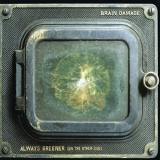
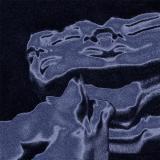
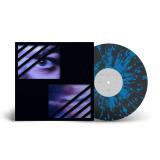
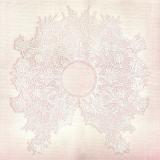
We are proud to release ‘Fortunate Isolation’ the sophomore album from Borusiade. Born and raised in Bucharest, Romania, Borusiade aka Miruna Boruzescu started DJ-ing in 2002 as one of the very few female DJs in the city’s emerging alternative clubbing scene. Influenced by a classical musical education, a bachelor in film direction and fascinated by raw electronic sounds, Borusiade first combined these universes in the construction of her DJ sets and starting 2005 also in her music production. A sound of her own has slowly crystallized, often dark with poignant bass lines, obsessive themes and by all means melodic. She has released EPs on labels like Pinkman, Unterton, Cititrax, Correspondant and Cómeme, who released her debut album ‘A Body’ in 2018.
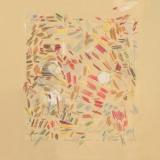
‘Fortunate Isolation’ is perhaps Borusiade’s most personal release to date. Eight songs that capture a bystander witnessing the world as it undergoes drastic changes. We have disconnected ourselves from ecology, humanity, preservation, care for what surrounds us, for what is still alive. Borusiade adds, “| know that this place, our home has went through so many other extinctions, but | believe things will find their own way on this planet only once we are gone. Entropy creates a time-line but also a transformation - a new beginning.” The album’s sound is gloomy and powerful mixing sonic film sequences, rhythmic excursions and soothing yet obsessive vocals that touch one’s deepest senses. Lyrically the songs tackle themes of forgotten memories, spirituality, mortality, and destruction. All songs have been mastered by George Horn at Fantasy Studios in Berkeley. Each copy is housed in a jacket designed by Eloise Leigh with decaying daguerreotypes against a rust color palette and includes an insert with lyrics.
Klute, a.k.a. Tom Withers is no stranger to the LP format, Whatever It Takes is his 9th solo album. It was recorded over a period of 18 months in his own PBJ Studio, located in Suffolk.
Whatever It Takes contains Klute's signature blend of Drum & Bass, Hardcore, Jungle, House, Techno, Electro & Ambient stitched together with Klute' typical disregard for the rules of each genre.
Split into two halves, the album begins in high gear with 8 tracks of Drum & Bass. A rich pallet of D&B styles delicately layered with hidden depths and melancholic harmony. The album then shifts into Klute's own brand of House Techno & Electro, fully revealing his vivid tapestry of musical influences. The end result is highly original, individual and unique. Nobody sounds like Klute.
Klute on the album: "...with so much going on in the world and all the noise created by a growing instant culture I felt compelled to retreat into my own imagination and write individual chapters in melody and rhythm as a form of distraction and personal remedy. Early on in the process I made a conscious decision to make a wholly solo and instrumental record - the first time since my debut album CASUAL BODIES in 1998".
"There's something powerful in the mystique and imagination of music, closing your eyes and letting your mind and body loose to create its own visions. I feel that there is a lot of "surface" music around at the moment that physically dictates what you are supposed to feel. The music I love the most, the music that stays with me the longest is always the stuff that enters my subconscious state."
"Whatever It Takes" is an album for the long haul, to stand the test of time. Take your time, switch off your phone and listen and keep coming back for more.
Facts on Klute: Over the past 25 years Klute has established himself as a leader not just in the world of Drum & Bass but the entire Electronic music spectrum, counting a diverse range of luminaries amongst his fans, including the likes of Goldie, Laurent Garnier, Sasha, Mary Ann Hobbs, Doc Scott, Lee Burridge, Zane Lowe, Nastia, Andrew Weatherall, BT, and the sadly passed Marcus Intalex, David Bowie and late great John Peel.
Klute continues to tour the world as both an in demand DJ and drummer and singer in his hardcore band The Stupids.
Supported by Villalobos, Dorian Paic, Mattia Trani, DJ Tennis, Verrina & Ventura , Giorgia Angiuli, Carola Pisaturo, Julina Perez
There are people who place their soul at a border between two worlds that are completely different one from the other.
Giulio Paternò has always split his heart in two halves: one beating for Pink Floyd's, Dire Straits' and Deep Purple's rock; the other for an electronic sound influenced by the likes of John Talabot, Nicolas Jaar or David August.The final result by mixing these two different souls is all channeled into his project Swoosh, where house and techno meet the psychedelic sound from the '70s. So here is a captivating and a magnetic sound which is shaped exclusively by a live act with Ableton, a Gibson Les Paul and various controllers.Swoosh's peculiarity drew the attention of top national venues and festivals such as Tenax in Florence, Circolo degli Illuminati in Rome, or Amore and Spring Attitude Festivals.By Spring 2016 Swoosh will be releasing his first EP "Over and Above" with Autum Records, a label based in Rome and New York.Feedback:> DJ TENNIS: Great record, Swoosh is a producer to keep watching... / Gran disco, Swoosh è un producer da tenere sott'occhio...> VERRINA & VENTURA: Great, the slow one is fantastic! / Complimenti, traccia lenta fantastica!
> CAROLA PISATURO: Liked it so much. / Mi piace moltissimo.
> GIORGIA ANGIULI: I really enjoyed the whole EP, tracks are so stilish! / Mi piace molto l'EP, tracce super stilose!> JULIAN PEREZ: Good listening, a good listening. / Un ascolto piacevole > MATTIA TRANI:above mi piace moltissimo bell'atmosfera!
(Limited edition of 300 copies on clear & black marbled vinyl with full printed sleeve and textured coloured printed insert)
This is the 1st vinyl release on a quiet RIOT, an independent electronic music label based in Scotland.
Following his Interferenza cassette for Osiris Music, Berlin-based sound artist Adam Winchester returns with a new body of work that sees him embracing ever more forthright rhythms while adhering to his established lines of sonic enquiry.
With roots in the Bristol dubstep scene and a long-standing partnership with Christopher Jarman in Dot Product, Winchester has spent the past few years investigating alternative methods of sound generation that deal in hidden electromagnetic frequencies and spectral tones found lurking in circuitry. Bringing these extremities back to a more structured focus, Muutto is a highly personal work that captures the period of transition as he moved from Bristol to Berlin.
While the finely sculpted tonality and artful distortion of his recent work is plain to hear throughout, Muutto is also grounded in arrangement and melody, weaving a tangible narrative that pivots around steely rhythmic architecture, nodding to his roots in club music without expressing anything explicitly 'dancefloor.' Even at its most physical, as on the weighted march of 'Hold,' the emphasis is on atmosphere and mood, no matter how heavy the drums fall. In the distant murmurs of pads and poignant vocal threads, the bittersweet emotional backdrop to the record comes through in abundance.
There's space afforded for the more avant-garde tendencies in Winchester's music too. 'Metaphors' is caked in guttural feedback that comes on like a particularly noisy Albini studio session strapped to a chassis of the swampiest blues rock lurch you're likely to hear all year.
In its needlepoint detail, broad scope of sound palettes and potent expression, Muutto is an accomplished offering, but more significant is the way these facets are bound together by immediacy and form that transcend the freeform experimentation many of Winchester's traits are drawn from.
'a quiet RIOT' is an electronic music label based in Livingston, Scotland orchestrated by Nomad and is the sub-label of the highly renowned 'RIOT Radio Records.'
Since 20th February 2015, Nomad has run his own very successful fortnightly internet techno radio show called the "RIOT Radio Show.' Each show has a resident warm up set then a further hour with a wicked guest, the majority of whom are among the world's top electronic artists. The show gets thousands of listeners on each transmission with every set recorded exclusively for it. You will not hear them anywhere else.
A hoard of very well-known and simply stunning acts always feature on the show along with a whole host of very talented local music makers.
This was the build up to the record label being launched in April 2016 that will show-case major acts and amazing local talent.
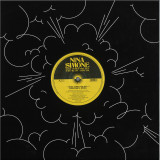
Three incredible reimaginations of Nina Simone classics from Francois K, Tony Humphries and Coldcut each with their own unique touch and trademark style weaved within.
Francois K kicks off with a sublime deep house rework of 'Here Comes The Sun'. Reminiscent of Larry Heard's output, Francois nods to Mr Fingers with a bassline that harks back to those early Chicago classics, coupled with deft mbira touches that create an other-worldy feel to the remix. Celestial waves and singing rides mix with a buzzing top line melody that lay the foundations for Simone's spiritual voice to hang in the air with a perpetual elegance and grace. A timeless slice of house music that earned Francois' version a spot on one of Innervisions acclaimed 'Secret Weapons' compilations.
Next up, Zanzibar royalty Tony Humphries lays out a bumping remix of 'Turn Me On' turning the bluesy soul leanings of the original on their head and flipping it into an uplifting summertime groover. Simone's words take on a different tone with this revitalising rework backed by staccato guitars and chopped up vocal melodies that give a playful yet soulful character to this slab of sunshine.
Rounding off the EP in classic Coldcut style, the duo meld 'Save Me' into a chopped, screwed and crunched remix. Lo-fi percussive elements and distorted textures blend with glitching samples and stuttering sequences that turn Simone into a tripped-out goddess. An atmospheric piece of electronica but with a harden edge purpose made for the dancefloor.
'World' is the debut album dreamt up by Barcelona based DJ / Production duo Memorial Home. Comprising of Paul Roux (France) and Jeremy Pinchasi (Belgium), 'World' is the exciting result of their shared desire to push the limits of their own brilliant musical foresight. It's an ambitious 20 track longplayer which effortlessly showcases the incomparable sonic space shared between both musical masterminds.
Sitting somewhere just to the left of Nicolas Jaar, Radiohead, Massive Attack, Mike Dehnert and Ostgut Ton, Memorial Home has managed to craft an album absolutely unique to their sound, impossible to categorise and sure to catch the attention of music lovers of all shapes and sizes. Techno without a dancefloor, experimental electronica fit for the warehouse raves. It's an exciting, perfectly confusing album which simply works wonderfully.
Heavily textured in incredible atmospherics, dub effects and crisp, clear percussion, 'World' spreads over an excellent array of individual tracks full of groundbreaking musical magic. Incorporating a stunning fusion of live instrumentation and electronic craftsmanship, 'World' is an audio adventure into emotive soundscapes, with a clear focus on the subtle saturation of melancholy. It's a soundtrack for a dystopian film yet to be written. A sonic painting for the coming winter months where the trees are all but dead and frozen; and the ground a thick layer of glowing white snow.
Memorial Home are the founders of the independent label Rapid Eye Movement, which has seen a breadth of incredible EPs riding the balance between experimental Techno and introspective electronica. They first met by random chance in their newly adopted home of Barcelona, Spain. This unexpected encounter quickly developed into a full-fledged musical kinship through their shared interest in crafting cinematic, experimental techno music. Each release from the label and duo showcase their clear passion to unearthing sounds beyond the expected. With their debut LP about to drop, the future is looking certain for the duo, the label, and the changing face of modern day electronic music.
Reclaiming her original moniker of Kittin, electroclash pioneer - formerly known as Miss Kittin - presents Cosmos, a continuous twelve-track LP of organic, leftfield electronica due 2 November on Dark Entries. Throughout her illustrious career, Kittin has carved a considerable niche for herself, assimilating references from New Wave and 90s techno to form an inimitable sound that resonates with electronic music fans the world over. Despite being most recognizable with 'Miss' before it, Kittin was in fact her original artist name - the prefix often added without her consent at promoter's will and eventually becoming the norm.
Cosmos is her most spiritual release yet, influenced by her time in the French countryside after a bout of touring exhaustion. She gives up any formulas from her past; verses/chorus, pop or club beats, to come to the essence of chords and textures, peeling away the non-essential to find joy in music yet again. In retrieving her chosen name from more than 20 years ago, Kittin also returns to the essence of her musical journey. By liberating herself from the constraints of formal structure she opens the door to a new set of aesthetics, exploring her influences without restraint. Sonically, the voice acts a central instrument, whilst the album drives continuously forward with no breaks, paying homage to her love for ambient and electronica whilst wandering calmly into the unknown. 'With Cosmos everything is energy. We go back to the core with curiosity and freedom.' - Kittin
Clikno Is Proud To Present The Second Strike Of Dr.nojoke's Double Ep 'zero'.
'aplose' Is A Straight 10 Minute-stomper, Which Sounds Like A Wild Horde Of Percussionists Clanging And Banging Cans And Pots. The Truth Is The Doctor Just Threw Glass Marbles On A Wooden Floor. Fun-time! For The Hips He Adds A Low Rolling Bassline And For The Head Some Freaky, Randomly Pitching Chords And Off It Goes! Call It Afro-kraut-jazz-tech Or Just Clikno - Aplose Is A Counter-action To Electronic Music Production With Electronic Machines - Marbles Do It As Well!
'kumuestu' On The Flipside Is The Antagonal Piece On Zero.two - More Dark And Deep It Is Music For A Fictional Ritual. Carried By A Hypnotic Fluctuating Bass-figure And Drones The Tune Slowly Mutates Into A Shamanic Rhythm Monster Creating A Resonating Field For Transcendental Dancefloor Action - From Here To Eternity.
Zero.two Is Purely Audiophile Electricity To Twitch Your Body In All Directions. Do The Clikno!
Again Zero.two Is A Limited Vinyl-only Release Pressed On Transparent Vinyl Coming In A Transparent Sleeve - Transparent As Light, As Ideas, As Music And As The World Should Be - No Borders, But Freedom, Peace And Equality For Everyone!
After more than 30 years Early Sounds and Halfway Ritmo are finally releasing unpublished recordings (1982-1989) from former Tangerine Dream and Iggy Pop's drummer Klaus Krüger.
Advanced Dance combines a sweeping mix of Krüger's handcrafted acoustic drums and distinctive electronic sounds of the late Berlin-School years, creating a unique blend of advanced polyrhythms.
Krüger achieved a balance between creativity and classic drum patterns giving birth to an unconventional and avant-garde type of music that could be easily defined as a precursor of techno.
His progressive mentality led him to delve further into the tape collage technique and unique ways of triggering his drums. It was a whole new world of music - sustained by his artistic surroundings, which included collaborations as well as friendships with other influential artists such as David Bowie, Martin Kippenberger and Helmut Newton.
In the time of German division, the pulsating West Berlin became a melting pot of creativity and international encounters. Advanced Dance is the result of the blazing heat feeding the unstoppable thirst of discovery which characterized that generation, creating tunes that transform the listener's experience into one blissful moment amidst beautiful confusion.
Meaning 'universe' or 'the cosmos' in Greek, Sýmpan is the second full EP from Lazaros, Cologne-based artist and long-time friend of the label.
Dive into the rich, musical universe of Lazaros with this EP - an intricately composed sonic world mostly made up of self-created sounds by the producer from scratch. With previous releases on KX (subdivision of Kompakt) and Nautilus Rising (label of Glasgow's Sub Club), the music of Lazaros is always deeply personal and a mirror of his inner self. From darker club tracks like 'Byzantion' to ambient electronica like 'Cold Faucet', the EP displays the versatility of Lazaros, unfolding yet another chapter in a story that begins with his roots in Greece.
tested 'Then After' EP by New York duo Wild Dark.
'...Stemming from a partnership with two decades of experience behind them, Wild Dark takes on contemporary song-writing and gives it a unique, thoughtful, modern-take using a wide spectrum of electronic music to tell a story. The duo, comprised of brothers Corey & Ryan Negrin, stray from cold digital samples in favour of a warmer approach to writing music. This allows them to merge house, techno and natural vocal work into a cohesive concept that uses soulful yet charming songwriting to nurture a sophisticated palate of contemporary work...'
Then After EP includes two tracks featuring Alex Who 'When we first met Alex there was chemistry off the bat. With inspiration of being young and free, the lyrics and vibe to "Why Not"came together with ease. As the production progressed, the darker tribal elements came to life.
We wanted this track to resonate with the free spirited. This track tends to be a favorite of night.
"Born By The River", A Happy Mistake. The vocals, the elements, the soul, all stemmed from animpromptu recording and this beauty was born. With a list of organic household recordings,accompanied by a warm low end, we aimed to create a track that defied all genres.
"Talky Talkie" is the most club oriented track of the EP, with a persistent groove and synth elements that work perfectly on the dancefloor.
"I'll Wait" brings our bohemian flavour to shine, a track that's comfortable being played anywherefrom Burning Man, lost in the desert to the deep warehouses of Brooklyn's underground.
The digital release will include a special remix by Superlounge, a German duo known for their smooth house vibes. This is a must have release, available first on the label's shop online;
t r u e C o l o r s
A Brooklyn / London based record label that channels artist's most honest version of their
creations and shares it with the world through vinyl and digital platforms.
Group Rhoda is the solo electronic music project of Mara Barenbaum, based out of Oakland, California. The project started around 2009 with a debut album 'Out of Time, Out of Touch' in 2012 on Night School Records and '12th House' in 2013 on Not Not Fun. She is also one half of Max and Mara who released the album 'Less Ness' in 2013 on Dark Entries Records. She is committed to live performance, situated within the analog synthesizer and drum machine medium.
'Wilderless' is Group Rhoda's third full length and first for Dark Entries Records. Each of the these 7 songs draw forth tones of tropical darkwave and soft industrial, while negating the sound of conformity and control. The album explore themes of societal and spiritual displacement, contemporary serfdom, the depths of empathy, regeneration through destruction, and the tyranny of claiming recognition and power. Lyrics are poetically expressed through allegory and explore archetypes rooted more in abstract observation rather than hard line experience. Through transgression and imagination, Group Rhoda explores the arc of songwriting interwoven into stark electronic environments, and creates a bridge between the corporeal and the dream worlds.
Each song was mixed by Mark Pistel at Room 5 in San Francisco and mastered by George Horn at Fantasy Studios in Berkeley. Each LP is packaged in a jacket featuring a colorful custom made collage by Hugo Barros and includes a full color sticker and digital download card.
Restive Plaggona is the music project of the Corfu-based artist Dimitris Doukas -also producing under Matriarchy Roots, Leftina Osha and Plaggona-. After releasing a series of cassettes in different labels along 2016 and 2017 -including his own Several Minor Promises- 'Leaving The Body' arrives as an electronic composition of beats and synthesizer bodies disguised as a sense of provocation and mystery. Each of the seven pieces offers more than a smattering of interesting textures separated by spans of great decline, but a master class of permutations in-between accompanying sounds, stretching rhythms and viscera-and- violence noises. Driven by a deeply expressive narrative, Restive Plaggona makes a strong statement about
his post-industrial vision adding technoid inclinations in a delightful dystopian world.
KHT 008 is coming from no less than the man who is called The Prince of Techno' by his peers.
And that is for a reason: Blake was part of the first wave of Detroit techno artists and dis and contributed to the techno movement from the mid 80s. Tracks like When a dream becomes U' or Our love' are milestones of electronic music, his style, which he calls Poetry and Rhythm' is distinctive. For Killekill House Trax he delivers the Acid Life EP which comes along with two strong, acid driven tracks, the A-side darker and more chicago-oriented with its rhythmical focus and the punchy kick, the B-side more Detroit-ish with its uplifting chords.
Timeless!
Madame E. is a musical setting of Georges Bataille's 'Madame Edwarda', a short novel that interlaces themes of eroticism, religiosity and death, and was written under the pseudonym Pierre Angelique in 1941, during the occupation of Paris.
Composer Mirco Magnani wrote eleven electronic pieces and presented them to actor/singer Ernesto Tomasini. They turned them into songs by adding vocal melodies and together they produced a libretto based on Bataille's French text. The result of their dynamic interpretation is a hypnotically spellbinding performance where the audience is transported through worlds - ancient and new - and where Tomasini's haunting falsetto conveys the tormented emotions in Bataille's work and becomes the instrument that articulates the writer's famously obscure themes.
The experimental operatic performance captures the atmosphere of heightened human passion, reminiscent of opera seria and revisited through hazy and minimalistic lens. The resulting dark and twitchy mood amalgamates old vintage electronic devices, string piano and Stella Veloce´s touching violoncello. The stage becomes a space where Eros and Thanatos, real and virtual, analogue and digital, cluster and melody, spirituality and technology are intermixed and turned unidentifiable, hence collapsing the binary logic of dualism.
Written by Magnani/Tomasini and produced by Mirco Magnani, with lyrics taken from "Madame Edwarda" by Georges Bataille, Madame E. was developed between Berlin and London where Magnani and Tomasini are respectively based. Recorded in Berlin, mastered by Murcof and released by Magnani's label Undogmatisch, a collective that also includes Nicolas Defawe (Urban Spree) and Valentina Bardazzi, the painter responsible for the album artwork.
Music has always coursed through Roman Lindau's blood. Even if he weren't the accomplished producer and respected DJ he is today, the German audiophile would still be spending all his money on the stuff; giving over all his time to the art form. ''I'm a music junkie. I need music to live'' he states matter-of-factly. ''For me it's the elixir of life.''
Good job, then, that he gets to spend his ..
Roman Lindau is a German techno DJ, artists and producer, as well as being a core member of the infamous Fachwerk Records from Berlin.
Music has always coursed through Roman's veins ever since he was a young boy so it is no suprise that he became the accomplished producer and highly respected DJ that he is today.
In the late 2000´s Lindau became active in the Berlin electronic music scene, beginning to play music in clubs as well as producing his own music.
The first track he released in 2008 on his home label Fachwerk Records appeared in one the world famous Berghain Mix Compilations, mixed by Len Faki.
Following from this Berghain invited Roman to contribute an exclusive Track for Ben Klock´s Berghain Mix in 2009. After this success the gates opened for him to play regularly as a DJ at Berghain.
At the same time he continued to work on music for Fachwerk Records. He produced dance floor smashers like ´Crasse´ in 2011 and ´Rave on´ in 2014, which were charted by the likes of Ben Klock, Sven Väth & Chris Liebing, afirming his deserved place amongst the techno elite.
More recently in 2015 the well known Victor Calderone from NYC invited Roman to release on his label Matter+.
The reason why Roman is such a great DJ is because of the fact he knows what the people want! ''I love to dance and that's very important: as DJ you need to feel what the crowd want so you can help them to party and have fun.''
Combining a varied selection of raw house and techno in his sets, recent bookings have taken Roman across the world; from the hallowed techno Mecca that is Berghain to dark underground clubs as part of the recent Fachwerk label tour.
He has performed at every legendary Berlin venue, past and present from Tresor to Berghain, and it is this that gives Roman the edge above the rest. If you can do it there, you can do it anywhere!
From 2014 Till the closing he was a resident DJ at Stattbad, one of Berlins findest adress for Electronic Music.
Comet is pleased to announce the third volume of the Afrobeat Makers Series: Nu Guinea - The Tony Allen Experiments.By re-working the original magic drum patterns from the Afrobeat master Tony Allen, Nu Guinea created a compilation of tracks which is charged by a voluminous electronic jazz-Psyche funk imprint.For this release, Comet Records teamed up with Early Sounds Recordings, the berlin label, also home to duo Berliners Nu Guinea.The Naples formed, Berlin-based duo, is a project that arose out of jam sessions, melting synthesizers with instruments, containing a handmade sound that is not aiming for perfection but genuineness. It can be understood as a steadily shaping form, always open for collaborations with other musicians.
They've previously collaborated with singer Wayne Snow (fellow berliner artist on Comet) for the vocal edit of Nu-World, also delivered a remix for Wayne Snow' Rosie Ep' both recently released on Tartelet Records.Nu Guinea - The Tony Allen Experiments LP due to be out on February 9th 2016, as vinyl LP.
From the fires and floods of the Australian bush on her debut, Soon, which Phil Elverum reissued via his label, P.W. Elverum & Sun, tiarn now takes us to the shores of the Pacific Ocean where classical and electronic arrangements move with an ever-present longing for connection and nature. Stretton has weaved a new world, set on the brink of night, when the world is soft and suspended in blue. Living in isolation near the ocean, overlooking the winter migration of whales, Stretton would regularly swim during the brief 20-minute period known as the blue hour. Ideas would come to her in the icy salt water, and walking home in the dark, she would carry melodies back to record that night. At its heart, tiarn reflects ecological grief and the search for connection in a changing world. tiarn is also inspired by a piece of home camera footage Stretton found of her family in Japan where they lived in the ‘90s before she was born.
It shows the distant mountains, and Stretton’s young family looking over the valley in the soft static of one summer evening. Decades later, using the untouched synth her parents had bought in Tokyo in 1991, Stretton began recording music directly to that footage, letting the images dictate the melody. Voices, insects, weather, movement, and the ambient sounds of the valley are woven throughout the record itself, blurring the line between documentation and composition. The result is an album that feels less created than uncovered — something remembered rather than made. Stretton’s work continues to carve a singular path in contemporary music, balancing environmental awareness, experimental composition, and deeply personal storytelling.
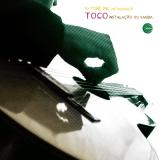
FIRST TIME ON VINYL! “Instalação Do Samba”, originally released in 2004, has become one of the defining albums in the history of Schema Records. With producer Stefano “S-Tone Inc.” Tirone, Toco created an album that embraced the essence of samba and bossa nova while allowing them to breathe naturally within a contemporary musical landscape, blending Jazz, soul, understated electronics and sophisticated arrangements. Released only on CD at the time, “Instalação Do Samba” is finally given the analogue home it always deserved. This first-ever vinyl edition also includes “Qui C’Est Celui-Là”, previously included in the French CD edition. Over the years, Toco has become the most streamed artist in the entire Schema catalogue, introducing his music to audiences beyond the traditional boundaries of Brazilian jazz and contemporary bossa nova. His songs continue to resonate with listeners around the world, proving that authenticity never goes out of style.
South Asian super-producers Lapgan and Baalti – the former a Madlib-disciple spinning hip-hop grooves out of dusty desi samples, the latter duo purveyors of intricately tapestried dance music – holed up in the California desert in early 2024 for a songwriting session to blend their complimentary styles. They ended up with several albums worth of club material built upon decades of Indian music history – floor fillers that move like early Four Tet meets The Avalanches. They’ve been teasing this material around the world during live sets – from Paris Fashion Week to Glastonbury, London Clubs to BK Warehouse parties, sessions at Lot Radio and Karachi Community Radio, and anywhere else they find an aux. The result has been endless ID requests for unreleased gems like “Ipa Ma” and “Lime Tikka”, calls which should finally be answered with the release of Threads.
Lapgan Bio
Chicago-based archivist and producer Lapgan has become renowned for his signature style: unearthing rare and forgotten Indian & Pakistani sounds and recontextualizing them into hip-hop and dance beats that evoke J Dilla and Madlib. He has cultivated a reputation for quietly revolutionary sample-work across his beloved solo projects History and Duniya Kya Hai, as well as LAFANDAR, his critically acclaimed team up with Heems (of Das Racist / Swet Shop Boys). He has worked with a range of artists from both the West (Your Old Droog, Saul Williams, Cool Calm Pete, Kool Keith, Open Mike Eagle, Blue, Quelle Chris) and the East (EXCISE DEPT, Baalti, Sid Sriram, Sid Vashi, Dynoman), and has been featured in global media including Pitchfork, FADER, Stereogum, Passion of the Weiss, Mixmag, Homegrown, and Vinyl Me, Please. Over the past year he has headlined clubs and performed at festivals across the world from Chicago and New York to London and India, and was personally invited to soundtrack back to back Paris Fashion Week shows for the similarly norm-shifting designer Kartik Research. In 2026 he will soundtrack his third Kartik Research runway show, as well as reissue Duniya Kya Hai for its five-year anniversary alongside a companion EP featuring remixes from peers and supporters Arushi Jain, Loris, Mera Bhai, Malkfunktion, and Maral.
Baalti Bio
Baalti makes electronic music built around rhythm, pressure, and collective release – weaving through leftfield bass, dusty hip hop, tripped out dub and raw house all while maintaining a throughline rooted in South Asian culture seen through the lens of a sweaty dancefloor. In the last year they have experienced a whirlwind rise and growing global recognition: from their EP Mela vividly evoking West Bengal’s sound system culture to their Tamil-cinema-infused filter-house project with Anish Kumar Stunt Doubles, in addition to wide-ranging collabs and remixes alongside DJ ADHD, Naya Beat, and A.R. RahmanThey have also built a reputation for their frenetic live show, with appearances at international festivals like Glastonbury and MELT, headlining shows across Australia and Europe and supporting influences turned peers like Four Tet and Disclosure across North America. Their explosive, percussion-heavy sets have been platformed by Rinse FM, NTS, The Lot Radio, Beats In Space, and Refuge Worldwide, and their music has been renowned by publications including Pitchfork, Bandcamp Daily, RA, and MixMag. Their forward momentum continues into 2026 with slated headline tours in India, Australia, and Asia along with appearances at Coachella, Party in the Paddock, Fvded in the Park, and We Out Here festivals.
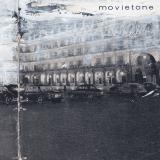
World Of Echo are proud to announce the long-awaited reissue of the self-titled debut album by Bristol’s Movietone. Originally released in 1995 by Planet Records and reissued on CD in 2003 by The Pastels’ Geographic Music imprint, this is the first time Movietone has been reissued on vinyl. An expanded double-LP edition, it includes the extra tracks from the 2003 CD (their first two singles, and an unreleased demo of “Chance Is Her Opera”), and adds three more unearthed gems: demos of “Alkaline Eye” and “She Smiled Mandarine Like”, and an early take of “Late July”, recorded in a garden by Dave Pearce (Flying Saucer Attack) in 1993.
Taken together, this is the definitive collection of music from the first phase of one of Bristol’s most remarkable groups. Movietone was the cumulation of a series of events, explorations, and discoveries, starting at secondary school – the group’s core membership of Kate Wright, Rachel Brook, Matt Elliott and Matt Jones met at Cotham School in Bristol. As for many other groups, their early years were all about experimenting, and finding ways to ‘make do’, a DIY sensibility that would inform Movietone through their decade-long lifespan. From formative rehearsals in a shed in the garden of Brook’s family home, to recording early material to four-track in Redland Library, and on into the Whitehouse and Mr Grin’s studio sessions for their debut album, Movietone’s music fell together in a creatively unpredictable, yet conceptually rigorous manner.
By the time they released Movietone, they’d found a home with Bristol’s Planet, run by author Richard King and James Webster, who had both released their first two singles, “She Smiled Mandarine Like” and “Mono Valley”. There was other music happening around them in Bristol, too, from the Jones brothers’ avant-rock outfit Crescent (who were Movietone’s closest conspirators), through Elliott’s jungle/electronica project Third Eye Foundation, and Brook and Elliott’s membership of Flying Saucer Attack. A closely knit community, Movietone are the centre of this nestling architecture of groups. The vision in the music, mostly, belongs to Wright, but Movietone ran in democratic creative consort. Listening back to Movietone, you can hear this democracy in action through the wildness of the music, which is balanced by the poetics of Wright’s lyrics and melodies.
Full of half-captured memories and entangled abstractions, there’s an elliptical, ruminative quality to much of the writing here that shows the deep influence of the Beat Generation writers, along with a twilight environment captured in the songs that’s pure third-album Velvets, Galaxie 500, early Tindersticks, Codeine. Unpredictable interventions – the crashing glass in “Mono Valley”, the sudden explosions of “Orange Zero” point towards the noise blowouts of My Bloody Valentine, the unpredictability of Sonic Youth; Wright’s understated vocal cadence suggest a deep, embodied understanding of John Cage’s Indeterminacy.
Movietone would go on to make 3 fantastic albums for Domino: Night & Day (1997), The Blossom Filled Streets (2000) and The Sand & The Stars (2003) and their Peel Sessions were released earlier this year on Textile. Still held in high regard by artists like Steven R. Smith, and The Pastels, whose Stephen McRobbie once described them as “one of the great unknown English groups,” it’s an absolute thrill to listen to Movietone anew – still inspired, still seductive, still magic, still mysterious.
Moulded By Industry is William D Drake's six album, his first for ten years and a return to the richly layered sonic texture and epic production of his majestic Briny Hooves. He is joined by long time collaborators James Larcombe, Dean Gaisburgh-Watkyn and Steve Jackson, with the addition of a new crew member, singer Treana Morris. Moving on from his nine years of pianistic and compositional duties in Cardiacs, Drake's solo work has been known for its synthesis of Mellotron-driven grandeur with a surreal playfulness.
But the deep heart of Drake's work is in its powerful evocation of the landscape of the countryside and its connection with love, longing and loss. To this end, his own enigmatic lyrics have rubbed shoulders with poetry drawn from across the centuries. From obscure sources such as Samuel Spree to the poetry of Thomas Hardy and Rupert Brooke, his settings make old words shimmer with human emotion. The texture of his music also reflects an inspirational lack of concern for distances of time. The earthy breath of his harmonium is interwoven with tones teased from archaic instruments by James Larcombe – hurdy-gurdy, dulcitone and melodeon.
But Drake's sound-world is no museum. Here, ancient words and the timbres of ancient instruments become one with the rush of a moment's emotion. Moulded By Industry brings this approach a new sonic depth, intoxicatingly shaded by Treana's lush vocal harmonies and underpinned by Steve's rhythm. Dean's evocative guitar textures give an oceanic sense, tinged with Americana, recalling his work with Drake in their alt country band Nervous. These many layers of sound are drawn together into vivid soundscapes by the painterly mixing of producer Ott. Renowned for his work in electronica and dub, Ott's two decades of experience working with artists such as Sinéad O'Connor, the Orb and Brian Eno bring an organic touch here, more akin to the elemental forces of land and sky than grid electricity. More than any of Drake's previous albums, Moulded By Industry reignites the emotional urgency of old texts. The gorgeous single The Flickering Shade, haunted by glimmers of lost possibilities, is set from words by Thomas Ashe. Turtledove's heady evocation of the blissful madness of love sets the words of an anonymous 17th century ballad. above all, the album is a testament to Drake's love of John Clare, 'The Northamptonshire Peasant Poet'. Clare wrote as the centuries old process of enclosure, in which wild and common land was appropriated commercially, was accelerating.
His works, rather than representing simple sentimentality, are passionate love poems to the landscape and cries from a soul reeling from the creeping unfamiliarity devouring it. This sense of the tension between passion and ill-ease has its most potent expression in Green Shadows. The brooding, slow-tempo energy of Steve's drums drive a horizon-wide lament, alternately lulled by Treana's vocal textures and made restless by James' plaintive hurdy-gurdy and the emotive pull of Dean's slide guitar. The present moment is also a time of enclosure, both metaphorically, as our lives, memories and emotions are drawn into the commercial space of social media, and literally as land and water are swallowed by vast data centre developments. Moulded By Industry celebrates a regained sense of being in the moment in the landscape, in life and in love. The album closes with the utterly delightful single Love In The Universe. The kind of song that could make a cynic use the word 'joyous' without irony, this Harry Nilsson-esque romp reassures us, with a wink, that 'in an infinite universe everything has its place ... even the human race'.
Edge Conditions is a fresh look at the beat-forward electronic music of Jeremiah Chiu. In Electric Time, his 2023 first-thought-best-thought album recorded at theVintage Synth Museum in LA, offered a glimpse a solo process and sound, fast becoming a fan favorite. In many ways this new work is a total reset. Following two ambient-leaning duo albums with Marta Sofia Honer and a pair of improvisatory trance-jazz LPs with LA quintet SML, Edge Conditions settles Chiu into a world of layered, alternately dance-able or chillout-able, rhythm excursions a la classic Four Tet or Aphex Twin.
Edge Conditions is a fresh look at the beat-forward electronic music of Jeremiah Chiu. In Electric Time, his 2023 first-thought-best-thought album recorded at theVintage Synth Museum in LA, offered a glimpse a solo process and sound, fast becoming a fan favorite. In many ways this new work is a total reset. Following two ambient-leaning duo albums with Marta Sofia Honer and a pair of improvisatory trance-jazz LPs with LA quintet SML, Edge Conditions settles Chiu into a world of layered, alternately dance-able or chillout-able, rhythm excursions a la classic Four Tet or Aphex Twin.
Five years after establishing himself as one of the UK's most distinctive selectors, Bloom marks the beginning of a new chapter for Yung Singh. More than a debut EP, it introduces EKTA his own label and creative world, built around the Panjabi concept of unity and the belief that dance music can be a meeting point for cultures, histories and new ideas.
Rather than treating heritage as something to preserve behind glass, Bloom places it at the centre of contemporary club music. Drawing inspiration from Panjabi folk traditions, Indian classical rhythms and centuries-old musical practices, Singh reimagines these influences through a modern electronic framework without reducing them to nostalgia or tokenism. The visual identity mirrors this philosophy, taking cues from Phulkari embroidery "flower work" passed down through his own family and connecting those traditions with the idea of growth, renewal and the arrival of a new creative season.
Finalised while touring Panjab during Basant, the festival celebrating the arrival of spring, Bloom became both a personal and artistic statement: the first release on a label intended not to represent one culture alone, but to create space for many. As Singh explains:
"EKTA as a name really sums up what I love about music and arts in general: unity and oneness. I want the label to be a sonic universe where artists bring their specific heritage into a modern club framework. It's about merging diverse folk traditions to treat these sounds not as relics, but as the future of dance music."
Across three tracks, Bloom presents different perspectives of that vision. 'NUG46' transforms field recordings captured in New Zealand into a meditative piece built around hypnotic tabla and razor-sharp jungle rhythms. 'Situationz' pays tribute to legendary Panjabi artist Sukshinder Shinda through the driving "Shinda Break", recontextualising a rhythm instantly recognisable to generations of listeners into a high-energy club weapon. Closing the record, 'Tabla Trouble' leans fully into organic instrumentation, layering classical percussion, strings, flutes and vocals into a composition that defines the open-ended musical language of EKTA.
Bloom is not simply the first release on a new label. It is the foundation of a wider vision one that looks to the past not for comfort, but for inspiration, using tradition as a catalyst for imagining the future of dance music.
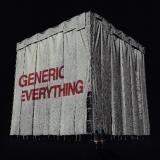
Chase & Status announce their forthcoming album Generic Everything, out 9th October 2026, alongside new single “Gone Too Far” featuring Debbie. The 10-track project brings together an expansive cast of collaborators including J Hus, Little Simz, Skrillex, Giggs, D Double E, Blanco, IRAH, Col3trane and more, continuing the duo’s long-standing ability to connect scenes, generations and sounds across British music.
Generic Everything follows a landmark period for Chase & Status, which has seen “Baddadan” spend over 15 weeks in the UK Top 10 and achieve Platinum status, while “BACKBONE” featuring Stormzy became their first ever UK Number One single. Alongside a BRIT Award for British Producer of the Year, a record-breaking sold-out UK arena tour and their Milton Keynes National Bowl takeover, the duo continue to operate at a career-defining level more than two decades in.
Built around the idea of resisting creative conformity in a world increasingly shaped by algorithms, endless content and more, Generic Everything sees Chase & Status once again refusing to be confined by genre.
Moving between rave, rap, soundsystem culture and electronic music, the album pairs their unmistakable production with some of the most distinctive voices in UK music and beyond, capturing a duo still driven by the instinct to keep evolving, collaborating and pushing their sound forward.
out of Stock
Last delivered 6 days ago available to reorder, subject to availability
Following the sensory adventure of Tancade, in which Gaspar Claus led his listeners to a secret beach, somewhere between friends’ parties and summer sun, a new territory opens up. With Cells, he offers an even more expansive journey: an inner journey as much as a cosmic shift, a plunge to the point of origin, where life is invented.
True to his sole instrument, the cello, Gaspar multiplies its sound to the point of abstraction. This new work seeks to reach the primordial moment of the first cell division: a tiny, infinite moment when everything was still possible. On stage, he has built a shelter, a refuge-cell, a porous space where the visible and the invisible respond to one another. Lights, electronic breath, uncertain presences—everything conspires to confront the audience with its own dizzying presence in the world.
On the album, this architecture unfolds across ten “musical cells.” Each piece observes the same phenomenon: the cello allows itself to be absorbed, dissolved, stretched, or replicated by the machines. Sometimes preserved, often transformed, the instrument becomes living matter, an unstable organism, capable of emitting both electronic landscapes and archaic beats. A rich, luminous album, imbued with an almost healing energy, Cells might seem more electronic than Tancade. Yet every sound that makes it up comes from the cello— transformed, filtered, and reworked through a series of successive transformations. This is music that doesn’t merely describe life: it re-enacts it, cell by cell.
out of Stock
Last delivered 4 days ago available to reorder, subject to availability
Long overdue reissue of classic Scottish ambient techno banger ‘Mindweeds’, originally released in 1993 on the Pure-affiliated T&B Vinyl label run by Keith McIvor (JD Twitch) and Andy Watson (Brainstorm). With a Discogs demand ratio at about 300 have : 2000 want, and used prices peaking at over £100, now seems to be the right time for a re-release.
State of Flux were Roger Elliott and Dave Clark (aka Sparky, LUMA, Truffle Club and main man behind Kübler-Ross). They first met at Glasgow’s Strathclyde University in 1990, bonding over a shared love of weasel racing, German sausages and “man-duos” like The KLF and The Shamen. Dave was fully pubescent and already had a synth and drum machine, while Roger – a late developer – bought “another cheap synth, a Commodore Amiga for sequencing and a tiny mixer with no EQ”. For two long years they concentrated hard on “churning out unlistenable pish”, admittedly clueless about what they were trying to do.
Then – out of nowhere in the summer of 1992 – a flatmate’s Jello Biafra spoken word CD (‘I Blow Minds For A Living’) provided the inspiration to unlock the spark of dynamite that set the raving world on fire. Sampled using a Walkman* cassette** tape*** on playback (a decision the pair soon came to regret every time the track was subsequently performed live), Jello’s pilfered rant would soon become the crucial glue that held together the burgeoning kaleidoscopic helicopter spliff that is ‘Mindweeds’, loaded as it was – and indeed still is – with a veritably seething morass of cheeky electronic blims, nasal filter cheese and gay Caledonian spunk.
* a vintage portable listening device roughly the size of 4 iPhones stacked on top of one another and weighing the same as a small tub of yoghurt
** a plastic cartridge enclosing 2 miniature spools of magnetically coated, polyester-type plastic film (magnetic tape), notoriously convenient for pirating copyright material and secreting in one’s underpants for transporting between illicit market trader stalls
*** thin ribbon coated with ferromagnetic particles, usually ferric oxide but also chromium dioxide, "pseudochrome" ferricobalt or iron-cobalt-nickel “metal” formulations – with the latter types sounding marginally less crap
Playing demos of the track to friends, one thing led to another and a copy arrived with Twitch. Meeting the legends behind Pure in late 1992, a release was scheduled for summer 1993… but not before a promotional live gig in February of that year, supporting their heroes The Black Dog. Confessing that they “didn’t have a clue how to play live”, the duo played it safe, “went to a studio near Edinburgh airport to record the ‘live’ show” and then “mimed it off a DAT” at the gig, “standing in front of unplugged synths”. Soon after this, they recorded the full EP at Finitribe’s ‘Finiflex’ studio in Leith, Edinburgh and the record came out as planned that summer – the same week as Underworld’s ‘Rez’.
The record received high praise, appeared in many big-name DJ charts, sold out very quickly and was repressed within a few weeks, selling several thousand copies by the end of 1993 – no mean feat in an era when people had to use landline phones ****, faxes ***** or good old-fashioned carrier pigeons ****** to ascertain literally anything about the outside world, what was cool, where to buy the cool shit, or how to meet people and have fun.
**** a fixed communication device that connects to a telephone network using physical wires, cables, or a stationary base unit tied to a specific geographic address, using a handset incorporating a mouthpiece featuring a small metal disk and carbon grains, converting sound pressure from the human voice into a flow of electrical waves caused by these grains being squeezed together, before the variable signal is transmitted down DC voltage-powered copper wire and rerouted by a central exchange to arrive at the earpiece magnet of the target receiver’s handset, moving a small speaker cone accordingly so the message is intelligible WITHOUT THE PERSON SPEAKING ACTUALLY BEING PRESENT
***** as above, but for the d/Deaf
****** flying vermin riddled with diseases and capable of surviving nuclear armageddon
Soon Roger and Dave became sick of the Walkman being the only instrument played live in their set: with their new found fame and riches, they invested in a case for their Amiga to transport it around Scotland, while also putting in the hours on how to pretend to play live better with a sequencer and synths that were FINALLY plugged in. Following the release of ‘The Mercury EP' in April 1994, they embarked on a full tour of the UK and even managed to part ways and end the band by June that year.
This reissue includes the two original mixes of ‘Mindweeds’ recorded at Finiflex (‘Original’ and engineer ‘Fred's Fancy’), the original cassette demo (mastered directly from the actual recording sent to Twitch & Brainstorm in 1992) and a live version recorded at the Birmingham club night 'Oscillate' in April 1994.
Original, Baby Doc & The Dentis, John 00 Fleming, Reinier Zonneveld, Charlotte De Witte, Red Jerry remix
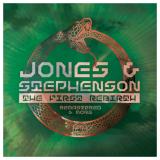
Embark on a nostalgic journey through the pulsating beats of the 90s with the iconic anthem “The First Rebirth” by the visionary duo Franky Jones and Axel Stephenson. Since its inception in 1993, this timeless classic has etched its place in dance music history, and now it returns in a dazzling new avatar.
The much-celebrated track has been meticulously repackaged in a sleek, cool sleeve, accompanied by an electrifying array of both recent and classic mixes. Some of these renditions, previously confined to digital realms, make their long-awaited debut on vinyl, adding an extra layer of allure to this collector’s dream.
This exclusive 2 x 12" vinyl edition is strictly limited to just 500 copies worldwide and features a unique Inside Out cut, pressed on stunning Starlight vinyl — a striking black colour with vibrant coloured speckles, making each copy visually unique.
Don’t miss your chance to own a strictly limited piece of dance music history and immerse yourself in the reawakening of this electronic masterpiece. Only 500 copies available — once they’re gone, they’re gone.
out of Stock
Last delivered 6 days ago available to reorder, subject to availability
Confronting 2026, hope can seem in short supply, as the most divisive and toxic voices worldwide are amplified amidst an ever-rising temperature of conflict and alienation, yet hope is abundant in ‘Losey’, the latest release on Rocket Recordings from the mercurial duo Gnoomes. Just as this couple have taken a bold step into the unknown by leaving Russia and moving to Slovenia, so their music has thrown off all shackles to flourish in a defiant show of vibrant and revivifying colour. “The life of an immigrant is a strange thing.” says the bands Sasha Piankov “But luckily, that glow music brings us has never faded, even though the emotional landscape has definitely shifted.” Yet whilst the music that Sasha and his creative and life partner Masha Piankova came up with is testimony to a liberating triumph against oppression and adversity, it also goes beyond. What has emerged is a kaleidoscopic collision of styles which sends the ‘skygazing’ realm of their previous work spinning into electronic orbit. Whilst the opener ‘Foreign Agent’ explicitly tackles the pressures of the Russian state, it also throws a Stereolab-style motorik meditation through an in-the-red psychedelic prism. Elsewhere we can behold Bulgakov and Chris and Cosey as bedfellows amidst the mesmeric, 303-fried EBM of ‘Satan’s Ball’. “Rave as therapy. Pop as resistance. Love as endurance. ADHD as a production technique.” These are the primary ingredients of Losey, by the reckoning of the band themselves. This is an album that exists purely on its own distinct frequency, driven by defiance and positivity. Losey is a soundtrack to set fire to the old order, the better to dance in the glow.
out of Stock
Last delivered 7 days ago available to reorder, subject to availability
Forgotten electronic treasures by composer Ton de Leeuw rediscovered: first release in the Dutch Oscillation Series
Dutch Oscillation Series (DOS) proudly announces the release of a box set featuring the complete electronic works of Ton de Leeuw (1926–1996). This publication marks the first instalment in a new series that brings the history of Dutch electronic music to life for a broad audience. The official presentation will take place on Saturday, 12 September, during the Gaudeamus Festival for contemporary music in Utrecht.
Unique discoveries from the archive. For far too long, twentieth-century Dutch electronic music has remained hidden away in dim archives, only occasionally accessible under optimal conditions. Many compositions have not been heard for decades, perhaps after being presented to an audience only once. For this project, the original tapes were carefully traced in basements and archives, including the mysterious work Chronos, which was rediscovered in the collection of the Netherlands Music Institute (NMI). Even close collaborators of De Leeuw were unaware of the existence of Chronos. Another highlight of this release is the radiophonic oratorio Job (1956), which was awarded the Prix Italia radio prize by broadcaster Rai.
The recordings were digitised by experts at the Institute of Sonology and the Instituut voor Beeld en Geluid (Netherlands Institute for Sound and Vision). The music was then meticulously restored and mastered in the studio of Jos Smolders (EARLabs), in accordance with modern standards, while strictly adhering to the composer’s original artistic intentions.
The edition includes eight works composed between 1956 and 1982. The collection is released as a deluxe LP and CD box set and is also available via streaming and as high-resolution downloads. For an optimal listening experience, originally four-channel works such as Elektronische Studie (Electronic Study) and Antiphonie (Antiphony) are available as special Dolby Atmos downloads, allowing listeners to experience at home the unique spatial sound world envisioned by Ton de Leeuw.
About Ton de LeeuwTon de Leeuw was one of the most influential Dutch composers of the twentieth century. A thinker with a distinctly cosmopolitan outlook, he immersed himself deeply in musical cultures from India, Japan, and Indonesia, among others. His work consistently sought to bridge Eastern and Western musical traditions and concepts.
In addition, De Leeuw enjoyed a distinguished academic career. He served for many years as senior lecturer and director at the Amsterdam Conservatory and was affiliated as a senior research fellow with the University of Amsterdam. His book Muziek van de twintigste eeuw (Music of the Twentieth Century) remains a standard reference work.
"Prior to the vinyl release of the debut work “Vapor Curve”, which suffered a one-year delay due to manufacturing errors, the release of the mini-album “grainy film” has been confirmed."
Following the artist's previous release, this album completely eschews the use of computer-based DAW (Digital Audio Workstation) software. By relying exclusively on a strictly limited setup of hardware—synthesizers, samplers, and delay units—the artist pursues a meticulously woven, highly original take on minimal harmony.
At the core of this record lie exquisite ambient textures and beautifully shimmering synthesizer arpeggios. These are layered with the organic warmth of the sampler, vividly sketching out the contemporary "sound of Tokyo." As the album title suggests, the gritty, Lo-Fi texture of the sampler evokes the imagery of a vintage, low-fidelity film reel in the listener's mind. Pushing further than the predecessor, this approach embraces a more abstract, dubby, and deep soundscape aesthetic, elevating the album's artistry to new depths.
Describing this stoically refined electronic music, Maruyama reveals that it is "music for a cigar." It is not an assertive sound that demands to be the center of attention in the room. Instead, the moment the needle drops, it possesses an overwhelming power to transform the very particles of the room's air. The nostalgic and melancholic melodies, much like the shifting and fading trails of cigar smoke, embody the aesthetic of shogyo mujo (the impermanence of all things). Amidst a constantly changing world, it offers a desire to simply drift away in the slumber of sound—a supreme deep-listening experience guaranteed to transport you.
The long-awaited repress of "Baby EP" - Ricardo Villalobos's first solo single on raum...musik under the Villalobos moniker - is finally here. Featuring two tonally and energetically distinct cuts of dancefloor minimalism that are undoubtedly Ricardo. "Baby EP" sounds as cutting-edge as when it was initially released 12 years ago.
From the slightly euphoric and light-hearted atmosphere of 'hansup' (A) to the emotionally charged groove of 'Baby' (B), "Baby EP" travels through a world of intricately layered micro/macro percussions, eloquently programmed synths, and Ricardo's own vocals spread across the frequency spectrum - an added human touch to his usual machine funk. And while rhythm seems to be at centre stage here, in usual Villalobos fashion, both tracks resolve into pure jazzy melancholy. After dragging the listener into a world of (very) human feelings so uncommon in electronic dance music, "Baby EP" makes it very clear you are listening to Villalobos.
out of Stock
Last delivered 12 days ago available to reorder, subject to availability
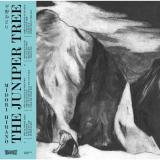
While composing the music for The Juniper Tree, Hirano drew on her own memories of touring Iceland, which included a stop at a waterfall featured in the film and rendered in sound on “Mother’s Path.” Folktales, like the origins of The Juniper Tree, are often attempts to contend with humans’ place in the natural world, with all its mysteries and intricacies, and both the film and Hirano’s soundtrack draw their sense of breathless wonder in part from the sensation of being engulfed by one’s environment. Margit, played by Björk, possesses a sublime sensitivity to her environment that allows her to receive messages from her mother, who was murdered for their shared inheritance of witchcraft. Hirano captures the relationship between the transcendental awe that is felt as supernatural and the private feelings of being immersed in that experience, creating a musical dialogue between the self and what lies beyond.
In the final sentences of her liner notes describing the film’s philosophical and feminist throughlines, Anna Bogutskaya says, “what we call Margit’s witchcraft is maybe just her willingness to listen.” This is the magic of music, and Hirano composes with an alchemist’s pen. Just as Keene seems to break down barriers between binary poles, Hirano uses both electronic and acoustic means to communicate the film’s emotive cues, uniting approaches she has explored under her own name and the alias MimiCof. There is an understanding that stillness can be understood as peaceful or foreboding, that dissonance and consonance are contextual, that efforts to protect one’s own kin can lead to tragic ends. At the film’s end we see Margit enthralled with birdsong, understanding it as something deeper, a connection to those she has lost. Through sound, we understand what lies beyond sight, beyond convention, and with this new soundtrack we hear the story anew.
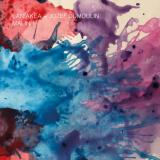
As well as being a supercluster of galaxies and the Hawaiian word for 'infinite sky', Laniakea is now also a brand-new supergroup. The stars in the firmament: Jeroen Van Herzeele, Jozef Dumoulin, and Nicolas Chkifi. These three gentlemen have long formed the vanguard of the Belgian avant-garde scene and have since toured the world in various lineups.
Jazz, electronica and musical alchemy explode in a big bang of unbridled improvisational joy.
The final installment of the GIANT SKY trilogy, Giant Sky III, will be released on October 2nd, 2026, preceded by the single "Fleeting Glimpse", which offers the first taste of the new album. A companion postlude album, The Further We Go The Deeper It Gets, will follow on October 16th, 2026. Together, the two records complete an ambitious body of work that has seen Viken explore a broader and more introspective musical landscape than ever before. "Fleeting Glimpse" provides an evocative introduction to the final chapter of the GIANT SKY trilogy. While Viken"s band Soup has become renowned for its emotionally charged, crescendo-driven soundscapes, GIANT SKY allows him to embrace an even wider palette of influences. Drawing from alternative art rock, post-rock, electronica, ambient music, indie, folk, and progressive rock, the project balances immersive atmospheres with memorable melodies. In an era increasingly dominated by algorithms, artificial intelligence and digital perfection, Viken has consciously taken the opposite path. GIANT SKY is built around the human element of music-making, embracing imperfections and authenticity as artistic strengths. "This album has been with me for a long time. Some of the ideas on Giant Sky III go back many years, and in a way it feels like a cross section of the last 25 years of my life as a composer. We live in a time where music is increasingly shaped by algorithms, AI and endless digital possibilities. I suppose this record is my way of walking upstream a little bit - taking the slower route, trusting the human imperfections, and letting the music find its own shape. It wasn"t a quick album to make, but I"m proud of what it became: ambitious where it needed to be, modest where it should be, and above all, honest." - Erlend Viken
Tooloop Records celebrates its tenth release with "Orbis EP", a four-tracker from label affiliate Stab9. The record captures a moment of evolution in both Stab9’s sound and the label’s sonic identity, reflecting a broader vision of the Tooloop universe through expanded arrangements, deeper exploration and a more immersive presentation.
Opening the EP, ‘Source’ establishes its atmosphere through a constantly evolving arrangement, moving through several distinct phases while maintaining a sense of fluid progression. Carefully shifting textures, unexpected bass changes and subtle variations in dynamics reveal new details with each turn. Title track ‘Orbis’ shifts the EP towards warmer tones, built around classic house-inspired sounds, melancholic pads and polyrhythmic bass movement. Its rolling low-end and intricate percussion subtly tilt the track towards techno territory, reflecting the circular motion suggested by the track’s title. ‘Beastro’ gradually ascends through a restrained growling bassline and fractured hi-hats, dropping into an engine-cut moment in the middle of the track - a brief suspension before the groove returns, pulling the track back into motion. ‘True Story’ unfolds through a walking bassline, intricate hi-hats and smeared percussion, creating a sense of movement through a world of morphing textures and atmospheres. Its restrained melody embraces the idea of “less is more”, closing the EP with the bittersweet beauty of mono no aware.
With "Orbis EP", Stab9 presents a deeply personal approach to electronic music, where detailed studio craftsmanship meets the physical energy of the dancefloor - the label completing one full turn, and opening the next.
out of Stock
Last delivered 4 days ago available to reorder, subject to availability
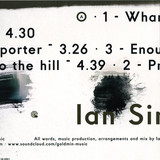
Ian Simmonds presents his new album "The right side of kind" on Goldmin Music. Ian Simmonds is one of the most creative Nu-Jazz/Downtempo producers of the last 20 years.
Although these words can't describe his music properly as the man is always looking for an innovative sound that could cross the boundaries of musical styles. The Welsh-born found his inspiration in music from all over the world and his songs don't only express one clearly defined feeling. They are more of a subtle mix of emotions that let the listener interpret it his way. As Ian said himself: "I think there's a lot of beauty in melancholy". For example, he spent over a year living in a castle in Germany to record his last album " The Burgenland dubs" in a solitary atmosphere where he could really think, breathe, make a plan. That's the point, Ian is always re-thinking things over, looking for a new source of inspiration which results in a constant evolution. He had the chance to collaborate both with amazing musicians like Goldfrapp and electronic music heads like Mathias Kaden, Soulphiction, Krause Duo..
Following the success of Denshi Ongaku No Bigaku Vol. 1 and Vol. 2, Cosmocities returns with the third instalment of its celebrated compilation series dedicated to the rich and ever-evolving world of Japanese electronic music. Compiled by label owner Matt Soulie, Denshi Ongaku No Bigaku Vol. 3 continues the journey through Japan’s diverse sonic landscape, bringing together pioneering artists, cult favourites and contemporary innovators across ambient, house, jazz-infused electronics and experimental sound design.
A carefully curated snapshot of Japanese electronic music past and present, Denshi Ongaku No Bigaku Vol. 3 showcases the depth, innovation and enduring influence of one of the world’s most inspiring musical cultures.
Since its inception, the Denshi Ongaku No Bigaku project has paid tribute to a musical culture that has profoundly influenced the Cosmocities vision. Where the first volume explored dreamy ambient textures and deep electronic moods, and the second shifted focus towards boogie-laden rhythms and jazz-fuelled dancefloor excursions, Volume 3 finds a natural balance between introspection and movement.
The compilation opens with Yosi Horikawa’s sublime “Bubbles”, an ambient masterpiece whose delicate organic textures gently set the tone. Chari Chari’s “Luna de Ritmos” follows with deep, ethereal house atmospherics before Force Of Nature’s hypnotic “Skyy High” guides listeners further into immersive territory.
The journey continues through the experimental electronics of XTAL’s “Skygazer” and the analogue warmth of Takuya Matsumoto’s “Jump Rope Music”, while regular Cosmocities contributor Yuu Udagawa delivers the sophisticated high-tech jazz house groove of “Little Secrets”.
On the second half of the collection, Kuniyuki’s remix of Slow Didi’s “Follow Me” brings rich jazz-inflected elegance, leading seamlessly into the futuristic techno-swing fusion of DJ Eiji Takehana featuring Yusuke Nakamura’s “Deep Track Jazz”. Tominori Hosoya’s “Summer Dreamers” adds a deeply emotional and dreamlike house moment before Azzurro’s “Just A Touch Of Love” shifts the focus firmly towards the dancefloor with a hypnotic late-night thumper.
Closing the compilation is AcidGelge’s “Fatality 4”, a beautifully spacey and atmospheric finale that leaves the listener suspended somewhere between the club, the cosmos and the imagination.
out of Stock
Last delivered 14 days ago available to reorder, subject to availability
"The Whole Of The Moon" is a classic. It's a song about awe and hope and love for the people who show us the best of this often broken world, the blessed few who show the way and introduce us to things and thoughts. Keith McIvor aka JD Twitch of Optimo was one of those people, and this version of the track - electronic, euphoric, open-hearted - was made by some members of the broader Optimo community after his terminal brain cancer diagnosis in 2025. The task of making a version that could've been heard on the dance floor at Planet Peach, Mas, or the Sub Club on a Sunday night or Monday morning brought them together across oceans, an act of joy amidst so much loss. It was never intended to be released, but as it made its way to friends and others, it also felt wrong not to. Its sentiment is universal and applies to so many incredible people in music and beyond that are sadly missed. So here is the Watergirls' first and last track, presented as a limited white label with some particularly lethal mixes from Sean Johnston of Hardway Bros and A Love From Outer Space. We're giving all the profits to charity. It's meant to be played out. It's meant to make two friends hug and sing into each other's faces. It's for Keith and for everyone like him.
out of Stock
Last delivered 14 days ago available to reorder, subject to availability
Five years on from its first outing, Standards & Practices returns with a second volume of Out of Practice that assembles a roster of exclusive, unreleased material that moves between broken techno, electro, dub techno and bass-heavy experimentation. The strength lies in its range: in this third 12" instalment, Patrick Russell's opener brings meditative dub pressure, Ghost Warrior's 'Second Wave' is a sparse, suspensory underwater world, Pessimist layers deft percussion into fractured rhythm science and Blood Music's 'Figures For Laser' has a cascade of 8-bit melodies adding futurism to jazzy, off-grid drums in what is an eerie and engaging closer. A snapshot of a label finding new ways to bend electronic music's tried and tested boundaries.
out of Stock
Last delivered 15 days ago available to reorder, subject to availability
Errands is the first duo recording from Marja Ahti, Swedish-Finnish sound artist and electroacoustic composer, and John McCowen, a native of Southern Illinois, now residing in Iceland, whose work centres on a radical exploration of clarinet multiphonics. Working without the aid of electronics, McCowen has spent years finessing performance techniques that allow him to layer beating patterns and split tones that belie their source in a monophonic instrument. Ahti, in contrast, has built up a stunning body of work in recent years using a classic electroacoustic palette of electronic, field recordings and instrumental sounds. Sharing a bill at the 2024 iteration of Stockholm’s Edition Festival, the pair discovered a sensibility shared across their different sonic means, beginning the collaborative process that would eventually result in the mercurial side-long pieces heard on Errands.
The word ‘errand’ suggests something purposeful but routine, and Ahti’s and McCowen’s work is suffused with the everyday. Meeting with McCowen to record in Iceland, Ahti used the opportunity to gather field recordings, capturing not the natural sublimity often associated with the country—think Chris Watson’s shifting glaciers—but everyday life in Reykjavik. Snatches of bustling streets and what could be humming engines thread between static sinewaves, stretches of clarinet resonances and fleeting textures, the latter often at once visceral and impossible to identify. Errands: we are a long way from the grandiose framing devices favoured by the pioneers of electroacoustic music, yet many of their principles are at work here. The gradual metamorphosis of one sound into another, the carefully achieved ambiguity between the acoustic and electronic, the treatment of the stereo field as a compositional element: all of these link Ahti and McCowen’s music to the electroacoustic tradition, yet their sensibility is radically different. The overall effect is a kind of stillness, but one at peace with continuous change. Like the unwieldy but somehow stylish everyday forms captured in the Hertta Kiiski photographs that adorn the record's sleeve, the music seems to prize a kind of deliberate awkwardness, interrupting static held textures not with an abrupt cut, but with a quick fade, suddenly revealing background as foreground.
Ahti and McCowen’s world is everyday and unornamented, but also shadowed by the numinous. Halfway through 'Chorales', we hear an arrangement for overdubbed recorders of an early motet of Messiaen’s, O sacrum convivium! Played on recorders, the piece shrinks into delicacy and dim memories of childhood music lessons, while at the same time its harmonies retain the grandeur of their liturgical origin. This double quality inflects much of what follows on Errands, including snatches of field-recorded water or air, which seem at once elemental and domestic. Enlivened with countless details that repay repeated relistening, Errands is a record that leaves the listener ready to open their ears anew to their own sound environment.
Violeta García & Hora Lunga return with 4ever, their second album and the follow-up to I’ll Wait For You In The Car Park. Released in 2025 on -ous, their debut received airplay on BBC and NTS and was selected for Bandcamp’s Best Experimental Music year-end list. 4ever picks up where that record left off: in ordinary moments, small scenes and the strange emotional weight of being somewhere between places. But here, these moments are stretched across a much larger, darker screen. A night flight, a terminal, a bad connection. When too many feelings are carried from one place to another, everyday situations begin to feel epic, empty, or apocalyptic.
Built from García’s cello and Hora Lunga’s synths, samples and field recordings, the album pushes further into emotion, letting fragile melodies, orchestral cello gestures, heavy low-end and compressed noise melt into something both dystopian and strangely familiar. Its warmth is not meant to be an escape from this world, but something that appears within it. Acoustically, the album lives through the closeness of the materials, the way sounds stay with each other, and in the feeling that even the most unstable moments are being carried together. The album presents itself in scenes that fade into each other: quiet melodic fragments that are interrupted and restarted, unpredictable changes of direction, held together by an inevitable melody, a bright synth harmony unfolding into an almost orchestral cello arrangement. Later, a broken organ-like sample turning in circles, cello melodies appearing as if they were trying to remember a song that never belonged to one voice alone. An endless loop that is placed under changing lights, briefly opening into emotional chords, then slipping back into emptiness.
It is this instability that Violeta García and Hora Lunga place at the center of their collaboration. They do not decorate the cello with production, or place electronics around an acoustic centre. They explain: “On 4ever, we become part of the same unstable surface. What holds the record together is not resolution, but the trust in staying together as things distort, overload, disappear and return.”
Violeta García, an Argentinian cellist known for her solo work and for her role in the punk band Blanco Teta, brings the instrument close to the body, as melody, pressure, texture, noise and sudden emotional weight. García has brought her distinct musical voice to KEXP, Rewire, Le Guess Who?, Bad Bonn Kilbi, Silent Green, TransMusicales, Roskilde and more.
Hora Lunga, a Zurich-based producer and composer working across unstable song forms, treats electronics less as a frame than as a weather system: something that can hold a scene together, distort it or make it disappear. In recent years, his compositions have ranged from experimental song forms, sound performances, ensemble compositions and film music. His ensemble WIRREN consists of up to fifteen performers.
Following the much-loved Library Music: Volume One (2022), and hot on the heels of this year’s critically acclaimed ‘After The Rain, Strange Seeds’ (9/10 - Uncut) , London group The Leaf Library return with a second journey through the margins of their catalogue. Gathering together rare recordings, compilation tracks, limited edition releases, collaborations and hidden gems from their ever-expanding musical world, Library Music: Volume Two is another vibrant and varied collection of electronic indie pop, in all its guises.
Far from a conventional odds and ends collection, the double LP compilation reveals another side of a band who have always treated the spaces between albums as places to explore. These are the moments where ideas stretch out; there are hypnotic drones, motorik rhythms, glowing analogue textures, pastoral electronics and the warm, melodic melancholy that has become unmistakably The Leaf Library. There is the electro-pop of Flowers At The Border, the psych rock-adjacent Building Better Worlds, and the gentle chamber shuffle of Kendrick Road. Tracks range from the 22 minute folk kosmiche epic Versatile Clouds to the 59 seconds, record skip punctuation mark of Harmonic Runout, with a whole array of trips, ideas and experiments in between.
Since forming in a pre-Ghost Box, Castles in Space and Clay Pipe world, The Leaf Library have carved out a unique place somewhere between dream pop, kosmische repetition and experimental songcraft — drawing comparisons to Stereolab, Broadcast, Yo La Tengo and the outer edges of library music, while creating a sound entirely their own.
“We’ve always loved making things outside the pressure of a ‘proper’ album,” says singer/guitarist Matt Ashton. “Singles, collaborations and compilation tracks give you permission to follow an idea wherever it wants to go. Looking back, those pieces tell their own story.”
Where their studio albums have shown the group carefully building immersive worlds, the Library Music series maps the pathways between them — the sketches, diversions and unexpected discoveries that often reveal the most about a band.
Across a lucky thirteen tracks, Library Music: volume two is a reminder that some of the best discoveries are found on the shelves you forgot to check.
[a] Flowers At The Border [4.21]
[b] The Long Dead King [7.16]
[c] Bowed Clusters [4.00]
[d] I Learned To Swim Under Water [4.32]
[e] Building Better Worlds [11.59]
[f] Harmonic Runout [0.59]
[g] Kendrick Road [3.36]
[h] Sailing Day (Wintergreen Remix) [3.59]
[i] Versatile Clouds [22.00]
[j] Bells and Thread [2.54]
[k] No Memories, No Plans [4.33]
[l] Everyone I Met Today [1.00]
[m] Tired Ghost In Orbit [9.19]
Two-time BRIT Award winner Becky Hill will release her eagerly anticipated third album ‘REBECCA’ on September 25th.
‘REBECCA’ was written during a period of intense personal and artistic reflection and sees Becky exploring ambition, identity, visibility and the contradictions of her life from a place of greater openness and creative freedom. Across the record, she examines the tension between desire and self-preservation with clarity, humour and brutal honesty, resulting in her boldest, emotionally charged body of work to date.
Described by Becky as “curated chaos”, ‘REBECCA’ also marks a significant evolution in her sound. It sees her reconnecting with the wider influences that shaped her early musical identity, pulling inspiration from guitar music alongside the dance and drum & bass foundations that have defined her career. ‘REBECCA’ blends that collision of worlds with heavy electro production, alternative influences and euphoric electronics into an album that feels both expansive and unpredictable.
Two-time BRIT Award winner Becky Hill will release her eagerly anticipated third album ‘REBECCA’ on September 25th.
‘REBECCA’ was written during a period of intense personal and artistic reflection and sees Becky exploring ambition, identity, visibility and the contradictions of her life from a place of greater openness and creative freedom. Across the record, she examines the tension between desire and self-preservation with clarity, humour and brutal honesty, resulting in her boldest, emotionally charged body of work to date.
Described by Becky as “curated chaos”, ‘REBECCA’ also marks a significant evolution in her sound. It sees her reconnecting with the wider influences that shaped her early musical identity, pulling inspiration from guitar music alongside the dance and drum & bass foundations that have defined her career. ‘REBECCA’ blends that collision of worlds with heavy electro production, alternative influences and euphoric electronics into an album that feels both expansive and unpredictable.
"The grass is greener_ elsewhere_" Brain Damage told us with their debut album, released in 2002. Yet here, they've reached full maturity. Rarely has a "made in France" dub album strayed so far from the Jamaican model while still harboring, in every detail, so many references and tributes to the inventors of the style (King Tubby / Lee Perry), as well as to many of the key figures in its evolution (Tikiman / Rhythm & Sound, Dub Syndicate, etc.). The recording studio, 7/11 Laboratory, is used here as a true musical instrument. The optimal use of three-dimensional stereo effects will immerse the listener in soundscapes ranging from classic space echoes and Mont Blanc tunnel-style reverberations to crackles, electronic interference, exogenous samples, and other parasitic noises coming straight from Babylon. For this album, continuing in the vein of his previous collaborations with the international dub scene (Zion Train, Alpha & Omega, Disciples, Spectre, Lab°_), Brain Damage traveled to London to record two tracks at Conscious Sounds Studio with Jamaican-born singer Tena Stelin. With the melancholic "Spirit World," one is reminded of the fruitful collaborations between Massive Attack and Horace Andy, while on "Genetic Weapon," the tone becomes more overtly assertive. Two vocal tracks, then, woven into these ten compositions, where the emotional moods and atmospheres will shift with each listen. "Always Greener (On the Other Side)" emerges as the manifesto of music conceived as cinema for the ear...
Some recordings herald the future in ways that are impossible to see in real time. Teodros Makonnen With His Organ (ቴዎድሮስ መኮንን ከኦርጋኑ ጋር), by the artist Teodros Makonnen, also known as Teddy Mak, is one of those. Today, electronic sounds, synthesizers, and digital production are taken for granted in Ethiopian music, but in the early 1980s, they were novelties that polarized opinion. Even to this day, the story of Teodros Makonnen’s legacy has never been properly told. He played a decisive role in defining the sound of the digital era of Ethiopian music that emerged in the 1980s and beyond, both as a keyboard player and as a producer, songwriter, performer, and sound designer.
Ethiopian music was at a crossroads in the early 1980s. Much like music in the rest of the world, technology and automation heralded either a quantum leap in musical development or the annihilation of musicianship, depending on who you’d ask. The changes were incremental nonetheless, but with the benefit of hindsight one can clearly see that the changes meant different things in different contexts. Drum machines and electric organs came to replace many hotel bands because, all of a sudden, one musician could control drums, melody, and accompaniment. Teodros was one of the first musicians in Ethiopia to explore the possibilities this opened up.
Teodros’ father, Captain Makonnen Beri, was a chief pilot at Ethiopian Airlines and a music enthusiast at that. This would prove important to his development, as Makonnen brought back a piano from Germany, which would lead to the first steps in Teodros’ long musical career. Captain Makonnen’s work as Head of Flight Operations and as a pilot exposed him to the wider world that was far from commonplace for most Ethiopians. In a house where music captivated the whole family, the piano gave Teodros’ talent an outlet. Not only was a piano at home rare in Ethiopian households, his father also brought an Indian teacher to their home to teach Teodros and his brother, Captain Samuel Makonnen, music theory (solfeggio or ear training) and piano. Teodros and his youngest brother, the late great Dereje, a member of both the legendary Ibex Band and the Ethiopian reggae group Dallol, took up music from that point onward, with Teodros beginning to develop his proficiency at the age of eight. His father encouraged him to practice tirelessly at home, and Teodros later received musical schooling at the German School in Addis Ababa. His obvious talent led to studies and formal education at the Yared School of Music, followed by continued studies in American jazz at Northern Virginia Community College in Virginia. Teodros cut his teeth professionally in his mid-teens, not only as a keyboardist, but also as an arranger for the Wabi Shebelle and Dahlak bands in the 1970s. He mastered electronic sequencing early, rising to prominence through the midnight recording sessions held during the military curfew. The pressures imposed by the curfew required precise and disciplined recordings, and Teodros delivered just that. This, in turn, led to collaborations with iconic artists such as Mulatu Astatke, Aster Aweke, Menelik Wossenachew, Tilahun Gessesse, Mahmoud Ahmed, and Alemayehu Eshete. In those days, he sat in as a keyboardist with the Dahlak Band when Dawit Yifru took a hiatus to study in Russia, and also with the Ethiostar Band. He secured a residency at the Wabi Shebelle Hotel with the Shebele Band, together with Zelalem Tadese (drums), later succeeded by Elias Bekele, Mulugeta Hailu (bass), Teferi ‘Bibisha’ Mengesha (guitar), Kumelachew G/Selassie (trumpet), and Teshome Deneke (saxophone). A friendly competition developed between the bands associated with the Ras Hotel (the Ibex Band), Ghion Hotel (the Dahlak Band), and Wabi Shebelle Hotel (the Shebele Band). The music scene at Wabi Shebelle saw teenagers commanding the spotlight in an industry otherwise dominated by musicians of an older generation. At the Wabi Shebelle Hotel, Teodros met a diplomat from Saudi Arabia and later visited him at his home in Addis Ababa, a meeting that had unexpected musical consequences. The man owned a Yamaha double-deck keyboard. That evening, they recorded Teodros Makonnen With His Organ (ቴዎድሮስ መኮንን ከኦርጋኑ ጋር) in one take. This recording, a cornerstone in the early digital sound of Ethiopian music, came about almost by chance, simply because Teodros got the opportunity. Traditional Ethiopian songs were cast in a wholly electronic style. Once freed from backing duties, Teodros’ keyboards could explore dreamlike soundscapes that took Ethiopian music in new directions. Even though the cassette contained well-known Ethiopian songs, they were given highly original arrangements, performed on an electric organ with drum machine backing and rhythm patterns that left the listener with suggestive, lingering sounds. “Libesh Kabashen” (also known as “Anchi Bale Game”) and “Odu Gol Golesa” wrap you in the very stuff that dreams are made of. Originally released on cassette only, this recording exudes a mystique that surpasses even some of the most obscure Ethiopian recordings of the day. It remained more or less unknown outside of Ethiopia until now. Some of the tracks, like “Addis Fikir,” are permeated with an almost naive buoyancy, free-floating sounds that lost contact with the ground the moment they were conceived. Others, like “Meche New Hageren Yemayew” and “Lelitu Alnega Alegn,” carry a moodier, quirkier timbre, with pulsating rhythms in the background. Yet even the darker pieces contain an unmistakable wave, something essentially Ethiopian. If most recordings of Teodros’s contemporaries at the time were teeming with atmosphere, his songs seem instead at home in the stratosphere, almost ethereal. Some of the music here could be filed under “lullabies,” were it not for the recurring, almost brooding feeling that engulfs the listener on the aforementioned tracks. You could easily be forgiven for drifting into a blissful haze as the music washes over you.
Up to the advent of electronic music production, Ethiopia was totally dominated by big bands on the one hand, and small groups on the other. The former were tied to large institutions such as the military, the latter emerged from the entertainment industry, in hotel bars and nightclubs. These groups were commercially driven, and bands ultimately had to foster a mercenary approach to employment, albeit not to the passion for music. In the light of this, Teodros’ musical legacy can be seen in two ways. On the one hand, he is a key player in Ethiopian music from the 1970s onwards, leaving an indelible mark through hundreds of compositions and arrangements, including soundtracks for numerous documentary films and advertisements for different companies. On the other hand, the way he and others employed electronics brought Ethiopian music onto a fork in the road.
The replacement of traditional instruments with electronic equipment was seen as impending doom by some. Others, like Teodros, saw new avenues for performance, production, and creativity. Just as later producers like Abegasu Shiota of Admas, Teodros was a trailblazer who opened paths that it took Ethiopian music as a whole more than a decade to rush into. The hotel scene had already been pushed toward electronic music by financial necessity and cost-cutting. Today’s revived global interest in Ethiopian music from the seventies and eighties, alongside a broader resurgence, has changed the reasons for using digital means of music production. They have become tools for musical dreaming. This is where the dreaming began.
out of Stock
Last delivered 8 days ago available to reorder, subject to availability
Japanese acid pop outfit Cho Co Pa Co Cho Co Quin Quin channel the globe-trotting spirit of Haruomi Hosono’s 1970s tropical boogie on their debut album, Tradition.
Named after one of the basic rhythms of Cuban folk music and drawing on influences from across the globe, Cho Co Pa Co Cho Co Quin Quin are quite simply a world unto itself.
Comprised of three childhood friends, Daido, Yuta and So, who reconnected during the coronavirus pandemic, Cho Co Pa initially emerged as a playful way for the three 23-year-olds to pass the time. Tapping into their youthful connection, they created a sound that exudes confidence and curiosity, a homage to the masterful world of YMO’s and Happy End’s Haruomi Hosono, rooted in the trio’s own idiosyncratic experience of the present.
Recorded at home and promoted on hugely popular DIY TikTok videos, their debut album Tradition is a technicolour exercise in armchair travelling – a kind of lockdown exotica for the housebound whose nostalgic flights of fancy are laced with a sense of whimsical melancholy for the lost freedoms of youth.
Referencing everything from Afro-Cuban percussion to lo-fi beats, Buddhist spirituality to trap, each member of the band brings different musical inspirations to the table. Latin American and Middle Eastern styles sit adjacent to a fascination for the electronic music of Aphex Twin, Dorian Concept, Underworld and Daft Punk. At times, the music verges on acid pop bliss, at others, it grooves with the instrumental funk sensibility of BADBADNOTGOOD.
“In the first place, when I create a song, my goal is to transport the listener to a mysterious place,” vocalist Daido explained in a recent magazine interview. Using lyrics as another sonic texture in the composition of ideas, Cho Co Pa paint beguiling sonic postcards of far-flung moods across 12 highly original tracks.
Marrying the organic and the electronic on rhythmically sophisticated compositions like ‘Chichibu’ and ‘Watatsumi’, it is on the album’s standout track ‘Gandhara’ that the experimental sound of Cho Co Pa comes to the fore. Referencing the ancient city of Gandhara through which Buddhism made its way from India to China, the track is a vocoder-trap-inspired, Udu drum-driven pop jam that lilts with unmistakable Balearic flair. If that’s difficult to imagine, then know simply that ‘Gandhara’ sounds like nothing else on this side of Saturn. Even Daido seemed surprised by the outcome: “I feel like we were able to create something that exceeded our abilities. That was huge!”
Hugely popular in Japan, with festival appearances lined up alongside BADBADNOTGOOD at Asagiri Jam in October, it's safe to say the success of Tradition has taken Cho Co Pa by surprise. You won’t have heard anything like it."
»Cosmogonical Ears« is Amosphère's first album for Hallow Ground. Following her contribution to the Swiss label’s »Epiphanies« compilation and her 2021 full-length debut »More Die of Heartbreak« on 33-33, it features three expansive pieces. The Paris-based composer and multidisciplinary artist delves deeper into themes of time, space, cosmology, human perception, and psycho-physical effects, crafting profound sonic meditations. Drawing on a minimalist approach while blending electronic and acoustic elements, Amosphère’s long-form compositions are living, breathing entities whose sonic richness and evocative power unfold gradually over time, putting »Cosmogonical Ears« in direct kinship with previous Hallow Ground releases by artists such as Kali Malone and FUJI|||||||||||TA.
The album opens with its longest piece, »Land of eternal delight,« composed for the Buddha10 exhibition at the Museo d'Arte Orientale in Turin. Written during three years of isolation—a period in which Amosphère explored meditation practices and diverse belief systems—it merges mythology with personal transcendental experiences, reflecting on a challenging time for humanity. »By blending Buddhist philosophy and sculpture with my own meditation practices, I sought to explore a way for people to transcend the boundaries of space and time—not as a believer, but as an observer,« she explains. Featuring handmade ceramic instruments and recorded by Thomas Lefevre, the piece combines Amosphère’s electronic organ with Marc Lochner’s flute contributions, creating a sound that is simultaneously minimalist and expansive.
The concept of teleportation and how it challenges traditional notions of time and space serves as the foundation for the second piece. »Recent advances in quantum physics suggest that teleportation might be possible through quantum entanglement,« Amosphère notes. »What if science fiction is becoming reality—or has already existed in ancient times?« Drawing inspiration from theories proposed by physicists such as Roger Penrose, Amosphère again worked together with flutist Lochner, this time using her VCS 3 synthesizer. »Teleportation« weaves single notes into intricate, non-linear patterns that defy conventional logic, creating a complex auditory tapestry. The last piece »Black hole in, white hole out« was recorded on Corsica and features Miao Zhao’s bass clarinet drones alongside Amosphère’s church organ. It imagines the possible sound of crossing a black hole while also suggesting the study of its theoretical exit and its potential applications for large-scale time and space travel.
The questions posed by »Cosmogonical Ears« do not yield straightforward answers. Instead, Amosphère’s restrained yet intricately layered compositions require full immersion and concentration from the listener. As expressed by the album’s title—which envisions the birth of a new universe through listening—»Cosmogonical Ears« offers an experimental approach to auditory perception as a tool for seeking truth, freedom, and harmony between the outer world and the inner self.
Sarah de Scisciolo, known as the Brutalist Poet, presents a new project born from her collabora%on with
Alex Neri, long%me member of Planet Funk and a leading figure in the Italian electronic music scene.
Produced by Alex Neri and released on vinyl, the single emerges from the encounter between Sarah’s
poetry and performa%ve dimension and Neri’s electronic research. The project blends spoken word, vocals
and electronic music, transforming words into sound and crea%ng an original dialogue between
performance and club culture.
This collabora%on brings Sarah de Scisciolo’s poe%c language into the world of electronic music and vinyl,
shaping a release conceived for both audiences and professionals within the contemporary music scene.
PRODUCED BY ALEX NERI AND MANNIE FOR TENAX RECORDINGS
Whirr and Luster have been orbiting each other for years, bound by a shared language of glide guitar, buried vocals, and volume as emotion. A through line that’s only deepened by Nick Bassett’s hand in producing and mixing the majority of Luster’s previously recorded output. The Whirr & Luster Split pairs one of American shoegaze's most storied bands with one of its most vital new voices across four new songs. Out on 12" EP, CD EP, and digital via Freewhirl Records. Splits are sacred territory for Whirr. More than a decade after the band helped define the modern heavy-shoegaze landscape, the Bay Area five-piece returns with its first new material in years. “Spiral Again” opens the record in classic Whirr fashion: an avalanche of guitar wrapped around a lyric about losing yourself in someone else’s gravity — spiraling, intertwining, coming down together. “Wish I Could Give You The World” follows, one of the most openly romantic songs the band has ever recorded, all wildfire imagery and dizzy devotion, desire rendered at full volume. Produced by Whirr and Zac Montez, both tracks find the band in signature form: enormous yet tender. On the flip side, Los Angeles' Luster continue their run as the standouts of the new shoegaze generation. Formed with the intent of pushing the genre forward rather than reenacting it, Luster fold electronic pulse and '90s texture into walls of glider guitar, and the two contributions here find the band in peak form. "Against the World" is a love song as a locked door — it's you and me, us against the world — claustrophobic and comforting in the same breath. "Forever" closes the record in a haze of doomed-romance repetition, a mantra of do you feel it now dissolving into the knowledge that nothing lasts. Also produced with Zac Montez, the songs make the case plainly: Luster aren't students of the form. They're peers. Taken together, the four songs read like a conversation. About distance, obsession, and the ache of never being able to give someone enough — carried across two coasts and two generations of a genre that refuses to fade. Loud, longing, and gone too soon: the Whirr & Luster Split, out September 18th. Whirr and Luster celebrate the release and cement the collaboration with two shows — the only U.S. Whirr performances of 2026, with no shows planned beyond them. Each night features a unique set built from rarities and live debuts, alongside exclusive vinyl variants and merchandise available only in that room, on that night: 9/18 — Los Angeles, CA @ The Wiltern 9/20 — New York, NY @ Brooklyn Paramount Two nights, two coasts, and no telling if there’s a next time — for the songs, the pairing, or the band itself.
Musique Domestique marks the debut full-length from French duo Adiciatz, a project that emerges from the shared musical curiosity of Manon Nogier and Guillaume Lespinasse. Living near Lyon and making music together since before the pandemic, the pair developed their sound during lockdown improvisations at home — a creative process that quickly revealed a unique musical chemistry rooted as much in folk tradition as in experimental exploration.
Drawing on a wide palette of influences — from Occitan poetry, delicate folk to drone and spontaneous sound exploration — Adiciatz makes music that feels both intimate and expansive. Nogier’s voice and amplified taisho koto weave through Lespinasse’s keyboards, machines and percussive touches, forming a sonic world where ritualistic soft folk melodies coexist with subtle electronic textures.
Their live performances, including an appearance at the Meakusma Festival, where their set blurred the line between concert and séance, have already shown how this blend comes to life in front of audiences, with hypnotic vocals, spiralling chords and slow, trance-like rhythms inviting listeners into a space that is both meditative and evocative.
On Musique Domestique, those live-rooted sensibilities are distilled into recorded form. The album moves fluidly between rich pastoral folk and instrumental meanderings. Musique Domestique announces Adiciatz as a compelling new voice at the intersection of folk, experimental and electronic music crafted with care and intuition.
Like a pelican spotting its moment, Dimitri Andreas returns with a collection shaped by patience, precision and instinct.
Pelican marks a new chapter for a respected figure in underground electronic music. While recent years saw Andreas immersed in theatre productions, immersive audio experiences and multidisciplinary artistic projects, his fascination with rhythm, space, tension and emotion never left. It simply found different forms.
On Pelican, those worlds converge.
Across five original productions, Andreas distills the elements that have long defined his sound: hypnotic grooves, organic percussion, tribal influences, rich atmospheres and a deep sense of movement. The title track glides on suspense and anticipation, while Omenica and Mahu explore the groove driven territory that has become synonymous with his name. Cambolisa delivers a powerful melodic payoff, and Ember closes the journey with vintage synth warmth and restless energy.
The release is completed by three outstanding remixes from artists whose influence on contemporary electronic music is undeniable. Deetron reshapes Pelican into a deep and sophisticated techno excursion, Extrawelt transforms it into a cinematic and evolving voyage, while Petar Dundov expands Cambolisa into an emotional and atmospheric journey of his own.
Following a series of acclaimed MOVE Recordings releases supported by DJs including Sven Väth, Timo Maas, Jamie Jones and Fedele, Pelican arrives as a body of work shaped by years of exploration beyond the confines of club culture.
Rather than revisiting the past, Andreas brings those experiences back to the dance floor: music with patience, depth and perspective. Pelican is the sound of an artist returning not to where he started, but with everything he discovered along the way.
Already Supported by Laurent Garnier, Alexi Delano, Âme, Ilario Alicante, Just Her, Adriatique, Karotte, Danny Howells, Drumcomplex, Paco Osuna, Steve Parry, Marco Bailey, Alex Neri, Pole Folder, Amand, Calao, Neon, Gay Barone, ….
There was an immediate buzz surrounding This Is What I Know About Being Gigantic, the 2001 debut EP by Seattle indie phenomenon Minus the Bear. It wasn’t the kind of viral interest that translated into a string of sold-out tour dates, but it meant that the tuned-in crowd eagerly anticipated their next move. To help stir up the excitement for their first proper full-length, the band followed up Gigantic with a promo CD featuring two tracks from their upcoming album, a short instrumental interlude, an exclusive new song, and a demo version of another album track. Packaged in a cardboard slipcase, it was the kind of cheaply manufactured promotional item that could be handed out for free at shows or thrown in as a bonus in online orders—a relic of the final years of the CD age before the advent of the iPod and mp3. The sampler CD was christened Bands Like It When You Yell “YAR!” At Them in a nod to the upcoming album Highly Refined Pirates.
While these kinds of promotional items typically had an ephemeral existence, filed away in some neglected binder of CDs or tossed out during one of the many apartment-to-apartment moves of the band’s principal demographic of urban twentysomethings, Bands Like It When You Yell “YAR!” At Them had a curiously persistent presence. Perhaps it was because it was packaged more like a proper EP than a sampler. It certainly helped that it was a free release, meaning anyone who came to a show likely walked away from the evening with the cardboard slipcase tucked in their jacket pocket. It’s also noteworthy that the EP showcased three songs from the back half of Highly Refined Pirates rather than the album’s live staples and fan favorites from side A. Whatever the combination of factors at play, “YAR!” took on a life of its own and was ultimately re-packaged in a jewel case and sold as a proper EP in 2004 in the wake of Highly Refined Pirates’ success. And now in 2026, it’s getting its first proper release on vinyl.
Opening with the driving beat, chirping guitars, and funky low-end of “Spritz!!! Spritz!!!,” Bands Like It When You Yell “YAR!” At Them quickly cements Minus the Bear’s foundation of sophisticated revelry, a spirit further emphasized in the Highly Refined Pirates title choice. Part of the Bear’s lore involves them playing their first show three days after 9/11, and just as New York City’s indie rock scene took a sharp turn towards nightclub debauchery and a rejection of ‘90s rock’s dour fatalism in the wake of the World Trade Center tragedy, so did the Bear turn away from the Seattle’s scene’s penchant for gloom and angst towards a cerebral after-hours pop sound. The inclusion of “Women We Haven’t Met Yet” helped elevate what could have otherwise been seen as an album deep cut into a lead track. The fact that these first two songs essentially served as preview singles over future Pirates hits like “Monkey!!!Knife!!!Fight!!!” and “Absinthe Party At The Fly Honey Warehouse” speaks to the high quality of every song the band cranked out in their early years. The EP’s exclusive track “Drop It Like It’s Hot” presaged Snoop Dogg’s mega-hit single of the same name by two years, but whereas Snoop leaned into restrained minimalism, the Bear unleashes some of their fiercest work here, building off of interwoven riffs and electronic layers to a climax of stabbing guitars and hollered vocals. Much like Nirvana’s Hormoaning EP, Minus the Bear’s Bands Like It When You Yell “YAR!” At Them was initially more of a marketing gimmick than a proper release, but given the popularity of the pivotal studio albums that stemmed from the same recording sessions, these extended plays serve as compelling companion pieces that have earned a special spot in their respective fanbases’ hearts. Suicide Squeeze is proud to offer Bands Like It When You Yell “YAR!” At Them on vinyl on September 18, 2026, nearly 25 years after the band’s first show.
Remastered for vinyl by Bernie Grundman with lacquers cut at 45rpm, this limited edition pressing of 1000 copies on Puget Sound-colored vinyl helps document and preserve the exciting early years of one of American indie rock’s most beloved acts.
Anushka Chkheidze + Robert Lippok continue their collaboration with »The Sky Was Out of Tune«. Its eight movements form a long-form ambient piece in constant flux: soundscapes emerge from electronic synthesis and layered textures, while small melodies, rhythmic patterns, metallic noises, or distortions drift through like clouds across the sky. But a sky that is out of tune is still a sky. What shifts is the register in which it speaks.
»The Sky Was Out of Tune« emerges from a live performance for »Festival of Future Nows« at Berlin’s Neue Nationalgalerie. Its organically tangled sounds mirror the artists’ attention to nature as a system that is never quite in equilibrium. Ecosystems lean, compensate, tip, and recover—balance, in the natural world, is not a fixed state but a perpetual negotiation. Chkheidze and Lippok take this as both subject and method. Their sounds shift weight between one another, approach resolution and then withdraw from it, hold tension without release—they find form in the unstable. »Preparing something unstable completely changed the method of how we would normally split our skills or roles,« Chkheidze says. »I think in this one looong piece you feel how much we listen to each other.«
Anushka Chkheidze + Robert Lippok continue their collaboration with »The Sky Was Out of Tune«. Its eight movements form a long-form ambient piece in constant flux: soundscapes emerge from electronic synthesis and layered textures, while small melodies, rhythmic patterns, metallic noises, or distortions drift through like clouds across the sky. But a sky that is out of tune is still a sky. What shifts is the register in which it speaks.
»The Sky Was Out of Tune« emerges from a live performance for »Festival of Future Nows« at Berlin’s Neue Nationalgalerie. Its organically tangled sounds mirror the artists’ attention to nature as a system that is never quite in equilibrium. Ecosystems lean, compensate, tip, and recover—balance, in the natural world, is not a fixed state but a perpetual negotiation. Chkheidze and Lippok take this as both subject and method. Their sounds shift weight between one another, approach resolution and then withdraw from it, hold tension without release—they find form in the unstable. »Preparing something unstable completely changed the method of how we would normally split our skills or roles,« Chkheidze says. »I think in this one looong piece you feel how much we listen to each other.«
To be far ahead of your time sometimes means that you have to wait a while for the right moment to be understood. The visionary approach of multi-instrumentalist Johnny Lamas led him to experiment with a world of hybrid jazz-funk, ambient and electronic sounds while keeping the rhythms of Venezuelan traditional music alive. From 1993 to today, small recognition has grown into true admiration for this so specific sound and his "Danza Cósmica" masterpiece.
TrueClass Records are pleased to present as their second release a complete restoration of this gem, beautifully remastered and redesigned, making it available now for the first time in fine audio quality on vinyl and digital formats.
out of Stock
Last delivered 29 days ago available to reorder, subject to availability
"Based in Thiers (63), Ernest Bergez, also known as Sourdure, has been walking a tightrope for the past ten years, combining a spirit of experimentation with a personal, handcrafted approach to traditional music. Affirming and transfiguring the ""Sourdure-esque"" aesthetic, Outredore unfolds a surprising array of discoveries in Occitan and French: hallucinatory laments, oblique rhapsodies, and carnivalesque odes.
A generous and respectful invitation to build unexpected bridges between disparate sonic worlds, the album extrapolates the modal vocabulary specific to traditional Occitan music, blending it with stylistic elements from around the Mediterranean. Carried by a voice more raw than ever and caught in the ebb and flow of a troubled era, Outredore's songs explore the relationship between the personal and the political.
Vulnerable, faltering and visceral, Outredore evokes a nova cançon occitana that has traded folk guitars for electronic machinery."
Dutch artist Maurits Verwoerd, aka Nachtbraker, makes his first outing on Up The Stuss with ‘Bodu Imchi’, a four-track collection that highlights the breadth and curiosity that have long defined his work. Drawing from a world that stretches from ambient and cinematic music to dub, jazz-inflected electronics and house, the Amsterdam native has developed a sound that can feel both deeply considered and completely instinctive. Releases across Aus Music, Peach Discs, Heist Recordings, Dirt Crew and his own Nachtbraker and Quartet Series labels have established him as one of the more distinctive voices within the Dutch house landscape, with support from artists including Jamie xx, DJ Seinfeld, Raresh, Shanti Celeste and Axel Boman.
Across ‘Bodu Imchi’, those influences come together in a record that feels fluid, slightly strange and constantly alive. Warmth sits alongside subtle unease, hypnotic grooves give way to more playful rhythmic ideas, and intricate melodies drift through low-slung foundations without ever becoming overly polished. There’s a sense of late-night discovery throughout, the kind of music that rewards close attention but still carries enough physicality to move a room and keep packed dancefloors moving with a locked-in approach. Four tracks, one evolving atmosphere, and a meeting of musical worlds that feels right at home on Up The Stuss. It’s a release that finds character in the fine details: unexpectedtextures, subtle rhythm shifts and elements that seem to appear out of nowhere before then disappearing again. It’s an EP that moves between heads-down focus and hazier hours, capturing the curious, nocturnal spirit that runs through his work.
out of Stock
Last delivered 27 days ago available to reorder, subject to availability
This release is more than just a collection of tracks—it’s a statement of identity. Rooted in the raw energy of acid, techno, and house music, every sound, groove, and hypnotic sequence reflects a commitment to authenticity and creative freedom. In a world that constantly pushes artists to follow trends, staying true to who you are is one of the most powerful things you can do.
This project was created without compromise, driven by a genuine passion for underground electronic music and the belief that honest expression always resonates the deepest. The acid lines cut through with intensity, the techno rhythms drive relentlessly forward, and the house elements bring soul and movement to the journey.
We truly believe in this release because it represents exactly what we stand for as artists: originality, integrity, and a dedication to the music that inspires me. This isn’t about fitting in—it’s about creating something real. Turn it up and experience the sound of staying true to your identity.
“I like to work with a variety of instruments and set ups,” says Mark Van Hoen, sometimes known as Locust or Autocreation but here working under his own name on the excellent Plan For A Miracle, his first physical release of solo music since 2018’s Invisible Threads. ”Sometimes it’s literally in my studio, with all the hardware electronics available. Sometimes the laptop, using software instruments. Some of the tracks on this record were recorded in the desert (Joshua Tree) using a 4-track tape machine and small modular synthesiser set up. Each track was recorded in different location using different instruments, which accounts for the distinction between each piece. It’s also about my own reaction to my environment, and what’s going on in my life at the time.”
The Croydon-born Van Hoen started musical life in the early 1990s, signing for R&S records in 1993 but developing his own, myriad and distinctive style across a range of releases on Touch, Editions Mego and other labels, using a battery of instruments, including analogue synthesizers and taking a number of different approaches to recording, rather than ploughing a single sonic furrow. He has worked on a number of collaborations, including with Nick Holton and Neil Halstead of Slowdive, under the moniker of Black Hearted Brother - their Stars Are Our Home was released in 2013. “I have known Neil Halstead since 1992,” says Van Hoen. “He shared a house with me for a couple of years, and the music I was making and listening to along with clubs I was attending had an influence particularly on Pygmalion, the final Slowdive album on Creation.”
Each track on Plan For A Miracle does indeed sound like a world unto itself, a mini-environment, a weather condition, an ecosystem created for the moment. It’s a collection of tracks recorded over the past few years, released on Bandcamp - despite his apparent absence, Van Hoen works constantly. Opener “Climates”, in its exquisite limpidity, feels like a homage to Brian Eno, one of his most formative influences in his teen years, commencing with Music For Films, which he bought in 1979. “This Is For Them”, feels like a ghostlike throwback to early drum & bass or electronica, reminiscent of his own, earliest outings. “There have been a number of requests from labels to make some more music like my very early releases on R&S,” says Van Hoen. “This is part of ‘letting go’ and realising that there’s nothing less creative about going back to those styles again.”
“Pencil Of Spheres” is something else again, a magnificent, imaginary glass structure, shimmering, refracting, without visible means of suspension, a thing of impossible beauty. “Electric Lights” evokes an abandoned fairground, its lights still pulsating, its music lingering. “The Underpass”, meanwhile, insofar as it reminds of anything at all, is faintly reminiscent of Cluster or Neu’s! West German ambience, the urban mundane rendered magical, the sodium lights, the whitewashed walls. The reverberant, faintly oriental chimes of “Insight” transport us yet again, burgeoning and intensifying.
The landscapes, the skyscapes rendered on Plan For A Miracle feel unpopulated as a rule - but when he does introduce vocal elements, Van Hoen has a history of doing so to spectacular effect - think of “Real Love” from 1998’s Playing With Time, the seductive intonation of its title recurring throughout like a series of massive holograms, echoing, stuttering, breaking up, surging. Here, there are just the faintest of vocals, barely distinct, disquieting. “There’s been a bit of a game changer in recent times,” explains Van Hoen. “AI software that enables you to extract vocals and instrument parts from virtually any recording. That means sampling individual parts from existing sources is no longer limited to the original mix exposing certain parts soloed. The vocal parts I use are from multiple sources and often pitch shifted altered rhythmically and melodically.“ There’s further vocal chatter on “I Really Do”, proceeding at a faster pace as if giving chase, or being pursued - distant, enigmatic. “The Music”, meanwhile, its beat tolling, lost in its own fog of static, features a curious intonation, like the ghost of a lost Walker Brother.
Sadly, the album’s title is in reference to a personal tragedy on Van Hoen’s part - the loss of his wife. Titles such as “I Won’t Give Up”, which faintly reminds of another Eno masterpiece, Another Green World, in its nautical hurly-bury, or the pastoral strains of “Mrs Who”, heavily clouded with sadness, seem to allude to this. “In fact the record was recorded entirely before she passed away,” says Van Hoen, “most of it before she even became very ill. The title was given to the album when it started to look like she wasn’t going to make it beyond a few months. It was something Osho said - “plan for a miracle” - so it was a statement of hope. Unfortunately it was not to be.” Although the album is non-thematic, non-specific in its atmospheres, sound paintings, elegant structures it most certainly stands as a magnificent monument to Osho’s memory.
-David Stubbs.
out of Stock
Last delivered 29 days ago available to reorder, subject to availability
"Dance On", the latest single from Canopy continues the label's enthusiasm for re-issuing vintage Afro-tropical funk, reggae & disco, paired with modern remixes and remakes.
Two long out of print and previously un-reissued musical gems from Malian musician Nawari, get an overdue second life. Those gems being the eponymous "Dance On", an upbeat Afro-reggae-disco dancer originally self-released in 1987, and "Fanta Cini", originally released in 1989, which takes a deeper, tougher "proto-Afro-electro-funk" direction.
Sharing creative duties is Russian producer Valique, aka "V" from the best-selling "V's edits series, appearing on Canopy for the first time with a strong contribution to the label. Taking the title tune he reimagined & recreated it, building from Nawari's vocals and recording live horns, skanking guitars and percussion, blended with his signature classy production: crisp, warm, groovy & punchy.
Valique turns in 3 different mixes of Dance On, ranging from reggae disco, to cosmic Afro beat, timbale percussion workouts and beyond.
The release spans a range of moods, segueing between the past & present, organic and electronic, proving itself to be well suited for many environments, from the kitchen party to the bars, clubs & festivals of the world.
out of Stock
Last delivered 8 days ago available to reorder, subject to availability
One of the biggest electronic tracks of 2001, "Diabla" was championed by some of the world's most influential DJs, including Pete Tong, Dave Clarke, Sven Väth, and many more. Widely regarded as a true classic and a genre-defining record, Diabla successfully bridged the gap between house and techno, earning its place as a timeless dancefloor anthem.
This fully licensed reissue arrives courtesy of Armada and the original label, Soma Quality Recordings. The package features a brand-new interpretation from Joris Voorn alongside the much-loved Heavenly Mix and Revisited versions, rounded off with the legendary remix from Kevin Saunderson.
Lars Sandberg, better known as Funk D'Void, has been at the forefront of the global electronic music scene since the mid-1990s. Beginning his DJ career at just 15 years old, Lars discovered his passion for music early in life. Raised by his mother, a professional concert pianist, he always knew music would define his future. Over the decades, Funk D'Void has built a reputation as one of electronic music's most respected DJs and producers, consistently delivering innovative productions and unforgettable sets around the world.
Bonobo alias Simon Green returns with "Distance In Static", his new album, which will be released on September 11, 2026, by Ninja Tune.
On "Distance In Static", Bonobo collaborates with a characteristically impressive lineup of artists, including Arooj Aftab, Joy Crookes, Nilüfer Yanya, Ichiko Aoba, Nicole Miglis (Hundred Waters), and Aanya Martin. The lyrics are written in English, Urdu, and Japanese, while historical Iranian samples and guzheng recordings stand alongside Bonobo's carefully crafted instrumental sounds. These were created during recording sessions in Los Angeles, Tokyo, London, and beyond: a significant part of the album was completed at Neil Young's legendary Broken Arrow Ranch in California, where he had retreated for several weeks earlier this year.
The album's title - "Distance In Static" - aptly describes Bonobo's current situation: it evokes images of distorted transmissions and fleeting frequencies, memory fragments and glimmers of meaning that echo through more than two decades at the forefront of electronic music. He sees the traces of his work reflected in a younger generation rediscovering trip-hop, downtempo, and experimental electronic music of the 1990s from a contemporary perspective. "I think the beginning of my work is relevant to younger people today," he says. "I liked the idea of listening for a distant signal - finding something in the noise," he continues. The entire album conveys the feeling of a search for transcendence: music that hovers between intimacy and vastness, the familiar and the unknown.
Within the universe of "Distance In Static", there is also a sense that this album marks something truly monumental. It is a moment of transition, a celebration of Bonobo's 25th anniversary, but perhaps also his last album in the traditional sense: with numerous guest contributions and a multi-year world tour with a full live band.
Whatever comes next, one thing is certain: "Distance In Static" is arguably Bonobo's best album to date; as ambitious and forward-thinking as ever and a reminder of why he has influenced so many people so strongly for so long.
Early into their collaboration as Turning Jewels Into Water, Val Jeanty and Ravish Momin adopted the Association for the Advancement of Creative Musicians’ longtime credo “Ancient to the Future” as a lodestar. Perhaps it seems like a riddle, but the AACM motto offers instruction to take what is sacred from the past and pull it into the present, using new means to make music that resonates with your lineage. Jeanty emigrated to the United States from Haiti in the mid-’80s, while Momin was born in India but now calls New York home. Since improvising together at Pioneer Works in 2017, Momin and Jeanty have integrated a world of beliefs and sounds—voodoo and hoodoo, mbalax and drum circles—into kinetic music made with cutting-edge electronics, from Sensory Percussions drums to Smart Fabric MIDI controllers. They pull the past into the present, then use it to imagine a better future.
Doomcrusher fuse stomping industrial riffs, uncompromising gutturals and uplifting hooks - modern core with electronic depth and metal roots.
In the crucible of the apocalypticatmosphere that envelops our world, Doomerusher was forged. Born out of the deepest desire to be the harbinger of change, the band emerged with a resolute mission: to defy the impending doom that looms on the horizon. Founded by Andy Posdziech (Any Given Day), Jean Bormann (Rage), Marv Kinkel & Rob Lee, Doomcrusher's sound is a powerful fusion of stomping and heavy mid-tempo industrial riffs, seamlessly intertwined with uncompromising gutturals that resolve into unfolding and uplifting hooks. The band's sound is further enriched by sophisticated electronic elements, adding depth and complexity to their musical tapestry. The ambition is clear - to redefine modern core music while staying true to the roots of the metal genre. Their music is not merely an auditory experience; it's a journey through the realms of sound, a deliberate exploration of the boundaries of heavy music. Doomcrusher stands as a defiant force against the inevitable, a rebellion that crushes the darkness of doom with an unwavering belief in the transformative power of music. DOOMCRUSHER BIO SHORT: Forged in the apocalyptic atmosphere, Doomcrusher blends stomping industrial riffs with guttural vocals and uplifting hooks. Their music, a deliberate exploration of heavy soundscapes enriched by electronic elements, redefines modern core while honoring metal roots- a defiant force against impending doom
Eden Samara grew up in the mountains of western Canada, writing folk songs and performing in the theatre. Following a trip to Europe where she had her first formative clubbing experiences, she relocated to London in 2019 where she’s become a consistent presence and voice in the city’s underground, collaborating with artists like Parris, Ciel and Loraine James and earning praise from The Guardian, Pitchfork, Rolling Stone, Crack and DJ Mag.
2022 saw Eden release her debut album Rough Night on Local Action, blending freaky club-pop, introspective R&B and more while collaborating with leading scene figures TSVI, Call Super and Shanti Celeste. Described by Dazed as ‘an embarrassment of riches’ and by Mixmag as one of the best albums of the year, in Eden’s words it was simply ‘a tragicomedy in seven scenes and an interlude’. She’s downplaying things: to us it was a rich tapestry that explored everything from fleeting moments in smoking areas to the Madonna-whore complex. Both, for better or worse, still make the world go round.
On her second album Odyssey, Eden brings more elements into her ensemble (jungle, choral singing, live harp) while honing her song-writing – it’s an expansion and a tightening at the same time. Inspired by epic literary works like Homer’s Odyssey, The Alchemist and The Picture of Dorian Gray, the album reimagines the archetypal quest through a personal lens: a healing journey amid the collapse of close relationships to addiction, mental illness, and the weight of codependency disguised as love. In Eden’s words: 'This work is a narrative and sonic expedition - part myth, part memoir - that traces my path through the emotional aftermath of watching loved ones struggle with drug addiction and mental health crises, and the impact it
had on my own mental wellbeing. The album addresses substance abuse, toxic relationships, and the internalised belief that love must come through sacrifice, even at the cost of one’s selfhood.'
For this special release, Barcelona’s Lapsus and London’s Local Action join forces for the first time in their respective journeys, reflecting the affinity between both platforms and their shared vision of contemporary electronic music.
For the first time, Fakear has released an album that speaks primarily of humanity, emotions, and himself. Simultaneously imbued with nostalgia and hope, love and anger, loneliness and celebration, it takes the form of a sensitive autobiography rooted in the adolescence of an emo metalhead skater searching for his place in the world. Facing him, the adult writing these tracks tries to convince himself that he has found his balance. If we were to place this album within the current landscape, we would have to look towards the resurgence of bass music and emotional electronic music championed by artists like Fred again.., Four Tet, Bonobo, Sammy Virji, and Camoufly.
Defining the moment in sound and vision, Immersion are a snapshot of ‘the now’. Through constant reinvention, they have honed their sound into a startling present that references their past but refuses to live in it.
This perfect synthesis of their styles boldly creates a brave new world for core couple Colin Newman and Malka Spigel, along with satellite musicians Matt Schulz (Holy F*ck), whose drumming strongly features on many tracks, and Ed Chivers (AK/DK), who makes a guest appearance drumming on ‘Breaking Free, Diversity, Evolution’.
What Is Lost Will Return is the second ‘pure’ Immersion release in as many years and heralds their third UK tour since 2024. It follows 2025’s acclaimed WTF??, with the title reflecting the fact you can only say “What The F*ck??” so many times before looking beyond to see what endures.
With What Is Lost Will Return, the ever-productive ‘life and art partner’ duo present a reflective album of modular moods and stripped-down electronic psychedelia, leavened by a clipped guitar that you can nonetheless dance to, defying these chaotic times. It perfectly captures the yin and yang of the moment – or as Colin and Malka explain, “The emotion we feel the album invokes is a poignant mixture of joy and melancholy.”
“What Is Lost Will Return is an album of grooves, observational snapshots, hypnotic repetition, joyful creation, intoxicating melody and mystery, all threaded together by a fascination with new sounds and textures. It's both an underground gem and an album that bends pop into new shapes.”
John Robb, June 2026, MCR
BUCHLA MEETS ORCHESTRA IN QUADRAPHONIC SPACE ON CIANI/ORKEST
Suzanne Ciani, Metropole Orkest and Simon Dobson release historic immersive performance in multiple immersive formats including quad vinyl.
Silverlake, CA \\ June 4, 2026 – Electronic music pioneer and five-time Grammy nominee Suzanne Ciani joins the internationally acclaimed Metropole Orkest, conducted by Simon Dobson, for the release of CIANI/ORKEST, a landmark live album composed entirely of new work, created specifically for this unprecedented collaboration.
Recorded at Amsterdam Dance Event (ADE) before a rapt audience, CIANI/ORKEST is not a retrospective. It is a bold, immersive meeting of the Buchla electronic instrument and 50-piece orchestral sound. The result is a sweeping sonic landscape, at once intimate and monumental.
Under the direction of the Metropole Orkest, renowned for its genre-defying collaborations with artists from jazz to contemporary classical - strings shimmer, brass swells and woodwinds echo the organic, fluid qualities that have always defined Ciani’s sound. “This project feels like a homecoming,” says Ciani. “The Buchla was always orchestral to me, an instrument capable of infinite color. Hearing those colors unfold through the Metropole Orkest has been profoundly moving.”
At the heart of CIANI/ORKEST lies Ciani’s lifelong commitment to quadraphonic sound. From her early Buchla performances in the late 1960s to her 2018 release LIVE Quadraphonic, Ciani has treated space as a primary compositional parameter. Working alongside immersive producer KamranV, Ciani continues to explore immersive sound as both artistic and human gesture. Kamran’s decades of work in spatial formats, converge here in service of a singular goal: to let sound behave as it does in the physical world. “For both of us, quad is musical,” Kamran notes. “The way Suzanne works, quadraphonic is nested in — not the technology per se — but the intent you bring to the work.”
The recording stands as a meditation on legacy, evolution, and the enduring dialogue between technology and human expression. The live album captures the electricity of performance, the immediacy of touch plates under Ciani’s hands, the collective of musicians responding in real time, and the audience’s shared immersion in quadraphonic-inspired space.
CIANI/ORKEST is released by Atmospheric/AKP Recordings/CyKiK in multiple double-disc quadraphonic 12” Record packages designed by grammy-nominated designer Rebeka Arce. Each pressing is made regionally to minimize carbon emissions and also contributes to nature via Brian Eno's EarthPercent, the music industry's climate and nature foundation.
The release is encoded using the dublab Quadraphonic Universally Accessible Resource Kit (QUARK). QUARK enables binaural listening via standard 2-channel playback or 4-speaker playback via Involve Audio hardware decoders, vintage Regular Matrix quadraphonic receivers, Dolby Pro-Logic II/Dolby Surround Upmixer (DSU) receivers, or any multi-channel audio interface equipped computer. This album is immersive via all formats: digital download, streaming (Qobuz, Spotify, SoundCloud, Bandcamp), radio broadcast, vinyl and high-resolution Dolby Atmos (Apple Music, Tidal, Amazon HD, IIA), Sony 360RA (Nugs, Amazon HD) and Eclipsa Audio (YouTube).
About Suzanne Ciani
Suzanne Ciani is a composer, pianist, sound designer, and electronic music pioneer whose work spans experimental, new age, classical, and cinematic sound. A five-time Grammy nominee and recipient of the Moog Innovation Award, she continues to perform internationally, captivating audiences with immersive modular synthesis performances.
About Metropole Orkest
Based in the Netherlands, the Metropole Orkest is one of the world’s leading genre-crossing orchestras, known for collaborations with artists including Brian Eno, Herbie Hancock, Snarky Puppy, Jacob Collier, and within contemporary classical and electronic spheres.
Composing primarily with the piano, Kotaro Maruyama creates music for a variety of visual media, including commercials and short films. Influenced by the composer Toru Takemitsu, he places importance on the “silence” and "ambience" of sound, aiming to create works where the music quietly depicts a scene.
Kotaro Maruyama's first solo album, "Vapor Curve," is constructed entirely from the sound source of the OP-Z digital synthesizer. Notably, he avoids the concept of harmony for a single tone, instead pursuing a unique "woven harmony" created by intricately layering multiple independent melodies. Using only the OP-Z, and recording everything in a single take without using a computer, Kotaro Maruyama's "Vapor Curve" is distinguished by its uncompromising production style. The minimalist melodies that are layered to create an ambient soundscape, along with the incidental noise that gives an organic texture to the inorganic electronic sound, showcase the raw appeal of sound that is imperfect."
Originally scheduled for release September 2025, this album faced delays due to a series of errors involving the distributor, pressing plant, and cutting engineer. However, earlier this year, Personal Affair teamed up with a new distributor, Rubadub, who introduced them new pressing plant, allowing them to restart the entire pressing process from scratch. Emerging from Tokyo via Glasgow, this release is now ready to deliver a fresh sound to the world."
Felt Sense Recs presents X’d In Stone by Rita Revell. Focused attention given to the junction of Flinders and Elizabeth street.
Industrial, Ambient Electronics.
Made in the Native Grassland Circle while manifesting The Spin of the Melbourne Star.
150 Copies Worldwide.
All Songs Written & Recorded by Rita Revell
’50 Tuned Depressions’ Featuring Pete Gower on violin
Design By Bradley Pinkerton
Mastered by Dubplate & Mastering DE
Mariá Portugal has been active in the music scenes of Brazil and Europe as a drummer, composer, singer, and music producer. After graduating in composition, she has focused her research on free improvisation and its possible intersections with popular song. This exploration resulted in her acclaimed album EROSÃO (2021) and in the formation of two groups: the EROSÃO Septet and the EROSÃO Percussion Trio, both based in Germany.
She is also a member of the group Quartabê and has toured and recorded around the world with various artists, moving between pop, free jazz, free improvisation, and Brazilian popular music. She has performed and recorded with artists such as Elza Soares, Anthony Braxton, Joe McPhee, Fred Frith, and Tomeka Reid. She is a member of Fire! Orchestra, Fire! Trio, Endless Breakfast and MONSTER.
In 2020, Portugal was the 13th Improviser in Residence at the Moers Festival. As a curator, she has participated in the Soundtrips-NRW in Duisburg and currently coordinates the concert series “TOMA CHOCOLATE!” in Berlin, besides being the guest curator for this year's unlimited Wels festival. She also composes music for dance, theater, and film, including the award-winning soundtrack for the film “1976”, which earned her the Chilean Film Academy Award in 2025. She was nominated for the 2025 and 2026 German Jazz Prize in the drums and percussion category.
Emilio Gordoa is a Mexican sound artist, percussionist, and composer whose work focuses on sound and performance as primary means of expresion. Based in Berlin since 2012, he has been an active contributor to the city’s Echtzeitmusik scene and is involved in the international avant-garde music community.
His projects include solo and ensemble performances, sound installations, and compositions for film, theater and dance. He has collaborated with a wide range of artists, including Jérôme Noetinger, Ingrid Schomliner, Yuko Kaseki, Burkhard Beins, Don Malfon, John Butcher and Sabiene Vogel. Gordoa’s approach combines experimental percussive techniques with electronic elements, leading to invitations to perform at events such as the Moers Festival, Meakusma Festival in Belgium, A’larme!, and Maerzmusik in Berlin.
He founded WildSonico, a platform for experimental music, and has been part of artist residencies at institutions like the Akademie der Künste and Kunststiftung NRW. He also worked as the Improviser in Residence for the Moers Festival. His discography includes albums such as Substantial Myths (2022), Balderi Variations (2019), and GRIFF (2021), which reflect his ongoing engagement with music. His work has been supported by organizations such as the Goethe-Institut, Musikfonds e.V., and INM - initiative neue musik berlin, and he has received recognition, including an Honorary Mention at the Prix Ars Electronica.
Burkhard Beins was born in 1964 in Lower Saxony and has been living in Berlin since 1995. He is considered a stylistically influential percussionist as a composer/performer, due to his individually developed playing techniques. Additionally, he works with analog synthesizers and live electronics, plays electric bass, and has created various sound installations.
He collaborates as a soloist, as well as with artists such as Chris Abrahams, Keith Rowe, Sven-Åke Johansson, Axel Dörner, Andrea Neumann, and many others. He is also a member of several ensembles including Sawt Out, Activity Center, Polwechsel, The Sealed Knot, Zone Null, Perlonex, Trio Sowari, Vertigo Transport, the NoWave/Krautrock band Slurge, and the Berlin Splitter Orchestra.
Since the late 1980s, he has performed concerts and participated in international festivals for experimental and contemporary music across Europe, America, Asia, and Australia. He has released more than 70 CDs and LPs in collaboration with various artists.
Burkhard Beins has been an Artist-In-Residence at the Künstlerhäuser Worpswede (2009), EMS Stockholm (2014), Muong Studios, Hoa Binh/Vietnam (2015), the Robert Rauschenberg Foundation, Captiva/Florida (2017), as well as at DAR, Drsukininkai/Lithuania (2018), and the Agosto Foundation, Prague (2019).
MOTORSLICE is the original soundtrack to the viral hit indie video game of the same name, composed and produced by Pizza Hotline. Built around high-speed movement, razor-sharp parkour, and a blue haired girl slicing machines in half with a bad ass chain saw, the album pushes Pizza Hotline’s video game-inspired sound into a harder, faster, and more cinematic space.
Blending jungle, drum and bass, sci-fi ambient pads, and Y2K game soundtrack nostalgia, MOTORSLICE captures the feeling of launching yourself across gaps, slicing through enemies, and chasing perfect momentum over huge post apocalyptic vistas. The soundtrack draws inspiration from games like Mirror’s Edge, Prince of Persia, and Shadow of the Colossus while maintaining a glossy electronic character that defined that era.
To celebrate the release, MOTORSLICE is being pressed as a full length vinyl LP featuring the complete soundtrack on striking orange vinyl, chosen to match the main character’s iconic outfit. It turns the soundtrack into a proper physical artefact from the game's palpable world, tying the music directly to the visual identity of the game.
Where albums like Level Select and Dream Select explored imaginary game worlds, MOTORSLICE is the sound of a real one: a breakout indie game that has already made a huge impact online through viral gameplay clips and a growing community of players. The result is a soundtrack that feels both nostalgic and immediate, built for speed, precision, and impact while still carrying the melodic, emotional, and playful qualities that define Pizza Hotline’s music.
On his latest four-track EP, Marco Cassanelli presents a masterclass in deep, atmospheric dub techno. Rich in warmth, texture and groove, the release finds the Italian producer at his most refined, effortlessly balancing hypnotic rhythms with expansive chord work and immersive sound design that resonates equally on the dancefloor and in more introspective home listening settings.
For more than two decades, Marco Cassanelli has been quietly refining a sound rooted in the deepest traditions of dub techno. Emerging from Rome’s underground electronic scene, he has built a body of work defined by patience, restraint, and a profound understanding of space and atmosphere.
Each track unfolds with patience and purpose, drawing listeners into a world of drifting echoes, subtle movement and finely crafted detail. Rooted firmly in the traditions of dub techno while retaining a distinctive character of its own, the EP is both deeply engaging and beautifully understated—equally suited to late-night club systems and home listening.
The final track introduces an unexpected vocal performance, adding a fresh dimension to the release and bringing the journey to a memorable close.Elegant, timeless and richly textured, this EP is a testament to Cassanelli’s enduring craftsmanship and his ability to create dub techno of the highest calibre.
out of Stock
Last delivered 19 days ago available to reorder, subject to availability
Severed Heads reattach themselves to Dark Entries for an expanded reissue of their 1991 opus Cuisine (With Piscatorial). As originary Aussie industrial legends – although founder Tom Ellard would balk at being branded as such – Severed Heads shaped the continental subcultural sound with their kitchen electronics, chaotic tape loops, and infectious nursery-rhyme-esque melodies. Cuisine (With Piscatorial) was the long-running project’s ninth album, and is a commentary on the state of music. Ellard explains: “The whole food joke is really about what music's about and how disposable it is; people have records like they have cups of coffee.” The album also presents a turn away from the dancefloor formalism of the era, which Ellard dismissed as already sufficiently explored. Cuisine brings us punchy pop kernels of the prime Heads variety, all clocking in around three minutes. Cuts like “Pilot in Hell” and “Ugly Twenties” rank among the band’s best through their deadly skewering of synth pop tropes. But the album also offers us a Piscatorial section, where Ellard felt free to “go fishing for ideas.” Here we get a taste of the project’s demented cut-up sensibilities, like on the “Quest for Oom Pa Pa” suite, where vintage jazz records are collaged into an angular nightmare. This double-LP reissue is the first time that Cuisine (With Piscatorial) will appear on vinyl, with a previously unreleased early version of “Seven of Oceans.” Also included is a 6-page booklet with liner notes, lyrics, and press clippings.
There are two version of the LP - limited to 100 numbered copies with transparent wax and classic black wax edition. Both 180g with special OBI strip.
Maciej Envee Goliński is an artist who probably needs no introduction. He has been working with U Know Me practically since the label's inception. His last album ("Time & Light") made a huge impact worldwide, but we had to wait eight years for the next vinyl release. In the meantime, Maciej has certainly been busy – he has released numerous club singles under several aliases, and has helped record and mix numerous albums from the world of jazz, soul, and electronica. "Wyszymory" is a carefully crafted concept album, inspired by our roots. "Wyszymory" is an album on which every open-minded listener will find something that has been playing in their soul for a long time...
"Of all things visible and invisible, my life is most filled with music and a fascination with sound. It matters not whether they are natural or artificial, isolated or resonating through space. Sounds that evoke
memories, as well as those entirely new. Some of them have resonated unchanged for thousands of years. Certain resonances and rhythms have remained unaltered for generations so distant that they have left no other trace in human civilization.
This bond with our ancestors truly fascinates me. Ever since I realized it, I have become more attuned to inspiration. Listening to traditional and classical music, I kept finding new anchor points. I was constantly surprised by new invitations to ponder what connects – or divides – the pulse of our region’s traditional music with the rhythms of Africa, the tribes of the vast East, or the frozen North. My great authority, Tomasz Stańko, in interviews conducted by Tomek Michałowski, used beautiful parables of love and creativity to bring me closer to the Cro-Magnon cave artists. The Icelandic literary magician Andri Snær Magnason, in his book On Time and Water, captivated me with the fascinating observation that through emotional contact, words, ideas, or memory, we reach back and forward two or even three generations – spanning a period of about 270 years. Then there is Sam Kowalski, who with his wonderful obereks played on the gitalele, took me on a hypnotic journey, from which one returns with a deep admiration for the art of musical storytelling, passed down from generation to generation. Finally, my own children surprise me with talents, behaviors, and increasingly distinct features of those generations that now dwell only in my hazy memory and on old photographs.
I wanted the protagonists of this album to be the very phenomena that modern humans share with their ancestors, regardless of the level of civilization. Most vital among them is the relationship between humans, nature, and their own emotions. Wyszymory has nothing to do with an academic study, though I did delve into Slavic mythology, archaeology, and history in search of inspiration. Nor is it an album of traditional music, even if such music is present thanks to wonderful instrumentalists. I managed to invite artists who cross boundaries daily, working not only with Polish music but also with Hindu and African traditions, and even jazz, with its long history of blending influences. Naturally, the album became a kind of sonic comic book, where individual scenes and stories – the sounds, pulsations, and ideas on how to use them – came to me over time, often under unique circumstances and in inspiring contexts."
Envee
Gary Sullivan's Bodega Pop project returns to DINTE with a cassette-only collection of traditional sounds plucked from CDRs found in the night-markets of Savannakhet, Vientiane, and Luang Prabang.
"In Lao PDR, music was seemingly everywhere. Walking through an open field outside Savannakhet to the sound of someone playing a khaen on a distant porch, the bracing rush of electronic molam from of one of Vientiane’s many aging malls, the awkward blending of the blind so u player’s voice with the bustling sounds of Luang Prabang’s night market.
It was in that UNESCO World Heritage Site that I found most of the CDs and CD-Rs from which I’ve ripped the tracks for this compilation. I’m almost certain I picked up a thumb drive at the night market that held many hours of additional music that could have been included, but if so, I’ve misplaced it, lost it for good, or simply misremember purchasing it in the first place. What I do remember is that these discs were literally the last copies in the cafe, museum, bookstore, and night market where I bought them, and not all of them played all the way through without sonic deterioration.
The sounds compiled here play in stark contrast to the more contemporary recordings I found in Laos, most of which featured some form of upbeat digital workstation molam or children’s songs. In addition to the ever-present khaen, this collection includes recordings of the sanai, a single-reed instrument fashioned from a water buffalo horn, the ceremonial khong nyai gong, the pi and similar free-reeds, and at least a dozen more traditional instruments played by Lao and ethnic minority artists. While some of these tracks were laid down in Vientiane or Luang Prabang, most were recorded near where the artists lived, from the legendary Vat Phou in the far south to the former Pathet Lao capital Xam Neua in the northeast.
Unlike Laurent Jeanneau’s more focused Lao collections for Akuphone and Sublime Frequencies, which remain among my favorite albums of all time, the present cassette-only selection is literally all over the PDR map. The sequencing is entirely in response to rhythm and texture and includes recordings from the 1970s, 80s, 90s, and early aughts. This may frustrate those with more of an ethnomusicology bent, but my hope is that the listener experiences something akin to wandering for the first time through this majestic country, encountering the last copies of forgotten recordings one after another, and hearing in these remains fragments of the past and a living musical landscape."
This is terrific.
Brimming with saudade, an atmospheric, engrossing, organic blend of the gorgeous folk music of northern Ecuador’s indigenous communities, and tentative, crafted, soulful electronica.
‘Mala Fama is a Kichwa sound-artist from Ibarra, Ecuador, inhabiting — and creating — multiple worlds at once, while being rooted in Indigenous pride and power. Jichushka is a Kichwa word meaning lonely, or abandoned. Here, grief is re-cast as a pathway to liberation.
‘The album was recorded between 2016-2022. Home studio sessions facilitated close collaboration with a network of artists drawn from Andean musical lineages such as marimba, vallenato, and cumbia — including Afro-Ecuadorian group Duo Anjoa, vocalist Catalina Ortiz from coastal Esmeraldas, Ibarra-based multi-instrumentalist Luis Lema, and Quixosis. The album builds on peaceful ambient compositions as much as heavy sequencing, inviting melancholic remembrances of times and spaces that no longer exist.’
Warmly recommended. Like nothing else. Check it out!
out of Stock
Last delivered 61 days ago available to reorder, subject to availability