On Finding Home he's joined by three musicians with a similarly eclectically unfettered approach to music making, that embraces high-level complexity while maintaining a direct connection to the listener. Kaidi Akinnibi on tenor sax brings his distinctive, light-as-air tone and compatible range of experience across musical genres, while the rhythm team of Joe McLaren on bass and drummer Blake Cascoe provide a revelation in shifting texture and intensity, always driving the music to greater heights. Trumpeter Christos Stylianides brings his uniquely individual voice as a guest to enrich the ensemble. Finding Home is a powerfully characterful statement from a standout artist who's crafted his own voice, surrounded by a like-minded family of players. Each of the eight tunes has its own distinct personality, yet they all hang together as a continuous piece, establishing their own musical identity through Finn's tumbling, lyrical piano, Kaidi's nimble, breathy saxophone, and the endlessly flexible interactive grooves from bass and drums.
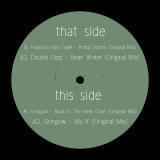
Feeling both familiar and forward-looking, MBK004 expands its reach with an international lineup of
producers united by a shared appreciation for the New York underground sound.
Crafted by Tunisian producer Gringow, our first two tracks take listeners to the darker side of minimal.
Also owner of the HeardOf label, Gringow lends his talent to Minimal Brooklyn with 15 minutes of
hypnotic rhythms. “Black is the new color” gives chills, while “My K” triggers introspection.
Flipping the record will bring listeners to a brighter space. We begin with Chilean DJ/producer
Francisco Ruíz-Tagle and his original track “Primal Depths”. Francisco introduces textures that have
been cultivated throughout his life. His submission to Minimal Brooklyn holds nothing back, delivering
a multidimensional auditory experience to listeners.
MBK004 ends with “Bean Water”, an original track from Chicago-based producer Double Dipp. This
spell-casting production truly highlights the attraction of minimal. Dynamic instrumentals with clean
resolution. This is Double Dipp’s formula for timelessness.
The annual Bonkers Music compilation is back with another dose of high-energy bangers. For its seventh anniversary, the series takes a fresh step forward, exploring a slightly evolved musical direction while keeping the distinctive sound that defines it. “Year VII” lands on 12” vinyl.
A1 David Meyer & Ludviq – Mandanga 2.0 (Feat Nick Hanzo)
The collaboration between Ludviq and David Meyer strikes a compelling balance between tension and movement. Drawing from underground electronic influences, Mandanga 2.0 evolves through hypnotic layers, acid-driven momentum, and a powerful groove, resulting in a distinctive cut that feels both immersive and uncompromising. Mandanga 2.0 is a dark, hypnotic electronic track built around squelching acid sequences, deep rolling grooves, and haunting vocal elements from Nick Hanzo. Atmospheric textures and a relentless rhythmic drive create a tense, immersive journey through shadowy soundscapes, blending raw energy with a refined sense of space.
A2 Neskeh – Liquid Sky
A raw trip built entirely around samples from Liquid Sky, Neskeh’s one of all-time favorite films. Crunchy saturated highs, basement-shaking low end, heroin-soaked wonky vocals, and freaky alien leads drifting through the mix. A warped tribute to an iconic soundtrack. Welcome to the space trippy club
A3 Your Reference – Afterparty
Julia Konor aka “Your Reference” one of the hidden gems of Barcelona’s underground scene, lands for the first time on the label with “Afterparty”
”Afterparty” draws inspiration from abandoned industrial spaces, empty warehouses, and nights where the only thing that mattered was the music. No rules, no expectations. Just raw energy, dusty air, concrete, and people completely immersed in the moment. The track is a personal postcard from that world.
B1 Lebollet & Mar Bravo – Aleta
“Aleta” is one of those Colombian words that somehow made its way into our shared language. We use it for raw, intense, dark tracks. Hard to translate. Makes sense when you feel it.
B2 Funboys – Skin In The Game
“Against the persistent ebb and flow of a breaking heart’s pulse, echoes of half-faded memories tease your attention… On the edge of forgetting, you can almost remember. And then it hits you – the coalescence of feeling into colour and form, warm in its familiarity, powerful in its simplicity. Uncanny, because it was right there all along. Don’t hold your breath… Listen!”
B3 Milla Campollo – Brote Psicodélico
“Brote Psicodélico” emerges from a hypnotic intersection of acid rhythms, psychedelic textures and raw downtempo energy. The track slowly unfolds through repetition and movement, creating a constantly evolving state between tension and release. Dark, trippy and physical, it is built around a groove that pulls you deeper with every layer. Distorted elements and acidic patterns weave in and out of the rhythm, giving the track an organic yet alien character. A journey designed for listening, less about following a linear narrative and more about entering a state of mind, where the boundaries between rhythm, body and psychedelia begin to blur.
There are few electronic musicians as accomplished as A Guy Called Gerald From writing genre-expanding records as a member of 808 State and as a solo artist, to crafting what journalists call the greatest jungle album ever made under the moniker Black Secret Technology, AGCG has spent four decades redefining what electronic music can be. With collaborations, remixes, and tracks for the biggest names in house, techno, drum & bass, and jazz, one thread remains constant: in any decade or any genre, AGCG's music continues to be celebrated as genre-pushing excellence.
Juice Box is AGCG's label, named after his Manchester-based soundsystem. Originally established in 1992, the label went on an unofficial hiatus before the decade's end as AGCG's output demanded wider release. pairing two essential cuts from Gerald's vault that have long deserved proper vinyl treatment. On the A-side, the absolute classic "Voodoo Ray" finally returns to wax. On the flip, 1990's "I Won't Give In" resurfaces from the archive, a reminder that even Gerald's deep cuts carry the weight of lost classics. Juice Box is back, and the catalog has plenty of treasures to unearth, along with new material from one of the all-time greats.
Tiger Stripes unveils part one of ‘A Tiger Never Loses Its Stripes’ on Rekids. The series will culminate in the Swedish artist’s sophomore album later this year.
Sweden’s Tiger Stripes, aka Mikael Nordgren, drops the first part of the ‘A Tiger Never Loses Its Stripes’ EP series on Rekids. The EP previews his upcoming sophomore album, his first in two decades, due out later this year, and follows three recent releases and a remix for Dino Lenny on Matt Edwards’ Rekids label.
Tiger Stripes kicks off the ‘A Tiger Never Loses Its Stripes’ EP with ‘Slow’, a snappy groove driven by weighty bass and vocals that are as playful as they are drenched in soul. ‘Twelve’ picks up the pace with irresistible low-end and funky, jazz-inflected key riffs, before ‘Stay Hypnotic’ takes things somewhere more dream-like, pairing shimmering synth sequences with glitched-out percussion and fragmented vocal snippets on the flip. ‘Shape The Future’ closes the first instalment with a squelchy bassline, slightly off-key strings and gorgeous dubbed-out chord progressions, bringing a classy, club-ready finish to this preview of Tiger Stripes’ next album.
Founder of the Strange Idols label, Tiger Stripes has spent over two decades forging his own path with standout releases on Hot Creations, Kaoz Theory, Kwench Records, and more. After stepping back to focus on his indie-rock project Little Lies, he made a full return in 2024 and quickly recaptured the form that’s made him an international favourite, returning three times to Rekids since.
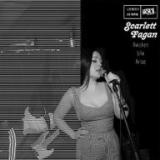
Bristol, UK-based Soul artist Scarlett Fagan presents her authentic and alluring sound through two fresh tracks produced by Tom Emerald aka Endemic. Scarlett takes cues from Soul / Jazz icons such as Etta James and Amy Winehouse, infusing her unique sultry flair. After touring Europe as the front-woman of the Hawkmen and featuring on several of their 12" Vinyl singles, she released her debut solo album in 2022 titled 'Conscious' - Scarlett Fagan is clearly poised to leave her imprint.
Side A’s “Awaken” reveals Scarlett’s vast range of vocal abilities floating over the deep horn and organ laced break-beat track, this portrays a soulful confession about moving away from chaos and moving towards purpose. The song represents the shift from insecurity to confidence. Side B’s “Arise” displays resilience. Although appearing vulnerable and honest the overall theme is perseverance, blending Scarlett’s sultry side with the melodic rhythm provided by Tom Emerald.
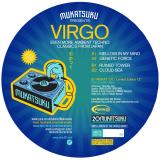
Mukatsuku's endless thirst for archival gold and knack for killer reissues burns strong with this latest third in the series hand-numbered 12" , which digs deep into classic ambient techno from Japan. The man behind the music is Virgo, a solo project by Yasutaka Sato that was active from 1996 to 2004 and then reappeared in 2024. This EP revisit some of his best moments from more than two decades ago, starting with the soothing, pulse-slowing beauty of 'Mellow In My Mind' before cosmic charm defines 'Genetic Force' and 'Ruined Tower' has a more melancholic, sombre feel. 'Cloud Sea' lifts the mood with a gently hopeful closer with soft new age chords and oh-so gentle rhythms that break like waves on a distant island paradise.
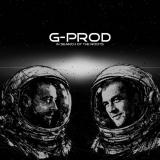
Brotherly duo G Prod have spent more than a year refining the tunes on this outing for Acquit. It comes after the French artists have established themselves on labels like R&S Records and is another serene, sophisticated blend of deep electronics, deep dub and deep house. To sum up - it's deep, but also subtly melodic: 'Balsamic' is sub-aquatic silkiness, 'Alnitak' is a propulsive trip through the stars, 'Ionos' has twinkling aurora borealis-style keys over a taut techno rhythm and 'Nano B' has electro kinetics and warped acid as the pressure ramps up toward the end of the EP. Very tasteful and highly atmospheric.
ATA00BS will be released in a Number Stamped Edition, with Full Cover Art made by Pepe and will be Sealed / Shrinkwrapped.
'Keep it simple' 103636;"Reissue- Tracklist A1. Unknown A2. Pain Is Full B1. Damaged Memory B2. Damaged Memory ( Iori Remix ) Shortinfo: Roberto Bosco has selected Kiny's music to better prepare his first 12, consisting of four tracks, named 'Damaged Memory'.The track Unknown (A1) leads off the dance of the release on Last Drop Records imprint. It's a proper exploration in an unknown sonic territory to most of the people, and also a difficult element to make out for those who are novice to the visonary component in the musical poetic of Kiny. The track starts with rounds of recurring sirens, almost deafening, framed by dark and ghostly noises. Something not easily identifiable, ambiguous and unknown, as the title itself says, is perceptible in its sound. All this helps to shape a bad presage that fades away into the mystery. On the same side we find Pain Is Full (A2) that, according to the producer, was born in a moment of pain which can be overcome only by fighting. In fact, the track is characterized by a more combative and insistent tone, made up by the sound of snare and tom entering since the start and determining an atmosphere of contrast able to shake the listener until the end. Shouts of encouragement suggest an initiation rite in which there is struggle for survival. The titletrack, Damaged Memory (B1) has more quiet register with less ghostly vocals, perceived at times, unlike the previous tracks. The sounds have a vanished effect, such as when you create a halo on a white sheet with the dust of a pencil just sharpened. You will hear a sort of democracy among the sounds held together by the voice, a metaphor of a damaged memory, as the title itself recite, that always makes the same process till the end: it commences by recalling but then forgets. Last, is the version of the producer Iori, Damaged Memory (B2), on the same side.
Juxtaposing acid-tipped breakbeats with influences of acoustic behaviour in nature, Sully unveils a debut release for Critical Music with two-track 12” ‘Flux’ b/w ‘Chatter’. Sully says: "‘Flux’ and ‘Chatter’ were another attempt to take the groove and feel of the breakbeats I've been previously working with and build them from the ground up. The aim was to find space for the tonal elements to breathe and end up in a place I'd not been to before." Birdsong became an unexpected reference point during the writing process, with Sully using synthesis to analyse and recreate natural calls as compositional material. The resulting dialogue between acoustic behaviour and digital sound generation forms part of the release's underlying methodology rather than a surface aesthetic. "The contrast and contradiction of the organic world captured by digital processes is always a pull for me," Sully explains. "It never fails to inspire." Jack Stevens aka Sully has spent much of the last two decades developing a body of work that sits slightly outside the obvious cycles of revival that have shaped UK bass music. While his records draw from established rhythmic forms, they rarely settle within a single tradition, instead examining the shared characteristics between them. His releases have consistently explored the points where 2-step swing, breakbeat construction, and jungle's rhythmic vocabulary begin to overlap. Sully’s records retain a relevance that extends beyond the moment of their release, continuing to circulate through DJ sets and specialist record collections. This 12” adds another chapter to a catalogue defined by sustained investigation into rhythm, texture and soundsystem music.
YARN welcomes René Audiard for its tenth release with "Makes Me Feel", a four-track EP from one of underground electronic music’s most singular voices.
Across years of dub techno, minimal and leftfield electronic experimentation, René has developed an approach to stripped-down music that feels anything but limited. Where minimalism can often become an exercise in taking things away, his work finds possibility in what remains. "Makes Me Feel" is a particularly fitting example: immersive, at times strange, but always full of feeling.
‘Lovin’ opens the EP in familiar Audiard territory: murky low-end, locomotive groove, reduced rhythmic compositions and an understated framework swimming in a pool of detail. 'Possession' lets in more light. Vocal echoes, persistent rhythms and occasional string phrases give it a cinematic quality, while a groove that seems to circle endlessly takes on an almost shamanistic pull. The EP’s 11-minute behemoth, 'Flesh', fills most of the release’s B-side while making a convincing case for patience and sophistication. There are echoes of minimal’s golden age here, but Audiard never mistakes repetition for standing still. Tiny rhythmic fragments sit alongside expansive orchestral gestures, with samples working at every scale of the arrangement. Warmth and cinematic drama run through the track, but it's the playful programming underneath that keeps it moving. 'Night' closes the record on a different note, recalling Audiard’s work with Ali Çakır in Düve. Percussive samples, accordion and Middle Eastern guitar phrases bring a more acoustic character to his reduced 808-infused broken beats, making for a playful, occasionally melancholic ending with a distinctly microtonal feel.
What makes René Audiard’s music so rewarding is how readily you recognize his hand in it. There is a particular grain to the sounds, a way of placing details within a groove, and a willingness to follow an idea wherever it leads. Across “Makes Me Feel”, those instincts give four quite different tracks a shared identity. Even when working within familiar forms, Audiard makes them sound entirely his own. It’s the holy grail of music production: a personal sound signature. And a thoughtful addition to YARN’s growing repertoire of reduced, sophisticated dancefloor music.
Disco Segreta is going to make Italo disco fans very happy once again, with the reissue of one of the hardest-to-find and most coveted late Italo disco obscurities: Gabriella Bove’s “Autoblu”.
Originally written and produced by Argentine-born singer and songwriter Chaly Albert, “Autoblu” has recently caught the attention of hardcore diggers for its unmistakable ’80s Italo disco sound paired with a chilled sun & sea latin vibe, melting Italo disco with synth-pop.
Released in 1989, when the Italo disco craze was starting to fade into what would eventually become the early Italian dream house sound, “Autoblu” pairs Bove’s peculiar vocal presence with a combination of sounds that is now instantly associated with the Balearic aesthetic. Perhaps precisely because it was so ahead of its time, the record failed to find its audience upon release: of the original 500-copy pressing, most copies reportedly ended up being destroyed.
Disco Segreta reissues both original 12″ versions in a strictly limited edition, sourced from the original master tape and faithful to the tracklist and aesthetic of the original release.
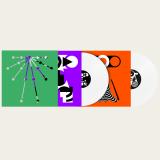
DJ Paul & Lord Infamous’ cult classic Come With Me to Hell: Part 1 returns in its most definitive form ever — a fully remixed and remastered double‑LP, pressed for the first time on vinyl since its original 1994 cassette‑only release. Born in the early Memphis underground and sold strictly through car stereo shops, mom‑and‑pop stores, and “out the trunk” hustle, the album became one of the most sought‑after pieces in Three 6 Mafifia history, circulating for decades only through bootlegs and low‑quality rips.
This special edition finally brings the project to collectors in a premium format worthy of its legacy. The first LP is pressed on ULTRA CLEAR GLITTER vinyl, showcasing the eerie, atmospheric production that defifined DJ Paul and Lord Infamous’ early sound. The second LP arrives on RED SMOKE vinyl, a striking visual match for the dark, sinister tone that made the duo pioneers of the Memphis horrorcore movement.
Painstakingly remixed and remastered by DJ Paul, this release honors Lord Infamous’ memory and preserves one of the foundational chapters of Three 6 Mafifia’s origin story. After decades of demand, fans can fifinally experience Come With Me to Hell: Part 1 in a high‑quality, collectible vinyl edition that celebrates its raw beginnings and enduring influence.
Mining the rich seam between transcendental escapism and crushing physical pressure, Sciama delivers his first album for Samurai Music. Exploring an energetic pitch between half-time and full-tilt 170, the London-based producer sculpts brooding soundscapes of sheer peaks and deep pits, driven by unrelenting but light-footed forward motion and an imposing strain of sound design. As Sciama, Michael Watters has been marking out his exacting sound since 2019 with an assured run of albums on ASC's Auxiliary label. His second EP for Samurai — the Wave Interaction 12" released earlier this year — pointed to his current area of focus inspired by the teachings of electronic music pioneer Daphne Oram. Contemplating the relationship between precise electronic frequencies and human perception, Celetal Form now delivers the full findings of his exploration. Oram coined the term 'celetal' in her 1972 book An Individual Note of Music, Sound and Electronics, trying to sum up a connection between the celestial and electrical. It's this spiritual dimension contained within sound waves Watters is concerned with, and the shape of the music on Celetal Form follows suit. In an opening statement of abyssal ambience, 'Overload Into Silence' establishes an atmosphere that endures throughout the album. Caught between steely textures, vaporous reverb tails and subtle harmonic interactions, the glacial shift of the many layers under Watters' control reveals an intense amount of detail at play even before drums and bass come into play. From there on in, the intensity ramps up from one heavyweight stepper to the next. There is agile, brittle top-end percussion at work on the likes of 'Induced Resonance' and 'Consuming Pulse', perhaps the most closely connected to D&B, while 'Rational Echoes' and 'Scanning Waveband' deal in urgency and techno-coded tension. A half-time roll guides the huge kick drum undulations of 'No Panacea', and 'Celetal Emergence' opens up into more spacious surroundings to let the subtle microtonal inflections of the synth tones set a curious mood. The two 'Intermodulation' tracks bring Watters' exacting approach into sharp focus, pushing the drums back and foregrounding alien frequencies that coalesce into unfamiliar yet strangely uplifting forms. Throughout Celetal Form this uncanny sensation charges the music with a power that reaches beyond its immediate, surface level impact. This intentional reflection on Oram's visionary thinking charges the current sound of Sciama with energetic intrigue that stands apart and invites a mindful, maybe even spiritual, engagement.
Per Hammar returns to his own Dirty Hands imprint with the four-track ‘Ontario EP’, once again showcasing his raw, robust and groove-led style.
Swedish producer and DJ Per Hammar has steadily carved out a reputation as one of the most distinctive voices in contemporary underground electronic music. As the founder of the acclaimed Dirty Hands imprint, Hammar has built a platform synonymous with deep, groove-led and uncompromising club music, while other productions have found homes on some of the scene's most respected labels including Sushitech, Kalahari Oyster Cult and Craigie Knowes. Here we see him returning to his own home and delivering stripped-back late-night tools, psychedelic excursions and deep, hypnotic dancefloor journeys. Hammar consistently balances functionality with personality, a quality that has established him as one of Europe's most respected underground talents.
Title cut ‘Ontario’ leads with Per laying down crisp, crunchy drums alongside dubby bass tones, fluttering stab sequences and intricate modulations, all delicately ebbing and flowing throughout the composition. ‘Off Disk’ follows, fusing organic percussive elements with weighty sub-bass, shifting synth flourishes and bubbling, delayed melodies that steadily unfold across the groove.
On the flip side, ‘Oops All Sixes’ shifts into more acid-tinged House territory, built around a squelchy acid bass hook and saturated drums, while sporadic, expansive delays and hypnotic reverberations drift atop the track’s raw, loopy foundation. ‘Airex’ concludes the release by diving deeper, stripping things back to oscillating percussion, a snaking low-end pulse and airy chords.
Tooloop Records celebrates its tenth release with "Orbis EP", a four-tracker from label affiliate Stab9. The record captures a moment of evolution in both Stab9’s sound and the label’s sonic identity, reflecting a broader vision of the Tooloop universe through expanded arrangements, deeper exploration and a more immersive presentation.
Opening the EP, ‘Source’ establishes its atmosphere through a constantly evolving arrangement, moving through several distinct phases while maintaining a sense of fluid progression. Carefully shifting textures, unexpected bass changes and subtle variations in dynamics reveal new details with each turn. Title track ‘Orbis’ shifts the EP towards warmer tones, built around classic house-inspired sounds, melancholic pads and polyrhythmic bass movement. Its rolling low-end and intricate percussion subtly tilt the track towards techno territory, reflecting the circular motion suggested by the track’s title. ‘Beastro’ gradually ascends through a restrained growling bassline and fractured hi-hats, dropping into an engine-cut moment in the middle of the track - a brief suspension before the groove returns, pulling the track back into motion. ‘True Story’ unfolds through a walking bassline, intricate hi-hats and smeared percussion, creating a sense of movement through a world of morphing textures and atmospheres. Its restrained melody embraces the idea of “less is more”, closing the EP with the bittersweet beauty of mono no aware.
With "Orbis EP", Stab9 presents a deeply personal approach to electronic music, where detailed studio craftsmanship meets the physical energy of the dancefloor - the label completing one full turn, and opening the next.
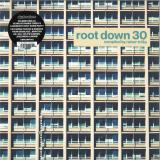
DAYBREAKERS Records proudly presents ROOT DOWN 30, a celebration of one of Europe's most influential club institutions. Curated by legendary DJ, producer and tastemaker Rainer Trüby, the compilation marks three decades of Root Down, the Freiburg party that has quietly shaped dancefloors, record collections and musical conversations since 1996.
Long before genre boundaries dissolved into today's eclectic club culture, Root Down championed a unique musical vision. Jazz, Brazilian grooves, soulful house, broken beat, Afro-Latin rhythms and future-facing electronic sounds were brought together under one roof, creating a community that became a vital meeting point for adventurous dancers and deep music lovers alike.
Across thirty years, Root Down has hosted an extraordinary roll call of artists and DJs including Jazzanova, Gilles Peterson, Theo Parrish, Kyoto Jazz Massive, Jimpster, Laurent Garnier, Dixon, Peter Kruder, Richard Dorfmeister and countless others, helping establish Freiburg as an unlikely but essential stop on the global underground music map.
ROOT DOWN 30 captures that spirit perfectly. Handpicked by Trüby, the collection brings together a selection of artists whose music embodies the warmth, sophistication and dancefloor energy that have defined the party since day one. Featuring music and remixes from Jimpster, Osunlade, Da Lata, Jazzanova, Crackazat and more, the compilation moves effortlessly between soulful house, jazz-inflected club music, Brazilian influences, broken beat rhythms and deep electronic grooves.
ROOT DOWN 30 is a snapshot of an enduring musical philosophy. Thirty years after the first Root Down dancefloor came to life in Freiburg, the spirit remains unchanged: open-minded, soulful and rooted in discovery.
ROOT DOWN 30 stands as both a celebration of that remarkable journey.
Slippery Yard’s third ecosystem lands with “The future is behind”, a very specific immersion into Lugo-based Javier Marimon’s own dub take. We have been fans of Javier’s music for years, one of those who makes up his own palette through experimentation. Textural low end, immersive granular synthesis and groove development in a way nobody approaches, sketchy yet very personal.
Amsterdam based fellow producer Bas Dobbelaer provides us a very different clean perspective of the surface of Slippery Yard biome. Biggest mention to our beloved ecosystem designer Fredonné for such a high quality 3D artwork of the new discovered ecosystem.
Efdemin and Vril. revisit Endless / Purge, originally released in 2021 as the only release on the short-lived Sun Sad imprint, launched by Kinzua’s Lucas Brell. Five years later, it returns on Confusion Is Next To Happiness in a revised and expanded edition. The original recordings have been newly mixed and remastered by Rashad Becker and are complemented by a previously unreleased Vril. reinterpretation of Endless.
Throughout the record, arpeggiated sequences drift through layers of finely textured dub haze, balancing physical momentum with an floating sense of weightlessness. While retaining the artists’ unmistakable sonic signatures, the record subtly channels the melancholic futurism and machine-driven pulse of techno's Motor City tradition.
Forty years of cassette releases, pressed for the first time on vinyl
First of two instalments exploring the previously unreleased sonic archives of one of Poland’s most enigmatic
living artists - with its first volume focused on his deep listening practice and spiritual reverie (recorded 1990–2013)
The last time Andrzej Dudek-Dürer took a banknote bearing the face of the Polish anarchist Jarosław Dąbrowski from his pocket to trade it for a pair of shoes was in 1969. He bought them for 120zł - the equivalent of 100€ today - and never replaced them since then. Only rebuilt them, year after year, drawing a needle and thread through the leather each time it split, closing one wound before the next one opened. It became a ritual of precision, stitching a record of another year into their soles.
That same year, in Wrocław, he arrived at a conclusion that would recalibrate everything that followed. Convinced he was the reincarnation of Albrecht Dürer, he adopted the surname Dudek-Dürer, stopped cutting his hair and began wearing the same garments every day. It was the first ritual of many, though he wouldn't have called it that yet. Look closely enough, over the decades, and it is always the same gesture, returning in different material: hair growing in a single unbroken strand, a needle drawing thread through leather, sitar strings pulled taut across a neck he built with his own hands and magnetic tape spooling forward inside the cassette boxes stacked against his walls.
None of this began in a vacuum. Dudek-Dürer emerged from the Wrocław neo-avant-garde, in a Polish art world where an exhibition could be cancelled overnight by the stroke of a censor's pen. In 1973, his exhibition Auto-crucifixion was shut down by the state, and for a time he found himself blocked from exhibiting his own art at all - the one force in his life that ever came close to cutting the thread.
He seemed to experience it differently. In 1974, after long, patient research into sitar craftsmanship, he built his first prototype with his brother, a knowledgeable luthier. In 1978, in a smoked-out jazz club, he took his first steps into sound recording with the unreleased album Jazz From Underground with his first band. By 1979, recognition started to travel further than he could.
Turning toward Far-Eastern philosophy, meditation and the idea of reincarnation was another language of freedom for him. It was a way of claiming an inner territory the state could not reach, a border it could not close. Mail Art served a parallel function, reaching further out: in a country that restricted travel and expression, sending and receiving art through the postal system became an act of quiet rebellion.
The body, in his understanding, is only an envelope readied for constant transformation. From this came Metaphysical Telepathy: during the years he could not leave Poland, he treated that confinement as a rehearsal room, sending his mind out ahead on the same thread his body would later follow. Living Sculpture grew from the same root with performances of stillness beside static art objects, until the boundary between the object and the man beside it simply dissolved. Camera Meditation extended the same instinct into photography: a shutter click flattening three dimensions into two so that a single instant could be held forever. Inspired by the pioneers of self-portrait photography like Robert Cornelius, he used it to document time itself, and kept explaining to me: "You know. This is not about vanity. This is about observing time passing.”
The isolation did not end suddenly. It ended the way his own philosophy had already predicted it would, from the inside first. Mail Art quietly solved the problem politics couldn't. Correspondence built during years of confinement slowly worked its way through doors the state itself had kept locked. Contacts made through folded paper and stamps became invitations. Ultimately, invitations became passports.
In 1983 he made his first trip outside Poland, to Germany, in search of the audio technology he couldn’t get his hands on before. In 1985, he was invited by the Indian embassy in Poland to give a sitar concert on an instrument he had spent a decade patiently stringing together - half sitar, half tanpura, built from patience and determination. After the collapse of the People's Republic of Poland, the travels kept unspooling: South Korea, then Mexico, then Australia, Canada, New Zealand, Singapore, Japan and the United States - each stop leaving behind its own small knot of tape, tied off and carried home.
In the decades since, recognition arrived at the same unhurried pace: he conducted workshops at UC Berkeley, served as vice-president for artistic affairs of the Union of Polish Art Photographers and the Union of Polish Visual Artists between 2010 and 2014 and received the Bronze Medal for Merit to Culture - Gloria Artis. His visual work gradually entered collections including the National Museums of Warsaw, the Stedelijk Museum, Tate Modern, MoMA and the Venice Biennale. His musical practice, by contrast, never found that kind of room - left to circulate quietly, sharing his cassette tapes directly, waiting for someone willing to follow it further.
It took months before I could find a way to reach Andrzej Dudek-Dürer - his presence online is very close to nonexistent. Surprisingly, LinkedIn turned out to be the only door still open, a faintly absurd irony given everything else about him. I packed the strict minimum for a three-day trip and an empty notebook and made my way to Wrocław. His headquarters sits in the neighbourhood of Grabyszyn: a two-storey pre-war house that has belonged to his family for generations. The man who opened the door was long-haired, long-bearded, in his trademark leather shoes and patched jeans. We sat in his living room, in front of a computer where decades of recordings sat organised in cryptically named files, surrounded by books and objects that had arrived one layer at a time, leaving room for only two chairs in the middle. His shoes sat by the door, rebuilt so many times they had become their own quiet sculpture. Cassette tapes filled boxes against the walls, almost unlabelled, each one a spool of thread holding decades of sound that had never once been asked for, until now.
I listened for hours: meditating in front of strangers on the porch of a Seoul temple until the tourists stopped taking photos and simply waited with him; a stand-off with border guards at the US–Mexico crossing over an instrument they couldn't identify and didn't trust; a session with the Stockhausen family that he still, decades later, describes like it happened last week. All of it interrupted, occasionally, by the smell of soup boiling and fresh bread warming on the ceramic stove. After two days, it felt like being handed the end of a very long thread and asked, gently, to keep following it. I left with a USB drive holding his full discography, signed with his unmistakable signature.
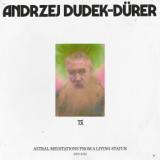
Astral Meditations From A Living Statue is a length of that thread, drawn out from the boxes stacked against his walls - recordings gathered from different rooms, different countries, different decades. This first record breathes slowly: incense-thick, meditative, built for stillness. A cutting-edge séance in outer space where machines learn how to dream.
It begins with the neo-classical improvisations of Andrzej, space-delayed, recorded at Klub Muzyki i Literatury in Wrocław in 2002. 'When..So' opens the curtains with a deep-rooted meditation accompanied by slow-decaying piano figures illuminated by a candle-lit spirit gathering.
Los Angeles, 1990: a dormant villa, a grand piano, the voice of Bonnie Barnett. 'Exception' is captured in a single room, in a single afternoon - voice and keys circling each other, neither one leading, until the silence between the notes starts to feel like the instrument.
'The Meta...' and 'Tired Of...', recorded at Studio Morandi in Ponte Nossa, Italy, in 1992, settle into a sitar drone built entirely from patience - overtones stacking and beating against each other, strung by a man who never once set foot in India. 'Mastery Of...' follows, recorded the same year at Studio Suski in Łomianki, pushing that same hum further still, until pitch dissolves into a spectral reverie. 'Transcendental Sound', from 2000, closes the first record in a slow bath of celestial frequency - better heard beside the shores of the Odra river.
More than fifty years after deciding that a life could become an artwork, Andrzej Dudek-Dürer continues to inhabit that decision. His shoes keep wearing thin against the earth's crust. His hair keeps growing, one strand at a time. His cassette tapes keep spooling in the dark of their boxes.
Now the thread finds its last shape: a single unbroken groove, spiralling inward from the outer edge to the label at the centre. Never cut - the way nothing else in his life ever was. Drop the needle and it will find that groove and follow it, the same way a needle once followed leather, once followed a border it couldn't cross, once followed string into an instrument that didn't exist until he built it. This record is the other end of a thread that has been travelling for fifty years. For the length of both sides, it rests here, in your hands. This is a timeless proof that the Lord of the New Age was never lost."
Twenty-five years after its original release, Markus Guentner's debut album In Moll returns in a special anniversary reissue on Black Knoll Editions, reaffirming its place as one of the defining ambient recordings of the early 21st century.
Released in 2001 during the formative years of Kompakt's influential Pop Ambient series, In Moll emerged from a period of rapid transformation in electronic music. New technologies, expanding digital networks, and shifting creative possibilities allowed artists to imagine entirely new sonic worlds. Amid this fertile landscape, Guentner's music stood apart. Combining delicate melodic fragments, slow-moving harmonies, and a remarkable sense of spatial depth, In Moll introduced a distinct artistic voice whose impact can still be felt a quarter-century later.
The album arrived shortly after Guentner's contributions to the inaugural Pop Ambient compilation, including the now-beloved "Regensburg 1," named after his Bavarian hometown. Those early recordings immediately captured the attention of Kompakt founders Michael Mayer and Wolfgang Voigt. Recalling his first encounter with the music, Mayer describes listening to a demo CDR with Voigt while wandering through Cologne late into the night, replaying the tracks for hours. "We knew that we had found something outrageously beautiful and we wanted the whole world to listen."
Across its running time, In Moll unfolds like a series of dreamlike landscapes, inviting the listener into a world that feels both familiar and strangely other. Bells, hisses, distant textures, and slow-moving bass tones drift through vast expanses of atmosphere while luminous synthesizer washes seem to blur the horizon in a fine digital mist. The album's transportive qualities are matched by a remarkable sense of compositional discipline. Every gesture feels deliberate, every texture carefully placed. Balancing warmth and melancholy with restraint, Guentner created a body of work that rewards both close listening and complete surrender.
Reflecting on the album twenty-five years later, Wolfgang Voigt describes Guentner as "one of the first, but also one of the most important ambient artists" associated with Kompakt, calling his music "an integral, timeless part of the long history of pop ambient." Music critic and former Pitchfork Editor-in-Chief Mark Richardson, who reviewed In Moll upon its original release, similarly noted that the album "marked the arrival of an important new voice," and today regards it as "one of the finest ambient releases of the decade."
The album's influence continues to extend far beyond its original audience. For many listeners, In Moll served as an entry point into a new understanding of what ambient music could be. Black Knoll boss Rafael Anton Irisarri first encountered the album shortly after its release in 2001. "It immediately opened a door to a world of music I didn't know existed," he recalls. "At a time when I was still discovering my own creative voice, Markus showed me entirely new possibilities for what electronic music could communicate." Simply put, "The Sight Below would not have existed without In Moll paving the way."
Far from a historical curiosity, In Moll continues to feel strikingly contemporary. What once sounded futuristic now feels timeless, its patient pacing, attention to detail, and sense of wonder remaining entirely intact. The album's enduring power lies not only in its influence, but in the curiosity it continues to inspire, inviting listeners to step inside its world and lose themselves within it.
To mark its twenty-fifth anniversary, Black Knoll Editions presents the most complete edition of In Moll to date. Newly remastered in full analog by Rafael Anton Irisarri, this expanded release pairs the original album with a newly reworked interpretation by Markus Guentner himself, revisiting the material through the lens of twenty-five years of artistic development. The anniversary edition also features a new visual presentation designed by Guentner, offering a visual counterpart to the album's continued evolution. Together, these recordings and visuals celebrate both the enduring legacy of In Moll and its ability to reveal new dimensions twenty-five years later.
This 25th Anniversary Edition on Black Knoll Editions celebrates a recording whose quiet impact has only grown with time, preserving a work that remains as evocative, singular, and essential today as it was in 2001.
Amidst their illustrious presence in dance music, Âme have been - and seen - a tumultuous evolution in all that surrounds. Genres have splintered and sharpened, melodies reinvented.
Yet, Frank and Kristian continue to stay true to their own meticulously individual art form. The pair muse on all that's been in latest album, "Love Is The Dance", where they reflect on a multitude of sounds that have shadowed their career for 20 years and counting - presenting a collection of tracks that flicker between different worlds and feelings, whilst harmoniously paying tribute to icons such as Underground Resistance and Compass Point Studios.
Between slower gems such as "Water Be My Crown" and "Of Courage", where buttery chords melt into sleek solitude, comes catchy pop-leaning numbers like "Shadow Of Love" and "Pha Na Pha" that carve their own vibrancy; having already painted endless dance floors with endless memories following individual releases. Cemented with club-focused cuts "Asa" and "Love Is The Dance", the album also moves towards familiar Âme territory; and still, threaded through its DNA is the art of collaboration. A substantial essence to Âme's work throughout the years, the duo level-up, as they invite a curated list of friends and artists, including RY X, Henrik Schwarz, Curses and Busiswa. The result forms a curious, all-expansive record that sees Âme creating avenues bolder, stronger - and even more musically diverse.
Do not adjust your tuning! Cowper emerges disc in hand from the liminal static, exposing us all to his peculiar brand of outsider club chaos. Boldly, slowly, Goa-ing into the fray, these three tracks chew your ear off in the sonic language of acid, trance and progressive house, churning and gurning their way deep into the darkness. In the time since the first dispatch of edit excellence, Cowper’s Between Stations has firmly established itself as an essential underground outpost, adding tape releases by Tolouse Low Trax, Zato and Miles J Paralysis to a growing catalogue of genre-fluid mayhem, consistently captured by his essential Noods Radio shows. Introducing itself with a gut punching kick and gurgling prog throb, the first track here is simultaneously upbeat and downcast, a glorious gloom-core ode to narcotic indulgence.
Extra-terrestrial pads and choral synth hark back to childhood days of Perfect Dark before a trance lead interrupts all remaining neural connections. When that snare lands in the second half we’re in fully fledged techno-pagan mode, red-faced and rushing right till the end. Assuming that even xenomorphs dance sometimes, this end of the world apocalypso is absolutely their jam. Track 2 tunnels further into the planetary core, 16bit woodblocks and bells sitting atop synthetic swells and hoover-ish vamps, before a hooning bassline drops like a sledgehammer on your unsuspecting ear drums. An unexpected, but very welcome left turn into mid track breakbeat provides a moment of airy reprise before we lock back into the cavern-shaking groove until the run out abates. For the encore, Cowper didgeri-doesus with the oscillating bass and molasses-apache break of a techno-tribal, prog-frog delicacy. Complete with the type of mantra vocal usually found on pound-bin trance or superspenny Dream House rarities, and a little acid-gwamph resonance abuse Josh Wink would be proud of, this chug-athon sounds a bit like Psychic TV tuning into Psy-trance, which is a very good thing indeed. Dark, dense and musky stuff that will drive a proper dance floor wild.
In 1970, at the invitation of Sérgio Mendes, Brazilian songwriter Edu Lobo travelled to Los Angeles to record for A&M Records. During this period, he also recorded his masterpiece, Cantiga de Longe, reissued by Week-End Records in September 2026. More than half a century later, Lobo’s music continues to inspire new generations of artists—including Sergio Sayeg, better known as Sessa.
With his intimate, quietly captivating songwriting, Sessa brings the spirit of Brazil’s golden era of MPB into the present. His deep affection for Lobo’s music made him a natural choice for this collaboration: we invited him to reinterpret “Zanzibar,” one of the album’s standout tracks, in his own unmistakable style.
A meeting of two generations, connected by a shared musical sensibility—available in a strictly limited physical edition of just 500 copies.
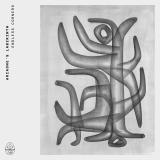
Ariadne's Labyrinth returns with Endless Corners on Adepta Editions. Classically trained yet shaped by London's illegal rave scene, her distinct sonic language is born from live improvisation. Following acclaimed releases on Detroit Underground and Touched Music, this EP seamlessly intertwines the dense, physical pulse of underground club culture with breathtakingly beautiful string arrangements. It is a visceral journey, bridging heavy dancefloor tension with vulnerable, chamber-esque introspection.
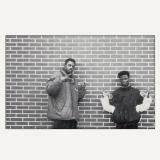
Initially recorded in 1996 and officially released February 1997, 2nd Family's Killaz from the Blackside tape is one of the most distinctive examples of unpolished, stripped-back & paranoid mid-90s Memphis rap. Recorded by King JC together with 2nd Family MCs Pistol Grip & Killa Chrome in a home-studio set up at the group's base in Southern Hills Apartments in Whitehaven, South Memphis (known locally as Blackhaven or the Blackside, a short trip from Graceland) the sparse, brooding and somewhat introspective production sets the record apart from the more raucous, overdriven precedent of the period. Pressed on vinyl for the first time via Death Is Not The End in an edition of 300 copies.
At 23, daine has spent the last few years drifting between scenes faster than the internet could fully name them: digicore, emo revivalism, hyperpop, bloghouse nostalgia. But "In Endless Awe & Agony", her debut album arriving this November, feels less like another pivot than a consolidation - the point where all those fragments collapse into something strangely singular.
Faitiche presents the debut solo album by cellist, sound artist, and composer Topu Lyo: “quiet scenes from tokyo” brings together sixteen miniatures for solo cello and tape echo that oscillate between abstracts drones and rhythmic pizzicato sketches – all recorded at Topu’s Tokyo apartment. The constant traffic noise from a nearby highway has become an accompanying soundtrack for his compositions and can be heard on the recordings. Topu’s playing is marked by a distinctive idiom oriented more towards abstract electronic studio effects than classical technique.
The artist spoke to Jan Jelinek about his work:
JJ: A solo cello album may seem like an odd fit for a label that has to date released only music that is electronic in the broadest sense. But I think “quiet scenes from tokyo” complements the Faitiche repertoire exceptionally well. Its sixteen miniatures showcase the cello in all its complexity: the bowed passages sometimes recall a tape feedback drone; the pizzicato playing conjures up the percussion recordings of Moondog; and the abstract textures might be mistaken for the product of a granular sampler rather than rapid finger work on the cello. I’m constantly surprised by just how rich and varied this album is – without ever losing the charm of its sketch-like quality. Could you say a few words about the making of your album – first of all, from a rather technical perspective: what production tools did you use, and why?
TL: My production tools were very sparse. Just a solo cello and my Roland 301 Space Echo, which I only used at the end, running everything through it during mixing, tape only. After years of working with electronics, pedals, and synthesizers, moving to Tokyo pushed me toward minimizing my setup. But my aesthetics shifted too, toward simplicity. I wanted to strip everything back to just the acoustic cello and see how far I could push it — replicating some of my favorite electronic effects through extended technique: slow portamento, LFOs, filters, detune, noise. I’d also been listening to a cassette of ocean sounds for years. When I moved to Tokyo I was horrified to find myself living directly across from a freeway. Eventually the freeway started sounding almost identical to the ocean — and that ended up playing a prominent part in the recording.
JJ: That’s super interesting: mimicking electronic production as a compositional idea for the cello! You say the sound of the freeway is crucial to the album: I, too, tend to interpret steady traffic noise as a positive soundscape – do we hear the freeway on the album? I can also hear other field recordings, for example on “a street car with announcements”. Can you say a bit about how these field recordings influence your playing?
TL: Yes, you can hear the freeway on the album! The freeway is most prominent in “old trees in lonely spring”, “yuyake koyake”, and “the moon” (you can clearly hear individual cars). When I first began recording I had my balcony door shut tightly, but after a while I began leaning into the highway sound and slowly opening the door little by little to control the amount of noise. “streetcar with announcements” was a moment I was recording and a car passed by making announcements in the background. I loved how it sounded! Same thing with “yuyake koyake”, and later I realized that every day at 5pm the same song plays to mark sunset, telling children it’s time to go home. Having this bedrock of sound puts less pressure on me to put music on top or to play more notes.
JJ: It’s astonishing how much this differs from what I’d imagined: I’d been picturing peaceful landscape recordings, but had never thought of a freeway. Which goes to show how open to interpretation traffic noises are. So the room by the freeway had a major influence on the album – how are you going to perform it live?
TL: The contrast between the freeway and the beautiful landscape in my head couldn’t have been starker. I too was imagining a beautiful landscape in which to create the album, but somehow it still worked out. I've been going back and forth a lot on live shows and I think the most honest way is to have it the most stripped down. I was thinking of using traffic samples etc., but I think the duet really comes from the background sounds from every unique venue/environment. So as it stands, I’ll just be doing acoustic solo cello.
With the stunning Planes In Reverse, Sascha Funke, the Berlin-born producer and DJ, and long-time member of the Kompakt family, releases his first album in almost a decade, since 2017’s Lotos Land. It’s a welcome return for one of the most eloquent and elegant producers in electronic and dance music, someone who’s always been able to say more with less, and the ten tracks here, moving effortlessly between techno, house, minimalism, disco house, and home listening tunes, are all gorgeously sculpted miniatures. With guest appearances from partner Julienne Dessagne (Fantastic Twins), with whom Funke has also worked in Saschienne, there’s something homely and family about it, too; a family of sounds, a home of tone. There’s also something consummate about Planes In Reverse, as though Sascha Funke has perfected the album format. There’s no flab here, no excess – it plays out like a perfectly designed experience, ten tracks, coming in under fifty minutes, an album where every moment matters.
It’s full of variety, but everything has the unmistakable Funke thumbprint, one that was developed during the late ‘90s / early ‘00s minimal techno and microhouse moment, but which was always open to other ideas and other sounds, too. Planes In Reverse came together quickly for Funke: “Last winter, I had two or three new tracks, which gave me a core feeling: ‘Ah, this could be the direction of something like an album.’ Sometimes it can be very easy that you wrap it up and then it becomes something coherent and solid. This happened within two or three months; it was very fast and direct.” Everything fell into place – the ten tracks revealed themselves, the album sat together as a whole, and the final piece of the puzzle was returning home again to Kompakt, who have supported Sascha Funke from the very start, releasing his first single, “Campus”, back in 1999.
Planes In Reverse opens stealthily with “What You See”, where rhythms percolate and bass prowls while gaseous textures fill the sonic spectrum. It’s also the first appearance of Fantastic Twins on the album; here, she speaks a hypnotic mantra, a prelude to the title track, where Dessagne has a pure pop moment, her voice ecstatic and vibrant. Indeed, Planes In Reverse plays out like thesis and antithesis ending in synthesis, the tracks nestling next to each other even as they shuttle between sounds, genres, perspectives. There are some beautiful moments dropped throughout Planes In Reverse – the heavenly textures that make the title track feel so cloud-bound; the glassy and orbital tones that drop from the skies through the disco house inspired “Karat”; the clamour and clatter of hyper-edited voices shuffling through “Splitter”; or the field recordings of Sascha’s son football training session that drop “Zockers” into a different place and space, slowly giving way to a beautifully paced electro-pop mantra. “In Germany,when the kids play a computer game, or when they play football, we describe it as zocken. They’re the players, they’re the Zockers.“ Funke explains.
Planes In Reverse winds down with the beautiful “Kruso”, where ticklish, loving arpeggios careen around the room, and drift-work chords shimmer and shuttle between your ears. It’s a perfect comedown to an album that feels breathes in and out at an organic pace, nothing above 130 BPM, everything sitting together just so. Indeed, that’s the feeling you take away from Planes In Reverse; it sums up the spirit of Sascha Funke productions perfectly, while also existing beautifully as its own world dreamt unto itself. It’s Sascha Funke down to the very essence. Nothing unnecessary, nothing extraneous: Pure Funke.
Coming from deep within the city that brought us Master P’s legendary No Limit Dynasty and Lil Boosie comes an artist who uniquely encapsulates the crossing point between lowslung Hip Hop and forward thinking, emotive electronic music. 22-year-old New Orlean’s based Suicideyear AKA James Prudhomme brings his own Southern Gothic perspective to the table with new album ‘Color The Weather,’ set for release on July 6th via LuckyMe. Although not his debut album per se - 2015’s ‘Japan’ on OneOhTrix Point Never's Software label was a collection of previously released beats – ‘Color The Weather’ represents the first time Suicideyear has specifically sought to create a complete body of work, further developing different textures and sounds that were hinted on last year’s critically acclaimed ‘Hate Songs’ EP. Within these tracks lie the ghosts of Prudhomme’s past - a difficult childhood truncated in his teens by his family home burning down. When he left Baton Rouge for his new home in New Orleans he found himself further entrenched in the Southern Rap scene whilst he soaked up the avant-garde electronic music he found online. Balancing his tender instrumentation alongside some of the tightest drum programming in the game - these tracks twist and turn - new elements are built and destroyed constantly encompassing a huge emotional range. On the records’ two vocal features he expounds on this innovative and ambitious duality – Domino Records own Georgia filling the track with longing and hope whilst Prudhomme deconstructs the track around her. The Casey MQ featured ‘Said and Done’ goes further - the last third of the track slowing to a codeine induced haze paying a nod to the Chopped and Screwed sound of James youth. “Color The Weather is about the ability to build or form security after trauma/betrayal & building personal coping mechanisms to get through said traumas. Doing what it takes to control your life when powers are working against it. The total resilience of the human spirit.” James Prudhomme
A soaring new chapter unfolds from the forthcoming Elements Of Life album with the release of “Soar,” an uplifting and deeply moving collaboration featuring the incomparable Lisa Fischer. Written by Josh Milan and Louie Vega and produced by 2SoulFusion—Louie Vega and Josh Milan—the song is a powerful testament to resilience, transformation, and the limitless possibilities that emerge when spirit, soul, and music unite.
Built upon a rich tapestry of live musicianship, “Soar” embodies the signature sound that has made Elements Of Life a beloved musical movement around the world. At its core is Lisa Fischer’s breathtaking vocal performance, delivering a message of hope, elevation, and self-discovery with the emotional depth and conviction that have made her one of the most revered voices of her generation.
At the heart of “Soar” is a message of encouragement, resilience, and unconditional support. Through its uplifting lyrics and soaring melody, the song speaks to anyone navigating life's uncertainties while striving to become their fullest self. Lines such as “Clouds hang low, but the sky's still wide” acknowledge the challenges we all face, while the recurring refrain, “I just want you to soar,” serves as a powerful affirmation of faith in another person's journey. Equally moving is the song's central sentiment, “The more you do for you, the better I feel,” expressing a selfless form of love that celebrates growth, healing, and personal fulfillment. Universal in its message yet deeply personal in its spirit, “Soar” reminds us that one of the greatest gifts we can offer is the encouragement to rise, evolve, and embrace our own potential.
The production blends organic instrumentation with sophisticated arrangements, creating a timeless soundscape that feels both expansive and intimate. Multi Grammy Award-winning bassist Christian McBride anchors the composition with his masterful upright bass work, while Josh Milan's lush keyboards, piano, organ, clavinet, and atmospheric textures provide the song's harmonic foundation. Live drums from Tony Cintron and vibrant percussion from Luisito Quintero infuse the track with an irresistible pulse, while Ivan Renta's expressive soprano saxophone solo adds another layer of emotional richness, and a tasteful guitar groove by Sherrod Barnes.
The song's message is elevated further through a powerful vocal ensemble featuring background vocals from Lisa Fischer, Dawn Tallman, Ramona Dunlap, and Lea Lorien, creating moments of communion and uplift that echo the song's central theme of hope, growth, and believing in the possibilities that lie ahead. For Louie Vega and Josh Milan, “Soar” represents another defining moment in their longstanding creative partnership. Through Elements Of Life, they have continually blurred the boundaries between house music, soul, jazz, Latin rhythms, gospel, and global influences, creating music that resonates as deeply on the dance floor as it does in the heart. “Soar” continues that tradition, offering listeners a song that inspires movement, reflection, and renewal.
Recorded at Honeycomb Studios in Pennsylvania and Manhattan Center Studios in New York City, and mixed at Daddy's Workshop in New Jersey, the production benefits from the expertise of recording engineers Yas Inoue & Josh Milan, with final mastering by the Maestro of mastering Herb “Pump” Powers for PM Mastering.
As anticipation builds for the forthcoming Elements Of Life album slated for February 2027, “Soar” offers a powerful glimpse into the project's next evolution— a celebration of musical excellence, spiritual connection, and the enduring power of song to lift us higher.
One of the few artists who has seen the Cécille story unfold from the very beginning is Joey Daniel.
From our side, Joey has always been someone we wanted to work with and have on the label. So we’re really happy that the time has finally come. We have huge respect for him - not only as an artist, but just as much as a person - which makes finally welcoming him to the Cécille family even better.
We’ve been working closely together on this EP for quite some time, taking our time to get it exactly where we wanted it to be, and we’re sure we’ve ended up with a seriously massive club EP.
The Need I Say More EP brings together three proper club records - pure groove, built for the dancefloor and connecting Joey’s signature sound with what Cécille has always been about.
Power Ballads and The Wash is the sophomore album from London-based multi instrumentalist James Howard, due for release on 6th November 2026 via boutique
label Faith & Industry. James is known as founder of critically acclaimed 2010’s band Blue House and collaborator with luminaries such as Rozi Plain, Dana Gavanski, Kate Bollinger and Alabaster Deplume.
For Power Ballads and The Wash James has worked with producer Mike Lindsay, co-founder of folktronica group Tunng. Power Ballads and The Wash follows James's debut solo album Peek-A-Boo, released to great acclaim in April 2023.
All eight songs of Power Ballads and The Wash began life as intimate live takes of
guitar or piano and voice, recorded at Howard’s studio in Deptford, south London.
Steeped in the energy of the local environment, each session was preceded by a visit to the Thames to ask for its muddy blessing, with the DLR rumbling by. The sessions at Lindsay’s Margate studio built a widescreen world around Howard’s original performances, from the restless Eventide vocal treatments on Seven Seconds to the Hollywood string samples of The Moon In The Movies and the Moog bass that quietly anchors the record throughout. Howard also praises violinist Magdalena MacClean's (Caroline) contributions.
Beneath this gentle absurdity, though, lies something quietly powerful. Howard’s
song-writing explores the notion that, despite our ever-shortening attention spans,
there is still the possibility of quiet reflection and the discovery therein of revelations hidden in plain sight. The world of these lucid dream-esque reveries is unmistakably London. The record began with a wing-and-a-prayer visit to the Thames, and ends there too: the wash from the Thames Clipper / nearly breaks through your shoe / like some feelings sometimes do.
byt’ continues its eclectic journey with the third release in its catalogue. This chapter sees the return of Telva, shifting into a new frequency with a story born between 11.11 and a full Taurus moon back in 2024 in Berlin. The composition recorded in a single take, is articulated through a dreamy, electronic, minimal house, and vocal infusion. Left as romantic and unrestrained as the artist’s reverie, it is preserved in its raw form to protect its intimacy.
“Every record I make is a guide towards a better understanding of all that I can be. 11:11 is a fragment of a special spark I experienced, which peeled back another layer of myself enriched by the lessons along the way, until finally holding it in my hands today. What started as an epiphany on Heideglühen’s dance-floor unfolded into a kiss of destiny, a fleeting delirious love affair, and a quest of passion that hugged my memory, compelling me to revisit my early days. An endeavor of surrender, no matter how unknown, unconventional or uncertain it all may feel. To finally have the courage to let it be messy, raw and true, so that I stand naked once again, while daring to honor the absence of order as part of the magic and mystery of life.” - Telva
MARGOT is a violinist, composer and producer defined by a deeply emotional orchestral language shaped by classical training and a highly personal approach to string writing. She has collaborated with artists including Beyoncé, Lady Gaga and St. Vincent. Trained from the age of four in North Florida, she moved to New York at nineteen, where her musical world expanded through collaborations and exposure to new scenes, alongside the discovery of artists such as Radiohead, Sigur Rós and Björk via their string arrangements. In 2020, she met pianist and composer Juan Villacrez in Colombia, leading to the creation of the instrumental album The Apartment on Third Street (over 13 million streams) and a long-term creative collaboration.
Her new album The Villain presents a major new artistic statement: a cinematic, immersive instrumental work unfolding across ten movements, shaped by profound personal loss and recorded live in Colombia with a minimum of takes and no overproduction. The physical edition of the record is designed by NYC-based artist Bráulio Amado (known for his work with André 3000, Harry Styles, Frank Ocean and Róisín Murphy), reinforcing the album’s position as a complete visual and sonic object. MARGOT’s writing, violin playing and emotional depth resonate throughout, particularly through arrangements in which she layers her own performances, creating a sound world that is at once intimate, restless and constantly evolving.
In a world that buckles and cracks under our calamitous weight, something at once old and beautiful, bitter and malign, stirs just a shade below what can be seen. It had dreamt of the end of things, and tasted there sweet emptiness, but now a new hominid stench has disturbed its slumber.
So keenly it ponders, un-lidding an eye, and within each potent coil desires fester, many and urgent. And so it untangles, and organises, and lurches upwards like a whale; bloated, rotten and desperate to breathe.
Emily and Joe have caught glimpses of that which lurks beneath. As each has struggled to make sense of what they have seen, they have been dragged inexorably into a frightening new reality; a shadow world of lurid horrors, where nothing is as it ought to be. Yet they have witnessed great beauty too, a joy stark and profound, and an addiction is growing.
iO Pan is about a love for that special era in the UK dance music scene that from the late 1980s onwards mixed funk, soul, hip-hop, electro, reggae, dub and Jamaican sound system culture together with the freshest dance music coming out of Chicago, Detroit, Belgium and Italy. A unique melting pot that would lead to some of the most original and groundbreaking musical movements the world has ever seen in Bleep, Breakbeat, Hardcore, Jungle and Dub Step.
iO Pan is an artist, musician and DJ who has presented live art at the Barbican Centre, the Open Data Institute, the Royal College of Art and Goldsmiths University.
As a musician, iO Pan has supported the Arctic Monkeys and worked with the Human League, and with the track ‘Forever’, reached number 5 in the Mixmag Ibiza chart.
As a DJ iO Pan was a resident for legendary Sheffield clubs Gatecrasher, The Leadmill and Plug throughout the 90s.
iO Pan now presents the full-length album When The Lid Opens on Sound Records whose roster includes KiF Productions, Benyayer, Yarni and Lara Jones.
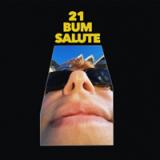
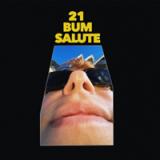
21 Bum Salute is the fifth album from Sydney experimental psych-noise-pop duo Party Dozen. The work of Kirsty Tickle (saxophone, vocals) and Jonathan Boulet (drums, loops, production), 21 Bum Salute finds the critically-acclaimed, semi-improvised duo feeling liberated - from their peers, their worries, and what the nell they're supposed to sound like now.
Emerging in 2017 from the warehouses of the Sydney experimental noise-rock scene, Party Dozen arrive at the release of their fifth album, 21 Bum Salute, in peak form. Over the course of four, increasingly perverse albums of psych-tinged rock peppered with pop noise and bursts of doom in equal measure, they've transformed from gleeful noise-makers producing DIY albums from a tiny room in Marrickville, NSW, to globe-hopping, critically-adored favourites - producing DIY albums from a tiny room in Marrickville.
As well as tours with Amyl and the Sniffers, King Gizzard and the Lizard Wizard, Tropical F*ckstorm, Algiers and more, Party Dozen had Nick Cave appear on 2022 single Macca The Mutt', collabed with New York rapper billy woods, performed an incendiary live set on KEXP, signed international deals, firstly with Temporary Residence LTD (Mogwai, Explosions in the Sky,
Along the way Party Dozen self-released their first two albums, The Living Man (2017) and Pray For Party Dozen (2020), struck a chord internationally with album The Real Work (2022), which sent them on tours of Europe, North America, Japan, China and New Zealand, while fourth LP, Crime in Australia (2024), an ode to Aussie noir that leaned beyond rock into moodier moments, repeated it.
Party Dozen recorded, mixed and mastered 21 Bum Salute completely themselves, over a three month span. Inspired by spooky "old recordings" as well as the primal impulses of acts like ESG and Bikini Kill, 21 Bum Salute - named after a peculiar, larrikin ritual in Australia's arid Northern Territory - condenses consecutive years of jam sessions, loops and improvisations into just over half an hour's worth of fizzing, strutting, striking sonics from the fringes.